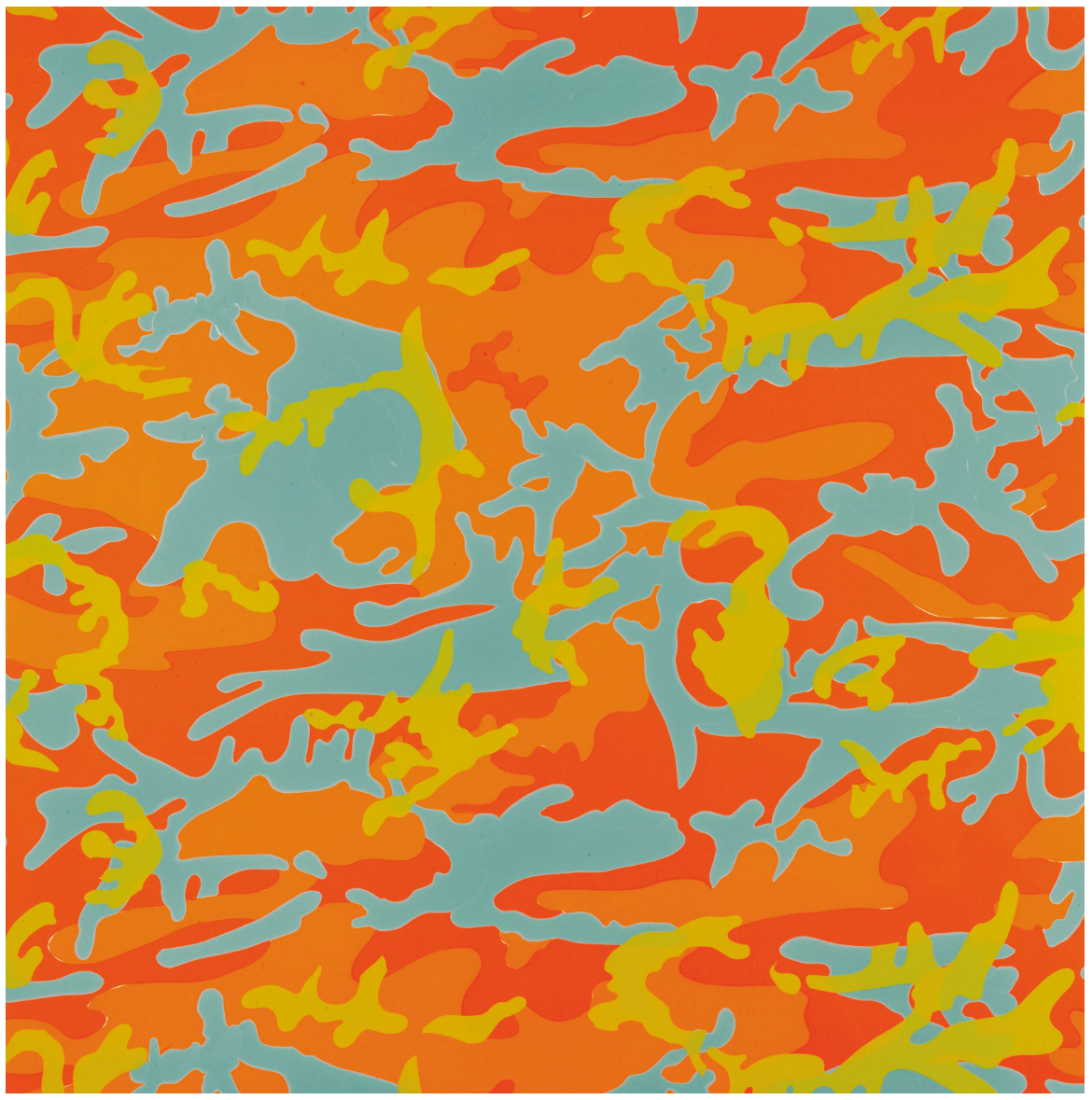
WORK IN PROGRESS
Andy Warhol was the most successful and highly paid commercial illustrator in New York even before he began to make art destined for galleries. Nevertheless, his screen-printed images of Marilyn Monroe, soup cans, and sensational newspaper stories, quickly became synonymous with Pop Art. He emerged from the poverty and obscurity of an Eastern European immigrant family in Pittsburgh, to become a charismatic magnet for bohemian New York, and to ultimately find a place in the circles of High Society. For many his ascent echoes one of Pop art’s ambitions, to bring popular styles and subjects into the exclusive salons of high art. His crowning achievement was the elevation of his own persona to the level of a popular icon, representing a new kind of fame and celebrity for a fine artist.

Andy Warhol is with no doubt the artist who used screen-printing in the most extensive manner to create tens of thousands of prints, making his work more accessible to his public.

Andy Warhol Prints: A Catalogue Raisonné 1962-1987 is the fourth edition Catalogue Raisonné of Andy Warhol’s work that was revised and expanded in 2003 by curators Frayda Feldman and Claudia Defendi. According to the Andy Warhol Foundation, this catalogue is “the authoritative reference source on the subject, illustrates the breadth of Warhol’s work in printmaking and the depth of his innovations in the field, which together secure his position as one of the most important graphic artists of the twentieth century.”
There are five sections by which Warhol’s work is organized in the Catalogue Raisonné: section I for early printmaking; Section II for standard edition published prints; Section IIA for unique edition prints; Section IIB for trial proof edition prints; and Section III for unpublished prints.
SIMPLY CLICK ON ANY PICTURE BELOW
TO ACCESS THE CATALOGUE ENTRY
WITH NARRATIVE AND HISTORICAL AUCTION RESULTS
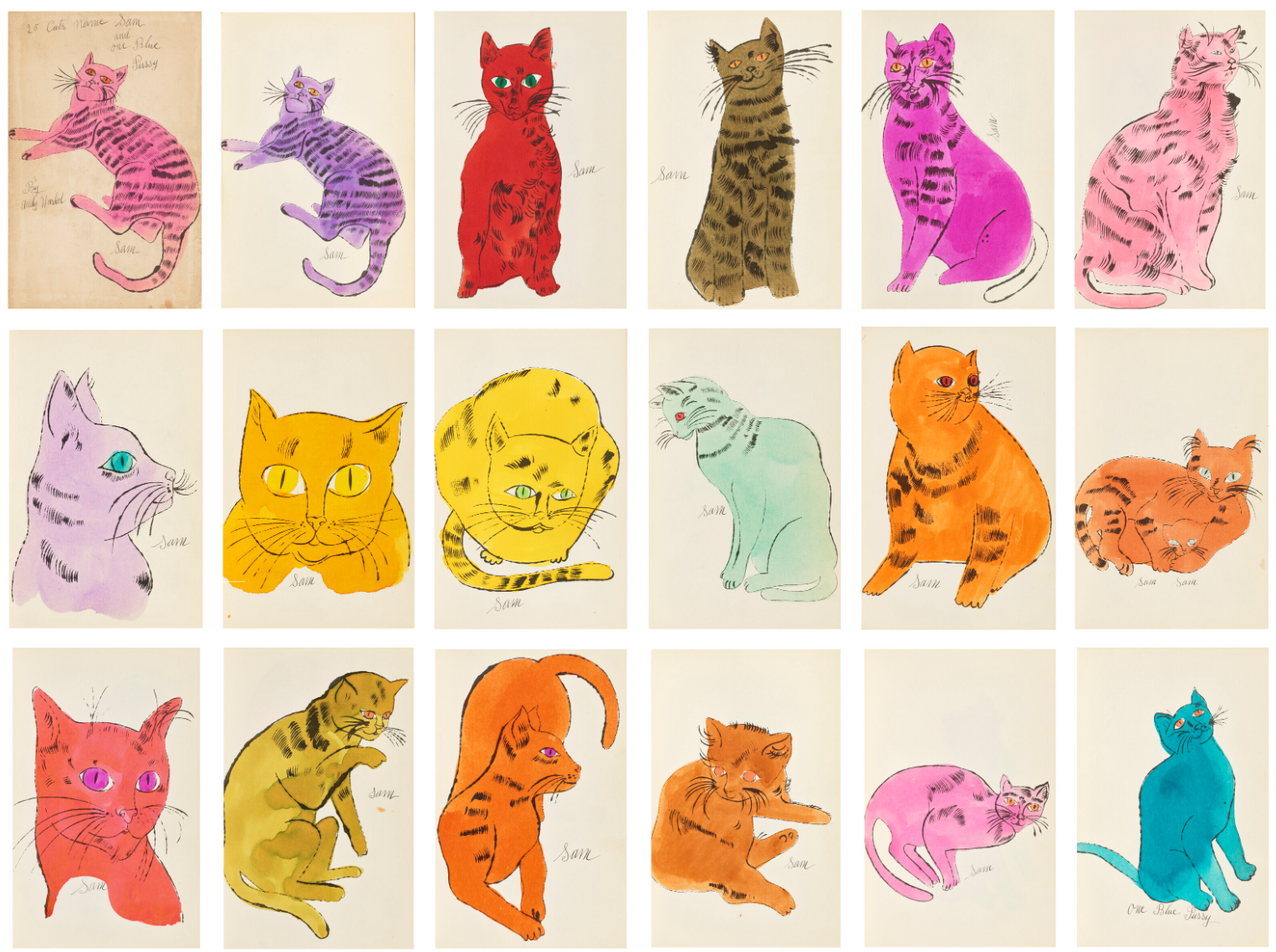
25 Cats Name(d) Sam and one Blue Pussy, 1954
In the 1950s, Andy Warhol explored basic printmaking for his self-published portfolios, books, and commercial illustrations. He reproduced his blotted-line ink drawings as offset lithographs, usually in one color and on white paper, sometimes with hand-colored elements. Warhol’s work in the 1950s was heavily influenced by Julia Warhola’s illustrative style and content. Inspired by his mother’s love of cats, Warhol produced 25 Cats Name[d] Sam. His mother did the lettering, and Warhol’s friends and studio assistants attended “coloring parties” to paint in the cats with brightly colored watercolor dyes. The cats are rendered carefully, with focus on form and color. 25 Cats Name[d] Sam reflects Warhol’s deeply personal connection with his mother. After having moved in with him in New York to help him as an artist and she later released a sort of sequel to 25 Cats Name[d] Sam in 1957, Holy Cats.
ANDY WARHOL
25 Cats Name(d) Sam and one Blue Pussy, 1954
The complete artist’s book of eighteen offset lithographs
With hand-coloring in watercolor on Ticonderoga Text laid paper
Edition: 190
Overall: 9 1/4 x 6 1/8 inches (23.5 x 15.6 cm)
Literature: Feldman & Schellmann IV.52B-68B
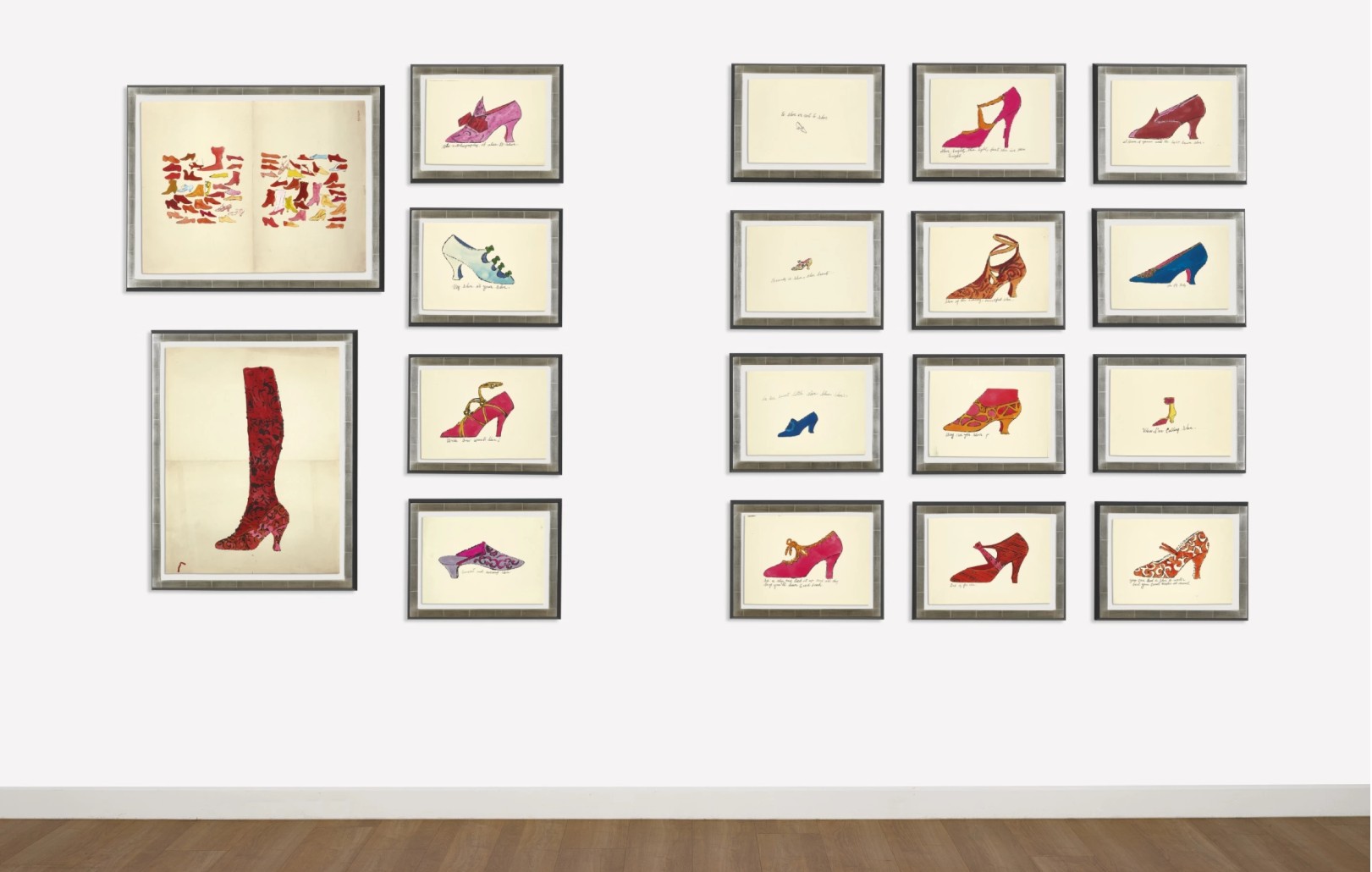
A La Recherche du Shoe Perdu, 1955
As a master of line and contour, Warhol’s consistent and unique drawings and designs piqued the interest of his clients, earning him commissions and collaborations with some of the biggest brands of the day: Tiffany & Co., Columbia Records, and Vogue, to name a few. Though stylistically different from the Pop art that would rocket him to international stardom, these early drawings offer a glimpse at an artist well on his way to establishing an art movement that would change the way the world conceived of contemporary art and its connection to pop culture, morphing from his early successes in the commercial art scene.
ANDY WARHOL
A La Recherche du Shoe Perdu, circa 1955
The Complete Portfolio of 16 offset lithographs and watercolors on wove paper
Sheet: 9 3/4 x 13 3/4 inches (24.8 x 34.9 cm)
Literature: Feldman & Schellmann IV.69A-84A
Early Prints, 1963-1967
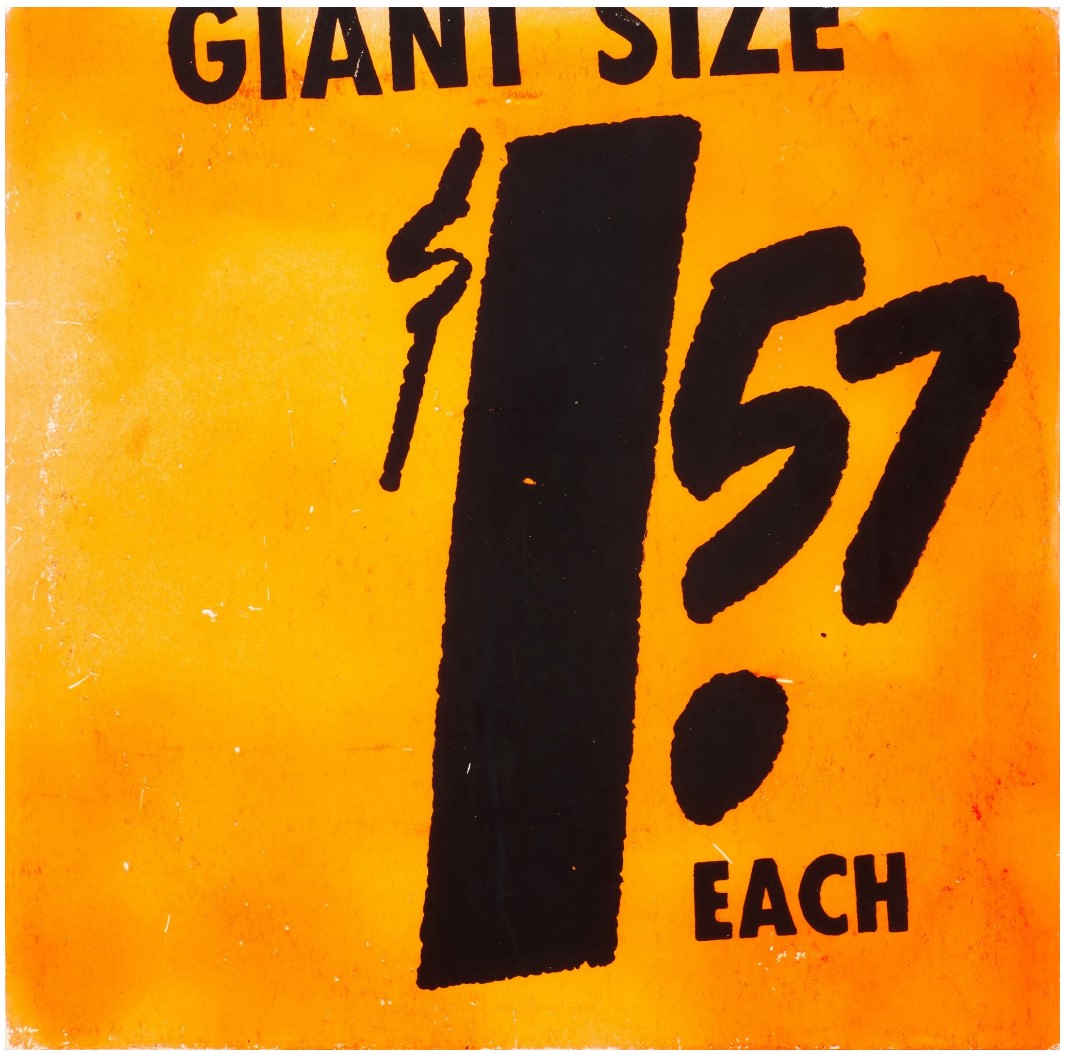
$1.57 GIANT SIZE, 1963
ANDY WARHOL
$1.57 GIANT SIZE, 1963
Screen-print on coated record cover stock
Dimension: 12 1/4 x 12 1/4 inches (31.1 x 31.1 cm)
Edition: 75 + 10 HC
Literature: Feldman & Schellmann IIA.2
Each print is unique
The cover is printed in many colors including green, orange, pink, white, and yellow with black lettering
Birmingham Race Riot, 1964
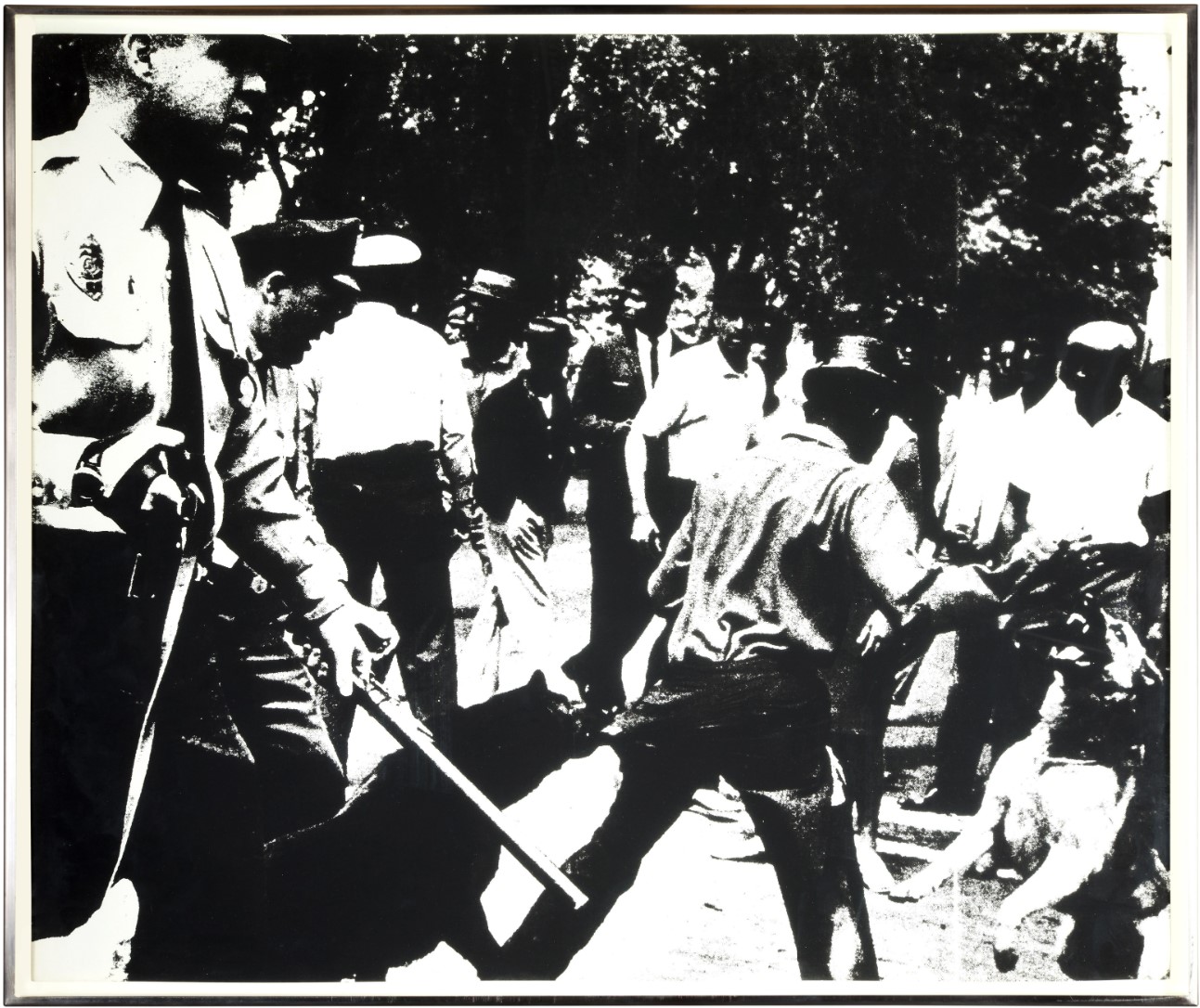
ANDY WARHOL
Birmingham Race Riot from X + X (Ten Works by Ten Painters), 1964
Screenprint on paper
Sheet: 20×24 inches (50.8 x 61 cm)
Edition: 500 + 10 AP
Literature: Feldman & Schellmann II.3
Liz, 1964
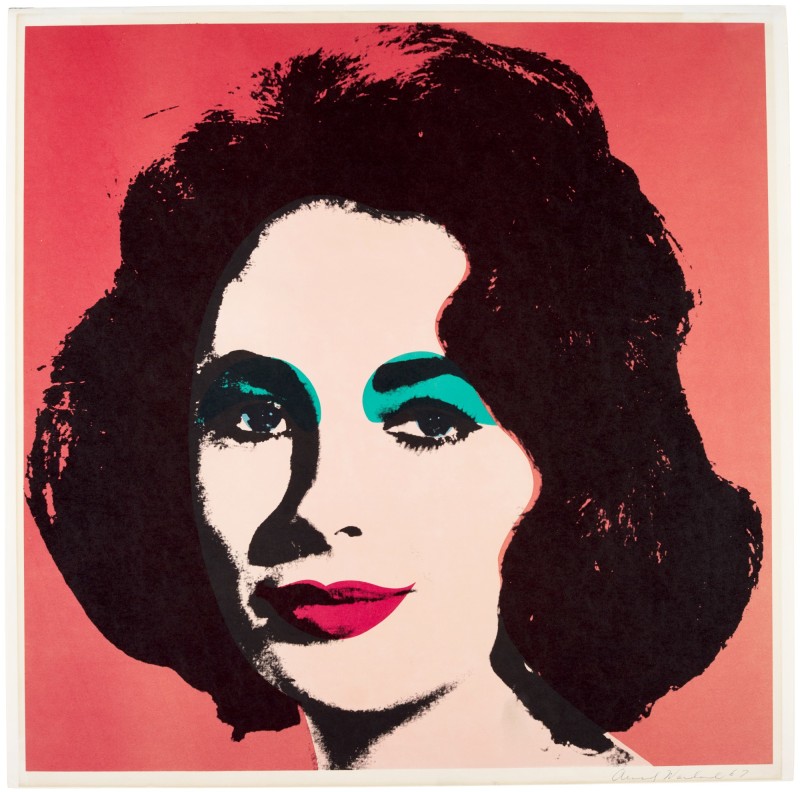
ANDY WARHOL
Liz, 1964
Offset lithograph printed in colors on wove paper
Sheet: 23×23 inches (58.4 x 58.4 cm)
Edition: Approximately 300 (not numbered)
Literature: Feldman & Schellmann II.7
S&H Green Stamps, 1965
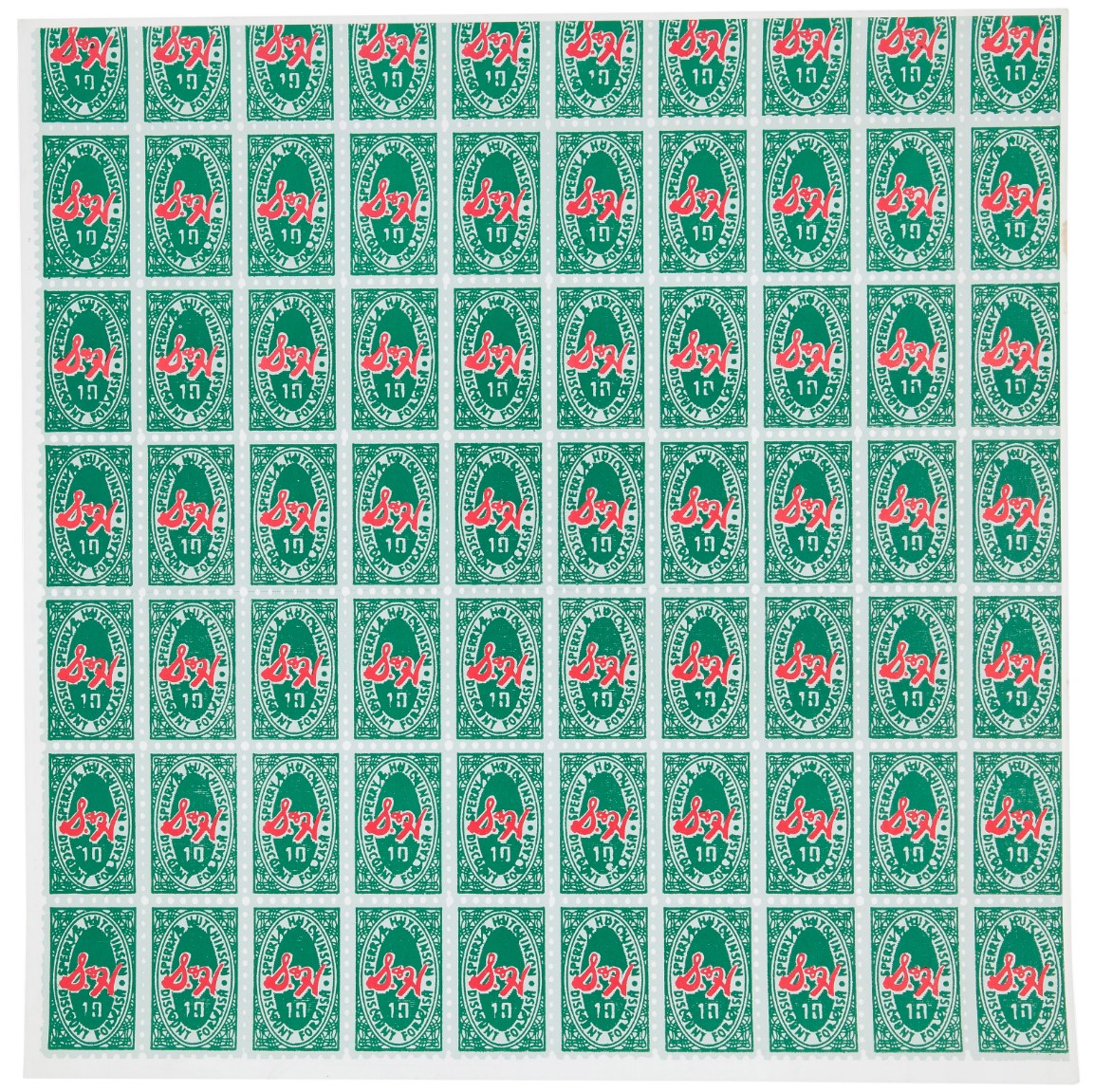
ANDY WARHOL
S&H Green Stamps, 1965
Offset lithograph in colors on thin wove paper
Sheet: 23 1/8 x 22 7/8 inches (58.7 x 58.1 cm)
Edition: Approximately 300
Literature: Feldman & Schellmann II.9
Jacqueline Kennedy I (Jackie I), 1966

ANDY WARHOL
Jacqueline Kennedy I (Jackie I) from 11 Pop Artists, Volume I, 1966
Screenprint in silver on wove paper
Sheet: 24×20 inches (61 x 50.8 cm)
Edition: 200 + 50 numbered in Roman numerals
Literature: Feldman & Schellmann II.13
Jacqueline Kennedy II (Jackie II), 1966
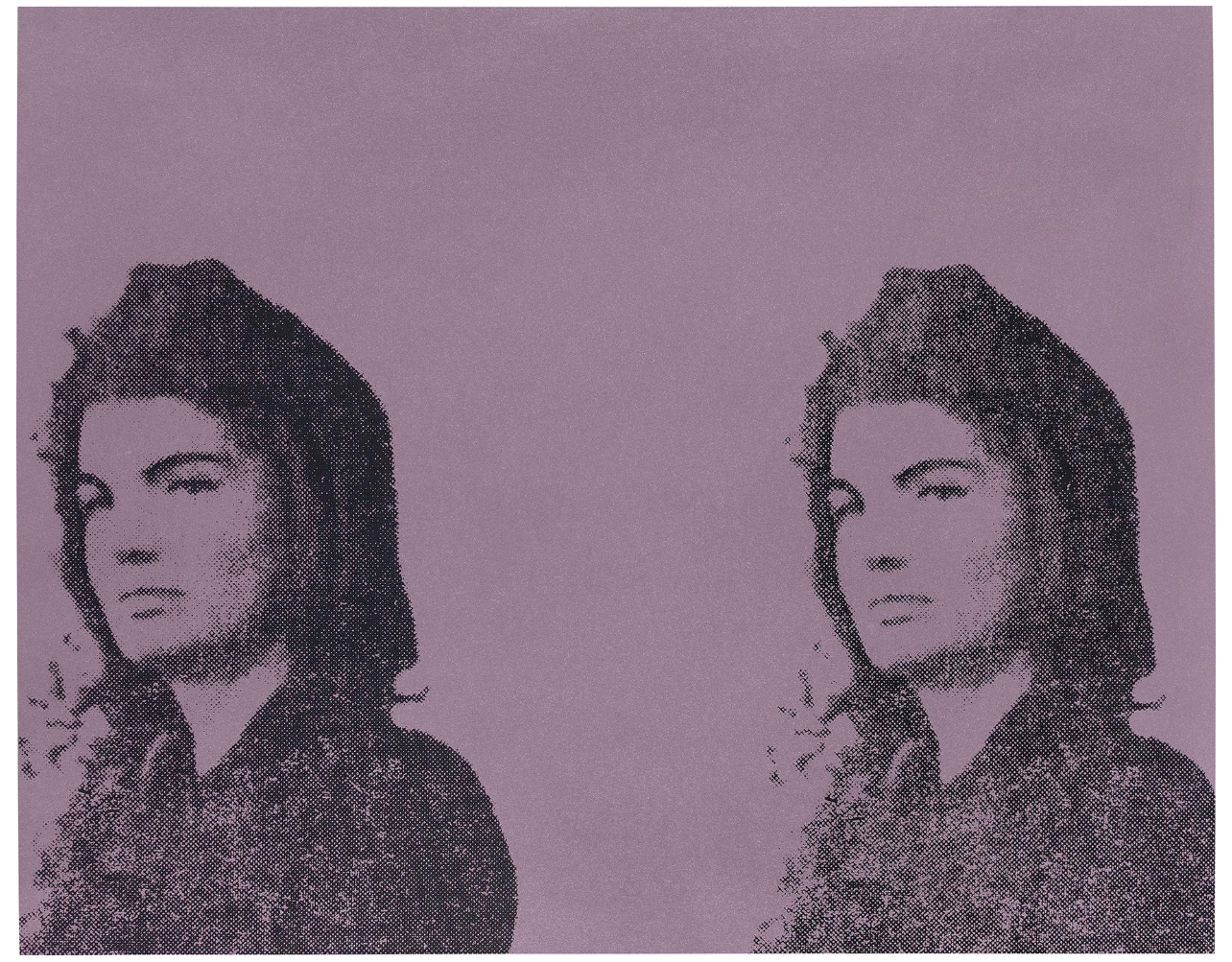
ANDY WARHOL
Jacqueline Kennedy II (Jackie II) from 11 Pop Artists, Volume II, 1966
Screenprint in colors on wove paper
Sheet: 24×30 inches (61 x 76.2 cm)
Edition: 200 + 50 numbered in Roman numerals
Literature: Feldman & Schellmann II.14
Jacqueline Kennedy III (Jackie III), 1966
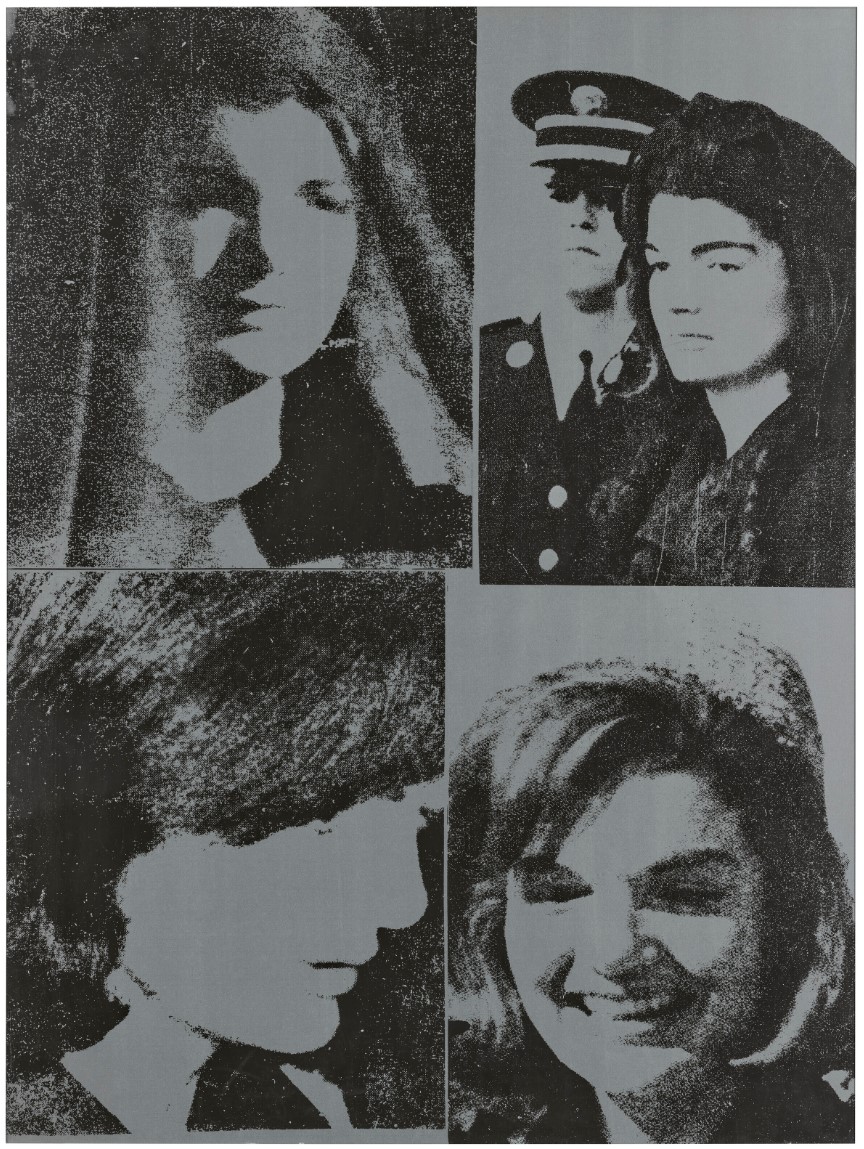
ANDY WARHOL
Jacqueline Kennedy III (Jackie III) from 11 Pop Artists, Volume III, 1966
Screenprint in colors on wove paper
Sheet: 40×30 inches (101.6 x 76.2 cm)
Edition: 200 + 50 numbered in Roman numerals
Literature: Feldman & Schellmann II.15
Self-Portrait, 1966
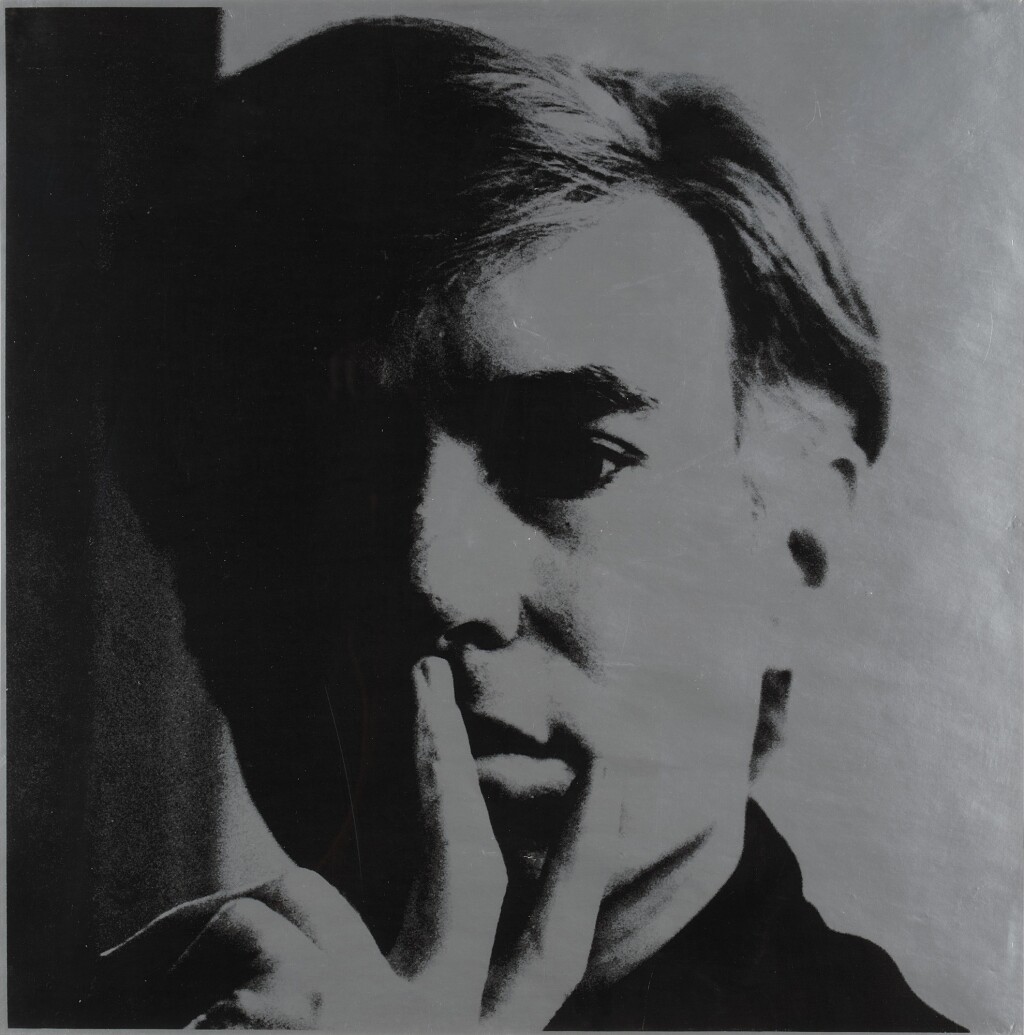
ANDY WARHOL
Self-Portrait, 1966
Offset lithograph, on silver-coated paper, with full margins
Sheet: 23×23 inches (58.4 x 58.4 cm)
Edition: 300
Literature: Feldman & Schellmann II.16
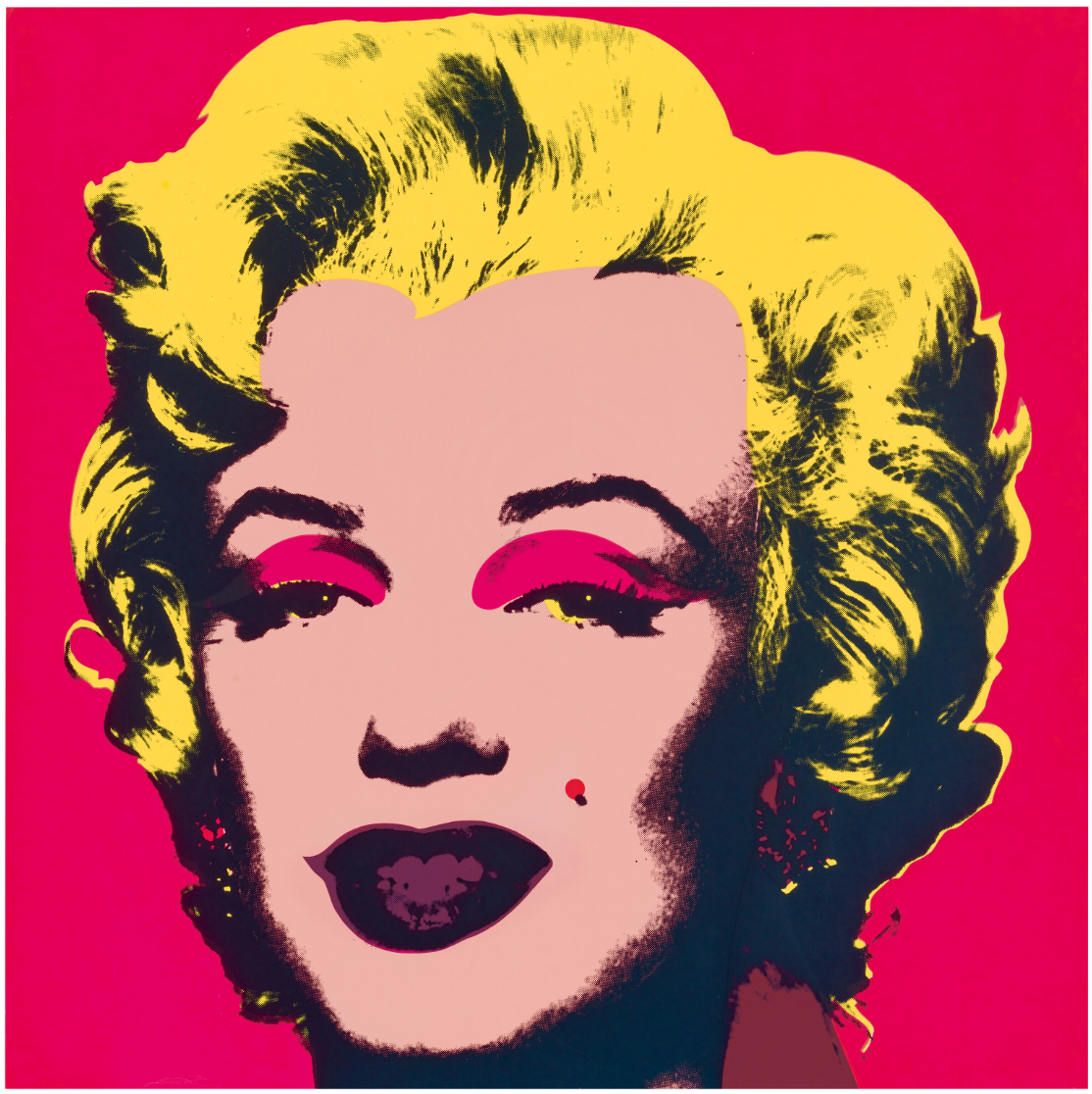
Marilyn, 1967
Both homage to her life and a critique of the celebrity culture that triggered her fall, Marilyn Monroe (Marilyn) became one of Warhol’s most iconic and illustrious series. Marilyn Monroe (Marilyn) celebrates its subject’s life and glamour, but discreetly hints at the ephemerality of fame and fortune, an effect deepened by the viewer’s knowledge of Monroe’s tragic end. Marilyn Monroe is therefore the perfect encapsulation of the spirit of an age; a candy-colored memento mori. Upon close examination of the full set together, one notices slight differences in registration– at times the subject’s features are coherent and properly aligned; while in other instances they are fragmented and askew. So instead of the same form repeated over and over, Warhol exploited the possibility of finding difference in sameness. Moreover, the use of intense flat but vibrant color often printed off-register heightens the sense of artificiality even beyond what he achieved in his paintings. With the Marilyn portfolio, Warhol both elevated Marilyn’s iconic persona and at the same time made her more accessible to the viewer and to the public.
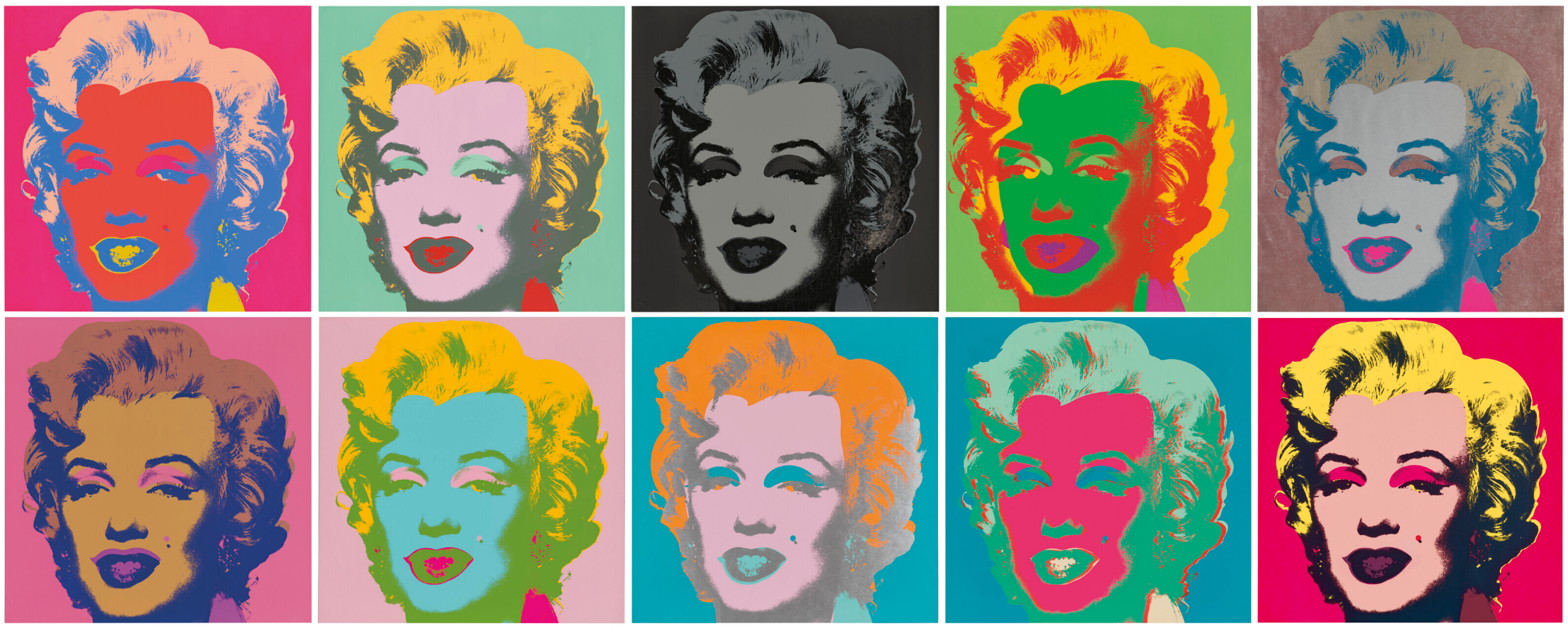
ANDY WARHOL
Marilyn Monroe (Marilyn), 1967
The complete portfolio of 10 color screenprints in colors on wove paper
Sheet: 36×36 inches (91.4 x 91.4 cm)
Edition: 250 + 26 AP (numbered A-Z)
Literature: Feldman & Schellmann II.22-31
1. Marilyn (F&S II.22)
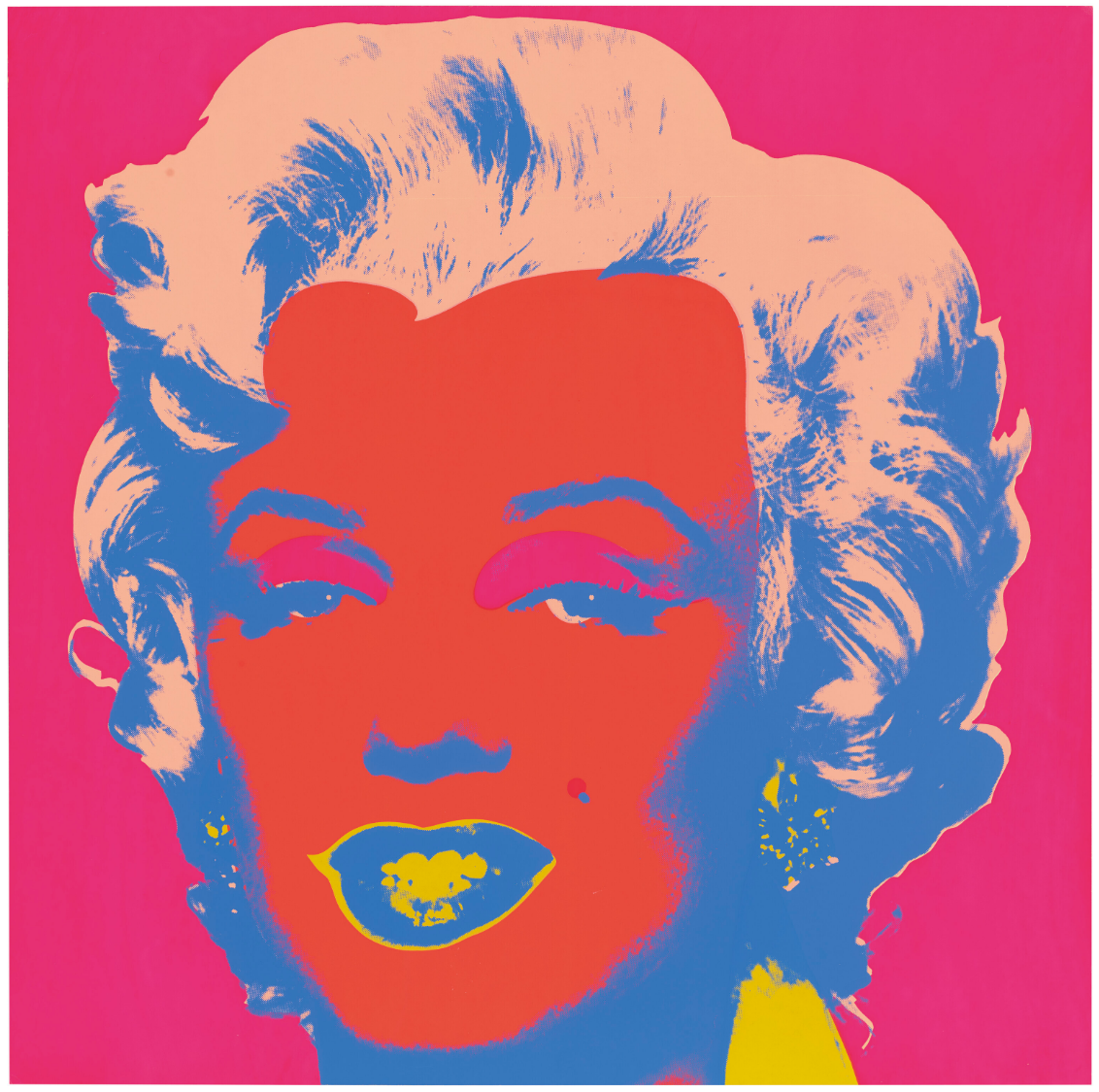
2. Marilyn (F&S II.23)
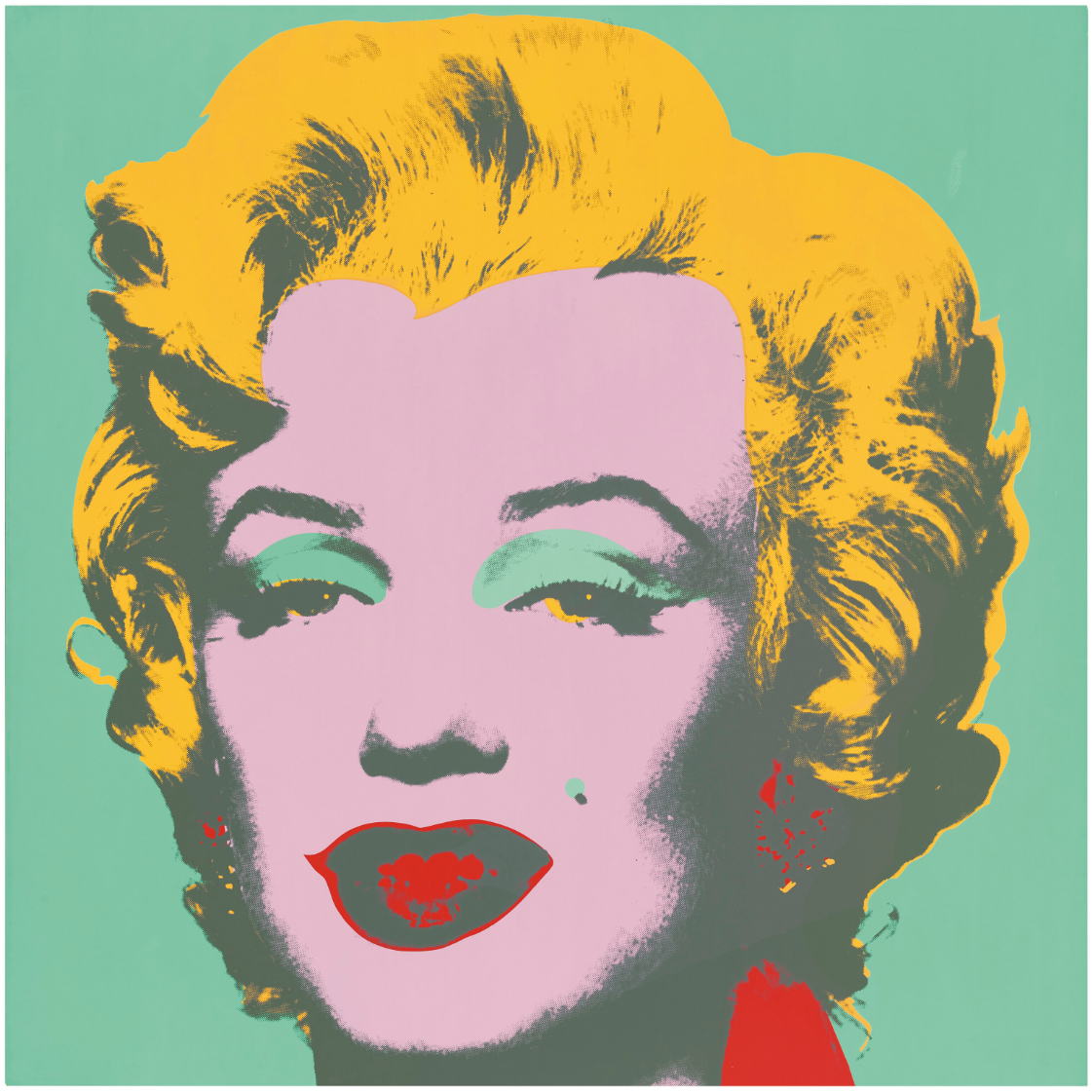
3. Marilyn (F&S II.24)
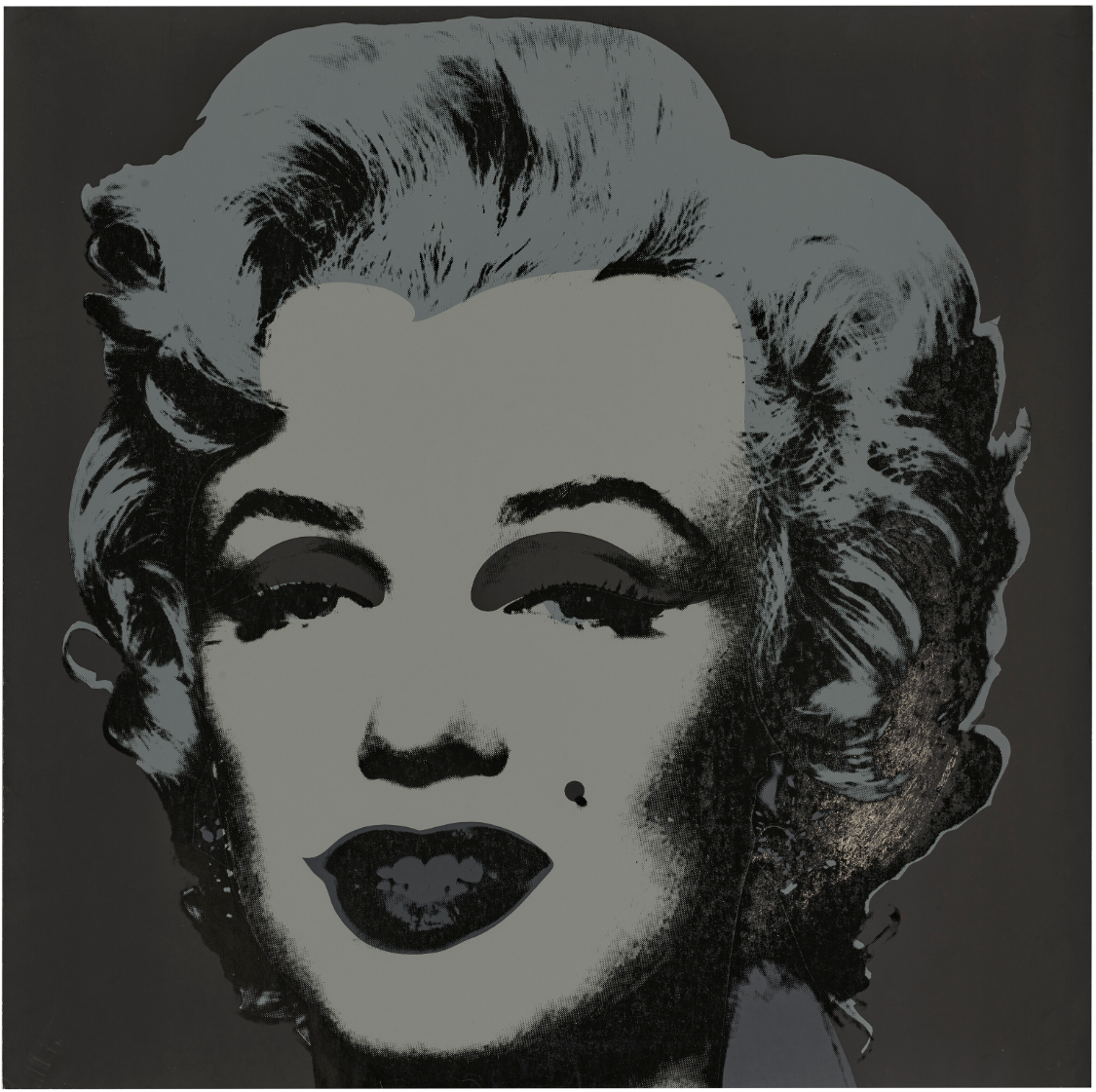
4. Marilyn (F&S II.25)
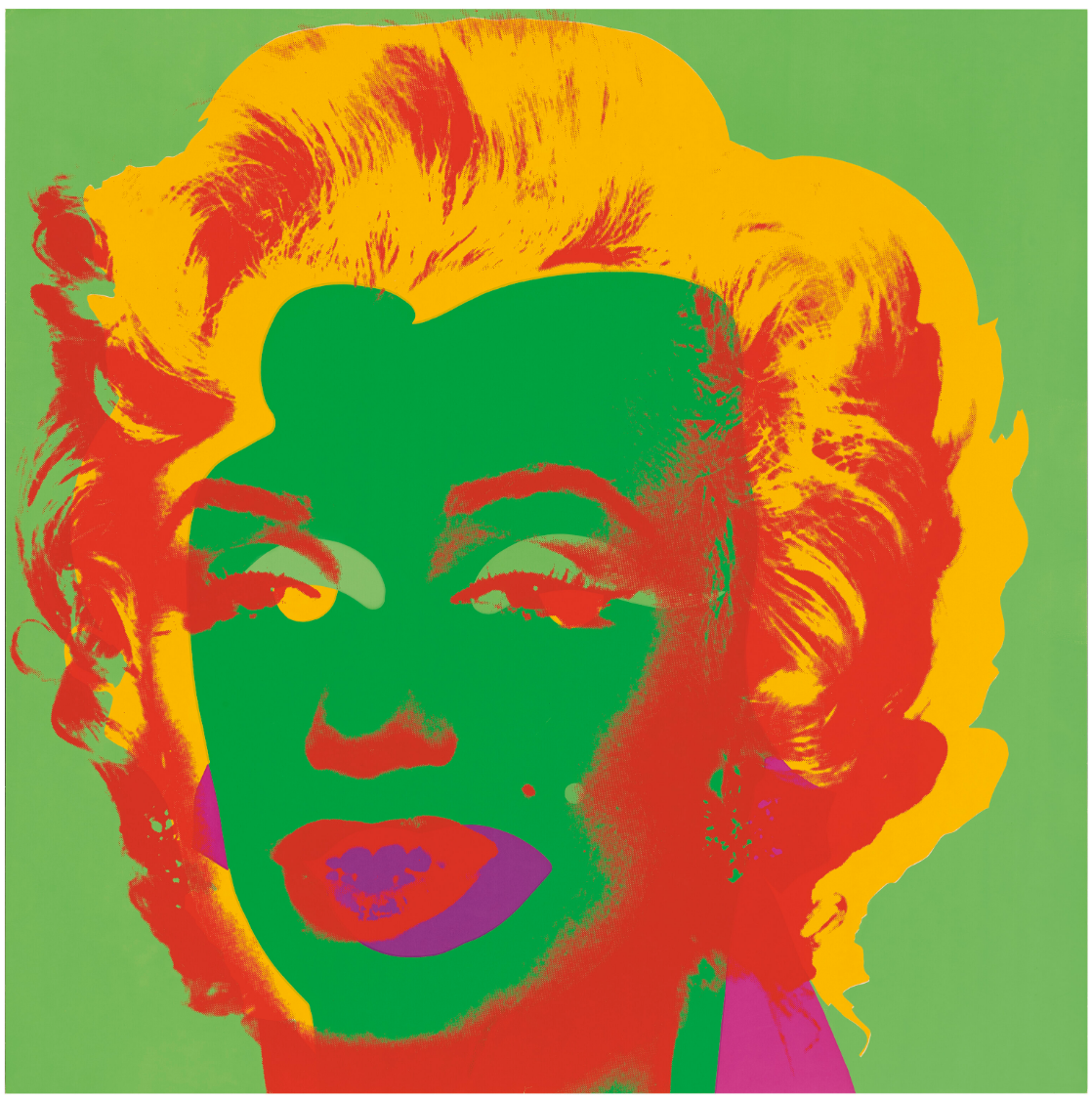
5. Marilyn (F&S II.26)
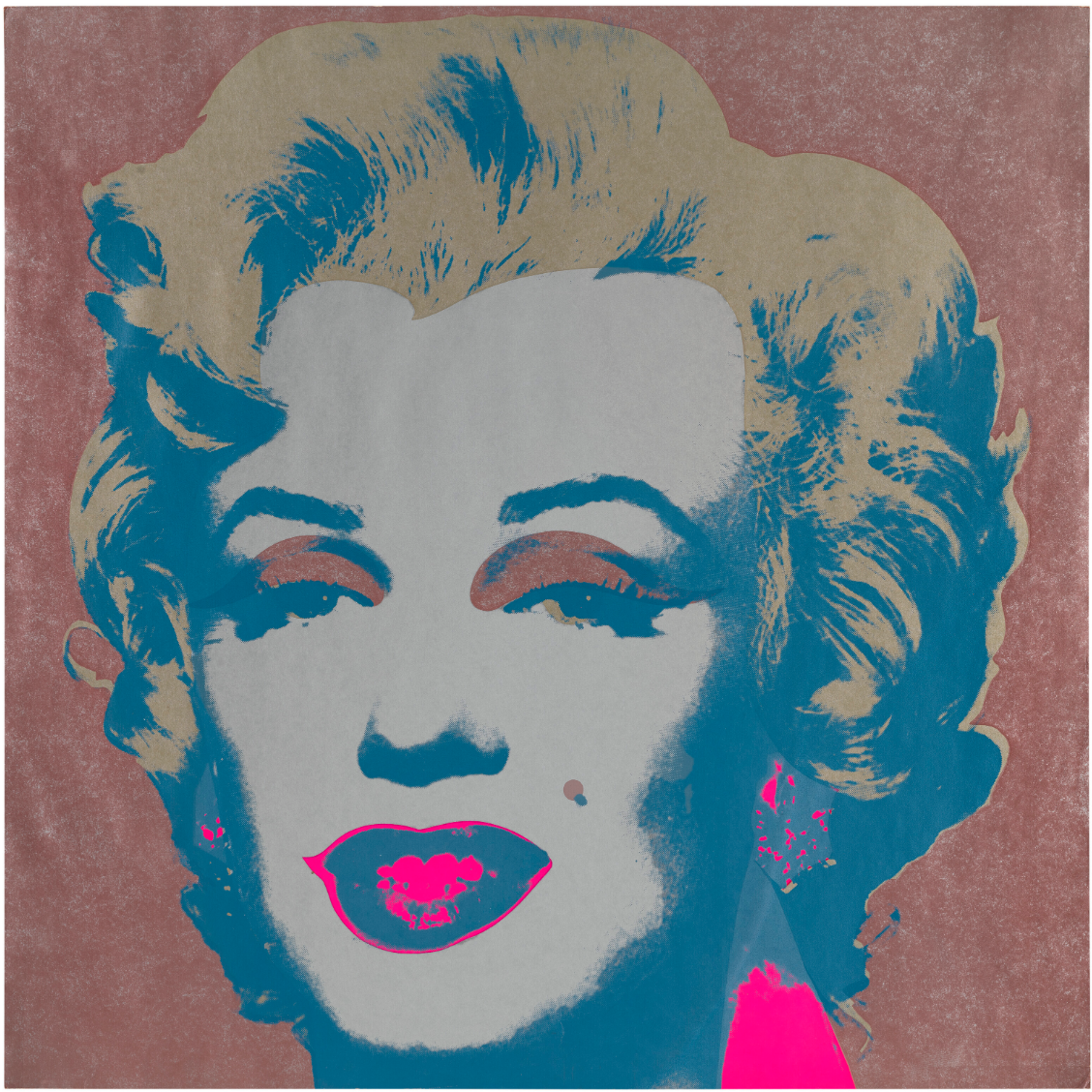
6. Marilyn (F&S II.27)
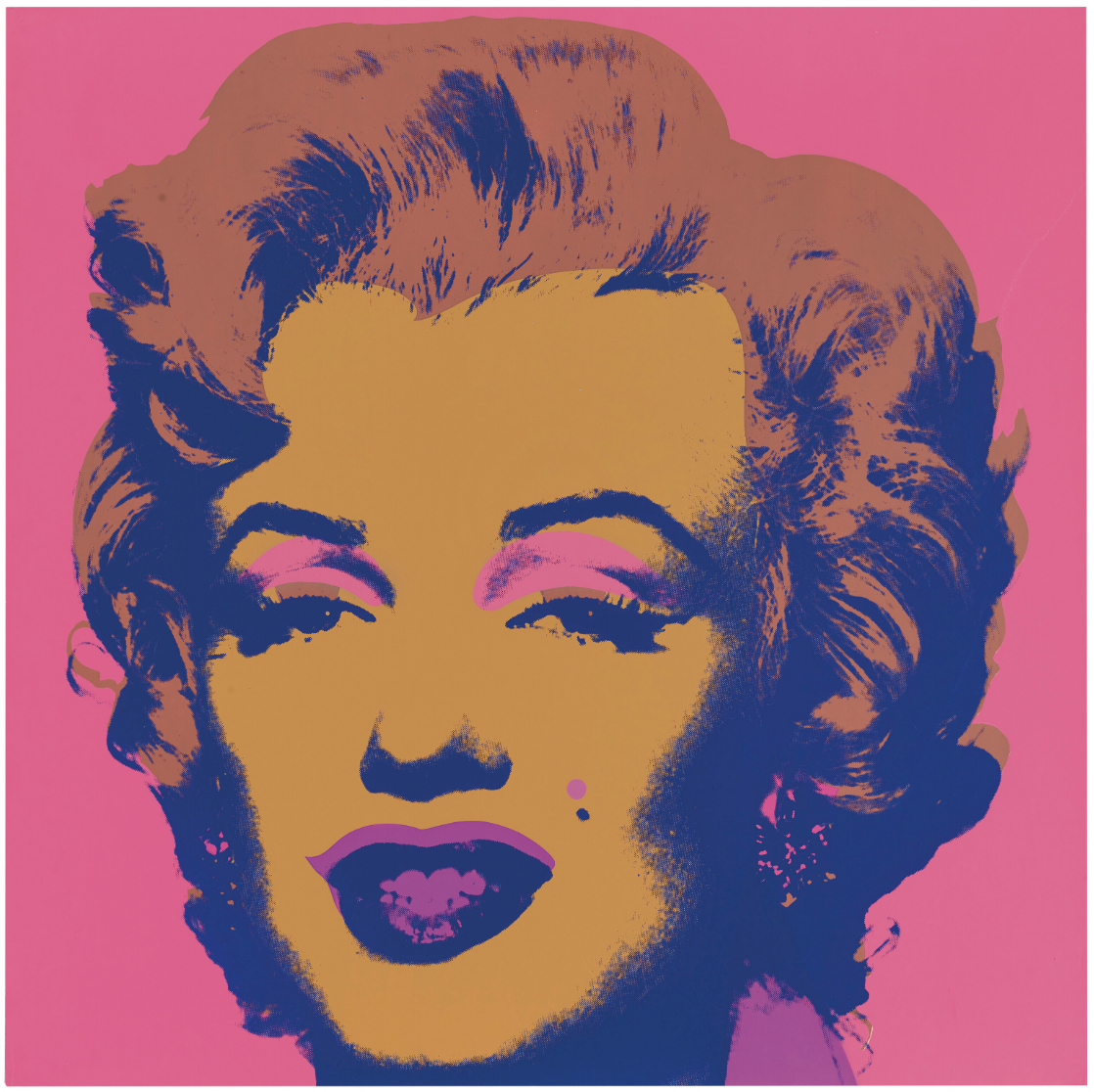
7. Marilyn (F&S II.28)
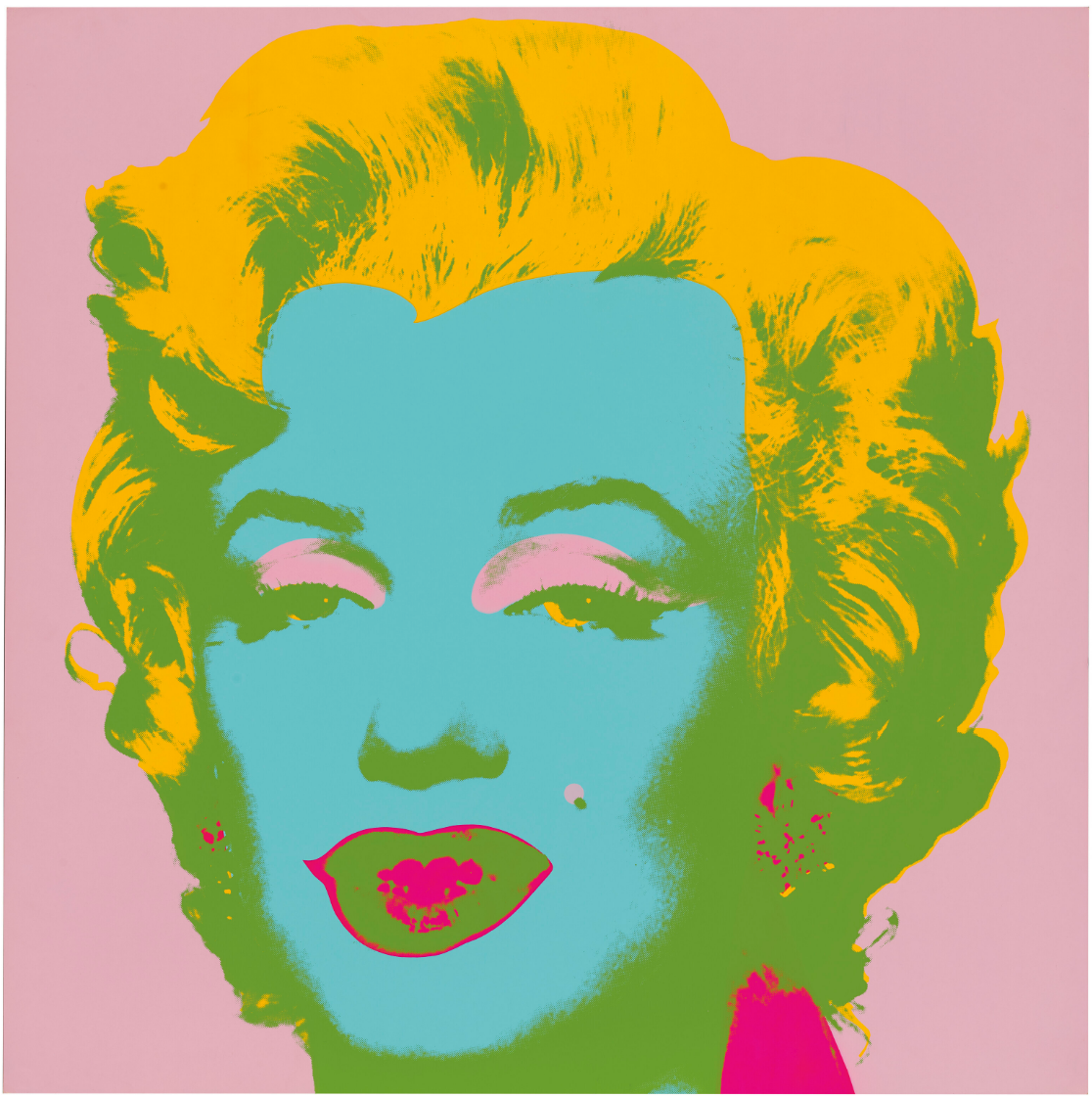
8. Marilyn (F&S II.29)
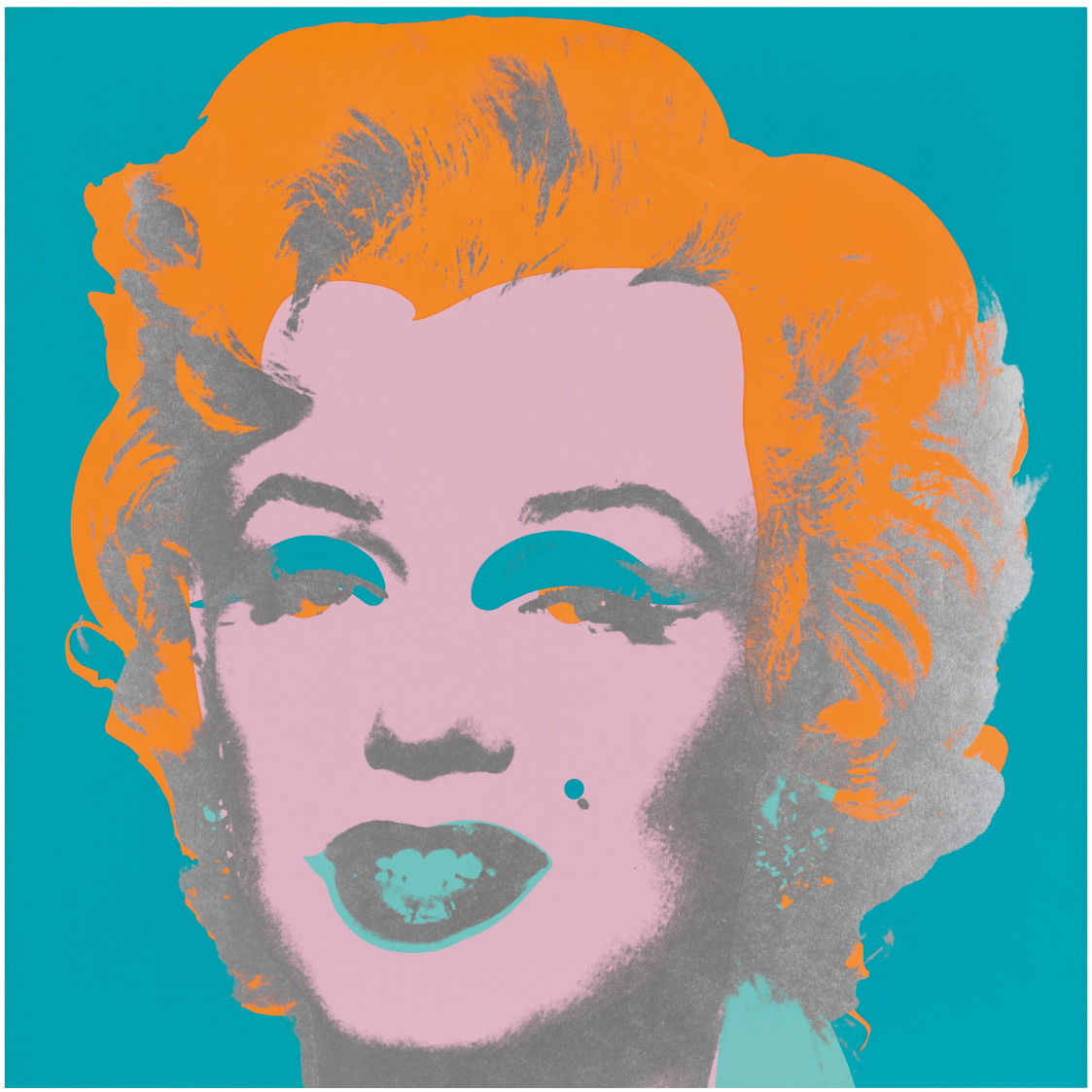
9. Marilyn (F&S II.30)
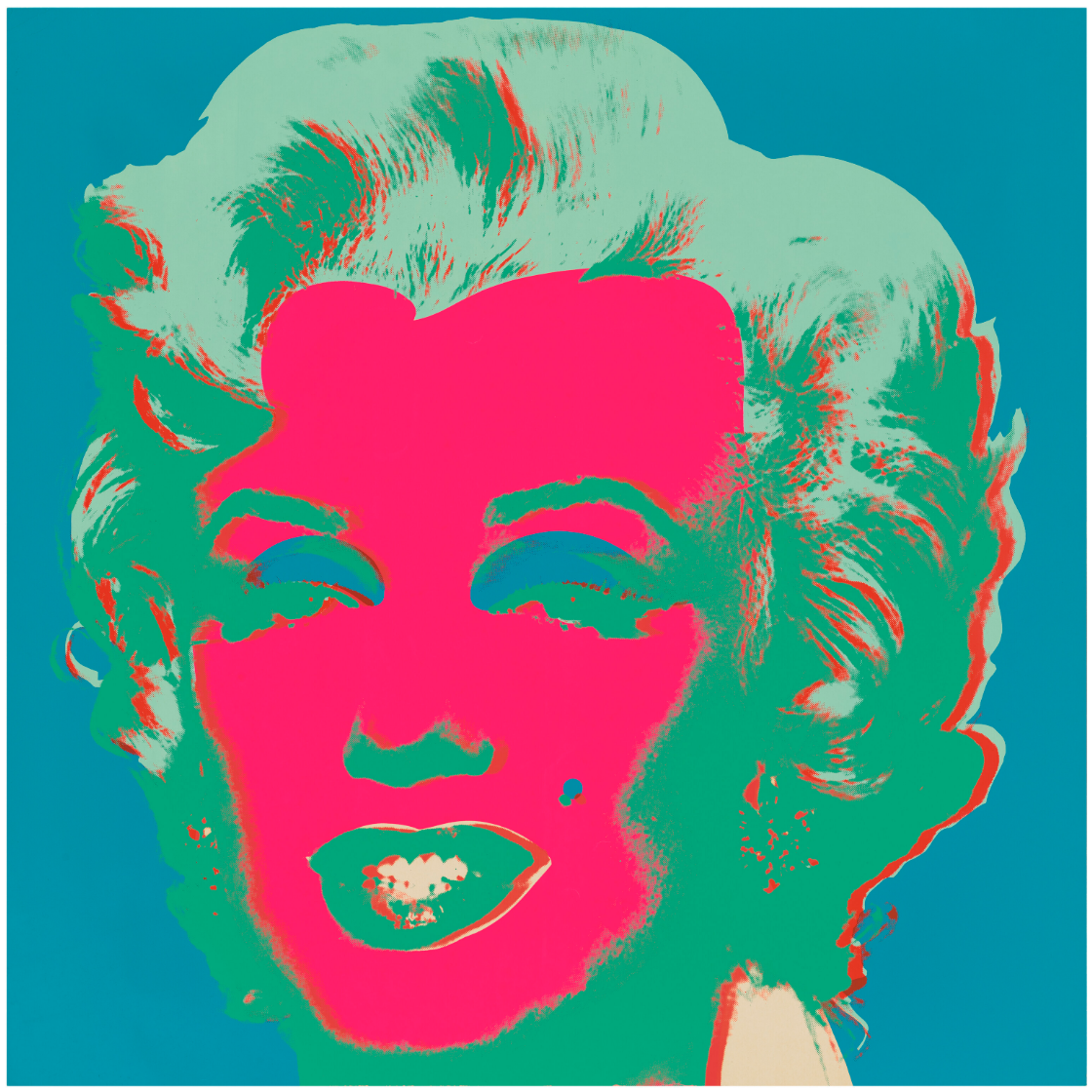
10. Marilyn (F&S II.31)
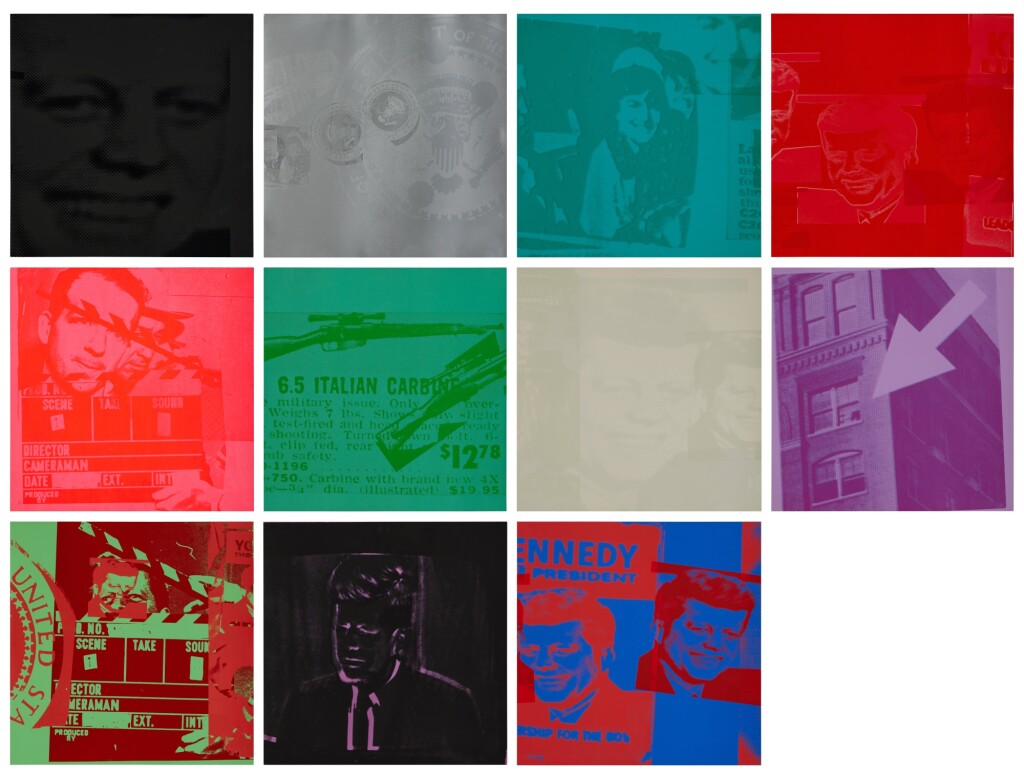
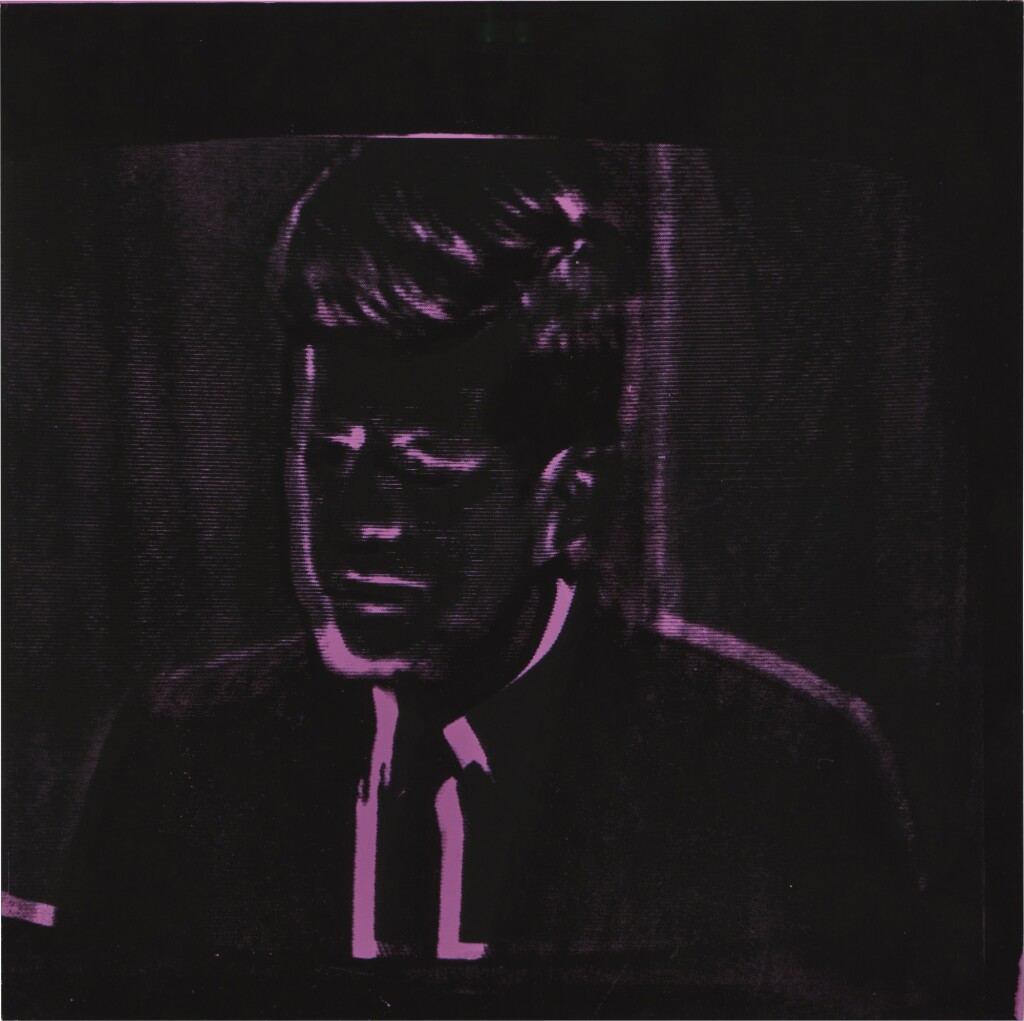
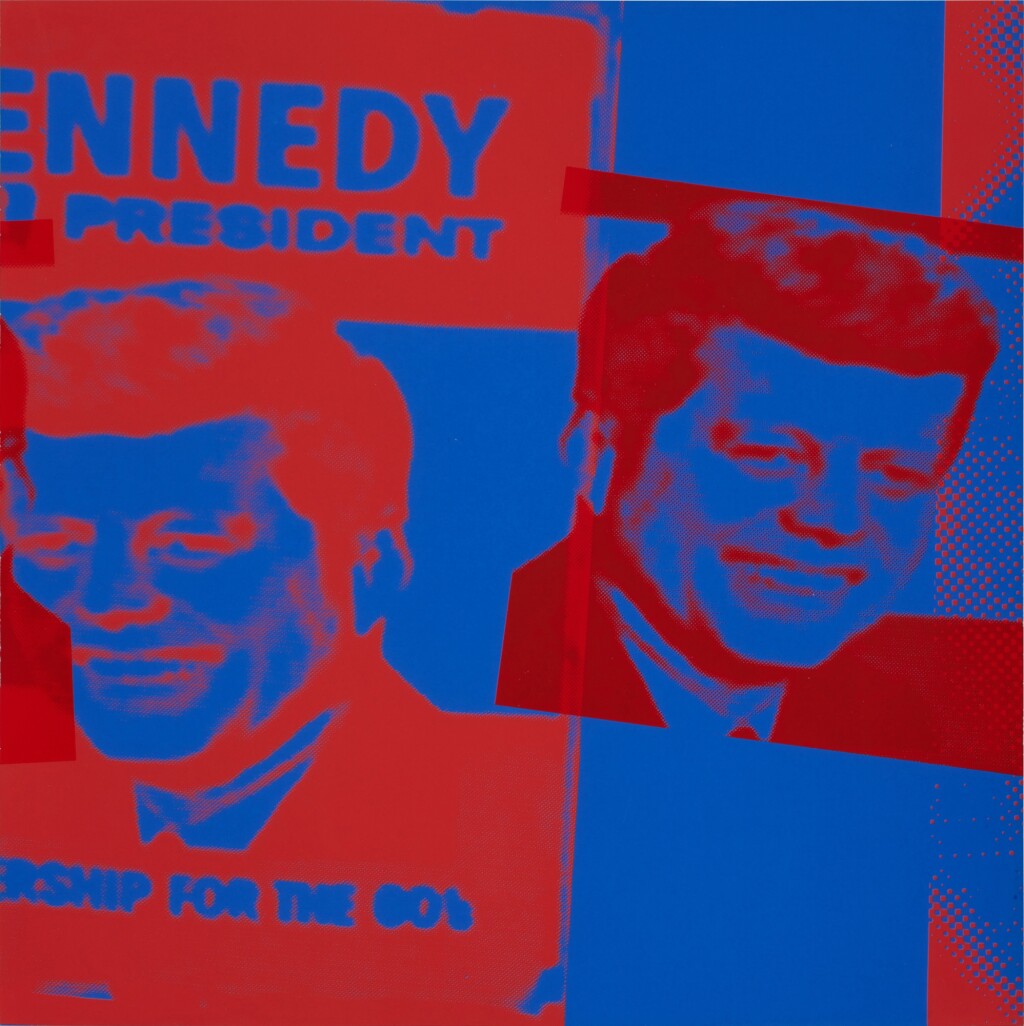
Flash – November 22, 1963, 1968
Warhol’s Flash Series features Teletypes (“news flashes”) from the day of the Kennedy Assassination and images that explore how the event was covered by the media. Endlessly enthralled by celebrity, consumerism and advertising, Warhol depicts this event through the critical lens of news as commodity; even our most harrowing tragedies become banal and innocuous when made a headline and we, in turn, are made consumers of a narrative shaped by mass media.
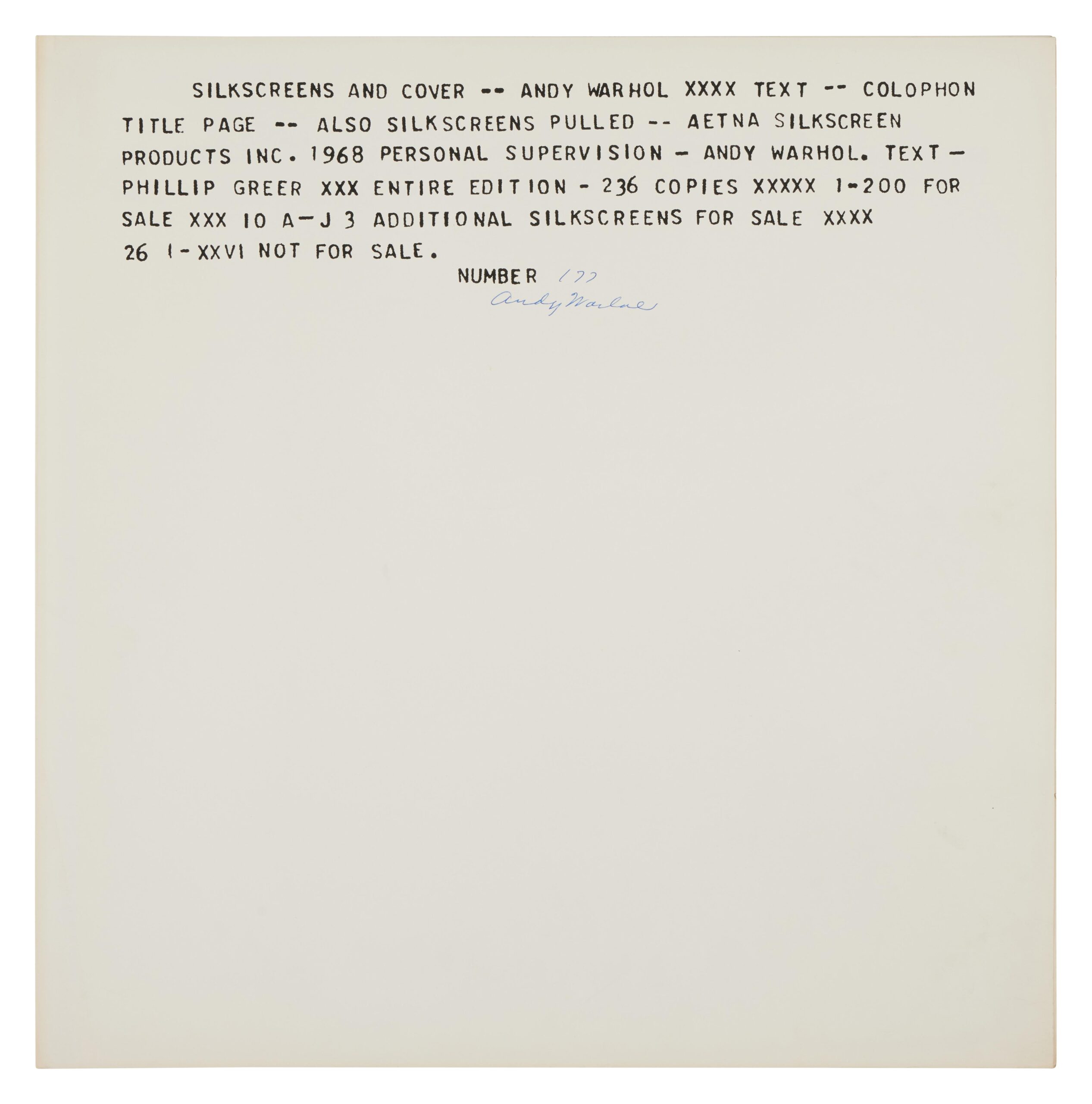
ANDY WARHOL
Flash – November 22, 1963, 1968
The complete set of eleven screenprints in colors on Strathmore Bristol paper colophon
and Teletype text on paper
Sheet: 21×21 inches (53.3 x 53,3 cm)
Edition: 200 + 26 numbered in Roman numerals
Literature: Feldman & Schellmann II.32-42
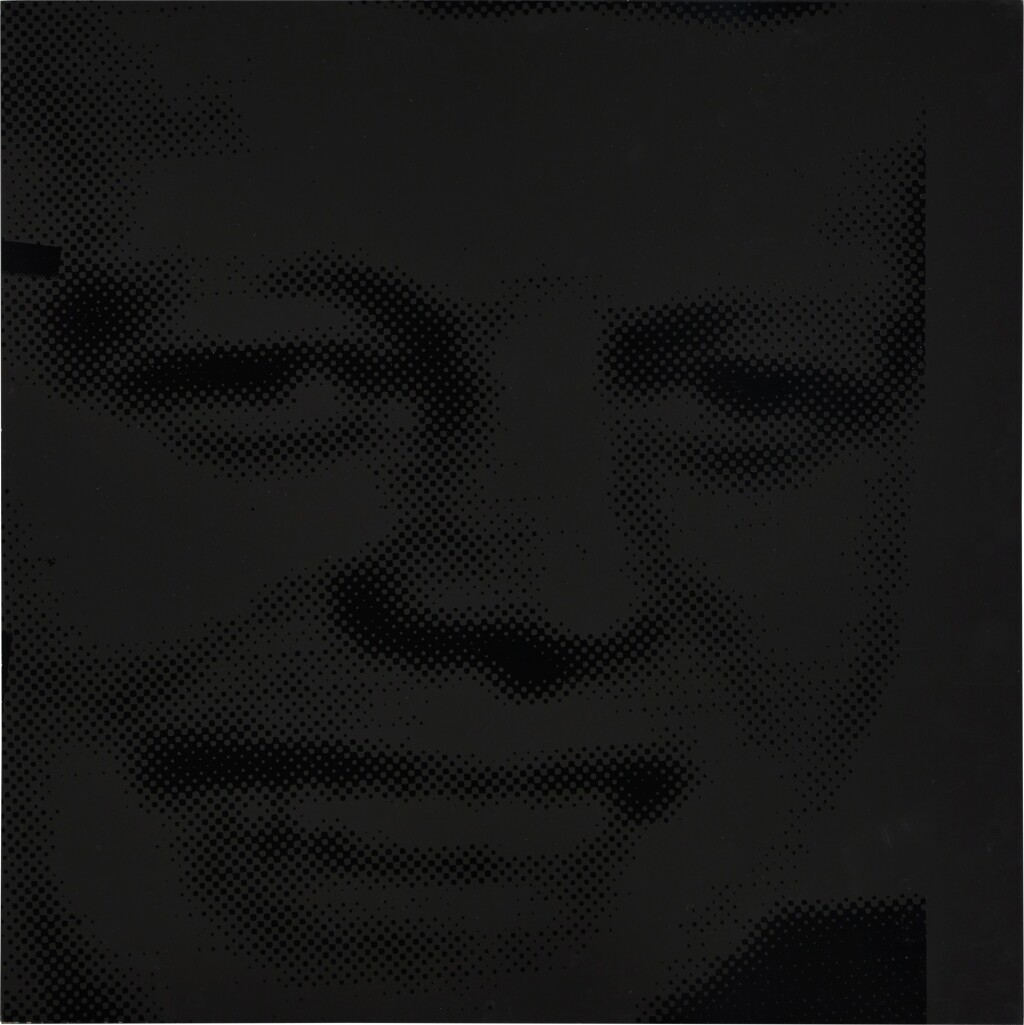
1. Flash (F&S II.32)
2. Flash (F&S II.33)
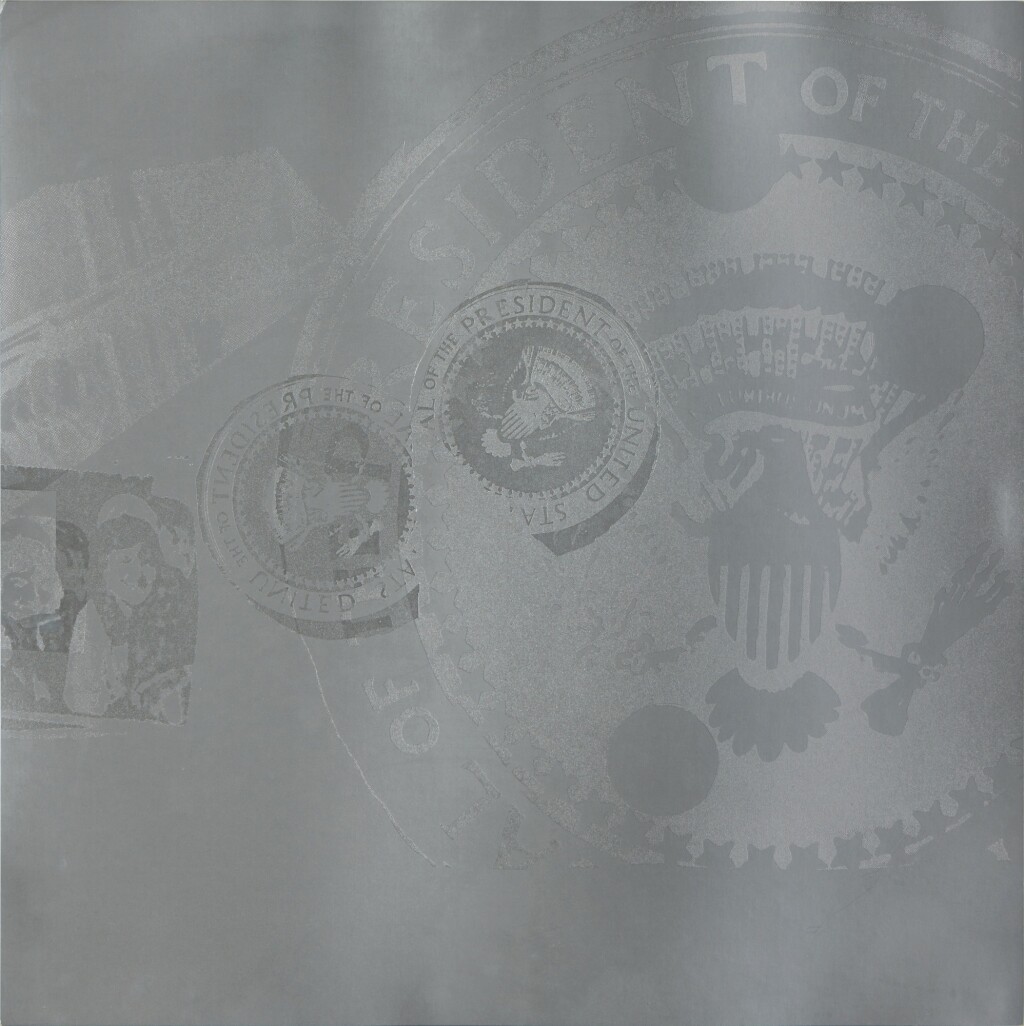
3. Flash (F&S II.34)
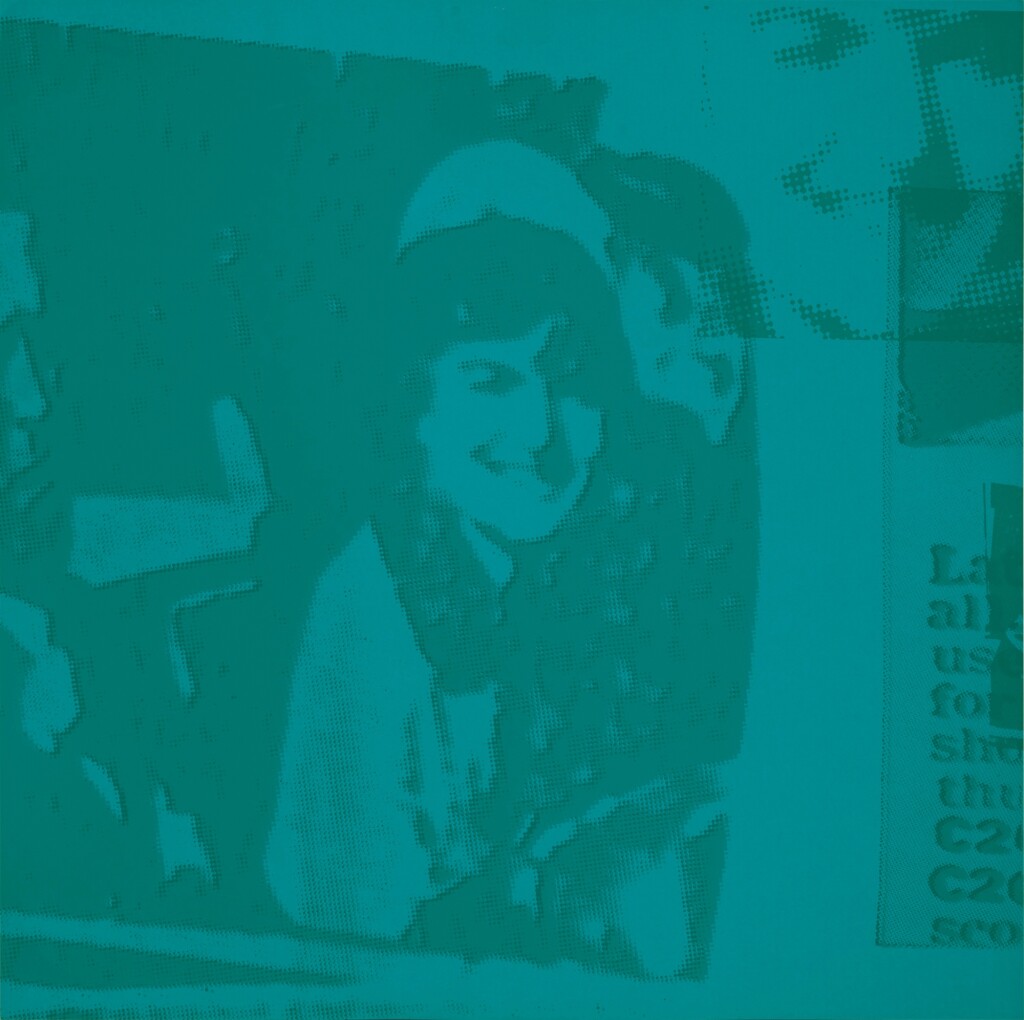
4. Flash (F&S II.35)
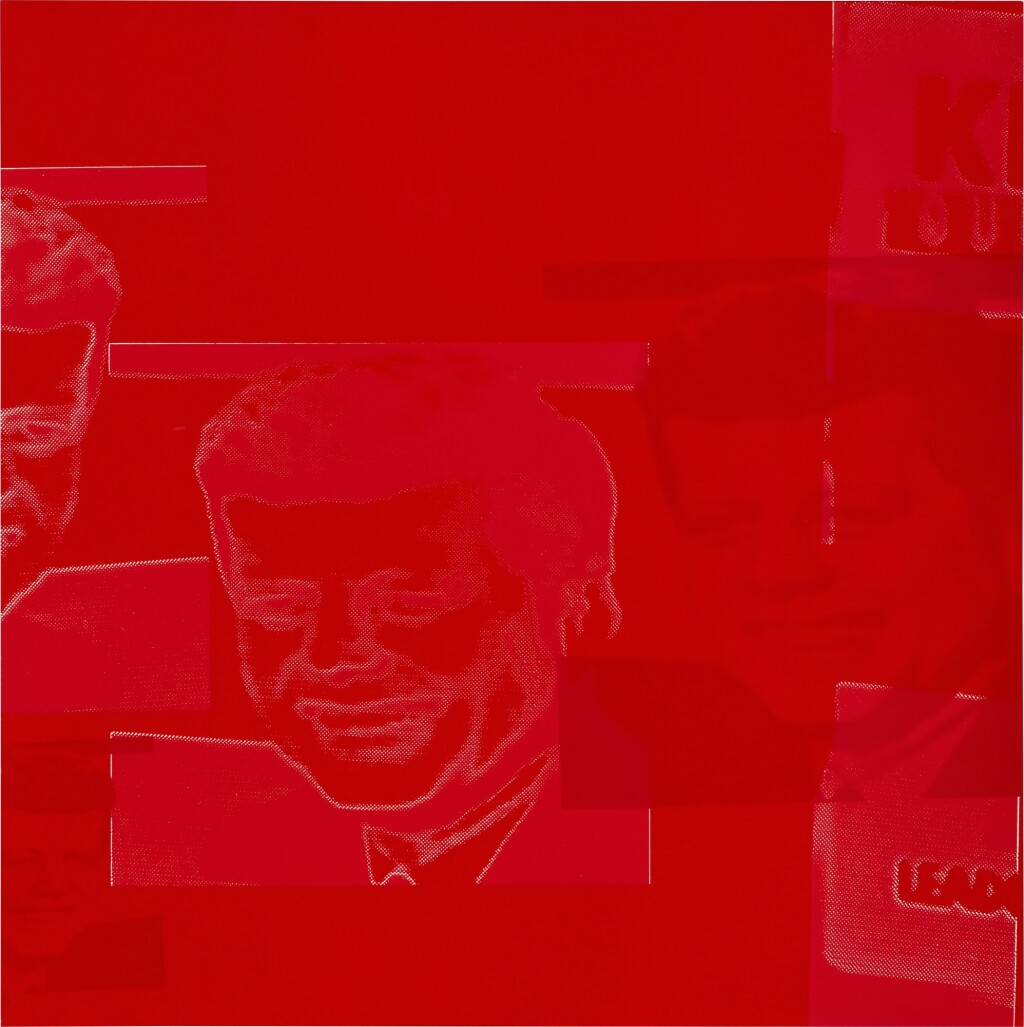
5. Flash (F&S II.36)
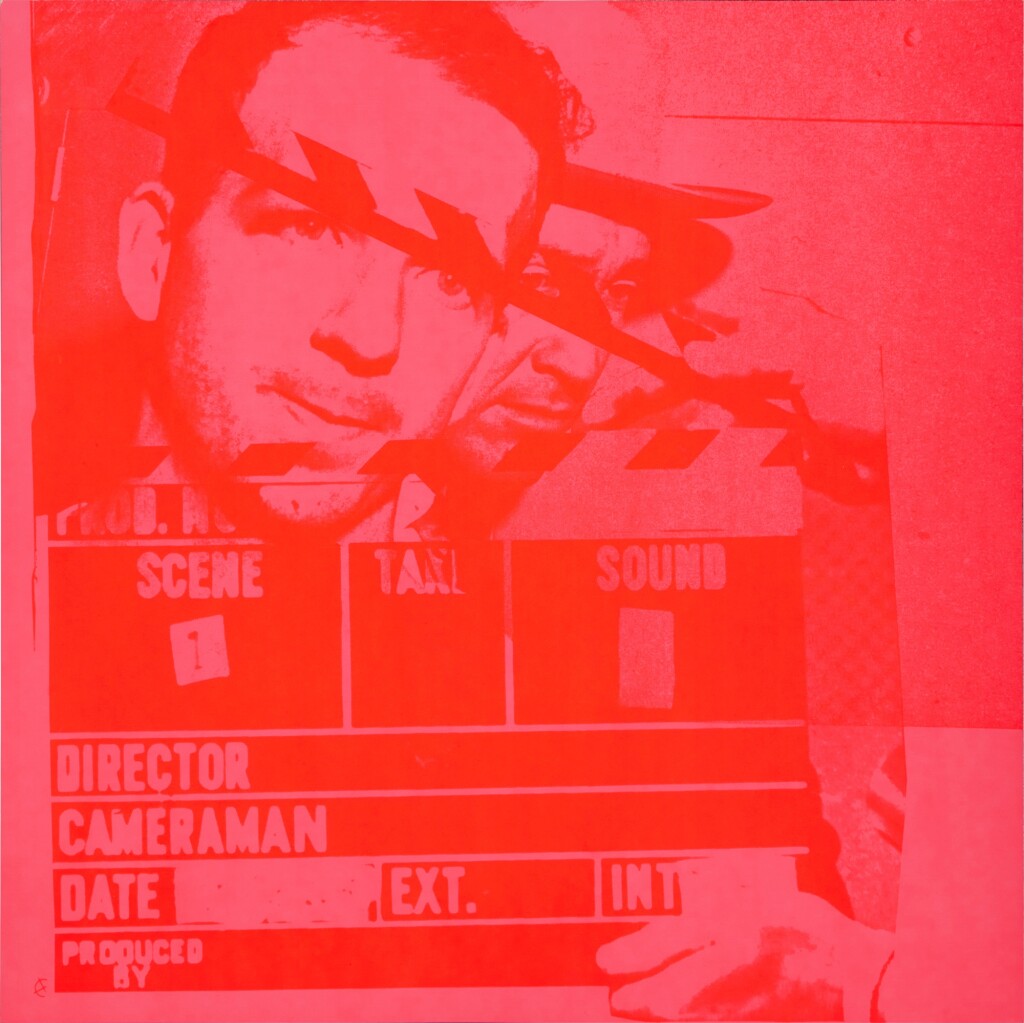
6. Flash (F&S II.37)
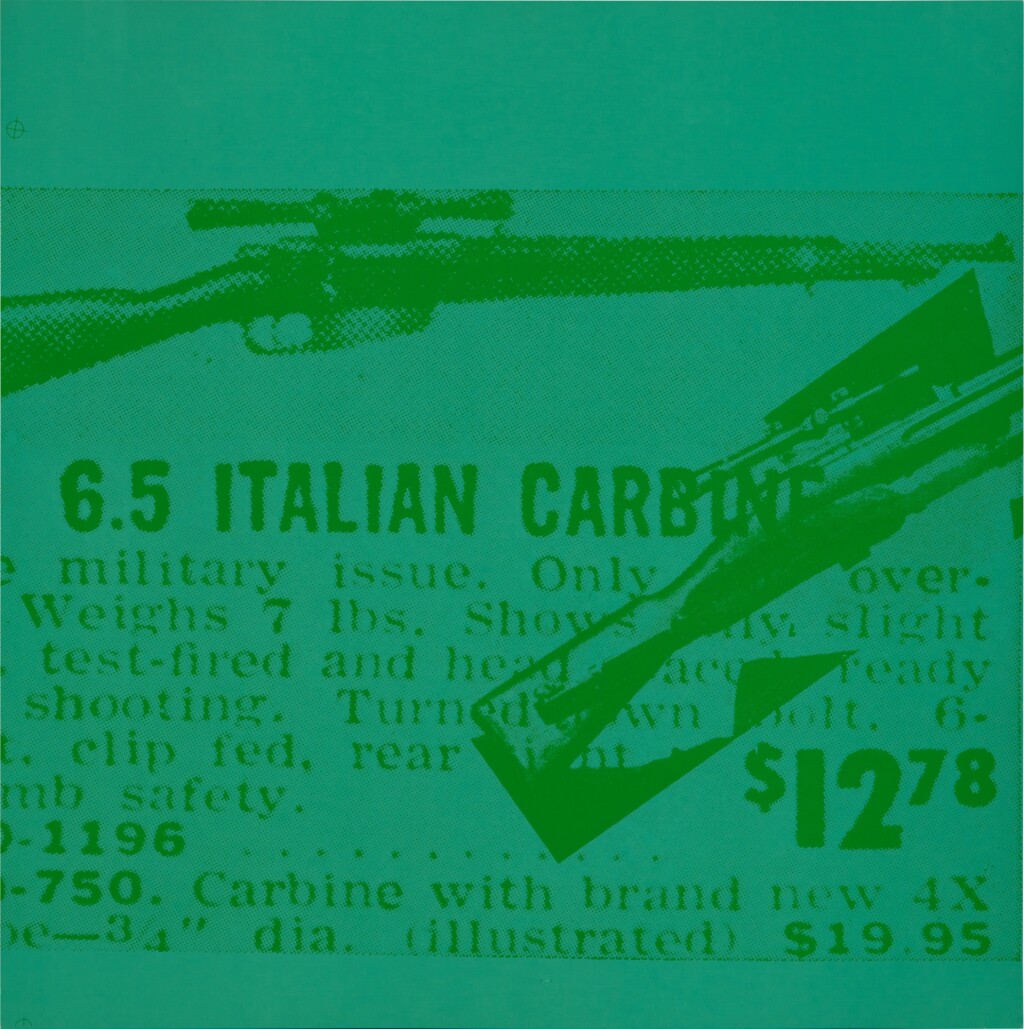
7. Flash (F&S II.38)
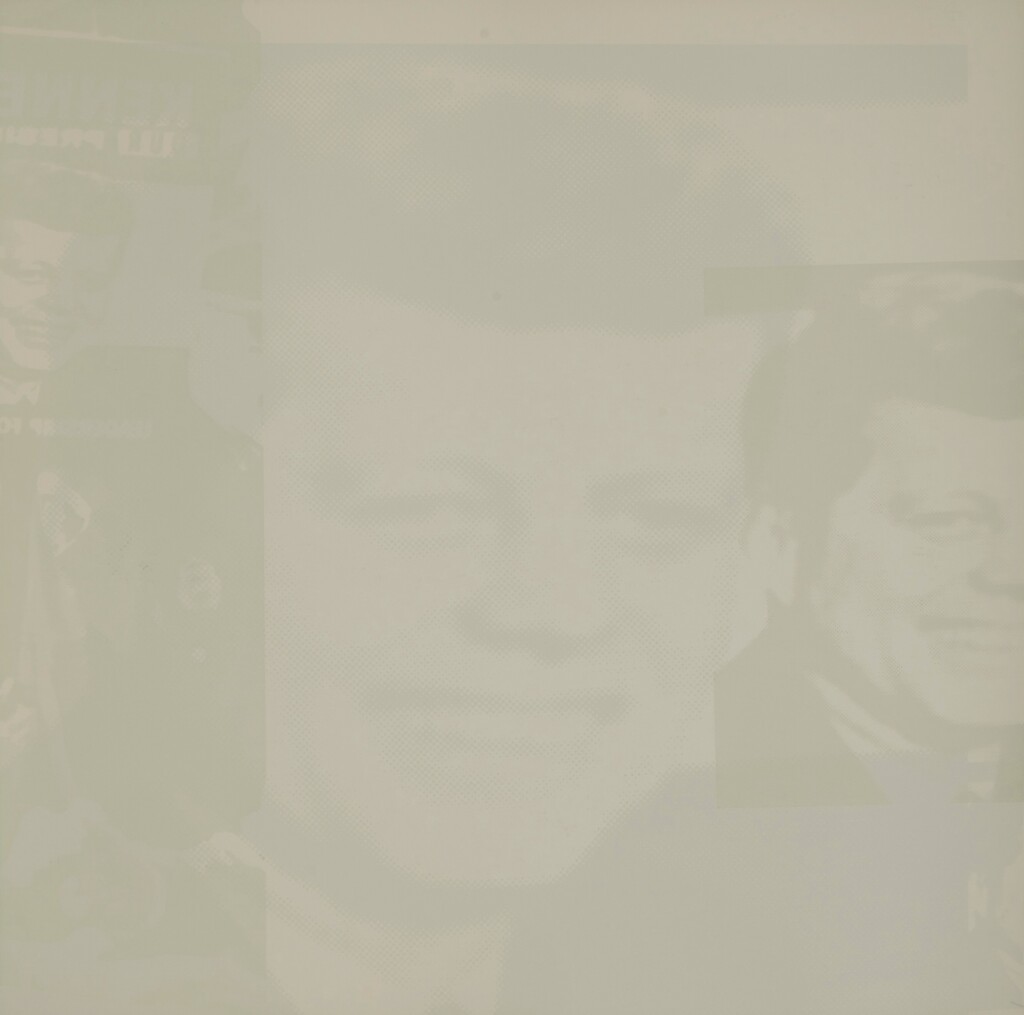
8. Flash (F&S II.39)
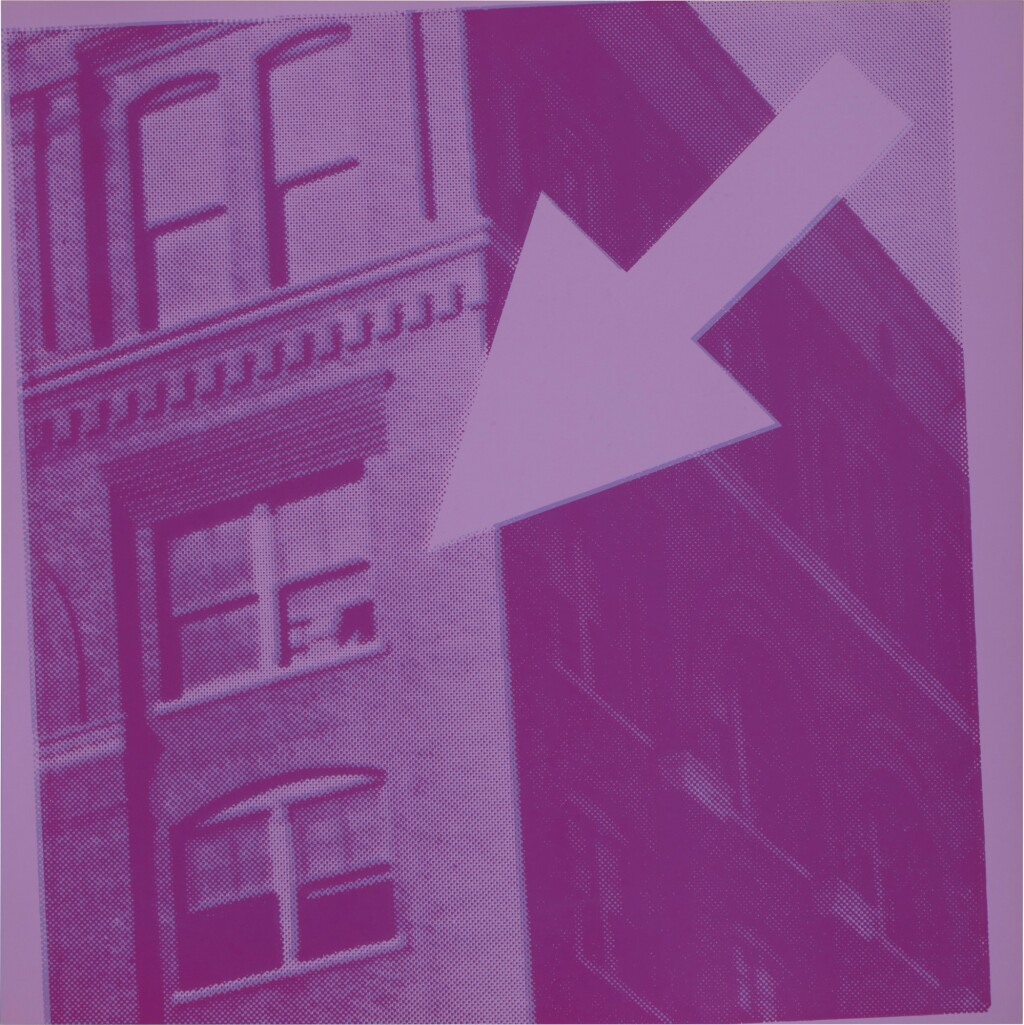
9. Flash (F&S II.40)
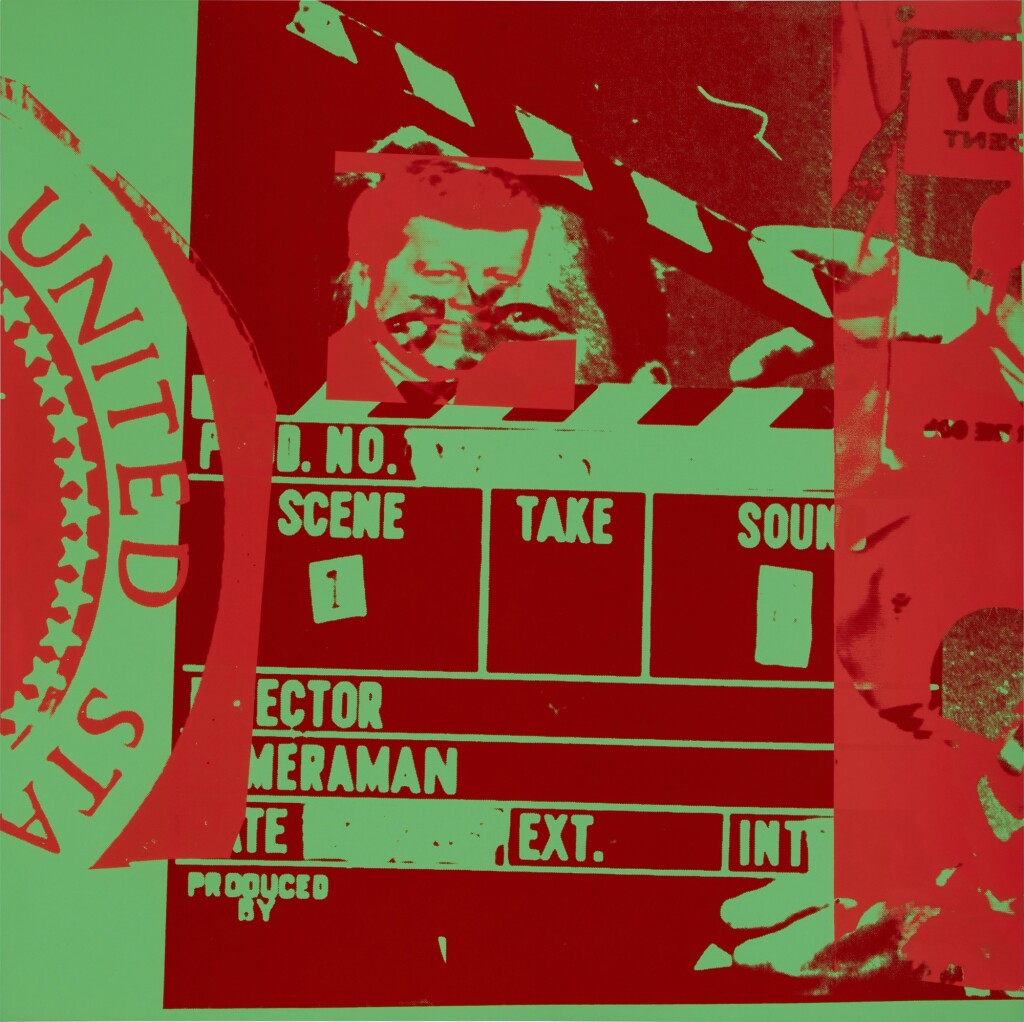
10. Flash (F&S II.41)
11. Flash (F&S II.42)
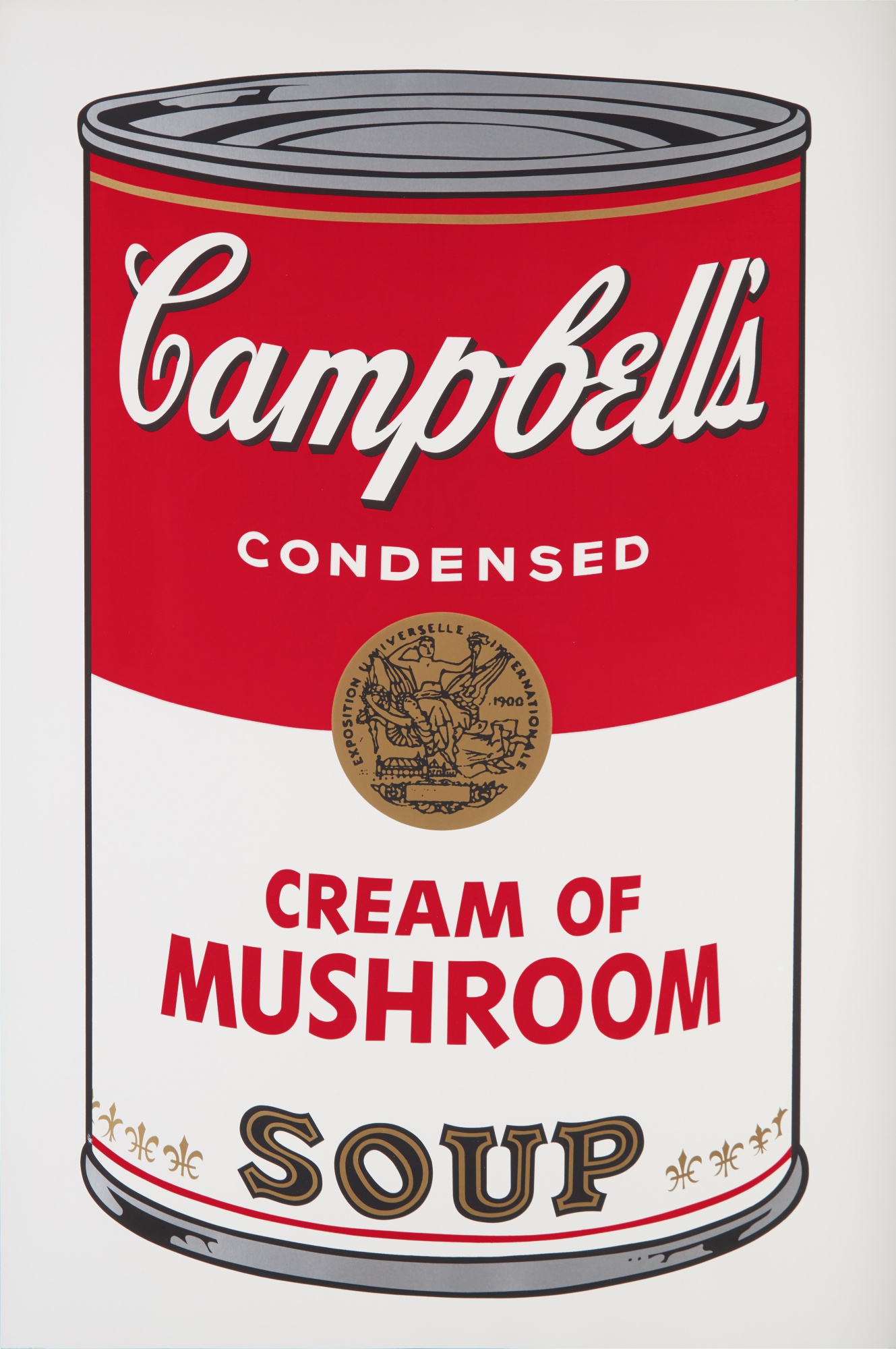
Campbell’s Soup, 1968-1969
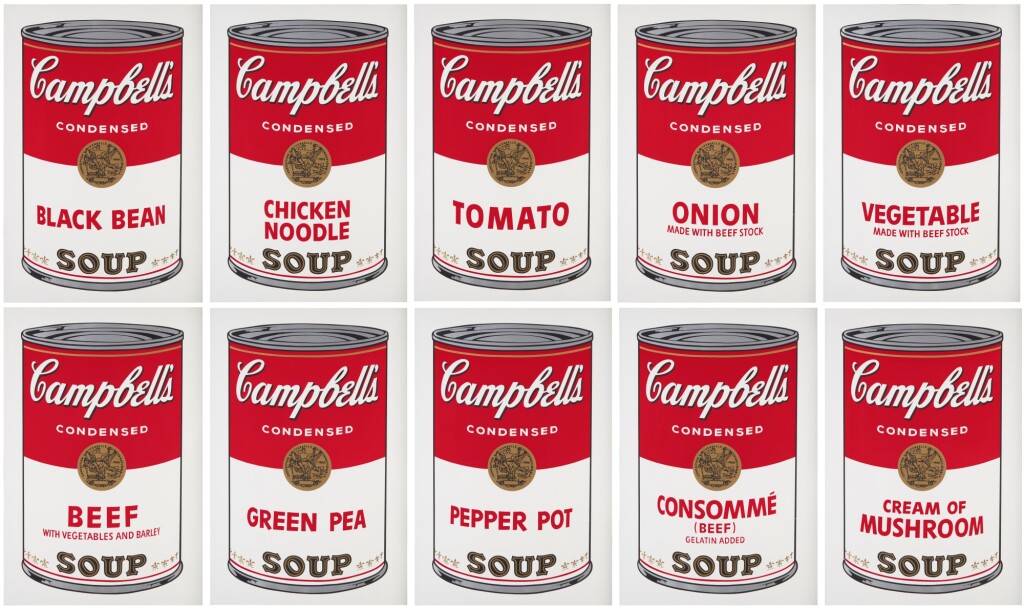
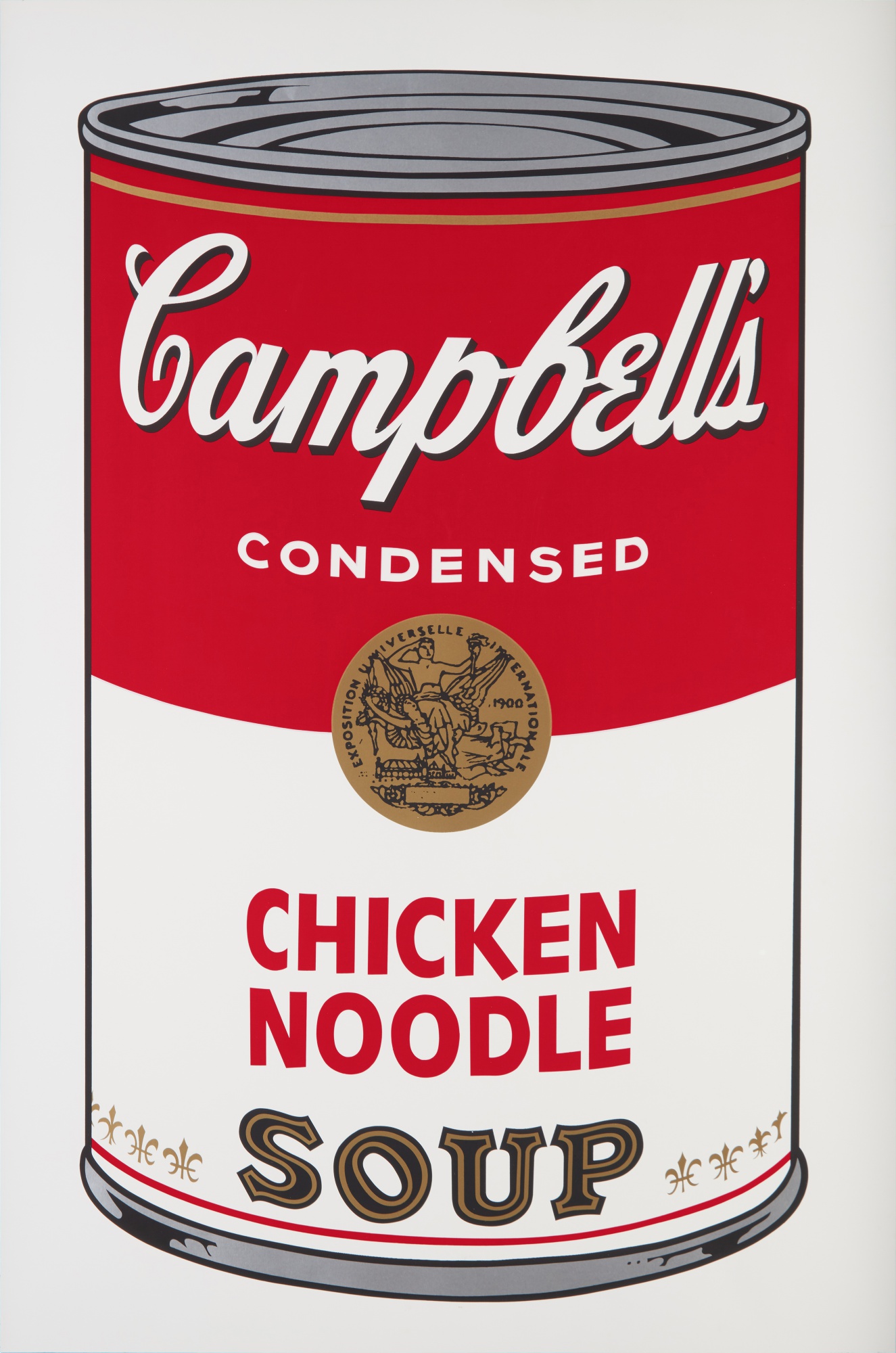
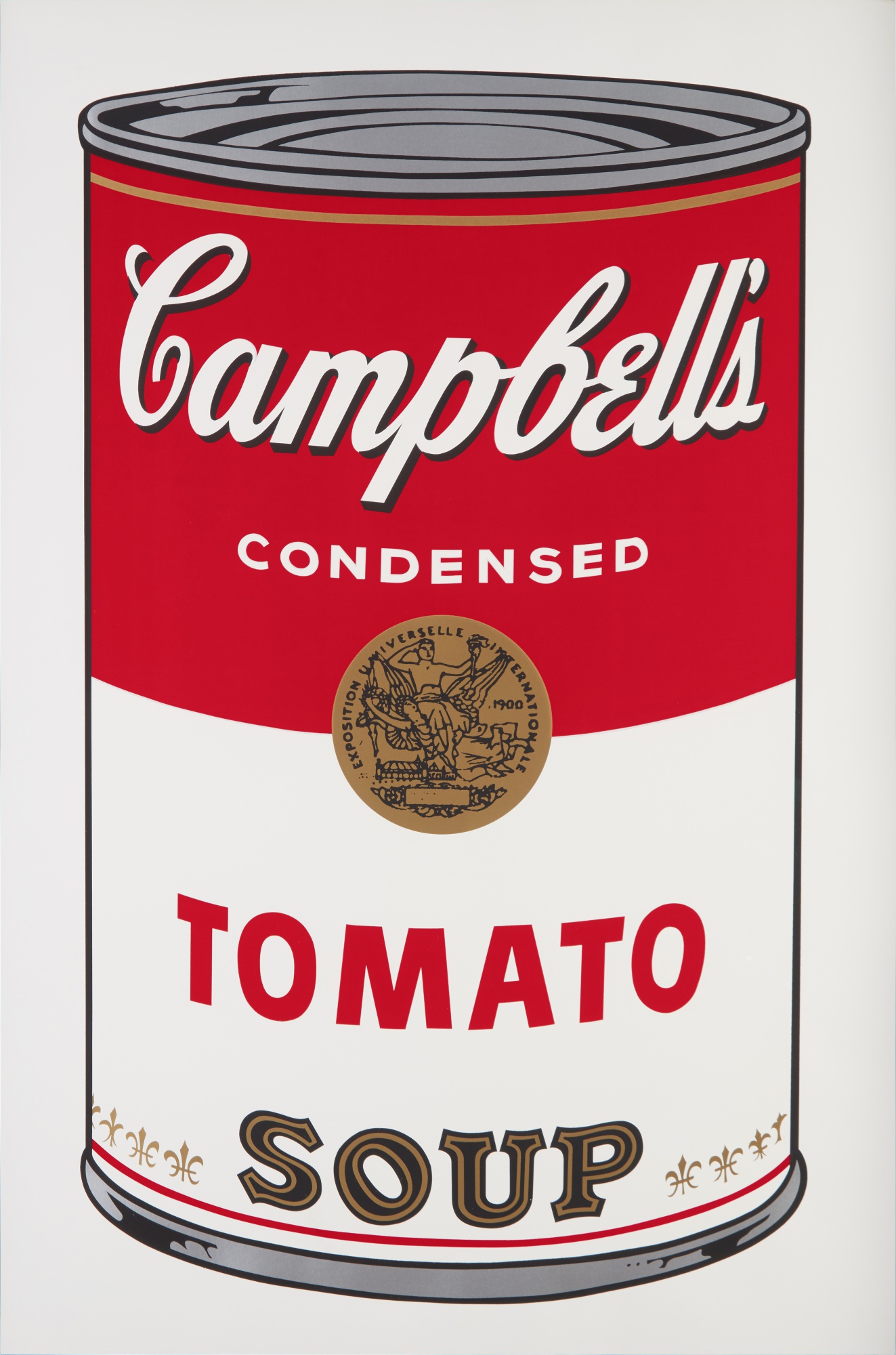
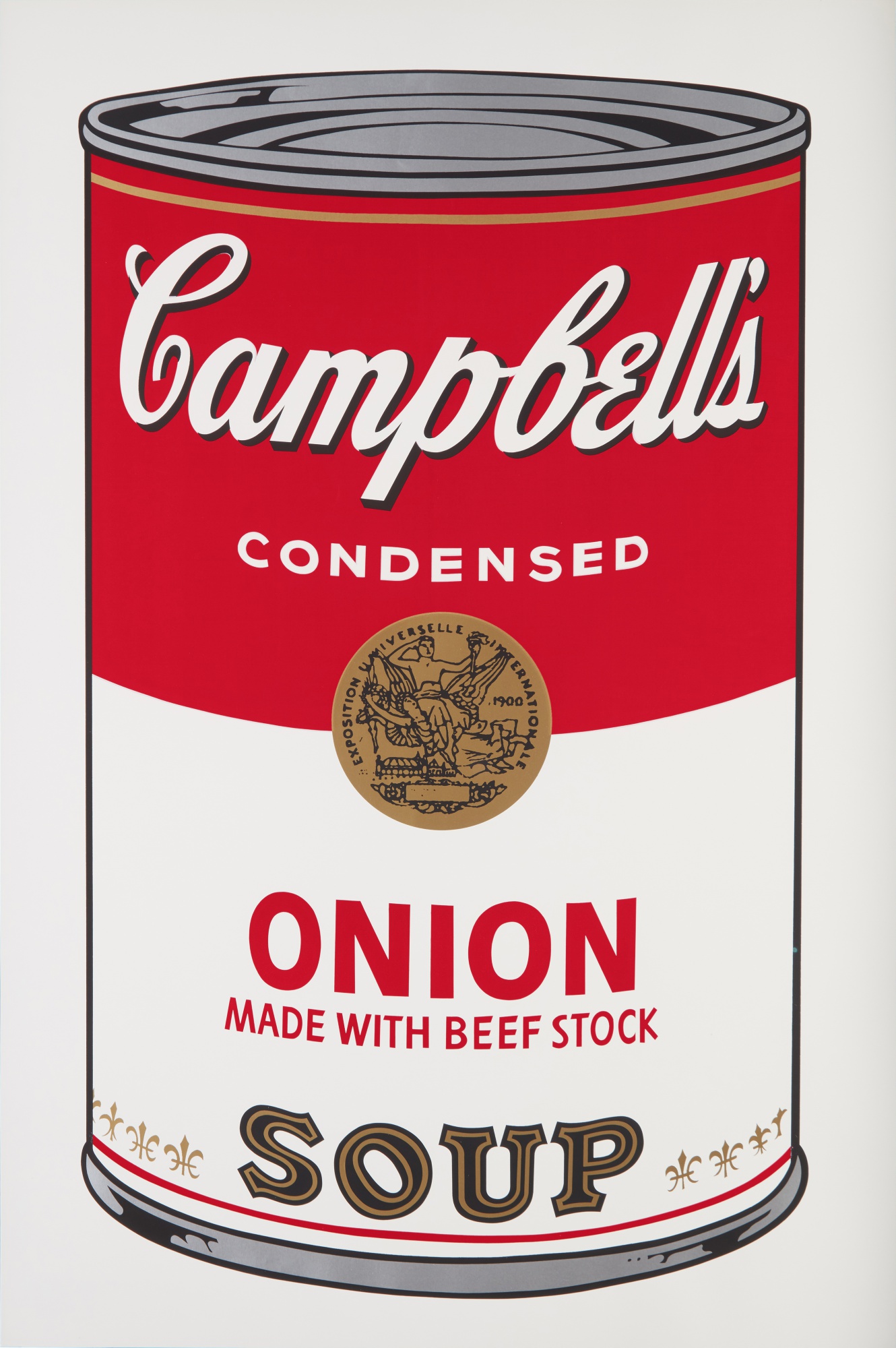
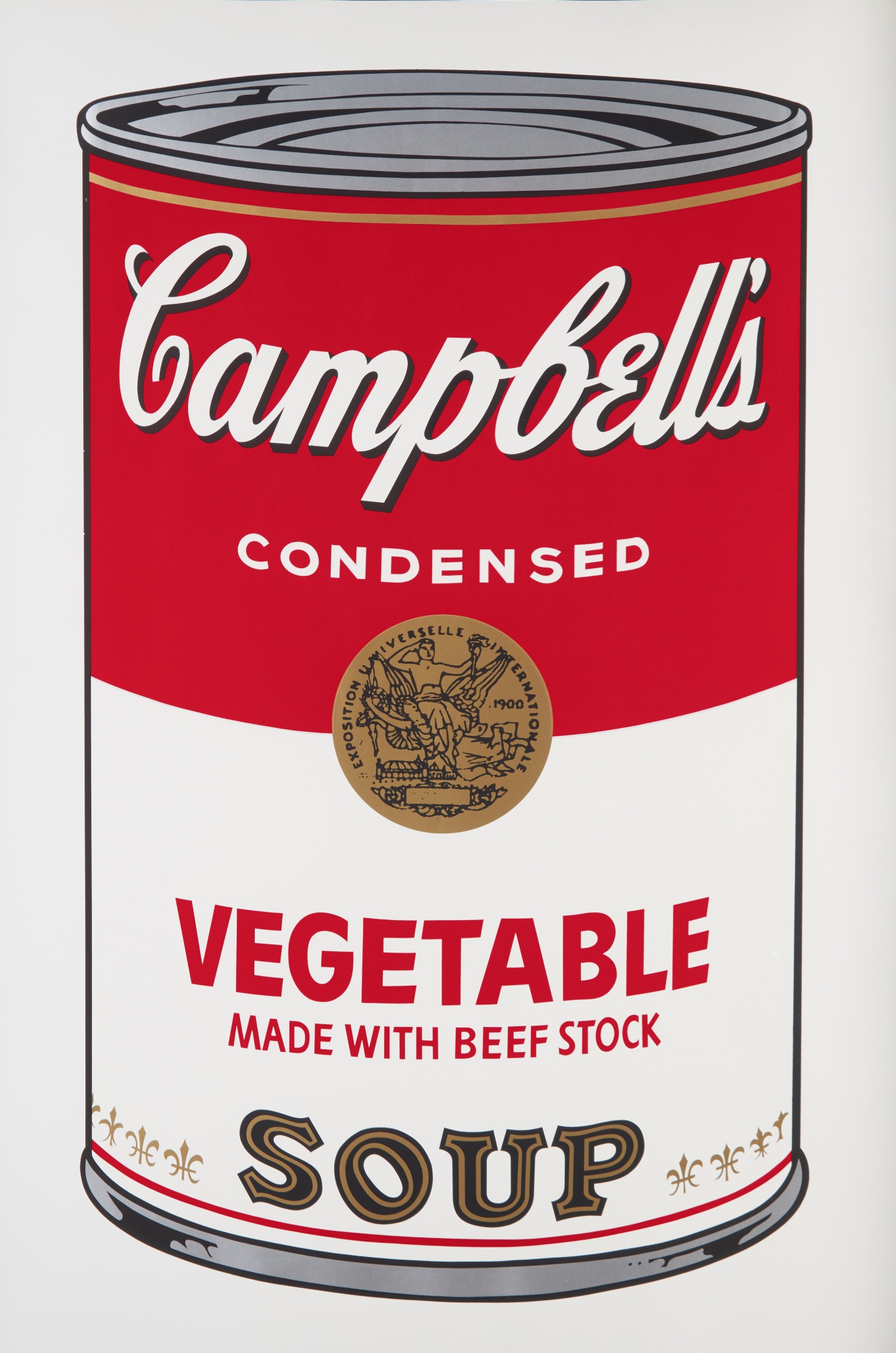
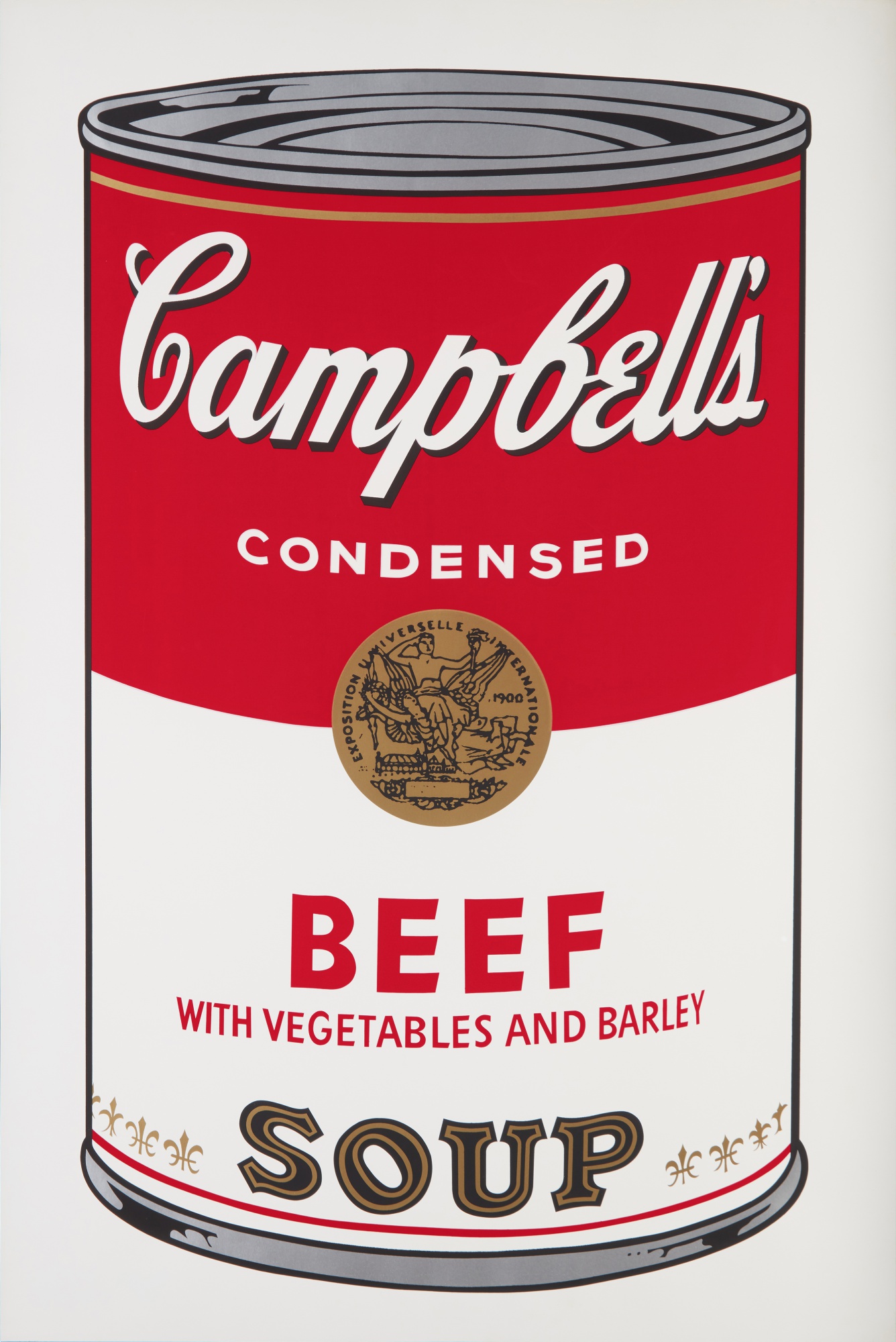
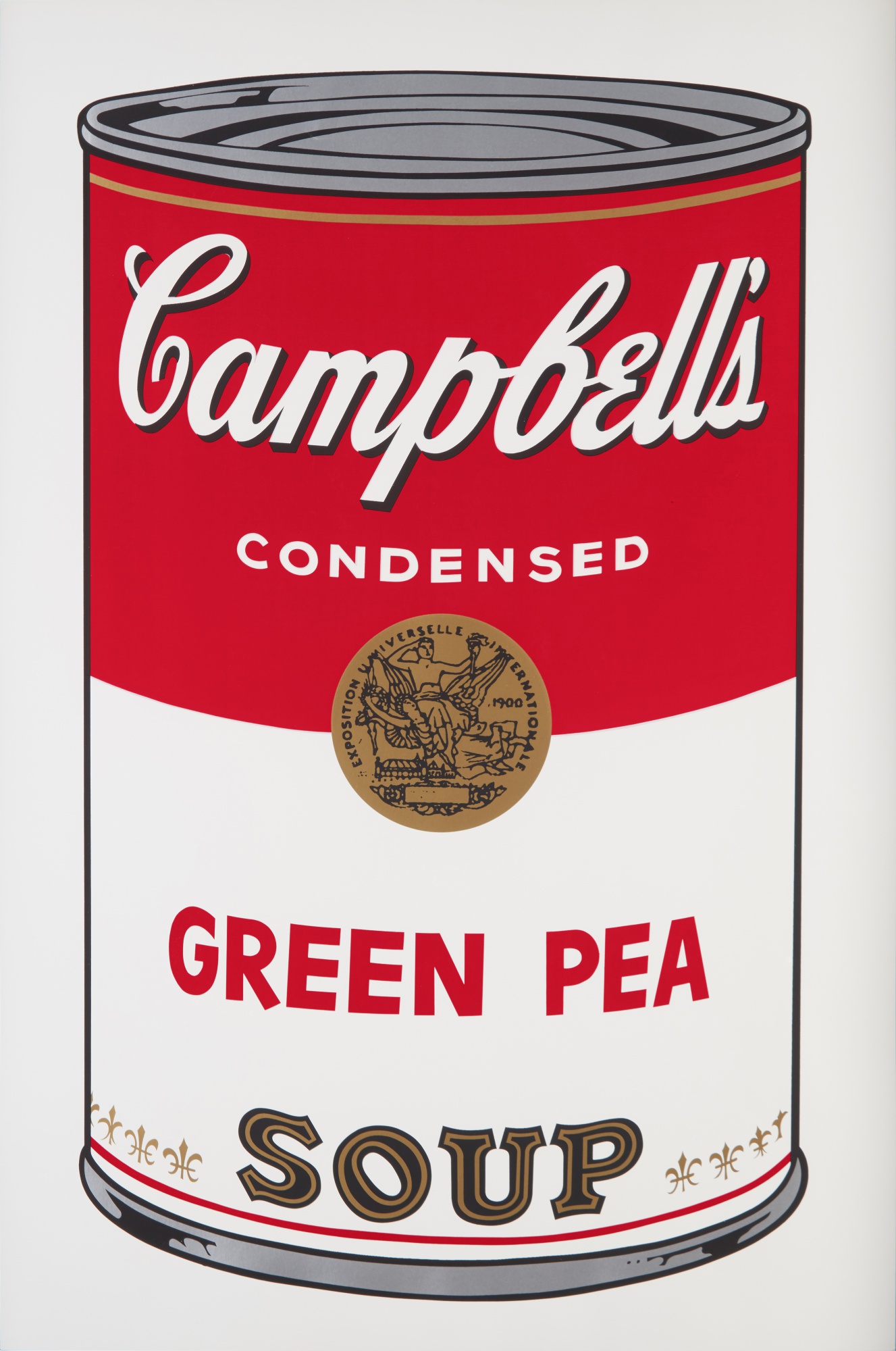
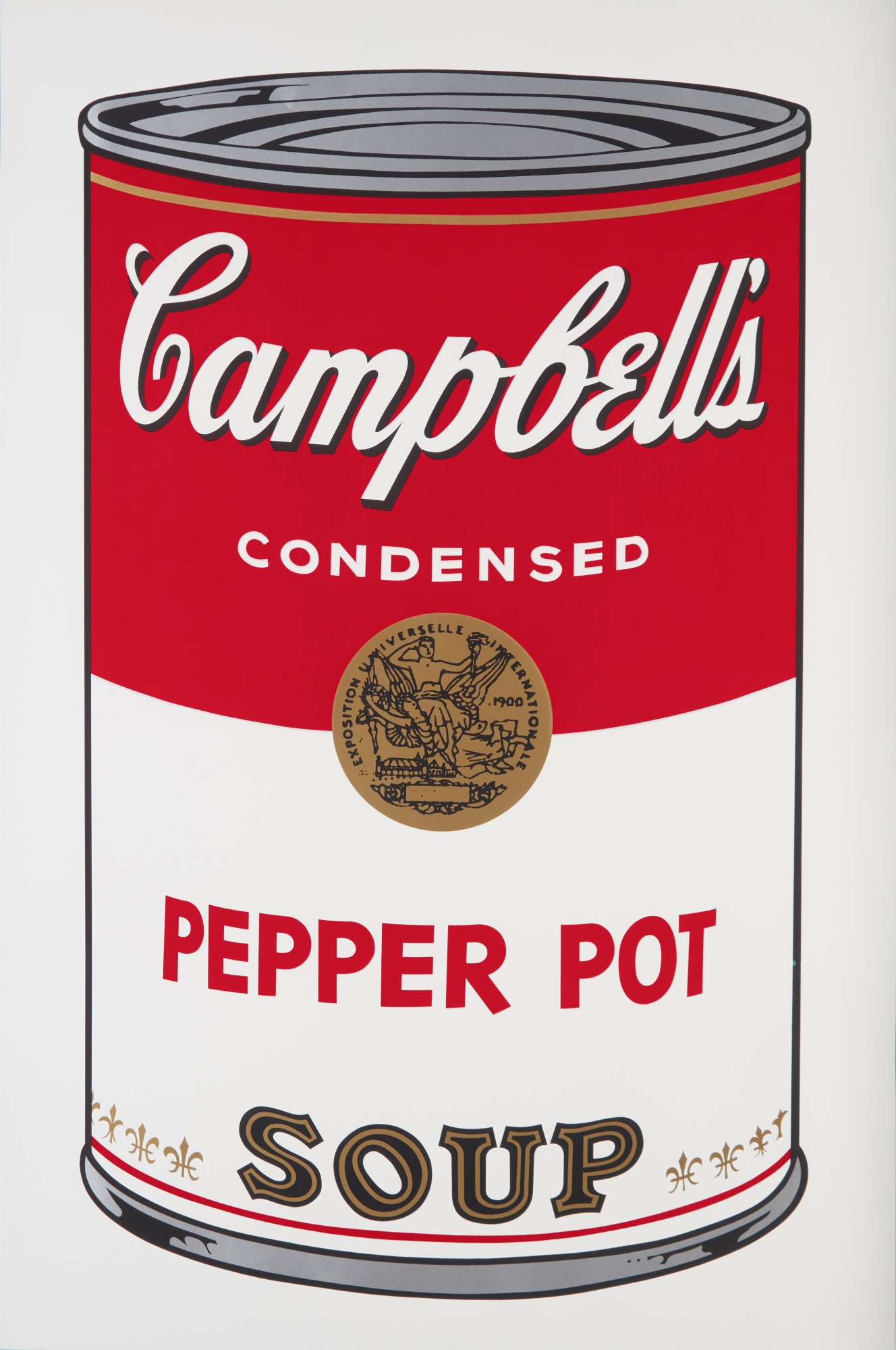
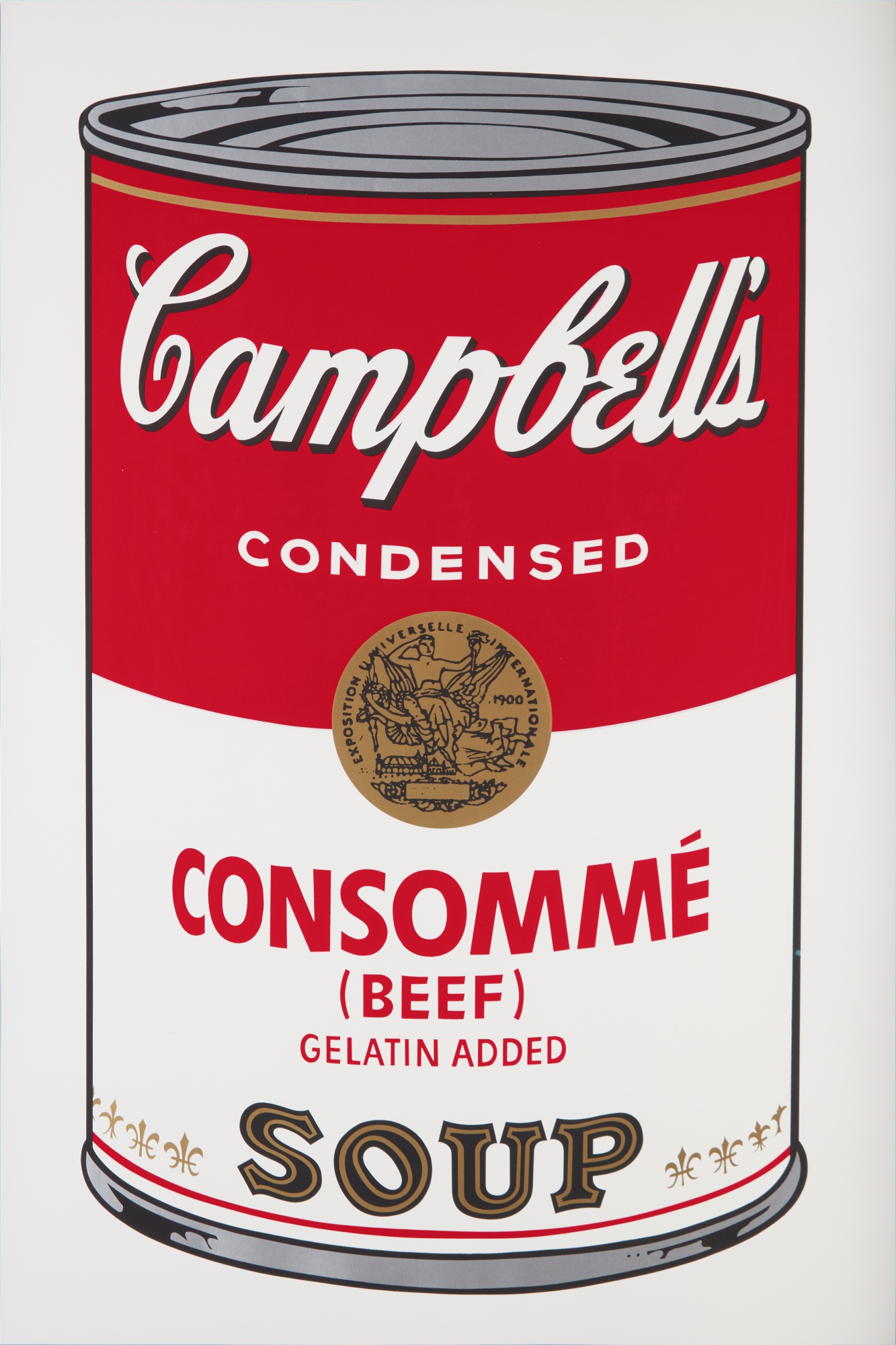
Andy Warhol engaged with art in a radically unembellished way, whilst simultaneously endowing modern art history with a newfound complexity. This surprising simplicity, unburdened by traditional understandings of ‘high art’ and instead informed directly by the pedestrian every day, is perhaps best exemplified in the Campbell’s Soup screen-prints. As the most recognizable piece of Andy Warhol’s exploration of collective consciousness, they are the template through which an entire tradition of Pop Art is derived.
Campbell’s Soup I, 1968
ANDY WARHOL
Campbell’s Soup I, 1968
The complete set of 10 screenprints in colors on smooth wove paper
Sheet: 35×23 inches (88.9 x 58.4 cm)
Edition: 250 + 26 AP (lettered A to Z)
Literature: Feldman & Schellmann II.44-53
1. Black Bean (F&S II.44)
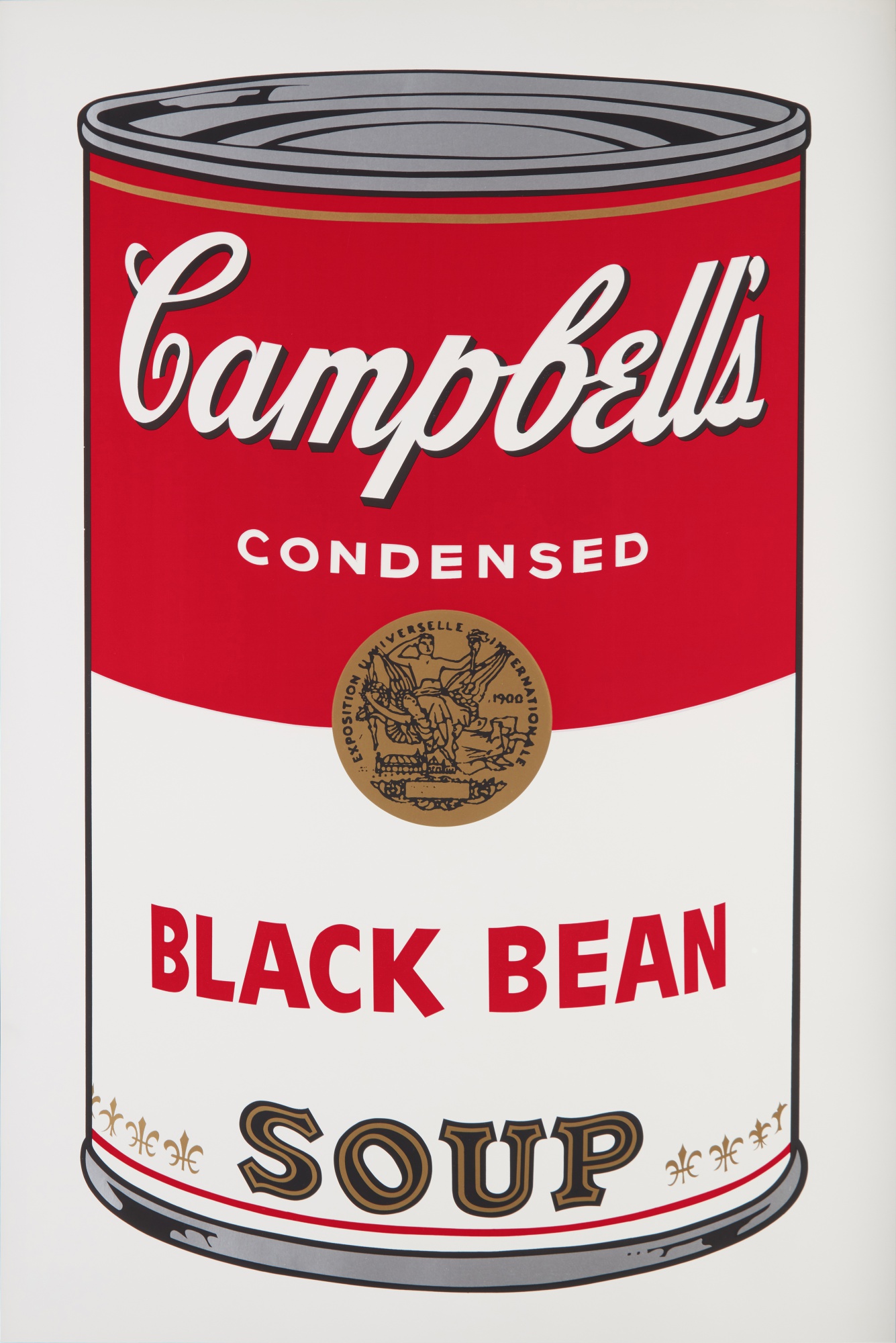
2. Chicken Noodle (F&S II.45)
3. Tomato (F&S II.46)
4. Onion (F&S II.47)
5. Vegetable (F&S II.48)
6. Beef (F&S II.49)
7. Green Pea (F&S II.50)
8. Pepper Pot (F&S II.51)
9. Consomme (F&S II.52)
10. Cream of Mushroom (F&S II.53)
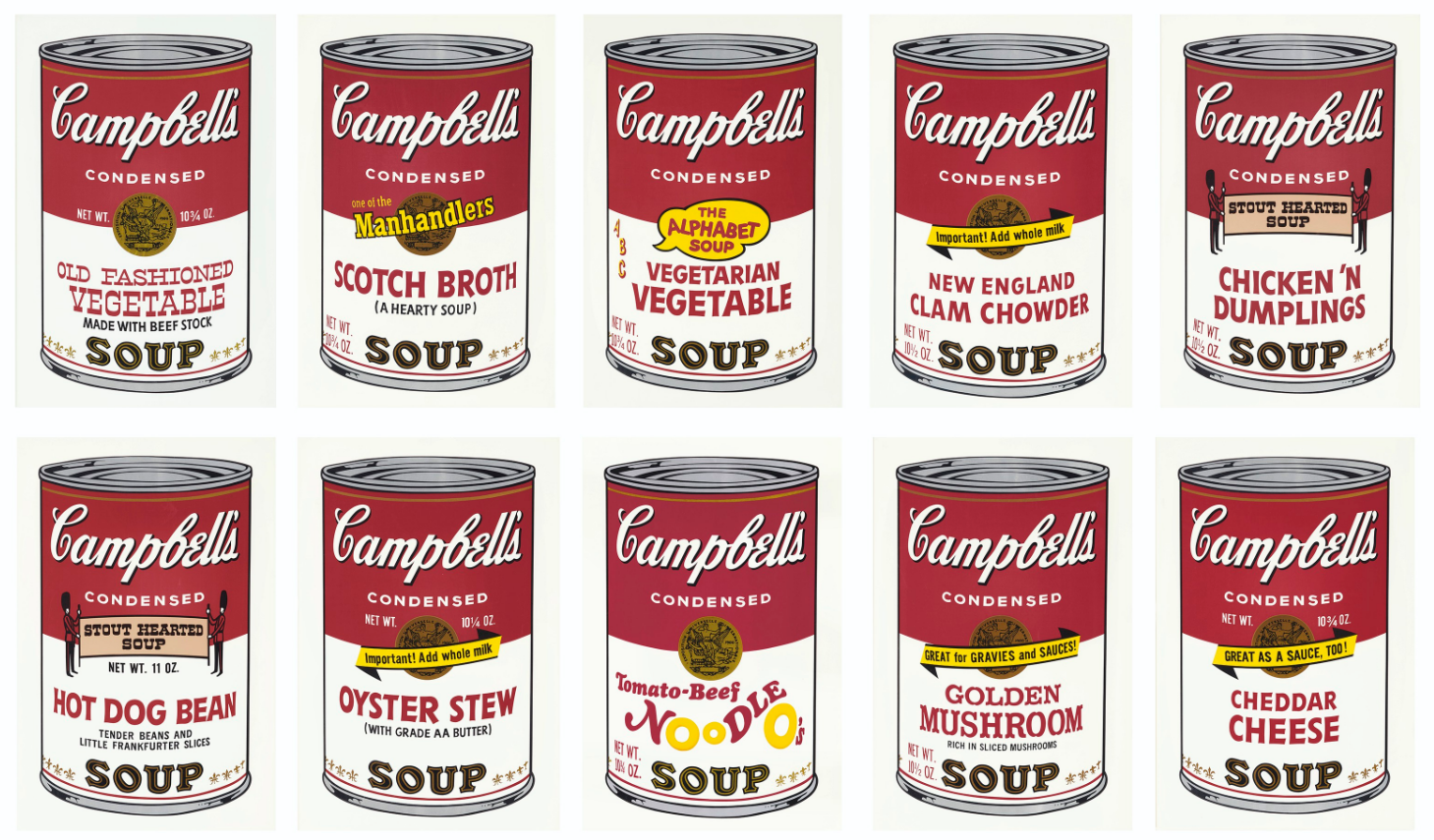
Campbell’s Soup II, 1969
ANDY WARHOL
Campbell’s Soup II, 1969
The complete set of 10 screen-prints in colors on smooth wove paper
Sheet: 35×23 inches (88.9 x 58.4 cm)
Edition: 250 + 26 AP (lettered A to Z)
Literature: Feldman & Schellmann II.54-63
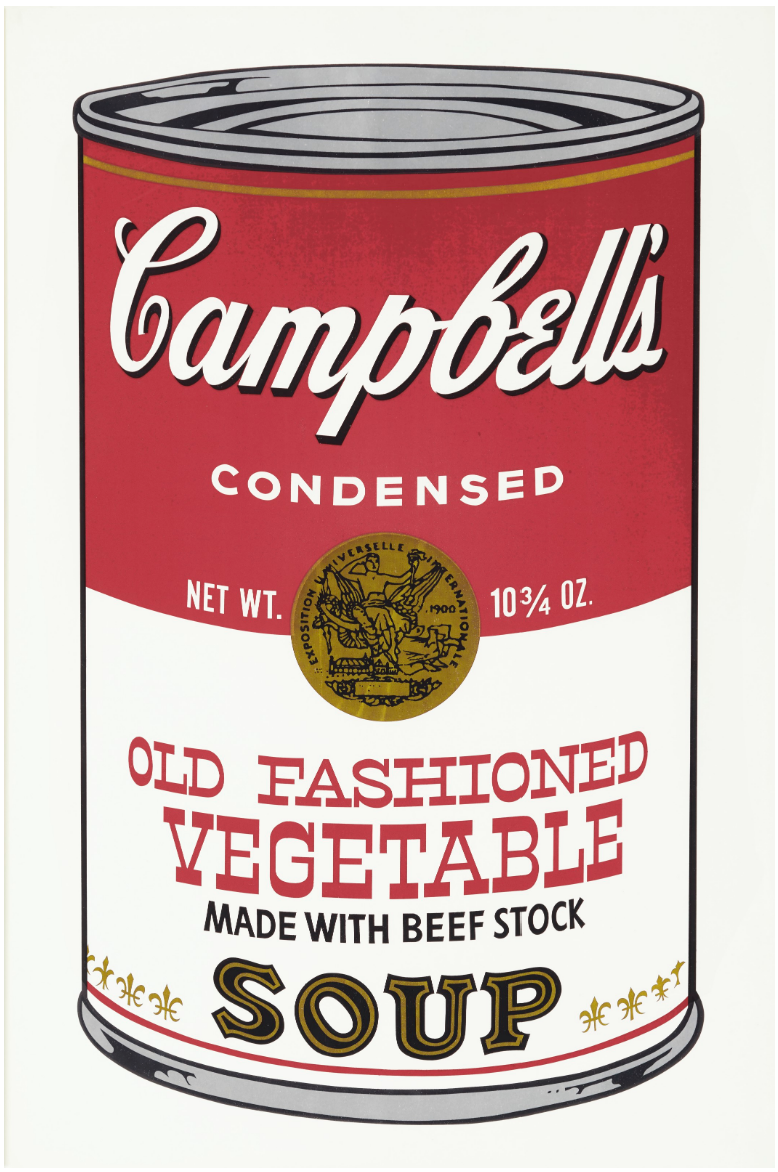
1. Old Fashioned Vegetable (F&S II.54)
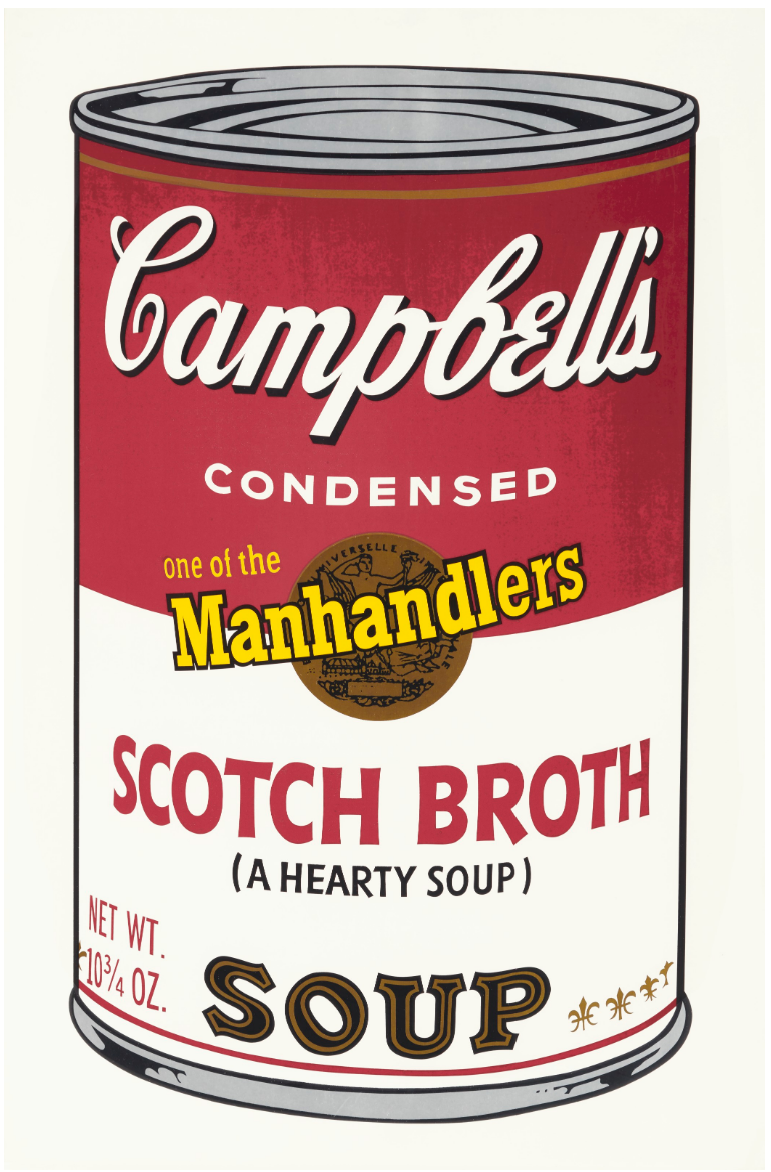
2. Scotch Broth (F&S II.55)
3. Vegetarian Vegetable (F&S II.56)
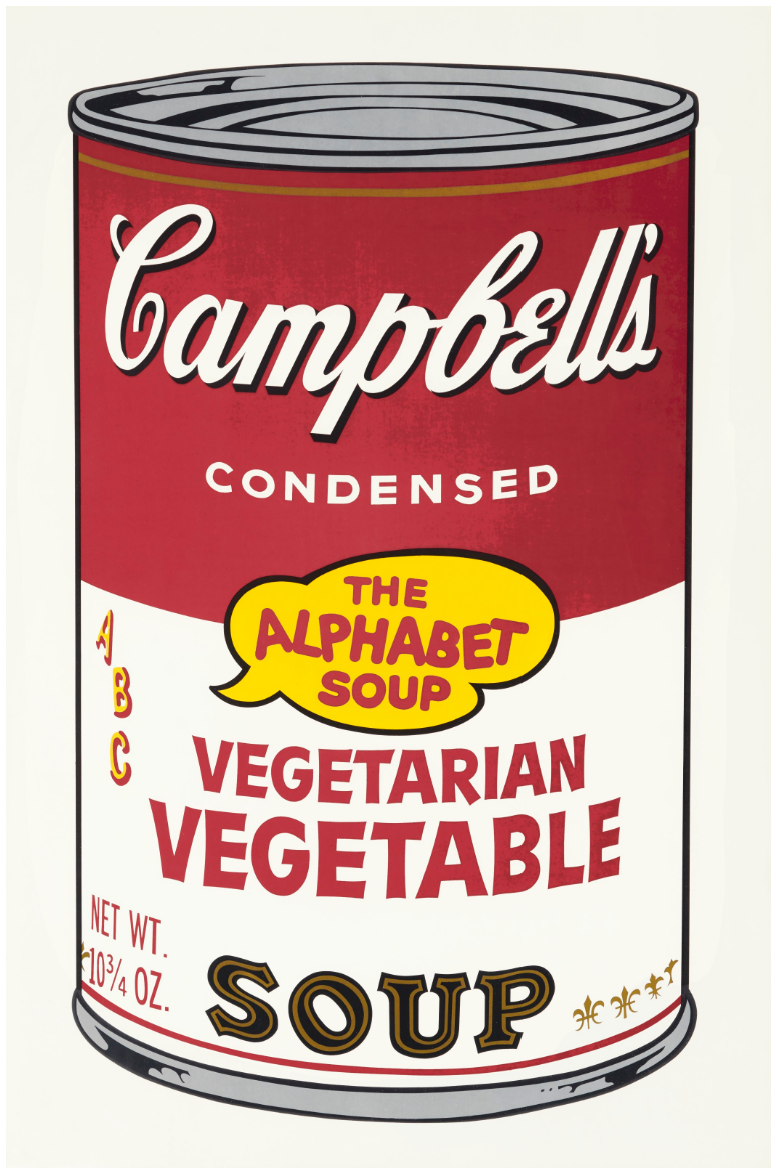
4. New England Clam Chowder (F&S II.57)
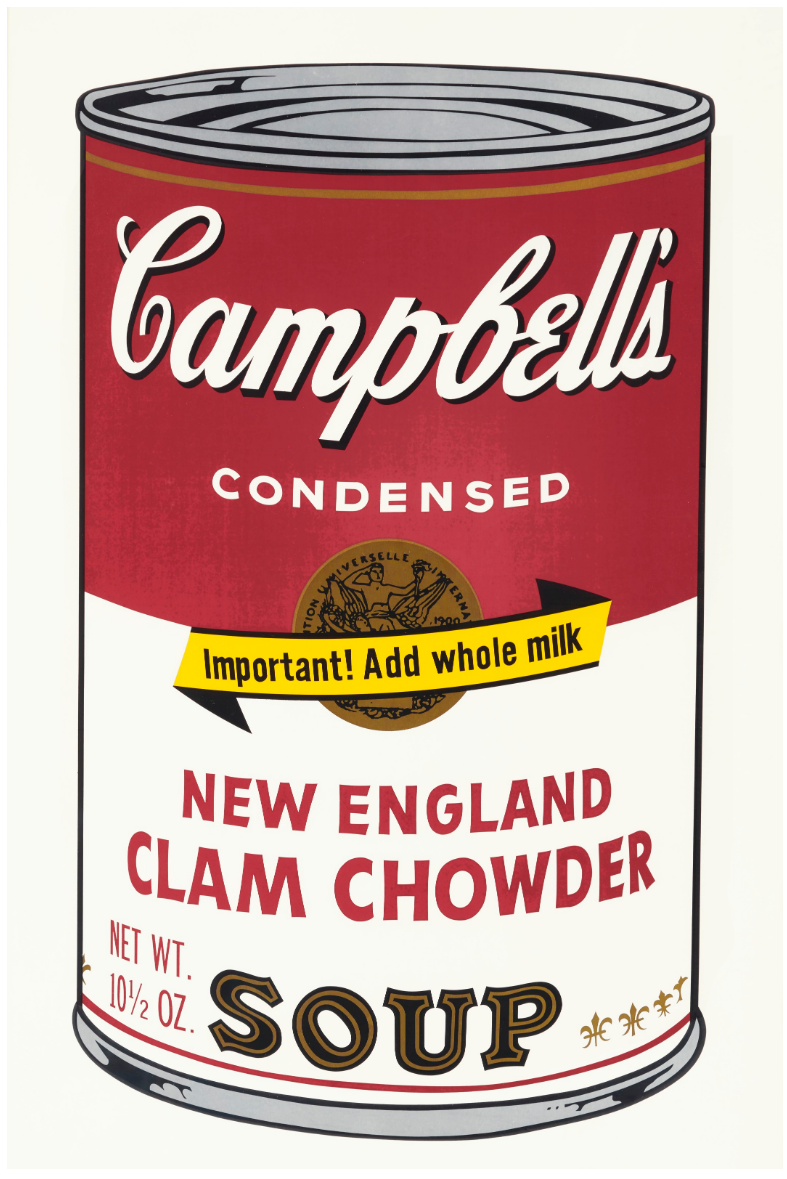
5. Chicken’n Dumplings (F&S II.58)
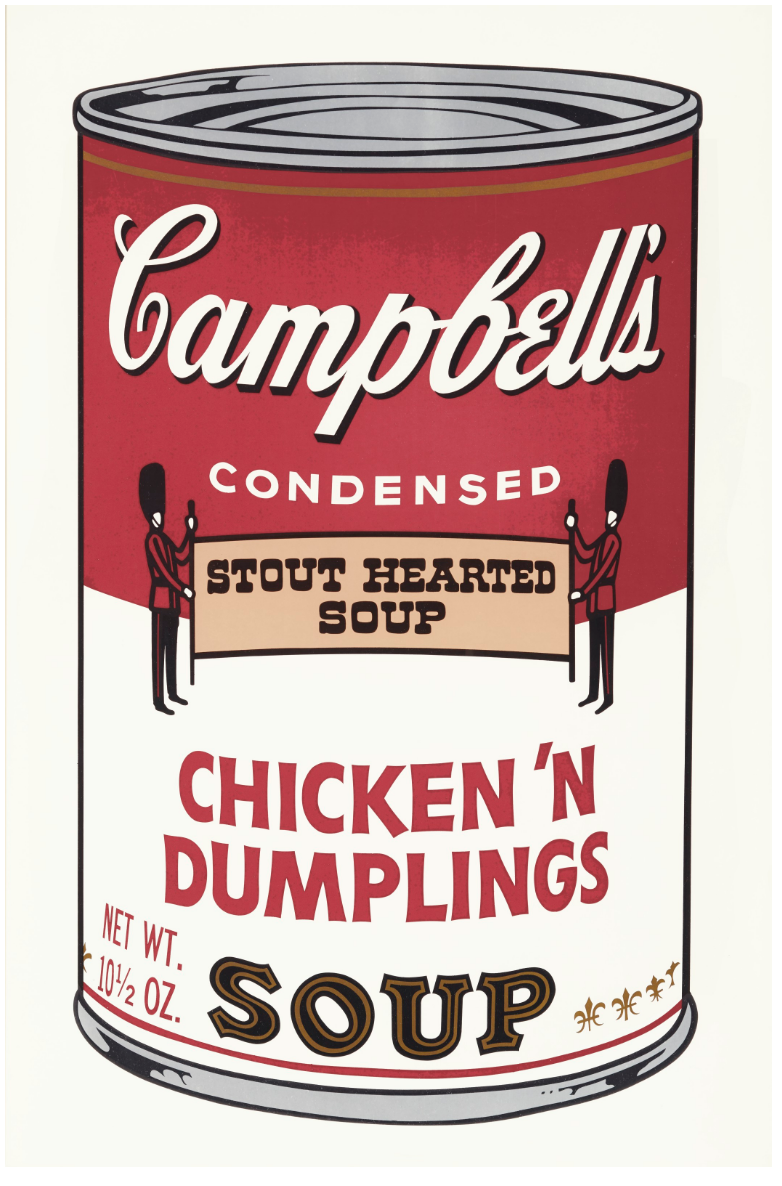
6. Hot Dog Bean (F&S II.59)
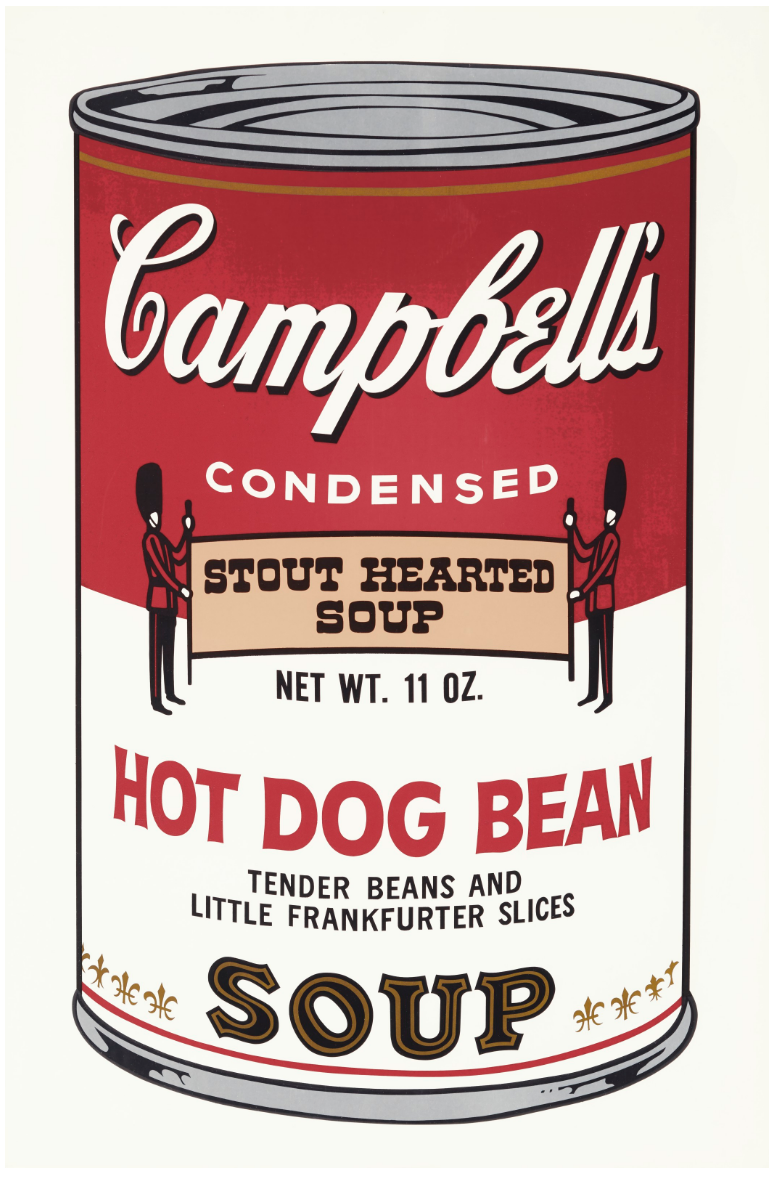
7. Oyster Stew (F&S II.60)
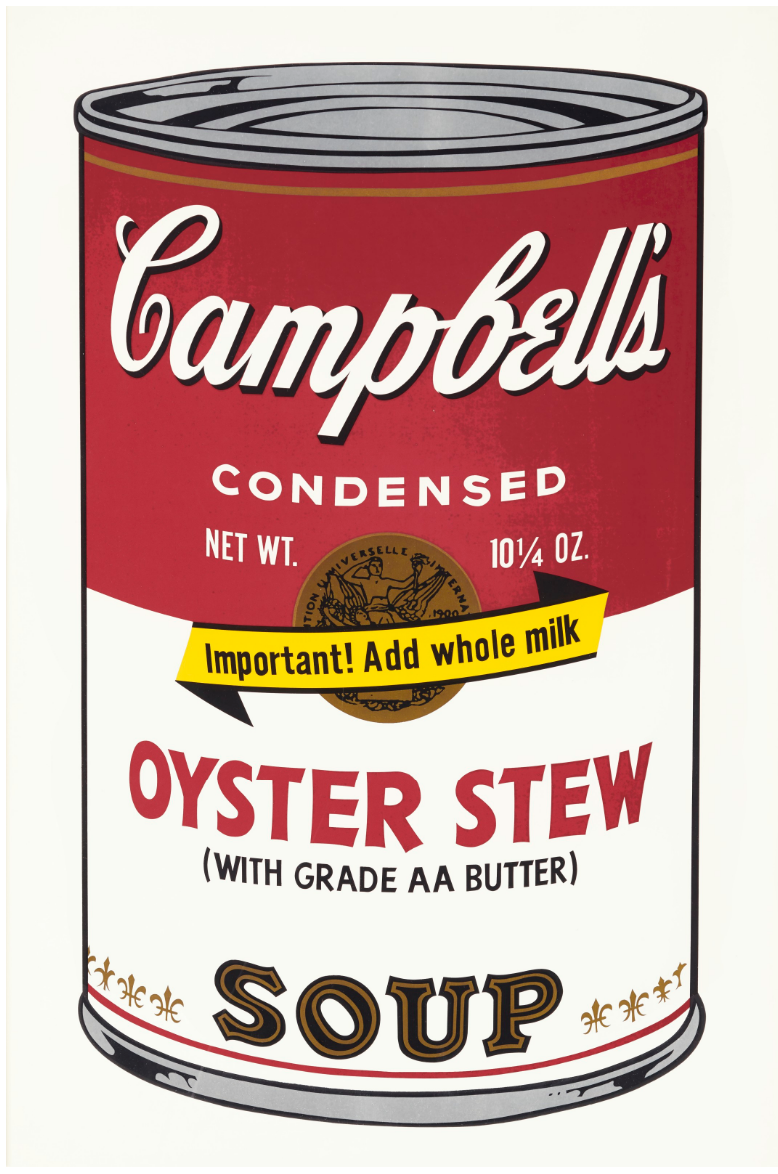
8. Tomato-Beef Noodle (F&S II.61)
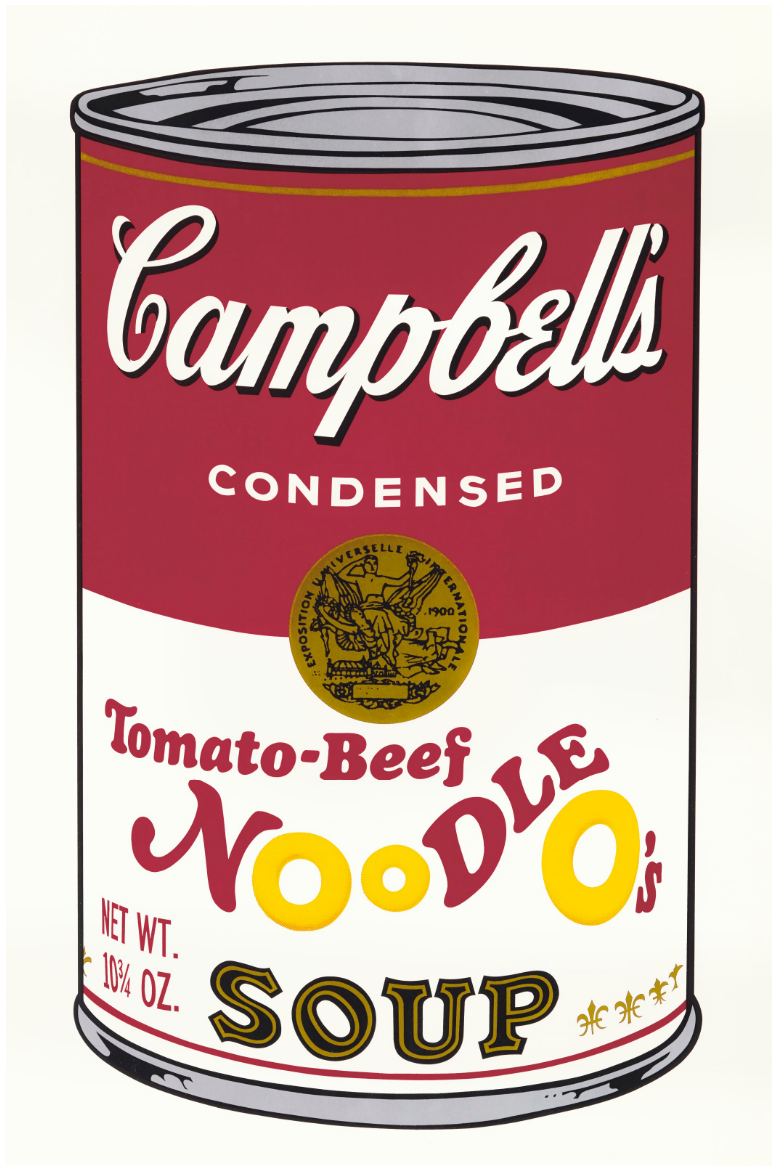
9. Golden Mushroom (F&S II.62)
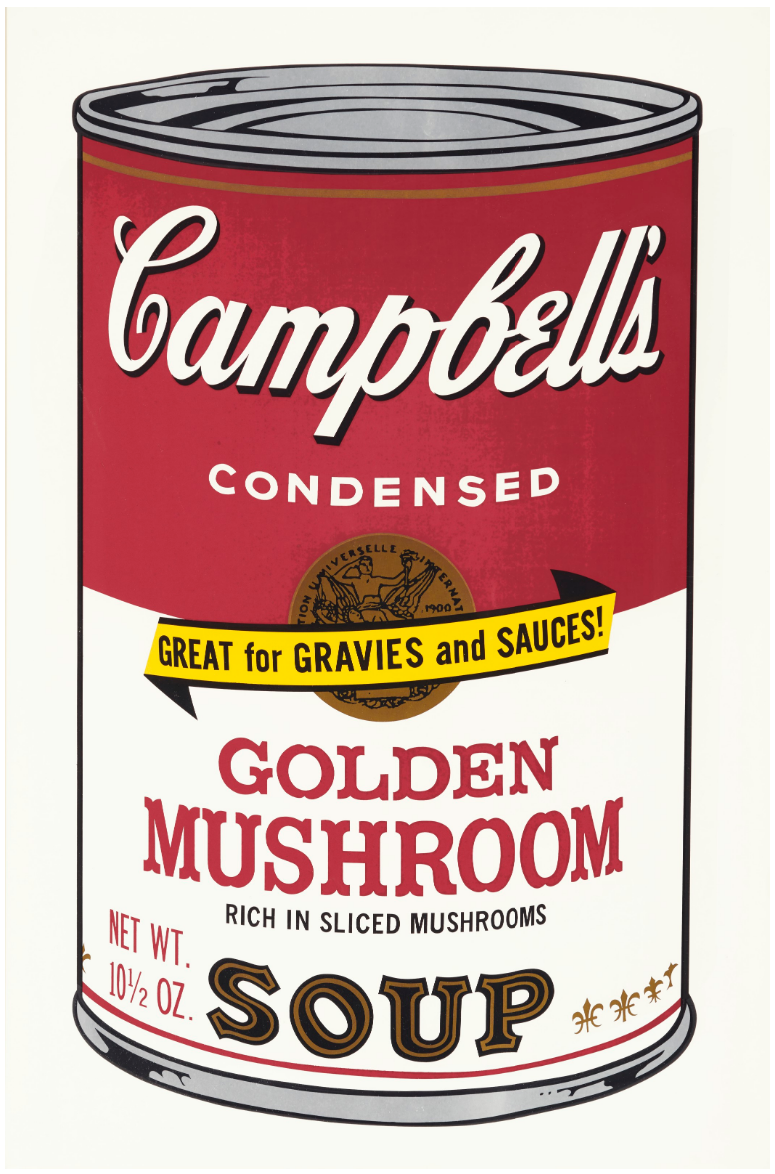
10. Cheddar Cheese (F&S II.63)
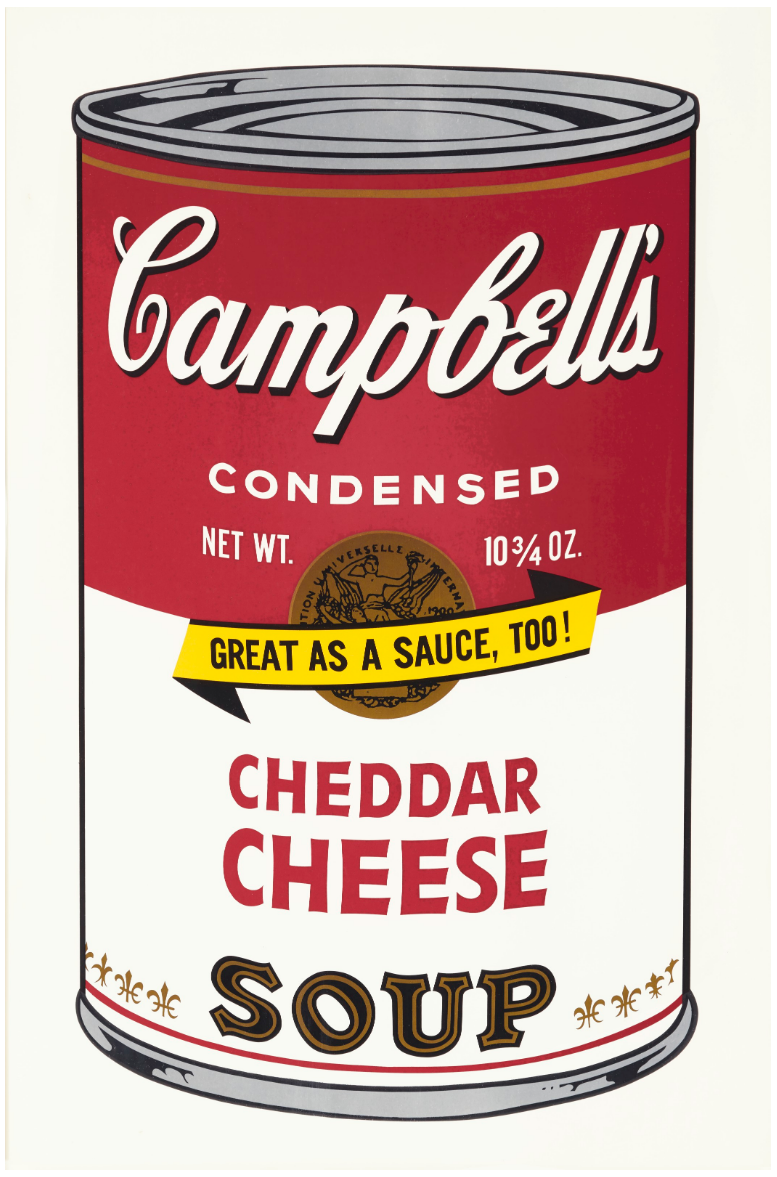
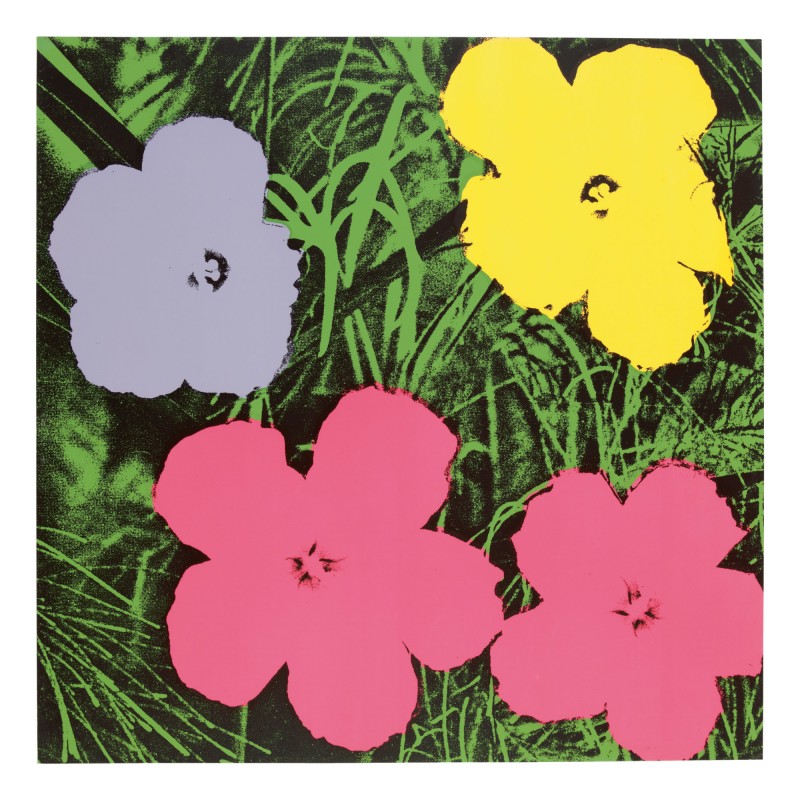
Flowers, 1970
Instantly recognizable and indisputably iconic, Andy Warhol’s Flowers represent a defining moment of American Pop Art and post-war culture. At once naïve and ironic, exuberant and meditative, the four exaggeratedly simplified and starkly contrasted flowers embody all the compelling contradictions of a rapidly changing era where consumerism and mass-production flourished alongside counterculture idealism and artistic experiment.
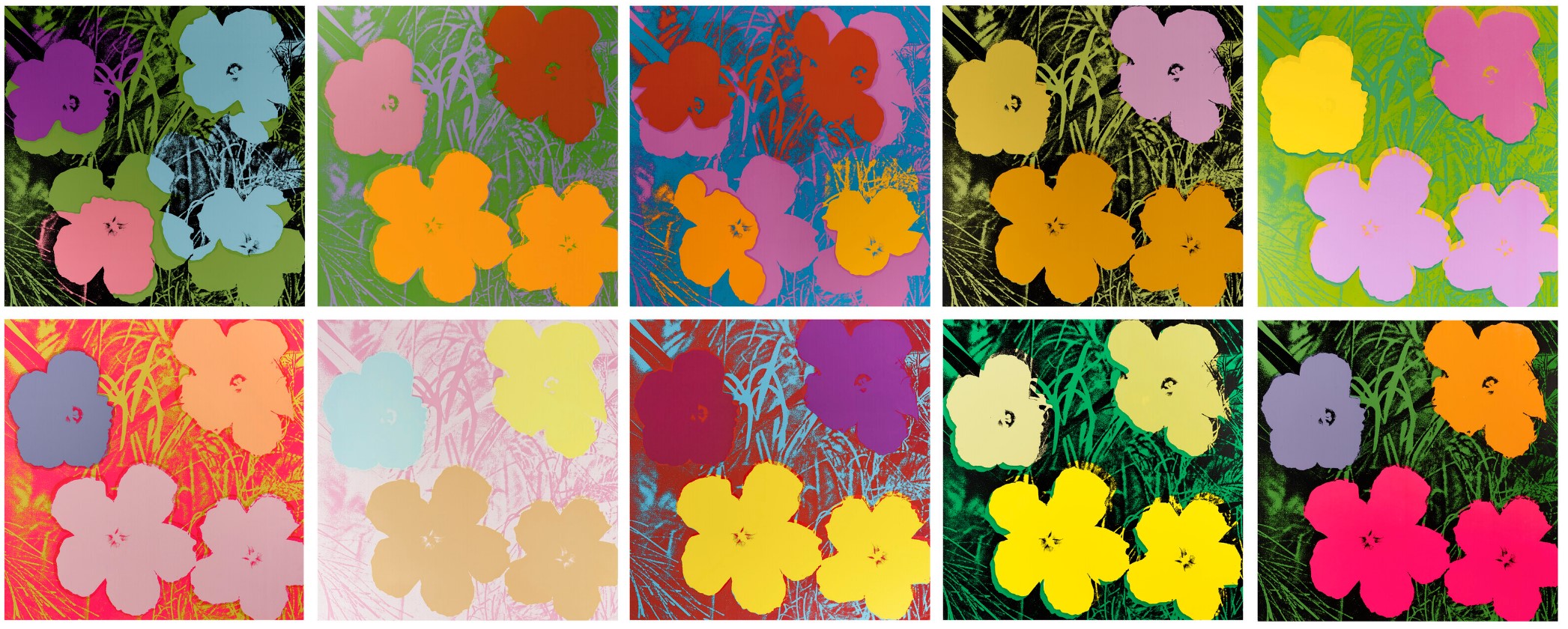
ANDY WARHOL
Flowers, 1970
The complete set of ten screenprints in colors on wove paper
Sheet: 36×36 inches (91.4 x 91.4 cm)
Edition: 250 + 26 AP (lettered A-Z)
Literature: Feldman & Schellmann II.64-73
1. Flowers (F&S II.64)
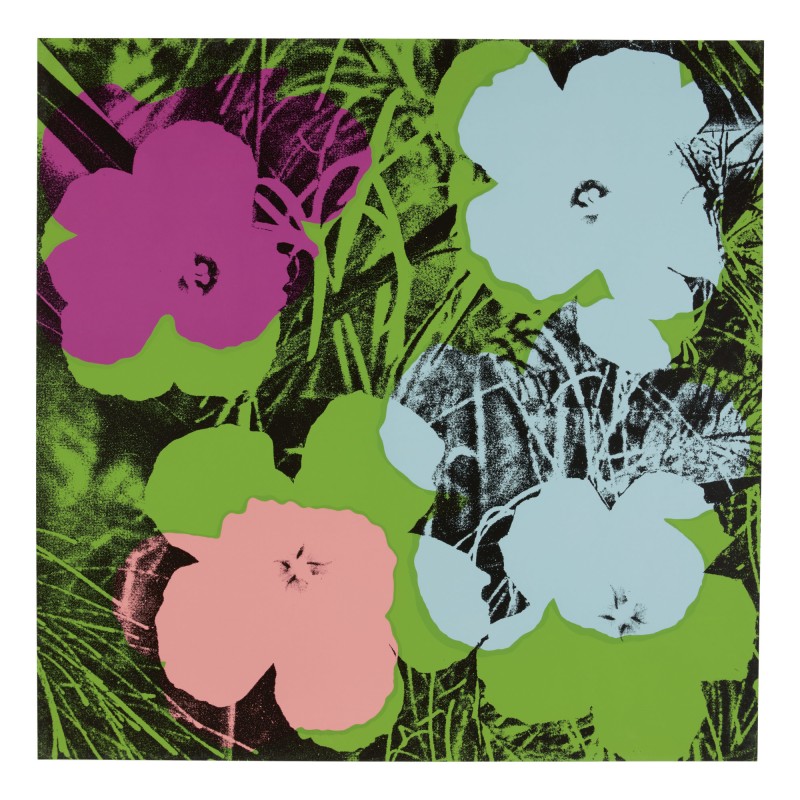
2. Flowers (F&S II.65)
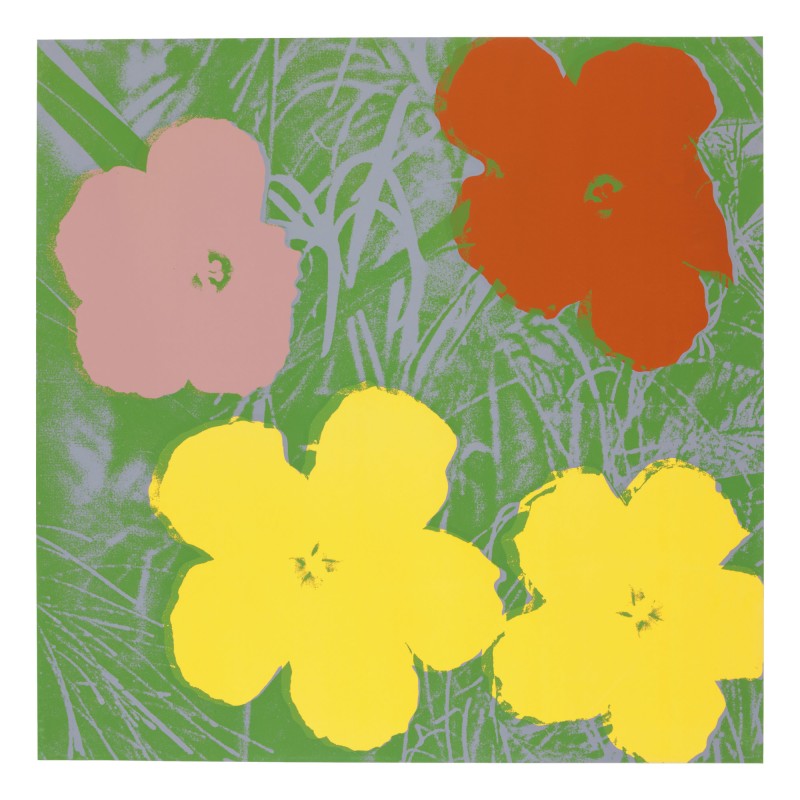
3. Flowers (F&S II.66)
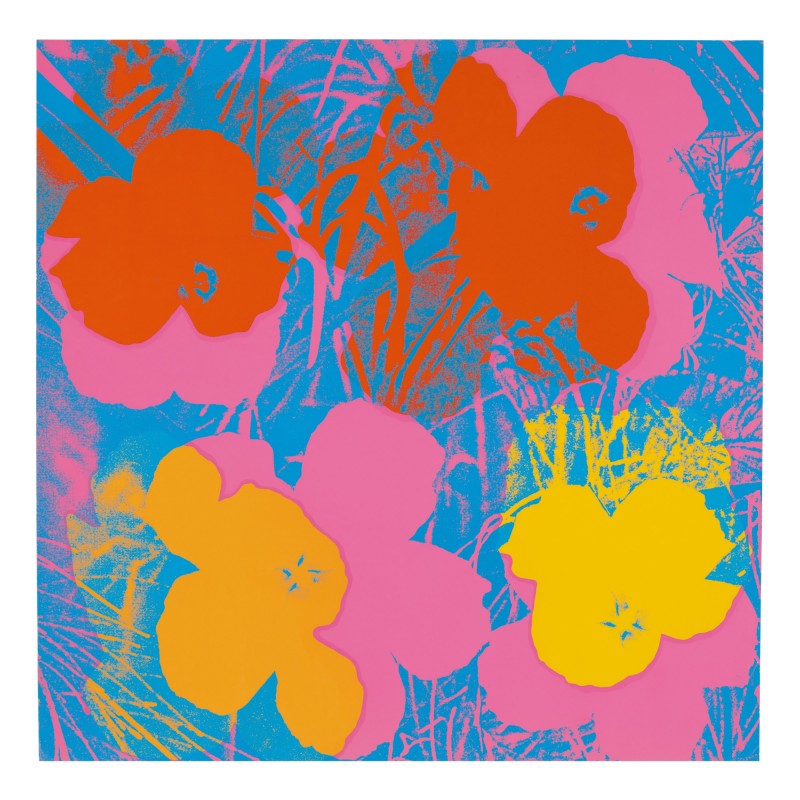
4. Flowers (F&S II.67)
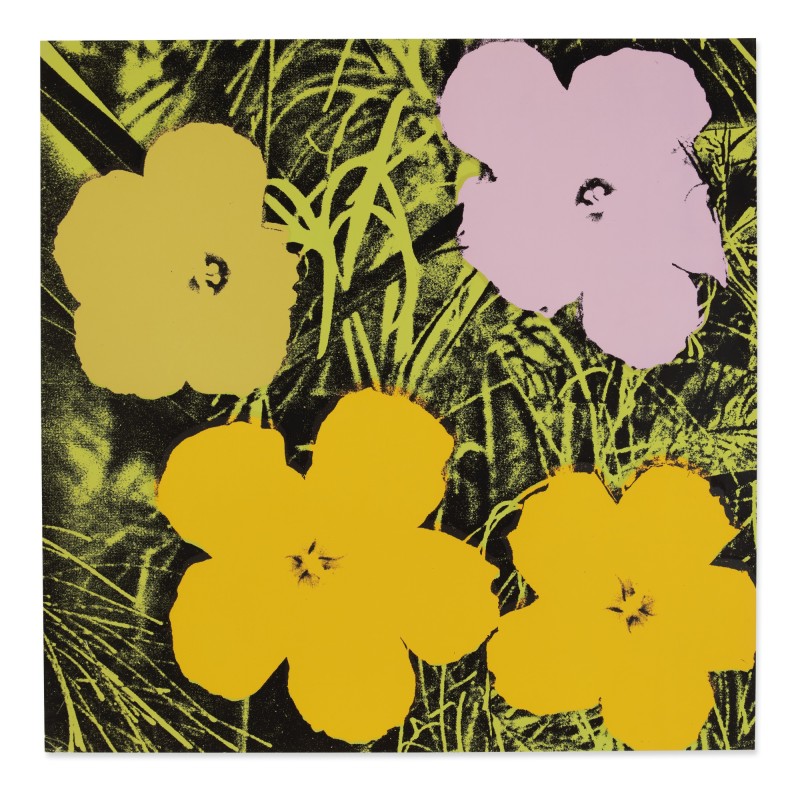
5. Flowers (F&S II.68)
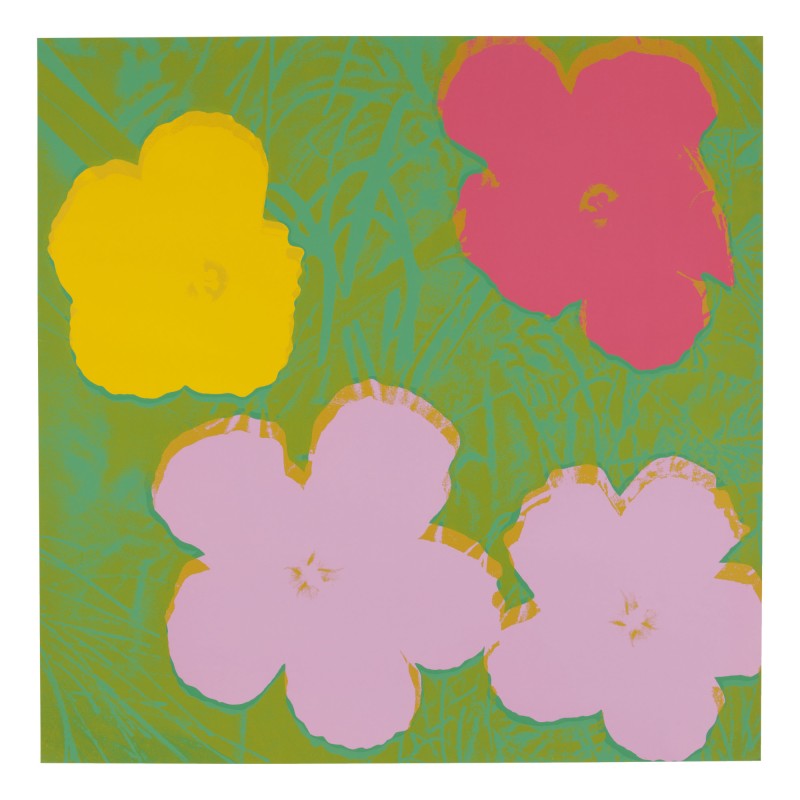
6. Flowers (F&S II.69)
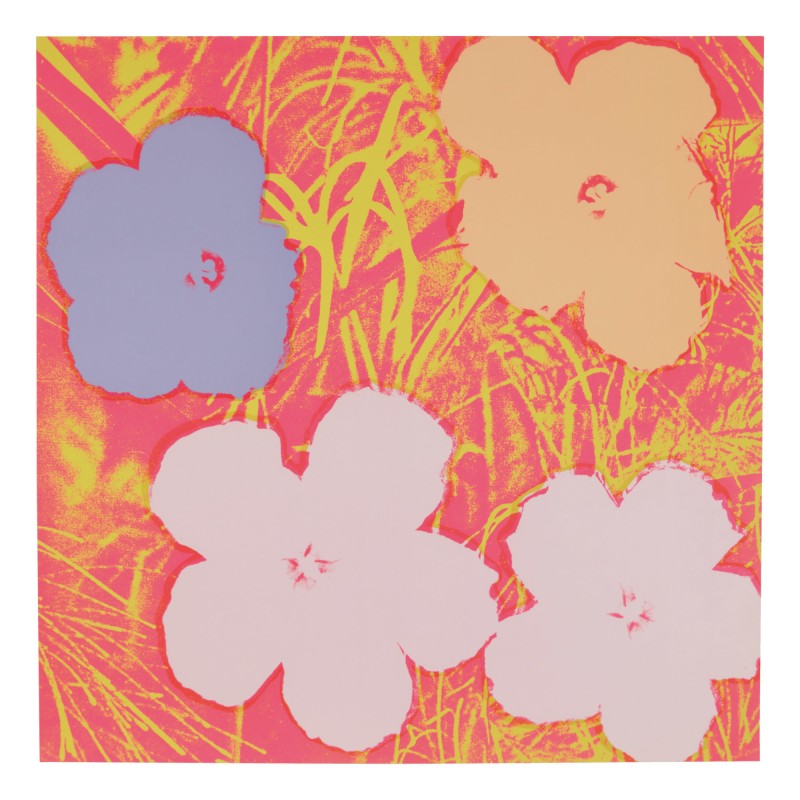
7. Flowers (F&S II.70)
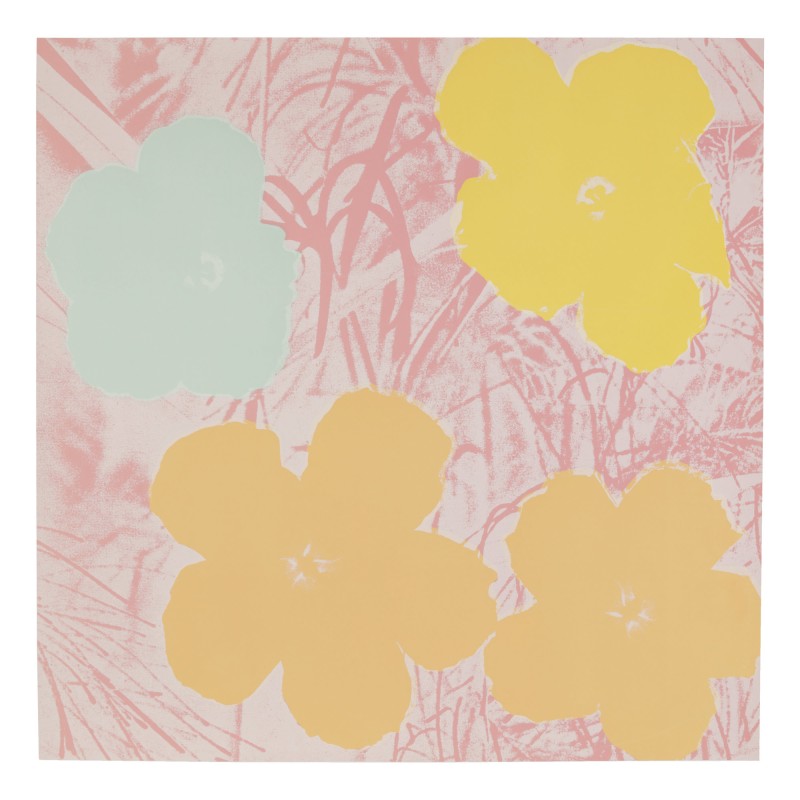
8. Flowers (F&S II.71)
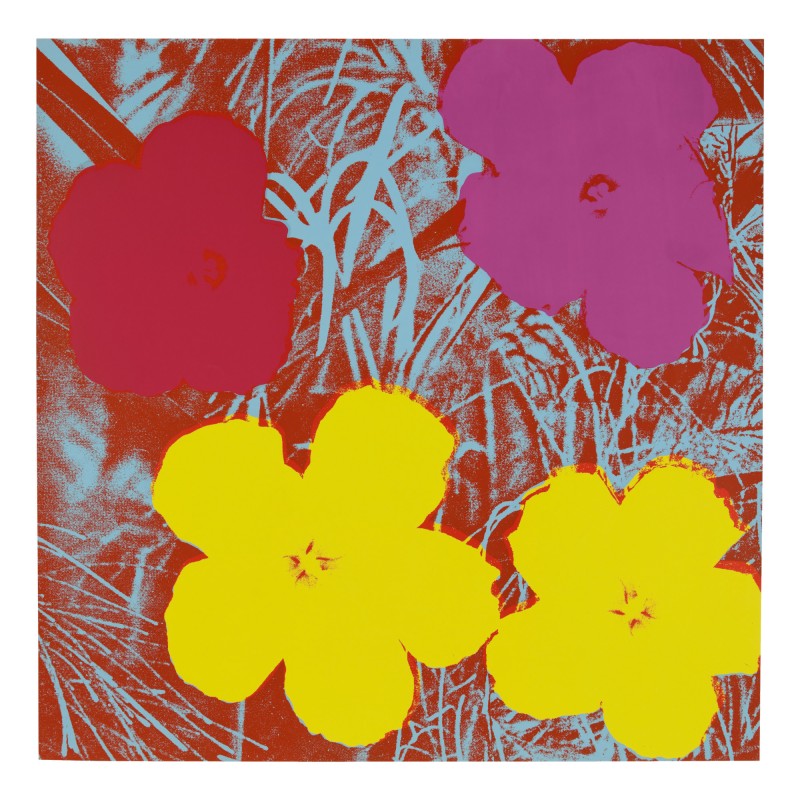
9. Flowers (F&S II.72)
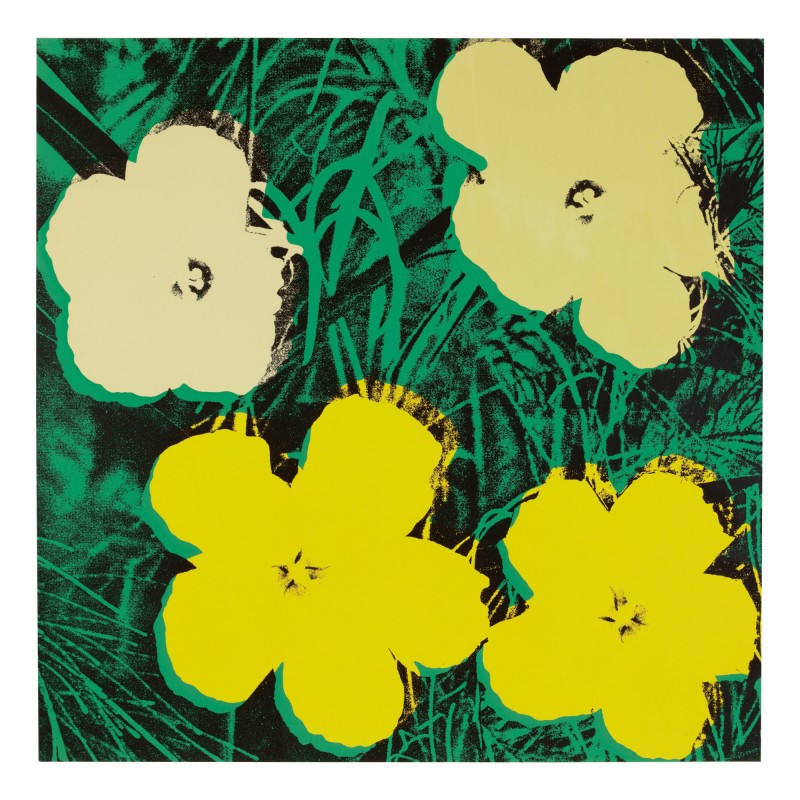
10. Flowers (F&S II.73)
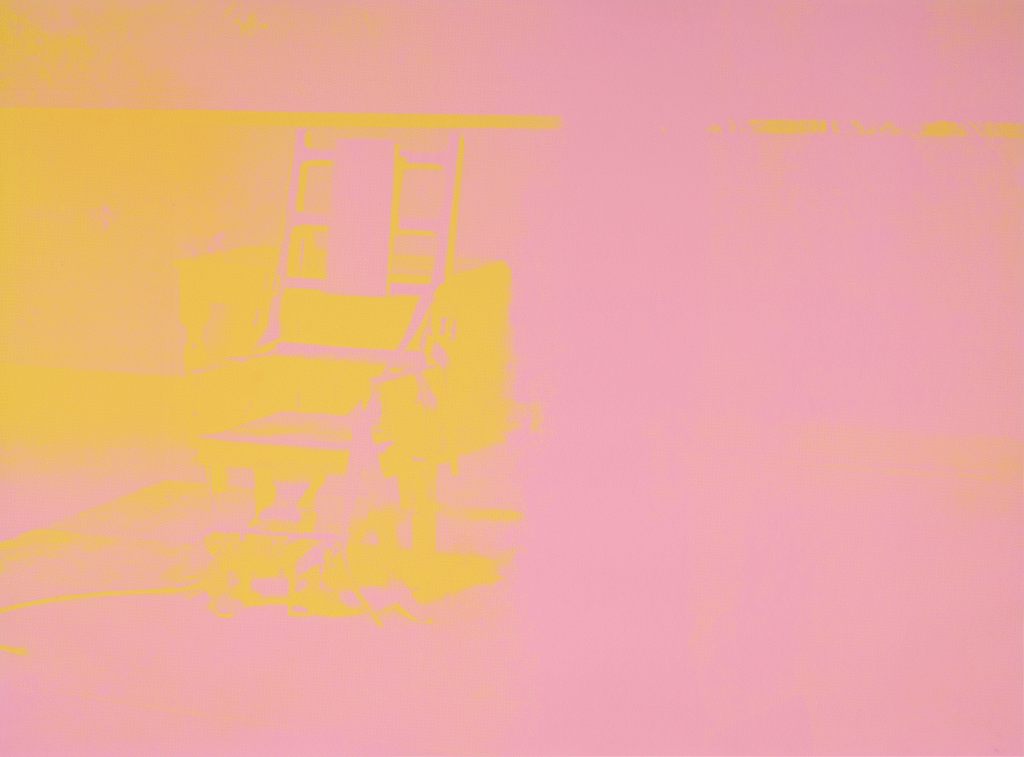
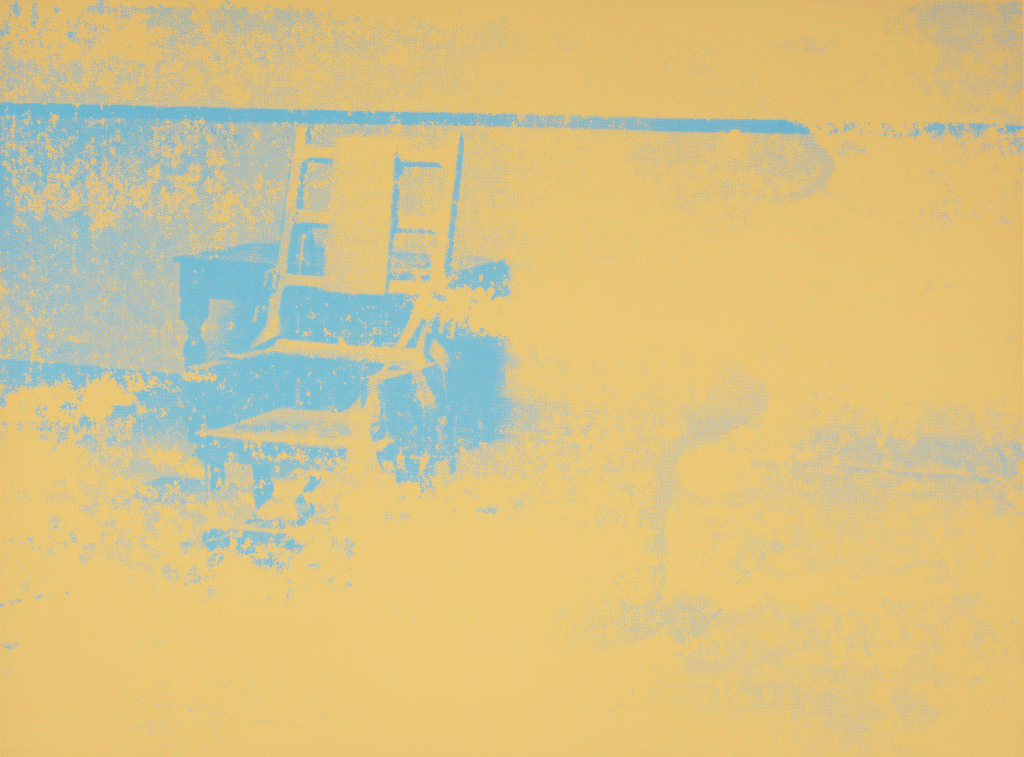
Electric Chairs, 1971
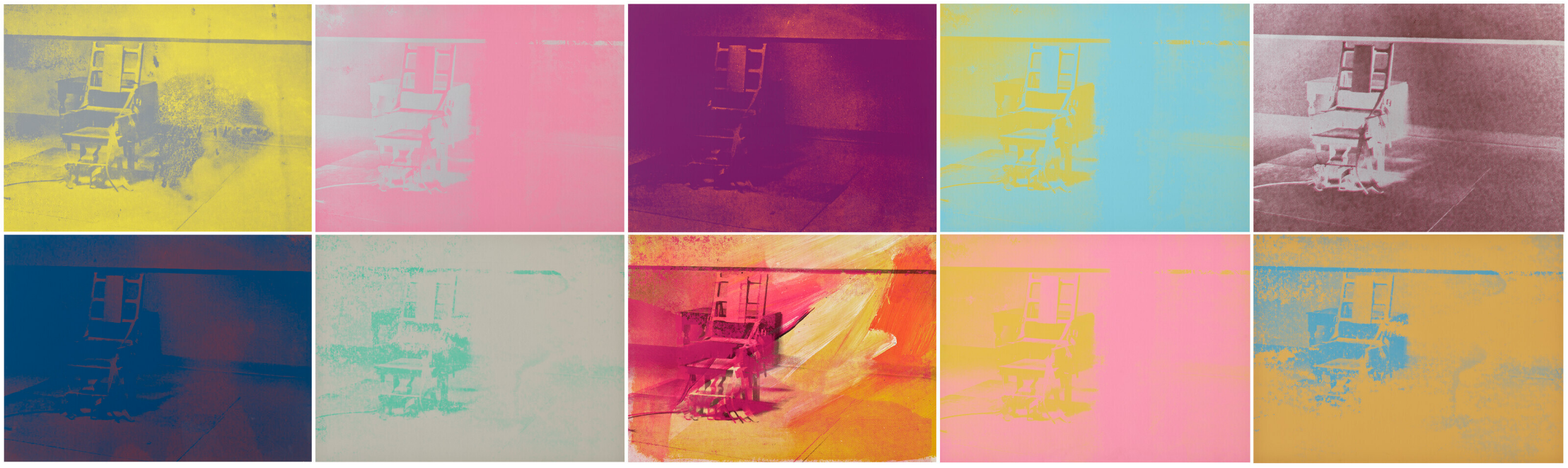
Combining seriality, repetition, and the mechanical modes of production for which he became so well-known, Electric Chair is a supreme illustration of the central preoccupations of Andy Warhol’s definitive brand of American Pop art. Bringing the bright, bold colors of Pop into an immediate and jarring tension with its grisly subject matter, this set of 10 screen-prints cut to the heart of the contradictions and repressed anxieties characterizing mid-century American consciousness, and of Warhol’s abiding interests in the image, celebrity, death, and tragedy. Collapsing moments of horror into the mechanics of the spectacle and mass-production, Electric Chair belong to Warhol’s renowned Death and Disaster series – a radical extension of his ambition for his Pop images to stand as ‘a statement of the symbols of the harsh, impersonal products and brash materialistic objects on which America is built today.’
ANDY WARHOL
Electric Chairs, 1971
The complete set of ten screen-prints in colors on wove paper
Sheet: 35 1/2 x 48 inches (90.1 x 121.9 cm)
Edition: 250 + 50 AP (numbered in Roman numerals)
Literature: Feldman & Schellmann II.74-83
1. Electric Chair (F&S II.74)
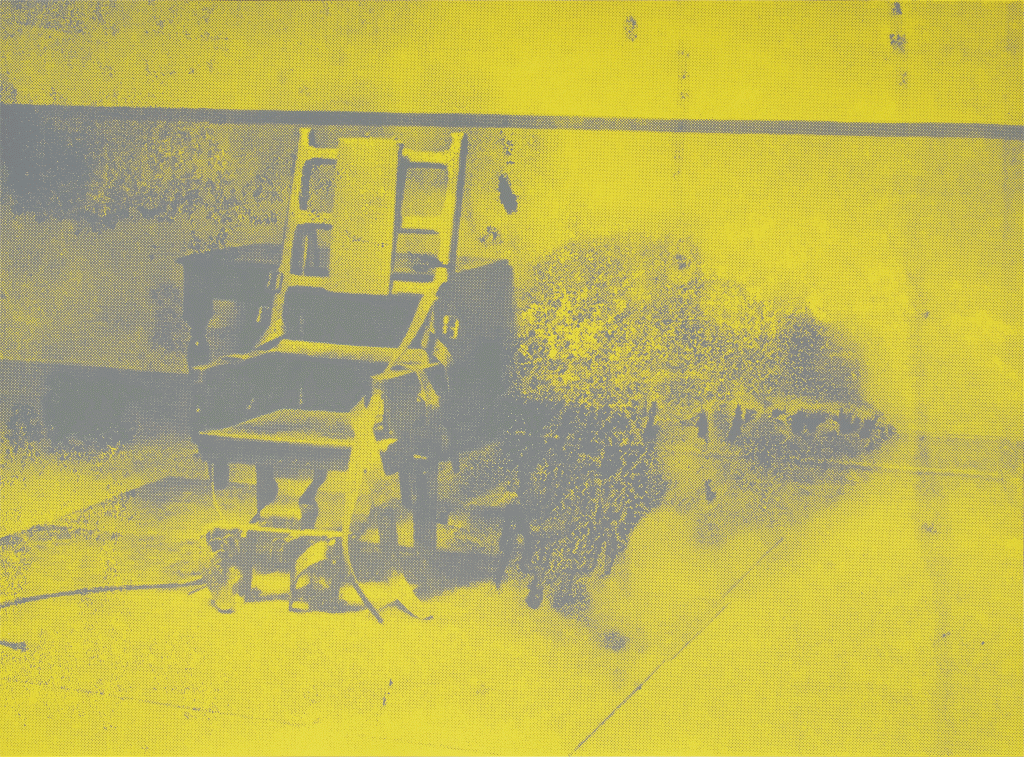
2. Electric Chair (F&S II.75)
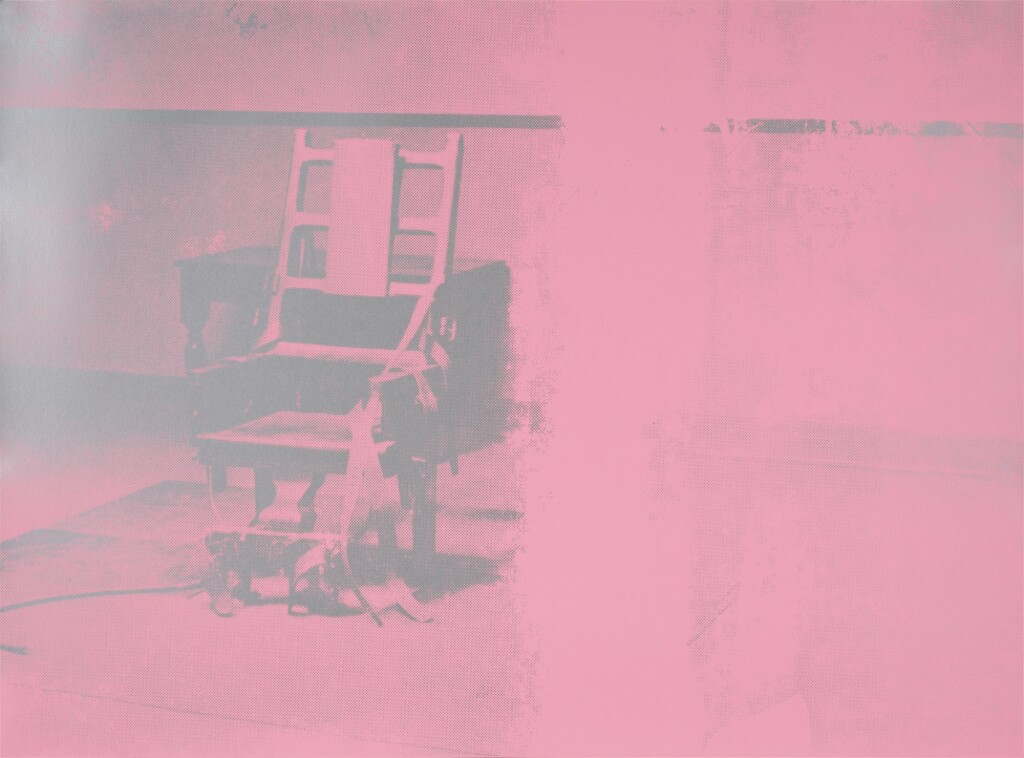
3. Electric Chair (F&S II.76)
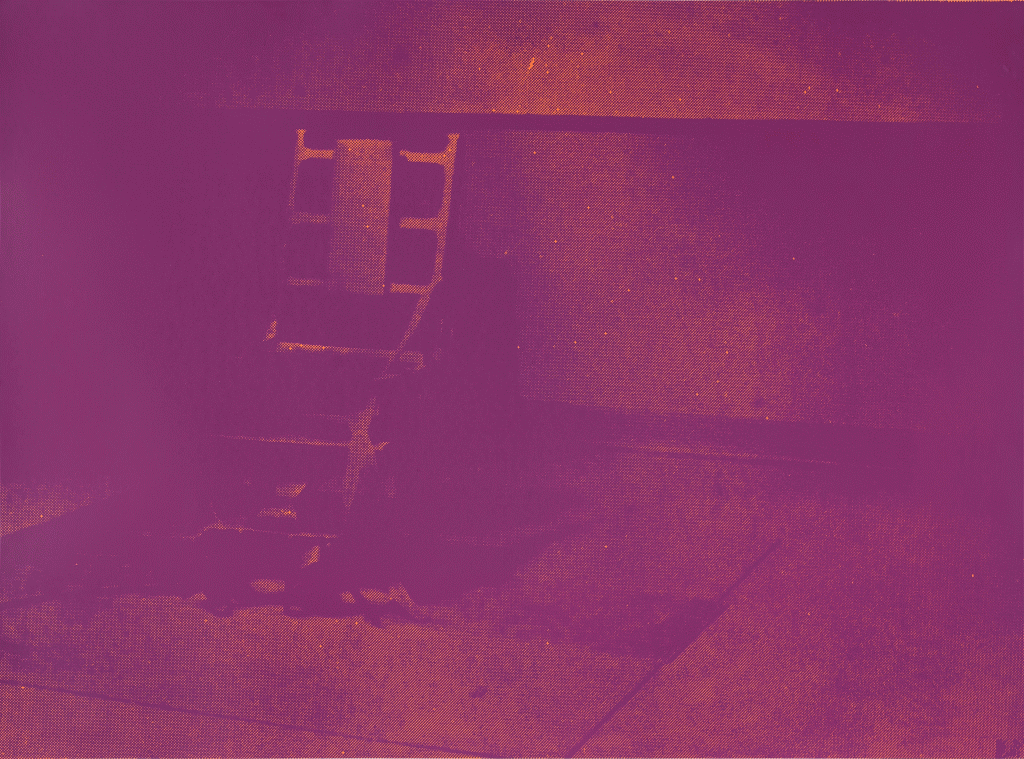
4. Electric Chair (F&S II.77)
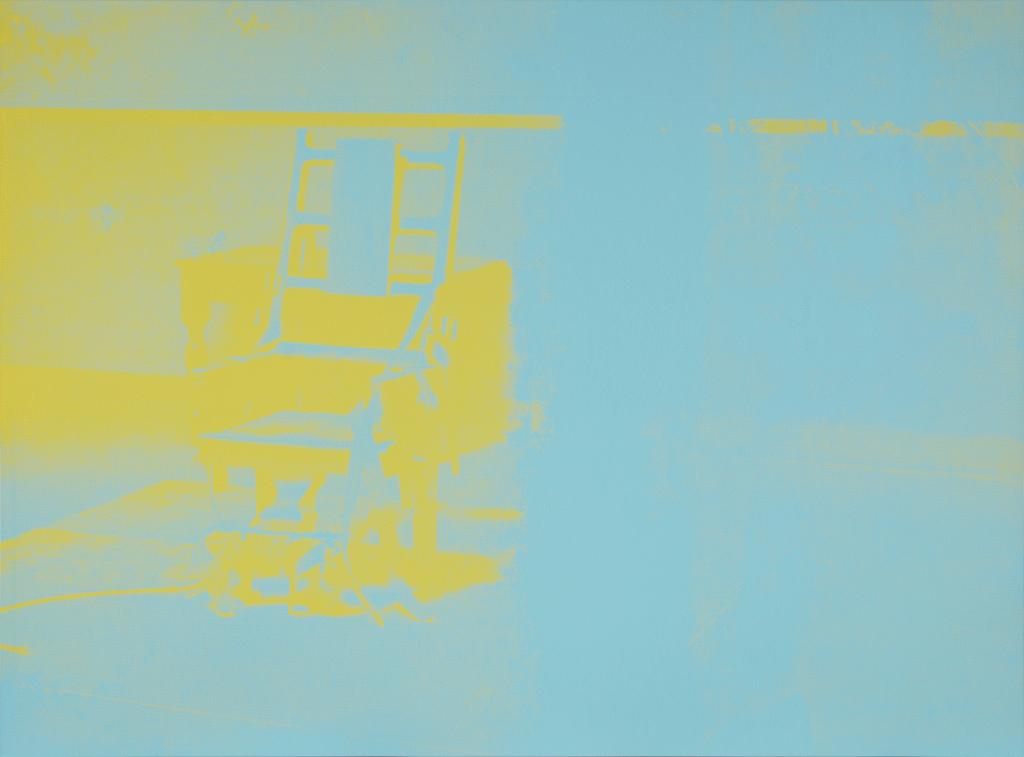
5. Electric Chair (F&S II.78)
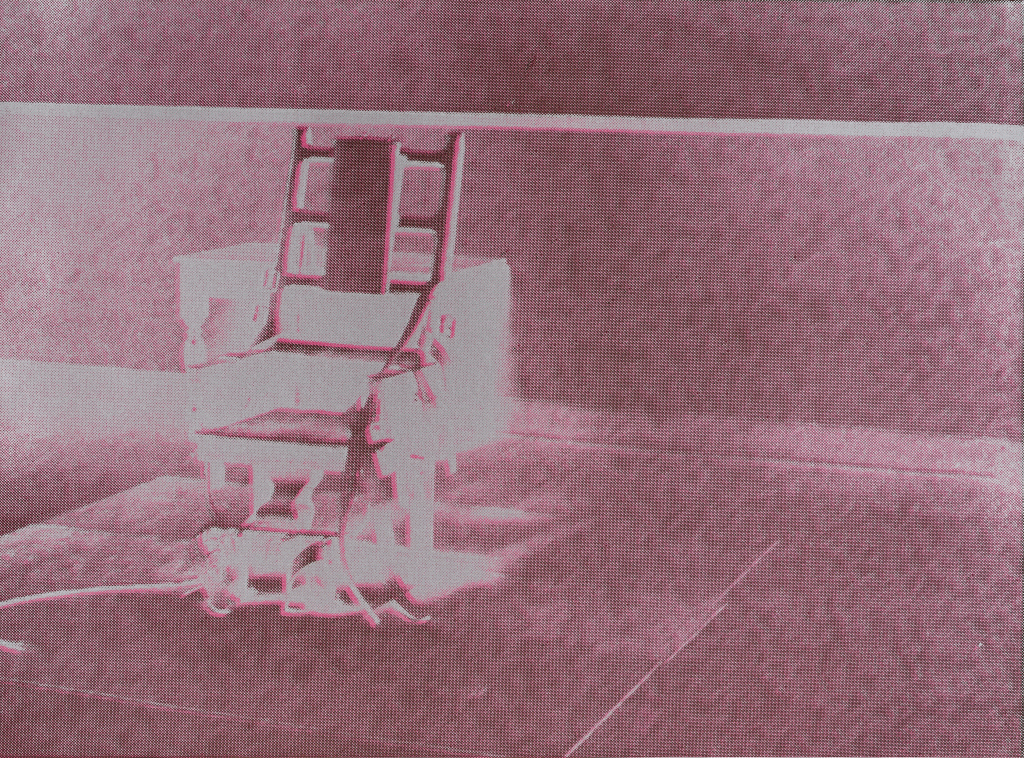
6. Electric Chair (F&S II.79)
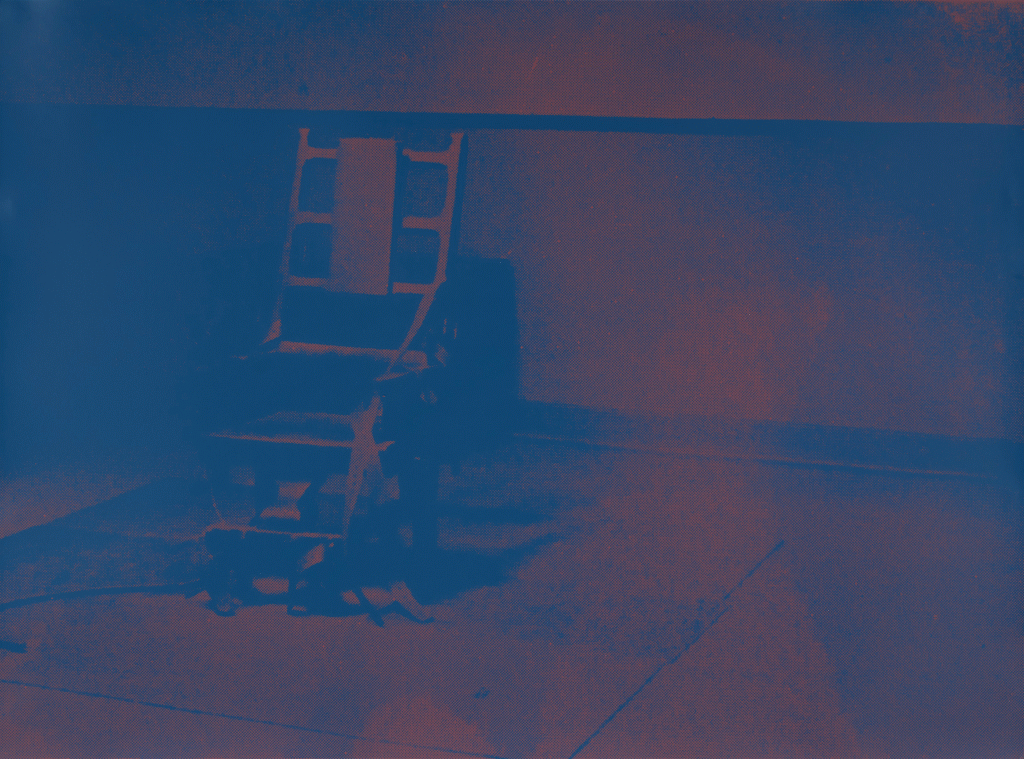
7. Electric Chair (F&S II.80)
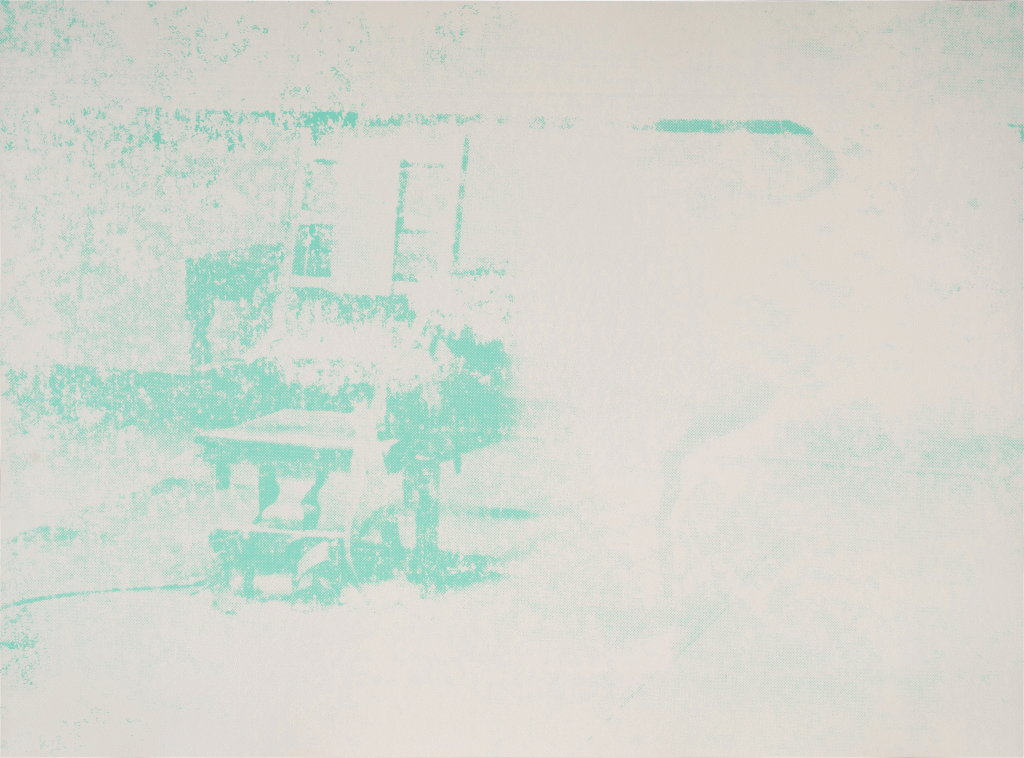
8. Electric Chair (F&S II.81)
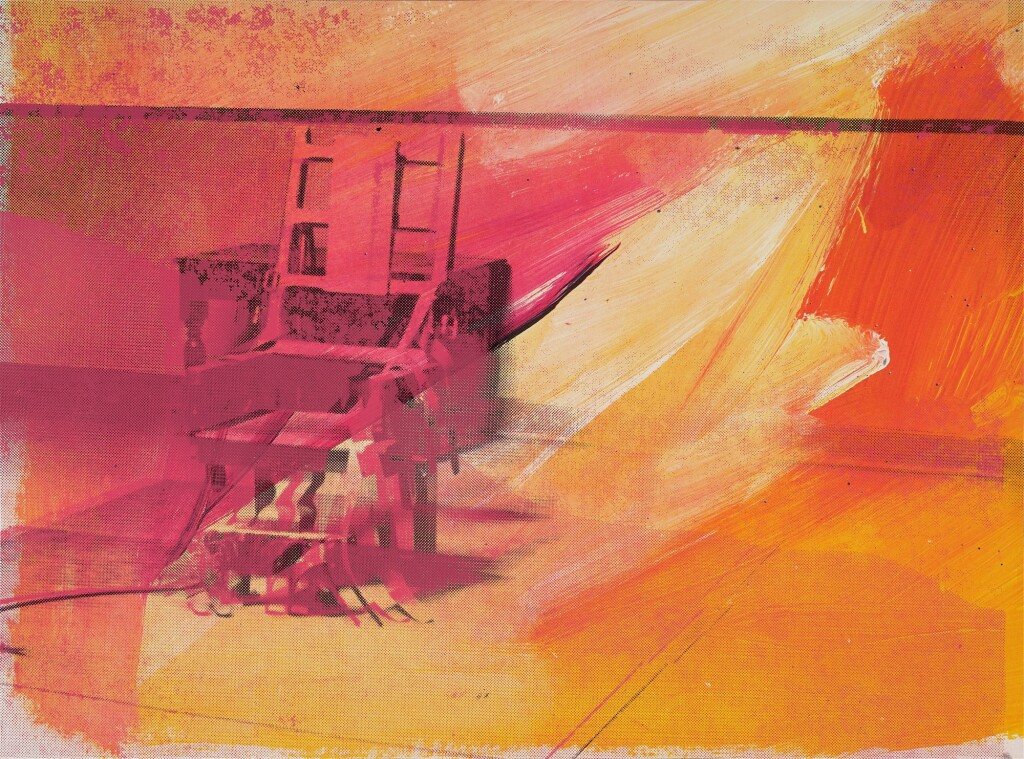
9. Electric Chair (F&S II.82)
10. Electric Chair (F&S II.83)
Mao, 1972
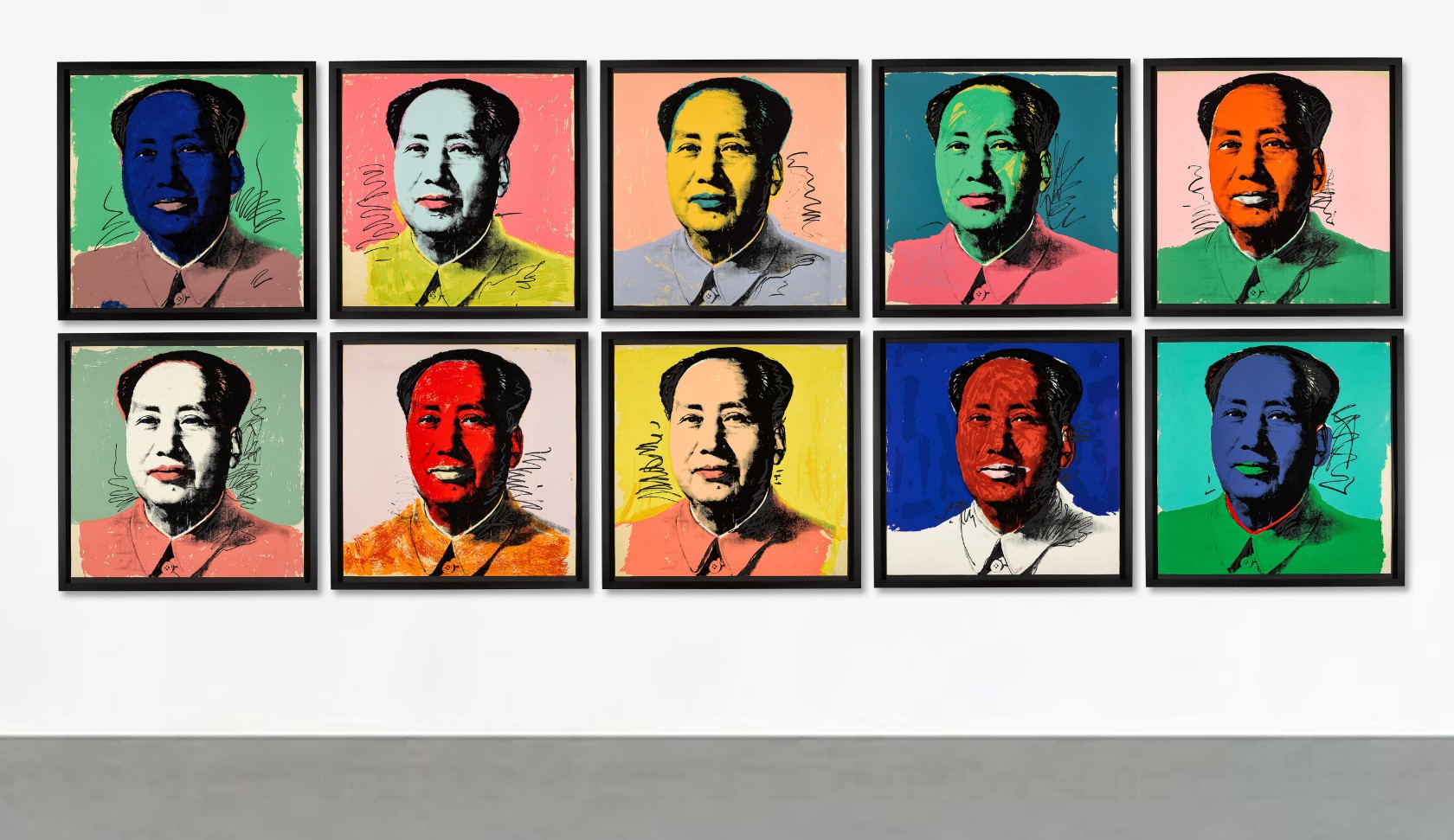
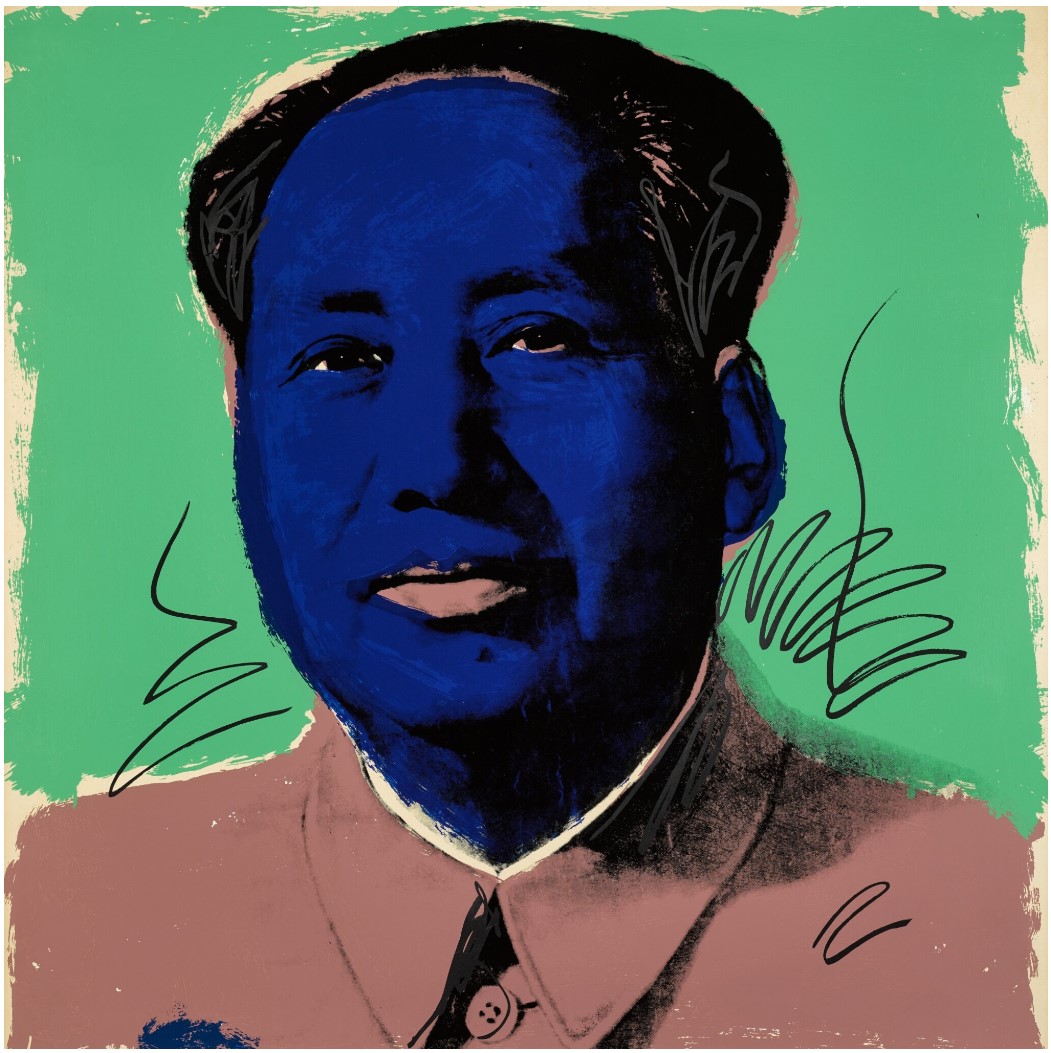
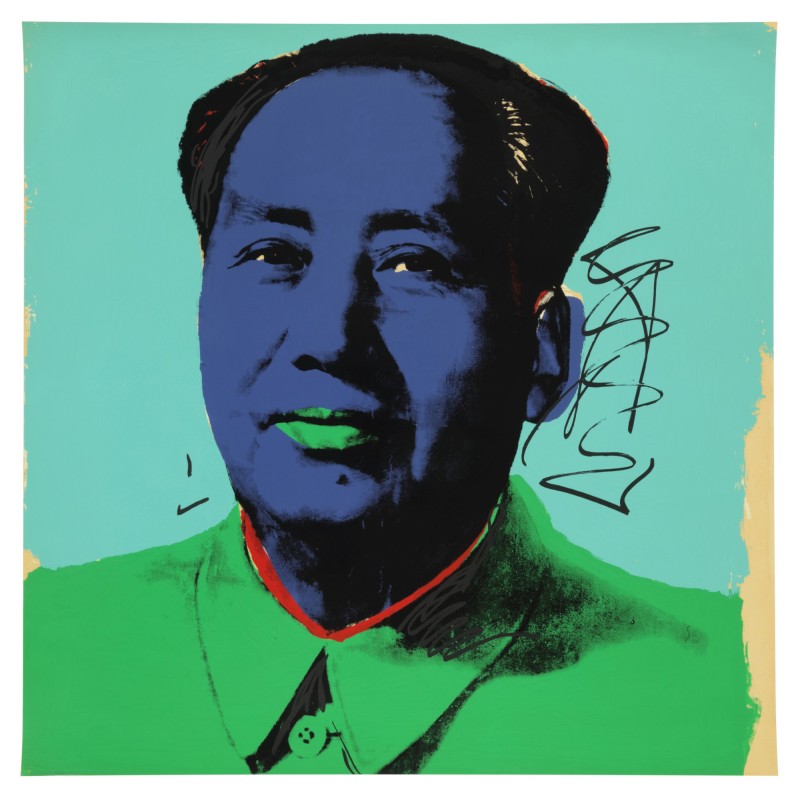
Possessing an uncanny lifeline to public consciousness at a particular moment in time, Andy Warhol’s Mao tapped into the historic easing of relations between the United States and China in 1972. Richard Nixon’s “ice-breaking” visit to the communist nation in February of that year, in what the President termed “the week that changed the world,” amounted to a diplomatic and public relations coup in Cold War history and was widely touted by the media. Awash in images of an unfamiliar China, the American public became quickly accustomed with the visage of Chairman Mao Tse-Tung. Mining the myth surrounding the man synonymous with absolute political and cultural power, Warhol’s choice of subject was nothing short of brilliant.
ANDY WARHOL
Mao, 1972
The complete set of ten screenprints in colors on Beckett High White Paper
Sheet: 36×36 inches (91.4 x 91.4 cm)
Edition: 250 + 50 AP
Literature: Feldman & Schellmann II.90-99
1. Mao (F&S II.90)
2. Mao (F&S II.91)
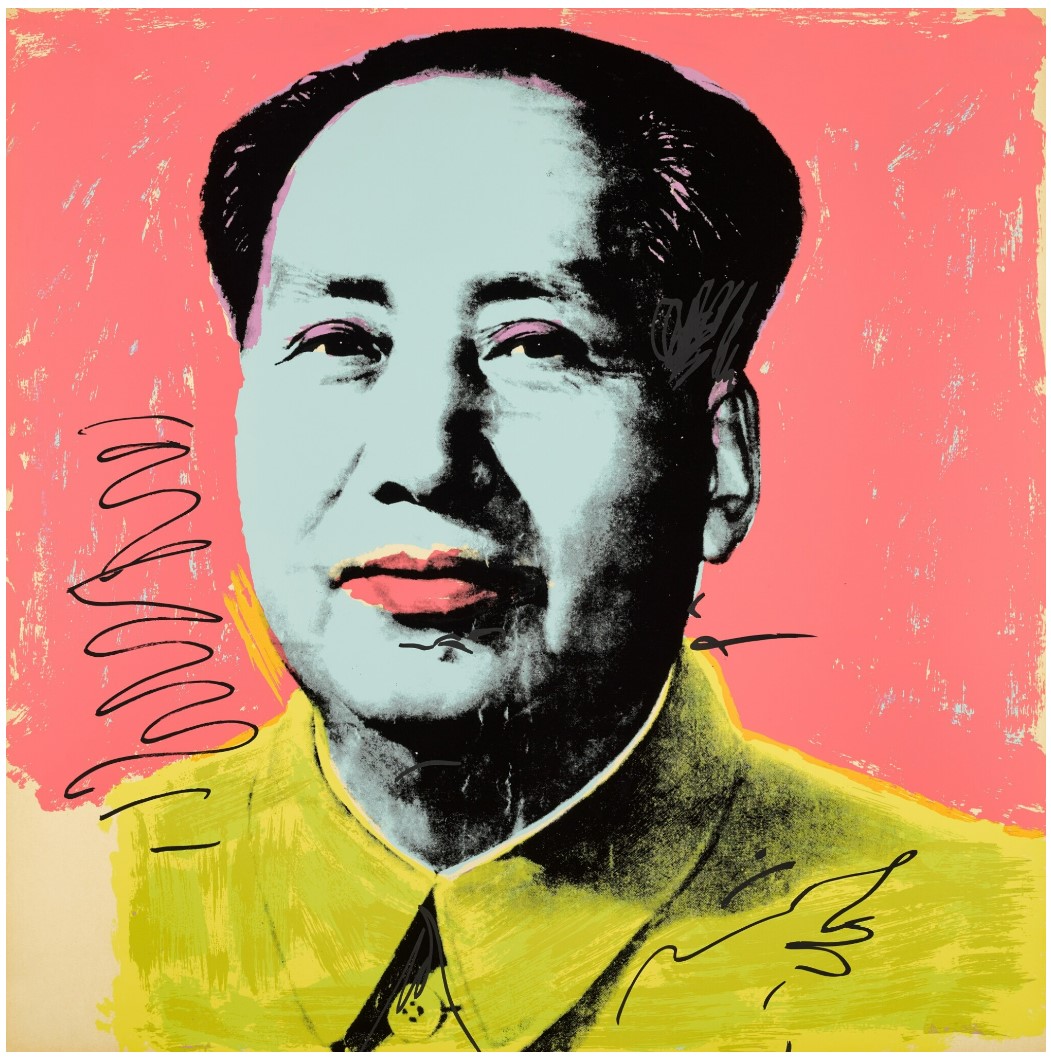
3. Mao (F&S II.92)
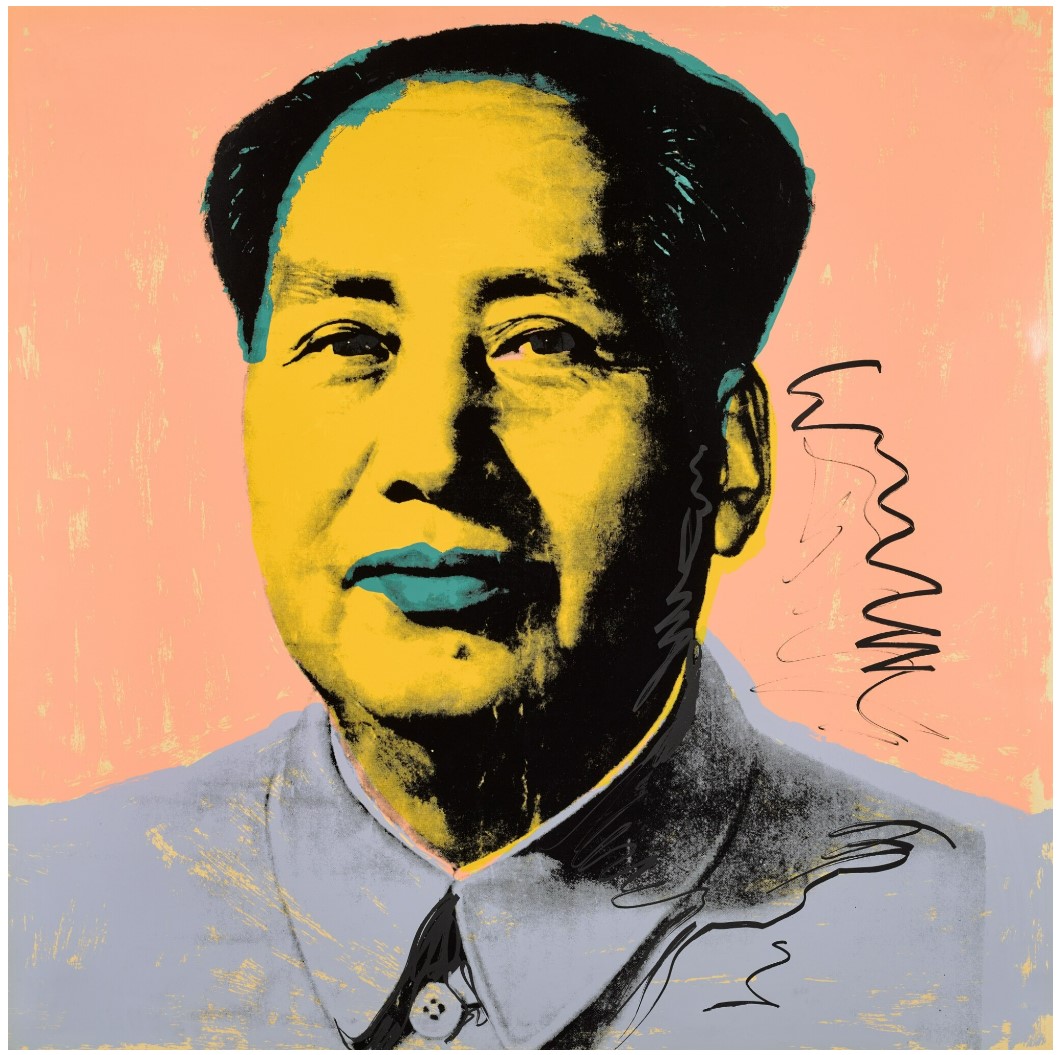
4. Mao (F&S II.93)
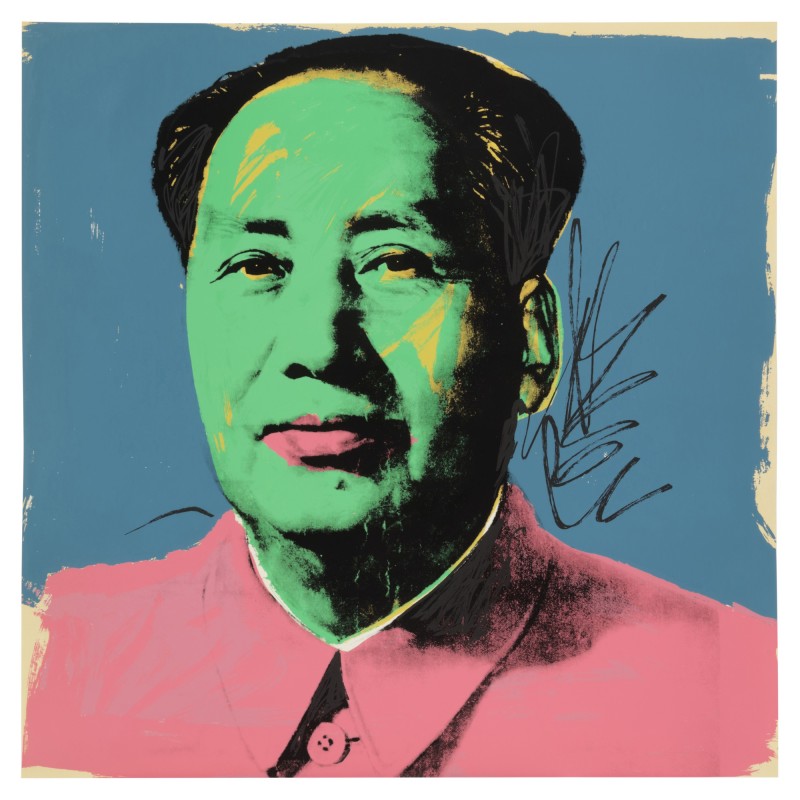
5. Mao (F&S II.94)
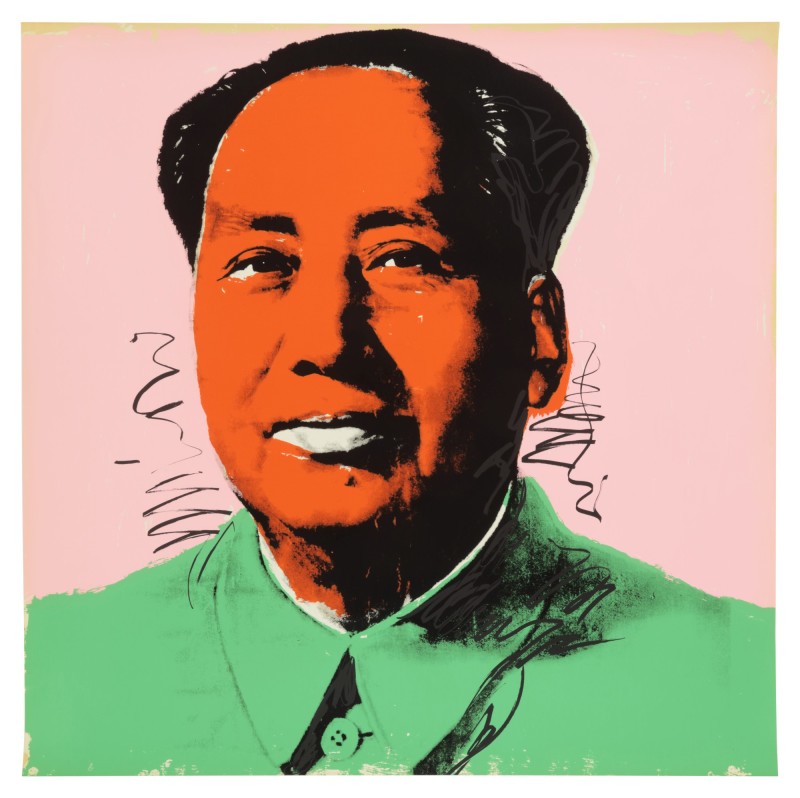
6. Mao (F&S II.95)
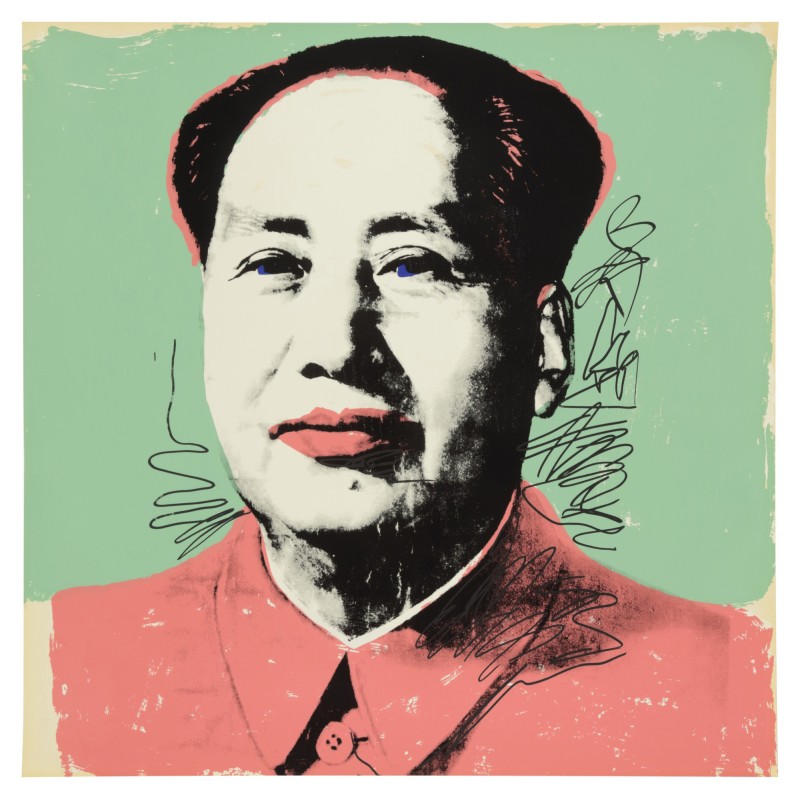
7. Mao (F&S II.96)
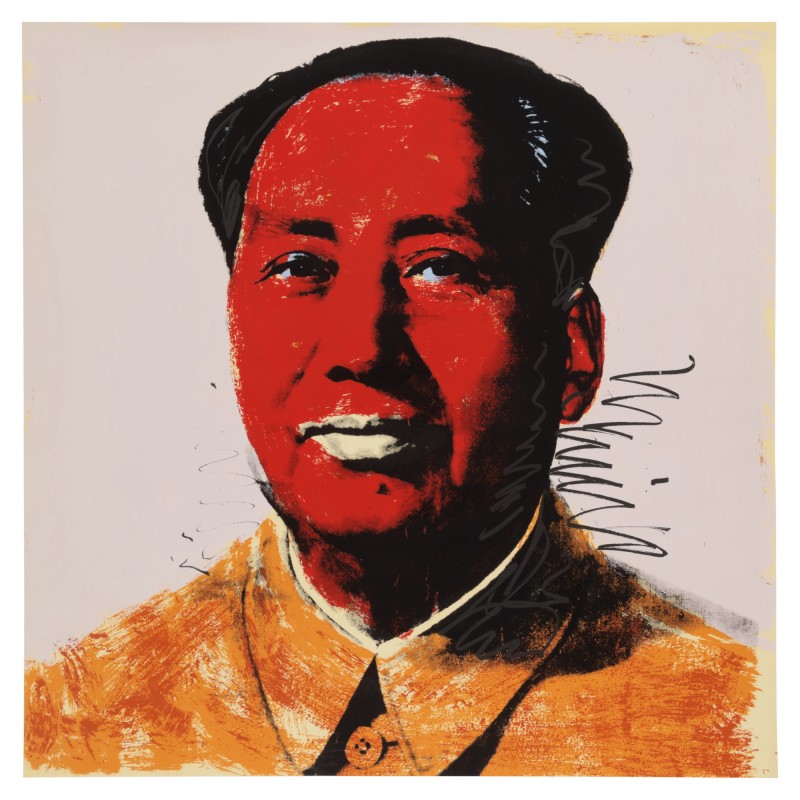
8. Mao (F&S II.97)
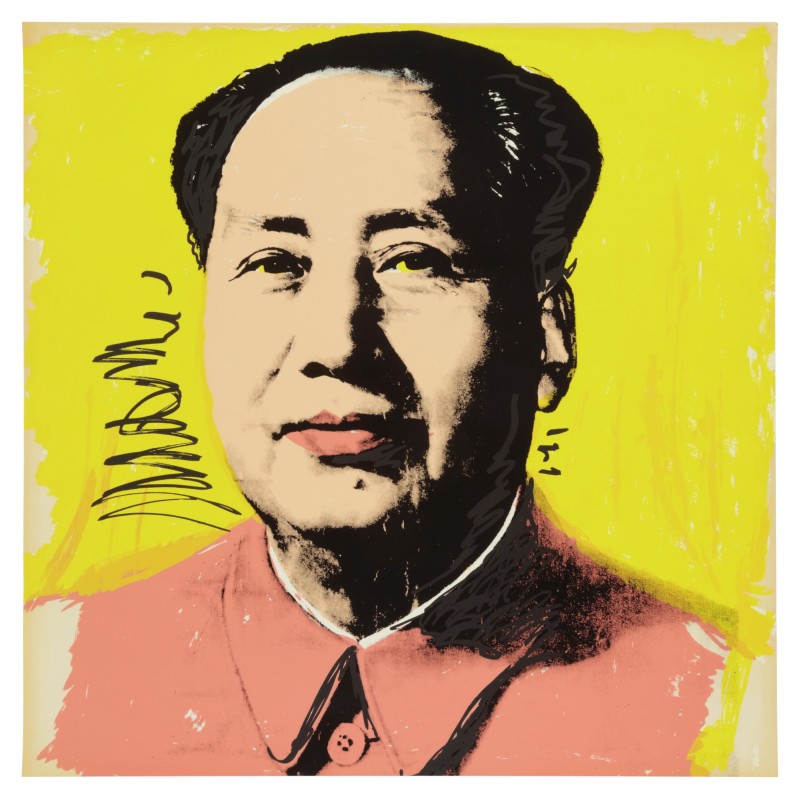
9. Mao (F&S II.98)
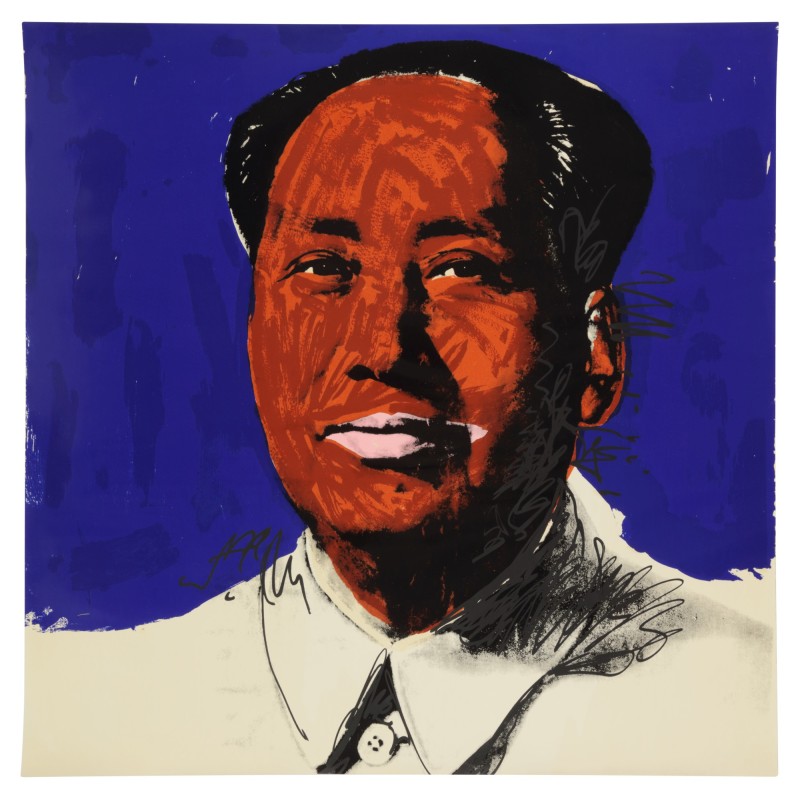
10. Mao (F&S II.99)
Ladies and Gentlemen, 1975
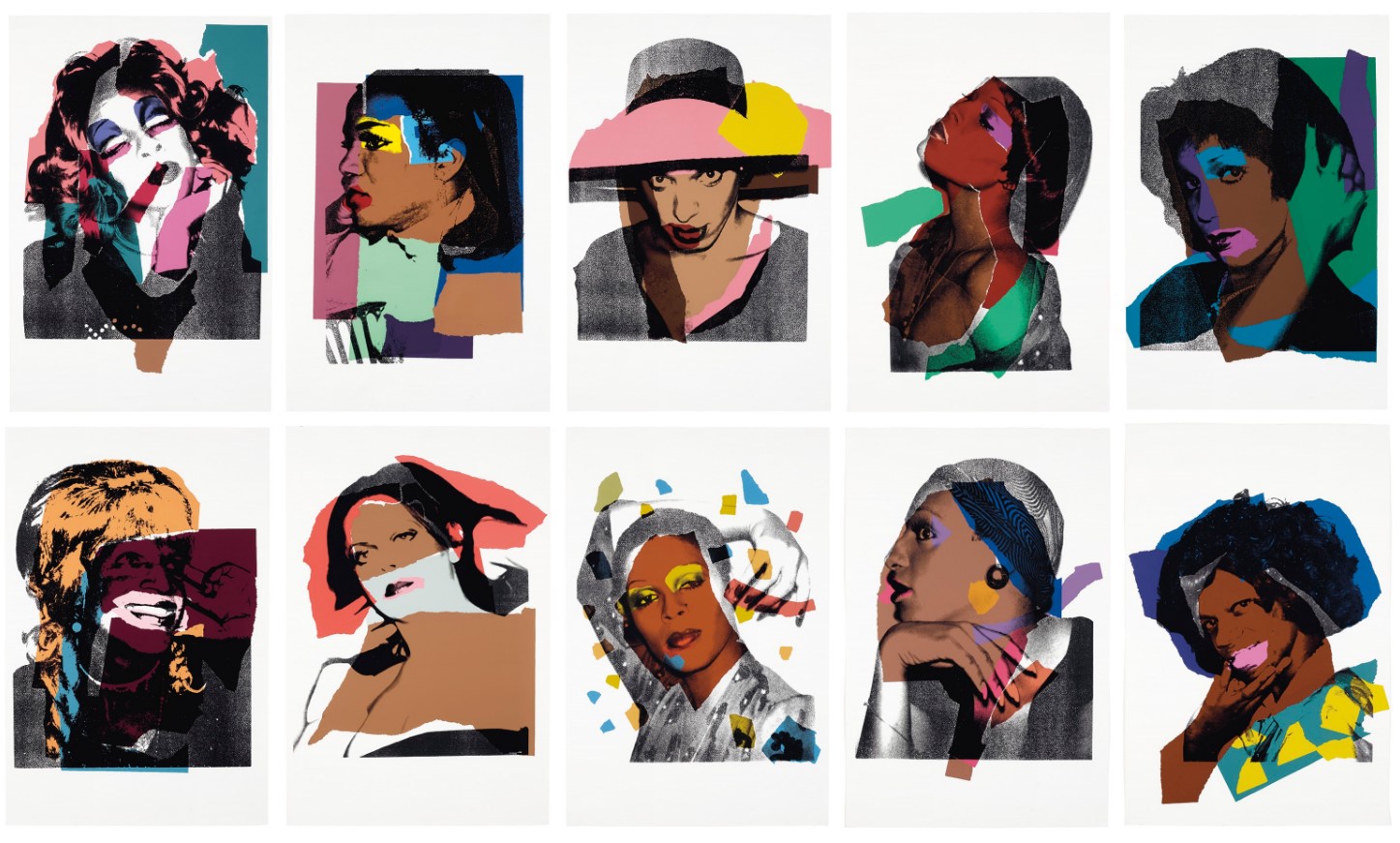
In 1975, art dealer Luciano Anselmino, for whom Warhol had previously completed an edition of his Man Ray portrait (Feldman & Shellmann II.148 and II.149), commissioned Warhol to produce a series on drag queens. Under Warhol’s instruction, Bob Colacello went to The Gilded Grape, a club frequented by trans people and drag performers of color, to recruit several willing participants. These individuals were offered $50 an hour in exchange for their portrait. Never introduced to Warhol by name, the sitters arrived at the Factory and had their Polaroid taken…
ANDY WARHOL
Ladies and Gentlemen, 1975
The complete portfolio of 10 color screen-prints on Arches paper
Sheet: 43.5 x 28.5 inches (110.5 x 72.4 cm)
Edition: 250 + 25 AP + 1 PP
Literature: Feldman & Schellmann II.128-137
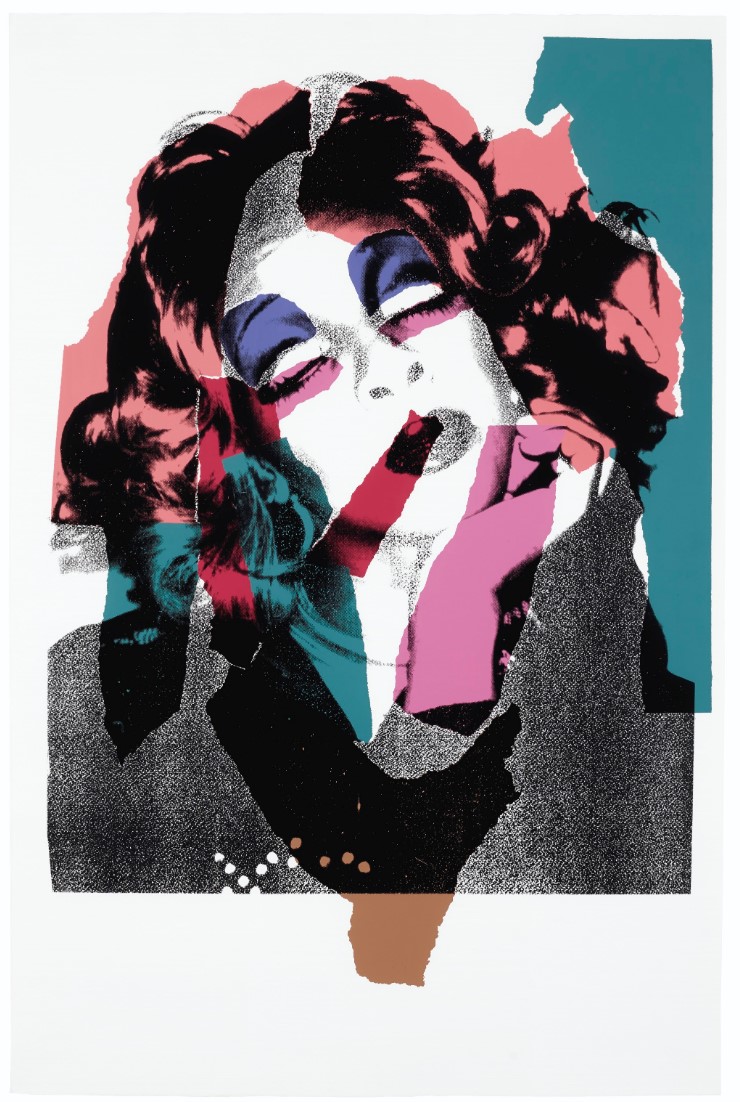
1. Ladies and Gentlemen (F&S II.128)
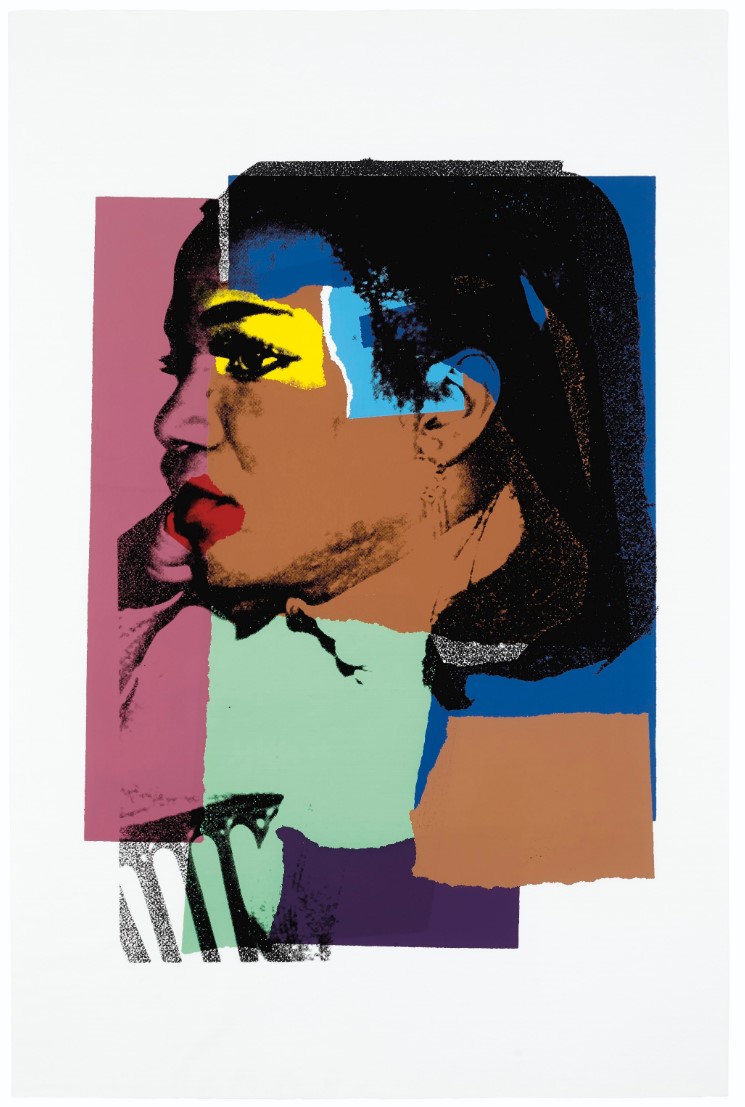
2. Ladies and Gentlemen (F&S II.129)
3. Ladies and Gentlemen (F&S II.130)
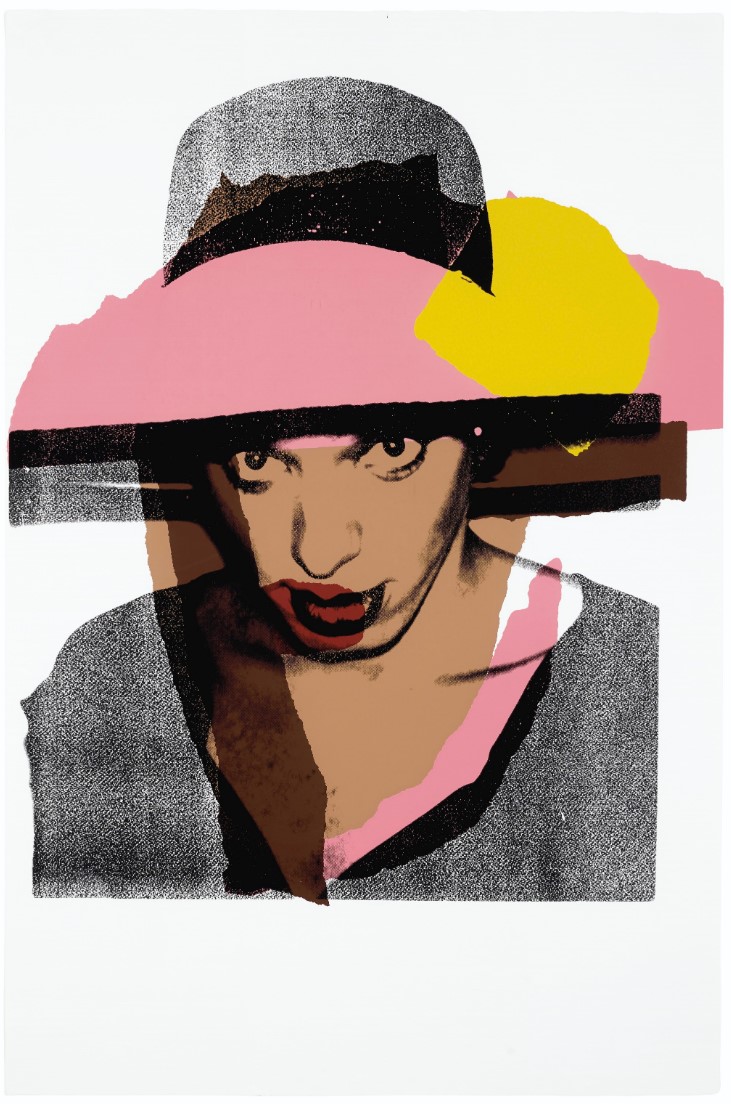
4. Ladies and Gentlemen (F&S II.131)
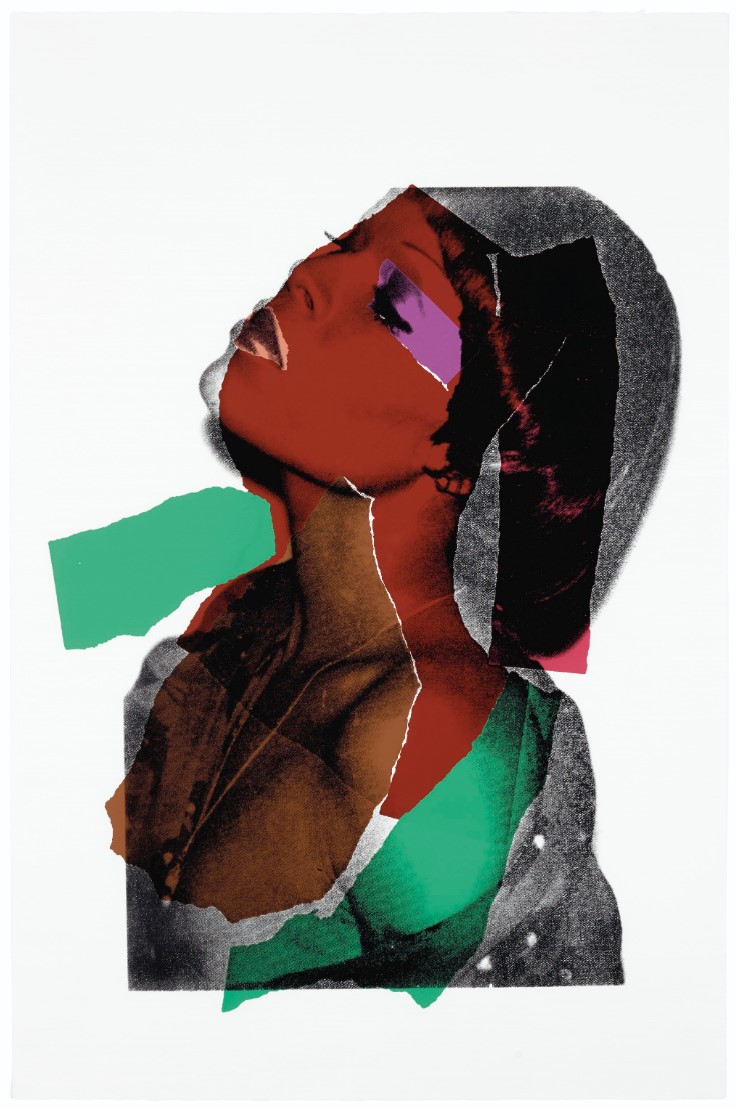
5. Ladies and Gentlemen (F&S II.132)
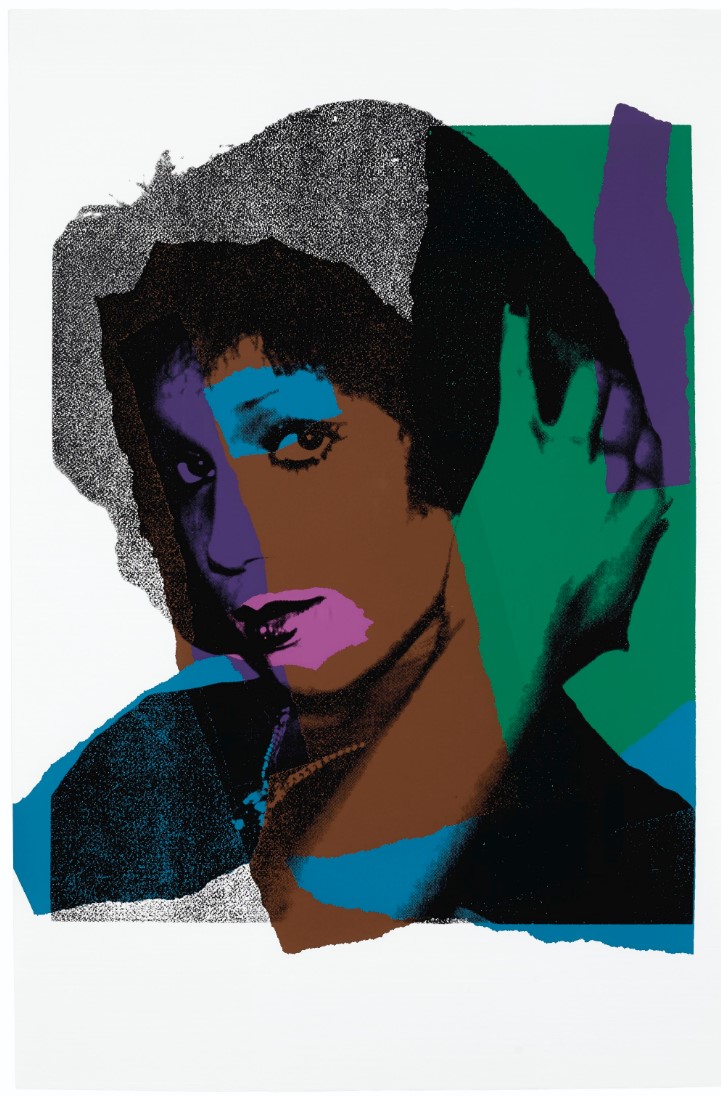
6. Ladies and Gentlemen (F&S II.133)
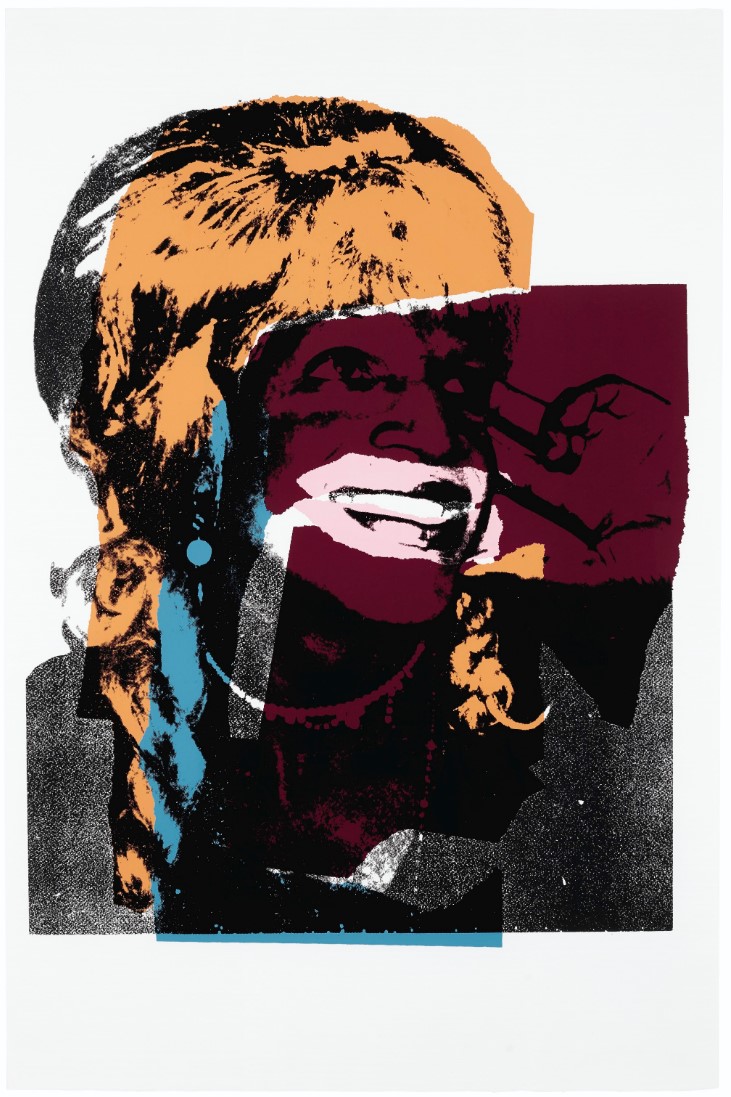
7. Ladies and Gentlemen (F&S II.134)
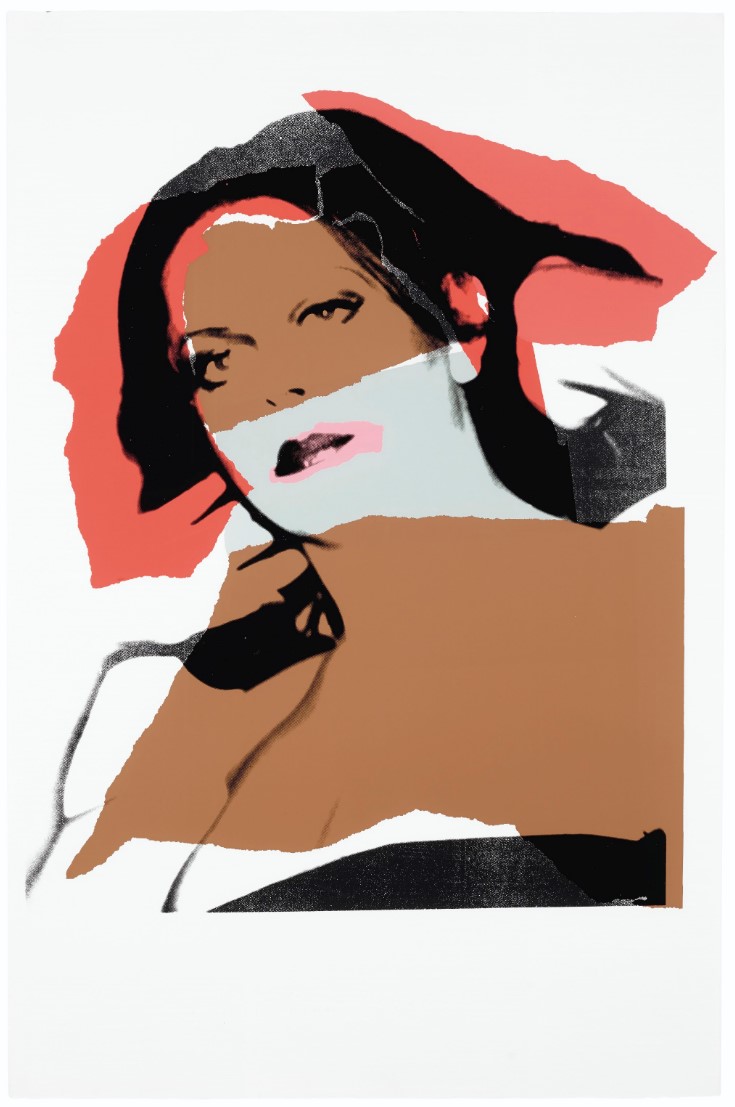
8. Ladies and Gentlemen (F&S II.135)
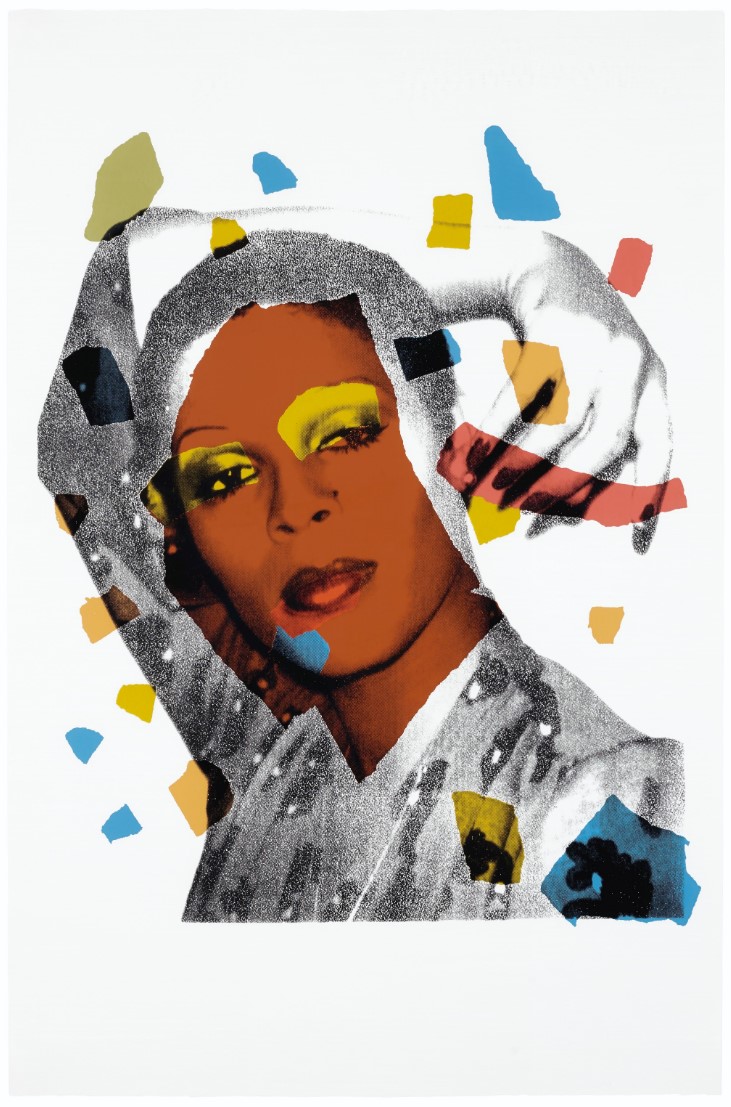
9. Ladies and Gentlemen (F&S II.136)
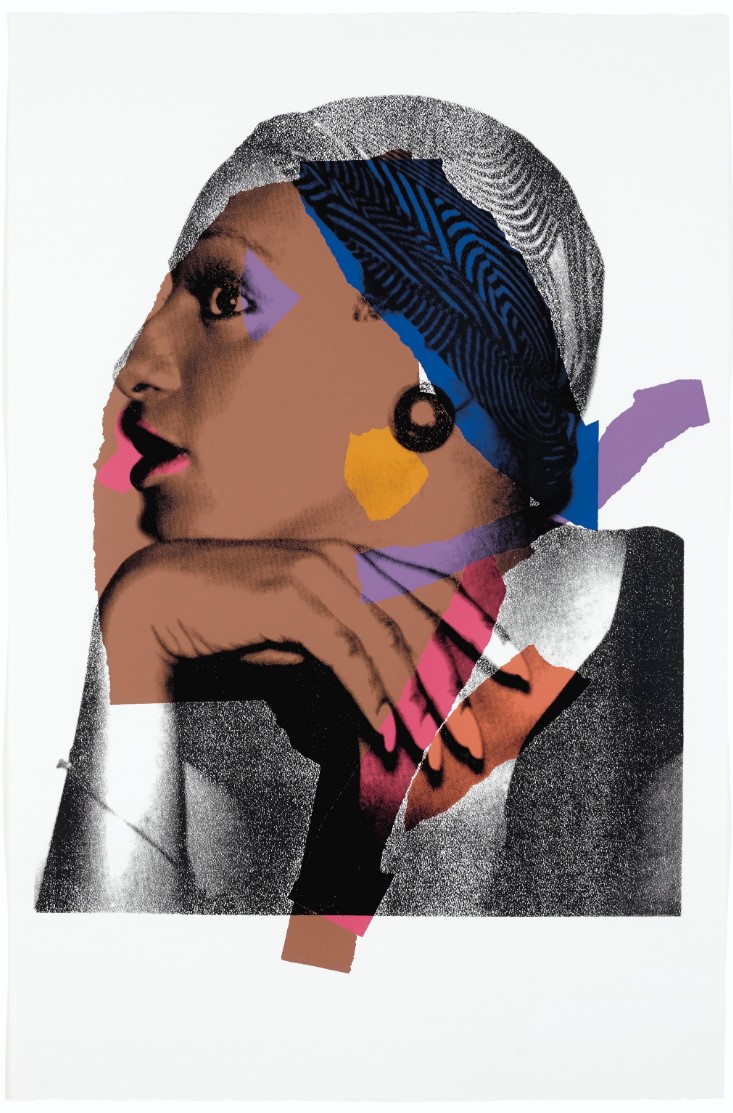
10. Ladies and Gentlemen (F&S II.137)
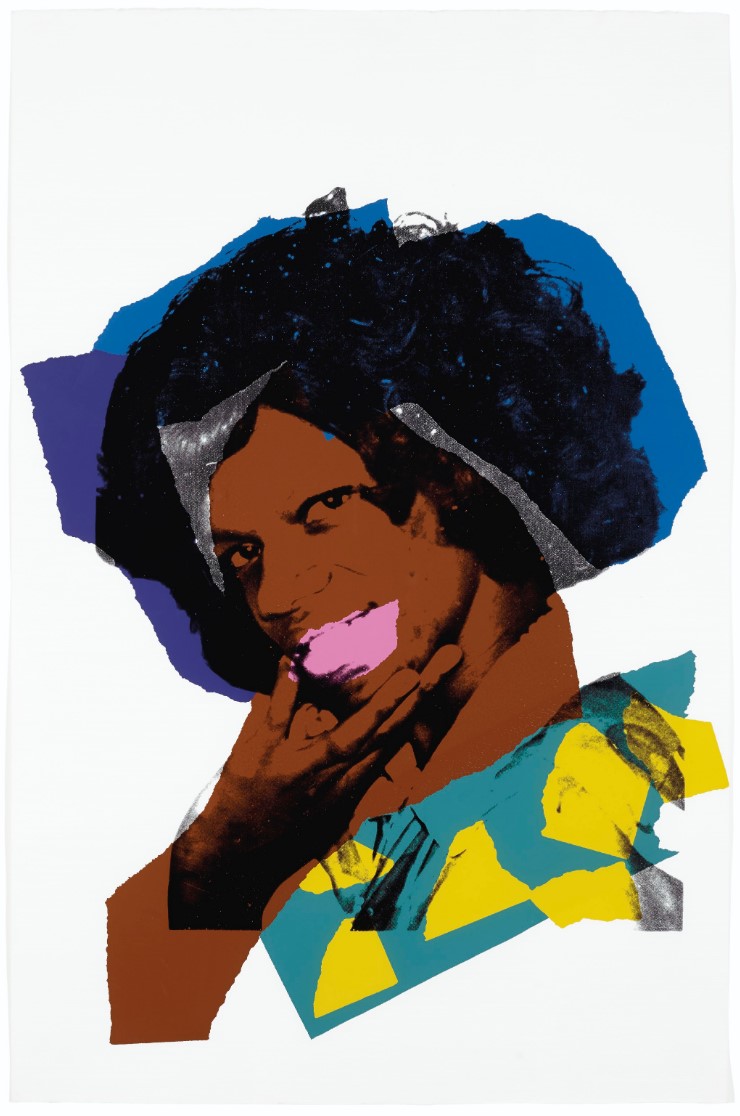
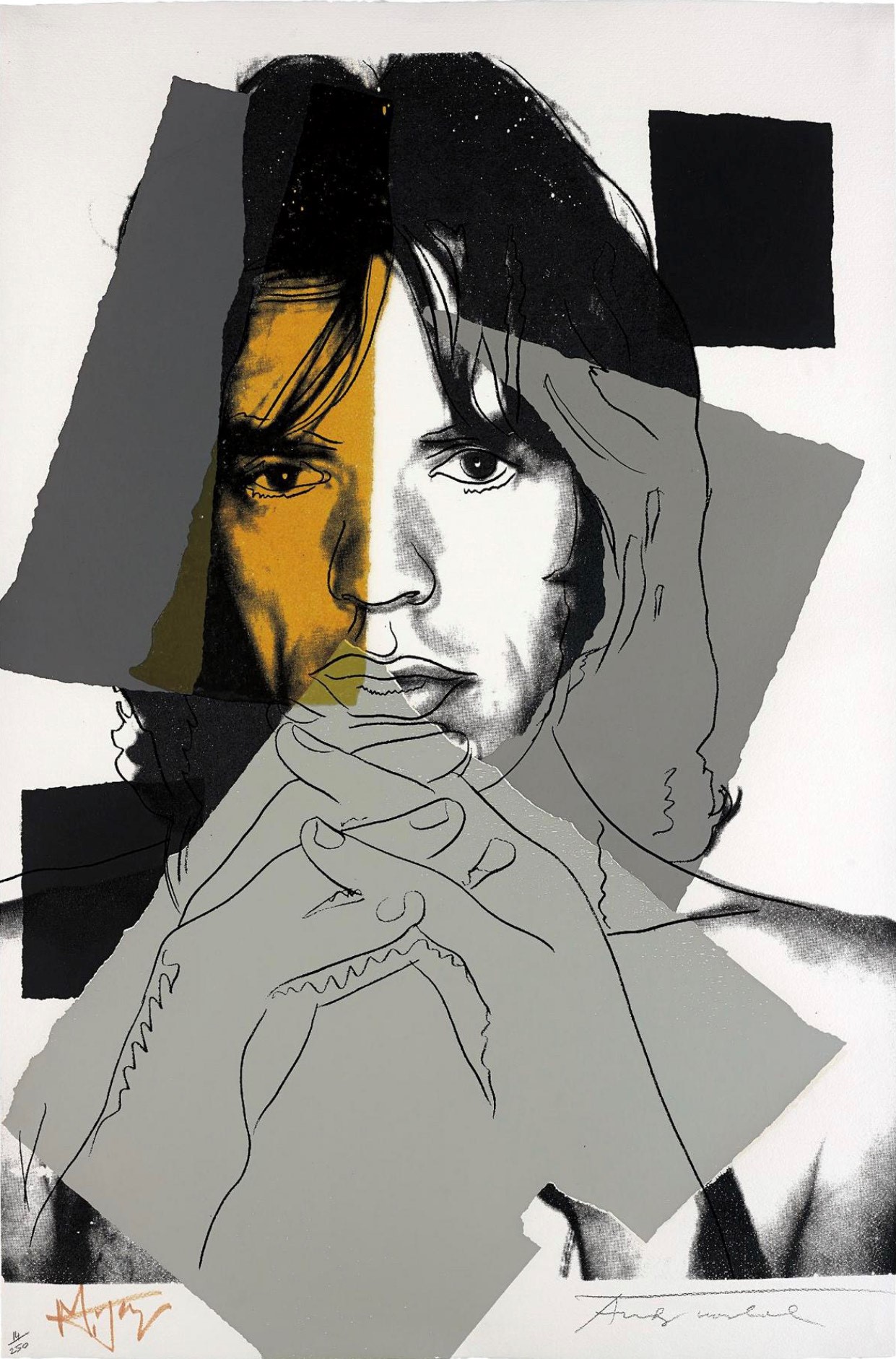
Mick Jagger, 1975
In the summer of 1975, whilst Jagger and his wife were renting Warhol’s home in Long Island, the artist took the opportunity to photograph Jagger, capturing a variety of expressive images that would form the basis of his next portfolio. Warhol’s Mick Jagger series creates a powerful statement about the commercialization of celebrity, evident also in his decision for Jagger to sign each of the prints, thus increasing their value and enhancing their cultural significance. This process marked an important stylistic turning point in Warhol’s artistic career as he began to more frequently photograph his subjects, as opposed to relying on the pre-existing imagery used for his earlier portfolios. Warhol’s 1975 photographs of Jagger capture the rock star bare-chested in a range of emotive poses.
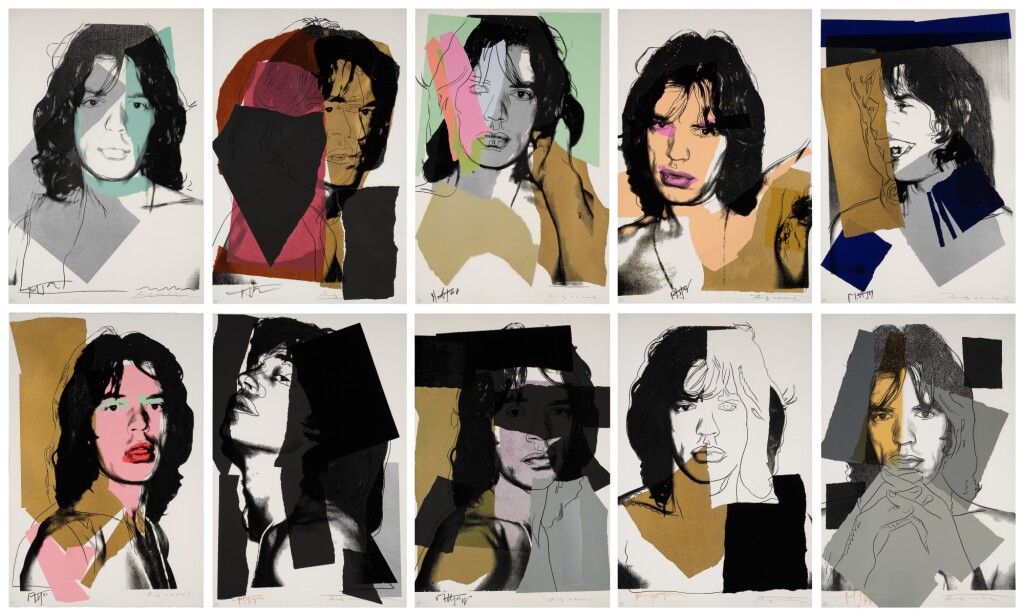
ANDY WARHOL
Mick Jagger, 1975
The complete portfolio of 10 color screen-prints on Arches Aquarelle rough paper
Sheet: 43 1/2 x 29 inches (110.5 x 73.7 cm)
Edition: 250 + 50 AP + 3 PP
Literature: Feldman & Schellmann II.138-147
1. Mick Jagger (F&S II.138)
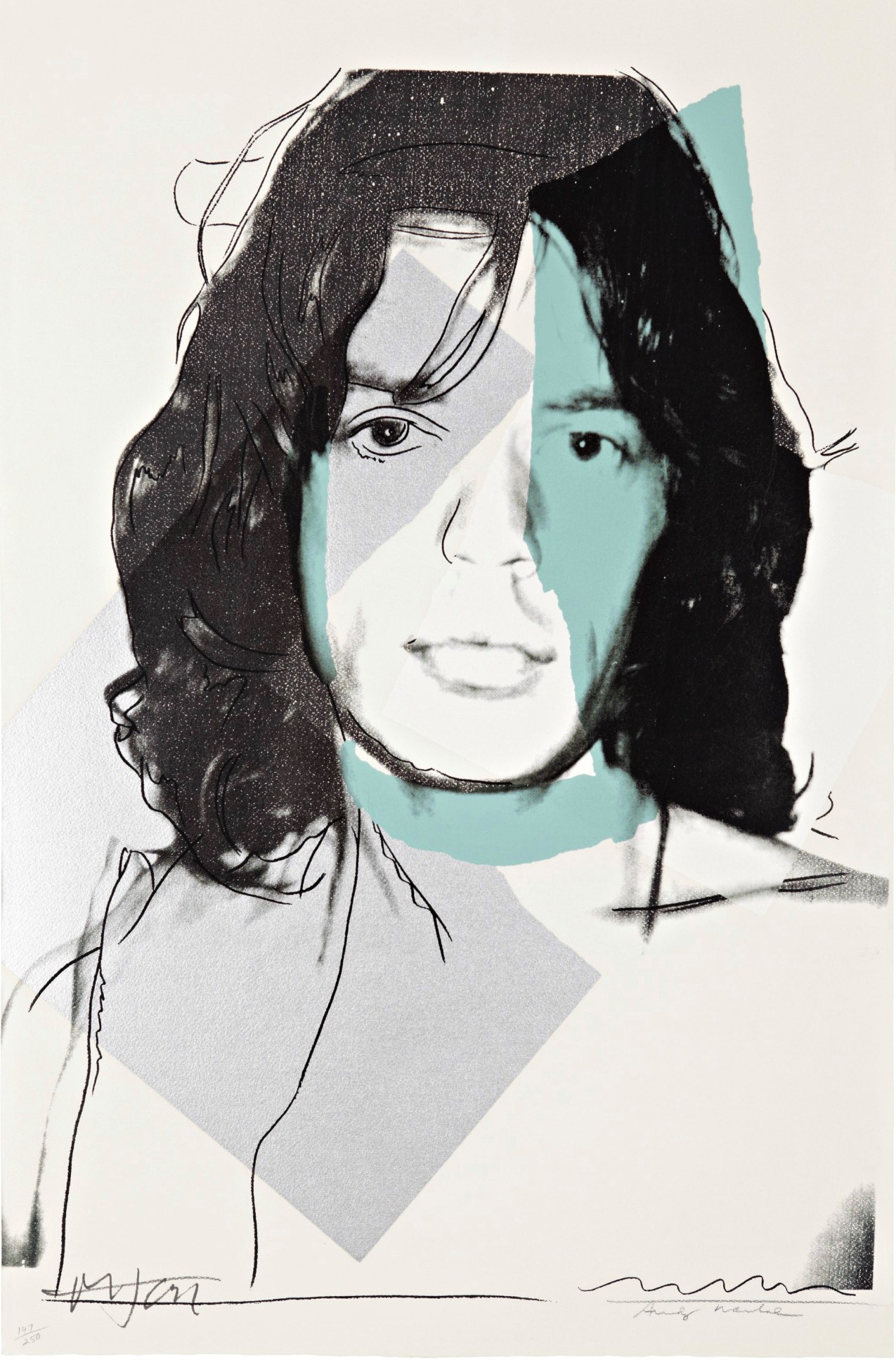
2. Mick Jagger (F&S II.139)
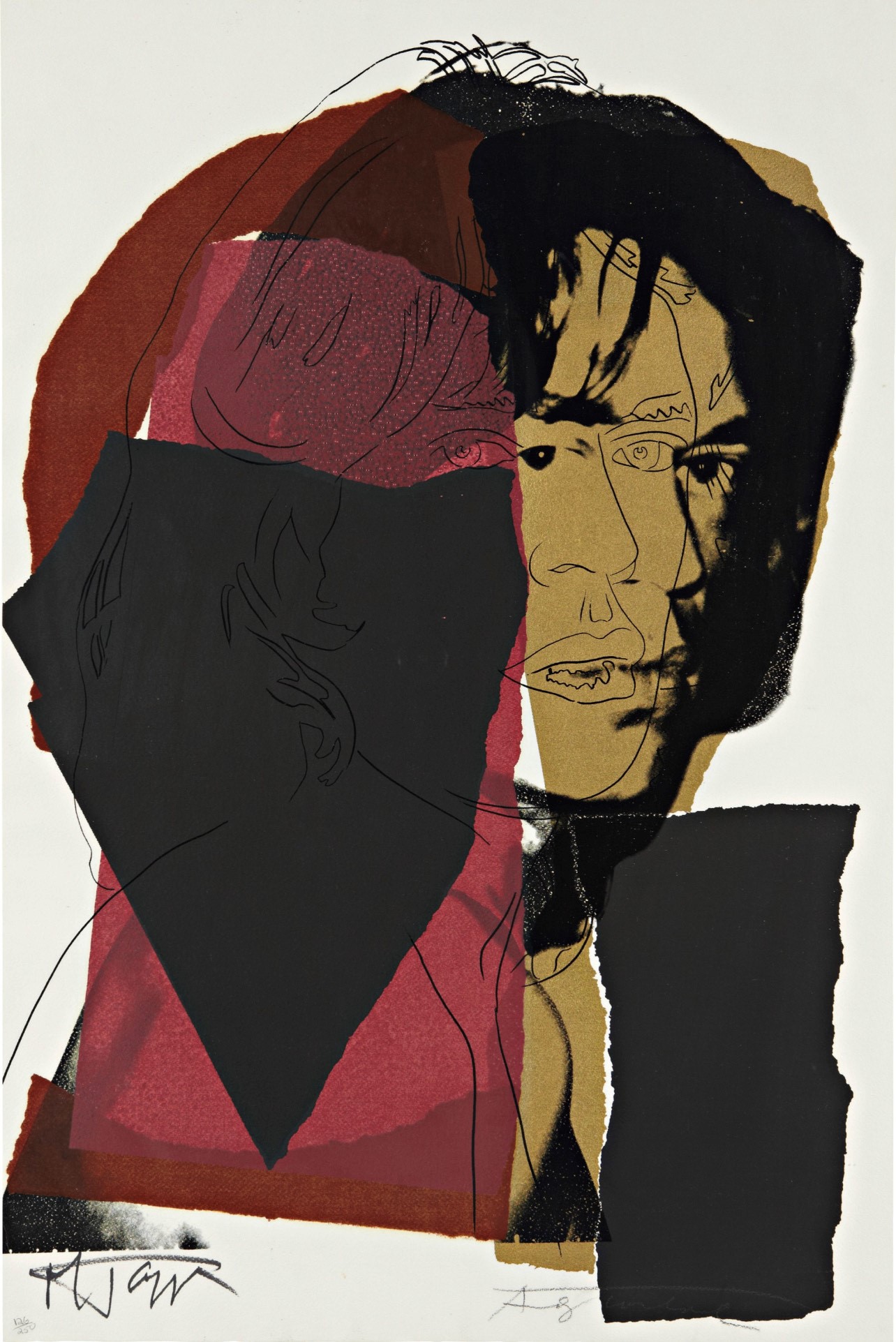
3. Mick Jagger (F&S II.140)
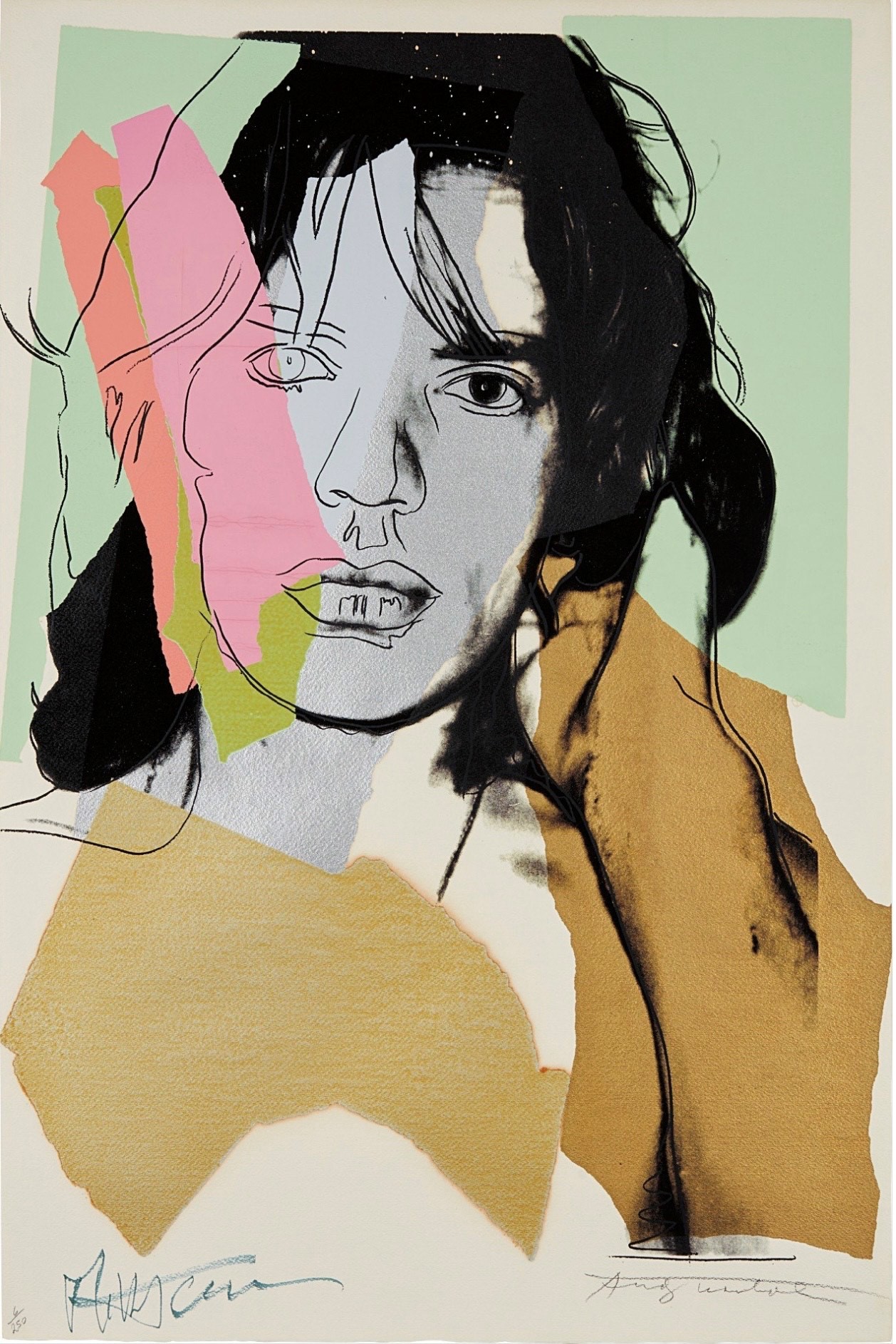
4. Mick Jagger (F&S II.141)
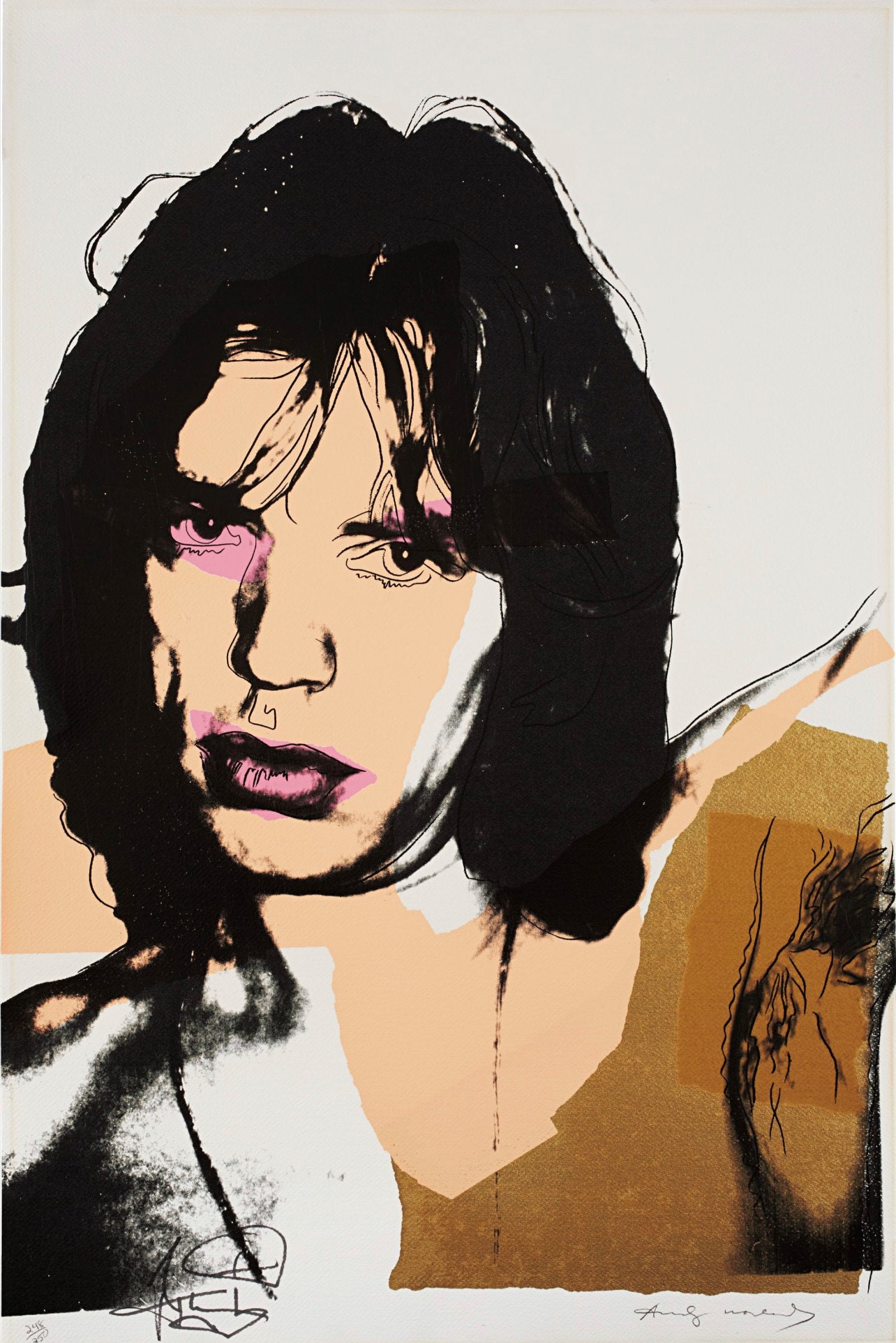
5. Mick Jagger (F&S II.142)
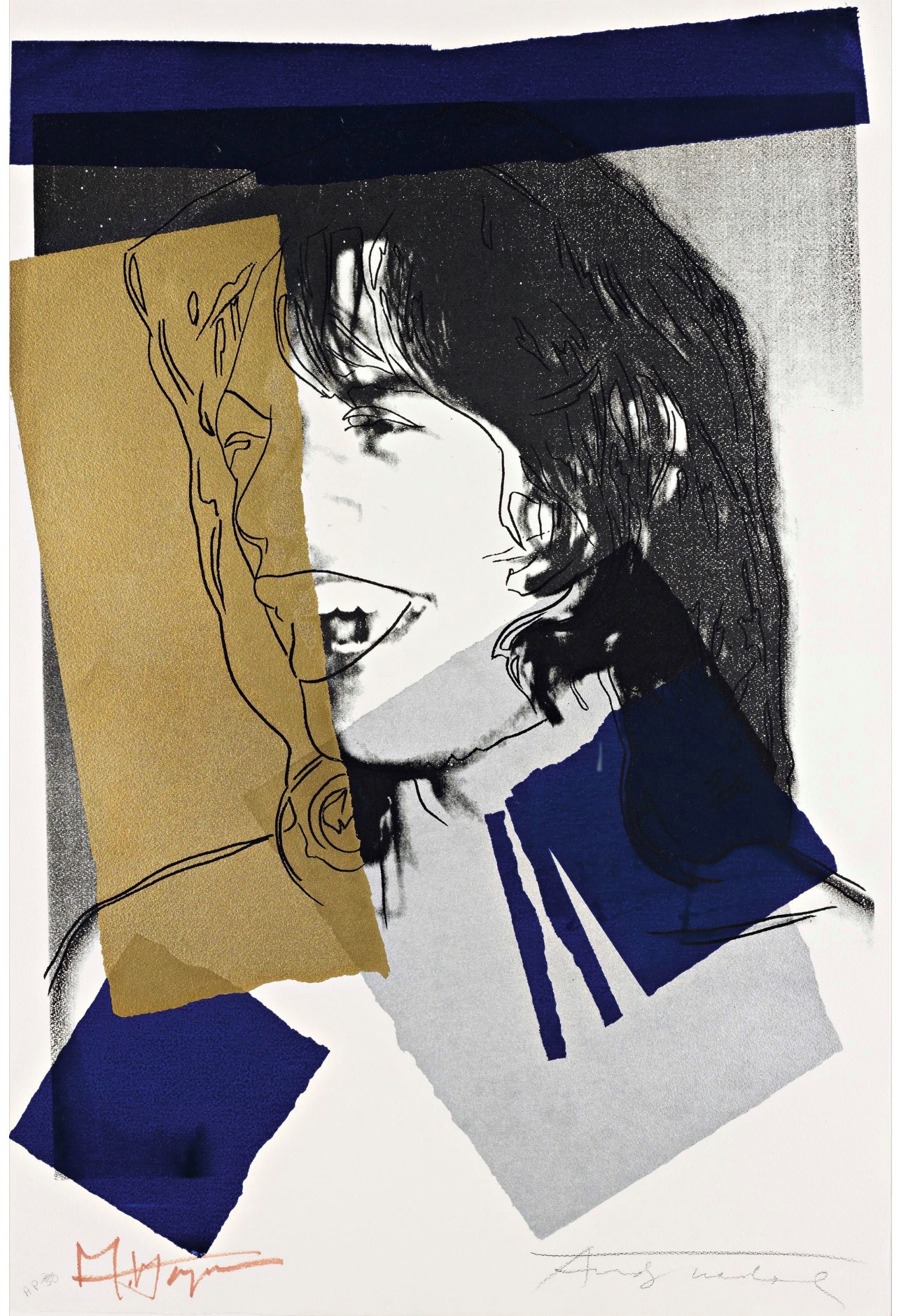
6. Mick Jagger (F&S II.143)
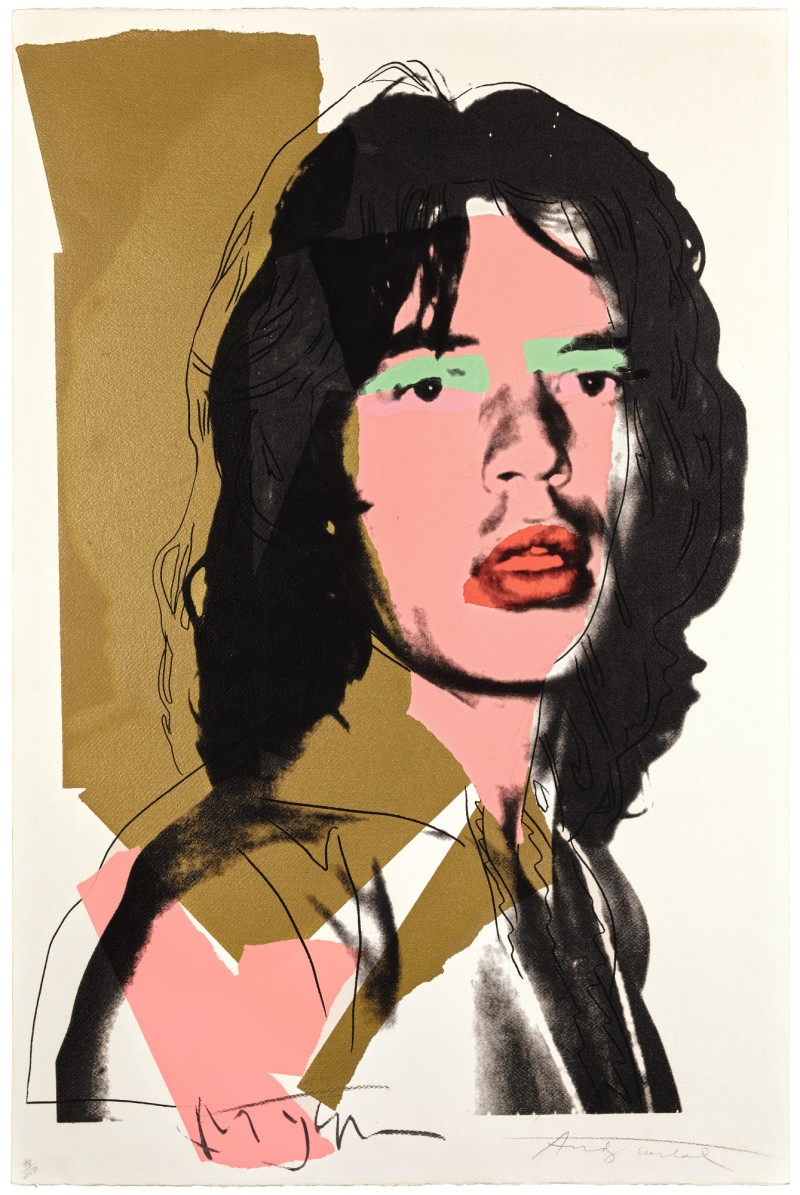
7. Mick Jagger (F&S II.144)
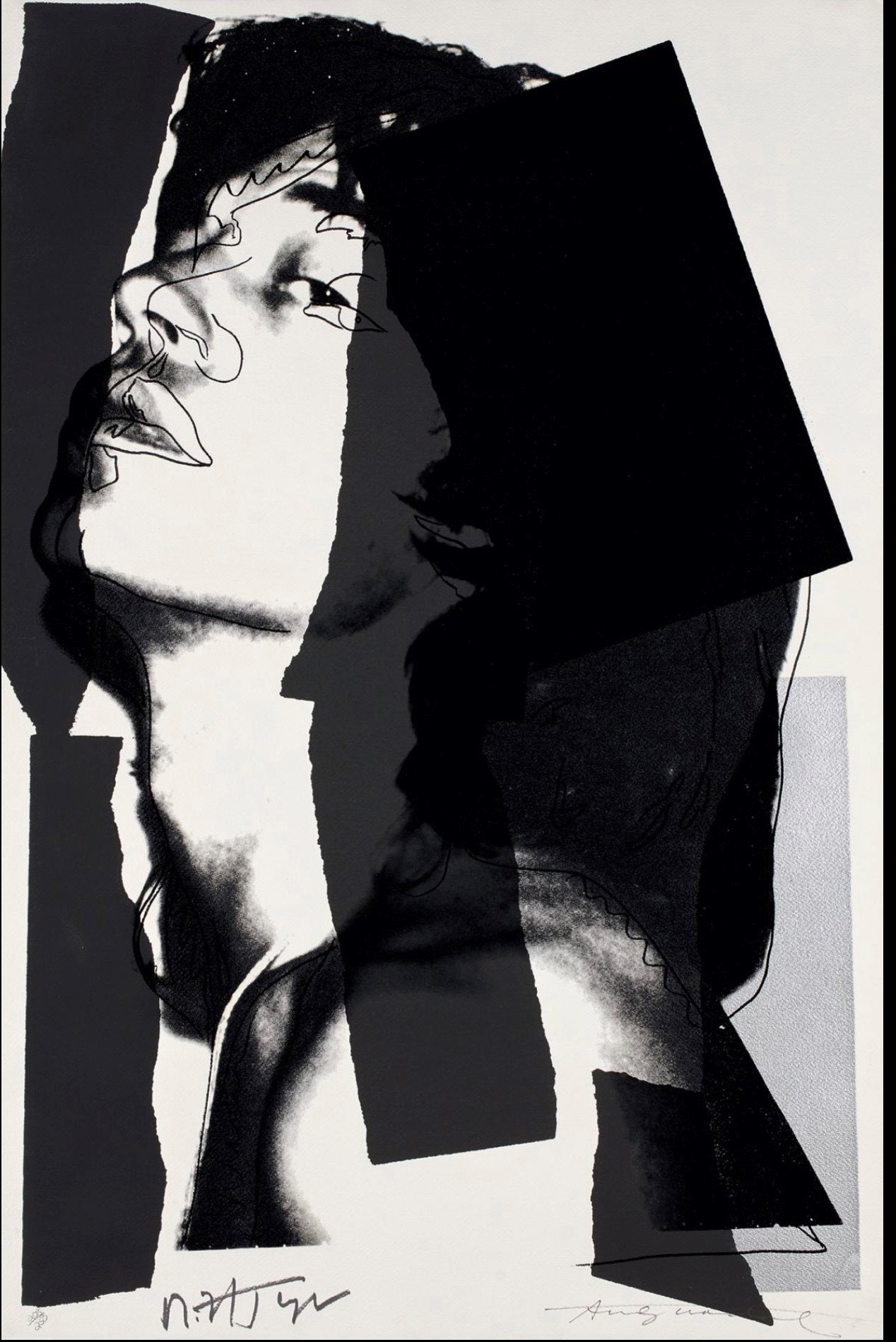
8. Mick Jagger (F&S II.145)
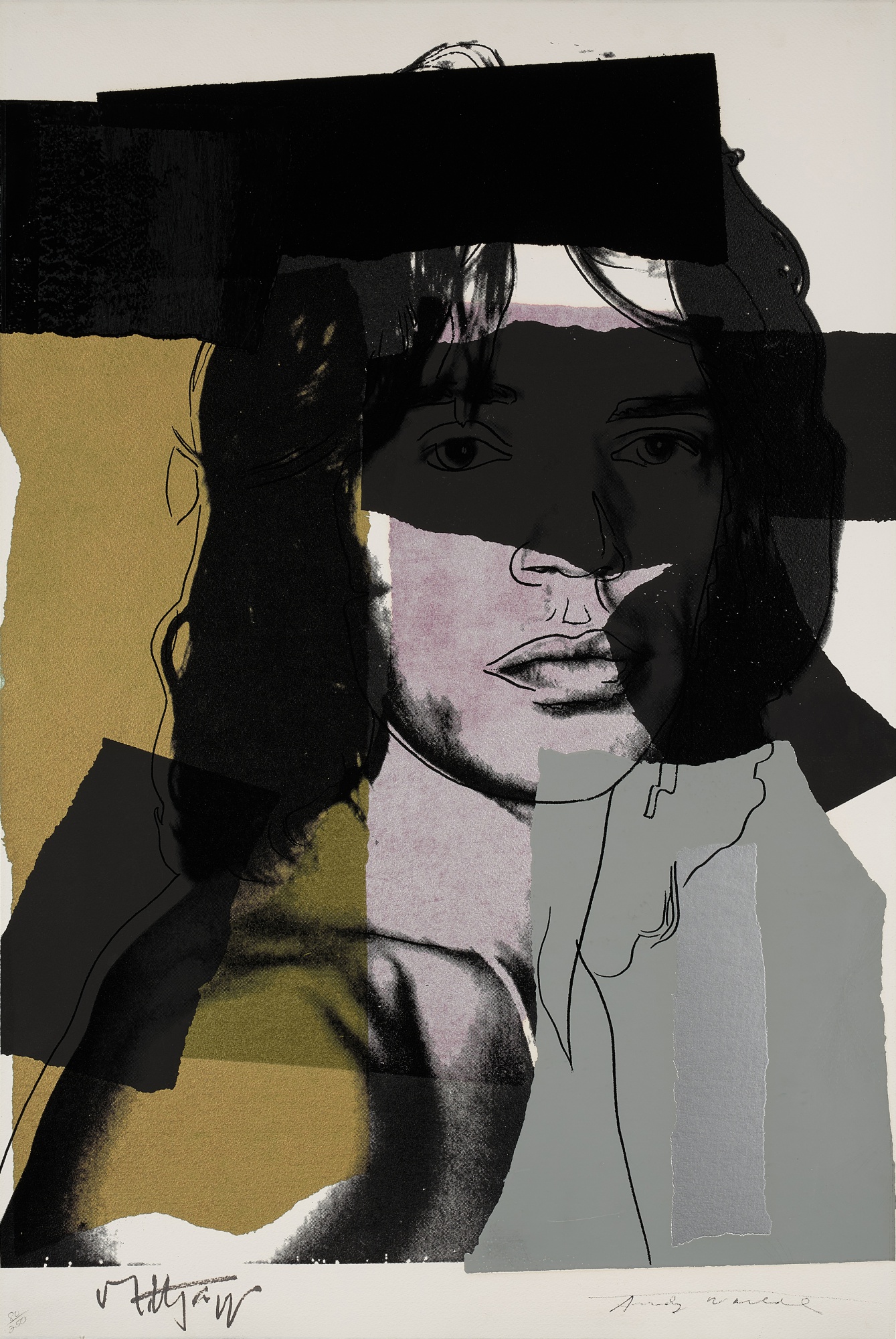
9. Mick Jagger (F&S II.146)
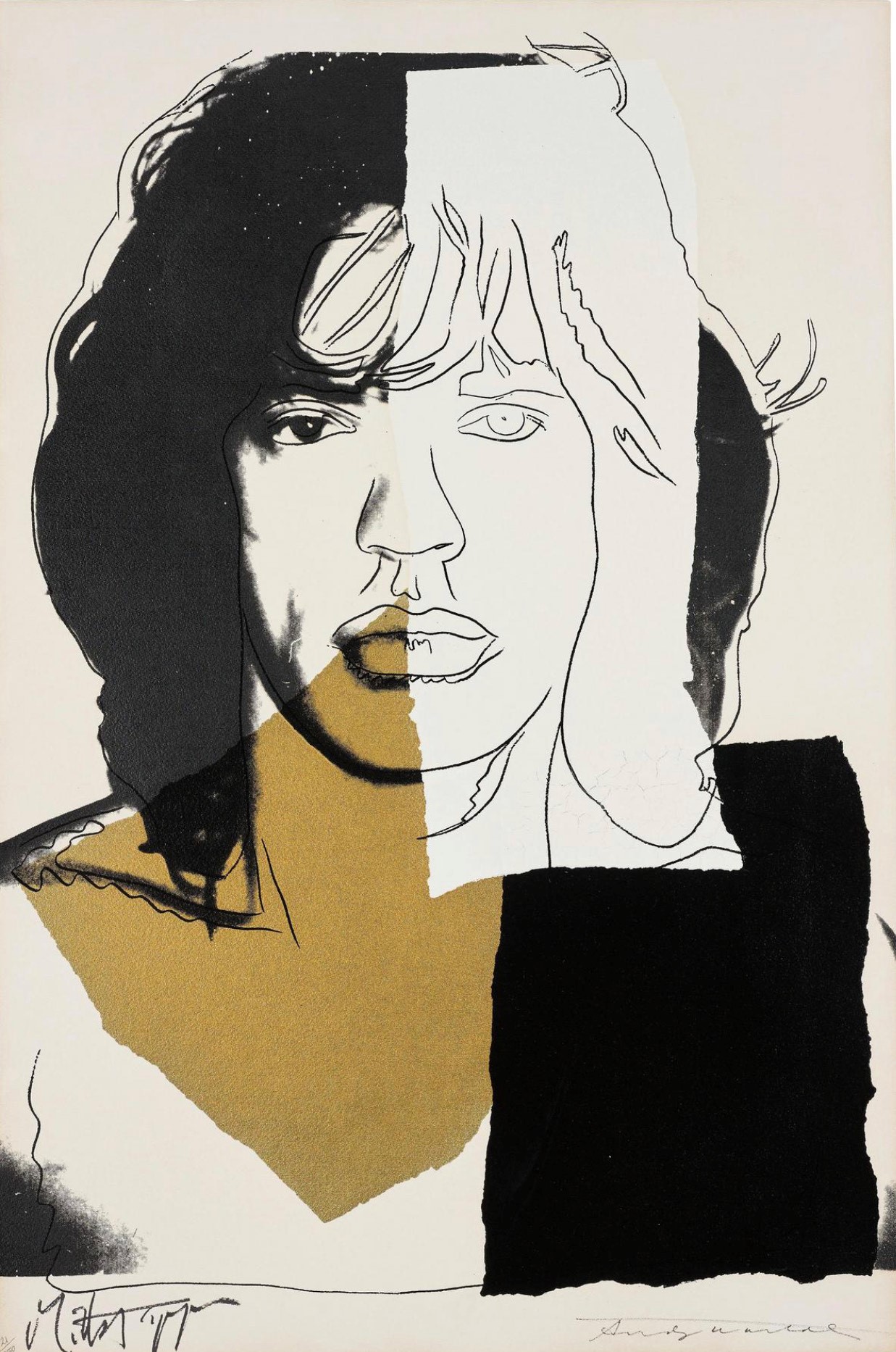
10. Mick Jagger (F&S II.147)
COW, 1966/1971/1976
The whimsical series came to fruition under the guidance of Pop art dealer Ivan Karp and printmaker Gerard Malanga. This series is one of the first edition print series Andy Warhol created. In 1966, he deliberately took a stand against traditional painting, boldly claiming painting was “dead” and that he was at the forefront of creating a new art form. He entered into printmaking by establishing his company, Factory Additions. The project commenced when Karp told Warhol “Why don’t you paint some cows, they’re so wonderfully pastoral and such a durable image in the history of the arts.” Printer Gerard Malanga subsequently chose the photograph which was then given to Warhol. The resulting screen-prints were of vividly colored images of cows against equally dramatic backgrounds. Interestingly, all the screen-prints were printed on wallpaper, lending them a decorative quality.
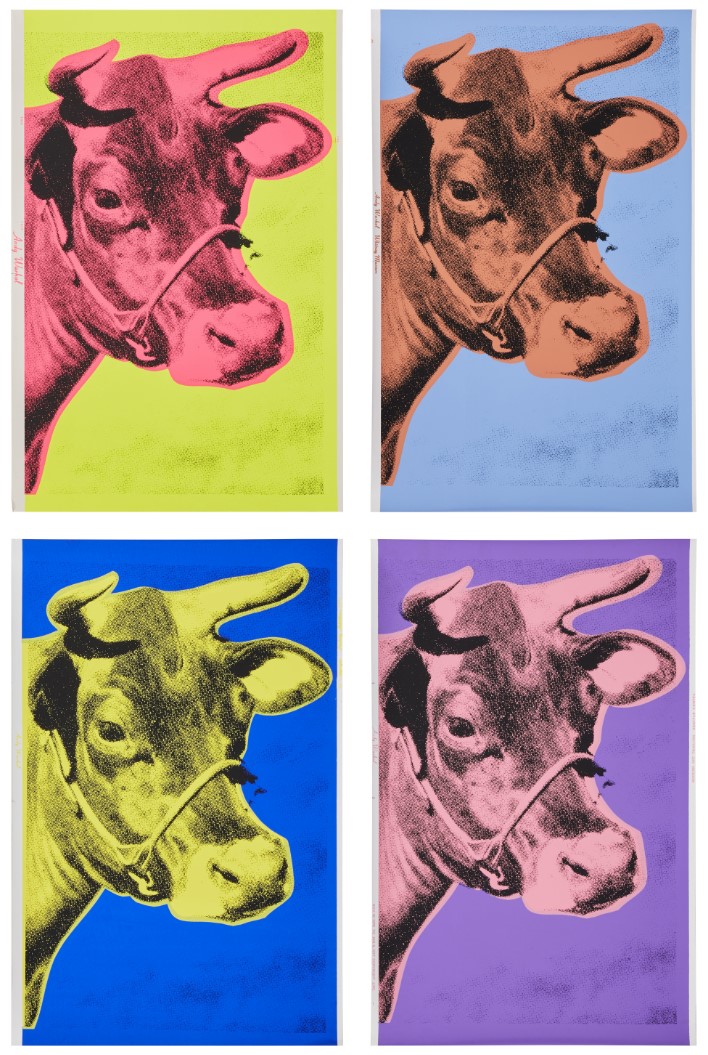
1. COW 1966 (F&S II.11)
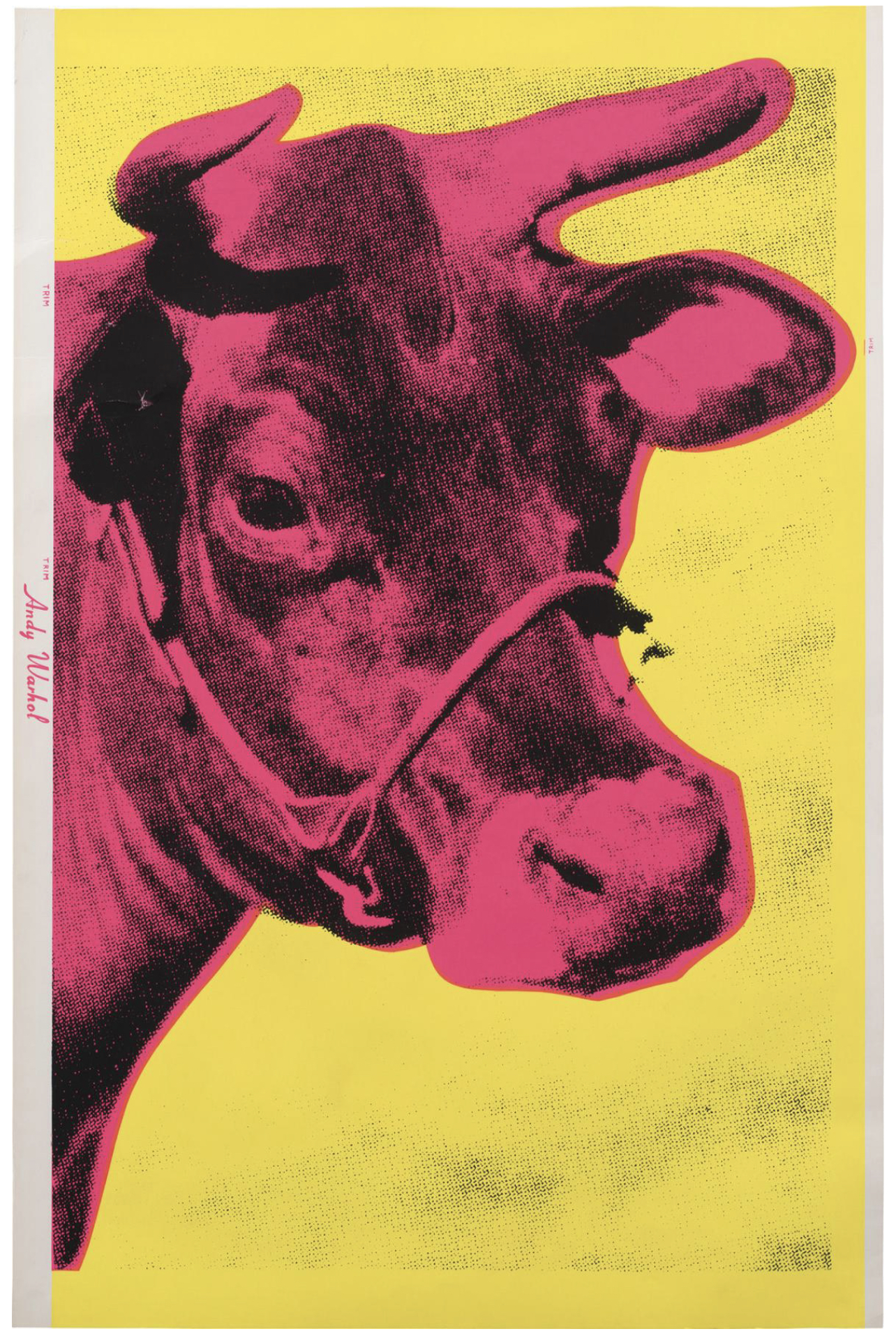
COW, 1966
Screen-print in colors on wallpaper
Sheet: 45 3/4 x 30 1/8 inches (116.2 x 76.5 cm)
Edition: unlimited edition (100 were stamp signed)
Literature: Feldman & Schellmann II.11
2. COW 1971 (F&S II.11A)
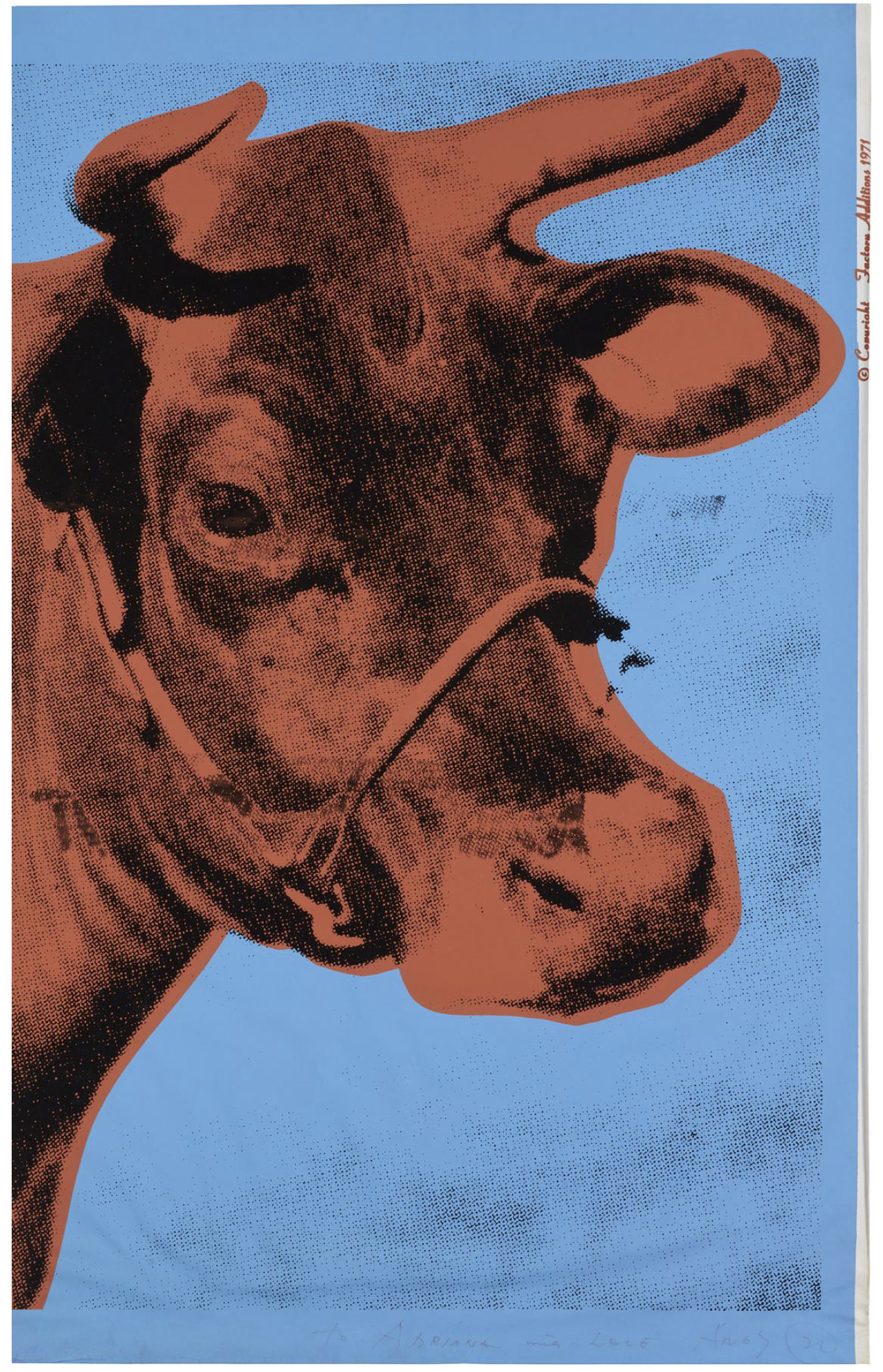
COW, 1971
Screen-print in colors on wallpaper
Sheet: 45 5/8 x 29 1/4 inches (116 x 74.3 cm)
Edition: unlimited with approximately 100 signed in felt pen in 1979
Literature: Feldman & Schellmann II.11A
3. COW 1971 (F&S II.12)
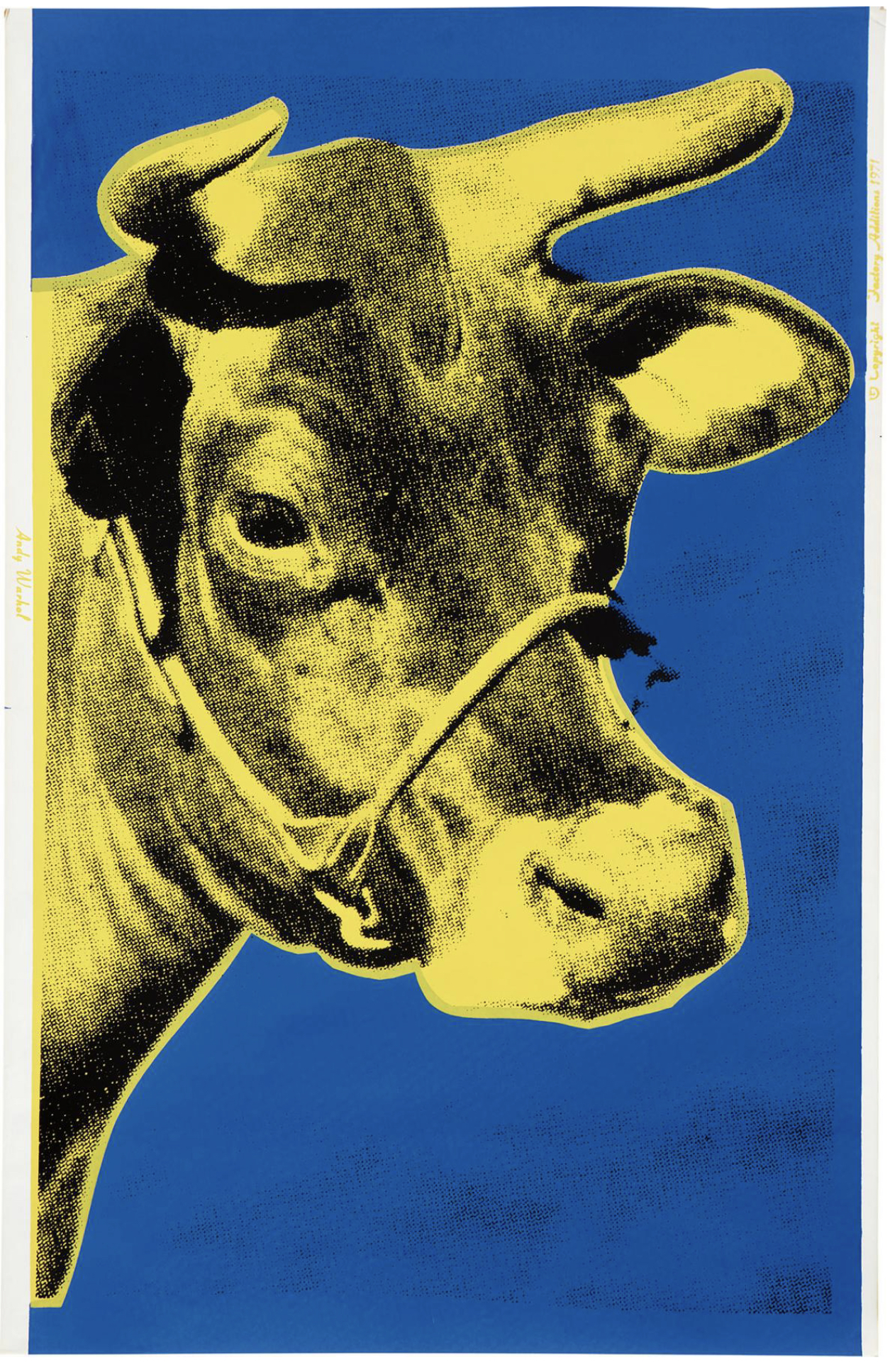 COW, 1971
Screen-print in colors on wallpaper
Sheet: 45 5/8 x 29 1/2 inches (115.9 x 74.9 cm)
Edition: unlimited with 150 signed, numbered and dated in ball-point pen on verso
Literature: Feldman & Schellmann II.12
4. COW 1976 (F&S II.12A)
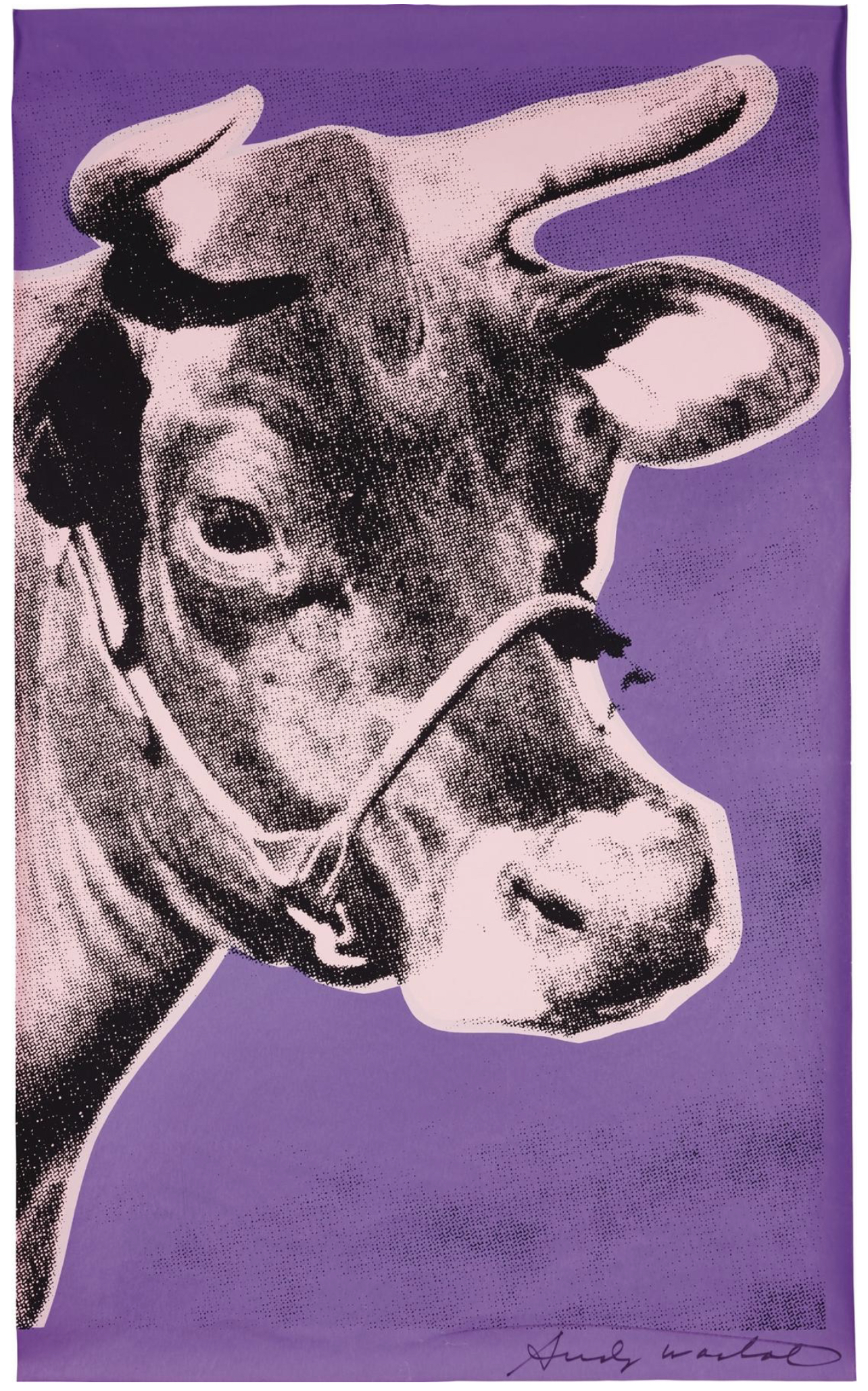
COW, 1976
Screen-print in colors on wallpaper
Sheet: 45 1/4 x 27 1/2 inches (114.9 x 69.9 cm)
Edition: Unlimited with approximately 100 signed in felt pen in 1979
Literature: Feldman & Schellmann II.12A
Skulls, 1976
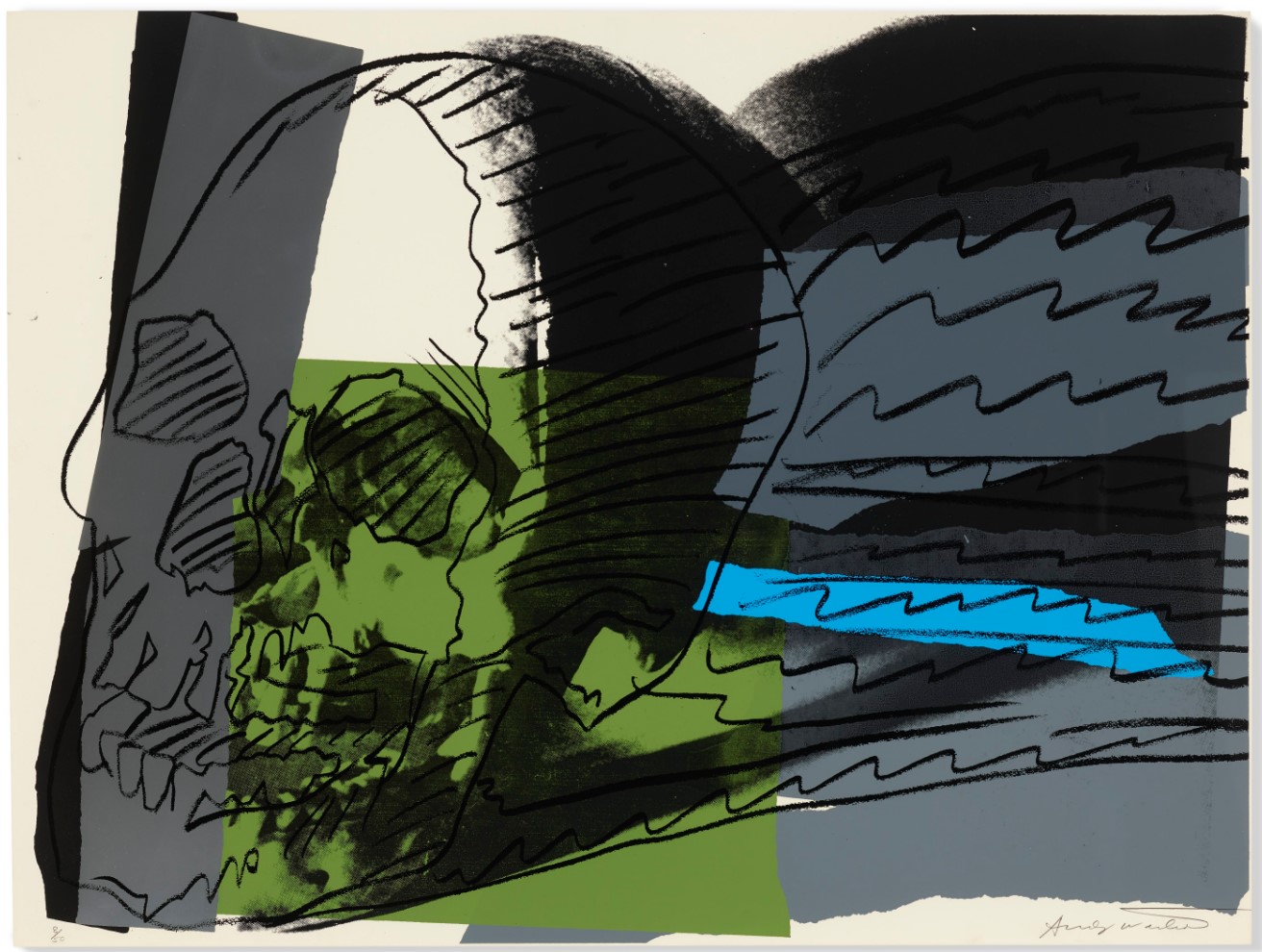
Based on a photograph taken by Warhol’s assistant Robbie Cutrone, the Skulls prints were produced by layering bright blocks of color over a hand-drawn sketch of a human skull. Those prints are characterized by sketchy, organic lines and blocks of flat color to explore tensions between realism and abstraction. Warhol takes a playful approach to the art historical genre of still life painting, the subject of the skull making specific reference to ‘vanitas’ still lifes. Vanitas paintings in history were a reminder of human mortality and the fragility of life, and this deathly subject matter marks a shift in Warhol’s work, often linked to Warhol’s near-fatal shooting in 1968.
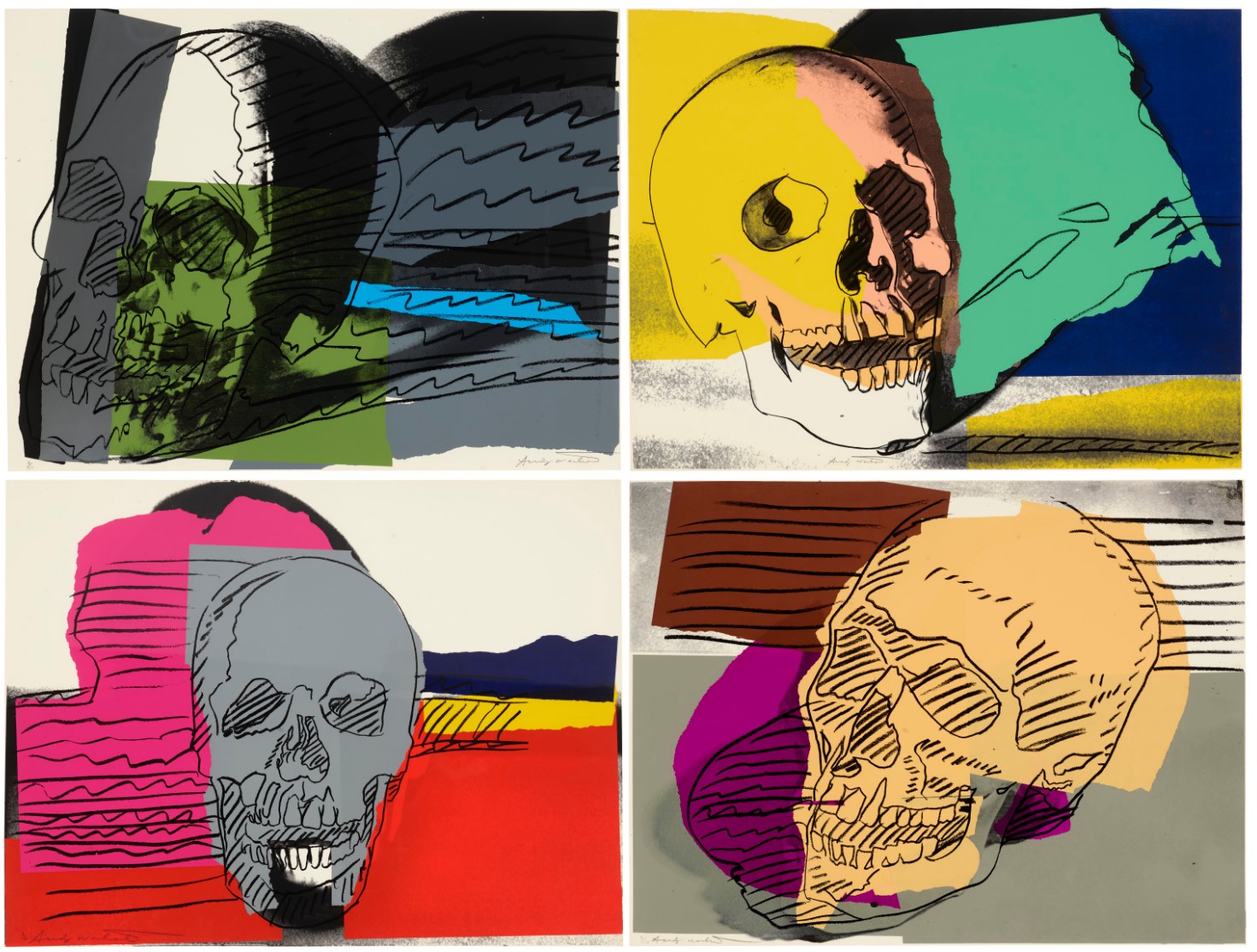
ANDY WARHOL
Skulls, 1976
Portfolio of 4 screen-prints in colors on Strathmore Bristol
Sheet: 30×40 inches (76.2 x 101.6 cm)
Edition: 50 + 10 AP
Literature: Feldman & Schellmann II.157-160
1. Skulls (F&S II.157)
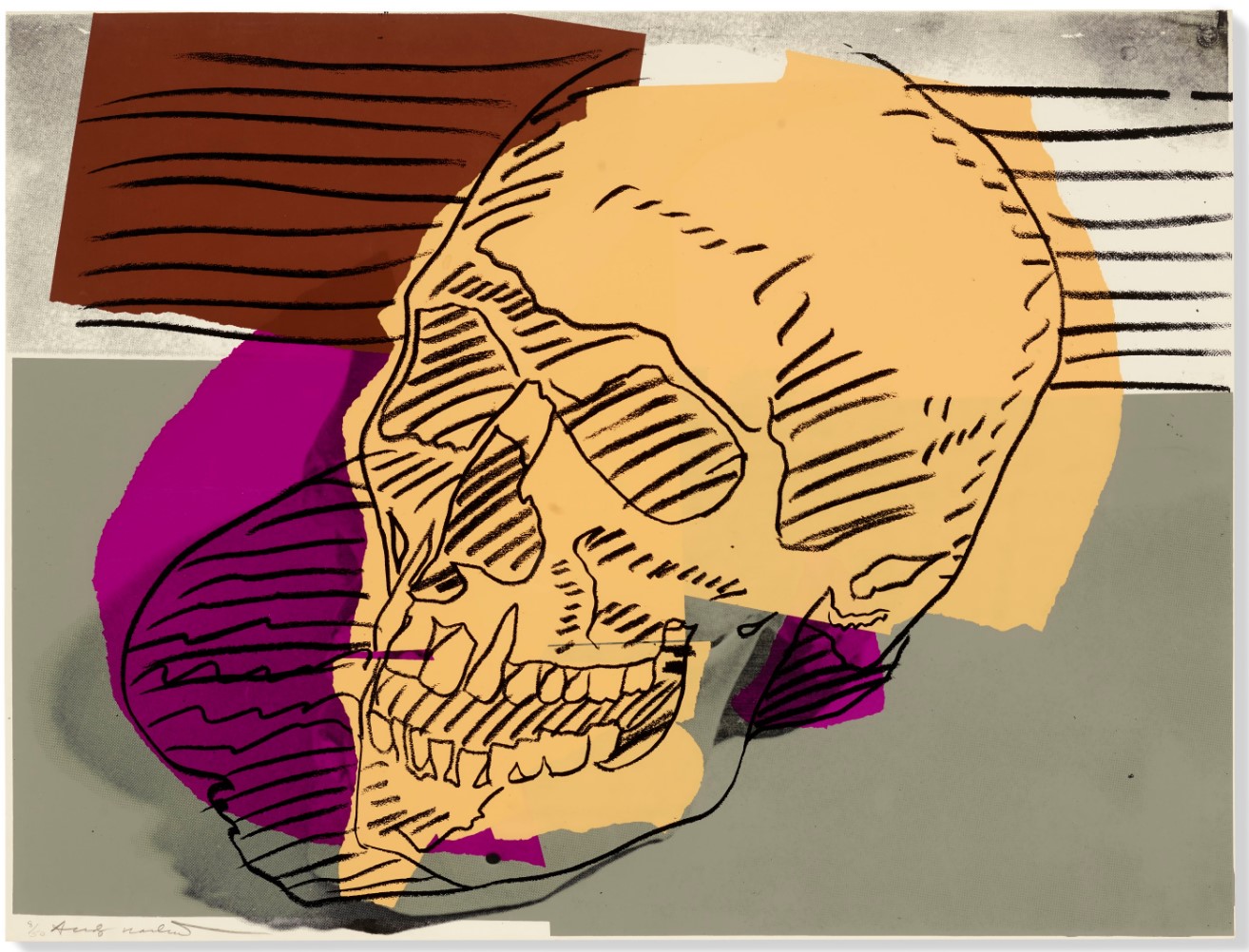
2. Skulls (F&S II.158)
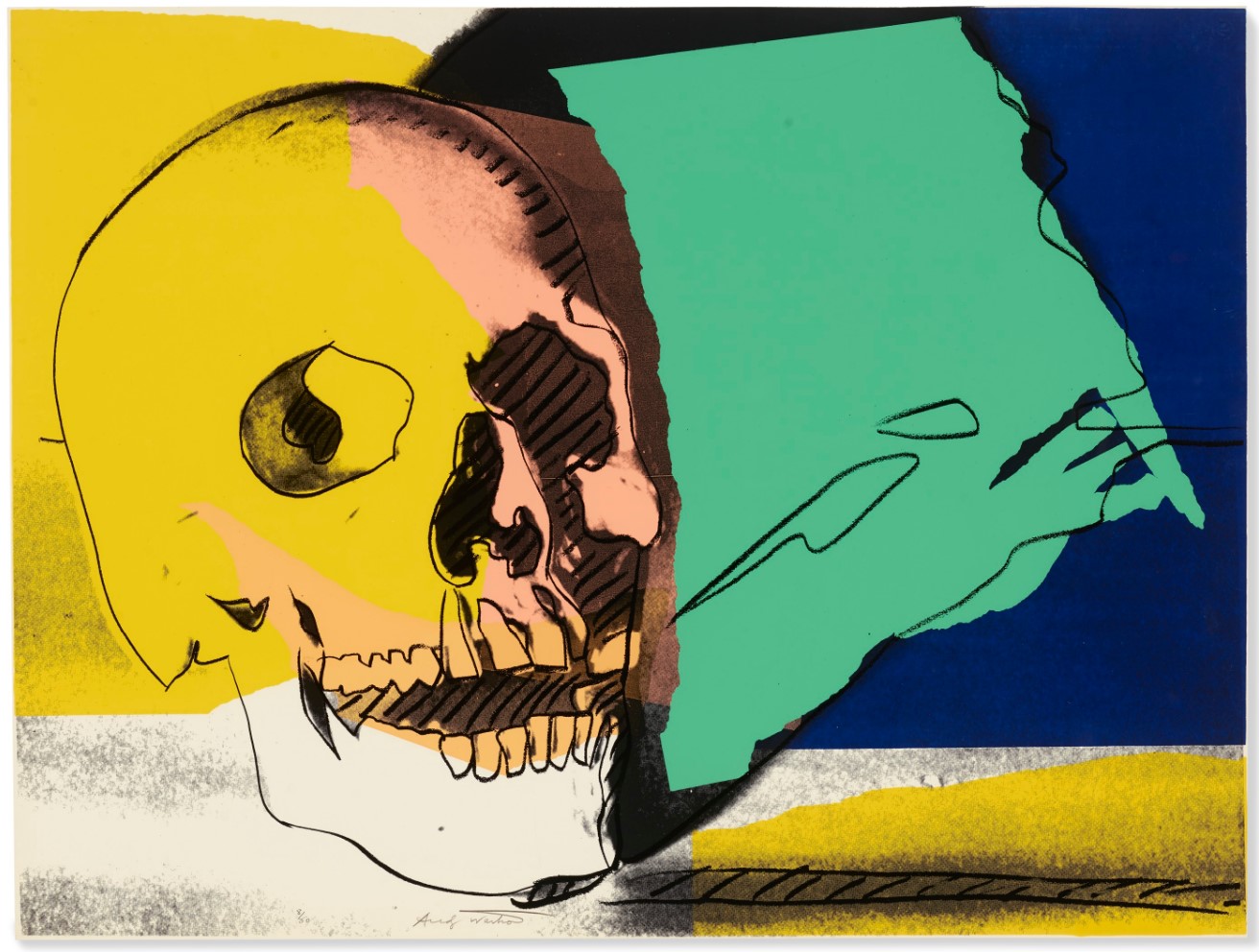
3. Skulls (F&S II.159)
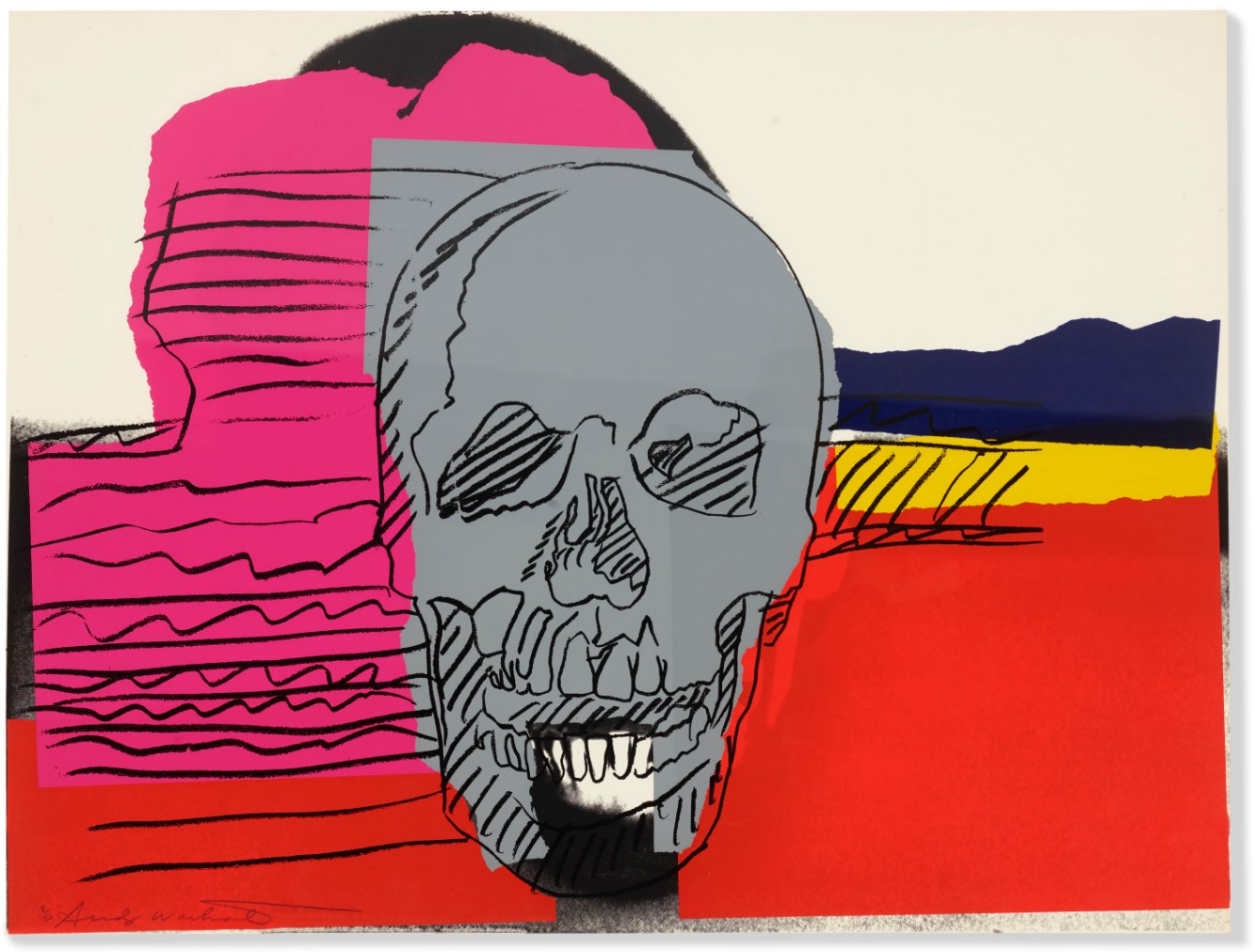
4. Skulls (F&S II.160)
Hammer and Sickle, 1977
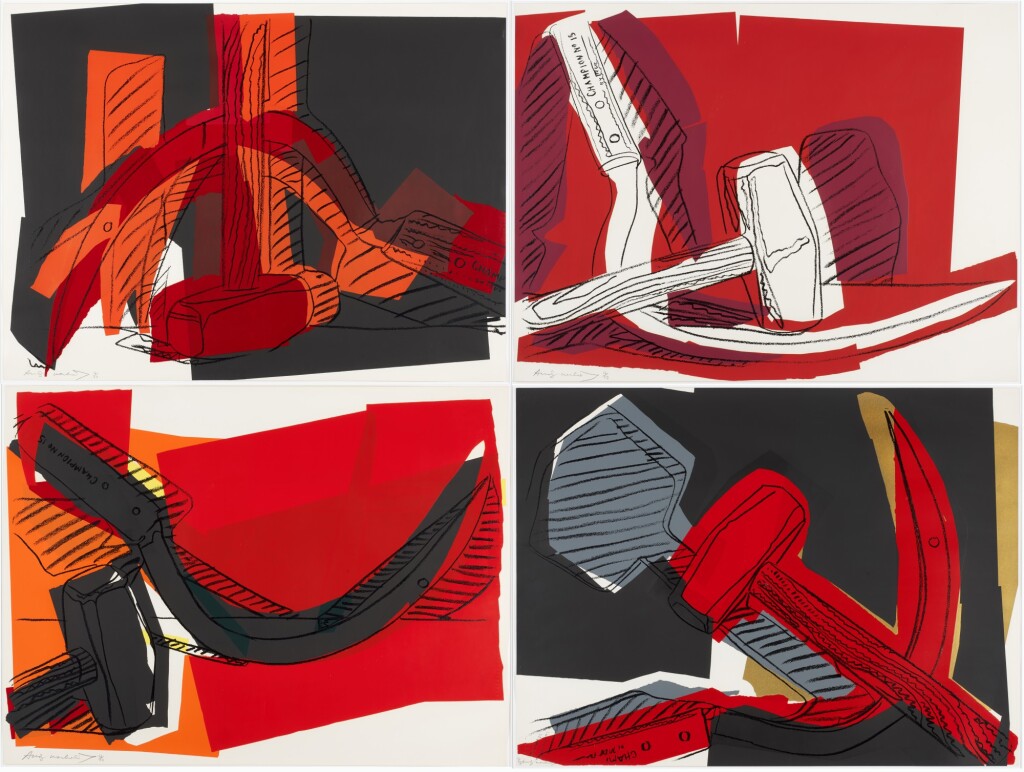
ANDY WARHOL
Hammer and Sickle, 1977
Portfolio of four screen-prints in colors on Strathmore Bristol paper
Sheet: 30×40 inches (76.2 x 101.6 cm)
Edition: 50 + 10 AP + 2 PP + 1 HC
Literature: Feldman & Schellmann II.161-164
1. Plate I (F&S II.161)
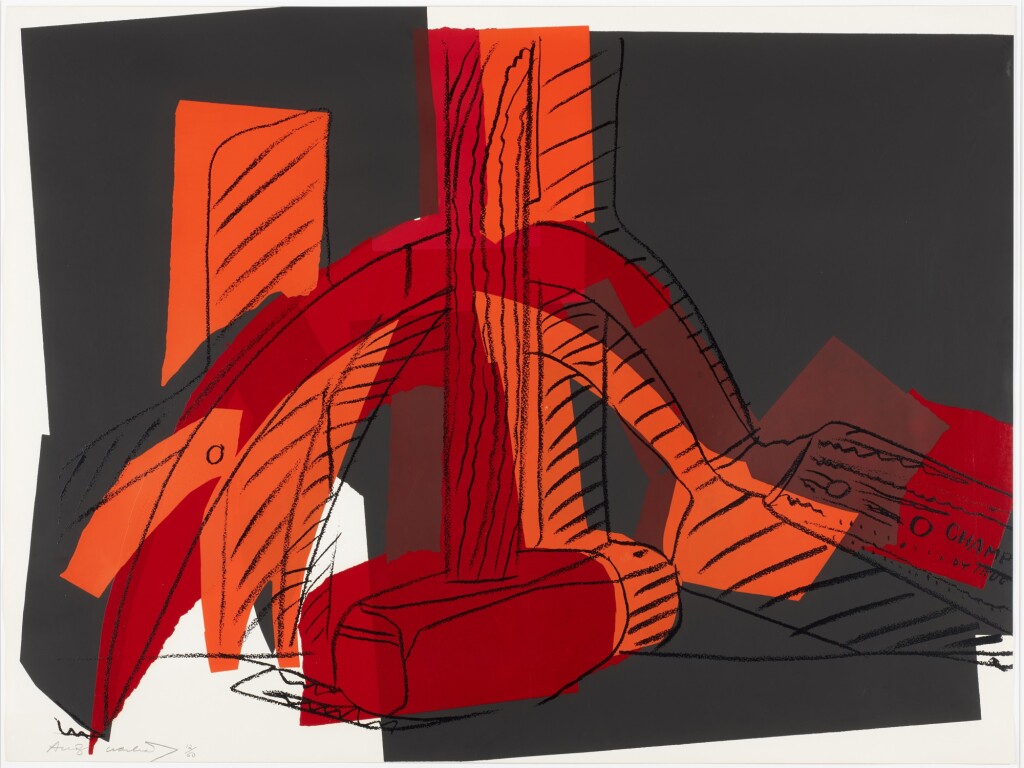
2. Plate II (F&S II.162)
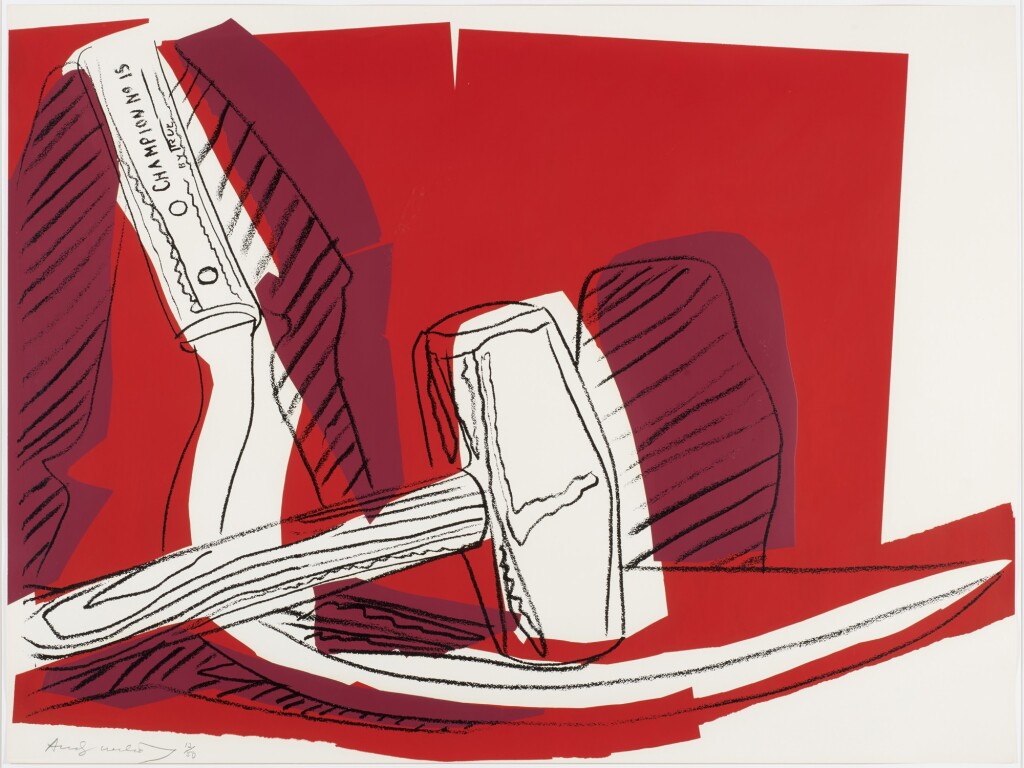
3. Plate III (F&S II.163)
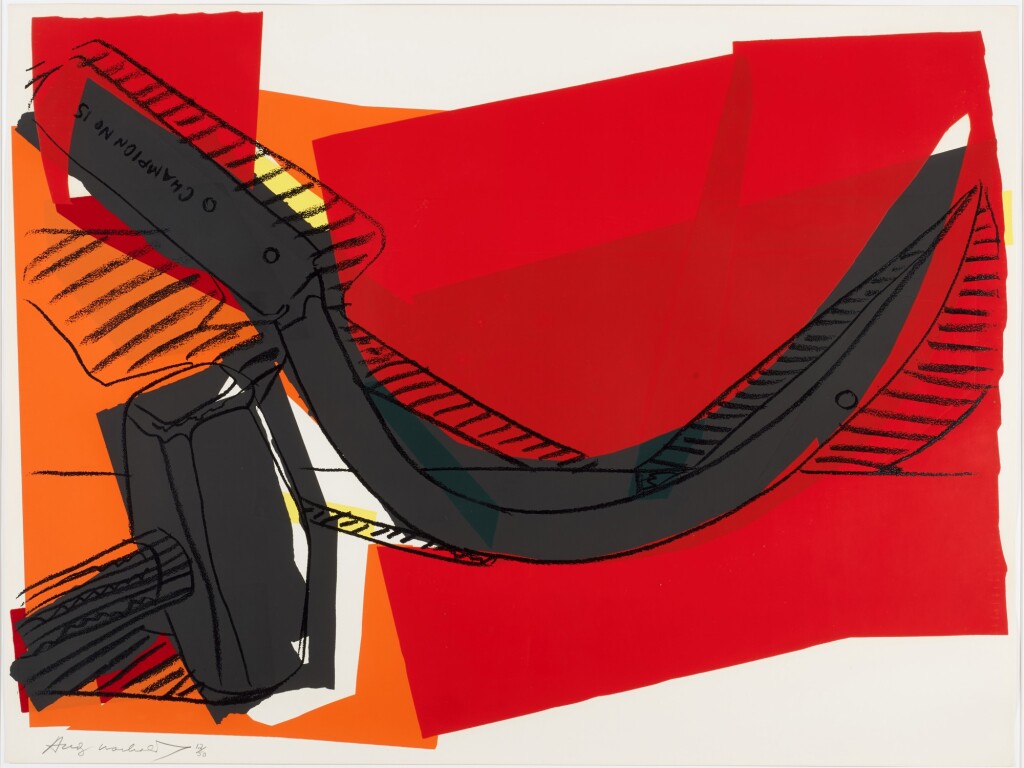
4. Plate IV (F&S II.164)
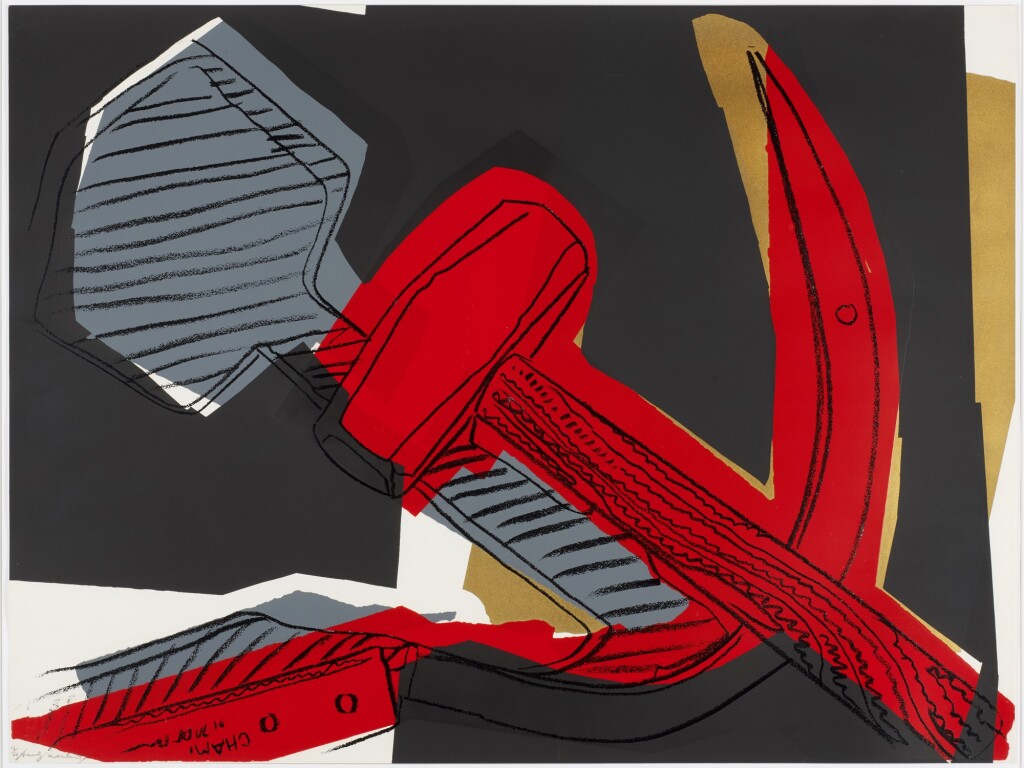
Hammer and Sickle (Special Edition)
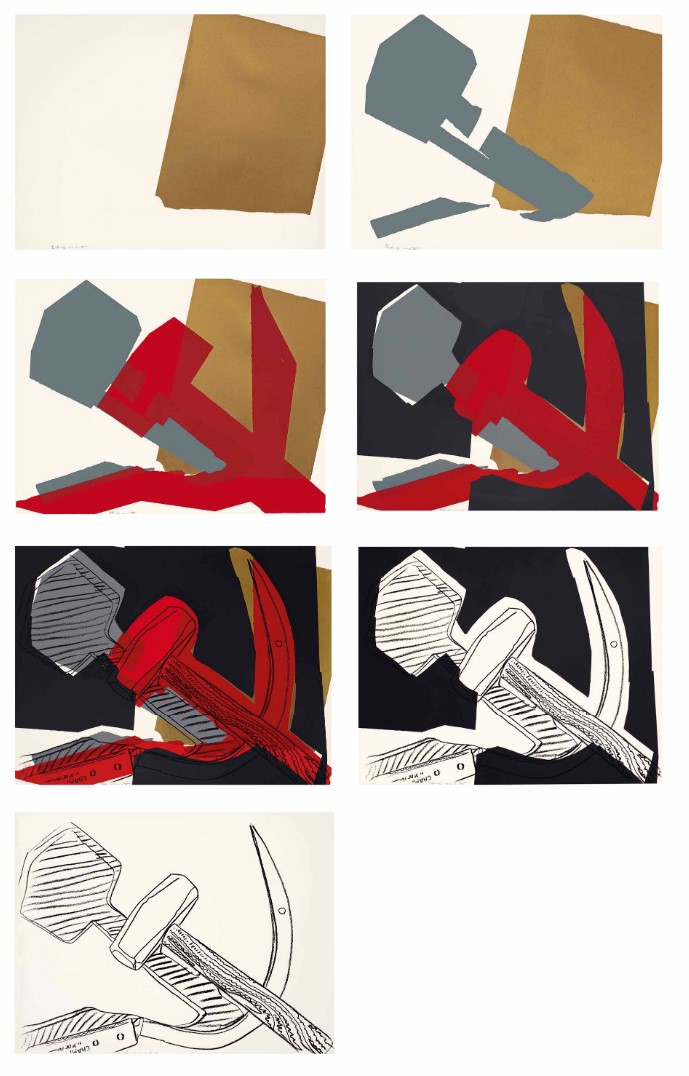
Hammer & Sickle (Special Edition), 1977
The complete set of seven screen-prints in colors on Strathmore Bristol paper
Sheet: 30×40 inches (76.2 x 101.6 cm)
Edition: 10
Literature: Feldman & Schellmann II.165-171
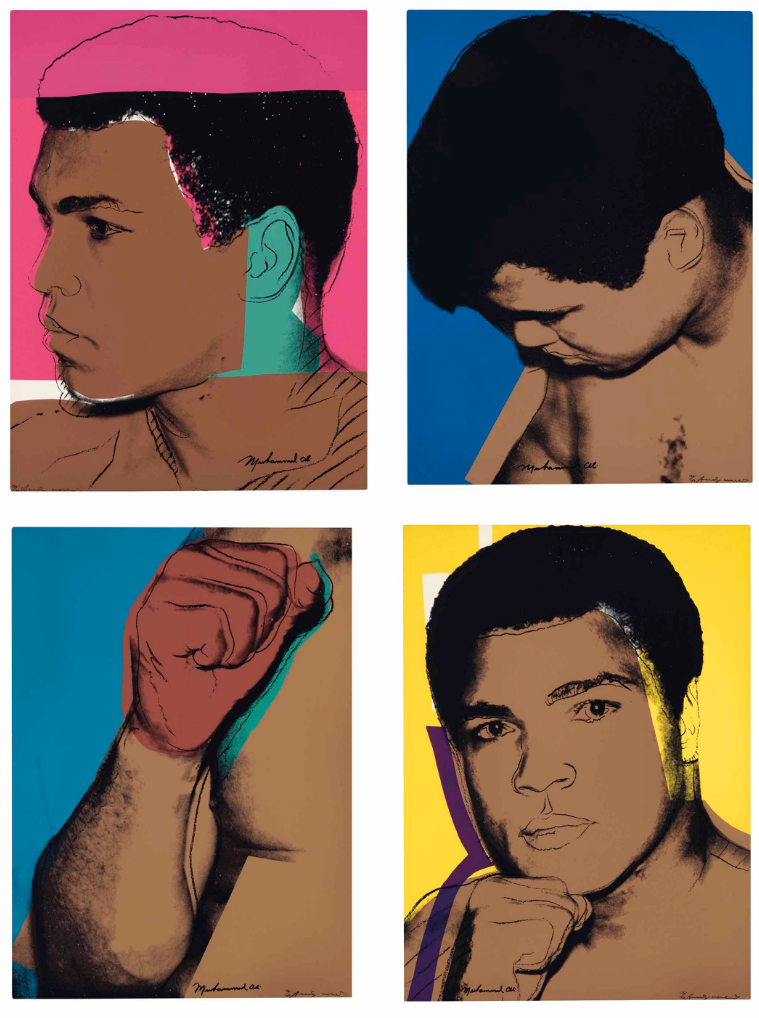
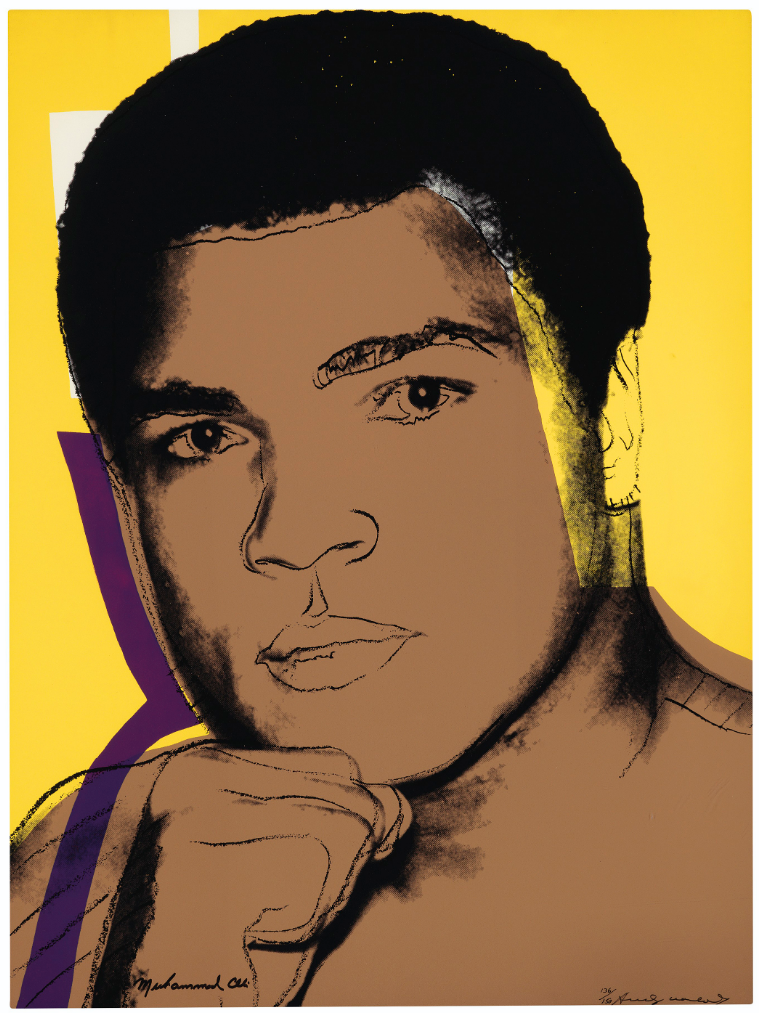
Muhammad Ali, 1978
Andy Warhol photographed Muhammad Ali for the first time as part of his 1977 Athletes series. This group of works featured other sports stars of the era, such as the golfer Jack Nicklaus, Brazilian soccer hero Pele and basketball legend Kareem Abdul-Jabbar, and was initiated by the West Coast art collector and sports fanatic Richard Weisman. At the time of their first encounter, Muhammad Ali was — for the third time — the World Boxing Association Heavyweight Champion, and Andy Warhol was approaching the peak of his celebrity. They could not have been more different.
ANDY WARHOL
Muhammad Ali, 1978
The complete set of four screen-prints in colors on Strathmore Bristol paper
Sheet: 40×30 inches (101.6 x 76.2 cm)
Edition: 150 + 10 AP
Literature: Feldman & Schellmann II.179-182
1. Muhammad Ali (F&S II.179)
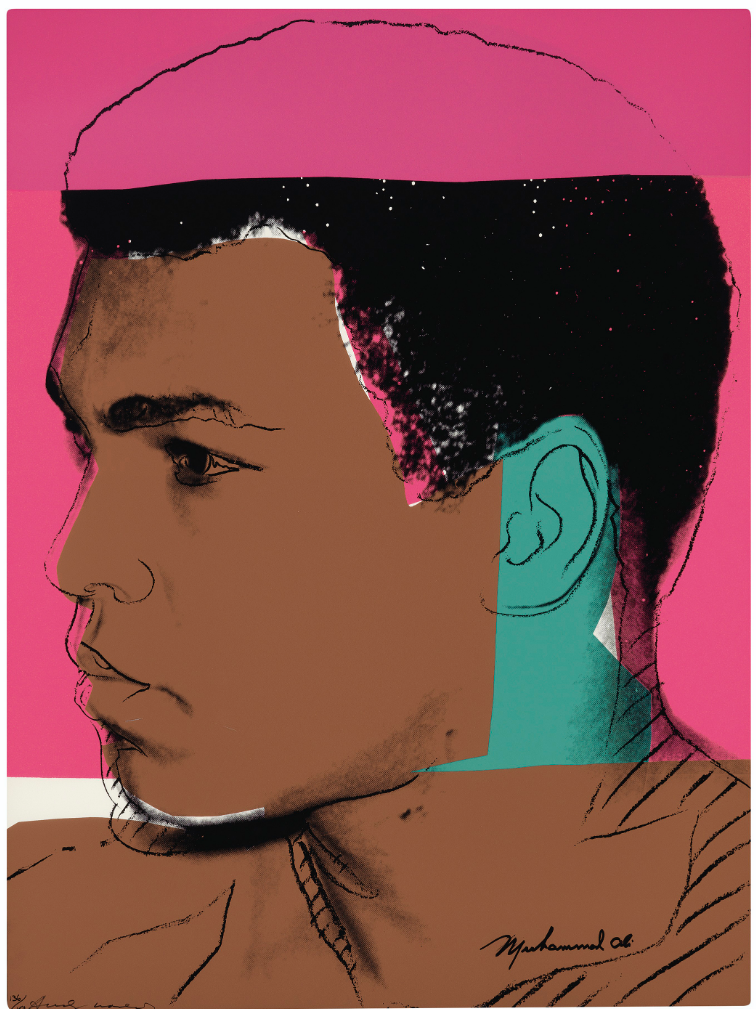
2. Muhammad Ali (F&S II.180)
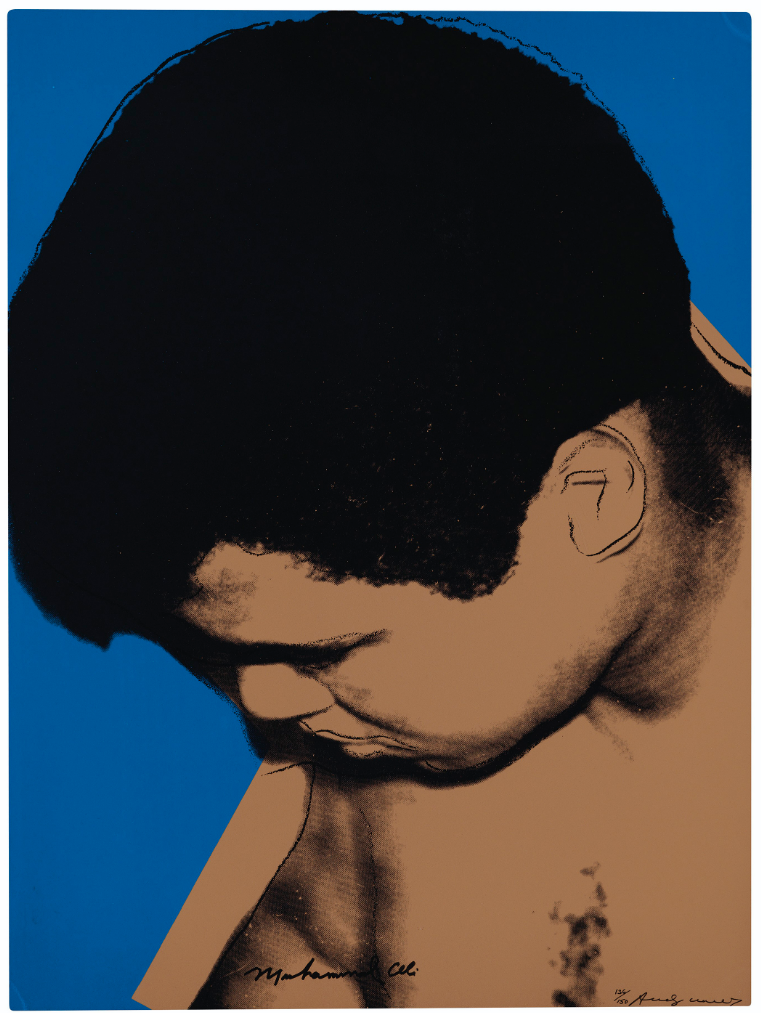
3. Muhammad Ali (F&S II.181)

4. Muhammad Ali (F&S II.182)
Grapes, 1979
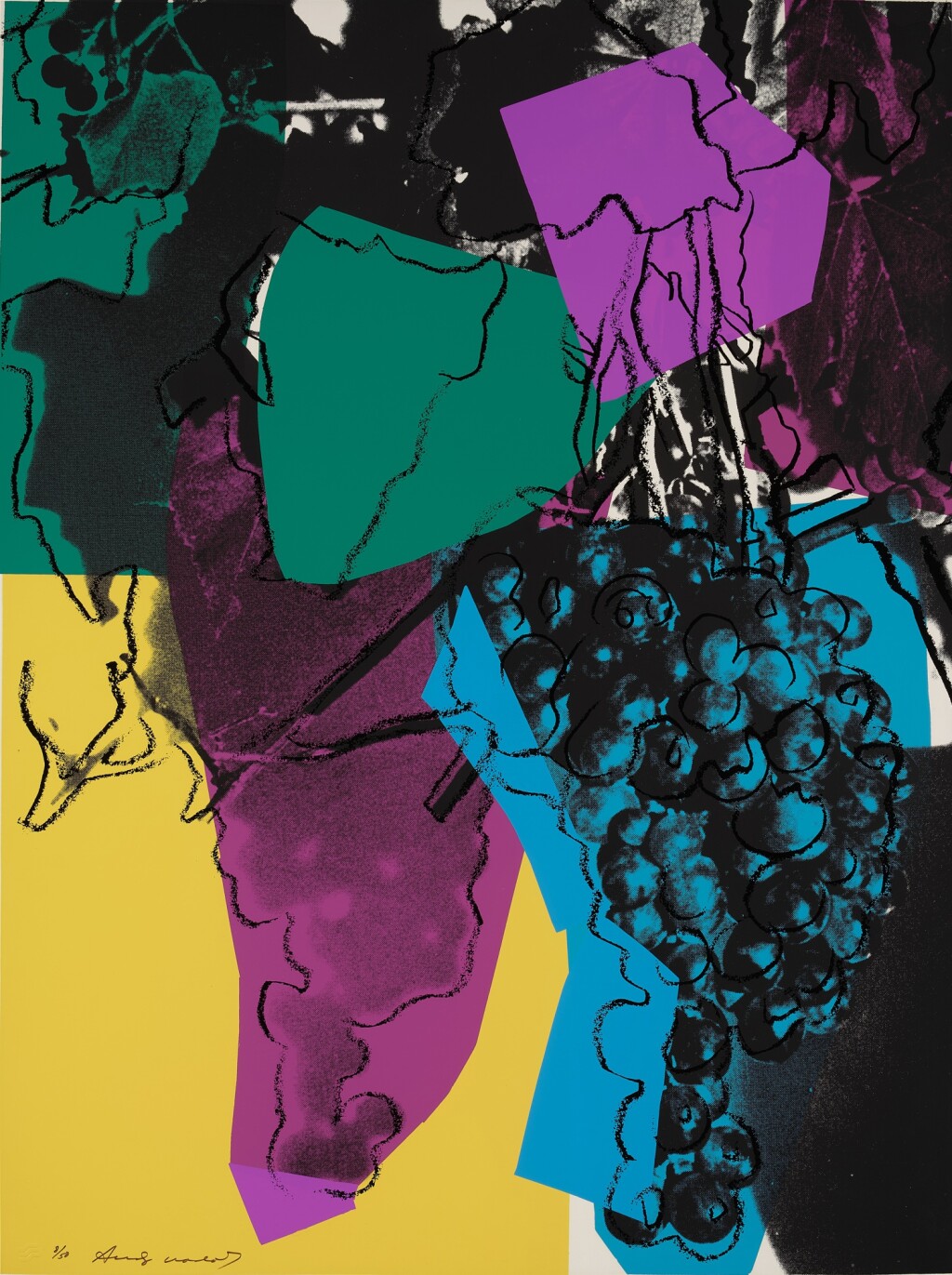
In 1979, Andy Warhol created a series of prints which showcased repeated imagery of grapes. Unknown to many, each of the prints also shows a different grape variety, although they are uniformly referred to as “Grapes”. With this series, Warhol brings a new approach to the traditional genre of still life. In the past, artists strove to be as realistic as possible in still life portraits. However, Warhol deliberately rejoices in the modern perspective and creates still-life portraits which tend towards abstraction. This attention on still-life also draws upon Warhol’s past experience as a draughtsman. A separate edition with diamond dust was also created. This special edition was the first set of prints which Warhol embellished with diamond dust. He later popularized this method in the 1980’s.
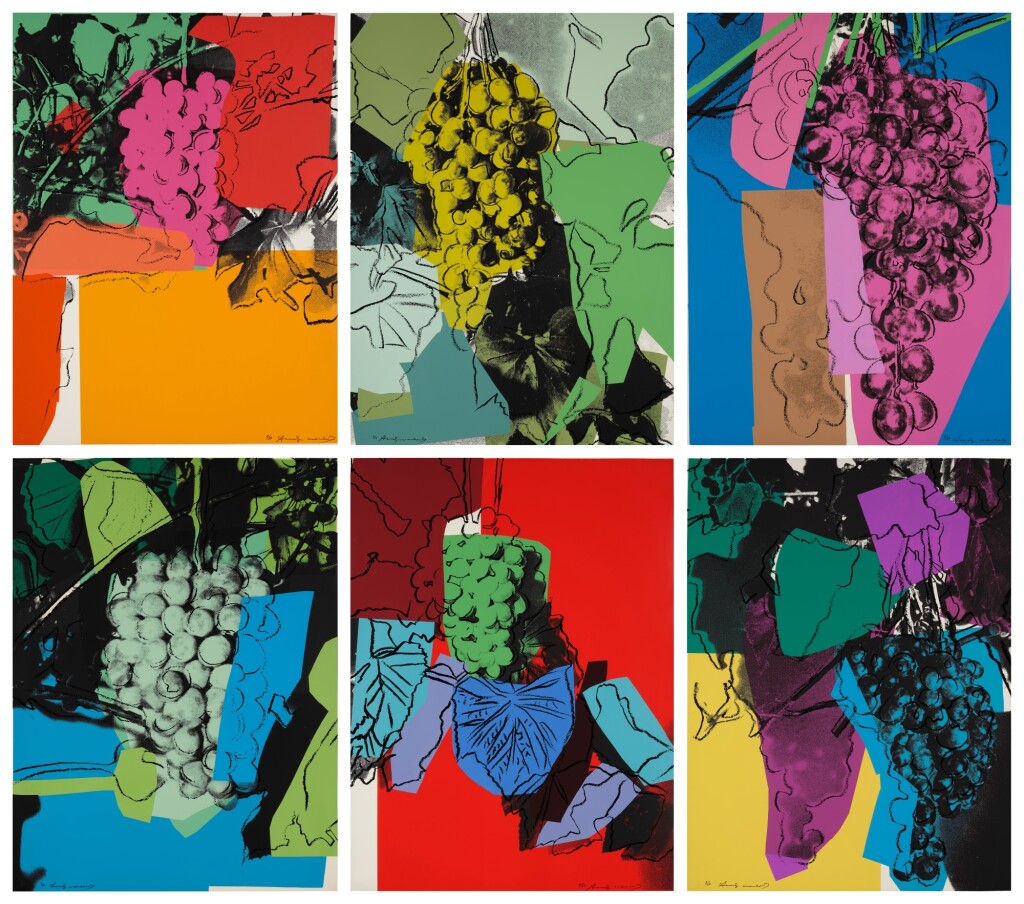
ANDY WARHOL
Grapes, 1979
The complete set of six screen-prints in colors on Strathmore Bristol paper
Sheet: 40×30 inches (101.6 x 76.4 cm)
Edition: 50 + 10 AP
Literature: Feldman & Schellmann II.190-195
1. Grapes I (F&S II.190)
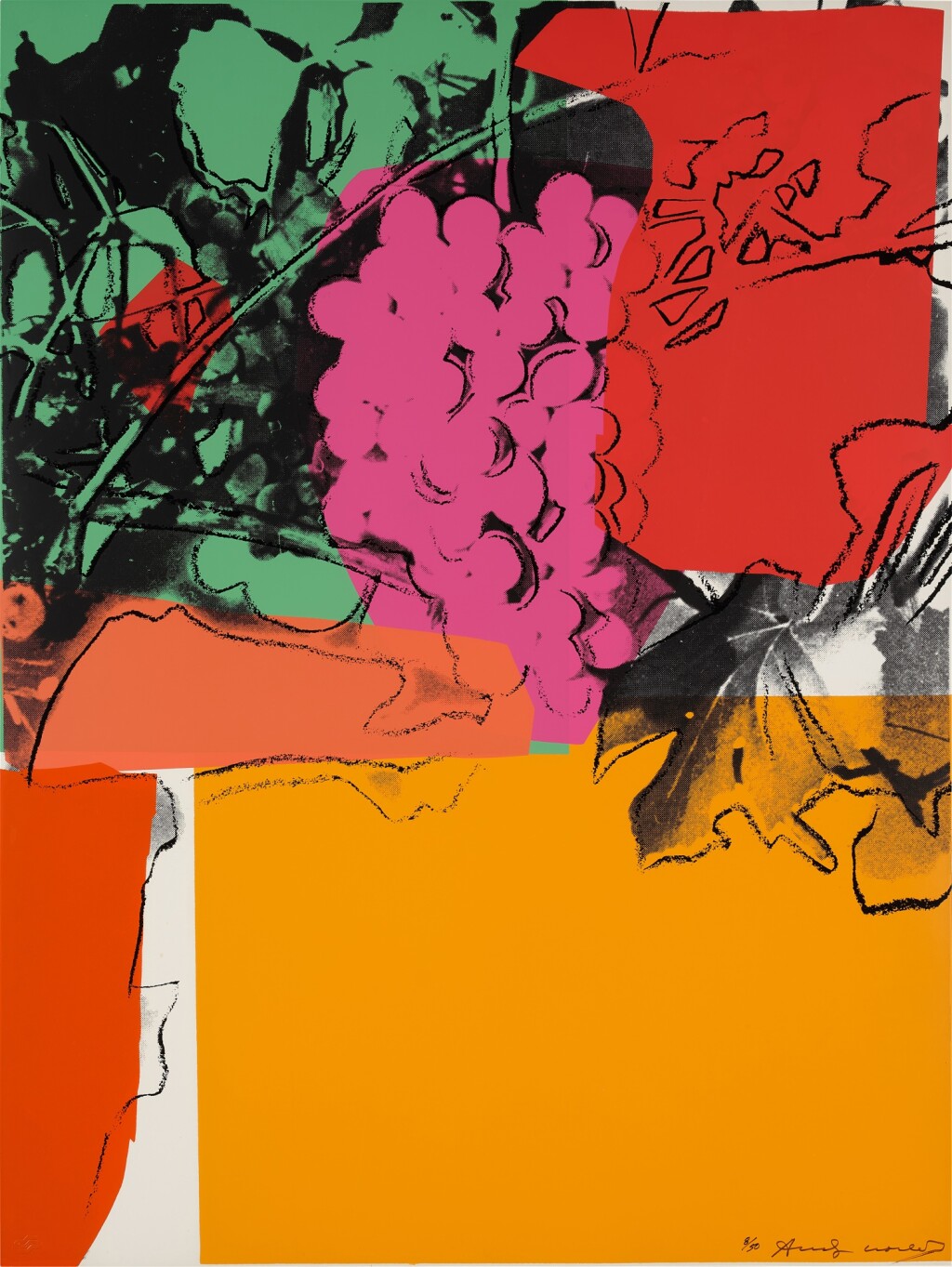
2. Grapes II (F&S II.191)
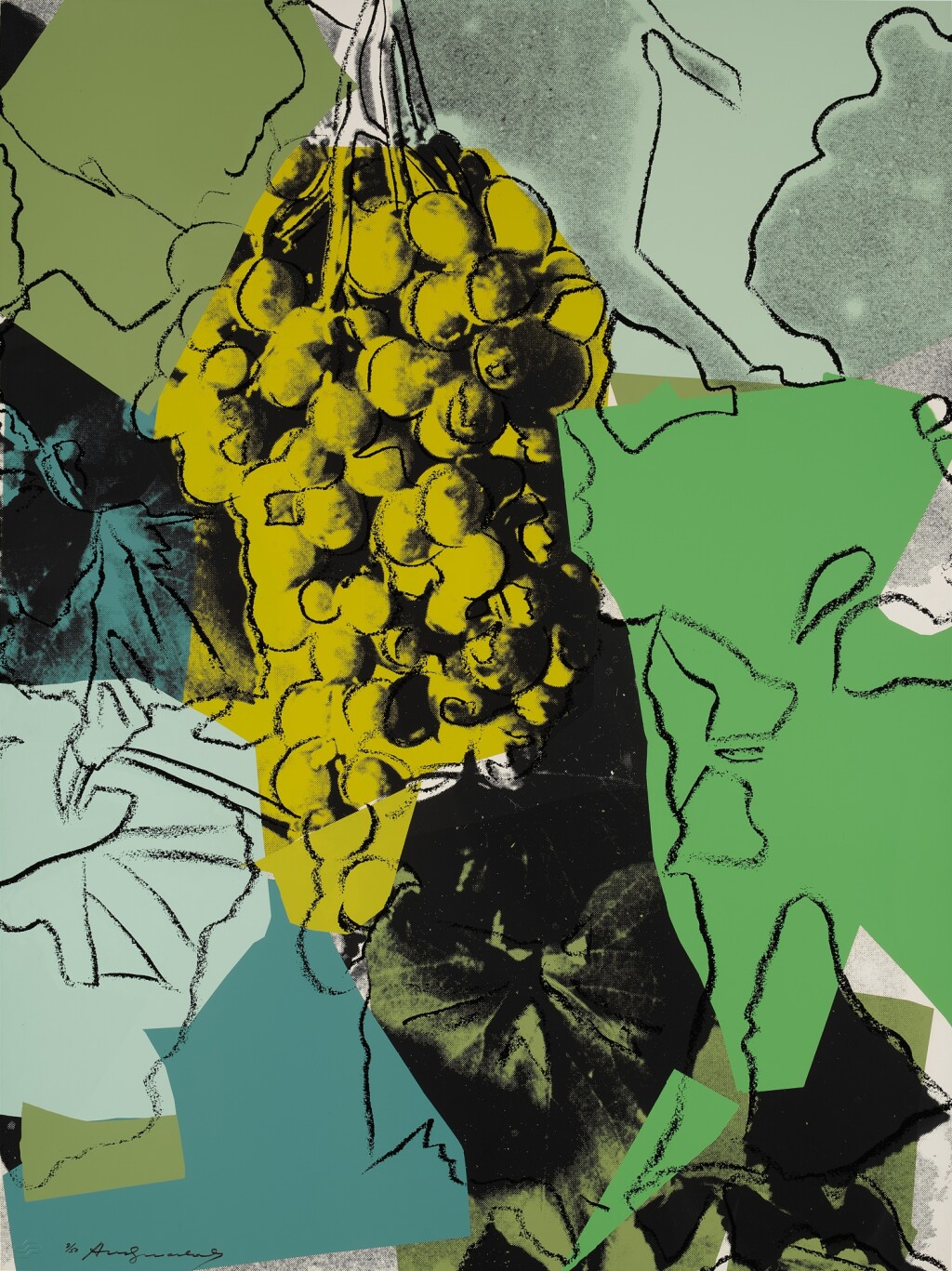
3. Grapes Plate (F&S II.192)
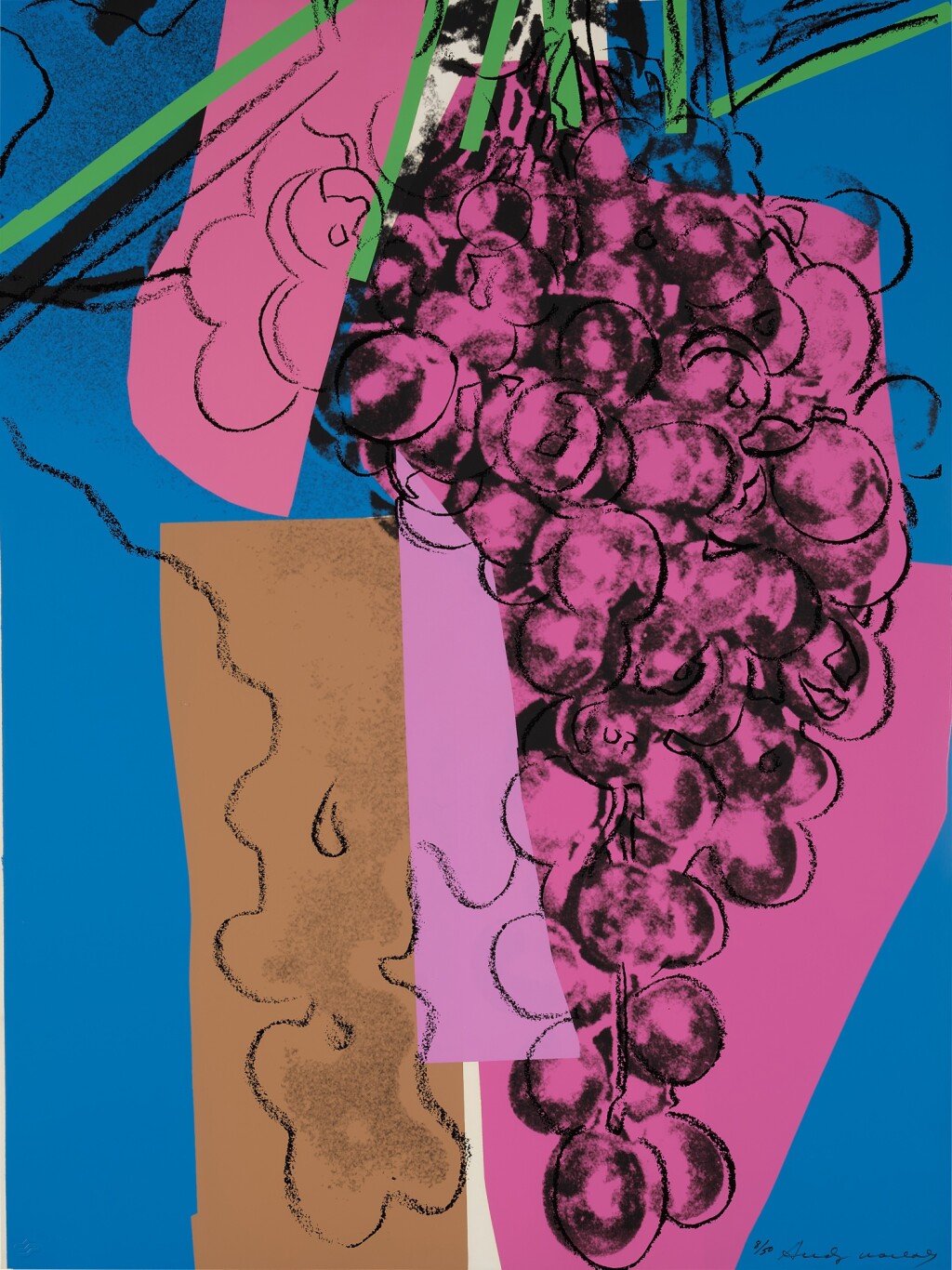
4. Grapes (F&S II.193)

5. Grapes (F&S II.194)

6. Grapes (F&S II.195)
Space Fruits: Still Lifes, 1979
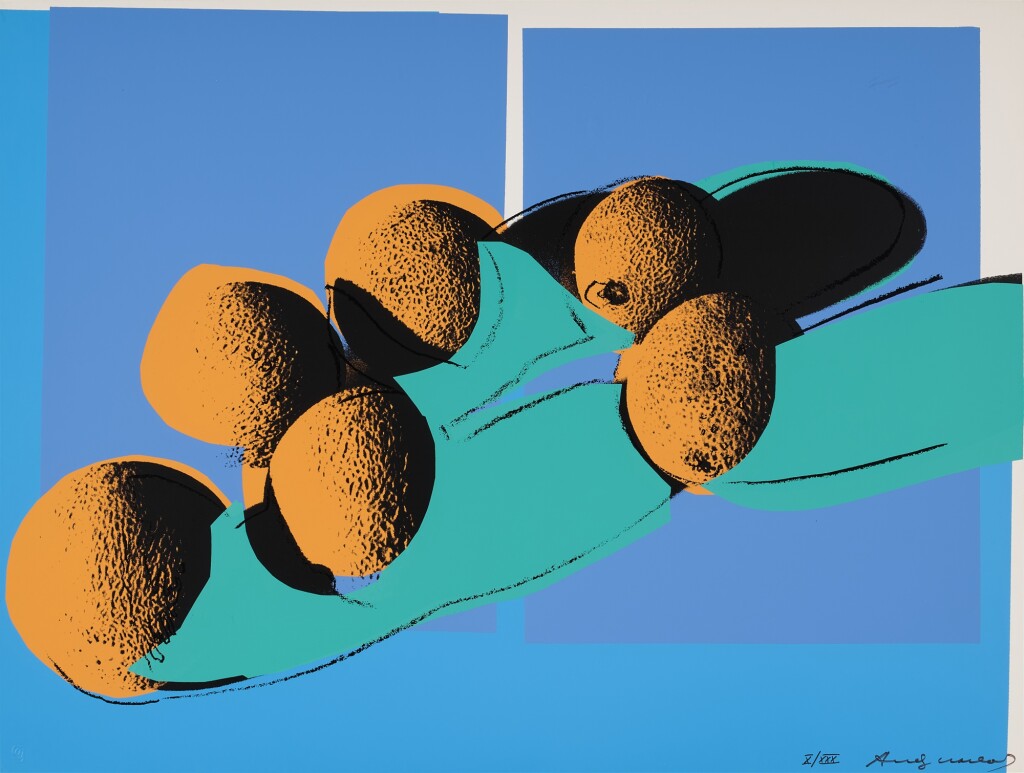
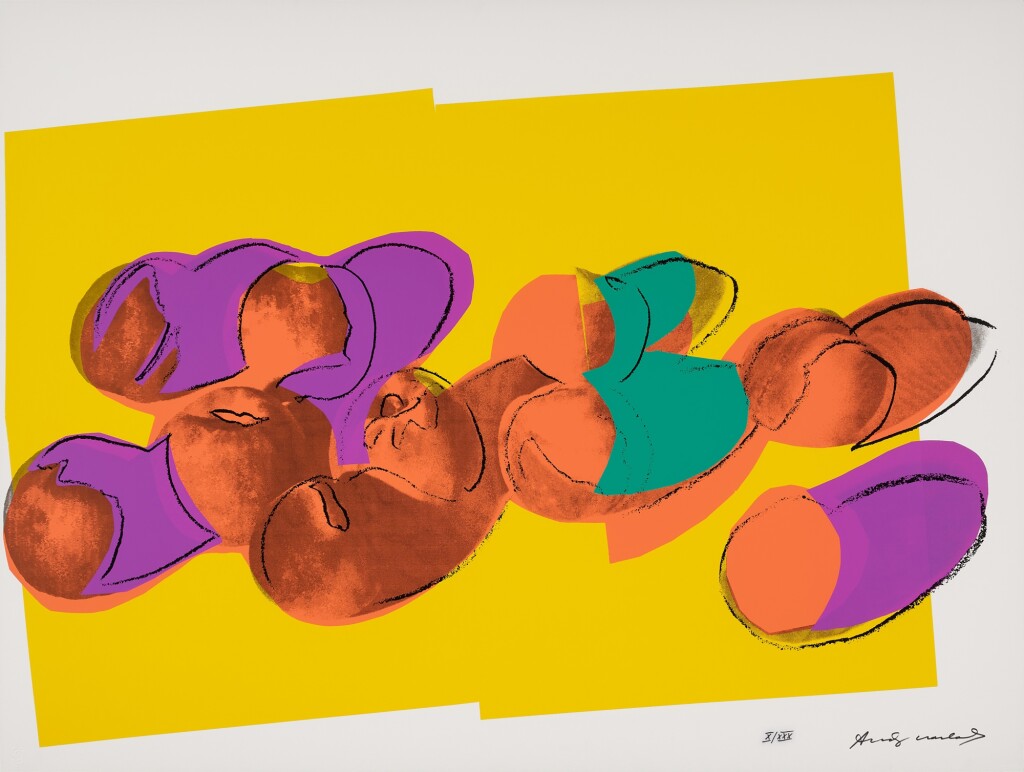
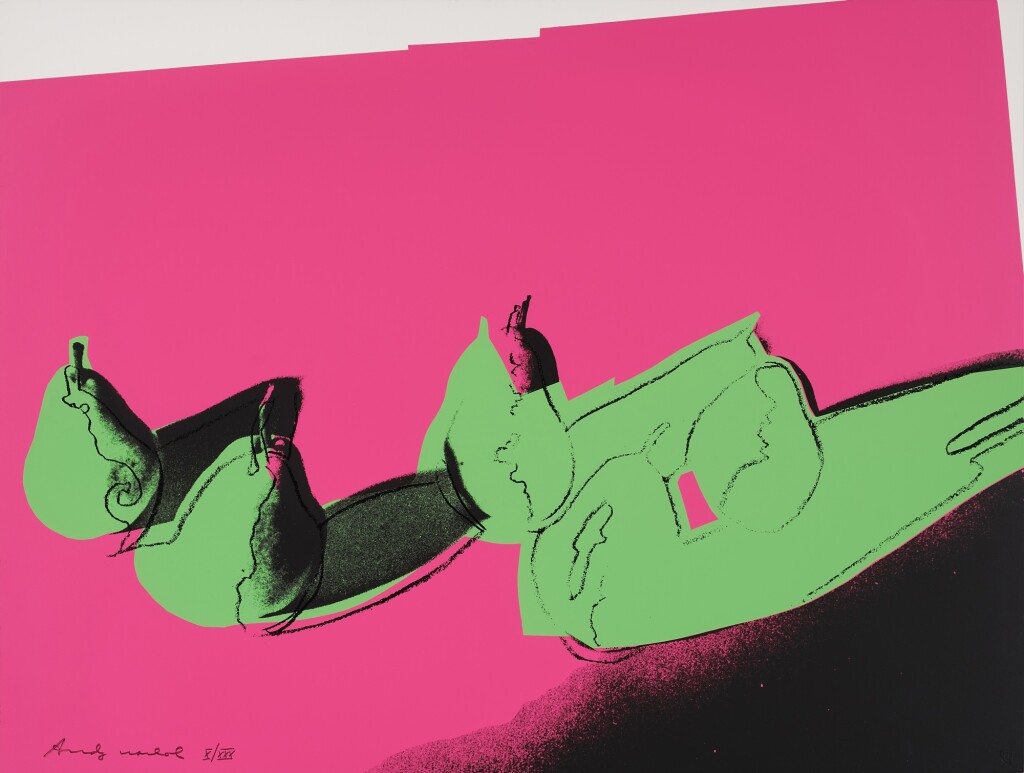
Throughout his career, Warhol worked with assistants and printers to create numerous print portfolios. In 1977 he met printer Rupert Jasen Smith who worked with him to create the series Space Fruit. These prints demonstrate Warhol’s experimentation with a centuries-old genre in painting—the still life. Still lifes by their very nature are choreographed compositions focusing on shape, color, space, and oftentimes symbolism. Warhol was interested in using shadows as a compositional element. He first placed one or more pieces of fruit on a white background, lit the arrangement from an angled position so that shadows were cast onto the white paper, and then photographed these compositions. He also used collage and drawing to create the source imagery for the additional screens used in each print. This artwork is an example of a multilayer or multicolor” silkscreen print since each color represents a different silkscreened layer. This printing process allowed Warhol endless color combinations within each composition.
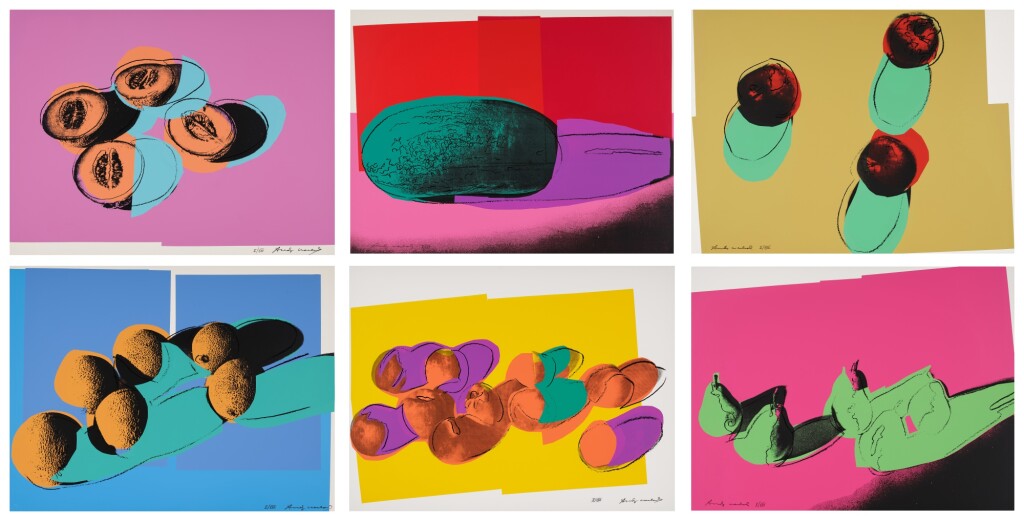
ANDY WARHOL
Space Fruit: Still Lifes, 1979
Portfolio of six screenprints in colors on Lenox Museum Board
Sheet: 30×40 inches (76.2 x 101.6 cm)
Edition: 150 + 1 PP + 30 on 4-ply Lenox Museum Board numbered in Roman numerals
Literature: Feldman & Schellmann II.198-203
1. Cantaloupes II (F&S II.198)
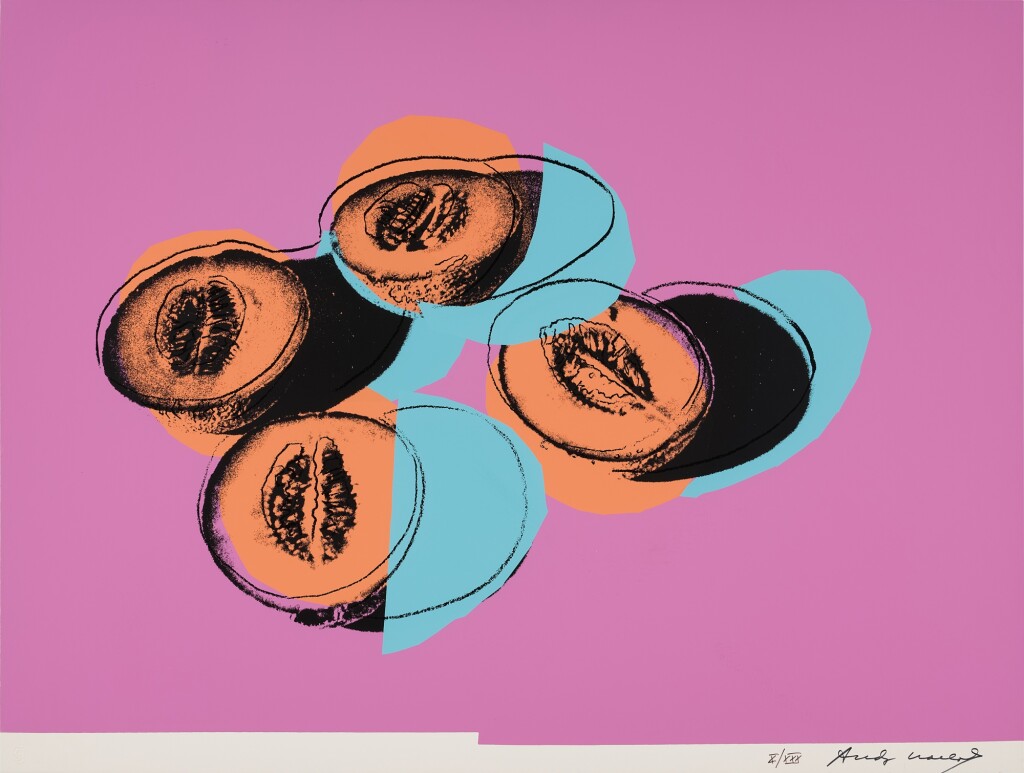
2. Watermelon (F&S II.199)
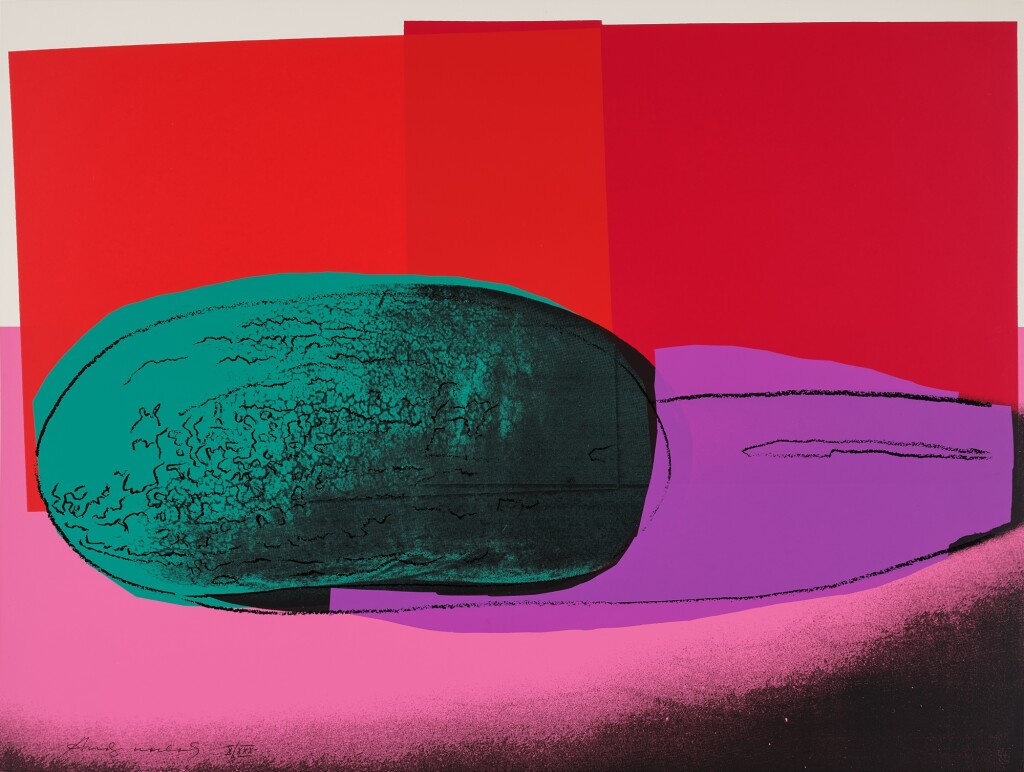
3. Apples (F&S II.200)
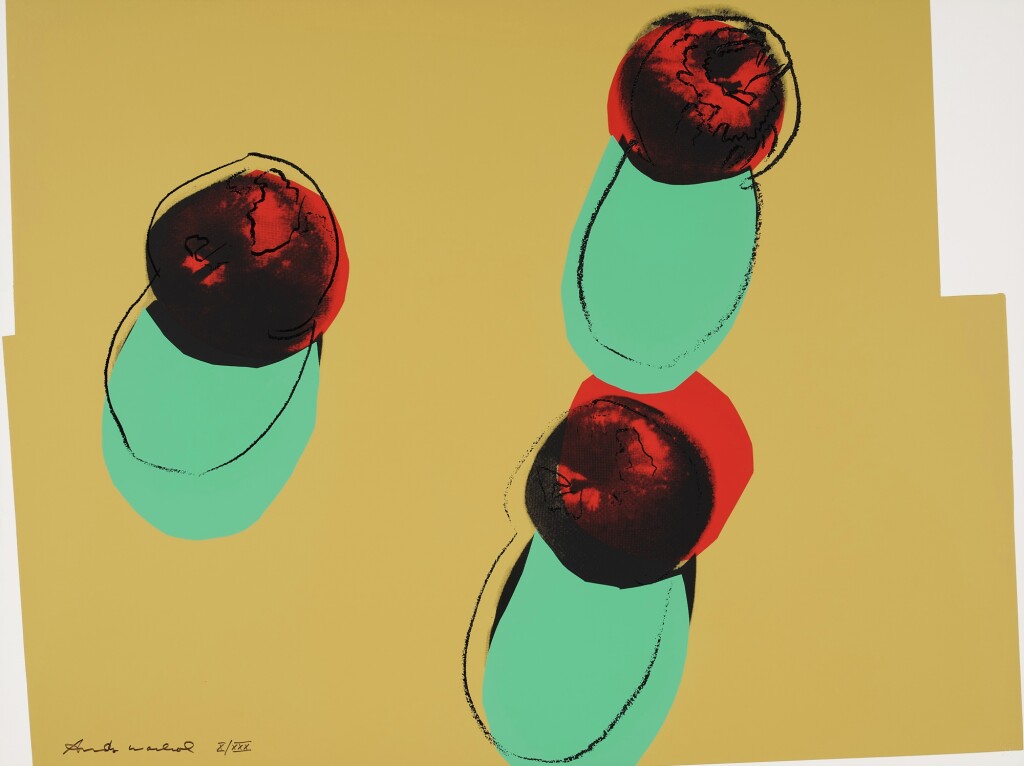
4. Cantaloupe I (F&S II.201)
5. Peaches (F&S II.202)
6. Pears (F&S II.203)
Ten Portraits of Jews of the Twentieth Century, 1980
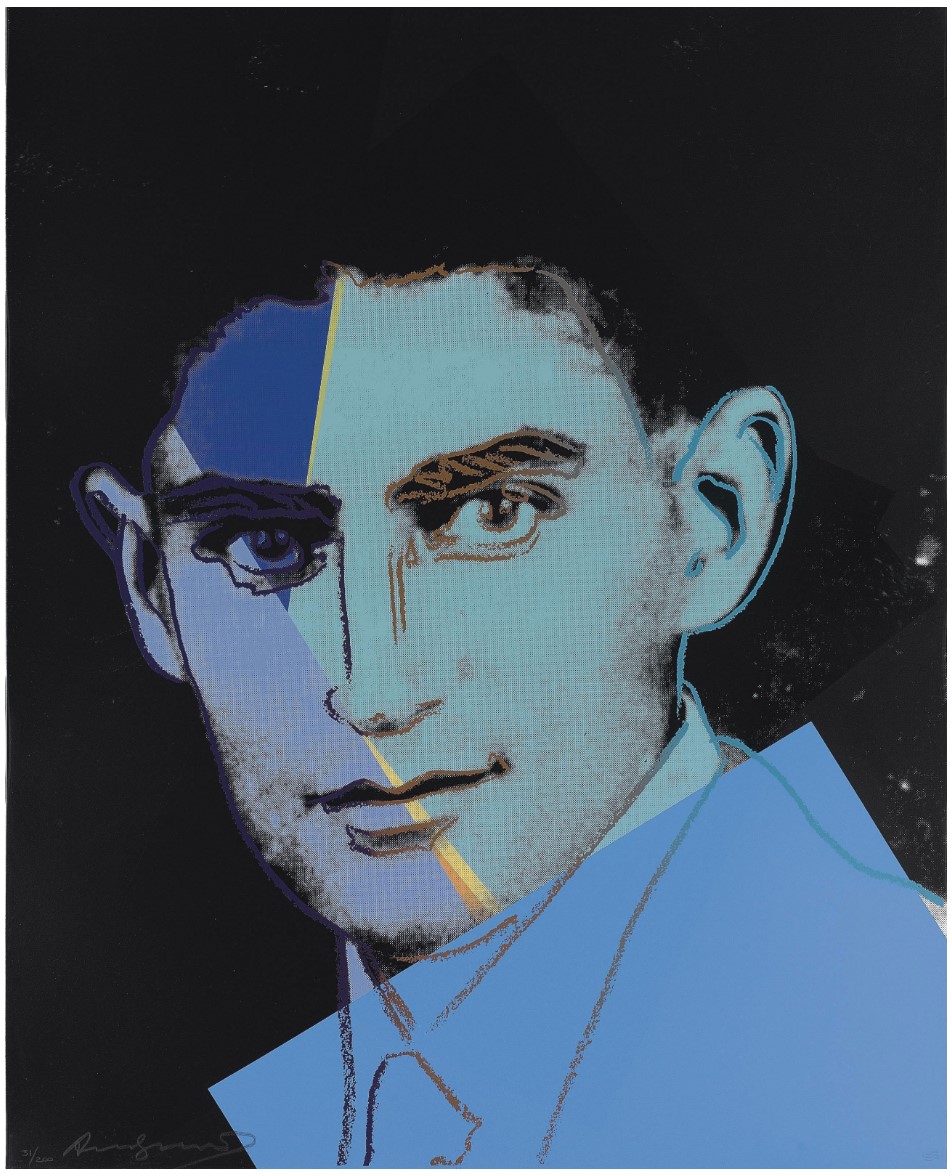
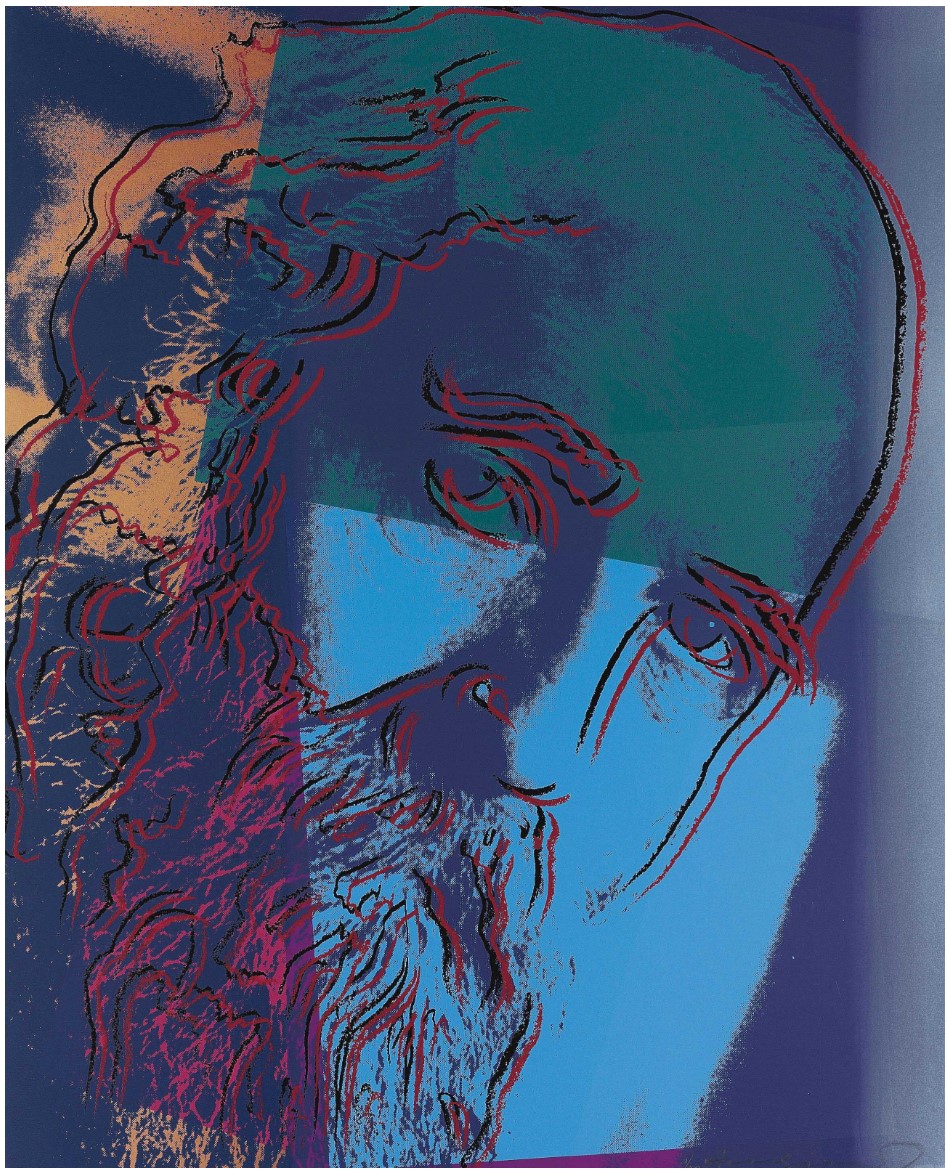
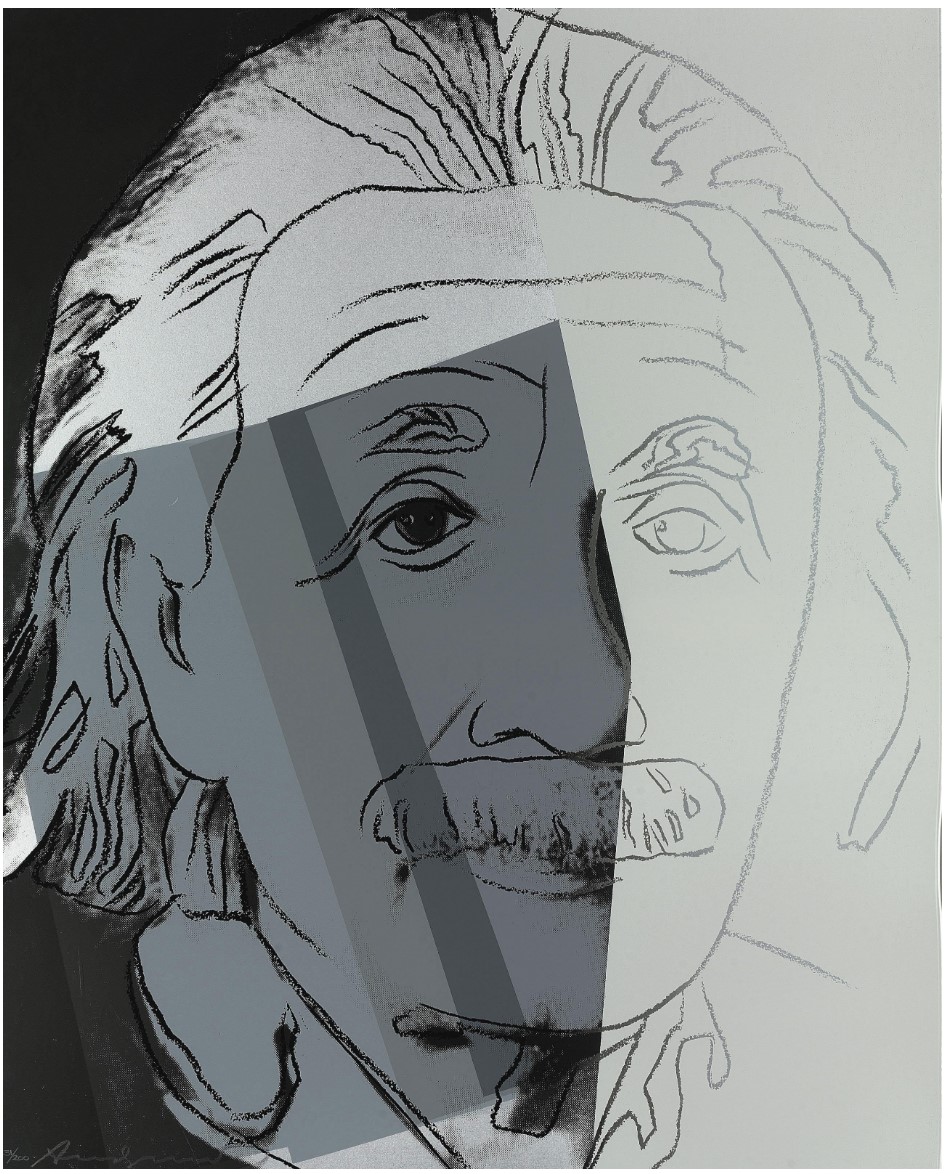
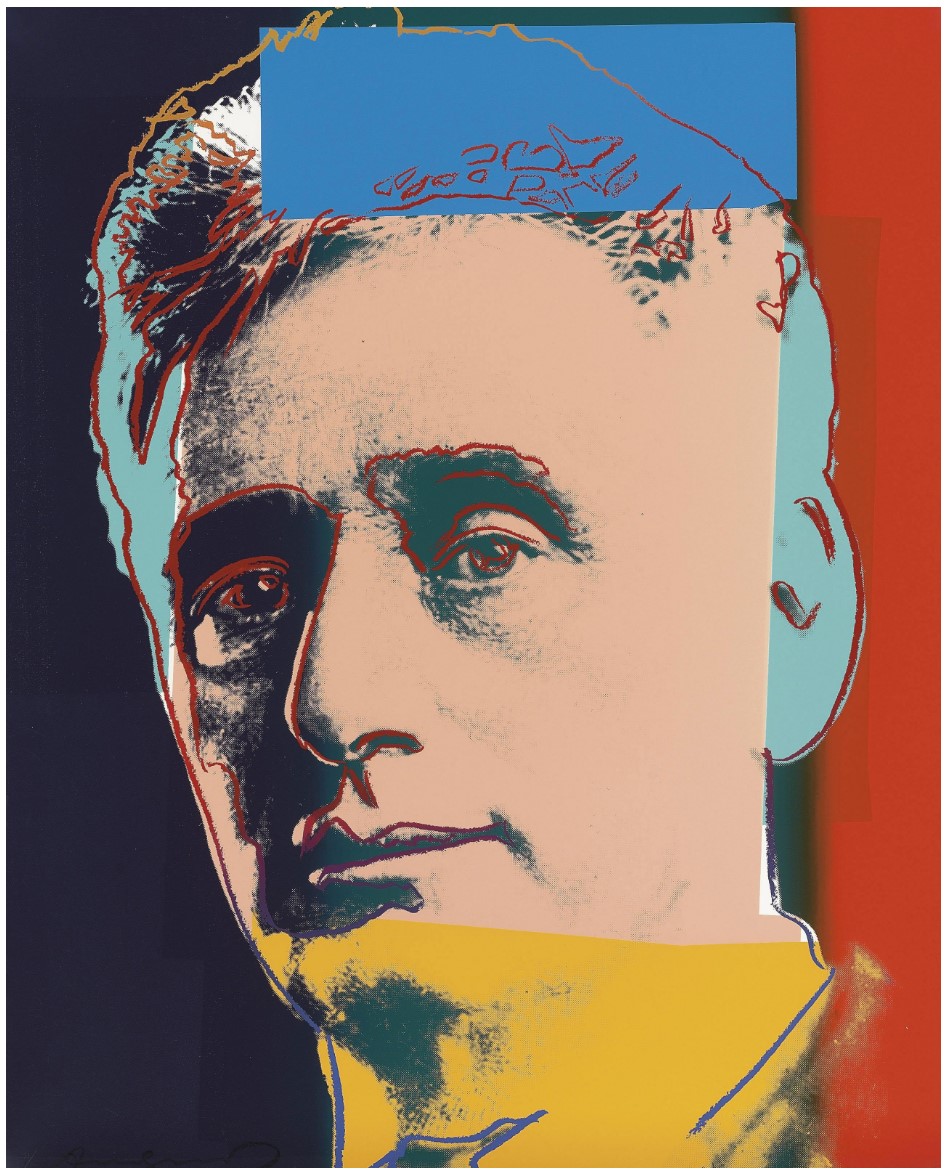
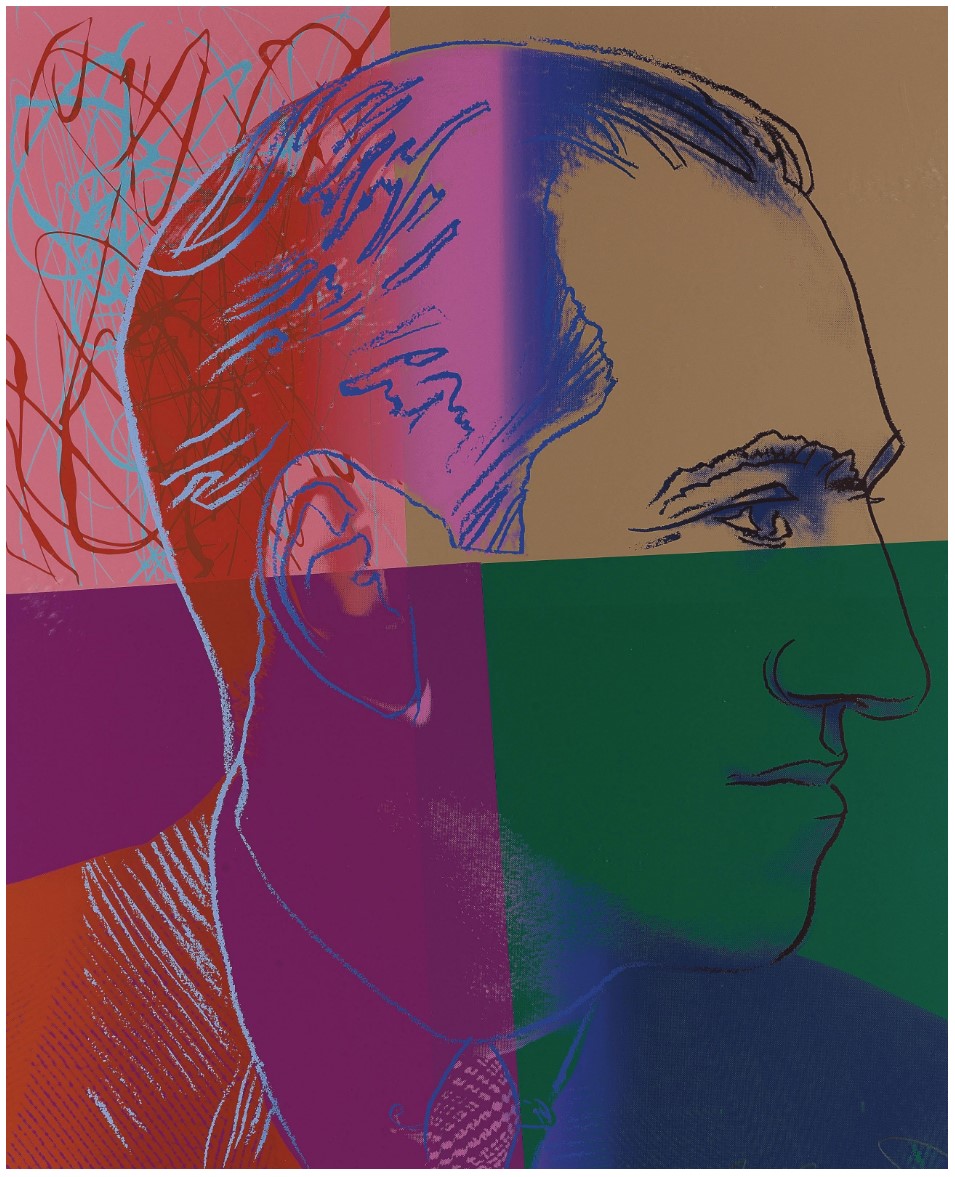
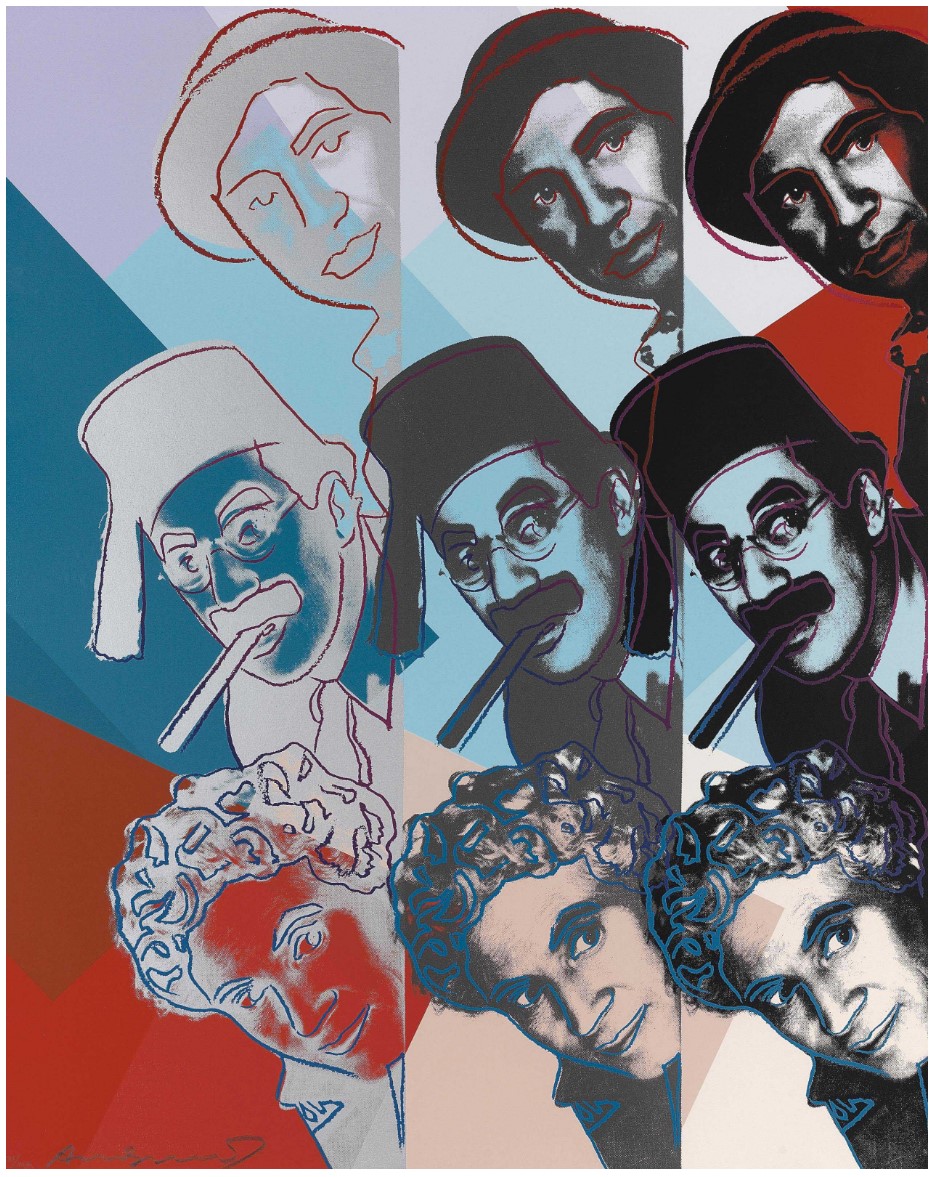
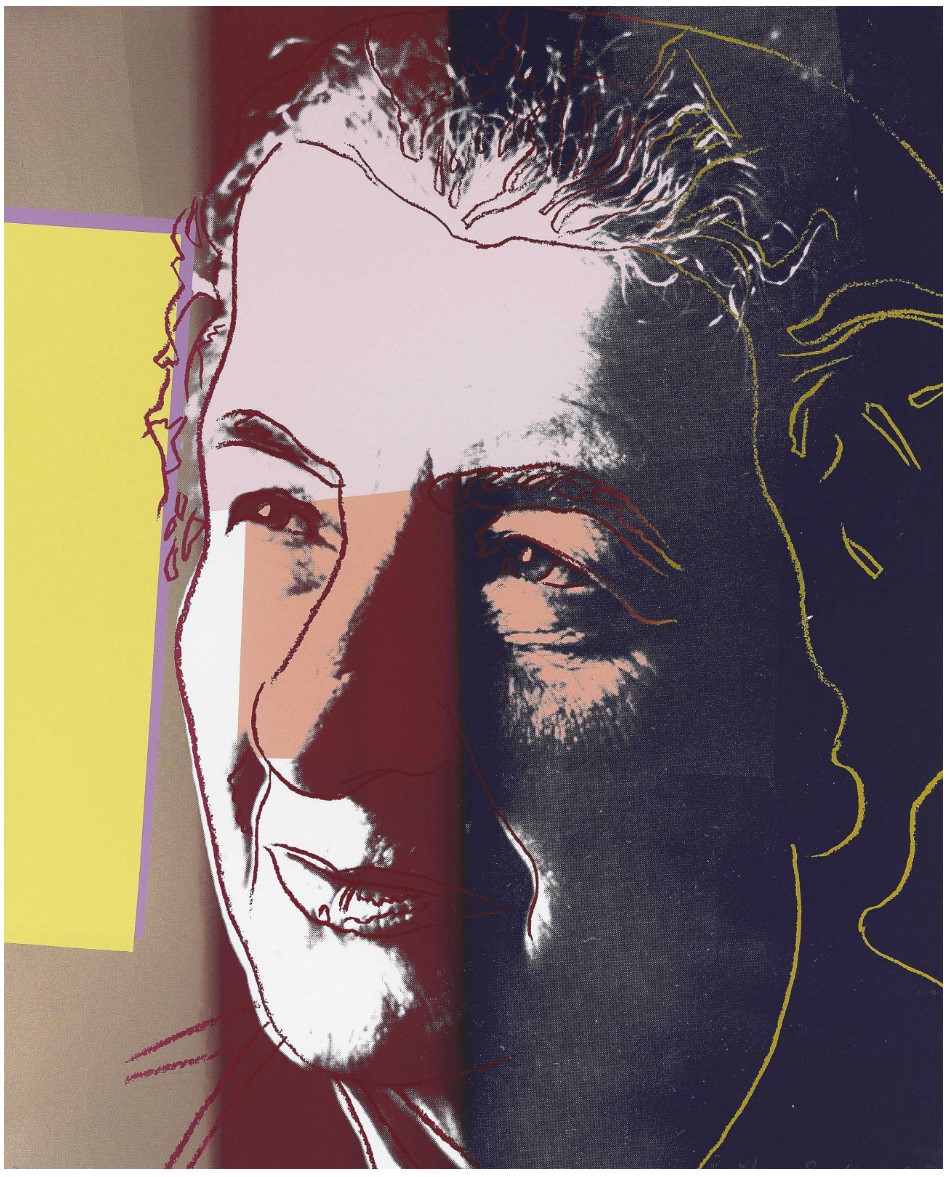
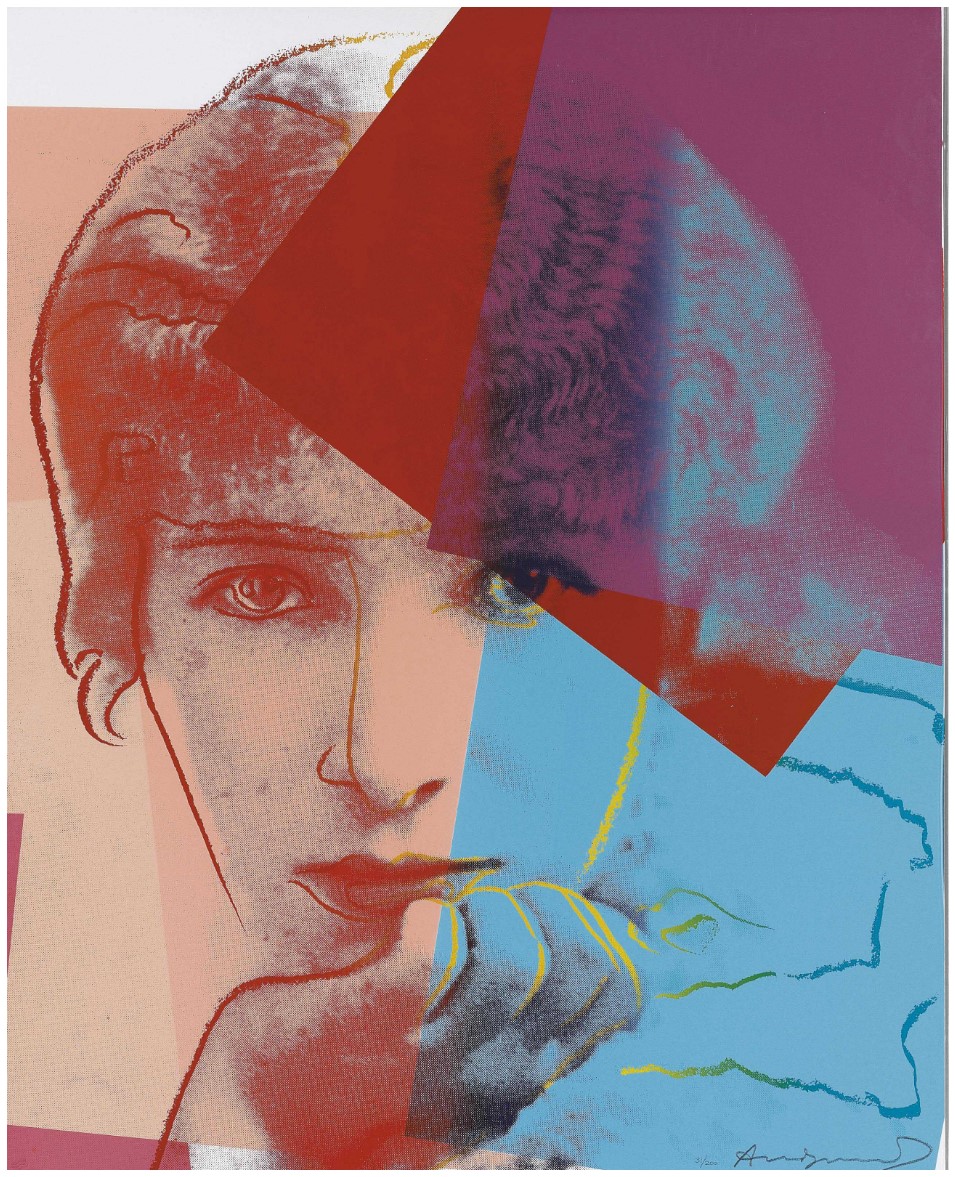
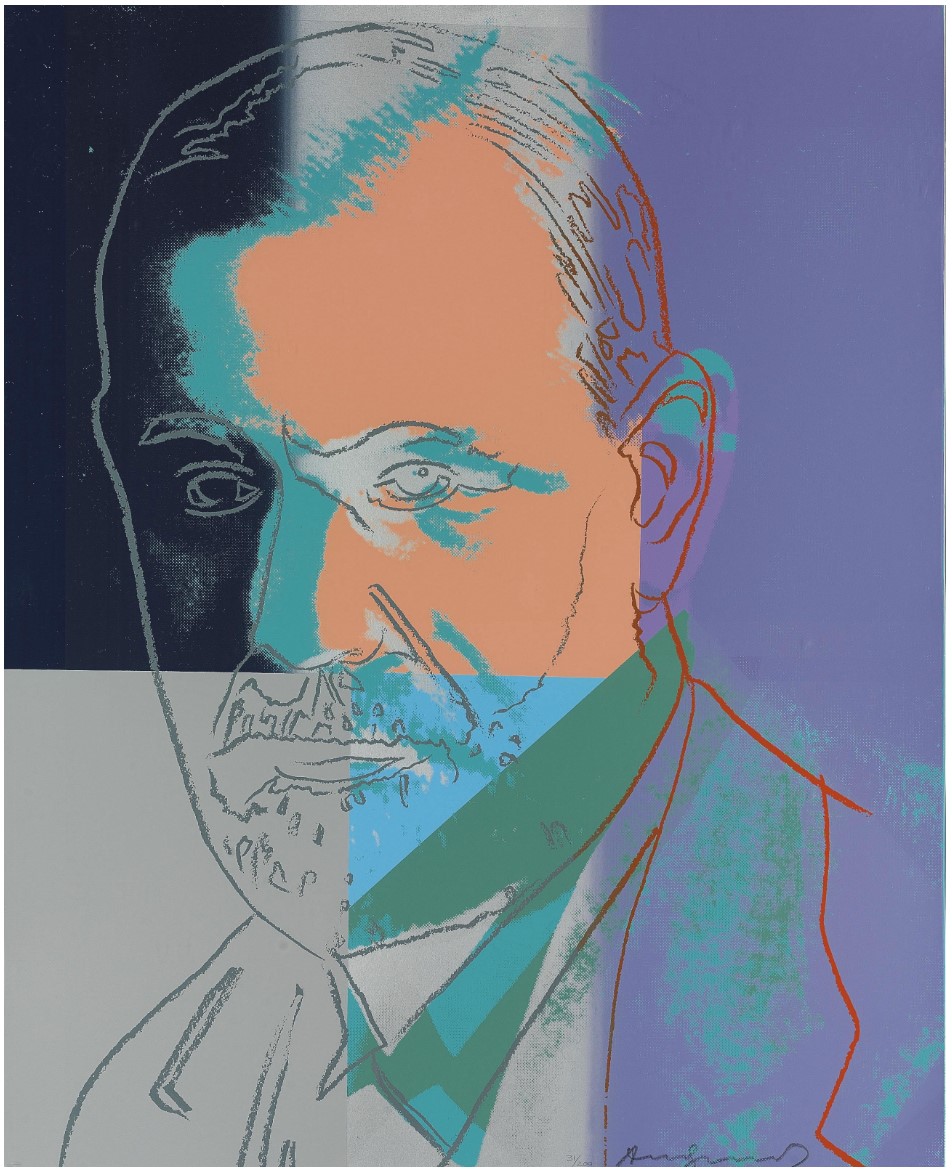
Created in 1980, each print in the portfolio depicts a renowned Jewish figure from the 20th century. The subjects of the portraits span across a wide variety of disciplines, ranging from the sciences to the arts. Andy Warhol created a portrait for 10 iconic personalities: (1) Franz Kafka, the pioneering German writer; (2) Gertrude Stein, the remarkable American novelist; (3) Martin Buber, the renowned philosopher; (4) Albert Einstein, the great theoretical physicist; (5) Louis Brandeis, the first Jewish judge to be appointed to the Supreme Court of the United States; (6) George Gershwin, the world-acclaimed American composer; (7) The Marx Brothers, the iconic comedic group; (8) Golda Meir, the first female Prime Minister of Israel; (9) Sara Bernhardt, the French stage actor; and (10) Sigmund Freud, the founder of the psychoanalytic school of psychology. Warhol nicknamed the collection “Jewish geniuses” due to the significant contributions these figures made to society.

ANDY WARHOL
Ten Portraits of Jews of the Twentieth Century, 1980
Portfolio of 10 screen-prints in colors on Lenox Museum Board
Sheet: 40×32 inches (101.6 x 81.3 cm)
Edition: 200 + 30 AP + 5 PP + 3 EP
Trial Proofs: 25 TP in unique color combination
Literature: Feldman & Schellmann, II.226-235
1. Franz Kafka (F&S II.226)
2. Gertrude Stein (F&S II.227)

3. Martin Buber (F&S II.228)
4. Albert Einstein (F&S II.229)
5. Louis Brandeis (F&S II.230)
6. George Gershwin (F&S II.231)
7. The Marx Brothers (F&S II.232)
8. Golda Meir (F&S II.233)
9. Sarah Bernhardt (F&S II.234)
10. Sigmund Freud (F&S II.235)
Shoes, 1980
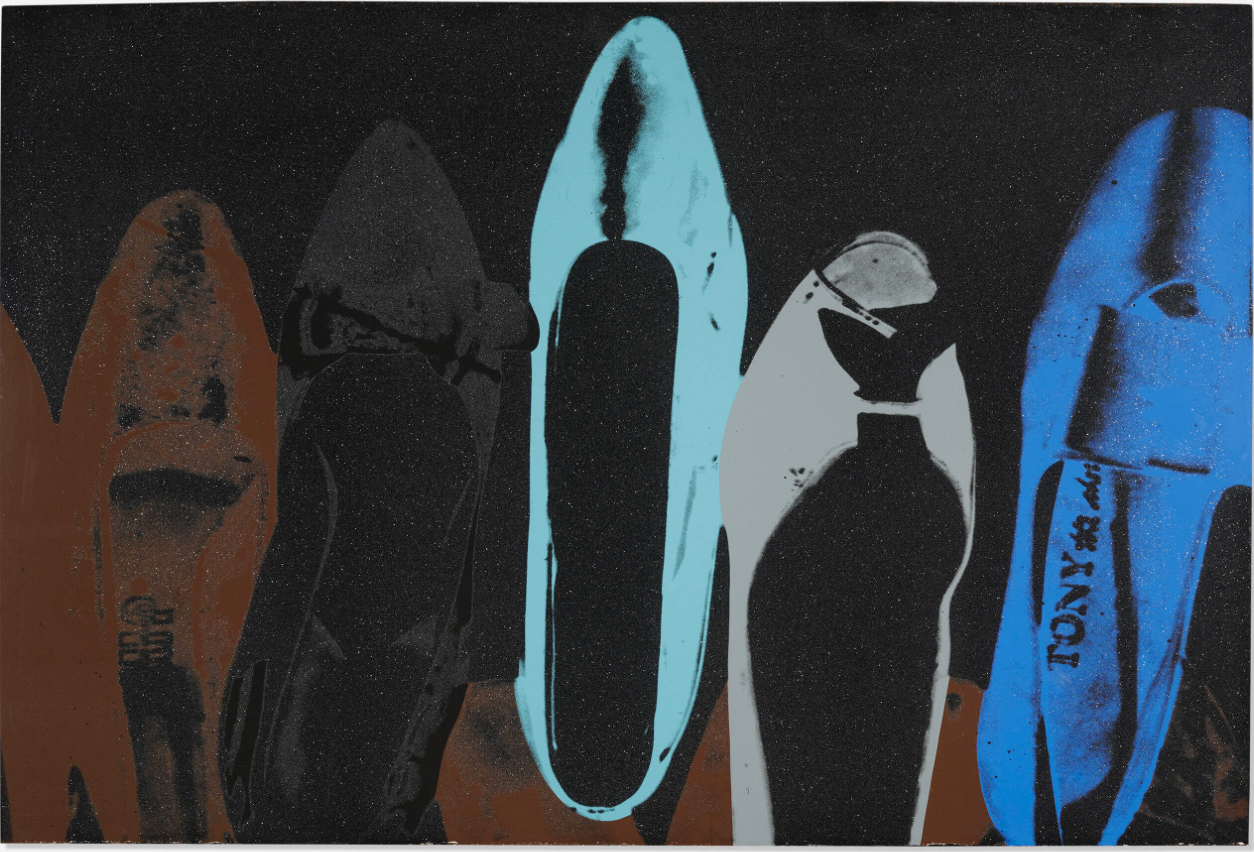
Effortlessly chic and dazzling, Diamond Dust Shoes is a quintessentially Warholian joy ride into his unmistakable Pop palette. Composed in 1980 as part of the series of the same name, the work at once creatively revisits Andy Warhol’s oldest artistic motifs of the high heel and stiletto, and incarnates the legendary New York discotheque culture – propelled by the prosperity of Reagan’s government – of the early 1980s. Evoking glitzy nights of dancing in the Studio 54 club sound tracked by the sumptuous analogue synthesizers of Italo-Disco songs, Diamond Dust Shoes epitomizes Warhol’s reliquary fetishization of the glamour and gloss exhibited at the high end of American pop culture. Exuding un-tempered indulgence in glam, drag, hyperbole and performance, this diamond-emblazoned image conjures nights of unparalleled luxury and euphoria; nights that cemented Warhol’s reputation as insatiable night owl and documenter of debauchery. And yet Warhol’s aesthetic contains the equivocal and delectable complexity of simultaneously making strange that which it celebrates. Deliberately isolated from its corresponding pair, each shoe comes apart from the feminine boudoir; leaving an otherworldly galaxy in which distant stars flicker and the shoes float, like unknown artefacts, into obscurity.
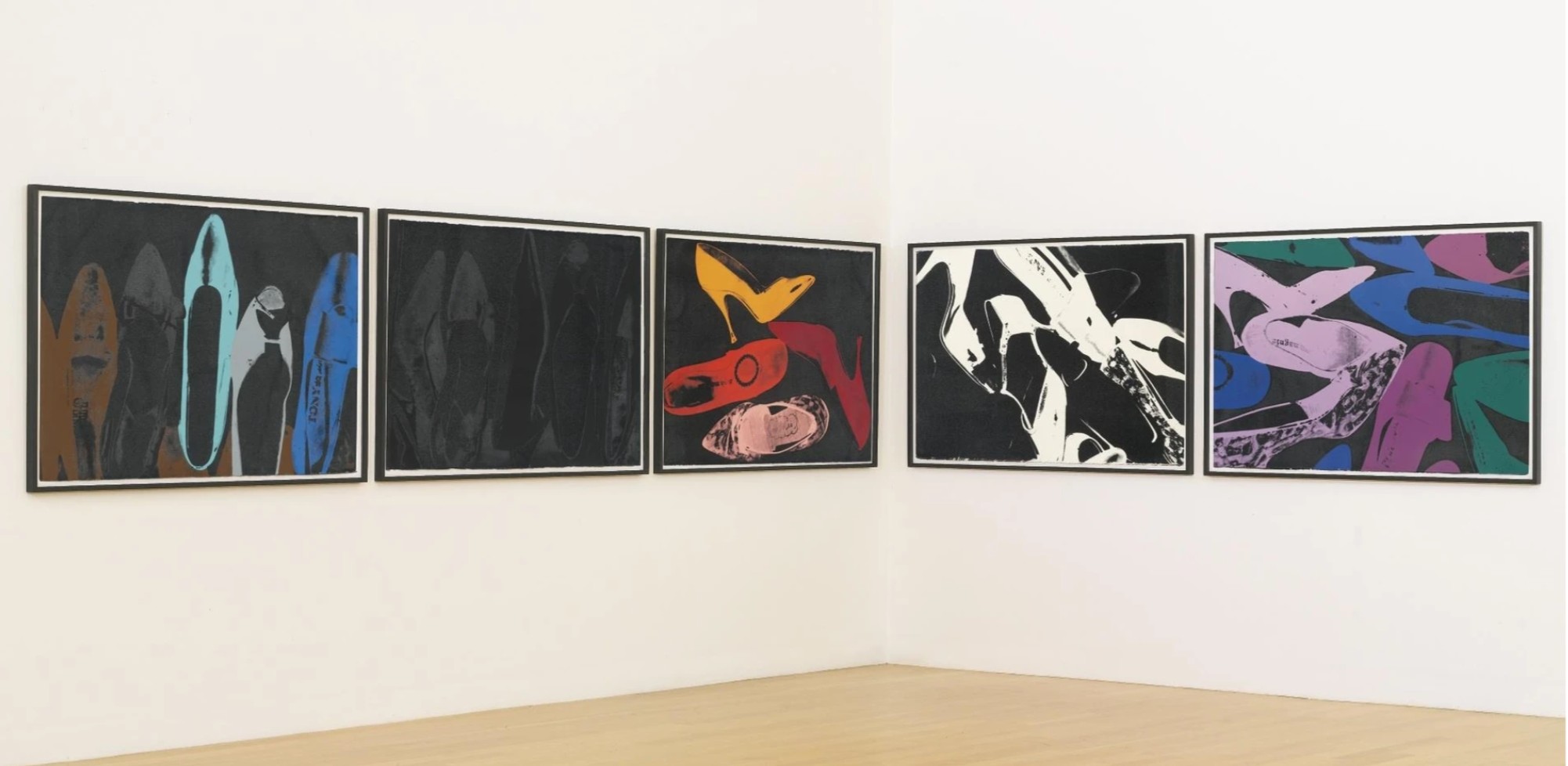
ANDY WARHOL
Shoes, 1980
Portfolio of five screen-prints with diamond dust on Arches Aquarelle (Cold Pressed) paper
Sheet: 40 1/2 x 59 1/2 inches (102.2 x 151.1 cm)
Edition: 60 + 10 AP + 2 PP
Literature: Feldman & Schellmann II.253-257
1. Shoes (F&S II.253)
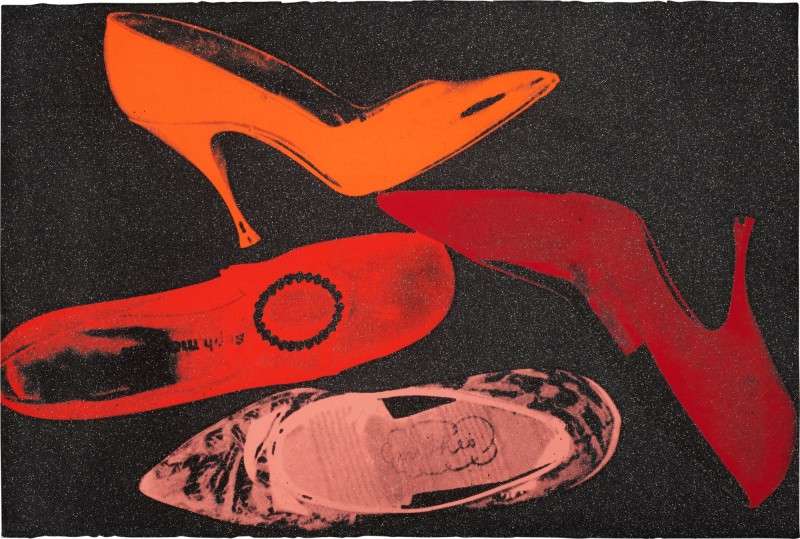
2. Shoes (F&S II.254)
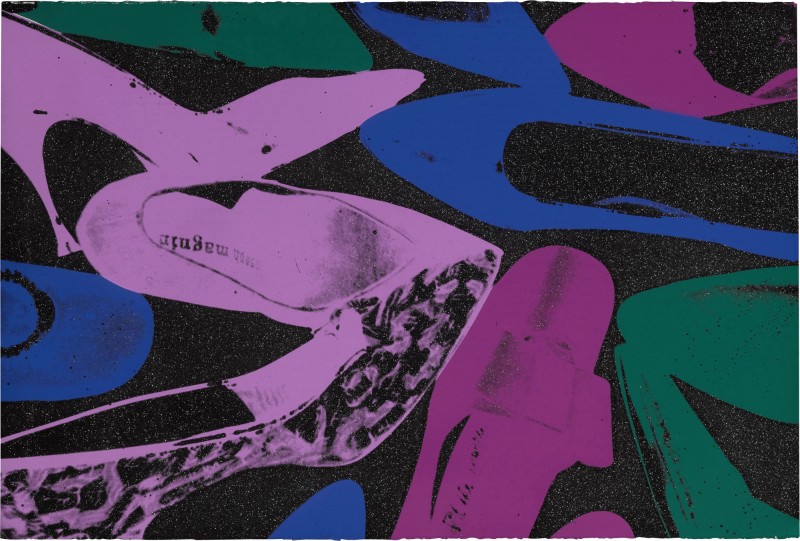
3. Shoes (F&S II.255)
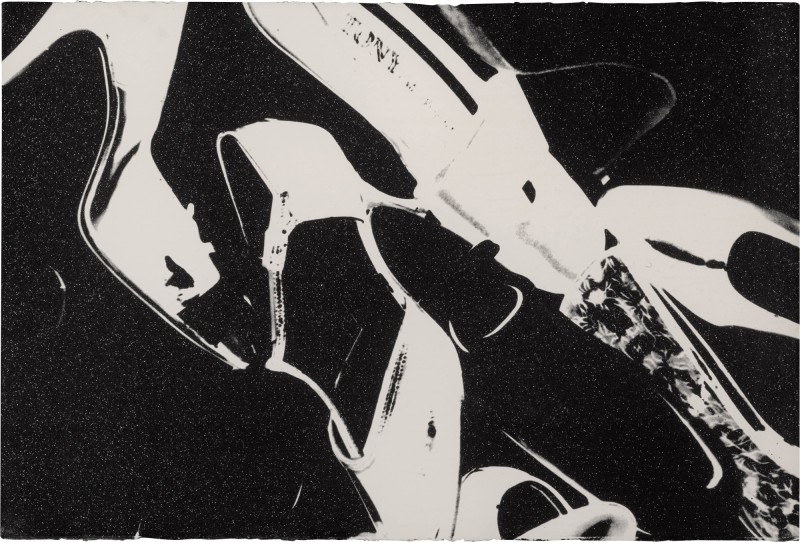
4. Shoes (F&S II.256)
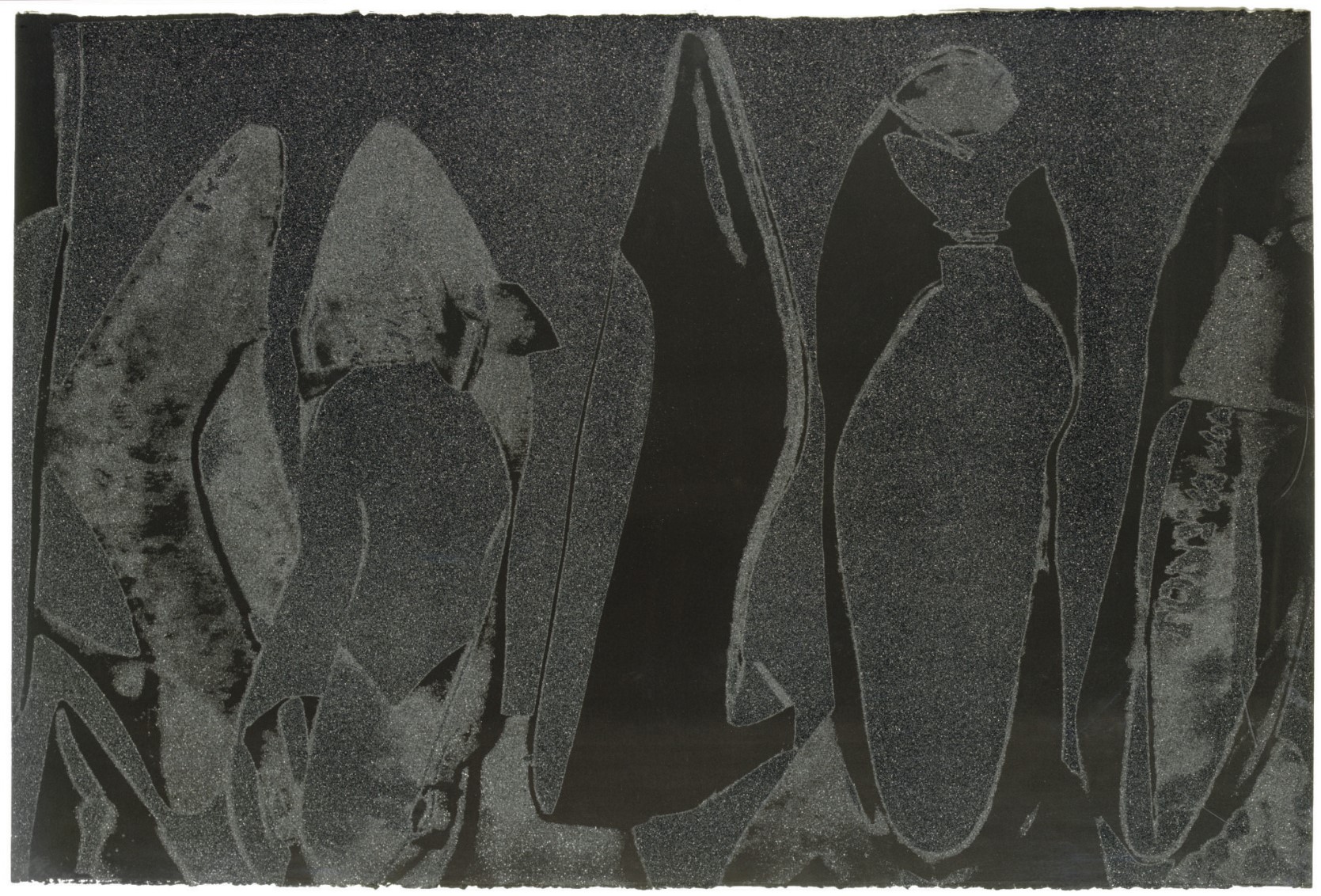
5. Shoes (F&S II.257)
Myths, 1981
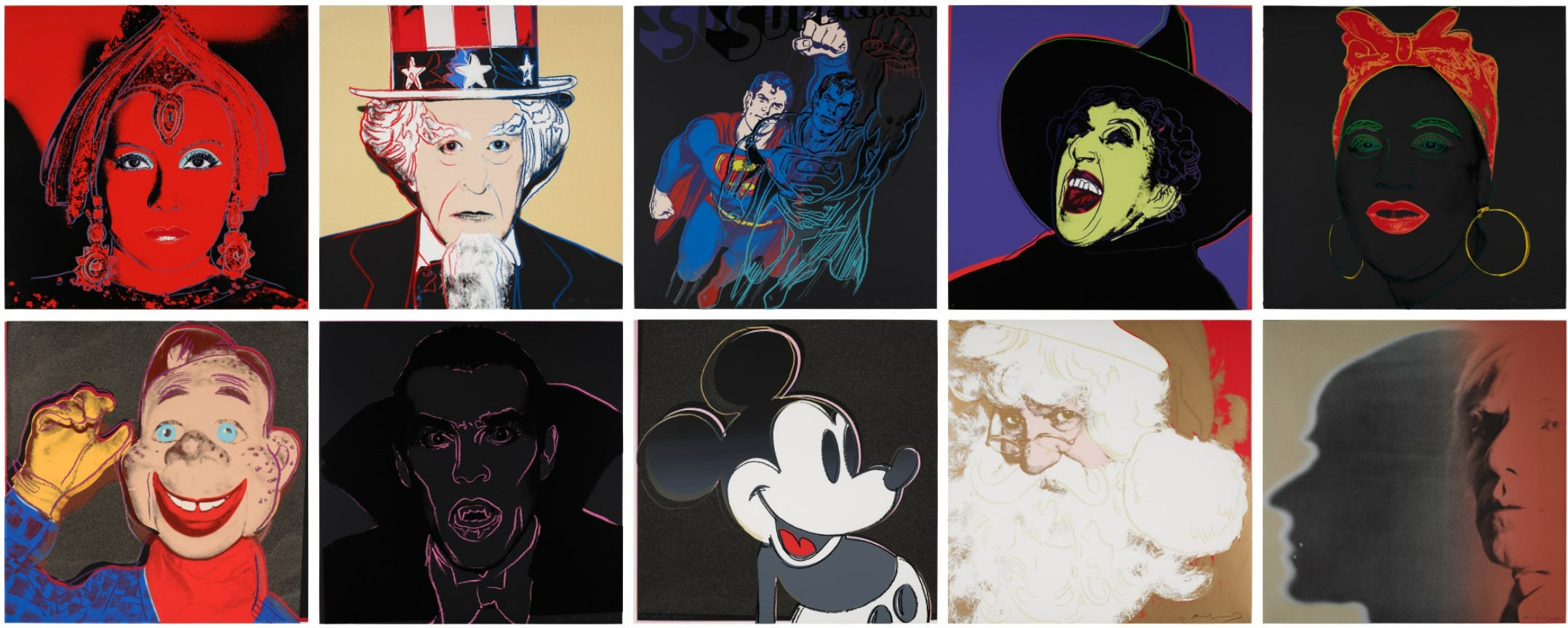
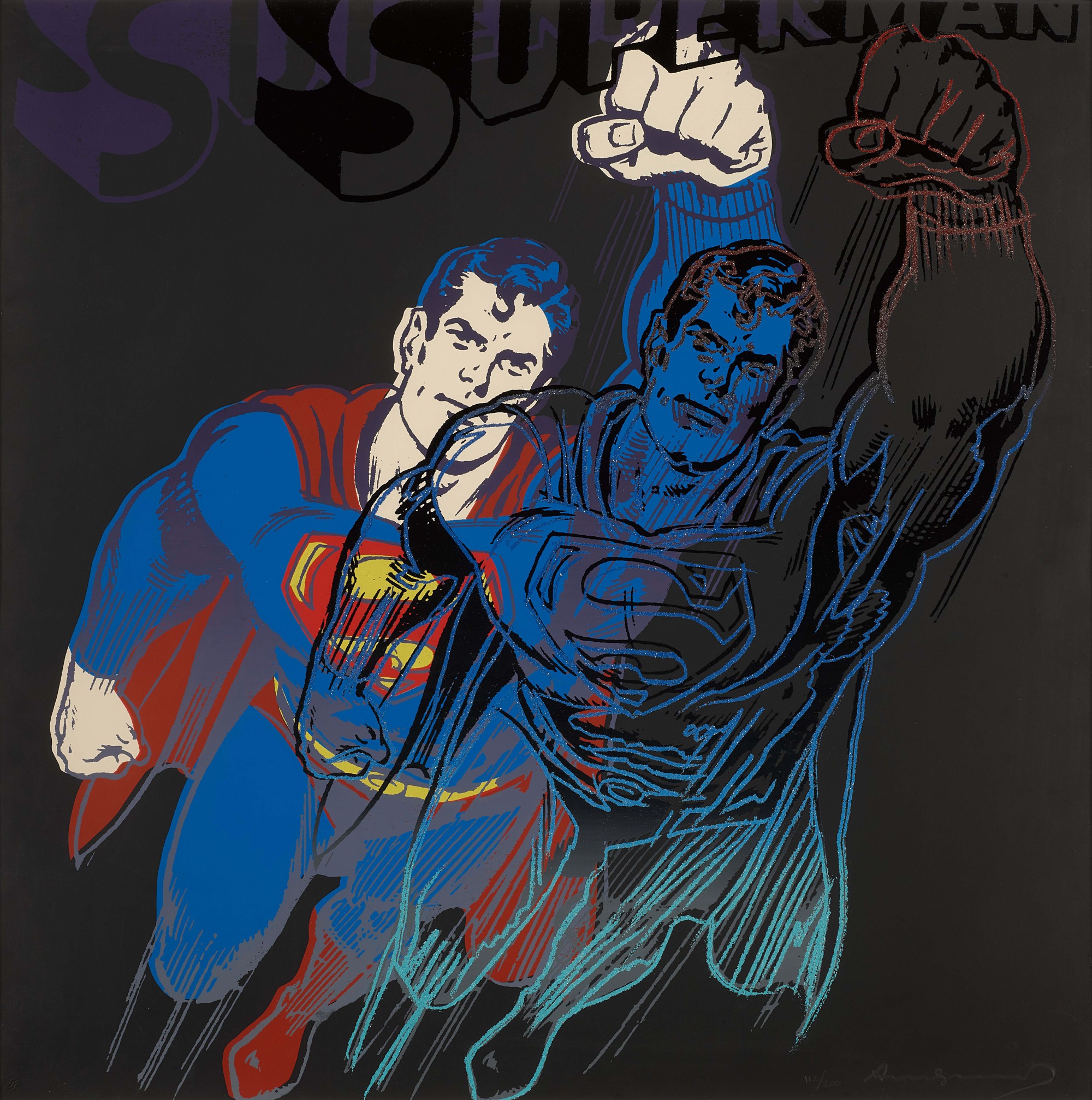
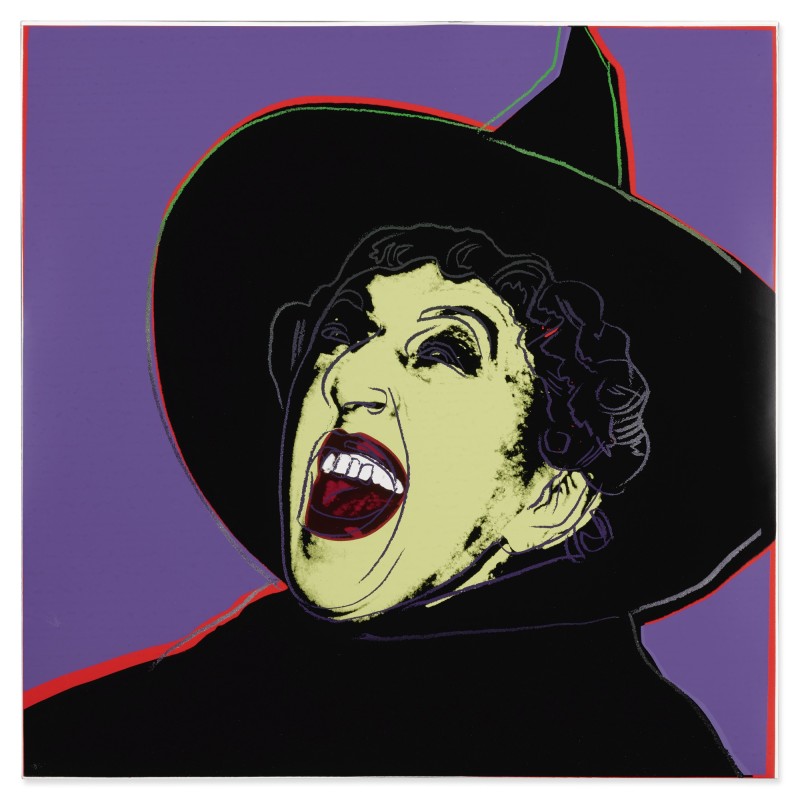
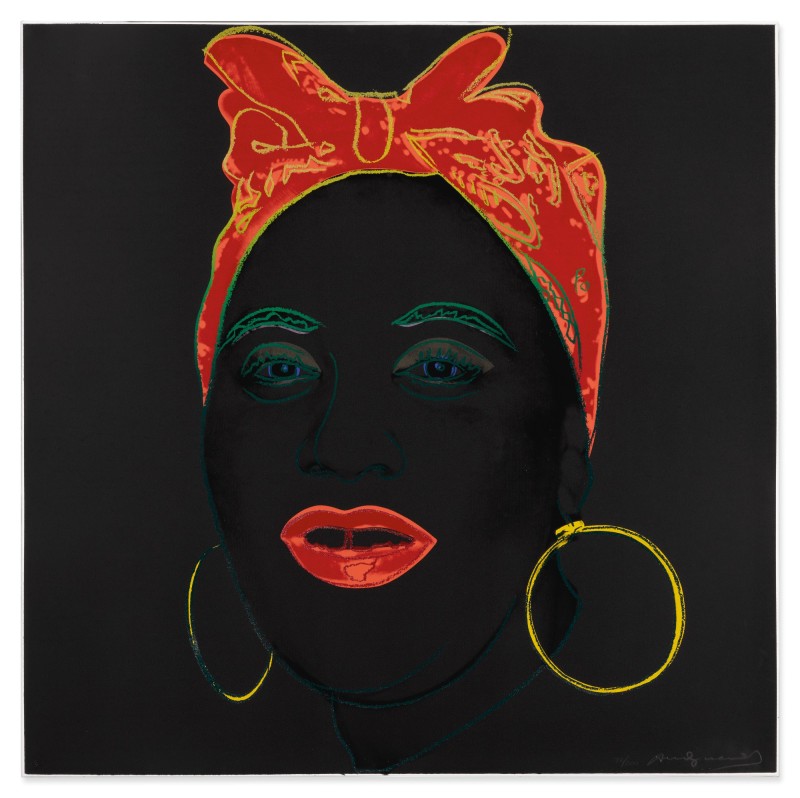
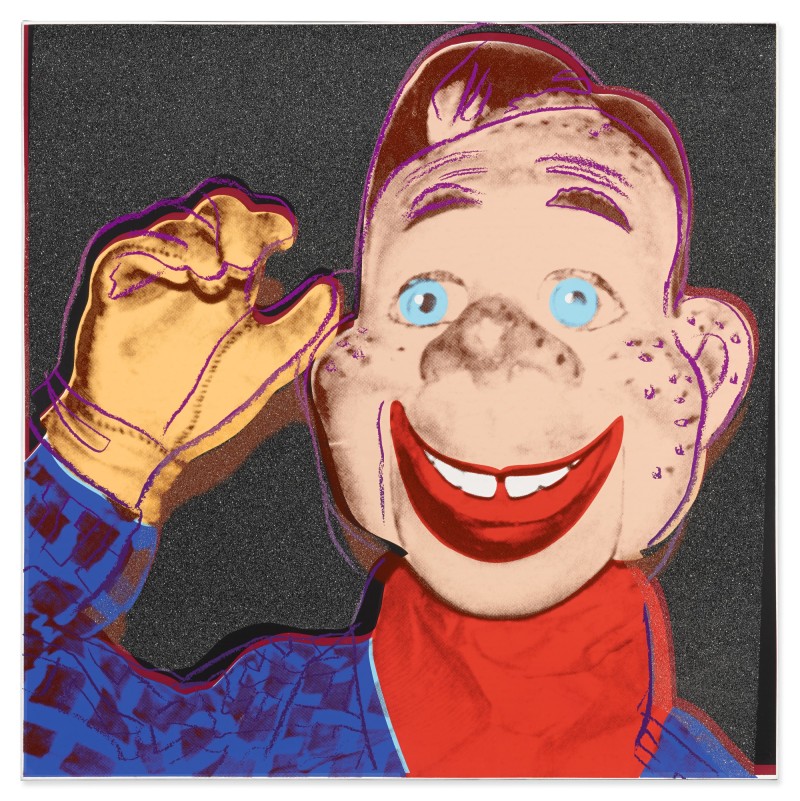
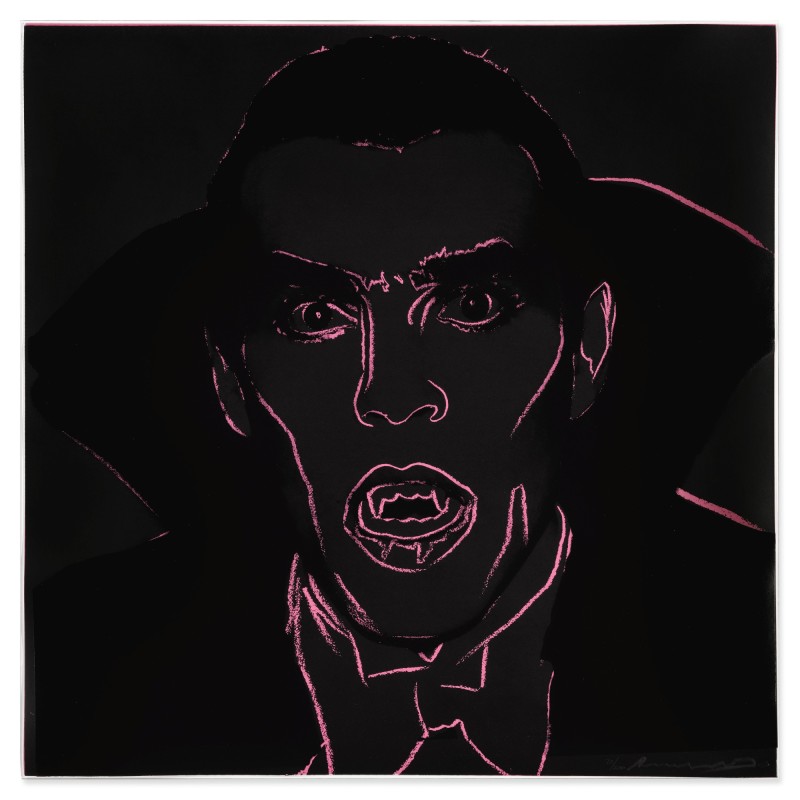
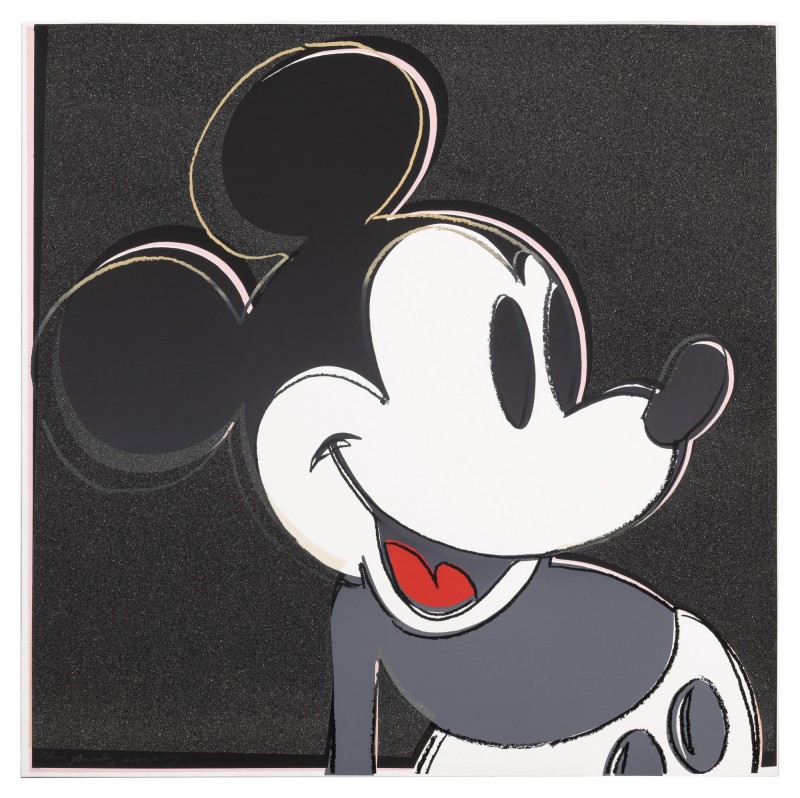
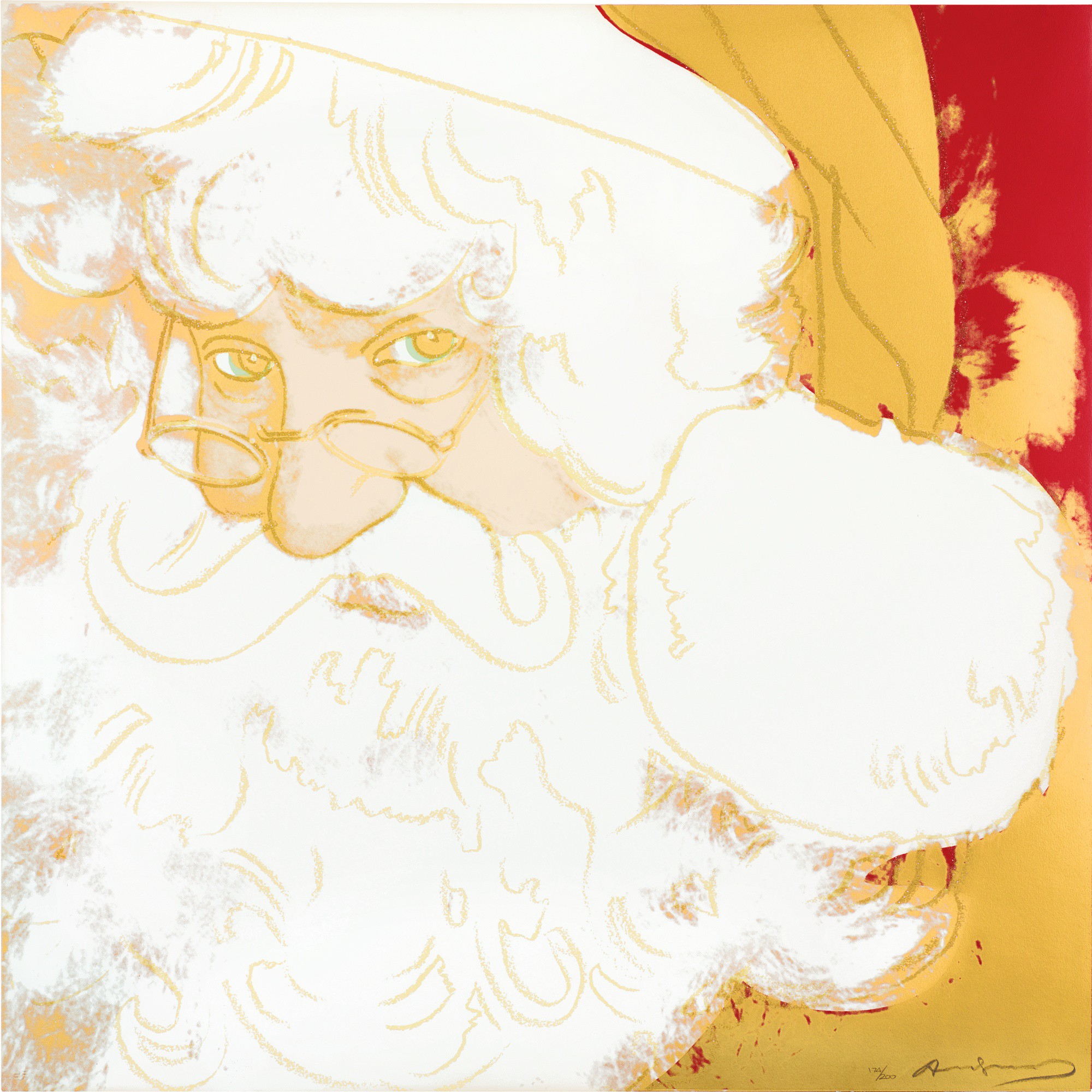
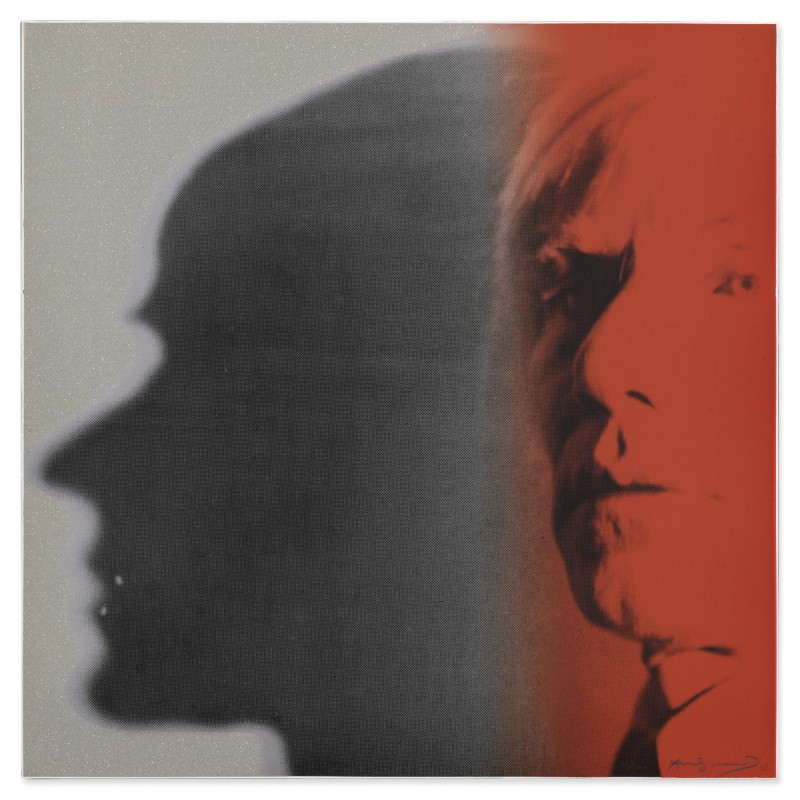
Myths, one of Warhol’s most sought-after print portfolios, epitomizes the artist’s ability to identify and distil American popular culture into powerful and iconic images. Created in 1981, Myths consists of ten screen prints published by gallerist Ronald Feldman. The pieces contained within the series include Dracula, Howdy Doody, Mammy, Mickey Mouse, Santa Claus, Superman, The Shadow, The Star, The Witch, and Uncle Sam. The Myths portfolio is a compendium of American entertainment idols. Many of Warhol’s chosen subjects in the series date back to the early days of TV and film. For example, Howdy Doody was a children’s television show that first aired in 1947, while The Star features Greta Garbo. Figures such as the cackling Wicked Witch of the West from The Wizard of Oz and the costumed flying figure of Superman function as heroes and villains; mythological embodiments of good and evil. Depicting fictional figures from television, film and popular folklore, using rich colors and diamond dust, Warhol pays a nostalgic homage to the characters that featured heavily in both his childhood and a shared American cultural consciousness.
ANDY WARHOL
Myths, 1981
The complete set of ten screen-prints in colors on Lenox Museum Board
Nine with diamond dust
Sheet: 38×38 inches (96.5 x 96.5 cm)
Edition: 200 + 30 AP + 30 TP
Literature: Feldman & Schellmann II.258-267
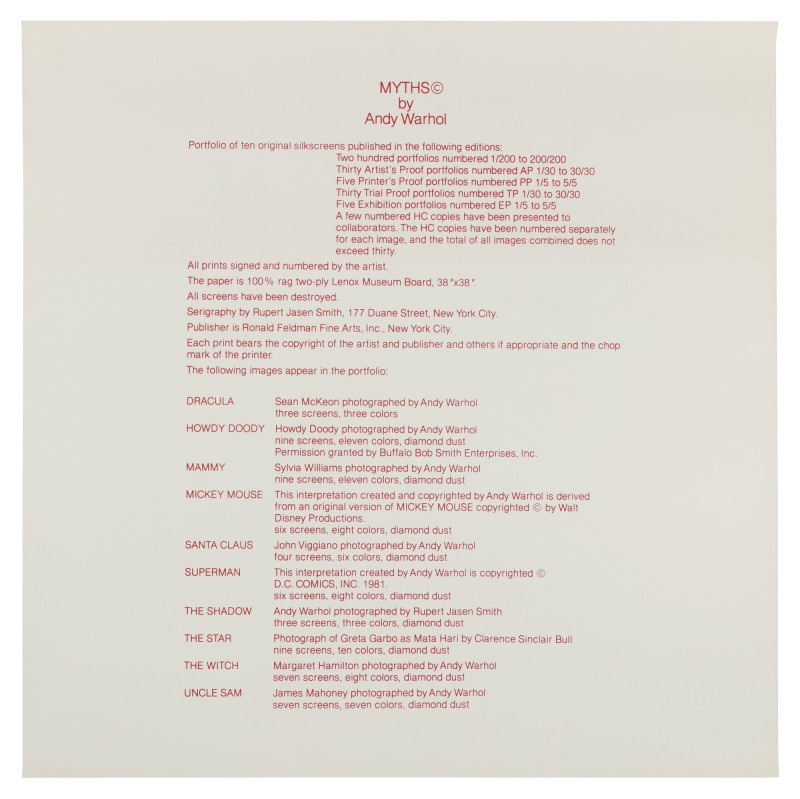
1. The Star (F&S II.258)
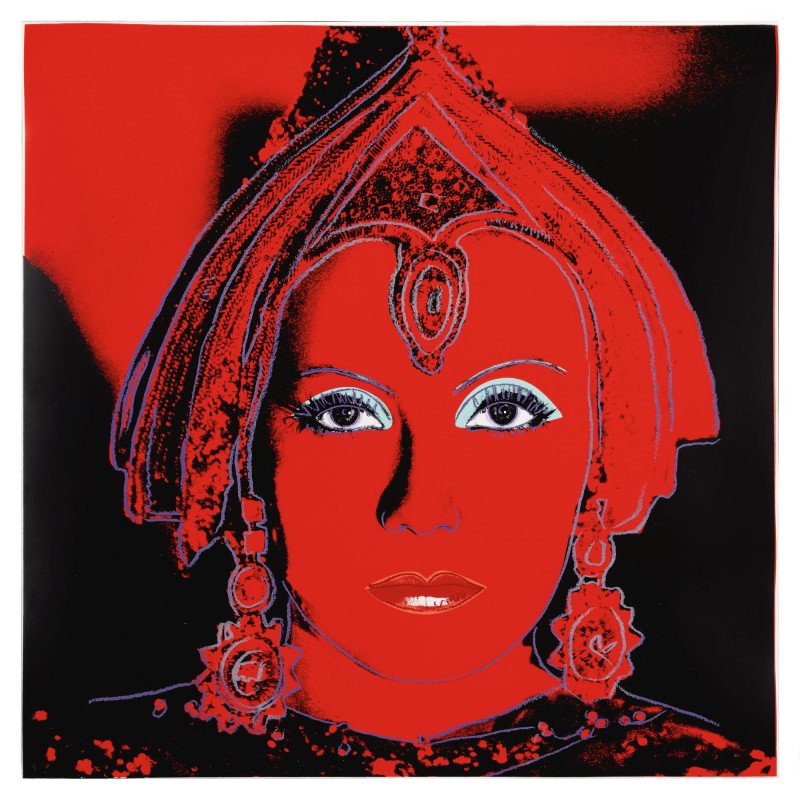
2. Uncle Sam (F&S II.259)

3. Superman (F&S II.260)
4. The Witch (F&S II.261)
5. Mammy (F&S II.262)
6. Howdy Doody (F&S II.263)
7. Dracula (F&S II.264)
8. Mickey Mouse (F&S II.265)
9. Santa Claus (F&S II.266)
10. The Shadow (F&S II.267)
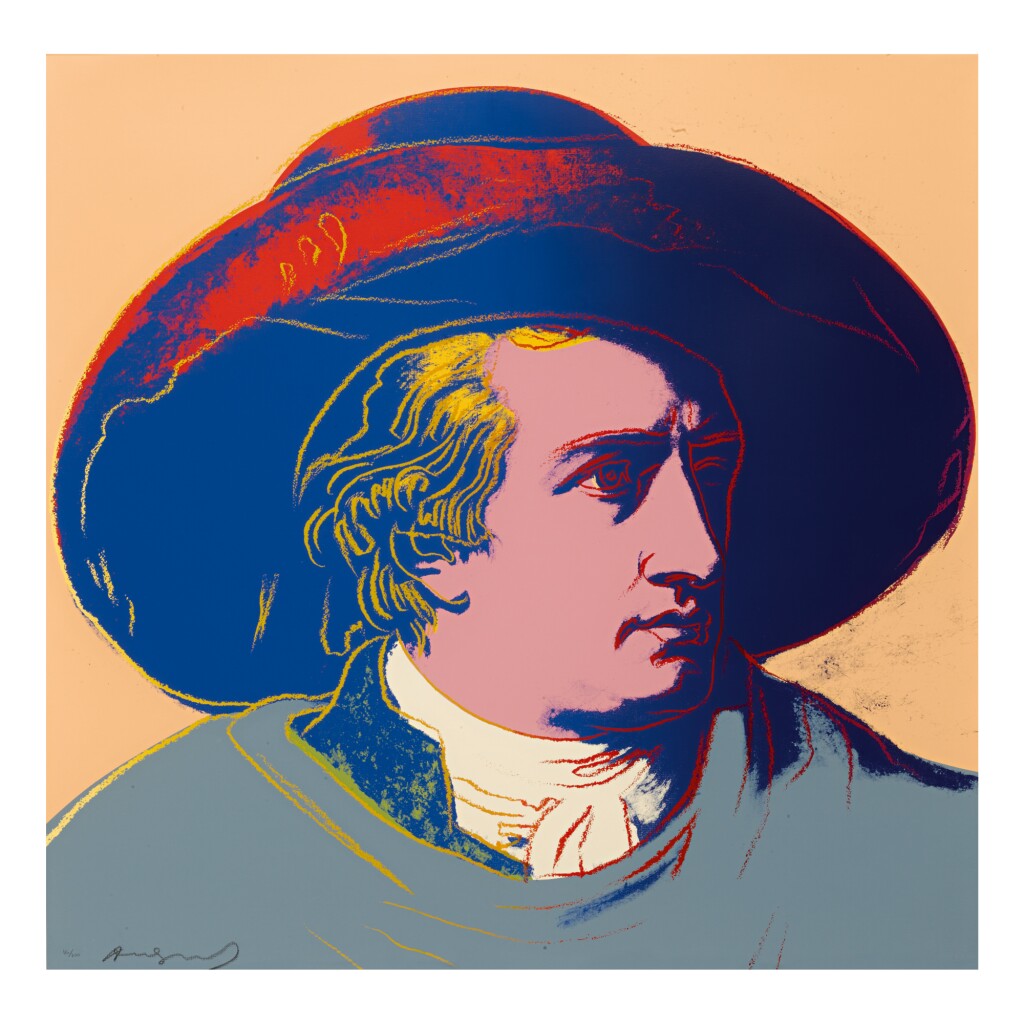
Goethe, 1982
Published in 1982, Andy Warhol’s Goethe marks the entry of the great German poet, playwright, novelist, natural scientist and theorist, statesman, theorist — in short, polymath — Johann Wolfgang von Goethe into Warhol’s celebrity canon. In keeping with his unfailing sense for selecting the iconic, unforgettable image, Warhol chose a detail of arguably the most famous portrait of the man, Goethe in the Roman Campagna by Johann Heinrich Wilhelm Tischbein , as his source. Warhol focused on the head, which is turned to the side and lent a dark halo by the broad-brimmed hat, as the writer looks off into the distance, away from the viewer. It is rare for Warhol to have decided on a portrait in profile for his ‘celebrity images’, yet clearly deliberate, given the large number of frontal portraits of Goethe he could have chosen from. The wistfully Romantic spirit of the subject’s attire and pose is flagrantly and enthusiastically disrupted by the bright colors and the silkscreen process of Warhol’s own age and artistic practice.
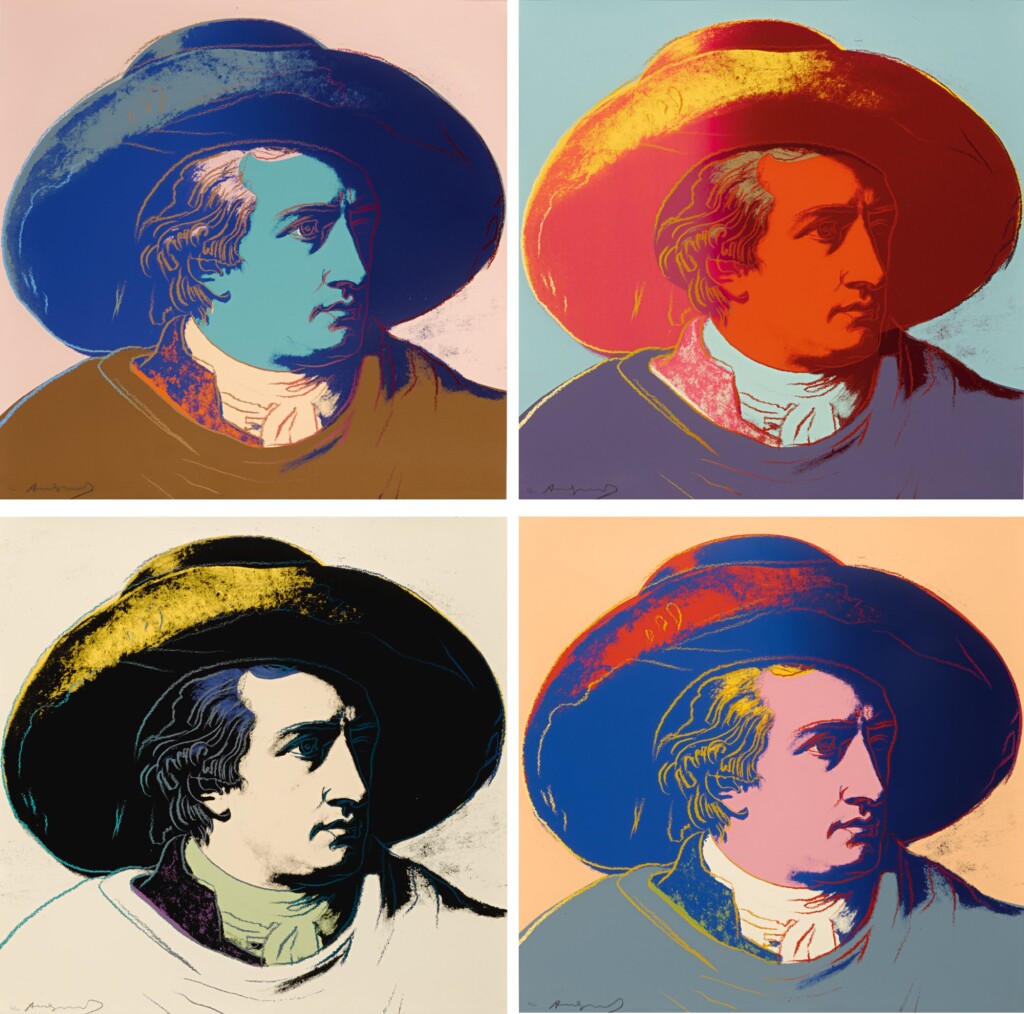
ANDY WARHOL
Goethe, 1982
Portfolio of four screen-prints in colors on Lenox Museum Board
Sheet: 38×38 inches (96.5 x 96.5 cm)
Edition: 100 + 20 AP + 5 PP + 2 EP + 6 HC
Trial Proofs: 15 individual TP not in portfolios
Literature: Feldman & Schellmann II.270-273
Goethe #1 (F&S II.270)
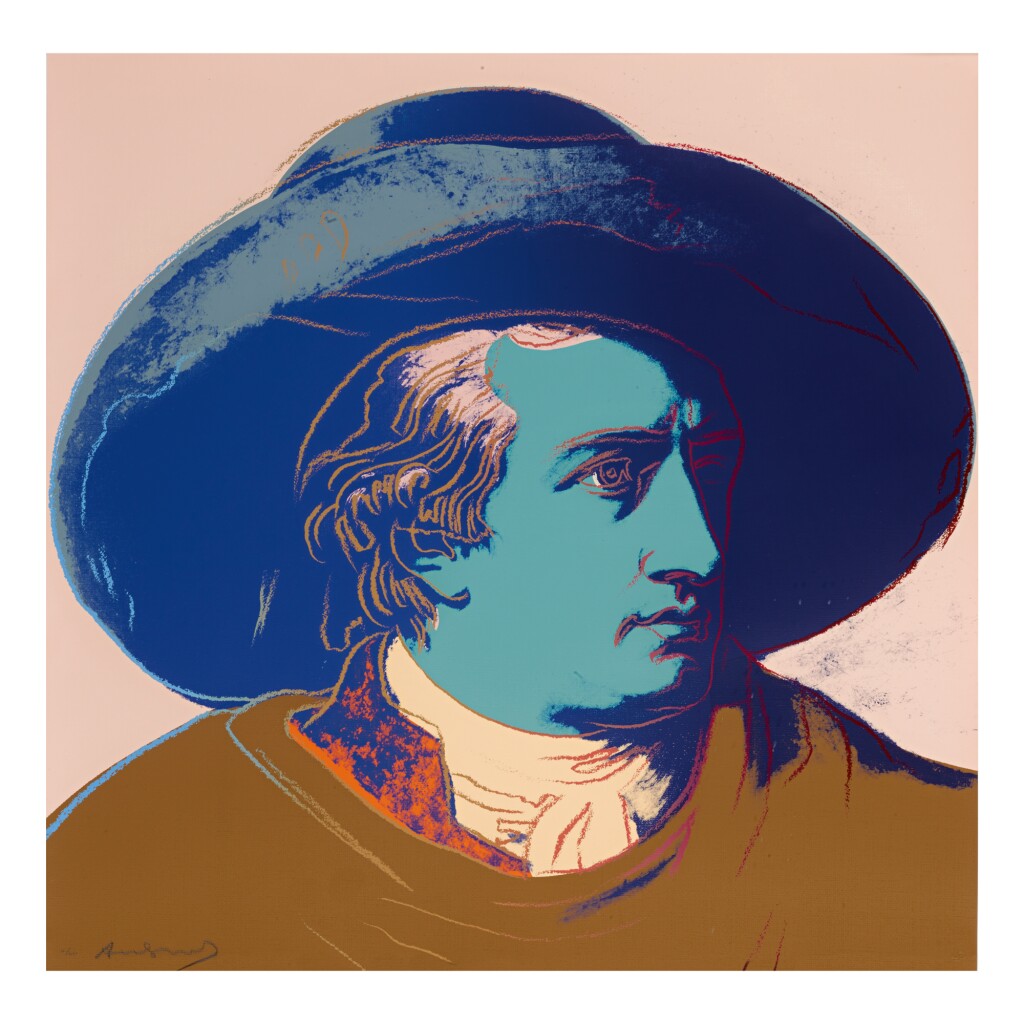
Goethe #2 (F&S II.271)
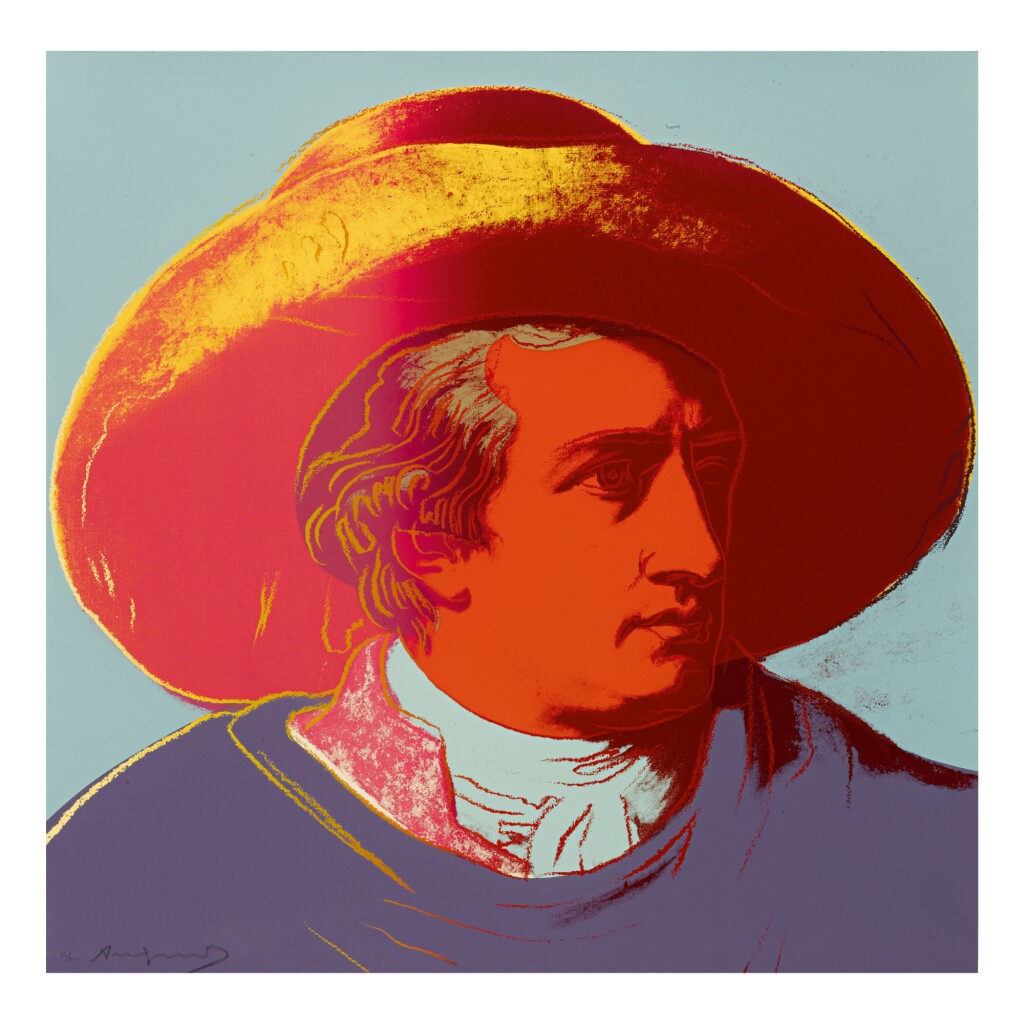
Goethe #3 (F&S II.272)
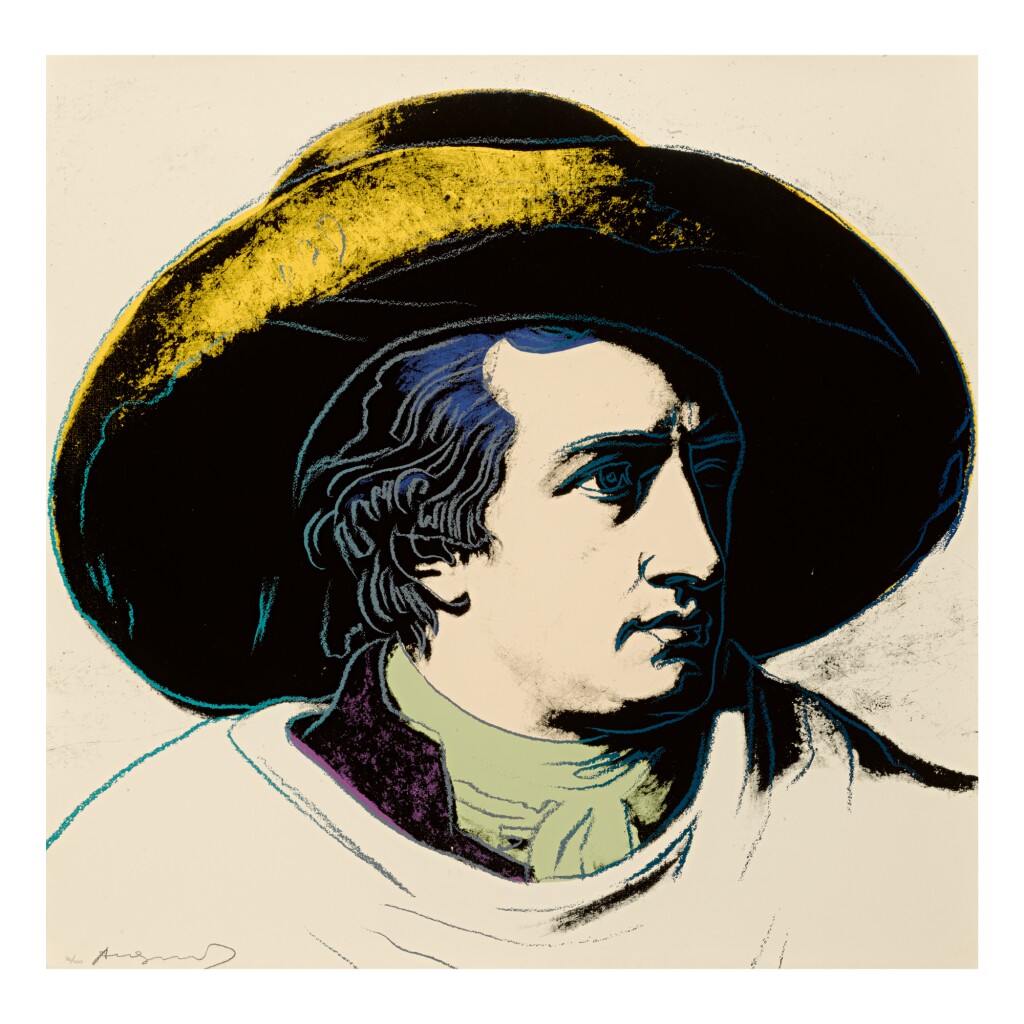
Goethe #4 (F&S II.273)
Dollar Signs, 1982
By painting a symbol of money, Warhol shamelessly exposes the business of art as a commodity, making an explicit link between the money gained from a work of art and the work of art itself. In this print, Warhol experiments with color, sketched shading and gestural lines. In doing this, he transforms the international symbol of US currency into a 20th century icon of Pop Art. Andy Warhol released numerous Dollar Signs prints, spread into 4 main series, differing by the number of Dollar Signs represented on each print. Each dollar sign in is rendered in a different color composition of bold, contrasting colors against a blocked backdrop. The signs are all unique in composition and color, with colored layering adding to the print’s vibrant feel and multi-layered aesthetic.
1. $ (1)
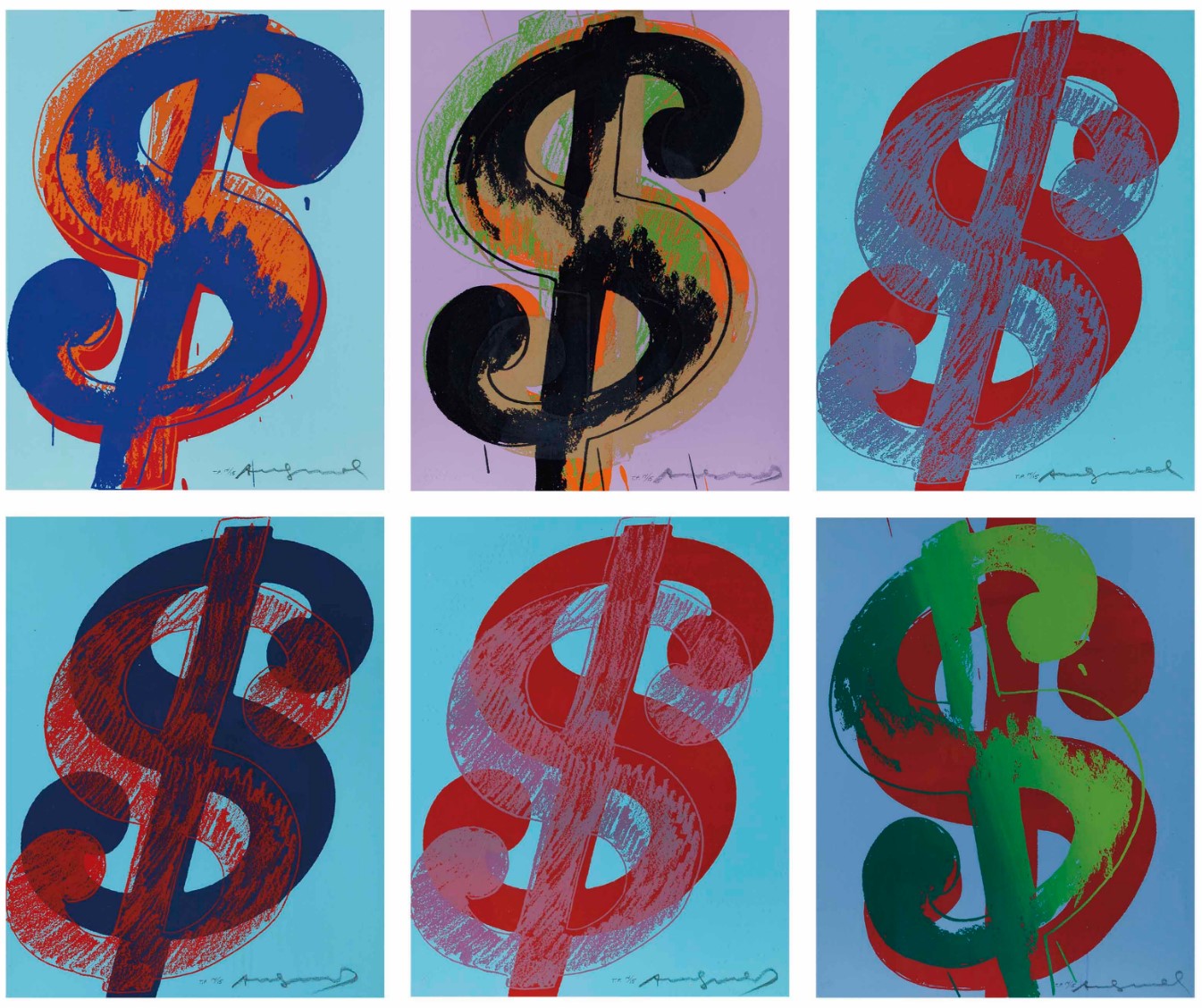
$ (1), 1982
Portfolio of 6 screen-prints in colors on Lenox Museum Board
Sheet: 19.7 x 15.6 inches (50.2 x 39.7 cm)
Edition: 60 + 10 AP + 3 PP + 15 TP
Literature: Feldman & Schellmann II.274-279
Portfolio are assembled in mixed variations. Each print is unique
2. $ (4)
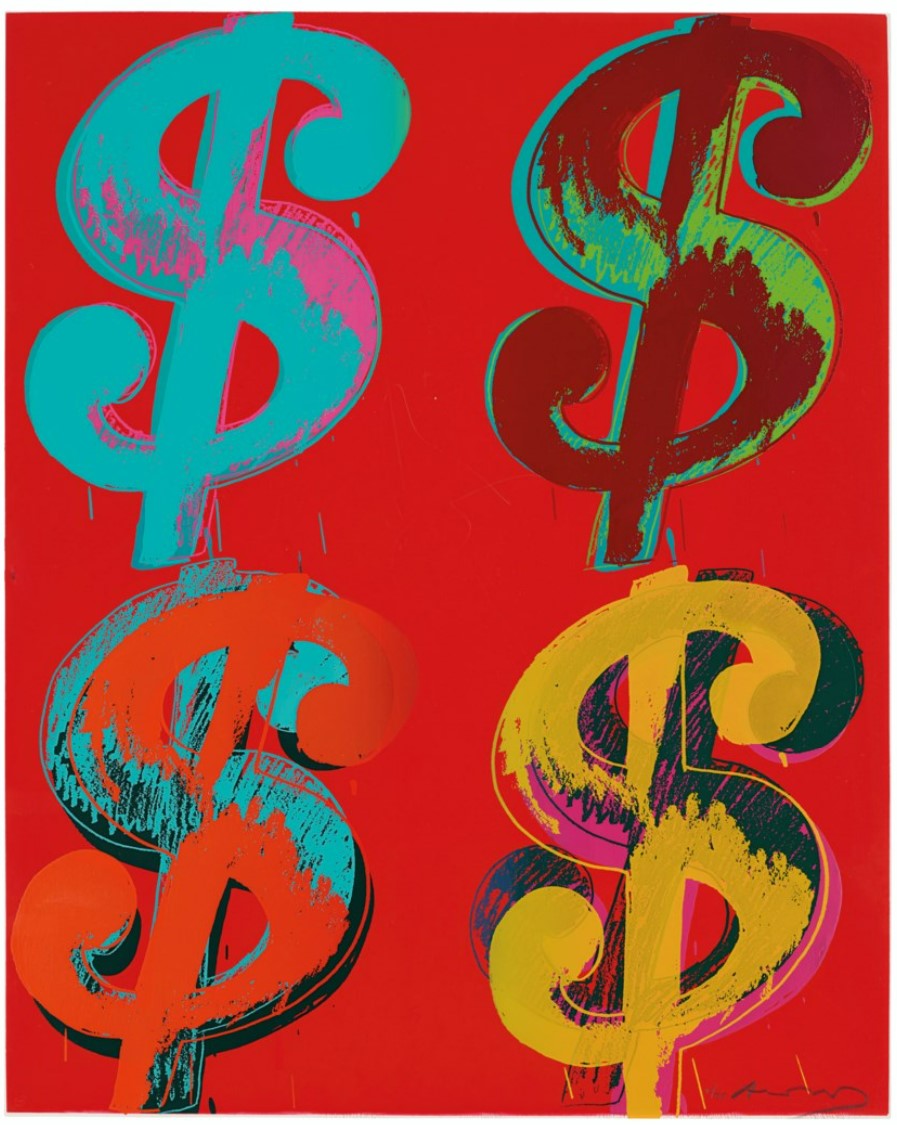
$ (4), 1982
Portfolio of 2 screen-prints in colors on Lenox Museum Board
Sheet: 40×32 inches (101.6 x 81.3 cm)
Edition: 35 + 10 AP + 2 PP
Literature: Feldman & Schellmann II.281-282
Portfolio are assembled in mixed variations. Each print is unique
3. $ (Quadrant)

$ (Quadrant), 1982
Portfolio of 2 screen-prints in colors on Lenox Museum Board
Sheet: 40×32 inches (101.6 x 81.3 cm)
Edition: 60 + 10 AP + 3 PP
Literature: Feldman & Schellmann II.283-284
Portfolio are assembled in mixed variations. Each print is unique
4. $ (9)

$ (9), 1982
Portfolio of 2 screen-prints in colors on Lenox Museum Board
Sheet: 40×32 inches (101.6 x 81.3 cm)
Edition: 35 + 10 AP + 2 PP
Literature: Feldman & Schellmann II.285-286
Portfolios are assembled in mixed variations. Each print is unique
Endangered Species, 1983
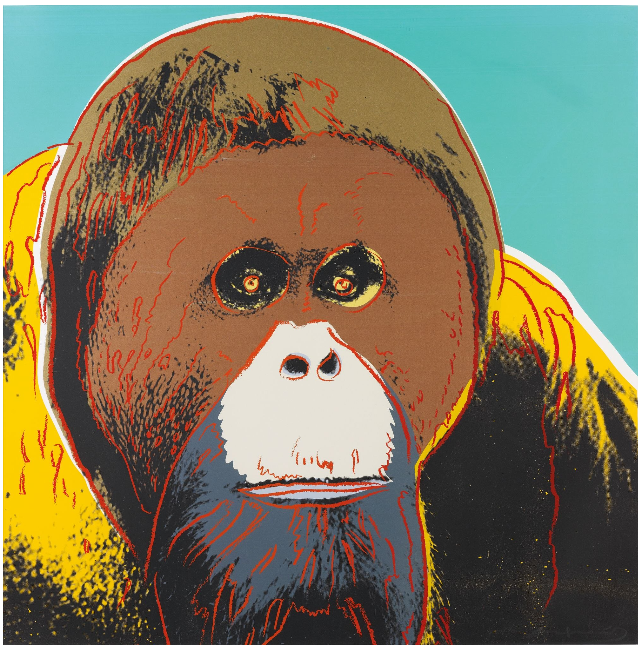
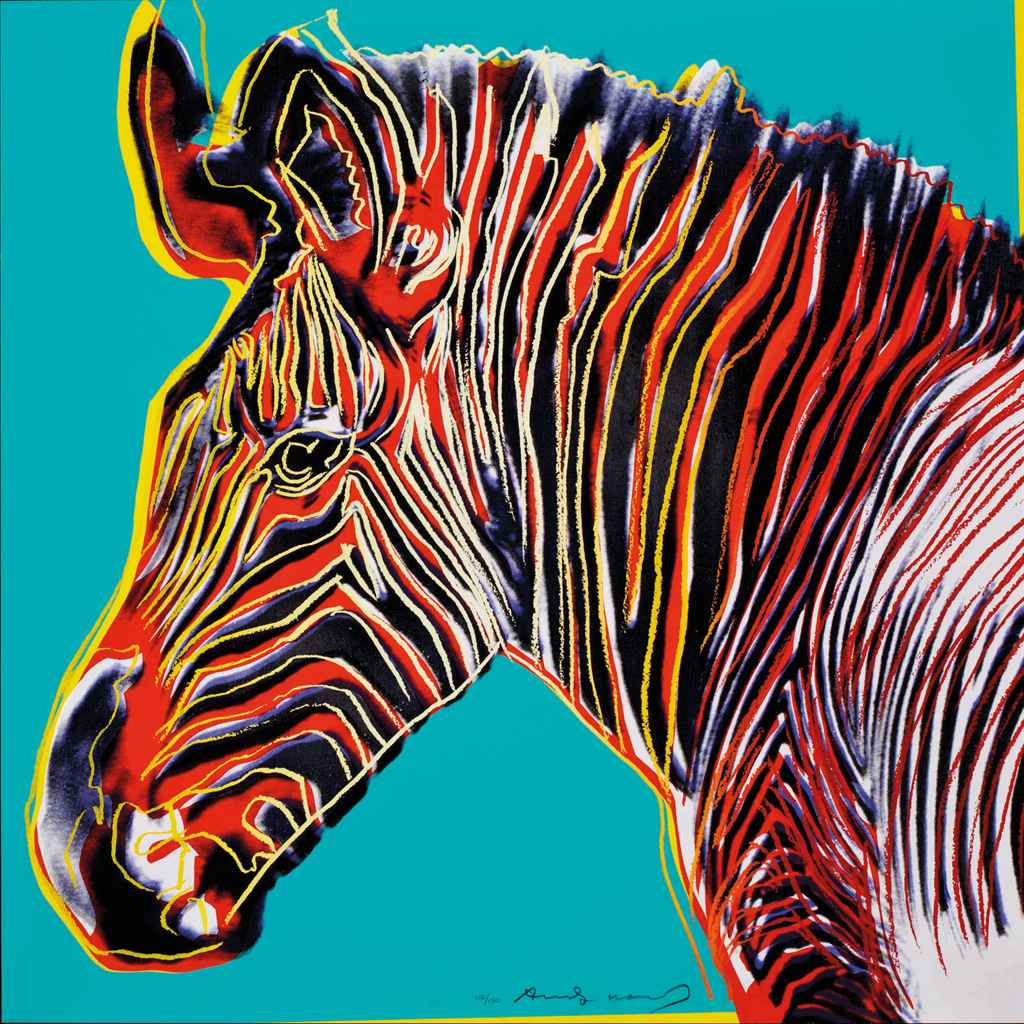
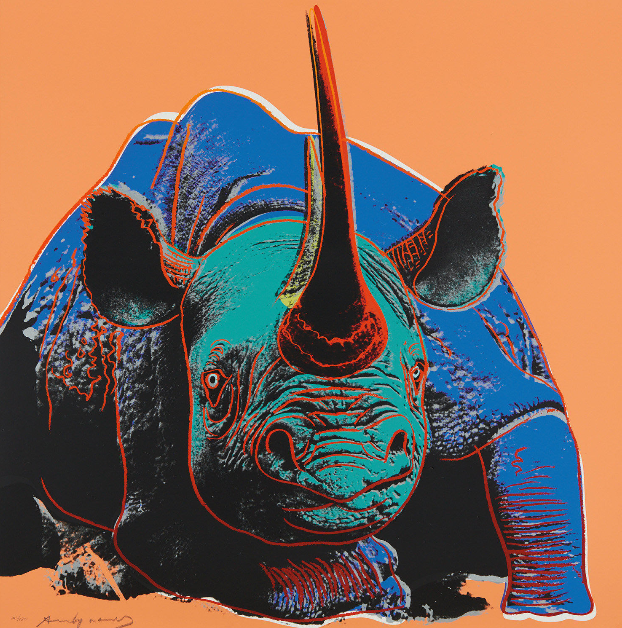
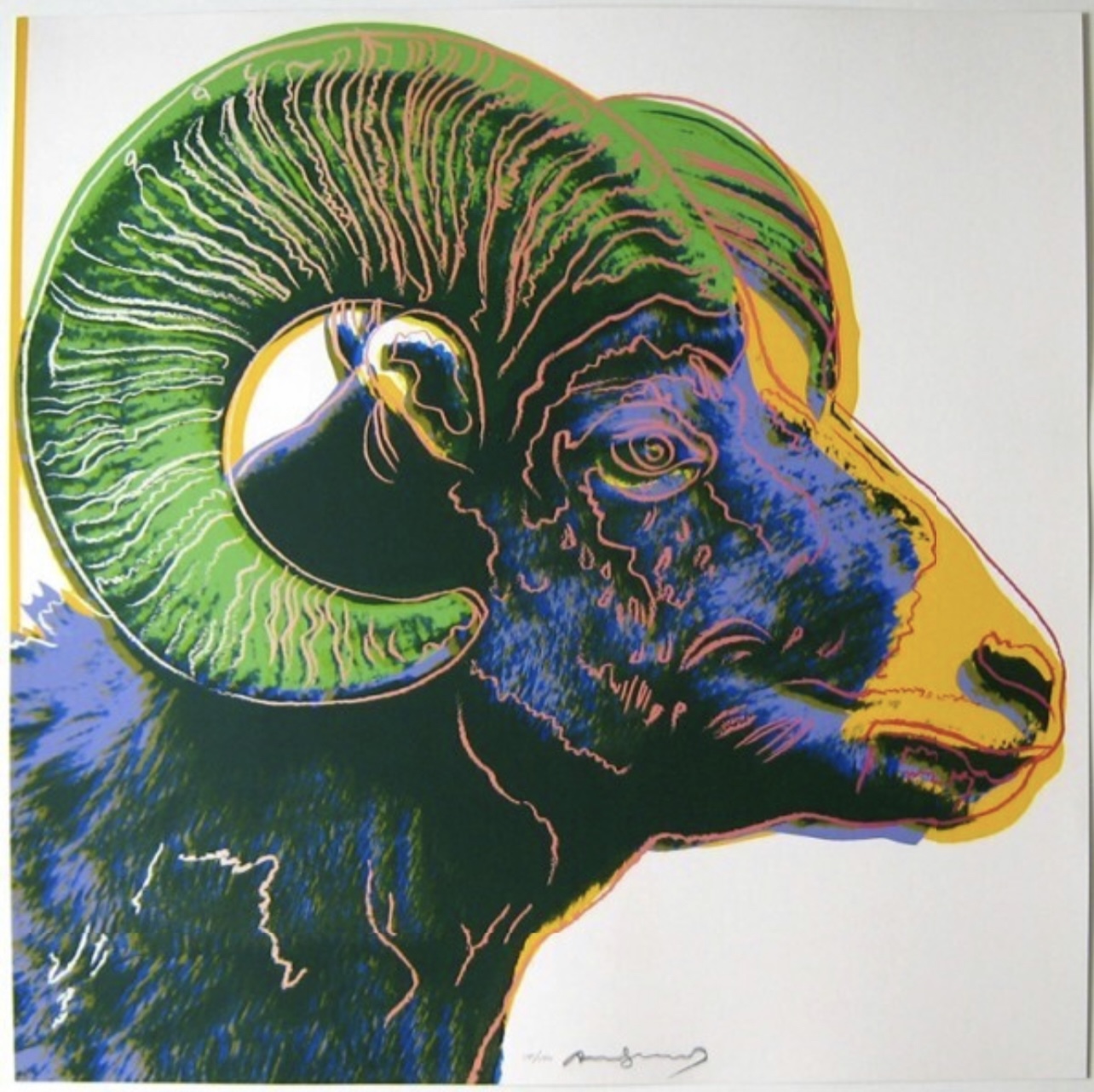
In 1983, Andy Warhol was commissioned to do a series with an environmental and humanitarian intent, following a wave of awareness caused by the enactment of the Endangered Species Act of 1973, which defined endangered species as a humanitarian issue. Warhol, known as a lover of animals, was approached by environmental activists and philanthropists Ronald and Frayda Feldman to execute the series with support from their art gallery in New York. The Endangered Species by Andy Warhol is a group of 10 paintings focusing on a single animal from the endangered species list and resulted in a portfolio of 10 screen-prints. Warhol portrayed those animals with his signature style, equating them with his famed subjects of the past and hence drawing attention to their individual importance and critical condition. Many of those sympathetic to environmental causes were moved by the global selection of Warhol’s animals, and the intent to raise awareness on preserving habitats.
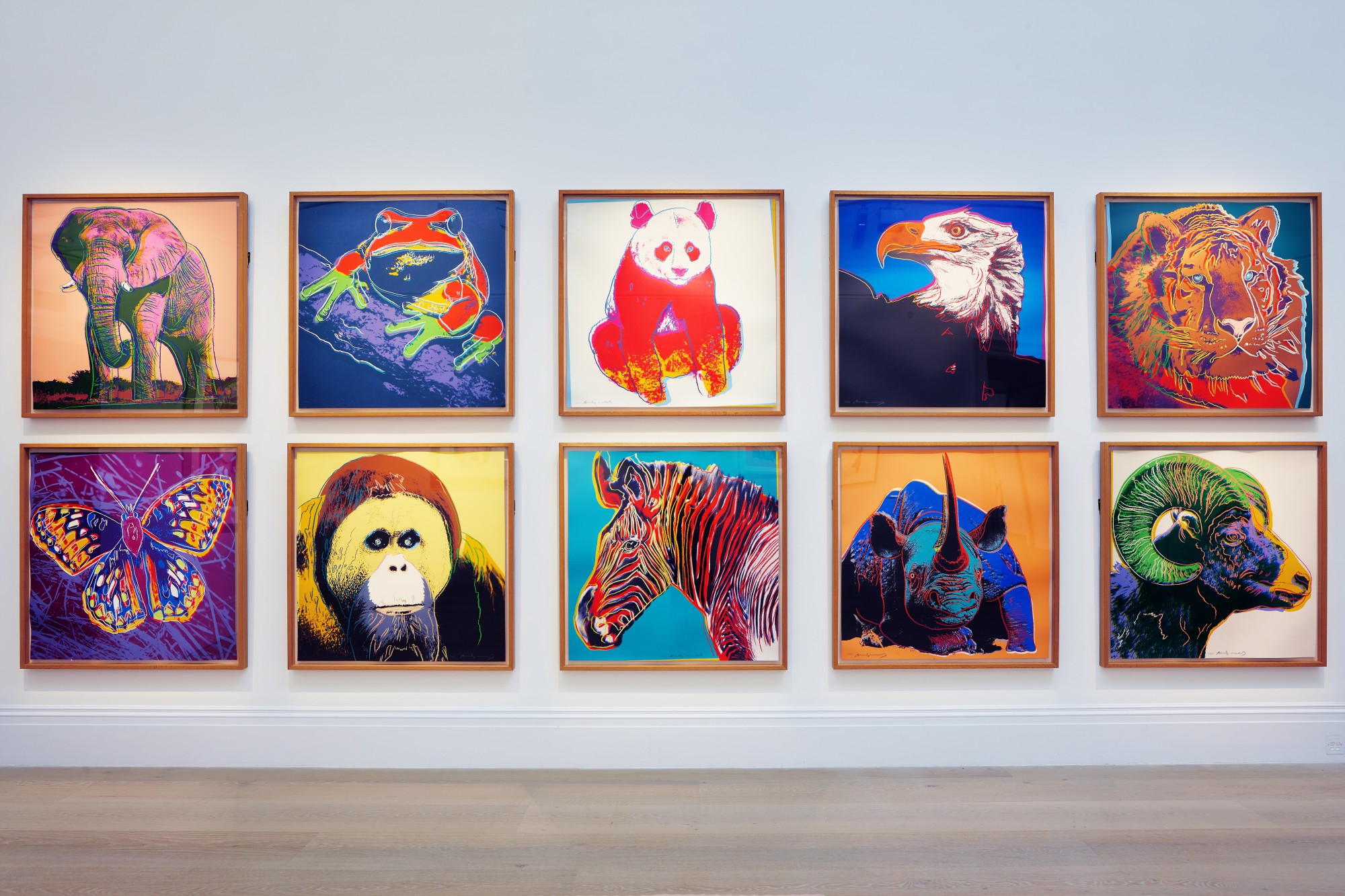
ANDY WARHOL
Endangered Species, 1983
The complete portfolio of 10 screen-prints in colors on Lenox Museum Board
Sheet: 38×38 inches (96.5 x 96.5 cm)
Edition: 150 + 30 AP + 5 PP + 5 EP + 3 HC + 10 numbered in Roman numerals
Trial Proofs: 30 TP with unique color combination
Catalogue Raisonne: Feldman & Schellmann II.293-302
1. African Elephant (F&S II.293)

2. Pine Barrens Tree Frog (F&S II.294)

3. Giant Panda (F&S II.295)
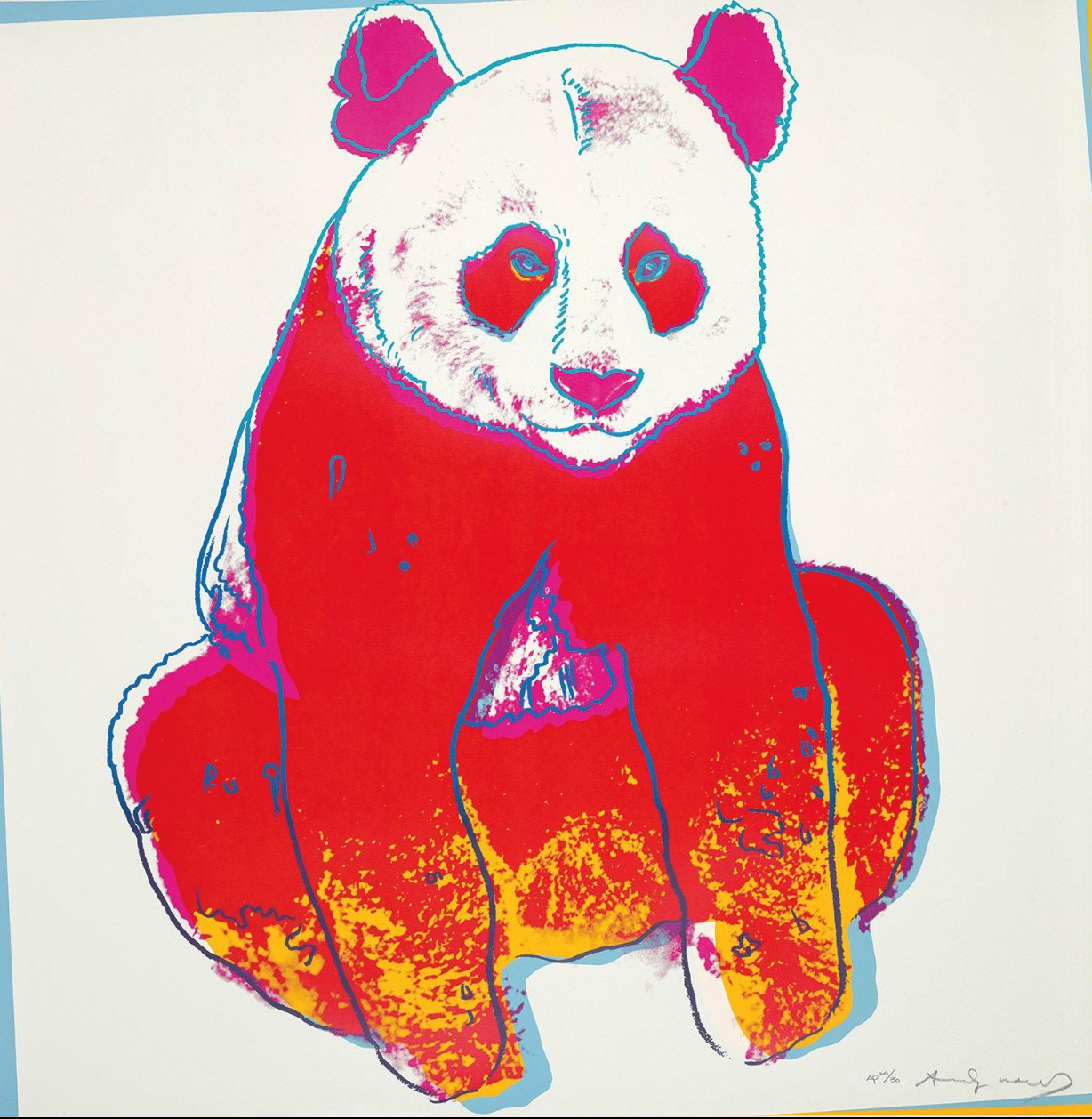
4. Bald Eagle (F&S II.296)
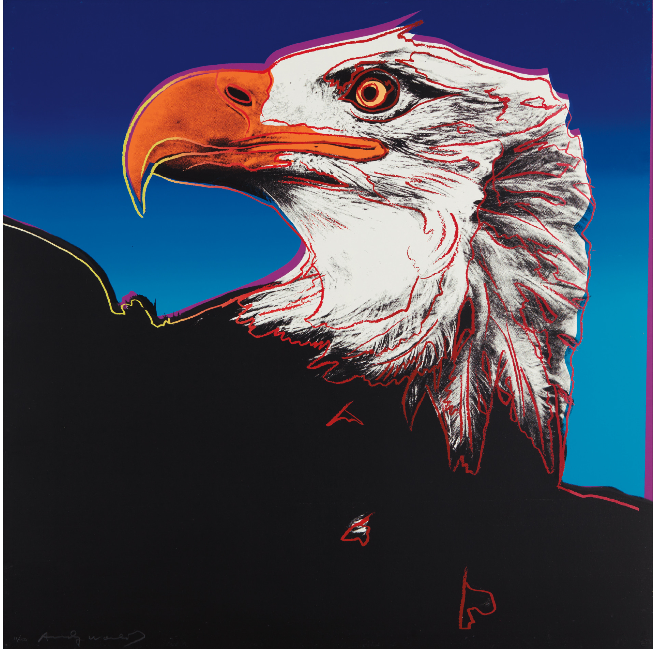
5. Siberian Tiger (F&S II.297)
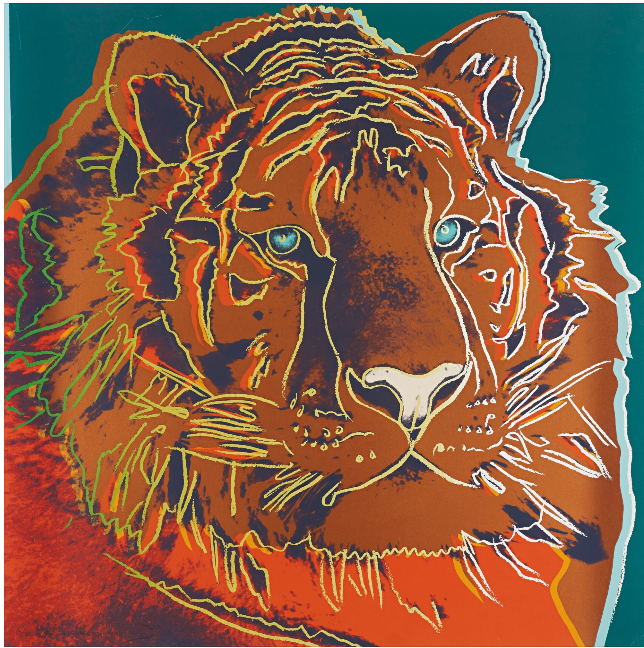
6. San Francisco Silverspot (F&S II.298)

7. Orangutan (F&S II.299)
8. Grevy’s Zebra (F&S II.300)
9. Black Rhinoceros (F&S II.301)
10. Bighorn Ram (F&S II.302)
Kiku, 1983
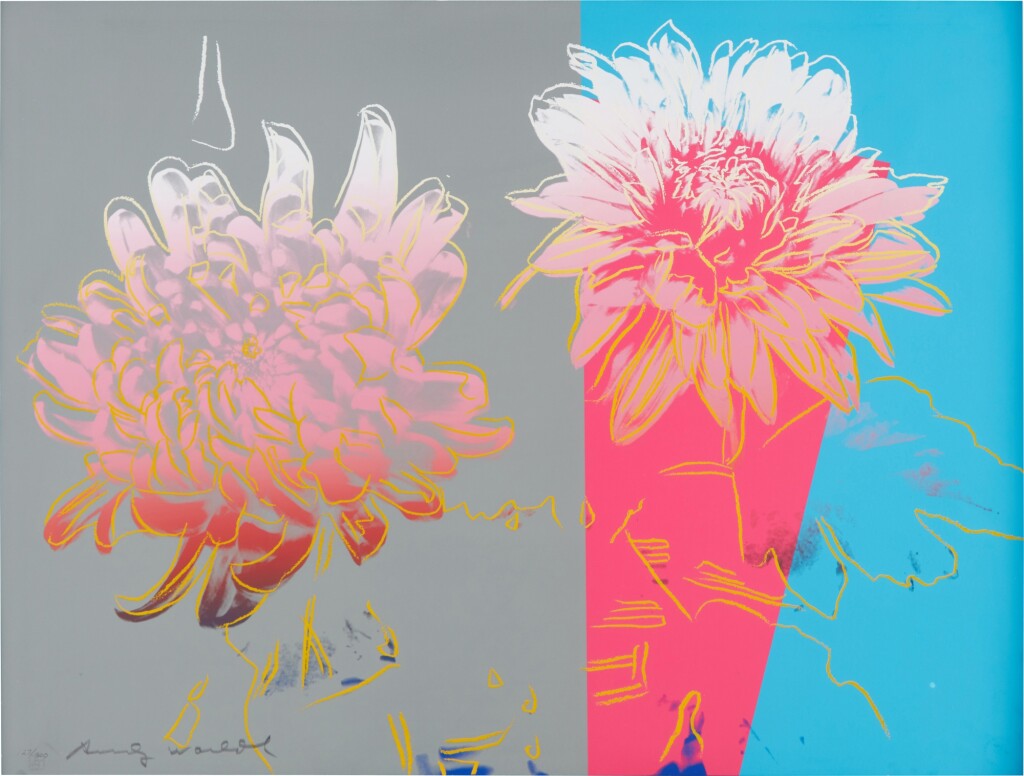
Named from the Japanese word for Chrysanthemum, Kiku was commissioned from Warhol in 1983. The portfolio is based on the iconography of the Royal House of Japan. Along with the Love series, Kiku is one of only two series by Warhol published in Japan. Illustrative of the extensive experimental quality of the Factory proofing process, each unique color combination feels vibrant and complementary. Kiku highlights Warhol’s confidence with color by this period.
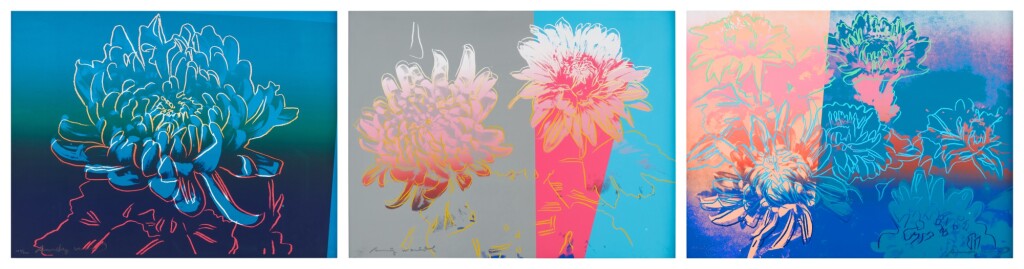
ANDY WARHOL
Kiku, 1983
The complete set of three screenprints in colors on Rives BFK paper
Sheet: 19 5/8 x 26 inches (50×66 cm)
Edition: 300 + 30 AP + 5 PP +5 EP + 15/17/18 HC
Literature: Feldman & Schellmann II.307-309
Kiku (F&S II.307)

Kiku (F&S II.308)

Kiku (F&S II.309)
Ingrid Bergman, 1983
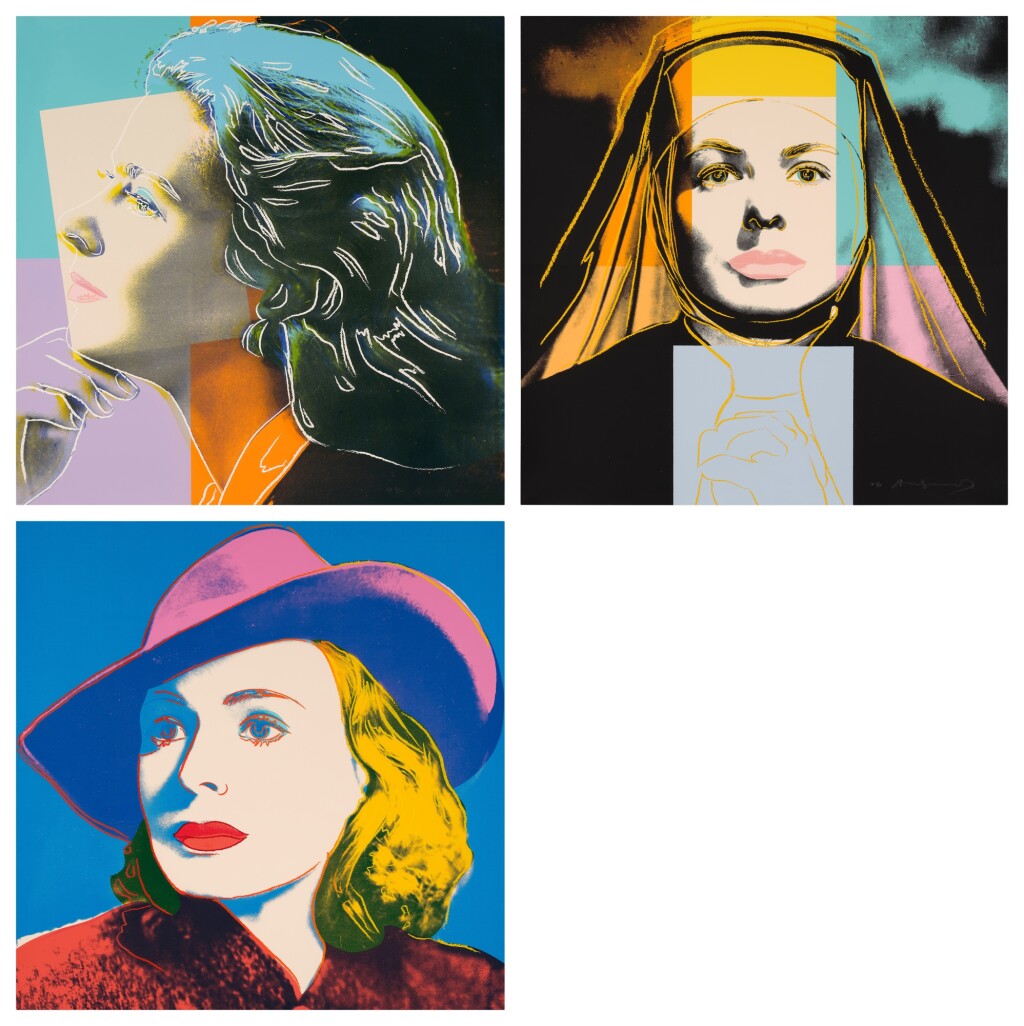
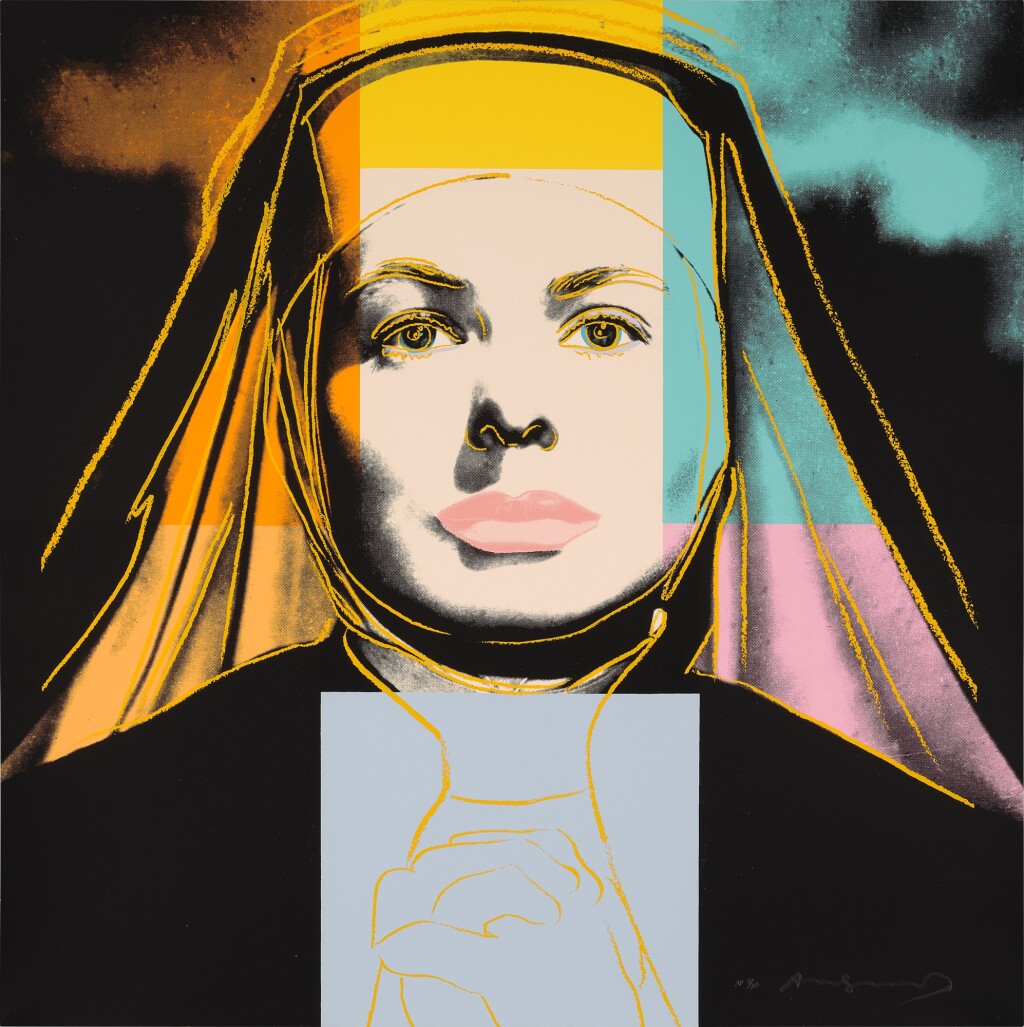
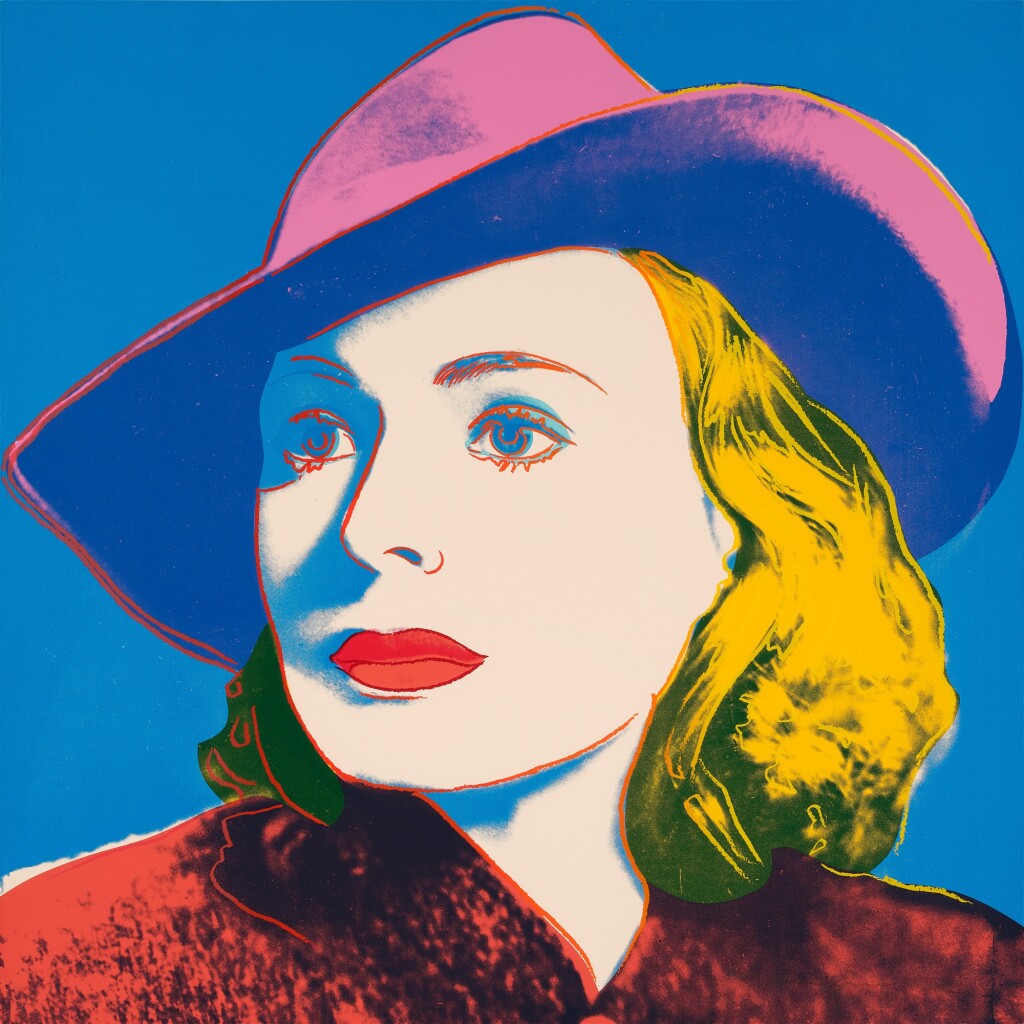
Andy Warhol created a series of three prints dedicated to Ingrid Bergman at the request of Galerie Börjeson, a Swedish gallery who later published the suite. This series showcases the artist’s enduring fascination with celebrity and the way in which fame could elevate a mere mortal to the status of goddess. Playing with the fact that these women’s faces – from Elizabeth Taylor to Marilyn to Ingrid Bergman – were available everywhere, in newspapers, on posters and on television. Warhol set about appropriating them for his own art, painting their portraits in an easily reproducible medium.
ANDY WARHOL
Ingrid Bergman, 1983
The complete set of three screen-prints in colors on Lenox Museum Board
Sheet: 38×38 inches (96.5 x 96.5 cm)
Edition: 250 + 20 AP + 5 PP + 30 HC
Trial Proofs: 30 TP in a unique color combination
Literature: Feldman & Schellmann II.313-315
1. Herself (F&S II.313)
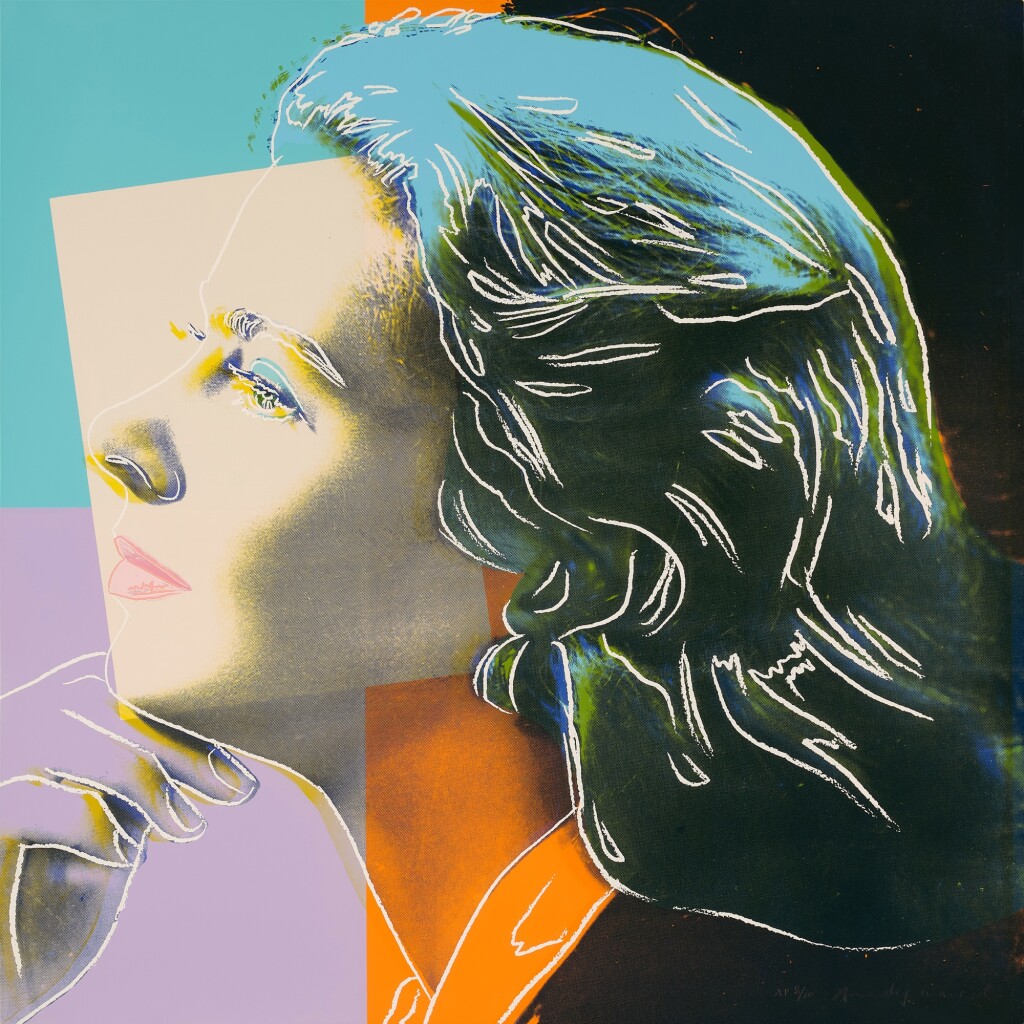
2. The Nun (F&S II.314)
3. With Hat (F&S II.315)
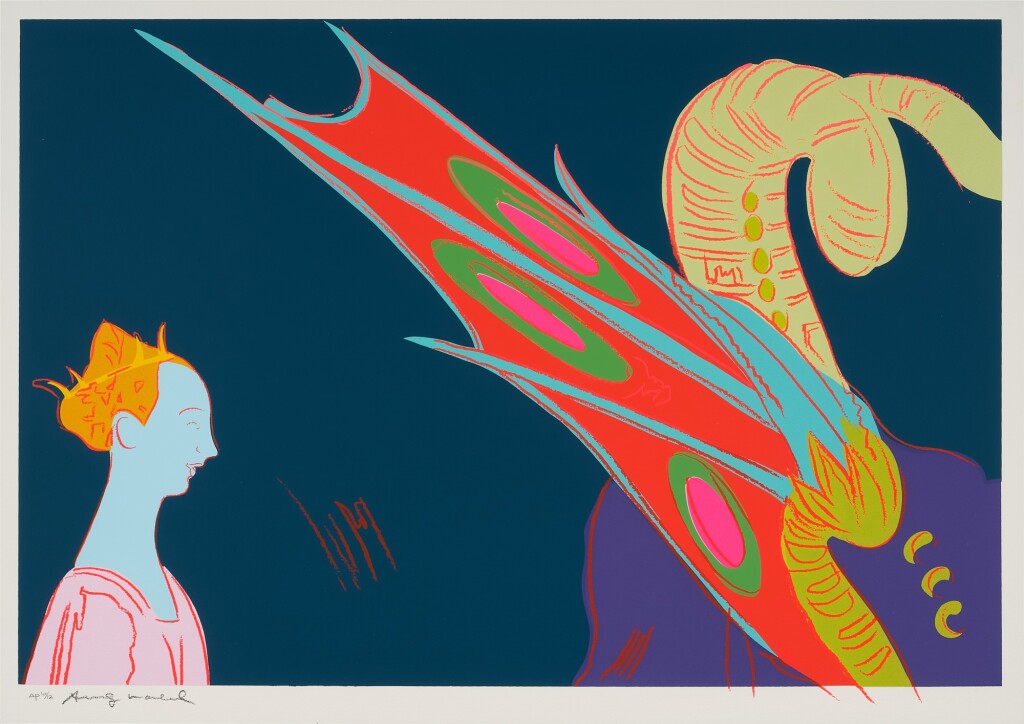
Details of Renaissance Paintings, 1984
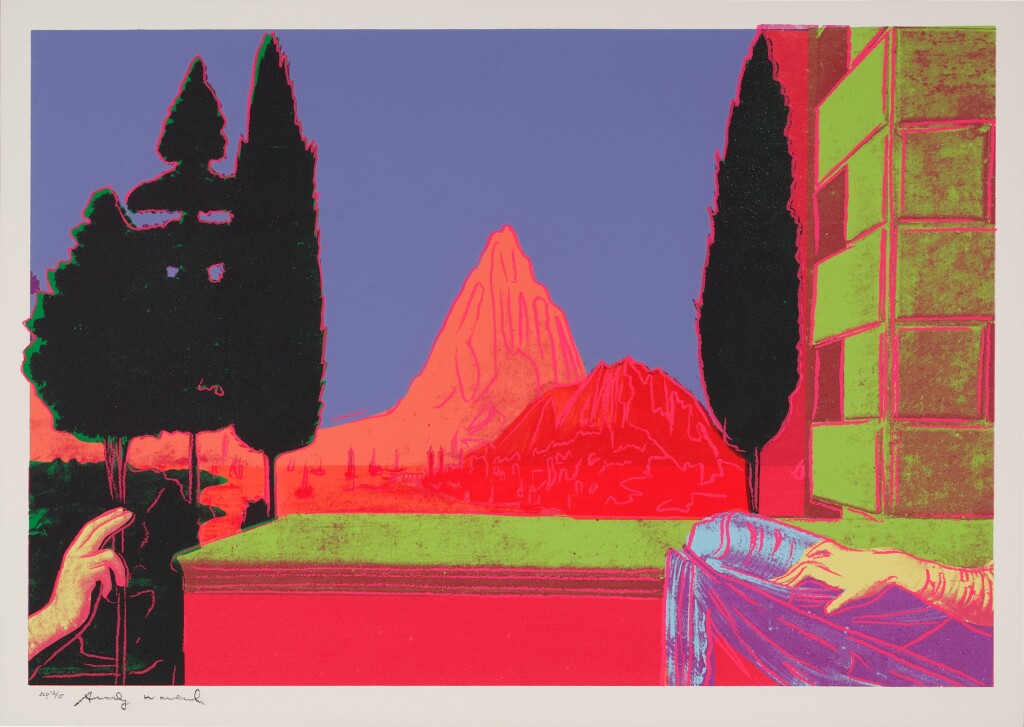
Warhol’s series, Details of Renaissance Paintings, renders masterworks of Italian Renaissance artists like Paolo Uccello, Leonardo da Vinci, and Sandro Botticelli in the twentieth-century medium of screen printing. This particular image retains the Quattrocento master’s palette of peachy flesh and a blue background but cools off the tones. After Warhol saw Leonardo da Vinci’s Mona Lisa in 1963, Warhol began his first experimentation with Renaissance masters. Two decades later, he returned to the subject with the eyes of a mature artist, making bolder compositional choices with cropping and overdrawing. In reproducing and reinventing these masterpieces, Warhol placed himself in the canon of greats.
1. Sandro Boticelli
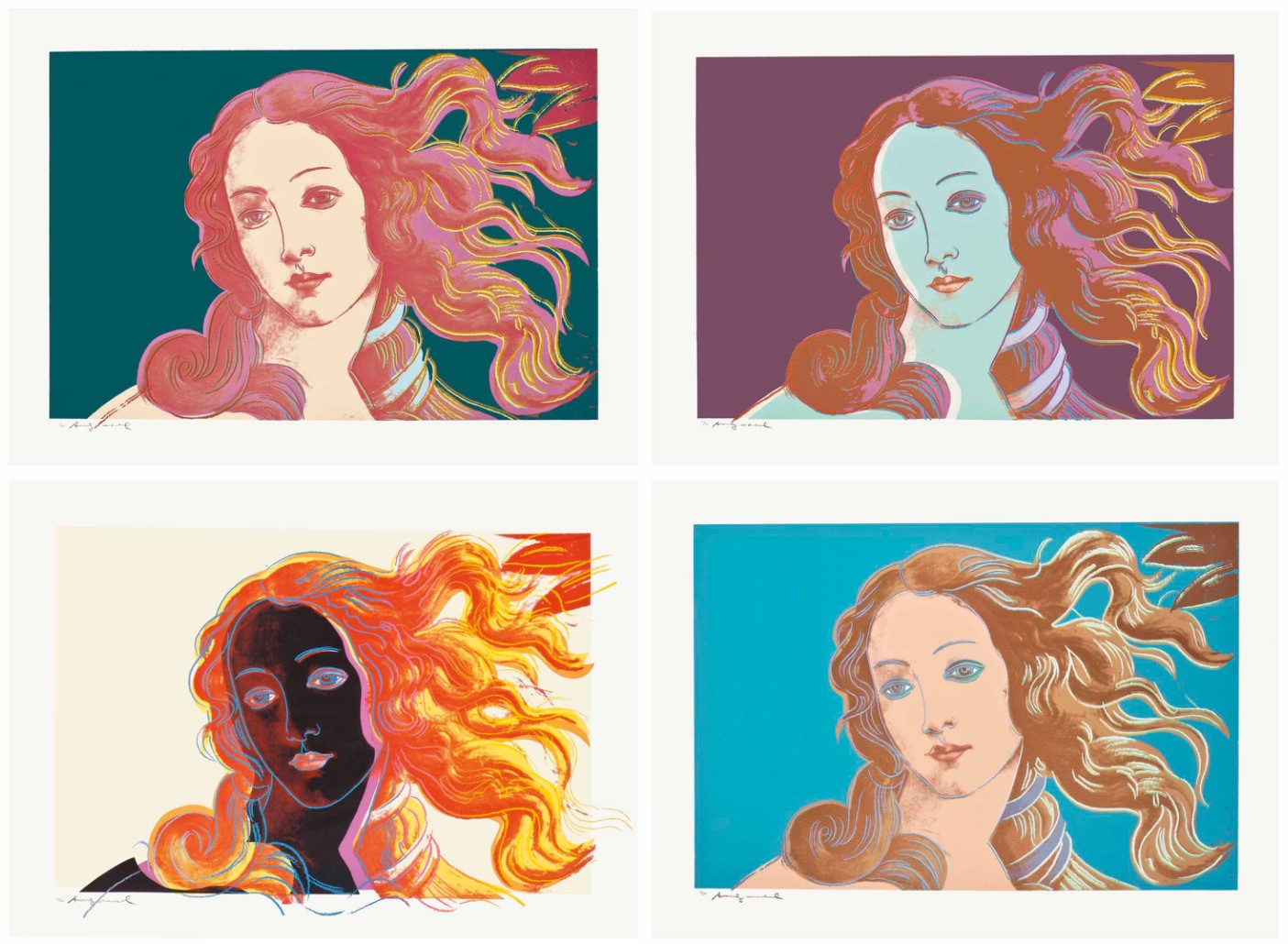
Details of Renaissance Paintings (Sandro Boticelli, Birth of Venus, 1482), 1984
Portfolio of 4 screen-prints in colors on Arches Aquarelle paper
Sheet: 32×44 inches (81.3 x 111.8 cm)
Edition: 70 + 20 AP + 5 PP + 5 HC
Trial Proofs: 36 TP Portfolios with unique color combination
Literature: Feldman & Schellmann II.316-319
1. Birth of Venus (F&S II.316)

2. Birth of Venus (F&S II.317)
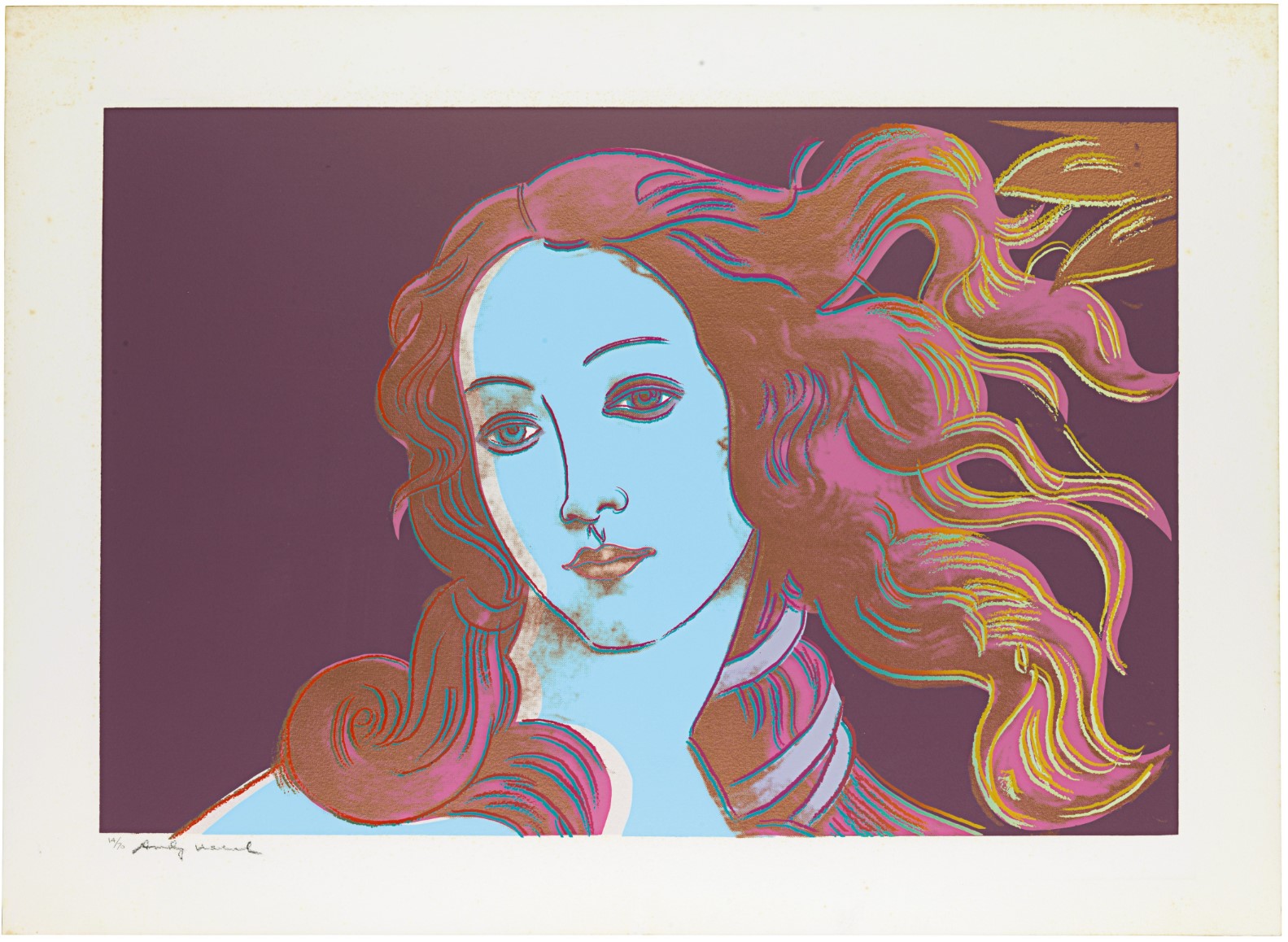
3. Birth of Venus (F&S II.318)
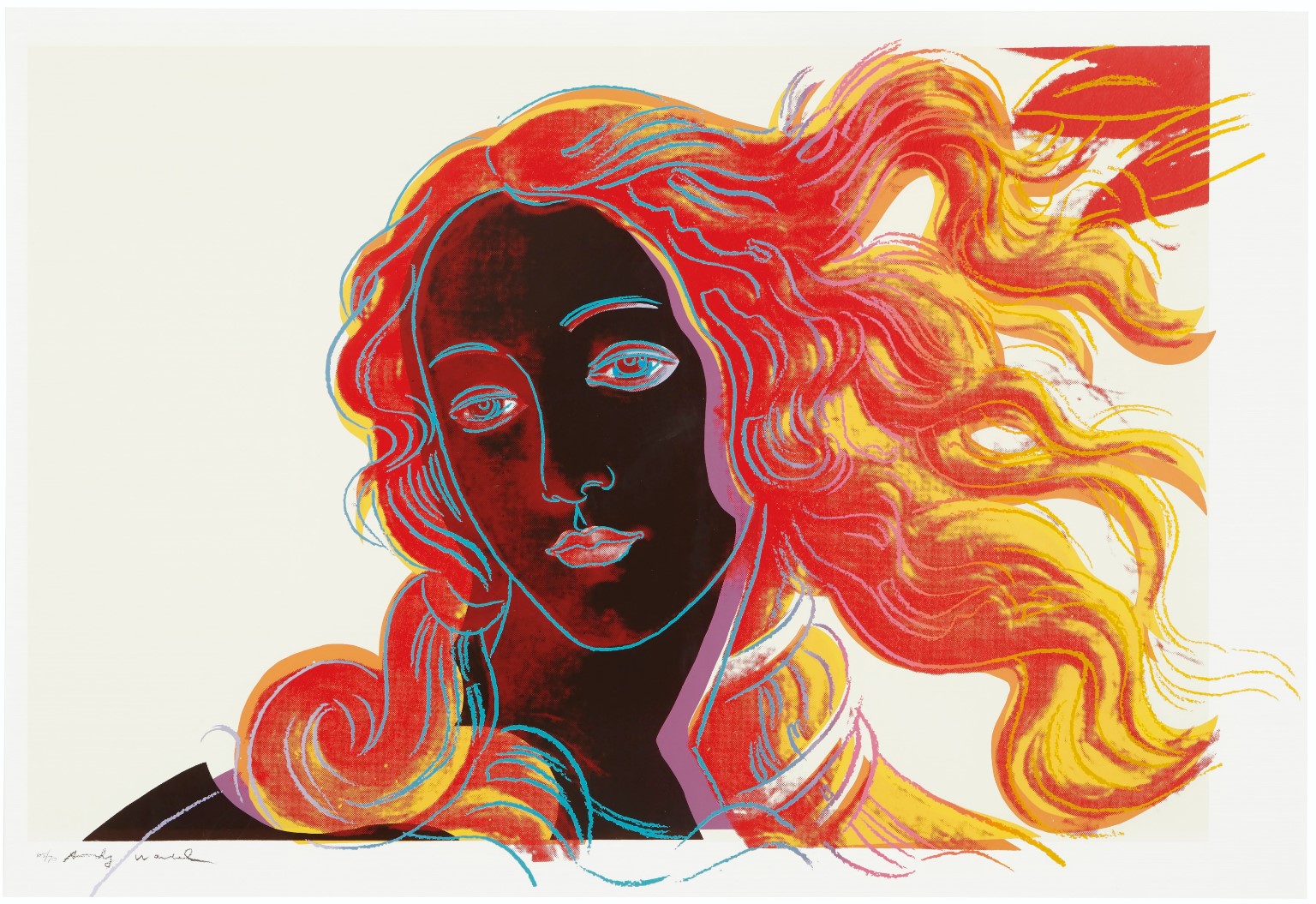
4. Birth of Venus (F&S II.319)

2. Leonardo da Vinci
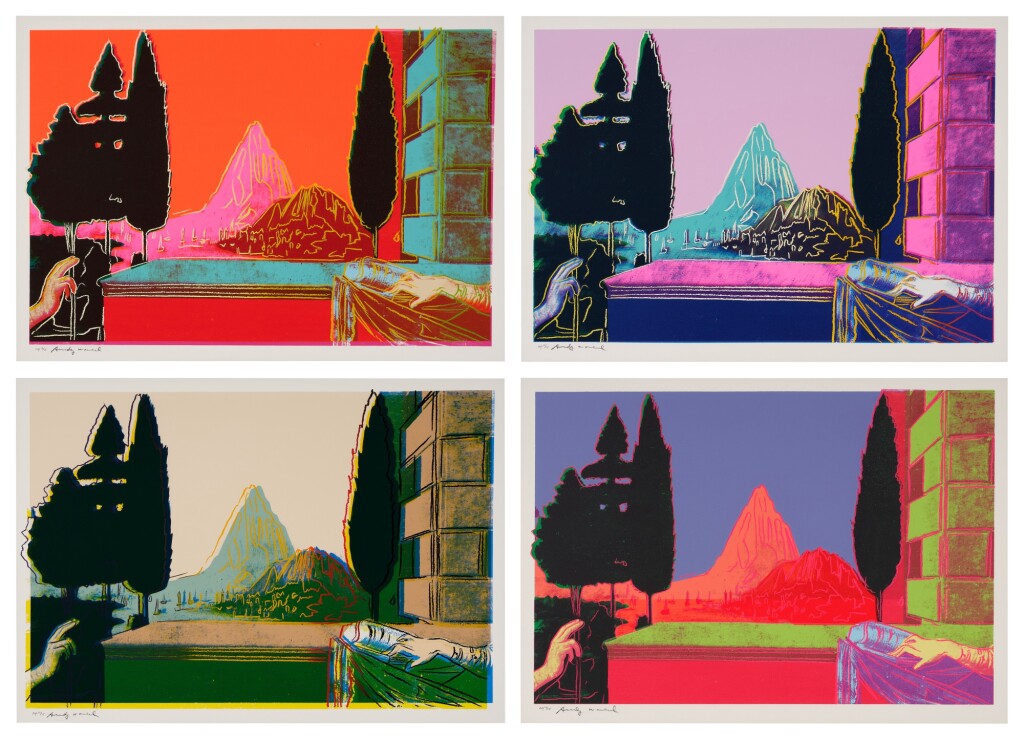 Details of Renaissance Paintings (Leonardo da Vinci, The Annunciation, 1472), 1984
Portfolio of 4 screen-prints in colors on Arches Aquarelle paper
Sheet: 32×44 inches (81.3 x 111.8 cm)
Edition: 60 + 15 AP + 5 PP + 4 HC
Trial Proofs: 36 TP Portfolios with unique color combination
Literature: Feldman & Schellmann II.320-323
1. The Annunciation (F&S II.320)
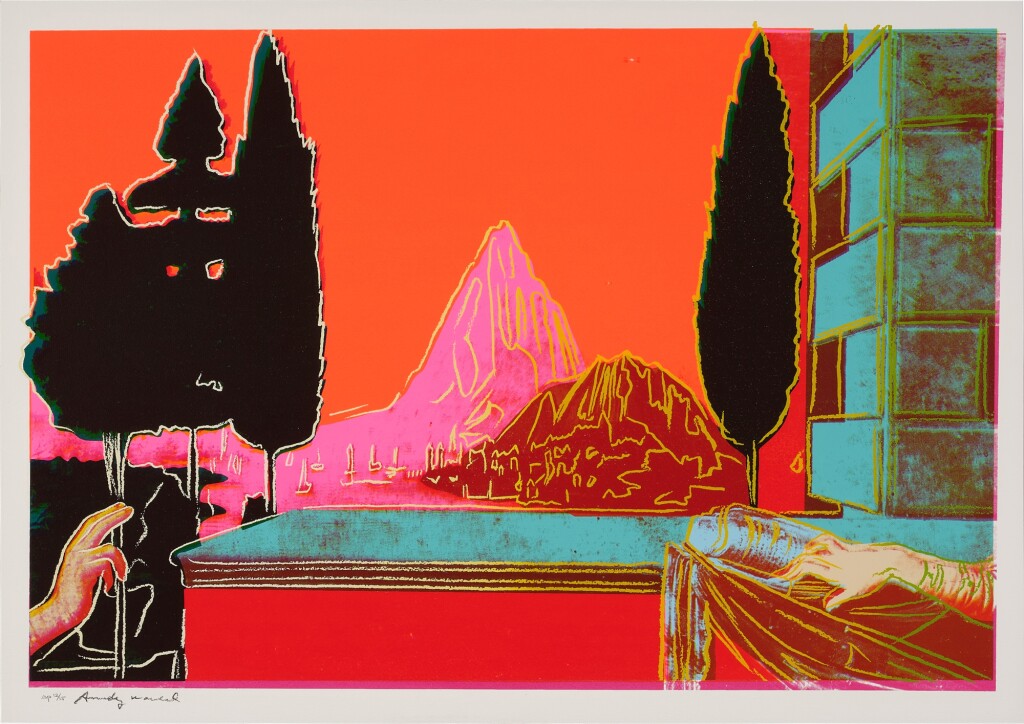
2. The Annunciation (F&S II.321)
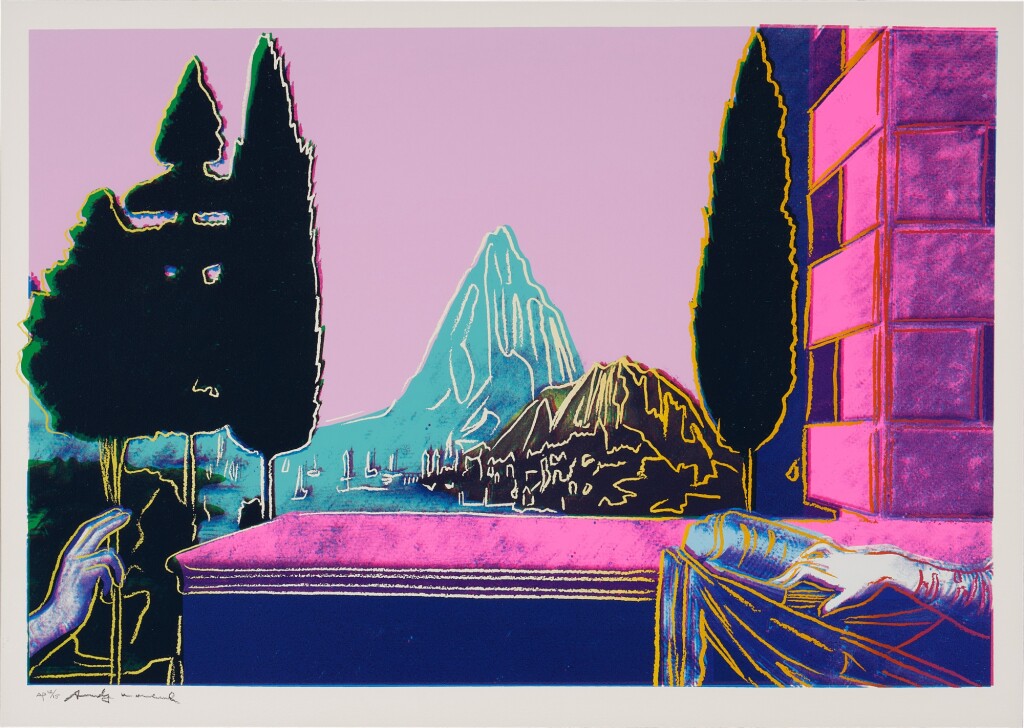
3. The Annunciation (F&S II.322)
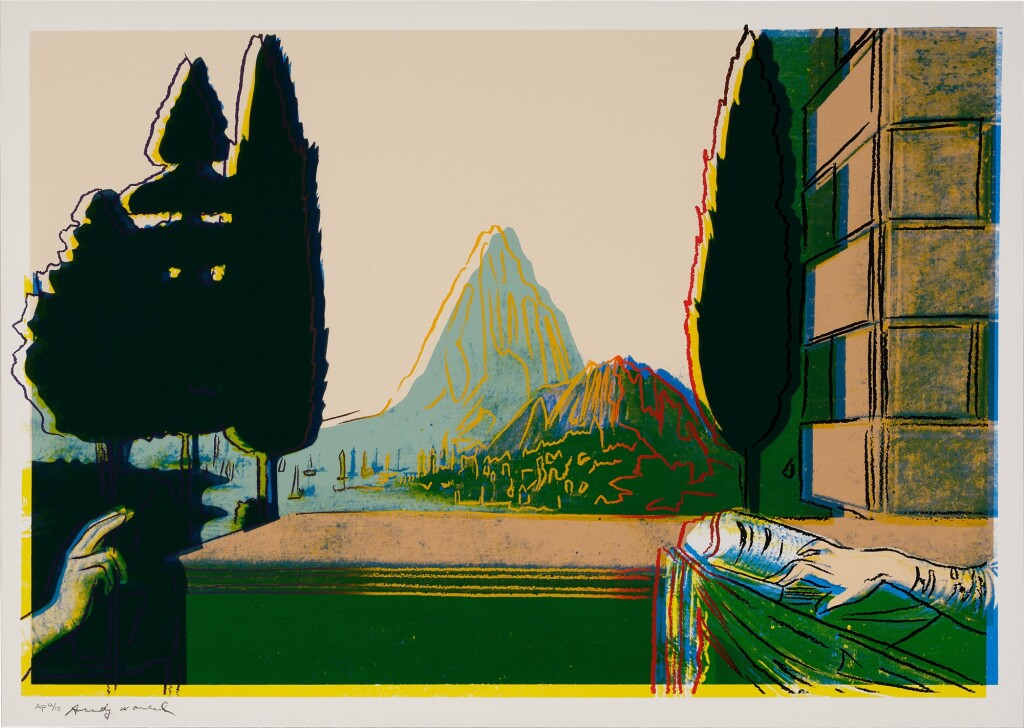
4. The Annunciation (F&S II.323)
3. Paolo Uccello
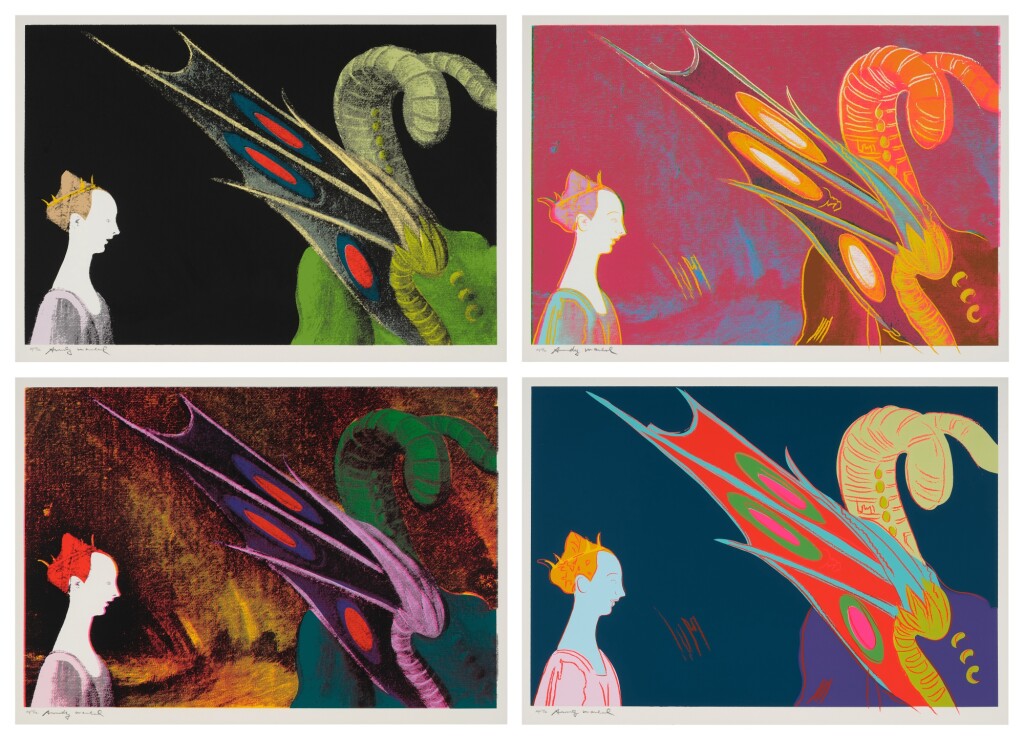
Details of Renaissance Paintings (Paolo Uccello, St. George and the Dragon, 1460), 1984
Portfolio of 4 screen-prints in colors on Arches Aquarelle paper
Sheet: 32×44 inches (81.3 x 111.8 cm)
Edition: 50 + 12 AP + 5 PP + 4 HC
Trial Proofs: 36 TP Portfolios with unique color combination
Literature: Feldman & Schellmann II.324-327
1. St. George and the Dragon (F&S II.324)
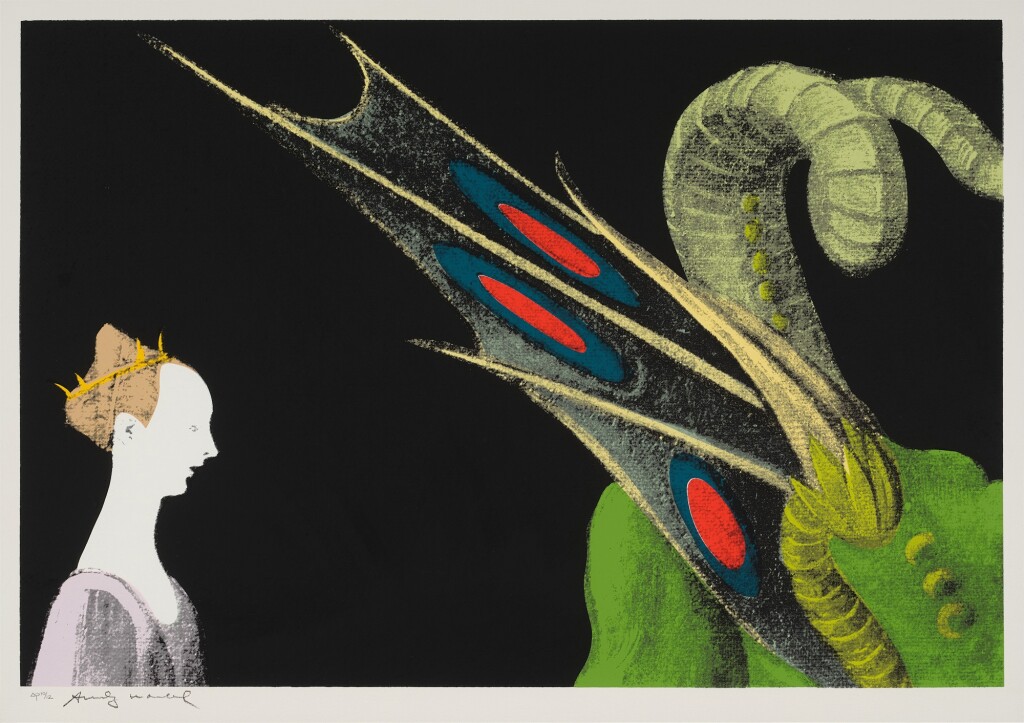
2. St. George and the Dragon (F&S II.325)
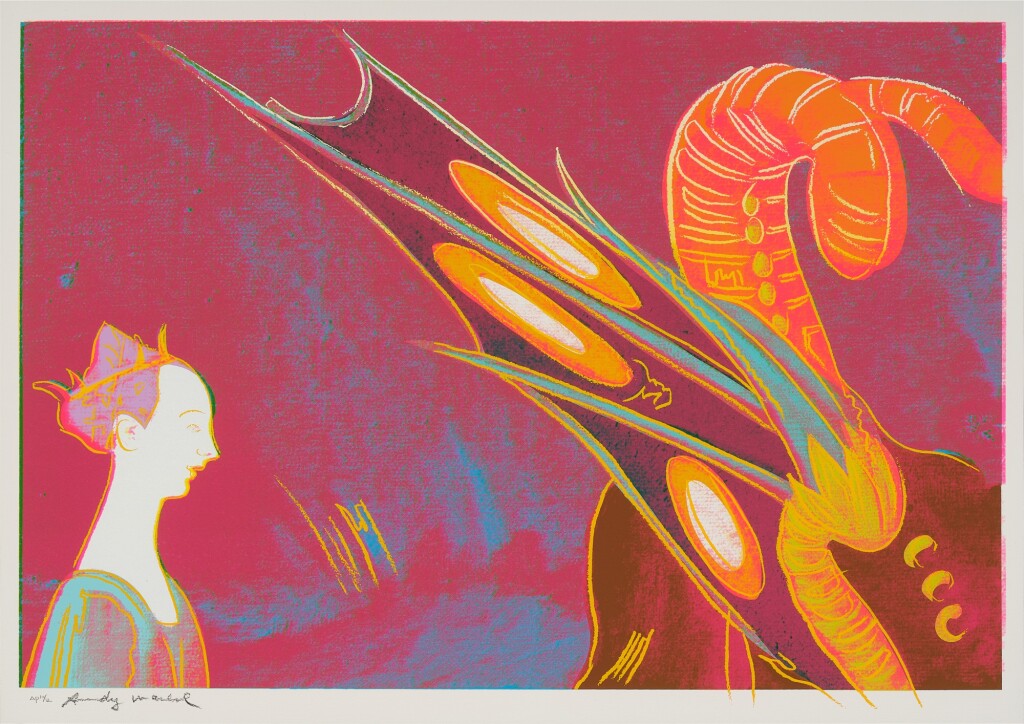
3. St. George and the Dragon (F&S II.326)
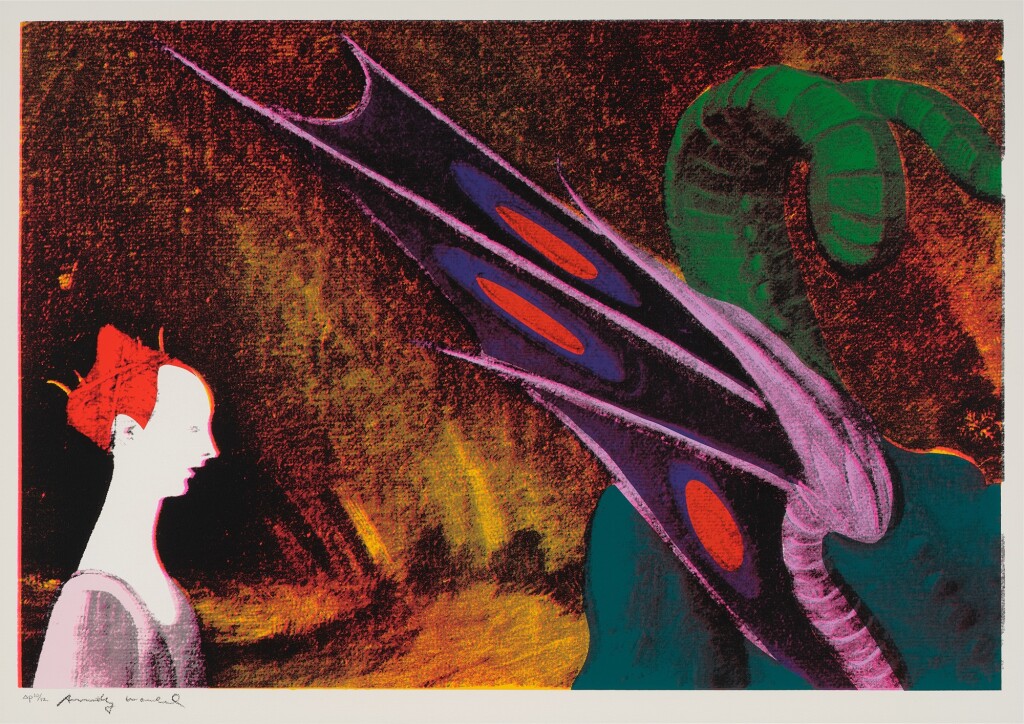
4. St. George and the Dragon (F&S II.327)
Saint Apollonia, 1984
4 Prints / 1,272 Impressions
100 Trial Proofs
Famed for his depictions of branded consumer goods and 20th century celebrities, in Saint Apollonia Warhol appropriates his subject matter from a 15th century painting attributed to Piero della Francesca. Originally conceived as an altarpiece, della Francesca’s painting commemorates the ecclesiastical tale of Saint Apollonia, who was captured by the Alexandrians during a siege circa 248 AD. Tortured for her Christian beliefs, her teeth were extracted using the plyers she is depicted holding in both Warhol and della Francesca’s images. Threatened with being burnt at the stake unless she uttered blasphemous words against Christ, Apollonia made the ultimate sacrifice for her religious beliefs and threw herself into the fire.
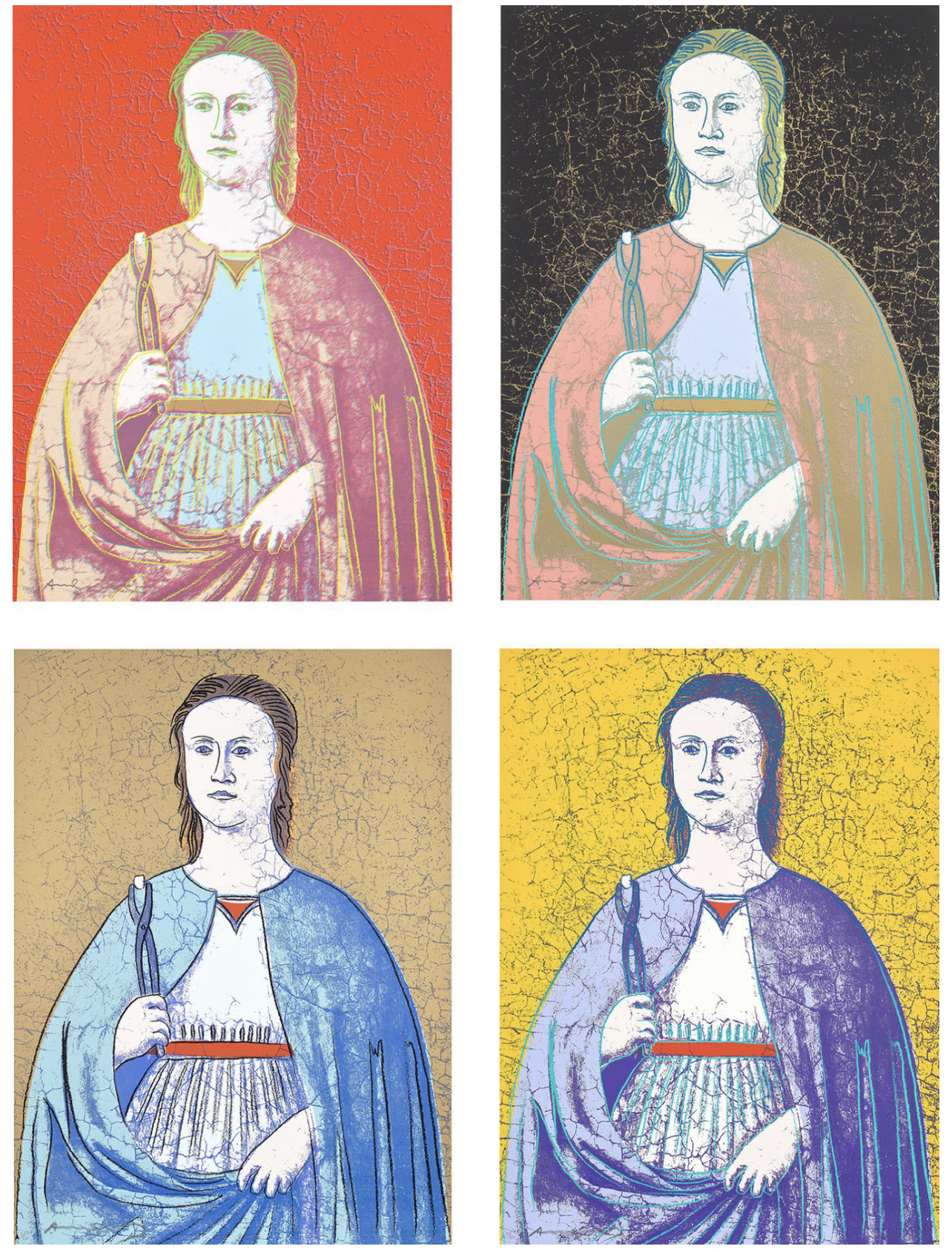
Saint Apollonia, 1984
The complete set of four screen-prints in colors on Essex Offset Kid Finish paper
Sheet: 30×22 inches (76.1 x 55.9 cm)
Edition: 250 + 35 AP + 8 PP
Trial Proofs: 80 + 20 (numbered in Roman numerals)
Literature: Feldman & Schellmann II.330-333
1. Saint Apollonia (F&S II.330)
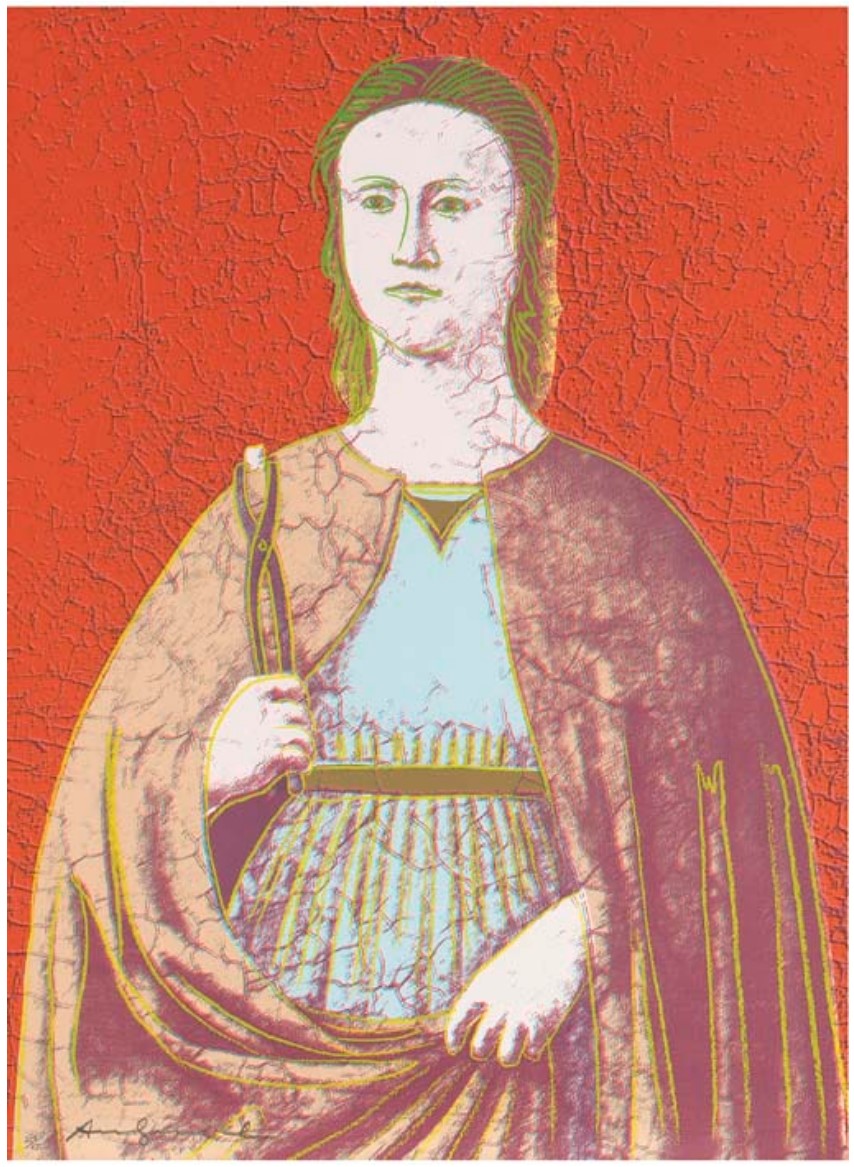
2. Saint Apollonia (F&S II.331)
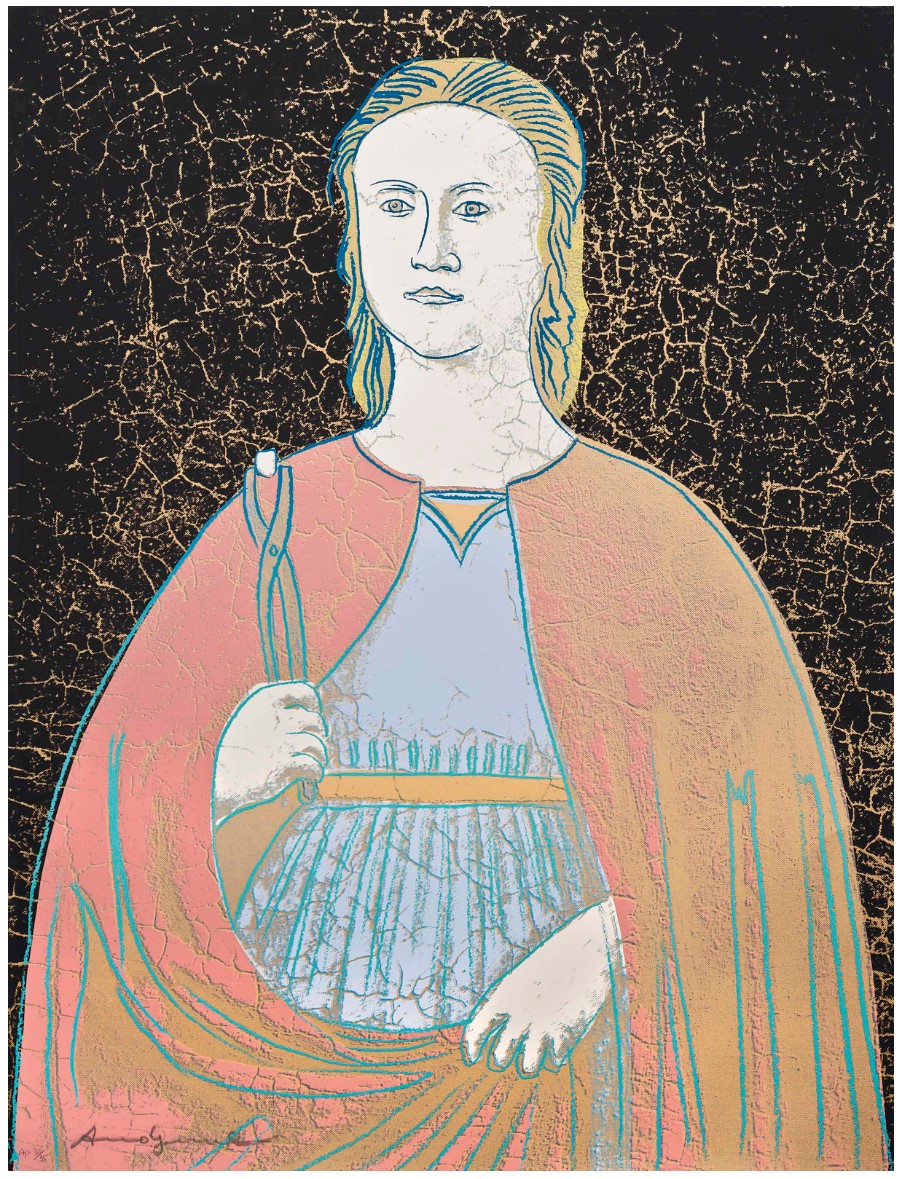
3. Saint Apollonia (F&S II.332)
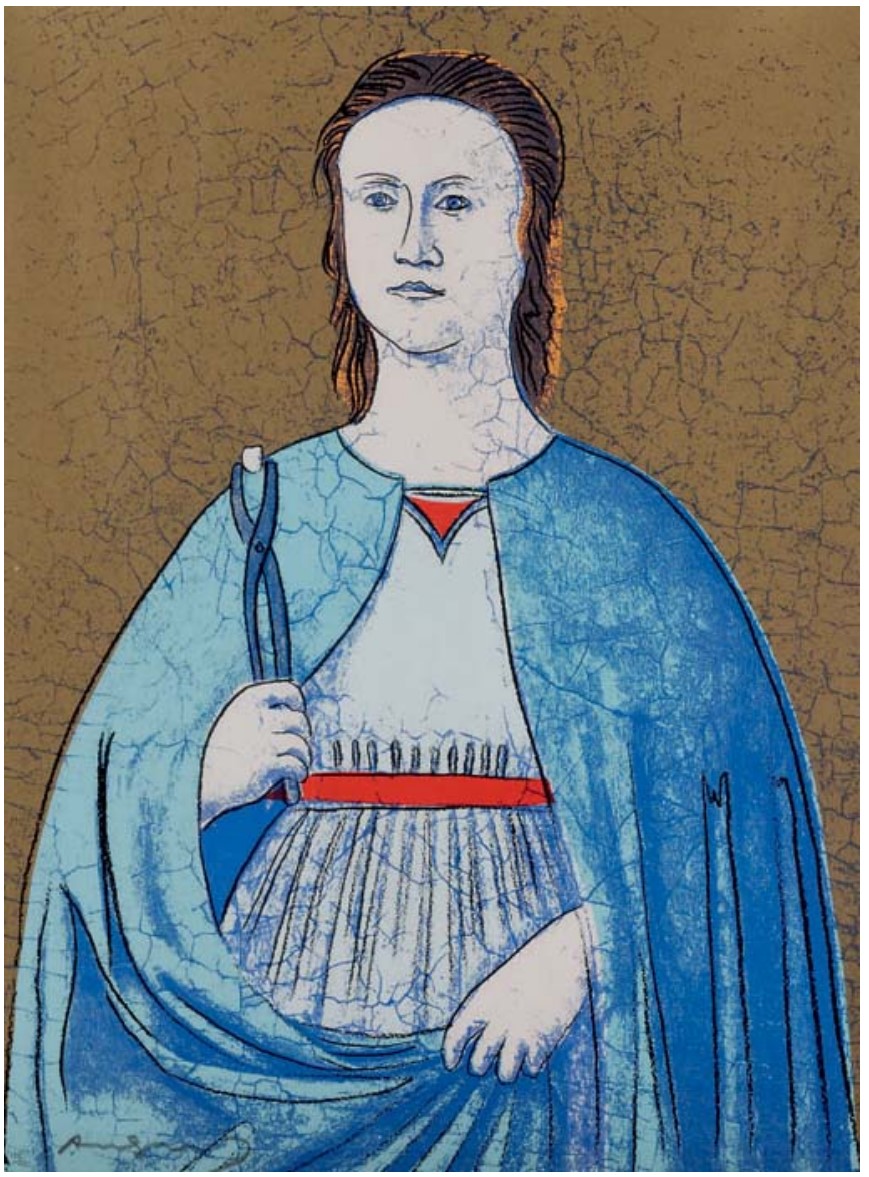
4. Saint Apollonia (F&S II.333)
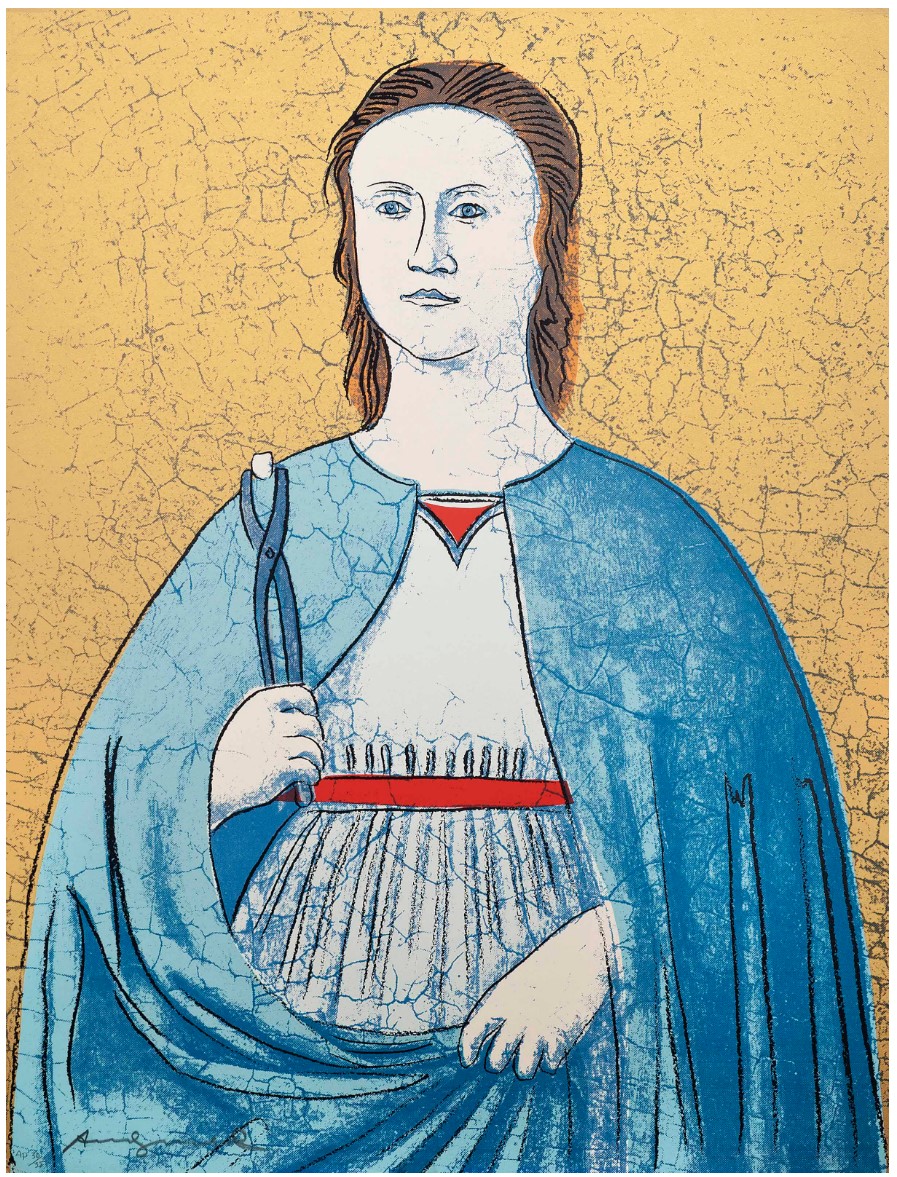
Ads, 1985
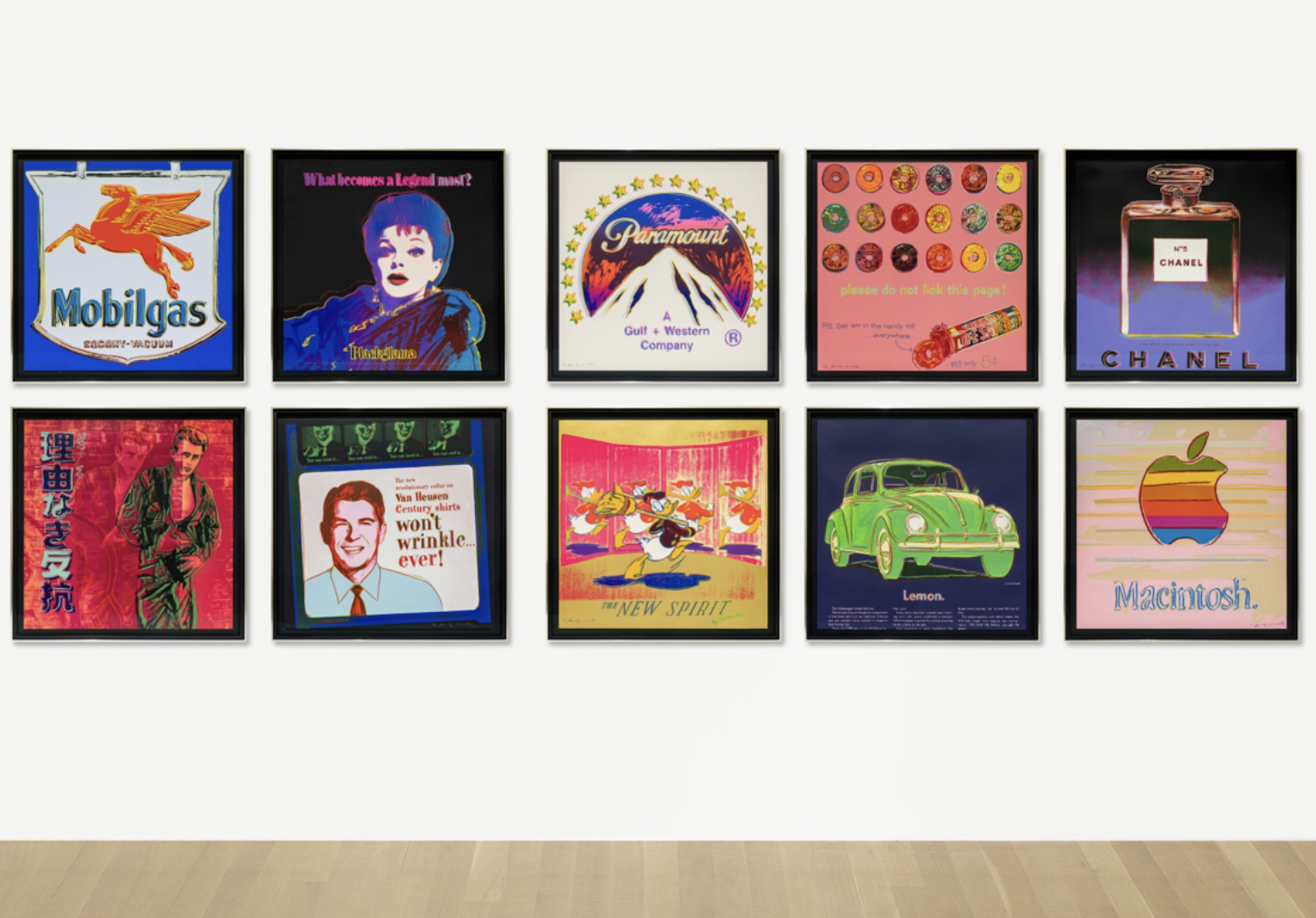
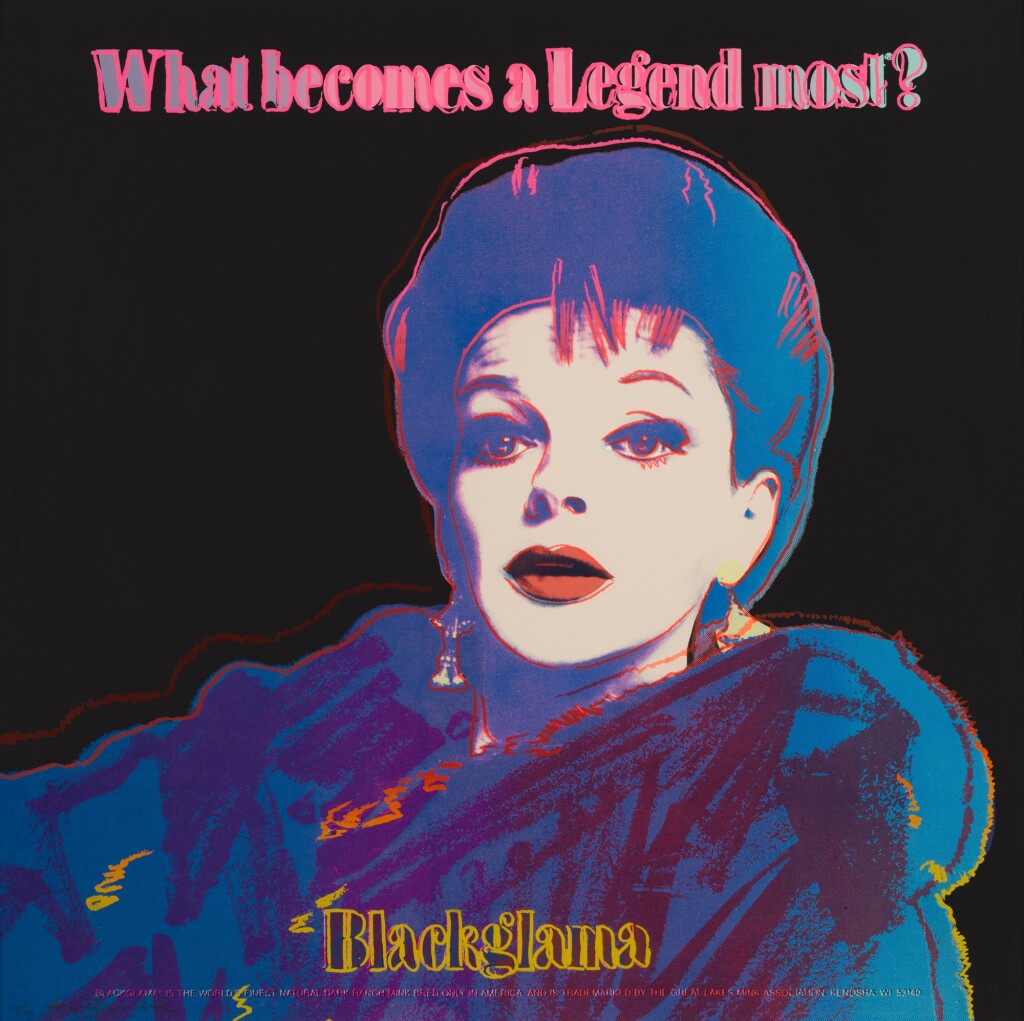
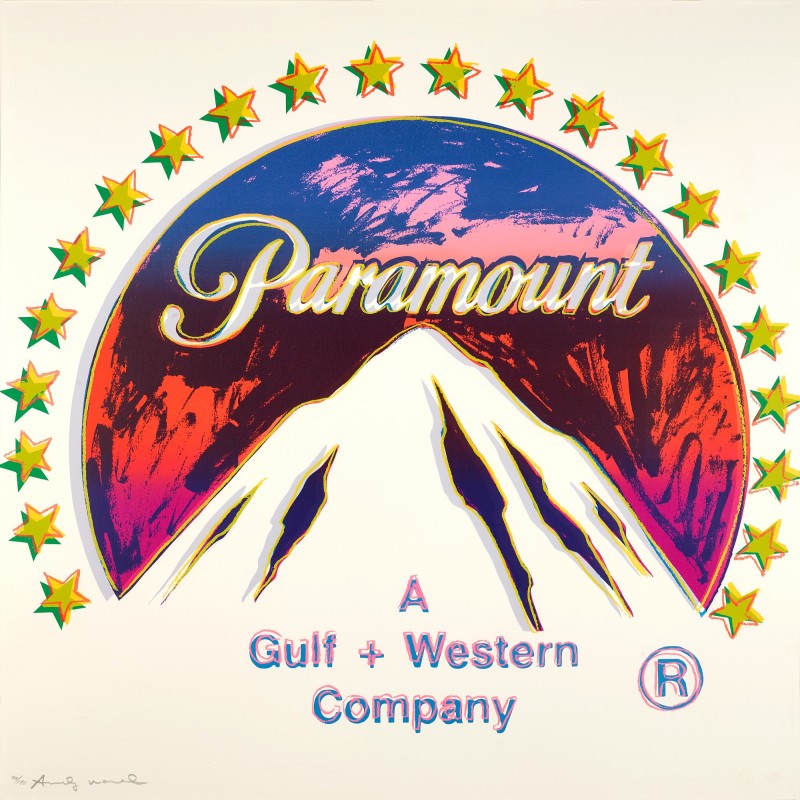
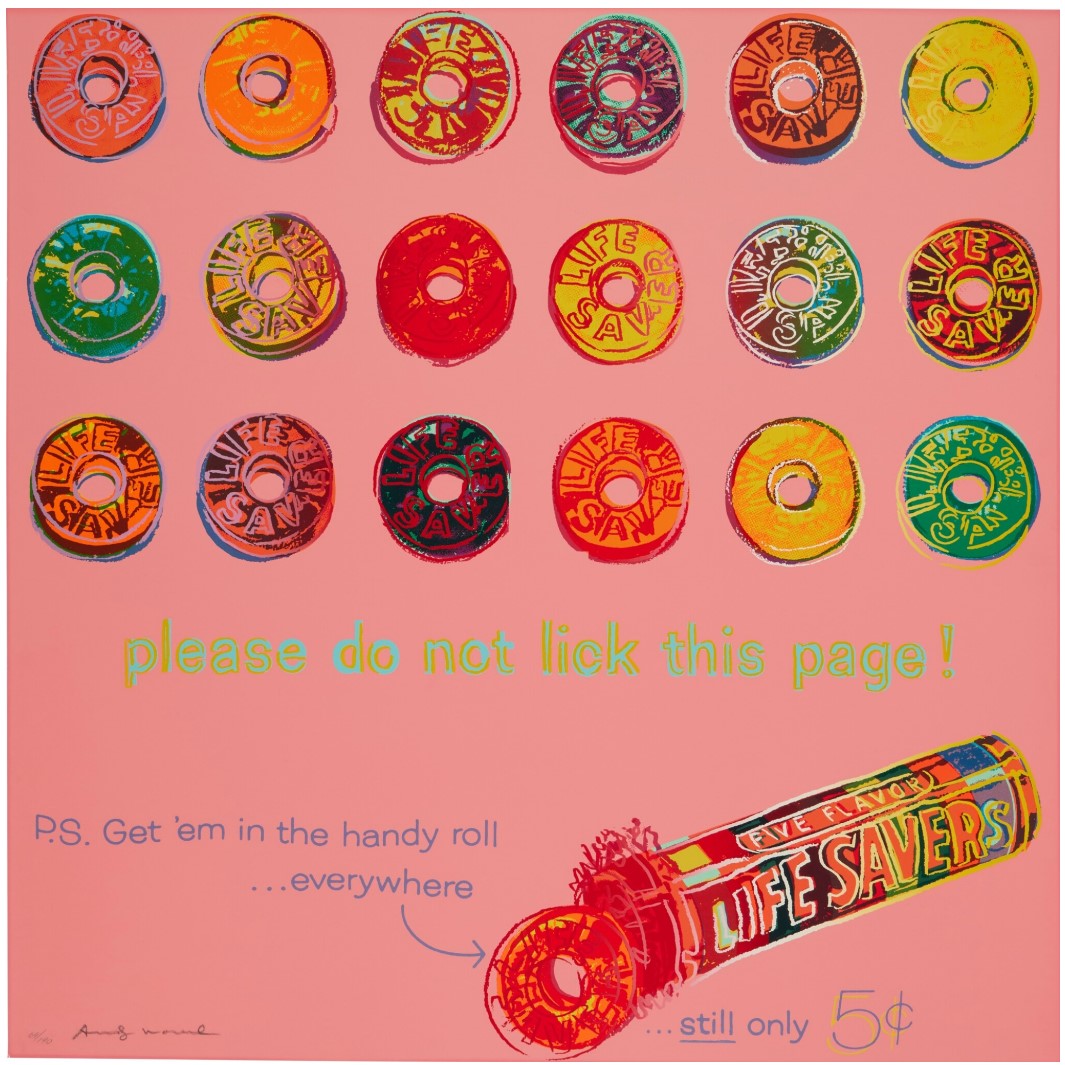
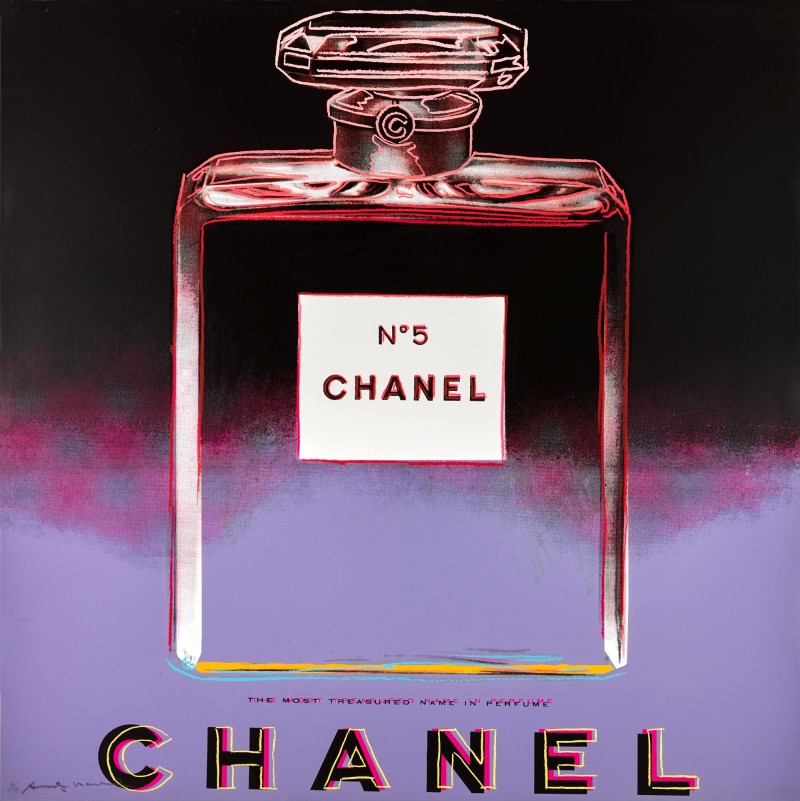
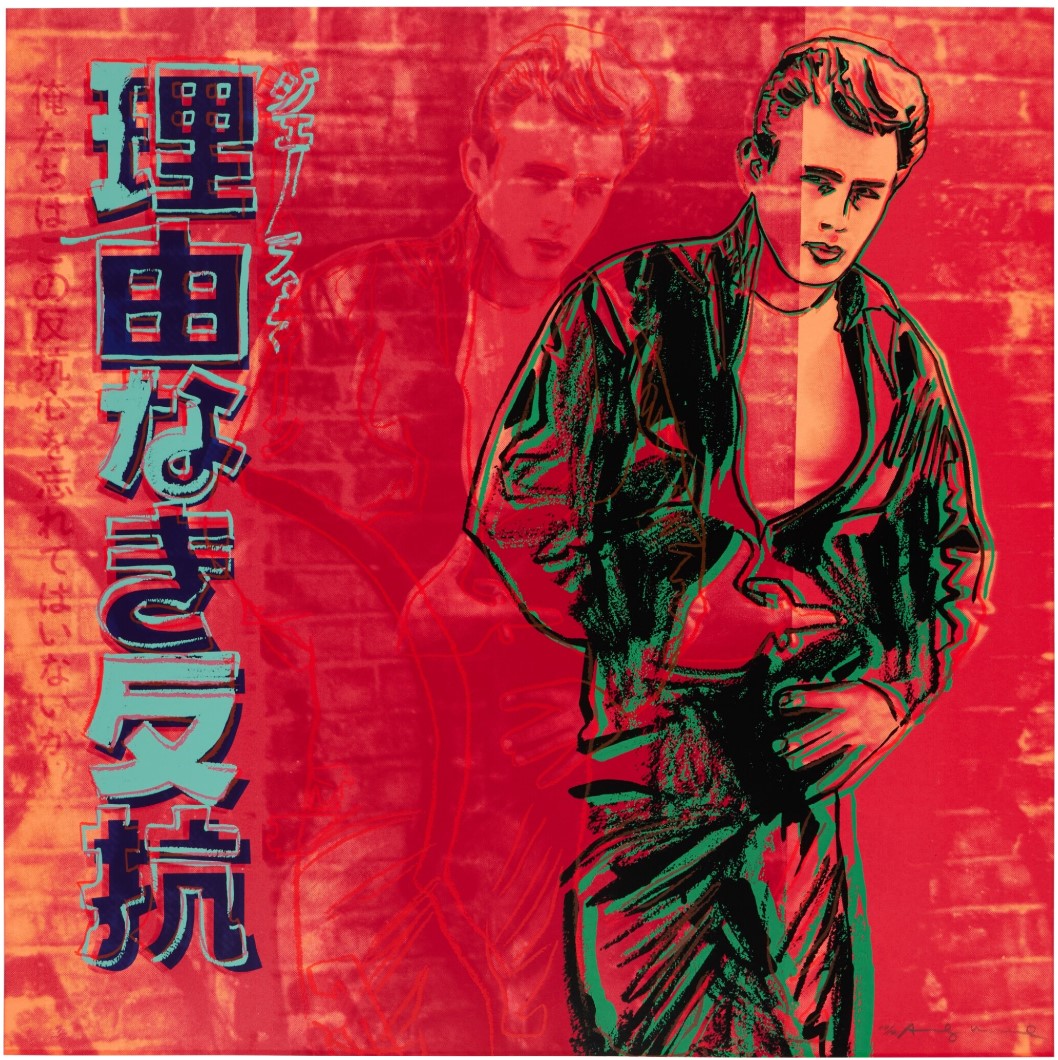
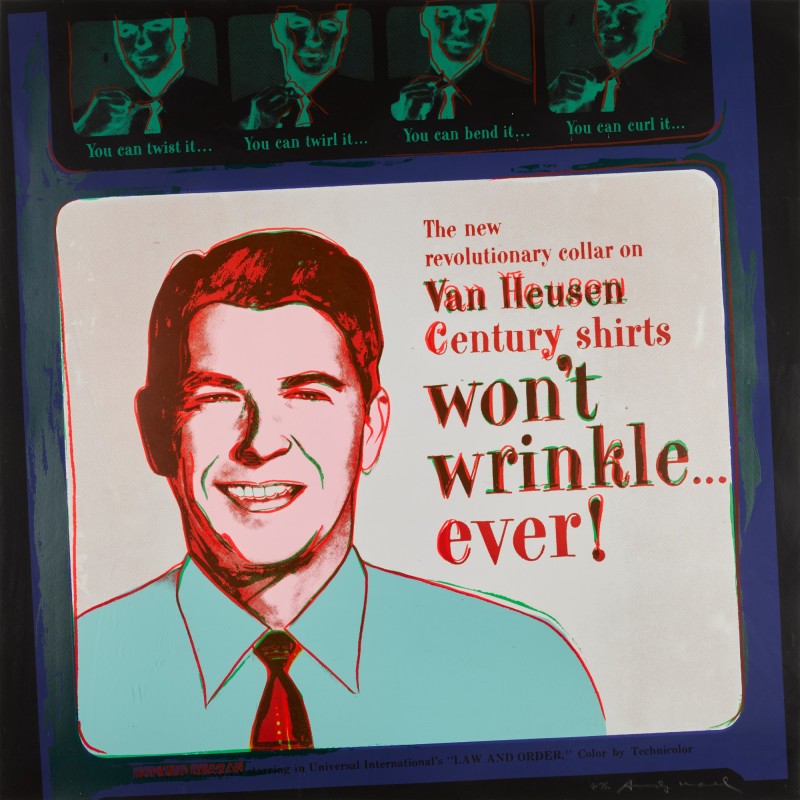
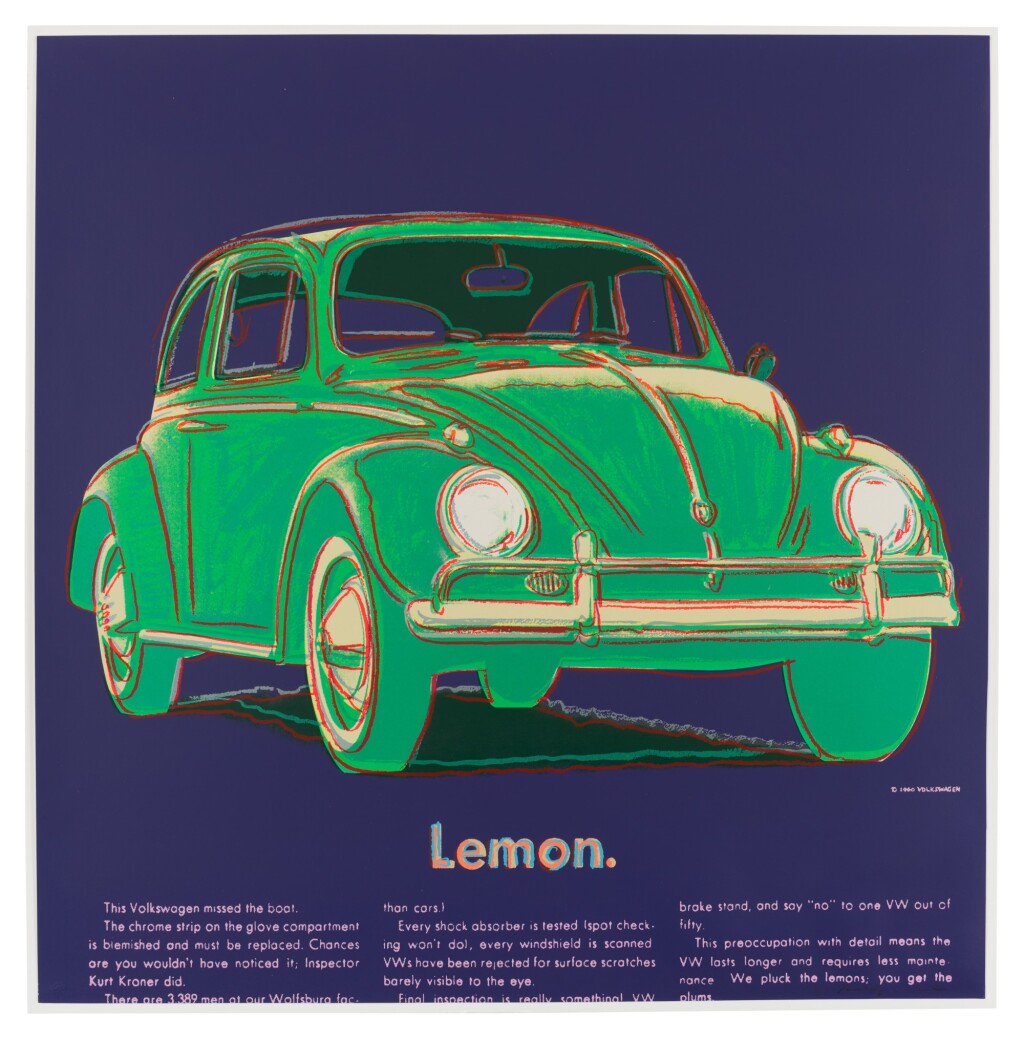
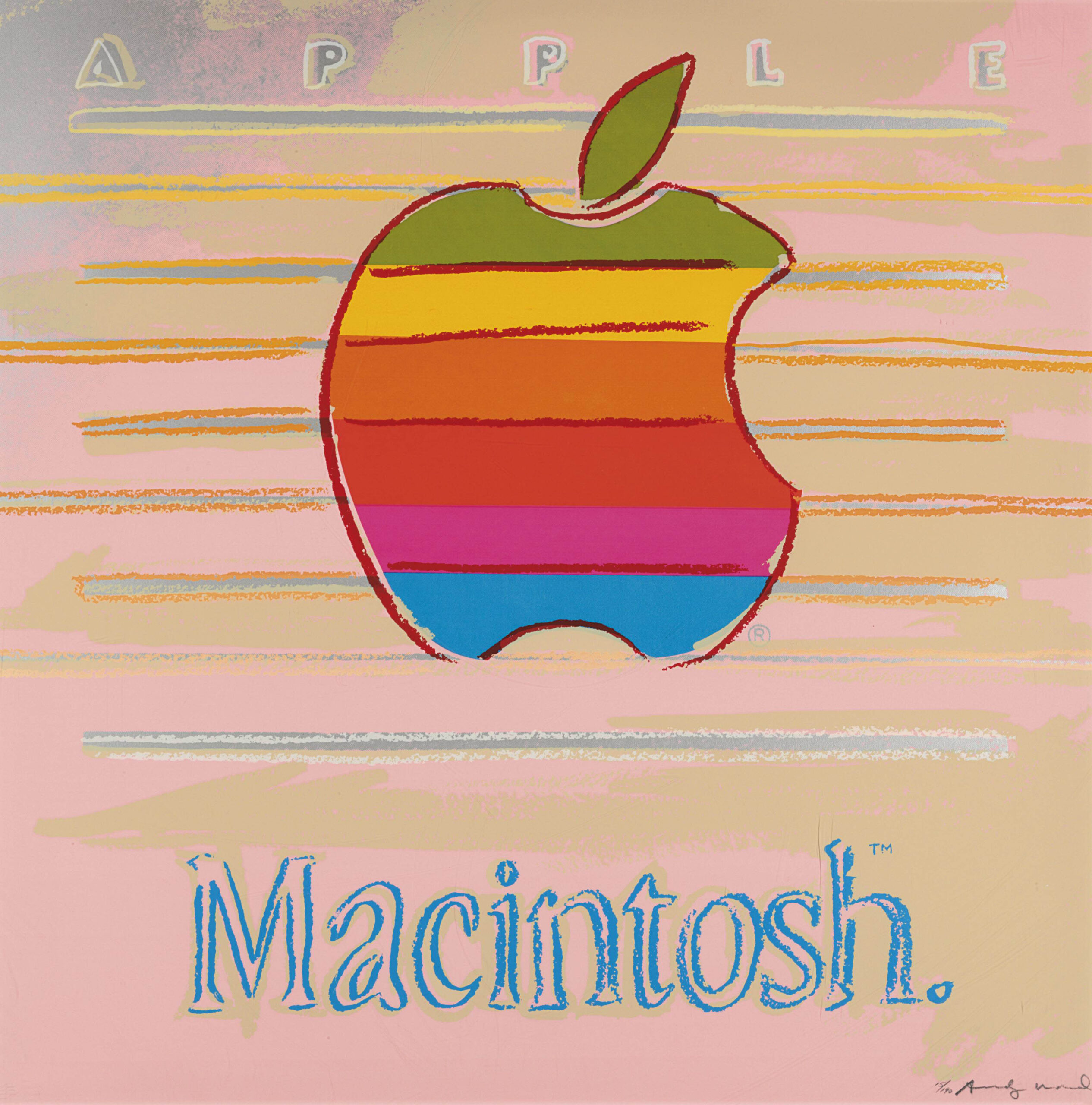
The Ads portfolio was printed in 1985, two years before Warhol’s death. It was commissioned by Feldman Fine Arts and is comprised of 10 screen prints on Lennox Museum Board: Mobil, Blackglama (Judy Garland), Paramount, Life Savers, Chanel, Rebel Without a Cause (James Dean), Van Heusen (Ronald Reagan), The New Spirit (Donald Duck), Volkswagen and Apple. The Ads portfolio is an acclaimed part of Warhol’s oeuvre as it depicts some of the icons of American consumer culture. Its subjects cover film, celebrity, glamour, fashion, television and advertising. By turning mass media imagery into art, Warhol elevated the everyday, celebrating the democratization of popular consumer culture. Whilst working on this portfolio Warhol created a series of different color versions of each image, before selecting one to be printed in an edition of 190. These initial ‘trial proofs’ were preserved and released as a formal component of the edition. Warhol also realized various works on canvas using the same visuals.
ANDY WARHOL
Ads, 1985
The complete set of ten screen-prints in colors on Lenox Museum Board
Sheet: 38×38 inches (96.5 x 96.5 cm)
Edition: 190 + 30 AP + 5 PP + 5 EP + 10 HC + 30 TP
Artist’s Proofs: 30 AP
Literature: Feldman & Schellmann II.350-359
1. Mobil (F&S II.350)

2. Blackglama (Judy Garland) (F&S II.351)
3. Paramount (F&S II.352)
4. Life Savers (F&S II.353)
5. Chanel (F&S II.354)
6. Rebel without a Cause (James Dean) (F&S II.355)
7. Van Heusen (Ronald Reagan) (F&S II.356)
8. The New Spirit (Donald Duck) (F&S II.357)

9. Volkswagen (F&S II.358)
10. Apple (F&S II.359)
Reigning Queens, 1985
In 1985, Andy Warhol embarked on his largest portfolio of screen-prints. Titled Reigning Queens, Warhol chose to focus his creative attention on the four female monarchs who were ruling in the world at the time, having assumed their respective thrones through birth right alone rather than marriage. These four figures included Queen Elizabeth II of the United Kingdom and other Commonwealth realms, Queen Beatrix of the Netherlands, Queen Margrethe II of Denmark and Queen Ntfombi Tfwala of Swaziland. Based on official or media photographs of these monarchs, the screen-print portfolio consists of four colour variants of each queen, amounting to sixteen images in total. The screen-prints were created using a photographic silkscreen technique central to Warhol’s practice, employed profusely in both his prints and paintings. Warhol produced two editions of the Reigning Queens portfolio: forty ‘Standard Edition’ prints and thirty ‘Royal Edition’ prints. Screen-prints from the ‘Royal Edition’ were adorned with ‘diamond dust’ – fine particles of ground up glass that sparkle in the light like diamonds – adding a glamour and extravagance to these images and further emphasizing the regal allure of Warhol’s iconic subjects. The Reigning Queens series brings together many themes central to Warhol’s oeuvre, such as portraiture, celebrity, and consumerism.
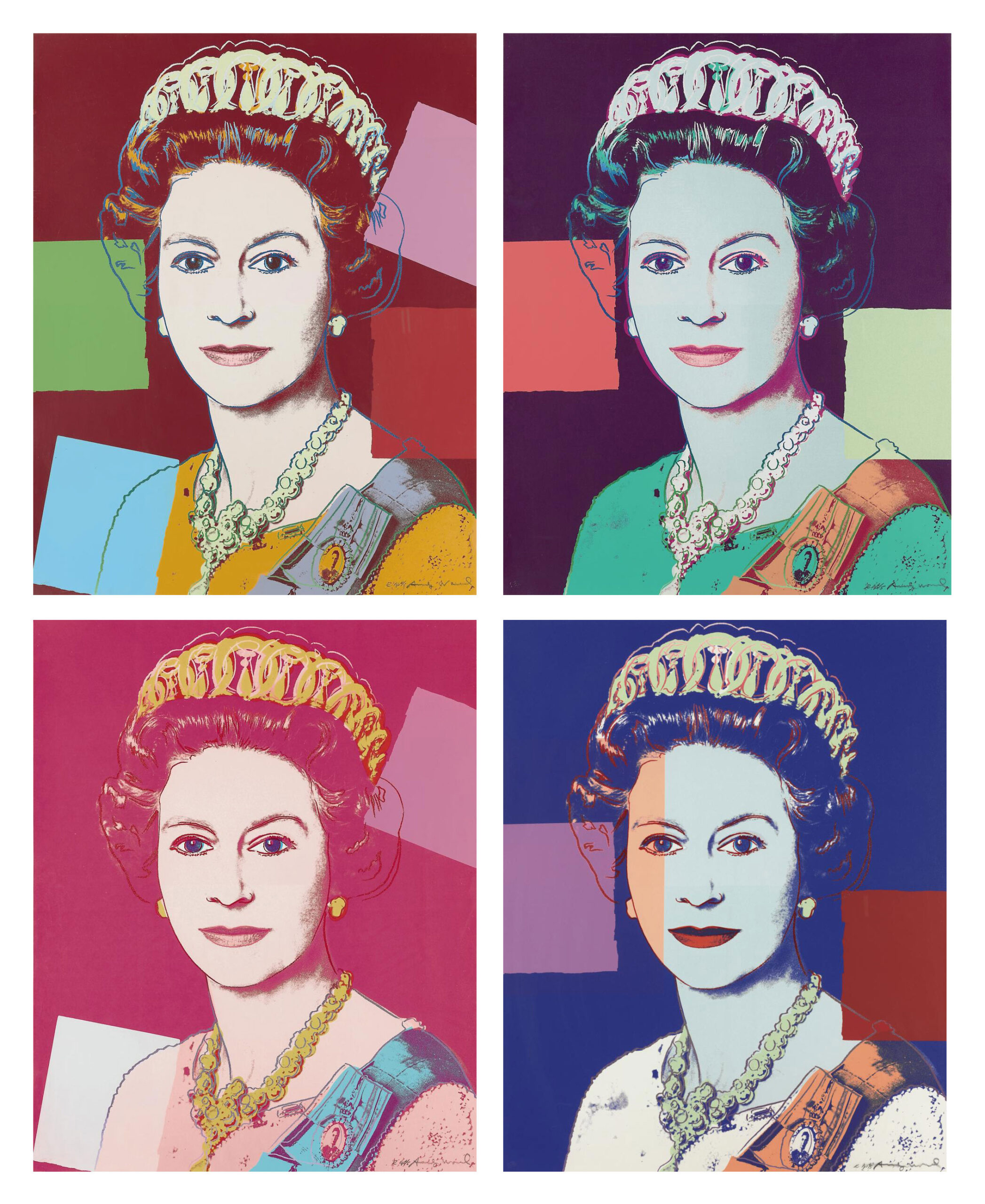
Reigning Queens, 1985
Portfolio of 16 screen-prints in colors on Lenox Museum Board
Year: 1985
Sheet: 39.4 x 31.5 inches (100×80 cm)
Edition: 40 + 10 AP + 5 PP + 3 HC
Trial Proofs: 30 TP containing only one image of each Queen
Literature: Feldman & Shellmann II.334-349
Reigning Queens (Royal Edition), 1985
Portfolio of 16 screen-prints in colors on Lenox Museum Board with diamond dust
Edition: 30 + 5 AP
Literature: Feldman & Shellmann II.334A-349A
1. Queen Elizabeth II of The UK
2. Queen Beatrix of The Netherlands
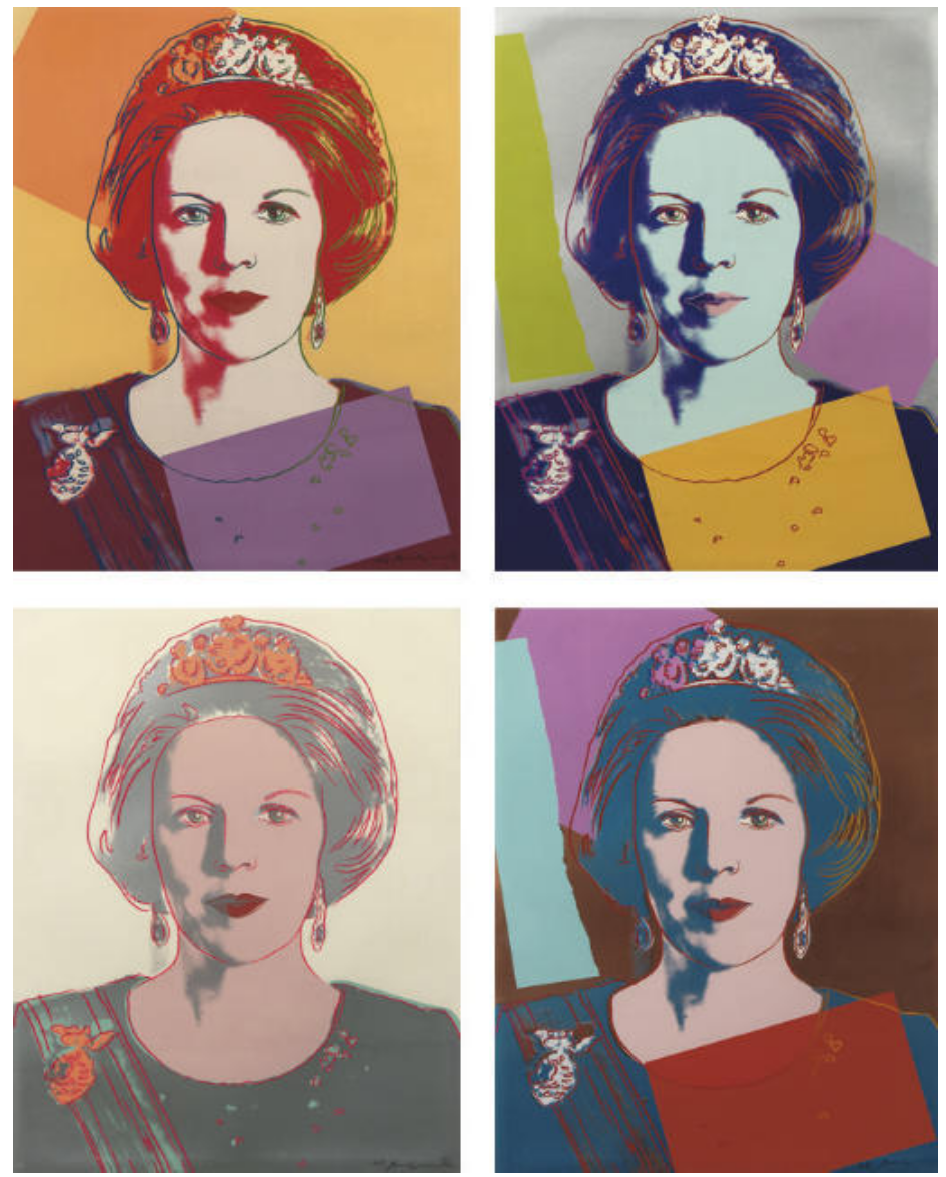
3. Queen Margrethe II of Denmark

4. Queen Ntombi Twala of Swaziland

Truck, 1985
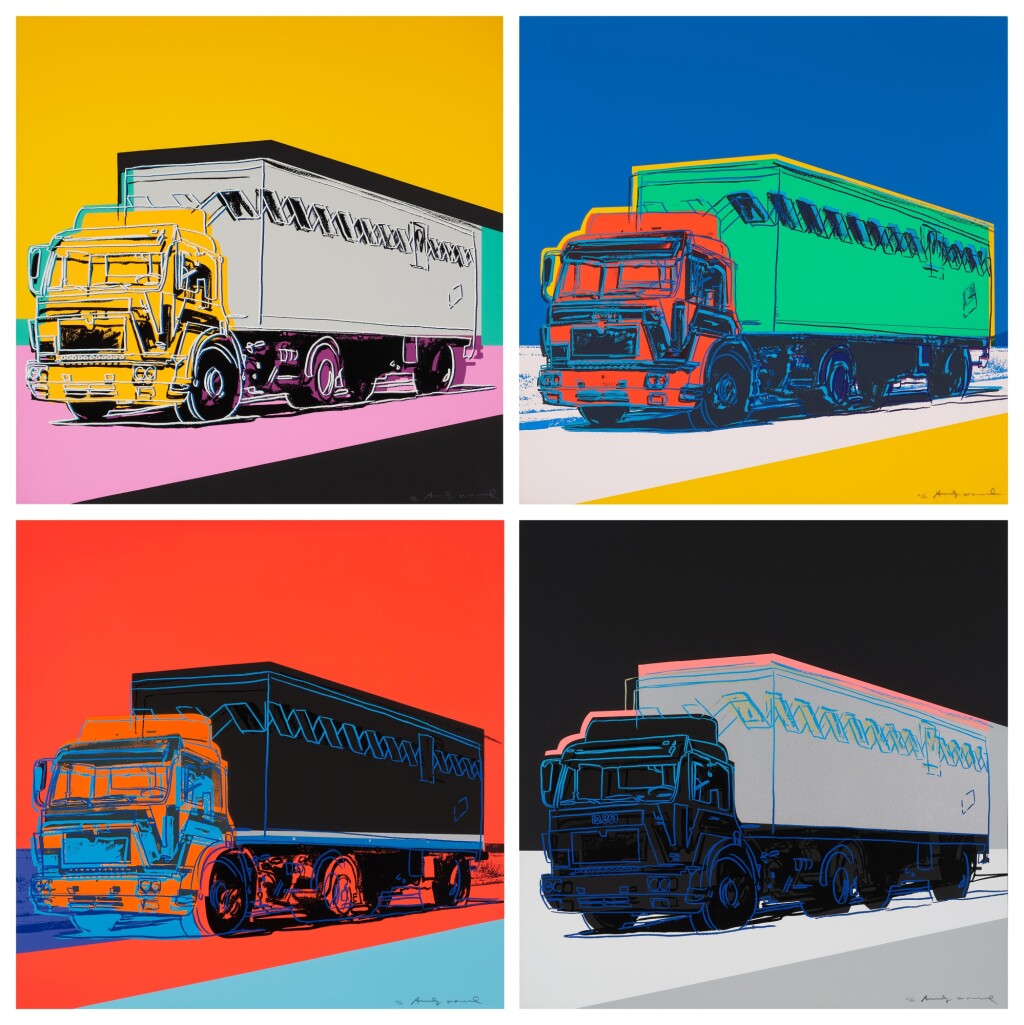
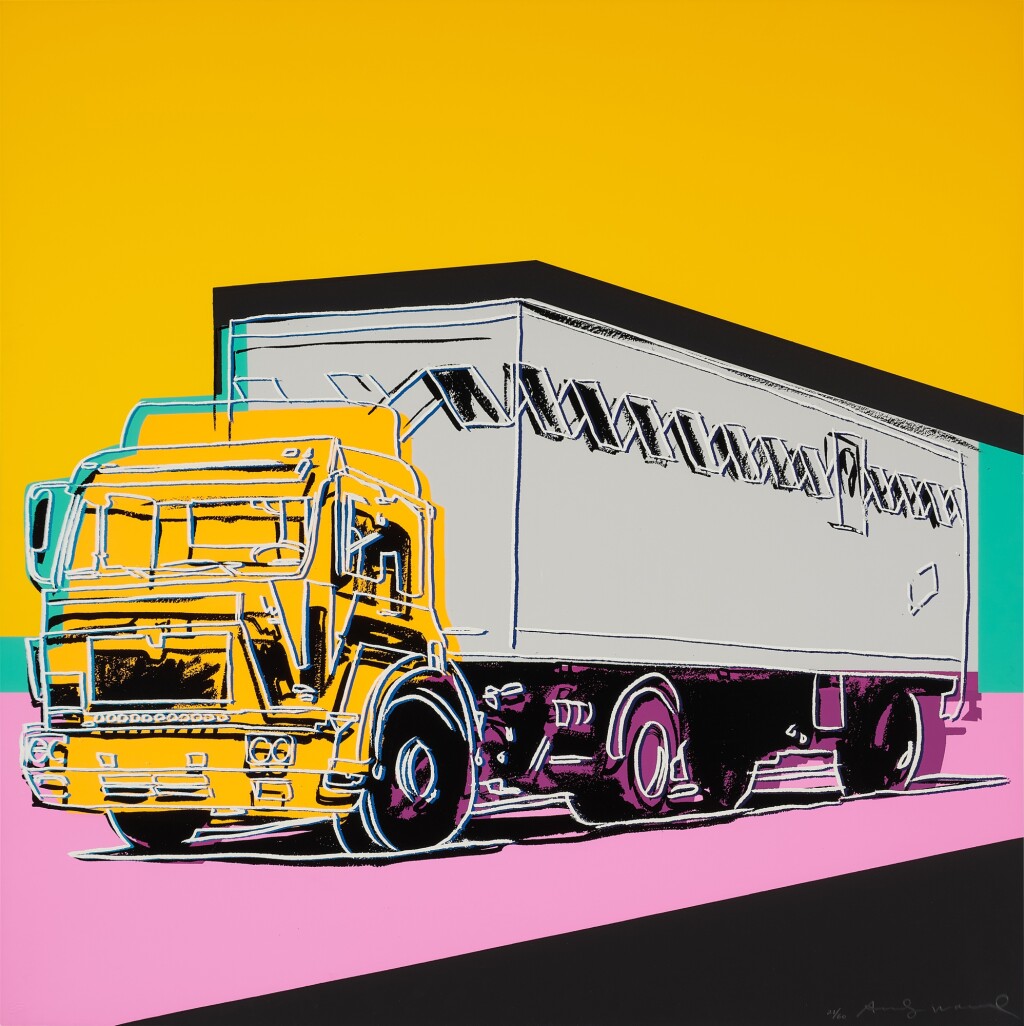
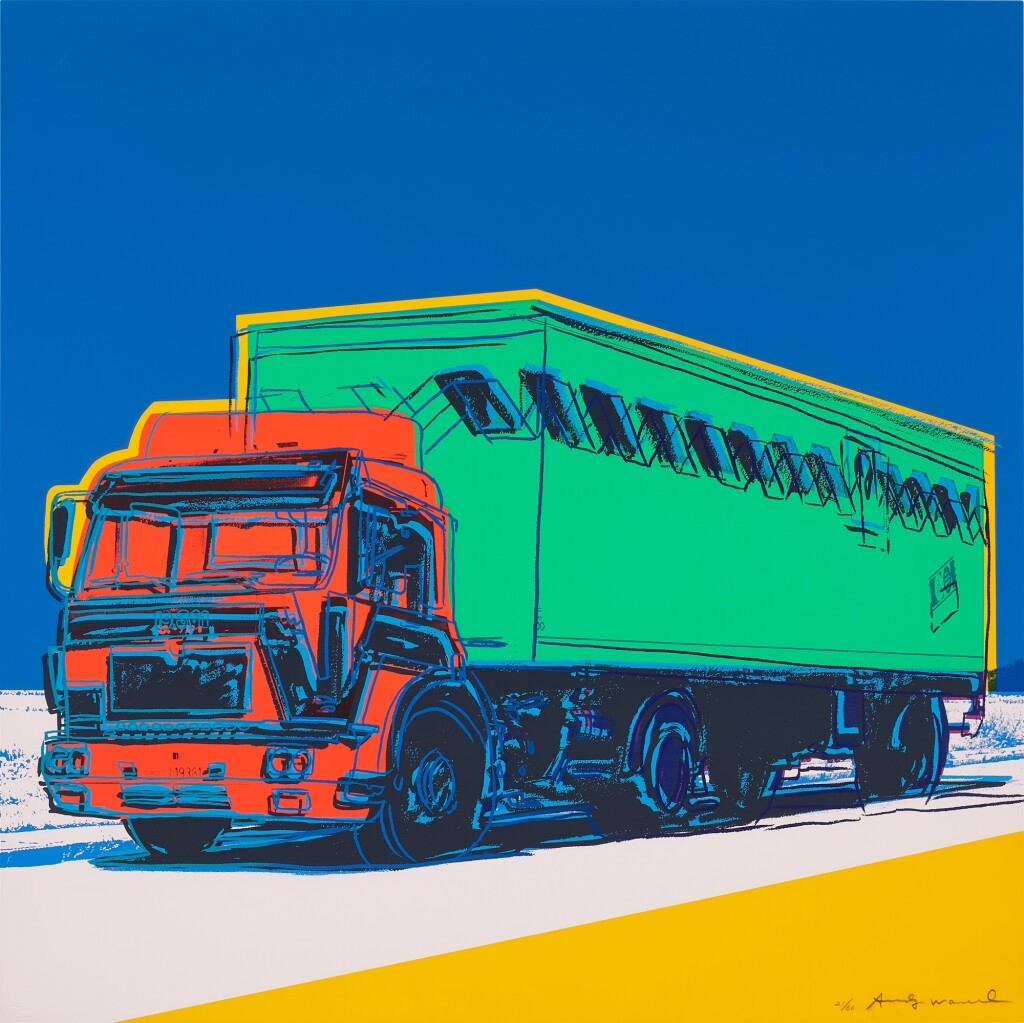
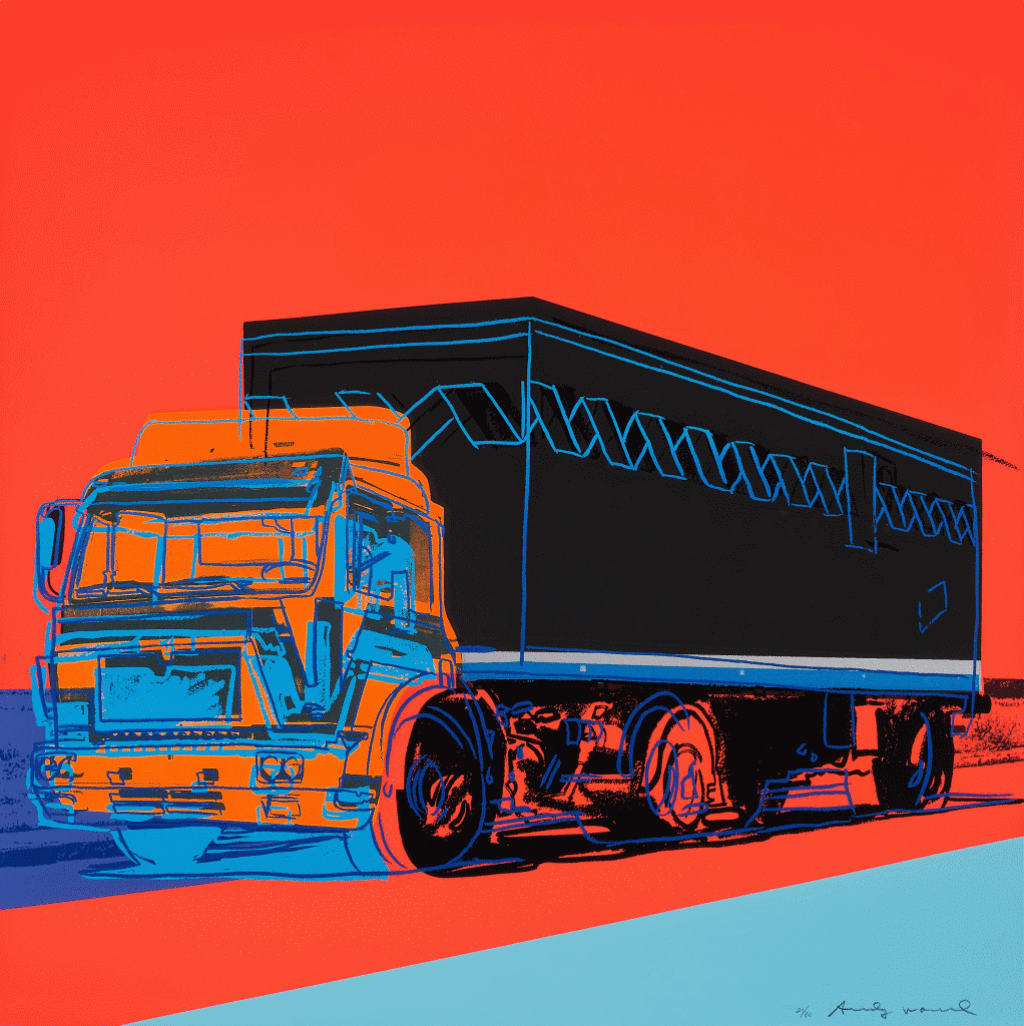
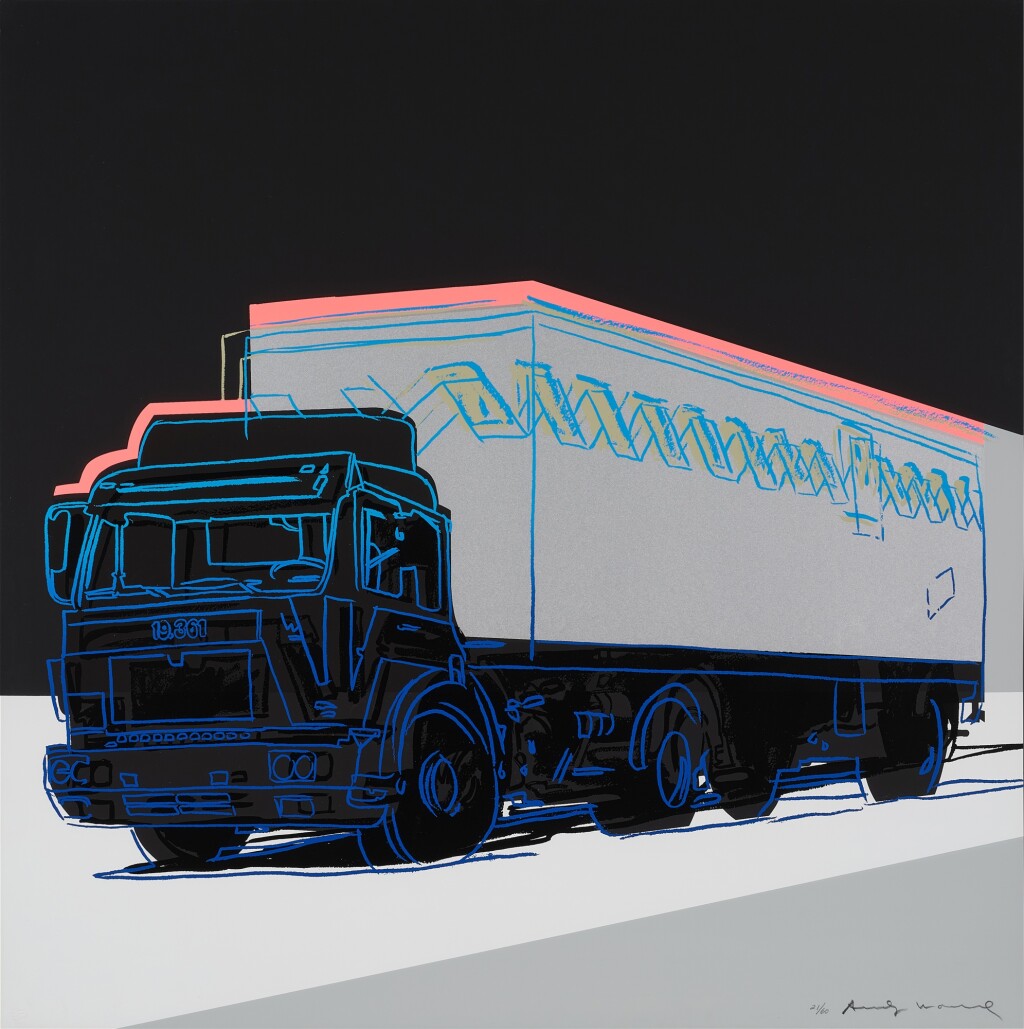
In June 1986, the German Federal Road Haulage Association (BDF) was to host the 20th World Congress of the International Road Transport Union (IRU) in Frankfurt am Main. It was for this occasion that the BDF commissioned Andy Warhol in 1985 to produce a set of screen-prints depicting a cargo truck. The German art dealer Hermann Wünsche (1941-1993) acted as the co-publisher and go-between to the artist. Wünsche had been running his gallery out of Bonn and later the neighbouring town of Königswinter on the Rhine since 1971. Back then, Bonn was the capital of West-Germany and two of the most dynamic art centers in Europe, Cologne and Düsseldorf, were in the immediate vicinity. Hermann Wünsche was one of the first gallerists to bring Andy Warhol to Germany. In 1976 he had arranged for Warhol to make a portrait of Willy Brandt, Germany’s first Social-Democratic Chancellor after the war, and went on to commission portraits of other prominent Germans, such as the president of the Cancer Society, Mildred Scheel (1980), and the goalkeeper of the national football team, Toni Schumacher (1983). Wünsche was a colourful figure, who also ran a small and exclusive nightclub in Bonn called Nachtigall (‘Nightingale’), and it may have been there that the two met. He was indeed to prepare and self-publish the first catalogue raisonné of the artist’s prints that same year. Apart from the Trucks, Wünsche also published the prints series of Cologne Cathedral (1985) and, just before the artist’s death, Ludwig von Beethoven (1987).
ANDY WARHOL
Truck,1985
Portfolio of four screen-prints in colors on Lenox Museum Board
Sheet: 39.4 x 39.4 inches (100×100 cm)
Edition: 60 + 15 AP + 10 PP + 15 HC + 5 numbered in Roman numerals
Trial Proofs: 73 individual TP not in portfolios
Literature: Feldman & Schellmann II.367-370
1 Truck Plate I (F&S II.367)
2. Truck Plate II (F&S II.368)
3. Truck Plate III (F&S II.369)
4. Truck Plate IV (F&S II.370)
Martha Graham, 1986
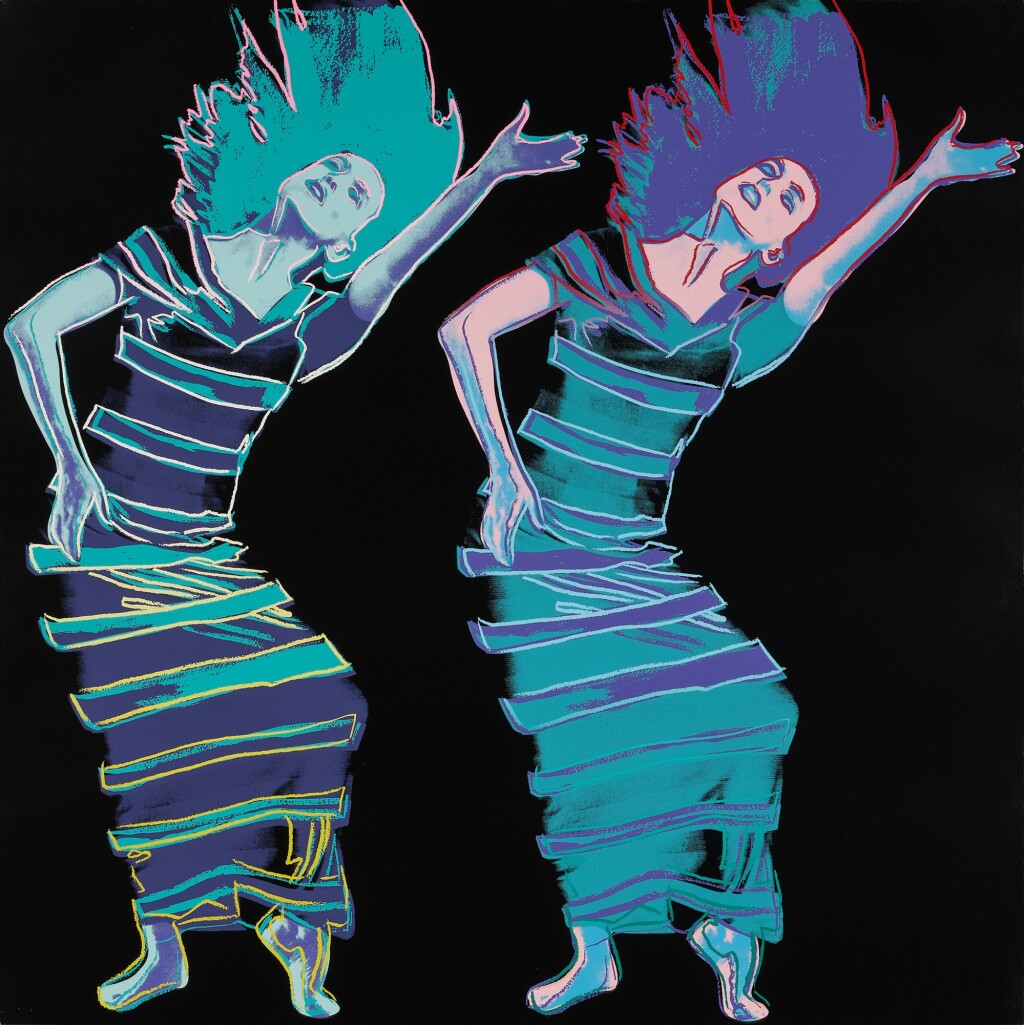
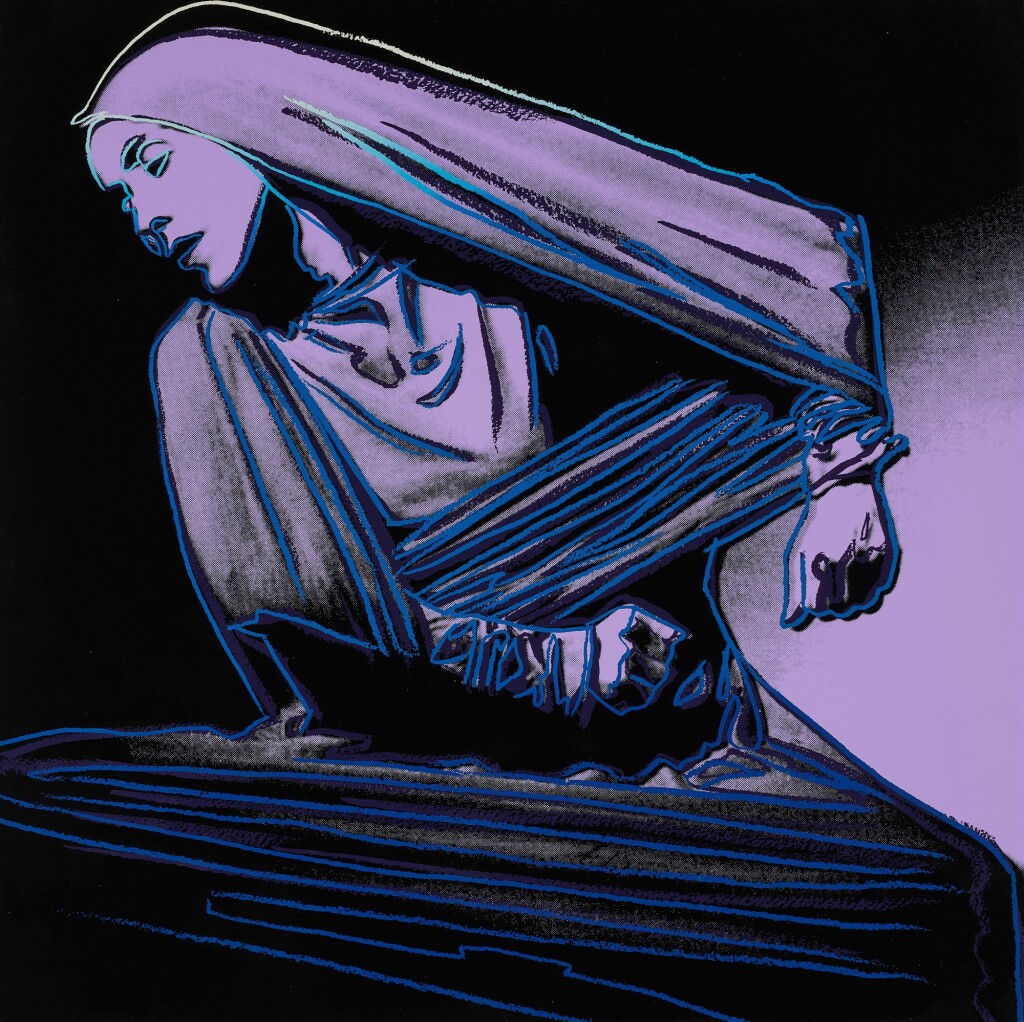
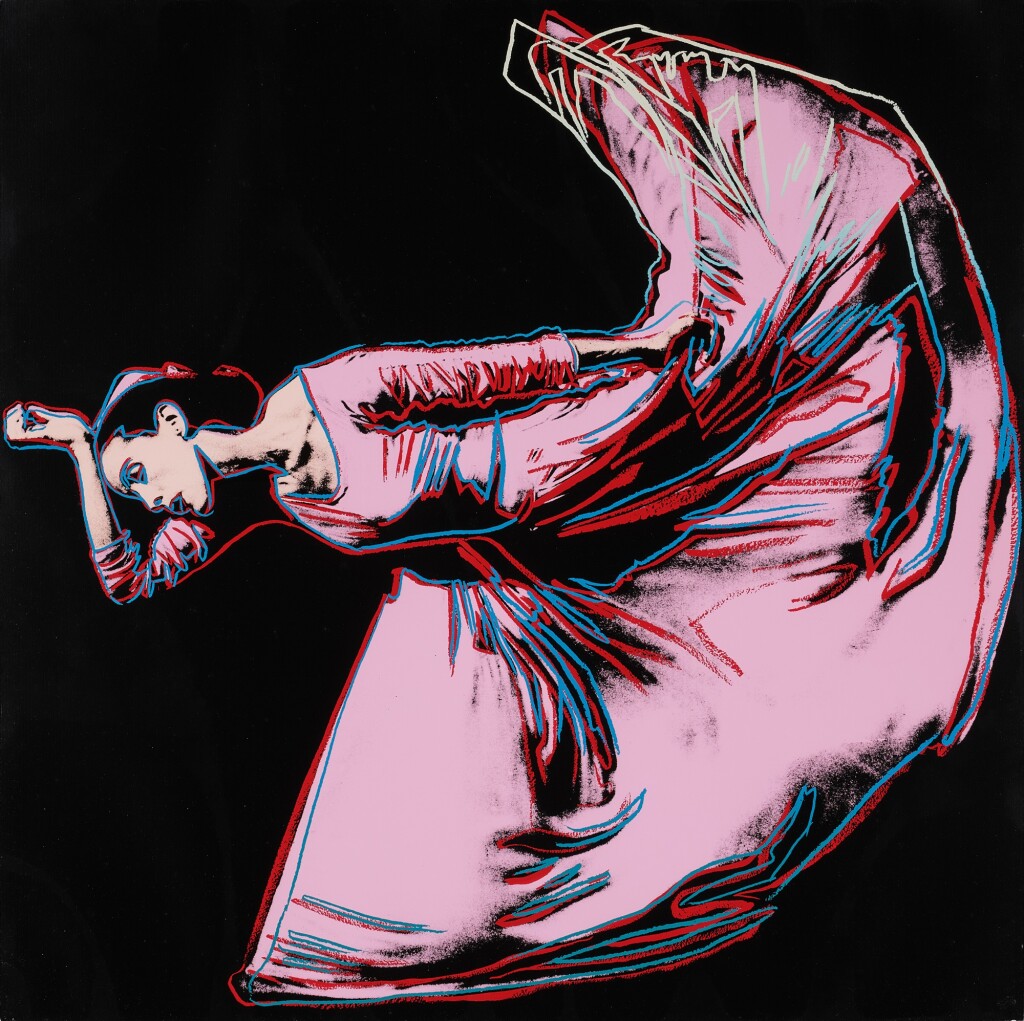
Andy Warhol created three screen prints of the American contemporary dancer: Letter to the World, Lamentation and Satyric Festival, all of which showcase the physical and emotional depth of Graham’s dance technique. Graham was renowned for creating a language in movement based upon the expressive capacity of the human body, and her technique is still practiced by dancers all over the world today.
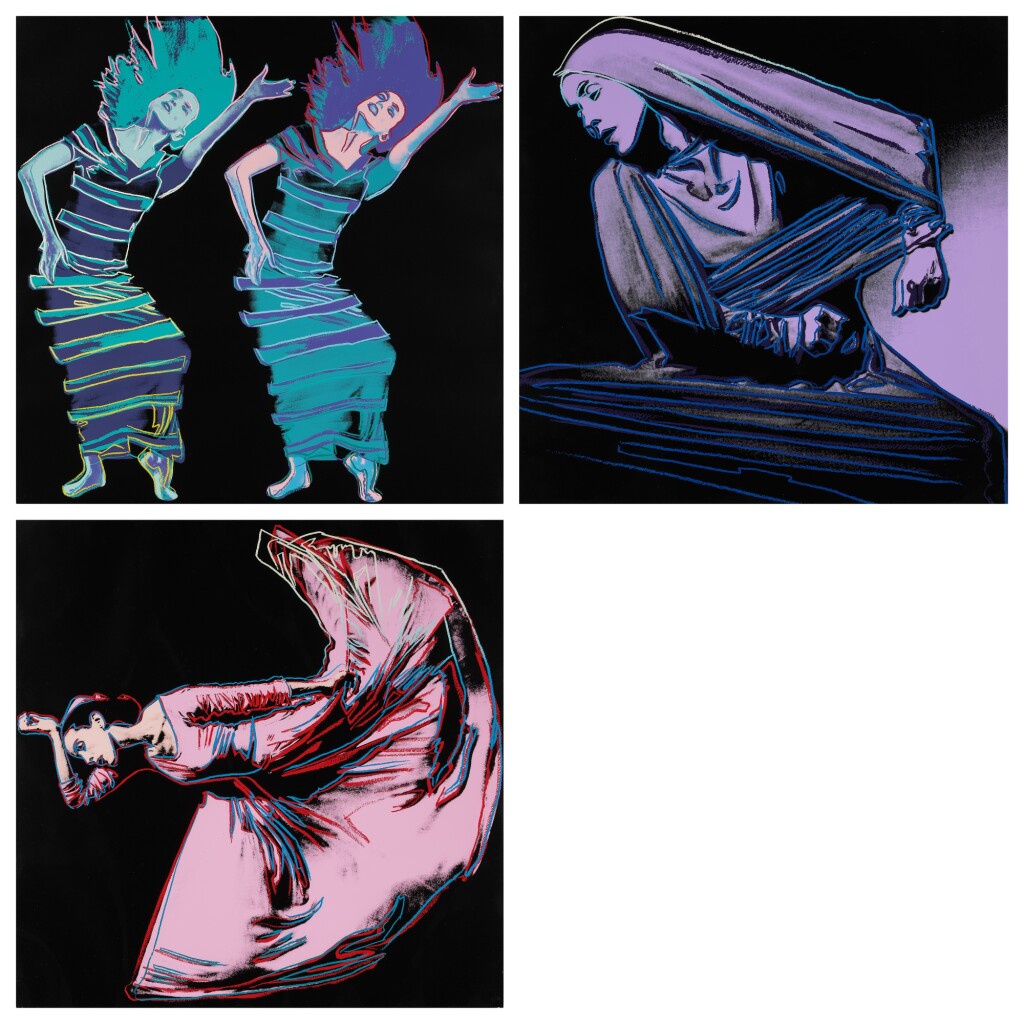
ANDY WARHOL
Martha Graham, 1986
The complete set of three screen-prints in colors on Lenox Museum Board
Sheet: 36×36 inches (91.4 x 91.4 cm)
Edition: 100 + 25 AP + 5 PP + 10 HC + 25 numbered in Roman numerals
Literature: Feldman & Schellmann II.387-389
1. Satyric Festival (F&S II.387)
2. Lamentation (F&S II.388)
3. Letter to the World (F&S II.389)
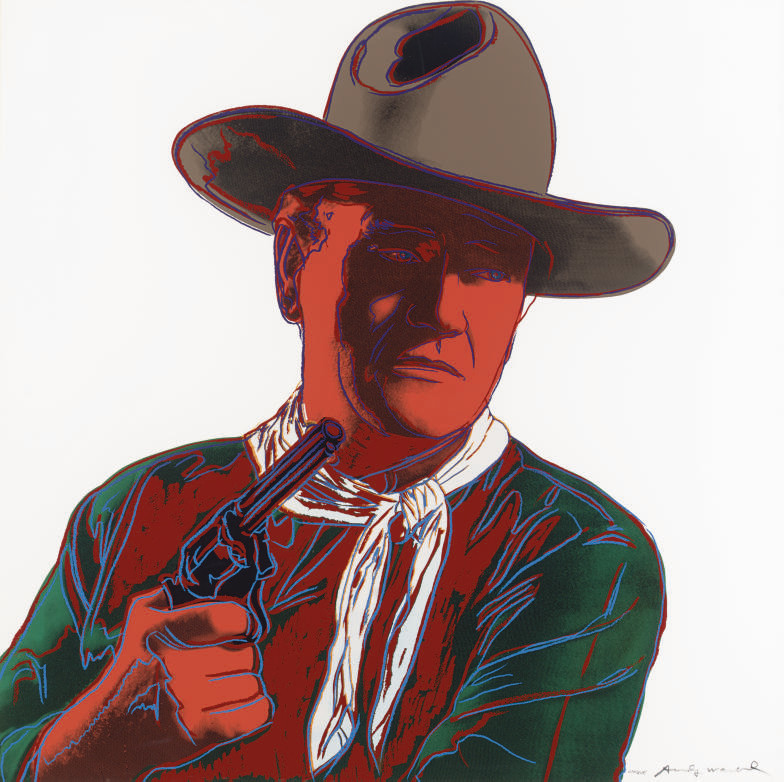
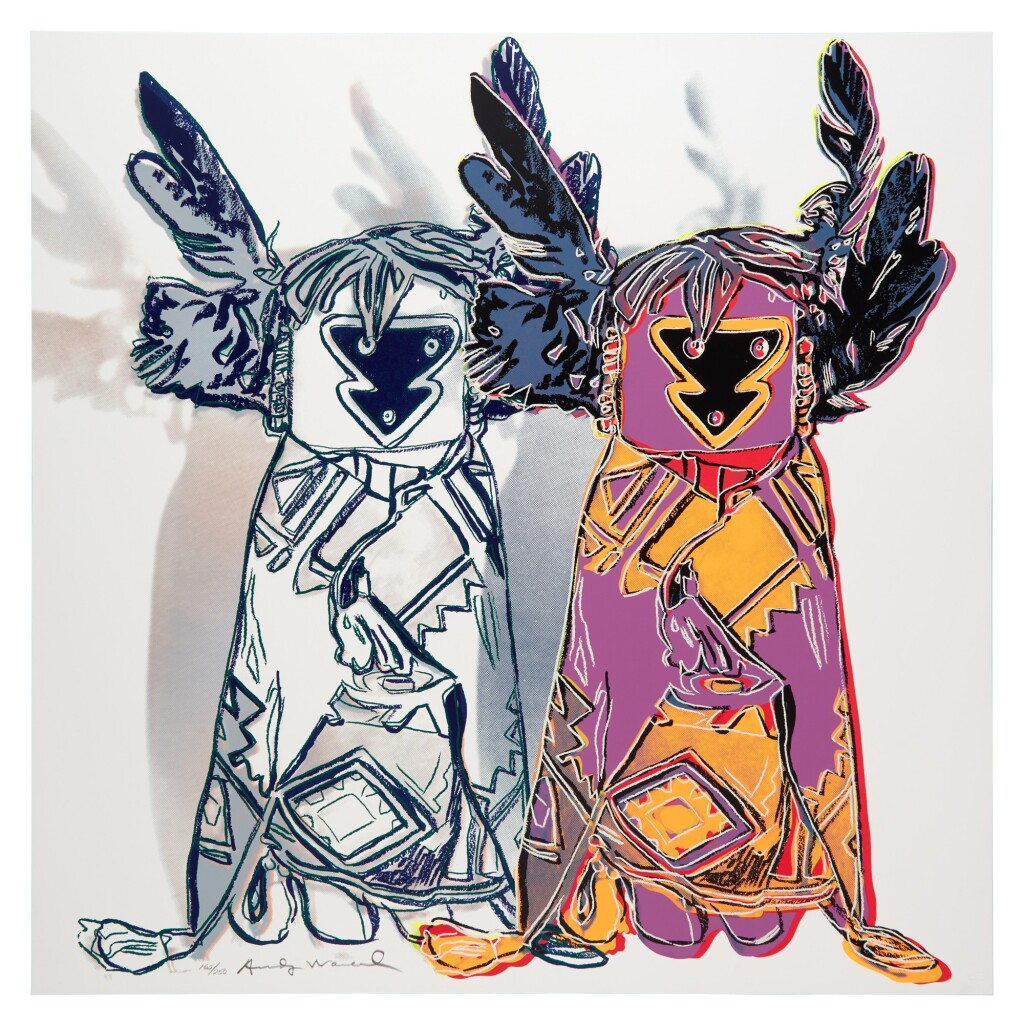
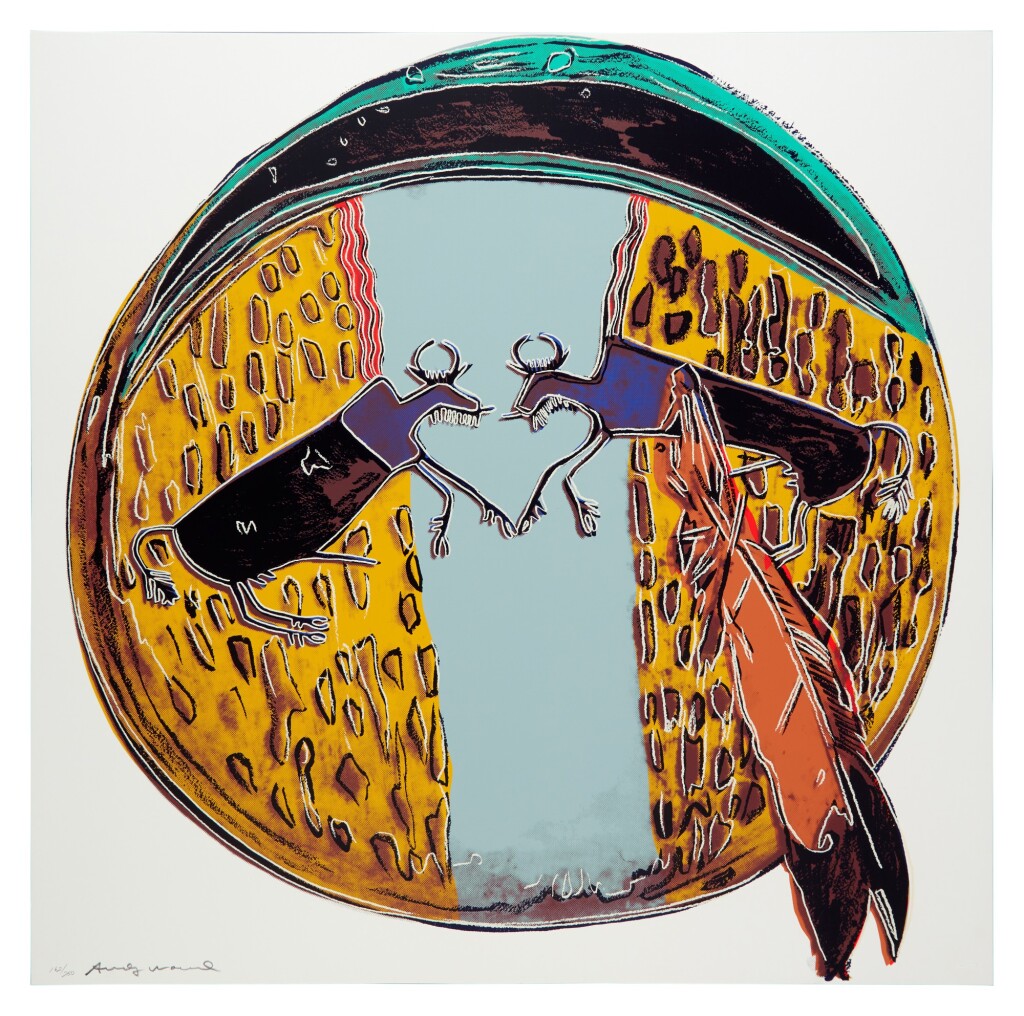
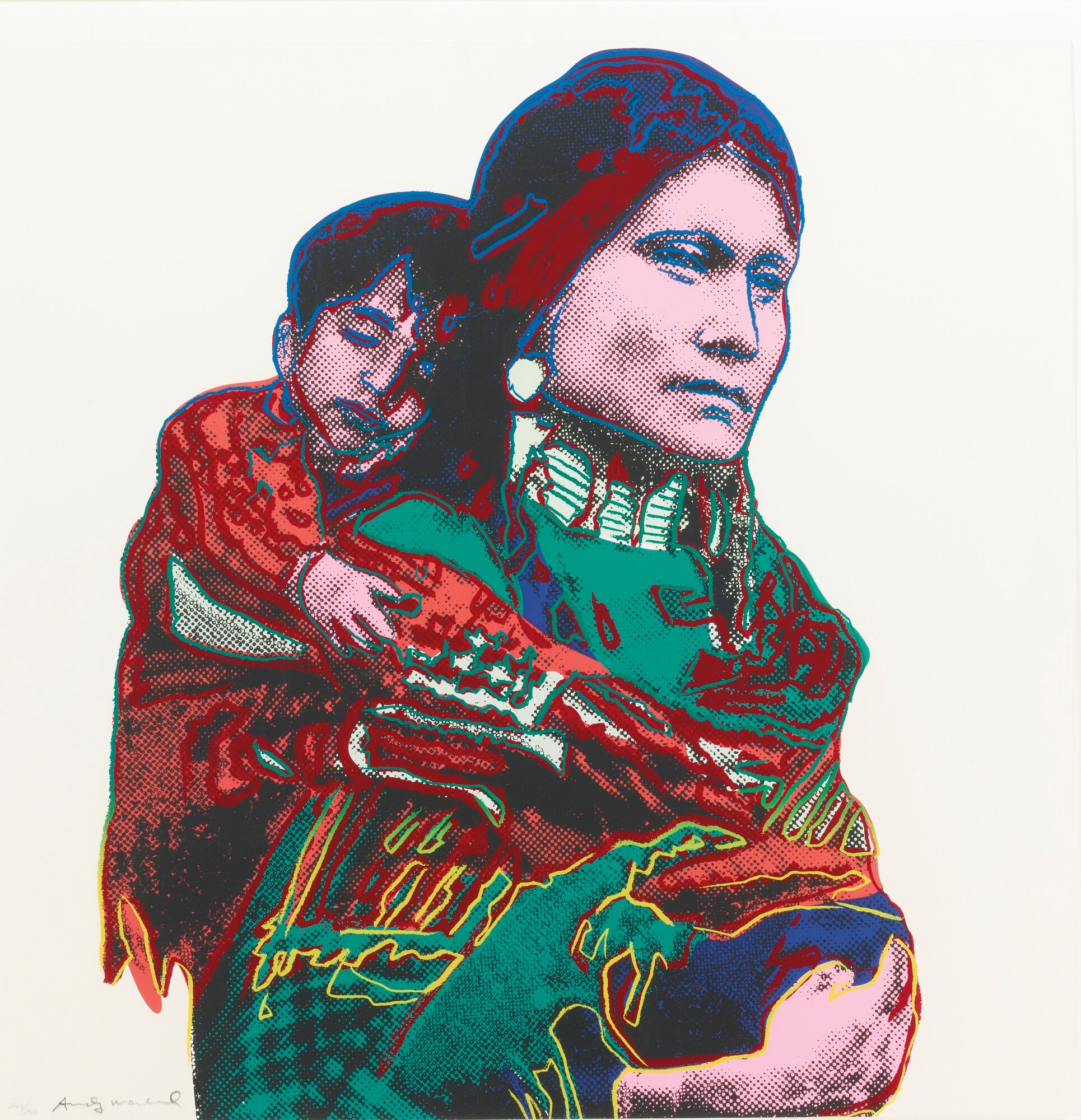
Cowboys and Indians, 1986
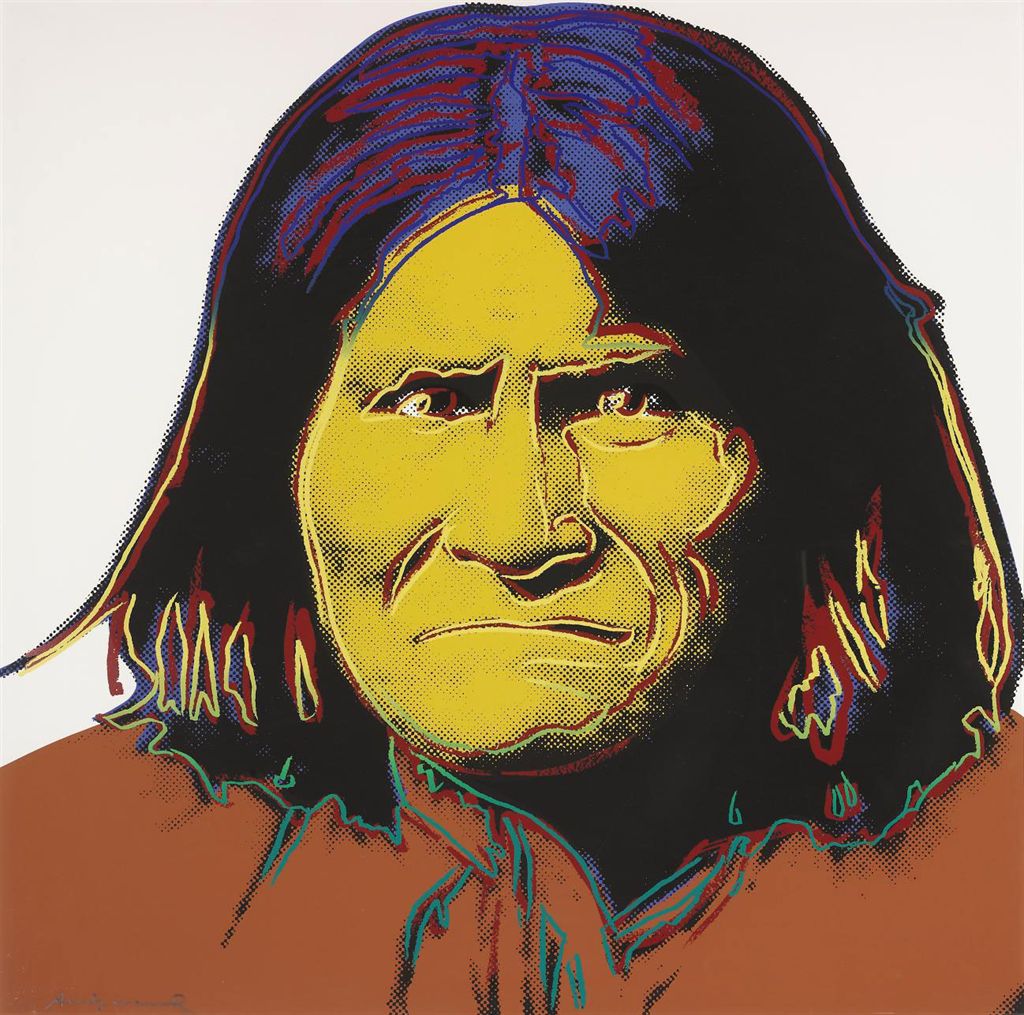
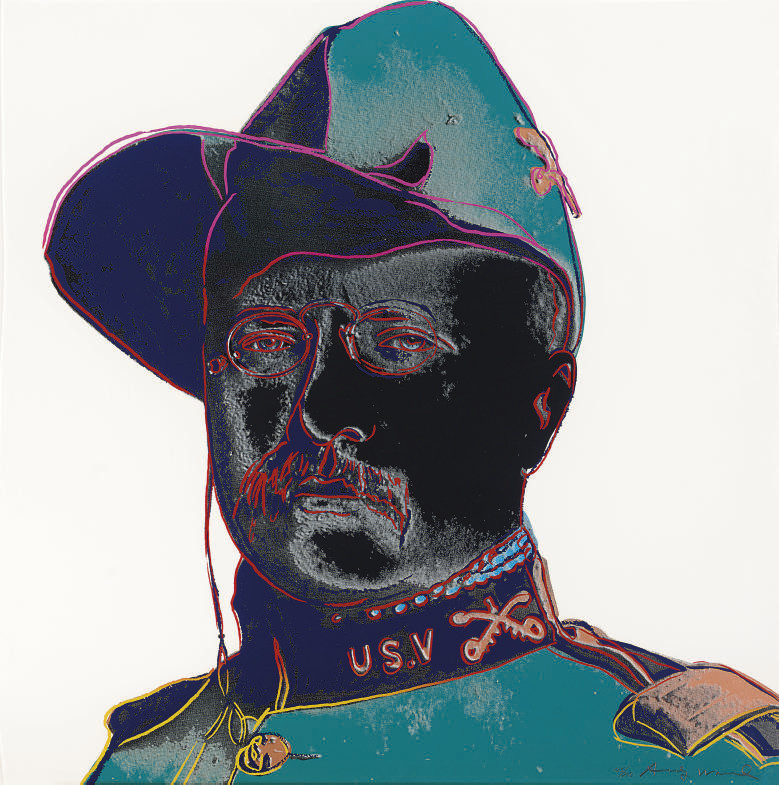
Andy Warhol’s final major portfolio Cowboys and Indians is truly a tour de force. Showcasing the artist’s fascination with pop culture, his appreciation of Indigenous art, and his almost prophetic, insight into the depths of the American imaginary, Warhol’s Cowboys and Indians remains an extraordinary series in the later part of Warhol’s career. With vivid color and thought-provoking juxtaposed images of U.S. Americana and Indigenous peoples’ culture, Warhol offers a new view of the frontier—one of centering performances, public opinion, and difficult historical exchanges. Looking beyond the prints to Warhol’s source imagery reveals an immense level of depth and consideration from the artist. Upon publication of the edition in 1986, a complete set of Cowboys and Indians was donated to the Smithsonian National Museum of the American Indian.

ANDY WARHOL
Cowboys and Indians, 1986
The complete set of 10 screen-prints in colors on Lenox Museum Board
Sheet: 36 x 36 inches (91.4 x 91.4 cm)
Edition: 250 + 50 AP + 15 PP + 15 HC + 10 numbered in Roman numerals
Trial Proofs: 36 TP with a unique color combination
Literature: Feldmann & Schellmann II.377-386

1. John Wayne (F&S II.377)
2. Annie Oakley (F&S II.378)

3. General Custer (F&S II.379)

4. Northwest Coast Mask (F&S II.380)

5. Kachina Dolls (F&S II.381)
6. Plains Indians Shield (F&S II.382)
7. Mother and Child (F&S II.383)
8. Geronimo (F&S II.384)
9. Indian Head Nickel (F&S II.385)

10. Teddy Roosevelt (F&S II.386)
Beethoven, 1987
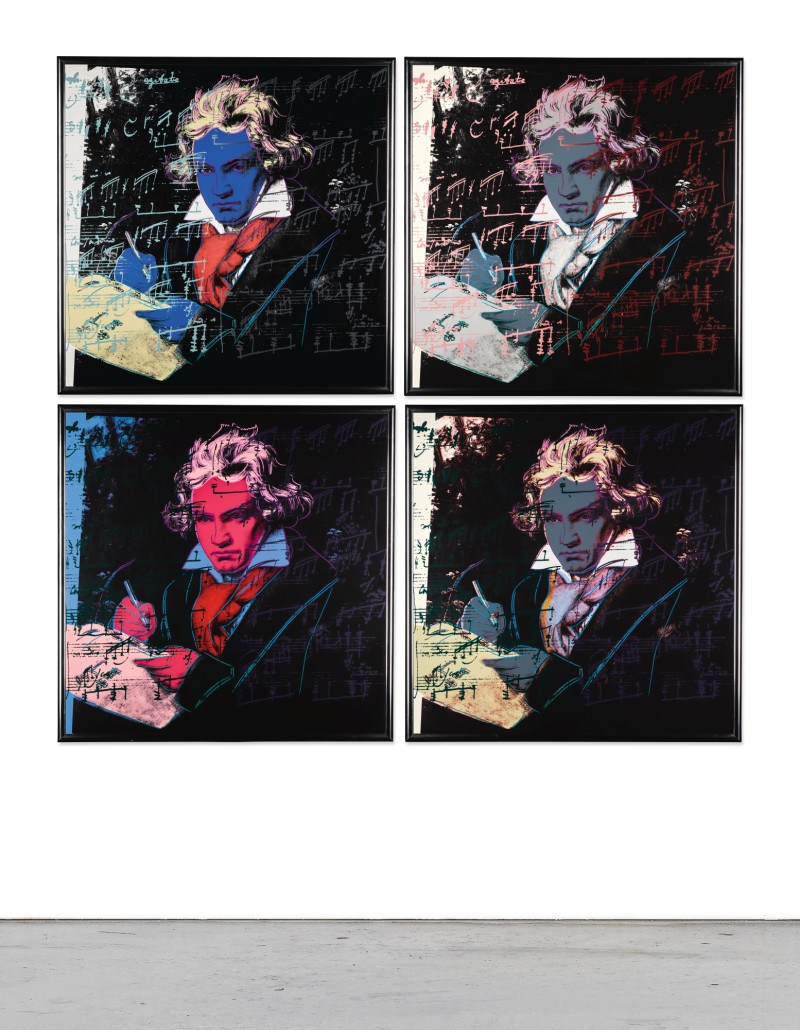
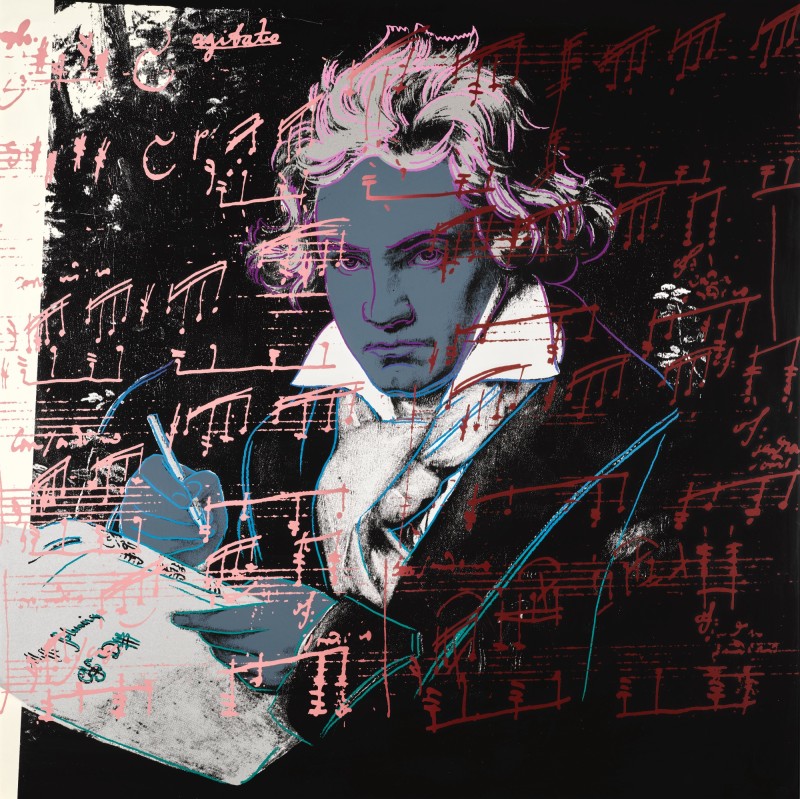
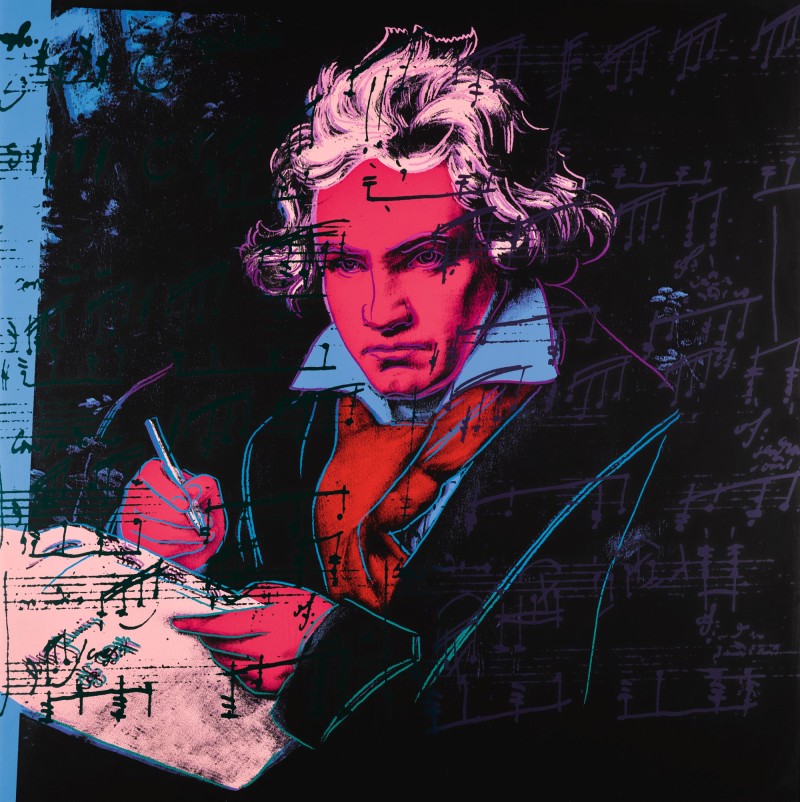
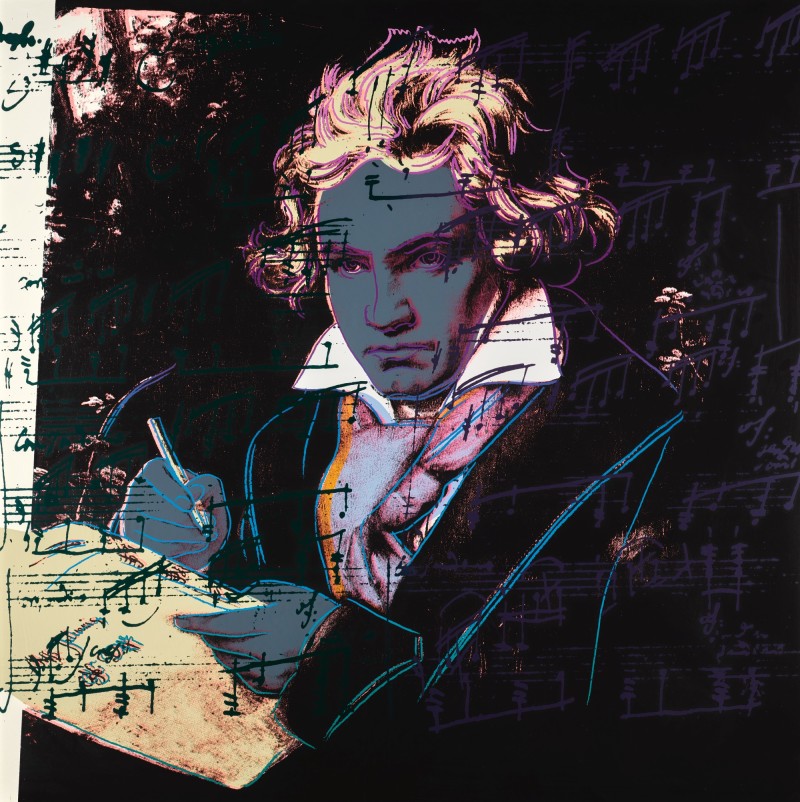
Warhol’s goal was to create icons beyond mere representation, as he understood that in order to create an enduring image, he had to reduce and condense a person’s likeness to an instantly recognizable motif. His screen-printed portraits transcended the sitters’ biography and character, skirting the line of caricature to become more symbol than representation. Created in 1987, shortly before his death, Warhol’s quartet of portraits of Ludwig van Beethoven (1770-1827) perfectly demonstrates the artist’s ability to manipulate and appropriate imagery to create a visual icon. For this set of screen-prints, Andy Warhol took an already famous image of the German composer: an idealized and heroic portrait painted in 1820 by Joseph Karl Stieler (1781-1858), which has colored our view of Beethoven’s personality and appearance unlike any other.
ANDY WARHOL
Beethoven, 1987
The complete set of four screen-prints in colors on Lenox Museum Board
Sheet: 40×40 inches (101.6 x 101.6 cm)
Edition: 60 + 15 AP + 10 PP + 20 numbered in Roman numerals
Trial Proofs: 72 individual TP not in portfolios with unique color combination
Literature: Feldman & Schellmann II.390-393
1. Beethoven (F&S II.390)
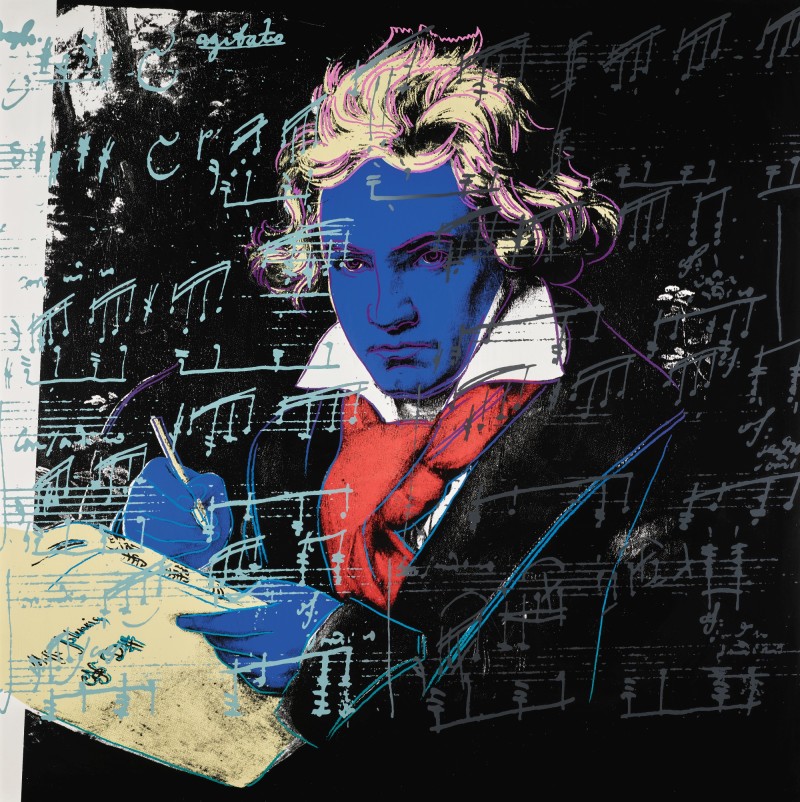
2. Beethoven (F&S II.391)
3. Beethoven (F&S II.392)
4. Beethoven (F&S II.393)
Hans Christian Andersen, 1987
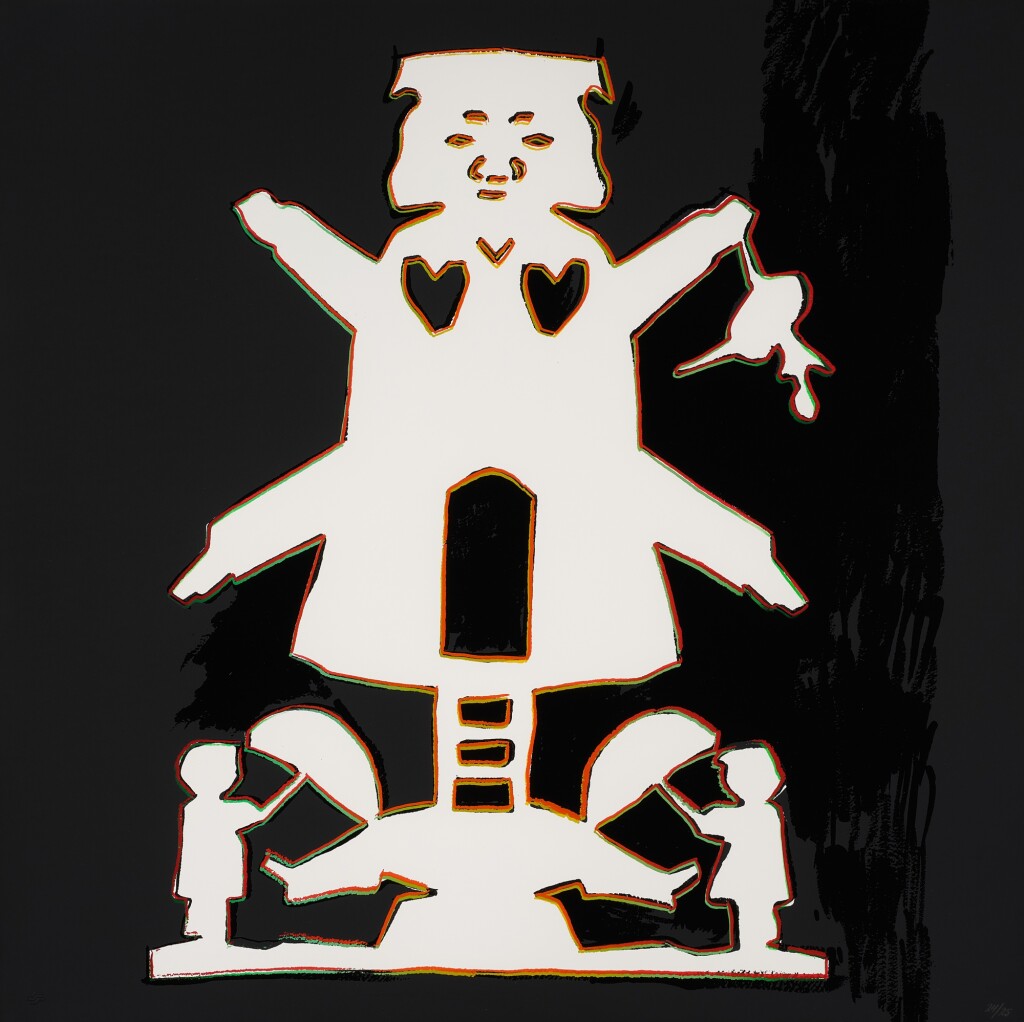
Andy Warhol created two series of four screen prints dedicated to Hans Christian Andersen. The series was conceived a year prior to his death, therefore it is possible the artist began reflecting on his own childhood during this time. Once again, the pop artist used pre-existing images, in this case the work of another artist, enlarged them manifold and gave them his signature color treatment, rather than creating his own interpretation of the author’s figures and tales.
Hans Christian Andersen Portfolio I
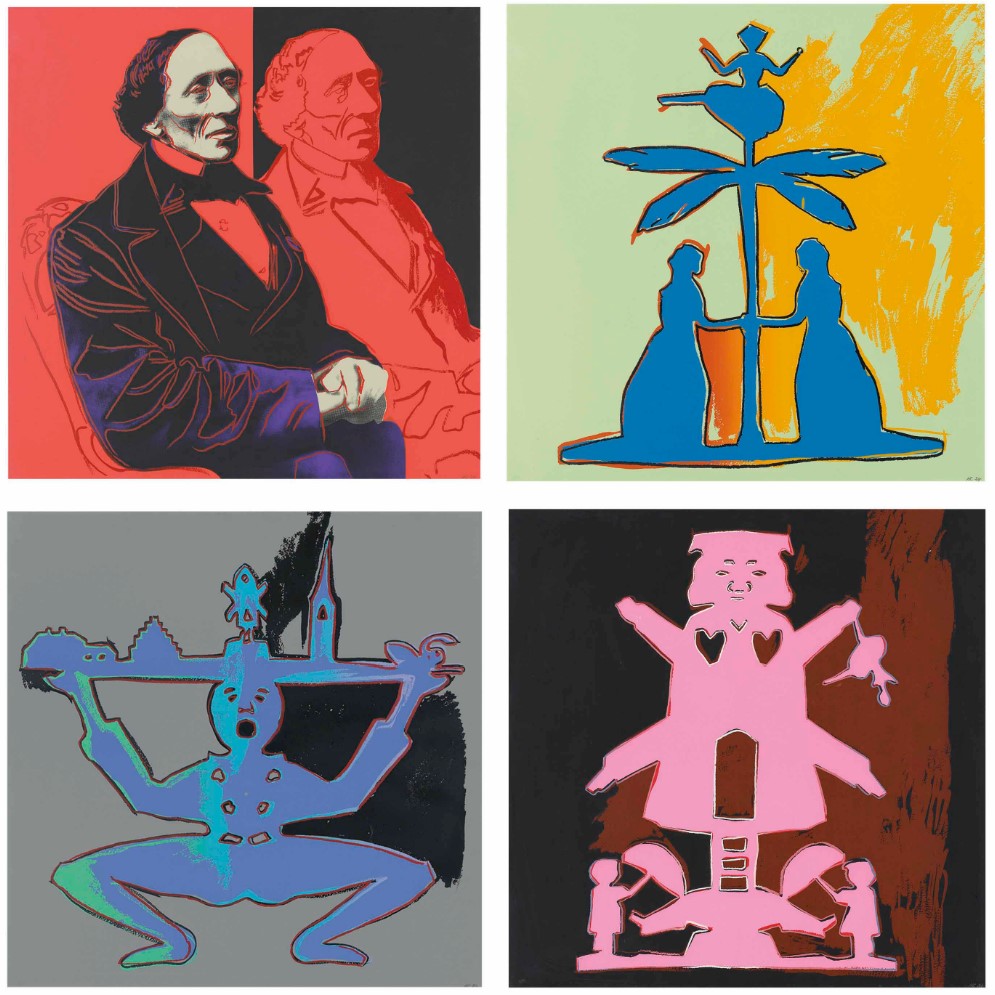
Hans Christian Andersen, 1987
The complete set of four screen-prints in colors on Lenox Museum Board
Sheet: 38×38 inches (96.5 x 96.5 cm)
Edition: 25 + 8 AP + 3 PP + 5 HC
Trial Proofs: 36 TP for II.394-397 and II.398-401 with unique color combinations
Literature: Feldman & Schellmann II.394-397
1. Hans Christian Andersen (F&S II.394)
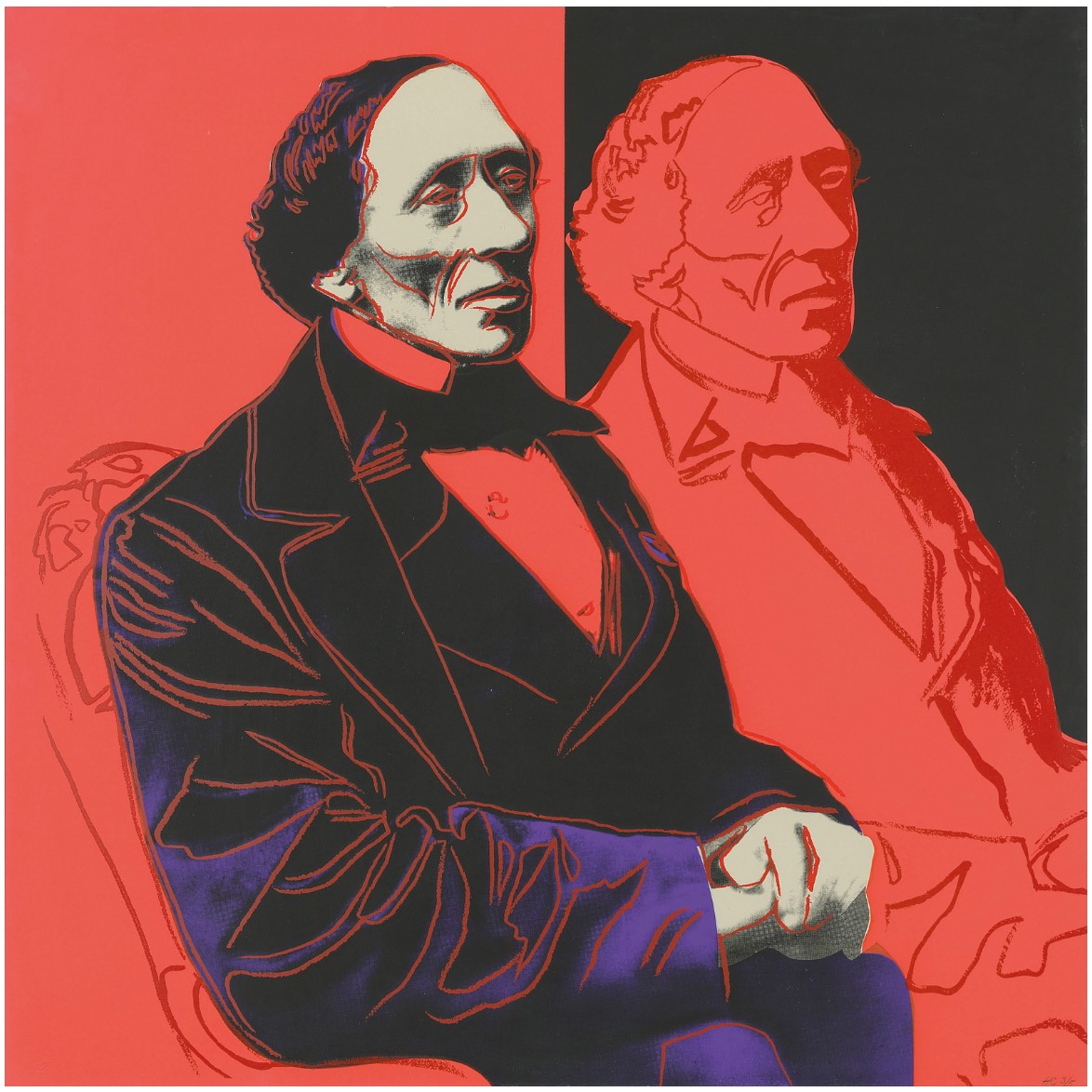
2. Hans Christian Andersen (F&S II.395)
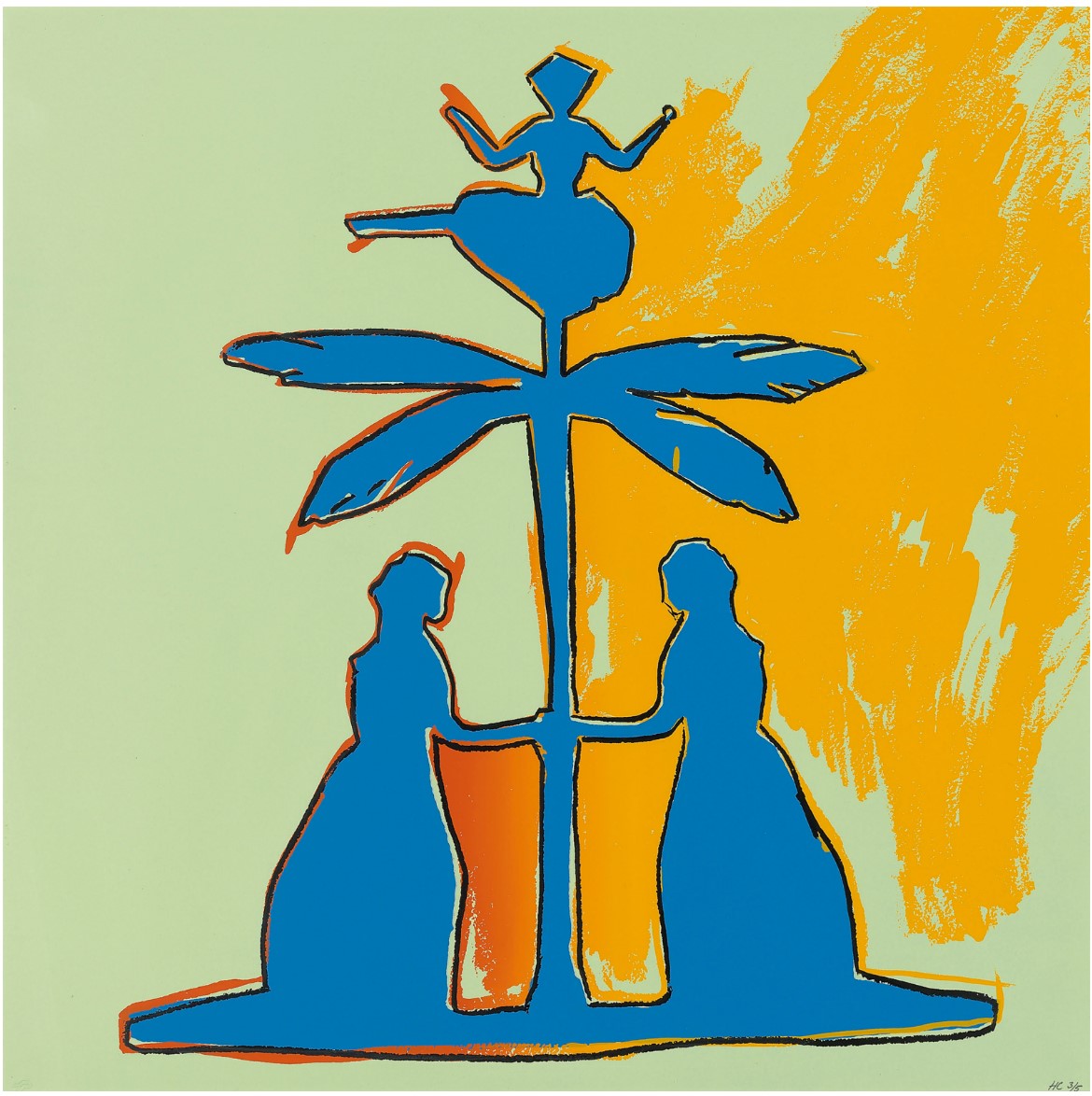
3. Hans Christian Andersen (F&S II.396)
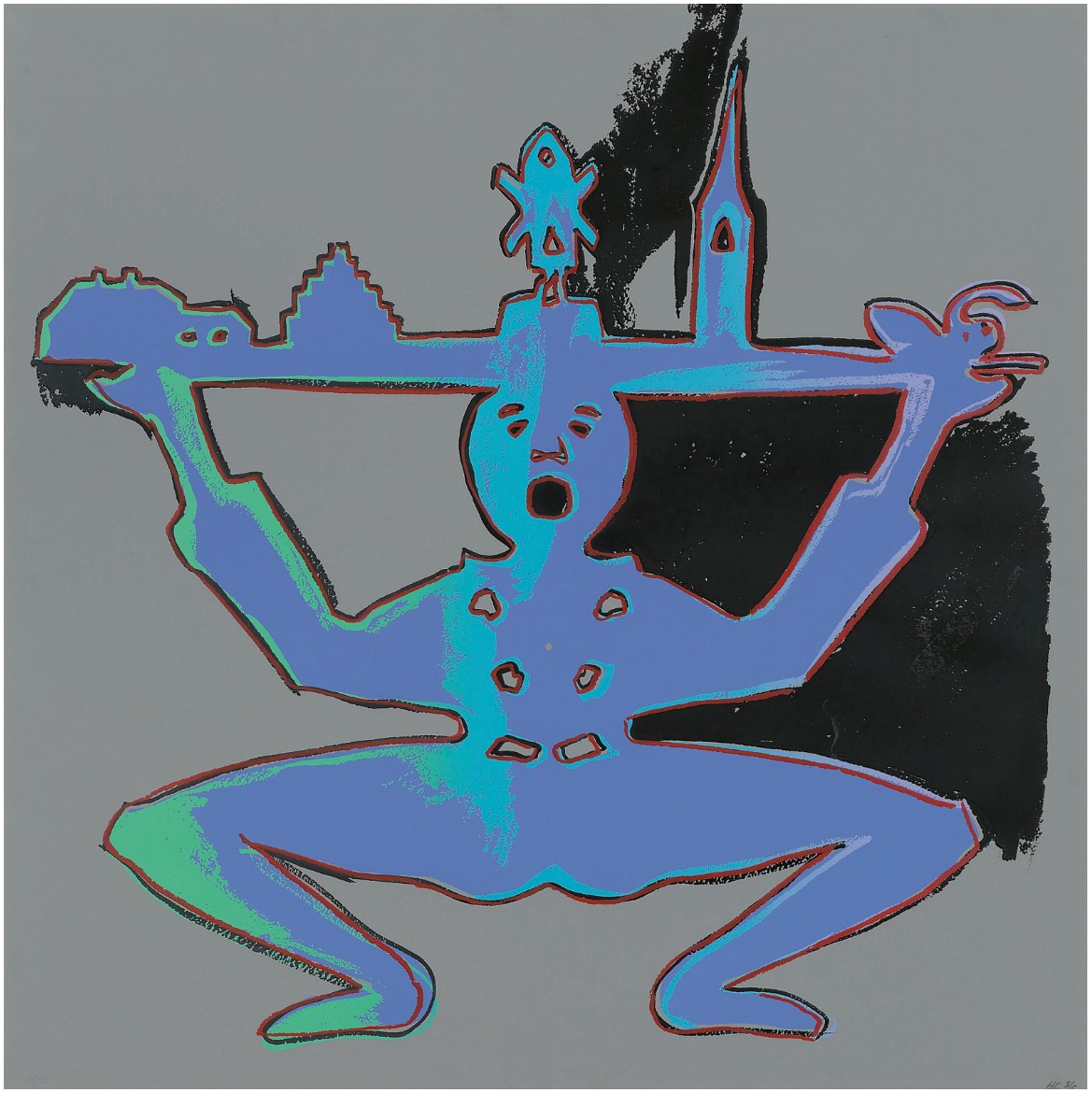
4. Hans Christian Andersen (F&S II.397)
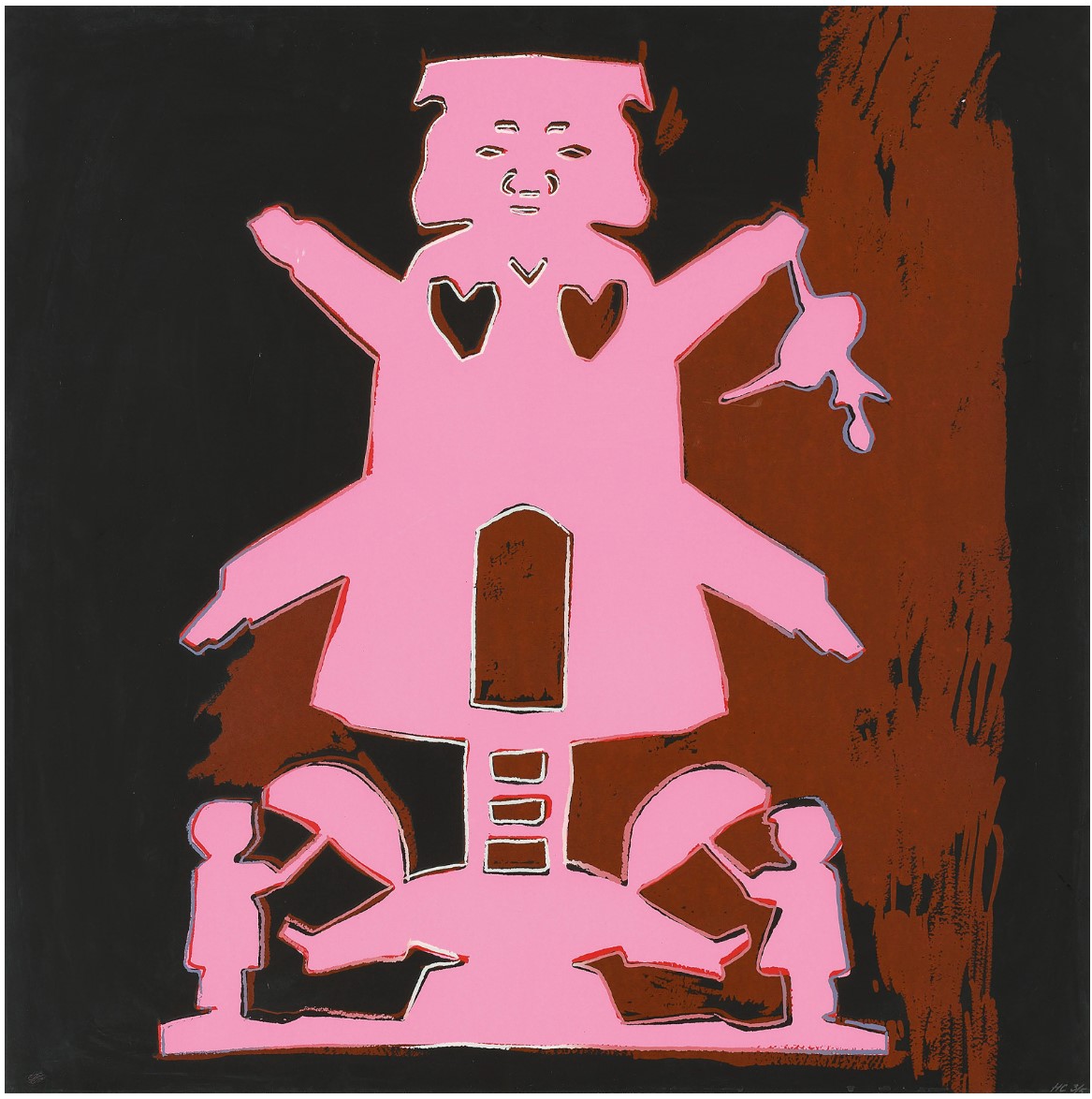
Hans Christian Andersen Portfolio II
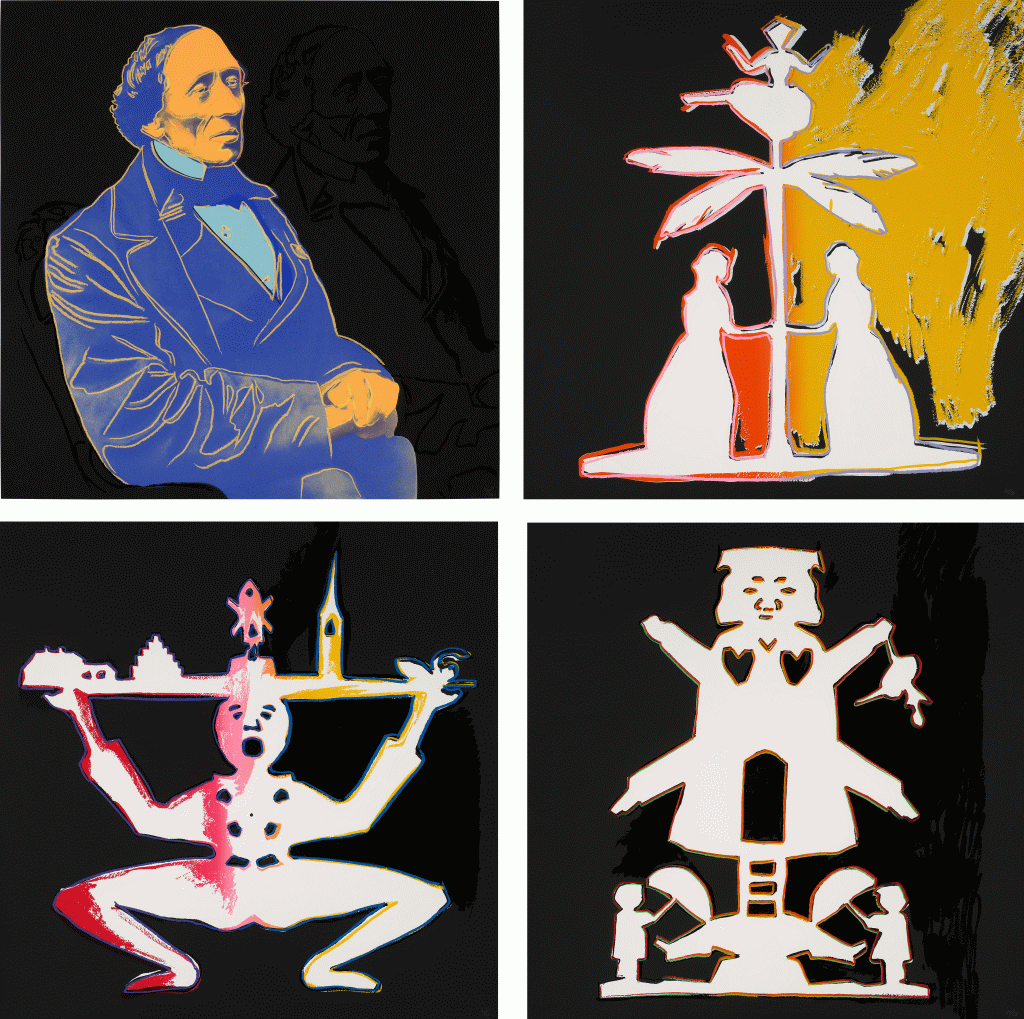
Hans Christian Andersen, 1987
The complete set of four screen-prints in colors on Lenox Museum Board
Sheet: 38×38 inches (96.5 x 96.5 cm)
Edition: 25 + 8 AP + 3 PP + 5 HC
Trial Proofs: 36 TP for II.394-397 and II.398-401 with unique color combinations
Literature: Feldman & Schellmann II.398-401
1. Hans Christian Andersen (F&S II.398)
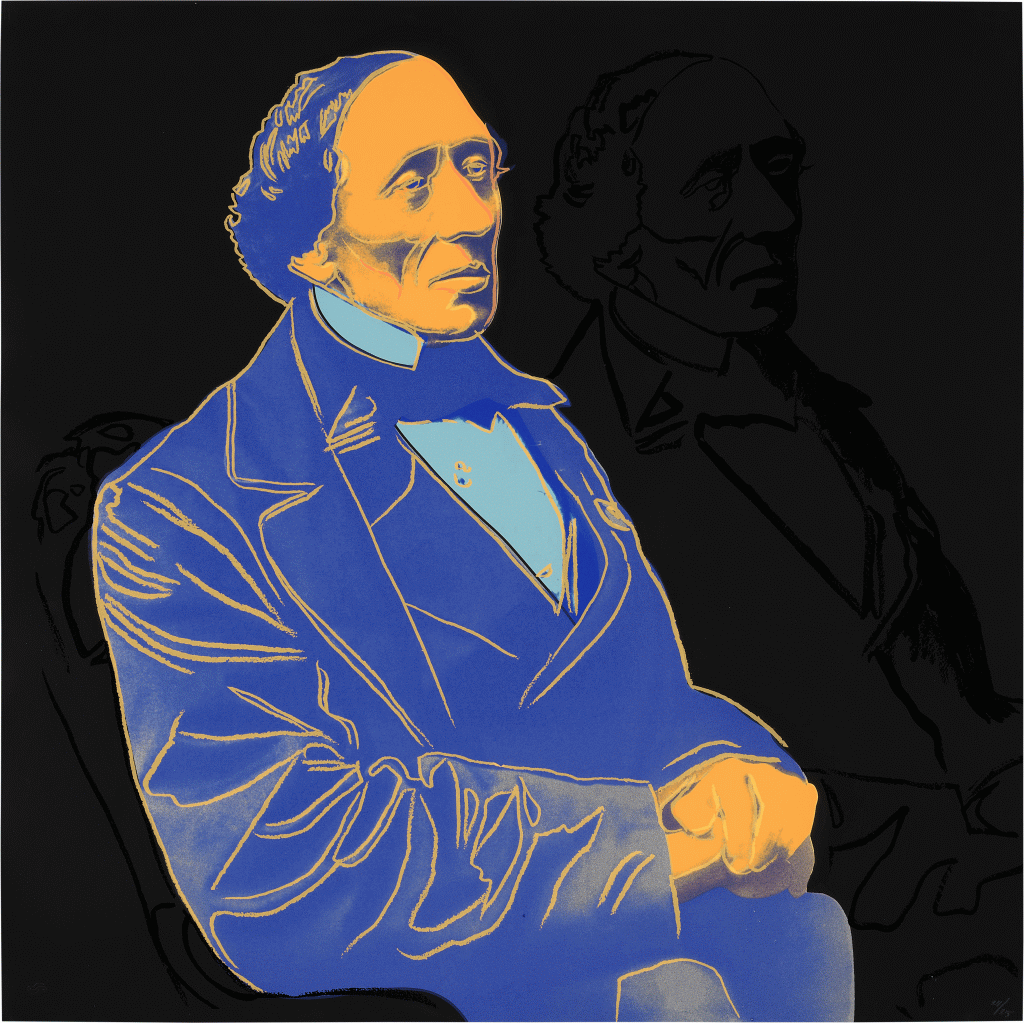
2. Hans Christian Andersen (F&S II.399)
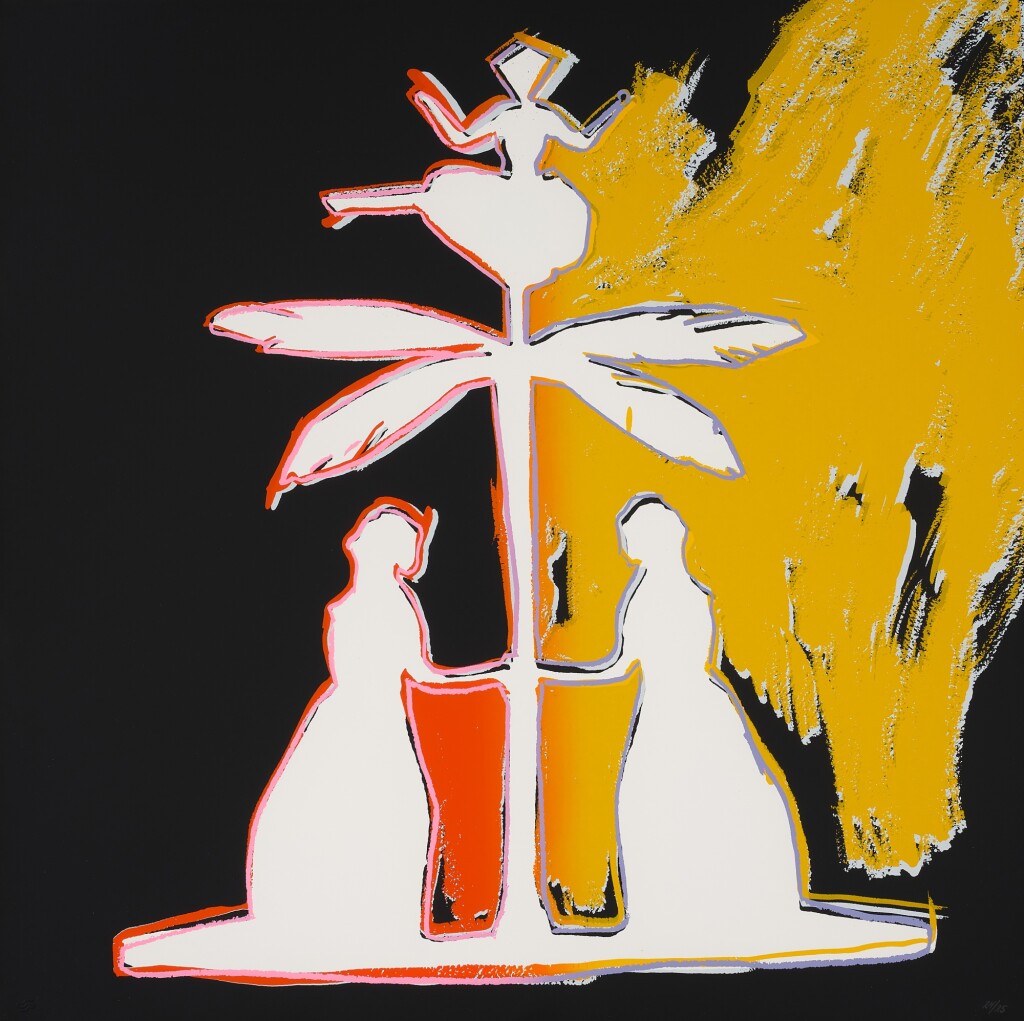
3. Hans Christian Andersen (F&S II.400)
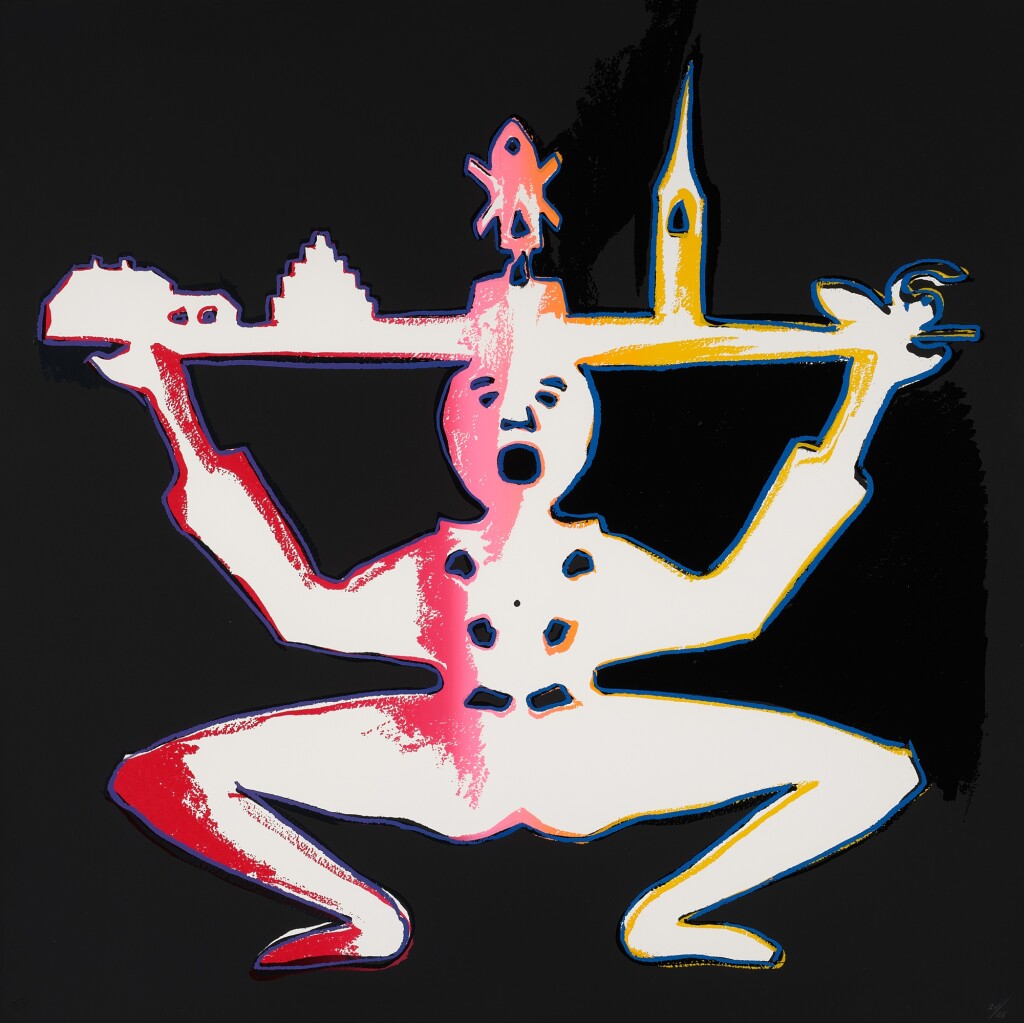
4. Hans Christian Andersen (F&S II.401)
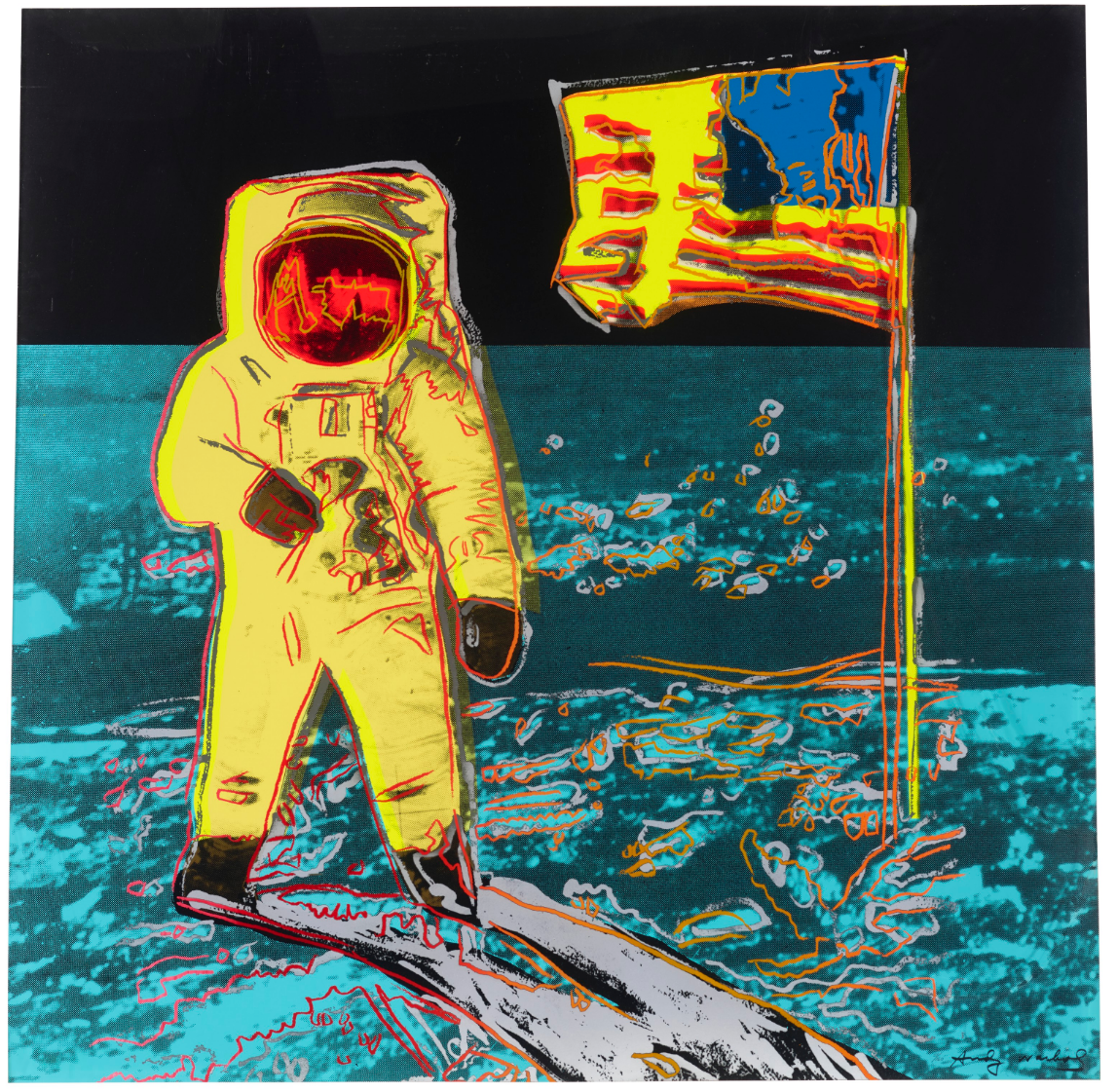
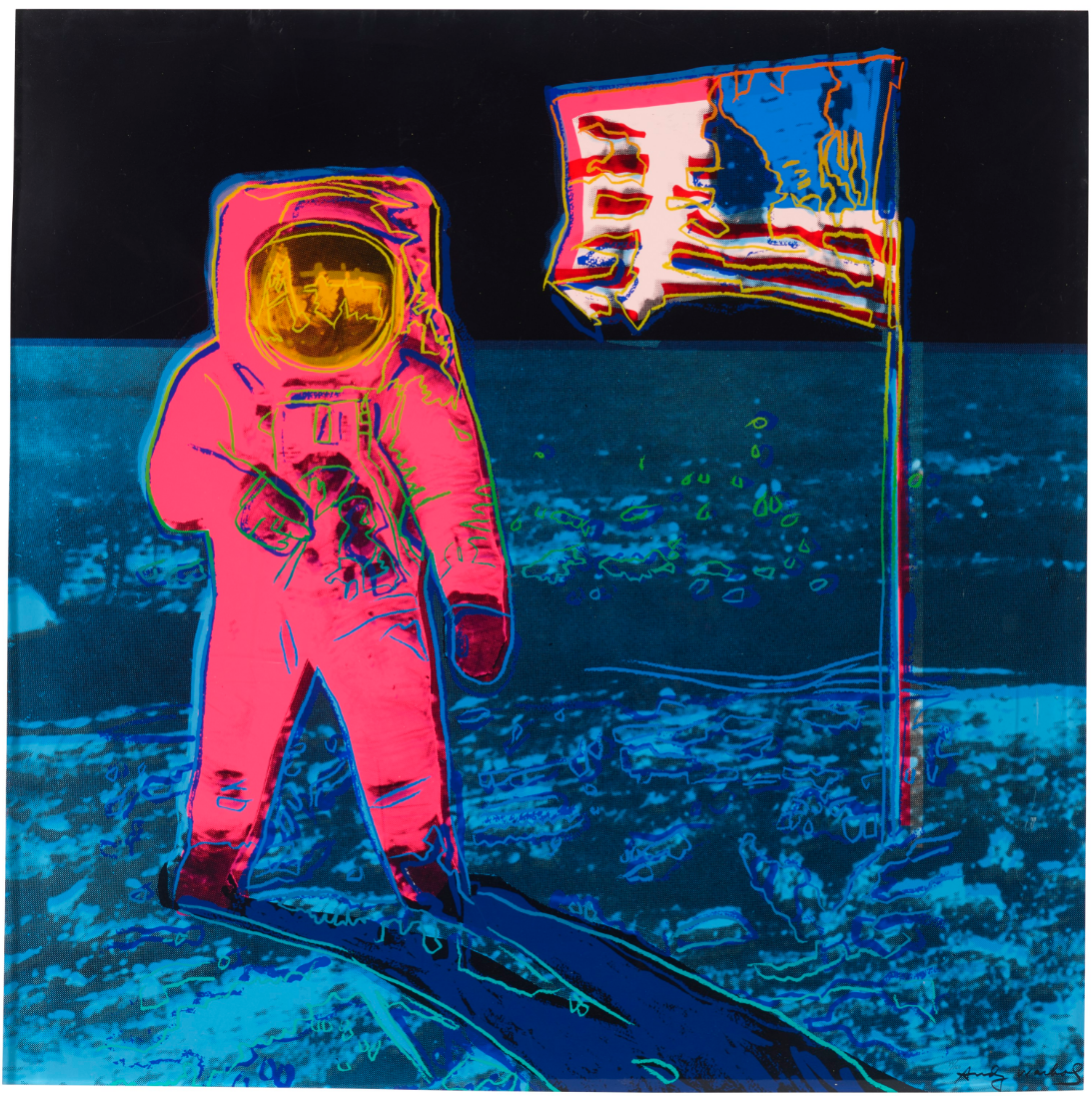
Moonwalk, 1987

ANDY WARHOL
Moonwalk, 1987
The complete set of two screen-prints in colors on Lenox Museum Board
Sheet: 38×38 inches (96.5 x 96.5 cm)
Edition: 160 + 31 AP + 5 PP + 5 EP
Trial Proofs: 66 individual TP not in portfolios
Literature: Feldman & Schellmann II.404-405
1. Moonwalk (F&S II.404)
2. Moonwalk (F&S II.405)
Lenin, 1987
Based on a photograph of Lenin, this frontal half-portrait depicts the Russian revolutionist and dictator gazing downward. He rests his right hand on a book. Lenin’s black suit fades into the black background, drawing the eye to his red face and hand, outlined by blue and magenta detailing in around his eyes, ears, and beard. Like in many other celebrity prints, Andy Warhol draws on key features of Lenin’s appearance: his iconic pointed beard and bald head. The Lenin prints were the last that Warhol completed before his death in February 1987.
Lenin, 1987
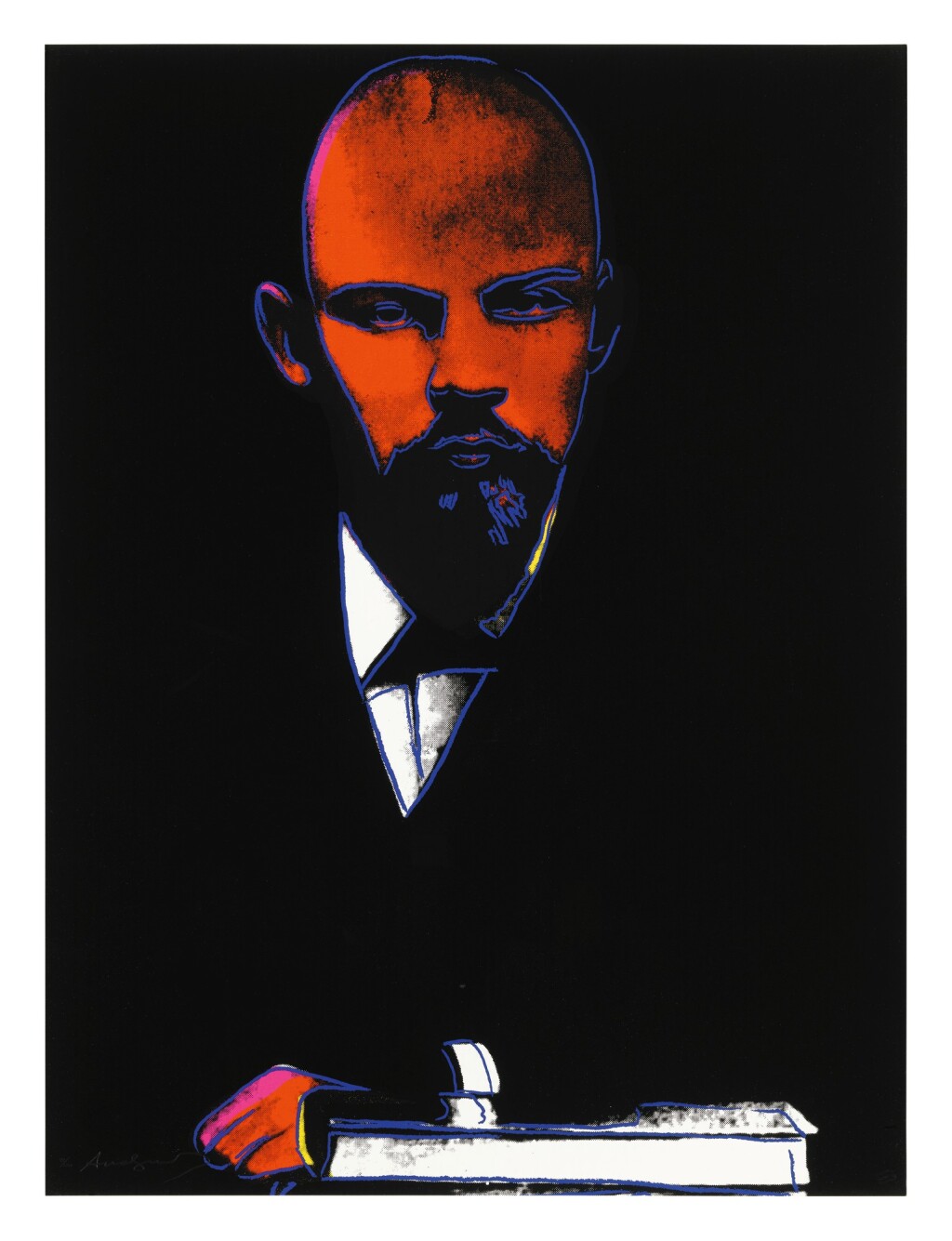 Lenin, 1987
Screen-print in colors on Arches 88 paper
Sheet: 39 3/8 x 29 1/2 inches (100 x 74.9 cm)
Edition: 120 + 24 AP + 6 PP + 10 HC
Trial Proofs: 46 TP in unique color combination
Literature: Feldman & Schellmann II.402
Red Lenin, 1987
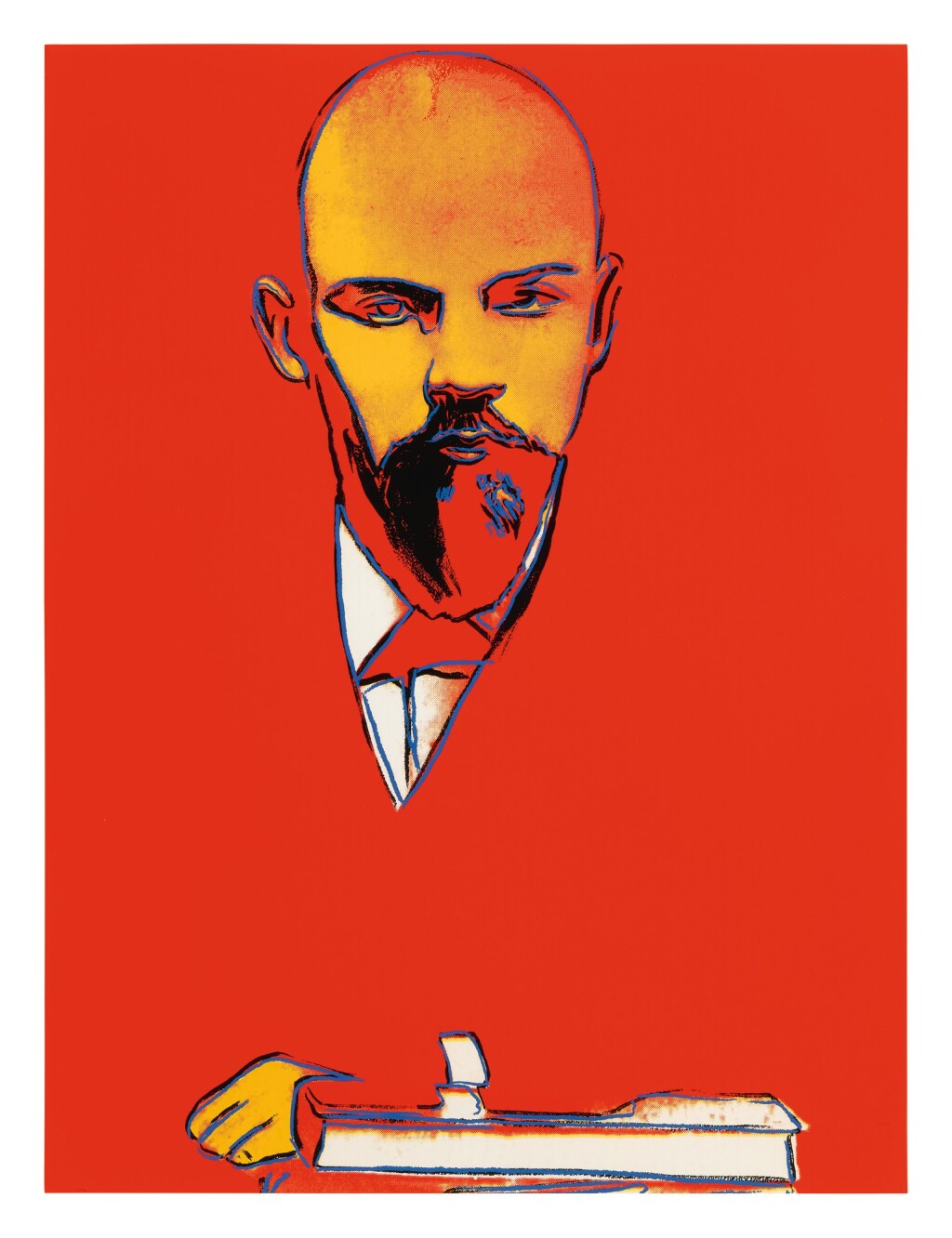
Red Lenin, 1987
Screen-print in colors on Arches 88 paper
Sheet: 39 3/8 x 29 1/2 inches (100 x 74.9 cm)
Edition: 120 + 24 AP + 6 PP + 10 HC
Trial Proofs: 46 TP in unique color combination
Literature: Feldman & Schellmann II.403
Camouflage, 1987
It was studio assistant Jay Shriver who experimented with a new painting technique in the late 1980’s, pushing paint through military cloth, who gave Warhol the idea of appropriating the combat related imagery. Warhol was intrigued by the all-over repetitive pattern of camouflage, with its leaf-shaped sprigs and islands, that represented the abstract expressionist paintings of his contemporaries. Using photographs taken of clothing purchased at an army surplus store, Warhol transposed and carefully altered the camouflage designs with a psychedelic palette. Playfully abstracting the patterns, the artist defied the print’s original purpose to disguise, and instead pushed the designs to center stage with vibrant fluorescent colors. The result was a set of eight screen-prints, each with different colors and varying levels of depth, that would form one of the artist’s final projects.

Camouflage, 1987
Portfolio of 8 screen-prints in colors on Lenox Museum Board
Sheet: 38×38 inches (96.5 x 96.5 cm)
Edition: 80 + 3 PP + 1 EP
Trial Proofs: 84 individual TP not in portfolios
Literature: Feldman and Schellmann II.406-413
Printed in fluorescent ink
1. Camouflage (F&S II.406)

2. Camouflage (F&S II.407)
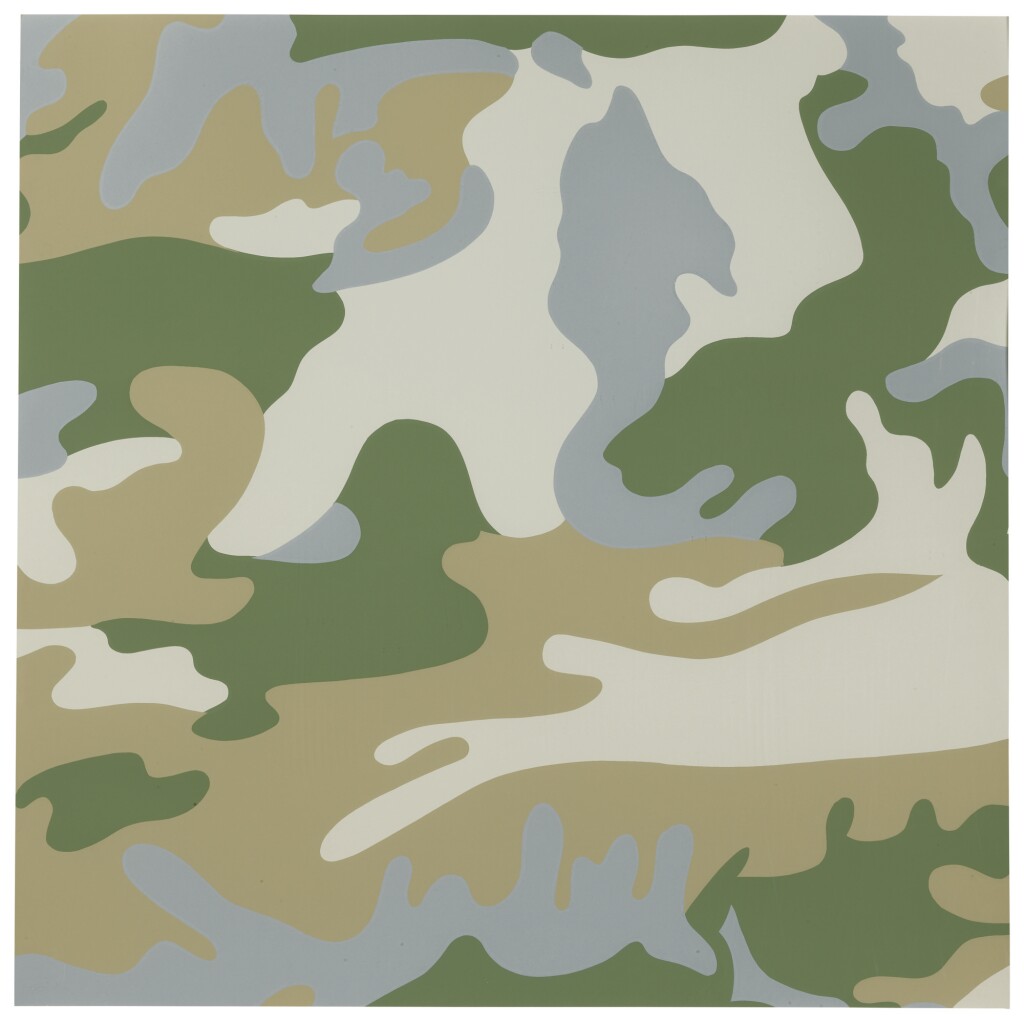
3. Camouflage (F&S II.408)
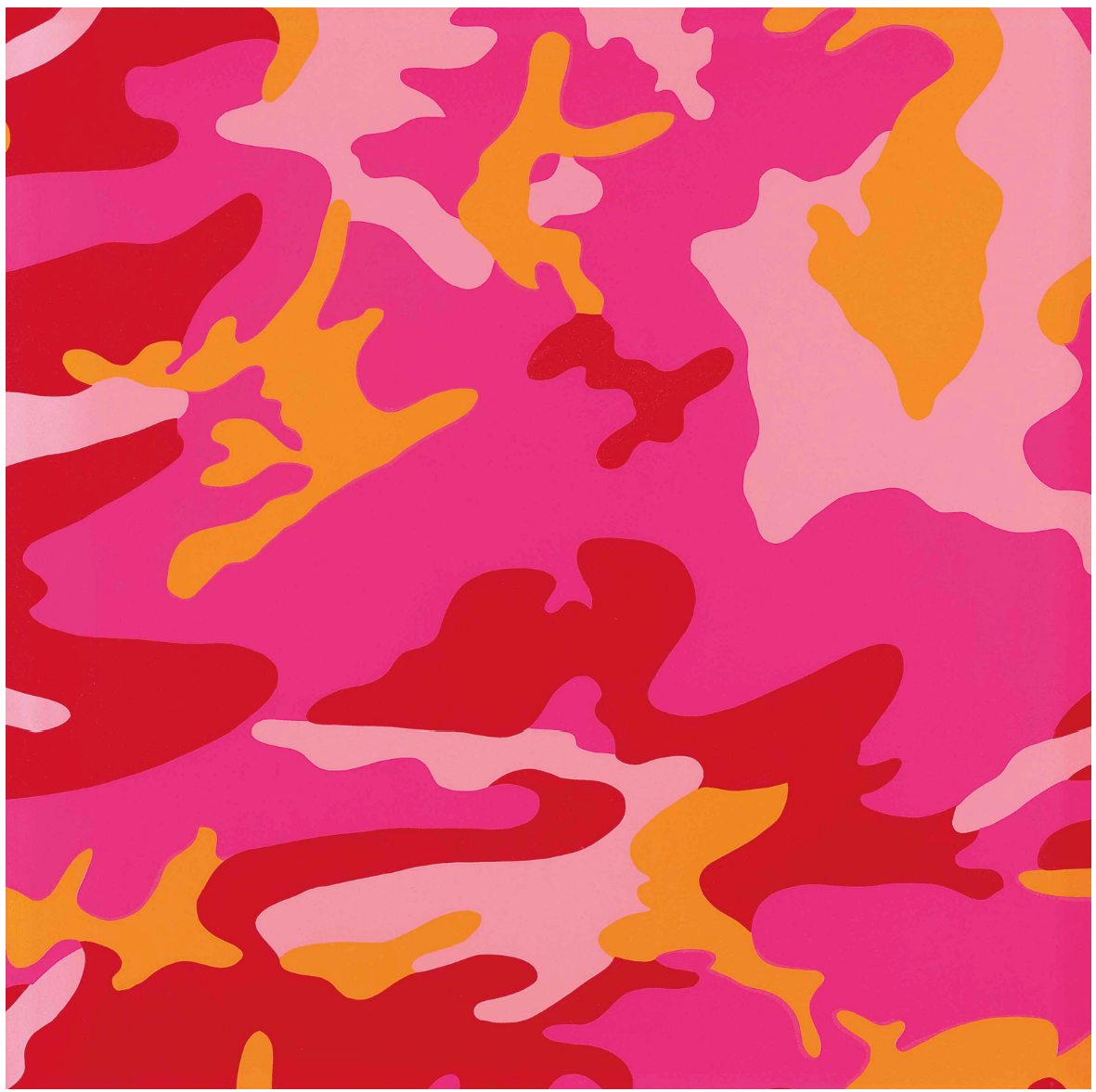
4. Camouflage (F&S II.409)
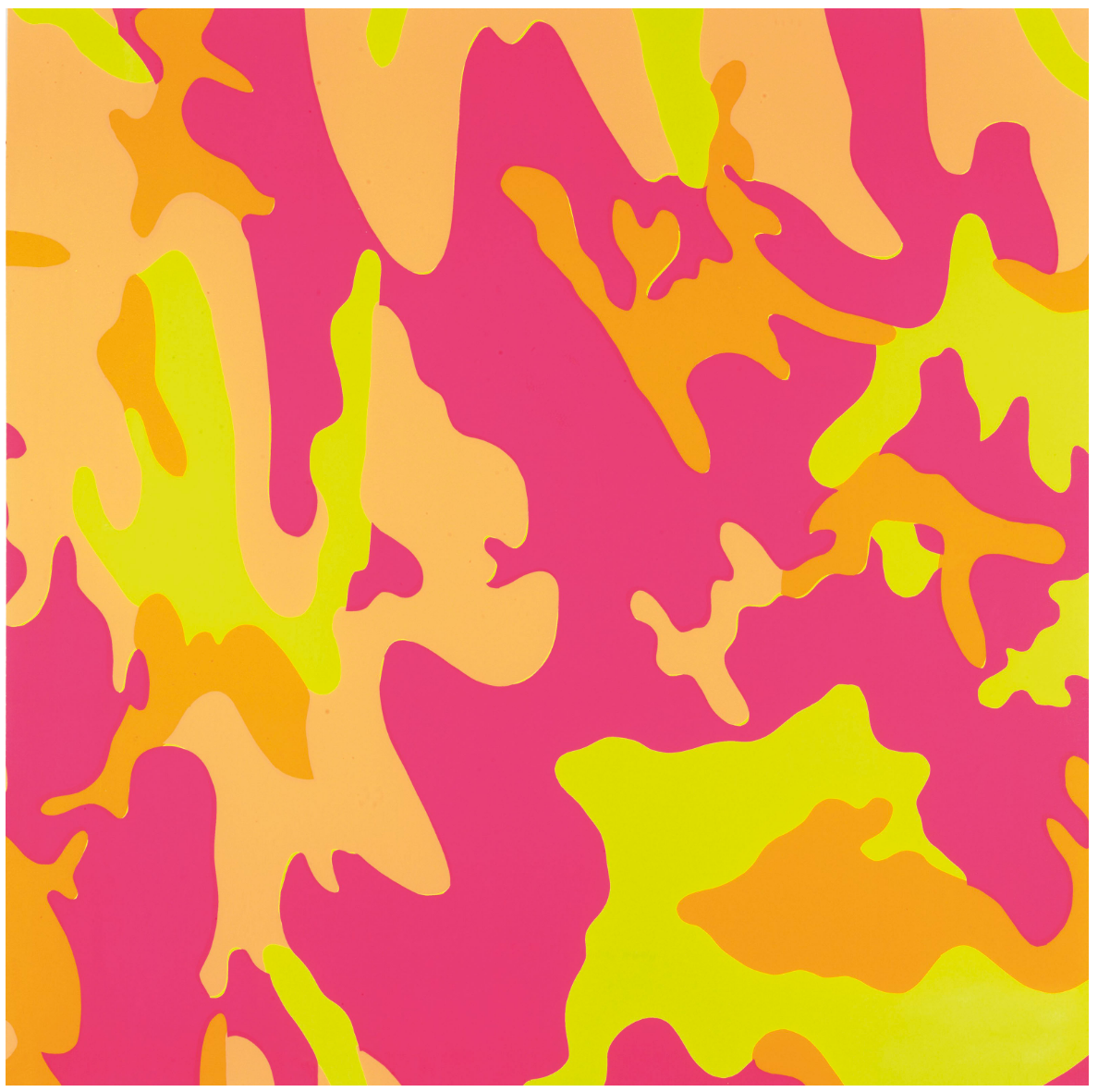
5. Camouflage (F&S II.410)

6. Camouflage (F&S II.411)

7. Camouflage (F&S II.412)

8. Camouflage (F&S II.413)