Few figures in contemporary art have achieved the level of cultural saturation and formal coherence of the Companion. Developed by KAWS over more than two decades, the Companion is not a single sculpture but a continuously evolving system—a character that mutates, adapts, and reappears across formats, scales, and contexts, while maintaining an immediately recognizable identity.
Introduction
At its core, the Companion is a hybrid. It borrows from the visual language of early animation—most notably the rounded gloves and shorts reminiscent of Mickey Mouse—while systematically stripping that language of its narrative function. The eyes are crossed out, the expressions neutralized, the gestures slowed or suspended. What remains is not a character in action, but a character in state.
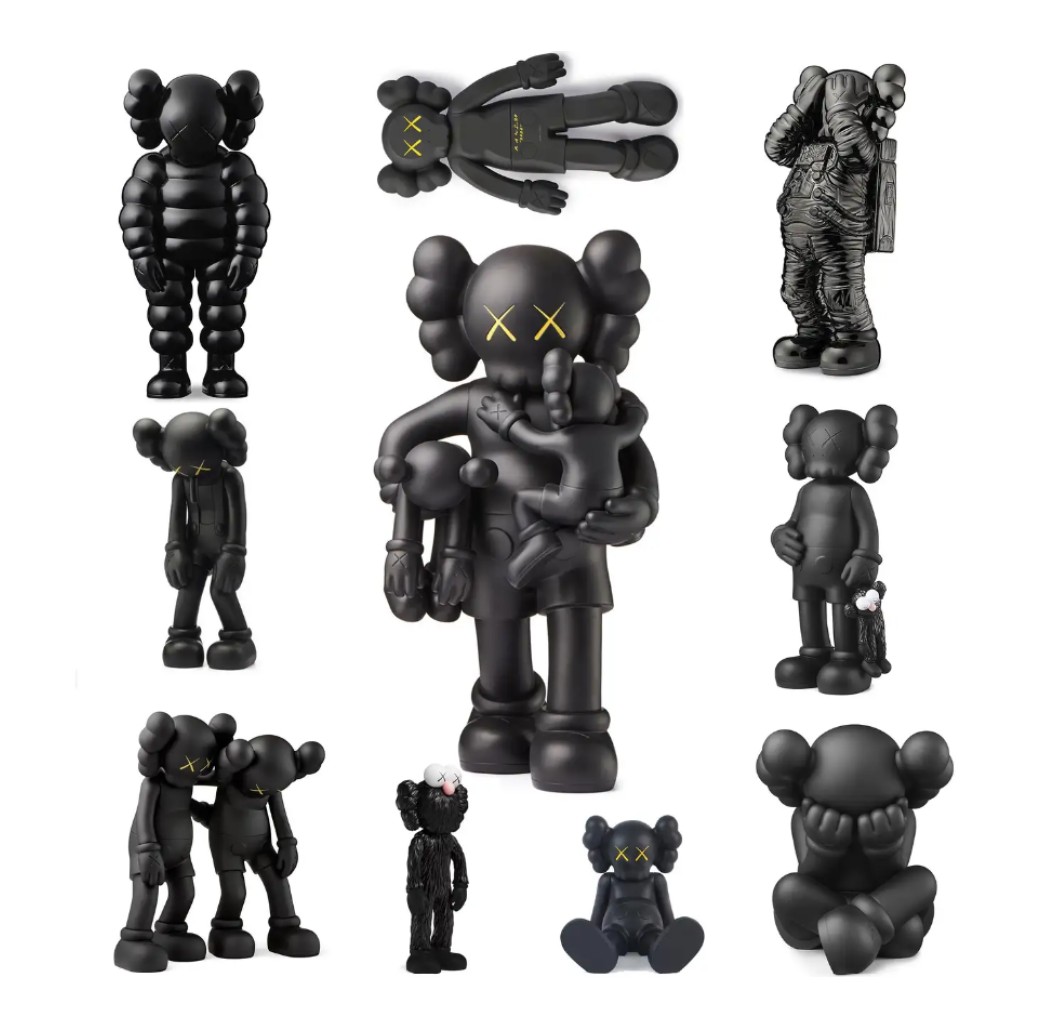
What defines the Companion is not variation in design, but variation in posture. Standing, seated, slumped, embracing, floating, fragmented—the figure becomes a vehicle for emotional conditions rather than storytelling.
In Small Lie, it collapses inward under the weight of quiet guilt. In Together or Share, it enters into physical connection, exploring proximity and dependence. In Clean Slate or Along the Way, it introduces a secondary figure—a child—shifting the narrative toward transmission, protection, or inheritance. In Holiday iterations, the figure is displaced into public space or symbolic environments, transforming it into a global marker rather than an individual presence. Each iteration is a modulation. The structure remains constant; the meaning shifts through gesture.
The Companion operates across a remarkably wide spectrum of production. It exists as monumental sculptures installed in public sites worldwide, as gallery-scale works, and as editioned objects produced in collaboration with Medicom Toy.
This elasticity is not incidental—it is central to KAWS’ practice. By allowing the same figure to exist simultaneously as a museum object, a public installation, and a collectible multiple, KAWS dissolves traditional hierarchies between fine art and design. The Companion is not confined to a single category; it circulates.
The black editions presented here push this logic further. By removing color variation, they reduce each figure to its purest formal expression. The differences between works are no longer chromatic—they are entirely structural and gestural. Black becomes a unifying device, transforming a diverse group of sculptures into a coherent visual language.
The Companion functions as a contemporary icon—one that operates globally, across audiences, without reliance on language. Its success lies in its ambiguity. It is familiar but not specific, expressive but not descriptive. Viewers project onto it rather than read from it.
This openness has allowed the figure to move fluidly between contexts: from street interventions to major museum exhibitions, from limited editions to mass cultural visibility. Few artists have managed to maintain such consistency of identity while expanding so broadly in scale and audience.
More than a recurring motif, the Companion is KAWS’ primary contribution to contemporary visual culture. It represents a new model of artistic production—one in which character, brand, and sculpture are inseparable.
In its black edition form, this system becomes particularly legible. Stripped of distraction, the Companion reveals its underlying logic: a fixed anatomy capable of infinite emotional variation.
Clean Slate
With Clean Slate, KAWS introduces one of the most structurally significant evolutions of the Companion: the presence of a child figure. The adult Companion stands upright, holding a smaller version at its side—establishing a clear dynamic of transmission, guidance, and continuity. Unlike later works where interaction becomes more emotionally complex, Clean Slate is direct, almost foundational.
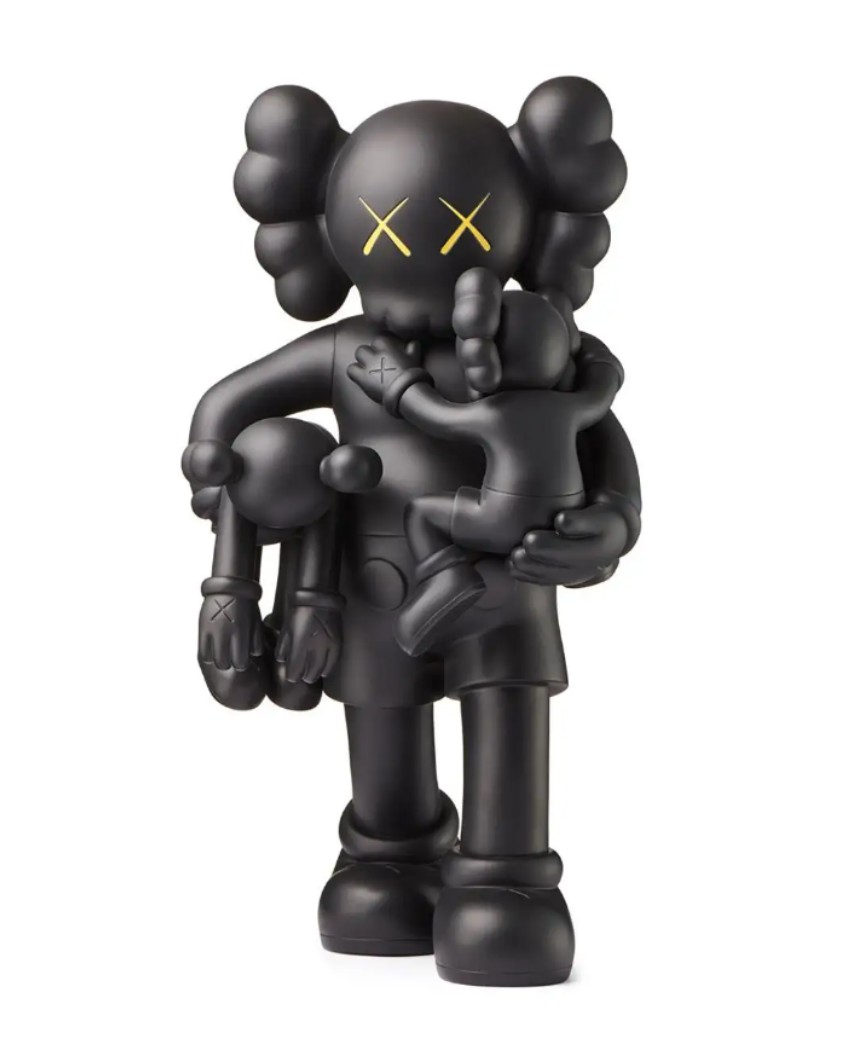
The title is critical. A “clean slate” suggests beginning, erasure, and potential. The child figure is not yet marked by experience, while the adult—identical in form—implies that identity is not inherited but constructed. In black, the work becomes almost diagrammatic: stripped of distraction, it reads as a pure statement about origin and repetition within KAWS’ universe.
PLEASE CLICK BELOW TO READ ABOUT CLEAN SLATE
AND FIND HISTORICAL AUCTION RESULTS
Along The Way
Along The Way builds directly on this parent-child relationship but introduces movement—both literal and conceptual. The adult Companion walks forward, carrying the smaller figure on its shoulders, evoking a familiar human gesture of support and elevation.
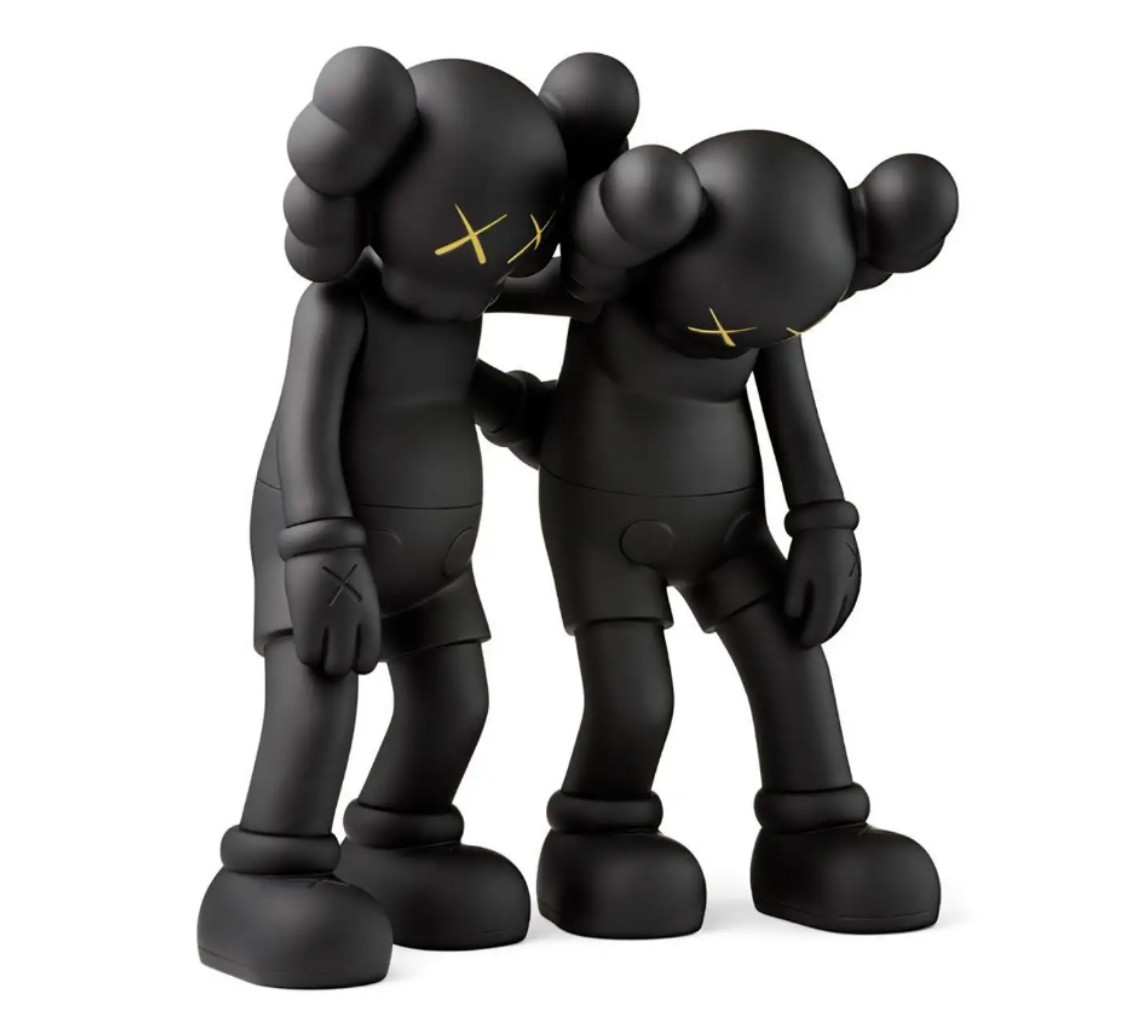
There is something subtly optimistic here. Unlike many Companion works rooted in introspection, this piece suggests progression, even lightness. The child is lifted, given perspective. In black, the narrative becomes more abstract, less anecdotal—less about a specific moment, more about the idea of continuity itself.
PLEASE CLICK BELOW TO READ ABOUT ALONG THE WAY
AND FIND HISTORICAL AUCTION RESULTS
Holiday Space 2020
With Holiday Space 2020, the Companion leaves the ground entirely. Originally conceived as an inflatable sculpture sent into near space, the work transforms the figure into a global—almost cosmic—symbol.
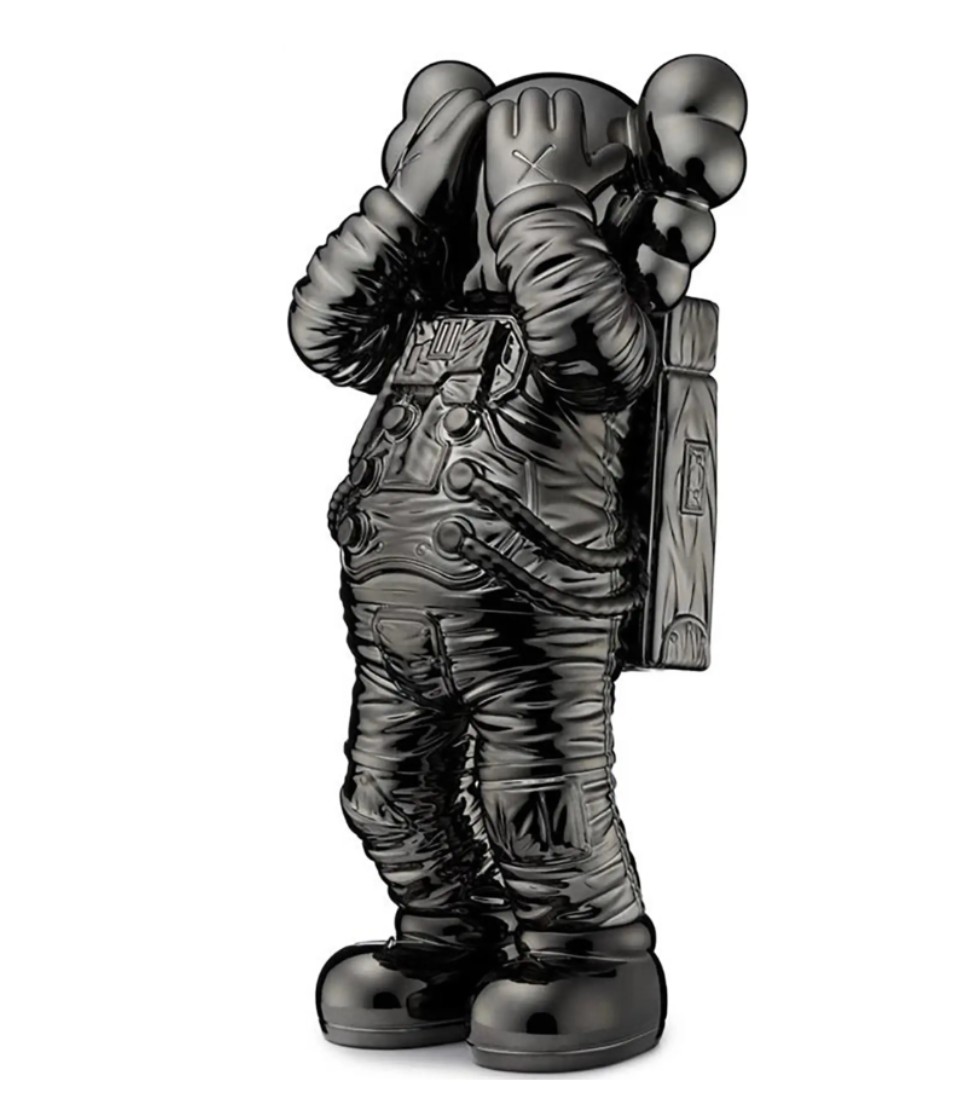
In its editioned form, the floating posture remains essential. Arms relaxed, body suspended, the Companion appears weightless, detached from gravity and context. The black version intensifies this detachment: it becomes less a character and more a silhouette against the void. The work speaks less about place and more about displacement—an icon drifting beyond its origin.
BFF
Within this set, BFF introduces a different texture and emotional register. The fur-like surface distinguishes it immediately from the smoother Companion forms, while the posture—upright, slightly inward—retains a sense of quiet presence.
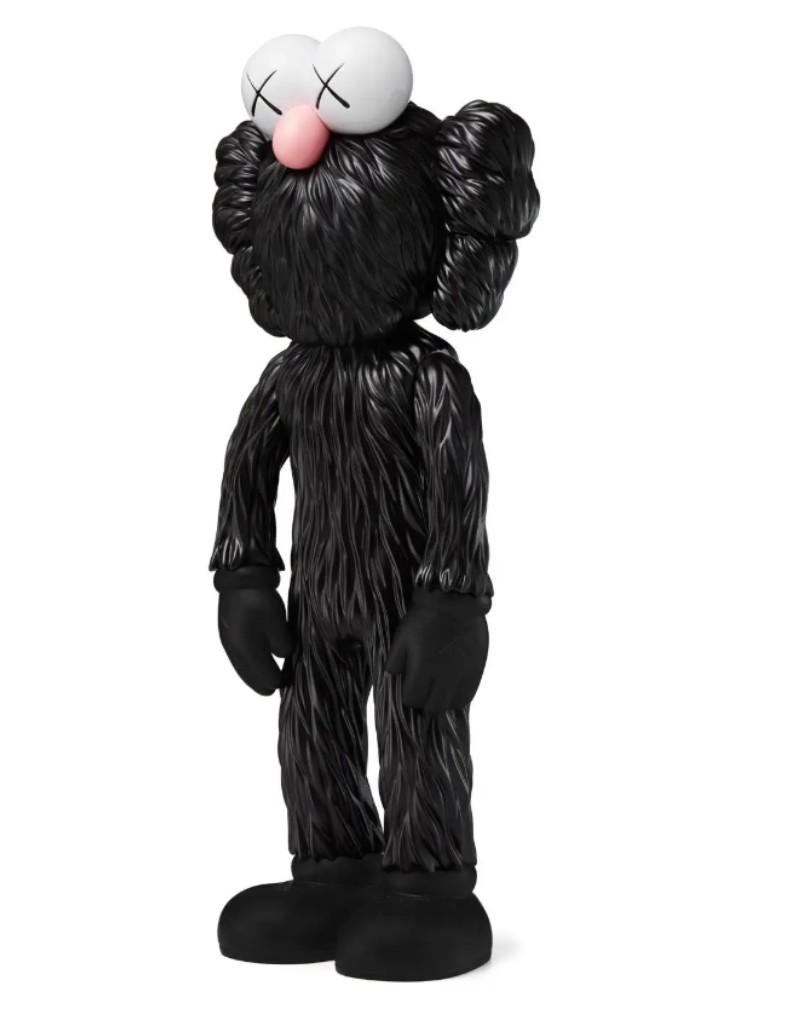
Even in black, where texture is less immediately legible, the figure carries a softer, more approachable identity. Yet the crossed-out eyes maintain distance. As always with KAWS, intimacy is offered—but never fully returned.
PLEASE CLICK BELOW TO READ ABOUT BFF
AND FIND HISTORICAL AUCTION RESULTS
Small Lie
Small Lie remains one of the most psychologically precise figures in the Companion universe. The slumped posture, combined with the unmistakable reference to Pinocchio through the elongated nose, transforms the character into a study of internal tension.
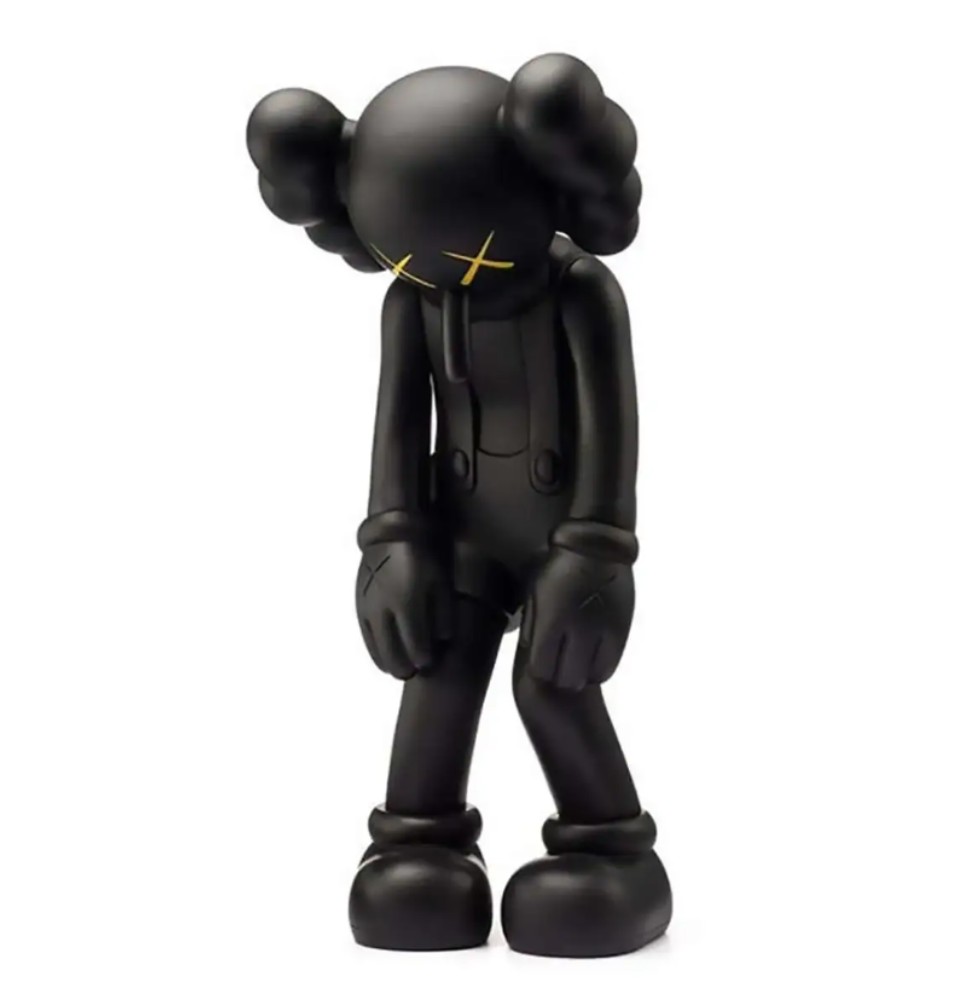
The title introduces disproportion: something “small” producing a visibly heavy emotional state. In black, the figure becomes even more condensed, almost opaque. It does not communicate outward—it absorbs inward, holding its state without release.
PLEASE CLICK BELOW TO READ ABOUT SMALL LIE
AND FIND HISTORICAL AUCTION RESULTS
Separated
Separated presents a Companion holding what appears to be a smaller, detached version of itself—often limp, fragmented, or reduced. The title clarifies the tension: this is not connection, but division.
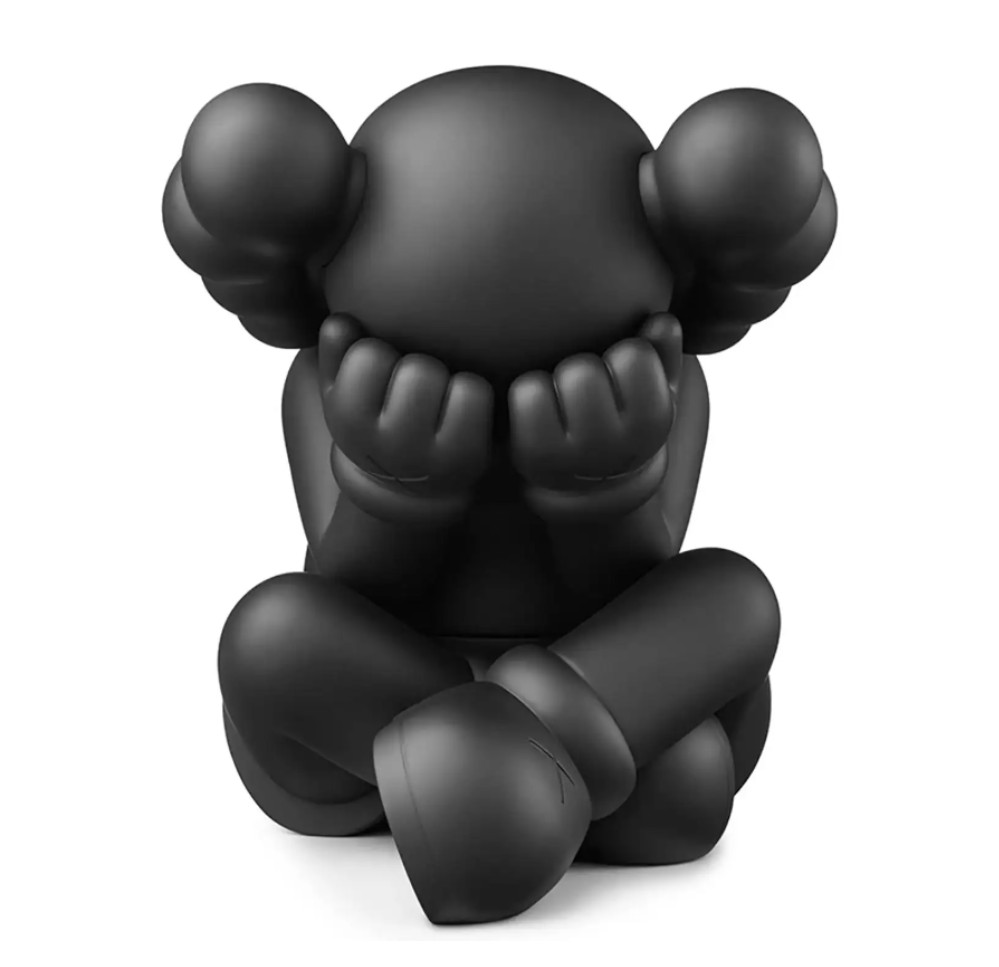
There is a quiet violence here. The figure is both whole and incomplete, holding a part of itself that is no longer integrated. In black, the reading becomes even more severe. The work moves away from relational dynamics toward something more internal—identity split, held at a distance.
Share
Share introduces one of the most intimate gestures in KAWS’ vocabulary: the act of giving. One Companion extends an object—often interpreted as a heart—toward another figure.
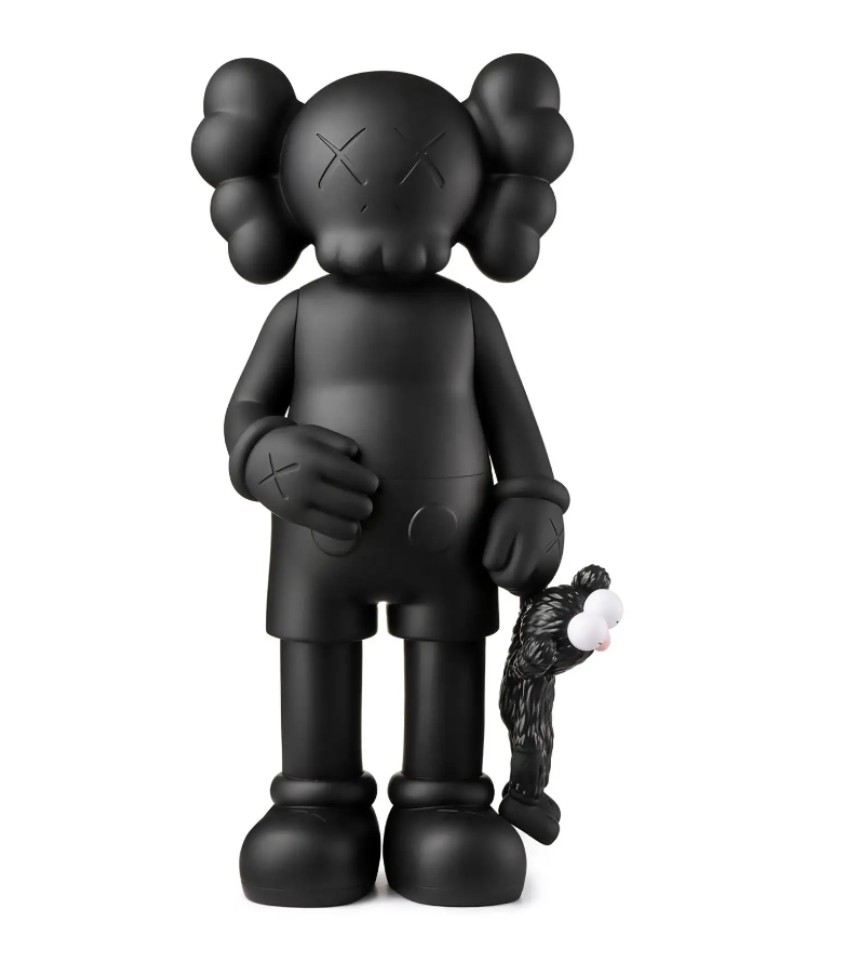
The composition is simple, but the implication is complex. Is this generosity? Vulnerability? Exchange? The ambiguity is key. In black, the object itself becomes less descriptive, more symbolic—transforming the act into a pure gesture of offering, stripped of narrative detail.
What Party
What Party marks a return to introspection, but with a different emotional tone. The figure stands upright, holding a smaller Companion in its arms—yet unlike Clean Slate, the relationship feels heavier, more ambiguous.
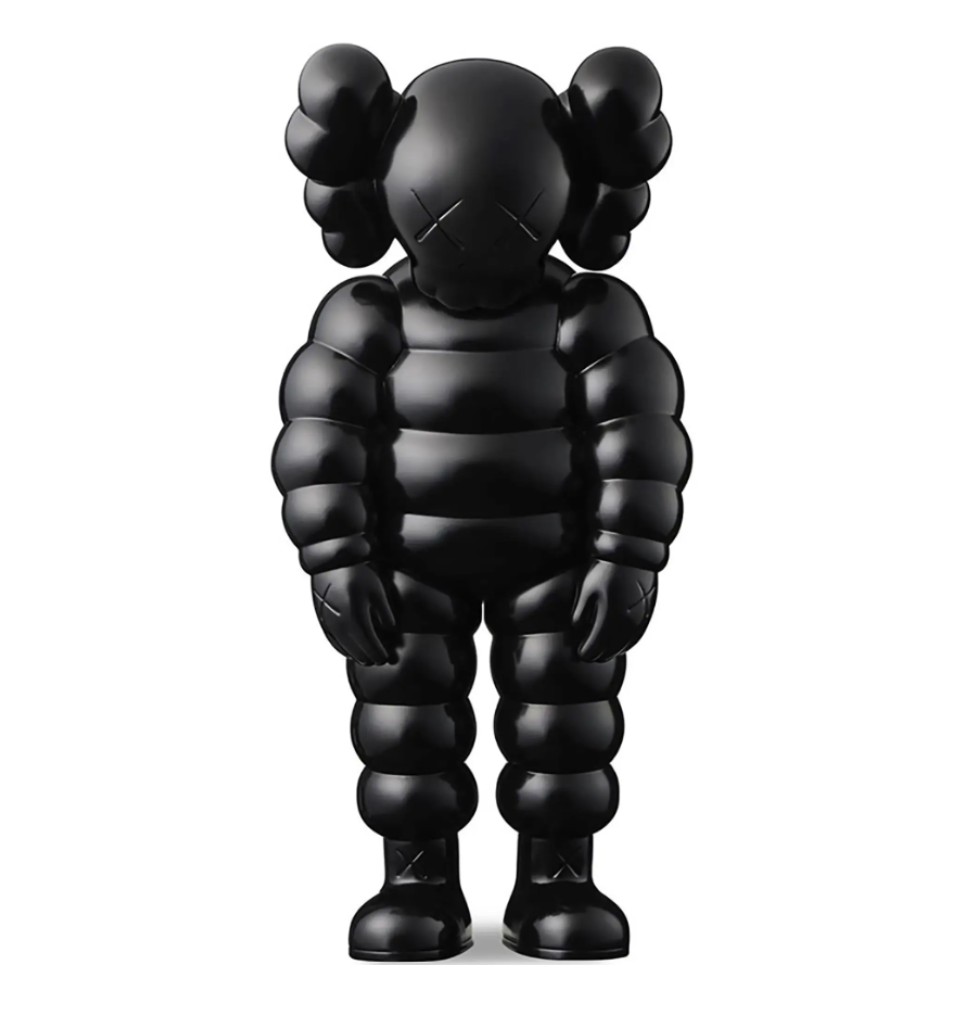
The title introduces irony. “What party?” suggests absence, exclusion, or aftermath. The embrace is not celebratory—it is protective, perhaps even compensatory. In black, the work becomes particularly dense: a closed form, emotionally compressed, where connection exists but does not resolve the underlying tension.