Few figures in KAWS’ sculptural universe have achieved the immediate emotional clarity, and market resonance, of the BFF. First introduced in 2016 as a monumental installation, the character was subsequently translated into highly sought-after vinyl editions, including the now-iconic 2017 open editions in black, blue, and pink.
Introduction
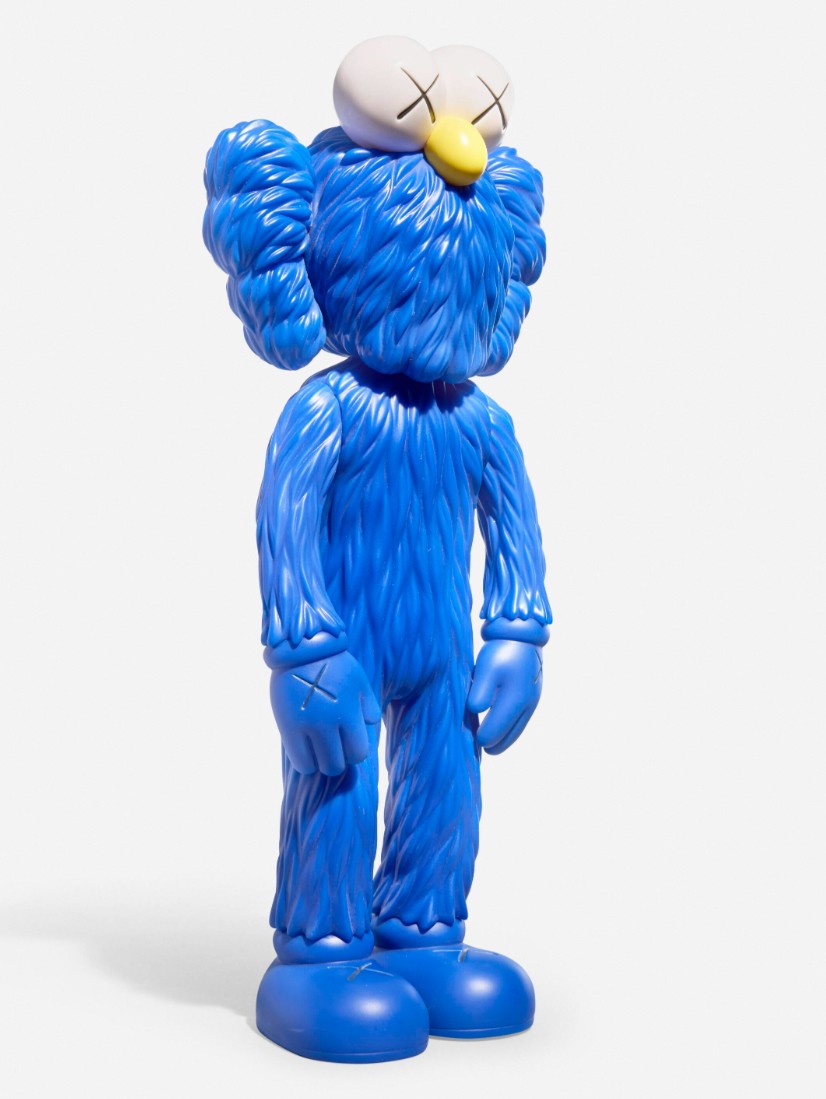
BFF marks a subtle but decisive evolution from the more stoic Companion. While retaining KAWS’ signature visual vocabulary, such as the crossed-out eyes, gloved hands, and rounded, cartoon-derived anatomy, BFF introduces a radically different surface treatment. The body is entirely covered in dense, fur-like texturing, creating a tactile illusion that contrasts sharply with the smooth, industrial finish of earlier figures.
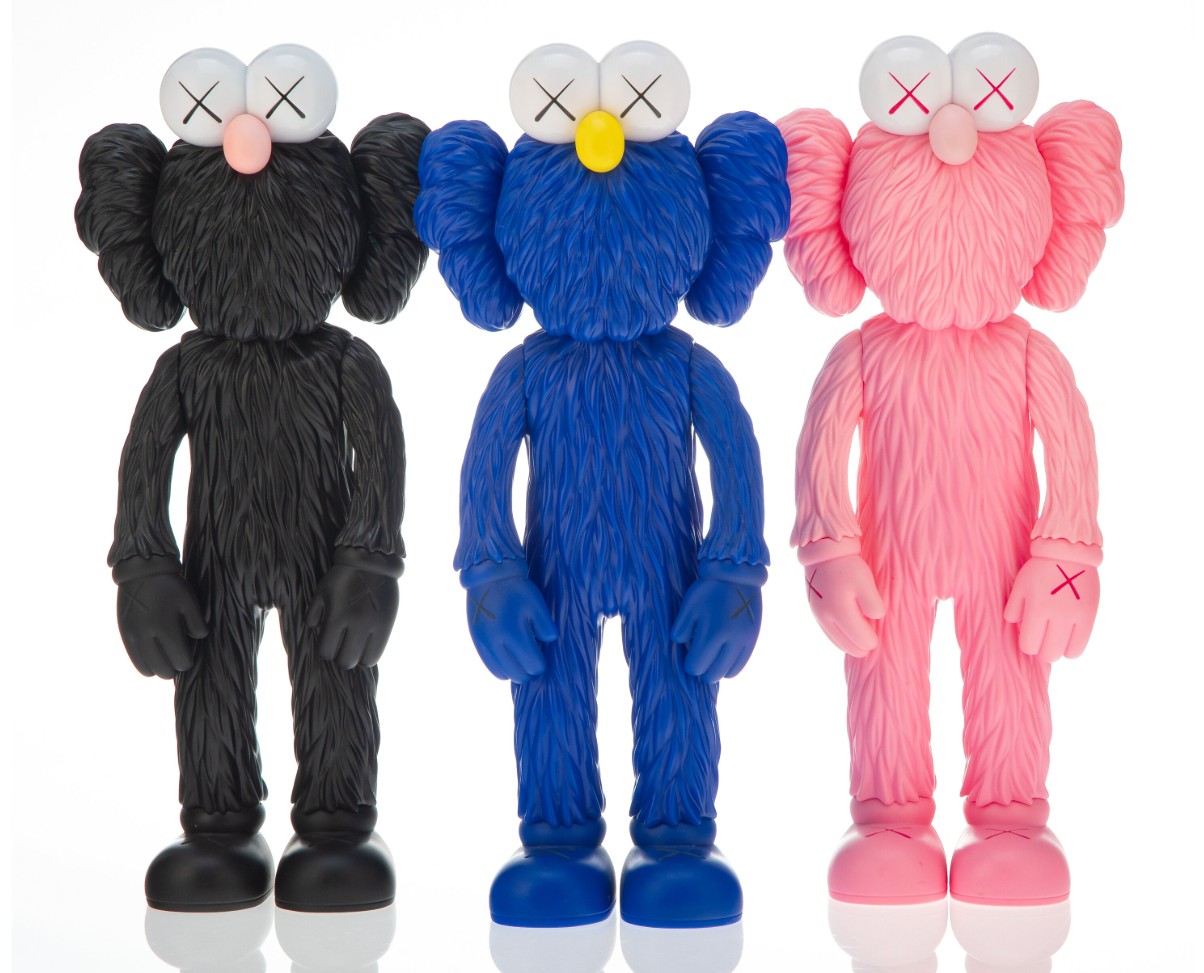
The posture is slightly inward, almost vulnerable: arms relaxed, feet grounded, head gently tilted. The oversized ears, reminiscent of a hybrid between a rabbit and a plush toy, reinforce the figure’s disarming presence. Unlike the ironic detachment often associated with Companion, BFF feels emotionally available, almost insistently so.
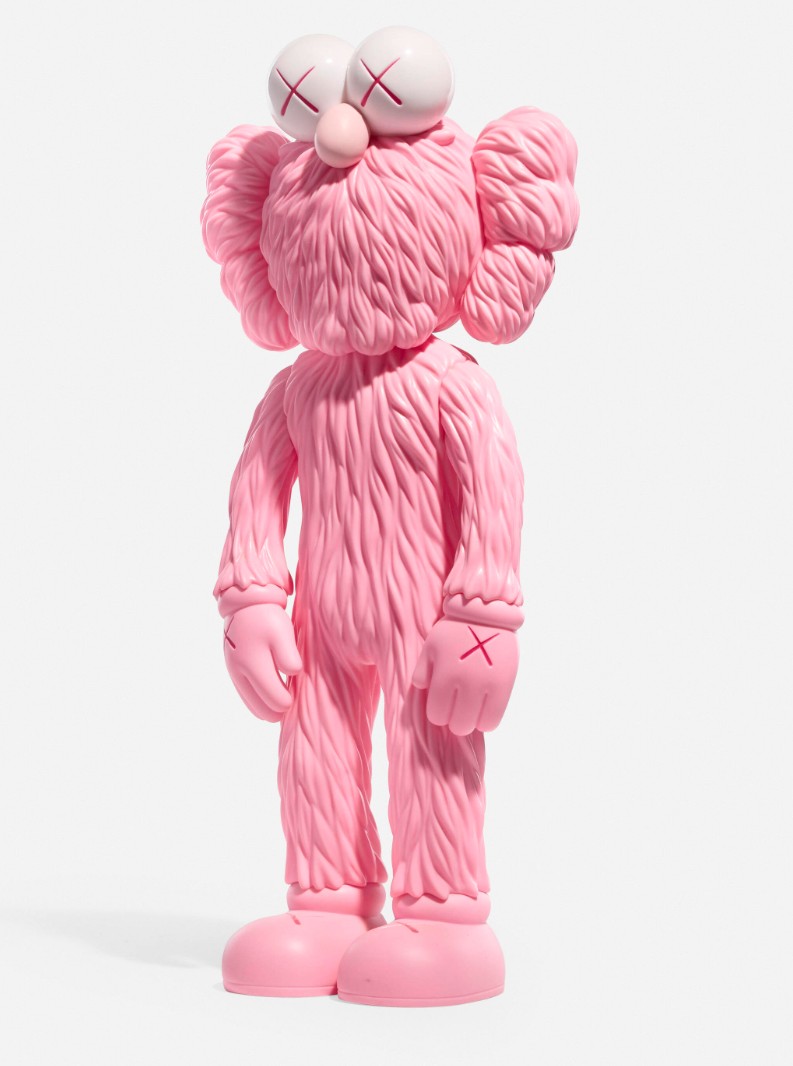
The 2017 vinyl editions were released in three colorways (black, blue, and pink) each operating as a distinct emotional register within the same formal structure. The black version is the most restrained and perhaps the most aligned with KAWS’ earlier aesthetic. It carries a certain gravity, even melancholy, evoking the lineage of urban culture and the artist’s roots in subverted advertising. The absence of chromatic distraction emphasizes form and silhouette. The blue version introduces a more ambiguous tone. It oscillates between calmness and introspection, with the saturated hue enhancing the sculptural depth of the fur texture. It is often perceived as the most “balanced” of the three—neither too playful nor too severe. The pink version, by contrast, is overtly emotive. It leans into the language of affection, softness, and immediacy, almost bordering on the sentimental. Yet, in KAWS’ hands, this sentimentality is never naïve; it remains anchored in a controlled, almost strategic deployment of color.
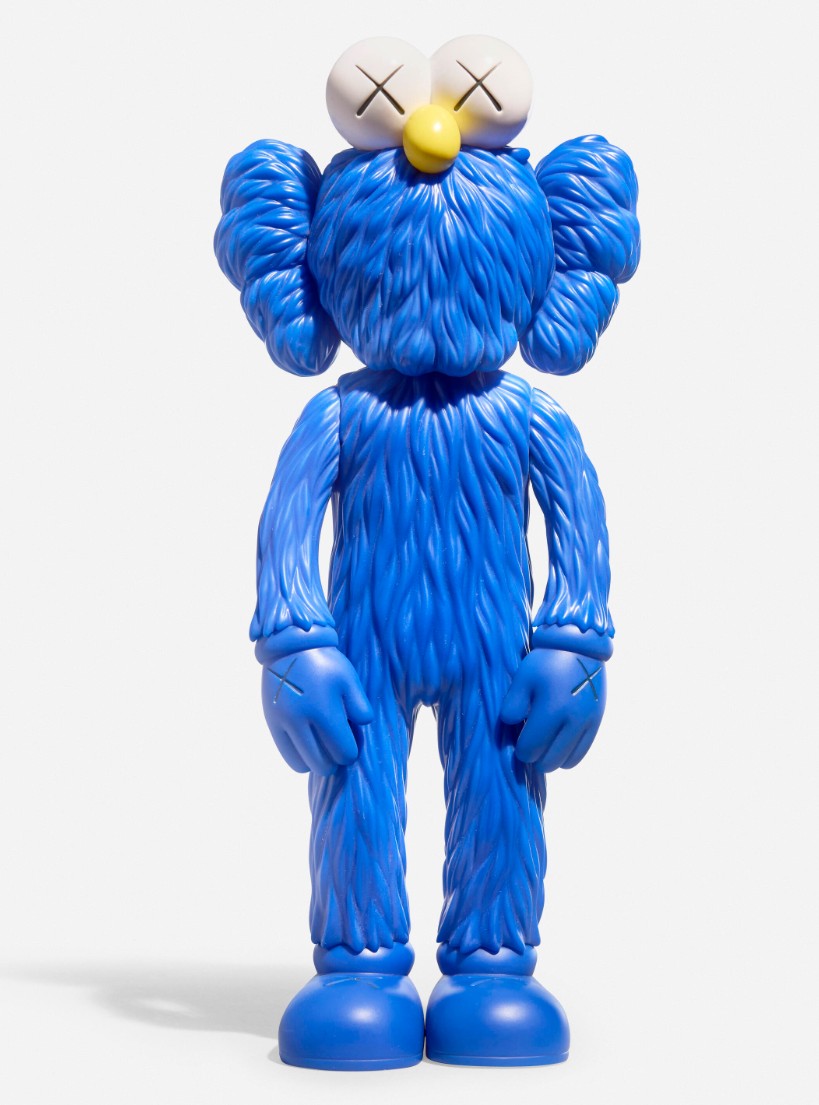
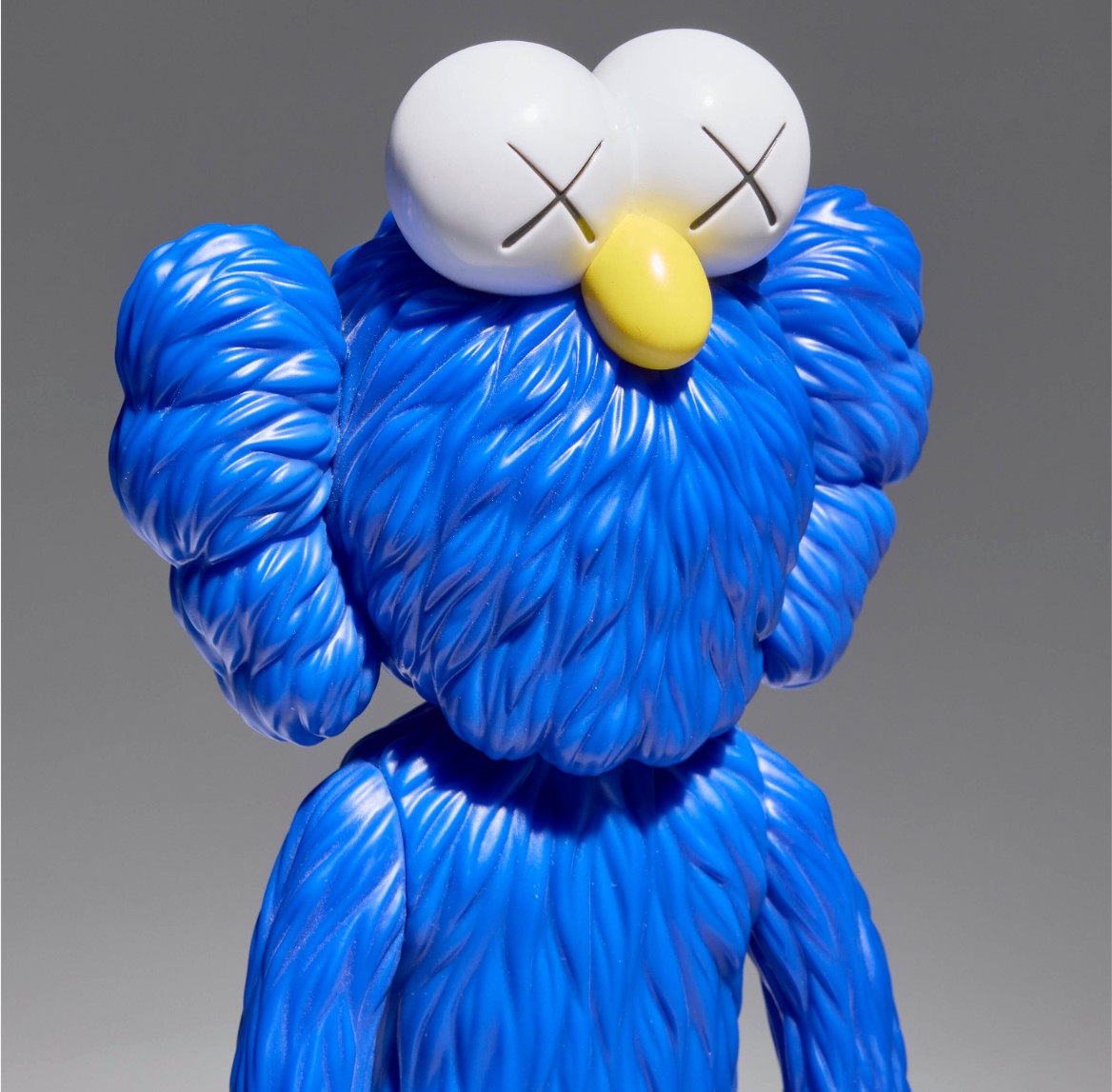
It is impossible to approach the BFF without acknowledging its most immediate visual echo: Elmo. The resemblance is neither accidental nor merely playful. It operates as a deliberate act of visual appropriation, one that is central to KAWS’ broader practice. The BFF borrows directly from Elmo’s defining traits: the saturated monochrome body, the rounded silhouette, the oversized, protruding eyes, and the simplified facial structure. These elements, instantly recognizable across generations, anchor the figure in a shared cultural memory. Elmo is, after all, one of the most universally familiar characters of late 20th-century popular culture—associated with innocence, comfort, and early emotional development. KAWS intervenes precisely at this point of familiarity.
By replacing Elmo’s expressive, animated eyes with his signature crossed-out motif, KAWS performs a subtle but decisive shift. The character is stripped of its communicative function. Where Elmo engages—through gaze, voice, and personality—the BFF remains silent, fixed, and ultimately inaccessible. The warmth remains, but it is hollowed out, redirected toward projection rather than interaction.
This transformation encapsulates one of the core tensions in KAWS’ work: the migration of imagery from mass media into the realm of fine art and collectible objects. Elmo, originally designed for educational television and emotional engagement, becomes in BFF an object of contemplation and consumption. The emotional vocabulary is preserved, but its function is altered.
The BFF editions emerged at a moment when KAWS had fully transitioned from a subcultural figure into a global cultural force. Following major institutional exhibitions, including KAWS: Where The End Starts, and high-profile public installations, the artist’s work had reached an unprecedented level of visibility. The translation of BFF into vinyl editions was not merely a commercial gesture but a calculated extension of his practice. Through long-standing collaborations with Medicom Toy, KAWS has consistently blurred the boundary between fine art and collectible design. The open edition model, while increasing accessibility, paradoxically reinforced demand through scale, visibility, and cultural saturation.
The title BFF—“Best Friends Forever”—is deceptively simple. It operates both as a direct emotional cue and as a commentary on contemporary forms of connection. In an era dominated by digital relationships and curated identities, the figure reads as a physical embodiment of companionship—yet one that remains silent, fixed, and ultimately non-responsive. There is a quiet tension at play: the sculpture invites projection, offering comfort through familiarity, while simultaneously underscoring the artificiality of that comfort. The plush-like surface suggests warmth, but the blank, crossed-out eyes deny any true reciprocity.
The 2017 vinyl editions of BFF have become among the most recognizable and widely collected works within KAWS’ market for multiples. Their open edition status initially positioned them as accessible entry points, yet their cultural impact and strong secondary market performance quickly elevated their status. They occupy a crucial place in the artist’s trajectory: bridging the gap between large-scale institutional works and intimate, collectible objects. More importantly, they encapsulate KAWS’ ability to create forms that operate simultaneously as sculptures, design objects, and cultural symbols. In retrospect, the BFF editions are not merely iterations of a successful character—they represent a refinement of KAWS’ central proposition: that emotional immediacy, when paired with rigorous formal control and strategic dissemination, can redefine the boundaries of contemporary sculpture.
The MoMA-exclusive BFF editions mark a subtle but important recalibration of KAWS’ iconic figure within an institutional framework. Distributed through the Museum of Modern Art design store, these editions maintain the core formal language of the 2017 open releases while introducing refined adjustments in finish and presence. The surfaces are noticeably glossier, particularly in the black and blue variants, enhancing reflectivity and shifting the object away from a plush illusion toward a more resolved, design-oriented sculpture. Color tones are also slightly deepened and clarified, reinforcing a sense of precision aligned with the expectations of a museum-context object.
More discreet, yet conceptually significant, is the modification in the position of the hands. In contrast to the softer, outward-facing gesture of the earlier editions, the MoMA versions present a more controlled and frontal articulation, with tighter, more defined fingers. This minor adjustment alters the figure’s entire posture: the BFF appears less vulnerable, more composed, and ultimately more “presented” than projected. Within the context of MoMA, the work is no longer simply a collectible figure—it becomes a curated object, its emotional immediacy subtly tempered by formal clarity and institutional framing.
Parallel to the vinyl and institutional releases, KAWS developed a series of BFF plush editions that bring the character back, almost provocatively, to its most literal and tactile origin: the soft toy. Replacing molded vinyl with dense synthetic fabric, these versions transform the simulated fur texture into an actual tactile experience. The figure shifts from a standing, display-oriented sculpture to a seated, approachable object, aligning more directly with the conventions of childhood companions while maintaining the defining visual markers of KAWS’ vocabulary. The result is a work that invites physical interaction rather than distant observation.
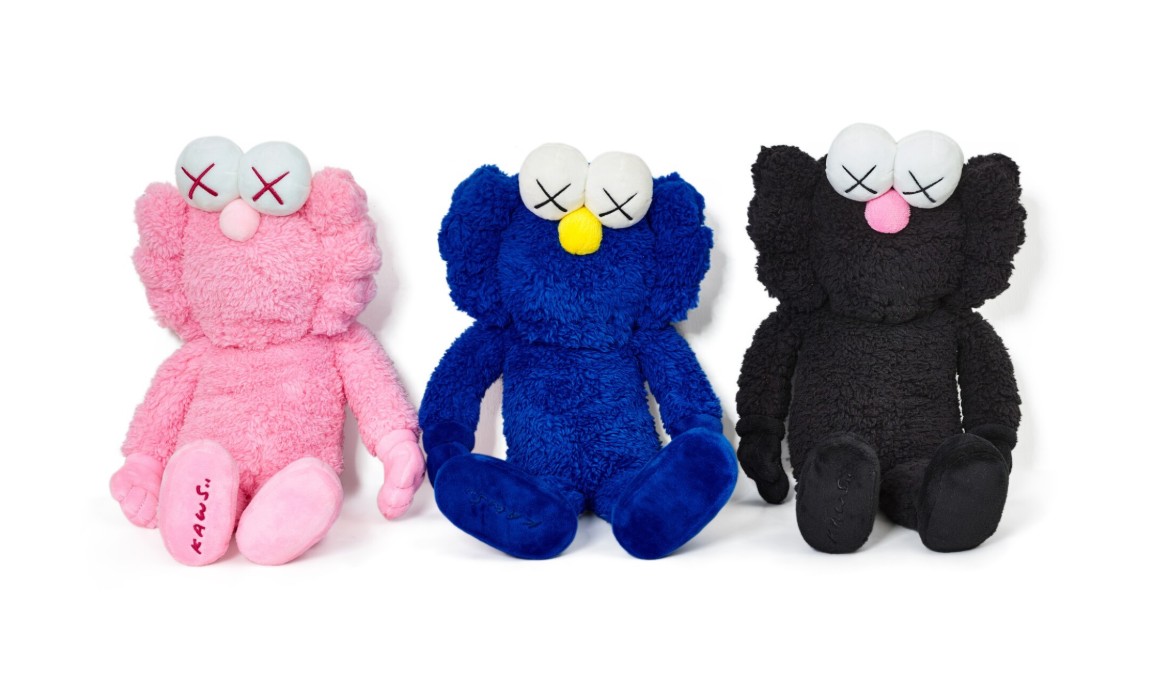
This material and formal transformation carries a conceptual reversal at the heart of KAWS’ practice. Where the vinyl editions elevate a familiar, cartoon-derived figure into the realm of collectible sculpture, the plush versions bring it back into the domain it references—yet with full awareness of its cultural trajectory. Produced in larger editions and positioned as more accessible, they nonetheless retain the tension between intimacy and artifice that defines the BFF. The object can be held, even embraced, but the crossed-out eyes remain, preserving the quiet distance that underpins the work.
BFF, 2017
BFF (Black/Blue/Pink)
Medium: Painted cast vinyl
Year: 2017
Dimensions: 33x14x8 cm (13 x 5-1/2 × 3 inches)
Edition: Open edition
Release Price: USD 280
Produced by Medicom Toy, Tokyo
Stamped signature, title, date and manufacturer’s mark to the underside
‘KAWS..17 Open Edition Medicom Toy China’
Auction Results
Heritage Auctions: 22 May 2025
USD 1,312.50
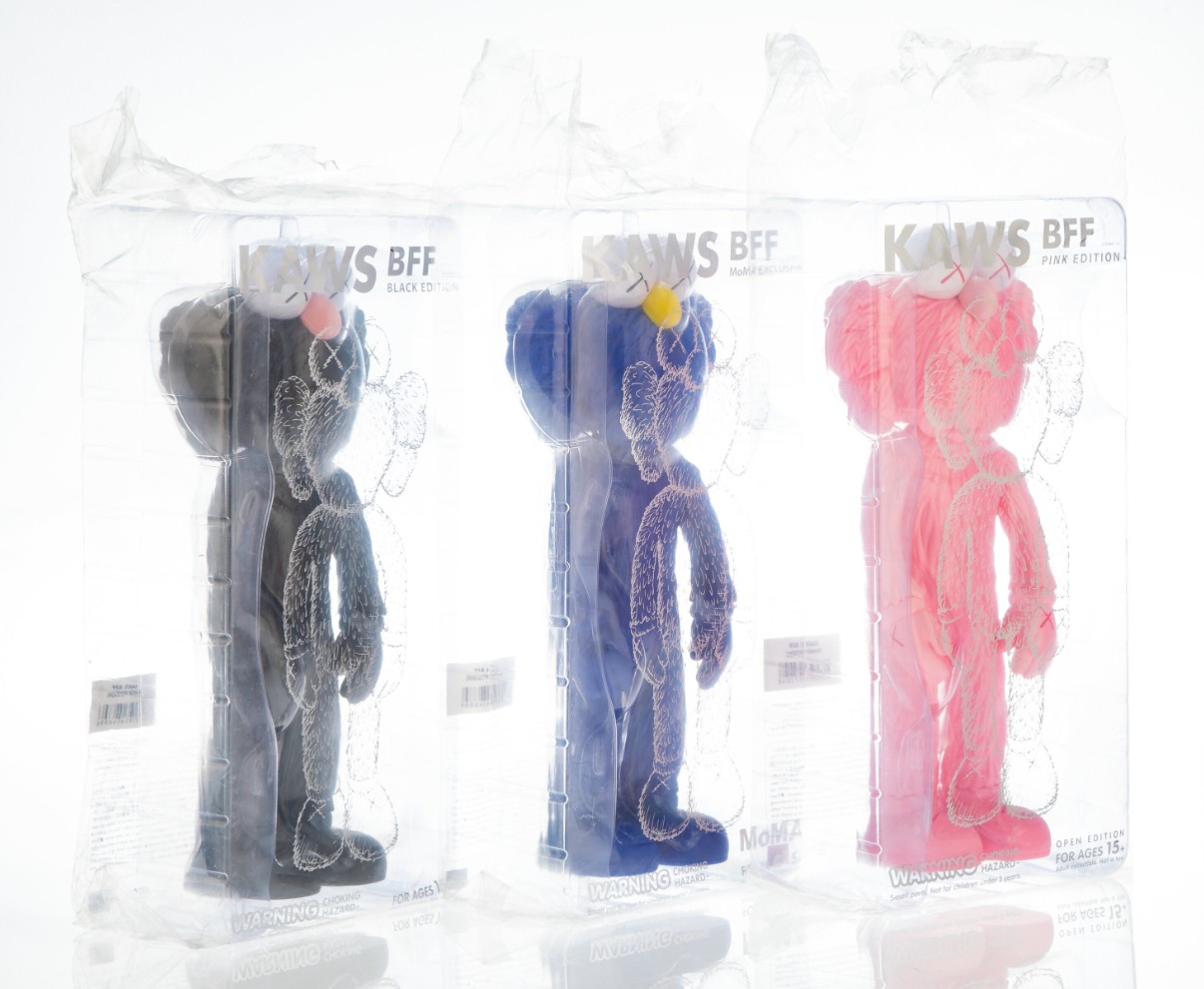
KAWS (b. 1974)
BFF Companion (three works), 2018
Painted cast vinyl
Each stamped on underside of feet
Produced by Medicom Toy, Tokyo
LA Modern: 18 March 2025
Estimated: USD 1,000 – 1,500
USD 2,032
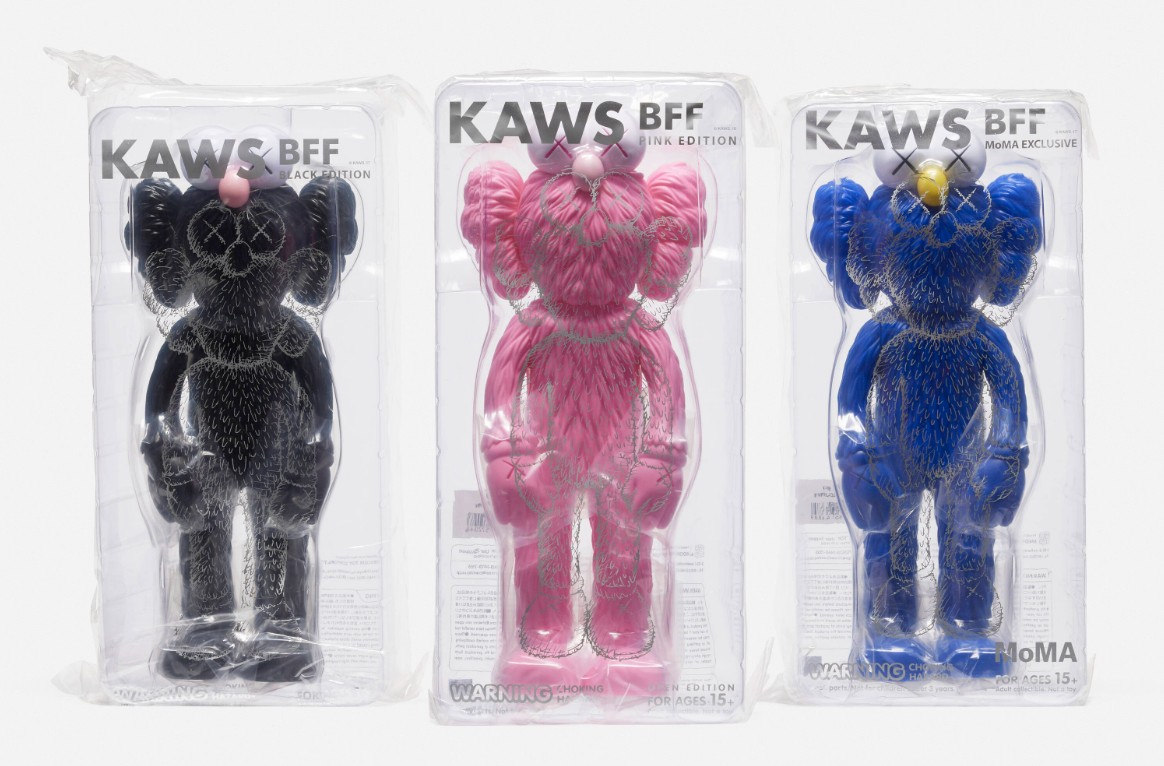
KAWS (Brian Donnelly, b.1974)
BFF (set of three), 2017
Painted cast vinyl
Stamped signature, date, and manufacturer’s mark to underside of each example
‘KAWS..17 Medicom Toy China’
This work is from the open edition produced by Medicom Toy, Tokyo
Sold with original packaging
SBI Art Auction: 13 April 2024
Estimated: JPY 100,000 – 150,000
JPY 218,500 / USD 1,425
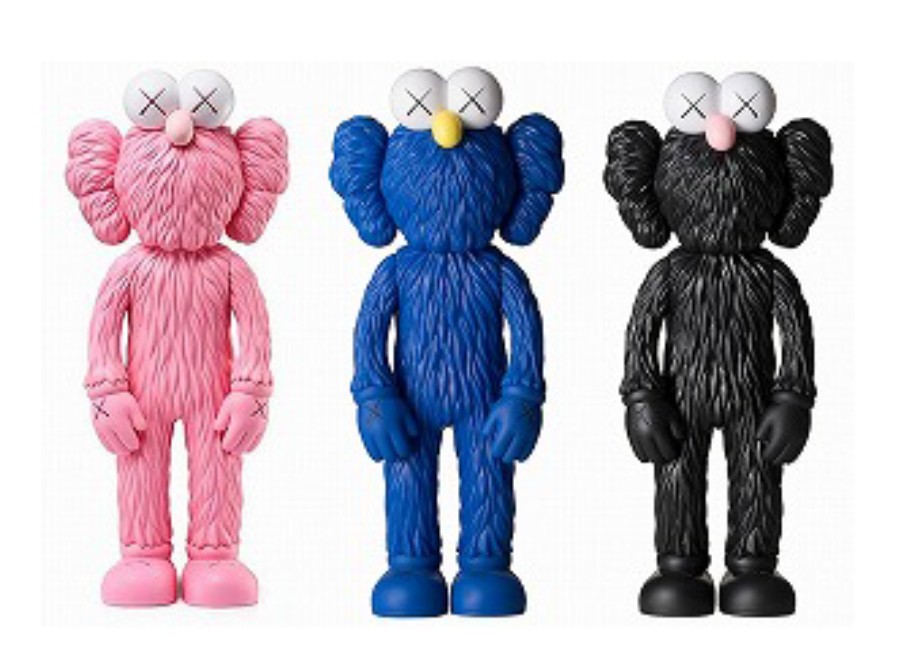
KAWS
KAWS BFF OPEN EDITION (Pink, Blue, Black), 2017
Vinyl, multiple with original packaging, 3 works
BFF (Blue)
BFF (Blue)
Year: 2017
Dimensions: 33x14x8 cm (13 x 5-1/2 × 3 inches)
Edition: Open
Produced by Medicom Toy, Tokyo
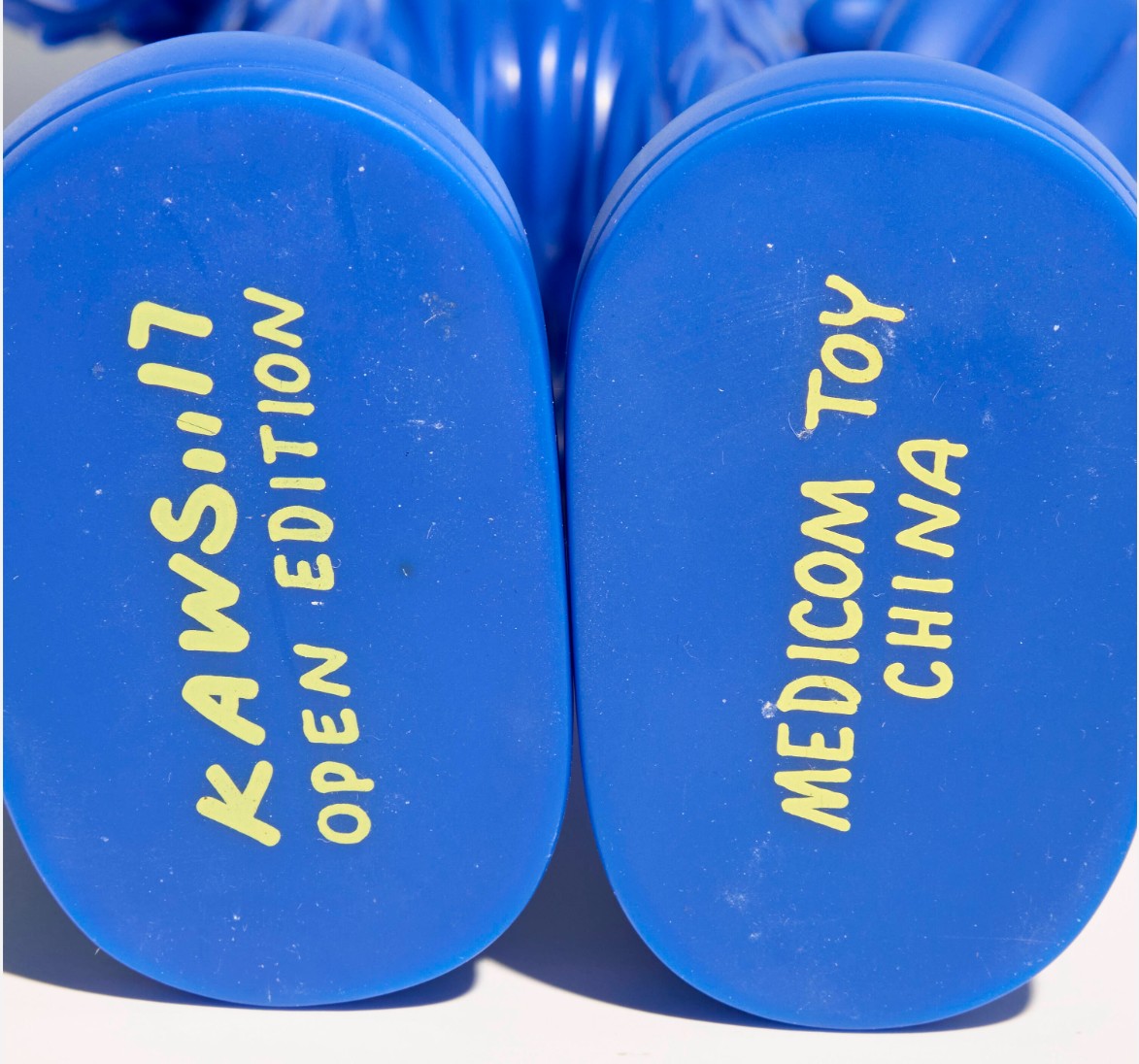
Stamped signature, title, date and manufacturer’s mark to the underside
‘KAWS..17 Open Edition Medicom Toy China’
Auction Results
LA Modern: 17 March 2026
Estimated: USD 400 – 600
USD 399
KAWS (Brian Donnelly, b.1974)
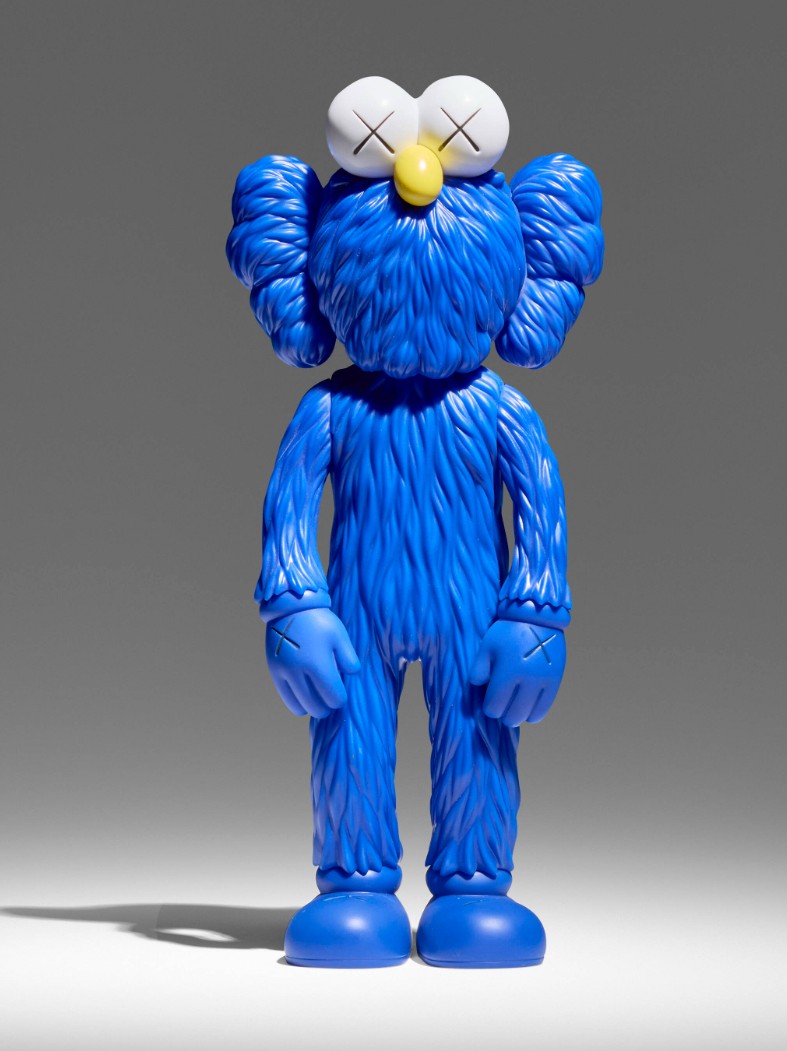
BFF (Blue), 2017
Painted cast vinyl
Stamped signature, date, number and manufacturer’s mark to the underside
‘KAWS..17 Open Edition Medicom Toy China’
This work is from the open edition produced by Medicom Toy, Tokyo
Sold with original packaging
LA Modern: 22 October 2025
Estimated: USD 400 – 600
USD 508
KAWS (Brian Donnelly, b.1974)
BFF (Blue), 2017
Painted cast vinyl
Stamped signature, title, date and manufacturer’s mark to the underside
‘KAWS..17 Open Edition Medicom Toy China’
This work is from the open edition produced by Medicom Toy, Tokyo
Sold with original packaging
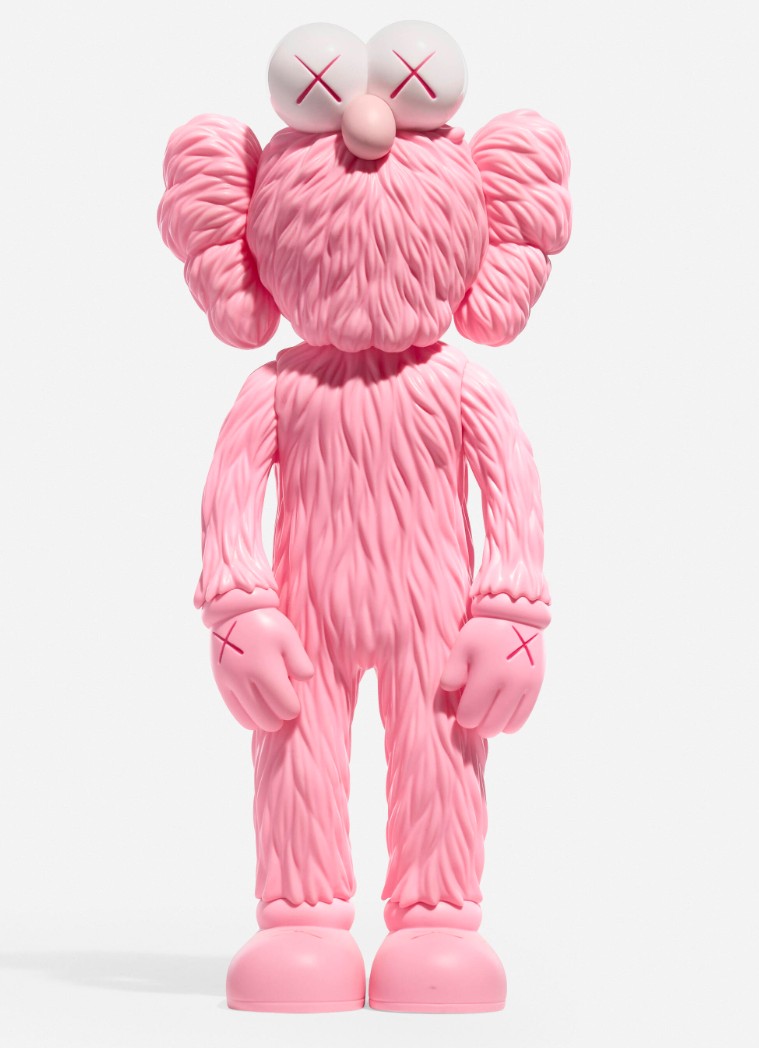
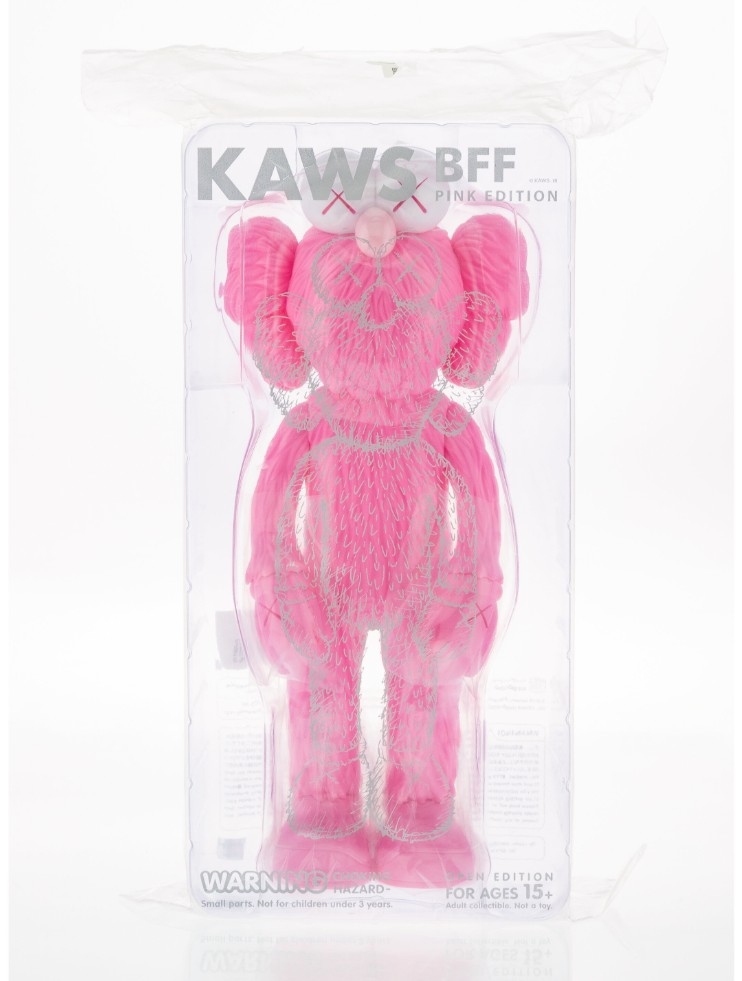
BFF (Pink)
BFF (Pink)
Year: 2017
Dimensions: 33x14x8 cm (13 x 5-1/2 × 3 inches)
Edition: Open
Produced by Medicom Toy, Tokyo
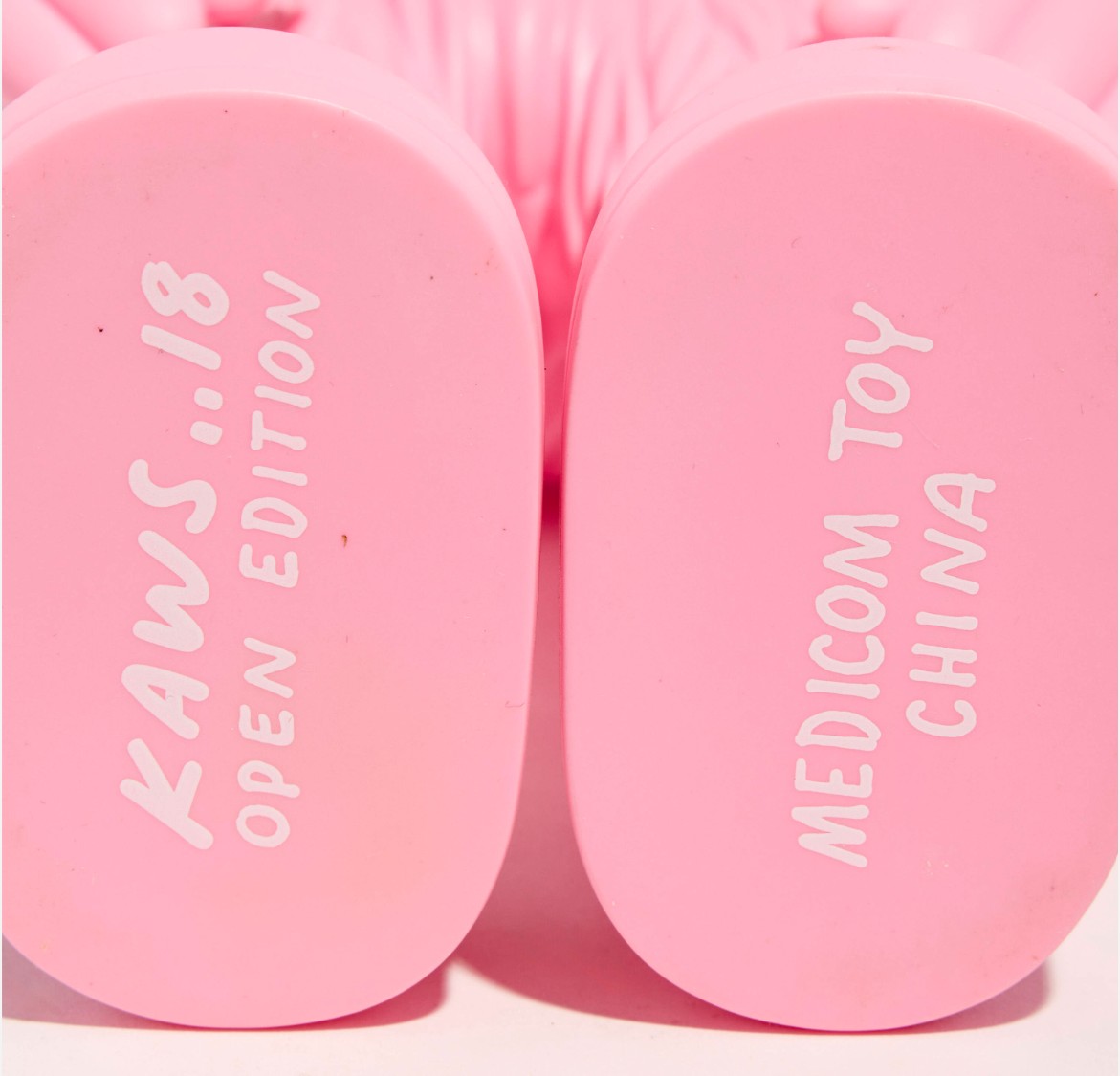
Stamped signature, title, date and manufacturer’s mark to the underside
‘KAWS..17 Open Edition Medicom Toy China’
Auction Results
Heritage Auctions: 12 December 2025
USD 1,000
KAWS (b. 1974)
BFF Companion (Pink), 2018
Painted cast vinyl
Stamped on underside of feet
Produced by Medicom Toy, Tokyo
LA Modern: 22 October 2025
Estimated: USD 400 – 600
USD 699
KAWS (Brian Donnelly, b.1974)
BFF (Pink), 2018
Painted cast vinyl
Stamped signature, date, number and manufacturer’s mark to the underside
‘KAWS..18 Open Edition Medicom Toy China’
This work is from the open edition produced by Medicom Toy, Tokyo
Sold with original packaging
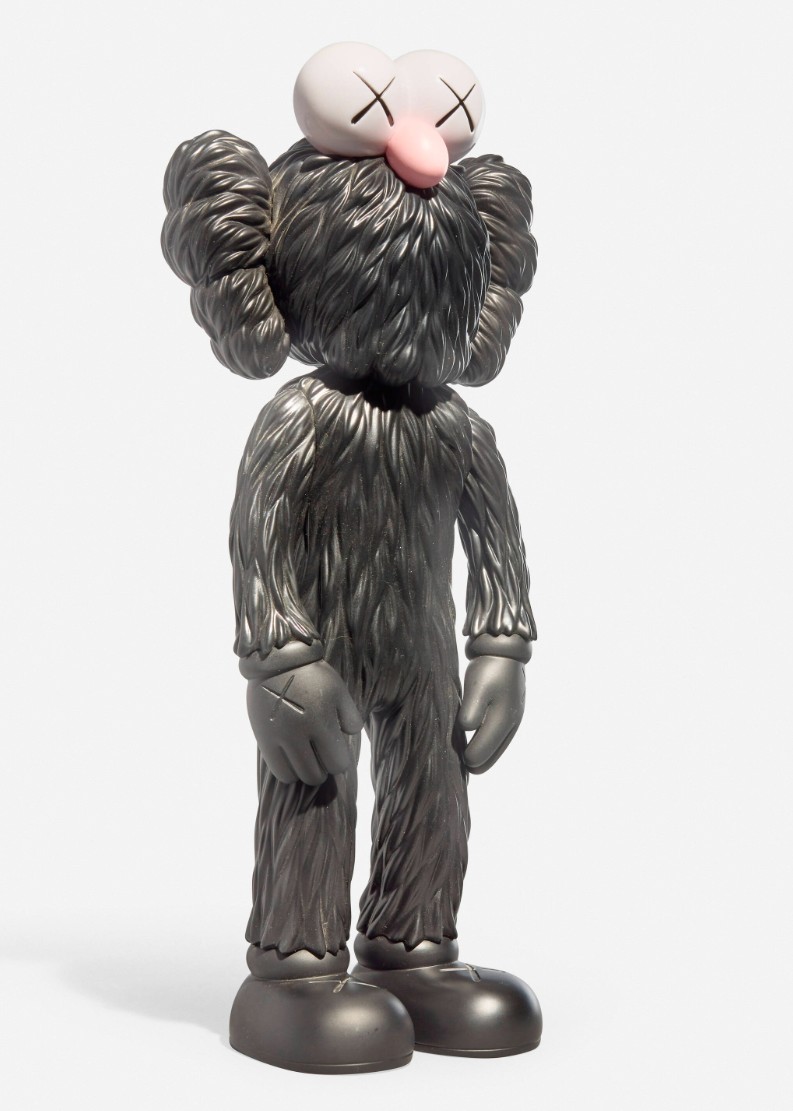
BFF (Black)
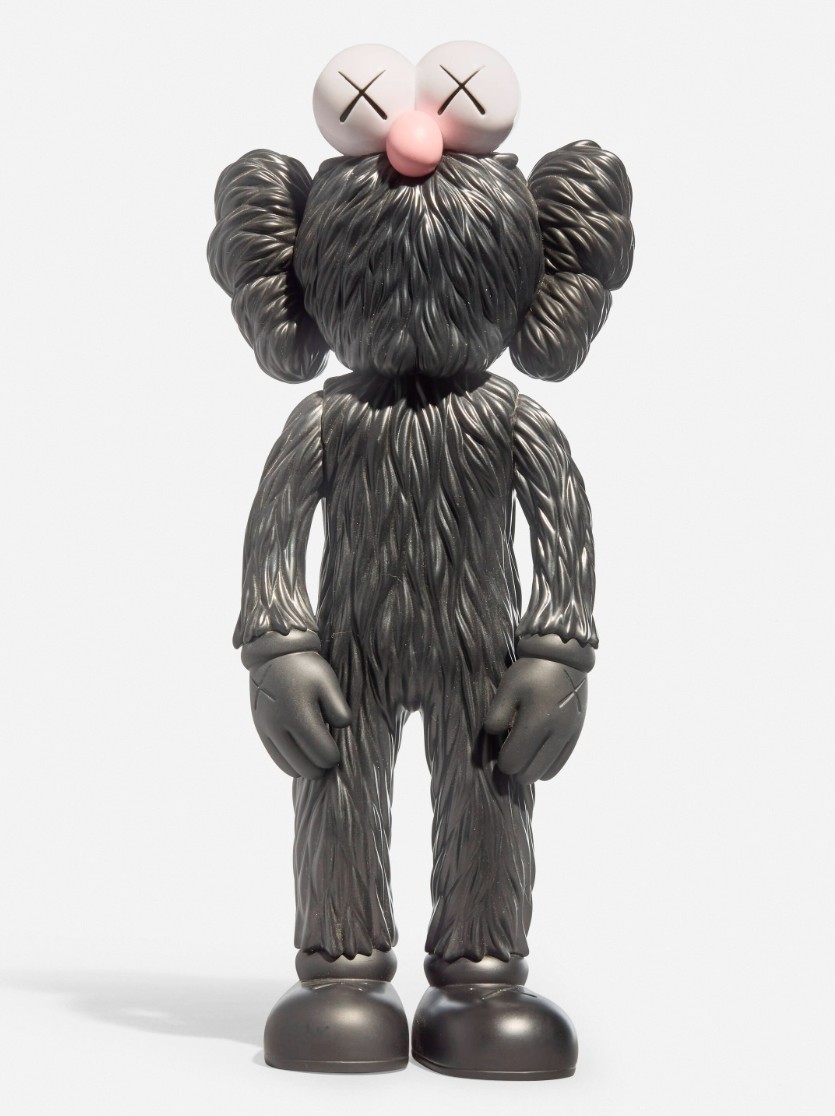
BFF (Black)
Year: 2017
Dimensions: 33x14x8 cm (13 x 5-1/2 × 3 inches)
Edition: Open
Produced by Medicom Toy, Tokyo
Stamped signature, title, date and manufacturer’s mark to the underside
‘KAWS..17 Open Edition Medicom Toy China’
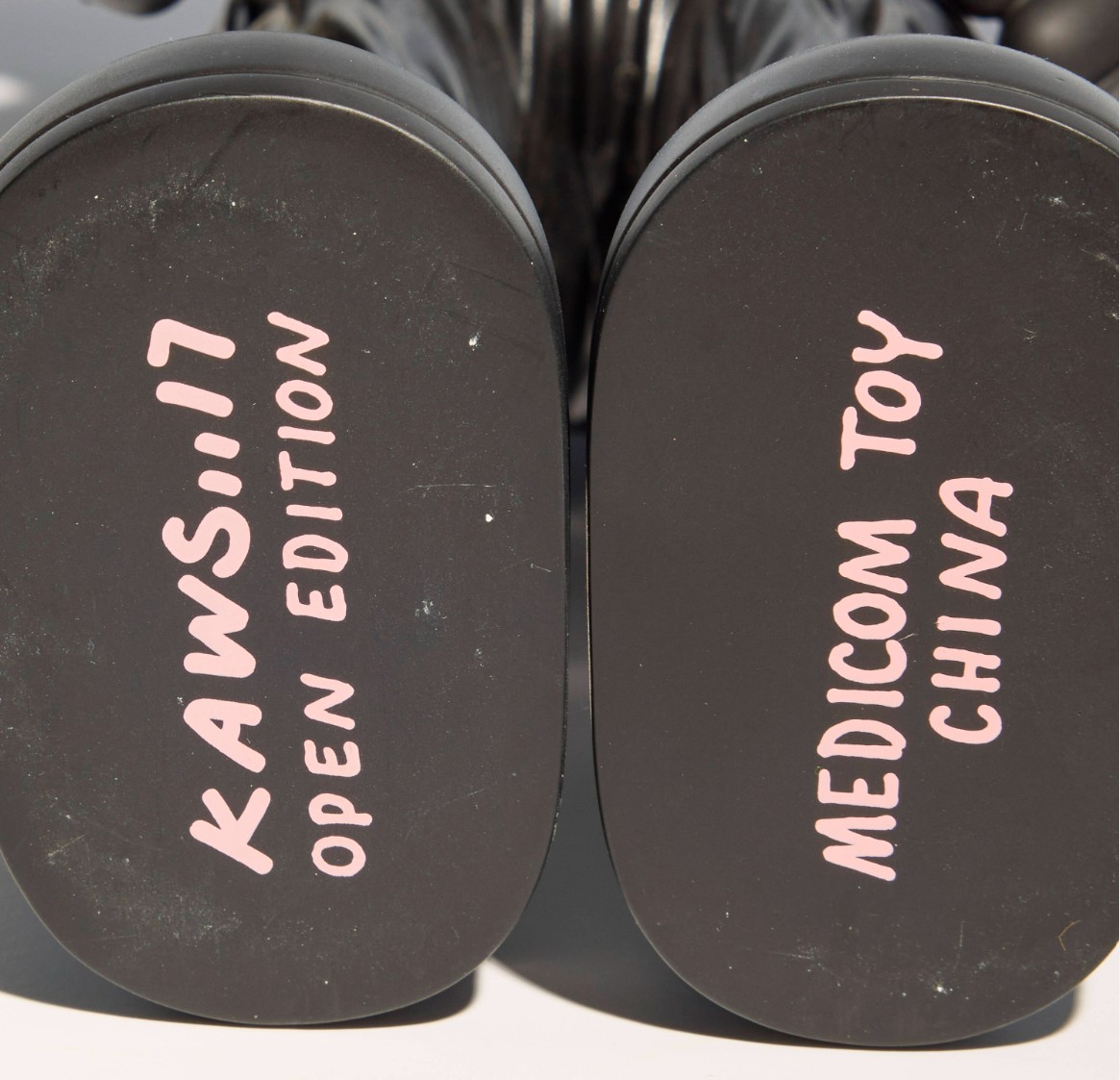
Auction Results
LA Modern: 22 October 2025
Estimated: USD 400 – 600
USD 508
KAWS (Brian Donnelly, b.1974)
BFF (Black), 2017
Painted cast vinyl
Stamped signature, title, date and manufacturer’s mark to the underside
‘KAWS..17 Open Edition Medicom Toy China’
This work is from the open edition
Produced by Medicom Toy, Tokyo
Sold with original packaging
BFF Companions (MoMA Edition)
The collaboration between KAWS and the Museum of Modern Art marks a significant moment in the institutional consolidation of the artist’s practice, one in which the language of collectible sculpture is fully absorbed into the framework of the museum. The BFF MoMA editions were released through MoMA’s design store, a platform that operates as an extension of the museum’s curatorial vision. While not tied to a specific exhibition within the institution, the release follows the broader institutional momentum surrounding KAWS at the time, particularly after major museum presentations such as KAWS: WHAT PARTY at the Brooklyn Museum in 2021.
MoMA’s decision to distribute the BFF is not anecdotal. It situates KAWS within a lineage of artists and designers who have redefined the relationship between art, object, and reproducibility. The museum store, far from being a secondary retail space, becomes here a site of validation—where the boundaries between fine art, design, and cultural product are deliberately blurred. As with many KAWS releases, the distribution model combined accessibility with controlled scarcity. Quantities were limited, demand was immediate, and the editions sold out rapidly. Yet beyond market dynamics, the key shift lies in context: these are not simply editions released into the market, but objects framed—implicitly and powerfully—by one of the most influential institutions in modern and contemporary art.
At first glance, the MoMA BFF editions (produced in pink, black, and blue) closely resemble the earlier 2017 open editions. The defining features remain intact: the densely textured, fur-like surface; the rounded, cartoon-derived anatomy; the oversized ears; and the signature crossed-out eyes that anchor KAWS’ visual language.
However, a closer examination reveals a series of subtle but deliberate refinements. The surface finish is notably glossier, particularly in the black and blue versions. This increased reflectivity sharpens the perception of volume and texture, shifting the figure away from the illusion of softness toward a more polished, object-like presence. The BFF becomes less reminiscent of a plush toy and more aligned with the vocabulary of industrial design. Color calibration is also slightly adjusted. The blue appears deeper and more saturated, while the pink adopts a smoother, more uniform tonality. These nuances, though restrained, contribute to an overall sense of visual precision consistent with a museum-oriented edition.
Perhaps the most telling difference lies in the treatment of the hands—an element easily overlooked, yet conceptually significant. In the earlier open editions, the hands are more relaxed, with a softer articulation and a slightly outward orientation. This contributes to the figure’s emotional openness, reinforcing its plush-like, almost passive character. In the MoMA editions, by contrast, the hands are more controlled and structured. The fingers are tighter, more defined, and the orientation is subtly more frontal. This adjustment, while minimal, alters the overall posture of the figure. The BFF appears less vulnerable, more composed—less an object of projection, more an object of presentation. This refinement aligns with the broader logic of the release. The figure is not transformed, but recalibrated to function within an institutional and design-conscious environment. The gesture becomes more deliberate, the form more resolved.
The MoMA BFF editions occupy a distinct position within KAWS’ market. They are not strictly rare, yet their distribution through a single institutional channel introduces a form of scarcity tied to provenance rather than edition size alone. Collectors often attribute added value to these works due to their association with MoMA. The institutional context acts as a form of endorsement, reinforcing both desirability and legitimacy. More broadly, these editions crystallize a key moment in KAWS’ trajectory. They demonstrate his ability to navigate seamlessly between different cultural spheres—street, market, and museum—without diluting the core language of his work.
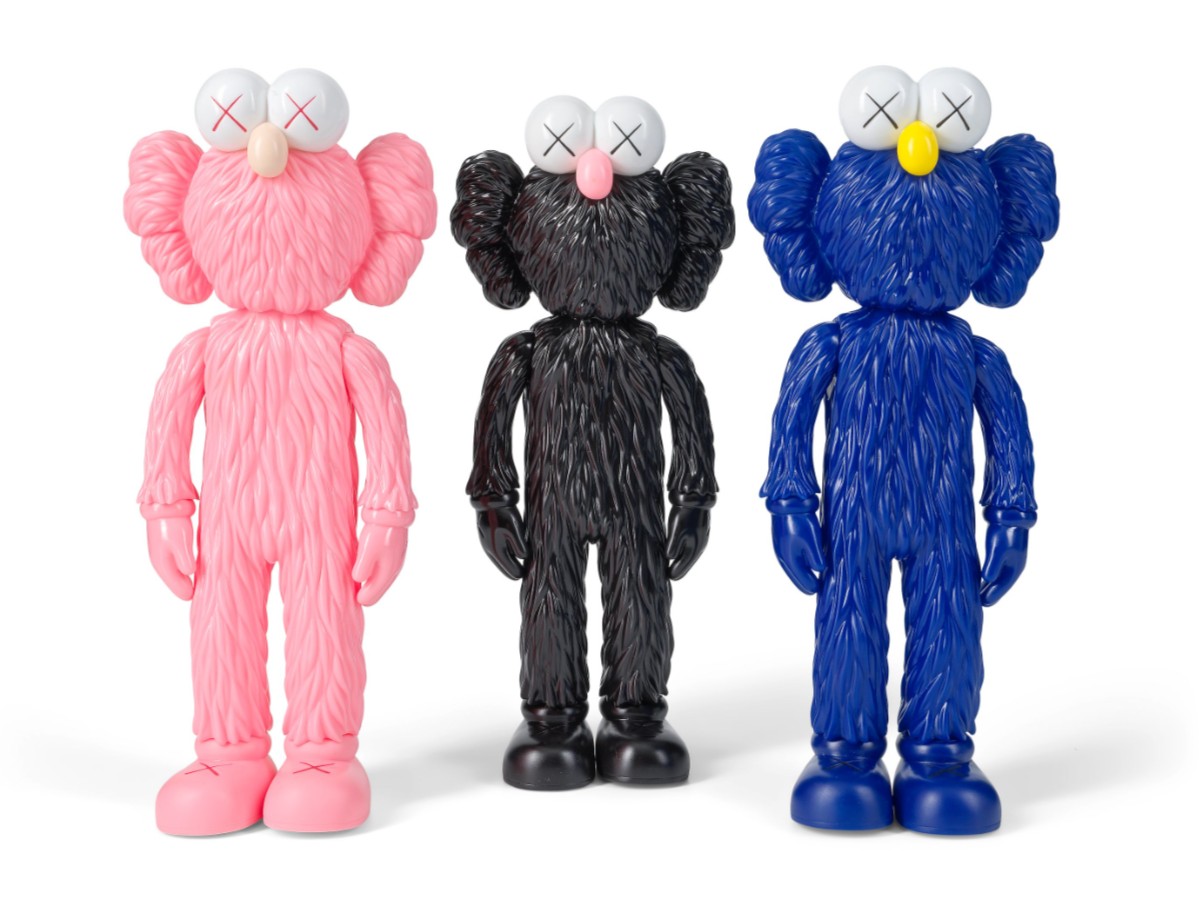
BFF Companion (MoMA)
The complete set of three works
Medium: Painted cast vynil
Year: 2017-18
Dimensions: 34.5 x 15 x 9 cm (13-5/8 x 5-7/8 x 3-1/2)
Edition: Open edition
Fabricated by Medicom Toy, Japan
Released exclusively for the MoMa, New-York
Printed with the artist’s name, date and fabricator on the underside
BFF Plush
Parallel to the vinyl and institutional releases, KAWS developed a series of BFF plush editions that bring the character back—almost provocatively—to its most literal and tactile origin: the soft toy.
If the vinyl versions simulate fur through sculpted texture, the plush editions complete the gesture. Fabric replaces molded material; softness is no longer implied, it is real. The surface is composed of dense synthetic fibers, closely echoing the visual language of the sculpted BFF, yet transforming the object entirely in its physical experience.
The figure is no longer a sculpture to be observed, but an object that can be held, compressed, even used. This shift is fundamental. It collapses the distance between artwork and user, replacing contemplation with contact.
Produced in the same three primary colorways—pink, blue, and black—the plush editions maintain visual continuity with their vinyl counterparts while operating within a radically different material register.
Unlike the standing vinyl figures, the plush BFF adopts a seated position. This change is not merely practical; it alters the entire psychology of the object. Seated, the figure appears more passive, more approachable, and unmistakably closer to the conventions of children’s toys. The proportions feel softer, the posture more relaxed, the overall presence less assertive. The BFF here does not stand before you—it waits, almost patiently, to be engaged with. The signature elements remain: the crossed-out eyes, the oversized ears, the simplified anatomy. Yet their impact is softened by the medium itself. The figure becomes less iconic, more intimate.
These plush editions were released in relatively large quantities—typically in the range of 1,000 to 3,000 per colorway—through a mix of KAWS’ official channels and select retail partners. This higher production volume positions them as among the most accessible entries into the BFF universe.
Yet accessibility, as is often the case with KAWS, does not diminish desirability. The editions sold out quickly upon release, driven by a broad audience that extends beyond traditional art collectors into design enthusiasts and younger demographics.
What makes the plush BFF particularly compelling is the reversal it performs within KAWS’ practice. The vinyl editions take a character inspired by childhood culture and elevate it into the realm of collectible sculpture. The plush editions, by contrast, return that same character to its original domain—but with full awareness of its journey.
This is where the reference to Elmo becomes almost unavoidable. If BFF borrows from Elmo’s visual language, the plush version completes the loop: it becomes, quite literally, a high-end reinterpretation of the very object it once abstracted. But the transformation is not innocent. The plush BFF is not a children’s toy in the traditional sense—it is a knowingly designed artifact, embedded within the logic of limited releases, brand culture, and secondary market dynamics.
Ultimately, the plush BFF offers something the other editions do not: physical intimacy. Where the vinyl and museum editions are to be displayed, the plush can be touched, held, even lived with in a more immediate way. It invites a relationship that is less about viewing and more about presence. And yet, despite this softness, the crossed-out eyes remain. The figure is still there—but it still does not look back.
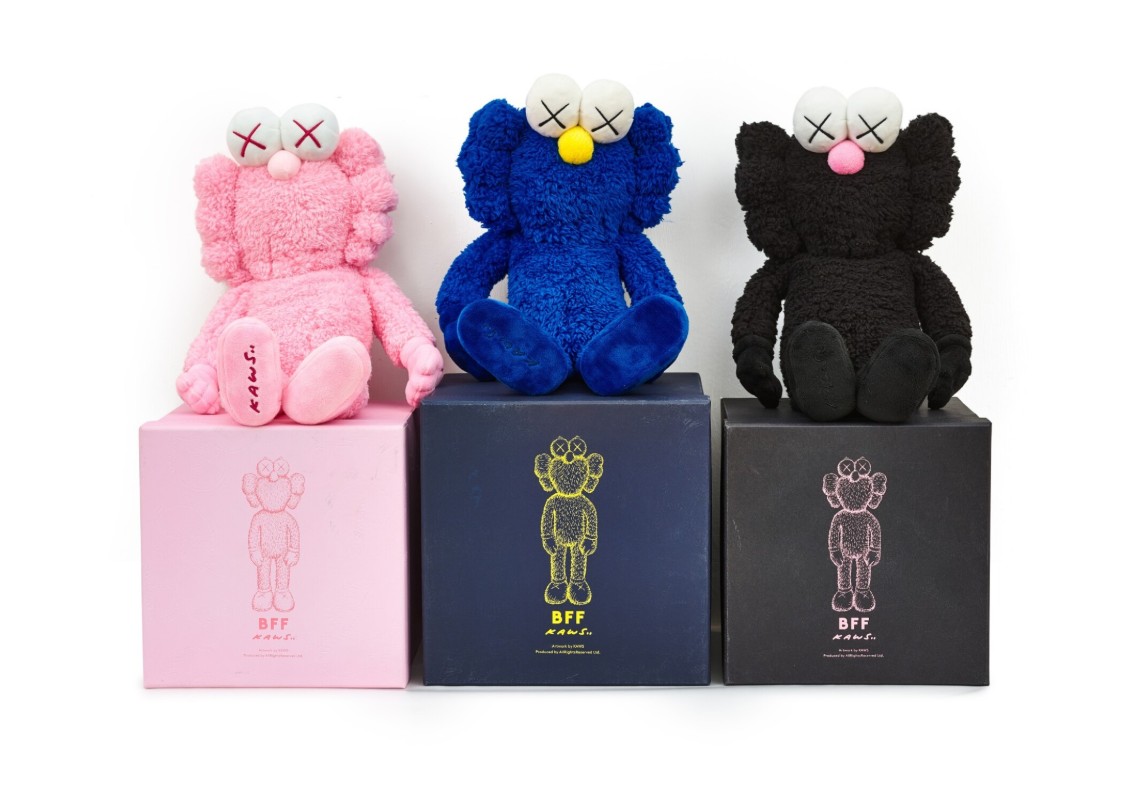
BFF Plush (Black & Pink & Blue)
Medium: Polyester plush
Year: 2016 (Blue and Black); 2019 (Pink)
Dimensions: 48x38x11 cm (18-7/8 x 15 x 4-3/8 inches)
Editions: 1000 (Blue); 3000 (Black and Pink)
Produced by AllRightsReserved Ltd., Hong Kong
Each embroidered with the artist’s name underneath
Numbered on label