African Elephant
from Endangered Species
Medium: Screenprint in colors on Lenox Museum Board
Year: 1983
Sheet: 38×38 inches (96.5 x 96.5 cm)
Edition: 150
Artist’s Proofs: 30 AP
Printer’s Proofs: 5 PP
Exhibitor’s Proofs: 5 EP
Hors Commerce: 3 HC
Bon a Tirer: 1 BAT
Other: 10 numbered in Roman numerals intended for wildlife organizations
Trial Proofs: 30 TP with unique color combination
(see Feldman & Schellmann IIB.293)
Publisher: Ronald Feldman Fine Arts, Inc., New-York
Printer: Rupert Jasen Smith, New-York
Catalogue Raisonne: Feldman & Schellmann II.293
Signed and numbered in pencil, lower left or right
With the publisher’s and the artist’s copyright inkstamp on the reverse
“I never met an animal I didn’t like”
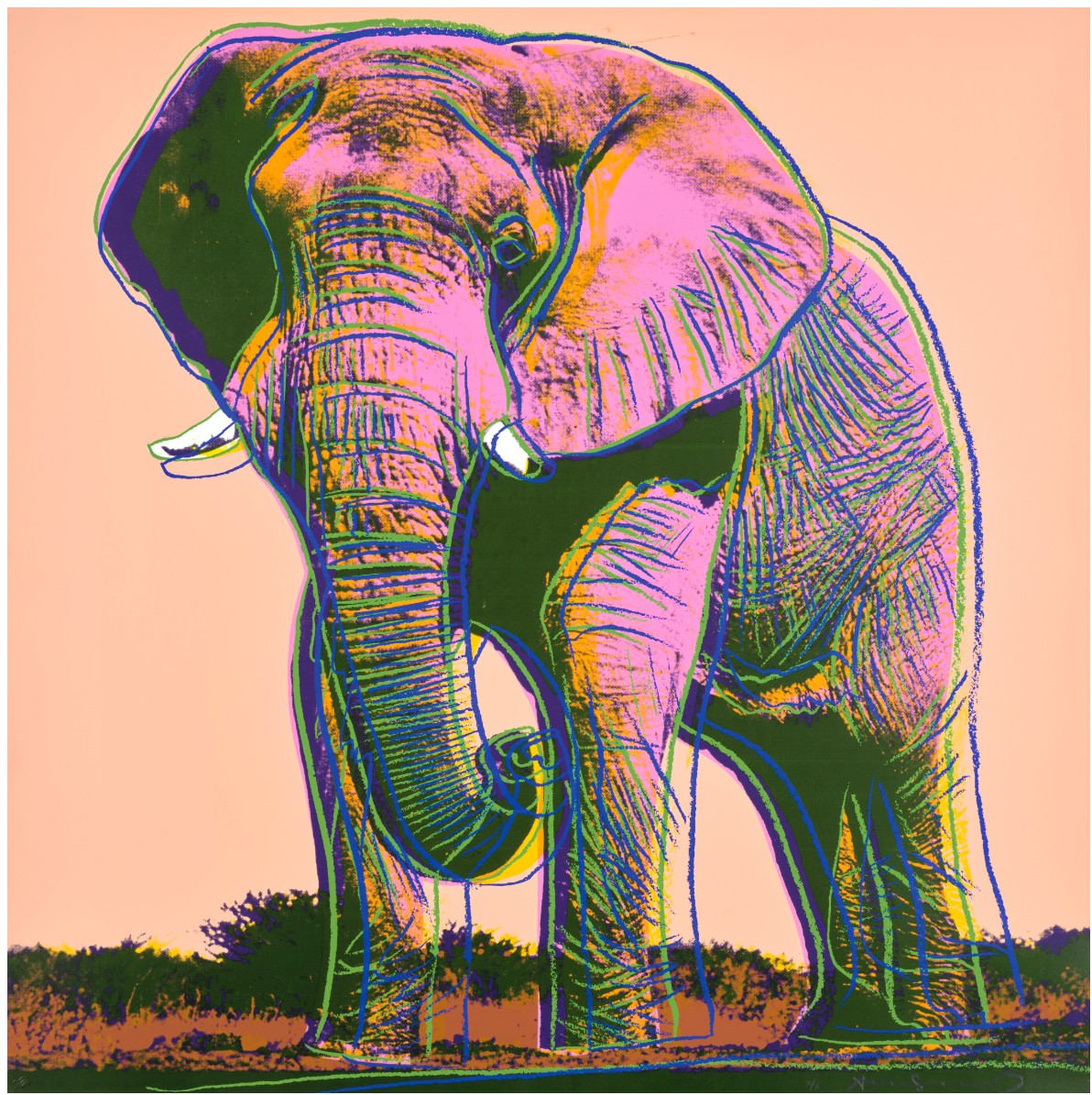
African Elephant, from the celebrated Endangered Species portfolio, presents the animal in a frontal, almost confrontational composition, its monumental head filling the pictorial space. The elephant’s features are simplified yet strikingly expressive: large ears fanning outward, the trunk descending with a quiet authority, and the eyes rendered with an unexpected softness. Warhol electrifies the image through his signature use of saturated, unnatural color, fields of vivid pinks, blues, and yellows disrupt any illusion of naturalism, transforming the elephant into an icon rather than a zoological specimen. Layered lines of bright green, blue, and dark purple emphasize the wrinkles of the animal’s aged skin. These lines also trace the outline of the elephant’s body, creating multiple ghostly versions of its form in a haunting reminder of the lost elephants that are no longer with us. For elephants, memory is both memorializing and functional. Along with tracing past lives, Warhol’s lines recall the migratory paths that elephants pass down through generations – preserving a cartography of survival and bringing new meaning to the phrase “elephants never forget”.
African Elephant is part of Endangered Species
(Click on picture below to access the Catalogue Entry)

The Endangered Species series was produced in 1983, at a moment when environmental consciousness was entering mainstream discourse in the United States. Commissioned by publishers Ronald and Frayda Feldman, the portfolio comprises ten screenprints depicting animals listed on the United States’ Endangered Species Act of 1973. Warhol employed the silkscreen technique he had refined since the early 1960s, layering hand-applied color over photographic transfers to create subtle variations between impressions. The series stands apart within Warhol’s oeuvre as one of his few overtly political and philanthropic projects, with proceeds partly benefiting conservation causes.
The African elephant (Loxodonta africana) is the largest land mammal on Earth, a species long associated with memory, intelligence, and social complexity. Living in matriarchal herds, elephants display behaviors—mourning rituals, cooperative care of young—that have fascinated both scientists and the broader public. By the early 1980s, however, elephant populations were in sharp decline due to rampant poaching driven by the ivory trade. Warhol’s choice of the elephant was therefore far from incidental: it embodied both grandeur and vulnerability, a symbol of nature under siege. Today, the African elephant remains classified as endangered, with ongoing threats from habitat loss and illegal hunting, despite international conservation efforts that have stabilized certain populations.
Using the same silk-screen process as his iconic Pop images of celebrities and commodities, the Endangered Species series inserts animals into the public eye and affords them the same status as his Marilyns – with one fundamental distinction. Whilst his Pop idols were lauded for their unattainable celebrity, in Endangered Species Warhol platforms animals to draw attention to the ecological crisis, a cause rooted in purpose and reality, as opposed to aspirational celebrity worship. Describing the series, the National Museum of Wildlife Art wrote, “Warhol draws attention to the rarity of these animals and gives each the ‘star’ treatment”, using his easily digestible Pop style to immediately engage the viewer and create a space for activism.
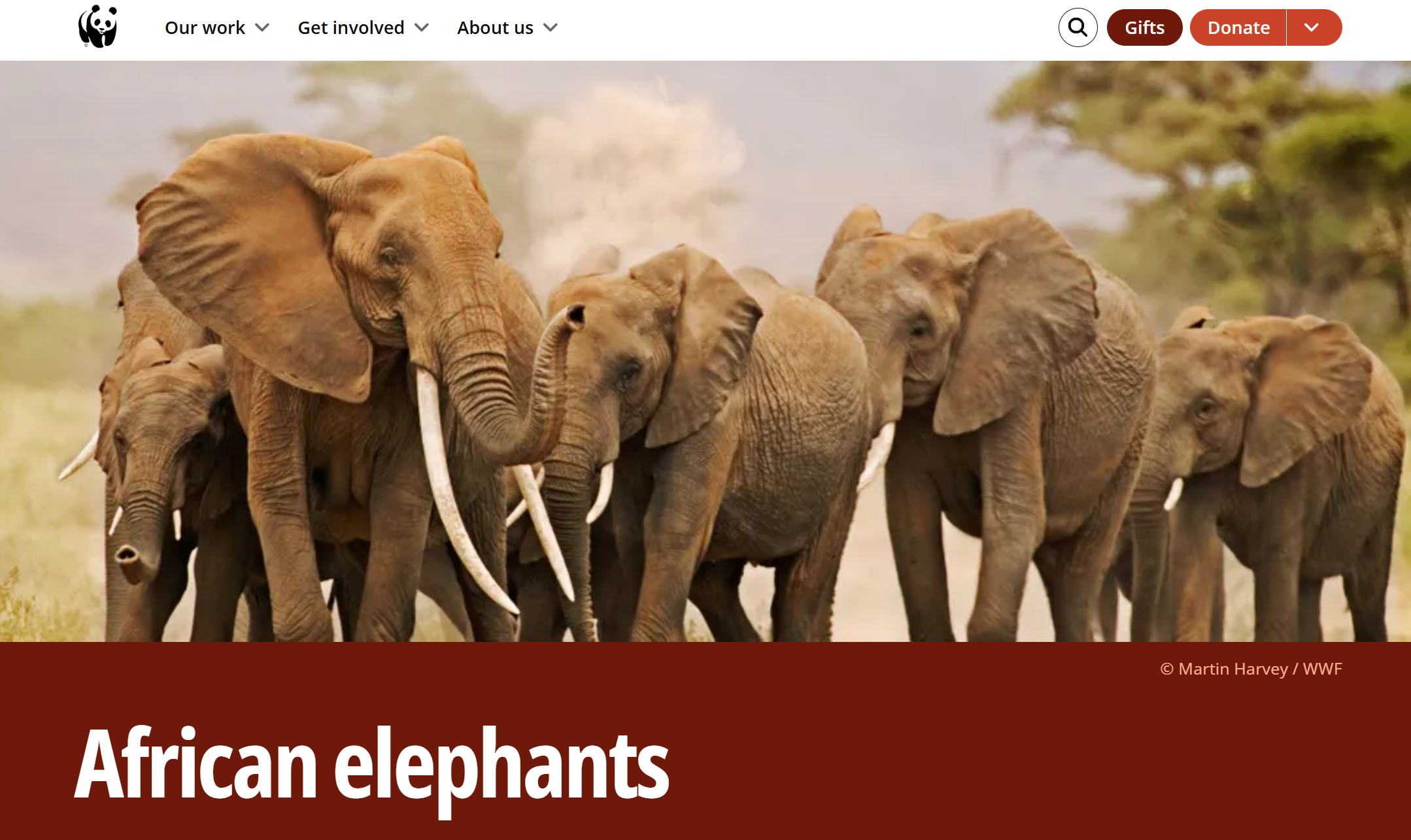
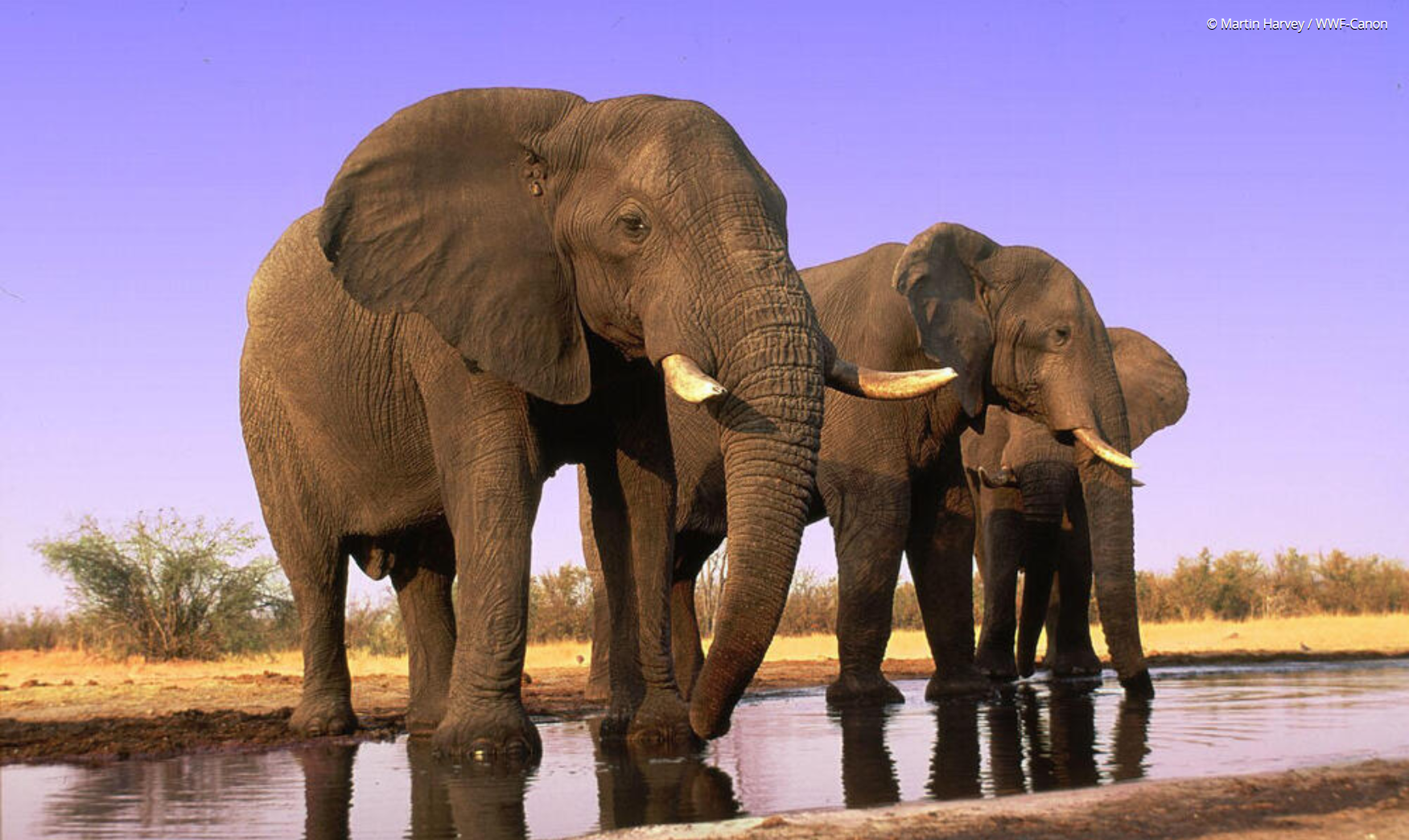
The African elephant is one of the most sought-after animals in the poaching world, as they are greatly valued for their ivory tusks. The African Elephants can weigh up to seven tons and are the largest land animals. They can grow up to 4 meters (13 feet). African elephants are the largest animals walking the Earth. Their herds wander through 37 countries in Africa. They are easily recognized by their trunk that is used for communication and handling objects. And their large ears allow them to radiate excess heat. Upper incisor teeth develop into tusks in African elephants and grow throughout their lifetime. There are two species of African elephants—the savanna (or bush) elephant and the forest elephant. Savanna elephants are larger than forest elephants, and their tusks curve outwards. In addition to being smaller, forest elephants are darker and their tusks are straighter and point downward. There are also differences in the size and shape of the skull and skeleton between the two species.
What makes African Elephant particularly compelling is the tension between its aesthetic seduction and its underlying message. Warhol does not depict suffering or violence; instead, he adopts the visual language of advertising—bright colors, simplified forms, immediate legibility—to draw the viewer in. This strategy mirrors his earlier portraits of celebrities: just as Marilyn Monroe or Elizabeth Taylor were transformed into consumable icons, here the elephant becomes a mass-mediated image. Yet the effect is quietly subversive. By elevating an endangered animal to the status of a pop icon, Warhol forces a confrontation with the commodification of life itself, suggesting that even nature is not immune to the mechanisms of fame, desire, and consumption.
In the end, Warhol’s elephant stands as both image and warning: majestic, radiant, and unsettlingly fragile. It is precisely this contradiction that gives the work its enduring power.
Auction Market Overview
Regular Editions
Christie’s New-York: 15 April 2026
Estimated: USD 80,000 – 120,000
USD 215,900
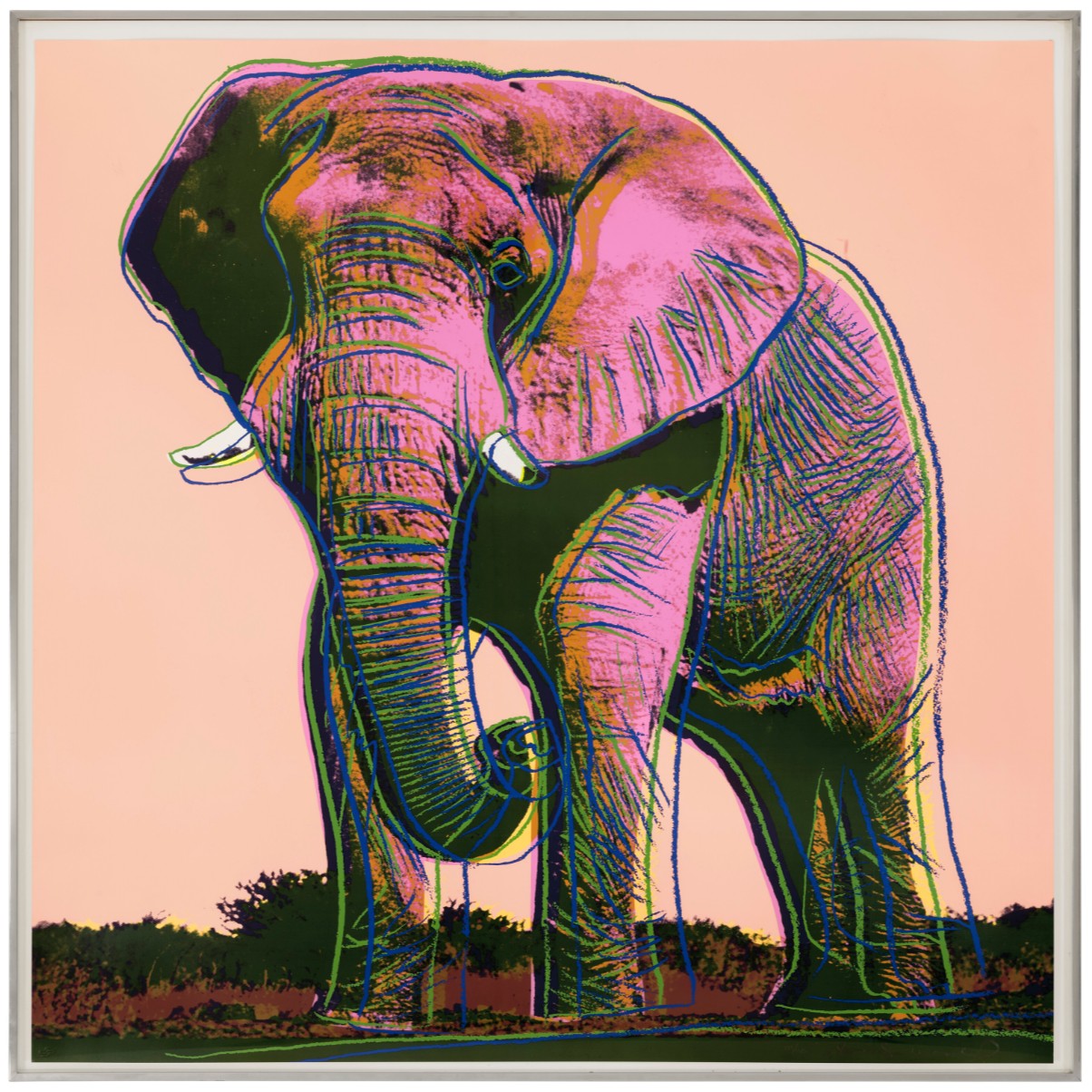
ANDY WARHOL (1928-1987)
African Elephant, from Endangered Species, 1983
(Feldman & Schellmann II.293)
Screenprint in colors on Lenox Museum Board
Signed in pencil, numbered 131⁄150
(there were also 30 artist’s proofs)
Published by Ronald Feldman Fine Arts, Inc., New York
With the artist’s and publisher’s copyright ink stamps on the reverse
Estimated: GBP 60,000 – 80,000
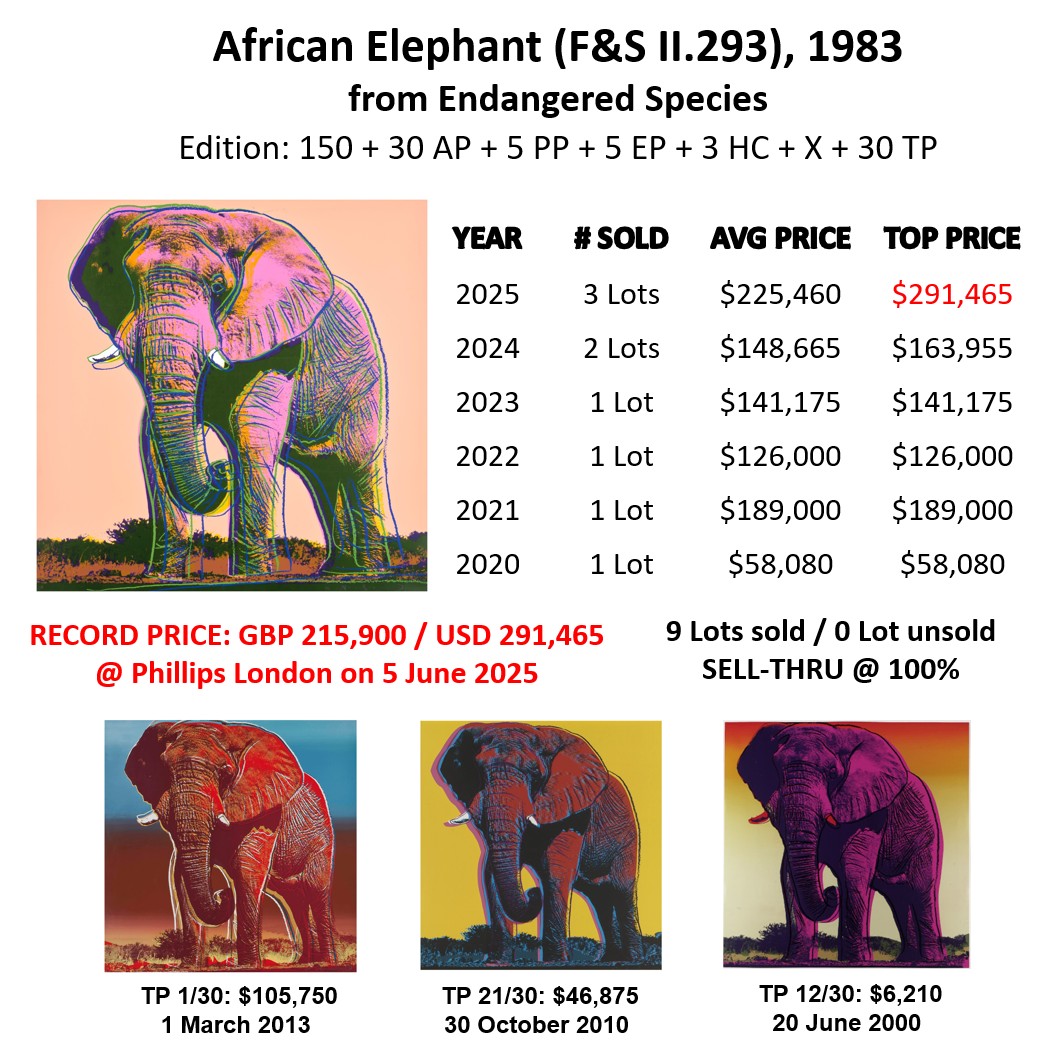
GBP 215,900 / USD 291,465
NEW AUCTION RECORD FOR AFRICAN ELEPHANT (REGULAR EDITION)
One of 10 impressions in Roman numerals intended for wildlife organizations
The edition was 150 and 30 artist’s proofs
Swann Auction Galleries: 5 June 2025
Estimated: USD 80,000 – 120,000
USD 209,000
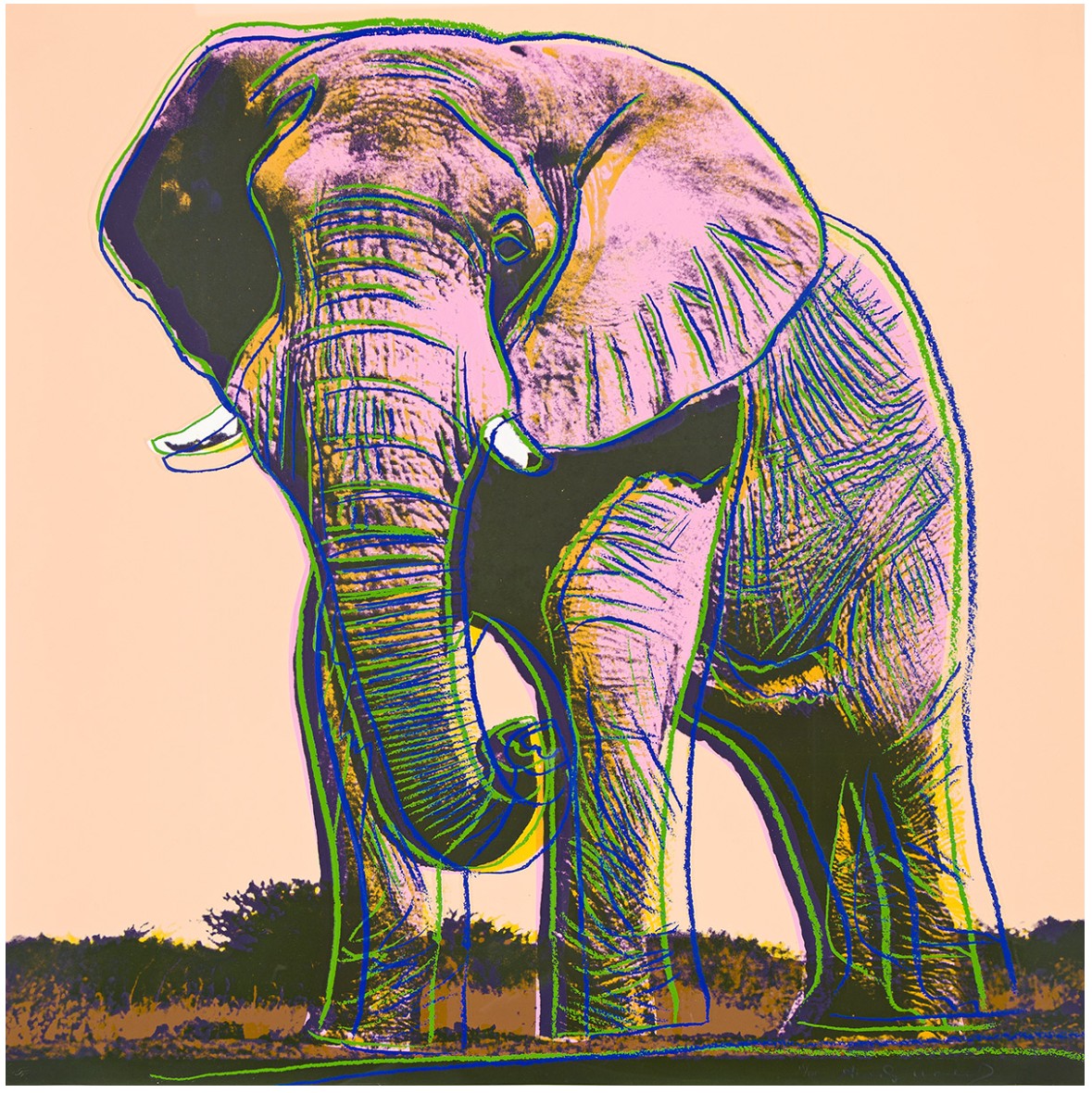
ANDY WARHOL (1928 – 1987)
African Elephant (Feldman-Schellmann II.293), 1983
From Endangered Species
Color screenprint on Lenox Museum Board
Signed and numbered 4/150 in pencil, lower right
Mainichi Auction: 26 April 2025
Estimated: JPY 10,000,000 – 15,000,000
JPY 25,300,000 / USD 175,910
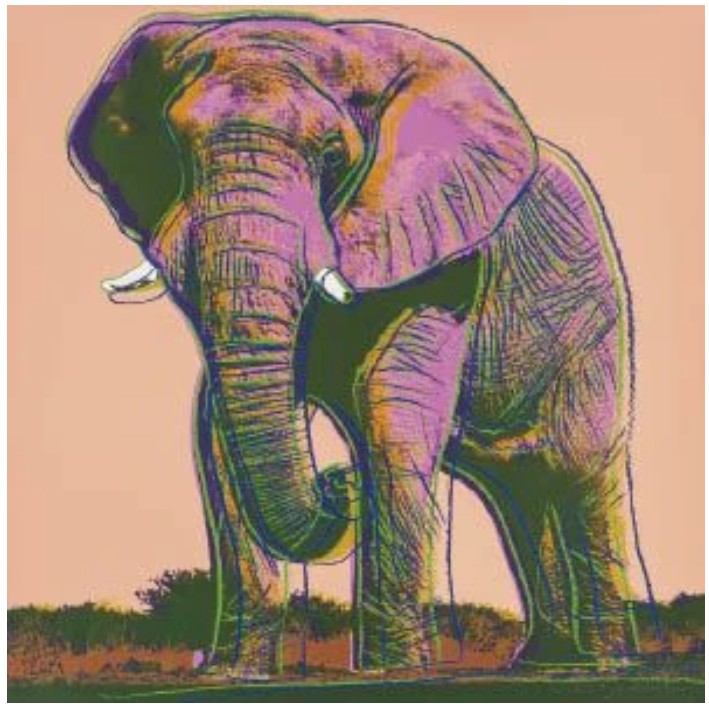
ANDY WARHOL
African Elephant (F&S II.293), 1983
from Endangered Species
Screenprint
Signed from the edition of 150
Sotheby’s Cologne: 4 December 2024
Estimated: EUR 70,000 – 100,000
EUR 156,000 / USD 163,955
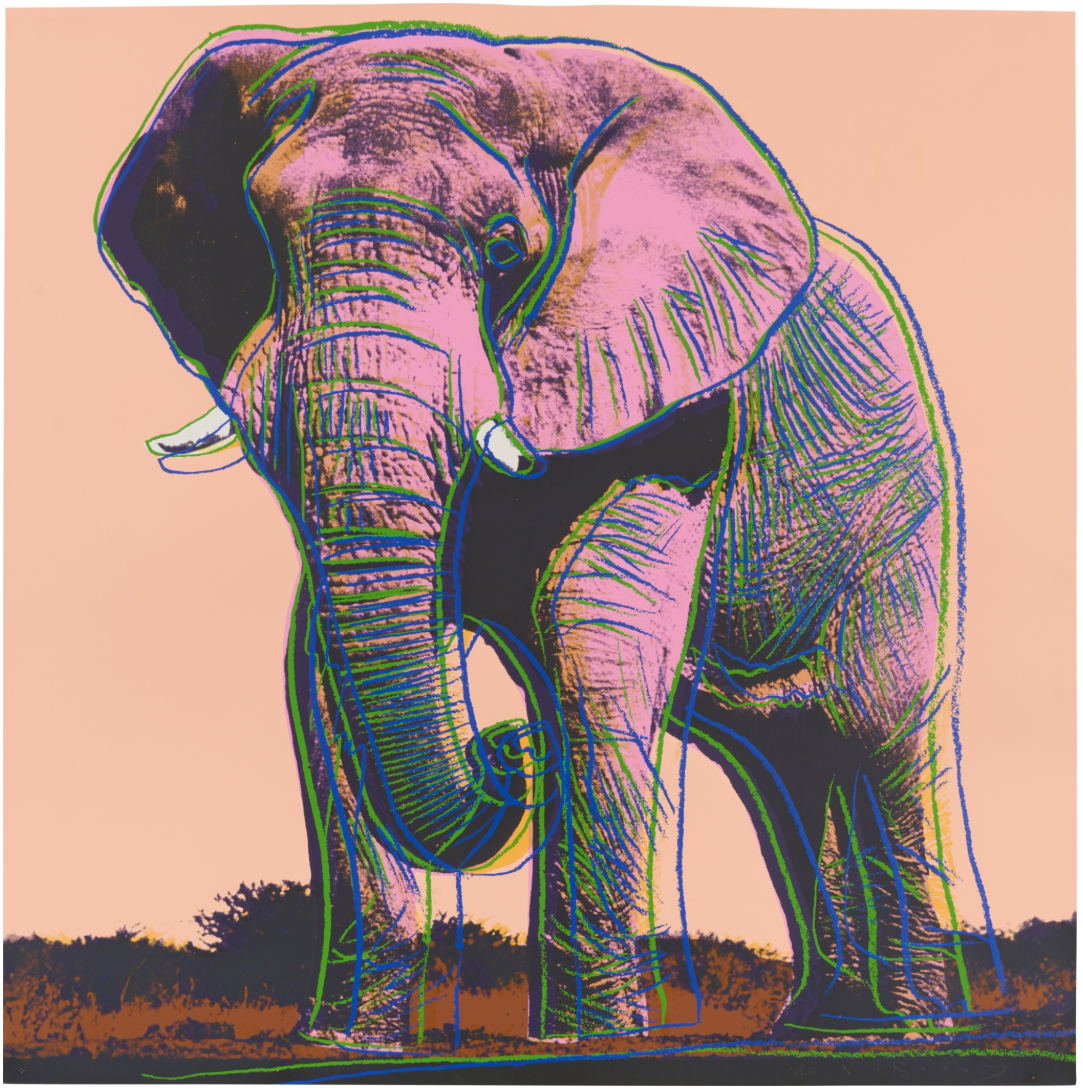
ANDY WARHOL (1928 – 1987)
African Elephant, from Endangered Species (Feldman & Schellmann II.293), 1983
Screenprint in colors on Lenox Museum Board
Sheet: 38×38 inches (96.5 x 96.5 cm)
Signed in pencil and numbered 77/150
Van Ham: 5 June 2024
Estimated: EUR 70,000 – 100,000
EUR 122,760 / USD 133,370
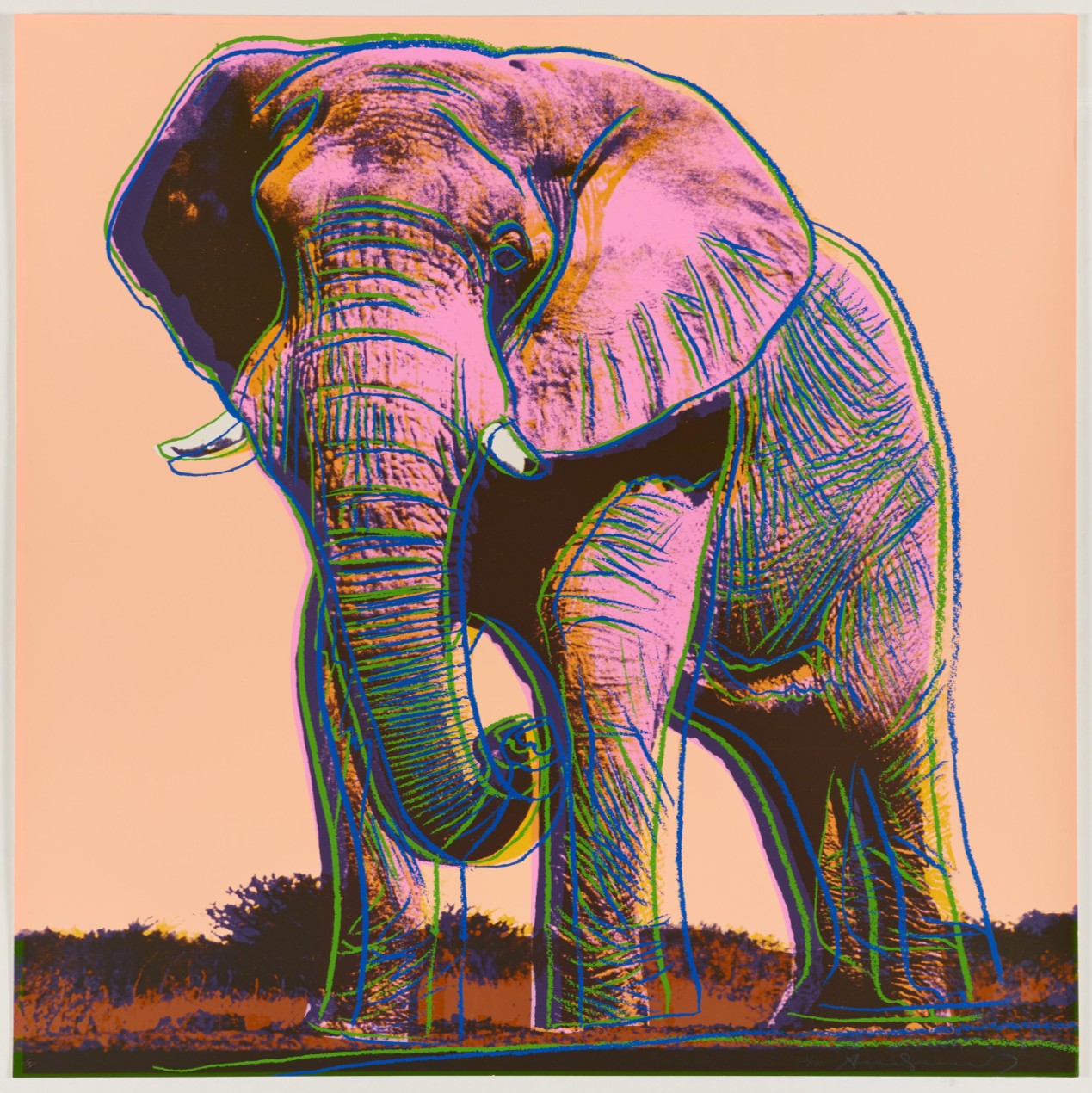
ANDY WARHOL (1928 Pittsburgh, PA/USA – 1987 New York)
African Elephant From: Endangered Species, 1983
Color silkscreen on Lenox museum card
Signed and numbered 133/150
Ronald Feldman Fine Arts, Inc., New York (publisher)
XXXXXXXXX
Van Ham: 6 June 2023
Estimated: EUR 70,000 – 90,000
EUR 132,000 / USD 141,176
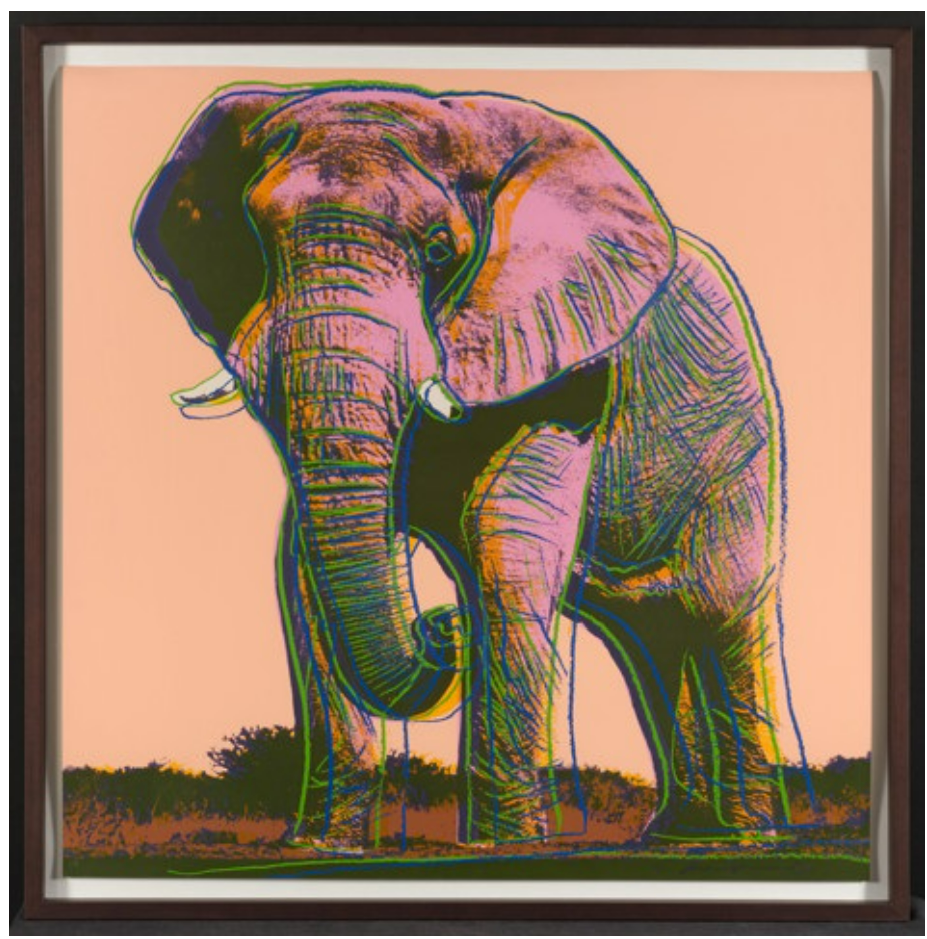
ANDY WARHOL
African Elephant, from Endangered Species (F. & S. 293), 1983
Screenprint in colors on Lenox Museum Board
Signed and numbered 79/150 in pencil
XXXXXXXXX
Phillips New-York: 26 October 2022
Estimated: USD 60,000 – 90,000
USD 126,000
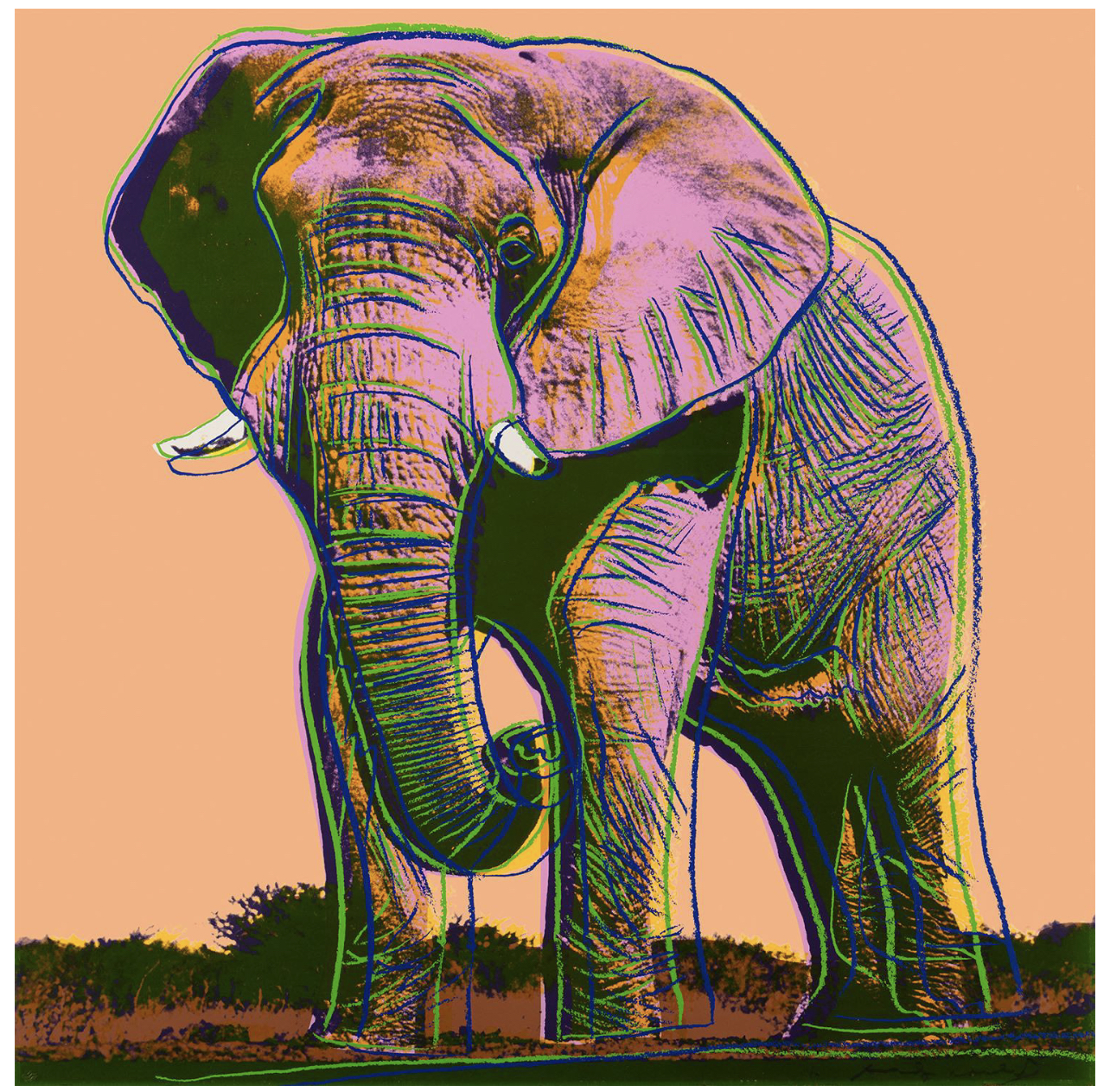
ANDY WARHOL
African Elephant, from Endangered Species (F. & S. 293), 1983
Screenprint in colors on Lenox Museum Board
Signed and numbered III/X in pencil
(from the edition intended for wildlife organizations, the edition was 150 and 30 artist’s proofs)
XXXXXXXXX
Phillips New-York: 21 October 2021
Estimated: USD 40,000 – 60,000
USD 189,000
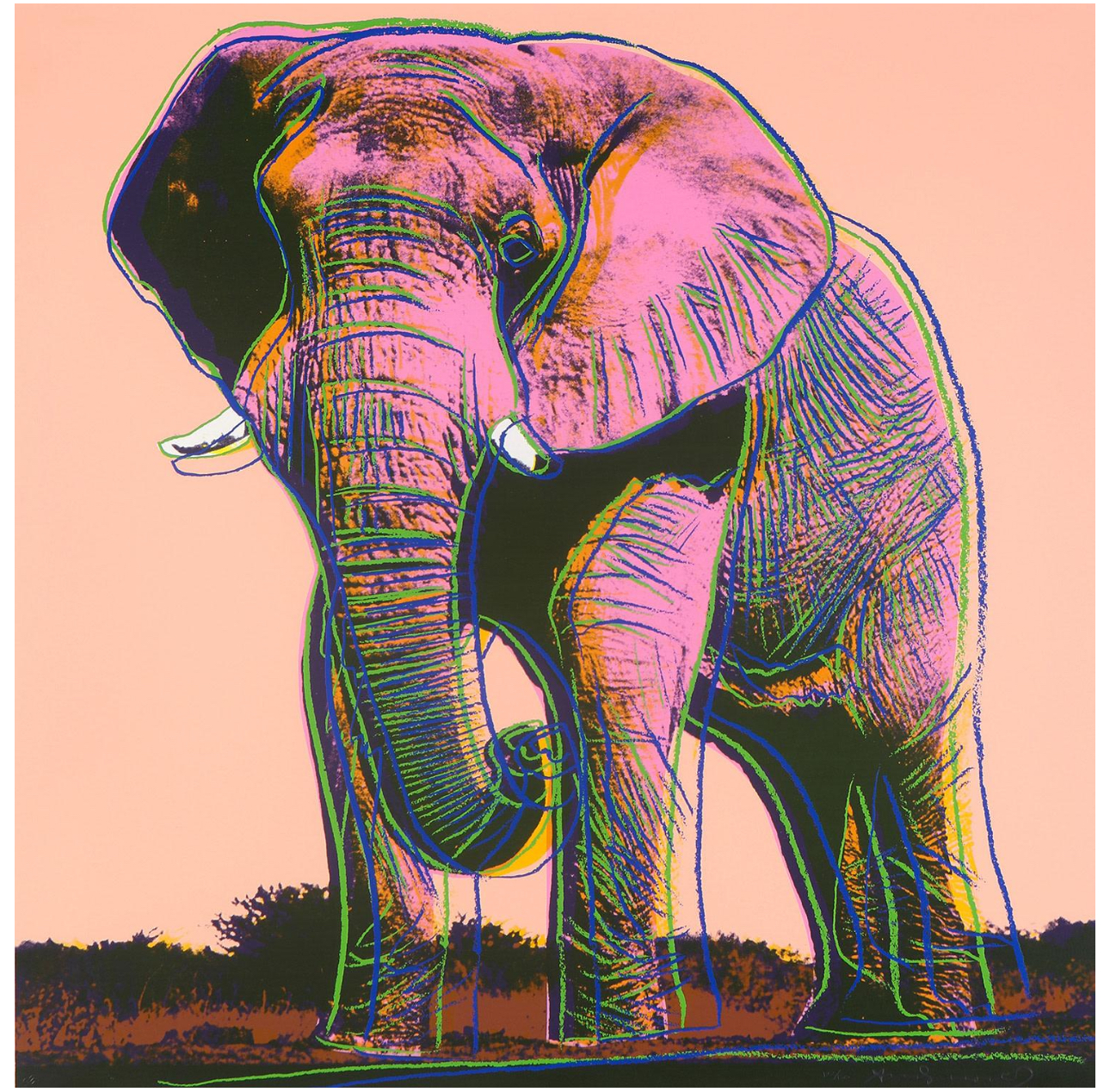
ANDY WARHOL
African Elephant, from Endangered Species (F. & S. 293), 1983
Screenprint in colors on Lenox Museum Board
Signed and numbered 122/150 in pencil
XXXXXXXXX
Sotheby’s London: 19 March 2020
Estimated: GBP 30,000 – 50,000
GBP 50,000 / USD 58,080
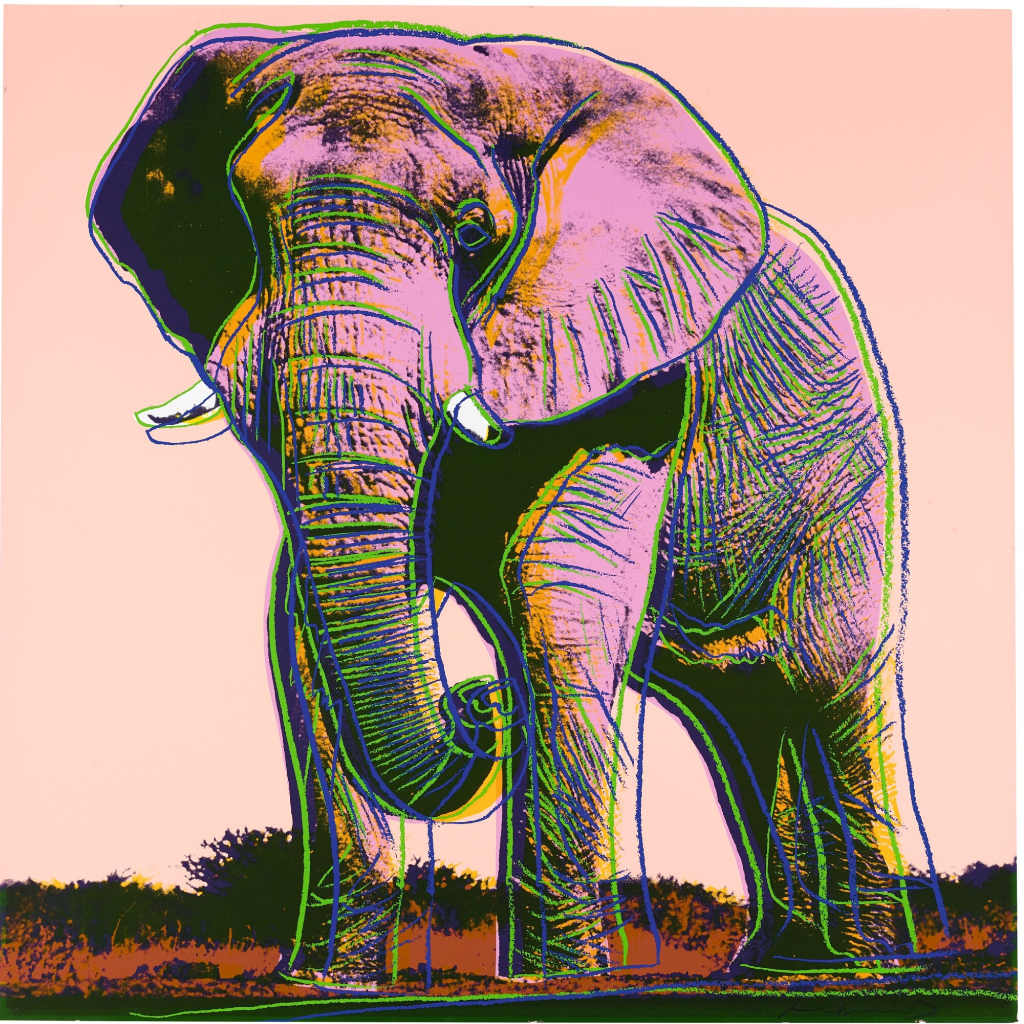
ANDY WARHOL (1928 – 1987)
AFRICAN ELEPHANT (F. & S. II.293), fromEndangered Species, 1983
Screenprint in colors on Lenox Museum Board
Signed in pencil, numbered 86/150
XXXXXXXXX
Bonhams New-York: 21 May 2019
Estimated: USD 40,000 – 60,000
USD 62,575
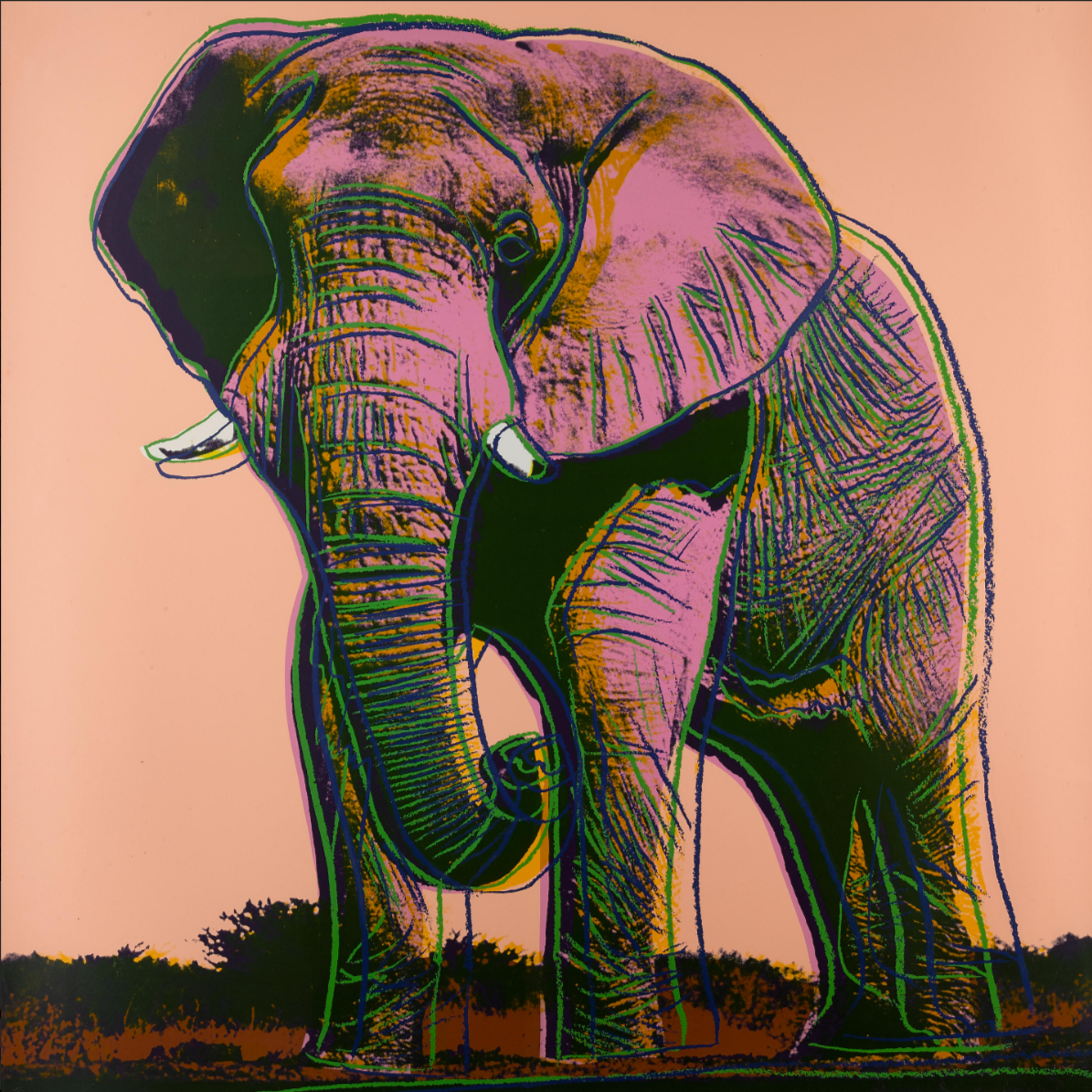
Screenprint in colors on Lenox Museum Board
Signed in pencil and numbered AP 2/30
An artist’s proof aside from the edition of 150
Estimated: USD 40,000 – 60,000
USD 68,750
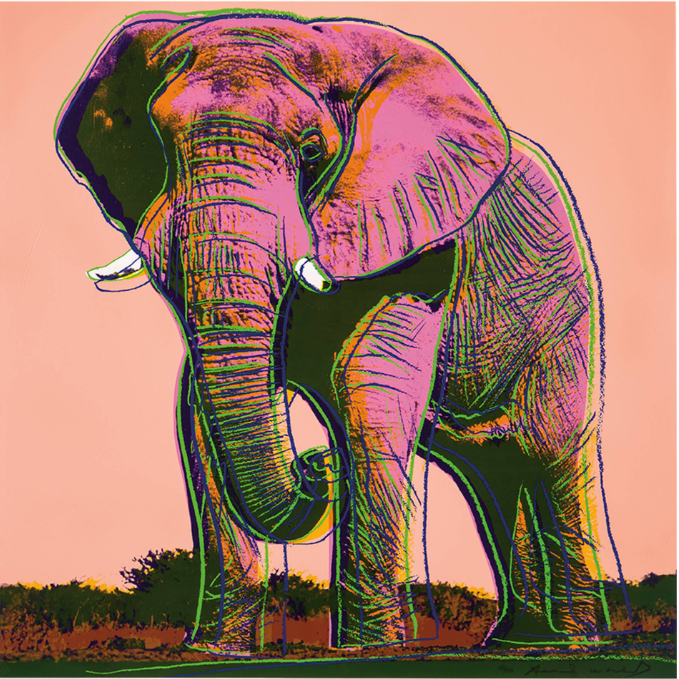
ANDY WARHOL
African Elephant (from Endangered Species Portfolio), 1983
Screenprint in colors on Lenox Museum Board
Signed and numbered 141/150 in graphite lower right edge of sheet
XXXXXXXXX
African Elephant (61/150)
Sotheby’s London: 27 March 2018
Estimated: GBP 30,000 – 50,000
GBP 50,000 / USD 70,805
African Elephant (12/150)
Bonhams Los Angeles: 24 October 2017
Estimated: USD 40,000 – 60,000
USD 68,750
African Elephant (35/150)
Doyle New-York: 1 May 2017
Estimated: USD 40,000 – 60,000
USD 59,375
African Elephant (53/150)
Sotheby’s New-York: 28 April 2017
Estimated: USD 30,000 – 50,000
USD 68,750
African Elephant (62/150)
Sotheby’s London: 4 April 2017
Estimated: GBP 35,000 – 55,000
GBP 52,500 / USD 65,285
African Elephant (AP 16/30)
Christie’s New-York: 1 March 2016
Estimated: USD 15,000 – 25,000
USD 52,500
Trial Proofs
African Elephant (TP 1/30), 1983
Christie’s New-York: 1 May 2013
Estimated: USD 50,000 – 70,000
USD 105,750
TRIAL PROOF
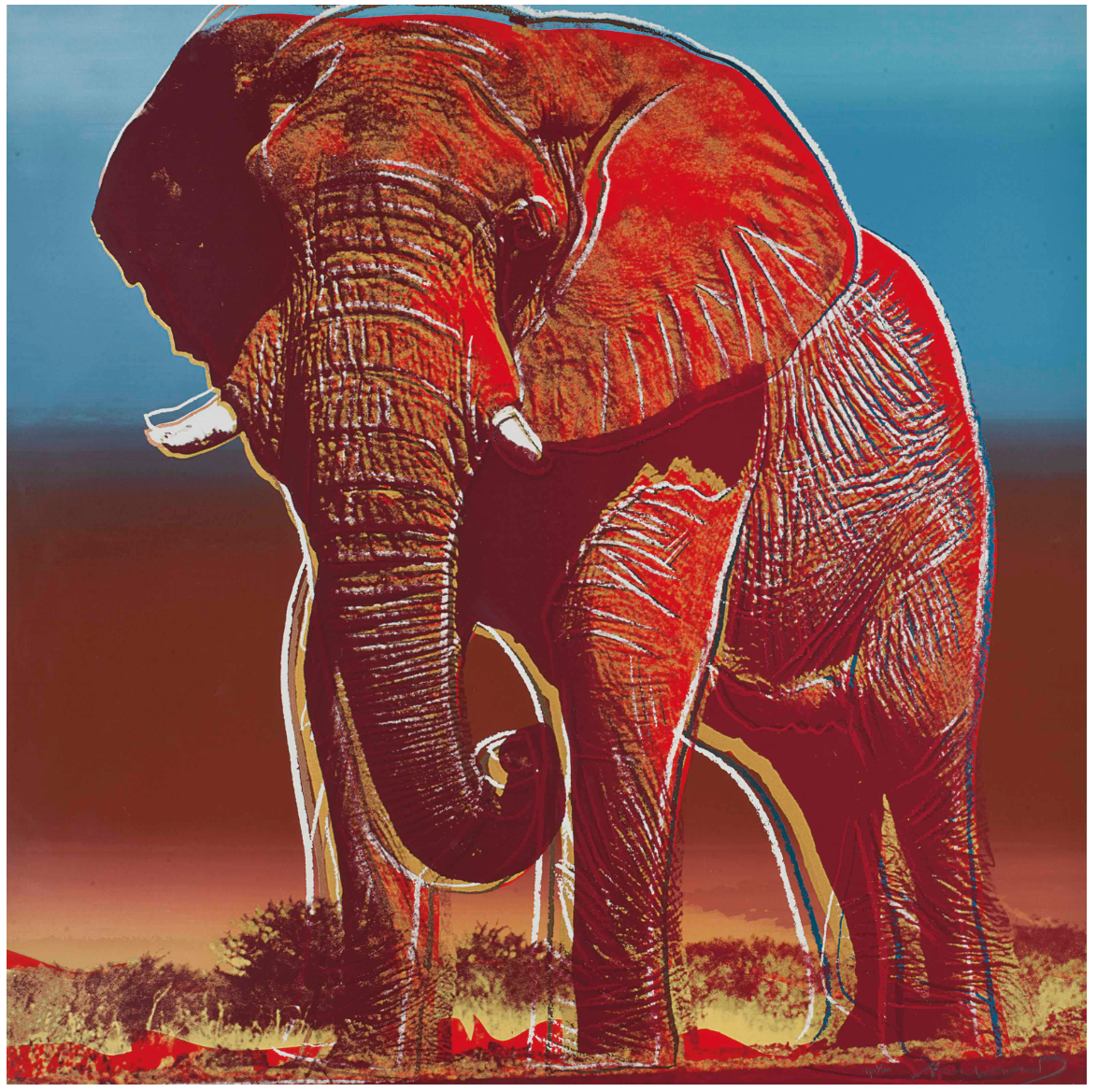
ANDY WARHOL
African Elephant, from Endangered Species (see F. & S. IIB.293), 1983
Screenprint in colors on Lenox Museum Board
Signed in pencil, numbered ‘TP 1/30’
A unique trial proof, the edition was 150 plus 30 artist’s proofs)
African Elephant (TP 21/30), 1983
Sotheby’s New-York: 30 October 2010
Estimated: USD 40,000 – 50,000
USD 46,875
TRIAL PROOF
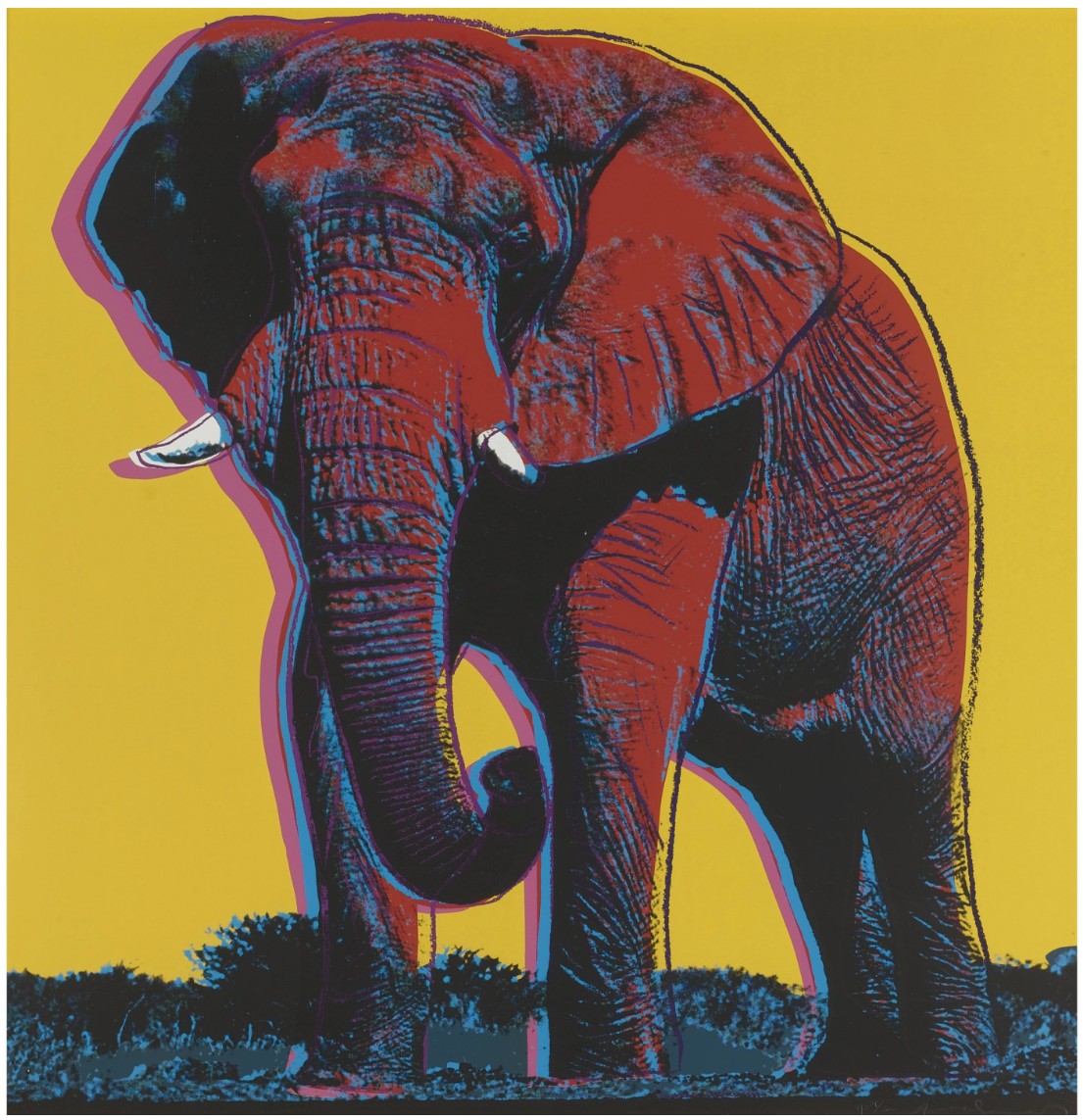
ANDY WARHOL
African Elephant (F. & S. IIB.293), 1983
Screenprint in colors on Lenox Museum Board
Signed in pencil and numbered TP 21/30
A trial proof impression in a unique color combination aside from the numbered edition of 150
African Elephant (TP 12/30), 1983
Christie’s London: 20 June 2000
Estimated: GBP 4,000 – 6,000
GBP 4,112 / USD 6,210
TRIAL PROOF
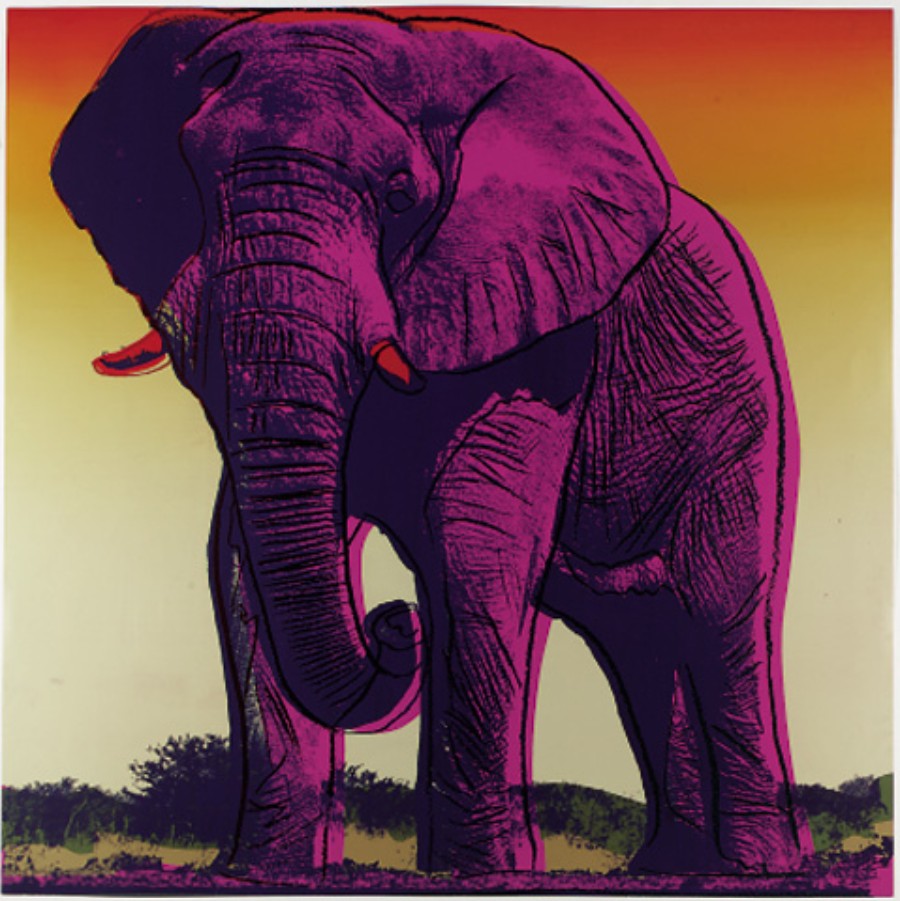
ANDY WARHOL
African Elephant: One Plate from Endangered Species, 1983
Screenprint printed in colors on Lenox Museum Board
Signed in pencil on the reverse, numbered ‘TP 12/30’