
Pierre Soulages stands as one of the most singular figures in postwar abstraction, an artist who built an entire language from a single color. His work is not about black as absence, but as presence, a material capable of reflecting light, structuring space, and transforming perception. Through what he called outrenoir—literally “beyond black”—Soulages developed surfaces that shift with the viewer’s position, where texture, rhythm, and light become the true subject. Neither expressive in the traditional sense nor strictly minimal, his paintings occupy a rare position, combining physical intensity with a quiet, almost architectural rigor.
Introduction
Pierre Soulages (1919-2022) decided to become a painter at the age of 17 when, standing under the cavernous ceiling of a medieval church, he observed rays of sunshine filtering through the high windows, carving up the gloom below. He has been revisiting that experience in his paintings ever since. Today, the abstract artist is considered to be France’s greatest living painter. At 103 years-old, he is internationally renowned for his ultra-black canvases, the surfaces of which capture and play with light in such striking ways that they appear animated and alive
“I like the authority of black. It’s an uncompromising color. A violent color, but one that encourages internalization. Both a color and a non-color. When light is reflected on black, it transforms and transmutes it. It opens up a mental field all of its own.”
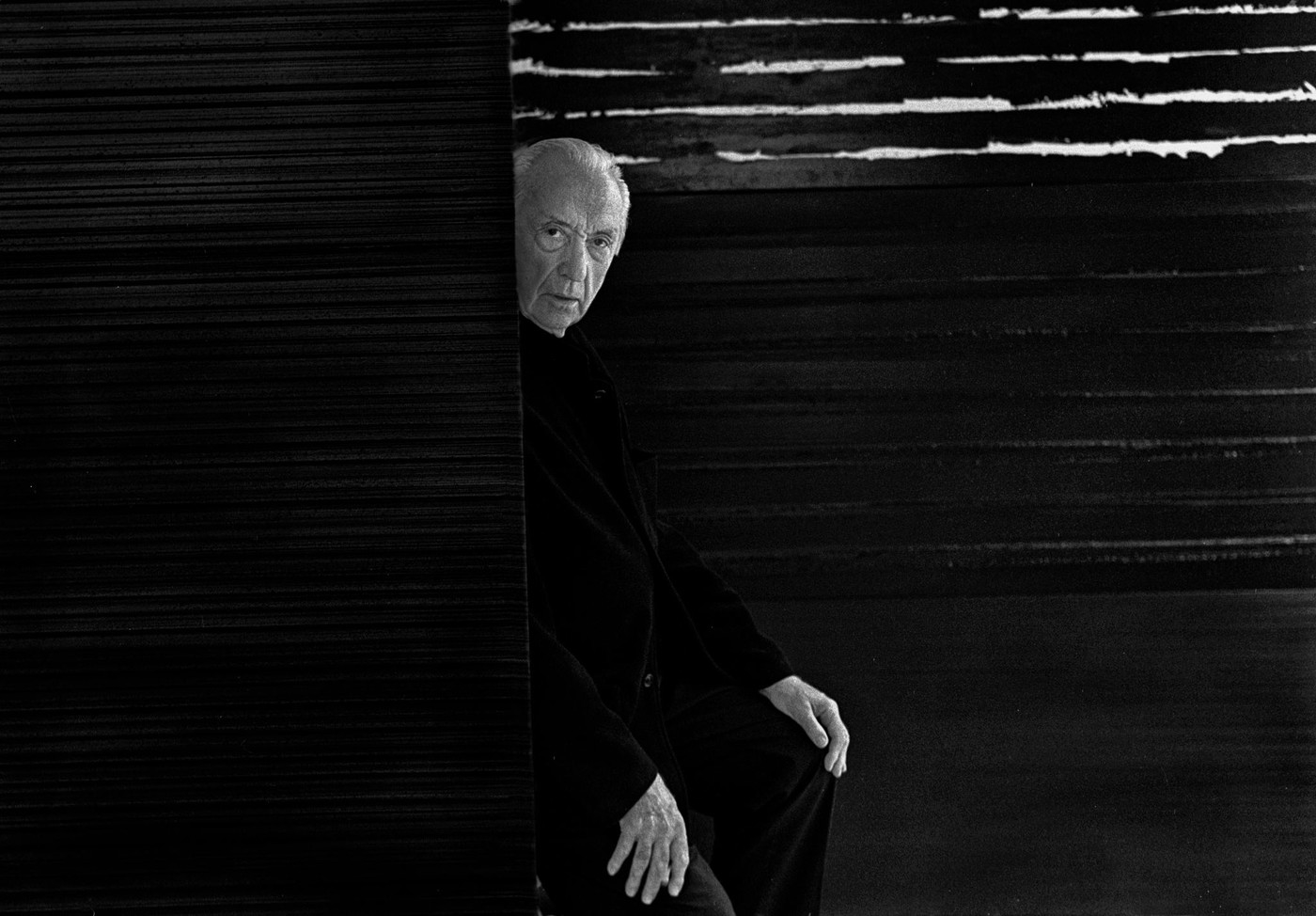
Born in Rodez in the south of France in 1909, Soulages was inspired by the region’s rich artistic heritage, from the Neolithic menhirs – large, ethereal standing stones, and some of the oldest in Europe – to the 20,000-year-old cave paintings in nearby Lascaux and Chauvet-Pont-d’Arc. He would balk at the rigid parameters that defined art, or in particular ‘great art’, reflecting on such as: ‘I have always revolted against this foolishly evolutionary conception of art which leads one to believe that there are at first awkward gropings, then that technique becomes more and more skillful and mastered, and that finally we arrive at the apotheosis of a perfectly imitative art. It must be said and repeated: there is no progress in art, only techniques that are perfected and which can lead you where you do not want to go. The painters of Lascaux or Chauvet brought art to a summit from the very start. Though it would be standing underneath the barrel vault ceiling of the famed Romanesque abbey, Sainte-Foy de Conques, that would ignite his desire to become a painter (he would return in 1986 to design windows for its renovation), his palette has never strayed far from the elemental reds, blacks and ochres used by the caves’ ancient magicians.
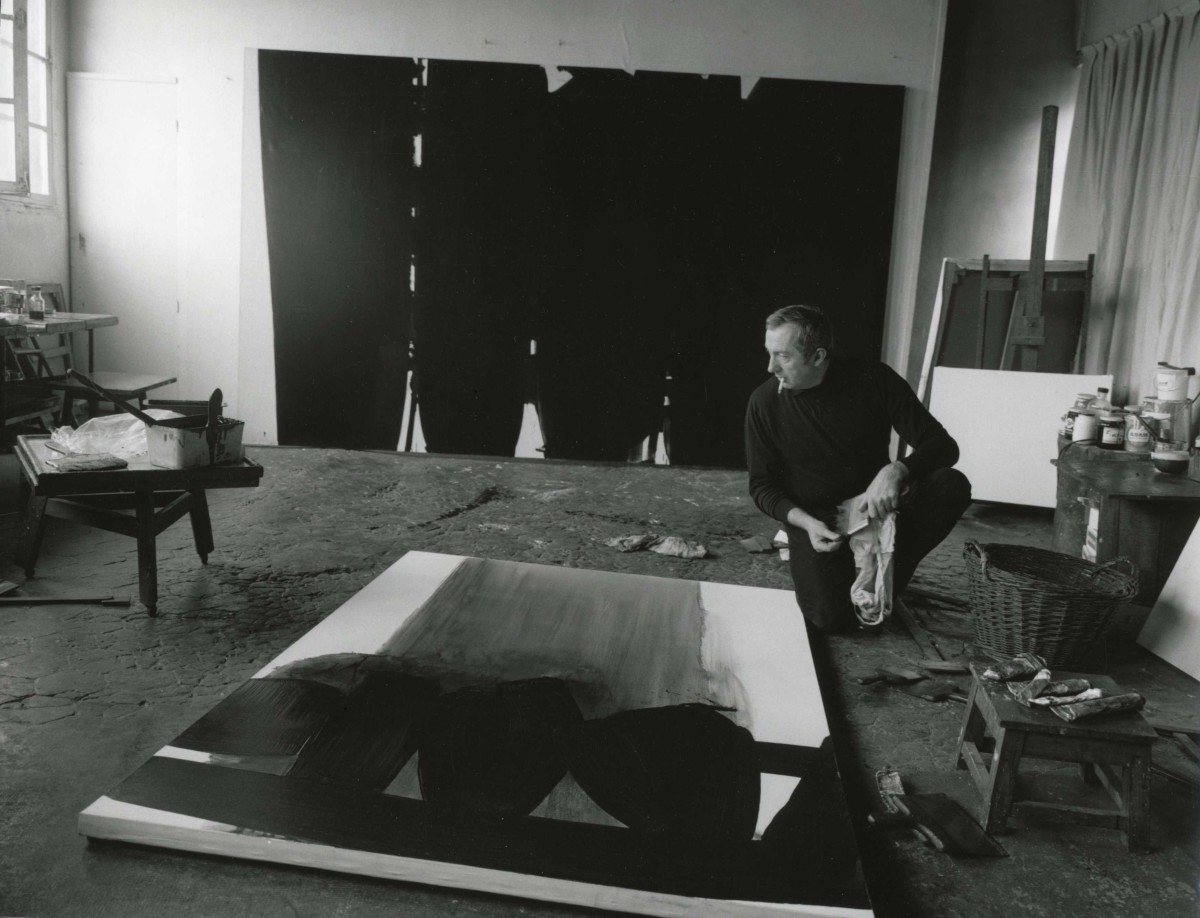
As Abstract Expressionism exploded across the world following the end of the Second World War, from its epicenter in New York to movements like Gutai in Japan and Dansaekhwa in South Korea, his early work would preempt this seismic shift in artistic production and bestow credence to the truth that Soulages has always been his own artist. No one is a prophet in his own country: salvation will come from elsewhere. As early as 1948, Soulages made his first breakthroughs in Japan, in the Scandinavian countries, in Germany, where one of his works was even chosen for the poster of the travelling exhibition Französische abstrakte Malerei, and in the United States, where James Johnson Sweeney became his ambassador. Thanks to the famous curator who worked at the MoMA from 1935 to 1946 and at the Guggenheim from 1952 to 1960, Soulages participated in the exhibitions Advancing French art in 1951, Younger European artists at the Guggenheim Museum in 1953 and The new Decade at the Museum of Modern Art in 1954.
“I saw that it was no longer black that gave meaning to the painting but the reflection of light on dark surfaces. Where it was layered the light danced, and where it was flat it lay still. A new space had come into being.”
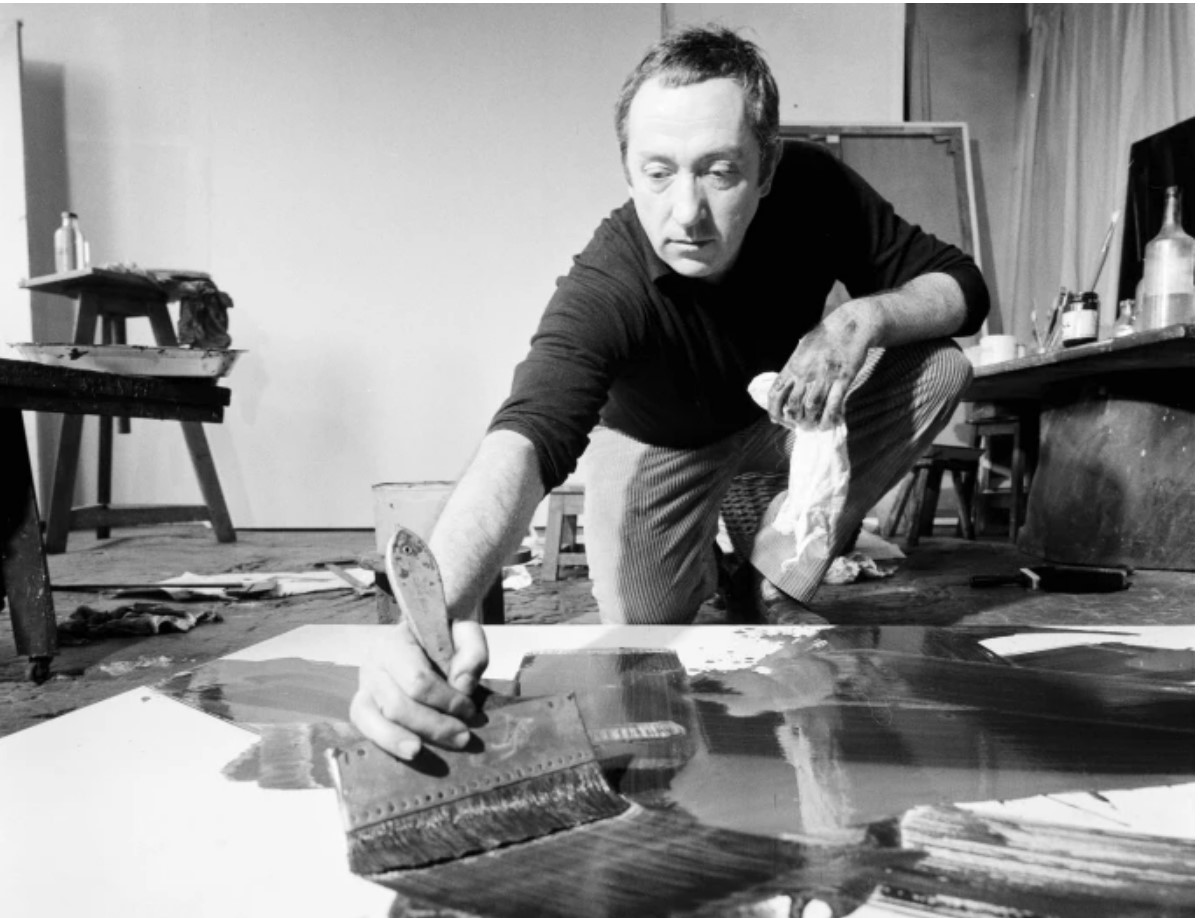
Soulages’ attention to black has been a lifelong preoccupation for the artist, one that he has mined for over 70 years in his creative production, and since 1979 with exclusive devotion. It would be in April of that year where Soulages would achieve theoretic and existential breakthrough. Up to that point, he had used black in conjunction to color in order to elevate their brilliance, however after working on a painting only for it to be swallowed by black paint, he left it angrily; yet the next day, he saw it differently.
“I do not depict. I do not relate. I do not represent. I paint, I present.”
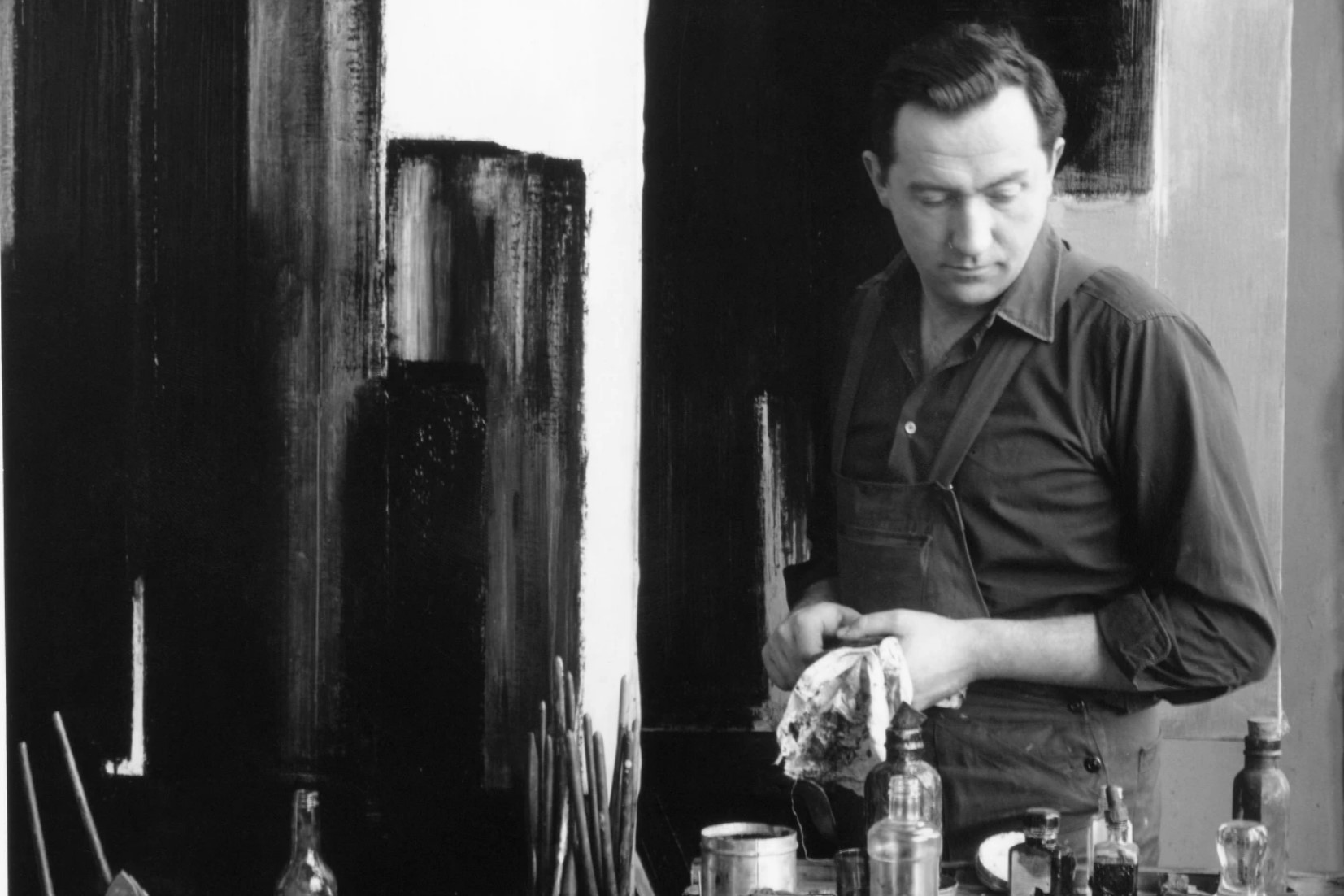
PIERRE SOULAGES IN HIS PARIS STUDIO, 1954. © DENISE COLOMB. © MINISTÈRE DE LA CULTURE / MÉDIATHÈQUE DU PATRIMOINE, DIST. RMN-GRAND PALAIS / ART RESOURCE, NY © MINISTÈRE DE LA CULTURE / M.
As always with Soulages, the date of the work is mentioned in the title after the technique and the dimension, as if to better remind us that the painting is made of space and time. He synthesized his work from 1948 by asserting that “painting is an organization of shapes and colors on which the senses that are attributed to it come to be made and unraveled, the viewer is the free and necessary interpreter”. He thus eliminates any personal interpretation of his art, any attempt to explain a work that is construed as devoid of any reference to the outside world, removed from the dilemma between figuration and non-figuration. The experience of the painting is entirely governed by its internal dynamics. His art can be resumed by his words:
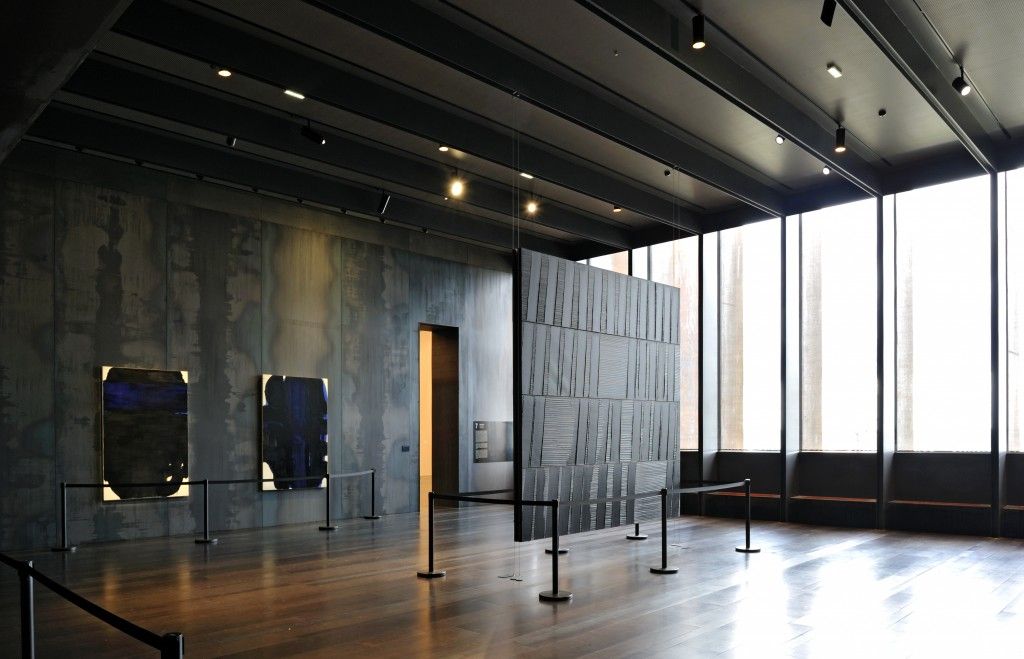
“What I desire for my paintings is that there should be the minimum of ‘formal uproar’ around them, that they should be sufficiently isolated from other materials and colors so that a certain ‘plastic silence’ can be established, as we need silence in order to listen to music.”
Only Chagall and Picasso had benefited before him from a retrospective at the Louvre during their lifetime. A major figure of abstraction, Pierre Soulages is today celebrated as one of the greatest painters of the second half of the 20th century.
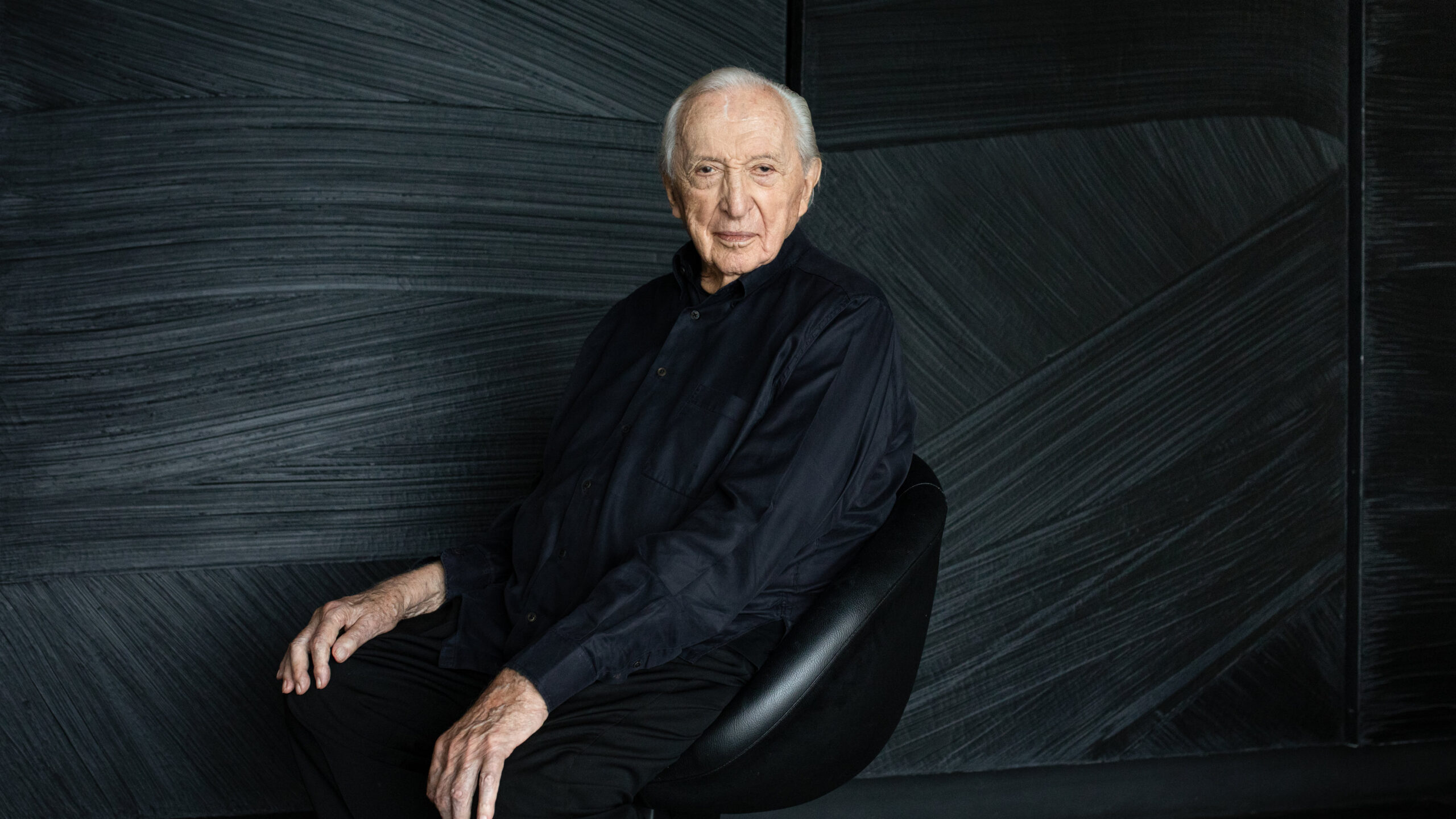
Soulages is perhaps more importantly a master of light. Ever since his first monochrome compositions of the 1940s, his paintings have shown a complex understanding of color and form. The artist frequently recalls a childhood episode when he was spreading black ink upon white paper. A friend of his older sister asked what he was painting; she laughed when he replied ‘snow’. He later surmised that he had been trying to render the white paper more white, luminous and snow-like via its contrast with the black ink. Soulages works on the premise that our perception of color is dependent on its shape, density and consistency: as such, it lies beyond the limits of language.
Public Collections
Pierre Soulages’ works have joined numerous museum collections including: Australian National Gallery, Canberra, Australia; National Gallery of Victoria, Melbourne, Australia; Museum Moderner Kunst Stiftung Ludwig, Vienna, Austria; Museu de Arte Contemporanea da Universidad, Sao Paulo, Brazil; Musée d’Art Contemporain, Montréal, Canada; Museum of Fine Arts, Montréal, Canada; Statens Museum fort Kunst, Copenhagen, Denmark; Sara Hildén Art Museum, Tampere, Finland; Fondation Maeght, Saint-Paul-de-Vence, France; Cincinnati Art Museum, Cincinnati, USA; Cornell University, Museum of Art, New York, USA; County Museum of Art, Los Angeles, USA; Houston, Museum of Fine Arts, USA; Museum of Art, Carnegie Institute, Pittsburgh, USA; Museum of Modern Art, New York, USA; National Gallery of Art, Washington, USA; Solomon R. Guggenheim Museum, New York, USA; The Aldrich Museum, Ridgefield, Connecticut, USA; The Phillips Collection, Washington, USA; Walker Art Center, Minneapolis, USA; Museum of Contemporary Art of Macedonia, Skopje; Musée de l’Ermitage, Saint-Petersbourg, Russia; Musée Cantonal des Beaux-Arts, Lausanne, Switzerland
Gallery Representation
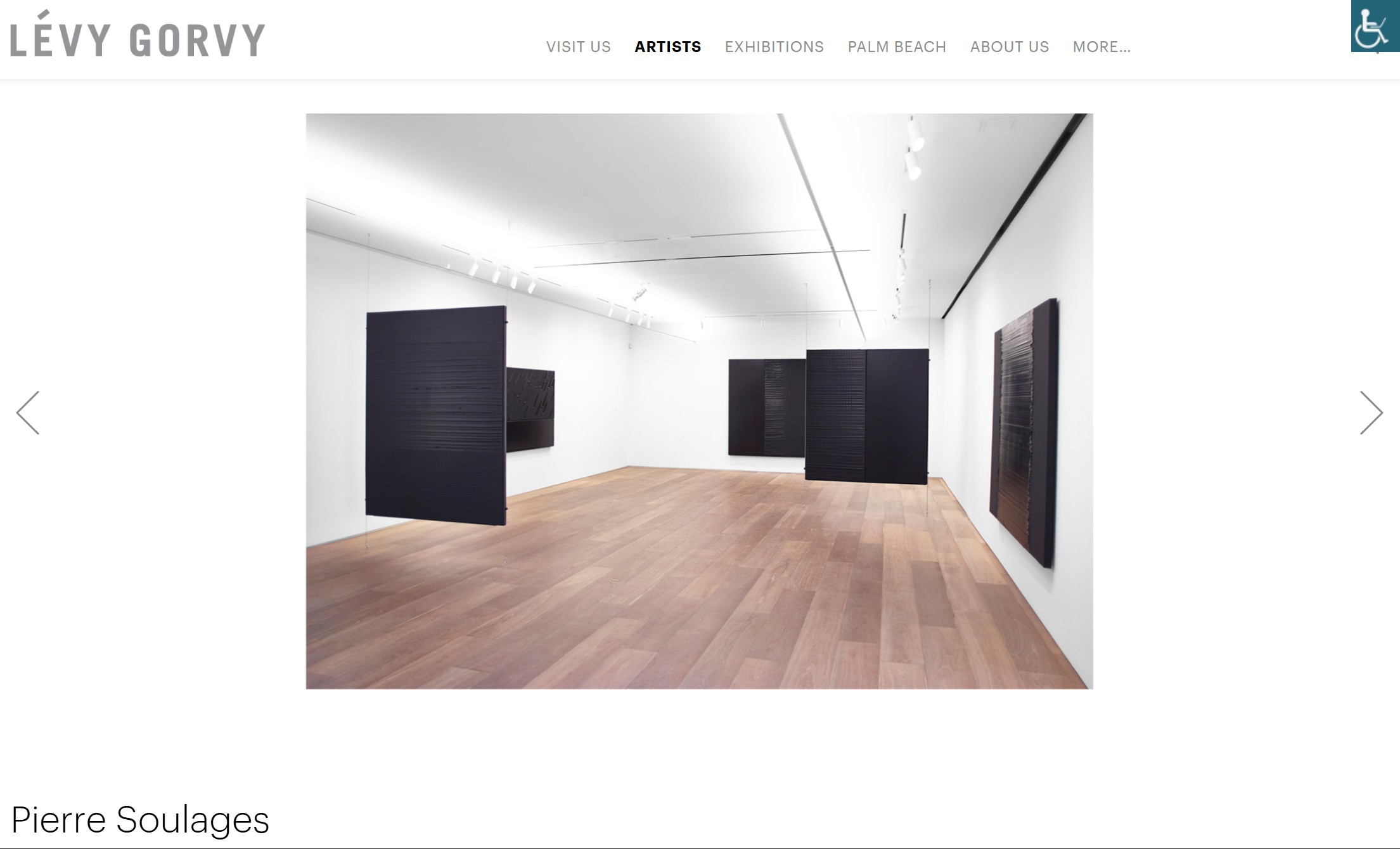
LEVY GORVY
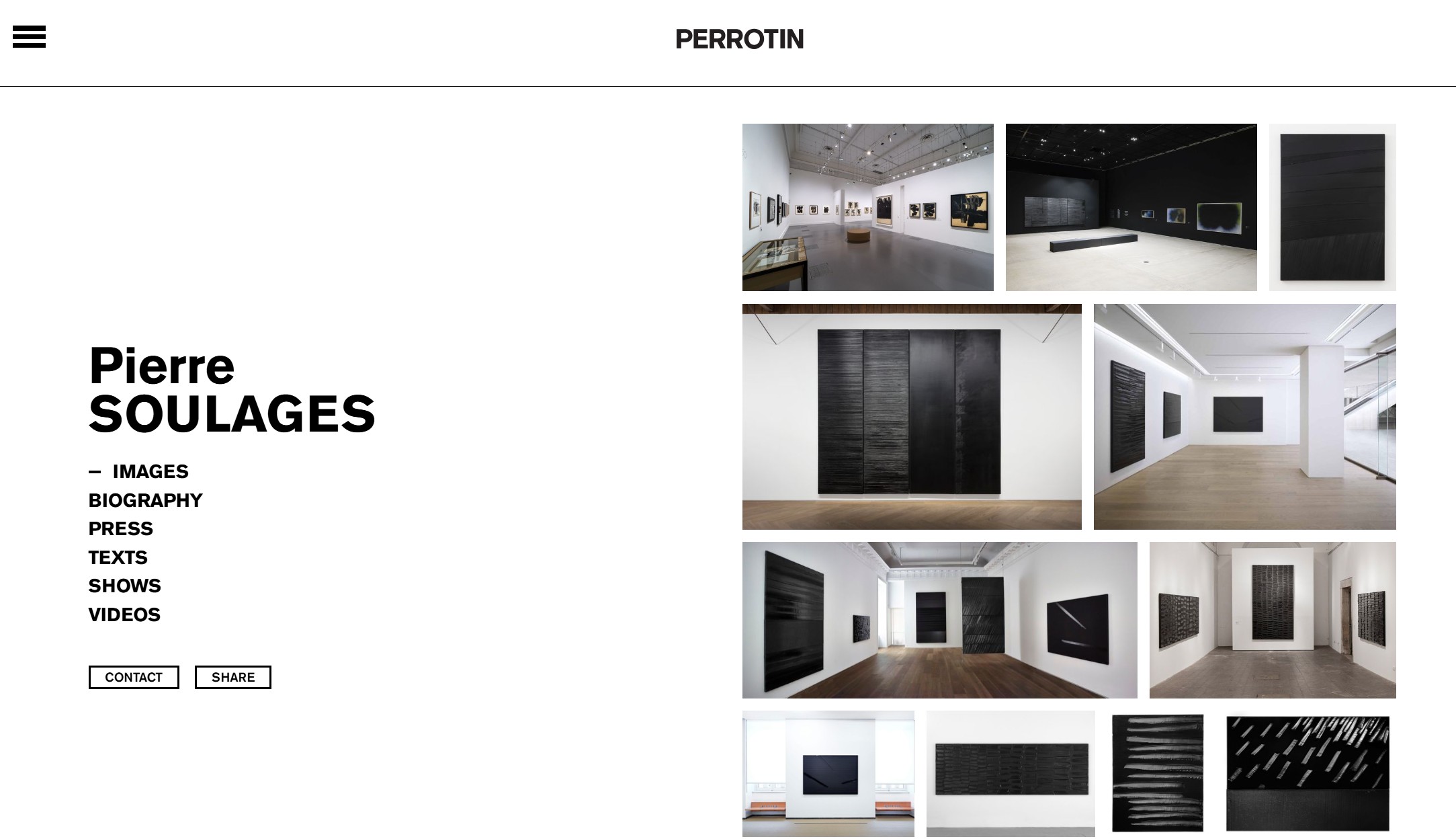
PERROTIN
PART I: SUMMARY
Auction Market Overview
2025 AUCTION STATISTICS
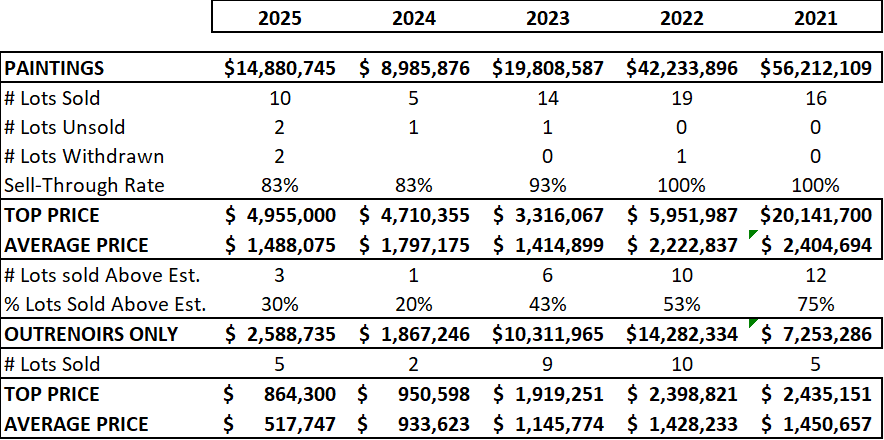
Turnover: USD 14,880,745
+ 65.6% vs. 2024
# Lots sold: 10
Sell-Through Rate: 83%
Highest Price achieved at Auction:
USD 20,141,700
(16 November 2021)
Auction Summary
2025 Auction Highlights
10 Paintings sold at auction in 2025 for a total turnover of USD 14,880,745. With 2 lots failing to sell, the sell-through rate is 83%. Furthermore, 2 lots were withdrawn, one at Phillips in Hong-Kong on 27 September 2025, and another one at Bonhams Cornette on 5 June 2025.
The highest price was achieved by Peinture 161×200 cm, 14 novembre 1958, a painting dated 1958, from The Collection of Robert F. and Patricia G. Ross Weis, that was sold at Christie’s in New-York, on 17 November 2025 for USD 4,955,000.
2025 Top 3 Lots
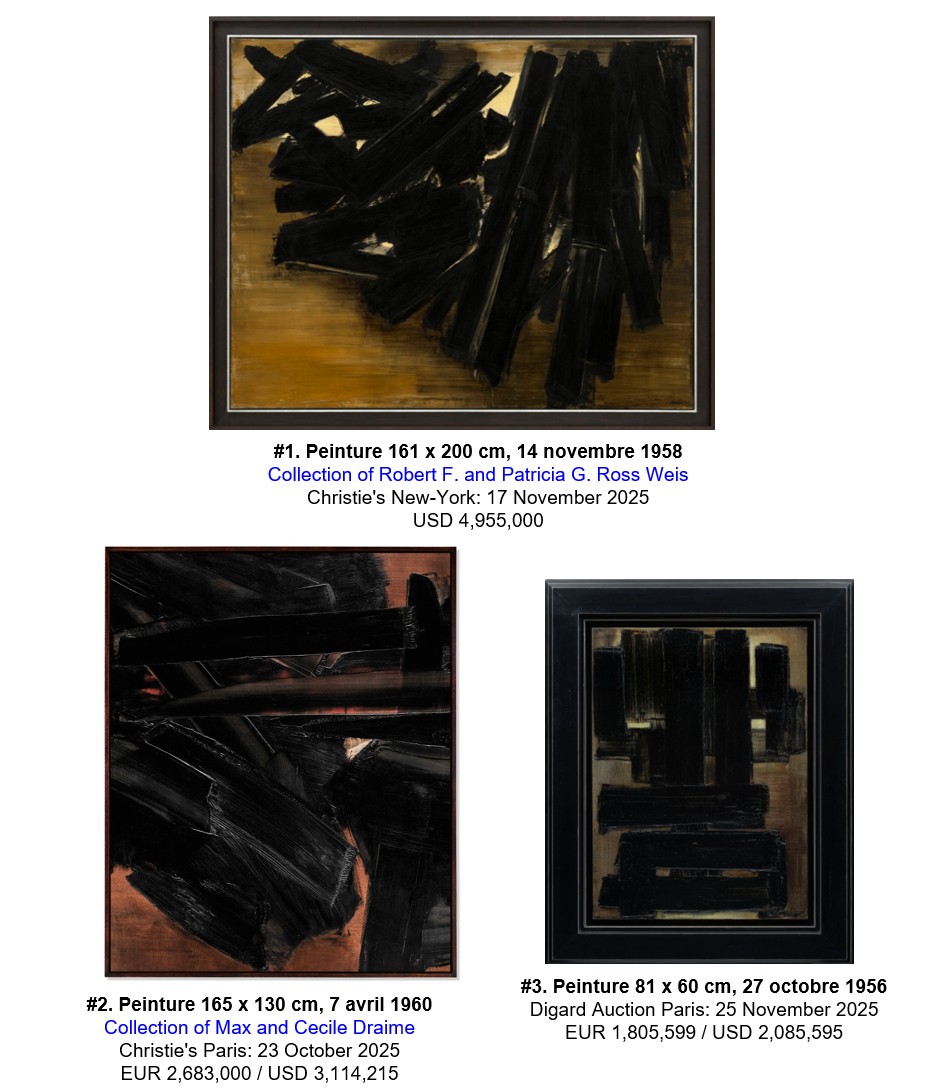
5 lots sold for more than USD 1 million, generating a cumulative turnover of USD 12,292,010, representing 82.6% of the total turnover for 2025.
Furthermore, 3 Works on Paper sold at auction in 2025 for a total turnover of USD 804,775.
2024 Auction Highlights
5 lots sold at auction in 2024 for a total turnover of USD 8,985,876. With 1 lot failing to sell, the sell-through rate is 83%. The highest price has been achieved at Christie’s in Hong-Kong on 26 September 2024, when Peinture 162 x 130 cm, 26 mai 1963 sold for HKD 36,675,000 (USD 4,710,355).
2024 Top 3 Lots
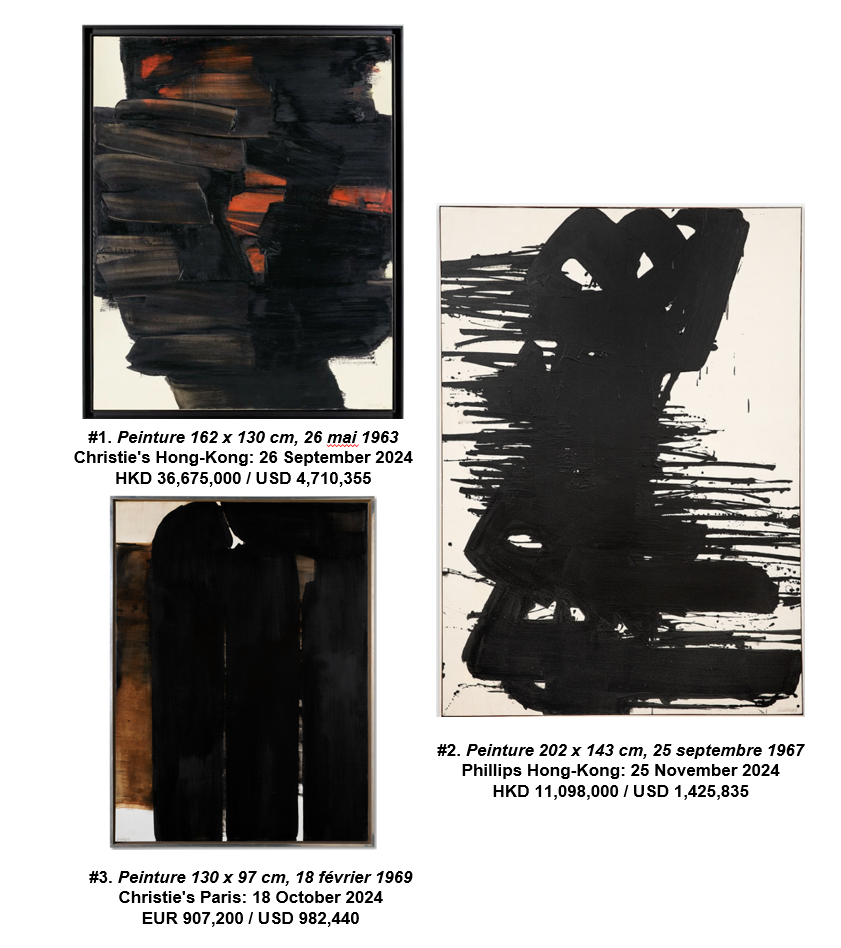
2 lots sold for more than USD 1 million, generating a cumulative turnover of USD 6,136,190, representing 68.3% of the total turnover for 2024.
2023 Auction Highlights
14 lots sold at auction in 2023 for a total turnover of USD 19,808,587. With 1 lot failing to sell, the sell-through rate is 93%. The highest price has been achieved by Peinture 130×162 cm 28 fevrier 1970, that sold for EUR 3,073,000 (USD 3,344,269) at Sotheby’s in Paris on 13 December 2023.
2023 Top 3 Lots
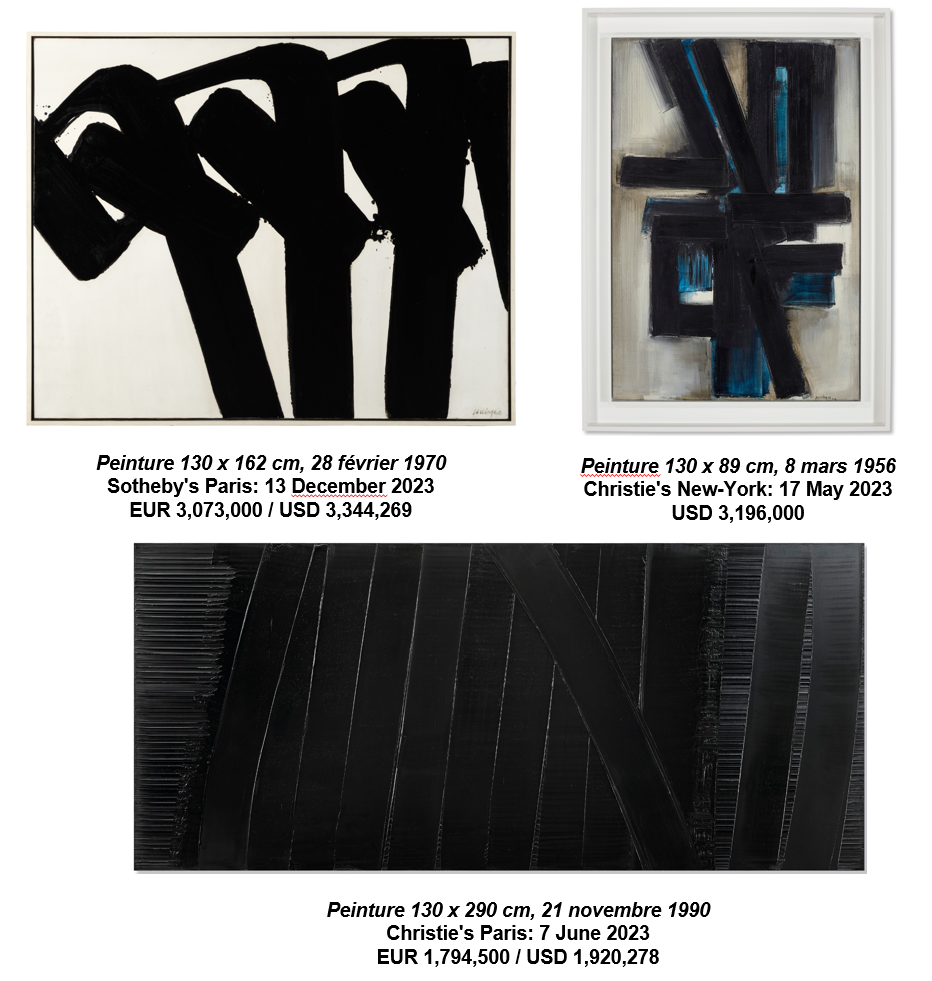
9 lots sold for more than USD 1 million, generating a cumulative turnover of USD 15,613,587, contributing 78.8% to the total turnover for 2023. 9 Outrenoirs (paintings created after 1979) sold in 2023 for a total turnover of USD 10,311,965.
2022 Auction Highlights
19 lots sold at auction in 2022 for a total turnover of USD 42,233,896. With no lot failing to sell, the sell-through rate is 100%. The highest price was achieved at Sotheby’s in Paris on 26 October 2022, for Peinture 162×130 cm 2 mai 1963 that sold for EUR 5,975,200 (USD 5,951,987). 15 lots sold for more than USD 1 million generating a cumulative turnover of USD 39,132,725, contributing 92.7% to the total turnover for 2022.
2022 Top 3 Lots
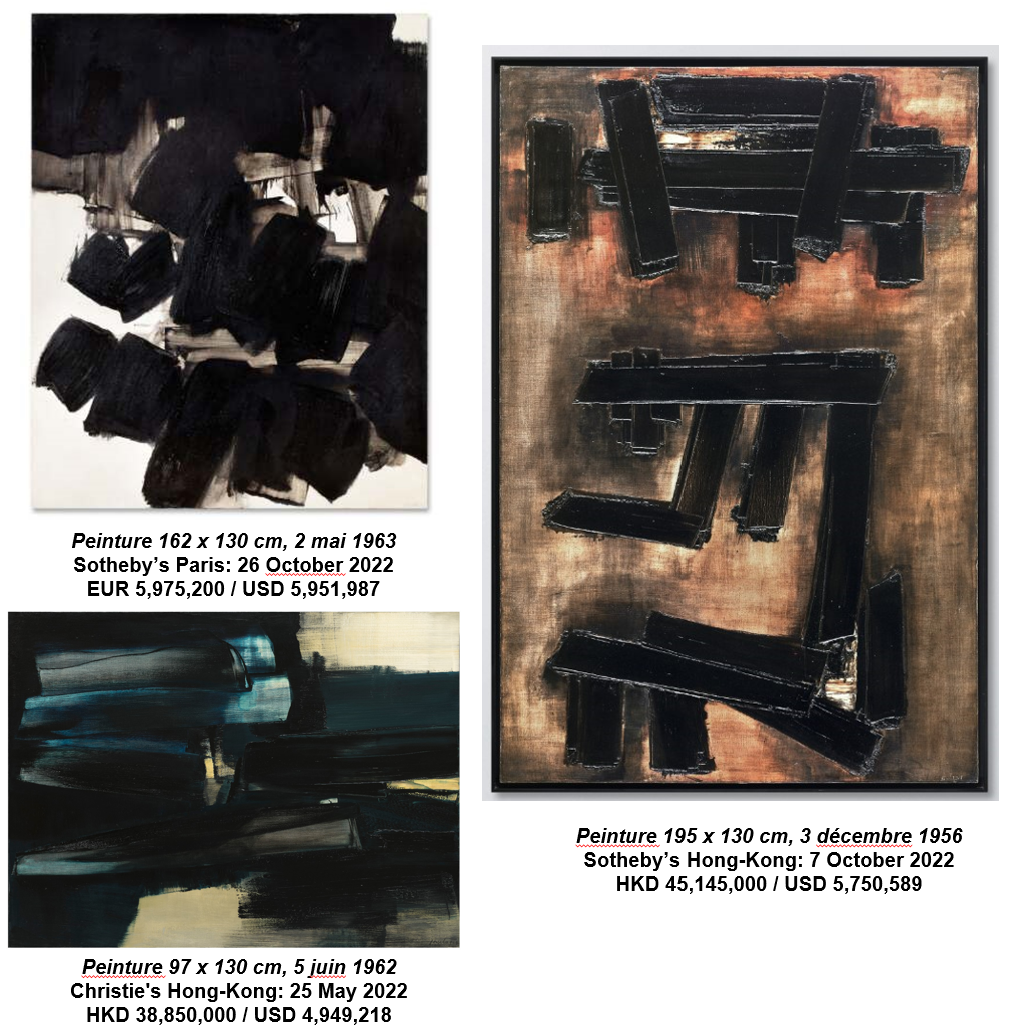
11 Outrenoirs sold at auction in 2022 for a total turnover of USD 14,282,334. The highest price was achieved at Christie’s in Paris on 20 October 2022, for Peinture 85×22 cm 18 avril 1991, that sold for EUR 2,442,000 (USD 2,398,821).
2021 Auction Highlights
16 lots sold at auction in 2021 for a total turnover of USD 56,212,109. With no lot failing to sell, the sell-through rate is a perfect 100%. The record for the highest price ever paid for a painting created by Pierre Soulages was broken at Sotheby’s in New-York on 16 November 2021, when Peinture 195×130 cm 4 aout 1961, sold for USD 20,141,700.
2021 Top 3 Lots
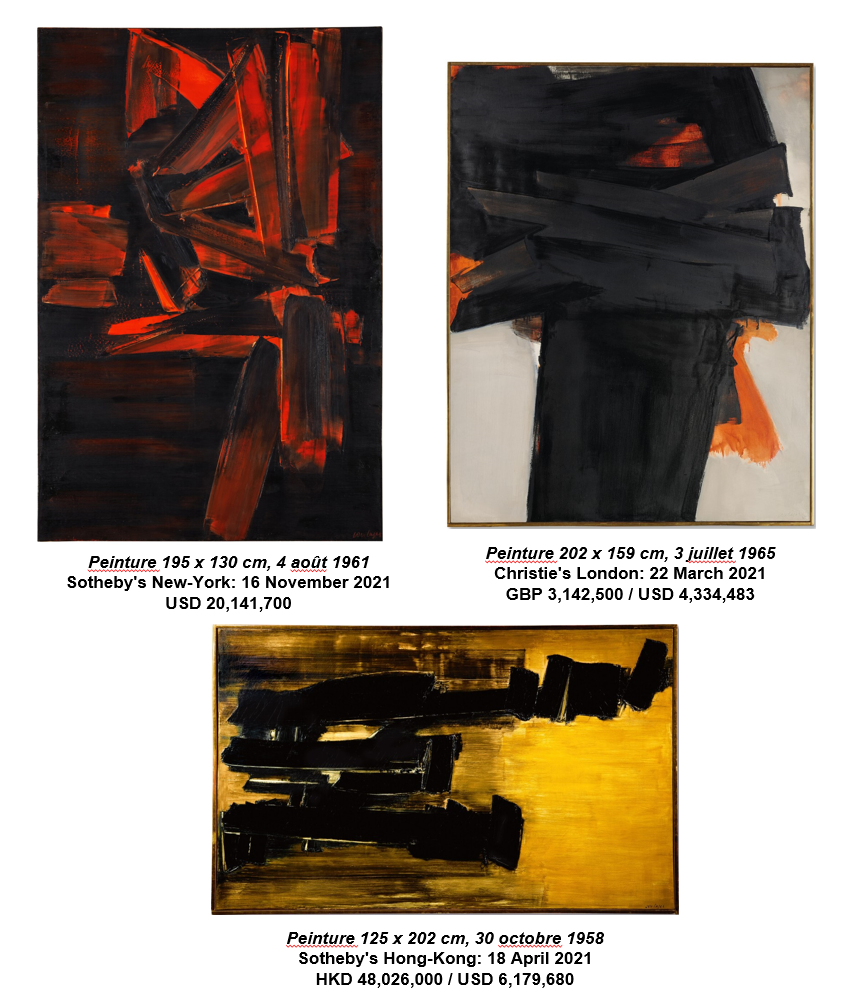
13 lots sold for more than USD 1 million generating a cumulative turnover of USD 54,360,363, contributing 96.7% to the total turnover for 2021.
Top Lots
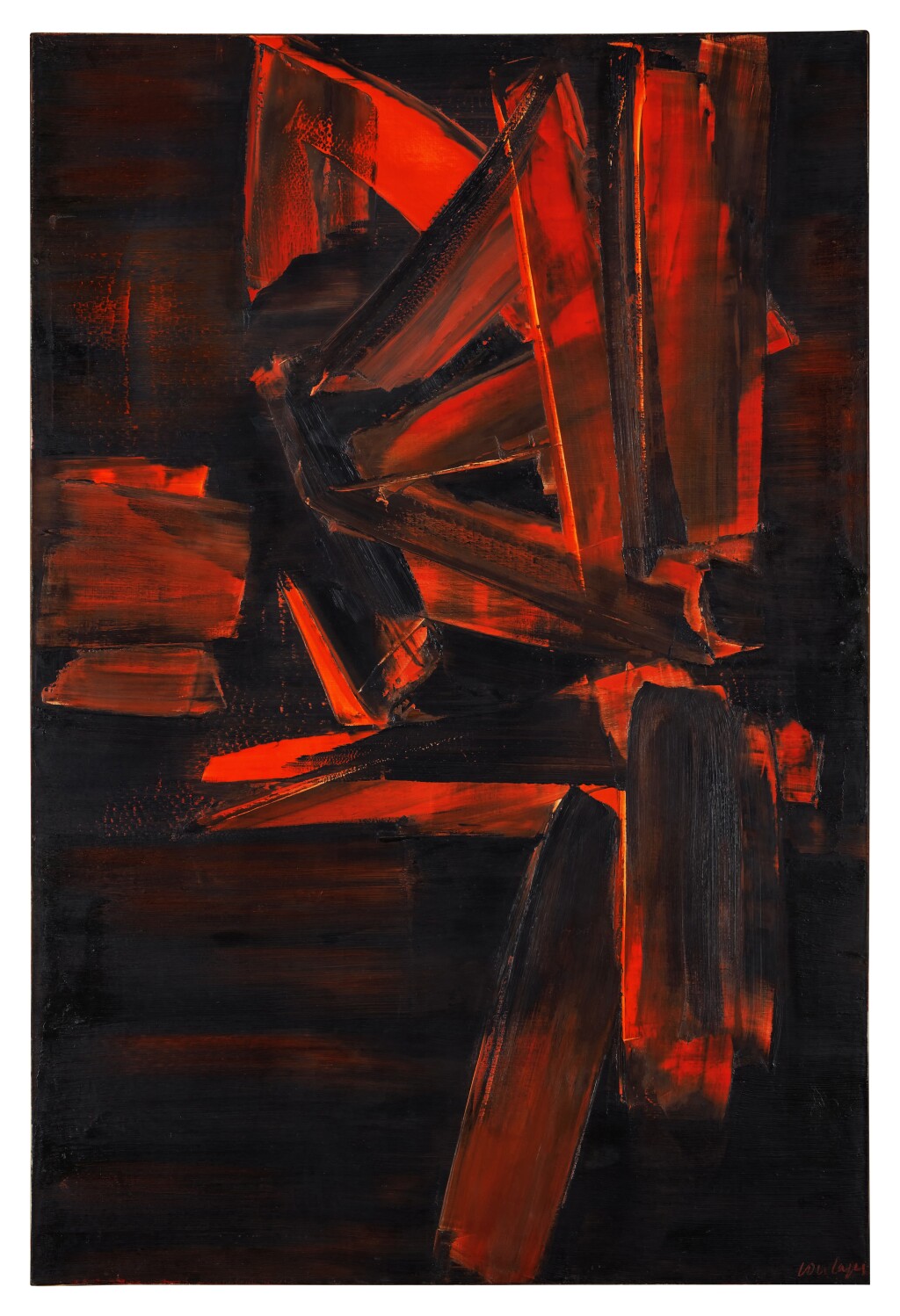
#1. Peinture 195 x 130 cm, 4 août 1961
Sotheby’s New-York: 16 November 2021
Estimated: USD 8,000,000 – 12,000,000
USD 20,141,700
Peinture 195 x 130 cm, 4 août 1961 | Modern Evening Auction | 2021 | Sotheby’s (sothebys.com)
PIERRE SOULAGES
Peinture 195 x 130 cm, 4 août 1961
Oil on canvas
77×51 inches (195.6 x 129.5 cm)
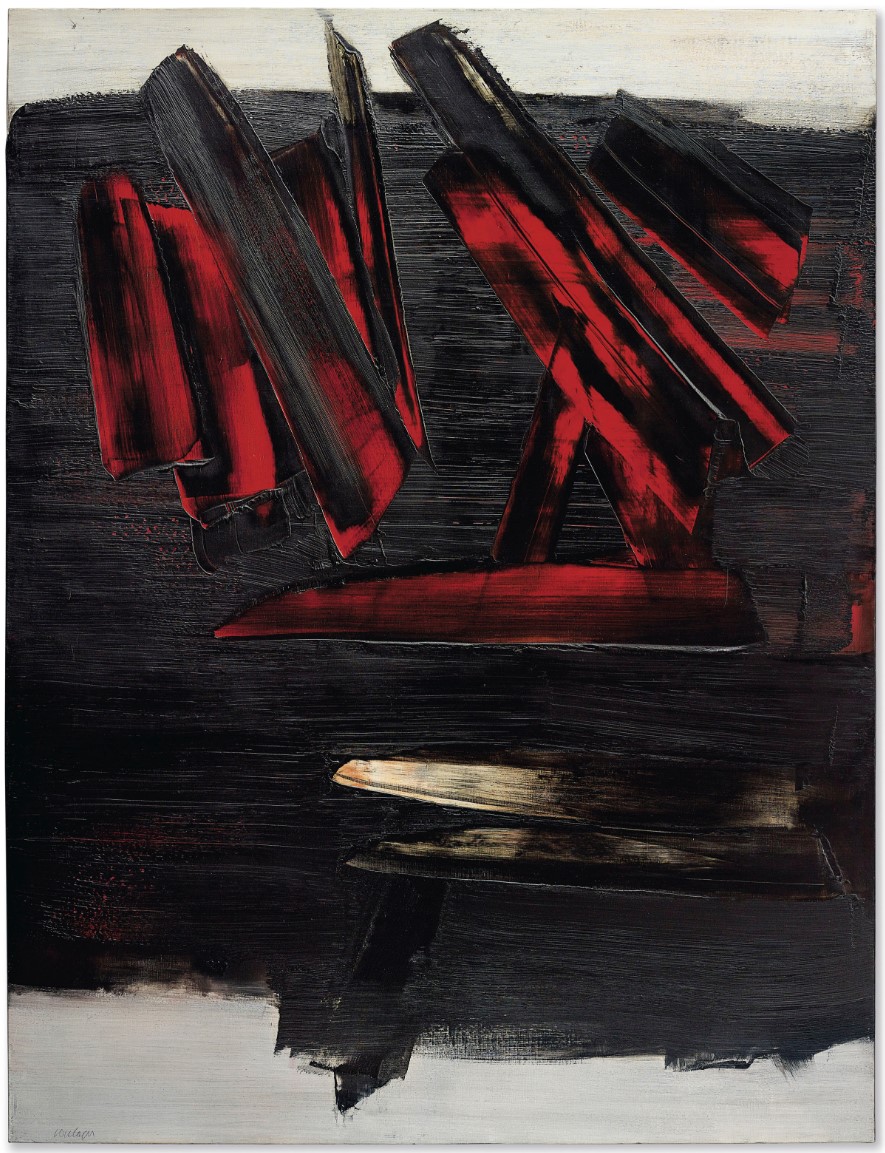
#2. Peinture 186 x 143 cm, 23 décembre 1959
Christie’s New-York: 14 November 2018
Estimated: USD 10,000,000 – 15,000,000
USD 10,600,000
Pierre Soulages (b. 1919) (christies.com)
PIERRE SOULAGES
Peinture 186 x 143 cm, 23 décembre 1959
Oil on canvas
186×143 cm (73.2 x 56.2 inches)
Signed ‘Soulages’ (lower left)
Signed again and dated ‘SOULAGES 1959’
(on the reverse)
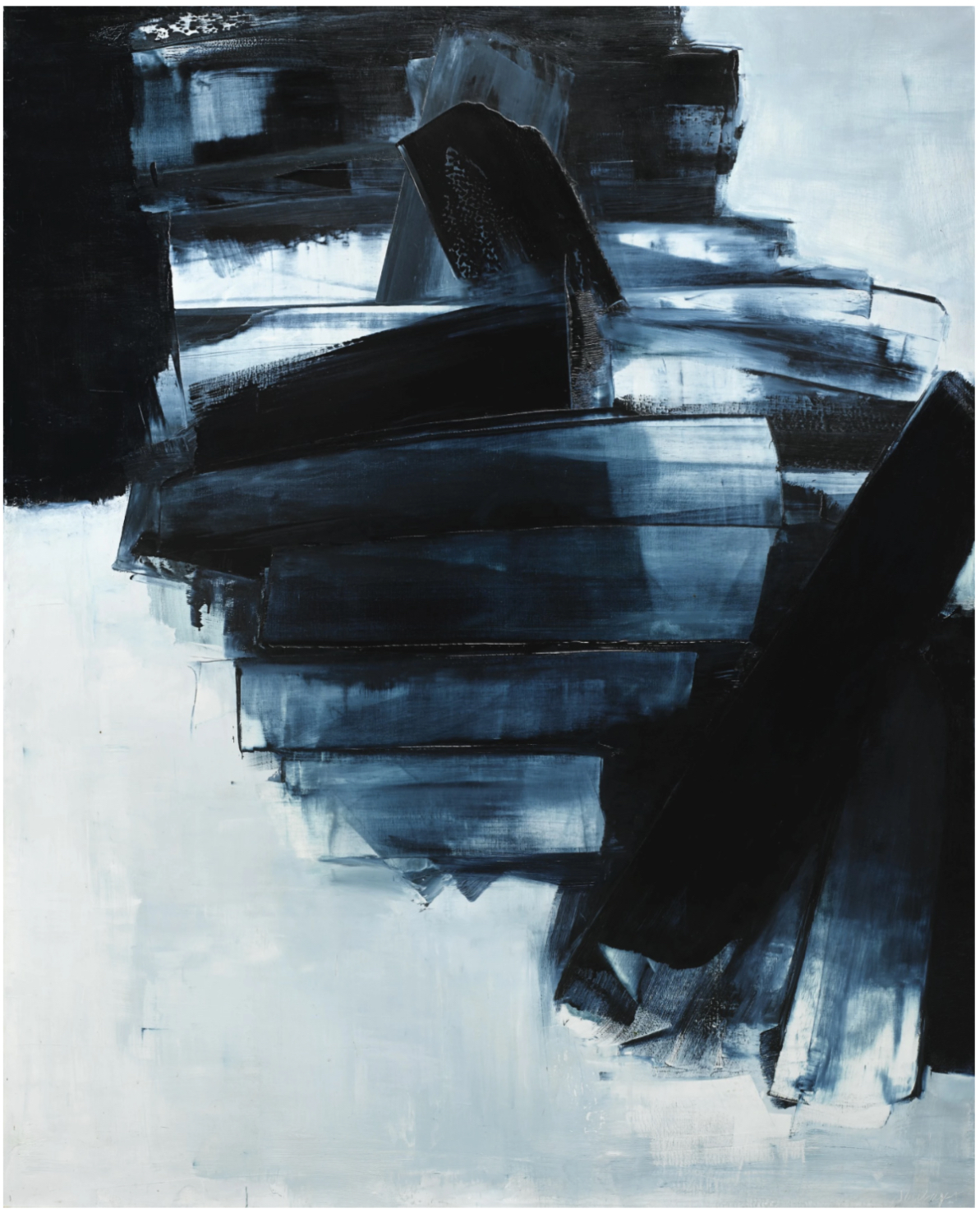
#3. Peinture 162 x 130 cm, 14 avril 1962
Sotheby’s Paris: 6 June 2017
Estimated: EUR 2,000,000 – 3,000,000
EUR 6,120,000 / USD 6,897,849
(#4) Pierre Soulages (sothebys.com)
PIERRE SOULAGES
Peinture 162 x 130 cm, 14 avril 1962
Oil on canvas
162×130 cm (63 3/4 x 51 3/16 inches)
Signed; signed, dated 14 avril 62 and dated 1962 on the reverse
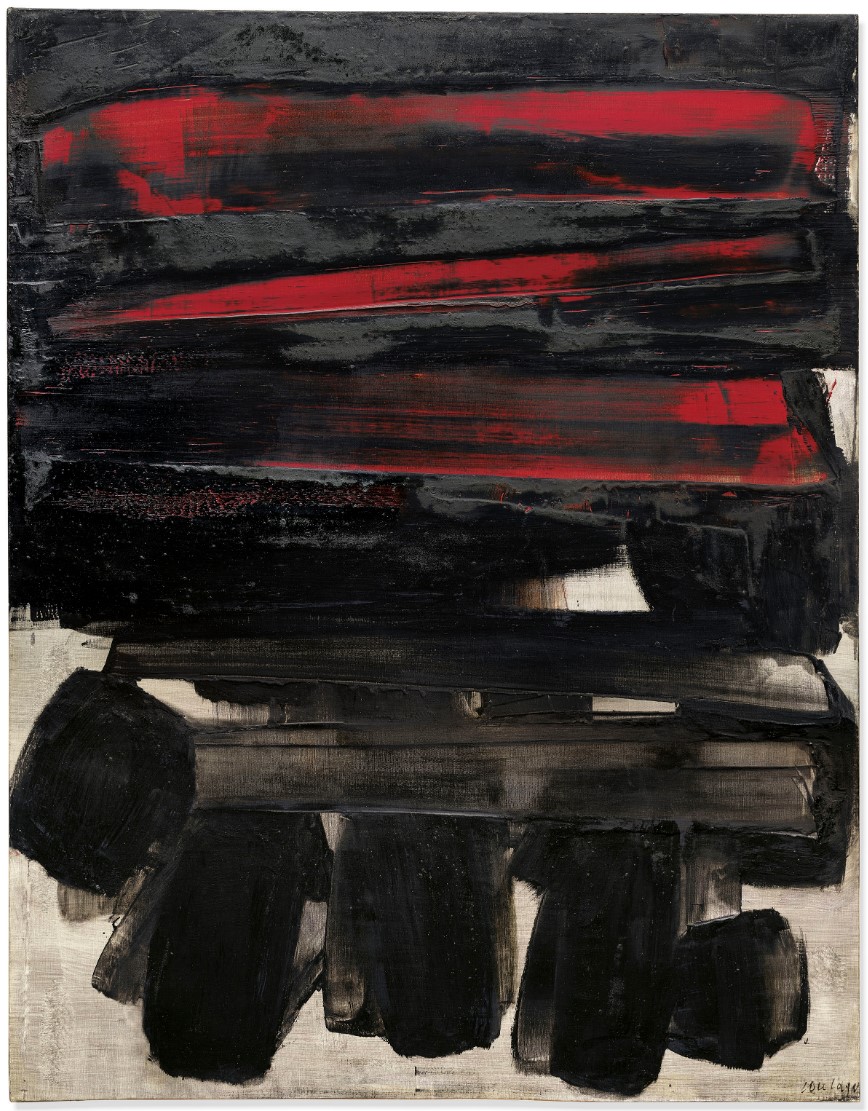
#4. Peinture 146 x 114 cm, 6 mars 1960
Christie’s London: 3 October 2019
Estimated: GBP 4,000,000 – 6,000,000
GBP 5,484,000 / USD 6,749,538
Pierre Soulages (b. 1919) (christies.com)
PIERRE SOULAGES
Peinture 146 x 114 cm, 6 mars 1960
oil on canvas
146×114 cm (57.5 x 44.9 inches)
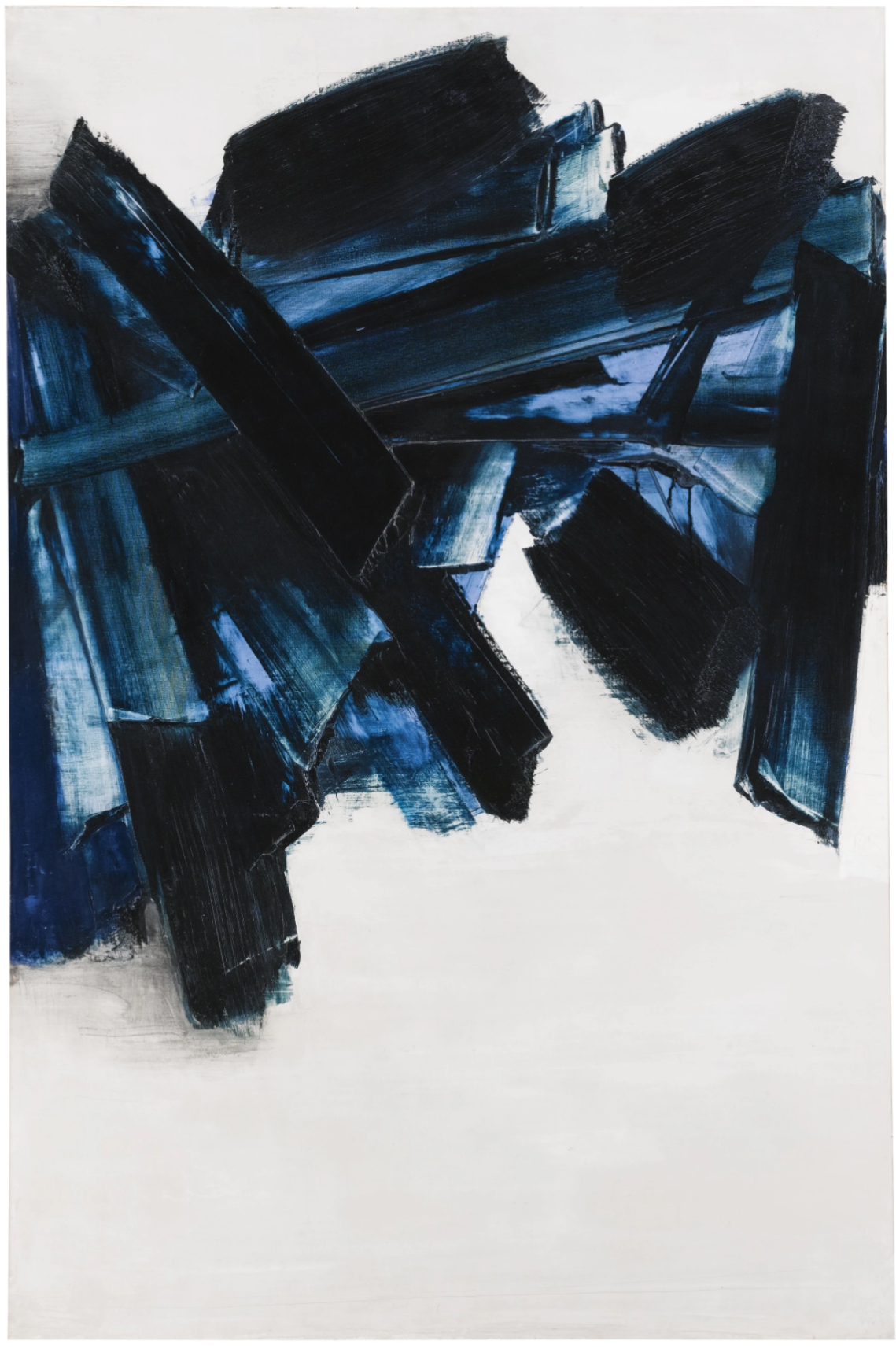
#5. Peinture 195 x 130 cm, 21 novembre 1959
Sotheby’s London: 26 June 2013
Estimated: GBP 2,000,000 – 3,000,000
GBP 4,338,500 / USD 6,550,326
(#17) Pierre Soulages (sothebys.com)
PIERRE SOULAGES
Peinture 195 x 130 cm, 21 novembre 1959
Oil on canvas
195×130 cm (76 3/4 x 51 inches)
Signed and dated 21 Nov 59 on the reverse
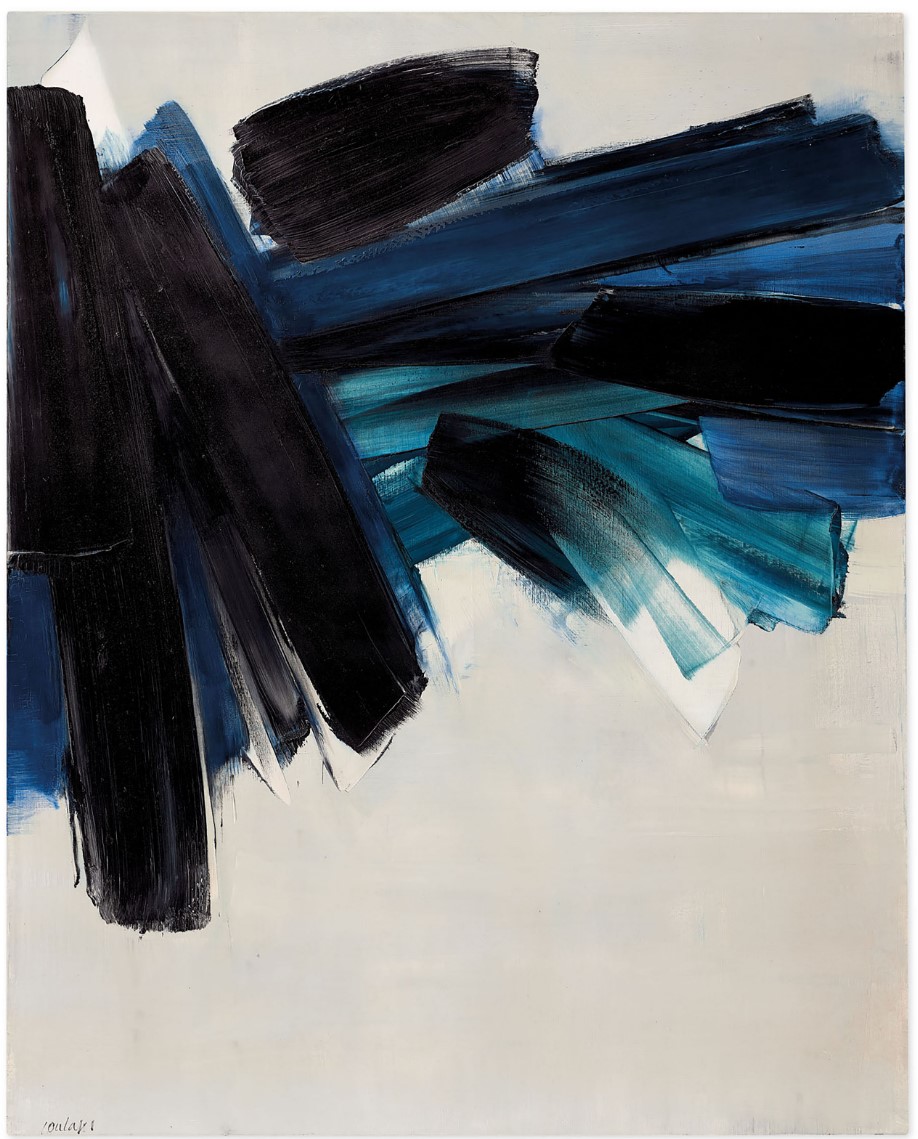
#6. Peinture 162 x 130 cm, 9 juillet 1961
Christie’s Paris: 21 October 2020
Estimated: EUR 6,000,000 – 8,000,000
EUR 5,392,500 / USD 6,376,374
Pierre Soulages (né en 1919) (christies.com)
PIERRE SOULAGES
Peinture 162 x 130 cm, 9 juillet 1961
Oil on canvas
162×130 cm (63.7 x 51.1 inches)
#7. Peinture 125 x 202 cm, 30 octobre 1958
Sotheby’s Hong-Kong: 18 April 2021
Estimated: HKD 38,000,000 – 58,000,000
HKD 48,026,000 / USD 6,179,680
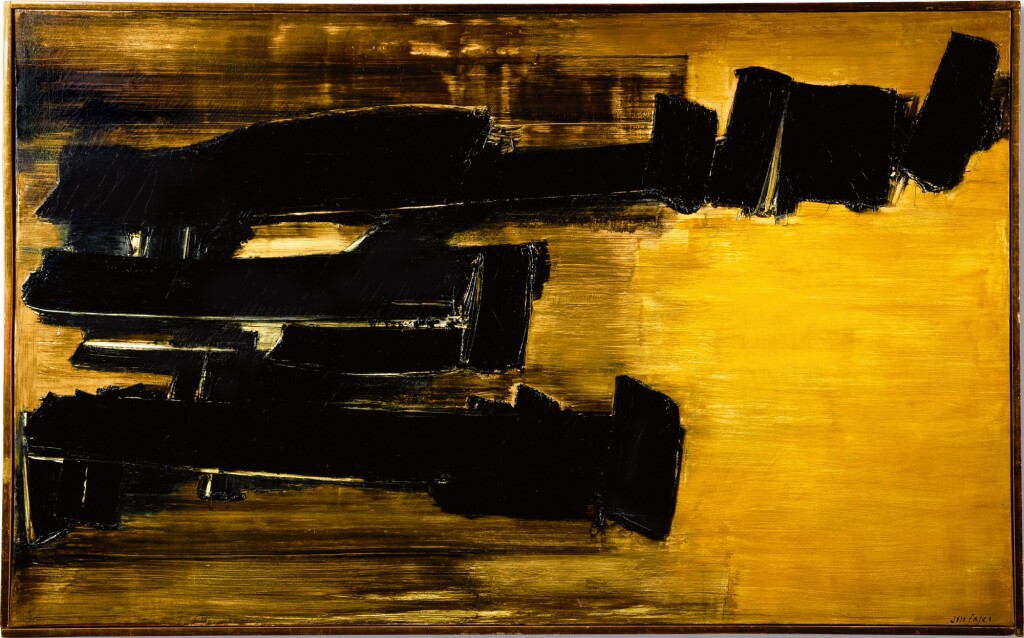
PIERRE SOULAGES
Peinture 125 x 202 cm, 30 Octobre 1958
Oil on canvas
125×202 cm (49.2 x 79.5 inches)
Signed and dated 58 on the reverse and signed and titled on the stretcher
#8. Peinture 195 x 155 cm, 7 février 1957
Christie’s London: 13 February 2014
Estimated: GBP 2,000,000 – 3,000,000
GBP 3,666,500 / USD 6,106,945
Pierre Soulages (b. 1919) (christies.com)
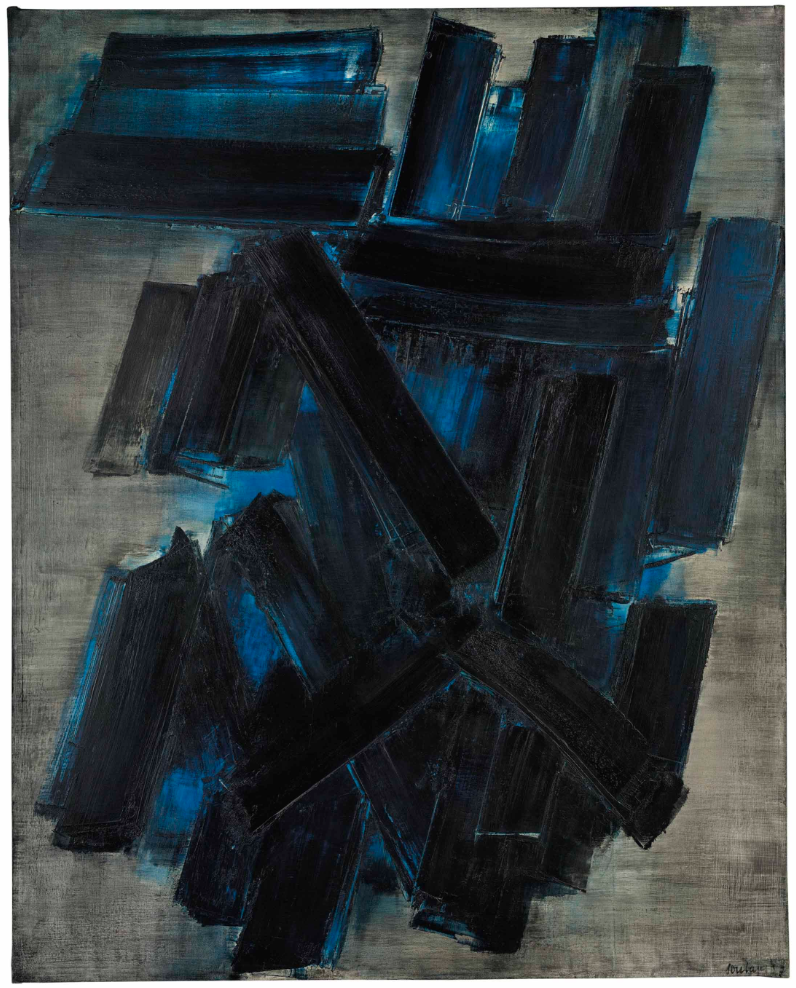
PIERRE SOULAGES (b. 1919)
Peinture 195 x 155 cm, 7 février 1957
Oil on canvas
195×155 cm (76 3/4 x 61 1/8 inches)
Signed and dated ‘Soulages 57 (lower right); dated ‘7_Février 1957’ (on the reverse)
#9. Peinture 162 x 130 cm, 2 mai 1963
Sotheby’s Paris: 26 October 2022
Estimated: EUR 5,200,000 – 7,200,000
EUR 5,975,200 / USD 5,951,987
Peinture 162 x 130 cm, 2 mai 1963 | Modernités | 2022 | Sotheby’s (sothebys.com)
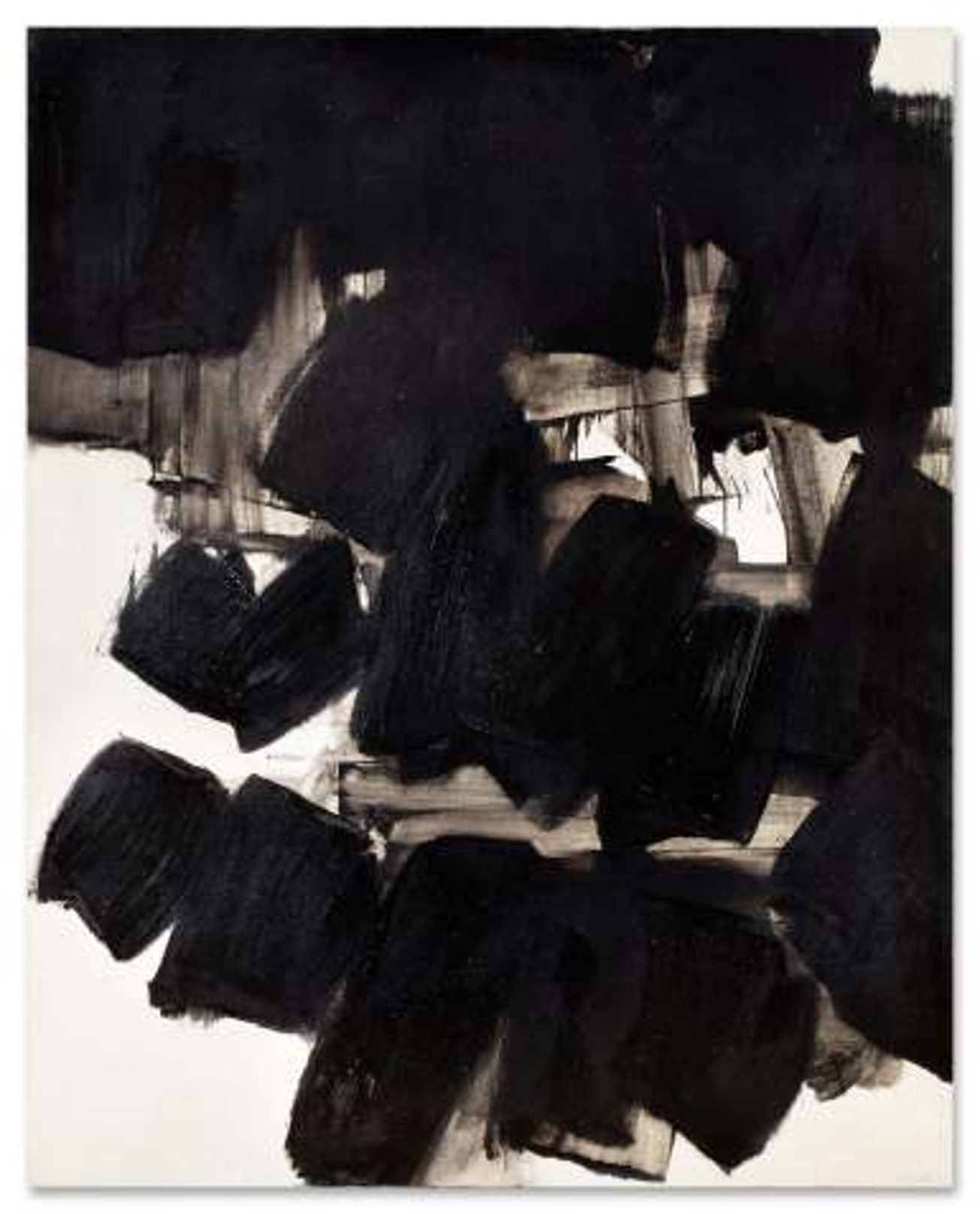
Peinture 162 x 130 cm, 2 mai 1963
Oil on canvas
156.5 x 125 cm (61.6 x 49.2 inches
Signed Soulages and dated 63 (lower right)
Signed SOULAGES and dated 2/5/63
(on the reverse)
#10. Peinture 195 x 130 cm, 3 décembre 1956
Sotheby’s Hong-Kong: 7 October 2022
Estimated: HKD 40,000,000 – 60,000,000
HKD 45,145,000 / USD 5,750,589
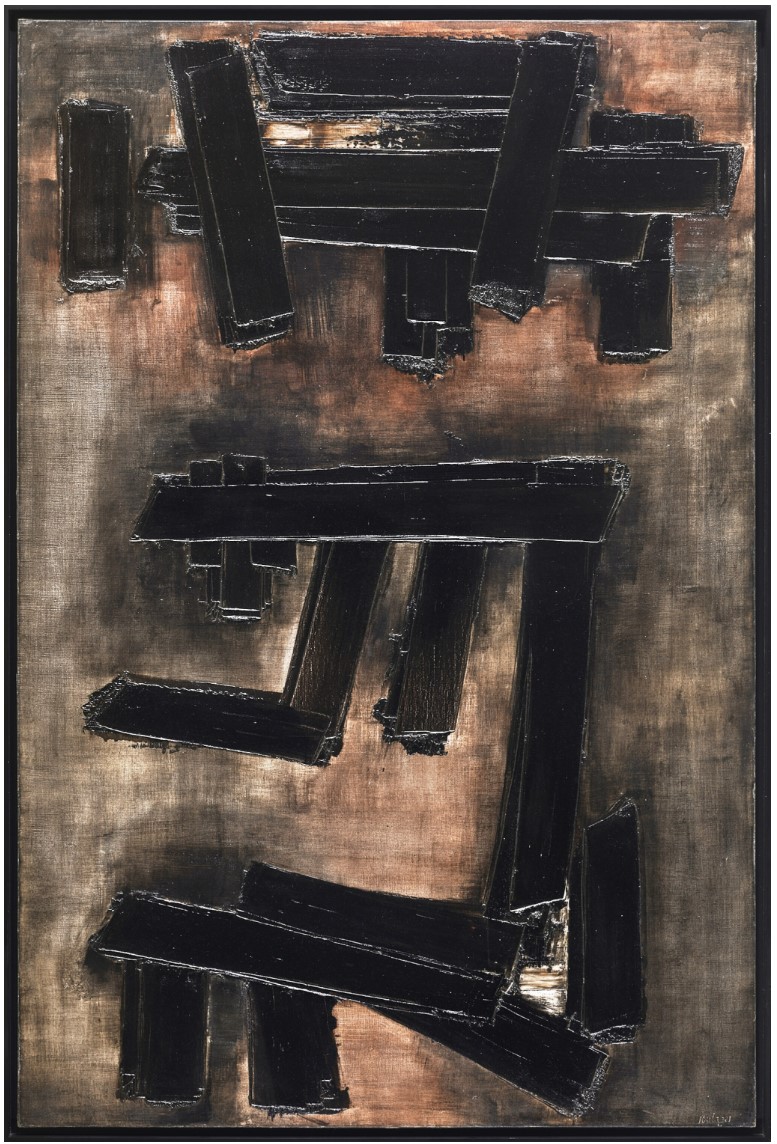
PIERRE SOULAGES
Peinture 195 x 130 cm, 3 décembre 1956
Oil on canvas
195×130 cm (76.7 x 51.1 inches)
Signed Soulages (lower right)
Executed on 3 December 1956
PART II: AUCTION RESULTS
2026 Upcoming Lots
MORE LOTS COMING SOON
2026 Auction Results
Peinture 130 x 89 cm, 25 juin 1954
Christie’s Paris: 15 April 2026
Estimated: EUR 1,000,000 – 1,500,000
EUR 1,768,000 / USD 2,085,910
Pierre Soulages (1919-2022), Peinture 130 x 89 cm, 25 juin 1954 | Christie’s
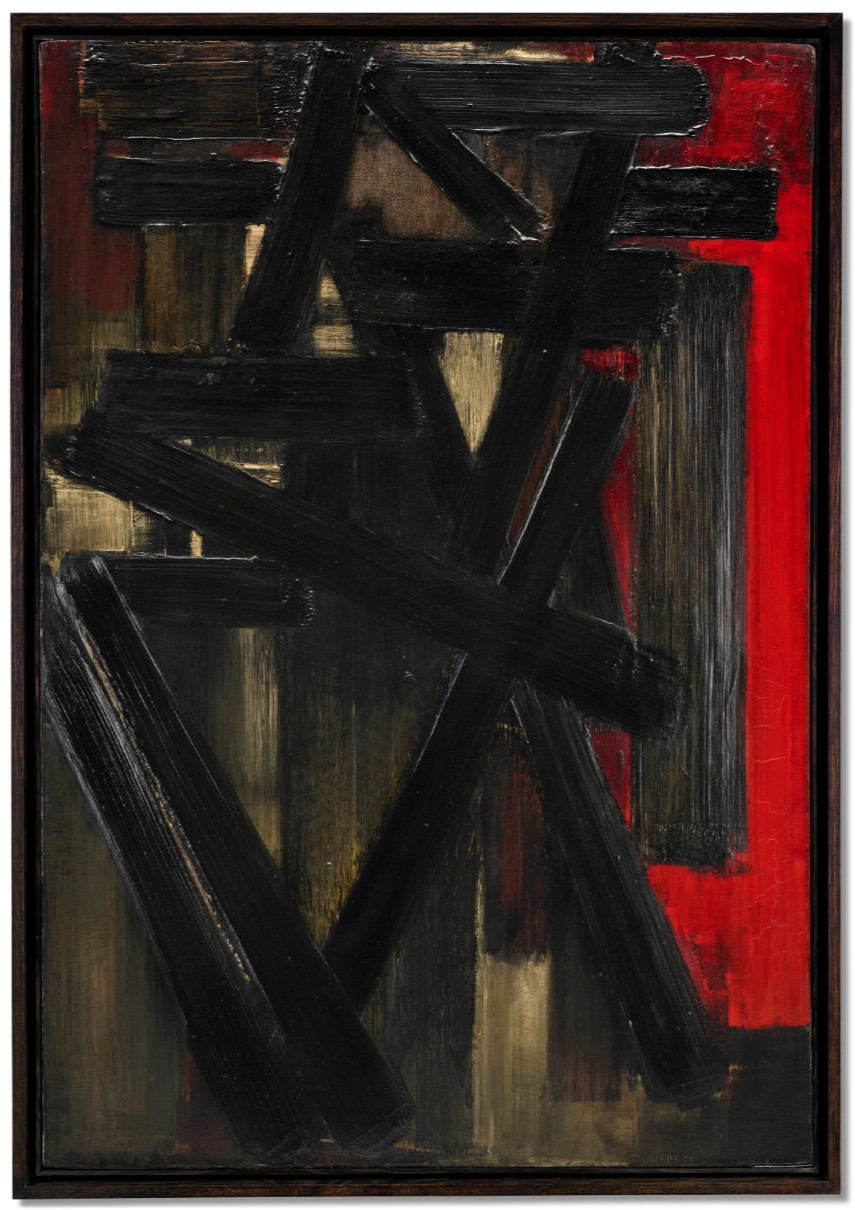
PIERRE SOULATES (1919-2022)
Peinture 130 x 89 cm, 25 juin 1954
Oil on canvas
130×89 cm (51-1/8 x 35 inches)
Signed and dated ‘soulages 54’ (lower right)
Signed ‘SOULAGES’ (on the reverse)
Peinture 234 x 181 cm, 16 octobre 2007
Sotheby’s Paris: 16 April 2026
Estimated: EUR 600,000 – 800,000
EUR 1,088,000 / USD 1,284,600
OUTRENOIR
Pierre Soulages | Peinture 234 x 181 cm, 16 octobre 2007 | Art
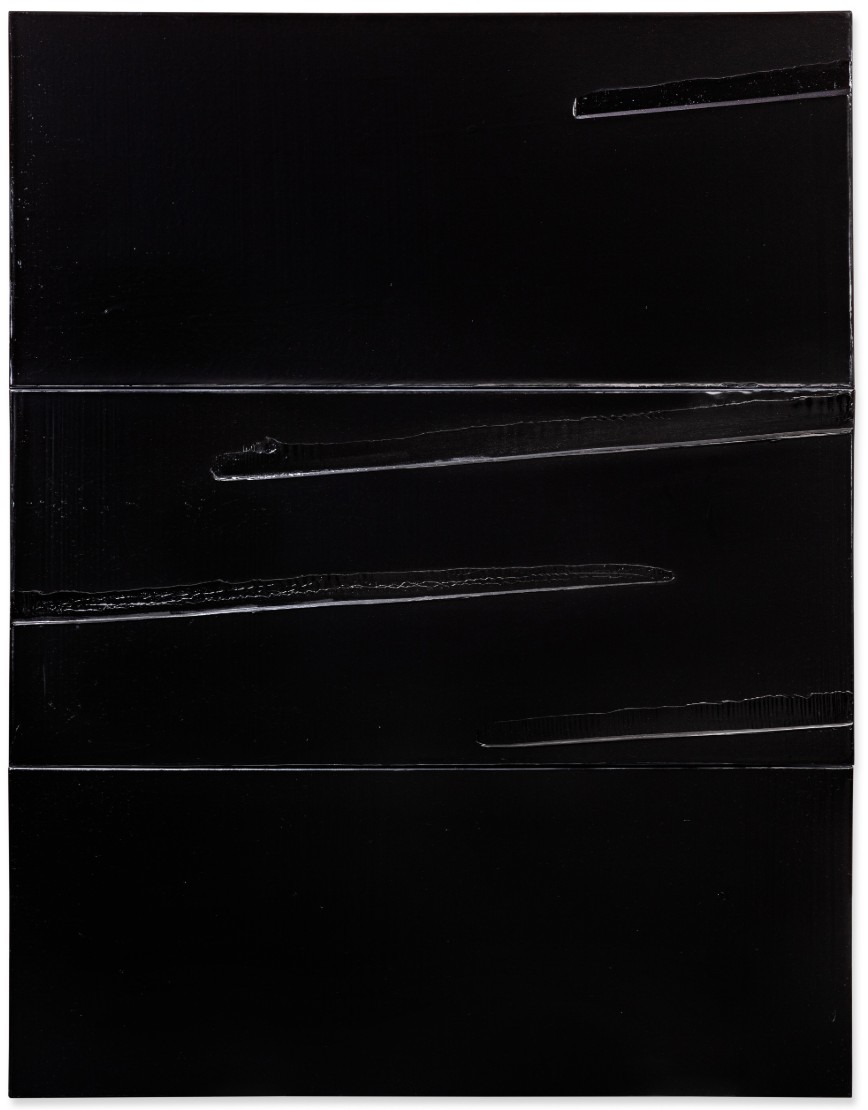
PIERRE SOULAGES (1919 – 2022)
Peinture 234 x 181 cm, 16 octobre 2007
Oil on canvas
234.5 x 180 cm (92-5/16 x 70-7/8 inches)
Signed, inscribed, titled and dated 16 octobre 2007 (on the reverse)
Executed on October 16th, 2007
Peinture 130 x 81 cm, 1er oct 2006
Contours of Modernity | A Private European Collection
Sotheby’s London: 4 March 2026
Estimated: GBP 400,000 – 600,000
GBP 512,000 / USD 683,980
OUTRENOIR
Peinture 130 x 81 cm, 1er oct 2006 | Modern & Contemporary Evening Auction | 2026 | Sotheby’s
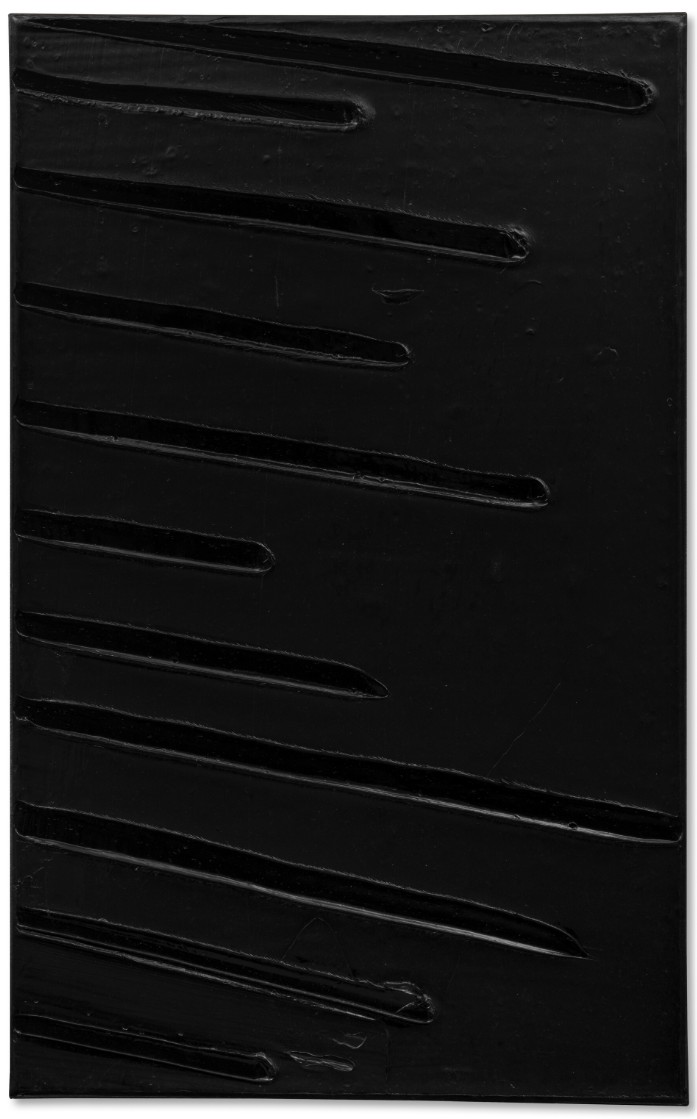
PIERRE SOULAGES (1919 – 2022)
Peinture 130 x 81 cm, 1er oct 2006
Acrylic on canvas
130×81 cm (51-1/8 x 31-7/8 inches)
Signed, titled and dated 1 oct. 2006 (on the reverse)
Peinture 130 x 130 cm, 3 mars 2012
Sotheby’s Paris: 17 April 2026
Estimated: EUR 240,000 – 300,000
EUR 332,800 / USD 392,065
OUTRENOIR
Pierre Soulages | Peinture 130 x 130 cm, 3 mars 2012 | Art Moderne et
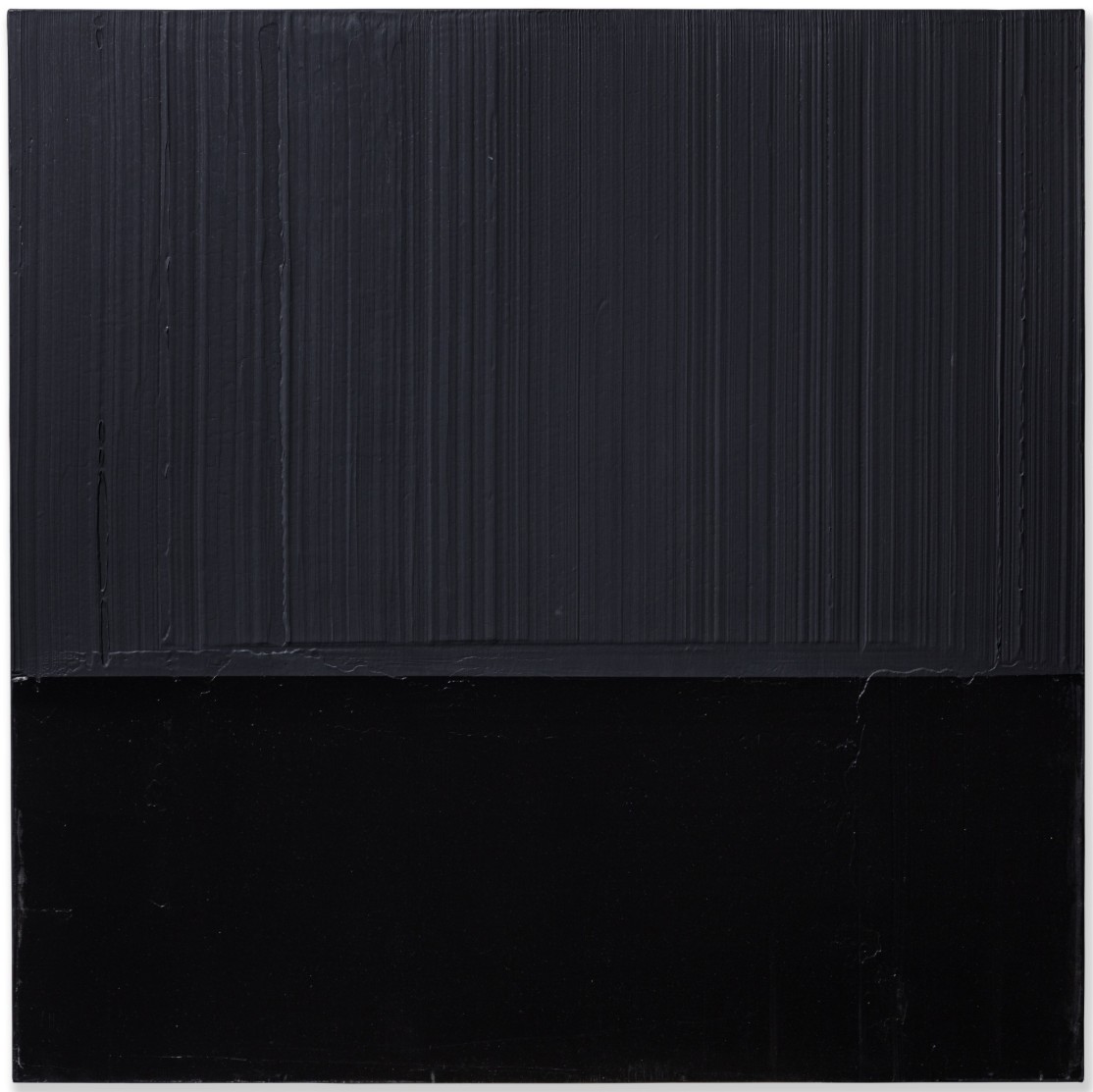
PIERRE SOULAGES (1919 – 2022)
Peinture 130 x 130 cm, 3 mars 2012
Acrylic on canvas
130×130 cm (51×51 inches)
Signed, titled and dated 03-03-2012 (on the reverse)
2025 Auction Results
FOR PAINTINGS ONLY
10 Paintings sold at auction in 2025 for a total turnover of USD 14,880,745. With 2 lots failing to sell, the sell-through rate is 83%. Furthermore, 2 lots were withdrawn, one at Phillips in Hong-Kong on 27 September 2025, and another one at Bonhams Cornette on 5 June 2025.
The highest price was achieved by Peinture 161×200 cm, 14 novembre 1958, a painting dated 1958, from The Collection of Robert F. and Patricia G. Ross Weis, that was sold at Christie’s in New-York, on 17 November 2025 for USD 4,955,000.
2025 Top 3 Lots
5 lots sold for more than USD 1 million, generating a cumulative turnover of USD 12,292,010, representing 82.6% of the total turnover for 2025.
XXXXXXXXXX
#1. Peinture 161 x 200 cm, 14 novembre 1958
The Collection of Robert F. and Patricia G. Ross Weis
Christie’s New-York: 17 November 2025
Estimated: USD 5,000,000 – 7,000,000
USD 4,955,000
READ MORE IN FOCUS SECTION
PIERRE SOULAGES (1919-2022), Peinture 161 x 200 cm, 14 novembre 1958 | Christie’s
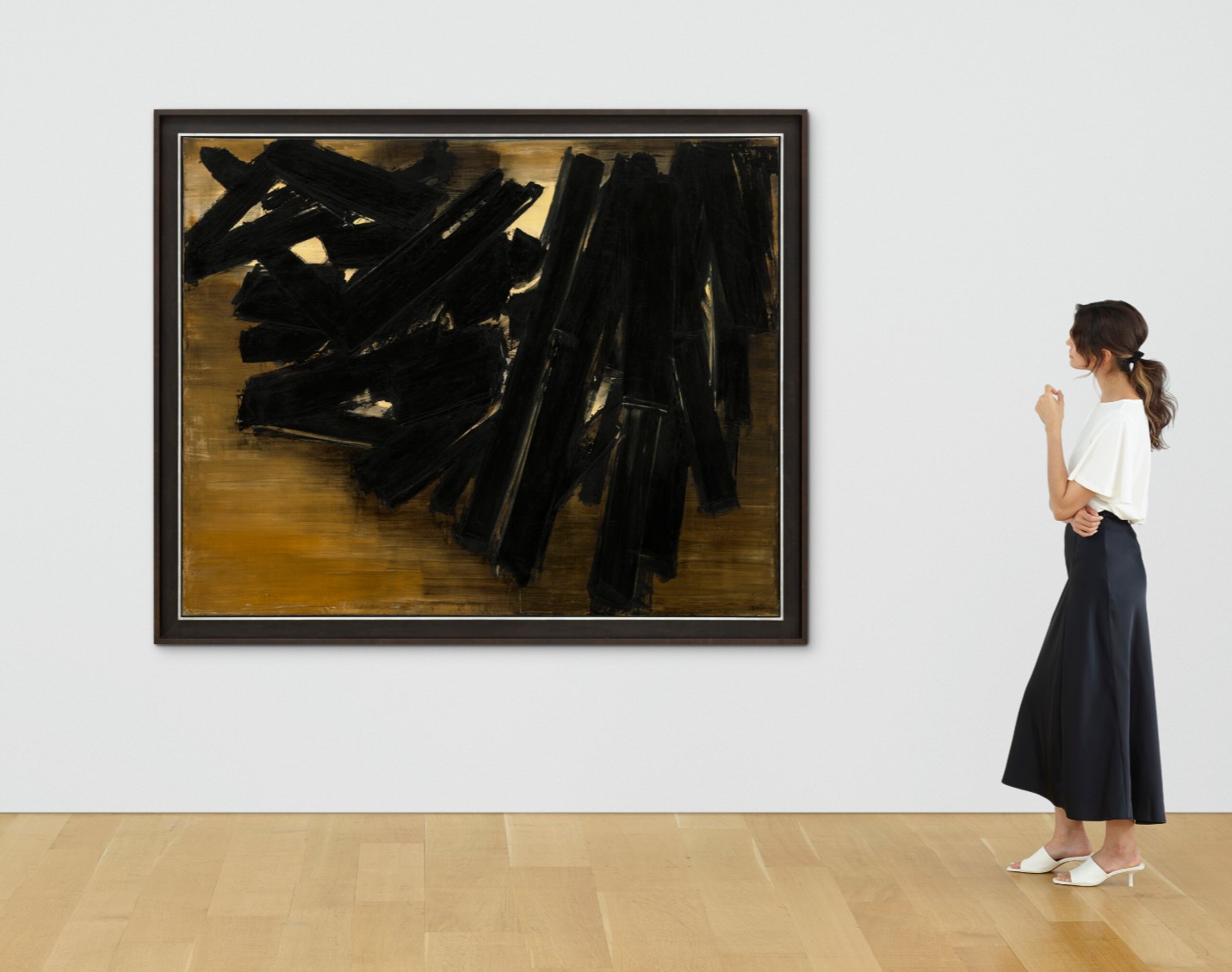
PIERRE SOULAGES (1919-2022)
Peinture 161 x 200 cm, 14 novembre 1958
Oil on canvas
161.9 x 201.6 cm (63 3/4 x 79 3/8 inches)
Signed ‘Soulages’ (lower right)
Signed again and dated ‘SOULAGES 58’ (on the reverse)
Signed thrice, partially titled and dated again ‘SOULAGES “Peinture” 14 nov 58’ (on the stretcher)
Painted in 1958
#2. Peinture 165 x 130 cm, 7 avril 1960
Property from the Collection of Max and Cecile Draime
Christie’s Paris: 23 October 2025
Estimated: EUR 2,000,000 – 3,000,000
EUR 2,683,000 / USD 3,114,215
READ MORE IN FOCUS SECTION
Pierre Soulages (1919-2022), Peinture 165 x 130 cm, 7 avril 1960 | Christie’s
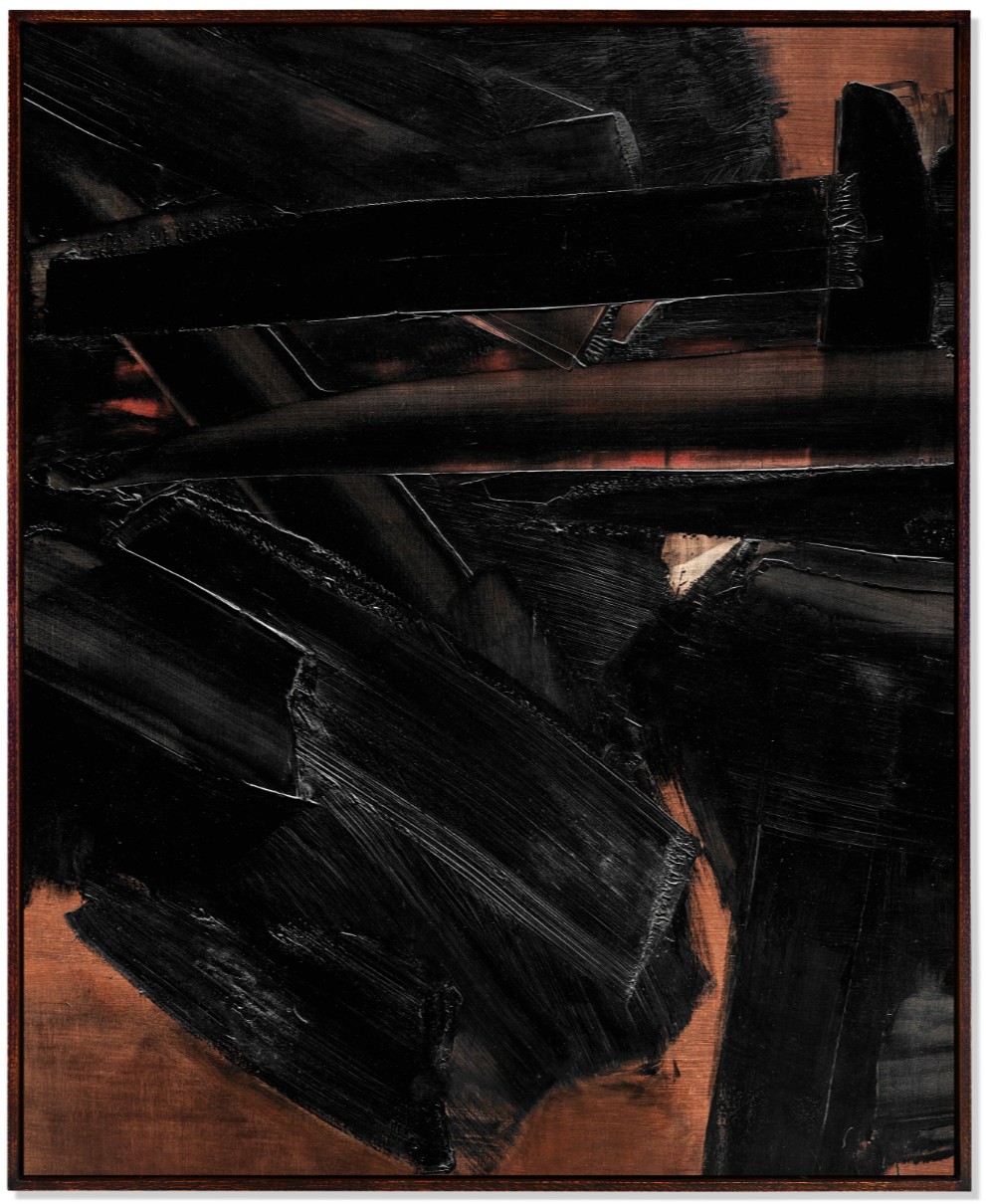
PIERRE SOULAGES (1919-2022)
Peinture 165 x 130 cm, 7 avril 1960
Oil on canvas
165×130 cm (63 3/4 x 51 1/8 inches)
Signed and dated ‘soulages 60’ (lower right)
Signed and dated ‘SOULAGES 7 AVRIL 1960’ (on the reverse)
Painted in 1960
#3. Peinture 81 x 60 cm, 27 Octobre 1956, 1956
Digard Auction Paris: 25 November 2025
Estimated: EUR 650,000 – 900,000
EUR 1,805,599 / USD 2,085,595
Pierre SOULAGES (1919 – 2022) – Lot 19
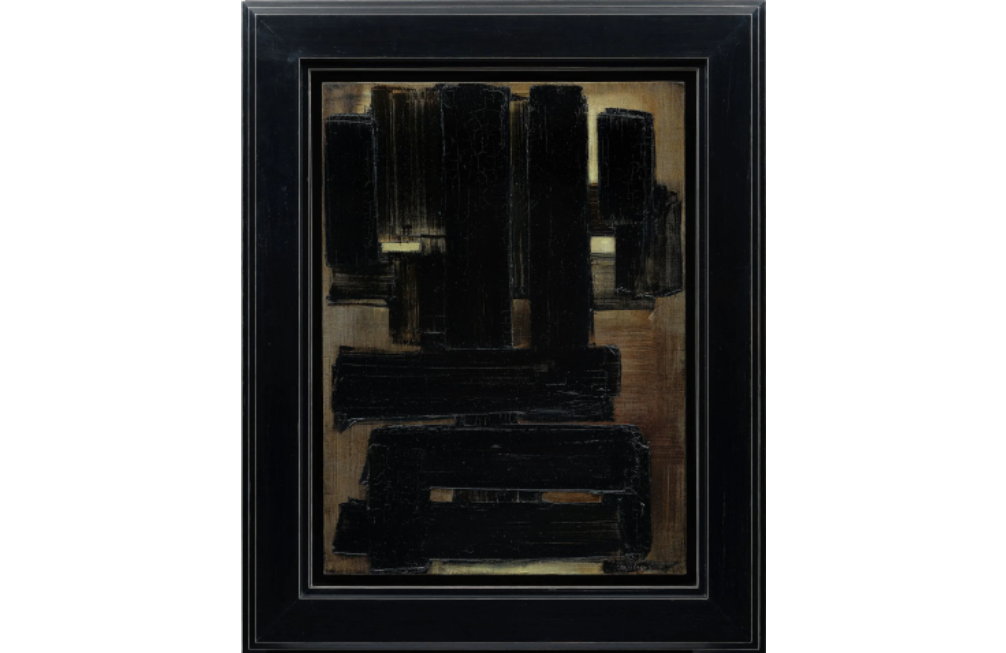
PIERRE SOULAGES (1919 – 2022)
Peinture 81 x 60 cm, 27 Octobre 1956, 1956
Oil on canvas
81×60 cm (32 x 23 5/8 inches)
Signed lower right, counter-signed and dated on the reverse
#4. Peinture 165,1 x 139,7 cm, 11 juillet 1971
Christie’s Paris: 23 October 2025
Estimated: EUR 750,000 – 950,000
EUR 952,500 / USD 1,105,585
READ MORE IN FOCUS SECTION
Pierre Soulages (1919-2022), Peinture 165,1 x 139,7 cm, 11 juillet 1971 | Christie’s
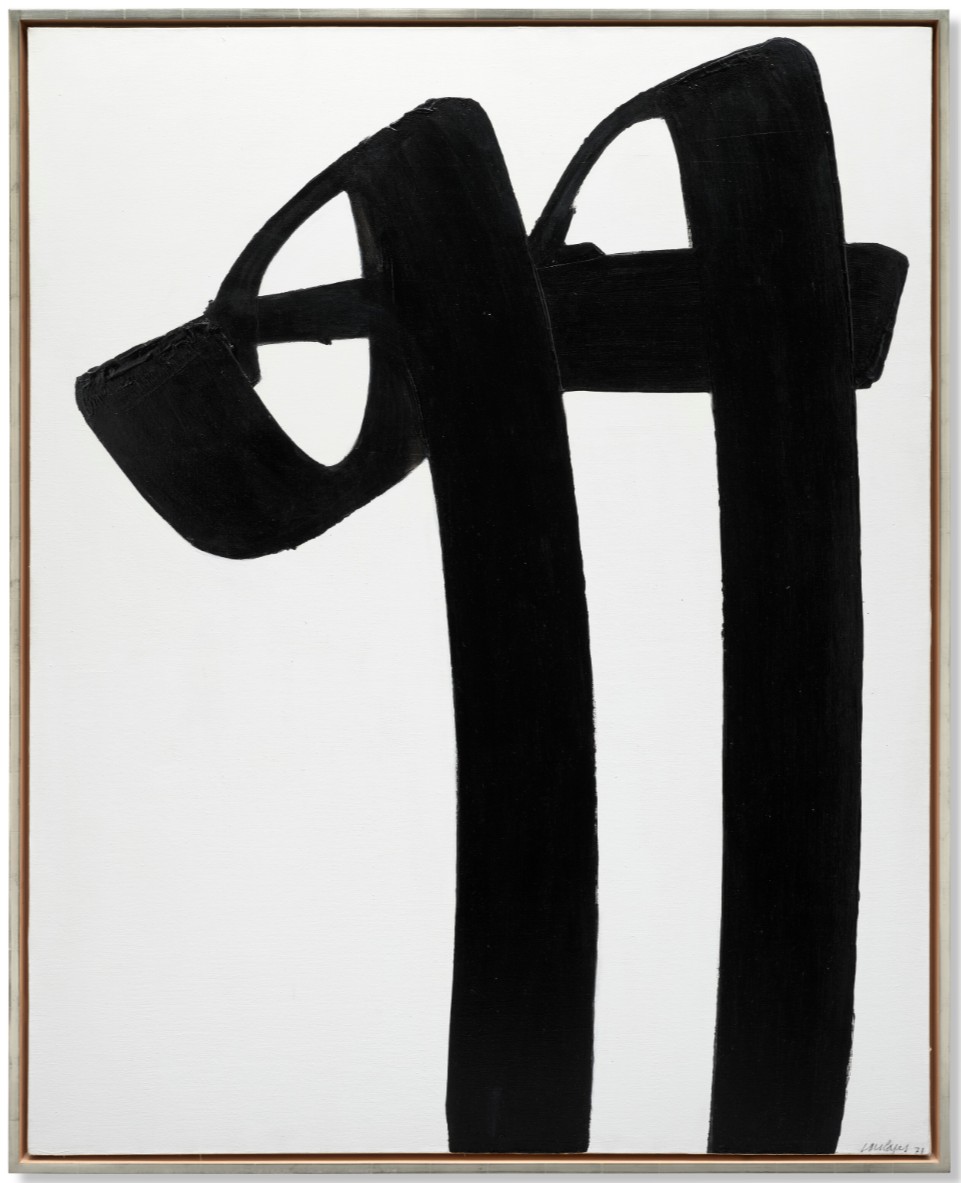
PIERRE SOULAGES (1919-2022)
Peinture 165,1 x 139,7 cm, 11 juillet 1971
Oil on canvas
162×130 cm (63 3/4 x 51 1/8 inches)
Signed and dated ‘Soulages 71′ (lower right); dated ’11 juillet 1971’ (on the reverse)
Painted in 1971
#5. Peinture 81 x 60 cm, 20 novembre 1954
Christie’s Paris: 8 April 2025
Estimated: EUR 1,000,000 – 1,500,000
EUR 945,000 / USD 1,031,615
Pierre Soulages (1919-2022), Peinture 81 x 60 cm, 20 novembre 1954 | Christie’s
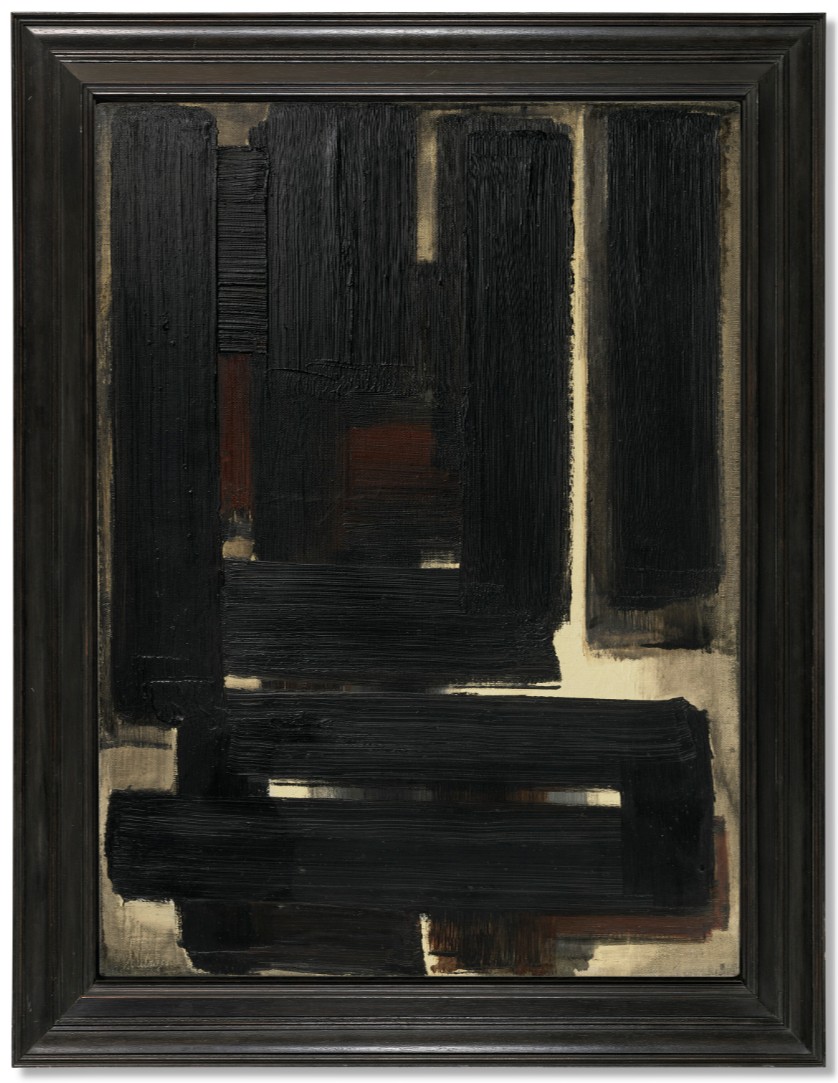
PIERRE SOULAGES (1919-2022)
Peinture 81 x 60 cm, 20 novembre 1954
Oil on canvas
81×60 cm (31 7/8 x 23 5/8 inches)
Signed ‘soulages’ (lower left)
Signed ‘SOULAGES’ (on the reverse)
USD 1 million
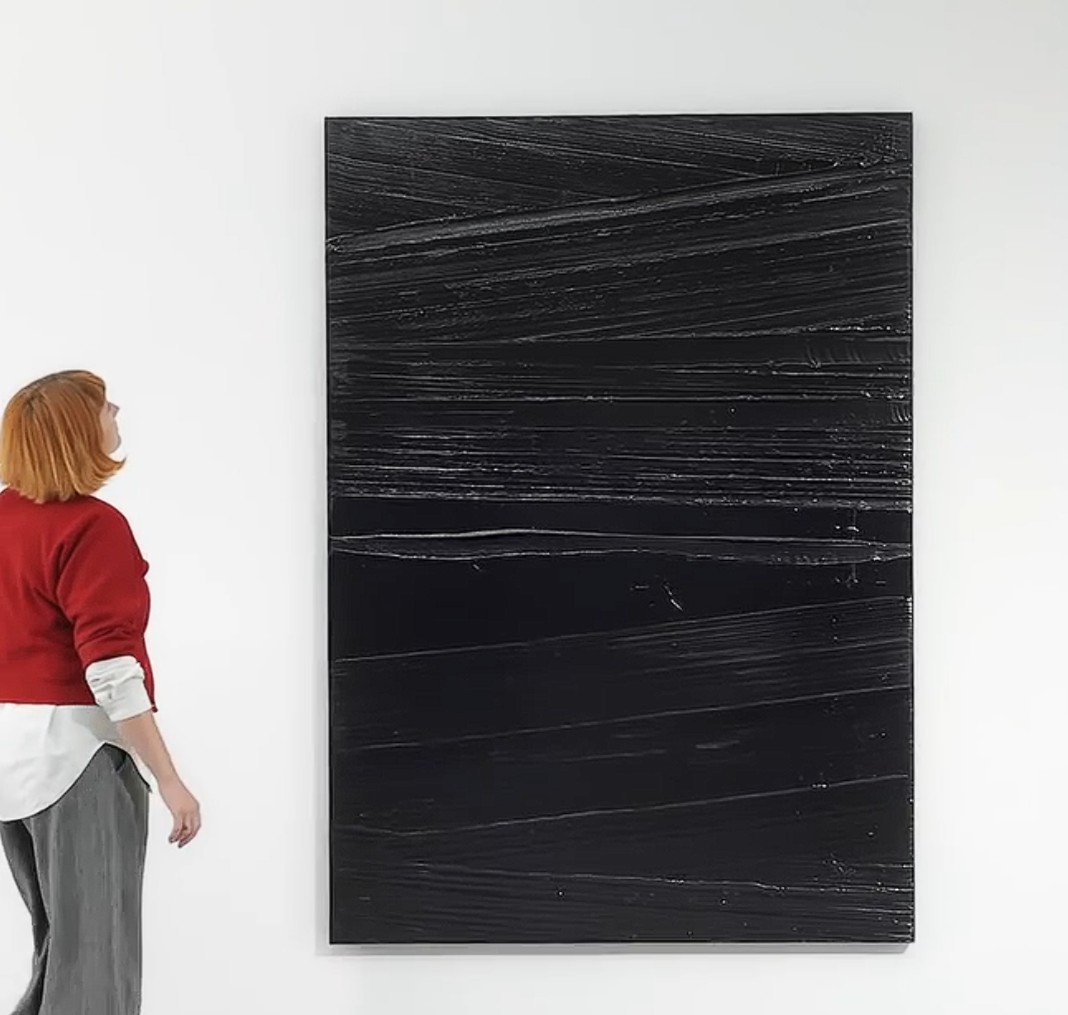
#6. Peinture 202 x 143 cm, 14 août 2015
Estimated: GBP 600,000 – 800,000
GBP 645,000 / USD 864,300
OUTRENOIR
#7. Peinture 72,5 x 81 cm, 5 mai 1985
Sotheby’s Paris: 10 April 2025
Estimated: EUR 400,000 – 600,000
EUR 482,600 / USD 528,430
OUTRENOIR
Peinture 72,5 x 81 cm, 5 mai 1985 | Art Moderne et Contemporain Evening Auction | 2025 | Sotheby’s
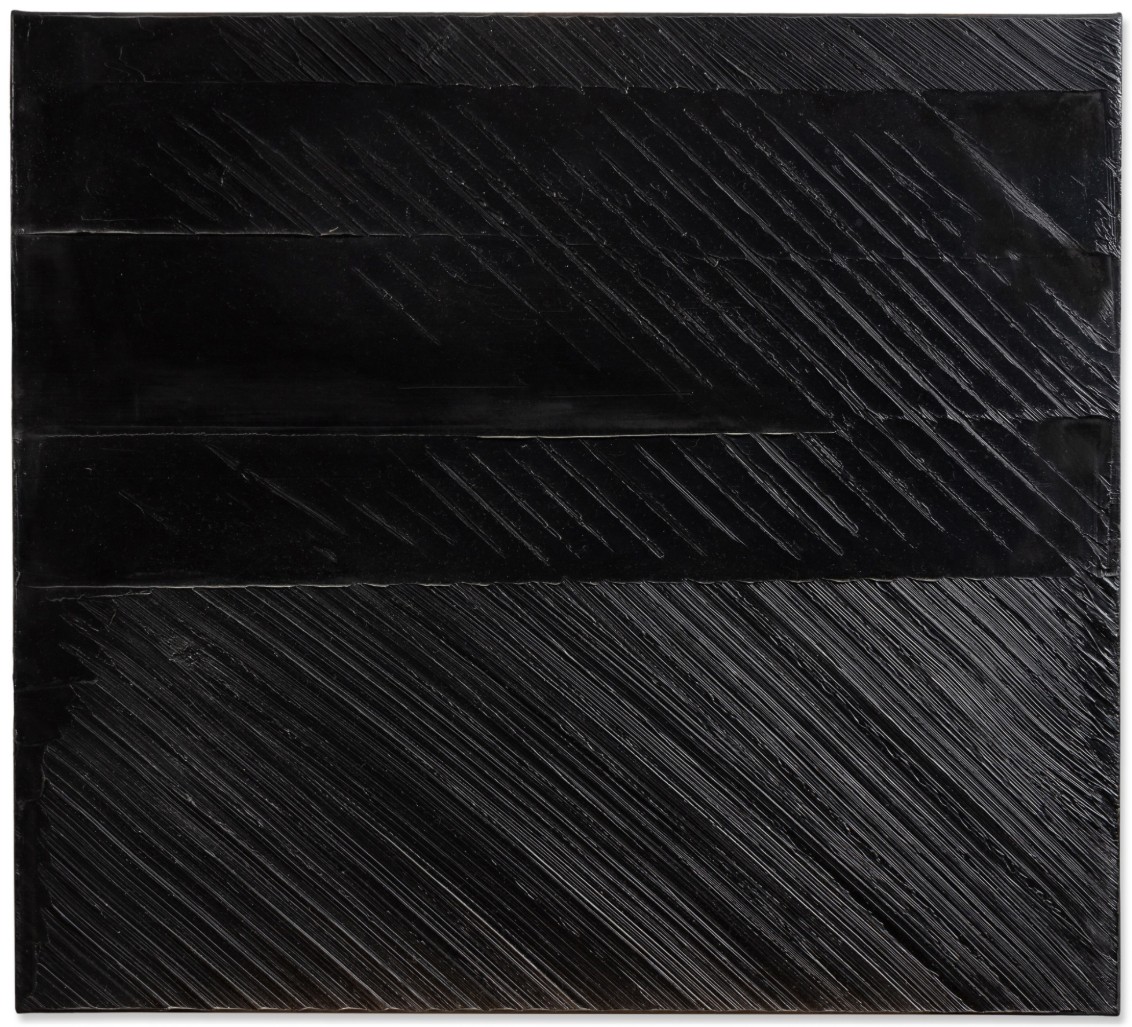
PIERRE SOULAGES (1919 – 2022)
Peinture 72,5 x 81 cm, 5 mai 1985
Oil on canvas
72.5 x 81 cm (28 1/2 x 31 7/8 inches)
Signed and titled (on the reverse)
#8. Peinture 130 x 130 cm, 3 mars 2012
Christie’s Paris: 9 April 2025
Estimated: EUR 300,000 – 500,000
EUR 378,000 / USD 415,195
OUTRENOIR
Pierre Soulages (1919-2022), Peinture 130 x 130 cm, 3 mars 2012 | Christie’s
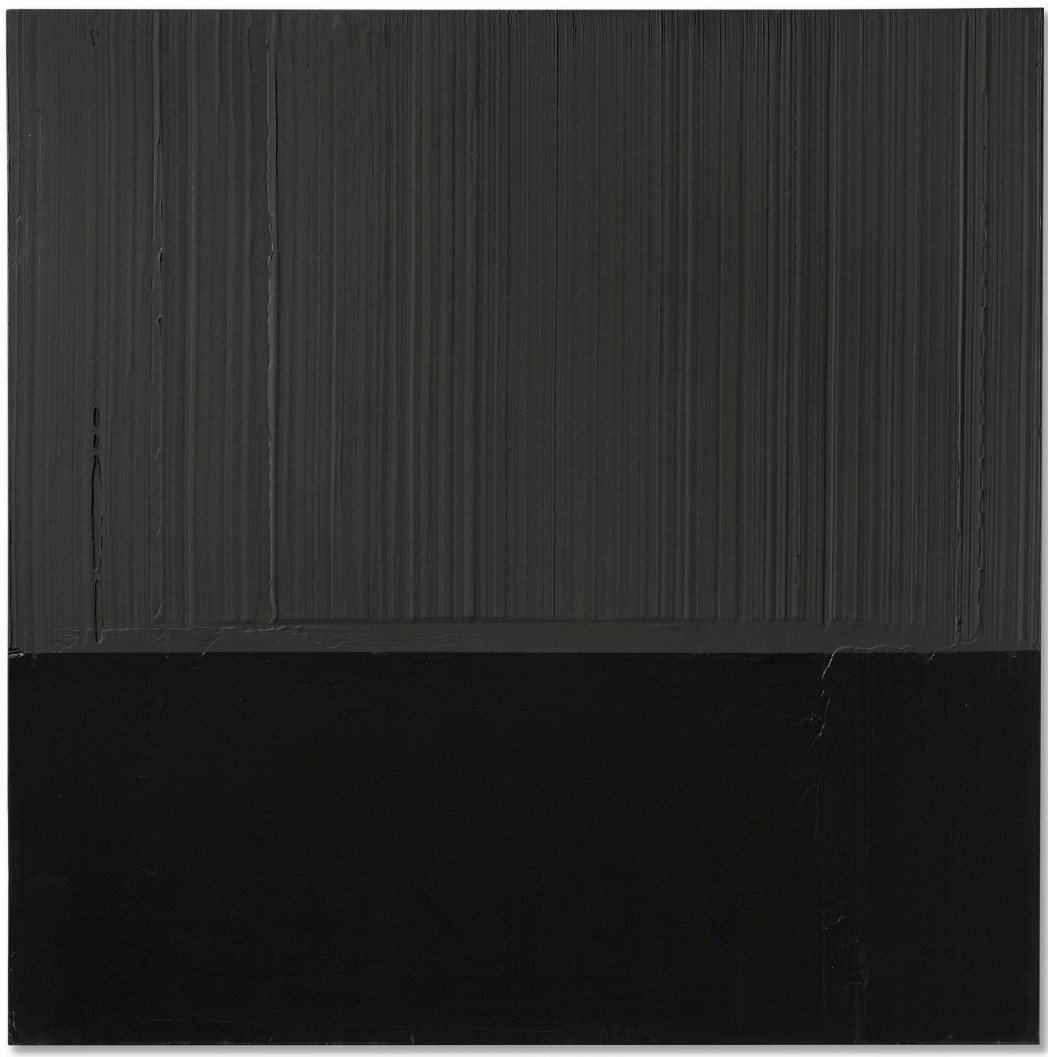
PIERRE SOULAGES (1919-2022)
Peinture 130 x 130 cm, 3 mars 2012
Acrylic on canvas
130 x 130 cm (51 1/8 x 51 1/8 inches)
Signed and titled ‘SOULAGES ”Peinture 130 x 130 03-03-2012”’ (on the reverse)
#9. Peinture 45 x 45 cm, 8 novembre 1990
Bonhams Cornette Paris: 4 December 2025
Estimated: EUR 250,000 – 350,000
EUR 356,000 / EUR 415,075
OUTRENOIR
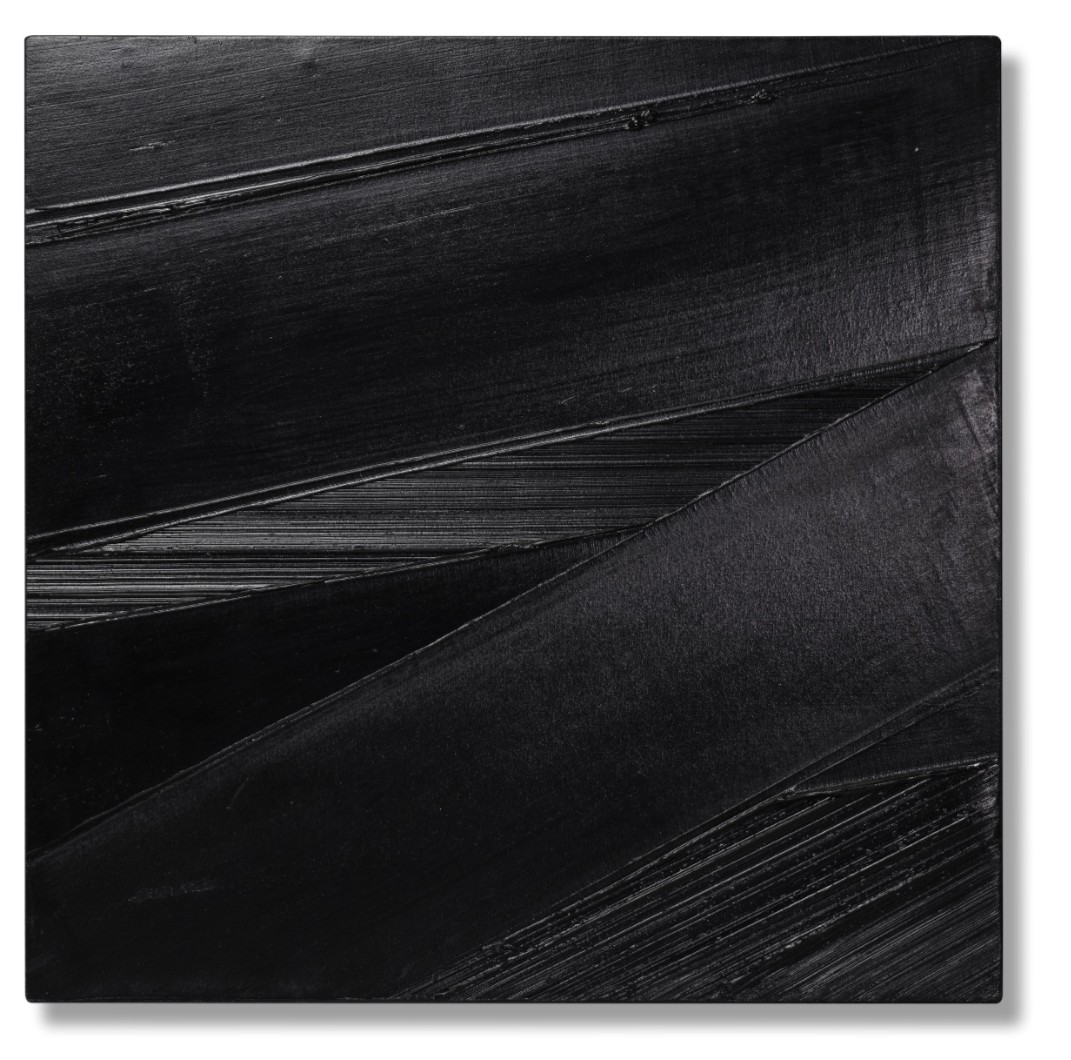
PIERRE SOULAGES (1919-2022)
Peinture 45 x 45 cm, 8 novembre 1990, 1990
Oil on canvas
45×45 cm (17 11/16 x 17 11/16 inches)
Signed, titled, dated 8.11.90 on the reverse
Inscribed ‘Pour Henri et Régine, leur ami Pierre. 24.12.94’ on the reverse
#10. Peinture 55 x 38 cm, 5 mars 1981
Property from an American Private Collection
Sotheby’s Paris: 3 December 2025
Estimated: EUR 80,000 – 120,000
EUR 317,500 / USD 365,735
OUTRENOIR
Peinture 55 x 38 cm, 5 mars 1981 | Modern and Contemporary Art | 2025 | Sotheby’s
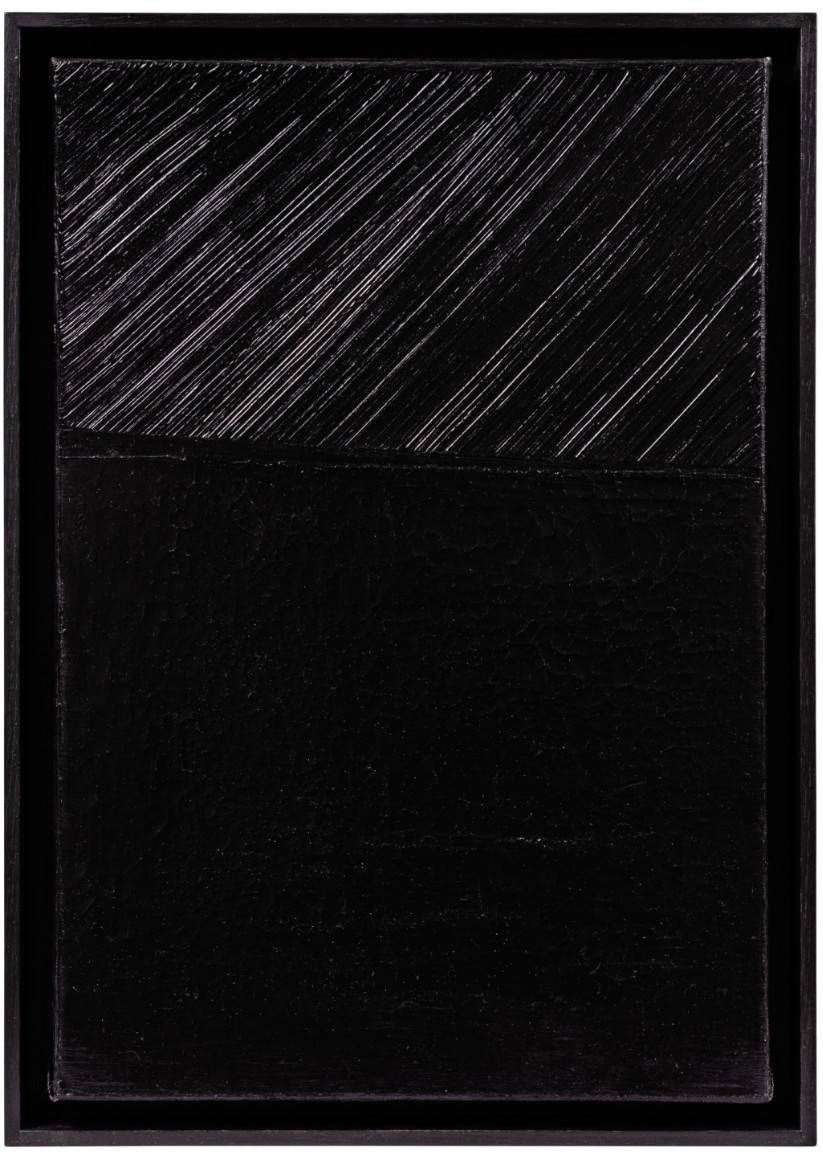
PIERRE SOULAGES (1919 – 2022)
Peinture 55 x 38 cm, 5 mars 1981
Oil on canvas
55×38 cm (21 5/8 x 15 inches)
Signed, titled and dated 5 mars 81 (on the reverse)
Lots Passed
Peinture 130 x 102 cm, 18 janvier 2011
Ketterer Kunst Munich: 6 June 2025
Estimated: EUR 700,000 – 900,000
OUTRENOIR
PASSED
Ketterer Kunst, Art auctions, Book auctions Munich, Hamburg & Berlin
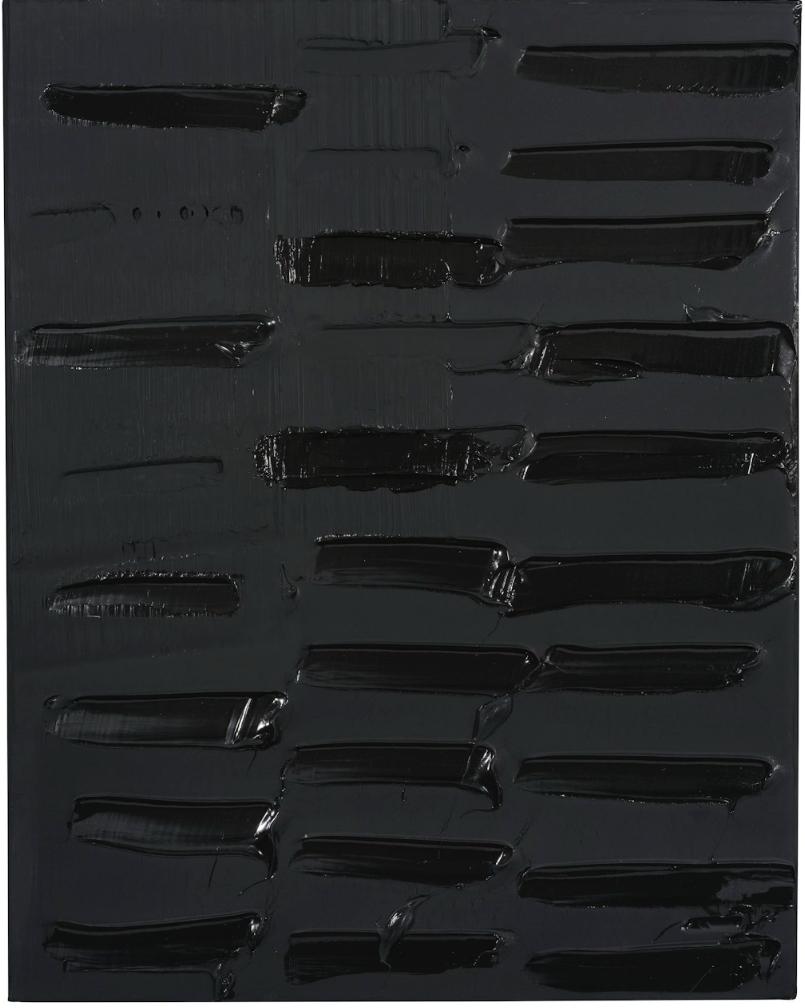
PIERRE SOULAGES (1919-2022)
Peinture 130 x 102 cm, 18 janvier 2011
Acrylic on canvas
130 x 102 cm (51 1/8 x 40 1/8 inches)
Signed, dated and titled on the verso
Peinture 92 x 73 cm, 30 juin 59
Sotheby’s New-York: 13 May 2025
Estimated: USD 3,000,000 – 5,000,000
PASSED
Peinture 92 x 73 cm, 30 juin 59 | Modern Evening Auction | 2025 | Sotheby’s
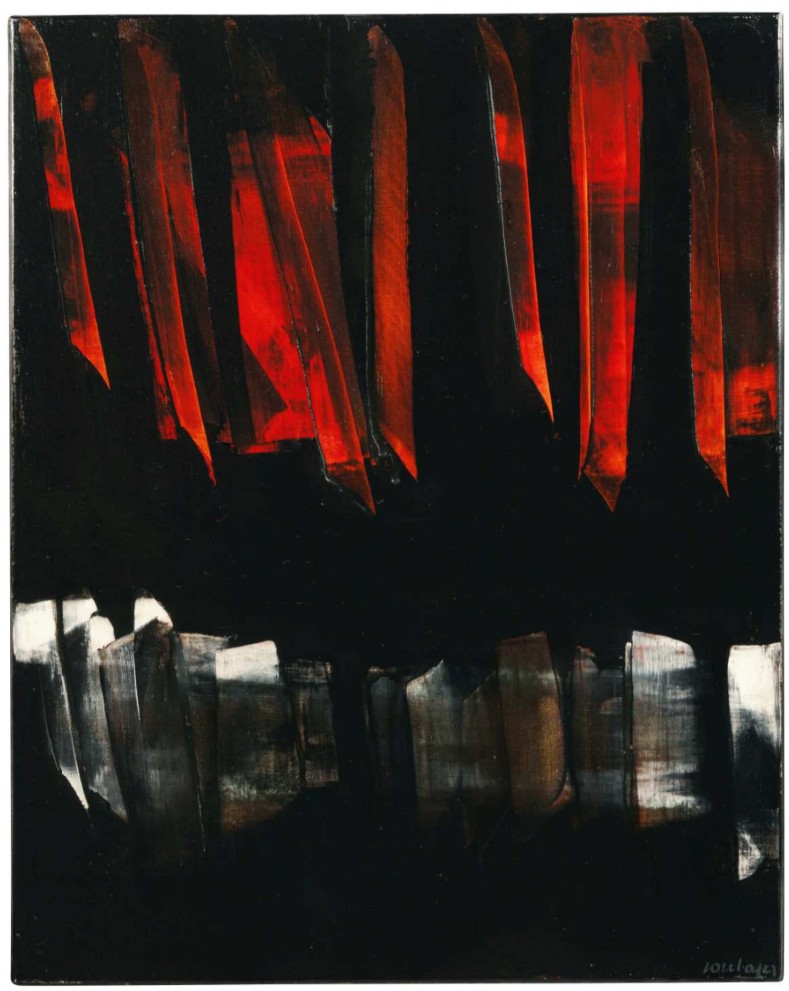
PIERRE SOULAGES (1919 – 2022)
Peinture 92 x 73 cm, 30 juin 59
Oil on canvas
92×73 cm (36 1/4 x 28 3/4 inches)
Signed Soulages (lower right)
Signed again, titled and dated 30 juin 59 (on the reverse)
Dated again (on the stretcher)
Lots Withdrawn
Peinture 222 x 137 cm, 14 mai 2015, 2015
Estimated: HKD 7,800,000 – 11,000,000
OUTRENOIR
WITHDRAWN
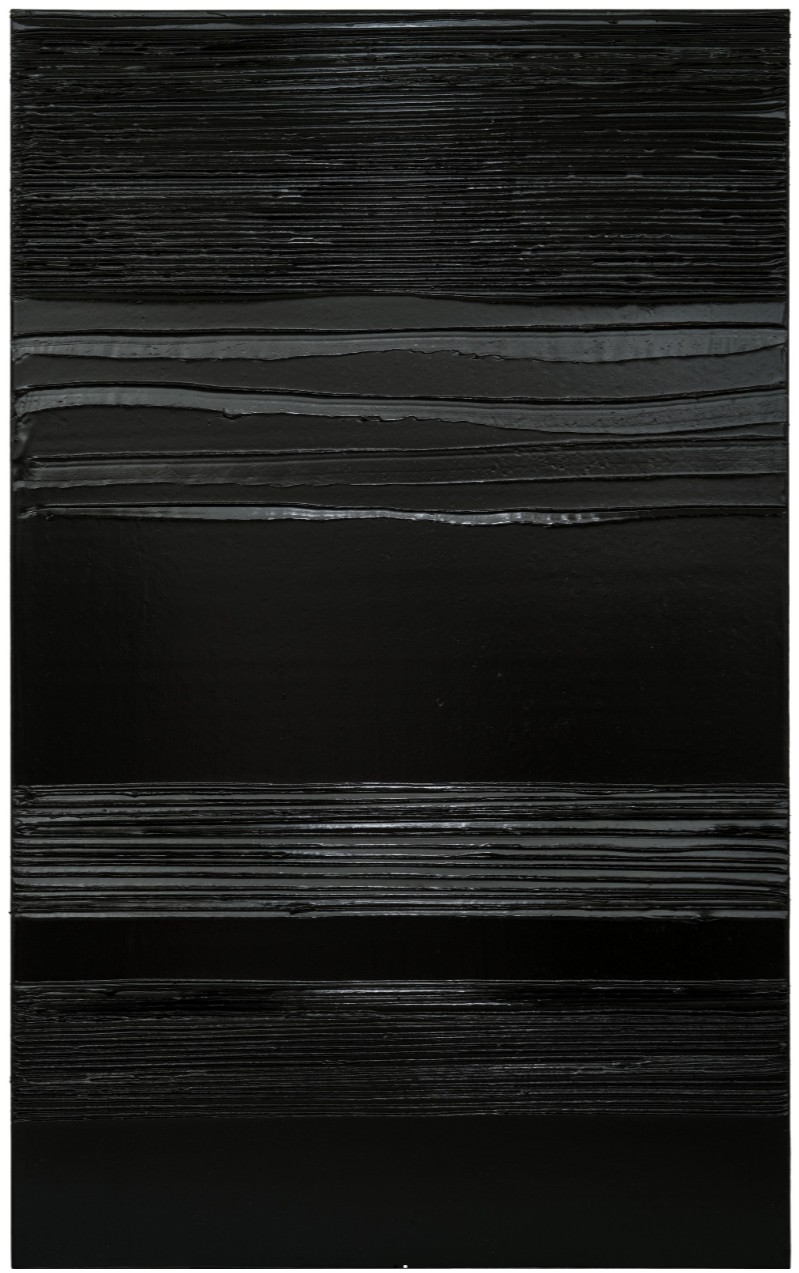
Peinture 181 x 162 cm, 6 juin 2007 (diptyque), 2007
Bonhams Cornette Paris: 5 June 2025
Estimated: EUR 1,000,000 – 1,500,000
OUTRENOIR
WITHDRAWN
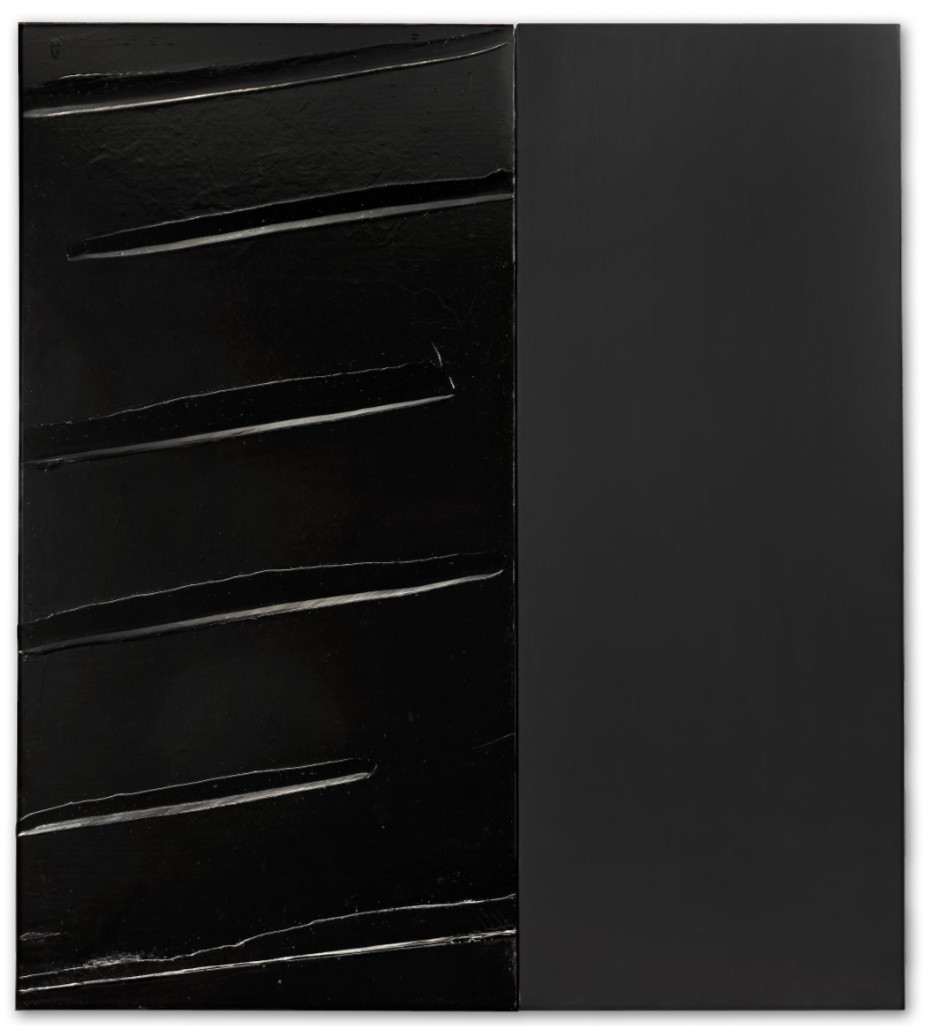
Acrylic on canvas
181×162 cm (71 1/4 x 63 3/4 inches)
Signed, titled and dated 6 juin 2007 on the reverse
2024 Auction Results
FOR PAINTINGS ONLY
5 lots sold at auction in 2024 for a total turnover of USD 8,985,876. With 1 lot failing to sell, the sell-through rate is 83%. The highest price has been achieved at Christie’s in Hong-Kong on 26 September 2024, when Peinture 162 x 130 cm, 26 mai 1963 sold for HKD 36,675,000 (USD 4,710,355).
2024 Top 3 Lots
2 lots sold for more than USD 1 million, generating a cumulative turnover of USD 6,136,190, representing 68.3% of the total turnover for 2024.
XXXXXXXXXX
#1. Peinture 162 x 130 cm, 26 mai 1963
Christie’s Hong-Kong: 26 September 2024
Estimated: HKD 33,000,000 – 55,000,000
HKD 36,675,000 / USD 4,710,355
Peinture 162 x 130 cm, 26 mai 1963 (christies.com)
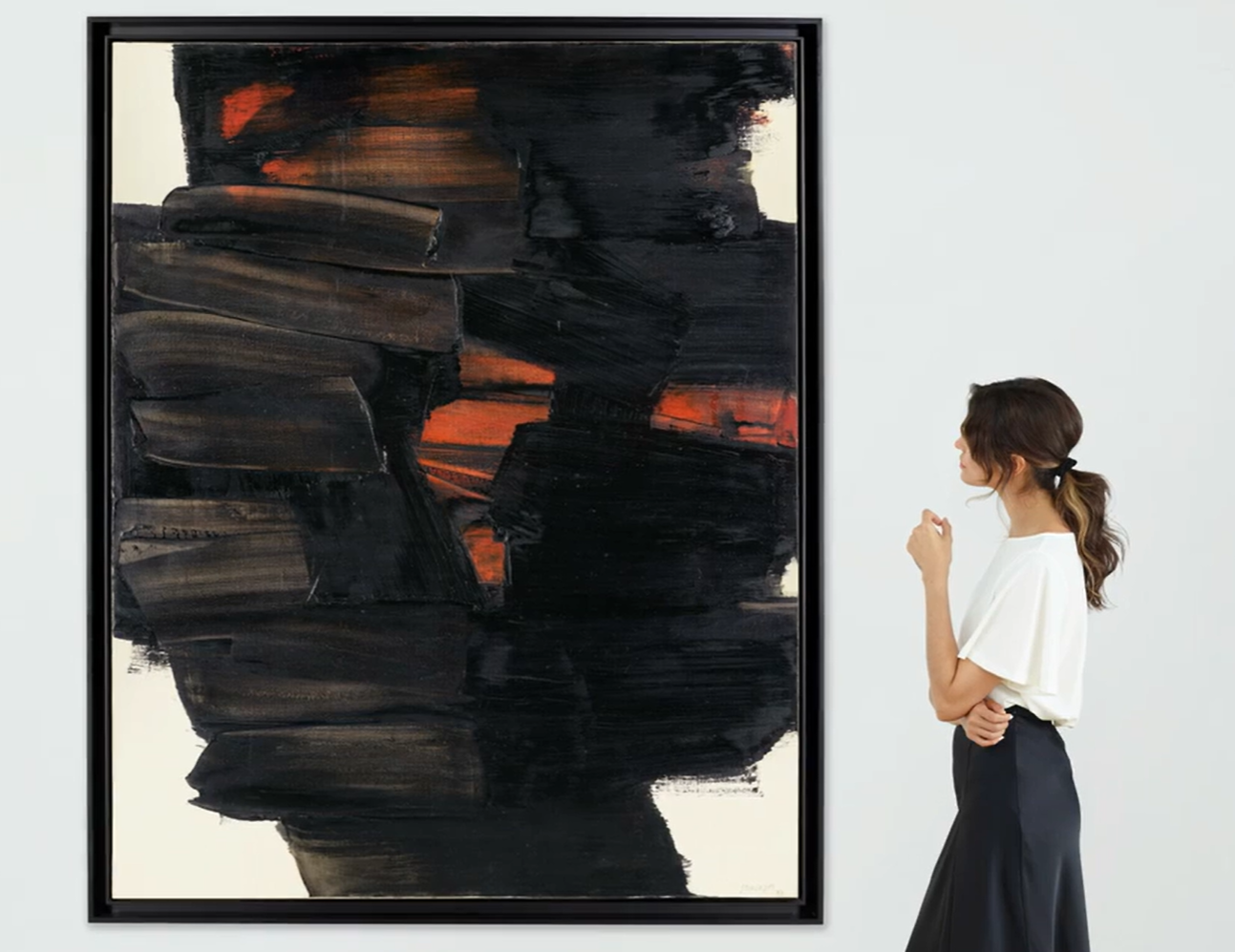
PIERRE SOULAGES (1919-2022)
Peinture 162 x 130 cm, 26 mai 1963
Oil on canvas
162.3 x 130 cm (64 x 51 1/4 inches)
Signed and dated ‘Soulages 63’ (lower right)
Signed and dated ‘26 Mai 63 SOULAGES’ (on the reverse)
#2. Peinture 202 x 143 cm, 25 septembre 1967
Phillips Hong-Kong: 25 November 2024
Estimated: HKD 14,000,000 – 24,000,000
HKD 11,098,000 / USD 1,425,835
Pierre Soulages – Modern & Contempo… Lot 12 November 2024 | Phillips
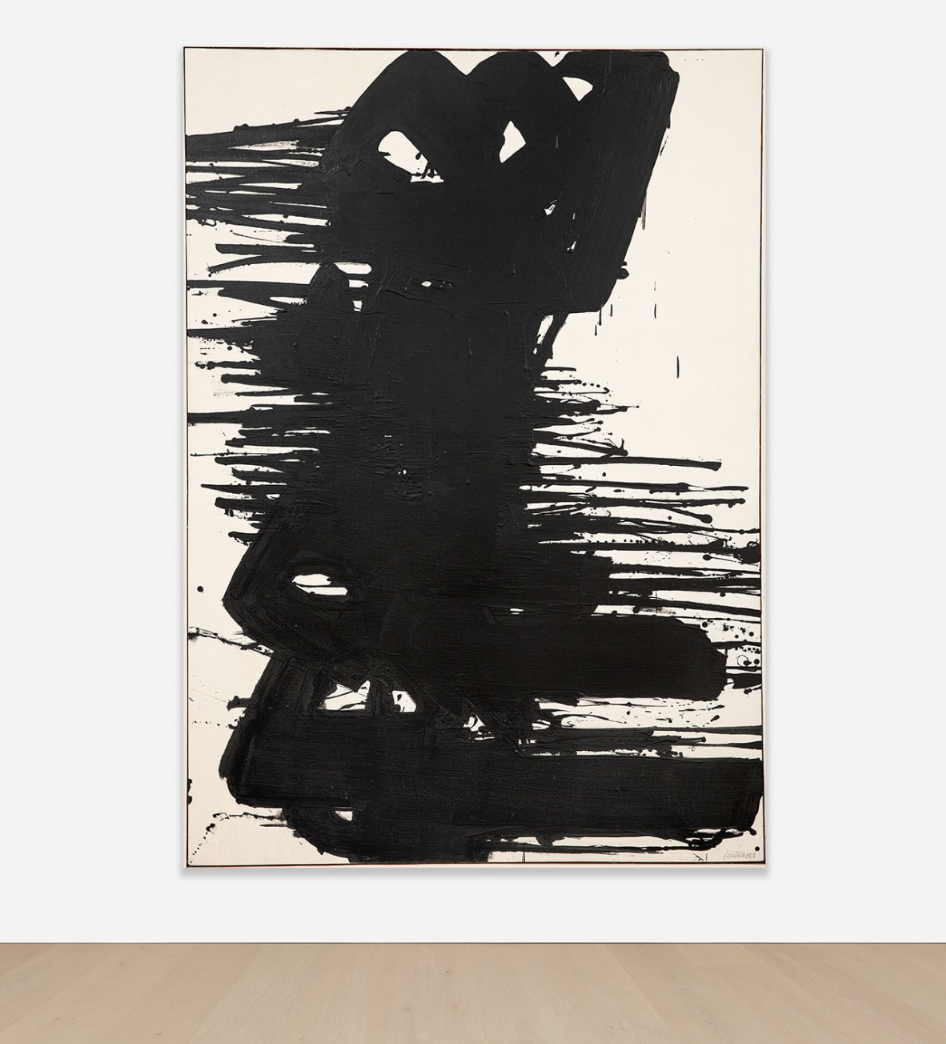
PIERRE SOULAGES
Peinture 202 x 143 cm, 25 septembre 1967
Oil on canvas
202×143 cm (79 1/2 x 56 1/4 inches)
Signed ‘Soulages’ lower right; further signed, titled and dated ‘“202 x 143”, SOULAGES, 25.9.67’ on the reverse
USD 1 million
#3. Peinture 130 x 97 cm, 18 février 1969
Christie’s Paris: 18 October 2024
Estimated: EUR 450,000 – 650,000
EUR 907,200 / USD 982,440
Pierre Soulages (1919-2022), Peinture 130 x 97 cm, 18 février 1969 | Christie’s
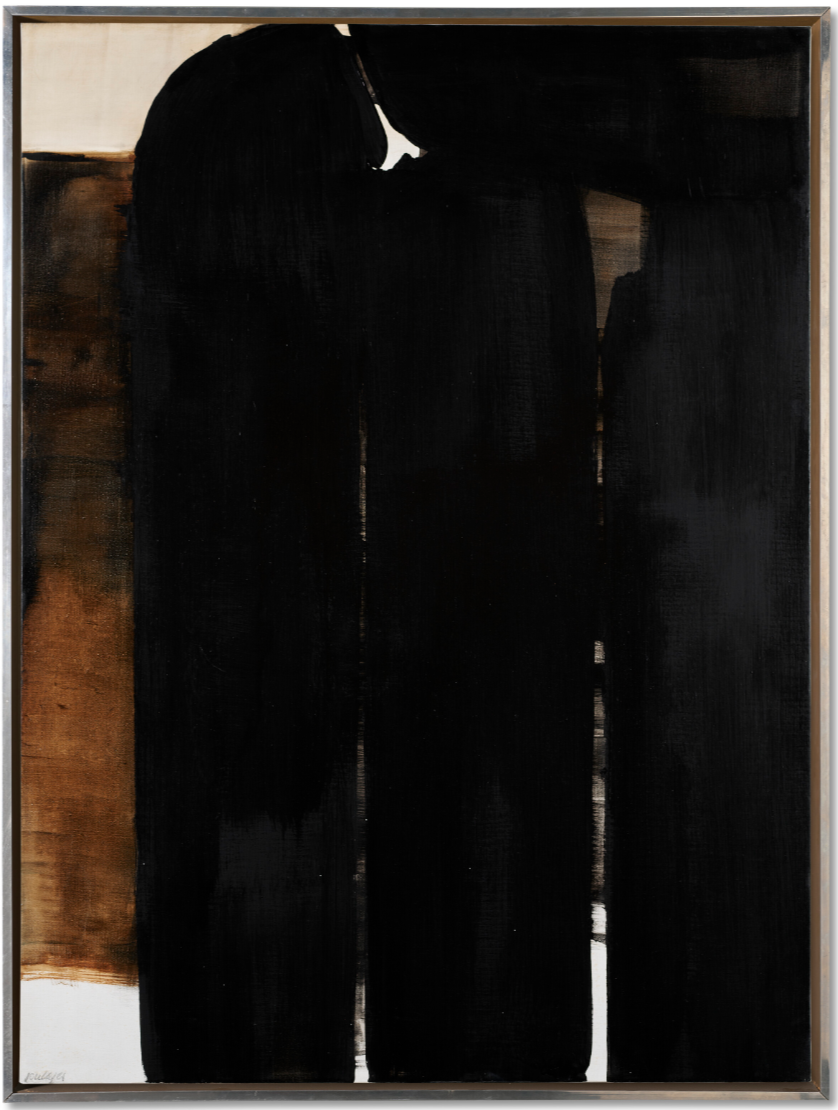
PIERRE SOULATES (1919-2022)
Peinture 130 x 97 cm, 18 février 1969
Oil on canvas
130×97 cm (51 1/8 x 38 1/4 inches)
Signed ‘soulages’ (lower left)
Signed and titled ‘SOULAGES ”Peinture 130 x 97 cm.18.2.69.”’ (on the reverse)
#4. Peinture 181 x 128 cm, 30 mars 2008
Sotheby’s Paris: 23 April 2024
Estimated: EUR 800,000 – 1,200,000
EUR 889,000 / USD 950,598
OUTRENOIR
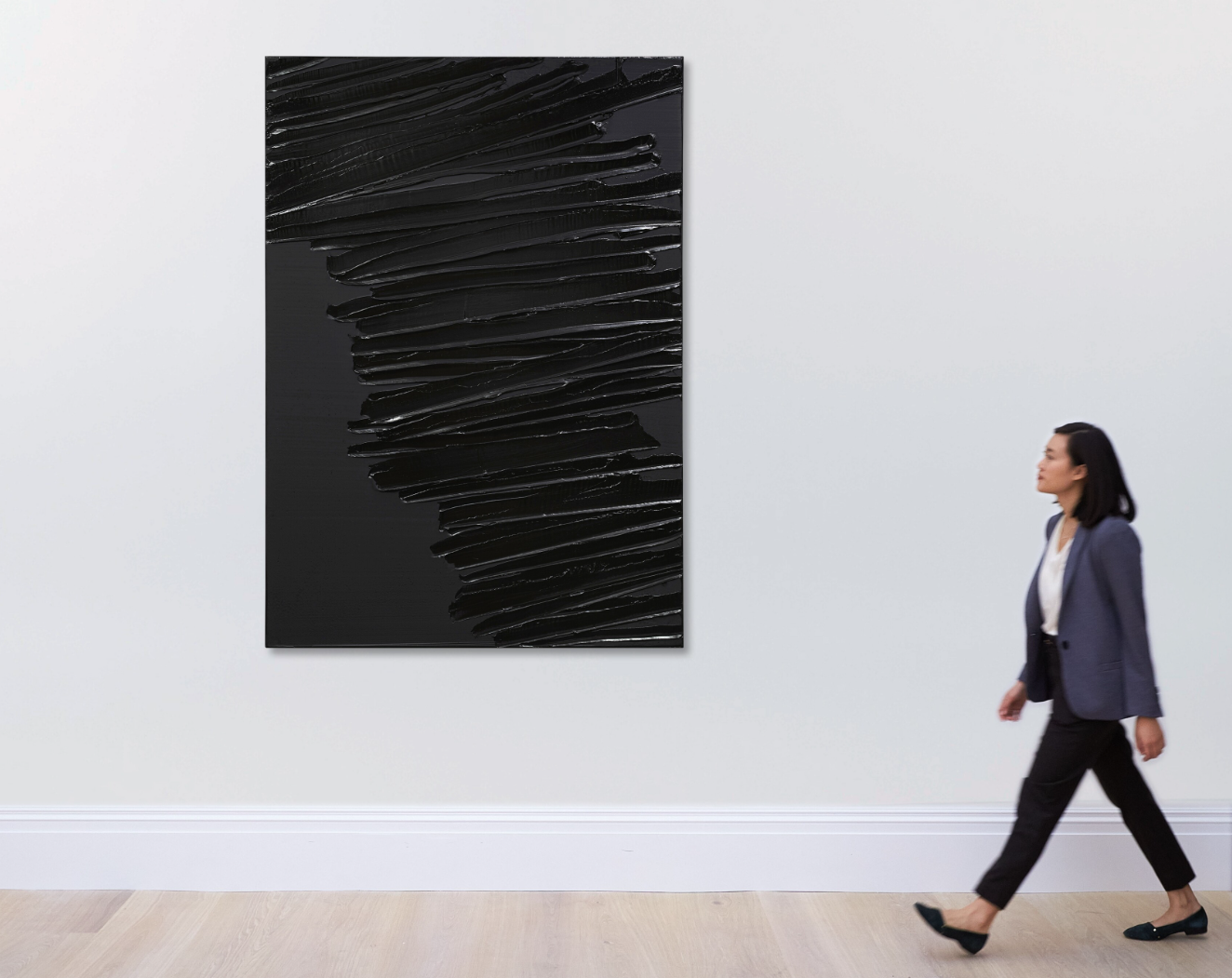
PIERRE SOULAGES (1919 – 2022)
Peinture 181 x 128 cm, 30 mars 2008
Acrylic on canvas
181×128 cm (71 1/4 x 50 3/8 inches)
Signed, titled and dated 30 MARS 2008 (on the reverse)
#5. Peinture 130 x 97 cm, 11 septembre 1981
Sotheby’s Paris: 23 April 2024
Estimated: EUR 700,000 – 1,000,000
EUR 857,250 / USD 916,648
OUTRENOIR
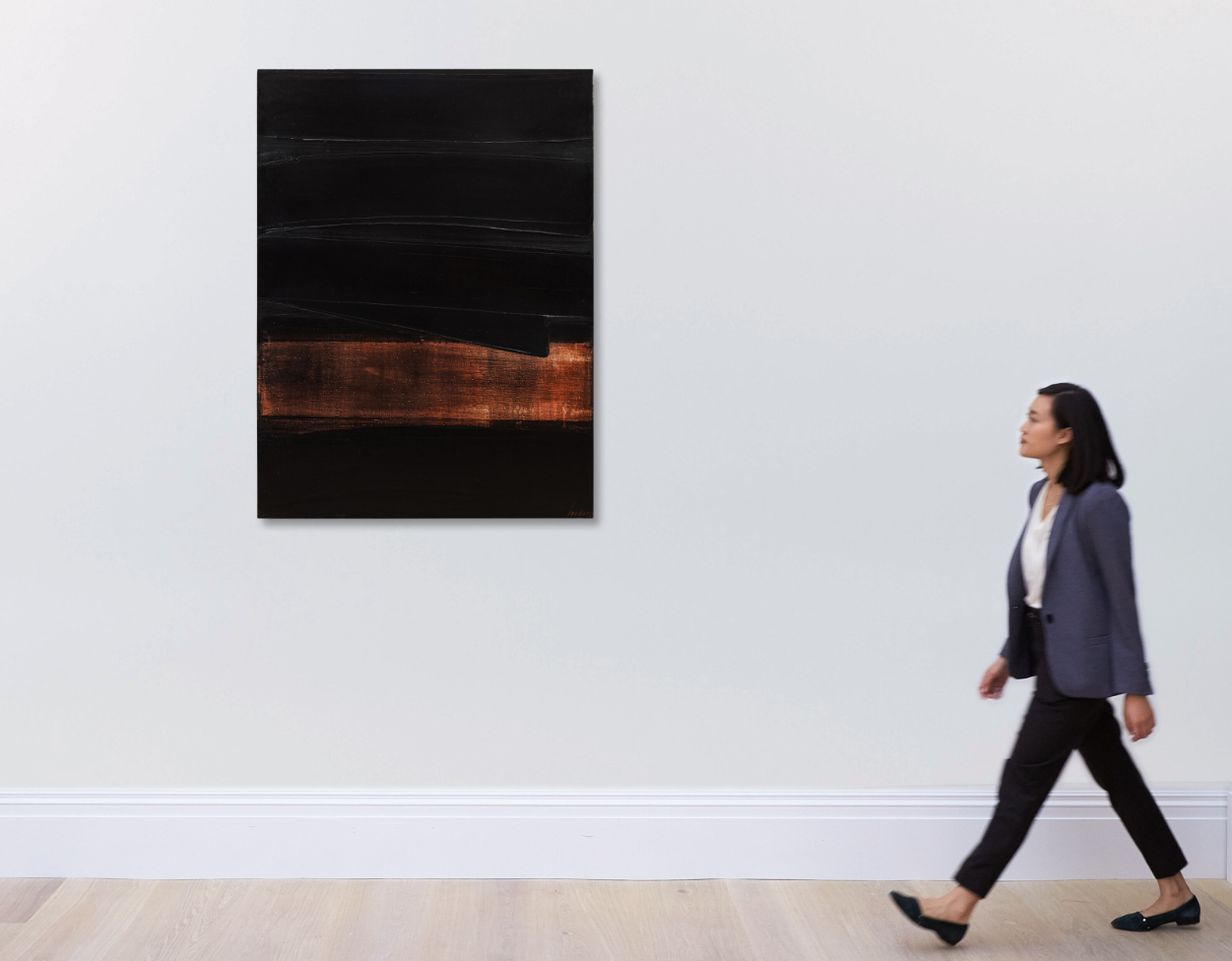
PIERRE SOULAGES (1919 – 2022)
Peinture 130 x 97 cm, 11 septembre 1981
Oil on canvas
130×97 cm (51 1/8 x 38 1/4 inches)
Signed (lower right)
Signed, inscribed and dated 11 Sept 81 (on the reverse)
Passed Lots
Peinture 146 x 97 cm 1949
Bonhams Cornette Paris: 5 December 2024
Estimated: EUR 1,000,000 – 1,500,000
PASSED
Bonhams Cornette de Saint Cyr : PIERRE SOULAGES (1919-2022) Peinture 146 x 97 cm 1949
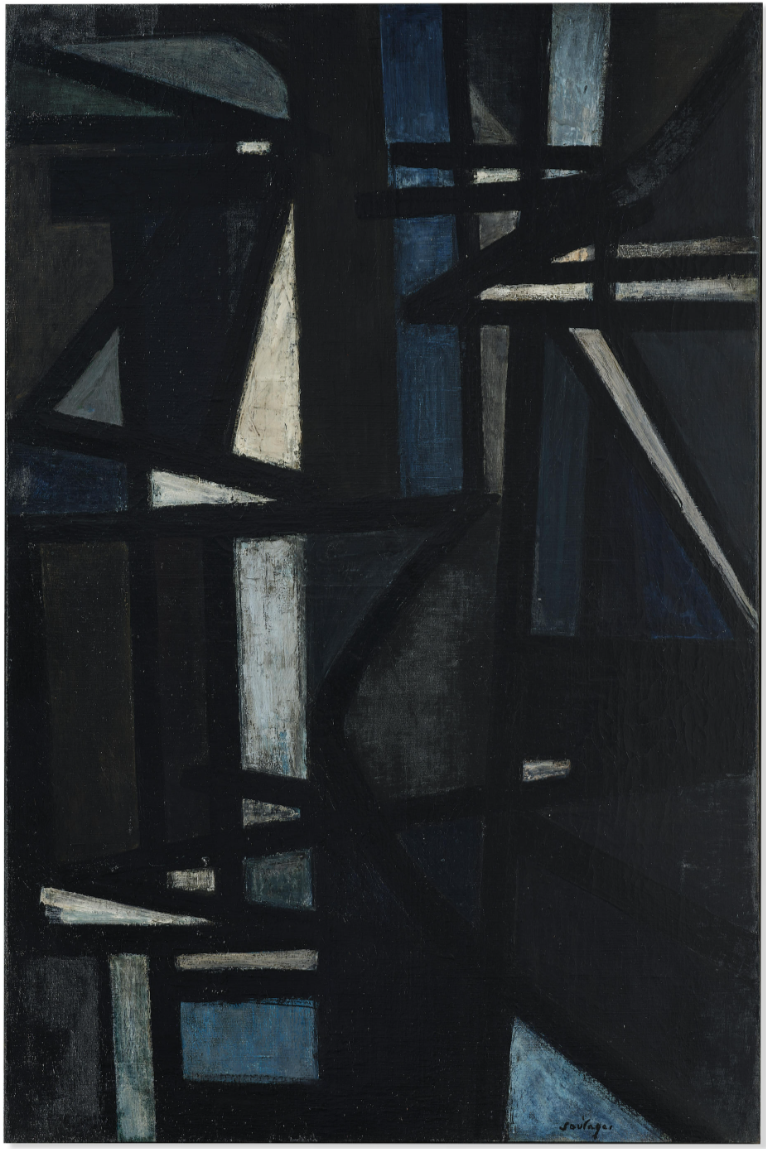
Oil on canvas
146×97 cm (57 1/2 x 38 3/16 inches)
Signed ; signed and inscribed 11 bis rue Schoelcher 14ème on the reverse
2023 Auction Results
FOR PAINTINGS ONLY
14 lots sold at auction in 2023 for a total turnover of USD 19,808,587. With 1 lot failing to sell, the sell-through rate is 93%. The highest price has been achieved by Peinture 130×162 cm 28 fevrier 1970, that sold for EUR 3,073,000 (USD 3,344,269) at Sotheby’s in Paris on 13 December 2023.
2023 Top 3 Lots
9 lots sold for more than USD 1 million, generating a cumulative turnover of USD 15,613,587, contributing 78.8% to the total turnover for 2023. 9 Outrenoirs (paintings created after 1979) sold in 2023 for a total turnover of USD 10,311,965.
XXXXXXXXXX
#1. Peinture 130 x 162 cm, 28 février 1970
Sotheby’s Paris: 13 December 2023
Estimated: EUR 600,000 – 800,000
EUR 3,073,000 / USD 3,344,269
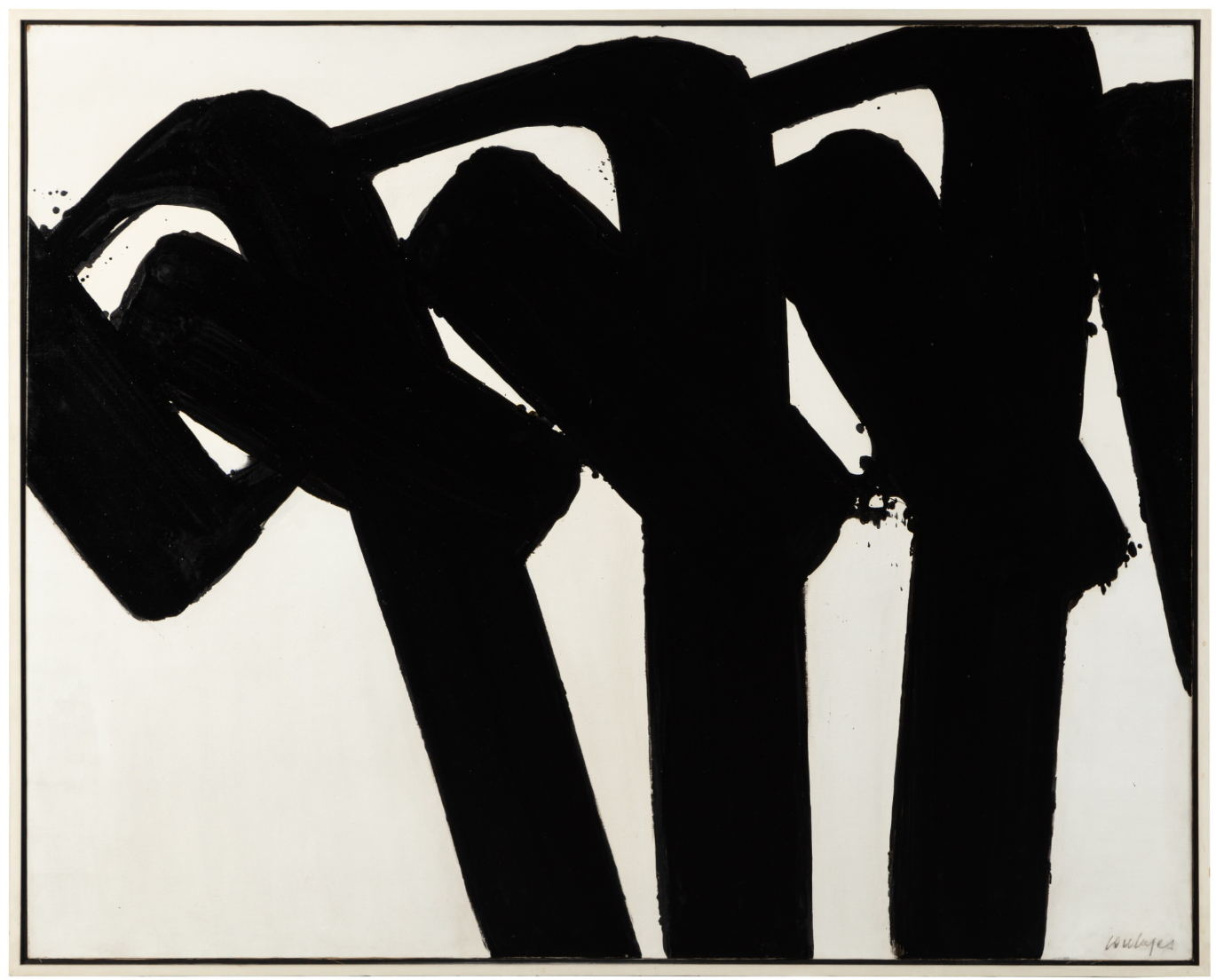
PIERRE SOULAGES (1919 – 2022)
Peinture 130 x 162 cm, 28 février 1970
Oil on canvas
130×162 cm (51 1/8 x 63 3/4 inches)
Signed, inscribed and dated 28-2-70 on the reverse
#2. Peinture 130 x 89 cm, 8 mars 1956
Christie’s New-York: 17 May 2023
Estimated: USD 3,000,000 – 5,000,000
USD 3,196,000
PIERRE SOULAGES (1919-2022) (christies.com)
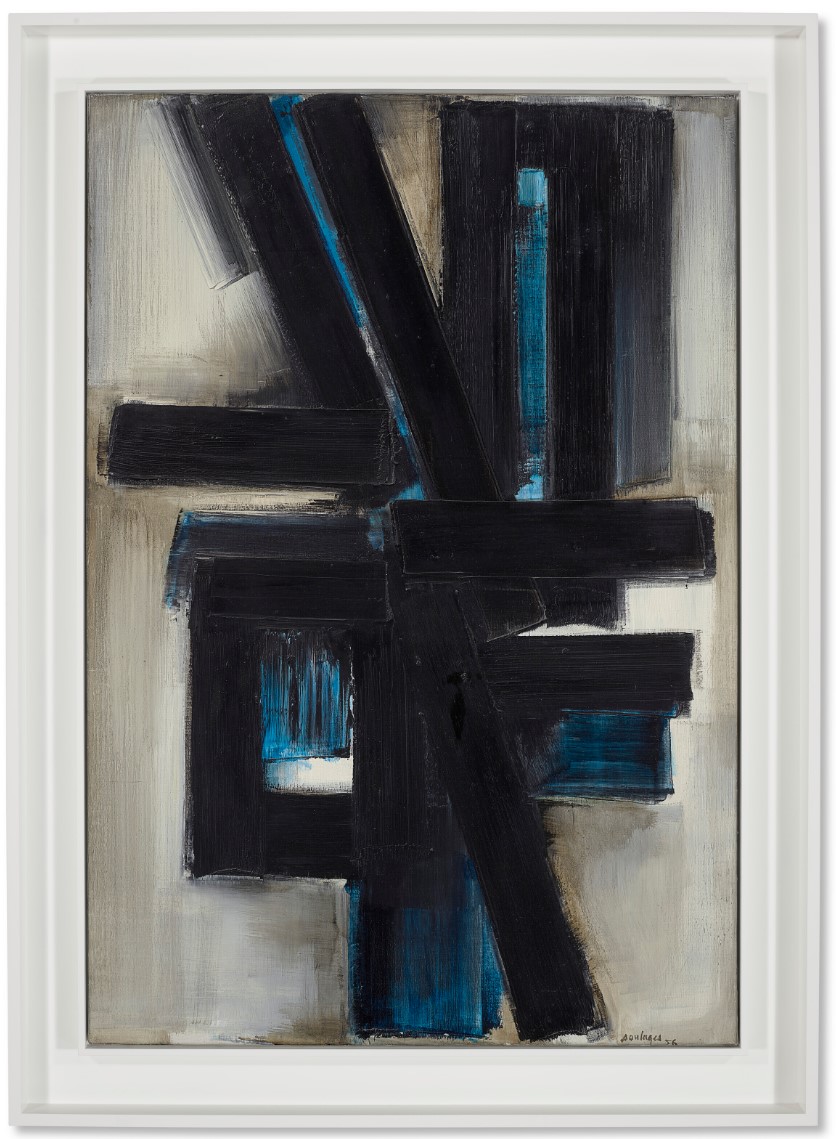
PIERRE SOULAGES (1919-2022)
Peinture 130 x 89 cm, 8 mars 1956
Oil on canvas
130×89 cm (51 1/4 x 35 inches)
Signed and dated ‘Soulages 56’ (lower right)
#3. Peinture 130 x 290 cm, 21 novembre 1990
Christie’s Paris: 7 June 2023
Estimated: EUR 1,000,000 – 1,500,000
EUR 1,794,500 / USD 1,920,278
OUTRENOIR
Pierre Soulages (1919-2022) (christies.com)
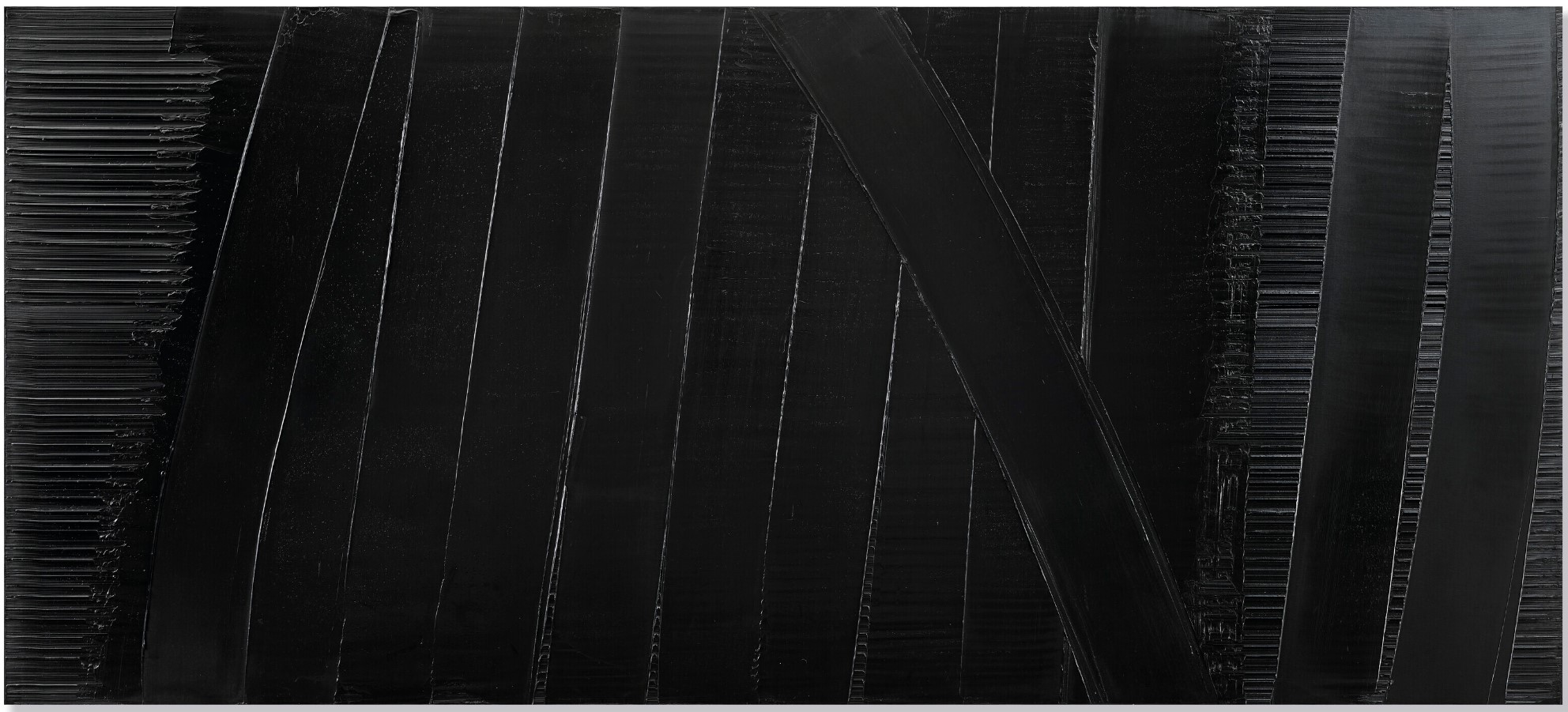
PIERRE SOULAGES (1919-2022)
Peinture 130 x 290 cm, 21 novembre 1990
Oil on canvas
130×290 cm (51 1/8 x 114 1/8 inches)
Signed, titled and dated ‘SOULAGES ”Peinture 130 x 290 cm 21 nov 90”’ (on the reverse)
#4. Peinture 91 x 181 cm, 26 décembre 2014
Christie’s London: 28 June 2023
Estimated: GBP 750,000 – 1,000,000
GBP 1,153,200 / USD 1,456,980
OUTRENOIR
PIERRE SOULAGES (1919-2022) (christies.com)
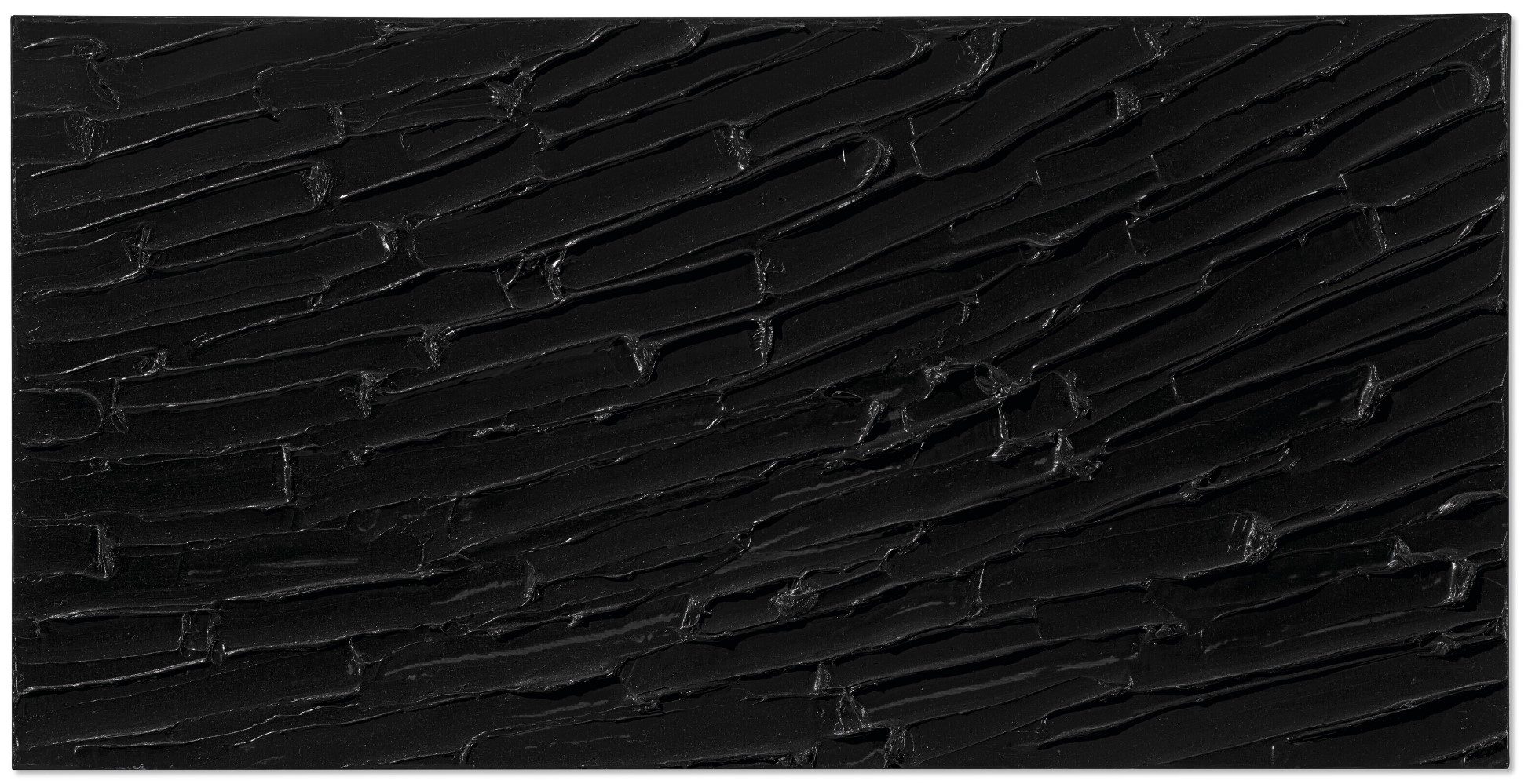
PIERRE SOULAGES (1919-2022)
Peinture 91 x 181 cm, 26 décembre 2014
Acrylic on canvas
91×181 cm (35 3/4 x 71 1/4 inches)
Signed, titled and dated ‘SOULAGES “peinture 91 x 181 cm” 26-12-2014’ (on the reverse)
#5. Peinture 138 x 181 cm, 26 novembre 2010
Christie’s London: 28 February 2023
Estimated: GBP 650,000 – 850,000
GBP 1,026,000 / USD 1,240,928
OUTRENOIR
PIERRE SOULAGES (christies.com)
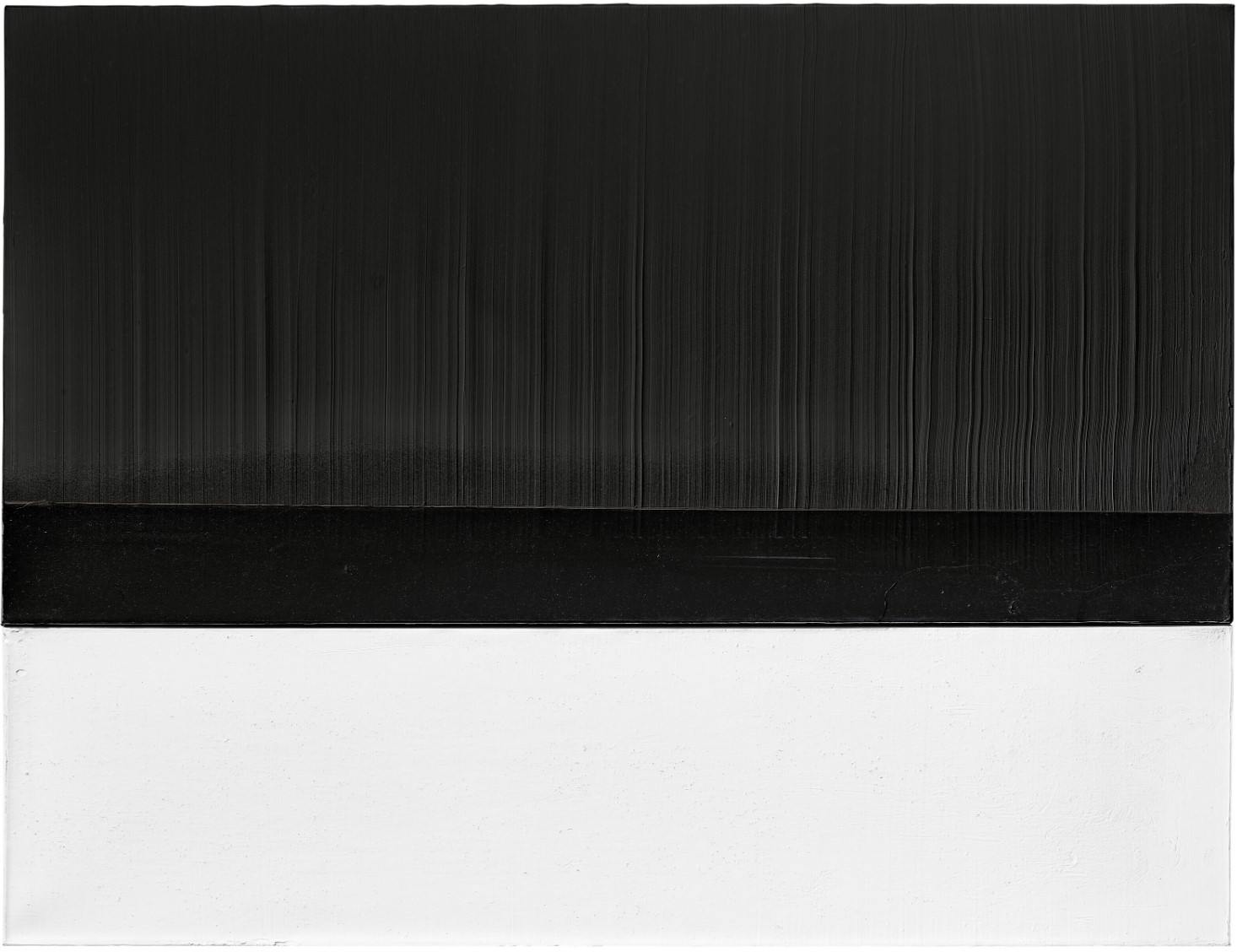
PIERRE SOULAGES (1919-2022)
Peinture 138 x 181 cm, 26 novembre 2010
Acrylic on canvas, in two parts
Overall: 54 5/8 x 71 5/8 inches (138.8 x 181.8 cm)
Signed, titled and dated ‘SOULAGES “Peinture 138 x 181 cm” 26 novembre 2010’ (on the reverse)
#6. Peinture 81 x 102 cm, 18 décembre 1988
Sotheby’s Paris: 13 October 2023
Estimated: EUR 800,000 – 1,200,000
EUR 1,076,500 / USD 1,134,410
OUTRENOIR
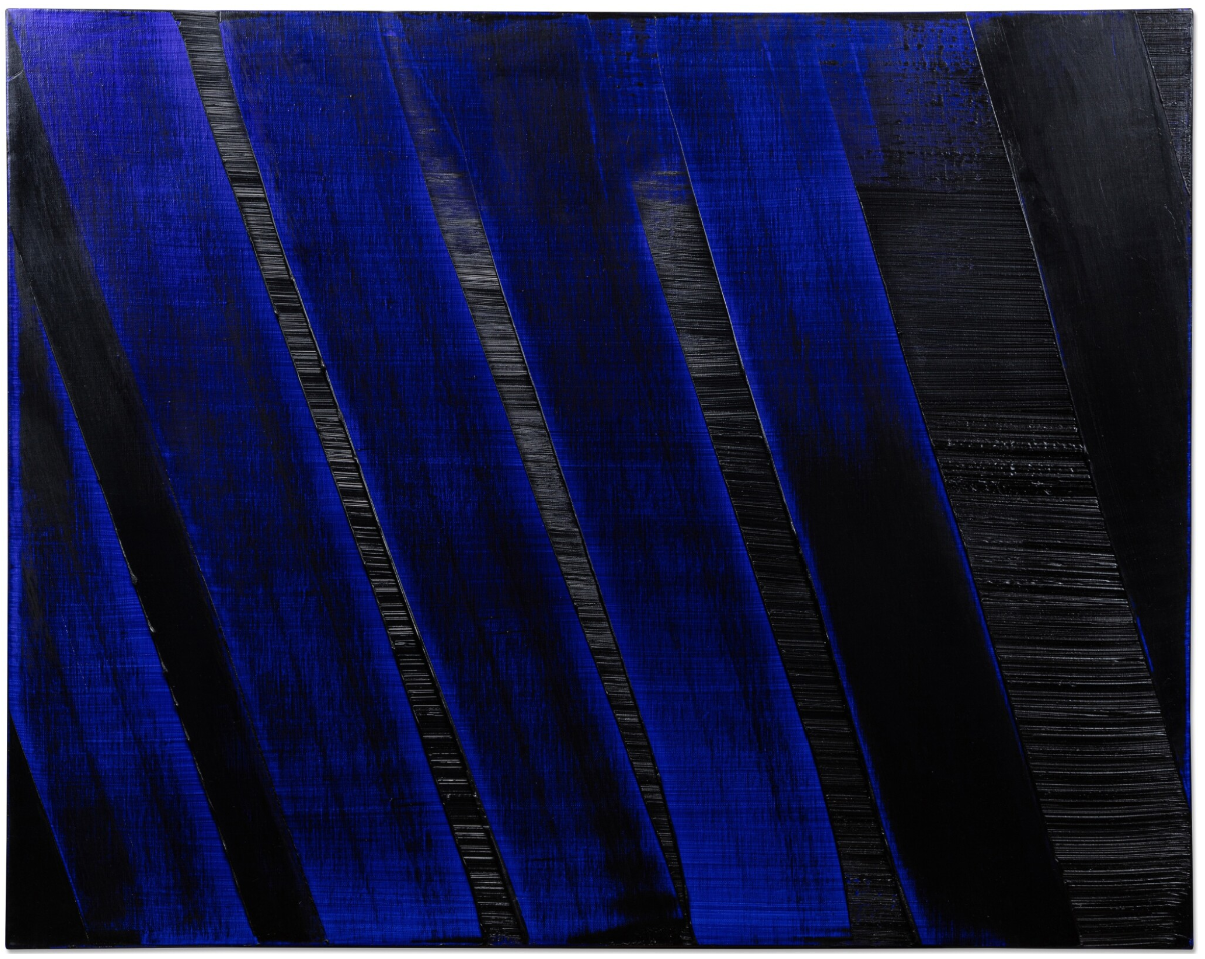
PIERRE SOULAGES (1919 – 2022)
Peinture 81 x 102 cm, 18 décembre 1988
Oil on canvas
81×102 cm (31 7/8 x 40 1/8 inches)
Signed, titled and dated 18.12.88 on the reverse
#7. Peinture 92 cm x 130 cm, 17 March 1991
Piasa: 13 December 2023
Estimated: EUR 800,000 – 1,200,000
EUR 1,133,200 / USD 1,222,833
OUTRENOIR
Pierre Soulages (1919-2022) Peinture 92 cm x 130 cm, 17 March 1991 (piasa.fr)
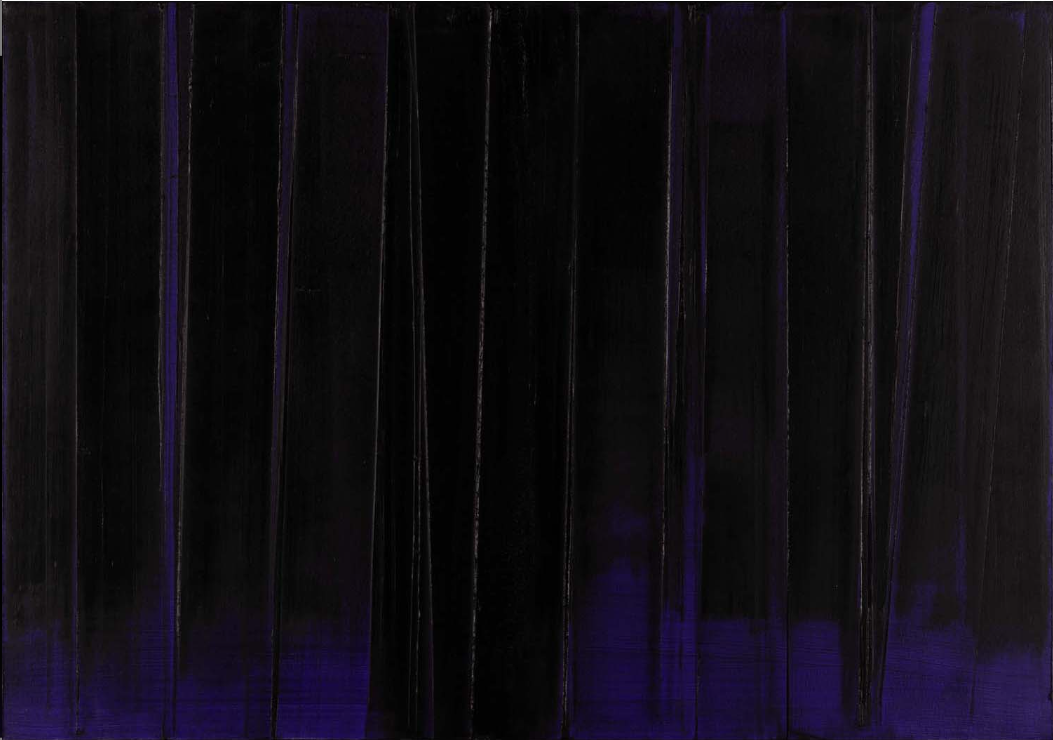
PIERRE SOULAGES (1919-2022)
Peinture 92 cm x 130 cm, 17 March 1991
Oil on canvas
92×130 cm
Signed, dated and titled on the back
#8. Peinture 73 x 92 cm, 6 octobre 1970
Sotheby’s Paris: 5 June 2023
Estimated: EUR 950,000 – 1,350,000
EUR 1,016,000 / USD 1,089,077
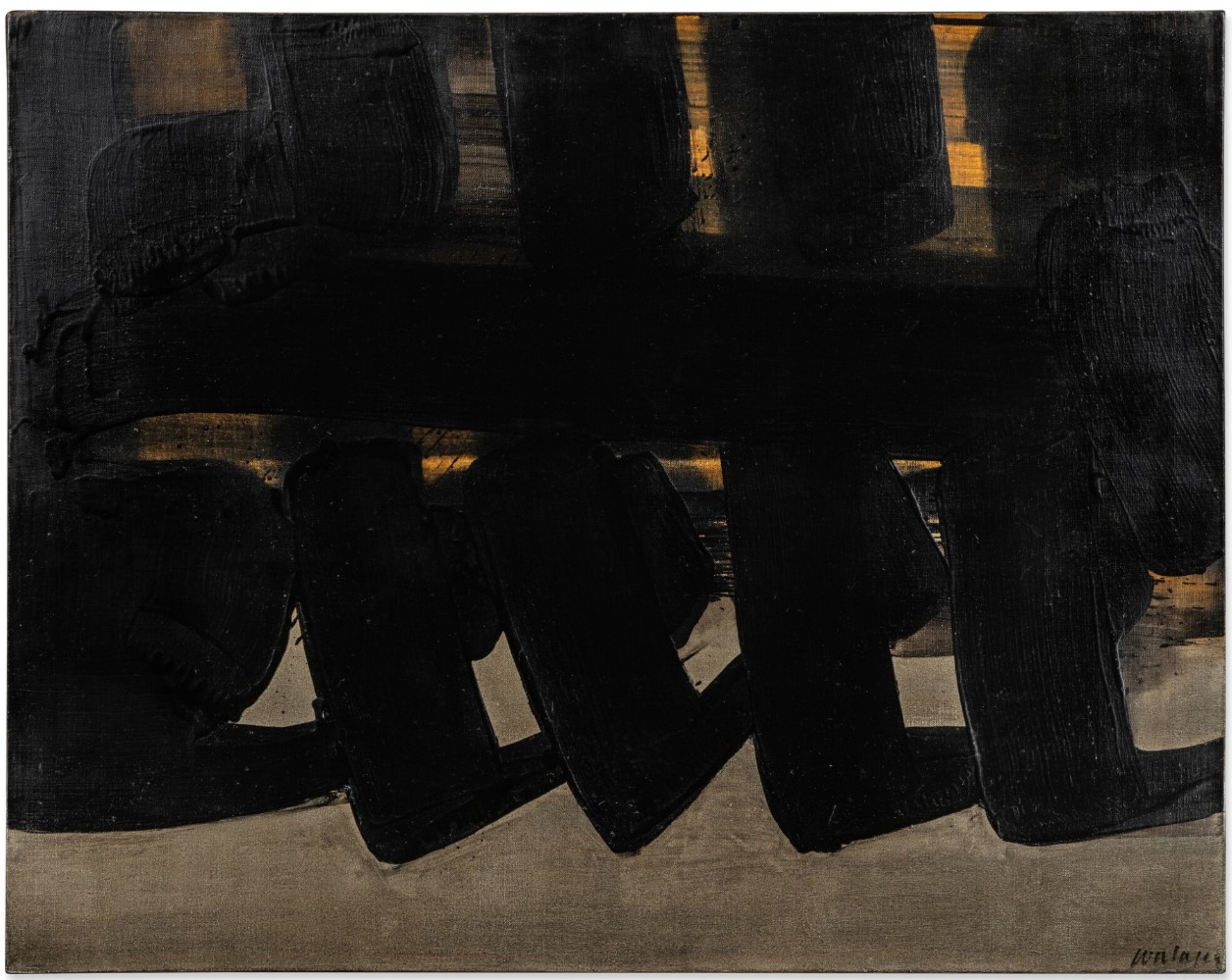
PIERRE SOULAGES (1919 – 2022)
Peinture 73 x 92 cm, 6 octobre 1970
Oil on canvas
73×92 cm (31 1/8 x 36 1/4 inches)
Signed; dated 6 Oct 70 on the reverse
#9. Peinture 81 x 63,5 cm, 7 mars 2003
Sotheby’s Paris: 5 June 2023
Estimated: EUR 700,000 – 1,000,000
EUR 965,200 / USD 1,034,623
OUTRENOIR
Peinture 81 x 102 cm, 18 décembre 1988 | Modernités | 2023 | Sotheby’s (sothebys.com)
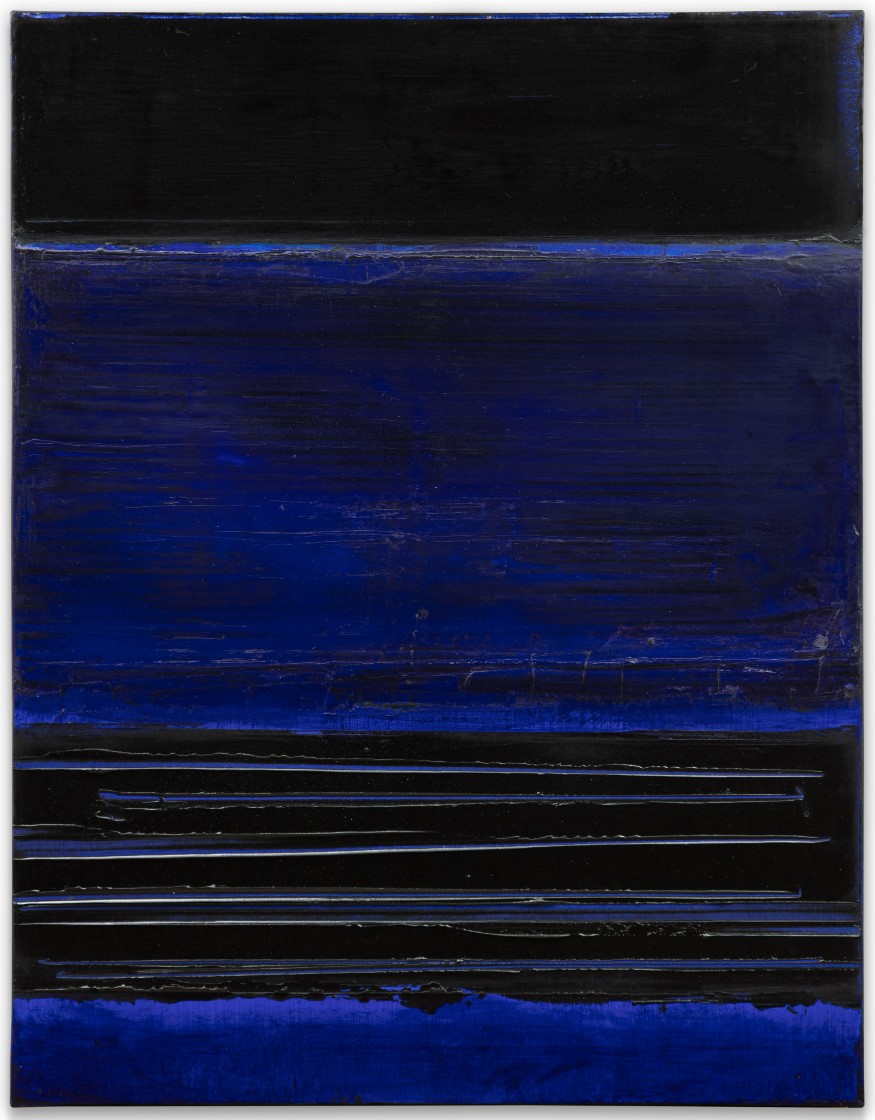
PIERRE SOULAGES (1919 – 2022)
Peinture 81 x 63,5 cm, 7 mars 2003
Oil on canvas
81 x 63.5 cm (31 7/8 x 25 inches)
Signed, titled and dated 7 mars 2003 on the reverse
USD 1 million
#10. Peinture 54 x 81 cm, 1951
Christie’s Paris: 6 December 2023
Estimated: EUR 600,000 – 800,000
EUR 882,000 / USD 952,163
Pierre Soulages (1919-2022) (christies.com)
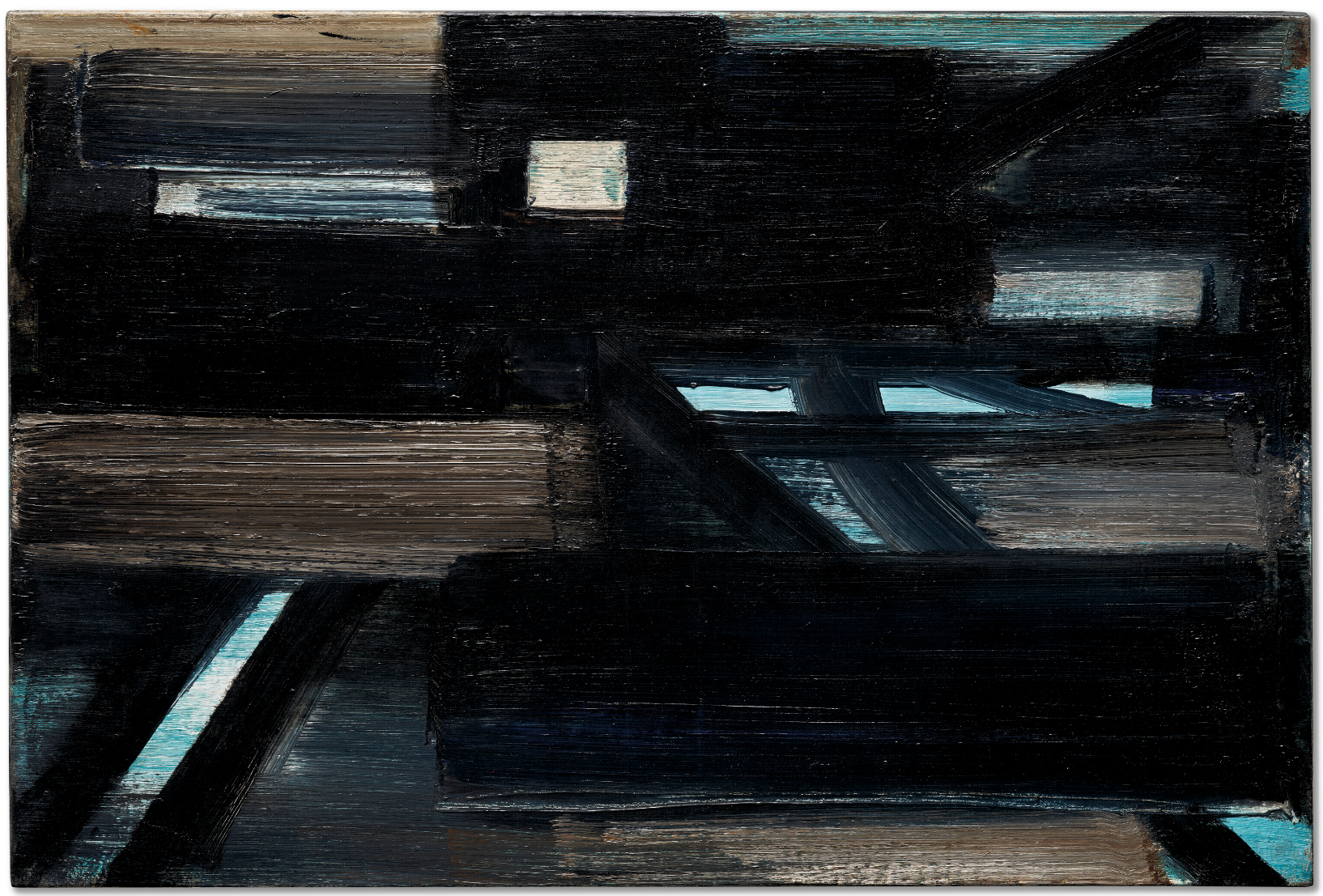
PIERRE SOULAGES (1919-2022)
Peinture 54 x 81 cm, 1951
Oil on canvas
54×81 cm (21 1/4 x 31 7/8 inches)
Signed and titled ‘SOULAGES ”54 x 81 cm 1951”’ (on the reverse)
#11. Peinture 38 x 55 cm, 14 octobre 1961
Christie’s Paris: 7 June 2023
Estimated: EUR 600,000 – 800,000
EUR 882,000 / USD 943,820
Pierre Soulages (1919-2022) (christies.com)
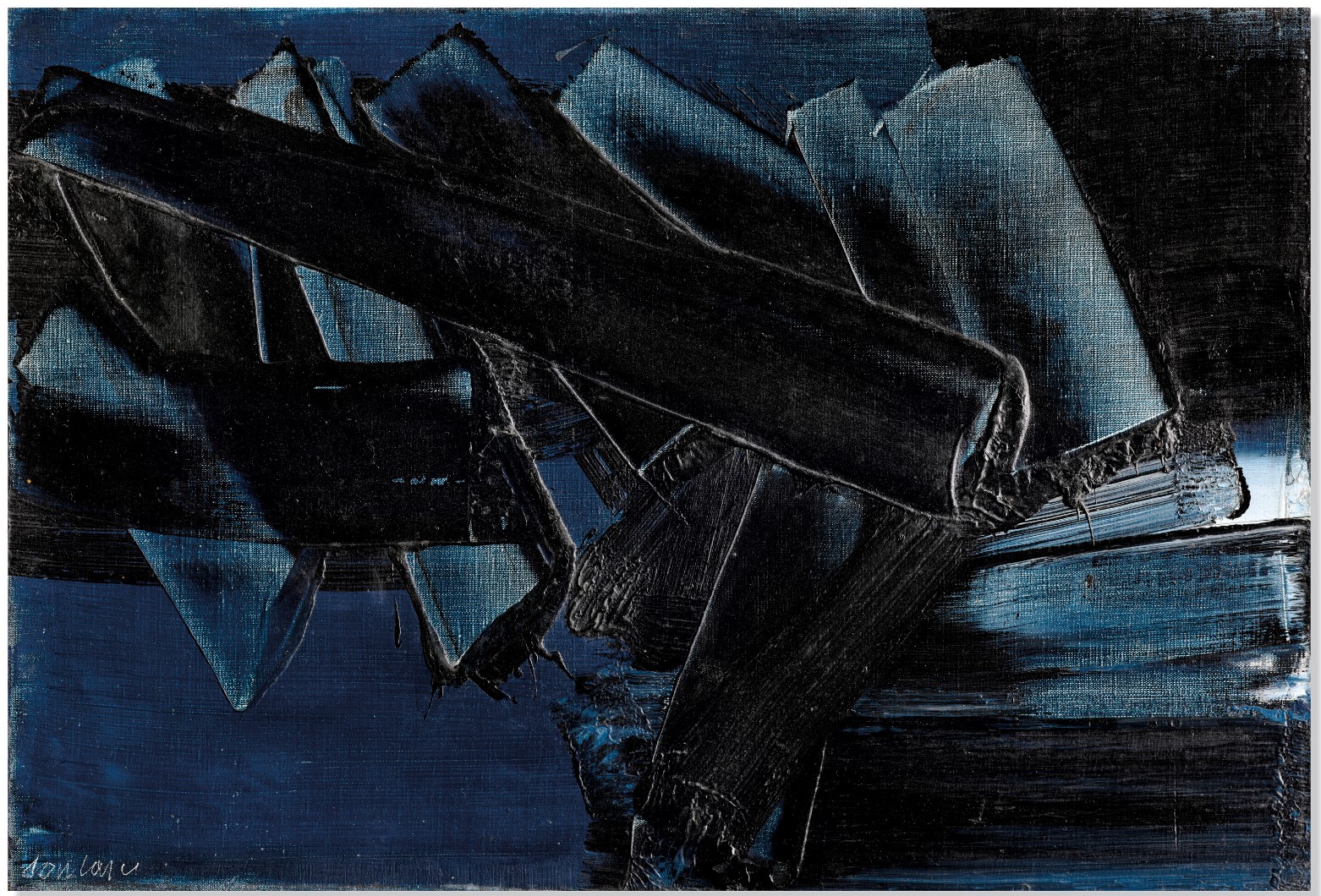
PIERRE SOULAGES (1919-2022)
Peinture 38 x 55 cm, 14 octobre 1961
Oil on canvas
38×55 cm (15 x 21 5/8 inches)
Signed ‘soulages’ (lower left)
#12. Peinture 65 x 143 cm, 13 décembre 2008
Artcurial Paris: 7 June 2023
Estimated: EUR 700,000 – 900,000
EUR 852,800 / USD 912,296
OUTRENOIR
Contemporary Art – Evening Sale | Sale n°4308 | Lot n°133 | Artcurial
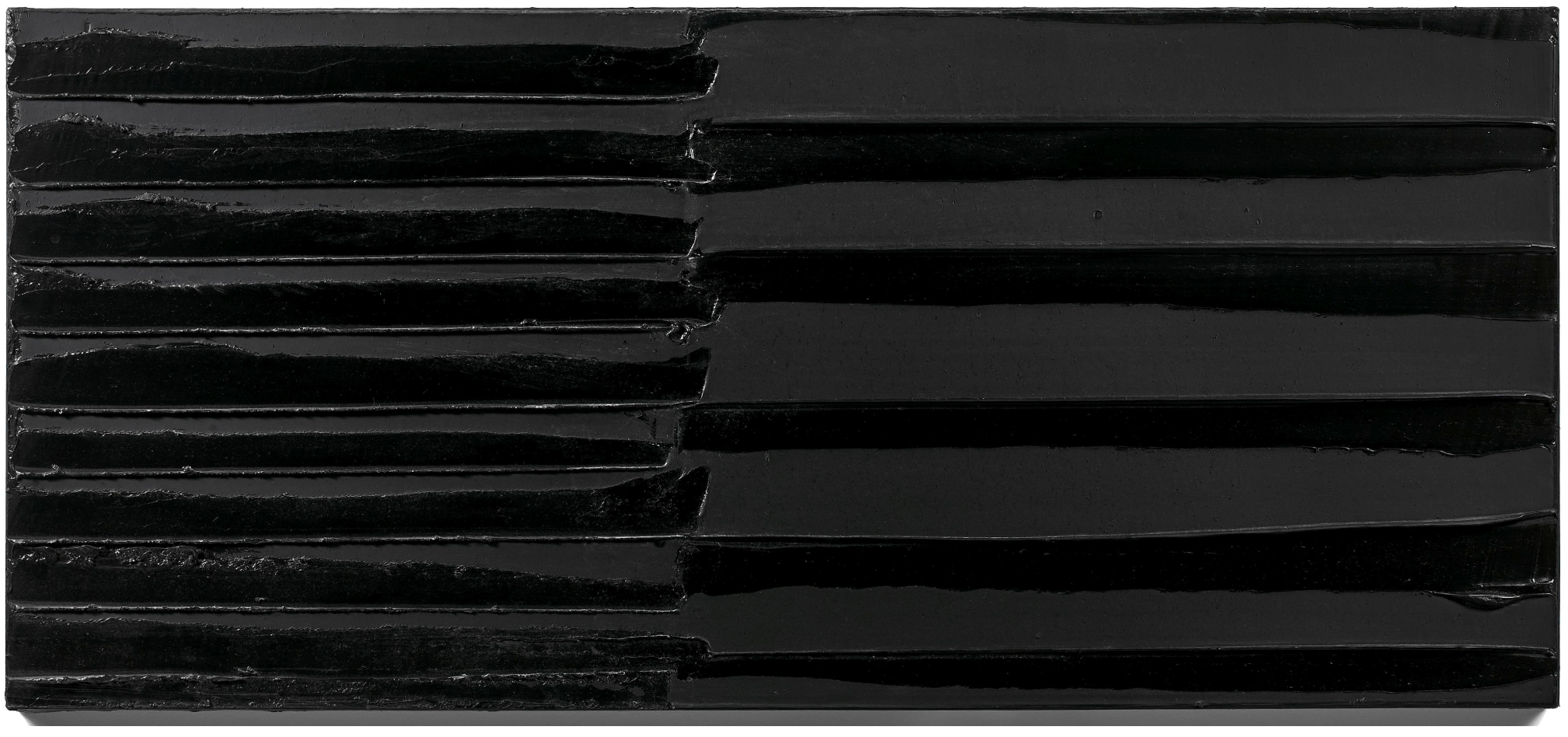
Pierre SOULAGES (1919-2022)
Peinture 65 x 143 cm, 13 décembre 2008
Acrylic on canvas
65×143 cm
Signed, dated and titled on the reverse
#13. Peinture 92 x 130 cm, 4 mai 2004
Christie’s Paris: 20 October 2023
Estimated: EUR 700,000 – 1,000,000
EUR 667,800 / USD 707,265
OUTRENOIR
Pierre Soulages (1919-2022) (christies.com)
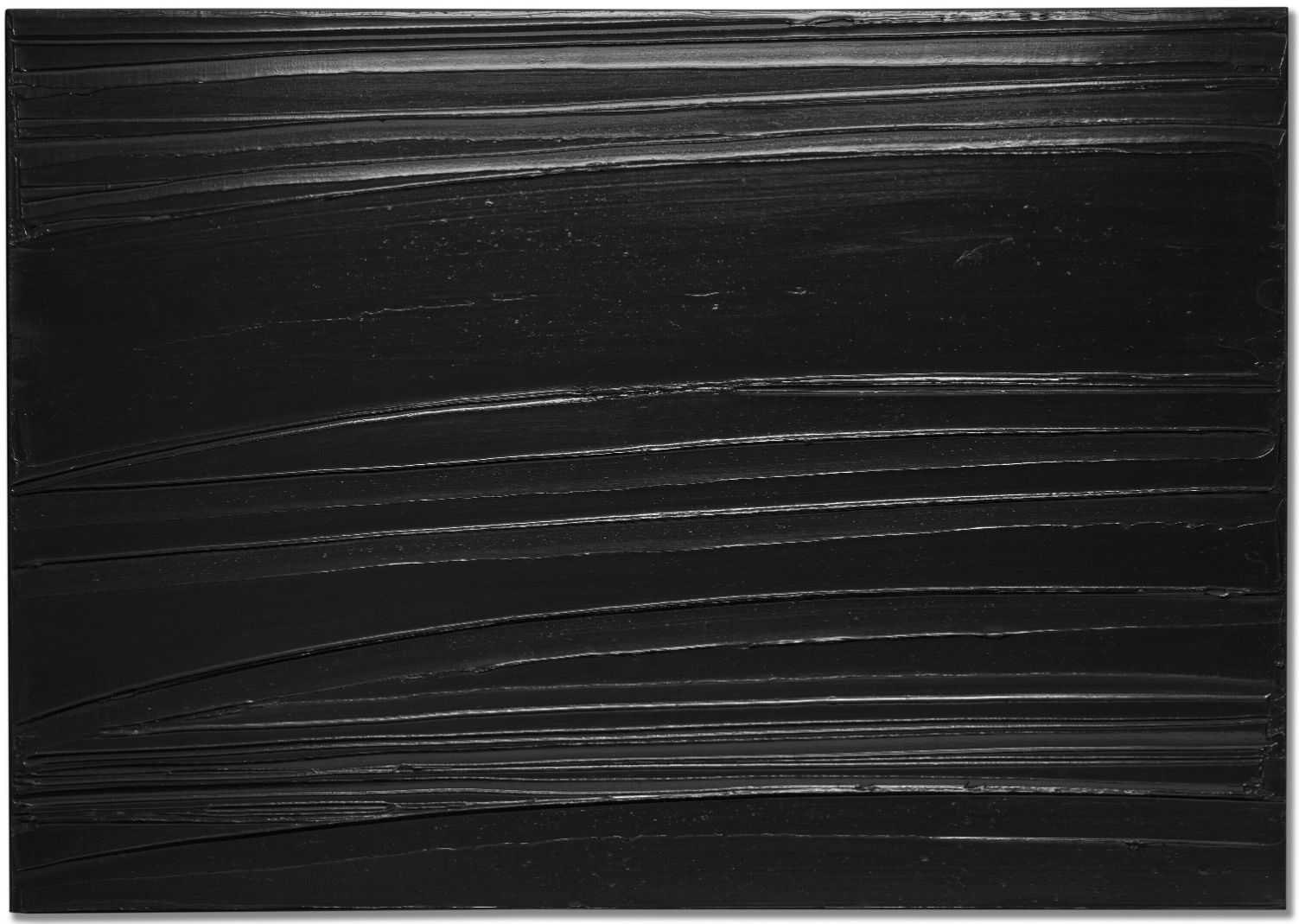
PIERRE SOULAGES (1919-2022)
Peinture 92 x 130 cm, 4 mai 2004
Acrylic on canvas
92×130 cm (36 1/4 x 51 1/8 inches)
Signed and titled ‘SOULAGES 92 x 130 cm 4 Mai 2004’ (on the reverse)
Signed and inscribed ‘soulages’ (on the stretcher)
#14. Peinture 117 x 130 cm, 20 mai 2007
Christie’s Paris: 6 December 2023
Estimated: EUR 500,000 – 700,000
EUR 630,000 / USD 680,116
OUTRENOIR
Pierre Soulages (1919-2022) (christies.com)
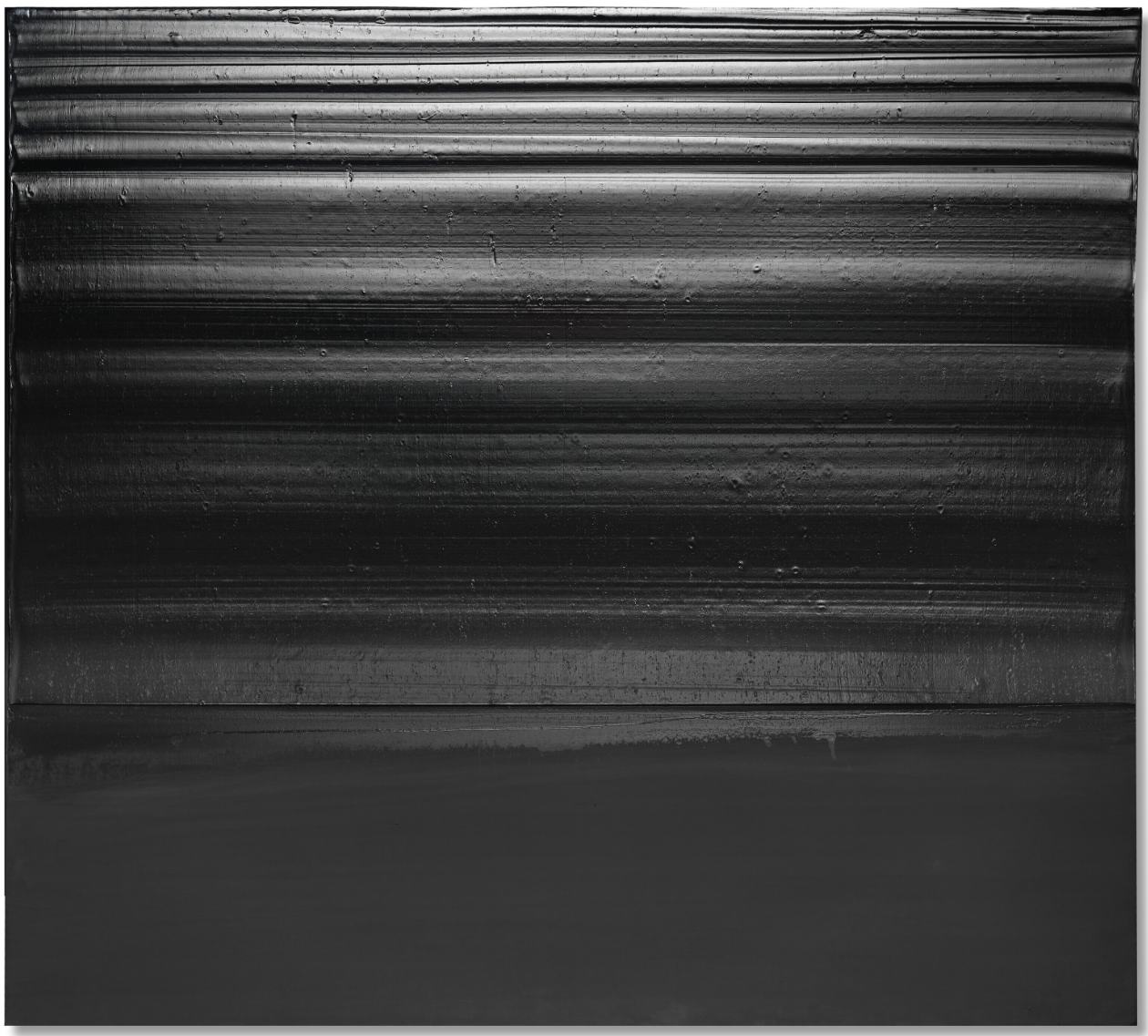
PIERRE SOULAGES (1919-2022)
Peinture 117 x 130 cm, 20 mai 2007
Acrylic on canvas
117×130 cm (46 x 51 1/8 inches)
Signed and titled ‘SOULAGES ”Peinture 117 x 130 cm (20 05 07)”’ (on the reverse)
2022 Auction Results
FOR PAINTINGS ONLY
19 lots sold at auction in 2022 for a total turnover of USD 42,233,896. With no lot failing to sell, the sell-through rate is 100%. The highest price was achieved at Sotheby’s in Paris on 26 October 2022, for Peinture 162×130 cm 2 mai 1963 that sold for EUR 5,975,200 (USD 5,951,987).
2022 Top 3 Lots
15 lots sold for more than USD 1 million generating a cumulative turnover of USD 39,132,725, contributing 92.7% to the total turnover for 2022.
11 Outrenoirs sold at auction in 2022 for a total turnover of USD 14,282,334. The highest price was achieved at Christie’s in Paris on 20 October 2022, for Peinture 85×22 cm 18 avril 1991, that sold for EUR 2,442,000 (USD 2,398,821).
XXXXXXXXXX
#1. Peinture 162 x 130 cm, 2 mai 1963
Sotheby’s Paris: 26 October 2022
Estimated: EUR 5,200,000 – 7,200,000
EUR 5,975,200 / USD 5,951,987
Peinture 162 x 130 cm, 2 mai 1963 | Modernités | 2022 | Sotheby’s (sothebys.com)
Peinture 162 x 130 cm, 2 mai 1963
Oil on canvas
156.5 x 125 cm (61.6 x 49.2 inches
Signed Soulages and dated 63 (lower right)
Signed SOULAGES and dated 2/5/63
(on the reverse)
#2. Peinture 195 x 130 cm, 3 décembre 1956
Sotheby’s Hong-Kong: 7 October 2022
Estimated: HKD 40,000,000 – 60,000,000
HKD 45,145,000 / USD 5,750,589
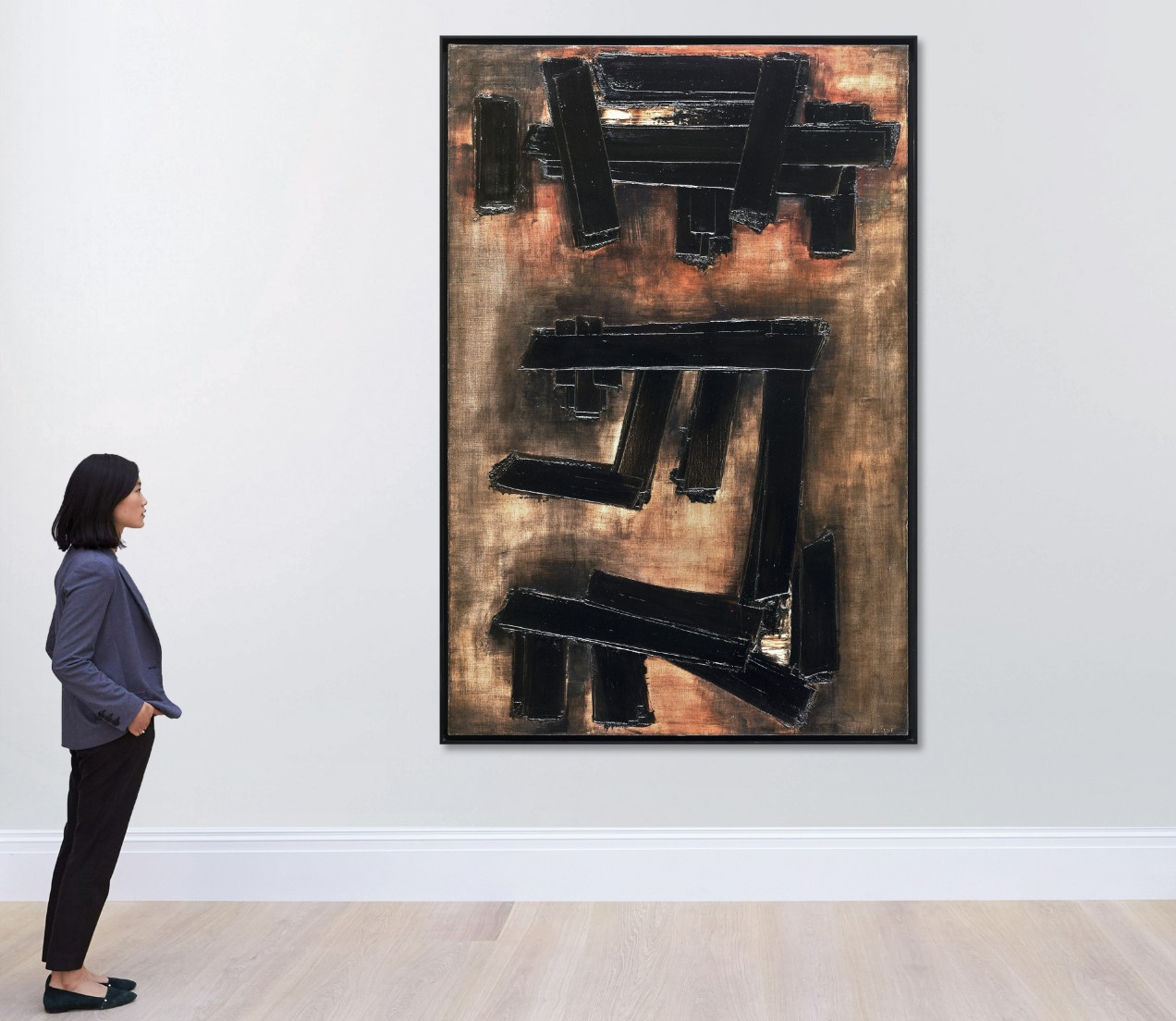
PIERRE SOULAGES
Peinture 195 x 130 cm, 3 décembre 1956
Oil on canvas
195×130 cm (76.7 x 51.1 inches)
Signed Soulages (lower right)
Executed on 3 December 1956
#3. Peinture 97 x 130 cm, 5 juin 1962
Christie’s Hong-Kong: 25 May 2022
Estimated: HKD 26,000,000 – 36,000,000
HKD 38,850,000 / USD 4,949,218
PIERRE SOULAGES (B. 1919) (christies.com)
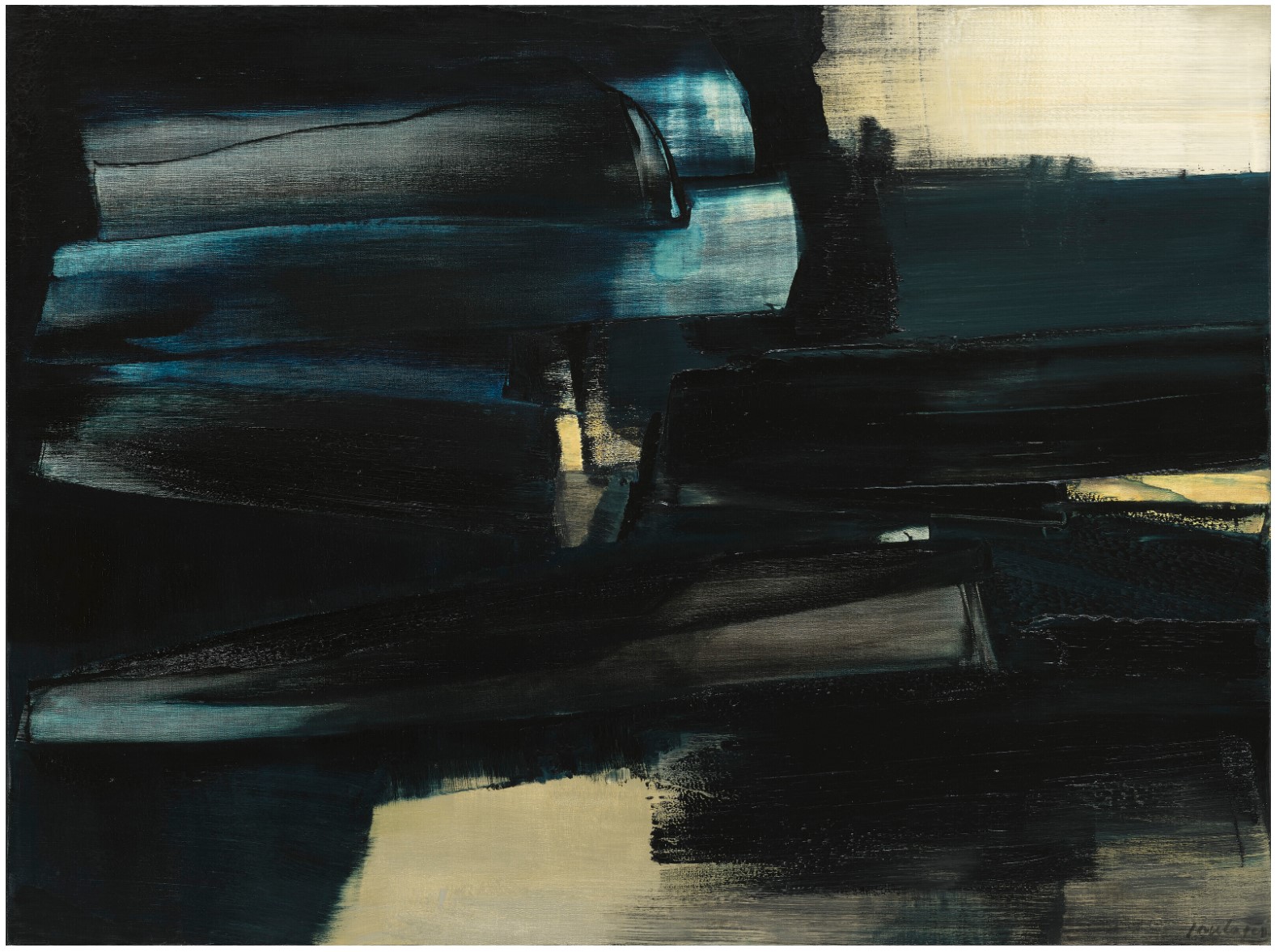
PIERRE SOULAGES
Peinture 97 x 130 cm, 5 juin 1962
Oil on canvas
97×130 cm (38.2 x 51.1 inches)
#4. Peinture 92 x 73 cm, 12 août 1959
Artcurial Paris: 27 June 2022
Estimated: EUR 2,300,000 – 3,300,000
EUR 2,718,100 / USD 2,881,480
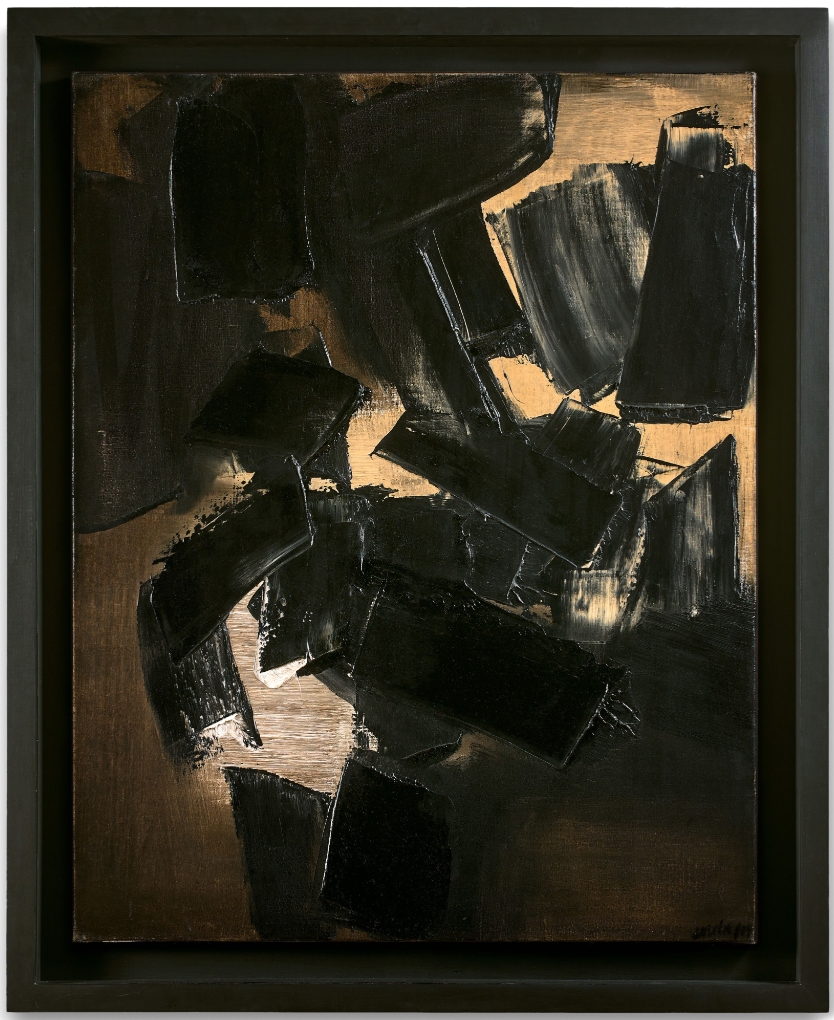
Pierre SOULAGES (1919-2022)
Peinture 92 x 73 cm, 12 août 1959
Oil on canvas
92×73 cm
Signed lower right
Signed, dated and titled on reverse
#5. Peinture 130 x 97 cm, 1949
Christie’s Hong-Kong: 30 November 2022
Estimated: HKD 18,000,000 – 28,000,000
HKD 22,050,000 / USD 2,825,112
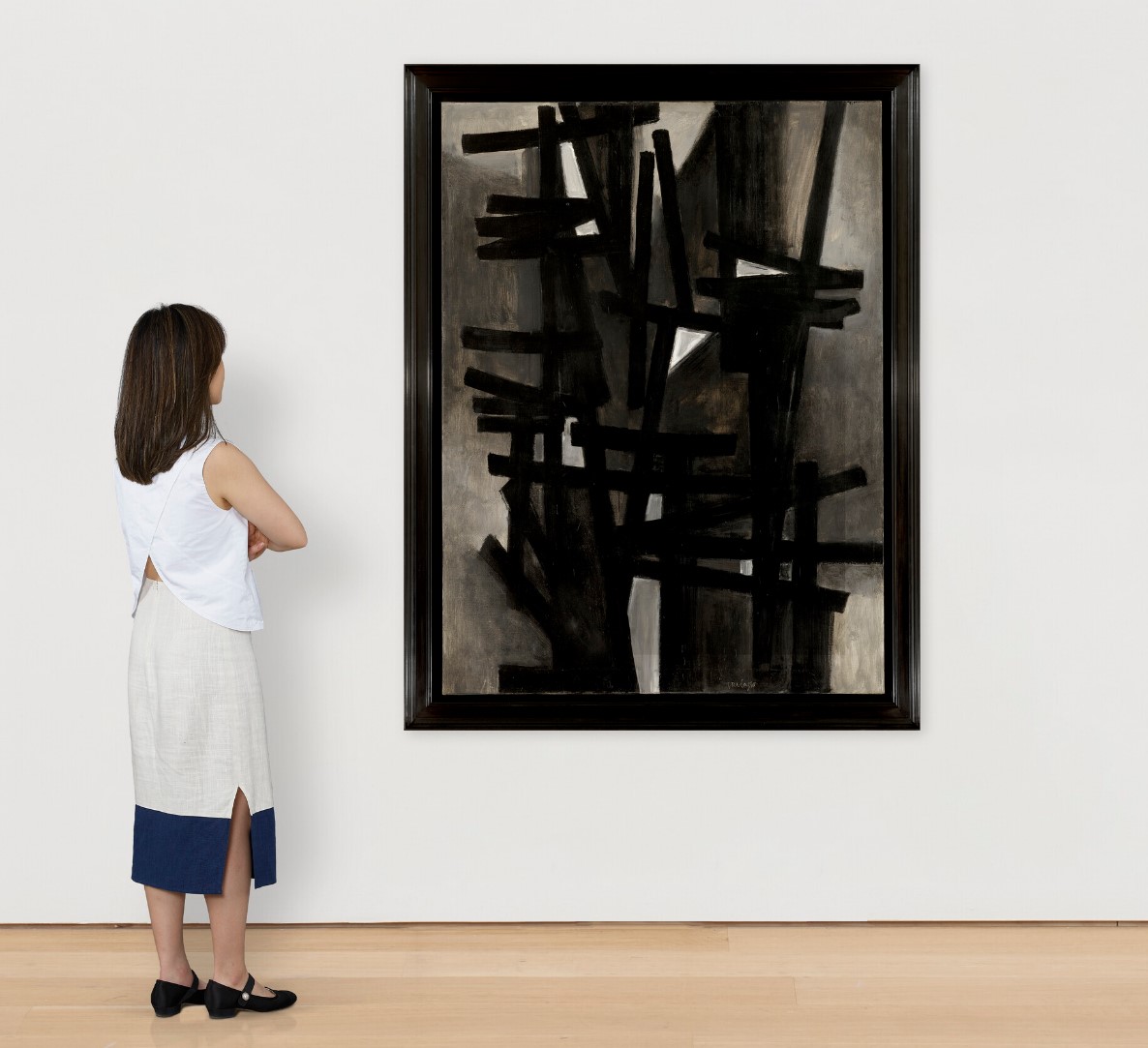
PIERRE SOULAGES (1919 – 2022)
Peinture 130 x 97 cm, 1949
Oil on canvas
130×97 cm (51 1/8 x 38 1/4 inches)
#6. Peinture 92 x 65 cm, 7 février 1954
Sotheby’s New-York: 14 November 2022
Estimated: USD 800,000 – 1,200,000
USD 2,470,000
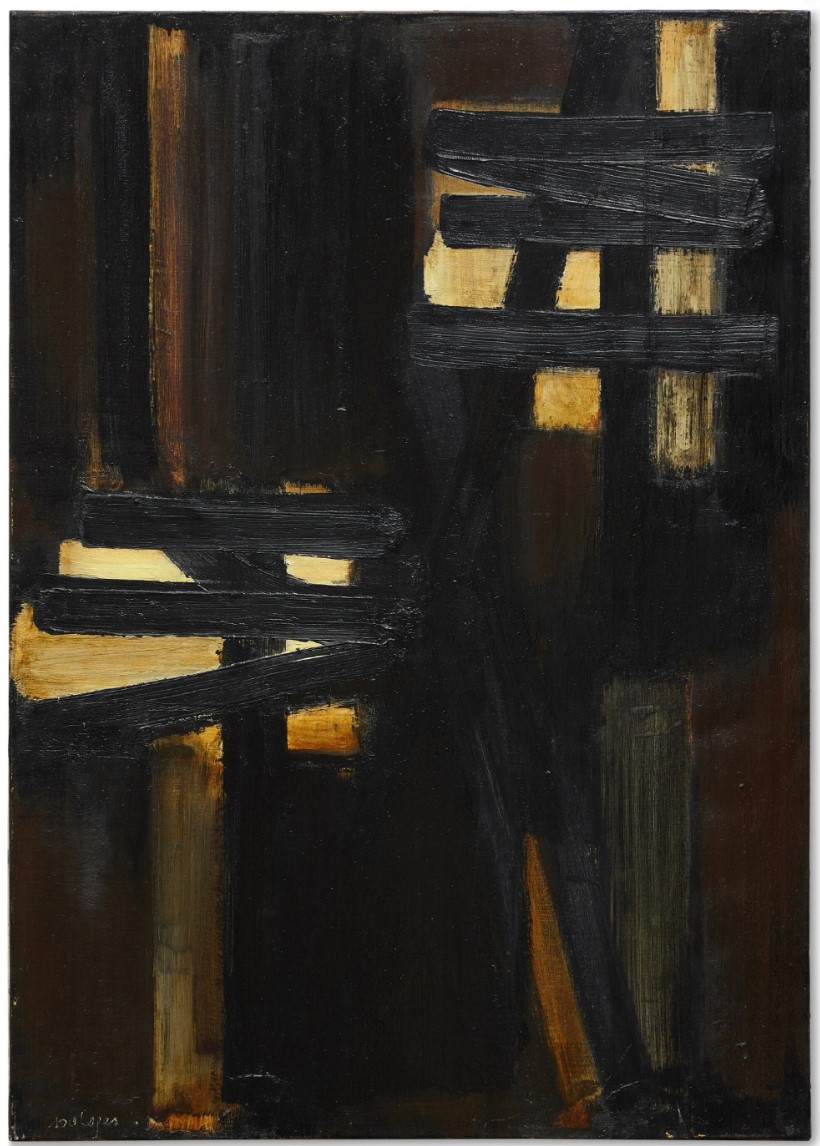
PIERRE SOULAGES (1919 – 2022)
Peinture 92 x 65 cm. 7 février 1954
Oil on canvas
92×65 cm (36 x 25 3/4 inches)
Signed Soulages (lower left); signed again and dated 7/2/54 (on the reverse)
#7. Peinture 85 x 222 cm, 18 avril 1991
Christie’s Paris: 20 October 2022
Estimated: EUR 600,000 – 800,000
EUR 2,442,000 / USD 2,398,821
OUTRENOIR
Pierre Soulages (né en 1919) (christies.com)
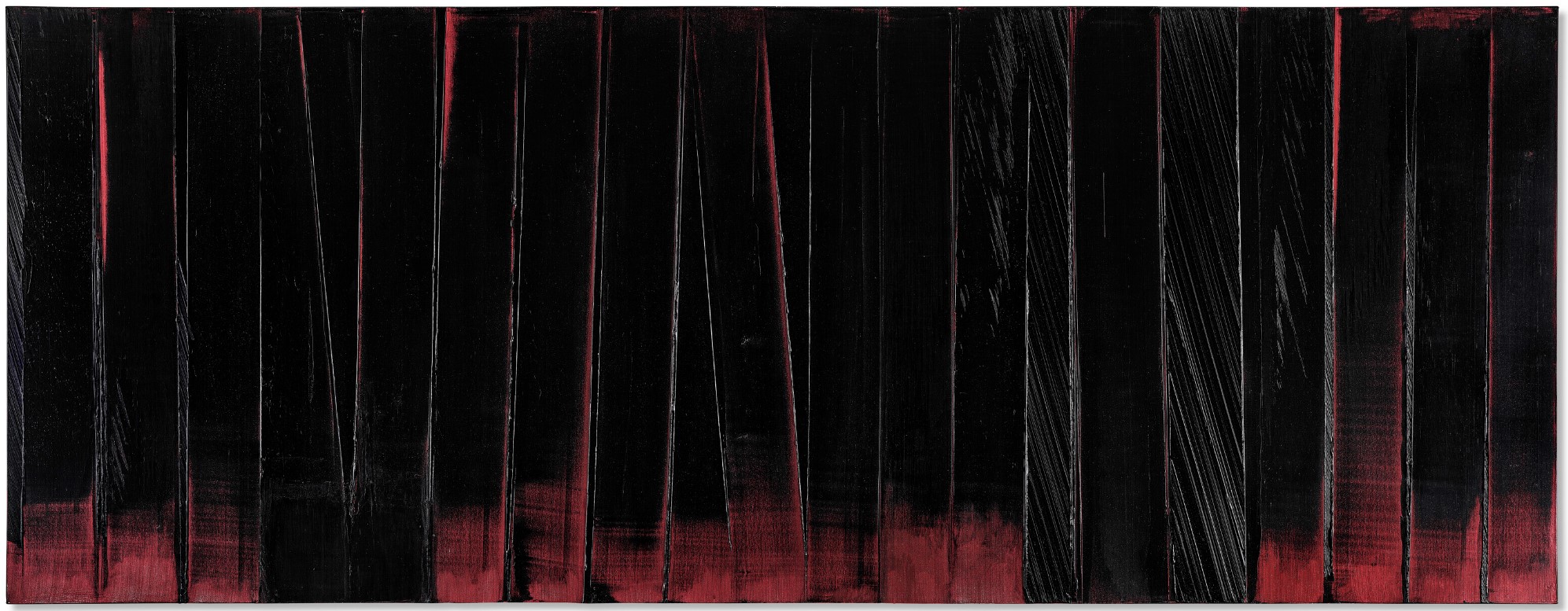
PIERRE SOULAGES (1919-2022)
Peinture 85 x 222 cm, 18 avril 1991
Oil on canvas
85×222 cm (33 1/2 x 87 3/8 inches)
Signed, dated and inscribed ‘SOULAGES Peinture 28 x 222 18 Avril 1991’ (on the reverse)
#8. Peinture 143 x 202 cm, 4 décembre 1970
Christie’s Paris: 27 June 2022
Estimated: EUR 1,500,000 – 2,000,000
EUR 2,082,000 / USD 2,202,000
Pierre Soulages (né en 1919) (christies.com)
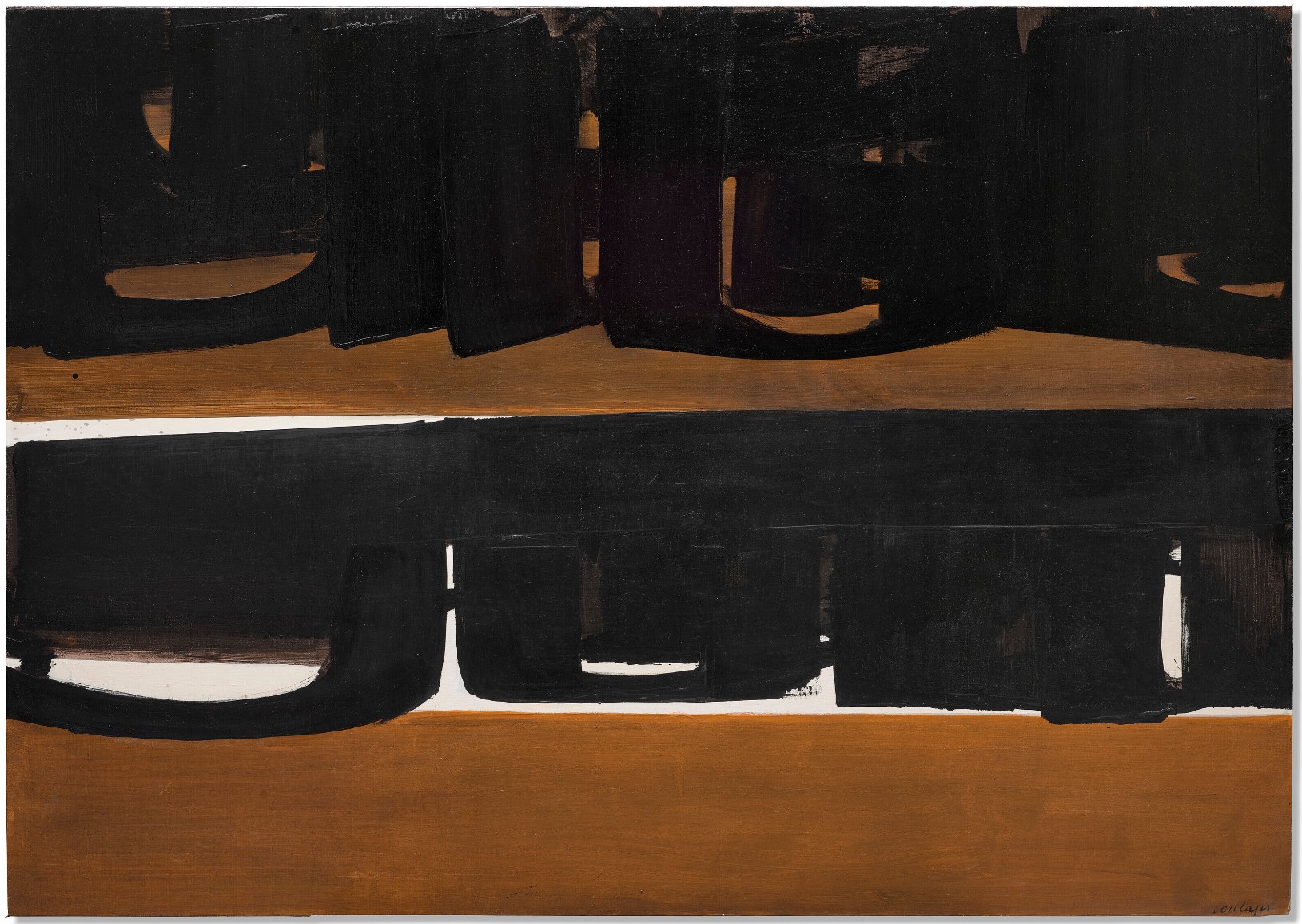
PIERRE SOULAGES
Peinture 143 x 202 cm, 4 décembre 1970
Oil on canvas
143×202 cm (56.2 x 79.5 inches)
#9. Peinture 263 x 181 cm, 2 juillet 2012
Sotheby’s Paris: 8 June 2022
Estimated: EUR 1,500,000 – 2,500,000
EUR 1,729,000 / USD 1,856,943
OUTRENOIR
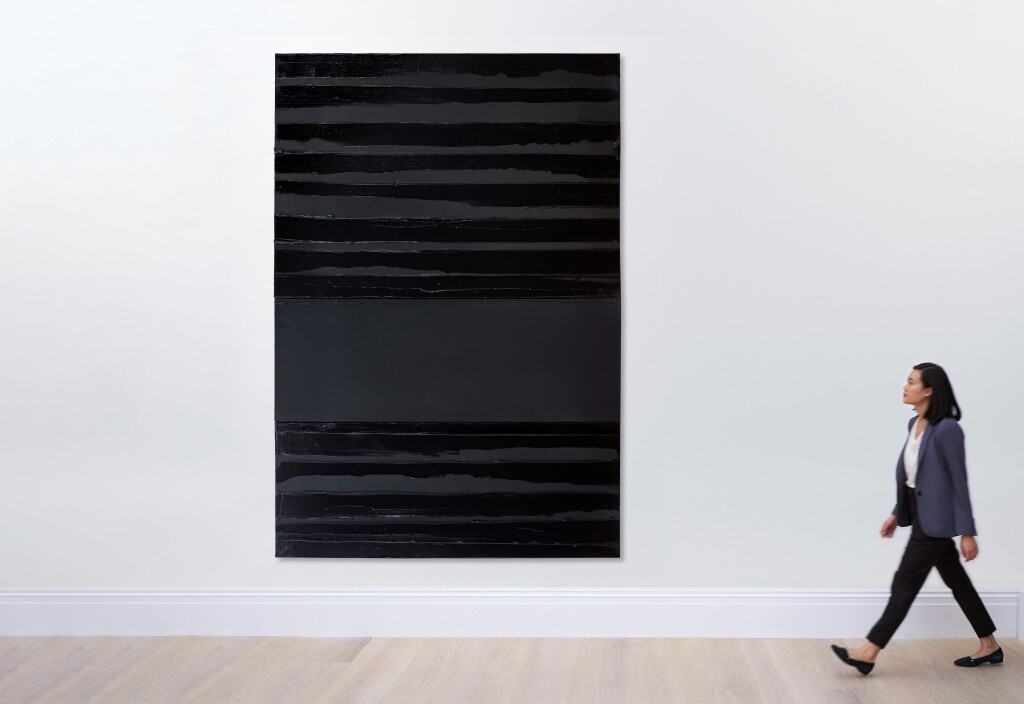
PIERRE SOULAGES
Peinture 263 x 181 cm, 2 juillet 2012
Acrylic on canvas (triptych)
263×181 cm (103.5 x 71.2 inches)
#9. Peinture 102 x 165 cm, 16 novembre 1994
Sotheby’s Paris: 8 June 2022
Estimated: EUR 800,000 – 1,200,000
EUR 1,668,500 / USD 1,791,966
OUTRENOIR
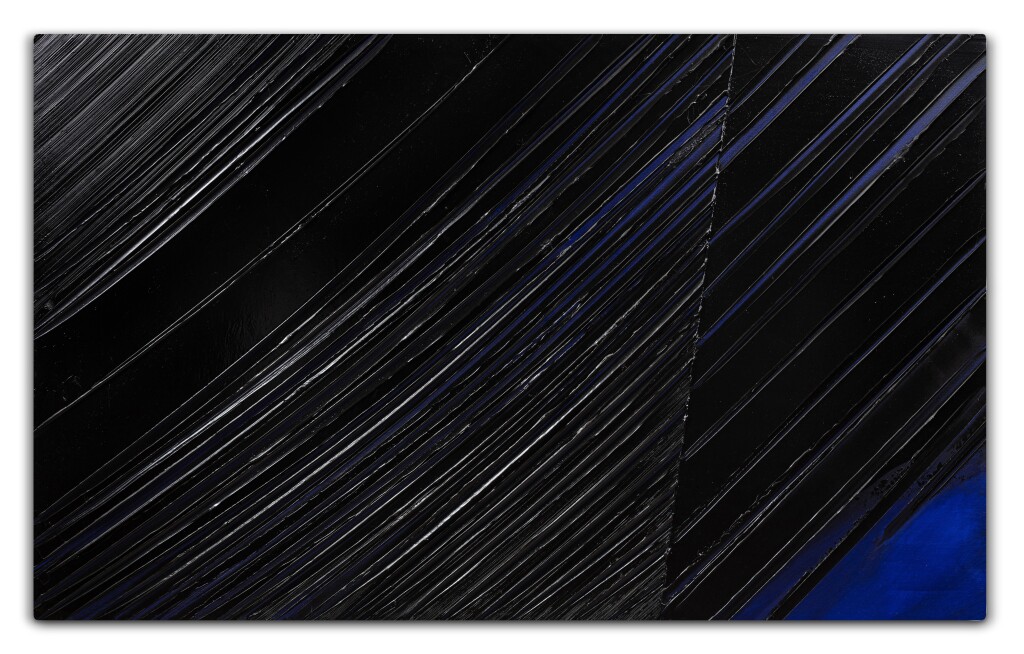
PIERRE SOULAGES
Peinture 102 x 165 cm, 16 novembre 1994
Oil on canvas
102×165 cm (40.2 x 64.9 inches)
#10. Peinture 175 x 222 cm, 20 juillet 2020
Christie’s Paris: 20 October 2022
Estimated: EUR 1,000,000 – 1,500,000
EUR 1,482,000 / USD 1,455,795
OUTRENOIR
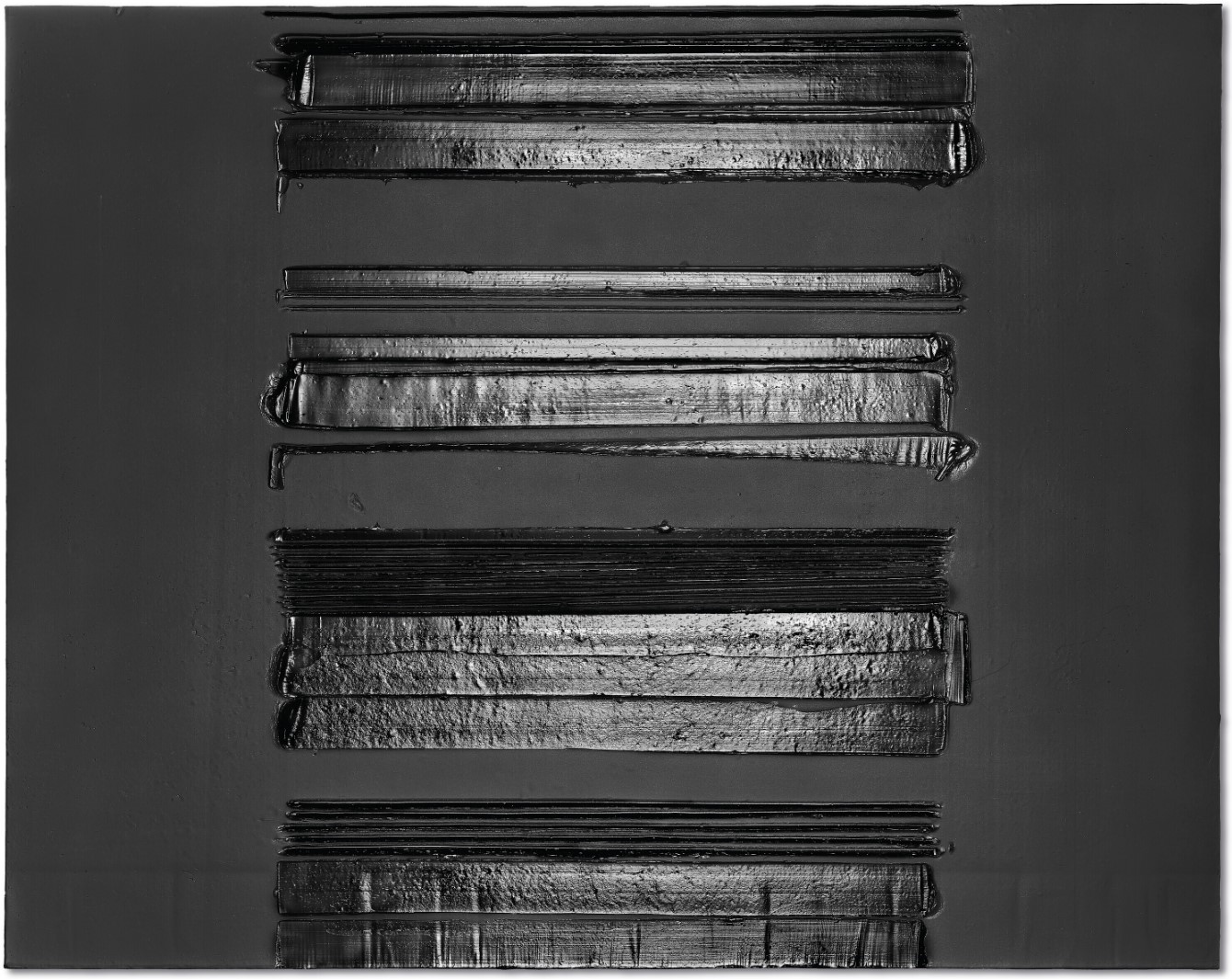
PIERRE SOULAGES (1919-2022)
Peinture 175 x 222 cm, 20 juillet 2020
Acrylic on canvas
175×222 cm (68 7/8 x 87 3/8 inches)
Signed, dated and inscribed ‘SOULAGES Peinture 175 x 222 cm. 20.07.2020’ (on the reverse)
#12. Peinture 130 x 92 cm, 9 janvier 1989
Christie’s Paris: 1 December 2022
Estimated: EUR 1,000,000 – 1,500,000
EUR 1,182,000 / USD 1,240,814
OUTRENOIR
Pierre Soulages (1919-2022) (christies.com)
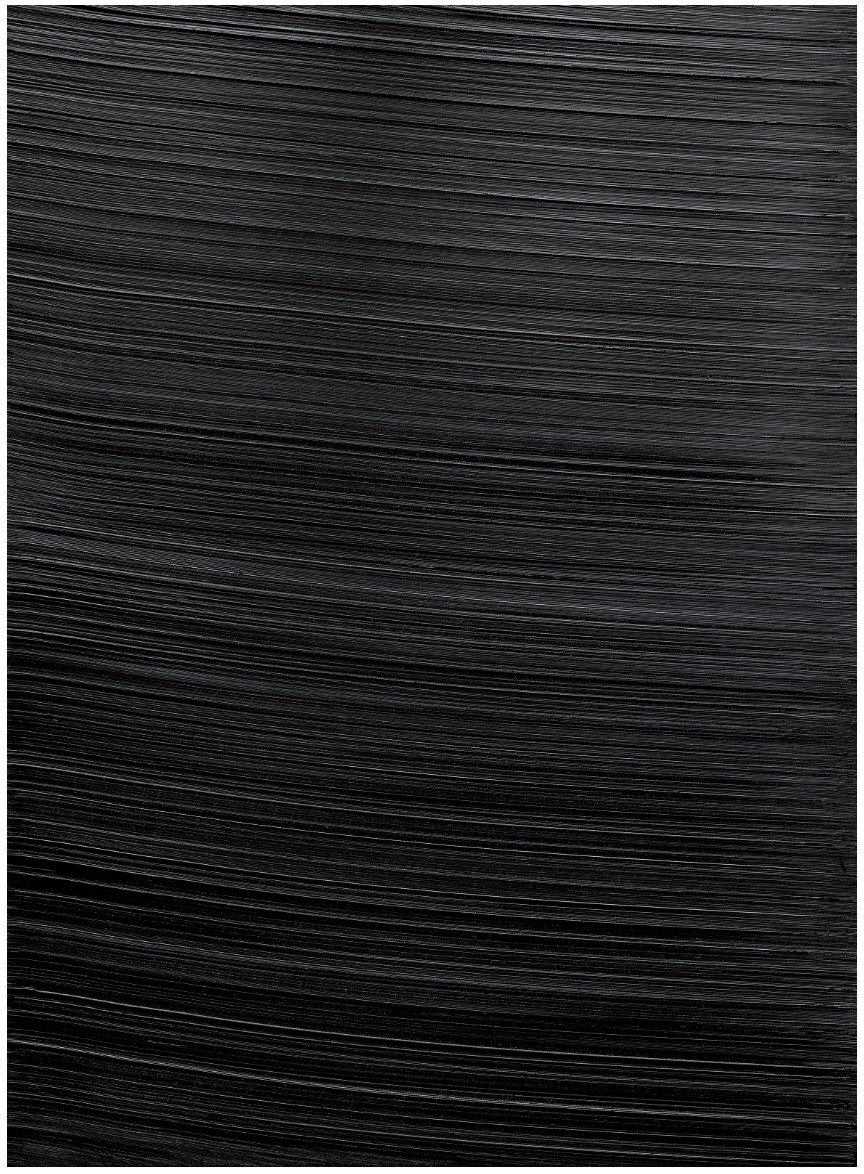
PIERRE SOULAGES (1919-2022)
Peinture 130 x 92 cm, 9 janvier 1989
Oil on canvas
130×92 cm (51 1/8 x 36 1/2 inches)
Signed and titled ‘SOULAGES ”Peinture 130 x 92 cm” 9 Janv 89’ (on the reverse)
#14. Peinture 81 x 100 cm, 20 février 1996
Sotheby’s Paris: 25 October 2022
Estimated: EUR 600,000 – 800,000
EUR 1,124,000 / USD 1,119,633
OUTRENOIR
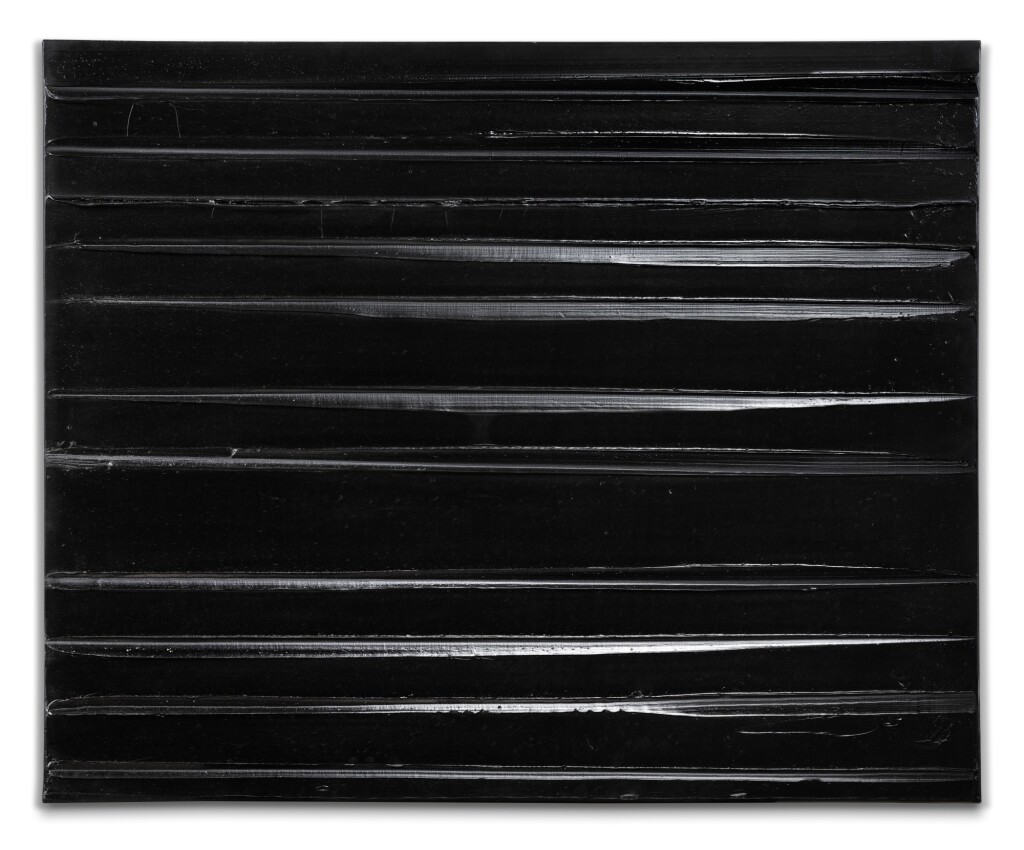
PIERRE SOULAGES (1919-2022)
Peinture 81 x 100 cm, 20 février 1996
Acrylic on canvas
81×100 cm (31⅞ x 39 ⅜ inches)
Signed, titled and dated 20-02-96 on the reverse
#14. Peinture 102 x 130 cm, 11 mars 2016
Phillips Hong-Kong: 22 June 2022
Estimated: HKD 7,500,000 – 10,000,000
HKD 8,115,000 / USD 1,033,762
OUTRENOIR
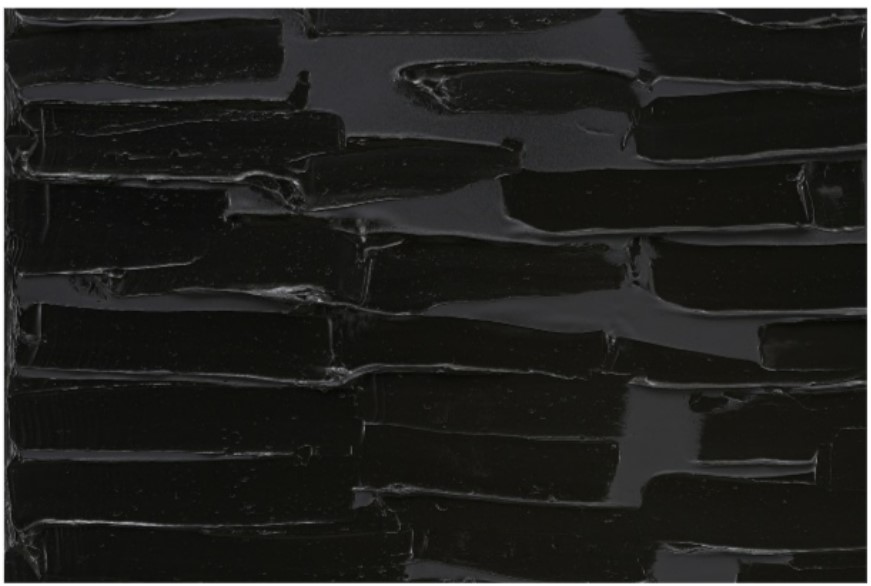
PIERRE SOULAGES
Peinture 102 x 130 cm, 11 mars 2016
Acrylic on canvas
102×130 cm (40.1 x 50.1 inches)
USD 1 million
#16. Peinture 81 x 102 cm, 9 février 1987
Sotheby’s Paris: 6 December 2022
Estimated: EUR 800,000 – 1,200,000
EUR 906,200 / USD 951,291
OUTRENOIR
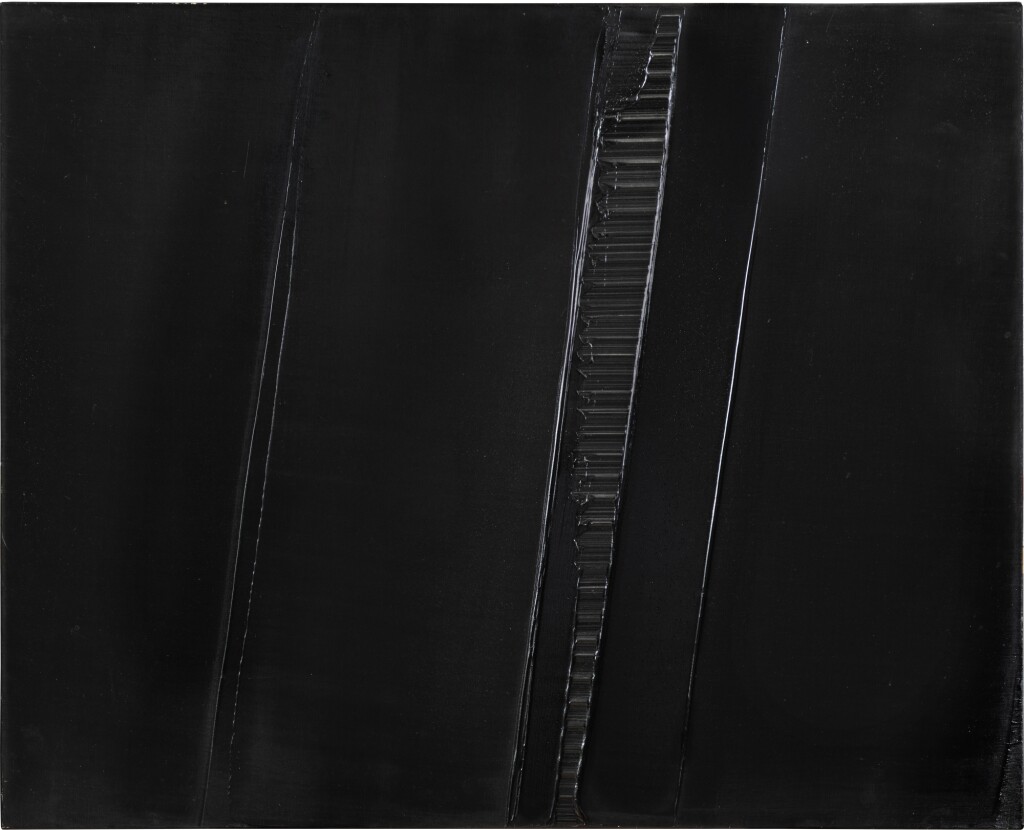
PIERRE SOULAGES (1919-2022)
Peinture 81 x 102 cm, 9 février 1987
oil on canvas
81×102 cm (31 ⅞ x 40 3⁄16 inches)
Peinture 54.5 x 38 cm, 27 novembre 1956
Christie’s Paris: 27 June 2022
Estimated: EUR 600,000 – 800,000
EUR 882,000 / USD 933,175
Pierre Soulages (né en 1919) (christies.com)
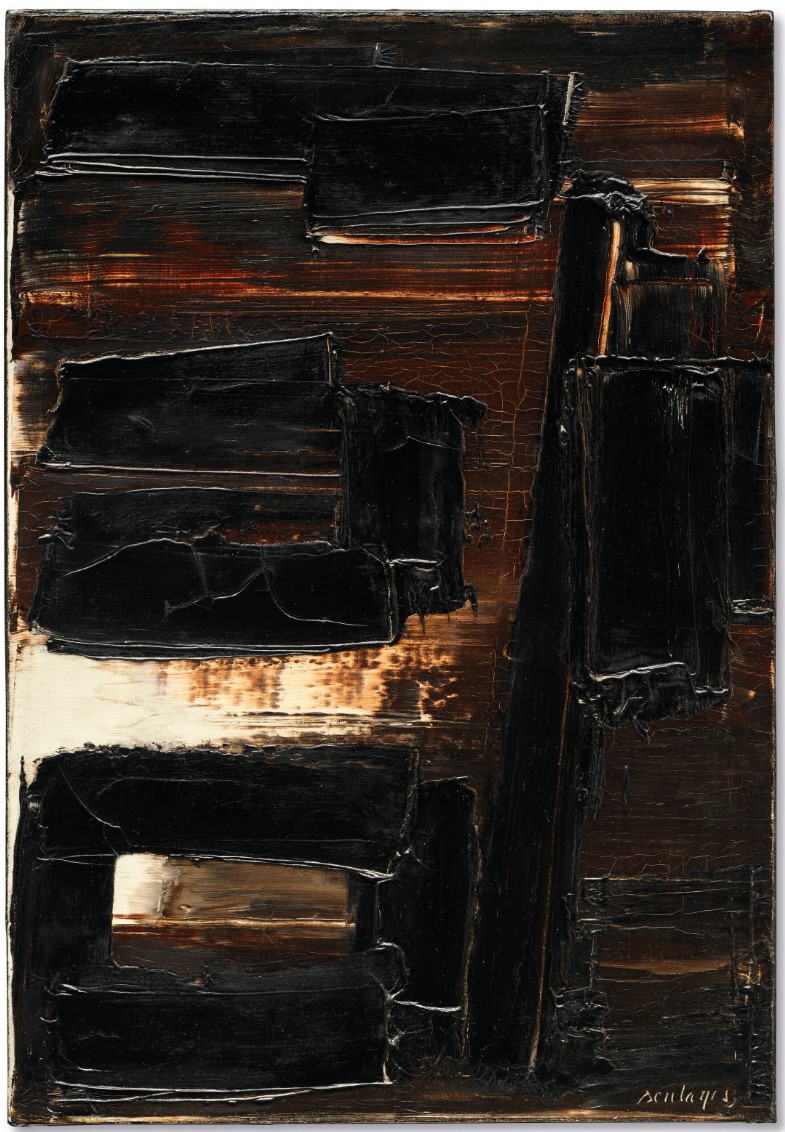
PIERRE SOULAGES
Peinture 54.5 x 38 cm, 27 novembre 1956
Oil on canvas
54.5 x 38 cm (21.5 x 15 inches)
#17. Peinture 54 x 73 cm, 26 septembre 1981
Ketterer Munich: 10 June 2022
Estimated: EUR 400,000
EUR 685,000 / USD 720,597
OUTRENOIR
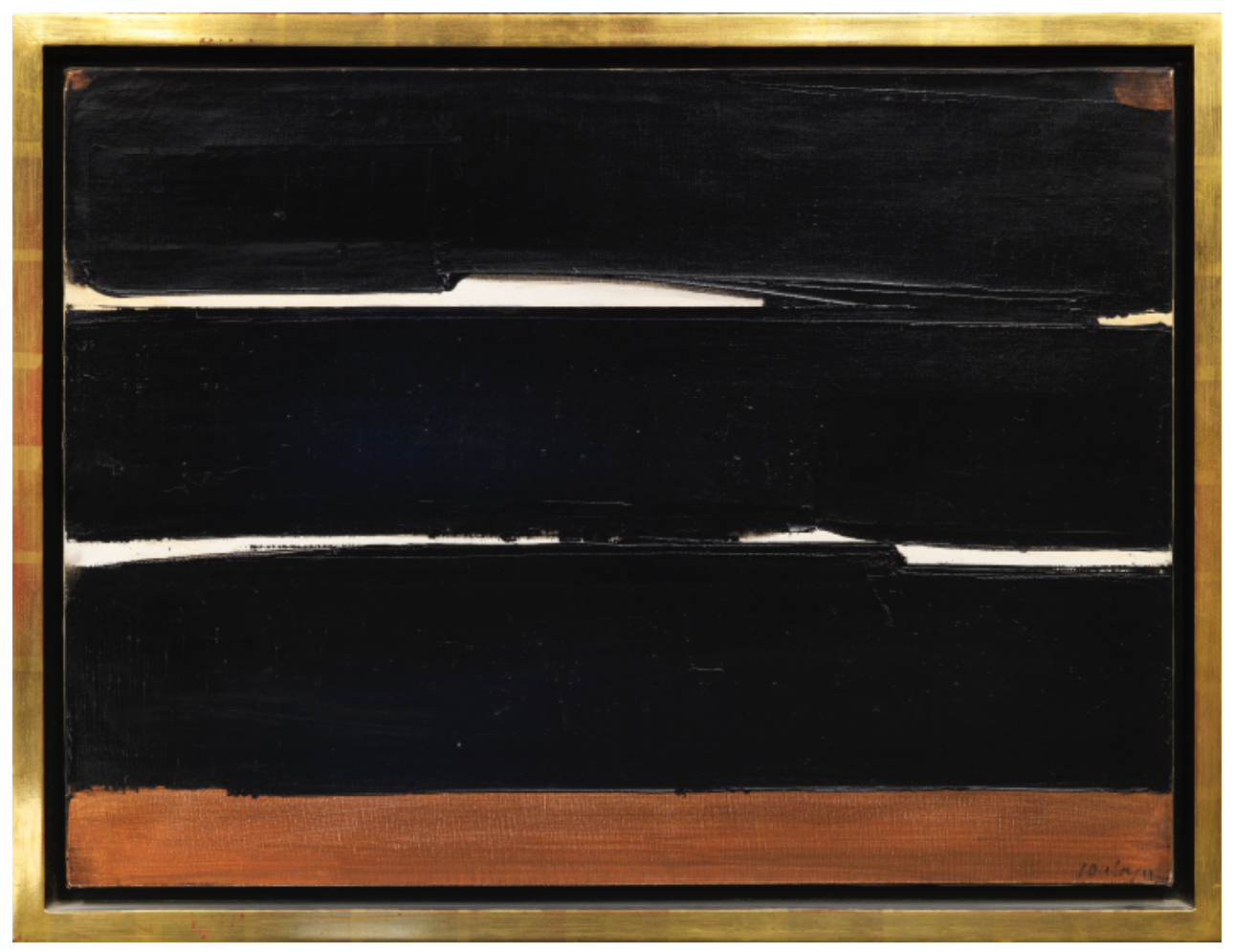
PIERRE SOULAGES
Peinture 54 x 73 cm, 26 septembre 1981
Oil on canvas
54.5 x 73 cm (21.4 x 28.7 inches)
Signed in lower right. Signed, dated “26.9.81 54 x 73” on the reverse
Additionally dated “26-9-81” and inscribed “3/82” on verso of the stretcher
#19. Peinture 45 x 57 cm, 7 janvier 2000
Ketterer Munich: 10 June 2022
Estimated: EUR 220,000
EUR 475,000 / USD 499,684
OUTRENOIR
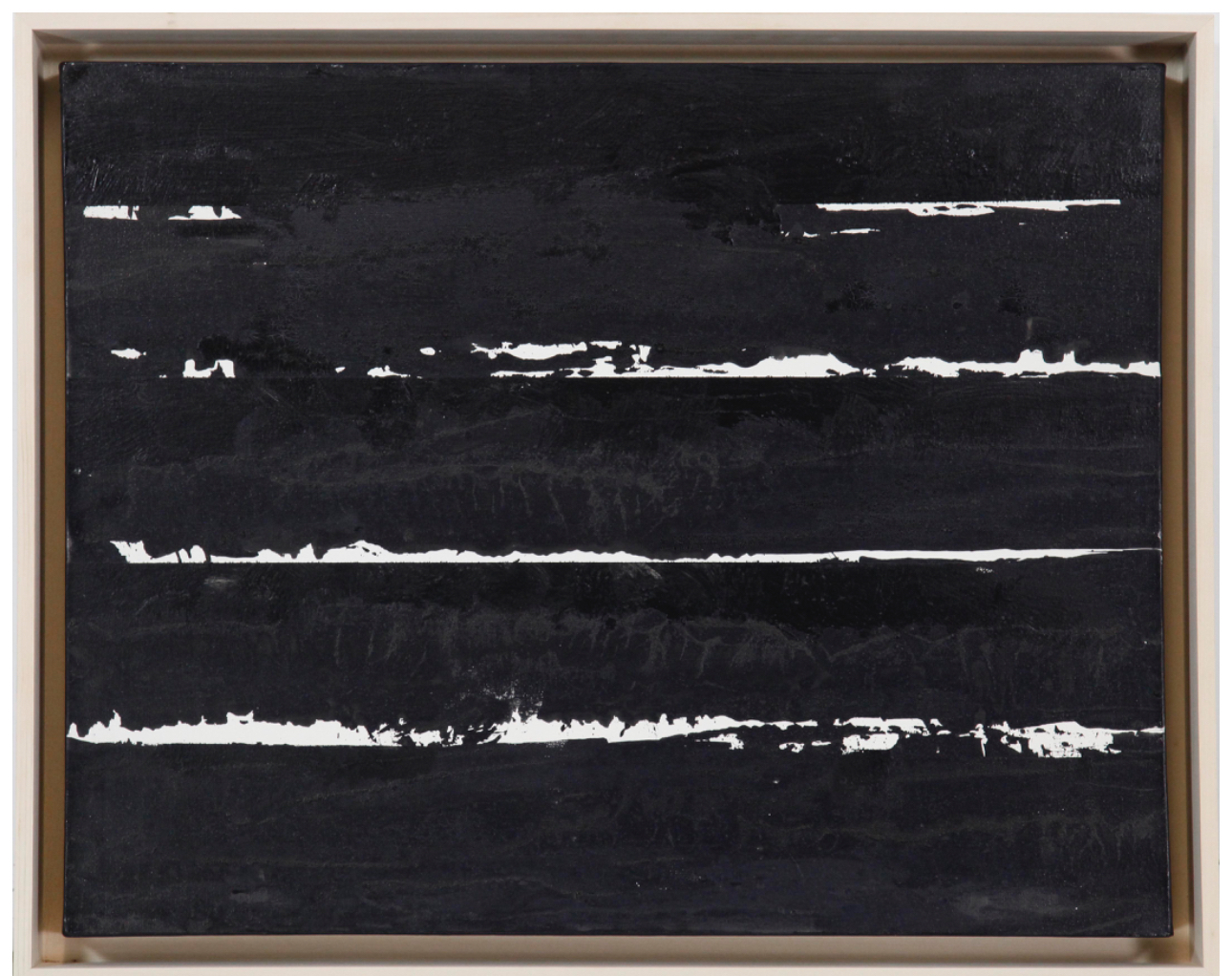
PIERRE SOULAGES
Peinture 45 x 57 cm, 7 janvier 2000
Oil on canvas
45.2 x 57.5 cm (17.7 x 22.6 inches)
Verso signed and dated
2021 Auction Results
FOR PAINTINGS ONLY
16 lots sold at auction in 2021 for a total turnover of USD 56,212,109. With no lot failing to sell, the sell-through rate is a perfect 100%. The record for the highest price ever paid for a painting created by Pierre Soulages was broken at Sotheby’s in New-York on 16 November 2021, when Peinture 195×130 cm 4 aout 1961, sold for USD 20,141,700.
2021 Top 3 Lots
13 lots sold over USD 1 million generating a cumulative turnover of USD 54,360,363, contributing 96.7% to the total turnover for 2021.
XXXXXXXXXX
#1. Peinture 195 x 130 cm, 4 août 1961
Sotheby’s New-York: 16 November 2021
Estimated: USD 8,000,000 – 12,000,000
USD 20,141,700
Peinture 195 x 130 cm, 4 août 1961 | Modern Evening Auction | 2021 | Sotheby’s (sothebys.com)
PIERRE SOULAGES
Peinture 195 x 130 cm, 4 août 1961
Oil on canvas
77×51 inches (195.6 x 129.5 cm)
#2. Peinture 125 x 202 cm, 30 octobre 1958
Sotheby’s Hong-Kong: 18 April 2021
Estimated: HKD 38,000,000 – 58,000,000
HKD 48,026,000 / USD 6,179,680
PIERRE SOULAGES
Peinture 125 x 202 cm, 30 Octobre 1958
Oil on canvas
125×202 cm (49.2 x 79.5 inches)
Signed and dated 58 on the reverse and signed and titled on the stretcher
#3. Peinture 202 x 159 cm, 3 juillet 1965
Christie’s London: 22 March 2021
GBP 2,500,000 – 3,500,000
GBP 3,142,500 / USD 4,334,483
PIERRE SOULAGES (B. 1919) (christies.com)
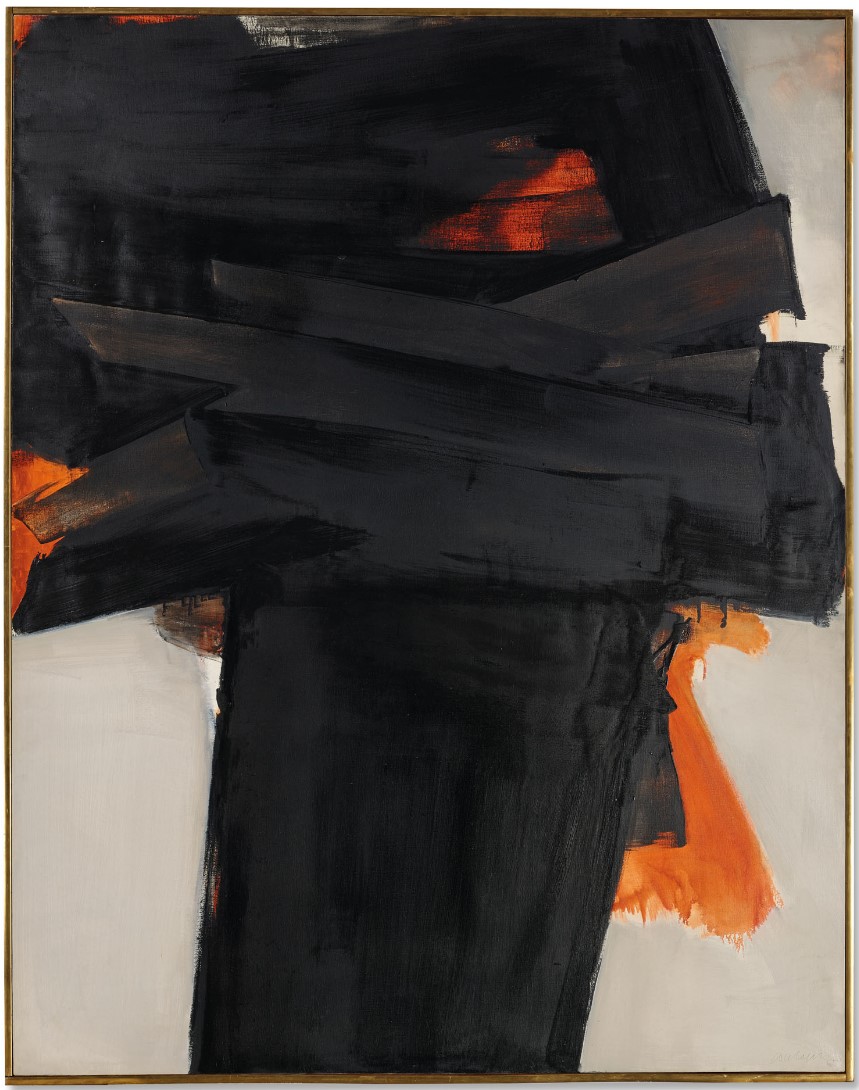
PIERRE SOULAGES
Peinture 202 x 159 cm, 3 juillet 1965
oil on canvas
202×159 cm (79.5 x 62.6 inches)
#4. Peinture 130 x 89 cm, 8 juin 1959
Sotheby’s Paris: 2 December 2021
Estimated: EUR 2,500,000 – 3,500,000
EUR 3,784,350 / USD 4,279,970
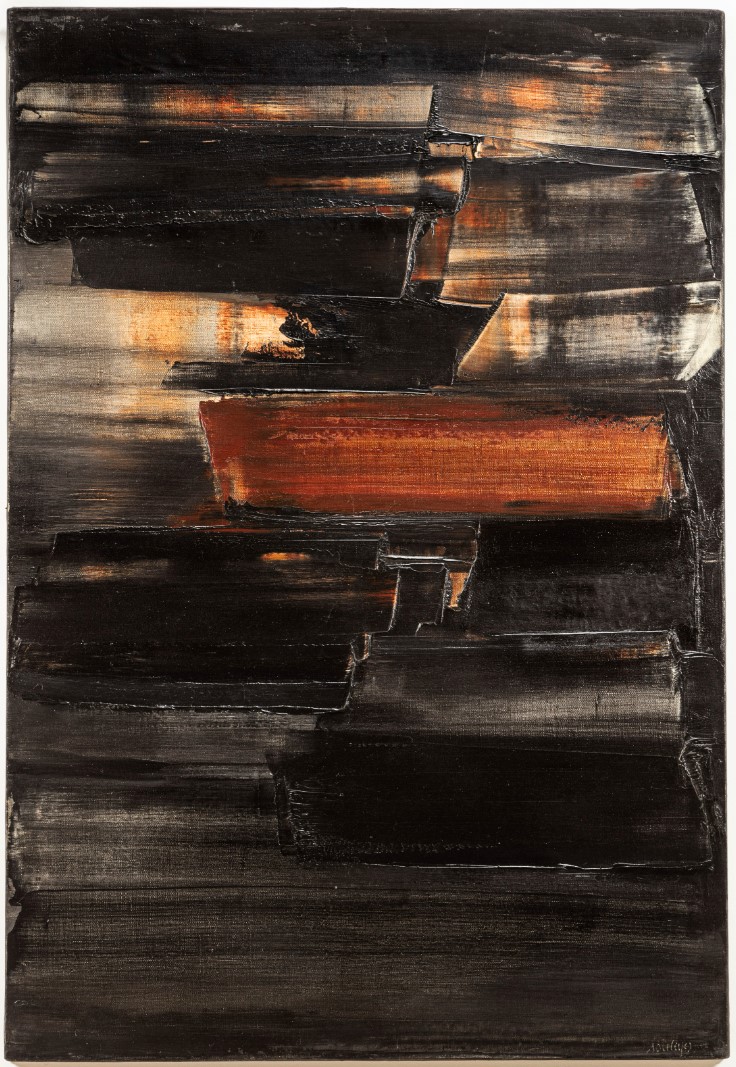
PIERRE SOULAGES (1909-2022)
Peinture 130 x 89 cm, 8 juin 1959
Oil on canvas
130×89 cm (51.2 x 35.1 inches)
#5. Peinture 130 x 162 cm, 16 novembre 1965
Sotheby’s Paris: 3 June 2021
Estimated: EUR 2,500,000 – 3,500,000
EUR 3,152,400 / USD 3,821,091
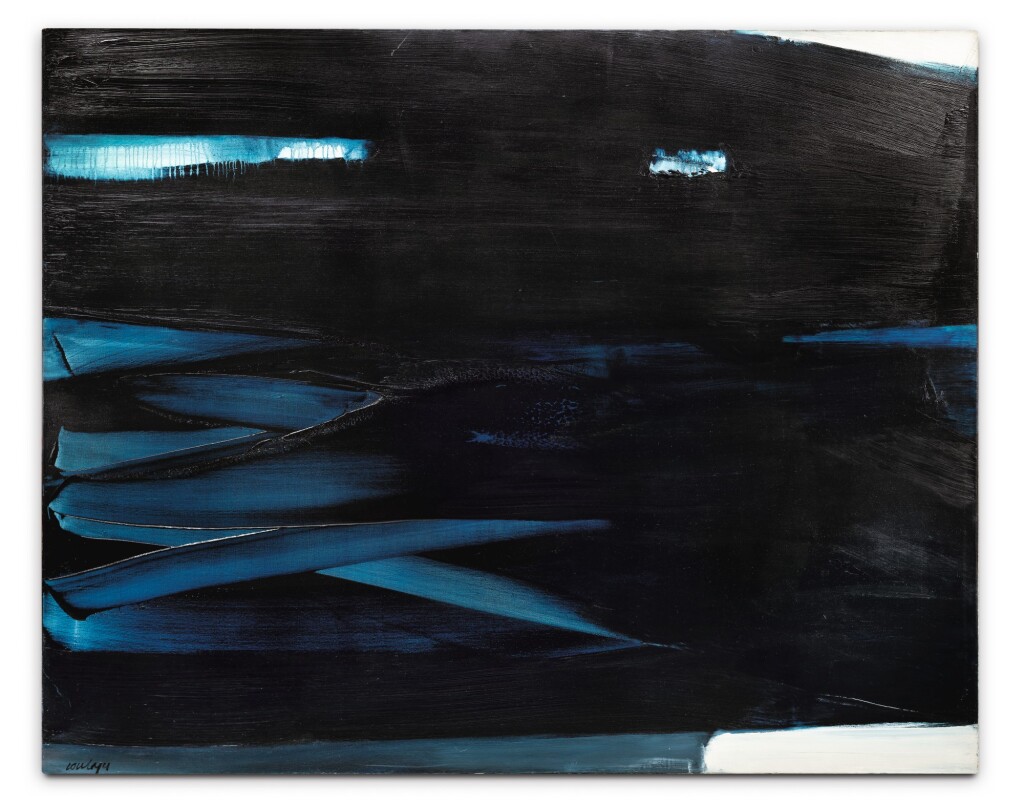
PIERRE SOULAGES
Peinture 130 x 162 cm, 16 novembre 1965
Oil on canvas
130×162 cm (51.2 x 63.7 inches)
Signed and dated 16.11.65 on the reverse and titled on the stretcher
#6. Peinture 222 x 222 cm, 25 mars 1990
Christie’s Paris: 20 October 2021
Estimated: EUR 1,200,000 – 1,800,000
EUR 2,480,000 / USD 2,887,078
Pierre Soulages (né en 1919) (christies.com)
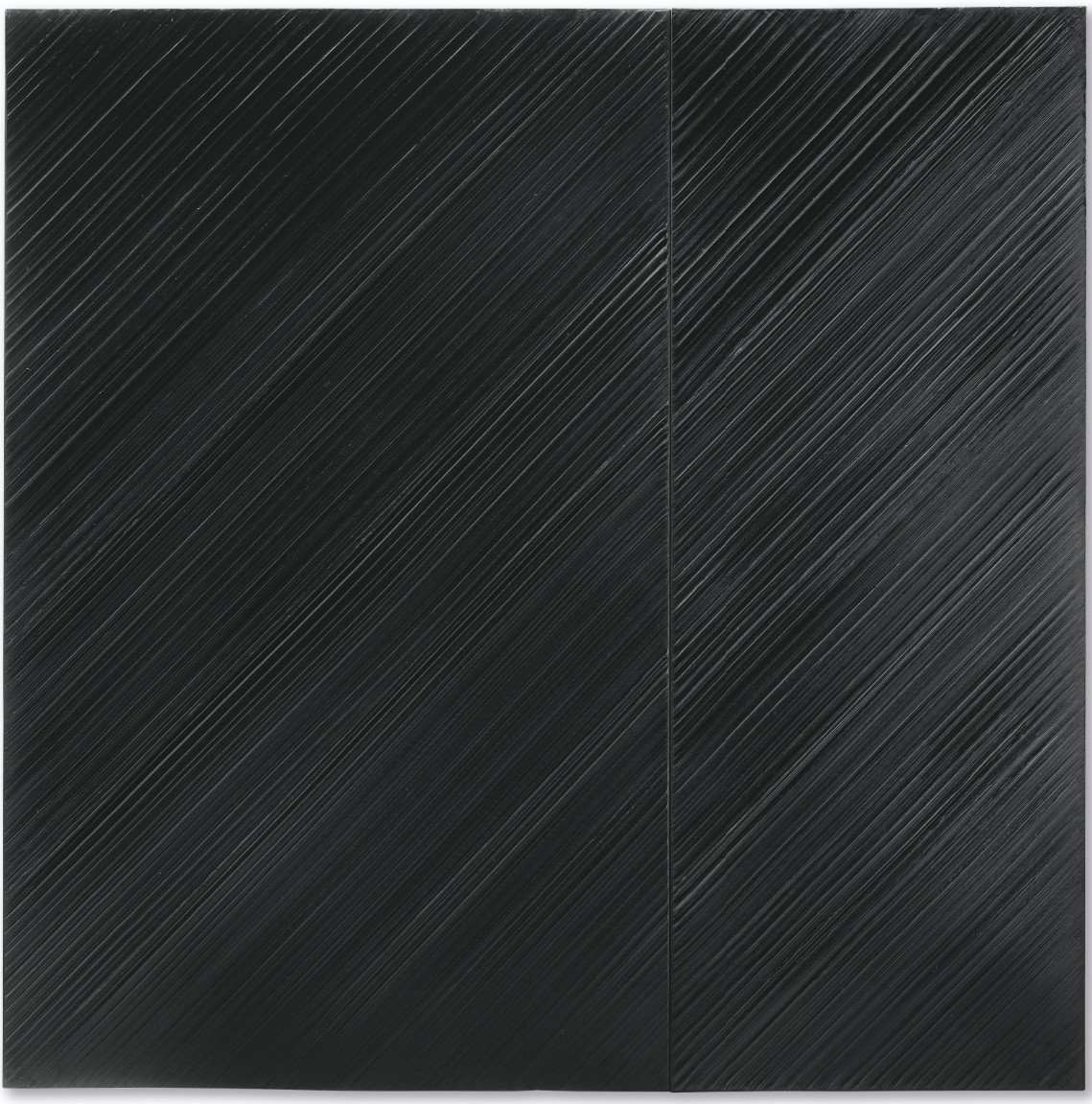
PIERRE SOULAGES
Peinture 222 x 222 cm, 25 mars 1990
Oil on canvas (diptych)
222×222 cm (87.4 x 87.4 inches)
#7. Peinture 92 x 65 cm, 3 août 1954
Ketterer Kunst: 10 December 2021
Estimated: EUR 700,000
EUR 2,245,000 / USD 2,469,500
Ketterer Kunst, Art auctions, Book auctions Munich, Hamburg & Berlin
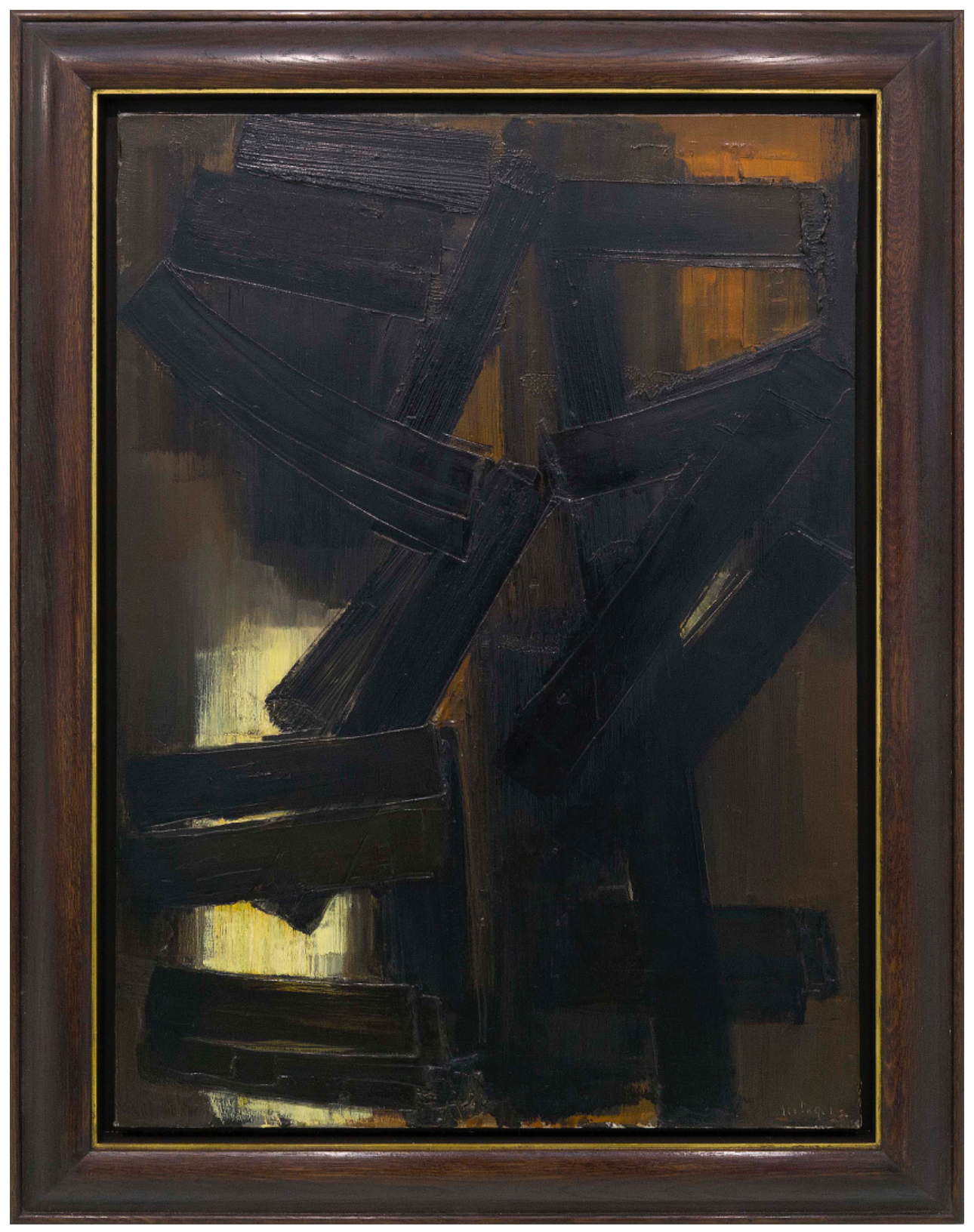
PIERRE SOULAGES
Peinture 92 x 65 cm, 3 août 1954
Oil on canvas
92×65 cm (36.2 x 25.5 inches)
Bottom right signed and dated (scratched into the wet paint)
Signed and dated “3 aout 54” on the reverse
#8. Peinture 162 x 114 cm, 17 avril 1972
Christie’s Paris: 29 June 2021
Estimated: EUR 1,000,000 – 1,500,000
EUR 2,060,000 / USD 2,441,336
Pierre Soulages (né en 1919) (christies.com)
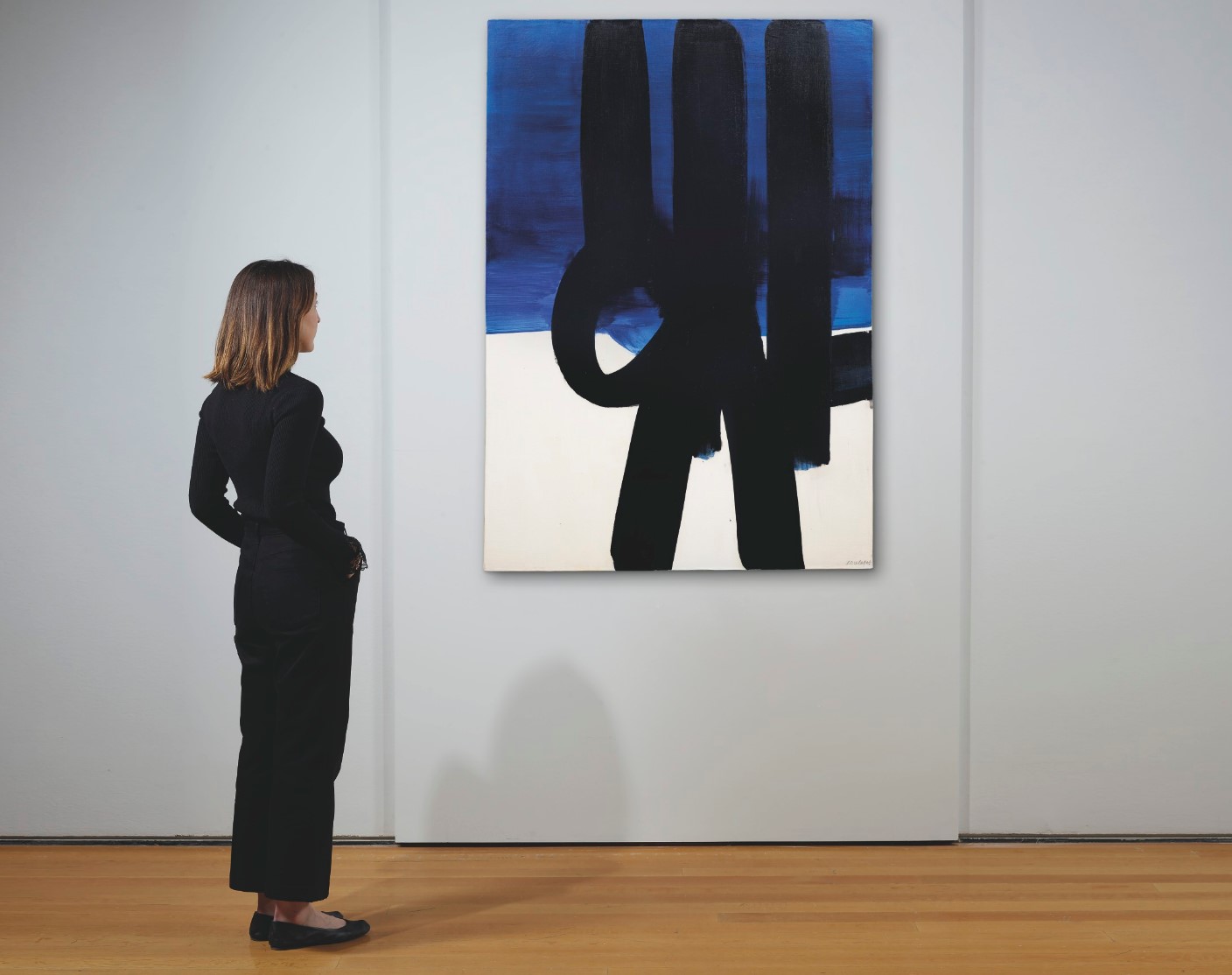
PIERRE SOULAGES
Peinture 162 x 114 cm, 17 avril 1972
Oil on canvas
162×114 cm (63.7 x 44.9 inches)
#9. Peinture 65 x 92 cm, 10 novembre 1952
Sotheby’s Paris: 3 June 2021
Estimated: EUR 600,000 – 800,000
EUR 2,009,000 / USD 2,435,151
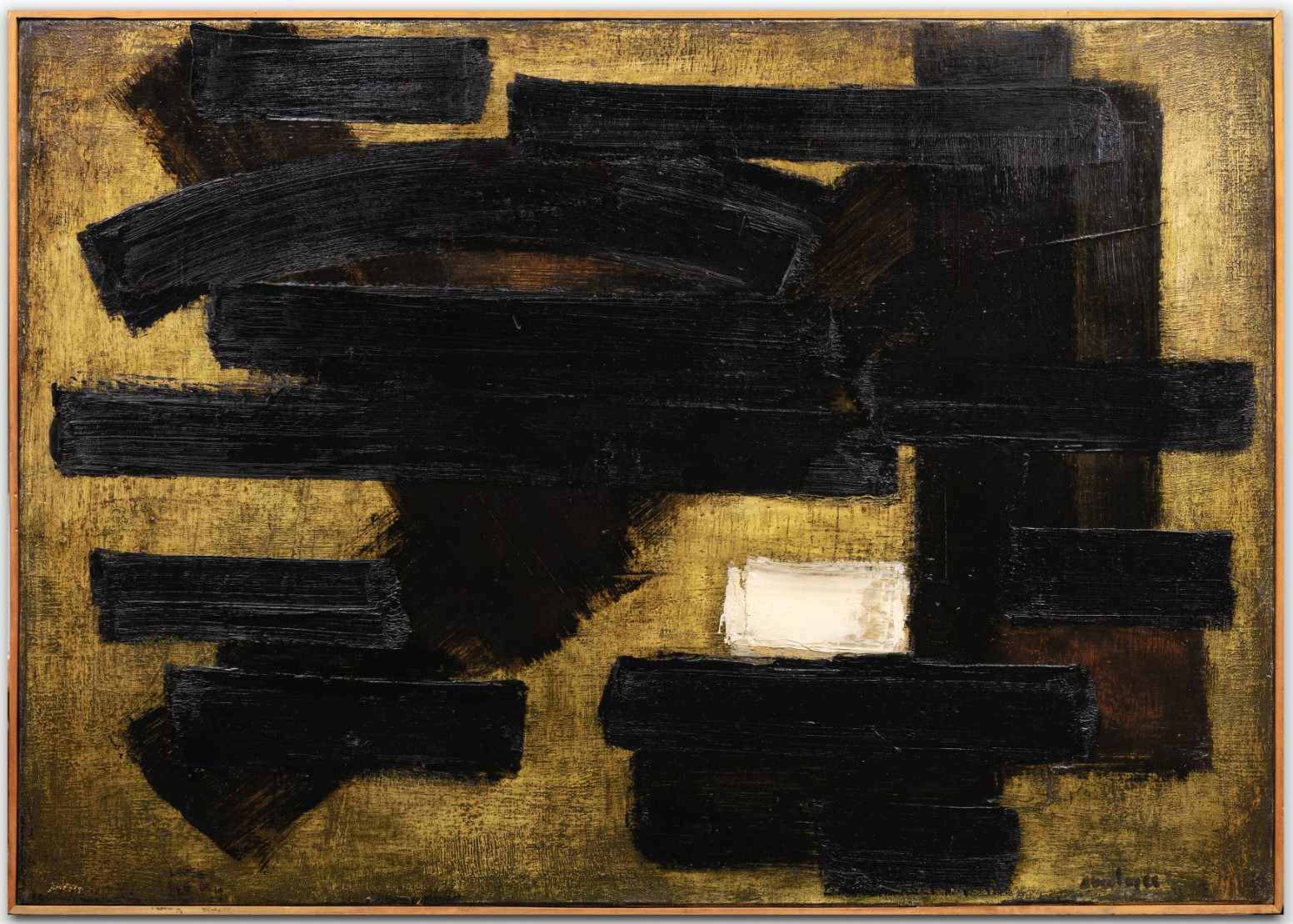
PIERRE SOULAGES
Peinture 65 x 92 cm, 10 novembre 1952
Oil on canvas
65×92 cm (25.6 x 36.2 inches)
#10. Peinture 165 x 130 cm, 19 mars 2006
Christie’s Paris: 2 December 2021
Estimated: EUR 800,000 – 1,000,000
EUR 1,460,000 / USD 1,650,836
Pierre Soulages (né en 1919) (christies.com)
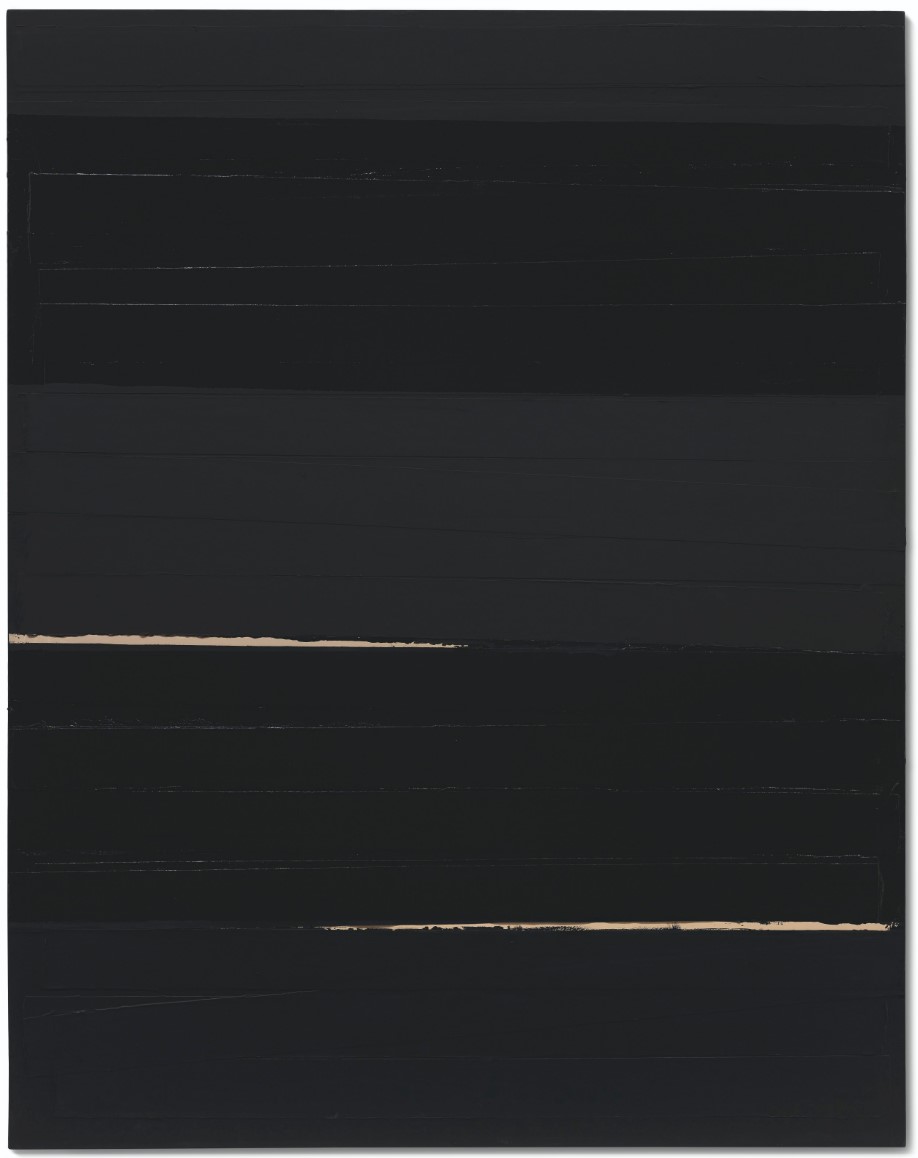
PIERRE SOULAGES
Peinture 165 x 130 cm, 19 mars 2006
Acrylic on canvas
165 x 130 cm (65 x 51.1 inches)
#11. Peinture 73 x 60 cm, 28 août 1975
Sotheby’s Paris, 3 June 2021
Estimated: EUR 500,000 – 700,000
EUR 1,101,500 / USD 1,335,151
Peinture 73 x 60 cm, 28 août 1975 | Art Contemporain Evening Sale | 2021 | Sotheby’s (sothebys.com)
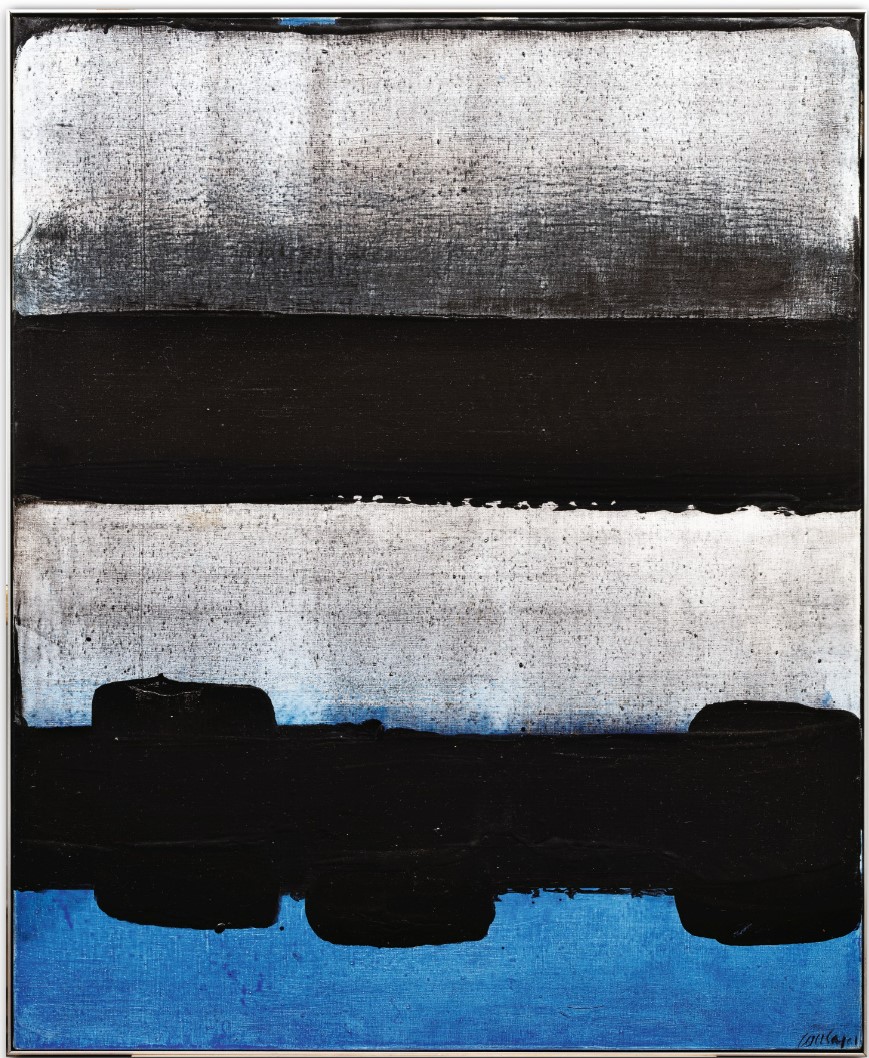
PIERRE SOULAGES
Peinture 73 x 60 cm, 28 août 1975
Oil on canvas
73×60 cm (28.7 x 23.6 inches)
#12. Peinture 237 x 81 cm, 18 fevrier 1990
Christie’s Paris: 29 June 2021
Estimated: EUR 600,000 – 800,000
EUR 1,100,000 / USD 1,303,626
Pierre Soulages (né en 1919) (christies.com)
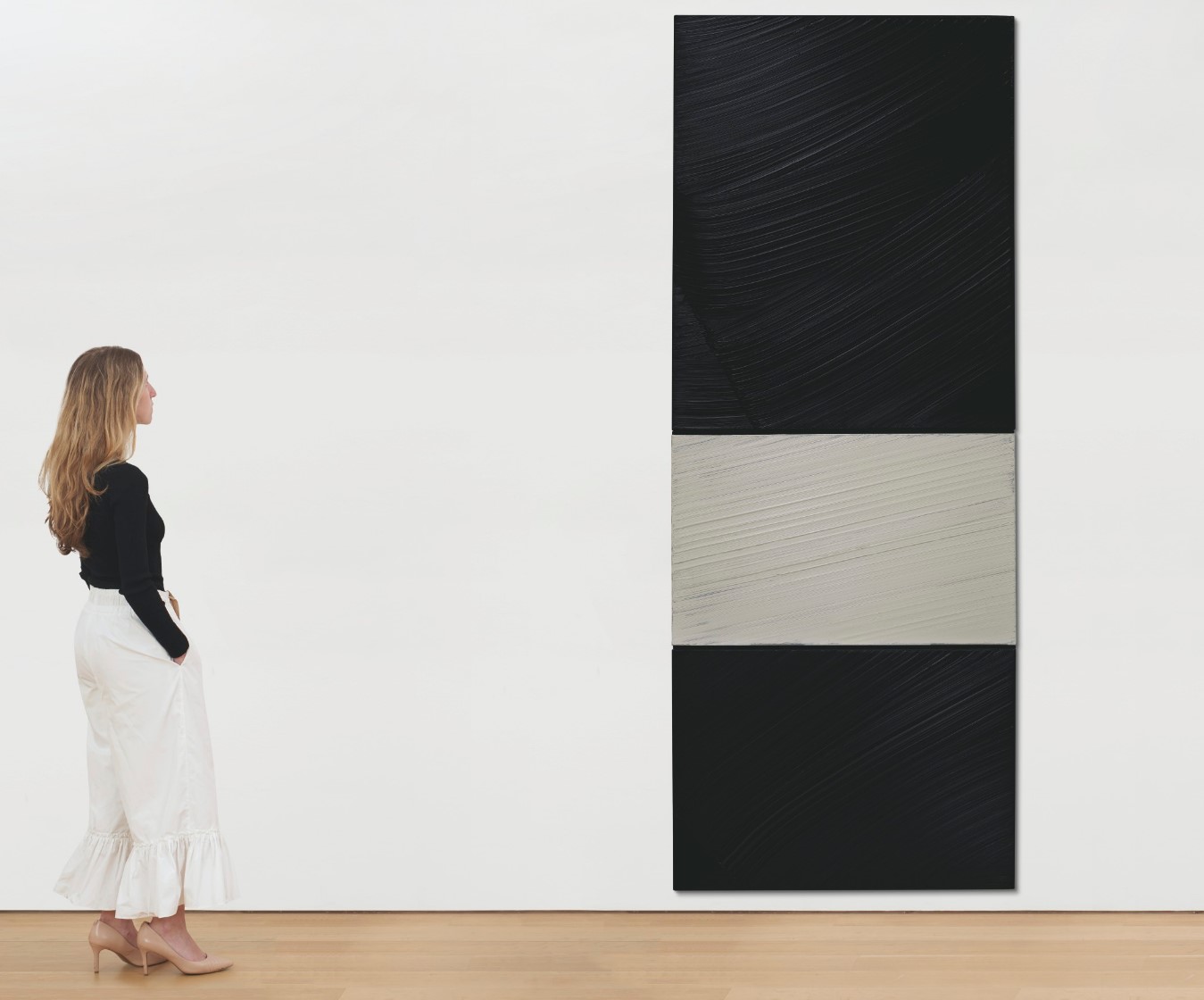
PIERRE SOULAGES
Peinture 237 x 81 cm, 18 fevrier 1990
Oil on canvas
237×81 cm (93 1/4 x 31 7/8 inches)
#13. Peinture 72×57 cm, 9 avril 1994
Artcurial Paris: 8 December 2021
Estimated: EUR 600,000 – 800,000
EUR 895,400 / USD 1,010,381
Contemporary Art – Evening Sale | Sale n°4146 | Lot n°229 | Artcurial
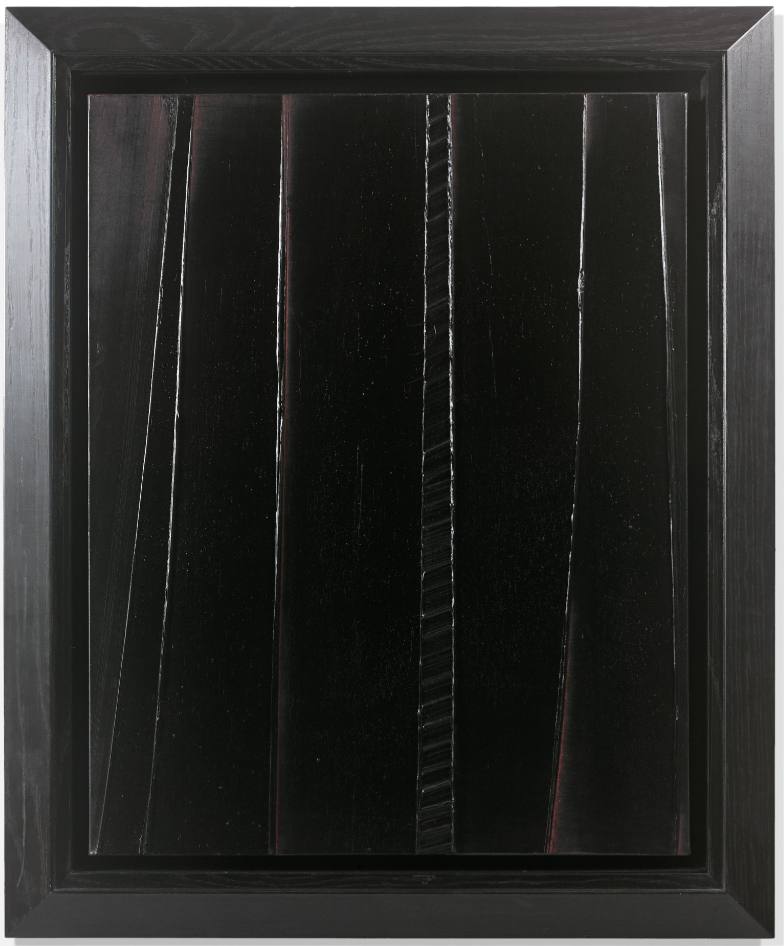
Pierre SOULAGES
Peinture 72×57 cm, 9 avril 1994
Oil on canvas
72×57 cm
Signed, dated and titled on reverse
#14. Peinture 46.2 x 38.2 cm, 1952
Christie’s Paris: 30 June 2021
Estimated: EUR 280,000 – 350,000
EUR 620,000 / USD 734,771
Pierre Soulages (né en 1919) (christies.com)
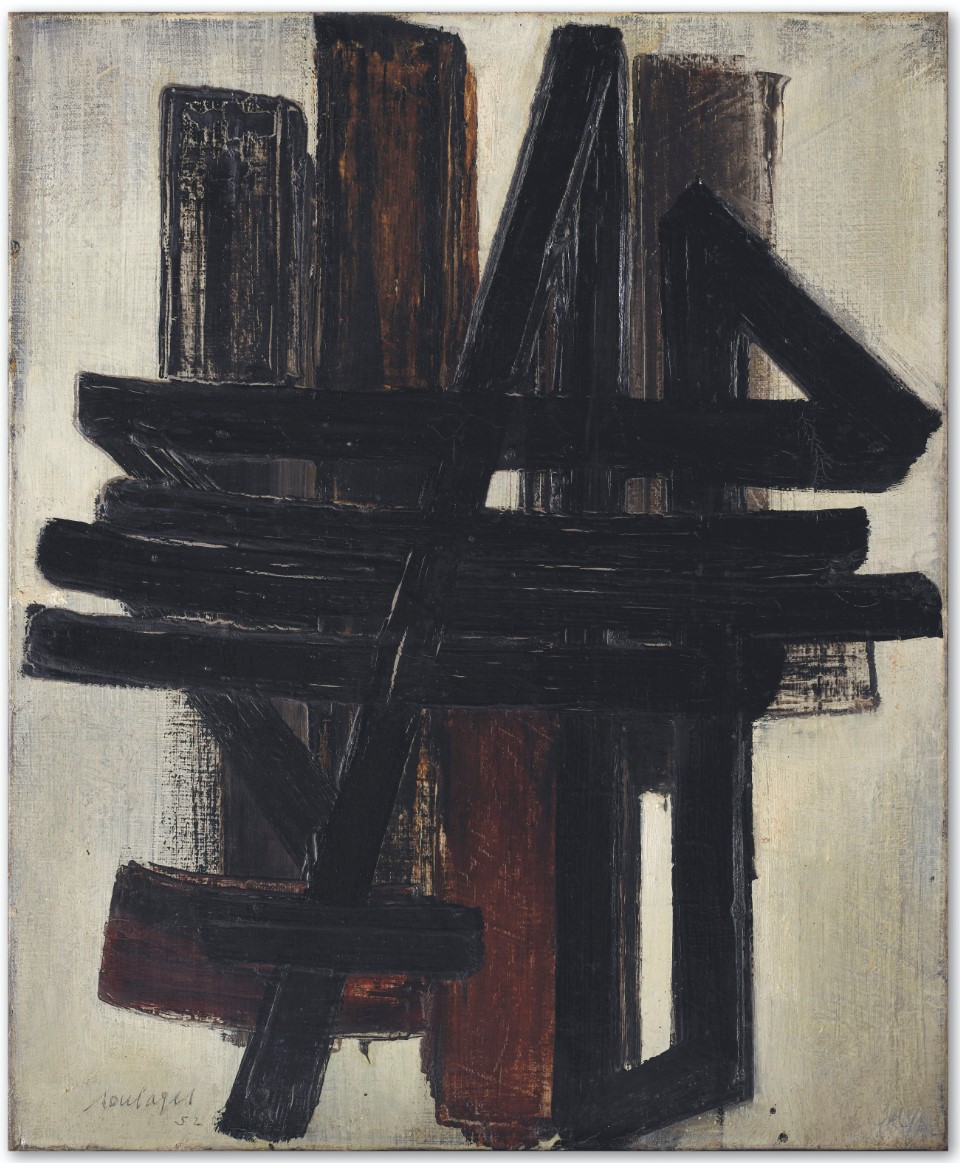
PIERRE SOULAGES
Peinture 46.2 x 38.2 cm, 1952
Oil on canvas
46.2 x 38.2 cm (18 1/4 x 15 inches)
Signed and dated (lower left)
#15. Peinture 33 x 41 cm, 17 février 1951
Christie’s Paris: 26 October 2021
Estimated: EUR 200,000 – 300,000
EUR 617,500 / USD 715,610
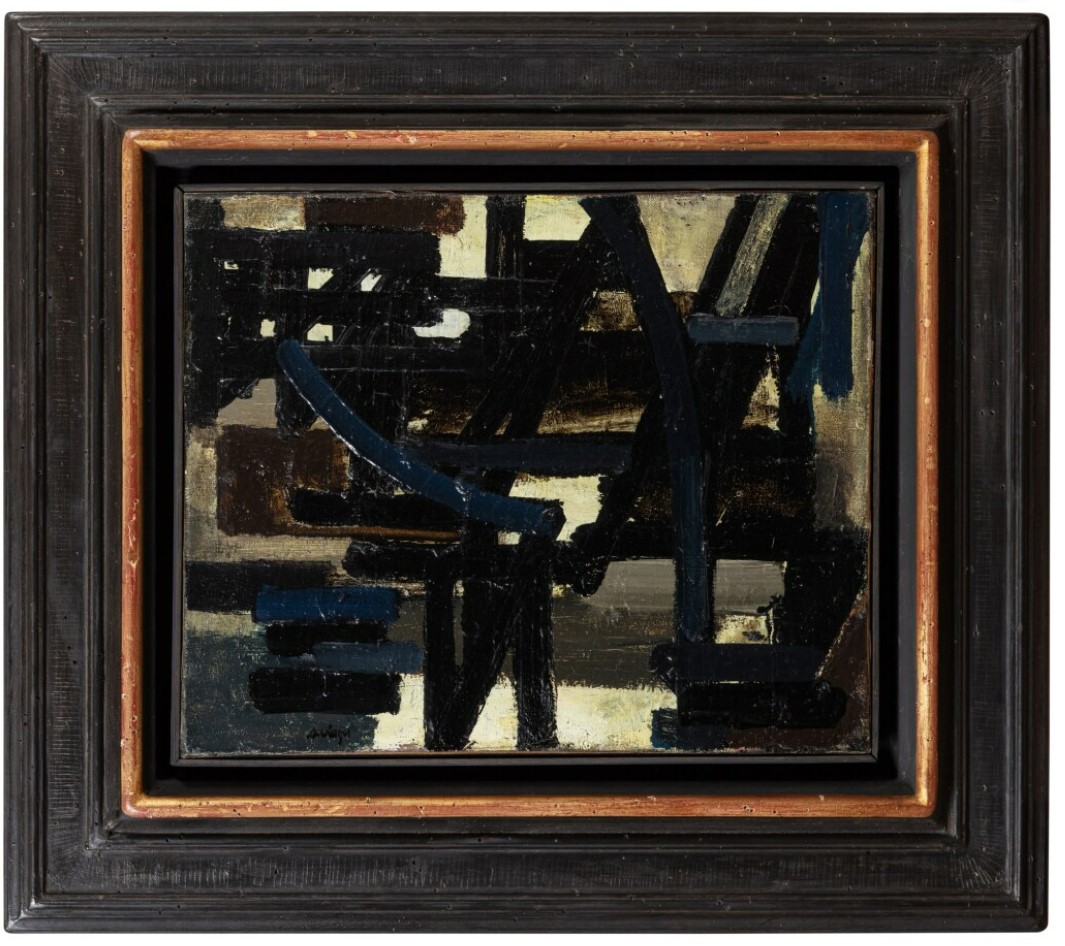
PIERRE SOULAGES
Peinture 33 x 41 cm, 17 février 1951
Oil on canvas
33×41 cm (13 x 16.1 inches)
PART III: FOCUS
Outrenoirs (1979-2022)
Attention to black has been a lifelong preoccupation for Pierre Soulages, one that he has mined for over 70 years in his creative production, and since 1979 with exclusive devotion. Up to that point, he had used black in conjunction to color in order to elevate their brilliance. It all began with a moment of inattention, almost a failure: in April 1979, the artist is at work and, despite himself, he covers the entire canvas in black. There is no longer any play of contrast with another color, nor any effects of transparency or depth as was the case in the works of previous decades. Everything is black, only black. The artist is sixty years old that year, his work has a solidly established authority, both with international institutions and the art market, and yet he has just given a decisive turn to his work.
“I saw that it was no longer black that gave meaning to the painting but the reflection of light on dark surfaces. Where it was layered the light danced, and where it was flat it lay still. A new space had come into being.”
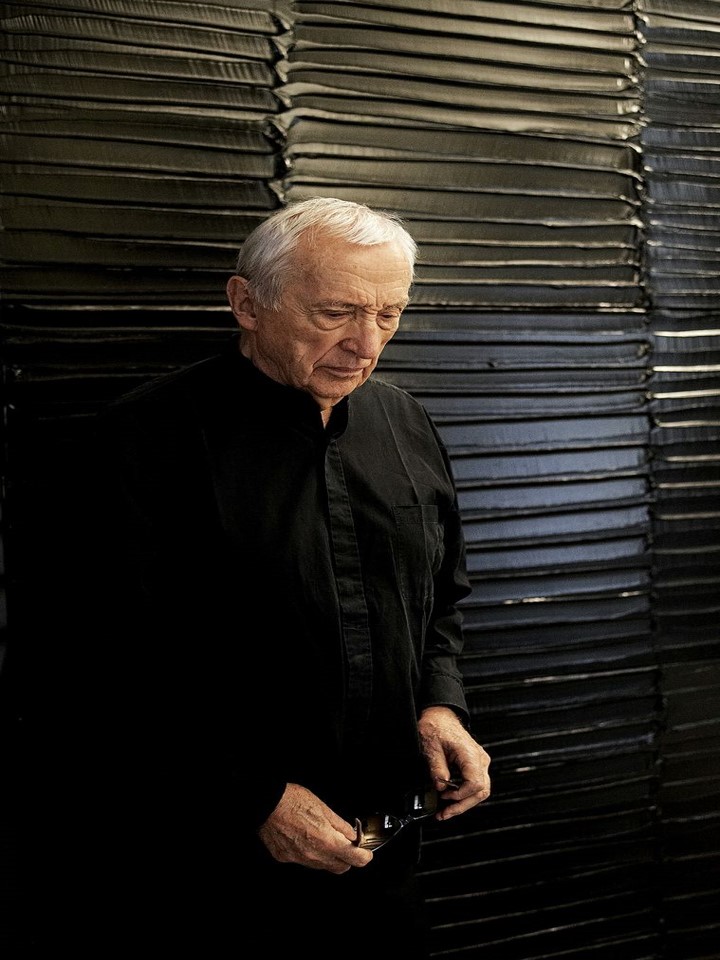
An Outrenoir invites those who confront it to cross a frontier, to venture forth into a realm beyond painting. Here, amidst the thick paste, in the manner of a sculptor, the artist digs a myriad of oblique grooves, creates ridges and imprints the brush and spatula with an entire geology that is sometimes accentuated, occasionally blurred by the light that is projected onto it. Black then sometimes becomes ebony in depth, sometimes iridescent and almost white, allowing an infinite variation of subtle tones to unfold between these two extremes. And depending on the lighting conditions and the position from which it is contemplated, an Outrenoir painting reflects an ever-changing reality, constantly renewing itself, leaving viewers to face the radical solitude of their point of view. Thus, we understand that Pierre Soulages is no longer the painter of black, he is the painter of light.
PLEASE CLICK BELOW TO READ ABOUT OUTRENOIRS
AND FIND ALL HISTORICAL AUCTION RESULTS
The “Prodigious” Years (1956-1965)
Peinture 161 x 200 cm, 14 novembre 1958
The Collection of Robert F. and Patricia G. Ross Weis
Christie’s New-York: 17 November 2025
Estimated: USD 5,000,000 – 7,000,000
USD 4,955,000
PIERRE SOULAGES (1919-2022), Peinture 161 x 200 cm, 14 novembre 1958 | Christie’s
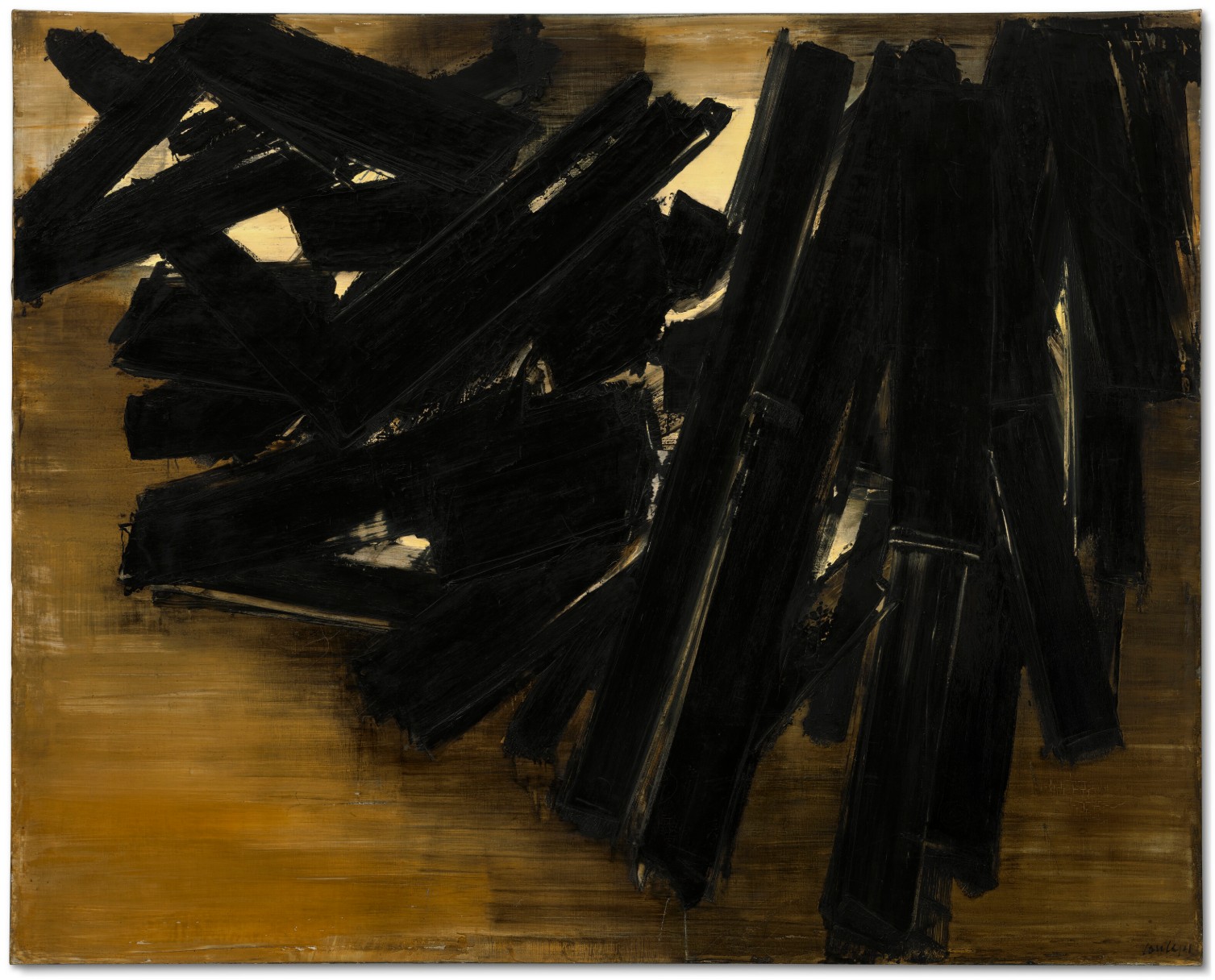
PIERRE SOULAGES (1919-2022)
Peinture 161 x 200 cm, 14 novembre 1958
Oil on canvas
161.9 x 201.6 cm (63 3/4 x 79 3/8 inches)
Signed ‘Soulages’ (lower right)
Signed again and dated ‘SOULAGES 58’ (on the reverse)
Signed thrice, partially titled and dated again ‘SOULAGES “Peinture” 14 nov 58’ (on the stretcher)
Painted in 1958
Not exhibited publicly since its debut at Samuel Kootz’s gallery in 1959, Pierre Soulages’s exceptional masterpiece, Peinture 161 x 200 cm 14 novembre 1958, encapsulates the distinctive and highly original character that defines the French artist’s painterly abstractions. One of the leading figures of postwar European abstraction, Soulages developed a unique approach to painting that emphasized the interplay of light and material, form and void, gesture and control. His works are known for their striking, elemental force—structures of darkness punctuated by flashes of color and luminescent transparency.
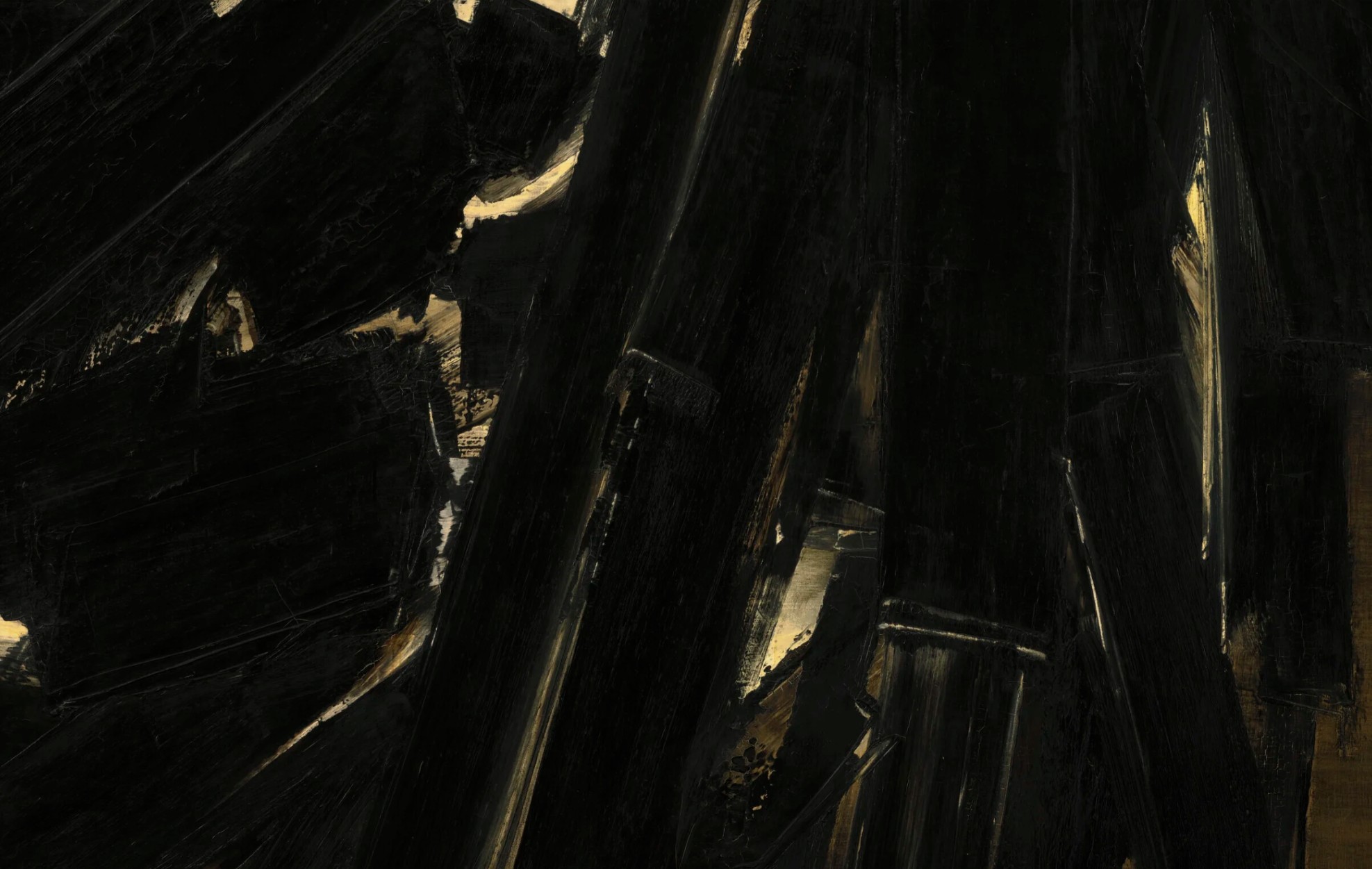
Dating from a crucial period in Soulages’s career, Peinture 161 x 200 cm 14 novembre 1958 is a masterful example of his raclage technique, a method that involved scraping away layers of pigment to reveal unexpected color relationships and depths. By the late 1950s, Soulages had moved beyond the bold, interlocking black forms of his earlier work and was pioneering a complex process of layering and excavation. Rather than applying color in a straightforward manner, he built up multiple strata of paint, only to then scrape and manipulate them to uncover luminous variations of tone. This meticulous, almost archaeological process gave his works a depth and intensity that set them apart from those of his contemporaries.
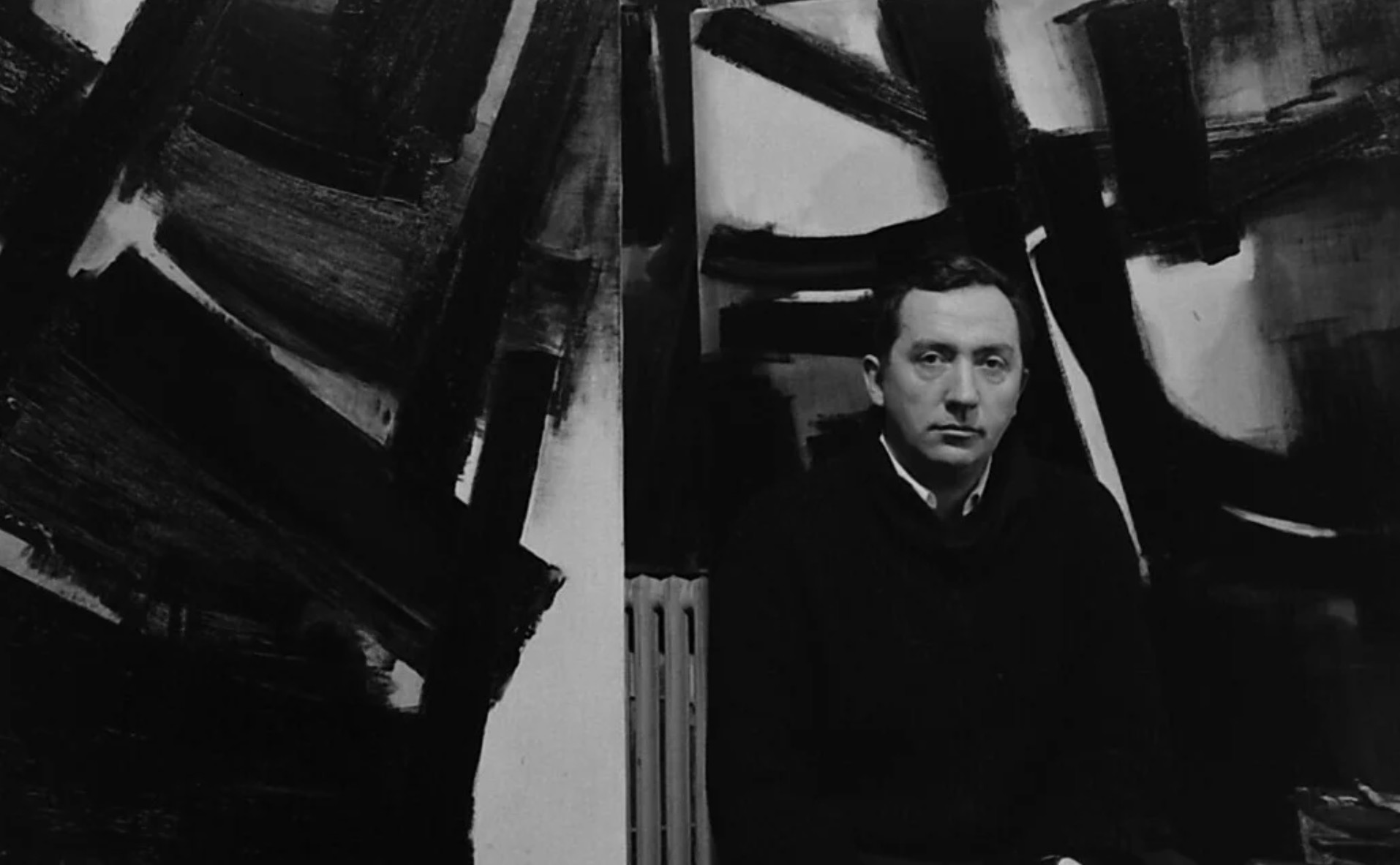
Pierre Soulages, United States, circa 1955. Photo: Dmitri Kessel / The LIFE Picture Collection via Getty Images.
Artwork: © 2025 Artists Rights Society (ARS), New York / ADAGP, Paris.
Pierre Encrevé, the author of Soulages: L’œuvre complet, Peintures I. 1946-1959, describes this phase as a defining moment in the artist’s development: “The years 1957-1963 particularly illustrate one of Soulages’s characteristic techniques in the double treatment of the surface: that of scraping, or, if one prefers, transparency through uncovering. On the prepared canvas (primed in white), he applies a layer of paint covering part or all of the surface, upon which he superimposes, while the paint is fresh, one or more layers of different color. He then uncovers a part of the background using the same soft-bladed spatulas that he more often loads with black paint: according to the power and the shape of the movement, this scraping will remove paint all the way down to the canvas, or only as far as one of the intermediate layers. A subtle mixture of the different layers’ colors are created, each time surprising for the painter himself; infinite variations of color are discovered on the canvas; new luminosities, and unexpected color intensities through transparencies of black … red, blue, and yellow ochre seem Soulages’s colors of choice for neighboring with large surfaces of black, at the same time as he uses them to create these mixtures, these disappearances-reappearances under the blade-scraped veils of black where the ‘transfigured’ color acquires a presence of a very particular emotional intensity” (P. Encrevé, “Le noir et l’outrenoir,” in Soulages: Noir Lumière, exh. cat. Musée d’Art Moderne de la Ville de Paris, 1996, p. 30).
Painted in the airy rue Galande studio that Soulages moved into in 1957 and occupied for nearly two decades, Peinture 161 x 200 cm 14 novembre 1958 reflects an artist at the height of his powers. Though he had yet to achieve widespread acclaim in France, Soulages was already a celebrated figure in the American art world, where his work resonated with the avant-garde currents of the time. Soulages’s first visited New York in November 1957—exactly a year before the present work was painted—for his solo exhibition at Kootz Gallery, marking a turning point in his international reputation. The French painter received warm receptions at the Museum of Modern Art and the Solomon R. Guggenheim Museum, and he quickly developed friendships with leading artists such as Mark Rothko, Willem de Kooning, Robert Motherwell, and Franz Kline. This cross-cultural exchange placed him at the center of one of the most dynamic artistic dialogues of the twentieth century.
Despite these associations, Soulages maintained a strong sense of independence from the Abstract Expressionist movement. While many critics drew comparisons between his work and that of the New York School, he resisted such categorization, emphasizing his distinct approach to abstraction. When Robert Motherwell asserted that Abstract Expressionism could only be truly understood by Americans, Soulages famously countered:
“An art should be understood, loved, and shared by anyone, anywhere in the world. That we are marked by the culture in which we have grown up and lived, that’s part of us, very obviously. But I believe that in art, there are fundamentally only personal adventures that go beyond the individual, and even beyond his culture.”
This belief underscores the universal language that Soulages sought to create through his work, one that transcended national or stylistic boundaries.
James Johnson Sweeney, the director of the Guggenheim Museum and one of Soulages’s earliest champions, memorably wrote: “A painting by Pierre Soulages is like a chord on a vast piano struck with both hands simultaneously—struck and held” (J. Johnson Sweeney, Pierre Soulages, New York, 1972, p. 5). This powerful metaphor captures the sustained, resonant impact of Soulages’s work. Unlike the gestural sequences of Abstract Expressionism, Peinture 161 x 200 cm 14 novembre 1958 does not narrate an emotional journey or invite a temporal reading of the artist’s psyche. Instead, it presents itself as a singular, unified presence—an event in and of itself. It is neither lyrical nor sentimental; rather, it is a composition of pure structural energy.
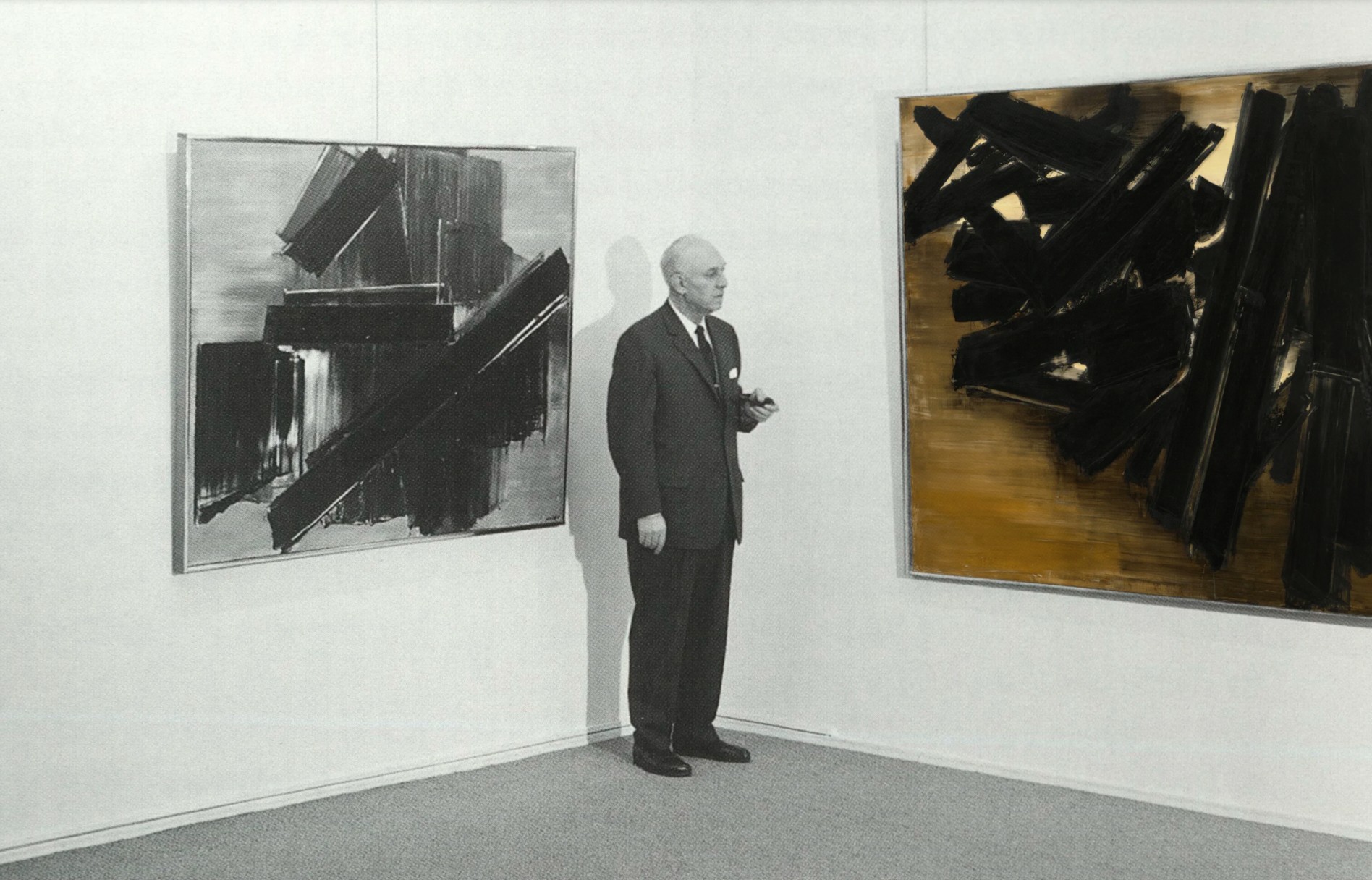
Samuel Kootz in his gallery during the exhibition Soulages, 1959 (present lot illustrated). Photographer unknown. Artwork: © 2025 Artists Rights Society (ARS), New York / ADAGP, Paris.
Central to Soulages’s philosophy was his rejection of traditional notions of artistic intention. He did not begin a painting with a preconceived image in mind but instead responded to the evolving interplay of material, light, and form. “Rather than movement, I prefer to talk of tension,” he explained. “And rhythm, yes. We can also say form: a shaping of matter and light” P. Soulages, quoted in “Les instruments de la peinture,” in Pierre Soulanges: Outrenoir, op. cit., p. 92). His use of house painters’ brushes and wide, flat scraping tools—many of which he designed himself—further distanced his work from the gestural expressiveness of his American counterparts. Instead of emphasizing the personal trace of the artist’s hand, Soulages sought to create compositions that stood independently of his own subjectivity.
This approach extended to his views on interpretation. He insisted that his paintings could evoke different responses depending on the viewer’s own experience and perception. “My pictures are poetic objects capable of receiving what each person is ready to invest there according to the ensemble of forms and colors that is proposed to him,” he once explained. “As for me, I don’t know what I am looking for when painting. Picasso said: ‘I do not search, I find.’ My attitude is a bit different: it’s what I do that teaches me what I’m looking for” (P. Soulages, quoted in ‘Peindre la peinture’, op. cit., p. 14).
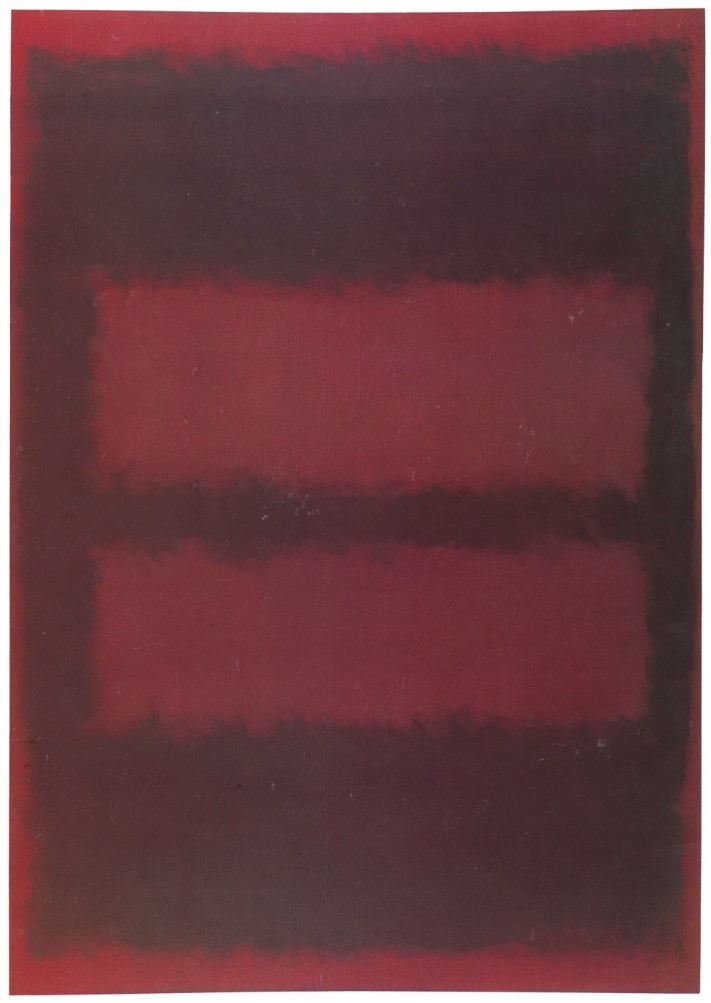
Mark Rothko, Black on Maroon, 1958. Tate, London.
© 1998 Kate Rothko Prizel & Christopher Rothko / Artists Rights Society (ARS), New York, NY.
This philosophy positions Soulages’s work within a broader lineage of modernist experimentation, where the act of painting becomes a dialogue between artist and medium. His technique of layering and excavation suggests an almost sculptural approach to the canvas, one that engages with depth, transparency, and the physicality of paint in a uniquely tactile way. Peinture 161 x 200 cm 14 novembre 1958 is an eloquent testament to this process, revealing in its scraped surfaces and layered color a history of decisions, revisions, and discoveries.
More than six decades after its creation, Peinture 161 x 200 cm 14 novembre 1958 remains a powerful statement of Soulages’s artistic vision. In its bold contrasts, rhythmic interplay of forms, and luminous depths, the painting embodies the essential qualities that have made Soulages one of the most enduring and influential figures in modern abstraction. It stands as both a historical artifact of a pivotal moment in twentieth-century art and a timeless meditation on the fundamental forces of light, matter, and perception.
Peinture 165 x 130 cm, 7 avril 1960
Property from the Collection of Max and Cecile Draime
Christie’s Paris: 23 October 2025
Estimated: EUR 2,000,000 – 3,000,000
EUR 2,683,000 / USD 3,114,215
Pierre Soulages (1919-2022), Peinture 165 x 130 cm, 7 avril 1960 | Christie’s
PIERRE SOULAGES (1919-2022)
Peinture 165 x 130 cm, 7 avril 1960
Oil on canvas
165×130 cm (63 3/4 x 51 1/8 inches)
Signed and dated ‘soulages 60’ (lower right)
Signed and dated ‘SOULAGES 7 AVRIL 1960’ (on the reverse)
Painted in 1960
Offered from the collection of Max and Cecile Draime—leading Midwestern collectors and longtime benefactors of The Butler Institute of American Art in Youngstown, Ohio—Peinture 165 x 130 cm, 7 avril 1960 is a superb large-scale painting from one of Pierre Soulages’ most important periods. It dates from the height of his use of the raclage or scraping technique, whereby he layered and pulled back layers of dark pigment over paler grounds to reveal flashes of colour and light, exploiting the varied textures of oil paint to dazzling effect. Here, black diagonals and horizontals are built up over a ground of warm mahogany, which emerges in brilliant glimpses through the thick pigment. Soulages sought an elemental grandeur in his art: he had been inspired as a youth by prehistoric cave paintings, and by the Romanesque architecture and ancient Celtic carvings he saw near his hometown of Rodez. By 1960, his paintings had become rhythmic, resonant structures of timeless power and energy.
“Rather than movement, I prefer to talk of tension. And rhythm, yes. We can also say form: a shaping of matter and light.”
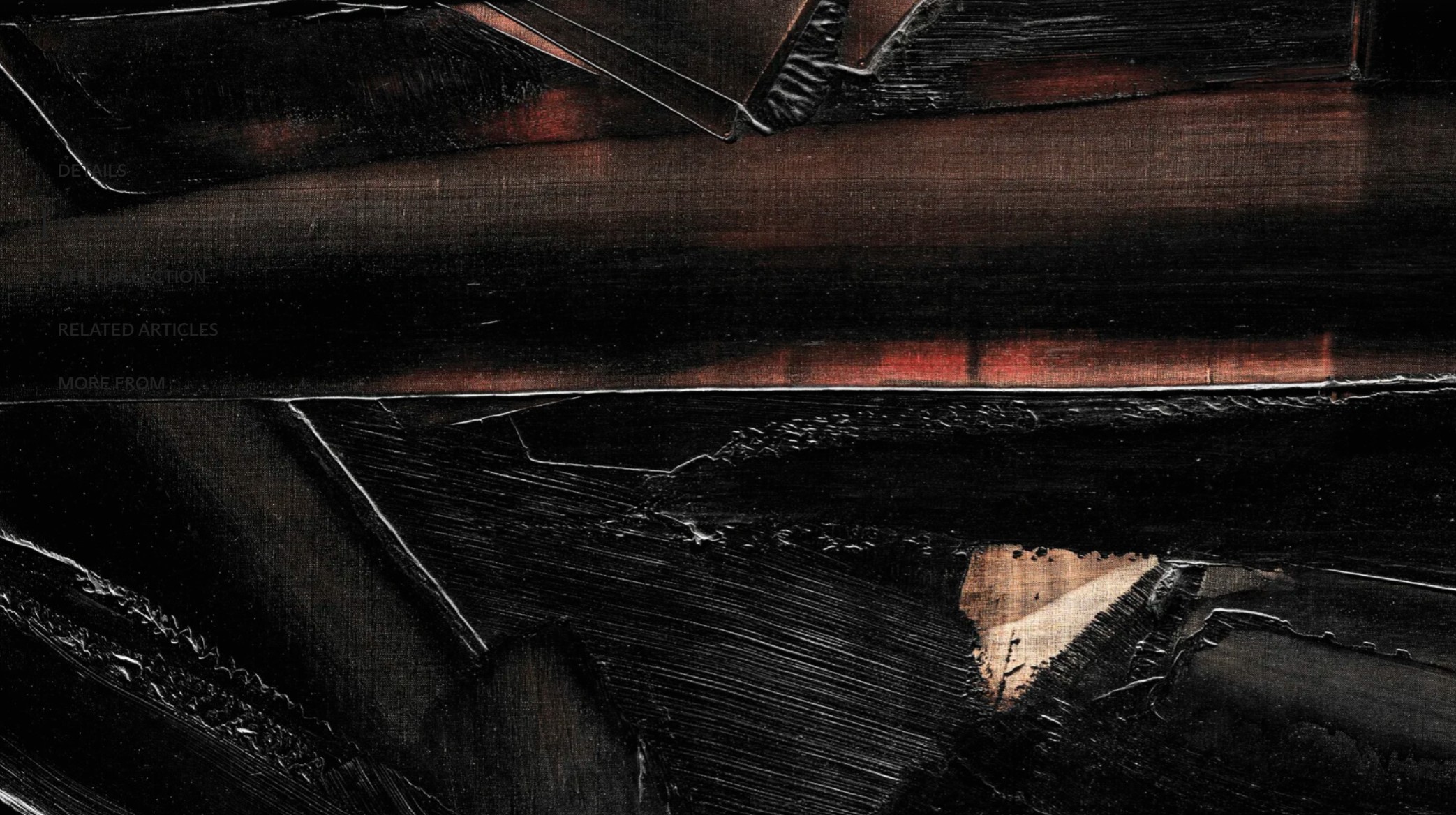
Peinture 165 x 130 cm, 7 avril 1960 bears distinguished provenance. Its first owner was Larry Aldrich, the renowned fashion designer and collector who founded the Larry Aldrich Museum—today known as The Aldrich Contemporary Art Museum—in Ridgefield, Connecticut in 1964. Aldrich was among an early wave of American collectors who were drawn to Soulages’ work. He frequently travelled to Europe in search of art, and acquired the present painting not from the United States—where Soulages had been exhibiting steadily since 1954—but from the artist’s 1960 solo show at the Galerie de France in Paris. This exhibition, the first of a long series at the gallery, marked something of a turning point for Soulages’ career in France: until then, he had been more admired across the Atlantic than in his homeland. That same year saw the opening of his first museum retrospective, which toured the Museum Folkwang, Essen, the Haags Gemeentemuseum, The Hague, and the Kunsthaus Zürich.
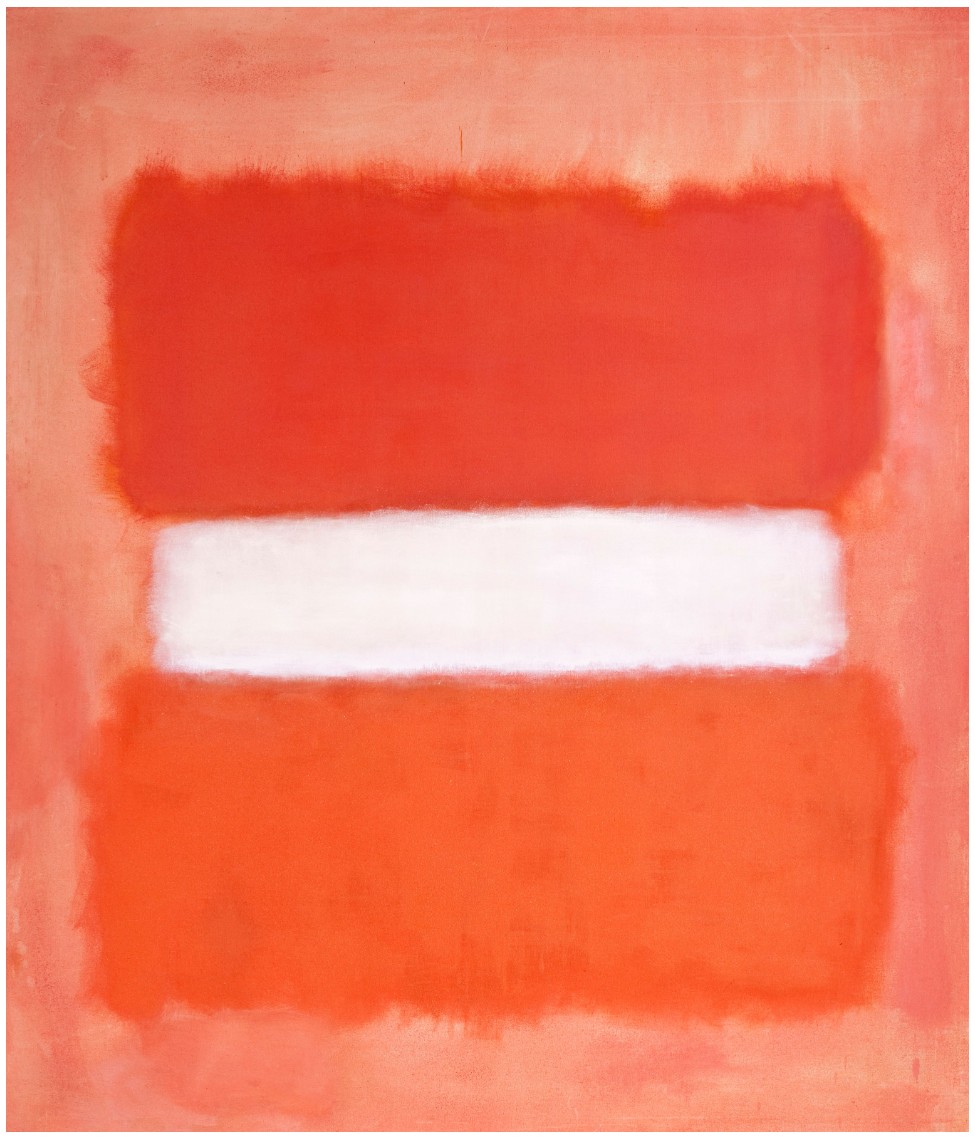
Mark Rothko, White Center, 1957. Los Angeles County Museum of Art.
© 1998 Kate Rothko Prizel & Christopher Rothko – Adagp, Paris, 2025.
Photo © Digital Image Museum Associates/LACMA/Art Resource NY/Scala, Florence.
Soulages was invigorated by his early success in New York. He visited the city in 1957 and became close with Robert Motherwell and Mark Rothko: in 1959, when Rothko visited Paris, Soulages and his wife threw him a party at his studio. While his American friend was never a direct influence on Soulages’ work, Peinture 165 x 130 cm, 7 avril 1960 bears some of the imposing vertical impact of Rothko’s floating bars of color. Soulages pushed his technique into muscular chromatic cadences during these years. The present work’s rhythmic construction also recalls that of his favorite painting in the Louvre, Paolo Uccello’s Battle of San Romano (circa 1450). Soulages admired Uccello for what he called ‘these repetitions, this vertical perpetually broken by diagonals, the space created by this repeated beating. This inextricable mixture of coherency and incoherency’ (P. Soulages quoted in P. Schneider, ‘Au Louvre avec Soulages’, Preuves, no. 143, June 1963, pp. 46-53).
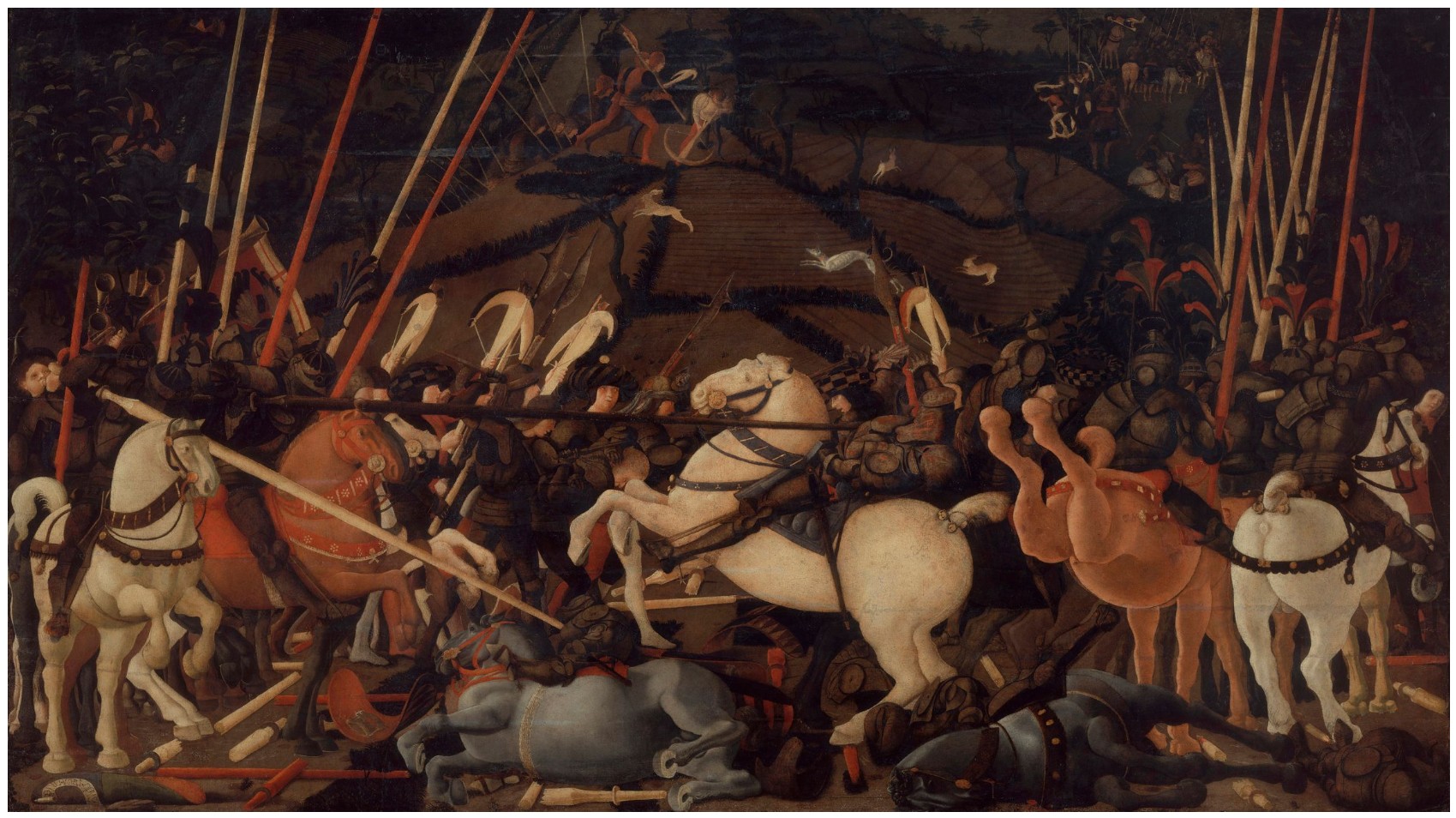
Paolo Uccello, La Bataille San Romano: la contre attaque de Micheletto da Cotignola, vers 1450.
Musée du Louvre, Paris. Photo © RMN-Grand Palais /Dist. Photo SCALA, Florence.
In 1957 Soulages had established a new studio in an airy space on the rue Galande, where he would remain for almost two decades. His early years there saw him perfect the raclage method seen in the present work. After priming the canvas, he would paint an all-over chromatic layer—here, a rich burnt umber—over which he laid his characteristic broad strokes of black. Using a soft-bladed spatula, he scraped back the layers of pigment, variously revealing intermediate layers beneath or removing paint all the way to the primed surface. The process created infinite variations, from bursts of light to glassy transparencies of black and thick, opaque swathes that become translucent at their edges. The present work exemplifies the dynamism of this technique. As well the relationships between its colours, the interplay of rough, smooth, diagonal and horizontal textures shows Soulages exploiting his material’s myriad interactions with light to ever greater power and contrast, filling the surface with life and anticipating the ultimate, breakthrough dynamism of the all-black Outrenoir canvases commenced in 1979.
Peinture 92 x 73 cm, 30 juin 59
Sotheby’s New-York: 13 May 2025
Estimated: USD 3,000,000 – 5,000,000
PASSED
Peinture 92 x 73 cm, 30 juin 59 | Modern Evening Auction | 2025 | Sotheby’s
PIERRE SOULAGES (1919 – 2022)
Peinture 92 x 73 cm, 30 juin 59
Oil on canvas
92×73 cm (36 1/4 x 28 3/4 inches)
Signed Soulages (lower right)
Signed again, titled and dated 30 juin 59 (on the reverse)
Dated again (on the stretcher)
A powerful example of Soulages’ dramatic and gestural painting, Peinture 92 x 73 cm, 30 juin 59 foregrounds his masterful brushstrokes of impassioned color and rich impasto that foreground the dynamic dramatism with an inimitable urgency, attesting to the mastery of expression that defines the artist’s practice. The present work marks a moment of intense creative production in the artist’s celebrated career, the tail end of an eventful decade for the artist’s professional development and creative progression. Following his participation in the 26th Venice Biennale in 1952, Soulages received widespread international acclaim and was included in numerous exhibitions in the United States and Europe, such as his solo exhibition at Gimpel Fils in 1955 or group shows at the Solomon R. Guggenheim Museum, New York in 1959.
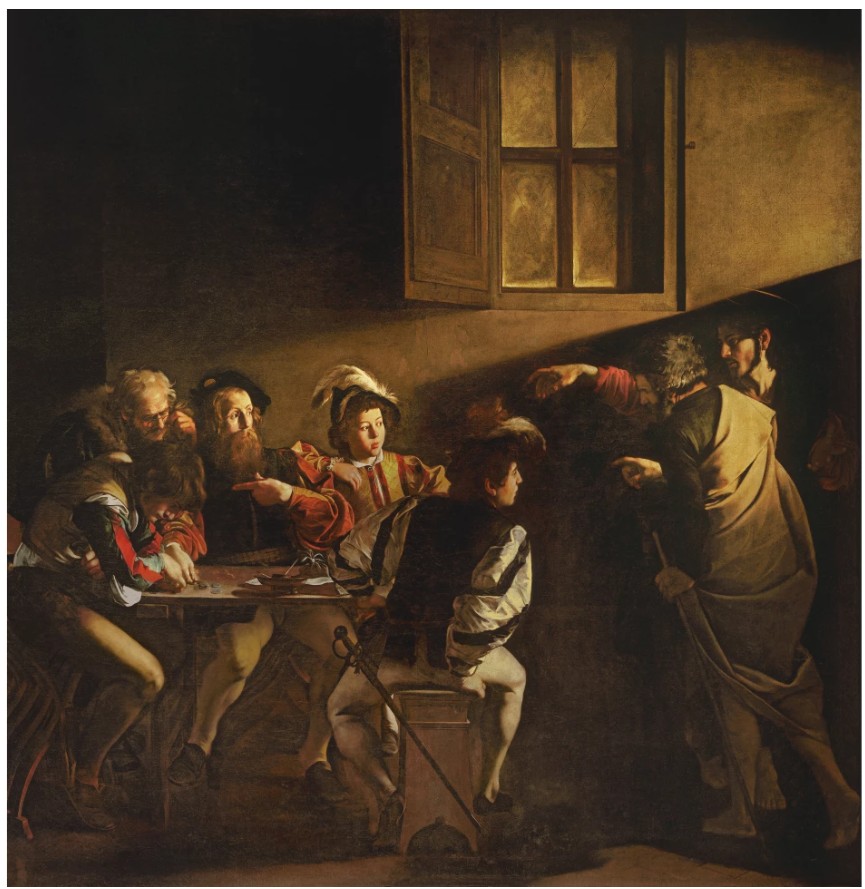
Michelangelo Merisi da Caravaggio, The Calling of St. Matthew, c. 1598-1601. Cappella Contarelli, Rome. Image © Bridgeman Images
Emanating in red and black, with glimpses of white and ochre punctuating the canvas, the present work builds up a rhythmic composition that amplifies in a frenzy of intense brushstrokes and color. In a turbulent post-war era punctuated by avant-gardes pioneering abstraction as a language to contend with the human experience, Soulages introduced a singular contribution to the annals of art history with his at once elegant and potent sensibility.
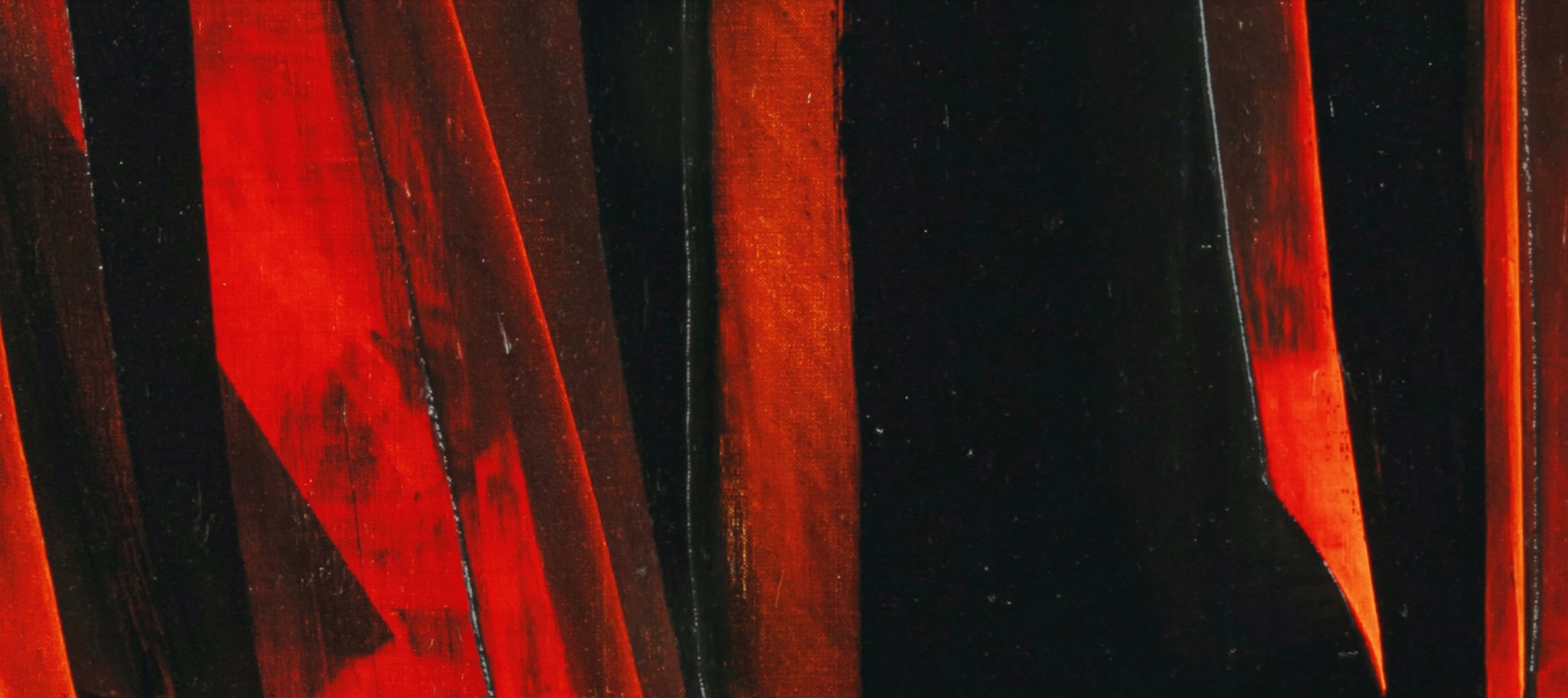
Vigorous stretches of fiery scarlet descend in ribbons from the upper edge of the canvas, scraping into the near-abyssal black that dominates the picture plane. Soulages’ iconic black, variegated in thickness and brushstroke but also resolute in its nonchalance, ever so slightly shapeshifts at the raking of light. In Soulages’ paintings, black pigment operates as a mechanism to bring light to the surface. Through his distinctive technique of layering and scraping away pigment, Soulages released fiery red, ochre, and white pigment from the underlayers of the composition. Shorter strokes of white and auburn brown take the lower half of the canvas, contrasting with the dark background. Soulages’ hand deftly evades our urge to locate identifiable symbols: “I don’t depict. I don’t narrate. I don’t represent. I paint, I present.” (the artist quoted in: Michael Peppiatt, “An Interview with Pierre Soulages,” Art International, November/December 1980) Despite its abstract nature, the visual drama of light and dark contrasting against each other adroitly recalls the chiaroscuro of masters like Caravaggio and Francisco Goya, as the density of the black against the smooth crimson imbues the work with a visual depth that thrusts the vibrant red into the foreground. What is undeniable is that Peinture 92 x 73 cm, 30 juin 59 reaches towards something visceral, deep- seated and emotive; enveloped in a primal mystery, the energetic brushstrokes of the present work magnificently illustrate the artist’s fascination with capturing the visual drama inherent to the modern psyche.
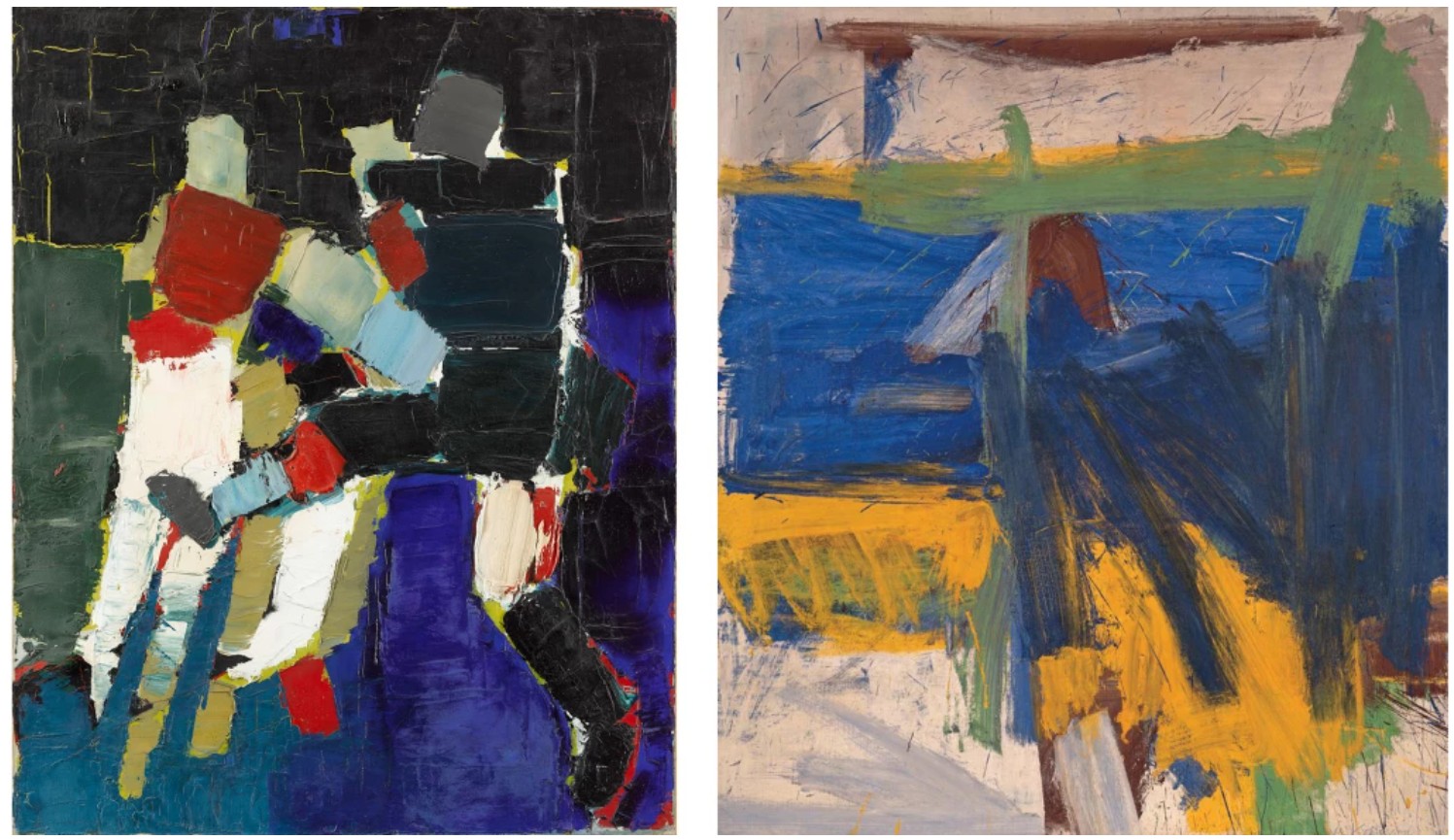
Left: Nicolas de Staël, The Soccer Players (Footballeurs), 1952. Musée Granet, Aix-en-Provence. Image © RMN-Grand Palais / Art Resource, NY. Art © 2025 Artists Rights Society (ARS), New York / ADAGP, Paris.
Right: Willem de Kooning, Ruth’s Zowie, 1957. Private Collection. Art © 2025 The Willem de Kooning Foundation / Artists Rights Society (ARS), New York
This energy that pervades Peinture 92 x 73 cm, 30 juin 59 in part stems from the transformations in technique that the artist experienced throughout the 1950s. Instead of the small brushes with which he would paint his abstract patterns, Soulages introduced palette knives and straightedges that unlocked more bold dynamism in his strokes and harnessed the architectonic and sculptural quality pervasive in the present work. He also employed a tool consisting of a piece of rubber stretched between two thin boards and a long handle, which he used to render variegated fields in the paint as he applied, mixed, and scraped off pigment in one continuous motion. At this time, Soulages also began working with his canvases on the floor, immersing himself in the picture plane by standing atop a bridge-like board laid over the painting. Exuding the results of rigorous technical developments and aesthetic inquiries of the decade often found in Soulages’ most celebrated large-scale paintings, the present work underscores his attempts to liberate himself from concepts like contour, line, and surface, to dive deeper into the world of form and pigment and attain a truly timeless style.
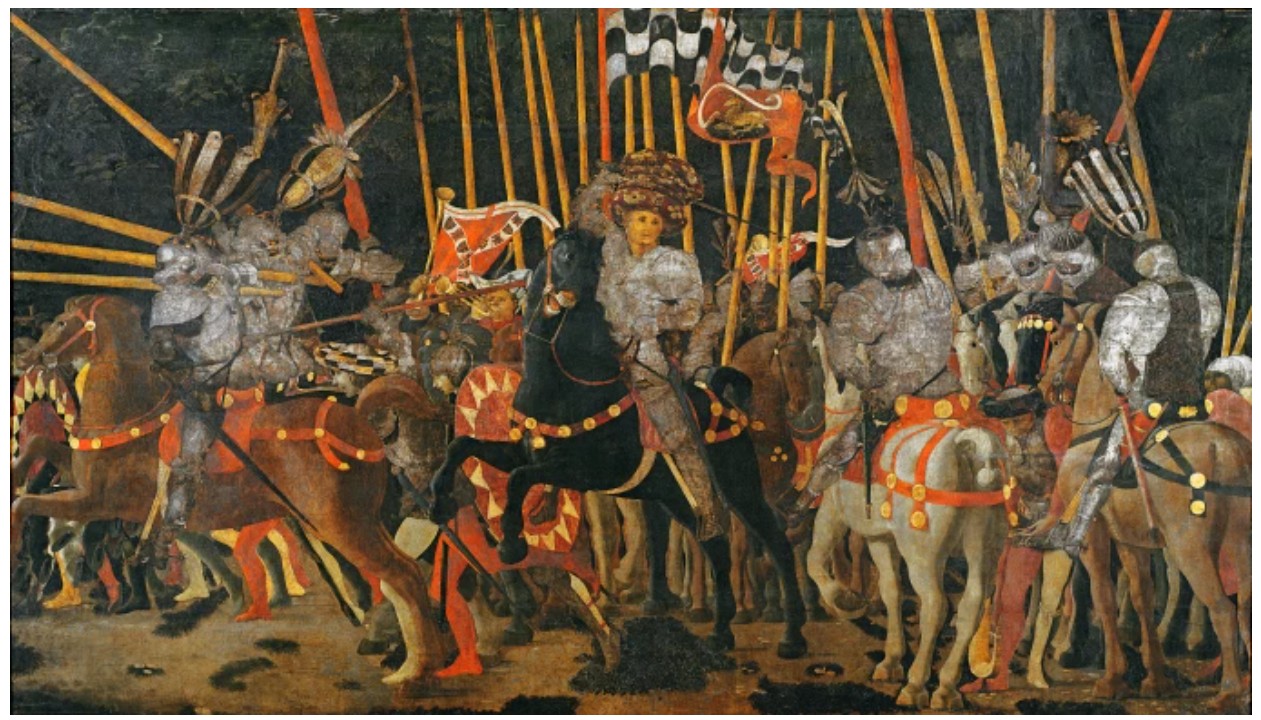
Paolo Uccello,The Battle of San Romano in 1432, c.1456. Louvre, Paris. Image © Bridgeman Images
As much as the innovative technique and vision that Soulages pioneered constituted a radical break with the canon of Western art history, the artist’s penchant for painting something perennial and foundational underscores the extensive influences behind the artist’s practice. The sense of instantaneity pulsating from his methodical work calls to mind the gestural planes of the Abstract Expressionists. The gestural dynamism of Soulages’ work finds parallels in that of New York artists Willem de Kooning and Franz Kline as well as the explosive energy of Chinese-French painter Zao Wou-Ki. Soulages aligns his practice though with some of the earliest and most enduring examples of human expression: prehistoric forms, the cave paintings of Lascaux, even the austere Romanesque church of Sainte-Foy in Conques-en-Rouergue, near his birthplace in the South of France. The purity and resolute force of Soulages’ forms invokes the primal and direct nature of prehistoric renderings. And the architectonic monumentality, volumetric forms, and sense of intangible mystery of Soulages’ paintings can be metaphorically traced to the candlelit interiors of the Romanesque church. The artist himself is acutely aware of this influence, particularly in relation to the role black takes on in his oeuvre: “There are 320 centuries since the known origins of painting, and during thousands of years, men went underground, in the absolute black of grottoes, to paint and paint with black. A fundamental color, black is also the color of origin for painting.” (the artist quoted in: Exh. Cat., New York, Robert Miller Gallery, Pierre Soulages: Outrenoir, 2005, n.p.)
His heavy, linear brushstrokes charged with grace and intention resonate even with the calligraphic traditions and ideographic forms of East Asian calligraphy: “I made line combinations which struck the eye of the beholder as a large form, a large sign which you could take in at a glance and one fine day I realized that the drawings I was doing were reminiscent of Chinese characters.” (the artist quoted in: Françoise Jaunin, Pierre Soulages: Noir lumière, Entretiens avec Françoise Jaunin, Lausanne 2002) Rooted in a rich dialogue between past and present, Peinture 92 x 73 cm, 30 juin 59 is a testament to the masterful balance between the influence of preceding masterpieces and groundbreaking innovation found in Soulages’ architectonic brushstrokes.
“What matters to me is what happens on the canvas. No two brushstrokes are ever the same. Every stroke has its own specific and irreducible attributes: shape, length, thickness, consistency, texture, color, and transparency. Any particular brushstroke establishes a relationship with other forms on the canvas, with the background and with the surface as a whole.”
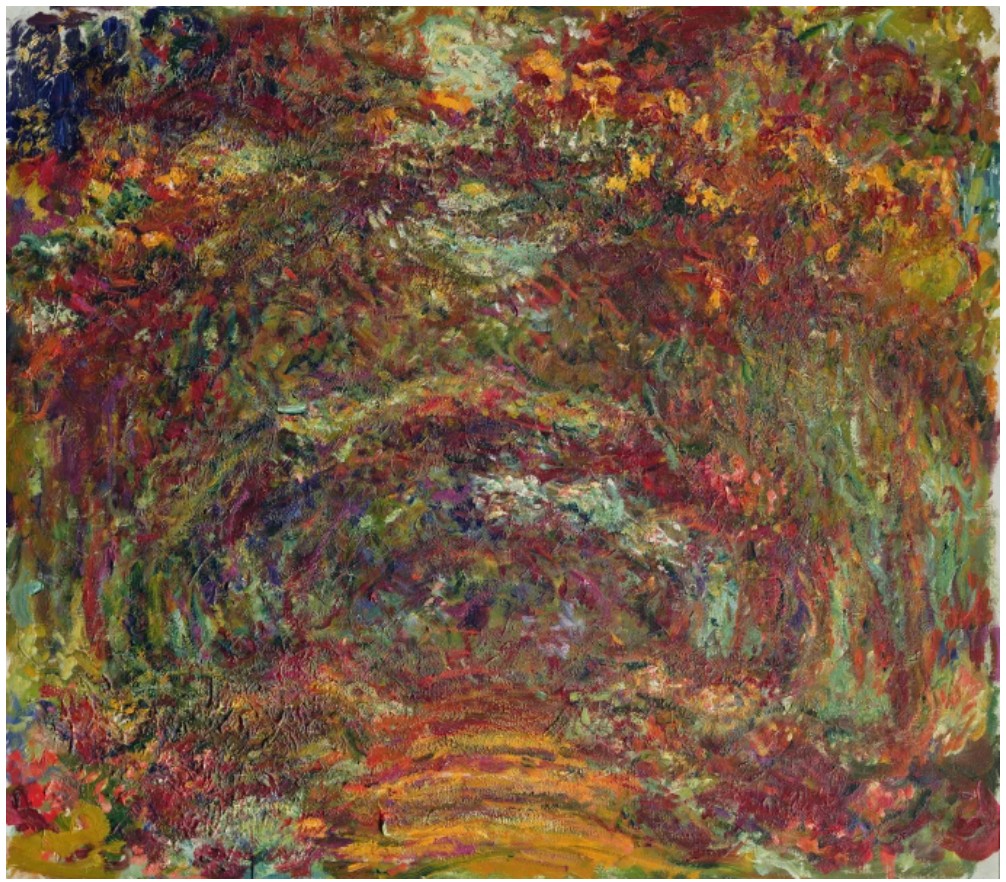
Claude Monet, The Rose Path, Giverny, 1920-22. Musée Marmottan Monet, Paris. Image © Bridgeman Images
Through Peinture 92 x 73 cm, 30 juin 59, in a style simultaneously deeply art historical and wholly innovative, Soulages weaves between raw, visceral emotion and a cerebral interrogation of form. His powerful brushstrokes, in their elusive abstraction, give substance to the ineffable forces engraved into the human experience and reach the viewer in an intimate and emotive fashion. At once instinctive, radical, and immersive, the present work foregrounds the unfading artistic perspective of this modern master.
Peinture 162 x 130 cm, 26 mai 1963
Christie’s Hong-Kong: 26 September 2024
Estimated: HKD 33,000,000 – 55,000,000
HKD 36,675,000 / USD 4,710,355
Peinture 162 x 130 cm, 26 mai 1963 (christies.com)
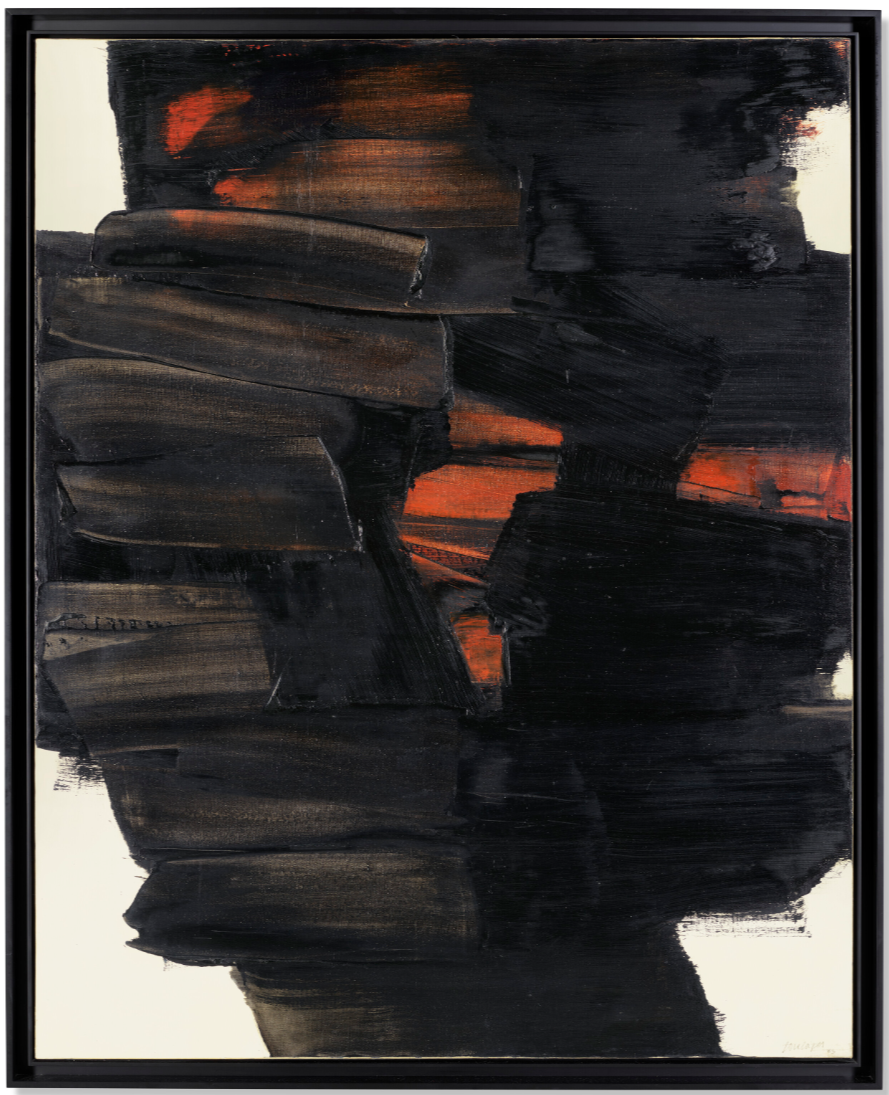
PIERRE SOULAGES (1919-2022)
Peinture 162 x 130 cm, 26 mai 1963
Oil on canvas
162.3 x 130 cm (64 x 51 1/4 inches)
Signed and dated ‘Soulages 63’ (lower right)
Signed and dated ‘26 Mai 63 SOULAGES’ (on the reverse)
Bold and rhythmic, Pierre Soulages’s Peinture 162 x 130cm, 26 mai 1963 is populated with thick and glistening passages of black paint that veil a field of translucent, gauzy crimson radiates underneath. Created in 1963, the present work brilliantly exemplifies the artist’s career-long study of light by exploring the full potential of oil paint’s physical qualities—what he refers to as its’ physiognomic’ nature. Instead of recording gesture or emotion in his mark-making, Soulages arranges contrasts into a united, potent surface to be perceived in its totality. The sheer volume of dark impasto contrasts with the bright embers of the background, orchestrating a dynamic interplay that is magnified by the punctual, balanced composition of the picture as a whole. Selected by the notable New York art dealer Samual Kootz to be included in the artist’s solo exhibition at the Kootz Gallery in 1964 before it was shown at Fundacao Calouste Gulbenkian, Lisbon, in 1971, the present work was later forming part of the Essl Collection since the early 1990s and has been exhibited extensively in the following two decades, including the artist’s solo exhibition Pierre Soulages: Painting the Light at the museum and Paths of Abstract Painting, Monet, Kandinsky, Rothko, and the Consequences at Kunstforum, Vienna. In 2019, the Musée du Louvre mounted a retrospective exhibition for Soulages in celebration of his centenary as a living artist, an honour given only to Pablo Picasso and Marc Chagall before him.
Peinture 162 x 130cm, 26 mai 1963 was painted during the height of Soulages’ use of the raclage technique, which was a pivotal point in his career typified by phenomenal, unwavering consistency. Distinct from the structured, linear interlocking beams of paint that characterised his early period between the 1940s and 1950s, the present work strikes a balance between heaviness and weightlessness—creating complex translucencies through the controlled layering and scraping-away of pigment. ‘The years 1957-63 particularly illustrate one of Soulages’ characteristic technique in the double treatment of the surface: that of scraping, or, if one prefers, transparency through uncovering…’ Pierre Encrevé writes, ‘he applies a layer of paint covering part or all of the surface, upon which he superimposes, while the paint is fresh, one or more layers of different colour. He then uncovers a part of the background using the same soft-bladed spatulas that he more often loads with black paint… A subtle mixture of the different layers’ colours is created…these mixtures, these disappearances—reappearances under the blade-scraped veils of black where the “transfigured” colour acquires a presence of a very particular emotional intensity’ (P. Encrevé, ‘Le noir et l’outrenoir’, in Soulages: Noir Lumière, exh. cat. Musée d’Art Moderne de la Ville de Paris, Paris 1996, p. 30). In the present work, the drama is unmistakable; its warm and dark details call to mind an enigmatic grandeur befitting the Old Masters.
Peinture 130 x 89 cm, 8 mars 1956
Christie’s New-York: 17 May 2023
Estimated: USD 3,000,000 – 5,000,000
USD 3,196,000
PIERRE SOULAGES (1919-2022) (christies.com)
PIERRE SOULAGES (1919-2022)
Peinture 130 x 89 cm, 8 mars 1956
Oil on canvas
130×89 cm (51 1/4 x 35 inches)
Signed and dated ‘Soulages 56’ (lower right)
Pierre Soulage’s singular oeuvre bridged the Atlantic at a time when artistic taste was shifting from Europe toward New York. With a consistently dynamic output that elicited visual comparison to the powerful canvases of the Abstract Expressionists, the French artist’s infatuation with the color black established a connecting thread throughout his decades-long career. Peinture 130 x 89 cm, 8 mars 1956 is a striking example of his early works that tempers the darkness of some of his later pitch-black Outrenoir canvases with glowing color and an infusion of light. Taking on some of the chaotic methods and experimental nature of his American colleagues working during the same time, Soulages was forever pushing the limits of his art form.
“I paint by crisis. Sometimes it works, sometimes it doesn’t. If we know exactly what we are going to do before we do it we are not artists but artisans.”
By investigating the intersection of the individual artist with the vastness of history, Soulages harnessed light and darkness to create brooding, immersive work.
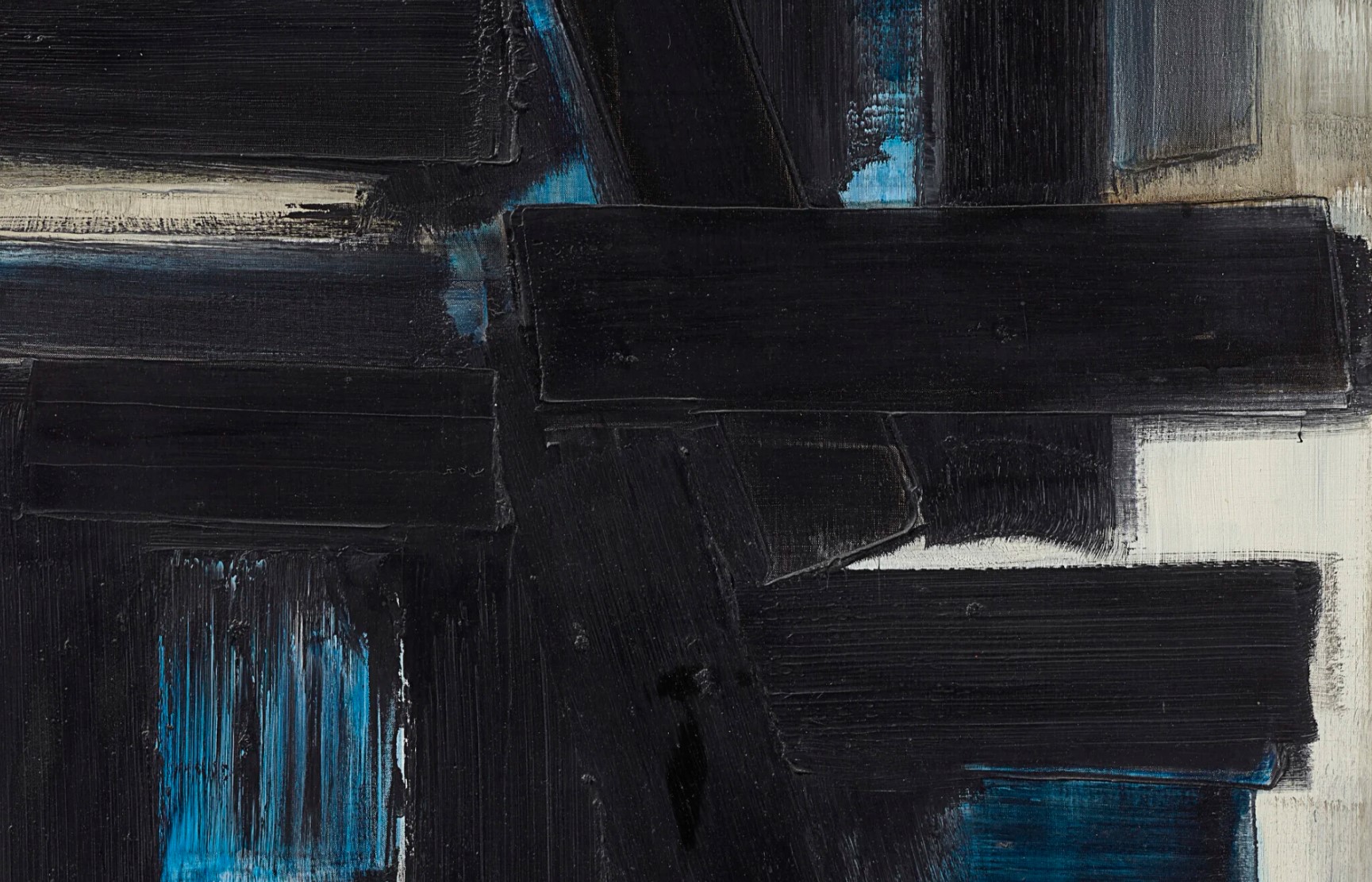
Though rendered with thick even strokes of paint, Peinture 130 x 89 cm, 8 mars 1956 exudes an illusionary depth at odds with its abstract nature. The eye first travels to three bold diagonals that zip upward from the lower right to the upper left, starting as a single mark and then splitting into two. Around the center of the composition, Soulages places horizontal strokes that offer a visual anchor. Meanwhile, two rectangular shapes balance the energy of the diagonals in the upper right and lower left quadrants. A smoky gray ground acts to intensify the edges of all of these dark black strokes. Their surprisingly ordered movements are at odds with the perceived kinetic energy bristling below the surface. Beneath this, the artist offers a glimpse of light in the form of glowing aquamarine that peeks from between the heavy darkness like a sunbeam piercing an underwater cavern.
“The juxtaposition of black and blue has always been voluptuous, one gives in to it with a certain sensuality.”
Painted using house painting brushes or scraping tools made from rubber or leather, Soulages’s work veers from the emotive gesture in favor of the resolute mark. Instead of hinging upon fluid movement and amorphous pools of color to enchant the viewer, works like the present example leverage a precise control of light and shadow.
Peinture 162 x 130 cm, 2 mai 1963
Sotheby’s Paris: 26 October 2022
Estimated: EUR 5,200,000 – 7,200,000
EUR 5,975,200 / USD 5,951,987
Peinture 162 x 130 cm, 2 mai 1963 | Modernités | 2022 | Sotheby’s (sothebys.com)
Peinture 162 x 130 cm, 2 mai 1963
Oil on canvas
156.5 x 125 cm (61.6 x 49.2 inches
Signed Soulages and dated 63 (lower right)
Signed SOULAGES and dated 2/5/63
(on the reverse)
Peinture 162 x 130 cm, 2 mai 1963 is a masterpiece by Pierre Soulages belonging to the corpus of the artist’s most sought-after works from 1957 to 1963. Painting 162 x 130 cm, May 2, 1963 was exhibited at the Kootz Gallery one year after its completion, as part of an exhibition dedicated to the artist. It was during this period that Pierre Soulages produced large-scale paintings with strong contrasts that played on the two-color scheme of black and white. This canvas highlights the color black on the white spaces, left voluntarily in reserve, playing on different shades of black from darkness to a fluidity in transparency. The flat tints are wide and generous, in a harmony of vertical and horizontal forms. The contrasting occupation of space reveals the importance of the artist’s gesture, highlighting a controlled dynamic. This contemporary chiaroscuro is indicative of Pierre Soulages’ early 1960s, when black predominated but was not yet omnipresent.
Peinture 195 x 130 cm, 3 décembre 1956
Sotheby’s Hong-Kong: 7 October 2022
Estimated: HKD 40,000,000 – 60,000,000
HKD 45,145,000 / USD 5,750,589
PIERRE SOULAGES
Peinture 195 x 130 cm, 3 décembre 1956
Oil on canvas
195×130 cm (76.7 x 51.1 inches)
Signed Soulages (lower right)
Executed on 3 December 1956
Peinture 195 x 130 cm, 3 décembre 1956 was painted in the 1950s, a decade of intense change for Soulages. In 1955, he held a solo exhibition at the influential Gimpel Fils Gallery in London. That same year, following shows for Mark Rothko, Willem de Kooning, and Robert Motherwell, Soulages exhibited at Kootz Gallery in New York, a gallery that played an important role in American post-war art. In 1956, Soulages also held an influential show with Galerie de France, a Parisian gallery devoted to abstract art.
Pierre Soulages experienced immense success in Europe and the United States, and he painted Peinture 195 x 130 cm, 3 décembre 1956 at the height of his prestige. In the present work, glimmering gold and bronze tones seem to emerge from the pitch blackness, the epitome of simple elegance. The thick, heavy brushstrokes are accented by refracted white light. The strong, architectural quality to the oil paint invokes unique elements from past aesthetic movements. Post-war artists such as Franz Kline and Georges Mathieu also drew inspiration from the Eastern aesthetic. Soulages encountered Zao Wou-Ki and other Asian painters in Paris, and in this cultural milieu, he started to create abstract compositions with calligraphic rhythms.
Peinture 130 x 89 cm, 8 juin 1959
Sotheby’s Paris: 2 December 2021
Estimated: EUR 2,500,000 – 3,500,000
EUR 3,784,350 / USD 4,279,970
PIERRE SOULAGES (1909-2022)
Peinture 130 x 89 cm, 8 juin 1959
Oil on canvas
130×89 cm (51.2 x 35.1 inches)
Peinture 130 x 89 cm, 8 juin 1959 is a rare and remarkable work from Pierre Soulages’s most sought after years. This period of the late 1950s was also a time in which the painter achieved international recognition, with exhibitions in renowned institutions such as the Stedelijk Museum in Amsterdam and the Solomon R. Guggenheim Museum in New York. Here, the material stretches, the pictorial layer unfolds with natural fluidity, over the entire surface of the canvas. Soulages skillfully plays on the contrasts between opacity and transparency, combining complex shades of red-brown and black. This exceptional work marks the culmination of research undertaken the previous month in the Peinture 129.5 x 88.6 cm, 22 mai 1959, housed at the Museu de Arte contemporanea da Universdad in Sao Paulo, Brazil. Produced at a time when the artist’s palette was darkening, the red background is here increasingly revealed from the lower to the upper part of the canvas with absolute fluidity and a delicate chromatic balance. This painting is perfectly representative of Soulages’s particular use of transparencies at the end of the 1950s and announces his work of the following years. It is indeed part of the technique of scraping, or “transparency by uncovering”. This work is a masterful example of the scraping technique, practiced until 1963, and its chiaroscuro effects worthy of a Rembrandt. This canvas embodies Soulages’s mastery of the possibilities offered by oil painting, as well as the power of his practice, imprinted with the grandeur of prehistoric and Romanesque art, which inspired him in his youth. Displayed in 1960 in many European museums, including the Tate Gallery in London and the musée d’art moderne de la ville de Paris as part of a traveling exhibition dedicated to the collection of the Olympic champion Sonja Henie and her husband Niels Onstad, this work is part of a collection that brings together Fernand Léger, Paul Klee and Henri Matisse as well as Nicolas de Staël, Sam Francis and Hans Hartung. This remarkable history and this singular aesthetic make it an exceptional painting up for auction, painted at the peak of Soulages’s work.
Peinture 195 x 130 cm, 4 août 1961
Sotheby’s New-York: 16 November 2021
Estimated: USD 8,000,000 – 12,000,000
USD 20,141,700
Peinture 195 x 130 cm, 4 août 1961 | Modern Evening Auction | 2021 | Sotheby’s (sothebys.com)
PIERRE SOULAGES
Peinture 195 x 130 cm, 4 août 1961
Oil on canvas
77×51 inches (195.6 x 129.5 cm)
A powerfully magistral and stunningly dramatic expression of the primacy of paint, Peinture 195 x 130 cm, 4 août 1961 thrillingly attests to the incomparable innovation and absolute mastery of expression that have come to define the inimitable praxis of Pierre Soulages. Dating to a moment of intense creative production widely considered to be the pinnacle of the artist’s prolific career, the present work demonstrates the increasingly gestural and visually dynamic mode that emerged in his output from the late 1950s and early 60s. Further distinguished by its exquisite palette, this canvas is one of fewer than ten truly red masterworks Soulages completed, of which only three are executed on a comparable scale, marking Peinture 195 x 130 cm, 4 août 1961 as exceptionally rare.
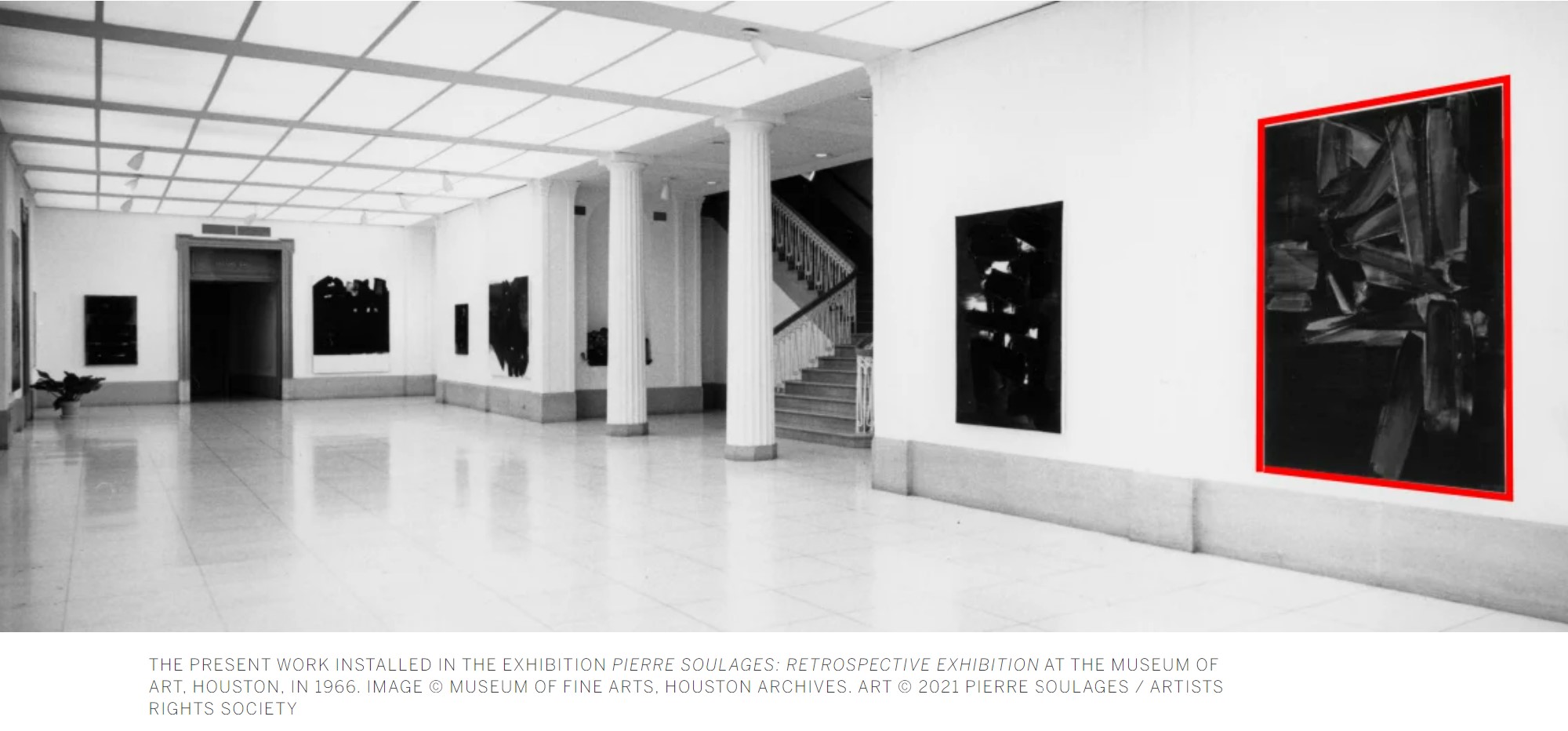
Drawing his brushstrokes dramatically across the surface, the artist dynamically fuses the luminosity of the pigment with the texture of the medium, to create a single and instantaneous impression of aesthetic structural unity that directly brings to mind the cohesive and monumental planes of the American Abstract Expressionists. By varying the thickness of the black paint and the length and width of the strokes over the sumptuous crimson base, Soulages builds up a rhythmic composition that both contracts and expands across the canvas, energizing the interplay between red and black as the two colors compete for prominence. Befitting its rarity and importance, the present work has been included in several landmark exhibitions of the artist’s work, including his first retrospective in France at the Museé National d’Art Moderne in 1967, as well as the inventive and glamorous retrospective organized by famed curator James Johnson Sweeney at the Museum of Fine Arts, Houston, in 1966, at which Soulages’s paintings were hung free-floating in space, suspended only by cables attached to the ceiling of the new open-plan, black-steel girdered wing designed by Mies Van Der Rohe. In its impressive scale, rich coloration, and explosive gestural energy, Peinture 195 x 130 cm, 4 août 1961 brilliantly conveys a sense of striking dichotomies and oppositions, utterly epitomizing the painterly genius that marks the very best of the artist’s work.
Peinture 130 x 162 cm, 16 novembre 1965
Sotheby’s Paris: 3 June 2021
Estimated: EUR 2,500,000 – 3,500,000
EUR 3,152,400 / USD 3,821,091
PIERRE SOULAGES
Peinture 130 x 162 cm, 16 novembre 1965
Oil on canvas
130×162 cm (51.2 x 63.7 inches)
Signed and dated 16.11.65 on the reverse and titled on the stretcher
The painting is of rectangular in shape and stretched wide and the painter seems to have leveraged the constraint of the format as a force, in the architectural sense of the term. The painting spreads and stretches horizontally. But the painting, by its edges, comes to contain this spread, highlighting the painting’s presence. On the white of the canvas is a blue, that a black comes to occult at times. Sometimes, this black in layers partially covers the color, leaving it to exist at its margin, or in interstices, like cracks, where it appears, often mixed with white. Other times, on the left side of the canvas, the blue emerges from beneath the black, in a play of scrapings that recalls the previous period, 1959-1963, when it was the scraping, always, that brought the color back to the heart of the black.
Peinture 125 x 202 cm, 30 octobre 1958
Sotheby’s Hong-Kong: 18 April 2021
Estimated: HKD 38,000,000 – 58,000,000
HKD 48,026,000 / USD 6,179,680
PIERRE SOULAGES
Peinture 125 x 202 cm, 30 Octobre 1958
Oil on canvas
125×202 cm (49.2 x 79.5 inches)
Signed and dated 58 on the reverse and signed and titled on the stretcher
Peinture 125 x 202 cm, 30 Octobre 1958 was painted at a time when Soulages was coming to prominence in the New York art world. The work was first presented to the public in 1959, during his fifth solo show with Kootz Gallery in the city. In the 60 years since its debut, the work has been shown at many important exhibitions, including Soulages’s first travelling museum show in Europe, which ran from 1960 to 1961, and the more recent “Pierre Soulages: A Century” at Lévy Gorvy in New York. The painting is very much representative of Soulages’s work and is considered one of his masterpieces from the 1950s. In 1957, Soulages won the Grand Prize at the Tokyo Biennale. Taking advantage of the trip from New York to attend the exhibition, Soulages, his wife, and Zao Wou-Ki travelled around the world via Japan. While Soulages was in Japan, he visited many Shinto shrines and Buddhist temples, and the colours in Peinture 125 x 202 cm, 30 Octobre 1958 echo the gold leaf and lacquer screens that must have impressed him in Japanese aesthetics.
Peinture 202 x 159 cm, 3 juillet 1965
Christie’s London: 22 March 2021
GBP 2,500,000 – 3,500,000
GBP 3,142,500 / USD 4,334,483
PIERRE SOULAGES (B. 1919) (christies.com)
PIERRE SOULAGES
Peinture 202 x 159 cm, 3 juillet 1965
oil on canvas
202×159 cm (79.5 x 62.6 inches)
Held in the same collection since 1968, and unseen in public since that year, Peinture 202 x 159 cm, 3 juillet 1965 is a painting of luminous beauty. It was included in the artist’s career-defining survey at the Museum of Fine Arts, Houston (1966), followed by his first French retrospective at the Musée National d’Art Moderne, Paris (1967), and his first Canadian retrospective at the Musée d’Art Contemporain de Montréal (1968). Prior to its acquisition by the present owner, it spent three years in the personal collection of Samuel Kootz, the visionary New York-based dealer whose partnership with Soulages launched him to stardom in the United States. The composition, painted with the assurance typical of the artist’s mid-1960s period, is powerful and serene. A broad black expanse consumes much of the two-meter-high canvas; it is lit from within by glimmers of mahogany and amber, which flare out against a bone-white backdrop. This pale ground brackets the black in its lower reaches, creating a top-heavy T-shaped form. Solid, horizontal strokes scaffold the darkness up top, heightening an impression of sublime, near-architectural gravity. From the opaque, inky gloss of the black to the pale, fresco-like ground and bright blazes of red ochre, Peinture 202 x 159 cm, 3 juillet 1965 sees Soulages exploring the full potential of oil paint’s pure physical qualities, what he has called its ‘physiognomic’ character. He does not record gesture or emotion in his brushstrokes, but arranges contrasts into a single, forceful surface that is to be apprehended in its totality. Soulages had made his first unified linear compositions in 1947; he realized in them that if a line did not record the duration of its making, time was brought to a standstill, and movement transformed into dynamic tension. Guided by this principle, he experimented with chiaroscuro effects and stark, interlocking beams of paint throughout the 1950s, eventually arriving at complex translucencies through the controlled layering and scraping-away of pigment. Peinture 202 x 159 cm, 3 juillet 1965 witnesses the artist at the height of his powers. The drama of the painting, which stands as tall as a person, is inescapable; its warm, dark nuances create a shadowed splendor worthy of the Old Masters.
Peinture 162 x 130 cm, 9 juillet 1961
Christie’s Paris: 21 October 2020
Estimated: EUR 6,000,000 – 8,000,000
EUR 5,392,500 / USD 6,376,374
Pierre Soulages (né en 1919) (christies.com)
PIERRE SOULAGES
Peinture 162 x 130 cm, 9 juillet 1961
Oil on canvas
162×130 cm (63.7 x 51.1 inches)
A thrilling rediscovery unseen in public for over five decades, Peinture 162 x 130 cm, 9 juillet 1961 is a painting of monumental clarity and beauty. It was acquired in 1961 from New York’s Samuel Kootz Gallery by the visionary collectors Donald and Jean Stralem, joining major works by Matisse, Cézanne, Giacometti, van Gogh and others in their collection. Most famously, it kept company for many years to the “Stralem Picasso”: the iconic Blue Period Portrait of Angel Fernández de Soto (1903) whose sale in 1995 caused a market sensation. As befits such illustrious history, the present work is a masterpiece from Soulages’ greatest era. Against a bone-white ground, broad strokes of black and Prussian blue build a right-angled structure of bold, rhythmic power. Horizontal beams span the canvas with bird-wing iridescence. Pitch-dark bars of black hang to the left, bringing the work into imposing asymmetric tension. In a brilliant instance of his scraped raclage technique, Soulages has pulled back the still-wet blue and black pigment with drags of a homemade spatula, revealing bright gleams and haloes of light. The drama of the painting, which stands as tall as a person, is inescapable. Its stamp of sapphire on white has the primal, theatrical presence of the “body prints” by Yves Klein, that great master of blue; its dark, flashing nuances create a chiaroscuro worthy of the Old Masters; its marbled calligraphy brings to mind the dragged veils of color achieved by Gerhard Richter in the 1980s. From the opaque, fine-grained gloss of the black to the pale, fresco-like ground and pellucid, almost glassy slashes of peacock hue, Soulages exploits the full potential of oil paint’s pure physical qualities, celebrating what he has called its “physiognomic” character. Making every decision based on the painting in front of him, he paints not as a philosopher, narrator or ideologue, but as a painter.
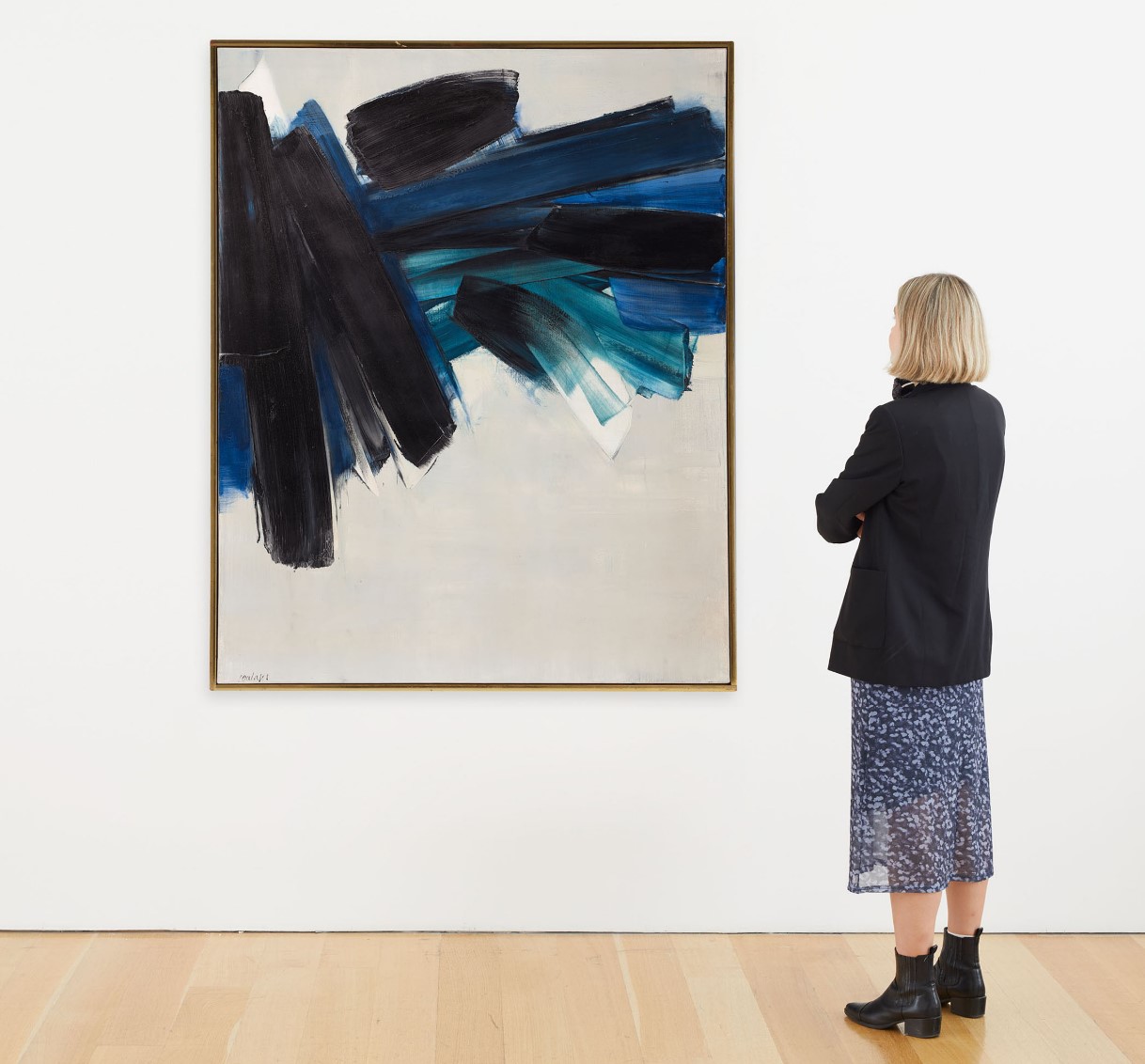
This work dates from the peak of Soulages’ use of the raclage technique, a high point in a career of remarkable, single-minded consistency. He had first made unified, linear compositions in 1947, realizing in them the guiding principle of his art: if a line did not record the duration of its making, time was brought to a standstill, and movement transformed into dynamic tension. He experimented with chiaroscuro effects and dark, interlocking beams of paint throughout the 1950s, eventually arriving at paintings of complex, diaphanous color created by a staccato layering and scraping-away of pigment.
Peinture 130 x 162 cm, 14 avril 1957
Sotheby’s Paris: 24 June 2020
Estimated: EUR 3,000,000 – 5,000,000
EUR 4,379,300 / USD 4,937,204
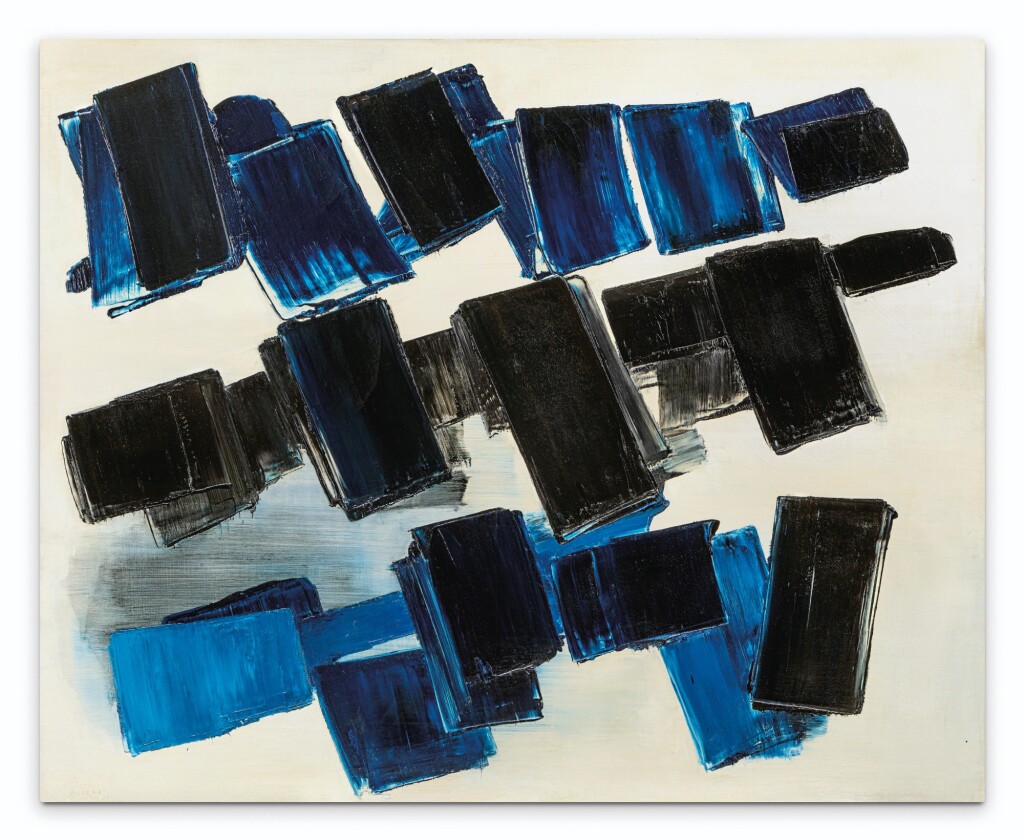
PIERRE SOULAGES
Peinture 130 x 162 cm, 14 avril 1957
Oil on canvas
130×162 cm (51.2 x 63.7 inches)
Abstract, gestural, energetic, frontal, Peinture 130 x 162 cm, April 14, 1957 shares many points in common with the masterpieces of American Abstract Expressionism. That being said, as James Johnson Sweeney grasped early on, fascinated by Soulages’s emancipated and non-conformist approach to painting, it is essential to understand that a painting such as Peinture 130 x 162 cm, 14 avril 1957 should not be judged solely by the yardstick of Abstract Expressionism or gestural abstraction. As this painting from a rare series, most of whose episodes are nowadays in museum collections, masterfully demonstrates, what Soulages delivers here is absolutely unique. As lyrical and immersive as Monet’s Nymphéas, as sober and radical as Malevitch’s supremacist constructions, as impulsive and instinctive as Kline’s cityscapes or Motherwell’s Elegies, Peinture 130 x 162 cm, April 14, 1957 occupies a special place in the history of art. Far from trying to retranscribe the world around us, a system of thought or even the idea of movement, Soulages here arranges forms and contrasts with the sole aim of arousing emotion. Alternating deep silences, flights of fancy and nuances, it is also interesting to note that Soulages activates the space to make a third dimension resonate at the heart of Peinture 130 x 162 cm, April 14, 1957: that which lies between him and the canvas and is inhabited only by the impalpable quality of light. For if Soulages combines blue with black and white in this canvas, it is to give substance to the unreal and unique light that emanates as if by magic from this masterpiece.
Peinture 146 x 114 cm, 6 mars 1960
Christie’s London: 3 October 2019
Estimated: GBP 4,000,000 – 6,000,000
GBP 5,484,000 / USD 6,749,538
Pierre Soulages (b. 1919) (christies.com)
PIERRE SOULAGES
Peinture 146 x 114 cm, 6 mars 1960
oil on canvas
146×114 cm (57.5 x 44.9 inches)
Widely exhibited during the 1960s and held in the same private collection for the past half-century, Peinture 146 x 114 cm, 6 mars 1960 is a beautiful and monumental painting. A dark field of tar-black oil paint is combed across the upper half of the canvas in broad, horizontal brushstrokes. In a brilliant instance of his scraped raclage technique, Soulages has incised the still-wet black with bold drags of a homemade spatula, pulling back curtains of dark pigment to reveal a bright, theatrical blaze of blood red beneath. In the painting’s lower half, framed by a ground of off-white, a dance of horizontal and vertical black forms sets the composition in formidable, calligraphic balance. The force and drama of the painting is inescapable, and its variety of tones and textures astonishing. Its sonorous darkness conjures the chiaroscuro warmth of a Rembrandt; the choreography of scraped and marbled paint anticipates the dragged veils of color achieved two decades later by the German master Gerhard Richter. From the black’s glinting opacity, pushed into liquid banks at the brink of each slash, to the glowing, almost glassy zones of red, Soulages exploits the full potential of oil paint. The artist paints not as a philosopher, narrator or ideologue, but as a painter. Never aiming to communicate his emotions or states of being, he does not record gesture or movement in his brushstrokes. He instead arranges contrasts into a single, charged surface that is to be apprehended in its totality. Painted in the airy rue Galande studio that Soulages moved to in 1957, the work witnesses an artist at the height of his powers. Although he was yet to receive major acclaim in France, Soulages was enjoying huge success in New York. He had visited the city in 1957 and became close friends with Robert Motherwell and Mark Rothko. In 1959, the prices paid for his works by his dealer Samuel Kootz had doubled for the second time, and in July that same year Rothko visited him and his wife in Paris, where they threw him a party at the studio. While Rothko was never a direct influence on Soulages’ work, Peinture 146 x 114 cm, 6 mars 1960 bears some of the imposing vertical impact of the American painter’s floating bars of color, and Soulages was certainly animated by the lively exchanges they shared. The work’s rhythmic, inky pulses of black on white also have echoes of Motherwell’s Elegies to the Spanish Republic. Peinture 146 x 114 cm, 6 mars 1960 displays Soulages at his most energized and daring, pushing his work into a bold and tumultuous chromatic dance. Beyond its dynamic relationship between colors, the work’s interplay of rough, smooth, vertical and horizontal textures also shows Soulages exploiting his material’s myriad interactions with light to ever greater power and contrast, filling the surface with life and anticipating the ultimate, breakthrough simplicity of the all-black Outrenoir canvases he would commence in 1979.
Peinture 186 x 143 cm, 23 décembre 1959
Christie’s New-York: 14 November 2018
Estimated: USD 10,000,000 – 15,000,000
USD 10,600,000
Pierre Soulages (b. 1919) (christies.com)
PIERRE SOULAGES
Peinture 186 x 143 cm, 23 décembre 1959
Oil on canvas
186×143 cm (73.2 x 56.2 inches)
Signed ‘Soulages’ (lower left)
Signed again and dated ‘SOULAGES 1959’
(on the reverse)
A dark field of tar-black oil paint, finely striated by broad, horizontal brushstrokes, is combed across the full breadth of the canvas, and bracketed top and bottom by a ground of off-white. In a brilliant instance of his scraped raclage technique, Soulages has incised the still-wet black with bold, diagonal drags of a homemade spatula, pulling back the curtain of dark pigment to reveal bright, theatrical flashes of blood red beneath. In the lower reaches of the black, a horizontal scrape exposes a golden gleam of off-white, a touch of instinctive compositional genius which sets the whole work in formidable balance. The force and drama of the painting, which stands as tall as a person, is inescapable. Its rich variety of tones and textures is astonishing. The sonorous chiaroscuro of reds and blacks conjures the warm darkness of a Rembrandt, recalling a blaze of opulent fabric and glinting metal; the calligraphy of scraped, marbled paint brings to mind the dragged veils of color achieved by the German master Gerhard Richter in the 1980s. From the rough, fine-grained opacity of the black to the glowing, translucent, almost glassy slashes of red, Soulages exploits the full potential of oil paint, celebrating what he has called its “physiognomic” character. This exalting of his material’s innate physical qualities is typical of Soulages, who makes every decision based on the painting in front of him. He paints not as a philosopher, narrator or ideologue, but as a painter. with its remarkable clarity, unity and resonance, is a masterpiece of Soulages’s method. The work has the natural, unquestionable structural beauty and monumentality of a tree, its spatial relationships and tensions laid bare in boughs stripped dark against the sky. The historical moment of its execution is largely an irrelevance: for Soulages, an artwork exists not as an artefact of its time, but only in the ever-new, ever-changing present that is created with the viewer’s involvement. Concentrated, ageless, serene and inevitable, Peinture 186 x 143 cm, 23 décembre 1959 aims to provoke as profound and engaged a response as a blood-red beast on a prehistoric wall, the graceful darkness of Conques, or any other art of true power and mystery.
Peinture 162 x 130 cm, 14 avril 1962
Sotheby’s Paris: 6 June 2017
Estimated: EUR 2,000,000 – 3,000,000
EUR 6,120,000 / USD 6,897,849
(#4) Pierre Soulages (sothebys.com)
PIERRE SOULAGES
Peinture 162 x 130 cm, 14 avril 1962
Oil on canvas
162×130 cm (63 3/4 x 51 3/16 inches)
Signed; signed, dated 14 avril 62 and dated 1962 on the reverse
This major canvas from the early 1960s, Peinture 162 x 130 cm, 14 Avril 1962, testifies to an important period of change in Soulages’ career where the relatively static signs of his early years give way to a new and definitive tension which will continue to grow. Form is now linked to colour and matter, adding an innovative and original dimension to the painter’s work. This change in sensibility demonstrates the incredible creative energy that inhabits Soulages. Peinture 162 x 130cm, 14 Avril 1962 perfectly illustrates the skill with which Soulages structures his voids and planes of colour with nuance, so that the flame emerges where it is least expected. The lapis lazuli reinforces a movement that is as soft as it is poetic and majestic. Black, present here and there in sparse strokes, takes on a whole other meaning. The play on light, architecture and the monumental structure along with the chromatic transparency increase the mystery that hovers over this composition. There is volume, space and time. But also something elusive and enigmatic which seems to come from as far as fire and ice.
Peinture 195 x 130 cm, 21 novembre 1959
Sotheby’s London: 26 June 2013
Estimated: GBP 2,000,000 – 3,000,000
GBP 4,338,500 / USD 6,550,326
(#17) Pierre Soulages (sothebys.com)
PIERRE SOULAGES
Peinture 195 x 130 cm, 21 novembre 1959
Oil on canvas
195×130 cm (76 3/4 x 51 inches)
Signed and dated 21 Nov 59 on the reverse
Peinture, 21 Novembre 1959 is a magisterial painting dating from one of the most significant periods of Pierre Soulages’ superlative career: an outstanding body of work that spans more than sixty years so far. By the end of the 1950s Soulages had achieved international recognition, having exhibited at the 26th Venice Biennale in 1952, in group shows at The Solomon R. Guggenheim Museum, New York in 1953 and 1959 and the Stedelijk Museum in Amsterdam in 1957, as well as extensively at galleries within Europe and America. At his first showing in America at the beginning of the 1950s, Soulages’ work attracted comparisons with that of the Abstract Expressionist artist Franz Kline: “Both these painters with significant differences in method seem well along the royal road to a new absolute expression; both are making significant history in the drama of contemporary abstract painting…” (Sam Hunter cited in: Pierre Encrevé, Soulages, L’oeuvre complet, Peintures, I. 1946-1959, Paris 1994, p. 158). The 1950s also saw important developments within Soulages’ painting in terms of technique and practice. In order to accommodate the increasingly large size of the canvases, necessary so as to give full rein to the artist’s expressive use of pigment, Soulages began placing his canvases on the floor as a support, and built a wooden contraption that enabled him to stand above ground in order to paint the middle of the composition. The paintings of the 1950s are imbued with a growing luminosity and dominated by increasingly powerful sweeps of paint: Soulages employed large scale builder’s brushes as well as constructing a ‘lame’, a tool composed of a piece of rubber at the end of a long piece of wood, which enabled him to cover the canvas with sweeping washes of color. Peinture, 21 Novembre 1959 encapsulates these significant developments within Soulages’ technique, projecting a feeling of concerted authority and undeniable presence.
Paintings (1964-1979)
Peinture 165,1 x 139,7 cm, 11 juillet 1971
Christie’s Paris: 23 October 2025
Estimated: EUR 750,000 – 950,000
EUR 952,500 / USD 1,105,585
Pierre Soulages (1919-2022), Peinture 165,1 x 139,7 cm, 11 juillet 1971 | Christie’s
PIERRE SOULAGES (1919-2022)
Peinture 165,1 x 139,7 cm, 11 juillet 1971
Oil on canvas
162×130 cm (63 3/4 x 51 1/8 inches)
Signed and dated ‘Soulages 71′ (lower right); dated ’11 juillet 1971’ (on the reverse)
Painted in 1971
With its two bold sweeps of black oil paint soaring down a pristine, vertical white canvas, Peinture 165,1 x 139,7 cm, 11 juillet 1971 is an elegant work from an important moment in Pierre Soulages’ career. It belongs to a distinctive group of large-scale paintings made between 1969 and 1971. Defined by commanding, calligraphic black forms laid over bright white grounds, they are strikingly distilled compositions, evoking what Harold Rosenberg described as a ‘macrography’ or monumental script (H. Rosenberg quoted in P. Encrevé, Soulages, l’Oeuvre Complet, Peintures, Vol. II: 1959-1978, Paris 1995, p. 203). The present work’s strokes are like doubled glyphs, each bearing a cursive loop at its apex. This was pivotal period in Soulages’ practice, during which his production peaked before a two-year hiatus from painting beginning in 1972.
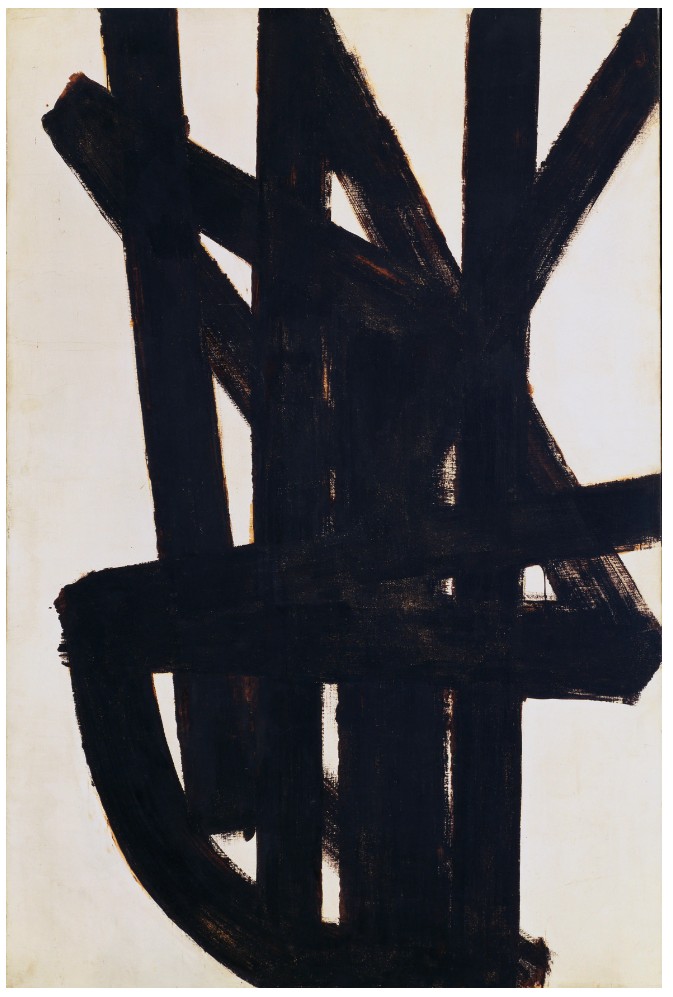
Pierre Soulages, Peinture 1948-49.
Museum of Modern Art (MoMA), New York, USA. © Adagp, Paris, 2025.
Photo © Digital image, The Museum of Modern Art, New York/Scala, Florence.
While in some ways these paintings looked back to Soulages’ earliest works—linear paintings made in the 1940s using brou de noix, a dark pigment brewed from walnut husks—their impact was amplified by their impressive scale and the dramatic opacity of the oil paint. Their stark forms condensed twenty-five years of painterly exploration. James Johnson Sweeney saw in them ‘a richer austerity with a complete assurance of combined compositional freedom and control—mouvement en puissance. The forms are clear-cut. One feels a live sculptural quality in them, with no concessions to an expressionistic approach’ (J. J. Sweeney, Soulages, New York 1972, p. 26)[1] For all their evocations of looping script, the works are not gestural or emotive but rather inscrutable and still, resounding with dynamic tension. Their concentration is like a gathering of strength before the later paintings of the 1970s, which would unfold a greater use of colour, transparency and chiaroscuro before climaxing in the all-black Outrenoirs of 1979.
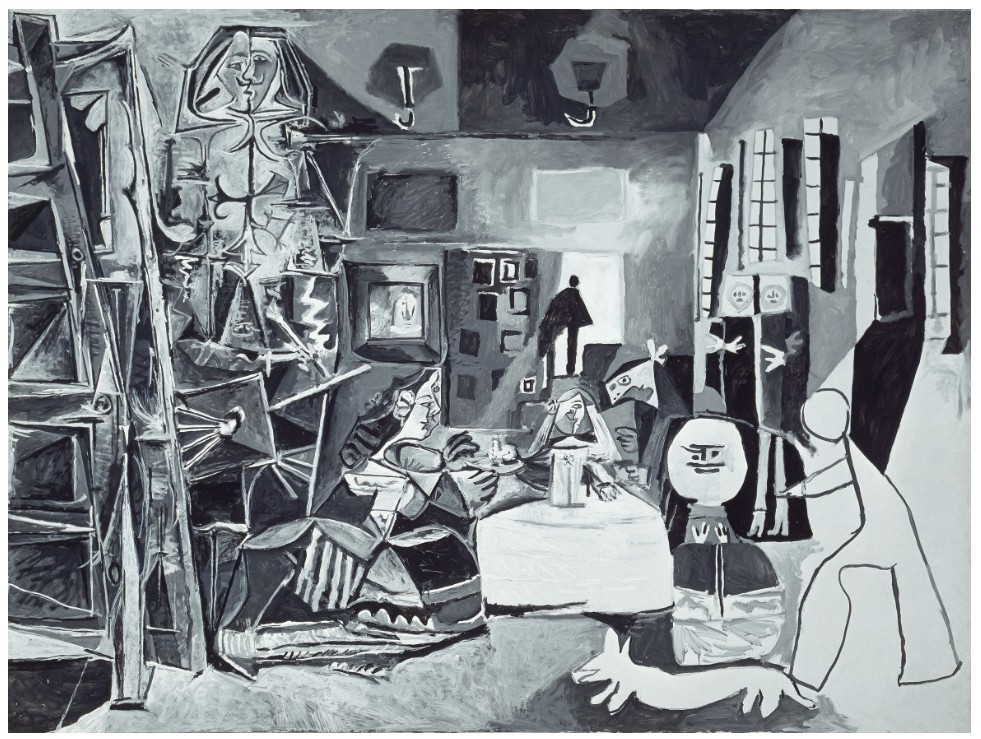
Pablo Picasso, Variation d’après Les Ménines de Velasquez : Vue d’ensemble, 1957. ©Succession Picasso 2025.
Photo © Succession Picasso/DACS, London 2025 / Bridgeman Images.
Soulages regarded great art as timeless. Rooted in his own origins in southeastern France, his inspirations included ancient cave paintings, Romanesque architecture and Neolithic standing stones. At the same time, he constantly sought new directions for painting, engaging in lively debate with his American Abstract Expressionist friends and pushing the potentials of his medium. Asked in 1970 by Catherine Millet about the appeal of black and white, Soulages identified a distinctly modern quality—seen, too, in the grisaille works of Pablo Picasso—which granted the work a vital independence from nature. ‘I would conclude very objectively that the use of these colours corresponds to a certain modernity in painting’, he said. ‘Black is the colour that most contrasts with everything around it. A black and white painting has nothing to do with its environment, which is always coloured. The painting appears as something truly isolated in the world, apart’ (P. Soulages quoted in ibid., pp. 202).
Peinture 202 x 143 cm, 25 septembre 1967
Phillips Hong-Kong: 25 November 2024
Estimated: HKD 14,000,000 – 24,000,000
HKD 11,098,000 / USD 1,425,835
Pierre Soulages – Modern & Contempo… Lot 12 November 2024 | Phillips
PIERRE SOULAGES
Peinture 202 x 143 cm, 25 septembre 1967
Oil on canvas
202×143 cm (79 1/2 x 56 1/4 inches)
Signed ‘Soulages’ lower right; further signed, titled and dated ‘“202 x 143”, SOULAGES, 25.9.67’ on the reverse
The present lot by the French master Pierre Soulages presents a visual dichotomy, where the stark contrast between black and white does not clash but converses. The black, dominant, and bold, does not simply sit atop the canvas, but seems to carve into the fabric of the white background, creating a sense of depth that is both illusory and innate. The application of black is textured, with the thick impasto giving a tactile dimensionality to thinner glazes that allow the white to subtly emerge. These variations in texture manipulate the light, causing the black to be seemingly in motion through its intensity and form. The light, both natural and artificial, becomes an active participant in the viewing experience, transforming what could be a static image into a dynamic interplay of shadows and highlights.
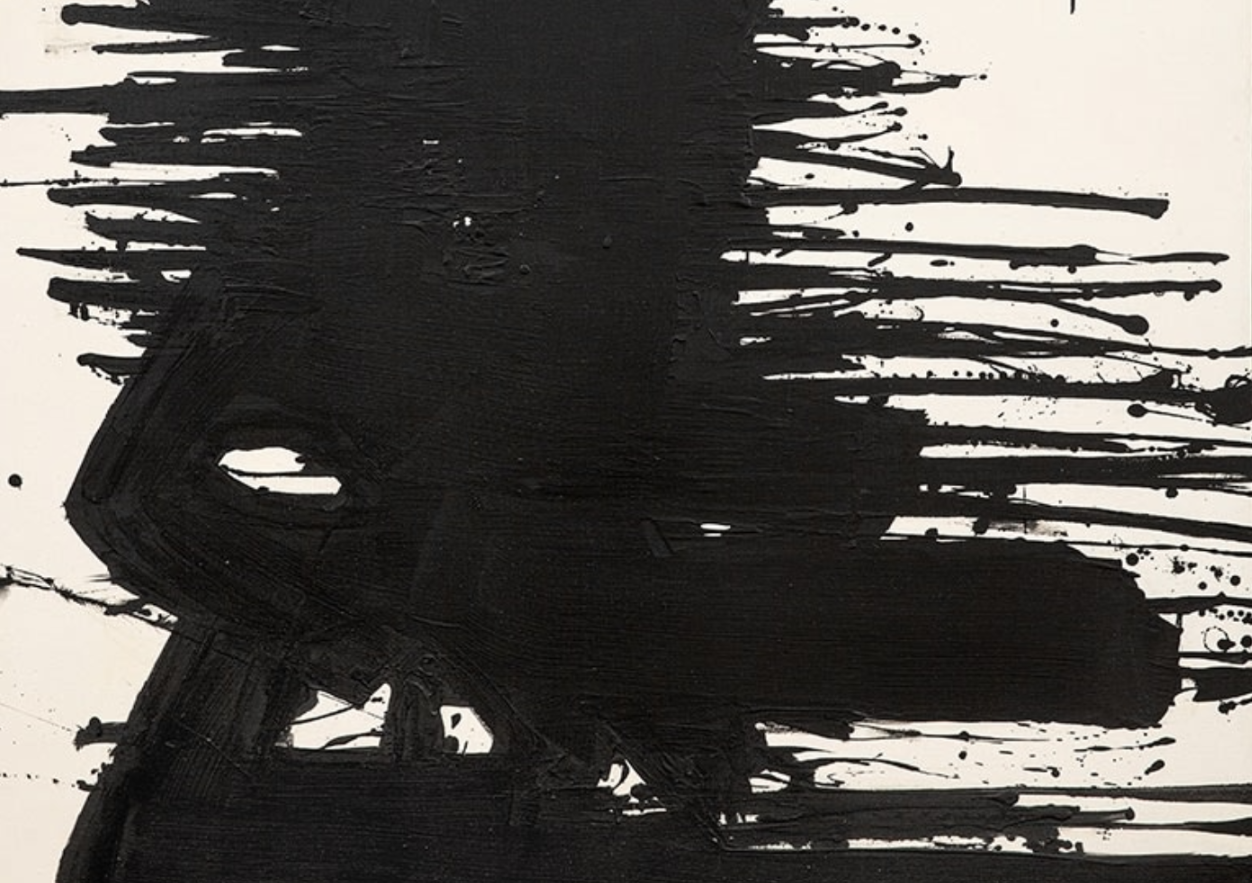
Each stroke on the canvas is deliberate, a controlled engagement that speaks to the raw emotion of the moment of creation. The edges where black meets white are sometimes sharp, creating a clear boundary, and at other times, they feather and blend, suggesting a merging of the opposites. It is in these transitions that Soulages’ work speaks to the impermanence of boundaries and the fluidity of perception. What is particularly striking about Soulages’ oeuvre is the way in which the black seems to reflect the light. Soulages’ black is not the black of an abyss that swallows all that enters; it is rather a black that gives back, that interacts with its surroundings, and changes with the viewer’s perspectives. The luminosity that emanates from the dark sections suggests movement and life, as if the black areas are not simply color but a living entity within the work. The painting invites contemplation, asking the viewer to consider the interplay of light and darkness in life. It is a metaphor for the human condition, where moments of darkness are interspersed with flashes of light, hope, and clarity. The canvas is not passive; it challenges the observer to engage with it, to find meaning in the contrast, and to reflect on the balance of light within their own lives.
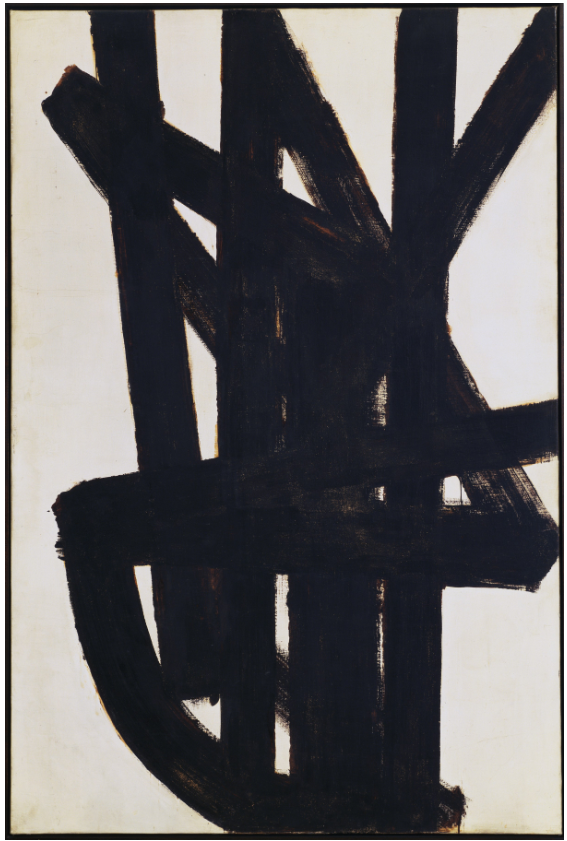
Pierre Soulages, Painting, 1948-49
© 2024 Artists Rights Society (ARS), New York / ADAGP, Paris
The painting thus becomes a meditative object, a point of focus that invites the viewer into a contemplative state. It is not just to be seen but to be experienced, a canvas to enter rather than merely observe. In this space, the viewer is compelled to confront the depths of their own perception, to find clarity in darkness, and to discover the myriad shades and nuances within what may have once seemed a monochromatic abyss. Notably, the influence of Japanese aesthetics on Pierre Soulages is evident in the minimalist approach and the profound sense of balance within his works. The philosophy of ‘less is more’, inherent in much of Japanese art and design, resonates within Soulages’ canvas. The simplicity of the composition belies its complexity, much like the Japanese Zen gardens that is both a physical space and a landscape of the mind.
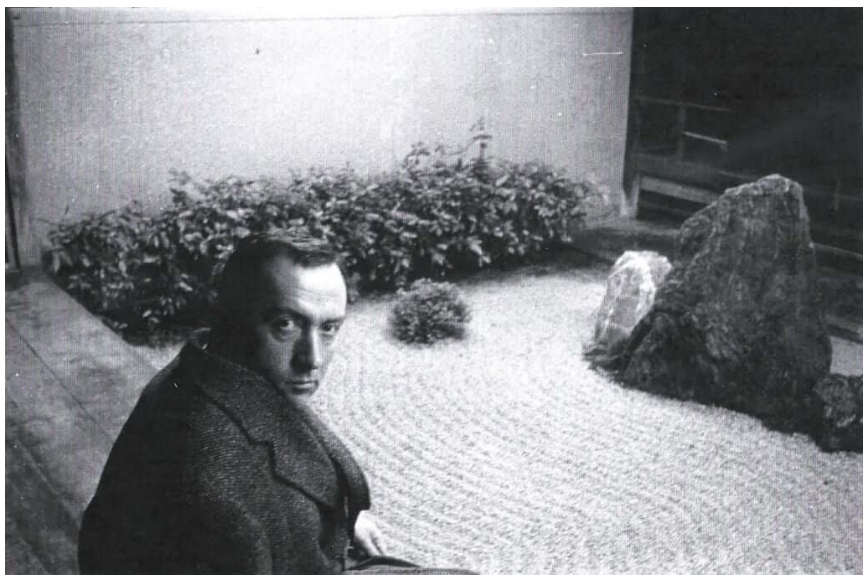
Pierre Soulages at the Daisen-in temple, Kyoto, 1958
Image: © 2024 Artist Rights Society (ARS), New York / ADAGP, Paris
Principles such as Ma (space 間) and wabi-sabi (beauty in imperfection) are reflected in the painting’s composition. There is a harmony in the asymmetry, a beauty in the raw, unfinished quality of the brushstrokes that capture the impermanence and imperfection of existence. The space that Soulages leaves untouched is as important as the areas he fills with pigment, creating a balance that speaks to the voids and presences in life. Soulages has described his encounter with Japanese art as he stood in front of the Shoso-in Treasure House in Nara, for example. The sense of space in the architecture has struck him as something that makes the composition more alive and vivid, and inspired new views on painting.
‘The paintings I like do not demand that their viewers follow with their eyes the space that is present in the picture, or the movement. Instead, the viewers are very free in front of its space. They can interact with it.”
The bold, black strokes in his painting have a similar attribute; they are open to interpretation, conveying emotion and movement that transcends the confines of language. The Japanese influence pushes the work beyond mere visual experiences and into a realm where each viewer’s encounter with the painting is a unique dialogue.
Peinture 130 x 97 cm, 18 février 1969
Christie’s Paris: 18 October 2024
Estimated: EUR 450,000 – 650,000
EUR 907,200 / USD 982,440
Pierre Soulages (1919-2022), Peinture 130 x 97 cm, 18 février 1969 | Christie’s
PIERRE SOULATES (1919-2022)
Peinture 130 x 97 cm, 18 février 1969
Oil on canvas
130×97 cm (51 1/8 x 38 1/4 inches)
Signed ‘soulages’ (lower left)
Signed and titled ‘SOULAGES ”Peinture 130 x 97 cm.18.2.69.”’ (on the reverse)
‘’Rather than movement, I prefer to talk of tension. And rhythm, yes. We can also say form: a shaping of matter and light.’’
Peinture 130 x 97 cm, 18 février 1969 is a painting of luminosity, resonance and stillness. Three broad, dark, upright strokes consume much of the vertical canvas. Gaps in between them reveal rhythmic flashes of the off-white ground beneath, and a wide sweep of dilute, sepia pigment. The clear area to the left is a window of still more delicate translucency, while further darkness at the upper right lends the composition an architectural weight. Soulages does not aim to record movement or emotion in his brushstrokes: he instead arranges contrasts into a single, forceful surface that is to be apprehended in its totality, like a calligraphic sign. With its form guided solely by the innate qualities of its medium, the present work exemplifies Soulages’ statement.
“I do not depict, I paint. I do not represent, I present.”
Unlike the gestural sequences of many Abstract Expressionist paintings, Peinture 130 x 97 cm, 18 février 1969 offers no itinerary to follow, no lyrical anecdote of the artist’s feelings poured or splashed onto the canvas. It is instead a contained, resonant surface of overall structural and chromatic energy. Soulages did not plan compositions but responded to the paint in front of him, working directly with its viscosity, translucency and tone to assemble a cohesive presence. He sought the profound, timeless grandeur of the Romanesque and palaeolithic art that had inspired him as a youth. Soulages first made unified, linear compositions in 1947, realizing in them the guiding principle of his art: if a line did not record the duration of its making, time was brought to a standstill, and movement transformed into dynamic tension. He experimented with chiaroscuro effects and dark, interlocking beams of paint throughout the 1950s, eventually creating complex, translucent color in his works through scraping away layers of impasto. Stark, angular black silhouettes dominated the following decade as Soulages honed his paintings’ stillness and structural integrity, before giving way to the assured, lucid works of the late 1960s and early 1970s. He dialled back his palette to a vocabulary of warm, Old Masterly browns, blacks and bone-whites. The number and diversity of his strokes was refined as their breadth was amplified, and his materials’ myriad interactions with light were exploited to ever greater intensity and contrast. Anticipating the ultimate, breakthrough simplicity of the all-black Outrenoir canvases commenced in 1979, it is to this period of poised clarity that Peinture 130 x 97 cm, 18 février 1969 belongs.
Peinture 130 x 162 cm, 28 février 1970
Sotheby’s Paris: 13 December 2023
Estimated: EUR 600,000 – 800,000
EUR 3,073,000 / USD 3,344,269
PIERRE SOULAGES (1919 – 2022)
Peinture 130 x 162 cm, 28 février 1970
Oil on canvas
130×162 cm (51 1/8 x 63 3/4 inches)
Signed, inscribed and dated 28-2-70 on the reverse
Peinture 130 x 162 cm, 28 février 1970 est une œuvre majeure qui fait partie d’une série sur laquelle l’artiste travaille entre 1969 et 1970. C’est au cours de ces années que le maître français radicalise sa peinture, réduisant drastiquement sa palette au noir et blanc. Avec leur palette achromatique et leurs élégantes touches de peinture, les œuvres de cette série immédiatement reconnaissable incarnent une transition cruciale dans la pratique de Soulages entre ses premières œuvres, plus lâches, plus picturales et expressives, et ses dernières œuvres, plus rigoureuses et graphiques.
Peinture 162 x 114 cm, 17 avril 1972
Christie’s Paris: 29 June 2021
Estimated: EUR 1,000,000 – 1,500,000
EUR 2,060,000 / USD 2,441,336
Pierre Soulages (né en 1919) (christies.com)
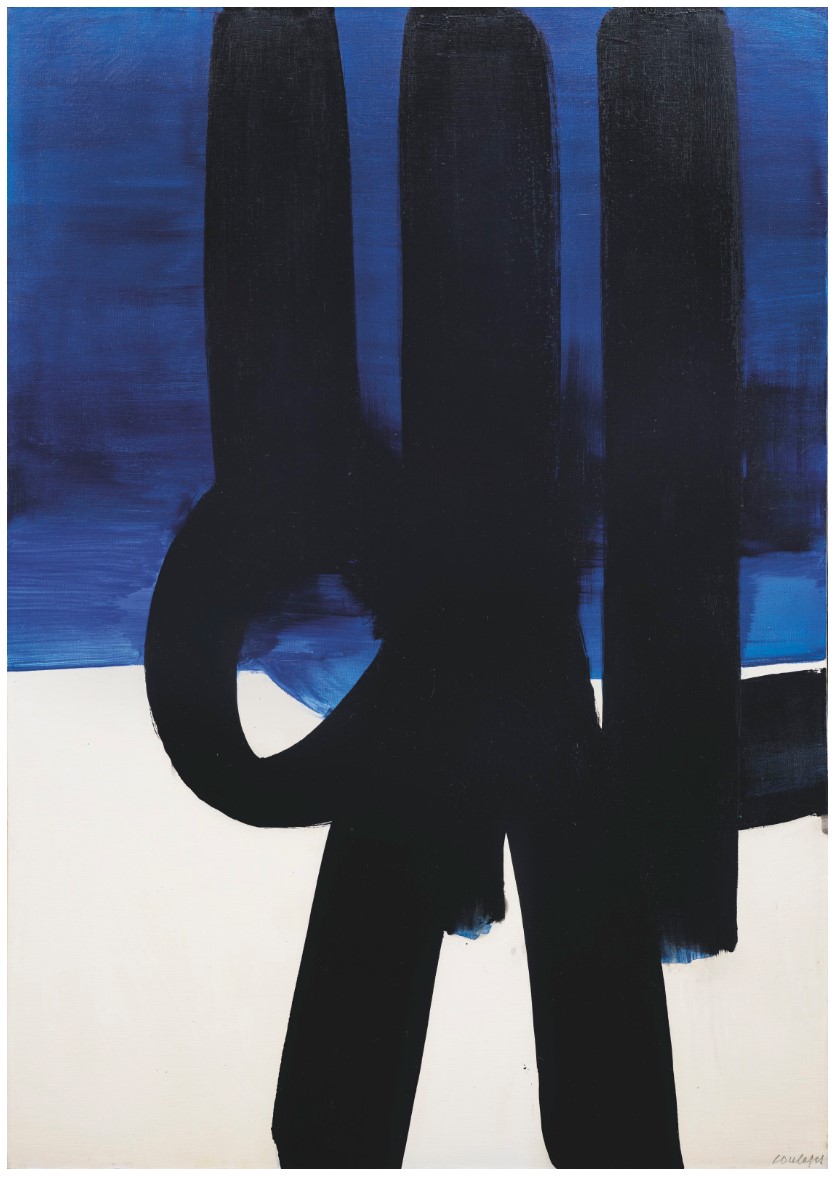
PIERRE SOULAGES
Peinture 162 x 114 cm, 17 avril 1972
Oil on canvas
162×114 cm (63.7 x 44.9 inches)
In the early 1970s, when Pierre Soulages painted his Peinture 162 x 114 cm, 17 avril 1972, he was embarking on a continuous and irreversible journey to renew his forms of artistic expression. The canvases of the 1960s – a dialogue built around primary colors with thick, black matter that was raked and scraped – were followed by more hieratic compositions: black breaks away from other hues and colors become scarce in a subtle balance between emptiness and fullness. Linking the past to the present, Soulages reconnected with his beginnings as a painter. In 1970 he found a new use for walnut stain, but more importantly, starting in 1968, he discovered the full potential of black and white alone, in what Harold Rosenberg dubbed “macrographics”: imposing cursive writing in the deepest and most solitary of blacks streaking vertically over the canvas and knotted, then unknotted, curves flowing out of a line on a background left blank.
His Peinture 162 x 114 cm, 17 avril 1972 is one of the last of this period, before he set aside painting for nearly a year in favor of engraving. As one of the rare works that he painted vertically, it is at the confluence of the artist’s inventions. First, the immaculate white of the background. Then, layered over it, splitting the canvas in two: the horizontal block in a shade of blue whose tones vary through a trick of transparency: intensely navy when mixed with a touch of black, then azure in its pure, nearly translucent state. Lastly, on top, the writing formed with brush and blade: three thick, vertical lines blurring into a loop that stop abruptly at the white canvas or continue their journey, forking. The overall effect is like a fantastical memory of some ancient calligraphy. This Peinture gives rise to myriad contrasts: the luminous black writing is in conversation with the silence of the background, and with the penetrating aquamarine.
Early Paintings (1949-1955)
Peinture 130 x 89 cm, 25 juin 1954
Christie’s Paris: 15 April 2026
Estimated: EUR 1,000,000 – 1,500,000
EUR 1,768,000 / USD 2,085,910
Pierre Soulages (1919-2022), Peinture 130 x 89 cm, 25 juin 1954 | Christie’s
PIERRE SOULATES (1919-2022)
Peinture 130 x 89 cm, 25 juin 1954
Oil on canvas
130×89 cm (51-1/8 x 35 inches)
Signed and dated ‘soulages 54’ (lower right)
Signed ‘SOULAGES’ (on the reverse)
Painted during his early rise to global acclaim, Peinture 130 x 89 cm, 25 juin 1954 is a vibrant and striking composition by Pierre Soulages. Bold, zigzagging strokes of black are stacked and interlocked in a dynamic vertical structure. To the right is a zone of brilliant red, which casts its glow across the whole painting. An off-white ground, glimpsed beneath dark pigment scraped back to translucency, flashes through the bars. Renowned for working largely in monochrome, Soulages began to introduce warm and cool color into his works during the 1950s. The present work is a rare early example of his use of red. Subtle reds had appeared one year previously in the major vertical painting Peinture 195 x 130 cm, 14 avril 1953 (Museum Ludwig, Cologne), cloaked in a thicket of black brushstrokes. In Peinture 130 x 89 cm, 25 juin 1954, the scarlet pigment emerges with new impact and clarity, presaging the bright tonal contrasts of Soulages’ work later in the 1950s.
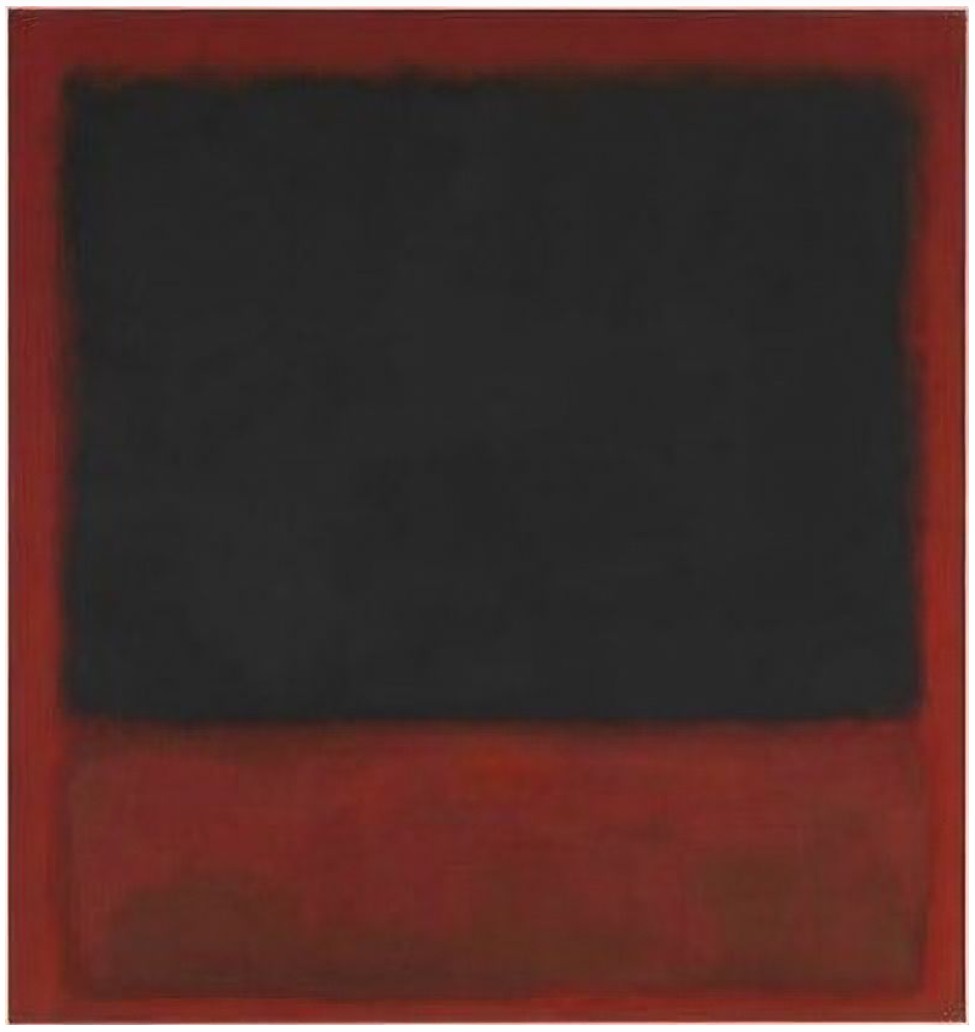
Mark Rothko, Sans titre (Noir, Rouge sur Noir sur Rouge), 1964.
Photo © Centre Pompidou, MNAM-CCI, Dist. GrandPalaisRmn / Georges Meguerditchian.
© 1998 Kate Rothko Prizel & Christopher Rothko – Adagp, Paris, 2026.
Soulages had made his first abstract paintings in 1947, working initially in brou de noix, a dark stain brewed from walnut husks. Their calligraphic forms did not record movement, gesture or emotion, in the manner of American Abstract Expressionism, but rather assembled a unified whole, bringing time to a standstill. Soulages sought an elemental grandeur in his art: he had been inspired as a youth by prehistoric cave paintings, and by the Romanesque architecture and ancient Celtic carvings he saw near his hometown of Rodez.
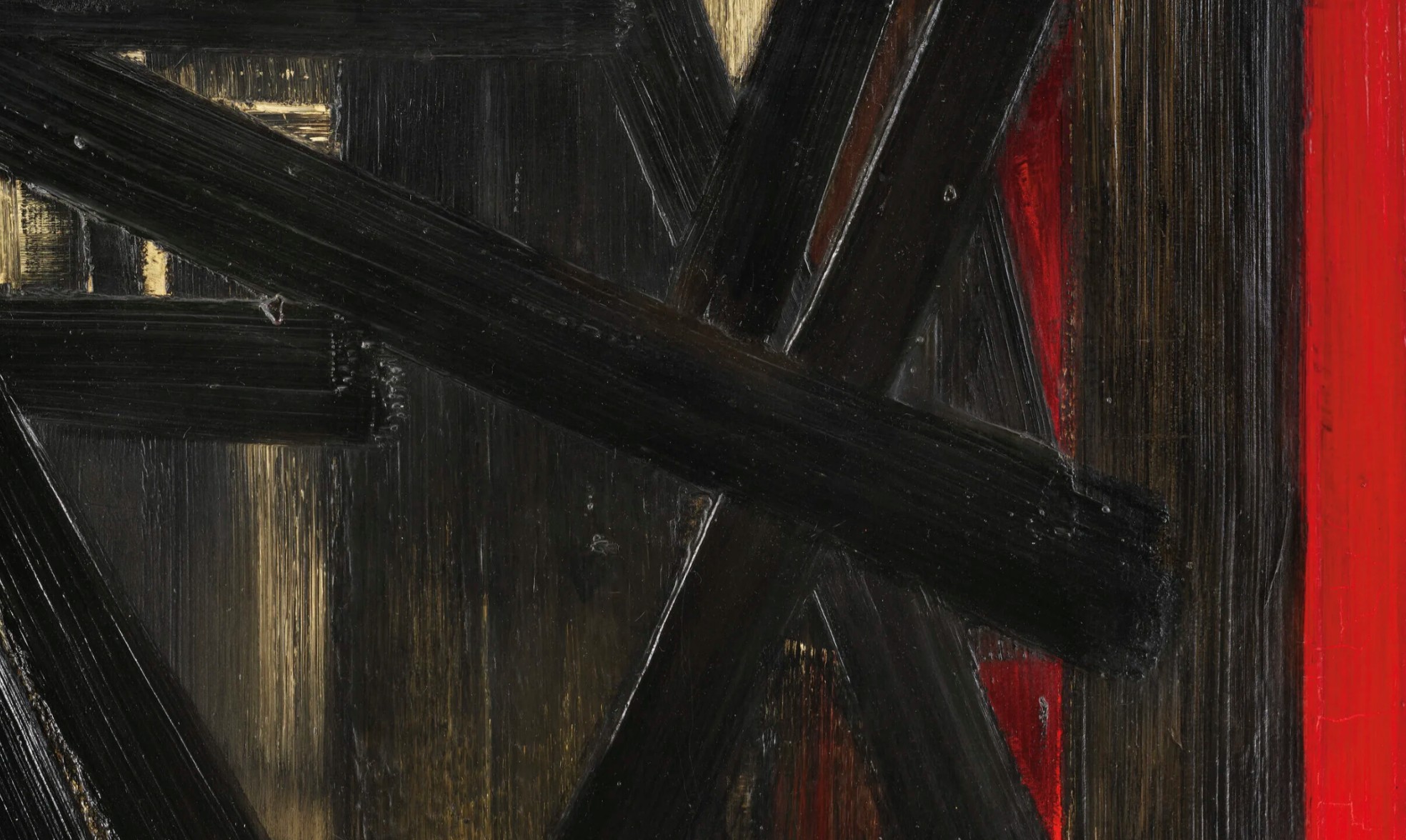
Working in oil by the 1950s, he used brushes and scraping tools of his own making to build increasingly complex configurations of dark bars, blocks and beams. Layers of light shone through the paintings, creating a rich chiaroscuro. The present work belongs to a period characterised, as Pierre Encrevé writes, by ‘strong color oppositions, in small areas of highly contrasted values which give … an effect of “luminous flickering” and sometimes even of stained glass’ (P. Encrevé, Soulages, l’œuvre complet, Peintures I. 1946-1959, Paris 1994, p. 92).
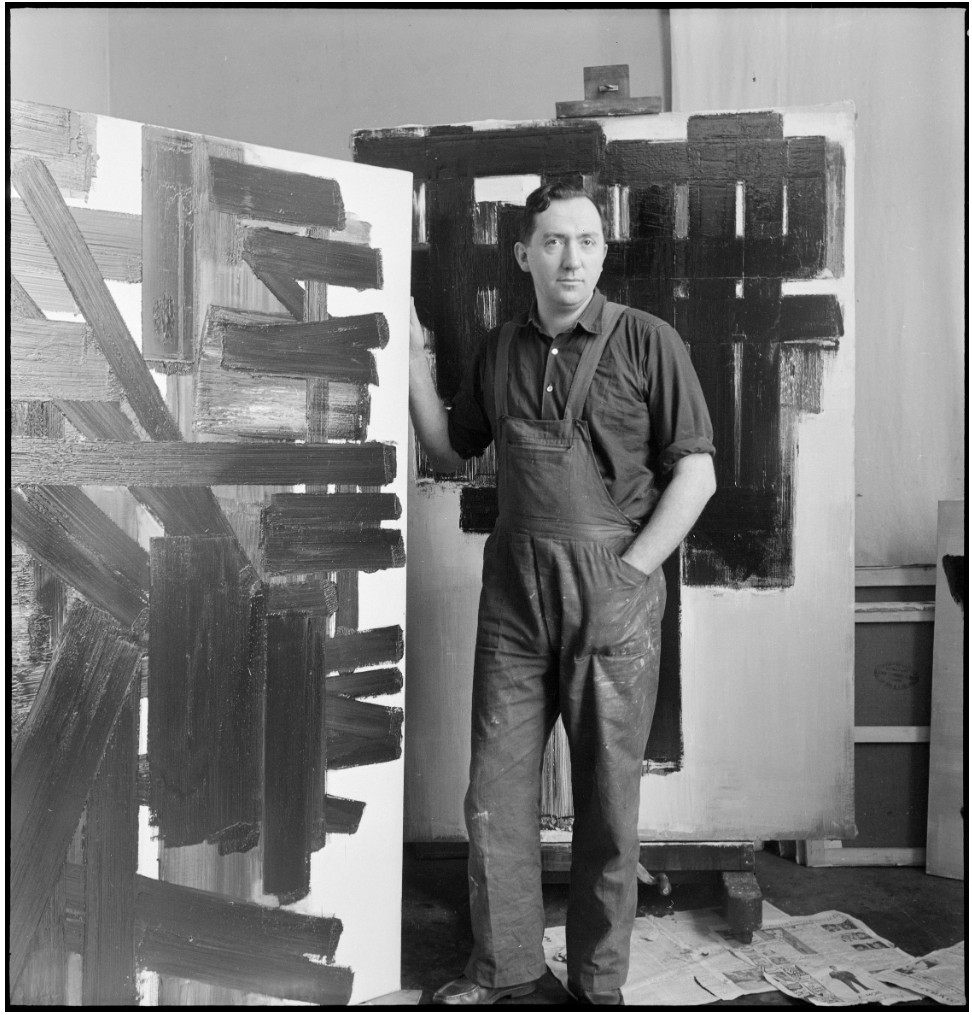
Portrait of Soulages in front of his work, 1954. Photo © Ministère de la Culture – Médiathèque du patrimoine et de la photographie, Dist. GrandPalaisRmn / Denise Colomb. © Adagp, Paris, 2026.
Soulages exhibited widely during the early 1950s, participating in shows in America, the United Kingdom, Denmark, Switzerland, Belgium and Italy, including in the French Pavilion at the 1952 Venice Biennale. A breakthrough came in 1953, when—frustrated by his dealer Louis Carré’s insistence that he work on medium format—he created a pivotal group of bold, large-scale vertical canvases that were swiftly acquired by museums including the Tate, London, the Solomon R. Guggenheim Museum, New York, and the Museum Ludwig, Cologne. These compositions relate closely to the present work. The end of the year saw his inclusion in the Guggenheim’s group exhibition ‘Younger European Painters’, which toured venues across the United States throughout 1954. Soulages’ works attracted attention from collectors and gallerists alike. Breaking with Carré, he began his partnership with the New York dealer Samuel Kootz, who mounted numerous exhibitions of his work to an eager American public for the next twelve years.
“Painting is first and foremost a poetic experience”
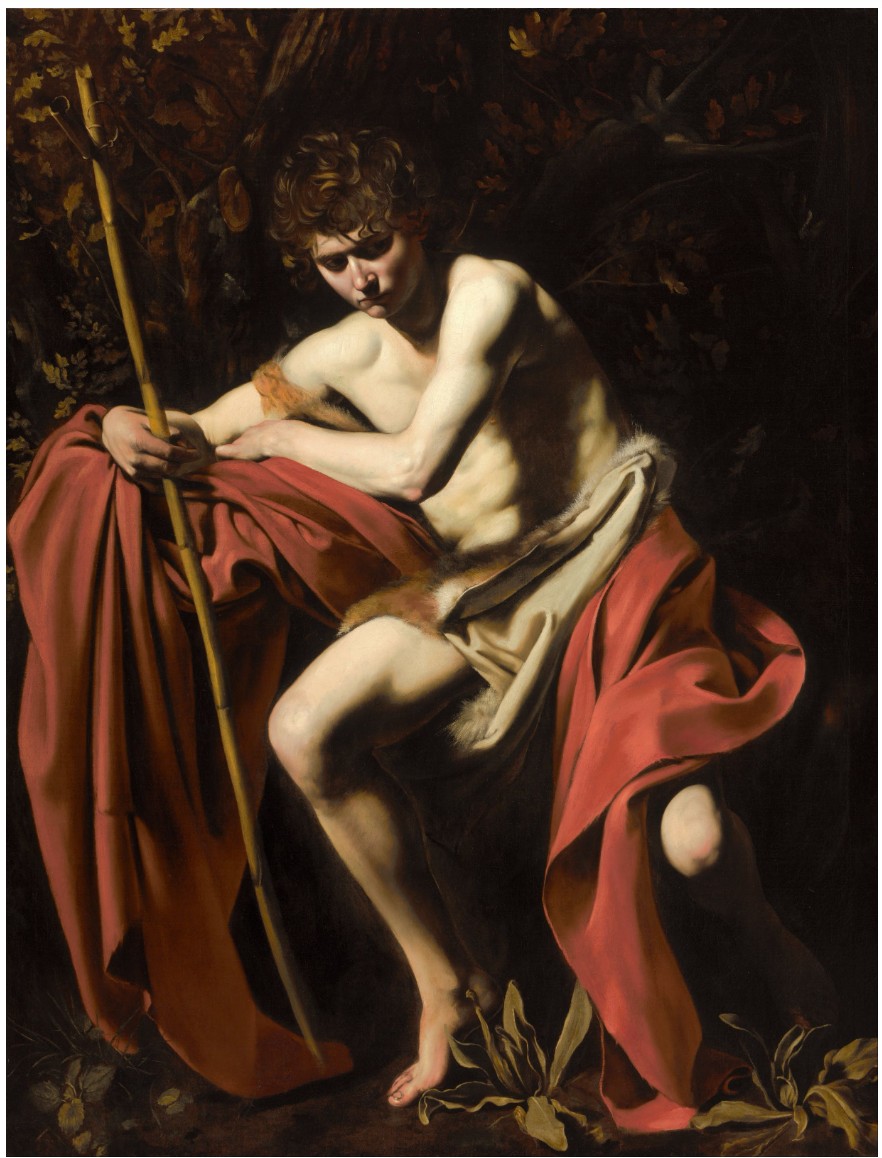
Michelangelo Merisi, called Caravaggio, Saint John the Baptist in the Wilderness, 1604-1605.
Nelson-Atkins Museum of Art, Kansas. Public domain / Wikicommons.
Soulages’ paintings had a wide appeal during the heyday of Abstract Expressionism, even as their stillness set them apart from the canvases of his American contemporaries. Contrasting them with the monochrome, angular compositions of Franz Kline, the curator Sam Hunter described Soulages’ works as ‘much less immediate in sensation, consciously modified and mellowed … his paintings throw off strange, smoky reflections that suggest the hallucinating light of Rembrandt or the Seicento tenebrosi. These effects deepen and enrich his piled-up crosses, double crosses and zig-zags of black paint, giving his art a curious emotionality and a relationship to the grand art of the past’ (S. Hunter, ‘Pierre Soulages’, Art Digest, 1 May 1954, p. 10). Peinture 130 x 89 cm, 25 juin 1954 exhibits this rich, shadowy atmosphere while also, with its swathe of scarlet, introducing a note of drama. If an Old Master’s work echoes here, it is surely the theatrical light, darkness and color of Caravaggio.
Peinture 81 x 60 cm, 20 novembre 1954
Christie’s Paris: 8 April 2025
Estimated: EUR 1,000,000 – 1,500,000
EUR 945,000 / USD 1,031,615
Pierre Soulages (1919-2022), Peinture 81 x 60 cm, 20 novembre 1954 | Christie’s
PIERRE SOULAGES (1919-2022)
Peinture 81 x 60 cm, 20 novembre 1954
Oil on canvas
81×60 cm (31 7/8 x 23 5/8 inches)
Signed ‘soulages’ (lower left)
Signed ‘SOULAGES’ (on the reverse)
With its dynamic structure of broad, commanding black brushstrokes revealing gleams and windows of light, Peinture 81 x 60 cm, 20 novembre 1954 is an exquisite early composition by Pierre Soulages. It has been unseen in public for seventy years. Painted during the 1950s—the decade in which he rose to acclaim in both France and the United States—it exhibits the strength and balance of Soulages’ newly mature idiom. Warm reddish-brown tones lend a rich underglow to the dark, architectonic bars of paint, which are lit with the drama of Old Masterly chiaroscuro. In Soulages’ hands, black becomes a way of discovering luminosity and color, and conjuring a rich diversity of resonant effects.
”I do not depict, I paint. I do not represent, I present.”
Soulages had made his first abstract paintings in 1947, working initially in brou de noix, a dark stain brewed from walnut husks. Their calligraphic forms did not record movement, gesture or emotion, in the manner of American Abstract Expressionism, but rather assembled a unified whole, bringing time to a standstill. Soulages sought an elemental grandeur in his art: he had been inspired as a youth by prehistoric cave paintings, and by the Romanesque architecture and ancient Celtic carvings he saw near his hometown of Rodez. Working in oil by the 1950s, he began to introduce notes of warm and cool colour into his paintings. Brilliance was glimpsed through translucent or scraped-back paint, and among increasingly complex configurations of dark bars, blocks and beams.
The present painting was first sold in 1955 by Samuel Kootz, who had become Soulages’ dealer in New York the previous year. Having caught the attention of curators and gallerists including James Johnson Sweeney and Sidney Janis, Soulages’ career took off rapidly in the United States during this period. In 1951 his paintings toured venues across the country in Advancing French Art, a major group show organised by Louis Carré. The Phillips Collection in Washington, D.C. became the first of many US institutions to purchase one of his works. His participation in the 1953 show Younger European Painters increased his profile further, leading to offers from many galleries in New York, and to a fruitful twelve-year partnership with Kootz.
Soulages’ paintings had a wide appeal during the heyday of Abstract Expressionism, even as their poise set them apart from the canvases of his American contemporaries. Contrasting them with the monochrome, angular compositions of Franz Kline, the curator Sam Hunter described Soulages’ works as ‘much less immediate in sensation, consciously modified and mellowed … his paintings throw off strange, smoky reflections that suggest the hallucinating light of Rembrandt or the Seicento tenebrosi. These effects deepen and enrich his piled-up crosses, double crosses and zig-zags of black paint, giving his art a curious emotionality and a relationship to the grand art of the past’ (S. Hunter, ‘Pierre Soulages’, in Art Digest, 1 May 1954, p. 10). Peinture 81 x 60 cm, 20 novembre 1954 is rich in this distinctive atmosphere, glowing with a timeless splendor that resounds across past and present.
Peinture 92 x 65 cm, 7 février 1954
Sotheby’s New-York: 14 November 2022
Estimated: USD 800,000 – 1,200,000
USD 2,470,000
PIERRE SOULAGES (1919 – 2022)
Peinture 92 x 65 cm. 7 février 1954
Oil on canvas
92×65 cm (36 x 25 3/4 inches)
Signed Soulages (lower left); signed again and dated 7/2/54 (on the reverse)
The dynamic composition, meditative palette, and rich texture of Peinture 92 x 65 cm, 7 février 1954 mark it as a quintessential example of Pierre Soulages’s most sought after period of creative production. Directly addressing the tensions between shape, color and light on the painted surface, the work captures the artist’s career-long commitment to the primacy of form over illusion. Drawing his brushstrokes dramatically across the canvas, Soulages fuses the luminosity of the pigment with the texture of the paint, to create a single and instantaneous impression of aesthetic structural unity that recalls the cohesive and monumental planes of the American Abstract Expressionists. By varying the thickness of the black paint and the length and width of the strokes over the sumptuous umber base, Soulages builds up a rhythmic composition that both contracts and expands across the surface, encompassing all the hallmarks of his oeuvre on an intimate scale. Dating to a seminal moment in the artist’s career, the present work was created between two major exhibitions that established the French painter as a contemporary master in the United States: Younger European Painters at the Solomon R. Guggenheim Museum, New York in 1953, and The New Decade: 22 European Painters and Sculptors at the Museum of Modern Art in 1955. Acquired by David Solinger in the year it was executed, Peinture is a rare and remarkable example of Soulages’s unique and radiant brand of lyrical abstraction.
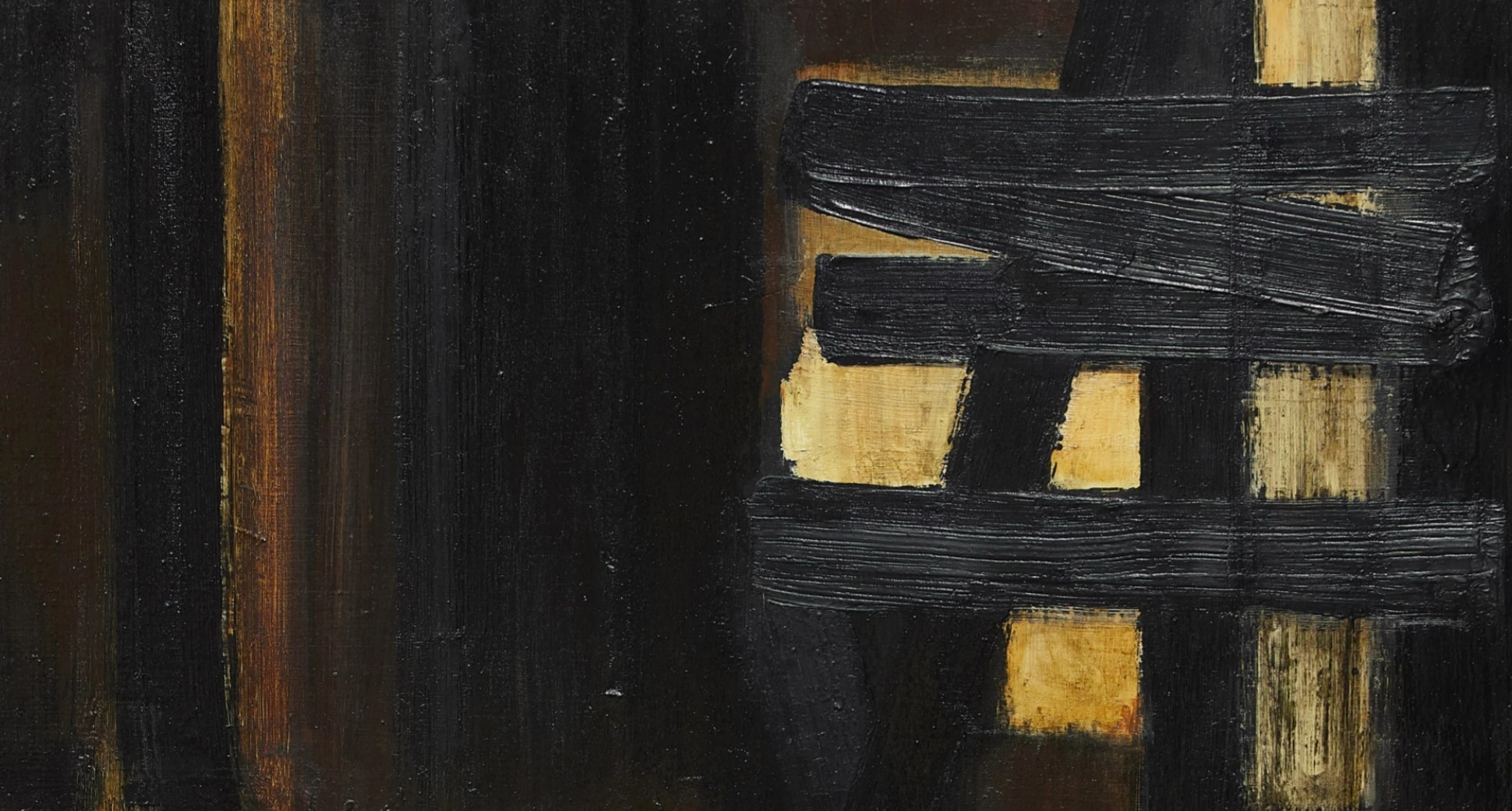
Fusing vigorous vertical, horizontal and diagonal movements of the brush, Soulages creates a pulsing, vital composition that is uniquely magnetic: the alternately scraped and swiped black strokes hold the surface of the work while the layered planes of umber, gold and ivory simultaneously suggest a sense of depth and imbue it with a radiant inner light. Working with oil paint that, in places, is so thick it appears to be combed onto the support, Soulages builds his canvas from linear beams of directional striation, the resulting composition resembling the layered scaffolding of a building under construction. This reference to architecture is a recurring theme in Soulages’s practice. An amateur architect himself, several of his painting tools are taken from industrial construction—he executes his epic gestures with spatulas, rakes, rollers, and other devices.
Peinture 130 x 97 cm, 1949
Christie’s Hong-Kong: 30 November 2022
Estimated: HKD 18,000,000 – 28,000,000
HKD 22,050,000 / USD 2,825,112
PIERRE SOULAGES (1919 – 2022) (christies.com)
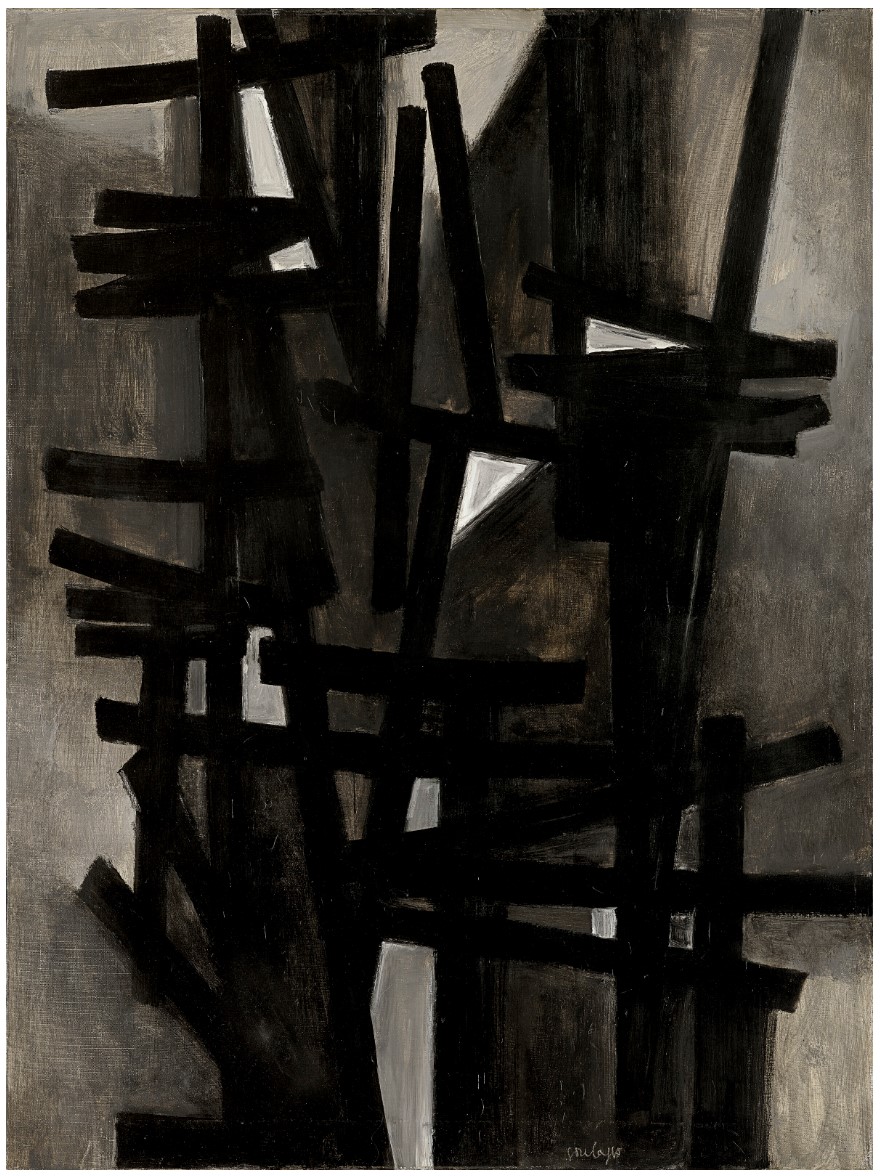
PIERRE SOULAGES (1919 – 2022)
Peinture 130 x 97 cm, 1949
Oil on canvas
130×97 cm (51 1/8 x 38 1/4 inches)
Pierre Soulages saw the vividness of true black for the first time when he visited the Abbey Church of Sainte-Foy in Conques, France as a young man. Under the massive transept, he observed how sunlight filtered through the window and contrasted with darkness. Deeply affected by the experience, he decided to become a painter and devote his life to recreating that moment. Soulages’ works explore the structure of lines and capture the sanctity of light. His iconic approach to artistic conception propelled him as one of the most successful Lyrical Abstractionists in the Post-War era in Europe. His influence also has a tremendous impact on the Abstraction Expressionism movement that was happening concurrently in North America.
More than just a record that captures the fleeting gestures and movements of the artist’s brushwork, the visual form of Peinture 130 x 97cm, 1949 is built upon its own mysterious structure. Unlike an action painting rooted in Abstract Expressionism, this work is more akin to a poetic snapshot than a narrative; it is a choir harmonizing rather than a melodic motif. Soulages started using walnut stain, a dark brown pigment extracted from the husk of walnut, in abstract compositions in 1947. And in subsequent years, he followed this creative practice and executed many works in this manner. Although this work was painted in oil, the warm tones and translucency are in the same vein as walnut stain. This treatment has the apparent effect of time being frozen.
Peinture 92 x 73 cm, 12 août 1959
Artcurial Paris: 27 June 2022
Estimated: EUR 2,300,000 – 3,300,000
EUR 2,718,100 / USD 2,881,480
Schwarz-Sterngold Collection | Sale n°4282 | Lot n°2 | Artcurial
Pierre SOULAGES (1919-2022)
Peinture 92 x 73 cm, 12 août 1959
Oil on canvas
92×73 cm
Signed lower right
Signed, dated and titled on reverse
Peinture 33 x 41 cm, 17 février 1951
Christie’s Paris: 26 October 2021
Estimated: EUR 200,000 – 300,000
EUR 617,500 / USD 715,610
PIERRE SOULAGES
Peinture 33 x 41 cm, 17 février 1951
Oil on canvas
33×41 cm (13 x 16.1 inches)
Peinture 33 x 41 cm, 17 février, 1951 is a remarkable example of Soulages’ work, at the beginning of the eight decades of his pictorial research. Early on, his work embodied an almost total abstraction, in a questioning of the traditional aspects of painting. This work in particular depicts the artist’s transition from his walnut stain works of the late 1940s to his later oils on canvas. It conveys the play of light, texture, transparency and opaque matter dear to the artist, in a characteristic palette which symbolizes his dedication to the color black. Soulages works with the material, layering and scraping it out of the same chromatic tone. Like most of his works, this one is simply entitled “Painting” followed by its dimensions and date of completion. For the artist, this was about affirming the materiality of painting and its inscription in time. Thus, the artist leaves the work free to the viewer’s interpretation whose understanding is not guided by a title. This work has a historical dimension in that it was made at a time when Soulages was starting to gain international recognition. Indeed, by the early 1950s, the artist’s painting was already widely present in the United States and in 1951 one of his works was purchased by the National Fund for Contemporary Art. Peinture 33 x 41 cm, 17 février, 1951 comes from the prestigious Louis Carré gallery, avenue de Messine, which began representing Soulages that same year.
Peinture 46.2 x 38.2 cm, 1952
Christie’s Paris: 30 June 2021
Estimated: EUR 280,000 – 350,000
EUR 620,000 / USD 774,771
Pierre Soulages (né en 1919) (christies.com)
PIERRE SOULAGES
Peinture 46.2 x 38.2 cm, 1952
Oil on canvas
46.2 x 38.2 cm (18 1/4 x 15 inches)
Signed and dated (lower left)
Peinture 130 x 89 cm, 25 novembre 1950
Christie’s Paris: 9 July 2020
Estimated: EUR 2,000,000 – 3,000,000
EUR 3,237,000 / USD 3,663,007
Pierre Soulages (b. 1919) (christies.com)
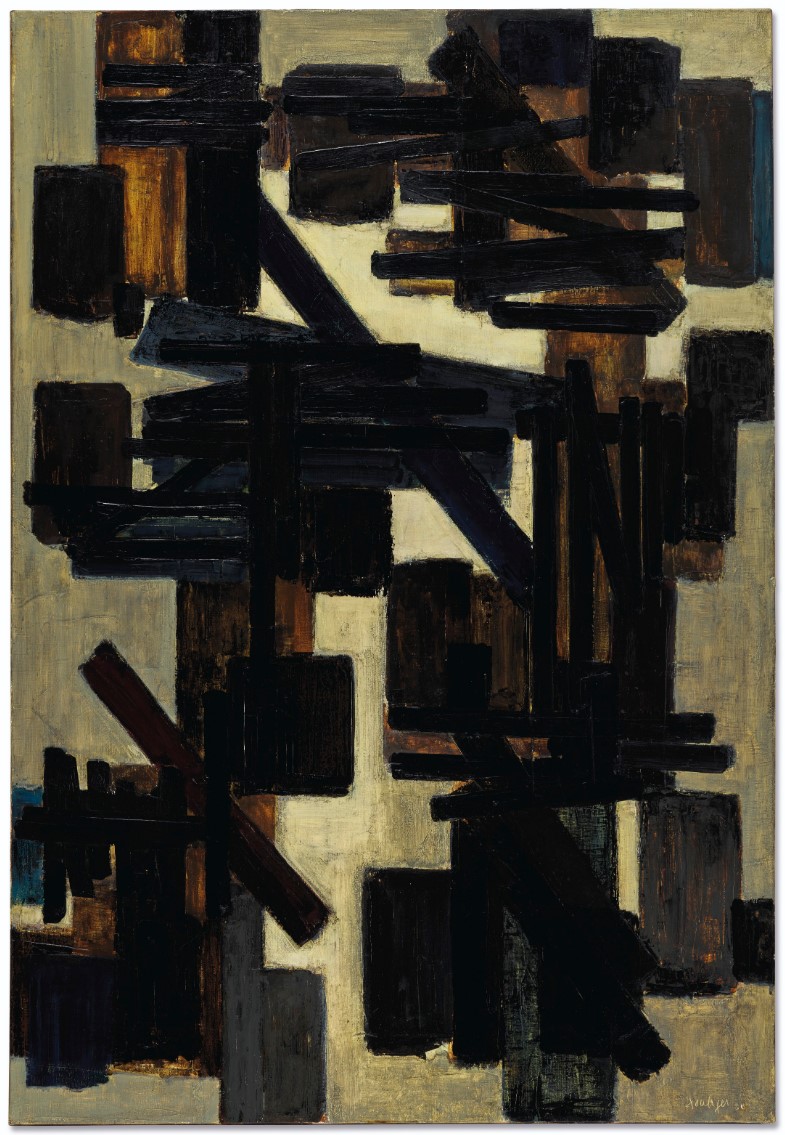
PIERRE SOULAGES
Peinture 130 x 89 cm, 25 novembre 1950
Oil on canvas
130×89 cm (51.1 x 35 inches)
Held in the same private collection for almost seven decades, Peinture 130 x 89 cm, 25 novembre 1950 is a luminous and dynamic painting by Pierre Soulages. It has been unseen in public since its acquisition in 1953, when it toured Hobart, Sydney, Brisbane, Melbourne, Adelaide and Perth as part of the seminal exhibition “French Painting Today”. This was the first major showing of modern Parisian art in Australia and would prove a profound influence on the country’s own postwar avant-garde. It arrived in sensational fashion when the freighter Merino, carrying all 119 paintings on board, was salvaged after running aground off the Tasmanian coast on Christmas Day 1952. The exhibition drew record-breaking crowds. Sharing this remarkable journey with works by artists including Picasso, Miró, Léger, Braque and Le Corbusier, Peinture 130 x 89 cm, 25 novembre 1950 displays Soulages’ early idiom at its most radiant. The work shimmers with an Old Masterly sense of light: it was created at the height of the artist’s use of architectonic bars of black oil paint, variously layered, stacked, scraped back or thinned to translucency against a pale ground. Rhythmic and serene, the painting builds a contrapuntal structure through twin stacks of upright and diagonal strokes. They range from broad slabs to narrow masts of pigment, and from tarry blackness to warm, resinous mahoganies and notes of Prussian blue. The background is a lambent sepia, glowing softly from the center like daylight breaking through a window. In Soulages’ hands, black becomes a way of discovering light and color, and conjuring a fathomless diversity of lyrical and resonant effects.
Works on Paper
2026 Auction Results
Brou de noix, 1957
Contours of Modernity | A Private European Collection
Sotheby’s London: 5 March 2026
Estimated: GBP 120,000 – 180,000
GBP 192,000 / USD 256,495
Pierre Soulages | Brou de noix | Contemporary Day Auction | 2026 |
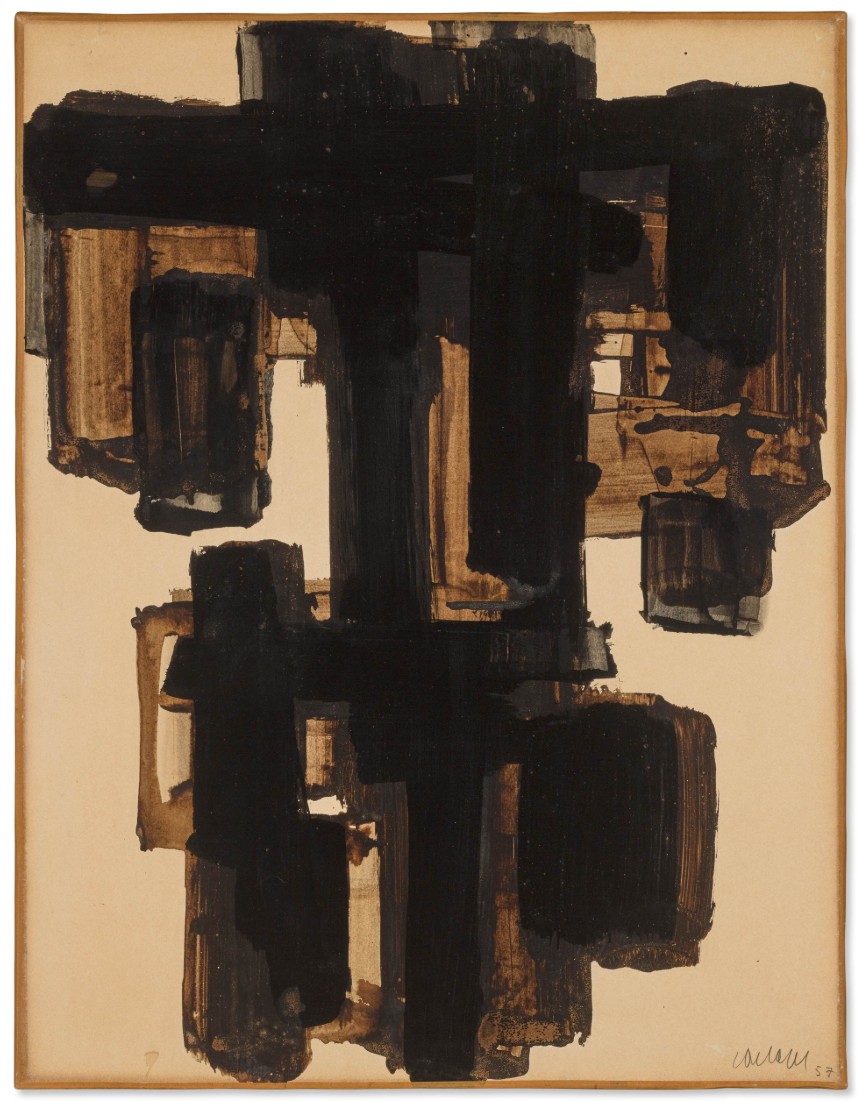
PIERRE SOULAGES (1919 – 2022)
Brou de noix, 1957
Walnut stain on paper laid on canvas
64.6 x 49.8 cm (25-1/2 x 19-5/8 inches)
Signed and dated 57 (lower right)
2025 Auction Results
#1. Composition, 1953
Sotheby’s Paris: 3 December 2025
Estimated: EUR 200,000 – 300,000
EUR 254,000 / USD 292,585
Composition | Modern and Contemporary Art | 2025 | Sotheby’s
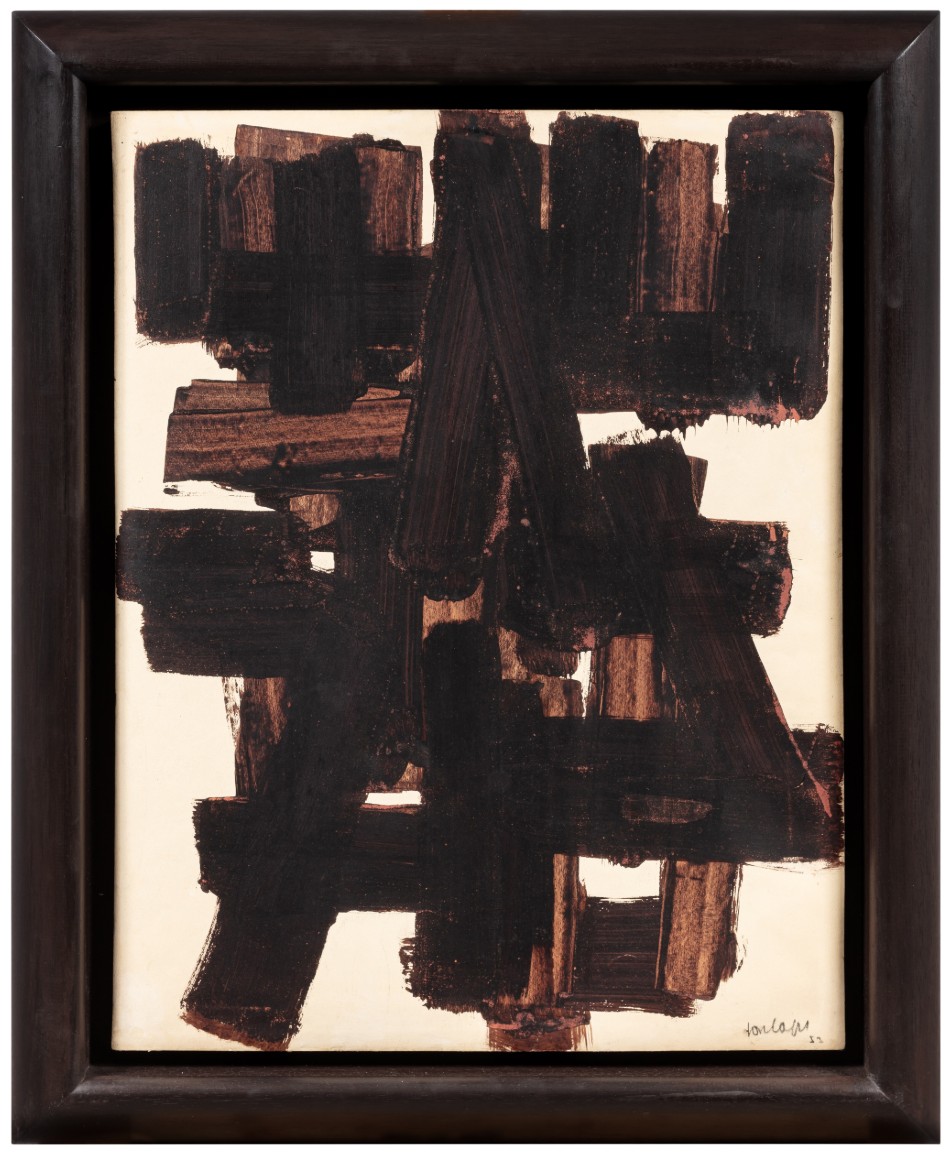
PIERRE SOULAGES (1919 – 2022)
Composition, 1953
Gouache and walnut stain on paper
65×51 cm (25 1/2 x 20 inches)
Signed and dated 53 (lower right)
#2. Untitled, 2000
Sotheby’s Paris: 10 April 2025
Estimated: EUR 100,000 – 150,000
EUR 254,000 / USD 278,120
Untitled | Art Moderne et Contemporain Evening Auction | 2025 | Sotheby’s
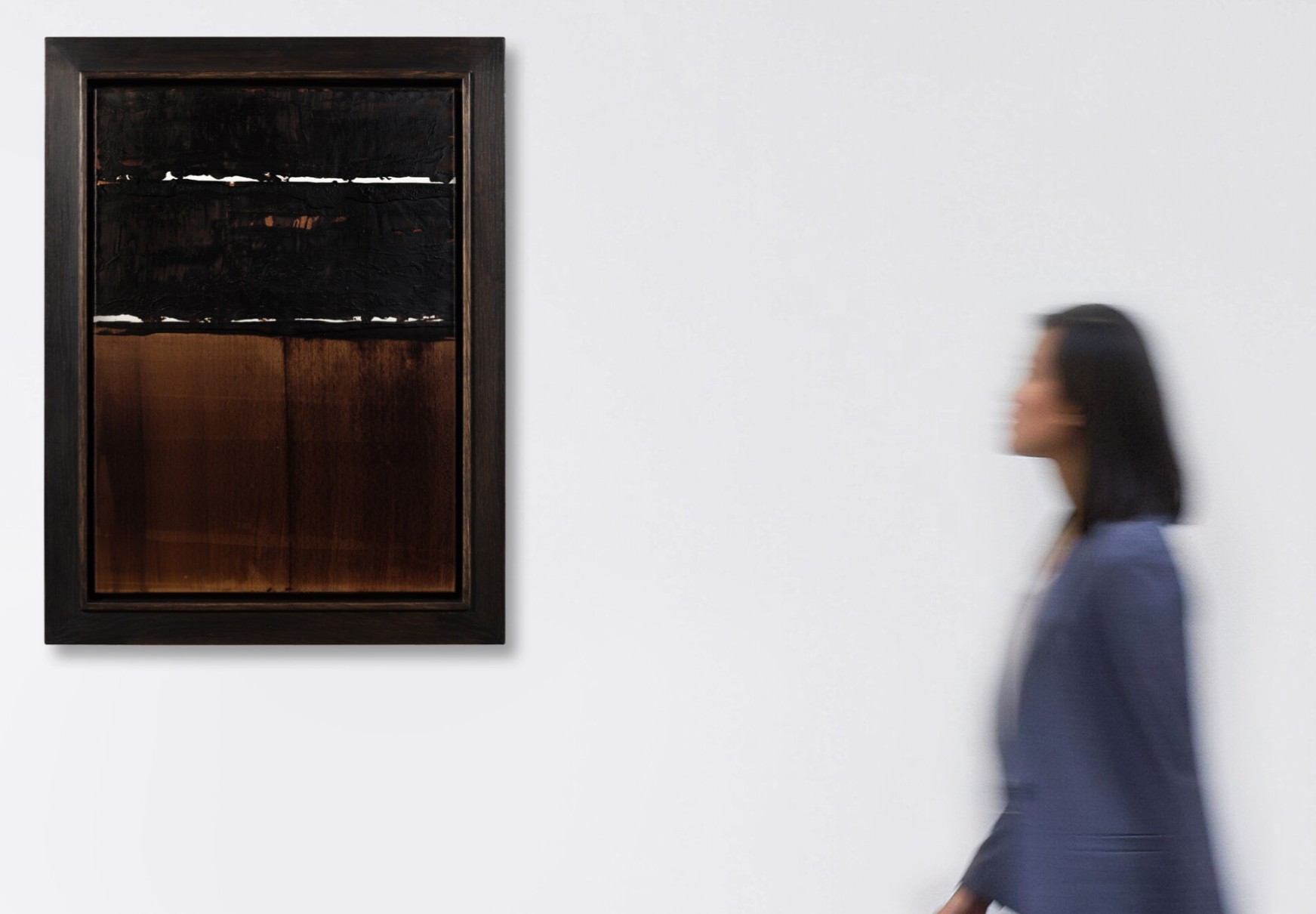
PIERRE SOULAGES (1919 – 2022)
Untitled, 2000
Acrylic and walnut stain on paper laid down on canvas
75.5 x 53.8 cm (29 3/4 x 21 1/8 inches)
Signed (lower right)
Dedicated (on the stretcher)
Signed and dated 2000 (on the reverse)
#3. Sans titre, 1958
Christie’s Paris: 4 December 2025
Estimated: EUR 120,000 – 180,000
EUR 203,200 / USD 234,070
Pierre Soulages (1919-2022), Sans titre | Christie’s
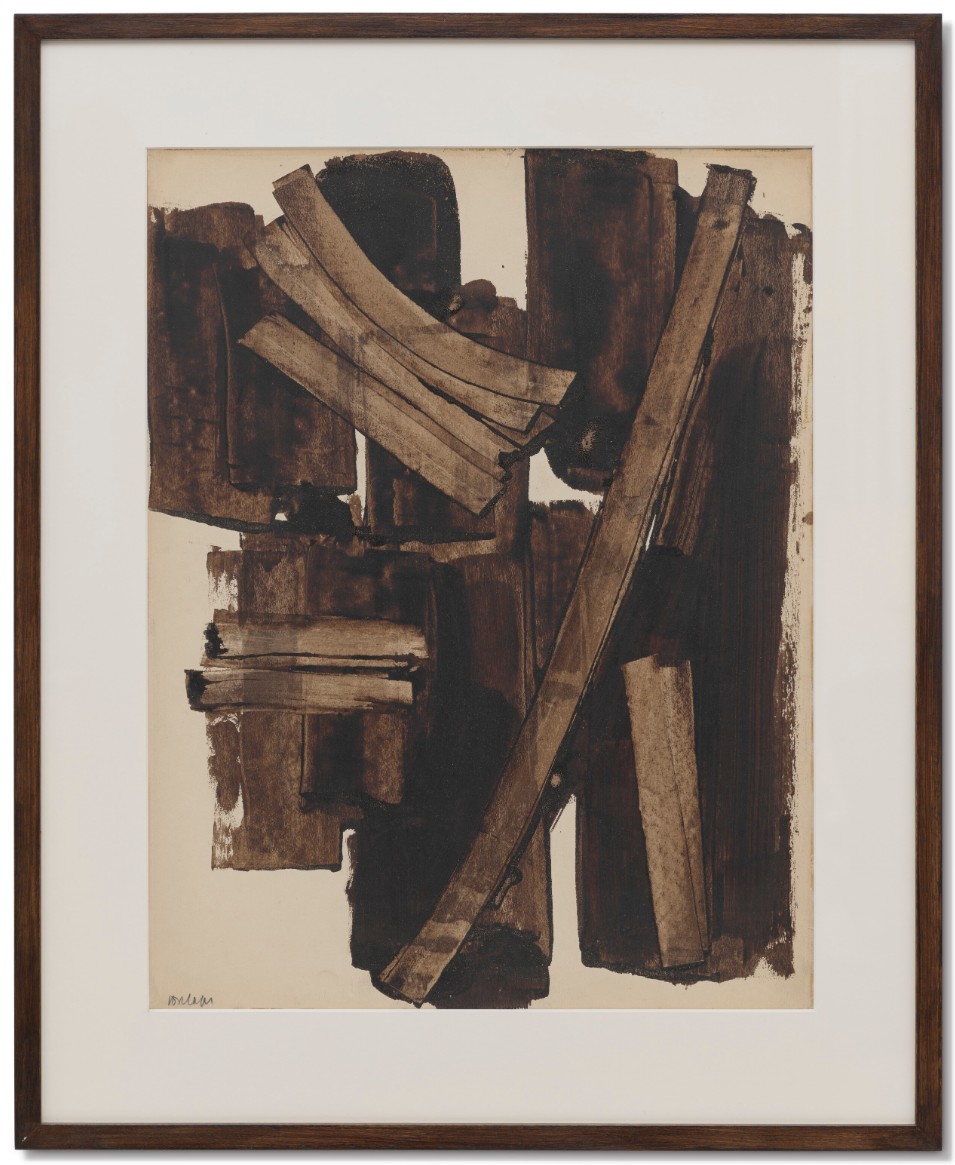
PIERRE SOULAGES (1919-2022)
Sans titre, 1958
Walnut stain on paper laid on panel
65.2 x 50.7 cm ( 25 5/8 x 20 inches)
Signed ‘Soulages’ (lower left)
Lots Passed
Composition, 1953
Sotheby’s Paris: 10 April 2025
Estimated: EUR 250,000 – 350,000
PASSED
Composition | Collection Niomar Moniz Sodré Bittencourt | La Liberté pour dogme | 2025 | Sotheby’s
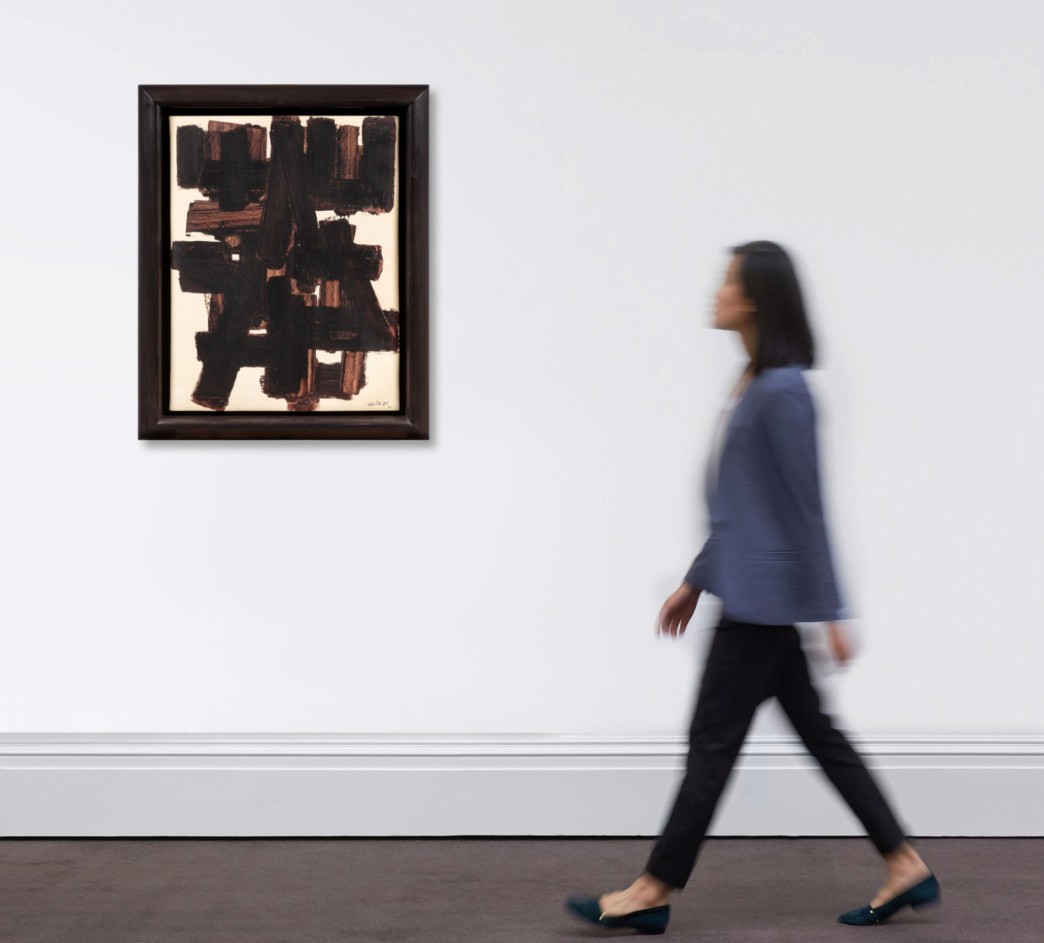
PIERRE SOULAGES (1919 – 2022)
Composition, 1953
Gouache and walnut stain on paper
65×51 cm (25 1/2 x 20 inches)
Signed and dated 53 (lower right)
2024 Auction Results
#1. Untitled, 1956
Ketterer Munich: 7 June 2024
Estimated: EUR 180,000
EUR 381,000 / USD 414,930
WORK ON PAPER
Ketterer Kunst, Art auctions, Book auctions Munich, Hamburg & Berlin
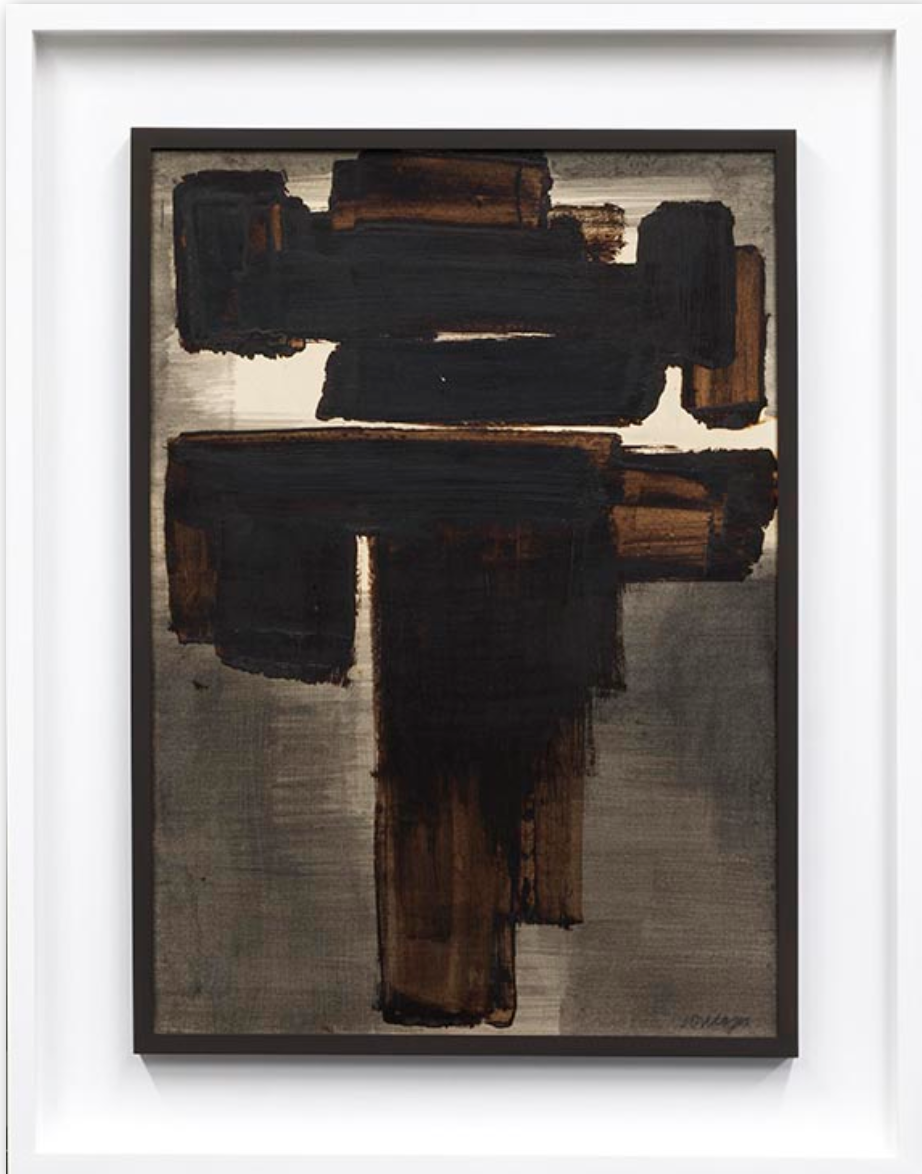
PIERRE SOULAGES (1919-2022)
Untitled, 1956
Mixed media on paper, laid on canvas
66 x 46.5 cm (25.9 x 18.3 inches)
Signed in lower right
#2. Untitled, 1958
Christie’s Paris: 7 June 2024
Estimated: EUR 120,000 – 180,000
EUR 315,000 / USD 343,055
WORK ON PAPER
Pierre Soulages (1919-2022), Sans titre | Christie’s
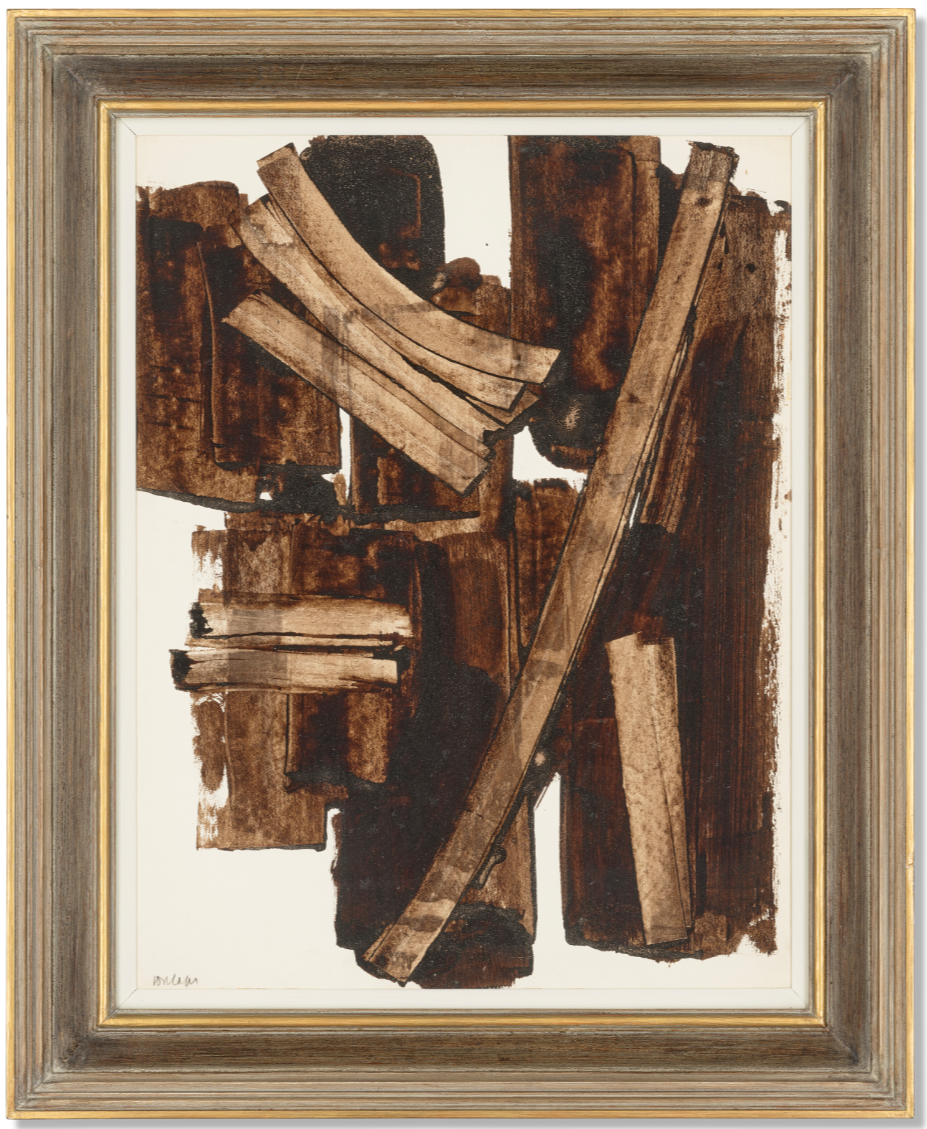
PIERRE SOULAGES (1919-2022)
Untitled, 1958
Walnut stain on paper laid on panel
65.2 x 50.7 cm (25 5/8 x 20 inches)
Signed ‘Soulages’ (lower left)
#3. Gouache sur papier, 65 x 50 cm, 1960
Sotheby’s Paris: 23 April 2024
Estimated: EUR 180,000 – 250,000
EUR 266,700 / USD 284,170
WORK ON PAPER
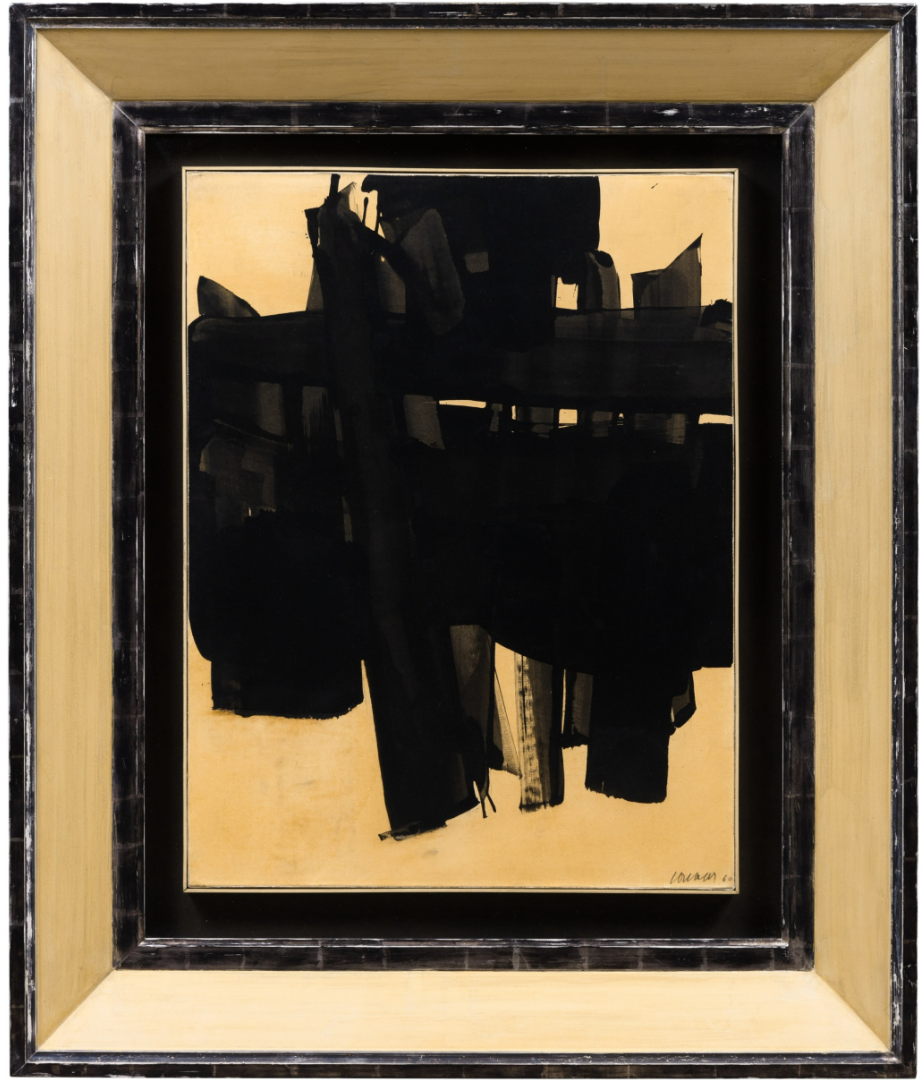
PIERRE SOULAGES (1919 – 2022)
Gouache sur papier, 65 x 50 cm, 1960
Gouache on paper laid down on canvas
66 x 49.7 cm (26 x 19 5/8 inches)
Signed and dated 60 (lower right)
2023 Auction Results
#1. Untitled, 1961
Lempertz Cologne: 1 December 2023
Estimated: EUR 160,000 – 180,000
EUR 378,000 / USD 411,710
WORK ON PAPER
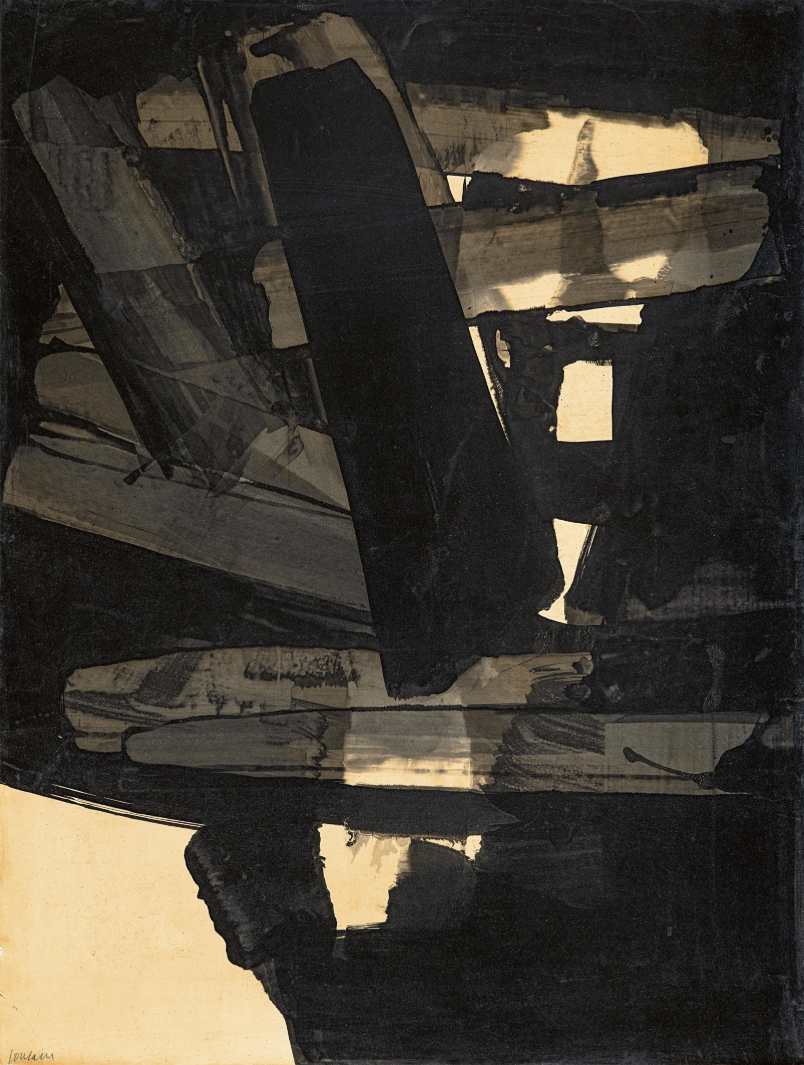
PIERRE SOULAGES
Untitled, 1961
Indian ink on card on canvas
87×66 cm (34 1/4 x 26 inches)
Signed ‘Soulages’
#2. Gouache sur papier 108 x 76 cm, 1973
Sotheby’s Paris: 5 June 2023
Estimated: EUR 250,000 – 350,000
EUR 368,300 / USD 393,815
WORK ON PAPER
Gouache sur papier 108 x 76 cm, 1973 | Art Contemporain Evening Auction | 2023 | Sotheby’s
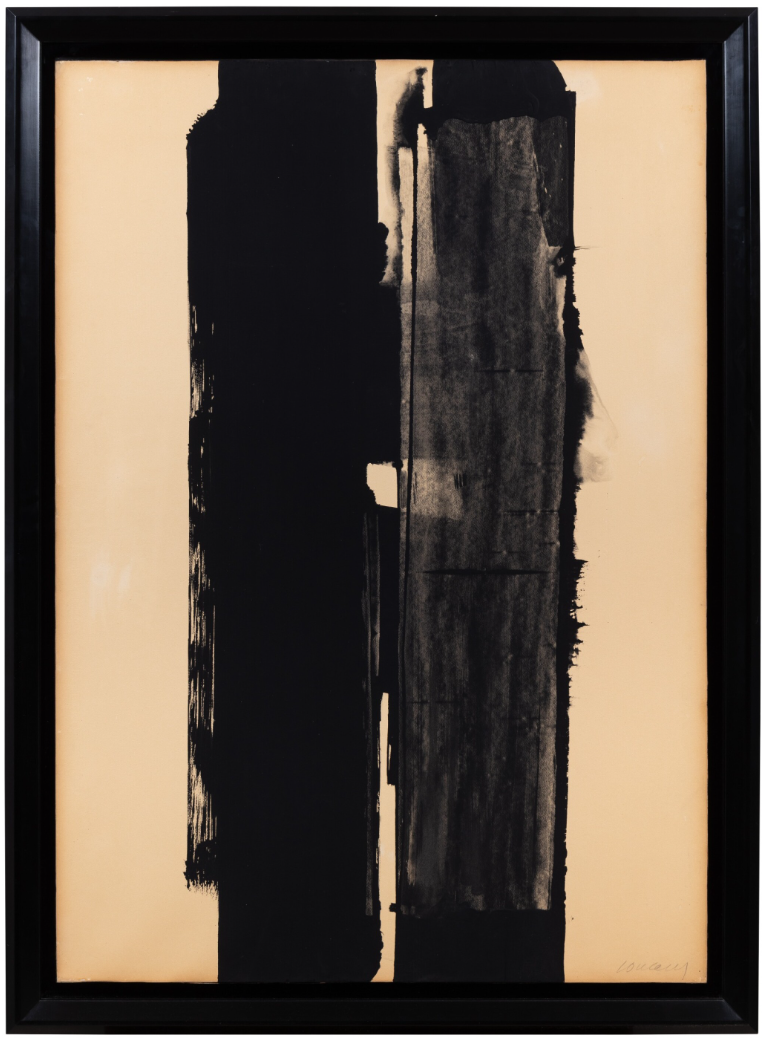
PIERRE SOULAGES (1919 – 2022)
Gouache sur papier 108 x 76 cm, 1973
Gouache on paper laid on canvas
108×76 cm (42 1/2 x 30 inches)
Signed
#3. Sans titre, 1952
Christie’s Paris: 20 October 2023
Estimated: EUR 250,000 – 350,000
EUR 365,400 / USD 386,825
WORK ON PAPER
Pierre Soulages (1919-2022), Sans titre | Christie’s
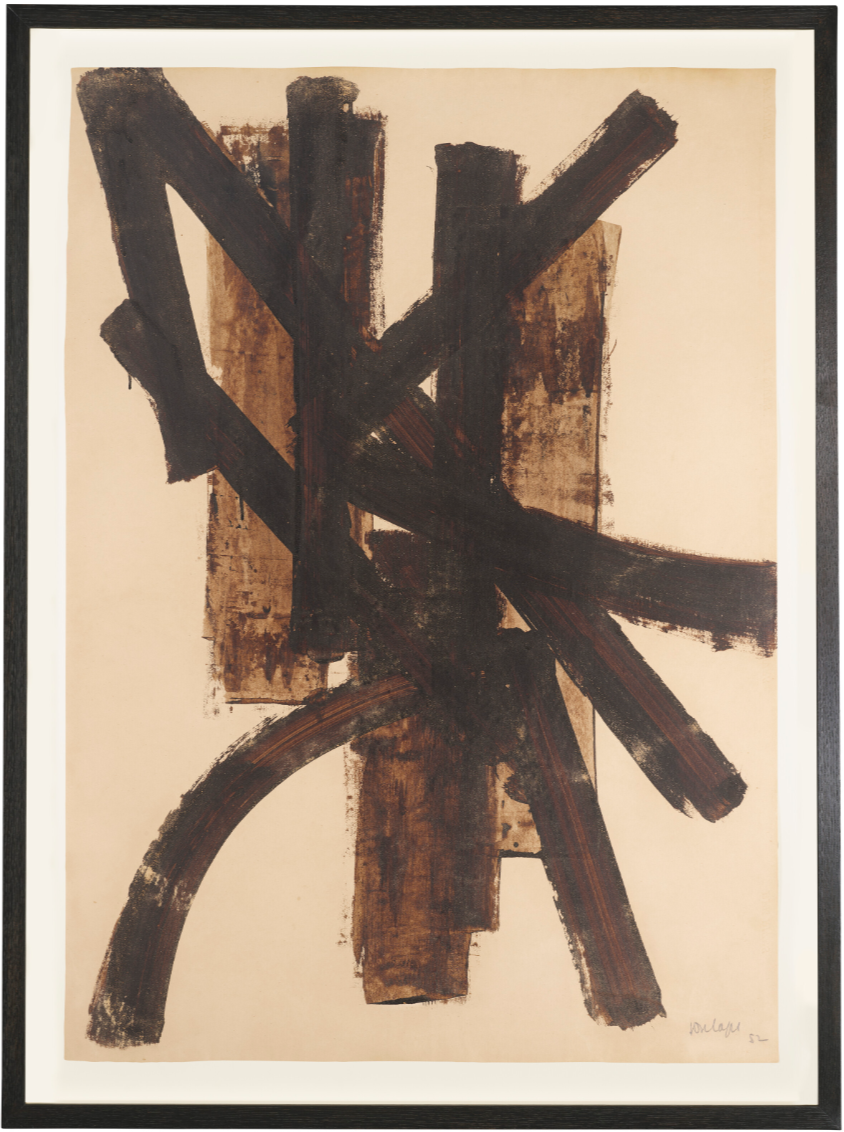
PIERRE SOULAGE (1919-2022)
Sans titre, 1952
Walnut stain on paper
104.5 x 75.5 cm (41 1/8 x 29 3/4 inches)
Signed and dated ‘soulages 52’ (lower right)
Dedicated ‘Pour Dominique et Guy avec l’amitié de Pierre et Colette’ (on the reverse)
#4. Untitled, circa 1960
Lempertz Cologne: 1 December 2023
Estimated: EUR 70,000 – 90,000
EUR 264,600 / USD 288,195
WORK ON PAPER
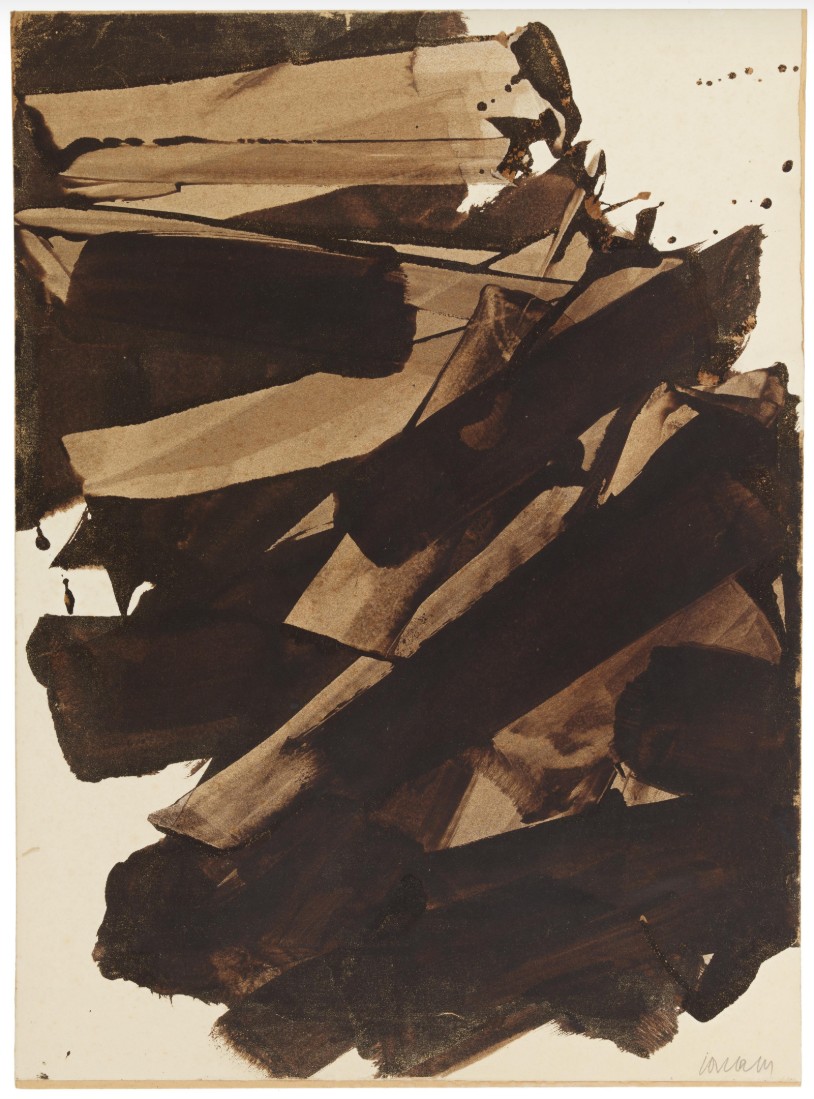
PIERRE SOULAGES
Untitled, circa 1960
Walnut stain on paper
73 x 53.8 cm
Signed ‘Soulages’ on paper
#5. Sans Titre, 1974
Artcurial Paris: 5 December 2023
Estimated: EUR 200,000 – 300,000
EUR 236,160 / USD 255,935
WORK ON PAPER
Post-War & Contemporain – Vente du soir
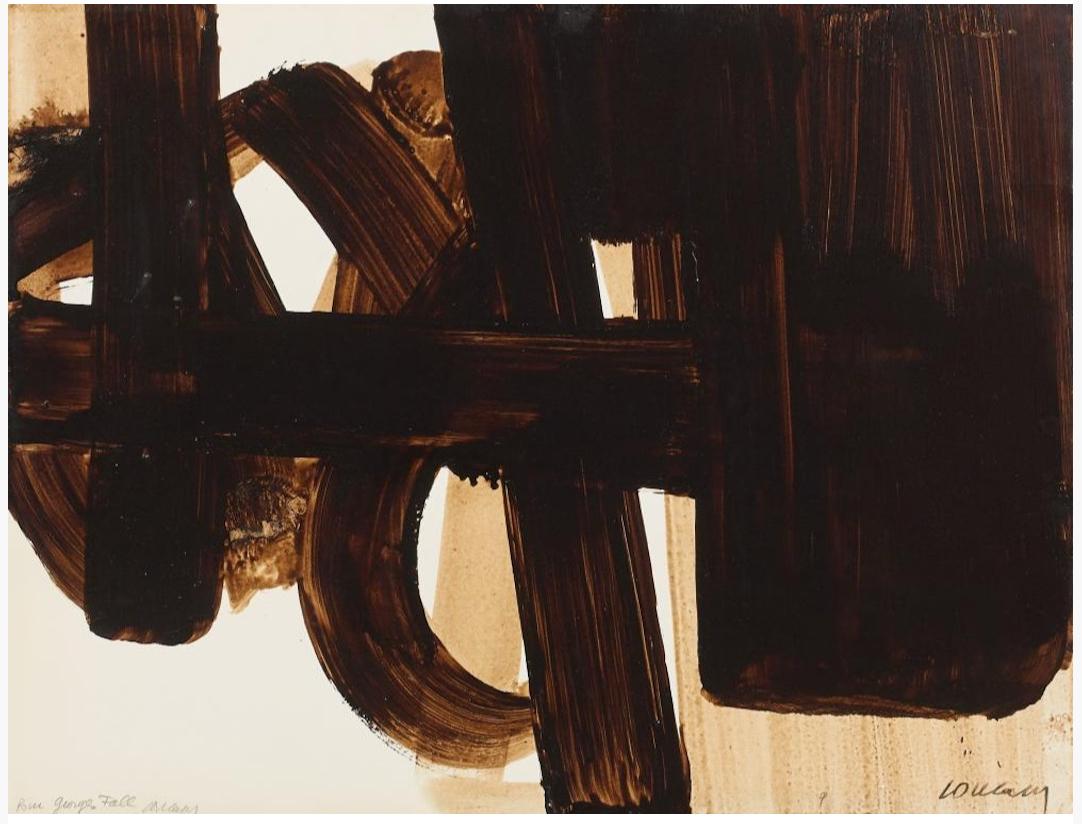
PIERRE SOULAGES
Sans Titre, 1974
Walnut stain on paper
50×65 cm (19 7/8 x 25 5/8 inches)
Signed ‘Soulages’ bottom right
#6. Brou de noix 34,8 x 21,3 cm, circa 1982
Artcurial Paris: 5 December 2023
Estimated: EUR 60,000 – 80,000
EUR 102,336 / USD 110,905
WORK ON PAPER
Post-War & Contemporain – Vente du soir
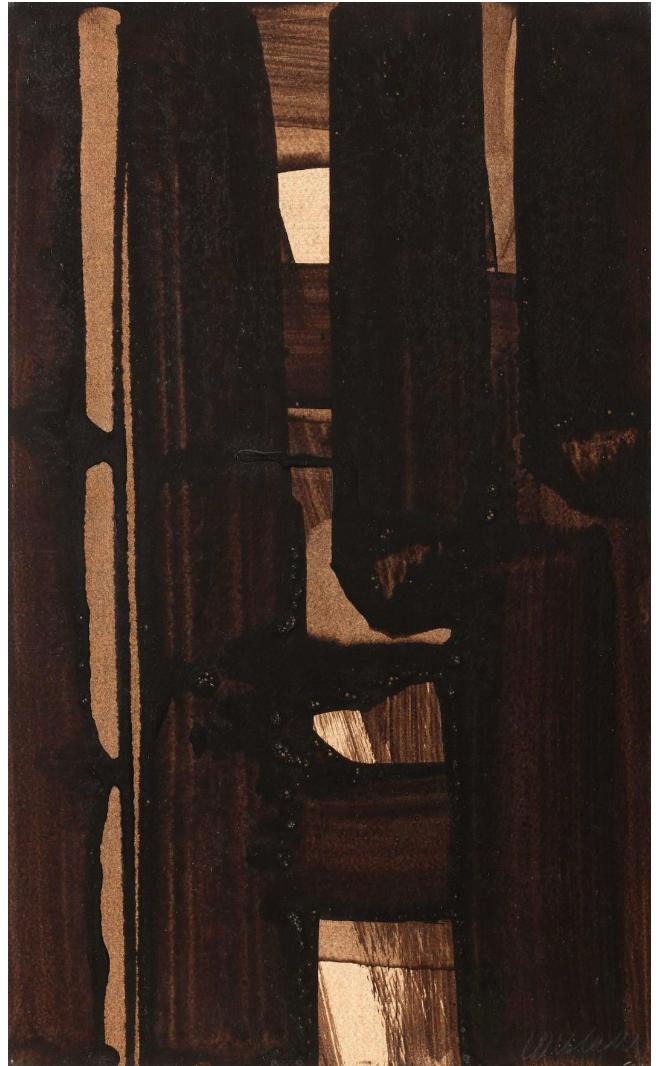
PIERRE SOULAGES
Brou de noix 34,8 x 21,3 cm, circa 1982
Walnut stain on paper laid down on cardboard
34.8 x 21.3 cm (13 7/8 x 8 3/8 inches)
2022 Auction Results
WORK IN PROGRESS
#1. Gouache sur papier 65 x 51,5 cm, 1973
Sotheby’s Paris: 8 June 2022
Estimated: EUR 150,000 – 200,000
EUR 693,000
WORK ON PAPER
Gouache sur papier 65 x 51,5 cm, 1973 | Art Contemporain Evening Auction | 2022 | Sotheby’s
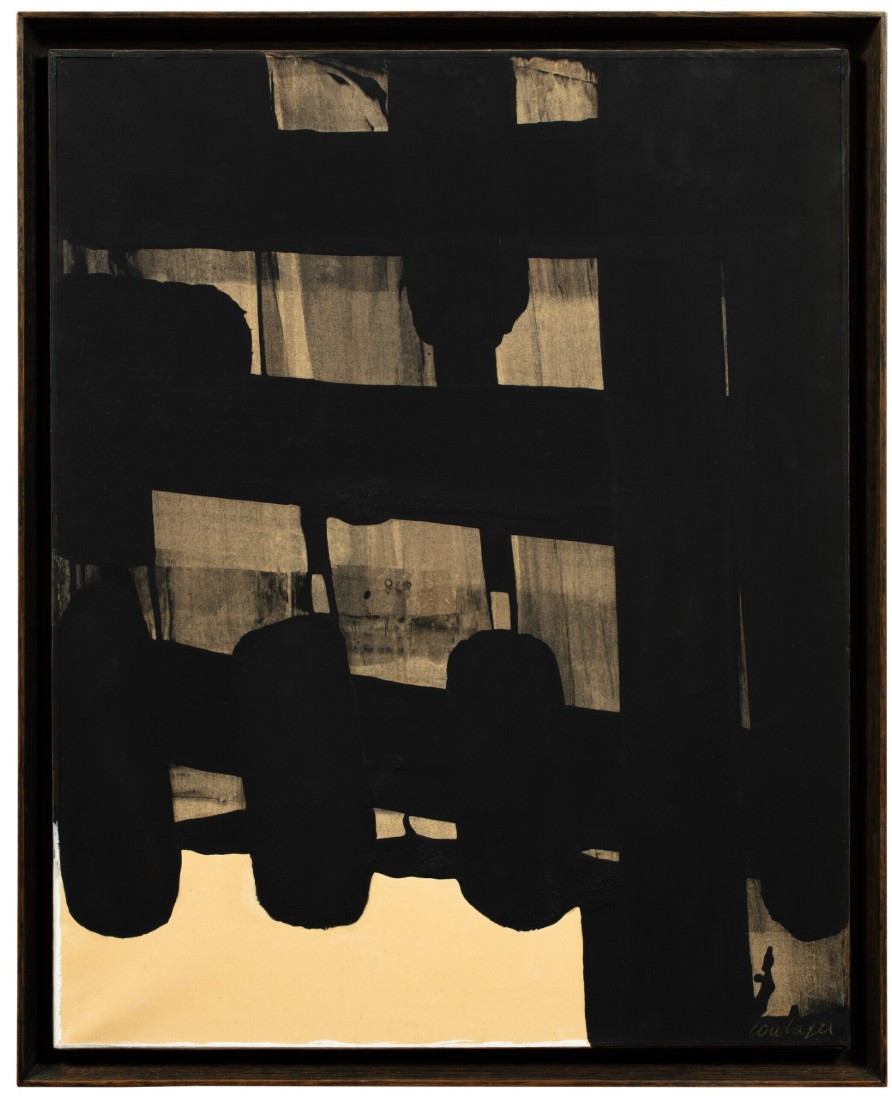
PIERRE SOULAGES (b.1919)
Gouache sur papier 65 x 51,5 cm, 1973
Gouache on paper laid down on canvas
65 x 51.5 cm (25 2/3 x 20 1/4 inches)
Signed
Highlights
Brou de noix, 1957
Contours of Modernity | A Private European Collection
Sotheby’s London: 5 March 2026
Estimated: GBP 120,000 – 180,000
GBP 192,000 / USD 256,495
Pierre Soulages | Brou de noix | Contemporary Day Auction | 2026 |
PIERRE SOULAGES (1919 – 2022)
Brou de noix, 1957
Walnut stain on paper laid on canvas
64.6 x 49.8 cm (25-1/2 x 19-5/8 inches)
Signed and dated 57 (lower right)
A striking meditation of form, color and light, Brou de Noix is an outstanding iteration of Pierre Soulages’ iconic visual vernacular. Titled after its medium, walnut stain, synonymous with the artist’s practice, the present work embodies Soulages’ lifelong exploration of the primacy of form over illusion. Defined by calligraphic planes of varied depth, the present work illustrates the artist’s assured command of structure and rhythm. Elegant and architectonic in equal measure, Broux de Noix is characterized by the pictorial qualities that define Soulage’s unique position not only in the history of art informel, but in the canon of modern painting.
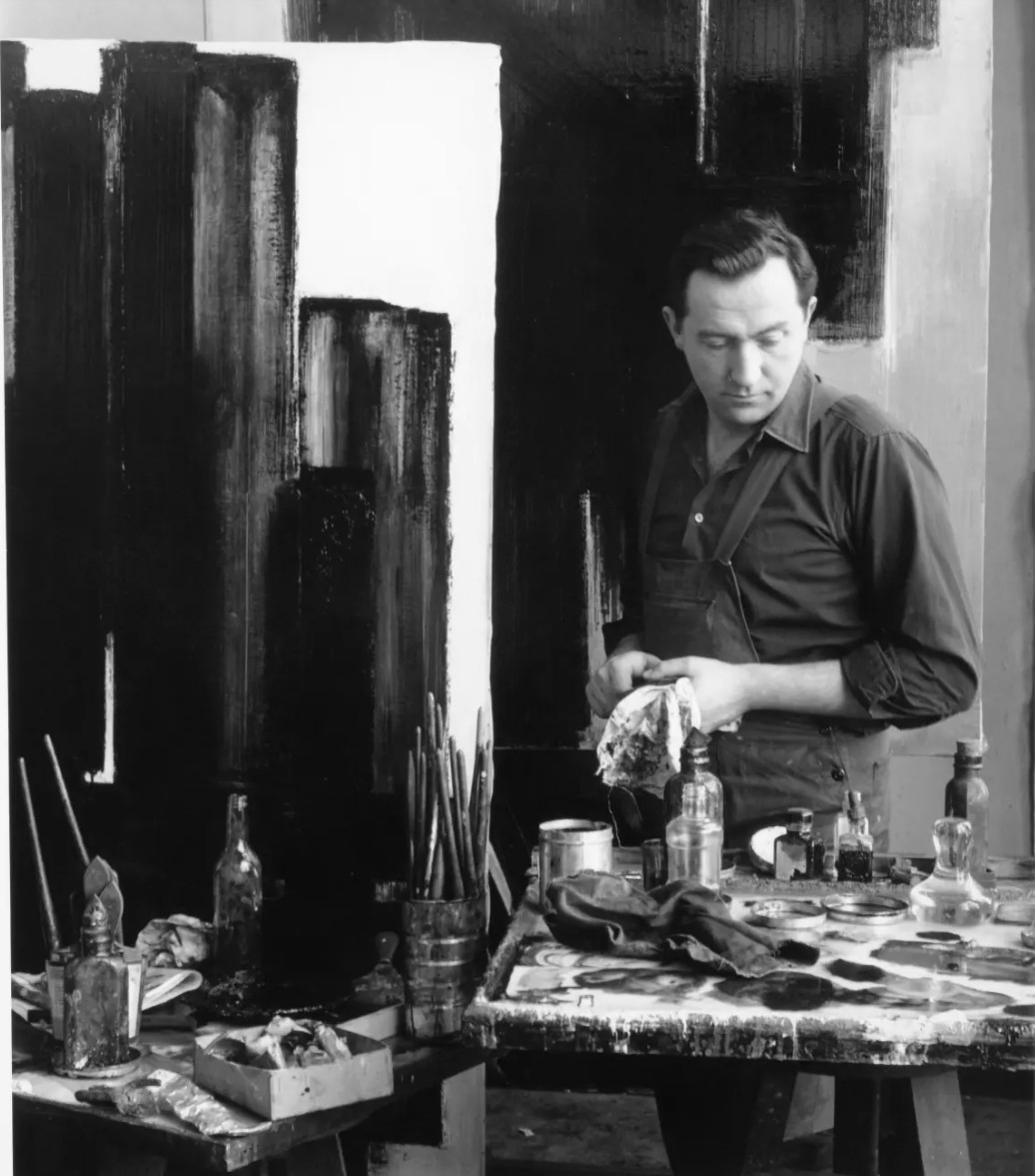
Pierre Soulages in his Paris studio, 1954. Image: © Denise Colomb. Artwork: © ADAGP, Paris and DACS, London 2026
Soulages, in Brou de Noix, has constructed a rhythmic, cruciform composition that both contracts and expands across the surface, demonstrating the artist’s unrelenting interrogation of form, color and the perceptual possibilities of paint. The artist began his experiments with walnut stain in the immediate aftermath of the Second World War, embracing the medium for its formal depth, complexity and subtlety. Appreciating walnut stain’s status as a quotidian material used by cabinetmakers and carpenters to dye wood and identifying its abilities to both absorb and reflect light, Soulages transformed this humble material into a vehicle for radical painterly experimentation.
“Walnut stain has a dark, warm tone to it, a kind of elemental power that I love. It offers a natural means of obtaining transparent effects and a handsomely resonant opacity.”
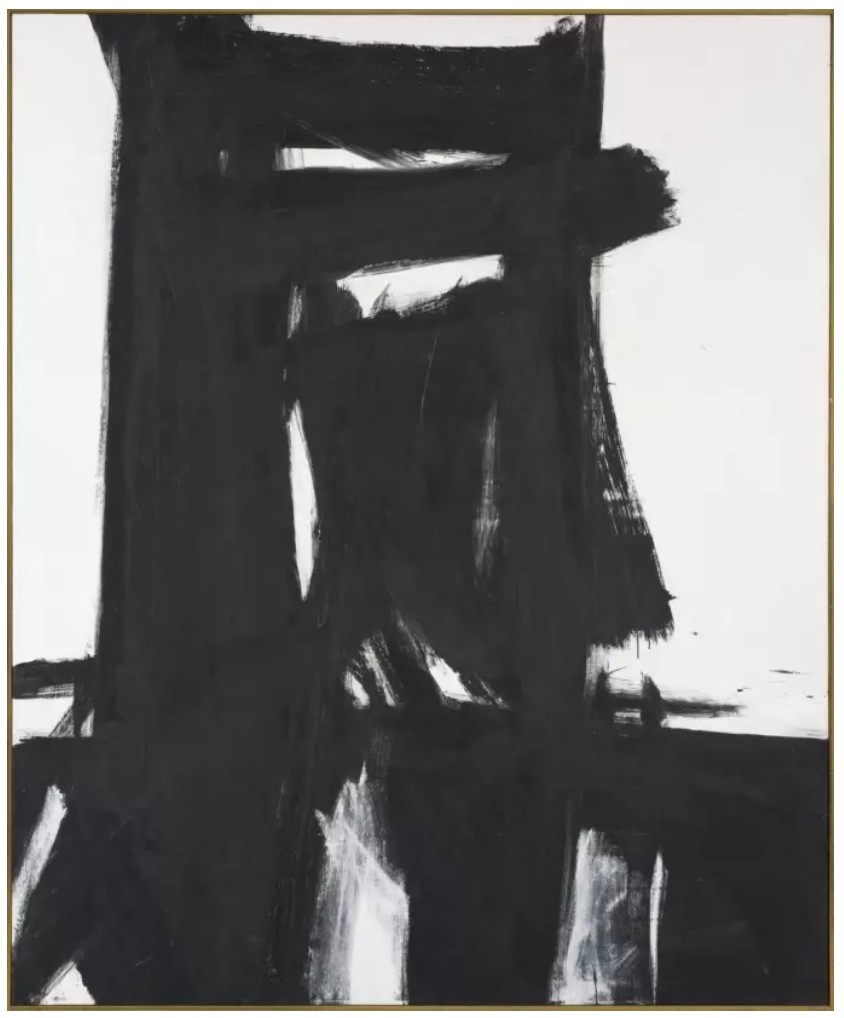
Franz Kline, Meryon, 1960-61 / Tate, London / Artwork: © DACS, London 2026
Brou de Noix illustrates Soulages’ unique conception of black as a source of light, rather than as a signifier of its absence. At once recalling the chiaroscuro of Old Masters such as Caravaggio and Rembrandt and the materiality of post-war abstraction, the present work demonstrates Soulages’ unique synthesis of diverse painterly modes. In 1957, the year the present work was executed, Soulages made his first visit to New York. Already established as a contemporary master in the United States, the artist was embraced by the leading figures of the New York School, including Franz Kline, Willem de Kooning and Robert Motherwell. Soulages admired the formal dynamism of Abstract Expressionism and established close relationships with the group, a pivotal influence illustrated in the present work. However, while the strong gestural nature of Soulages’ work does invite associations with the paintings of the American Abstract Expressionists, in particular Kline, Soulages’ compositions provide no such psychological entry.
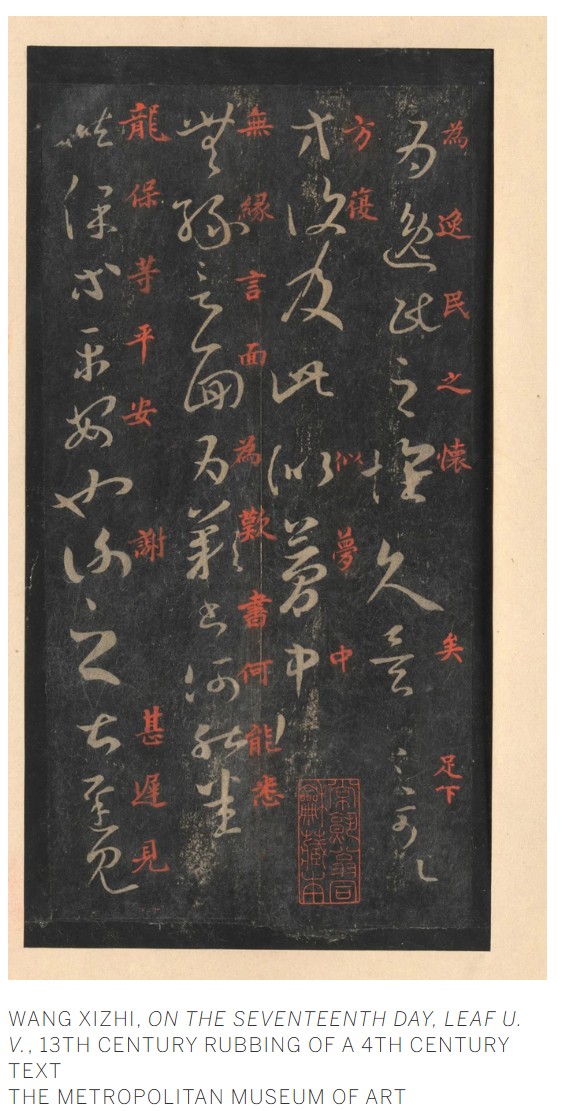
Exhibited at the Berggruen Gallery in 1957, the present work is a landmark of the artist’s oeuvre. Founded by the influential dealer and collector Heinz Berggruen, the Berggruen Gallery was a vital platform in the post-war Parisian art world, renowned for situating contemporary artists in dialogue with the canonical figures of twentieth-century modernism. A formidable force in the art scene, Soulages resisted the dominant trends of contemporary painting. For example, upon encountering the artist’s first walnut-stain works at the Salon des Surindépendants, Francis Picabia noted: “Given your age and your talent, you’ll soon have a lot of enemies!” (the artist interviewed in Interview Magazine, 2014, p.48). Within this context, Berggruen championed Soulages alongside figures including Pablo Picasso, Paul Klee and Henri Matisse, helping crystallise the artist’s foremost position in an established lineage of painting.
Lyrical and structural in equal measure, Soulages’ pictorial language imposes a visual investigation of tangible reality through texture and form. A lyrical orchestration of light and form, Brou de Noix epitomises the artist’s non-symbolic abstract mode. In Soulages’ own words, “I don’t depict. I don’t narrate. I don’t represent. I paint, I present.” (The artist in conversation with Michel Peppiatt, Art International, November – December 1980, n.p.) Representing a pivotal moment in Soulages’ oeuvre, the present work embodies Soulages’ masterful command of the medium and his unwavering conception of painting as a perceptual language.
Composition, 1953
Sotheby’s Paris: 10 April 2025
Estimated: EUR 250,000 – 350,000
EUR 330,200 / USD 361,560
Composition | Collection Niomar Moniz Sodré Bittencourt | La Liberté pour dogme | 2025 | Sotheby’s
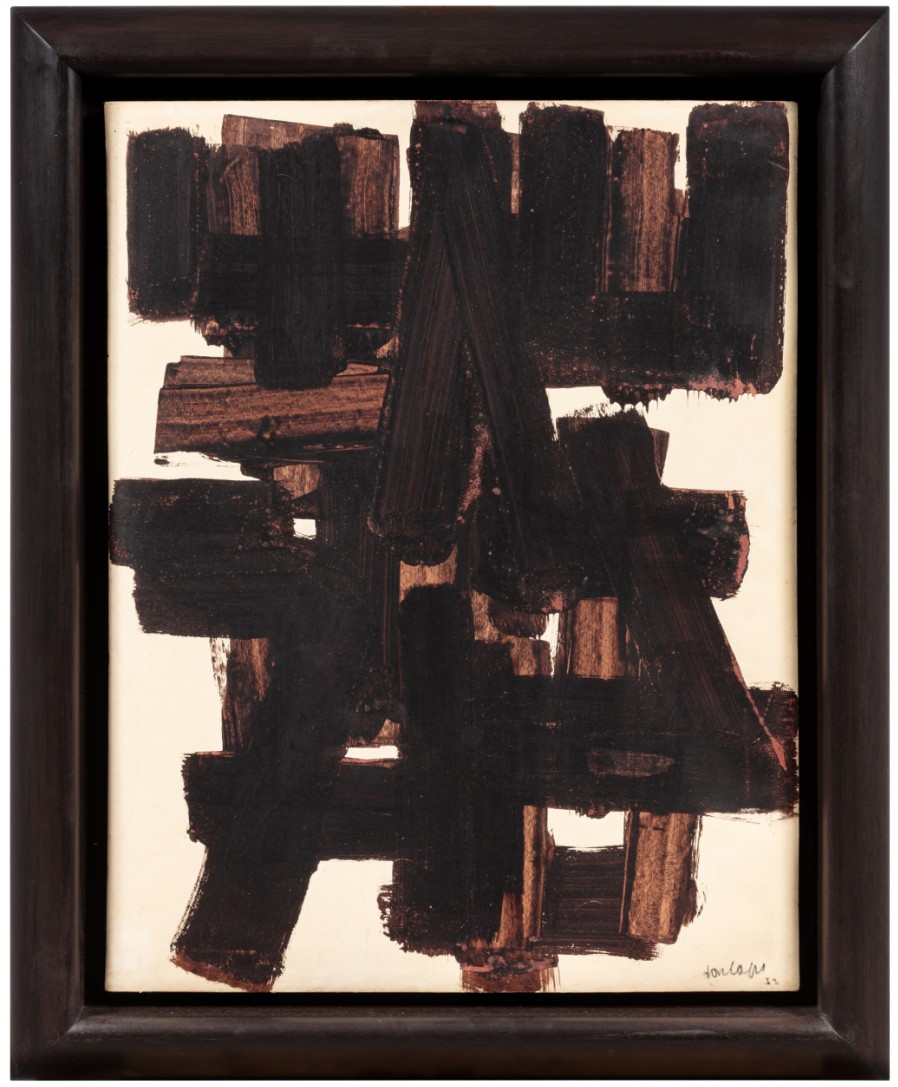
PIERRE SOULAGES (1919 – 2022)
Composition, 1953
Gouache and walnut stain on paper
65×51 cm (25 1/2 x 20 inches)
Signed and dated 53 (lower right)
This gouache on paper by Pierre Soulages, dated 1953, seems to fit perfectly with Pierre Encrevé’s description of the artist’s works on paper. These words underline the crucial importance of paintings on paper in his overall œuvre, but also the exceptional luminosity that their blacks manage to exude.
“Brous, ink or gouache, what destabilizes the eye is the violence of the hermetic, enigmatic affirmation of these synthetic, abrupt, frontal, vertical forms, contrasting violently with the surrounding white, which they illuminate by exalting it.”
Pierre Encrevé, Soulages, Les papiers du musée, Rodez 2014, p. 7
Indeed, while Soulages often declared that he established no hierarchy between the media and techniques he used, he also made it clear that it was on paper that he found his vocation as a painter. Even as a child, in his room at 4, rue Combarel in Rodez, he used to dip his brush in black ink and run it over white paper. When his sister asked him what he was painting, he replied “snow”, already pointing to the ambition of his future work: to create light from black. In 1946, when he moved to Paris to devote himself definitively to painting, paper once again played a crucial role.
For him, paper is a special place for exercising his creativity, a space of freedom that allows him to make gestures other than on canvas. Working on paper altered his physical posture: it was on this support that, from 1947, Soulages began to paint flat on the ground, a practice he would later adapt to canvas. Painting on paper, where there is no room for reconsideration, is necessarily done quickly and spontaneously. They are born, he declares, “from a kind of impulse towards the original, the elemental”. This freedom undoubtedly appealed to Niomar Moniz Sodré Bittencourt, a great supporter of contemporary artistic creation and campaigner for freedom of expression under the Brazilian dictatorship. A close friend of Pierre Soulages, whom she met on her travels in Europe and the United States, she bought this work directly from him on January 30, 1955 in Paris, barely two years after it was created. She also acquired other works from him, including an important canvas for the Museum of Modern Art in Rio, now mentioned in the catalog raisonné as having been destroyed in the museum fire. One of the paintings in her personal collection was sold at Sotheby’s in Paris on December 6, 2016, lot 7.
During the 1950s, Soulages’ paintings on paper were closely linked to his experience as a painter on canvas, and were sometimes the starting point for monumental works. In the case of this gouache, however, the opposite is true: it develops preoccupations that existed in his first monumental abstract paintings on canvas as early as 1946. Indeed, in the continuity of canvases with black, gray and brown architectural composition, opposed by a scratched line etched into the color, this gouache presents similar tracings, at once laid down and torn away. Indeed, the tool used to apply the paint appears to be the same as that used to remove it, translating opacity and transparency in the same gesture. In this way, the canvas paintings of 1946 already foreshadowed, in embryonic form, the developments of gouaches such as these.
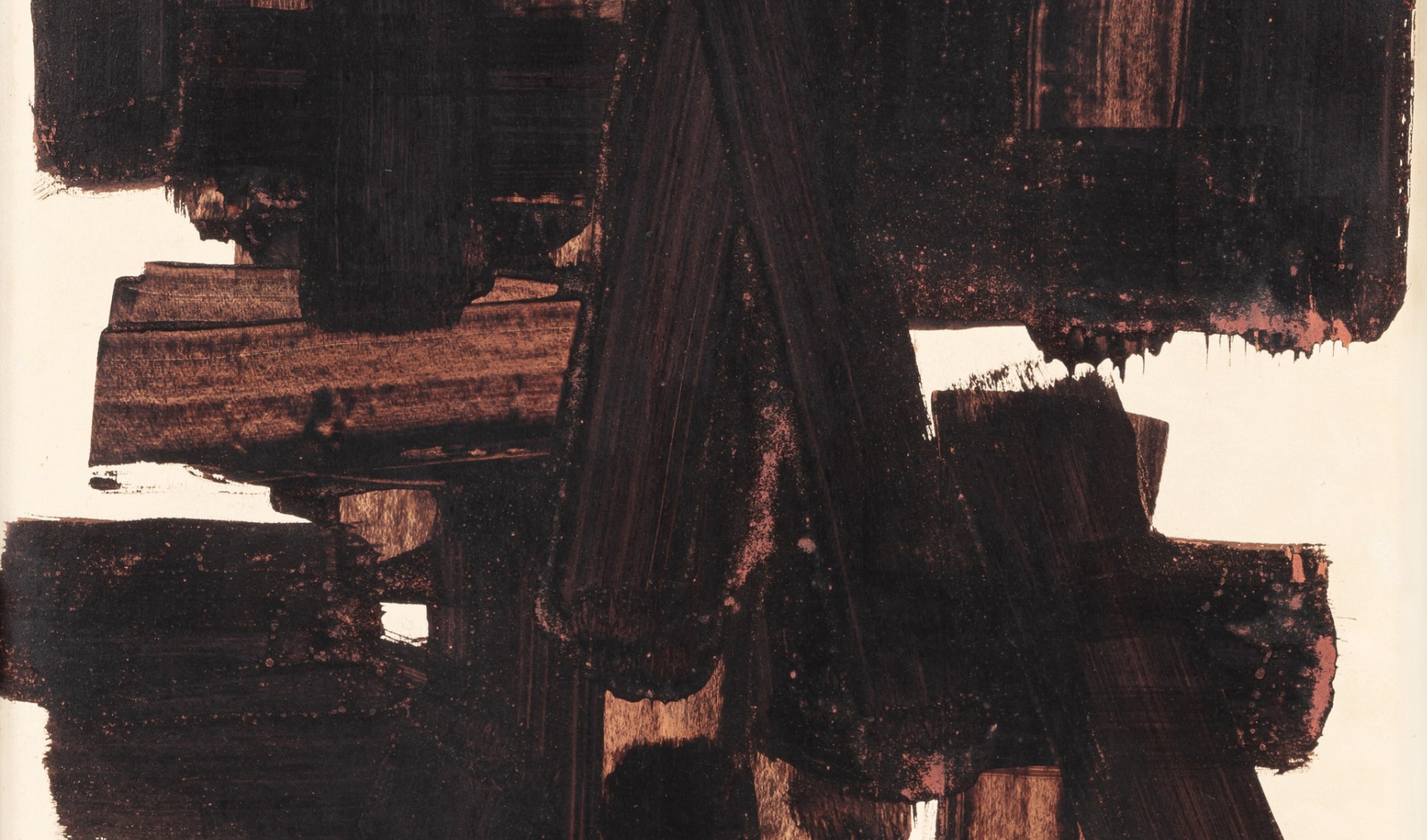
Indeed, it was his first paintings on paper that brought Soulages international recognition from 1948-1949. Immediately emblematic of his singularity, they are his first masterpieces. What’s more, the period in which this gouache was produced is crucial in the artist’s work: of the eighty-seven works on paper he has chosen to exhibit at the Musée de Rodez, Soulages expressly wished to devote three quarters of this collection to works from the years 1946-1956. This distribution highlights the period that has been at the heart of his artistic creation since the beginning of his career: “Everything started from there!”
Like most of his works on paper, this gouache is remarkably luminous. The predominant black that structures and punctuates the work is far from invading the surface, as would happen from 1979 onwards: walnut stain dialogues with it and, through its transparency and brown, ochre or russet nuances, brightens the whole. As Raoul Dufy said to Soulages: “You’ve understood what oil painting is all about; it’s the interplay of opacities and transparencies”. This play of nuances led to his love of washes, which lend themselves particularly well to the appearance of forcible lines. The transparencies obtained by scraping on this work bring out in a different way the intrinsic luminosity of the support and the infinite variations of walnut stain.
The work is also illuminated by the spaces left between the painted surfaces, without ever forming voids. The broad brushstrokes, which are not lines but surfaces, interweave around the light reserves they enclose, making the background of the paper glow. Beyond the apparent stability and immutability of the composition, structured by form, of which the white of the paper, space and light are an integral part, this work remains profoundly mysterious. These penetrating blacks, these hieratic compositions, these forms without image or language enable Soulages to grasp “what escapes words, what lies in the darkest, most secret part of a painting”.
Untitled, 2000
Sotheby’s Paris: 10 April 2025
Estimated: EUR 100,000 – 150,000
EUR 254,000 / USD 278,120
Untitled | Art Moderne et Contemporain Evening Auction | 2025 | Sotheby’s
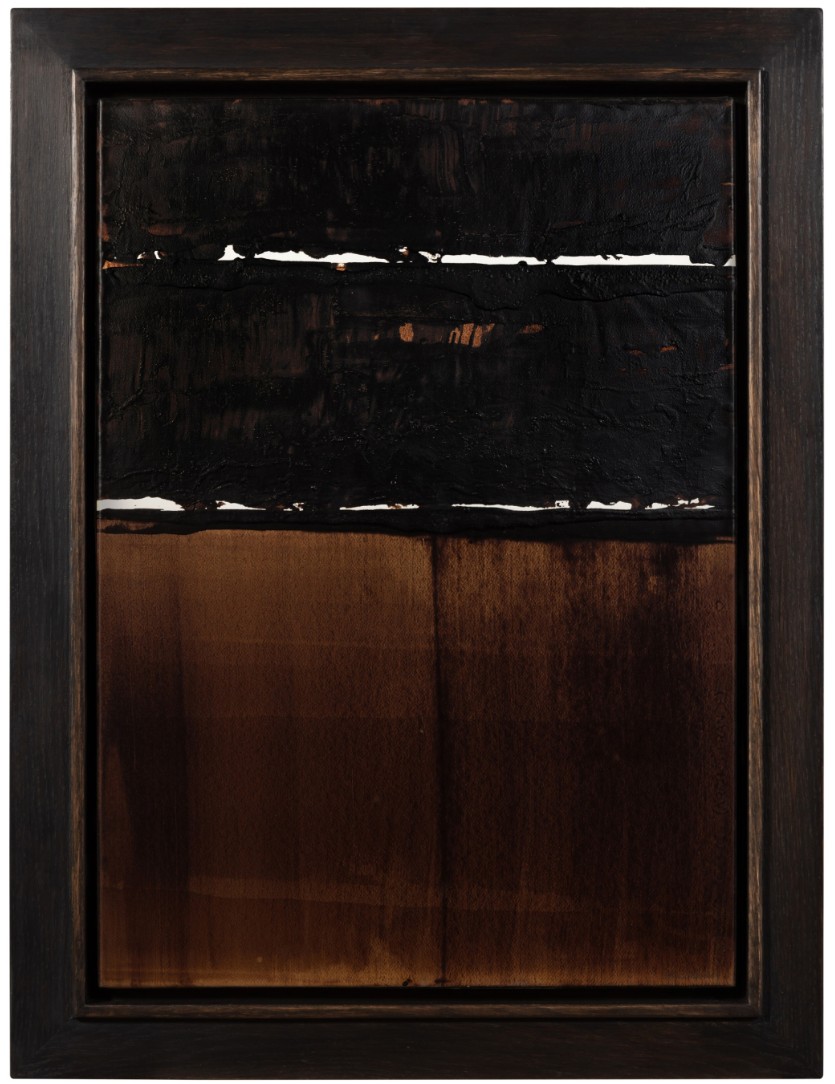
PIERRE SOULAGES (1919 – 2022)
Untitled, 2000
Acrylic and walnut stain on paper laid down on canvas
75.5 x 53.8 cm (29 3/4 x 21 1/8 inches)
Signed (lower right)
Dedicated (on the stretcher)
Signed and dated 2000 (on the reverse)
“I’m painting the snow”, replied the young Pierre Soulages in his childhood bedroom at 4, rue Combarel in Rodez, as he ran his brush of black ink over sheets of white paper and his sister asked him what he was painting. This decisive role of painting on paper and his ambition to create light from black already foreshadowed this work, which the artist produced in 2000 at the age of 81.
Although Soulages often said that he did not distinguish any hierarchy between the media and techniques he used, he also said that it was on paper that he had found his vocation as a painter. For him, paper was a special place for exercising his creativity, a space of freedom that allowed him to make gestures away from the canvas. Working on paper modified his physical posture: it was on this medium that Soulages began to paint on the ground, flat, a practice he would later adapt to his paintings on canvas. Since painting on paper does not allow for reconsideration, it is necessarily done quickly and spontaneously. It is born, he declares, of ‘a kind of impulse towards the original, the elemental’.
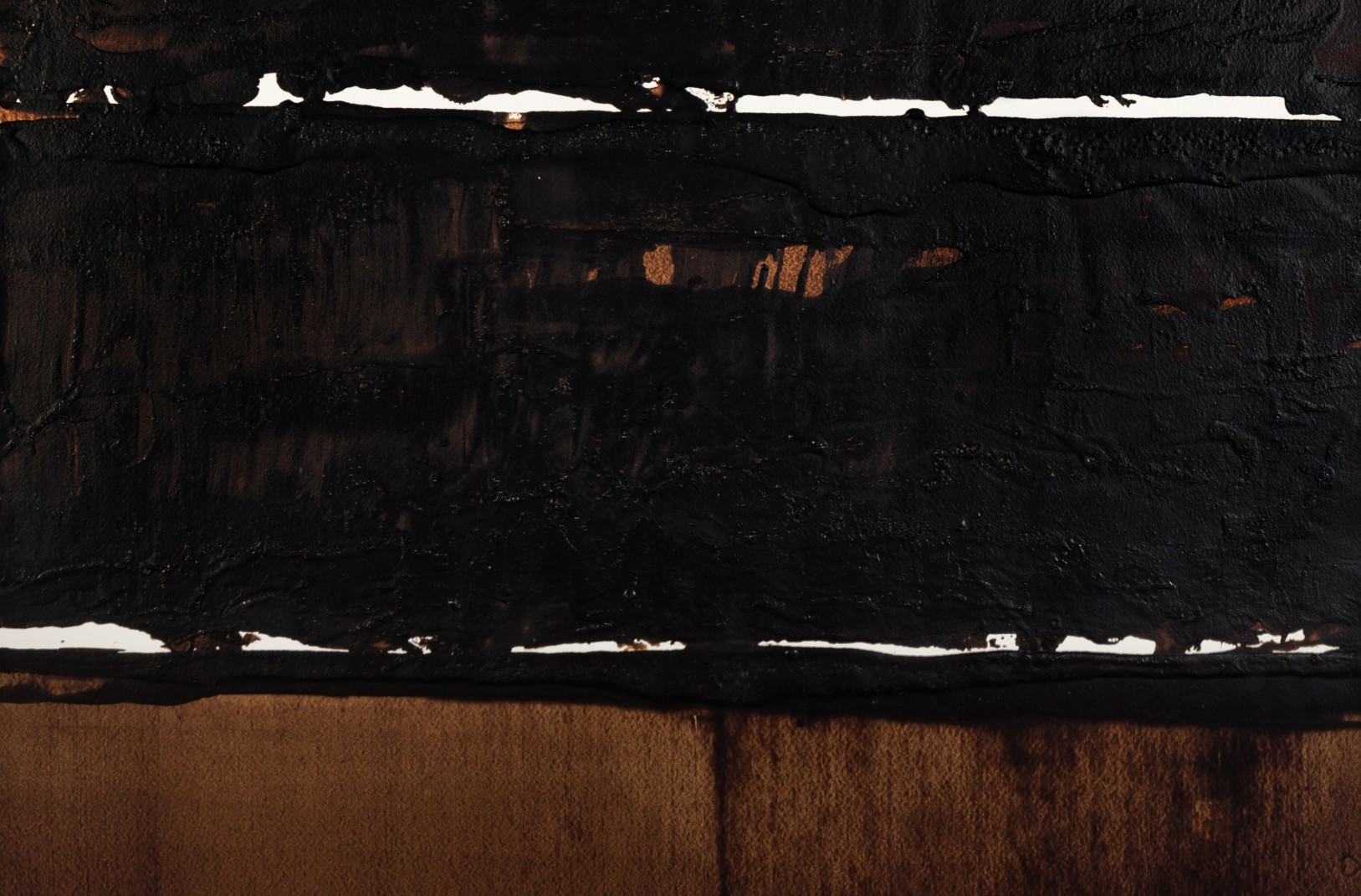
More than fifty years later, when Pierre Soulages produced this composition, he returned to painting on paper, which he had abandoned for some twenty years, and began a short production cycle, from 1999 to 2001, which reached an unprecedented culmination in his search for light. This work definitively embodies the disappearance of the ‘sign’: the bright strokes and contrasting lines are replaced by broad sheets of black, grey or brown, veiling the entire surface of the paper. When the water mixes with the brou de noix, subsequently fixed with a vinyl binder, the interwoven strokes of blacks, browns and transparencies give rise to an entirely different light. The airy fluidity of these vast brown fields, with blades as wide as the paper they cover, gives rise to uncontrollable areas of brilliance and a disconcerting instability of light. This luminous agitation is counterbalanced by two wide black bars at the top, which the opacity of the acrylic seems to render impenetrable. Yet the matte obscurity of these two solid bands introduces another kind of light: the vivid white horizontal breaks in the background between them, but also the brilliance of the paper, which shines through thanks to the scraping technique. This hieratic composition, without image or language, in which the importance of light has eclipsed that of the sign, seems to fulfil Soulages’ wish to capture “that which escapes words, that which lies at the heart of the work”.
Sans titre, 1952
Christie’s Paris: 20 October 2023
Estimated: EUR 250,000 – 350,000
EUR 365,400 / USD 386,825
Pierre Soulages (1919-2022), Sans titre | Christie’s
PIERRE SOULAGE (1919-2022)
Sans titre, 1952
Walnut stain on paper
104.5 x 75.5 cm (41 1/8 x 29 3/4 inches)
Signed and dated ‘soulages 52’ (lower right)
Dedicated ‘Pour Dominique et Guy avec l’amitié de Pierre et Colette’ (on the reverse)
”Walnut stain has a dark and warm tone, a kind of elementary power that pleases me. It allows to obtain naturally transparencies and opacities with a beautiful resonance.”
Acquired directly from the artist, and held in the same family collection ever since, Sans titre (1952) is an exquisite work on paper that demonstrates Pierre Soulages’ early use of ‘brou de noix’. With broad, near-calligraphic strokes, the artist paints rich interlocking bands, relishing the tonal and textural range of his medium. Soulages had first begun using ‘brou de noix’—a dark stain brewed from walnut husks—in 1947. Its warm mahogany hues, applied in broad strokes with a house painter’s brush, allowed him to ”obtain naturally transparencies and opacities with a beautiful resonance.” This quality, eloquently showcased in the present work, fueled Soulages’ fascination with the relationship between darkness and light, ultimately inspiring the rigorous exploration of black that would come to define his oeuvre. Soulages had been fascinated by questions of tonal contrast since his youth. Growing up in Rodez in the South of France, he was entranced by the dance of light and shadow he observed in the 11th-century abbey Sainte-Foy de Conques, as well as the ancient cave art discovered at Lascaux in 1940. ‘Brou de noix’, with its primal, earthen hues, offered Soulages a gateway to these worlds. Typically used for staining furniture, its quotidian origins made it all the more compelling, its extraordinary range of chiaroscuro effects simmering with ‘elementary power.’
”It was with the walnut stain paintings that I was able to get myself together and obey a kind of inner imperative. The truth is that I felt restricted by oils. I’d used them before the war and I knew what the constraints were. One day, in a burst of impatience and bad temper, I grabbed some walnut stain and some housepainter’s brushes and unleashed myself on paper.”
Soulages had first made unified linear compositions in ‘brou de noix’ during the late 1940s. In them, he discovered the foundational principle of his art.
”The duration of the line having disappeared, time was static in these signs made by summary and direct strokes of the brush, movement is no longer described; it becomes tension, movement under control, that is to say dynamism.”
By the time of the present painting, Soulages was beginning to gain international recognition for this approach, with institutions including the Phillips Collection, Washington D. C. and the Museum of Modern Art, New York acquiring examples of his work. While his abstract bars of dark colour were frequently likened to the paintings of Franz Kline and Robert Motherwell, however, Soulages ultimately distanced himself from such comparisons. Unlike his Abstract Expressionist contemporaries, his painterly gestures made no claim to personal expression. In the present work, the subtle traces of movement, the friction between textures and the flickering variations in opacity become the artist’s sole subject.