
René Magritte is one of the most celebrated figures of twentieth-century art and a central figure of the Surrealism movement. Born in 1898 in Lessines, Belgium, Magritte studied at the Académie Royale des Beaux-Arts before developing a distinctive artistic language that would challenge the relationship between images, objects, and reality itself.While many Surrealist artists explored dreamlike imagery through expressive or abstract forms, Magritte adopted a radically different approach. His paintings are executed with almost photographic clarity and calm precision, presenting ordinary objects—pipes, apples, bowler hats, windows, clouds—in unexpected combinations that destabilize the viewer’s perception.
Throughout his career, Magritte pursued a philosophical investigation of representation. Rather than depicting dreams or subconscious impulses directly, his paintings question how images produce meaning and how easily perception can be deceived.
Introduction
René Magritte was born on November 21, 1898, in Lessines, Belgium. Raised in a modest family, Magritte experienced tragedy early in life when his mother drowned herself in the Sambre River in 1912. This traumatic event profoundly influenced his artistic sensibility, as themes of mystery and concealment later became central to his work. Magritte began studying art at the Académie Royale des Beaux-Arts in Brussels in 1916, where he honed his skills and developed an interest in avant-garde art.
After completing his studies, Magritte initially worked as a commercial artist to support himself. During this period, he experimented with Cubism and Futurism, reflecting the influence of modernist trends. However, these early works were met with limited success and did not hint at the signature style that would later define his career. Magritte’s artistic breakthrough came in the mid-1920s when he encountered the Surrealist movement in Paris. Deeply inspired by Giorgio de Chirico’s metaphysical art, he began to explore the interplay between the ordinary and the extraordinary. His 1929 painting The Treachery of Images, featuring the iconic phrase “Ceci n’est pas une pipe,” epitomizes his fascination with challenging perceptions of reality and representation
Technique and Visual Language
Magritte’s paintings are characterized by a deliberately neutral, almost illustrative style. He rejected the expressive brushwork typical of many modern painters, preferring smooth surfaces and clear outlines that reinforce the illusion of reality. This restrained technique serves a conceptual purpose: by painting objects with convincing realism, Magritte makes their impossible combinations appear strangely plausible. A train emerging from a fireplace, a giant apple filling an entire room, or a floating rock above the sea all appear calm and rational despite their inherent impossibility.
Recurring motifs populate his work—bowler-hatted men, curtains, windows, clouds, apples, pipes, and anonymous figures whose faces are hidden or obscured. These elements form a visual vocabulary through which Magritte repeatedly explored themes of illusion, concealment, language, and the instability of meaning.
Unlike many of his Surrealist contemporaries who delved into dreamscapes and subconscious fantasies, Magritte rooted his work in the familiar. He often used precise, almost photographic realism to depict impossible scenarios, creating a tension between clarity and mystery. This approach made his work more accessible while still evoking profound philosophical questions about existence and perception. During World War II, Magritte temporarily adopted a brighter, more playful style, known as his “Renoir Period,” influenced by Impressionism. However, this detour was short-lived, and he soon returned to his signature Surrealist style. The war years were challenging for Magritte, but they also solidified his commitment to exploring the absurdity of the human condition.
The “Ceci n’est pas une pipe” Paintings
Among Magritte’s most famous works is The Treachery of Images (1929), which presents a meticulously painted pipe accompanied by the inscription “Ceci n’est pas une pipe” (“This is not a pipe”).
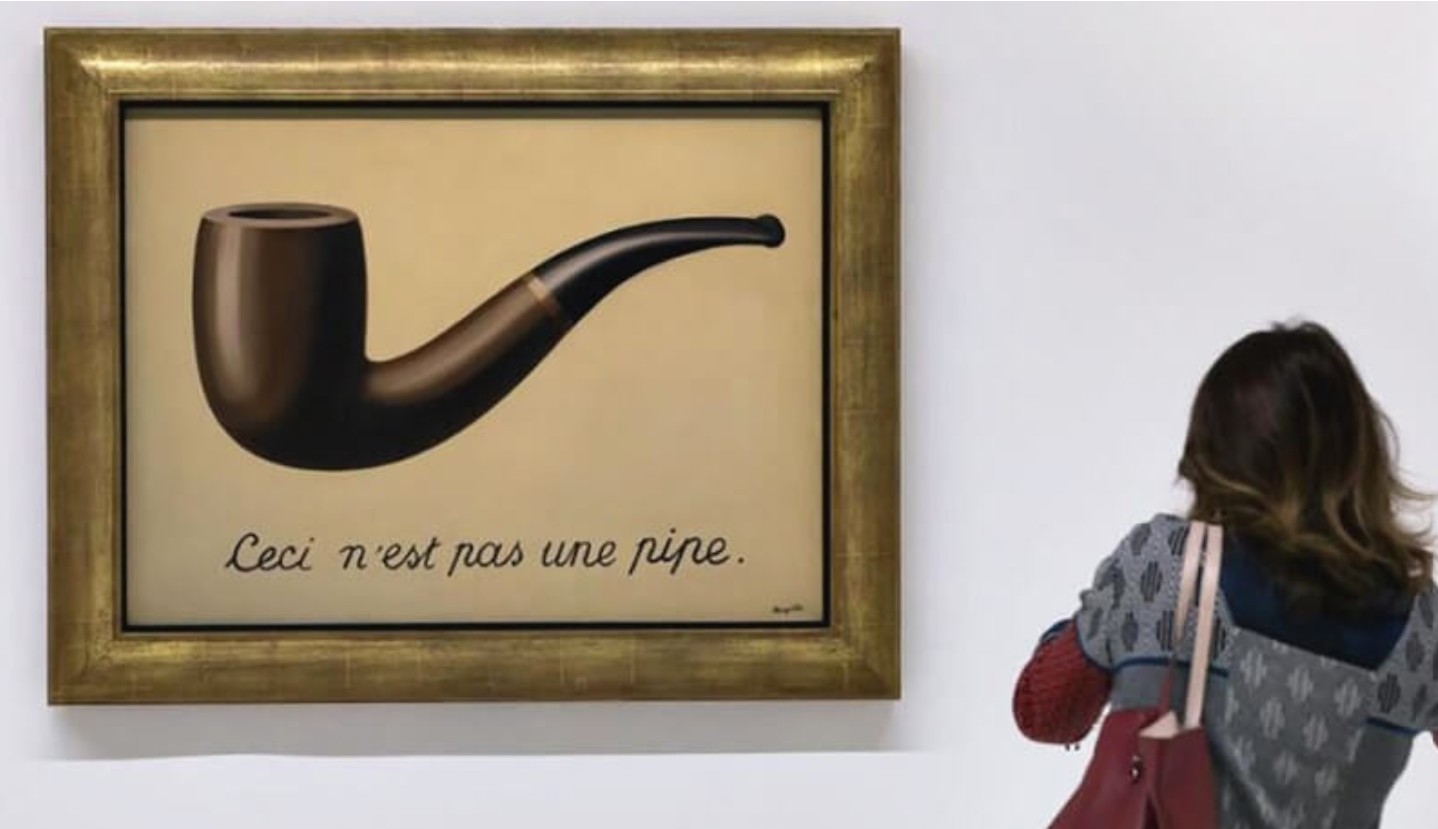
At first glance the phrase appears contradictory. Yet Magritte’s message is philosophical: the image of a pipe is not the object itself. By confronting viewers with this paradox, Magritte reveals the fundamental gap between representation and reality. This painting became one of the most iconic images in modern art and a cornerstone of conceptual thinking about language, imagery, and visual communication.
The Bowler Hat Figures
Another defining motif in Magritte’s work is the anonymous man wearing a dark suit and bowler hat. These figures appear repeatedly throughout his paintings and often serve as stand-ins for the modern individual.
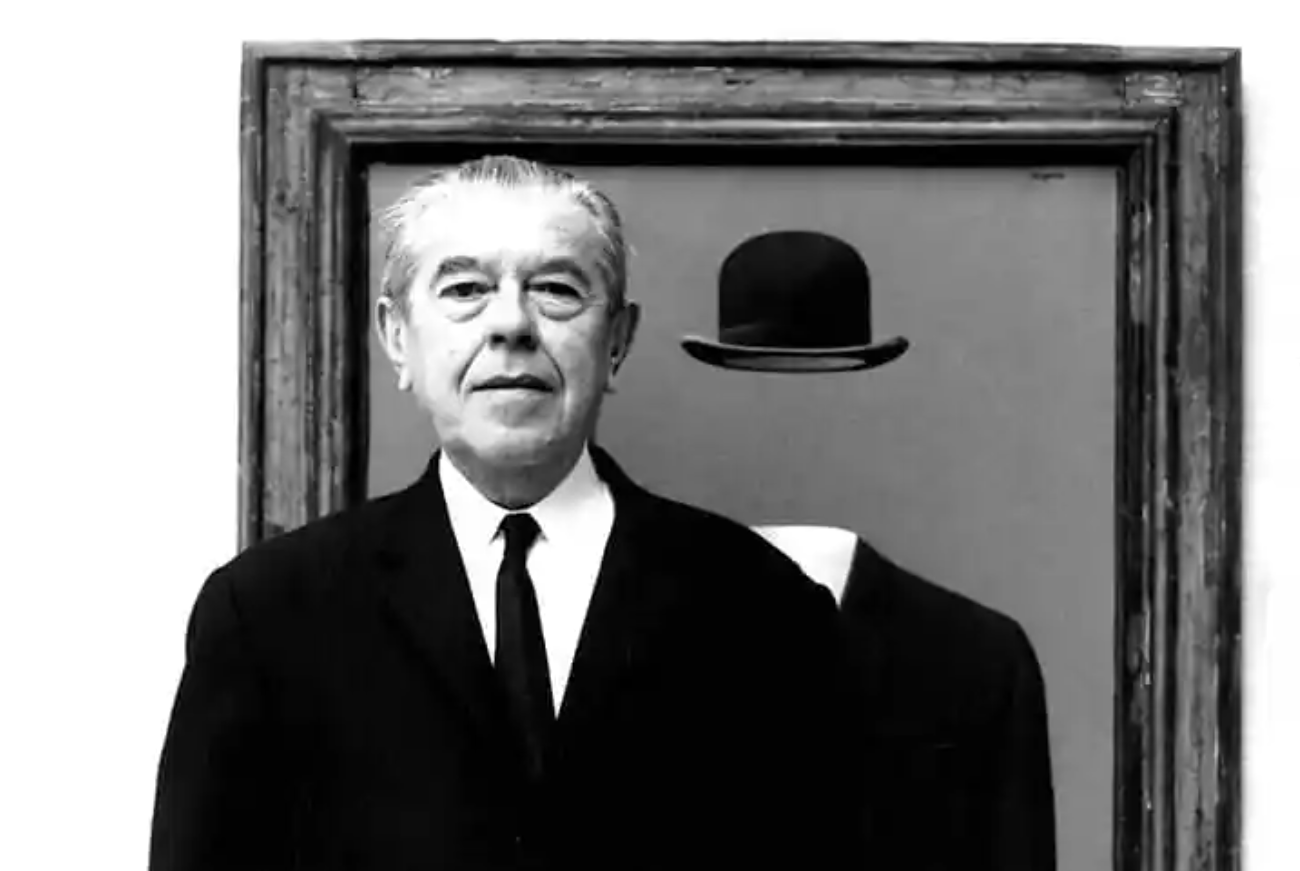
The most famous example is The Son of Man (1964), in which a man in a bowler hat stands before a cloudy seascape while a floating green apple obscures his face. The image has become one of the most recognizable paintings of the twentieth century, symbolizing the tension between what is visible and what remains hidden.
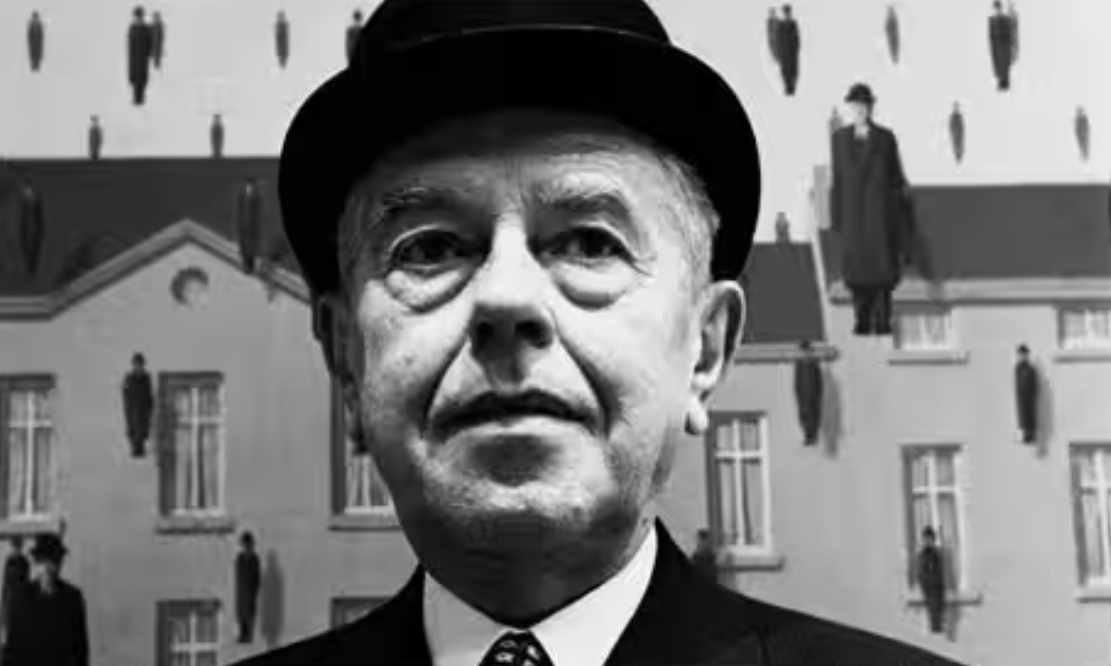
Magritte also explored this motif in works such as Golconda (1953), where dozens of identical bowler-hatted men appear to float in the sky like raindrops. The painting evokes themes of anonymity, conformity, and the strange repetition of modern life.
The Empire of Light Series
One of Magritte’s most celebrated bodies of work is The Empire of Light (L’Empire des Lumières), a series of paintings he developed between the late 1940s and the 1960s.
In these works, Magritte presents a quiet suburban house at night beneath a bright daytime sky filled with white clouds. The juxtaposition of day and night within the same scene produces a haunting visual contradiction. Rather than appearing surreal in a dramatic sense, the images remain calm and poetic. The paradox emerges slowly, revealing Magritte’s fascination with the coexistence of opposing realities.
Paintings from this series have achieved exceptional recognition both institutionally and on the market, becoming some of the most valuable works in the history of Surrealist painting.
The Scale Paradox Paintings
Magritte frequently explored unexpected shifts in scale to create visual surprises. In paintings such as The Listening Room (1952), a gigantic green apple fills an entire interior space, pressing against the walls and ceiling of a small room. This manipulation of scale transforms an ordinary object into something uncanny and monumental. The strategy reflects Magritte’s ongoing effort to challenge viewers’ expectations about the familiar world.
Through these distortions, he reveals how easily perception can be destabilized by altering the relationship between objects and their surroundings.
Windows, Curtains, and the Nature of Representation
Another recurring theme in Magritte’s work involves windows and framed landscapes. In paintings such as The Human Condition (1933), a painting placed before a window perfectly aligns with the landscape behind it, making it impossible to distinguish where representation ends and reality begins. These works function as visual essays about painting itself. Magritte invites viewers to question whether the image we see is a representation of reality or simply another illusion layered upon it. The motif reflects his broader philosophical interest in the way images mediate our understanding of the world.
Institutional Recognition and Exhibitions
René Magritte’s work is now held in major museum collections around the world. Important works can be found at the Museum of Modern Art, the Tate, and the Art Institute of Chicago. The artist’s legacy is also preserved at the Magritte Museum, which houses one of the most extensive collections of his works and documents.
Major retrospectives at institutions such as the Centre Pompidou and the Metropolitan Museum of Art have further confirmed Magritte’s enduring influence on modern and contemporary art.
During his lifetime, Magritte worked with several influential European galleries that helped promote Surrealism internationally. Today, the market for his works is primarily handled by major auction houses such as Christie’s and Sotheby’s, as well as leading galleries specializing in twentieth-century masterpieces including Gagosian and Acquavella Galleries.
René Magritte transformed the language of modern painting by demonstrating that the greatest mysteries of art can emerge from the simplest images. By presenting ordinary objects in extraordinary contexts, he revealed the fragile boundary between reality and illusion. His work continues to resonate across contemporary culture—from philosophy and literature to cinema and advertising—demonstrating the enduring power of images to challenge our assumptions about the world we see.
PART I: SUMMARY
Auction Market Overview
2025 AUCTION STATISTICS
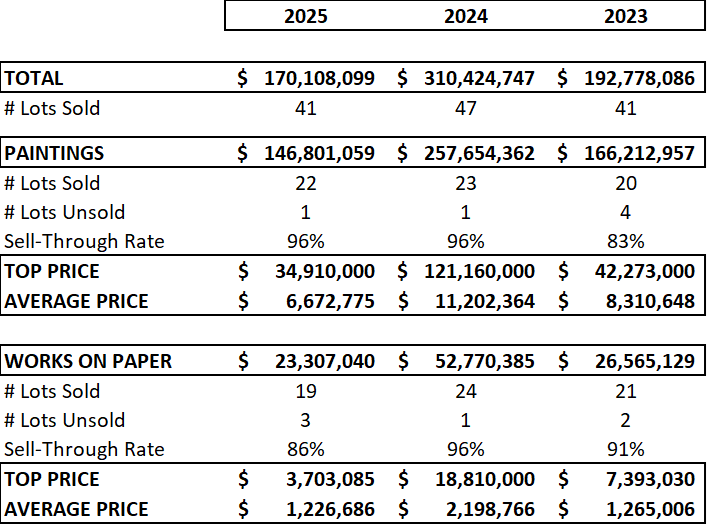
Turnover: USD 170,108,099
-45.2% vs. 2024
# Lots sold: 41
Sell-Through Rate: 95%
MARKET SEGMENTATION
Paintings & Sculptures (86.3%) / Works on Paper (13.7%)
(by value)
Highest Price Achieved at Auction:
L’empire des lumières, 1954
Christie’s New-York: 19 November 2024
USD 121,160,000
Auction Summary
2025 Auction Highlights
22 lots sold at auction in 2025 for a total turnover of USD 146,801,060. With one lot failing to sell, the sell-through rate is 96%. The highest price for 2025 has been achieved by L’empire des lumières, a painting dated 1949, from The Collection of Leonard & Louise Riggio, that sold at Christie’s in New-York, on 12 May 2025 for USD 34,910,000.
2025 Top 3 Lots
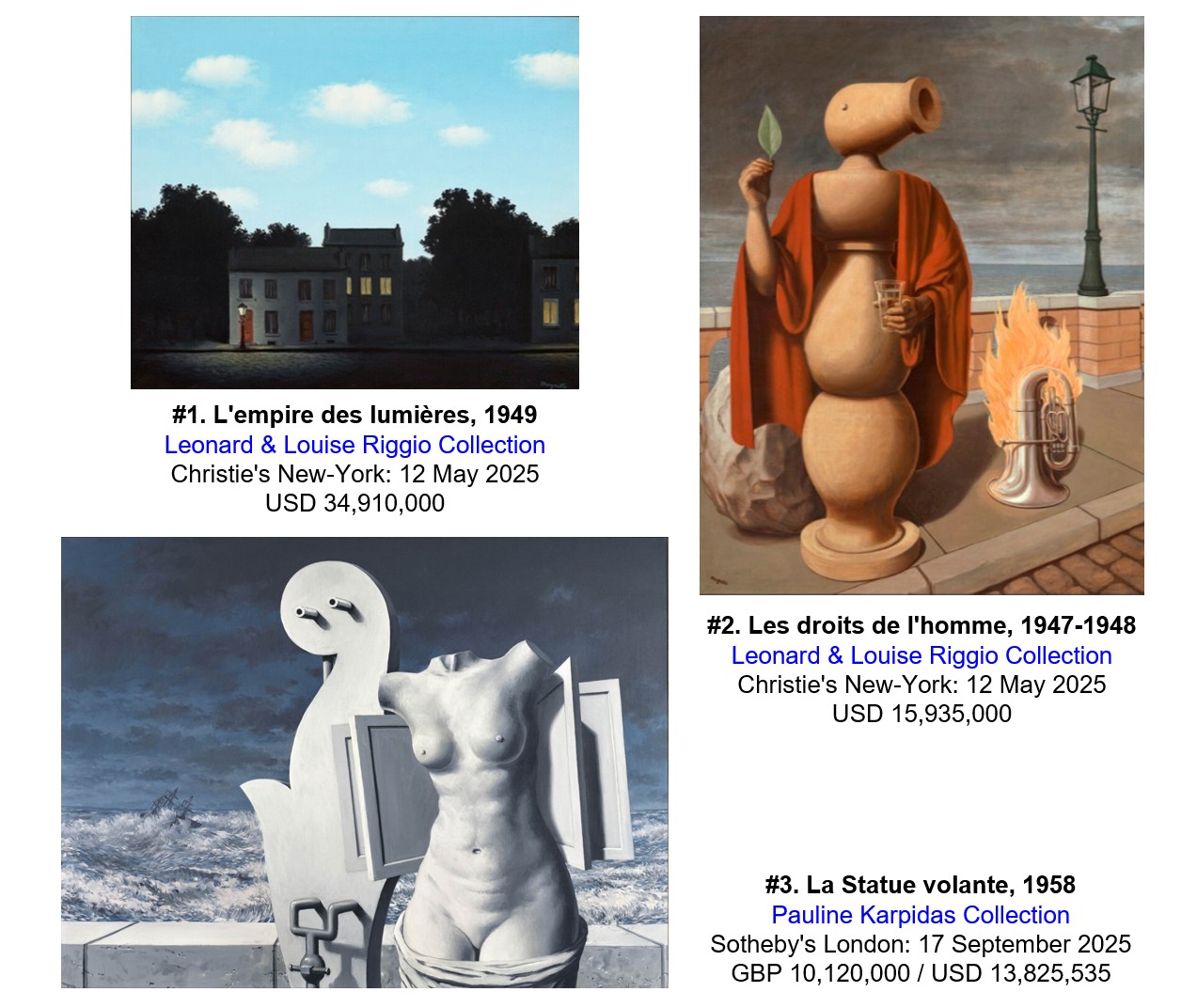
7 lots sold for more than USD 10 million, generating a cumulative turnover of USD 112,638,346, representing 76.7% of the total turnover for 2025.
Furthermore, 19 Works on Paper sold at auction in 2025 for a total turnover of USD 23,307,040. With 3 lots failing to sell, the sell-through rate is 86%. The highest price for 2025 was achieved by La clairvoyance, a drawing dated 1962, that sold at Christie’s in Hong-Kong, on 28 March 2025, for HKD 28,810,000 (USD 3,703,085).
2025 Top 3 Lots
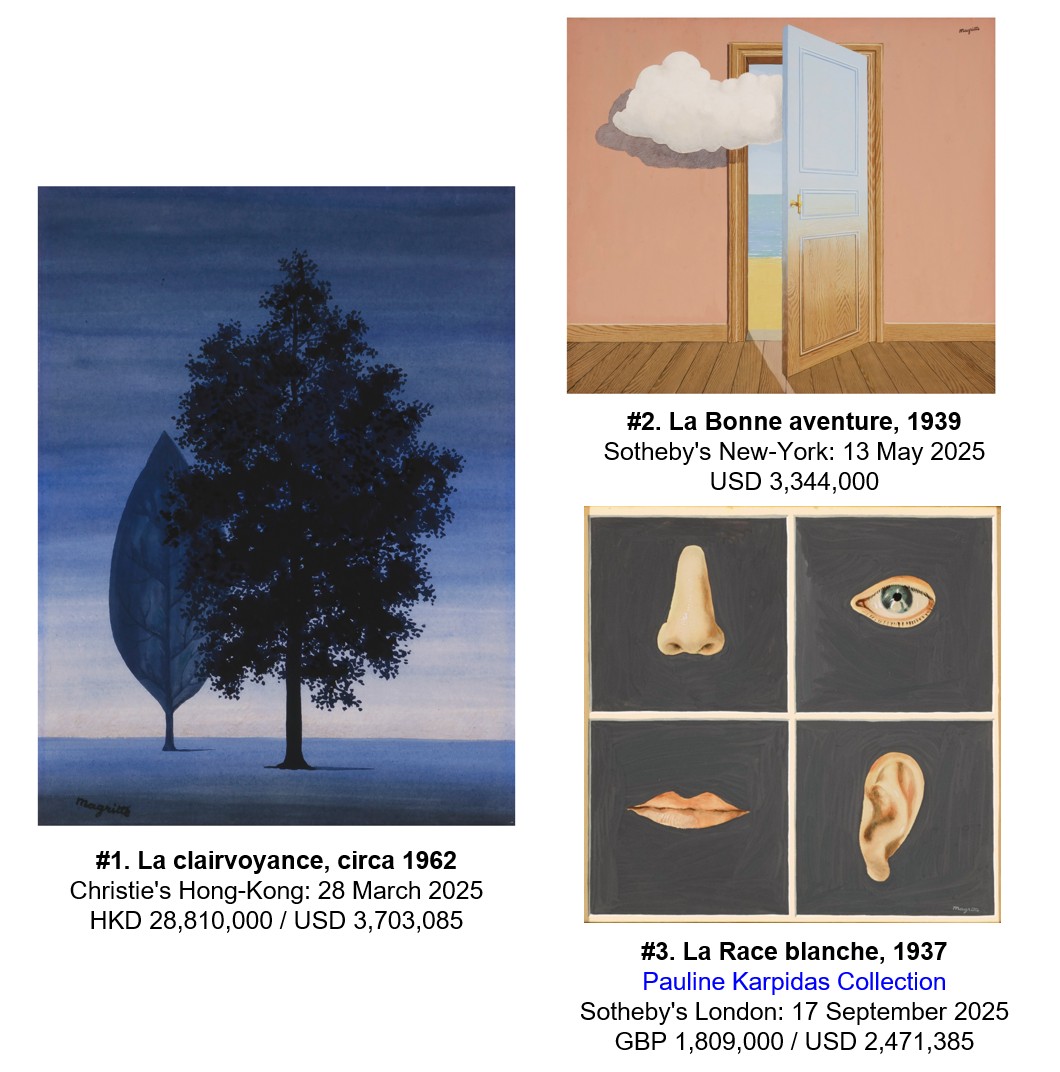
10 lots sold for more than USD 1 million, generating a cumulative turnover of USD 19,415,740, representing 83.3% of the total turnover for 2025.
2024 Auction Highlights
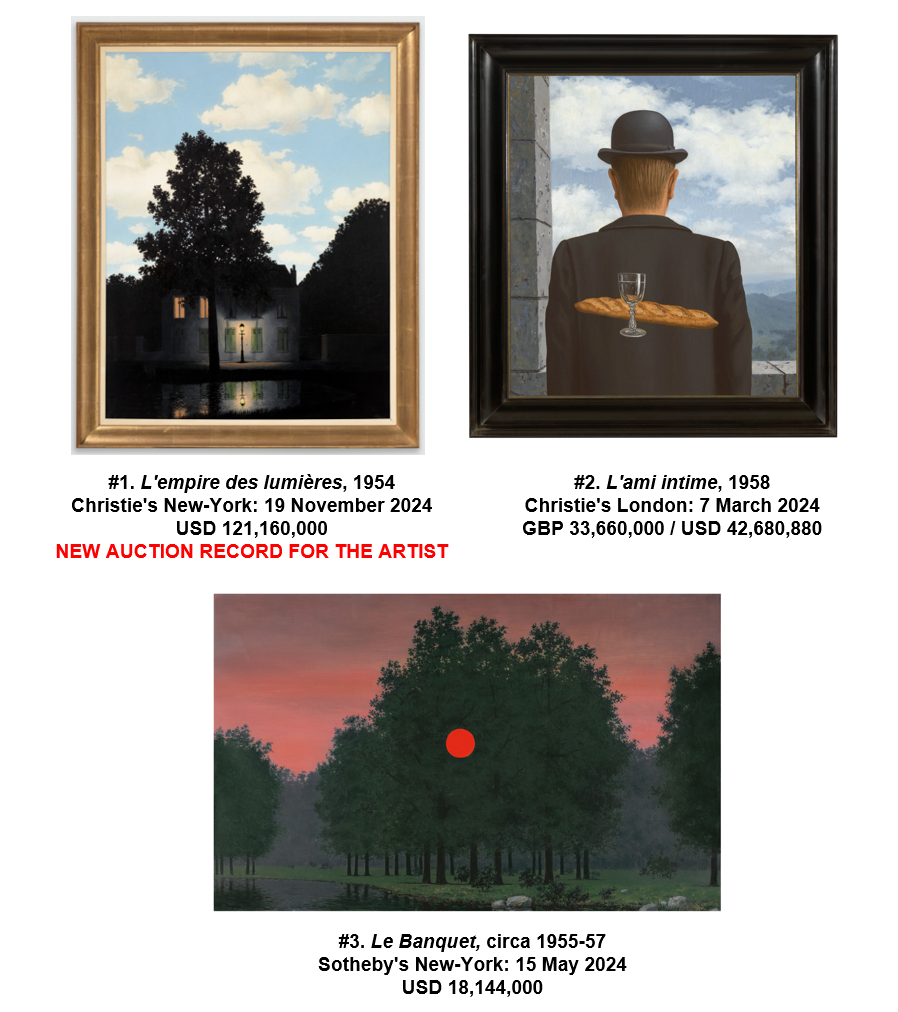
23 lots sold at auction in 2024 for a total turnover of USD 257,654,362. With only 1 lot failing to sell, the sell-through rate is 96%. L’empire des lumieres, a painting dated 1954, from the artist’s most celebrated series sold at Christie’s in New-York on 19 November 2024 for USD 121,160,000, a new auction record for the artist. 4 lots sold for more than USD 10 million, generating a cumulative turnover of USD 192,514,880, representing 74.7% of the total turnover for 2024.
2024 Top 3 Lots
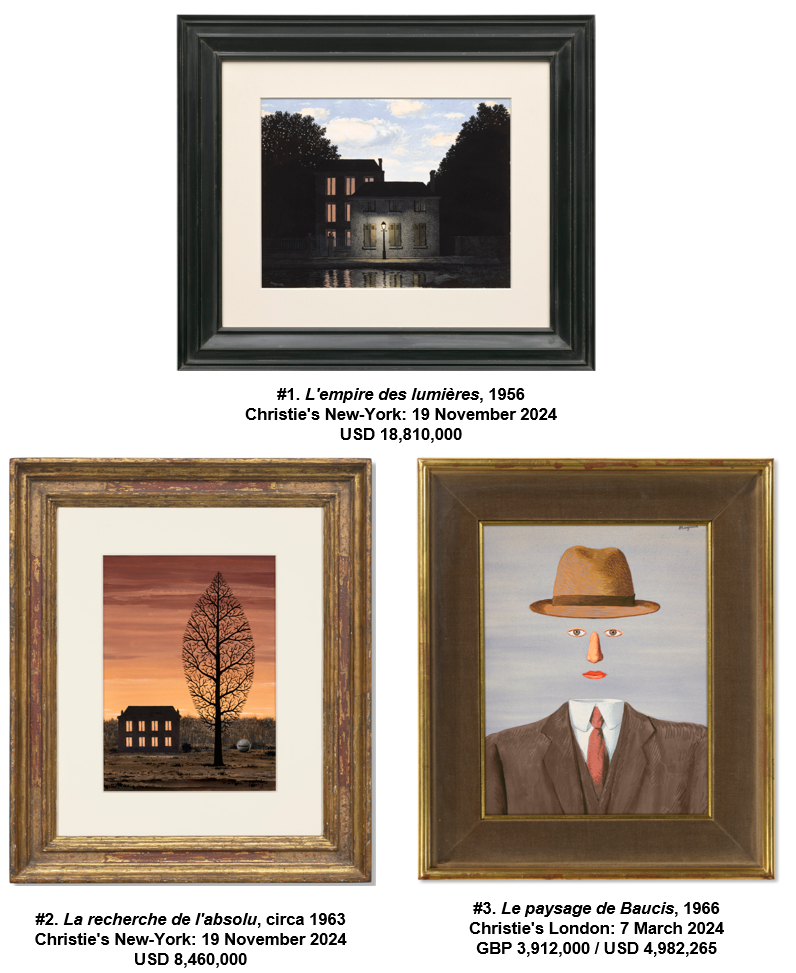
Furthermore, 24 Works on Paper sold at auction in 2024 for a total turnover of USD 52,770,385. With only 1 lot failing to sell, the sell-through rate is 96%. L’empire des lumieres, a gouache dated 1956, from the artist’s most celebrated series sold at Christie’s in New-York on 19 November 2024 for USD 18,810,000, a new auction record for a gouache of the artist. 13 lots sold for more than USD 1 million, generating a cumulative turnover of USD 50,419,635 representing 95.5% of the total turnover for 2024.
2024 WOP Top 3 Lots
2023 Auction Highlights
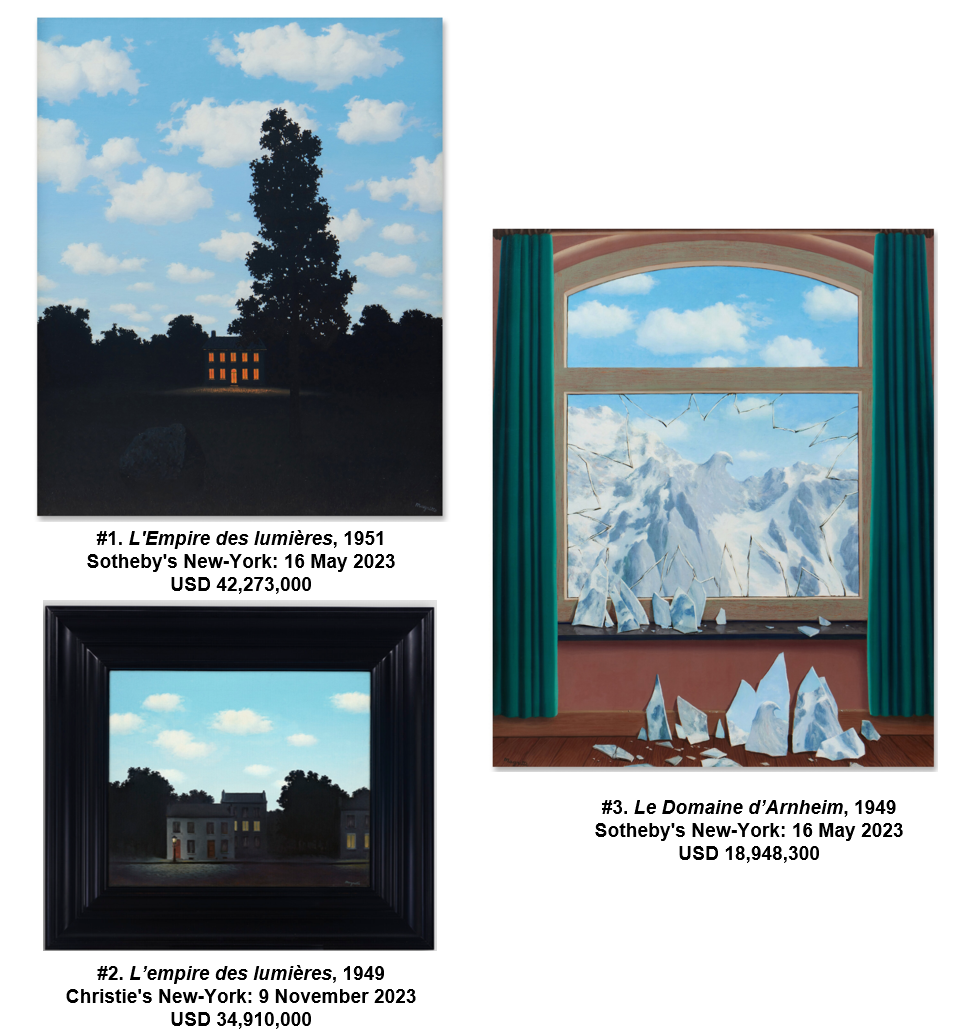
20 lots sold at auction in 2023 for a total turnover of USD 166,212,957. With 4 lots failing to sell, the sell-through rate is 83%. L’empire des lumieres, a painting dated 1951, from the artist’s most celebrated series sold at Sotheby’s in New-York on 16 May 2023 for USD 42,273,000, the highest price achieved in 2023 for a painting by Rene Magritte. 5 lots sold for more than USD 10 million, generating a cumulative turnover of USD 121,257,067, representing 73% of the total turnover for 2023.
2023 Top 3 Lots
PLEASE CLICK BELOW TO SEE ALL AUCTION RESULTS FOR WORKS ON PAPER
Top Lots
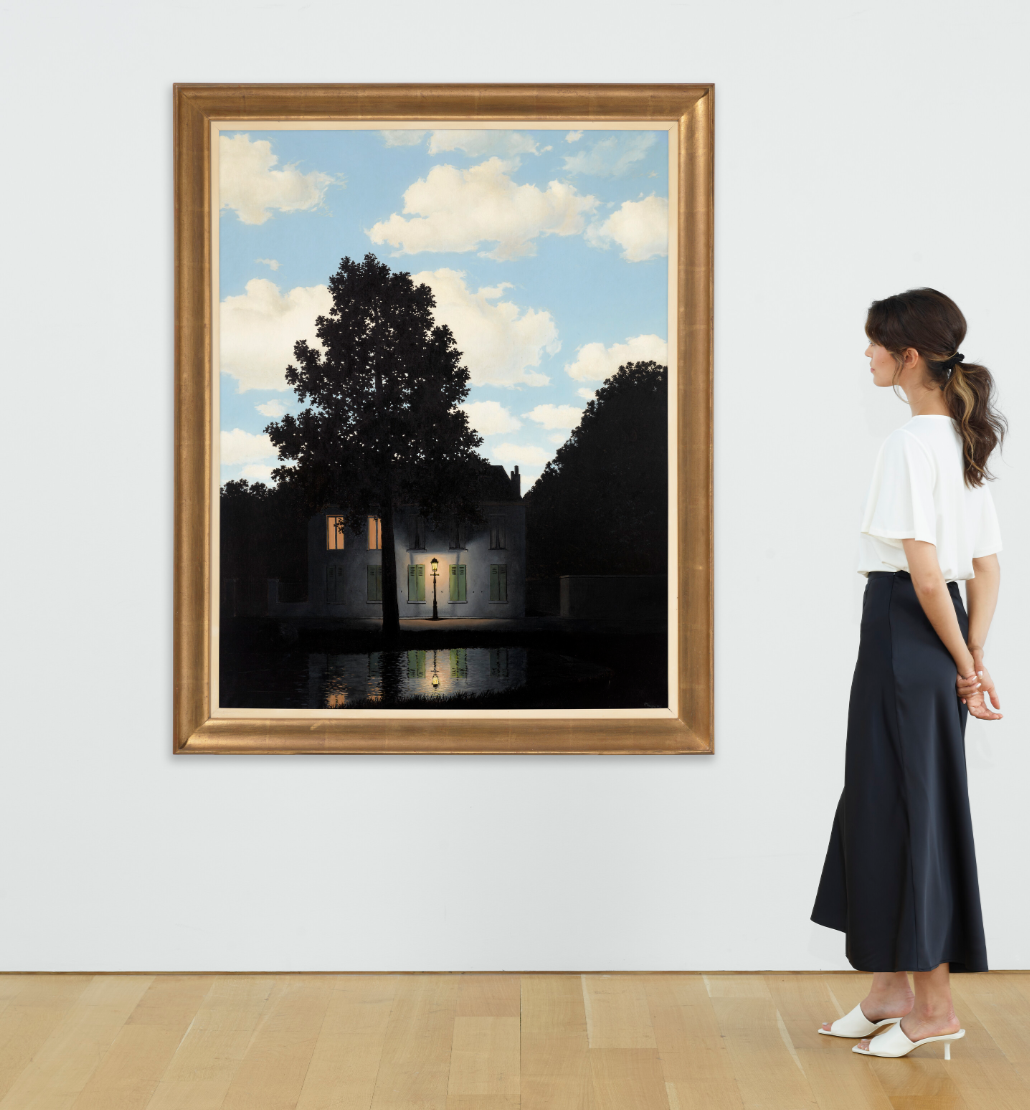
#1. L’empire des lumières, 1954
Christie’s New-York: 19 November 2024
Estimate on Request
USD 121,160,000
RENE MAGRITTE (1898-1967), L’empire des lumières | Christie’s
RENE MAGRITTE (1898-1967)
L’empire des lumières, 1954
Oil on canvas
146×114 cm (57 1/2 x 44 7/8 inches)
Signed ‘Magritte’ (lower right)
Signed again, dated and titled ‘”L’Empire des Lumières” Magritte 1954’ (on the reverse)
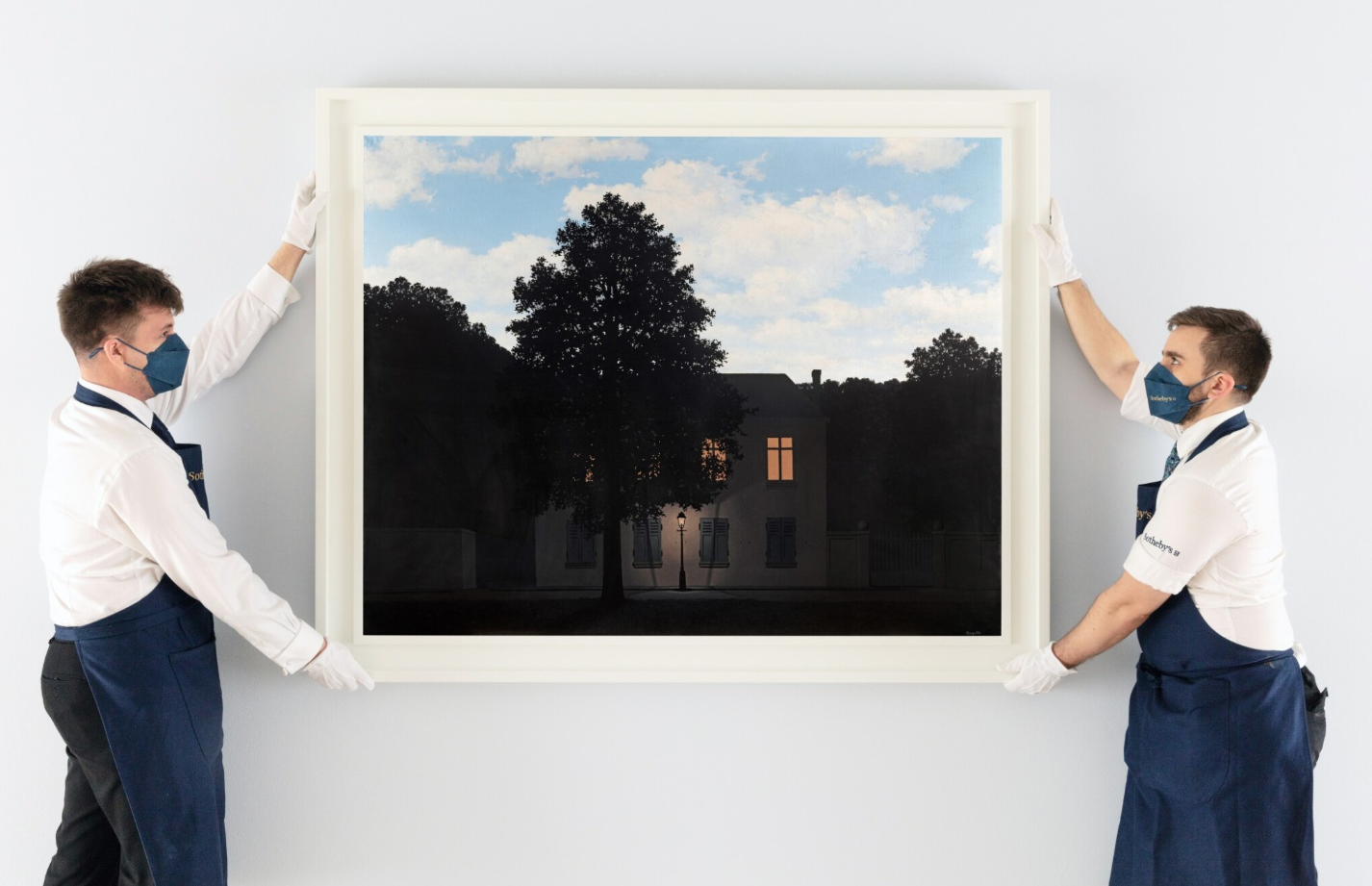
#2. L’empire des lumières, 1961
Sotheby’s London: 2 March 2022
Estimates on Request
GBP 59,422,000 / USD 79,209,370
L’empire des lumières | Modern & Contemporary Evening Auction | 2022 | Sotheby’s
RENE MAGRITTE (1898 – 1967)
L’empire des lumières, 1961
Oil on canvas
114.5 x 146cm (45 x 57 1/2 inches)
Signed Magritte (lower right)
Signed Magritte and titled on the reverse
#3. L’ami intime, 1958
Christie’s London: 7 March 2024
Estimated: GBP 30,000,000 – 50,000,000
GBP 33,660,000 / USD 42,680,880
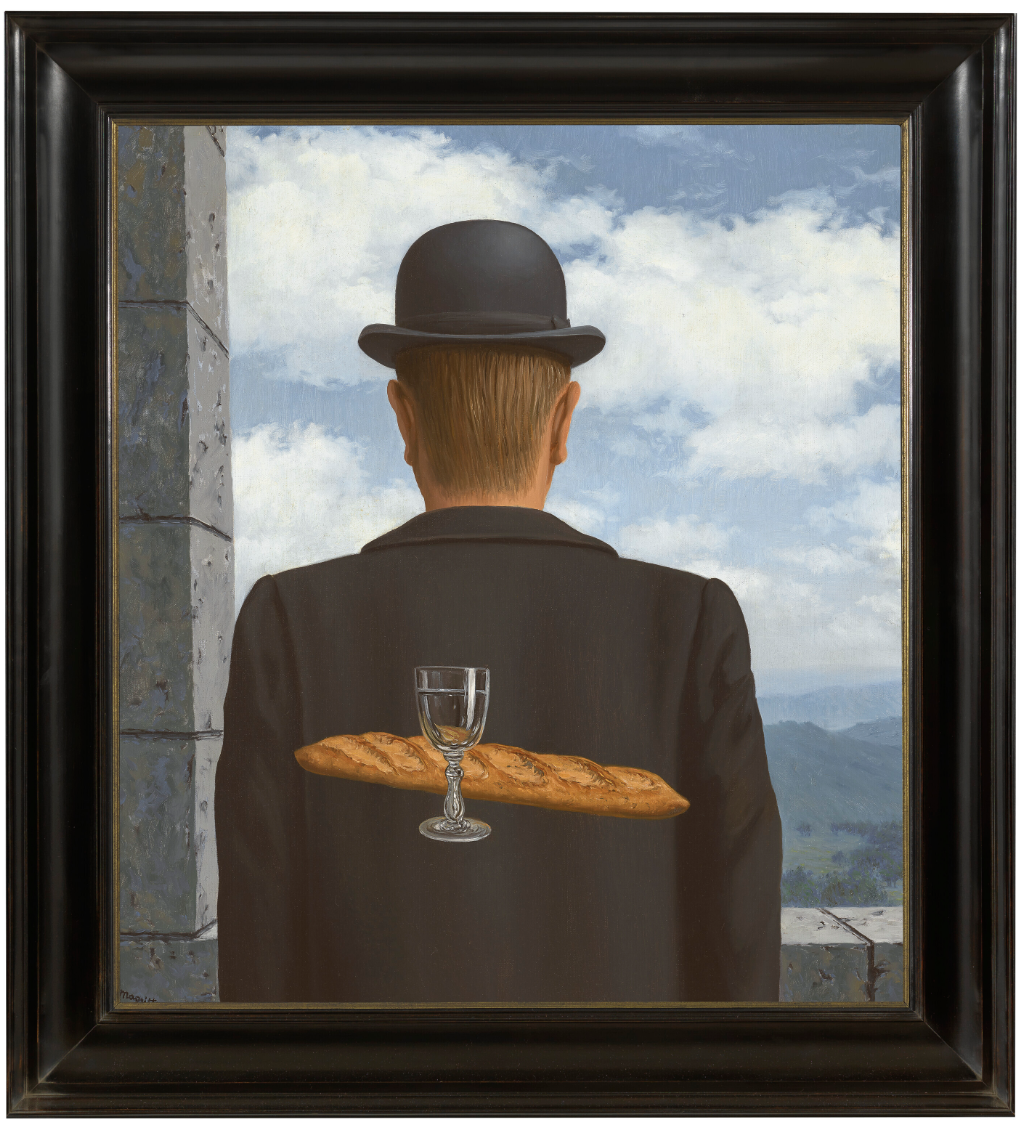
RENÉ MAGRITTE (1898-1967)
L’ami intime, 1958
Oil on canvas
72.6 x 64.9 cm (28 5/8 x 25 1/2 inches)
Signed ‘Magritte’ (lower left)
#4. L’Empire des lumières, 1951
Sotheby’s New-York: 16 May 2023
Estimated: USD 35,000,000 – 55,000,000
USD 42,273,000
L’Empire des lumières | The Mo Ostin Collection Evening Auction | 2023 | Sotheby’s
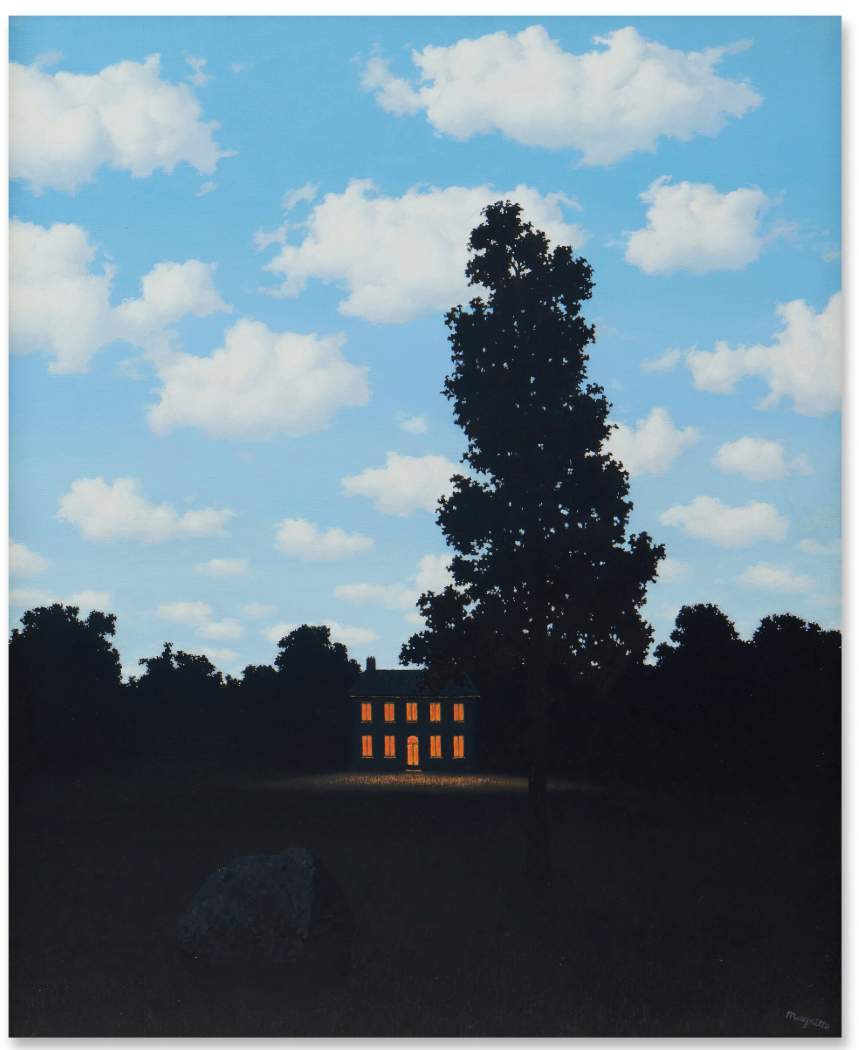
RENE MAGRITTE (1898 – 1967)
L’Empire des lumières, 1951
Oil on canvas
80.3 x 65.7 cm (31 5/8 x 25 7/8 inches)
Signed (lower right)
Titled “L’Empire des lumières,” numbered III and dated 1951 (on the reverse)
Executed in August—September 1951
#5. L’empire des lumières, 1949
Christie’s New-York: 9 November 2023
Estimated: USD 25,000,000 – 35,000,000
USD 34,910,000
RENE MAGRITTE (1898-1967), L’empire des lumières | Christie’s
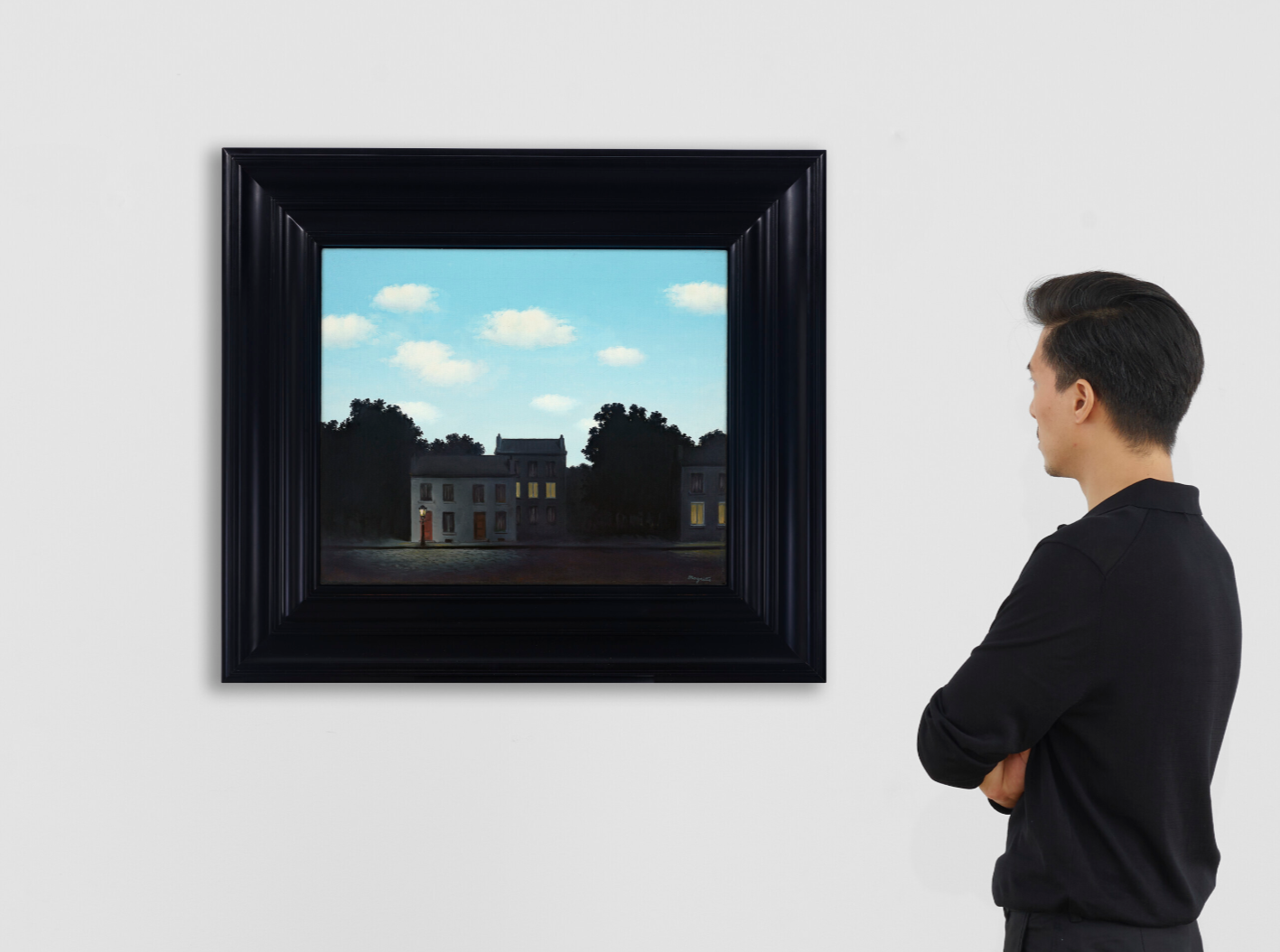
RENE MAGRITTE (1898-1967)
L’empire des lumières, 1949
Oil on canvas
48.5 x 58.8 cm (19 1/8 x 23 1/8 inches)
Signed ‘Magritte’ (lower right)
Titled and dated ‘”L’EMPIRE des LUMIÈRES” 1949’ (on the reverse)
USD 30 million
#6. Le Principe du plaisir, 1937
Sotheby’s New-York: 12 November 2018
Estimated: USD 15,000,000 – 20,000,000
USD 26,830,500
(#35) RENÉ MAGRITTE | Le Principe du plaisir
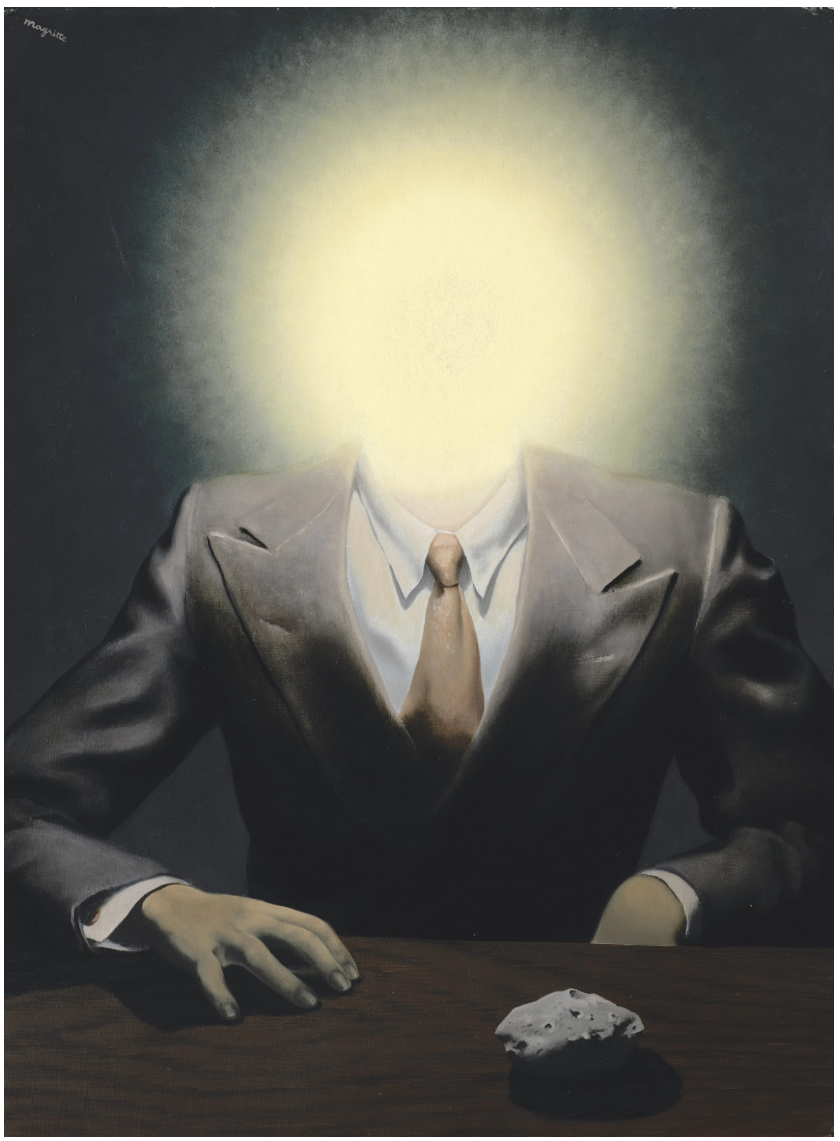
RENE MAGRITTE
Le Principe du plaisir, 1937
Oil on canvas
73 x 54.5 cm (28 3/4 x 21 1/2 inches)
Signed magritte (upper left)
Titled “Le Principe du plaisir,” signed Magritte and dated 1937 (on the reverse)
#7. La voix du sang, 1948
Christie’s New-York: 9 November 2022
Estimated: USD 12,000,000 – 18,000,000
USD 26,725,000
RENE MAGRITTE (1898-1967), La voix du sang | Christie’s
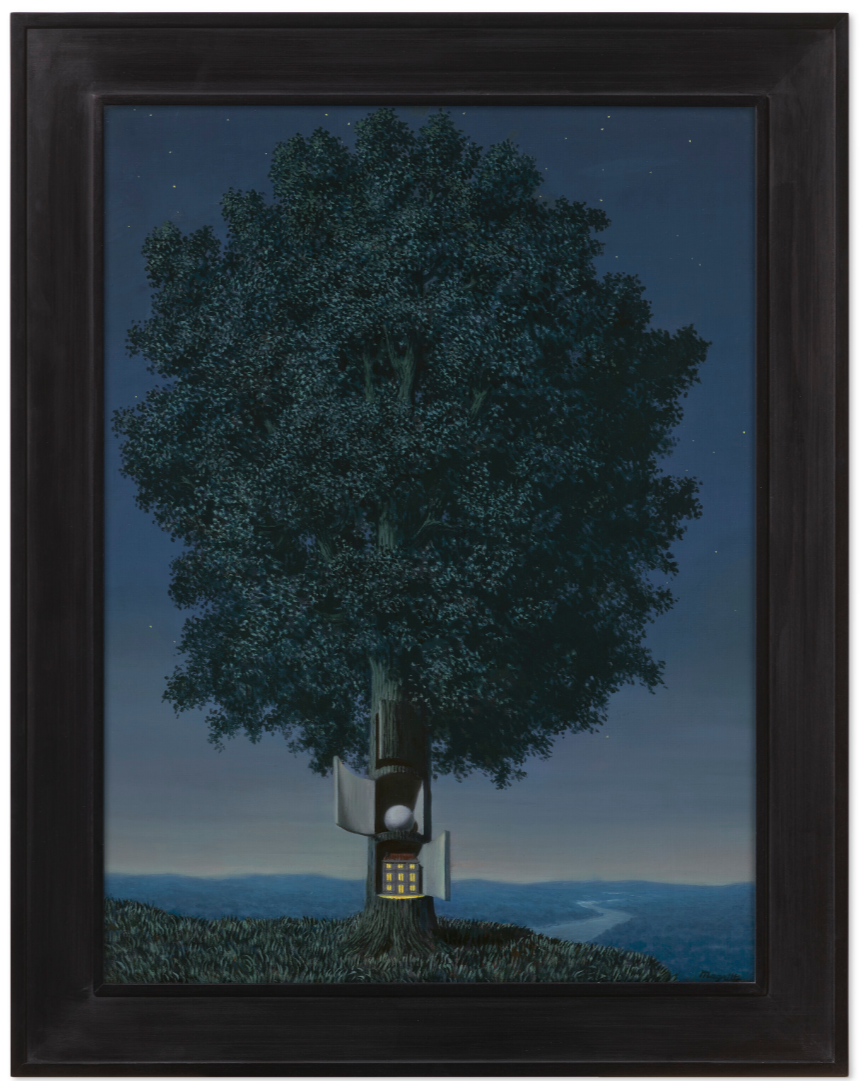
RENE MAGRITTE (1898-1967)
La voix du sang, 1948
Oil on canvas
79.1 x 58.6 cm (31 1/8 x 23 1/8 inches)
Signed ‘Magritte’ (lower right)
PART II: AUCTION RESULTS
2026 Auction Results
Les grâces naturelles, circa 1961
PROPERTY FROM A PRIVATE SWISS COLLECTION
Christie’s London: 5 March 2026
Estimated: GBP 6,500,000 – 9,500,000
GBP 8,520,000 / USD 11,381,870
RENÉ MAGRITTE (1898-1967), Les grâces naturelles | Christie’s
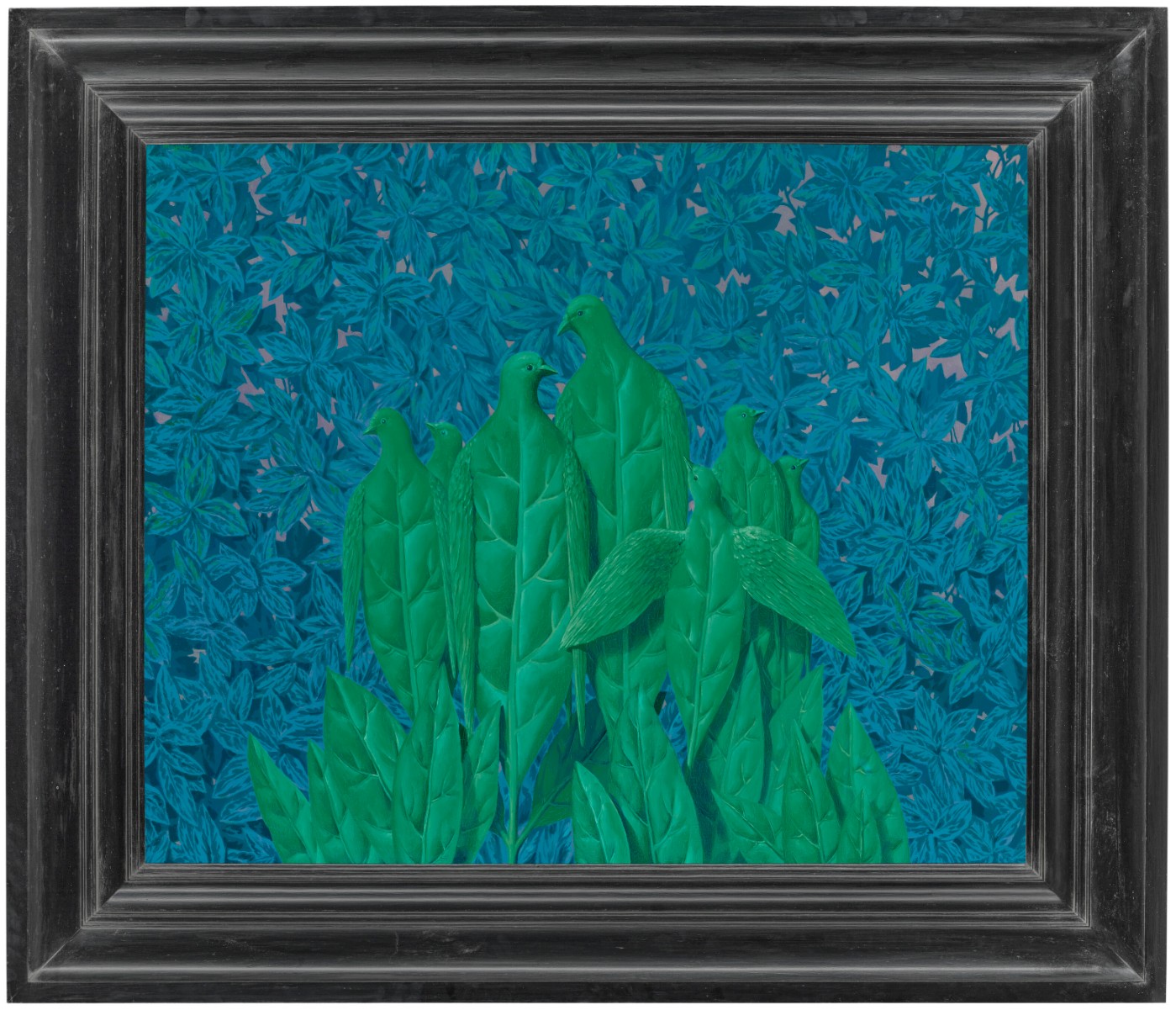
RENÉ MAGRITTE (1898-1967)
Les grâces naturelles, circa 1961
Oil on canvas
81.5 x 100.4 cm (32-1/8 x 39-1/2 inches)
Signed ‘Magritte’ (upper left)
Inscribed ‘”Les Grâces naturelles”’ (on the reverse)
Le Buste impassible, 1926
Sotheby’s London: 4 March 2026
Estimated: GBP 4,500,000 – 6,500,000
GBP 4,848,000 / USD 6,476,445
Le Buste impassible | Modern & Contemporary Evening Auction | 2026 | Sotheby’s
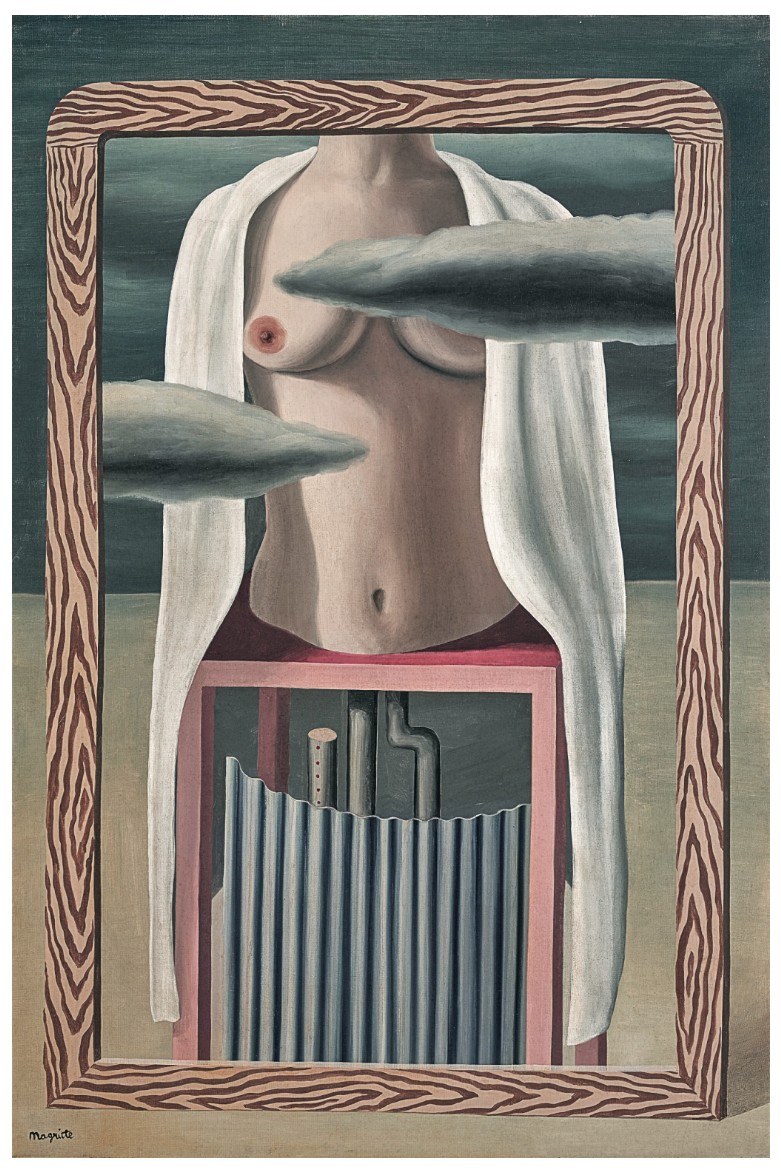
RENE MAGRITTE (1898 – 1967)
Le Buste impassible, 1926
Oil on canvas
120.5 x 80.3 cm (47-1/2 x 31-5/8 inches)
Signed Magritte (lower left)
Le lieu-dit (The spot on the map), 1955
The Roger and Josette Vanthournout Collection
Christie’s London: 5 March 2026
Estimated: GBP 2,000,000 – 3,000,000
GBP 3,466,000 / USD 4,630,230
RENÉ MAGRITTE (1898-1967), Le lieu-dit (The spot on the map) | Christie’s
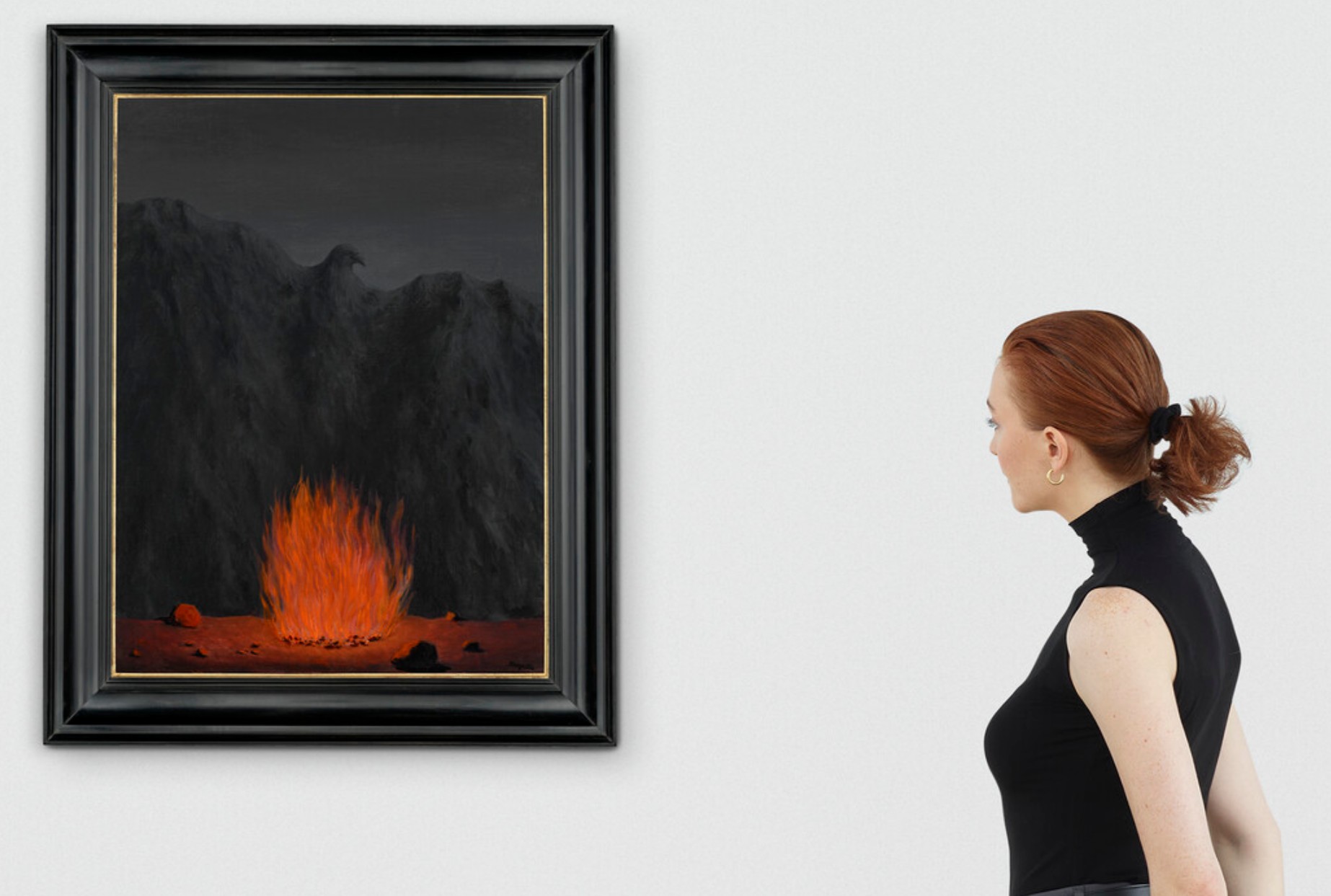
RENÉ MAGRITTE (1898-1967)
Le lieu-dit (The spot on the map), 1955
Oil on canvas
80.2 x 60.4 cm (31-5/8 x 23-3/4 inches)
Signed ‘Magritte’ (lower right)
Dated and inscribed ”’LE LIEU-DIT” 1955′ (on the reverse)
La jeunesse illustrée, 1937
Christie’s London: 5 March 2026
Estimated: GBP 1,800,000 – 2,500,000
GBP 2,307,000 / USD 3,081,920
RENÉ MAGRITTE (1896-1967), La jeunesse illustrée | Christie’s
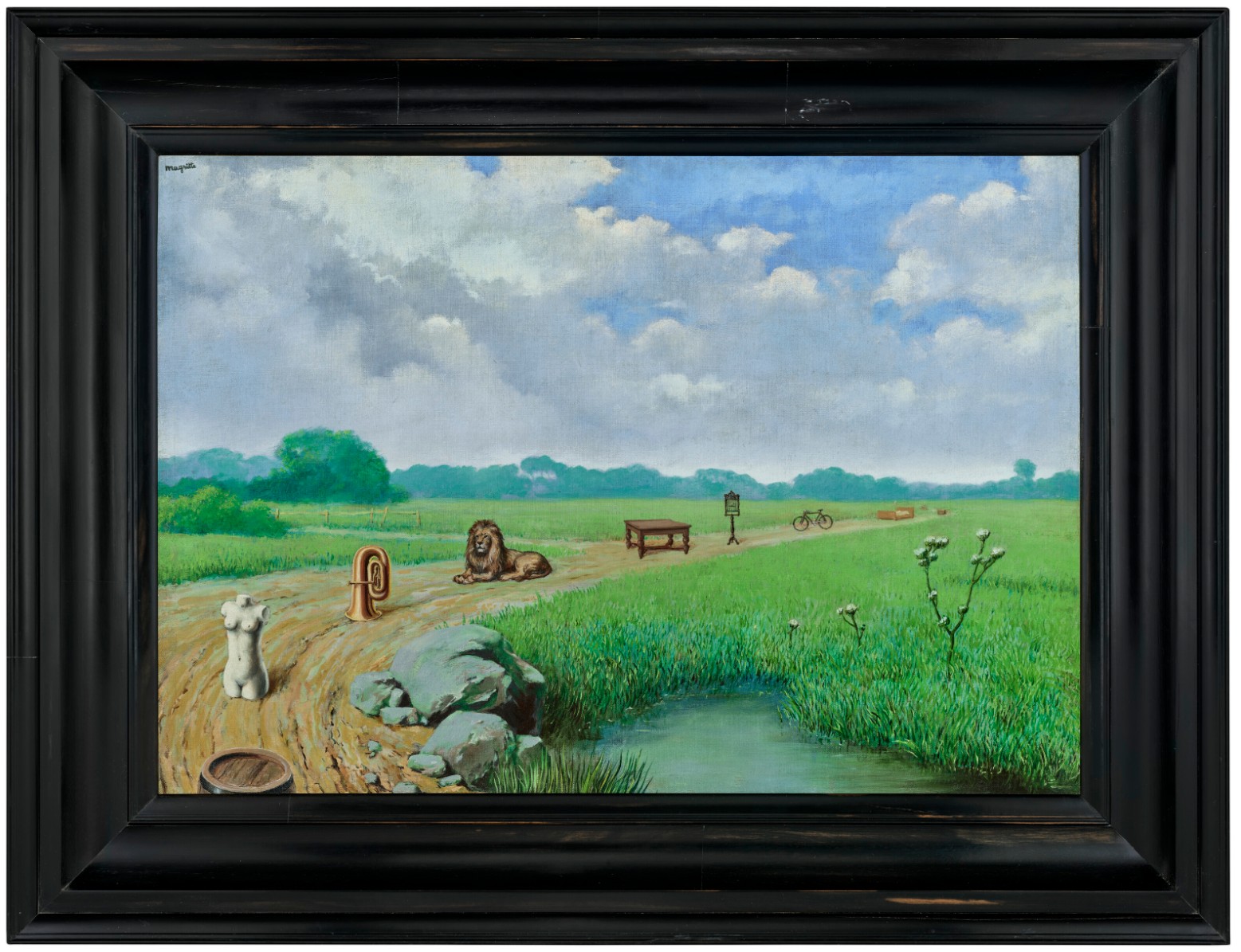
RENÉ MAGRITTE (1896-1967)
La jeunesse illustrée, 1937
Oil on canvas
48.2 x 69.2 cm (19 x 27-1/4 inches)
Signed ‘Magritte’ (upper left)
Inscribed ‘”La jeunesse illustrée”‘ (on the reverse)
Lots Withdrawn / Passed
Le choeur des sphinges, 1964
PROPERTY FROM A PRIVATE BELGIAN COLLECTION
Christie’s London: 5 March 2026
Estimated: GBP 5,000,000 – 8,000,000
WITHDRAWN
RENÉ MAGRITTE (1898-1967), Le choeur des sphinges | Christie’s
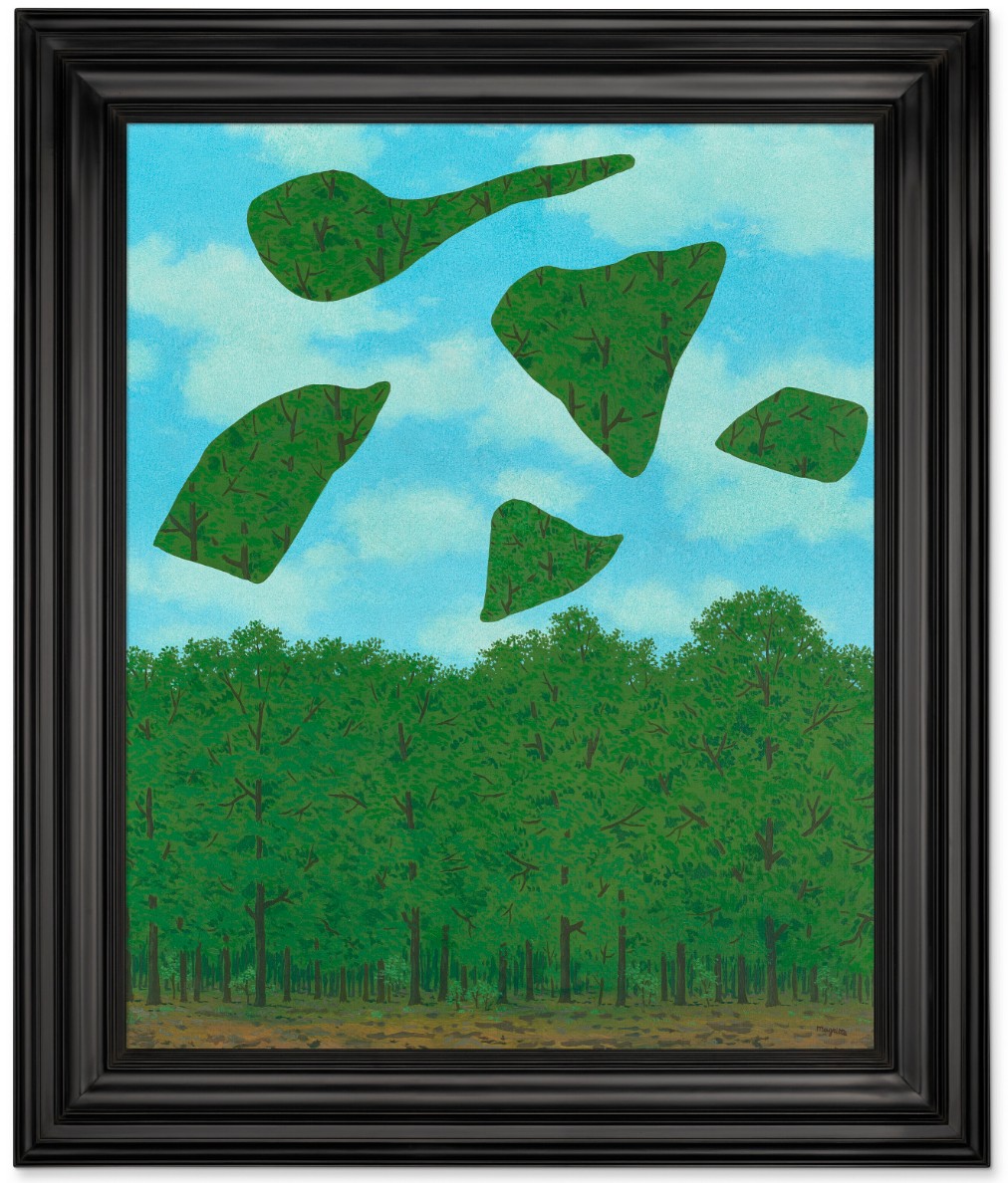
RENÉ MAGRITTE (1898-1967)
Le choeur des sphinges, 1964
Oil on canvas
100.4 x 81 cm (39-1/2 x 31-7/8 inches)
Signed ‘Magritte’ (lower right)
Inscribed ‘Le Chœur des Sphinges’ (on the reverse)
La plaine de l’air (The plain of the air), 1940
The Roger and Josette Vanthournout Collection
Christie’s London: 5 March 2026
Estimated: GBP 3,500,000 – 5,500,000
PASSED
RENÉ MAGRITTE (1898-1967), La plaine de l’air (The plain of the air) | Christie’s
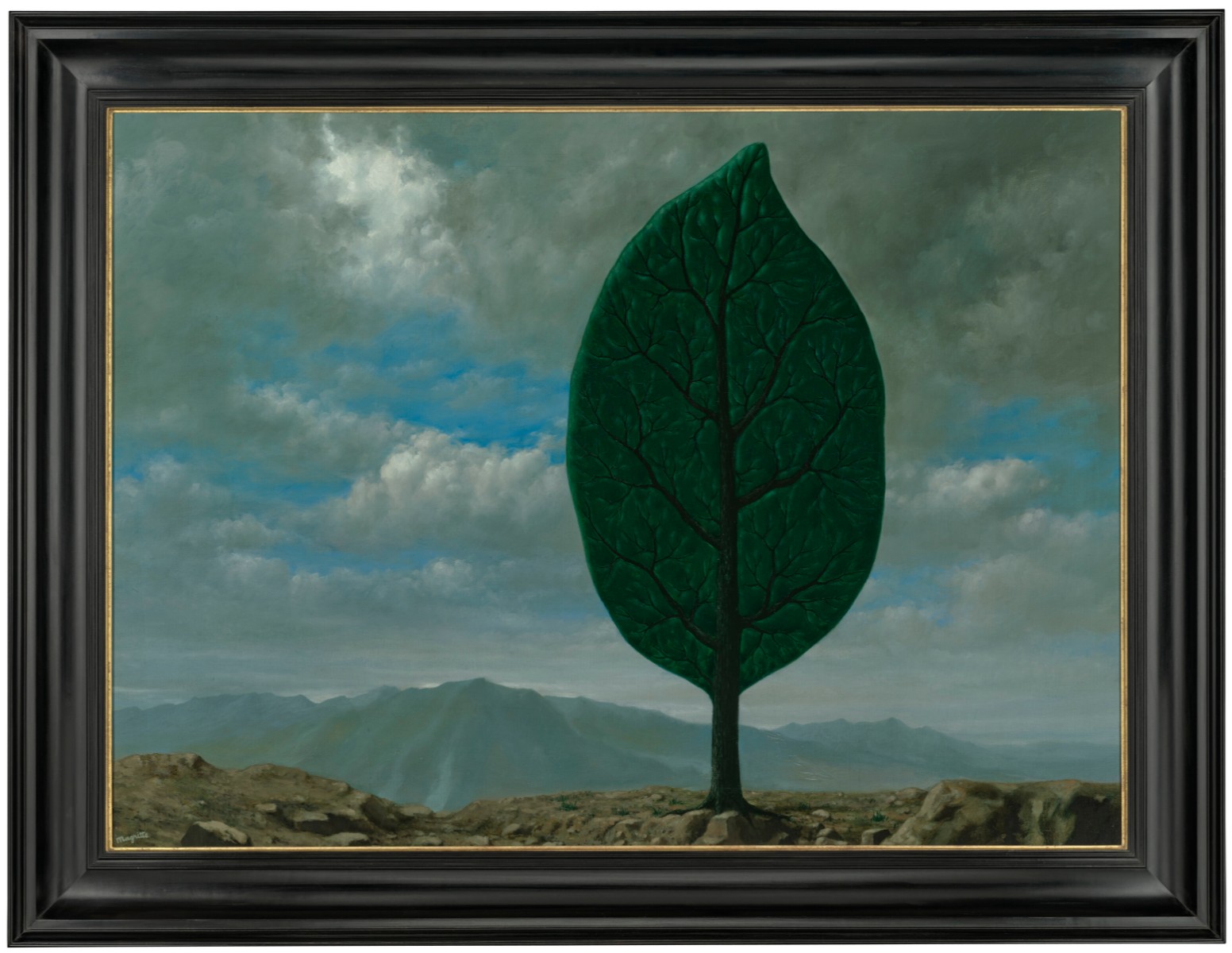
RENÉ MAGRITTE (1898-1967)
La plaine de l’air (The plain of the air), 1940
Oil on canvas
73.4 x 100.2 cm (28-7/8 x 39-1/2 inches)
Signed ‘Magritte’ (lower left)
2025 Auction Results
FOR PAINTINGS AND SCULPTURES ONLY
22 lots sold at auction in 2025 for a total turnover of USD 146,801,060. With one lot failing to sell, the sell-through rate is 96%. The highest price for 2025 has been achieved by L’empire des lumières, a painting dated 1949, from The Collection of Leonard & Louise Riggio, that sold at Christie’s in New-York, on 12 May 2025 for USD 34,910,000.
2025 Top 3 Lots
7 lots sold for more than USD 10 million, generating a cumulative turnover of USD 112,638,346, representing 76.7% of the total turnover for 2025.
XXXXXXXXXX
#1. L’empire des lumières, 1949
Leonard & Louise Riggio: Collected Works
Christie’s New-York: 12 May 2025
Estimates on Request
USD 34,910,000
READ MORE IN THE FOCUS SECTION
RENE MAGRITTE (1898-1967), L’empire des lumières | Christie’s
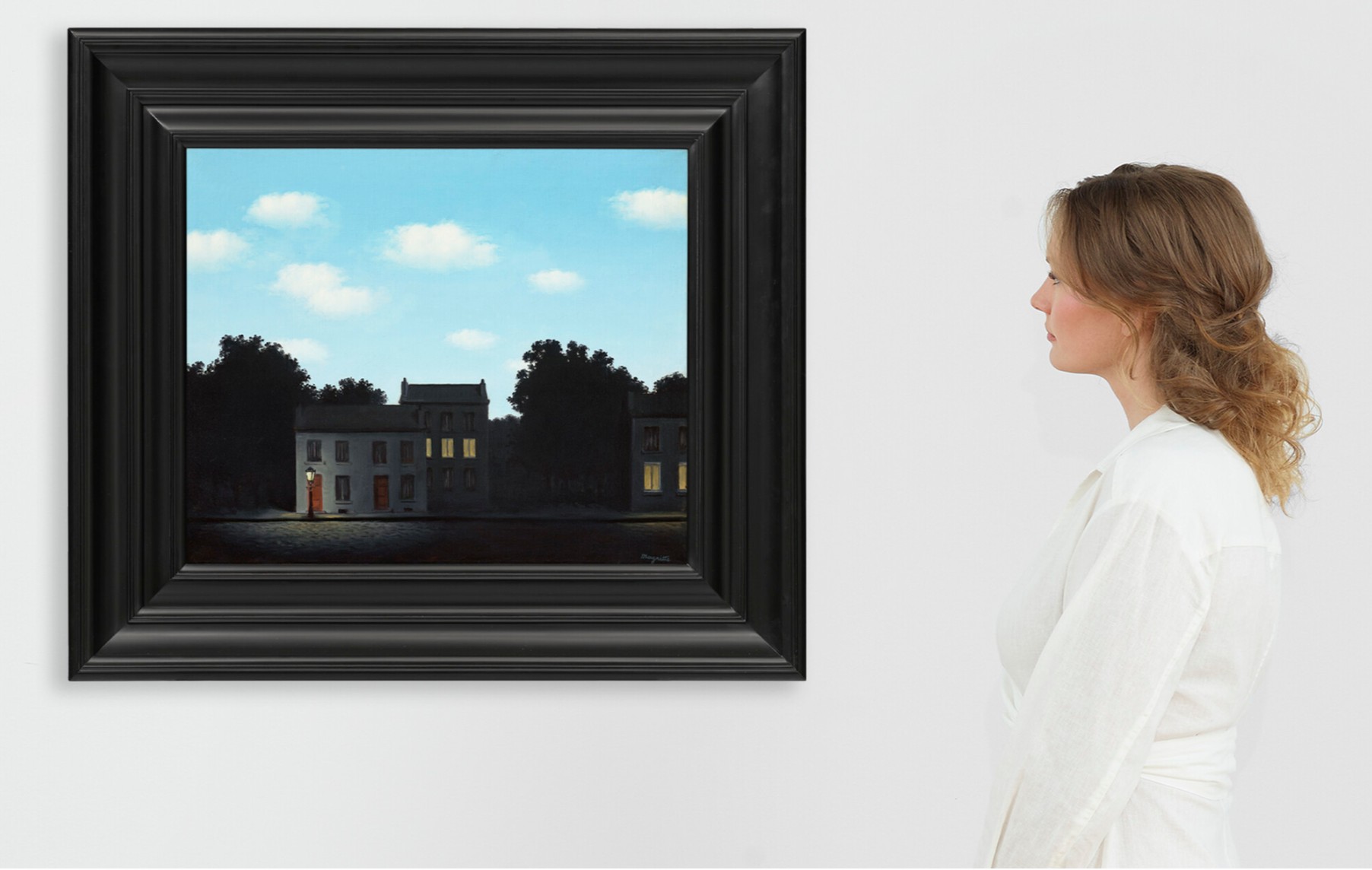
RENE MAGRITTE (1898-1967)
L’empire des lumières, 1949
Oil on canvas
48.2 x 58.7 cm (19 x 23 1/8 inches)
Signed ‘Magritte’ (lower right)
Sated and titled ‘”L’EMPIRE des LUMIÈRES” 1949’ (on the reverse)
#2. Les droits de l’homme, 1947-1948
Leonard & Louise Riggio: Collected Works
Christie’s New-York: 12 May 2025
Estimated: USD 15,000,000 – 20,000,000
USD 15,935,000
READ MORE IN THE FOCUS SECTION
RENE MAGRITTE (1898-1967), Les droits de l’homme | Christie’s
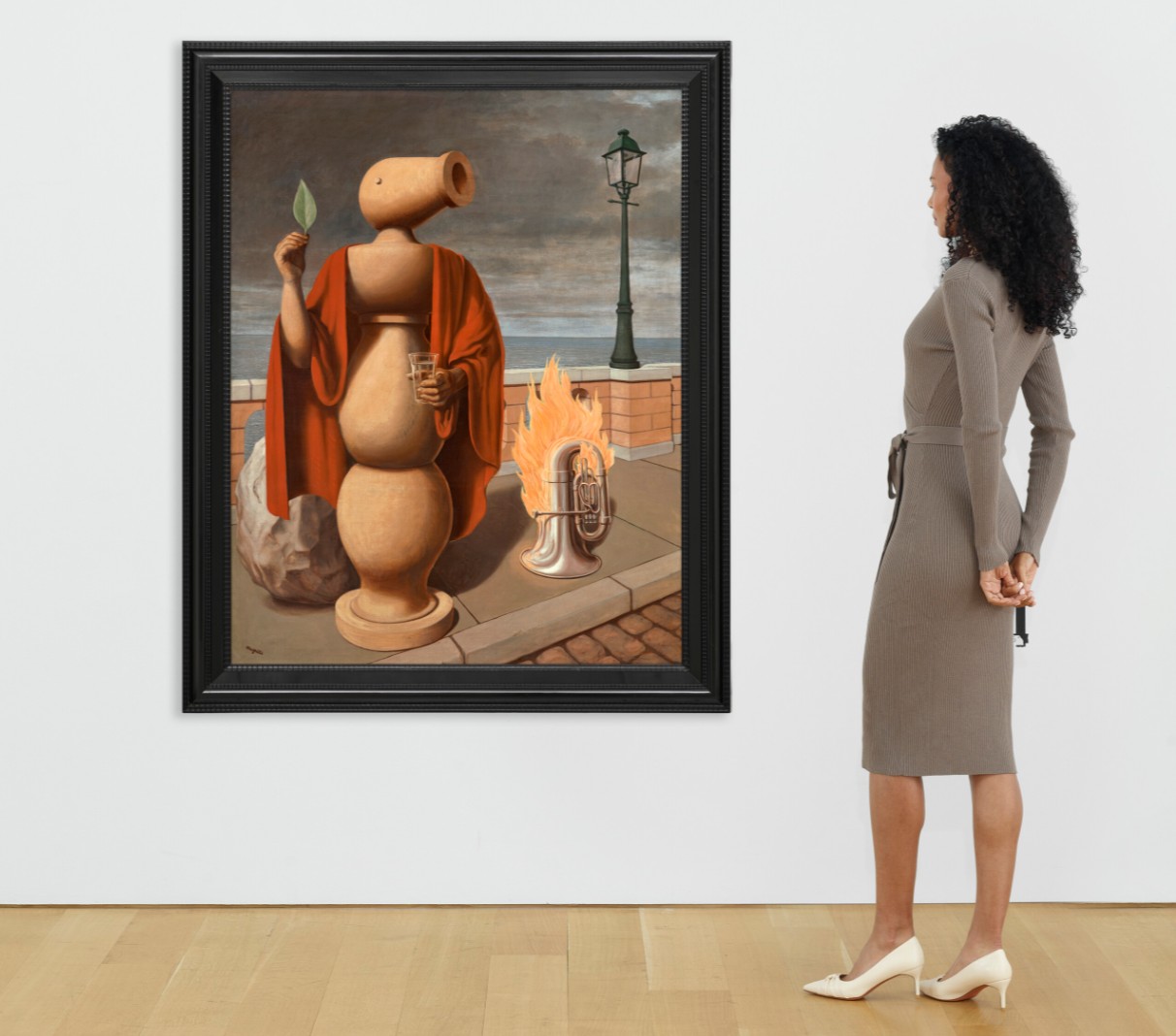
RENE MAGRITTE (1898-1967)
Les droits de l’homme, 1947-1948
Oil on canvas
144.8 x 114.6 cm (57 x 45 1/8 inches)
Signed ‘Magritte’ (lower left)
Dated and titled ‘”LES DROITS DE L’HOMME” 1947-1948’ (on the reverse)
#3. La Statue volante, 1958
Pauline Karpidas: The London Collection Evening Auction
Sotheby’s London: 17 September 2025
Estimated: GBP 9,000,000 – 12,000,000
GBP 10,120,000 / USD 13,825,535
La Statue volante | Pauline Karpidas: The London Collection Evening Auction | 2025 | Sotheby’s
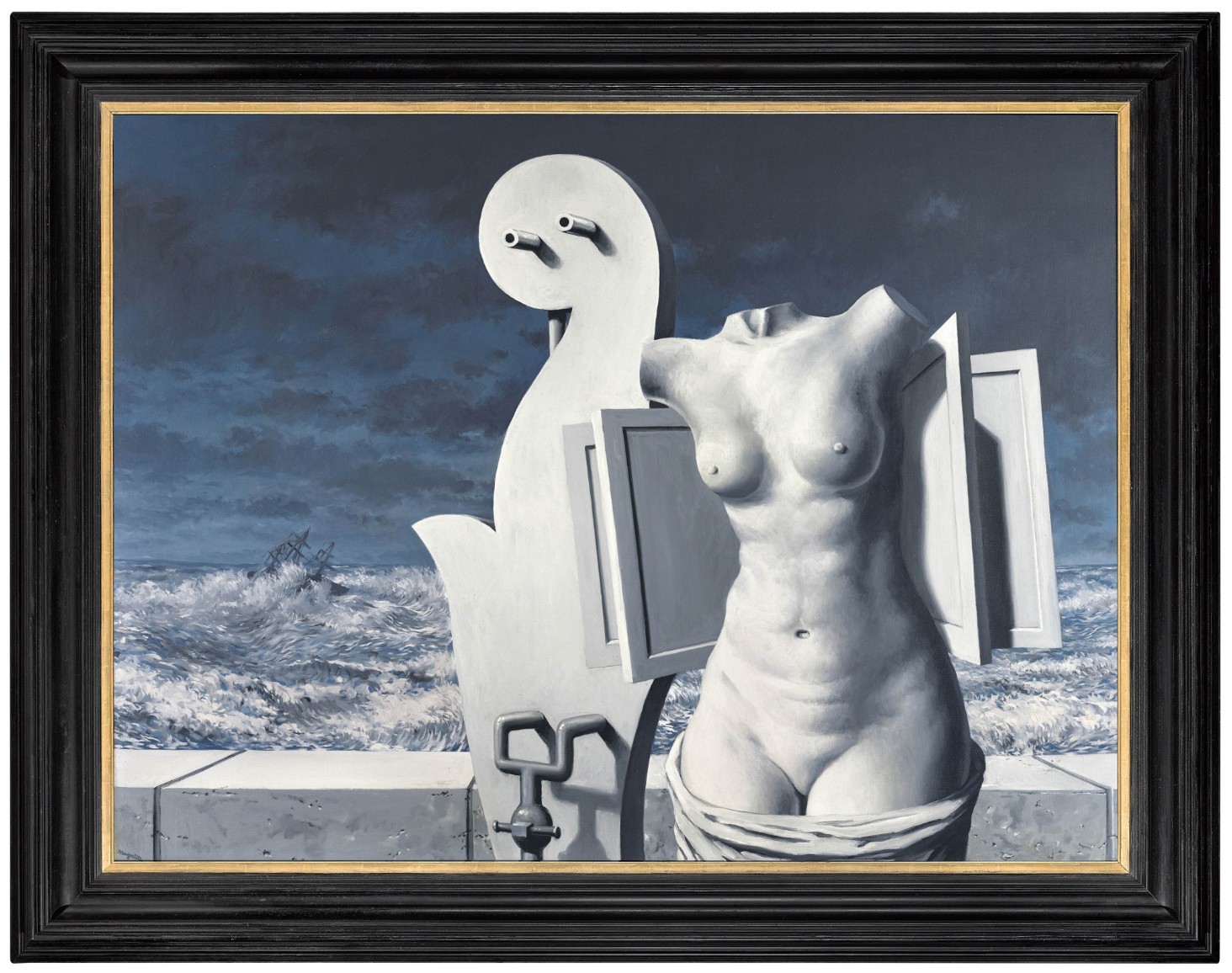
RENE MAGRITTE (1898 – 1967)
La Statue volante, 1958
Oil on canvas
96.7 x 129.7 cm (38 1/8 x 51 1/8 inches)
Signed Magritte (lower left)
Signed again and titled (on the reverse)
#4. La reconnaissance infinie, 1933
Christie’s London: 5 March 2025
Estimated: GBP 6,000,000 – 9,000,000
GBP 10,315,000 / USD 13,191,635
RENÉ MAGRITTE (1896-1967), La reconnaissance infinie | Christie’s
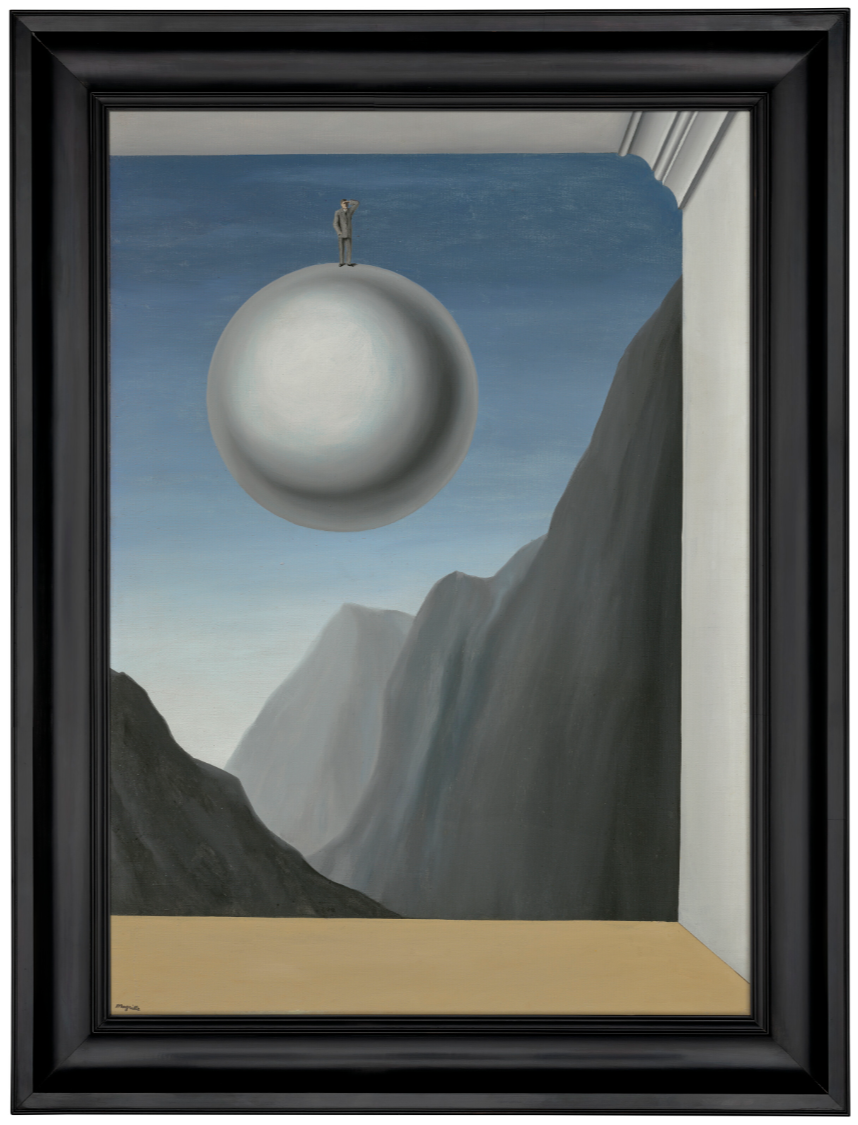
RENÉ MAGRITTE (1896-1967)
La reconnaissance infinie, 1933
Oil on canvas
100 x 70.2 cm (39 3/8 x 27 5/8 inches)
Signed ‘Magritte’ (lower left)
Signed, inscribed and dated
‘”LA RECONNAISSANCE INFINIE”, MAGRITTE 1933’
(on the stretcher)
#5. La magie noire, 1934
PROPERTY FROM AN IMPORTANT PRIVATE COLLECTION, BELGIUM
Sotheby’s Paris: 24 October 2025
Estimated: EUR 5,000,000 – 7,000,000
EUR 10,652,500 / USD 12,396,175
La magie noire | Surrealism and Its Legacy | 2025 | Sotheby’s
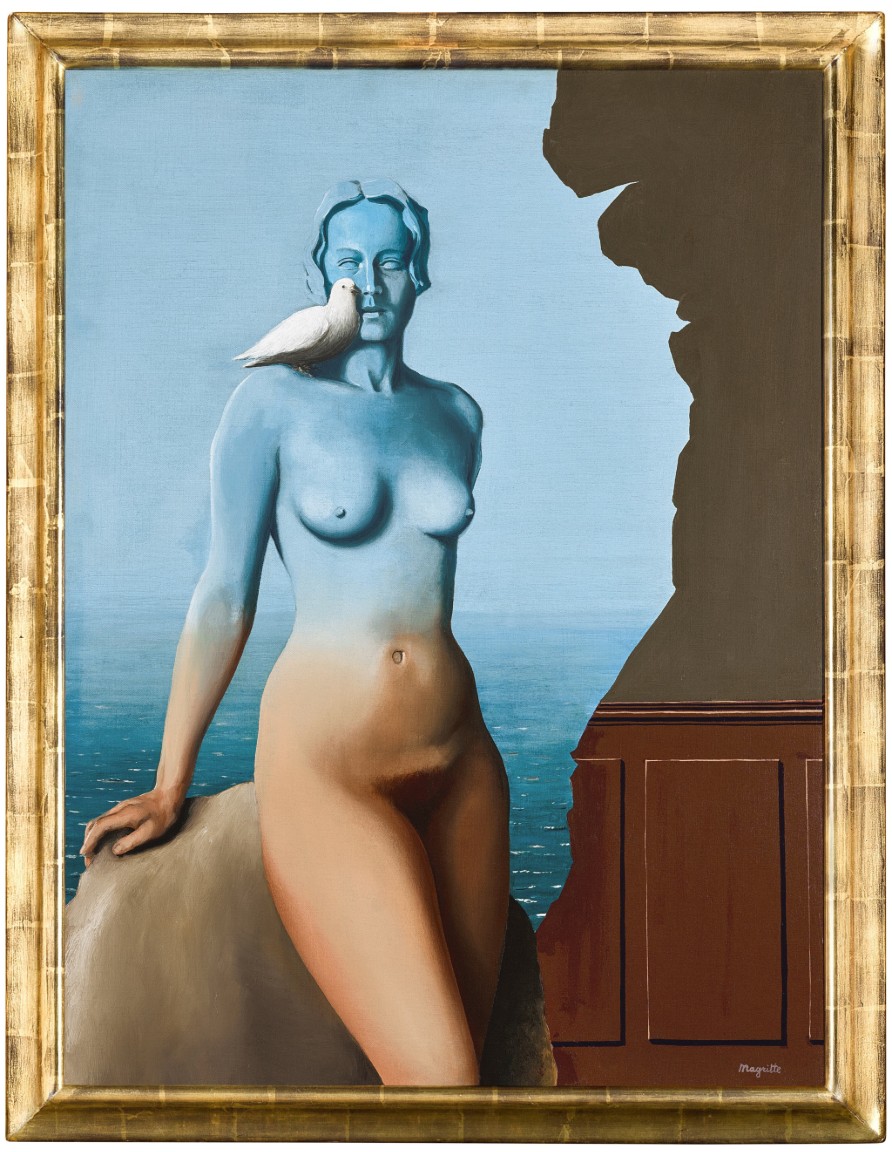
RENE MAGRITTE (1898 – 1967)
La magie noire, 1934
Oil on canvas
73×54 cm (28 3/4 x 21 1/4 inches)
Signed Magritte (lower right)
Titled LA MAGIE NOIRE (on the stretcher)
#6. Le Jockey perdu, 1942
The Matthew and Carolyn Bucksbaum Collection
Sotheby’s New-York: 20 November 2025
Estimated: USD 9,000,000 – 12,000,000
USD 12,340,000
Le Jockey perdu | Modern Evening Auction | 2025 | Sotheby’s
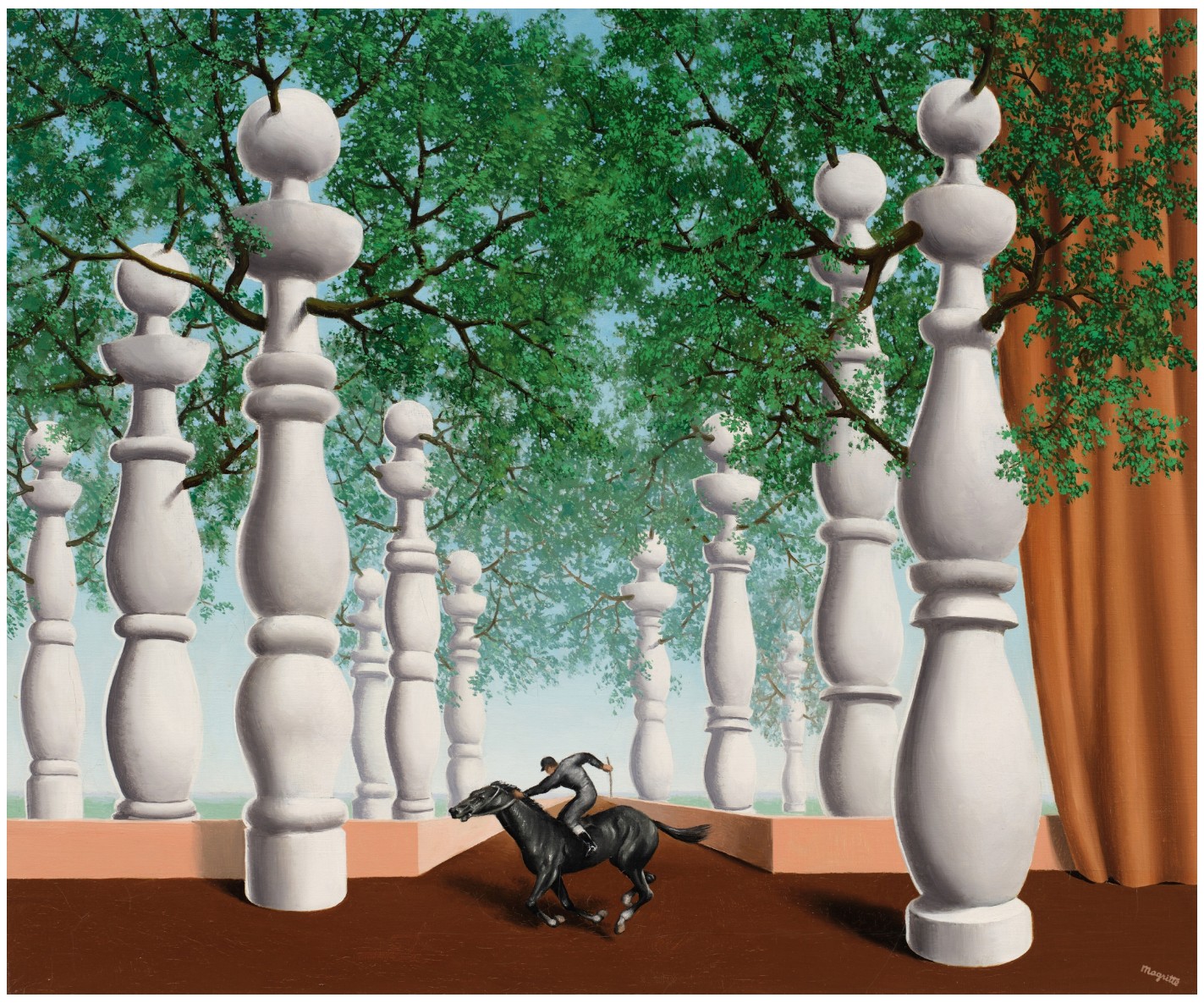
RENE MAGRITTE (1898 – 1967)
Le Jockey perdu, 1942
Oil on canvas
60.3 x 72.4 cm (23 3/4 x 28 1/2 inches)
Signed Magritte (lower right)
#7. La Traversée difficile, 1963
Sotheby’s New-York: 13 May 2025
Estimated: USD 10,000,000 – 15,000,000
USD 10,040,000
La Traversée difficile | Modern Evening Auction | 2025 | Sotheby’s
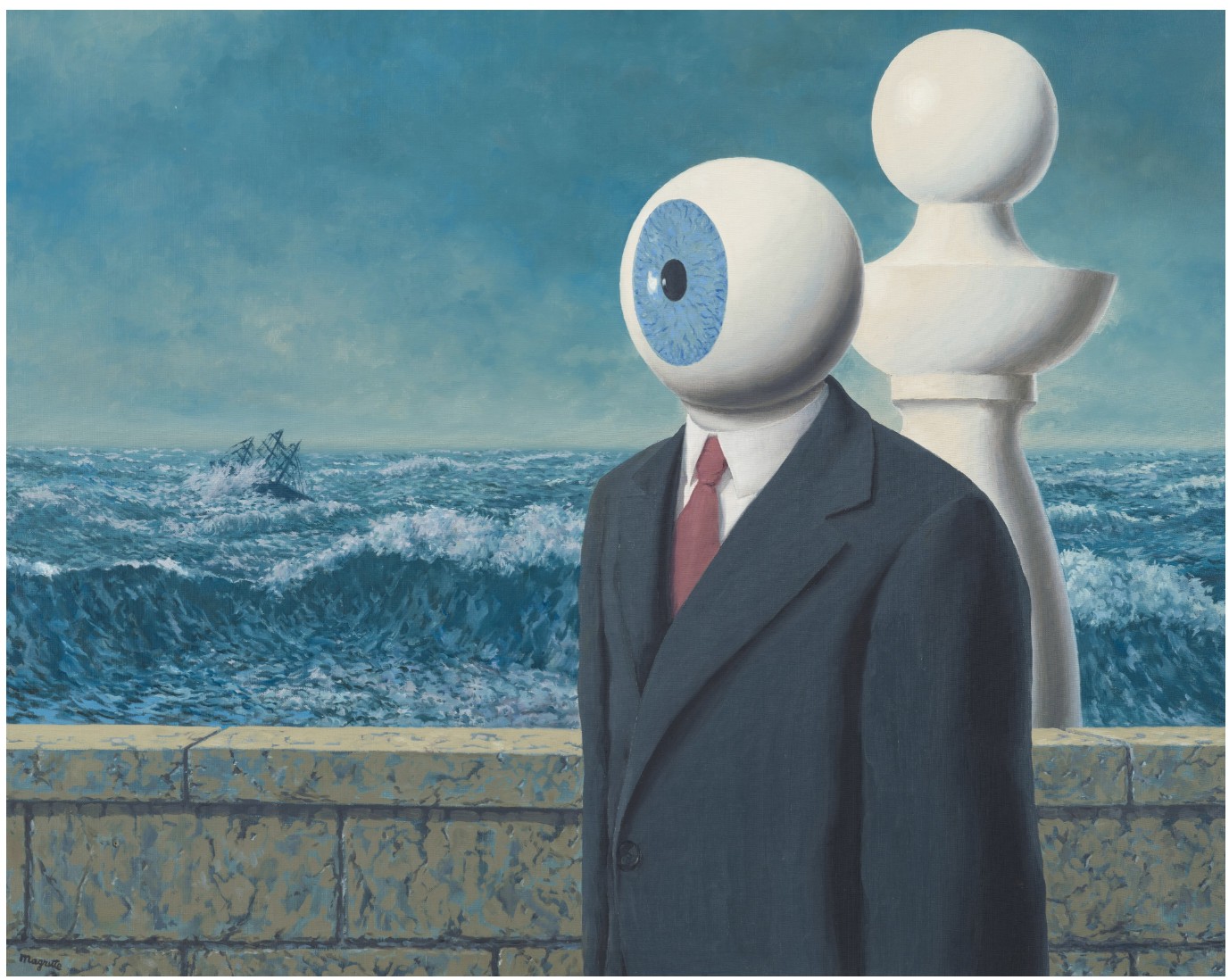
RENE MAGRITTE (1898 – 1967)
La Traversée difficile, 1963
Oil on canvas
81.3 x 100.2 cm (32 x 39 1/2 inches)
Signed Magritte (lower left)
Titled (on the reverse)
#8. La lumière du pôle, 1926-1927
Christie’s London: 5 March 2025
Estimated: GBP 4,500,000 – 6,500,000
GBP 4,880,000 / USD 6,240,930
RENÉ MAGRITTE (1898-1967), La lumière du pôle | Christie’s
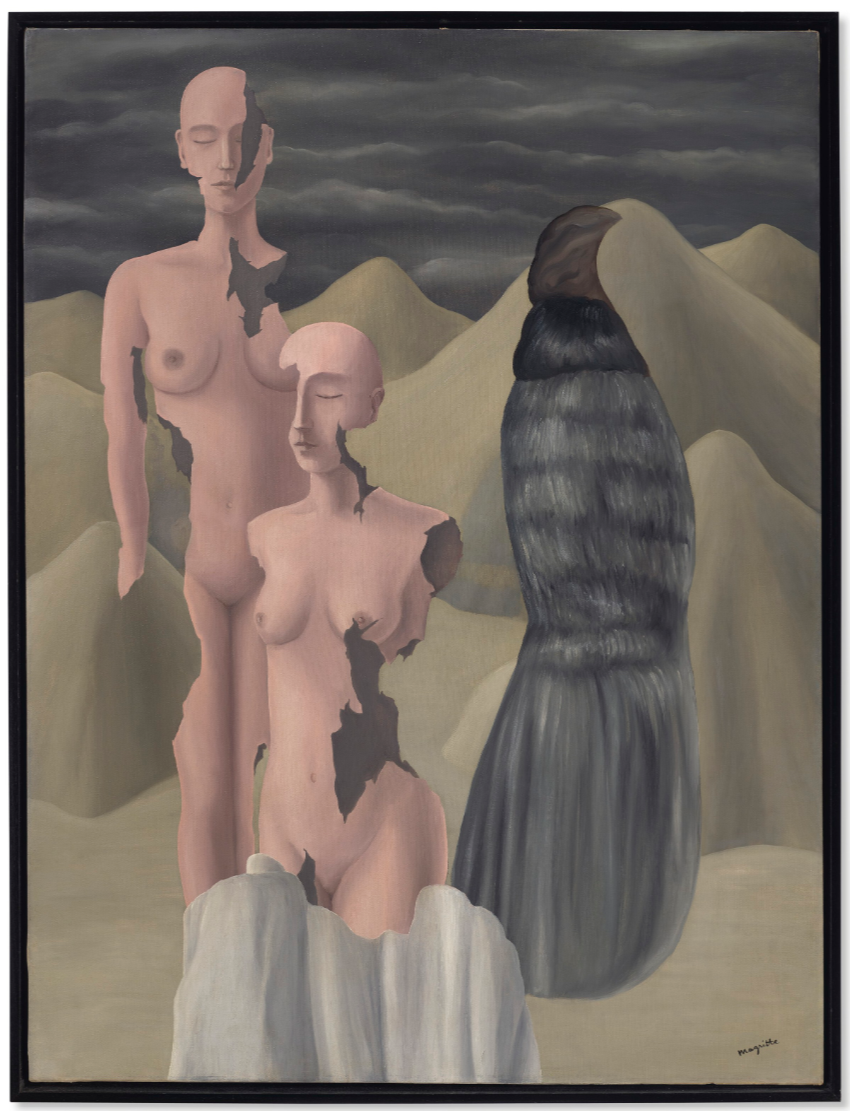
RENÉ MAGRITTE (1898-1967)
La lumière du pôle, 1926-1927
Oil on canvas
139 x 104.8 cm (54 3/4 x 41 1/4 inches)
Signed ‘Magritte’ (lower right)
Inscribed ‘”LA LUMIÈRE DU PÔLE”’ (on the stretcher)
#9. Rêverie de Monsieur James, 1943
Christie’s Hong-Kong: 28 March 2025
Estimated: HKD 42,000,000 – 55,000,000
HKD 47,565,000 / USD 6,113,753
RENÉ MAGRITTE (1898-1967)
Rêverie de Monsieur James, 1943
Oil on canvas
54.3 x 73.7 cm (21 3/8 x 29 inches)
Signed ‘Magritte’ (lower right)
Signed again, titled, dated and inscribed
‘”RÊVERIE DE MONSIEUR JAMES” MAGRITTE 1943 20P.’
(on the reverse)
#10. La Représentation, 1962
Exquisite Corpus Evening Auction
Sotheby’s New-York: 20 November 2025
Estimated: USD 4,000,000 – 6,000,000
USD 3,710,000
La Représentation | Exquisite Corpus Evening Auction | 2025 | Sotheby’s
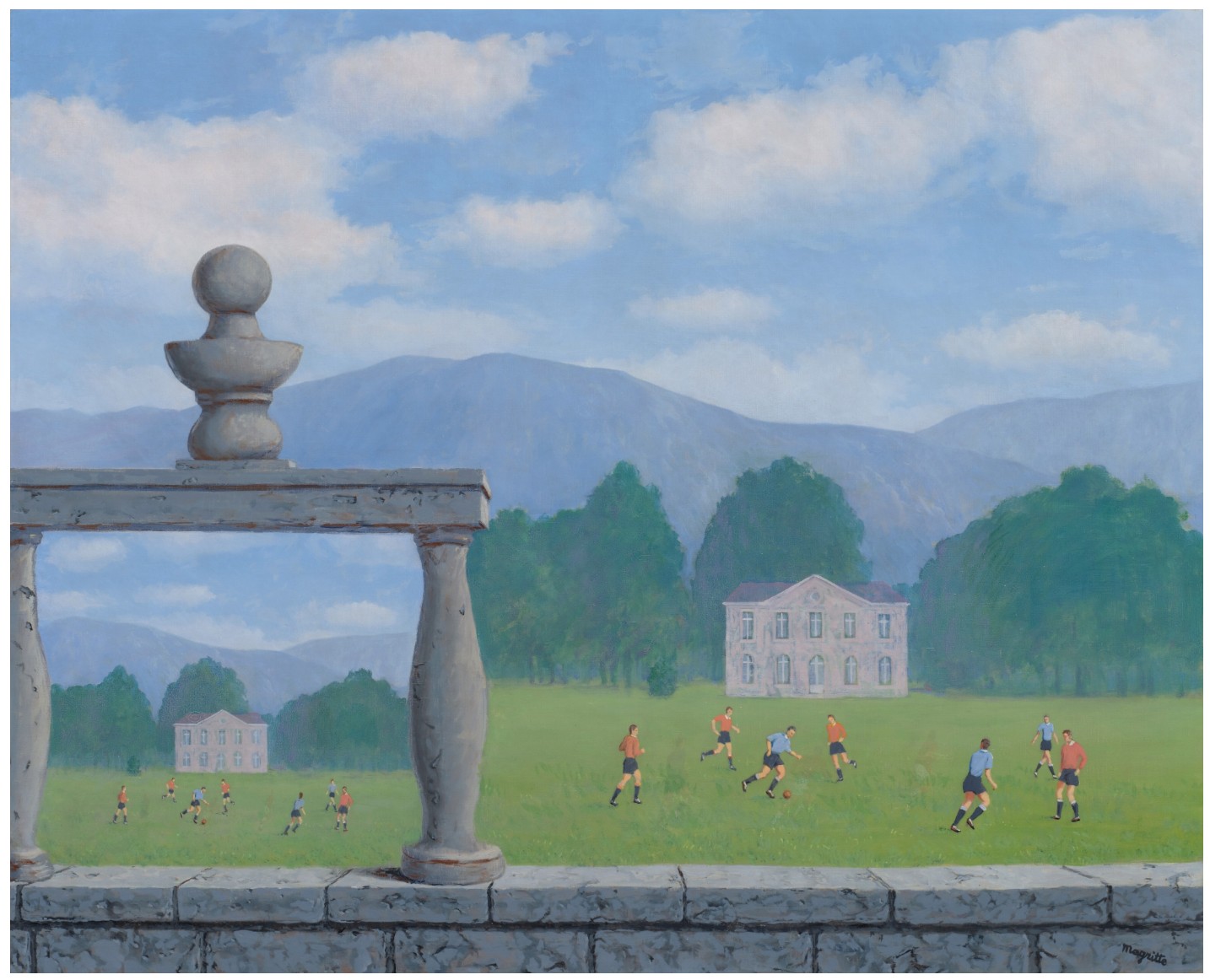
RENE MAGRITTE (1898 – 1967)
La Représentation, 1962
Oil on canvas
81×100 cm (31 7/8 x 39 3/8 inches)
Signed Magritte (lower right)
Signed again, titled and dated 1962 (on the reverse)
#11. La femme du maçon, 1958
Christie’s London: 5 March 2025
Estimated: GBP 1,600,000 – 2,400,000
GBP 1,976,000 / USD 2,527,065
RENÉ MAGRITTE (1898 – 1967), La femme du maçon | Christie’s
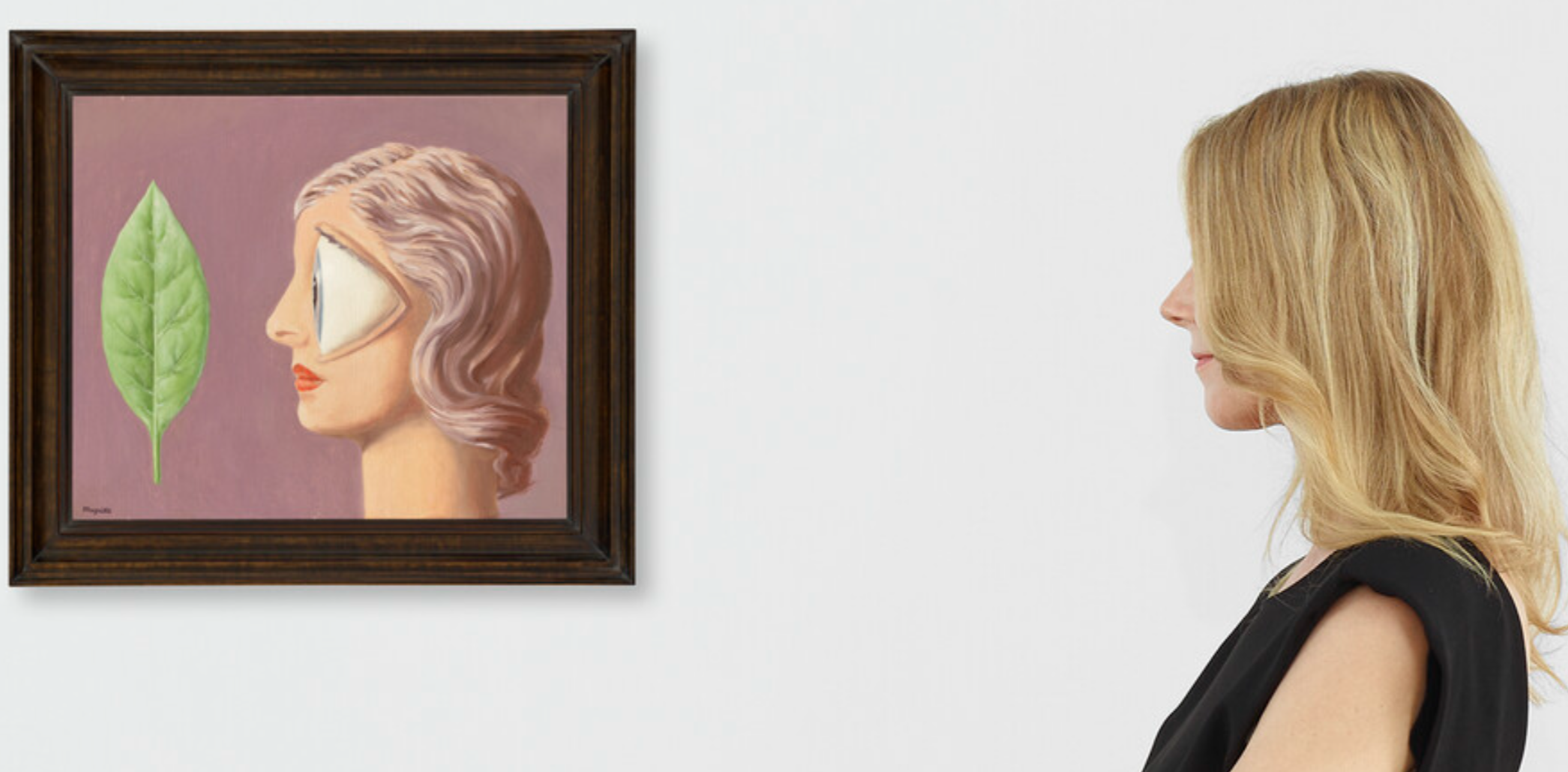
RENÉ MAGRITTE (1898 – 1967)
La femme du maçon, 1958
Oil on canvas
35.1 x 41.4 cm (13 3/4 x 16 3/8 inches)
Signed ‘Magritte’ (lower left)
Inscribed ‘LA FEMME DU MAÇON’ (on the reverse)
#12. Le Symbole dissimulé, 1928
Exquisite Corpus Evening Auction
Sotheby’s New-York: 20 November 2025
Estimated: USD 1,200,000 – 1,800,000
USD 2,490,000
Le Symbole dissimulé | Exquisite Corpus Evening Auction | 2025 | Sotheby’s
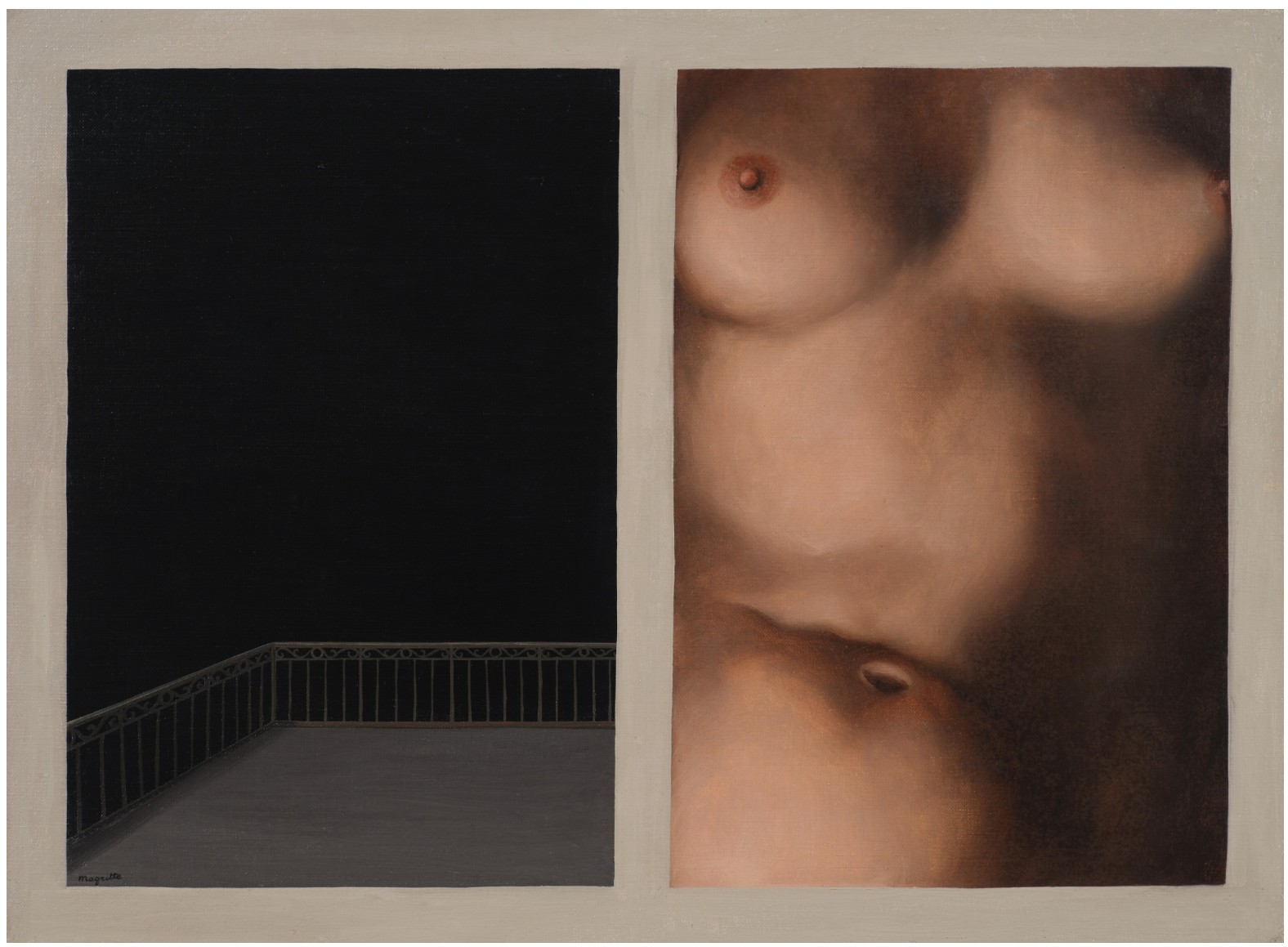
RENE MAGRITTE (1898 – 1967)
Le Symbole dissimulé, 1928
Oil on canvas
54.3 x 73 cm (21 3/8 x 28 3/4 inches)
Signed Magritte (lower left)
Titled (on the reverse)
#13. Ceci est un morceau de fromage, 1936
PROPERTY FROM AN IMPORTANT PRIVATE COLLECTION, BELGIUM
Sotheby’s Paris: 24 October 2025
Estimated: EUR 1,000,000 – 1,500,000
EUR 1,872,500 / USD 2,179,005
Ceci est un morceau de fromage | Surrealism and Its Legacy | 2025 | Sotheby’s
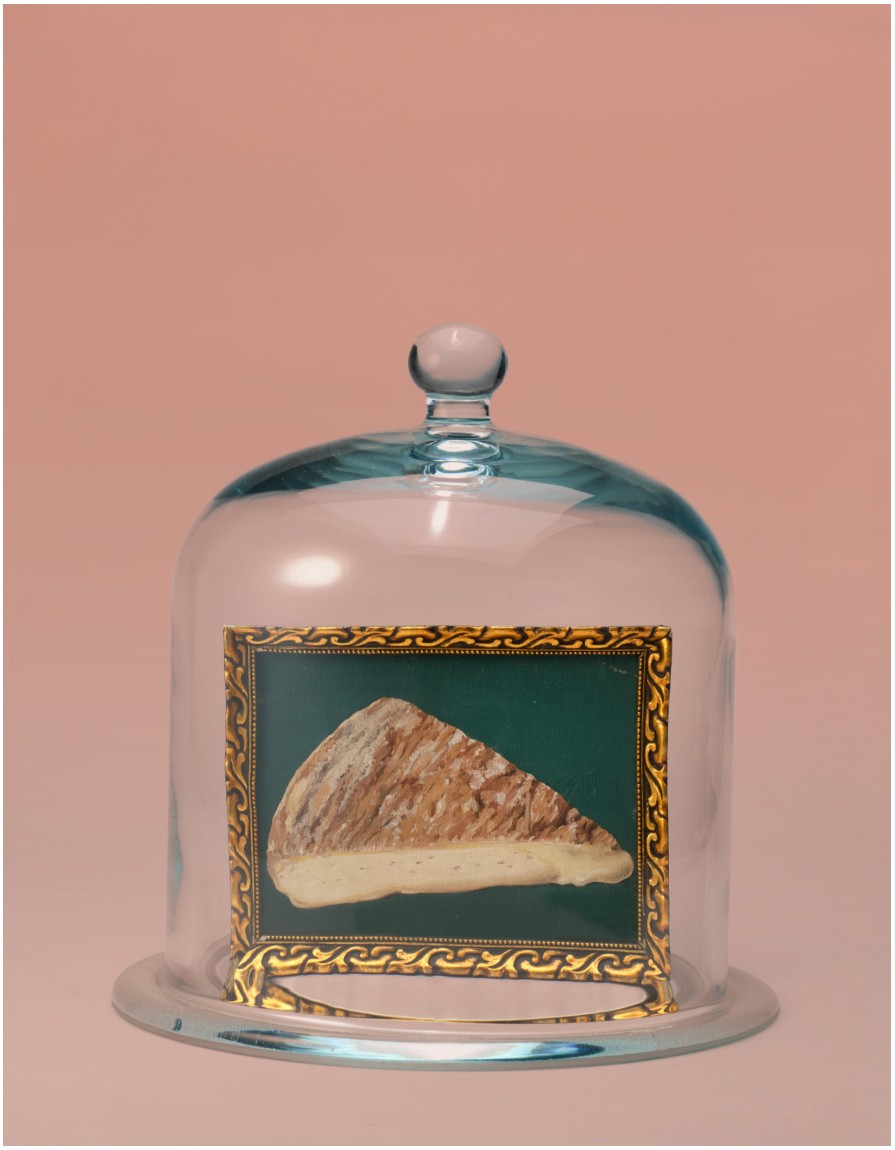
RENE MAGRITTE (1898 – 1967)
Ceci est un morceau de fromage, 1936
Oil on canvas board in the artist’s gilded wooden frame
14×18 cm (5 1/2 x 7 1/8 inches)
Signed Magritte, dated 1936, and titled “Ceci est un morceau de fromage” twice (on the reverse)
#14. La Révélation du présent, 1936
Exquisite Corpus Evening Auction
Sotheby’s New-York: 20 November 2025
Estimated: USD 2,000,000 – 3,000,000
USD 2,002,000
La Révélation du présent | Exquisite Corpus Evening Auction | 2025 | Sotheby’s
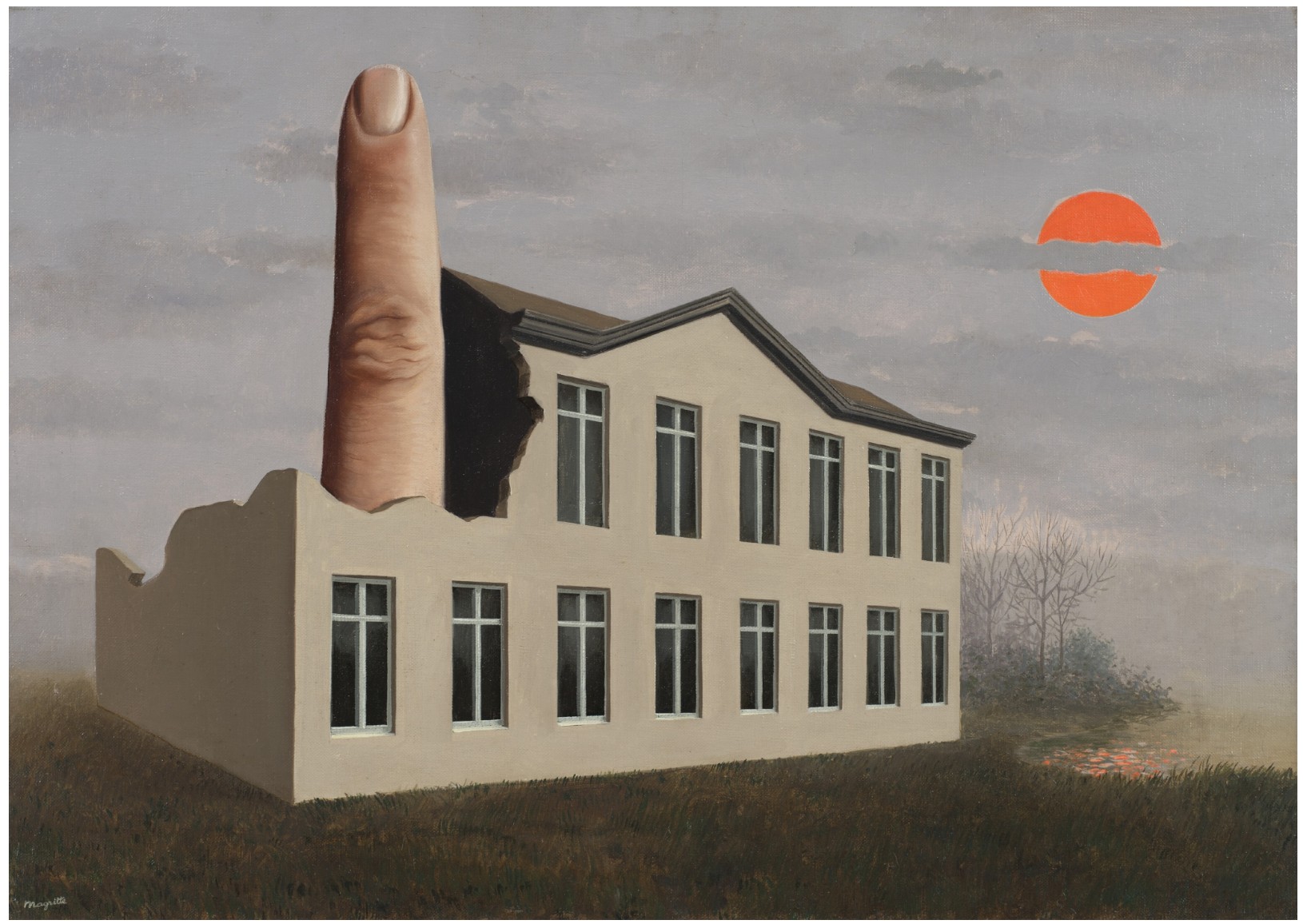
RENE MAGRITTE (1898 – 1967)
La Révélation du présent, 1936
Oil on canvas
46.4 x 65.5 cm (18 1/4 x 25 3/4 inches)
Signed Magritte (lower left)
Signed again, titled and dated 1936 (on the reverse)
#15. Madame Récamier de David, 1967
Pauline Karpidas: The London Collection Evening Auction
Sotheby’s London: 17 September 2025
Estimated: GBP 500,000 – 700,000
GBP 1,138,000 / USD 1,554,690
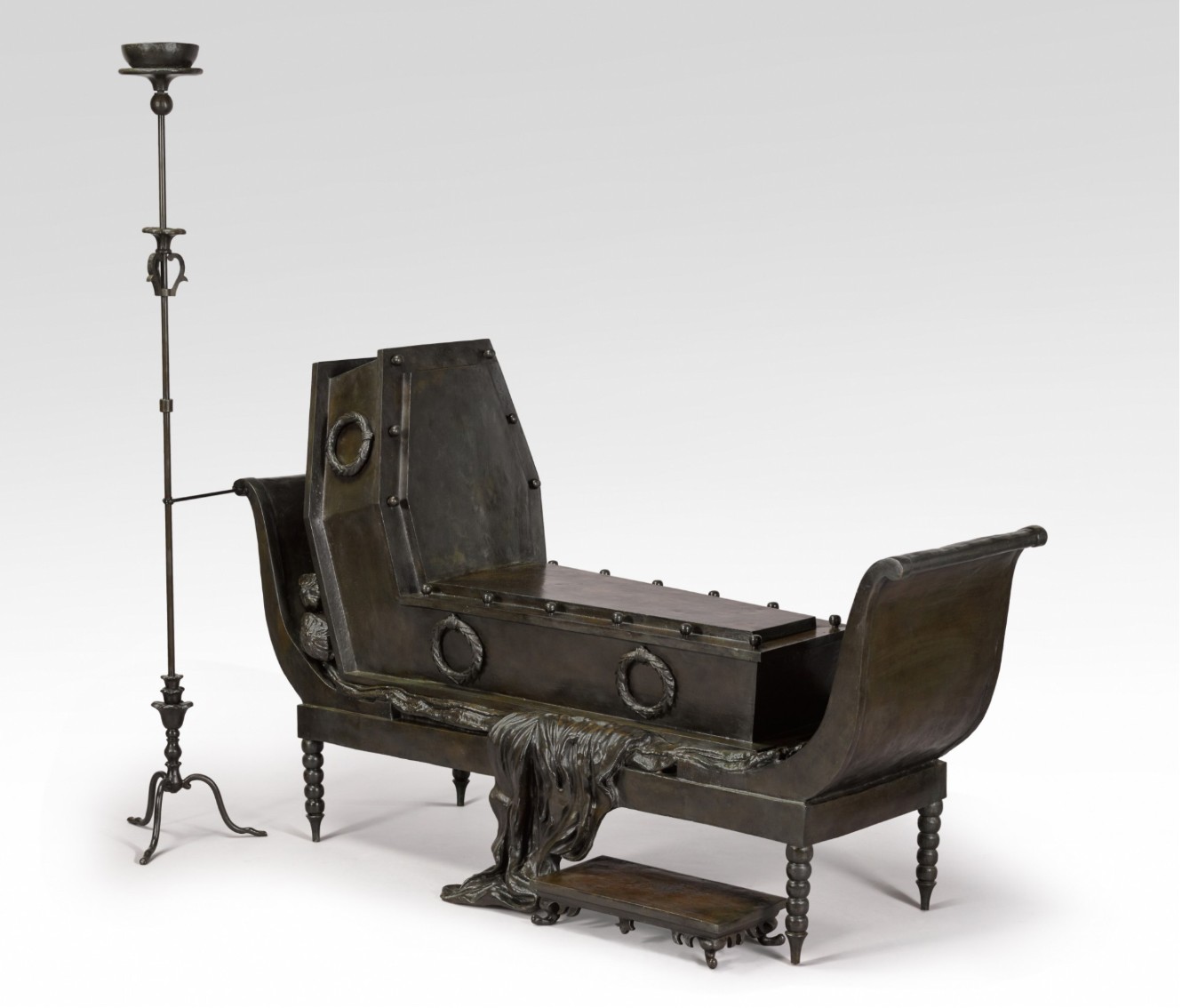
RENE MAGRITTE (1898 – 1967)
Madame Récamier de David, 1967
Bronze
Lamp: 184 cm (72 1/2 inches)
Chair: 192 cm (75 5/8 inches)
Pedestal: 48.8 cm (19 1/4 inches)
Inscribed Magritte, numbered 0/5, dated 1967
With the foundry mark Fonderia Artistica, Gi. Bi. Esse Verona-Italy
Conceived in 1967
This example cast by Fonderia Artistica Bonvicini, Verona in 1967 in an edition of 8
#16. Le Ciel passe dans l’air, 1927
Christie’s Paris: 23 October 2025
Estimated: EUR 1,000,000 – 2,000,000
EUR 1,206,500 / USD 1,401,120
René Magritte (1898-1967), Le Ciel passe dans l’air | Christie’s
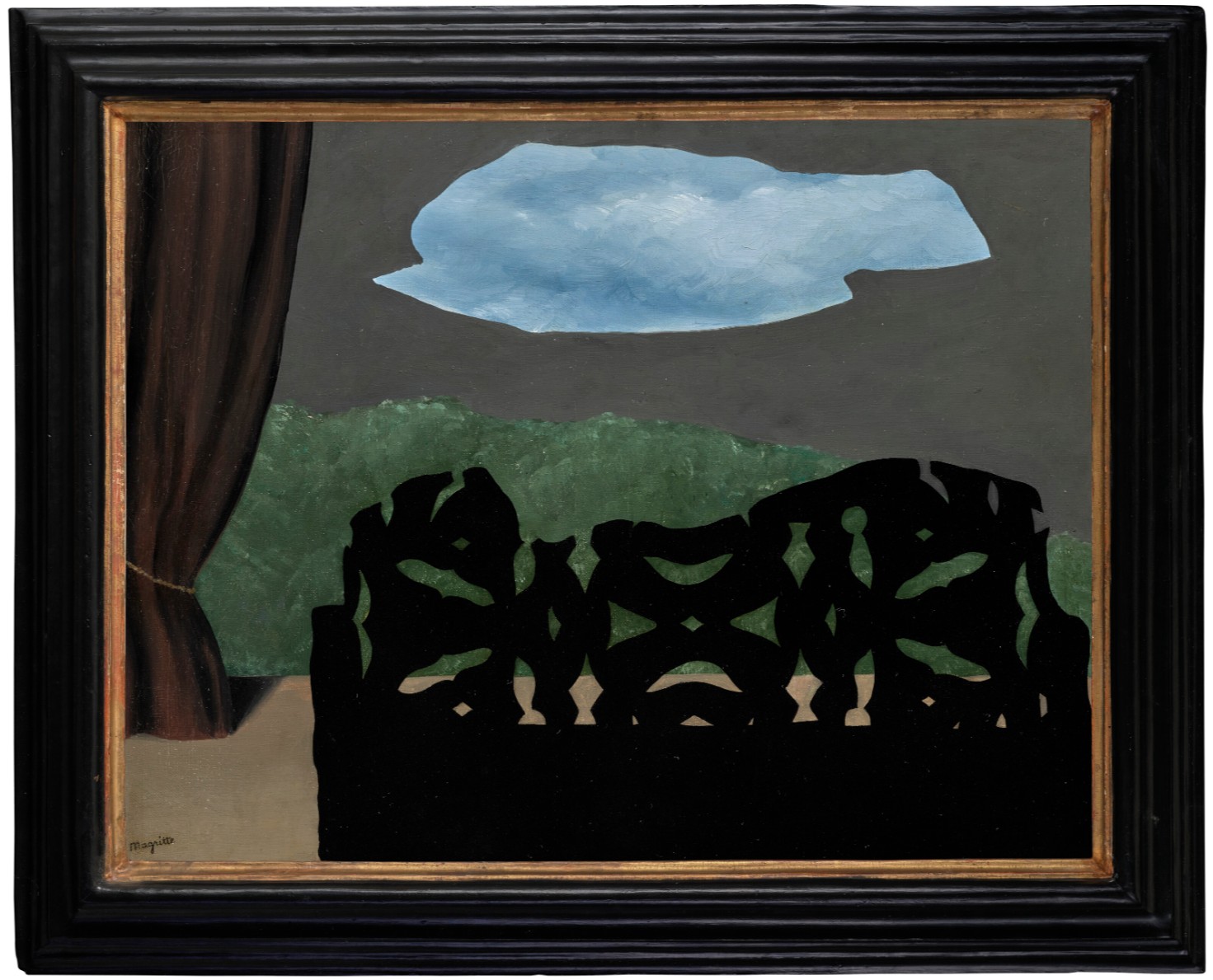
RENE MAGRITTE (1898 – 1967)
Le Ciel passe dans l’air, 1927
Oil on canvas
50.2 x 65 cm (19 3/4 x 25 5/8 inches)
Signed ‘Magritte’ (lower left)
#17. L’Idée fixe, circa 1928-29
Exquisite Corpus Evening Auction
Sotheby’s New-York: 20 November 2025
Estimated: USD 1,000,000 – 1,500,000
USD 1,331,000
L’Idée fixe | Exquisite Corpus Evening Auction | 2025 | Sotheby’s
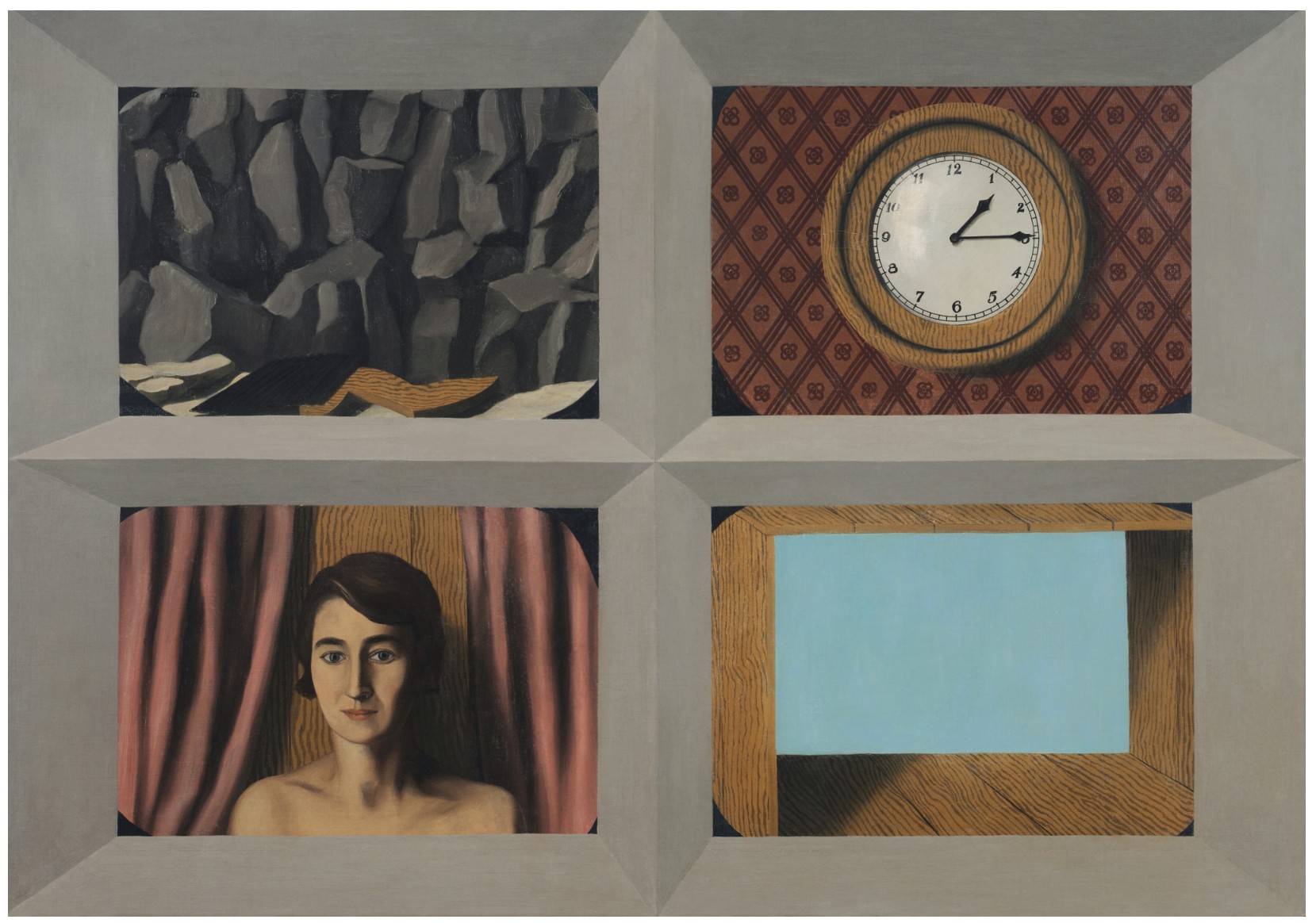
RENE MAGRITTE (1898 – 1967)
L’Idée fixe, circa 1928-29
Oil on canvas
81.3 x 116.5 cm (32 x 45 7/8 inches)
Signed Magritte (toward upper left)
#18. Tête, circa 1960
Pauline Karpidas: The London Collection Evening Auction
Sotheby’s London: 17 September 2025
Estimated: GBP 300,000 – 500,000
GBP 914,400 / USD 1,249,215
Tête | Pauline Karpidas: The London Collection Evening Auction | 2025 | Sotheby’s
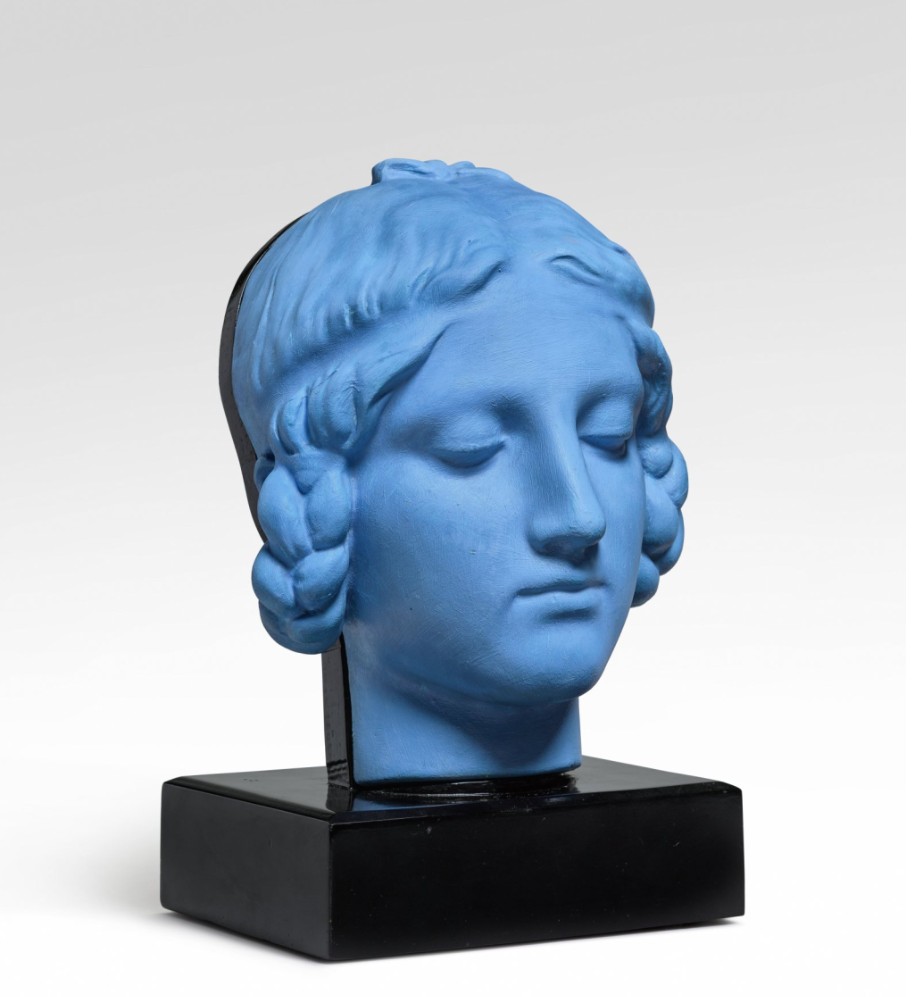
RENE MAGRITTE (1898 – 1967)
Tête, circa 1960
Painted plaster
Height: 32 cm (12 5/8 inches)
This example is 1 of 2 unique variants
#19. La malédiction, 1937
PROPERTY FROM A PRIVATE CZECH COLLECTION
Sotheby’s Paris: 24 October 2025
Estimated: EUR 200,000 – 300,000
EUR 952,500 / USD 1,108,410
La malédiction | Surrealism and Its Legacy | 2025 | Sotheby’s
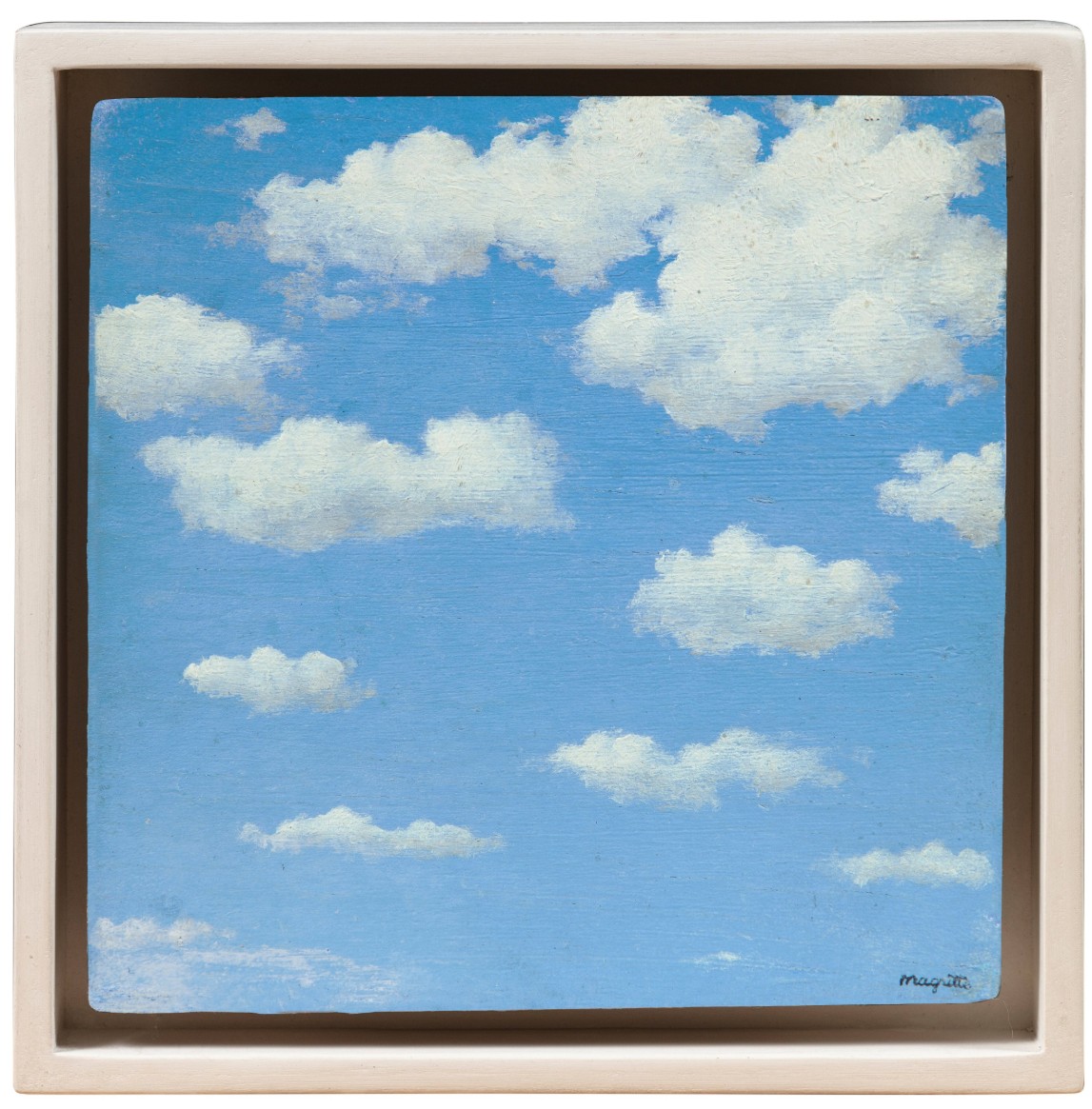
RENE MAGRITTE (1898 – 1967)
La malédiction, 1937
Oil on panel
12.6 x 12.6 cm (5×5 inches)
Signed Magritte (lower right)
#20. La Race blanche, 1967
Pauline Karpidas: The London Collection Evening Auction
Sotheby’s London: 17 September 2025
Estimated: GBP 250,000 – 350,000
GBP 635,000 / USD 867,510
La Race blanche | Pauline Karpidas: The London Collection Evening Auction | 2025 | Sotheby’s
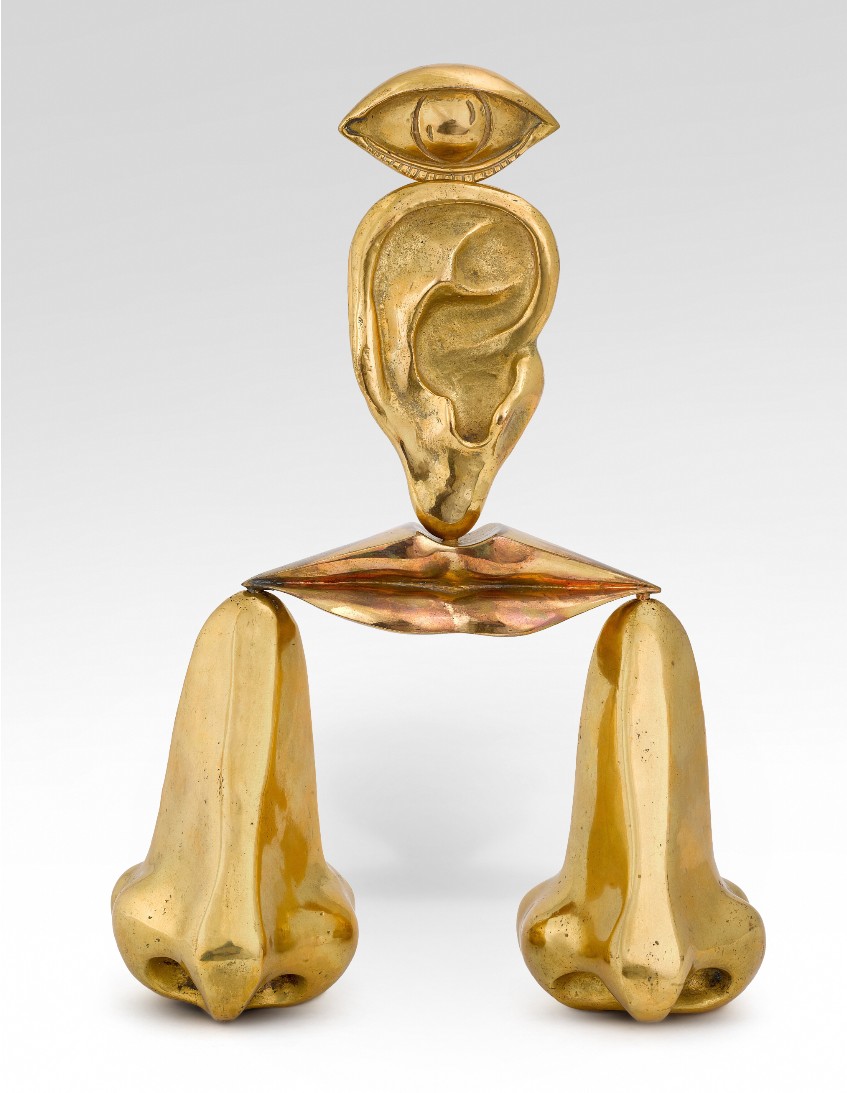
RENE MAGRITTE (1898 – 1967)
La Race blanche, 1967
Guilt bronze
Height: 52.5 cm (20 5/8 inches)
Inscribed Magritte and numbered 5/5
This example cast by Fonderia Artistica Bonvicini, Verona in 1967
This work is number 5 from an edition of 5 plus 1 artist’s proof
#21. Untitled (Le Sens propre), 1927
Pauline Karpidas: The London Collection Evening Auction
Sotheby’s London: 17 September 2025
Estimated: GBP 700,000 – 1,000,000
GBP 635,000 / USD 867,510
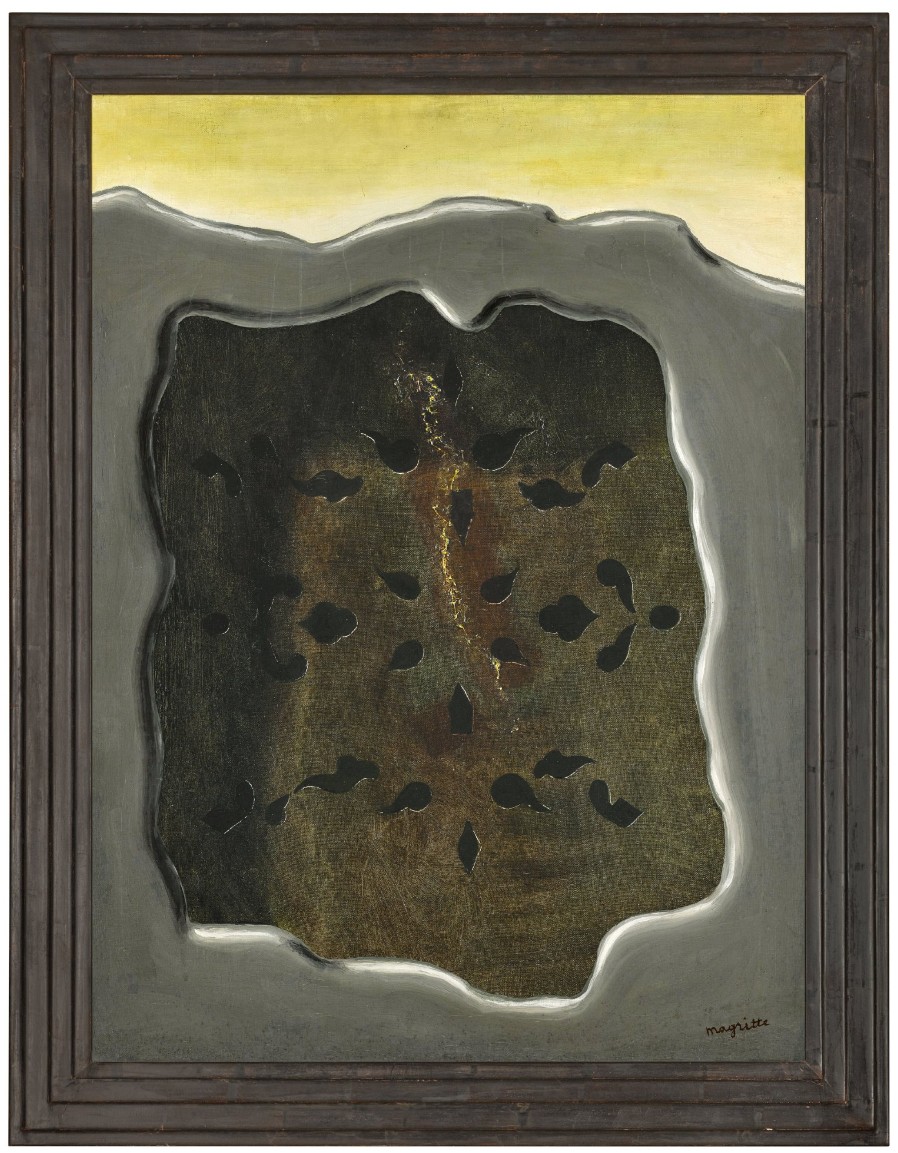
RENE MAGRITTE (1898 – 1967)
Untitled (Le Sens propre), 1927
Oil on canvas
74.8 x 55.8 cm (29 1/2 x 22 inches)
Signed Magritte (lower right)
#22. Les Menottes de cuivre, 1936
Pauline Karpidas: The London Collection Evening Auction
Sotheby’s London: 17 September 2025
Estimated: GBP 300,000 – 500,000
GBP 381,000 / USD 520,505
Les Menottes de cuivre | Pauline Karpidas: The London Collection Evening Auction | 2025 | Sotheby’s
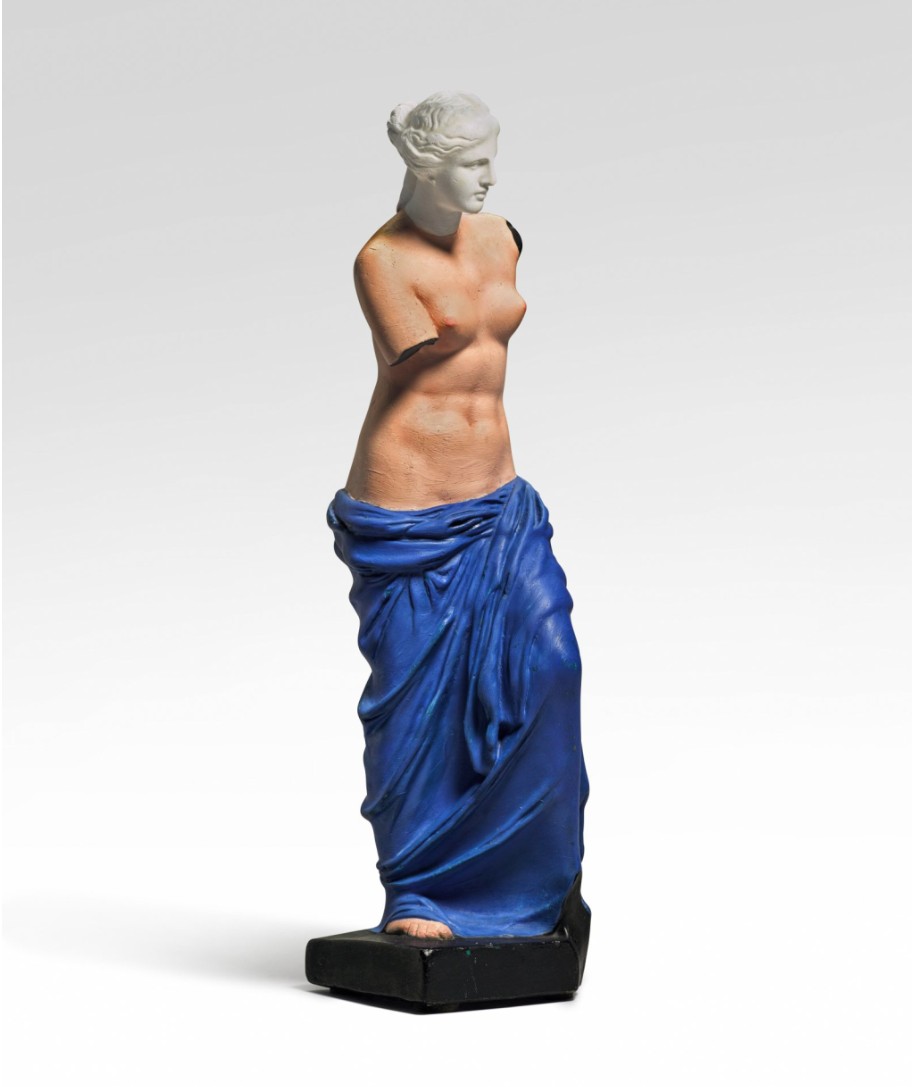
RENE MAGRITTE (1898 – 1967)
Les Menottes de cuivre, 1936
Painted plaster
Height: 37 cm (14 5/8 inches)
This work is unique
Lots Passed
Portrait d’Arlette Magritte, circa 1950
Sotheby’s New-York: 14 May 2025
Estimated: USD 1,500,000 – 2,500,000
PASSED
Portrait d’Arlette Magritte | Modern Day Auction | 2025 | Sotheby’s
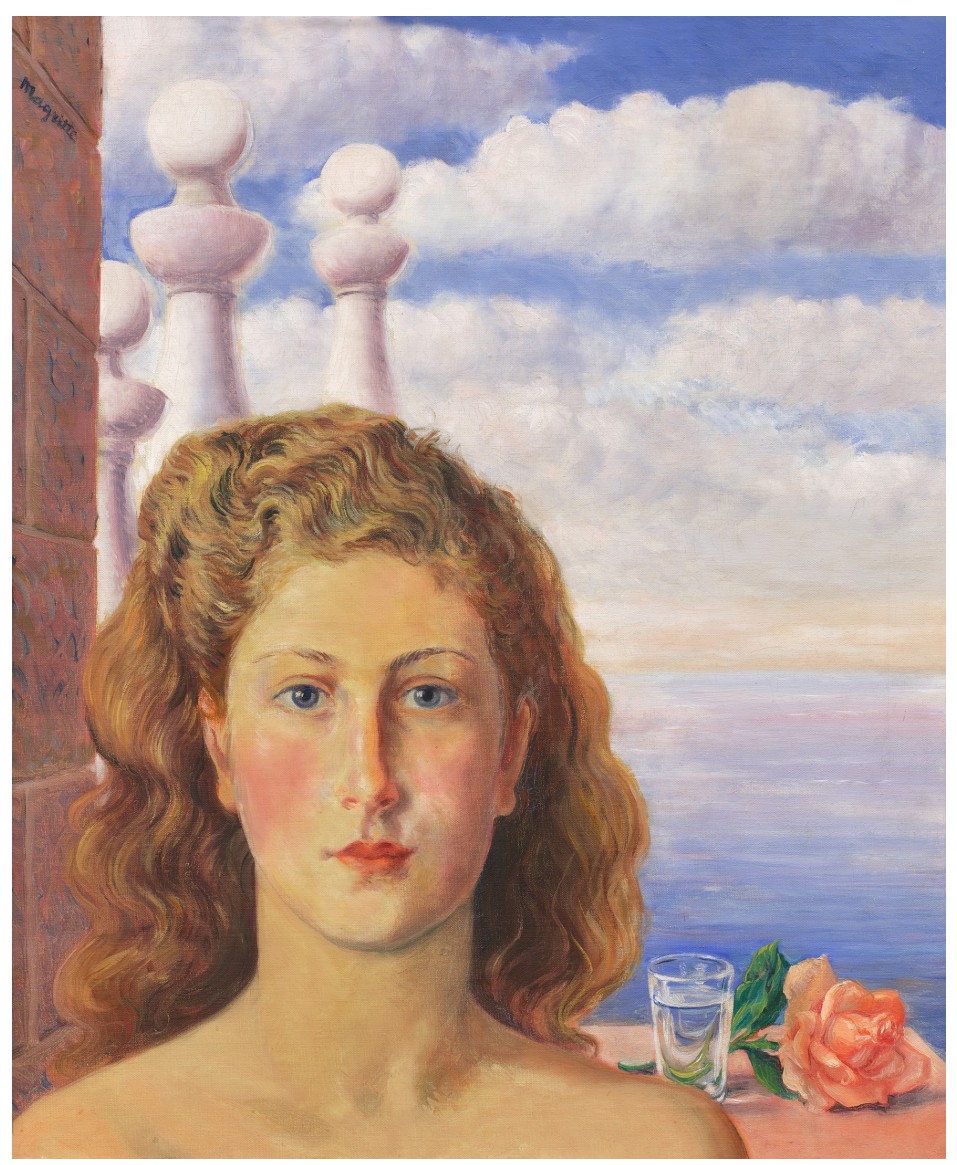
RENE MAGRITTE (1898 – 1967)
Portrait d’Arlette Magritte, circa 1950
Oil on canvas
54.6 x 44.8 cm (21 1/2 x 17 5/8 inches)
Signed Magritte (upper left)
2024 Auction Results
FOR PAINTINGS AND SCULPTURES ONLY
23 lots sold at auction in 2024 for a total turnover of USD 257,654,362. With only 1 lot failing to sell, the sell-through rate is 96%. L’empire des lumieres, a painting dated 1954, from the artist’s most celebrated series sold at Christie’s in New-York on 19 November 2024 for USD 121,160,000, a new auction record for the artist.
2024 Top 3 Lots
4 lots sold for more than USD 10 million, generating a cumulative turnover of USD 192,514,880, representing 74.7% of the total turnover for 2024.
XXXXXXXXXX
#1. L’empire des lumières, 1954
Christie’s New-York: 19 November 2024
Estimate on Request
USD 121,160,000
NEW WORLD AUCTION RECORD FOR THE ARTIST
READ MORE IN FOCUS SECTION
RENE MAGRITTE (1898-1967), L’empire des lumières | Christie’s
RENE MAGRITTE (1898-1967)
L’empire des lumières, 1954
Oil on canvas
146×114 cm (57 1/2 x 44 7/8 inches)
Signed ‘Magritte’ (lower right)
Signed again, dated and titled ‘”L’Empire des Lumières” Magritte 1954’ (on the reverse)
USD 100 million
#2. L’ami intime, 1958
Christie’s London: 7 March 2024
Estimated: GBP 30,000,000 – 50,000,000
GBP 33,660,000 / USD 42,680,880
READ MORE IN FOCUS SECTION
RENÉ MAGRITTE (1898-1967)
L’ami intime, 1958
Oil on canvas
72.6 x 64.9 cm (28 5/8 x 25 1/2 inches)
Signed ‘Magritte’ (lower left)
#3. Le Banquet, circa 1955-57
Sotheby’s New-York: 15 May 2024
Estimated: USD 15,000,000 – 20,000,000
USD 18,144,000
READ MORE IN FOCUS SECTION
Le Banquet | Modern Evening Auction | 2024 | Sotheby’s (sothebys.com)

RENE MAGRITTE (1898 – 1967)
Le Banquet, circa 1955-57
Oil on canvas
75.5 x 121 cm (29 3/4 x 47 5/8 inches)
Signed Magritte (lower left)
Titled and dated 1955 (on the reverse)
#4. La cour d’amour, 1960
Christie’s New-York: 19 November 2024
Estimated: USD 9,000,000 – 12,000,000
USD 10,530,000
READ MORE IN FOCUS SECTION
RENE MAGRITTE (1898-1967), La cour d’amour | Christie’s
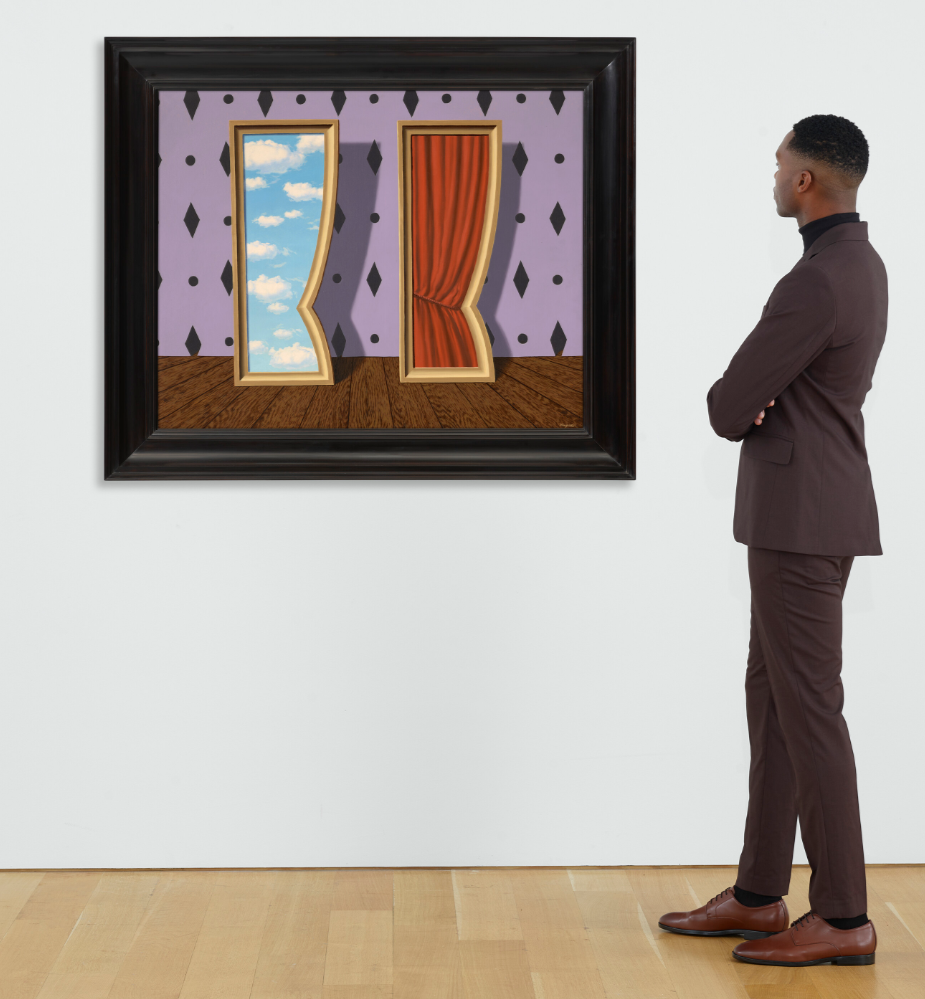
RENE MAGRITTE (1898-1967)
La cour d’amour, 1960
Oil on canvas
79.9 x 100 cm (31 1/2 x 39 3/8 inches)
Signed ‘Magritte’ (lower right)
Sated and titled ‘”LA COUR D’AMOUR” 1960’ (on the reverse)
USD 10 million
#5. Les chasseurs au bord de la nuit, 1928
Christie’s New-York: 19 November 2024
Estimated: USD 8,000,000 – 12,000,000
USD 9,610,000
READ MORE IN FOCUS SECTION
RENE MAGRITTE (1898-1967), Les chasseurs au bord de la nuit | Christie’s
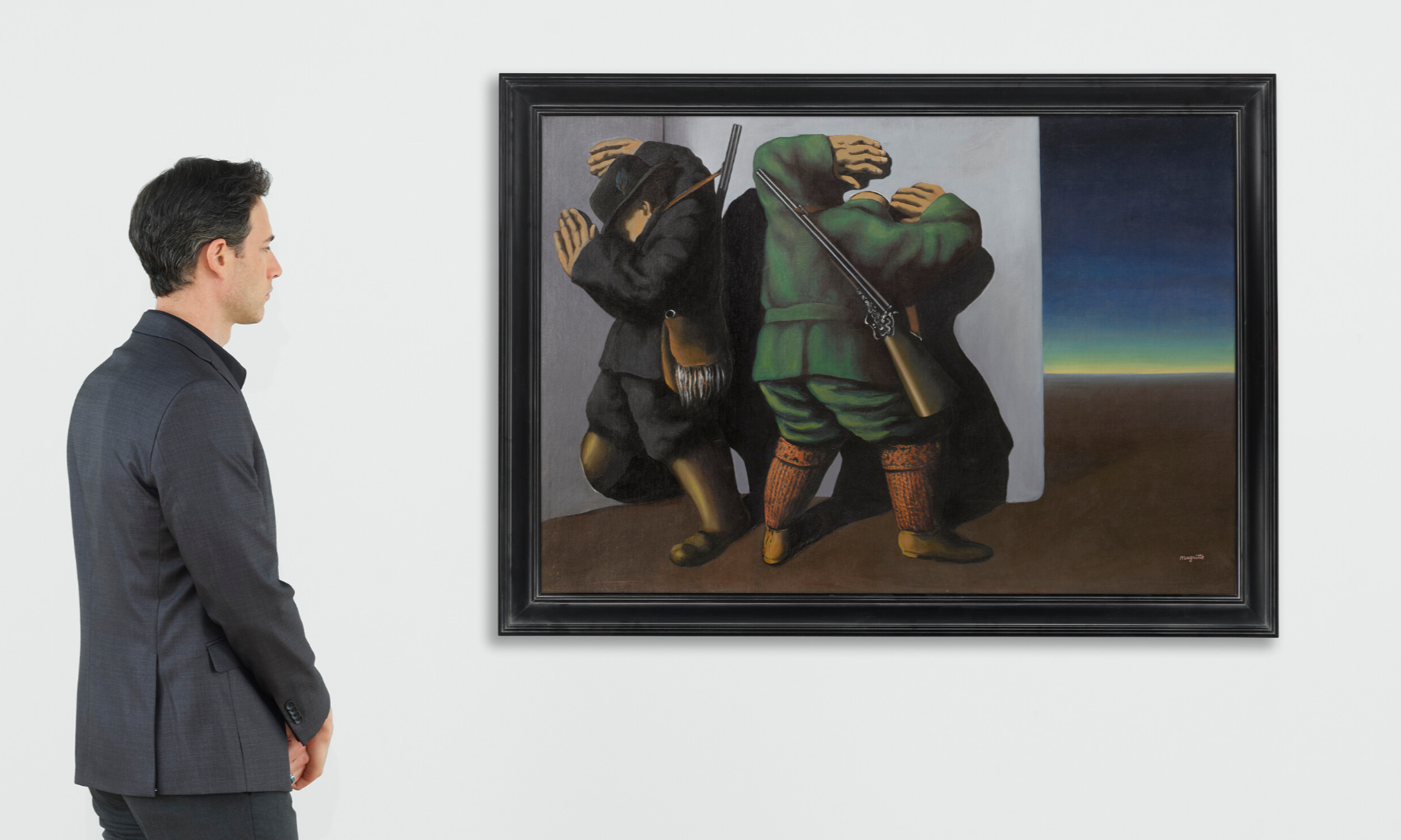
RENE MAGRITTE (1898-1967)
Les chasseurs au bord de la nuit, 1928
Oil on canvas
80.7 x 116 cm (31 7/8 x 45 5/8 inches)
Signed ‘Magritte’ (lower right)
#6. Le Séducteur, 1951
Christie’s New-York: 16 May 2024
Estimated: USD 5,500,000 – 7,500,000
USD 8,000,000
READ MORE IN FOCUS SECTION
RENE MAGRITTE (1898-1967), Le Séducteur | Christie’s
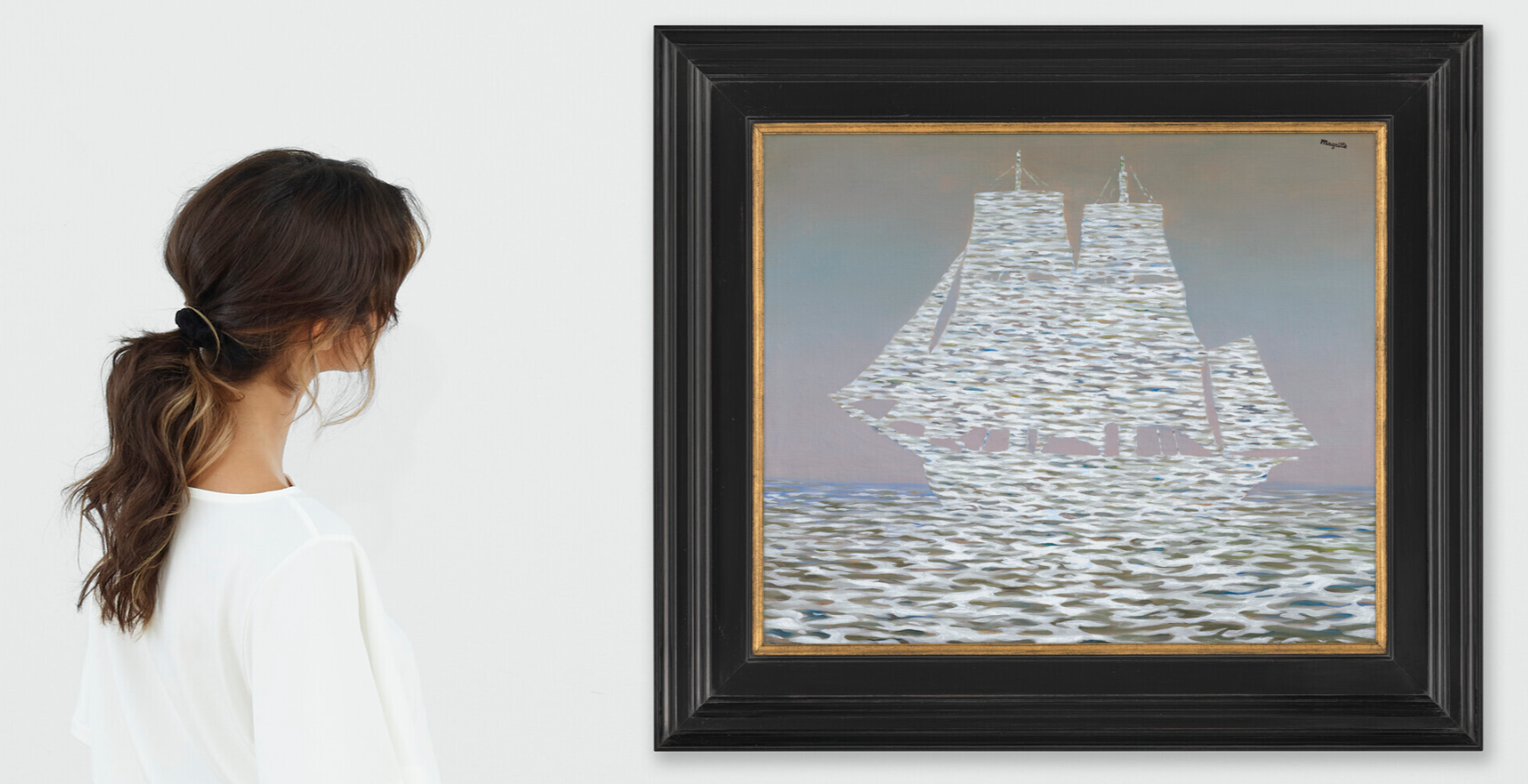
RENE MAGRITTE (1898-1967)
Le Séducteur, 1951
Oil on canvas
19 3/4 x 23 5/8 inches (49.4 x 60 cm)
Signed ‘Magritte’ (upper right)
Dated, titled and numbered ‘”LE SÉDUCTEUR” (III) 1951’ (on the reverse)
#7. La magie noire, 1942
Christie’s London: 7 March 2024
Estimated: GBP 3,000,000 – 5,000,000
GBP 4,638,000 / USD 5,880,984
READ MORE IN FOCUS SECTION
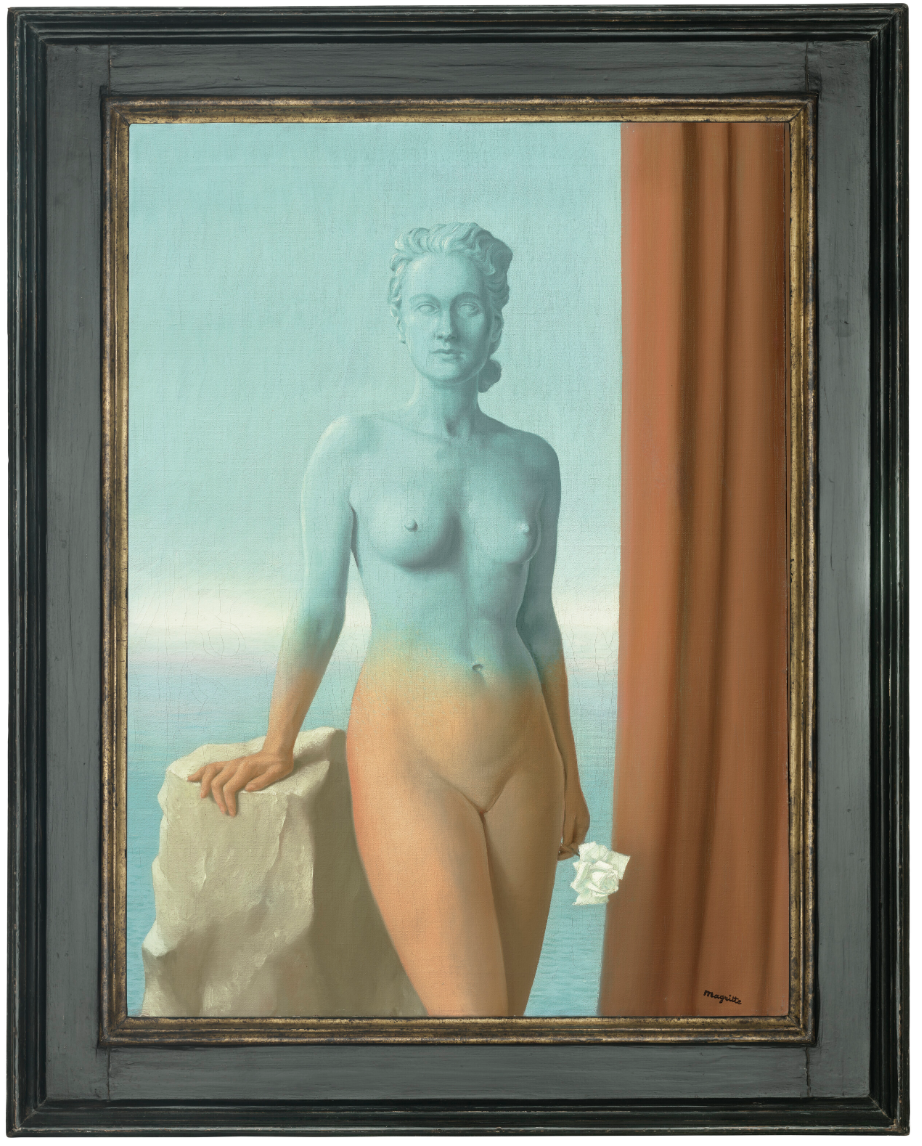
RENÉ MAGRITTE (1898-1967)
La magie noire, 1942
oil on canvas
73×54 cm (28 3/4 x 21 1/4 inches)
Signed ‘Magritte’ (lower right)
#8. L’invitation au voyage, 1944
Christie’s Hong-Kong: 28 May 2024
Estimated: HKD 28,000,000 – 38,000,000
HKD 42,725,000 / USD 5,472,690
READ MORE IN FOCUS SECTION
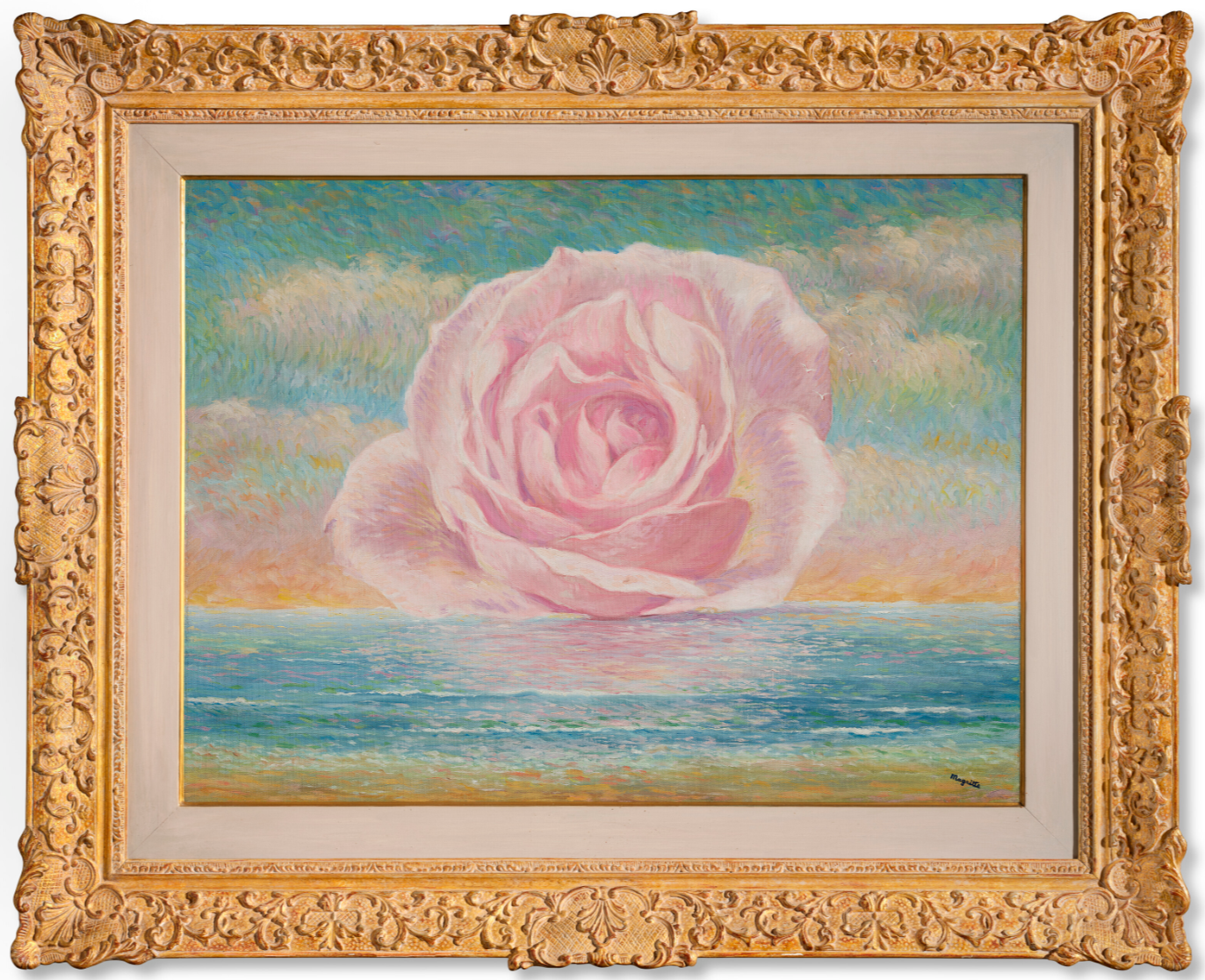
RENÉ MAGRITTE (1898-1967)
L’invitation au voyage, 1944
Oil on canvas
60.5 x 80 cm (23 3/4 x 31 1/2 inches)
Signed ‘Magritte’ (lower right)
Painted in April 1944
#9. Les eaux profondes, 1941
Christie’s New-York: 16 May 2024
Estimated: USD 4,000,000 – 7,000,000
USD 4,648,000
RENE MAGRITTE (1898-1967), Les eaux profondes | Christie’s
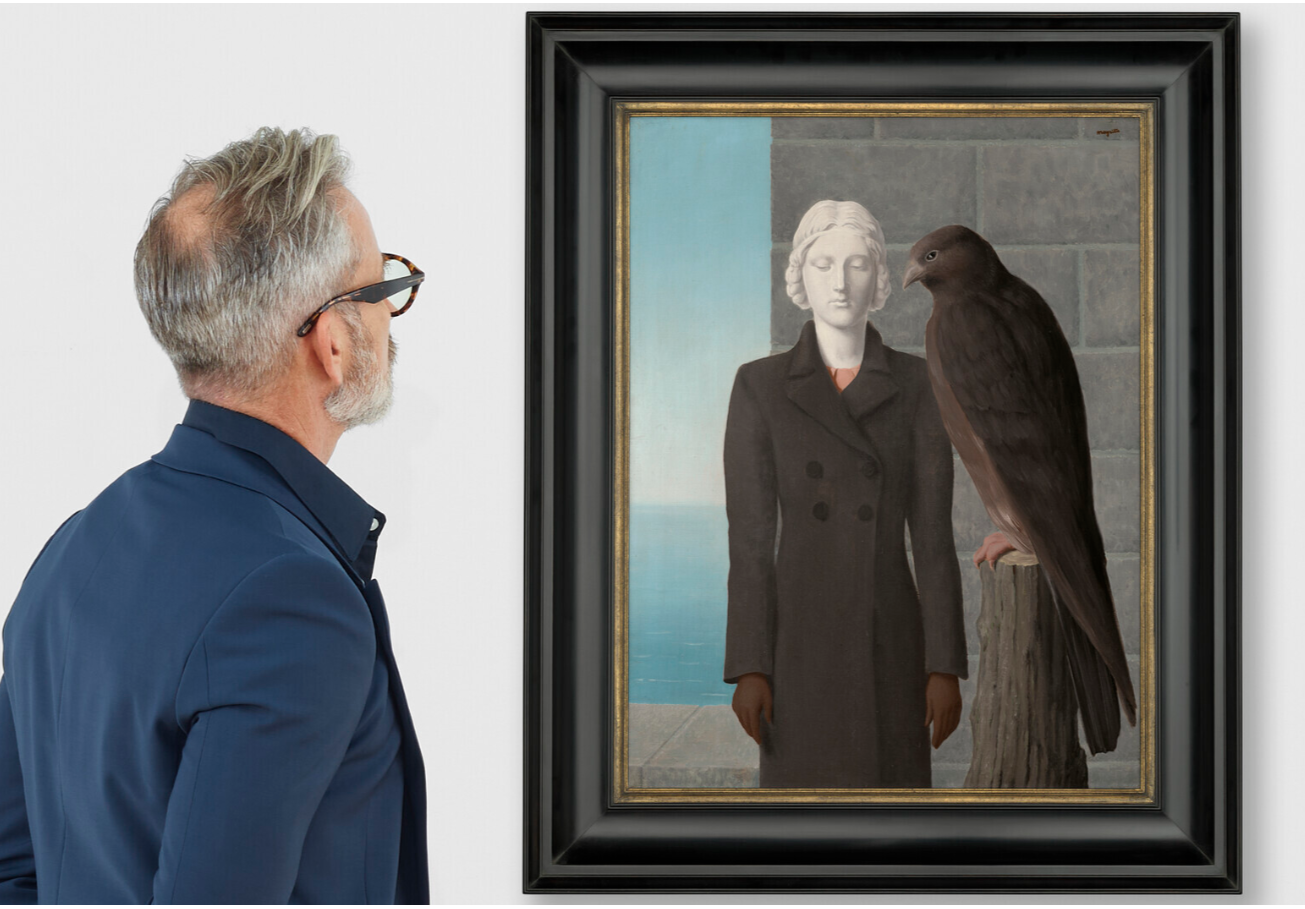
RENE MAGRITTE (1898-1967)
Les eaux profondes, 1941
Oil on canvas
65.3 x 50.3 cm (25 3/4 x 19 7/8 inches)
Signed ‘Magritte’ (upper right)
Signed again, dated, titled and inscribed ‘”LES EAUX PROFONDES” Magritte 1942’ (on the reverse)
Signed and titled again ‘Magritte “LES EAUX PROFONDES”‘ (on the stretcher)
#10. Composition on a sea shore, 1935-36
Sotheby’s London: 6 March 2024
Estimated: GBP 1,800,000 – 2,500,000
GBP 3,436,000 / USD 4,365,335
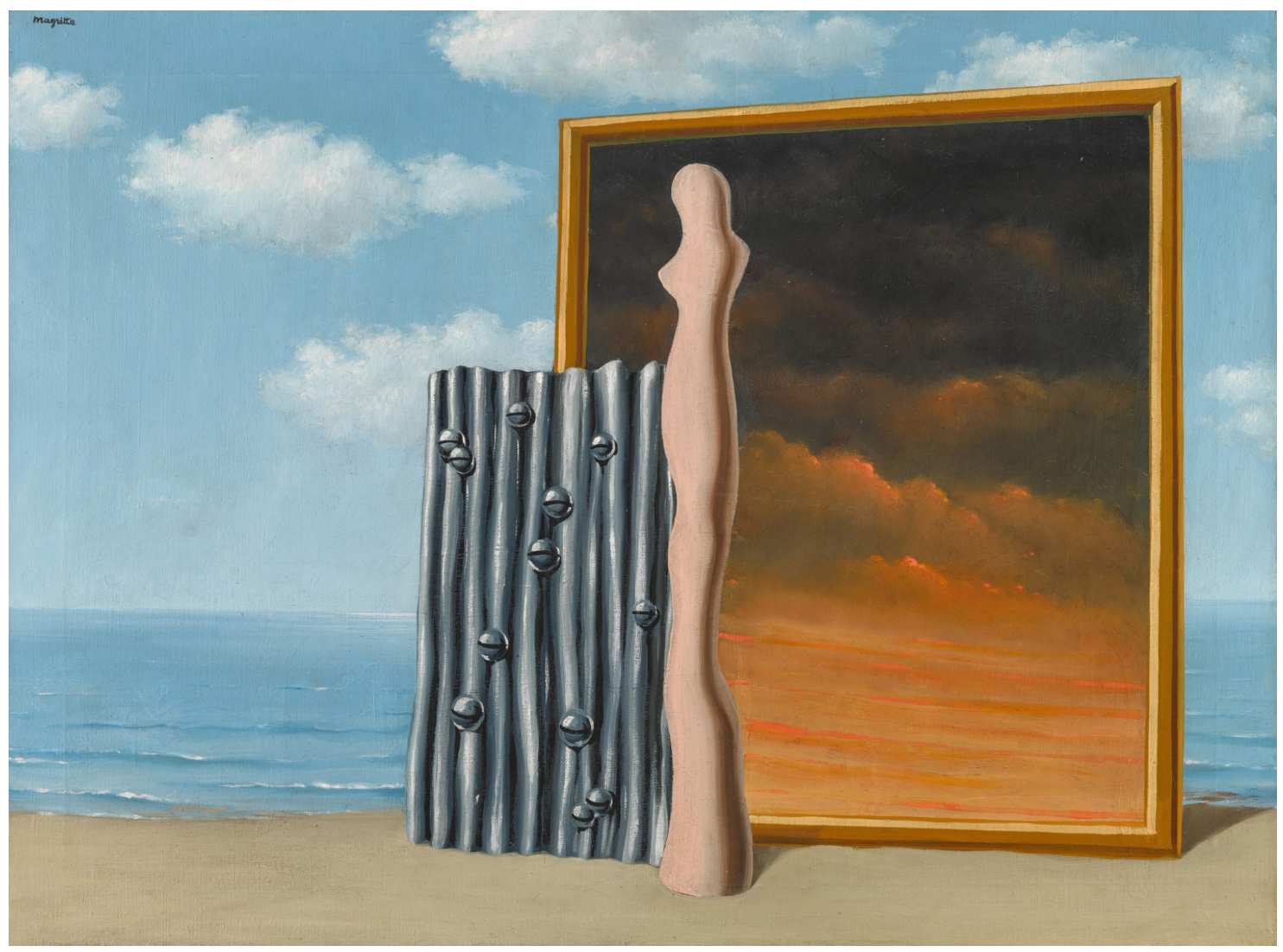
RENE MAGRITTE (1898 – 1967)
Composition on a sea shore, 1935-36
Oil on canvas
54.5 x 73.5 cm (21 1/2 x 28 7/8 inches)
Signed Magritte (upper left)
#11. La Leçon de choses, 1947
Sotheby’s Paris: 18 October 2024
Estimated: EUR 3,500,000 – 4,500,000
EUR 3,840,000 / USD 4,158,465
READ MORE IN FOCUS SECTION
La Leçon de choses | Surrealism and its Legacy | 2024 | Sotheby’s
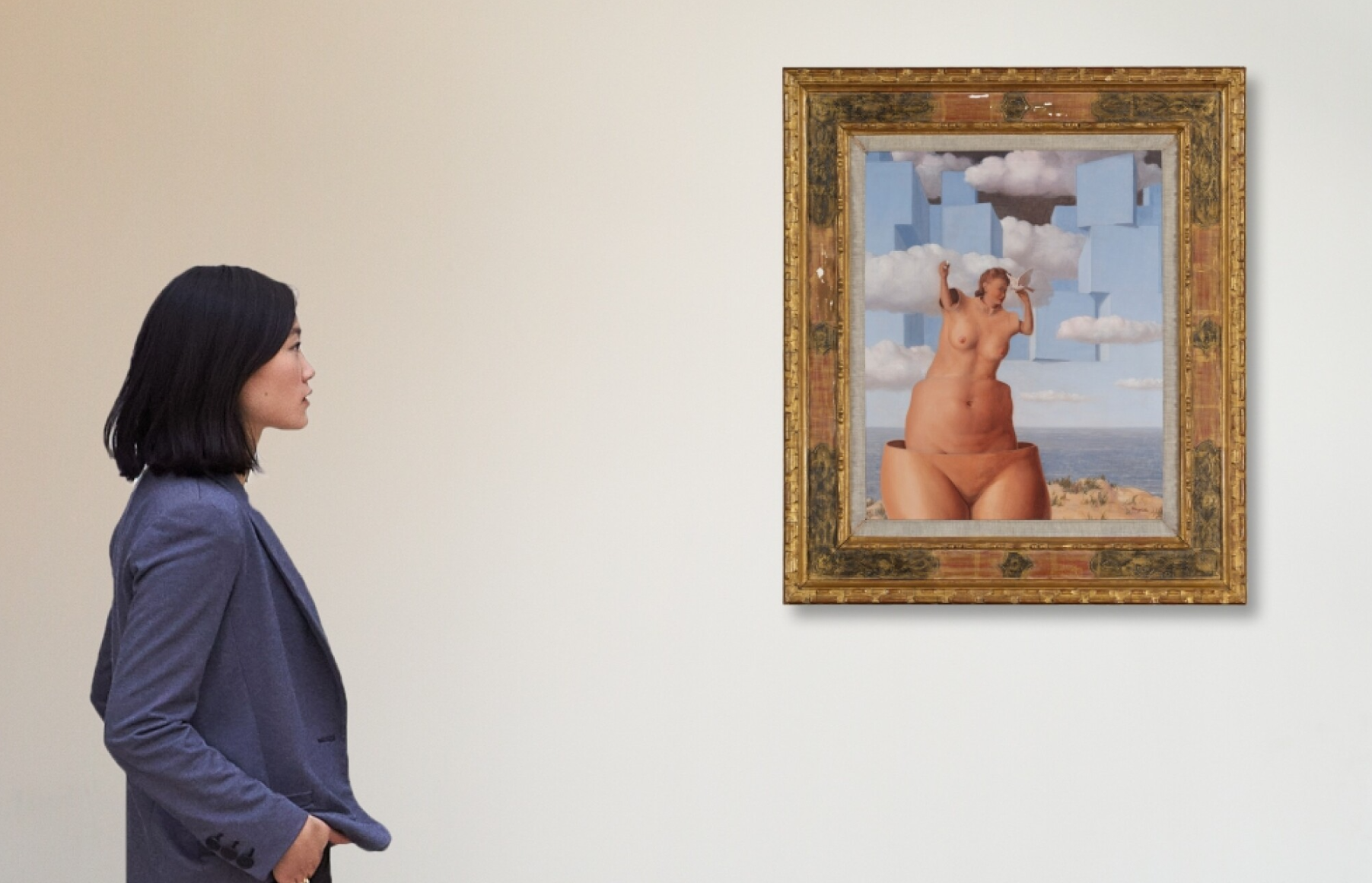
RENE MAGRITTE (1898 – 1967)
La Leçon de choses, 1947
Oil on canvas
66×55 cm (26×22 inches)
Signed Magritte (lower right)
Titled “LA LEÇON DE CHOSES” and dated 1947 (on the reverse)
#12. La Main heureuse, 1953
Sotheby’s New-York: 15 May 2024
Estimated: USD 3,500,000 – 5,500,000
USD 4,020,000
READ MORE IN FOCUS SECTION
La Main heureuse | Modern Evening Auction | 2024 | Sotheby’s
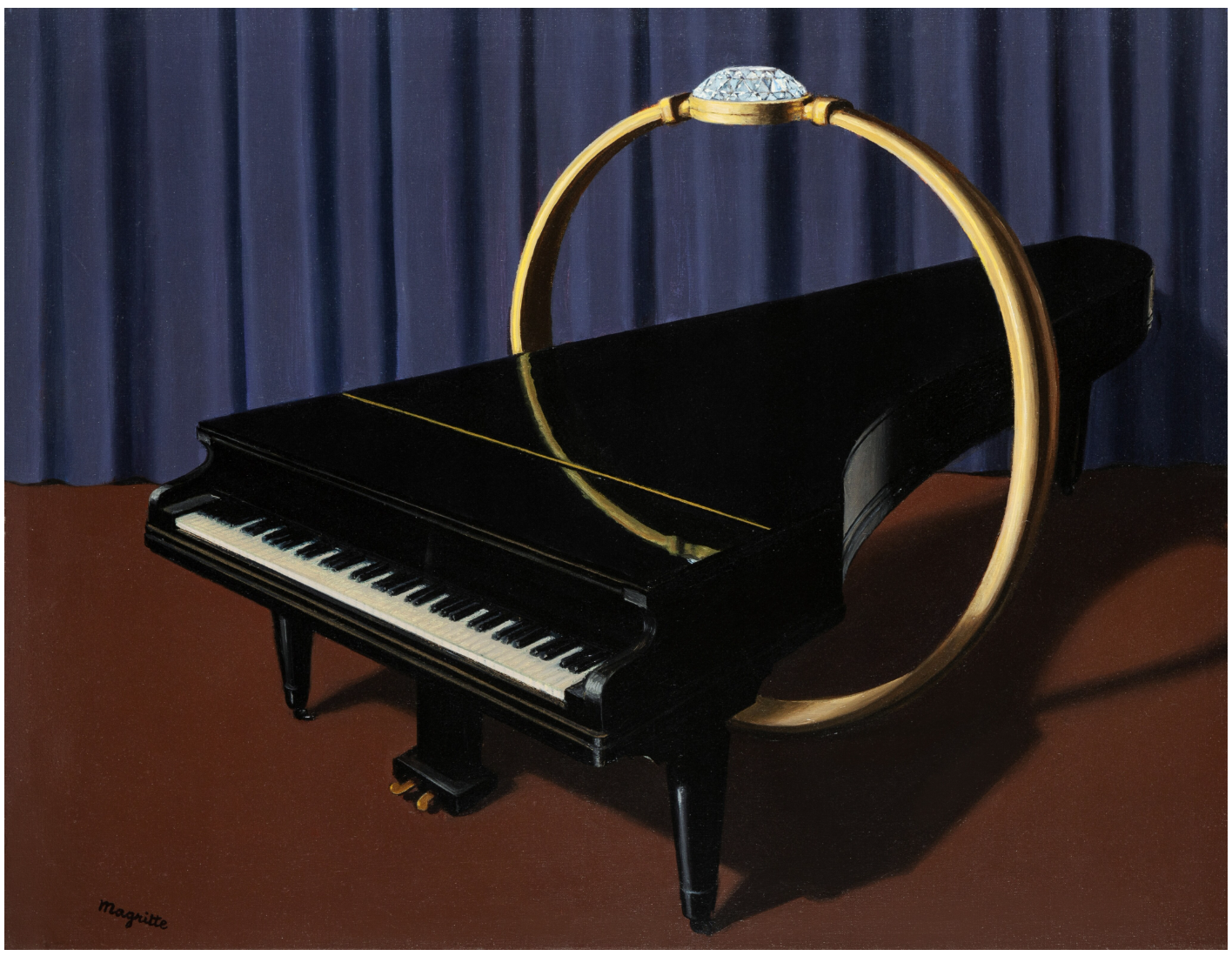
RENE MAGRITTE (1898 – 1967)
La Main heureuse, 1953
Oil on canvas
50.5 x 65.2 cm (19 7/8 x 25 5/8 inches)
Signed Magritte (lower left)
Titled and dated 1953 (on the reverse)
#13. Les grâces naturelles, 1967
Christie’s New-York: 16 May 2024
Estimated: USD 800,000 – 1,200,000
USD 3,680,000
RENE MAGRITTE (1898-1967), Les grâces naturelles | Christie’s
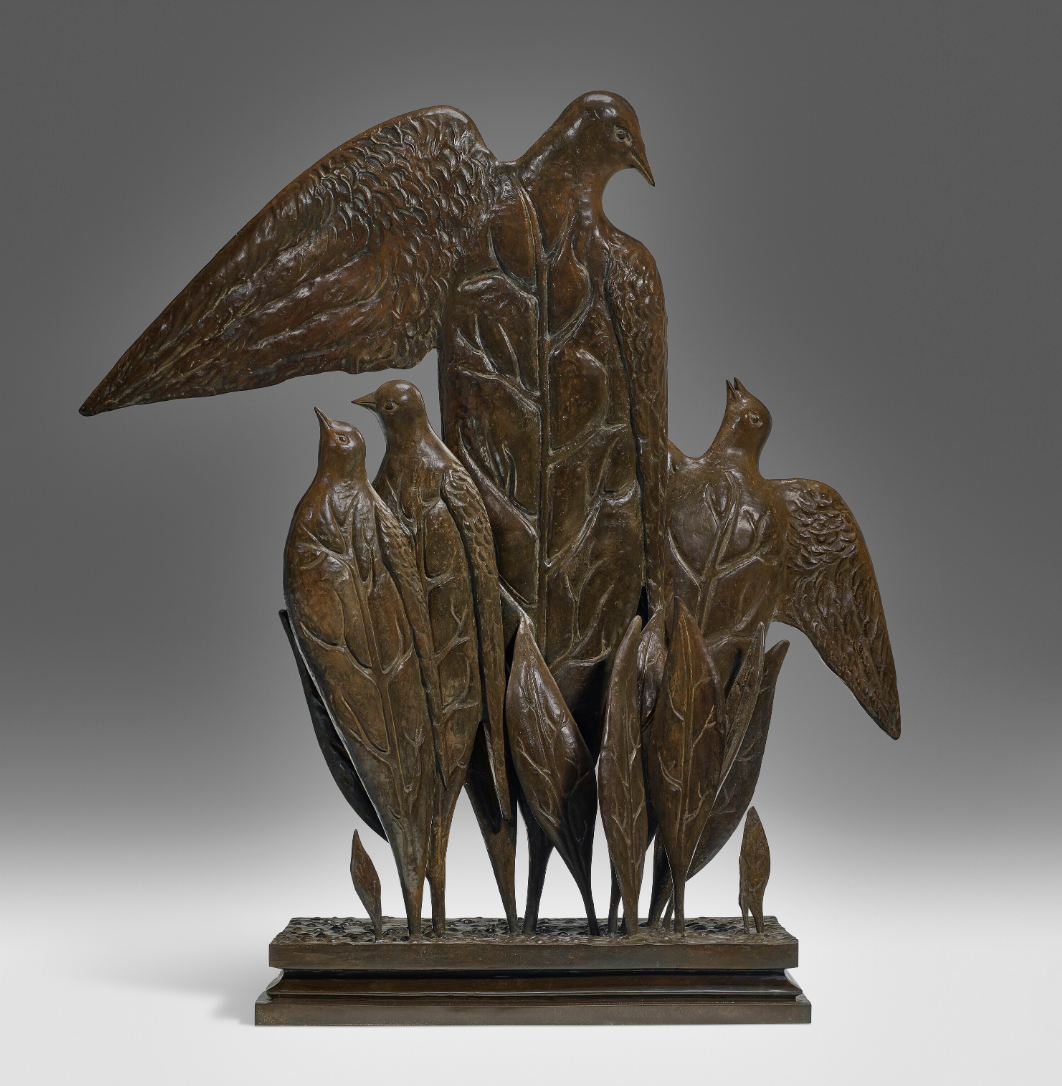
RENE MAGRITTE (1898-1967)
Les grâces naturelles, 1967
Bronze with brown patina
Length: 94 cm ( 37 1/8 inches)
Width: 43.6 cm (17 1/4 inches)
Height: 102.3 cm (40 1/4 inches)
Signed, dated, numbered and stamped with foundry mark ‘Magritte 1967 5/5 Gi-Bi-Esse FONDERIA ARTISTICA VERONA-ITALY’ (on the top of the base)
Conceived and cast in 1967
#14. La Mémoire, 1945
Christie’s New-York: 19 November 2024
Estimated: USD 3,000,000 – 5,000,000
USD 3,680,000
RENE MAGRITTE (1898-1967), La Mémoire | Christie’s
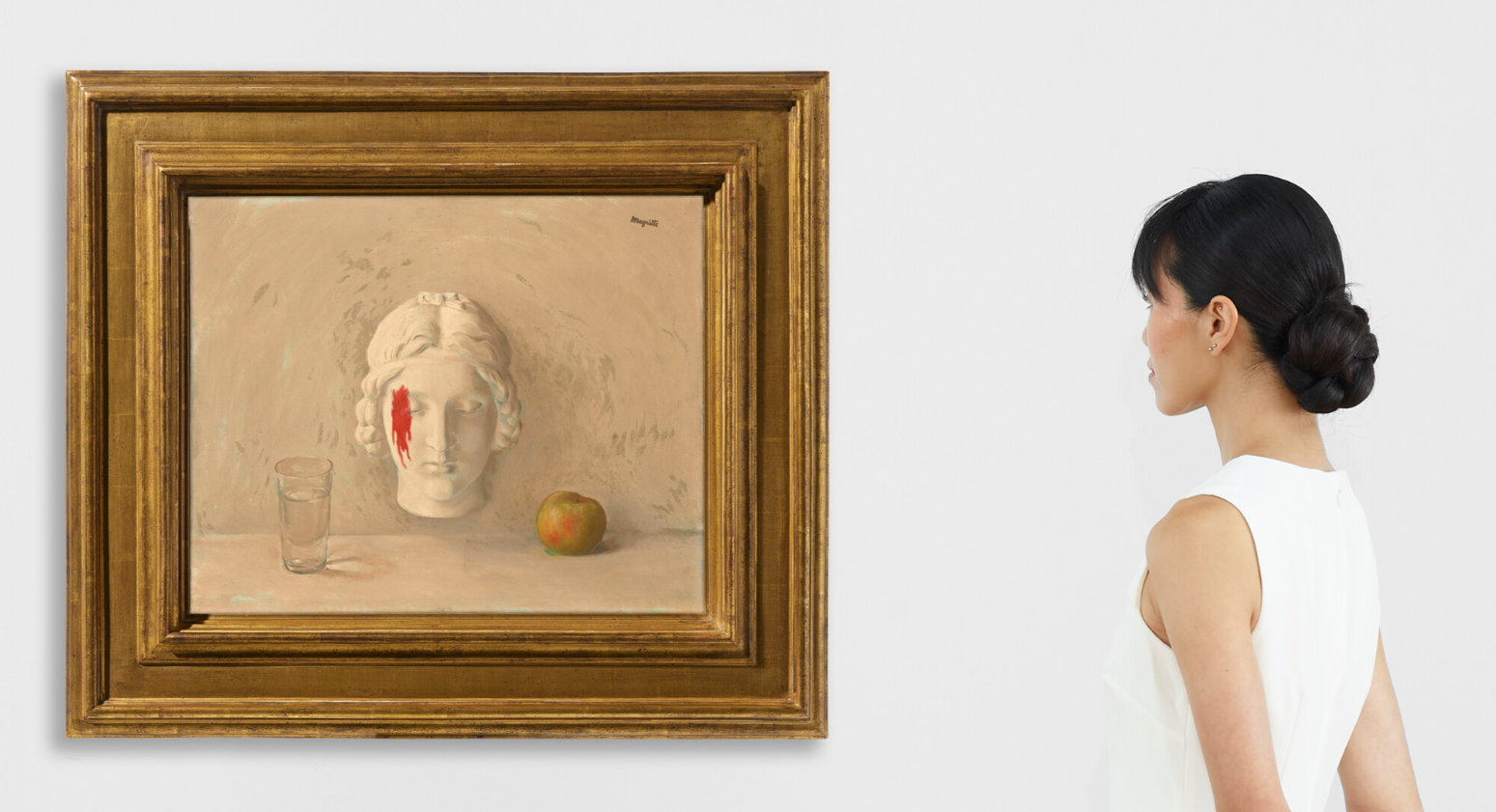
RENE MAGRITTE (1898-1967)
La Mémoire, 1945
Oil on canvas
45.1 x 54.3 cm (17 1/2 x 21 1/2 inches)
Signed ‘Magritte’ (upper right)
Dated, titled and numbered ‘“LA MÉMOIRE” (II) 1945’ (on the reverse)
#15. La préméditation, 1943
Christie’s Hong-Kong: 26 September 2024
Estimated: HKD 22,000,000 – 28,000,000
HKD 28,205,000 / USD 3,622,510
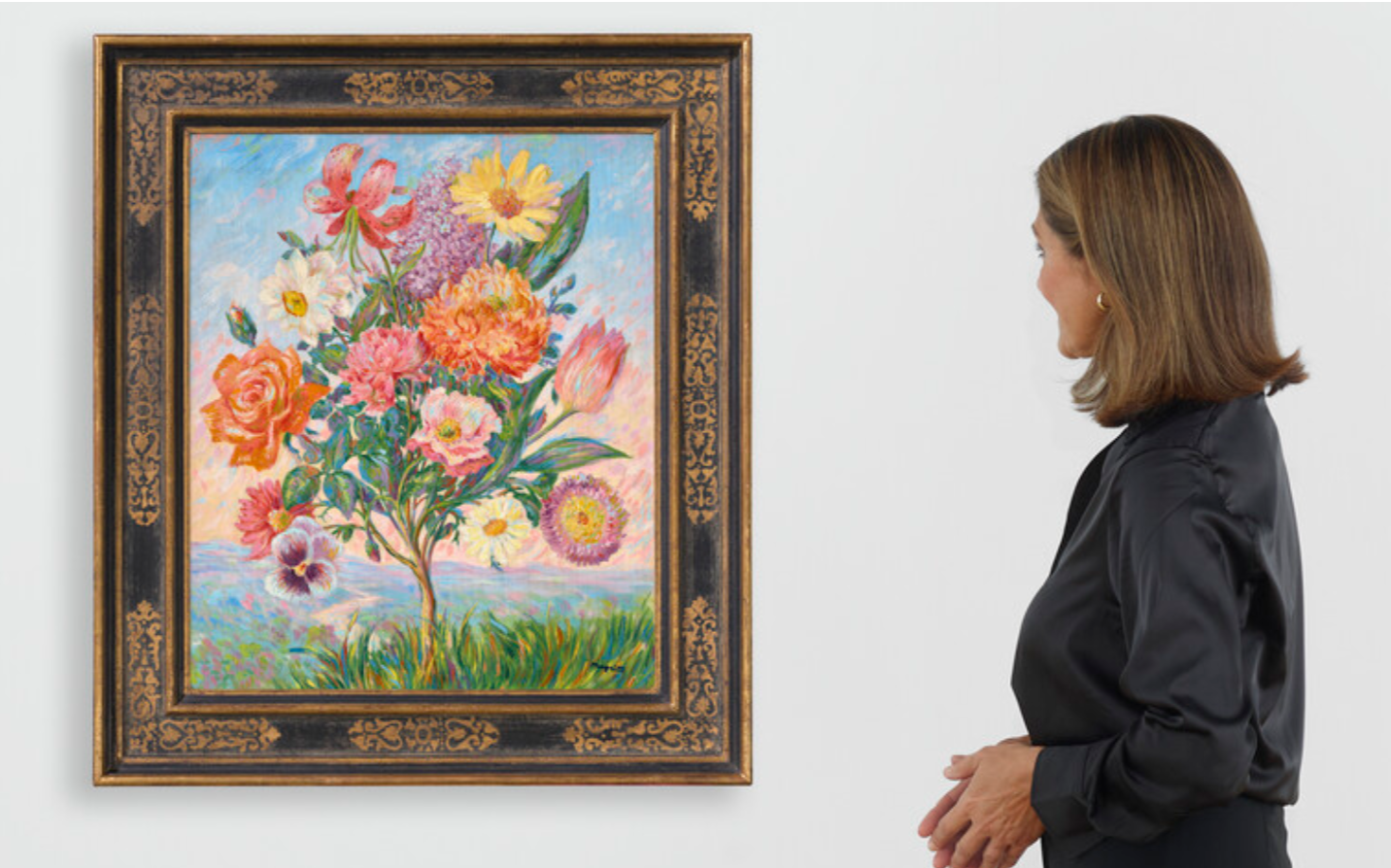
RENÉ MAGRITTE (1898-1967)
La préméditation, 1943
Oil on canvas
55.3 x 46.2 cm (21 3/4 x 18 1/4 inches)
Signed ‘magritte’ (lower right)
Inscribed and dated ‘”La Préméditation” 1943’ (on the reverse)
#16. Les Grâces naturelles, 1967
Sotheby’s New-York: 18 November 2024
Estimated: USD 2,000,000 – 3,000,000
USD 2,160,000
Les Grâces naturelles | Modern Evening Auction | 2024 | Sotheby’s
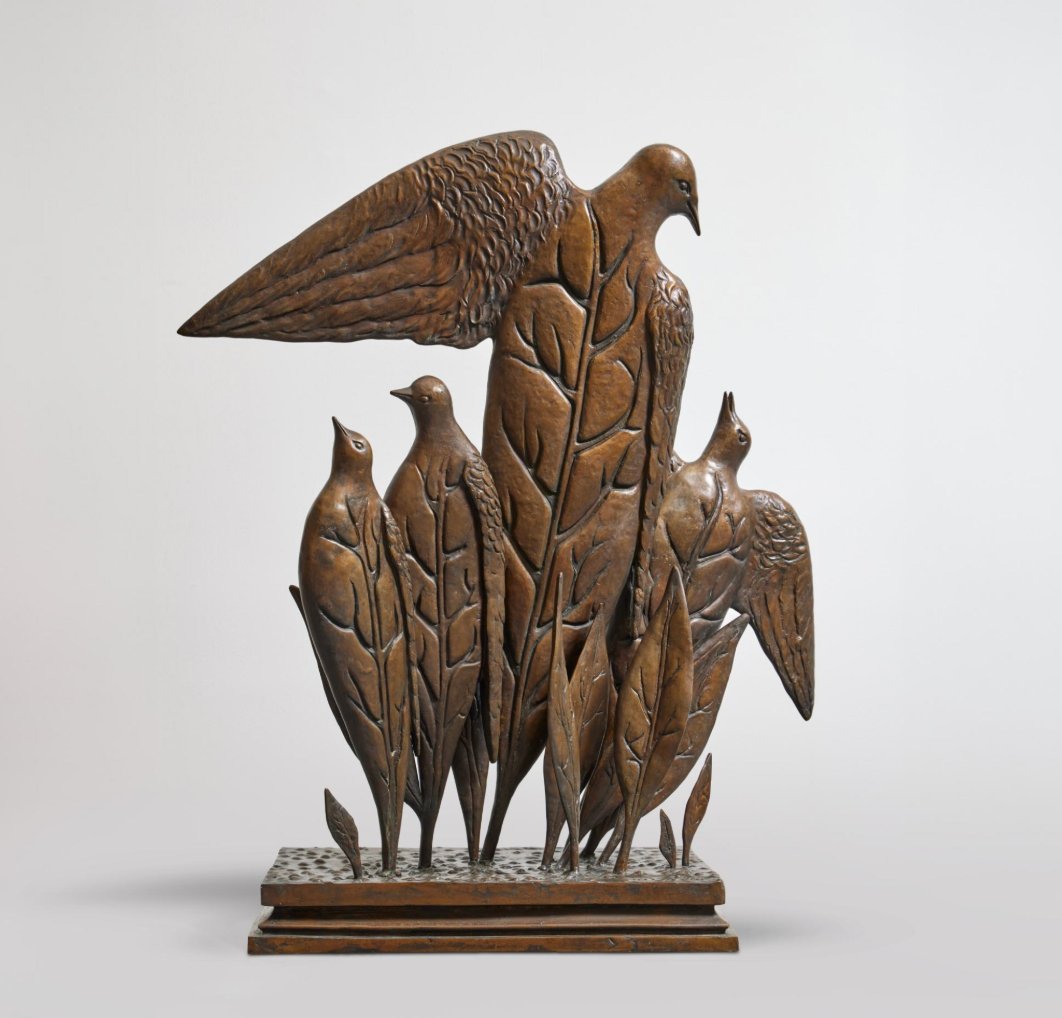
RENE MAGRITTE (1898 – 1967)
Les Grâces naturelles, 1967
Bronze
Height: 105.4 cm (41 1/2 inches)
Inscribed Magritte, numbered 3/5 and stamped with the foundry mark Fonderia Artistica Gi · Bi · Esse Verona-Italy
Conceived and cast in 1967
#17. Les Troubles du coeur, 1943
Sotheby’s New-York: 18 November 2024
Estimated: USD 2,500,000 – 3,500,000
USD 2,040,000
READ MORE IN FOCUS SECTION
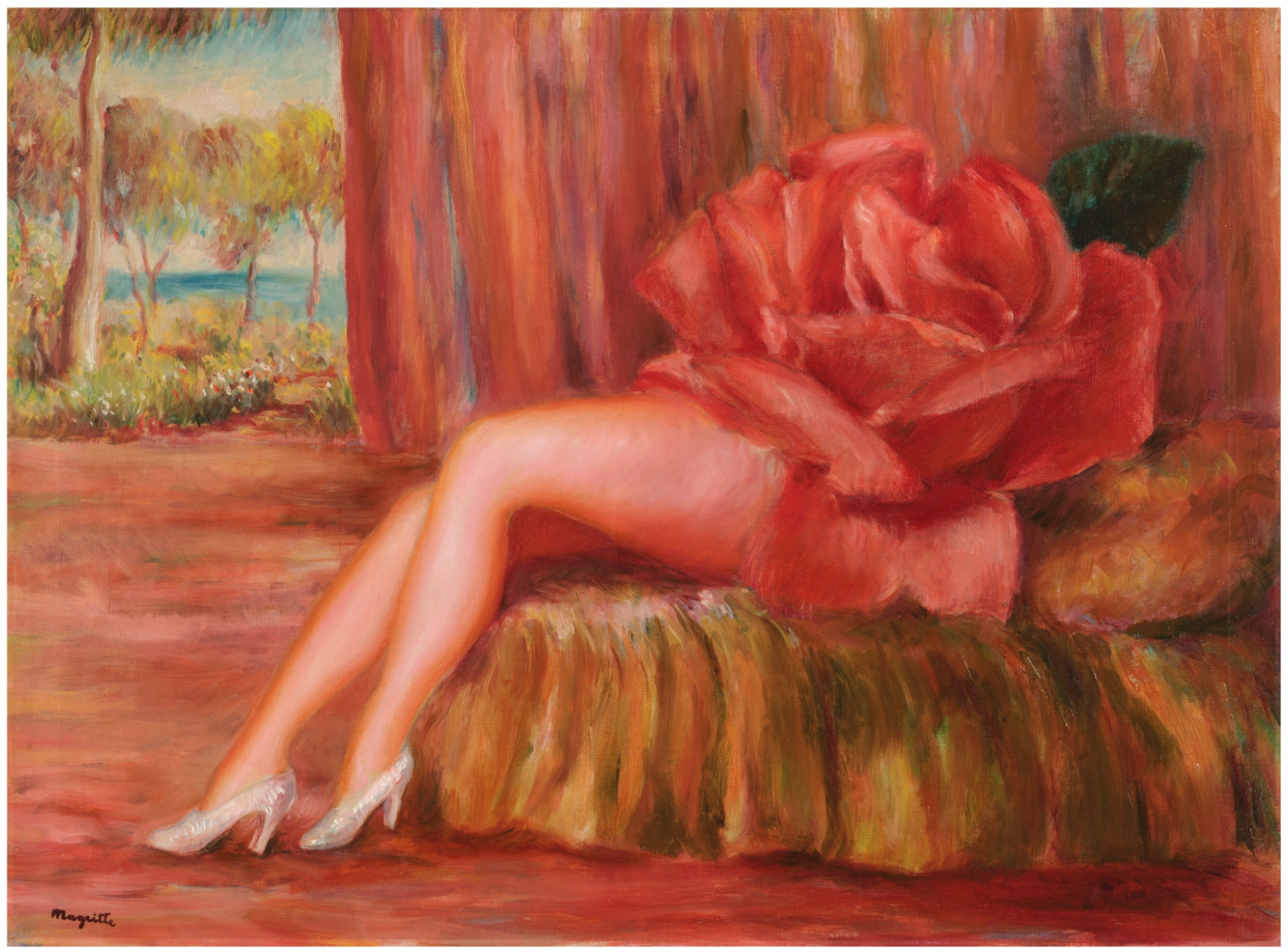
RENE MAGRITTE (1898 – 1967)
Les Troubles du coeur, 1943
Oil on canvas
55.4 x 75 cm (21 3/4 x 29 1/2 inches)
Signed Magritte (lower left)
Titled and dated 1943 (on the reverse)
#18. Le duo, 1928
Christie’s London: 7 March 2024
Estimated: GBP 600,000 – 900,000
GBP 1,250,000 / USD1,591,980
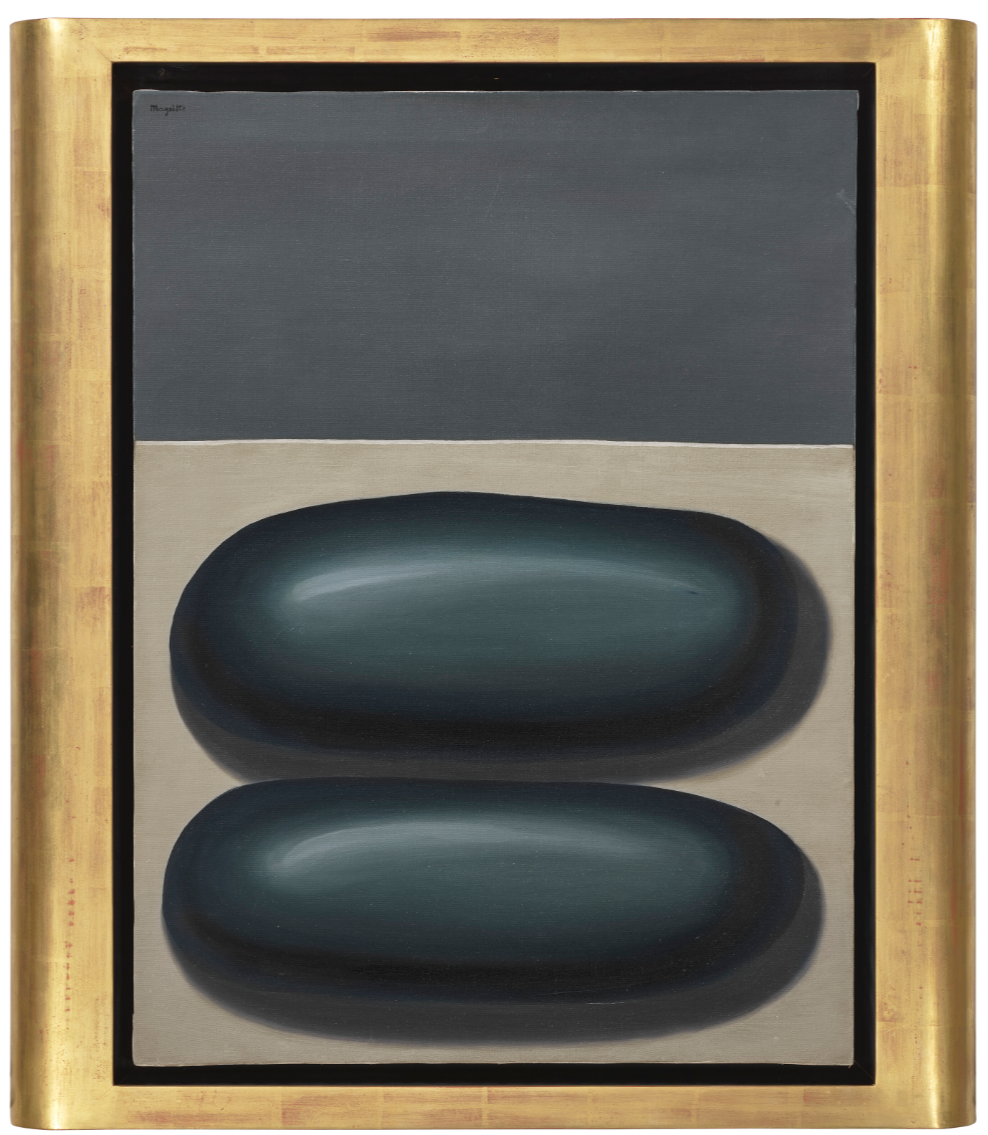
RENÉ MAGRITTE (1898-1967)
Le duo, 1928
Oil on canvas
73×54 cm (28 3/4 x 21 1/4 inches)
Signed ‘Magritte’ (upper left)
Inscribed “LE DUO” (on the turnover edge)
#19. L’évidence éternelle: genoux, 1954
Christie’s London: 7 March 2024
Estimated: GBP 400,000 – 700,000
GBP 529,200 / USD 673,980
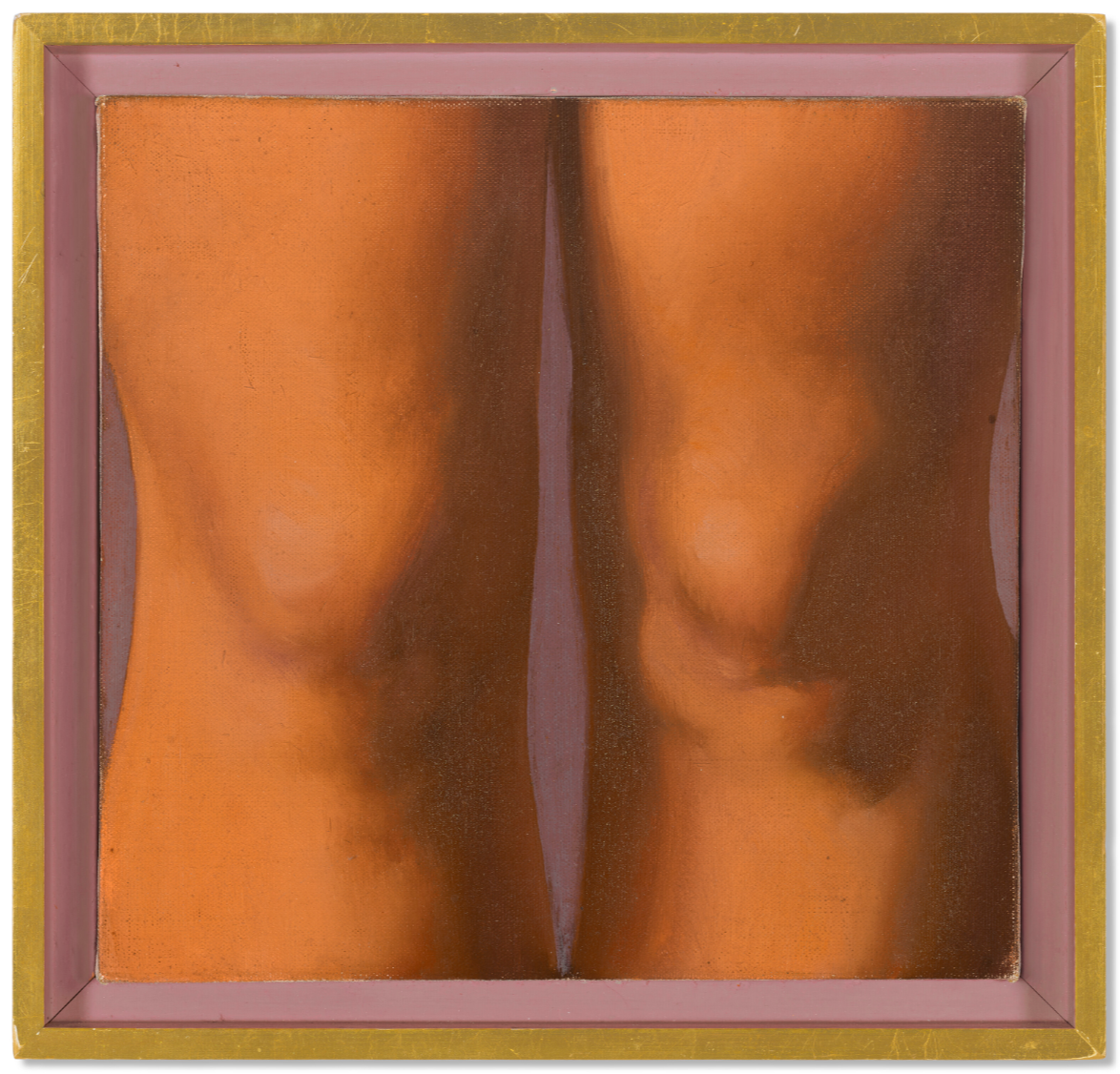
RENÉ MAGRITTE (1898-1967)
L’évidence éternelle: genoux, 1954
Oil on canvas
20.3 x 21 cm (8 x 8 1/4 inches)
#20. La race blanche, 1967
Christie’s London: 7 March 2024
Estimated: GBP 300,000 – 500,000
GBP 478,800 / USD 609,790
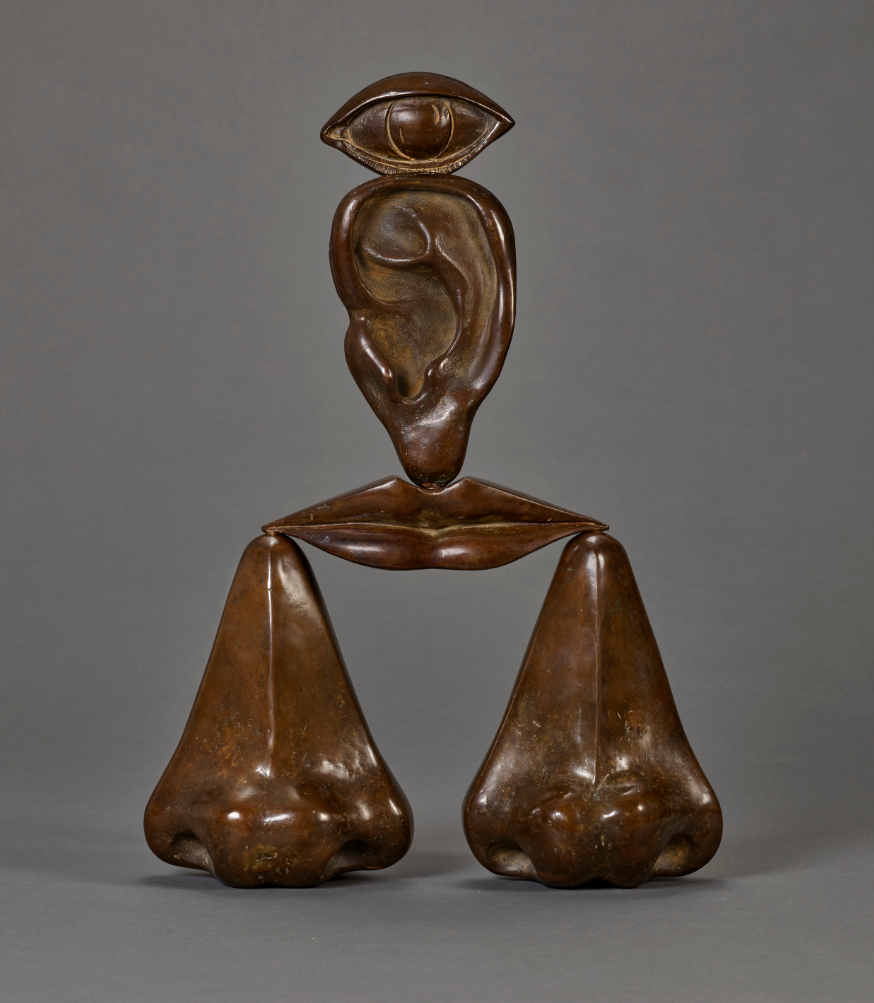
RENÉ MAGRITTE (1898-1967)
La race blanche, 1967
Bronze with golden brown patina
53.3 x 34.5 x 18 cm (21 x 13 5/8 x 7 1/8 inches)
Signed and numbered ‘Magritte 1⁄5’ (underneath the lips)
Conceived and cast in 1967 in an edition of five plus one artist’s proof
#21. L’Océan, 1943
Sotheby’s New-York: 16 May 2024
Estimated: USD 300,000 – 500,000
USD 355,600
L’Océan | Modern Day Auction | 2024 | Sotheby’s
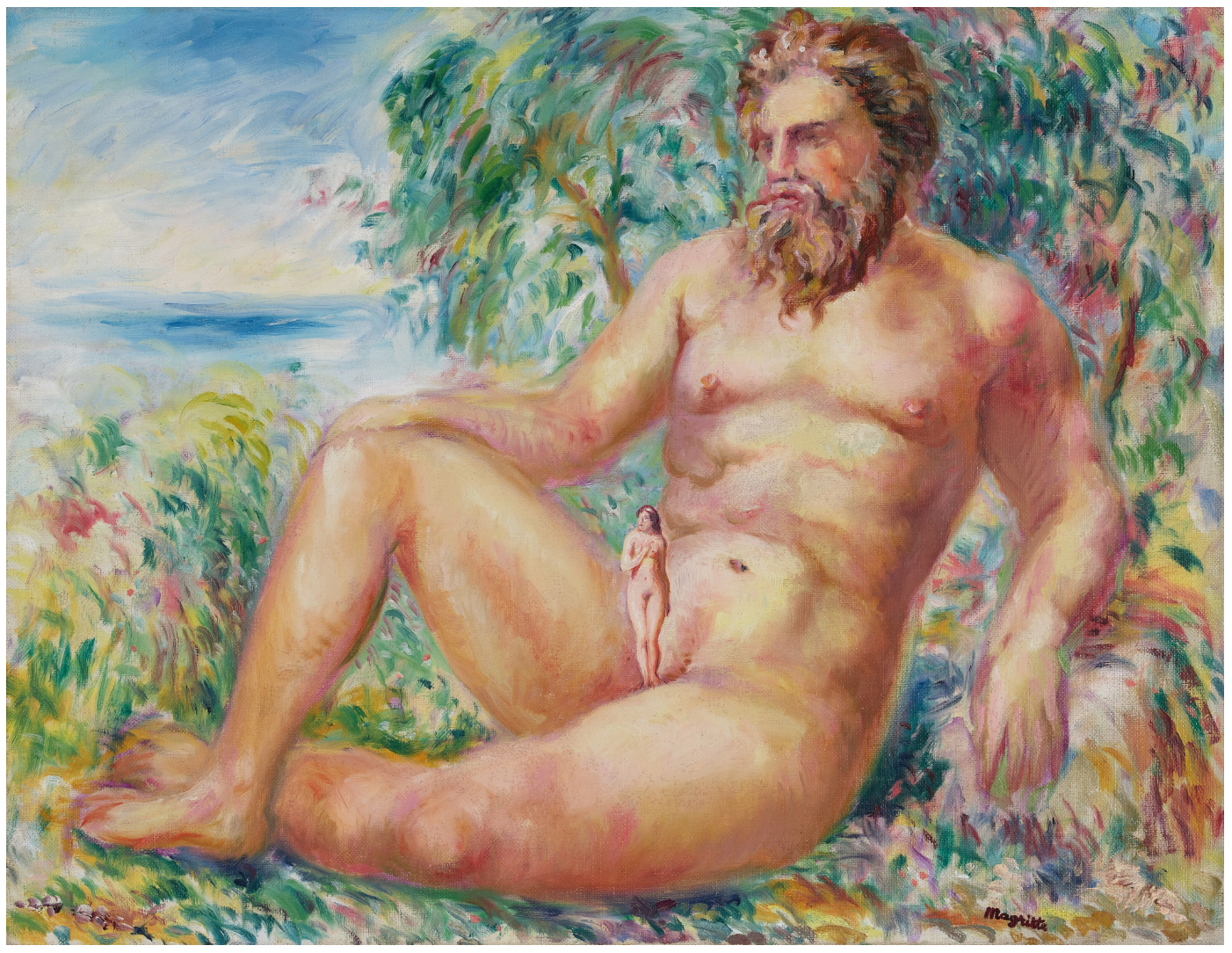
RENE MAGRITTE (1898 – 1967)
L’Océan, 1943
Oil on canvas
50.5 x 65.5 cm (19 7/8 x 25 7/8 inches)
Signed Magritte (lower right)
Titled and dated 1943 (on the reverse)
#22. Paysage, 1919
Sotheby’s Paris: 18 October 2024
Estimated: EUR 180,000 – 250,000
EUR 264,000 / USD 285,895
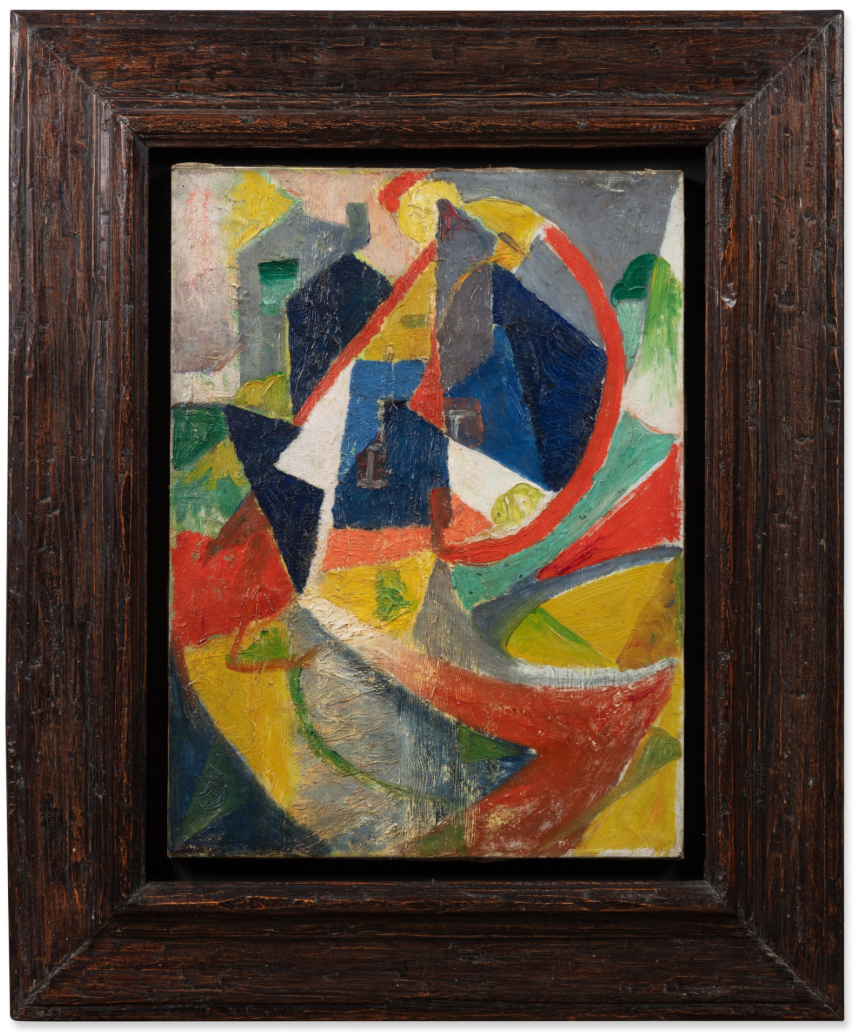
RENE MAGRITTE (1898 – 1967)
Paysage, 1919
Oil on canvas
53.5 x 39.9 cm (21 x 15 3/4 inches)
Indistinctly signed and dated magritte 1919 (upper right)
#23. Jesus Christus [Tête de Christ], circa 1918
Christie’s London: 8 March 2024
Estimated: GBP 70,000 – 100,000
GBP 201,600 / USD 258,350
RENÉ MAGRITTE (1898-1967), Jesus Christus [Tête de Christ] | Christie’s
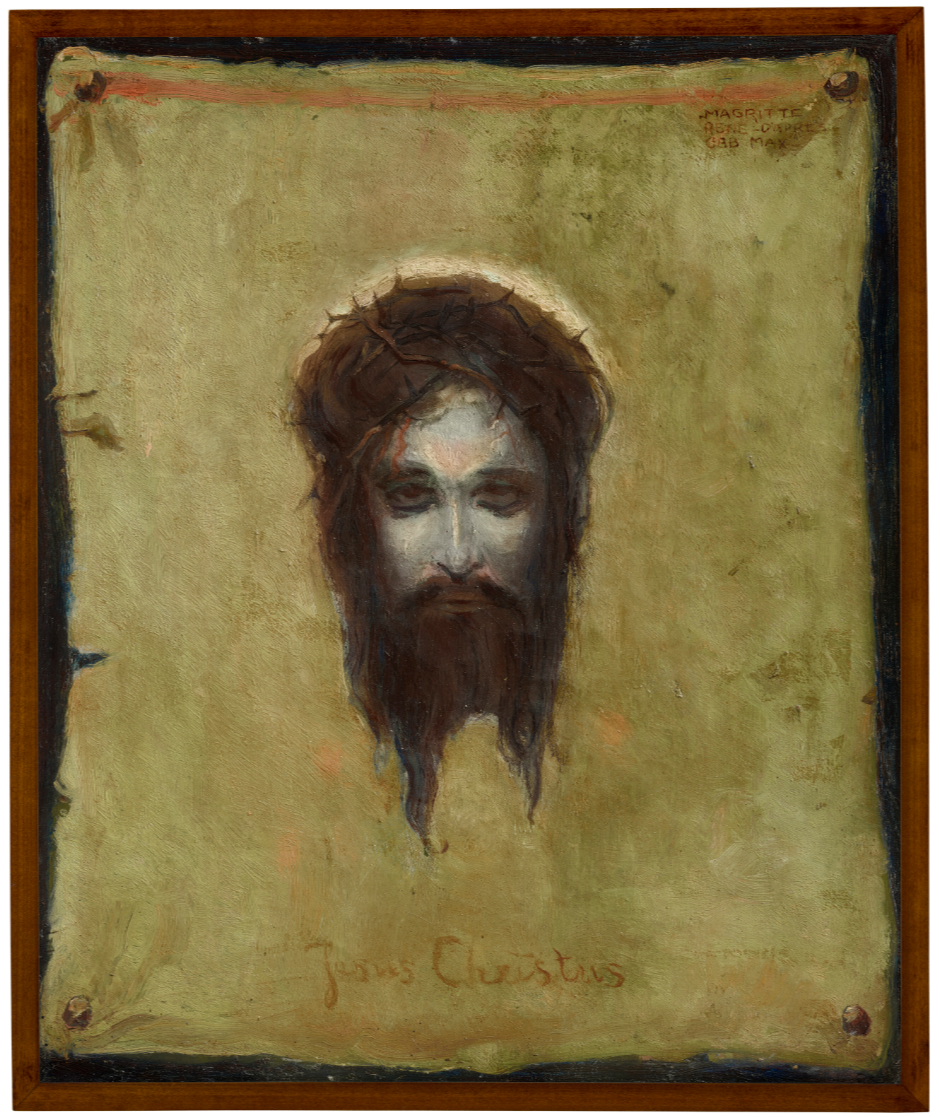
RENÉ MAGRITTE (1898-1967)
Jesus Christus [Tête de Christ], circa 1918
Oil on canvas
56.2 x 46 cm (22 1/8 x 18 1/8 inches)
Signed and inscribed
‘-MAGRITTE RENÉ-D’APRÈS GAB MAX-‘ (upper right) and inscribed ‘Jesus Christus’
(lower centre)
Lots Passed
Le Paysage en feu, 1928
Sotheby’s New-York: 18 November 2024
Estimated: USD 1,800,000 – 2,500,000
PASSED
Le Paysage en feu | Modern Evening Auction | 2024 | Sotheby’s
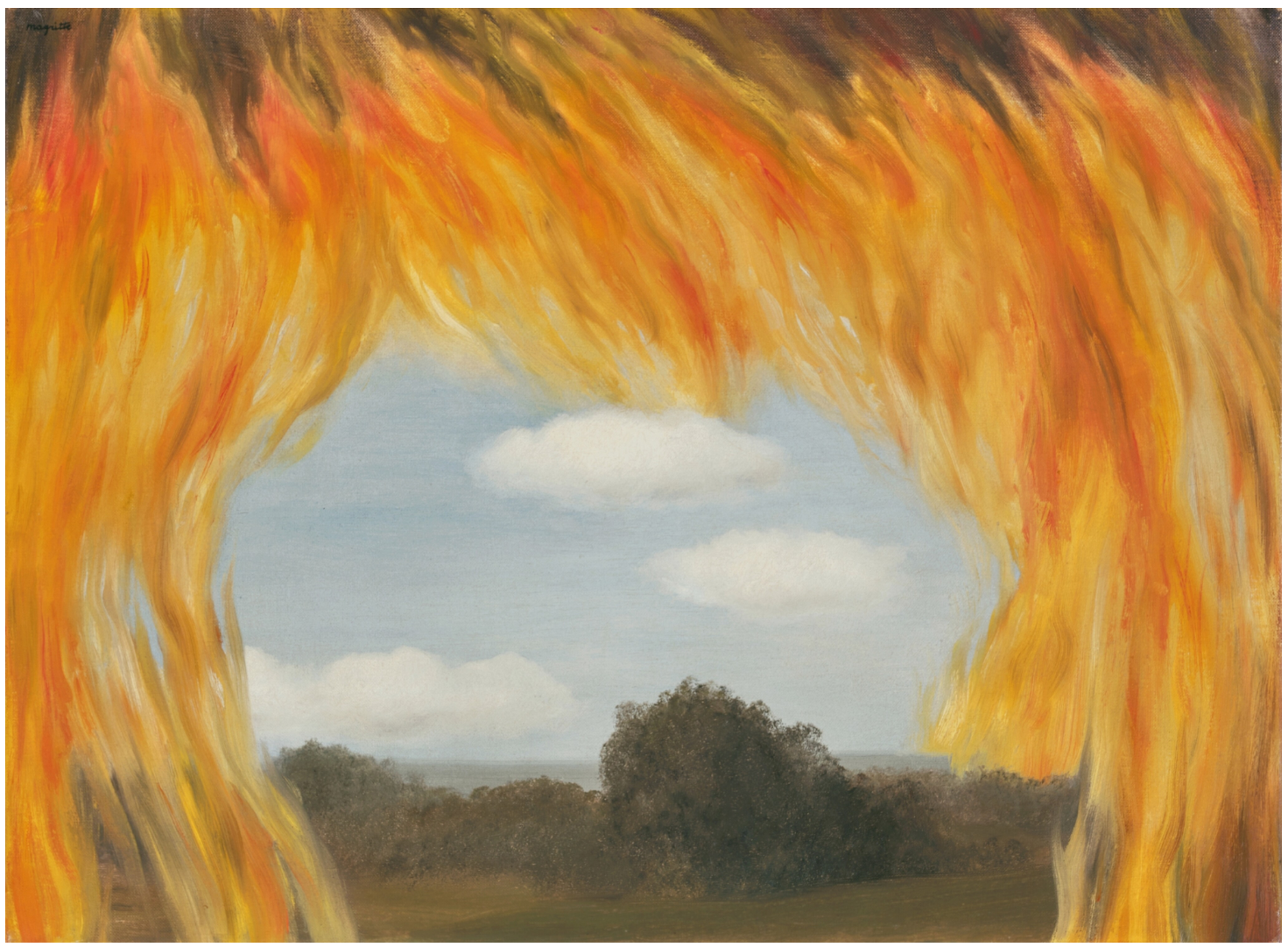
RENE MAGRITTE (1898 – 1967)
Le Paysage en feu, 1928
Oil on canvas
54.2 x 73.3 cm (21 3/8 x 28 7/8 inches)
Signed Magritte (upper left)
Titled (on the reverse)
2023 Auction Results
FOR PAINTINGS AND SCULPTURES ONLY
20 lots sold at auction in 2023 for a total turnover of USD 166,212,957. With 4 lots failing to sell, the sell-through rate is 83%. L’empire des lumieres, a painting dated 1951, from the artist’s most celebrated series sold at Sotheby’s in New-York on 16 May 2023 for USD 42,273,000, the highest price achieved in 2023 for a painting by Rene Magritte.
2023 Top 3 Lots
5 lots sold for more than USD 10 million, generating a cumulative turnover of USD 121,257,067, representing 73% of the total turnover for 2023.
XXXXXXXXX
#1. L’Empire des lumières, 1951
The Mo Ostin Collection Evening Auction
Sotheby’s New-York: 16 May 2023
Estimated: USD 35,000,000 – 55,000,000
USD 42,273,000
L’Empire des lumières | The Mo Ostin Collection Evening Auction | 2023 | Sotheby’s
RENE MAGRITTE (1898 – 1967)
L’Empire des lumières, 1951
Oil on canvas
80.3 x 65.7 cm (31 5/8 x 25 7/8 inches)
Signed (lower right)
Titled “L’Empire des lumières,” numbered III and dated 1951 (on the reverse)
Executed in August—September 1951
#2. L’empire des lumières, 1949
Christie’s New-York: 9 November 2023
Estimated: USD 25,000,000 – 35,000,000
USD 34,910,000
RENE MAGRITTE (1898-1967), L’empire des lumières | Christie’s
RENE MAGRITTE (1898-1967)
L’empire des lumières, 1949
Oil on canvas
48.5 x 58.8 cm (19 1/8 x 23 1/8 inches)
Signed ‘Magritte’ (lower right)
Titled and dated ‘”L’EMPIRE des LUMIÈRES” 1949’ (on the reverse)
#3. Le Domaine d’Arnheim, 1949
Sotheby’s New-York: 16 May 2023
Estimated: USD 15,000,000 – 25,000,000
USD 18,948,300
Le Domaine d’Arnheim | The Mo Ostin Collection Evening Auction | 2023 | Sotheby’s
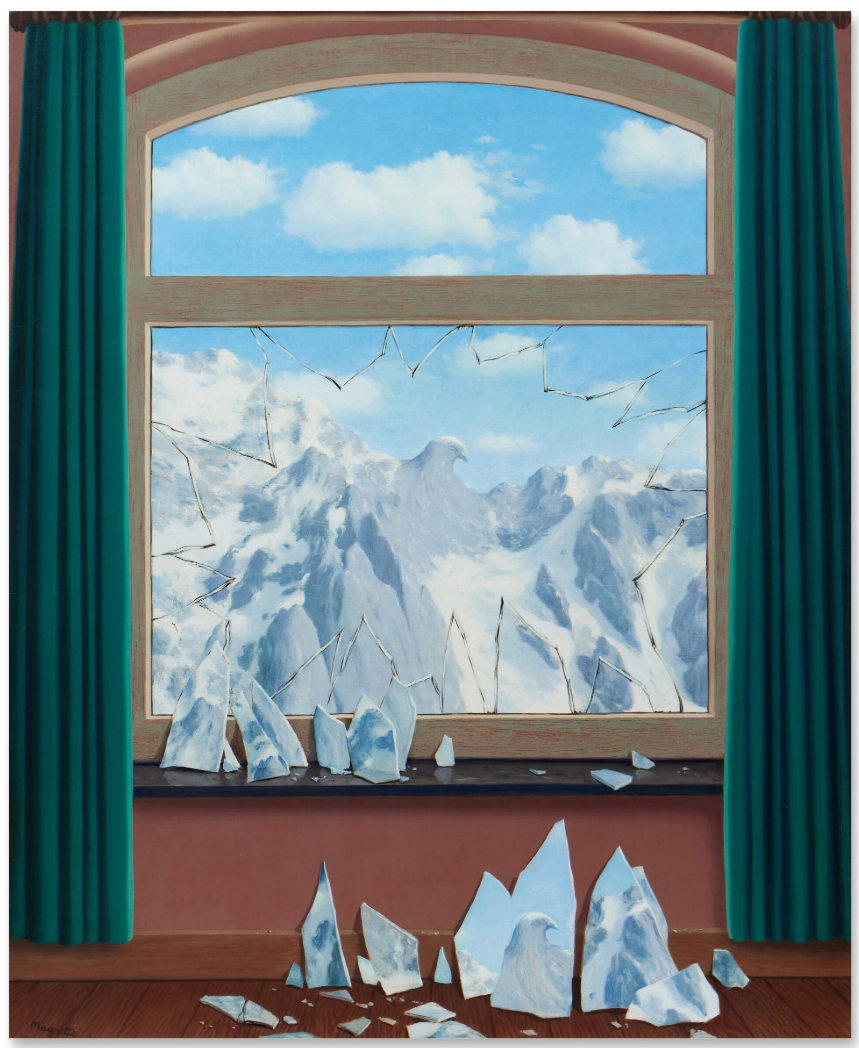
RENE MAGRITTE (1898 – 1967)
Le Domaine d’Arnheim, 1949
Oil on canvas
99.7 x 81.3 cm (39 1/4 x 32 inches)
Signed (lower left)
Signed again, titled “Domaine d’Arnheim” and dated 1949 (on the reverse)
#4. L’île au trésor, 1945
Christie’s New-York: 9 November 2023
Estimated: USD 14,000,000 – 18,000,000
USD 13,347,500
RENE MAGRITTE (1898-1967), L’île au trésor | Christie’s
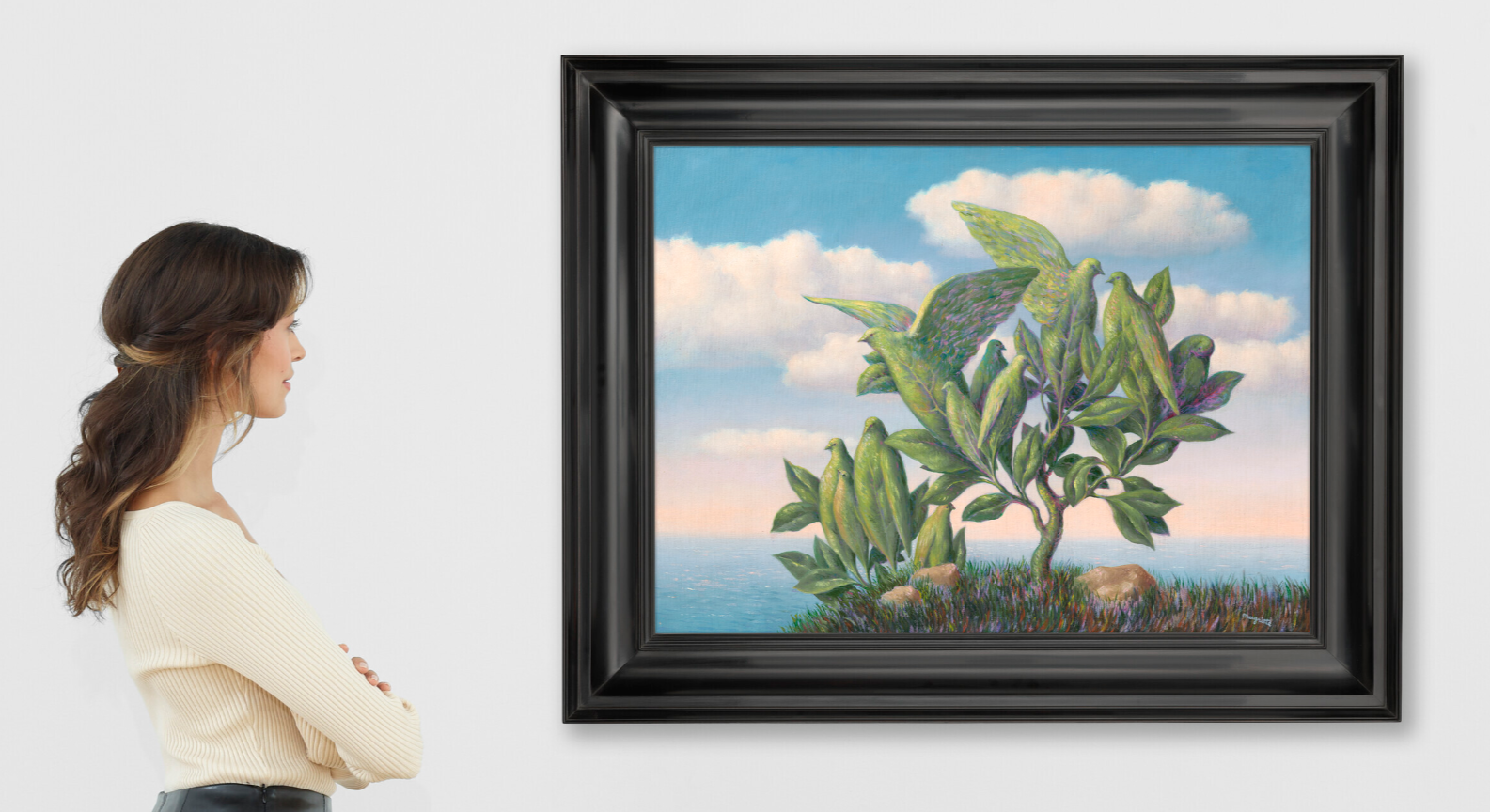
RENE MAGRITTE (1898-1967)
L’île au trésor, 1945
Oil on canvas
60.3 x 80.4 cm (23 3/4 x 31 5/8 inches)
Signed ‘Magritte’ (lower right)
#5. La valse hésitation, 1955
Sotheby’s Paris: 19 October 2023
Estimated: EUR 10,500,000 – 15,500,000
EUR 11,177,000 / USD 11,778,265
La valse hésitation | Modernités | 2023 | Sotheby’s
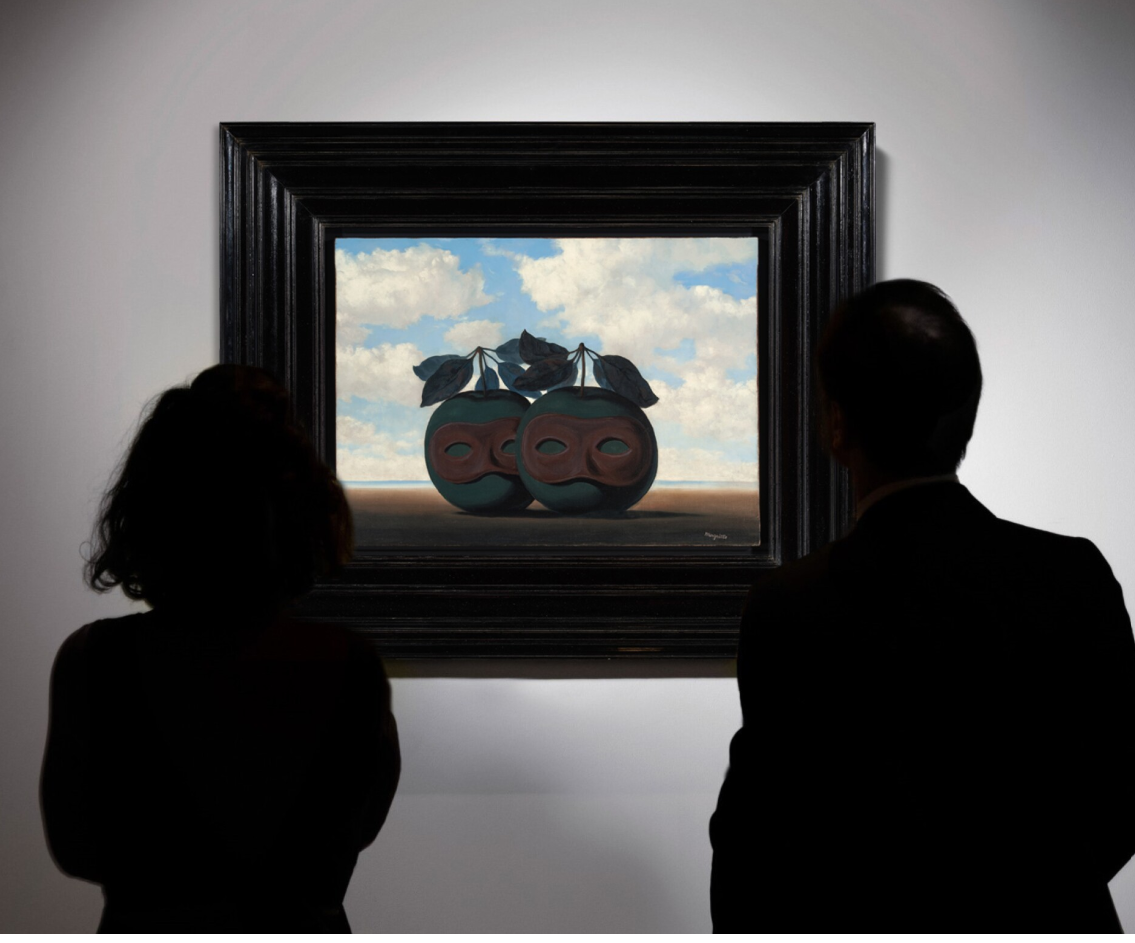
RENE MAGRITTE (1898 – 1967)
La valse hésitation, 1955
Oil on canvas
40.2 x 55 cm (15 7/8 x 21 5/8 inches)
Signed magritte (lower right)
USD 10 million
#6. Le miroir universel, 1938-1939
Sotheby’s Hong-Kong: 5 October 2023
Estimated: HKD 70,000,000 – 95,000,000
HKD 77,575,000 / USD 9,909,120
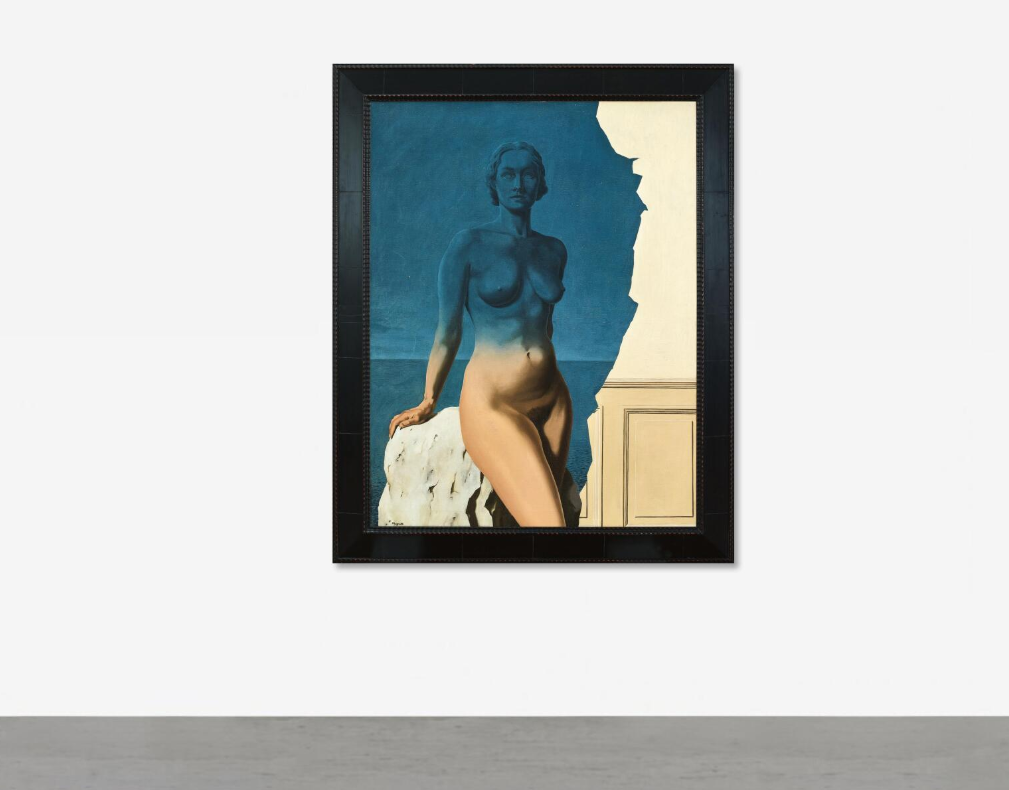
RENE MAGRITTE (1898 – 1967)
Le miroir universel, 1938-1939
Oil on canvas
116×89 cm (45 5/8 x 35 inches)
Signed Magritte lower left
Signed Magritte, dated 1939 and titled “LE MIROIR UNIVERSEL” on the reverse
#7. Souvenir de voyage, 1958
Christie’s London: 28 February 2023
Estimated: GBP 2,500,000 – 3,500,000
GBP 5,556,500 / USD 6,702,460
RENÉ MAGRITTE (1898-1967), Souvenir de voyage | Christie’s
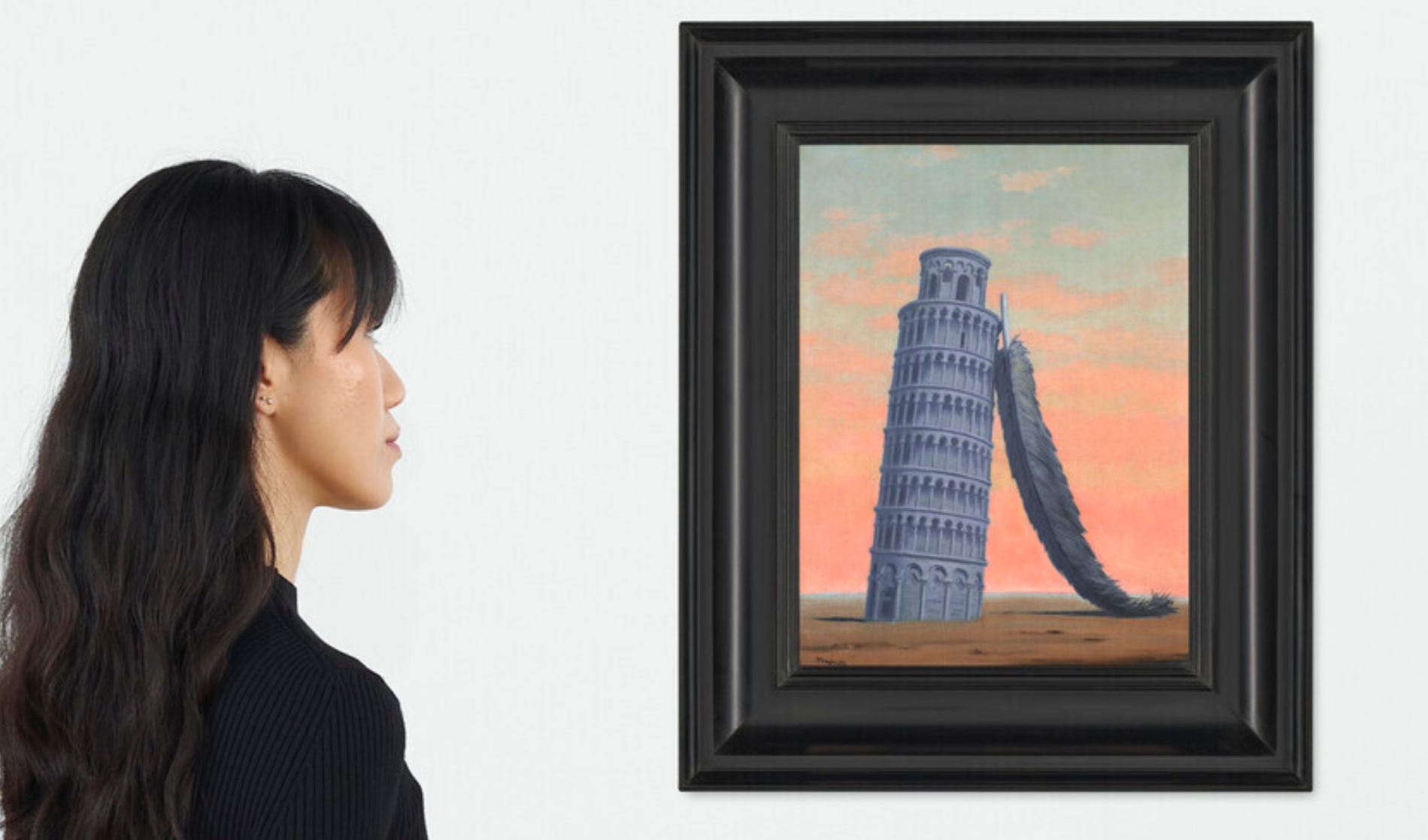
RENÉ MAGRITTE (1898-1967)
Souvenir de voyage, 1958
Oil on canvas
40.1 x 30.2 cm (15 7/8 x 12 inches)
Signed ‘Magritte’ (lower left)
#8. Le promenoir des amants, 1929-1930
Christie’s Hong-Kong: 28 May 2023
Estimated: HKD 24,000,000 – 35,000,000
HKD 51,195,000 / USD 6,536,680
RENE MAGRITTE (1898-1967), Le promenoir des amants | Christie’s
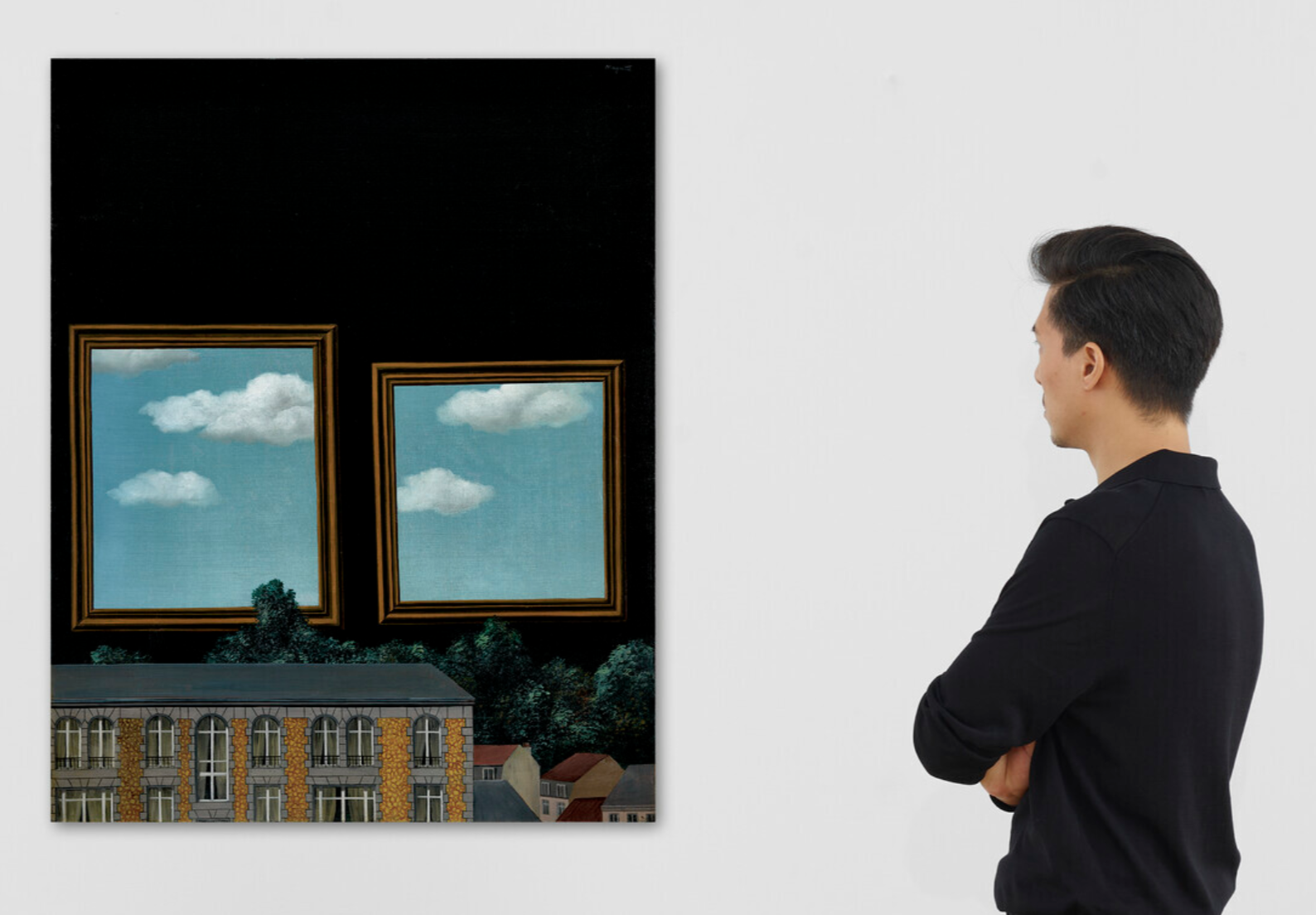
RENE MAGRITTE (1898-1967)
Le promenoir des amants, 1929-1930
Oil on canvas
93 x 74.3 cm (36 5/8 x 29 1/4 inches)
Signed ‘Magritte’ (upper right)
#9. Le masque de la foudre, 1965-1966
Christie’s London: 28 February 2023
Estimated: GBP 3,000,000 – 5,000,000
GBP 4,482,000 / USD 5,406,360
RENÉ MAGRITTE (1898-1967), Le masque de la foudre | Christie’s
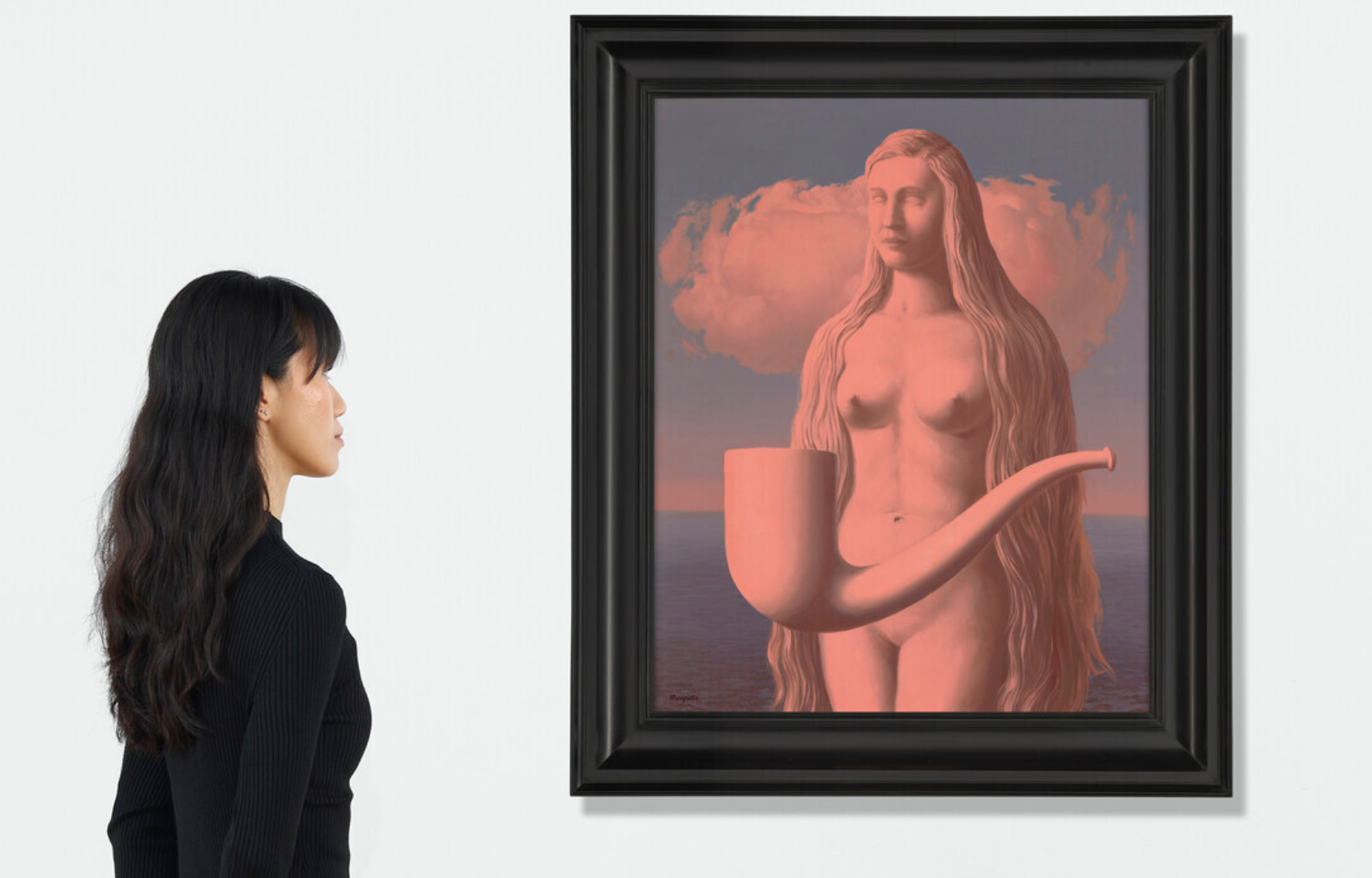
RENÉ MAGRITTE (1898-1967)
Le masque de la foudre, 1965-1966
Oil on canvas
80.2 x 65.1 cm (31 1/2 x 25 5/8 inches)
Signed ‘Magritte’ (lower left)
USD 5 million
#10. Les Grains de beauté, circa 1965
Christie’s Paris: 4 April 2023
Estimated: EUR 3,000,000 – 5,000,000
EUR 3,402,000 / USD 3,710,485
René Magritte (1898-1967), Les Grains de beauté | Christie’s
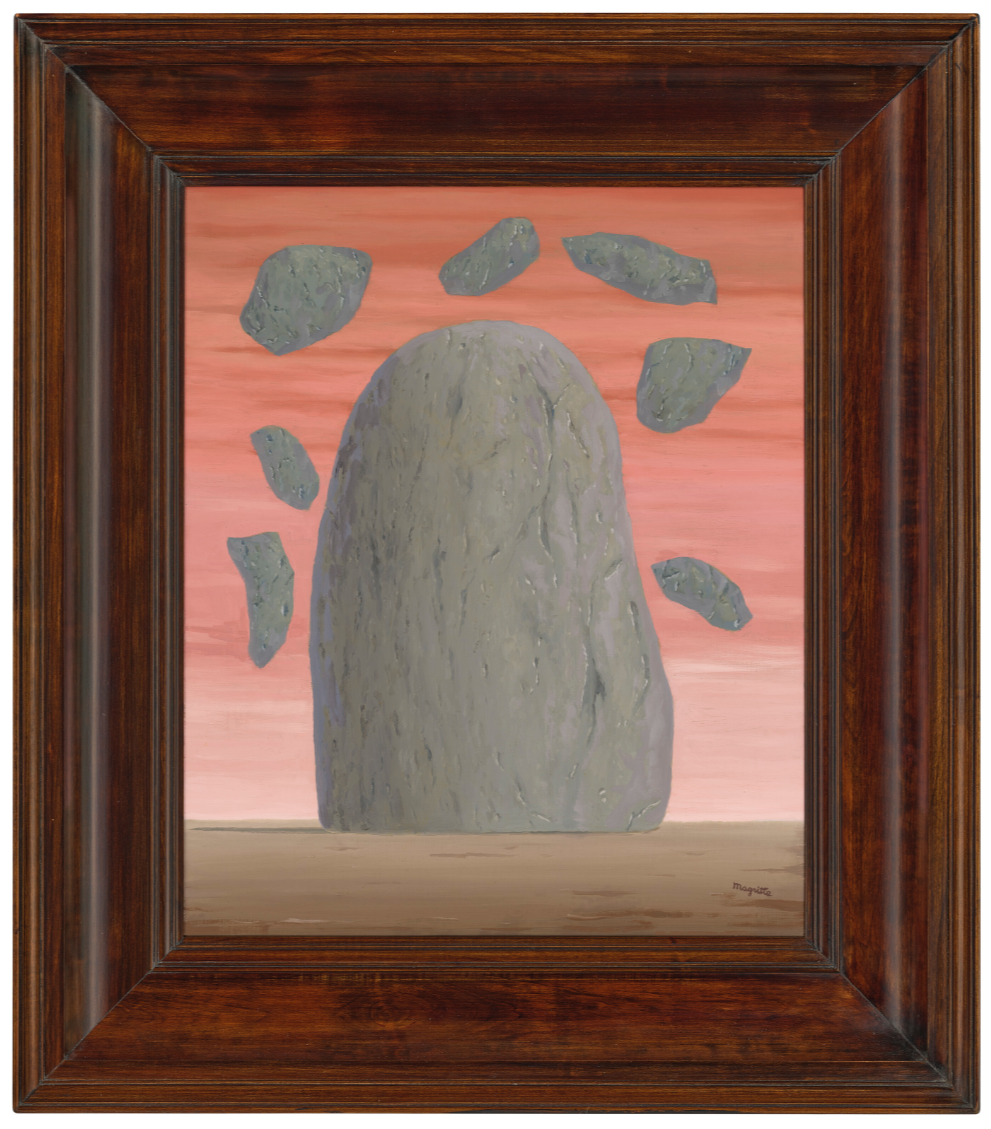
René Magritte (1898-1967)
Les Grains de beauté, circa 1965
Oil on canvas
55.3 x 45.6 cm (21 3/4 x 17 7/8 inches)
Signed ‘Magritte’ (lower right)
Inscribed ‘”LES GRAINS DE BEAUTÉ”‘ (on the reverse)
#11. La leçon de musique, 1965
Sotheby’s Paris: 15 March 2023
Estimated: EUR 2,300,000 – 3,500,000
EUR 2,952,000 / USD 3,123,735
La leçon de musique | Surrealism & Its Legacy | 2023 | Sotheby’s
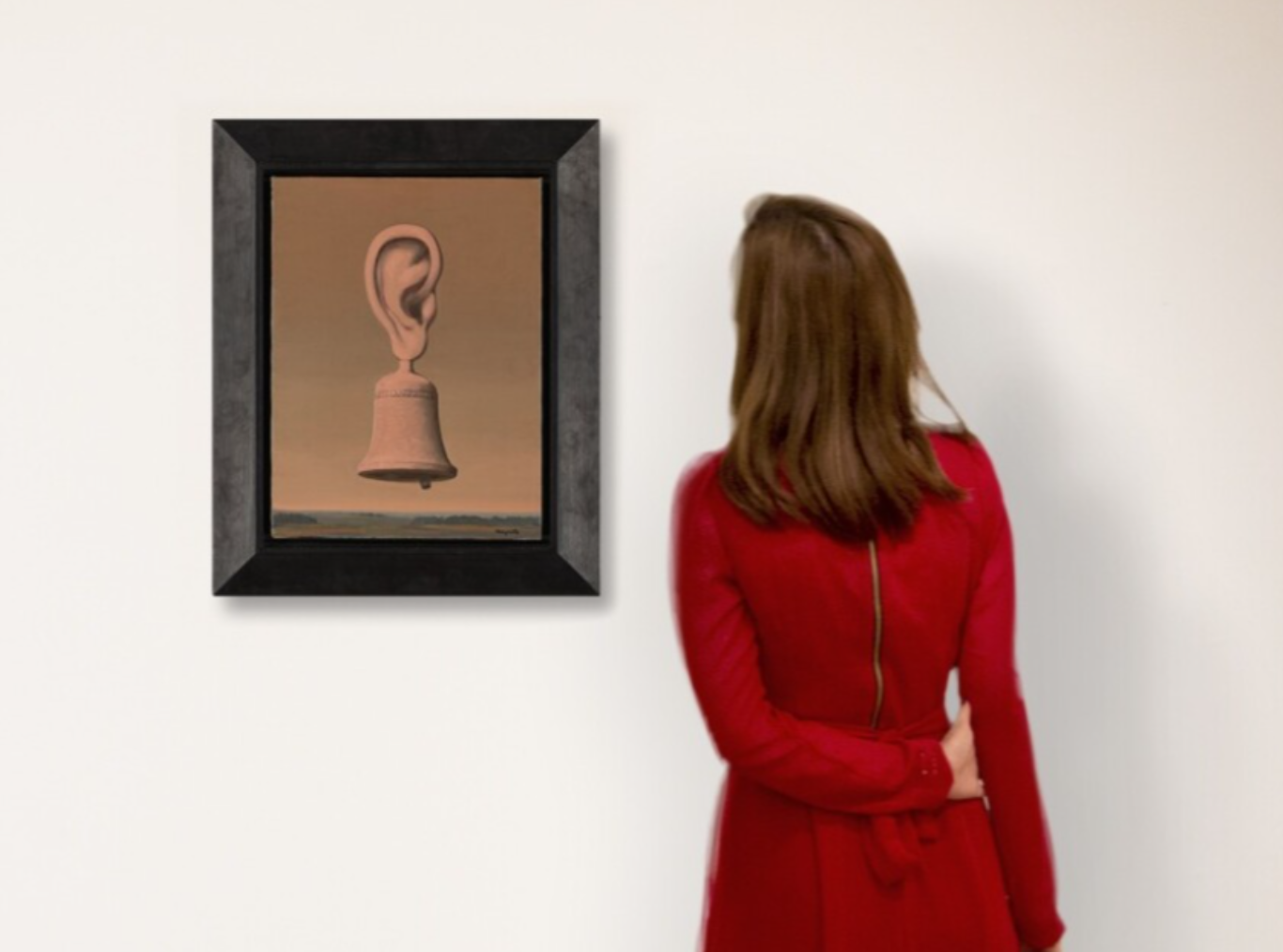
RENE MAGRITTE (1898 – 1967)
La leçon de musique, 1965
Oil on canvas
40.4 x 30.4 cm (15 7/8 x 12 inches)
Signed magritte (lower right)
Titled ”La leçon de musique” (on the reverse)
#12. La tempete, 1955
Artcurial Paris: 5 December 2023
Estimated: EUR 1,400,000 – 1,800,000
EUR 1,786,400 / USD 1,935,985
Impressionniste & Moderne – Vente du soir
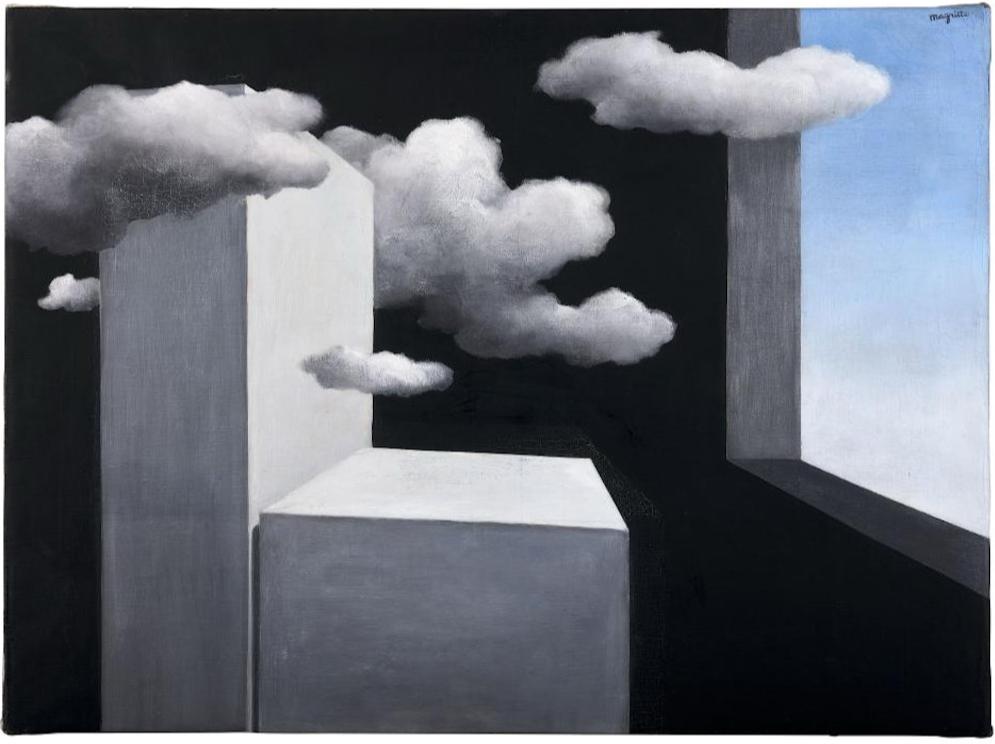
RENE MAGRITTE (1898 – 1967)
La tempete, 1955
Oil on canvas
54×73 cm (21 3/8 x 28 7/8 inches)
Signed magritte (upper right)
#13. Le Monde poétique, 1937
Sotheby’s New-York: 13 November 2023
Estimated: USD 1,800,000 – 2,500,000
USD 1,875,000
Le Monde poétique | Modern Evening Auction | 2023 | Sotheby’s
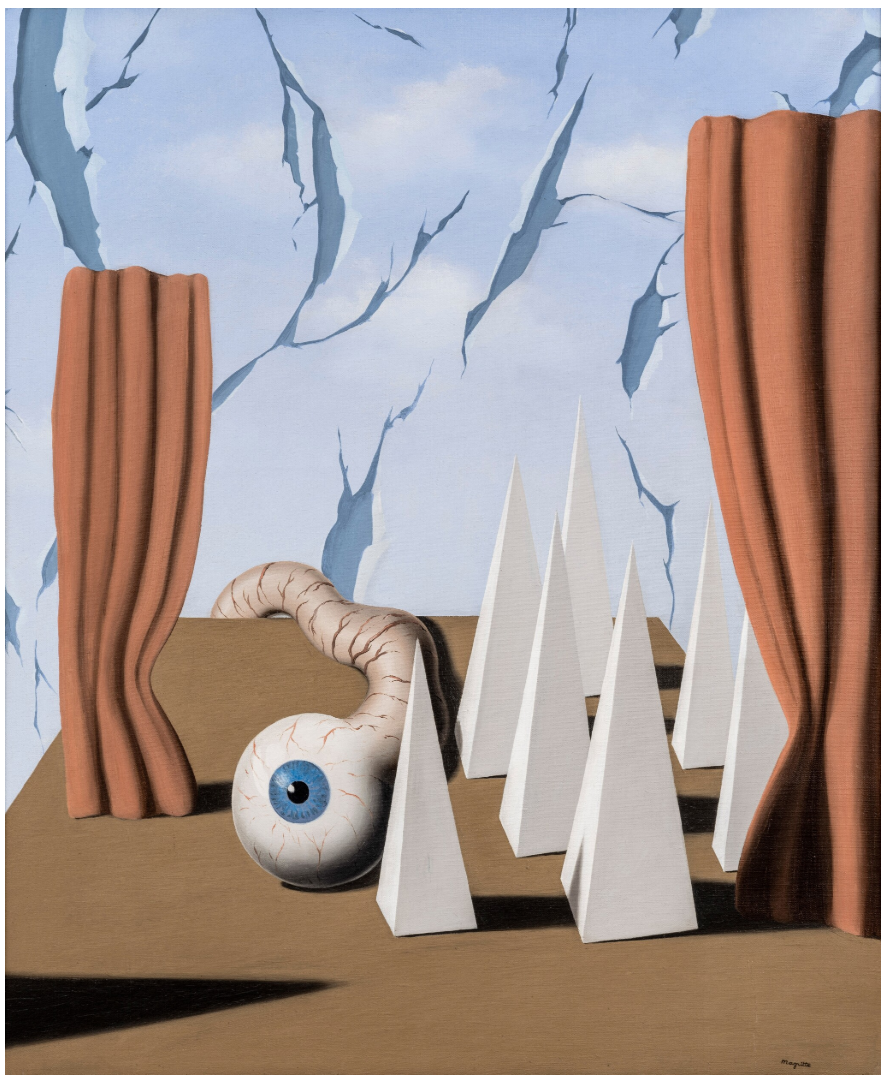
RENE MAGRITTE (1898 – 1967)
Le Monde poétique, 1937
Oil on canvas
65.4 x 54 cm (25 3/4 x 21 1/4 inches)
Signed Magritte (lower right)
#14. Après le bal, 1926
Christie’s Paris: 4 April 2023
Estimated: EUR 2,200,000 – 3,200,000
EUR 1,662,000 / USD 1,812,705
René Magritte (1898-1967), Après le bal | Christie’s
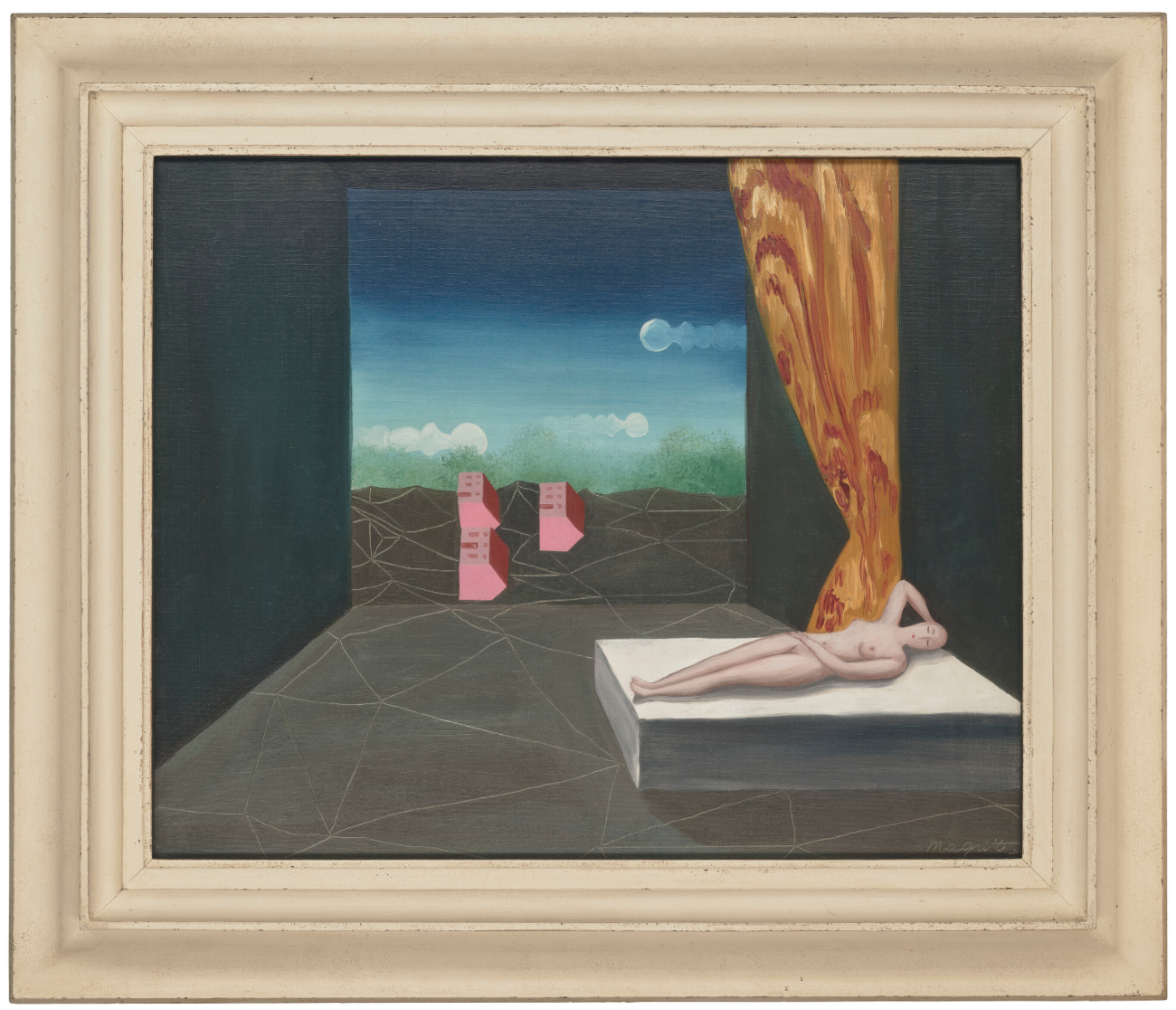
RENE MAGRITTE (1898-1967)
Après le bal, 1926
Oil and sgraffitto on canvas
65.6 x 80.5 cm (25 3/4 x 31 1/4 inches)
Signed ‘Magritte’ (lower right)
#15. L’Esprit du voyageur, 1926
Sotheby’s New-York: 14 November 2023
Estimated: USD 1,200,000 – 1,800,000
USD 1,270,000
L’Esprit du voyageur | Modern Day Auction | 2023 | Sotheby’s
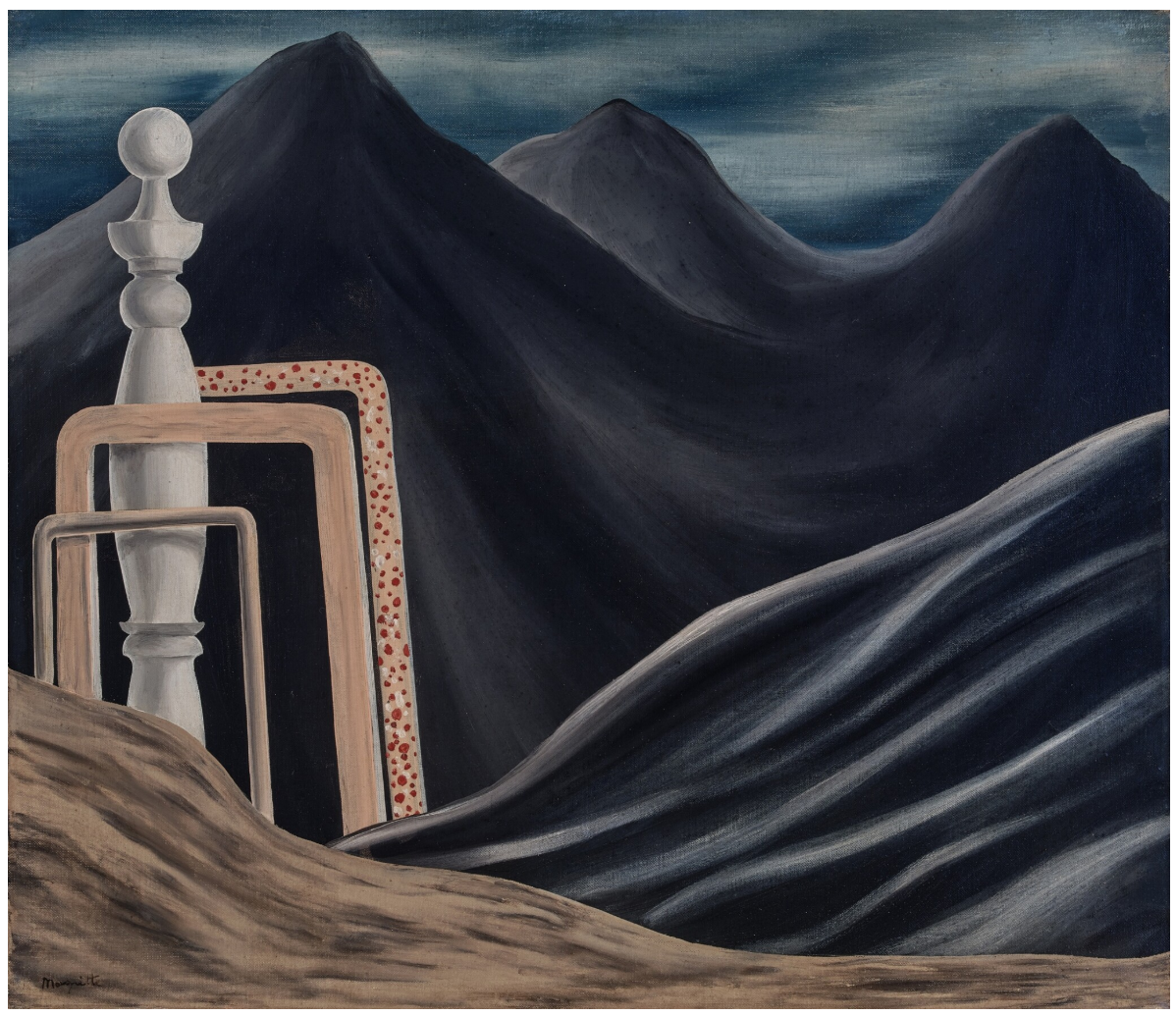
RENE MAGRITTE (1898 – 1967)
L’Esprit du voyageur, 1926
Oil on canvas
65 x 75.5 cm (25 1/2 x 29 7/8 inches)
Signed Magritte (lower left)
USD 1 million
#16. La malediction, 1963
Grisebach Berlin: 30 November 2023
Estimated: EUR 300,000 – 400,000
EUR 609,600 / USD 695,280
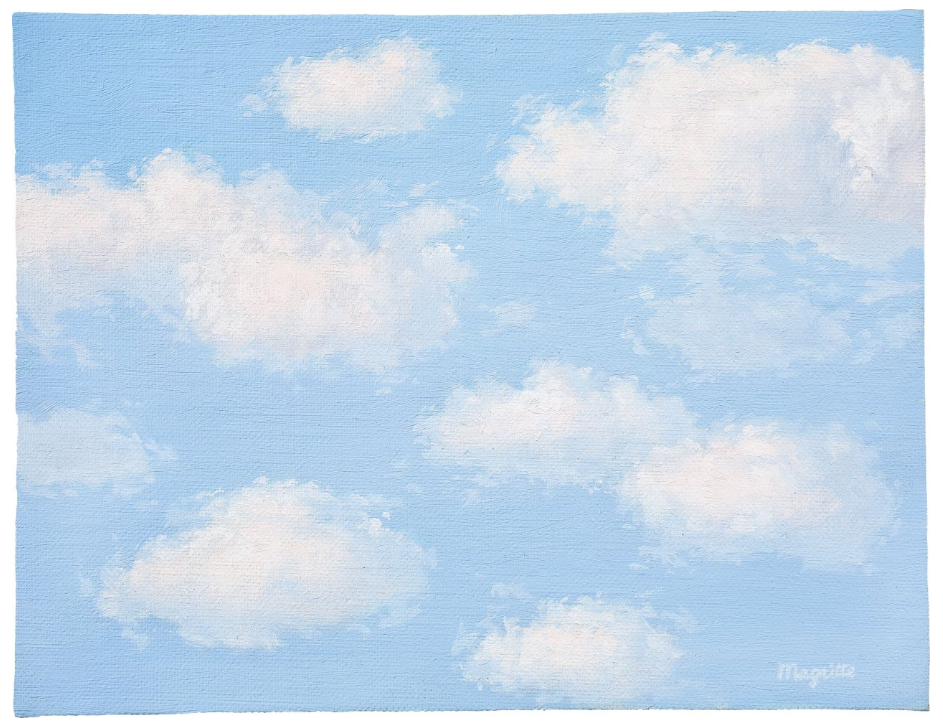
RENE MAGRITTE (1898-1967)
La malediction, 1963
Oil on canvas on cardboard
16.1 x 21 cm (6 3/8 x 8 3/8 inches)
Signed ‘Magritte’ (lower right)
#17. La femme au miroir, 1943
Christie’s New-York: 17 May 2023
Estimated: USD 1,000,000 – 1,500,000
USD 630,000
RENE MAGRITTE (1898-1967), La femme au miroir | Christie’s
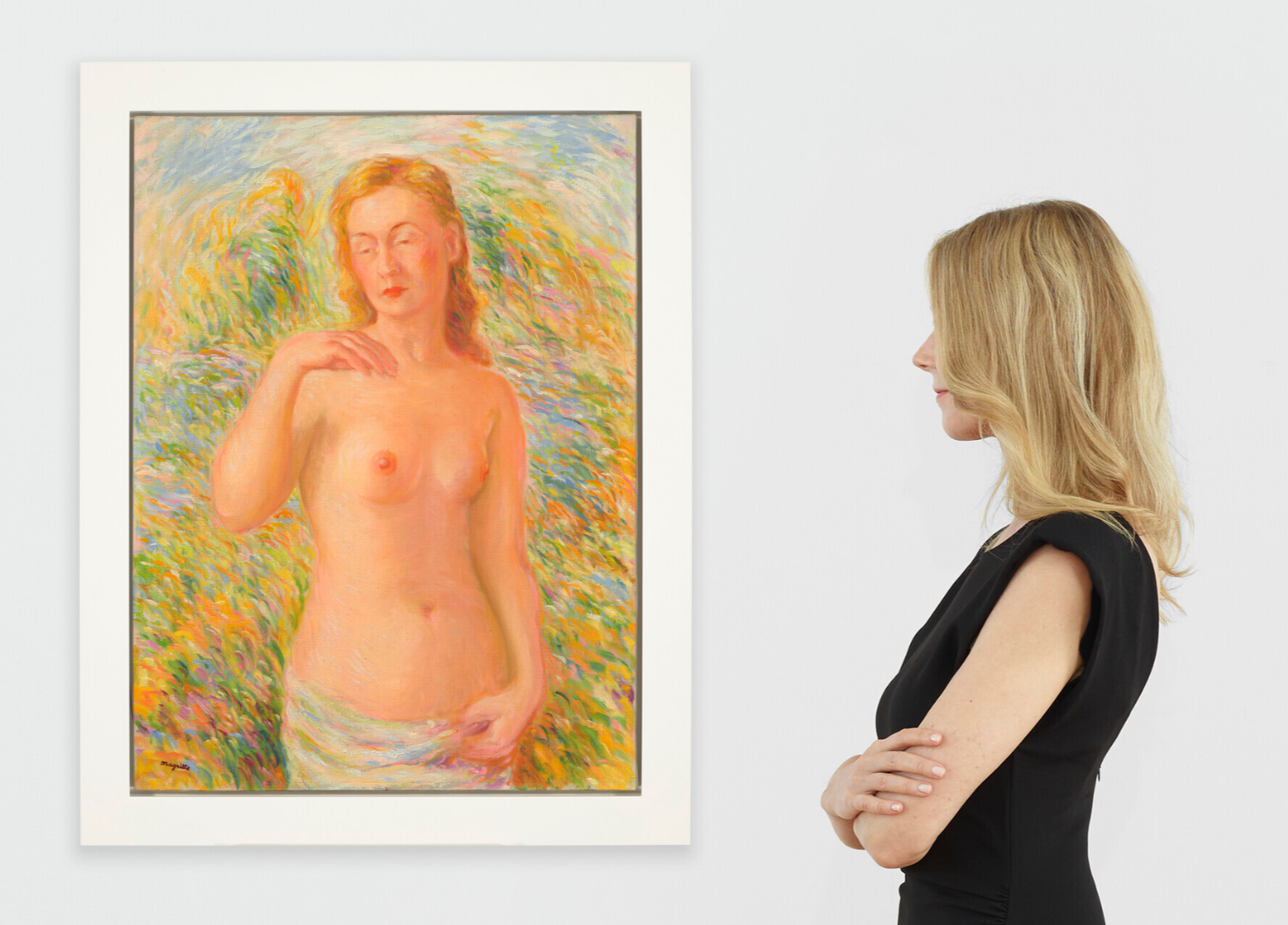
RENE MAGRITTE (1898-1967)
La femme au miroir, 1943
Oil on canvas
73.6 x 54.8 cm (29 x 21 5/8 inches)
Signed ‘Magritte’ (lower left)
Titled ‘”LA FEMME AU MIROIR”‘ (on the reverse)
#18. La gare, 1922
Sotheby’s Paris: 19 October 2023
Estimated: EUR 250,000 – 350,000
EUR 520,700 / USD 548,710
La gare | Modernités | 2023 | Sotheby’s
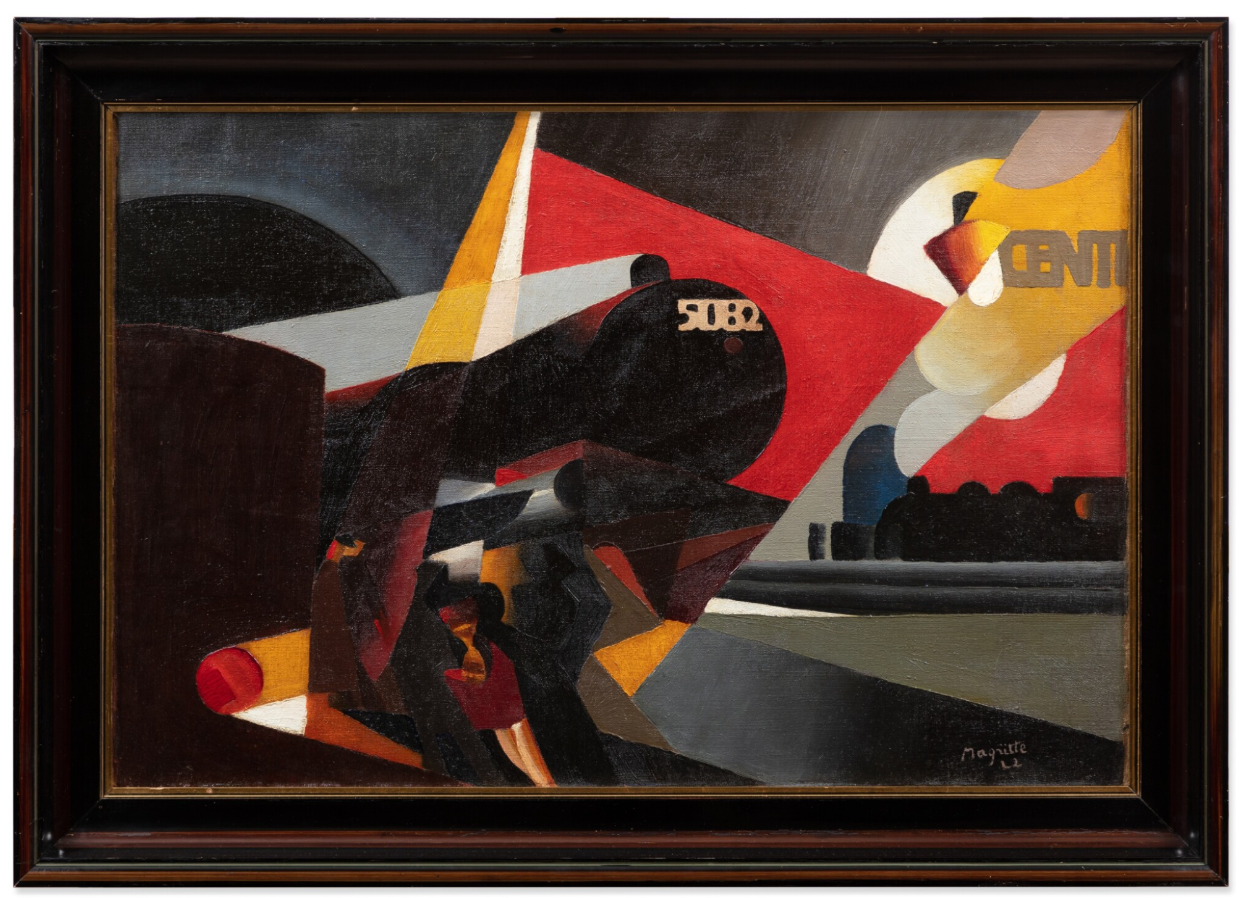
RENE MAGRITTE (1898 – 1967)
La gare, 1922
Oil on canvas
40×60 cm (15 3/4 x 23 5/8 inches)
Signed magritte and dated 22 (lower right)
#19. Les Adieux, 1943
Sotheby’s New-York: 14 November 2023
Estimated: USD 500,000 – 700,000
USD 508,000
Les Adieux | Modern Day Auction | 2023 | Sotheby’s
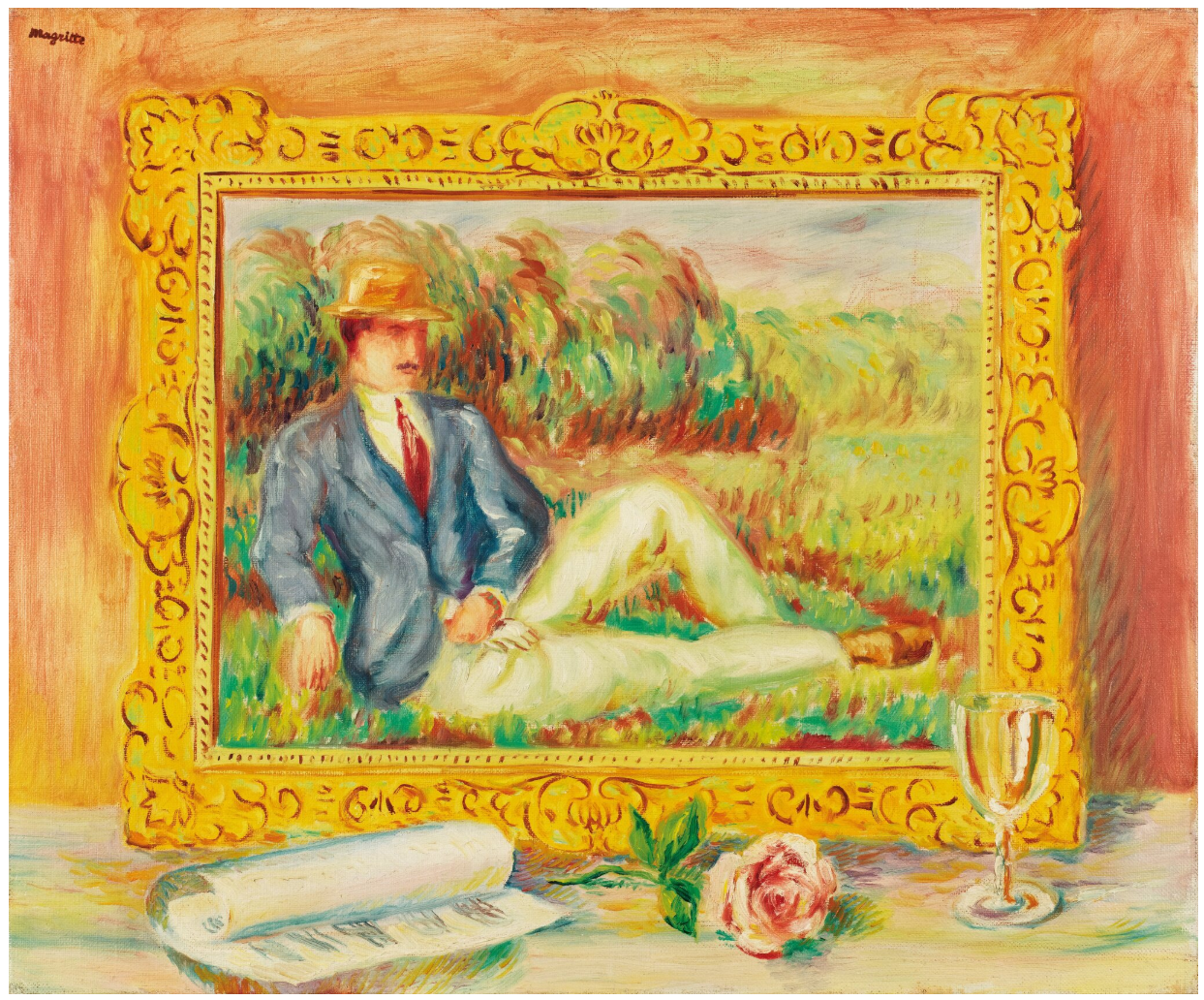
RENE MAGRITTE (1898 – 1967)
Les Adieux, 1943
Oil on canvas
50 x 59.8 cm (19 3/4 x 23 1/2 inches)
Signed Magritte (upper left)
#20. Le violoniste, 1920
Sotheby’s London: 28 June 2023
Estimated: GBP 200,000 – 300,000
GBP 228,600 / USD 291,365
Le violoniste | Modern & Contemporary Day Auction | 2023 | Sotheby’s
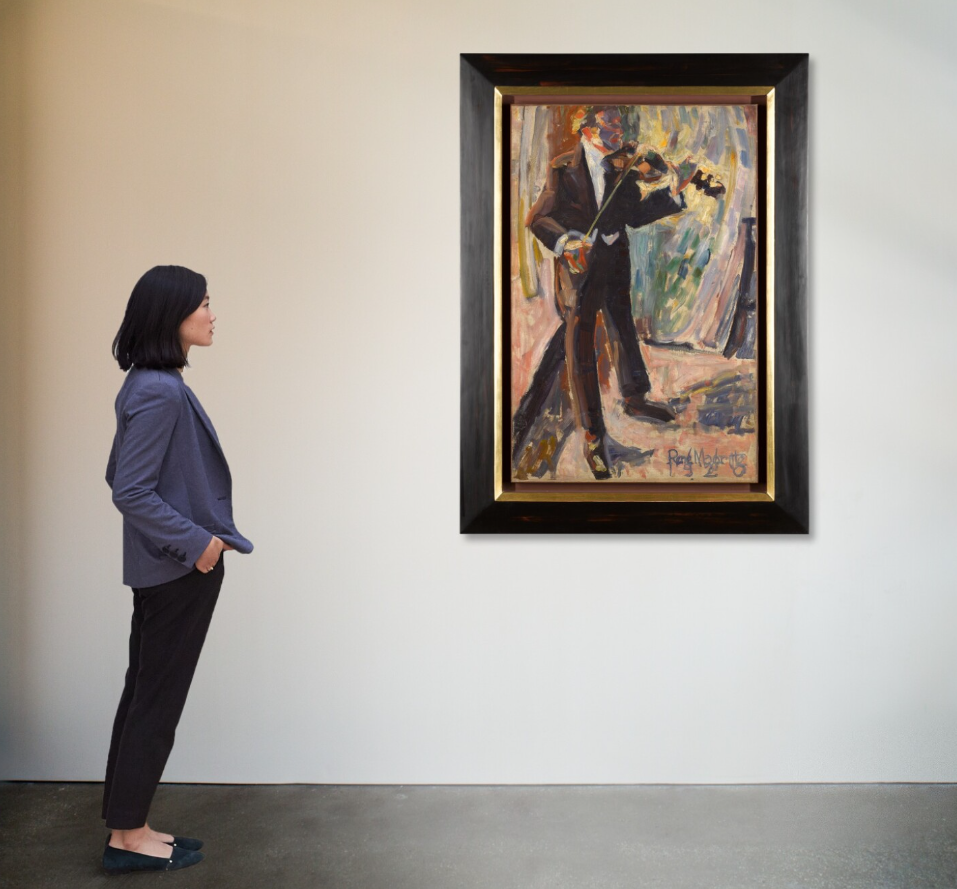
RENE MAGRITTE (1898 – 1967)
Le violoniste, 1920
Oil on canvas
100.2 x 65 cm (39 1/2 x 25 5/8 inches)
Signed René Magritte and dated 1920 (lower right)
2022 Auction Results
WORK IN PROGRESS
#1. L’empire des lumières, 1961
Sotheby’s London: 2 March 2022
Estimates on Request
GBP 59,422,000 / USD 79,209,370
L’empire des lumières | Modern & Contemporary Evening Auction | 2022 | Sotheby’s
RENE MAGRITTE (1898 – 1967)
L’empire des lumières, 1961
Oil on canvas
114.5 x 146cm (45 x 57 1/2 inches)
Signed Magritte (lower right)
Signed Magritte and titled on the reverse
#2. La voix du sang, 1948
Christie’s New-York: 9 November 2022
Estimated: USD 12,000,000 – 18,000,000
USD 26,725,000
RENE MAGRITTE (1898-1967), La voix du sang | Christie’s
RENE MAGRITTE (1898-1967)
La voix du sang, 1948
Oil on canvas
79.1 x 58.6 cm (31 1/8 x 23 1/8 inches)
Signed ‘Magritte’ (lower right)
PART III: FOCUS
L’empire des lumières
To this day, L’empire des lumières serves as a powerful illustration of Rene Magritte’s extraordinary ability to deploy symbols of a normal, ordinary, conventional life to contradictory ends: to surprise, unsettle and reconfigure the viewer’s expectations and thus, their experience of everyday reality.
The importance of the L’Empire des lumières paintings can hardly be overstated. Between 1949 and 1965, Magritte executed seventeen oils on the subject in what is viewed as the greatest series and most prominent motif of his oeuvre. Whereas artists like Claude Monet set out to create discrete series, often intended to capture shifting light and time, Magritte’s reiteration of his themes can be seen as an organic evolution of the idiom, each work rendered anew as he explored the possibilities and limitations of the visual device. As Magritte later explained in a television program in April 1956,
“What is represented in the picture The dominion of light are the things I thought of, to be precise, a nocturnal landscape and a skyscape such as can be seen in broad daylight. The landscape suggests night and the skyscape day. This evocation of night and day seems to me to have the power to surprise and delight us. I call this power: poetry.”
L’empire des lumières, 1949
Leonard & Louise Riggio: Collected Works
Christie’s New-York: 12 May 2025
Estimates on Request
USD 34,910,000
RENE MAGRITTE (1898-1967), L’empire des lumières | Christie’s
RENE MAGRITTE (1898-1967)
L’empire des lumières, 1949
Oil on canvas
48.2 x 58.7 cm (19 x 23 1/8 inches)
Signed ‘Magritte’ (lower right)
Sated and titled ‘”L’EMPIRE des LUMIÈRES” 1949’ (on the reverse)
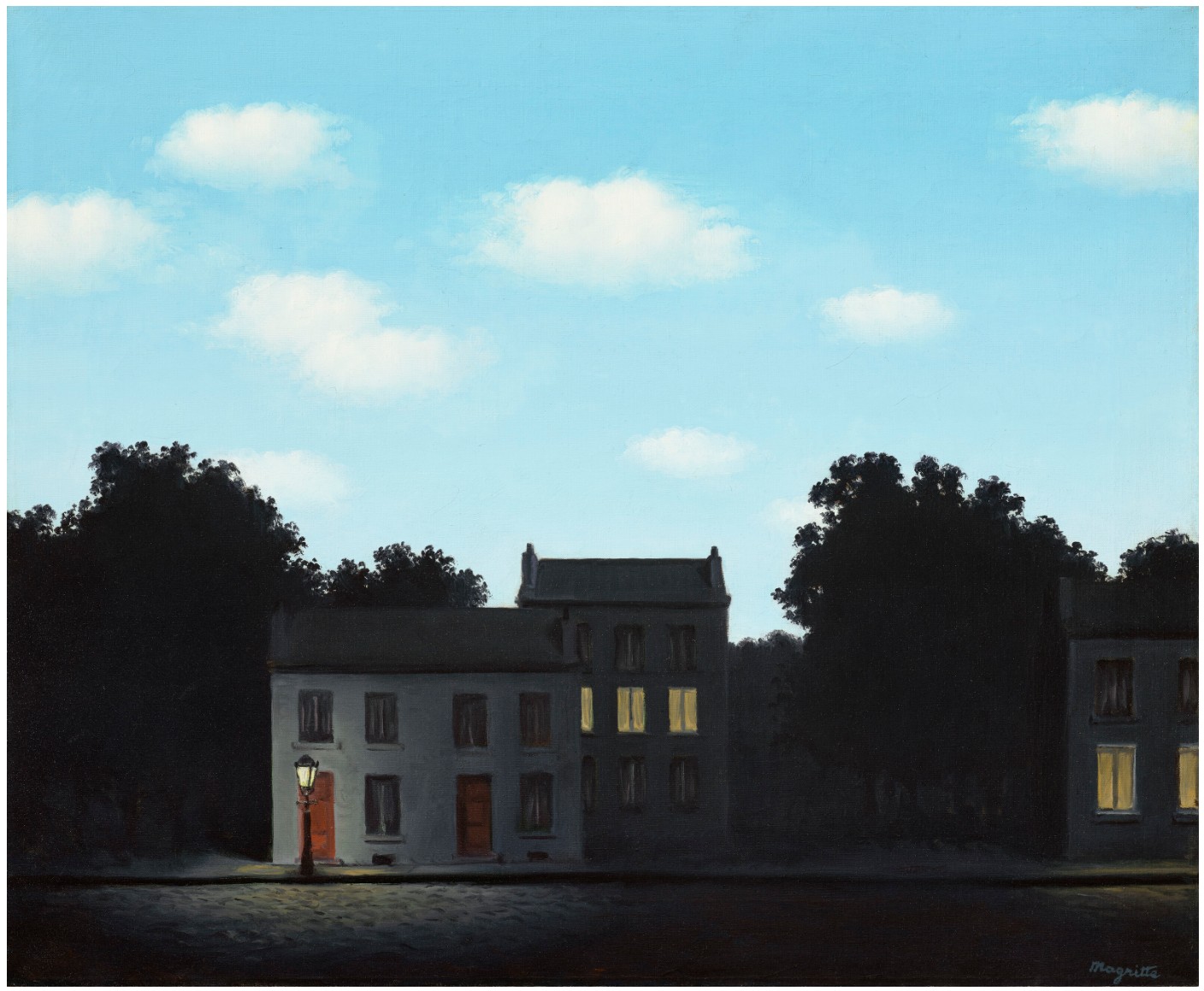
In 1949, René Magritte placed a new canvas upon the easel in his studio in Brussels, and set out to explore an intriguing, mysterious idea that had been percolating in his imagination for several years. This was a landmark moment in the artist’s career, marking the arrival of a motif that would quickly become one of the most celebrated and iconic subjects within the Belgian Surrealist’s oeuvre—the L’empire des lumières. A decade earlier, while staying with the collector Edward James in London during the spring of 1937, Magritte had given a presentation at Roland Penrose’s London Gallery in which he discussed “certain features peculiar to words, images and real objects” (quoted in D. Sylvester, ed., op. cit., 1993, p. 53). In one example early in the discussion, the artist cited the opening line of André Breton’s poem L’Aigrette, from Terre de clair (1923): “If only the sun would shine tonight” (ibid.). This intriguing proposition stuck in Magritte’s mind, and grew into the L’empire des lumières works, the deceptively simple concept offering an elegant summation of his unique form of Surrealism, which revels in unexpected contradictions.
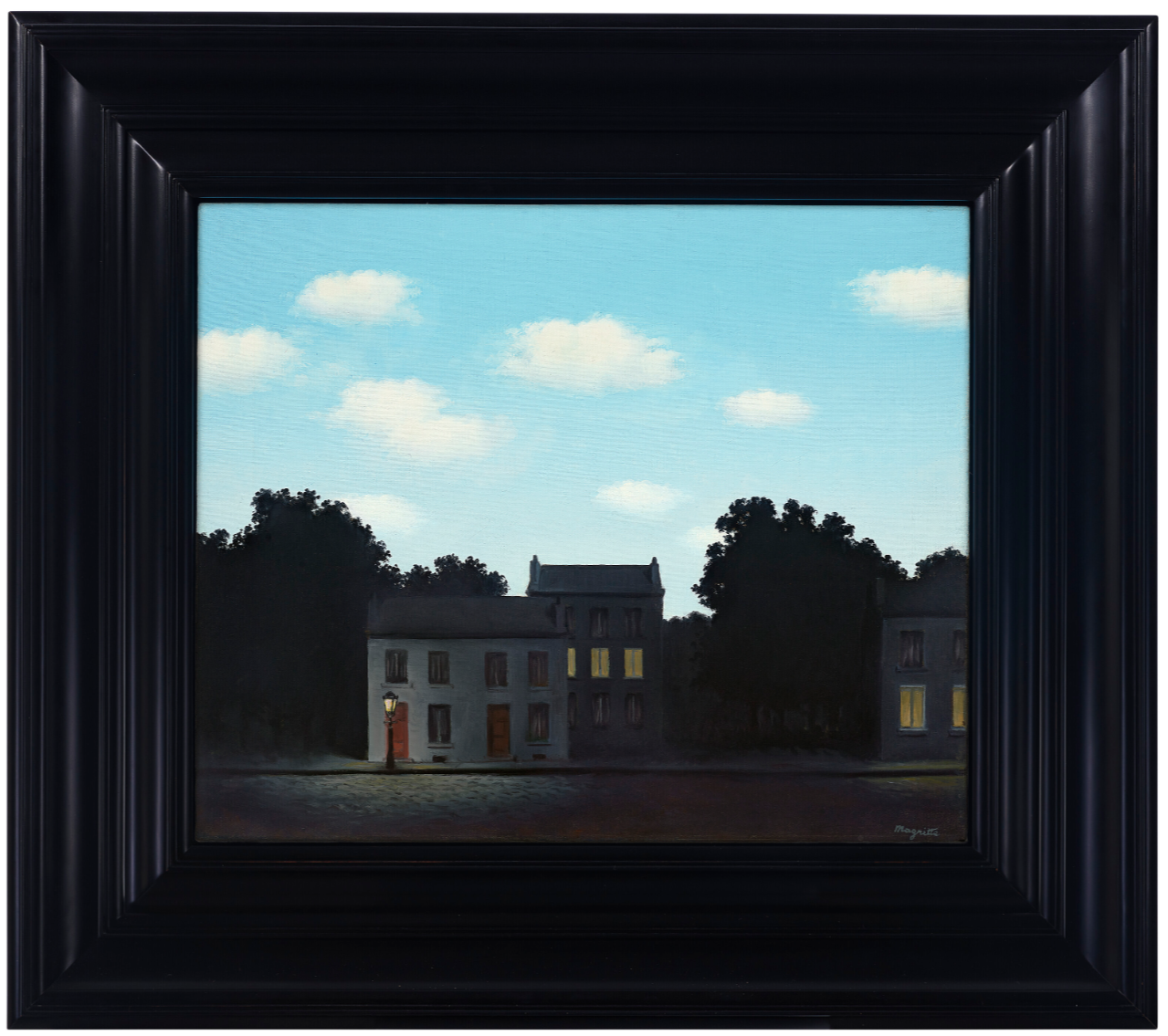
The first in this acclaimed series, the present painting establishes the core elements of the theme. Here, a row of ordinary suburban houses are bathed in deep shadows, the surrounding trees and shrubbery almost disappearing into darkness, while above the blue expanse of a day-lit sky stretches over the rooftops, soft white clouds drifting through the atmosphere. At first glance the painting appears to simply present a familiar street scene in the crepuscular light of dusk or dawn. Yet, on further inspection the intensity of the darkness, combined with the soft glow of the streetlamp and the lights from within the houses, suggests two opposing timelines exist simultaneously within the scene—here, both night and day are visible, the two colliding unexpectedly in a single moment. This idea would prove extremely fruitful for Magritte, and he would go on to create a total of sixteen further versions in oil on the theme over the following fifteen years, with several more iterations in gouache, each variation subtly different from the next as he probed and examined its poetic potential.
“This intense personal interest in night and day is a feeling of admiration and astonishment.”
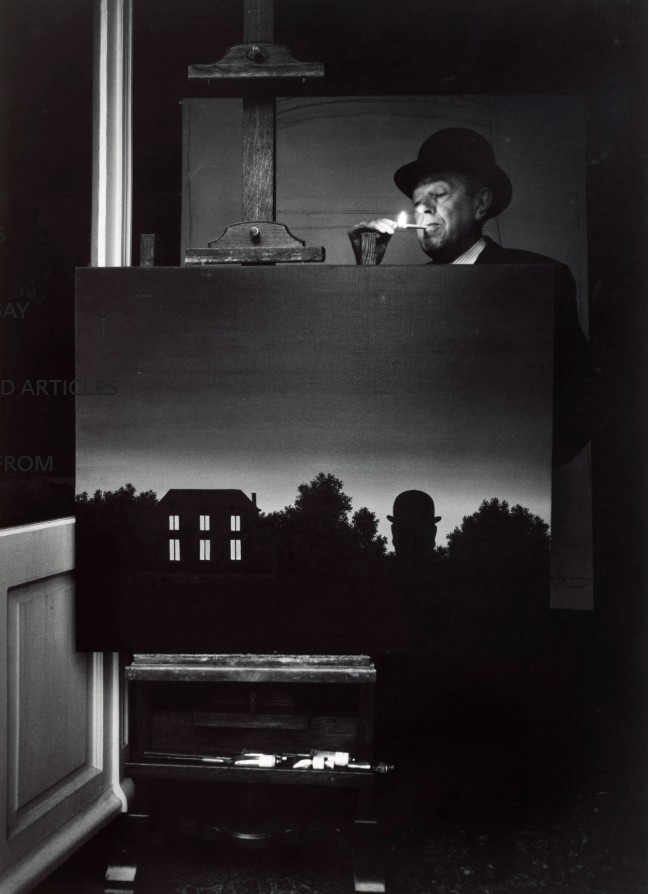
René Magritte, 1967. Photo: Marcel Broodthaers. © 2025 Artists Rights Society (ARS), New York / SABAM, Brussels / The Art Institute of Chicago / Art Resource, NY. Artwork: © 2025 C. Herscovici, London / Artists Rights Society (ARS), New York.
Alongside Breton’s poem, the L’empire des lumières paintings hark back to a gouache Magritte executed in 1938, titled Le Poison (Sylvester, no. 1142; Museum Boijmans Van Beuningen, Rotterdam), where a row of buildings took on the appearance of the night sky, dotted with constellations of stars and a delicate crescent moon, transforming the bricks and mortar streetscape into an evocative, otherworldly vision of the cosmos. In many ways, Le Poison was a continuation of Magritte’s ongoing fascination with translating and transforming the sky. From his earliest Surrealist paintings it had been a recurring character in his work, its familiarity allowing him to investigate the world of appearances, and question our understanding of its properties. In L’empire des lumières, the sky once again becomes an essential tool in Magritte’s arsenal to disrupt and challenge expectations. Simplifying the concept explored in Le Poison, the artist creates a composition that is all the more unsettling for its quiet strangeness. The setting is a well-maintained, bourgeois quarter of town, not dissimilar to the location of Magritte’s own home in Brussels, executed with a delicate precision and attention to detail that only reinforces the uncanniness of the juxtaposition of night and day.
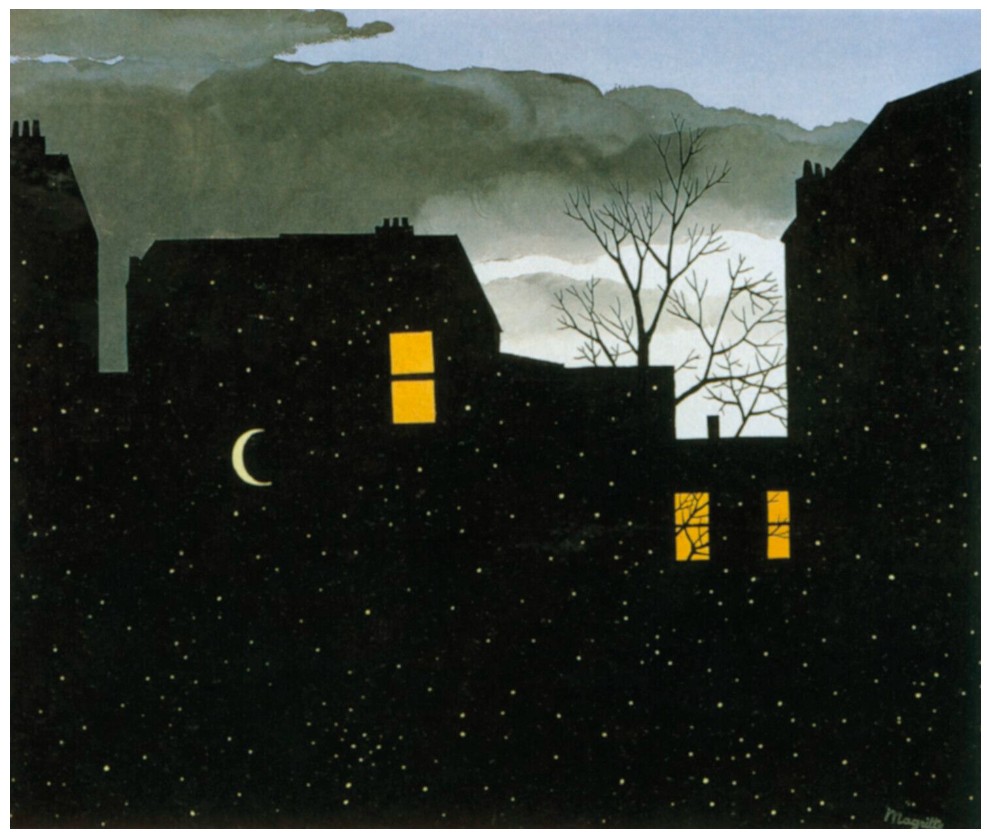
René Magritte, Le Poison, 1938 or 1939. Museum Boijmans Van Beuningen, Rotterdam.
© 2025 C. Herscovici / Artists Rights Society (ARS), New York.
Magritte discussed the idea behind his L’empire des lumières paintings in a commentary written for a 1956 television program, later published in the exhibition catalogue Peintres belges de l’imaginaire, Grand Palais, Paris, 1972: “For me, the conception of a picture is an idea of one thing or of several things which can be realized visually in my painting. Obviously, all ideas are not ideas for paintings. Naturally, an idea must be sufficiently stimulating for me to get down to painting the thing or things that inspired the idea. The conception of a painting, that is, the idea, is not visible in the painting: an idea cannot be seen by the eyes. What is depicted in the painting is what is visible to the eye, the thing or things that had to inspire the idea. So, in the painting L’empire des lumières are things I had an idea about—to be precise, a nocturnal landscape and a sky above in broad daylight. The landscape evokes night and the sky evokes day. This evocation of day and night seems to me to have the power to surprise and enchant us. I call this power ‘poetry.’ I believe this evocation has such a ‘poetic’ power because, among other reasons, I have always been keenly interested in night and in day, although I’ve never had a preference for one or the other. This intense personal interest in night and day is a feeling of admiration and astonishment” (“L’empire des lumières” April 1956; reproduced in K. Rooney and E. Plattner, eds., René Magritte: Selected Writings, Richmond, 2018, p. 167).
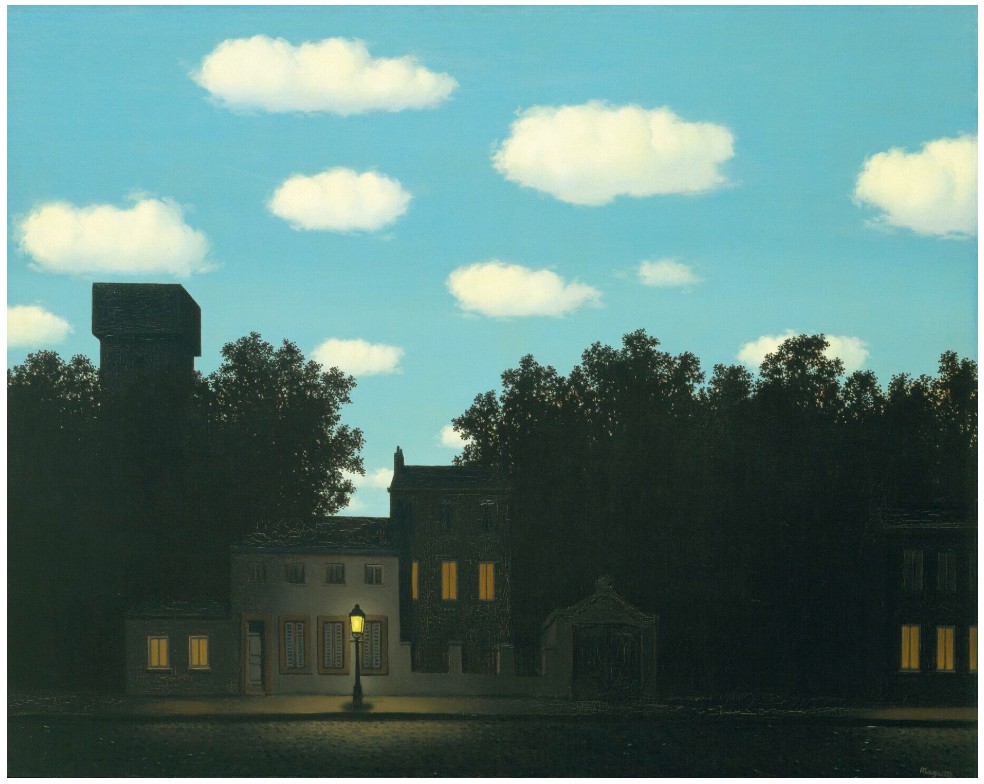
René Magritte, L’empire des lumières, 1950. The Museum of Modern Art, New York. © 2025 C. Herscovici / Artists Rights Society (ARS), New York. Digital Image: © The Museum of Modern Art / Licensed by SCALA / Art Resource, New York.
After the present work’s completion, the image continued to reverberate through Magritte’s imagination, and had a profound impact on his own conception of reality: “After I had painted L’empire des lumières,” the artist explained in 1966, “I got the idea that night and day exist together, that they are one. This is reasonable, or at the very least it’s in keeping with our knowledge: in the world night always exists at the same time as day. (Just as sadness always exists in some people at the same time as happiness in others). But such ideas are not poetic. What is poetic is the visible image of the picture” (ibid., no. 111).
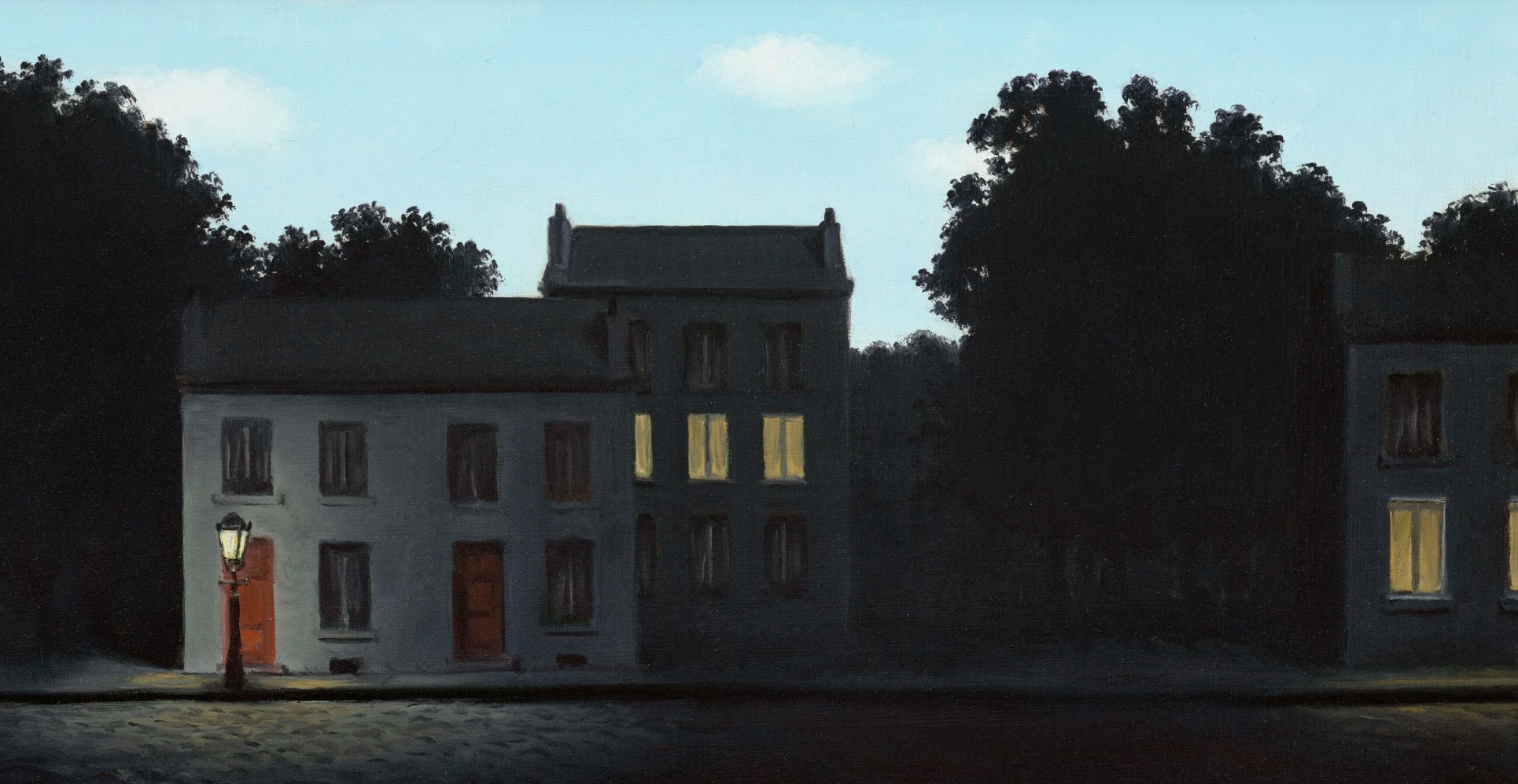
The subject proved incredibly popular with the artist’s collectors, leading to a number of direct commissions for new versions. However, Magritte was adamant that each work should evolve naturally from his own artistic pondering, writing to his dealer Alexander Iolas “I have to find a way of justifying the replica in my own mind” (quoted in C. Greenberg and D. Pih, eds., Magritte A-Z, London, 2011, p. 49). In each iteration he made subtle alterations, experimenting with the particulars of the scene, amplifying different aspects of the landscape, subtly adjusting the colors of the sky or the density of the clouds, even expanding the sense of space and recession within the picture. Different architectural styles were adopted in some versions, providing unexpected hints as to the location of the setting, or the socio-economic status of the residents, while the towering trees that surround the building began to take on a distinct sense of individuality and character from one canvas to the next.
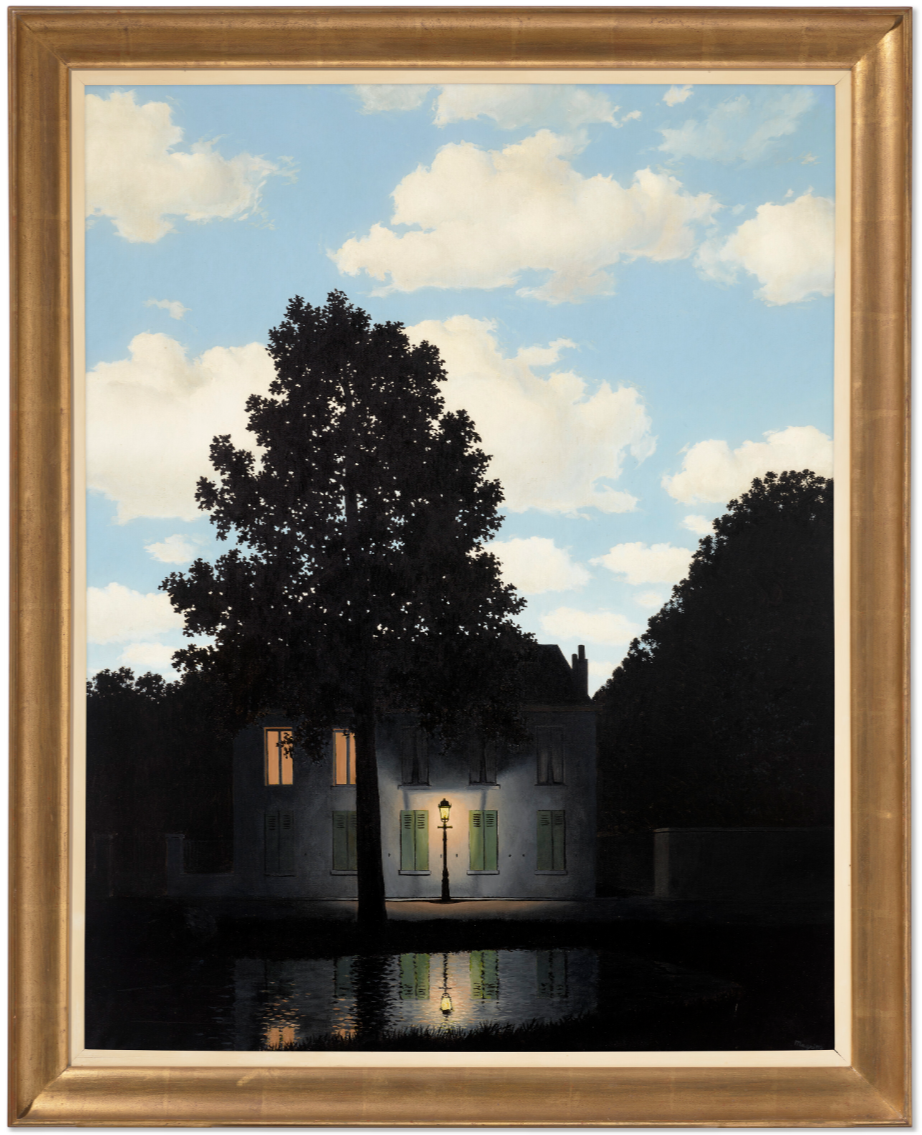
L’empire des lumières, 1954
Christie’s New-York: 19 November 2024
Estimate on Request
USD 121,160,000
NEW WORLD AUCTION RECORD FOR THE ARTIST
RENE MAGRITTE (1898-1967), L’empire des lumières | Christie’s
RENE MAGRITTE (1898-1967)
L’empire des lumières, 1954
Oil on canvas
146×114 cm (57 1/2 x 44 7/8 inches)
Signed ‘Magritte’ (lower right)
Signed again, dated and titled ‘”L’Empire des Lumières” Magritte 1954’ (on the reverse)
Filled with a rich sense of mystery that confounds and beguiles in equal measure, René Magritte’s L’empire des lumières of 1954 is a powerful example of the artist’s extraordinary, mature Surrealist vision. Focusing on the juxtaposition of a landscape bathed in deep shadows with the blue expanse of a day-lit sky above, this seemingly impossible collision of day and night in a single moment quickly became one of his most celebrated and iconic subjects. Between 1949 and 1964, the artist created a total of seventeen versions in oil, with several more iterations in gouache, on the theme of the L’empire des lumières. Each subtly different from the next, with intriguing variations and diversions from canvas to canvas, these paintings demonstrate Magritte’s endless spirit of invention, as he probed the rich poetic potential of his deceptively simple subjects.
As Magritte explained, the power of works such as L’empire des lumières lay in transforming the familiar, everyday world in unexpected ways: “For me it’s not a matter of painting ‘reality’ as though it were readily accessible to me and to others, but of depicting the most ordinary reality in such a way that this immediate reality loses its tame or terrifying character and presents itself with mystery” (quoted in H. Torczyner, Magritte: Ideas and Images, New York, 1977, p. 203). Executed with a precision and attention to detail that only reinforces the uncanniness of the scene, the L’empire des lumières paintings offer an elegant summation of Magritte’s unique form of Surrealism, reveling in a game of unexpected contradictions, in which all is familiar and yet ultimately strange and the ordinary is rendered extraordinary.
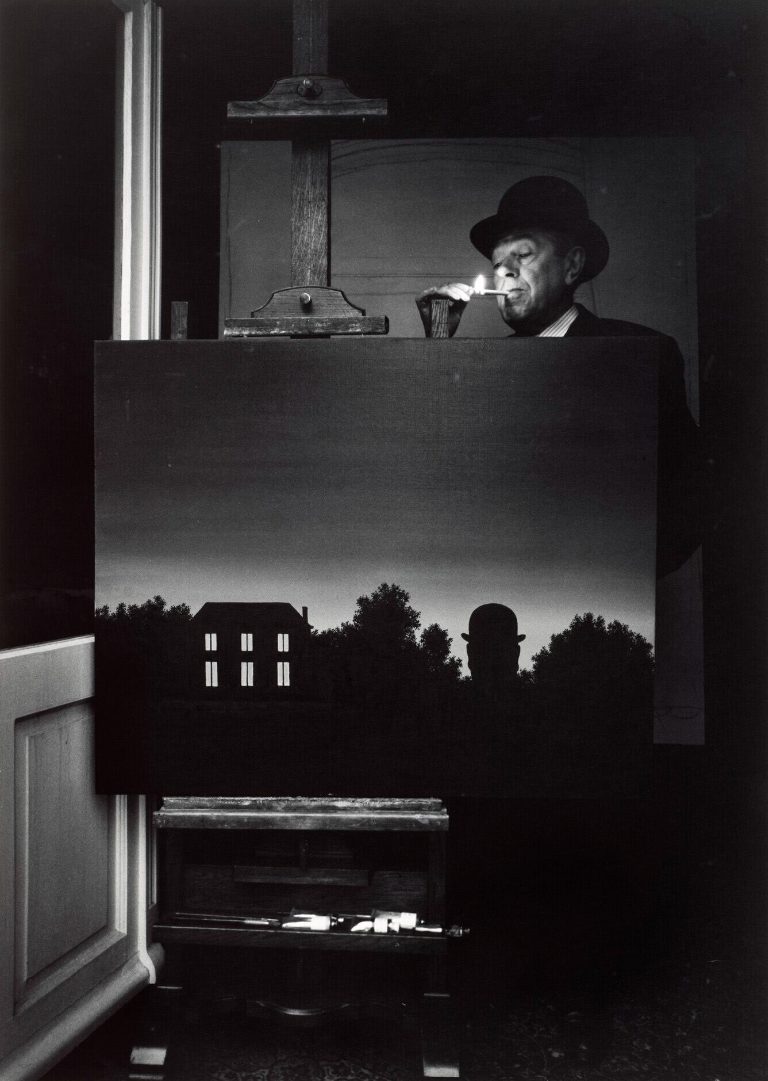
René Magritte, 1967. Photo: Marcel Broodthaers. © 2024 Artists Rights Society (ARS), New York / SABAM, Brussels. Image: The Art Institute of Chicago / Art Resource, NY. Artwork: © 2024 C. Herscovici / Artists Rights Society (ARS), New York.
The idea behind the L’empire des lumières series appears to have been percolating in Magritte’s mind for several years prior to his first painting on the theme. While staying with the collector Edward James in London during the spring of 1937, Magritte gave a presentation at Roland Penrose’s London Gallery in which he discussed “certain features peculiar to words, images and real objects” (quoted in D. Sylvester, op. cit., 1993, vol. III, p. 53). In one example early in the discussion, the artist cited the opening line of André Breton’s poem L’Aigrette (from Terre de clair, 1923): “If only the sun would shine tonight” (ibid.). The following year, the artist created a gouache entitled Le Poison (Sylvester, no. 1142; Museum Boijmans-Van Beuningen, Rotterdam) in which a row of buildings took on the appearance of the night sky, dotted with constellations of stars and a delicate crescent moon, transforming the bricks and mortar streetscape into an evocative, otherworldly vision of the cosmos.
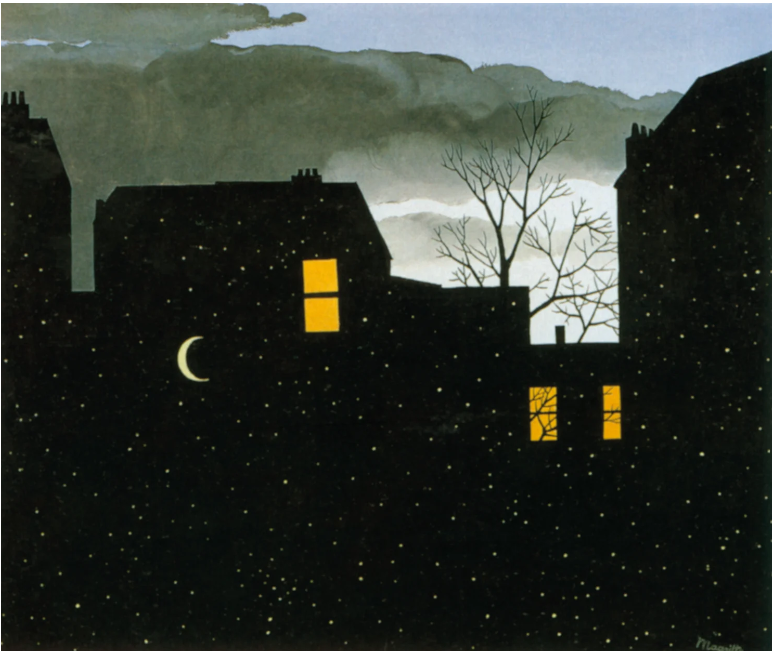
René Magritte, Le Poison, 1938 or 1939. Museum Boijmans-van Beuningen, Rotterdam. © 2024 C. Herscovici, London / Artists Rights Society (ARS), New York.
In this way, Le Poison was a continuation of Magritte’s different translations and juxtapositions of the sky, which was a recurring character in his work, its familiarity allowing him to investigate the world of appearances, and question our understanding of its properties. While paintings such as Les muscles célestes (Sylvester, no. 166; Private collection) explored the physicality and presence of the sky, and L’ombre céleste (Sylvester, no. 168; Private collection) transformed it into a flat piece of stage scenery, it most frequently appeared as a framed picture within Magritte’s oeuvre. In these works, a little segment of the vast blue expanse, dotted with clouds, has been magically captured and condensed into a small, portable object, as in Les perfections célestes (Sylvester, no. 329; Private collection), Le Salon de Monsieur Goulden (Sylvester, no. 300; Private collection) and Le palais de rideaux (Sylvester, no. 305; The Museum of Modern Art, New York). In other works, Magritte used the ubiquitous sight to generate impossible scenarios, as in his famed oiseau de ciel, a magical bird, captured mid-flight, which appears to be cut from the sky itself, its body filled with a pale blue sky and soft, fluffy clouds.
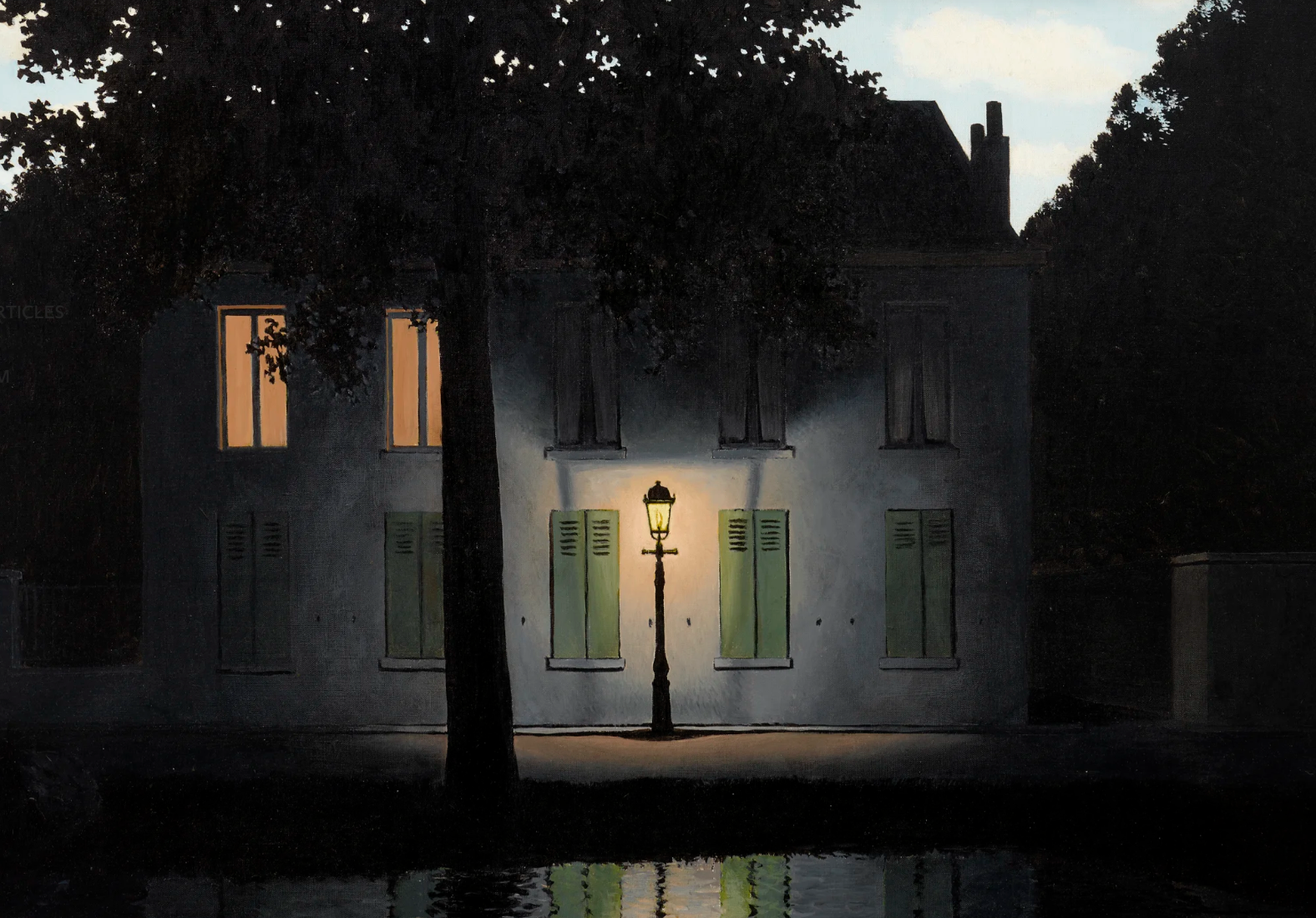
In the L’empire des lumières paintings, the sky is once again an essential tool in Magritte’s elegant disruption of our understanding of the world around us. With these works he adopts a subtle evocation of the dichotomy of night and day, simplifying the concept explored in Le Poison to create a composition that is all the more unsettling for its quiet strangeness. The first work in the series to be completed (Sylvester, no. 709; Private collection) depicts a quiet, suburban street scene with eerily shuttered houses, some curtained windows faintly lit from within, and a single lamppost, shining forth like a beacon, the sole illumination along this darkened length of avenue. Above, the sky remains in its natural position, untouched by unexpected cracks or objects, but rather than a scattering of stars, broad daylight and white clouds fill the pale blue expanse. While at first glance the painting appears to simply present the crepuscular light of dusk, on further inspection the deep shadows and soft glow of the streetlamp suggests the sky exists in an alternate timeline to the rest of the scene. In this way, the painting pivots on the construction of a somewhat familiar, yet impossible scenario that forces us, the viewer, to examine and question our own expectations.
L’Empire des lumières, 1951
Sotheby’s New-York: 16 May 2023
Estimated: USD 35,000,000 – 55,000,000
USD 42,273,000
L’Empire des lumières | The Mo Ostin Collection Evening Auction | 2023 | Sotheby’s
RENE MAGRITTE (1898 – 1967)
L’Empire des lumières, 1951
Oil on canvas
80.3 x 65.7 cm (31 5/8 x 25 7/8 inches)
Signed (lower right)
Titled “L’Empire des lumières,” numbered III and dated 1951 (on the reverse)
Executed in August—September 1951
Magritte’s L’Empire des lumières works reign supreme among the most iconic images in twentieth century art history. The confounding yet subtle juxtapositions that exist within the series coalesce to form the most poetic examples of Magritte’s conceptual oeuvre. Along with his bowler-hatted men and word paintings, Magritte’s L’Empire des lumières series is the most influential and recognizable of the artist’s entire output, leaving an indelible imprint on the generations of Conceptual and Pop artists that followed.
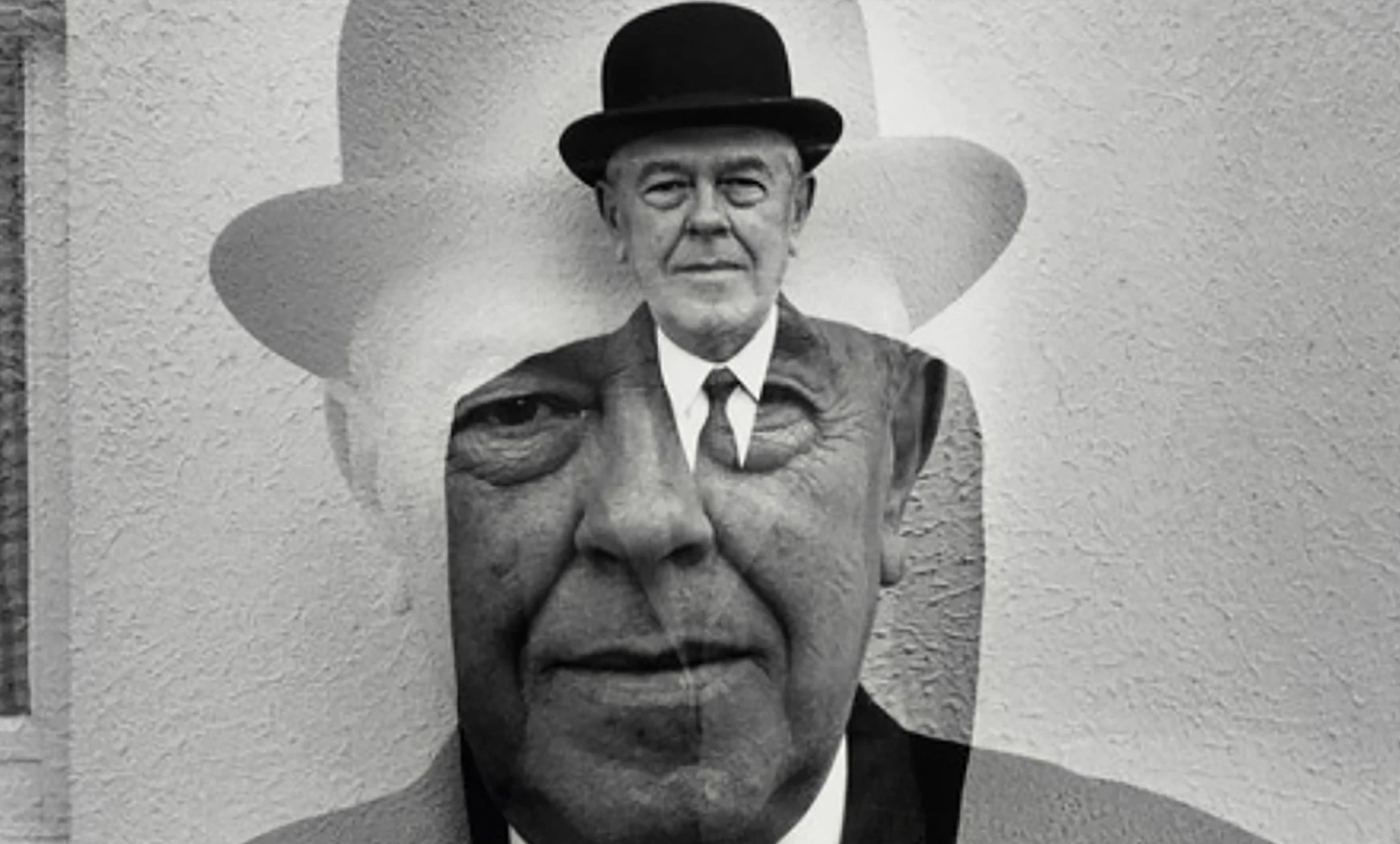
Duane Michals, René Magritte in bowler hat, multiple exposure, 1965. Los Angeles County Museum of Art. Photo © Duane Michals
Over time, Magritte explored and adapted the theme within L’Empire des lumières; each masterpiece featuring a quiet home, alternately glowing from within and bathed in lamplight, and yet each with its own distinct aura. Cloaked in the inky darkness of night, the house and surrounding environs are simultaneously set against a bright sky. The uncanny familiarity of such a surreal scene exemplifies Magritte’s sophisticated exploration of representation and reality and his profound insight into human perception.
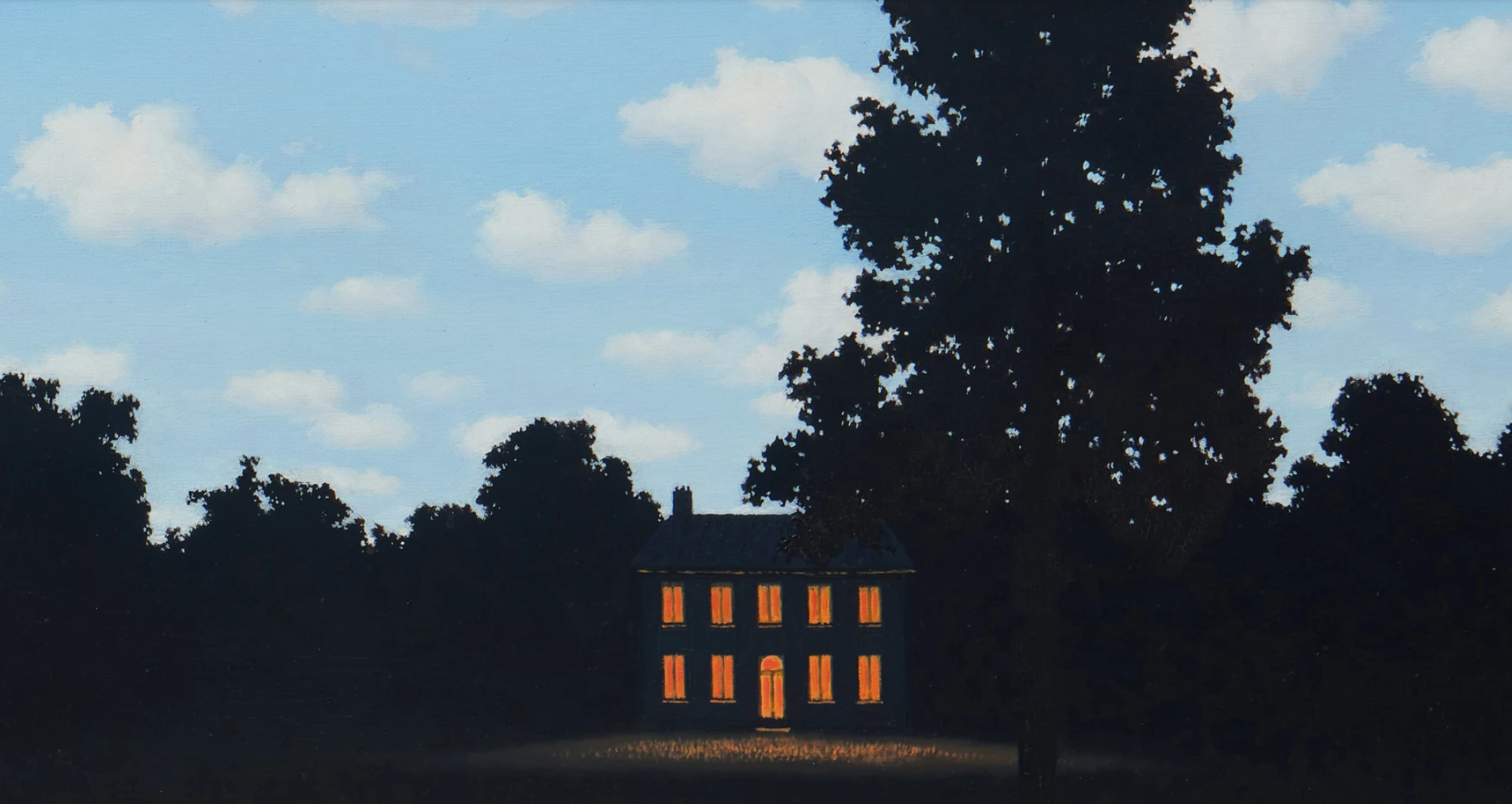
The impetus for Magritte’s L’Empire des lumières was manifold, stemming largely from the intellectual and artistic realms of turn-of-the-century Europe. From Belgian Symbolism to French Surrealism, nineteenth century philosophy and contemporary film and literature, a myriad of influences permeated the artist’s consciousness, later to be excerpted and reimagined in Magritte’s unique semiotic and visual lexicon.
Closer to his physical and spiritual home of Belgium, Symbolist artists like William Degouve de Nuncques may be counted among Magritte’s earliest influences. One of Degouve’s best-known compositions, La Maison aveugle from 1892 features two suburban homes, one obscured in shadow and illuminated by a sole window, and another contrasted by its bright brick façade, itself partly hidden by trees. First exhibited at the Salon du Gand and later publicized in the popular art review L’Art Moderne, Degouve’s painting captivated audiences for its familiar, yet unnerving sense of calm. Having studied at the Académie Royale des Beaux-Arts in Brussels as a young man, Magritte would certainly have been aware of the recent artistic movements and the importance of Symbolism within the national artistic discourse. Best known for its darkness and decadence, the movement paid acute attention to the dueling roles of light and dark—a relationship which would prove integral to the best of Magritte’s works.
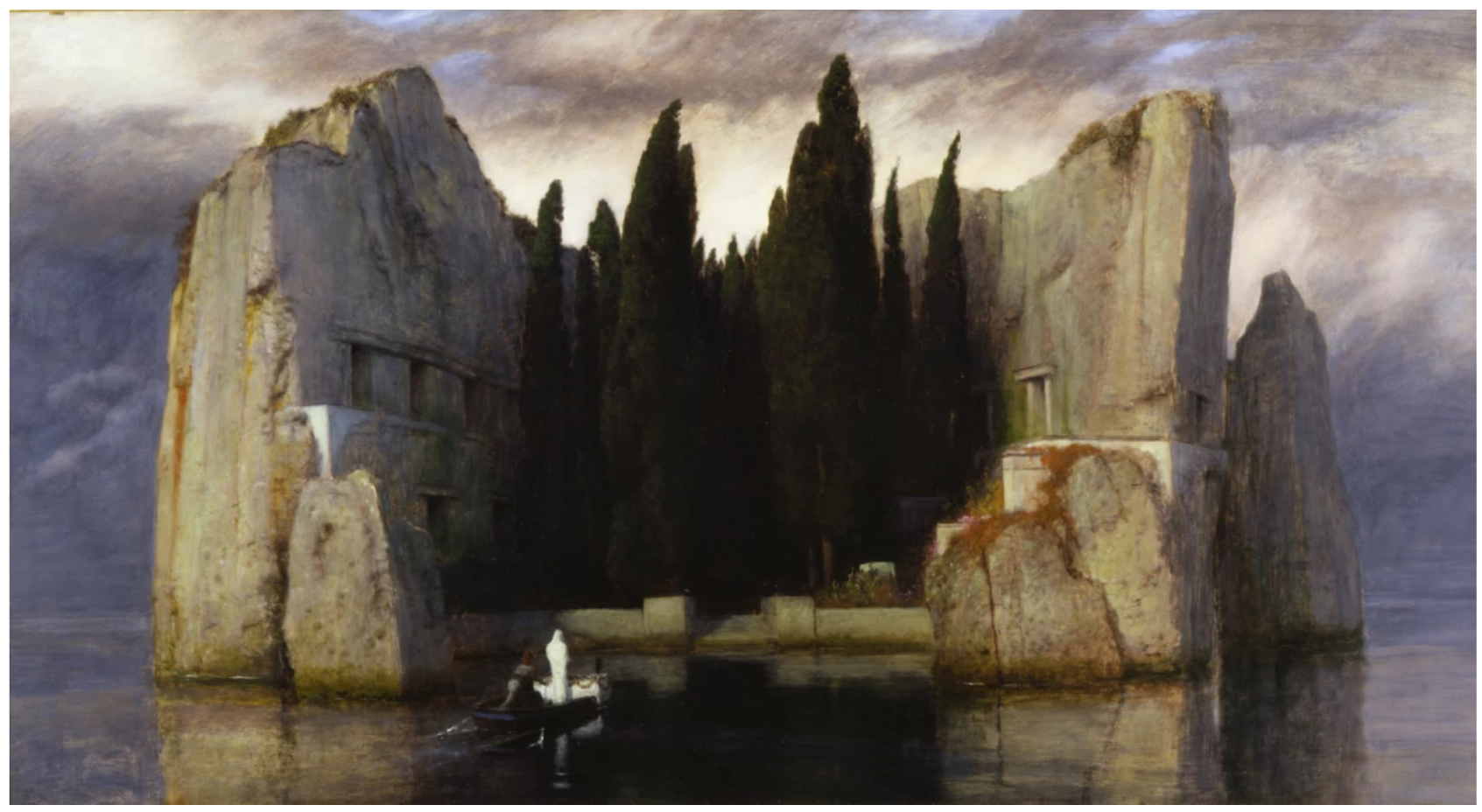
Arnold Böcklin, Isle of the Dead, 1883. Alte Nationalgalerie, Berlin
Another giant of the Symbolist movement, Arnold Böcklin, would serve as yet another importance influence on the work of Magritte. To this day, Böcklin’s Island of the Dead paintings stand among the most revered masterpieces of the movement. Like Magritte, Böcklin was known to create multiple versions of his most successful compositions; between 1880 and 1886, he executed five oil paintings on the subject, experimenting with varying degrees of light with each iteration. Isle of the Dead was widely reproduced in the artist’s lifetime and later had a profound effect not only on Magritte’s work, but also that of Surrealists like Salvador Dalí and Giorgio de Chirico. While Magritte’s 1930 L’Annonciation is a direct reference to Böcklin’s masterpiece, the present version of L’Empire des lumières also alludes to the Symbolist’s otherworldly composition with its incongruous pairing of light with dark and soaring trees and rocks amongst a man-made structure.
By the late 1920s, Magritte had also begun to incorporate stylistic and atmospheric elements inspired by the work of de Chirico, one of his earliest Surrealist influences. De Chirico’s recontextualization of familiar objects profoundly inspired the young artist in the early 1920 and served as a point of entry into the Surrealist milieu. By the time Magritte moved to Paris in 1928, his work had already begun to exhibit the tenuous quietude so expertly conveyed in de Chirico’s cityscapes. The eerie stillness, stark shadows and chiaroscuro-like effects exhibited in the Italian painter’s depopulated piazzas would find particular resonance in Magritte’s L’Empire des lumières. Much like de Chirico’s works, Magritte’s L’Empire des lumières paintings exist largely in the human realm, yet do not suggest a social narrative. As Sandra Zalman states, these works “do not privilege humanity, [but] neither do they dismiss it” (Exh. Cat., San Francisco Museum of Modern Art, Magritte. The Fifth Season, 2018, p. 44).
L’empire des lumières, 1949
Christie’s New-York: 9 November 2023
Estimated: USD 25,000,000 – 35,000,000
USD 34,910,000
RENE MAGRITTE (1898-1967), L’empire des lumières | Christie’s
RENE MAGRITTE (1898-1967)
L’empire des lumières, 1949
Oil on canvas
48.5 x 58.8 cm (19 1/8 x 23 1/8 inches)
Signed ‘Magritte’ (lower right)
Titled and dated ‘”L’EMPIRE des LUMIÈRES” 1949’ (on the reverse)
In 1949, René Magritte began to explore an intriguing new idea that had been occupying his imagination for some time. The resulting composition, known as L’empire des lumières, marked the arrival of a motif that quickly became one of the Belgian Surrealist’s most celebrated and iconic subjects. The present work is the very first oil painting Magritte completed under this title, and represents a landmark moment in his career. Filled with a rich sense of mystery that confounds and beguiles in equal measure, it focuses on the juxtaposition of a landscape bathed in deep shadow with the blue expanse of a day-lit sky above, a seemingly impossible collision of day and night in a single moment. The motif quickly became popular and between 1949 and 1964 Magritte created a total of seventeen versions in oil, with several more iterations in gouache, on the theme of the L’empire des lumières. Each subtly different from the next, with intriguing variations and diversions from canvas to canvas, these paintings demonstrate Magritte’s endless spirit of invention, as he probed the rich poetic potential of this deceptively simple subject.
As Magritte explained, the power of works such as L’empire des lumières lay in transforming the familiar, everyday world in unexpected ways: “For me it’s not a matter of painting ‘reality’ as though it were readily accessible to me and to others, but of depicting the most ordinary reality in such a way that this immediate reality loses its tame or terrifying character and presents itself with mystery” (quoted in H. Torczyner, Magritte: Ideas and Images, trans. R. Miller, New York, 1977, p. 203). Executed with a precision and attention to detail that only reinforces the uncanniness of the scene, the L’empire des lumières paintings offer an elegant summation of Magritte’s unique form of Surrealism, reveling in a game of unexpected contradictions, in which all is familiar and yet ultimately strange, and the ordinary is rendered extraordinary.
The idea behind the L’empire des lumières series appears to have been percolating in Magritte’s mind for several years prior to his first painting on the theme. While staying with the collector Edward James in London during the spring of 1937, Magritte gave a presentation at Roland Penrose’s London Gallery in which he discussed “certain features peculiar to words, images and real objects” (quoted in D. Sylvester, ed., op. cit., 1993, vol. III, p. 53). In one example early in the discussion, the artist cited the opening line of André Breton’s poem L’Aigrette (from Terre de clair, 1923): “If only the sun would shine tonight” (ibid.). The following year, the artist created a gouache entitled Le Poison (Sylvester, no. 1142; Museum Boijmans Van Beuningen, Rotterdam) in which a row of buildings took on the appearance of the night sky, dotted with constellations of stars and a delicate crescent moon, transforming the bricks and mortar streetscape into an evocative, otherworldly vision of the cosmos.
In this way, Le Poison was a continuation of Magritte’s different translations and juxtapositions of the sky—from his earliest Surrealist paintings it was a recurring character in his work, its familiarity allowing him to investigate the world of appearances, and question our understanding of its properties. Magritte used the ubiquitous sight to generate impossible scenarios, as in his famed oiseau de ciel, a magical bird, captured mid-flight, which appears to be cut from the sky itself, its body filled with a pale blue sky and soft, fluffy clouds. In the L’empire des lumières paintings the sky is once again an essential tool in Magritte’s elegant disruption of our understanding of the world around us. With these works he adopts a subtle evocation of the dichotomy of night and day, simplifying the concept explored in Le Poison to create a composition that is all the more unsettling for its quiet strangeness.
With the present L’empire des lumières, Magritte solidified his ideas and set forth many of the defining elements of the motif, depicting a quiet, suburban cobbled street bathed in deep shadows. Modest houses face outwards towards the viewer, some of their curtained and shuttered windows faintly lit from within, while a single lamppost, shining forth like a beacon, offers the only illumination along the darkened avenue. The setting for this scene is a well-maintained, bourgeois quarter of town, not dissimilar to Magritte’s own street, rue de Esseghem in Brussels. However, the artist imbues the composition with an extraordinary sense of mystery by altering one key element within the scene. The velvety black shadows suggest the hour is late and despite the illumination from within, no figures appear to move through the houses, nor the streetscape. Instead, the viewer is the only witness to the mysterious vision that hovers above the roof- and treetops. No moon or stars are visible, as expected; instead, a blue, sunlit sky dotted with lazily drifting white clouds serves as the backdrop to this mysterious, nocturnal landscape.
Magritte discussed the idea behind his L’empire des lumières paintings in a commentary written for a 1956 television program, later published in the exhibition catalogue Peintres belges de l’imaginaire: “For me, the conception of a picture is an idea of one thing or of several things which can be realized visually in my painting. Obviously, all ideas are not ideas for paintings. Naturally, an idea must be sufficiently stimulating for me to get down to painting the thing or things that inspired the idea. The conception of a painting, that is, the idea, is not visible in the painting: an idea cannot be seen by the eyes. What is depicted in the painting is what is visible to the eye, the thing or things that had to inspire the idea. So, in the painting L’empire des lumières are things I had an idea about—to be precise, a nocturnal landscape and a sky above in broad daylight. The landscape evokes night and the sky evokes day. This evocation of day and night seems to me to have the power to surprise and enchant us. I call this power ‘poetry.’ I believe this evocation has such a ‘poetic’ power because, among other reasons, I have always been keenly interested in night and in day, although I’ve never had a preference for one or the other. This intense personal interest in night and day is a feeling of admiration and astonishment” (“L’empire des lumières” April 1956, reproduced in K. Rooney and E. Plattner, eds., René Magritte: Selected Writings, Minneapolis, 2016, p. 167).
In the L’empire des lumières paintings, Magritte adopts a subtle, yet compelling approach in his evocation of the dichotomy of night and day, simplifying the concept to create a strikingly familiar, yet impossible scenario. To this day, it serves as a powerful illustration of his extraordinary ability to deploy symbols of a normal, ordinary, conventional life to contradictory ends: to surprise, unsettle and reconfigure the viewer’s expectations and thus, their experience of everyday reality. It was an aspect of the L’empire des lumières series that André Breton recognized as inherently Surrealist in spirit, stating: “To [Magritte], inevitably, fell the task of separating the ‘subtle’ from the ‘dense,’ without which effort no transmutation is possible. To attack this problem called for all his audacity—to extract simultaneously what is light from the shadow and what is shadow from the light (l’empire des lumières). In this work the violence done to accepted ideas and conventions is such (I have this from Magritte) that most of those who go by quickly think they saw the stars in the daytime sky. In Magritte’s entire performance there is present to a high degree what Apollinaire called ‘genuine good sense, which is, of course, that of the great poets’” (“The Breadth of René Magritte” in Magritte, exh. cat., Arkansas Art Center, Little Rock, 1964, n.p.).
After the present work’s completion, the image continued to live on in Magritte’s imagination, and had a profound impact on his own conception of reality: “After I had painted L’empire des lumières,” the artist explained in 1966, “I got the idea that night and day exist together, that they are one. This is reasonable, or at the very least it’s in keeping with our knowledge: in the world night always exists at the same time as day. (Just as sadness always exists in some people at the same time as happiness in others). But such ideas are not poetic. What is poetic is the visible image of the picture” (quoted in S. Whitfield, Magritte, exh. cat., Hayward Gallery, London, 1992, no. 111). The idea proved incredibly popular with the artist’s collectors, leading to a number of direct commissions for new versions. However, Magritte was adamant that each work should evolve naturally from his own artistic pondering, writing to Iolas “I have to find a way of justifying the replica in my own mind” (quoted in C. Greenberg and D. Pih, eds., Magritte A-Z, London, 2011, p. 49). In each iteration he made subtle alterations, experimenting with the particulars of the scene, amplifying different aspects of the landscape, subtly adjusting the colors of the sky or the density of the clouds, even expanding the sense of space and recession within the picture. Different architectural styles were adopted in some versions, providing unexpected hints as to the location of the setting, or the socio-economic status of the residents, while the towering trees that surround the building began to take on a distinct sense of individuality and character from one canvas to the next.
As David Sylvester recorded, the inaugural work in the series, the present L’empire des lumières, was named as one of three the artist sold to his dealer Alexandre Iolas on a statement of account dated 8 August 1949 (op. cit., 1993, vol. III, p. 145). Iolas shipped the painting in September to the Hugo Gallery, New York, of which he was director. Nelson A. Rockefeller, then chairman and president of Chase National Bank in Rockefeller Center, while also serving in similar roles at The Museum of Modern Art, New York, purchased this L’empire des lumières from the Hugo Gallery on 30 March 1950. That Christmas, he gave the picture as a gift to Mrs. Louise Auchincloss Boyer, his secretary, who later became his executive assistant when he served as Governor of New York State during 1959-1973. Subsequent versions of the L’empire des lumières motif were acquired by many of the artist’s most important and active patrons, including Jean and Dominique de Menil—who donated one work from the series to The Museum of Modern Art in New York, before promptly requesting another from Magritte for their own collection—Harry Torczyner, Peggy Guggenheim, Barnet Hodes, the composer Richard Rogers, and the Musées Royaux des Beaux-Arts de Belgique, Brussels. Positioned at the very beginning of this iconic series, the present L’empire des lumières is a pivotal work, revealing the earliest evolutions of this profoundly mysterious motif in Magritte’s imagination, as he wrestled with how to bring his vision to life on the canvas.
(Bowler) Hat
L’ami intime, 1958
Christie’s London: 7 March 2024
Estimated: GBP 30,000,000 – 50,000,000
GBP 33,660,000 / USD 42,680,880
RENÉ MAGRITTE (1898-1967)
L’ami intime, 1958
Oil on canvas
72.6 x 64.9 cm (28 5/8 x 25 1/2 inches)
Signed ‘Magritte’ (lower left)
The anonymous man in a bowler hat is one of the most familiar icons of René Magritte’s art. A totemic figure, usually seen from the back and therefore faceless and mysterious, he functions in Magritte’s paintings as a pictorial cipher: an apparently banal, metropolitan image of the norm and the everyday. He is, in one sense, the epitome of the generic and the commonplace. His smart, uniform, bourgeois attire signifies an ordinary, mundane humanity or what Magritte once described as ‘the unity of man.’ In another sense however, his faceless presence, standing in apparent contemplation of the scenes set before him, signifies the realm of the hidden and of something forever unknowable about Magritte’s strangely familiar worlds of mystery.
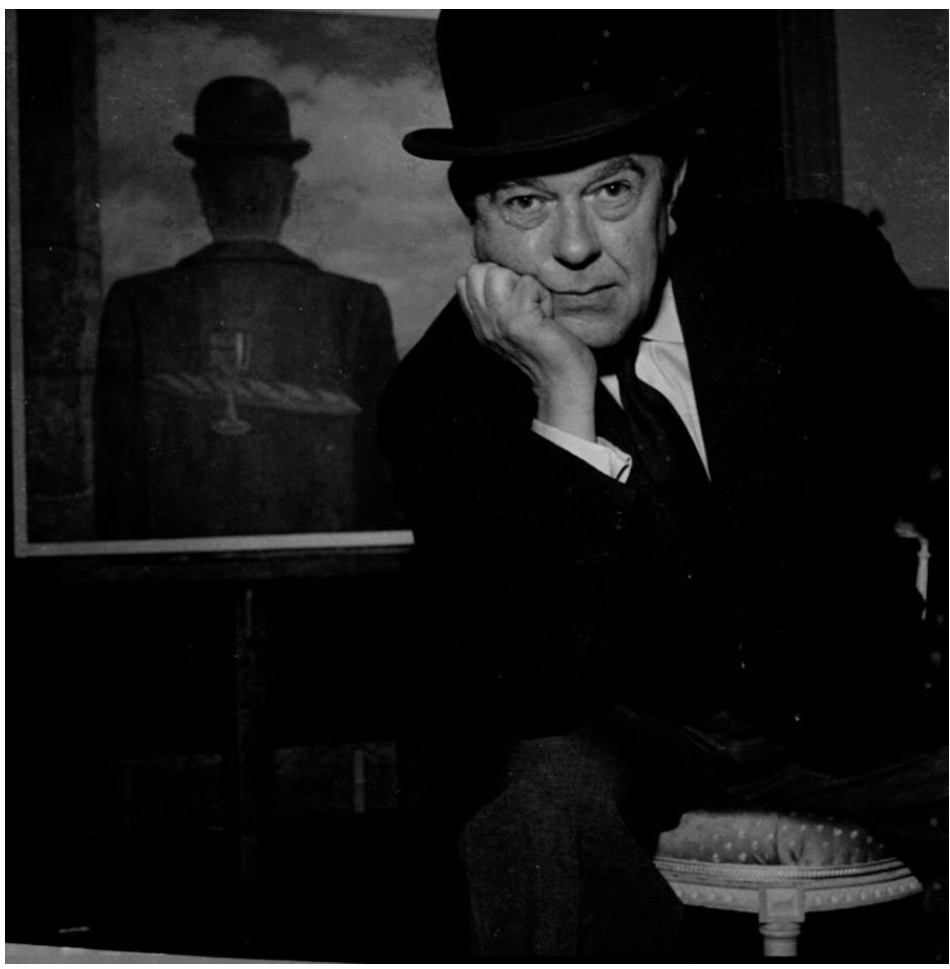
René Magritte, photographed in front of L’ami intime. Photograph by Eddy Novarro. Photo: © Estate of Eddy Novarro. All Rights Reserved 2024 / Bridgeman Images. Artwork: © ADAGP, Paris and DACS, London 2024.
In Magritte’s paintings of the 1950s, the bowler-hatted-man, first painted by the artist as a dark and perhaps even sinister presence in the 1920s, was to become a recurrent and more calming figure in a new phase of his work. It is this period that has now come to be regarded as a defining era in Magritte’s oeuvre – the one in which he was to create many of his most famous and best-loved works: from his L’empire de lumières series to the classic images of the lone, itinerant figure of the man in the bowler hat. Wandering, like a suburban flâneur through the often strange worlds of these pictures, Magritte’s man in the bowler came, during these years, to serve as a kind of reassuring counterpoint to the surprising and sometimes even shocking revelations of his art and the way in which it unpicked the conventions we use to both perceive and to depict reality.
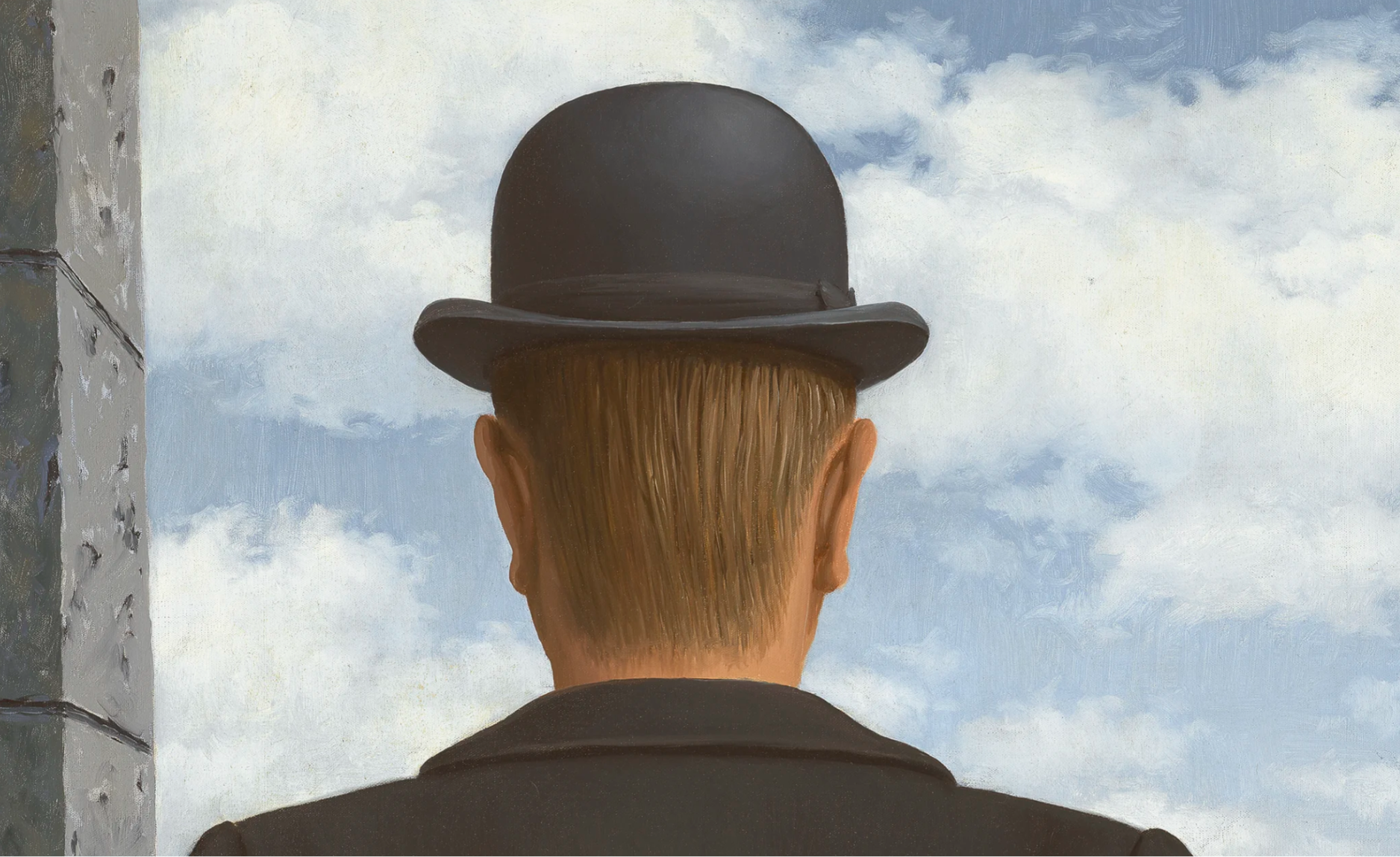
L’ami intime (The Intimate Friend) is one of the finest of all these famous and mysterious paintings of the man in the bowler hat. Created during the first months of 1958, it depicts this familiar, anonymous figure seen from behind and staring out over a sunlit, green landscape. The man stands behind a block-stone balcony that both separates him from the scene and frames him into a domestic setting. Behind him, the magical appearance of a baguette and a glass of water, apparently levitating at the centre of the canvas and against his back, transforms this simple image into something wholly unexpected, mysterious and completely out of the ordinary. As if to augment this atmosphere of unreality, each of the various objects in this painting – the spherical bowler, the crystal-clear wine glass and the crusty baguette – has been so painstakingly rendered and with such hyperreal precision and attention to detail that each takes on a peculiar, individual sense of presence and sunlit clarity that only heightens the picture’s overall air of mystery.
La magie noire (black magic)
La magie noire, 1942
Christie’s London: 7 March 2024
Estimated: GBP 3,000,000 – 5,000,000
GBP 4,638,000 / USD 5,880,984
RENÉ MAGRITTE (1898-1967)
La magie noire, 1942
oil on canvas
73×54 cm (28 3/4 x 21 1/4 inches)
Signed ‘Magritte’ (lower right)
Framed by an opulent red curtain, a nude woman stands in front of a tranquil seascape, holding a white rose in her hand as she stares impassively out of the picture plane in René Magritte’s beguiling La magie noire. It is immediately clear that a mysterious metamorphosis has taken place in the figure of the woman: statuesque and motionless, her body has morphed from flesh to air, the pale pink skin tones of her legs and torso transforming into the same pastel blue hue of the sky that stretches endlessly behind her. In this way, the female figure appears as a strange and impossible statue; both tangible and transparent, her head and bust seemingly carved out of the sky itself.
“In my paintings, I showed objects situated in places where they are never actually encountered. That is to satisfy what is in most people a real if not conscious desire. Does not the ordinary painter try, within the limits set for him, to upset the order according to which he customarily sees objects arranged?”
One of Magritte’s most recognizable motifs, La magie noire, painted in 1942, is an image of strange juxtapositions and unexpected poeticism. It encapsulates Georges Bataille’s description of the artist’s work when he wrote that it offers, ‘the creation of a palpable reality whereby the ordinary world is modified in response to the desire for the marvelous, for the prodigious, a desire implicit in the very essence of the human being’ (quoted in ibid., pp. 156-157).
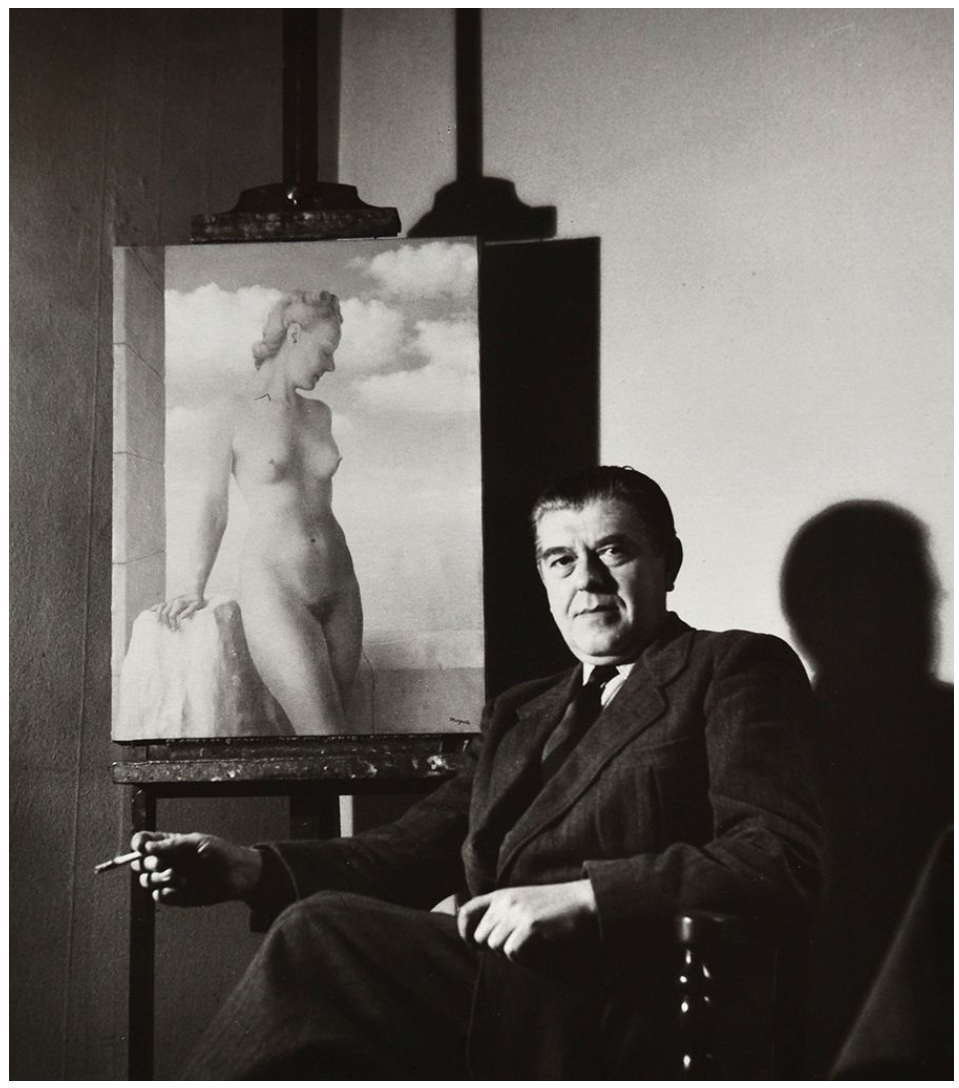
René Magritte, photographed in front of La magie noire, 1945, now in the collection of the Musées Royaux des Beaux-Arts, Brussels. Photograph by Roland d’Ursel. Artwork: © ADAGP, Paris and DACS, London 2024.
Magritte had first explored the subject of La magie noire in 1934, in an oil painting of the same name (Sylvester, no. 355). In this painting, a similar nude woman is framed by a jagged wall of an interior in front of a tranquil seascape, with a dove perched upon her shoulder. Just a few months before he painted this first iteration of the magie noire theme, Magritte had participated in an exhibition, Le nu dans l’art vivant, at the Palais des Beaux-Arts in Brussels. Bringing together one hundred paintings and sculptures on the theme of the nude by artists of the nineteenth and twentieth century, it is thought that this show, in which Magritte also exhibited three works, prompted a renewed exploration on the female nude in his work. Confronted with an array of conceptions on this genre, Magritte was said to have been particularly inspired by Maillol’s classicising treatment of the nude in sculpture. He subsequently painted La magie noire as well as Le Viol (Sylvester, no. 356), both of which he included in Minotaure, an exhibition organised to celebrate the first anniversary of the Surrealist periodical of the same name, which opened a few months later, in May of the same year in Brussels.
With La magie noire, Magritte created a new, Surrealist conception of the classical nude. This theme firmly planted itself in Magritte’s imagination, as he went on to paint numerous variations on the theme of La magie noire, as well as more than a dozen works of different titles in which a similar three-quarter length nude woman stands either frontally or in profile, in front of a panoramic landscape. Taking as his initial model his wife Georgette, Magritte invented a nude figure that, with her perfectly symmetrical facial features and smooth flawless body, is reminiscent of the idealized sculptures of antiquity, works that stood as the epitome of beauty and grace.
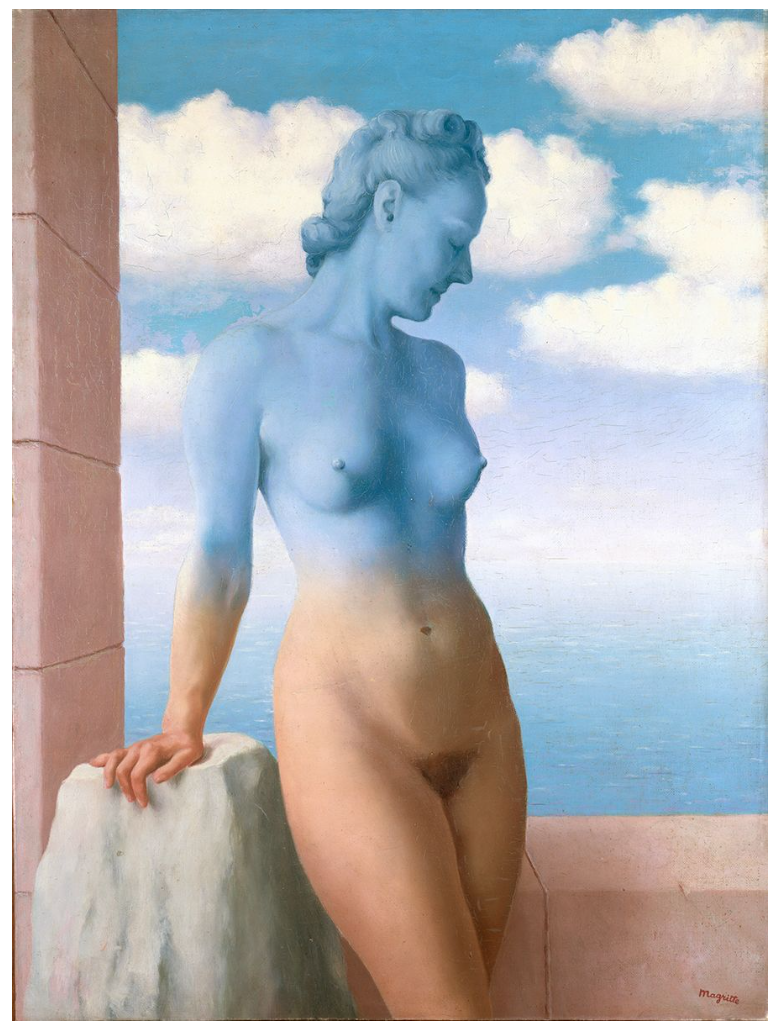
René Magritte, La magie noire, 1945. Musées Royaux des Beaux-Arts, Brussels. Artwork: © ADAGP, Paris and DACS, London 2024. Digital image: © 2024 Photothèque R. Magritte /Adagp Images, Paris, / SCALA, Florence
Perfectly poised, in the present work, the figure appears not to be a living, breathing woman, but appears as if she was a statue, her body evoking the cool solidity and polished, unblemished surface of marble. Yet, nothing is ever what it seems in Magritte’s work. Depicted in a state of metamorphosis, the nude is quite literally changing in front of our eyes from flesh into sky. She could be undergoing some Pygmalion-like transformation or quite simply disappearing, or perhaps immortally locked between states. Is she a reality being granted a strange apotheosis, the woman becoming the intangible goddess or ‘Eternal Feminine’ or perhaps vice versa, the corporeal reality of woman replacing an image held on a pedestal?
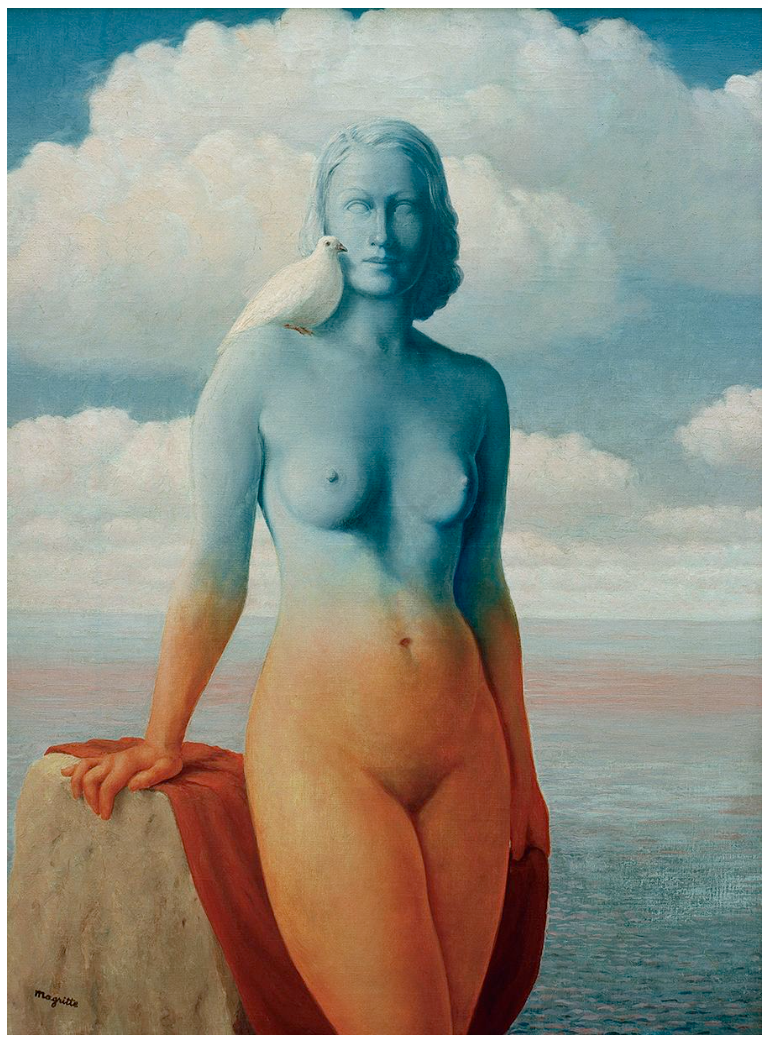
René Magritte, La magie noire, 1946. Private collection. Sold, London, 19 June 2019, £4,184,500 GBP ($5,284,126 USD). Artwork: © ADAGP, Paris and DACS, London 2024. Digital image: akg-images.
In addition to being inspired by his wife, Georgette, in his depiction of the female nude, Magritte also frequently turned to the plaster cast of a female torso that he had acquired in the early 1930s. Magritte likely purchased this torso, which was cast from life rather than a classical sculpture, from the Maison Berger, the art store in Brussels owned by his sister-in-law, where he purchased all his artistic materials. In 1932, this object first appeared in two works, titled La belle de nuit (Sylvester, no. 346) and Quand l’heure sonnera (Sylvester, no. 347). The plaster torso allowed Magritte to play with notions of reality and artifice in his compositions, forcing the viewer to question what is imagined and what is real within the scene. In many ways, he takes these concepts a step further in the present work, not only enlarging the torso to become a full scale nude, but combining two different physical states within the same motif.
It was Magritte himself who came up with the title, La magie noire, explaining, ‘Black magic. It is an act of black magic to turn woman’s flesh into sky’ (quoted in D. Sylvester, ed., René Magritte Catalogue Raisonné, London, 1993, vol. II, p. 187). The mysterious ‘alchemy,’ as Paul Nougé described the metamorphosis that dominates the present work, is one of the central themes that runs throughout Magritte’s art. Yet, Magritte was not attempting to depict a moment of supernatural magic, but was instead revealing the mysteries inherent in reality, drawing the viewer into, ‘a theatre of the unpredictable’ (M. Draguet and C. Goormans, in Magritte: The Mystery of the Ordinary, 1926-1938, exh. cat., The Museum of Modern Art, New York, 2014, p. 160). As Nougé explained, ‘The light is so pure and so present that the body gives itself over to the colour of the sky and slips away from our sight like the darkest night. This is, however, only the transparent spell of reality and not a miracle. Suddenly, arising from the depths of the image or ourselves, one can hear a kind of solemn warning’ (quoted in ibid., p. 160).
Le miroir universel, 1938-1939
Sotheby’s Hong-Kong: 5 October 2023
Estimated: HKD 70,000,000 – 95,000,000
HKD 77,575,000 / USD 9,909,120
RENE MAGRITTE (1898 – 1967)
Le miroir universel, 1938-1939
Oil on canvas
116×89 cm (45 5/8 x 35 inches)
Signed Magritte lower left
Signed Magritte, dated 1939 and titled “LE MIROIR UNIVERSEL” on the reverse
Surrealist master René Magritte is famed for his intriguing images that combine everyday objects in whimsical and thought-provoking contexts. In a world of paradoxes, Magritte seeks to question the experience of perception within painting. Le miroir universel belongs to a celebrated body of works Magritte executed during the mid-1930s and 1940s on the subject of a female nude in an unidentified landscape.
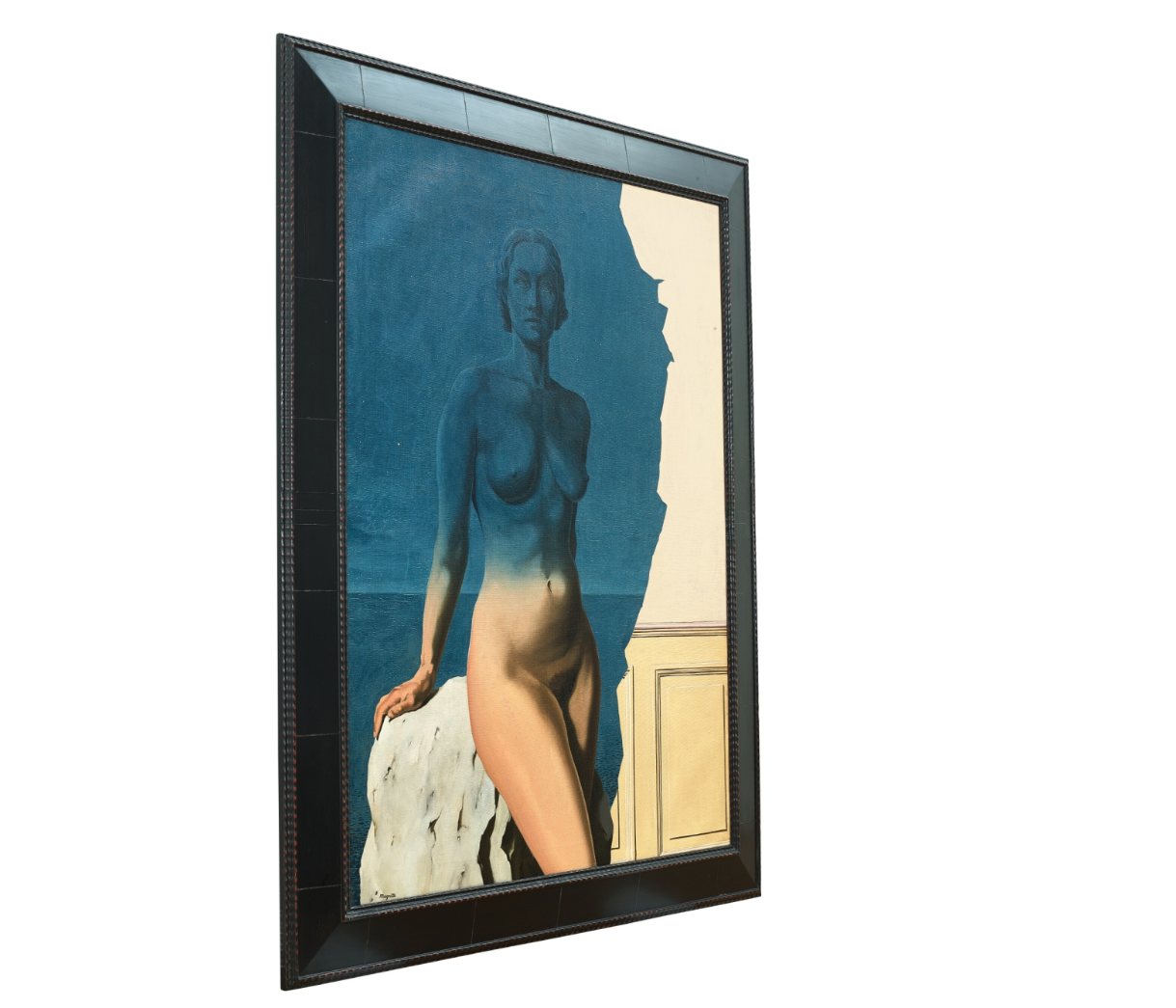
Over a meter in height, Le miroir universel is the largest of the early representations of this theme and dates from the most important period in the Surrealist movement, and arguably one of the most visually arresting examples from the series.
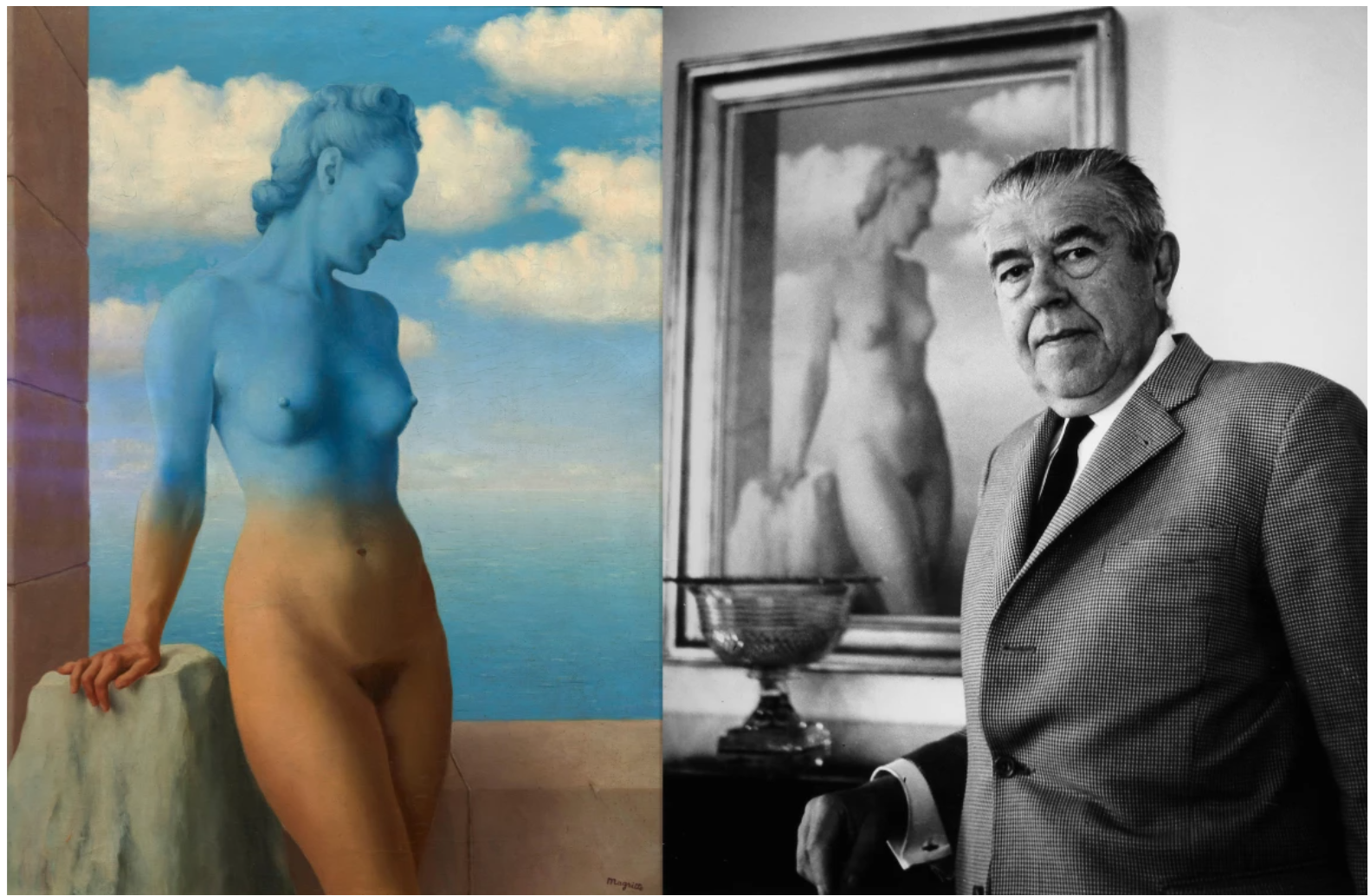
Left: René Magritte, La magie noire, 1945, oil on canvas, 79 by 59 cm. Collection of Royal Museums of Fine Arts of Belgium. © GABRIELE CROPPI/ Scala, Florence © 2023 C. Herscovici / Artists Rights Society (ARS), New York
Right: René Magritte in front of another version of La magir moire, 1966. © 2023 C. Herscovici / Artists Rights Society (ARS), New York
The women of these paintings – which often carried the alternative title of ‘magie noire’ or black magic – are some of Magritte’s most beguiling creations, and her breathtaking silhouette appeared in a number of oils and works on paper. He varied the position of the nude, depicting her frontally or in profile, sometimes holding a rose, or with a dove resting on her shoulder, and almost always with one hand resting on a block of stone. The subject has became one of Magritte’s favourite images from the mid-1930s onwards, with La magie noire (collection of Royal Museums of Fine Arts of Belgium) being a prominent example. Hailing from an earlier period, Le miroir universel directly rivals the museum collection for its scale and superior quality.
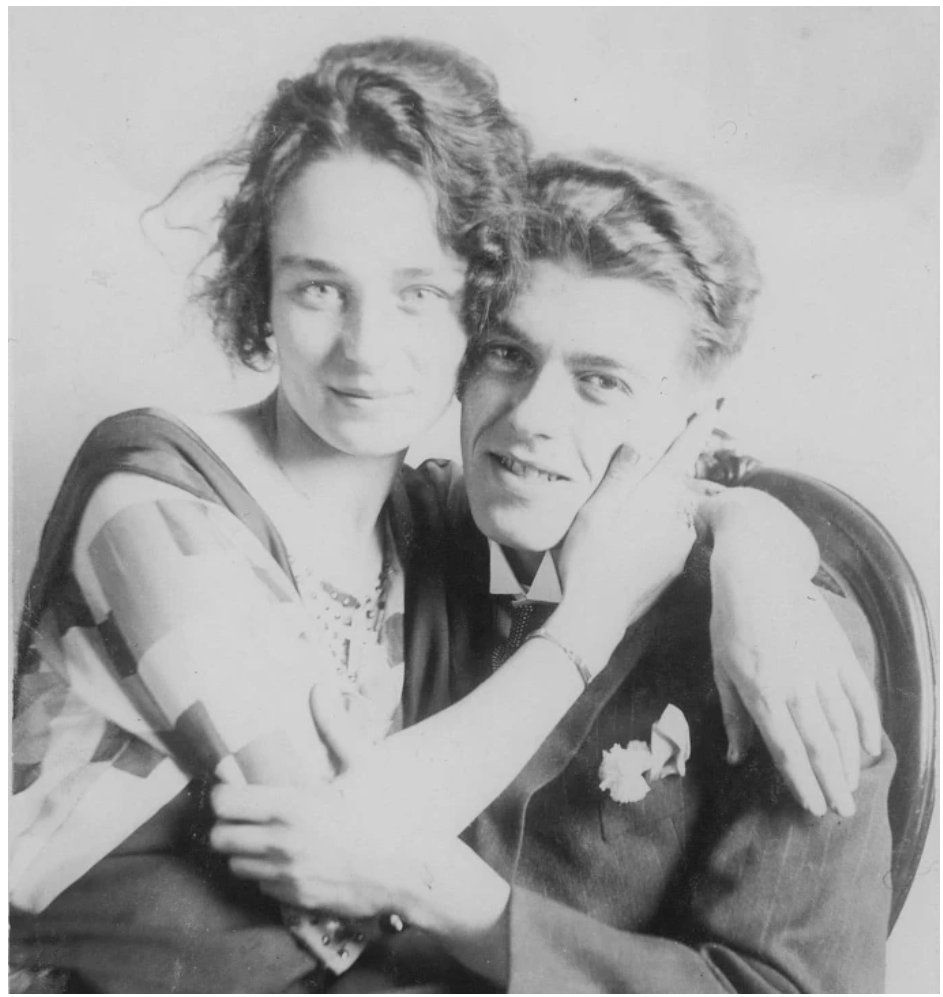
René and Georgette Magritte.
The model for this series was the artist’s wife Georgette Berger and her image is depicted in a classical manner, abiding by the laws of conventional beauty and proportion, resembling a marble sculpture or a mythical figure as much as a live model. In this Magritte was drawing on an ancient pictorial tradition, deliberately evoking other famous nudes in the history of art, especially Botticelli’s The Birth of Venus. This traditional representation, however, is juxtaposed with the unexpected coloration of the figure, whose upper body gradually acquires the tone of the exquisite night sky. As Magritte explained in a letter to the Surrealist poet André Breton dated 22 June 1934:
“Black magic. It is an act of black magic to turn woman’s flesh into sky.”
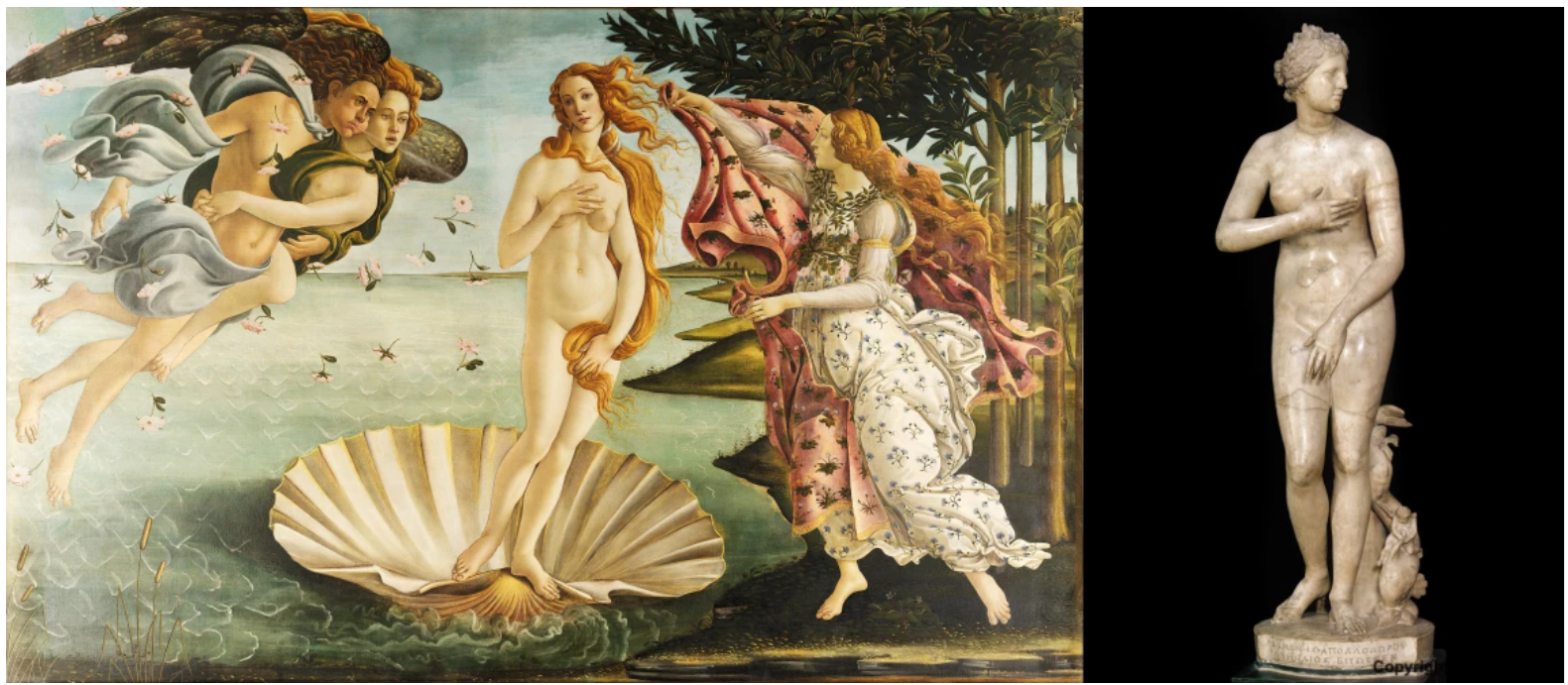
Left: Sandro Botticelli, The Birth of Venus, circa 1485, tempura on canvas, 172.5 x 278.5 cm. Collection of Uffizi Gallery, Florence.
Right: Medici Venus, marble, 1st century BCE, 153 cm height. Collection of Uffizi Gallery, Florence.
In nearly all paintings from this group, the woman has one hand resting on a block of stone. As Magritte explained:
“One idea is that stone is associated with an “attachment” to the earth. It does not rise up of its own accord; you can rely on its remaining faithful to the earth’s attraction. Woman, too, if you like. From another point of view the hard existence of stone […] and the mental and physical system of a human being are not unconnected’
In Le miroir universel, this combination of opposites provides the crucial tension that is found in all of Magritte’s best work. Imaginative and unconstrained, the combination, placement and interactions of different pictorial elements closely echo the Freudian methods of free association. In the worlds that Magritte constructed, the impossible becomes the possible, and just as the title suggests, the mirror reflects in all and any direction. In the present work, the crisp edge that separates this outside world from the warmly lit interior is a jagged line that emphasizes the opposing forces conjured by these two worlds. In this Magritte evokes another of his most celebrated motifs – the uncanny combination of nighttime and daytime worlds. This would be one of the most important visual images of his career and underpins the celebrated L’empire des lumières series.
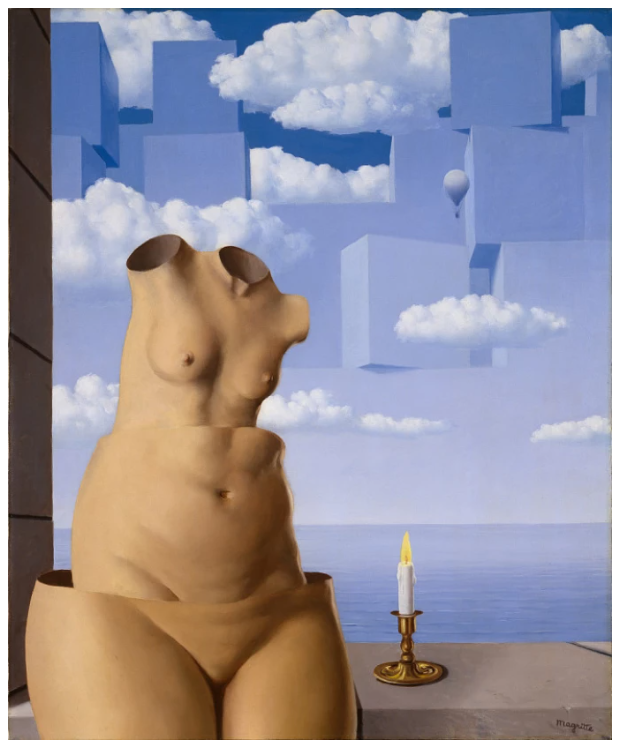
René Magritte, La folie des grandeurs, oil on canvas, 1948, 99.2 by 81.5 cm. Hirshhorn Museum and Sculpture Garden, Washington.
© 2023 C. Herscovici / Artists Rights Society (ARS), New York
The market for works by Magritte has gone from strength to strength over the recent years, with a growing number of global collectors seeking to acquire museum-quality works by the artist. In 2022, an auction record was set for a Magritte oil, when L’empire des lumières (1961) sold at Sotheby’s London for GBP 59.5 million (USD 79.5 million), while the second most expensive price was achieved at Sotheby’s New York in 2023 for another L’empire des lumières (USD 42.3 million). While the eerie imagery of combining night and day has become the most distinctive feature in Magritte’s oeuvre as seen in these two examples, the present work is arguably one of the critical precedents of such surrealist vision. It was this transformation of the everyday into the remarkable that made Magritte such an influential artist, not only within the Surrealist movement but also for artists across the twentieth century.
La Leçon de choses, 1947
Sotheby’s Paris: 18 October 2024
Estimated: EUR 3,500,000 – 4,500,000
EUR 3,840,000 / USD 4,158,465
La Leçon de choses | Surrealism and its Legacy | 2024 | Sotheby’s
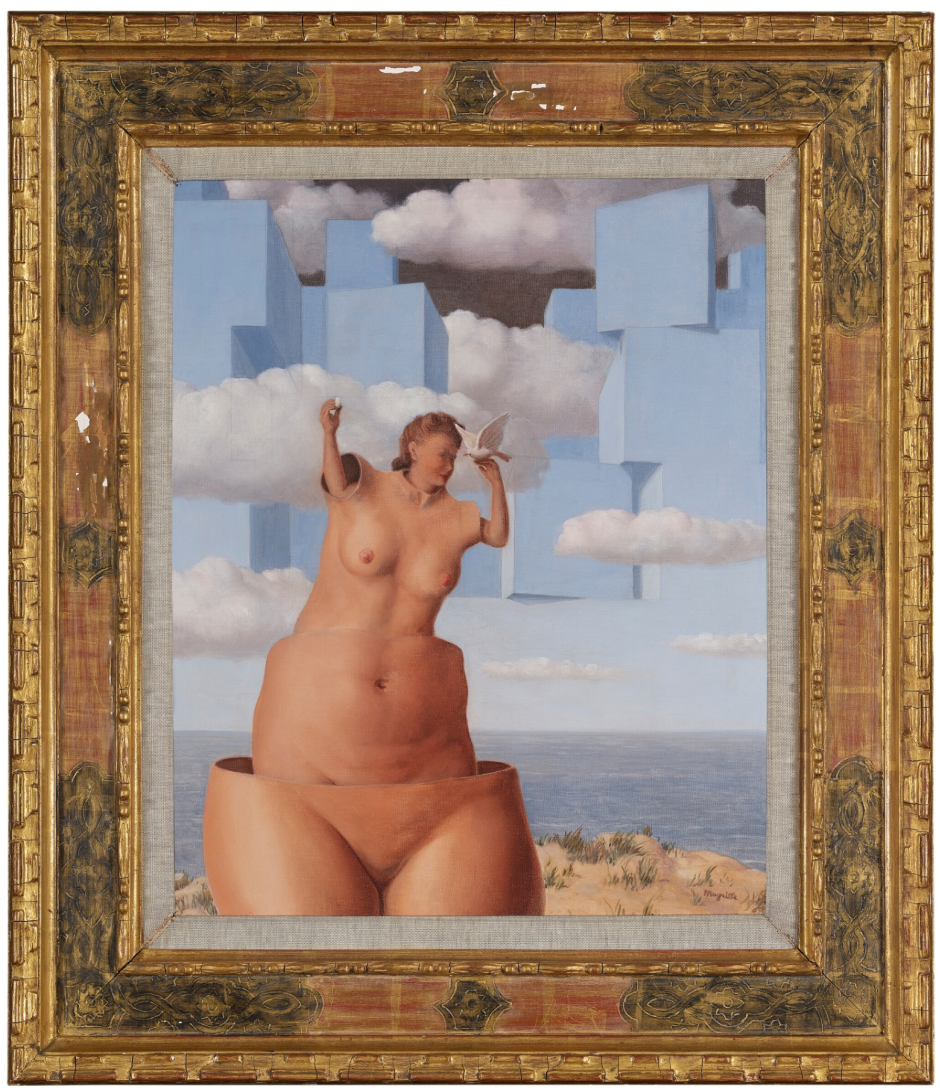
RENE MAGRITTE (1898 – 1967)
La Leçon de choses, 1947
Oil on canvas
66×55 cm (26×22 inches)
Signed Magritte (lower right)
Titled “LA LEÇON DE CHOSES” and dated 1947 (on the reverse)
A triumphant exemplar of Magritte’s mature oeuvre after his return to Belgium, his 1947 painting La Leçon des choses combines myriad visual motifs accrued over the course of the artist’s career, rearranged to form an original composition in a process similar to that of his earlier word-paintings.
La leçon de choses is a strong testament to Giorgio de Chirico’s inspiration on Magritte. The former’s otherworldly dislocation of reality, as depicted in The Song of Love, a reproduction of which was shown to Magritte by a friend in 1922, had moved him so deeply it irrevocably changed his artistic trajectory. Though his works were (like his contemporaries’), enigmatic and deeply conceptual, Magritte’s precise execution and methodical reimagination of quotidian objects and settings put the artist at odds with his fellow Surrealists who privileged the automatic impulse above all else. “Magritte focused on familiar, yet idiosyncratic, subject matter, and honed a painting style that was decidedly readable. At the same time, his works questioned the logic of language and meaning, and exacerbated the puzzles of representation… Magritte never fully embraced the automatist techniques that were championed by Breton and practiced, to varying degrees by the artists surrounding him—including Arp, Ernst, André Masson, Miró, and Yvès Tanguy. Indeed, Magritte was suspicious of the ‘so-called spontaneity’ and the mediumistic aspect of such techniques” (J. Helfenstein & C. Elliott, Magritte: The Mystery of the Ordinary, 1926-1938 (exhibition catalogue), The Museum of Modern Art, New York, 2013, p. 72).
In La leçon de choses, Magritte presents everyday objects in surprising or unsettling contexts, blurring the line between reality and fantasy. This juxtaposition of the familiar with the bizarre compels the viewer to reassess their understanding of these “things” or objects. Magritte often played with this concept of détournement—subverting traditional associations between words, images, and objects. The piece is characteristic of his approach, where ordinary elements are rearranged in ways that defy logic and challenge the viewer’s expectations. The painting embodies many of the themes Magritte explored throughout his career, including the limitations of language and the ambiguity of meaning. By altering the conventional relationship between form and function, he calls into question the reliability of human perception. In La Leçon de choses, the viewer is not merely presented with objects but is prompted to reconsider the assumptions behind those objects, as if they must “relearn” what they are seeing.
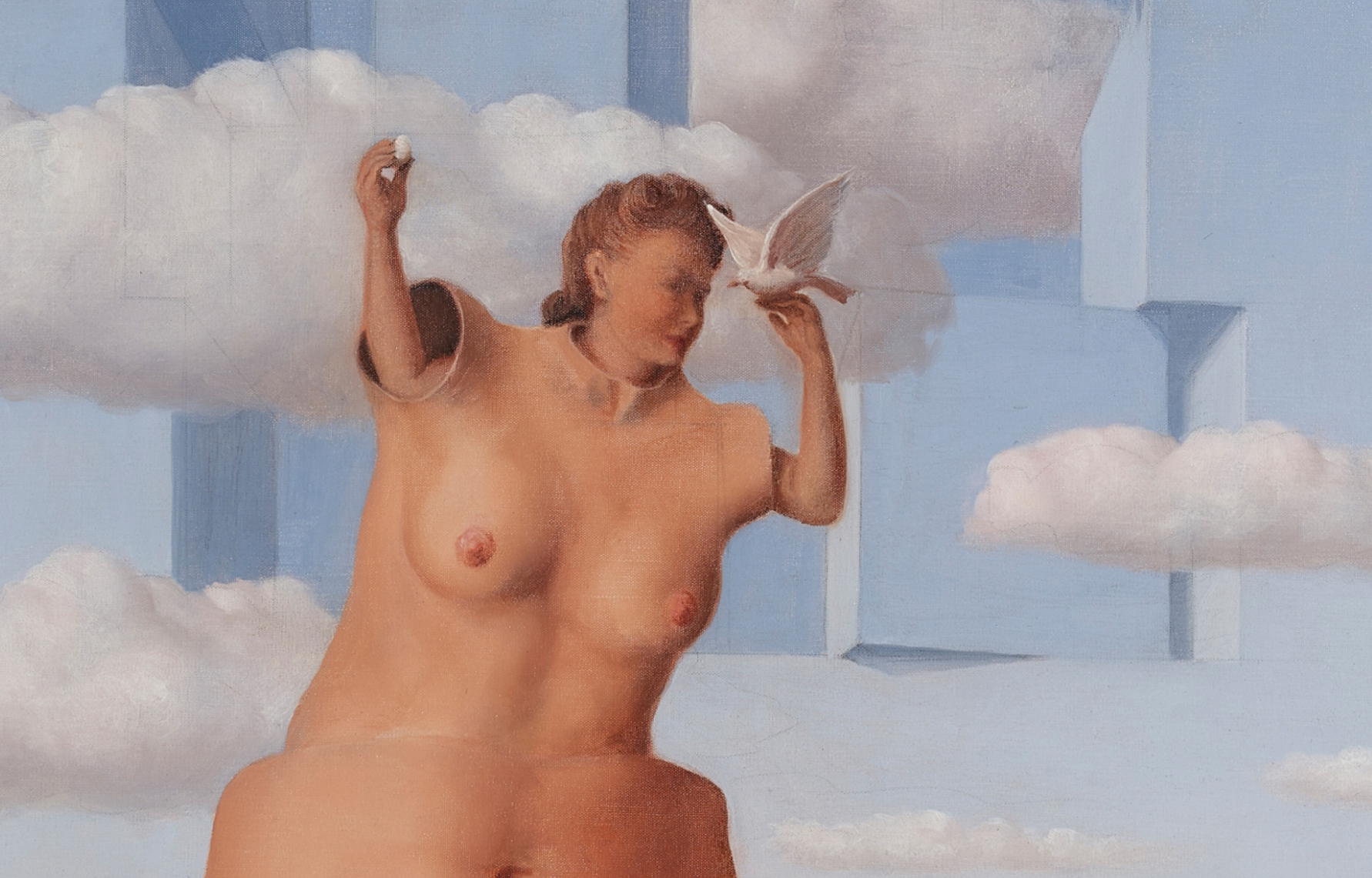
Magritte’s depiction of women in a telescoping sequence of torsos, reminiscent of Matryoshka dolls, reflects his fascination with the surreal manipulation of the human form. In these images, the female figure is fragmented into a series of progressively smaller torsos, stacked one above the other. As the torsos shrink in size, they simultaneously stretch upward, creating a visually unsettling distortion of the body. This technique emphasizes the tension between form and proportion, while exploring themes of identity, repetition, and transformation. The Matryoshka-like arrangement introduces a sense of mystery, evoking the layered complexity of the human figure and the elusive nature of reality.
Often developing his visual motifs in series, across media and decades, the present drawing can be linked to multiple related paintings, including L’importance des merveilles of 1927, La Folie des grandeurs, formerly in the Menil Collection and La Folies des grandeurs II, in the collection of the Hirshhorn Museum. The artist also conceived this form in sculpture in 1967 upon the encouragement of his friend and dealer Alexandre Iolas, who exhibited the work two years later. In his recurrent use of this motif in multiple media, Magritte expands his visual paradox, inviting the viewer to explore the nature of perception and reality.
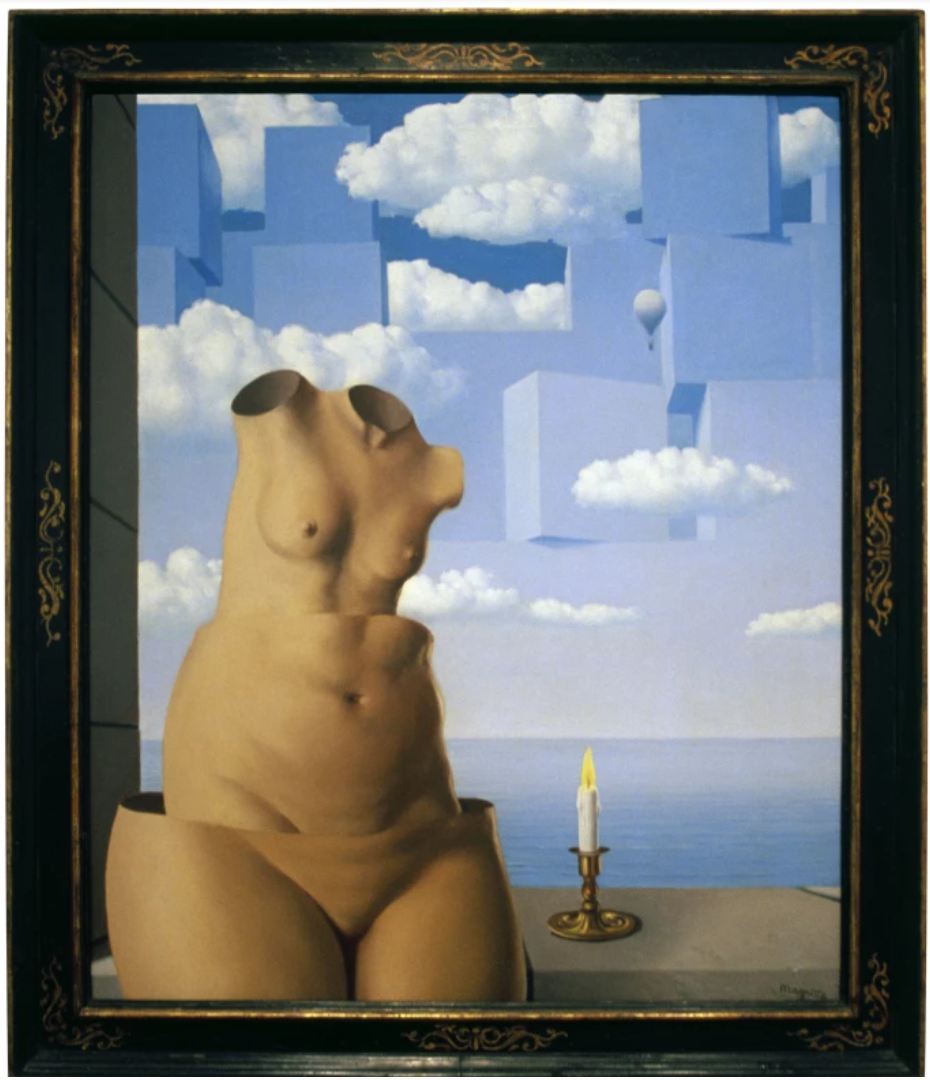
René Magritte, Delusions of Grandeur II, oil on canvas, 1948. Hirshhorn Museum and Sculpture Garden, Smithsonian Institution, Washington, DC, Gift of Joseph H. Hirshhorn, 1966.
© Archivio J. Lange / © NPL – DeA Picture Library / Bridgeman Images Bridgeman Images
When Magritte painted La leçon de choses in 1947, he was in the midst of questioning his own work, an aesthetic and intellectual journey that was as fertile as it had been when he first encountered Surrealism in 1924. Challenging the dogmatism of André Breton, who had taken refuge in the USA, he surrounded himself with a new generation of artists, including Pol Bury, to whom he confided: “Since the beginning of this war, I have longed for a new efficiency that would bring us charm and pleasure. I leave it to others to worry, to terrorise and to continue to confuse everything.” (in Magritte and Renoir. Le Surréalisme en plein soleil, exh. cat. Paris, Musée de l’Orangerie, 2021, p. 159). It was indeed time for the settling of scores with Breton, who did not share Magritte’s hedonistic point of view. The artist plunged with delight into the rediscovery of Renoir and his passion for the portrayal of women and spiced up his aesthetics with a strong and renewed commitment to the Communist Party. His newfound exploration of color and sensuality even led him to some truculent visual provocations.
Since its execution, the present work could be found on the walls of some of the most exciting and renowned collectors. First belonging to Magritte’s champion, charismatic gallerist Alexander Iolas, who was instrumental in bringing Surrealism to America, the work was acquired by renowned female collector and key figure of the New Orleans cultural scene, Muriel Bultman Francis, whose keen eye and connoisseurship is still celebrated today. Jumping from one illustrious collection to another, the work then later entered Sir Elton John’s famously curated collection. The singer who posed with the work a number of time across three decades and moved with it from one luxurious mansion to the next, is reputed for his unrivalled modernist photography collection and keen eye for modern and contemporary art. His extensive collection features works by prominent artists like Man Ray, Matisse, Picasso, Breton, Hockney, Hirst, and Warhol.
Elective Affinities
La Main heureuse, 1953
Sotheby’s New-York: 15 May 2024
Estimated: USD 3,500,000 – 5,500,000
USD 4,020,000
La Main heureuse | Modern Evening Auction | 2024 | Sotheby’s
RENE MAGRITTE (1898 – 1967)
La Main heureuse, 1953
Oil on canvas
50.5 x 65.2 cm (19 7/8 x 25 5/8 inches)
Signed Magritte (lower left)
Titled and dated 1953 (on the reverse)
Executed in 1953, La Main heureuse is a striking embodiment of Magritte’s notion of “elective affinities”—a primary theory behind much of his mature work—and the only oil painting by the artist to feature the piano and ring motif.
“The last problem I dealt with was that of the piano…the secret object destined to be united with the piano was an engagement ring.”
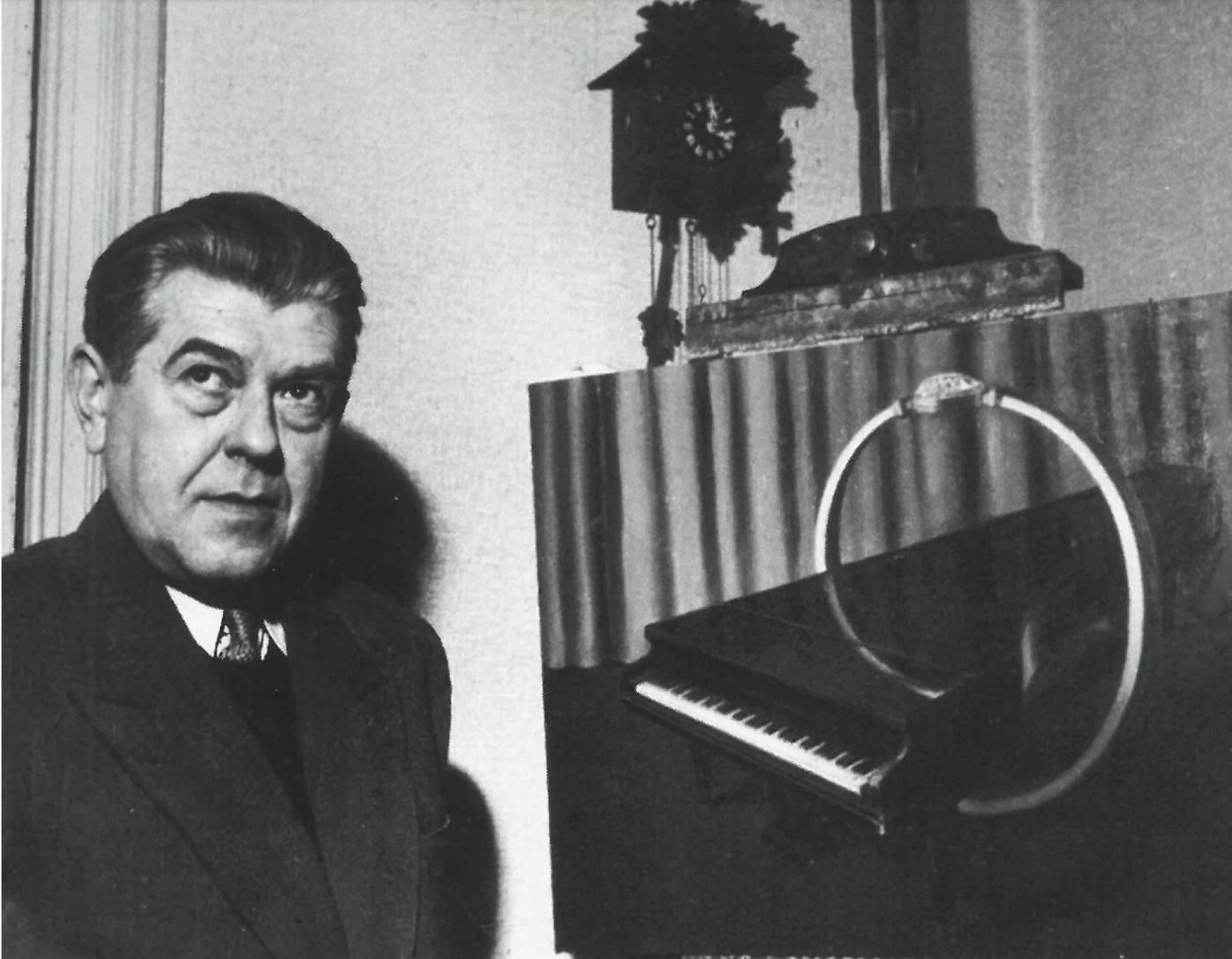
RENÉ MAGRITTE WITH THE PRESENT WORK, 1953, PHOTOGRAPH © ISRAEL SHENKER
The present work depicts a grand piano set upon a stage and encircled by an engagement ring, as if the instrument itself were the protagonist. Such a distinctive combination of objects is an important example of Magritte’s “elective affinities,” a term borrowed from Goethe’s early nineteenth-century novel by the same name. On his discovery of the theory, which first materialized in his 1932 painting of a caged egg, Magritte later wrote:
“One night, I woke up in a room in which a cage with a bird sleeping in it had been placed. A magnificent error caused me to see an egg in the cage, instead of the vanished bird. I then grasped a new and astonishing poetic secret, for the shock which I experienced had been provoked precisely by the affinity of two objects—the cage and the egg—to each other, whereas previously this shock had been caused by my bringing together two objects that were unrelated.”
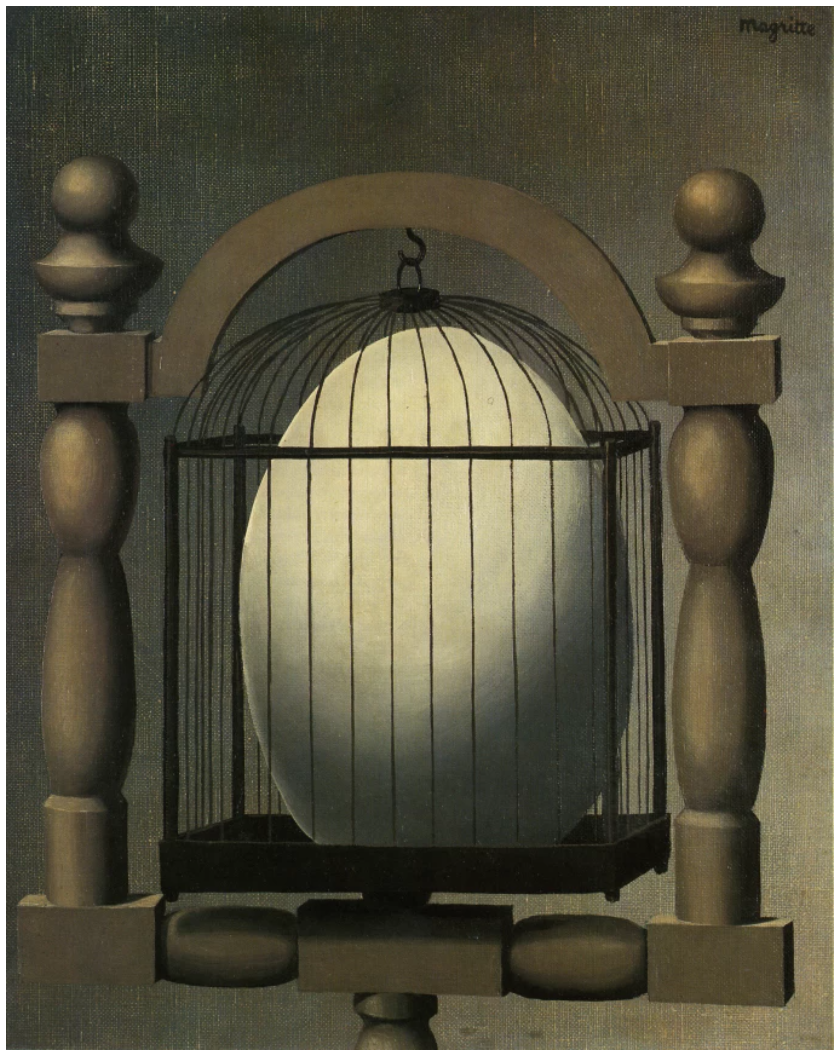
René Magritte. Les Affinités électives, 1932, Private Collection © 2024 C. Herscovici, Brussels / Artists Rights Society (ARS), New York
With the advent of his new artistic approach, Magritte’s compositions began to shift from juxtapositions of incongruous objects toward those featuring contrasts of related objects. Having moved away from the illogic of high Surrealism and the seemingly nonsequitous imagery of the late 1920s and 1930s, Magritte began to operate within this new artistic framework, in which singular images posed pictorial challenges requiring resolution through recontextualization. The conceptual link, or elective affinity, between two or more tangentially related objects—like an egg and a cage, or a piano and a ring (as evidenced here)—provided a sort of visual equation by which Magritte could challenge the most familiar elements of daily life.
It was in 1952 that Magritte first solved “the problem” of the piano with a suite of three gouaches (including one held in the same collection as the present work), each featuring the instrument encircled by a ring—the unseen liaison being the hand which animates both objects. A fourth gouache on the same motif was later commissioned in 1955 Magritte’s correspondence from June 1952 illustrates both the importance and the genesis of titles in the artist’s work, with ideas for his compositions often suggested or “found” by his fellow compatriots and Surrealist artists writers like Marcel Mariën, Paul Nougé and Paul Colinet.
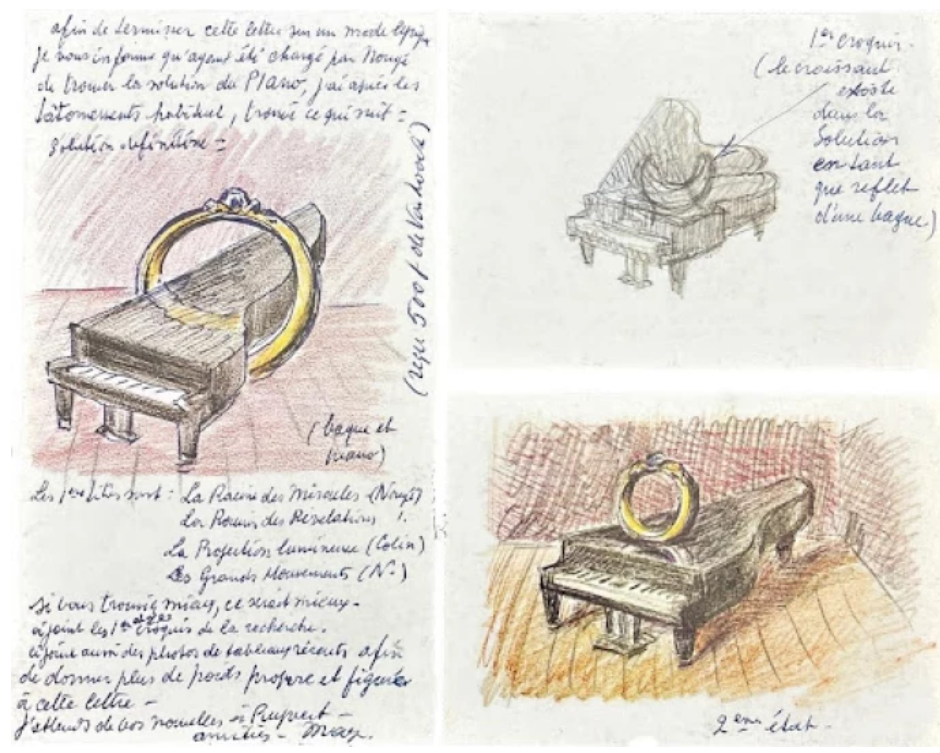
Three sketches include in a letter in a letter from René Magritte to Marcel Mariën, 3 June 1952
© 2024 C. Herscovici, Brussels / Artists Rights Society (ARS), New York
Prior to deciding upon La Main heuruese, Magritte had considered titles including La Racine de miracles (The Root of Miracles); La Racine de révélations (The Root of Revelations); La Projections lumineuse (The Luminous Projection) and Les Grandes mouvements (Great Movements) before closing a letter to Mariën: “If you can think of something better, well and good” (ibid., pp. 146-47; see fig. 4). Just days later, Magritte announced the selection of La Main heureuse in a letter to Nougé, one informed by a book of aphorisms by the same title by author Marcel Havrenne.
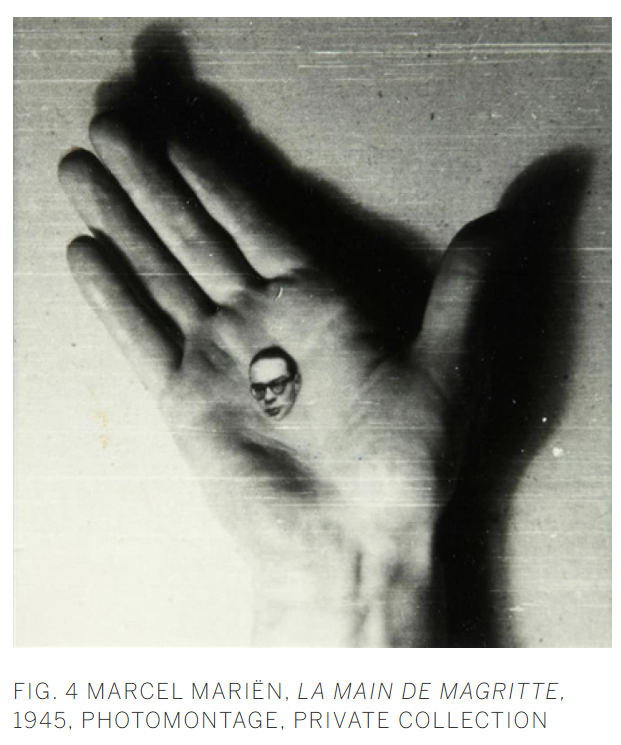
The eventual title for the work, translating to The Happy Hand, underlines the connection between the initially incongruous elements. Upon further examination, Magritte’s composition divulges additional affiliations between his subjects; the reflection of the gold band against the dark grand piano distorts the view of the ring, altering the silhouette just enough to echo the form of a bass clef.
In much the same way that literature influenced the titles of Magritte artwork, so too did music. From his earliest collages incorporating sheet music, to his later paintings also featuring instruments, Magritte’s work emphasizes the throughline of music in his work and the interdisciplinary nature of cultural influences in Surrealism.
Le Séducteur, 1952
Le Séducteur, 1951
Christie’s New-York: 16 May 2024
Estimated: USD 5,500,000 – 7,500,000
USD 8,000,000
RENE MAGRITTE (1898-1967), Le Séducteur | Christie’s
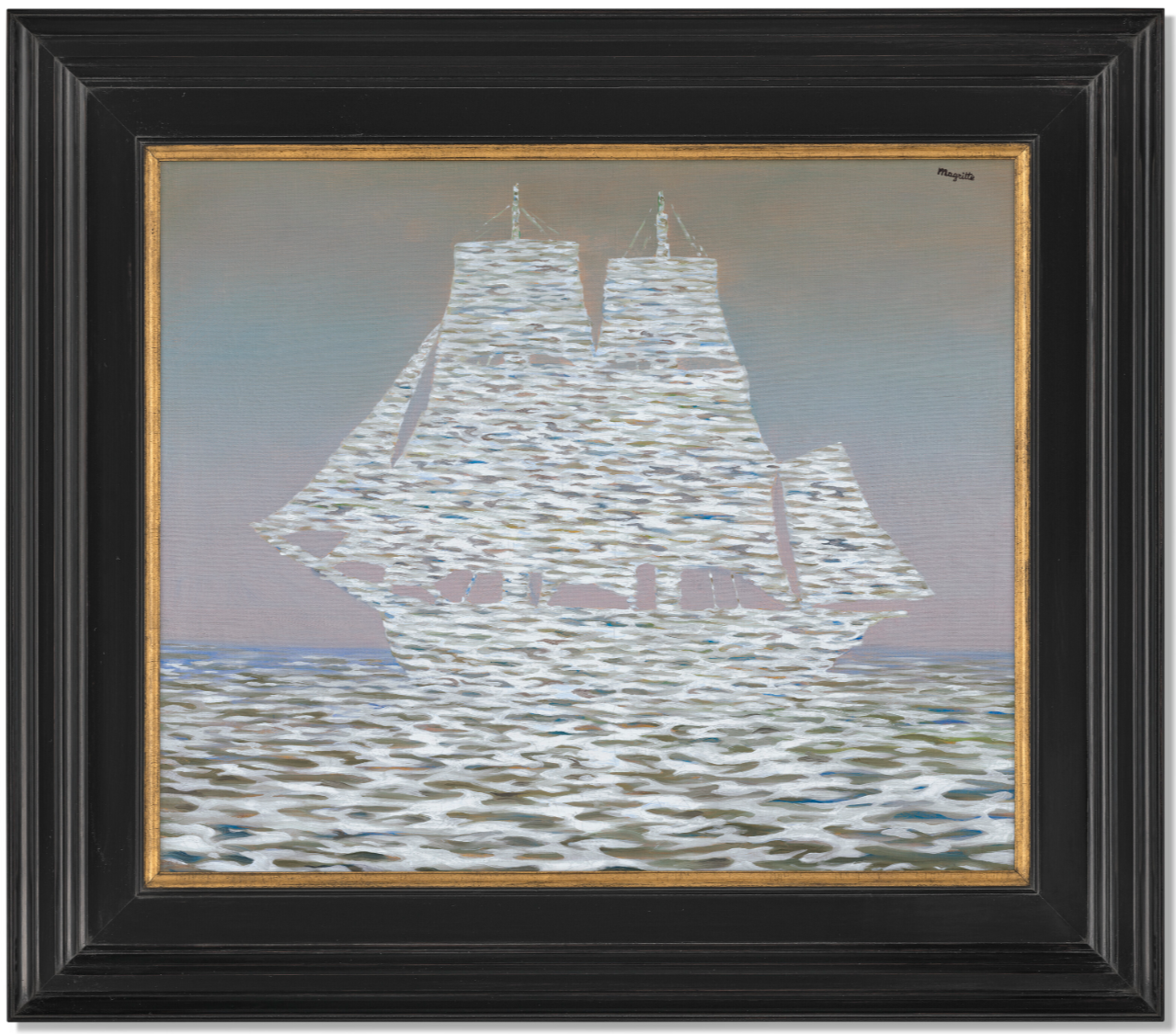
RENE MAGRITTE (1898-1967)
Le Séducteur, 1951
Oil on canvas
19 3/4 x 23 5/8 inches (49.4 x 60 cm)
Signed ‘Magritte’ (upper right)
Dated, titled and numbered ‘”LE SÉDUCTEUR” (III) 1951’ (on the reverse)
Le Séducteur, 1952
Sotheby’s Paris: 10 April 2025
Estimated: EUR 800,000 – 1,200,000
EUR 965,200 / USD 1,080,305
WORK ON PAPER
Le Séducteur | Art Moderne et Contemporain Evening Auction | 2025 | Sotheby’s
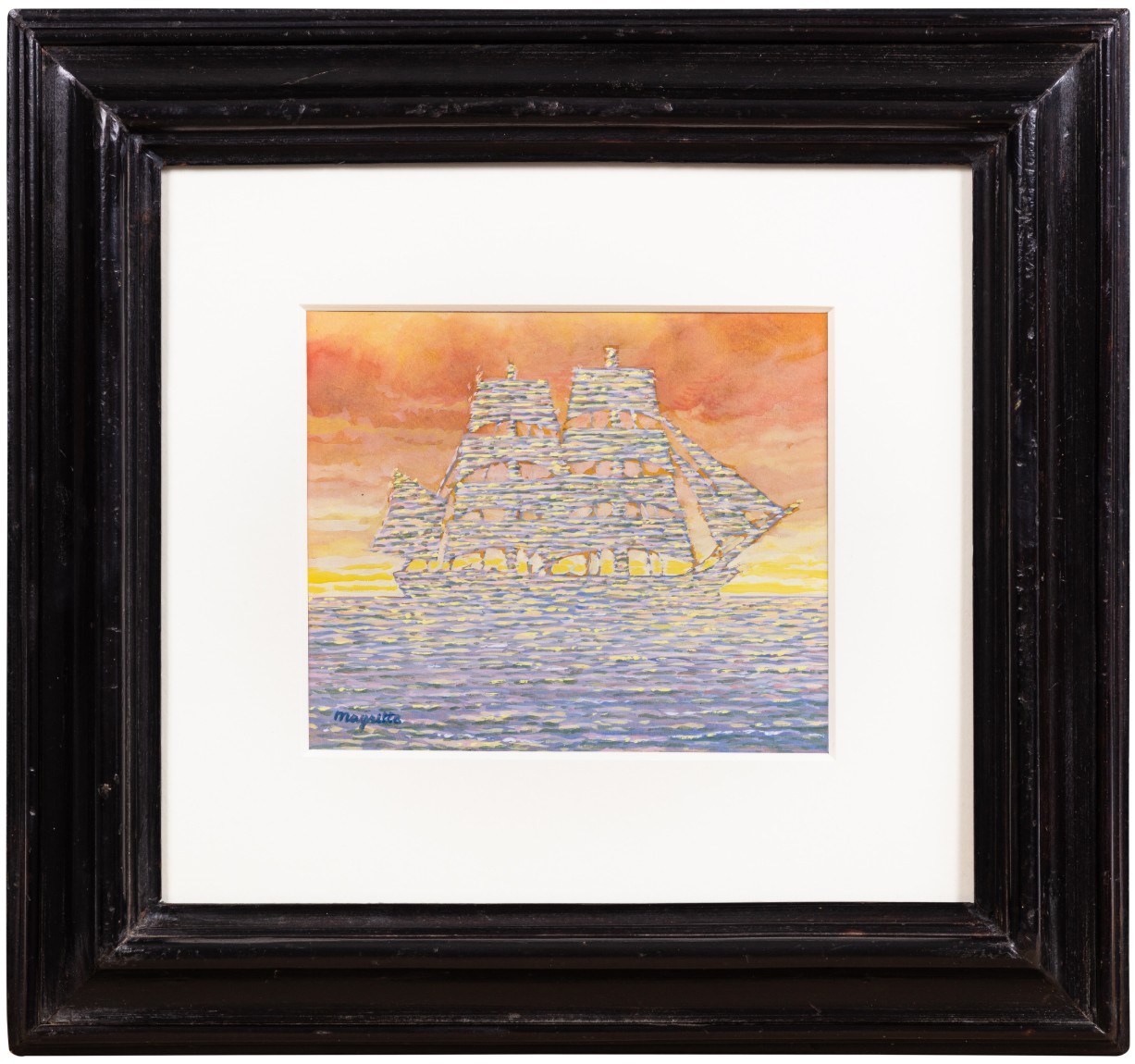
RENÉ MAGRITTE (1898-1967)
Le Séducteur, 1952
Gouache on paper laid down on card
14.8 x 17.4 cm (5 7/8 x 6 7/8 inches)
Signed magritte (lower left)
Inscribed and dated Le Séducteur 1952 (on the reverse)
Curtains
La cour d’amour, 1960
Christie’s New-York: 19 November 2024
Estimated: USD 9,000,000 – 12,000,000
USD 10,530,000
RENE MAGRITTE (1898-1967), La cour d’amour | Christie’s
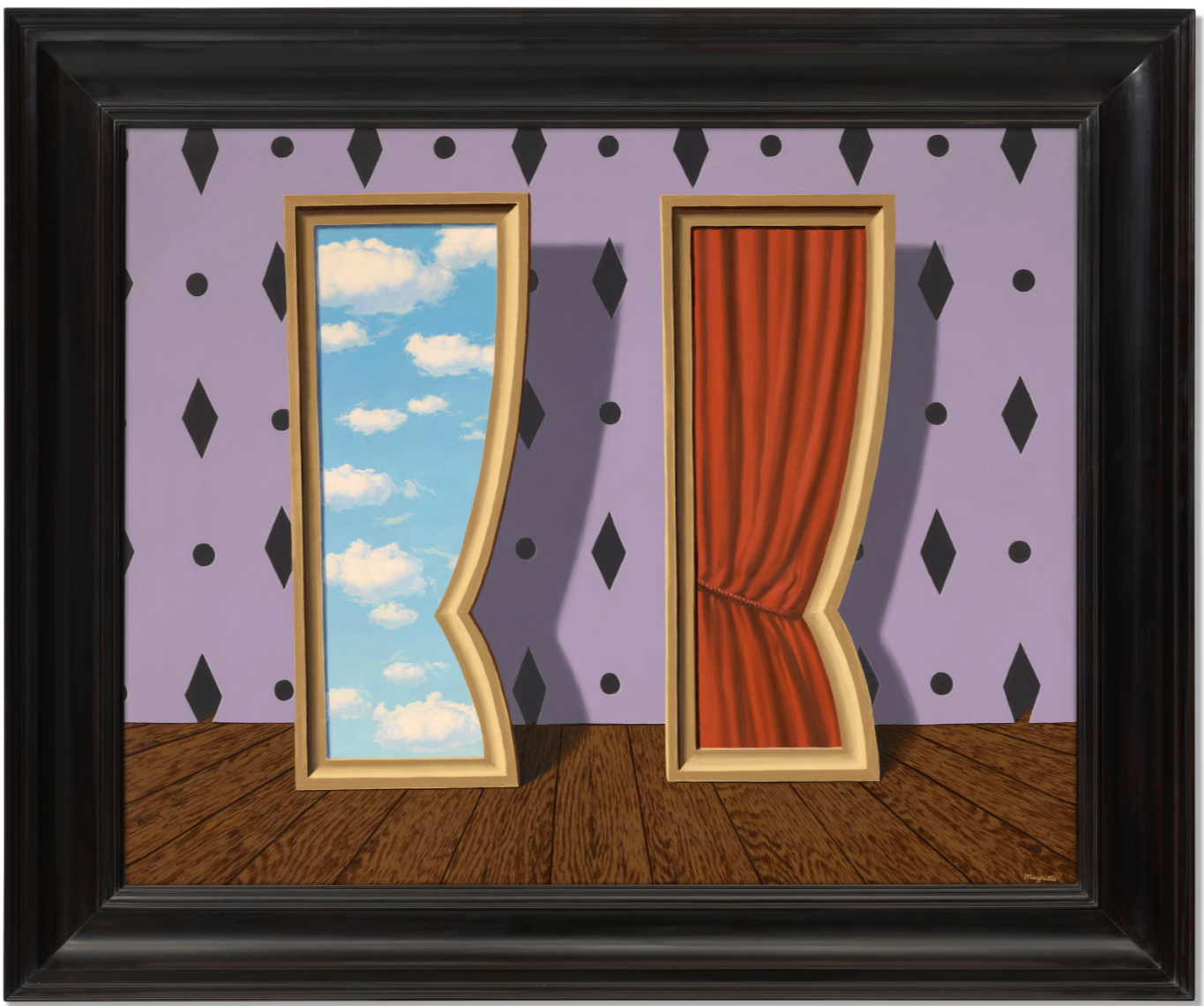
RENE MAGRITTE (1898-1967)
La cour d’amour, 1960
Oil on canvas
79.9 x 100 cm (31 1/2 x 39 3/8 inches)
Signed ‘Magritte’ (lower right)
Sated and titled ‘”LA COUR D’AMOUR” 1960’ (on the reverse)
In November 1964, at the opening of the exhibition Magritte: Le sens propre, René Magritte was asked by the journalist Pierre Mazars about the preponderance of curtains in his most recent works. The artist looked at the paintings hanging on the walls, and replied, in his quintessentially enigmatic manner, “Yes… We are surrounded by curtains” (P. Mazars, “Magritte et l’objet,” in Le Figaro Littéraire, 19 November 1964; quoted in K. Rooney and E. Platter, eds., René Magritte: Selected Writings, Richmond, 2018, p. 214). For Magritte, the curtain represented an intriguingly mysterious proposition, prized for its dual potential to reveal or conceal reality, to constrict our view, or open our eyes to hidden aspects of the world around us. Painted in 1960, La cour d’amour is one of a small series of paintings from the opening years of the decade in which the curtain plays a central role, allowing Magritte to investigate the poetic potential of this simple, familiar object, playing with the viewers’ perceptions and expectations in ever intriguing ways.
The curtain had been a perennial feature within Magritte’s art since his earliest Surrealist compositions from the mid-1920s, most often deployed as a framing device to the mysterious happenings and scenes that filled his canvases, or occasionally as a barrier or partition within the space. In many ways, these drapes had their roots in the traditions of art history, invoking the legendary competition between the Ancient Greek artists Zeuxis and Parrhasius, in which the latter’s superior skill was revealed through his realistic painting of a curtain that was so life-like it fooled the other artist entirely.
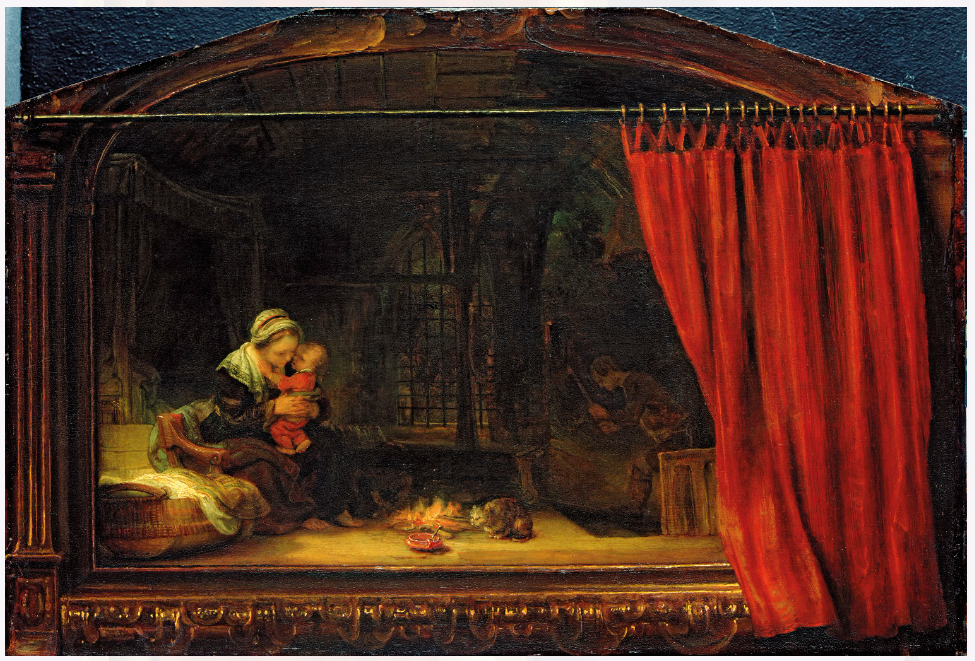
Rembrandt, The Holy Family with a Curtain, 1646. Museum Schloss Wilhelmshöhe, Kassel.
The legacy of this story continued to resonate with artists across the centuries, particularly through the Renaissance, with painters who sought to display their own mimetic mastery through the addition of trompe-l’oeil drapery to their canvases. During the Dutch Golden Age, for example the inclusion of this motif also referenced the popular practice among art collectors and patrons of the period to cover their precious paintings with a curtain, protecting them from dust and bright light, while also making the viewing experience an event, concealing the painting before revealing it in a dramatic flourish.
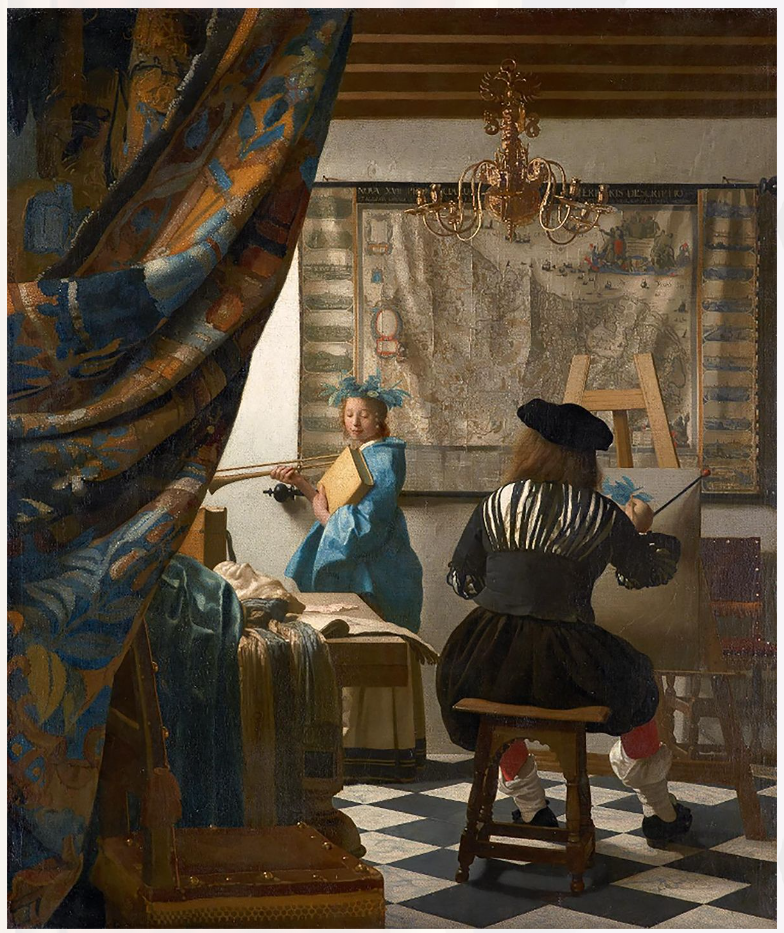
Johannes Vermeer, The Art of Painting, circa 1666-1668. Kunsthistorisches Museum, Vienna.
While in Magritte’s compositions the presence of the curtain typically lent the scene a certain theatricality, as if the objects and figures were taking part in a drama on the stage, in 1926 he began to set them free from their position as a framing device, allowing them to instead become towering, autonomous objects within his paintings. In Le monde poétique (Sylvester, no. 107; Private collection), for example, a pair of bright pink drapes appear unsupported on either side of the platform, the ambiguous material adopting the familiar silhouette and rippling folds of its own accord. In his 1942 painting Les Misanthropes (Sylvester, no. 511; Private collection), meanwhile, a cluster of these curtains become a domineering presence within the desolate, mist-filled landscape, enlarged to giant proportions and transformed into uncanny characters through the simple act of dislocation. At the dawn of the 1960s, the curtain once again became an important leitmotif for Magritte, featuring in a diverse range of contexts and situations, from the enveloping, cylindrical curves of Les mémoires d’un saint (Sylvester, no. 909; The Menil Collection, Houston), to the configuration of three contrasting flat and three-dimensional curtain forms, accompanied by a small grelot bell, in La Joconde (Sylvester, no. 922; Private collection).
In La cour d’amour, Magritte eschews any sense of the trompe-l’oeil effect, instead presenting us with two clearly flat panels cut into the distinctive shape of a draped curtain, which stand at the very center of the space. While one is filled with a realistic rendering of a rich red fabric, the folds following the contours of the panel as it is gathered together in a tie, the other presents an impossible view onto a cloud-filled, cerulean sky, as if the panel is in fact a window or a portal onto another landscape. Placed side by side, rather than as mirror opposites on either side of the space, Magritte accentuates the similarities and differences of the two panels, highlighting the manner in which they appear to have been created from the same schematic design, and yet transformed into two entirely different things by the artist’s hand. Playing with the viewer’s sense of depth, these two framed cut-outs introduce an intriguing impression of space within the scene, at once firmly rooted in the room, with its vivid, patterned wallpaper and wooden floor, and yet also suggesting another world beyond that which we can see.
Composition on a sea shore, 1935-36
Sotheby’s London: 6 March 2024
Estimated: GBP 1,800,000 – 2,500,000
GBP 3,436,000 / USD 4,365,335
RENE MAGRITTE (1898 – 1967)
Composition on a sea shore, 1935-36
Oil on canvas
54.5 x 73.5 cm (21 1/2 x 28 7/8 inches)
Signed Magritte (upper left)
Drawing together a group of apparently unrelated objects, Composition on a sea shore is typical of the enigmatic and beguiling imagery that Magritte developed during the 1930s. This was Magritte’s most creative decade and the period in which he developed the motifs and themes that would underpin the rest of his career. His reputation was growing both in Europe and across the Atlantic, and with this came a series of exhibitions and important commissions including his first one-man show in the United States and his inclusion in the now-legendary Fantastic Art, Dada, Surrealism at The Museum of Modern Art, New York both in 1936. These years are his most experimental, with the artist developing his visual language from canvas to canvas, establishing many of the themes that would underpin his subsequent work.
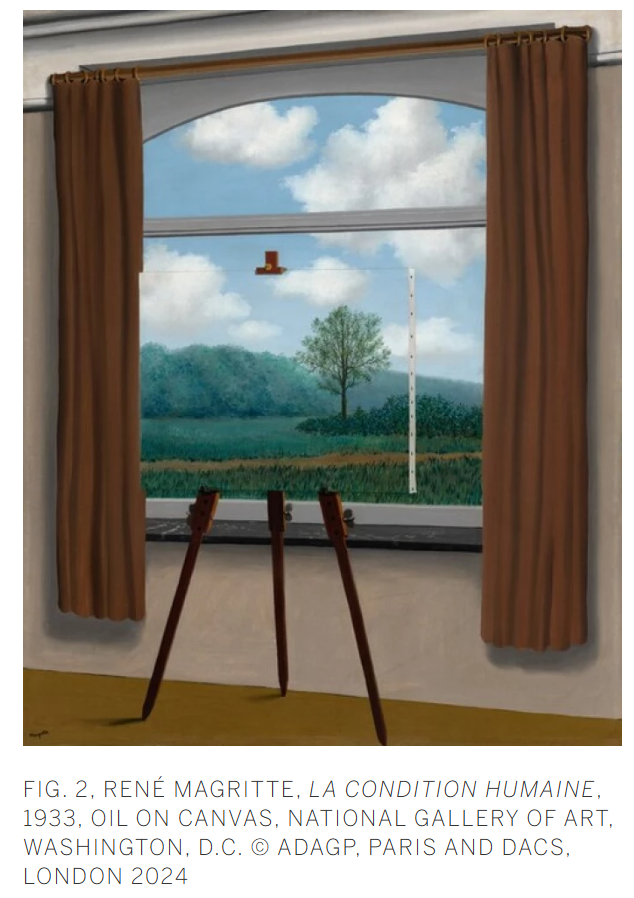
The central motif of the present work is the framed picture. Set against the backdrop of an empty seascape which provides a stage-like setting, its red-tinged nighttime clouds present a sharp contrast to the blue sky and water of the sea shore. This contrast of night and day, seen here in one of its earliest incarnations, was of central importance to the artist and would be reprised in one of his most famous later series – the Empires des lumières. Through the use of the picture frame and the contrast between its apparent transparency and the opacity of the sheet of metal and grelots that leans against it, Magritte presents a juxtaposition of opposites; the work presents a paradox of concealment and revelation and the contrast between the natural and the man-made, between interior and exterior settings. By confronting these contrasted elements, the artist evokes the essential Surrealist paradigm of questioning the significance and purpose we attribute to various objects and creating new meanings by placing these objects in unexpected contexts.
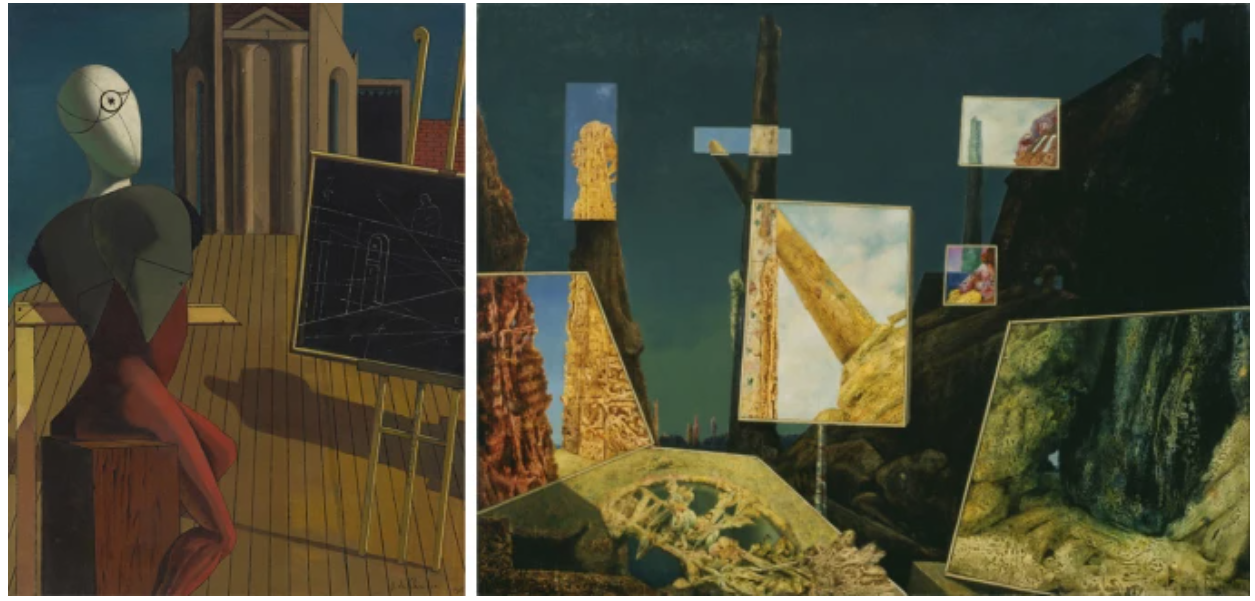
Left: Fig. 3, Giorgio de Chirico, Le vaticinateur, 1914-15, oil on canvas, The Museum of Modern Art, New York © DACS 2024
Right: Fig. 4, MAX ERNST, DAY AND NIGHT, 1941-42, OIL ON CANVAS, THE MENIL COLLECTION, HOUSTON © ADAGP, Paris and DACS, London 2024
The idea of concealment is a central tenet of Magritte’s work and forms the basis of numerous compositions including the series known by the titles La belle captive or La condition humaine which show a painted canvas as a continuation of the scene that is being painted. The essential artifice of the painted canvas was of keen interest to the Surrealists as a whole and a similar theme emerges in a number of works by Magritte’s contemporaries.
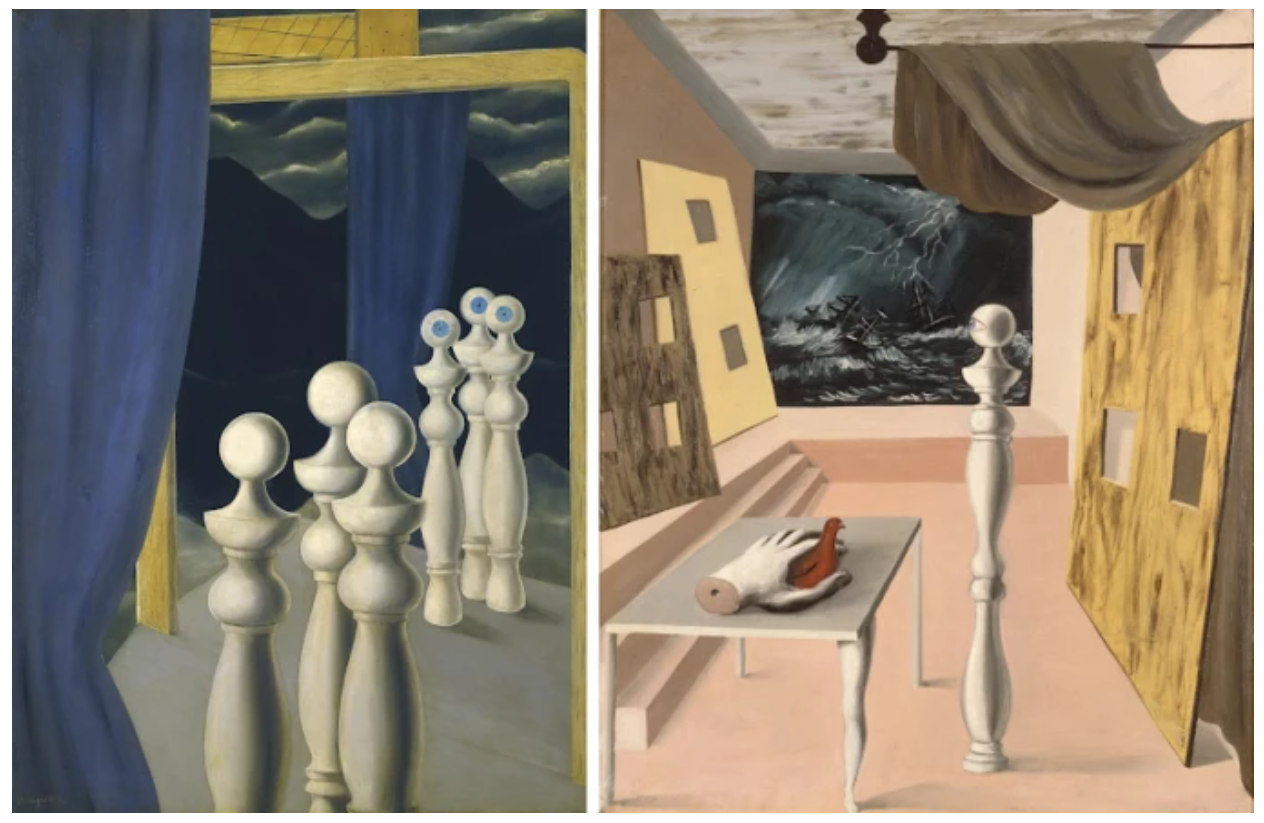
Left: RENÉ MAGRITTE, LA RENCONTRE, OIL ON CANVAS, 1926, KUNSTSAMMLUNG NORDRHEIN-WESTFALEN, DUSSELDORf © ADAGP, Paris and DACS, London 2024
Right: RENÉ MAGRITTE, LA TRAVERSÉE DIFFICILE, OIL ON CANVAS, 1926, PRIVATE COLLECTION © ADAGP, Paris and DACS, London 2024
De Chirico’s work may also have influenced Magritte’s adoption of the bilboquet as a recurring symbol in his work. Based on a cup-and-ball children’s toy, it also has notable anthropomorphic qualities. For Magritte, it was the perfect Surrealist object; its form phallic, as well as evocative of the bishop in a chess set, a game of considerable interest to the Surrealists. It appeared first in the mid-1920s in a number of compositions that might be seen as the precursors to the present work, sharing as they do the same notably artificial settings and framed scenes of stormy skies. Discussing Composition on a sea shore, David Sylvester notes that “the upright form, which looks like an eroded bilboquet or a piece of bleached driftwood, is unique to this work” (op. cit., p. 213). The subtle erosion and pink flesh tone in fact emphasize the human qualities of the object and make it an active interlocutor in the composition. Certainly, it is the only animate presence in the work, a status underlined by the very static quality of the picture frame and the sheet of corrugated metal that leans against it.
Le Domaine d’Arnheim, 1949
Sotheby’s New-York: 16 May 2023
Estimated: USD 15,000,000 – 25,000,000
USD 18,948,300
Le Domaine d’Arnheim | The Mo Ostin Collection Evening Auction | 2023 | Sotheby’s
RENE MAGRITTE (1898 – 1967)
Le Domaine d’Arnheim, 1949
Oil on canvas
99.7 x 81.3 cm (39 1/4 x 32 inches)
Signed (lower left)
Signed again, titled “Domaine d’Arnheim” and dated 1949 (on the reverse)
With Le Domaine d’Arnheim, it is Magritte who hovers in that realm of superintendence between man and God, the artist as designer, the architect of dreams and re-creator of realities. As Alex Danchev writes, “René Magritte is the single most significant purveyor of images to the modern world… Contemporary life is replete with Magritte and his sensibilities. His paintings are legends.” Of the hundreds of works completed in the artist’s lifetime, it is “Le Domaine d’Arnheim: a shattered window; the shards of glass showing the view outside,” which the biographer mentions alongside L’Empire des lumières, La Trahison des images, and La Durée poignardée as the most iconic works of the modern master’s career (Alex Danchev, Magritte, A Life, New York, 2020, p. xxvii).
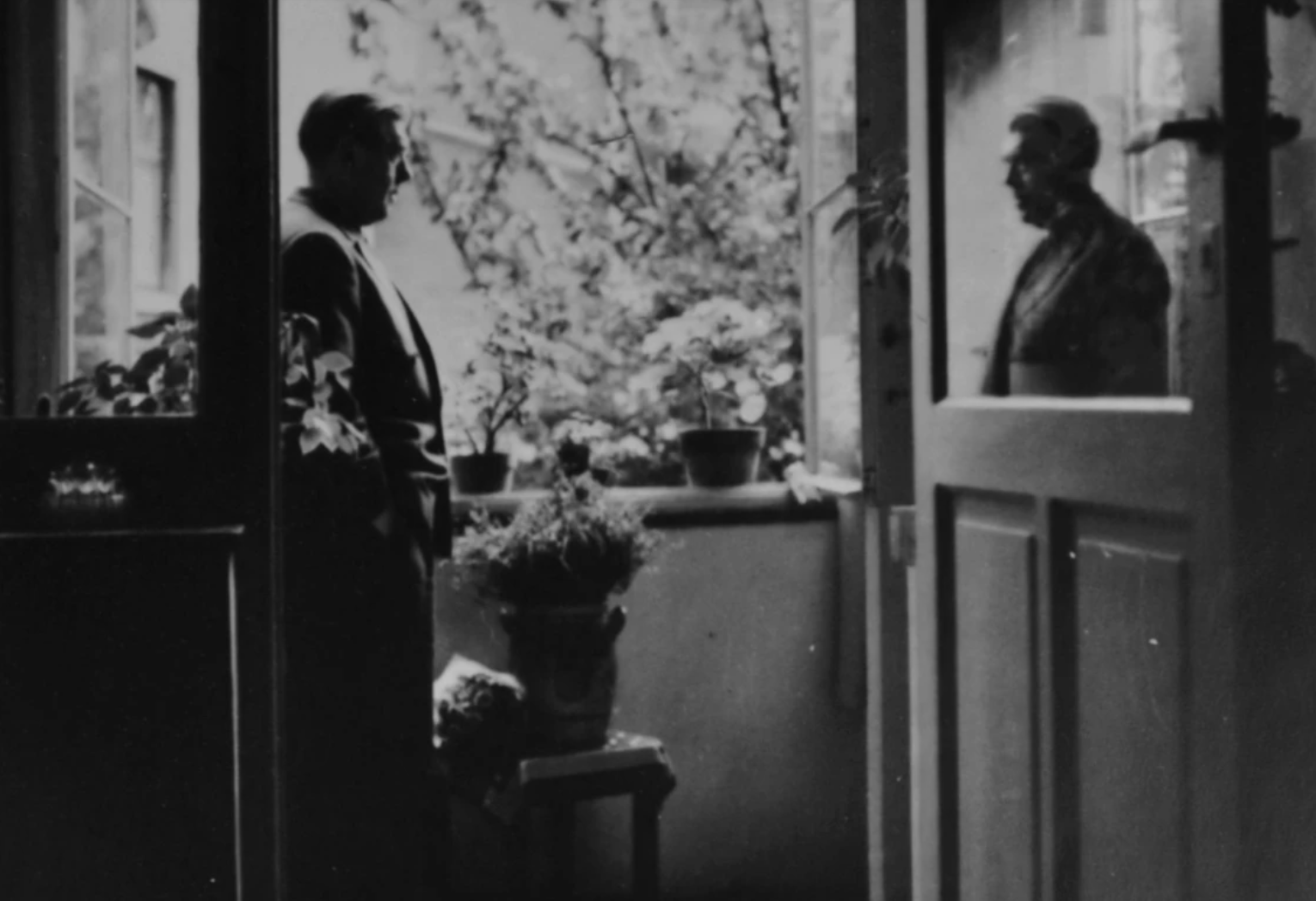
Portrait of René Magritte by Georgette Magritte, 1955. © 2023 C. Herscovici, Brussels / ARS, New York
Borne from the literary mind of Edgar Allan Poe—a favorite author of the artist’s—the subject of Magritte’s Le Domaine d’Arnheim takes as a point of departure the eponymous short story from 1850. In Poe’s tale, the first-person narrator tells of his friend Ellison, a wealthy aesthete rendered even wealthier by a windfall inheritance, and his “unceasing pursuit.” Ellison spends years seeking “the richest, the truest, and most natural, if not altogether the most extensive province” of all that may be poetic in sentiment, eventually landing on the pastime of “landscape-gardening” as the pinnacle field in which man’s intervention may perfect the natural world (Edgar Allan Poe, “The Domain of Arnheim,” 1847, accessed online).
Painted in 1949, Magritte’s Le Domaine d’Arnheim explores similar entanglements of the organic and the contrived. The sculpted mountain range at the aft of the composition implies the intervention of man, while the subsequent thresholds of the window and the interior at the fore confirm it. At once, nature and artifice are separated as well as linked by the broken panes of glass which duplicate the vast landscape beyond.
Such Poe-inspired explorations of the manmade and natural worlds had already manifested themselves in Magritte’s work by the previous decade. In 1938, the artist executed the first of three oil compositions by the same title. Smaller in scale and rendered in a grisaille-like palette, this early work was also precipitated by the artist’s dream-like vision of an egg in a cage, the correlation between which he later termed “elective affinities.” Magritte’s search for the conceptual linkage between such disparate yet related images would underline much of his output in subsequent years as he sought answers to the “problem” objects which occupied his headspace. In the 1938 picture, the foreground is dominated by an Old Master-esque still life of two eggs, behind which lies a soaring Romantic landscape topped with an eagle-headed peak; absent is the presence of man. Still as the scene is, the untouched reverence of the landscape is belied by the engineered windowsill and carved mountaintop.
The uncanny juxtaposition between nature and artifice present in the 1938 composition is further enhanced in the present work, executed a decade later. Though he gave it the same name, Magritte radically shifted the design and concept in the 1949 variation of Le Domaine d’Arnheim. Here, the artist has removed the objects of affinity—namely the eggs—opting instead for increased proximal separation between the subject and the viewer with the addition of successive layers of curtains, walls, windows and glass. Mitigating the distance in the scene is the curious repetition of the mountainous view in the shattered panes of glass at the fore. Propped up like characters of their own, these shards recapitulate the eagle-headed peak and craggy formations of the background within the interior.
Brochure of the Alps, belonging to René Magritte, illustrated in David Sylvester, ed., René Magritte, Catalogue raisonné, vol. II, London, 1993, p. 219
By removing the eggs from the present composition, Magritte shifts the emphasis onto the mountain and the design of the eagle’s head, which itself derives from the German etymology of ‘Arnheim,’ meaning ‘home of the eagle.’ Characteristic of the Surrealist subversion of words and images, Magritte here addresses the inherent dichotomy between nature and artifice, sign and signifier. As Magritte wrote to Edward James upon the creation of the 1938 picture:
“Penrose has managed to use images of objects to represent colours!… I am working on a picture on the basis of these findings. It is ‘The Domain of Arnheim’ in memory of the story by Poe, a man who, in my view, can give rise to thoughts such as the following: we move mountains so that the sun appears according to a specific wish.”
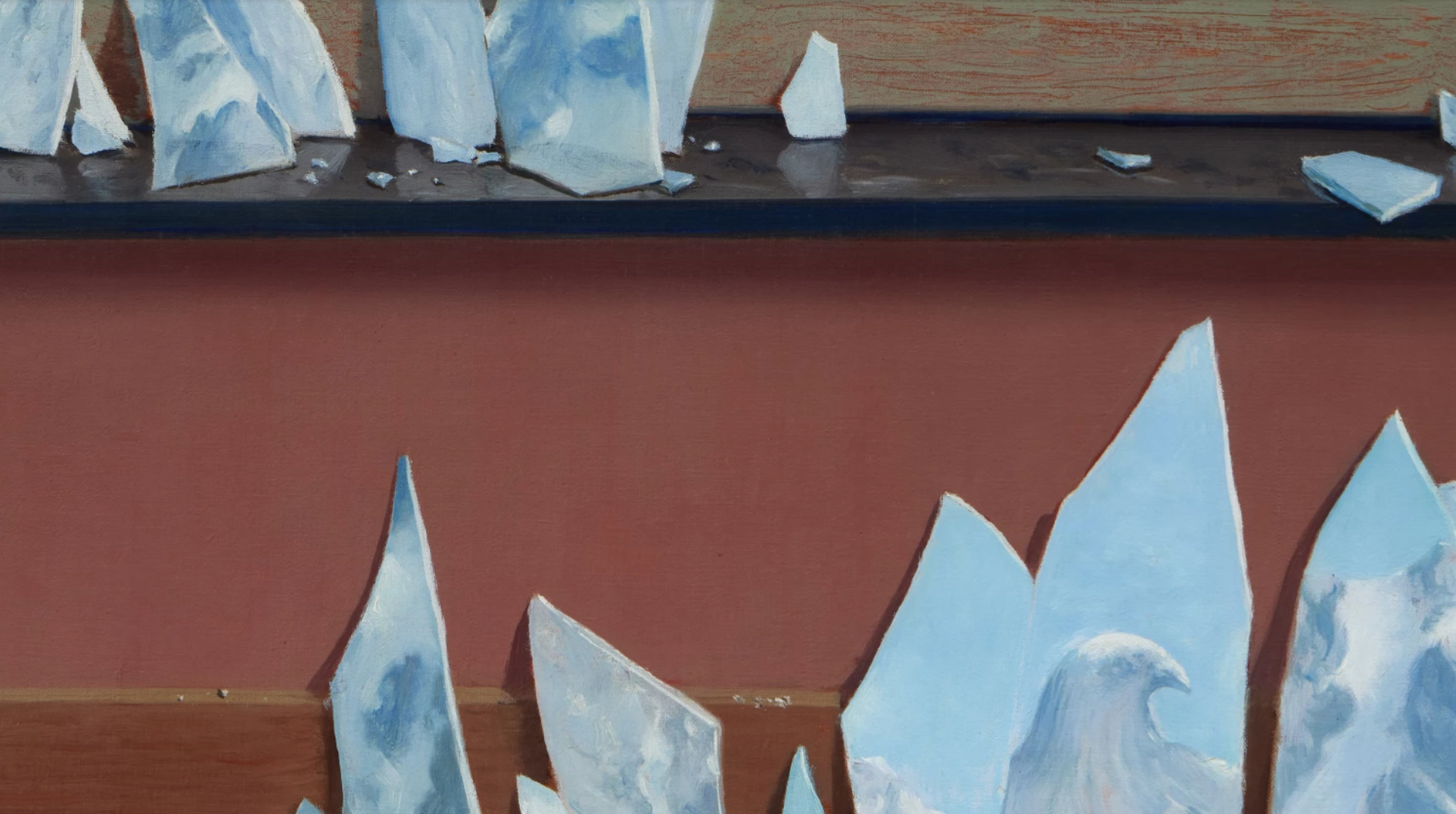
The “problem of the mountain” appears to have captured Magritte’s attention by the 1930s, with a nascent version of his eagle-head peak appearing in his paintings as early as 1926 in Les Epaves de l’ombre, later evolving to a full-fledged bird-mountain by 1936 in his versions of Le Précurseur. The vantage of the angular mountain peaks may well have derived from a travel brochure in his possession at the time, one that featured a panorama of the Alps. Decades later, in 1962, Magritte would complete the third and final composition titled Le Domaine d’Arnheim, returning once again to the dichotomy of eggs set before an eagle-headed mountain as in the initial variation of 1938, this time in a cool array of blue hues.
Notable in the present work is another of Magritte’s most iconic motifs, that of the blue sky with cottony white clouds. Similarly, renowned works like L’Empire des lumières, Les Valeurs personnelles, Le Faux miroir and La Décalcomanie are instantly recognizable as among Magritte’s corpus due the primacy of the cumulous backdrop, which adds a disarming quality to such complex and logically confounding scenes.
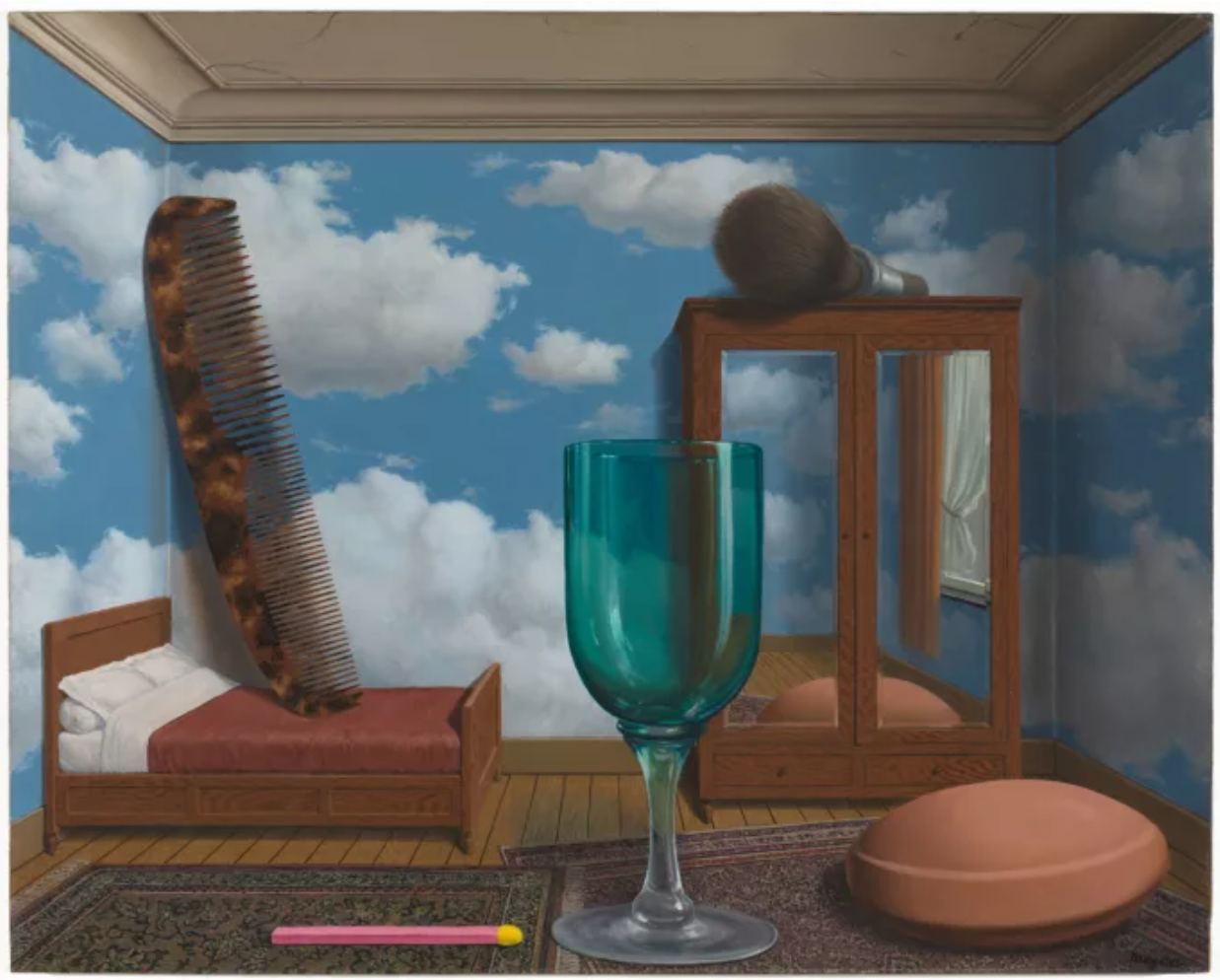
René Magritte, Les Valeurs personnelles, 1952, oil on canvas, San Francisco Museum of Modern Art
The present work, with its enhanced juxtaposition between the interior and exterior realms and the shattered pane between the two, aligns perhaps most closely with a suite of three other paintings created between 1936 and 1964. Though each work is known by a different title, all four compositions are rendered in a vertical format with an arched window and curtains along the periphery and a shattered window reflecting a landscape in the broken shards. Of this suite of images, Le Domaine d’Arnheim is the only example to feature the mountain range in the background and the only one in which the landscape itself suggests human cultivation, here in the form of the eagle-head peak. Of the three other related works, two are in museum collections, with Magritte’s 1936 La Clef des champs held at the Museo Nacional Thyssen-Bornemisza in Madrid and the 1964 composition, Le Soir qui tombe, The Menil Collection in Houston.
Après le bal, 1926
Christie’s Paris: 4 April 2023
Estimated: EUR 2,200,000 – 3,200,000
EUR 1,662,000 / USD 1,812,705
René Magritte (1898-1967), Après le bal | Christie’s
RENE MAGRITTE (1898-1967)
Après le bal, 1926
Oil and sgraffitto on canvas
65.6 x 80.5 cm (25 3/4 x 31 1/4 inches)
Signed ‘Magritte’ (lower right)
According to the title, the work depicts a scene following a ball, which is not evident from Magritte’s language games and use of metaphor. A naked woman with translucent skin stretches out over a marble platform. Like a statue from Greek tragedy, she lies impassive, her right hand raised to her head, appearing to simulate emotion, while her second hand rests on her stomach. The reasons for her emotion and nudity are left to our imagination. Does this woman, highlighted in the composition by a relatively cold white light, embody a goddess or does she represent the spectre of death, suggested by the destroyed city in the background? For the painter, escaping from current thinking is a sign of wisdom because “meaning is impossible for possible thinking”. Painting does not express ideas or feelings; it does not propose defined sensations, it offers a vision of what is to come. As a result, it cannot but escape our discourse.
A painting is composed like a theatre scene. Theatre, like doors and windows, always opens onto a second plane (La Fenêtre, 1925), as does the representation of a painting within a painting (Nocturnes, 1925). This allowed Magritte to place the outline of another story or another level of narration within the foreground story. This mise en abyme is disturbing for the viewer who is simultaneously drawn by two pictorial messages with no apparent link. The theatrical effect is heightened by a curtain whose arrangement appears to hide the background set and divides the stage into two parts. The curtain or hanging in Magritte’s paintings is drawn to show what is already known but in a new context. They also symbolize the border between the hidden and the visible world. They may reveal a mysterious landscape as in La Fenêtre (1925) or, as in our painting, the background. Often the revealed element transforms or contradicts the foreground element and the viewer’s attention is immediately drawn to what the curtain wants to hide. Magritte aims to conceptualize the difference between the hidden and the invisible. To do so, the artist removes the border between the real and the unreal, sweeping away the idea of true and false in representation. By including this curtain, the Belgian painter is also making a plausible reference to the hangings that were commonly drawn to protect precious works of art from candle smoke, light or curious gazes from great collectors of old paintings. It symbolizes the setting for the precious work. The reference is not accidental as Dutch artists such as Rembrandt, Johannes Vermeer and Emanuel de Witte often used this motif in their paintings. As in the Vanitas of Dutch Baroque painting, this curtain seems to hide the fragility of human life and the complacency of what human beings cling to. The houses, lying on their sides and visibly uninhabited, embody this vulnerability, like a metaphor for civilization turned upside down. However, the curtain is made of wood, a detail that makes movement impossible, unless the artist wanted to give the illusion of wood through a trompe-l’oeil! Fake wood and real curtain or fake curtain in real wood? Magritte once again challenges the relationship between truth and falsehood, reminding us that the perception of reality need not restrict itself to coherent logic. Magritte also stresses the absolute necessity that the objects in his paintings be “enigmas that escape scientific investigation”. Thus, the art of reference goes hand in hand with the art of covering his tracks, plunging the viewer’s certainties into fundamental doubt – an essential aspect of the enigma.
La valse hésitation, 1955
La valse hésitation, 1955
Sotheby’s Paris: 19 October 2023
Estimated: EUR 10,500,000 – 15,500,000
EUR 11,177,000 / USD 11,778,265
La valse hésitation | Modernités | 2023 | Sotheby’s
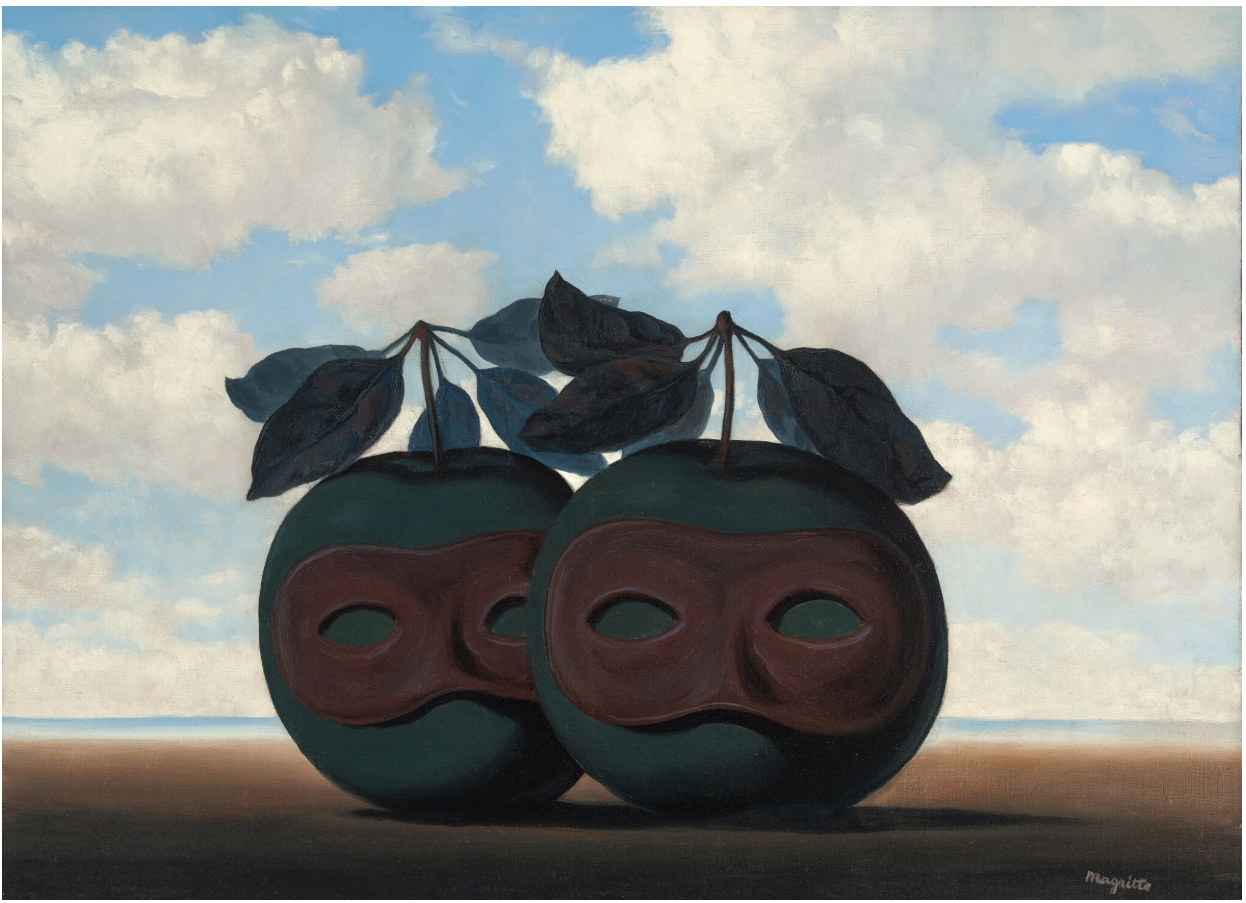
RENE MAGRITTE (1898 – 1967)
La valse hésitation, 1955
Oil on canvas
40.2 x 55 cm (15 7/8 x 21 5/8 inches)
Signed magritte (lower right)
Valse hésitation (feminine noun): dance in which the partners pause for a moment. Figuratively speaking, an indecisive movement with successive advances and retreats.
(source Dictionnaire de l’Académie française)
La Valse hésitation is one of the most dreamlike, mysterious, and famous images in Magritte’s entire œuvre. It features two apples in a flat, empty landscape, bordered in the distance by the sea, under a great cloud-laden sky, “the clouds the clouds that pass up there… up there the wonderful clouds!” (Baudelaire). Each apple is covered with a carnival mask. But what exactly are we looking at? Where is the apple tree from which these fruits have fallen? Where do the masks come from, and who put them there? Are these apples life-size or gigantic, like the one in La Chambre d’Ecoute? Are we at the beginning of a world inhabited solely by two forbidden fruits, before the appearance of Adam and Eve? Or, on the contrary, is this the end of the game, the swan song of the known world?
Magritte asserts himself as the painter of mystery par excellence, or rather the painter who achieves the excellence of his art through mystery. Painted in 1955, this Valse Hésitation is immediately captivating in its poetic and visual power, which is matched only by another major series of paintings conceived in the 1950s on the same subject: L’Empire des Lumières, of course, in which the artist brings day and night together in a single image.
The masked apple motif first appeared in Magritte’s work in 1946, for a cover he designed for View magazine. The style was still that of his war paintings, a period he called “cowardly” and to which his meeting with the art dealer Alexandre Iolas would definitively put an end, opening a new era. At the dawn of the 1950s, Magritte’s obsession was above all commercial, focusing on the American market, which he hoped to penetrate through his association with Iolas. “It’s useless to send brand-new paintings to America, as there’s little chance of them finding buyers. What is needed above all are replicas of known and digested paintings”, he wrote to Iolas in 1950. Magritte thus launched himself with spectacular energy into the production of replicas, but above all variants, of older works. This apparently mechanical activity of reproducing a work of art (with Marcel Duchamp as master of ceremonies) was not carried out to the detriment of the quality of the works, as many of the variants were far more accomplished than the original versions.
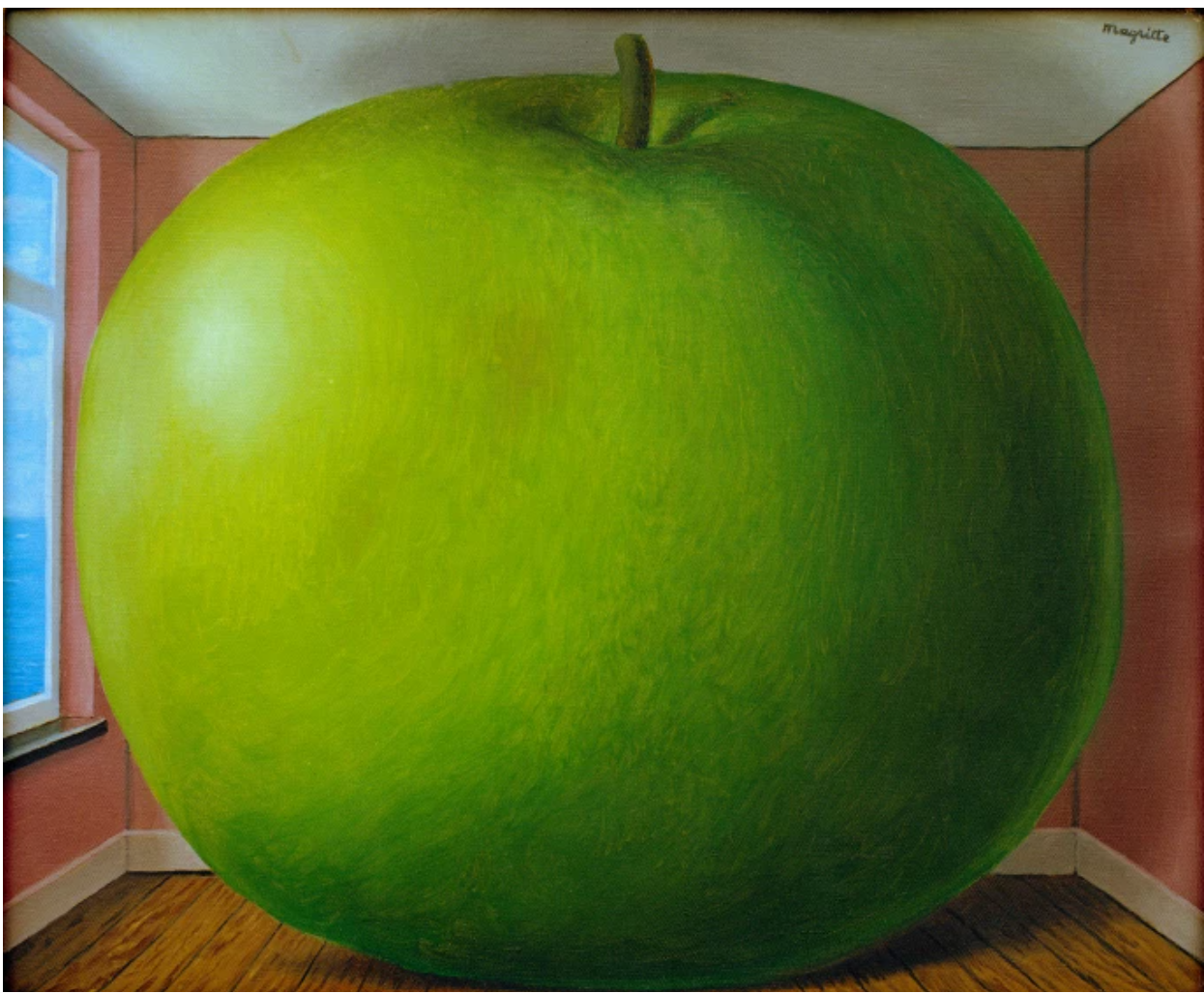
René Magritte, La chambre écoute, 1958, Zurich, Kunsthaus. © AKG-Images © PHOTOTHÈQUE R. MAGRITTE/ ADAGP, PARIS 2023.
It was in 1950 that Magritte reused the association of apple and mask. This time, the masked apple is accompanied by its double; the two masked fruits are in the foreground, lying on the ground, in almost opaque shadow, while the sky is intensely luminous. Magritte has just painted his first Valse Hésitation. In the same year, he would paint the nocturnal version of this image, giving it the title Prêtre marié: the apples are in full daylight, while a thin crescent moon shines in the night. This surrealist combination of day and night is reminiscent of L’Empire des Lumières, which Magritte first painted in 1949.
Antinomic, day and night have long been used to represent opposing poetic and symbolic realms, metaphors for the duality of human existence or the tension cherished by the Surrealists between reality and dream. La Valse Hésitation quickly acquired the status of a perennial masterpiece of Surrealism, because, like the artistic movement it celebrates, it is saturated with opposites that harmonize: the rotundity of apples and the flatness of the background, the calm of a still life and the waltz of a masked ball, the emptiness of the sky and the clouds that populate it. Magritte continued to return to this image and rework it right up to his very last works, including it in Le Domaine enchanté, the major set design project he conceived for the Knokke casino from 1953 onwards. Eight versions on canvas are known for La Valse Hésitation and Prêtre marié (compared with 17 for L’Empire des lumières).
Renoir Surrealism, 1943
Les Adieux, 1943
Sotheby’s New-York: 14 November 2023
Estimated: USD 500,000 – 700,000
USD 508,000
Les Adieux | Modern Day Auction | 2023 | Sotheby’s
RENE MAGRITTE (1898 – 1967)
Les Adieux, 1943
Oil on canvas
50 x 59.8 cm (19 3/4 x 23 1/2 inches)
Signed Magritte (upper left)
In the spring of 1943, Magritte decided to explore a new manner of painting which harkened back to the techniques of Impressionism. “The period that goes from 1940 to 1946 is that of full sunlight (…) It is strictly speaking a challenge: from images of joy, to obtain a disturbing effect reserved until then for terrible and somber images, and in this way affirm man’s right to give the world the meaning he desires. The reds start to sing, the yellow golds, the deep purples, the jades, the sapphires, it is a bedazzlement of tones that burst, mingle into bouquets of fire. The beautiful naked girls, the multi-coloured birds, the free forests and their pretty sparkling flowers. As the impressionist’s technique served his intent, Magritte naturally borrowed it. We must not underestimate the drama of such a will for grace and pleasure in a time when horror triumphed.” ( Louis Scutenaire, Brussels, Galerie Isy Brachot, Rétrospective René Magritte (1898 – 1967), 1988).
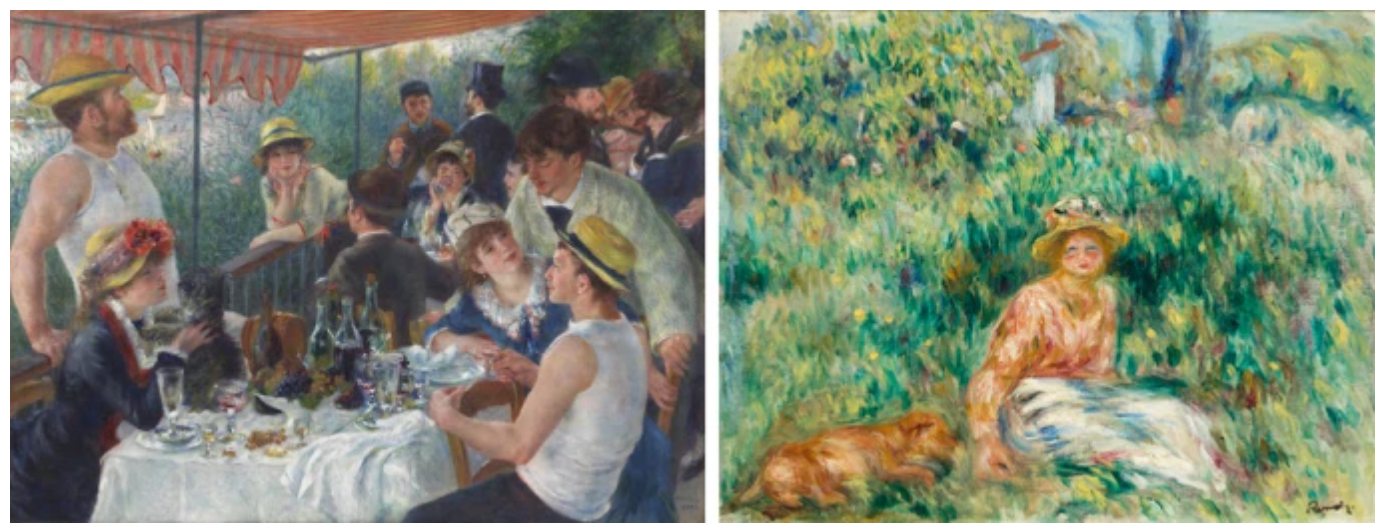
LEFT: Pierre-Auguste Renoir, Le Déjeuner des canotiers, 1881, oil on canvas, The Phillips Collection, Washington, D.C.
RIGHT: Pierre-Auguste Renoir, Jeune femme dans un jardin ou Femme et Rip dans l’herbe, circa 1916, oil on canvas, Denver Art Museum
Les Adieux incarnates this new style which became known as “Renoir Surrealism.” The artist exchanged his darker tones of the 20s and 30s with a brightly colored and luminous palette. Magritte’s smooth and refined style was replaced by freer, stronger brushstrokes, whirling in a fashion similar to Renoir’s. Magritte’s sources of inspiration were clearly evolving during this time. The subject of Les Adieux, a man with a boater hat sitting in the grass, seems to have been directly inspired by the works of the Impressionist masters. Magritte explained this artistic turnaround as part of the desire to escape the war. Through his works he wished to promote peace: “…the bright side of life would be the area that I would explore. By this I mean all the traditional array of delightful things: women, birds, flowers, trees and an atmosphere of happiness. […] a quite powerful charm has now replaced the disquieting poetry I used to strive for in my paintings,” (Letter to Paul Éluard, 1941).
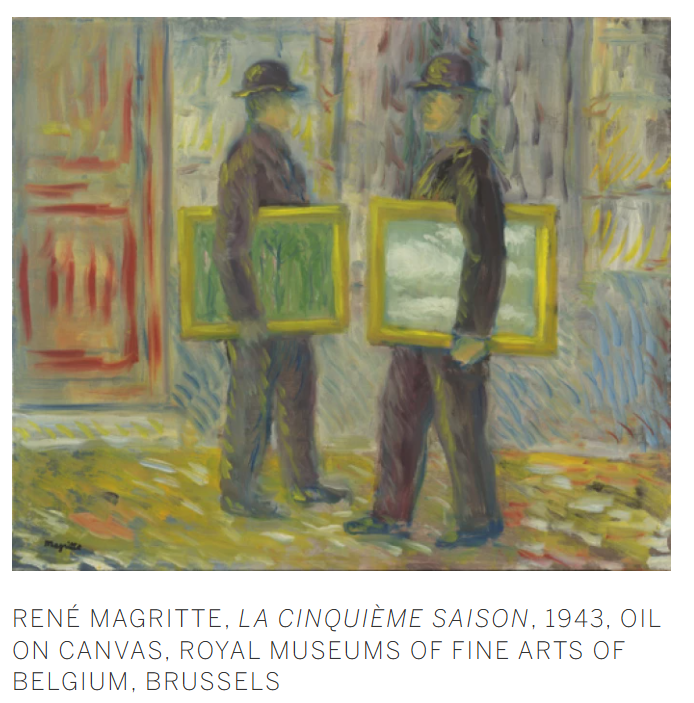
Les Adieux highlights Magritte’s search for light and the intensity of colors, which had begun in 1943. The painter endeavored to render sunlight in painting as, in his words; “one must not fear the light of the sun under the pretext that it has almost always served to light a miserable world. Under new and charming traits, mermaids, doors, ghosts, gods, trees, all these objects of the mind are brought back to the intense life of bright lights in the isolation of the mental universe.”
La femme au miroir, 1943
Christie’s New-York: 17 May 2023
Estimated: USD 1,000,000 – 1,500,000
USD 630,000
RENE MAGRITTE (1898-1967), La femme au miroir | Christie’s
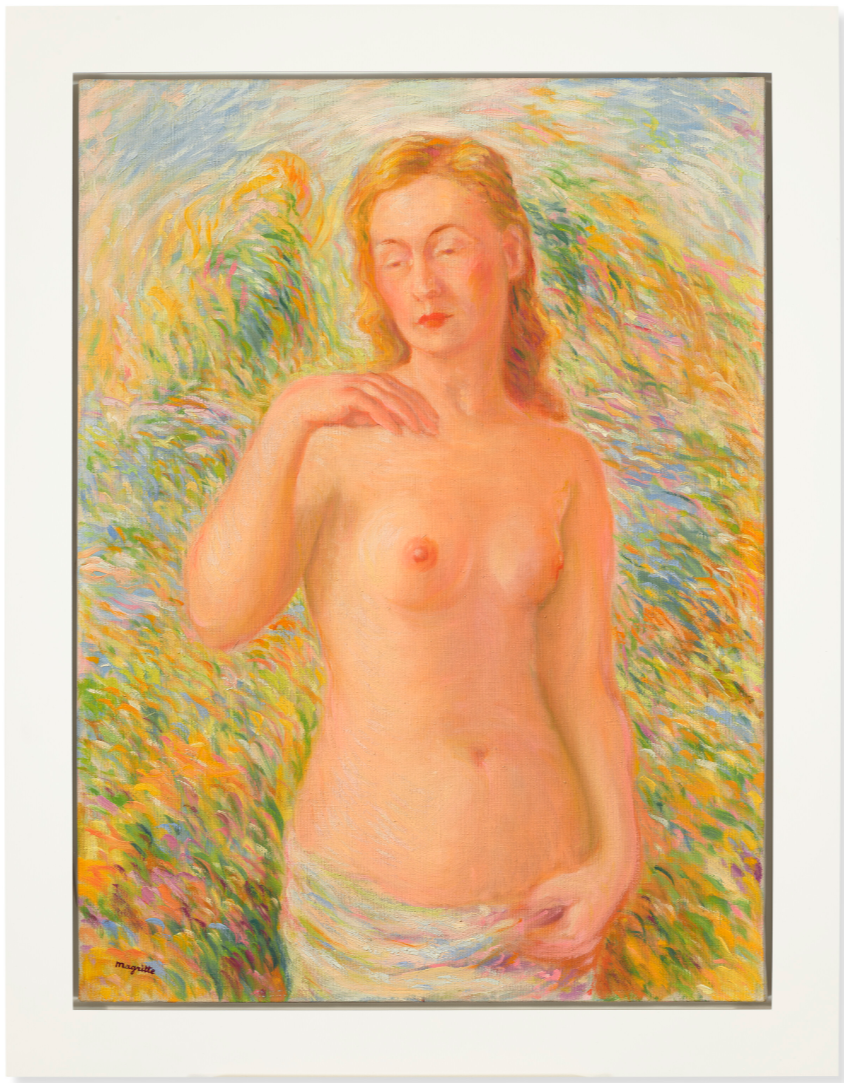
RENE MAGRITTE (1898-1967)
La femme au miroir, 1943
Oil on canvas
73.6 x 54.8 cm (29 x 21 5/8 inches)
Signed ‘Magritte’ (lower left)
Titled ‘”LA FEMME AU MIROIR”‘ (on the reverse)
Painted during the closing months of 1943, René Magritte’s La femme au miroir highlights the divergent influences that were shaping the Belgian Surrealist’s artistic vision during the turbulent years of the Second World War. Living in the shadow of the conflict, Magritte felt that a new visual idiom was required to adequately respond to the horrors of the war, and began to experiment with a distinctly Impressionistic technique, inspired by the late career of Pierre-Auguste Renoir.
“The German occupation marked the turning point in my art. Before the war, my paintings expressed anxiety, but the experiences of war have taught me that what matters in art is to express charm. I live in a very disagreeable world, and my work is meant as a counter-offensive.”
Creating works filled with light, color and vivid, free brushwork, Magritte called this new style Le Surréalisme en plein soleil (Surrealism in full sunlight), and believed that in combining the aesthetic pleasure of beautiful, color-filled scenes with subversive, mysterious images, he could best reveal the inherent chaos of the world. Writing to his friend Paul Éluard in 1941, Magritte described this shift in his art:
“I have managed to bring a fresh wind to my painting. In my pictures an enormous magic has now replaced the uncanny poetry whose effect I used so much to strive for. On the whole, pleasure now supplants a whole series of essential interests that I wish increasingly to leave out of account… the power of these pictures is to make one acutely aware of the imperfections of everyday life.”
The female body was a key element within this strategy of disruption, and Magritte celebrated the sensuous, elegant forms of women in numerous paintings throughout this period, his statuesque models evoking classical precedents of the female nude as the embodiment of beauty. Using a range of soft, pastel hues, the figure in La femme au miroir appears wrapped in a plain sheet, as if caught in the midst of her toilette, while behind a great mass of rapid, feathery brushstrokes are woven together to conjure a dream-like space. Contrary to the title, no mirror is glimpsed in the composition—rather, the woman appears to glance down at her own hand, caught in an internal moment of contemplation instead.
“The titles of pictures are not explanations, and pictures are not illustrations of titles. The relationship between the title and picture is poetic—that is, it only catches some of the object’s characteristics of which we are usually unaware, but which we sometimes intuit, when extraordinary events take place which logic has not yet managed to elucidate.”
Shortly after it was completed, La femme au miroir was featured in the invitation booklet to Magritte’s solo exhibition at the Galerie Dietrich, which opened on 8 January 1944. The show marked the true public debut of the artist’s Surréalisme en plein soleil works, and featured approximately twenty canvases dedicated to the style. Paul Nougé provided a preface for the booklet under the pseudonym Paul Lecharentais, a prudent decision as the exhibition and his text soon came under attack from Marc Eemans, a painter formerly associated with the Belgian Surrealists who had become an avid supporter of the Nazi’s campaign against so-called “Degenerate Art.” However, Eemans was not alone in his criticism of the exhibition—several reviewers took a scathing view of Magritte’s new style; he, nonetheless, remained undaunted.
Le Surrealisme en plein air, 1943
Rêverie de Monsieur James, 1943
Christie’s Hong-Kong: 28 March 2024
Estimated: HKD 42,000,000 – 55,000,000
HKD 47,565,000 / USD 6,113,753
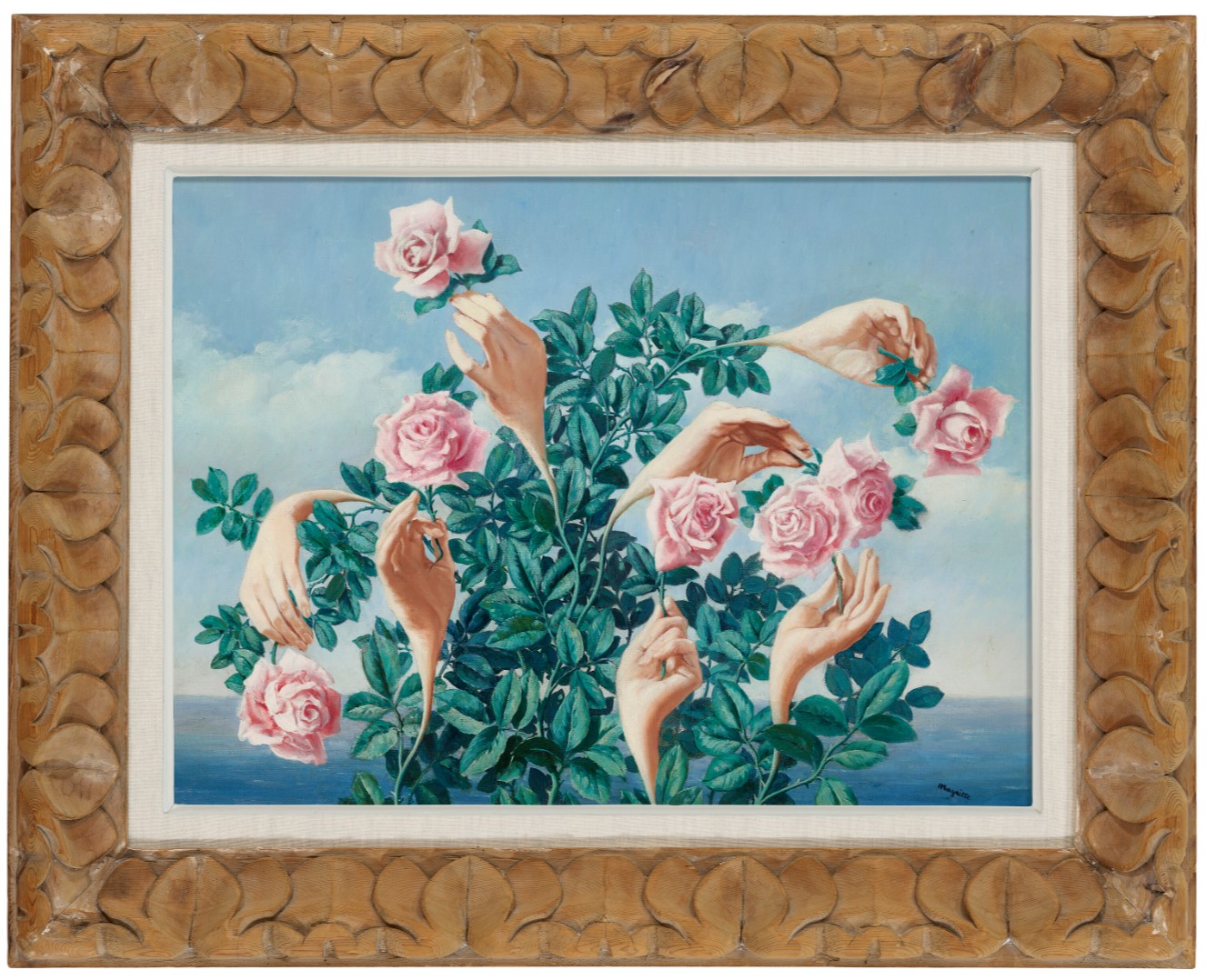
RENÉ MAGRITTE (1898-1967)
Rêverie de Monsieur James, 1943
Oil on canvas
54.3 x 73.7 cm (21 3/8 x 29 inches)
Signed ‘Magritte’ (lower right)
Signed again, titled, dated and inscribed
‘”RÊVERIE DE MONSIEUR JAMES” MAGRITTE 1943 20P.’
(on the reverse)
In René Magritte’s Rêverie de Monsieur James, elegant hands bloom like arum lilies from a rose bush, each daintily holding a pink rose, before an idyllic backdrop of a seascape. In this unusual scene, plant metamorphoses into human, before growing back into flora. The seven hands are balletic, the stem of the roses delicately held between the thumb and index finger, though the roses emerge from various points of the hand, some through the palm, others through the forefinger, and others through the thumb. With their graceful positioning, and the naturalistic growth of the wrist from the green branches of the rose bush, the hands fan out beneath the rose petals like sepals.
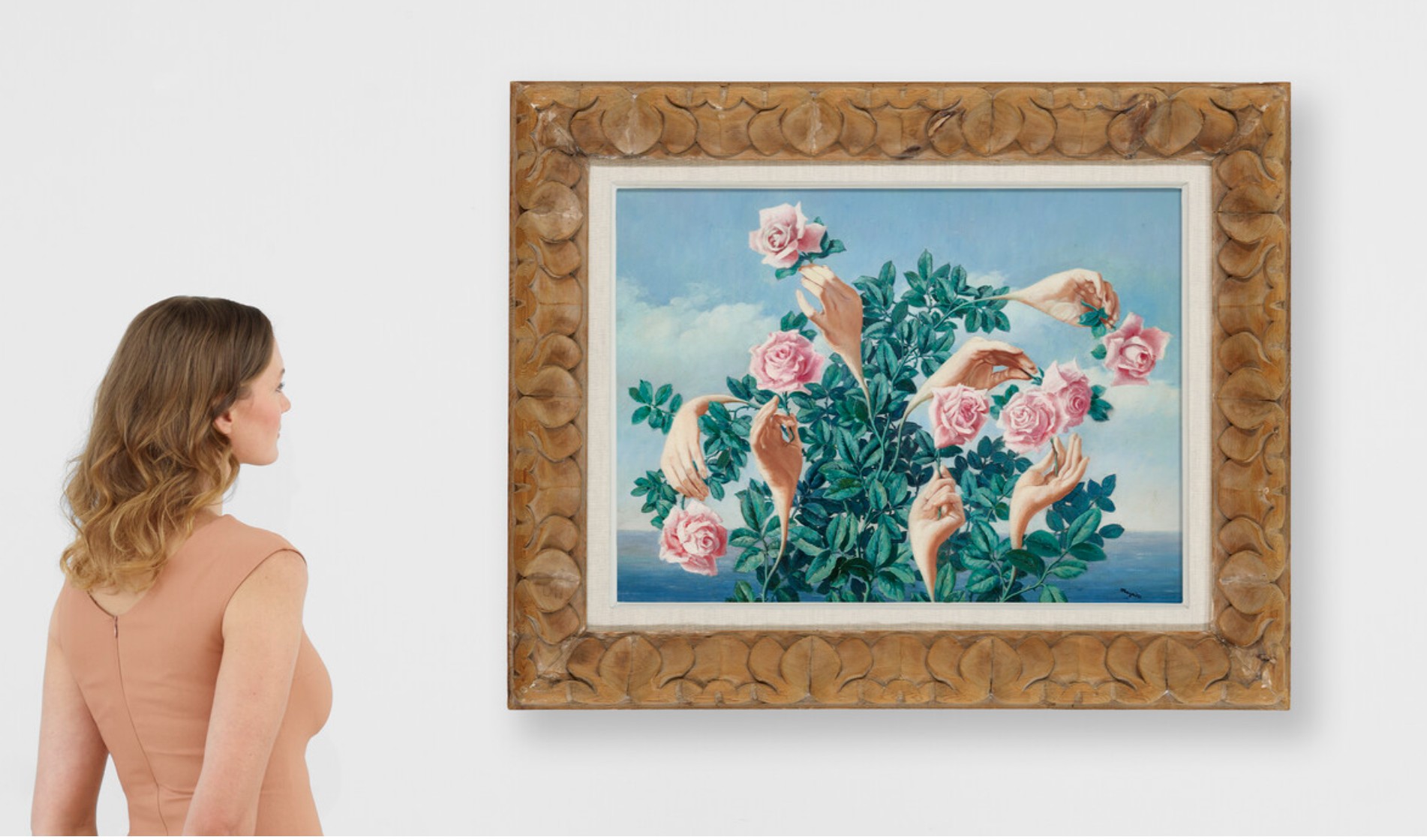
The title of the present work Rêverie de Monsieur James is a reference to Edward James, the Surrealist poet and collector, who Magritte had first met in 1936. An English aristocrat, James was a pivotal influence on the Surrealist movement – a key patron of Salvador Dalí, Leonor Fini, and Leonora Carrington, as well as Magritte. James is perhaps best remembered for his ambitious and opulent renovation of Monkton House, a traditional English country house on his extensive West Dean estate in Sussex, which he transformed into an extraordinary Surrealist dreamscape. James’ pioneering approaches to interior design extended to his London townhouse, 35 Wimpole Street, too, and following James and Magritte’s initial meeting in Paris, the eccentric collector wrote to the artist in January 1937, inviting him to stay at his English residencies. Magritte arrived in London that spring, and during his sojourn he was commissioned by James to paint three works for the ballroom at Wimpole Street – Le modèle rouge (Sylvester, vol. II, no. 428; Museum Boymans-van Beuningen, Rotterdam), La jeunesse illustrée (Sylvester, vol. II, no. 429; Museum Boymans-van Beuningen, Rotterdam), and Auseuil de la liberté (Sylvester, vol. II, no. 430; The Art Institute of Chicago). These paintings were to be placed behind the two-way mirrors in the ballroom, so that it was only when the lights behind the looking-glasses were switched on that the paintings would be visible.
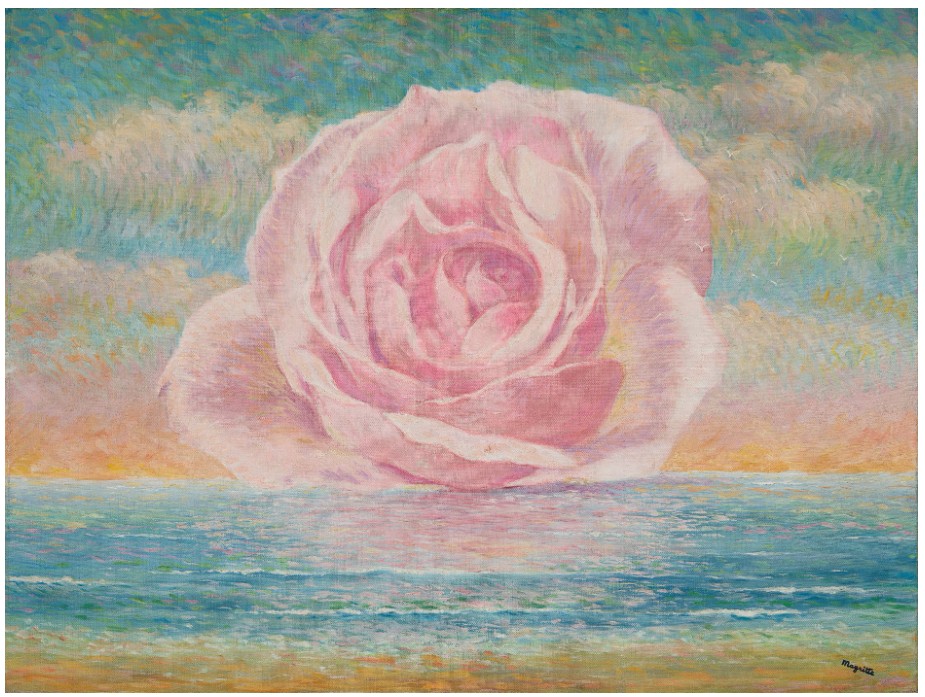
René Magritte, L’invitation au voyage, 1944. Private collection.
James was evidently pleased by this first commission from Magritte, and requested two more paintings, one a portrait of himself, before Magritte returned to Belgium. James was always eager to work creatively with the artists, sharing ideas or discussing concepts, and he and Magritte had done so during the artist’s February and March visit. In a letter to James from June 1937, Magritte wrote that he had made a preliminary study of a man ‘whose head is a light,’ and that since the final painting would belong to James, what did James think about his person being recognisable in it (Letter from Magritte to James, 27 June 1937). Magritte went on to outline the specific set up James must be photographed in, should he like the idea, and James subsequently arranged for the artist Man Ray to take the photographs. The finished composition, Le principe du plaisir (Sylvester, vol. II, no. 443; Private collection), depicts James’ torso and arms, seated behind a table, with a gleaming nimbus of light shining in the place of his head. It is clear from their letters that the artist and James must have discussed the concept and the composition, and this kind of creative collaboration between the two continued in Rêverie de Monsieur James.
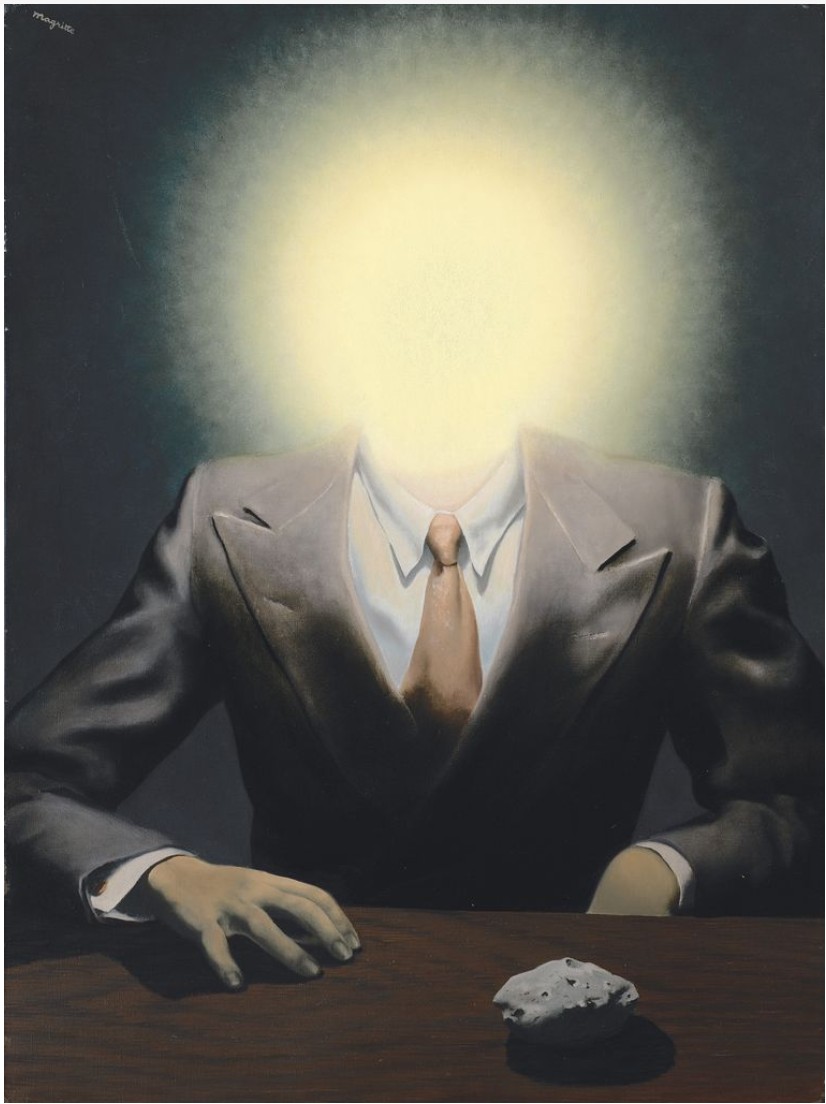
René Magritte, Le principe du plaisir, 1937. Private collection. Photo: Bridgeman Images
“I painted this picture during the Occupation in memory of the happier times when I met you. You probably remember that it was you who suggested the subject of this picture?”
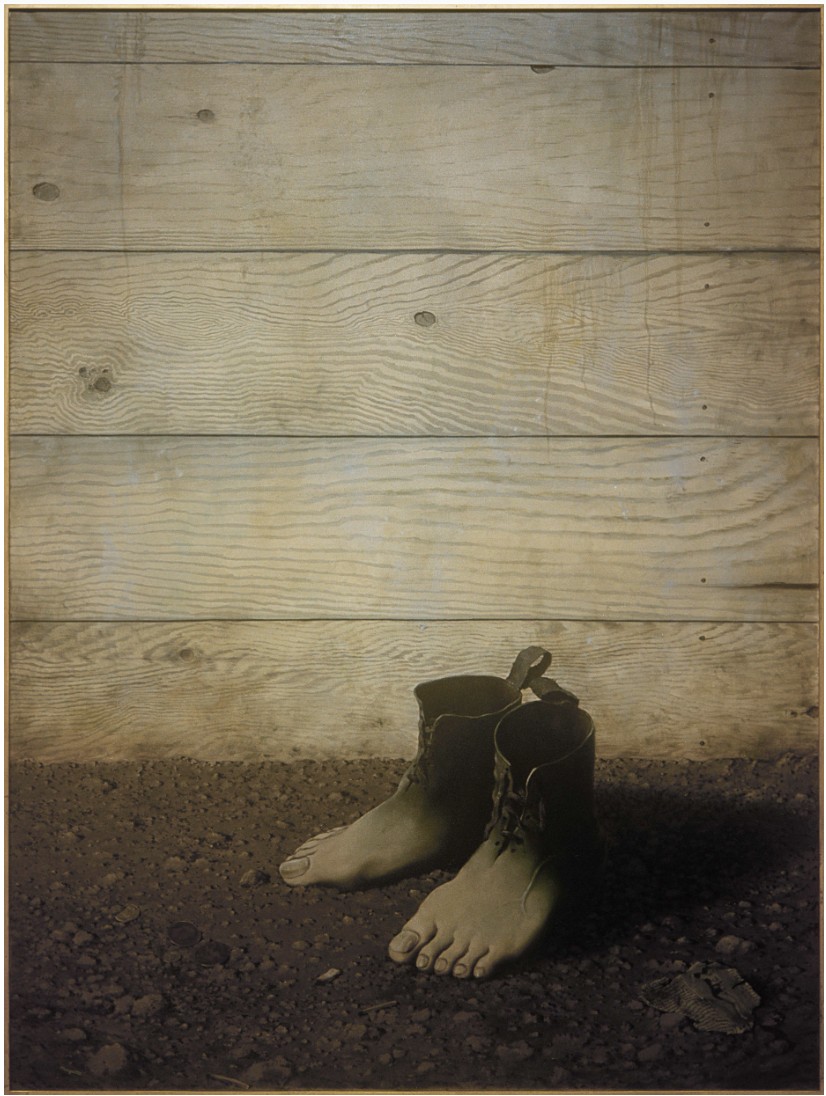
“I have found a new potential inherent in things, their ability to become gradually something else, and object merging into an object other than itself…. This seems to me to be something quite different from a composite object, since there is no break between the two substances, and no limit.”
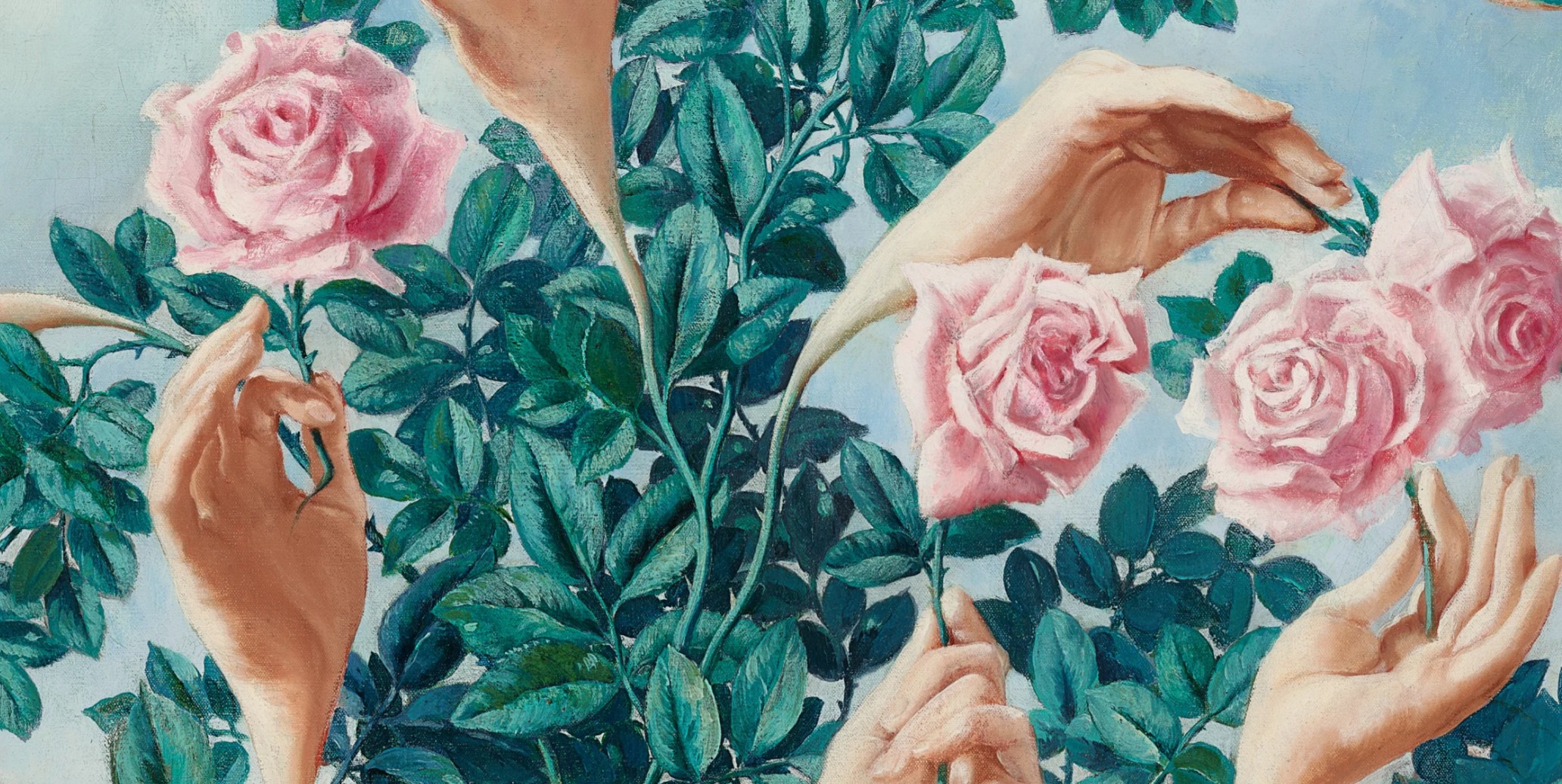
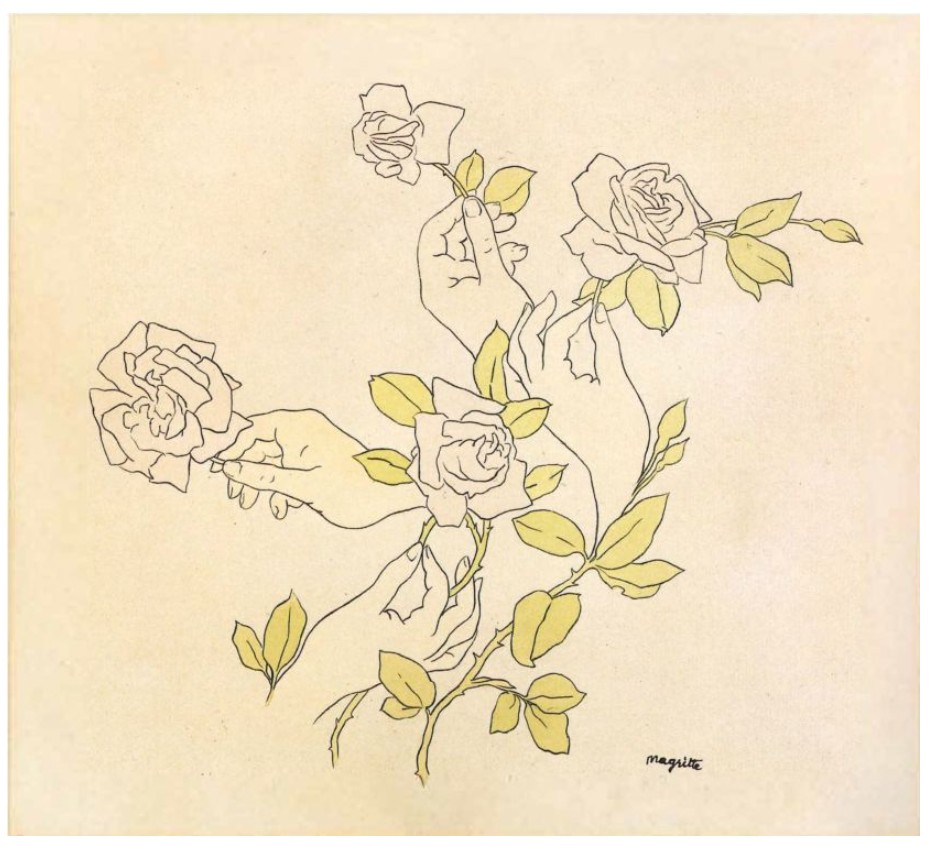
The blissful romanticism inherent in Rêverie de Monsieur James is reflective of Magritte’s output from the years of Nazi Occupation in Belgium, where the artist felt that a new visual idiom was required to adequately respond to the horrors of the conflict that surrounded him. In some of his paintings he adopted a new, Impressionistic style of brushwork which he called Le Surréalisme en plein soleil, while in others – like the present work – he turned to enchanting, and delightful subject matters, and preserved his much-admired illusionistic style of painting from his pre-war works. Beauty was his counter-offensive to the turbulence of war.
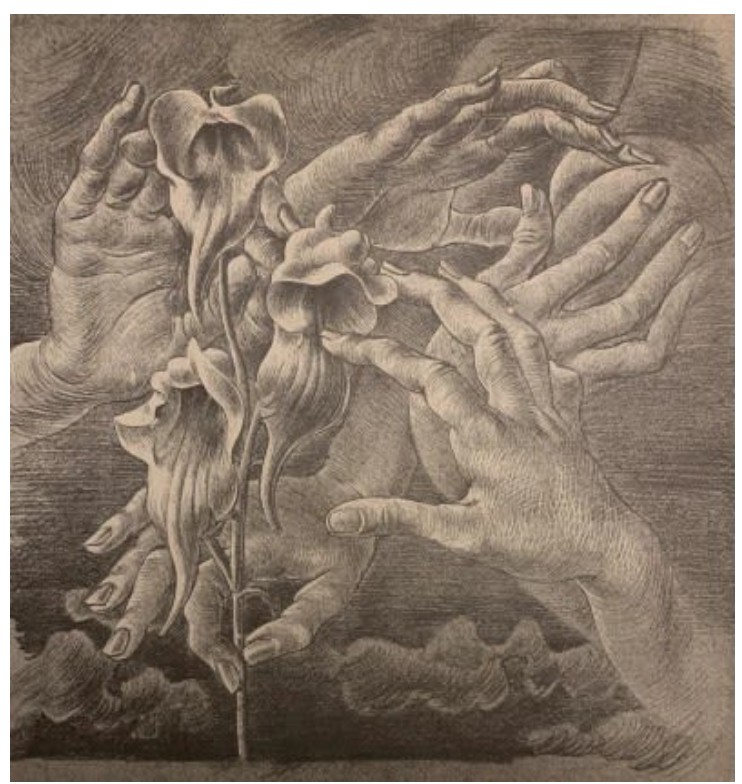
Hans Bellmer, Mains de demimijaurees fleurissant des sillons de parterre, 1934, Private collection.
In both the history of its creation and its subject, Rêverie de Monsieur James plays an important part in Surrealist histories. A compelling and original composition, it has a simple beauty that belies the work’s conceptual complexity. It is this combination of simplicity and complexity that makes Magritte such an intriguing artist and positions him among the most influential and sought-after of all the Surrealist painters.
La préméditation, 1943
Christie’s Hong-Kong: 26 September 2024
Estimated: HKD 22,000,000 – 28,000,000
HKD 28,205,000 / USD 3,622,510
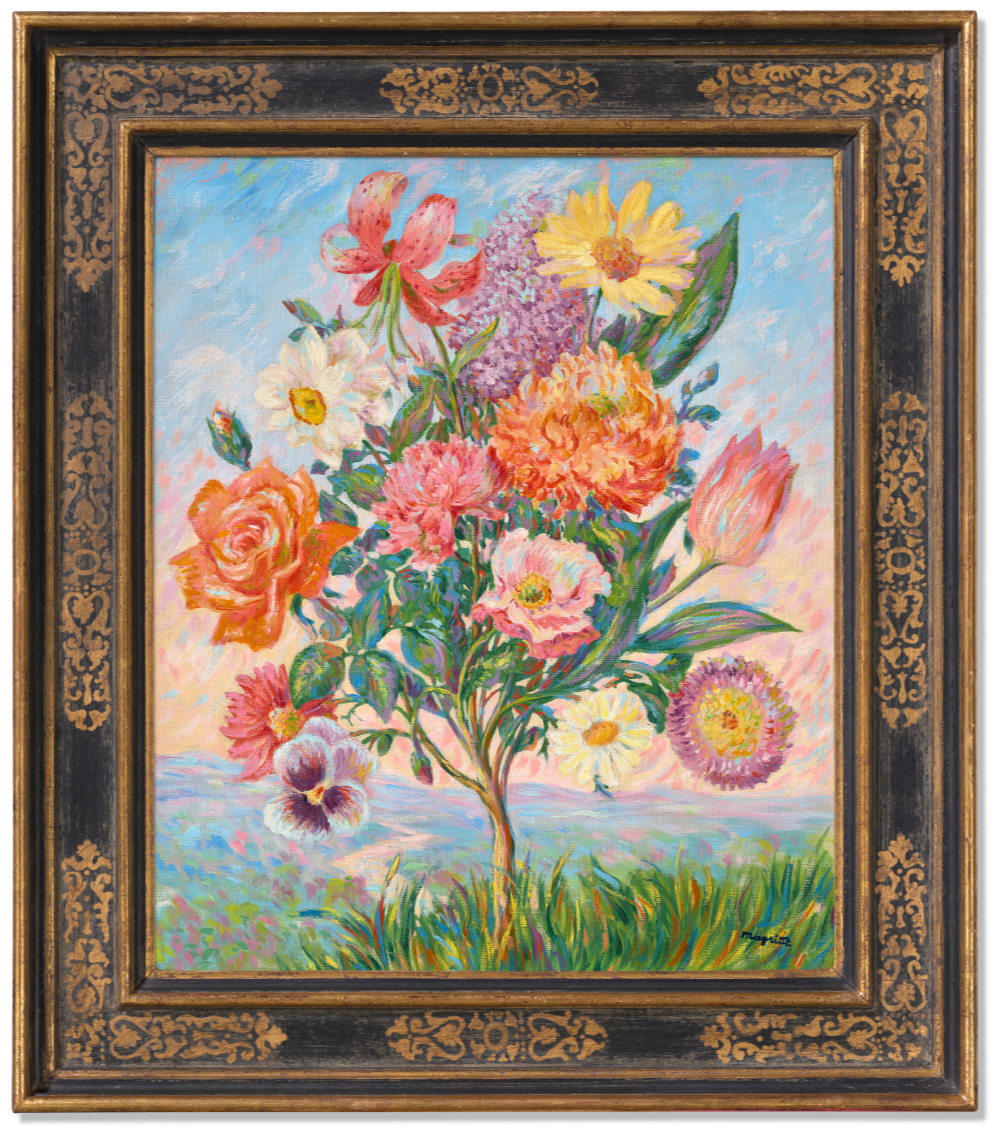
RENÉ MAGRITTE (1898-1967)
La préméditation, 1943
Oil on canvas
55.3 x 46.2 cm (21 3/4 x 18 1/4 inches)
Signed ‘magritte’ (lower right)
Inscribed and dated ‘”La Préméditation” 1943’ (on the reverse)
Painted during the final months of 1943, Le Préméditation is one of the earliest in a series known as Le Surréalisme en plein soleil (Surrealism in sunshine), created by Belgian Surrealist René Magritte during the turbulent years of the Second World War in the hope of re-enchanting daily life. A radiant bouquet of springtime flowers all improbably sprouting from the same plant, Le Préméditation captures a magnificent vision of optimism and hope. Living in the shadow of the German Occupation of Belgium, Magritte felt that a new visual idiom was needed to adequately respond to the horrors of war, and thus began to experiment with a distinctly impressionistic painting style that calls to mind the late period of Pierre-Auguste Renoir. ‘Before the war, my paintings expressed anxiety,’ Magritte explained, ‘but the experiences of war have taught me that what matters in art is to express charm. I live in a very disagreeable world, and my work is meant as a counter-offensive’ (R. Magritte, quoted in René Magritte: The Fifth Season, exh. cat. San Francisco Museum of Modern Art, 2018, p. 39). Featured as the cover of the exhibition catalogue for Magritte/Renoir: Le surréalisme en plein soleil at the Musée de l’Orangerie, Paris, the present work reveals various influences that shaped Magritte’s creative vision during these turbulent times.
Rendering his composition in light, colourful, and feathered brushwork, Magritte sought to ‘bring a fresh wind’ to his painting as he explained in a letter to his friend Paul Éluard in 1941, ‘In my pictures, an enormous magic has now replaced the uncanny poetry whose effect I used so much to strive for. On the whole, pleasure now supplants a whole series of essential interests that I wish increasingly to leave out of account. The power of these pictures is to make one acutely aware of the imperfections of everyday life’. (Letter to Paul Éluard, December 1941; quoted in S. Gohr, Magritte: Attempting the Impossible, New York, 2009, p. 191). In its overall effect, what Le Préméditation captured is far more than pure joy and pleasure aroused by the luscious, bouquet-like tree—there in between the vibrant complimentary pigments of azure and pink, vermillion and green, the ‘tree’ as if morphing into a human being full of dynamic. It is through infusing a hint of mystery into the pleasant scene that the artist mindfully unfolds the inherent chaos of the world using his humorous Magrittian idioms.
The tree, either alone as a subject or in a group, is a frequent pictorial element in Magritte’s works. Not only does it represent the artist’s belief in nature as an essential theme in his perception of reality, but also his poetic, transcendent vision of worldly existence. ‘Pushing up from the earth toward the sun,’ Magritte expressed in an undated statement, ‘a tree is an image of a certain happiness. To perceive this image, we must be still, like a tree. When we are in motion, it is the tree that becomes the spectator’ (R. Magritte, quoted in K. Rooney and E. Plattner (eds.), René Magritte: Selected Writings, Minneapolis, 2010, p. 234). In Le Préméditation, the indirect presence of a tree, though disguised in a Renoir-style bouquet filled with roses, tulips, pansies, carnations and daffodils, befitting what the artist was looking for in his pictures: the tension that arose between the familiarity of the objects he depicted, and the impossible, fantastical Surreal scenario they suggested.
Magritte’s reimagination of one of Renoir’s subjects in the present work is nearly citational. Such approach resonates with the superficial undercurrent emanated from Picabia’s appropriation of glamour commercial photographs from magazines where the painter disrupts the concept of painting and Modernity by blurring the boundary between canonical art and popular culture. As the art historian Cécile Debray observes, ‘through these paintings that Magritte reifies Renoir by means of signifying attributes—the nude, eroticism, the colourful, tapering brushstrokes, flowers—in slightly offbeat, sometimes zany compositions that induce an ironic, deconstructed reading of the Impressionist’ (C. Debray, ‘La postérité malaisée de Renoir’, in Magritte/ Renoir: Le Surréalism en plein soleil, exh. cat, Musée de l’Orangerie, Paris 2021, p. 23). By employing a process similar to appropriation, one that would be embraced by Pop Artists working a few decades later, Magritte confounded many of his supporters. Yet it was precisely this shock and controversy that proved Magritte’s success: he had managed to surprise even his supporters by giving them something entirely unexpected. Magritte saw this as the fundamental essence and aim of his art. Using an established subject matter and rendering it in what had become a classical style, in Le Préméditation, Magritte created a work that was both original, and surreal—and above all amusing.
Le Jockey Perdu, 1942
Le Jockey perdu, 1942
The Matthew and Carolyn Bucksbaum Collection
Sotheby’s New-York: 20 November 2025
Estimated: USD 9,000,000 – 12,000,000
USD 12,340,000
Le Jockey perdu | Modern Evening Auction | 2025 | Sotheby’s
RENE MAGRITTE (1898 – 1967)
Le Jockey perdu, 1942
Oil on canvas
60.3 x 72.4 cm (23 3/4 x 28 1/2 inches)
Signed Magritte (lower right)
Among the pantheon of images reimagined and recontextualized by René Magritte throughout his career, the horse-and-rider motif exists as one of the most recognizable and defining of his oeuvre. Executed in 1942, at the prime of the artist’s technical bravura, the present work represents a radical foray into the Surrealist milieu and stands as the most exceptional depiction of the subject in oil. An early encounter with the work of Giorgio de Chirico would forever alter the course of Magritte’s career. In 1922, the young artist was moved to tears upon seeing a reproduction of the metaphysical painter’s 1914 Le Chant d’amour for the first time. De Chirico’s uncanny depiction of disparate objects amid an empty, penumbral piazza heralded for Magritte a new direction in artistry—one untethered from reality yet rooted in familiar forms. In the wake of this discovery, Magritte’s style shifted away from the Cubist-inspired and commercially driven figuration that dominated his work in the late 1910s and early 20s toward a new idiom premised on the juxtaposition of incongruous imagery. In 1926 the first incarnations of Le Jockey perdu were born.
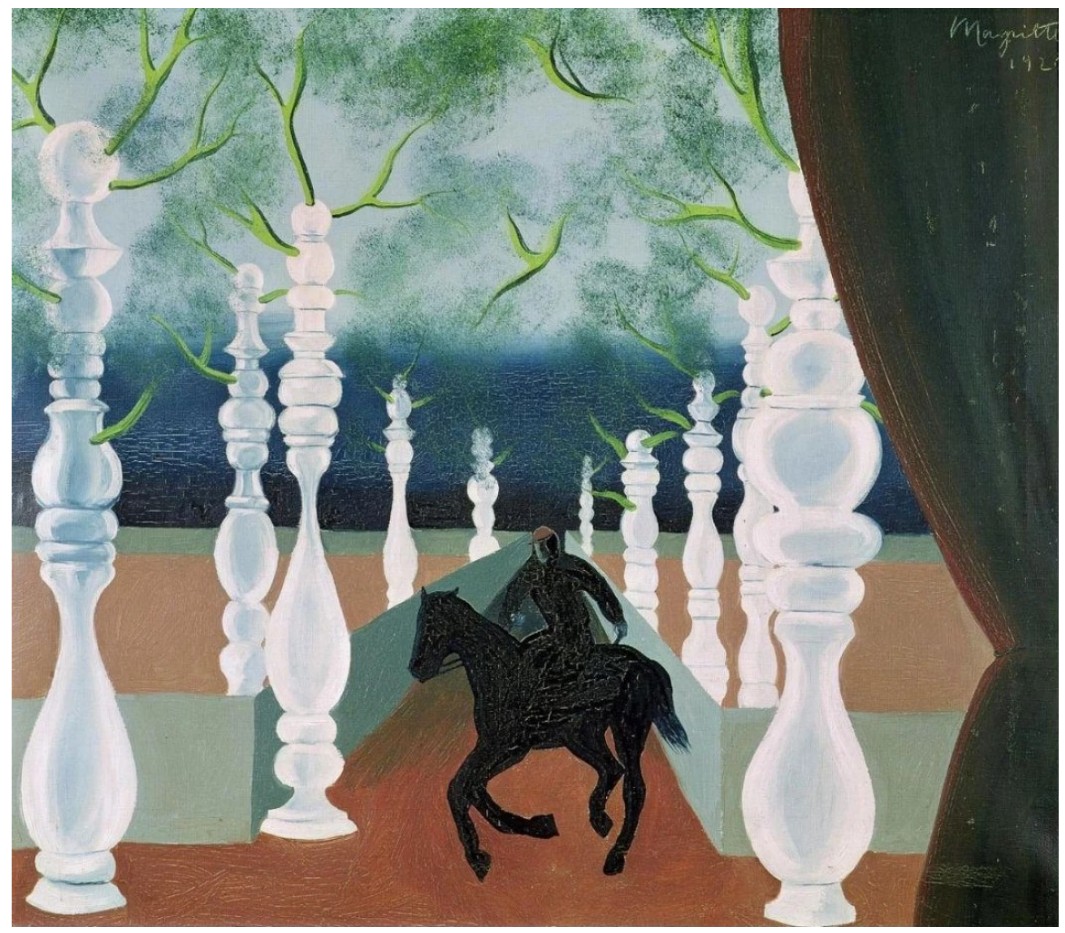
René Magritte, Le Jockey perdu, 1926, Private Collection © 2025 C. Herscovici, Brussels / Artists Rights Society (ARS), New York
Though the precise order of execution is not known, Magritte created four works by the same title over the course of 1926. Each of the Jockey perdu—one pencil drawing, two papier collés and the seminal oil painting—feature a horse and jockey at the center of a wooded area comprised of towering, even ominous, bilboquet with sprouted tree limbs. In all except the pencil drawing, the scenes are framed by curtains, a theatrical device which the artist would reprise frequently throughout his oeuvre. Such imagery, which existed in at least one of the papiers collés prior to the oil, would soon coalesce in what Magritte would view as his “premier tableau”—his first true Surrealist painting (Sarah Whitfield and Michael Raeburn; David Sylvester, ed., René Magritte: Catalogue Raisonné, Oil Paintings, 1916-1930, vol. I, London, 1992, p. 169; see fig. 2).
Describing the sense of enchantment the composition conjures, Patrick Walberg writes: “Like the rider and his steed, the inanimate objects [that Le Jockey perdu] contains are represented simply… Still, in all, gazing at the scene in which they are disposed one has the feeling, and it is intense, of never having seen the like of it, before it one is at the same time reduced to astonishment and, literally, entranced… For the moment we may remark that this jockey’s headlong ride through the ambiguous forest evokes the leap through the looking-glass whereby Alice entered Wonderland. Here as there, it is a passing from the everyday world into a second world, one born of inspiration and whose substance is mystery” (Patrick Waldberg, René Magritte, Brussels, 1965, pp. 21-22).
Magritte’s pioneering juxtaposition of the known and unknown in Le Jockey perdu triumphantly proclaimed the artist’s entrée into a new artistic echelon. As David Sylvester writes of the initial painting: “[Le Jockey perdu] was seen from the very start as something special—and not just by the artist. A few months after it was realized, it became the first of his surrealist paintings to be reproduced, and the first of any of his paintings to be reproduced abroad” (ibid.). Sylvester continues, stating that Magritte’s practice of creating multiple variations on a theme—one which would come to define the very nature of his artistry—indeed originated with Le Jockey perdu.
Decades later, Magritte would recall the import of this imagery in a self-referential text on his Surrealist awakening: “He executed the [1926] painting ‘The lock jockey’, conceived with no aesthetic intention, with the sole aim of RESPONDING to a mysterious feelings, a ‘causeless’ anguish, a sort of ‘call to order’ which impinged on his consciousness at certain non-historic moments and which guided his life ever since birth” (ibid.).
While the image of the bilboquet—Magritte’s curious and often biomorphic chess-like form—as well as the drawn red curtains would proliferate in his works over the coming years, it would be another decade and a half before the artist returned to his foundational Surrealist subject of the horse and rider. In the lengthy interim between his Jockey perdu iterations, Magritte moved from Belgium to France and back again, his three-year stint in Paris proving a brief yet a pivotal period of development and intellectual exchange with the French Surrealists led by André Breton.
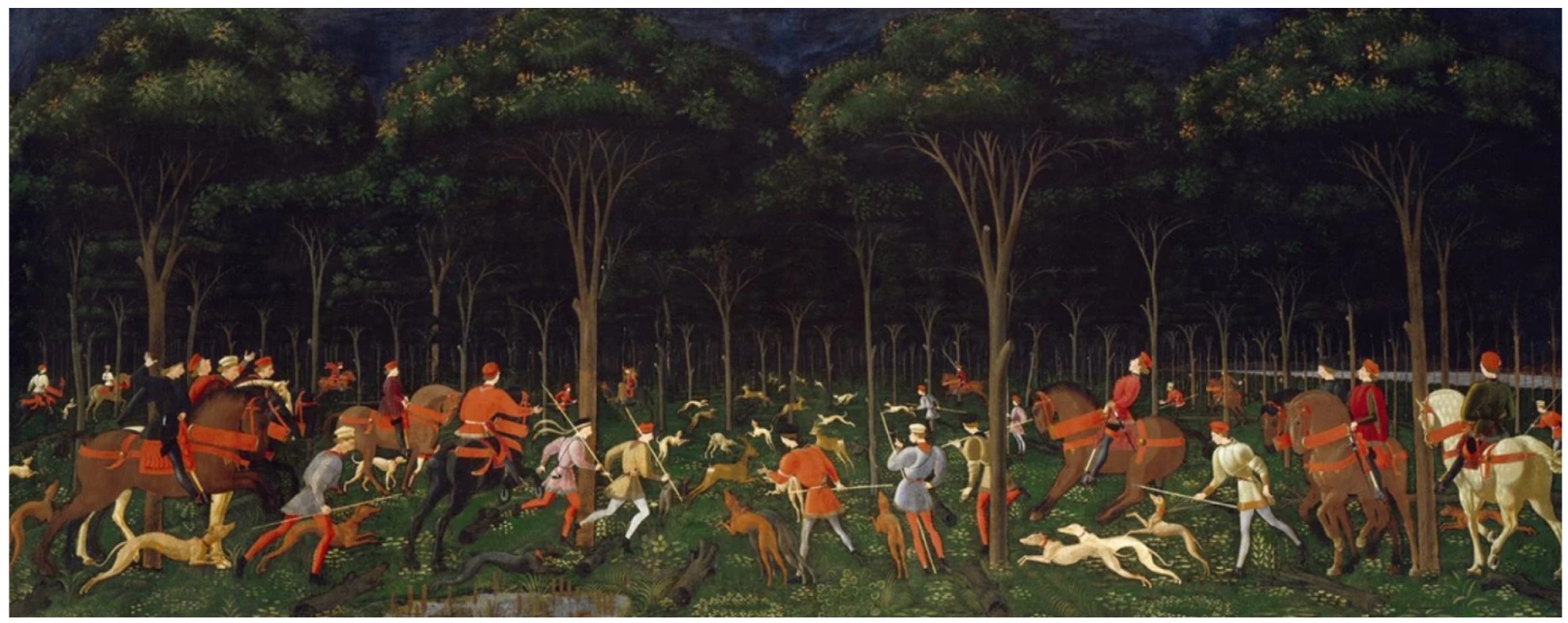
Paolo di Dono, called Uccello, The Hunt in the Forest, circa 1465-70, Ashmolean Museum, Oxford
Indeed, it was a work by the Italian Renaissance painter Uccello—the only Old Master mentioned by name in Breton’s canonical manifesto on Surrealism—that is believed to have partly inspired Magritte’s Le Jockey Perdu. Uccello’s Hunt in the Forest, itself a mastery of varying perspectives, features a nocturnal menagerie of man and beast with hunters bounding into the forest astride horses and on foot alongside their dogs (see fig. 3). The frieze-like composition, repeated verticality of trees and emphatic contrasts of light and dark within Magritte’s Jockey perdu finds resonance in the stage-like format and dramatic wooded backdrop of Uccello’s panel.
The iconography of the horse and rider, first unleashed in Magritte’s work in 1926 to much acclaim in Belgian Surrealist circles, including writers and patrons Camille Goemans and Paul-Gustave van Hecke, would by 1942 resurface in his oeuvre with unparalleled finesse. While the initial painting of Le Jockey perdu revealed a new dimension of ideation and conceptual alignment in Magritte’s work, the execution of the early composition proved somewhat rudimentary, displaying the broad brushwork and crude draftsmanship characteristic of his nascent oeuvre. David Sylvester touches upon this critique of the 1926 painting: “What is puzzling is why Magritte saw this particular work as his breakthrough: it seems a less convincingly realized work than Nocture… and was followed within a few months by several pictures which are more powerful and telling by a long way” (Siegfried Gohr, Magritte: Attempting the Impossible, New York, 2009, p. 82).
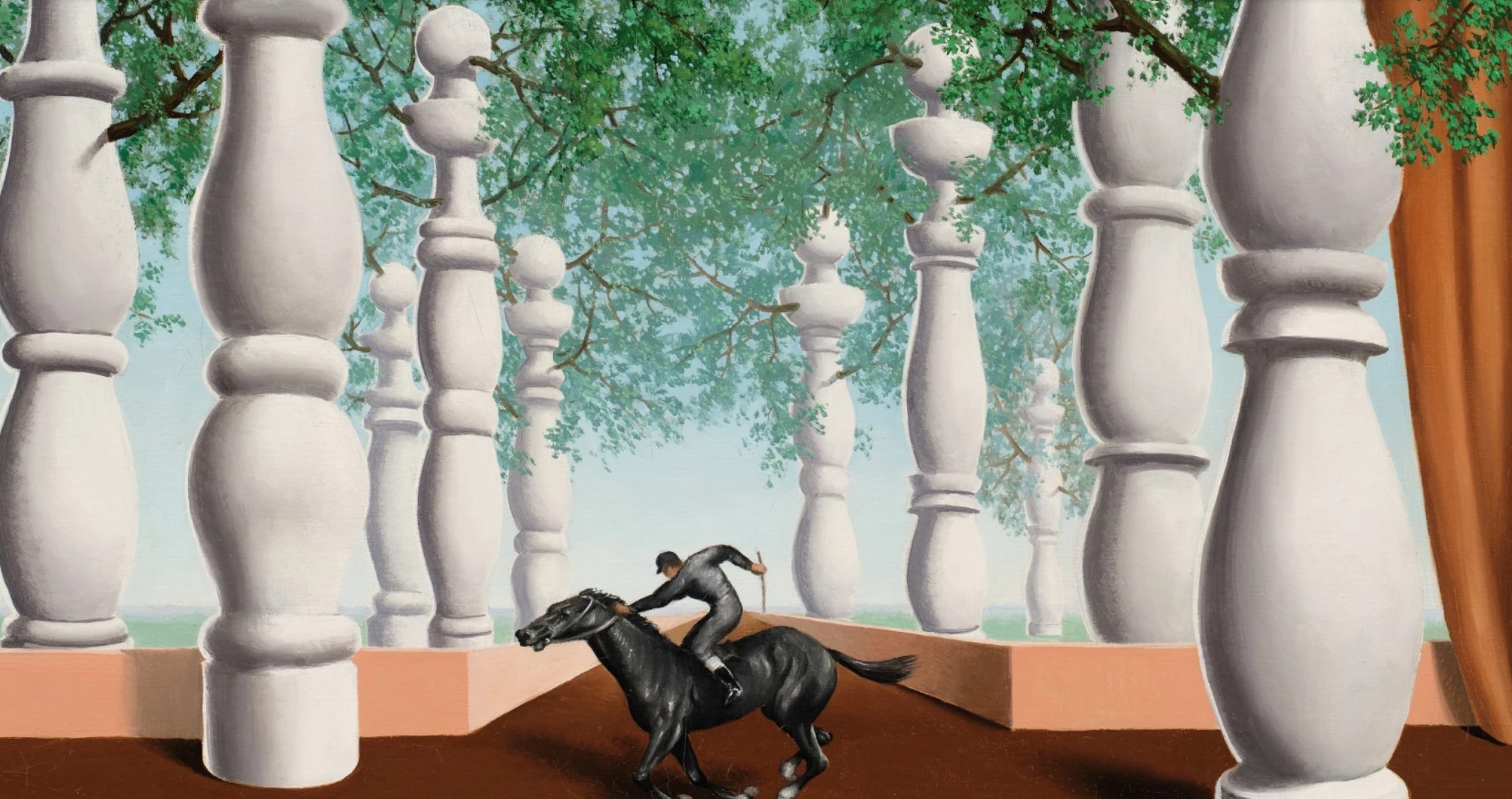
Siegfried Gohr expands upon this assessment, highlighting the exceptional quality of the present work: “It is true that the compositional idea [of the 1926 painting] is more precisely and convincingly expressed in the concurrent collages. And that later reprises can serve to clarify an idea is evidenced by the two 1942 versions of the painting [the present work in oil and a gouache], where the contrast between the jockey rooted to the spot despite his gallop and the row of tree trunks transformed into a balustrade is much more evocatively treated.” Gohr continues: “But why did Goemans and van Hacke attach such prominent significance to the 1926 work? Probably the type of visual invention was more important to them than the finished composition, because here Magritte succeeded, possibly for the first time, in inventing a poetically romantic situation that was entirely emancipated from de Chirico. The interpretation that the jockey has lost his orientation in the mysterious woods surrounding him would seem to be only half the truth. Though his real path has been replaced by a kind of red carpet, he has found entry into a fantastic, alternative world. Motion and haste, vegetable and sculptural elements, a fixed point (the rider) and extreme perspective create harsh oppositions that go beyond the Surrealist juxtaposition of apparently unrelated objects seen in a few other compositions of 1926. This combination of horseman and landscape would in fact concern Magritte once again much later” (ibid.). As Gohr underscores, the present composition adroitly captures the weight and significance of the subject imbued by the 1926 painting, yet is rendered with such skill and sensitivity as to compound the impact of the initial concept, bringing to bear decades’ worth of experience to exalt the seminal Surrealist motif.
The present painting was likely conceived on the occasion of Louis Scutenaire’s forthcoming monograph on Magritte, in which the artist aimed to feature Le Jockey perdu. However, according to Sylvester, a photograph of the 1926 composition either proved too difficult to procure (the work had been unseen since its sale to a collector in Africa), or, too unsophisticated to illustrate: “The first version was clumsy in execution and [Magritte] had [since] come to take a certain pride in exhibiting technical skill” (Sarah Whitfield; David Sylvester, ed., René Magritte: Catalogue Raisonné, Oil Paintings and Objects 1931-1948, vol. II, London, 1993, p. 298).
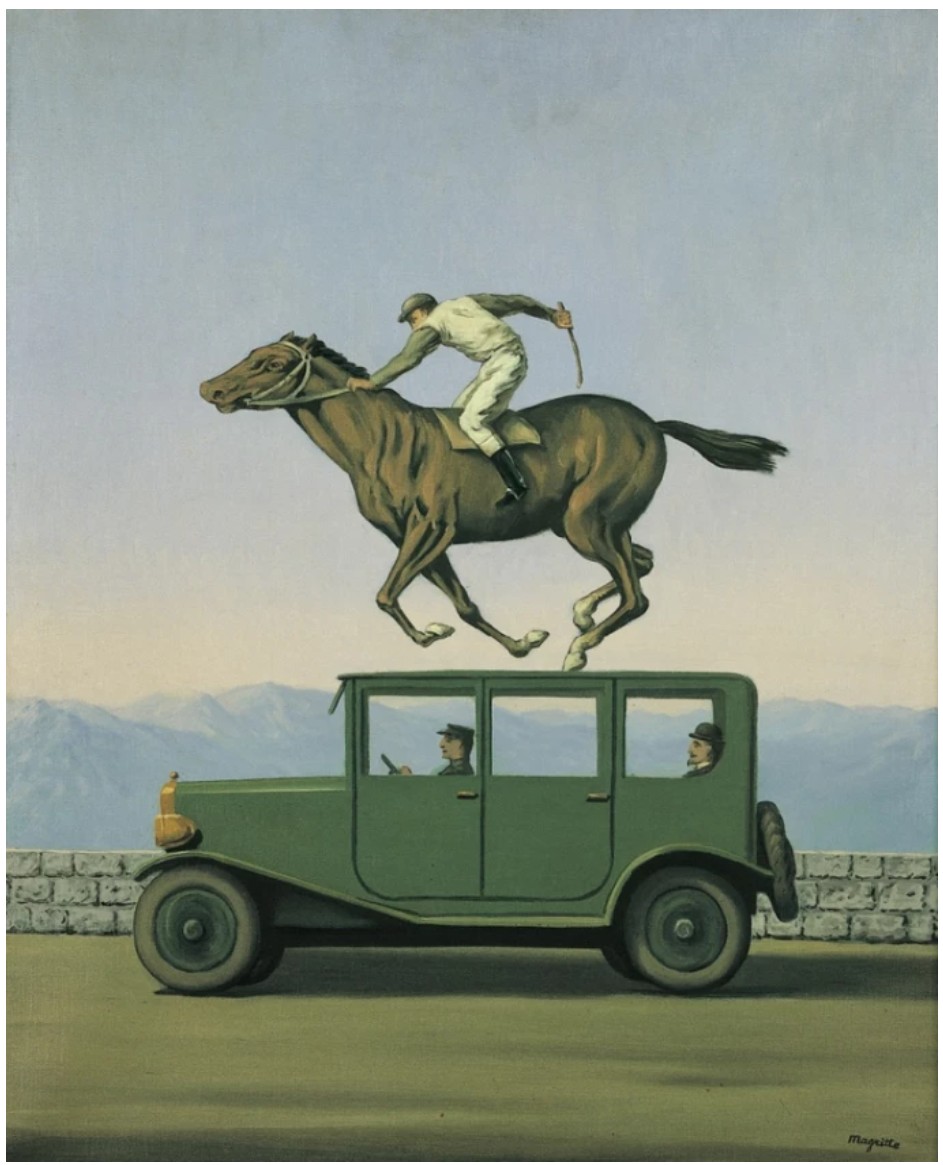
René Magritte, La Colère des dieux, 1960, Private Collection © 2025 C. Herscovici, Brussels / Artists Rights Society (ARS), New York
In his 1992 monograph on the artist, Sylvester mused on Magritte’s desire to reprise the subject in 1942: “It must have been something about the image that made Magritte so attached to The lost jockey. Maybe he felt that it had the romantic significance attributed to it by Goemans and Van Hecke. Maybe it had to do with the facts that, when he was a student his favorite painter (according to Charles Alexandre) was Uccello, that in the Manifesto Breton had named Uccello as the one old master painter relevant to Surrealism, and that The lost jockey looks as if it must surely have been based upon the cassone panel by Uccello of a hunt in the forest” (David Sylvester, Magritte: The Silence of the World, New York, 1992, p. 92). Ultimately, it would be Marcel Marien’s 1943 monograph, Magritte, which would prove the first book on the artist, superseding Scutenaire’s eventual publication. A testament not just to the power of the motif but also to the virtuosic execution of the present painting, Le Jockey perdu of 1942 is the very first—and, notable for the period, color—illustration in that volume.
From the 1940s onward, Magritte would go on to create five additional compositions bearing the same title, each executed in gouache on paper. While, in subsequent years, the jockey and rider duo would be recontextualized alongside other imagery like automobiles and interiors in La Colère des dieux and L’Enfance d’Icare, the present work remains one of only two know oils titled Le Jockey perdu.
Le Jockey perdu, circa 1942
Exquisite Corpus Evening Auction
Sotheby’s New-York: 20 November 2025
Estimated: USD 800,000 – 1,200,000
USD 2,002,000
WORK ON PAPER
Le Jockey perdu | Exquisite Corpus Evening Auction | 2025 | Sotheby’s
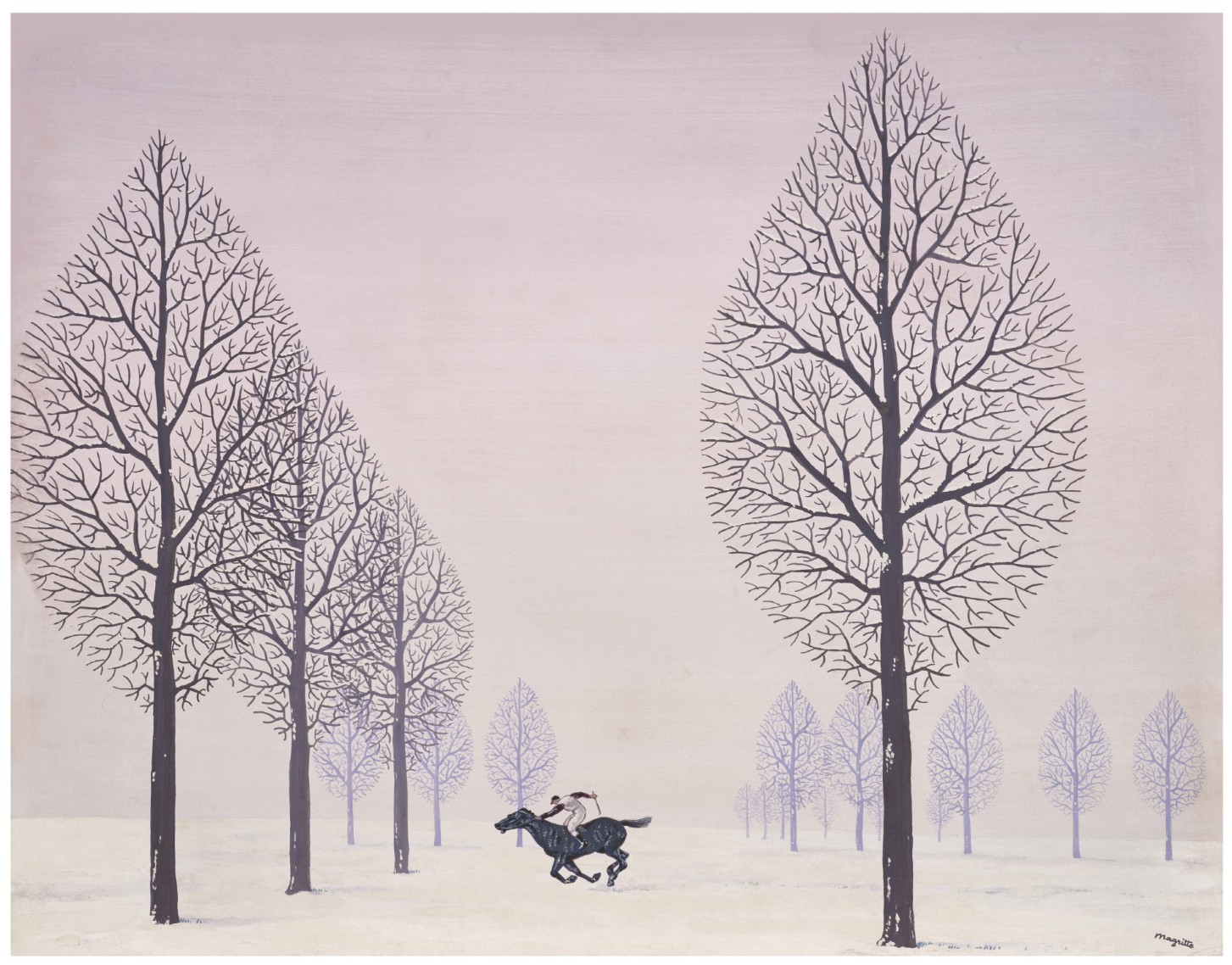
RENÉ MAGRITTE (1898-1967)
Le Jockey perdu, circa 1942
Gouache on paper laid down on canvas
50.7 x 65.2 cm (20 x 25 5/8 inches)
Signed Magritte (lower right)
Les grâces naturelles, 1961
Les grâces naturelles, circa 1961
PROPERTY FROM A PRIVATE SWISS COLLECTION
Christie’s London: 5 March 2026
Estimated: GBP 6,500,000 – 9,500,000
GBP 8,520,000 / USD 11,381,870
RENÉ MAGRITTE (1898-1967), Les grâces naturelles | Christie’s
RENÉ MAGRITTE (1898-1967)
Les grâces naturelles, circa 1961
Oil on canvas
81.5 x 100.4 cm (32-1/8 x 39-1/2 inches)
Signed ‘Magritte’ (upper left)
Inscribed ‘”Les Grâces naturelles”’ (on the reverse)
Held in the same private collection for the last twenty-three years, and formerly on long-term loan to the Musée Magritte in Brussels, Les grâces naturelles is an evocative and charming example of René Magritte’s iconic Surrealist idiom during the final, valedictory phase of his career. At this time, Magritte was looking back on his life and career with a renewed focus, revisiting certain compositions and subjects that he felt held a particular poetic power that could be further explored in new work. It was this intention that led him to return to one of his most famous and intriguing motifs within his oeuvre, the magical ‘leaf-bird,’ caught in a moment of metamorphosis and change. Investigating concepts of transformation and dislocation, theatricality and mystery, the painting is a direct challenge to our passive understanding of the very nature of reality, posing a strange visual conundrum that forces us to stop and consider anew the world around us.
“There is nothing more graceful, nor more natural: the flora, the fauna and our gaze spring from the same ground.”
The early 1960s was an important period of consolidation in Magritte’s career. As he wrote to his dealer Alexander Iolas in 1959, ‘I ought to start painting fewer pictures soon. The fact is, the paintings to come will take me longer. I have reached a point where painting poses fresh problems for me and I cannot devote myself to easy things… The new paintings will not be worth looking at unless they bring us ideas that are indispensable’ (letter to Alexander Iolas, 1959; quoted in J. Meuris, Magritte, trans. J.A. Underwood, New York, 1990, p. 170). Through the ensuing years, Magritte deliberately restricted himself to motifs and subjects that he felt were emblematic of this way of thinking, exploring ideas that were not just visually stimulating, but profoundly thought-provoking. He explored chains of images across several canvases, studying different variations and permutations of a given motif, with each successive work representing an evolution of the pictorial concept.
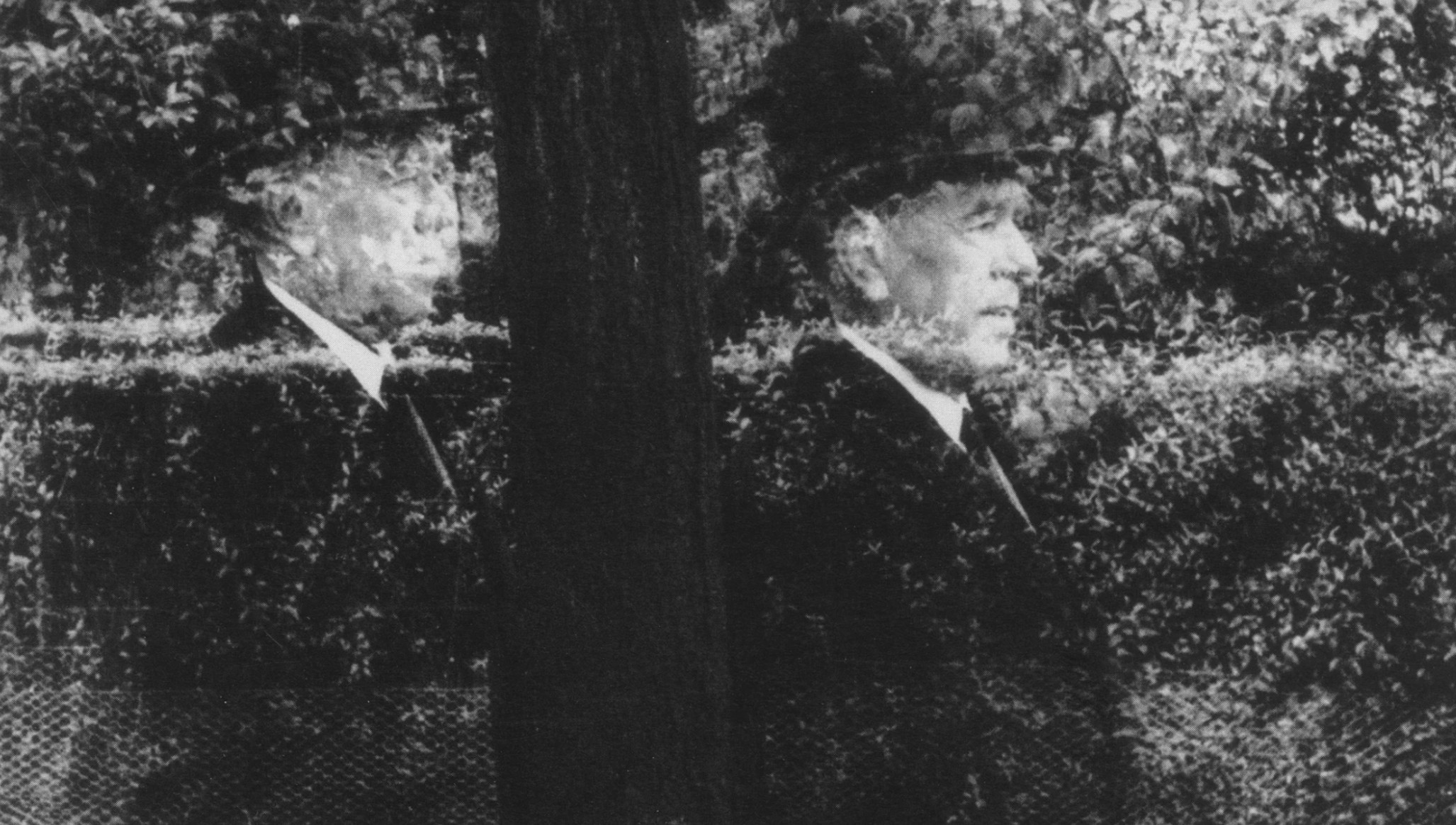
Double portrait of René Magritte, 1962. Photograph by Duane Michals. Photo: © Duane Michals. Courtesy of DC Moore Gallery, New York.
Executed circa 1961, Les grâces naturelles is a striking example of this shifting approach in Magritte’s painterly practice. One of only around a dozen oil paintings he completed that year, the work offers an unusual variation on the leaf-bird motif, in which these otherworldly, hybrid creatures are set against a densely packed, decorative carpet of leaves. In doing so, Magritte conjoins two different strands of pictorial thought in a single image, making a vivid connection with other paintings from his oeuvre, to create a new angle from which to consider the beauty and mystery of the natural world.
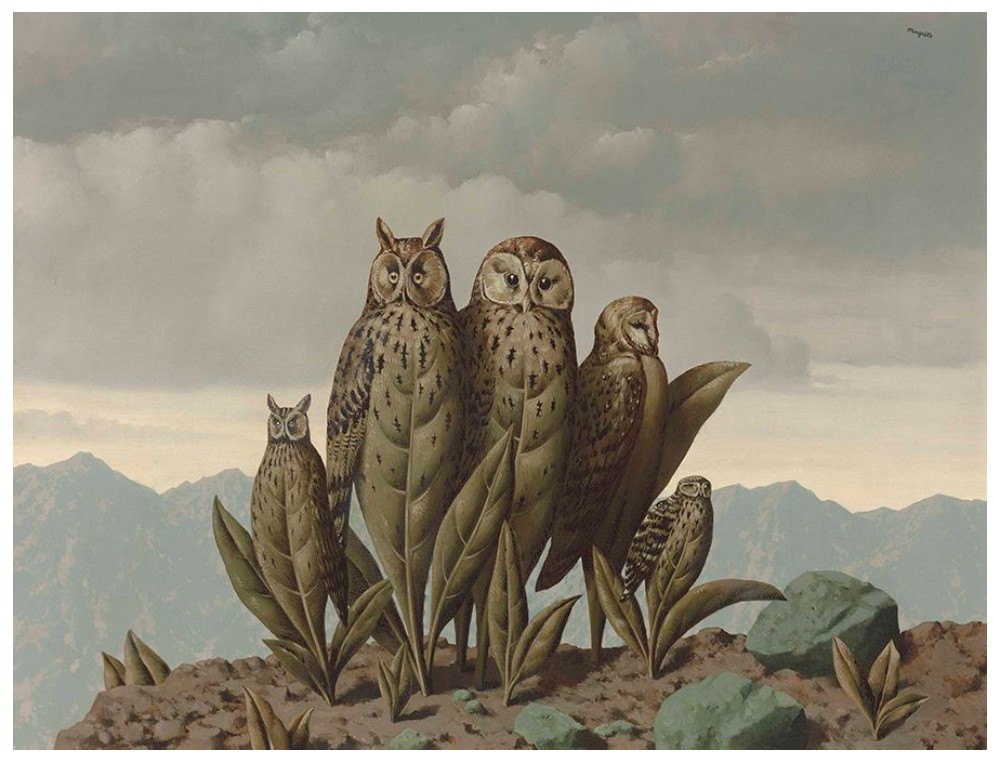
René Magritte, Les compagnons de la peur, 1942. Private collection. Artwork: © 2026 ADAGP, Paris and DACS, London.
The leaf birds had first emerged in Magritte’s paintings in the early 1940s, appearing in L’île au trésor (Sylvester, no. 498; Musées Royaux des Beaux-Arts de Belgique, Brussels) and Les compagnons de la peur (Sylvester, no. 499). Dating from the same year, both of these paintings present a bushel of these magical creatures perched atop a rocky outcropping, with a backdrop of mountains in the distance. However, while there is a lightness and dynamism to L’île au trésor, the leaf birds modelled after doves that appear to jostle one another as they attempt to take flight, in Les compagnons de la peur the mood is distinctly more sombre. Here, a small flock, or parliament, of owls appear from the leaves, their forms strikingly still as their watchful eyes monitor their surroundings. The leaf birds swiftly became a recurring subject in Magritte’s compositions through the War years, on occasion moving to an indoor setting, as in L’équateur (Sylvester, no. 502) and Le trait d’union (Sylvester, no. 514), though the majority remained rooted in the outdoors, most frequently the edge of a promontory or cliff, overlooking a picturesque vista or seascape.
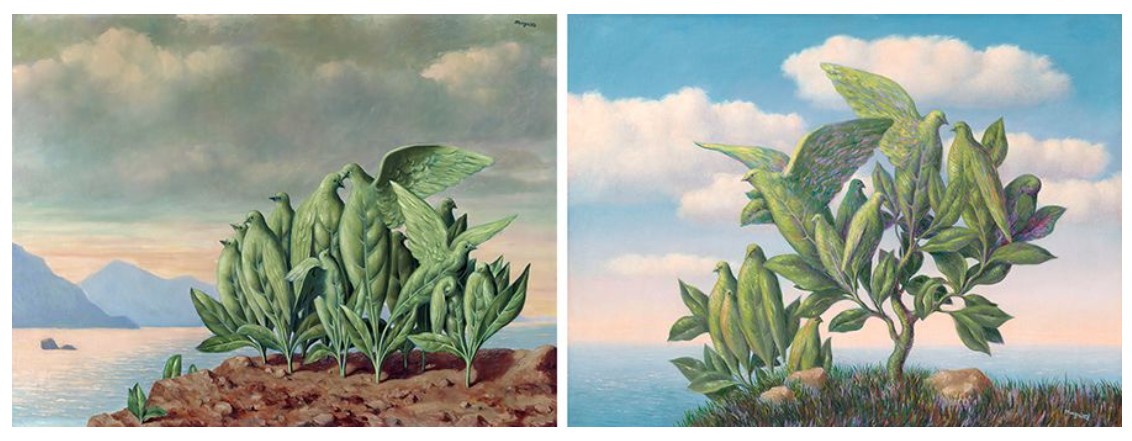
Left: René Magritte, L’Ile au Trésor, 1942. Musées Royaux des Beaux-Arts, Brussels. Artwork: © 2026 ADAGP, Paris and DACS, London. Digital image: akg-images. Right: René Magritte, L’Ile au Trésor, 1945. Private Collection. Sold Christie’s New York, November 2023, $13,247,500. Artwork: © 2026 ADAGP, Paris and DACS, London.
In one strange variation, seen in La saveur des larmes (Sylvester, nos. 664 and 665; Musées Royaux des Beaux-Arts de Belgique, Brussels and The Barber Institute of Fine Arts, Birmingham), the leaf bird is consumed by a small caterpillar, the insect’s feast leaving a trail of holes that puncture the creature’s body. The leaf bird in turn appears to droop despondently at the turn of events, perhaps lamenting their inability to escape this attack, and fly through the window beyond. The importance of the leaf-bird subject was reaffirmed on a monumental scale when it became one of the motifs Magritte included in his mural programme for the Casino Communal at Knokke-Le-Zoute in 1953. Writing about the project, the poet Paul Colinet vividly described the powerful, atmospheric effect conjured by the presence of the leaf birds: ‘L’île au trésor, where the trees have no foliage other than their songs’ (“Le domaine enchanté”: Panorama Surréaliste de René Magritte, Knokke, 1953, n.p.).
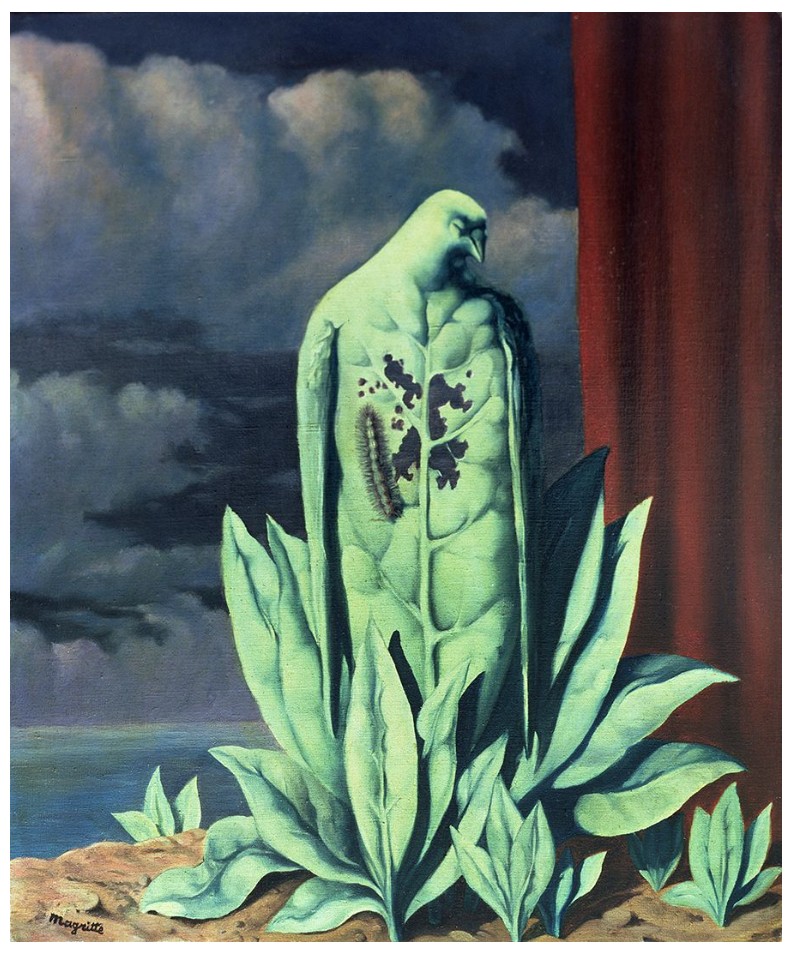
René Magritte, La saveur des larmes, 1948. The Barber Institute of Fine Art, Birmingham. Artwork: © 2026 ADAGP, Paris and DACS, London. Digital image: © Barber Institute of Fine Arts / © The Henry Barber Trust, The Barber Institute of Fine Arts, University of Birmingham / Bridgeman Images.
In Les grâces naturelles, Magritte travels along another avenue of thought. Here, seven leaf birds are executed with clarity and precision, their forms picked out in a palette of vibrant greens, with subtle nuances in tone suggesting the play of light across their forms. Part fauna and part flora, they present a striking, seemingly impossible, incongruity that plays on the viewer’s understanding of the two separate elements of this hybrid character. The elegant doves appear primed for flight, ready to take to the air at any moment, the delicate feathers of their wings picked out in clear, linear strokes of pigment. Yet, they are essentially grounded, held firmly in place by the roots that anchor them to the land. By this stage of his career, Magritte had become adept at converting his vision of the mysteries of the world into pictures that, through their iconic simplicity, conveyed their messages all the more strikingly. It is in its simplicity that Les grâces naturelles gains its strange, distinctive, revelatory power.
“I do not juxtapose strange elements to shock. I describe my thoughts of mystery which is the union of everything and anything we know.”
The concept of metamorphosis had long fascinated Magritte. Rather than simply marrying two different elements together, however, the artist found it particularly stimulating to render his subjects in an in-between state, picturing them in a moment of transition or flux. ‘I have found a new potential inherent in things,’ the artist wrote to his friend, the poet Paul Nougé in 1927, ‘their ability to become gradually something else, an object merging into an object other than itself… This seems to me to be something quite different from a composite object, since there is no break between the two substances, and no limit’ (in D. Sylvester, ed., René Magritte, Catalogue raisonné, London, 1993, vol. I, pp. 245-246). It is this type of partial transformation that gives the leaf birds their strange, surreal drama – capturing the creatures in the middle of their transformation, the artist handles the transition from vegetation to bird with extreme delicacy, allowing the green, waxy surface of the plant to gradually shift into the soft, plush plumage of the doves, emphasizing the shift in texture through light, flickering brushstrokes that convey a sense of the texture of their plumage.
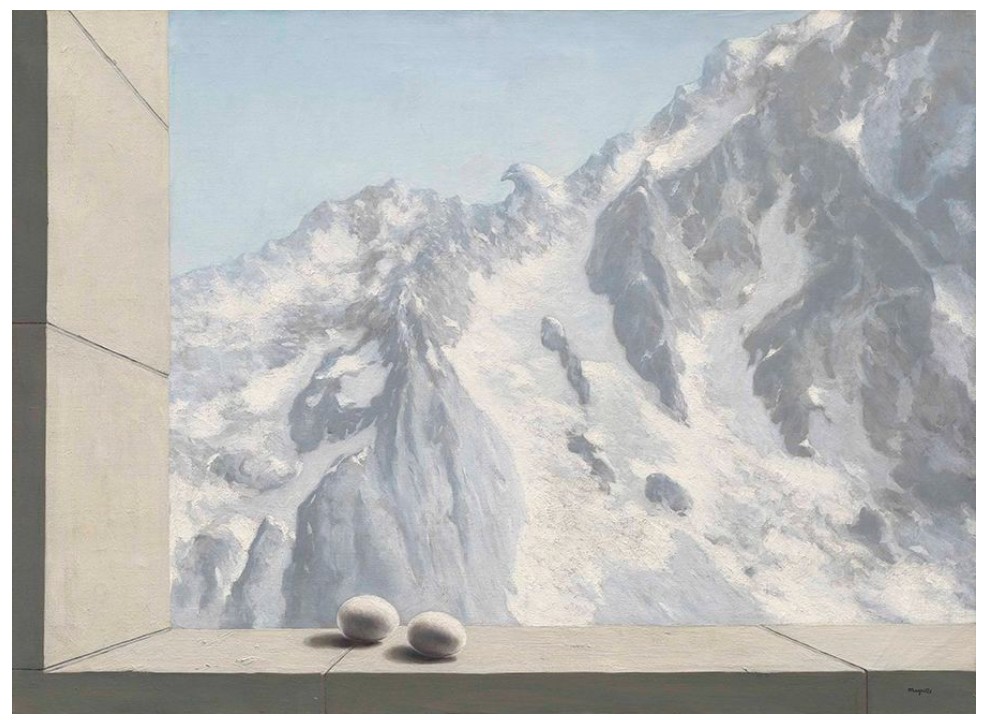
René Magritte, Le domaine d’Arnheim, 1938. Private collection. Sold Christie’s London, The Art of the Surreal Sale, 28 February 2017, £10,245,000 ($12,729,871). Artwork: © 2026 ADAGP, Paris and DACS, London.
Unexpectedly, the leaf birds in Les grâces naturelles are not placed in the settings typically associated with this motif. Eschewing the picturesque island vista or classical interior seen in previous works, Magritte instead chooses to position the creatures against a flat backdrop of dense foliage that he repetitively, painstakingly painted with exacting detail. In contrast to the tall, slender individual leaves of the hybrid bird-plant at the centre, the ground features layers of blue-toned, star-shaped leaves, each stem sprouting between five and seven leaflets in a pattern that suggests they originate from a horse chestnut tree. This highly detailed background, which Magritte used in several other compositions from the opening years of the 1960s including La cascade (Sylvester, no. 934), appears to have appealed to the artist not only for its decorative qualities, but also the manner in which it disrupts the sense of space within the picture.
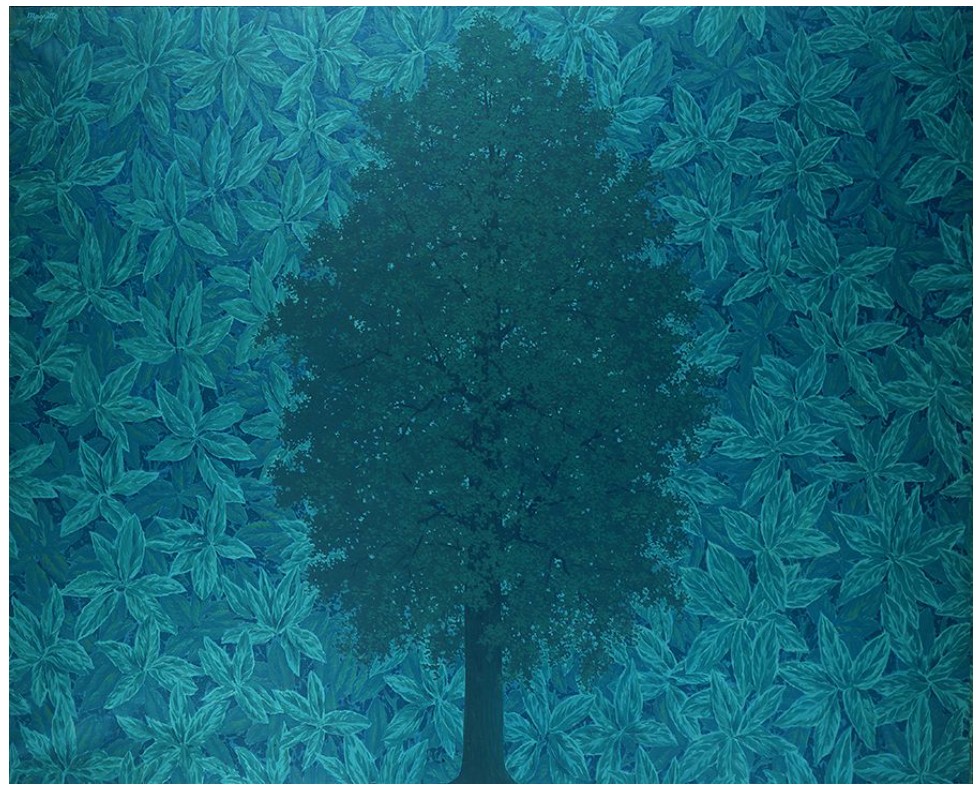
René Magritte, L’Arc de Triomphe, 1962. Private collection. Sold Christie’s London, July 2020, £17,798,750 ($22,518,662). Artwork: © 2026 ADAGP, Paris and DACS, London. Digital image: © Photothèque R. Magritte / ADAGP / DACS Images.
Here, the tightly woven verdure almost threatens to subsume the leaf birds in the dense layers of foliage, framing them in such a way as to focus our attention squarely on the magical, mysterious nature of their metamorphosis. While later, Magritte would paint close-ups of a smaller group of leaf birds against a small segment of the tree’s foliage (Sylvester, no. 976), in Les grâces naturelles he presents a more expansive view, allowing the leaves to fill the entire picture plane, with small glimpses of a lavender-hued sky just visible between the leaves. The contrast between the different types of foliage adds a further note of complexity to the scene – the star-like configurations of the background, seen en masse in this way, combined with their distinctive blue hue, renders the appearance of the leaf bird all the more strange, their taller, broader leaves and waxy texture suggesting they are an alien interloper within this natural environment.
While his earliest meditations on metamorphosis had focused on nude women in the midst of turning into wood or the sky, with the leaf bird paintings Magritte presents a subtler approach to the theme, invoking the many processes within the natural world in which one thing evolves into another, such as a caterpillar transforming into a butterfly. In this way, Magritte hoped to prompt his viewer to reconsider the inherent mystery and magic of everyday reality. ‘My images are not substitutes for either sleeping or waking dreams,’ he explained. ‘They do not give us the illusion of escaping from reality… I conceive painting as the art of juxtaposing colours in such a way that their effective aspect disappears and allows a poetic image to become visible. This image is the total description of a thought that unites – in a poetic order – familiar figures of the visible: skies, people, trees, mountains, furniture, stars, solids, inscriptions, etc. The poetic order evokes mystery, it responds to our natural interest in the unknown’ (quoted in H. Torczyner, Magritte: Ideas and Images, trans. by R. Miller, New York, 1977, p. 224).
“Our secret desire is for a change in the order of things, and it is appeased by the vision of a new order… The fate of an object in which we had no interest suddenly begins to disturb us.”
The result was a visual language laced with duality and contradiction, rife with juxtapositions and congruences that were intended to provoke and challenge the viewer. By confronting us with such discreet interplays, contrasts and comparisons, Magritte hoped to push us towards a more awe-filled appreciation of the world around us. As Harry Torczyner eloquently explained: ‘The magic of René Magritte is lucid. A Surrealist, he is unique in his deliberate approach and enchants with reality. He is surprising and disconcerting because, to use his own words, “I see to it that I paint only images which evoke the mystery of the universe”’ (‘The Magic of Magritte,’ 1964, in The Collection of Harry Torczyner, Esq., Christie’s New York, 1998, p. 27). In the present work, the natural order of the world has seemingly been upturned. The bird stretching its wings in the foreground prompts us to consider the next moment in the scene, as the transformation continues – will the dove break free from the bounds of its plant-form, soaring through the air, or forever remain stuck, rooted to the earth and bound by gravity.
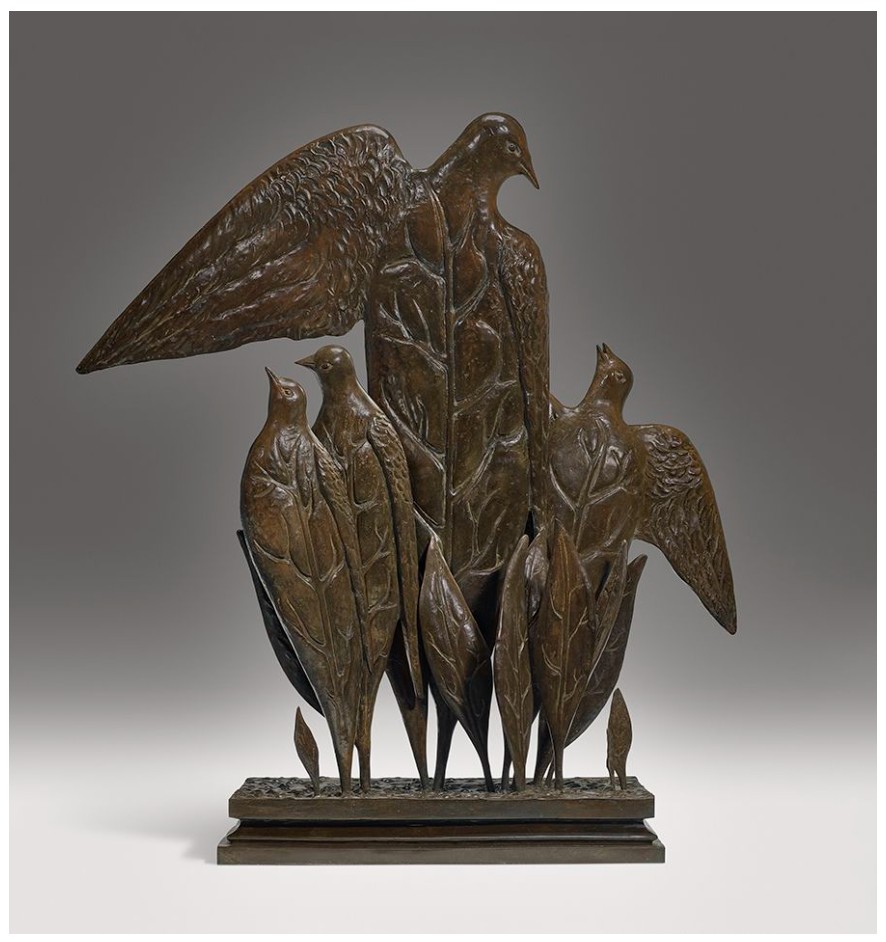
Artwork: © 2026 ADAGP, Paris and DACS, London.
The motif of the leaf bird continued to inspire Magritte at various intervals through the remainder of the decade, captivating his imagination. At the beginning of 1967, he began an ambitious project to transform a selection of his painted motifs into three-dimensional form, creating a total of eight large bronze sculptures (Sylvester, nos. 1087-1094), each of which brought to life the illusionistically rendered images of his painting. By translating one medium to another, Magritte masterfully expanded his upon the poetic potential of his vision. Transforming his fantastical imagery from the canvas into tangible form, he made a final great leap in his artmaking. Among the most successful motifs to be translated to bronze in this way, the leaf bird attained a powerful new potency, their hybrid forms now permanently fixed in this moment of metamorphosis.
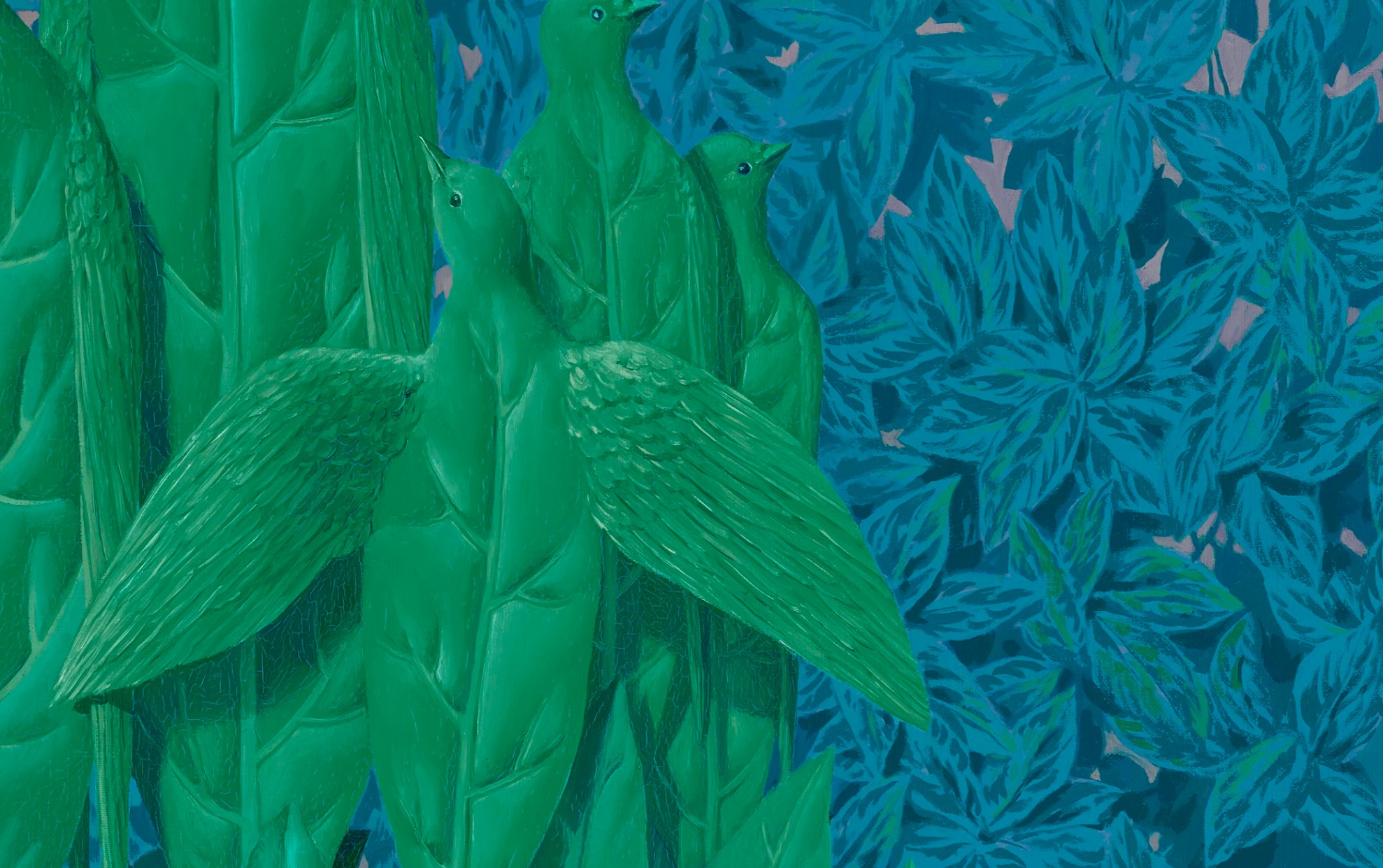
According to Marcel Mariëns, the title Les grâces naturelles, which recurred across several variations of the leaf-bird motif, including the present work, had been suggested to the artist by Paul Nougé. Magritte assigned great importance to the naming of his paintings, relying on a trusted network of friends and colleagues to suggest and debate potential titles for a finished work. In 1948, Magritte put pen to paper and across a series of handwritten manuscripts – now preserved in the Archives of Contemporary Art in Belgium and collectively known as “On Titles” – compiled his thoughts and musings the various solutions that had been reached in this way. For Les grâces naturelles, Magritte wrote: ‘Everything offered to our gaze on this canvas is distinguished in the highest degree by natural grace’ (quoted in D. Sylvester, ed., op. cit., 1993, vol. II, p. 378).
Les grâces naturelles, 1967
Christie’s New-York: 16 May 2024
Estimated: USD 800,000 – 1,200,000
USD 3,680,000
RENE MAGRITTE (1898-1967), Les grâces naturelles | Christie’s
RENE MAGRITTE (1898-1967)
Les grâces naturelles, 1967
Bronze with brown patina
Length: 94 cm ( 37 1/8 inches)
Width: 43.6 cm (17 1/4 inches)
Height: 102.3 cm (40 1/4 inches)
Signed, dated, numbered and stamped with foundry mark ‘Magritte 1967 5/5 Gi-Bi-Esse FONDERIA ARTISTICA VERONA-ITALY’ (on the top of the base)
Conceived and cast in 1967
At the beginning of 1967, René Magritte began an ambitious project to transform a selection of his painted motifs into three-dimensional form. He created a total of eight large bronze sculptures (Sylvester, nos. 1087-1094), each of which brings to life the illusionistically-rendered images of his painting. By translating one medium to another, Magritte masterfully expanded his life-long desire to reveal the mystery inherent in the everyday world through his art. Transforming his fantastical juxtapositions of imagery from the canvas into tangible form, he made a final great leap in his artmaking.
“Once again, Magritte has reshuffled the pack of our conceptual cards,” the critic Pierre Rouve wrote upon first seeing the sculptures in 1968. “Born as paintings, Magritte’s sculptures suddenly surge among us in a miracle of transubstantiation: ghosts haunt us not because they have shed their too, too solid flesh but because they have conjured it. This change of identity cries out for our investigation: what happens to a painting that turns into a sculpture? Is it a mere physical translation or is it an occult metaphysical transmutation? With Magritte the halo of mystery and the flutter of ambiguity emerge unscathed from this uncommon leap” (“Space Conquered,” in Art and Artists, August 1968, vol. 3, no. 5, 1968, p. 25).
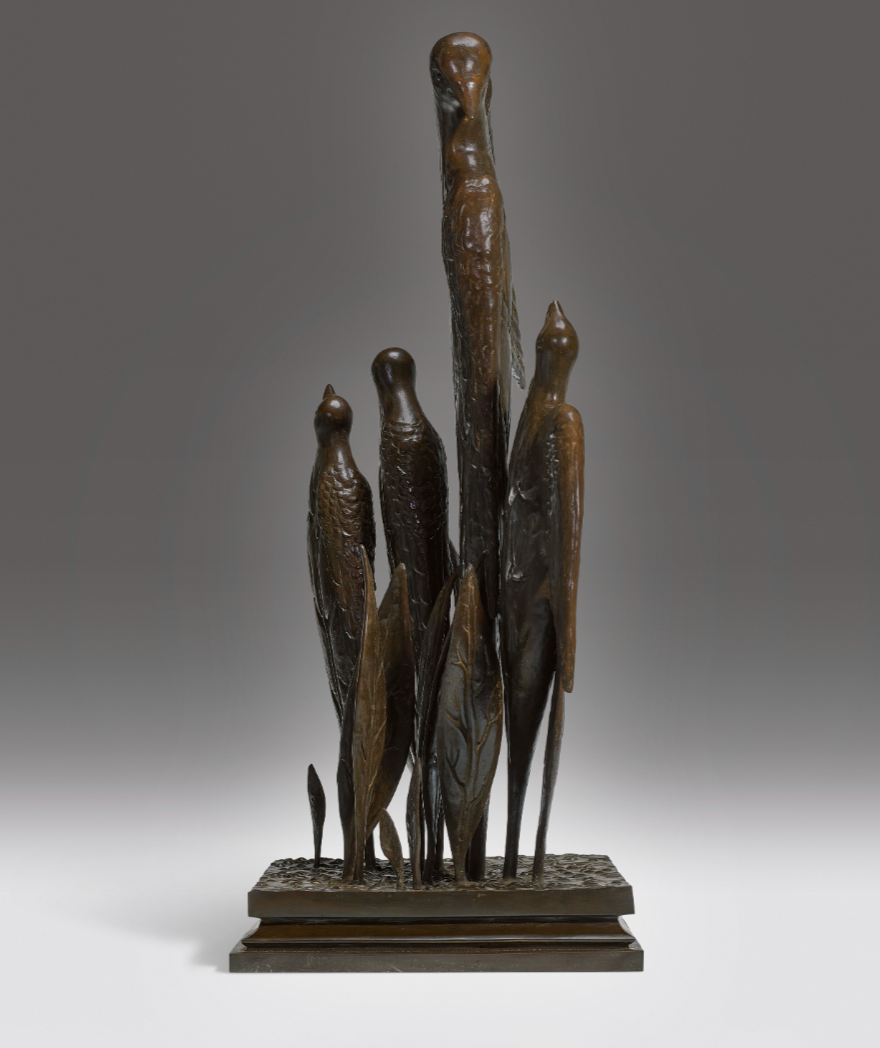
Les grâces naturelles is based on one of the artist’s most recognizable motifs: the “leaf-bird,” a fantastical object pictured as it transforms from plant to avian. Magritte invented this subject at the beginning of the 1940s, perhaps inspired by the view of an aviary filled with birds that was visible from the window of his home at 135 Rue Esseghem in Brussels. The “leaf-bird” would continue to proliferate in his work. The first canvas titled Les grâces naturelles was painted in 1947 (Sylvester, no. 618). “Everything offered to our gaze on this canvas is distinguished in the highest degree by natural grace,” Magritte wrote of this subject in his Titres of 1948 (quoted in D. Sylvester and S. Whitfield, op. cit., 1993, vol. II, p. 378). The present work is most closely related to the final realization of this motif painted in 1964 (Sylvester, no. 987).
The concept of metamorphosis had long fascinated Magritte. In addition to juxtaposing two seemingly unrelated, often quotidian objects together upon a canvas, in the late 1920s, Magritte began to merge different elements, picturing them in a moment of transition or flux. “I have found a new potential inherent in things,” the artist wrote to his friend, the poet Paul Nougé in 1927, “their ability to become gradually something else, an object merging into an object other than itself… This seems to me to be something quite different from a composite object, since there is no break between the two substances, and no limit” (quoted in ibid., vol. I, pp. 245-246). It is this type of gradual transformation that lends the “leaf-bird” its compelling sense of wonder. While his earliest meditations on metamorphosis had focused on nude women in the midst of turning into wood or the sky, with the “leaf-bird” paintings Magritte presents a subtler approach to the theme, invoking the many processes within the natural world in which one thing evolves into another. In the present bronze, Magritte was able to take the idea of metamorphosis a step further, lifting his beloved “leaf-bird” out of the canvas to exist in three-dimensions, and, in so doing, bringing this impossible object to life.
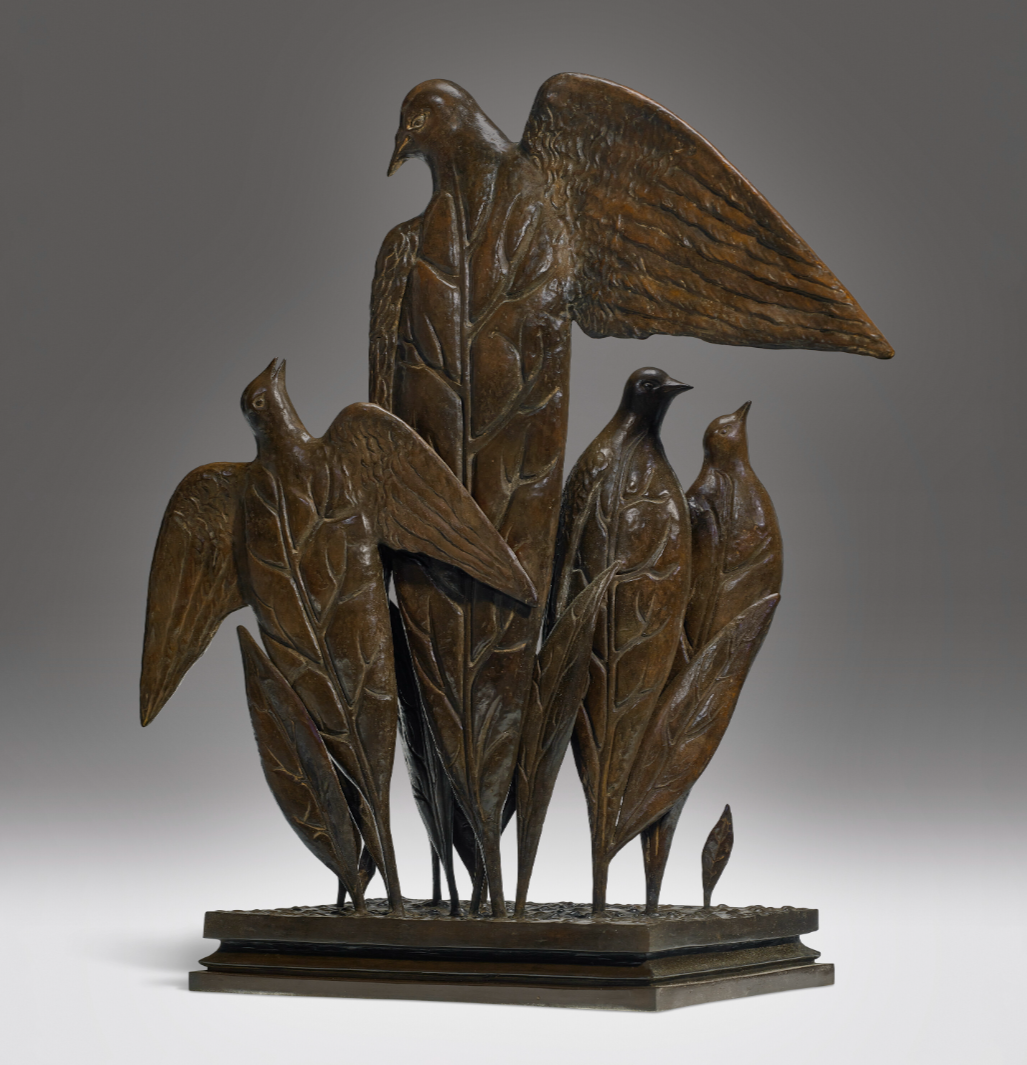
The inception of the sculptures began after a conversation Magritte had with his long-time dealer, Alexandre Iolas, in January 1967. “While leafing through the book about him that had just been published,” Iolas explained, “I questioned him about surrealist objects such as painted bottles and asked him if he had ever thought of making sculptures. With total firmness, he answered ‘yes’, but that in sculpture he would not do anything different from his pictures; that he would never make a formal sculpture like a sculptor; that his sculpture would express his ideas. When we saw each other a few weeks later, he said that he could already see ‘which paintings would make Magritte sculptures’” (quoted in ibid., vol. III, p. 139).
Despite the ambitious scale of the project, the creation of Magritte’s sculptures was swift. As soon as he had selected the motifs from his back catalogue of paintings, he created working drawings with precise measurements for each three-dimensional work, “which he seemed to have no difficulty in visualizing or transposing,” Suzi Gablik has written (op. cit., 1970, p. 181). Iolas contracted the Gibiesse foundry in Verona to work up full-scale wax models of each sculpture. These were complete by mid-June, at which time Magritte traveled to the foundry and made several modifications to the waxes. He then signed off each model and gave approval to cast them in bronze.
Unfortunately, Magritte never saw the final realization of his sculptural vision. He passed away unexpectedly in August of 1967. The first bronze casts left the foundry in November of this year. Each sculpture was issued in a numbered edition of five, plus an artist’s proof that was delivered to Magritte’s wife, Georgette. The present work is 5/5 and was acquired by Shirley and Frank Wozencraft directly from Iolas two years later in 1969. For the past 45 years, it was the beloved centerpiece of their family home. Another bronze from the edition is now housed in the Pinakothek der Moderne, Munich.
Other Series
Le lieu-dit (The spot on the map), 1955
The Roger and Josette Vanthournout Collection
Christie’s London: 5 March 2026
Estimated: GBP 2,000,000 – 3,000,000
GBP 3,466,000 / USD 4,630,230
RENÉ MAGRITTE (1898-1967), Le lieu-dit (The spot on the map) | Christie’s
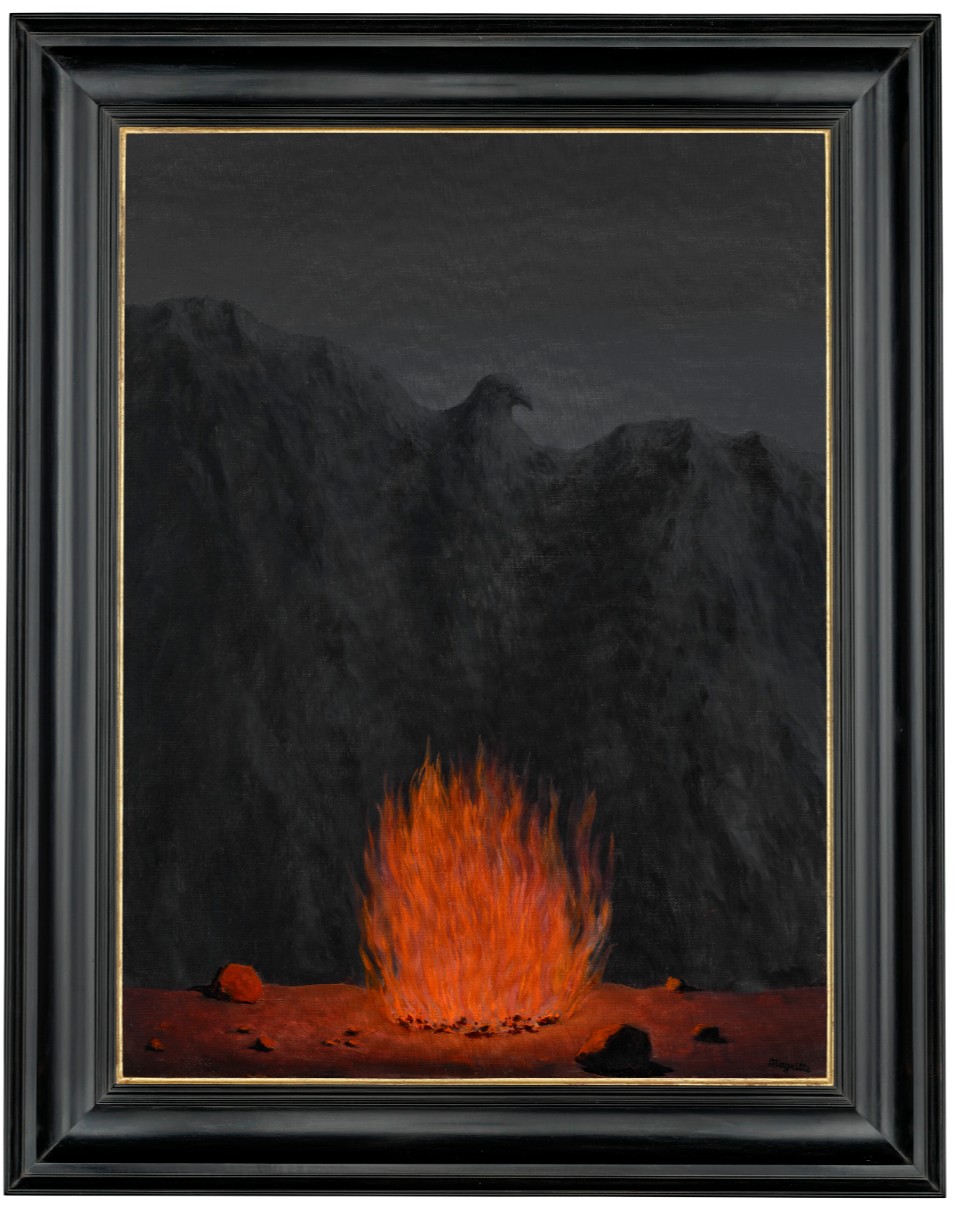
RENÉ MAGRITTE (1898-1967)
Le lieu-dit (The spot on the map), 1955
Oil on canvas
80.2 x 60.4 cm (31-5/8 x 23-3/4 inches)
Signed ‘Magritte’ (lower right)
Dated and inscribed ”’LE LIEU-DIT” 1955′ (on the reverse)
Dating to the first half of 1955, Le lieu-dit is a powerful illustration of René Magritte’s iconic painterly style during the mature period of his career, as he challenged and tested the boundaries of his viewers’ expectations and imaginations. Following the end of the Second World War, the artist had returned to a more precise mode of painting, and began to re-examine certain motifs, subjects and ideas that he felt remained ripe for further exploration, resulting in new variations and evolutions of earlier concepts and compositions. Magritte clearly felt that the present work was a highly successful example of this new approach, and chose to reproduce it almost immediately upon its completion in La carte d’après nature, the Surrealist review he had founded several years prior and published sporadically through the following decade. Across the twelve issues and two special editions, the review featured poetry and hand-coloured illustrations, short stories and Surrealist questionnaires, with contributions from the artist’s circle of close friends in Brussels, and variously appeared in the form of a simple postcard or a small booklet. Le lieu-dit was included in issue no. 9, and illustrated Magritte’s renewed fascination with an intriguing leitmotif that had first emerged in his work almost two decades prior – the majestic form of an eagle-shaped mountain.
A mysterious and unexpected landmark within a range of picturesque peaks, the eagle-mountain had initially appeared in 1937 in a pair of paintings titled Le précurseur (Sylvester, no. 417 and 418; 1936), and may have been partially inspired by a colour photograph featured on a travel brochure that Magritte had found and saved among his papers. A year later, Magritte solidified the subject in his now iconic Le domaine d’Arnheim (Sylvester, no. 456; Private collection), which invoked the writings of Edgar Allen Poe and played with the contrast and connection between a simple still life of eggs in the foreground and the grandeur of the eagle-shaped promontory in the distance. In Le lieu-dit, Magritte’s imagination moves in another direction, expanding on the central concept of Le domaine d’Arnheim and combining it with memories of alchemical imagery and his recent explorations on the theme of petrification, to create a beguiling, poetic image.
Here, the romantic grandeur of this magical scenery is accentuated by the nocturnal setting, the rocky mountain range cast in deep shadow as the sky darkens overhead and nighttime falls. In the foreground, the rippling flames of a blazing fire lick upwards into the air, its vivid energy and vibrant hue offering a stark contrast to the subtly variegated grisaille palette that characterises the rest of the landscape. There is an intense silence to the scene, the mystery of the situation heightened by the lack of a human presence around the camp fire. Despite the power of the flames, which casts a warm glow upon the surrounding ground, the eagle-mountain remains in darkness, suggesting there is a great distance between the viewer and the peaks, the cliff-edge visible beyond the fire perhaps indicating the presence of a deep canyon or gorge just out of view. As such, the profile of the bird in Le lieu-dit appears as if it may be a trick of the light, an illusion conjured by the flickering flames or tired eyes gazing into the shadowy darkness, that should right itself upon a second glance.
La Traversée difficile, 1963
Sotheby’s New-York: 13 May 2025
Estimated: USD 10,000,000 – 15,000,000
USD 10,040,000
La Traversée difficile | Modern Evening Auction | 2025 | Sotheby’s
RENE MAGRITTE (1898 – 1967)
La Traversée difficile, 1963
Oil on canvas
81.3 x 100.2 cm (32 x 39 1/2 inches)
Signed Magritte (lower left)
Titled (on the reverse)
Themes of vision and perception, as well as the re-imagining or fragmentation of the human figure, were instrumental to Surrealist philosophy and a primary mode of artistic experimentation throughout René Magritte’s oeuvre. Yet in no work is his investigation into the matrix of visual perception more dynamically engaged than in his 1963 canvas, La Traversée difficile. From the bilboquet, to the cyclopic eye and the suited-figure, the present work is a triumphant tour-de-force of the artist’s most iconic and recurrent motifs. With them, Magritte weaves together an image which oscillates between beguiling metaphor and exacting critique, brought to life in the incomparably matter-of-fact painterly language for which he has come to be so celebrated.
Magritte first ideated the theme explored in La Traversée difficile in a work by the same name executed nearly forty years earlier in 1926. In this earlier version, Magritte paints only one figure, a bilboquet, situated within a close interior which teleports away from the viewer at an exaggerated steep perspective. Despite the anthropomorphic addition of the single eye on the bilboquet’s “head”, the totem appears distinctly inanimate amidst the other architectural elements which fill the room. In 1963, Magritte makes the decisive choice to reimagine the totemic object in the guise of a suited figure, a motif which stands among the most iconic within his visual lexicon; perhaps most importantly, the eye overtakes the head entirely. The bilboquet becomes a secondary actor, something of an anthropomorphic echo to the human body in the foreground which further confuses the sense of comfortability with the composition as a whole.
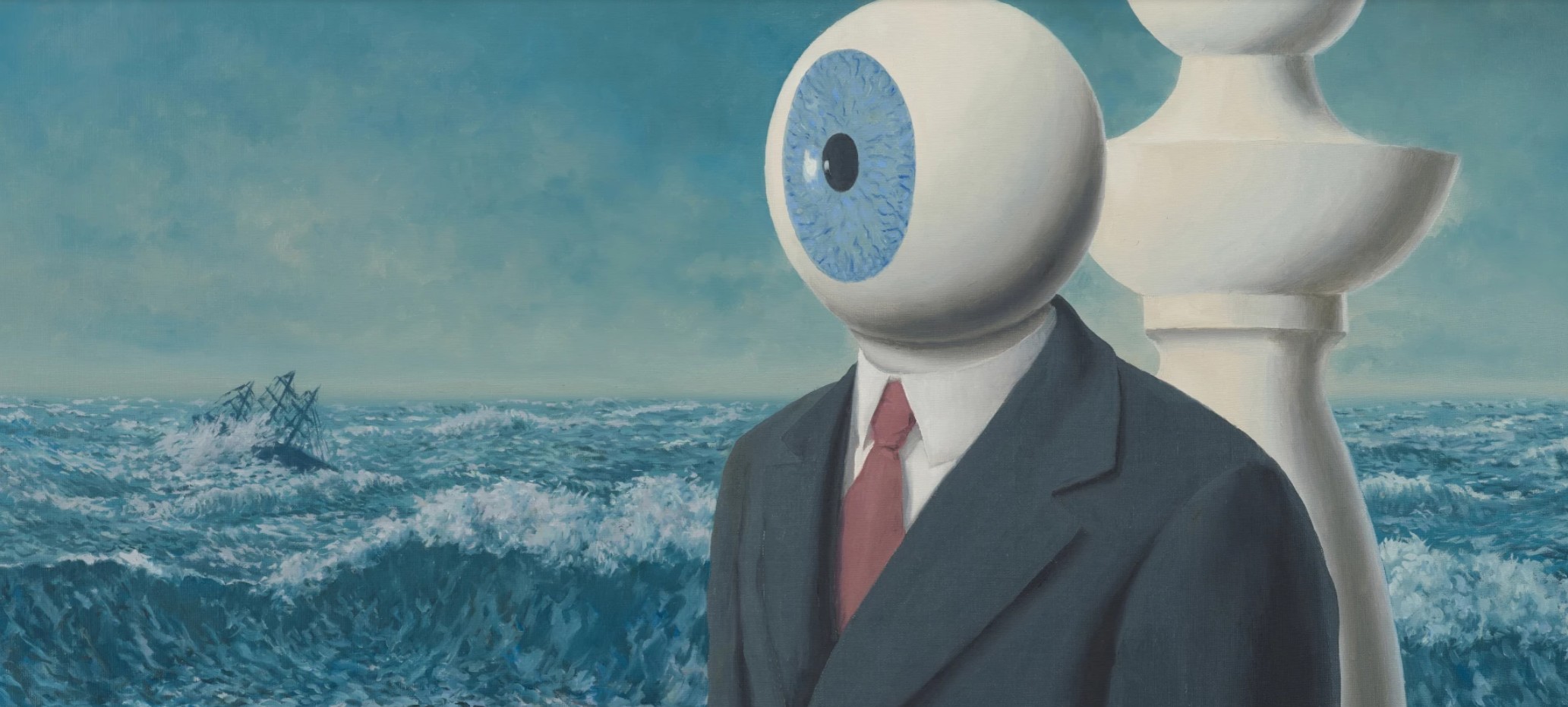
In title alone, the work presages a kind of crisis of the human condition or mind. As with many of Magritte’s works, the title is left invitingly yet intentionally ambiguous, a kind of multifarious non-sequitur which implies yet does not define its meaning. The “difficult journey” to which Magritte here refers can on the one hand be read explicitly, in the tumultuous stormy seascape, whose waves violently crown and crash above the stone baluster dividing the fore- and backgrounds. The crashing waves in the present work were modeled after the marine painter Wartan Mahokian’s La Vague, a postcard of which Magritte kept in his studio and referenced in numerous compositions. Just below the horizon, Magritte poignantly includes a ship being overtaken by the white-capped waters, offering both an iconographic and thematic echo of a recurring theme within the epic works of the 19th century Romantics. Whereas in the 1926 composition, Magritte leaves ambiguous whether this vignette is seen through a window or a painting, here the ocean encroaches onto the scene, rising like a wall behind the protagonists. In Magritte’s paintings more generally, the ocean often represents a sense of mystery, abyss, or the unknown, symbolizing the vastness and unknowability of existence. It can also depict alienation or a longing for escape, and in some cases, can be interpreted as a metaphor for the subconscious mind, where feelings and emotions are hidden. As such, the cataclysmic seascape in the present work portends a metaphysical journey as well, a harbinger of a crisis of perception which proliferates upon consideration of the other elements within the composition.
Left: Vartan Makhokhian, Sea View, 1905, National Gallery of Armenia, Yerevan
Right: Joseph Mallord William Turner, The Shipwreck, 1805, Tate Britain, London
Magritte invariably employed the suited figure as a cipher for the generic, everyday man, here with a head supplanted by a cyclopic, all-seeing eye. While this form of “faceless man” famously appeared throughout the artist’s works from the 1960s (see fig. 4), what makes La Traversée difficile so intriguing in their context is that the eye does not simply hide but rather replaces the head entirely. A few years later, in 1965, Magritte would go on to explain that his preoccupation for these works lay with our pressing fascination to see beyond the world of appearances. As he describes, “there is an interest in that which is hidden and which the visible does not show us” (quoted in Harry Torczyner, Magritte: Ideas and Images, New York 1977, p. 172). But in creating a hybrid between the thing which hides, the eye, and the thing which is hidden, the figure’s head, Magritte collapses any possibility to see beyond either element. Whereas in Son of Man, Magritte leaves enough visual detail for the viewer to comfortably assume that the head remains intact behind the apple which obscures it, here they have no such reassurance. Where the eye peeks out from behind the apple in Son of Man, it here overtakes, and the head undergoes an irreconcilable transformation which no amount of mental agility can undo. What we are left to grapple with is our expectation of a head, as we know it to look, and the way it appears presented before us on the canvas.
“At least it hides the face partly well, so you have the apparent face, the apple, hiding the visible but hidden, the face of the person. It’s something that happens constantly. Everything we see hides another thing, we always want to see what is hidden by what we see. There is an interest in that which is hidden and which the visible does not show us. This interest can take the form of a quite intense feeling, a sort of conflict, one might say, between the visible that is hidden and the visible that is present.”
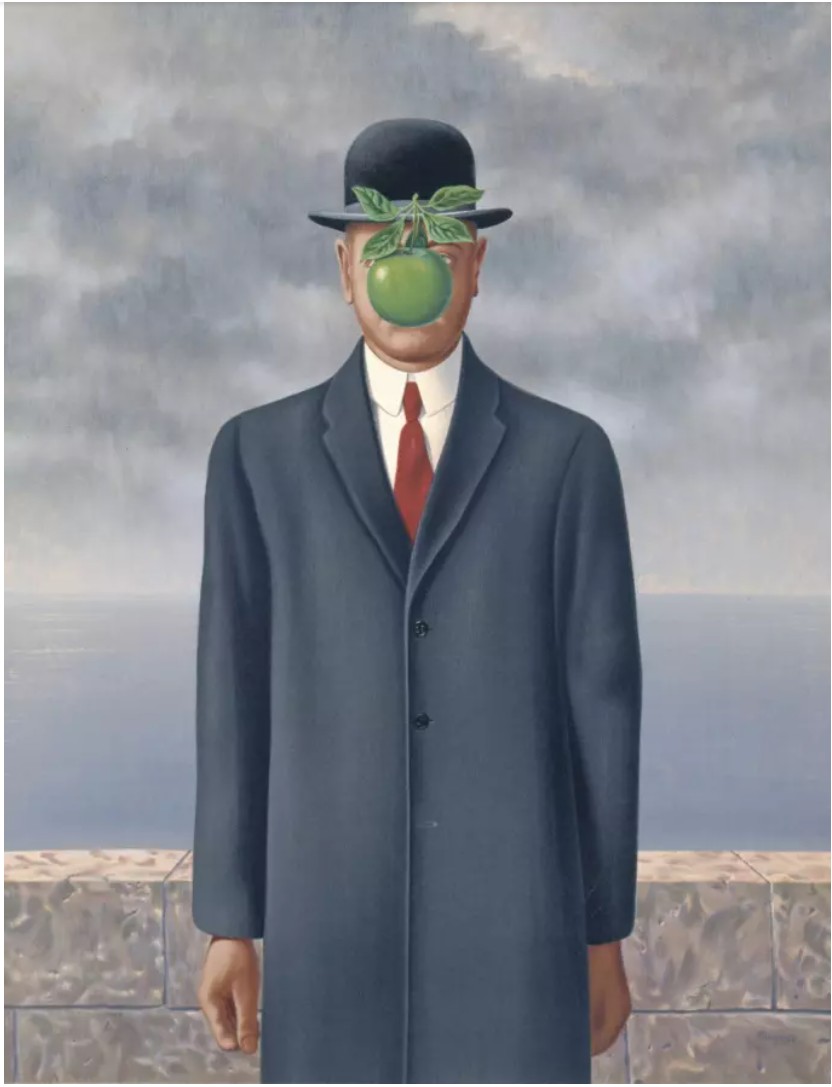 René Magritte, The Son of Man, 1964, Private Collection.
© 2025 C. HERSCOVICI, BRUSSELS / ARTISTS RIGHTS SOCIETY (ARS), NEW YORK
The conception of the eye as a (dis)embodied actor finds precedent in earlier works from Magritte’s oeuvre. David Sylvester suggests that the choice of imagery may have been inspired by Odilon Redon’s Le Fantome (see fig. 5). The macabre and often uncanny imagery which courses throughout Redon’s work is often acknowledged as precursor to Surrealism more broadly, but the imagery in his 1878 drawing bears a particularly striking similarity to Magritte’s first iterations on the theme. As is viscerally felt within the present work, the effect of this anatomical isolation was two fold. On the one hand, by removing all extraneous features from the figure’s face, Magritte poises the imposing, cyclopic eye as an omniscient, all-seeing power.
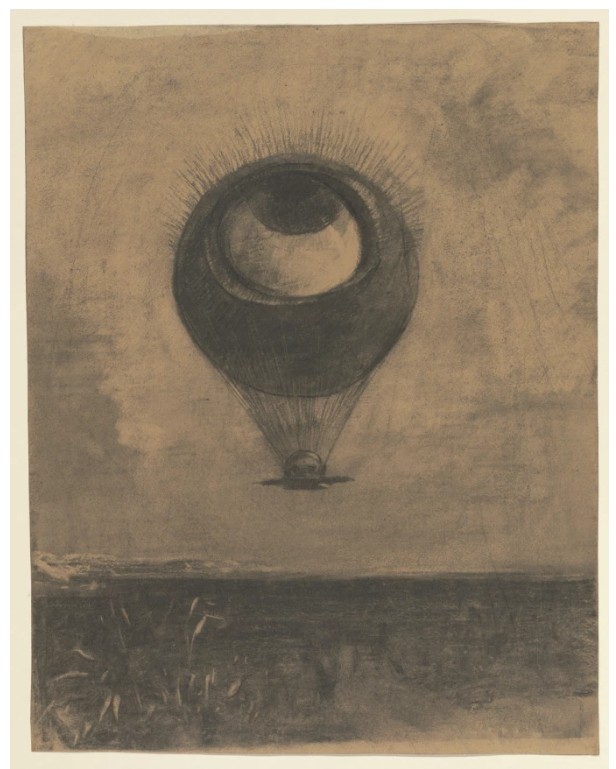
Odilon Redon, Eye-Balloon (Œil-ballon), 1878, Museum of Modern Art, New York
In both his 1937 canvas, Le Monde poétique, and his 1929 canvas, The False Mirror, the eye serves as the protagonist. In the former, the round pupil and bright white which surrounds it work to convey a sense of shock at the sight of the viewer. Already positioned as an adversary, the viewer is made to feel the scrutiny of the eye’s unbroken, frontal gaze. In the latter, the eye and what it sees become enmeshed, and the viewer in turn becomes involved in a mysterious and oblique reflection, a tangential feedback loop. For Magritte, the painted eye had a poignant psychoanalytical significance, particularly in its capacity to invoke self-reflection, or perhaps even abjection, on the part of the viewer. As Belgian writer and surrealist Marcel Lecomte observed; “often, these objects seem to be looking at us. What event are they waiting for, unless it is that of the mystery of their meeting on the same canvas, the mystery of their close combined identity? Then they exert all their restrained tension on us, all their charm, all their mute confidence. And so there is a secret movement between the painted and the spectator; what the objects represent leads us back towards ourselves (Exh. Cat., London, The South Bank Centre, Magritte, 1992, p. 37).
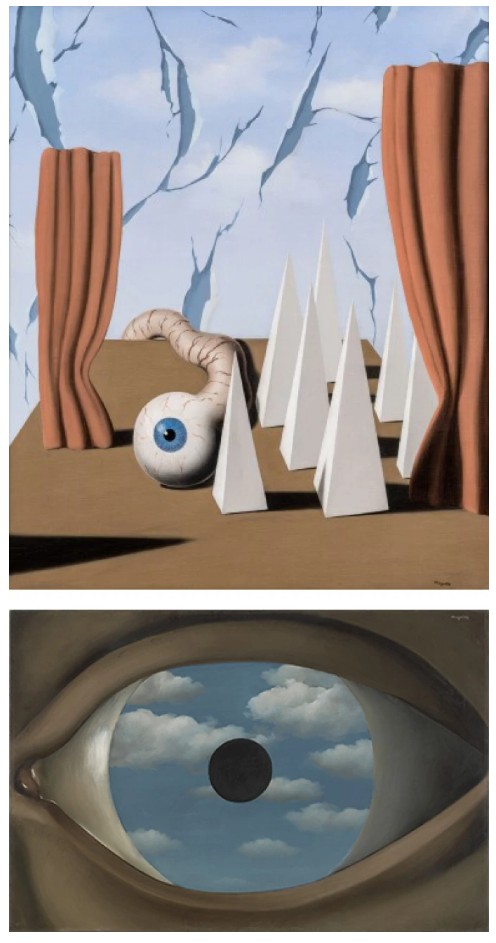
René Magritte, Le Monde poétique, 1937, sold: Sotheby’s, New York, November 2023 for: $1.9 million. © 2025 C. HERSCOVICI, BRUSSELS / ARTISTS RIGHTS SOCIETY (ARS), NEW YORK
René Magritte, The False Mirror, 1929, Museum of Modern Art, New York. © 2025 C. HERSCOVICI, BRUSSELS / ARTISTS RIGHTS SOCIETY (ARS), NEW YORK
Magritte’s subversion of the fundamental properties of anatomy were an extension of his fascination with “Objective Stimulus,” a term he applied to those instances in which he replaced an object familiar to a particular context with one related to it, but out of place. The shock of dissonance where one expects there to be consonance, Magritte realized, was all the more unsettling than the reverse. This framework was something of a departure from the prevailing Surrealist preoccupation with the revelatory potential held within the combination of disparate objects. With it, however, Magritte opened a trove of new pictorial and conceptual possibility. When dissected into its component parts, all of the elements Magritte uses to describe the figure are to be expected of a portrait. In other words, it is not the eye that is shocking but the way the eye appears. And in transforming the eye into the very thing which inhibits our ability to see the figure as we expect it to appear, Magritte raises a tantalizing paradox between vision and perception.
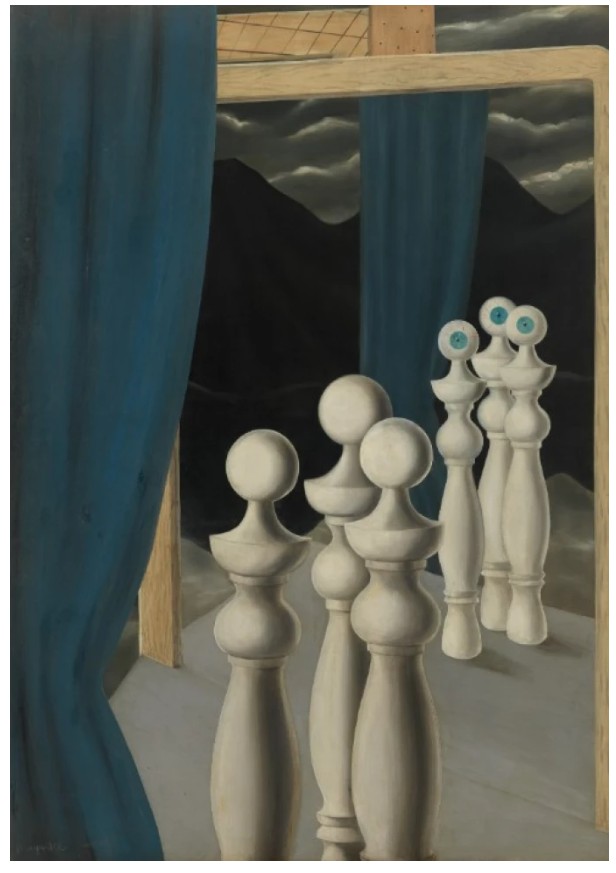
René Magritte, La rencontre, 1926, Kunstsammlung Nordrhein-Westfalen.
© 2025 C. HERSCOVICI, BRUSSELS / ARTISTS RIGHTS SOCIETY (ARS), NEW YORK
Once established in the central figure alone, this crisis of viewership is further complicated by the introduction of a second: the totemic figure of the bilboquet. First emerging in the artist’s work around 1926, the bilboquet began to take on an increasing anthropomorphic character in the 1940s. This evolution toyed with the term’s dual meaning, invoking the Surrealist penchant for wordplay: as a noun, Bilboquet refers to a popular stick-and-ball game by the same name, and as a proper noun, it also refers to a character from the circus troupe of Saltimbanques, archetypes of which would surface in the works of artists ranging from Daumier to Picasso. The ambiguous and unassuming bilboquet likely appealed to Magritte for its potential transfigurations; its form was phallic as well as evocative of the bishop in a chess set—a game often seen by the Surrealists as a psychoanalytic metaphor for life. As Ann Umland expounds, “It was a form with multivalent connotations, ranging from mannequins to balusters or table legs to chess pieces, and it would become one of Magritte’s stock elements, a distinctive ‘type’ that could be multiplied, resized and repositioned ad infinitum, each time slightly differently, posing a provocative challenge to prevailing definitions of originality in art” (Exh. Cat., New York, The Museum of Modern Art, The Mystery of the Ordinary, 2013, p. 28). In the present work, the form’s human qualities are amplified through its doubling with the suited-figure which stands before it. In their composition parallel, Magritte calls upon the way that its chiseled, curvilinear form echoes the shape and presence of the human physique.
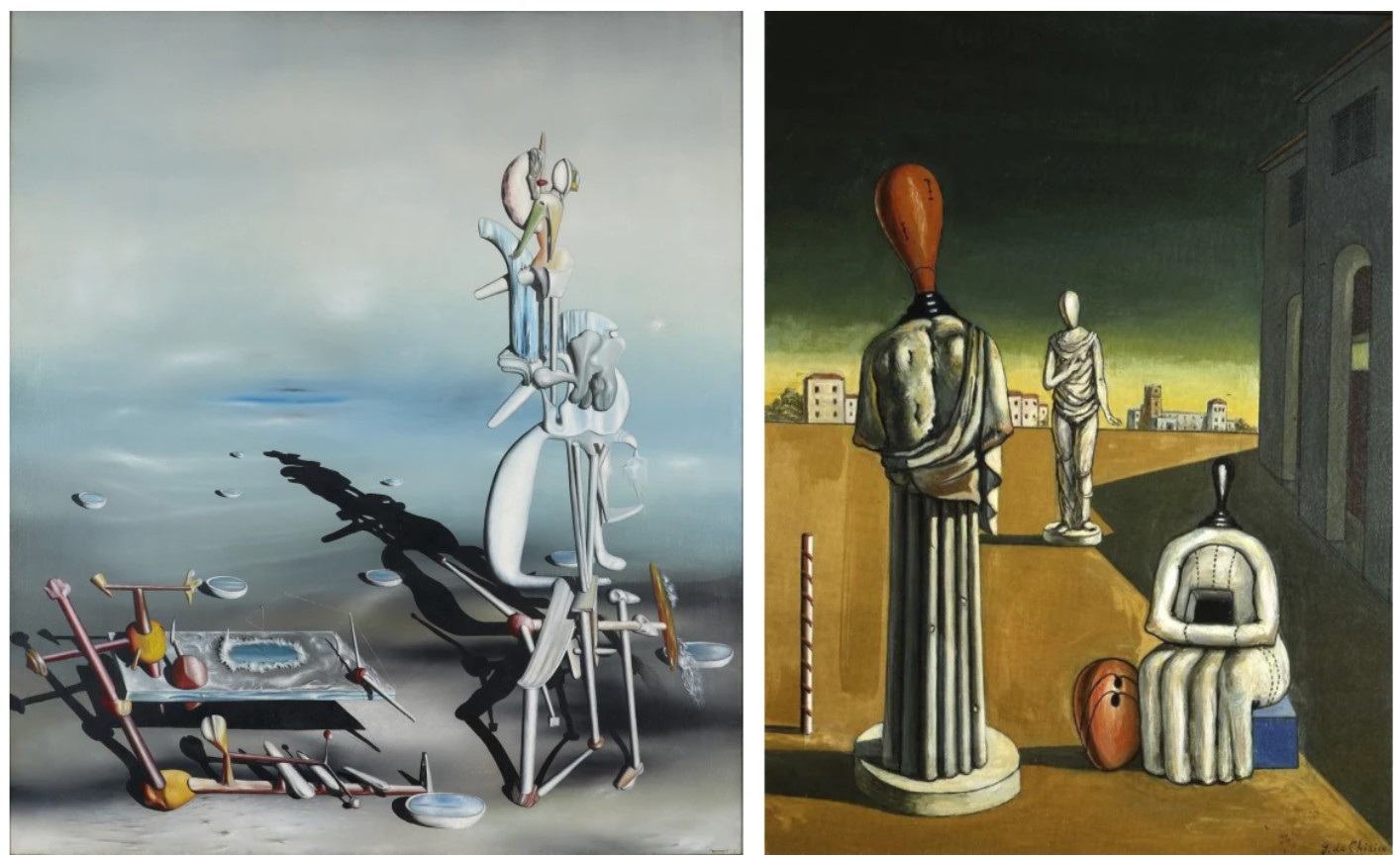
Left: Yves Tanguy, Divisibilité indéfinie (Indefinite Divisibility), 1942, Buffalo AKG Art Museum
Right: Girogio de Chirico, The Morning of the Muses, 1972, Fondazione Giorgio e Isa de Chirico, Rome
This anthropomorphizing impulse was a recurrent theme throughout the broader Surrealist movement, particularly for those artists working in a visual language which deferred to but ultimately reinvented the visual material of our lived reality. In the work of Yves Tanguy, for example, his organic, distantly familiar visual language confers on the central elements a visceral materiality which lends to their personification, and extends so far as to influence our reading of the immaterial skyscape as having an anthropomorphic quality as well. And yet, caught somewhere between liquid and solid, the shapes still elude categorization or neat description, thus heightening the feeling that Tanguy’s paintings occupy a world adjacent to but separate from our own. Giorgio de Chirico’s iconography moves closer to Magritte’s project in the distinctly figurative tenor of his motifs. In his 1972 canvas, The Morning of the Muses, de Chirico explores the same idea of doubling which Magritte here forefronts. The juxtaposition between the impersonal yet uncanny faceless mannequin heads and the ornate classical bodies on which they are positioned likewise inspires a deeply metaphysical dilemma in the viewer. In La Traversée difficile, the distinctly human quality of both the suited-figure and its bilboquet shadow ultimately confuse a linear sense of personhood, and in turn work to show the bifurcated, or rather duplicitous nature of self perception.
Les droits de l’homme, 1947-1948
Leonard & Louise Riggio: Collected Works
Christie’s New-York: 12 May 2025
Estimated: USD 15,000,000 – 20,000,000
USD 15,935,000
RENE MAGRITTE (1898-1967), Les droits de l’homme | Christie’s
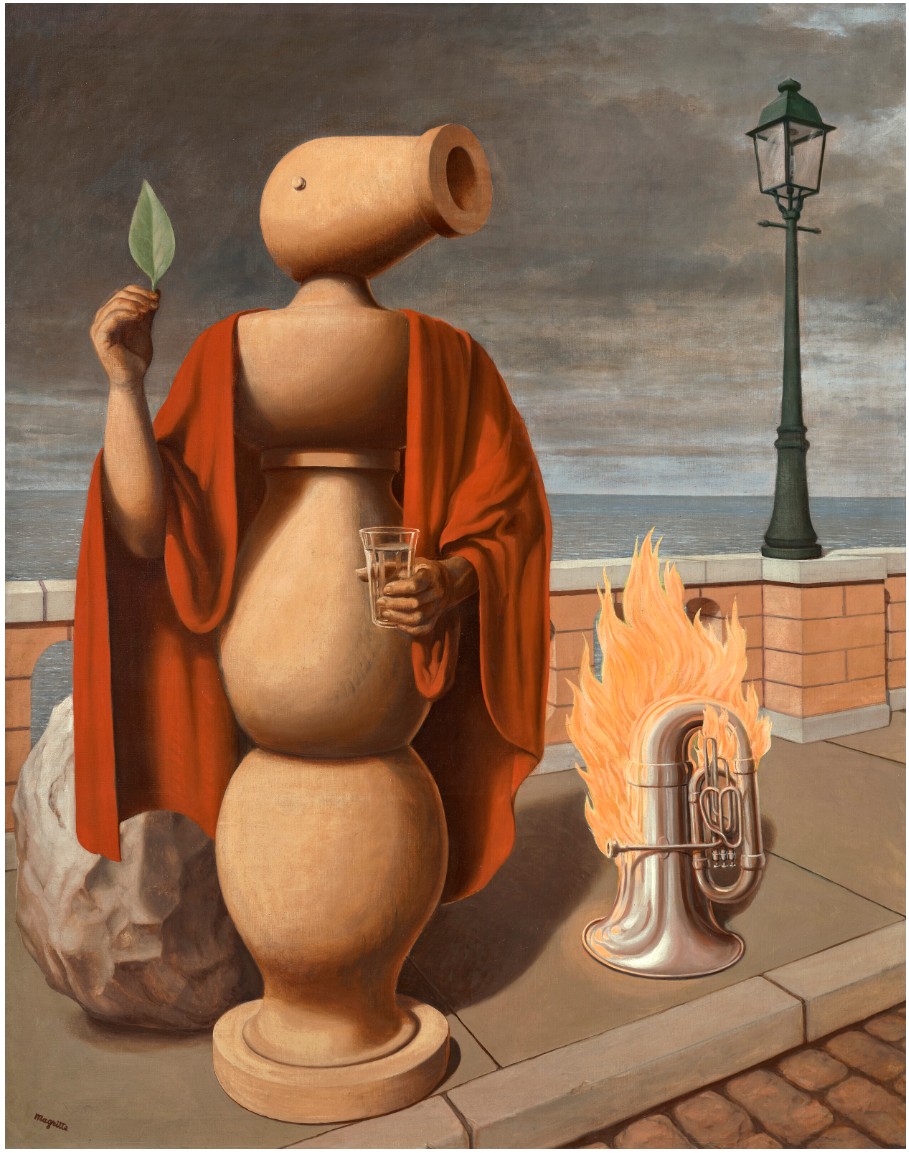
RENE MAGRITTE (1898-1967)
Les droits de l’homme, 1947-1948
Oil on canvas
144.8 x 114.6 cm (57 x 45 1/8 inches)
Signed ‘Magritte’ (lower left)
Dated and titled ‘”LES DROITS DE L’HOMME” 1947-1948’ (on the reverse)
In 1948, while musing on the purpose of the titles he assigned to his paintings, René Magritte proclaimed: “I think the best title for a picture is a poetic one. In other words, a title consistent with the more or less lively emotion we feel when we look at the picture” (“On Titles,” 1948; in K. Rooney and E. Plattner, eds., René Magritte: Selected Writings, Richmond, 2018, p. 115). Across a series of handwritten manuscripts—now preserved in the Archives of Contemporary Art in Belgium and collectively known as “On Titles”—the artist offered a collection of short statements on some of his recent work. Among these brief notes, Magritte wrote about Les droits de l’homme: “Here, man is reminded of his right to act on objects and change the world” (ibid., p. 114).
Invoking the French translation of Thomas Paine’s seminal treatise, The Rights of Man, as well as H.G. Wells’s radical 1940 manifesto on universal human rights in the face of war, the painting presents an enigmatic, uncanny scene, in which an inanimate object is brought to life, in order to deliver a speech. Completed on 16 January 1948 and included in a series of solo exhibitions that year, Les droits de l’homme is a testament to Magritte’s unique approach to Surrealism in the aftermath of the Second World War, as he sought to depict “the most ordinary reality in such a way that this immediate reality loses its tame or terrifying character and presents itself with mystery” (quoted in H. Torczyner, Magritte: Ideas and Images, New York, 1977, p. 203).
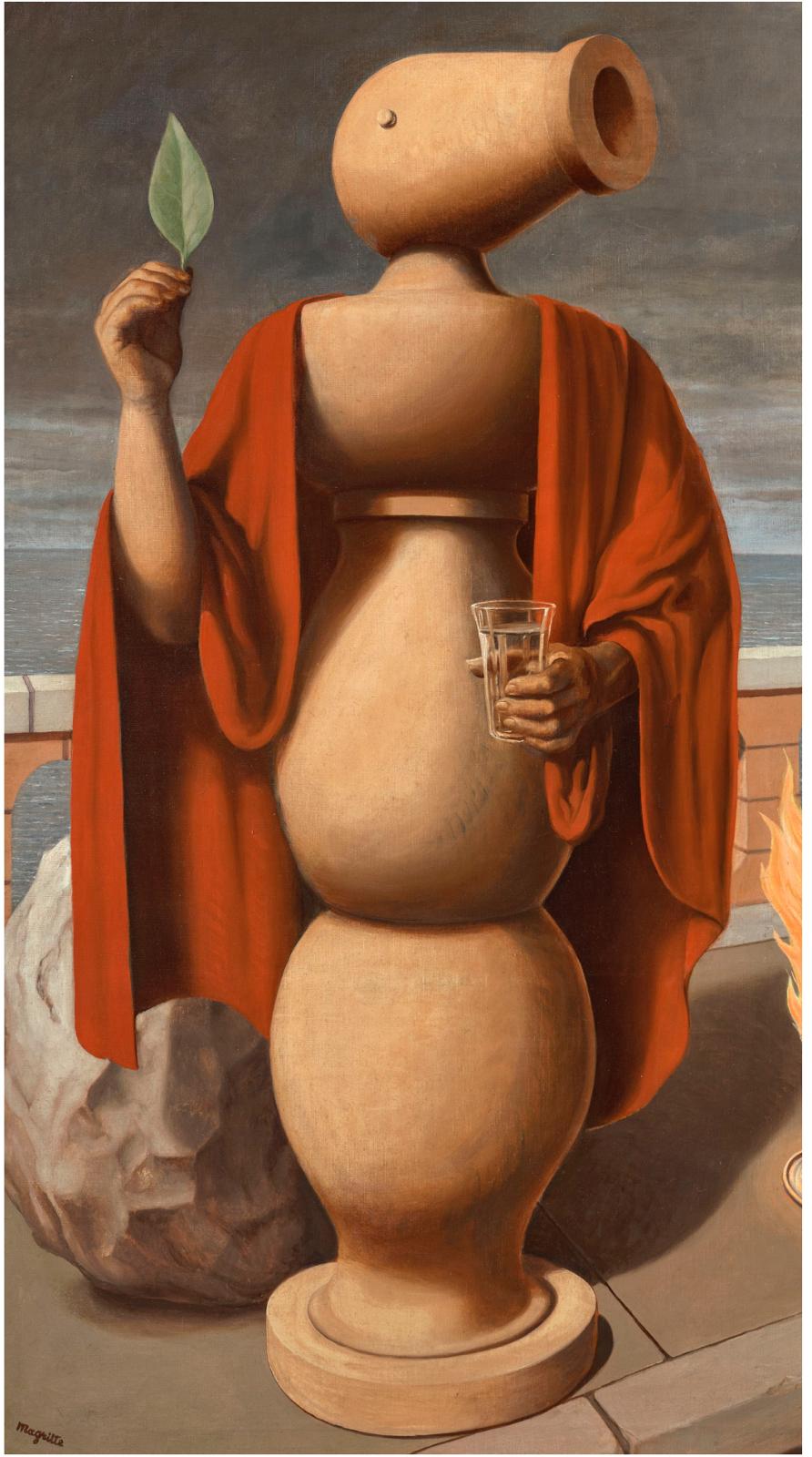
At the heart of the composition stands a variation on one of Magritte’s iconic leitmotifs, the mysterious bilboquet. This object had first made its appearance in the artist’s Surrealist paintings of the mid-1920s, taking inspiration from a popular handheld game of the same name, known in many cultures throughout the world. The bilboquet typically consists of a ball with a hole bored into it, which fits on a spike at the top of a wooden stick shaped to fit the hand, and is attached to the handle by a string. In a test of dexterity, the player must fling the ball upward, and then try to catch it on the spike as often as possible within a designated period of time. In Magritte’s interpretations of this object, the wooden baton takes on numerous different roles within his surreal compositions: in Portrait de Georgette Magritte (Sylvester, no. 76; Musée national d’art moderne, Centre Georges Pompidou, Paris), for example, the bilboquet remains true-to-scale, its familiar shape offering a stabilizing support to the empty wooden picture-frame that leans against it.
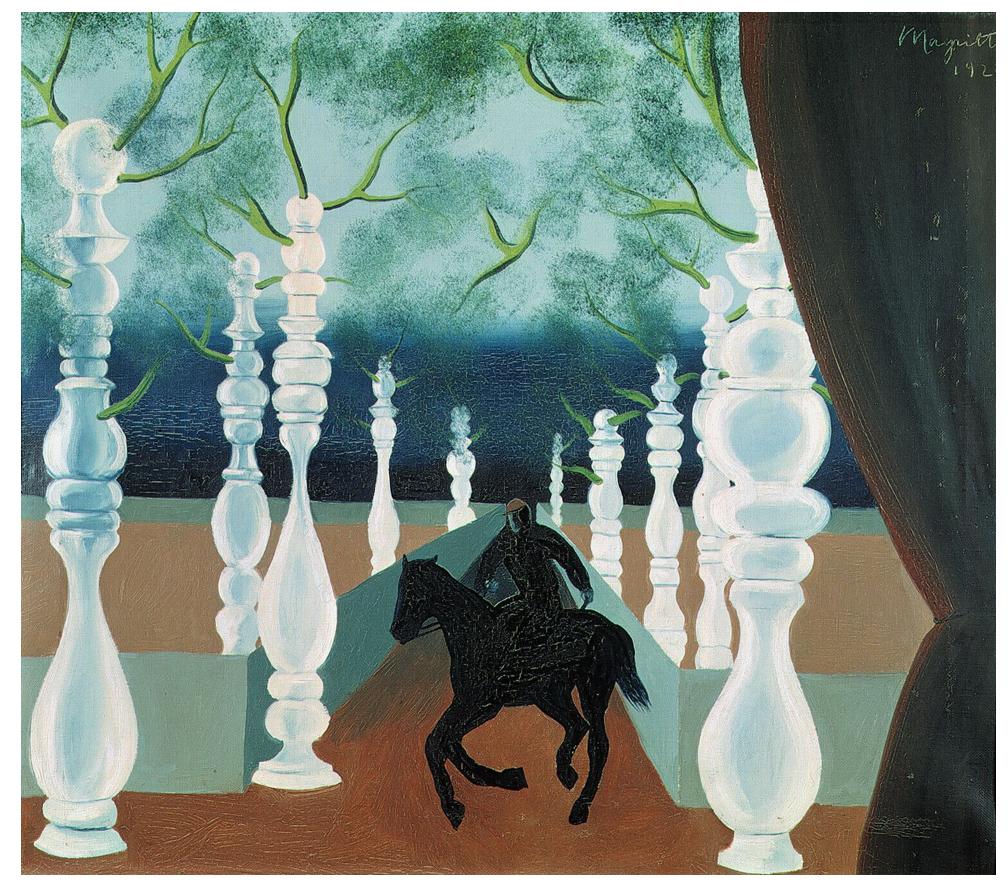
René Magritte, Le jockey perdu, 1926. Private collection. © 2025 C. Herscovici / Artists Rights Society (ARS), New York.
Photo: Bridgeman-Giraudon / Art Resource, NY.
However, in Le jockey perdu (Sylvester, no. 81; Private collection) rows and rows of bilboquets appear as towering tree-trunks, creating a strange man-made forest, while in works such as La naissance de l’idole (Sylvester, no. 89; Private collection) and Le Rencontre (Sylvester, no. 99; Kunstsammlung Nordrhein-Westfalen, Dusseldorf), Magritte anthropomorphizes the wooden object, adding an eye, a hand or an arm to the bilboquet, transforming it into an unsettling quasi-human presence, at once animate and inanimate. The artist would refer to the bilboquets simply as his “wooden figures,” and they are in many ways reminiscent of Giorgio de Chirico’s strange, inanimate mannequins—trovatori, muse, and more—that populated his Metaphysical works.
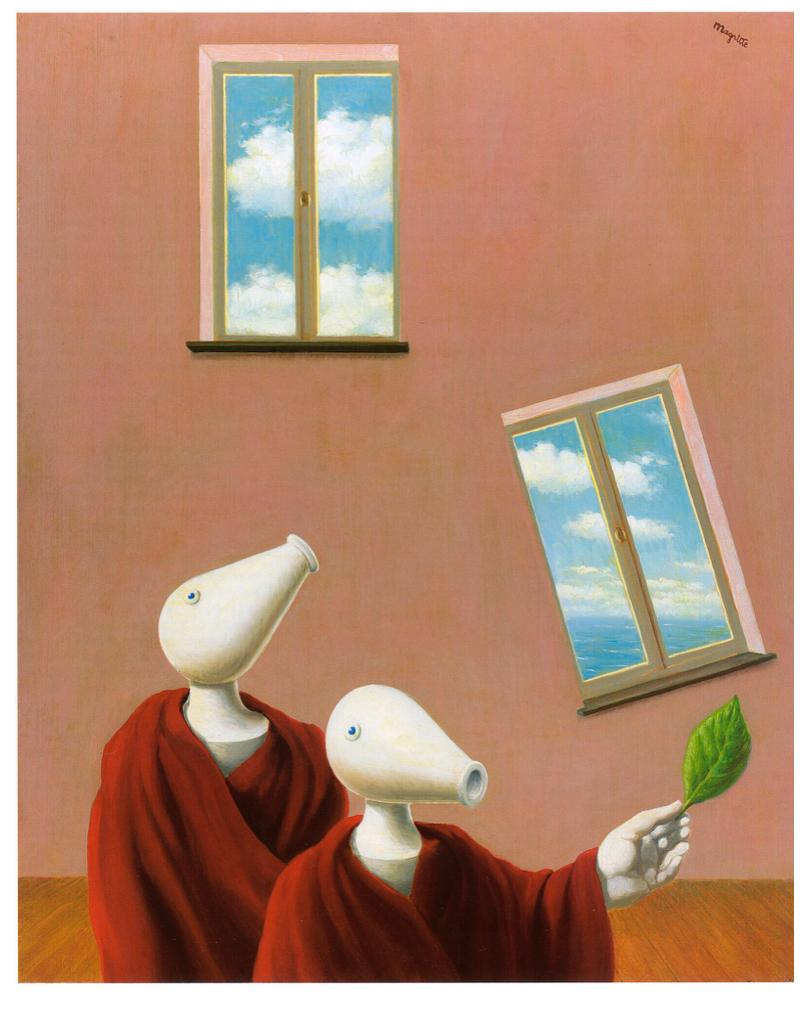
René Magritte, Les rencontres naturelles, 1945. Musées Royaux des Beaux- Arts de Belgique, Brussels.
© 2025 C. Herscovici / Artists Rights Society (ARS), New York.
By the 1940s, the bilboquet had evolved into a distinctly figurative presence—in 1945 Magritte further enhanced the effect, playing with its silhouette to create more pronounced curves, adding naturalistically rendered arms and hands that often gesture animatedly, and, perhaps most notably, elongating the spherical shape of the ball atop the handle into a bulbously spouted form that comes to represent a proudly elevated head. The squat shape of the bilboquet’s newly formed mouth and snout also recalls a nineteenth-century mortar, an artillery piece used for hurling explosive shells in steep trajectories over the walls of fortifications. The content of wartime newsreels may have suggested this allusion to Magritte—in some pictures where the artist has employed this form, the mouth of the bilboquet actually bursts forth in flames, like a cannon being fired (Sylvester, no. 626; Private collection). Described by Harry Torczyner as an “anthropoid bilboquet,” these new characters seem eager to show off their gift of speech, and they usually appear, as seen here, draped in a richly-hued red cloak, and adopting a formal and declamatory stance, bringing to mind a noble orator or statesman (ibid., p. 152).
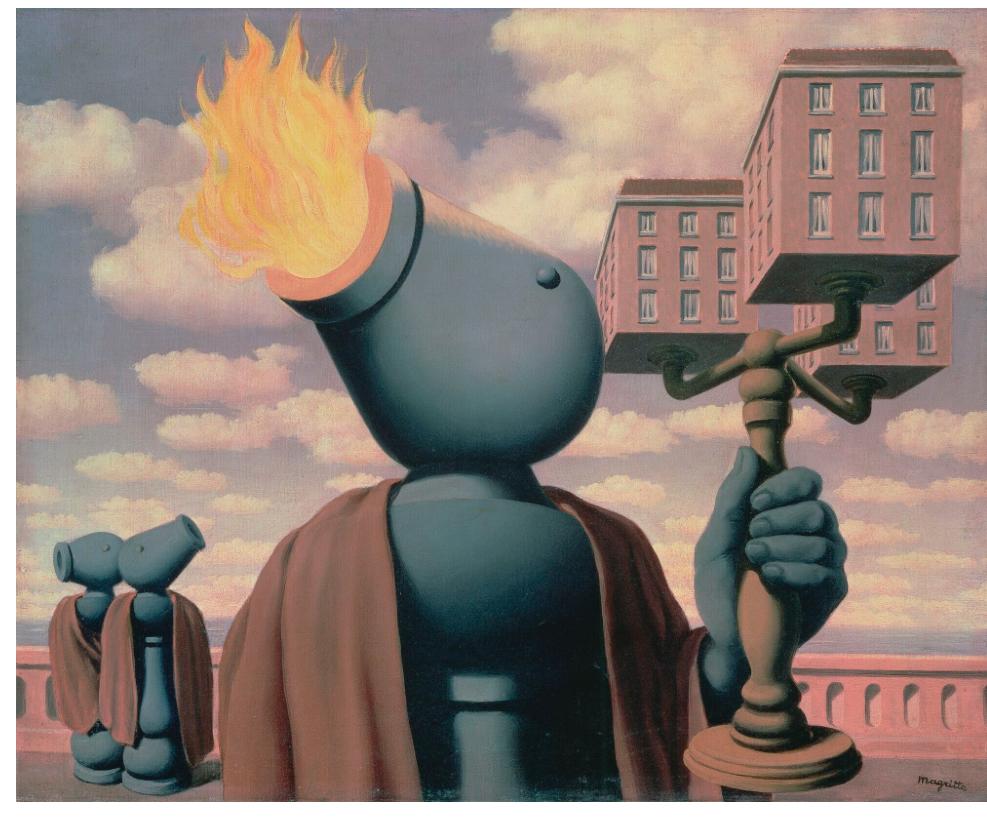
René Magritte, Le Cicérone, 1947. Private collection.
© 2025 C. Herscovici / Artists Rights Society (ARS), New York. Photo: Bridgeman Images.
In Les droits de l’homme, one such speaker stands alone on a well-lit thoroughfare, seemingly life-size and imposing, a gentle seascape and overcast sky serving as a serene backdrop. The uncanny quality of the scene is heightened by the strange pairing of objects that flank this central character—to the left and partially tucked away behind the bilboquet’s cloak is a roughly hewn boulder, while to the right, a tuba is dramatically engulfed in flames on the pavement. As the bilboquet delivers its speech, it holds a glass of water in one hand, while the other raises a small leaf by way of a prop, perhaps a visual aide to something this mysterious character is attempting to explain to an unseen audience. When combined with the title, this subtle gesture creates the impression that the bilboquet is delivering a profound message to his audience, perhaps a political statement or a call to action, a meditation on nature maybe, or an attempt to dissect the meaning of reality and man’s place within it. However, the subject of the bilboquet’s speech and its intentions ultimately remain a mystery to us, its impassioned proclamations left an unknowable enigma for the viewer to ponder.
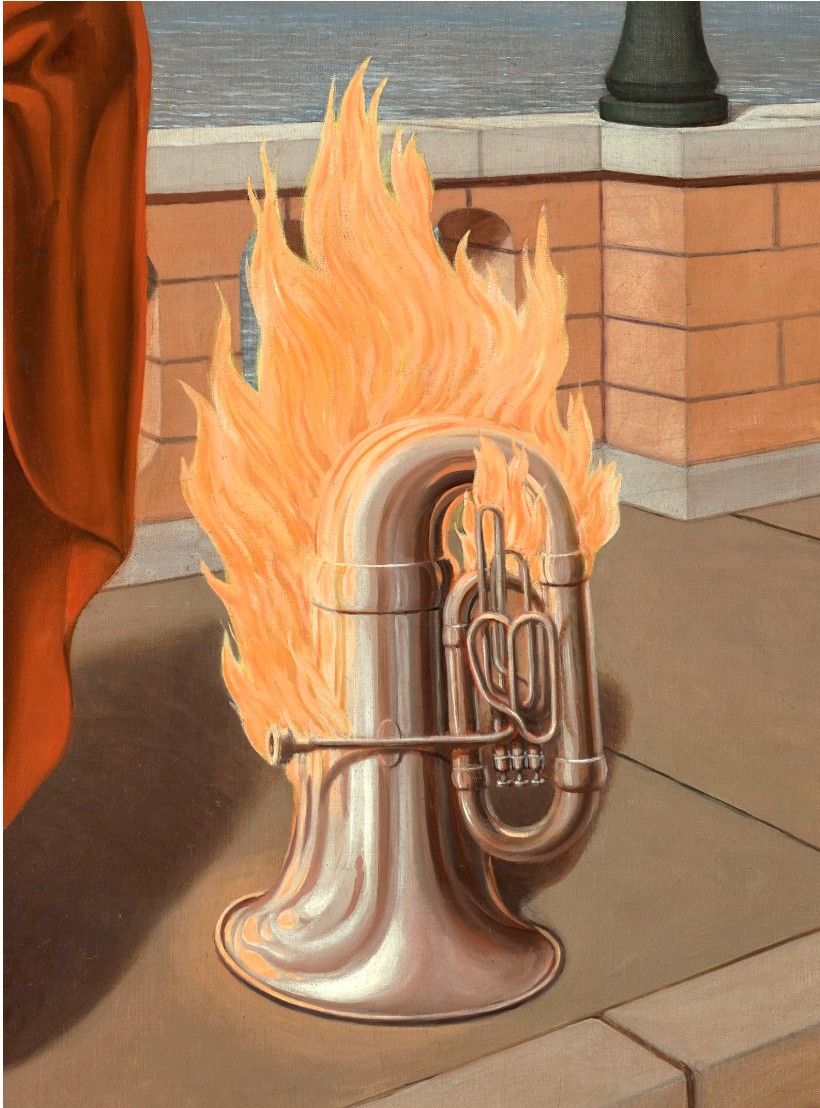
In this way, Les droits de l’homme, as with so much of Magritte’s work, defies any clear, logical explanation. Throughout his life, the artist repeatedly refuted the myriad of psychological and biographical interpretations that sought to decode the meaning of his work, maintaining time and again that it was the image alone that mattered. “I have nothing to express!” he once exclaimed, “I simply search for images, and invent and invent… only the image counts, the inexplicable and mysterious image, since all is mystery in our life” (quoted in M. Blots, “Silhouette: René Magritte” in La Métropole, 2 July 1951; in K. Rooney and E. Plattner, eds., op. cit., 2018, p. 138).
Indeed, when Les droits de l’homme was included in a touring exhibition of America in 1960-1961, Magritte lamented the strange, seemingly arbitrary interpretations that had been attached to the painting by various critics: “A recent experience has made me realize the gap between one intelligence and another,” he wrote in a letter to André Bosmans. “I have just heard an ‘explanation’ of one of my pictures, Les droits de l’homme. It appears that the fire in my picture is Prometheus’s fire, but also a symbol of war! The figure holding the leaf is a representation of peace—the leaf is an olive leaf!! … But I won’t go on, because the imagination of painting enthusiasts is inexhaustible, but very banal, these enthusiasts being entirely devoid of inspiration…” (letter to A. Bosmans, 20 September 1961; quoted in D. Sylvester, ed., op. cit., 1993, p. 396).
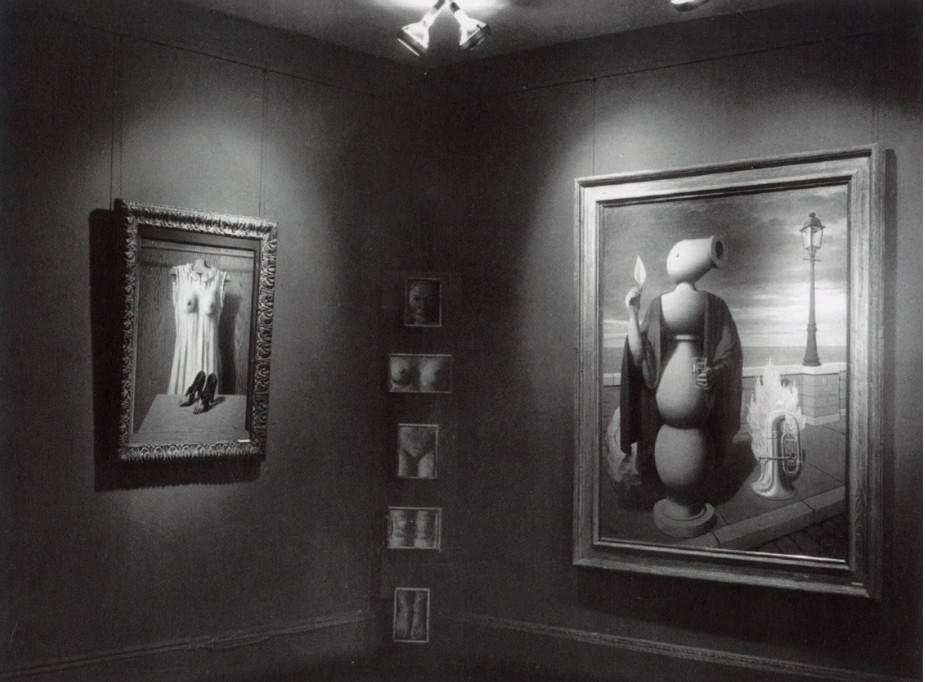
Les droits de l’homme on view at the exhibition “René Magritte,” at the Hugo Gallery, New York, May 1948.
© 2025 C. Herscovici / Artists Rights Society (ARS), New York.
Letters from the late 1940s between Magritte and his principle dealer in America, Alexander Iolas, reveal that, having failed to find a buyer when initially shown at exhibition in 1948, the artist was eager for Les droits de l’homme to be offered directly to The Museum of Modern Art in New York for a discounted sum. However, despite Iolas’s efforts and numerous overtures on the artist’s behalf—which included a generous offer for the painting to be gifted to the museum’s collections by John and Dominique de Menil—Les droits de l’homme remained with the dealer, and was instead sold to Iolas’s accountant, Irving Abbey. When it last appeared at auction at Christie’s in March 1984, the painting achieved a new record price for a painting by Magritte.
Les chasseurs au bord de la nuit, 1928
Christie’s New-York: 19 November 2024
Estimated: USD 8,000,000 – 12,000,000
USD 9,610,000
RENE MAGRITTE (1898-1967), Les chasseurs au bord de la nuit | Christie’s
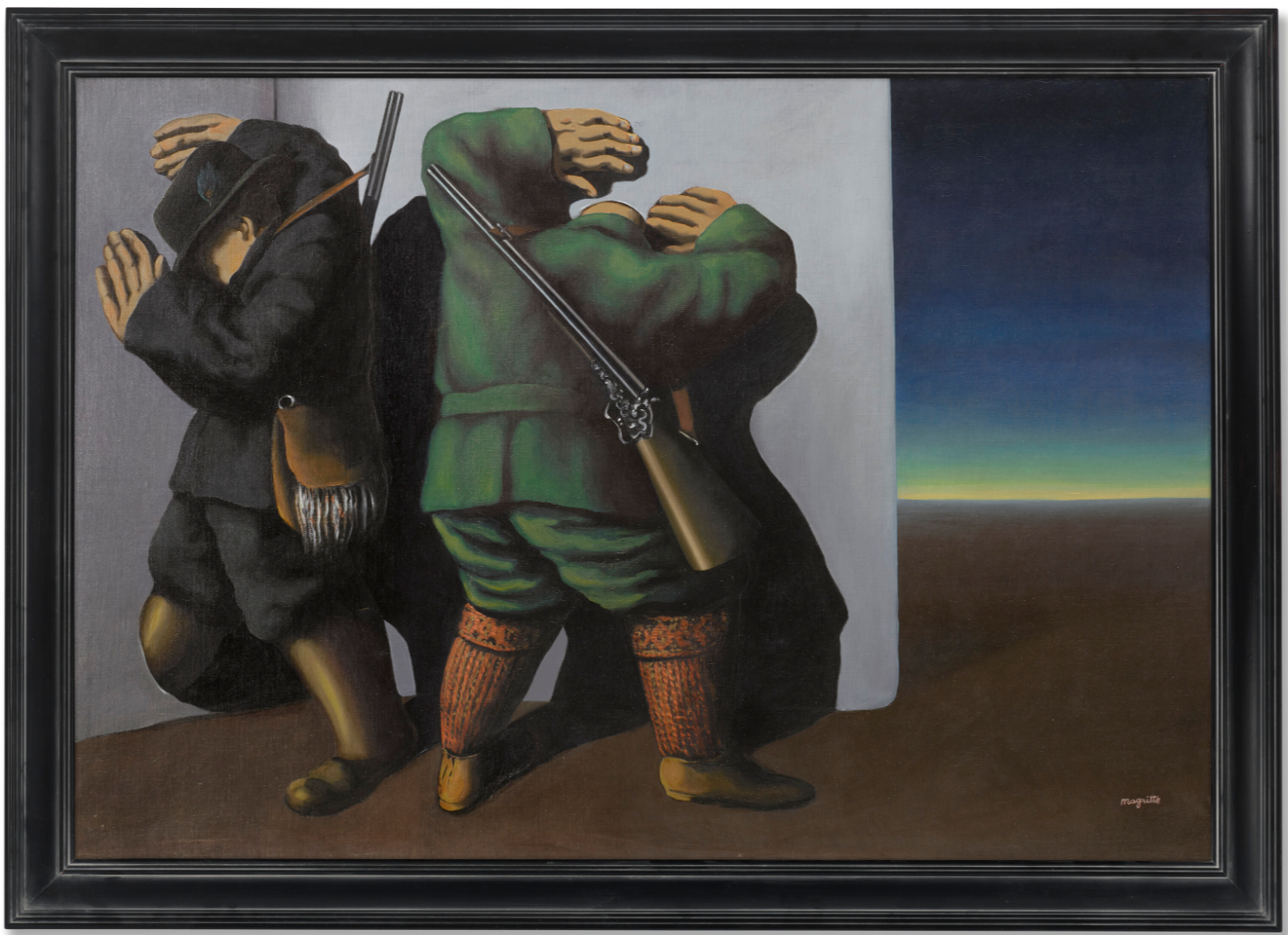
RENE MAGRITTE (1898-1967)
Les chasseurs au bord de la nuit, 1928
Oil on canvas
80.7 x 116 cm (31 7/8 x 45 5/8 inches)
Signed ‘Magritte’ (lower right)
Painted in 1928, Les chasseurs au bord de la nuit dates from the peak of René Magritte’s early involvement with the Surrealist group. The artist had moved from Brussels to Paris in the autumn of the previous year, drawn to the French capital’s lively art scene and in particular, the hive of artists and writers active within André Breton’s circle. It was here that Magritte’s visual language truly began to solidify, as he boldly set out to challenge and undercut established traditions of representation in painting and forge a distinctive new path within Surrealism. This was perhaps the most productive and innovative chapter of the artist’s entire career, as he created masterpiece after masterpiece, tapping into a rich seam of ideas inspired by the stimulating environment of Paris and his encounters with his fellow Surrealists. A powerful and evocative work from these seminal years, Les chasseurs au bord de la nuit captures the deep sense of mystery and intrigue that infused Magritte’s paintings during this period, and has featured in many of the most important monographs and exhibitions dedicated to the artist’s work over the past century.
Les chasseurs au bord de la nuit is marked by a distinctly disquieting atmosphere, as its two protagonists are trapped within a mysterious stretch of wall. Many of the paintings that Magritte created while living Paris in the late 1920s combined the poetic transformations of the everyday world with a certain dark intensity and sense of danger. For example, works such as Les jours gigantesque (Sylvester, no. 247), which appears to show a struggle between a nude woman and a clothed man, Les amants (Sylvester, no. 251) with its figures’ heads covered in winding sheets, or L’idée fixe (Sylvester, no. 269) which features a hunter stalking unseen prey, each contain clear undertones of suspense, anxiety or violence.
“The pictures painted […] from 1926 to 1936 were also the result of a systematic search for a disturbing poetic effect which, produced by the deployment of objects taken from reality, would give the real world from which they were borrowed a disturbing poetic meaning through a quite natural interchange.”
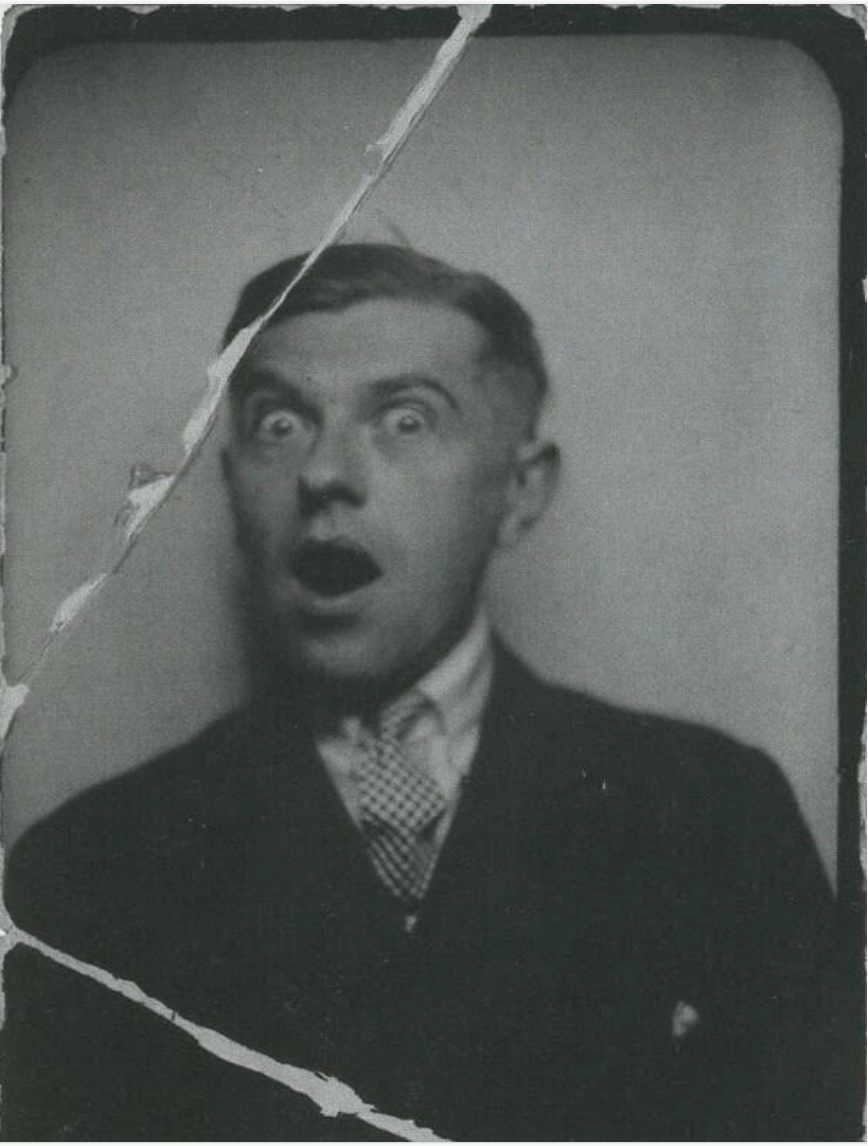
La coquetterie, photo self portrait by René Magritte. 1929. Photomaton. © 2024 C. Herscovici / Artists Rights Society (ARS), New York.
The crepuscular light in Les chasseurs au bord de la nuit appears to hint at the departing day and the oncoming night, as a pair of armed hunters find themselves suddenly preyed upon by their surroundings, caught in a strange, monumental trap. They are held fast by the wall into which their own bodies appear to have been partially absorbed: the hunter on the left has lost his foot, while the other’s head is missing, seemingly immured. This sense of tension is accentuated by the bulk of the figures, who attempt to use their sheer physicality to free themselves, pushing and shoving against the wall to no avail. Their struggle is made even more dramatic by the vast open space to the right, where the barren landscape stretches towards a distant, glowing horizon, the promise of freedom just a few steps away.
It has been suggested that Les chasseurs au bord de la nuit owes a debt to the works of Edgar Allen Poe, whose writings Magritte devoured voraciously. Here, the scene calls to mind Poe’s short story The Pit and the Pendulum, which shares the experiences of a prisoner during the Spanish Inquisition who finds himself subjected to elaborate torture techniques within a strange, nightmarish setting (see D. Sylvester, op. cit., 1992, vol. I, p. 279). As Poe’s tale reaches its denouement, the walls of the prisoner’s cell turn burning hot and slowly begin to move inwards, shrinking the space and forcing him toward the center of the room, where a deep pit awaits him. In Magritte’s composition, the wall is transformed into a strange, alien entity, consuming anyone foolish enough to venture too close. By allowing it to partially absorb the two hunters, the artist forces the viewer to question their very understanding of the wall’s materiality—what appears at first glance to be solid and unyielding, is in fact porous and expansive, its true nature unknown. In this way the very concept of the wall—such a familiar, common-place element in our lives—becomes profoundly dangerous, trapping the two men and subsuming them within its eerie, hidden depths.
For Magritte, the image of the wall may have carried a further layer of meaning within his imagination. A letter from his close friend Paul Nougé, delivered at the very beginning of Magritte’s stay in Paris, had used the analogy of a wall to issue a great rallying cry to the artist, encouraging him to challenge the status-quo of art making. “Here we are at the door of the wall, with all the others (our public),” Nougé expounded. “There are those who are anxious to know what goes on behind the wall; there are those who are prepared to settle for the wall; there are those who do not care what happens behind the wall, if anything; there are those who don’t see the wall; there are those who deny the wall; there are those who deny or refuse even the possibility of the wall. But you, mon cher Magritte, you have constructed an infernal machine, you are a good engineer, a conscientious engineer. You have left nothing undone in order to blow up the wall” (quoted in A. Danchev and S. Whitfield, Magritte: A Life, London, 2020, p. 185).
Le Banquet, circa 1955-57
Sotheby’s New-York: 15 May 2024
Estimated: USD 15,000,000 – 20,0oo,000
USD 18,144,000
Le Banquet | Modern Evening Auction | 2024 | Sotheby’s (sothebys.com)
RENE MAGRITTE (1898 – 1967)
Le Banquet, circa 1955-57
Oil on canvas
29 3/4 x 47 5/8 inches (75.5 x 121 cm)
Signed Magritte (lower left); titled and dated 1955 (on the reverse)
Executed circa 1955-57, Le Banquet is an exquisite example of René Magritte’s altogether singular ability to give shape to the space between vision and our visual experience of the world. Rendered with Magritte’s characteristically restrained realism, reduced to the most scrupulous depiction of appearances, Le Banquet stands as a masterpiece of the Surrealist image. Of the four oils Magritte completed on the present motif, none are rendered with so disarming a visual confrontation as is enacted in the present iteration. Here Magritte omits the stone baluster which in other versions frames the central image (see fig. 1). Without the intrusion of a man-made structure, the panoramic landscape, described in Magritte’s characteristically careful and matter-of-fact style, is at first glance rendered entirely unassuming. The quiet lake and dusky haze, descending through the tree cover onto the grass below, exudes an almost sublime tranquility that belies any aberration. It is precisely on account of this compositional simplicity that the discovery of the transposition at center—the displacement of the vermilion sun setting in front of, rather than behind, the largest tree—bears so great a pictorial impact.

RENÉ MAGRITTE, LE BANQUET, 1958, ART INSTITUTE OF CHICAGO
© 2024 C. HERSCOVICI, BRUSSELS / ARTISTS RIGHTS SOCIETY (ARS), NEW YORK
The Banquet | The Art Institute of Chicago (artic.edu)
Questions of vision and perception were central to the Surrealists’ theoretical and visual lexicon. André Breton’s founding notion of a “surreality,” what he conceived of as the resolution between the contradictory conditions of dream and reality, was predicated on the disentanglement of vision from rational perception. The surreal object—comprised of combinations that challenged logical reason and thus awakened subconscious associations—was meant to aid in that project. Man Ray, for example, betrays perception through his subversion of the presumed objectivity of the photograph. With his “rayographs,” produced by placing ordinary objects on photosensitized paper and exposing them to light, he enacts a literal inversion of optical processing. Objects that we perceive as occupying positive space are here rendered in the negative, and are made all the more strange through the erasure of their descriptive details.

MAX ERNST, LA FORÊT, 1927, ART INSTITUTE OF CHICAGO © 2024 ARTISTS RIGHTS SOCIETY (ARS), NEW YORK / ADAGP, PARIS
MAN RAY, UNTITLED, 1922, ART INSTITUTE OF CHICAGO © 2024 MAN RAY TRUST / ARTISTS RIGHTS SOCIETY (ARS), NEW YORK / ADAGP, PARIS
Executed using his unique process of frottage (contact rubbing) and grattage (scraping), Max Ernst’s La Forêt likewise manipulates medium in a rouse of optical illusion. The suggestion of the sun at center reveals itself to be a void, and the halo of light around it a grattage extraction from the painted ground. Ernst’s attitude toward the forest as the sublime embodiment of both enchantment and terror bears a particular resonance with Magritte’s depiction in Le Banquet. In his elaboration on the subject, Ernst deftly touches upon Magritte’s notion of “mystery” as it exists in the nexus between the visible and invisible. Magritte’s subversion of the fundamental properties of nature were an extension of his fascination with “Objective Stimulus,” a term he applied to those instances in which he replaced an object familiar to a particular context with one related to it, but out of place. The shock of dissonance where one expects there to be consonance, Magritte realized, was all the more unsettling than the reverse. The work was thus a departure of sorts from the prevailing Surrealist preoccupation with the revelatory potential held within the combination of disparate objects. With it, however, Magritte opened a trove of new pictorial and conceptual possibility. In Le Banquet, Magritte continues with this new paradigm. He begins with two objects or motifs that are seemingly congruent—the dark silhouette of a tree, and the setting sun—and shows their incongruity within our perception by inverting our normative association of the pairing.

RENÉ MAGRITTE, LE SEIZE SEPTEMBRE, CIRCA 1956-58, THE MINNEAPOLIS INSTITUTE OF ART © 2024 C. HERSCOVICI, BRUSSELS / ARTISTS RIGHTS SOCIETY (ARS), NEW YORK
At the heart of his ideation around Le Banquet is the fraught but interrelated tension between the visible and the invisible.
“There is the visible we see: the apple in front of the face in ‘La grande guerre’ (The Great War), and the hidden visible: the face hidden by the visible apple. In Le banquet (The Banquet) the sun hidden by the row of trees is invisible, etc. Mystery is invisible.
It (like nothingness) is important not because it is invisible, but because it is absolutely necessary”
With Le Banquet, Magritte makes succinct what he here describes in rather obtuse terms: that which we cannot see is of vital importance to understanding that which we can. In Le Banquet, as in its nocturnal counterpart, Le Seize septembre, Magritte enacts an inversion—the object that would have been hidden is brought forward and as a result, obscures the very part of the object that would have originally hidden it. The once serene landscape in Le Banquet is thus wrought with a tantalizing visual conundrum. In making visible what we expect to be invisible, Magritte upsets our preconceived understanding of the appearance of a landscape and makes explicit the way in which our familiarity with an image fails us when that image turns out to be altered. It is precisely the shock of this unraveling that awakens the viewer to the fallibility of their own perception.
Les eaux profondes, 1941
Christie’s New-York: 16 May 2024
Estimated: USD 4,000,000 – 7,000,000
USD 4,648,000
RENE MAGRITTE (1898-1967), Les eaux profondes | Christie’s
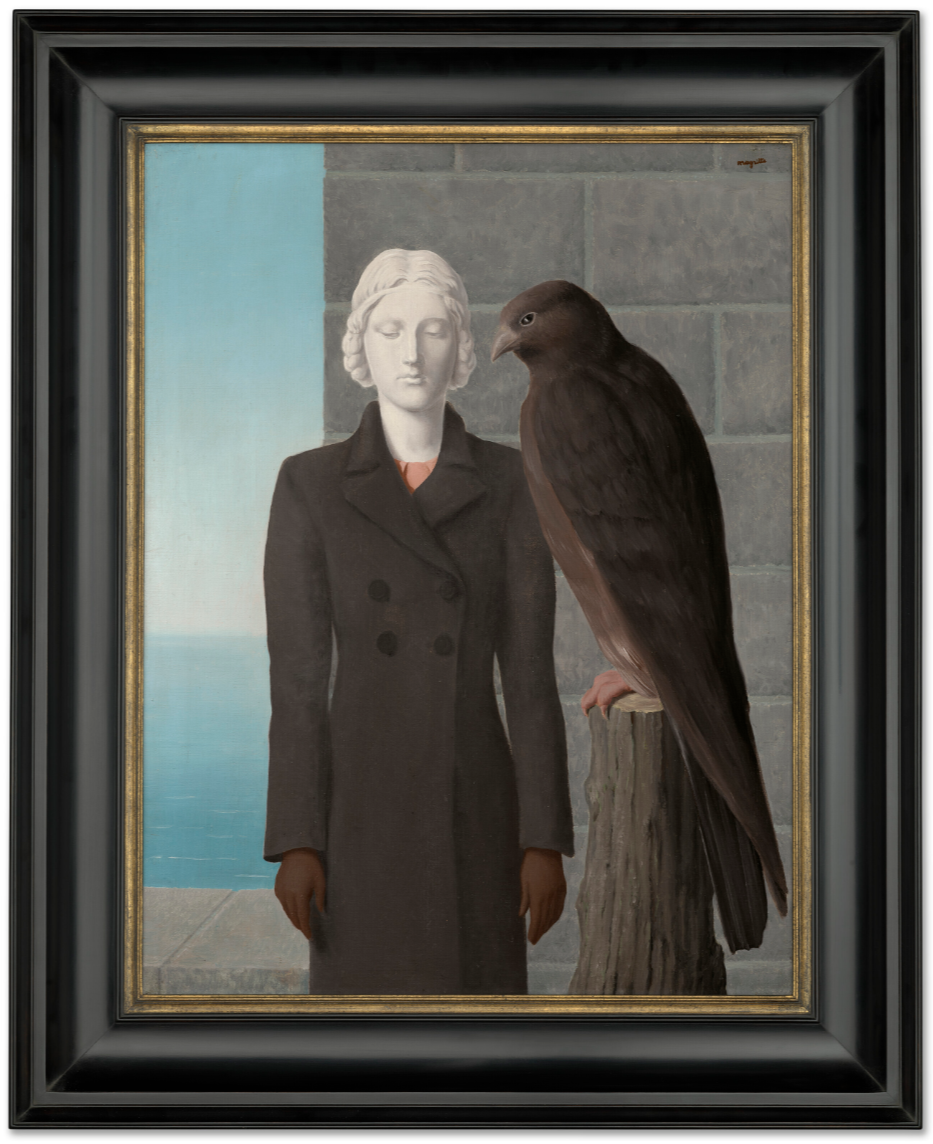
RENE MAGRITTE (1898-1967)
Les eaux profondes, 1941
Oil on canvas
65.3 x 50.3 cm (25 3/4 x 19 7/8 inches)
Signed ‘Magritte’ (upper right)
Signed again, dated, titled and inscribed ‘”LES EAUX PROFONDES” Magritte 1942’ (on the reverse)
Signed and titled again ‘Magritte “LES EAUX PROFONDES”‘ (on the stretcher)
Les eaux profondes is an iconic, enigmatic work within René Magritte’s oeuvre, steeped in the intense sense of mystery that defined his work during one of the most intriguing periods of his career. Created during the dark days of the German Occupation of Belgium in the Second World War, the painting plunges the viewer into the artist’s idiosyncratic world of poetic Surrealism, its confluence of familiar yet strange objects conjuring an uncanny, disquieting atmosphere. While Magritte had previously used the title Les eaux profondes (“Deep Waters”) for a photographic portrait of his wife from 1934, here the phrase adds to the inscrutable atmosphere of the composition—the scene is at once eerily still and silent, yet brimming with a simmering tension beneath the surface. David Sylvester dated this work 1941, due to its inclusion in an exhibition held in November-December of this year at the Galerie Dietrich, Brussels. Magritte later inscribed 1942 on the reverse of the canvas.
Though widely exhibited throughout its history, Les eaux profondes has never before appeared at auction, having remained in the collection of Shirley Ann and Frank Wozencraft for the last half a century. The Wozencrafts were close friends of the legendary Houston collectors and patrons of art, John and Dominique de Menil. They acquired the present work from the Bodley Gallery in the mid-1960s, with the advice and guidance of the de Menils.
Like many of his Surrealist colleagues, the outbreak of the Second World War and the subsequent occupation of Belgium ushered in a period of great upheaval for Magritte. Less than a week after the German invasion, the artist left Brussels for France without his wife Georgette, who had been engaged in an affair with the Surrealist poet Paul Colinet and refused to accompany her husband. Magritte was particularly concerned that some of his previous political statements would provide the advancing army with grounds for persecution, and so he was among a small group of avant-garde writers and artists, including Paul Scutenaire and Raoul Ubac, who fled south together on 15 May 1940.
Traveling by taxi, tram and truck, they reached Lille, before proceeding onwards by train to Paris. From there, Magritte carried on to the celebrated walled city of Carcassonne, where he initially stayed with the poet Joë Bousquet. Magritte appears to have enjoyed the constant parade of personalities who passed through Carcassonne during these months, but soon decided to return to his native Belgium. After an arduous journey across the border, through a landscape now torn asunder by war, the artist arrived home and reconciled with Georgette.
In Brussels, Magritte appears to have largely escaped the troubles with the authorities that he had feared. Following a brief period of little artistic output, as he navigated the upheavals and hardships of the early months of the Occupation, the artist resumed painting and continued to explore new aspects of the mysterious dimension from which his images emerged. Though he never painted the war literally, throughout the late 1930s and early 1940s a distinct sense of foreboding and disquiet infiltrated his work. In Les eaux profondes, this feeling overwhelms the viewer as they contemplate the strange scene. Sporting a stylish black coat, pink dress and gloves, a mannequin-like female figure appears to hold herself perfectly still, her eyes cast downwards as she avoids the gaze of the enormous bird of prey perched on the tree trunk beside her. While there is a distinctly corporeal presence to the female figure, only her head remains visible, her features captured in what appears to be smooth, white stone or porcelain.
This sculptural element was directly modelled from a plaster cast of an unknown, Neo-Classical style bust, several of which the artist purchased from his sister-in-law’s store—the Maison Berger—for his personal collection of objects. Magritte, as David Sylvester and Sarah Whitfield have pointed out, seems to have mistakenly believed his casts to be that of L’inconnue de la Seine, a hauntingly beautiful and notorious death mask of an unknown young woman of around sixteen years old who was believed to have drowned in the Seine in the 1880s (op. cit., 1993, p. 299). This event must have resonated with the artist given his mother’s suicide by drowning in 1912. With its soft, youthful features, the plaster mask became a morbid object of fascination for a generation of Bohemians in Paris in the 1920s and 1930s, as well as the inspiration for numerous literary works. For Magritte the sculpture’s intrigue lay in the unnatural stillness of the young woman’s features, at once lifelike and serene, yet cold and lifeless.
Les eaux profondes is the first painting in which this enigmatic plaster bust appeared in the artist’s oeuvre, suggesting it had only recently arrived in his studio. At some point in 1942, Magritte took the cast and deliberately disturbed its pure white surface, adding a large, dramatic bloodstain to one side of the face. Originating from an invisible wound at the temple, the garish mark partially covered one eye and the majority of its cheek, dripping downwards in thick rivulets to the jawline. Known only from a photograph taken by Marcel Mariën in 1943, which he titled Au temps de la mémoire, this original altered plaster cast appears to have been lost or destroyed shortly after its creation, but most likely provided the direct inspiration for the artist’s renowned sequence of paintings featuring a bleeding sculptural bust, entitled La Mémoire. The motif would become an important recurring subject in Magritte’s art over the ensuing years, appearing in various configurations and contexts, the shape and size of the bloodstain altering from one work to the next, while the rest of the face remained perfectly unblemished.
While the idea for the present composition may have been sparked by his initial encounter with this plaster bust, the placement and framing of the mannequin-like figure in Les eaux profondes demonstrates the lasting impact of the Italian painter Giorgio de Chirico’s pittura metafisica on Magritte’s unique brand of Surrealism. Indeed, Sylvester referred to Magritte’s discovery of De Chirico’s work as “one of the famous epiphanies in the hagiography of modern painting” (Magritte, Brussels, 2009, p. 71). It was De Chirico’s 1914 picture Le chant d’amour, with its strange juxtaposition of a marble bust, a ball and a surgeon’s glove set in an urban landscape, that had led Magritte to a seismic revelation when he first encountered the painting in the summer of 1923. Describing the impact of De Chirico’s strange, uncanny worlds, he wrote: “This triumphant poetry replaced the stereotyped effects of traditional painting. It represented a complete break with the mental habits peculiar to artists who are prisoners of talent, virtuosity and all the little aesthetic specialties. It was a new vision through which the spectator might recognize his own isolation and hear the silence of the world” (quoted in ibid., p. 71).
Though it would take several years for the artist to process this experience, it fundamentally re-orientated Magritte’s painterly style, instilling his work with a feverish new energy that led him to abandon the cubo-futurist vocabulary which had dominated his painting up to this point, and instead develop the disjointed and surreal visual world that would become his artistic trademark. Over the course of the following decade Magritte continued to refine his ideas, pushing the boundaries of his art in daring new directions. Nevertheless, De Chirico’s art remained an important touchstone—in Les eaux profondes, the anonymity of the female figure, her ambiguous hybridity, seemingly at once inanimate and yet infused by an inherently humanoid energy, suggests Magritte’s familiarity with De Chirico’s larger body of work, specifically his androgynous mannequin figures of the 1920s.
In a letter to Claude Spaak written during the opening days of 1941, shortly before he began work on Les eaux profondes, Magritte explained that his most recent compositions sought to reach a new level of clarity: “It is in short the ever more rigorous search for what, in my view, is the essential element in art: purity and precision in the image of mystery which becomes decisive through being shorn of everything incidental or accidental” (quoted in S. Whitfield, Magritte, exh. cat., The Hayward Gallery, London, 1992, no. 84). In this way, Magritte believed he could enhance the impact and disruptive power of his imagery, forcing us to question the order and stability of perceived reality. To this end, Les eaux profondes uses a deliberately pared-back iconography, reducing the scene to the unusual pairing of its central protagonists—the mannequin and the bird—who are presented against a plain masonry wall, a calm seascape visible through a window behind them. However, the scene is charged with a tense, unsettling atmosphere, the extreme proximity of these seemingly incongruous characters generating a somewhat perturbing sense of suspense, as we contemplate what may happen next.
The enormous bird appears decidedly imposing as it considers the mannequin closely, staring unflinchingly at her profile, while she appears to studiously avoid its eye, looking away from the beast. Though seemingly docile, its sharp beak and sizable talons offer a reminder of its potential for violence if provoked or startled, should the female mannequin transform into a flesh-and-blood woman, akin to the mythical Galatea. In turn, the woman’s smooth, white face appears exceedingly delicate against the powerful body of the bird, its surface easily damaged by a well-aimed blow or scratch. As such, the peace between the pair appears precarious, the quiet stillness of the scene containing the potential to explode at any moment. Though Magritte vehemently resisted the interpretation or analysis of his work, it is tempting to speculate that Les eaux profondes may allude to the context in which the painting emerged. Living in a city under occupation—where one wrong move could bring danger, violence and persecution to your door—the artist continued to work quietly, boldly unpicking and challenging our understanding of the world around us in ever more nuanced ways.
La Mémoire, 1945
Christie’s New-York: 19 November 2024
Estimated: USD 3,000,000 – 5,000,000
USD 3,680,000
RENE MAGRITTE (1898-1967), La Mémoire | Christie’s
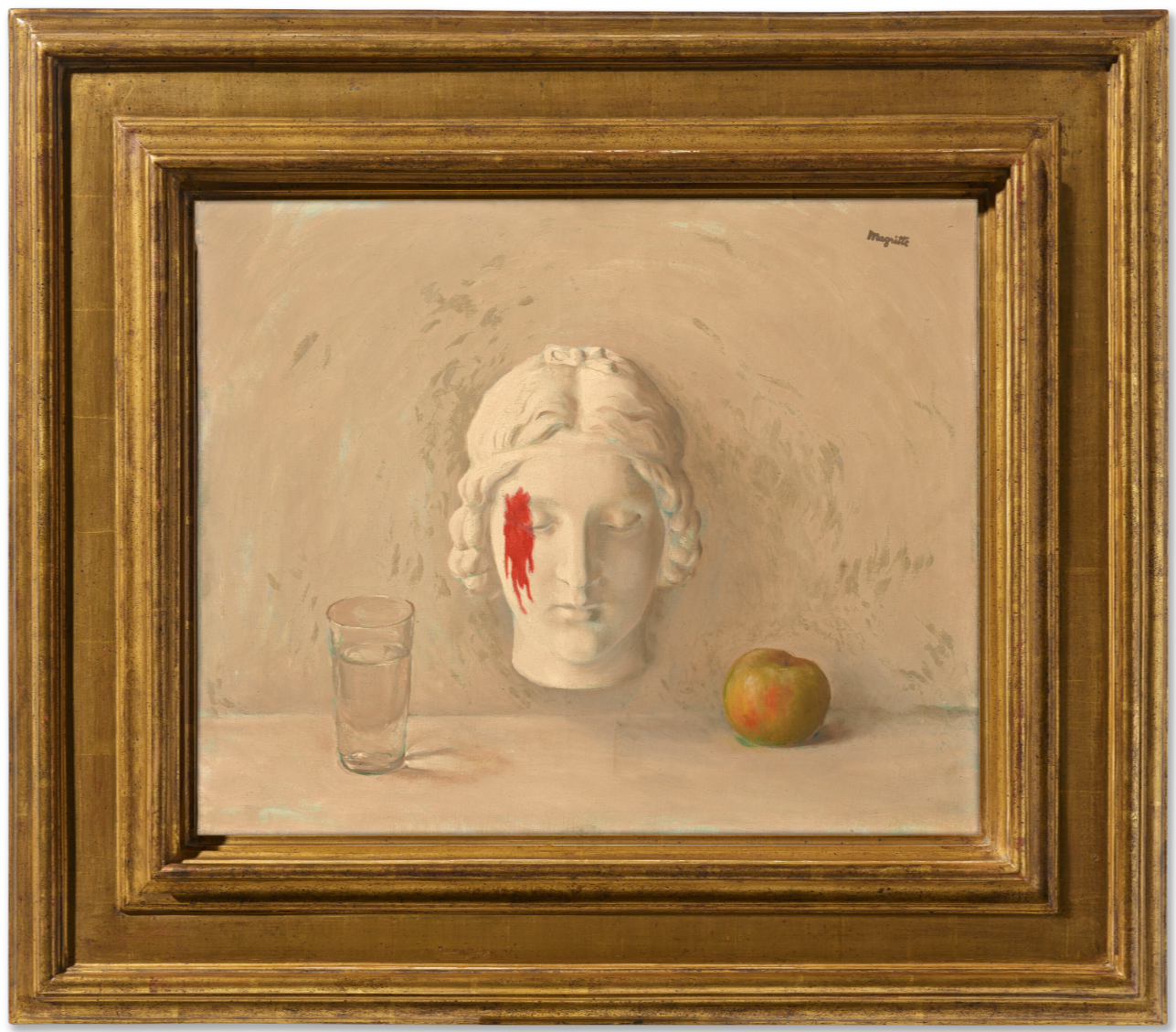
RENE MAGRITTE (1898-1967)
La Mémoire, 1945
Oil on canvas
45.1 x 54.3 cm (17 1/2 x 21 1/2 inches)
Signed ‘Magritte’ (upper right)
Dated, titled and numbered ‘“LA MÉMOIRE” (II) 1945’ (on the reverse)
In a letter to Claude Spaak written during the opening days of 1941, René Magritte outlined the principle idea that had been driving his most recent work: “it is in short the ever more rigorous search for what, in my view, is the essential element in art: purity and precision in the image of mystery which becomes decisive through being shorn of everything incidental or accidental” (quoted in S. Whitfield, Magritte, exh. cat., The Hayward Gallery, London, 1992, no. 84). Created in 1945, shortly after the liberation of Brussels at the end of the Second World War, La Mémoire investigates this concept, exploring a theme which the artist found himself drawn back to on several occasions during the turbulent 1940s—the surprising appearance of a bleeding wound on the smooth, serene face of a plaster sculpture. Blurring the boundaries between inanimate object and living being, this simple intervention transformed the bust into a disquieting motif, infusing even the most banal, innocuous scene with a startling note of violence and the unexpected.
This life-like bust, with its elegant features and coiffed hairstyle, first appeared in Magritte’s painterly oeuvre in the 1941 composition Les eaux profondes (Sylvester, no. 491; Private collection). Sporting a stylish black coat and gloves, while an enormous bird of prey silently stares at its profile, the figure appeared to be a mysterious, ambiguous mix of statue and flesh. The sculptural element was directly modeled from a plaster cast of an unknown, Neo-Classical bust, several of which the artist purchased from the Maison Berger for his personal collection of objects. At some point in 1942, Magritte took one of these plasters and deliberately disturbed its pure white surface, adding a large, dramatic bloodstain to one side of the face. Originating from an invisible wound at the temple, the garish mark partially covered one eye and the majority of its cheek, dripping downwards in thick rivulets to the jawline. Known only from a photograph taken by Marcel Mariën in 1943, which he titled Au temps de la mémoire, this original altered plaster cast appears to have been lost or destroyed shortly after its creation, but may have provided the direct inspiration for the artist’s first painted versions of the bleeding bust, such as La Mémoire (Sylvester, no. 505; Private collection). The motif would become an important recurring subject in Magritte’s art over the ensuing years, appearing in various configurations and contexts, the shape and size of the bloodstain altering from one work to the next, while the rest of the face remained perfectly unblemished.
In an interview Magritte gave in 1962, he spoke at length about the relationship between the subjects and the titles of his works, making specific reference to the La Mémoire paintings: “The title is related to the painted figures in the same way that the figures are related to each other. The figures are brought together in an order that invokes mystery. The title is joined to the painted image according to the same order. For instance, the picture La Mémoire shows a plaster face with a bloodstain on it. When I gave the picture the title, I felt they went well together… when I painted the picture La Mémoire I wasn’t thinking about what I’m going to say now. I only thought about harmonizing the image and the title that names the image. Consequently, the picture is not the illustration of the following ideas. When we say the word ‘memory,’ we see that it corresponds to the image of a human head. If memory can take up space, it can only be inside the head. Then the bloodstain may suggest to us that the person whose face we can see is the victim of a fatal accident. Lastly, it’s a question of an event in the past that remains present in our minds thanks to the memory” (J. Walravens, “Ontmoeting met René Magritte,” in De Vlaamse Gids, Antwerp, November 1962; in K. Rooney and E. Platter, eds., René Magritte: Selected Writings, Richmond, 2016, p. 201).
As so often in Magritte’s work, the most potent source of inspiration for the La Mémoire paintings lay in the work of Giorgio de Chirico and in particular, the Italian artist’s famous 1914 picture Le chant d’amour. It was this painting, with its strange juxtaposition of a marble bust, a ball and a surgeon’s glove set in an urban landscape, that had sparked an artistic epiphany for Magritte when he first encountered it in the summer of 1923. Describing the impact of De Chirico’s strange, uncanny worlds, he wrote: “This triumphant poetry replaced the stereotyped effects of traditional painting. It represented a complete break with the mental habits peculiar to artists who are prisoners of talent, virtuosity and all the little aesthetic specialties. It was a new vision through which the spectator might recognize his own isolation and hear the silence of the world” (quoted in D. Sylvester, Magritte, Brussels, 2009, p. 71). Though it would take a full two years for the artist to process this revelatory experience, it fundamentally re-orientated Magritte’s painterly style, instilling his work with a feverish new energy that lead him to abandon the cubo-futurist vocabulary which had dominated his painting up to this point, and instead develop the disjointed and surreal visual world that would become his artistic trademark.
In La Mémoire, Magritte’s enduring fascination with De Chirico’s mysterious composition is clearly visible, memories of this revelatory work continuing to shape and inspire his mature Surrealist vision. Here, the artist explores a deceptively simple configuration of objects, positioning the injured sculpture alongside a glass of water and a single apple in a plain interior, the walls and table captured in subtle shades of cream, beige and gray. Rather than appearing as a simple still-life scene, however, Magritte imbues the composition with a heightened sense of the uncanny by allowing the sculpted head to appear weightless—this is the only iteration of the subject in which the bust is suspended in midair, floating above the table-top. As such, the painting appears to echo Le chant d’amour, in which the classical bust is placed half-way up a partition wall, anchored by an unknown force. In La Mémoire, the lifelike appearance of the sculpture combined with its distinct three-dimensionality generates a strange, ghostly atmosphere, as if the disembodied head is an apparition that has suddenly infiltrated this mundane, everyday moment.
In December 1945, La Mémoire was reproduced on the front page of the Brussels communist weekly Clarté, with the caption “one of the superb pictures you can win in our great house tombola” (quoted in D. Sylvester, op. cit., 1993, vol. II, p. 353). Magritte had formally joined the Belgian Communist Party in September of that year, embracing the revived spirit of political activity and freedom sweeping through Brussels following the end of the Second World War. As the artist explained: “Nougé and I thought we would be able, from within, to guide the artistic and cultural tendencies of the [Communist] Party in a direction more in keeping with our deep aspirations. We therefore attended the meetings of a section specializing in problems relating to the Fine Arts and Literature” (quoted in ibid., p. 113). Magritte donated La Mémoire to the tombola, or raffle, which had been organized to mark the exhibition Oeuvres offertes par l’Amicale des Arts plastiques, at the Galerie L’Ecrin d’art.
It is not known who the lucky winner in the tombola was—La Mémoire remained hidden in a private collection for more than twenty years following the raffle, until it resurfaced on the art market in 1968. However, Magritte’s affiliation with the Communist Party came to a swift end. “I was very quickly disillusioned…” he recalled. “We were talking to deaf ears. I was asked to submit one or two proposals for posters. They were all rejected. Conformism was as blatant in this milieu as in the most narrow-minded sections of the bourgeoisie. After a few months, I stopped attending and, from then on, I had no further relationship with the Party. There was no exclusion or break, but, on my side, total disaffection and permanent estrangement” (quoted in ibid., p. 116).
L’île au trésor, 1945
Christie’s New-York: 9 November 2023
Estimated: USD 14,000,000 – 18,000,000
USD 13,347,500
RENE MAGRITTE (1898-1967), L’île au trésor | Christie’s
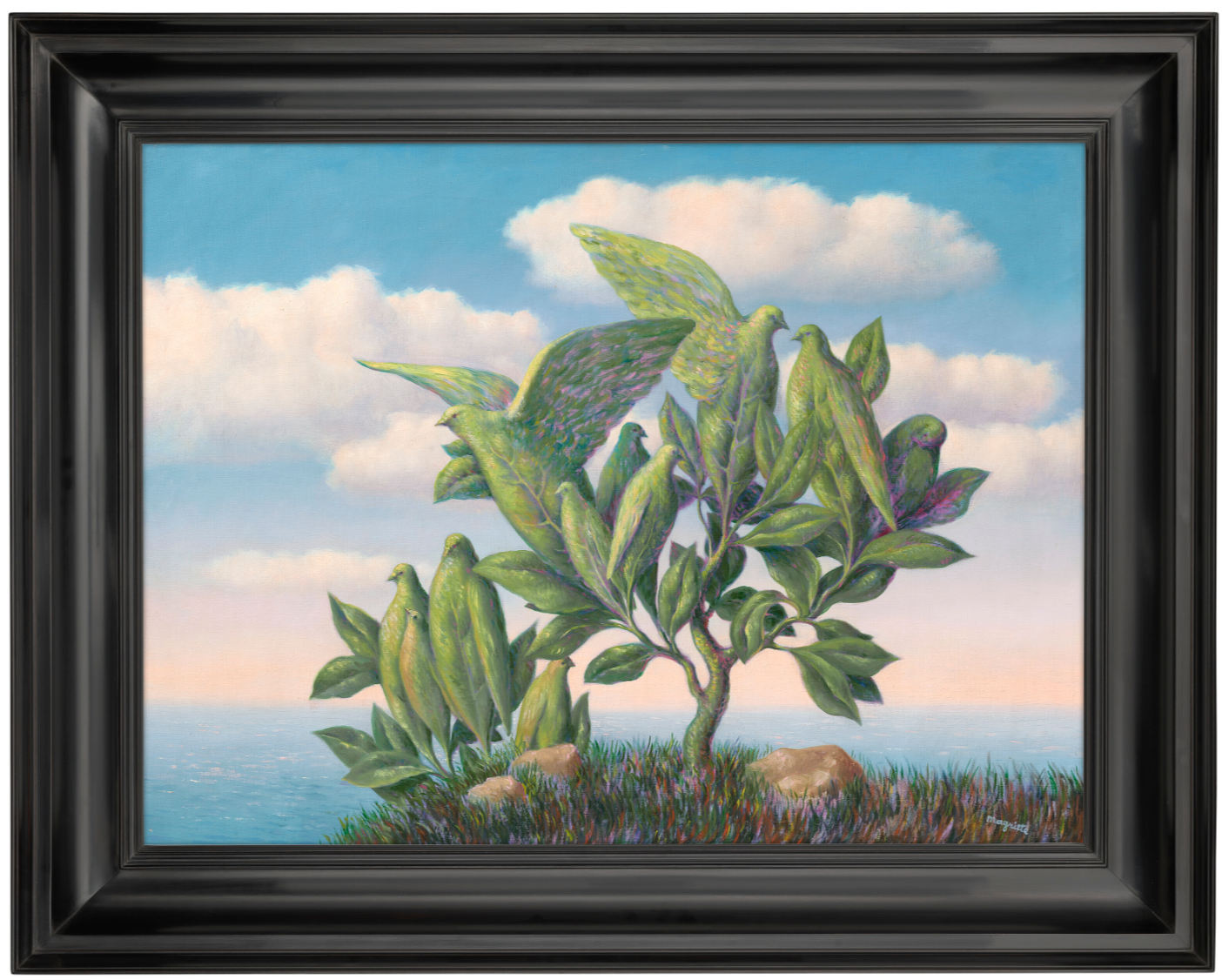
RENE MAGRITTE (1898-1967)
L’île au trésor, 1945
Oil on canvas
60.3 x 80.4 cm (23 3/4 x 31 5/8 inches)
Signed ‘Magritte’ (lower right)
Filled with a sumptuous sense of color and light, L’île au trésor focuses on one of René Magritte’s most striking leitmotifs—the fantastical, metamorphic “leaf-bird,” caught between two states of being as it transforms. With the combination of the bird and plant-life, the artist challenges our understanding of the sense of order within the natural world, bringing together two seemingly incongruous and yet intensely familiar things to create an unexpected hybrid creature. Magritte explored this subject in a number of oil and gouache paintings at the beginning of the 1940s, perhaps inspired by the view of an aviary filled with birds that was visible from the window of his home at 135 Rue Esseghem in Brussels. Painted in 1945, the present work has remained in the same private collection for the last forty years.
The concept of metamorphosis had long fascinated Magritte, first making its way into his unique approach to Surrealism in the late 1920s. Rather than simply marrying two different elements together, however, he found it particularly stimulating to render his subjects in an in-between state. “I have found a new potential inherent in things,” the artist wrote in 1927, “their ability to become gradually something else, an object merging into an object other than itself… This seems to me to be something quite different from a composite object, since there is no break between the two substances, and no limit” (letter to P. Nougé; quoted in D. Sylvester, op. cit., 1993, vol. I, pp. 245-246). It is this type of gradual transformation that gives the “leaf-bird” its dramatic sense of magic. While his earliest meditations on metamorphosis had focused on lithe, nude women in the midst of turning into wood or the sky, with the “leaf-bird” paintings Magritte presents a subtler approach to the theme, invoking the many processes within the natural world in which one thing evolves into another, such as the transition of a caterpillar into a butterfly.
In L’île au trésor Magritte plays on the viewer’s understanding of the two separate objects, combining the wondrous flight of birds with the grounded, rootedness of vegetation. The bushel of “leaf-birds” springs to life from its position on the edge of a cliff, with almost a dozen birds sprouting from its branches, their forms filled with energy and movement. Capturing the scene at the exact moment of transformation, the artist handles the transition from leaf to bird with extreme delicacy, allowing the green, waxy surface of the plant to gradually shift into the soft, plush plumage of the doves, emphasizing the shift in texture through light, flickering brushstrokes. In some cases, the birds seem to be almost completely transformed, the veins of the leaves disappearing among their feathers, while others retain the prominent network of lines across their bodies. The vibrantly hued plant overlooks a serene stretch of sea and, apart from the flickering, colorful brushstrokes of the grass, no other plants are visible. As such, it remains unclear whether this is a one-off phenomenon, a single bush magically transformed, or if there is an entire grove of such plants that exist just out of sight, beyond the edge of the canvas.
According to David Sylvester, the title L’île au trésor was suggested by Magritte’s close friend and fellow Surrealist, the Belgian poet Louis Scutenaire, taking inspiration from Robert Louis Stevenson’s swashbuckling adventure of the same name, which was said to be a favorite novel of Magritte’s that he re-read each year. Although the artist assigned great importance to the titles of his paintings, he disliked the search for hidden or symbolic meanings that they could engender. “The titles of my pictures are only a conversational convenience, they are not explanations,” he stated, “[they] are meant as an extra protection to counter any attempt to reduce poetry to a pointless game” (quoted in D. Sylvester, op. cit., 1993, vol. III, p. 46). Nevertheless, there is an air of fantasy and adventure within the present composition, accentuated by the choice of title—the presence of the extraordinary birds and their proximity to the sea suggests the existence of a mysterious island, where the treasure waiting to be discovered is not gold or jewels, but rather these magical flora and fauna. It is such an idea that marked Paul Colinet’s vivid description of the “leaf-bird” motif in his text for the artist’s murals in the Casino Knokke: “L’île au trésor, where the trees have no foliage other than their songs” (P. Colinet and R. Magritte, “Le domaine enchanté”: Panorama Surréaliste de René Magritte, Knokke, 1953, n.p.).
In the present work, Magritte chooses to conjure a flock of doves from the plant, an animal intrinsically linked with the notion of peace. While earlier iterations of the “leaf-birds” had focused on owls, who appeared before the viewer as watchful, predatory sentinels, L’île au trésor is filled with a greater sense of life and dynamism—the birds jostle for position beneath the blue sky, fluffy white clouds drifting lazily past, the mixture of foliage and feathers rendered in a play of bright, lively color. Through the Second World War, as the conflict raged across Europe and the artist was living in occupied Belgium, Magritte had begun to explore a new visual idiom that favored a lighter tone, eschewing the dark, often foreboding, scenes of his earlier Surrealist years. Writing to Paul Eluard in December 1941, he described this shift in his work: “Doubtless I have to find the means of realizing what has plagued me: pictures in which I could explore the ‘beautiful side’ of life. By this I understand the whole traditional repertoire of delightful things: women, flowers, birds, trees, the atmosphere of happiness, etc. I have managed to bring a fresh wind to my painting. In my pictures an enormous magic has now replaced the uncanny poetry whose effect I used so much to strive for. On the whole, pleasure now supplants a whole series of essential interests that I wish increasingly to leave out…” (quoted in S. Gohr, Magritte: Attempting the Impossible, New York, 2009, p. 191).
For Magritte, the greatest success of these pictures lay in the tension that arose between the familiarity of the objects he depicted, and the impossible, fantastical Surreal scenario they suggested. “The creation of new objects, the transformation of known objects; a change in substance in the case of certain objects…,” he explained, “were the means devised to force objects out of the ordinary, to become sensational, and so establish a profound link between consciousness and the external world” (“La Ligne de vie” in G. Ollinger-Zinque and F. Leen, eds., René Magritte 1898-1967, exh. cat., Musées royaux des beaux-arts de Belgique, Brussels, 1998, p. 46). With the “leaf-bird” paintings, Magritte sought to draw our attention to the inherent beauty and magic of the natural world.
Works on Paper
PLEASE CLICK BELOW TO FIND AUCTION RESULTS FOR WORKS ON PAPER