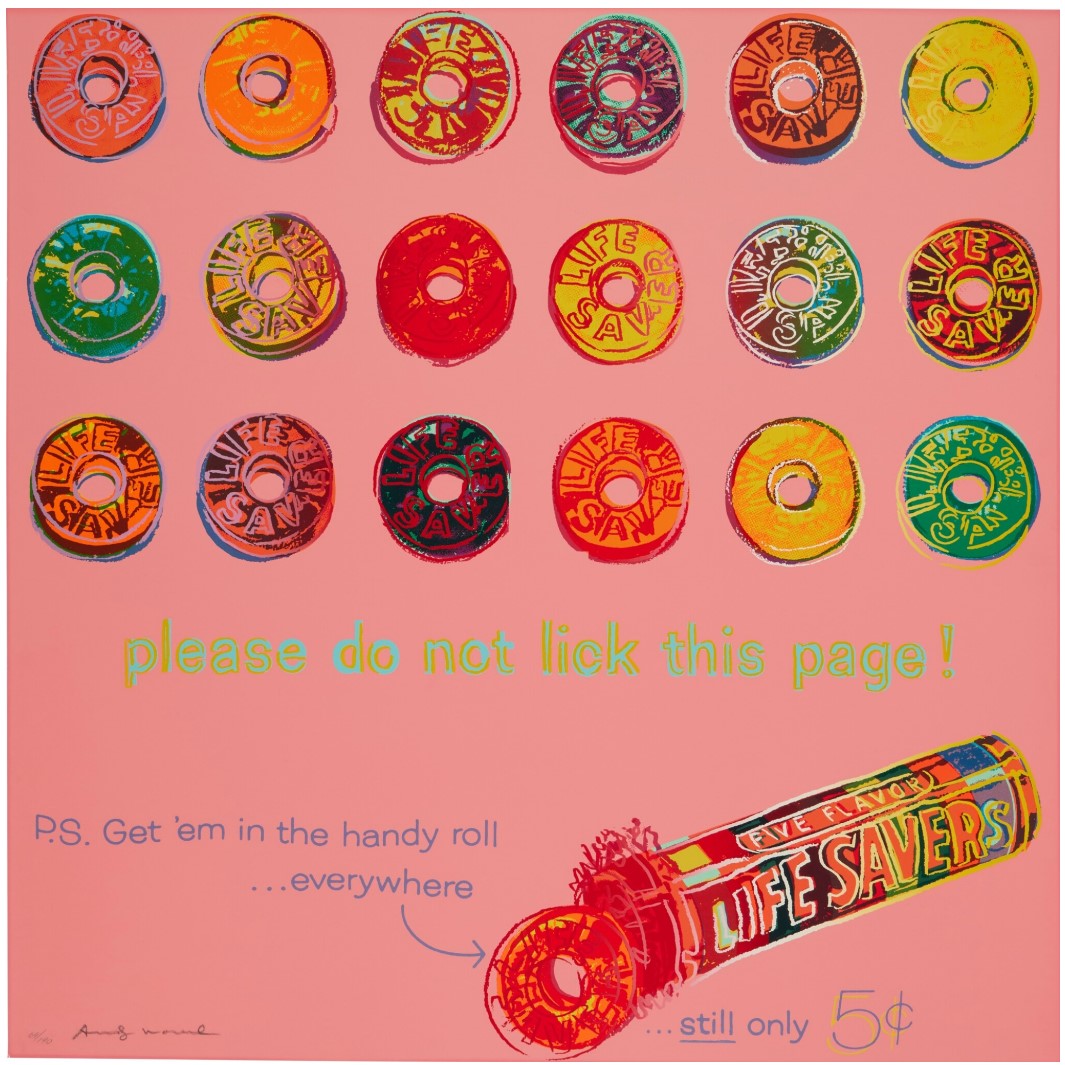
Life Savers
from Ads
Medium: Screenprint in colors on Lenox Museum Board
Year: 1985
Sheet: 38×38 inches (96.5 x 96.5 cm)
Edition: 190
Artist’s Proofs: 30 AP
Printer’s Proofs: 5 PP
Exhibitor’s Proofs: 5 EP
Hors Commerce: 10 HC
Other: 10 numbered in Roman numerals
Bon a Tirer: 1 BAT
Trial Proofs: 30 TP, each print is unique
(see Feldman & Schellmann IIB.353)
Printer: Rupert Jasen Smith, New-York
Publisher: Ronald Feldman Fine Arts, Inc., New York
Literature: Feldman & Schellmann II.353
Each signed and numbered in pencil, with their copyright ink stamp on the reverse
With the printer’s and the publisher’s blindstamps
With the artist’s and the publisher’s copyright inkstamps on the reverse
Life Savers, from the iconic Ads series, transforms a familiar piece of commercial imagery into a striking meditation on consumption, desire, and the quiet poetry of everyday objects. The composition centers on the well-known roll of Life Savers candies, depicted in crisp profile, its cylindrical form unwrapped just enough to reveal the brightly colored sweets aligned within. Warhol isolates the product against a flat, luminous background, amplifying its graphic clarity while preserving the immediacy of its advertising origin. The colors are heightened beyond naturalism (vivid reds, electric blues, and saturated greens and yellows) creating a visual intensity that elevates the humble candy into an object of almost sculptural presence.
Life Savers is part of Ads
(Click on picture below to access the Catalogue Entry)
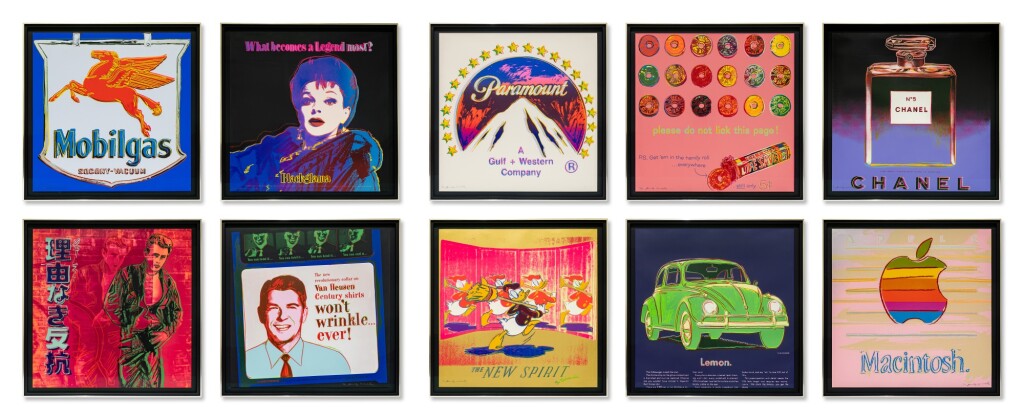
Executed in 1985 and published by Ronald Feldman, the Ads series represents one of Warhol’s final and most conceptually distilled bodies of work. Comprising ten screenprints based on iconic advertising images, from Chanel No. 5 to Paramount Pictures, this portfolio marks a return to the very source material that had defined Warhol’s breakthrough in the early 1960s. Printed by Rupert Jasen Smith in an edition of 190, Life Savers employs Warhol’s mature silkscreen technique, combining photographic precision with bold, hand-applied color fields that vary subtly across impressions. The image itself is derived from mid-century advertising, a period when branding began to shape not only consumer habits but cultural identity at large.
The choice of Life Savers is far from incidental. Introduced in the early 20th century and marketed as both a confection and a small moment of pleasure, the candy occupies a peculiar space between necessity and indulgence. Its name, “Life Savers”, carries an inherent ambiguity, suggesting both rescue and triviality, a playful exaggeration of importance for an object that is, in reality, entirely dispensable. Warhol, ever attentive to the language of branding, seizes upon this contradiction. By presenting the candy with the same visual authority he once reserved for Marilyn Monroe or Elvis Presley, he collapses the hierarchy between celebrity and commodity, suggesting that in a consumer society, even the most insignificant object can attain iconic status.
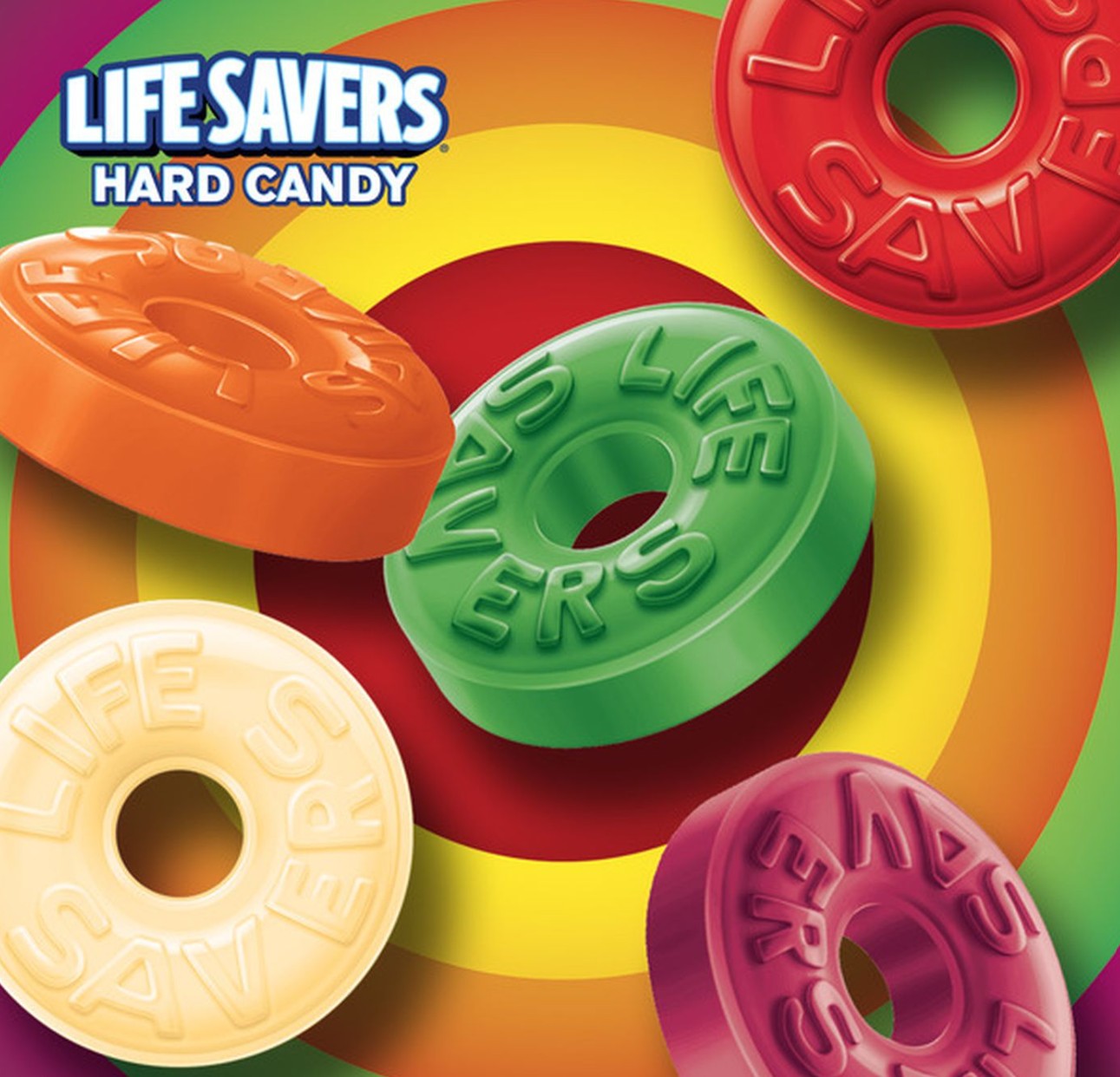
Formally, the work is a study in repetition and containment. The circular candies, stacked within their wrapper, echo Warhol’s longstanding fascination with seriality: the same logic that governed his Campbell’s Soup Cans and Coca-Cola bottles. Yet here, the repetition is internal to the object itself, a rhythm embedded within the product rather than imposed across multiple canvases. The roll becomes a kind of microcosm of Warhol’s broader practice: a system of identical units, packaged, branded, and made endlessly reproducible.
At the same time, there is a subtle shift in tone compared to Warhol’s earlier work. Where the 1960s pieces often carried a sense of cool detachment, the Ads series feels more reflective, almost nostalgic. Life Savers does not merely reproduce an advertisement; it recontextualizes it at a moment when the innocence of mid-century consumer culture had long given way to a more complex, media-saturated reality. Warhol, nearing the end of his life, revisits the imagery that shaped his artistic language, but with a heightened awareness of its implications.
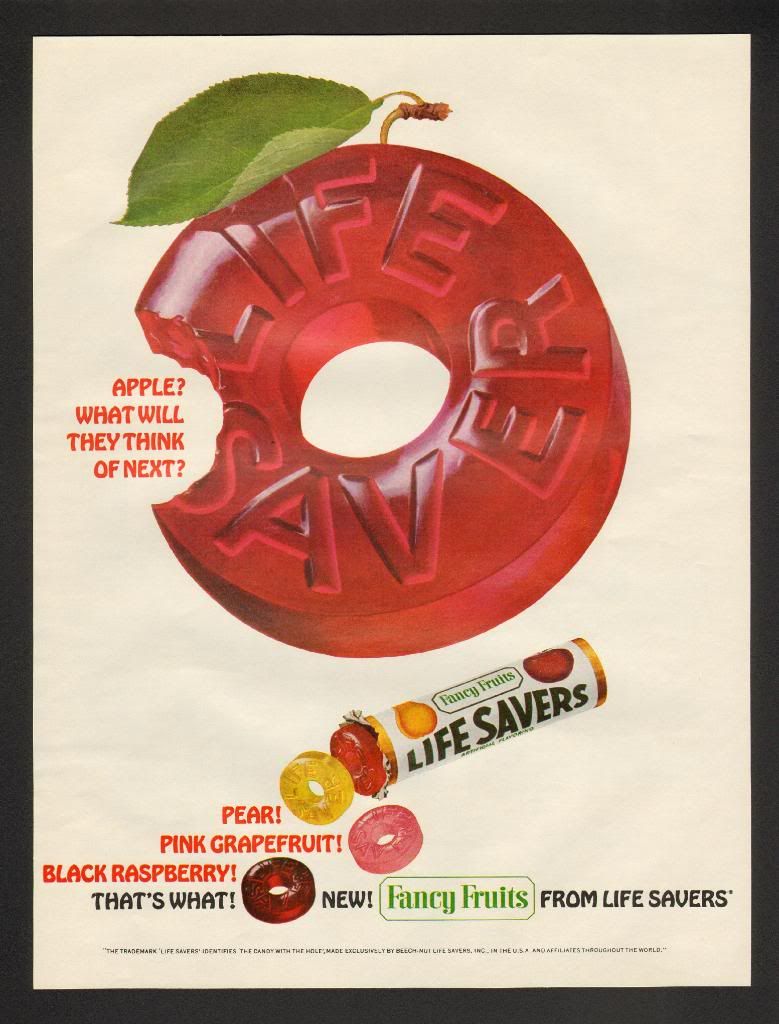
Within the art market, Life Savers holds a distinctive position in the Ads portfolio. While works such as Chanel or Paramount benefit from immediate brand recognition at a global level, Life Savers offers a more subtle, almost intimate entry point into the series. Its appeal lies in its balance between familiarity and abstraction: a universally recognizable object rendered with a level of formal sophistication that rewards sustained looking. As interest in late Warhol continues to grow, particularly in works that synthesize his lifelong engagement with commercial imagery, the Ads series, and Life Savers in particular, has gained increasing attention among collectors.
Ultimately, Life Savers encapsulates Warhol’s enduring insight: that the boundaries between art, advertising, and everyday life are not fixed, but fluid. By isolating and elevating a simple roll of candy, he reveals the latent power of images that surround us daily: images designed to be consumed, forgotten, and replaced. In Warhol’s hands, however, they linger, transformed into objects of contemplation, their sweetness tinged with a quiet, knowing irony.
Life Savers connects to Warhol’s early paintings of everyday household groceries such as Campbell’s Soup and Coca-Cola, as well as the vibrant hues and subtle nods to “frutti-tutti” flavors in his iconic Marilyn series, which boasts such titles as Lemon, Cherry, Licorice, and Grape Marilyn. Warhol arrived in New York in the summer of 1949. Known then as Andrew Warhola, he immediately began making connections through various advertising agencies and fashion magazines. Securing jobs at renowned publications such as Harper’s Bazaar, Glamour, Vogue, and high-end retail stores like Bergdorf Goodman, Tiffany & Co., and Lord and Taylor, Warhola quickly cemented his spot as a leading commercial illustrator. Of course, his largest client—and the one for which he is most well-known—was the shoe company I. Miller.
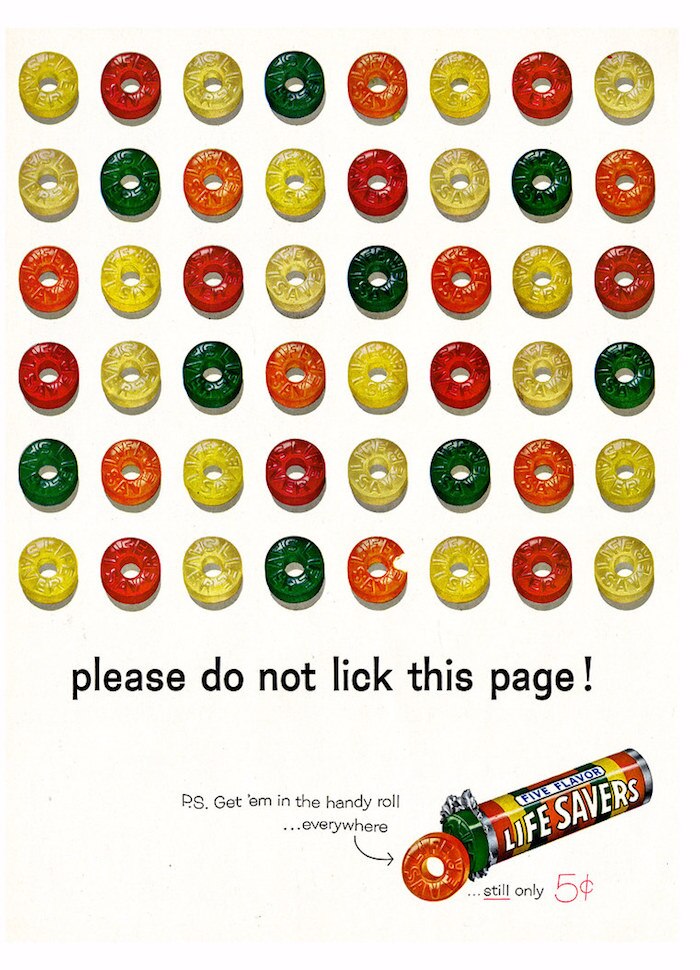
Indeed, the history of the inconspicuous Life Saver fits perfectly among Warhol’s Campbell’s Soup and Coca-Cola narrative. Known for its distinctive aluminum packaging and iconic ring-shaped candy, Life Savers were first introduced in 1912. The hard candies were invented to offer a sweet alternative to chocolates which often melted in the summer heat. While Life Savers have gone through many iterations—from flavors such as anise, clove, and lavender—the iconic fruit flavors were developed in 1921. A staple candy for many Americans, during the second World War many other candy manufacturers donated their sugar rations to keep Life Savers in production so that they could be shared with the Armed Forces stationed abroad as a sweet reminder of life at home. Warhol’s lasting idea that a coke could be enjoyed by anyone no matter what their status in life, rings perfectly true for the donut shaped candies.
Auction Market Overview
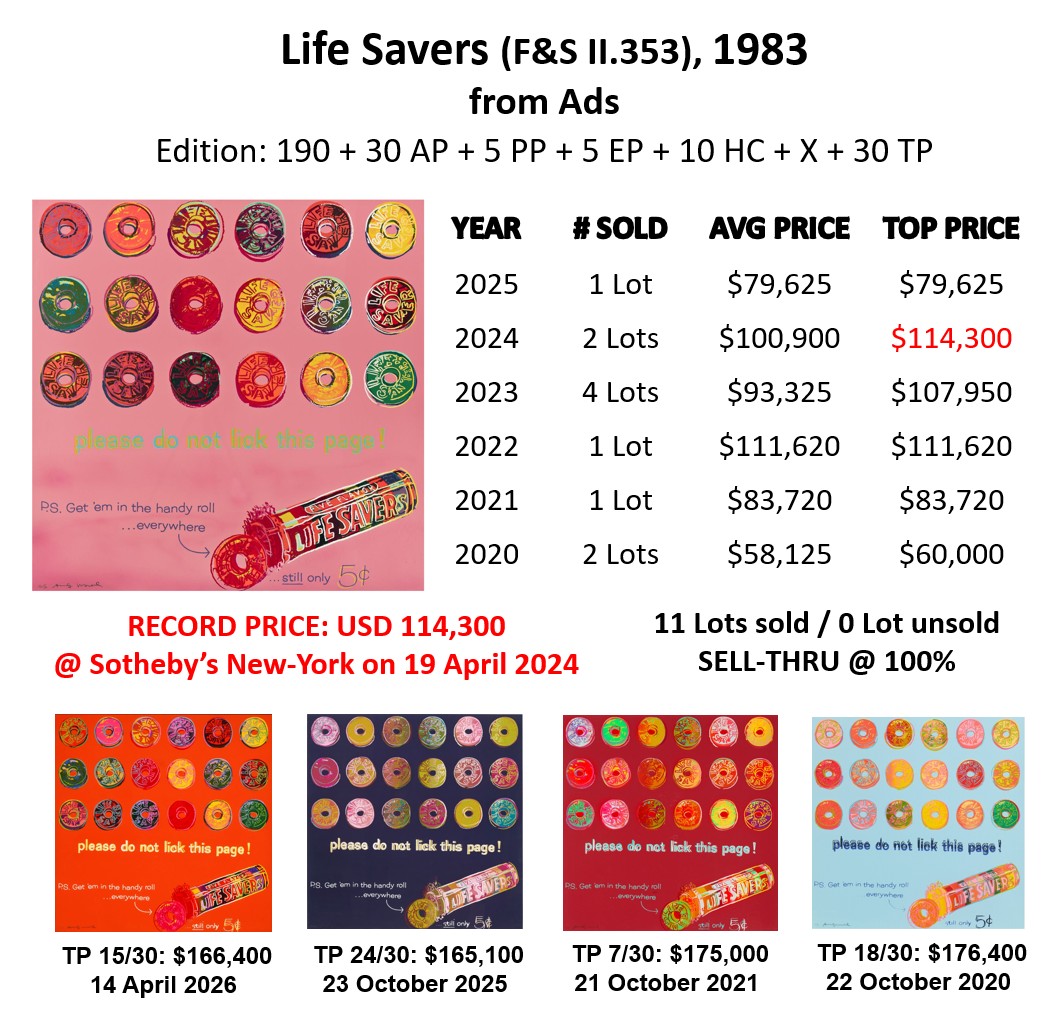
Regular Editions
Shapiro Auctioneers: 24 November 2025
Estimated: AUD 100,000 – 150,000
AUD 98,000 (Hammer)
AUD 122,500 / USD 79,625
ANDY WARHOL (American, 1930-1987)
Lifesavers, from Ads, 1985
Screenprint in colors on Lenox Museum Board
Edition: 61/190
Numbered and signed l.l.c. ’61/190, Andy Warhol’
With the blindstamps of the printer, Rupert Jasen Smith
XXXXXXXXXX
Swann Galleries: 6 June 2024
Estimated: USD 40,000 – 60,000
USD 87,500

ANDY WARHOL
Life Savers, from Ads (F&S II.353), 1985
Color screenprint on Lenox Museum Board
Signed, inscribed “AP” and numbered 1/30 in pencil, lower left
One of 30 numbered artist’s proofs, aside from the edition of 190
A very good impression
Sotheby’s New-York: 19 April 2024
Estimated: USD 60,000 – 80,000
USD 114,300
NEW AUCTION RECORD FOR LIFE SAVERS (REGULAR EDITION)

ANDY WARHOL (1928 – 1987)
Lifesavers, from Ads (Feldman & Schellmann II.353), 1985
Screenprint in colors on Lenox Museum Board
Signed in pencil and numbered 175/190
XXXXXXXXXX
Rago: 12 October 2023
Estimated: USD 40,000 – 60,000
USD 88,200
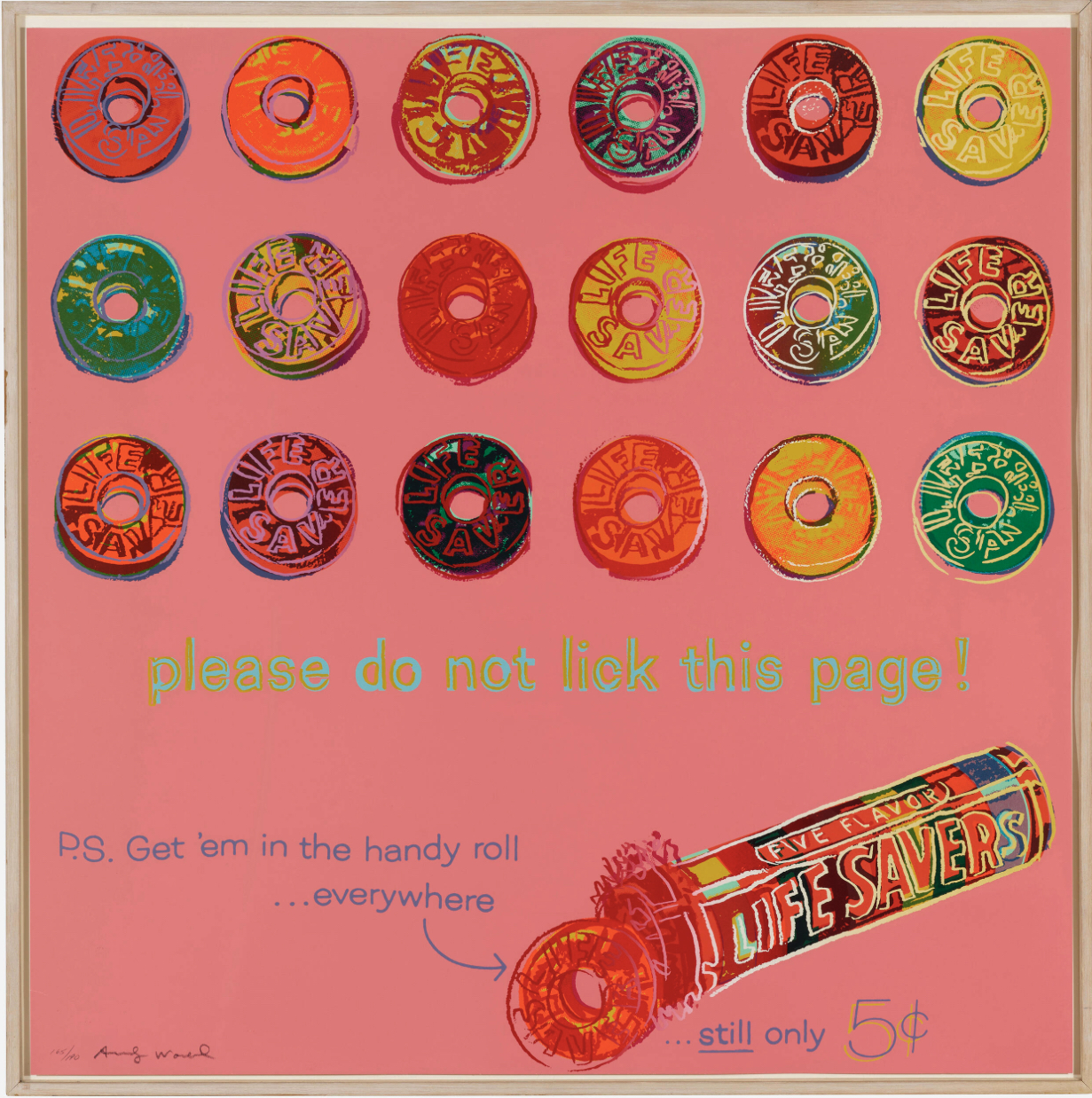
ANDY WARHOL (1928–1987)
Life Savers (from the Ads portfolio), 1985
Screen-print in colors on Lenox Museum Board
Signed and numbered to lower left ‘165/190 Andy Warhol’
Sotheby’s New-York: 19 July 2023
Estimated: USD 50,000 – 70,000
USD 107,950
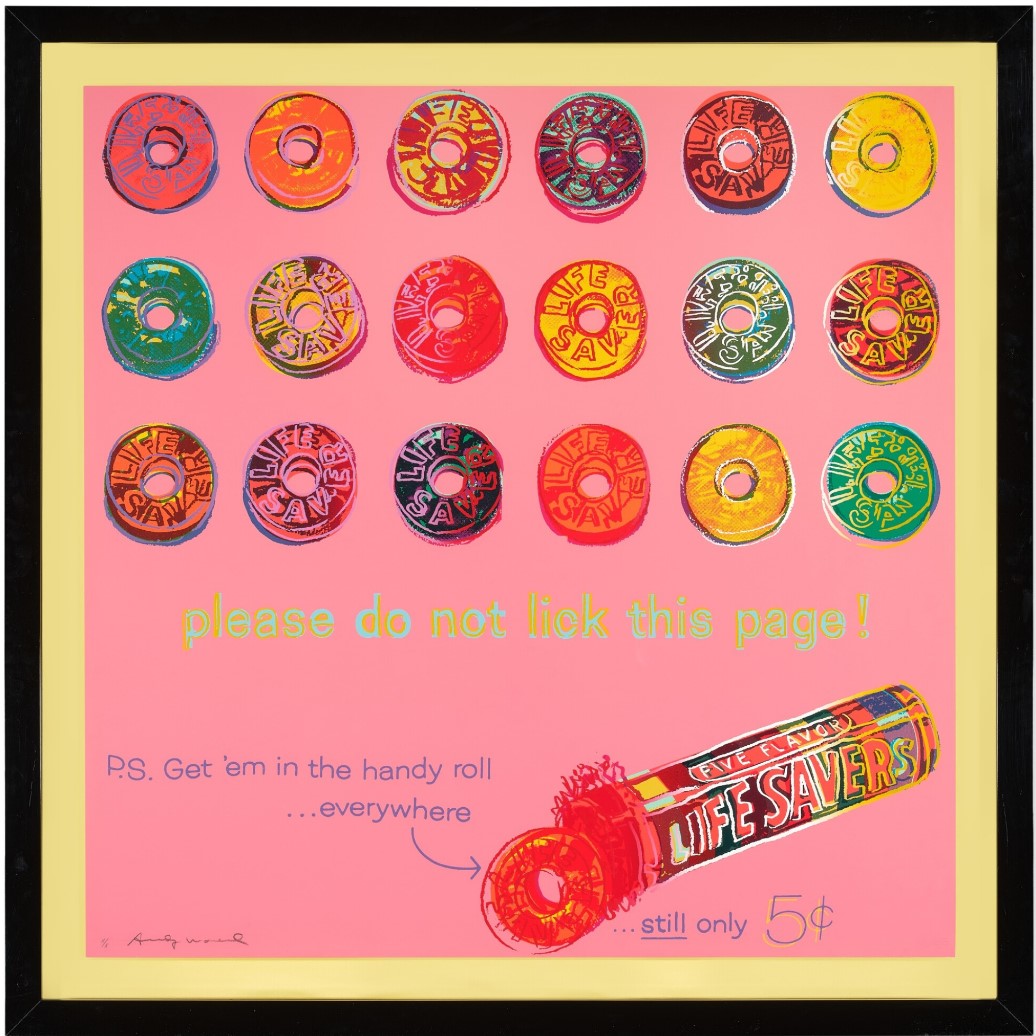
ANDY WARHOL
Lifesavers, from Ads, 1985
Screen-print in colors on Lenox Museum Board
Signed in pencil Andy Warhol and inscribed X/X (lower left)
This impression is one of ten in Roman numerals
Rago: 1 June 2023
Estimated: USD 40,000 – 60,000
USD 81,900
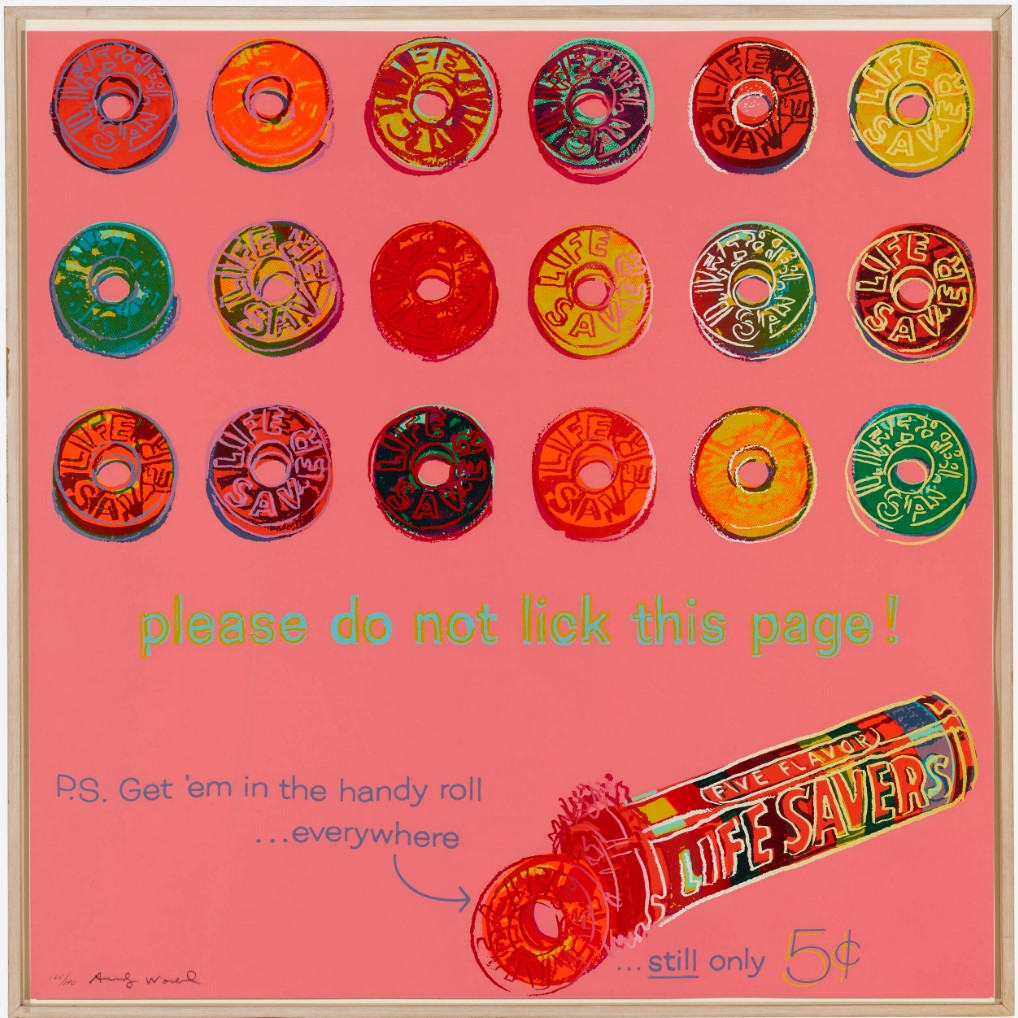
ANDY WARHOL
Life Savers (from the Ads portfolio), 1985
Screen-print in colors on Lenox Museum Board
Signed and numbered to lower left ‘165/190 Andy Warhol’
Sotheby’s New-York: 19 April 2023
Estimated: USD 40,000 – 60,000
USD 95,250
ANDY WARHOL
Life Savers, from Ads, 1985
Screen-print in colors on Lenox Museum Board
Signed in pencil and numbered 69/190
XXXXXXXXXX
New Auction Tokyo: 26 November 2022
Estimated: JPY 5,000,000 – 8,000,000
JPY 15,525,000 / USD 111,620

ANDY WARHOL
Life Savers, from Ads, 1985
Screenprint
Signed and numbered on the lower left
From the edition of 190
XXXXXXXXXX
SBI Art Auction: 28 October 2021
Estimated: JPY 5,000,000 – 8,000,000
JPY 9,545,000 / USD 83,720

ANDY WARHOL
Life Savers from: Ads (F. & S. Ⅱ.353), 1985
Screenprint
Signed and numbered on the lower left, Copyright stamp on the reverse
From the edition of 190
XXXXXXXXXX
Sotheby’s New-York: 28 July 2020
Estimated: USD 40,000 – 60,000
USD 56,250

ANDY WARHOL (1928 – 1987)
LIFE SAVERS (F. & S. II.353), from Ads, 1985
Screenprint in colors on Lenox Museum Board
Signed in pencil and numbered 64/190
(total edition includes 30 artist’s proofs)
Phillips New-York: 23 July 2020
Estimated: USD 35,000 – 55,000
USD 60,000

Life Savers, 1985
Screenprint in colors on Lenox Museum Board
Estimated: USD 45,000 – 55,000
USD 56,250

ANDY WARHOL (1928 – 1987)
LIFE SAVERS (F. & S. II.353) from Ads, 1985
Screenprint in colors on Lenox Museum Board
Signed in pencil and inscribed ‘AP 20/30’
An artist’s proof aside from the numbered edition of 190
Estimated: USD 30,000 – 50,000
USD 52,500
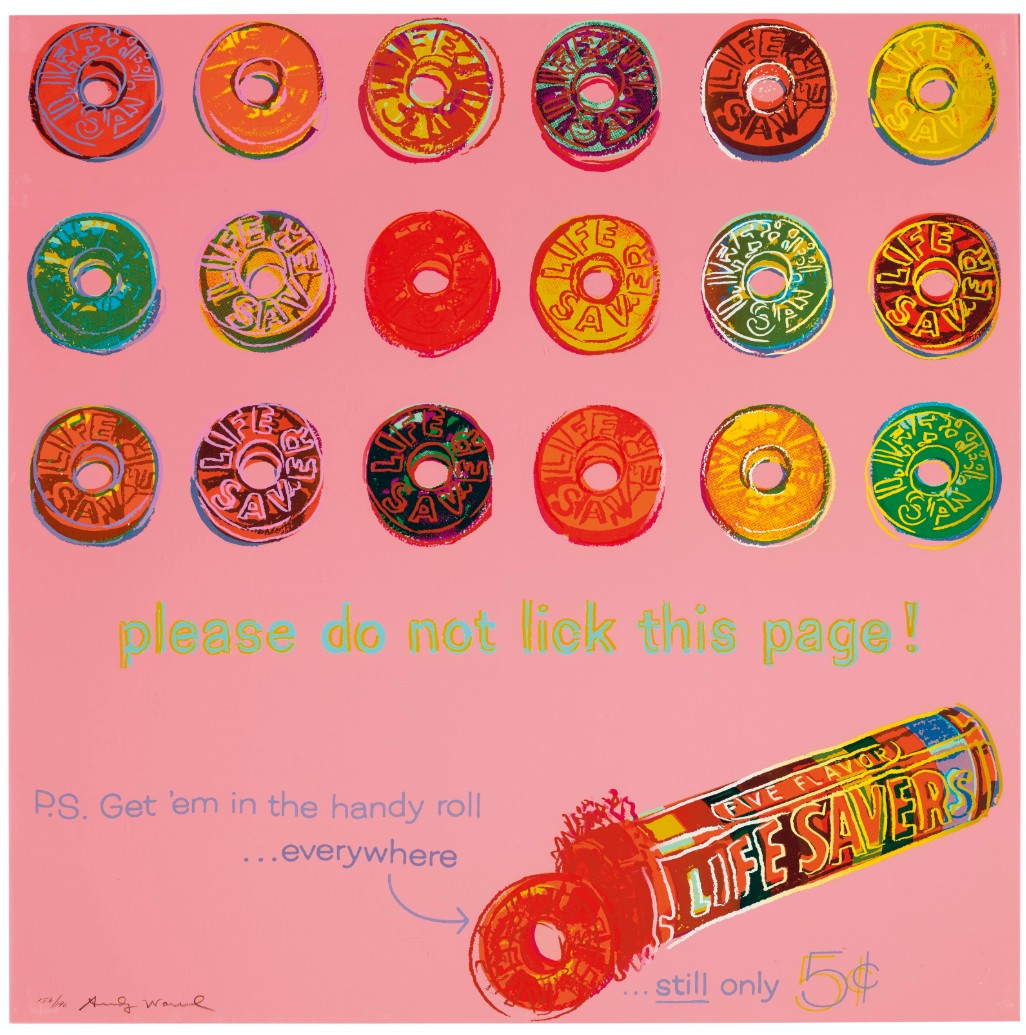
Life Savers, from Ads, 1985
Screenprint in colors on Lenox Museum board
Signed in pencil, numbered 156/190
LA Modern: 17 February 2019
Estimated: USD 40,000 – 60,000
USD 68,750
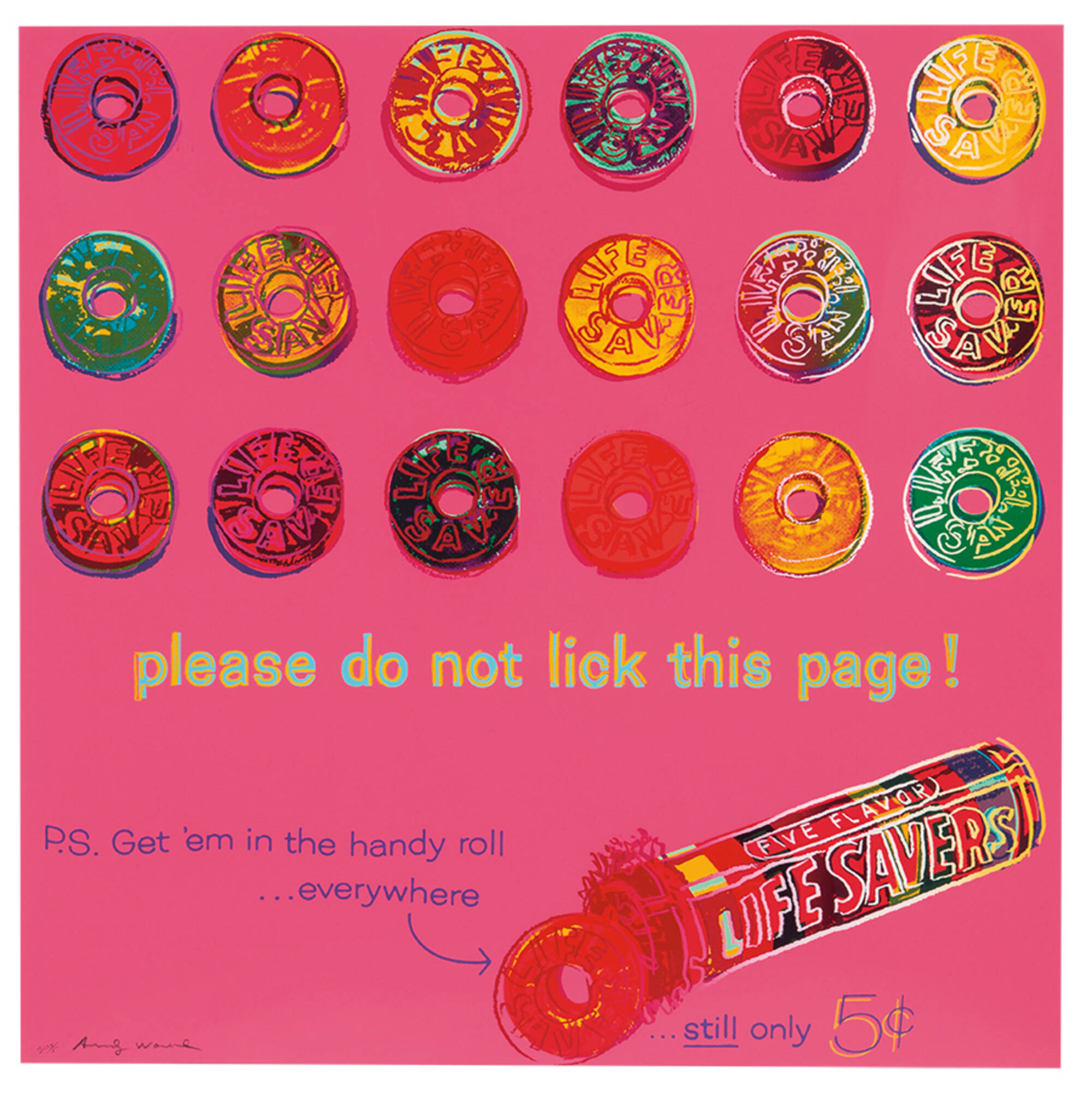
ANDY WARHOL
Life Savers (from Ads), 1985
Screenprint on Lenox Museum Board
Signed with edition in graphite lower left edge of sheet
Edition: #5 of 5 E.P.
Aside from the edition of 190
Retains printer’s and publisher’s blind stamps lower right
Trial Proofs
Life Savers (TP 15/30), 1985
Sotheby’s New-York: 14 April 2026
Estimated: USD 120,000 – 180,000
USD 166,400
TRIAL PROOF
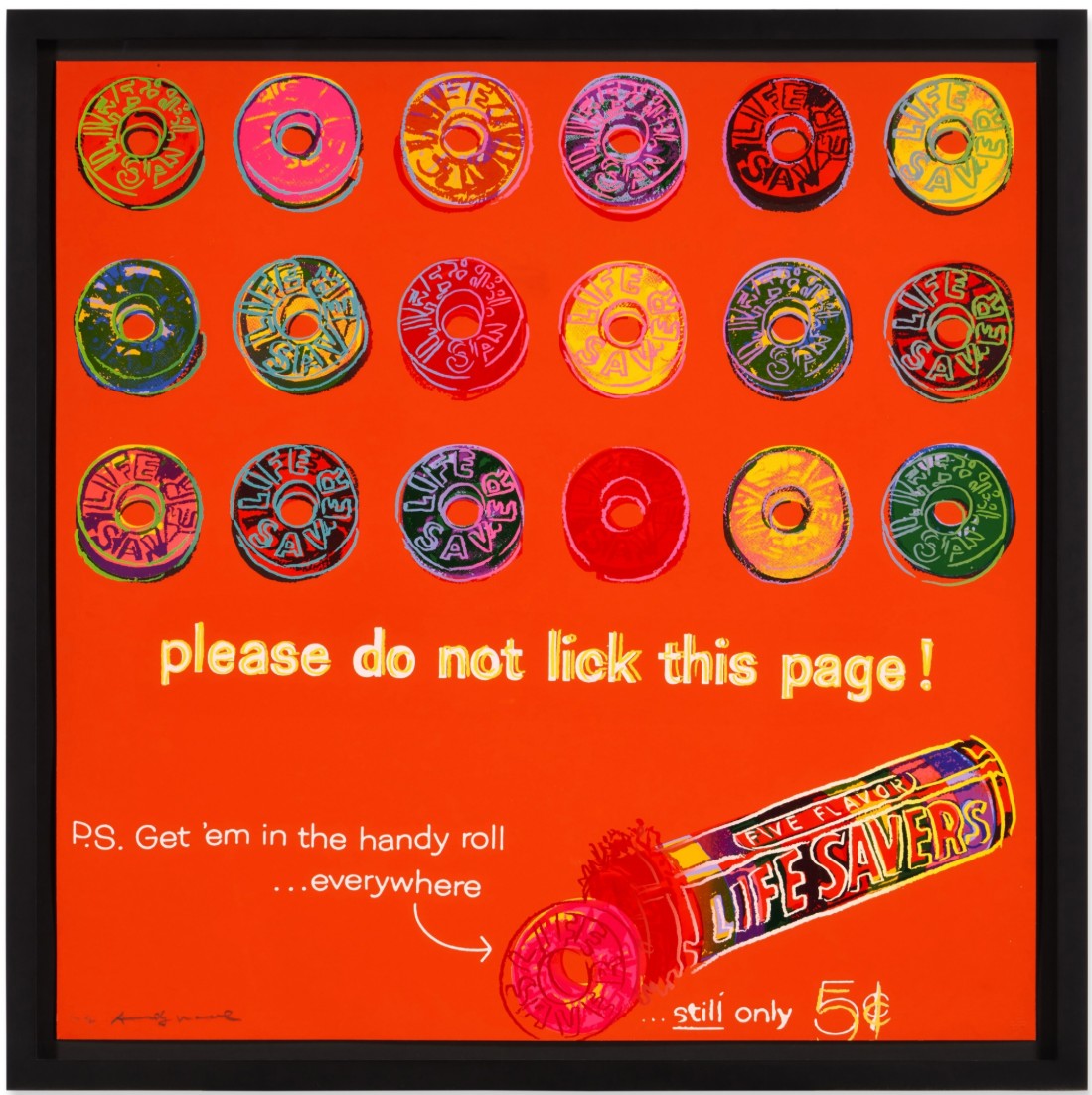
ANDY WARHOL (1928 – 1987)
Life Savers, from Ads (see Feldman & Schellmann IIB.353), 1985
Screenprint in a unique color combination on Lenox Museum Board
Signed in pencil and inscribed TP 15/30
This impression is one of 30 unique trial proofs aside from the numbered edition of 190 plus 30 artist’s proofs
With the blindstamps of the printer, Rupert Jasen Smith, and the publisher, Ronald Feldman Fine Arts, Inc.
Life Savers (TP 24/30), 1985
Christie’s New-York: 23 October 2025
Estimated: USD 120,000 – 180,000
USD 165,100
TRIAL PROOF

ANDY WARHOL (1928-1987)
Life Savers, from Ads, 1985
(Feldman & Schellmann II.353)
Unique screenprint in colors on Lenox Museum Board
Signed in pencil, numbered ‘TP 24⁄30’
A trial proof, the edition was 190 plus 30 artist’s proofs
Life Savers (TP 7/30), 1985
Christie’s New-York: 21 October 2021
Estimated: USD 70,000 – 100,000
USD 175,000
TRIAL PROOF
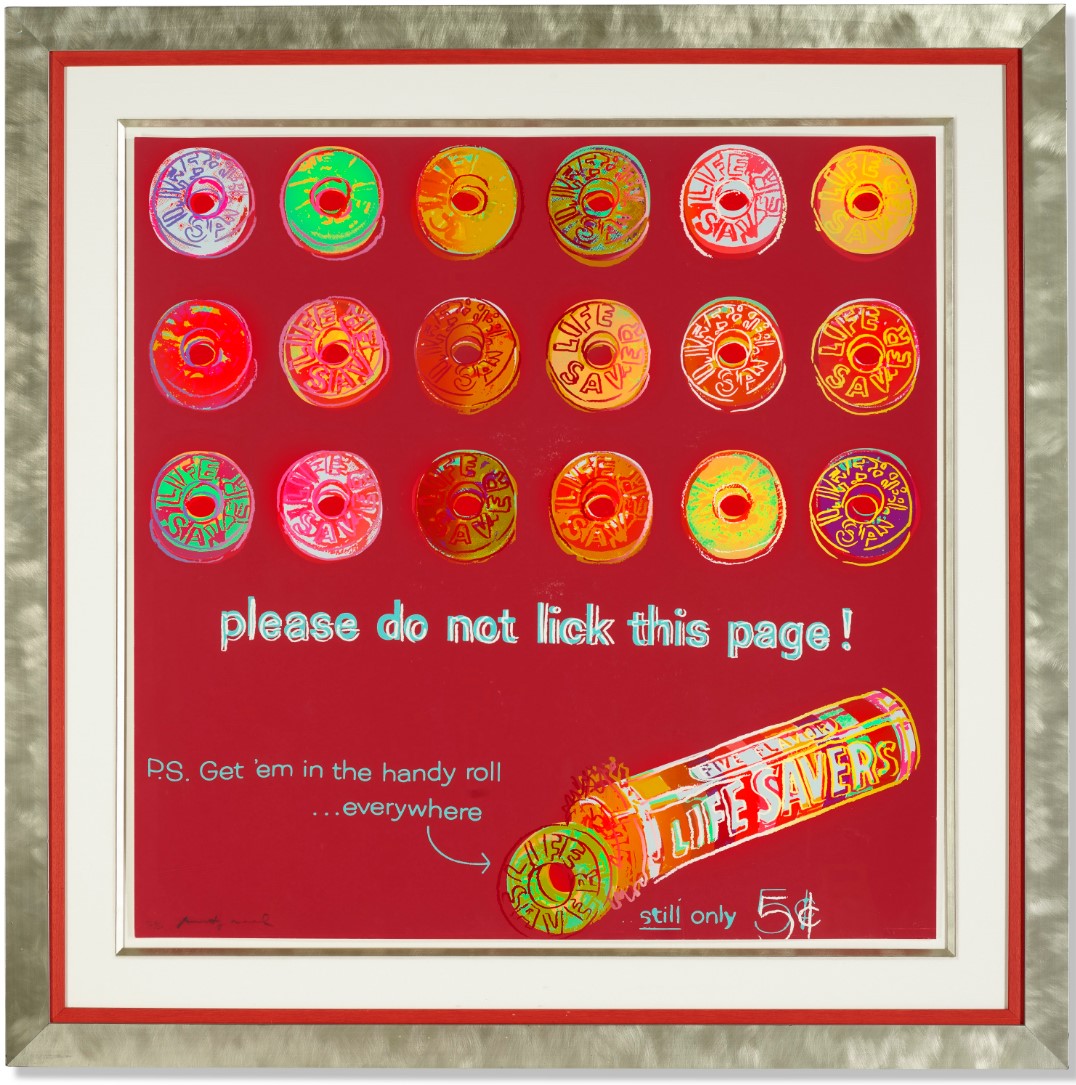
ANDY WARHOL
Life Savers, from Ads, 1985
Unique screen-print in colors, on Lenox Museum board
Signed in pencil, numbered TP ‘7/30’ (a unique trial proof, the edition was 190)
Life Savers (TP 18/30), 1985
Sotheby’s New-York: 22 October 2020
Estimated: USD 80,000 – 100,000
USD 176,400
TRIAL PROOF

ANDY WARHOL
LIFE SAVERS (SEE F. & S. IIB.353), 1985
Screen-print in a unique color combination
Signed in pencil and inscribed ‘TP 18/30’
A trial proof aside from the numbered edition of 190 plus 30 artist’s proofs