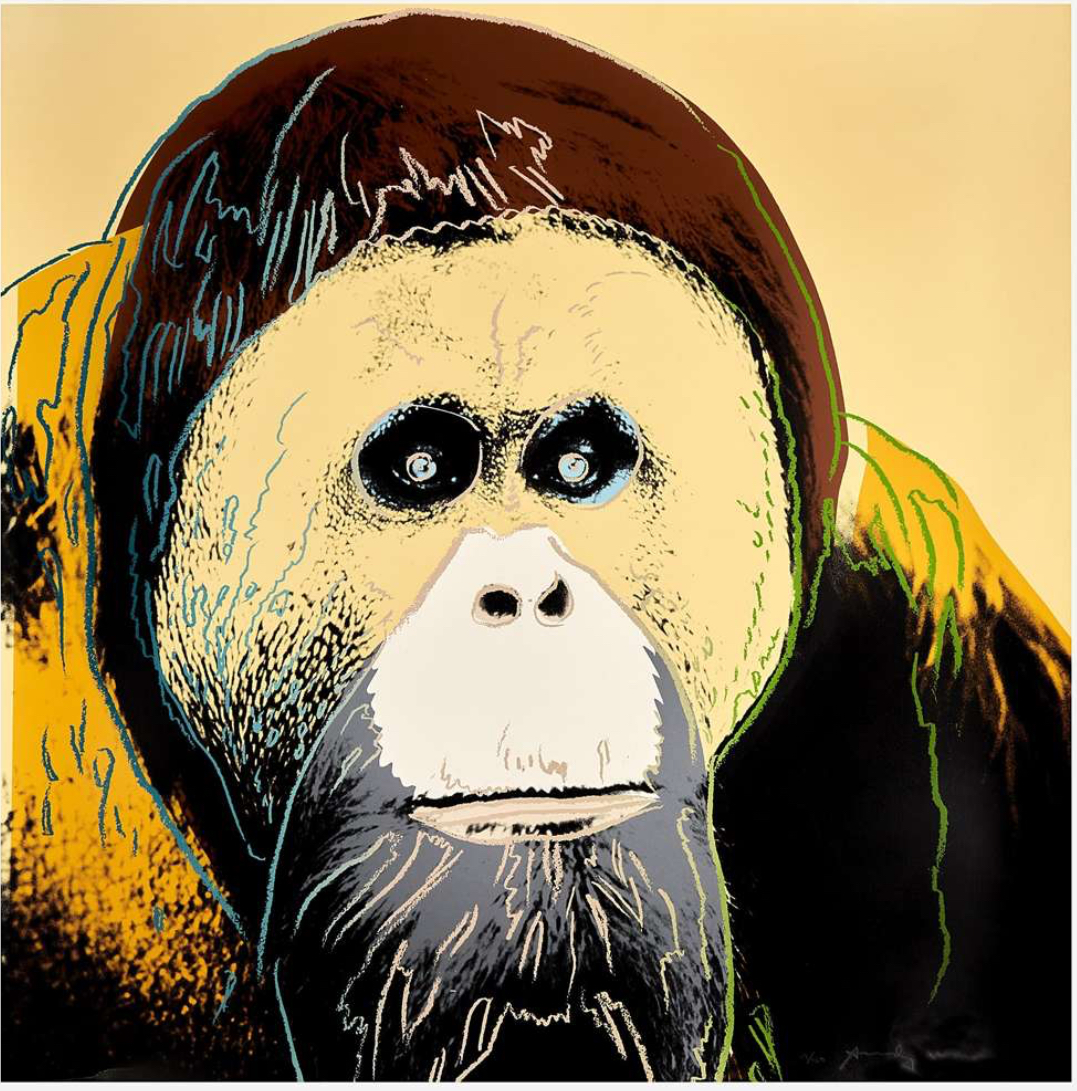
Orangutan
from Endangered Species
Medium: Screenprint in colors on Lenox Museum Board
Year: 1983
Sheet: 38×38 inches (96.5 x 96.5 cm)
Edition: 150
Artist’s Proofs: 30 AP
Printer’s Proofs: 5 PP
Exhibitor’s Proofs: 5 EP
Hors Commerce: 3 HC
Bon a Tirer: 1 BAT
Other: 10 numbered in Roman numerals intended for wildlife organizations
Trial Proofs: 30 TP with unique color combination
(see Feldman & Schellmann IIB.299)
Publisher: Ronald Feldman Fine Arts, Inc., New-York
Printer: Rupert Jasen Smith, New-York
Catalogue Raisonne: Feldman & Schellmann II.299
Signed and numbered in pencil, lower left or right
With the publisher’s inkstamp and the artist’s copyright stamp on reverse
Orangutan is part of Endangered Species
(Click on picture below to access the Catalogue Entry)

In 1983, Andy Warhol turned his attention to the natural world with the Endangered Species series, a vibrant and urgent body of work created to raise awareness for animals at risk of extinction. Commissioned by art dealers and environmental advocates Ronald and Frayda Feldman, the series transforms wildlife into icons, using the same visual language Warhol applied to Marilyn Monroe and Elvis Presley. Among the ten portraits, Orangutan (FS II.299) stands out not only for its visual composition but also for the intimate psychological depth it conveys.
In Orangutan, Warhol captures the soulful intelligence of the primate with an arresting gaze that seems to peer directly into the viewer. The orangutan’s expression is contemplative, almost mournful, as if aware of its fragile place in a rapidly disappearing world. Warhol surrounds the figure with a flat, acid-yellow background, enhancing the subject’s immediacy and forcing it into confrontation with the viewer. The orangutan’s facial contours and fur are defined through graphic strokes of electric green, lavender, and chalk white, accentuated by deep black outlines. The layered silkscreening of colors gives a sense of movement and emotional intensity, while the cool blue around the eyes heightens their depth and sensitivity.
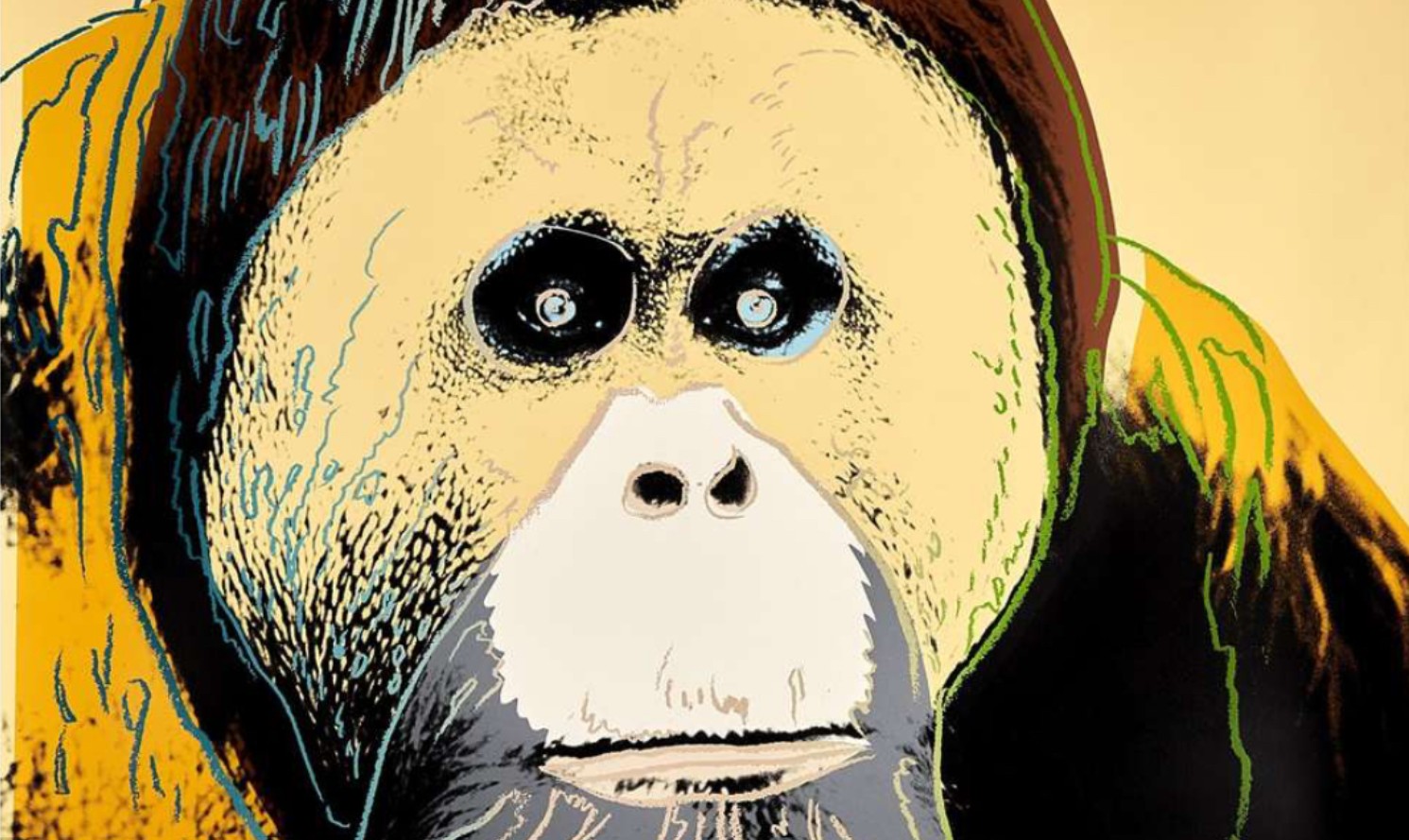
Unlike Warhol’s portraits of celebrities that revel in glamour and fame, this piece carries a somber, reverential tone. The orangutan is not a figure of adoration but one of urgent empathy. Warhol’s graphic treatment doesn’t depersonalize the animal, instead, it amplifies its vulnerability, making the viewer complicit in its fate. The orangutan is presented not as “other,” but as kin, a mirror of our own intelligence, gentleness, and precarious existence.
The orangutan, native to the rainforests of Borneo and Sumatra, is one of the most intelligent and arboreal of the great apes. Its name, derived from the Malay words “orang” (person) and “hutan” (forest), aptly means “person of the forest.” These primates are known for their remarkable tool use, complex social behaviors, and significant role in seed dispersal, which is vital for forest regeneration. In the lowland forests in which they reside, orangutans live solitary existences. They feast on wild fruits like lychees, mangosteens, and figs, and slurp water from holes in trees. They make nests in trees of vegetation to sleep at night and rest during the day. Adult male orangutans can weigh up to 200 pounds.
Orangutan | Species | WWF (worldwildlife.org)
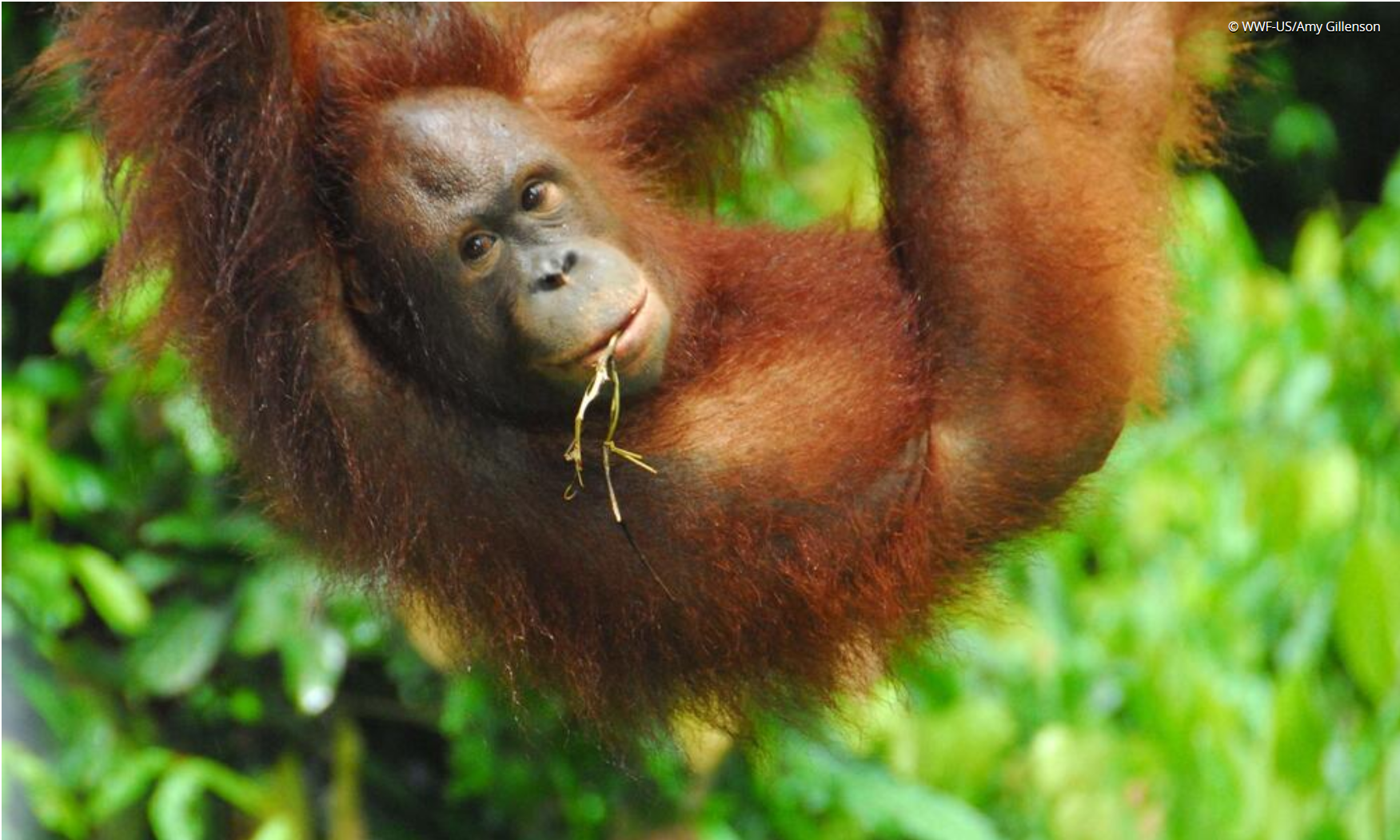
Despite their ecological importance, all three species of orangutans, the Bornean, Sumatran, and the recently identified Tapanuli, are classified as critically endangered by the International Union for Conservation of Nature (IUCN). Major threats include habitat destruction due to illegal logging, palm oil plantations, and infrastructure development, as well as poaching and the illegal pet trade For instance, the Tapanuli orangutan, discovered in 2017, has an estimated population of fewer than 800 individuals, making it the most endangered great ape species . Conservation efforts by organizations like the WWF focus on habitat protection, anti-poaching initiatives, and sustainable land-use practices to ensure the survival of these remarkable creatures .
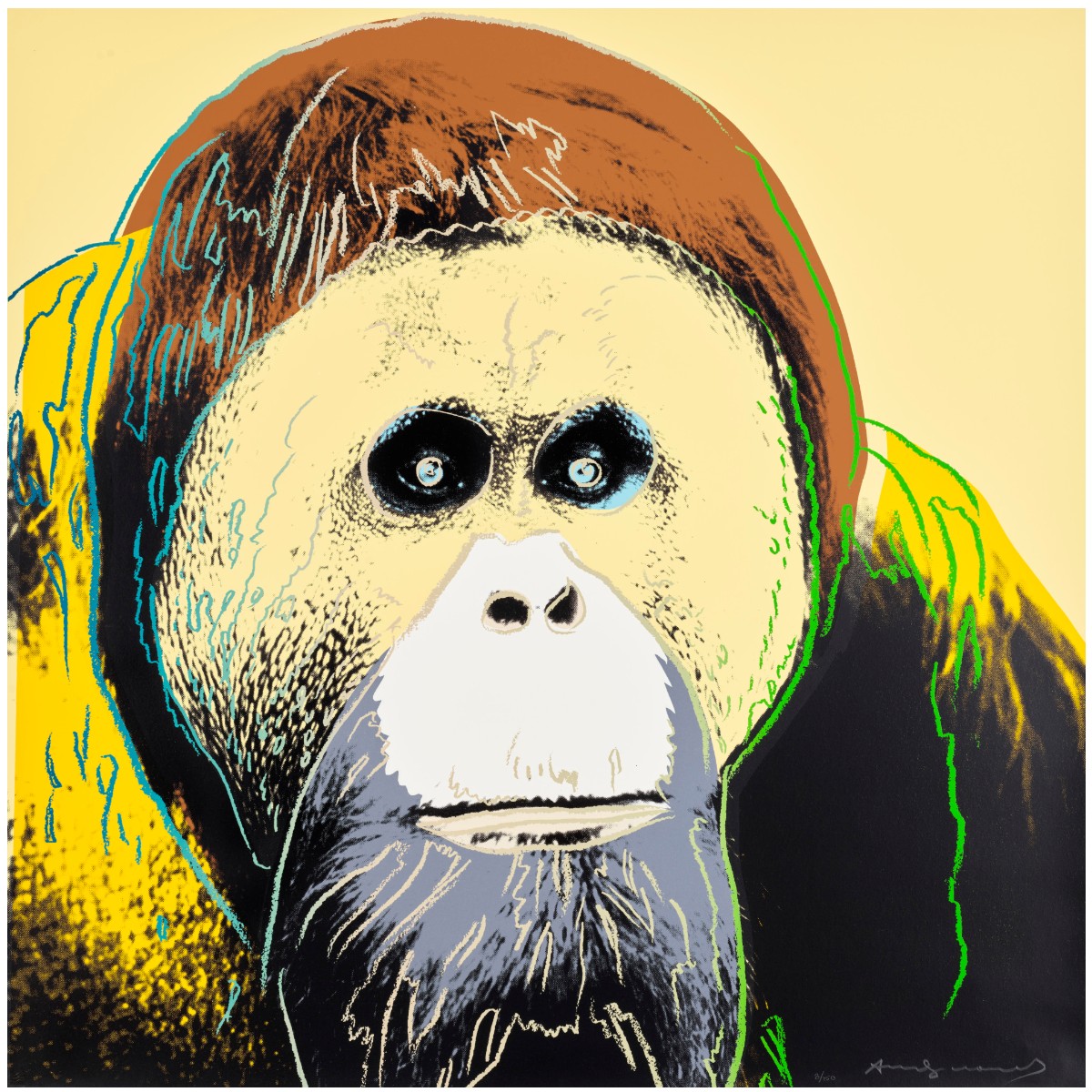
Regular Editions
Estimated: GBP 40,000 – 60,000
GBP 184,150 / USD 248,605
NEW AUCTION RECORD FOR ORANGUTAN
Estimated: JPY 4,000,000 – 6,000,000
JPY 22,000,000 (Hammer)
JPY 25,630,000 / USD 188,560
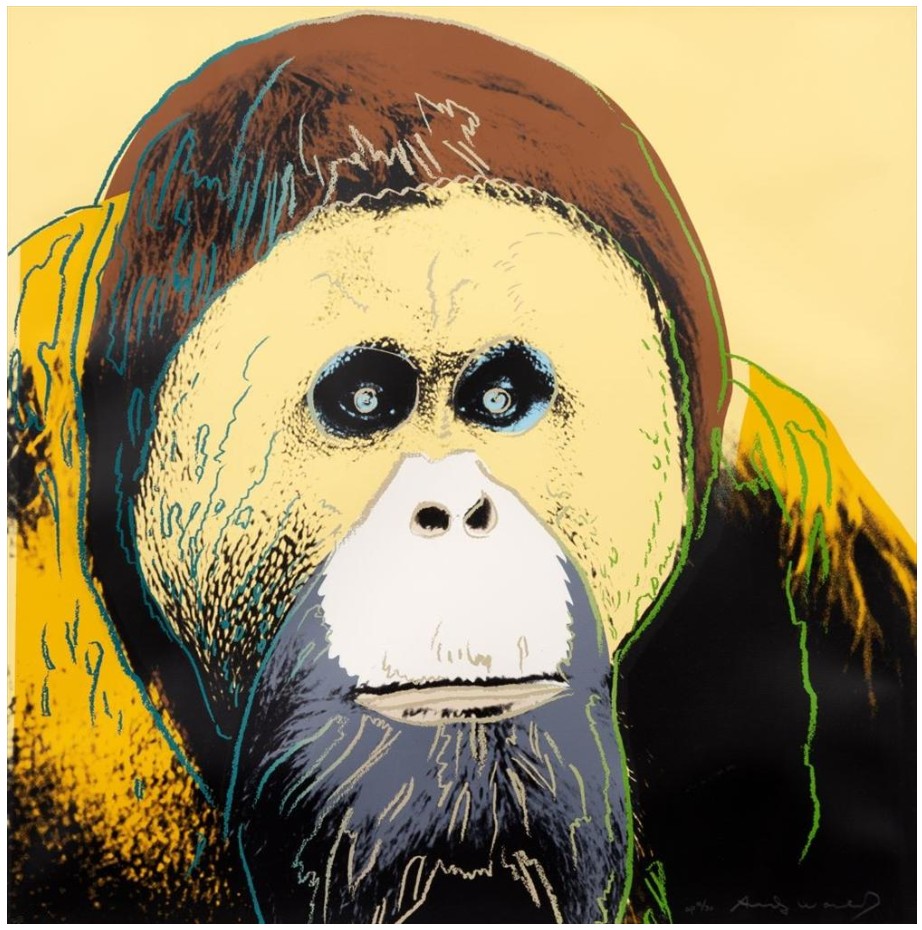
Orangutan from Endangered Species Portfolio, 1983
Screenprint in colors on Lenox Museum Board
Signed in pencil, numbered A.P.18/30 (the edition was 150)
Estimated: JPY 3,000,000 – 5,000,000
JPY 23,000,000 (Hammer)
JPY 26,795,000 / USD 196,883
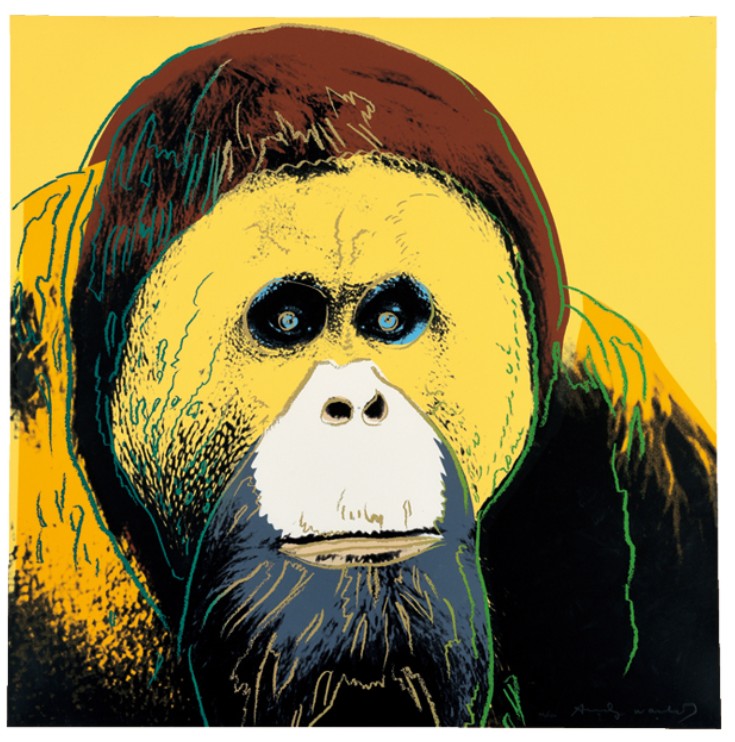
Orangutan from Endangered Species, 1983
Screenprint in colors on Lenox Museum Board
Signed and editioned on lower right
Embossed on lower left
Stamped on the verso
From the edition of 150
Estimated: JPY 8,000,000 – 10,000,000
JPY 14,500,000 (Hammer)
JPY 18,800,000 / USD 154,585
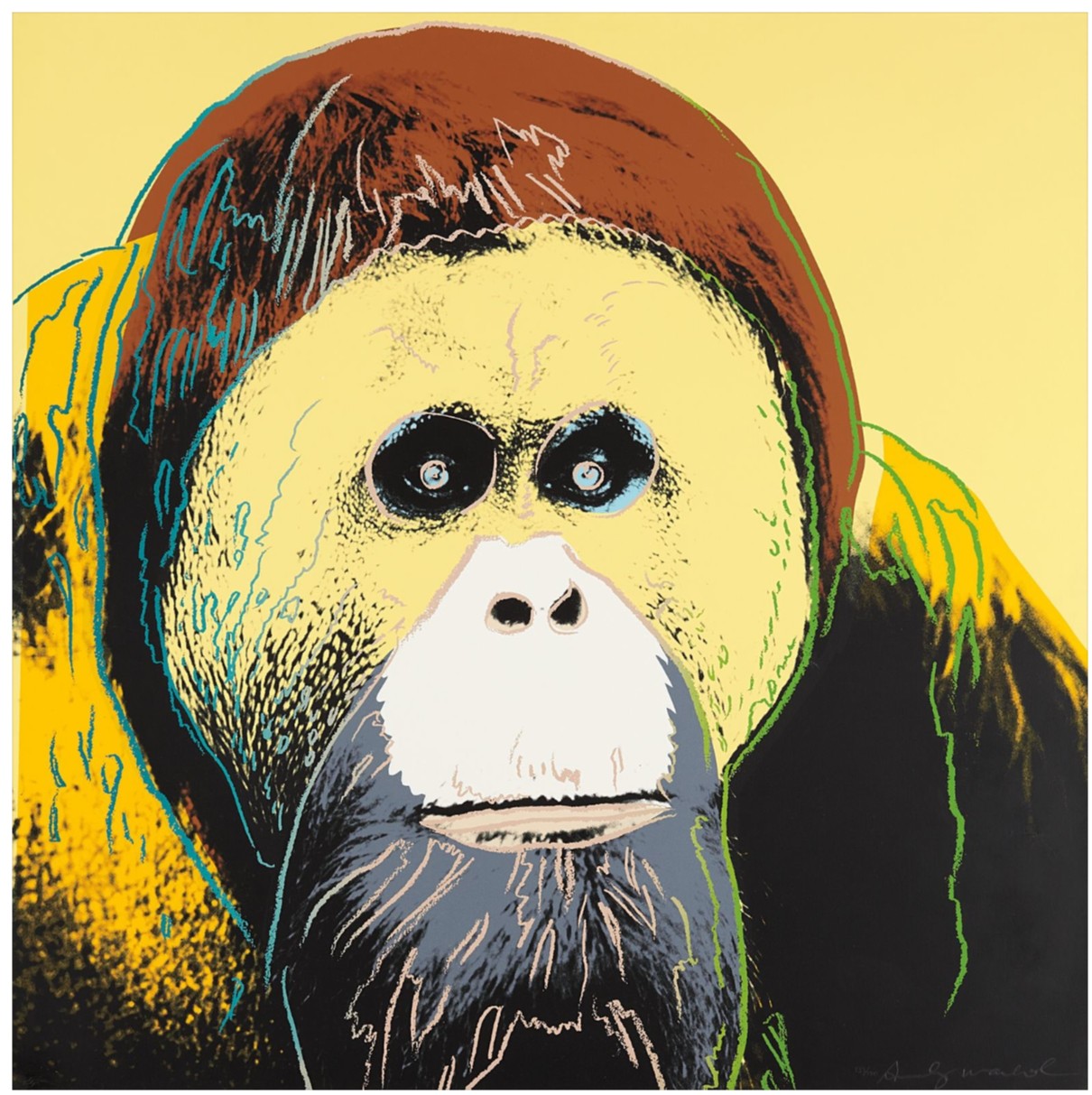
Orangutan from Endangered Species Portfolio, 1983
Screenprint in colors on Lenox Museum Board
Signed in pencil
An artist’s proof from 30, aside from the edition of 150
Freeman’s: 17 November 2021
Estimated: USD 40,000 – 60,000
USD 107,100
ANDY WARHOL
Orangutan from Endangered Species Portfolio, 1983
Screenprint on Lenox Museum Board
Pencil signed and numbered 19/150
Bonhams New-York: 21 May 2019
Estimated: USD 30,000 – 40,000
USD 62,575
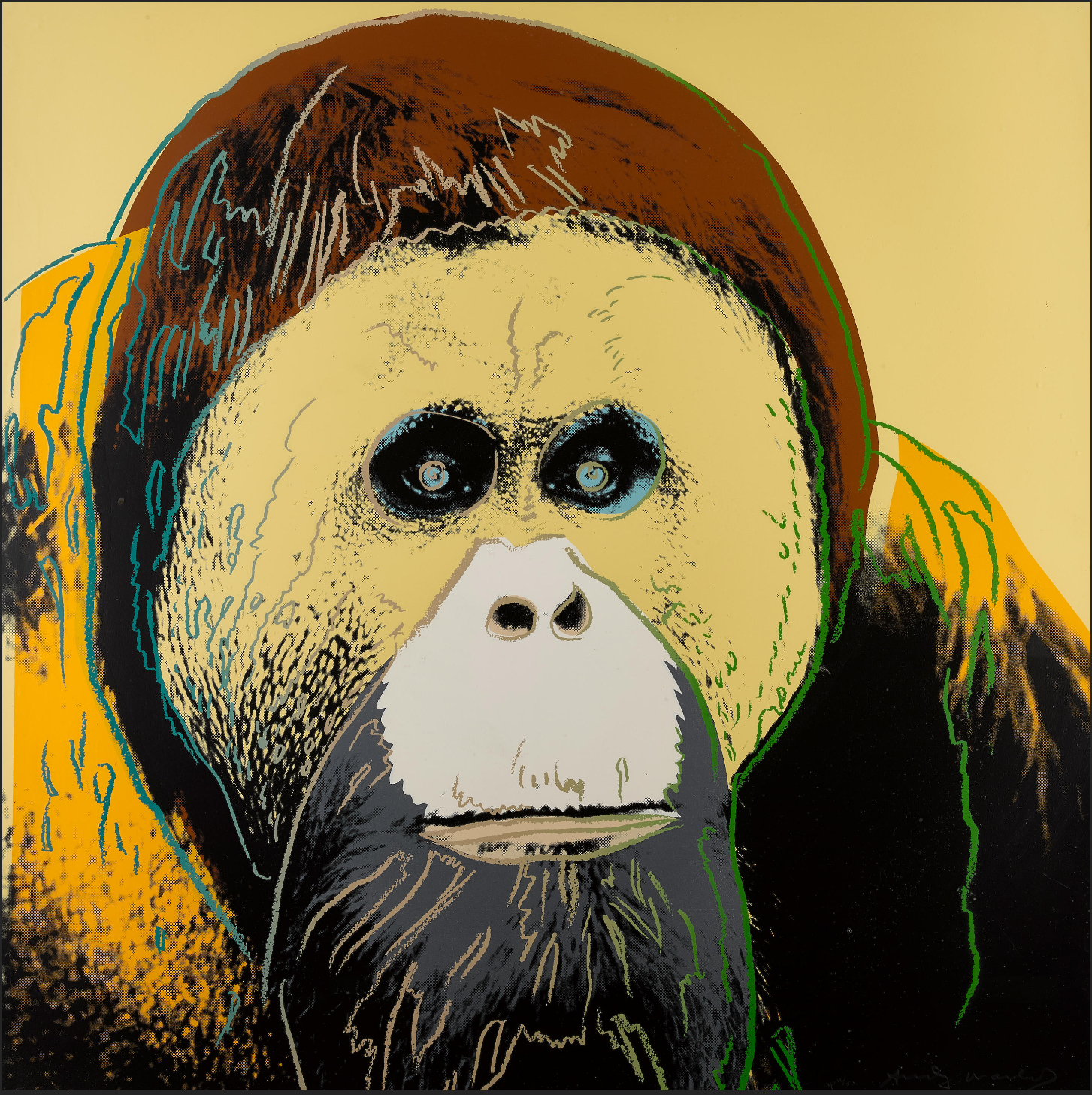
Screenprint in colors on Lenox Museum Board
Signed in pencil and numbered AP 2/30
An artist’s proof aside from the edition of 150
Trial Proofs
Orangutan (TP 29/30), 1983
Sotheby’s New-York: 19 April 2024
Estimated: USD 150,000 – 250,000
USD 215,900
TRIAL PROOF

ANDY WARHOL (1928 – 1987)
Orangutan, from Endangered Species (see Feldman & Schellmann IIB.299), 1983
Screenprint in a unique color combination on Lenox Museum Board
Signed in pencil and inscribed TP 29/30
One of 30 unique trial proofs aside from the numbered edition of 150 plus 30 artist’s proofs
Orangutan (TP 6/30), 1983
Shannon’s: 27 April 2023
Estimated: USD 80,000 – 120,000
USD 150,000
TRIAL PROOF
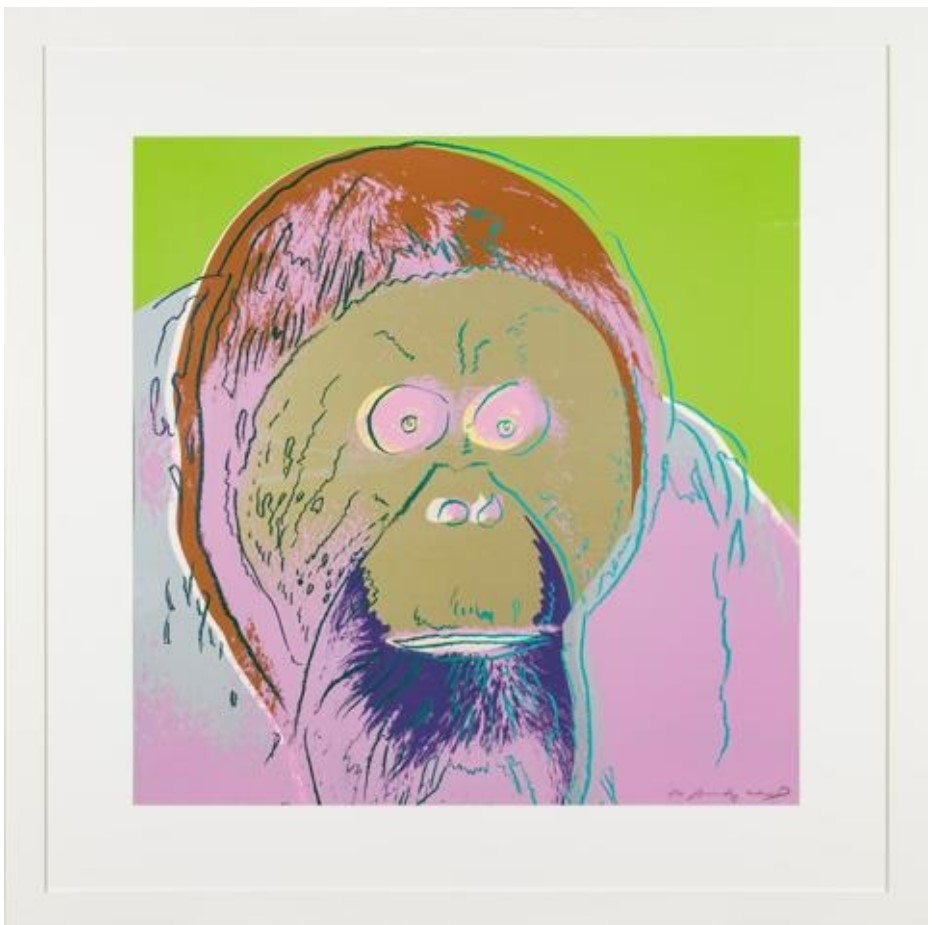
ANDY WARHOL
Orangutan (from Endangered Species Portfolio), 1983
Screen-print in colors on Lenox Museum Board
Numbered and signed in pencil lower right “TP 6/30 Andy Warhol”
Orangutan (TP 12/30), 1983
Christie’s Los Angeles: 13 December 1999
Estimated: USD 4,000 – 5,000
USD 12,650
TRIAL PROOF
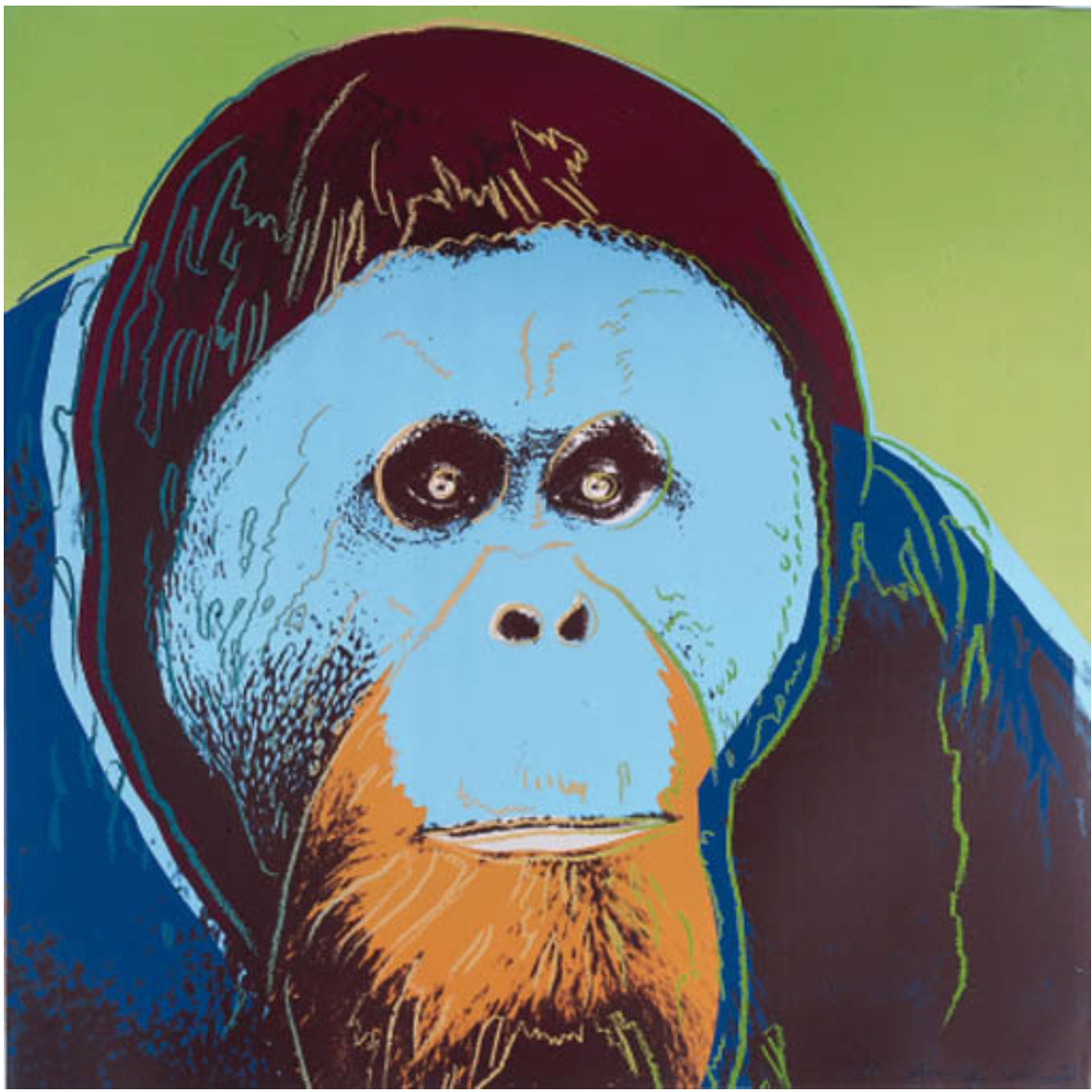
ANDY WARHOL
Orangutan, for Endangered Species (F. and S. B.299), 1983
Unique screenprint in colors on Lenox Museum Board
Signed in pencil, numbered ‘T.P. 12/30’
One of 30 unique color variants aside from the edition of 150 plus 30 artist’s proofs