First appearing in a subway drawing series from 1980-85, the barking dog is one of Keith Haring’s most well-known subjects. Both dogs and dog-human hybrids feature prominently in his works. Interpreted as a universal symbol of resistance and protection, barking to call out social injustice, the dog warns viewers of the abuses of power that pervade everyday life in America and beyond.
Introduction
The barking dog stands as one of Keith Haring’s most iconic subjects, first appearing in a series of subway drawings made in the early 1980s. Haring’s use of canine imagery reflects the politically charged status of both dogs and homosexual men in New York at the time. During the 1970s, public anxiety about the number of dogs in the city exploded. Fuelled by racism and gentrification, public health campaigns pushed for dog owners to clean up after their pets, and “put children before dogs”. The subtext of the campaigns was not lost on the gay community, as it echoed the homophobic public discourse around gay sex, becoming increasingly visible as liberation movements grew in power. Haring was not alone in using the dog as an emblem of queer resistance, and was joined in appropriating this symbolism by Jenny Holzer, David Wojnarowicz, and Martin Wong. Each artist used the dog as subject to challenge the surrounding narrative of fear and contagion. Within this context, Haring’s Dog not only reflects the need for voices against injustice but highlights a period of creative revolution against the dehumanization of gay desire.
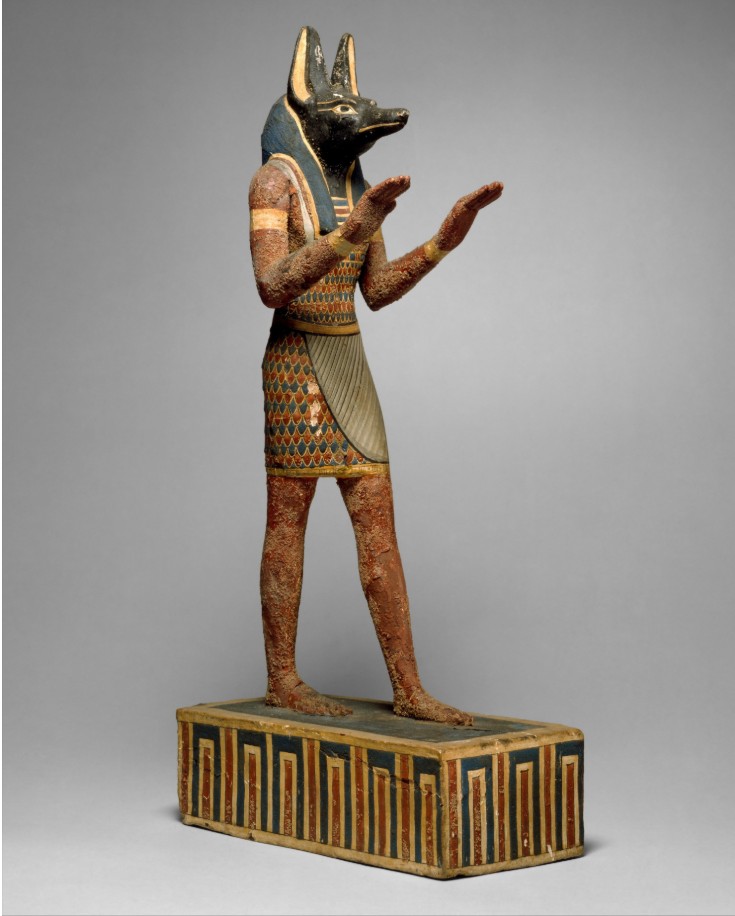
Statuette of Anubis, 332-330 B.C., The Metropolitan Museum of Art, New York.
Image: © The Metropolitan Museum of Art, New York, Gift of Mrs. Myron C. Taylor, 1938
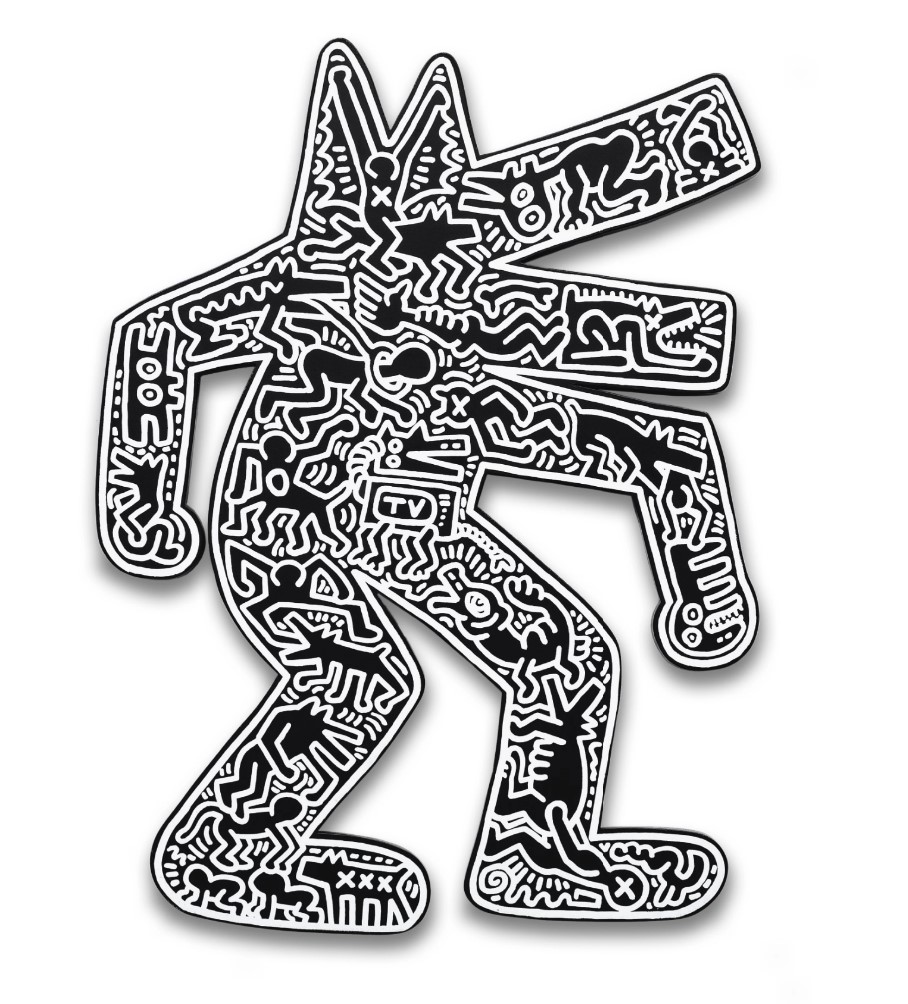
The dog motif closely echoes imagery of Anubis, the ancient Egyptian god associated with funerary rites and grave protection. Anubis is commonly represented as a dog-man hybrid with a canine head and a human body. Haring’s Dog, adorned with drawings of dancing figures, man-dog hybrids, erotic scenes, and more, playfully subverts the traditional notions of protection linked with Anubis. In this way, Haring challenged the authority and governmental power symbolised by the dog, turning it into a dynamic expression of rebellion and creative dissent. Haring was not alone in using dog imagery in this way, artists including Jenny Holzer, David Wojnarowicz, and Martin Wong similarly appropriated the motif as an emblem of queer resistance. Each artist used the dog as subject to challenge the surrounding narrative of fear and contagion. Within this context, Haring’s Dog not only reflects the need for voices against injustice but highlights a period of creative revolution against the dehumanisation of gay desire.
“I am intrigued with the shapes people choose as their symbols to create a language. There is within all forms a basic structure, an indication of the entire object with a minimum of lines that becomes a symbol. This is common to all languages, all people, all times.”
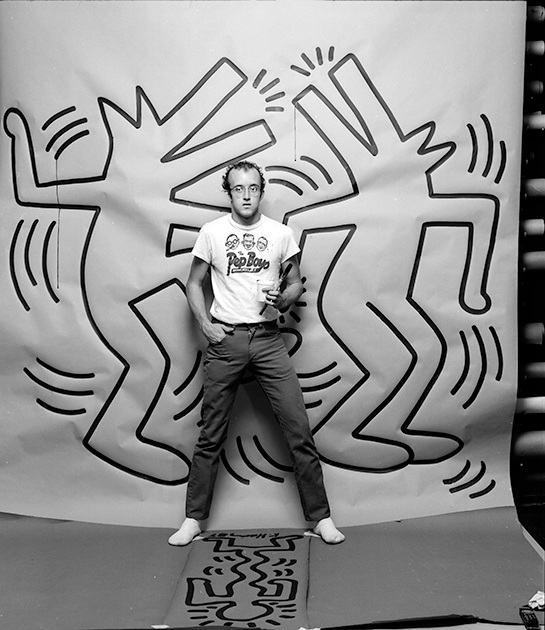
Haring’s use of canine imagery reflects the politically charged status of both dogs and gay men in New York at the time. In the 1970’s public anxiety about the number of dogs in the city exploded. Fueled by racism and gentrification, public health campaigns pushed for dog owners to clean up after their pets, and ‘put children before dogs’. The subtext of the campaigns was not lost on the gay community, as it echoed the homophobic public discourse around gay sex, becoming increasingly visible as liberation movements grew in power. Haring was not alone in using the dog as an emblem of queer resistance, and was joined in appropriating this symbolism by David Wojnarowicz, Jenny Holzer, and Martin Wong. Each artist used the dog as subject to challenge the surrounding narrative of fear and contagion. Haring mocks the hypocritical nature of larger society, who flippantly reject the unknown. Within this context, Haring’s Dog not only reflects the need for voices against injustice but highlights a period of creative revolution against the dehumanization of gay desire. Despite his captivating contemporaneity, Haring was also a keen student of art history and culture in general. In appropriating art and figures of the past to his own current interests, Haring has given us a fascinating and multi-faceted piece. Looking at both the graffiti he lived with everyday and the hieroglyphs of Ancient Egypt, Haring found a means to translate his own ideas into the visual field. The figure of the dog can be interpreted as referencing the Ancient Egyptian god Anubis. Anubis being the God of the afterlife brings with it a loaded significance amongst the AIDS-afflicted East Village community within which Haring was one of its most visible spokespersons. That the Ancient Egyptians covered many of their most magnificent architectural constructions with hieroglyphs must have seemed like an apt vindication for Haring’s own propensity for covering every surface he encountered with his signature vivacious scrawls.
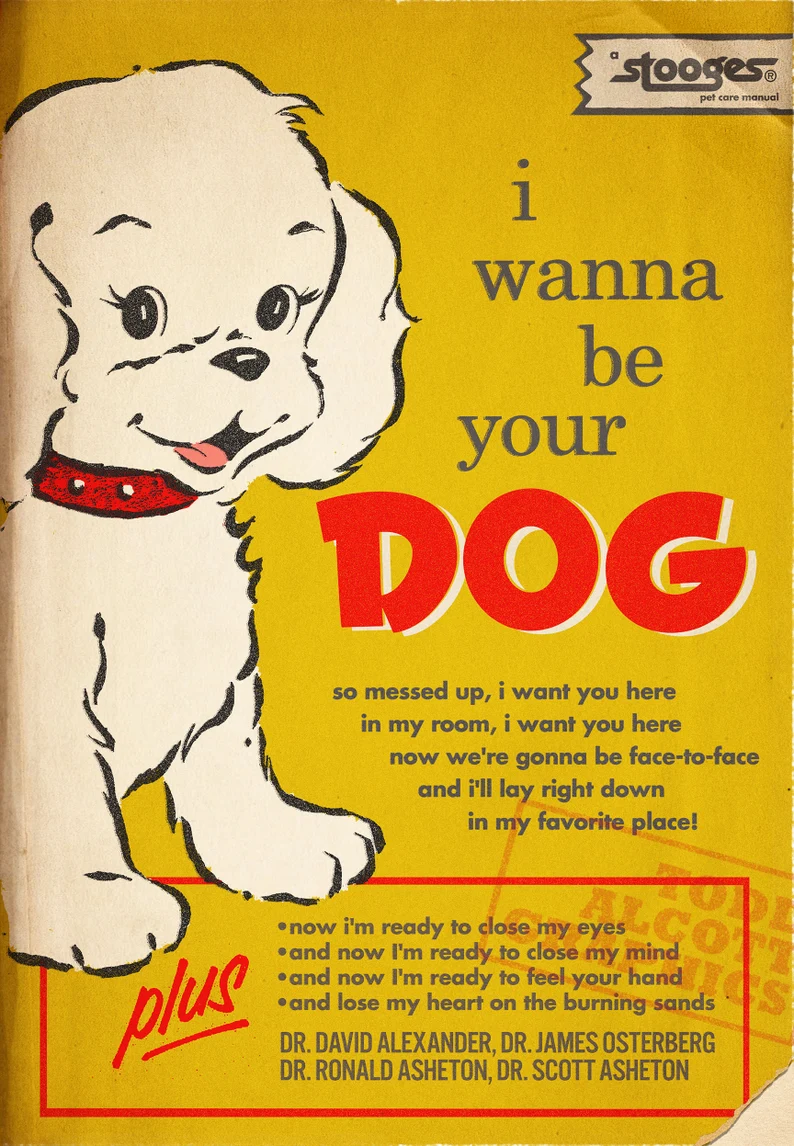
Many of Haring’s most cherished and iconic motifs are found in Dog: the vibrant child, the television, the dog, and the promiscuous man all come to life. The iconography of the piece is filled with representations of multiple interactions between man and dog, often with comedic role reversals. One is also reminded of the rebellious edge of The Stooges’ I Wanna Be Your Dog; that Haring was great friends with the song’s writer and singer Iggy Pop is no coincidence and speaks volumes of Haring’s ability to transgress the barriers between art, life, and popular culture. Such broad appeal and intrepid creativity is what made him one of the most fascinating and influential figures of the eighties. Just like Haring, the three figures in Dog have a bravura and boldness to them. They seem capable of leaping into dance at any moment. The impressive energy of Dog, combined with the piece’s protean influences and interpretations, enables the work to continue resonating with relevance and impact for the contemporary viewer of today.
Keith Haring first released a black and white lithograph in 1985, in an edition of 40 + 10 AP.
1. Dog (Lithograph)
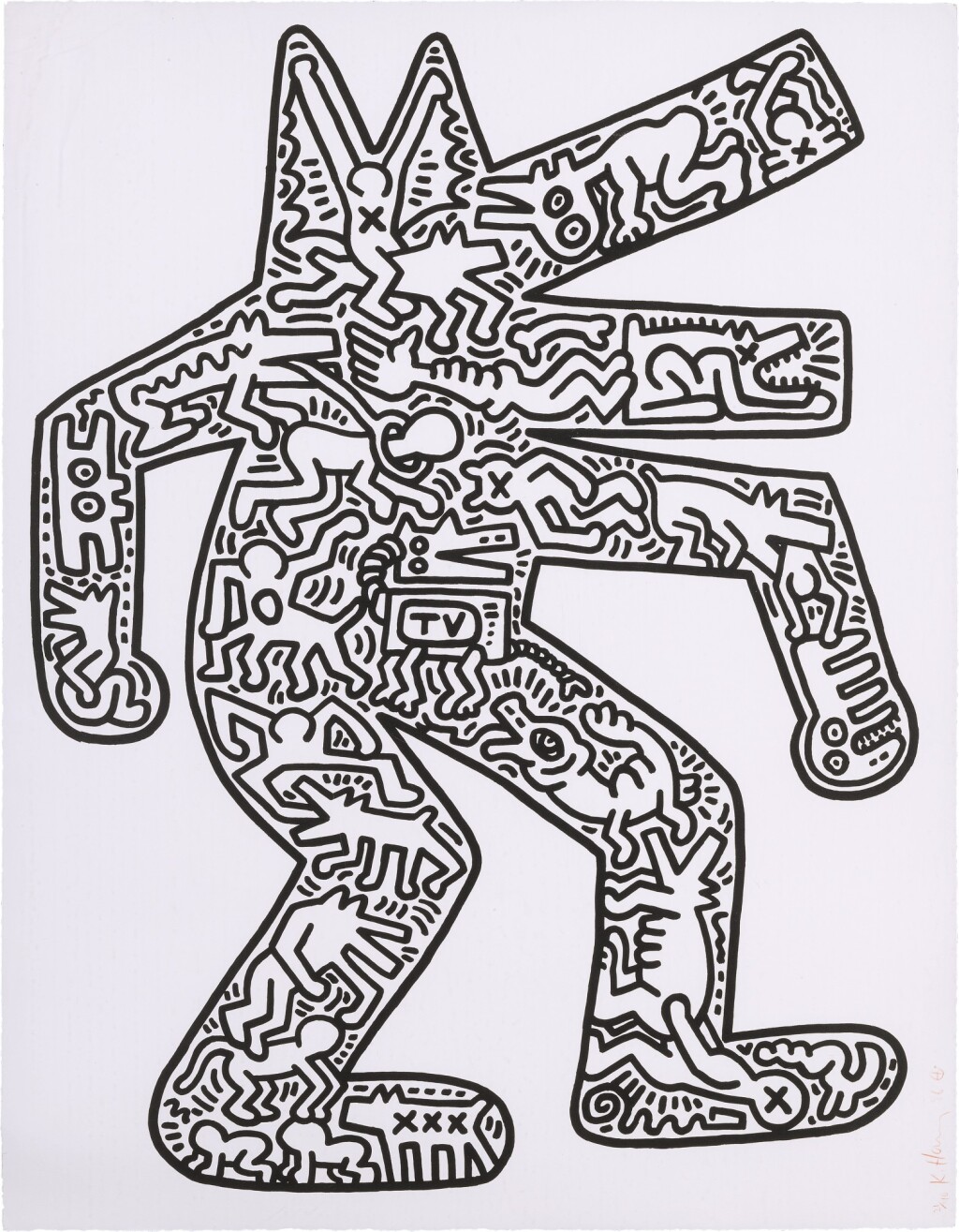
The Dog lithographic edition came to fruition due to a dilemma of Haring’s. The artist had compiled a series of drawings to accompany a text written by the artist Brion Gysin, which they intended to be published together in a book titled Fault Lines. However, due to the explicit nature of these illustrations, Haring found difficulty in locating a publisher. In seeking help, he turned to Jörg Schellmann, an established leader in art publishing. Schellmann agreed to publish the book on one condition: that Haring produce another edition with him. From this, the Dog edition was born, a print that has amassed notable popularity over the years. Schellman’s willingness to support artists’ creative concepts marked him as a notable art publisher and allowed for the production of innovative and exciting editions.
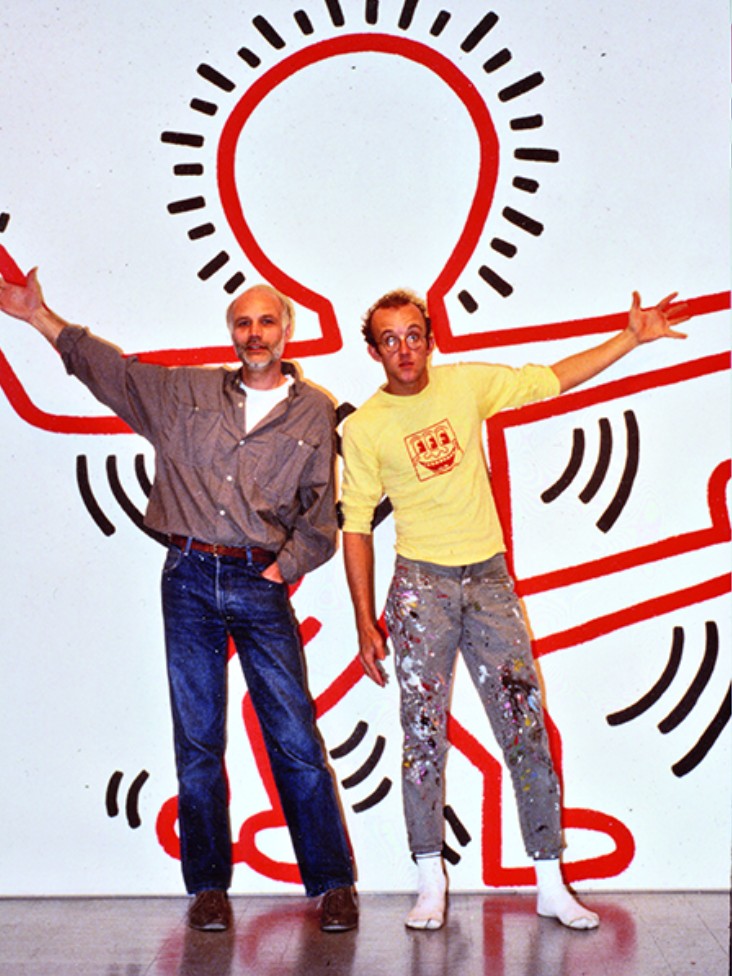
Keith Haring exhibition at Edition Schellmann, Munich, 1985. Image: © Schellmann Art, Artwork: © The Keith Haring Foundation
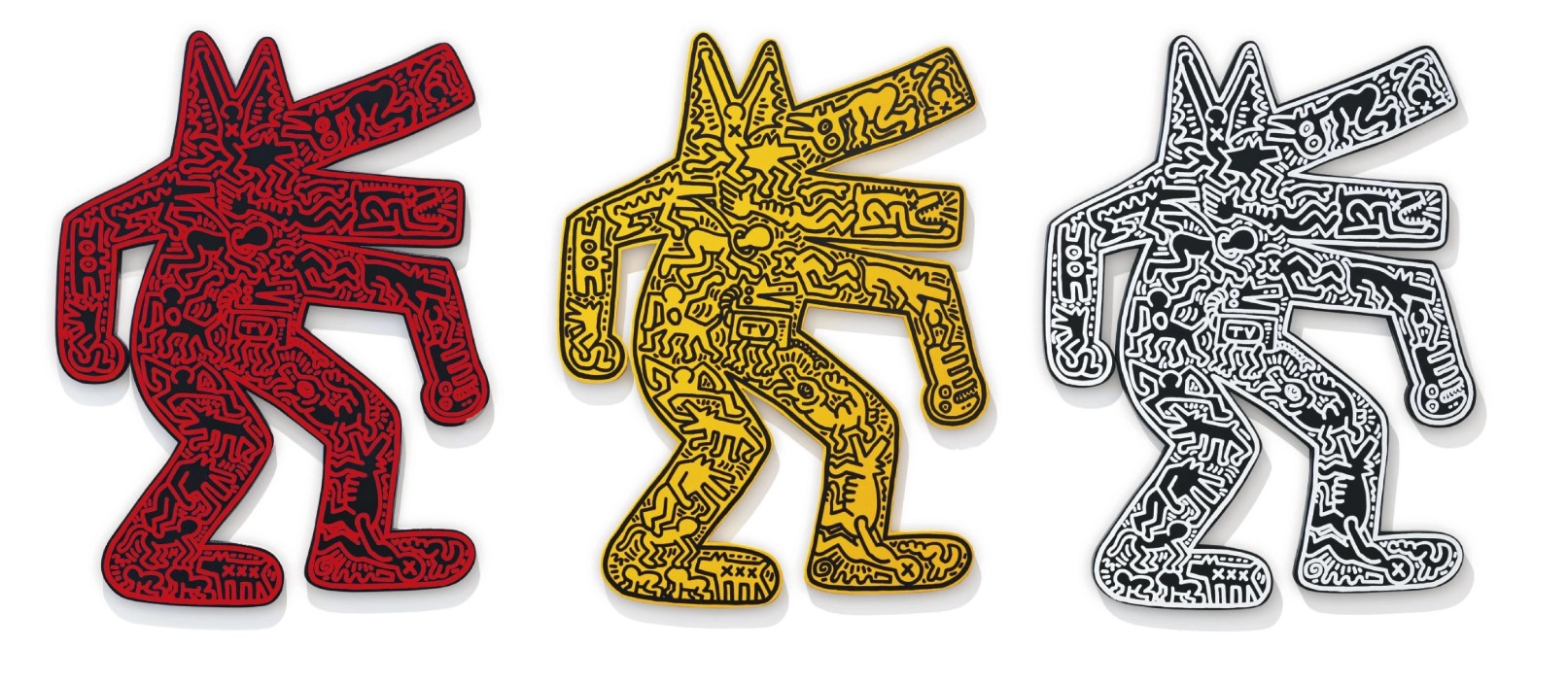
He then released another Dog in painted plywood in 1986 in three different colorways: Red, Yellow, and black.
2. Dog (Plywood)
2026 Auction Results
Dog (L. 48-49), 1985
Van Ham Cologne: 11 June 2026
Estimated: EUR 50,000 – 70,000
EUR 85,800 / USD 100,385
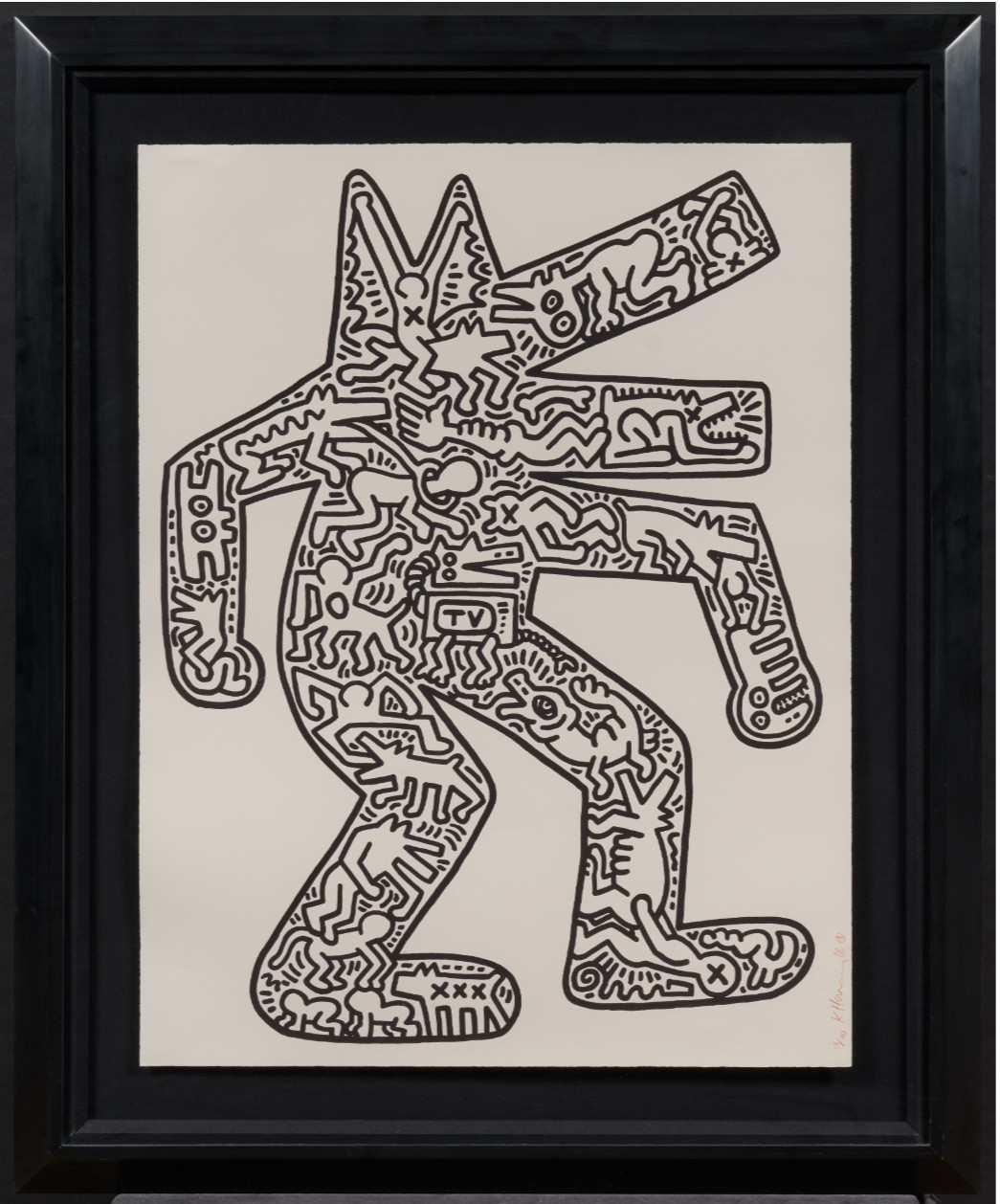
KEITH HARING (1958 Kutztown, PA/USA–1990 New York)
Dog (Littmann p. 48), 1986
Lithograph on rag paper
Signed, dated and numbered 39/40
2025 Auction Results
Dog (Red), 1986
Phillips New-York: 21 October 2025
Estimated: USD 250,000 – 350,000
USD 335,400
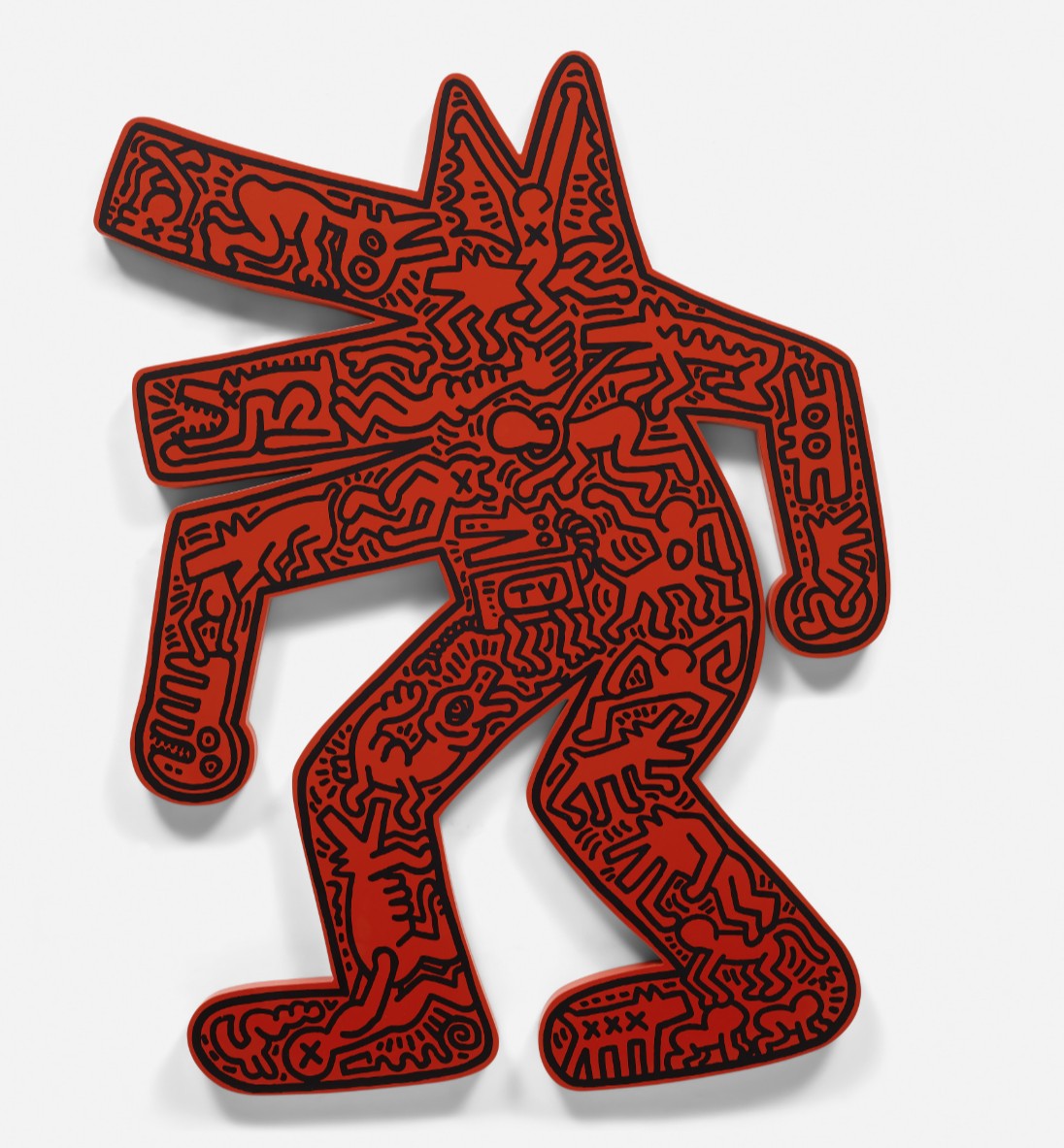
Unique multiple comprised of screenprint in black on red enamel-painted and shaped plywood
One of 3 unique color variant trial proofs
The total edition was 35 comprising 15 white on black, 10 red on black, 10 black on yellow, and 7 artist’s proofs
Published by Edition Schellmann, Munich and New York
Dog (Black), 1986
Sotheby’s New-York: 16 May 2025
Estimated: USD 250,000 – 350,000
USD 406,400
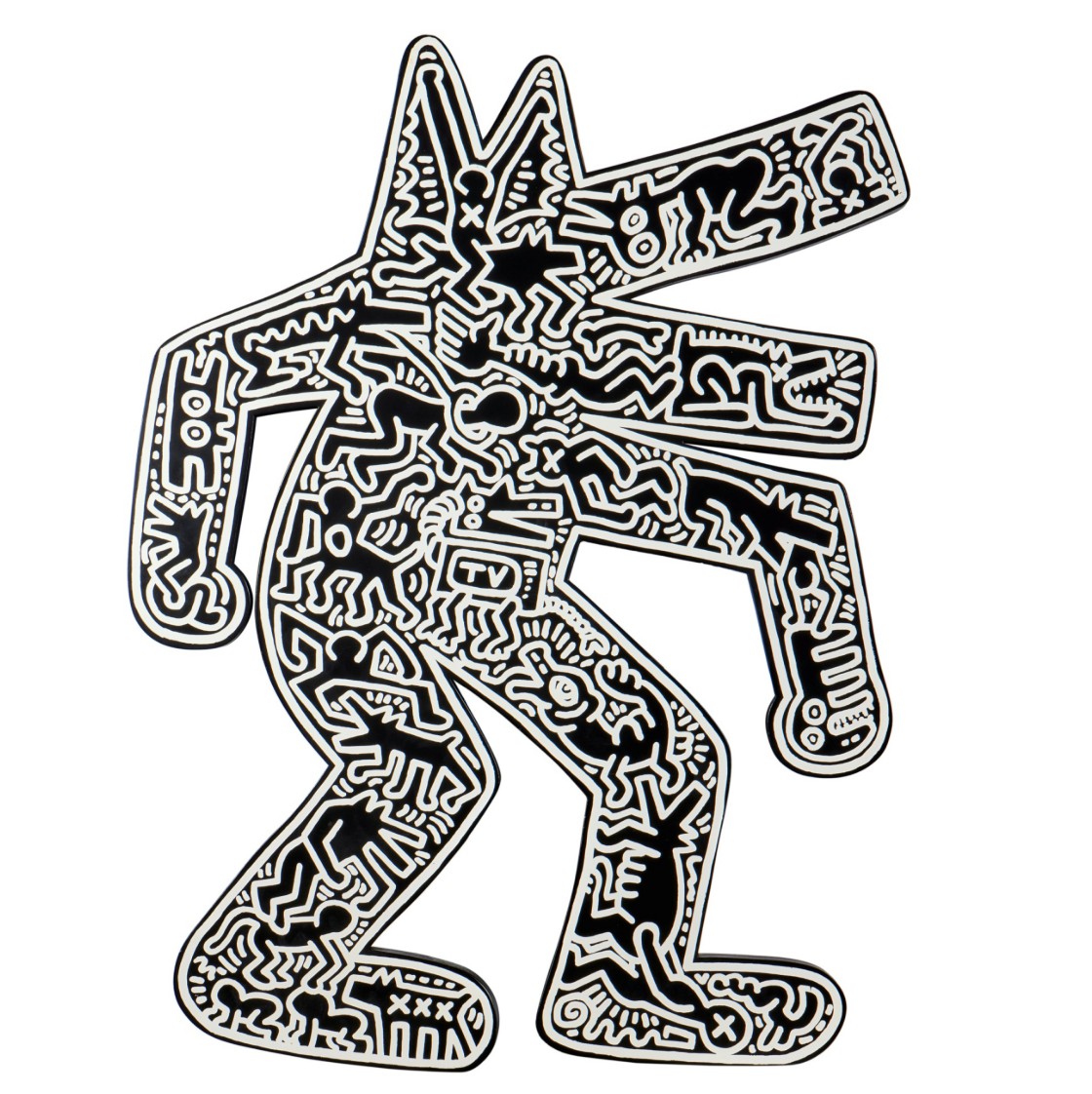
KEITH HARING (1958 – 1990)
Dog, 1986
Screenprint on plywood
Signed, dated 86 and numbered 11/15 (on the accompanying metal plaque)
This work is number 11 from the edition of 15 in white
Total edition includes 10 in yellow, 10 in red and 7 artist proofs
Dog (Yellow), 1986
Sotheby’s New-York: 26 February 2025
Estimated: USD 250,000 – 350,000
USD 406,400
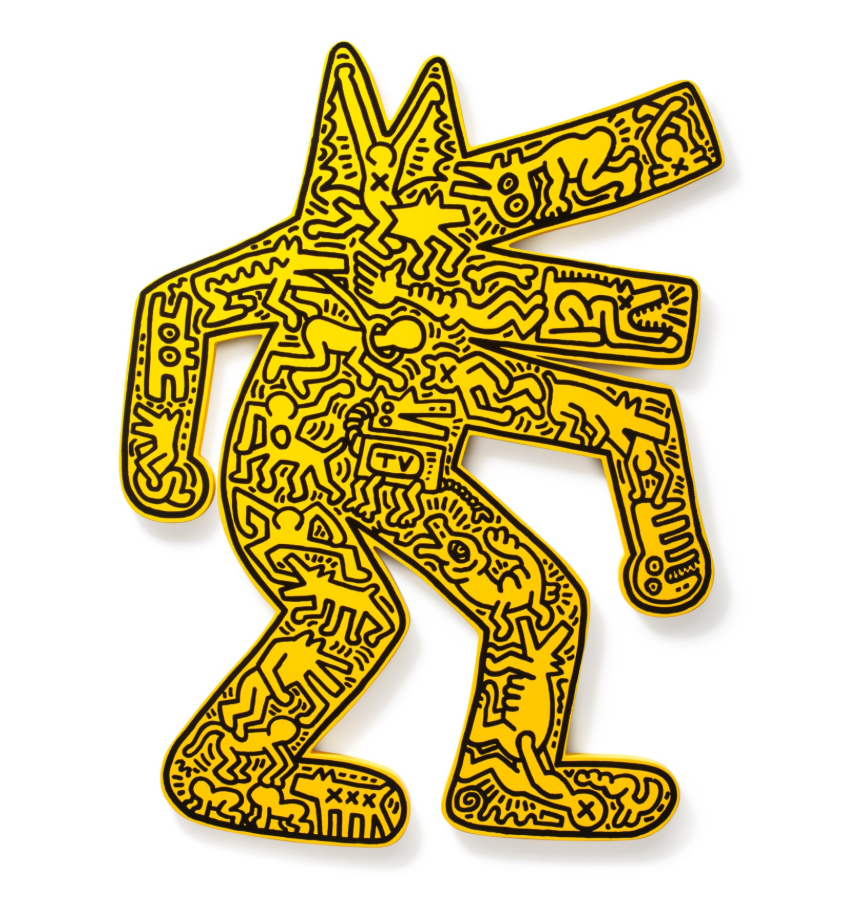
KEITH HARING (1958 – 1990)
Dog, 1986
Screenprint on plywood
Signed, dated and numbered 1/10 (on the accompanying metal plaque)
This work is number 1 from the edition of 10 in yellow
(total edition includes 15 in white, 10 in red and 7 artist’s proofs)
2024 Auction Results
#1. Dog (Yellow), 1986
Phillips London: 6 June 2024
Estimated: GBP 200,000 – 300,000
GBP 355,600 / USD 453,390
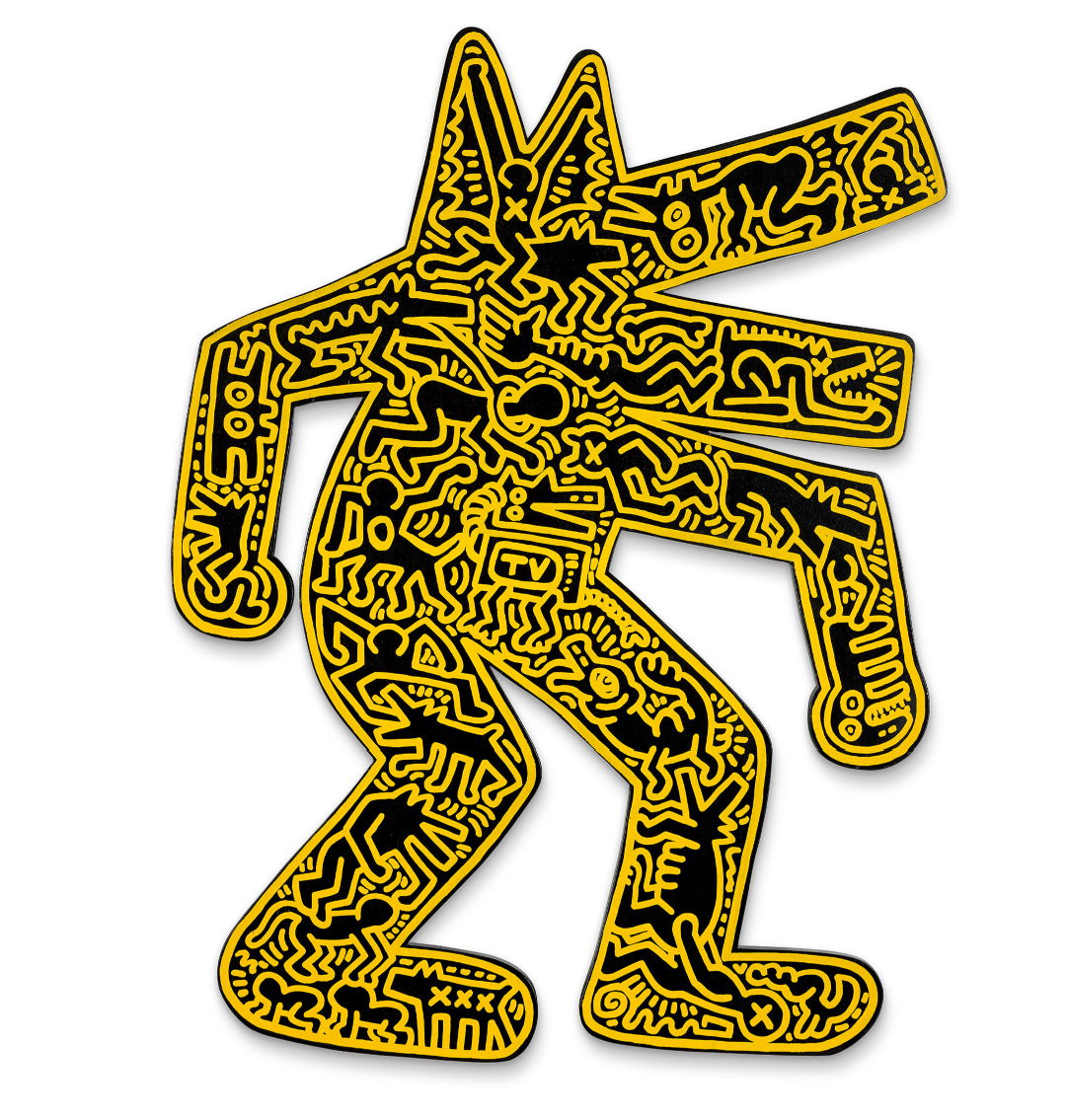
KEITH HARING
Dog, 1986
Unique multiple comprised of screenprint in yellow on black enamel painted plywood
Signed, dated, dedicated ‘FOR JÖRG’ and annotated ‘TRIAL PROOF’ in silver ink on the reverse
A unique trial proof before the total edition of 35
Comprising 15 white on black, 10 red on black, 10 black on yellow, and 7 artist’s proofs
#2. Dog (L. 48-49), 1985
Phillips London: 17 January 2024
Estimated: GBP 50,000 – 70,000
GBP 95,250 / USD 120,640
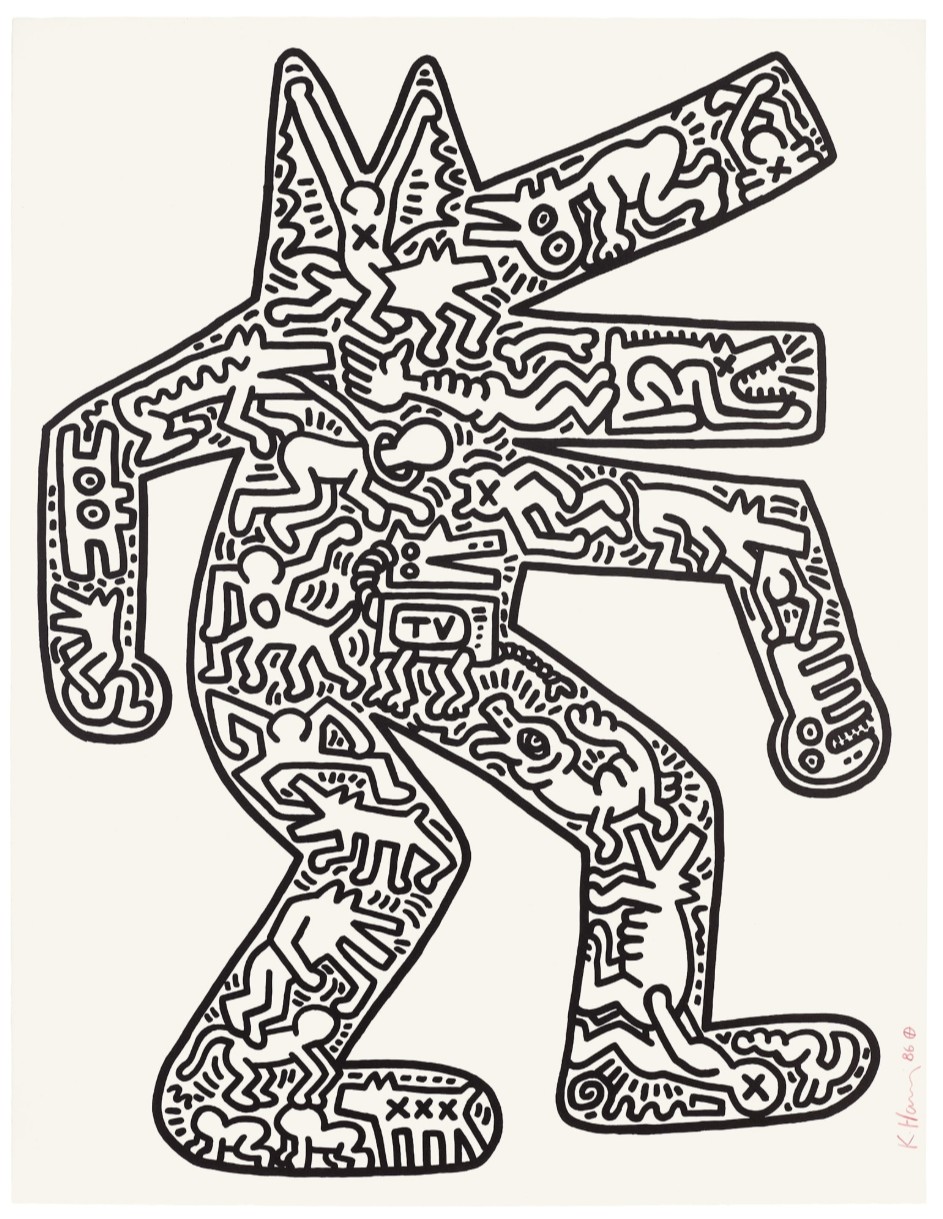
#3. Dog (L. 48-49), 1985
Phillips Hong-Kong: 14 June 2024
Estimated: HKD 500,000 – 700,000
HKD 889,000 / USD 113,828
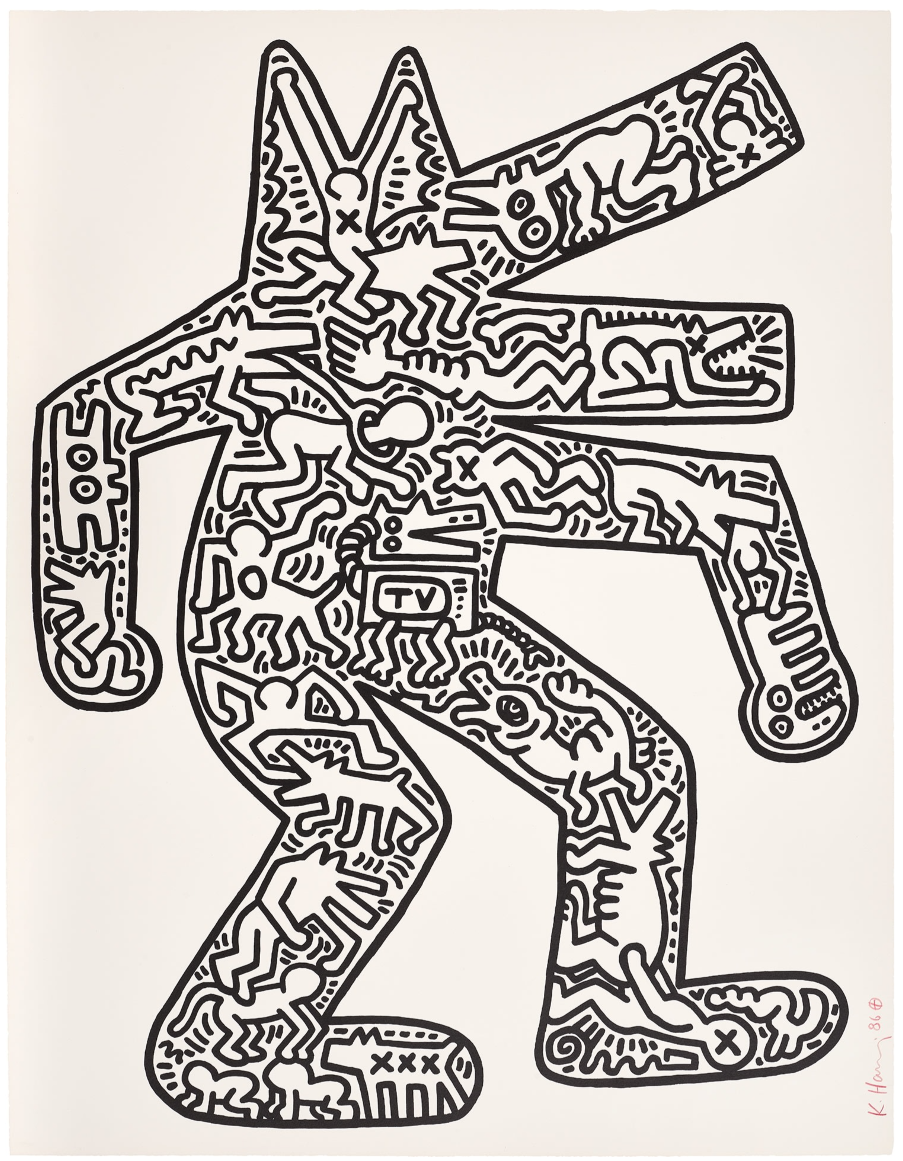
KEITH HARING
Dog (L. pp. 48-49), 1986-87
Lithograph on BFK Rives paper
Signed and dated in red pencil
An unnumbered proof aside from the edition of 40 in Arabic numerals
There were also 10 artist’s proofs in Roman numerals
#4. Dog (L. 48-49), 1985
Phillips New-York: 22 October 2024
Estimated: USD 60,000 – 90,000
USD 101,600
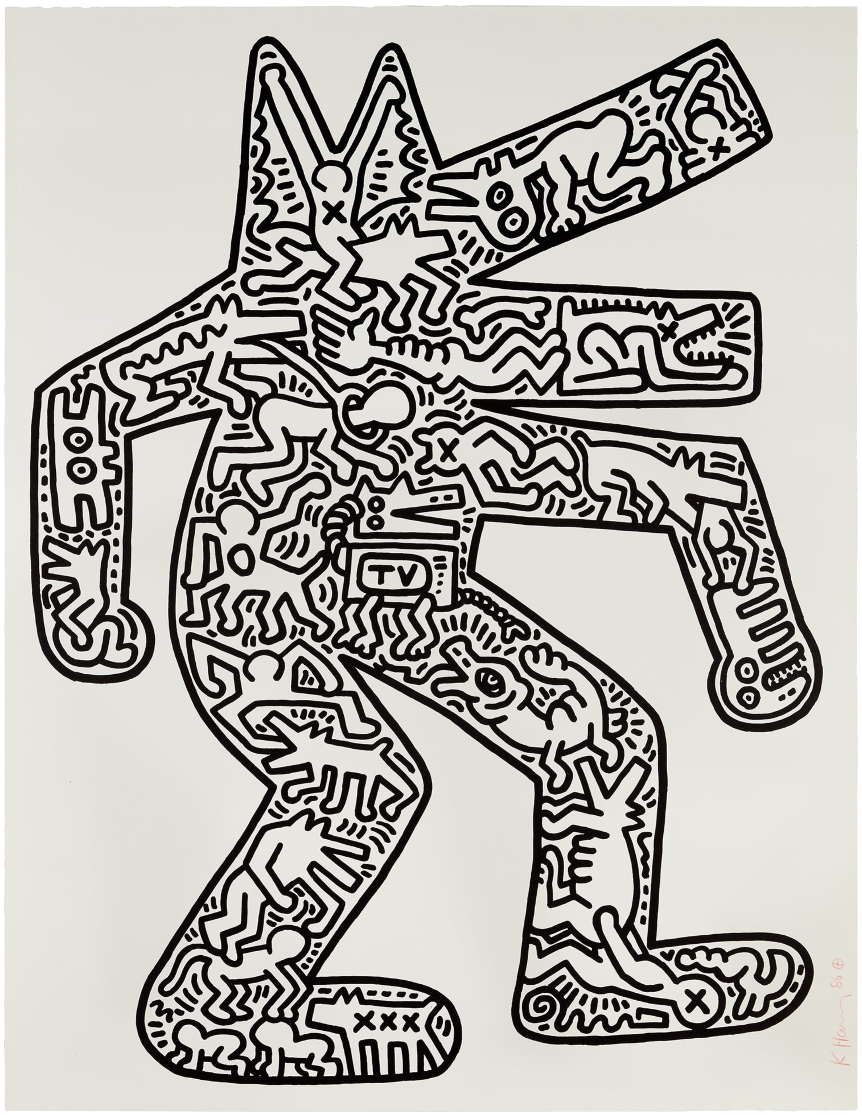
KEITH HARING
Dog (L. pp. 48-49), 1986-87
Lithograph on Rives BFK paper
Sheet: 45 3/4 x 35 1/4 inches (116.2 x 89.5 cm)
Signed and dated in red pencil
An unnumbered proof aside from the edition of 40 in Arabic numerals
There were also 10 artist’s proofs in Roman numerals
#5. Dog (L. 48-49), 1985
Dorotheum Vienna: 7 May 2024
Estimated: EUR 50,000 – 70,000
EUR 78,000 / USD 83,995
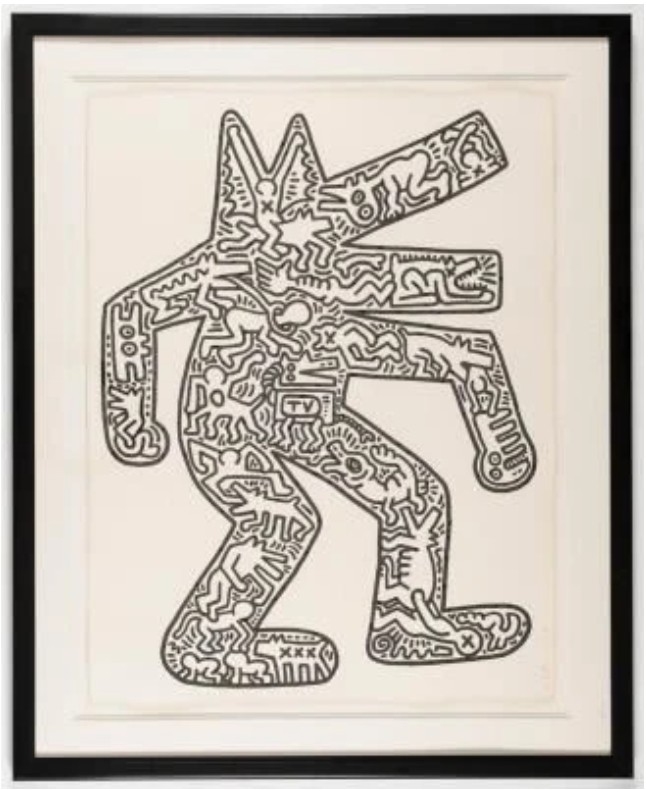
KEITH HARING (Kutztown 1958-1990 New York)
Dog, 1985/86
Lithograph on BFK Rives vellum,
Signed by hand in red pencil: K. Haring
Dated: (19)86 and numbered: 23/40
2023 Auction Results
Dog (Red), 1985
Sotheby’s New-York: 19 April 2023
Estimated: USD 200,000 – 300,000
USD 450,000
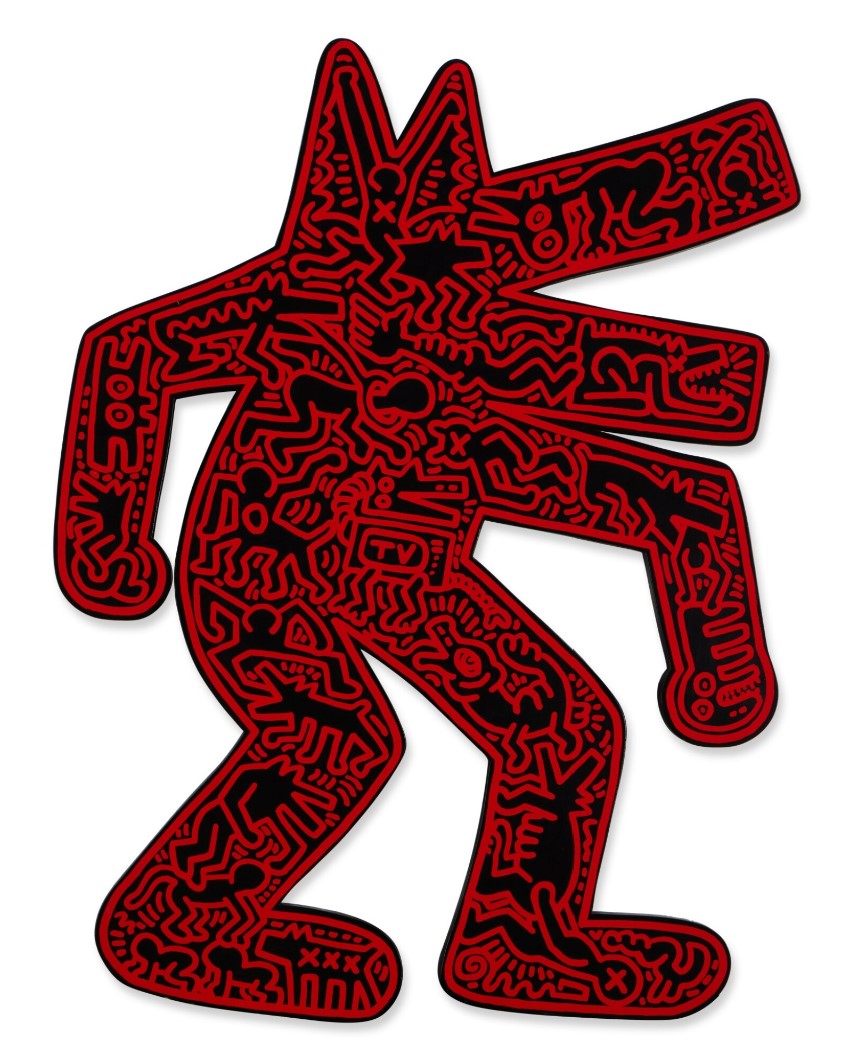
KEITH HARING (1958 – 1990)
Dog, 1986
Screen-print in red on black painted plywood
This work is presumably from the edition of 10 in red
Total edition includes 15 in white, 10 in yellow and 7 artist’s proofs
Accompanied by a metal plaque with the signature in black marker, date and numbering ’10/15′
Dog (L. 48-49), 1985
Christie’s New-York: 28 October 2023
Estimated: USD 70,000 – 100,000
USD 100,800
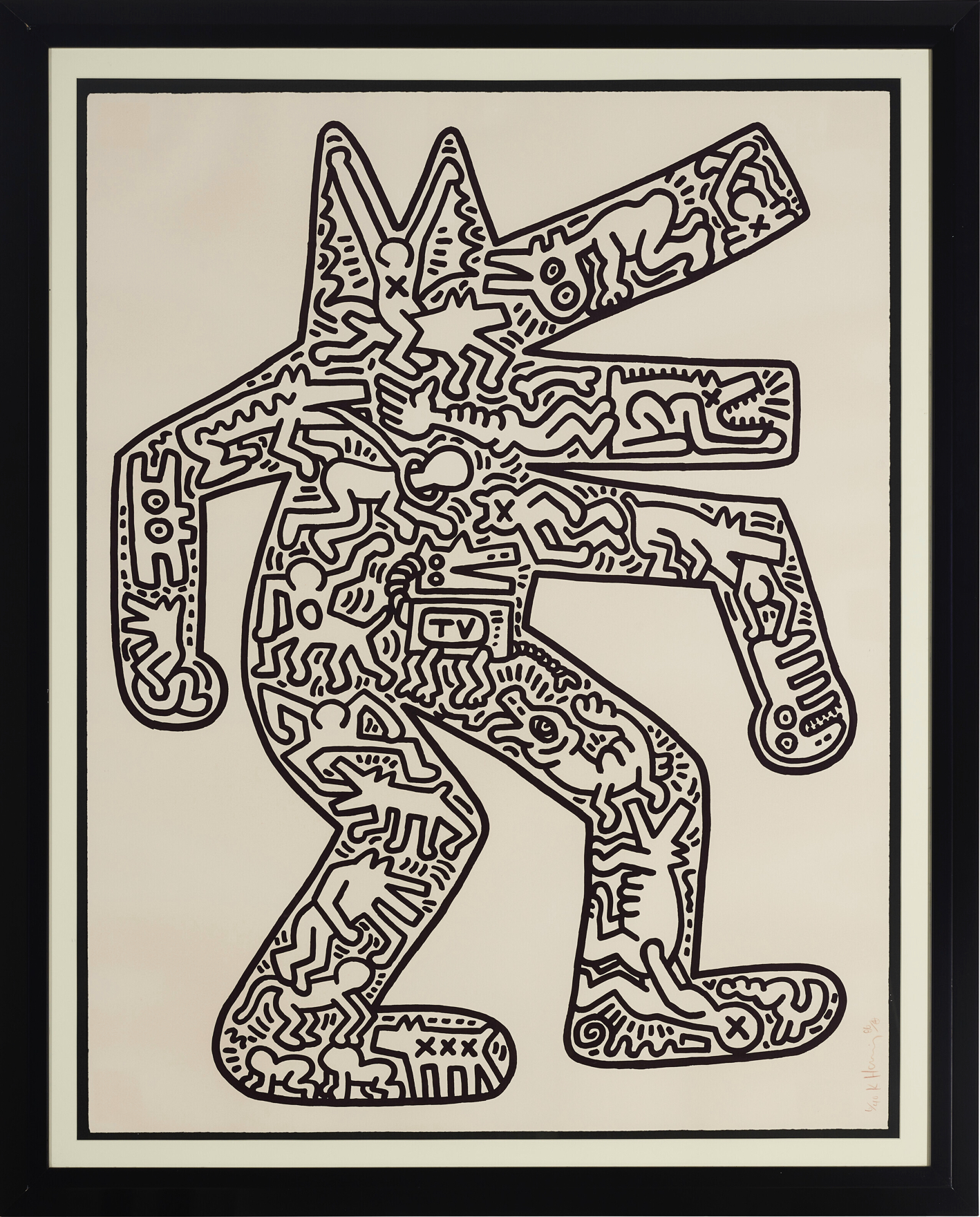
KEITH HARING (1958-1990)
Dog, 1985
Lithograph on Rives BFK paper
Signed and dated ’86’ in red pencil (slightly faded)
Numbered 6/40
Dog (Lithograph)
Dog
Medium: Lithograph on BFK Rives paper
Year: 1985
Image: 43 1/4 x 32 5/8 inches (110×83 cm)
Sheet: 45 7/8 x 35 3/8 inches (116.4 x 89.8 cm)
Edition: 40
Artist’s Proofs: 10 AP (numbered in Roman numerals)
Publisher: Edition Schellmann, Munich and New York
Literature: Littmann pp. 48-49
Signed and dated in red pencil
Auction Results
Van Ham Cologne: 11 June 2026
Estimated: EUR 50,000 – 70,000
EUR 85,800 / USD 100,385
KEITH HARING (1958 Kutztown, PA/USA–1990 New York)
Dog (Littmann p. 48), 1986
Lithograph on rag paper
Signed, dated and numbered 39/40
XXXXXXXXXX
Phillips New-York: 22 October 2024
Estimated: USD 60,000 – 90,000
USD 101,600
KEITH HARING
Dog (L. pp. 48-49), 1986-87
Lithograph on Rives BFK paper
Sheet: 45 3/4 x 35 1/4 inches (116.2 x 89.5 cm)
Signed and dated in red pencil
An unnumbered proof aside from the edition of 40 in Arabic numerals
There were also 10 artist’s proofs in Roman numerals
XXXXXXXXXX
Phillips Hong-Kong: 14 June 2024
Estimated: HKD 500,000 – 700,000
HKD 889,000 / USD 113,828
KEITH HARING
Dog (L. pp. 48-49), 1986-87
Lithograph on BFK Rives paper
Signed and dated in red pencil
An unnumbered proof aside from the edition of 40 in Arabic numerals
There were also 10 artist’s proofs in Roman numerals
XXXXXXXXXX
Dorotheum Vienna: 7 May 2024
Estimated: EUR 50,000 – 70,000
EUR 78,000 / USD 83,995
KEITH HARING (Kutztown 1958-1990 New York)
Dog, 1985/86
Lithograph on BFK Rives vellum,
Signed by hand in red pencil: K. Haring
Dated: (19)86 and numbered: 23/40
XXXXXXXXXX
Phillips London: 17 January 2024
Estimated: GBP 50,000 – 70,000
GBP 95,250 / USD 120,640
Christie’s New-York: 28 October 2023
Estimated: USD 70,000 – 100,000
USD 100,800
KEITH HARING (1958-1990)
Dog, 1985
Lithograph on Rives BFK paper
Signed and dated ’86’ in red pencil (slightly faded)
Numbered 6/40
XXXXXXXXXX
Phillips London: 15 June 2022
Estimated: GBP 40,000 – 60,000
GBP 107,100 / USD 128,942
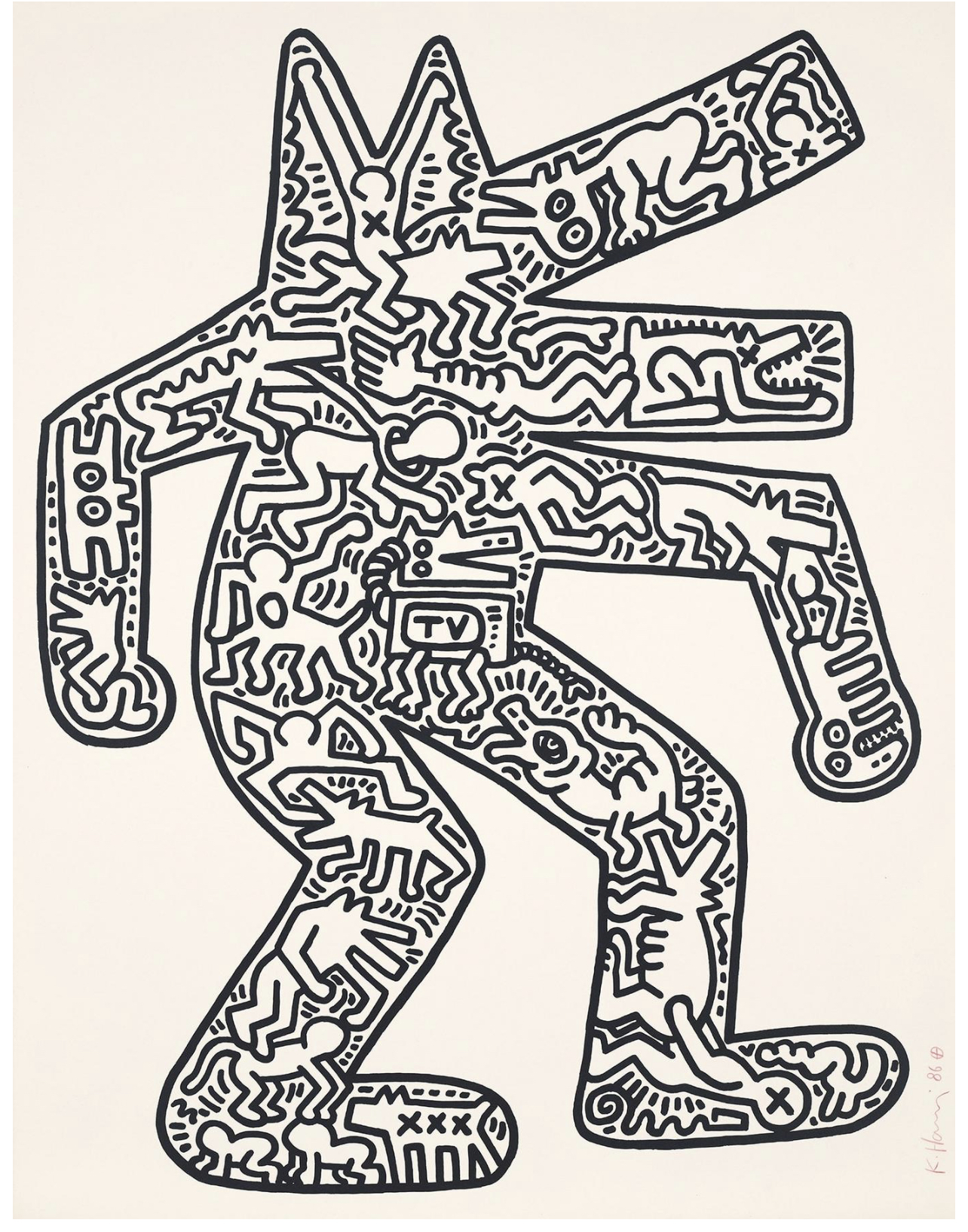
KEITH HARING
Dog (L. 48-49), 1986-87
Lithograph, on BFK Rives paper
Signed and dated in red pencil
A proof aside the edition of 40
XXXXXXXXXX
SBI Art Auction: 24 April 2021
Estimated: JPY 5,000,000 – 8,000,000
JPY 8,050,000 / USD 74,730
Keith HARING
Dog (Littmann p.49), 1985 – 1986
Lithograph
Signed, dated and numbered on the lower right
An Artist’s Proof aside from the edition of 40
XXXXXXXXXX
Sotheby’s New-York: 22 April 2021
Estimated: USD 40,000 – 60,000
USD 88,200
KEITH HARING
Dog (Littmann p. 48-49), 1985
Signed in red pencil, dated ’86’ and numbered 21/40
XXXXXXXXXX
Phillips London: 6 June 2019
Estimated: GBP 30,000 – 50,000
GBP 50,000 / USD 63,610
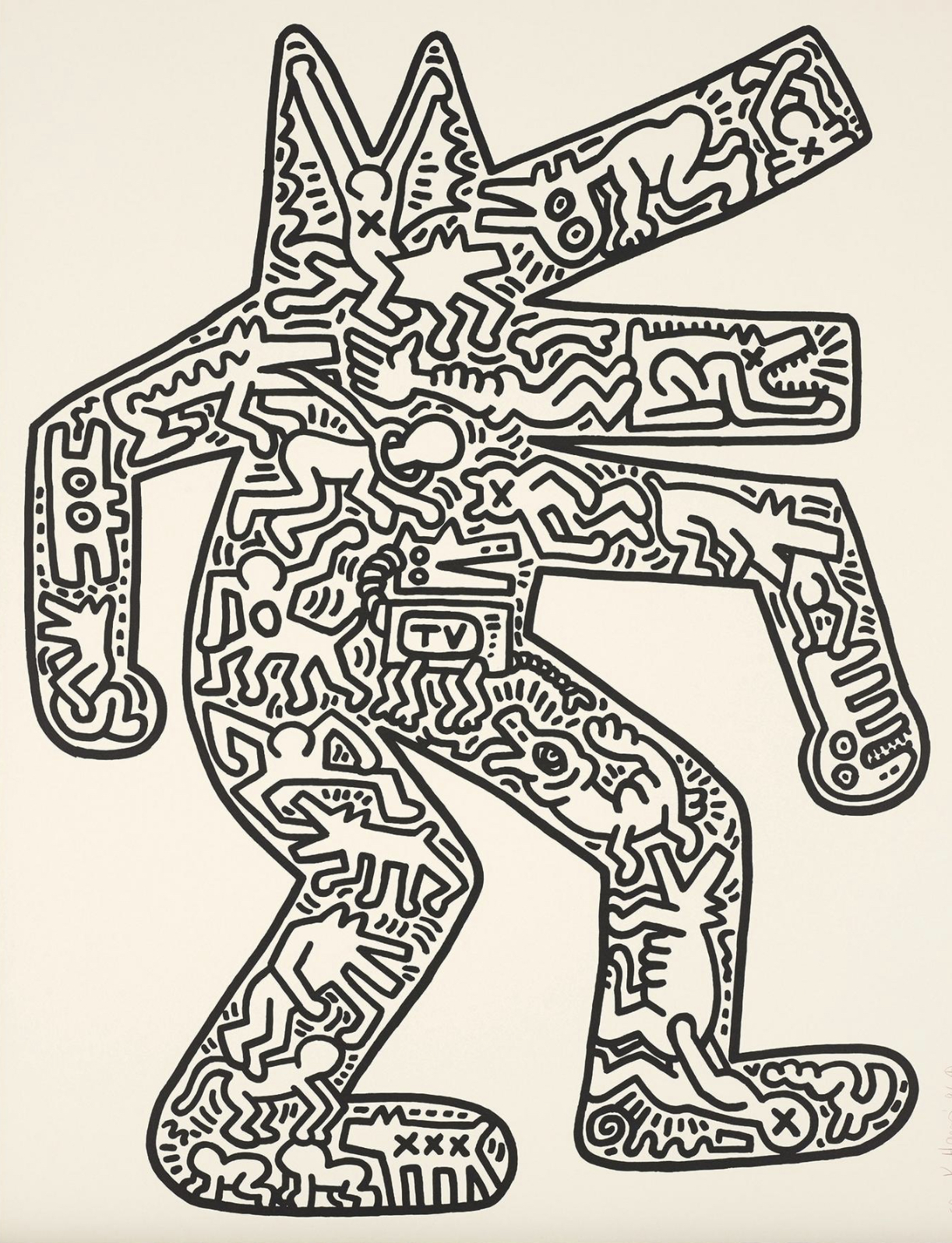
KEITH HARING
Dog, 1986-87
Lithograph, on BFK Rives paper, with full margins.
Signed, dated and annotated ‘EP’ in red pencil
(an ‘editor’s proof’, the edition was 40 and 10 artist’s proofs in Roman numerals)
Dog (Plywood)
Dog
Medium: Plywood painted in yellow enamel with screen-print in black
Year: 1986
Size: 50 3/8 x 37 3/4 x 1 5/8 inches (128x96x4 cm)
Edition: 35 (15 white on black, 10 red on black, 10 yellow on black)
Artist’s Proofs: 7 AP
Trial Proofs: 3 unique color variants
Publisher: Edition Schellmann, Munich and New York
Signed, dated and numbered in black felt-tip pen on the accompanying metal plaque
Auction Results
Phillips New-York: 21 October 2025
Estimated: USD 250,000 – 350,000
USD 335,400
Unique multiple comprised of screenprint in black on red enamel-painted and shaped plywood
One of 3 unique color variant trial proofs
The total edition was 35 comprising 15 white on black, 10 red on black, 10 black on yellow, and 7 artist’s proofs
Published by Edition Schellmann, Munich and New York
Sotheby’s New-York: 16 May 2025
Estimated: USD 250,000 – 350,000
USD 406,400
KEITH HARING (1958 – 1990)
Dog, 1986
Screenprint on plywood
Signed, dated 86 and numbered 11/15 (on the accompanying metal plaque)
This work is number 11 from the edition of 15 in white
Total edition includes 10 in yellow, 10 in red and 7 artist proofs
Sotheby’s New-York: 26 February 2025
Estimated: USD 250,000 – 350,000
USD 406,400
KEITH HARING (1958 – 1990)
Dog, 1986
Screenprint on plywood
Signed, dated and numbered 1/10 (on the accompanying metal plaque)
This work is number 1 from the edition of 10 in yellow
(total edition includes 15 in white, 10 in red and 7 artist’s proofs)
Phillips London: 6 June 2024
Estimated: GBP 200,000 – 300,000
GBP 355,600 / USD 453,390
KEITH HARING
Dog, 1986
Unique multiple comprised of screenprint in yellow on black enamel painted plywood
Signed, dated, dedicated ‘FOR JÖRG’ and annotated ‘TRIAL PROOF’ in silver ink on the reverse
A unique trial proof before the total edition of 35
Comprising 15 white on black, 10 red on black, 10 black on yellow, and 7 artist’s proofs
Sotheby’s New-York: 19 April 2023
Estimated: USD 200,000 – 300,000
USD 450,000
KEITH HARING (1958 – 1990)
Dog, 1986
Screen-print in red on black painted plywood
This work is presumably from the edition of 10 in red
Total edition includes 15 in white, 10 in yellow and 7 artist’s proofs
Accompanied by a metal plaque with the signature in black marker, date and numbering ’10/15′
Bonhams London: 12 March 2020
Estimated: GBP 200,000 – 300,000
GBP 375,062 / USD 470,755
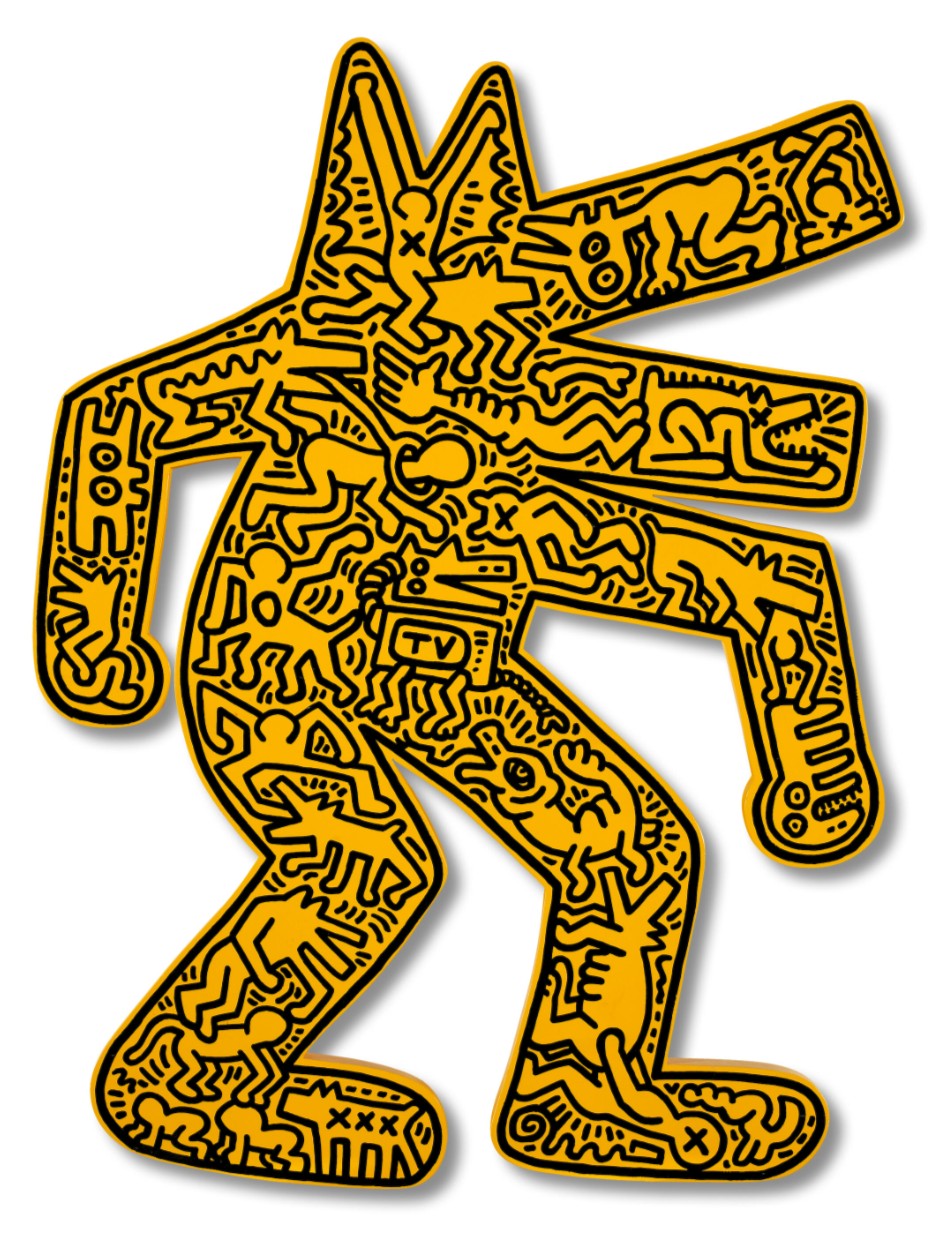
Enamel and silkscreen on plywood
Signed, dated 86 and numbered 8/10 on a label affixed to the reverse
Phillips London: 23 January 2020
Estimated: GBP 200,000 – 300,000
GBP 591,000 / USD 775,730
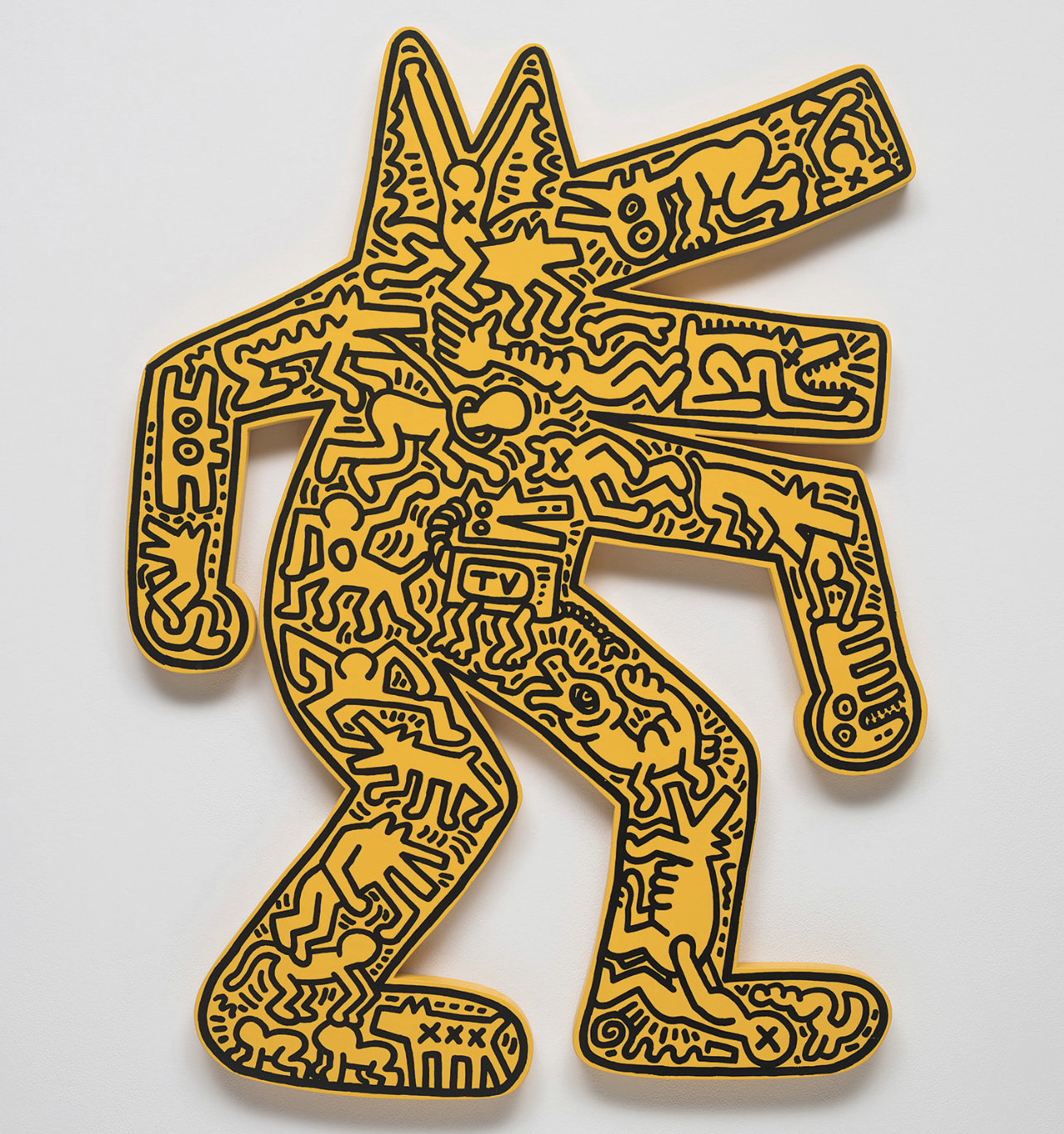
KEITH HARING
Dog, 1986
Plywood painted in yellow enamel with screen-print in black
Signed, dated and numbered 6/10 in black felt-tip pen on the accompanying metal plaque
Phillips London: 6 June 2019
Estimated: GBP 150,000 – 200,000
GBP 362,500 / USD 461,160
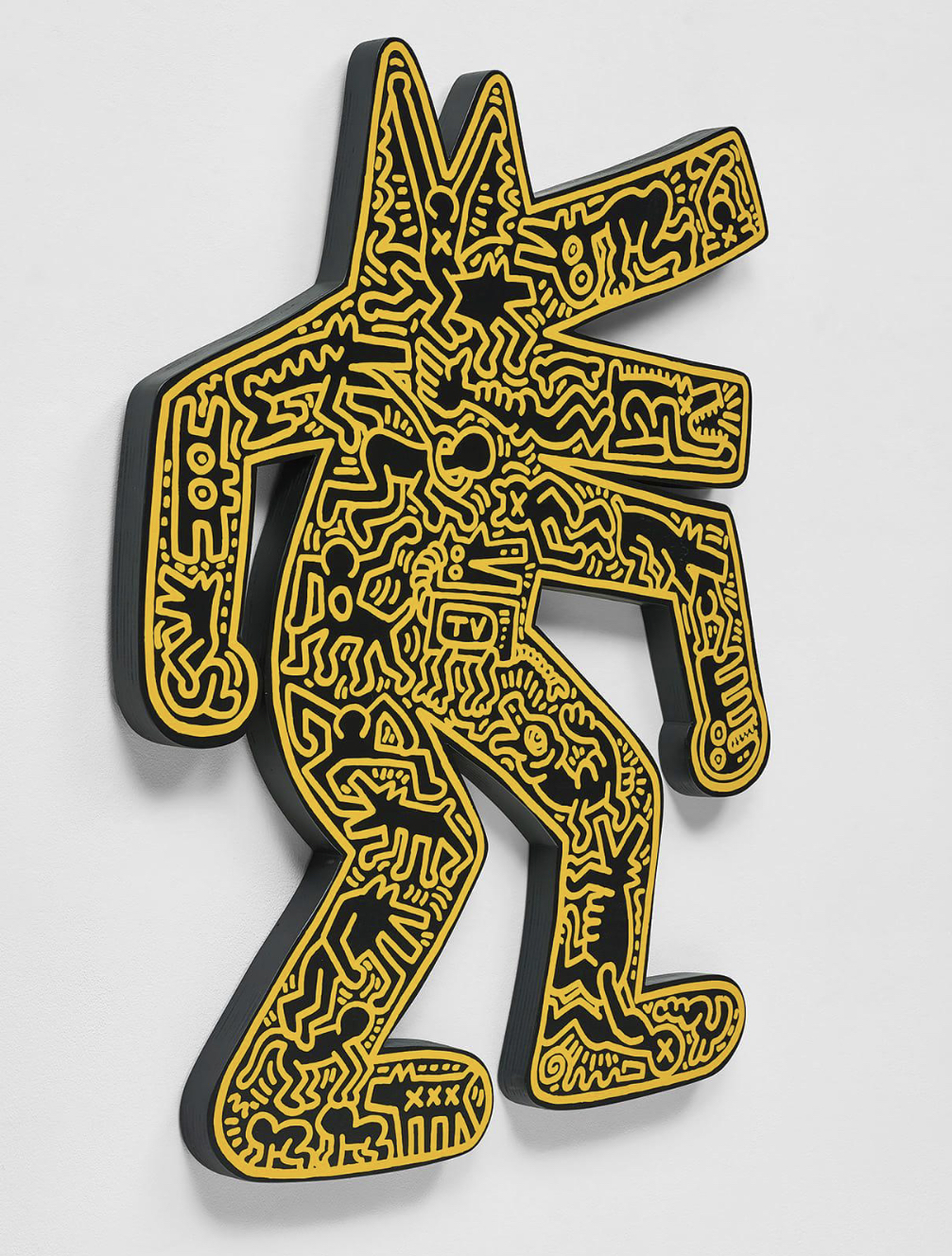
KEITH HARING
Dog, 1986
Unique screen-print in yellow on black enamel painted plywood
Signed, dated and annotated ‘TP’ in black felt-tip pen on the accompanying metal plaque
(one of 3 unique colour variant trial proofs before the total edition of 35
comprising 15 white on black, 10 red on black, 10 black on yellow, and 7 artist’s proofs)
Sotheby’s New-York: 19 May 2017
Estimated: USD 200,000 – 300,000
USD 432,500
KEITH HARING
Dog, 1986
Screen-print on plywood
Signed, dated 86 and numbered BAT on the reverse
This work is the bon à tirer from an edition of 15, plus 1 bon à tirer
Sotheby’s New-York: 13 May 2015
Estimated: USD 500,000 – 700,000
USD 1,690,000
KEITH HARING
Dog [Three Works], 1986
Screen-prints on plywood
i-ii. signed, dated 86 and numbered 4/10 on a plaque affixed to the reverse
iii. signed, dated 86 and numbered 9/15 on a plaque affixed to the reverse