2026 Fall New-York Marquee Auctions
Robert Indiana
Upcoming Lots
LOVE Wall, 1968
Herbert Lust: Collector, Scholar, Friend
Christie’s New-York: 17 November 2026
Estimated: USD 800,000 – 1,200,000
ROBERT INDIANA (1928-2018), LOVE Wall | Christie’s
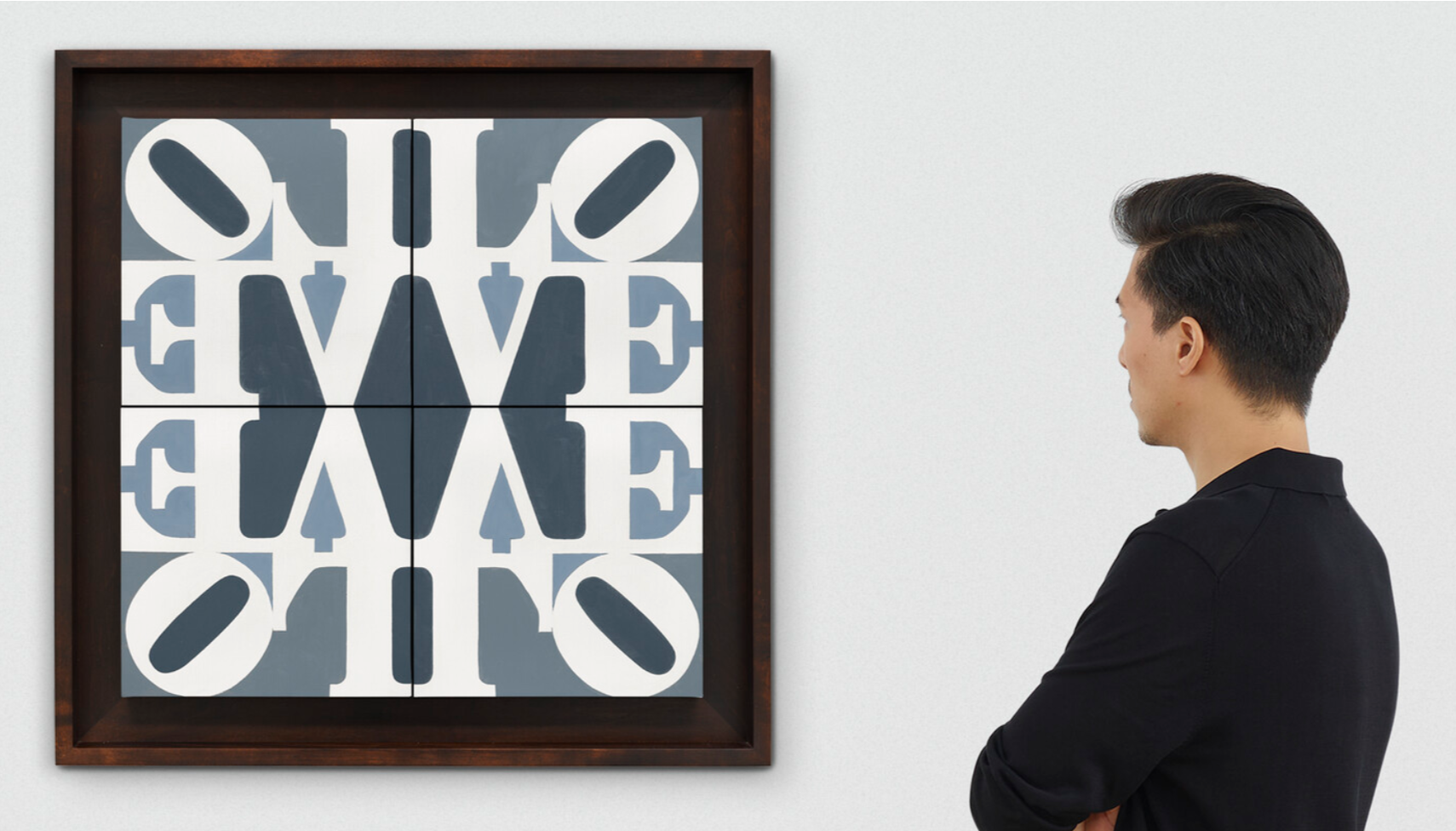
ROBERT INDIANA (1928-2018)
LOVE Wall, 1968
Oil on canvas, in four parts
Each: 12×12 inches (30.5 x 30.5 cm)
Overall: 24×24 inches (61×61 cm)
Stenciled with the artist’s initials ‘RI’ (on the reverse of the upper right canvas)
Stenciled with the date ’68’ (on the reverse of the upper left canvas)
LOVE (Red Faces Blue Sides), 1966-1998
Sotheby’s New-York: 17 November 2026
Estimated: USD 600,000 – 800,000
Robert Indiana | LOVE (Red Faces Blue Sides) | Contemporary Day
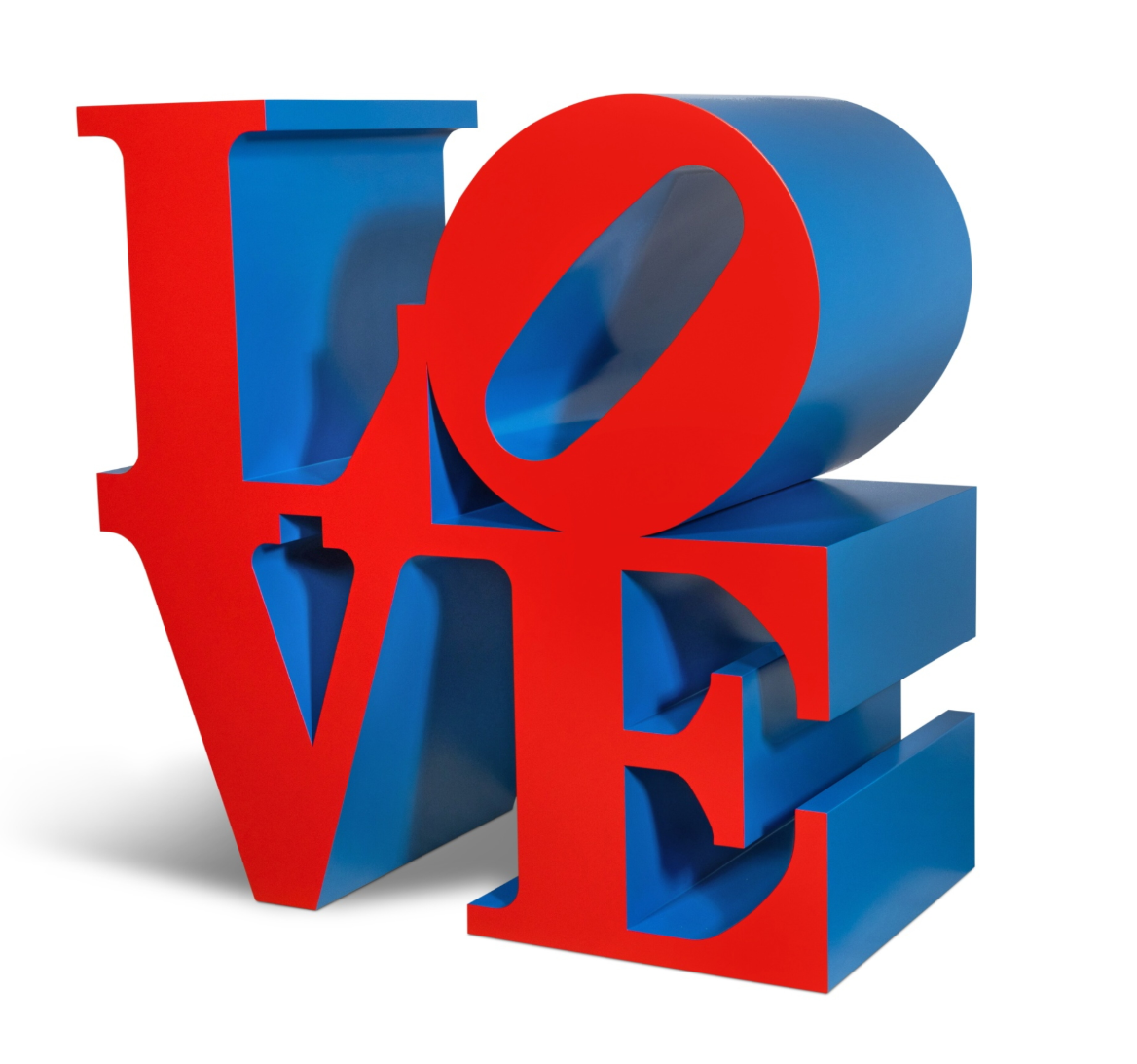
ROBERT INDIANA (1928 – 2018)
LOVE (Red Faces Blue Sides), 1966-1998
Polychromed aluminum
72x72x36 inches (182.9 x 182.9 x 91.4 cm)
Stamped with artist’s signature, date 1966-1998 and number AP 1/4 (on the interior edge of the E)
Conceived in 1966 and fabricated in 1998
This work is artist’s proof number 1 from an edition of 6 plus 4 artist’s proofs
Decade: Autoportrait 1962, 1971
Expanding Horizons: The Hedreen Collection
Sotheby’s New-York: 17 November 2026
Estimated: USD 400,000 – 600,000
Robert Indiana | Decade: Autoportrait 1962 | Contemporary Day Auction
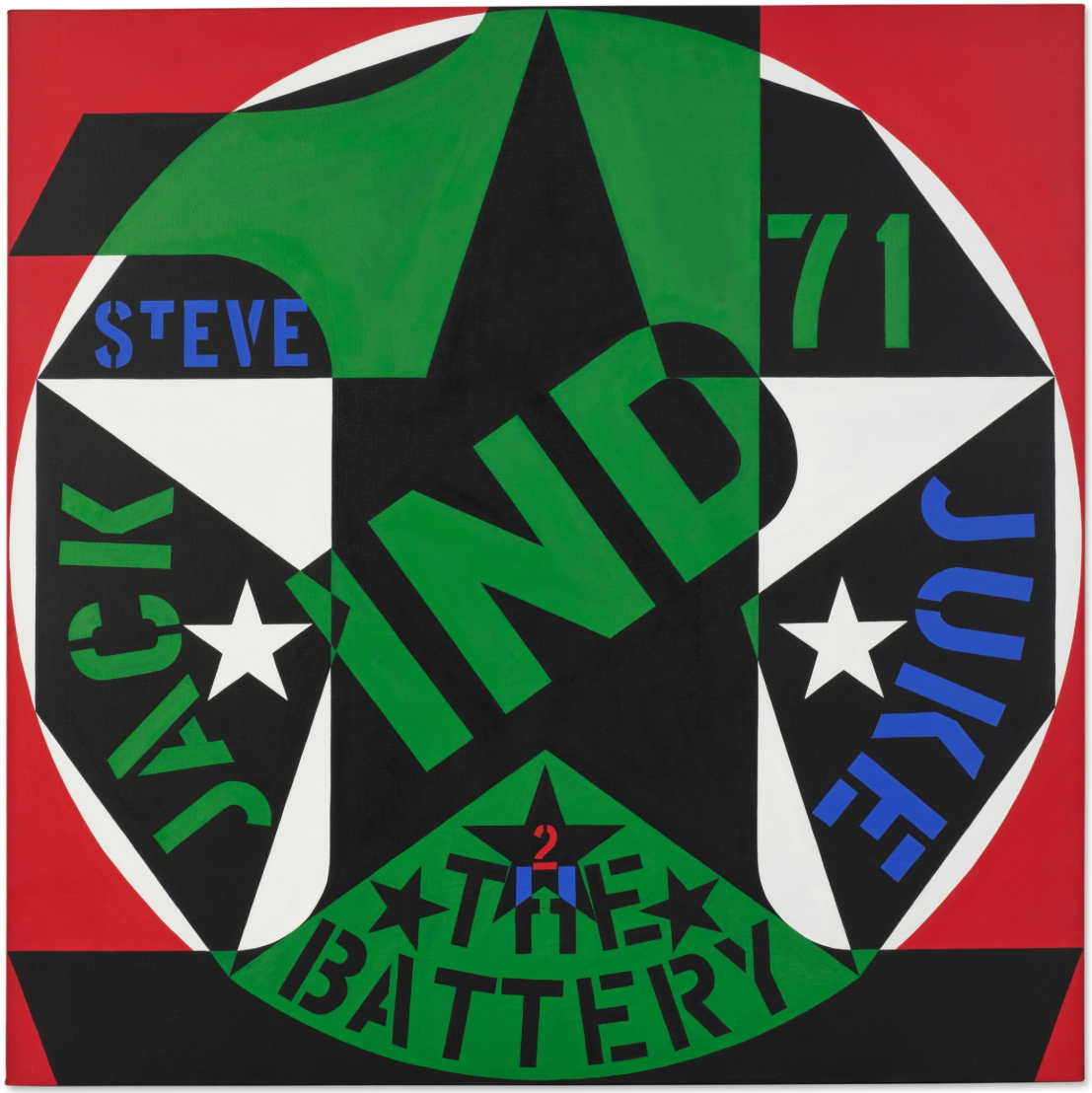
ROBERT INDIANA (1928 – 2018)
Decade: Autoportrait 1962, 1971
Oil on canvas
48×48 inches (121.9 x 121.9 cm)
Stenciled Indiana 2 New York 71 (on the reverse)
Red Sails, 1963
Herbert Lust: Collector, Scholar, Friend
Christie’s New-York: 20 November 2026
Estimated: USD 400,000 – 600,000
ROBERT INDIANA (1928-2018), Red Sails | Christie’s
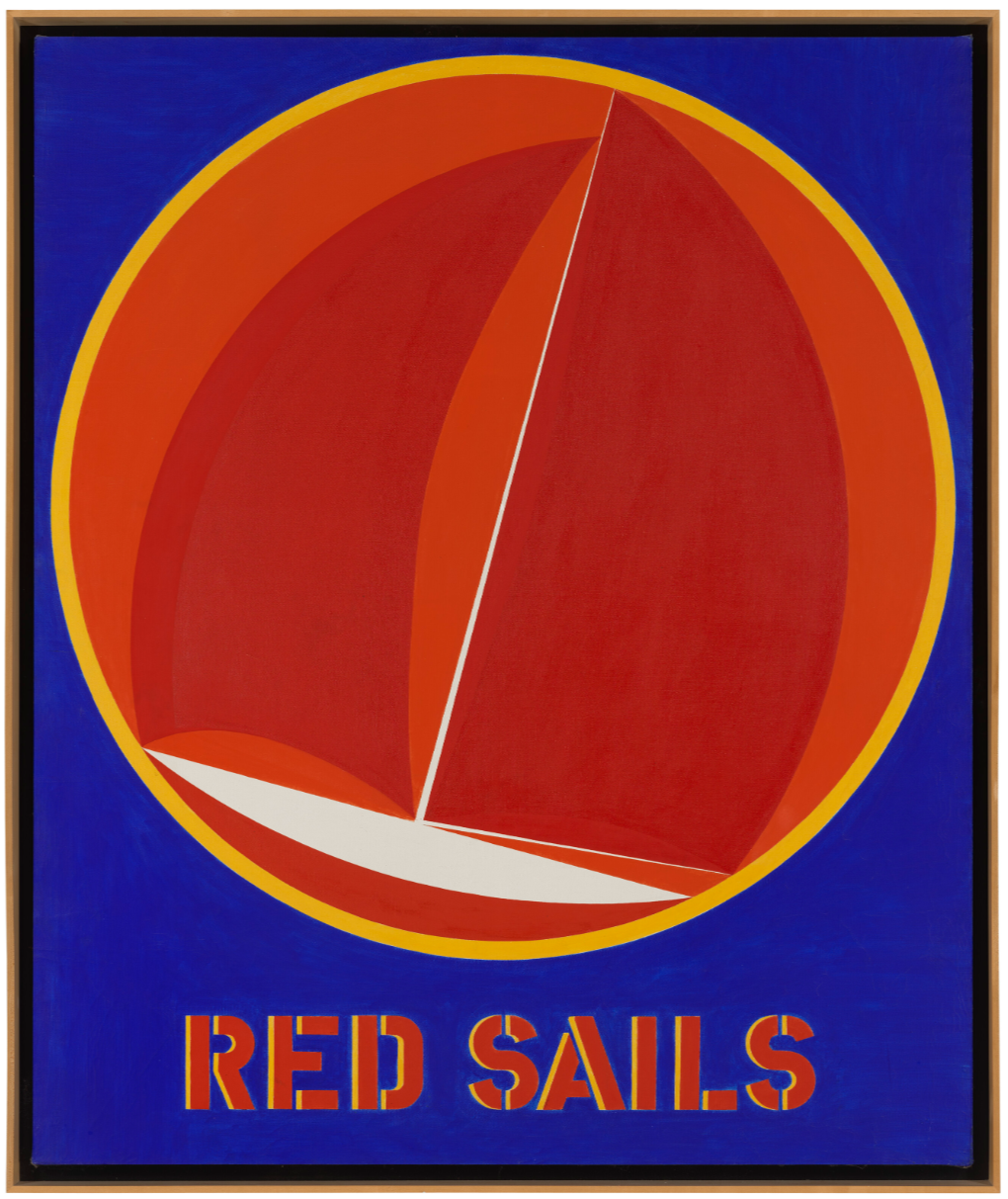
ROBERT INDIANA (1928-2018)
Red Sails, 1963
Oil on canvas
60×50 inches (152.4 x 127 cm)
Stenciled with the artist’s signature, inscription, title and date
‘ROBERT INDIANA 1963 RED SAILS COENTIES SLIP USA NEW YORK CITY’
(on the overlap)
Lust Family Portrait (AMOR / LOVE / EROS / LUST), 1995
Herbert Lust: Collector, Scholar, Friend
Christie’s New-York: 20 November 2026
Estimated: USD 300,000 – 500,000
ROBERT INDIANA (1928-2018), Lust Family Portrait (AMOR / LOVE / EROS / LUST) | Christie’s
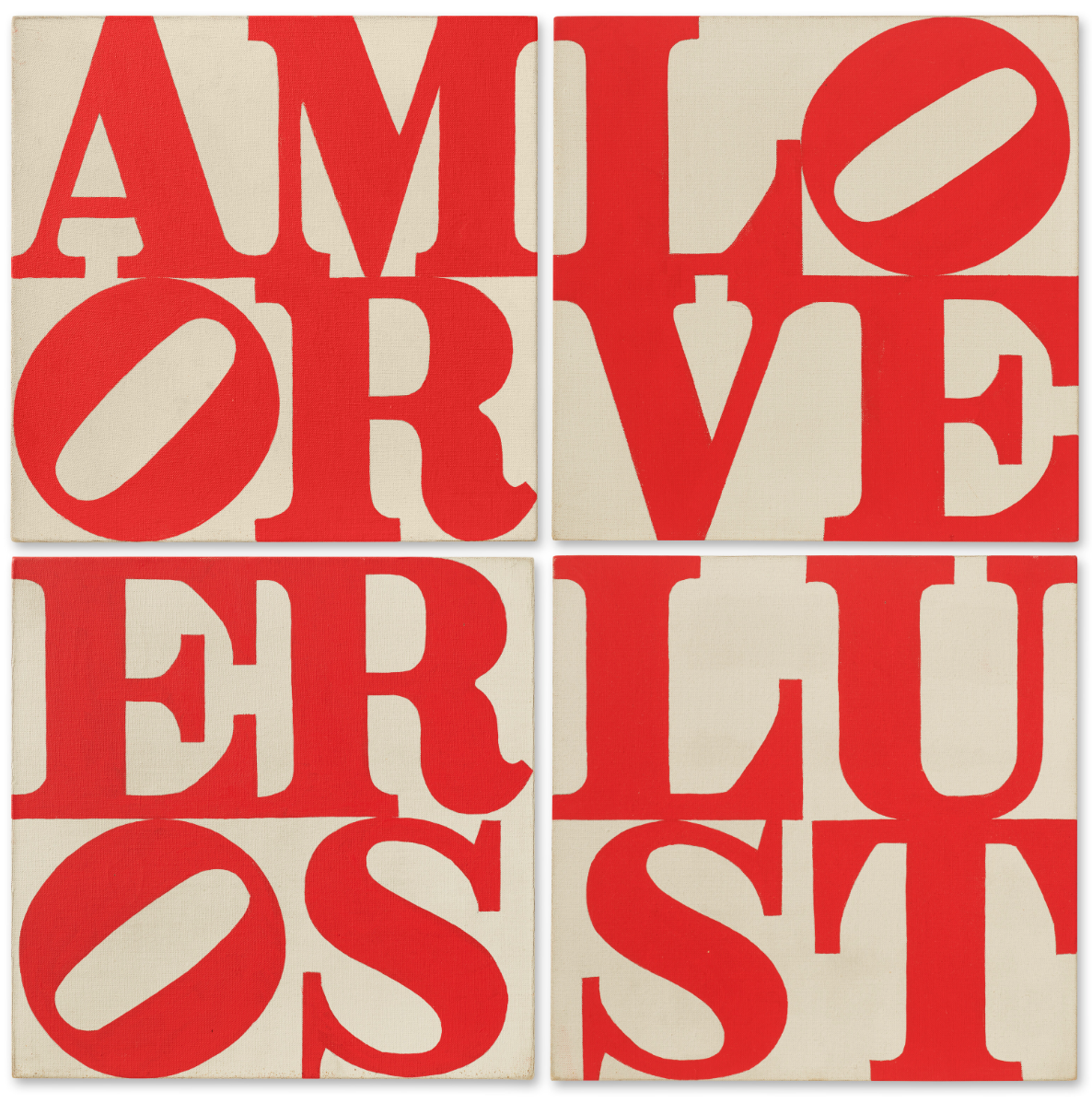
ROBERT INDIANA (1928-2018)
Lust Family Portrait (AMOR / LOVE / EROS / LUST), 1995
Oil on canvas, in four parts
Each: 12×12 inches (30.5 x 30.5 cm)
Each stenciled with the artist’s initials and date ‘RI 95’ (on the reverse)
Signed and dedicated
‘For Virginia + Herbert Lust R Indiana’
(on the overlap of AMOR, LOVE and LUST)
Dedicated ‘For Virginia + Herbert Lust’ (on the overlap of EROS)
Six, 1960-62
Vision: The Extraordinary Collection of Theodore and Ruth Baum
Sotheby’s New-York: 17 November 2026
Estimated: USD 250,000 – 350,000
GUARANTEED PROPERTY
Robert Indiana | Six | Vision: The Extraordinary Collection of
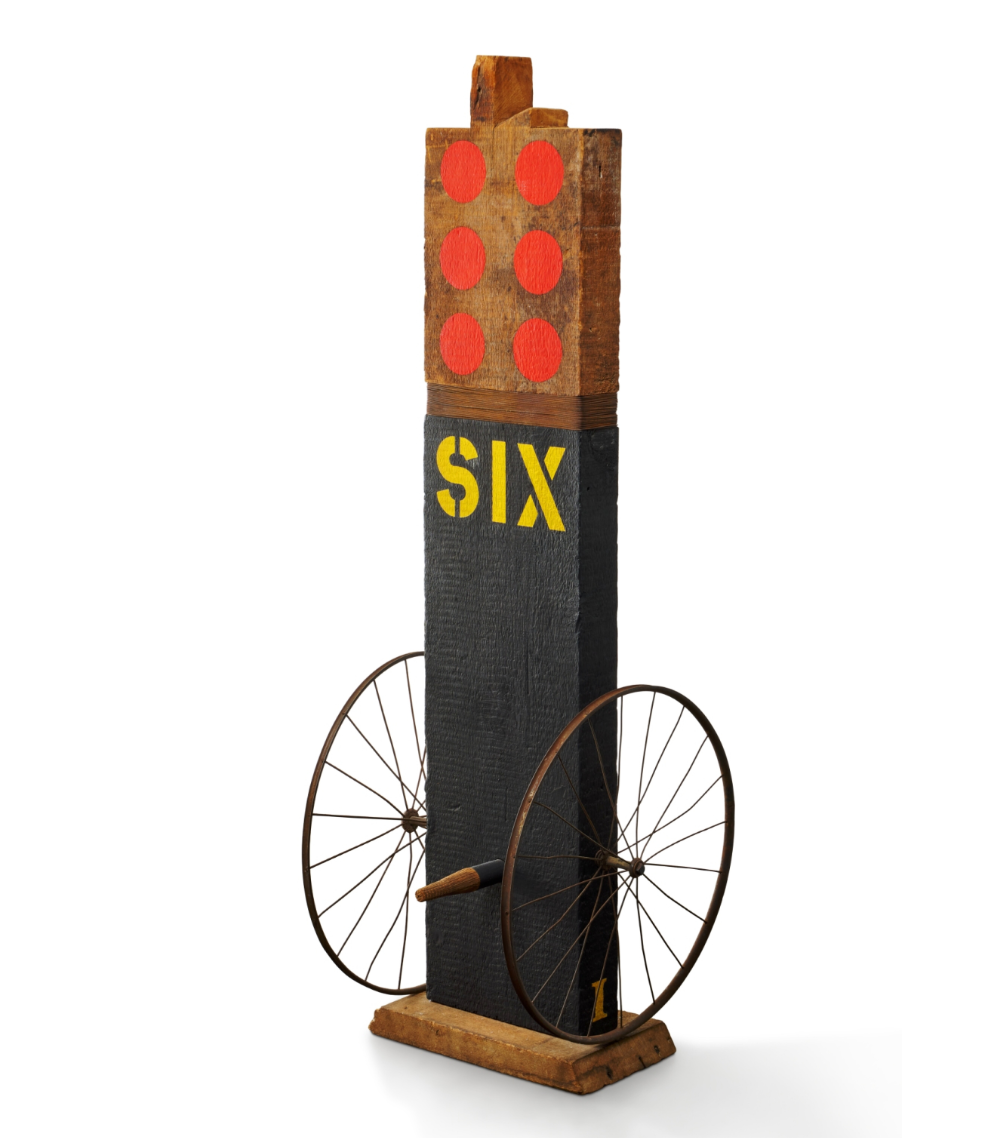
ROBERT INDIANA (1928 – 2018)
Six, 1960-62
Gesso, oil and wire on wood with iron wheels
62-1/8 x 18 x 22-1/8 inches (157.8 x 45.7 x 56.2 cm)
Titled (center)
Signed and dated 19 60 62 (on the base)
LOVE Wall, 1968
LOVE Wall, 1968
Herbert Lust: Collector, Scholar, Friend
Christie’s New-York: 17 November 2026
Estimated: USD 800,000 – 1,200,000
ROBERT INDIANA (1928-2018), LOVE Wall | Christie’s
ROBERT INDIANA (1928-2018)
LOVE Wall, 1968
Oil on canvas, in four parts
Each: 12×12 inches (30.5 x 30.5 cm)
Overall: 24×24 inches (61×61 cm)
Stenciled with the artist’s initials ‘RI’ (on the reverse of the upper right canvas)
Stenciled with the date ’68’ (on the reverse of the upper left canvas)
An exceptional, early example of the artist’s instantly iconic LOVE paintings, LOVE Wall reveals Robert Indiana in full command of his innovative artistic motif which has pervaded popular culture. Painted in 1968, the work is one of the first from the eponymous series which repeats Indiana’s famous phrase across four connected panels. Multiplied and reimagined across the painting in four different orientations, Indiana constructs here a palindrome which doubles LOVE then doubles it again. The present work demonstrates Indiana working at the precipice of abstraction as his merged and mingled letters collate into abstract signs deprived of legibility.
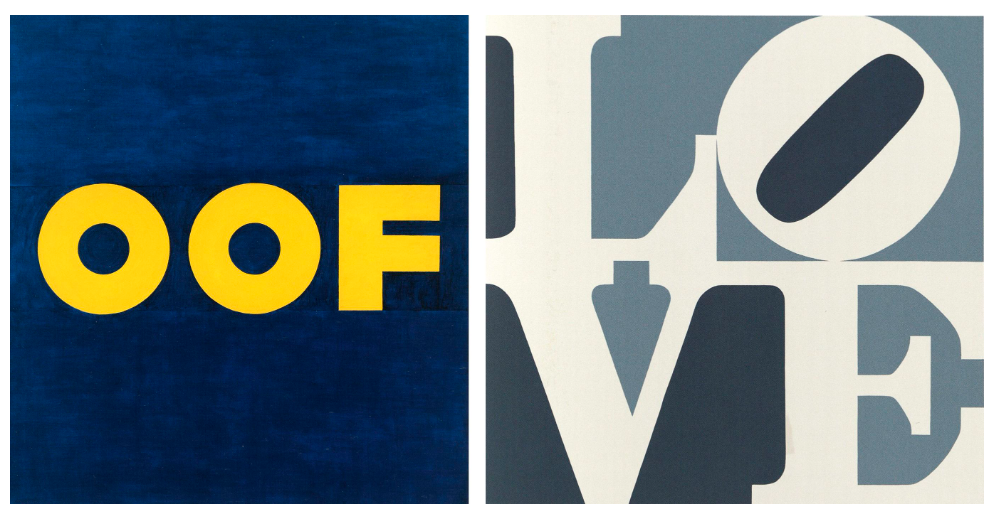
Left: Ed Ruscha, OOF, 1962. Museum of Modern Art, New York. © Ed Ruscha.
Right: Robert Indiana, LOVE, 1966. McNay Art Museum, San Antonio (on loan from the collection of The Tobin Theatre Arts Fund). © 2026 The Robert Indiana Legacy Initiative LLC / Artists Rights Society (ARS), NY.
His four centered Vs, stacked over each other, expand to create two large X shapes, which create “the two unknowns whose meeting presides over the existence of love, as in mathematical equations,” as the art historian Hélène Depotte describes (“Towards an Immobile Voyage: Robert Indiana, the Reality-Dreamer,” in Robert Indiana: Rétrospective 1958-1998, exh. cat., Musée d’Art Modern et d’Art Contemporain de Nice, 1998, p. 67). LOVE Wall propels Indiana’s most important motif into a new dimension, emphasizing the optical shock of his value-laden text through multiplicity. The critic Lucy Lippard describes the series as “exuberant, exquisitely rendered works, decorative in a good sense and products of a sophisticated innocence” (quoted in M. Krause and J. Wilmerding, eds., The Essential Robert Indiana, exh. cat., Indianapolis Museum of Art, 2013, p. 58).
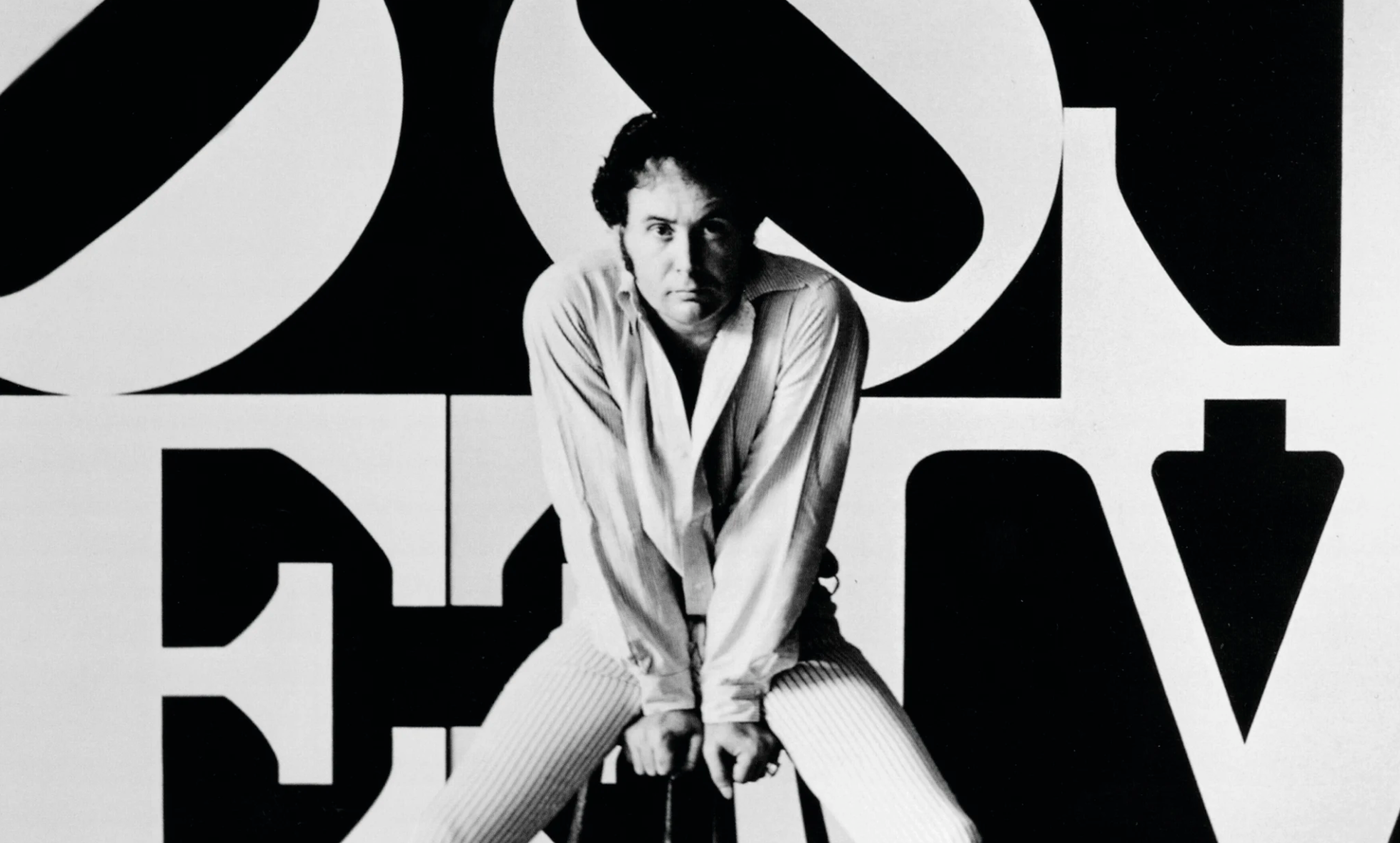
Robert Indiana in his New York studio, 1969. © 2026 The Robert Indiana Legacy Initiative LLC / Artists Rights Society (ARS), NY.
The Cubists and Surrealists were among the first to include text in paintings, using words incidentally in the case of Cubist collage and didactically in the case of Joan Miró or René Magritte’s Surrealist imagery. Indiana’s innovation was to deconstruct his text, employing each letter structurally to explore syllabic and visual potentials simultaneously.
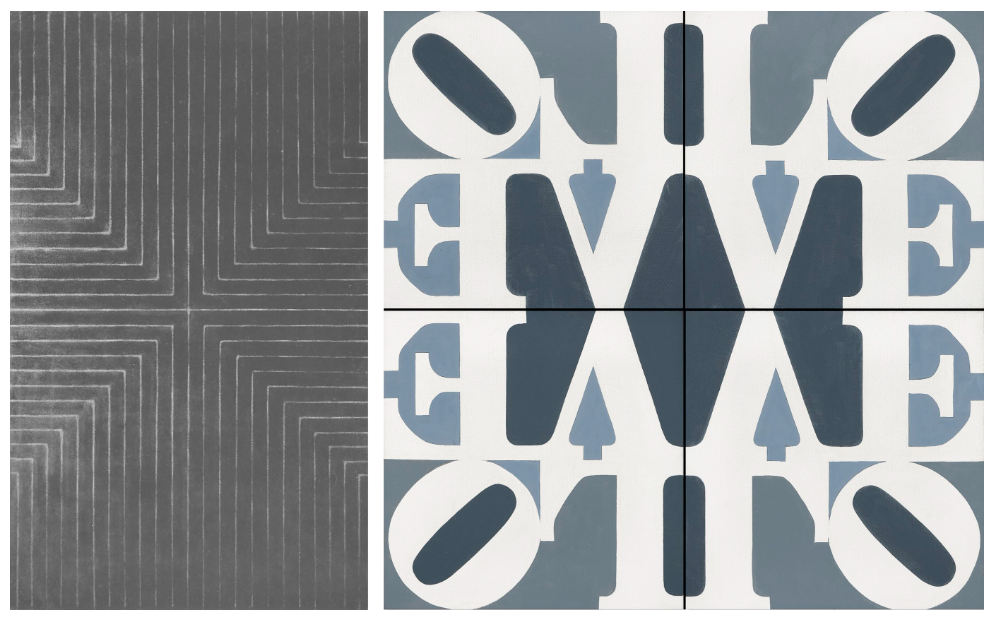
Left: Frank Stella, Die Fahne Hoch!, 1959. Whitney Museum of American Art, New York. © 2026 Frank Stella / Artists Rights Society (ARS), New York.
Right: Present lot illustrated.
The art historian Susan Elizabeth Ryan, identifying LOVE as “a watershed in Indiana’s career,” explains how here, “word and image are equal; figure and ground coextensive” (“Eternal Love,” in Love and the American Dream: The Art of Robert Indiana, exh. cat., Portland Museum of Art, 1999, p. 76). The artist’s word-based art originated in love poems which Indiana composed in the 1950s, while his decision to focus on love stemmed from his upbringing in a religious family in rural Indiana. “All Christian Science churches are very prim and proper,” Indiana explained. “Only one thing appears in a Christian Science church, and that’s a small, very tasteful inscription, in gold usually, over the platform where the readers conduct the service. And that inscription is God is Love” (ibid., p. 79).
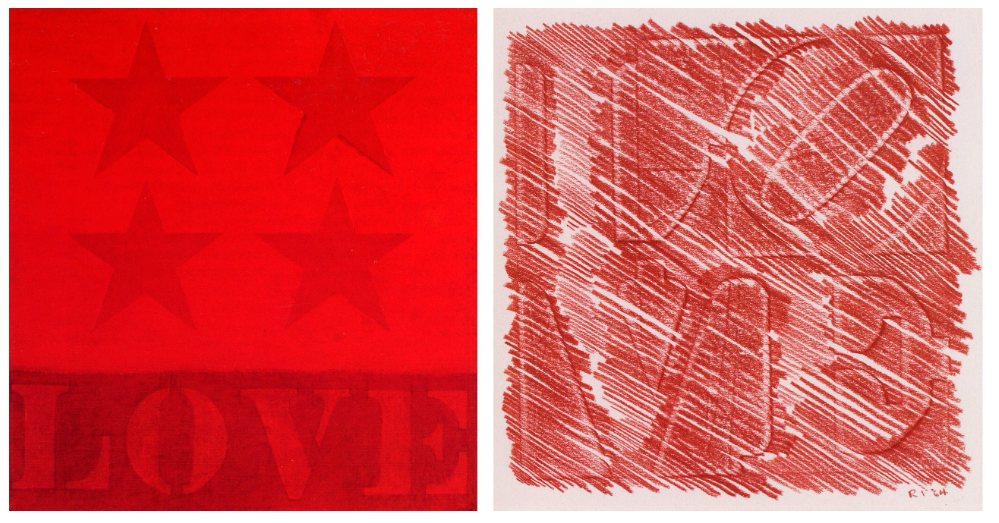
Left: Robert Indiana, 4-Star Love, 1961. Portland Museum of Art. © 2026 The Robert Indiana Legacy Initiative LLC / Artists Rights Society (ARS), NY.
Right: Robert Indiana, LOVE, 1964. Spencer Museum of Art, University of Kansas, Lawrence. © 2026 The Robert Indiana Legacy Initiative LLC / Artists Rights Society (ARS), NY.
Gertude Stein’s line “Rose is a rose is a rose” from her 1913 poem “Sacred Emily” served as partial inspiration for Indiana’s decision to repeat his love motif across his oeuvre. Indiana’s art, a vital precursor to Pop, emerged out of the young artist’s deep immersion and deployment of the vernacular of American popular culture—engaging with American history and Beat poetry through the lens of his midwestern roots, Indiana achieved a uniquely American sensibility. Working amid the Coenties Slip artists, including Ellsworth Kelly, Agnes Martin, and James Rosenquist, Indiana wielded symbols such as love in order to comment on the newfound pervasiveness of text and images in twentieth century America. “Indiana’s art corroborates this new reliance on street and highway signage, and on its chance poetry, on the endless flux of urban messages that ceaselessly buzz in front of our eyes and brain, and on its powerful visual fascination,” describes the art historian Joachim Pissaro (“Signed into Art,” in Robert Indiana, New York, 2006, p. 59).
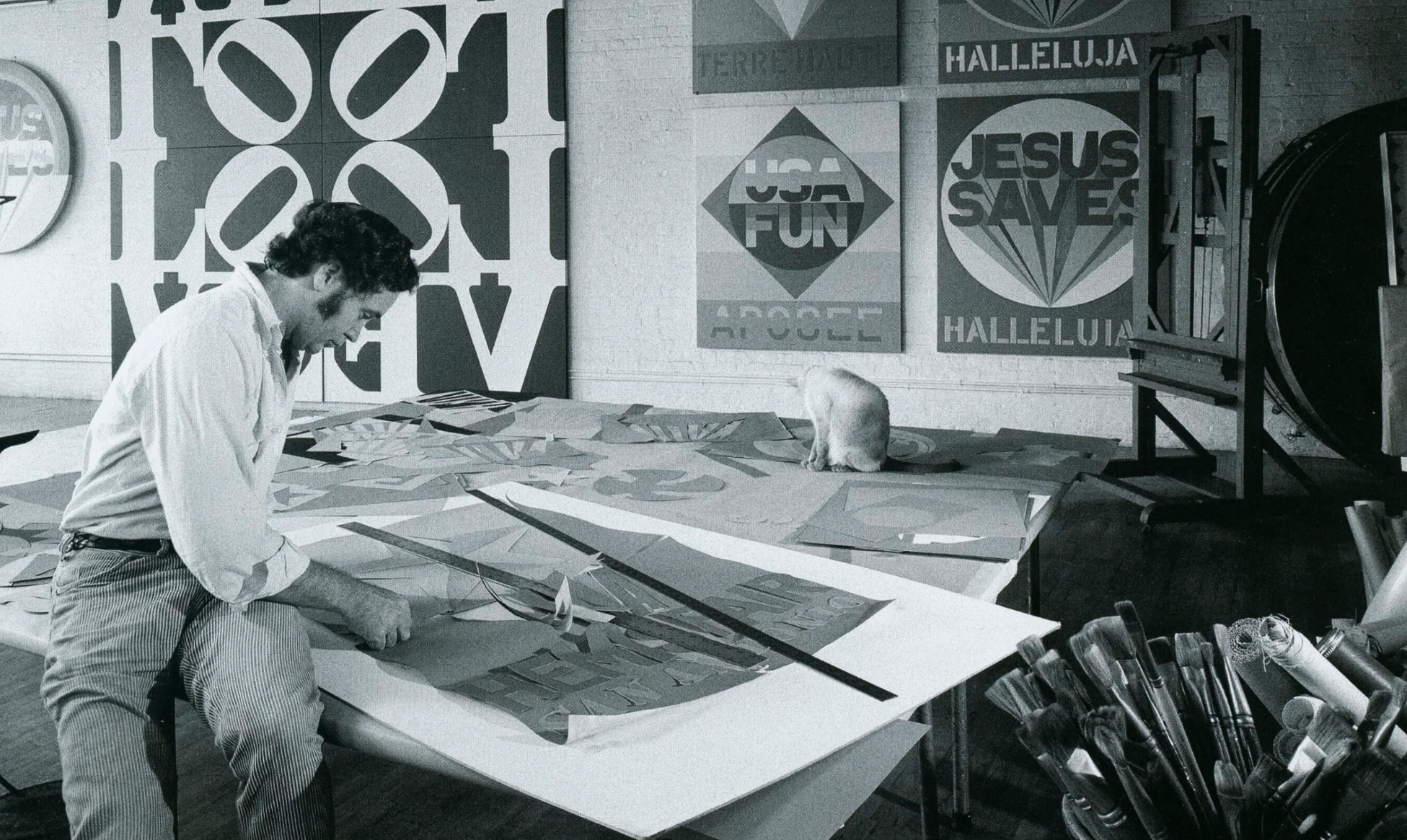
Robert Indiana in his studio. Photograph by Hans Namuth. Courtesy Center for Creative Photography, University of Arizona © 1991 Hans Namuth Estate. Artwork: © 2026 The Robert Indiana Legacy Initiative LLC / Artists Rights Society (ARS), NY.
The present work was acquired directly from the artist by Herbert Lust. The two first met in 1973 at a New York dinner party hosted by the du Pont family. The hostess ushered Lust into a drawing room, telling him that a “fellow Hoosier” was dying to meet him. This chance meeting, initiated by their shared Indianan origins, inaugurated a decades-long friendship between artist and collector. Lust, along with his wife Virginia, were some of Indiana’s most ardent champions. Virginia gave Indiana his first solo show in thirteen years at her gallery in 1989, reigniting attention in the artist. Herbert helped organize international museum and gallery exhibitions, while simultaneously building one of the most important collections of Indiana’s work in private hands. LOVE Wall has remained in the Lust collection for forty years and has been loaned to several of Indiana’s most important retrospectives, including his 1999 exhibition at the Portland Museum of Art. An exceptional, rare example of the artist’s most renowned motif, LOVE Wall is the most important early four-part LOVE painting to come to auction in almost twenty years.
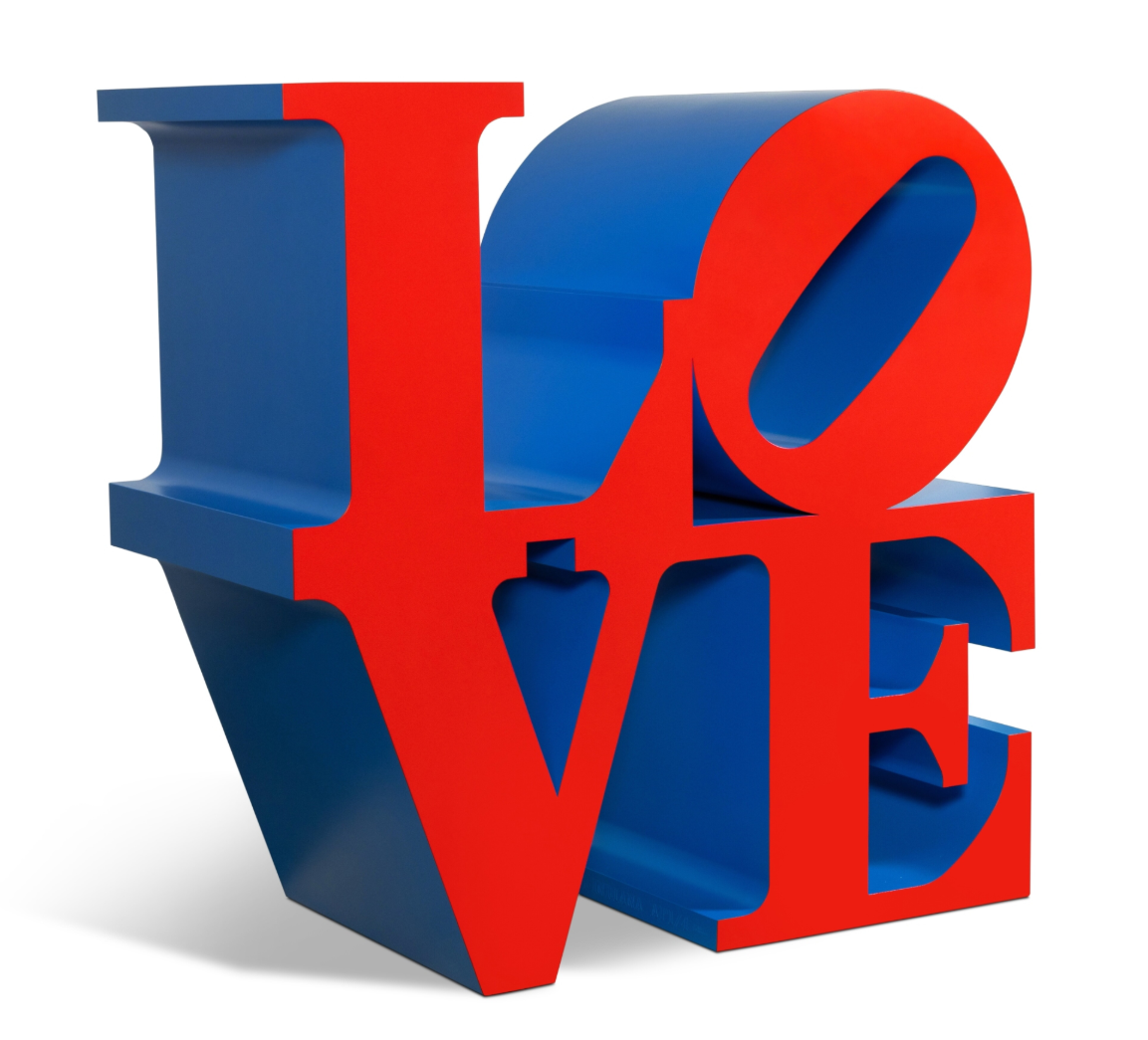
LOVE (Red Faces Blue Sides), 1966-1998
LOVE (Red Faces Blue Sides), 1966-1998
Sotheby’s New-York: 17 November 2026
Estimated: USD 600,000 – 800,000
Robert Indiana | LOVE (Red Faces Blue Sides) | Contemporary Day
ROBERT INDIANA (1928 – 2018)
LOVE (Red Faces Blue Sides), 1966-1998
Polychromed aluminum
72x72x36 inches (182.9 x 182.9 x 91.4 cm)
Stamped with artist’s signature, date 1966-1998 and number AP 1/4 (on the interior edge of the E)
Conceived in 1966 and fabricated in 1998
This work is artist’s proof number 1 from an edition of 6 plus 4 artist’s proofs
Decade: Autoportrait 1962, 1971
Decade: Autoportrait 1962, 1971
Expanding Horizons: The Hedreen Collection
Sotheby’s New-York: 17 November 2026
Estimated: USD 400,000 – 600,000
Robert Indiana | Decade: Autoportrait 1962 | Contemporary Day Auction
ROBERT INDIANA (1928 – 2018)
Decade: Autoportrait 1962, 1971
Oil on canvas
48×48 inches (121.9 x 121.9 cm)
Stenciled Indiana 2 New York 71 (on the reverse)
Richly layered and deeply nuanced, Robert Indiana’s Decade: Autoportrait 1962 manifests the artist’s lifelong interrogation of symbols and signs, distilling memories, identities, and formative experiences into a precise symbolic composition. The distinctive colors, numbers and motifs, meticulously rendered, are charged with Indiana’s experiences in their autobiographical choreography, both self-referential and widely accessible. Containing the omnipresent 5-point star, clasped by a monolithic 1, the present work encapsulates Indiana’s enigmatic and iconic visual lexicon. In deep hues of red, green, blue, white, and black, Indiana presents a cryptic map of signifiers, including stenciled references to Jack, The Battery, Juke, Steve, 71, and “Ind.” In its reflection of collectively familiar symbols, forms, and expression, Decade Autoportrait acts both as a concise mediation on Western ideologies and lifestyles and a geographic record of Indiana’s life.
“In Europe trees grow everywhere;
in America, signs grow like trees; signs are more common than trees.”
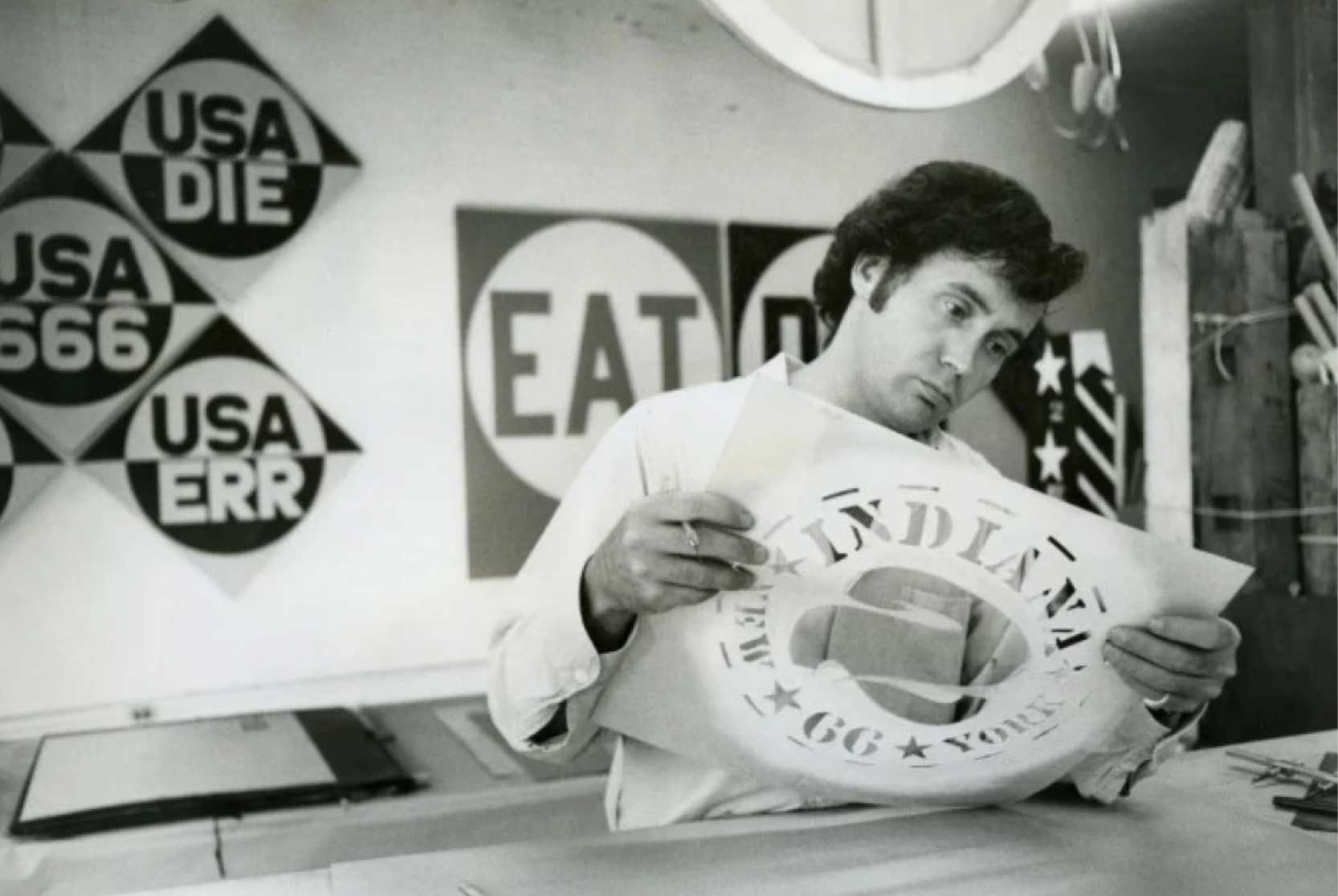
Robert Indiana in his Spring Street studio, 1966. Photograph © the Estate of Basil Langton/RI Catalogue Raisonné LLC.
Rich in psychological nuance, the present work isolates itself from previous bodies of work that positioned Indiana alongside his contemporaneous Pop icons. Exploring the complicated conceptions and realities of the ‘American Dream,’ Indiana reckons with his personal experiences, re-interpreting them within the realm of words, shapes and numbers, a codified and self-reflective framework. Integrating the sensations of Pop with his iteration of language-based Conceptualism, Indiana advanced the potentials of Western, specifically American art, investigating and laying bare the disquieting subtext of everyday life. Among the most influential and prominent artists in American art history, Indiana’s legacy has indelibly shaped the greater narrative of the Western art canon.
“What I am thinking about is the very elementary part that language plays in man’s thinking processes and this includes his identification of anything visual. And that is… that the word, the object, and the idea are most inextricably locked in the mind, and to divide them and to break them down doesn’t have to be done. The artist has usually done it in the past. I prefer not to.”
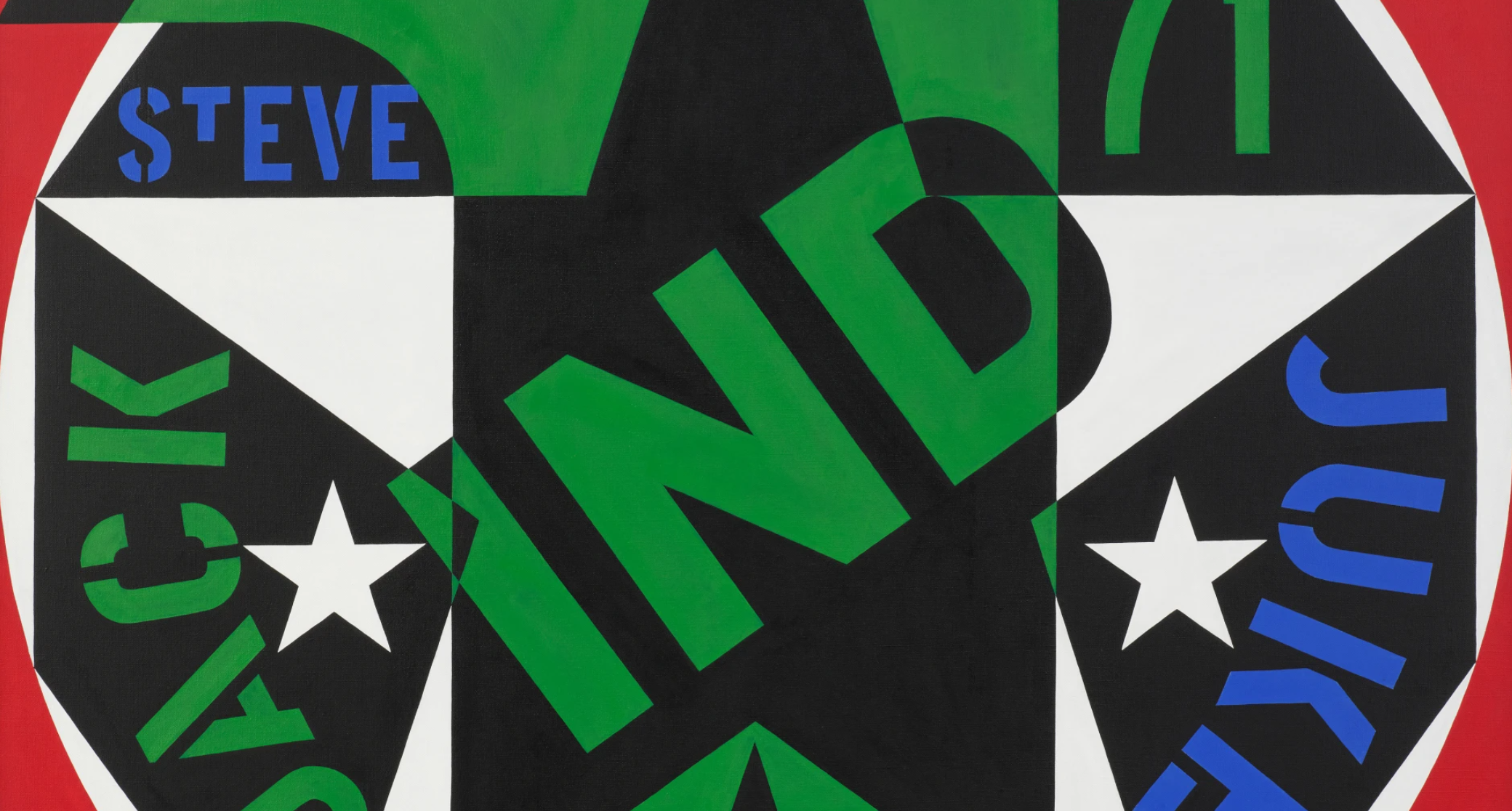
Dissolving the distinctions between Pop Art and Hard Edge, Indiana, known as the “American Painter of Signs,” presents an intensely cerebral and personal deviation from his iconic practice in the present work. A rare departure from the timeless and poetically subtle signage that established him as a defining Pop Art icon, Decade Autoportrait is an enthralling glimpse through Indiana’s layered iconography into his American experience, and a refracted manifestation of the artist’s mind, body, and soul. A tangle of deeply personal references and iconographies, the present work unites an assortment of commercial symbols and phrases, all receding and advancing on varying planes, in the construction of a truly American ‘self-portrait’.
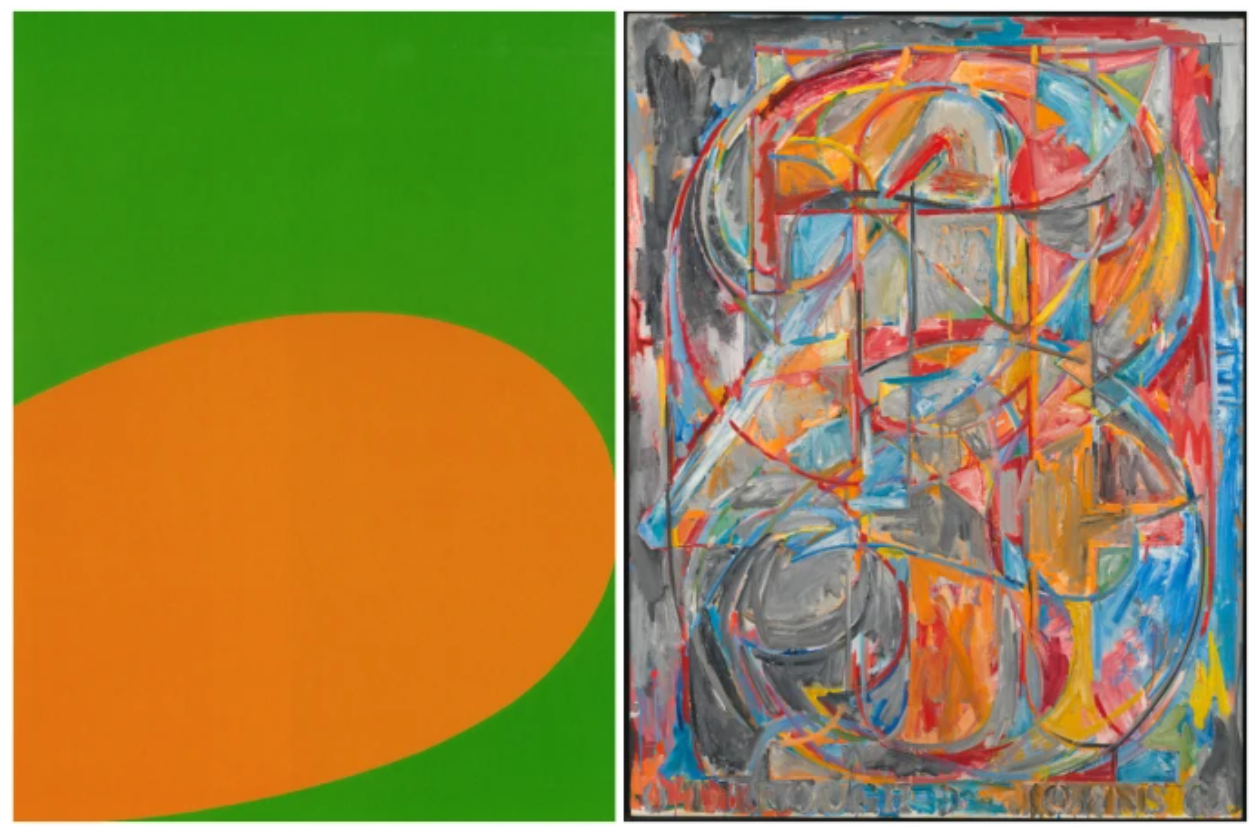
Left: Ellsworth Kelly, Orange Green, 1964. Image © The Museum of Modern Art, New York. Art © 2026 Ellsworth Kelly
Right: Jasper Johns, 0 Through 9, 1961. Whitney Museum of American Art, New York. Art © Jasper Johns / Licensed by VAGA at Artists Rights Society (ARS), New York
A thoroughly intimate work born of deep reflection on the oscillating Western artistic landscape, Decade: Autoportrait 1962 succinctly operates as a pictorial memoir of Indiana’s experience at the epicenter of the burgeoning identities materializing in American art. Indeed, Decade: Autoportrait 1962 also functions as an emblem of Indiana’s nostalgia; positioned as an amalgamated visual recollection, the dissonance of the composition captures the artist’s broad spectrum of emotional reckonings. With Decade: Autoportrait 1962, Indiana utilises his signature signage, factory stencilling, and commercial ideography to represent his internal likeness, a commanding and utterly enthralling investigation into the formation of the self and American identity.
Red Sails, 1963
Red Sails, 1963
Herbert Lust: Collector, Scholar, Friend
Christie’s New-York: 20 November 2026
Estimated: USD 400,000 – 600,000
ROBERT INDIANA (1928-2018), Red Sails | Christie’s
ROBERT INDIANA (1928-2018)
Red Sails, 1963
Oil on canvas
60×50 inches (152.4 x 127 cm)
Stenciled with the artist’s signature, inscription, title and date
‘ROBERT INDIANA 1963 RED SAILS COENTIES SLIP USA NEW YORK CITY’
(on the overlap)
Robert Indiana’s Red Sails is one of the first major representational works the artist painted during the early 1960s. Closely related to another emblematic painting of the period, Highball on the Redball Manifest (1963, Blanton Museum of Art, Auston), the present work features another mode of transport—a boat—being tossed by the ocean’s waves. For Indiana, boats were a very personal motif for his life as an artist; although he grew up in rural Indiana, when he moved to New York in 1956 he eventually ended up living and working in Coentis Slip on the waterfront in lower Manhattan. In addition, the words “Red Sails” formed part of the title of a tune called “Red Sails in the Sunset” that his father—Earl Clark—used to play on the piano during his childhood.
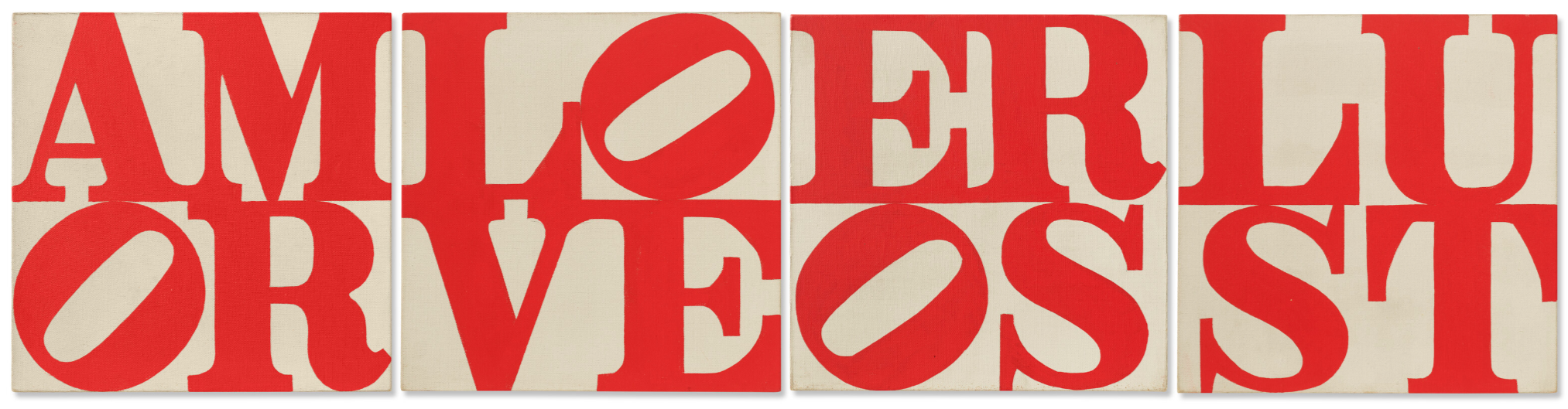
Lust Family Portrait, 1995
Lust Family Portrait (AMOR / LOVE / EROS / LUST), 1995
Herbert Lust: Collector, Scholar, Friend
Christie’s New-York: 20 November 2026
Estimated: USD 300,000 – 500,000
ROBERT INDIANA (1928-2018), Lust Family Portrait (AMOR / LOVE / EROS / LUST) | Christie’s
ROBERT INDIANA (1928-2018)
Lust Family Portrait (AMOR / LOVE / EROS / LUST), 1995
Oil on canvas, in four parts
Each: 12×12 inches (30.5 x 30.5 cm)
Each stenciled with the artist’s initials and date ‘RI 95’ (on the reverse)
Signed and dedicated
‘For Virginia + Herbert Lust R Indiana’
(on the overlap of AMOR, LOVE and LUST)
Dedicated ‘For Virginia + Herbert Lust’ (on the overlap of EROS)
A farm boy from Indiana who through intellect and luck became an accomplished scholar, writer, and collector, Herbert Lust, reflecting on his many achievements, described himself as “a dazed soldier of fortune, drenched with experience.” An early encounter with Keats’ “Ode to a Nightingale” propelled him toward a literary career. At the age of twenty-one, he became the youngest person ever to receive a master’s degree in philosophy and mathematics from the University of Chicago, and in 1949 he became one of the first Fulbright scholars, using his grant to spend two years in Paris investigating the influence of the American novel on French literature.
Describing his first studio visit with Alberto Giacometti, which would catalyze his collecting, Herbert Lust writes, “The space was very small, and the scattered bronzes seemed quite ugly to me. Yet my studies of philosophy and literature also told me that my initial impressions must be wrong. If Sartre and the greatest writers claimed that Alberto was a great artist, then I was just a fool, and had much to learn about art.” Giacometti was Lust’s first thrilling confrontation with contemporary art, and his initial negative response was soon replaced by a compelling desire to study and collect.
Informed by the collecting practices of Gertrude Stein, another literary hero whose legacy he knew well through his friendship with Alice B. Toklas, and using his meager Fulbright grant funds, Lust’s first major acquisition was an Yves Tanguy painting, followed in quick succession by several Hans Bellmer drawings. Tanguy’s Qui répondra? (1948), now in Lust’s collection, exemplifies Lust’s early impulse toward Surrealism, which would also lead him to assemble one of the most significant collections of Bellmer in the world.
Lust, together with his wife Virginia, whom he married in 1963, began building one of the greatest collections of Giacometti works. In 1970, the crown jewel entered the collection when Lust purchased Giacometti’s seminal Figure, demie grandeur (no. 2) from Joseph R. Shapiro, a prominent Chicago collector and founding president of the city’s Museum of Contemporary Art. “It was the first and fullest recognizable portrait done in Giacometti’s greatest period,” writes Lust. “It was in homage to his great love, Isabel Delmer, whom he had sculpted off and on for a dozen years by 1949. He was fascinated by her chignon. In no bronze does Alberto depict better a man’s love for a woman. She is love, tenderness, courage and majesty incarnate, a weightless queen in an invisible kingdom.”
Lust’s collection expanded well beyond the European avant-garde. Three years after acquiring Figure, demie grandeur (no. 2), another stroke of luck found him at a society gathering in New York hosted by the du Pont family. There he met Robert Indiana, who immediately challenged Lust’s predilection for European art and his reluctance to collect contemporary American artists. What began as a spirited debate evolved into a decades-long engagement with Indiana’s work. Lust ultimately acquired more than thirty works by the artist, including important examples such as FOUR (1965) and LOVE (1975). The artist’s LUST FAMILY PORTRAIT (1995), inscribed “For Virginia and Herbert Lust,” remains a testament to their enduring relationship.
Virginia Lust Gallery, with which Herbert was closely involved, championed other important artists as well, including Frank Stella. Lust eventually acquired Stella’s early masterpiece Les Indes Galantes (1964), from the artist’s seminal Mitered Maze series. Titled after Jean- Philippe Rameau’s Baroque opera-ballet concerning Cupid’s search for love across the globe, and inspired by Stella’s time in Paris, the work chimes compellingly with Lust’s own personal journey.
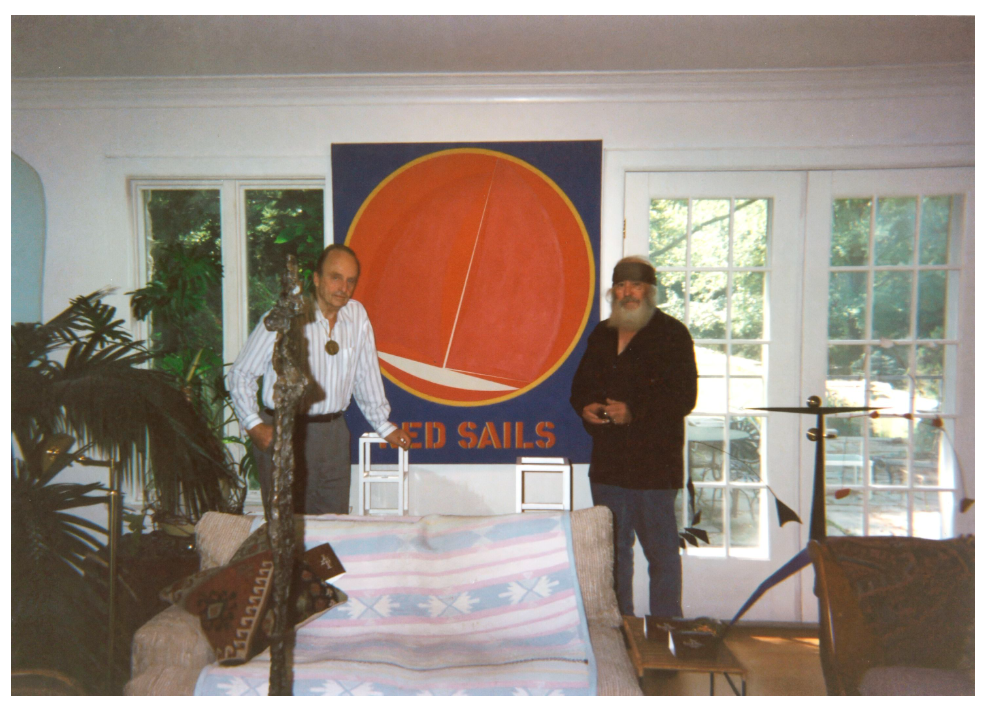
Herbert Lust and Robert Indiana with Indiana’s Red Sails, Greenwich.
Artwork: © 2026 The Robert Indiana Legacy Initiative LLC / Artists Rights Society (ARS), NY. Photo: Courtesy of the Lust family.
Through careful scholarship, insightful writing, and deep friendships, Herbert Lust built one of the greatest collections of contemporary art of his generation. Armed with luck and a sharp intellect, Lust built an incredible collection of artists whom he knew both personally and academically. His success in both business and collecting allowed him to generously support numerous institutions—his gifts of hundreds of works from his collection to the Tel Aviv Museum and to the Hirshhorn Museum and Sculpture Garden proved transformative to both museums, expanding the scope and reach of their collections. Holding seminal works by artists ranging from Giacometti and Calder, Tanguy, Bellmer, and Bauermeister, to Frank Stella and Robert Indiana, Herbert Lust’s collection explores in depth the artists he befriended. At once perceptively scholarly and deeply personal, the collection tells the story of both an exceptional personality and the course of art history across the twentieth century.
Six, 1960-62
Six, 1960-62
Vision: The Extraordinary Collection of Theodore and Ruth Baum
Sotheby’s New-York: 17 November 2026
Estimated: USD 250,000 – 350,000
GUARANTEED PROPERTY
Robert Indiana | Six | Vision: The Extraordinary Collection of
ROBERT INDIANA (1928 – 2018)
Six, 1960-62
Gesso, oil and wire on wood with iron wheels
62-1/8 x 18 x 22-1/8 inches (157.8 x 45.7 x 56.2 cm)
Titled (center)
Signed and dated 19 60 62 (on the base)
Executed between 1960 and 1962, Robert Indiana’s Six is a compelling example of the artist’s celebrated early sculptural practice, encapsulating the distinctive fusion of language, symbolism and autobiography that would define his singular contribution to American Pop Art. Belonging to his seminal series of Herms, the present work marks a pivotal moment in Indiana’s artistic development, when the found materials of his immediate surroundings became vehicles for a profoundly personal visual language. Combining the industrial character of salvaged wood and iron wheels with the striking graphic immediacy of stenciled lettering and vibrant color, Six embodies the tensions between movement and stasis, personal memory and collective American identity that animate Indiana’s oeuvre. Its importance within the artist’s early production was underscored by its inclusion in the landmark retrospective Robert Indiana: Beyond LOVE, held at the Whitney Museum of American Art, New York, in 2013–14 at the Breuer.
“They came before the word paintings. The constructions came into being because many of the old warehouses were being razed in the neighborhood for the widening of Water Street and the wood was just lying around waiting to be picked up, and I brought it into my studio and, as you know, at that time assemblage was kind of in the air.”
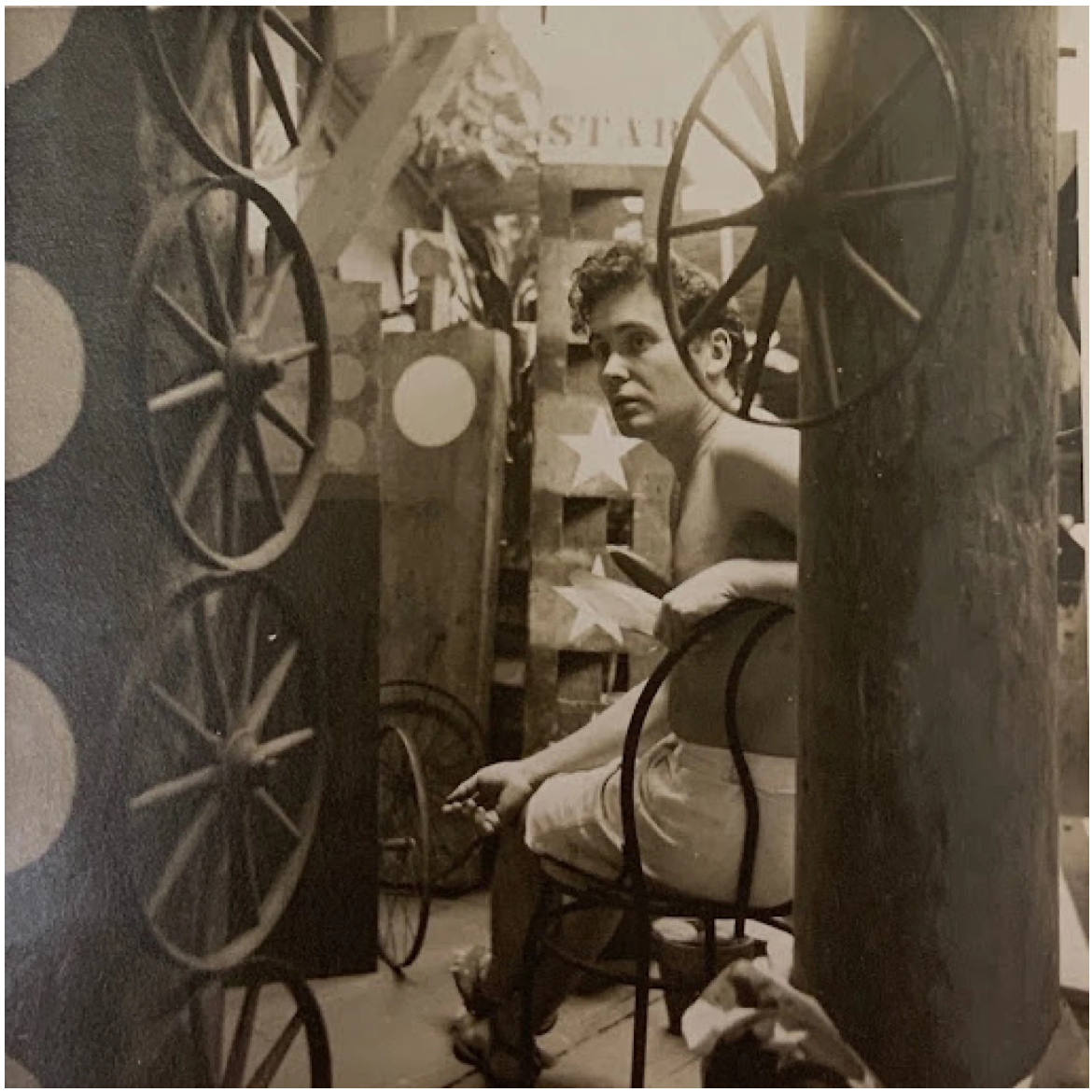
Robert Indiana in his Coenties Slip studio, 1960. An early state of Six is among the herms pictured, to the left of Indiana.
Photo courtesy Star of Hope Foundation, Vinalhaven, Maine.
Indiana began constructing his Herms in 1959, drawing inspiration from the classical Greek pillars associated with Hermes, the messenger god and protector of travelers. Living among a vibrant community of artists at Coenties Slip in Lower Manhattan, Indiana scavenged discarded wooden beams, industrial fragments and metal objects from the surrounding waterfront and demolition sites. Transforming these remnants of a rapidly changing urban landscape into imposing, anthropomorphic totems, he established a sculptural vocabulary that anticipated the iconic numerical and textual compositions of his mature career. Indeed, Indiana regarded these constructions as foundational to his practice, with words and numbers first appearing on the Herms before finding expression in his celebrated paintings. The present work, with its striking verticality and monumental proportions, exemplifies this remarkable synthesis of classical reference, industrial assemblage and contemporary American imagery.
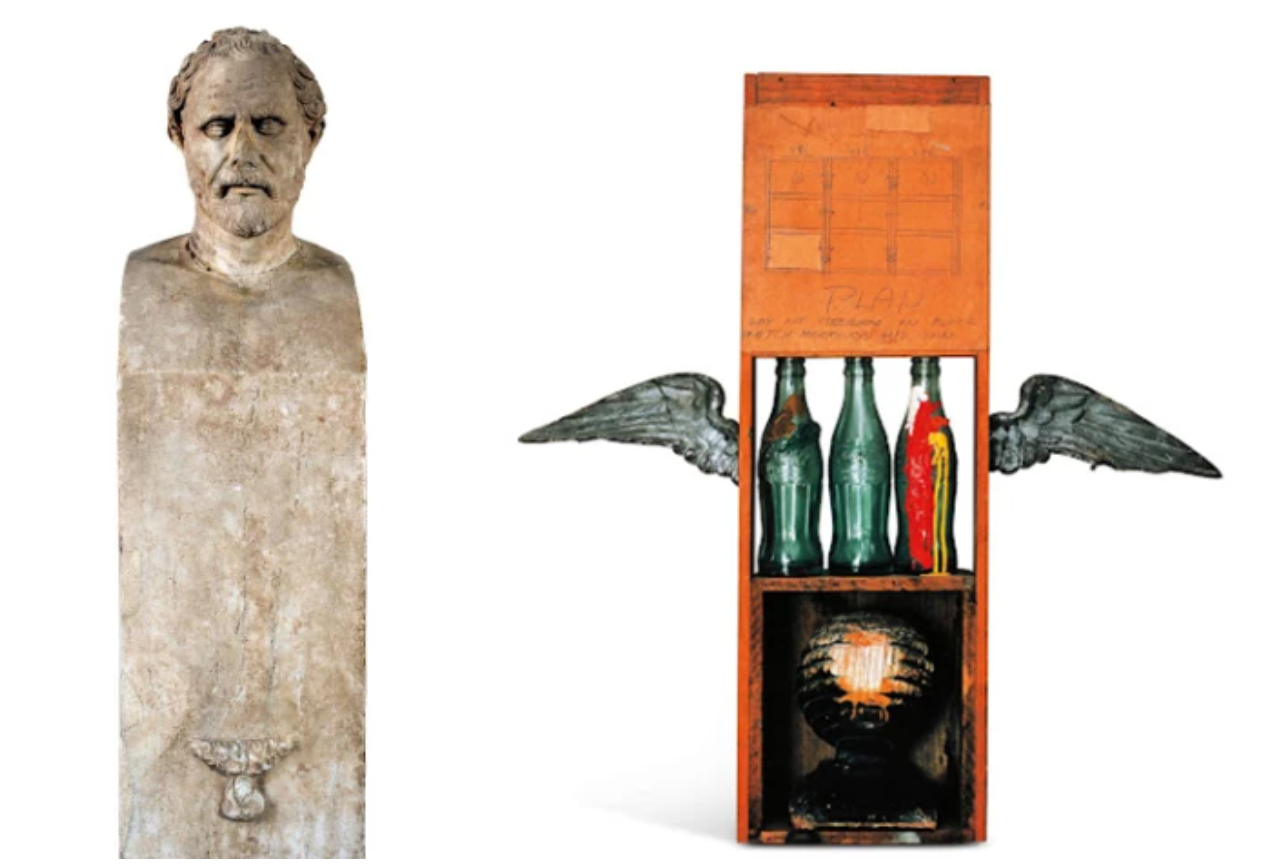
LEFT: Bust of Demosthenes, 384-322 BC (Roman copy of an original of 280 BC), Glyptothek Museum, Munich, Germany. Image © Tarker / Bridgeman Images
RIGHT: Robert Rauschenberg, Coca Cola Plan, 1958. Image © NPL – DeA Picture Library / Bridgeman Images. Art © 2026 Robert Rauschenberg Foundation / Artists Rights Society (ARS), New York
Visually arresting in its elegant economy, Six juxtaposes the imposing black surface of its central wooden column with six vivid red circles arranged in two vertical rows, while the word “SIX” appears in brilliant yellow lettering beneath. The composition evokes the graphic language of roadside signage, advertising and industrial markings, transforming familiar visual codes into an enigmatic personal emblem. Two iron wheels flank the base, suggesting the possibility of movement while paradoxically reinforcing the sculpture’s static, sentinel-like presence. This tension between mobility and immobility resonates with Indiana’s enduring fascination with journeys, displacement and the elusive promises of the American Dream.
“I’m particularly interested in […] six because my father was born into a family of six members in the month of June, he worked for Phillips 66, and he went west on Highway 66 when he left my mother, passing all those little signs on farmers’ fences that say “use 666,” which is also the sign of the devil—that’s how my mother felt about him because he had left her, you see. And it’s a nice number. I’m not fond of all numbers, but I’m very fond of two and six.”
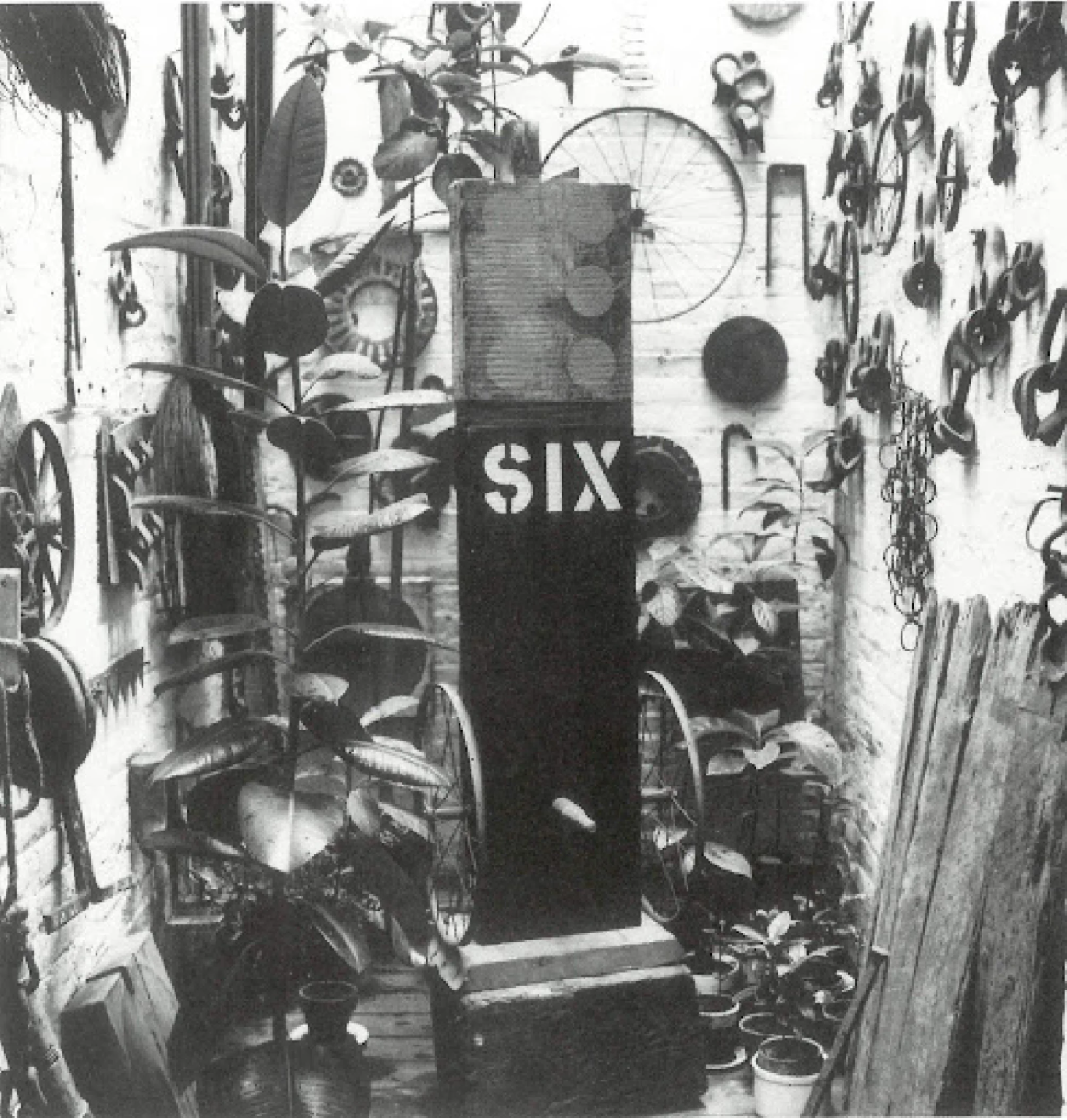
The present work installed in Indiana’s Coentie’s Slip studio, 1960.
Photo © John Ardoin. Art © 2026 Morgan Art Foundation Ltd. / Artists Rights Society (ARS), New York
The number six held particular autobiographical significance for Indiana, recalling his father’s birth in June, his employment at Phillips 66 and his departure from the family along Route 66. Through these layered associations, Six transforms an ostensibly impersonal numeral into a poignant meditation on memory, identity and loss. Its wheels evoke both the mythology of Hermes and the American automobile, collapsing ancient symbolism and modern experience into a single commanding form. At once ancient and modern, monumental and intimate in meaning, Six stands as a powerful testament to Indiana’s enduring exploration of the intersection between art, language and identity.