Fall 2026 New-York Marquee Auctions
Ed Ruscha
Upcoming Lots
Dimple, 1964
Vision: The Extraordinary Collection of Theodore and Ruth Baum
Sotheby’s New-York: 16 November 2026
Estimated: USD 10,000,000 – 15,000,000
Ed Ruscha | Dimple | Vision: The Extraordinary Collection of Theodore
ED RUSCHA (b. 1937)
Dimple, 1964
Oil on canvas
28×30 inches (71.1 x 76.2 cm)
Signed and dated 1964 (on the reverse)
Male and Female, 1987
Christie’s New-York: 19 November 2026
Estimated: USD 4,000,000 – 6,000,000
ED RUSCHA (B. 1937), Male and Female | Christie’s
ED RUSCHA (B. 1937)
Male and Female, 1987
Acrylic on canvas
60×60 inches (152.4 x 152.4 cm)
Signed and dated ‘Ed Ruscha 1987’ (on the reverse)
Signed and dated again and titled ‘Ed Ruscha 1987 ‘Male and Female” (on the stretcher)
Light Leaks, 1993
Property from a Prestigious Private Collection
Sotheby’s New-York: 16 November 2026
Estimated: USD 2,500,000 – 3,500,000
Ed Ruscha | Light Leaks | The Now and Contemporary Evening Auction |
ED RUSCHA (b. 1937)
Light Leaks, 1993
Acrylic and tinted varnish on canvas
40×72 inches (101.6 x 182.9 cm)
Signed and dated 1993 (on the reverse)
Old Sign, 1989
Christie’s New-York: 20 November 2026
Estimated: USD 250,000 – 350,000
ED RUSCHA (B. 1937), Old Sign | Christie’s
ED RUSCHA (B. 1937)
Old Sign, 1989
Acrylic on canvas
36×36 inches (91.4 x 91.4 cm)
Signed and dated ‘Ed Ruscha 1989’ (on the reverse)
Signed again, titled and dated again ‘ED RUSCHA “OLD SIGN” 1989’ (on the stretcher)
Sickness, 1984
Christie’s New-York: 20 November 2026
Estimated: USD 200,000 – 300,000
WORK ON PAPER
ED RUSCHA (B. 1937), Sickness | Christie’s
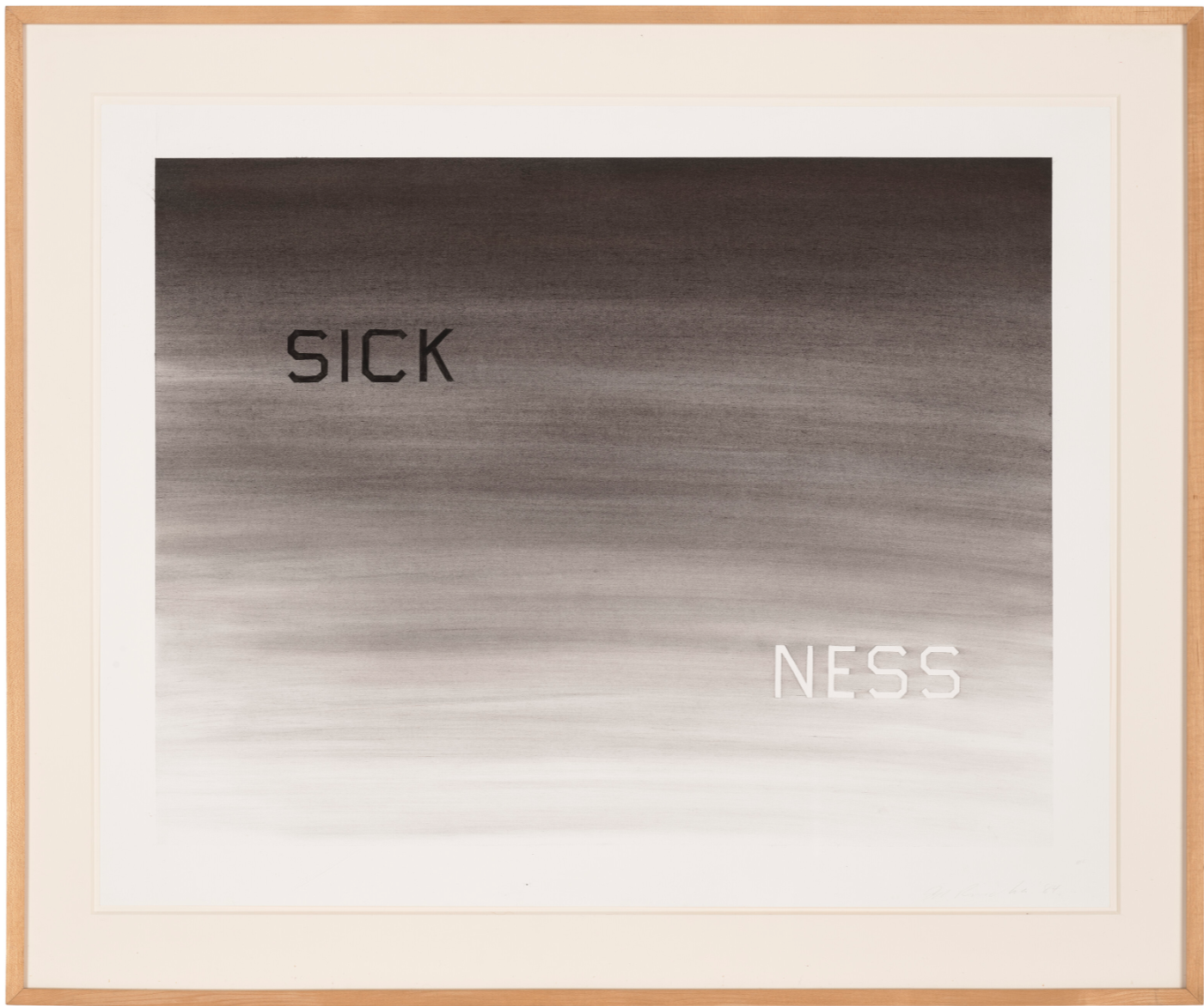
ED RUSCHA (B. 1937)
Sickness, 1984
Dry pigment and ink on paper
23×29 inches (58.4 x 73.7 cm)
Signed and dated ‘Ed Ruscha ’84’ (lower right)
Hot and Cold, 2004
The Collection of Agnes Gund: Sold to Benefit the Gund Art Foundation
Christie’s New-York: 20 November 2026
Estimated: USD 180,000 – 250,000
ED RUSCHA (B. 1937), Hot and Cold | Christie’s
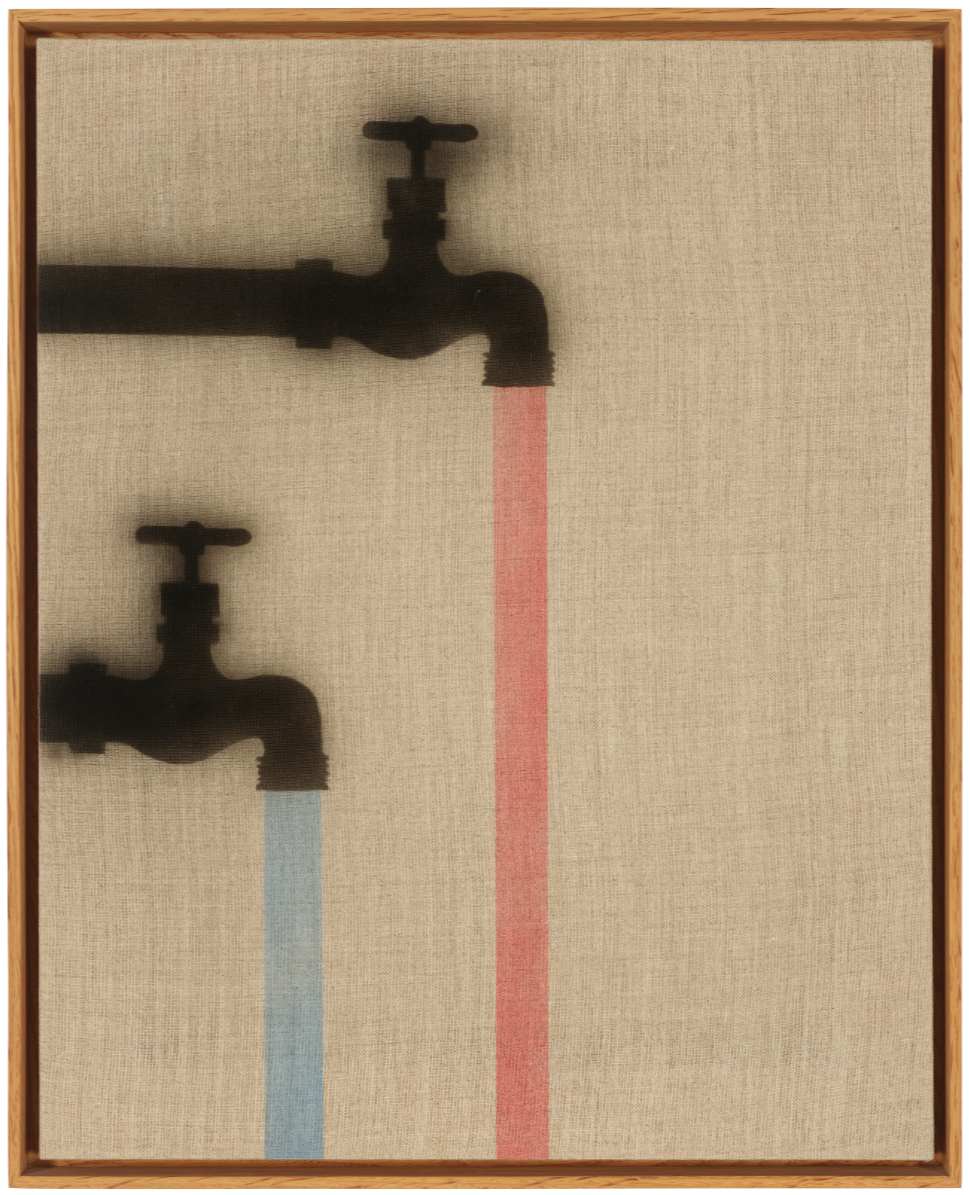
ED RUSCHA (B. 1937)
Hot and Cold, 2004
Acrylic on linen
20×16 inches (50.8 x 40.6 cm)
Signed and dated ‘Ed Ruscha 2004’ (on the reverse)
Fabrics, 1972
Bonhams New-York: 18 November 2026
Estimated: USD 180,000 – 250,000
WORK ON PAPER
Bonhams : ED RUSCHA (B. 1937) Fabrics 11 1/2 x 29 in (29.2 x 73.7 cm) (Executed in 1972)
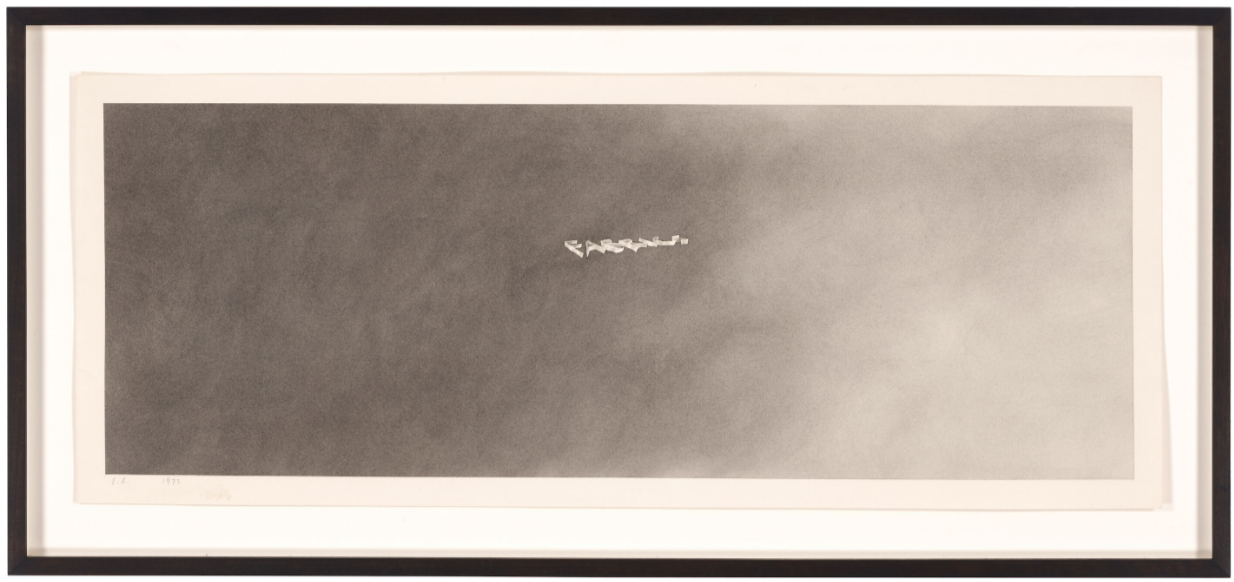
ED RUSCHA (B. 1937)
Fabrics, 1972
Gunpowder on paper
11-1/2 x 29 inches (29.2 x 73.7 cm)
Signed with the artist’s initials and dated ‘E.R. 1972’ (lower left)
Ungkay, 2008
Sotheby’s New-York: 17 November 2026
Estimated: USD 150,000 – 200,000
Ed Ruscha | Ungkay | Contemporary Day Auction | 2026 | Sotheby’s
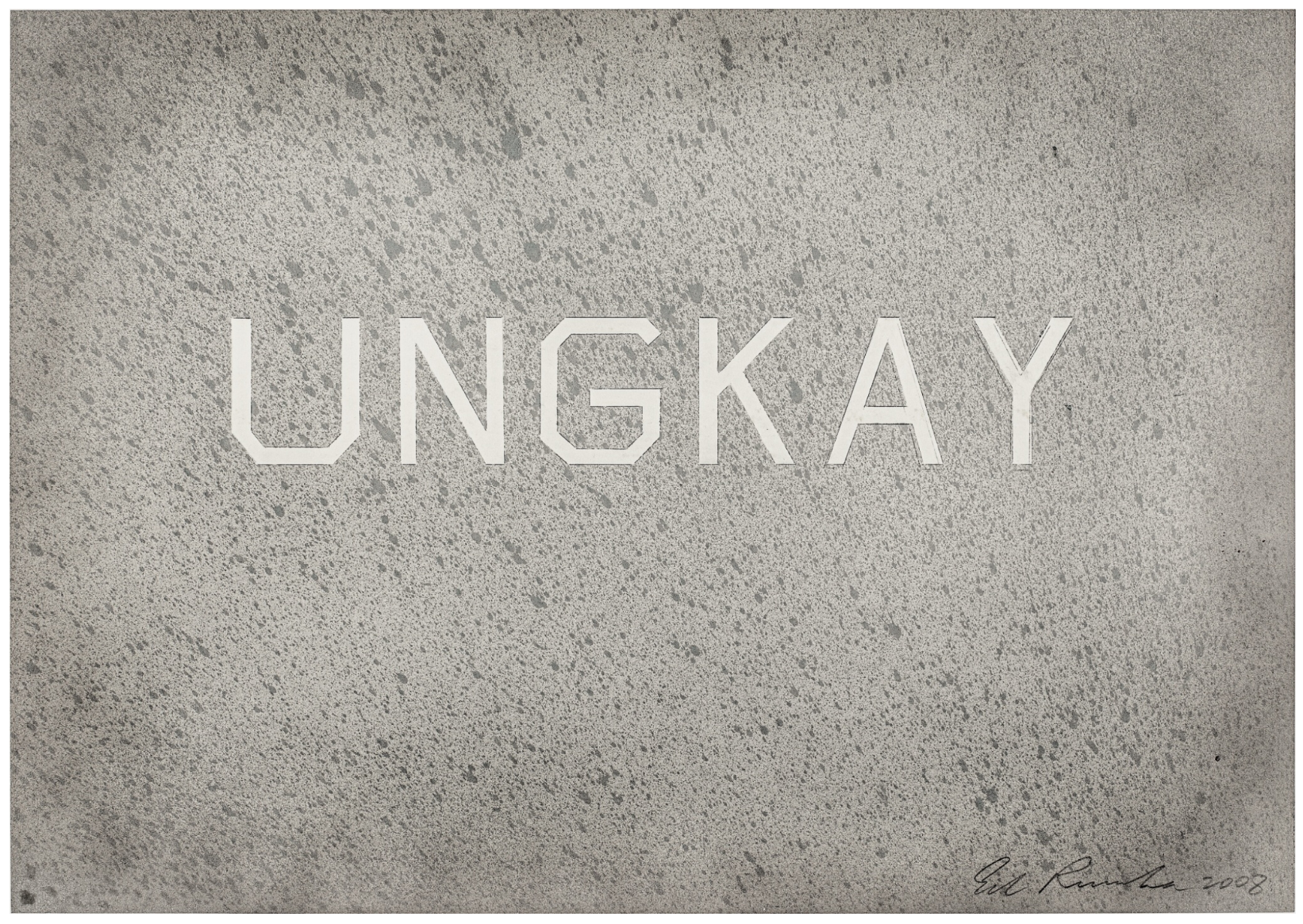
ED RUSCHA (b. 1937)
Ungkay, 2008
Acrylic on museum board
14×20 inches (35.6 x 50.8 cm)
Signed and dated 2008 (lower right)
Dimple, 1964
Dimple, 1964
Vision: The Extraordinary Collection of Theodore and Ruth Baum
Sotheby’s New-York: 16 November 2026
Estimated: USD 10,000,000 – 15,000,000
Ed Ruscha | Dimple | Vision: The Extraordinary Collection of Theodore
ED RUSCHA (b. 1937)
Dimple, 1964
Oil on canvas
28×30 inches (71.1 x 76.2 cm)
Signed and dated 1964 (on the reverse)
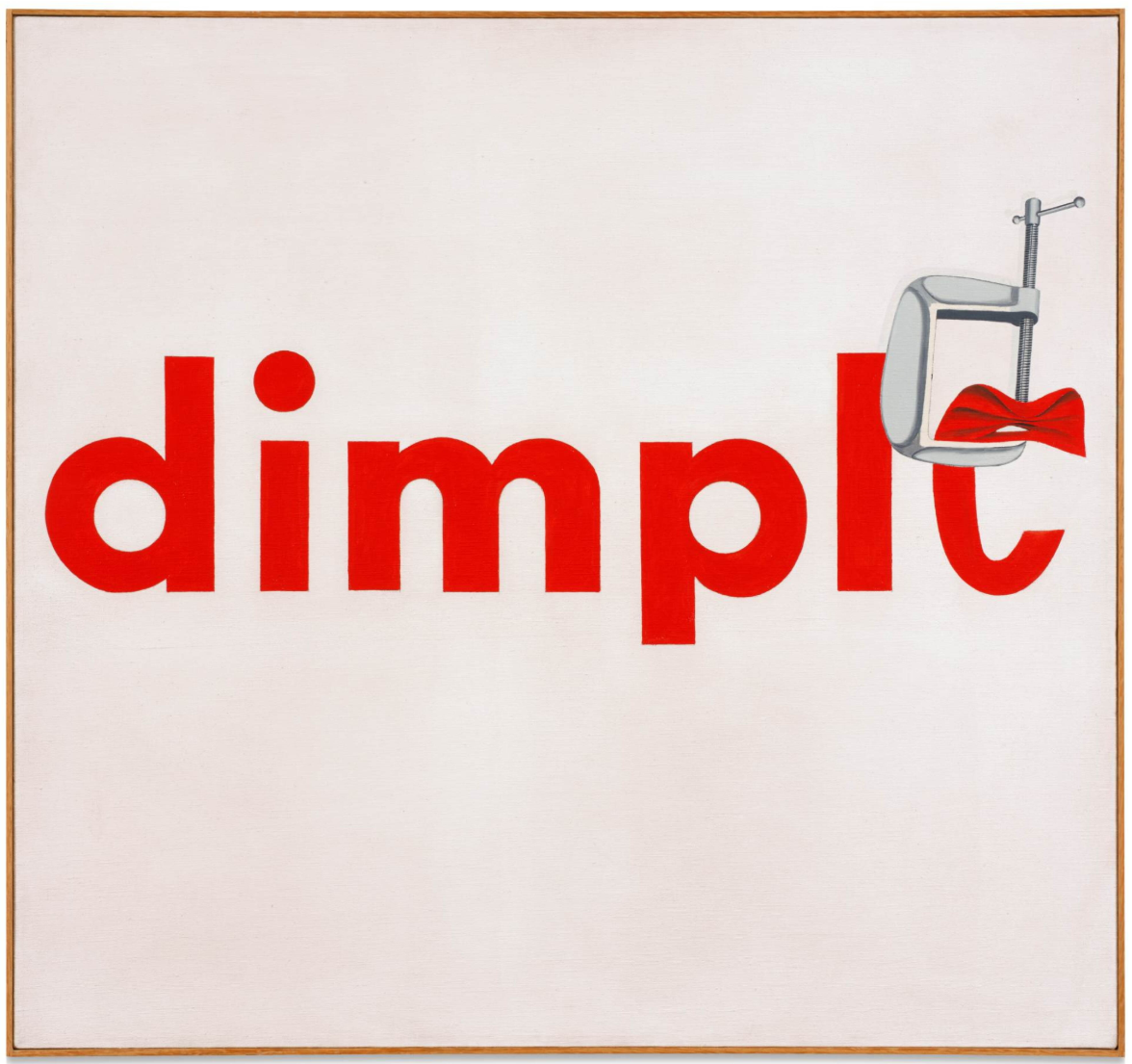
The scarlet, sans serif characters of “dimple” fill the pure white field of Ed Ruscha’s eponymous masterwork from 1964, each emblazoned with crisp, surgical precision. That is, however, until the final letter “e,” whose mechanical order is stretched, squinched, and compressed to the verge of illegibility by an industrial C-clamp, warping the image with the shrewd genius of the artist’s semiotic subversion.
Heralding not only a milestone in Ruscha’s aesthetic and theoretical evolution but also the emergence of the then-nascent Pop and Conceptual art movements, Dimple is one of only 7 paintings featuring the tremendously rare and important C-clamp motif, two of which reside in The Menil Collection in Houston and the Museum Brandhorst in Munich. The present work is also notably one of just four works featuring this text, three of which feature the very clamp that ironically dimples the rote plasticity of the script itself. Ruscha’s early text paintings from the 1960s remain the artist’s greatest contribution to the canon of Postwar painting, through which ordinary language is transformed into arresting visual statements, each clamoring with an elemental graphic force. Perhaps nowhere is this more viscerally impressed than in his C-clamp paintings, which character assert the word as both concept and object; the image as one to be simultaneously read and observed. Further testament to Dimple’s incredible significance is its provenance, having remained in the collection of Ruth and Theodore Baum for over two decades.
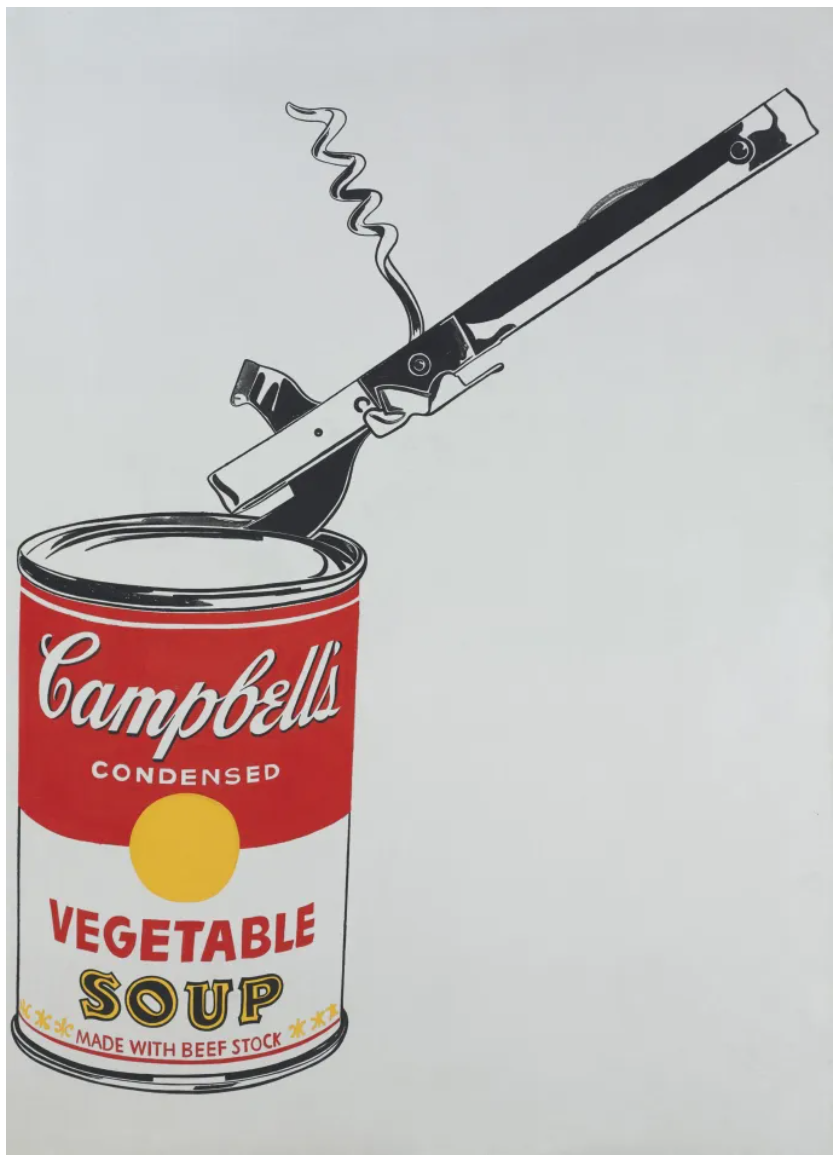
Andy Warhol, Campbell’s Soup with Can Opener, 1962. Private Collection. Image © HIP / Art Resource, NY.
Art © 2026 Andy Warhol Foundation for the Visual Arts / Artists Rights Society (ARS), New York
Theatrical and cinematic, clever yet incisive, Dimple sees Ruscha spell out its title in a bright, bold, and simplified typeface, echoing the commercial design of storefronts, signs, and windows. The letters remain flat, lying prone on the canvas as though simply enlarged for a billboard or poster. This playful enlargement and the authority of the written word, however, is undermined by the metal clamp that clenches the elastic skin of the final “e,” radically disrupting the ostensible flatness of the text and giving it a sculptural physicality and surreal bent. The C-clamp—a utilitarian metal device of mechanics and carpentry—introduces a trompe l’oeil effect that elevates text into object, language into art, colloquialism into critique: as art historian Sam Hunter observes in the catalogue raisonné entry for the present work, “Of particular interest is Ruscha’s concentration on virtually disembodied block lettering and layout, presented in the slick graphic idiom of the advertising media where the artist briefly worked as a commercial artist. It is only a short step to the isolation of lettering in the decontextualized sign of Dimple. Here the Surrealist attitude is made manifest by the curious addition of a trompe l’oeil clamp which crumples one of the letters. Pictorially, a double meaning results from the intrusion of a modelled object in the context of a flat lettered sign, for the illusionist device not only hints at irrational violence, but violates the sanctity of the flat picture plane.” (Sam Hunter, “Narrative Art,” Critical Perspectives in American Art, Amherst, 1976, p. 53) As with the very best of Ruscha’s seminal Text paintings, here the artist transfigures the word “dimple” into a vehicle for his formal and conceptual investigations, a signature interplay of semiotics that has since shaped the cornerstone of his prolific career.
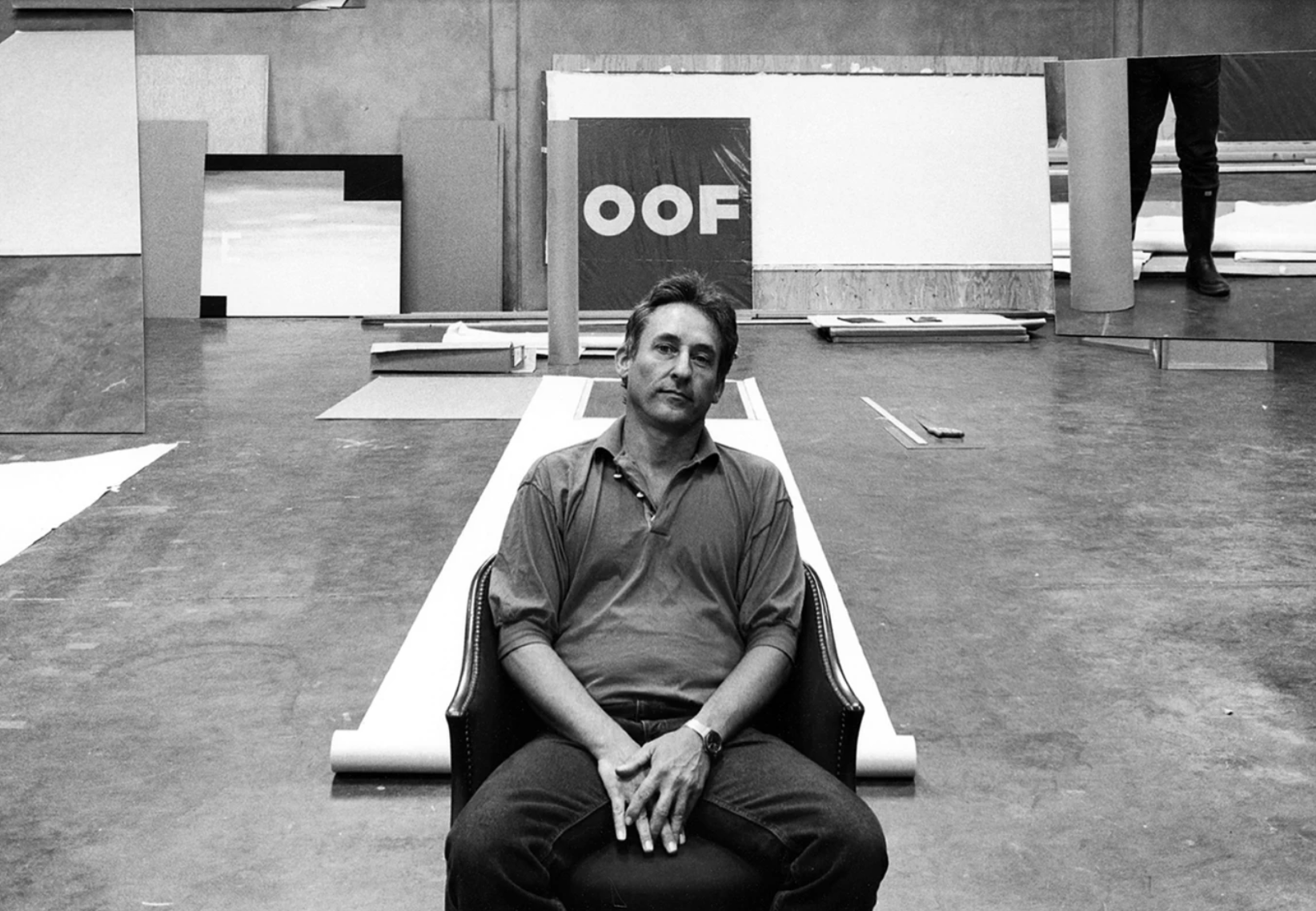
Ed Ruscha in his Los Angeles Studio, 1985. Photo by Arnold Newman Properties/Getty Images. Art © Ed Ruscha
Ruscha’s Text Paintings of the 1960s were born out of his first road trip to California, traveling to art school from Oklahoma on the fabled Route 66. Ruscha, whose brief origins were as a commercial artist, found inspiration in the stunning omnipresence of advertising billboards, which spoke to America’s rising tides of prosperity and consumerism. These colossal, de-contextualized words and the constant barrage of images projecting onto the endless expanse of the mythical West would constitute a major influence on his visual vernacular, resulting in a career-long obsession with text and image. In Dimple, Ruscha plays with this notion—that of painting as object and illusion, with words functioning as visual constructs—in his most literal expression to that point. Indeed, the Surrealist facets of paintings like Dimple can be directly attributed to a strong presence of European Surrealism in Los Angeles during the late 1950s, Ruscha first arrived in the city and would witness key exhibitions of Man Ray, Yves Tanguy, and René Magritte at the Copley Gallery. However, adopting everyday vernacular and graphics as his staple subject matter, Ruscha would cunningly manipulate the core tenets of Surrealism to reinterpret the aesthetics of commercial Americana at its height during the mid-twentieth century. “I like the idea of a word becoming a picture, almost leaving its body, then coming back and becoming a word again,” the artist remarked, “I see myself working with two things that don’t even ask to understand each other” (the artist quoted in: Thomas Beller, “Ed Ruscha” in: Alexandra Schwartz, ed., Leave Any Information at the Signal: Writings, Interviews, Bits, Pages, Cambridge, 2002, p. 282)
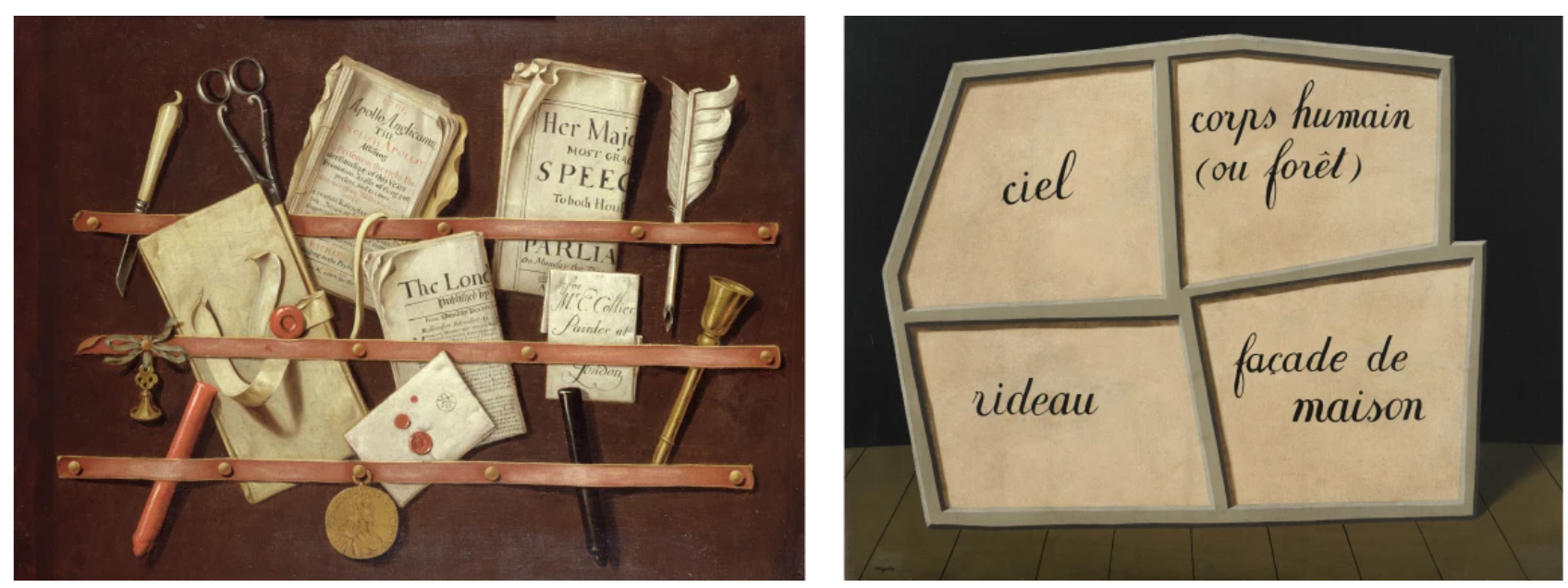
Left: Edwaert Collier, Trompe l’oeil with Writing Materials, c. 1702. Victoria & Albert Museum, London. Image © Bridgeman Images. Right: René Magritte, Le masque vide, 1928. Kunstsammlung Nordrhein-Westfalen, Düsseldorf. Art © 2026 C. Herscovici, Brussels / Artists Rights Society (ARS), New York
Ruscha’s Text Paintings furthermore stand as among the most foundational bodies of work in the early Pop movement. Ruscha’s distinct, boundary-blurring practice distilled the spirit of American consumerism and mass media into a revolutionary interplay between language and text, sign and symbol, expression and image. Like Andy Warhol’s Campbell’s soup cans and Coca-Cola bottles, Ruscha adopted as his subject matter an eclectic vocabulary of common words sourced from his everyday surroundings. “There are things that I’m constantly looking at that I feel should be elevated to greater status, almost to philosophical status or to a religious status,” said Ruscha, “That’s why taking things out of context is a useful tool to an artist. It’s the concept of taking something that’s not subject matter and making it subject matter.” (the artist quoted in: Richard D. Marshall and Ed Ruscha, Ed Ruscha, New York, 2005, p. 133) Squeezed to reverberate with Ruscha’s acerbic wit and whimsy, Dimple refuses a straightforward reading, instead interplaying motifs of “high” and “low” culture with an aesthetic irony that summarizes the artist’s enduring legacy and Pop as a whole.
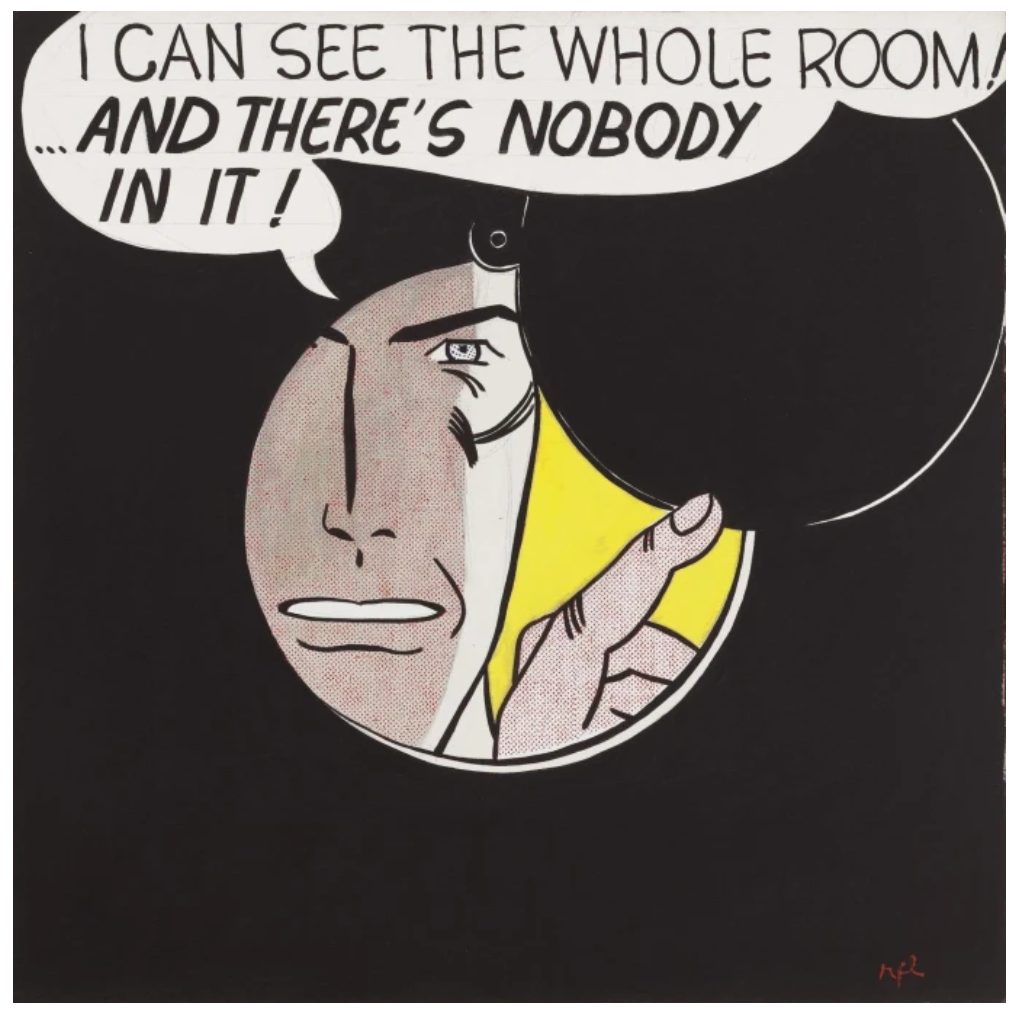
Roy Lichtenstein, I Can See the Whole Room! … And There’s Nobody in It!, 1961.
Private Collection. Art © © 2026 Estate of Roy Lichtenstein/DACS
Dimple monumentalizes the mundane, standing as the height of Ruscha’s pioneering and singular mode of painting that brought imaginative freedom to the regimented order of printed matter. An early paragon of Ruscha’s iconic early 1960s output, Dimple marks a critical turning point in art history, during which the tradition of painting collides with the cacophonous visual deluge of contemporary culture. “The term Pop Art made me nervous and ambivalent,” Ruscha reflected, “It actually goes beyond painting. It was culture, and it was so many other modes of making art … A Pop artist can be anyone who has thrown over a recent set of values.” (the artist quoted in: Exh. Cat., Washington, D.C., Hirshhorn Museum and Sculpture Garden, Ed Ruscha, 2000, p. 150) In Dimple Ruscha not only throws over the authority of the written word but indeed the tenets of traditional painting altogether, a triumphant, winking assertion of the values and vision that would define Ruscha’s titanic career.
Male and Female, 1987
Male and Female, 1987
Christie’s New-York: 19 November 2026
Estimated: USD 4,000,000 – 6,000,000
ED RUSCHA (B. 1937), Male and Female | Christie’s
ED RUSCHA (B. 1937)
Male and Female, 1987
Acrylic on canvas
60×60 inches (152.4 x 152.4 cm)
Signed and dated ‘Ed Ruscha 1987’ (on the reverse)
Signed and dated again and titled ‘Ed Ruscha 1987 ‘Male and Female” (on the stretcher)
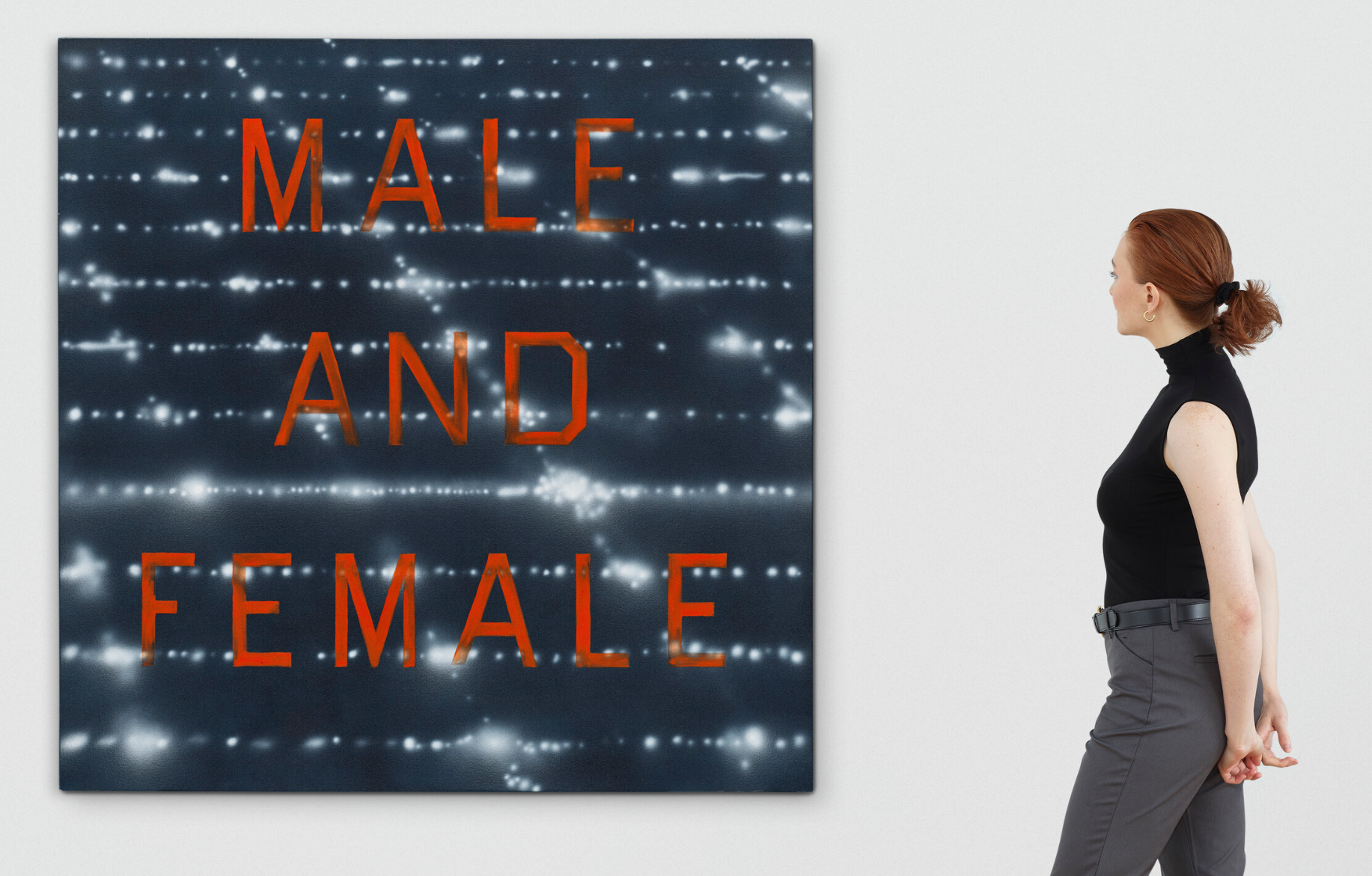
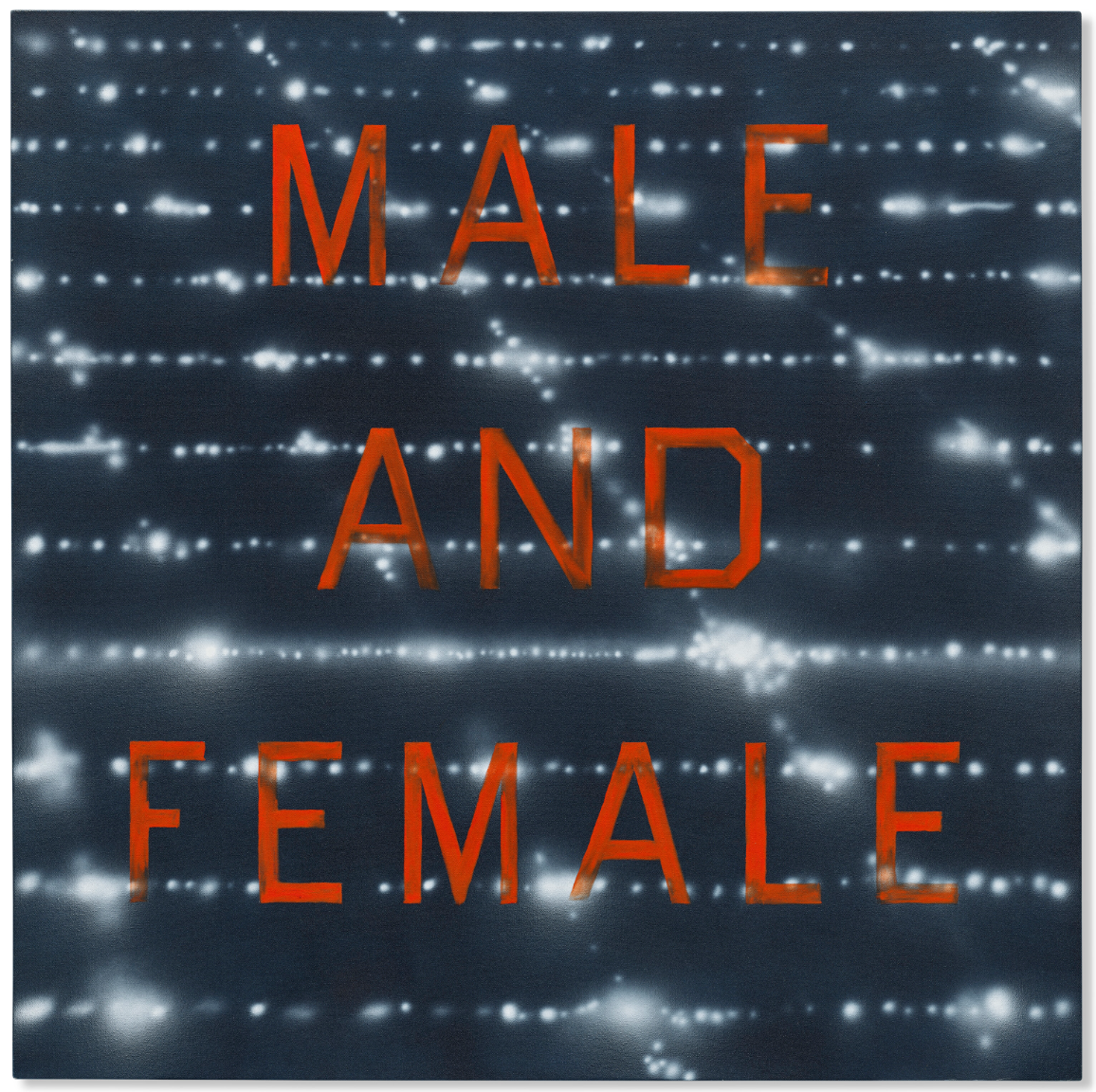
Painted in 1987, Male and Female belongs to Ed Ruscha’s City Lights series, a group of works that marked a shift in the artist’s longstanding engagement with the American landscape. For decades, Ruscha had looked to the highway—to gas stations, parking lots, signs and the architecture encountered from the automobile—as both subject and source. In the City Lights paintings, he exchanged the view from the car for one from the air. Seen from above at night, streets and intersections form an illuminated grid, over which Ruscha superimposed the words and phrases that had been central to his work since the early 1960s. In Male and Female, the titular words and beguiling landscape are bound. The city below is Los Angeles after dark, a view long theatrically associated with romance, and the words Ruscha set above it speak directly to that atmosphere. Where his texts are often oblique, Male and Female is plain-spoken and instantly understood, placing this painting among the finest of the City Lights series.
The road had shaped Ruscha’s way of seeing almost from the moment he arrived in California in 1956. On his way to Chouinard Art Institute, he drove from his hometown of Oklahoma City to Los Angeles along Route 66, a journey he would repeat regularly in the years that followed. The filling stations punctuating the drive became the subject of his first artist’s book, Twentysix Gasoline Stations (1963), while gas stations, parking lots, roadside signs and other features of the car-bound landscape recurred throughout his work, most famously in his paintings of the Standard Oil station in Amarillo, Texas. The automobile provided Ruscha with a particular way of encountering the world: sequentially and in motion, as places and objects appeared and disappeared along the road. The City Lights paintings retain that fundamental relationship between travel and vision while radically altering its perspective.
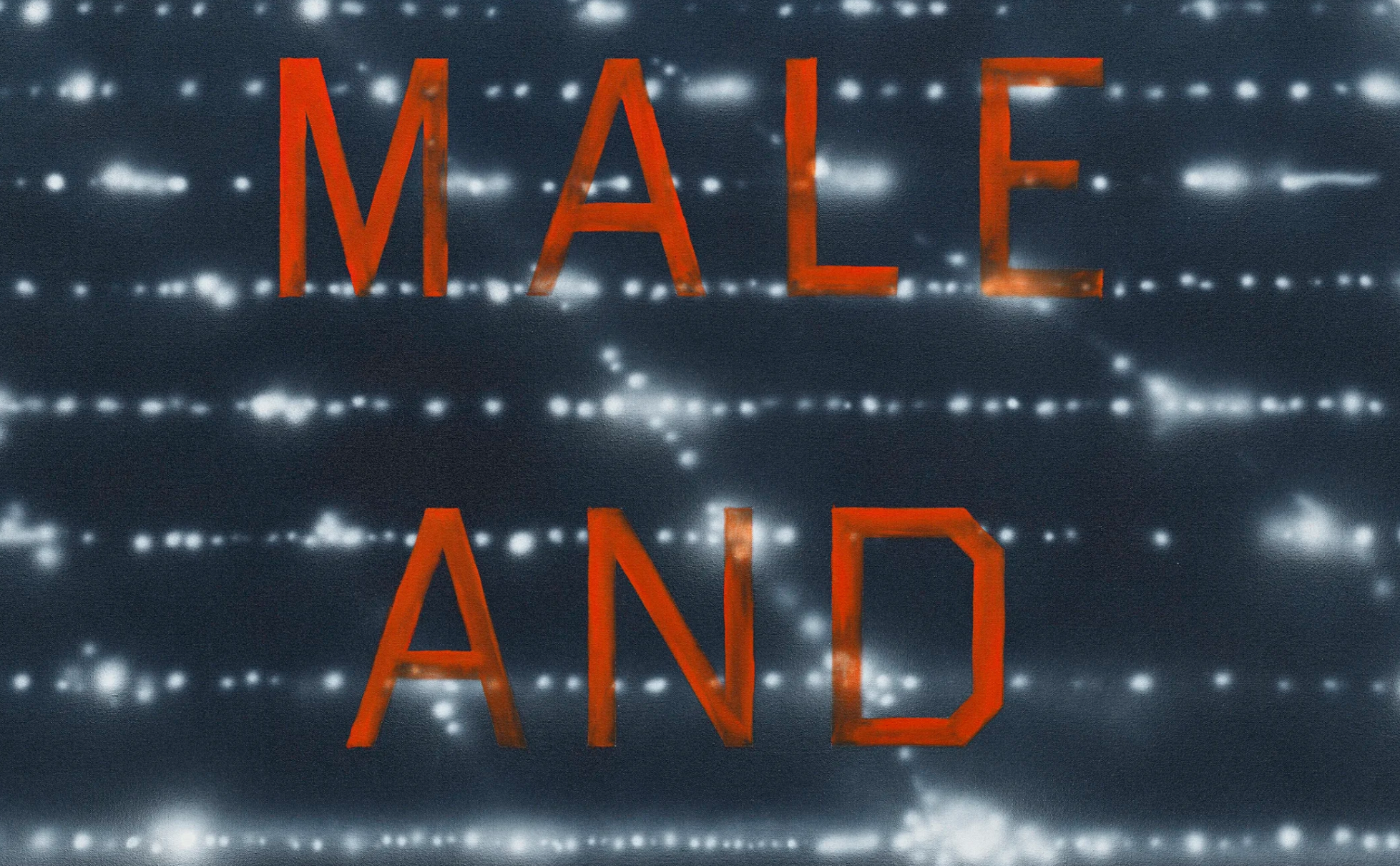
The series developed after Ruscha made frequent flights between Los Angeles and Miami in 1985 while working on a commission for the Miami-Dade Public Library. From the air, the landscape he had spent decades observing from the road assumed a different form. As Robert Dean has written, “Up to this point much of Ruscha’s work had been connected to the automobile and the road and, to expand upon Rosalind Krauss’s suggestion that the automobile for Ruscha was a kind of medium, the airplane may have become, at least in the case of the City Lights paintings, a new medium” (R. Dean, “Overlapping Dialogues: The Paintings of Edward Ruscha, 1983-1987,” in Edward Ruscha: Catalogue Raisonné of the Paintings, Volume Three: 1983-1987, New York, 2007, p. 5). In the series, the altered viewpoint transforms the city into a network of luminous lines. Individual buildings are subsumed by darkness; cars register as points of light; roads converge and diverge across the canvas. What Ruscha had once experienced from within the landscape could now be apprehended.
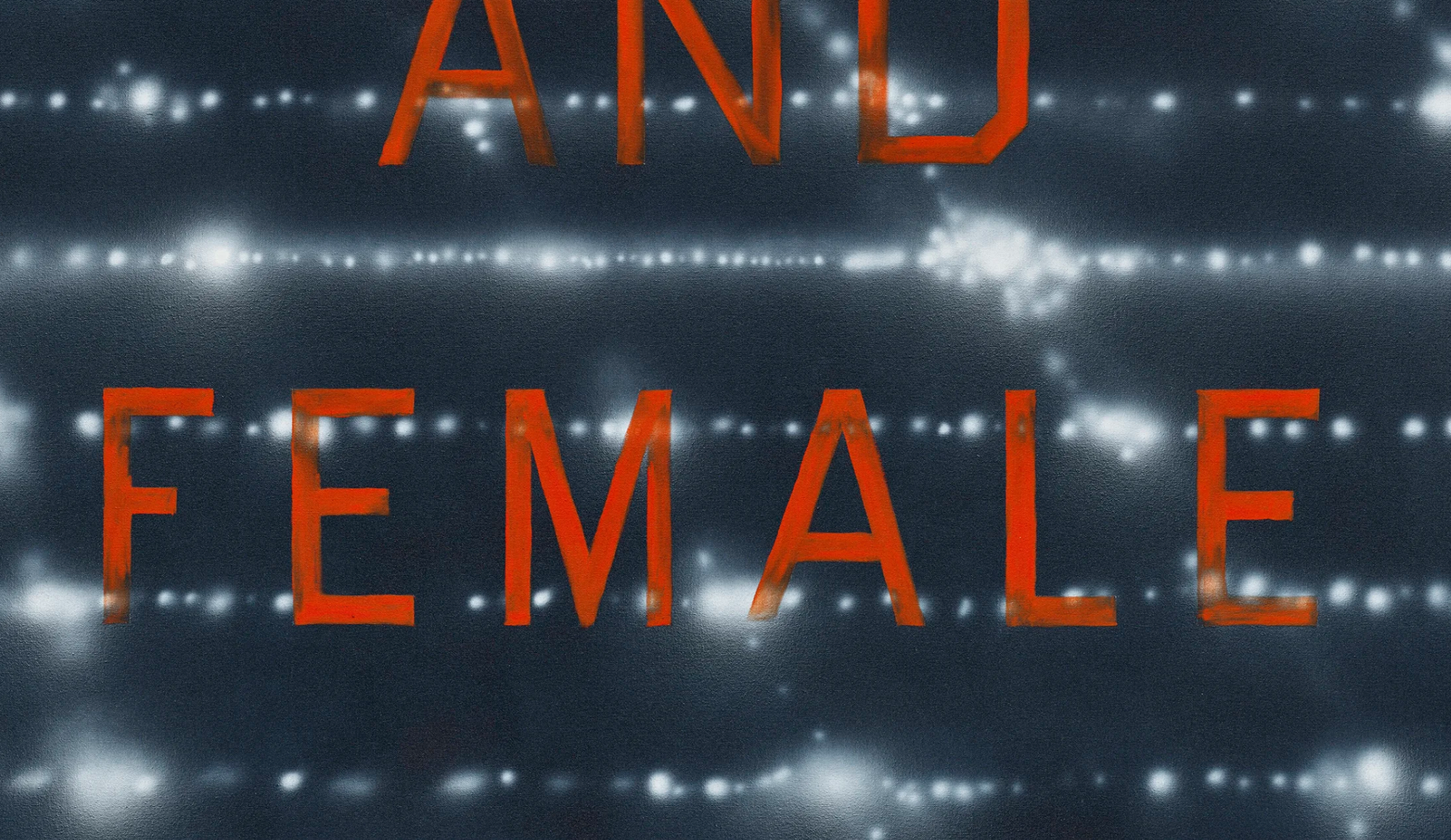
This elevated perspective pushes the city toward abstraction, transforming its ordered grid of streets and clusters of light into a strong underlying geometry. “Conflating the grids of the city with the compositional grid of the picture plane, [the City Lights paintings] straddle the line between landscape and abstraction,” Ralph Rugoff has observed. “They also present an image of the city that resembles a night sky turned upside down, as art historian Briony Fer has commented, so that ‘looking up and down collapse into each other,’ and our sense of the ground of representation dissolves” (R. Rugoff, Ed Ruscha: Fifty Years of Painting, exh. cat., Hayward Gallery, London, 2010, p. 21).
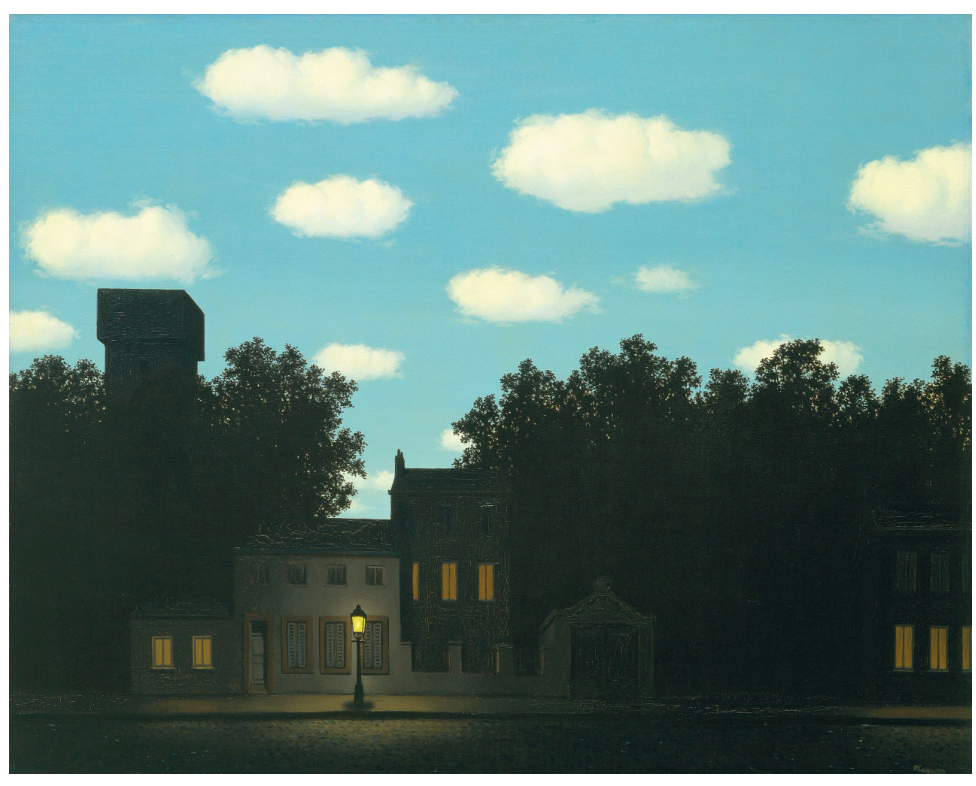
René Magritte, L’Empire des lumières, 1950. Museum of Modern Art, New York.
© 2026 C. Herscovici / Artists Rights Society (ARS), New York.
Against this expansive backdrop, the words “MALE” and “FEMALE” assert themselves with striking immediacy. Language had been fundamental to Ruscha’s paintings since the early 1960s, drawn variously from commercial signage, advertising, colloquial speech and phrases encountered or imagined by the artist. “A lot of my paintings are anonymous backdrops for the drama of words,” Ruscha has explained. “They’re just meant to support the drama, like the ‘Hollywood’ sign being held up by sticks” (E. Ruscha, quoted in Ed Ruscha and the Great American West, exh. cat., Fine Arts Museums of San Francisco, 2016, p. 29). Here, however, word and backdrop remain in active tension. The red lettering is emphatically legible but not entirely opaque: points of illumination remain visible through it, momentarily bringing the distant city and the surface of the canvas together.
Nor is the backdrop in Male and Female anonymous. The city at night, its boulevards strung with light to the horizon, is one of the defining images of Los Angeles: the view from the overlooks along Mulholland Drive and from countless Hollywood films, shorthand for glamour and for romance. Ruscha’s words answer that image directly. His language is frequently elusive, built from overheard fragments, deadpan slogans and phrases chosen as much for their sound as their sense. Here he reached instead for one of the oldest and simplest pairings in the language, legible to any viewer and charged with the promise of encounter. The phrase carries its own Hollywood pedigree as the title of Cecil B. DeMille’s 1919 film starring Gloria Swanson, and the saturated red of the lettering summons the neon sign and the theater marquee. Word and image pull in the same direction, and the result is among the most atmospheric and immediate paintings in the series.
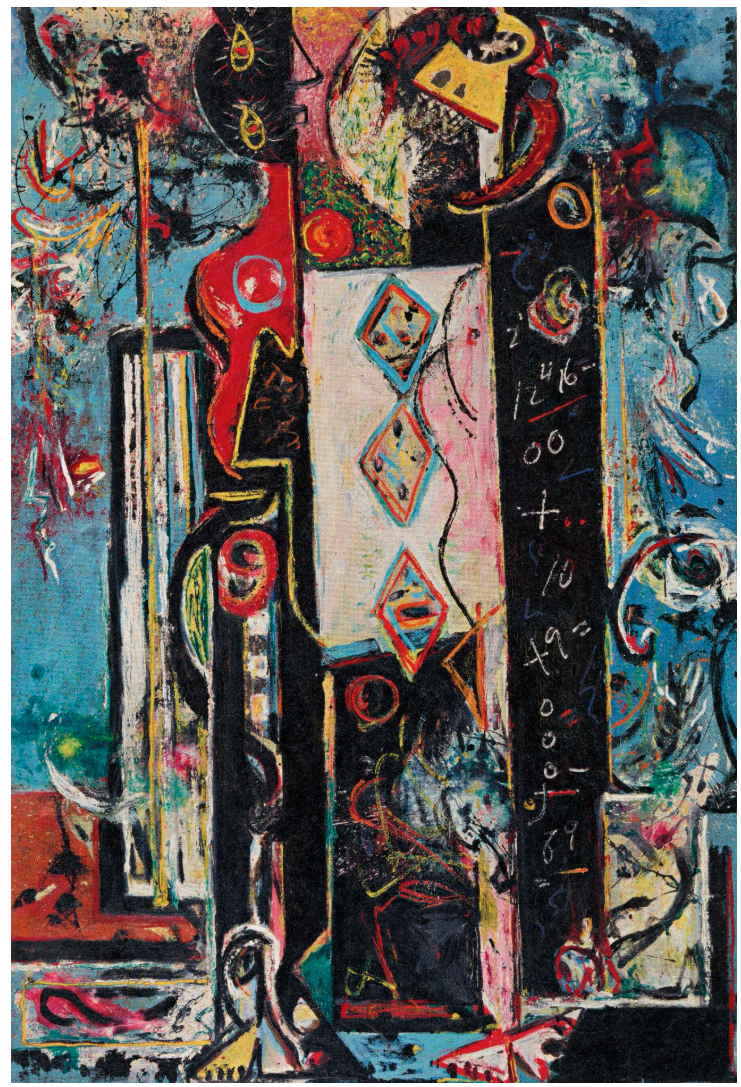
Jackson Pollock, Male and Female, 1942-1943. Philadelphia Museum of Art.
© 2026 The Pollock-Krasner Foundation / Artists Rights Society (ARS), New York.
The tension between depth and surface parallels another fundamental aspect of Ruscha’s work: the competing acts of looking and reading. “Male” and “Female” are among the most familiar of words, immediately recognizable as categories and opposites. Set above the city at night, they read less as categories than as a couple. Beneath them, meanwhile, the city offers abundant visual information without resolving into a single street or address. Ruscha gives the viewer two systems of information—the verbal and the visual—and each sharpens the other. In Male and Female, the shift from automobile to airplane thus offered Ruscha a new vantage point on concerns that had occupied him for decades. The roads remain, but rather than carrying the artist through the landscape, they now organize the image beneath him. Above them, the words remain fixed to the surface, direct in their language and attuned to the mood of the city below.
Light Leaks, 1993
Light Leaks, 1993
Property from a Prestigious Private Collection
Sotheby’s New-York: 16 November 2026
Estimated: USD 2,500,000 – 3,500,000
Ed Ruscha | Light Leaks | The Now and Contemporary Evening Auction |
ED RUSCHA (b. 1937)
Light Leaks, 1993
Acrylic and tinted varnish on canvas
40×72 inches (101.6 x 182.9 cm)
Signed and dated 1993 (on the reverse)
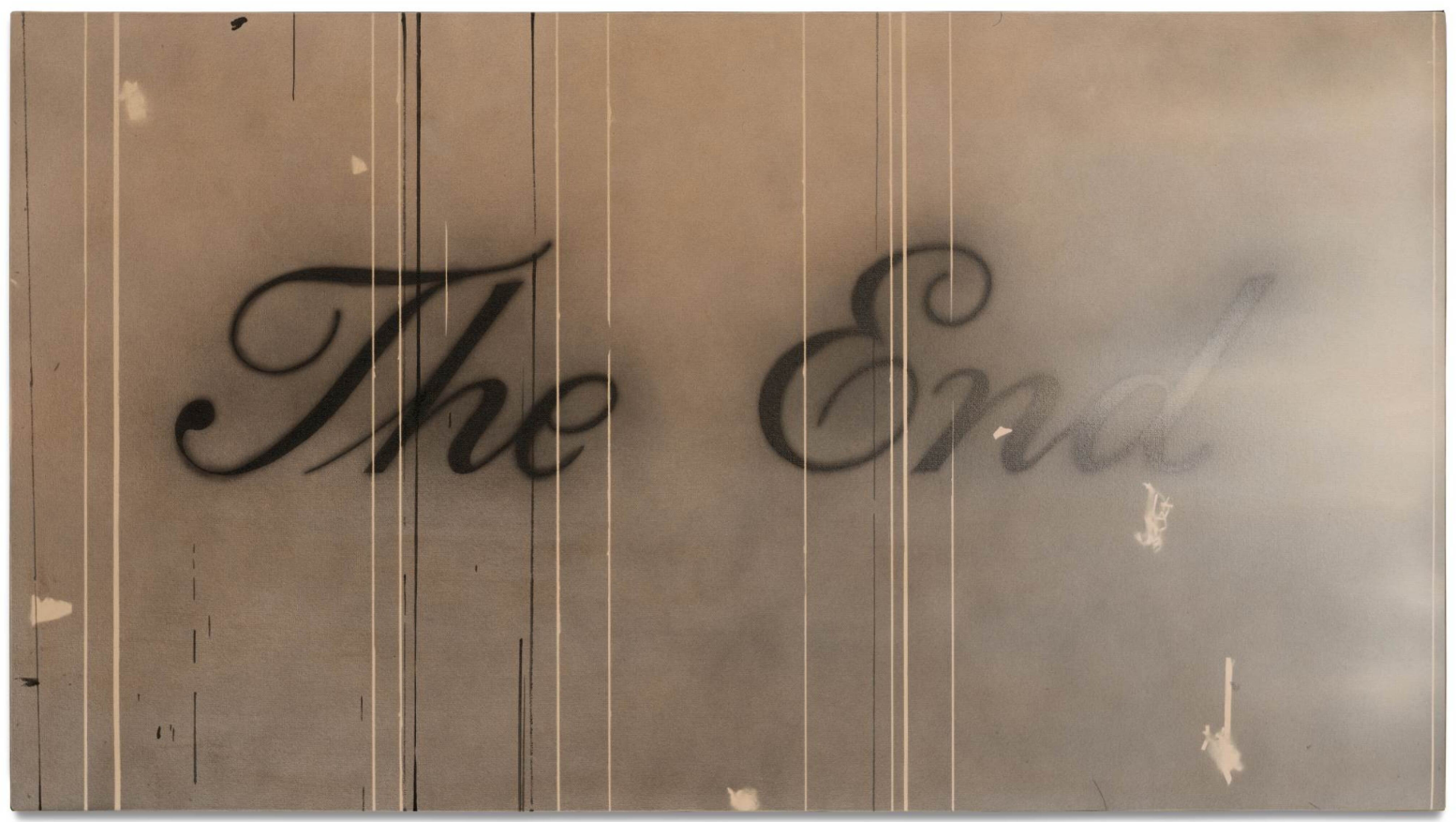
One principle holds true: all must come to an end. In an enchanting homage to the fading glory of the Hollywood golden age, Ed Ruscha masterfully encapsulates the inescapability of time and the nostalgia we hold for the past. Glowing with an ethereal, mystifying haze, the text “The End” immortalizes the transient moment of the cinematic finale, when the present becomes the past and the final credits roll off the screen and fade away. Light Leaks immediately conjures the feeling of sitting before a projector screen—the whir of the celluloid film, the flicker of the light, the lens marred with dust particles and tiny scrapes, the mechanical imperfections of a well-loved film tape. A familiar yet portentous phrase, “The End” embodies the conceptual rigor of Ruscha’s career-long exploration of semiotics and text. Here, like in the best of Ruscha’s paintings, semantics and symbolism coalesce in a brilliant visual dialogue, probing the reciprocity between image, symbol, and text. Light Leaks belongs to a limited suite of celebrated paintings created between 1991 and 1999, in which Ruscha investigates the enigmatic and elusive phrase, “The End,” through entrancing cinematic scenes.
“I think that there is one fundamental thing, and that is that artists are attracted to glamour, you see. The American way of life possesses a certain siren voice of some kind, which is glamorous to almost any society…”
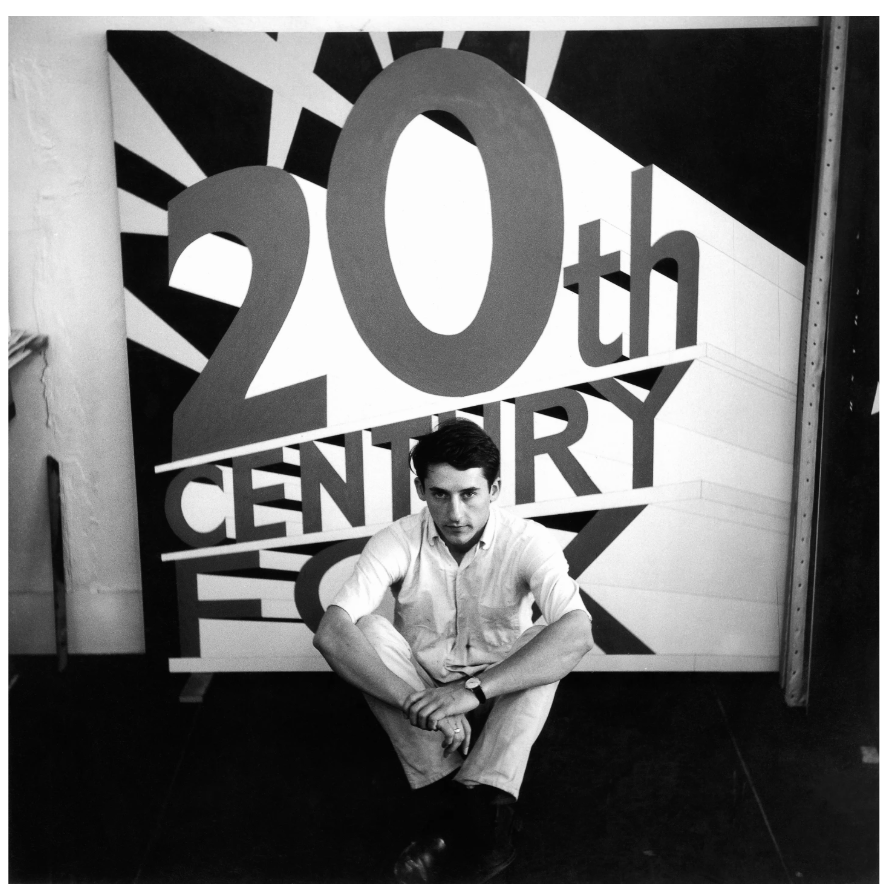
Ed Ruscha in his Echo Park studio, Los Angeles, 1963. Photo by Joe Goode, courtesy the Moderna Museet. Art © Ed Ruscha
Notably, Light Leaks was illustrated in the 1994 “Hollywood” issue of Grand Street, the revered literary magazine founded by writer Jean Stein. Walter Hopps, the art editor of Grand Street and Stein’s mentor, had previously served as the founder and director of the iconic Ferus Gallery in Los Angeles, where he held Ruscha’s first one-man show in 1963. Following its inclusion in the 1994 Grand Street issue, Stein acquired Light Leaks for her personal collection, where it remained for decades.
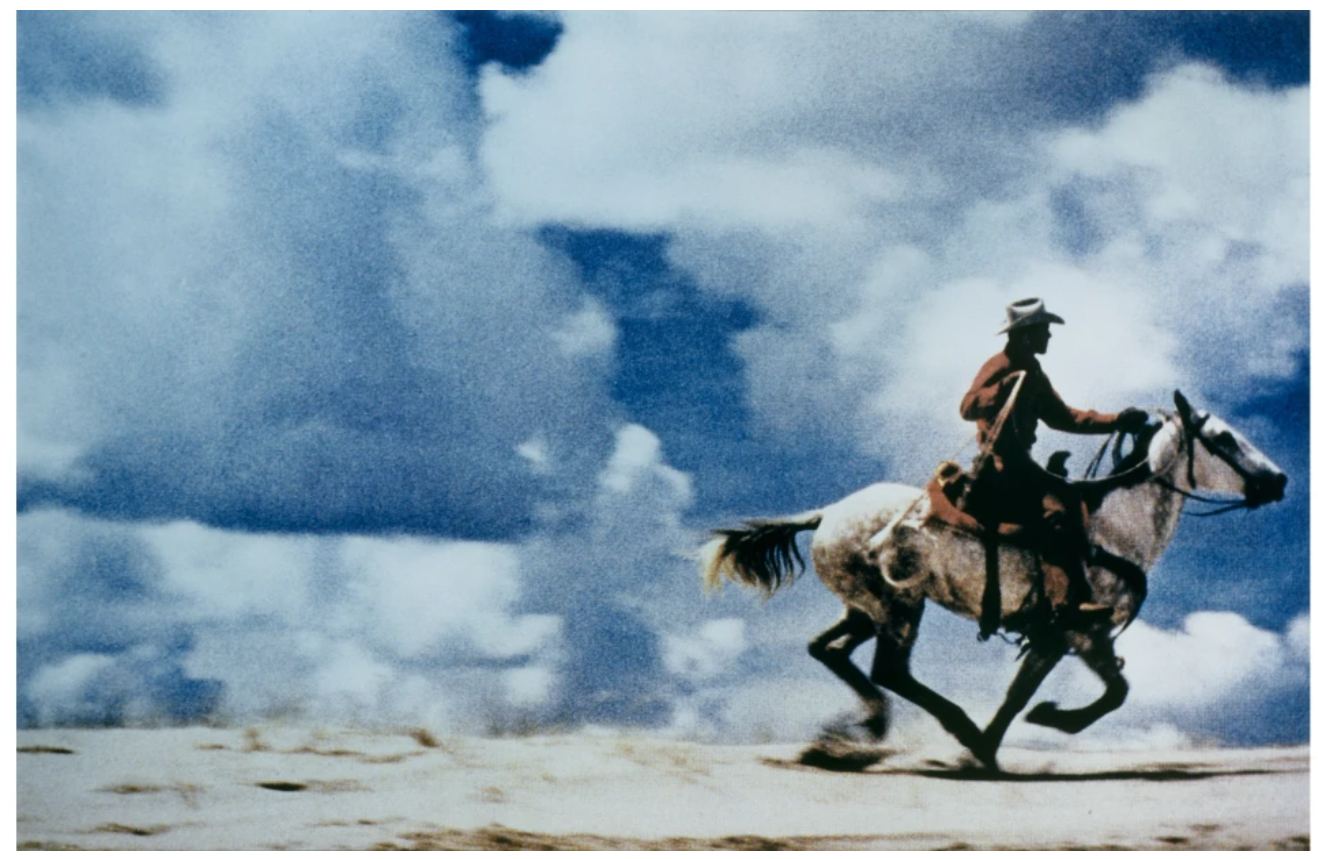
Richard Prince, Untitled (Cowboy), 1989. The Metropolitan Museum of Art, New York.
Image © The Metropolitan Museum of Art / Art Resource, NY. Art © Richard Prince
Lauded for his beguiling attention to detail and distinctive trompe l’oeil techniques, Ruscha has an innate understanding of the particularities of a composition that captivate and bewitch. Curator Ana Torok writes of the series: “Ruscha’s fascination with the materiality of degraded film goes beyond a purely optical preoccupation; it also marks time. When committing this image to canvas, he was struck by the fact that at some point in the future, viewers unfamiliar with the analog medium will no longer comprehend what they are seeing: ‘It will be a head-scratcher—people will say, what do these lines here mean?’” (Ana Torok, “Hollywood Dreams” in: Exh. Cat., New York, The Museum of Modern Art (and traveling), Ed Ruscha / Now Then, 2023, pp. 230-231)
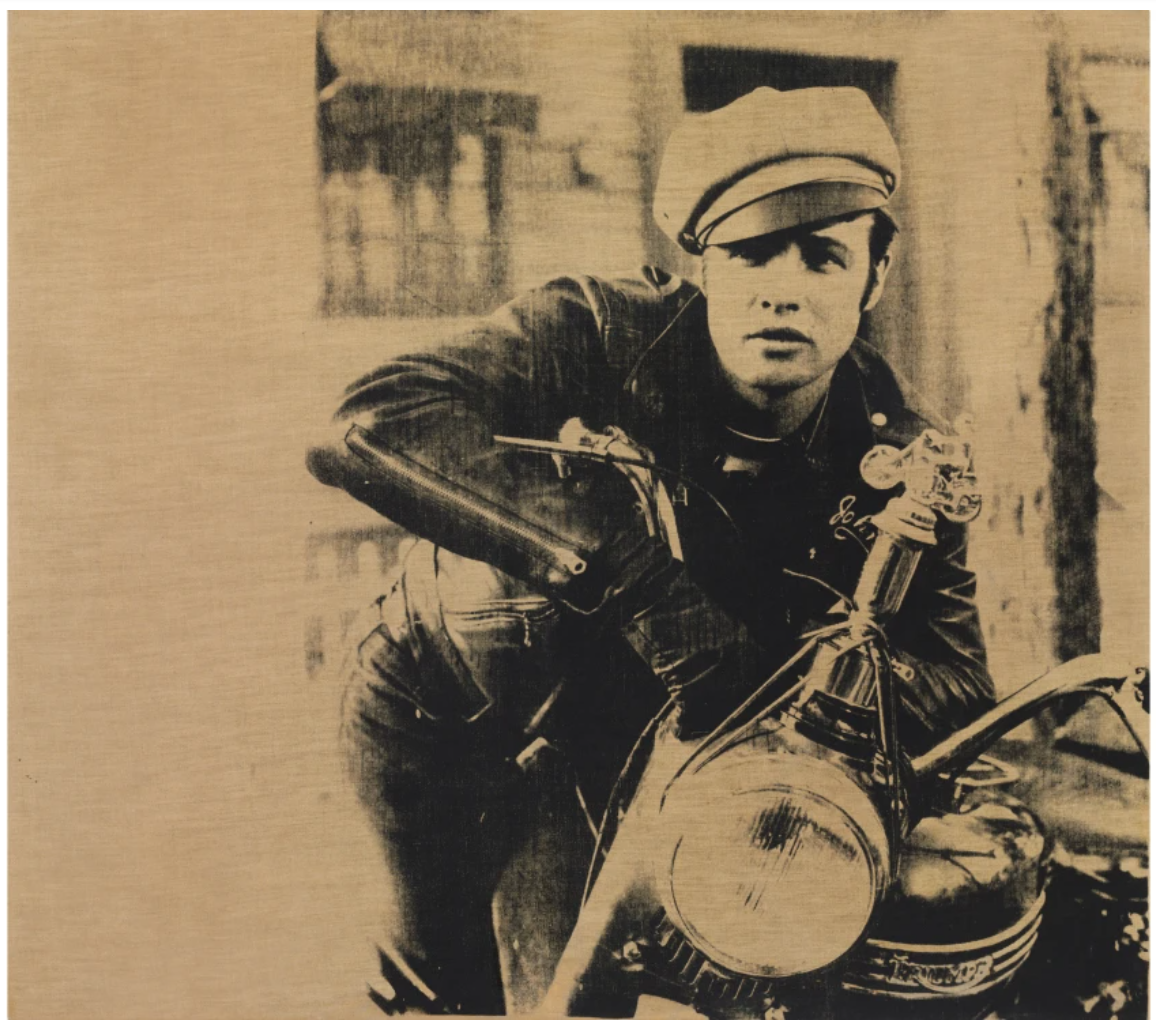
Andy Warhol, Marlon, 1966. Private Collection. Image © 2026 The Andy Warhol Foundation for the Visual Arts, Inc. / Licensed by DACS, London / Christie’s Images / Bridgeman Images. Art © 2026 Andy Warhol Foundation for the Visual Arts / Artists Rights Society (ARS), New York
Notably, Light Leaks was illustrated in the 1994 “Hollywood” issue of Grand Street, the revered literary magazine founded by writer Jean Stein. Walter Hopps, the art editor of Grand Street and Stein’s mentor, had previously served as the founder and director of the iconic Ferus Gallery in Los Angeles, where he held Ruscha’s first one-man show in 1963. Following its inclusion in the 1994 Grand Street issue, Stein acquired Light Leaks for her personal collection, where it remained for decades. Lauded for his beguiling attention to detail and distinctive trompe l’oeil techniques, Ruscha has an innate understanding of the particularities of a composition that captivate and bewitch. Curator Ana Torok writes of the series: “Ruscha’s fascination with the materiality of degraded film goes beyond a purely optical preoccupation; it also marks time. When committing this image to canvas, he was struck by the fact that at some point in the future, viewers unfamiliar with the analog medium will no longer comprehend what they are seeing: ‘It will be a head-scratcher—people will say, what do these lines here mean?’” (Ana Torok, “Hollywood Dreams” in: Exh. Cat., New York, The Museum of Modern Art (and traveling), Ed Ruscha / Now Then, 2023, pp. 230-231)
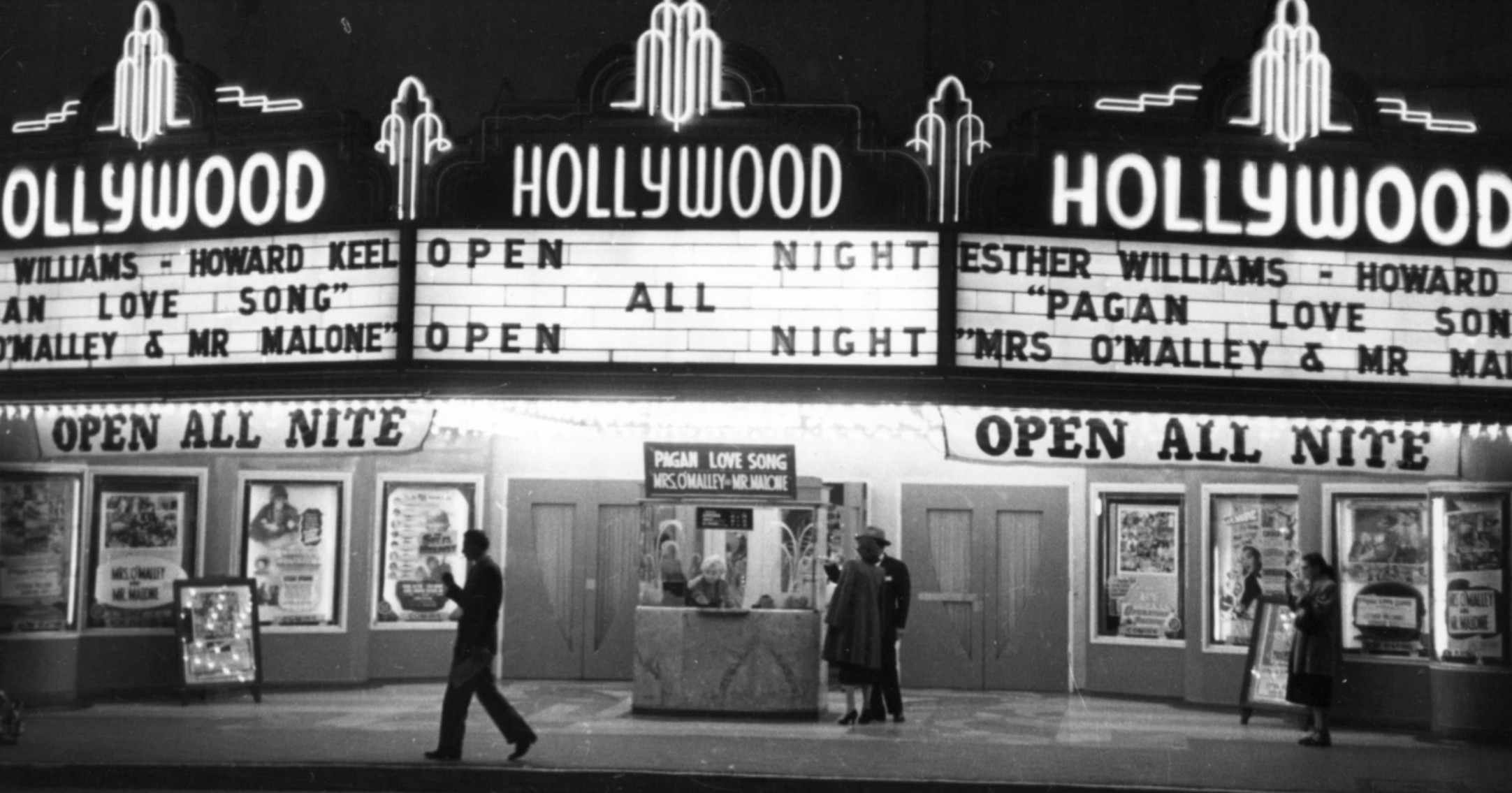
Hollywood Cinema in Los Angeles, California, 1951. Photo © Kurt Hutton/Picture Post/Hulton Archive/Getty Images
Working briefly as a commercial artist following his move to Los Angeles in 1956, Ruscha found inspiration in the prospering advertisement industry, Hollywood, and mid-century American pop culture. He was most famously captivated by the colossal billboards lining America’s Western highways, towering monuments to American consumerism which provided a seemingly endless barrage of text and image in striking mélanges of sign and symbol. The highway billboards would uniquely inform Ruscha’s distinctive visual vernacular and brand of Pop, by which he challenged the semiotic function of the written word through beguiling and idiosyncratic compositions.
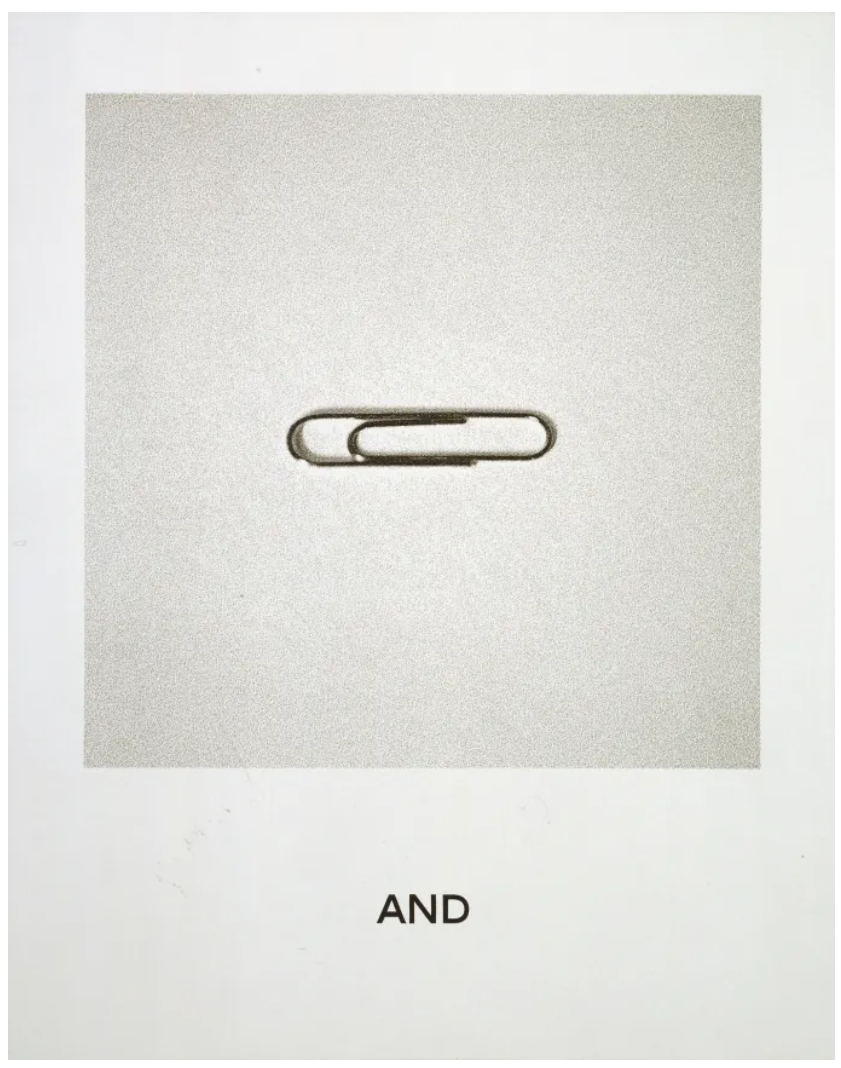
John Baldessari, Goya Series: And, 1997. The Museum of Modern Art, New York. Image © The Museum of Modern Art/Licensed by SCALA / Art Resource, NY. Art © 1997–2026 John Baldessari Family Foundation. Courtesy Estate of John Baldessari; Sprüth Magers
Hollywood as a subject runs throughout Ruscha’s career, famously represented by explorations of the Hollywood signs, such as Back of Hollywood from 1977, and in the present work, which is embodied by film itself. Robert Mahoney writes of Ruscha’s “The End” paintings: “Ruscha’s art, and particularly The End…plays an endgame for Pop. And cliché aside, Ruscha’s art projects the remains of the day in a format that is in tune to the flow of meaning at the end of things.” (Robert Mahoney, “Edward Ruscha: The End,” Grand Street 49, Summer 1994, p. 121) The appropriation of the commonplace and its reappraisal in the realm of fine art invokes Pop Art’s greatest ambassadors such as Andy Warhol and Roy Lichtenstein, who worked simultaneously with Ruscha throughout much of the late Twentieth Century to deepen the artistic exploration of commercial culture. Channeling the cinematic seriality of Warhol’s silkscreens and the dramatization of Hollywood glamor in Lichtenstein’s early paintings, Light Leaks harkens back to the most iconic examples of Pop art in the 1960s.
“I’ve always remembered that—it’s a particular phenomenon of films that I like. If someone seventy-five years from now looks at this painting, they won’t understand it at all. It’s depicting a kind of mechanical defect which will not even be in our language.”
Ed Ruscha’s Light Leak Paintings, 1990-99
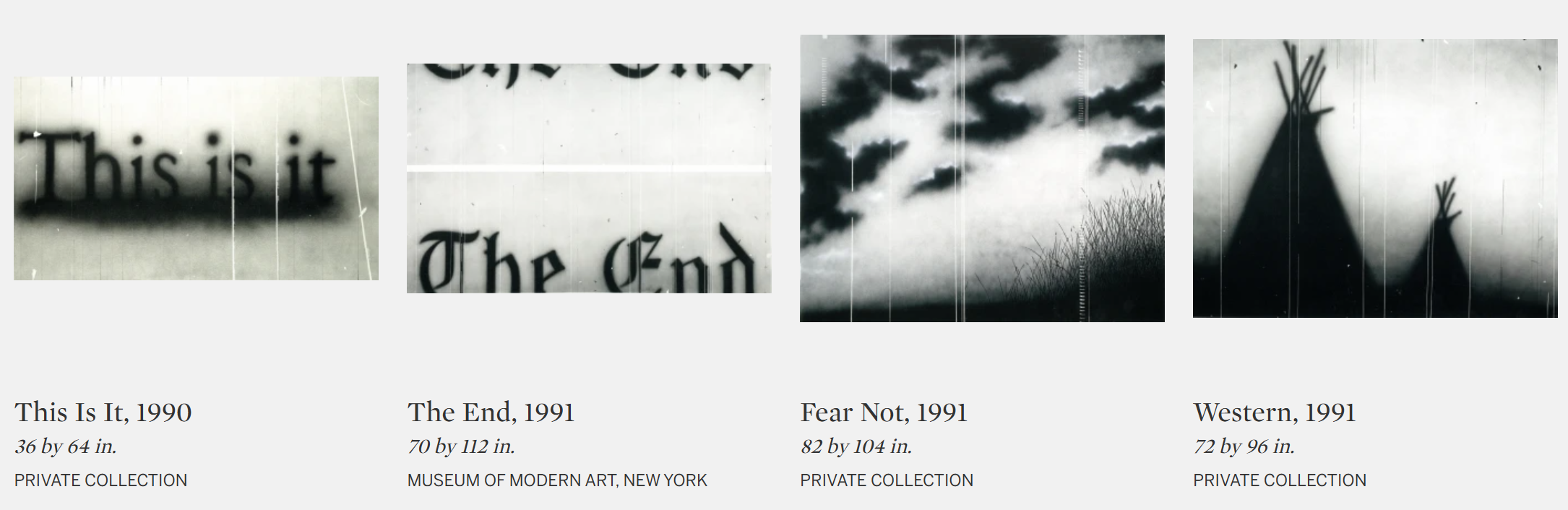
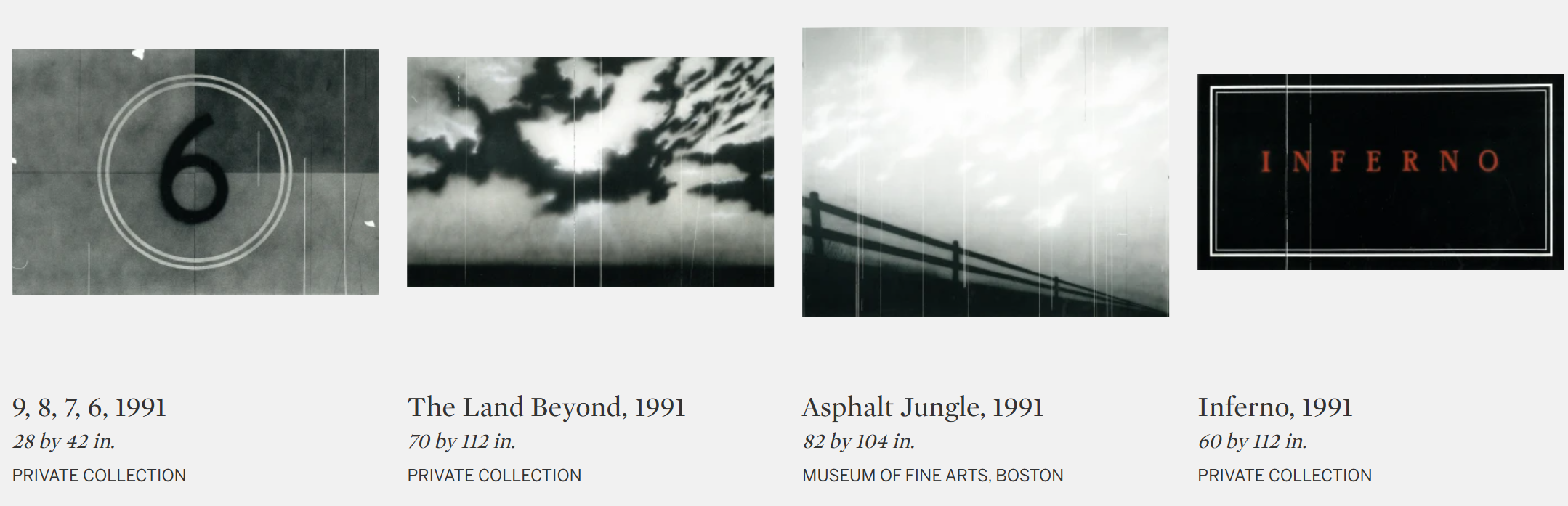
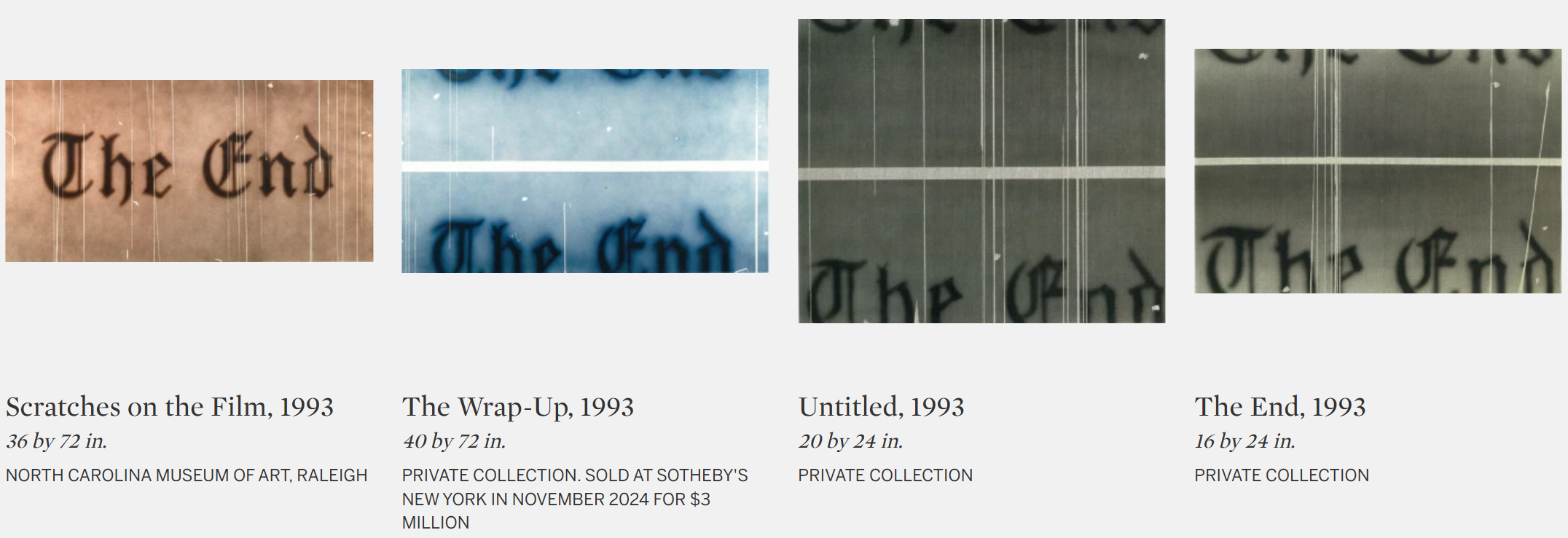
An extraordinary example from Ruscha’s limited suite of paintings exploring the text “The End,” the present work is a paragon of Ruscha’s fascinations with text and image of a bygone era. Through his ambiguous, dead-pan text paintings, Ruscha reveals the peculiarities of our banal yet simultaneously highlights—even iconizes—aspects of our fleeting realities that go overlooked.
Old Sign, 1989
Old Sign, 1989
Christie’s New-York: 20 November 2026
Estimated: USD 250,000 – 350,000
ED RUSCHA (B. 1937), Old Sign | Christie’s
ED RUSCHA (B. 1937)
Old Sign, 1989
Acrylic on canvas
36×36 inches (91.4 x 91.4 cm)
Signed and dated ‘Ed Ruscha 1989’ (on the reverse)
Signed again, titled and dated again ‘ED RUSCHA “OLD SIGN” 1989’ (on the stretcher)
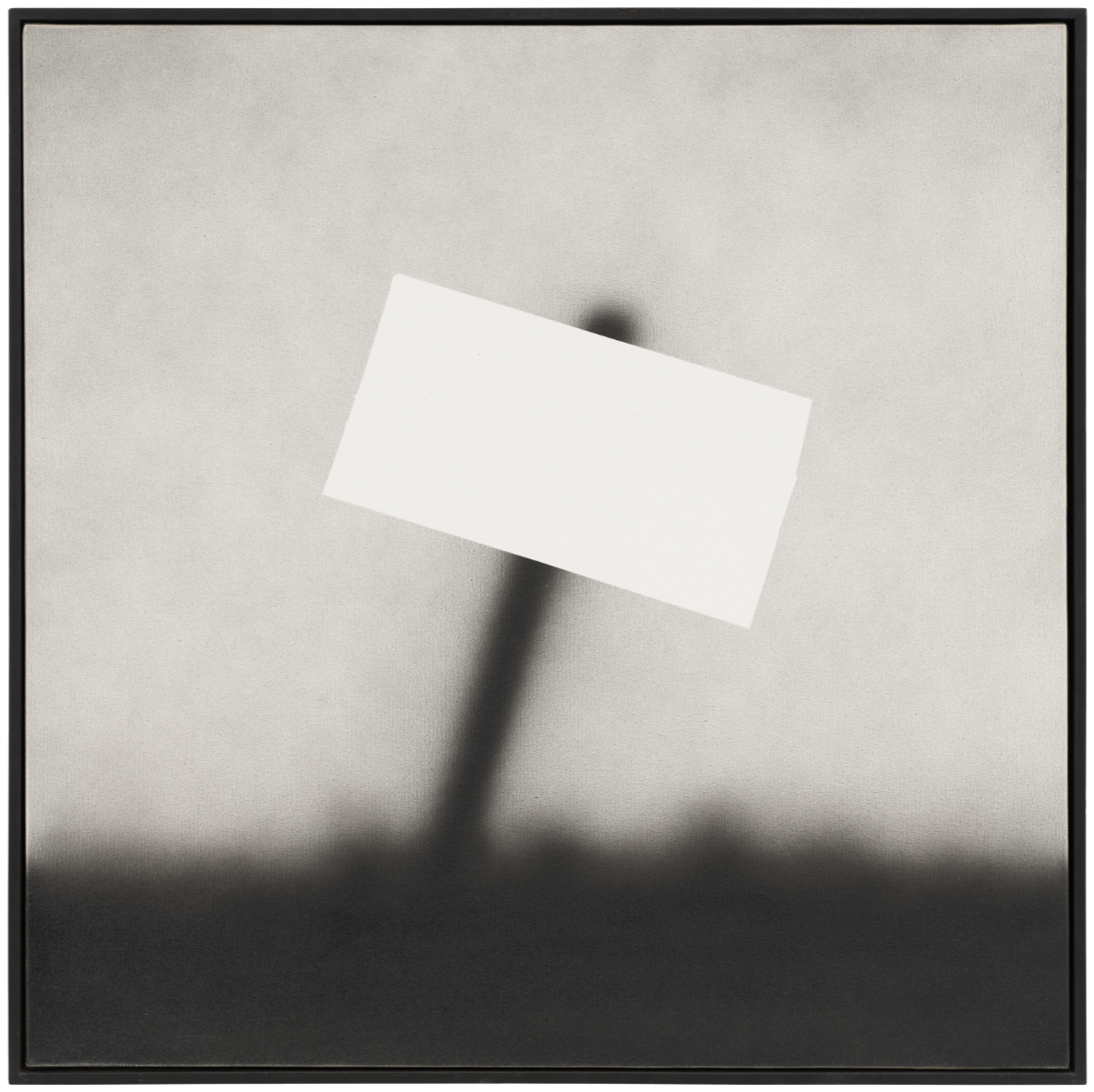
Against a brooding sky of shifting greys, a solitary sign leans precariously within the spectral landscape of Ed Ruscha’s Old Sign (1989). Soft yet dramatic light illuminates the scene, suggesting the fleeting calm before the gathering clouds of a dust storm. Rendered in airbrush, the atmospheric expanse recalls the chiaroscuro of film noir, lending the composition the cinematic quality of a film still. Born in Nebraska and raised in Oklahoma City, Ruscha would become one of the defining artists of Los Angeles, his practice deeply informed by the visual language of the American West. Its architecture, billboards, roadside signage, and advertisements became enduring subjects following his cross-country journeys in the mid-1950s. Particularly compelling to Ruscha were the irregular forms, weathered surfaces, and unpolished lettering of vernacular signs, those “things that weren’t corporate, things that were done by hand” (E. Ruscha, quoted in K. Miller, “Artist Ed Ruscha on His Greatest Influence,” Details, May 1, 2011).
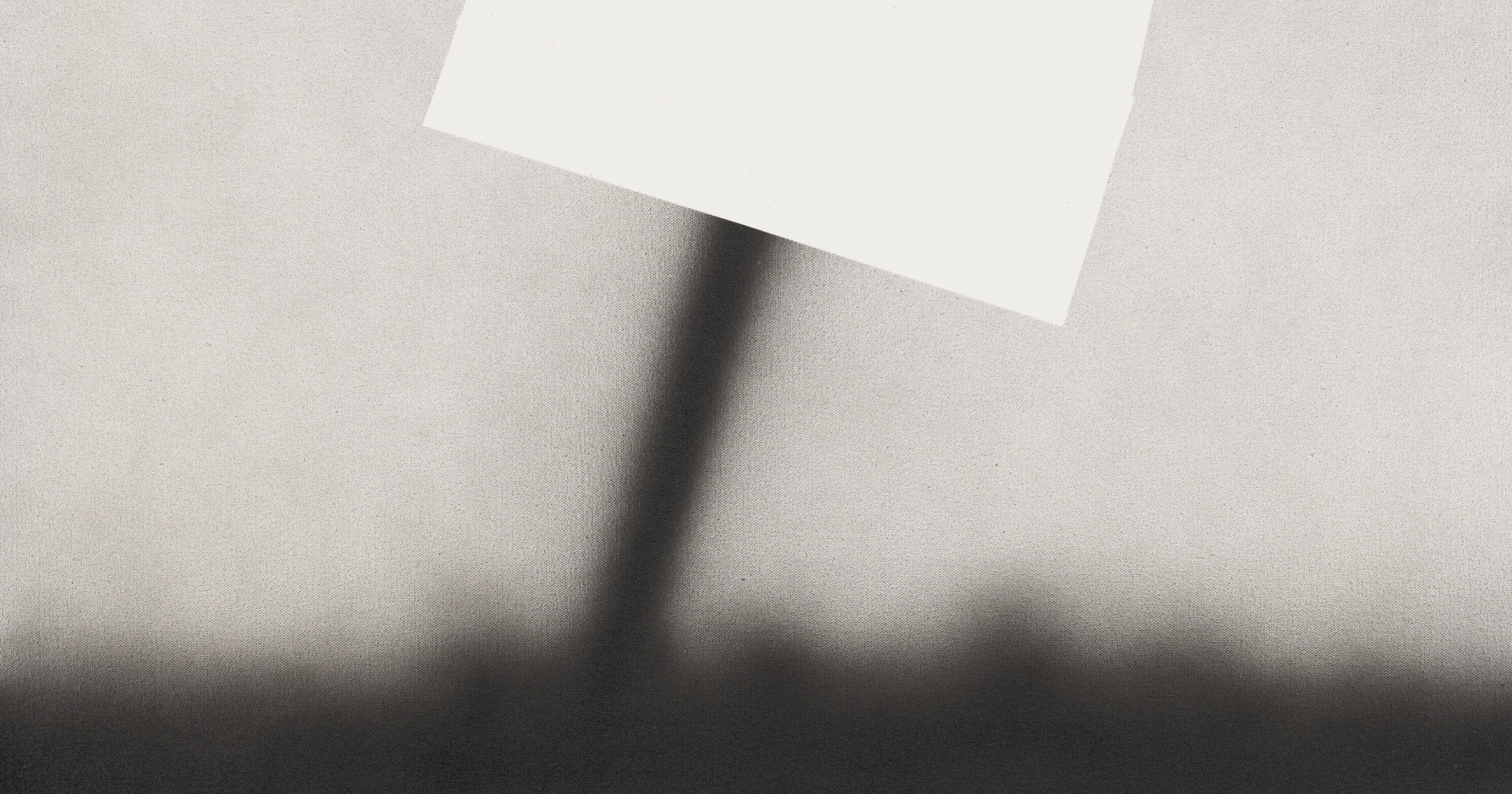
During the 1980s, Ruscha began exploring compositions that deliberately dispensed with language, a striking departure for an artist whose practice had become synonymous with the interplay of text and image. Alongside his Signs, he developed his Silhouettes, a series of recognizable forms rendered in grisaille. Drawing upon the atmospheric effects of Pictorialism, James Abbott McNeill Whistler’s Nocturnes, and the black-and-white cinema of his youth, these works evoke a sense of ambiguity and unease, at times heightened by narrow rectangular forms recalling the redactions of censored documents. In Old Sign, the enigmatic quality of the landscape is amplified by the conspicuous emptiness of the sign itself. An object expressly designed to communicate has been stripped of its message, calling attention to the mechanisms through which meaning is constructed and conveyed. Where Ruscha’s celebrated word paintings transform language into image, Old Sign reverses this relationship: the image itself becomes something to be read. Suspended between representation and abstraction, the vacant sign offers a quietly subversive meditation on language, perception, and the visual vernacular of American life.
Fabrics, 1972
Fabrics, 1972
Bonhams New-York: 18 November 2026
Estimated: USD 180,000 – 250,000
WORK ON PAPER
Bonhams : ED RUSCHA (B. 1937) Fabrics 11 1/2 x 29 in (29.2 x 73.7 cm) (Executed in 1972)
ED RUSCHA (B. 1937)
Fabrics, 1972
Gunpowder on paper
11-1/2 x 29 inches (29.2 x 73.7 cm)
Signed with the artist’s initials and dated ‘E.R. 1972’ (lower left)
Fabrics is an exceptional work from one of the most sought-after periods of Ed Ruscha’s career. By the late 1960s, the artist had grown dissatisfied with graphite, charcoal and other orthodox drawing media, and he began a restless exploration of wildly unconventional materials. In the present work, Ruscha uses gunpowder, a medium he first took up in 1967, and which would later become one of his trademark innovations. Gunpowder offered the artist a far wider range of tones and textures without sacrificing the precision his compositions demanded, and Fabrics is a remarkable demonstration of his command of the medium, moving from hazy, smoke-like gradations to passages so densely worked that the paper appears almost black.
“The gunpowder itself is in granules. I could see it would make a good choice of materials; it could actually impregnate paper. You could use it almost like charcoal—which it is, it’s part charcoal…. [I apply it] just with a sponge… with a piece of cotton. It was more fluid and a faster medium than charcoal or graphite.”
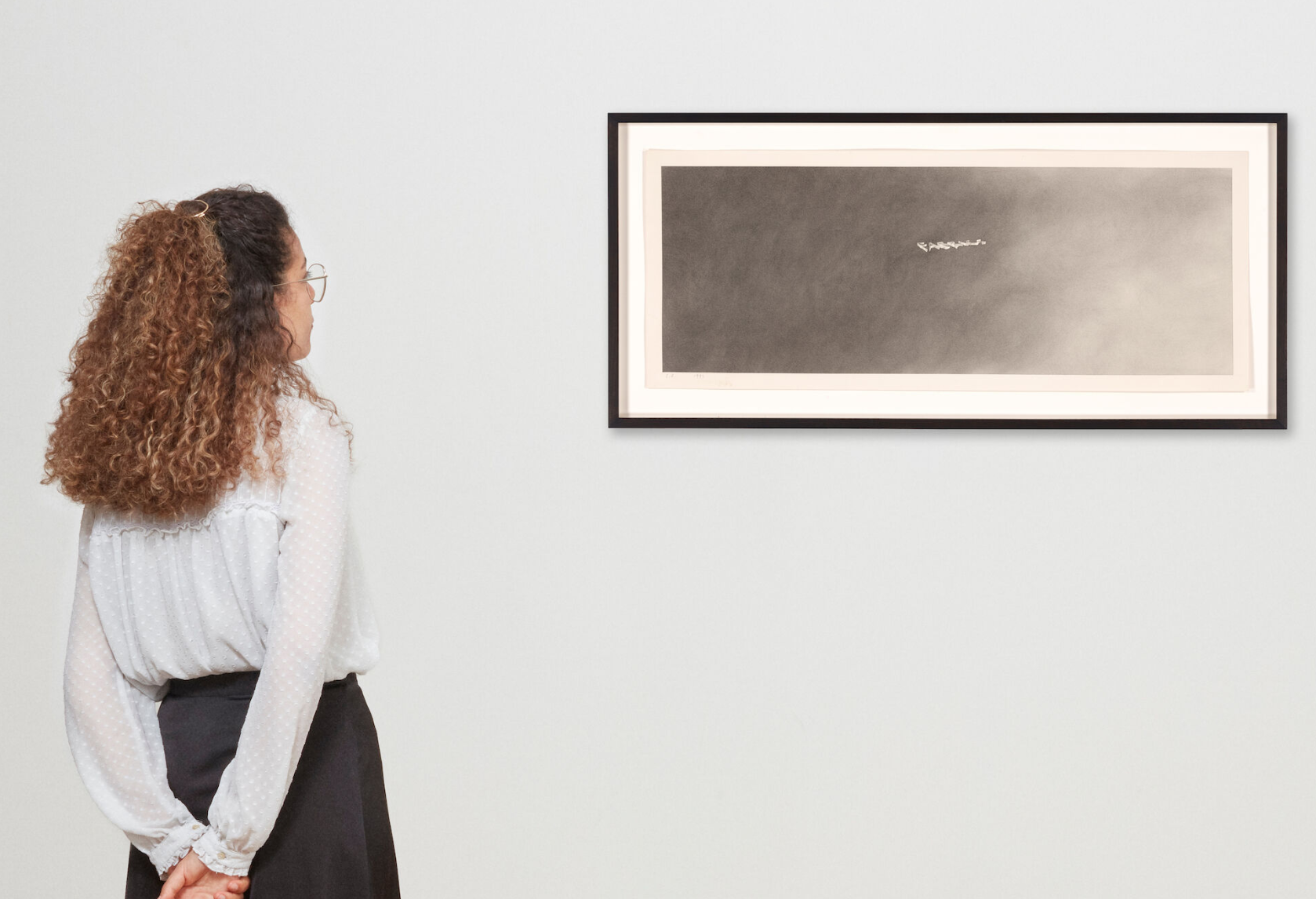
The present work is a quintessential example of the artist’s transformation of words into image. The word “Fabrics” floats in the center of the composition, disappearing into an indiscriminate and almost mystical vista where subtle shadows suggest the letters have been lit by some unknown source. Rendered as a curling ribbon of paper, the letters exemplify a motif Ruscha developed in his celebrated “ribbon word” drawings of the late 1960s. They are arranged diagonally as though seen from a distant perspective, recalling the looming neon signs and billboards of mid-century Los Angeles. Ruscha borrows freely from the advertising and Hollywood iconography that surrounded him, but by lifting an everyday word out of its context and suspending it in space, he invites us to question it, and in doing so, to problematize the larger American psyche.
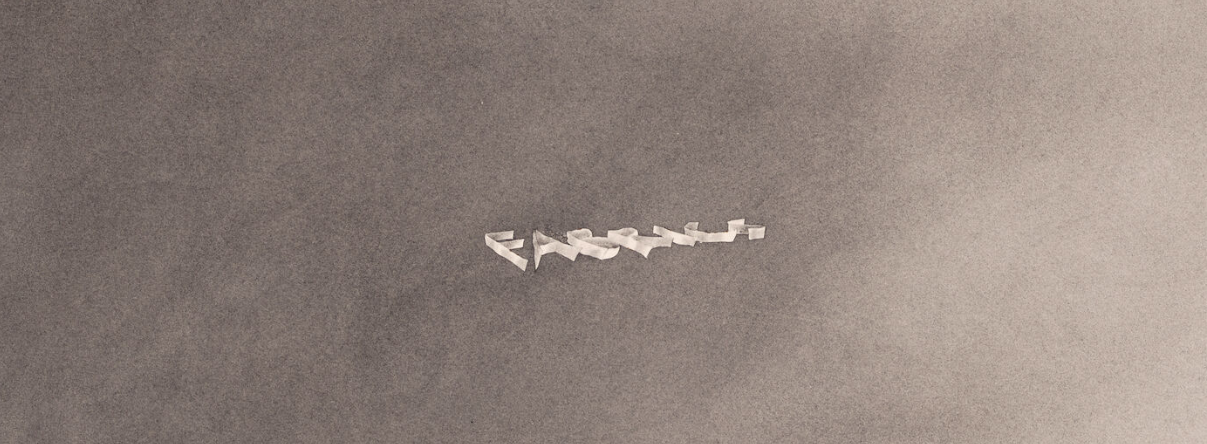
The genius of the present work lies in its material contradictions. A word evoking something soft and woven is conjured as a ribbon of illusory paper, drawn in a medium as volatile as gunpowder. Much like Jasper Johns’ False Start (1959), which plays with perceptual cues by mismatching the words to their respective colors, Fabrics invokes a similar tension between the tangible and intangible. The delicate ribbon of text resists immediate legibility, drawing the viewer closer into its orbit. With a nod to Dada, language here oscillates between its literal meaning and its visual presence on the page.
“I like the idea of a word becoming a picture, almost leaving its body, then coming back and becoming a word again”
It is this ability to capture an illusory middle ground between reading and seeing that has made Ruscha’s work so influential across generations of artists. Quintessentially American, Ruscha was born in Omaha, Nebraska, in 1937 and raised in Oklahoma City. Fascinated by California from an early age, the artist set along Route 66 for Los Angeles in 1956, and, at eighteen, enrolled at the Chouinard Art Institute (now the California Institute of the Arts). There, advertising and commercial graphic design became fundamental to his visual vocabulary and have shaped his work ever since. Like California itself, Ruscha’s art is deeply rooted in place while interrogating the American state of mind. In works such as Fabrics, gunpowder becomes the bridge between Conceptual art, language and the aesthetics of the American West. More than half a century after its creation, Fabrics still exemplifies the qualities that have made Ruscha one of the defining voices of American art, and its history reflects the esteem in which it has long been held.