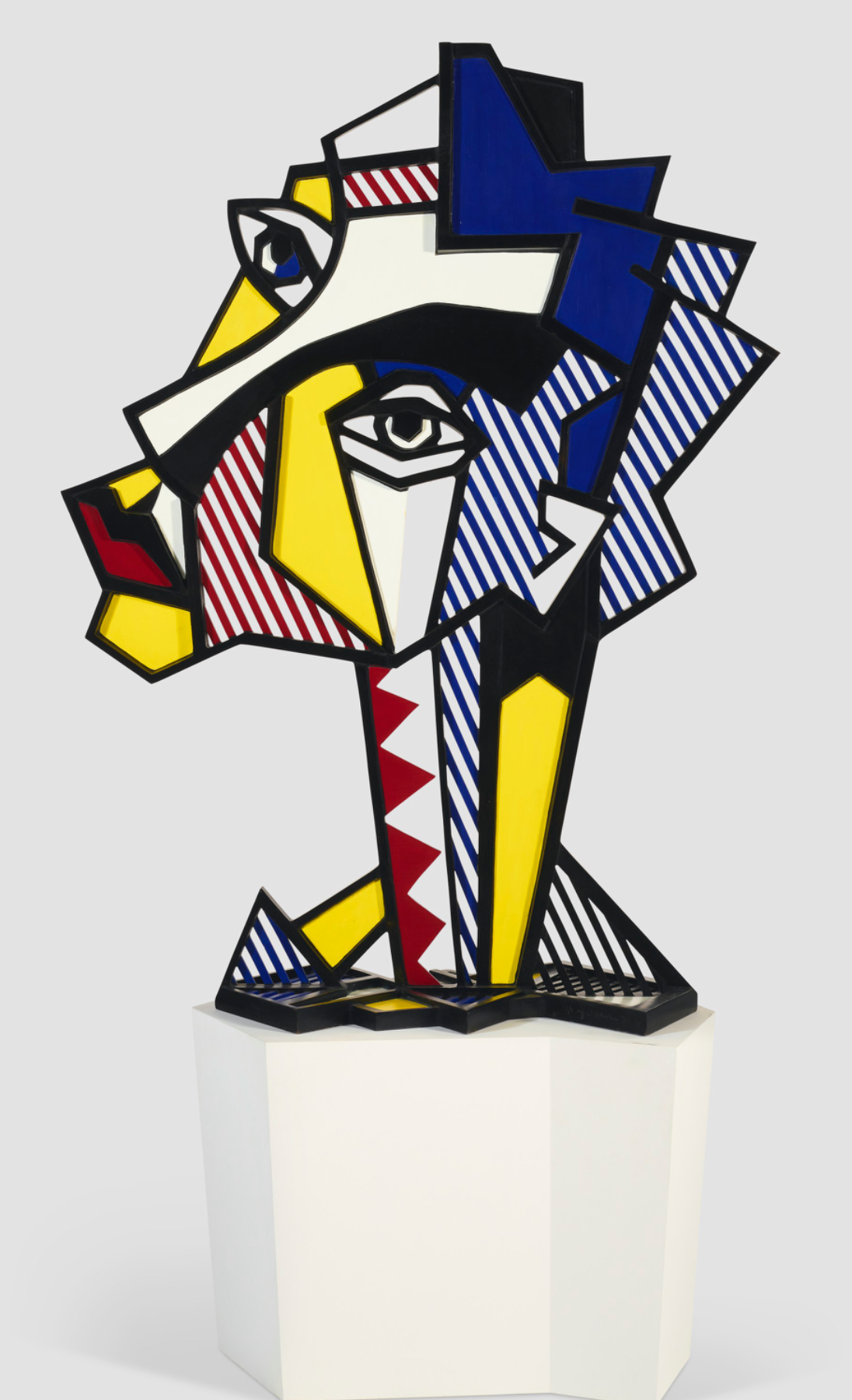
ROY LICHTENSTEIN (1923-1997)
Expressionist Head, 1980
Painted and patinated bronze with painted wooden base
Sculpture: 55 1/8 x 40 3/8 x 18 inches (140 x 102.6 x 45.7 cm)
Overall: 75 7/8 x 24 x 30 inches (192.7 x 61 x 76.2 cm)
Edition: 6
Incised with the artist’s signature
Numbered and dated (lower edge)
Best known for his paintings of comic book heroines, throughout his career Roy Lichtenstein was an astute surveyor of visual culture and the role it played in contemporary society. One of a select group of sculptural works that Lichtenstein worked on during his career, Expressionist Head translates his signature two-dimensional painterly language into three-dimensional form. With his use of strong colors and bold black lines, together with his clever understanding and employment of the visual language of perspective, shadowing, hatching and other tropes, this striking planer head of an expressionist woman comes alive with dynamism and visual resonance. Larger than life size, this angular head is a dazzling arrangement of color and form. Angular fields of red, yellow, and dark blue mark out various planes of the face. In the manner of the German Expressionist painters such as Ernst Ludwig Kirchner, her angular features are flattened and pushed forward, so that each plane sits on a par with the next. His clever use of stylized crosshatching juxtaposed next to solid blocks of primary color, and the inclusion of open space, are all used to ingeniously present the appearance of depth.
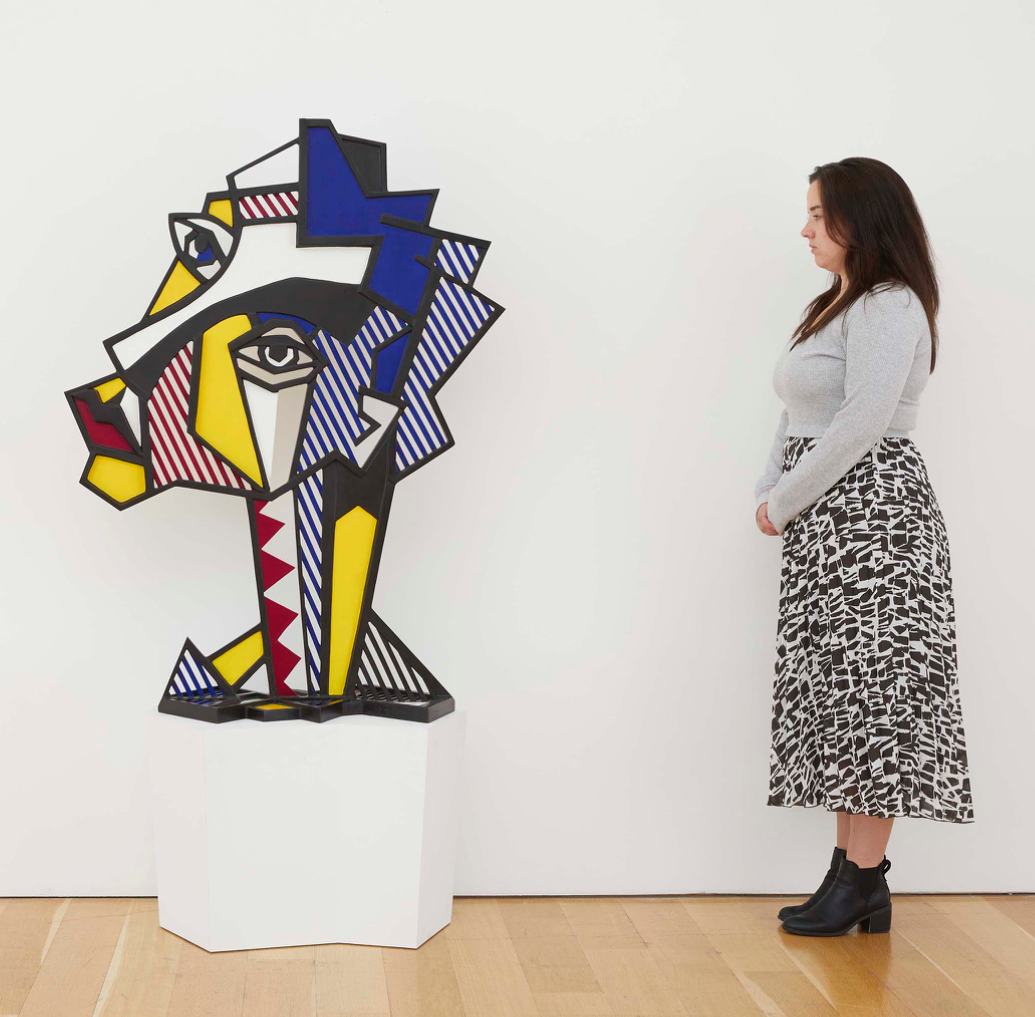
In a work such as this, Lichtenstein is clearly building on the visual language that he so cleverly engaged with in his comic book inspired Pop paintings of the 1960s. Along with contemporaries such as Andy Warhol and Tom Wesselmann, Lichtenstein eschewed the gestural abstractions of the previous generation of painters such as Mark Rothko, Jackson Pollock, and Willem de Kooning, and forged a new artistic language based on the burgeoning consumer culture and explosion in mass media. Like his paintings, Lichtenstein’s sculptures resulted from his preoccupation with the formal qualities of art and the complex task of representing the ephemeral quality of artistic illusionism. The present work is the result of investigating how to produce a three-dimensional object whilst still retaining the aesthetic qualities of his two-dimensional works. His unique solution was to combine the solidity and clean lines made possible by using metal together with the pure, rich color finish of paint to create a burst of three-dimensional illusionism. Roy Lichtenstein produced a complex and varied body of work, and his sculptures engage the viewer in questions of visual perception, by subverting the illusion of flatness in three-dimensions. His oeuvre resulted from his preoccupation with the formal qualities of art and the complex task of representing the ephemeral quality of artistic illusionism. Expressionist Head is the result of his dilemma of how to produce a three-dimensional object whilst still retaining the aesthetic qualities of his two dimensional work. His unique solution was to combine the solidity and clean lines and hatching with the pure, rich color pigment. The result? A burst of three-dimensional expressionistic illusionism.
Auction Results
Expressionist Head, 1980
Christie’s New-York: 11 November 2021
Estimated: USD 2,500,000 – 3,500,000
USD 2,670,000
ROY LICHTENSTEIN (1923-1997) (christies.com)
ROY LICHTENSTEIN (1923-1997)
Expressionist Head, 1980
Painted and patinated bronze with painted wooden base
Sculpture: 55 1/8 x 40 3/8 x 18 inches (140 x 102.6 x 45.7 cm)
Overall: 75 7/8 x 24 x 30 inches (192.7 x 61 x 76.2 cm)
Incised with the artist’s signature, number and date ‘1/6 rf Lichtenstein ’80’ (lower edge)
This work is number one from an edition of six