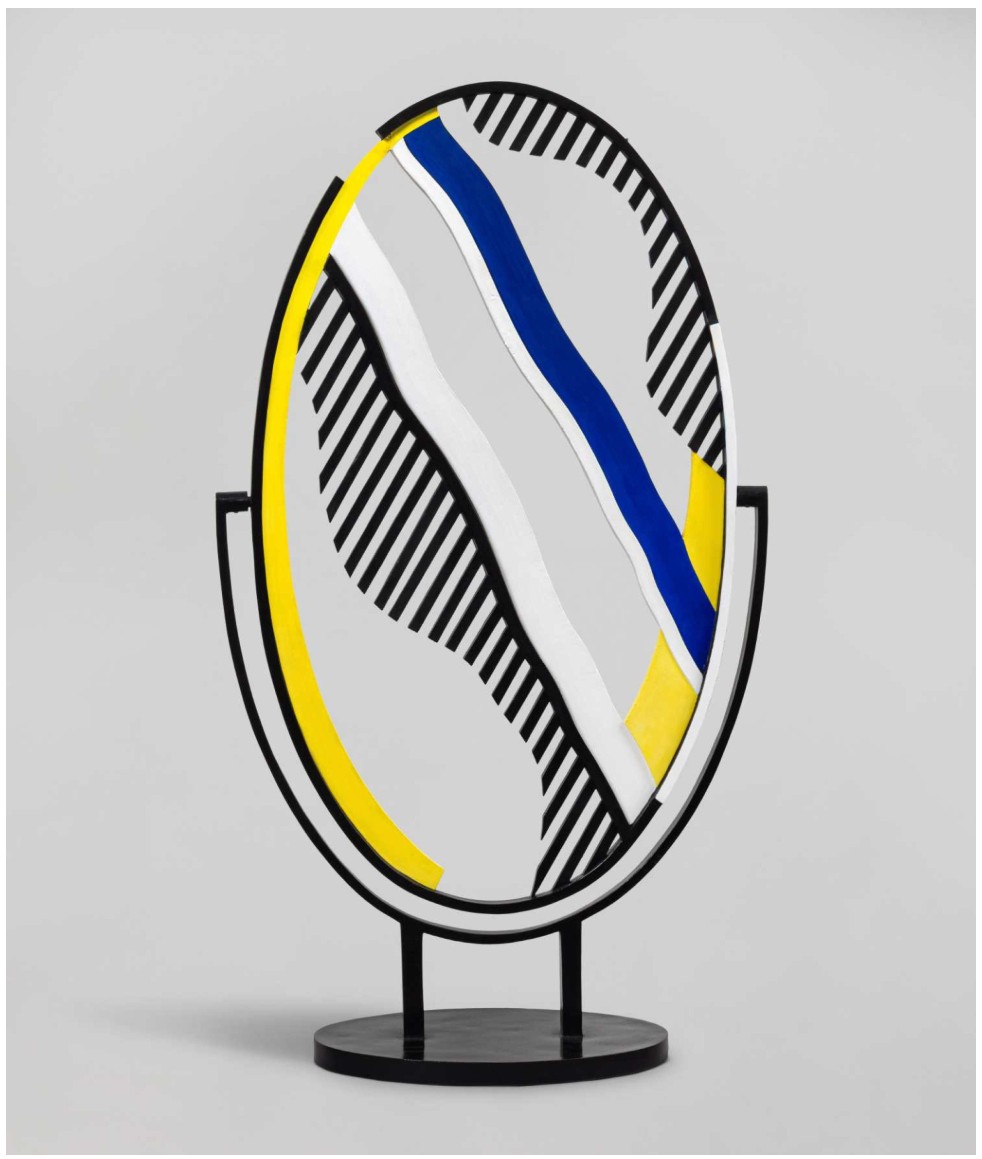
ROY LICHTENSTEIN (1923 – 1997)
Mirror I, 1976
Painted and patinated bronze
44 1/2 x 25 x 11 5/8 inches (113 x 63.5 x 29.5 cm)
Edition: 3 + 1 posthumous cast
Incised with the artist’s signature
Numbered and dated ’76 (lower edge)
A masterful example of Roy Lichtenstein’s career-long investigation of the art and artifice of image-making, Mirror I from 1976 is an elegant manifestation of the artist’s iconic Pop idiom in three-dimensional space. Lichtenstein’s oeuvre is predicated on a semiotic investigation of the ways in which systems of representation allow us to conceptualize and interpret the world around us. Between 1969-72, Lichtenstein produced a limited suite of Mirror paintings, through which he employed his signature visual vernacular to convey reflective surfaces in paint, parodying tropes of mirrored surfaces in art history and contemporary advertising. The series, which became symbolic of the inherent illusion of artistic production, was among the most significant programs of Lichtenstein’s early oeuvre. The motif and conceptual questions of the series reappeared in the artist’s work throughout the remainder of his life, predominantly in his seminal suite of Mirror sculptures from 1976-77, including the present work. Mirror I advances the conceptual and formal concerns of the Mirror paintings,metamorphosing Lichtenstein’s signature visual strategies from the canvas into three-dimensional space.
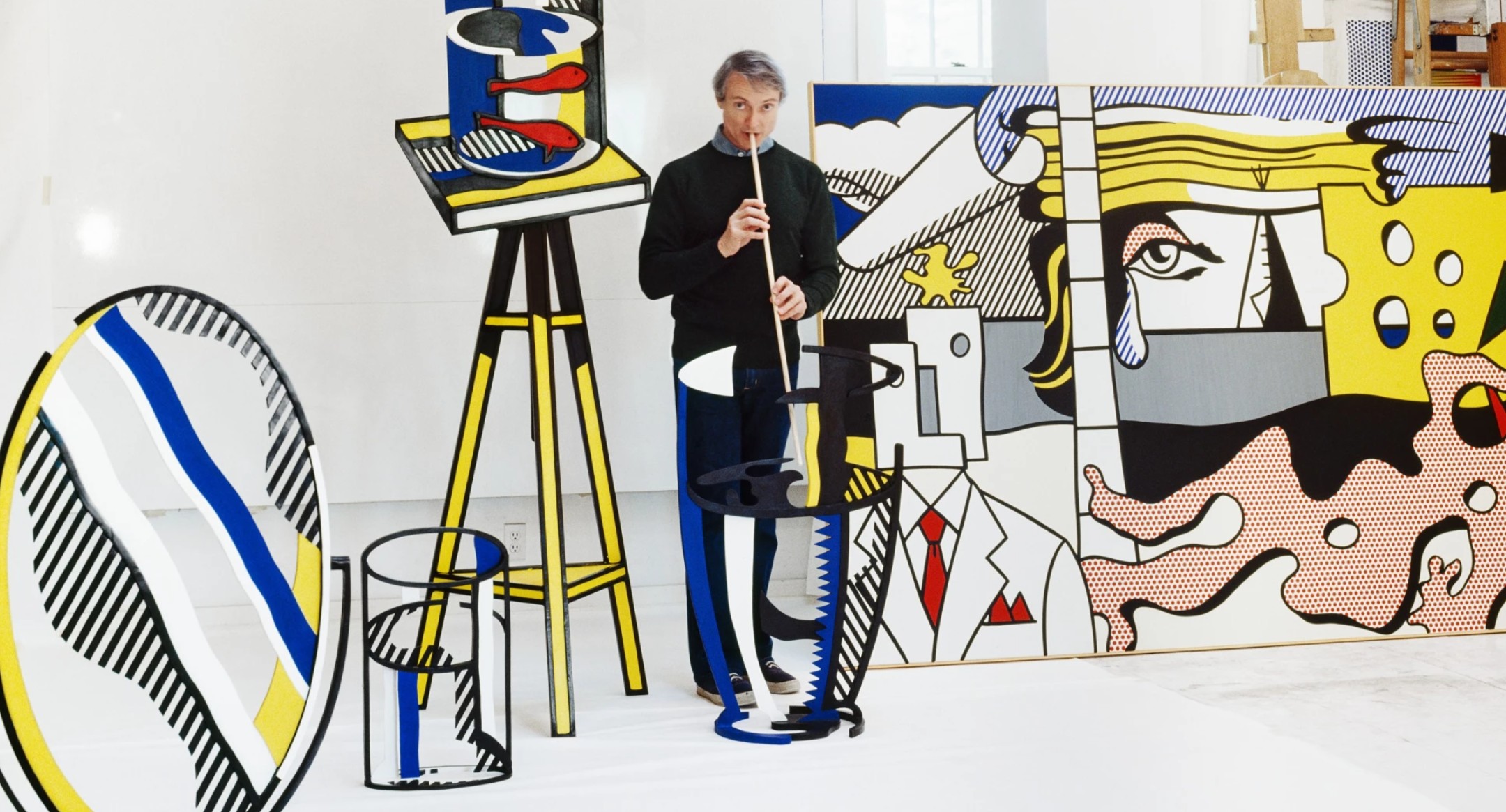
An edition of the present work with the artist in his studio in Southampton, New York, 1977. Photo © The Horst Estate © Conde Nast. For further information please contact The Horst Foundation. Art © Estate of Roy Lichtenstein
Through the 1960s, Lichtenstein contended with the art historical canon, reinterpreting and responding to the likes of Pablo Picasso, Piet Mondrian, Paul Cézanne as well as Classical Greek architecture, Abstract Expressionism, and Surrealism. However in 1969, Lichtenstein initiated an appraisal of one of the most iconic and technically challenging motifs of Western painting since the Renaissance: the mirror. The Mirror series perfectly epitomizes the conflict between reality and illusion that underpins Lichtenstein’s entire oeuvre. Lichtenstein was first inspired by the ways in which advertisers represented windows and mirrors on commercial brochures and in storefront posters, using airbrush-like shading and sharp diagonals to suggest reflections, without actually illustrating a reflection. Then, using his own menu of visual symbols, such as Ben-Day dots, flat planes of color and contour lines, Lichtenstein produced his own painted mirrors. For the artist, the mirror operated as the perfect vehicle for examining the semiotic systems of representation, allowing illusion and artifice to be the true subject matter of the work.
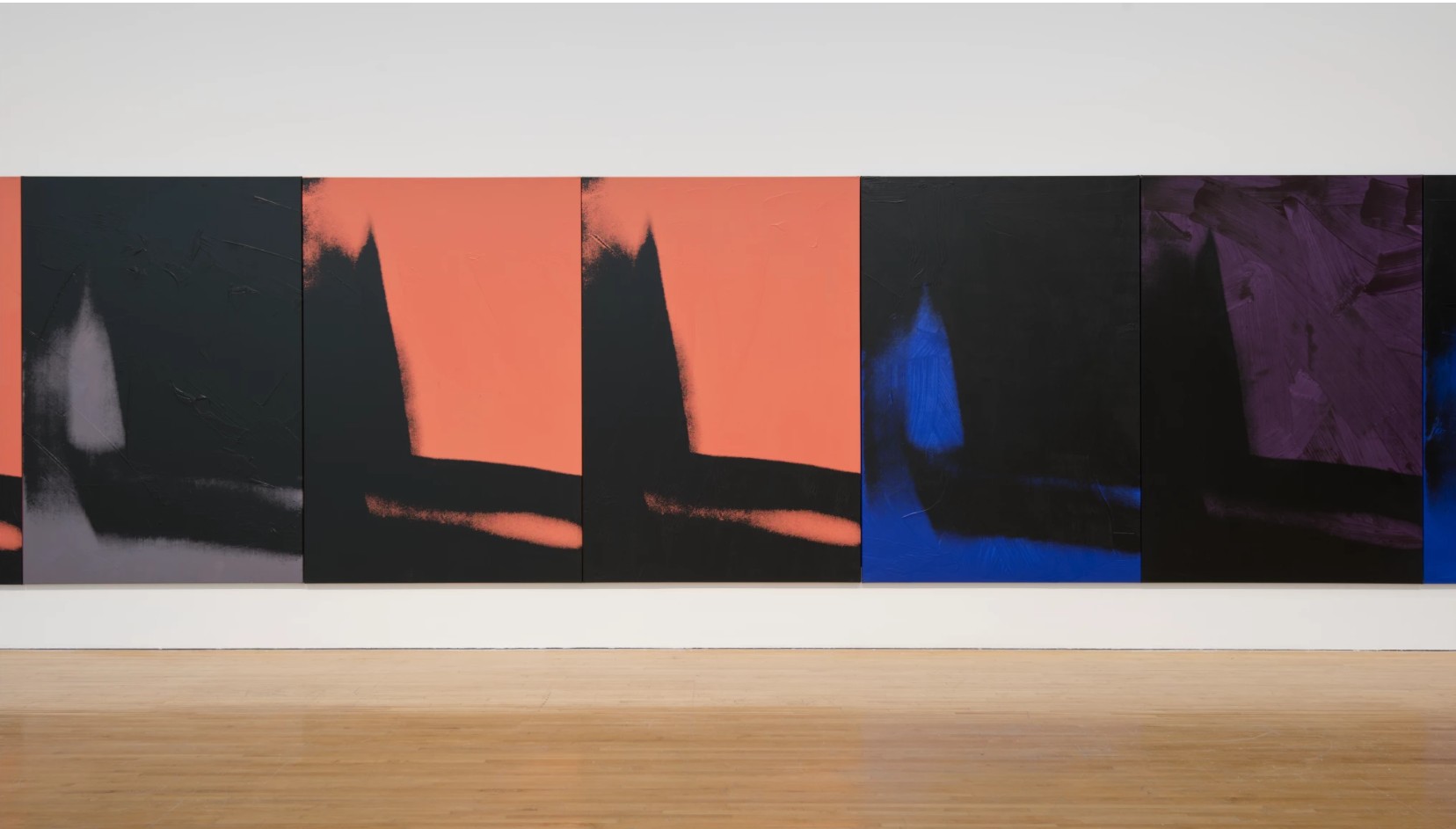
Andy Warhol, Shadows, 1978-79, Dia Art Foundation, New York, installed in Shadows at the Museum of Contemporary Art, Los Angeles, September 2014 – February 2015. Photo © Brian Forrest.
Art © 2025 Andy Warhol Foundation for the Visual Arts / Artists Rights Society (ARS), New York
From Lichtenstein’s earliest forays with three-dimensionality in the mid-1940s through the end of his life in 1997, sculpture occupied a critical place at the center of his oeuvre. In Mirror I, Lichtenstein propels his investigation of illusion and reflection beyond the picture plane, bringing his visual lexicon into the third dimension. In Lichtenstein’s sculptural works, such as Glass I or Goldfish Bowl, he frequently employs the space of a void to signify volume or mass. In Mirror I, Lichtenstein utilizes the space of the void to imply the reflective surface of the mirror. Employing similar visual systems as used in his paintings, such as streaks of blue and yellow alongside bold back hash lines to convey light and shadow, Lichtenstein conveys the notion of reflection. Yet here, the absences also enable the viewer to gaze through the vacant space. In doing so, Lichtenstein contends with the idea of the mirror as a window or portal to convey a new form of meaning and with each installation of the present work, the sculpture takes on a new character.
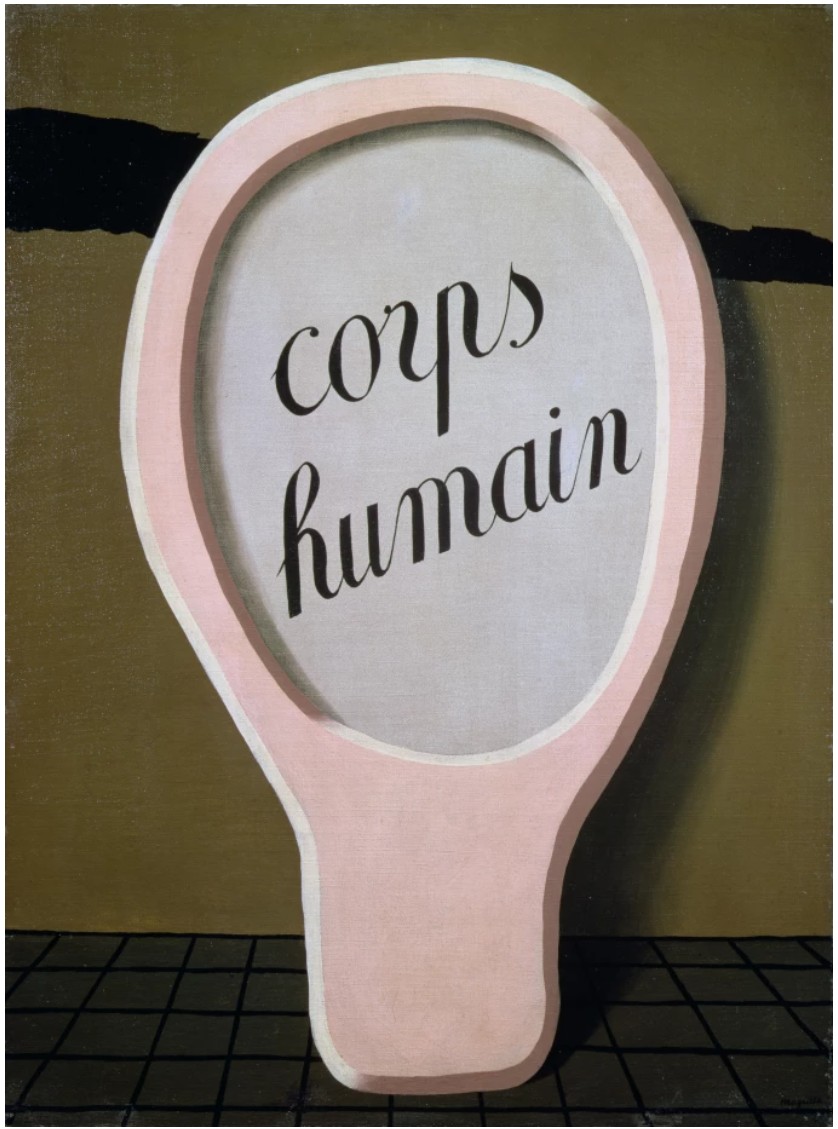
René Magritte, Le Miroir Magique, 1929. Mayor Gallery, London.
Image © Bridgeman Images. Art © 2025 C. Herscovici, Brussels / Artists Rights Society (ARS), New York
Since the Renaissance, the mirror has appeared in the works of esteemed artists as a vehicle to demonstrate mastery of formal technique as well as a form of self-portraiture. Famously, artists such as Parmigianino, Jan van Eyck, and Frida Kahlo have utilized the mirror as a means to insert themselves in the picture plane and contend with ideas of self-perception. The mirror has also operated as a conceptual indicator of the inherent illusion of the picture plane. In van Eyck’s celebrated Arnolfini Portrait from 1434 and Diego Velázquez’s renowned Las Meninas from 1656, the artists use the mirror to anchor the perspective of the viewer and, in doing so, assert the fundamental artificiality of the scene. Engaging with this subject matter, Lichtenstein inserts himself into this art historical narrative, examining the formal and conceptual history of the mirror and reinterpreting it through his own Pop idiom.
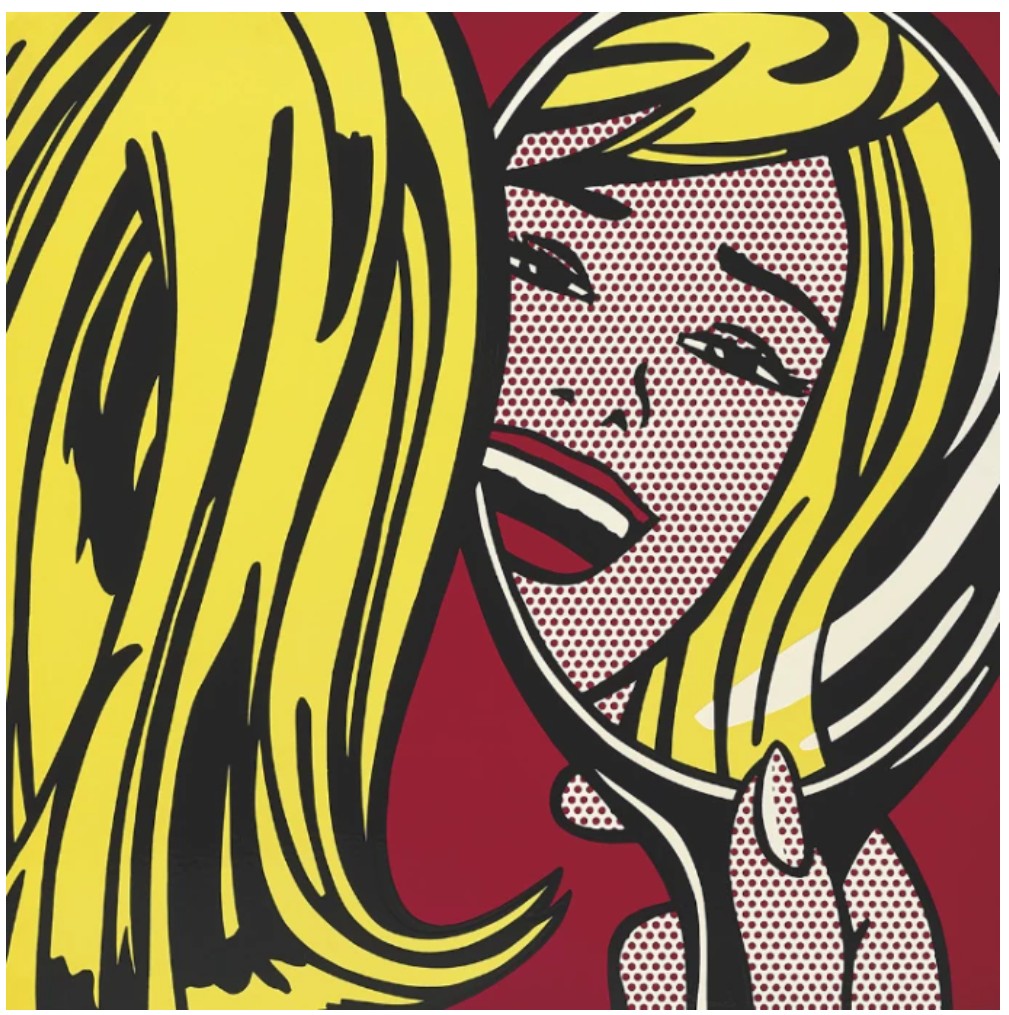
Roy Lichtenstein, Girl in Mirror, c. 1964. Private Collection. Sold at Sotheby’s London in June 2012 for £2.4 million ($3.7 million).
Art © Estate of Roy Lichtenstein
Across media and form, Lichtenstein operates to blur the boundaries and arbitrary parameters of their qualities. He probes the semiotics of space and perspective, volume and mass through his distinctive visual lexicon of color and line. In his sculptural works, he employs the signs and systems of his comic book-inspired paintings, inverting the viewer’s expectations of the medium and yet producing works that feel instantly familiar. Through the elegant contours and bold articulation of Mirror I, Lichtenstein positions himself in dialogue with art history’s canon and the illusion and artifice at its very core.
Auction Results
Mirror I, 1976
Works from the Collection of Dorothy and Roy Lichtenstein
Sotheby’s New-York: 15 May 2025
Estimated: USD 1,000,000 – 1,500,000
USD 1,016,000
Mirror I | The Now and Contemporary Evening Auction | 2025 | Sotheby’s
ROY LICHTENSTEIN (1923 – 1997)
Mirror I, 1976
Painted and patinated bronze
44 1/2 x 25 x 11 5/8 inches (113 x 63.5 x 29.5 cm)
Incised with the artist’s signature, numbered 2/3 and dated ’76 (lower edge)
This work is number 2 from an edition of 3 plus 1 posthumous cast