
ROY LICHTENSTEIN (1923-1997)
Archaic Head, 1988
Patinated bronze
58 1/4 x 19 x 10 1/4 inches (148 x 48.3 x 26 cm)
Edition: 6 + 1 AP
Incised with the artist’s signature
Dated and numbered (on the base)
Imposing in scale and striking in its stylization, Archaic Head (1988) exemplifies Roy Lichtenstein’s late sculptural practice, in which the artist reimagined the language of Pop through the enduring forms of art history. Cast in bronze, the work transforms the gravitas of an ancient sculptural head into the graphic idiom that had long defined Lichtenstein’s oeuvre. The result is a sculpture that is at once monumental and playful, a Pop translation of antiquity into the vocabulary of the twentieth century.
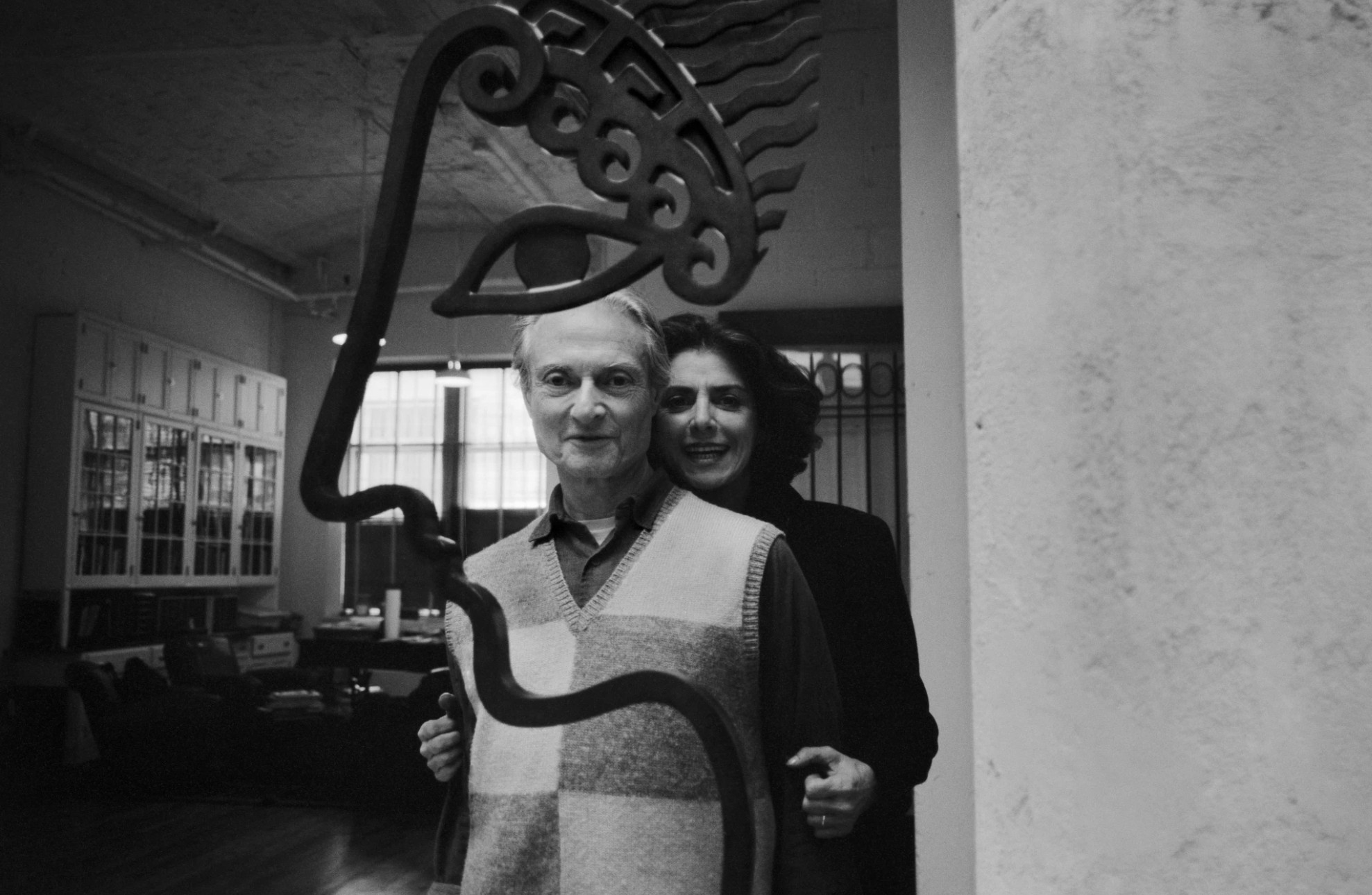
Roy and Dorothy Lichtenstein with Archaic Head, c. 1992. Art © Estate of Roy Lichtenstein. Image © Christine de Grancy.
Created in 1988, the work belongs to a fertile period of Lichtenstein’s late career. Following the intense decades of the 1960s and 1970s, the 1980s saw the artist revisiting and expanding his motifs with new ambition. Sculpture in particular became a field of major experimentation, allowing him to test how his two-dimensional idiom could operate in three dimensions. Works such as Archaic Head reveal his ability to translate not only the language of mass culture but also the gravitas of art history into his unmistakable style.
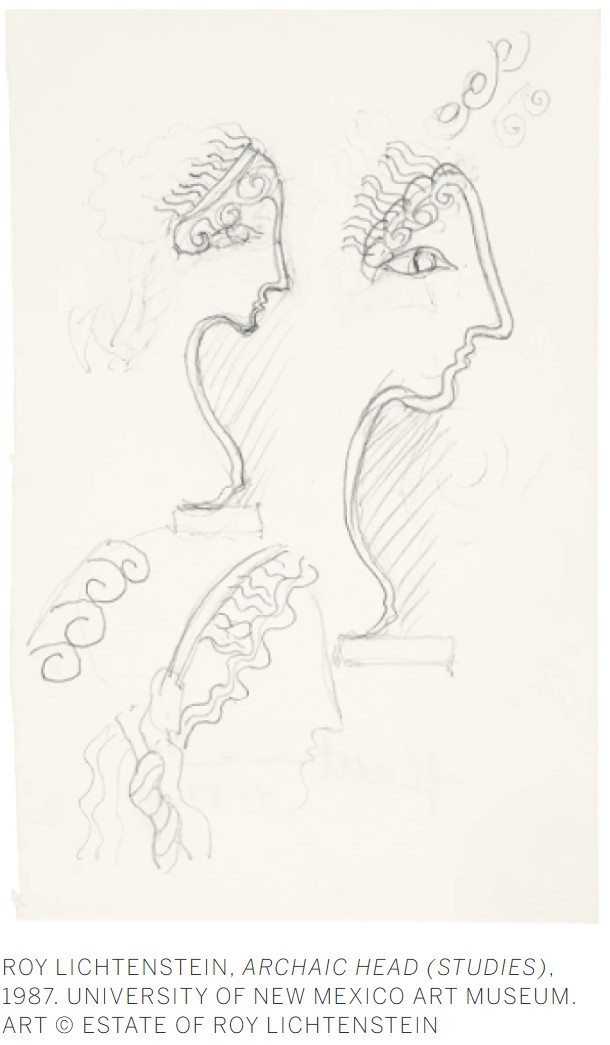
Lichtenstein’s engagement with the classical world was neither accidental nor superficial. Throughout the 1980s and 1990s, he repeatedly returned to motifs drawn from the history of art—nudes, interiors, mirrors, and, as here, the archetype of ancient sculpture—subjecting them to his unique process of stylization. In Archaic Head, the serene form of a timeworn bust is reduced to a sequence of bold contours, schematic planes, and simplified volumes. The calm, frontal face is immediately recognizable as a reference to Greco-Roman antiquity, yet its translation into Lichtenstein’s vocabulary of crisp outline and industrial finish renders it unmistakably contemporary.
The use of bronze is especially telling. Traditionally associated with permanence and cultural gravitas, bronze lends Archaic Head a weight and durability befitting its reference to antiquity. Yet Lichtenstein disrupts tradition by applying painted surfaces and patination in vivid contrast, effectively flattening the sculptural volume into the realm of image. In this tension between material heft and graphic surface lies much of the work’s power. The head is at once archaic and modern, timeless and mediated, an object that resists settling fully into either category.
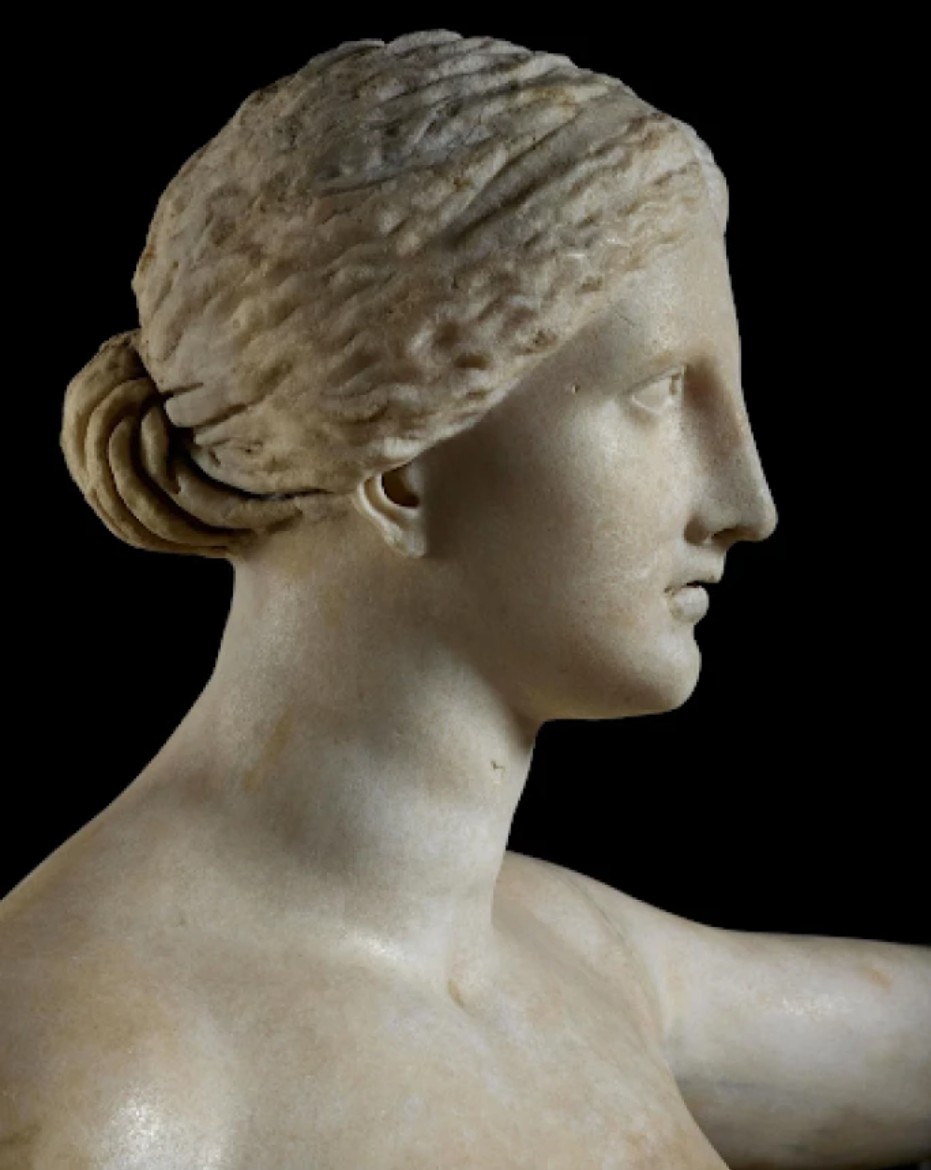
The Townley Venus, AD 100s. The British Museum.
This transformation of the past into Pop idiom mirrors Lichtenstein’s broader project of reinterpreting the canon of art. Just as his Brushstrokes parodied the gestures of Abstract Expressionism and his Still Lifes recast the conventions of Cézanne or Matisse, so Archaic Head engages the long sculptural tradition. Rather than mimicking the subtleties of weathered marble or bronze, he seizes upon the archetype—the essential sign of the classical head—and reduces it to bold graphic shorthand. Antiquity becomes image, history becomes sign, the weight of tradition reframed within the logic of Pop. The verticality and scale of Archaic Head enhance its effect. At over life-size, the work asserts itself as both sculpture and monument, commanding the viewer’s space while retaining a clarity of design that resists heaviness. The simplicity of its contours and the frontality of its gaze evoke the timelessness of archaic prototypes, yet its stylized finish ensures that it belongs as much to the twentieth century as to antiquity.
In its conceptual and formal qualities, Archaic Head is emblematic of Lichtenstein’s late sculptural triumphs. It is a work that acknowledges tradition while remaking it, that embodies the endurance of the classical past while insisting on the mediated surfaces of Pop. Both reverent and ironic, playful and solemn, it demonstrates Lichtenstein’s ability to transform the most venerable of subjects into a work that is wholly his own. With its scale, material authority, and conceptual clarity, Archaic Head stands as a landmark of Lichtenstein’s sculptural oeuvre—a Pop monument to antiquity, and a reminder of his extraordinary capacity to reinvent the language of art for the modern age.
Auction Results
Archaic Head, 1988
A Legacy Reimagined: Works from the Collection of Dorothy and Roy Lichtenstein
Sotheby’s New-York: 19 November 2025
Estimated: USD 600,000 – 800,000
USD 533,400
Archaic Head | Contemporary Day Auction | 2025 | Sotheby’s
ROY LICHTENSTEIN (1923-1997)
Archaic Head, 1988
Patinated bronze
58 1/4 x 19 x 10 1/4 inches (148 x 48.3 x 26 cm)
Incised with the artist’s signature, date ’88 and number 0/6 (on the base)
This work is the artist’s proof from an edition of 6 plus 1 artist’s proof