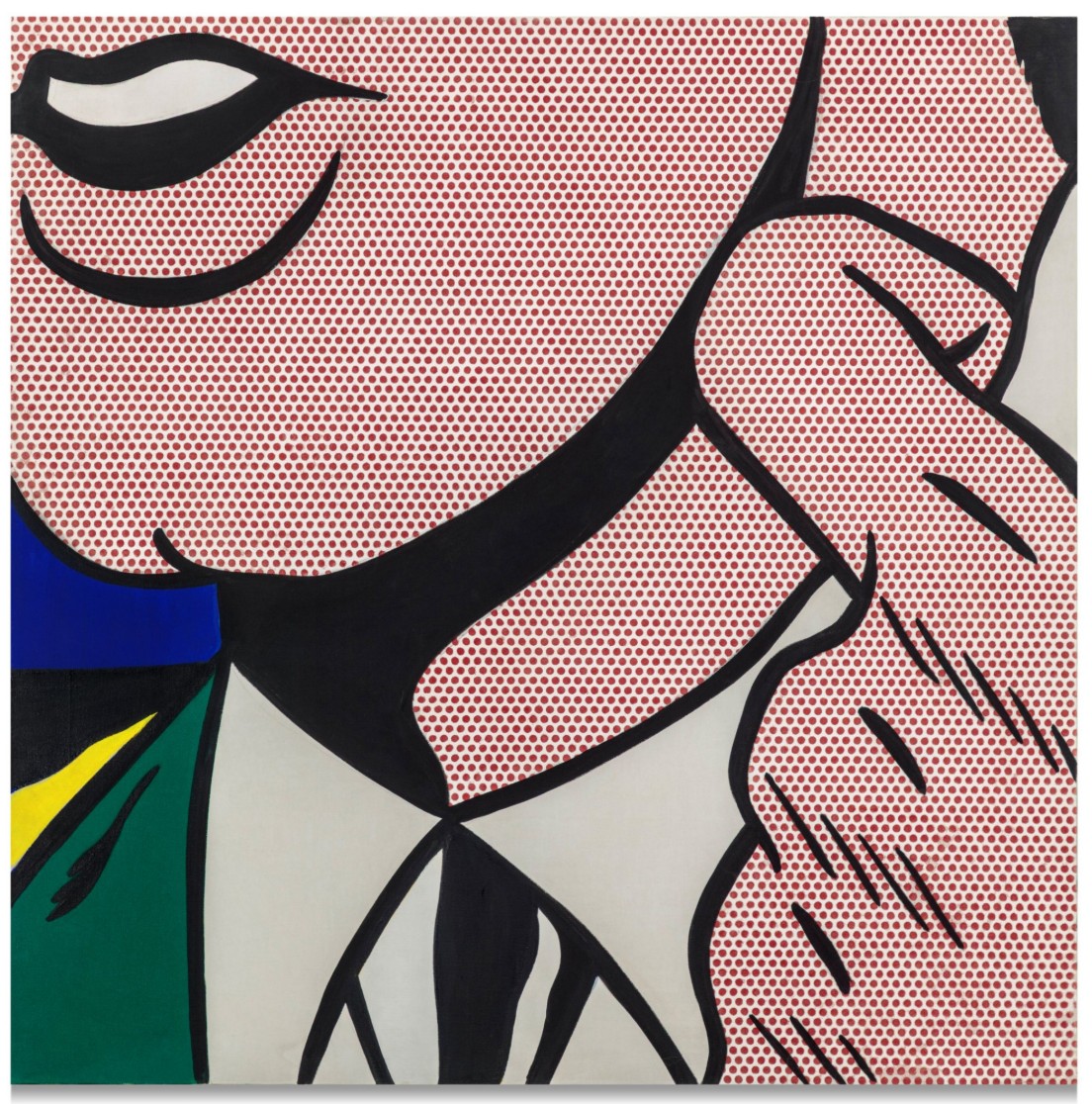
ROY LICHTENSTEIN (1923 – 1997)
Half Face with Collar, 1963
Oil, acrylic and graphite on canvas
48 x 47-3/4 inches (121.9 x 121.3 cm)
Signed and dated ‘63 (on the reverse)
Provenance
Leo Castelli Gallery, New York [LIC #107]
Galerie Ileana Sonnabend, Paris
E. J. Power, London (acquired from the above in May 1964)
Gian Enzo Sperone, Turin (acquired from the above in 1972)
Gagosian Gallery, New York (acquired from the above in November 2008)
Private Collection, New York (acquired from the above in May 2010)
Gagosian Gallery, New York
Private Collection, New York (acquired from the above)
Acquired from the above by the present owner
Auction History
Sotheby’s New-York: 14 May 2026
Estimated: USD 10,000,000 – 15,000,000
USD 12,985,000
Roy Lichtenstein | Half Face with Collar | The Now & Contemporary
At once enigmatic and immediately legible, Half Face with Collar by Roy Lichtenstein stands as a compelling meditation on masculinity in the 1960s cultural imagination within the artist’s groundbreaking comic-strip series. Emerging at a pivotal moment in his career, the work distills the visual language of mid-century American popular culture into a tightly cropped, psychologically charged image of the male figure, at once assertive and elusive.
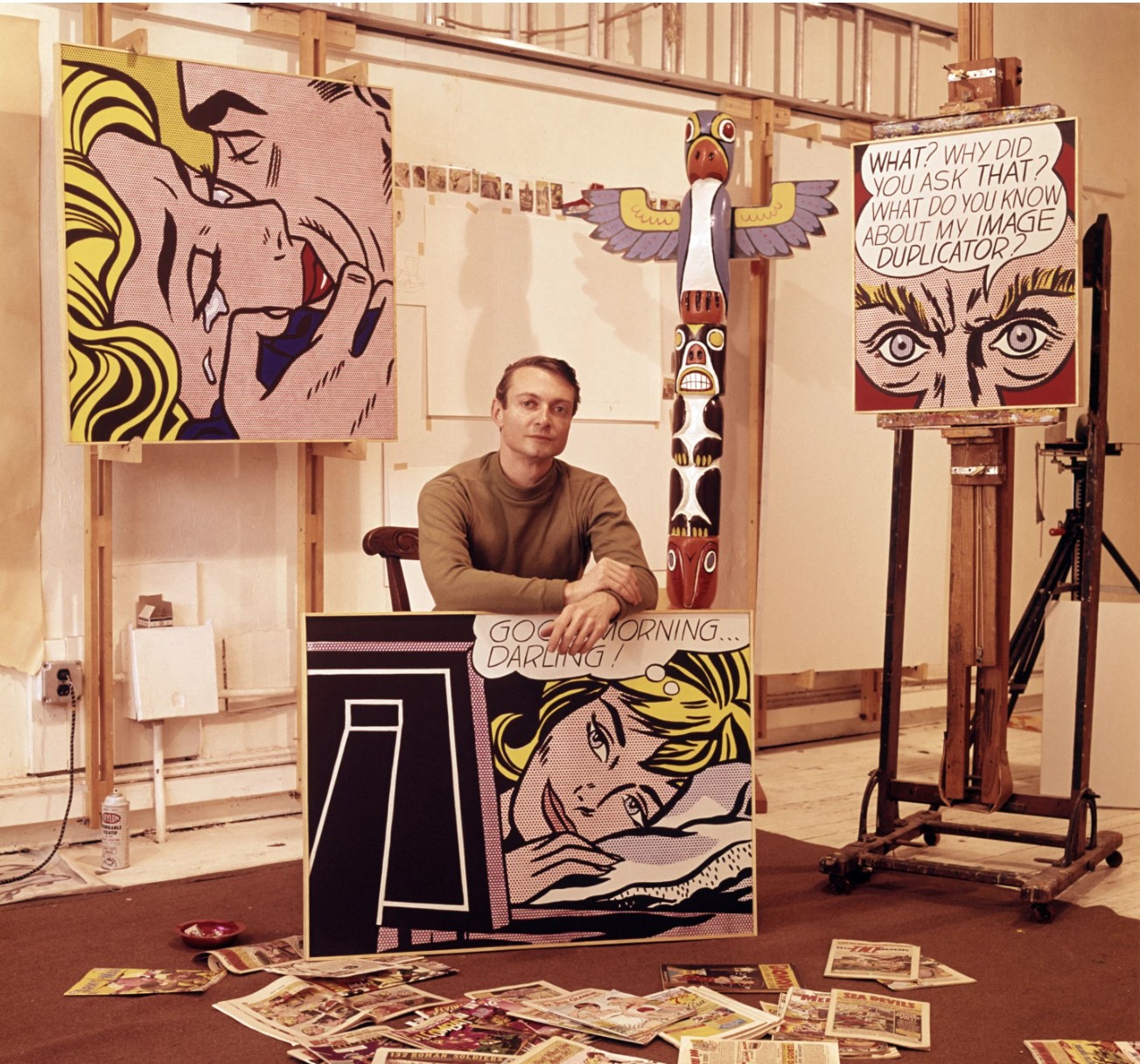
Roy Lichtenstein pictured alongside Kiss V, Image Duplicator, and Good Morning… Darling!, 1964.
Photo by Mario De Biasi\Mondadori via Getty Images. Art © Estate of Roy Lichtenstein
Within the comic series amongst Lichtenstein’s famed heroines, in the present work, we are introduced to his leading man, seductively adjusting his collar in the moment before he approaches her. As both an exemplar of his celebrated comic series and a rare, incisive treatment of the male subject, Half Face with Collar encapsulates the artist’s capacity to transform the vernacular of mass media into an image of enduring intrigue and complexity.
“In these cartoon images… It is an intensification, a stylistic intensification of the excitement which the subject matter has for me; but the style is, as you say, cool. One of the things a cartoon does is to express violent emotion and passion in a completely mechanical and removed style.”
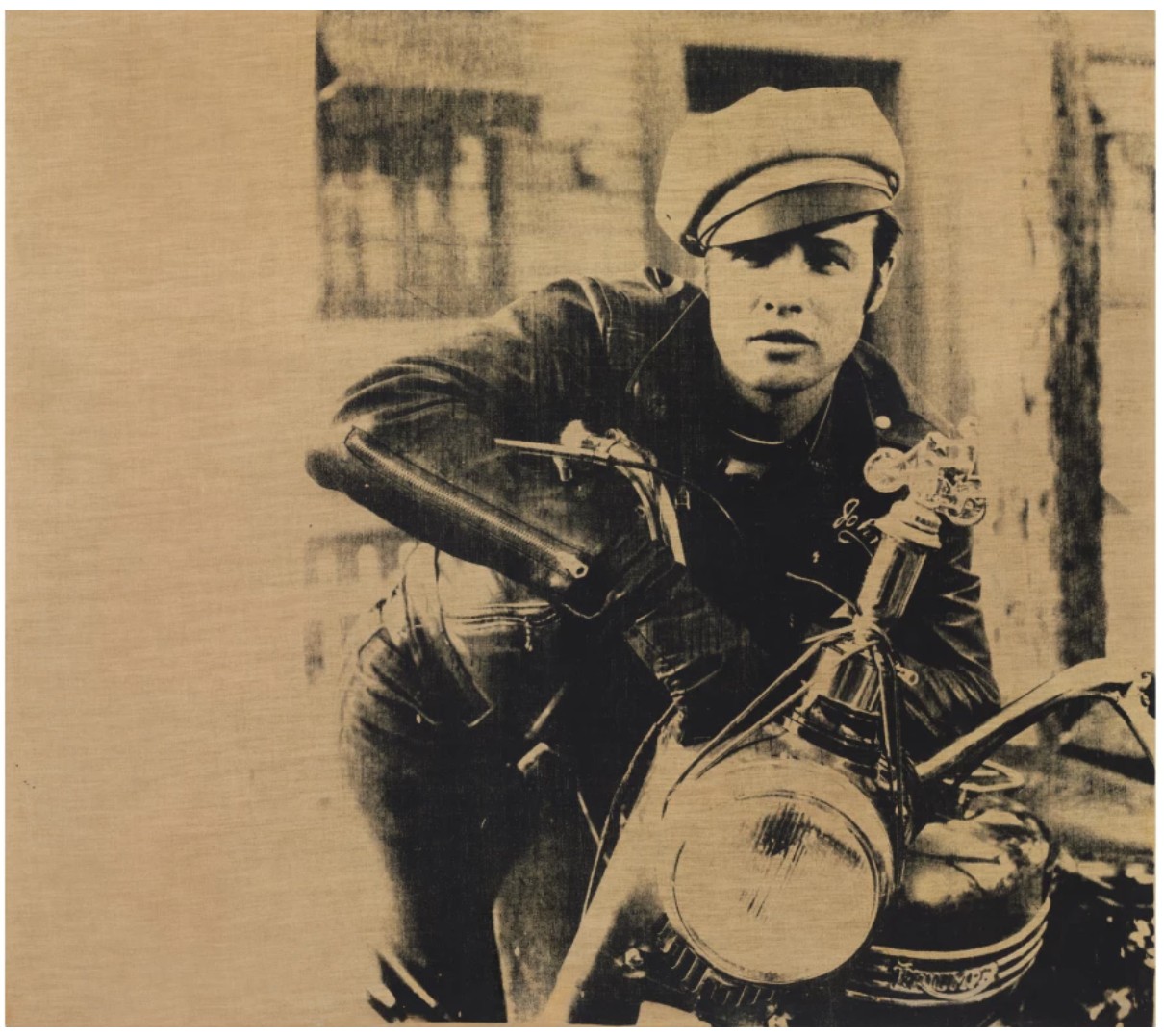
Andy Warhol, Marlon, 1966. Private Collection.
Image © 2026 The Andy Warhol Foundation for the Visual Arts, Inc. / Licensed by DACS, London / Christie’s Images / Bridgeman Images.
Art © 2026 Andy Warhol Foundation for the Visual Arts / Artists Rights Society (ARS), New York
Lichtenstein is acknowledged as the master of graphic clarity and an innovator of image appropriation who crafted Pop Art masterpieces that redefined the boundaries between High and Low art through an ironic interplay of popular culture and fine art. His comic strip-inspired paintings of Romance and War subjects, derived from everyday common sources, are now themselves cultural talismans of the late 20th century. His borrowings from commercial printing techniques were prescient harbingers of the increasing influence of a media-saturated world. Along with other Pop artists such as Warhol, Lichtenstein’s style and frame of reference was a conscious step away from tradition, whether in the classical mode of narrative composition or the emphasis on the artist’s touch championed by the more recent Abstract Expressionists.
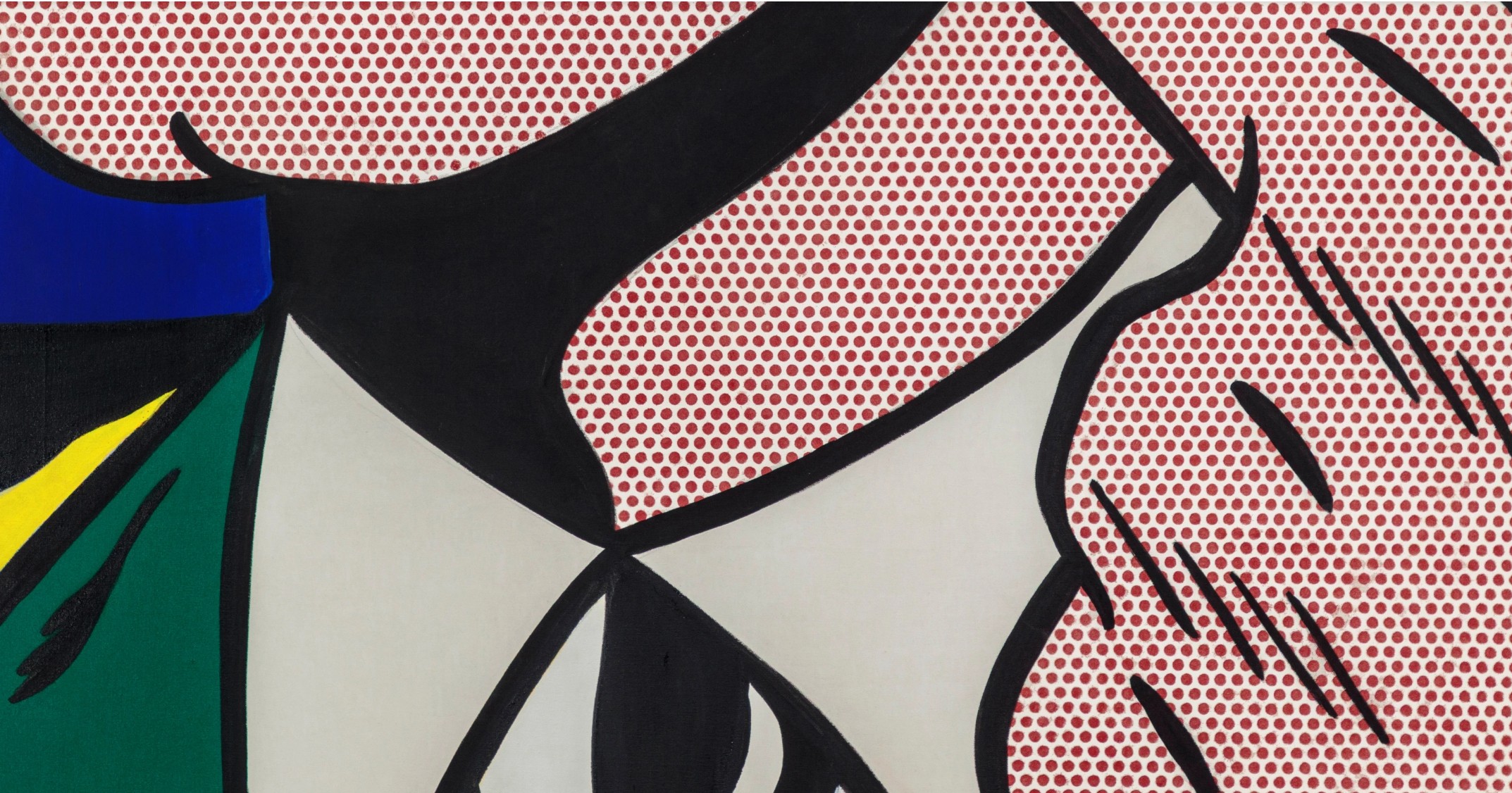
Rendered through Lichtenstein’s now-iconic vocabulary of Benday dots, bold black contours, and a restricted primary palette, the composition presents a dramatically cropped male face, its fragmentation heightening both its visual immediacy and narrative ambiguity. This exacting and precise cropping isolates a charged fragment of a larger scene, focusing on the mouth as it opens to speak, ready to chase after his heroine, distilling this gesture of anticipation. In such, Lichtenstein converts his signature text bubbles of prescribed meaning into the moment before they are to appear. In such, the comic comes alive. This dramatic vignette champions the coded symbols of masculinity—the firm jawline, crisp white collar, and the gripping hand. The viewer is offered only a partial view, and in that withholding, the figure acquires a heightened allure as his story remains just beyond reach.
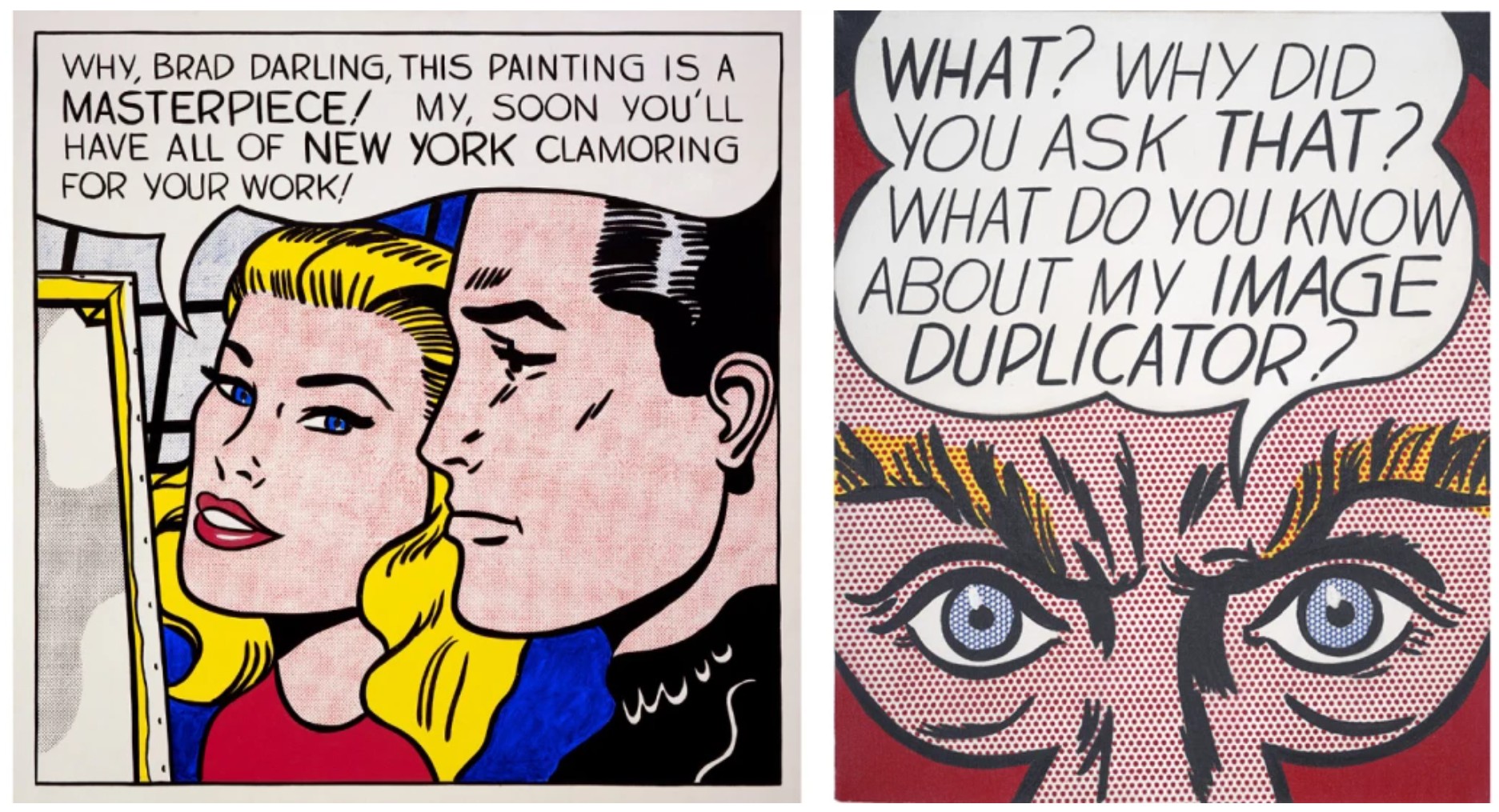
Left: Roy Lichtenstein, Masterpiece, 1962. Private Collection. Art © Estate of Roy Lichtenstein.
Right: Roy Lichtenstein, Image Duplicator, 1963. Private Collection. Art © Estate of Roy Lichtenstein
While such masterpieces in Lichtenstein’s Pop art oeuvre are lush with female protagonists and have become icons in our present day, a tracing of the male image in his work is exceptionally rare. Outside of the War comic scenes, Lichtenstein’s men are more often placed alongside their female foils. However, in the present work, a similar male visage is indisputably present in Lichtenstein’s masterworks, namely Masterpiece and Kiss with Cloud, thus making this example a rare portrait of the man we know and have seen before, with his lover just off screen. From the captivating stretch of his collar, on the brink of revealing his next words, the anticipation is felt by the heroine just out of frame. Here, Lichtenstein’s shrewd gift for perceiving the precise gesture and the most effective cropping is unmistakable, transforming a fleeting comic-book moment into a compelling and self-sufficient image of masculine identity. Unlike the explicitly staged drama of works such as Forget It! Forget Me!, the subliminal narrative here requires no caption and no other actors; masculinity is conveyed through visually immediate tension and the suggestive incompleteness of the scene. Further emphasizing this work’s place among Lichtenstein’s innovative experimentations with more classic formal compositions, in eschewing his text bubbles and replacing them with the tangible moment before speech, the artist reaches a conceptual apex of artistic theory and possibilities for subliminal action within the style of Pop Art.
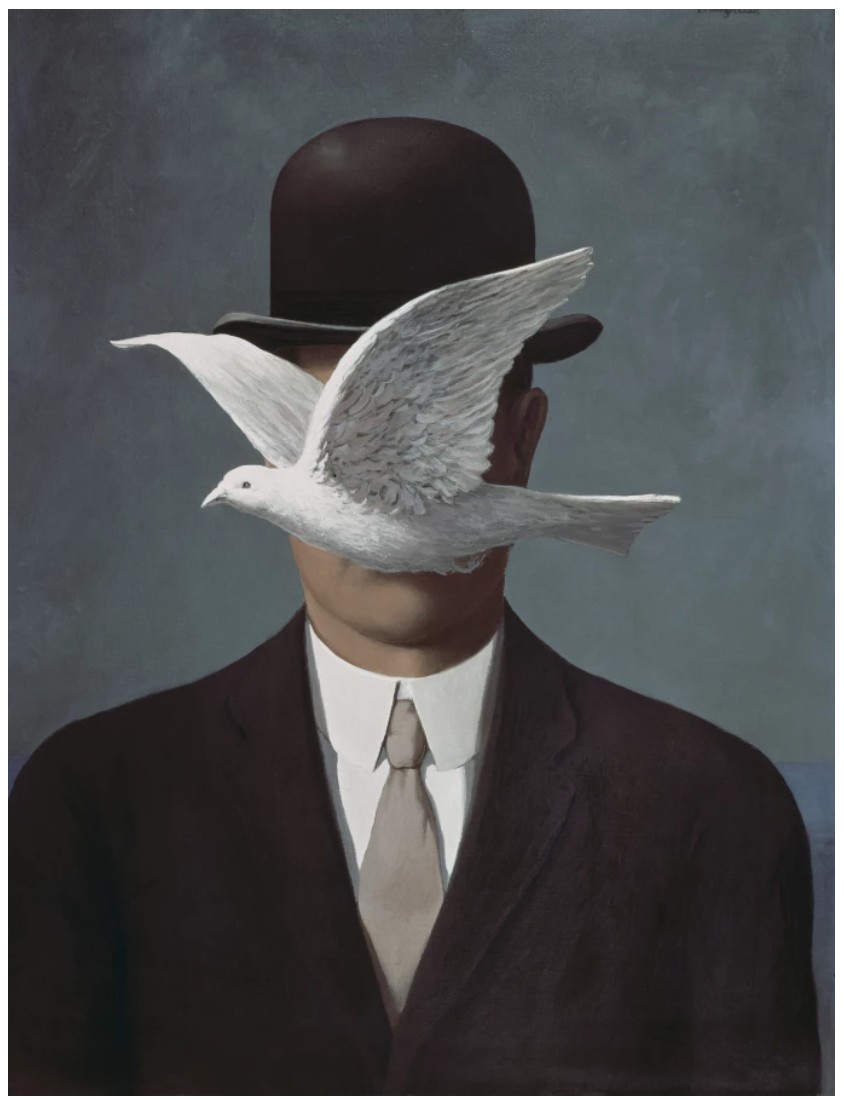
René Magritte, Man in a Bowler Hat, 1964. Private Collection. Image © Superstock / Bridgeman Images.
Art © 2026 C. Herscovici, Brussels / Artists Rights Society (ARS), New York
Yet Half Face with Collar, and other comic-strip inspired paintings of the early 1960s, define one of the ironies of this Pop innovator—Lichtenstein’s innate gift for editing to capture the telling gesture of an emotive moment. Hostile critics once ridiculed him as an “image duplicator” who copied arbitrarily gleaned trite images. But in fact, the study of the artist’s copious sourcebooks of clippings reveals the extent to which he manipulated his chosen imagery with as keen an eye for composition and effect. Lichtenstein never copied an image wholesale; it is in the subtle manipulation and refinement of these appropriated sources that his true genius resides.
“The difference is often not great but it is crucial: It becomes a very exaggerated, a very compelling symbol that has almost nothing to do with the original.”
By reducing all extraneous pictorial detail and narrative traces to an absolute minimum, Lichtenstein bestows the image with an emblematic fixity. Yet this quotation of an appropriated image and borrowing of implied narration may be the subject of the work, but it is not its sole content. The artist offers a non-specific, descriptive title that states the facts without leading us into the story; the interpretive burden is shifted to the viewer.
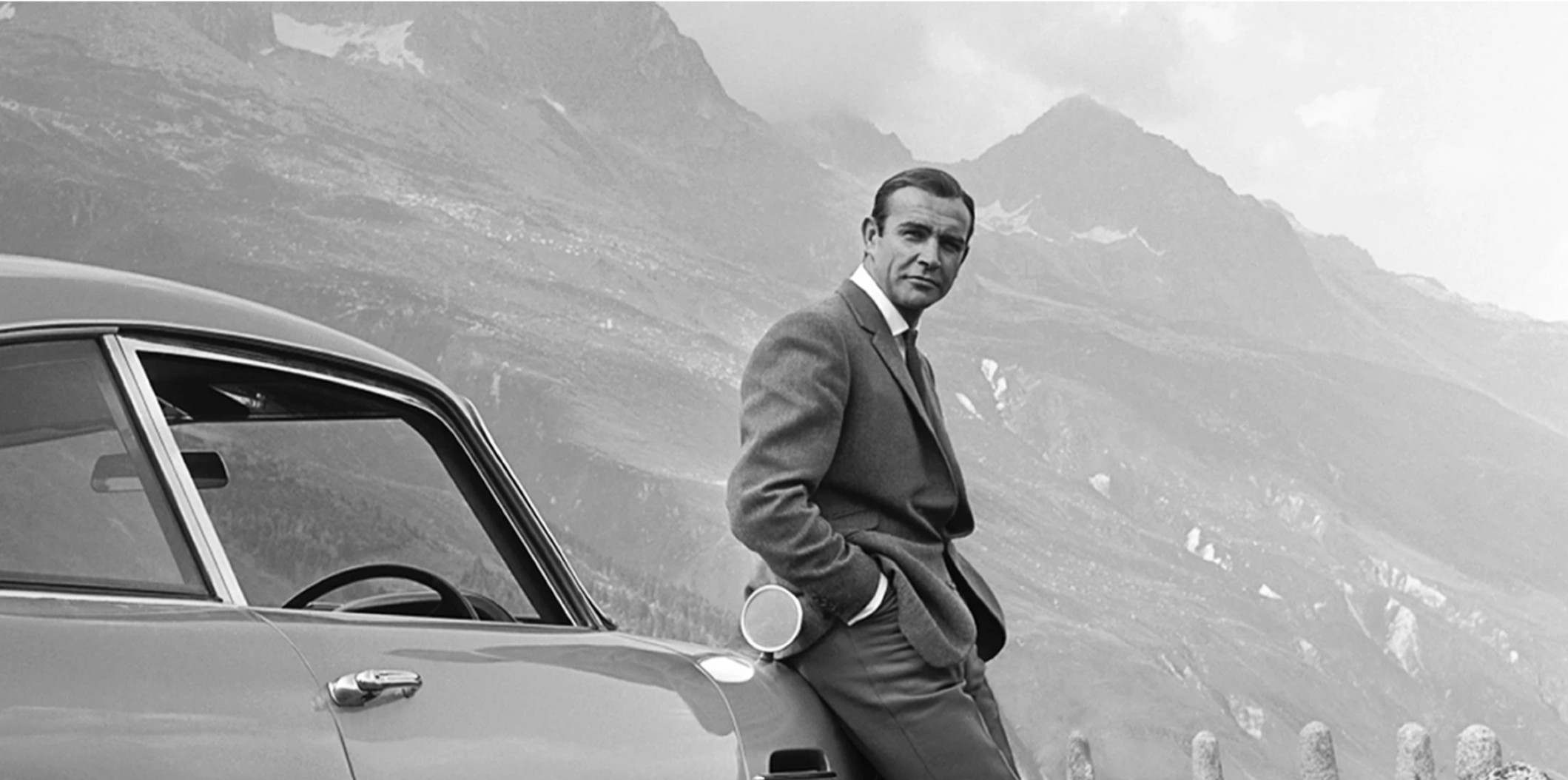
Actor Sean Connery poses as James Bond next to his Aston Martin DB5 during the filming of ‘Goldfinger,’ 1964.
Photo by Michael Ochs Archives/Getty Images
Lichtenstein’s Pop images, like the present work, are seductively pleasing to the eye, but, on a deeper level, they are testaments to the power of the image. By removing his chosen image, often a cliché, from its source, Lichtenstein ultimately turns the painting into a receptor of perception rather than a conveyor of information. It is the viewer who becomes the interpreter, and Lichtenstein’s ultimate engagement is to investigate the very nature of art itself. As Poul Erik Tøjner wrote, “You see a trace, a sign—but its origin is blocked off. In other words, you see something that isn’t there. What you see is what you don’t see… [It] points to the heart of Lichtenstein’s art, which revolves around the paradox of visibility: the clearer the figures appear in his work, the more they are hidden.” (exh. cat., Humlebaek, Louisiana Museum of Modern Art, Roy Lichtenstein: All about Art, 2003, p. 12)
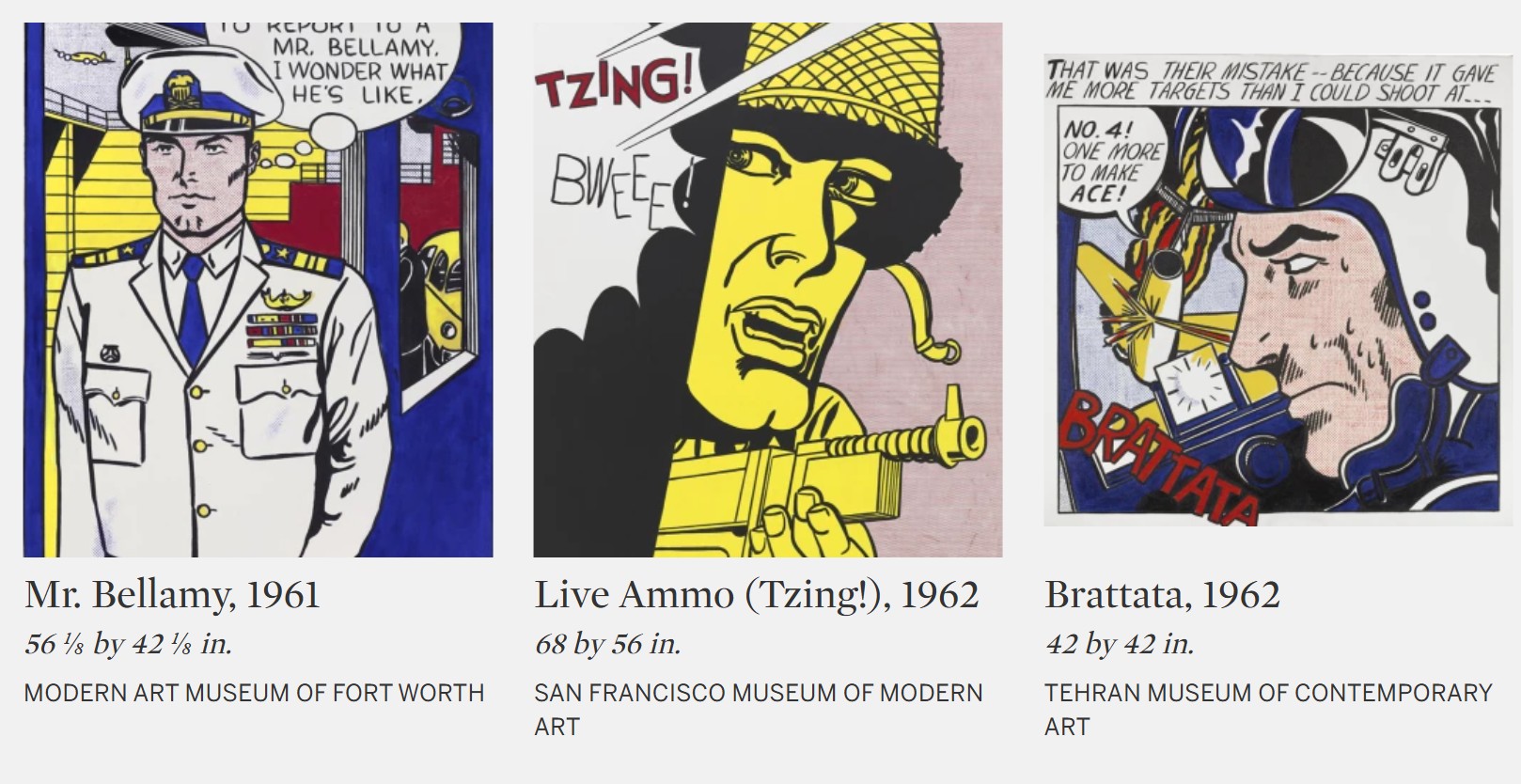
Comparable Lichtenstein 1960s Portraits in Select Museum C
The leading men in Roy Lichtenstein’s most iconic comic-strip paintings constitute a thunderous vision of masculinity shaped by the forces of mass media. Rendered with bold outlines and his signature Ben-Day dots, these figures, whether caught in moments of battle, corporate ambition, or romance, become striking emblems of the American imagination in the 1960s. Drawn from his celebrated comic series, such works are exceptional examples of Lichtenstein’s portraits, underscored by their presence in leading museum collections worldwide.
From the vantage point of Lichtenstein’s mature career, it becomes clear that his subject was not merely the fusion of popular culture with fine art, but a sustained investigation into the nature and limits of representation. In Half Face with Collar, the image is not a closed, autonomous world but an open construction—its content, by definition, extending beyond the frame, into the unseen presence addressed by the figure and completed only through its confrontation with us, each time anew. In its synthesis of formal precision, cultural observation, and subtle psychological tension, Half Face with Collar stands as a masterful articulation of Lichtenstein’s vision. The work’s tightly framed composition and mysterious subject transform a fragment of comic imagery into a compelling study of masculinity—simultaneously assertive and elusive, constructed yet captivating. It is precisely this balance of clarity and ambiguity, immediacy and absence, that secures its place among the most iconic and intellectually resonant works of the artist’s celebrated comic series.