With Andy Warhol, there are always at least two sides to the story. Take Man Ray, for example: Warhol photographed Man Ray in his Paris apartment on 30th November 1973. It is generally accepted by art historians that many of the principles of Warhol’s art, and Pop Art in general, had their genesis in the work of the influential U.S. photographer and experimental filmmaker. Amongst the influences said to come from Man Ray, who, like Warhol, came from a poor, immigrant background, are the repetition and reproduction of motifs, such as we see in Warhol’s series of Soup Cans, Marilyns, Maos, and electric chairs and so on. As an art student, in his native Pittsburgh, Warhol had also experimented with the shadow-like photograms, or “rayographs” which had been pioneered by Man Ray.
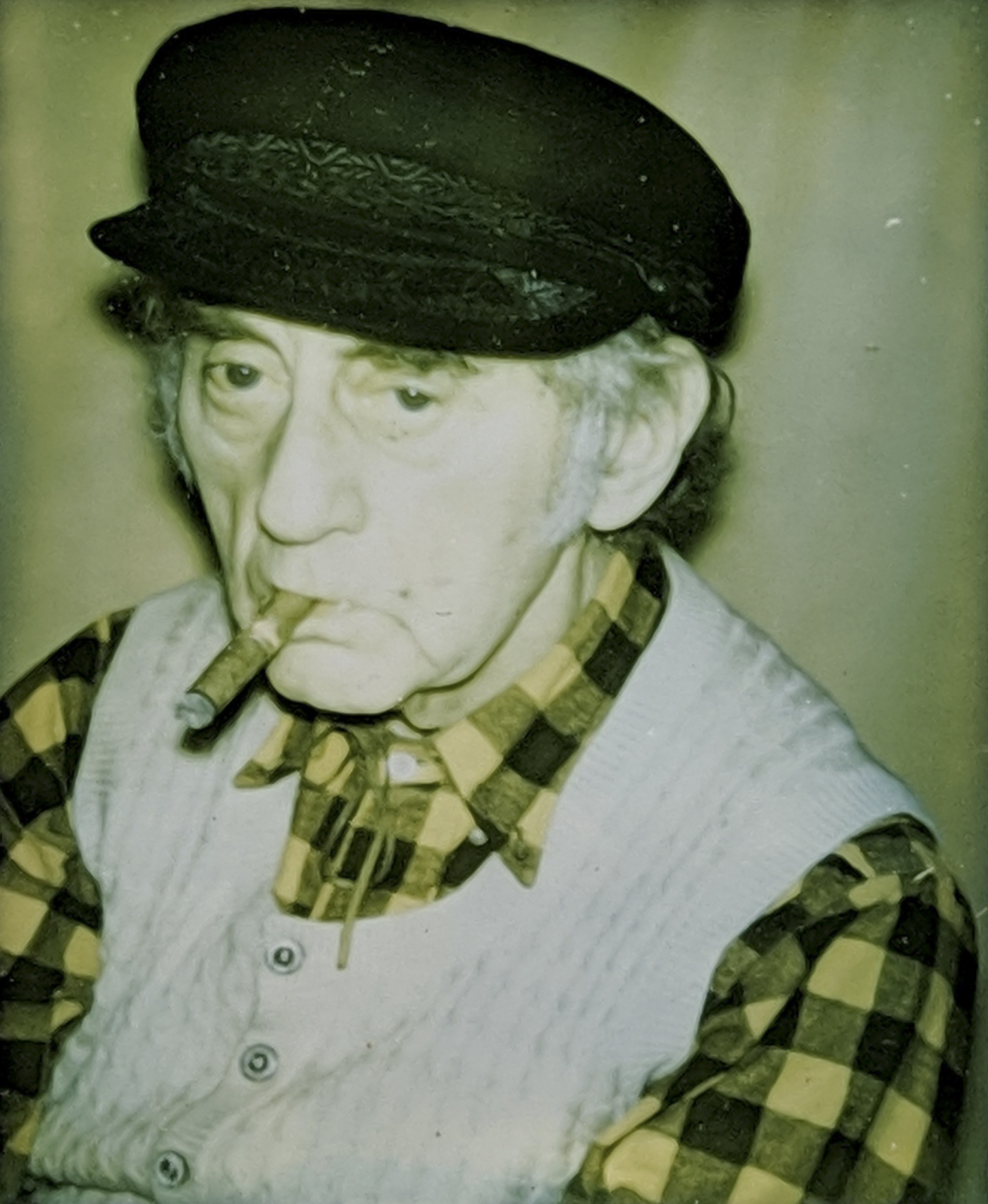
It may not come as a surprise to hear that Andy Warhol’s own version of the outcome of the Paris encounter is somewhat different from the art historical narrative. In a selection of interviews entitled “I’ll Be Your Mirror”, he discussed the matter in his inimitable, dry and sphinx-like style. The only thing he could remember, he said, from his meeting with Man Ray, was his toilet seat, because it had a fabric cover. He went on to say that he “only really loved him for his name” – Man Ray. Despite this however, one thing is certain: Warhol was very much taken with May Ray and his work, as he was with Salvador Dalí: he even owned some early pieces by Man Ray. How did these legends of Dada, Surrealism and Pop Art actually come together in 1973? The meeting between Warhol and Man Ray was arranged by the young Turin art dealer, Giovanni Anselmino, who was instrumental in popularizing Man Ray’s work in Italy in the early 1970s, thereby contributing to the artist’s gradual rediscovery after the 1950s. Anselmino (who, according to Bob Colacello, was nicknamed “Anselmino of Torino” because he “looked more like a hairdresser than an art dealer”) wanted to commission Warhol to make a series of Man Ray canvasses and prints. According to Colacello who was Editor of the renowned Interview Magazine and habitué of Warhol’s studio “The Factory”, Anselmino had probably met Man Ray in 1969 on the initiative of gallerist Alexandre Iolas who had organized Warhol’s first show in New York in 1952 (and, incidentally, was also to put on his last show in Milan in 1987).
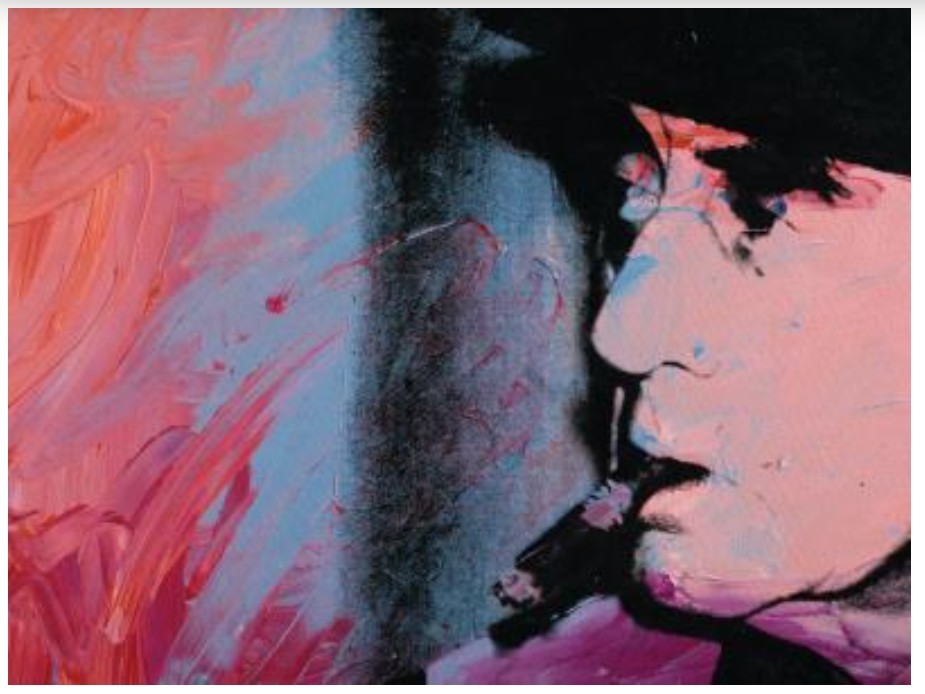
What remains of Warhol’s legendary visit to the 83-year- old Man Ray, is a series of canvases. The commission from Anselmino comprised six canvasses based on photos taken at the Paris shoot. Warhol also used the Man Ray motif for other, small-sized series and a limited edition of 100 prints, which was supposed to feature a Henry Miller text and a Jasper Johns illustration, although this never materialized. The Man Ray series was created at a time when “business artist” Warhol, in the manner of old masters, took on portrait commissions from dozens of rich and famous clients across the globe. The Man Ray series is not one of them; it is one of a series of portraits of people – mostly artists – whom Warhol truly admired. This is also evidenced by the fact that he kept three of his “Man Rays” for himself.
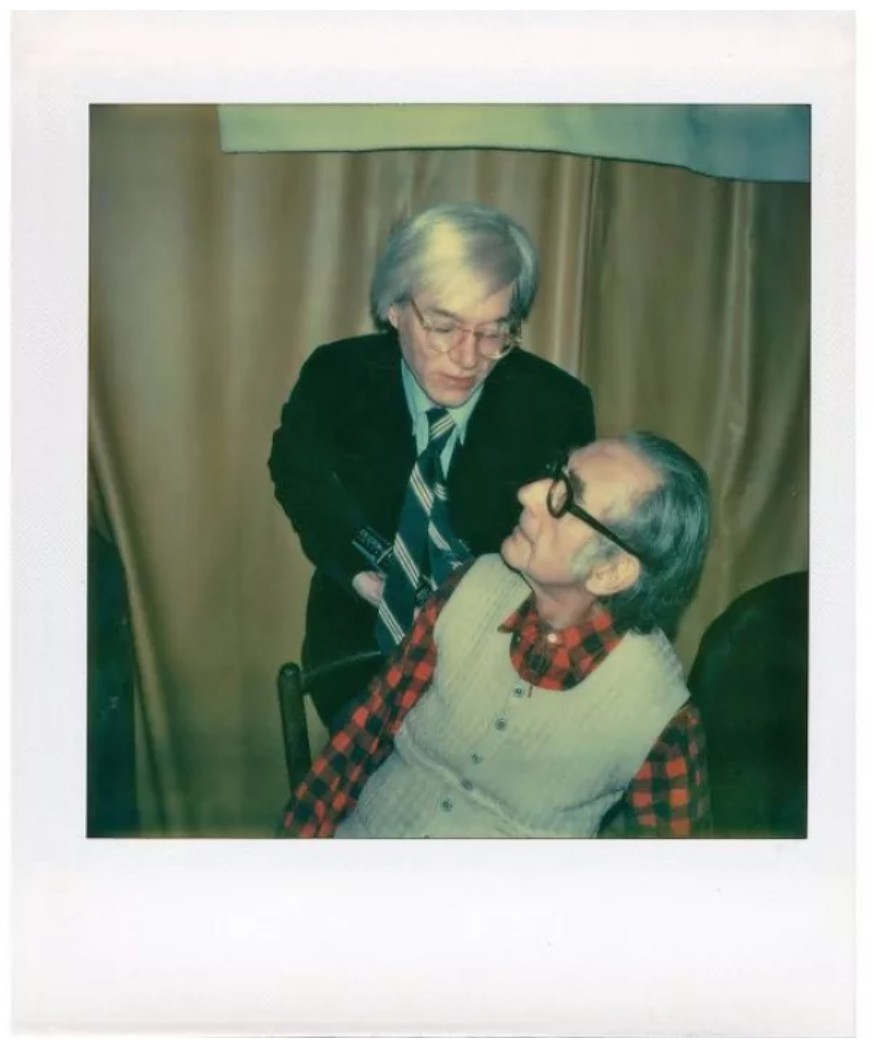
Polaroid of Andy Warhol and Man Ray. Image © The Andy Warhol Foundation for the Visual Arts, Inc.
“I took a SX-70 and then I put in a whole roll and I got ten… ten pictures of that and then he put a cigar in his mouth… And actually the cigar was bigger than he was because he’d… he’d gotten very… very bent over. And he looked like he was always far out but uh… I think it was just because he was bent over… I had him smoke the cigar.”
In “Letter to Man Ray”, an absurdist 20-minute video monologue recorded on the occasion of Man Ray’s death in 1976, Warhol gives a performative account of his Paris photo shoot with the master. The repetitive speech reflects the principle of Warhol’s pictures:
“I took another picture of Man Ray, another Polaroid portrait of Man Ray and another Polaroid portrait of Man Ray, another Polaroid portrait of Man Ray and then another Polaroid portrait of Man Ray and then I took another Polaroid portrait of Man Ray and then I took another Polaroid portrait of Man Ray. And then I took another portrait. And then I think he took another portrait of me and then he signed that one for me and I put it in my Brownie shopping bag.”
Apparently, Man Ray had no idea at the modelling session how famous his visitor was. He was recorded on an audiotape asking Warhol how he liked the Big Shot camera, and which focal length he used, but Warhol, who wouldn’t have this shop talk, replied that it was the cheapest camera and therefore his favorite remove stop. There is a sense of homage in Warhol’s portraits of Man Ray one does not feel in the images of his contemporaries. During their meeting in late 1973, this sense of homage extended to an almost student-master relationship. Trading the camera: a cheap model Warhol preferred – back and forth, they spent the day photographing each other.
The reverence Warhol held for Man Ray extended far past the source photograph of those works to the large collection of photographs by Man Ray that he religiously collected. Warhol was naturally drawn to the enigmatic societal portraits Man Ray made of the celebrities and socialites that preceded his heyday. Images of key figures such as Pablo Picasso, Dora Maar and Nancy Cunard formed the basis of his collection that also counted a number of Man Ray’s revolutionary Solarizations and Rayographs. Yet as always, Warhol had a decidedly capricious opinion of his idol; in a self-recorded video diary taken in 1976 – only a few years after he produced the present work – Warhol claimed he “only really loved him [Man Ray], to be truthful…his name was the best thing about him” (Andy Warhol cited in: Ibid, p.231). While this is typical of Warhol’s interest in surface and the vapid celebrity of a name, it hardly tallies with the pride of place in which he installed a rare painting by Man Ray, Peinture Feminine (1954) – hung prominently in the sitting room of his New York home. In many ways, this attests to the complex relationship Warhol had with the world, one moment deeply involved in the richness of one man’s art, the next vulgarly obsessed with simply the power of one’s name.
Man Ray (40×40)
Man Ray, 1974
Sotheby’s Paris: 23 October 2026
Estimated: EUR 360,000 – 450,000
EUR 473,600 / USD 530,525
Andy Warhol | Man Ray | Surrealism and Its Legacy | 2026 | Sotheby’s
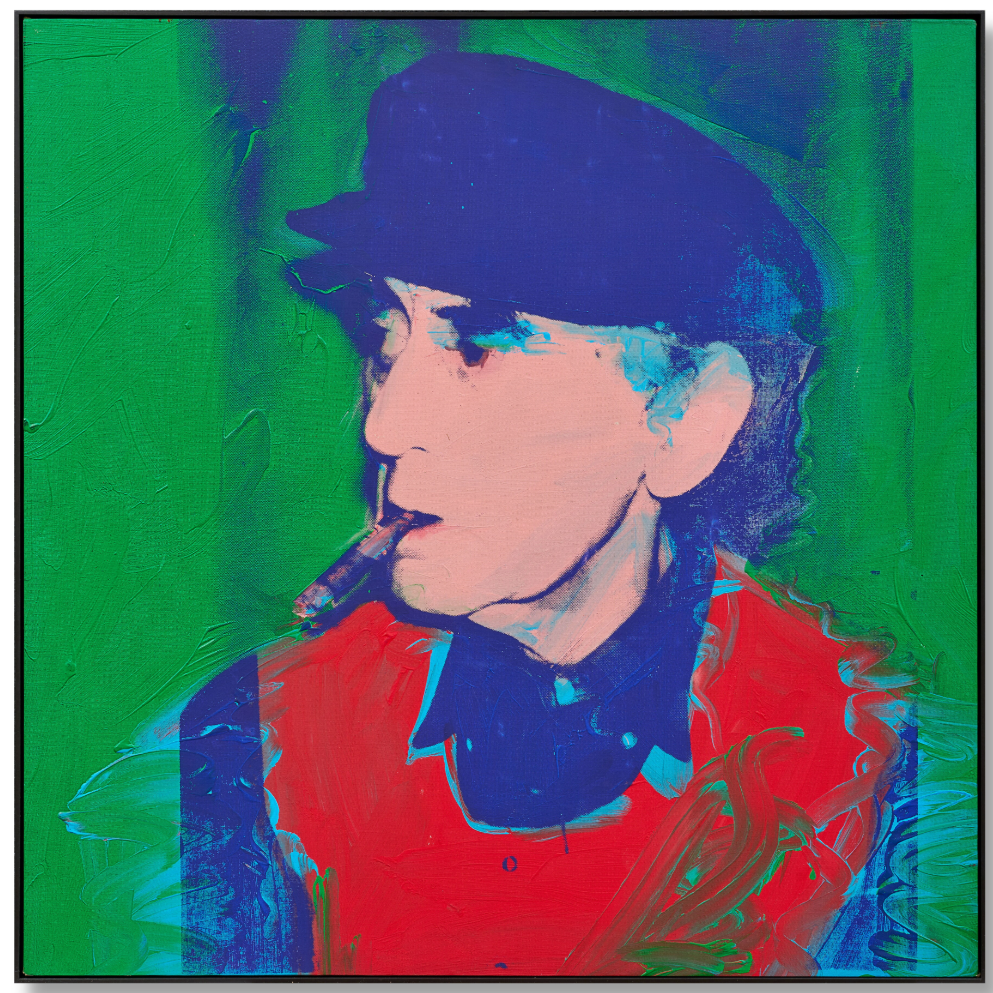
ANDY WARHOL (1928 – 1987)
Man Ray, 1974
Acrylic and silkscreen on canvas
40×40 inches (101.7 x 101.7 cm)
Signed and dated 74 (on the overlap)
Inscribed 3/6
Provenance
Galleria Il Fauno, Turin
Galleria Il Fauno/Alexandre Iolas, Milan
Sotheby’s, London, 7 February 2001, lot 51
Carlo Monzino Collection, Venice and Milan
Galerie Andrea Caratsch, Zurich/ St Moritz
Private Collection
Man Ray, 1974
Sotheby’s London: 17 September 2025
Estimated: GBP 400,000 – 600,000
GBP 584,200 / USD 797,630
Man Ray | Pauline Karpidas: The London Collection Evening Auction | 2025 | Sotheby’s
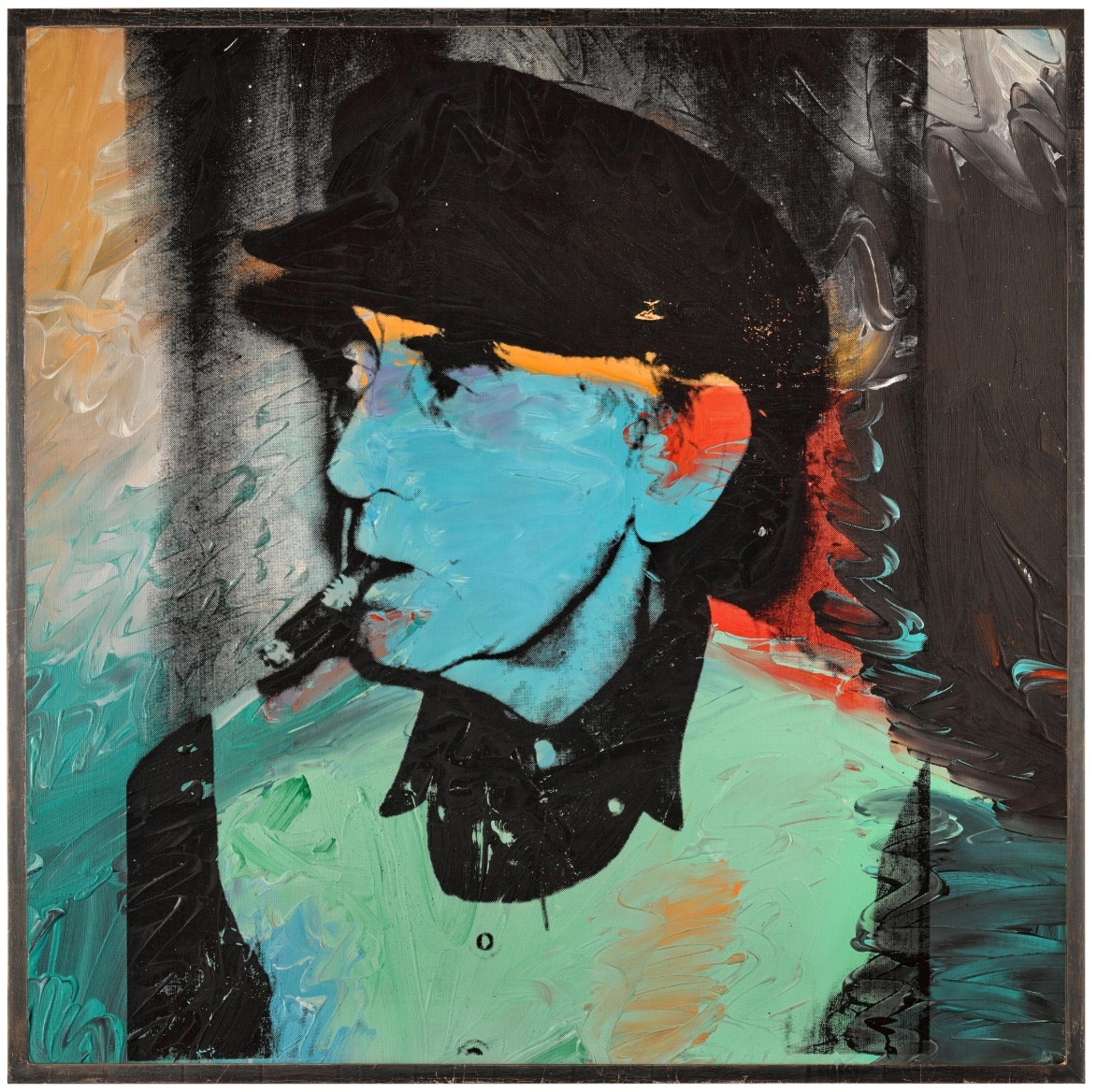
ANDY WARHOL (1928 – 1987)
Man Ray, 1974
Acrylic and silkscreen ink on canvas
39 3/4 x 39 3/4 inches (101×101 cm)
Signed, titled, numbered 6/6 and dated 74 (on the overlap)
Few figures in twentieth-century art are as steeped in legend as Man Ray, the visionary Surrealist whose photographs defined the avant-garde artistic circle of Paris before the war. In this striking portrait, Warhol—himself a master at elevating the status of cultural icons—turns to the Surrealist master whose influence quietly informed his own practice. The present work was one of nine in this 40-inch scale that captured the enigmatic Man Ray at the age of eighty-three, stooped over, and defiantly eccentric with cigar in hand wearing a seaman’s cap. Reproduced as the poster image for the landmark 1974 exhibition at Galleria II Fauno and Alexandre Iolas in Milan, the present work bursts with the saturated colour and gestural bravado that marked Warhol’s painterly evolution in the early 1970s. Here, Warhol does not simply record his likeness; he enshrines Man Ray as a Pop icon, fusing Surrealist mystique with the seriality and commercial Warholian edge. The result is an exuberant homage to Man Ray and the meeting of two artistic greats whose legacies shaped the course of art in the twentieth century.
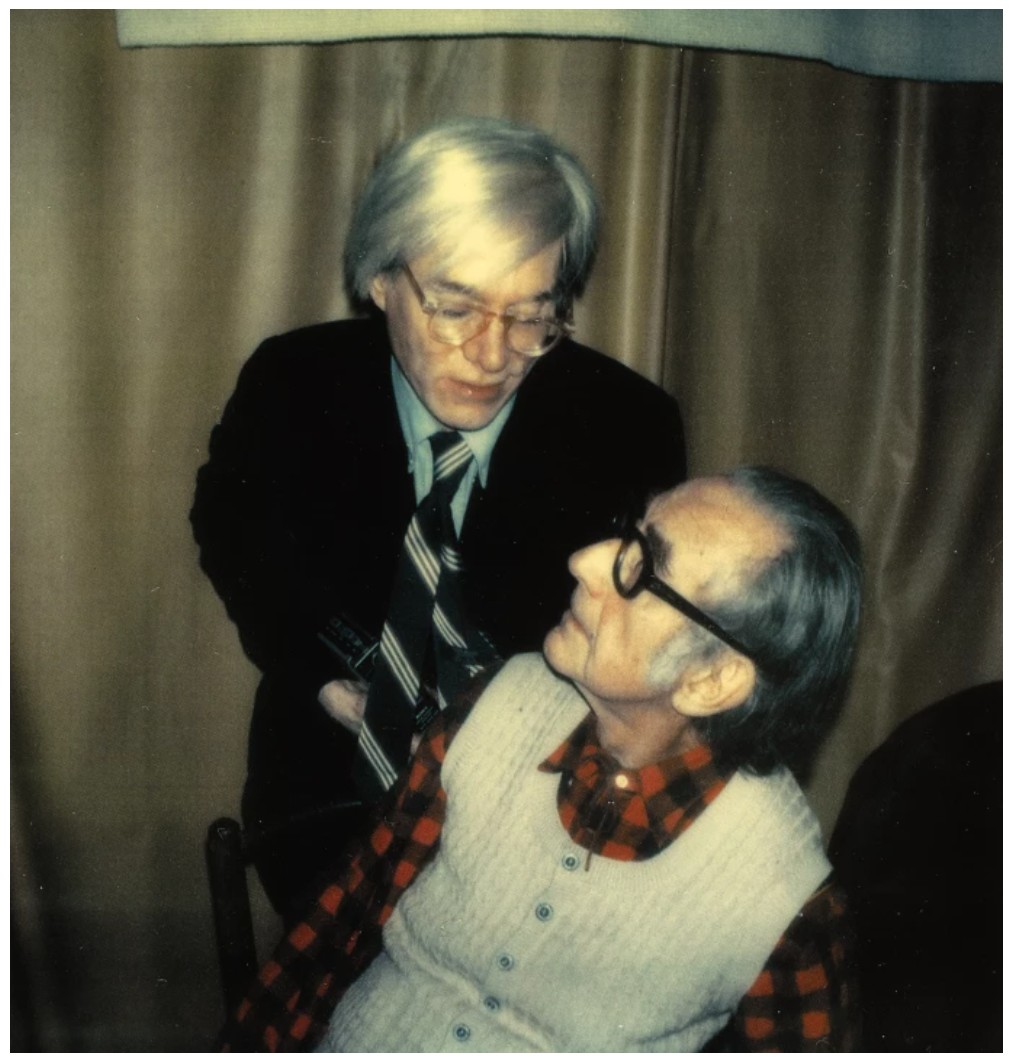
Andy Warhol and Man Ray, November 30, 1973
© The Andy Warhol Foundation for the Visual Arts / Artists Rights Society (ARS), New York / DACS, London 2025
The series’ commission transpired in 1973 thanks to the art dealers Luciano Anselmino and Alexander Iolas; the latter apparently fascinated the former who would never leave him alone, according to Iolas’ partner André Morgues. Celebrated as discovering Warhol in the 1950s, Iolas was an exceptionally talented art dealer and indeed the most influential advisor to the present owner, Pauline Karpidas, even introducing her to Warhol in the 1970s. Iolas and Anselmino would collaborate for the commission of the Ladies and Gentlemen and Man Ray series after Anselmino was introduced to Warhol. Anselmino had himself popularised Man Ray’s Surrealist photographs in the early 1970s with exhibitions at his Turin gallery, Galleria Il Fauno, so this was a fitting collaboration. The genesis of the present work can be traced back to a singular day in Paris on the 30th November 1973 when Warhol, accompanied by Anselmino, his assistant Dino, and Fred Hughes, met Man Ray, his wife Juliet, and Timothy Baum at the artist’s studio on the rue Ferrou. This was indeed the same trip to Paris where Warhol also captured Iolas for his second portrait commission and David Hockney with whom he was to trade portraits.
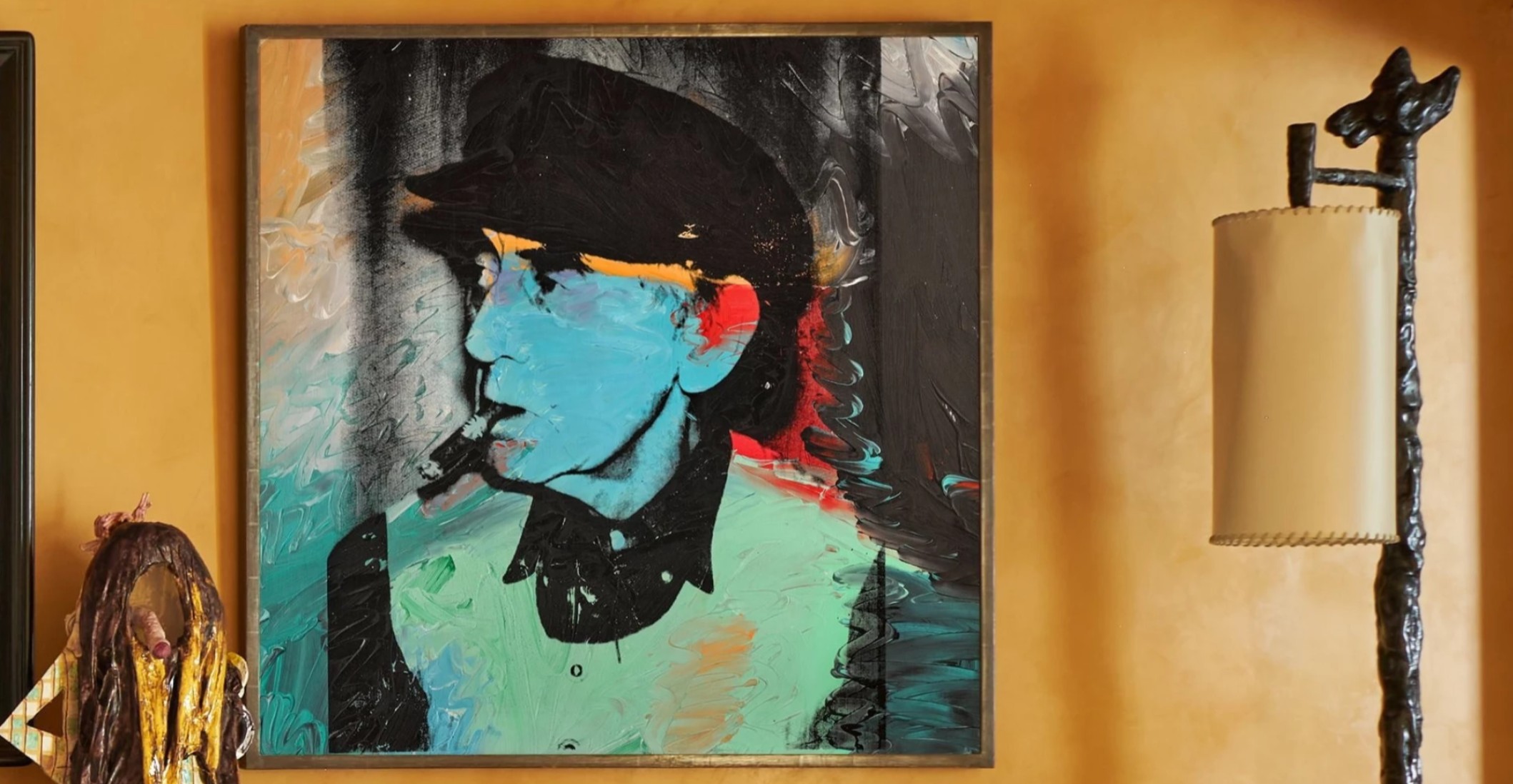
The present work shown in the London home of Pauline Karpidas
For the sitting, Warhol obsessively photographed Man Ray, armed with his signature Polaroid Big Shot camera capturing him in various guises and moods. Man Ray memorably remarked to Warhol with signature wit, “I forget whether I’m in front or behind the camera” (Man Ray quoted in Ibid, p. 372). Man Ray was offered props such as a seaman’s cap and cigar. It was only at the end of the sitting that he finally captured the source image later used for this series after Warhol had demanded Man Ray remove his spectacles and place the cigar in his mouth. Warhol later remarked how much fun the sitting had been and perhaps this explains why the resulting photograph is arguably the least posed of any of the source images that inform Warhol’s portraits of the 1970s and 1980s, free of the artifice that resulted from the attempts of stylists to titivate sitters, the usual prelude to a Warhol commission. In total, including the usual additional works Warhol produced on the side, the overall suite of the Man Ray series consisted of three canvases in the 80-inch size, nine in the 40-inch size and 31 in the 12-inch size. The works—part of the Anselmino and Iolas commission—were shown at Iolas’ gallery in Milan rather than Anselmino’s in Turin; it was decided Iolas offered a more prestigious name and location.
Warhol’s reverence for Man Ray extended past the source photograph of the present work to the large collection of photographs by Man Ray he avidly collected—over 25 were included in the artist’s estate sale at Sotheby’s. Warhol’s admiration extended to the part he had played in the development of the Dada and Surrealist movements, which greatly informed his own motif-driven idiom. Warhol was naturally drawn to the enigmatic societal portraits Man Ray made of the celebrities and socialites such as Pablo Picasso, Dora Maar and Kiki de Montparnasse. Whilst Man Ray captured Paris’ artistic scene in the pre-war period, Warhol’s subjects provided a fascinating snapshot of the burgeoning New York art scene in the 1960s and 1970s, especially as he took commissions in this period. The artist memorably captured the present owner Pauline Karpidas and her late husband Dinos Karpidas in this way. Yet as always, Warhol had a decidedly capricious opinion of one of his forebears in Man Ray as Warhol claimed that his name was the best thing about him. While this is typical of Warhol’s interest in the celebrity of a name and the associated resonance, it does not reflect his actual admiration of the Surrealist’s work. For example, the rare Peinture Feminine (1954) by Man Ray was prominently placed in the sitting room of Warhol’s New York home. This comment attests more to Warhol’s fascination with the power of one’s names; take for example the 1974 exhibition poster, Man Ray is pictured with Warhol in capital letter below. Man Ray—incisive, compact and mysterious—fit neatly into Warhol’s pantheon of brands and icons, from Marilyn and Jackie to Campell’s and Brillo.
“I only loved him because of his name – Man Ray.”
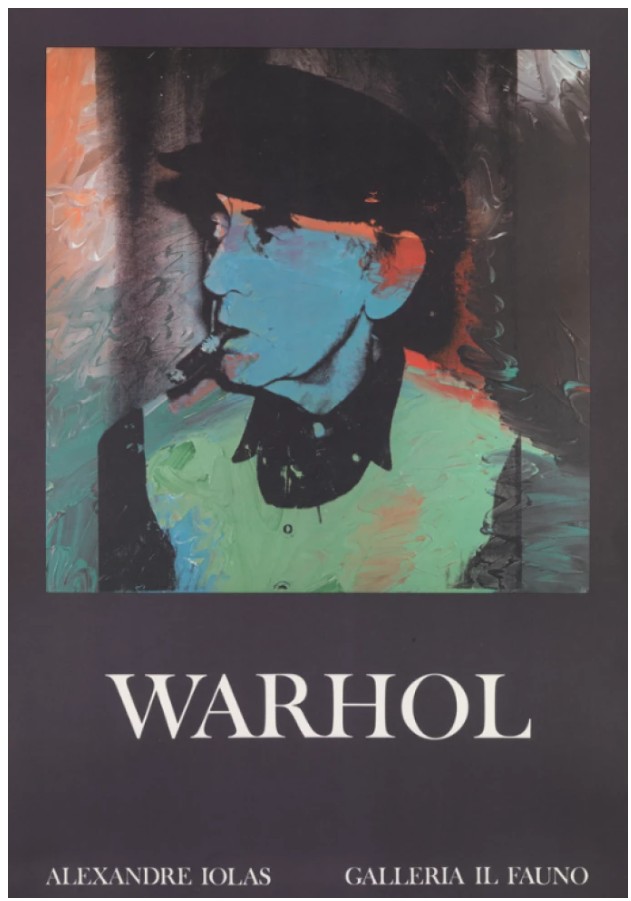
The present work featured on the poster for Warhol’s 1974 exhibition at Galleria Il Fauno, Milan, done in collaboration with Alexandre Iolas
Man Ray also marks a pivotal moment in Warhol’s technical evolution; it is one of the most purely painterly images Warhol produced during his artistic career, what Anselmino labelled his ‘free style.’ The stark, graphic flatness of his early Pop years gave way to this expressive style. Here, the face of Man Ray is rendered in a cerulean blue with a streak of cadmium orange under his cap and a patch of red near his ear; his chromatic palette enlivens the surface of the work. Perhaps most striking is Warhol’s brushwork in the present work as he employed broad and coiled brushstrokes across the surface with wet-on-wet application, scumbled textures and optical layering. “Warhol’s portraits of Man Ray show just how far he was willing to push painterliness, how free-style the brush could become in his hands” (Ibid., p. 374). These flourishes of painterly bravado depart from the cool detachment of his earlier Pop aesthetic—the mechanical, hard-edged graphic effect of his silkscreens of the 1960s—as he developed a hybrid style.
Painted only a few years prior to Man Ray’s death in 1976, Warhol’s portrait exists as an intergenerational dialogue between two great artists. It is the meeting of two artists who shaped, in their respective eras, the aesthetics and philosophies of the avant-garde. In Man Ray, Warhol does not just depict the man himself, he brands Man Ray as a Pop icon. Man Ray was better known across Europe than in his homeland; Warhol takes the iconic and influential Surrealist and immortalizes him in the Pop aesthetic, and in this way casts him back into an American setting.
Man Ray, 1974
Dorotheum Vienna: 1 June 2022
Estimated: EUR 300,000 – 500,000
EUR 753,000 / USD 880,000
Andy Warhol – Contemporary Art I 2022/06/01 – Realized price: EUR 753,000 – Dorotheum
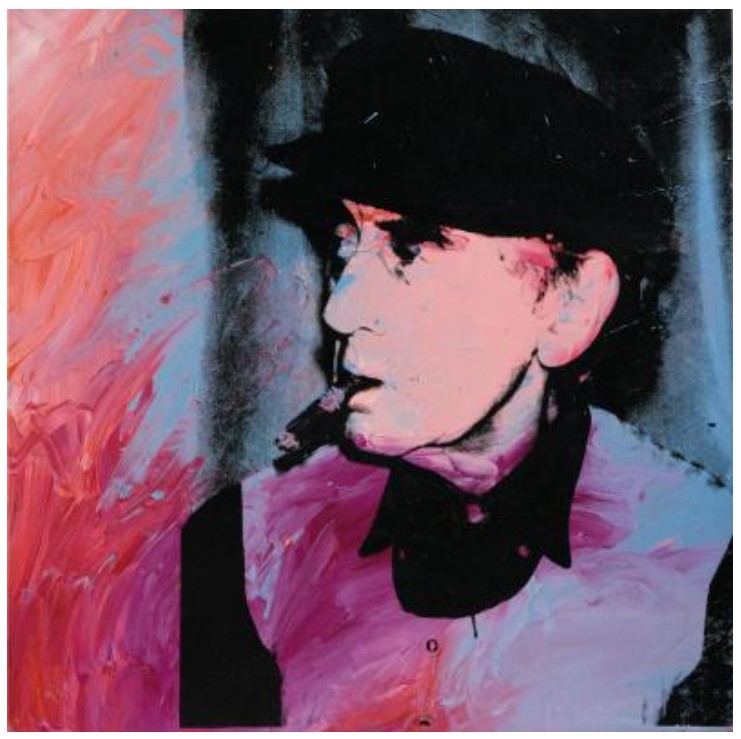
ANDY WARHOL (Pittsburgh 1928–1987 New York)
Man Ray, 1974
Acrylic and silkscreen ink on canvas
40×40 inches (101×101 cm)
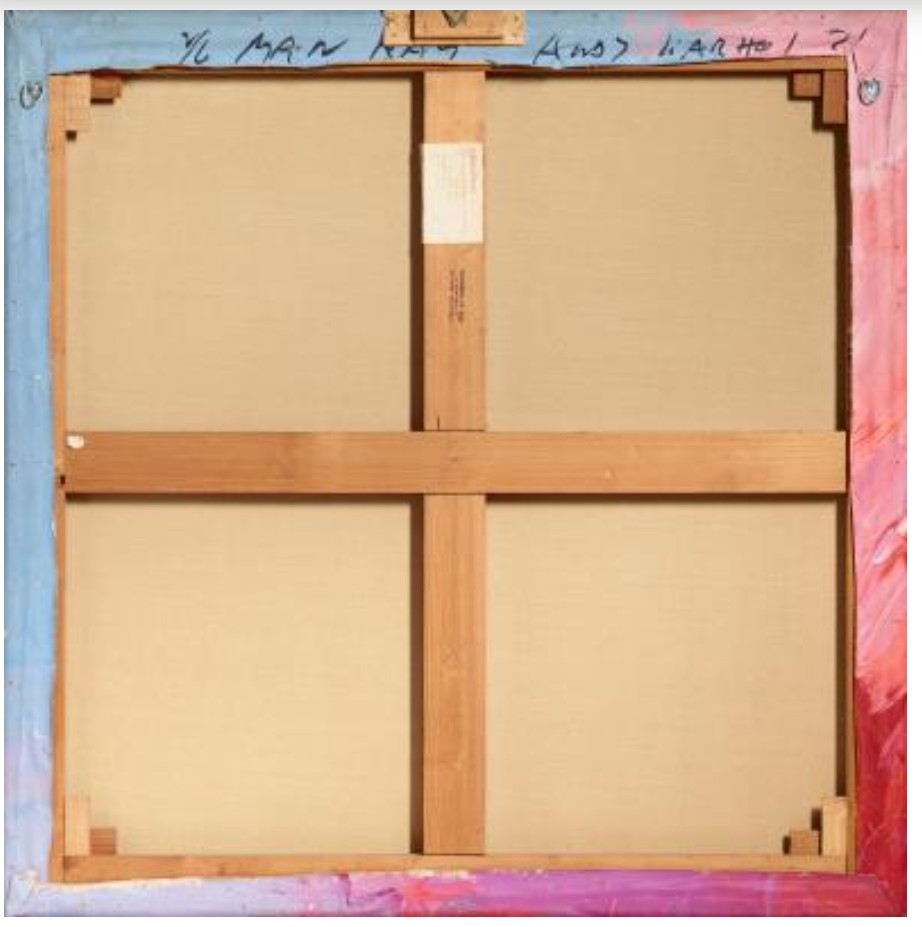
Signed, titled and numbered 2/6 on the top overlap
Man Ray, 1974
Sotheby’s London: 6 October 2017
Estimated: GBP 180,000 – 250,000
GBP 296,750
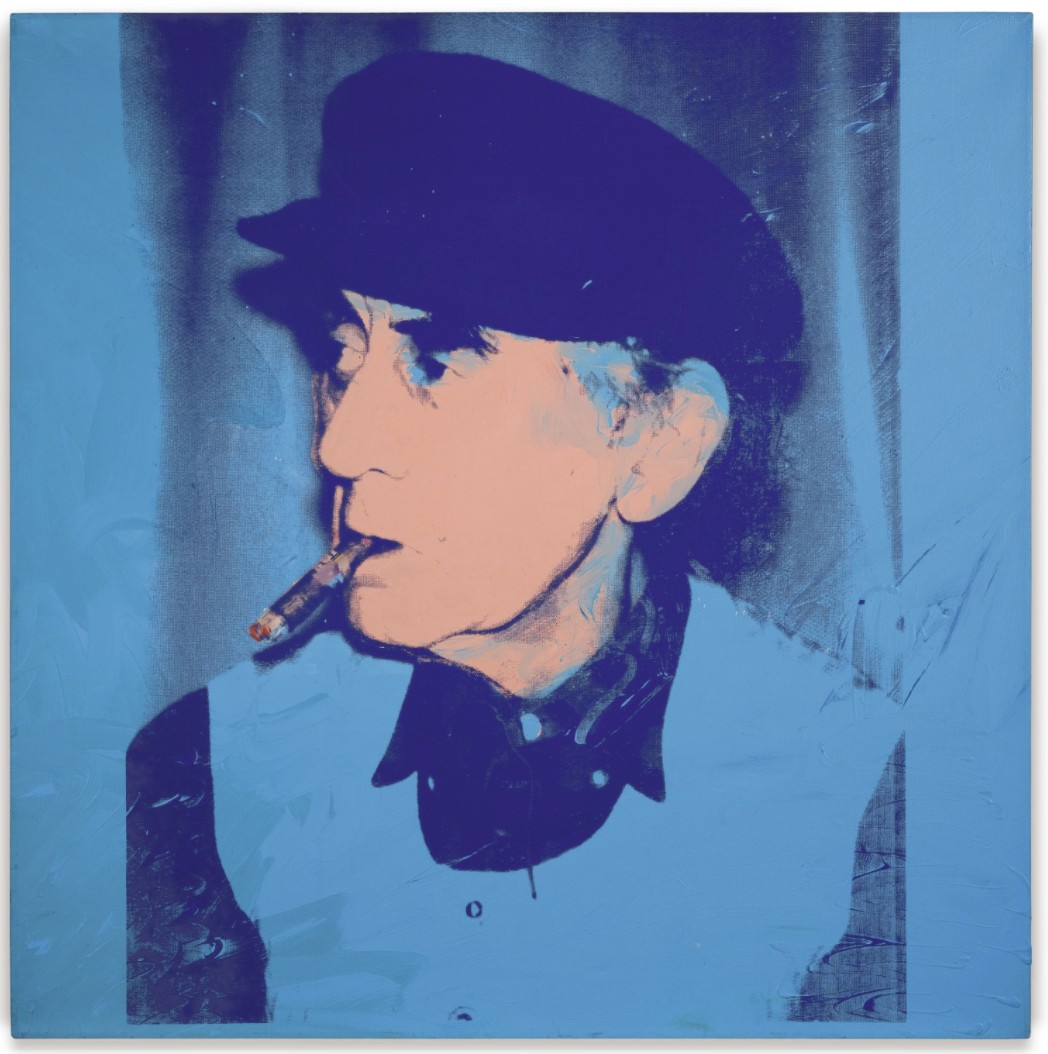
ANDY WARHOL
Man Ray, 1974
Acrylic and silkscreen ink on canvas
40×40 inches (101.6 x 101.6 cm)
Signed, titled and dated 74 on the overlap
Built up through wet-on-wet paint, the present work is the most boldly simplified composition of colorways with bright – somewhat melancholic – blue flashes against the cool pink of Man Ray’s face. The most alive of the series, it is the only work out of the twelve listed in the catalogue raisonné in which Warhol playfully touches a bold dot of red paint to light the end of his cigar. Indeed, Warhol engaged in a more traditional form of portrait making than his pop aesthetic would usually reveal – 5 drawings of Man Ray attest to an artist working out preliminary compositions before transferring to canvas. Part of the 40 by 40 inch series, it is a substantially larger work than the two held in the Tate’s collection. The various styles of canvas and thick involved brushwork with which they were painted attests to Warhol’s regard for a photographer he admired and collected throughout the formative years of his career. It stands witness to a seminal meeting for Warhol on 30th November 1973 when two of the major artists of the Twentieth century traded portraits of each other, united by their love for film, and for the undeniable lure of their own celebrity.
Portrait of Man Ray, 1974
Christie’s London: 11 February 2016
Estimated: GBP 200,000 – 300,000
GBP 362,500
Andy Warhol (1928-1987), Portrait of Man Ray | Christie’s
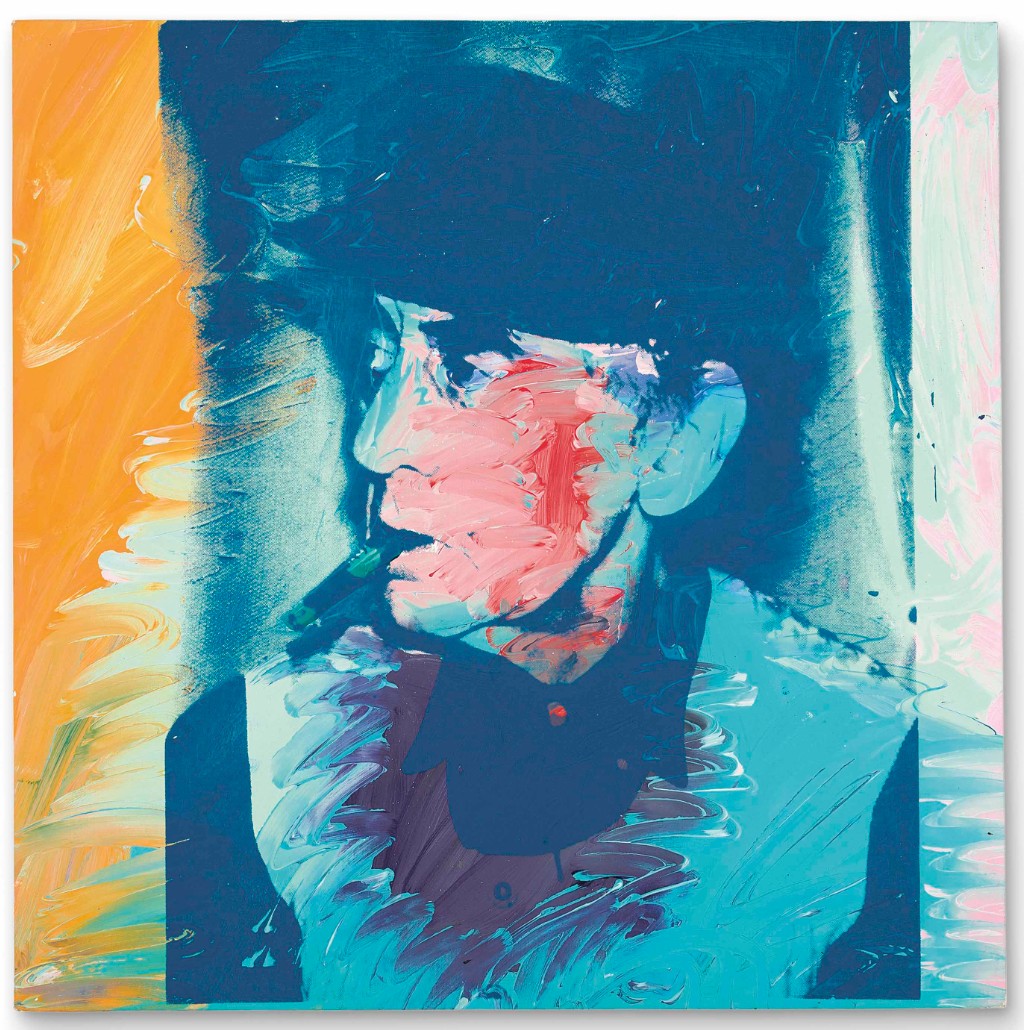
ANDY WARHOL (1928-1987)
Portrait of Man Ray, 1974
Acrylic and silkscreen inks on canvas
40×40 inches (101.6 x 101.6 cm)
Andy Warhol’s vibrant portrait of the artist Man Ray is a tribute by the Pop master to one of the leading figures of the Dada and Surrealist art movements. Rendered in Warhol’s distinctive Pop palette, Man Ray’s likeness is constructed out of a single screen of Warhol’s original photograph which is then embellished by a series of expressive brushstrokes in tones of vivid green and golden yellow. In addition Warhol then adds a dramatic sweep of red across Man Ray’s face as if to accentuate his strong facial features. This particular method of execution seems suited to its subject matter as Man Ray spent his career blurring the lines between what could and could not be classified as art. He was one of the most important proponents of the breaking down of the traditional artistic disciplines, both through his own invention, the Rayographs, and his innovative photographs of Marcel Duchamp’s work The Bride Stripped Bare by Her Bachelors, Even. It seems therefore appropriate that Warhol – the man who did much to abolish the boundaries between popular culture and high art – should immortalize his hero in his own inimitable style.
Man Ray, 1974
Christie’s New-York: 13 November 2014
Estimated: USD 250,000 – 350,000
USD 485,000
Andy Warhol (1928-1987), Man Ray | Christie’s
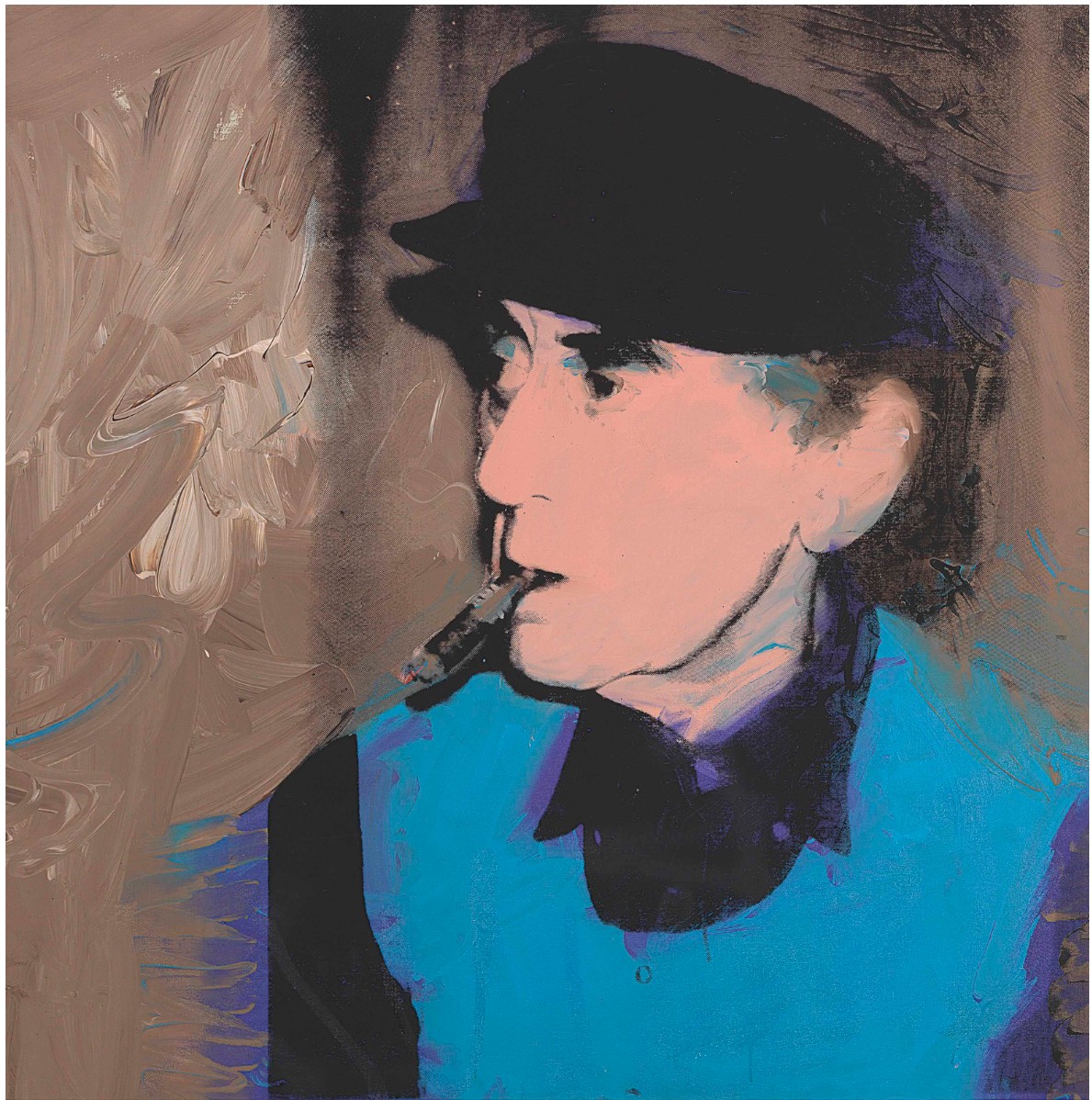
ANDY WARHOL (1928-1987)
Man Ray, 1974
Synthetic polymer and silkscreen inks on canvas
39 3/4 x 39 3/4 inches (101×101 cm)
Signed, titled and dated ‘MAN RAY ANDY WARHOL 74’ (on the overlap)
Man Ray (13×13)
Man Ray [Two Works], 1974
Sotheby’s New-York: 16 May 2025
Estimated: USD 200,000 – 300,000
USD 355,600
Man Ray [Two Works] | Contemporary Day Auction | 2025 | Sotheby’s
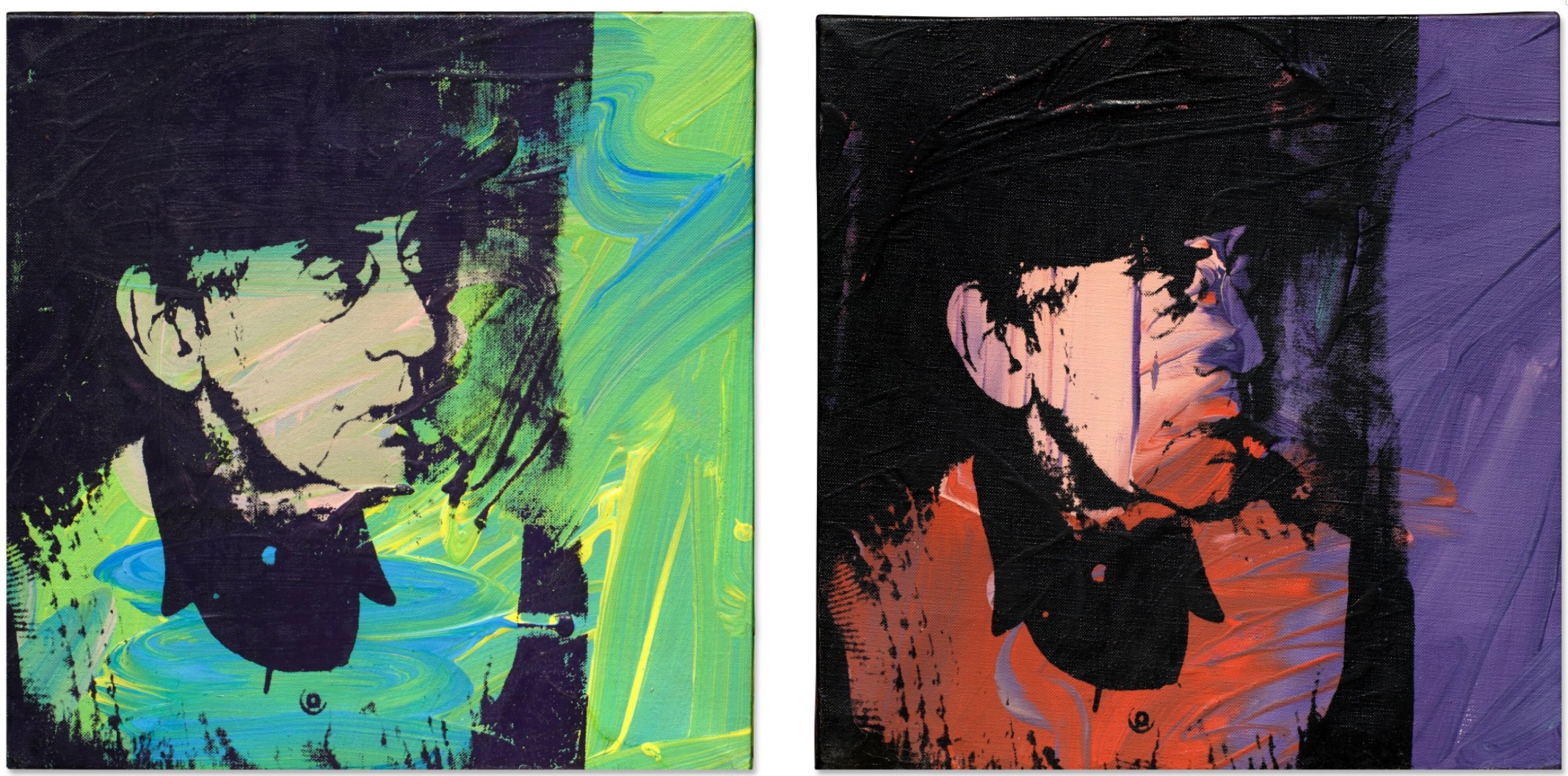
ANDY WARHOL (1928 – 1987)
Man Ray [Two Works], 1974
Acrylic and silkscreen ink on canvas in 2 parts
Each: 13×13 inches (33×33 cm)
Signed and dated 74 (on the reverse of each)
Man Ray, 1974
Christie’s New-York: 10 November 2023
Estimated: USD 100,000 – 150,000
USD 119,700
ANDY WARHOL (1928-1987) (christies.com)
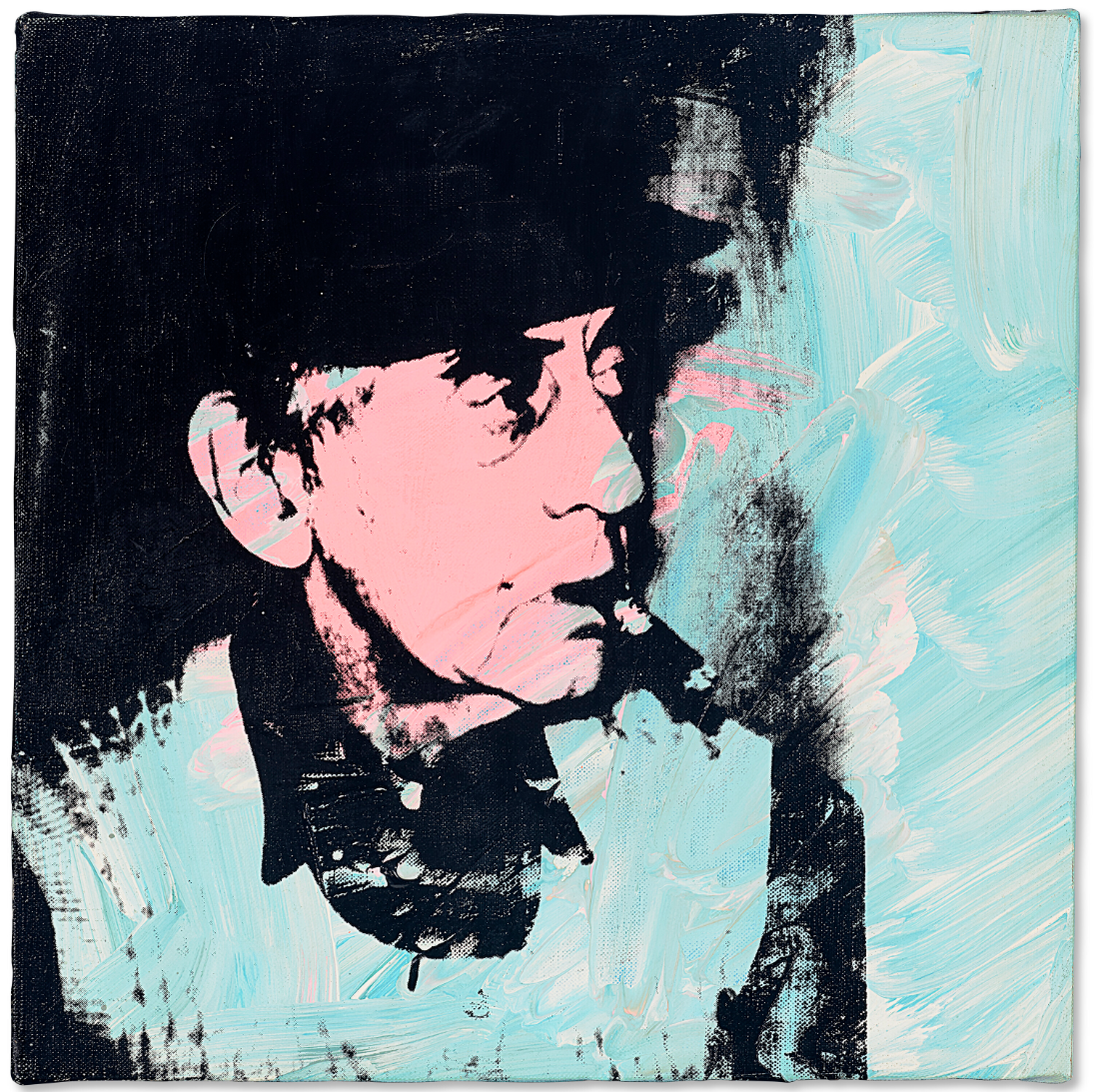
ANDY WARHOL (1928-1987)
Man Ray, 1974
Acrylic and silkscreen ink on canvas
13×13 inches (33×33 cm)
Signed and dated ‘Andy Warhol 74’ (on the reverse)
Stamped with the Andy Warhol Authentication Board, Inc. stamp and numbered ‘A101.0410’ (on the overlap)
Man Ray, 1974
Christie’s London: 28 June 2012
Estimated: GBP 100,000 – 150,000
GBP 313,250
Andy Warhol (1928-1987) , Man Ray | Christie’s
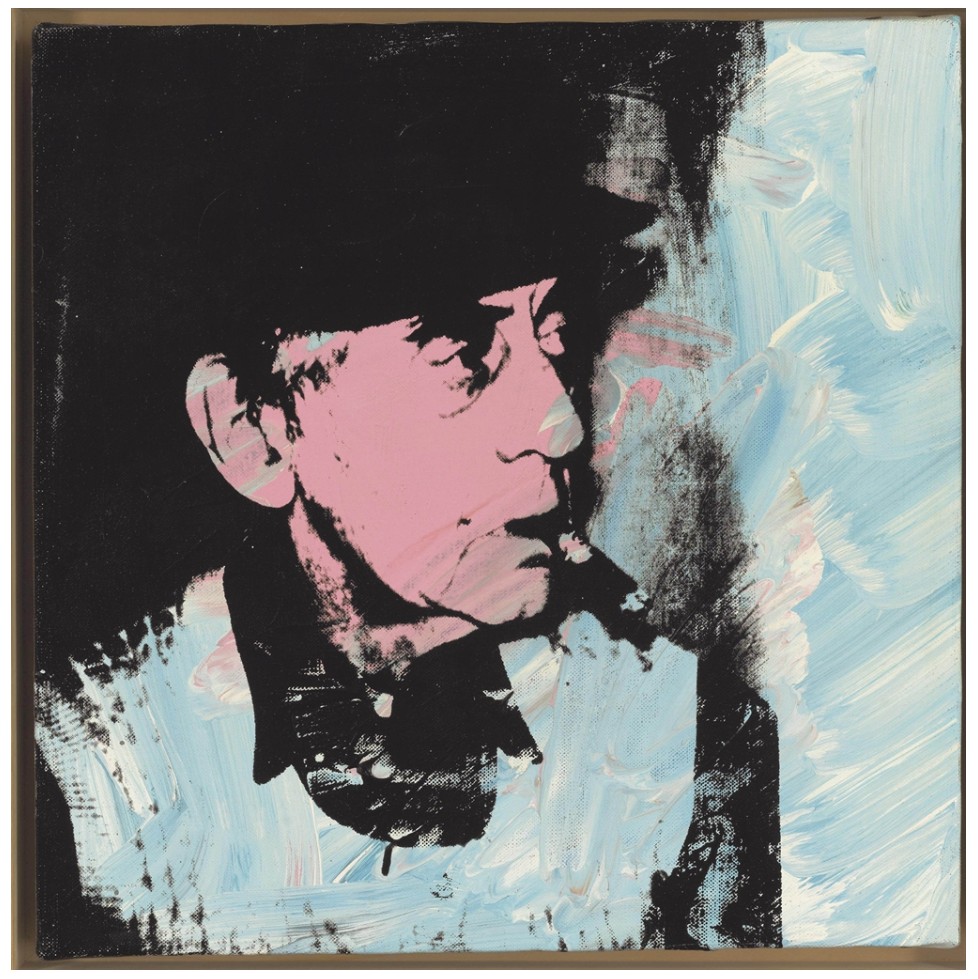
ANDY WARHOL (1928-1987)
Man Ray, 1974
Acrylic and silkscreen ink on canvas
13×13 inches (33×33 cm)
Signed and dated ‘Andy Warhol 74’ (on the reverse)
With the Andy Warhol Authentification Board, Inc. stamp and numbered ‘A101.0410’ (on the overlap)