Portrait of Princess Diana, 1982
Phillips London: 10 October 2024
Estimated: GBP 1,200,000 – 1,800,000
GBP 1,258,000 / USD 1,647,980
Andy Warhol – Modern & Contemporary … Lot 11 October 2024 | Phillips
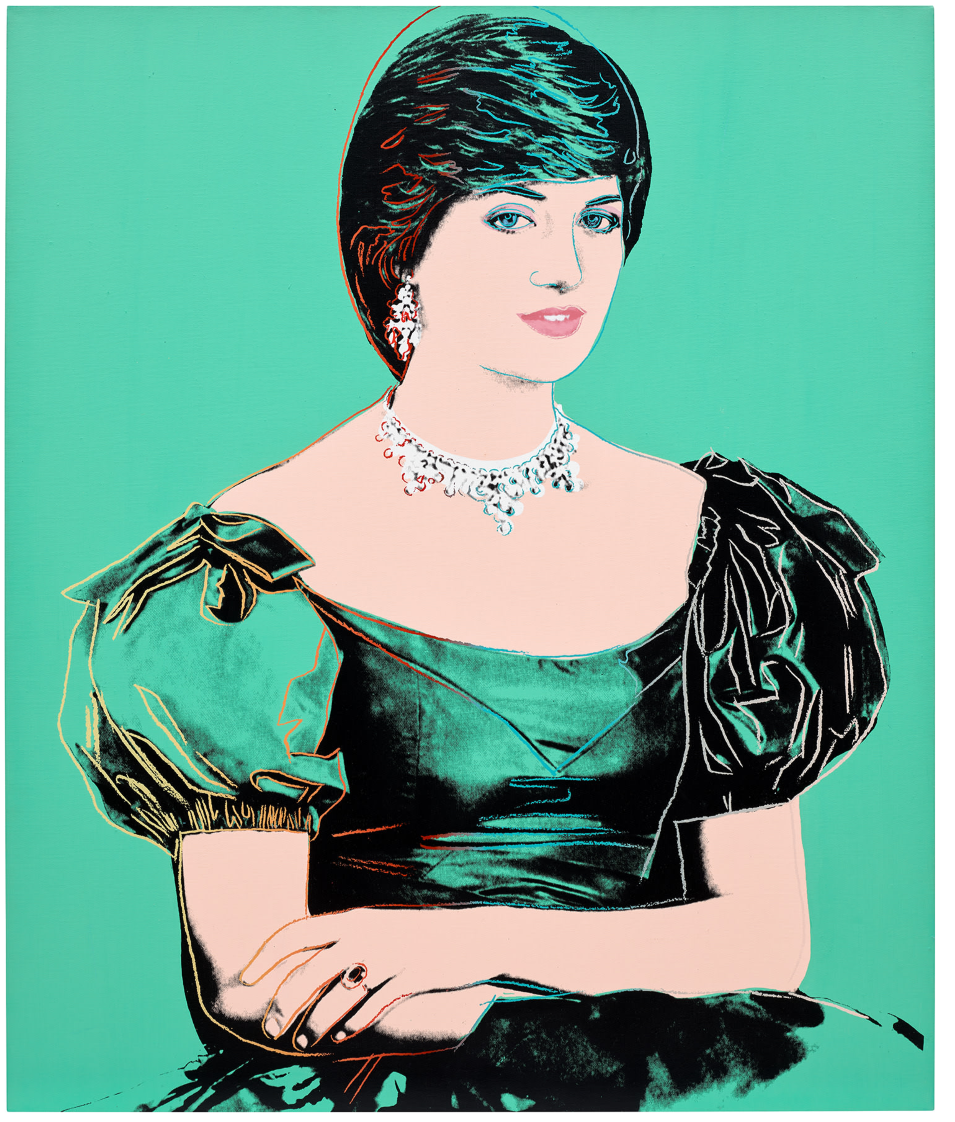
ANDY WARHOL
Portrait of Princess Diana, 1982
Synthetic polymer paint and silkscreen ink on canvas
50 1/8 x 42 inches (127.4 x 106.8 cm)
Signed and dated ‘Andy Warhol 82’
Stamped with the Estate of Andy Warhol and the Andy Warhol Foundation for the Visual Arts, Inc. stamps
Numbered ‘P050.190’ on the overlap
Coming to auction together for the first time having previously been held in the esteemed collection of author and Conservative deputy chairman, Jeffrey Archer, Andy Warhol’s Portrait of Prince Charles and Portrait of Princess Diana exemplify the singular directness and immediacy of the artist’s Pop portraits. Executed with a decorative sense of line, and incorporating printed elements derived from drawings accented with electrifying flashes of bright, neon color, Portrait of Princess Diana is highly characteristic of Warhol’s late work in both stylistic and thematic terms. Simplified to its essential pictorial elements, the economic but expressive depiction of the young and radiantly beautiful Lady Diana Spencer perfectly captures the openness and warmth that would come in later years to define her as the ‘People’s Princess’, and connects Warhol’s early investigations into fame, beauty, and tragedy with questions of social hierarchy and political authority posed by his late portraits.
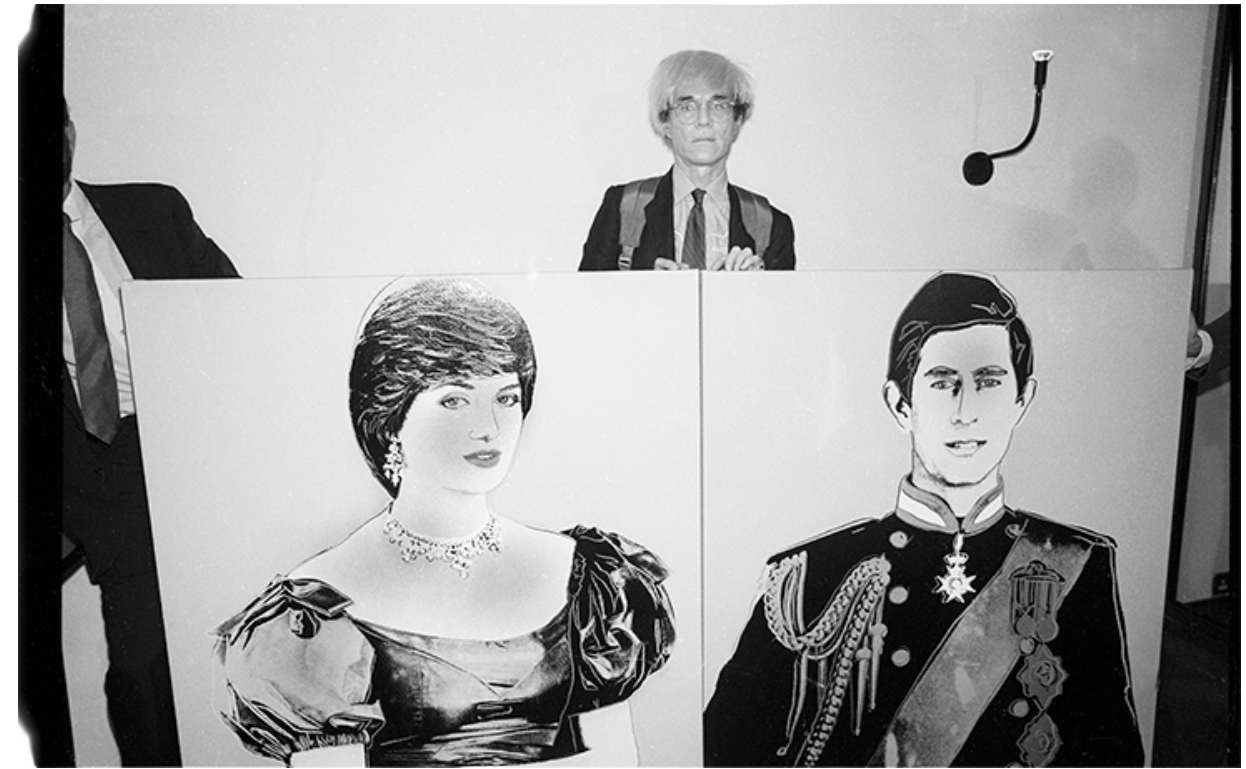
Christopher Makos, Andy Warhol with Portrait of Princess Diana and Portrait of Prince Charles, 1982. Image: © Christopher Makos, Artwork: © 2024 The Andy Warhol Foundation for the Visual Arts, Inc. / Licensed by DACS, London
While his portraits of the 1970s take on a more painterly appearance, the hand of the artist present in passages of heavy impasto and finger-painted elements, in the 1980s Warhol returned to the bold color contrasts of his defining Pop portraits of Marilyn Monroe, Elizabeth Taylor, and Jackie Kennedy. As in these iconic images of timeless feminine beauty, Portrait of Princess Diana exemplifies the artist’s unique ability to select and isolate images that not only distill the captivating essence of his subjects but transcend their own historical moment to define an age. While Marilyn embodied the combination of glamour and tragedy that would become synonymous with the age of celebrity, as First Lady, Jackie represented America’s own equivalent of the Modern Royal family, her vivacity, beauty, and faultless sense of style elevating her to an ideal of dutiful femininity for many American women echoed in the popular conception of Diana some decades later. While his earlier silkscreened portraits bear the unmistakable marks of the decidedly mechanical processes of their production, Warhol’s approach in these later works is more delicate, embellishing his surfaces with bold lines and decorative elements in neon colors. Visually alluring, these additions also emphasize the artificiality of the image, just as the non-naturalistic colors of his earliest portraits had before.
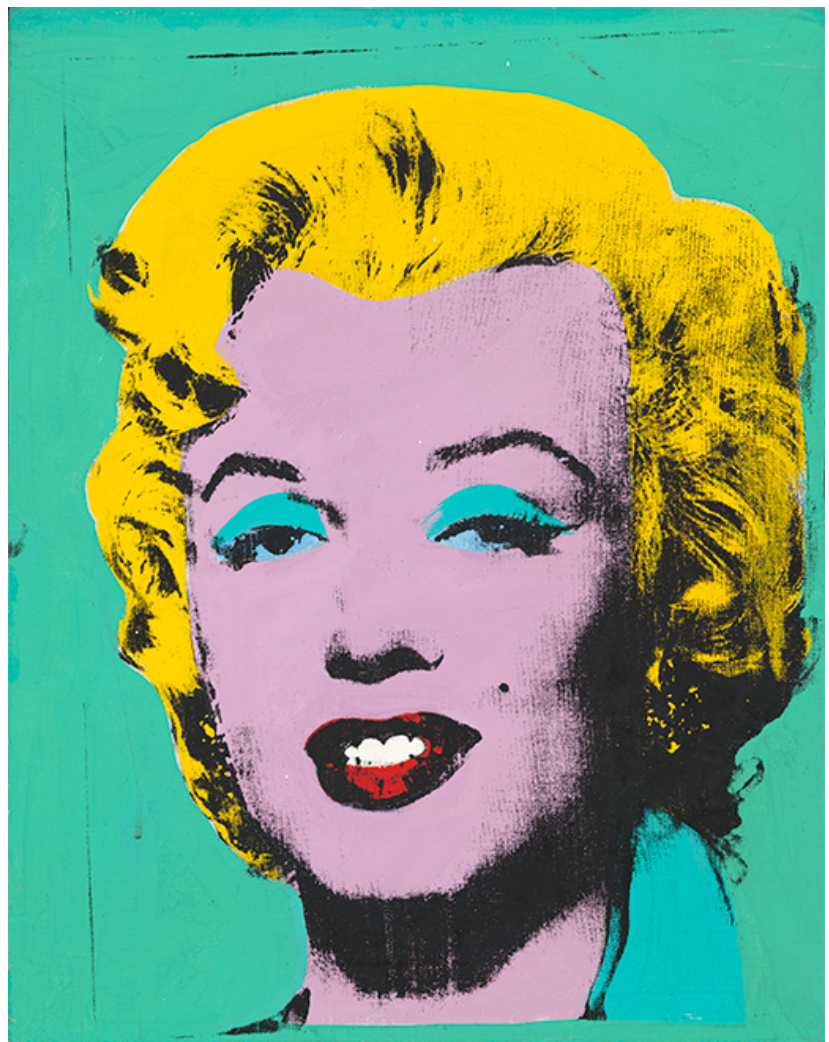
Andy Warhol, Green Marilyn, 1962, National Gallery of Art, Washington, D.C. Image: National Gallery of Art, Washington, D.C.,Gift of William C. Seitz and Irma S. Seitz, in Honor of the 50th Anniversary of the National Gallery of Art, 1990.139.1, Artwork: © 2024 The Andy Warhol Foundation for the Visual Arts, Inc. / Licensed by DACS, London
In an important distinction however, Warhol’s depictions of Marilyn and Jackie were always already tinged with tragedy, memento mori pieces that were created shortly after the shocking and untimely deaths of Monroe and President Kennedy that Warhol would retrospectively link to the somewhat bleaker portrait of American culture explored in his Death and Disaster series. As in the haunting presentiment that now seems loaded in Diana’s comment ‘I’d like to be a queen of people’s hearts, in people’s hearts, but I don’t see myself being queen of this country’, the profound poignancy of Warhol’s Portrait of Princess Diana would only develop over time. As the years passed, the press focused increasingly on her loneliness and isolation in the later years of her marriage while continuing to emphasize the kindness and love that she showed her people. This crystallized the popular image of her, which is now forever shadowed by the tragic events that led to her shocking death in Paris in 1997, and the national outpouring of grief that followed. Like Marilyn, in Portrait of Princess Diana we now find the perfect confluence of celebrity, beauty, disaster, and mass media that so fascinated the artist, and are so deeply woven in his approach to the icon in the modern day. More than any other figure in the Royal Family, Diana’s youth, grace, and beauty captured the hearts and minds of the public, marking her as undoubtably one of the most iconic and adored women of the late 20th century. As Warhol so perceptively anticipated decades before, the rise of media technologies and the cult of celebrity ensured that Diana’s image was widely circulated throughout the 1980s and ’90s, making her universally recognizable and blurring the boundaries between public image and the more complex contradictions of private life. It is perhaps this tension that initially drew Warhol to Diana, speaking as it does so directly to his own, long-standing fascination with the tensions between beauty and tragedy, glamour, and the darker underside of celebrity.
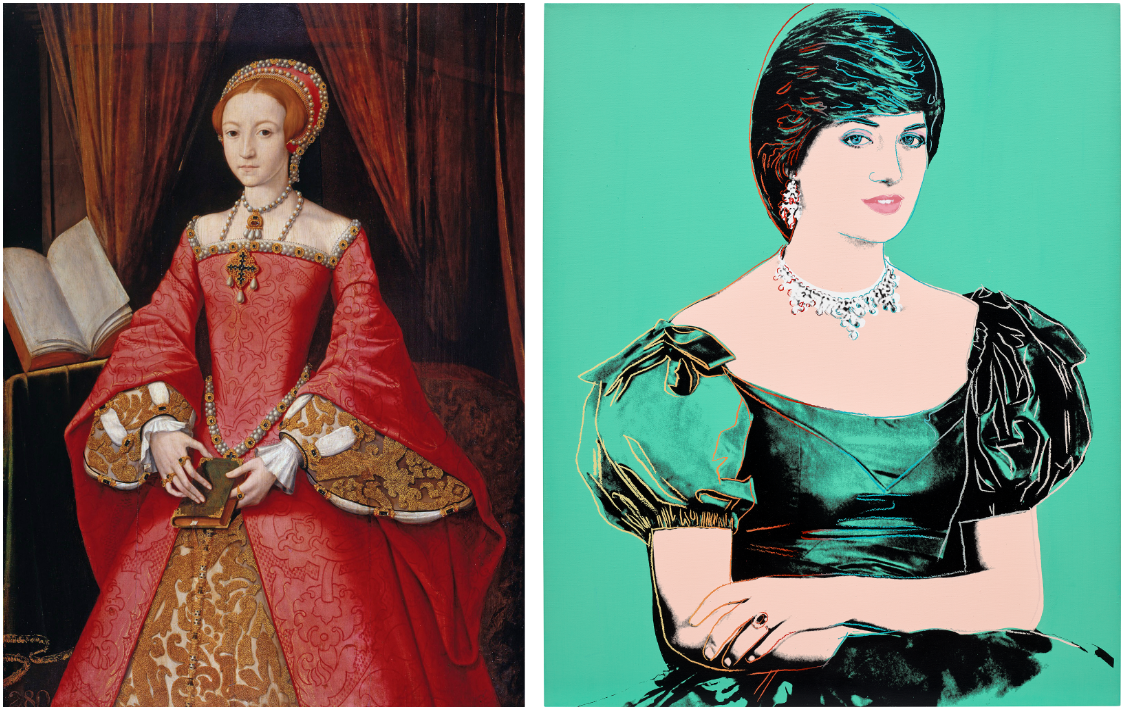
Left: William Scrotts (attributed to), Elizabeth I when a Princess, circa 1546, Royal Collection Trust, London
Right: The present work
Generating enormous public interest, the engagement of Charles and Diana was played out like a fairytale in the press, Lord Snowdon’s official engagement portrait appropriated by Warhol here reproduced and distributed worldwide. Presenting the couple in formal dress and arranged against an antique tapestry backdrop, the photograph retains much of the visual iconography associated with Royal Portraiture, the depiction of a young Diana especially resonating with well-known portraits of a young Elizabeth I prior to her ascension. The mechanisms of the image and the nature of its circulation must certainly have struck Warhol, bearing certain immediate comparisons to the functioning of publicity by film studios in the promotion of new releases and leading stars. Emphasizing the forward-looking modernity and optimism represented by the couple at the time, Warhol radically updates the more conventional arrangement of the official photograph, adopting the format of the casting call ‘headshot’ and dramatically cutting and cropping the image to focus more closely on the head and shoulders of Diana. Nevertheless, in sharpening our focus in this way, Warhol’s unmistakably modern image reflects back on the traditions of Royal portraiture, his decorative embellishments drawing particular attention to the placement of her hands, the elegant line of her neck and shoulders, rich fabrics and fine jewelry, all highly symbolic and charged elements used to iconographic effect in traditional court portraiture. One of only four Princess Diana works in this format, the rich green tones employed by Warhol here echo the dress and backdrop of Snowdon’s original photograph, connecting the present work even more directly with this image of a youthful and hopeful Diana.
Portrait of Princess Diana, 1982
Phillips London: 7 March 2024
Estimated: GBP 1,200,000 – 1,800,000
GBP 2,407,500 / USD 3,052,710
Andy Warhol – 20th Century & Contempor… Lot 12 March 2024 | Phillips
ANDY WARHOL
Portrait of Princess Diana, 1982
Synthetic polymer and silkscreen ink on canvas
50 x 42 3/8 inches (127 x 107.5 cm)
Signed and dated ‘Andy Warhol 82’ on the overlap
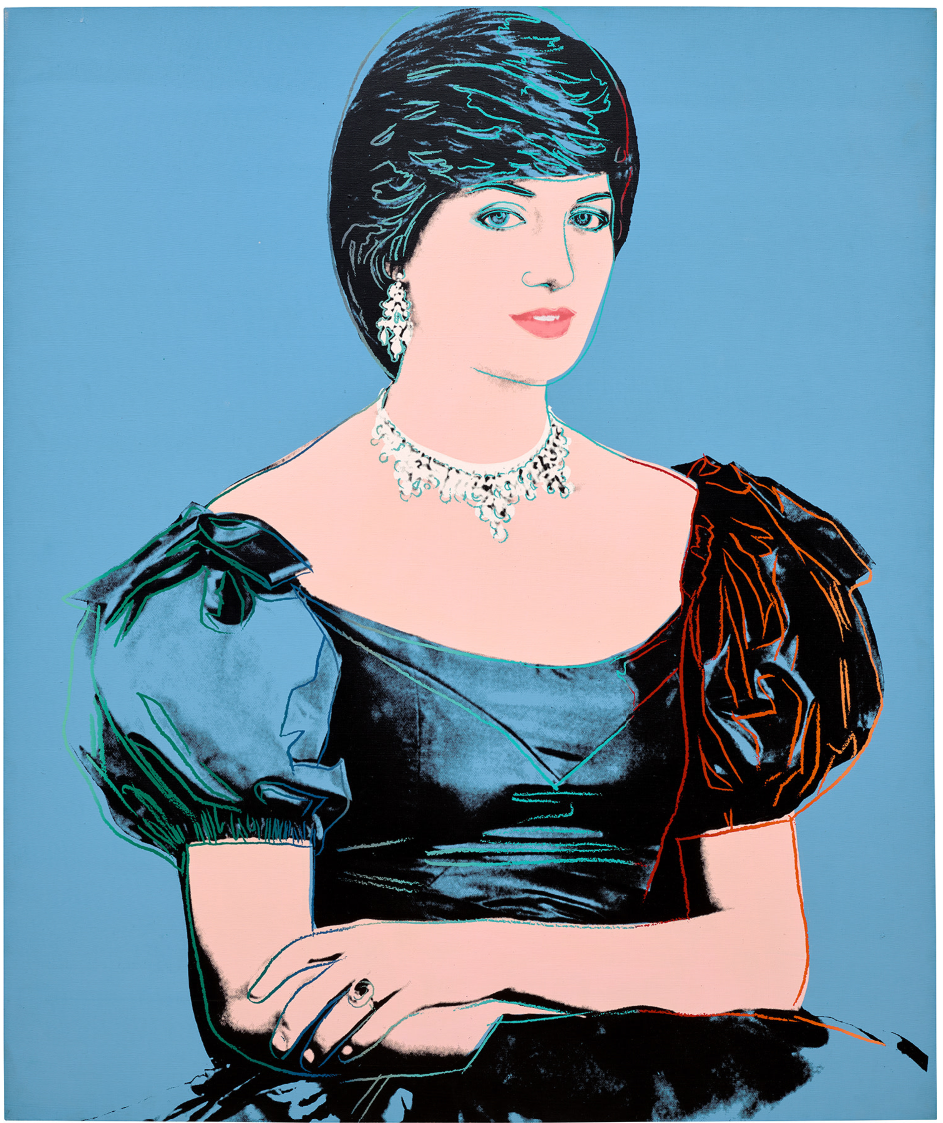
More than any other artist, Andy Warhol redefined the role and visual language of the icon for the 20th century. Here a young and radiantly beautiful Lady Diana Spencer looks out at the viewer with an openness and warmth that would come in later years to define her as the ‘People’s Princess.’ Although it was then Prime Minister Tony Blair who immortalized her as such in the immediate wake of her tragic death, it was a phrase that captured the deep sentiments and sense of loss felt by a nation in mourning, reflecting the kindness and selfless charity that she demonstrated through her public engagements.
Executed in 1982, following the wedding of Diana to Prince Charles the year before, the work is a strikingly tender portrait of the young princess, the prominent display of her engagement ring a poignant symbol not only of her marriage to Charles, but of her deep love and commitment for her people. Alongside Warhol’s defining Pop portraits of Marilyn Monroe and Jackie Kennedy, Portrait of Princess Diana exemplifies the artist’s unique ability to select timeless images that not only distill the captivating essence of his subjects, but that transform them – under the artist’s treatment – from celebrities into cultural icons of their time. While Marilyn embodied the combination of glamour and tragedy that would become synonymous with the age of celebrity, as First Lady, Jackie represented America’s own equivalent of the Modern Royal family, her vivacity, beauty, and faultless sense of style elevating her to an ideal of dutiful femininity for many American women echoed in the popular conception of Diana some decades later.
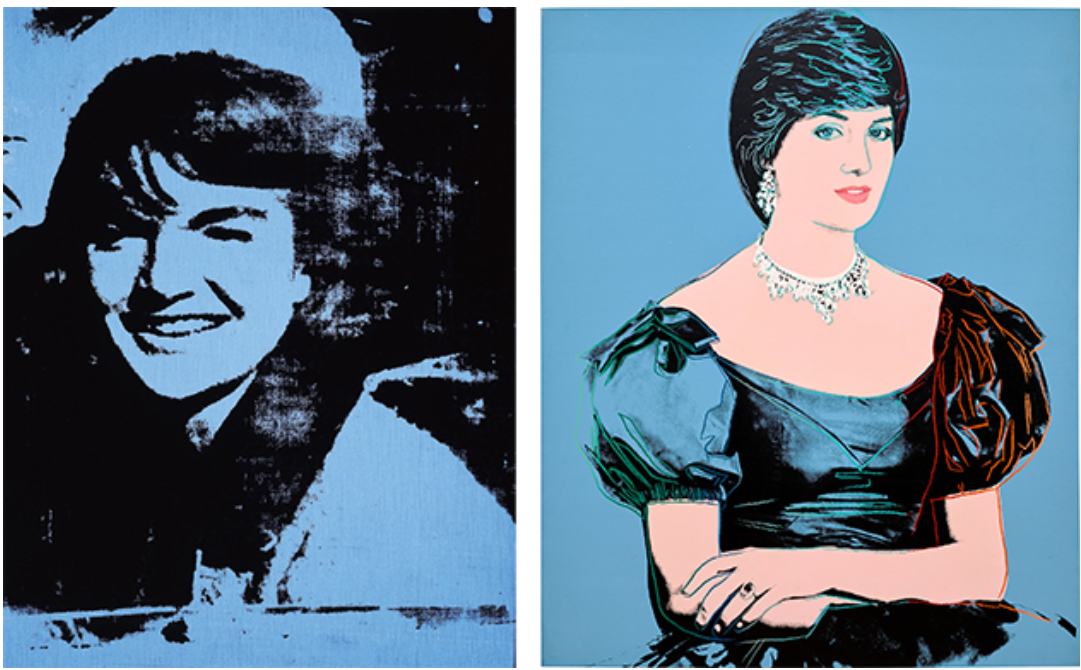
[Left] Andy Warhol, Jackie (Smiling), 1964, Museo Jumex, Mexico City. Artwork: © 2024 The Andy Warhol Foundation for the Visual Arts, Inc. / Licensed by DACS, London
[Right] The present work
More than any other figure in the Royal Family, Diana’s youth, grace, and beauty captured the hearts and minds of the public, marking her as undoubtably one of the most iconic and adored women of the late 20th century. As Warhol so perceptively anticipated decades before, the rise of media technologies and the cult of celebrity ensured that her image was widely circulated throughout the 1980s and 90s, making her universally recognizable and blurring the boundaries between public image and the more complex contradictions of private life. It is perhaps this tension that initially drew Warhol to Diana, speaking as it does so directly to his own, long-standing fascination with the tensions between beauty and tragedy, glamour, and the darker underside of celebrity. The engagement of Charles and Diana in 1981 generated enormous public interest, with the young Diana followed by journalists and photographers trying to build a picture of this softly spoken, warm, glamourous, and refreshingly open future member of the Royal Family. Instantly winning over the British public, Diana seemed to offer a new, more modern face of the Royal Family, and the courtship was played out like a fairy-tale in the press leading up to the wedding day, which was itself televised to over 750 million viewers worldwide. Arranging the finely dressed couple in front of a rich, antique hanging tapestry, Lord Snowdon’s official engagement portrait of the two reinforced these ideas, Charles the dashing prince in full naval regalia with his demure bride-to-be and assumed future Queen of England seated beside him, hands folded gently in her lap.
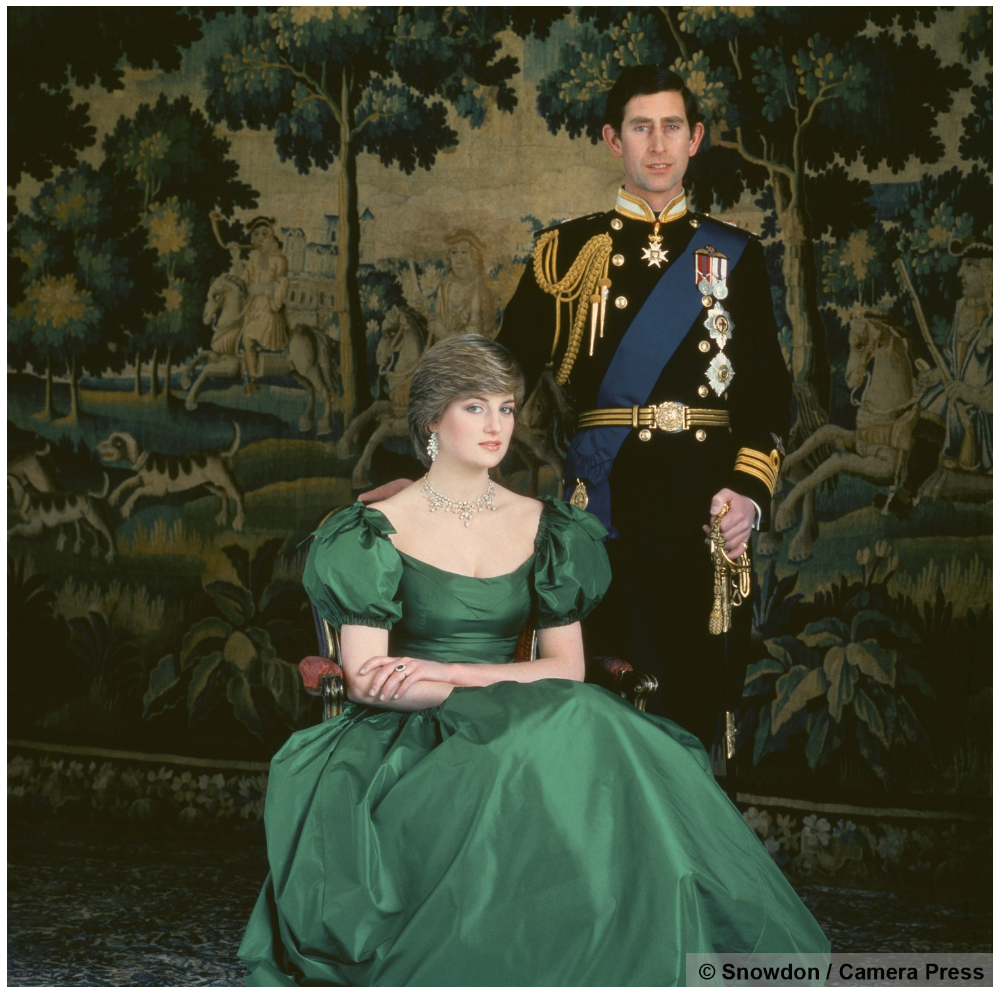
Lord Snowdon, Official Engagement portrait of Charles and Diana. Image: © Snowdon / Camera Press
Reproduced and distributed worldwide, the portrait officially announced the couple as future leading Royals, in what for Warhol must have had certain resonances with the circulation of publicity shots used by film studios in the promotion of their new releases and leading stars. Famously, the image selected by Warhol in his infamous series of Marilyn screen print paintings had been just that – a publicity photo taken used to promote her 1953 film Niagara. As with Snowdon’s source photograph here, in selecting this particular image of Marilyn, Warhol also transformed it, cropping the image to bring Marilyn’s face more closely into focus and turning it into one of the most immediately recognizable motifs today. Similarly, in Portrait of Princess Diana Warhol drastically crops the image, removing Charles completely so as to focus our attention more directly on Diana’s enigmatic expression and magnetic appeal. In an important distinction however, Warhol’s depictions of Marilyn and Jackie were always already tinged with tragedy, memento mori pieces that were created shortly after the shocking and untimely deaths of Monroe and President Kennedy that Warhol would retrospectively link to his somewhat bleaker portrait of American culture explored in his Death and Disaster series. As the years passed, the press focused increasingly on her loneliness and isolation in the later years of her marriage while continuing to emphasise the kindness and love that she showed her people. This crystallised the popular image of her, which is now forever shadowed by the tragic events that led to her shocking death in Paris in 1997, and the national outpouring of grief that followed. Like Marilyn, in Portrait of Princess Diana we now find the perfect confluence of celebrity, beauty, disaster, and mass media that so fascinated the artist, and are so deeply woven in his approach to the icon in the modern day.
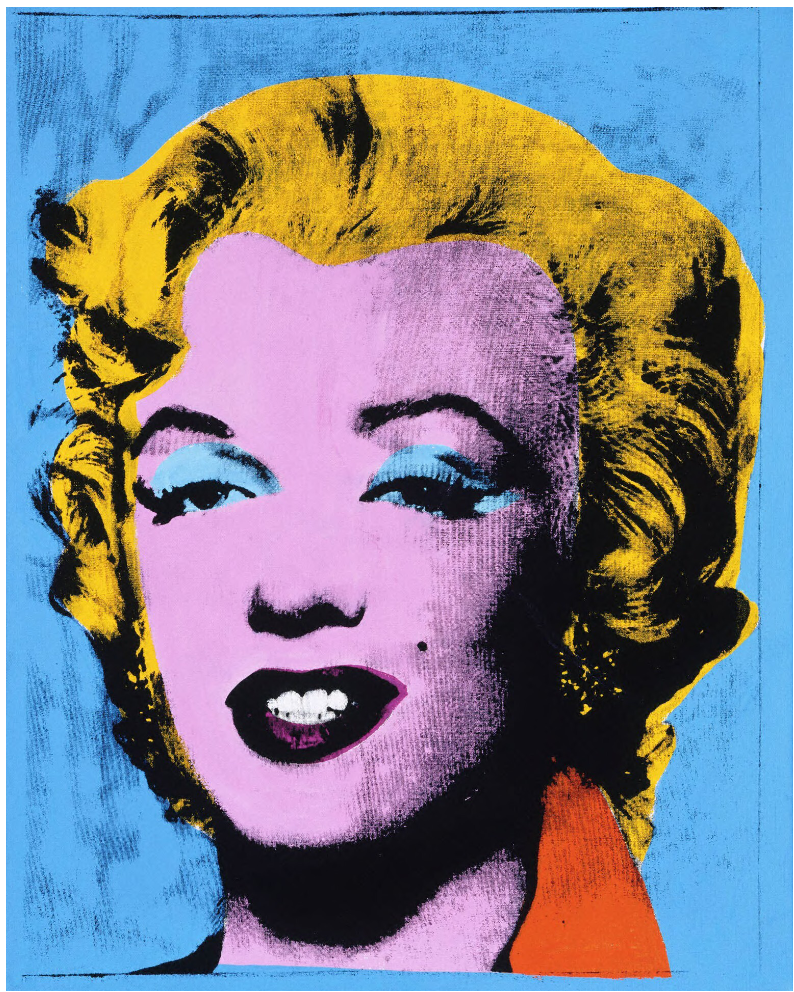
Andy Warhol, Blue Marilyn, 1962, Princeton University Art Museum, New Jersey. Image: Princeton University Art Museum. Gift of Alfred H. Barr Jr., Class of 1922, and Mrs. Barr, Artwork: © 2024 The Andy Warhol Foundation for the Visual Arts, Inc. / Licensed by DACS, London
Closely linked to his slightly later Reigning Queens series – which naturally included depictions of her mother-in-law, Queen Elizabeth II alongside other female monarchs of the day – Diana’s vitality and youthful spirit is brought to life in this portrait by the vibrant, animated lines added to her hair and details of her dress. One of only four Princess Diana works in this format, the present iteration in its dazzling blue is undoubtably the most powerful of the set. Echoing the striking tones of her famous engagement ring – subject to much attention in the press at the time, and more recently in the hugely successful television series, The Crown – the silkscreened composition’s bold contrasts and embellished details also draw on a long visual history of the robed Madonna that would certainly have resonated with Warhol, who was raised a Byzantine Catholic by his Eastern European parents. Like these icons of the Middle Ages, in Portrait of Princess Diana, Warhol creates a universal and timeless symbol of grace, love, and forbearance – a true icon for our times.
With the recent passing of Queen Elizabeth and ascension of Charles and Camilla to the throne, the pathos of Portrait of Princess Diana seems especially redolent, the extent to which she remains such a powerful figure in our collective imagination underscored by the various portrayals of her in film and television in recent years. There is something inherently Warholian in the desire to recover the essence and story of Diana through these performances as the enthusiastic reaction to The Crown testifies to, immortalizing her once again on our screens and in our hearts.