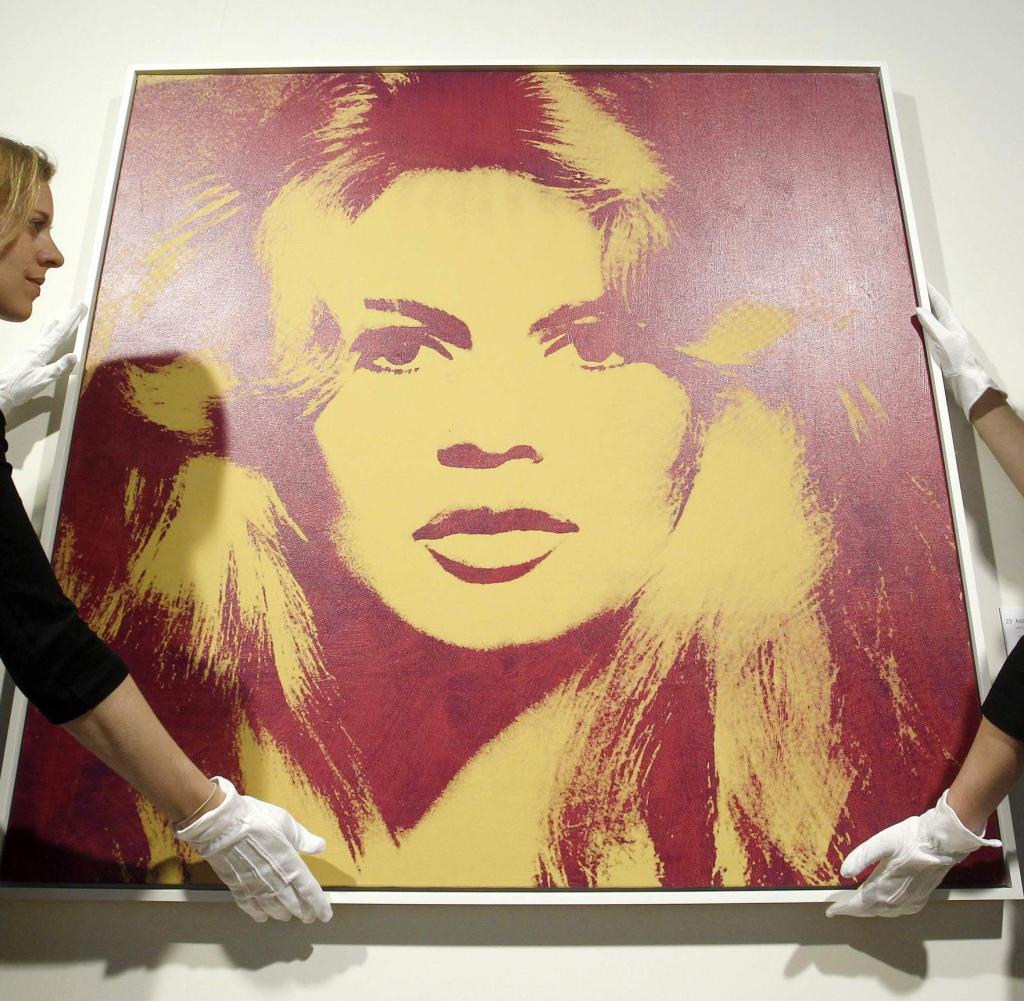
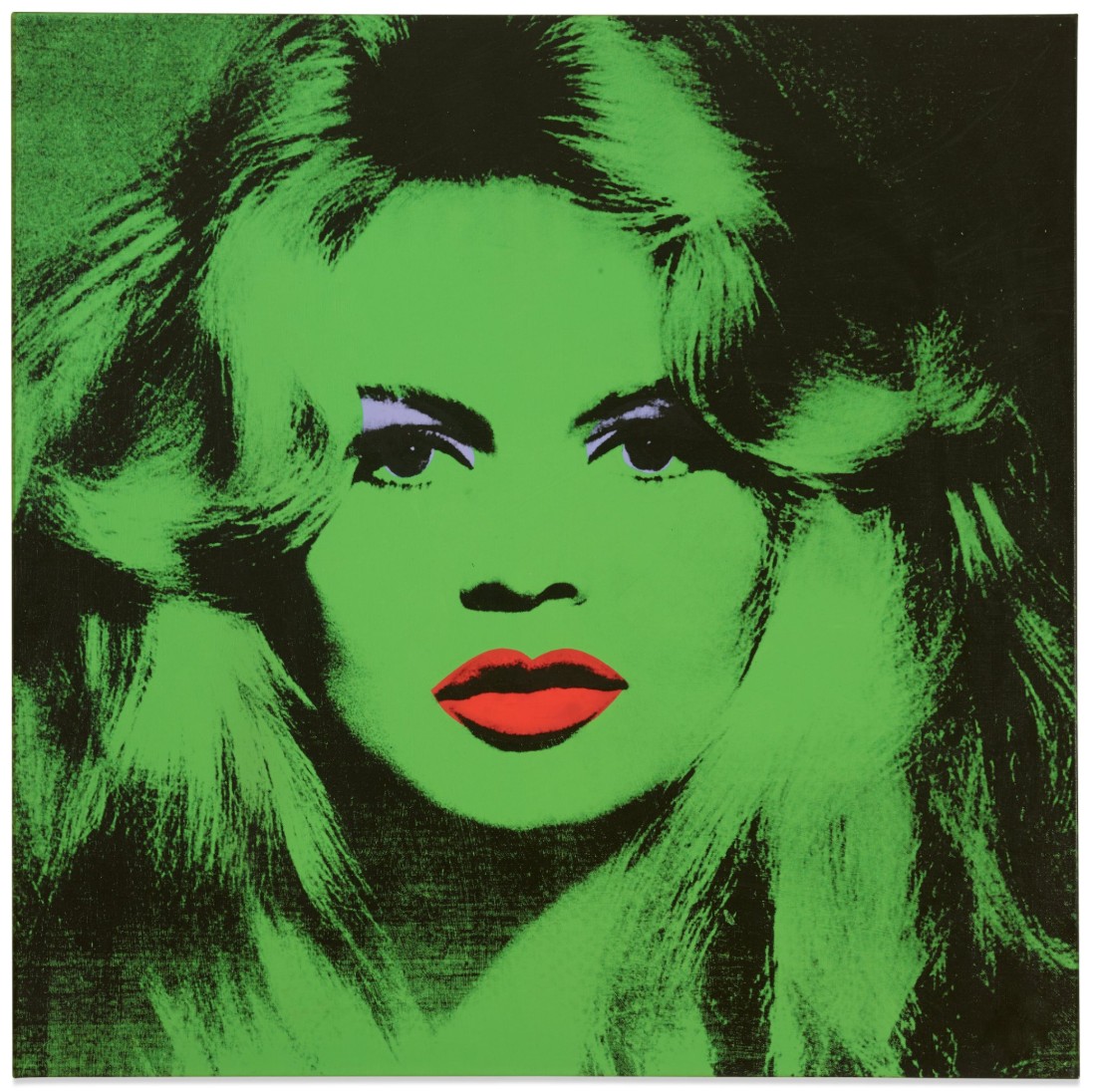
Glamorous, alluring and irresistibly seductive, Andy Warhol’s Brigitte Bardot is an ode to beauty, fame and celebrity. A mid-century cultural phenomenon, Bardot was among the most photographed women in the world, captivating the public with on screen and across the tabloid media as the epitome of stardom and glamour. The present work belongs to Warhol’s legendary series of eight Bardot portraits commissioned by Gunter Sachs, her husband from 1966-69. Here, Bardot’s radiant emerald visage entrances the viewer with a profound hypnotic intensity, her beguiling gaze immortalized by the camera’s flash. Elevated to the status of a modern-day goddess, Brigitte Bardot completes Warhol’s earliest Pop heroine trinity alongside Marilyn Monroe and Liz Taylor—embodying Warhol’s ultimate artistic obsessions: celebrity and popular media. Bardot offered a European counterpart to Marilyn: each iconic actresses who revolutionized the terms of female sexuality as pervasive and enduring symbols of both desire and envy. Warhol’s method and his muses were dictated by the cultural zeitgeist—the most famous figures of popular culture, whose likenesses proliferated across mass media, were deified to an idol-like status through his silkscreens. Brigitte Bardot is a radiant embodiment of Warhol’s visual discourse, masterfully capturing the essence of a 1960s icon.
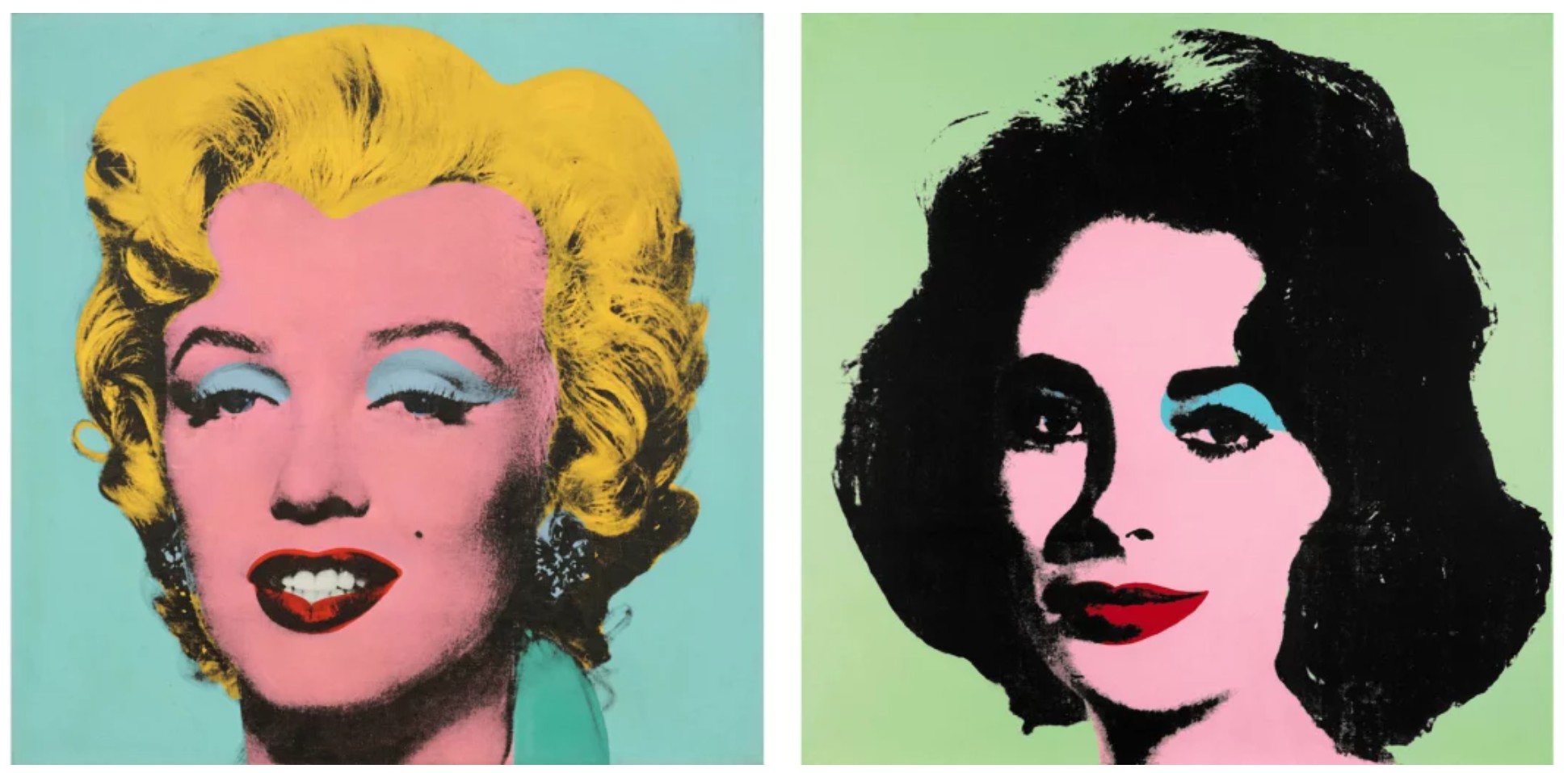
Left: Andy Warhol, Shot Sage Blue Marilyn, 1964. Private Collection. Sold in New York in May 2022 for $195 million. Image © Christie’s Images / © 2026 The Andy Warhol Foundation for the Visual Arts, Inc. / Licensed by DACS, London / Bridgeman Images. Art © 2026 Andy Warhol Foundation for the Visual Arts / Artists Rights Society (ARS), New York.
Right: Andy Warhol, Liz #3 (Early Colored Liz), 1963. Private Collection. Sold at Sotheby’s New York in November 2014 for $31.5 million. Art © 2026 Andy Warhol Foundation for the Visual Arts / Artists Rights Society (ARS), New York
The Brigitte Bardot portraits followed a decade of extraordinary change for the artist, during which Warhol responded to a new age of representation in media, bringing his subjects from the covers of magazines to the canvas. The European counterpart of Warhol’s most celebrated portraits of Marilyn, Jackie and Liz from the 1960s, the rare Brigitte Bardot paintings iconize a subject who had already entranced a global public. Even prior to the commission, Warhol attempted to persuade Bardot to sit for a painting, but his plea was to no avail. Like Warhol’s Marilyns, which were derived from a publicity still from the film Niagara, his Jackies, which were taken from press images following John F. Kennedy’s assassination, and his portraits of Liz Taylor, which were coopted from an array of movie stills, the Bardot paintings were also based on an external source. This is unusual—for Warhol’s 1970s portraits, he typically captured his subject on his own Polaroid film, enlarging his compositions to a 40-by-40-inch sale.
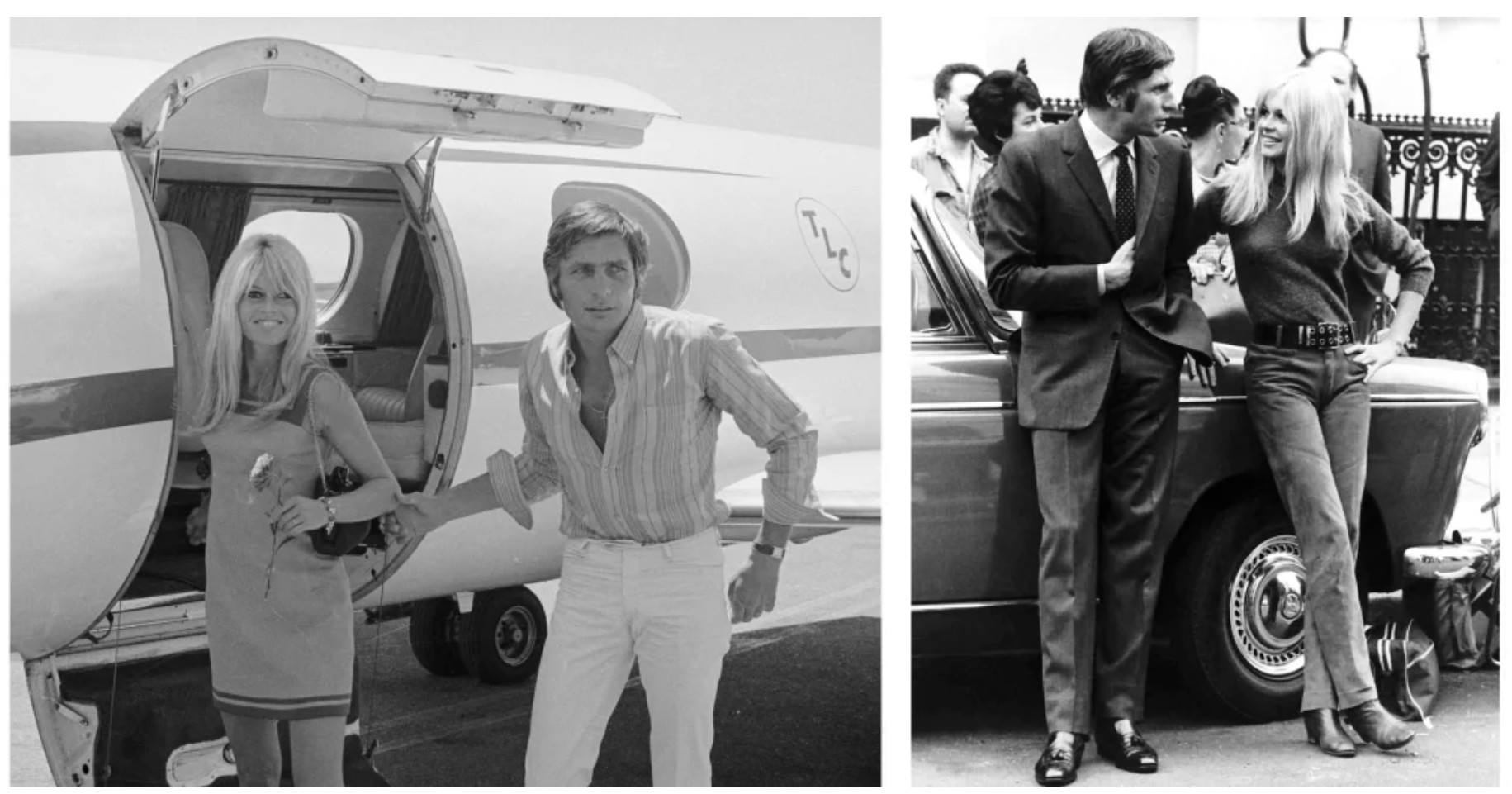
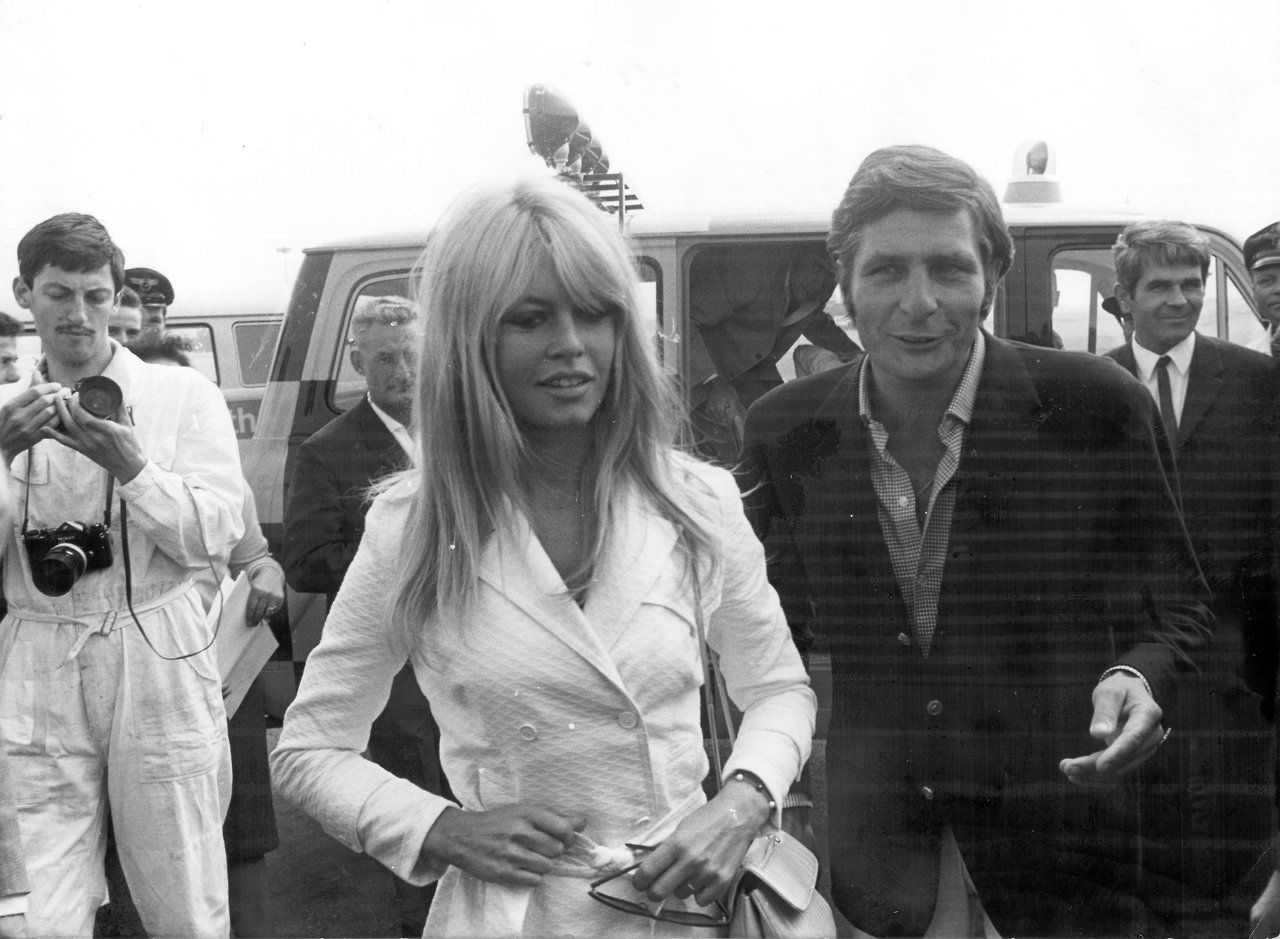
Left: Brigitte Bardot and Sachs deplaning their flight back from their Las Vegas elopement, 1966. Photo from Getty Images.
Right: Brigitte Bardot and Sachs in Paris,1966. Photo by Eric Harlow/Daily Mirror/Mirrorpix via Getty Images
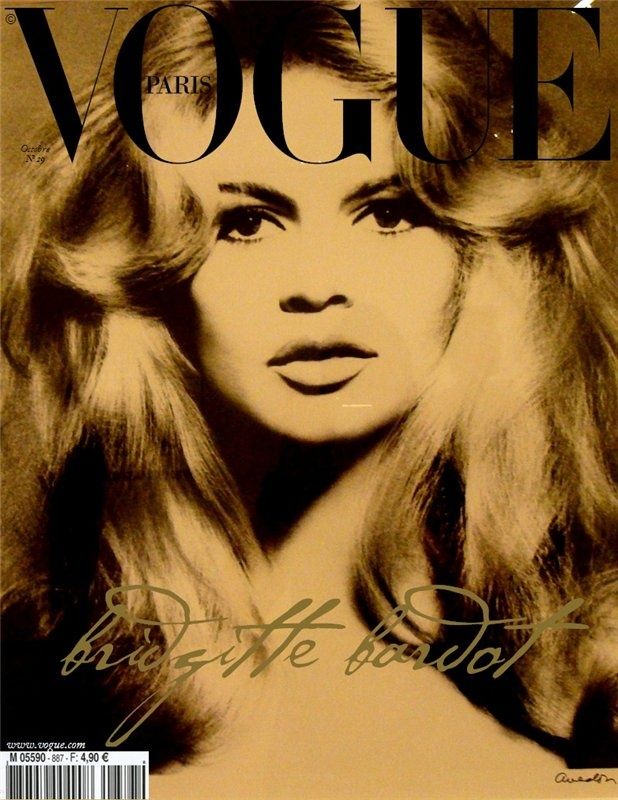
For these works, Bardot refused to sit for the portrait and Warhol used Richard Avedon’s breathtaking 1959 photograph of Bardot. Warhol then augmented the scale to a larger 47-by-47-inches, creating a portrait which captures the bewitching actress at the height of stardom. Just as he had done with the source imagery for his aforementioned Pop trinity, Warhol cropped the Avedon photograph to his own specifications, honing in on Bardot’s perfectly symmetrical face.
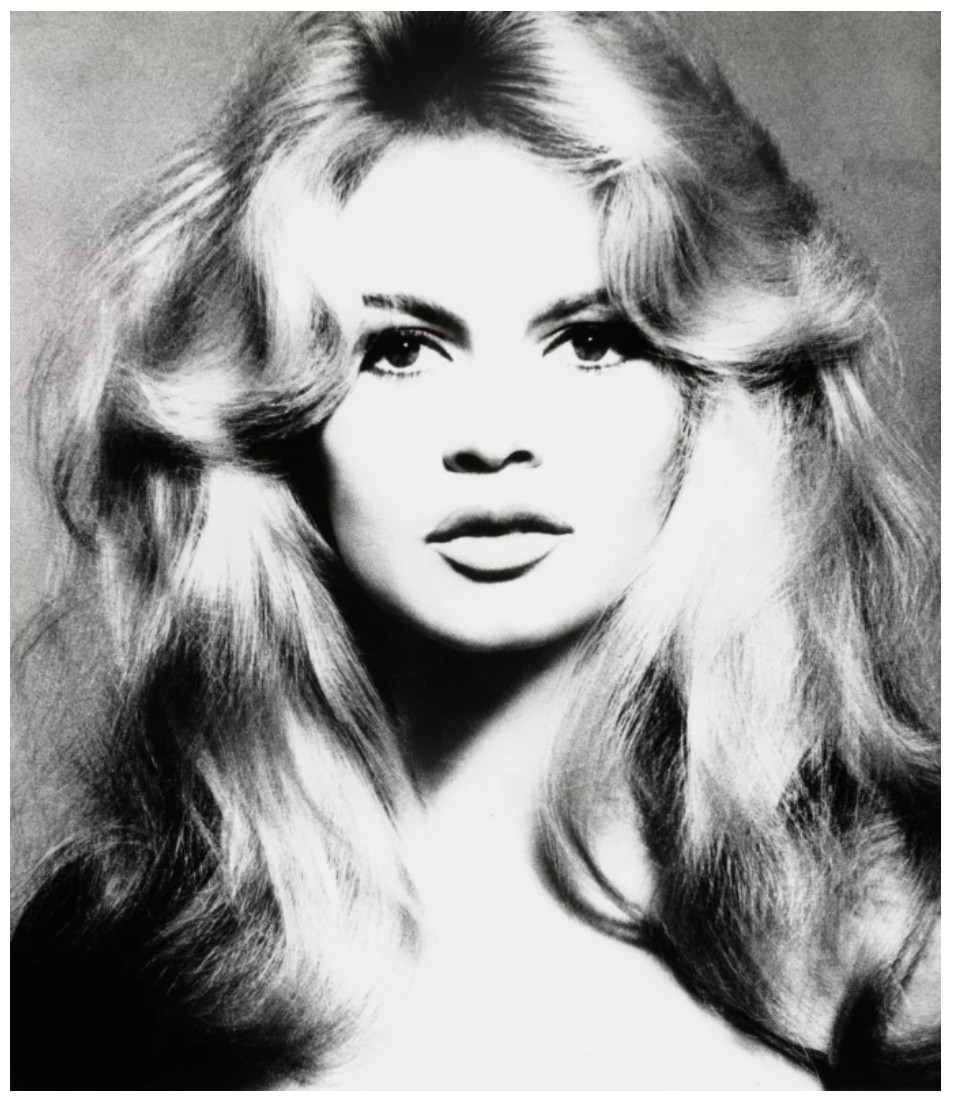
Richard Avedon, Brigitte Bardot, hair by Alexandre, Paris, January 27, 1959. © The Richard Avedon Foundation
Avedon had photographed Bardot fifteen years prior, in January 1959, at his Paris studio. The actress wore a Lanvin dress and had her hair coiffed by Alexandre of Paris, who was then considered the world’s most famous hairdresser. Alexandre had also styled Liz Taylor’s hair for Cleopatra—an image Warhol used in his seminal portraits of the actress. Avedon’s high exposure, black and white photograph is taken to an even further extreme by Warhol: he accentuates the soft variations of the photograph through heightened contrast, amplifying the drama of the composition. Divergent from the brushy and almost expressionistic application of paint familiar to Warhol’s large corpus of society portraits, here, Warhol harkens back to his earlier Pop style, aligning this series with his 60s heroines.
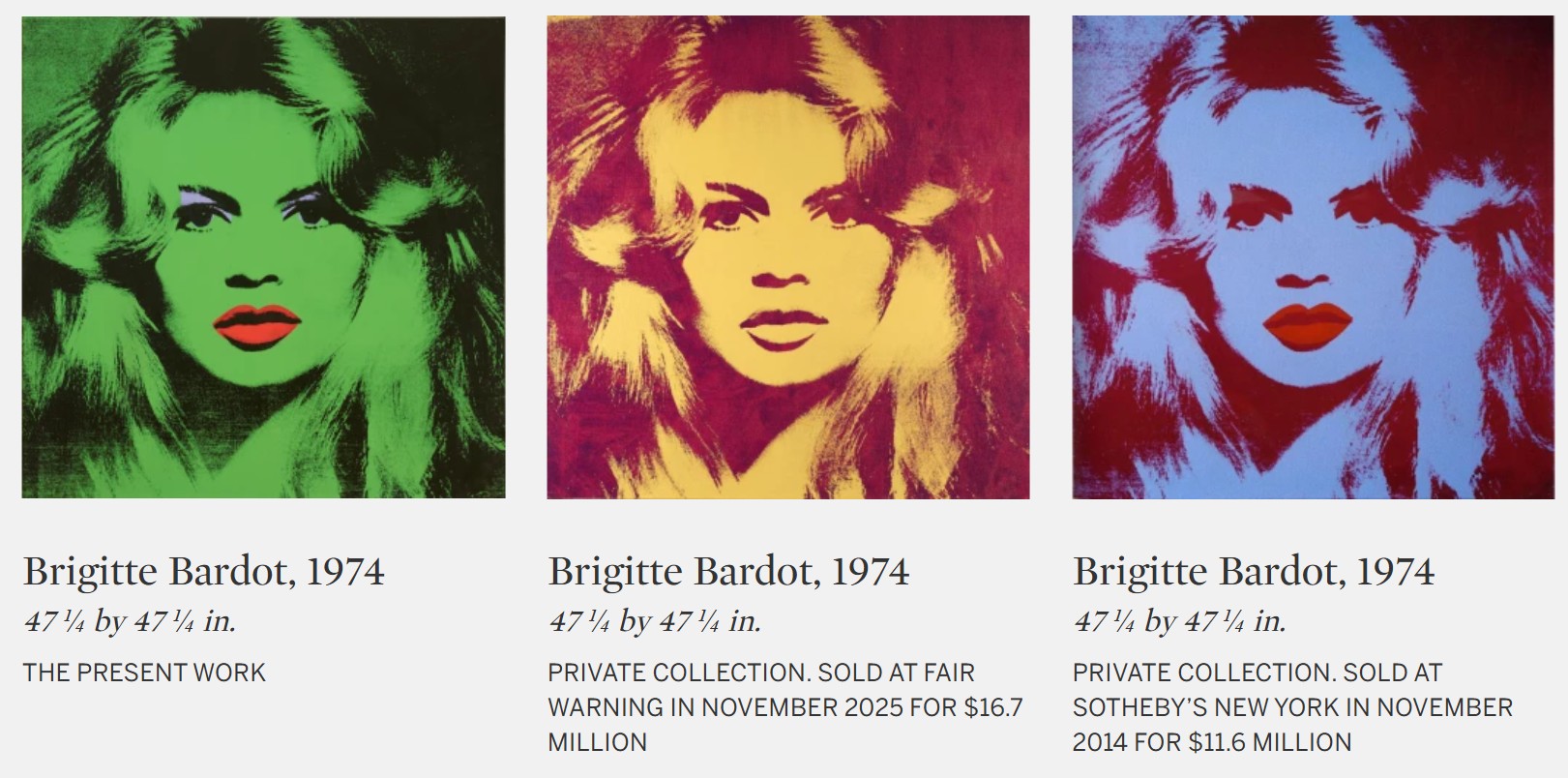
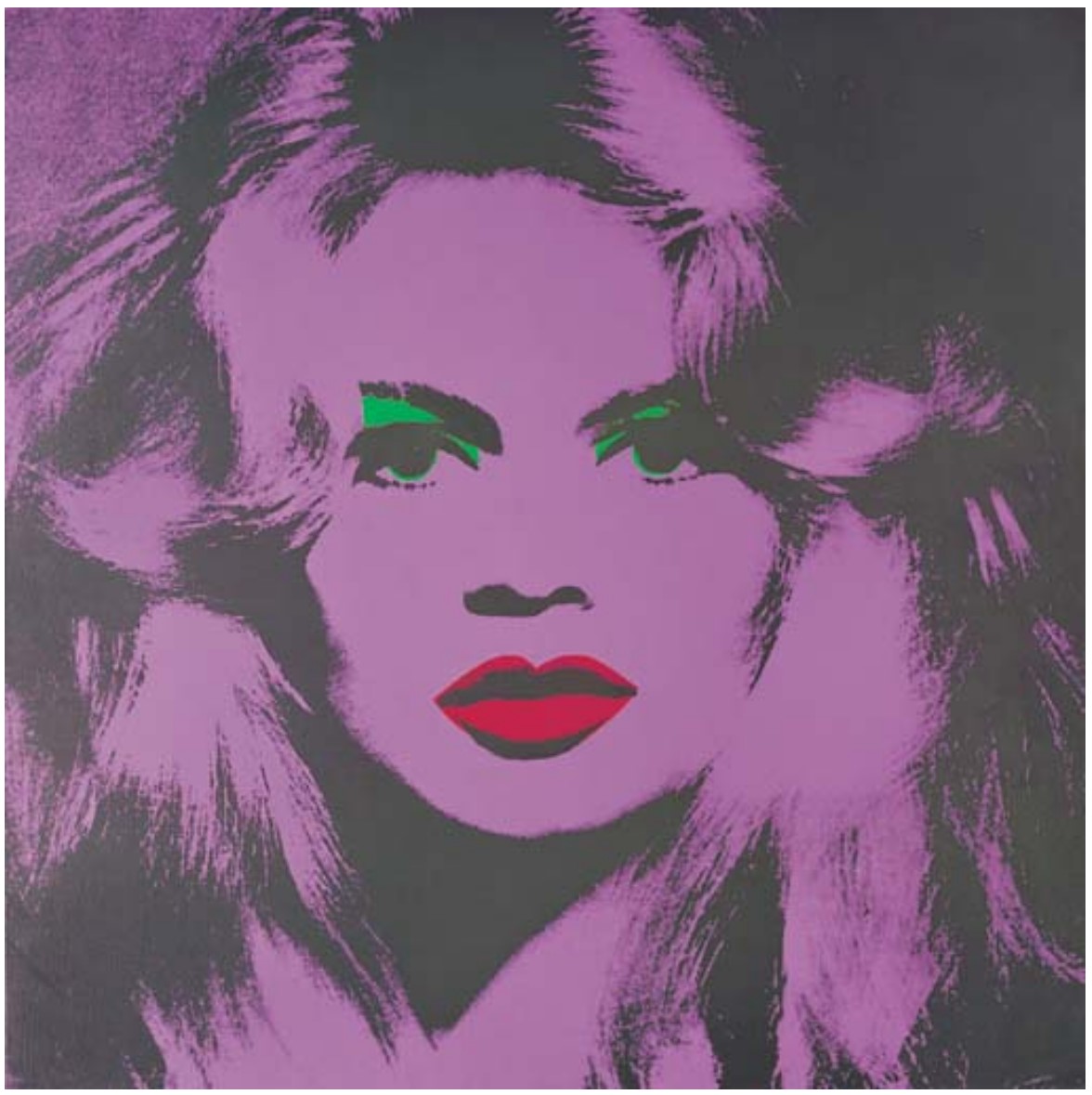
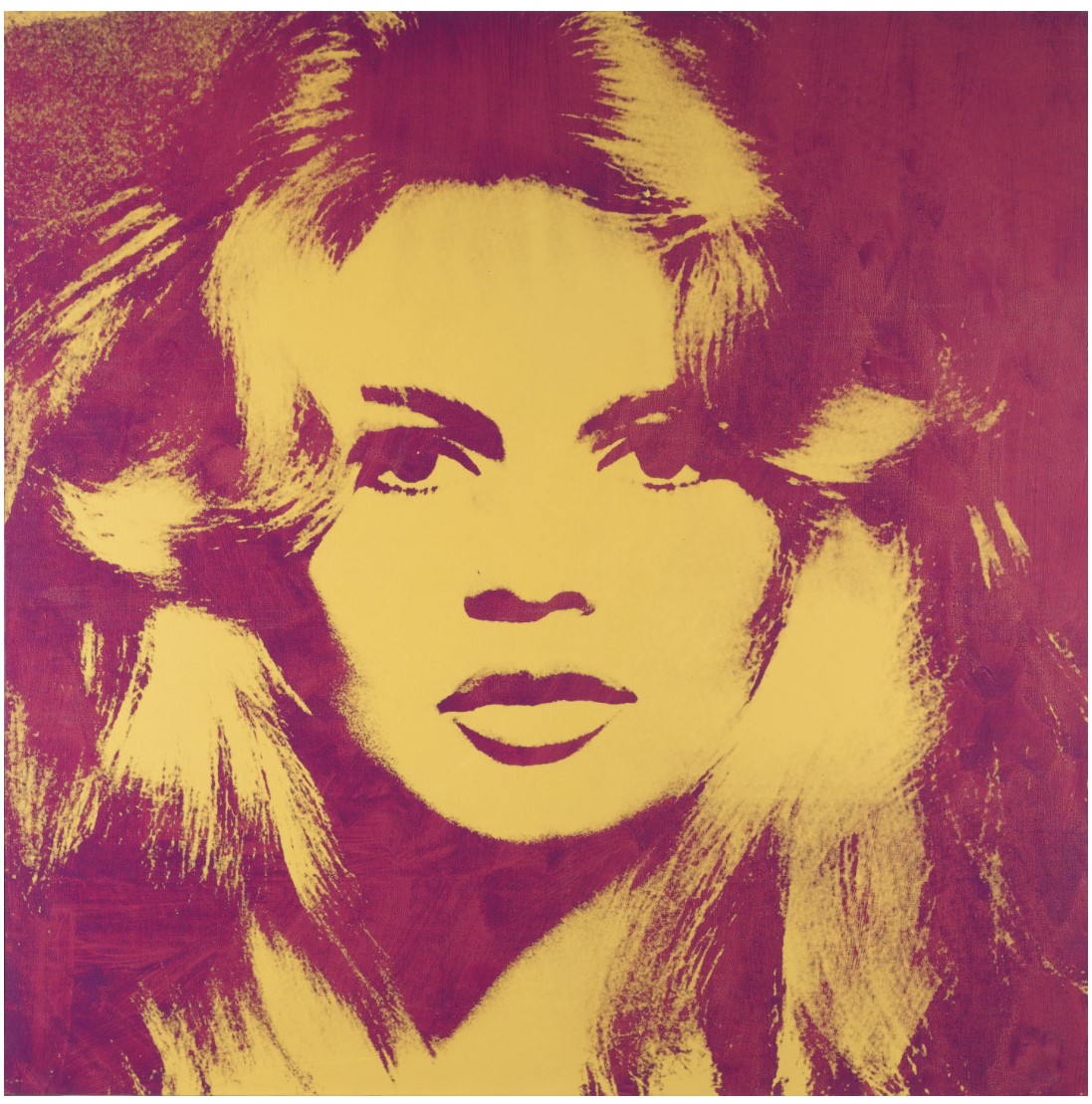
In 1974, Andy Warhol produced a legendary series of eight paintings of international moviestar and cultural icon Brigitte Bardot for her husband from 1966–69, Gunter Sachs, based on Richard Avedon’s 1959 photograph of Bardot. Each of the 47-by-47-inch Bardot paintings is defined by a unique chromatic palette—emerald, cerulean, golden yellow, magenta, and violet. Three of these eight paintings, including the present work, are further distinguished by the presence of a cadmium red lip.
All Art © 2026 Andy Warhol Foundation for the Visual Arts / Artists Rights Society (ARS), New York
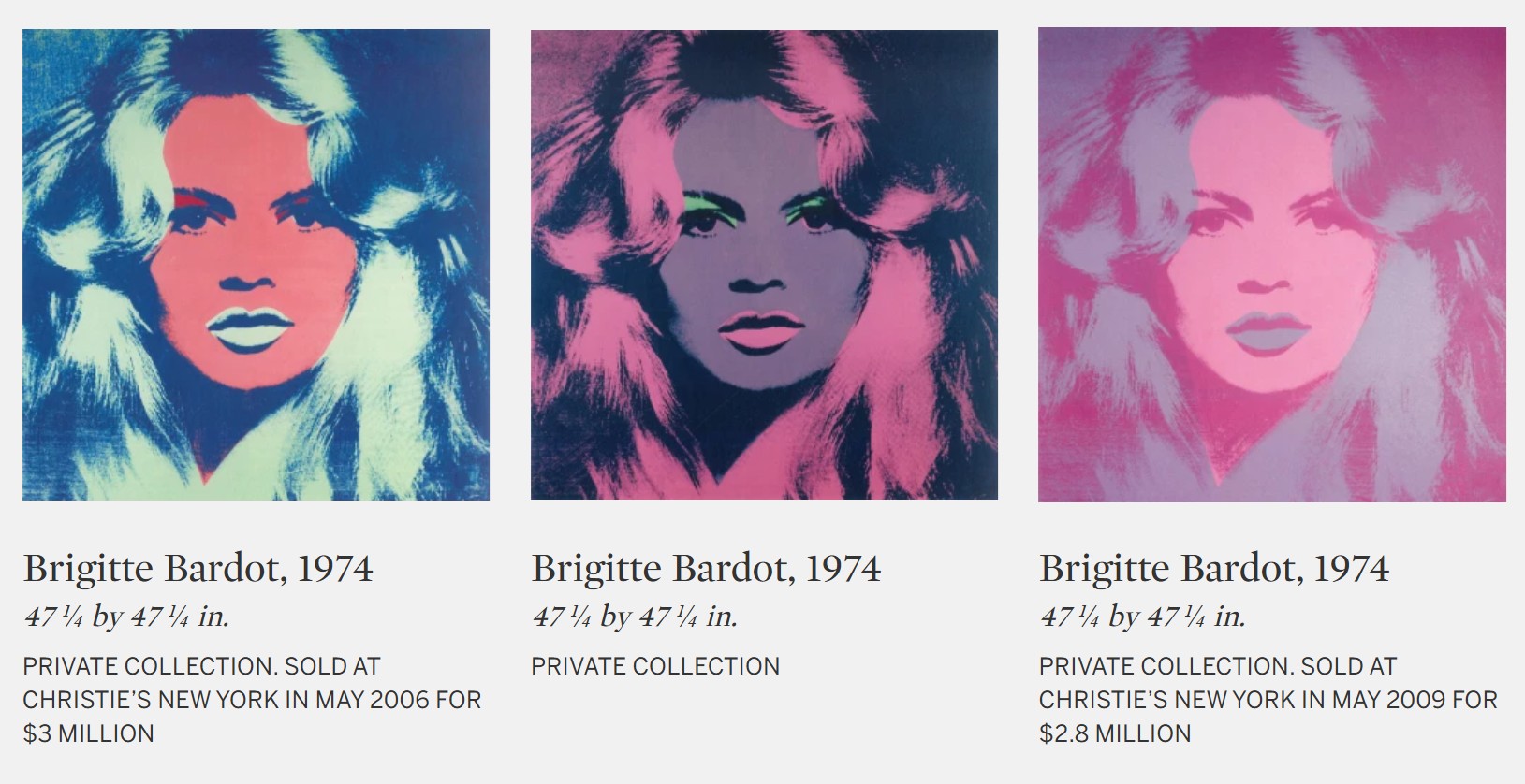
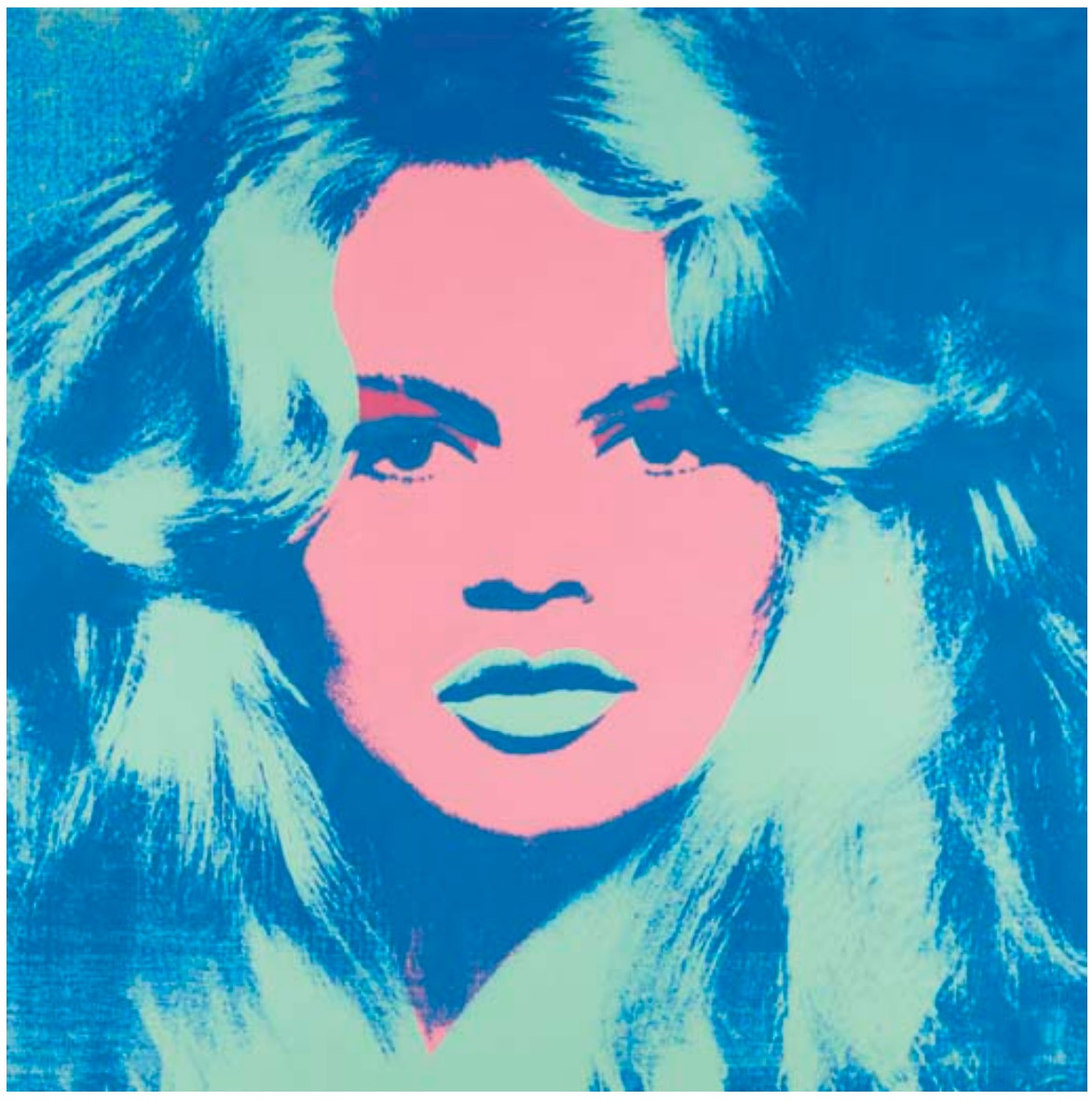
Each defined by a unique chromatic palette, Warhol’s Brigitte Bardot paintings are a jewel box assemblage of emerald, cerulean, amethyst, canary, and pink. The paintings vary in their exposures and the inclusion of secondary colors—indeed, the present work is one of three portraits distinguished from the rest of the series, featuring black pigment contrast, vibrant eyeshadow and a cadmium red lip. Here, Bardot’s voluptuous hair cascades in rolling curls, forming asymmetrical frames against her visage; her gaze accentuated by strokes of vivid purple pigment, filling the space beneath the curve of her eyebrow and a thin halo around her pupils with a striking jolt of color; her full lips are defined by a scarlet red tint. She is goddess-like, gazing towards the viewer with an intoxicating hold. Indeed, Bardot’s stare evokes the visceral power of some of the most canonical art historical portraits: Sandro Botticelli’s Birth of Venus (c. 1485), Leonardo da Vinci’s Mona Lisa (c. 1503-06), Johannes Vermeer’s Girl with a Pearl Earring (c. 1665), Edouard Manet’s Olympia (1863), or Klimt’s Portrait of Adele Bloch-Bauer I (1907). In each of these astonishing works, a single theme runs through: the sitter’s eyes that enchant, mesmerize, and perplex. Their gazes seize the viewer with a strength that extends beyond the picture plane.
The Bardots represent the apex of a long relationship. In serendipitous meeting at Le Gorille bar in Saint-Tropez in the spring of 1967, Warhol and Sachs initiated an enduring friendship and partnership which would enable Sachs to commission and acquire some of Warhol’s most iconic works. Sachs recalled of the encounter: “I was standing with a few friends and girls at the Gorilla Bar in Saint-Tropez, when I noticed he was looking at me… it took a moment before I recognized him.” (Gunter Sachs quoted in: Glenn O’Brien, “Andy Warhol Created Bardot,” in: Exh. Cat., London, Gagosian Gallery, Warhol: Bardot, 2011, p. 17) After their meeting, Sachs invited Warhol back to his home to meet Bardot. David Croland, a member of Warhol’s inner circle who joined the artist to Sachs and Bardot’s home recalled: “I said to Andy, ‘Oh that girl was so pretty!’ and Andy said, ‘David, don’t you know who that is?’ …He said ‘She’s the biggest star in France, in the world practically.” (David Croland quoted in: Glenn O’Brien, “Andy Warhol Created Bardot,” in: Exh. Cat., London, Gagosian Gallery, Warhol: Bardot, 2011, p. 18)
Following this meeting, Sachs championed Warhol’s career in Germany. Sachs organized the artist’s first major exhibition in Hamburg in 1972 at the Galerie Gunter Sachs. The exhibition was a survey of Warhol’s career to date and included a series of eight commissioned portraits of Sachs himself. This series of eight would become pendants to the Bardot paintings of 1974, which Sachs intended to adorn the walls of his home in the tower of the luxurious Palace Hotel in St. Moritz., and subsequently traveled with him to his home in Gstaad. Sachs saw these paintings as capsules of the time—of the glamor of the period, of his whirlwind relationship, and of the 60s writ large.
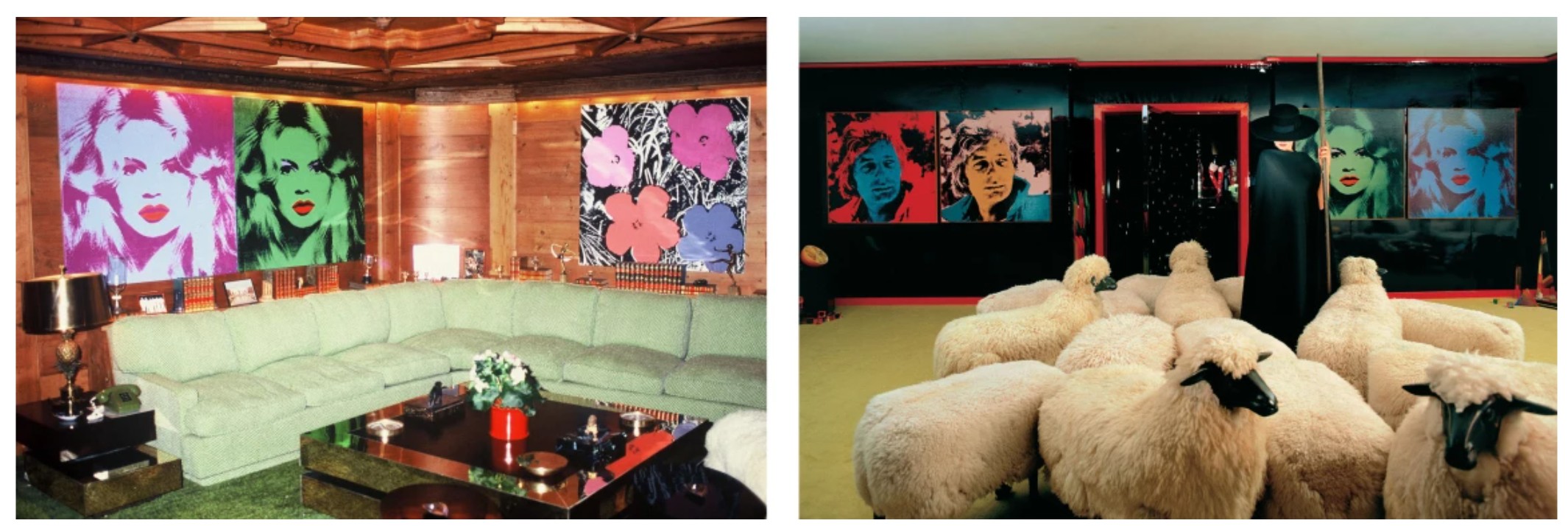
The present work in the homes of Gunter Sachs in Gstaad (left) and St. Moritz (right), 2007. Photo © Wolfgang Kühn. Art © 2026 Andy Warhol Foundation for the Visual Arts / Artists Rights Society (ARS), New York
Warhol’s series was the product of a whirlwind romance between Bardot, the French superstar and siren-like beauty who embodied a new age of sexual revolution, and Sachs, the jet-setting German heir with a passion for art and the most beautiful women of his time. At that moment they were actively shaping the visual and cultural language of modern celebrity, Sachs’s collaboration with Warhol extended beyond patronage into the construction of an enduring public mythology. Bardot was already an icon in her own right—she was the poster for a new generation of women, liberated to express their sexuality. “Bardot was unquestionably the first star of sexual freedom at the very moment when the media began to traffic in private life… she insists upon the original sin of feminine free will, which society seeks to control.” (Oliver Zahm, “Films and Lovers, Nothing Else…,” in: Exh. Cat., London, Gagosian Gallery, Warhol: Bardot, 2011, p. 28)
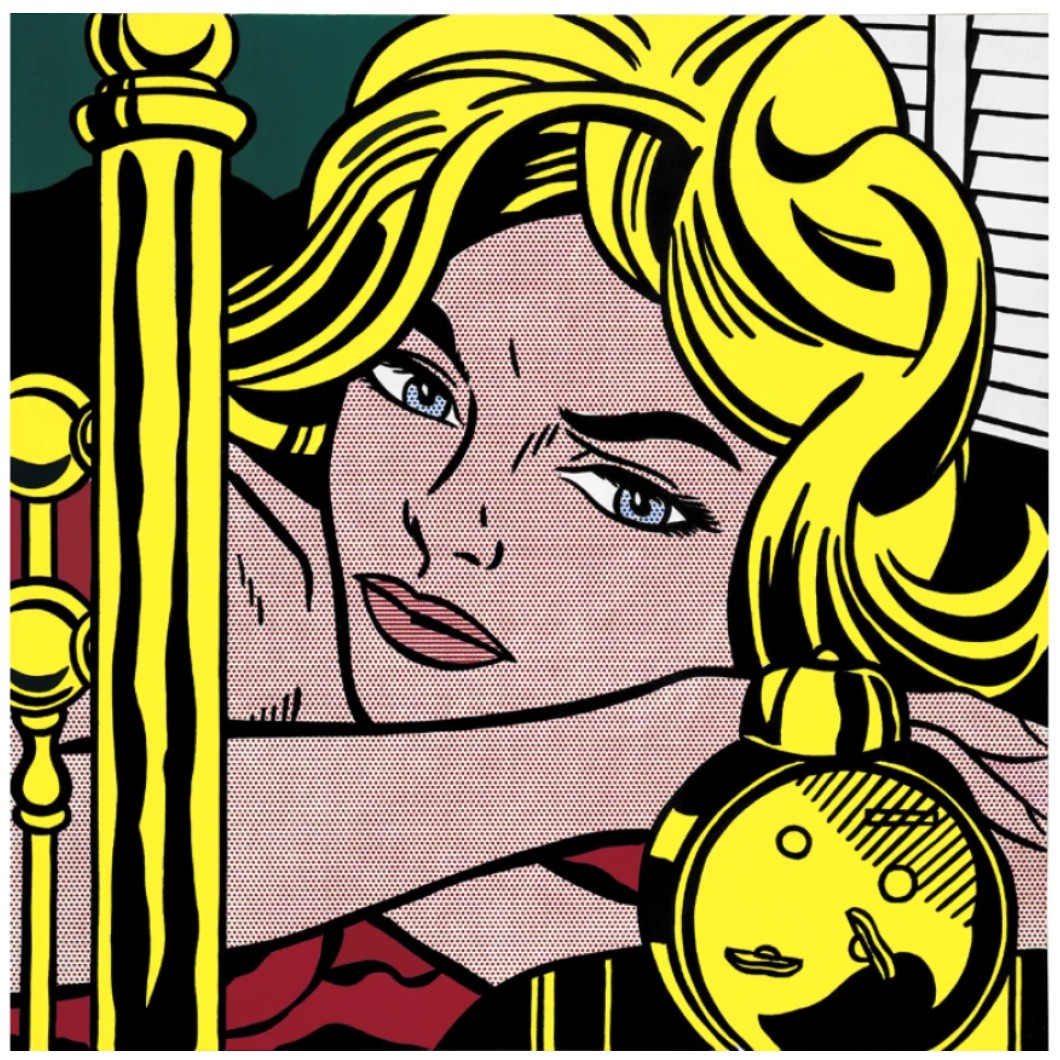
Roy Lichtenstein, Blonde Waiting, 1964. Private Collection. Art © Estate of Roy Lichtenstein
The union between Bardot and Sachs and their chic lifestyle captivated and influenced audiences around the world, who looked to them with a wondrous fascination. Famously, shortly after the two met, Sachs showered her St. Tropez villa with thousands of roses from a helicopter, before diving into the sea himself and emerging to propose. Just a month after meeting, in July 1966, the couple married in Las Vegas to great fanfare; they were photographed by paparazzi as they disembarked their plane and walked down the city’s streets, with Bardot walking down the aisle in bare feet. Their aspirational lifestyle was defined by passion, joie de vivre, and an unmistakable l’esprit. Indeed, the dazzling love story between a French movie star and a jet-setting playboy captivated a global public. Bardot described her love for Sachs: “I have never known a man like him. I feel mad, serene, wonderstruck. I have arrived at the end of a long journey.” (Brigitte Bardot quoted in: Dennis Hevesi, The New York Times,10 May 2011, p. A25)
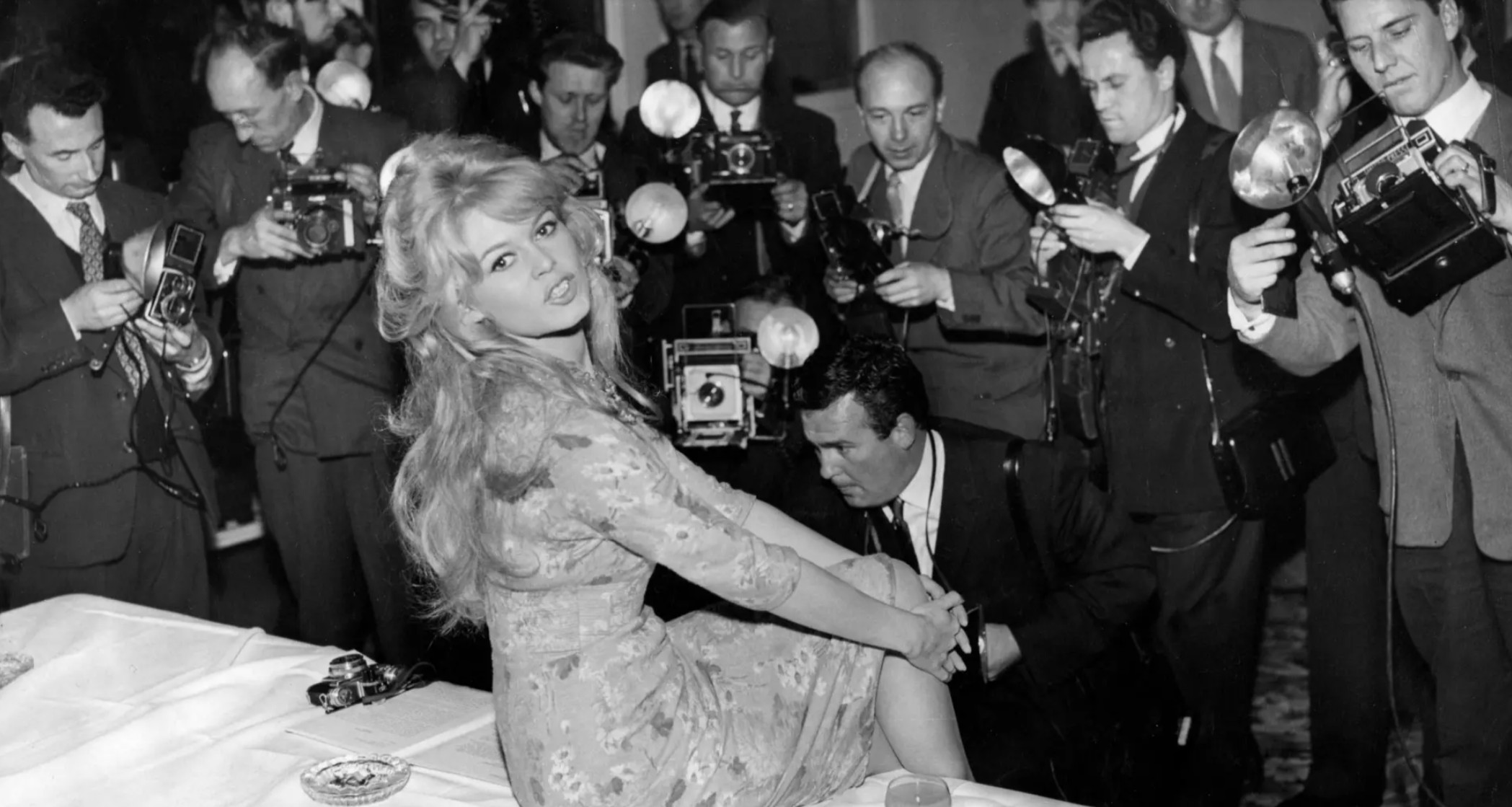
Brigitte Bardot surrounded by paparazzi, 1959. Photo © KEYSTONE Pictures USA
A seminal series in Warhol’s inimitable pantheon, Warhol’s Brigitte Bardot paintings epitomize Warhol’s enduring obsession with the cult of celebrity in popular culture. Held in the Gunter Sachs’ collection for over fifty years and seldom seen in public, the present work is a treasured example within Warhol’s oeuvre. The painting powerfully encapsulates the revolutionization of the visual vernacular of painting at the core of Warhol’s conceptual project. Here, the glamorous European movie star transforms into not just a pop cultural symbol but is immortalized as a symbol of the fixation on and fetishization of fame in contemporary society. Warhol probes the paradigm of an icon’s status through a practice which feels ever more relevant in the present day. More than a portrait, the present work stands as a testament to a defining cultural moment—where art, celebrity and personal mythology converged.
“Monroe was a tease… but Bardot was the real thing!”
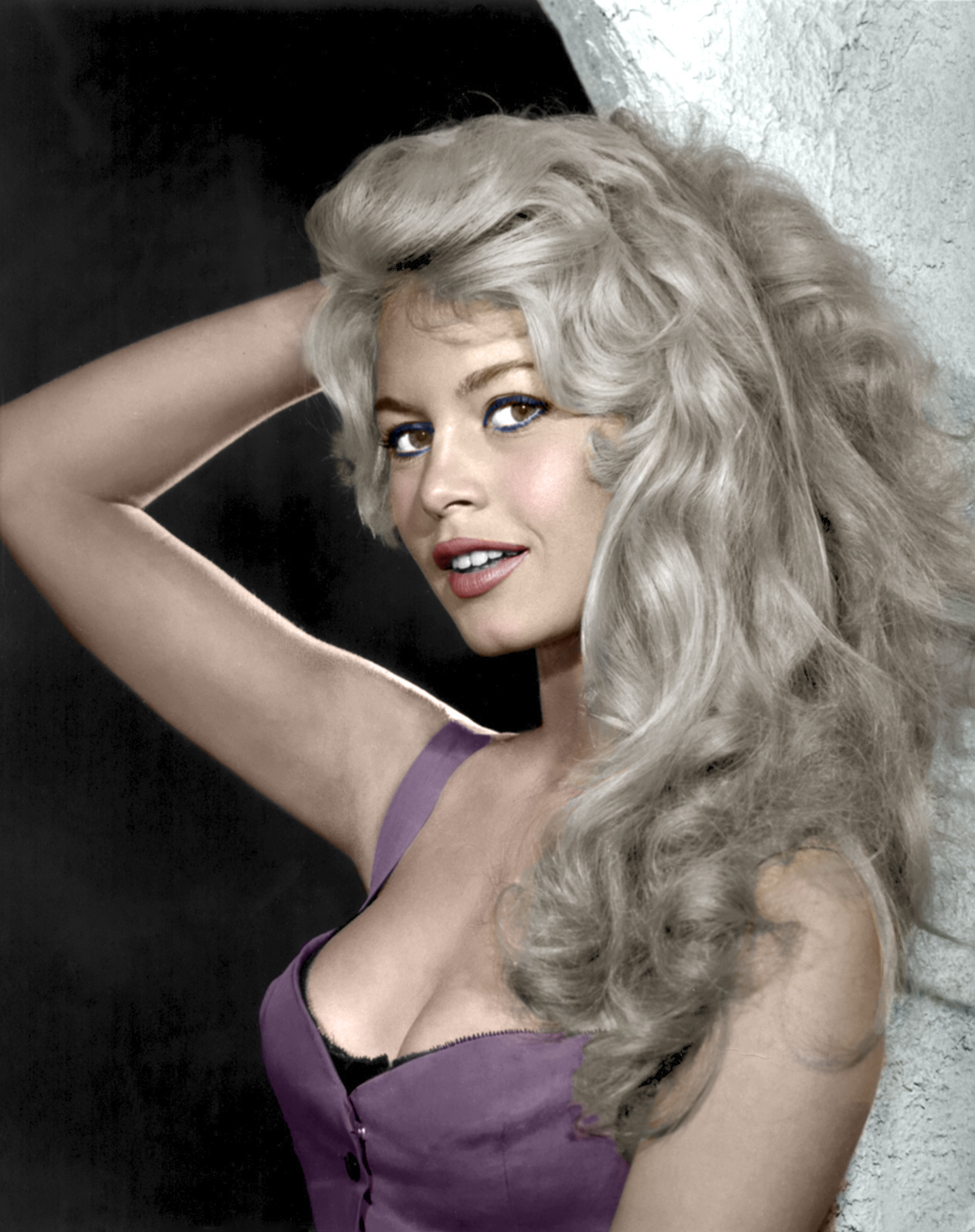
In 1974, at the age of 39 and still at the height of her career, Bardot or ‘BB’ as she was known in France, was as beautiful and as famous as ever. Her blond hair, heavy eyeliner and pouting lips were an instantly recognizable trademark of her free-spirited energy and sexual allure all over the world. It was at this point, that she shocked many people by announcing her retirement.
‘I’ve made 48 films of which only five were good. The rest are not worth anything. I will not make another.’
Brigitte Bardot stands apart from all of Warhol’s 1970s Society Portraits in size and technique, lending it a distinctive eminence that reflects Warhol’s unparalleled admiration and enchantment for his subject. Typically, the other portraits from this decade adhered to the artist’s standard 40×40 inch format; during this period Warhol would take his own Polaroids of his sitters with his ubiquitous Big Shot camera and use these portraits as the source images for his silkscreens. Stories abound of the sessions in which Warhol invited his subjects up to the Factory to sit for his camera.
However, for Bardot, the portraits were executed in an exceptionally large format, and rather than using his own photograph Warhol based the screen on the acclaimed photographer Richard Avedon’s iconic 1959 image of the sultry starlet at her peak. Sachs provided the image—found in the pages of a magazine—to Warhol upon his commission, and it is not known if Warhol was even aware at the time that he had paraphrased an image by the famed Avedon. Avedon had photographed Bardot fifteen years prior, in January 1959 in his Paris studio. The actress wore a sumptuous Lanvin dress and had her hair done by Alexandre of Paris, then considered the world’s most famous hairdresser. Alexandre had also styled Elizabeth Taylor’s classic coiffure for Cleopatra—another image Warhol used in his portraits of Liz, making Brigitte Bardot the second chance collaboration between Warhol and the hairstylist.
Reverberating with extraordinary volume, Bardot’s hair swoops symmetrically away from her face and enrobes her sharply contoured features in a mane of pure luxuriance. Avedon’s portrait already possessed a distinctly Warholian quality in its pronounced double-exposure effect; each curled lock of hair appears to vibrate independently within the confines of the frame, achieving the quietly rippling effect of Warhol’s out of register screens through Avedon’s own darkroom manipulation. In this regard, Avedon’s portrait functions as a sort of readymade, already exuding the buzzing of Warhol’s silkscreens a priori to the artist’s appropriation. Based on an existing photo that was not his own, in both painterly approach and style Bardot aligns with the seminal silkscreens of Jackie, Liz and Marilyn, whose images Warhol collected from the press. Divergent from the brushy and almost expressionistic application of paint familiar to Warhol’s large corpus of society portraits, Bardot evokes a retrospective appropriation of the earlier hard Pop style of unmodulated coloring and closed contours to emphasize a machine-like touch. Detached, however, from the sobering presence of death in the portraits of Marilyn and intimated at in his depictions of Jackie and Liz, Bardot is sheer screen magnetism incarnate.
Following Warhol’s first major retrospective exhibition in Hamburg during 1972, an effort largely initiated by Sachs himself, the set of eight paintings of Bardot were commissioned to hang as pendants to a corresponding series portraying Sachs. Intended to adorn the walls of his extravagant Pop Art temple in the tower of the luxurious Palace Hotel, St. Moritz, the portraits of Bardot and Sachs together stand as a testament to their fiery and brilliantly seductive relationship.
Finally executed in 1974, Warhol’s seductive portrayal of Brigitte Bardot was a creation almost eight years in the making. The origin of the eight paintings after Bardot’s iconic likeness can be traced to the couples’ very first encounter with Warhol during the spring of 1967. Visiting the South of France to promote his film Chelsea Girls, Warhol first encountered Sachs at the Gorilla Bar in St. Tropez. Though Warhol’s attempts to host screenings of his film were abortive, the artist and his gang of Factory cohorts stayed to star-gaze and bask in the glamorous atmosphere. Famed for his lavish lifestyle and burgeoning reputation as a visionary arts patron, Sachs was approached directly by Warhol, who made such a striking first impression that Sachs was prompted to describe the encounter “as unusual as Andy Warhol himself.” (Ibid., p. 18)
For Warhol however, the most memorable aspect of the entire encounter was meeting Sachs’ wife, Brigitte Bardot. Documented in Warhol’s 1960s memoirs, the artist remembered meeting Bardot in some detail.
“We decided to hang around anyway and just have fun as that’s what we were always good at, going to parties, water skiing, meeting the foreign movie people… we met Gunter Sachs, the West German heir who brought us home to meet his wife Brigitte Bardot. She came downstairs and entertained like a good European hostess, and I couldn’t get over how sweet that was – to be Brigitte Bardot and still bother to make your guests comfortable!”
By the time Bardot married Sachs in 1966, the actress had long since attained legendary status. At the age of only 15 she had appeared on the cover of Elle and forged the blueprint for the original jeune filles and prototypical Lolita five years preceding the publication of Nabokov’s eponymous novel. In 1956 Bardot shot to stardom almost overnight in the controversially provocative film directed by her then husband Roger Vadim, And God Created Woman – the film which scandalized America and earned her the status of sex-kitten extraordinaire; by 1959 the Bardot myth was truly cemented when she elicited the attention of France’s existential elite as the focus of Simone de Beauvoir’s article “Brigitte Bardot and the Lolita Syndrome.” This essay recognized Bardot as the “locomotive of women’s history” presenting her as the most liberated woman of post-war France, a status which would be nationally endorsed ten years later when Bardot was prestigiously asked to bestow her features as the first official incarnation of the traditionally archetypal Marianne – France’s revolutionary icon of liberty and national symbol La Patrie.
Auction Results
Brigitte Bardot, 1974
Bardot by Warhol: From the Gunter Sachs Collection
Sotheby’s New-York: 14 May 2026
Estimated: USD 14,000,000 – 18,000,000
USD 24,830,000
Andy Warhol | Brigitte Bardot | The Now & Contemporary Evening
ANDY WARHOL (1928 – 1987)
Brigitte Bardot, 1974
Acrylic and silkscreen ink on canvas
47-1/4 x 47-1/4 inches (120×120 cm)
Signed with the artist’s initials and dated 74 (on the overlap)
Provenance
Gunter Sachs, Switzerland (commissioned directly from the artist)
Gunnar Sachs (by descent from the above)
Acquired from the above by the present owner
Glamorous, alluring and irresistibly seductive, Andy Warhol’s Brigitte Bardot is an ode to beauty, fame and celebrity. A mid-century cultural phenomenon, Bardot was among the most photographed women in the world, captivating the public with on screen and across the tabloid media as the epitome of stardom and glamour. The present work belongs to Warhol’s legendary series of eight Bardot portraits commissioned by Gunter Sachs, her husband from 1966-69. Here, Bardot’s radiant emerald visage entrances the viewer with a profound hypnotic intensity, her beguiling gaze immortalized by the camera’s flash.
Left: Andy Warhol, Shot Sage Blue Marilyn, 1964. Private Collection. Sold in New York in May 2022 for $195 million. Image © Christie’s Images / © 2026 The Andy Warhol Foundation for the Visual Arts, Inc. / Licensed by DACS, London / Bridgeman Images. Art © 2026 Andy Warhol Foundation for the Visual Arts / Artists Rights Society (ARS), New York.
Right: Andy Warhol, Liz #3 (Early Colored Liz), 1963. Private Collection. Sold at Sotheby’s New York in November 2014 for $31.5 million. Art © 2026 Andy Warhol Foundation for the Visual Arts / Artists Rights Society (ARS), New York
Elevated to the status of a modern-day goddess, Brigitte Bardot completes Warhol’s earliest Pop heroine trinity alongside Marilyn Monroe and Liz Taylor—embodying Warhol’s ultimate artistic obsessions: celebrity and popular media. Bardot offered a European counterpart to Marilyn: each iconic actresses who revolutionized the terms of female sexuality as pervasive and enduring symbols of both desire and envy. Warhol’s method and his muses were dictated by the cultural zeitgeist—the most famous figures of popular culture, whose likenesses proliferated across mass media, were deified to an idol-like status through his silkscreens. Brigitte Bardot is a radiant embodiment of Warhol’s visual discourse, masterfully capturing the essence of a 1960s icon.
Brigitte Bardot, 1974
Sotheby’s New-York: 11 November 2014
Estimated: USD 10,000,000 – 15,000,000
USD 11,645,000
(#41) Andy Warhol (sothebys.com)
ANDY WARHOL
Brigitte Bardot, 1974
Acrylic, silkscreen ink and pencil on canvas
47.5 x 47.2 inches (120.6 x 120 cm)
Provenance
Gunter Sachs, Switzerland (commissioned directly from the artist)
Thence by descent to the present owner
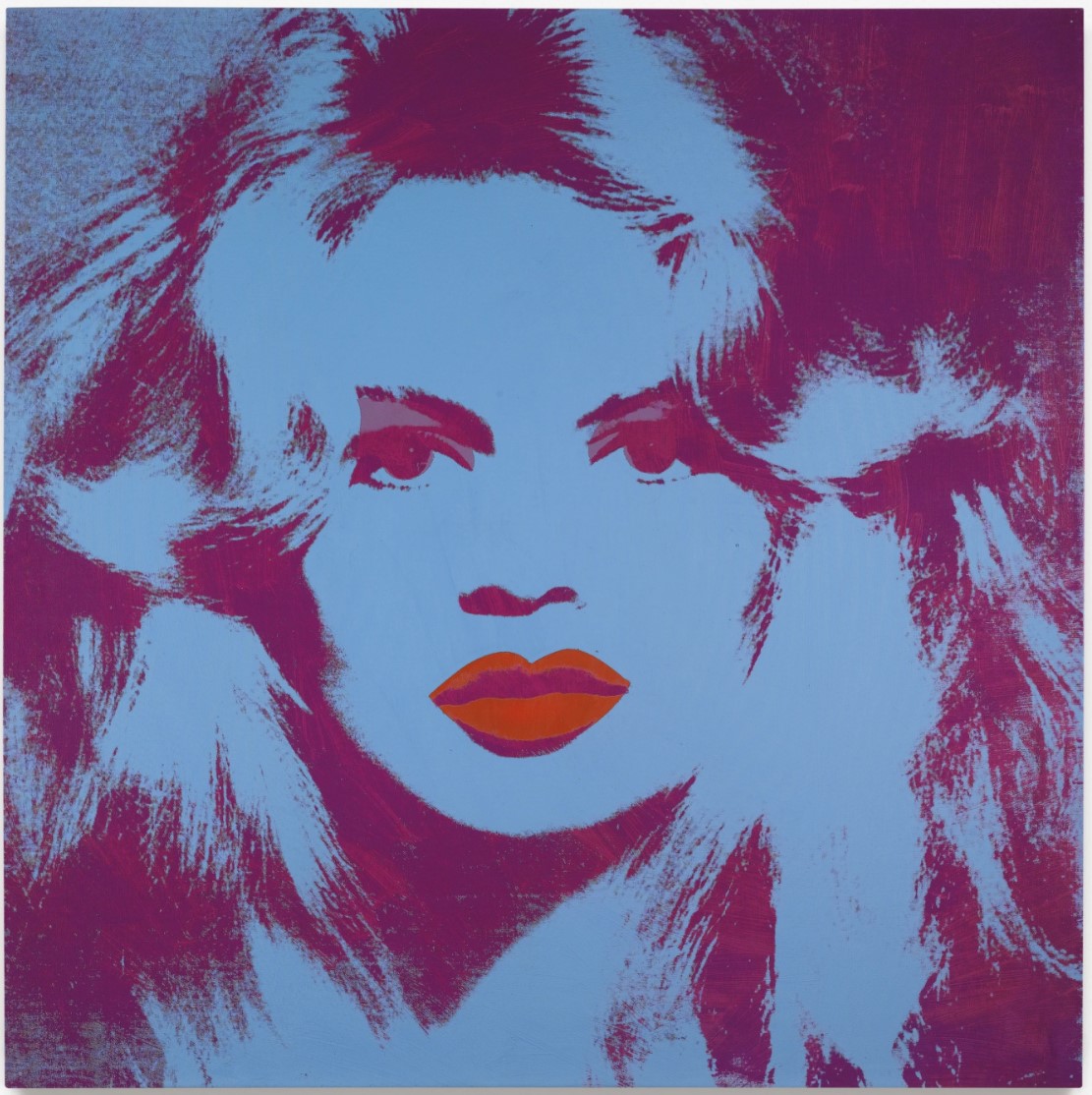
Devastatingly and irresistibly seductive, Brigitte Bardot gazes sultrily toward us, enrapturing the viewer with her screen vixen persona. With his bewitching 1974 portrait of the steamy bombshell blonde, Andy Warhol offered the magnetic essence of the siren who seduced the world, enticing us with her come-hither allure. Bardot’s blue visage lures with powerful hypnotic intensity, and yet as is archetypal of Warhol’s enduring conceptual project, all we are left with is her image frozen in the eternal moment of the camera’s flash. Belonging to the legendary series of eight works commissioned by Gunter Sachs, to whom Bardot was married from 1966-1969, Bardot’s radiant sapphire visage stands as inevitable successor to the irresistible trinity of Liz Taylor, Marilyn Monroe, and Jackie Kennedy beatified by Warhol’s immaculate silkscreen in the 1960s. Superbly manifest of the artist’s obsession with fame, celebrity, and popular culture, Bardot’s movie-star status, goddess-like beauty, flawless physiognomic symmetry, and radical eroticism mark her as the consummate Warholian muse. Of the eight total portraits that Warhol executed of Bardot, only three saw Warhol use four discrete colors and red lips, exemplified by the distinctive chromatic arrangement of the present work—a striking cerulean for the ground, luscious violet for the screen, brilliant cadmium red for her lips, and deep purple for her eyeshadow. Exceptional for its prismatic complexity, the present work stands at the pinnacle of the series, rich in hue and dramatic visual impact.
Brigitte Bardot, 1974
Sotheby’s London: 22 May 2012
Estimated: GBP 3,000,000 – 4,000,000
GBP 3,009,250
(#23) Andy Warhol (sothebys.com)
ANDY WARHOL
Brigitte Bardot, 1974
Acrylic and silkscreen ink on canvas
48×48 inches (120×120 cm)
Signed and dated A.W.74 on the overlap
Provenance
Acquired directly from the artist in 1974
Brigitte Bardot, 1974
Christie’s London: 8 February 2007
Estimated: GBP 1,500,000 – 2,000,000
GBP 5,396,000
ANDY WARHOL
Brigitte Bardot, 1974
Synthetic polymer paint and silkscreen inks on canvas
47.2 x 47.2 inches (120×120 cm)
Signed ‘Andy’ (on the overlap)
Provenance
Acquired directly from the artist by the present owner.
The present work is one of only eight paintings that Warhol made from a photograph of her at this time. Filling the frame of the picture with her image in a direct and open way, Warhol lets Bardot’s famous features dominate the canvas, her doe-like eyes and childish beauty emerging from the fur-like folds of her hair to command the picture plane and arrest the attention of the viewer. Indeed it is this focus of her stare that Warhol has heightened in this work, sharply angling the vivid green highlights on her eyes and contrasting this with the sharp red of her famously vulvular lips to accentuate the vampiric nature of the image. In keeping with Bardot’s own nature, this more straight-forward and direct nature of the image is one that remains faithful to the simplicity of Bardot’s beauty. Because of this Warhol’s ‘star’ treatment of Bardot actually accentuates her status as an icon creating a portrait of Bardot as both individual and phenomenon.
Brigitte Bardot, 1974
Christie’s New-York: 9 May 2006
Estimated: USD 1,000,000 – 1,500,000
USD 3,040,000
Andy Warhol (1928-1997) (christies.com)
ANDY WARHOL
Brigitte Bardot, 1974
Synthetic polymer paint and silkscreen inks on canvas
47.2 x 47.2 inches (120×120 cm)
Signed with initials and indistinctly dated ‘A.W. 74’ (on the overlap)
Provenance
Acquired from the artist by the present owner
The present work is one of only eight paintings that Warhol made of her. Filling the frame of the picture with her image in a direct and open way, Warhol lets Bardot’s famous features dominate the canvas, her doe-like eyes and childish beauty emerging from the fur-like folds of her fluorescent colored hair to command the picture plane and arrest the attention of the viewer. More sensitive in his treatment of Bardot than in his more garish and brutal treatments of Liz Taylor and Marilyn, Warhol has used a comparatively subdued cosmetic color scheme so as to ensure that Bardot’s beauty and allure transcends her transformation into a Warhol Pop icon. Perhaps also because Bardot needed and used little make-up, her image responds well to Warhol’s neon colored overpainted additions. Using a straightforward and personal image of her — albeit one that looks like an album cover — and remaining faithful to the simplicity of her beauty, Warhol has accurately created in this work a portrait of Bardot as both individual and phenomenon.