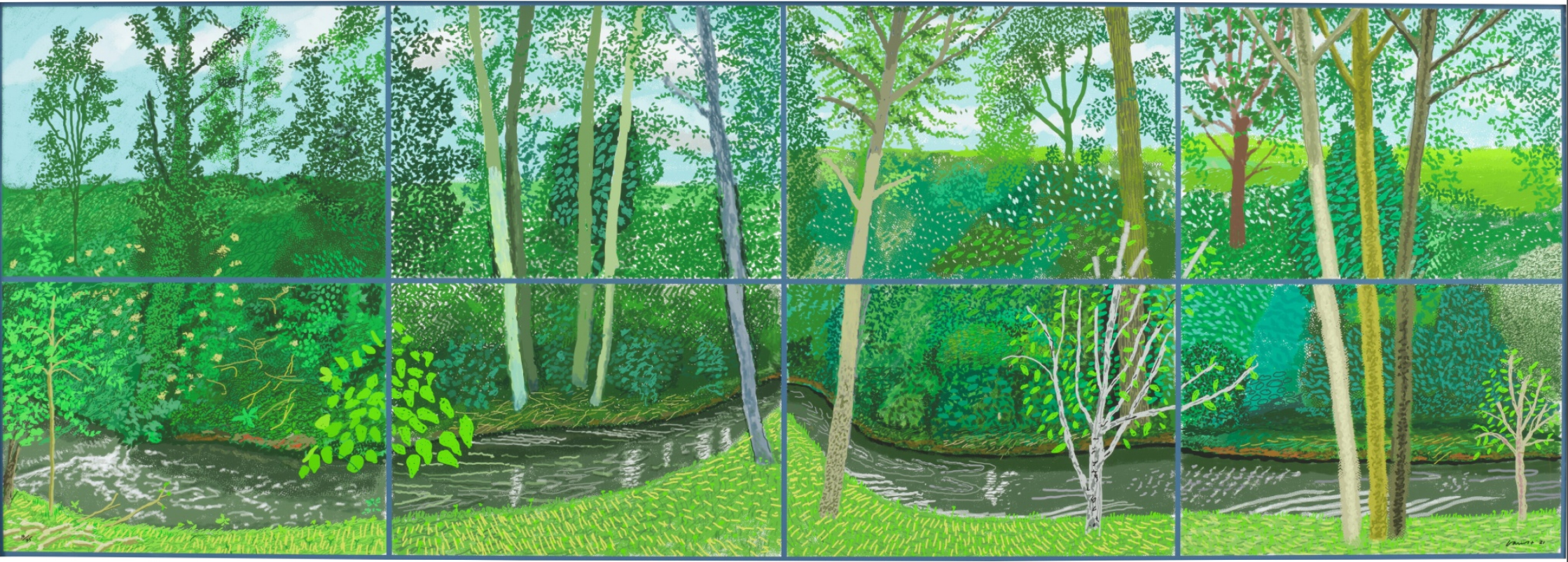
18th-27th June 2021, La Dorette Winding its Way
Medium: Eight iPad paintings printed in colors on one sheet of paper, mounted on Dibond (as issued)
Year: 2021
Overall: 39-/4 x 111 inches (99.7 x 281.9 cm)
Edition: 25
Publisher: The Artist
Signed and dated 21 (lower right)
Numbered (lower left)
The present work encapsulates one of Hockney’s most ambitious and celebrated technological undertakings to date: the iPad painting. Hockney renders here an expansive view of the River Dorette winding through the Norman countryside. Eight individual iPad paintings operate in concert, coalescing into a single panoramic composition. Harnessing the medium’s potential for precision, Hockney achieves remarkable detail—fluid, gestural strokes evoke the movement of water, while short, deliberate marks lend texture and density to the surrounding grass.
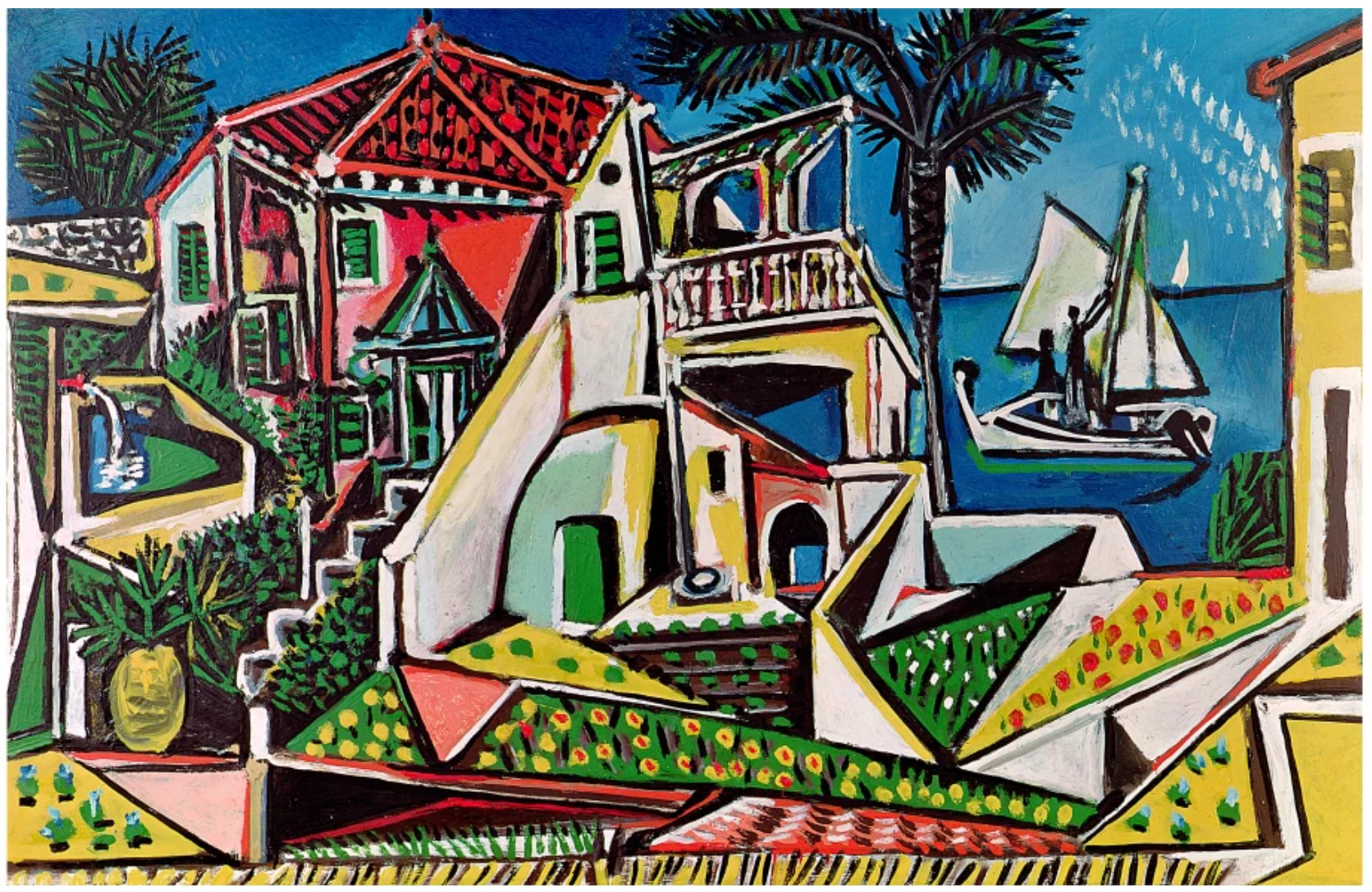
Pablo Picasso, Mediterranean Landscape, 1952. Albertina Museum, Vienna.
Image © Bridgeman Images. Art © 2026 Estate of Pablo Picasso / Artists Rights Society (ARS), New York
Hockney’s experimentation with technology dates back to 1982 when he began exhibiting fragmented collages formed from Polaroid photographs. This approach persisted in his “fax art,” wherein images transmitted via fax and reproduced through photocopying were assembled into monumental compositions.
“I do think the iPad is a new art form. Much better than a lithograph. Inkjet printing is more vivid, the color stays exactly the same. The prints use an awful lot of pigment. But the bigger they get, they don’t fade, don’t pixelate.”
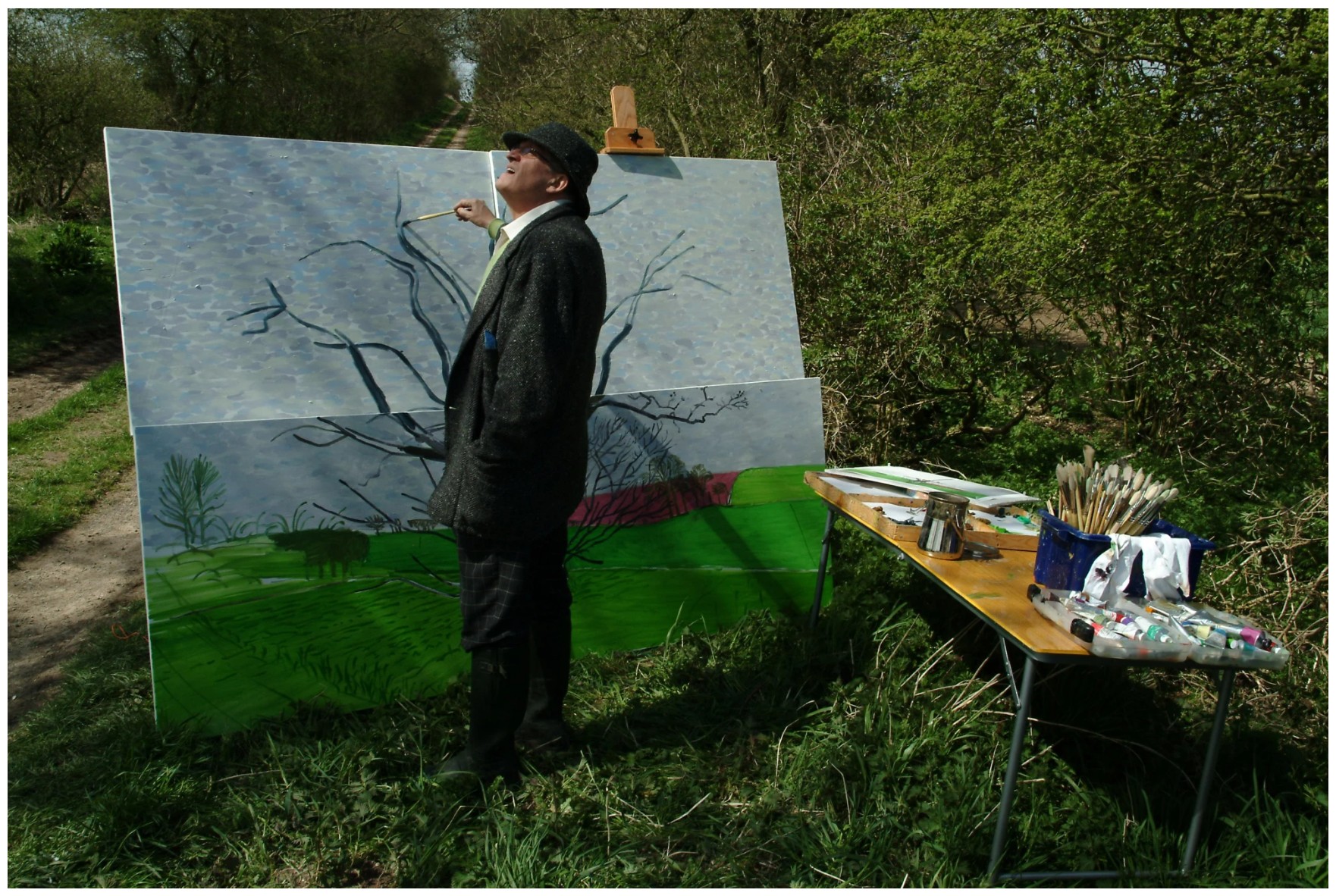
David Hockney painting Tree off the Track, 2006. Photo by Jean-Pierre Gonçalves de Lima. Art © David Hockney
A similar conceptual framework underpins the present work: each panel exists as an autonomous image, together forming a richly layered and immersive landscape, inviting the viewer to navigate its breadth both in parts and as a whole.
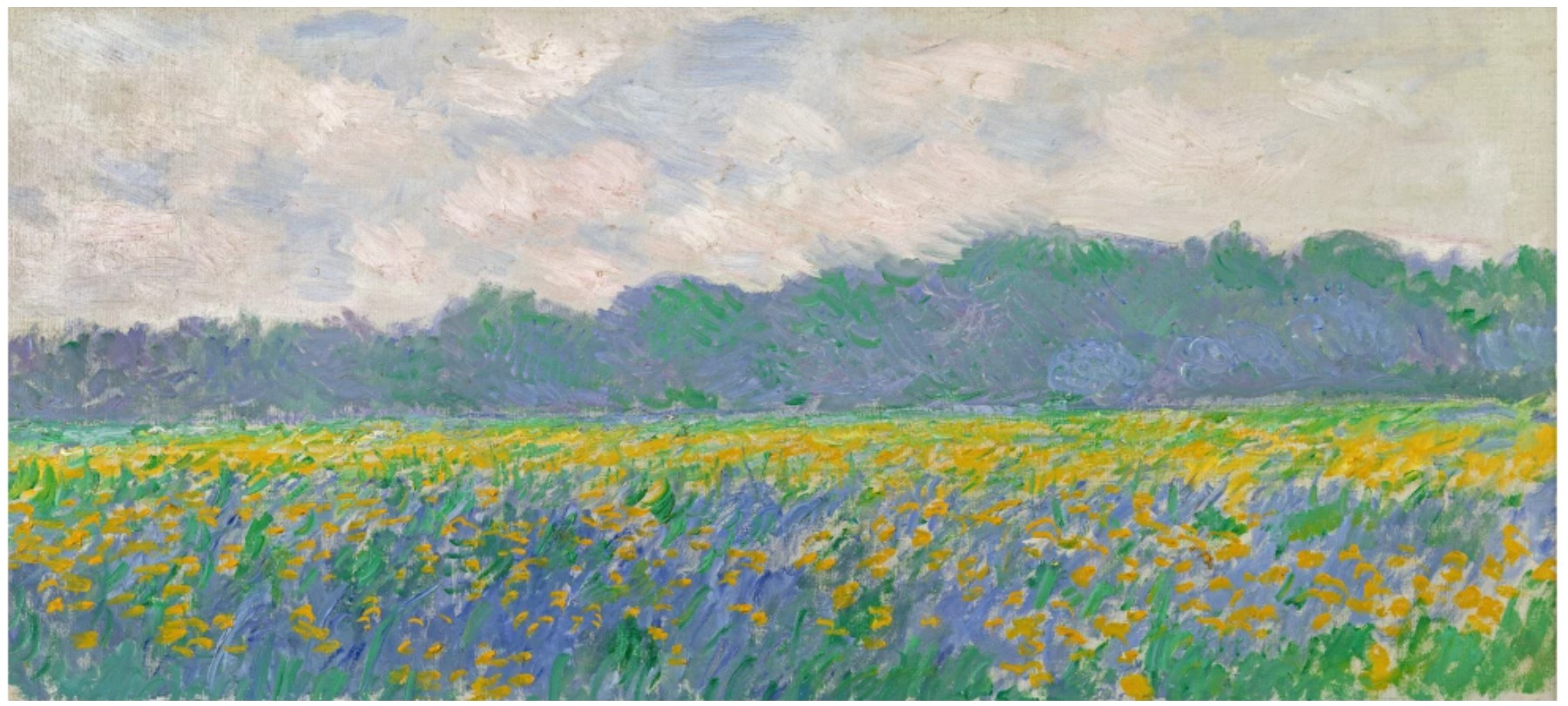
Claude Monet, Field of Yellow Irises at Giverny, 1887. Musee Marmottan Monet, Paris. Image © Bridgeman Images
Upon purchasing the first iteration of the iPhone in 2007, Hockney grew enamored with the “Brushes” app, experimenting with drawing on the small screen with limited range. As he observed, “Despite the scale, you can draw majestic things; majestic mountains can be drawn quite small.” (Robyn Farrell, “Hockney’s Perpetual Spring: The Embrace of Digital Tools,” The Art Institute of Chicago, 30 August 2022 (online)) The broader “canvas” of the later released iPad only piqued the artist’s interest further.
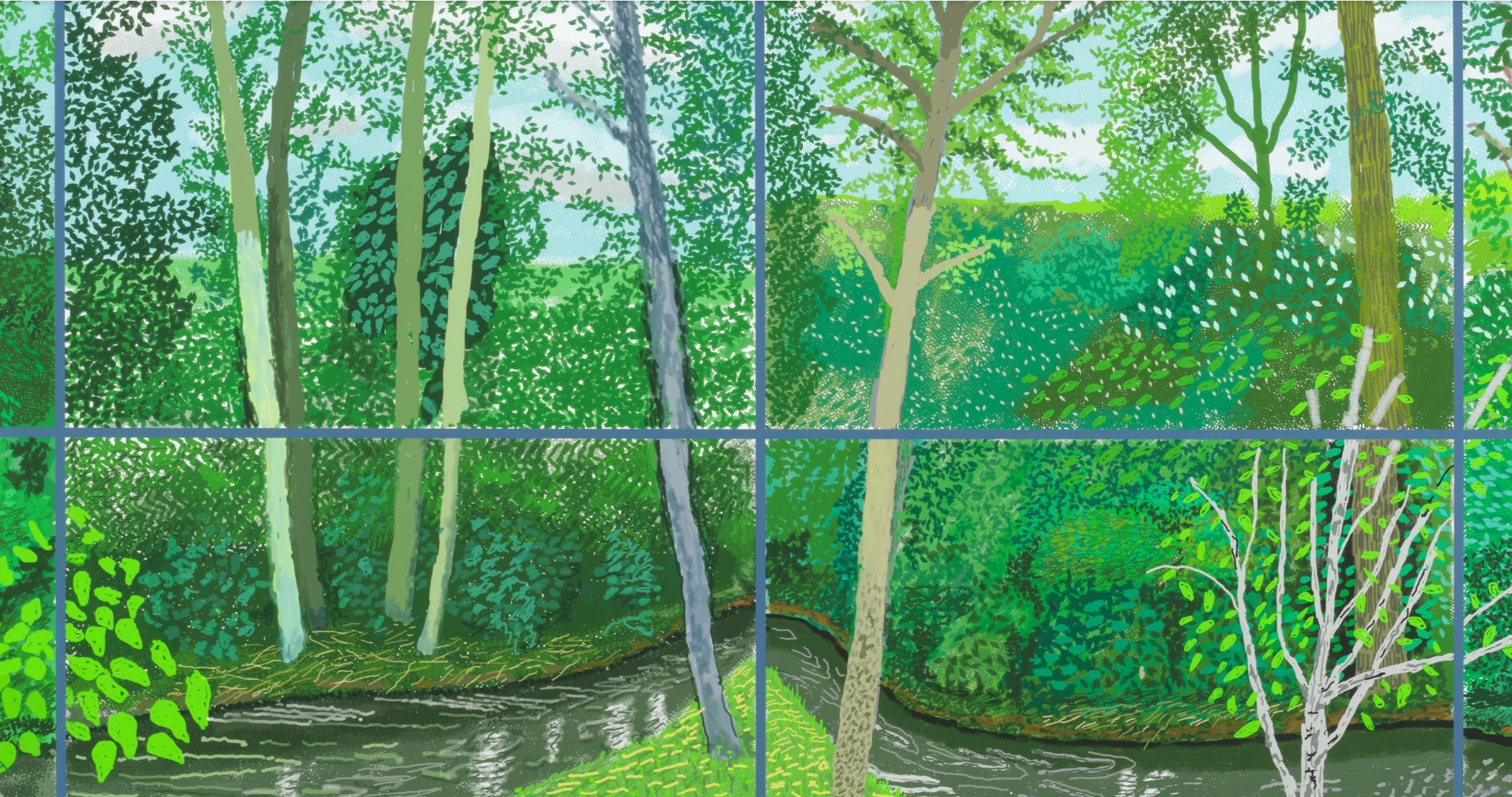
In 2011, he produced his renowned The Arrival of Spring, a comprehensive series capturing subtle transitions in light, color, and atmosphere. The present work extends this sustained engagement, reflecting his enduring fascination with the natural world: “You’ve endless subjects in nature,” Hockney remarked in a 2023 interview, “if you really look.” (Alex Marshall, “David Hockney Goes High-Tech,” The New York Times, 22 February 2023 (online))
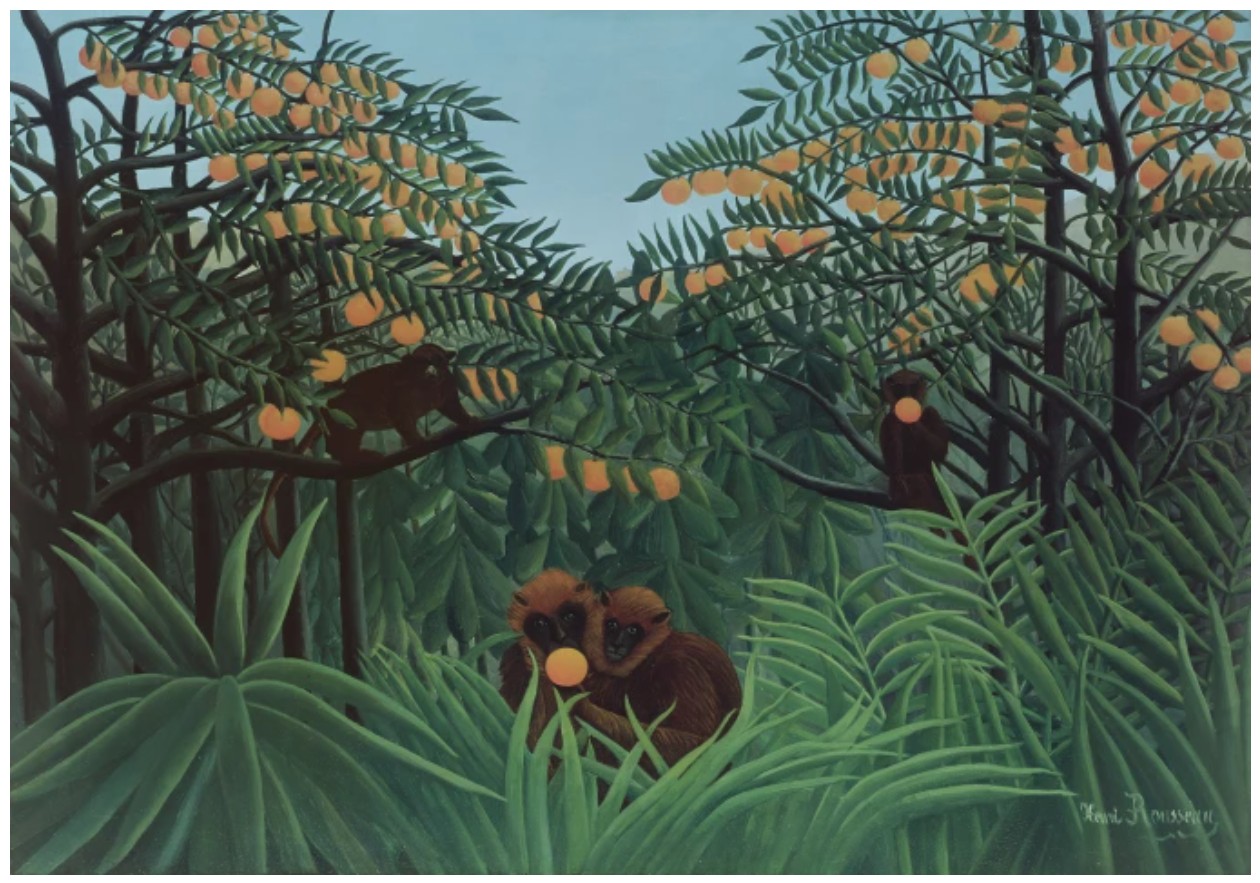
Henri Rousseau, Monkeys in the Jungle (or The Tropics), 1910. Private Collection. Image © Bridgeman Images
After relocating to Normandy in 2019, Hockney’s practice became increasingly infused with the luminous character of the French landscape that once graced the canvases of Impressionist painters. Masterful in detail and technique, Hockney regards these works created in Normandy between 2020 and 2023 as paintings, adopting the term “iPad paintings.” Executed en plein air, these images establish a dialogue with impressionist masters in both subject and technique, firmly situating Hockney’s practice within the continuum of 20th and 21st century art history while simultaneously championing the expressive and innovative potential of digital media.
Source: Sotheby’s
Auction Results
Sotheby’s New-York: 14 May 2026
Estimated: USD 500,000 – 700,000
USD 1,984,000
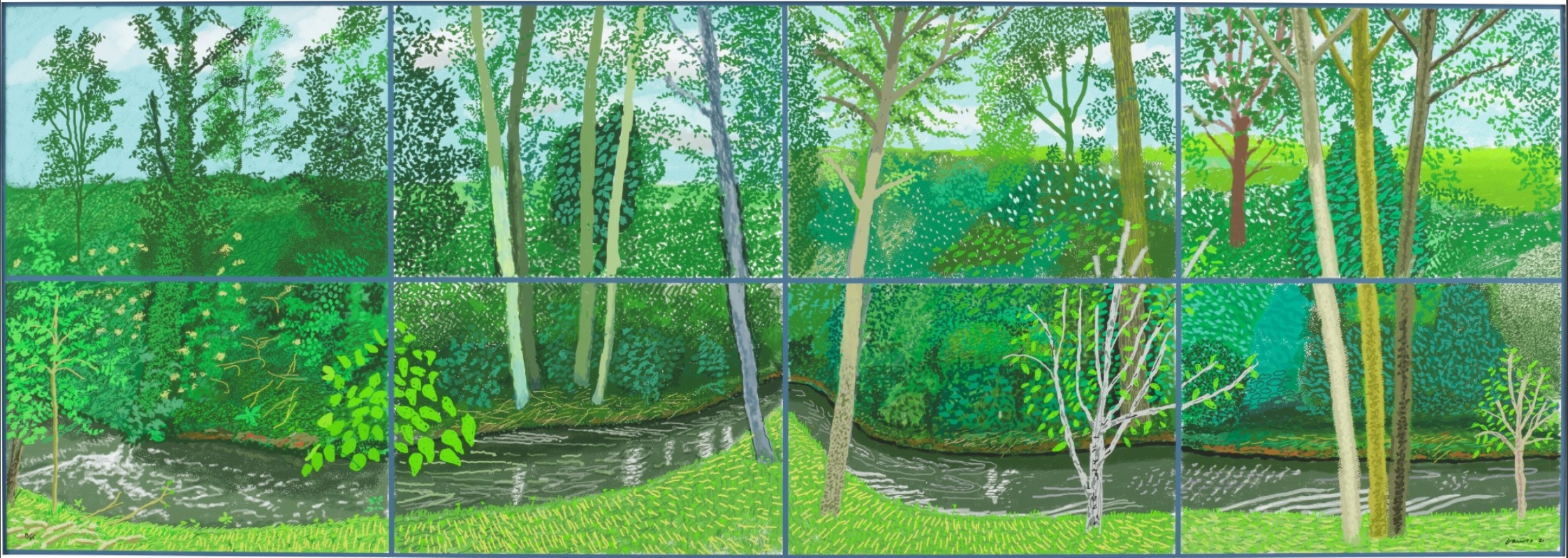
DAVID HOCKNEY (b. 1937)
18th-27th June 2021, La Dorette Winding its Way, 2021
Eight iPad paintings printed in colors on one sheet of paper, mounted on Dibond (as issued)
39-/4 x 111 inches (99.7 x 281.9 cm)
Signed and dated 21 (lower right)
Numbered 16/25 (lower left)
This work is number 16 from the edition of 25