MAY 2026 NEW-YORK AUCTIONS
Fernando Botero
Auction Results
#1. Horse, 2008
Property from an Important Private Collection
Christie’s New-York: 21 May 2026
Estimated: USD 500,000 – 700,000
USD 1,778,000
FERNANDO BOTERO (1932-2023), Horse | Christie’s

FERNANDO BOTERO (1932-2023)
Horse, 2008
Bronze
92.1 x 52.1 x 101.6 cm (36-1/4 x 20-1/2 x 40 inches)
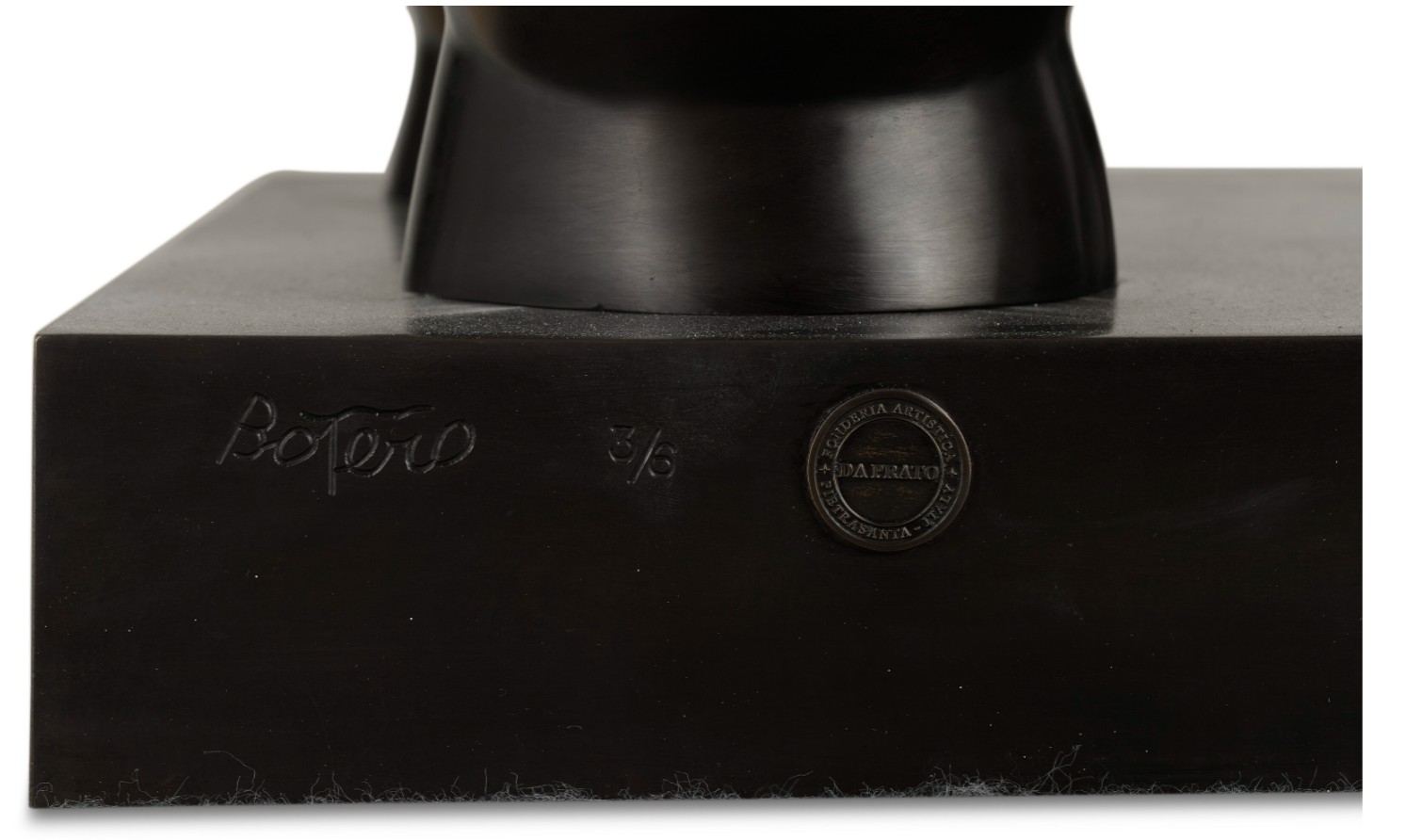
Incised with the artist’s signature and stamped with the number and foundry mark ‘Botero 3⁄6’ (on the base)
This work is number three from an edition of six
#2. El poeta, 1987
Christie’s New-York: 21 May 2026
Estimated: USD 800,000 – 1,200,000
USD 1,270,000
FERNANDO BOTERO (1932-2023), El poeta | Christie’s
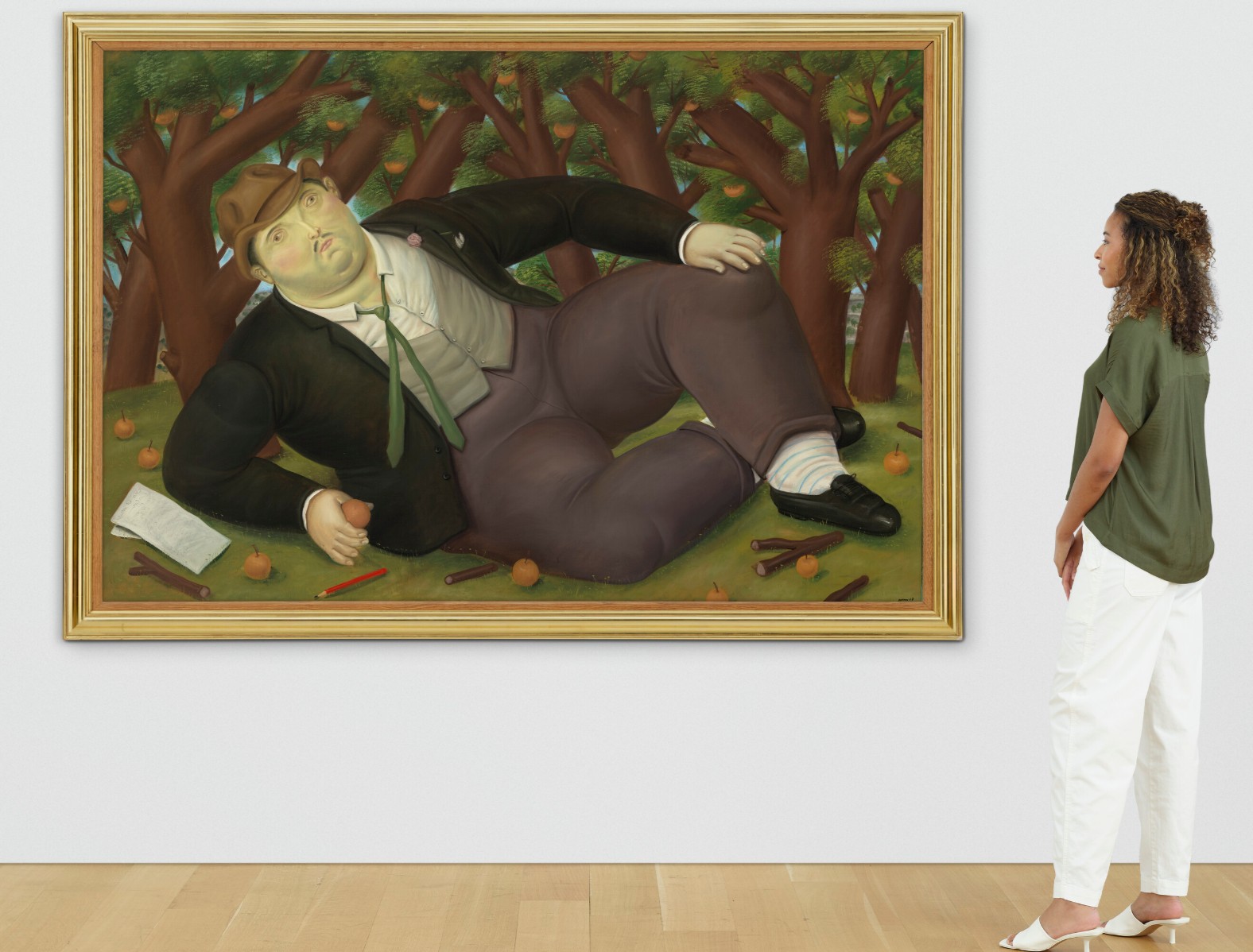
FERNANDO BOTERO (1932-2023)
El poeta, 1987
Oil on canvas
140×208 cm (55-1/8 x 81-7/8 inches)
Signed and dated ‘Botero 87’ (lower right)
#3. The Street, 2013
Property from an Important Private Collection
Christie’s New-York: 21 May 2026
Estimated: USD 400,000 – 600,000
USD 889,000
FERNANDO BOTERO (1932-2023), The Street | Christie’s
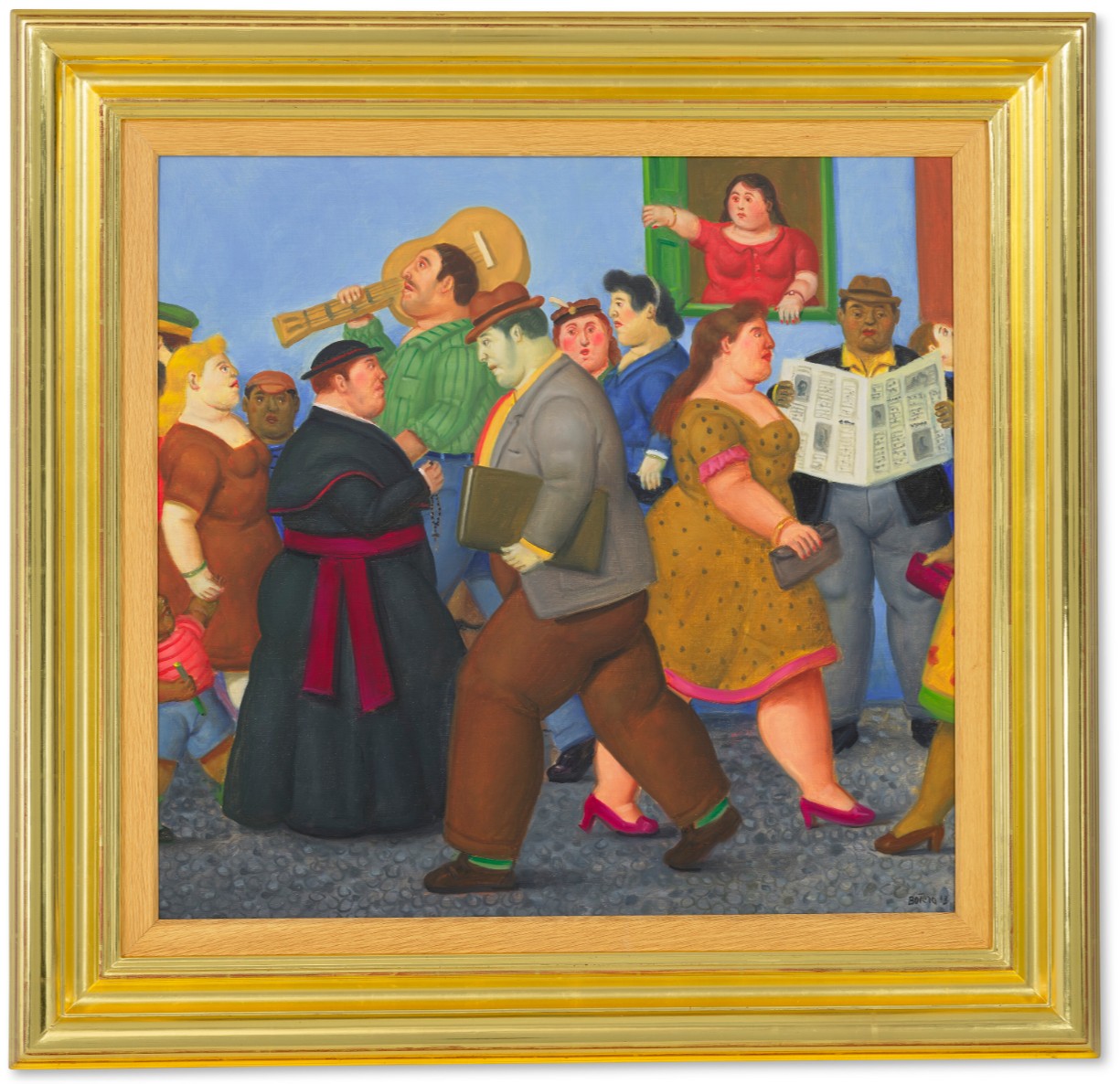
FERNANDO BOTERO (1932-2023)
The Street, 2013
Oil on canvas
68 x 71.1 cm (26-3/4 x 28 inches)
Signed and dated ‘Botero 13’ (lower right)
#4. The Bride, 2009
Property from a Distinguished Private Collection, Texas
Sotheby’s New-York: 15 May 2026
Estimated: USD 800,000 – 1,200,000
USD 870,400
Fernando Botero | The Bride | Contemporary Day Auction | 2026 |
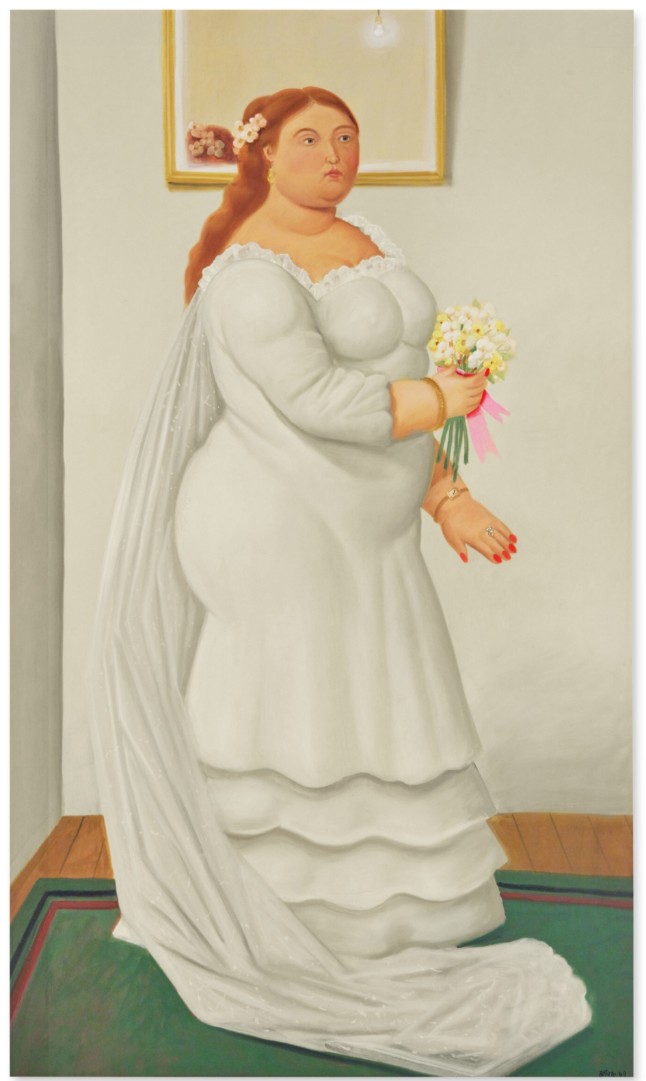
FERNANDO BOTERO (1932 – 2023)
The Bride, 2009
Oil on canvas
170.2 x 99.1 cm (67×39 inches)
Signed and dated 09 (lower right)
#5. The Picnic, 1994
Property from the Collection of Annabelle and Bernard Fishman
Sotheby’s New-York: 15 May 2026
Estimated: USD 300,000 – 500,000
USD 768,000
Fernando Botero | The Picnic | Contemporary Day Auction | 2026 |
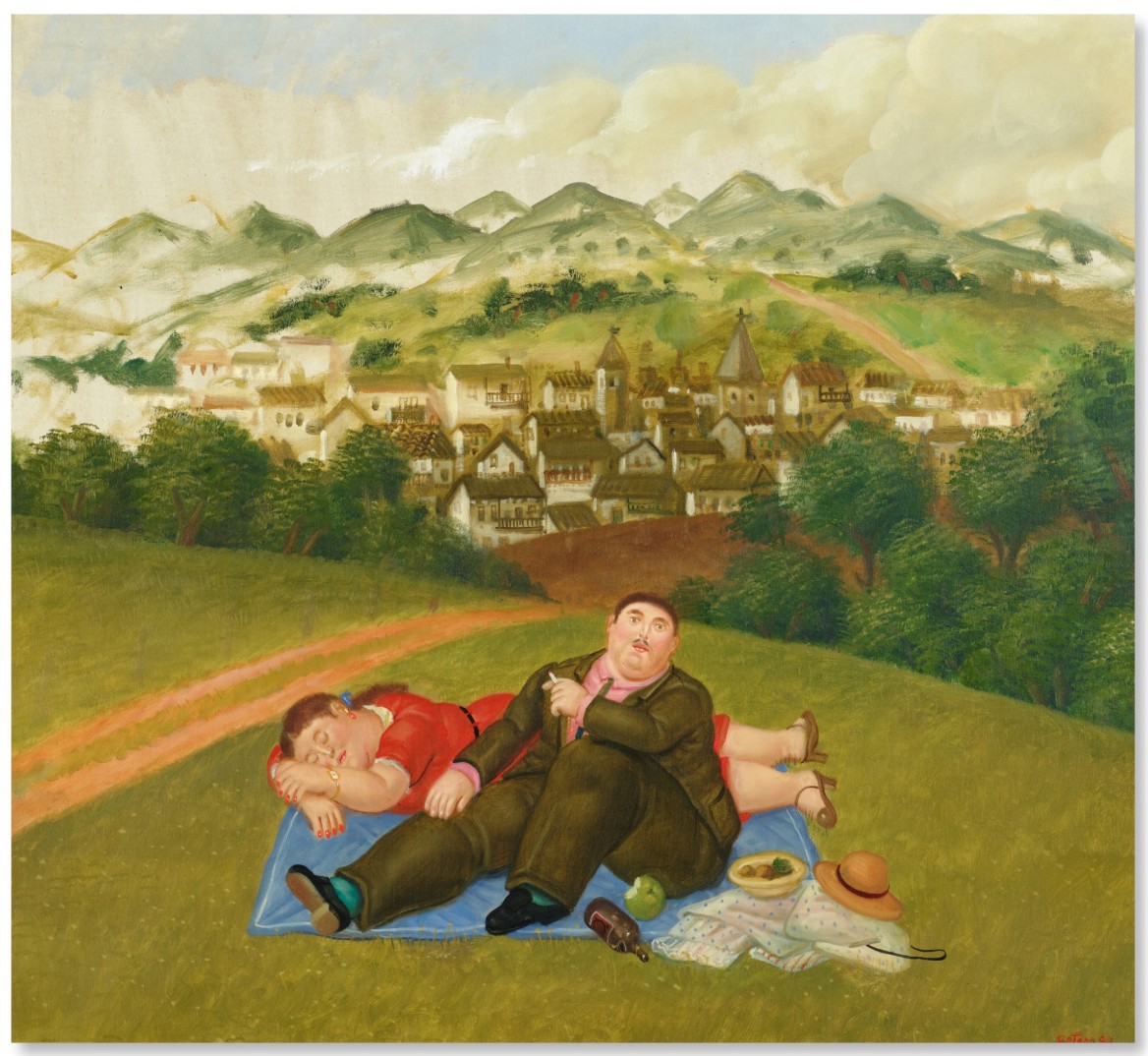
FERNANDO BOTERO (1932 – 2023)
The Picnic, 1994
Oil on canvas
73.7 x 80 cm (29 x 31-1/2 inches)
Signed and dated 94 (lower right)
#6. Variaciones sobre Cézanne, 1963
Sotheby’s New-York: 15 May 2026
Estimated: USD 450,000 – 650,000
USD 704,000
Fernando Botero | Variaciones sobre Cézanne | Contemporary Day
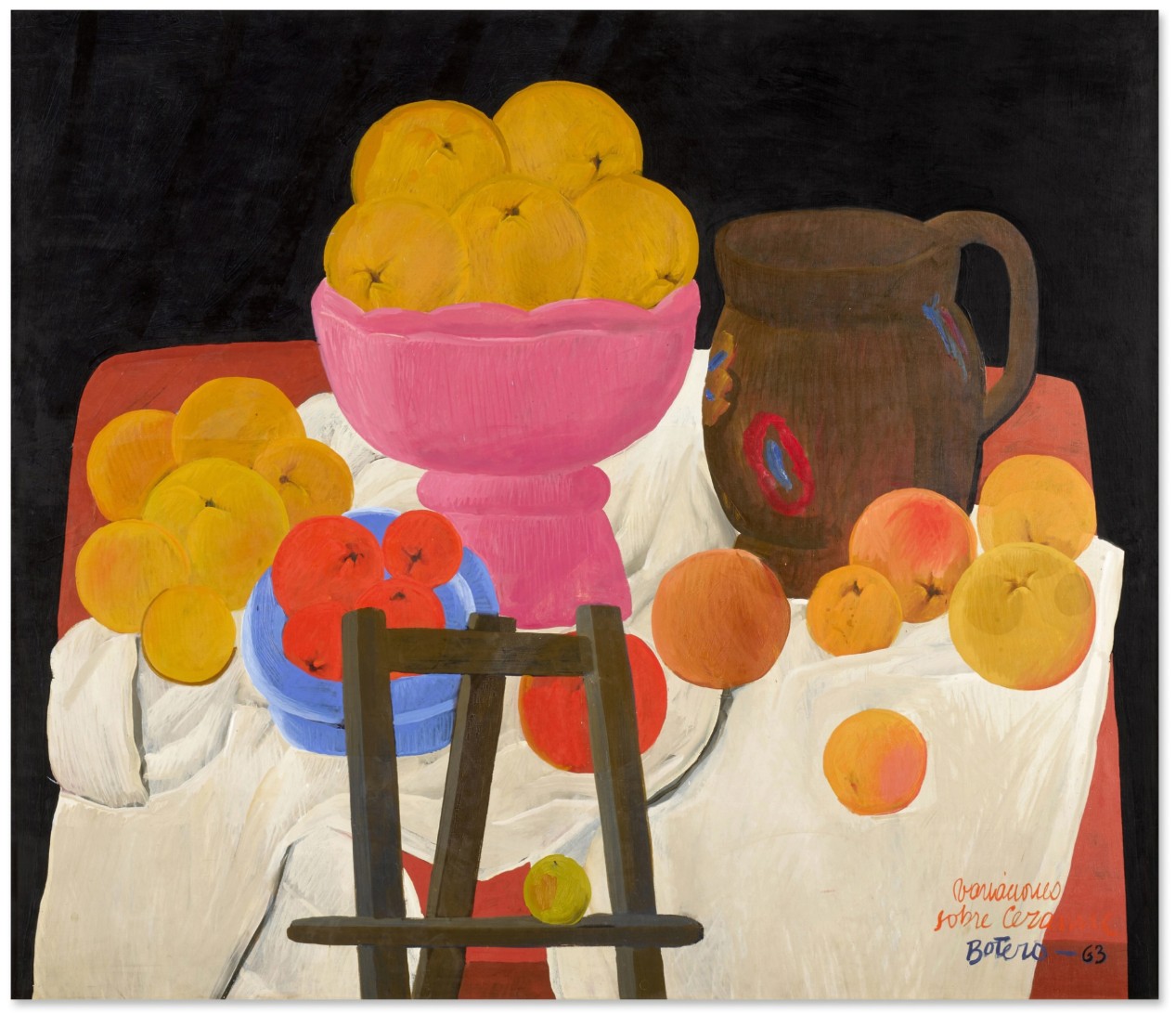
FERNANDO BOTERO (1932 – 2023)
Variaciones sobre Cézanne, 1963
Oil on canvas
129.5 x 151.1 cm (51 x 59-1/2 inches)
Signed, titled and dated 63 (lower right)
#7. Roman Soldier, 1985
Property from the Maharam Family Collection
Sotheby’s New-York: 15 May 2026
Estimated: USD 350,000 – 550,000
USD 704,000
Fernando Botero | Roman Soldier | Contemporary Day Auction | 2026 |
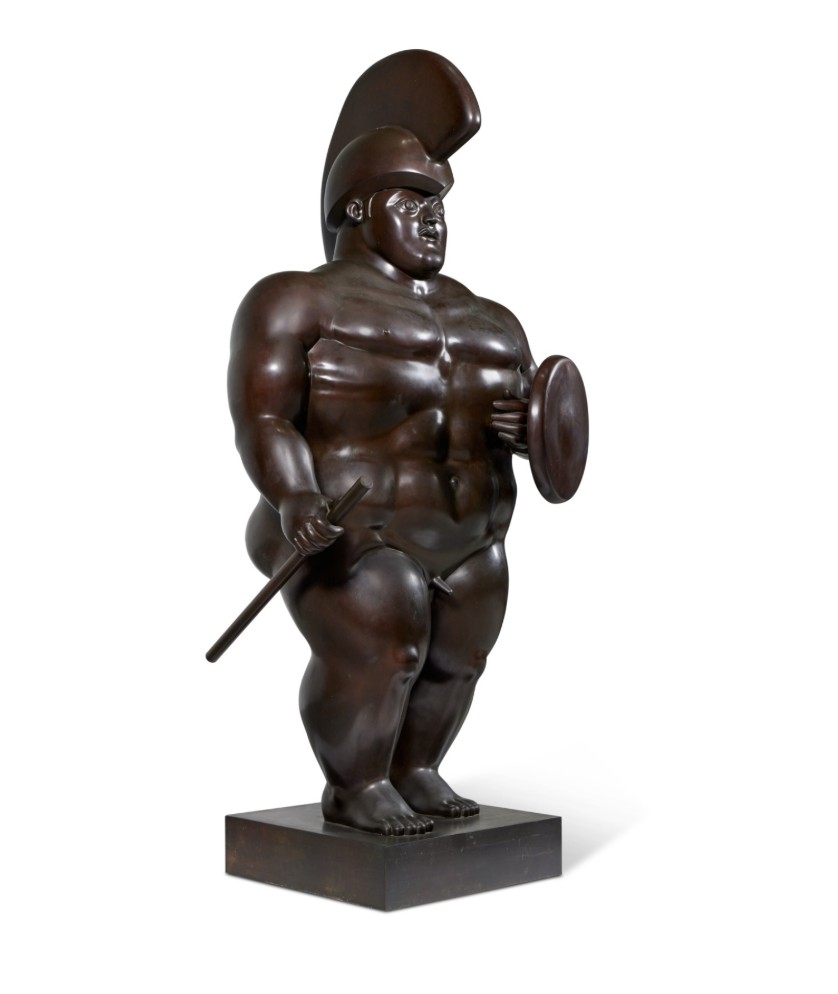
FERNANDO BOTERO (1932 – 2023)
Roman Soldier, 1985
Bronze
188 x 91.4 x 54 cm (74 x 36 x 21-1/4 inches)
Incised with the artist’s signature and number 4/6 and stamped with the foundry mark (on the base)
This work is number 4 from an edition of 6
#8. The Balcony, 1999
Christie’s New-York: 21 May 2026
Estimated: USD 450,000 – 650,000
USD 660,400
FERNANDO BOTERO (1932-2023), The Balcony | Christie’s
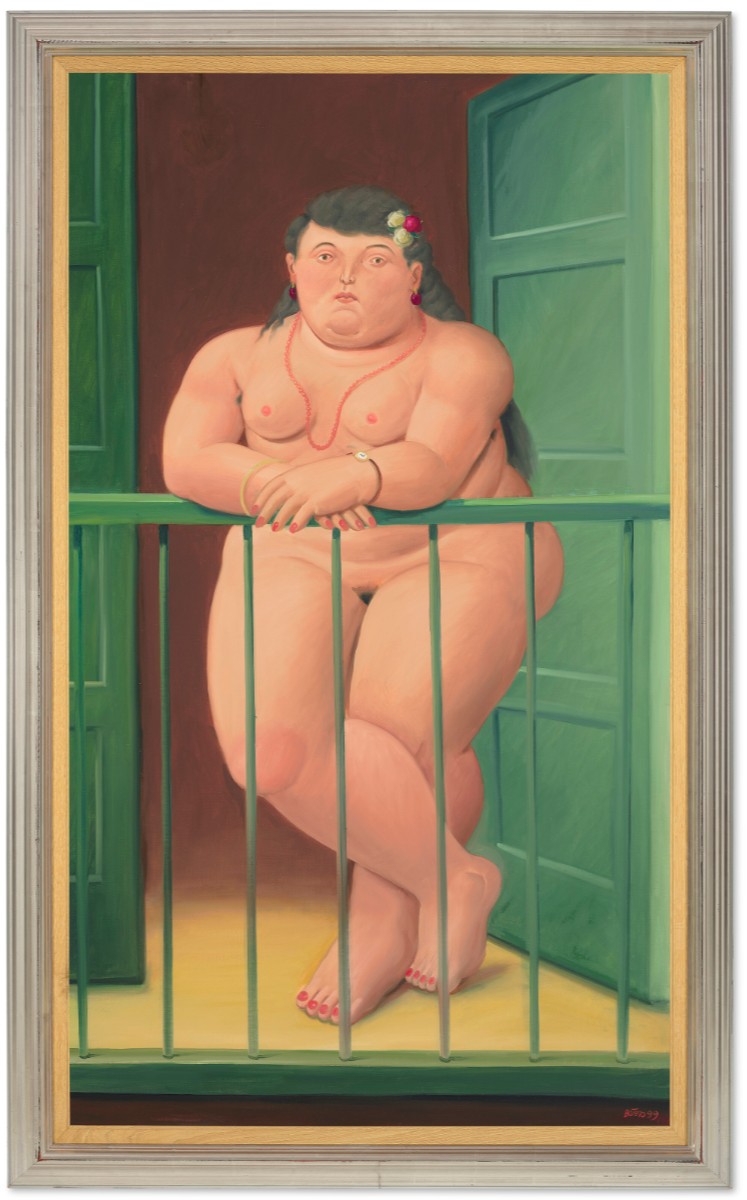
FERNANDO BOTERO (1932-2023)
The Balcony, 1999
Oil on canvas
161.9 x 93.3 cm (63-3/4 x 36-3/4 inches)
Signed and dated ‘Botero 99’ (lower right)
#9. Bird, 1981
Property from a Distinguished East Coast Collection
Sotheby’s New-York: 15 May 2026
Estimated: USD 250,000 – 350,000
USD 640,000
Fernando Botero | Bird | Contemporary Day Auction | 2026 | Sotheby’s
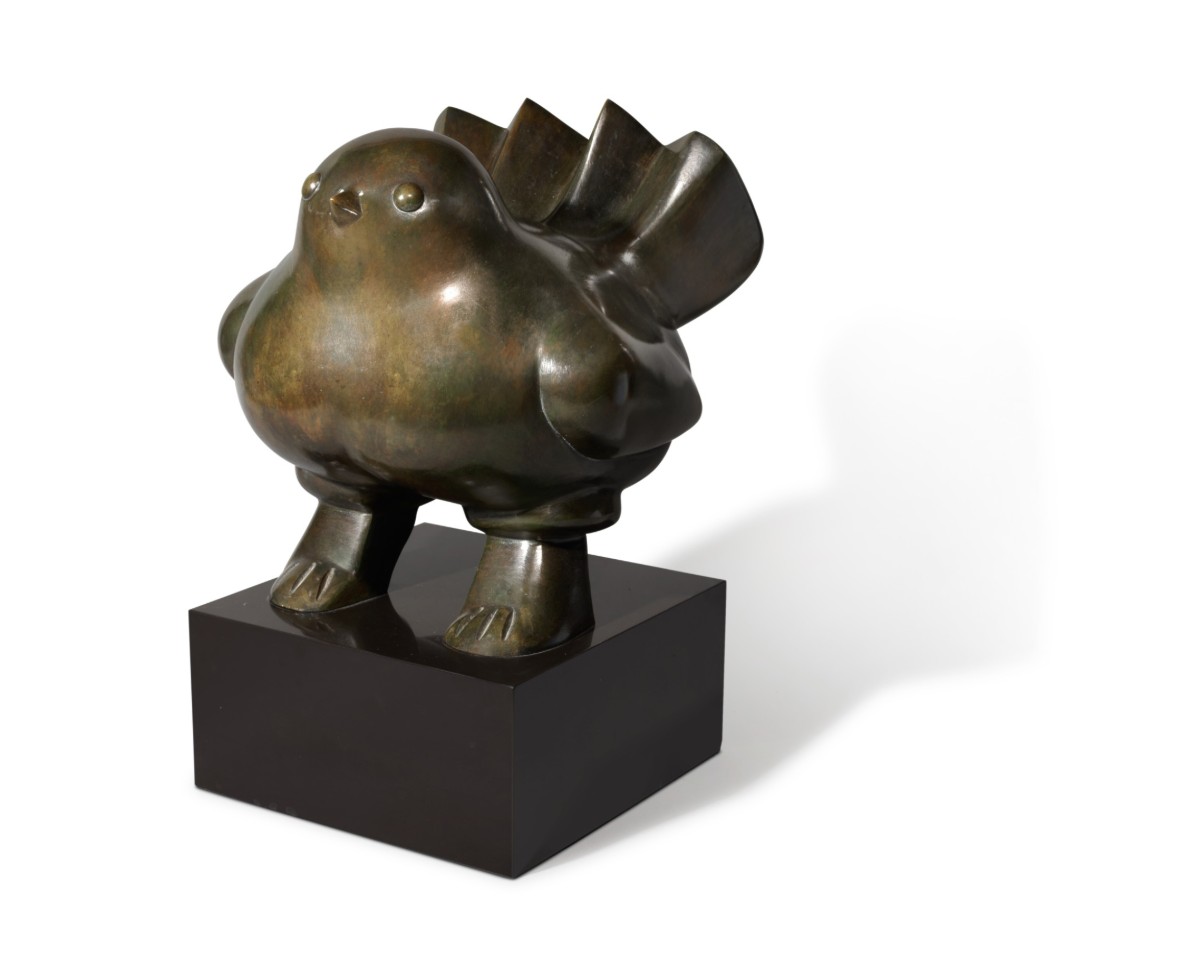
FERNANDO BOTERO (1932 – 2023)
Bird, 1981
Bronze
43.2 x 25.4 x 38.1 cm (17x10x15 inches)
Incised with the artist’s signature and number 2/6 (lower edge)
This work is number 2 from an edition of 6
#10. Le Matin, 1981-1982
Phillips New-York: 21 May 2026
Estimated: USD 280,000 – 350,000
USD 361,200
Fernando Botero Modern & Contemporary Art: Morning Session
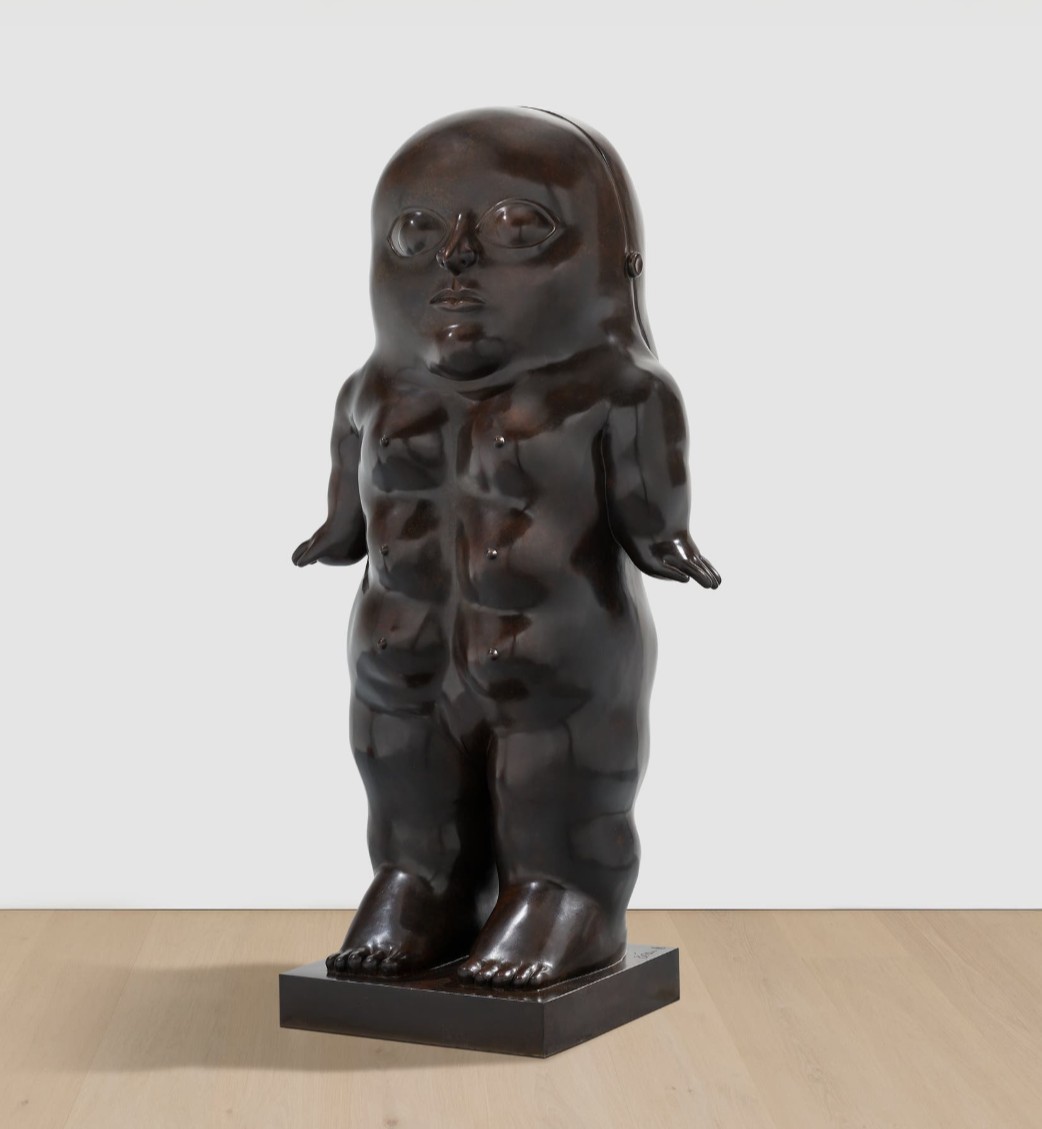
FERNANDO BOTERO
Le Matin, 1981-1982
Bronze
167.6 x 91.4 x 61.3 cm (66 x 36 x 24 1/8 inches)
Incised with the artist’s signature and number “Botero 1/6” on the base
Stamped with the foundry mark “Susse Fondeur, Paris” lower edge of base
El poeta, 1987
El poeta, 1987
Christie’s New-York: 21 May 2026
Estimated: USD 800,000 – 1,200,000
USD 1,270,000
FERNANDO BOTERO (1932-2023), El poeta | Christie’s
FERNANDO BOTERO (1932-2023)
El poeta, 1987
Oil on canvas
140×208 cm (55-1/8 x 81-7/8 inches)
Signed and dated ‘Botero 87’ (lower right)
Botero long worked within the venerable canons of art history, with what he once called a “very strange mixture of admiration and criticism.” Acknowledging that “an artist is always a critic of earlier artists,” he explained, “You think you must, and can, improve on earlier ages,” but at the same time “you must have this critical attitude to art of the past. . . . You can take the same subject and create a totally different painting. That’s where real originality lies, in taking something that’s already been done by someone and doing it differently” (in W. Spies, “‘I’m the most Colombian of Colombian artists’: A Conversation with Fernando Botero,” Fernando Botero: Paintings and Drawings, Munich, 1992, pp. 155-56).
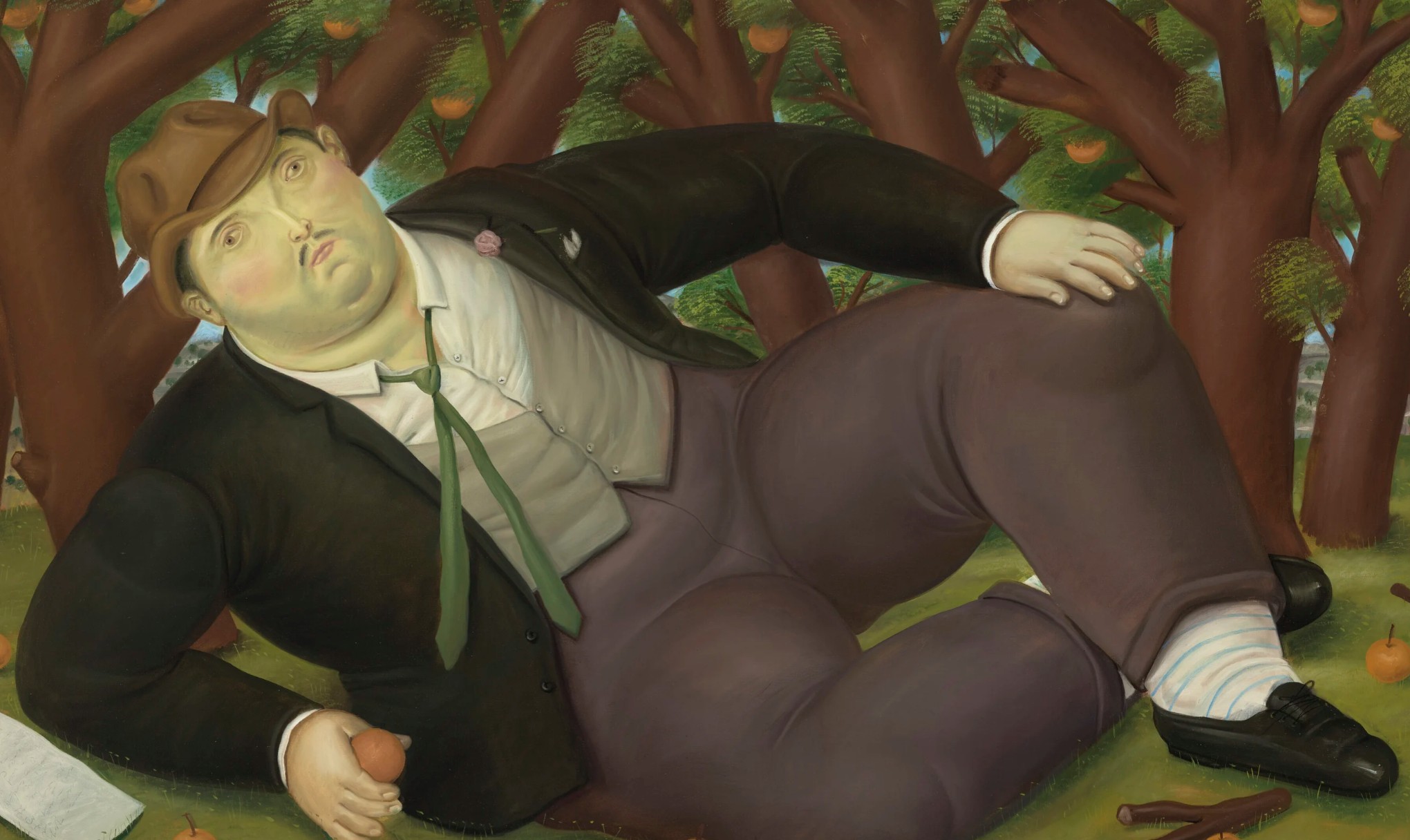
Since first departing for Europe in 1952, Botero drew from and critically reinterpreted myriad art-historical sources—Titian and Velázquez; Giotto and Masaccio; Rubens and Ingres—and embraced the classical sensuality of volume, space, and color in legions of stylized “Boteromorphs.” In El poeta Botero revisited an early and enduring source—Édouard Manet—in a delightful meditation on the genre of pastoral scenes, the stakes of modernism, and the art of homage.
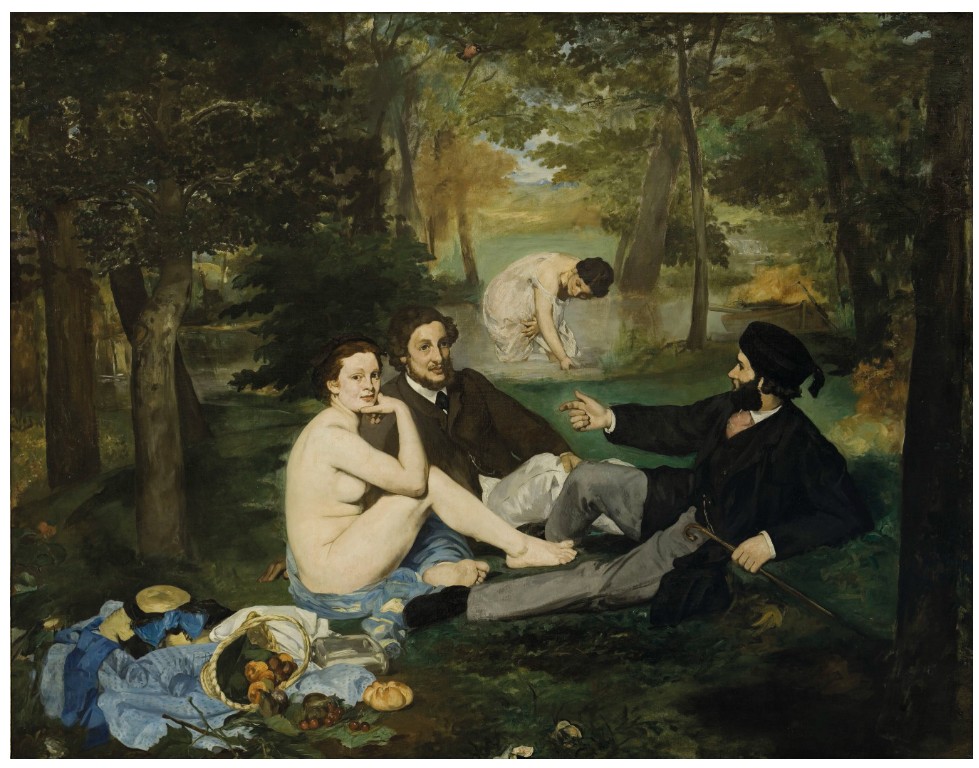
Édouard Manet, Le Déjeuner sur l’herbe, 1862-1863. Musée d’Orsay, Paris.
Botero persistently engaged with Manet’s iconoclastic painting, Le Déjeuner sur l’Herbe (1863), which scandalized contemporary audiences with its frank depiction of working-class sexuality and its non-illusionistic flatness, both of which defied classicizing Renaissance values. Beginning with Picnic in the Mountains (1966) and continuing in “Le Déjeuner sur l’Herbe” (1969) and El poeta, among other works, Botero reimagined the scene, “remak[ing] Manet’s even balance between landscape and figures,” as critic Carter Ratcliff explains. “They completely Botero-ize all there is of tradition in Manet’s style.” Manet had himself upended academic tradition, riffing on historical exemplars—notably, Titian’s Concert Champêtre (c. 1509) and Marcantonio Raimondi’s engraving after Raphael’s The Judgement of Paris (c. 1510-20). Botero turned the tables a century later, “Botero-iz[ing] Manet’s homage to the Renaissance” in his own revisitation of the Old Masters and the subsequent development of his eponymous style. “The massive weight of Boteromorphic plasticity expunges all hints of modernist formal play from pictorial space,” Ratcliff continues. “The unity of this painting requires Botero’s style to stand at a border and look two ways at once—toward Raphael’s Renaissance and toward the twentieth-century modernism which Manet did so much to instigate” (Botero, New York, 1980, pp. 117-23).
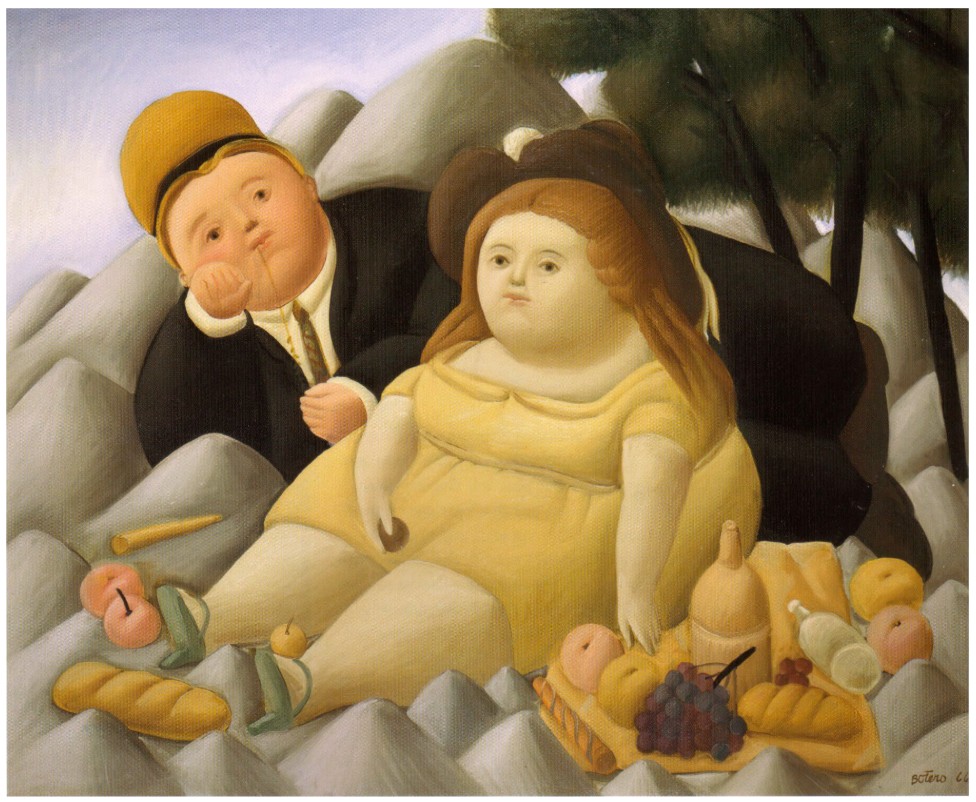
Fernando Botero, Picnic in the Mountains, 1966. © The Estate of Fernando Botero.
The dapper gentleman portrayed in El poeta nods to his modernist predecessor in Le Déjeuner sur l’Herbe, but in Botero’s revisioning he projects a benign, verdant serenity as reclines against a grove of apple trees. In the present painting as well as an earlier Poet (1970), Botero monumentalizes his subject, his pillowy body—jauntily dressed in a three-piece suit that clings to his curves—at rest as he takes a break from his poetic musings. A notepad rests alongside his right forearm just to the side of a bright red pencil, which floats at the edge of the canvas in a subtle homage to the age-old trompe-l’oeil tradition. The apples, a recurrent motif across Botero’s paintings, suggestively transport the figure to a modern-day Garden of Eden—a snake similarly appears in his “Le Déjeuner sur l’Herbe”—and in that way return the painting to a timeless and eternal subject. “An artist is able to let people experience the past with the feeling of the present,” Botero reflected. “You can’t escape from your own time, so you’re creating something that belongs to the present moment—because once art has gone through an experience it never returns to its previous position. That’s why it’s impossible to fake Quattrocento or nineteenth-century paintings—they’ll always be twentieth-century paintings” (in W. Spies, op. cit., p. 155).
The Bride, 2009
The Bride, 2009
Property from a Distinguished Private Collection, Texas
Sotheby’s New-York: 15 May 2026
Estimated: USD 800,000 – 1,200,000
USD 870,400
Fernando Botero | The Bride | Contemporary Day Auction | 2026 |
FERNANDO BOTERO (1932 – 2023)
The Bride, 2009
Oil on canvas
67×39 inches (170.2 x 99.1 cm)
Signed and dated 09 (lower right)
Fernando Botero’s The Bride is among the most tender and ceremonially charged works of the artist’s late career, a monumental and quietly radiant image of feminine ritual. A solitary figure dominates the picture plane, her voluminous white gown cascading to the floor in rippling tiers, a bouquet of pale yellow flowers gathered loosely in her hands. Flowers adorn her chestnut hair, and a long veil trails behind her with quiet monumentality. The palette, cream, ivory, and soft sage, is restrained and luminous, suffusing the composition with an air of dignified solemnity. The figure gazes outward with the composed, slightly enigmatic expression characteristic of Botero’s figural work, at once intimate and hieratic.
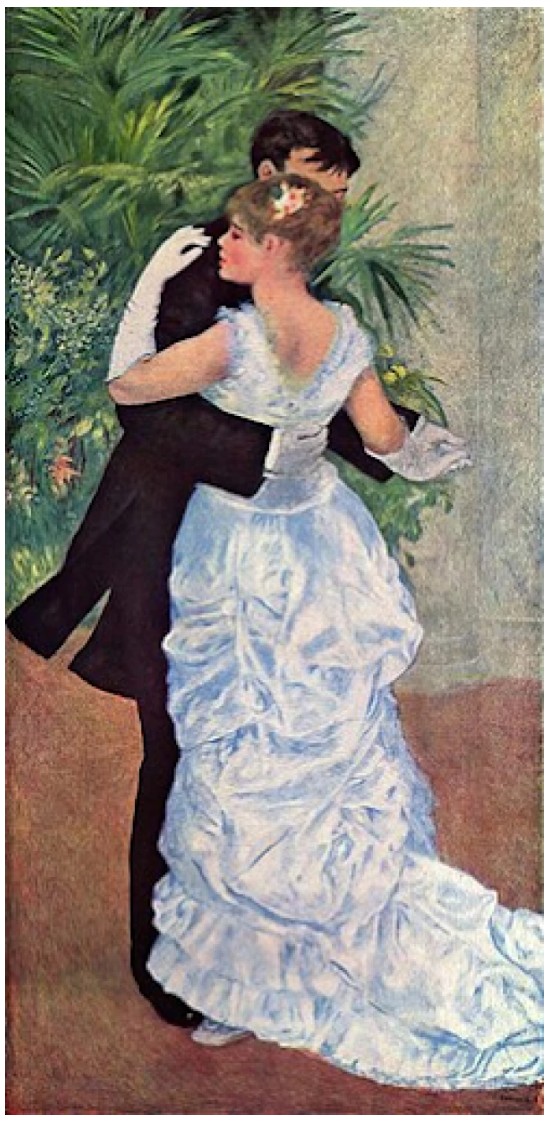
Pierre-Auguste Renoir, Dance in the City, 1883, Musée d’Orsay, Paris
The painting exemplifies the formal vocabulary Botero had refined over six decades: his celebrated volumetría, a system of pronounced, spherical amplification through which every form, human, animal, or inanimate, acquires an almost sculptural weight and presence. This approach was never intended as social commentary or caricature. Rather, Botero understood volume as the fundamental language of sensuality and beauty, an inheritance from the great Flemish and Italian masters he studied assiduously during formative years in Florence and Madrid. The influence of Piero della Francesca and Mantegna is palpable in the stillness and frontality of figures such as this bride.
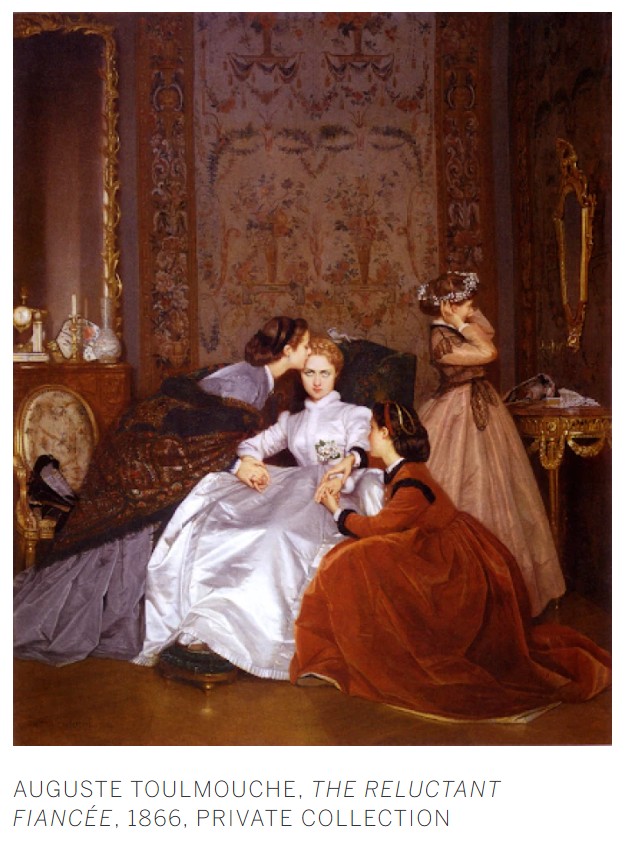
Where Lucian Freud excavated the psychological and corporeal rawness of his sitters, and John Currin engaged figuration through a lens of irony and art-historical pastiche, Botero’s relationship to the human form was one of unambiguous celebration. He shares with Freud a preoccupation with bodily mass as an expressive vehicle, yet his figures inhabit a world of warmth and archetype rather than existential unease. Closer perhaps to the earthy humanism of Fernand Léger — whose tubular, monumental figures similarly defied prevailing abstraction — Botero nonetheless carved out a position entirely his own, rooted in the cultural memory of Latin America and the classical traditions of the European Renaissance.
“If women are often my subjects, it’s because they have been one of the main subjects of paintings for centuries. What really guides me above all, when I sculpt or paint men, women, animals, or objects, is the plastic aspect of beings and things. Plasticity exists indiscriminately in a woman, a still life, or a landscape.”
Born in Medellín, Colombia in 1932, Botero became the most internationally celebrated Latin American artist of his generation, a distinction underscored by major retrospectives across Europe, the Americas, and Asia. His work occupies a singular position in art history — resistant to the dominant currents of Abstract Expressionism and Minimalism that defined his era, he pursued a resolutely figurative practice of extraordinary consistency and ambition. The Bride stands as a luminous late affirmation of that lifelong commitment.
Variaciones sobre Cézanne, 1963
Variaciones sobre Cézanne, 1963
Sotheby’s New-York: 15 May 2026
Estimated: USD 450,000 – 650,000
USD 704,000
Fernando Botero | Variaciones sobre Cézanne | Contemporary Day
FERNANDO BOTERO (1932 – 2023)
Variaciones sobre Cézanne, 1963
Oil on canvas
129.5 x 151.1 cm (51 x 59-1/2 inches)
Signed, titled and dated 63 (lower right)
When Fernando Botero painted Variaciones sobre Cézanne in 1963, New York was in the grip of a cultural upheaval. Abstract Expressionism was loosening its stranglehold on the avant-garde, and a brash new movement — Pop Art — was exploding onto the scene, gleefully dismantling the boundaries between high culture and mass-produced imagery. Botero, a Colombian expatriate working stubbornly against the grain of both movements, found himself occupying a peculiar and revelatory middle ground: a figurative painter whose instincts, it turned out, rhymed deeply with the Pop sensibility he claimed never to have known.
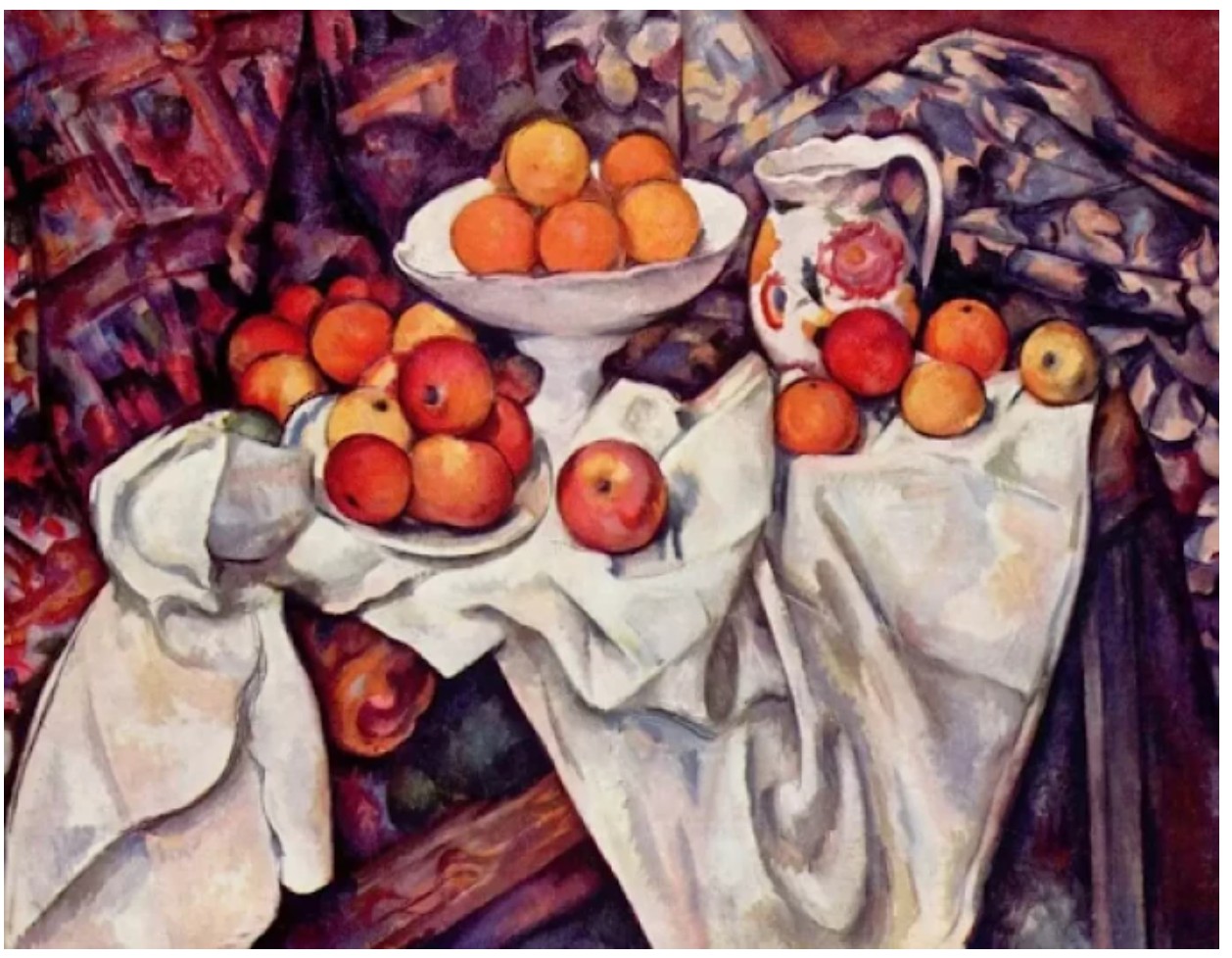
Paul Cézanne, Still Life with Apples and Oranges, 1895, Musée d’Orsay, Paris
Pop Art, as practiced by Roy Lichtenstein, Andy Warhol, and their contemporaries, was fundamentally an art of quotation and transformation. It took the icons of consumer culture, advertisements, comic strips, celebrity photographs, and subjected them to ironic reframing, asking the viewer to see the familiar as strange, the banal as monumental. Botero was doing something strikingly similar, only his source material was the Western canon rather than the supermarket shelf. His lifelong habit of repainting the Old Masters, Cézanne, Velázquez, Piero della Francesca, is, at its core, the same gesture of appropriation and defamiliarization that defined Pop. Where Lichtenstein blew up a comic-book panel to museum scale, Botero inflated Cézanne’s apples until they threatened to roll off the canvas entirely.
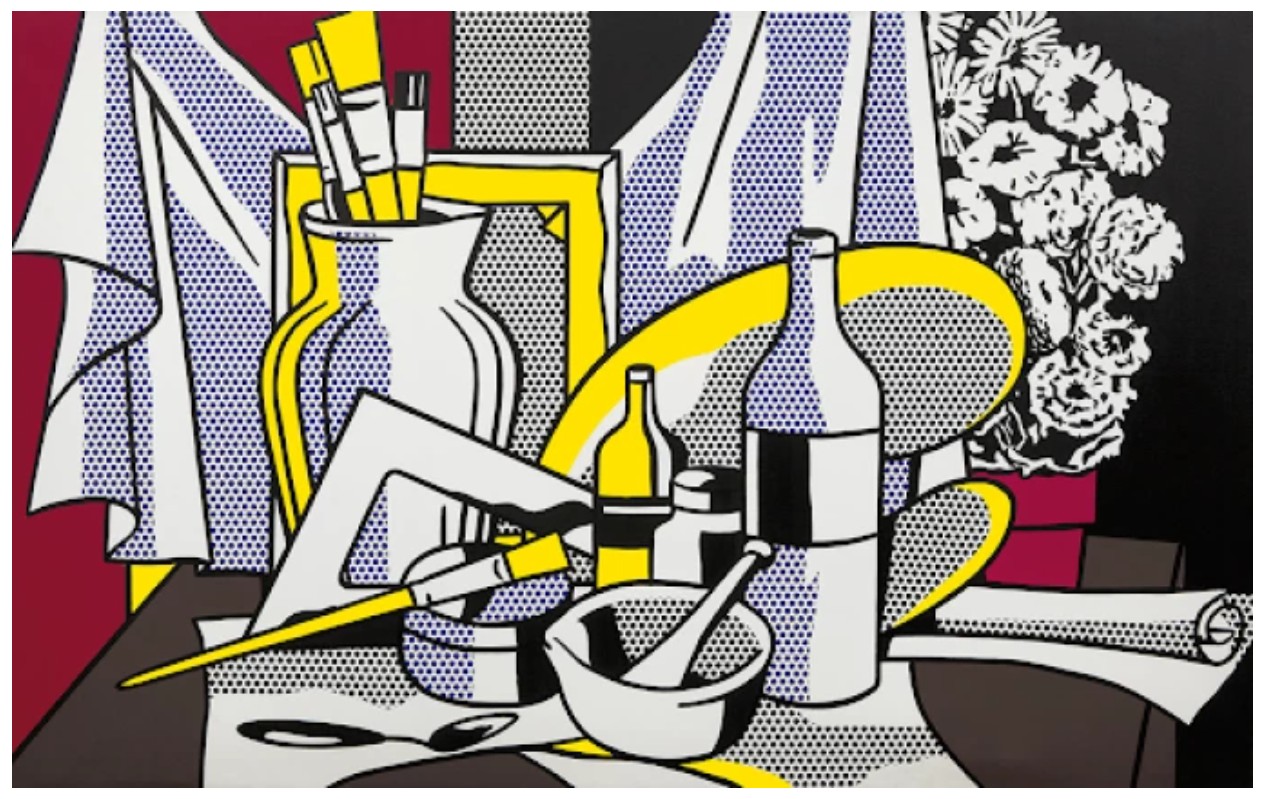
Roy Lichtenstein, Still Life with Palette, 1972, Private Collection
Variaciones sobre Cézanne makes this parallel impossible to ignore. The source painting, Cézanne’s Still Life with Apples and Oranges from 1895, is one of the most canonized images in Western art, the kind of work reproduced endlessly on posters, postcards, and textbook covers, already half-transformed into mass-media image by the time Botero encountered it. His response is characteristically layered. He strips away Cézanne’s Provençal tablecloth and replaces it with stark white linen; he swaps prim bone china for cheerful FiestaWare; and he pumps every piece of fruit to a scale so exaggerated, so voluminous, that the painting tips from homage into something closer to parody, or, more precisely, into the affectionate, knowing irony that Pop Art made its signature register. Even the title, scrawled with wild exuberance directly onto the canvas, has the irreverent energy of a Pop gesture, calling attention to the act of quotation itself.
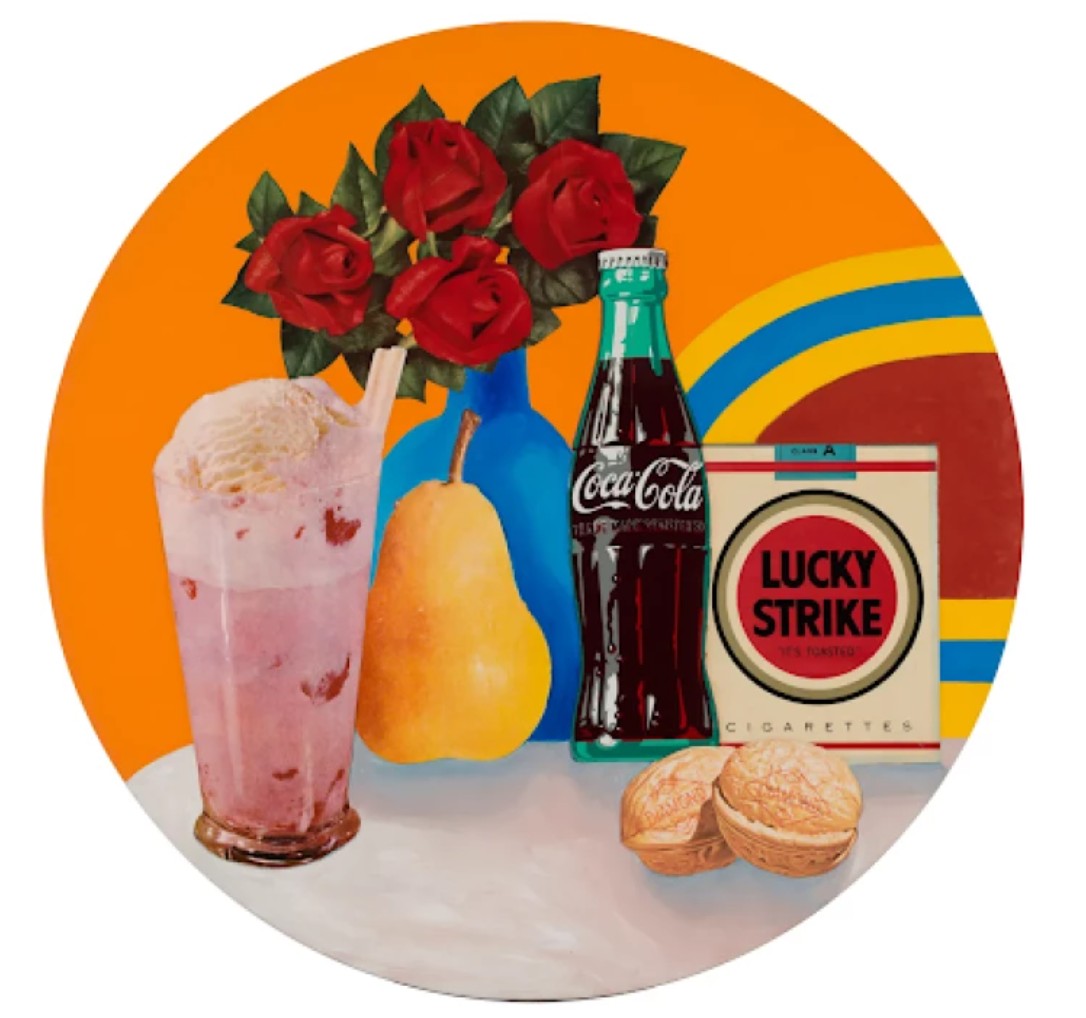
Tom Wesselmann Still Life #34, 1963, Private Collection
The most pointed move, however, is Botero’s addition of an easel in the foreground. Where Cézanne presented the still life as a self-contained world, Botero pulls back the curtain and reveals the studio, the machinery of art-making, lurking behind the composition. It is a deeply Pop maneuver: the exposure of artifice, the refusal to let the illusion of the image go unquestioned. In this single element, Botero does what Lichtenstein did with Ben-Day dots, he makes the construction of the image part of the image itself.
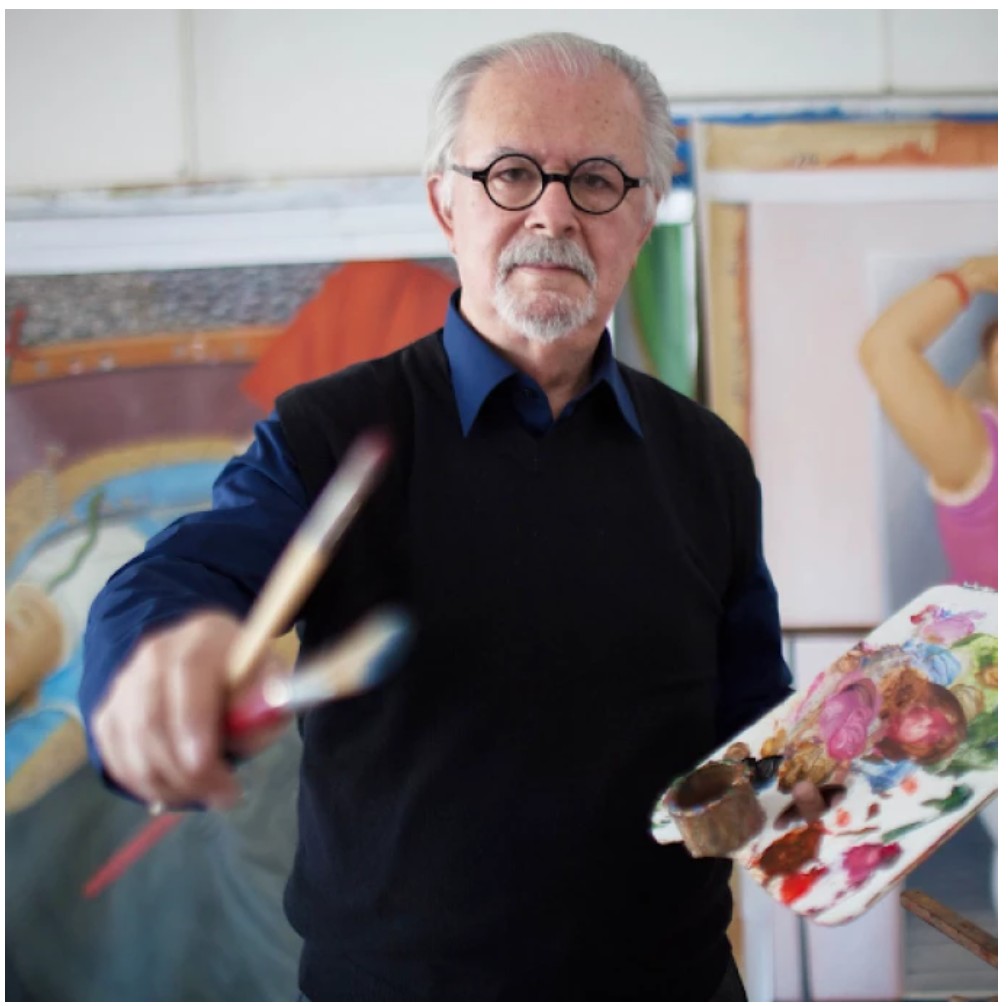
The artist in his studio.
Botero arrived in New York in 1960 and quickly earned recognition, most notably with the Museum of Modern Art’s acquisition of Mona Lisa, Age Twelve. But his years in the city were also marked by resistance. His unwavering commitment to figuration put him at odds with the dominant New York School, and critics were often dismissive. Yet as the decade progressed, the cultural tide was shifting in his direction — not toward traditional figuration, but toward Pop’s resurrection of the legible, the referential, the image-as-image. Botero’s mature style, with its jewel-toned fields of color and its boldly deformed volumes, was developing in parallel with Pop’s own aesthetic of flattened, intensified surfaces. In Variaciones sobre Cézanne, Botero answers that question with characteristic wit and confidence. The result is a work that is at once a love letter to the Western tradition and a gentle, irresistible subversion of it, joyfully, architectonically rigorous, and unmistakably alive to the transformative possibilities of its moment.
The Balcony, 1999
The Balcony, 1999
Christie’s New-York: 21 May 2026
Estimated: USD 450,000 – 650,000
USD 660,400
FERNANDO BOTERO (1932-2023), The Balcony | Christie’s
FERNANDO BOTERO (1932-2023)
The Balcony, 1999
Oil on canvas
63-3/4 x 36-3/4 inches (161.9 x 93.3 cm)
Signed and dated ‘Botero 99’ (lower right)
“If women are often my subjects, it’s because they have been one of the main subjects of paintings for centuries. What really guides me above all, when I sculp or paint men, women, animals, or objects, is the plastic aspect of beings and things. Plasticity exists indiscriminately in a woman, a still life, or a landscape.”
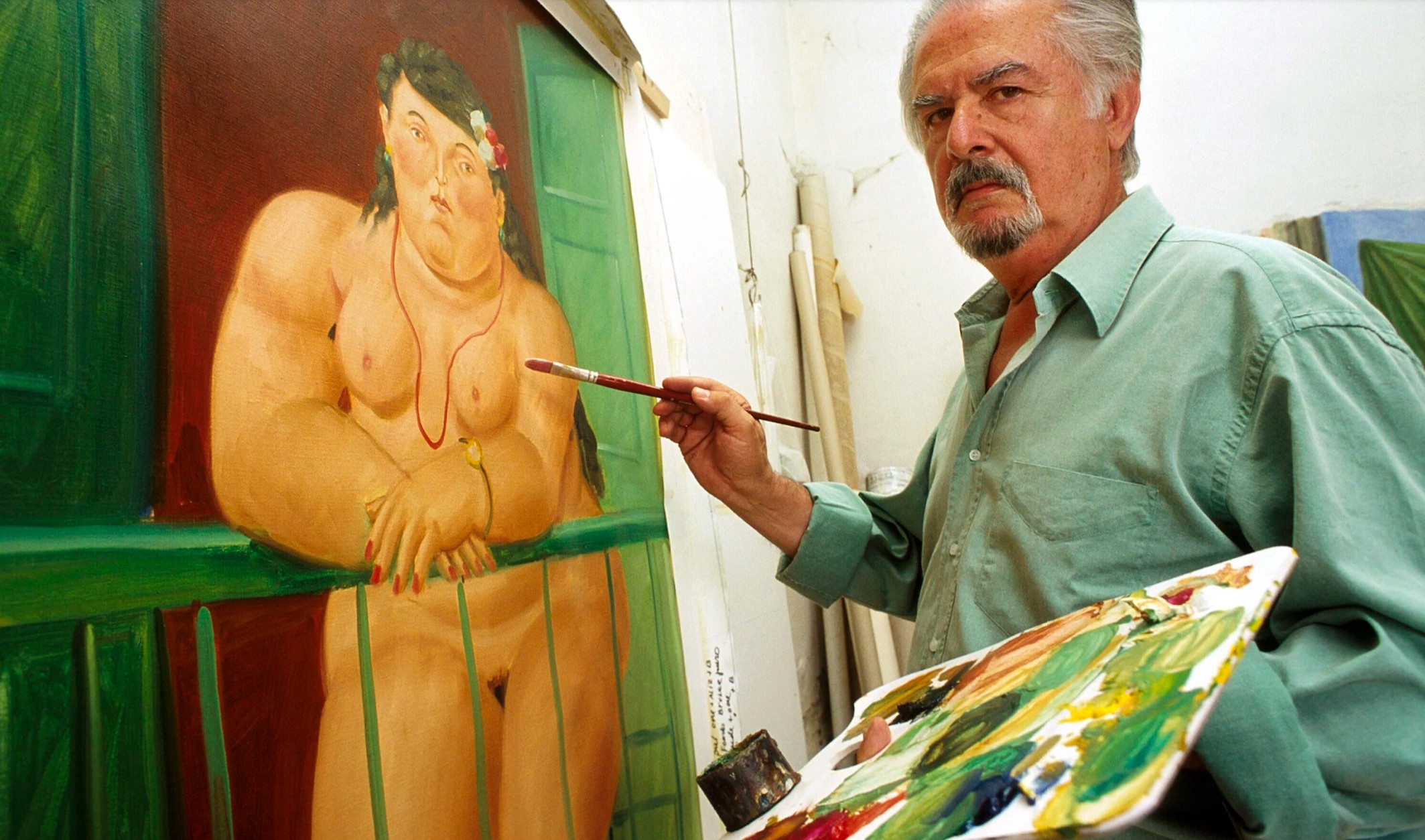
Fernando Botero painting the present lot at his home in Pietrasanta, June 1999. Photo: Eric Vandeville / Gamma-Rapho via Getty Images.
The Street, 2013
The Street, 2013
Property from an Important Private Collection
Christie’s New-York: 21 May 2026
Estimated: USD 400,000 – 600,000
USD 889,000
FERNANDO BOTERO (1932-2023), The Street | Christie’s
FERNANDO BOTERO (1932-2023)
The Street, 2013
Oil on canvas
68 x 71.1 cm (26-3/4 x 28 inches)
Signed and dated ‘Botero 13’ (lower right)
“I left Colombia when I was nineteen. At that age, you’re already the way you are and don’t really change later. The first twenty years of your life mark you in a very special way… art, too, must have roots. I paint Colombia the way I want it to be. It’s an imaginary Colombia—like Colombia but, at the same time, not like it.”
The Picnic, 1994
The Picnic, 1994
Property from the Collection of Annabelle and Bernard Fishman
Sotheby’s New-York: 15 May 2026
Estimated: USD 300,000 – 500,000
USD 768,000
Fernando Botero | The Picnic | Contemporary Day Auction | 2026 |
FERNANDO BOTERO (1932 – 2023)
The Picnic, 1994
Oil on canvas
73.7 x 80 cm (29 x 31-1/2 inches)
Signed and dated 94 (lower right)
Horse, 2008
Horse, 2008
Property from an Important Private Collection
Christie’s New-York: 21 May 2026
Estimated: USD 500,000 – 700,000
USD 1,778,000
FERNANDO BOTERO (1932-2023), Horse | Christie’s
FERNANDO BOTERO (1932-2023)
Horse, 2008
Bronze
92.1 x 52.1 x 101.6 cm (36-1/4 x 20-1/2 x 40 inches)
Incised with the artist’s signature and stamped with the number and foundry mark ‘Botero 3⁄6’ (on the base)
This work is number three from an edition of six
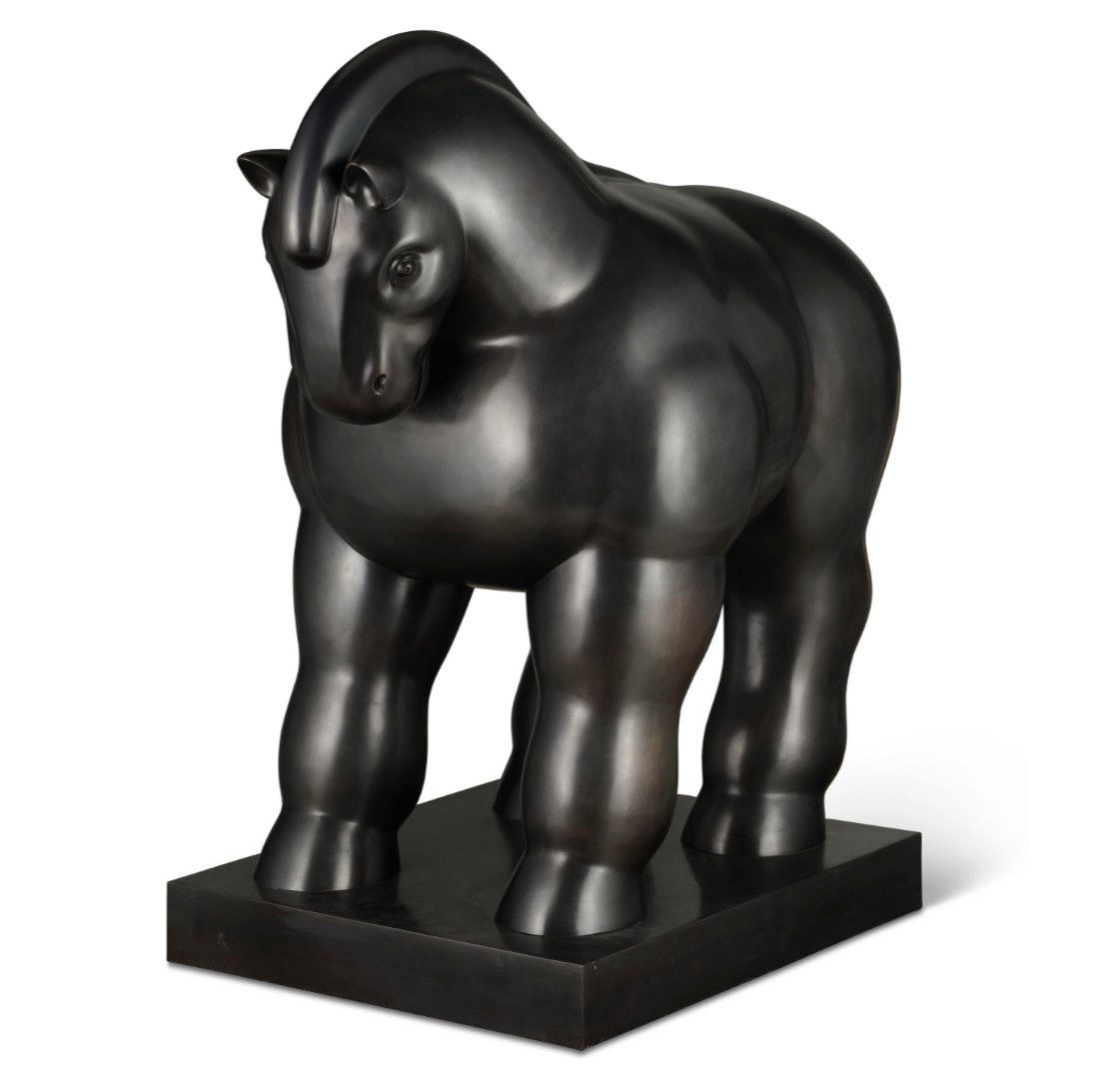
“Sculpture is painting without borders…Sculpture was a natural experience in my evolution because of the obvious sculptural element in my paintings. This was a return to simplicity, to growing indifference to details and to a more geometric awareness of shape.”
Roman Soldier, 1985
Roman Soldier, 1985
Property from the Maharam Family Collection
Sotheby’s New-York: 15 May 2026
Estimated: USD 350,000 – 550,000
USD 704,000
Fernando Botero | Roman Soldier | Contemporary Day Auction | 2026 |
FERNANDO BOTERO (1932 – 2023)
Roman Soldier, 1985
Bronze
188 x 91.4 x 54 cm (74 x 36 x 21-1/4 inches)
Incised with the artist’s signature and number 4/6 and stamped with the foundry mark (on the base)
This work is number 4 from an edition of 6
Bird, 1981
Bird, 1981
Property from a Distinguished East Coast Collection
Sotheby’s New-York: 15 May 2026
Estimated: USD 250,000 – 350,000
USD 640,000
Fernando Botero | Bird | Contemporary Day Auction | 2026 | Sotheby’s
FERNANDO BOTERO (1932 – 2023)
Bird, 1981
Bronze
43.2 x 25.4 x 38.1 cm (17x10x15 inches)
Incised with the artist’s signature and number 2/6 (lower edge)
This work is number 2 from an edition of 6