MAY 2026 NEW-YORK AUCTIONS
Ed Ruscha
Auction Results
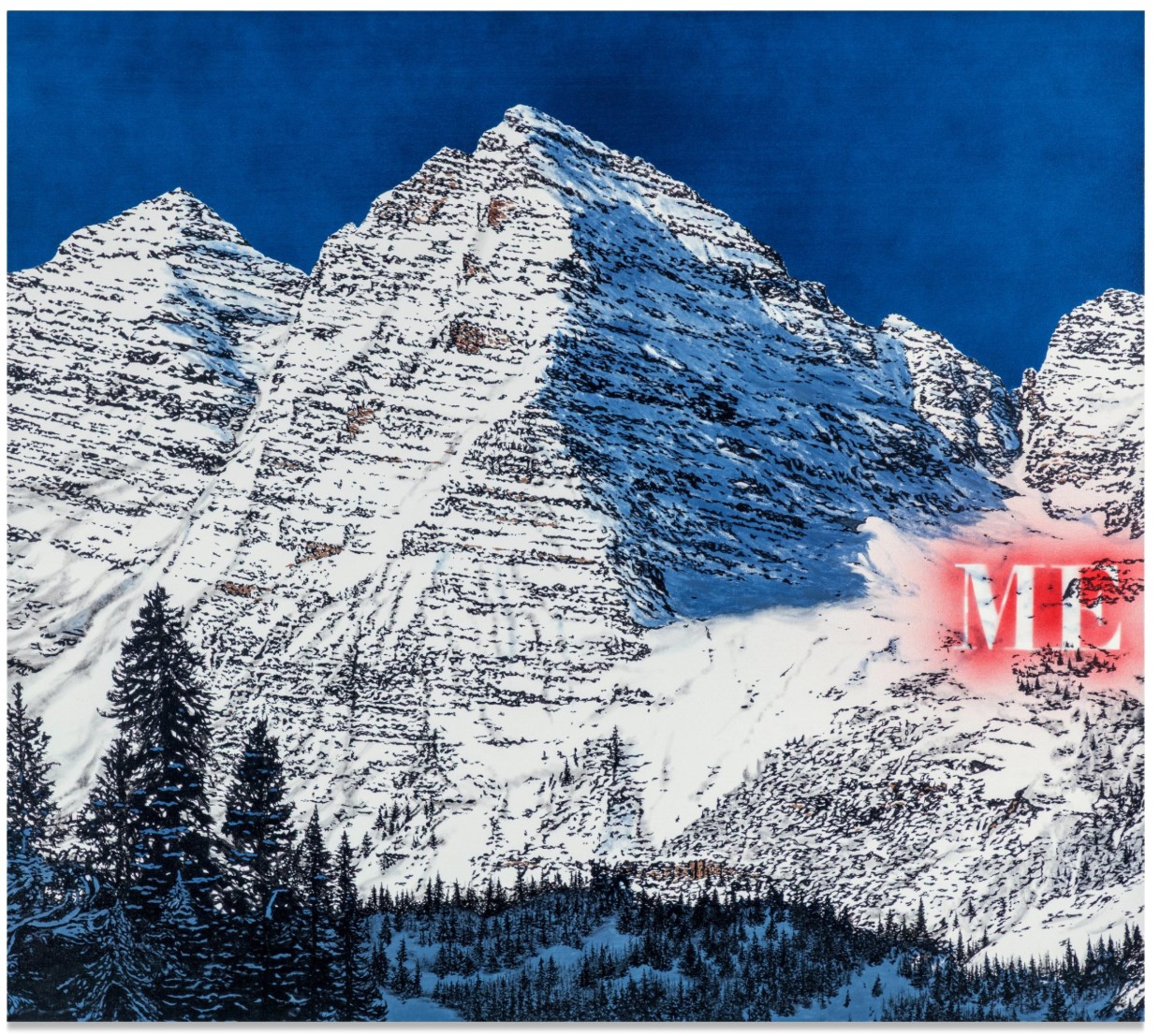
#1. Me, 1999
Sotheby’s New-York: 14 May 2026
Estimated: USD 4,000,000 – 6,000,000
USD 6,952,000
Ed Ruscha | Me | The Now & Contemporary Evening Auction | 2026 |
ED RUSCHA (b. 1937)
Me, 1999
Acrylic on canvas
64×72 inches (162 x 182.9 cm)
Signed and dated 1999 (on the reverse)
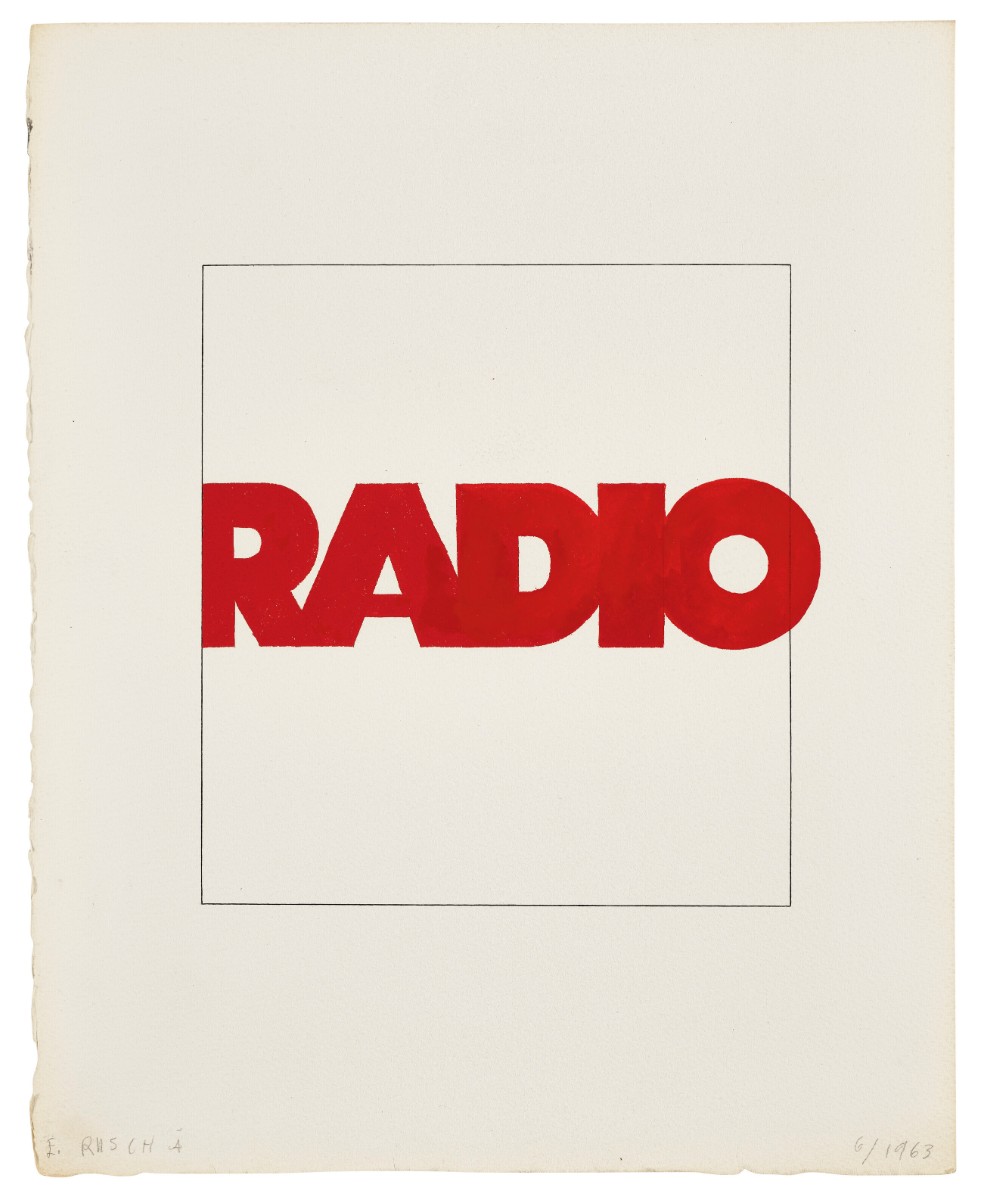
#2. Radio in Red, 1963
Property from the Collection of Barbara and Tom Rounds
Christie’s New-York: 21 May 2026
Estimated: USD 500,000 – 700,000
USD 889,000
WORK ON PAPER
ED RUSCHA (B. 1937), Radio in Red | Christie’s
ED RUSCHA (B. 1937)
Radio in Red, 1963
Tempera and ink on paper
14 x 11-1/4 inches (35.6 x 28.6 cm)
Signed ‘E. RUSCHA’ (lower left)
Dated ‘6⁄1963’ (lower right)
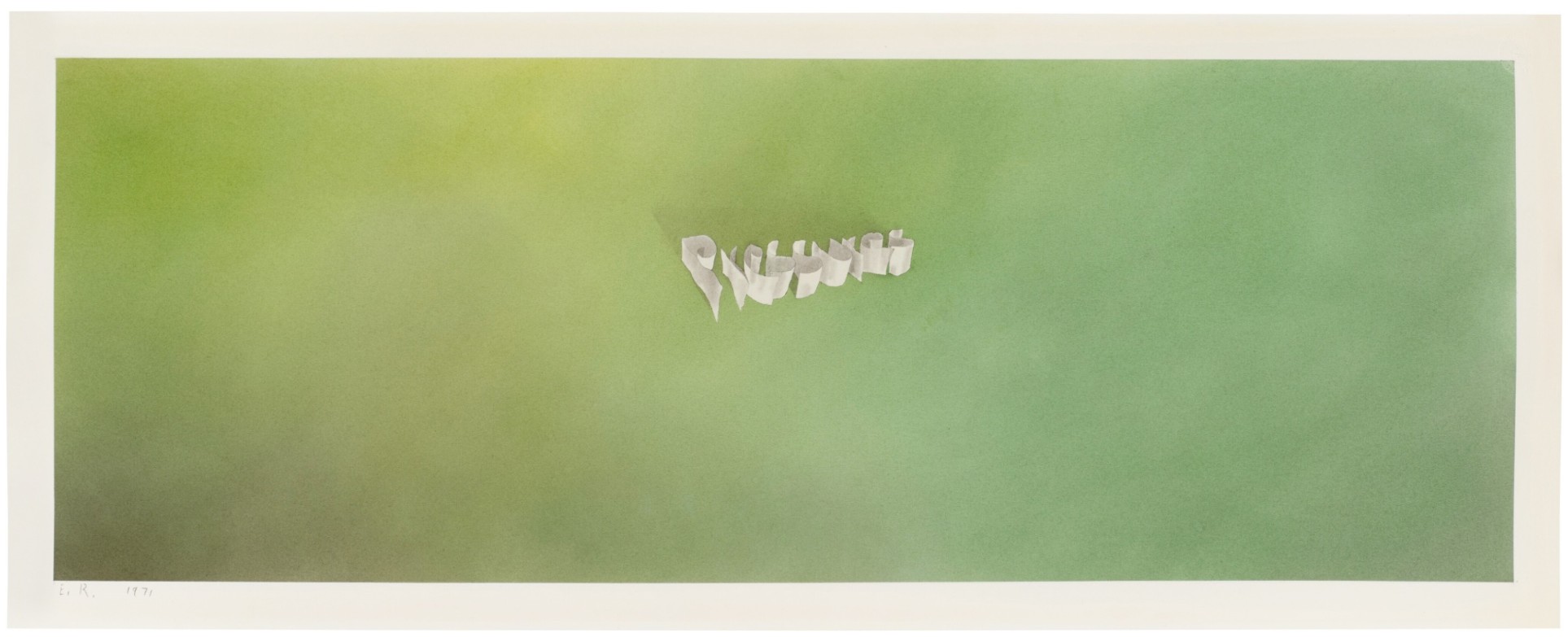
#3. Pressures, 1971
Radiant Forms: Works from a Distinguished Private Collection
Sotheby’s New-York: 15 May 2026
Estimated: USD 300,000 – 500,000
USD 576,000
WORK ON PAPER
Ed Ruscha | Pressures | Contemporary Day Auction | 2026 | Sotheby’s
ED RUSCHA (b. 1937)
Pressures, 1971
Gunpowder and pastel on paper
11-1/2 x 29 inches (29.2 x 73.7 cm)
Signed with the artist’s initials and dated 1971 (lower left)
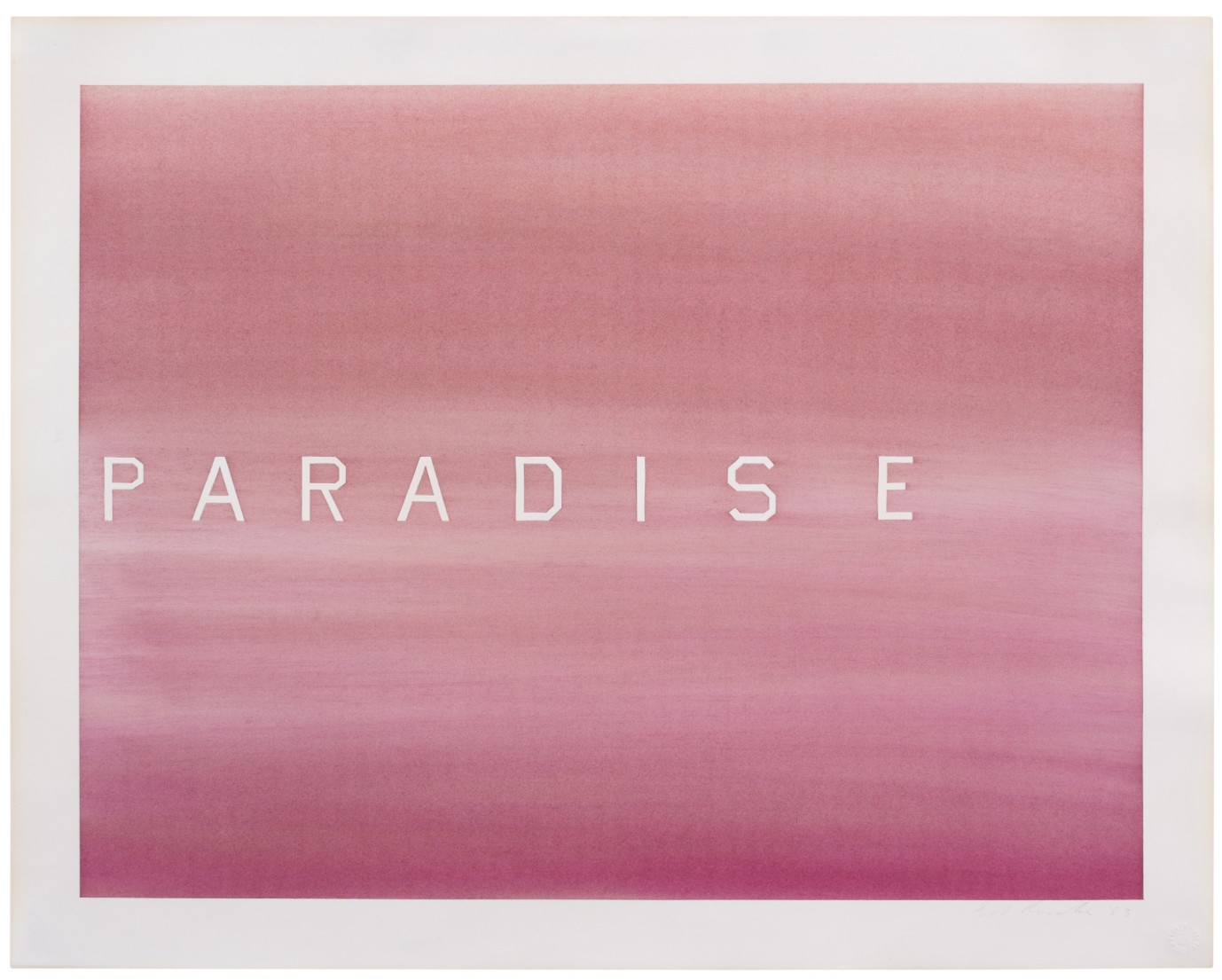
#4. Paradise, 1983
Sotheby’s New-York: 15 May 2026
Estimated: USD 400,000 – 600,000
USD 512,000
Ed Ruscha | Paradise | Contemporary Day Auction | 2026 | Sotheby’s
ED RUSCHA (b. 1937)
Paradise, 1983
Dry pigment on paper
Image: 19-3/4 x 23-3/4 inches (50.2 x 60.3 cm)
Sheet: 23-1/8 x 29-1/8 inches (58.7 x 74 cm)
Signed and dated ‘83 (lower right)
#5. Trademark Study #4, 1962
Christie’s New-York: 21 May 2026
Estimated: USD 100,000 – 150,000
USD 419,100
WORK ON PAPER
ED RUSCHA (B. 1937), Trademark Study #4 | Christie’s
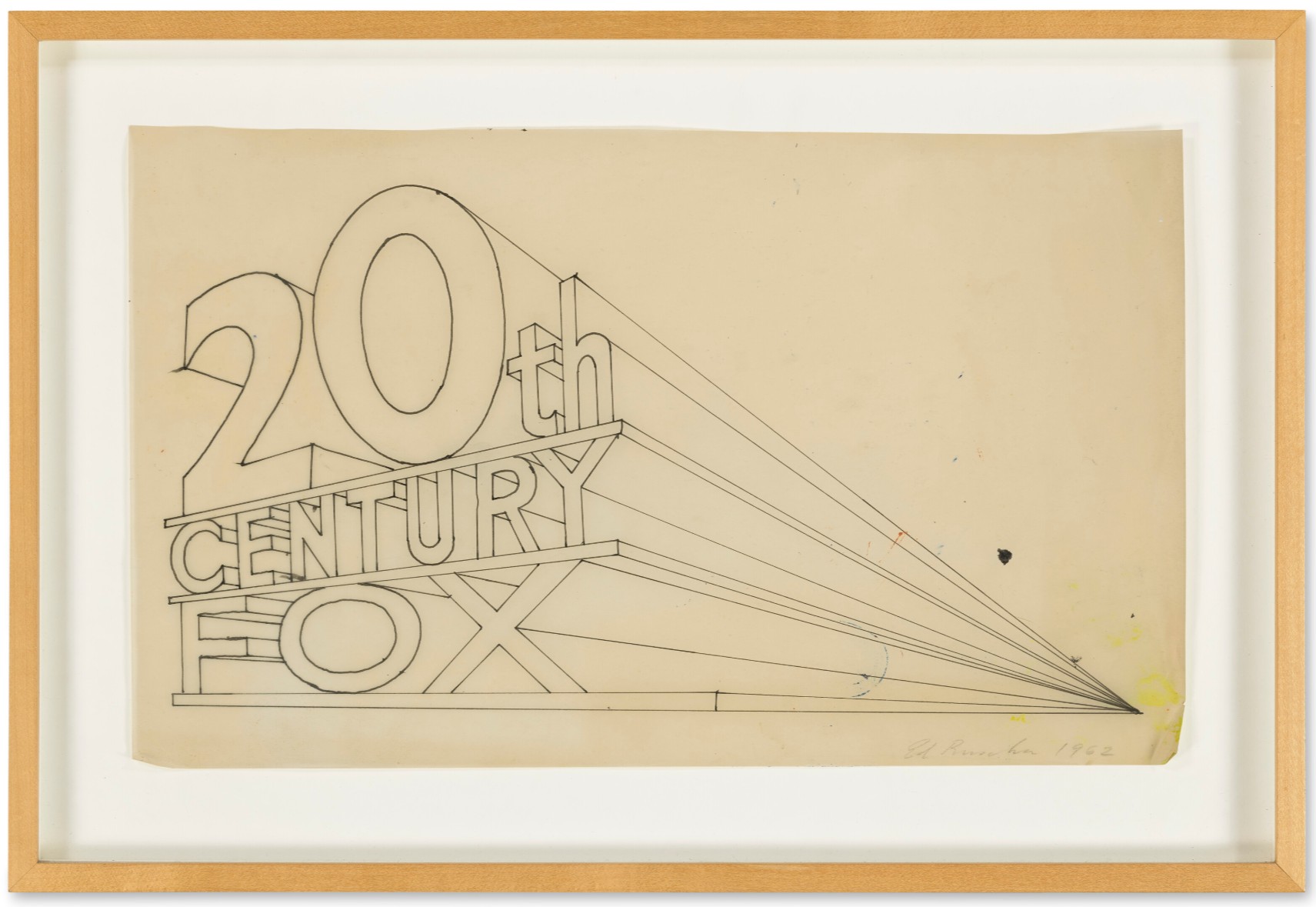
ED RUSCHA (B. 1937)
Trademark Study #4, 1962
Ink on tracing paper
8-1/4 x 13-3/4 inches (20.8 x 34.8 cm)
Signed and dated ‘Ed Ruscha 1962’ (lower right)
#6. Elderly People, 1975
Christie’s New-York: 21 May 2026
Estimated: USD 300,000 – 400,000
USD 304,800
WORK ON PAPER
ED RUSCHA (B. 1937), Elderly People | Christie’s
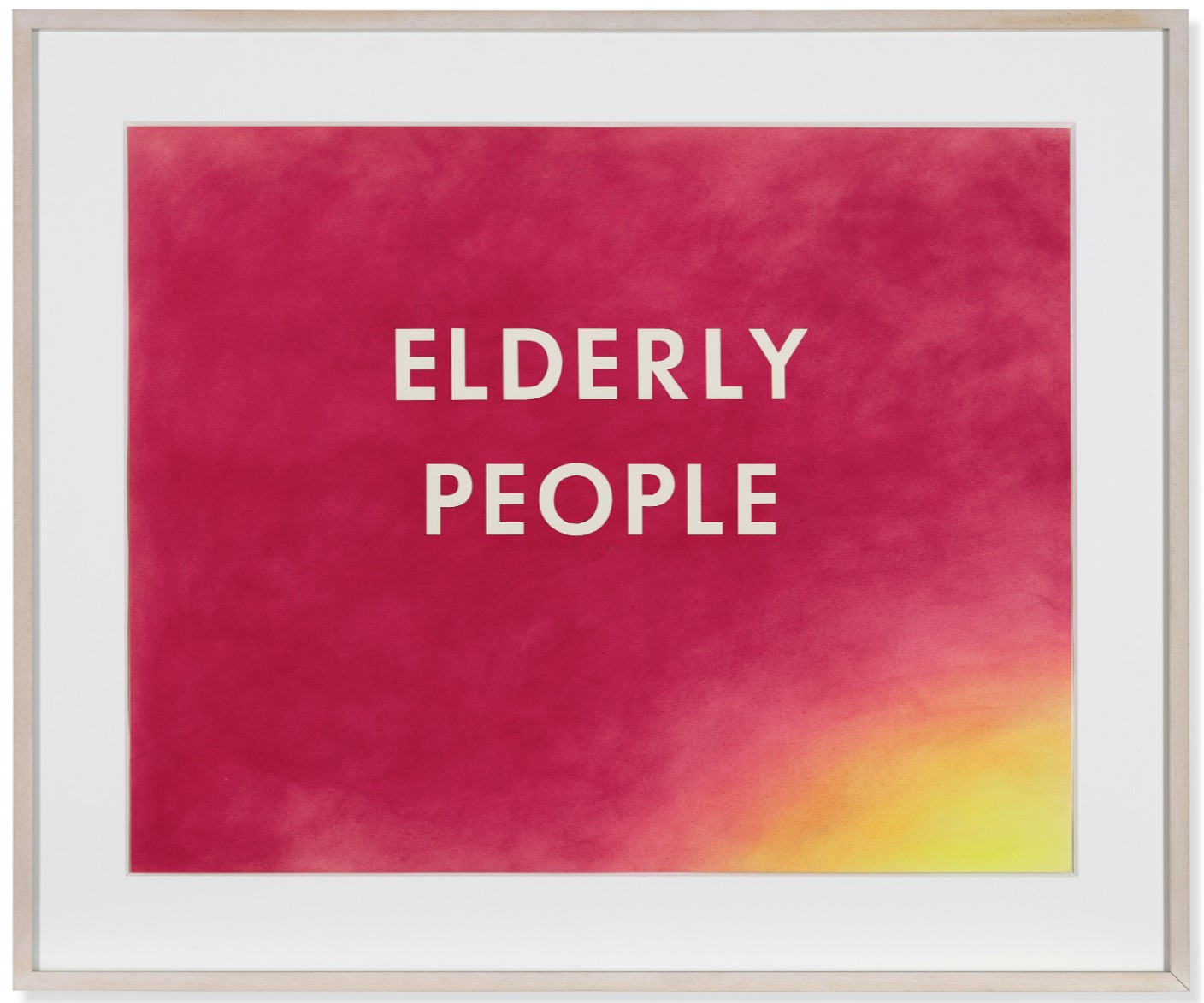
ED RUSCHA (B. 1937)
Elderly People, 1975
Pastel on paper
22-3/4 x 28-1/2 inches (56.6 x 71.4 cm)
Signed and dated ‘Edward Ruscha 1975’ (on the reverse)
#7. Trashy Fish, 1973
Christie’s New-York: 21 May 2026
Estimated: USD 200,000 – 300,000
USD 254,000
WORK ON PAPER
ED RUSCHA (B. 1937), Trashy Fish | Christie’s
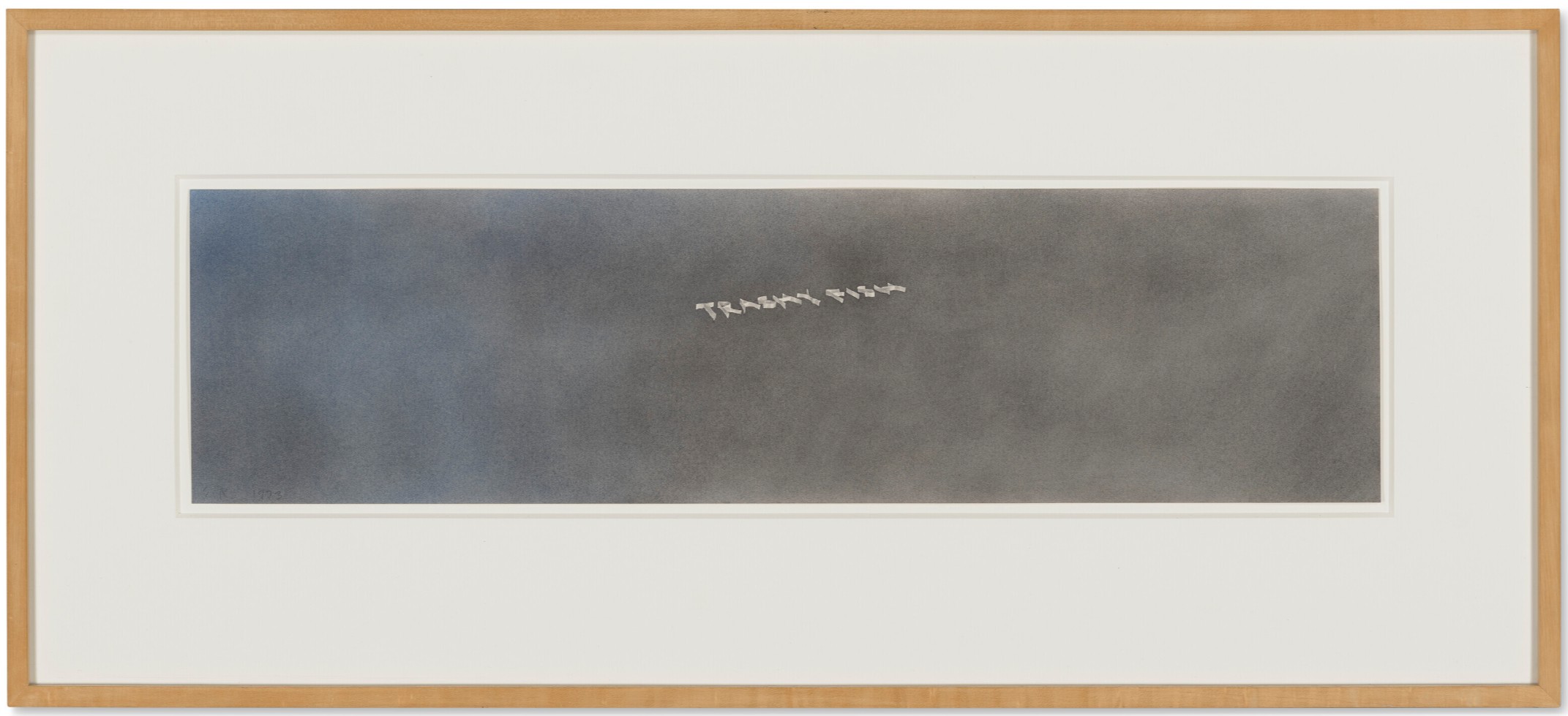
ED RUSCHA (B. 1937)
Trashy Fish, 1973
Gunpowder and pastel on paper
7-1/2 x 28-1/4 inches (17.8 x 71.1 cm)
Signed with the artist’s initials and dated ‘E.R. 1973’ (lower left)
#8. Is it Overcast, Radiation Fog, or Scud?, 1990
Phillips New-York: 21 May 2026
Estimated: USD 150,000 – 250,000
USD 193,500
WORK ON PAPER
Ed Ruscha Modern & Contemporary Art: Morning Session
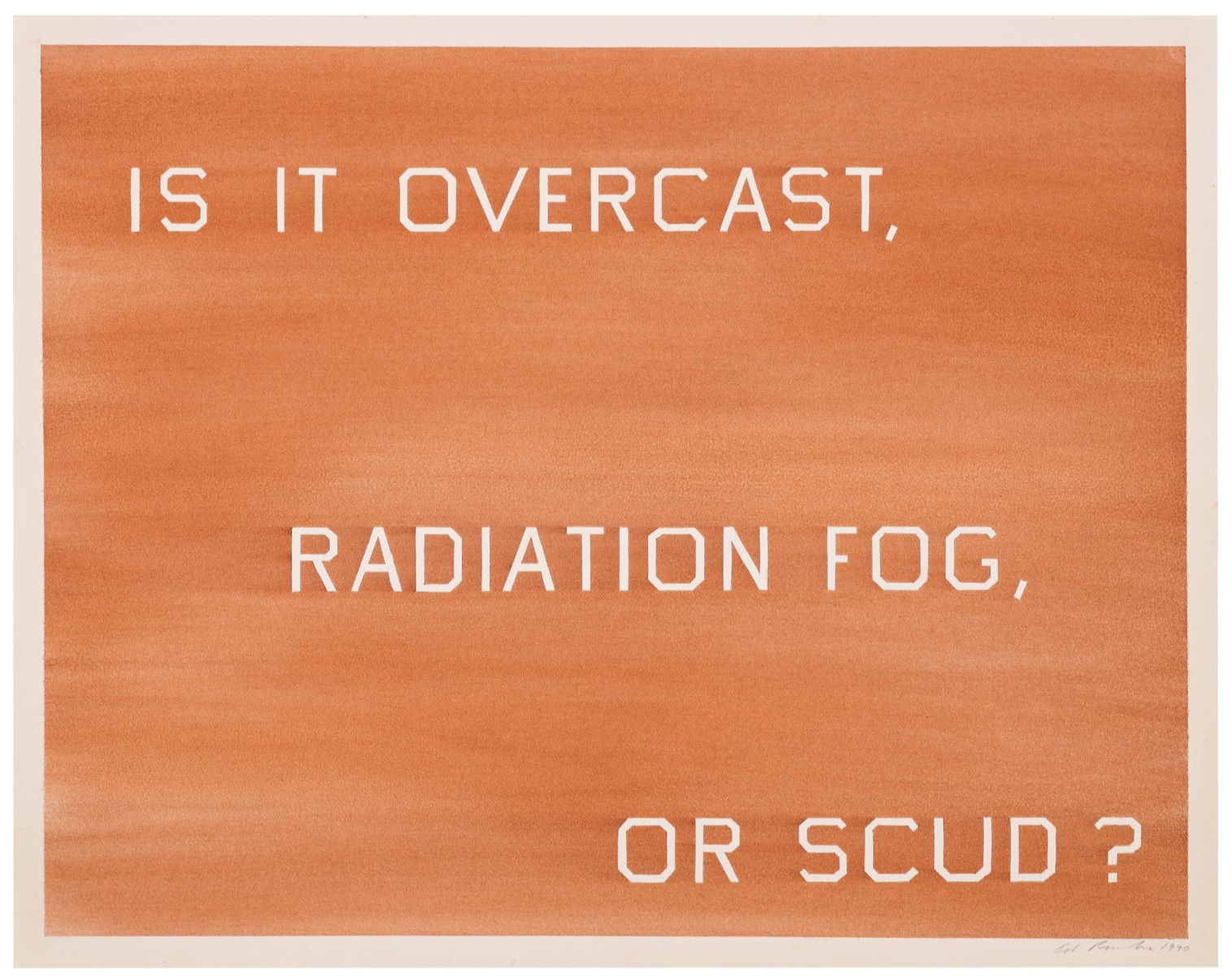
ED RUSCHA
Is it Overcast, Radiation Fog, or Scud?, 1990
Pastel on paper
22-7/8 x 29 inches (58.1 x 73.7 cm)
Signed and dated “Ed Ruscha 1990” lower right
#9. No Go, 2014
Sotheby’s New-York: 15 May 2026
Estimated: USD 70,000 – 100,000
USD 166,400
WORK ON PAPER
Ed Ruscha | No Go | Contemporary Day Auction | 2026 | Sotheby’s
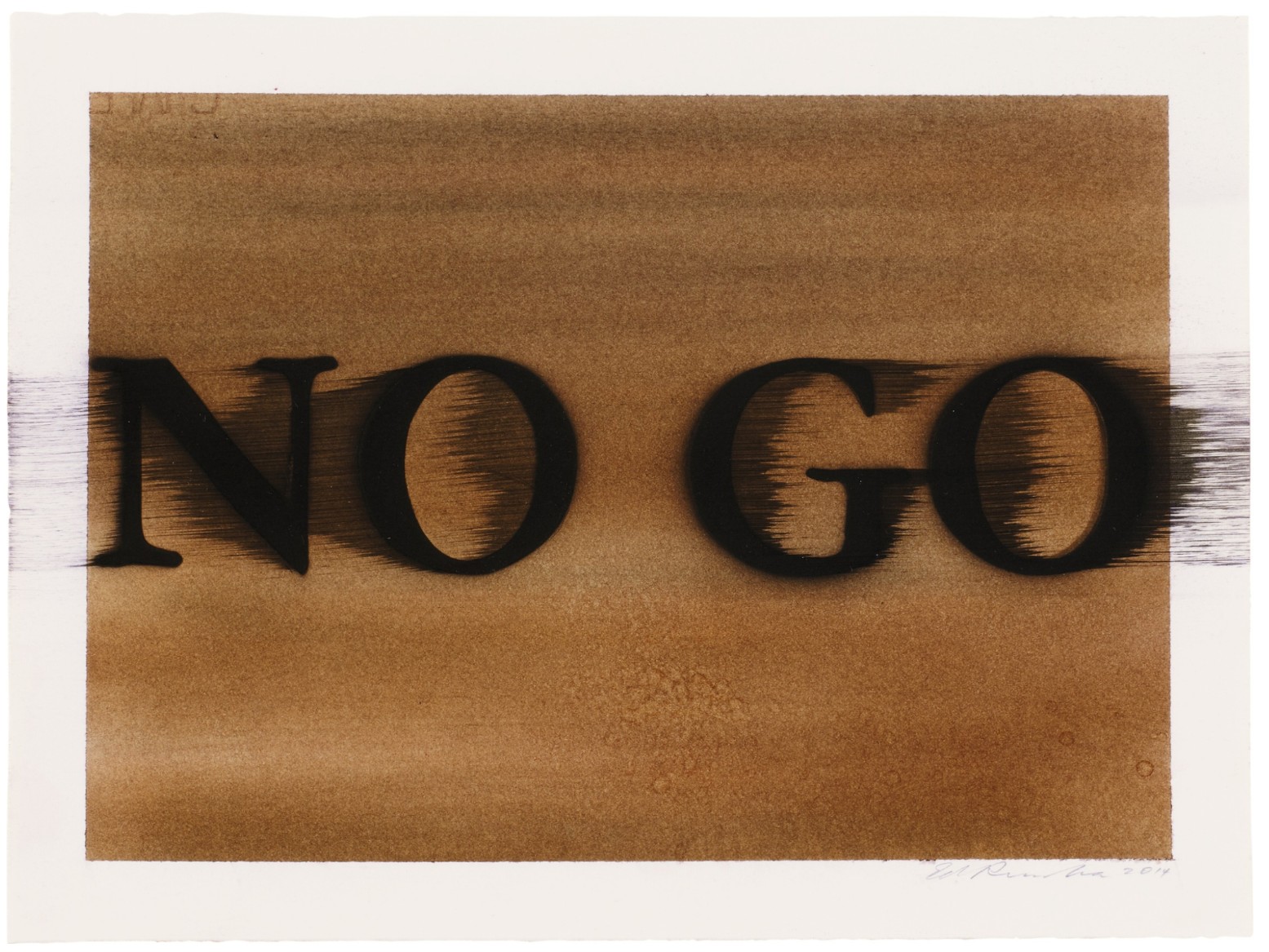
ED RUSCHA (b. 1937)
No Go, 2014
Dry pigment and acrylic on paper
11-1/8 x 15 inches (28.3 x 38.1 cm)
Signed and dated 2014 (lower right)
Lots Passed
Career Sportswear, 2000
Christie’s New-York: 20 May 2026
Estimated: USD 3,500,000 – 5,500,000
PASSED
ED RUSCHA (B. 1937), Career Sportswear | Christie’s

ED RUSCHA (B. 1937)
Career Sportswear, 2000
Acrylic on canvas
60×60 inches (154.2 x 154.2 cm.)
Signed and dated ‘Ed Ruscha 2000’ (on the reverse)
Me, 1999
Me, 1999
Sotheby’s New-York: 14 May 2026
Estimated: USD 4,000,000 – 6,000,000
USD 6,952,000
Ed Ruscha | Me | The Now & Contemporary Evening Auction | 2026 |
ED RUSCHA (b. 1937)
Me, 1999
Acrylic on canvas
64×72 inches (162 x 182.9 cm)
Signed and dated 1999 (on the reverse)
A work of exceptional clarity and conceptual force, Ed Ruscha’s Me (1999) stands as a rare and highly resolved example from the celebrated Mountain series. It is further distinguished as one of only three compositions to feature this specific text in conjunction with the artist’s striking reverse airbrush technique. At once austere and monumental, the painting encapsulates the essential concerns of Ruscha’s mature practice—language, perception, and the constructed image—within a composition of remarkable economy. Its visual precision and conceptual directness mark it as a particularly significant and singular work within the series, in which the convergence of text and landscape achieves a distilled and resonant form. In Me, Ruscha compresses the central tenets of his artistic inquiry into a single, declarative image: a landscape that evokes the historical promise of Manifest Destiny while asserting the lasting primacy of the inner self. Here, the vastness of nature serves as a stage upon which the viewer, and by extension, the artist, becomes an active participant in this vision. The result is a poised and deliberate stillness, in which word and image meet in a moment of heightened suspension.
“I like the tension of having a combination of words or a word in front of something that is also lively in itself like a mountain top, and a lot of these mountain tops suggest glory or beauty, things like that. They almost have their own orchestration, you can almost hear trumpets playing, and I like that reference. It’s sort of a non-verbal way of referencing something that is really not making any noise at all. But then put in combination with words—that tension is where I live.”
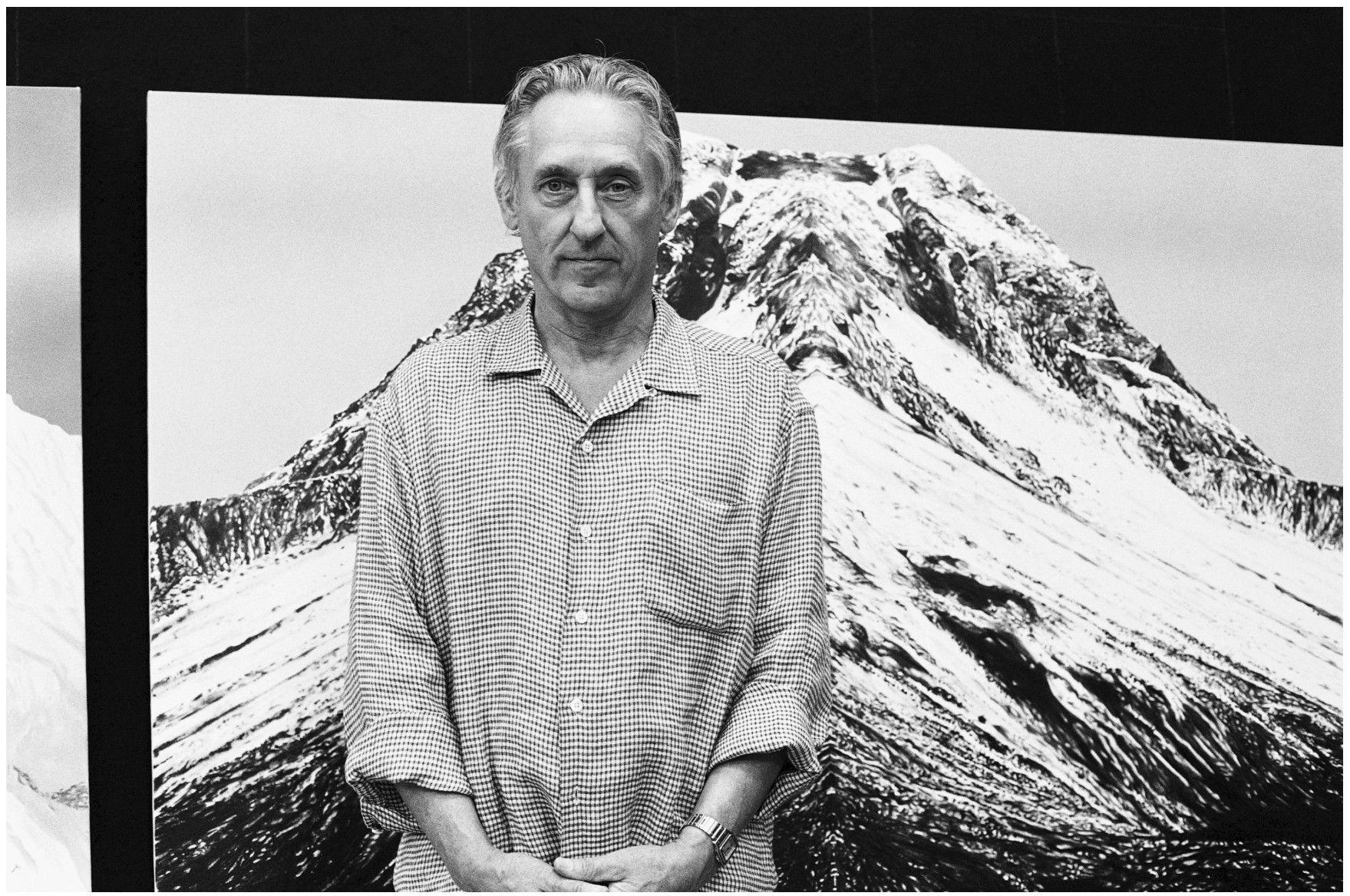
Ed Ruscha with one of his Mountain paintings. Photo © Alice Springs / Helmut Newton Foundation / Trunk Archive
Within the Mountain series, Ruscha consistently employed his characteristic phrases and epigraphs, invoking luscious lifestyles and daring attitudes in BABY JET and SEX AT NOON TAXES. In other instances, the pared-down simplicity of IS or THE suffices for Ruscha’s titular vernacular, demonstrating his facility in imbuing even the most minimal text with layered significance. “If Ruscha previously had been identified most closely with the iconography of the Hollywood sign and the Standard station, the ‘Mountain’ paintings would become central to his later reputation, unlike the ‘Metro Plots,’ which cite locations in the United States, especially Los Angeles, the mountains, based on illustrations and photographs-refer to no place in particular. Instead, what Ruscha has described as ‘ideas of ideas of ideas of mountains’ are stage settings for a theater of words: palindromes, quotations, sayings, and gravestone-like epitaphs. Often the clever palindromes used (‘Never Odd or Even,’ ‘Solo Gigolos,’ ‘Step on No Pets’) are backdropped by bilaterally symmetric mountains, the Rorschach-like, mirror imagery reiterating the equilibrium of the phrase.” (Robert Dean, Edward Ruscha: Catalogue Raisonne of The Paintings, Vol. 6: 1998–2003, New York, 2013, p. 1)
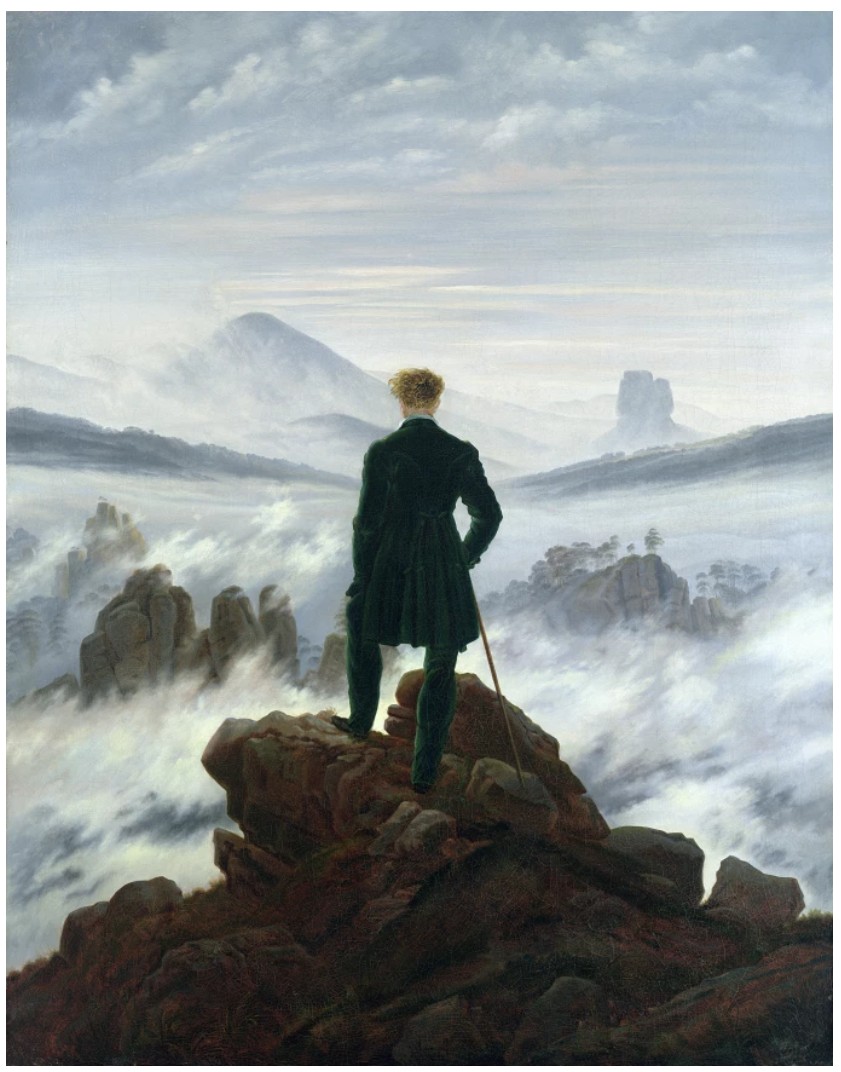
Caspar David Friedrich, The Wanderer above the Sea of Fog, 1818. Hamburger Kunsthalle. Image © Bridgeman Images
Undeniably evoking the iconic Hollywood sign, Ruscha elevates Me toward a more introspective focus. In selecting a text that eschews direct reference or instructive idiom, Me articulates instead the grandeur of selfhood and the act of seeing oneself within, and upon, the world instead. Originally from Omaha, Nebraska, Ruscha described his first impressions of Los Angeles as an actualization of the Californian myth and the broader American conception of West Coast allure.
Ed Ruscha’s Mountain Paintings in Museum Collections
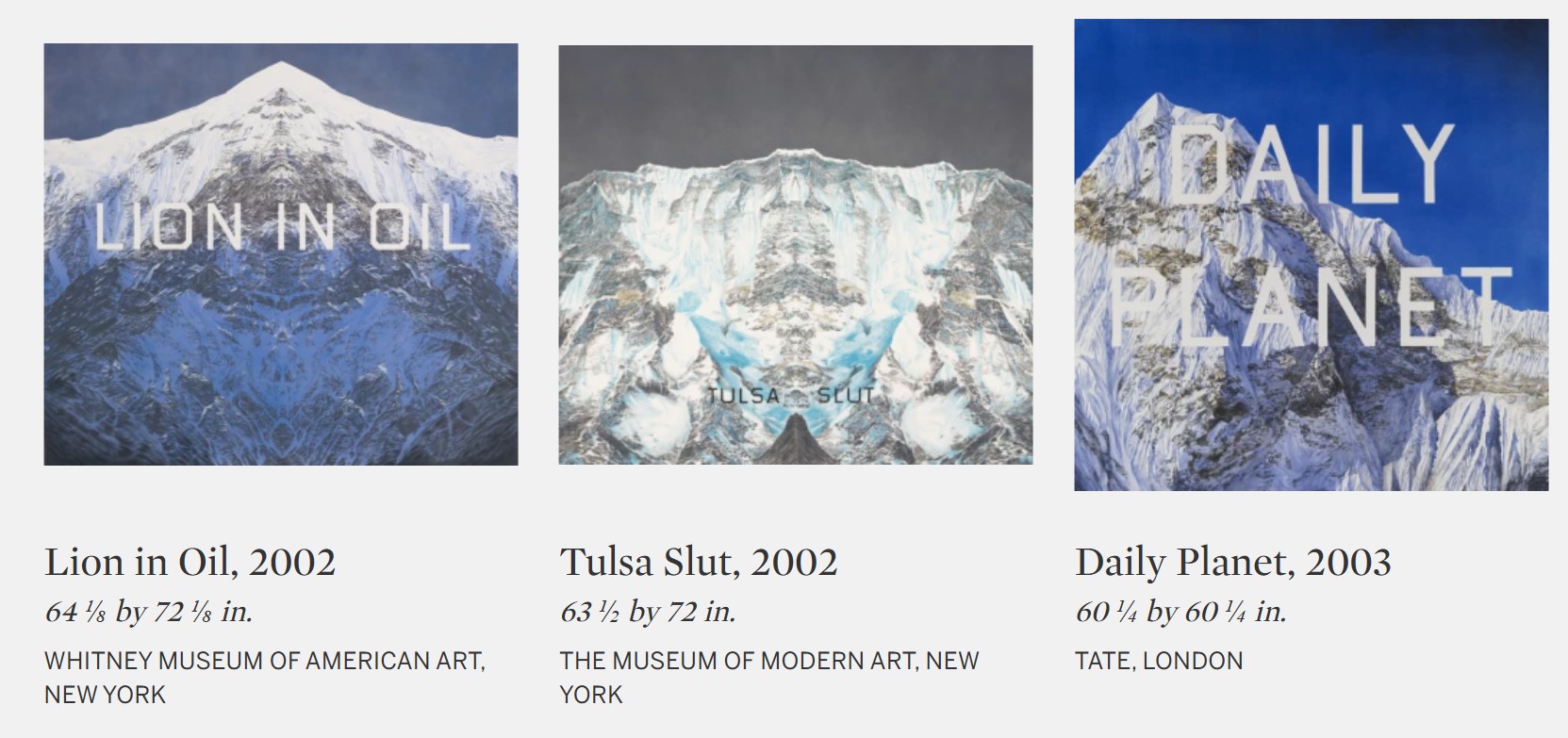
In all the grandeur of their pristine, snow-capped peaks, Ed Ruscha’s mountains pay tribute both to the mythology of the American West that runs throughout his oeuvre and to the sublime experience of standing before a massive natural form. Paired with his Pop signature of overlaying text onto these scenes, the mountains are absorbed into an American commercial idiom and translated into the language of image and caption — a style that propelled Ruscha’s success and whose prominence is reflected in their presence in museum collections worldwide. All Art © 2026 Edward Ruscha
In this context, his sustained engagement with compositions that echo the Hollywood sign renders it all the more significant that the artist elects to inscribe himself upon these monumental peaks. Ruscha’s breathtaking vistas are part photograph and part road sign. Following his move to Los Angeles in 1956, he worked as a sign painter, a graphic designer, and an assistant to an art book publisher. Influenced by the printed text that filled his days, as well as the word games of Marcel Duchamp, Ruscha formed a unique visual language that is simultaneously commercial and formally sophisticated.
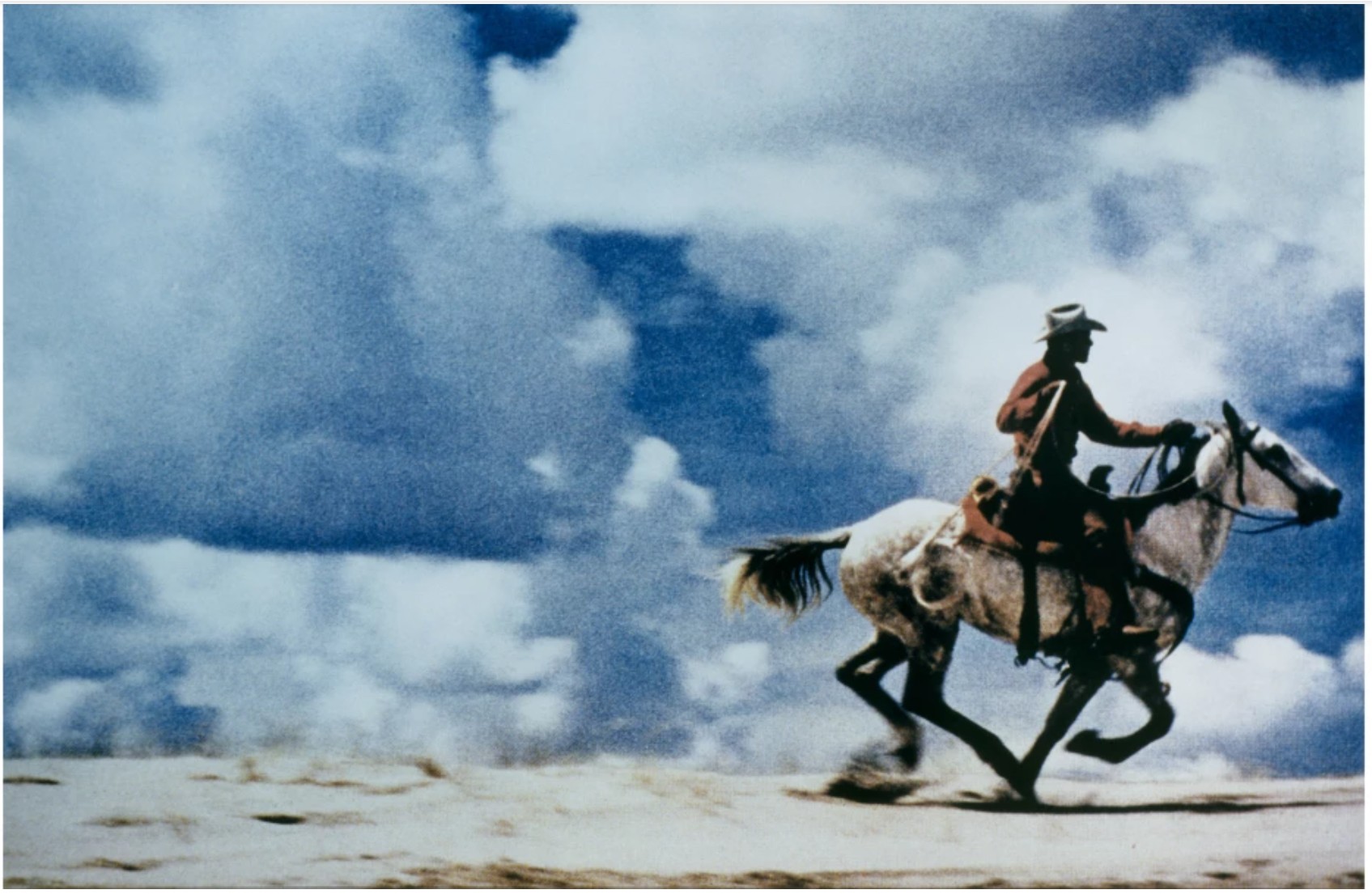
Richard Prince, Untitled (Cowboy), 1989. Metropolitan Museum of Art, New York.
Image © The Metropolitan Museum of Art. Image source: Art Resource, NY. Art © Richard Prince
His interest in commercial signage and logos is elevated to a cinematic art form in the mountain series of the late 1990s. Ruscha began painting the snowy mountains just before the turn of the millennium, borrowing the rugged, magnificent landscapes from magazine illustrations and photographs. The mountains are geographically neutral and are defined solely by whatever words, letters, or numbers Ruscha chooses to paint over them.
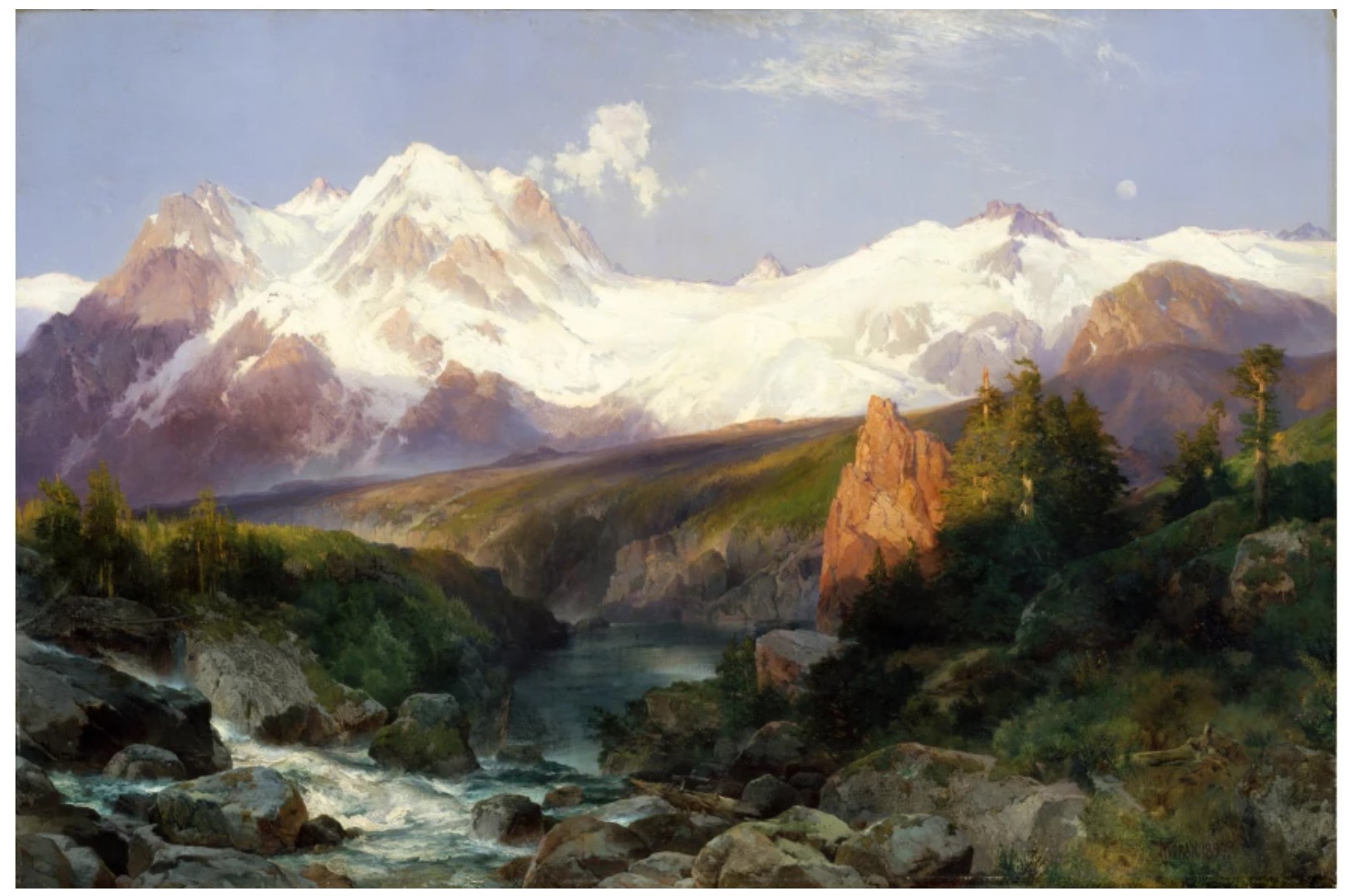
Thomas Moran, The Teton Range, 1897. Metropolitan Museum of Art, New York. Image © Bridgeman Images
ME encourages introspective contemplation while defying being known itself. The cold, bare mountain recalls the nostalgic romanticism of the American Dream and of the Manifest Destiny aspirations so historically tied to the Californian landscape, while simultaneously constructing a dream-like atmosphere that seems to deliver the artist’s prophecy of selfhood’s necessary alignment within nature’s glorious beauty. Ruscha in his signature wit, displays here his mastery of both the traditions of art history and contemporary visual culture, presenting a landscape defined as much by its barrenness as its rich textual details.
Career Sportswear, 2000
Career Sportswear, 2000
Christie’s New-York: 20 May 2026
Estimated: USD 3,500,000 – 5,500,000
PASSED
ED RUSCHA (B. 1937), Career Sportswear | Christie’s
ED RUSCHA (B. 1937)
Career Sportswear, 2000
Acrylic on canvas
60×60 inches (154.2 x 154.2 cm.)
Signed and dated ‘Ed Ruscha 2000’ (on the reverse)
An iconic, early example of the highly coveted mountain paintings that the artist began several decades ago, Ed Ruscha’s Career Sportswear is a majestic painting from this celebrated series. A dramatic, snow-capped mountain peak has been rendered in meticulous detail, where high, wispy clouds come in and out of focus. Here, the thin mountain air and extreme weather at the peak are the unlikely backdrop for what Ruscha calls “the drama of words.” The enigmatic phrase CAREER SPORTSWEAR is writ large, announcing itself by means of bold, authoritative lettering in a crisp, white script. Like something out of a dream or movie, the text beckons the viewer into this evocative and beautiful realm. The meaning of the phrase is taken from advertising clichés of a bygone era, used to market an “active lifestyle” to consumers in magazines and newspapers. It is this uncanny blend—blatant commercialism combined with the sublimity of history painting—that makes the mountain paintings so well-received. Seen in this light, Career Sportswear is a subtle riff off a grand tradition.
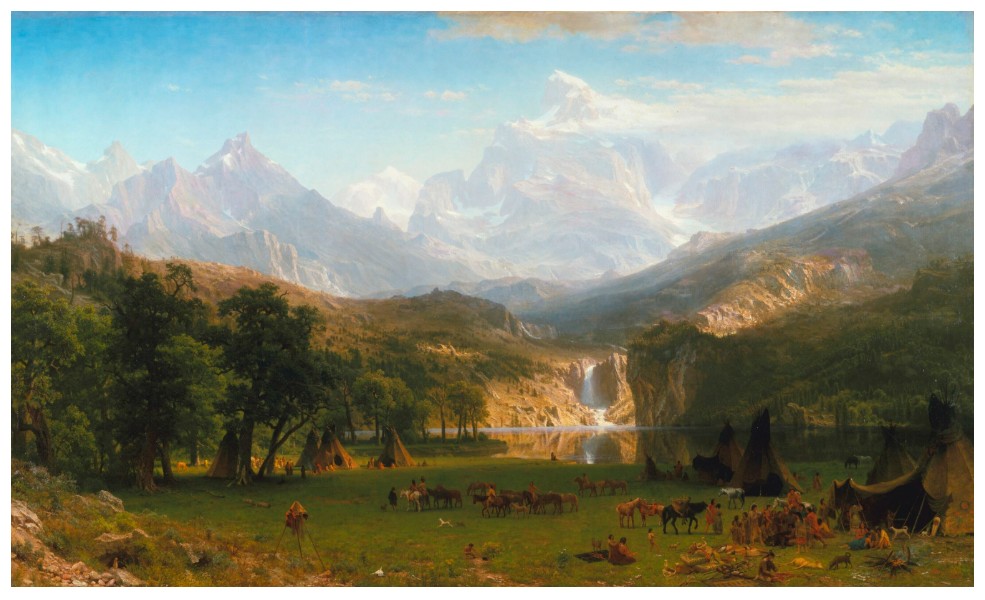
Albert Bierstadt, The Rocky Mountains, Lander’s Peak, 1863, Metropolitan Museum of Art, New York.
Rendered with almost photographic precision, the painting showcases Ruscha’s acute technical skill, especially in the diaphanous white clouds that seem to be forming and dissolving before our very eyes. In the present work, Ruscha’s mountain peak has more in common with the famous logo of the Paramount Studio in Hollywood than with the large-scale, awe-inducing landscape paintings of Caspar David Friedrich. Here, Ruscha’s signature script, which he famously dubbed “boy scout utility modern,” is rendered in all-caps. The whiteness of the words fades into each wisp of cloud, blurring the divide between background and foreground. In Career Sportswear, Ruscha has superimposed the two genres of landscape painting and word art, yielding a surrealist encounter that continues to provoke and delight in the nearly three decades since its creation.
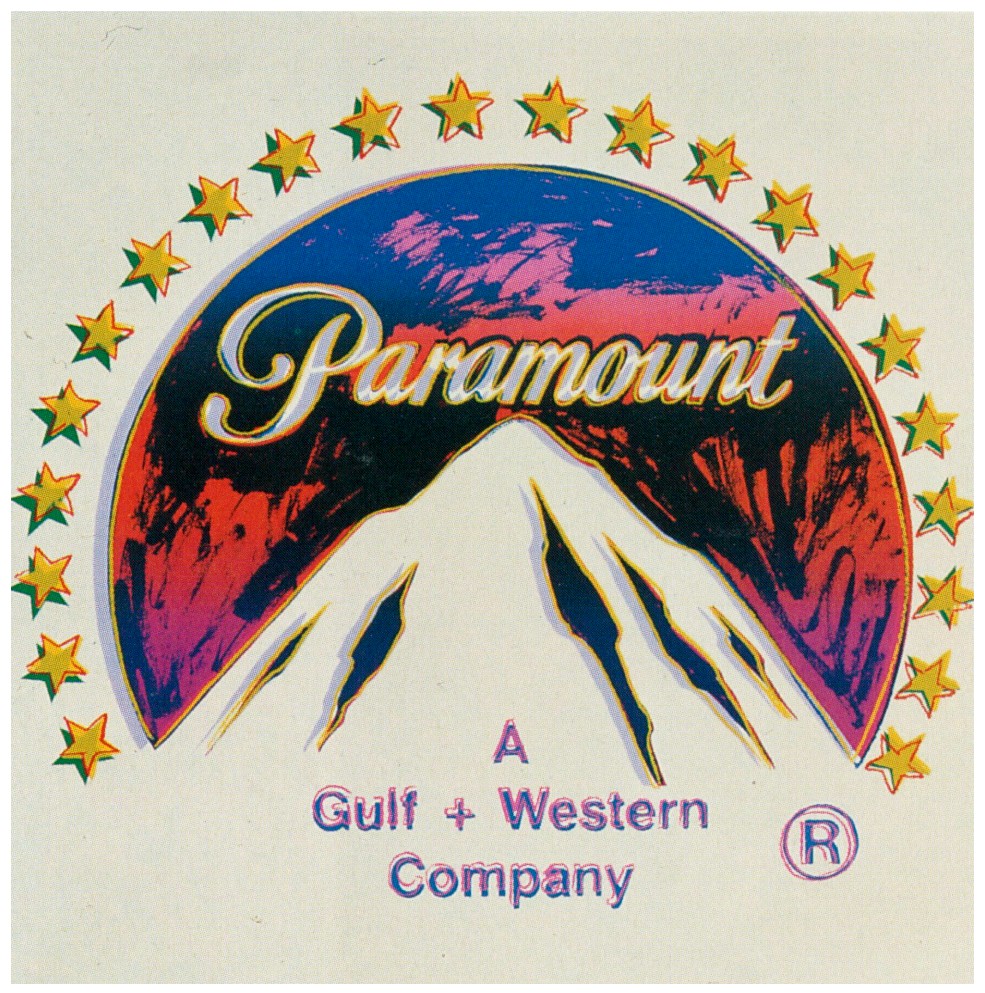
Andy Warhol, Paramount, from: Ads, 1985.
© 2026 The Andy Warhol Foundation for the Visual Arts, Inc. / Licensed by Artists Rights Society (ARS).
When they first appeared, Ruscha’s mountain paintings were seen as a new departure. They had a certain visual “snap” heretofore not seen in his previous work. They demonstrated an amazing verisimilitude, showcasing a new level of technical draftsmanship that had previously lain dormant in his work. They also possessed a staggering beauty that stopped people in their tracks. Collectors and critics alike gravitated to the mountain paintings, such that today, over a dozen examples are included in prestigious museum collections around the world, including the Museum of Modern Art, New York, the Whitney Museum of American Art, New York and the Tate, London.
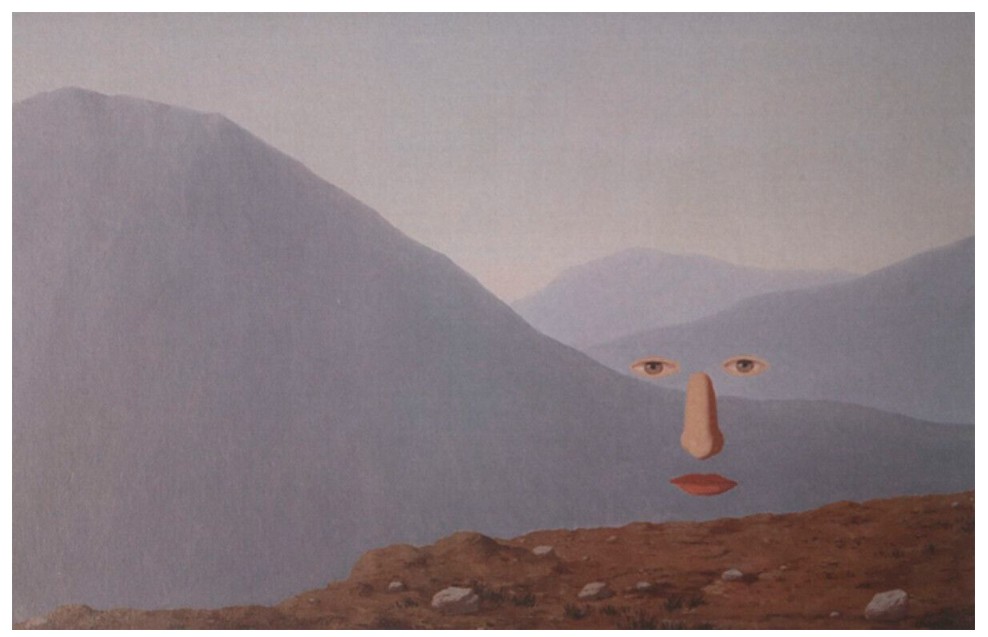
René Magritte, Every day, 1966, Private collection. © 2026 C. Herscovici / Artists Rights Society (ARS), New York.
To create the present work, Ruscha used a time-consuming, meticulous process that could span several weeks and months. He began by spraying an initial layer of acrylic paint onto the canvas, and then slowly worked up the image over time. This yielded a flawless surface, one that conveys a photographic rendering of deep recessional space, but that also remains resolutely flat, almost like a thin scrim. The impossibility of these two aspects, coexisting within a single picture, was a virtuosic feat that offered another level of complexity to the already multifaceted image.

Embedded with the weight of history, Ruscha’s mountain paintings take as their departure point the sublime landscape paintings of Albert Bierstadt and Caspar David Friedrich. In Ruscha’s hands, however, there are subtle techniques that play off that grand tradition, instead subverting it and revealing it to be a rather hollowed-out cliché. Ruscha has explained that he was interested in “notions of mountains rather than real mountains” (quoted in K. Brougher, in Ed Ruscha and the Great American West, exh. cat., Fine Art Museums of San Francisco, 2016, p. 44). Indeed, Ruscha manages to both acknowledge and subvert the collective understanding of the romantic, heroic mountain peak in Career Sportswear.
Radio in Red, 1963
Radio in Red, 1963
Property from the Collection of Barbara and Tom Rounds
Christie’s New-York: 21 May 2026
Estimated: USD 500,000 – 700,000
USD 889,000
WORK ON PAPER
ED RUSCHA (B. 1937), Radio in Red | Christie’s
ED RUSCHA (B. 1937)
Radio in Red, 1963
Tempera and ink on paper
14 x 11-1/4 inches (35.6 x 28.6 cm)
Signed ‘E. RUSCHA’ (lower left)
Dated ‘6⁄1963’ (lower right)
Rendered in cherry red and a bold typeface, Ed Ruscha’s 1963 Radio in Red broadcasts the enduring centrality and importance of radio to global media audiences. Having trained as a commercial illustrator, Ruscha developed an early interest in graphic design, typography, comic books, and serial imagery, foregrounding his persistent artistic engagement with text as subject. Ruscha has used the word “RADIO” many times throughout his oeuvre, including Hurting the Word Radio #2, in which c-clamps squeeze and pull on the letters as if being distorted through poor radio transmission. In the present work, too, Ruscha subtly manipulates the letters. The text slowly expands as the letters progress, until “O” overlaps the planned, graphite pictorial frame. Through the progressive expansion of the forms, Radio in Red symbolically amplifies sound, joyously exalting one of the most beloved and significant technologies of the twentieth century through Ruscha’s iconic text. It is thus fitting that Radio in Red was one of the most treasured pieces in the collection of Tom and Barbara Rounds, whose lifelong devotion to the institution of American radio transformed the lives of countless music fanatics and casual listeners alike.
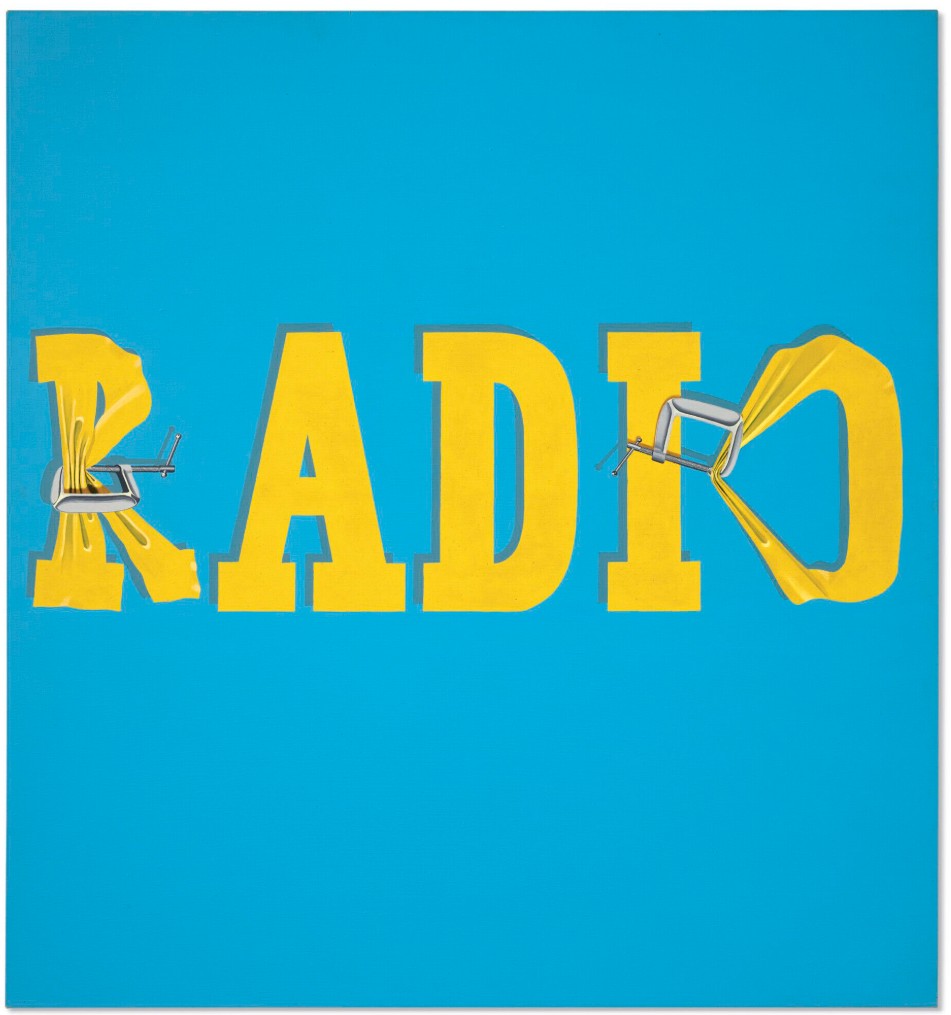 Ed Ruscha, Hurting the Word Radio #2, 1964. Private collection. © Ed Ruscha.
From his early days broadcasting from the Amherst College radio station, to his time producing the first rock festival in America — the KFRC Fantasy Fair & Magic Mountain Music Festival — Tom Rounds understood the magic and necessity of radio as a means of entertainment, disseminating information, and creating community. Rounds was a pioneer of music festivals, organizing the electric Miami Pop Festival in 1968, which counted Joni Mitchell, Fleetwood Mac, and the Grateful Dead among its many acts, and became the first major rock festival on the East Coast. Later, he co-founded the landmark radio production company Watermark, launching American Top 40 in 1970; a program that continues to broadcast today with host Ryan Seacrest. In 2023, Rounds received a Legends Induction into the Radio Hall of Fame for his monumental and innovative accomplishments in global broadcasting (“Tom Rounds,” Radio Hall of Fame, digital). Given to Rounds by his longtime friend, business partner, and fellow music lover Tom Driscoll, Radio in Red lay at the heart of his and Barbara’s collection. The continued resonance of the work not only reflects the enduring acclaim for Ruscha’s singular vision, but also speaks to the profound role radio has played in shaping modern culture — a legacy that Tom and Barbara Rounds likewise celebrated throughout their lives. That Radio in Red now comes to market is an invitation to carry that history forward, and to experience a relic of the frequency that changed the world.
Paradise, 1983
Sotheby’s New-York: 15 May 2026
Estimated: USD 400,000 – 600,000
USD 512,000
Ed Ruscha | Paradise | Contemporary Day Auction | 2026 | Sotheby’s
ED RUSCHA (b. 1937)
Paradise, 1983
Dry pigment on paper
Image: 19-3/4 x 23-3/4 inches (50.2 x 60.3 cm)
Sheet: 23-1/8 x 29-1/8 inches (58.7 x 74 cm)
Signed and dated ‘83 (lower right)
Gunpowder Drawings
Pressures, 1971
Radiant Forms: Works from a Distinguished Private Collection
Sotheby’s New-York: 15 May 2026
Estimated: USD 300,000 – 500,000
USD 576,000
Ed Ruscha | Pressures | Contemporary Day Auction | 2026 | Sotheby’s
ED RUSCHA (b. 1937)
Pressures, 1971
Gunpowder and pastel on paper
11-1/2 x 29 inches (29.2 x 73.7 cm)
Signed with the artist’s initials and dated 1971 (lower left)
Executed in 1971, Pressures belongs to the extraordinary sequence of works on paper in which Ed Ruscha brought the word itself to the center of the image, allowing language to assume an atmospheric, pictorial and psychological presence all its own. Rendered in gunpowder and pastel on paper, the present work unfolds across a broad horizontal sheet, where the titular word emerges in pale, softened form against a luminous green ground. Subtly compressed across the page, the word seems almost to register the condition it names, as though held under the very pressure it describes. “Pressures” suggests force, strain and invisible compression, and Ruscha gives those associations an unexpectedly delicate visual form: the letters hover rather than insist, seeming at once tightened and suspended. In that disjunction between semantic weight and visual lightness lies much of the work’s singular force.
“I like the idea of a word becoming a picture, almost leaving its body, then coming back and becoming a word again…I see myself working with two things that don’t even ask to understand each other.”
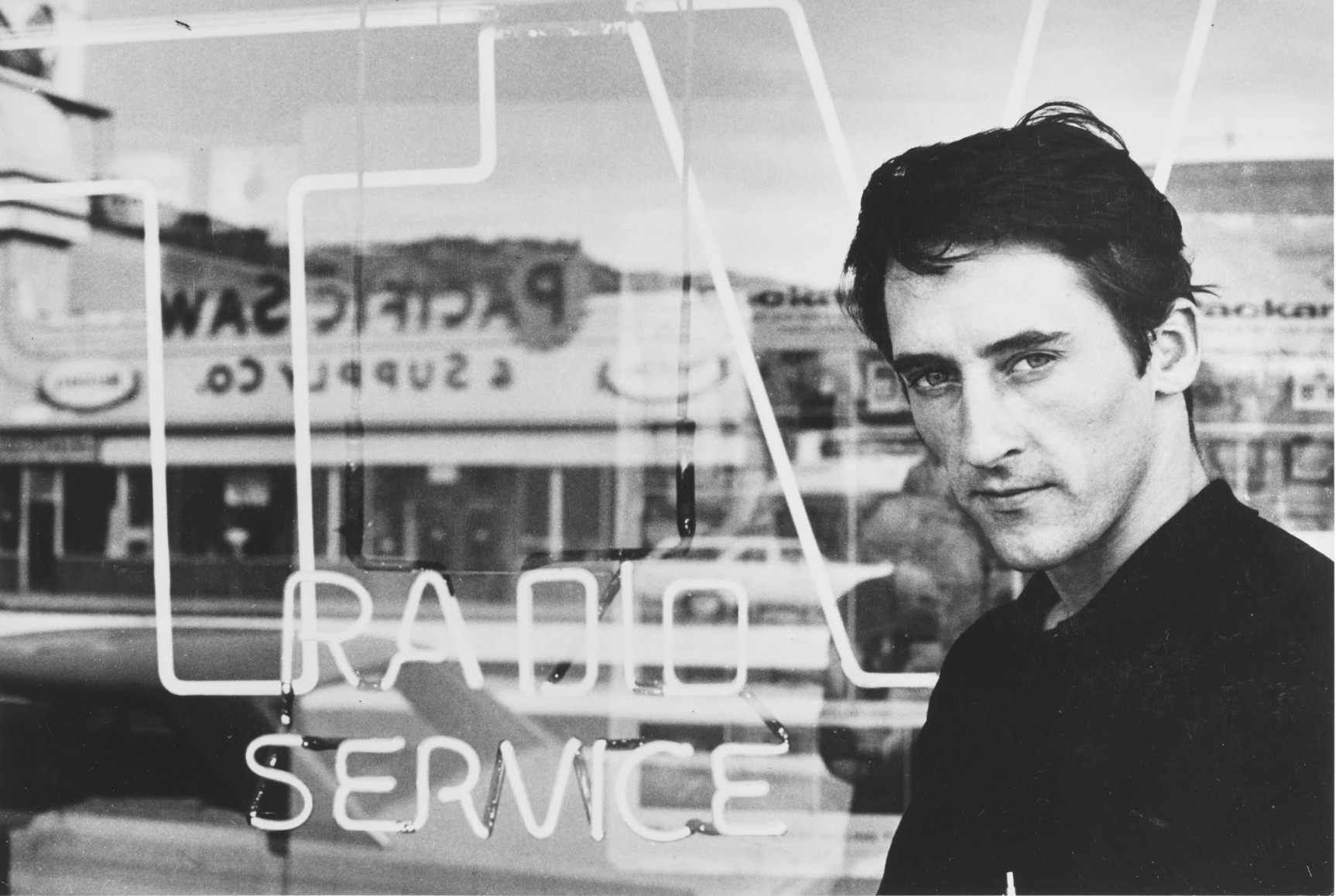
Ed Ruscha, 1964. Photo: © Dennis Hopper, Courtesy of The Hopper Art Trust
By 1971, Ruscha had already established himself as one of the defining artistic voices of postwar America, having transformed the relation between text and image through works that were at once coolly graphic, conceptually exacting and unmistakably shaped by the visual culture of the American West. Born in 1937, raised in Oklahoma City and relocated to Los Angeles in 1956 to attend the Chouinard Art Institute, Ruscha developed an artistic language attuned to typography, commercial design, popular signage and the peculiar spaciousness of the modern American landscape. His most iconic paintings and works on paper feature language itself as subject, drawing on sources as varied as advertising, comic strips and vernacular print culture, while treating the single word or phrase with the gravitas of a painted image. It is precisely within that lineage that the present work finds its place, distilling Ruscha’s singular ability to transform a single word into an image of remarkable spaciousness, precision and psychological charge.
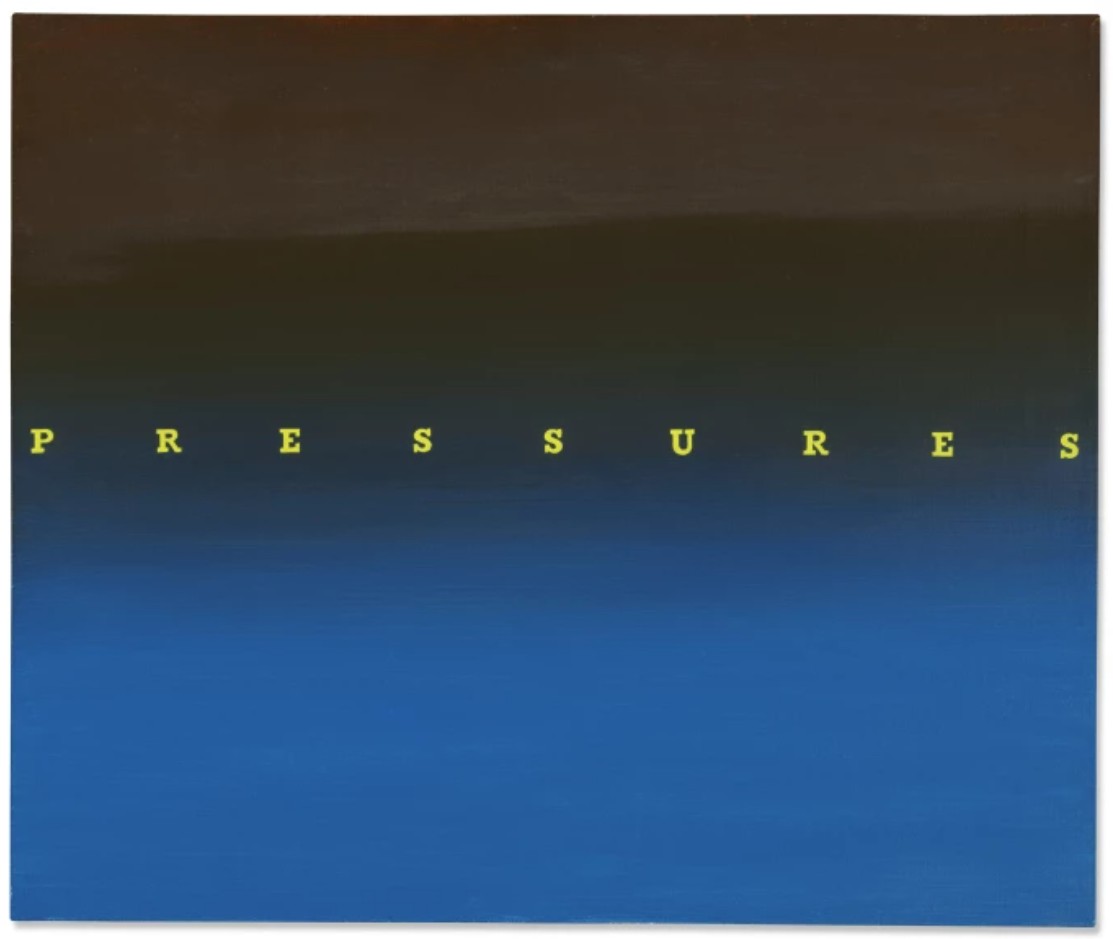
Ed Ruscha, Pressures, 1967, Private Collection. Art © Ed Ruscha Studio. Image by John Schweikert.
In Pressures, the luminous green of the sheet becomes an active atmospheric field, its softly modulated surface holding the word in a state of near-evaporation. Ruscha preferred gunpowder for its pliability and smoky diffusion, and here that medium allows the text to appear with unusual softness, as though it has surfaced from within the paper rather than been placed upon it. The result is both lucid and unstable. Gunpowder, with all its latent volatility, is transformed into something featherlight and restrained, yet the material never entirely relinquishes its charge. That tension gives the work its particular sophistication: danger translated into atmosphere, pressure into suspension, force into a visual condition of exquisite delicacy. Ruscha’s approach is characteristically alchemic, turning an explosive substance into a vehicle for tonal subtlety and conceptual poise.
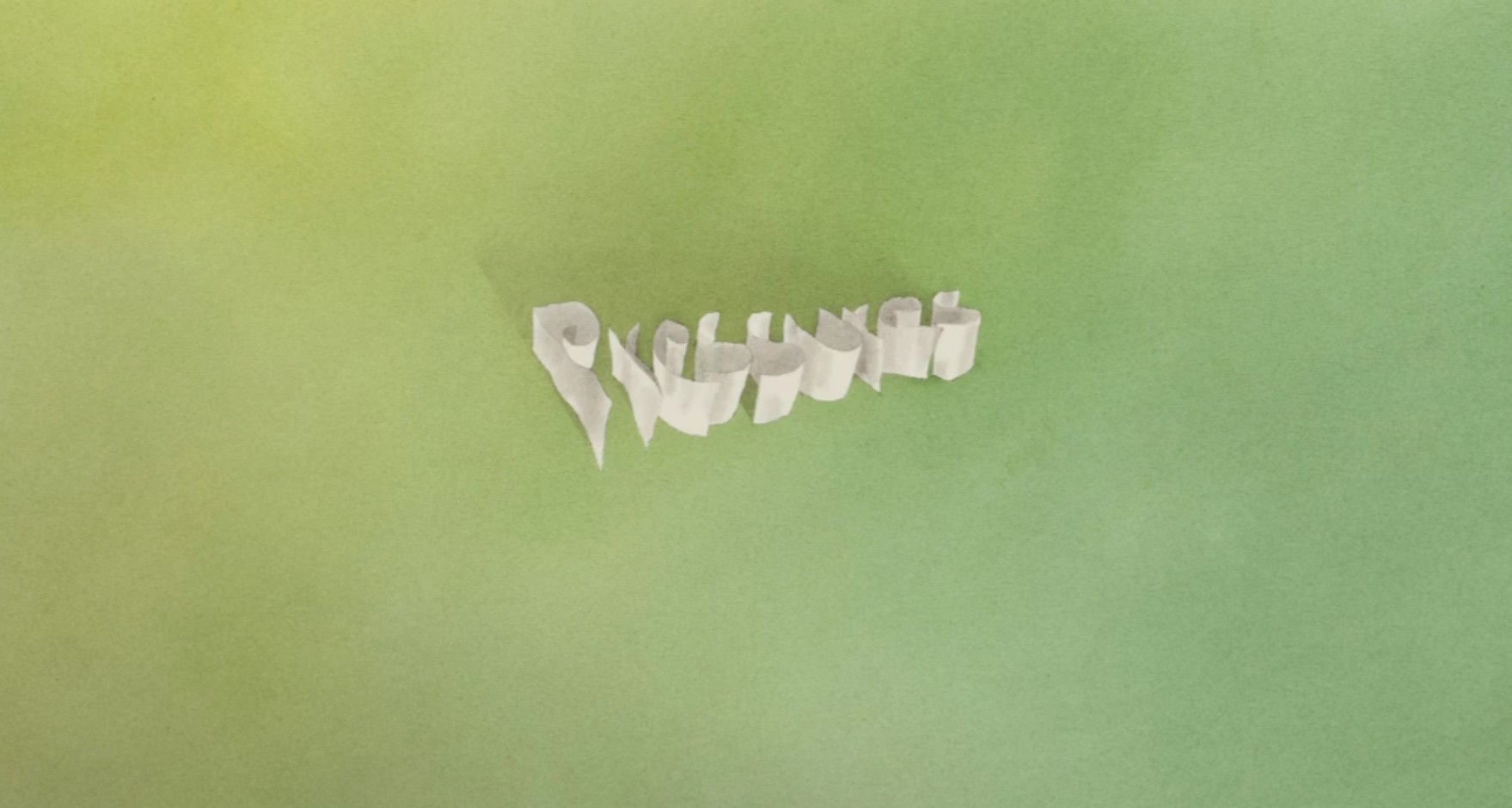
Like many of Ruscha’s finest text works, Pressures occupies the unstable threshold between declaration and introspection. The word does not merely describe a condition; it seems to enter the viewer’s field of thought, attaching itself to the mind with the quiet insistence of something half-recognized and difficult to dispel. Ruscha’s words often function in this way, at once impersonal and oddly intimate, cinematic in their isolation yet deeply psychological in effect. Here, the compressed text and spacious field create a subtle drama between containment and openness, as though the image were staging an internal state rather than simply presenting a word. Luminous, exacting and conceptually taut, Pressures stands as a superb example of Ruscha’s ability to make language itself one of the most evocative mediums of contemporary art.