With KACHAMUKKU, released in 2021-2022, KAWS ventures into one of his most culturally specific yet universally legible collaborations, merging the beloved Japanese television characters Gachapin and Mukku into a single, hybridized figure. Produced in a green/red version and a monochrome black edition, the sculpture was introduced in conjunction with the landmark exhibition KAWS TOKYO FIRST, before reaching a wider audience through KAWSONE in 2022. The work was issued as an open edition, equipped with a certificate of authenticity and NFC verification.
Introduction
The figure presents a striking vertical fusion of two distinct personalities. One half adopts the smooth, rounded body of Gachapin, rendered in green with KAWS’s signature X-eyes replacing the character’s usual expression. The other half, in vivid red, translates Mukku into a textured, fur-like surface: an unusual tactile contrast within KAWS’s sculptural vocabulary, which typically privileges clean, industrial finishes.
Rather than simply juxtaposing two figures, KAWS interlocks them into a single organism. The seam is not merely visual but conceptual: two identities coexisting within one continuous form. The raised arm, shared stance, and unified posture reinforce this idea of forced harmony: less a collaboration than a quiet negotiation between alter egos. The black version further abstracts the composition, collapsing the duality into a single tonal field. Without color to differentiate the characters, the emphasis shifts to silhouette, texture, and the subtle tension between smooth and rough surfaces.
The release of KACHAMUKKU is deeply tied to KAWS TOKYO FIRST, a major retrospective held at the Mori Arts Center Gallery in 2021. The exhibition marked a significant moment: a return to Japan, the country that first embraced KAWS’s transition from street interventions to collectible design objects in the late 1990s.
By collaborating with Gachapin and Mukku—figures embedded in Japanese popular culture since the 1970s—KAWS acknowledges this history while recontextualizing it. The work operates as both homage and reinterpretation, bridging generational memory with contemporary art-market sensibilities.
Distribution followed a hybrid model: initial availability in Tokyo, reinforcing the local cultural connection, followed by a global release via KAWSONE. The inclusion of NFC authentication reflects a growing concern with provenance and legitimacy in a market increasingly driven by secondary speculation.
At its core, KACHAMUKKU is about duality: childhood versus adulthood, softness versus structure, individuality versus fusion. The piece literalizes the idea of coexistence: two characters, two textures, two emotional registers occupying the same body without fully dissolving into one another.
There is also a subtle psychological reading. The figure can be understood as a sculptural metaphor for identity itself, layered, composite, occasionally contradictory. KAWS avoids dramatization; instead, the tension is resolved through design clarity and formal balance. The tactile opposition between fur and smooth vinyl is particularly significant. It introduces a sensory dimension that destabilizes the otherwise clean, graphic language of KAWS’s work, suggesting a move toward more nuanced material exploration.
While released as an open edition, KACHAMUKKU quickly established itself as a standout within KAWS’s collaborative output. Its appeal lies not in rarity but in resonance: collectors respond to the cultural specificity of the source material combined with the artist’s unmistakable visual language.
The work occupies an important position within KAWS’s broader trajectory. It reflects a mature phase where collaboration is no longer merely aesthetic but historical—engaging directly with the cultural ecosystems that shaped his early career. More broadly, KACHAMUKKU exemplifies KAWS’s enduring ability to translate niche cultural references into globally legible forms. It is playful, certainly, but also precise: a controlled synthesis of nostalgia, identity, and design that continues to define his relevance in both contemporary art and collectible culture.
KACHAMUKKU, 2022
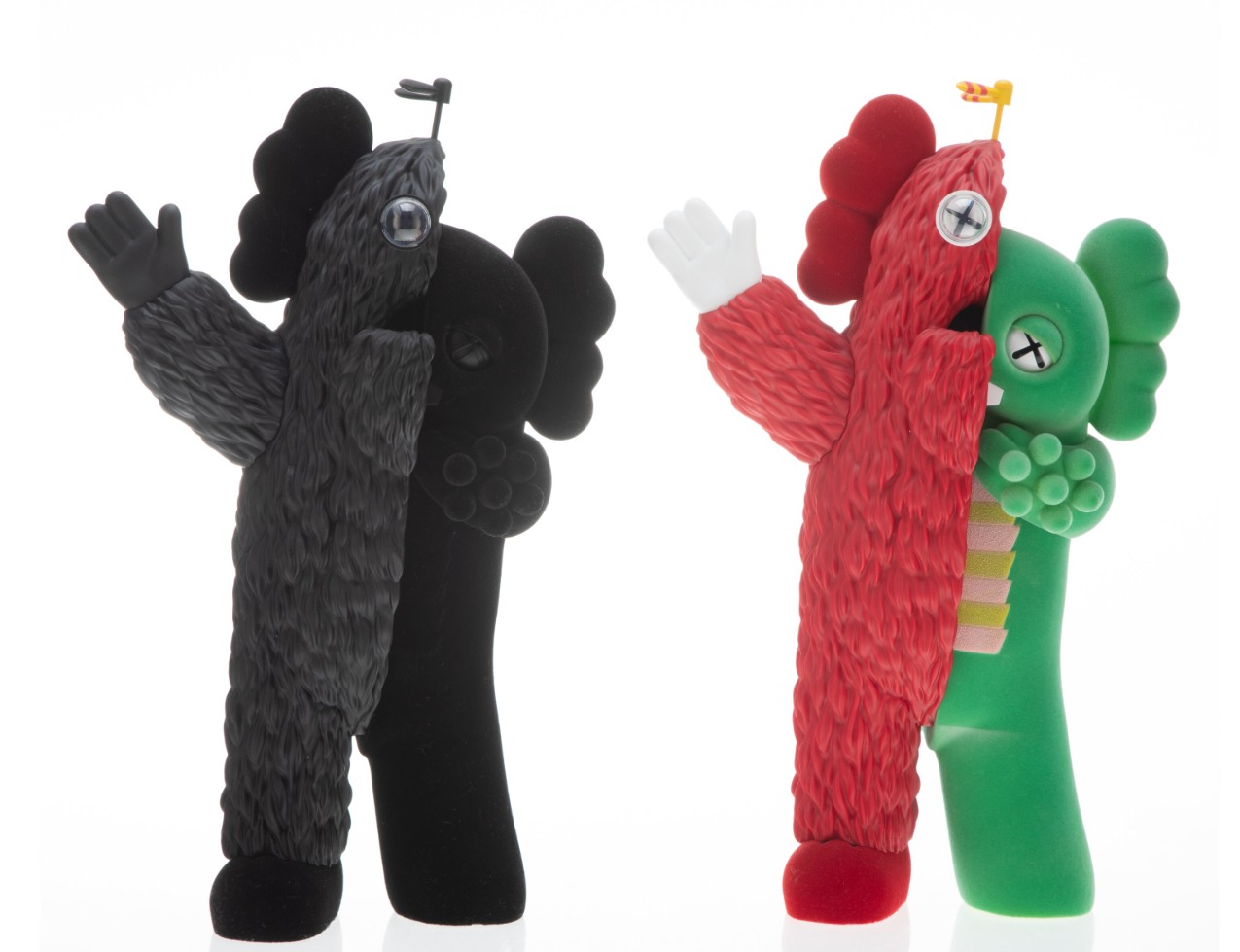
KACHAMUKKU (Black/Red)
The complete set of two works
Medium: Painted cast vinyl
Year: 2022
Dimensions: 32x20x15 cm (12-5/8 x 8 x 6 inches)
Edition: Open edition, unnumbered
Release Price: USD 320
Produced by Medicom Toy, Tokyo
Stamped on the reverse and underside of feet
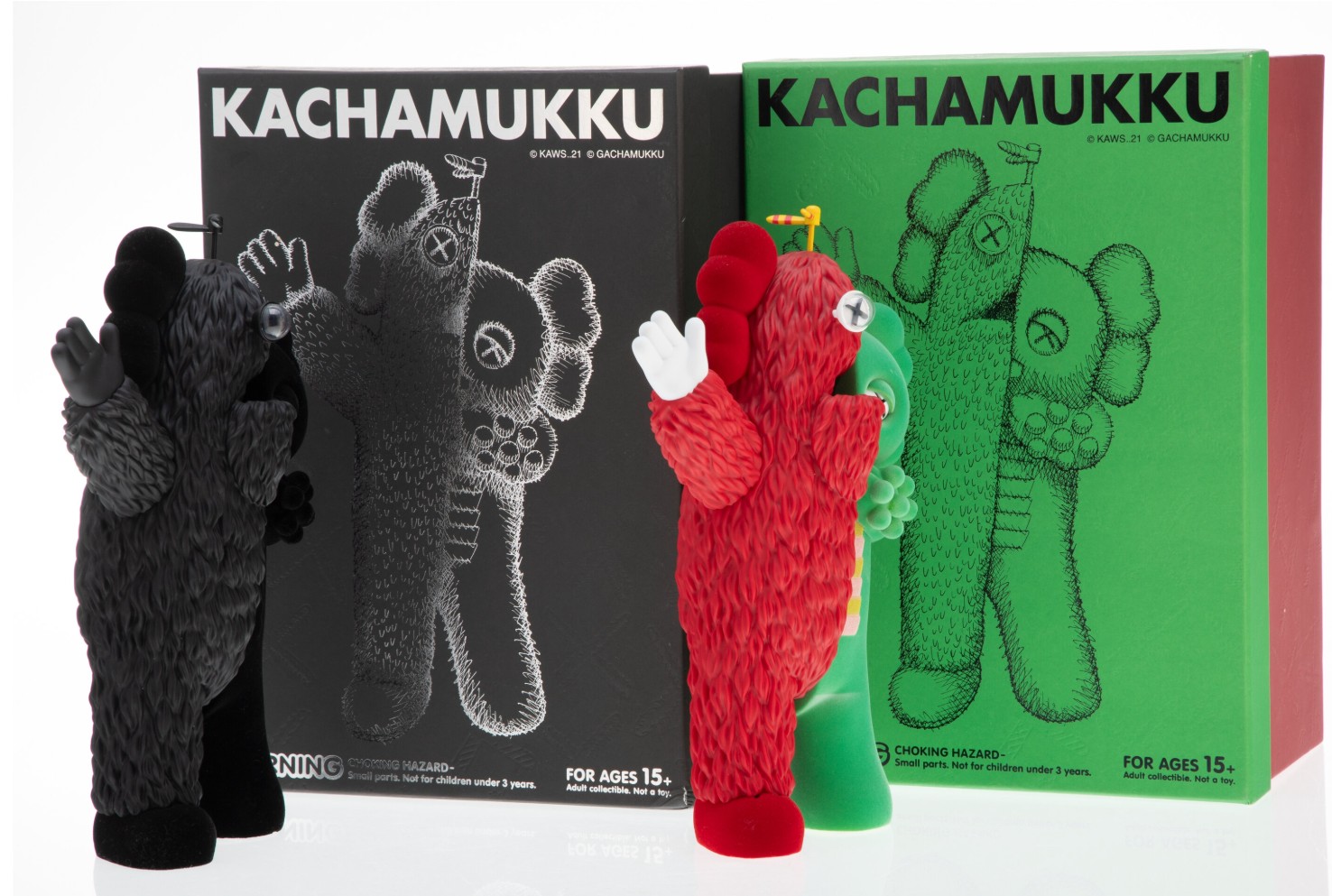
Auction Results
Heritage Auctions: 7 February 2024
USD 687.50
KAWS (b. 1974)
Kachamukku (two works), 2021
Flocked painted cast resin
Each stamped on the reverse and underside of feet
Produced by Medicom Toy, Tokyo
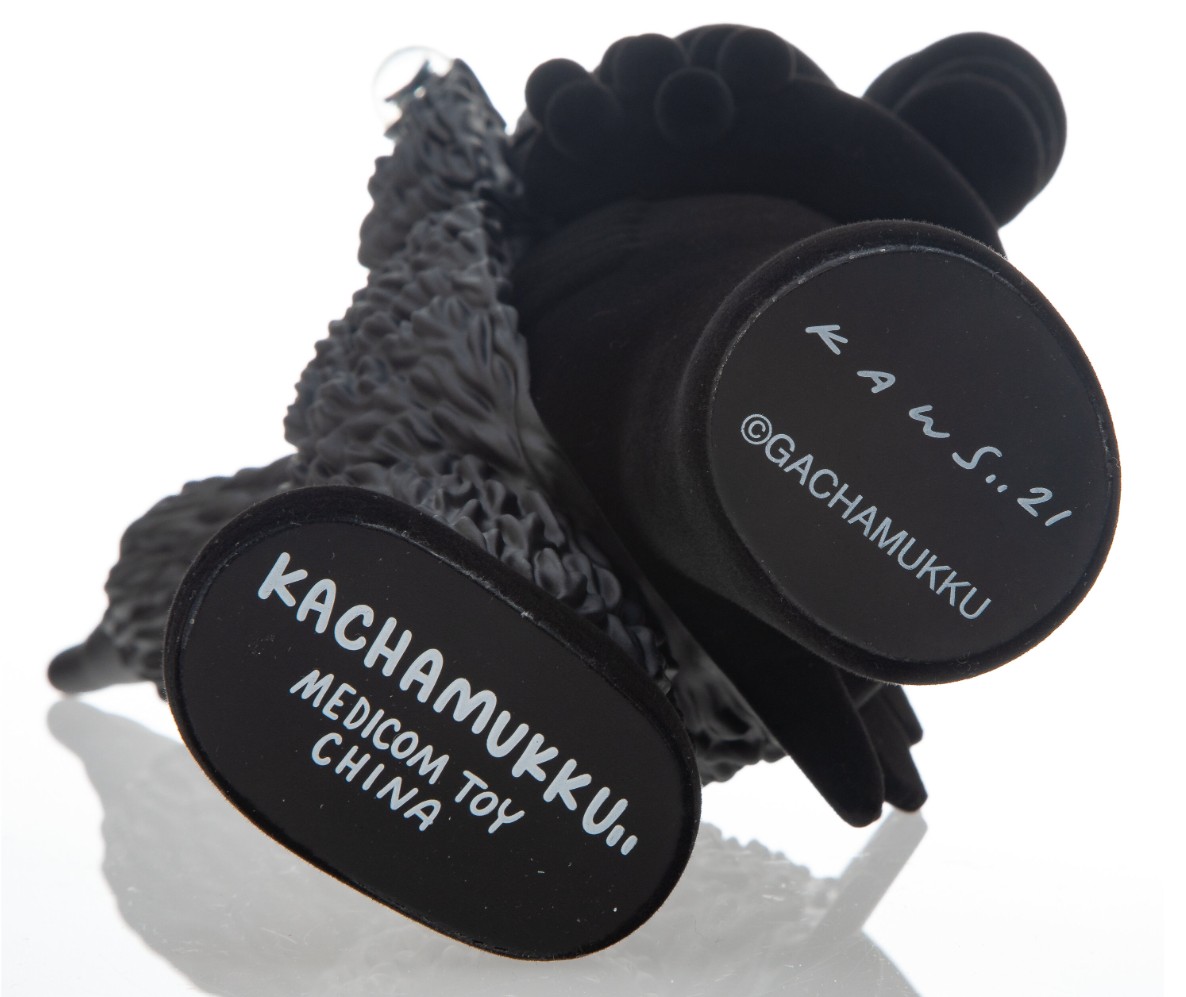
KACHAMUKKU (Black), 2022
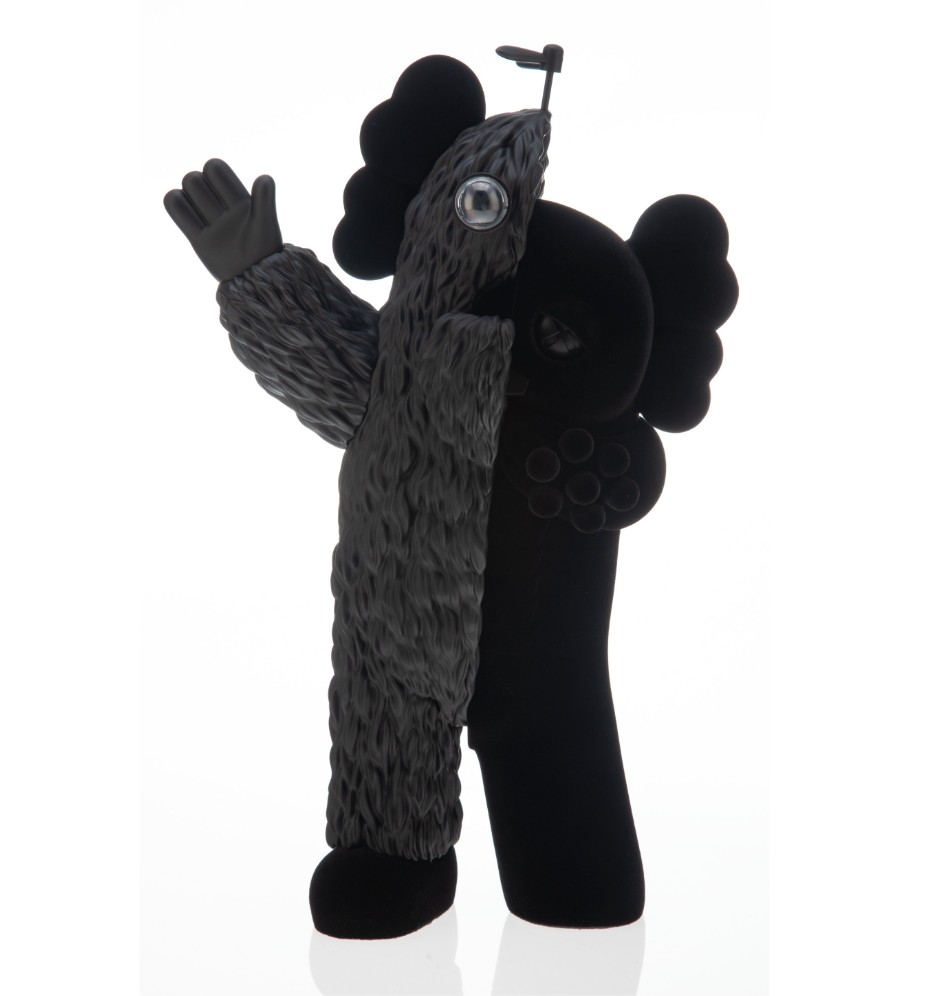
KACHAMUKKU (Black)
Medium: Painted cast vinyl
Year: 2022
Dimensions: 32x20x15 cm (12-5/8 x 8 x 6 inches)
Edition: Open edition, unnumbered
Release Price: USD 320
Produced by Medicom Toy, Tokyo
Stamped on the reverse and underside of feet
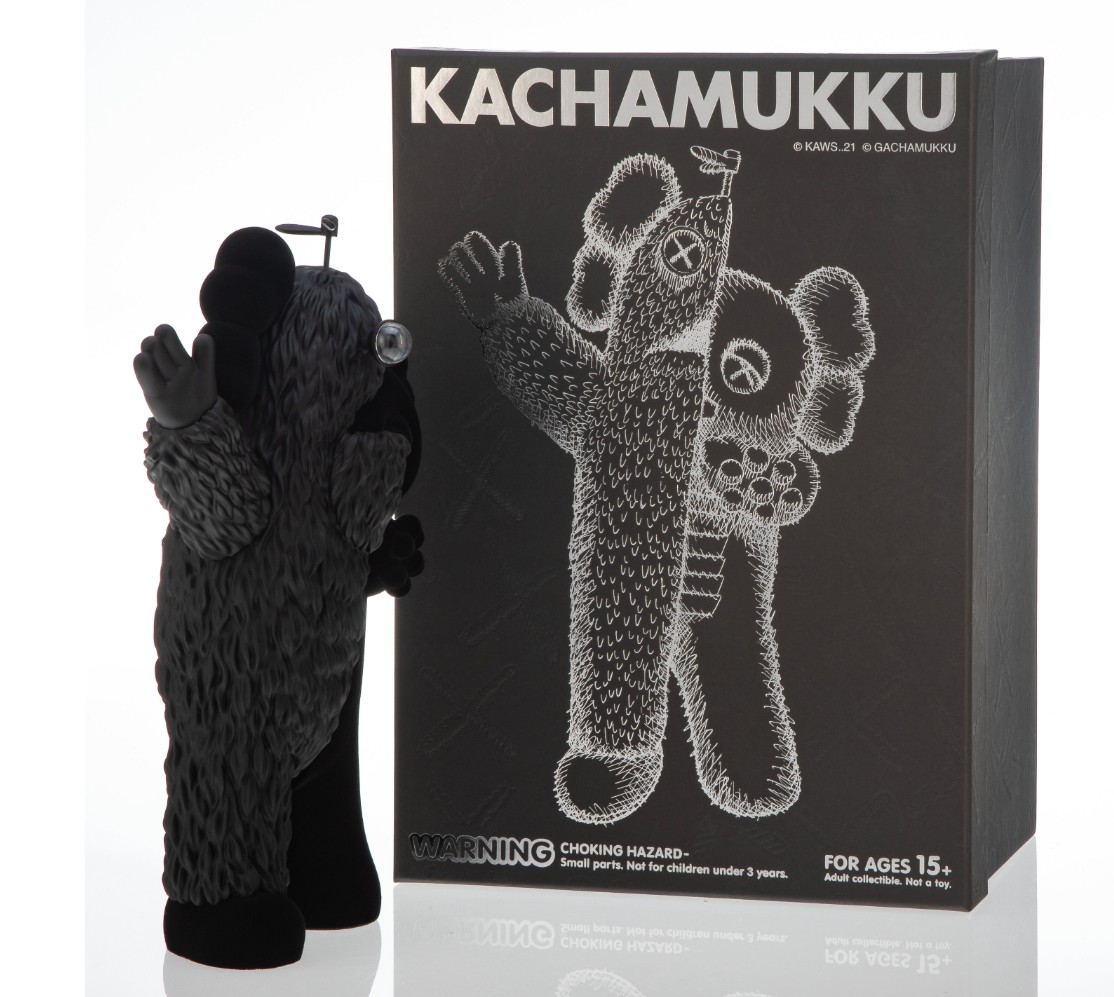
Auction Results
Heritage Auctions: 22 May 2025
USD 350
KAWS (b. 1974)
Kachamukku (Black), 2021
Flocked painted cast resin
Stamped on underside of feet
Produced by Medicom Toy, Tokyo
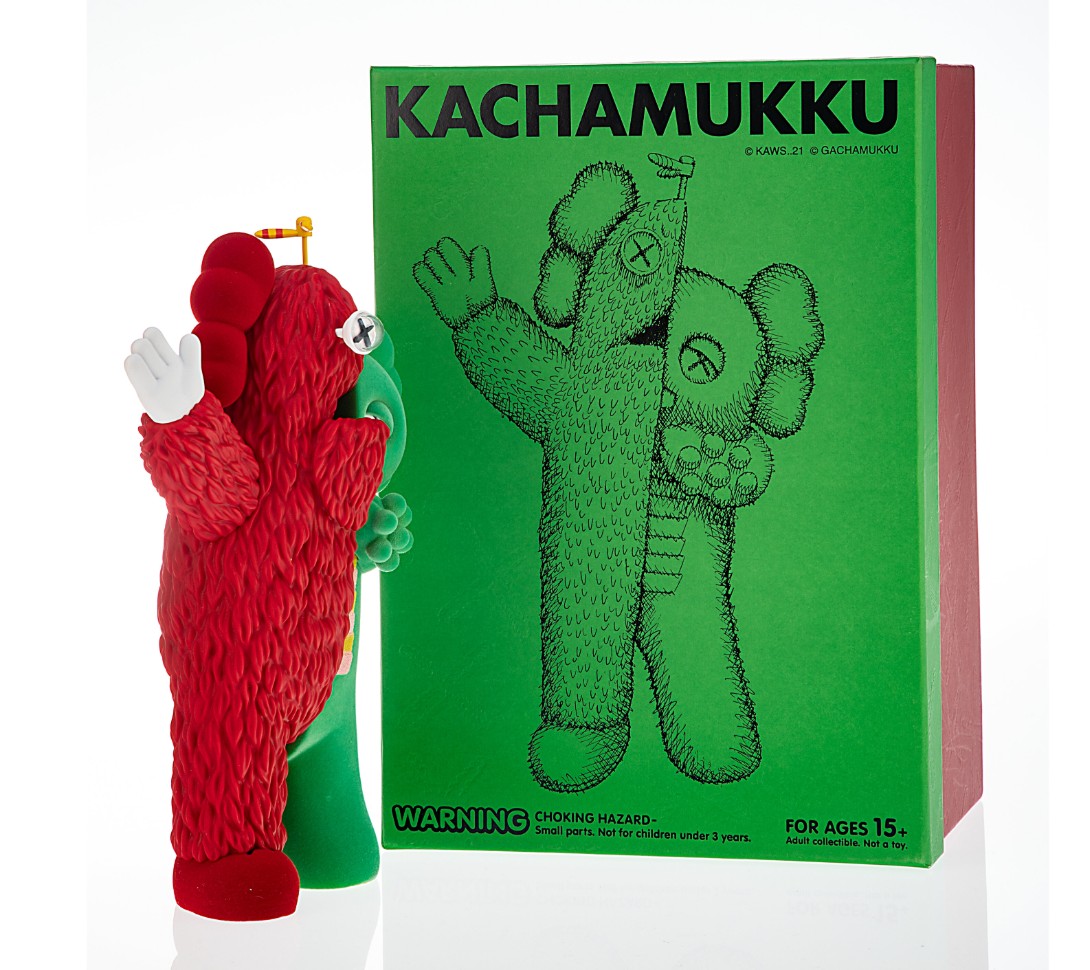
KACHAMUKKU (Red), 2022
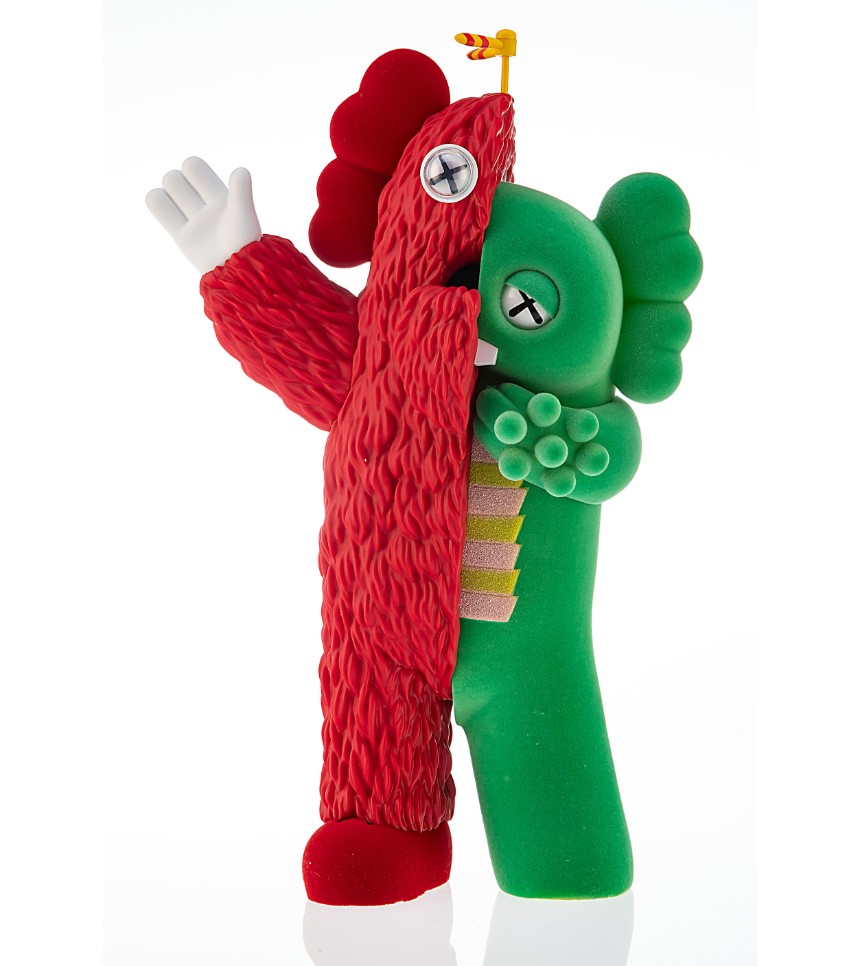
KACHAMUKKU (Red)
Medium: Painted cast vinyl
Year: 2022
Dimensions: 32x20x15 cm (12-5/8 x 8 x 6 inches)
Edition: Open edition, unnumbered
Release Price: USD 320
Produced by Medicom Toy, Tokyo
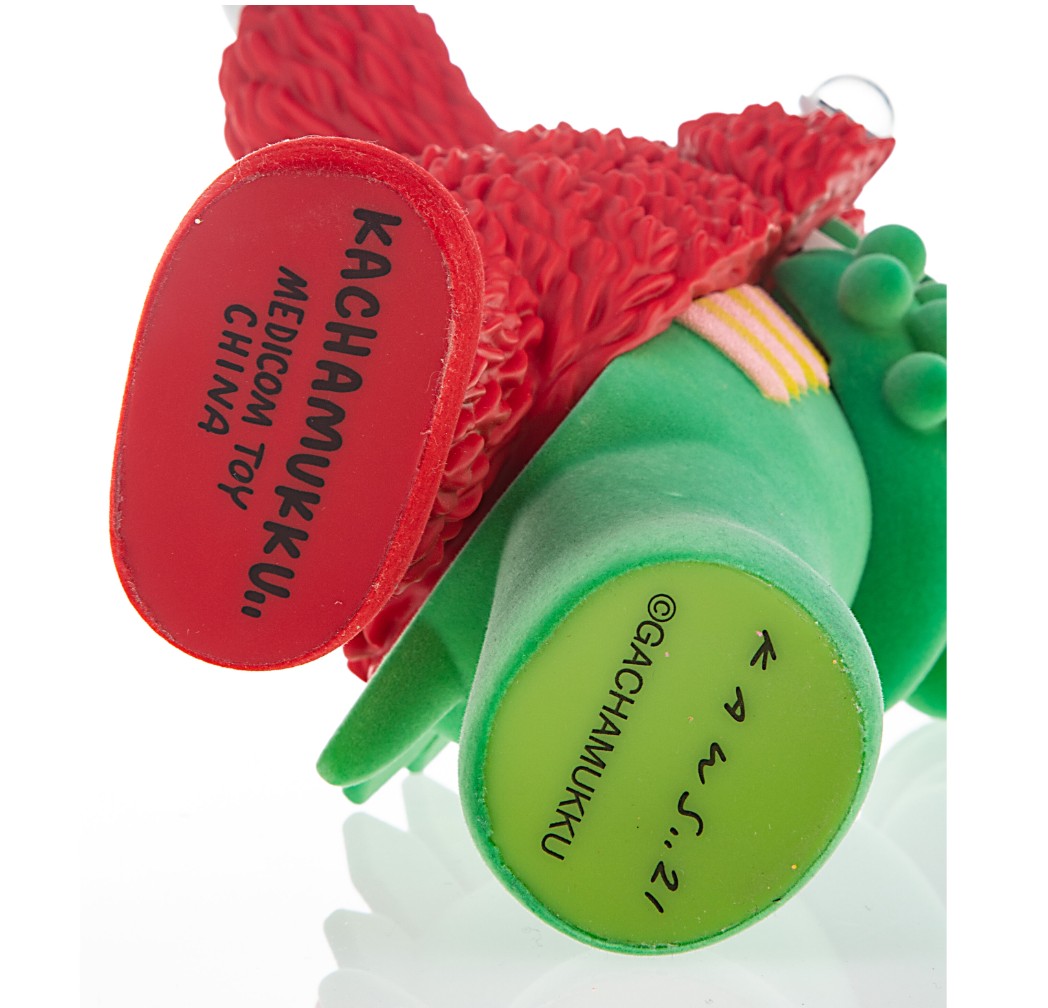
Stamped on the reverse and underside of feet
Auction Results
Heritage Auctions: 5 March 2025
USD 350
KAWS (b. 1974)
KACHAMUKKU (Red/Green), 2021
Painted cast vinyl with flocking
Stamped on underside of feet
Produced by Medicom Toy, Tokyo