With Along The Way, KAWS refines one of the most compelling dynamics within the Companion universe: the relationship between two figures, articulated here through a gesture of quiet, almost understated support. Released in 2019 in the now-classic triad of brown, grey, and black, the work exists both as a monumental sculpture and as an editioned object, with the latter maintaining an intentionally opaque production scale—reinforcing the controlled ambiguity that often surrounds KAWS’ releases.
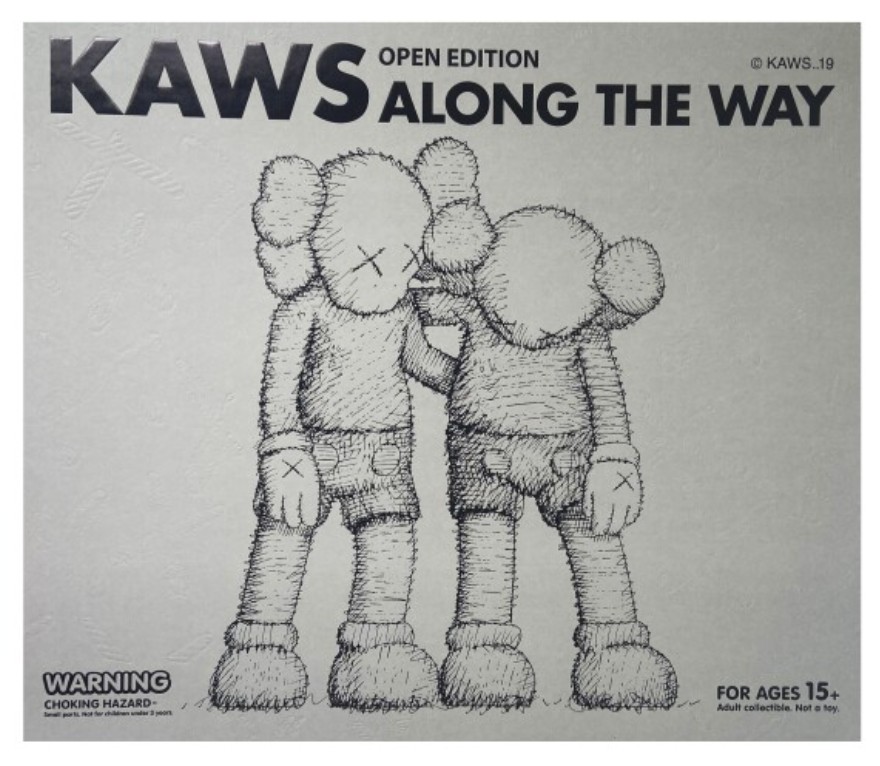
Introduction
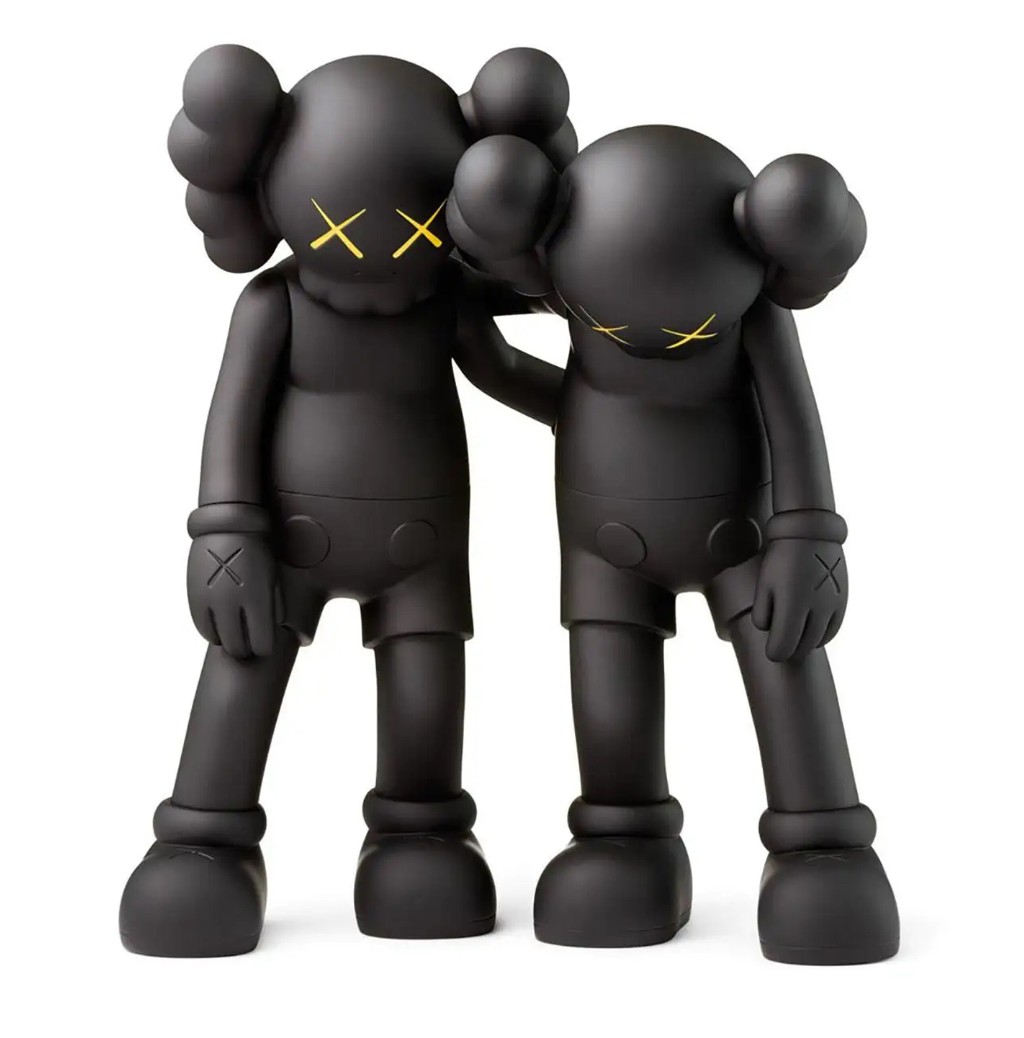
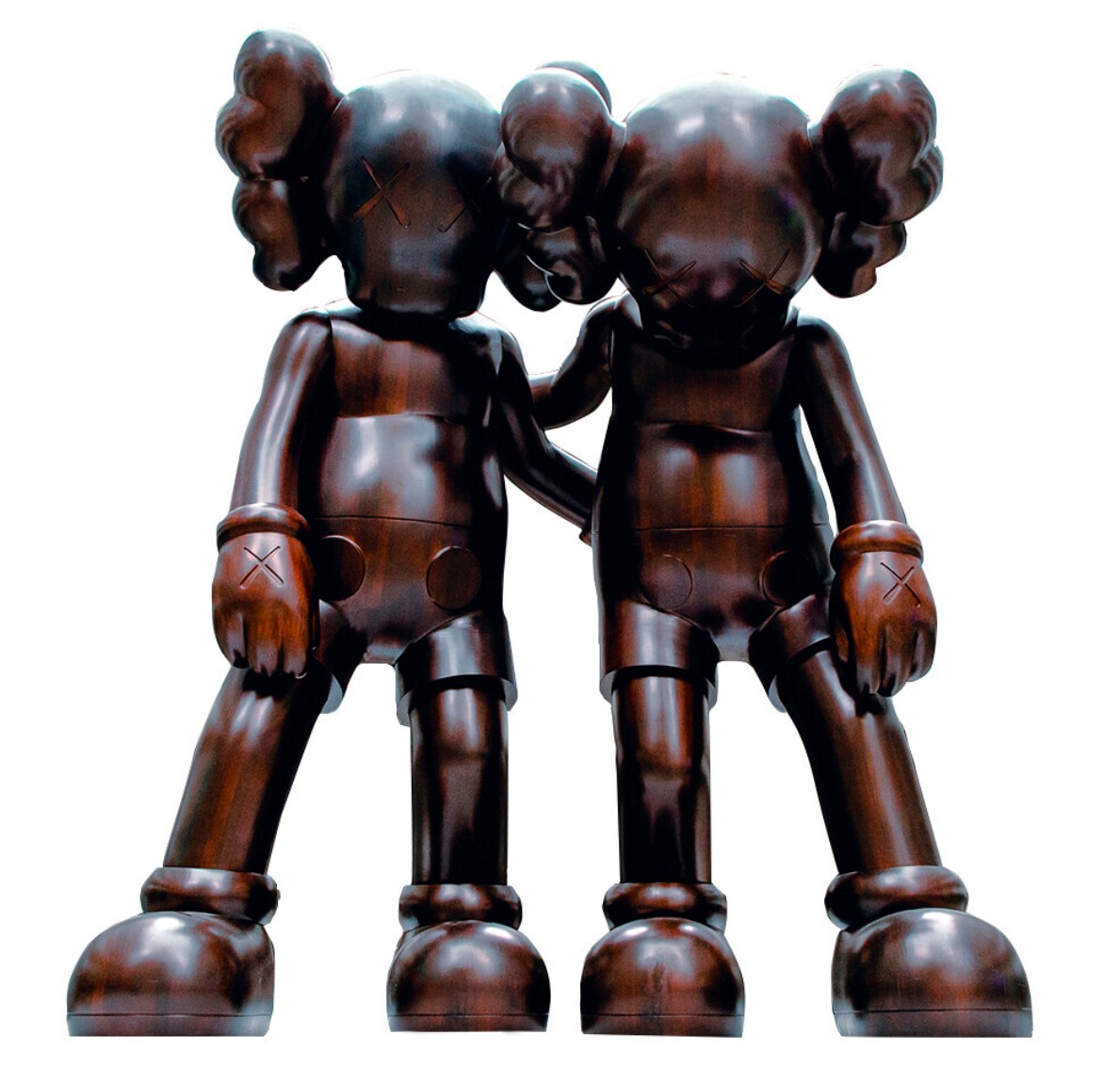
The composition is deceptively simple: two Companion figures stand side by side, one gently leaning its head onto the shoulder of the other. An arm is placed across the back, not in a tight embrace, but in a loose, stabilizing gesture. The bodies remain upright, yet the slight tilt introduces a subtle imbalance—one figure carries, the other yields.
Unlike Together, where the embrace creates a compact, unified volume, Along The Way preserves separation. The figures remain distinct, their individuality intact. The contact is partial, almost tentative, which gives the work its particular tension. It is not about fusion, but about coexistence.
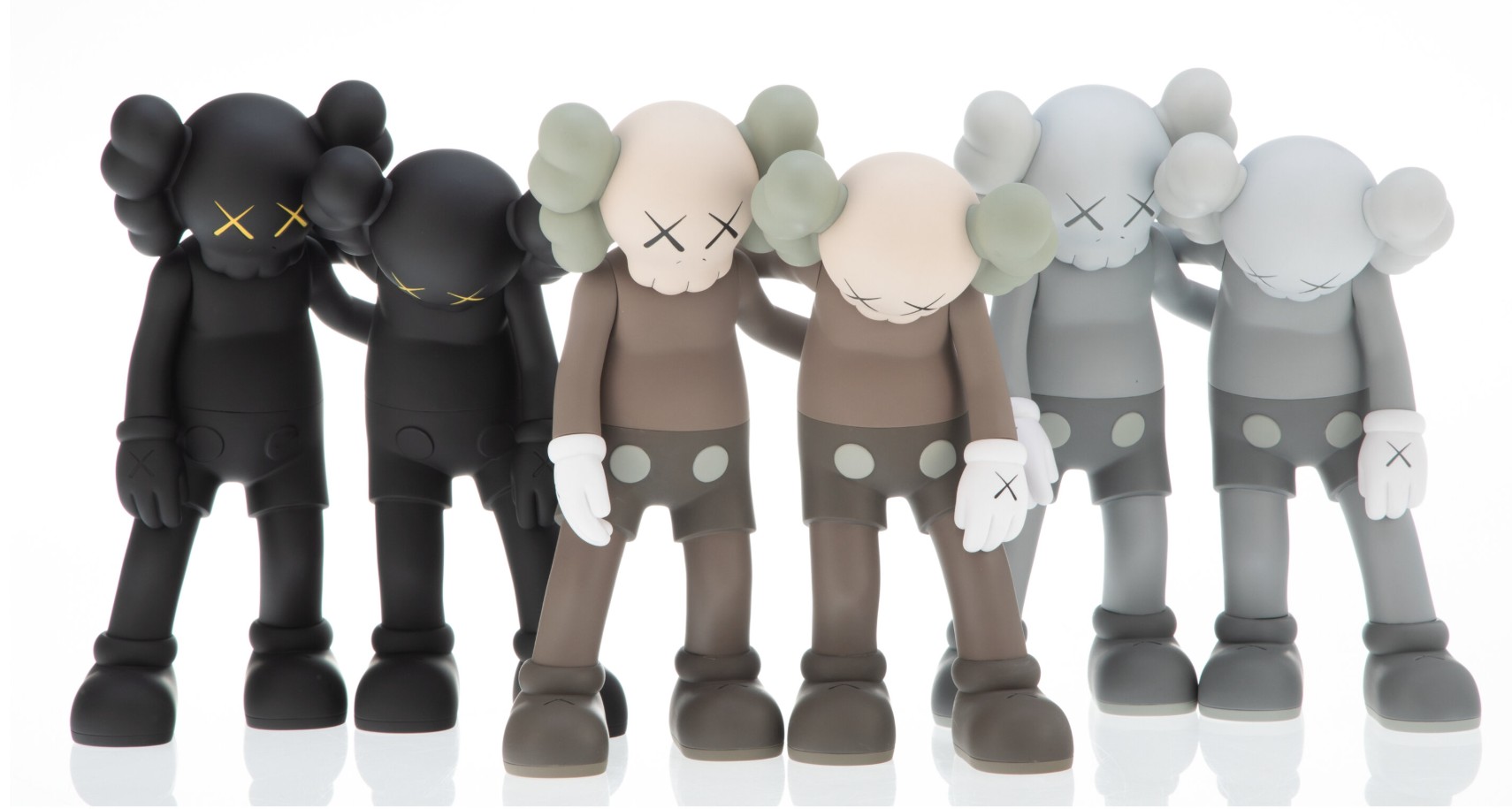
The brown version anchors the work in KAWS’ original cartoon-derived palette, lending it a familiar warmth that softens the interaction. The grey version abstracts the scene, reducing emotional cues and emphasizing the structural clarity of the gesture. The black version, by contrast, heightens the emotional density: stripped of all chromatic distraction, the relationship becomes more introspective, almost solemn. Across all three, color does not alter the composition—it modulates its reading. The gesture remains constant; its emotional temperature shifts.
The 2019 Along The Way editions find their origin in a major sculptural work first realized in 2013, when KAWS presented an 18-foot wooden version at Mary Boone Gallery in New York. This initial large-scale sculpture established the composition’s physical and conceptual weight, emphasizing materiality and presence through carved wood—an unusual medium within KAWS’ practice. The later edition translates this monumental work into a more accessible format, yet preserves its essential gesture and emotional structure, demonstrating the artist’s ability to move fluidly between unique sculptural forms and editioned objects without diminishing their conceptual integrity.
Along The Way belongs to a broader body of works in which KAWS introduces relational dynamics—Clean Slate, Share, Together—yet it occupies a distinct position among them. It is perhaps the least demonstrative. There is no overt embrace, no exchange of objects, no narrative device. Only proximity and support.
The title is key. “Along the way” suggests process rather than destination. This is not a moment of resolution, but of continuation. The figures are not arriving or departing—they are simply moving forward, together, in a state of quiet interdependence.
Meaning and Interpretation
What gives Along The Way its strength is restraint. The gesture is minimal, yet universally legible. It can be read as friendship, care, fatigue, or mutual reliance—KAWS deliberately avoids specificity.
There is also an asymmetry worth noting. One figure leans; the other absorbs. But the roles are not fixed—they could reverse at any moment. This fluidity introduces a subtle complexity: the work is not about dependence, but about the possibility of it.
Within the Companion editions, Along The Way has established itself as one of the most emotionally resonant compositions. Its clarity, combined with its sculptural balance, has made it particularly appealing to collectors. At the same time, its existence as a monumental installation reinforces its importance within KAWS’ broader practice. Like many of his strongest works, it operates seamlessly across scales—retaining its meaning whether encountered in a public landscape or on a collector’s shelf. In essence, Along The Way does not attempt to redefine the Companion. It refines it. It demonstrates that, within a fixed visual language, the smallest shift in gesture can open an entirely new emotional field.
ALONG THE WAY (Brown/Grey/Black)
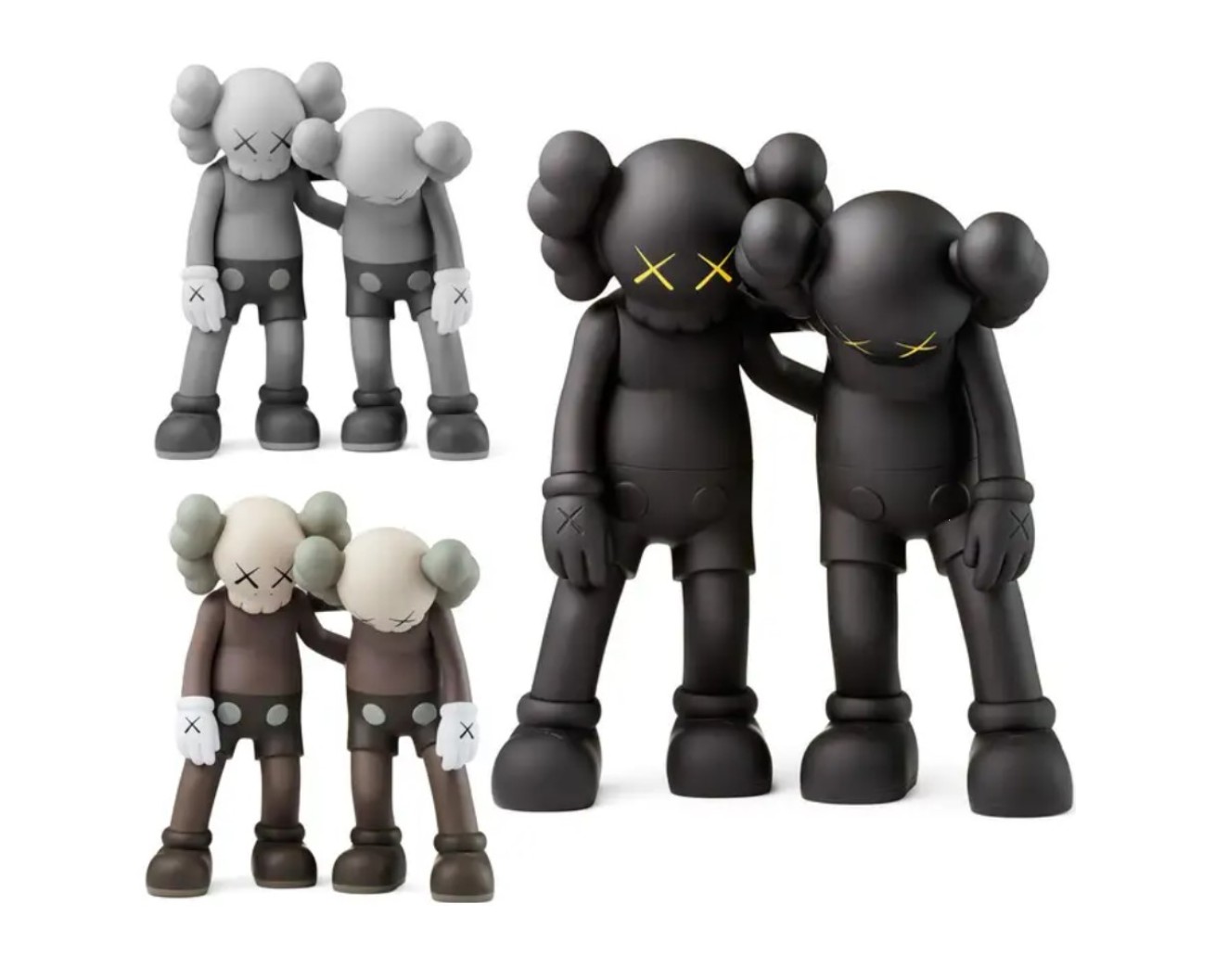
ALONG THE WAY (Black, Grey, Brown)
Medium: Painted cast vinyl
Year: 2019
Dimensions: 28x22x15 (11 x 8-1/2 x 6 inches)
Edition: Unknown size
Produced by Medicom Toy, Tokyo
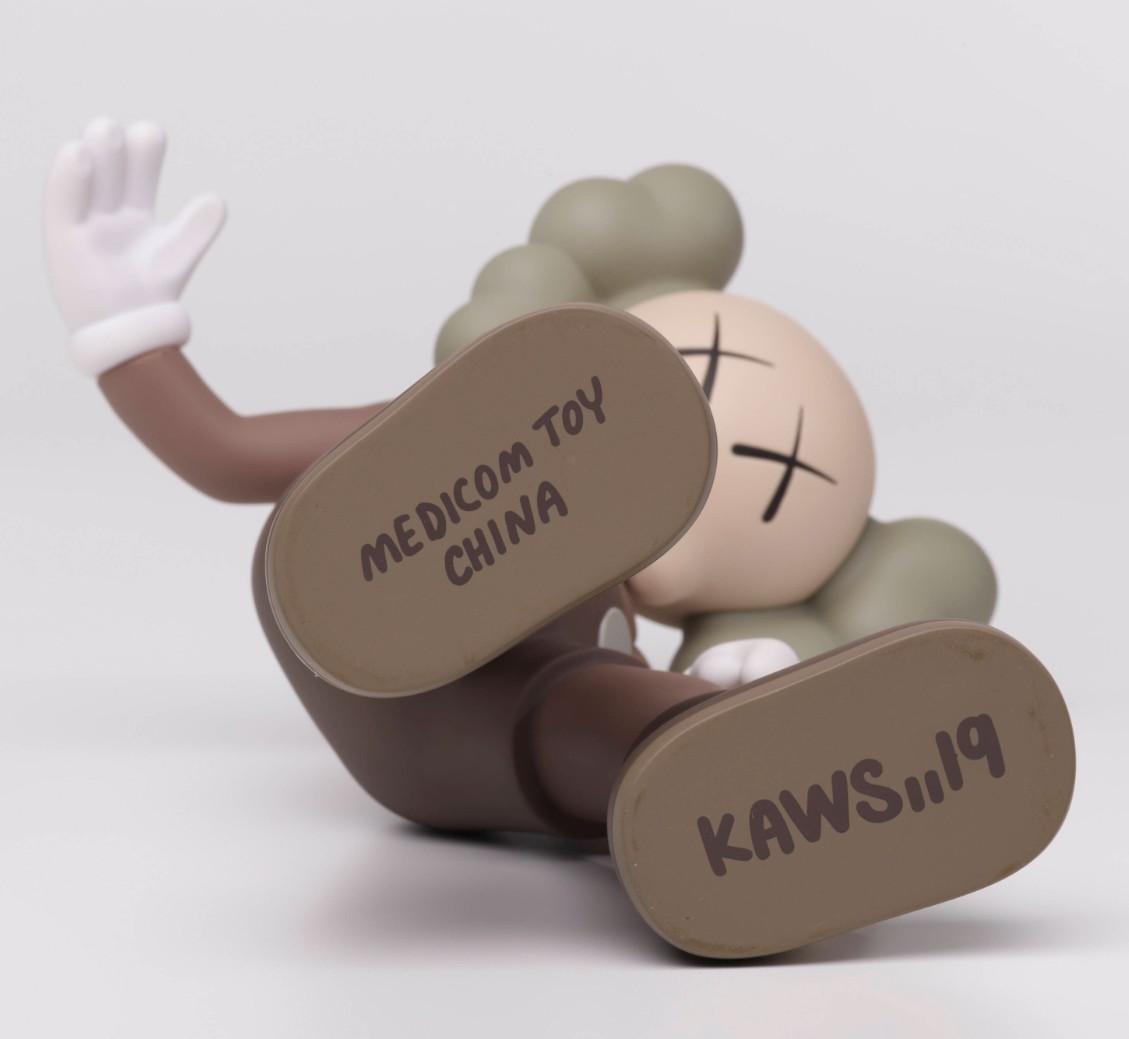
Molded manufacturer’s mark to underside of each element
‘Along the Way Kaws 19’ and ‘Medicom Toy China Kaws 19’
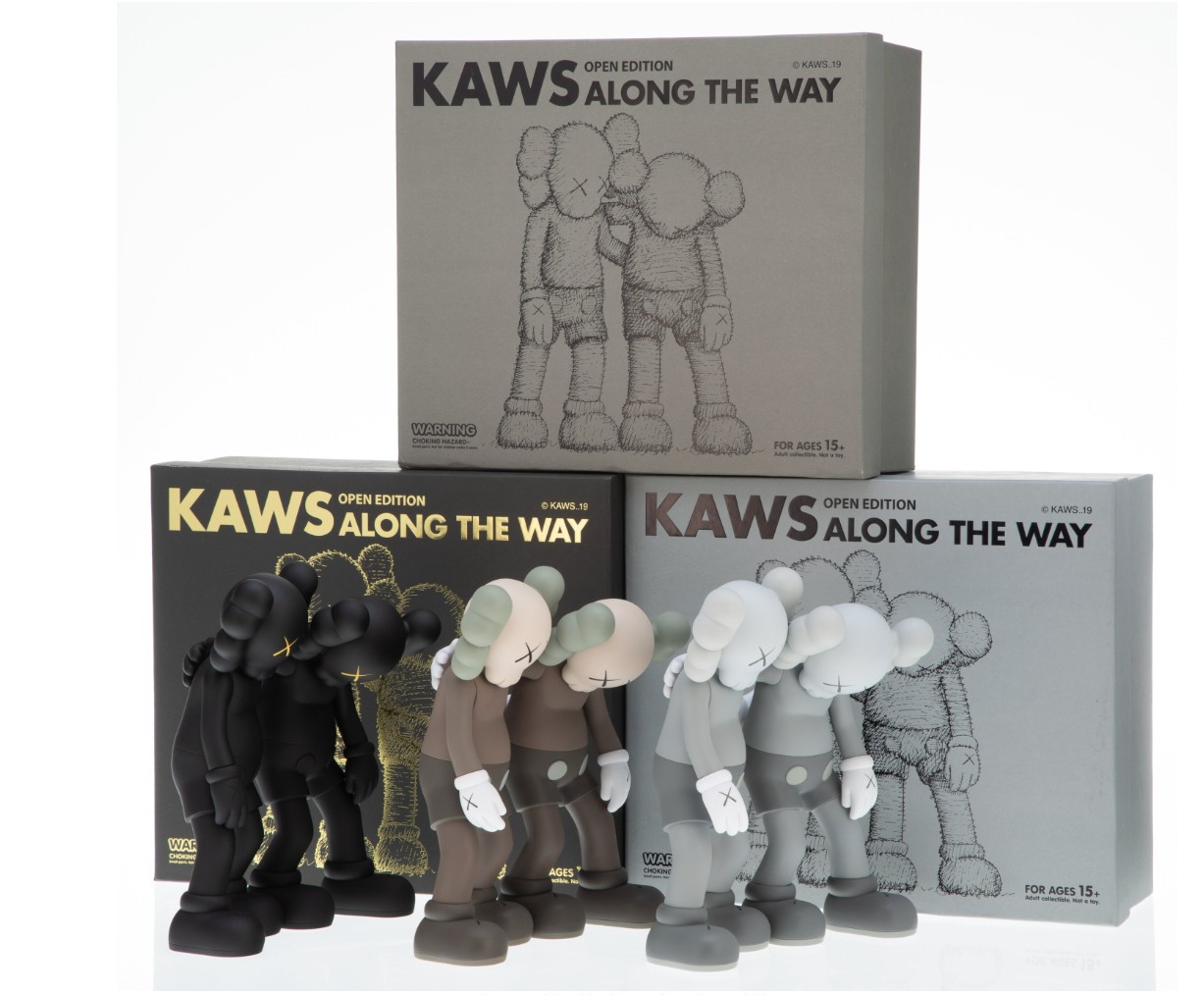
Auction Results
Heritage Auctions: 1 March 2023
USD 2,750
KAWS (b. 1974)
Along the Way (set of 3), 2019
Painted cast vinyl
Open Edition
Each stamped to the underside of the feet
Produced by Medicom Toy, Tokyo
ALONG THE WAY (Brown), 2019
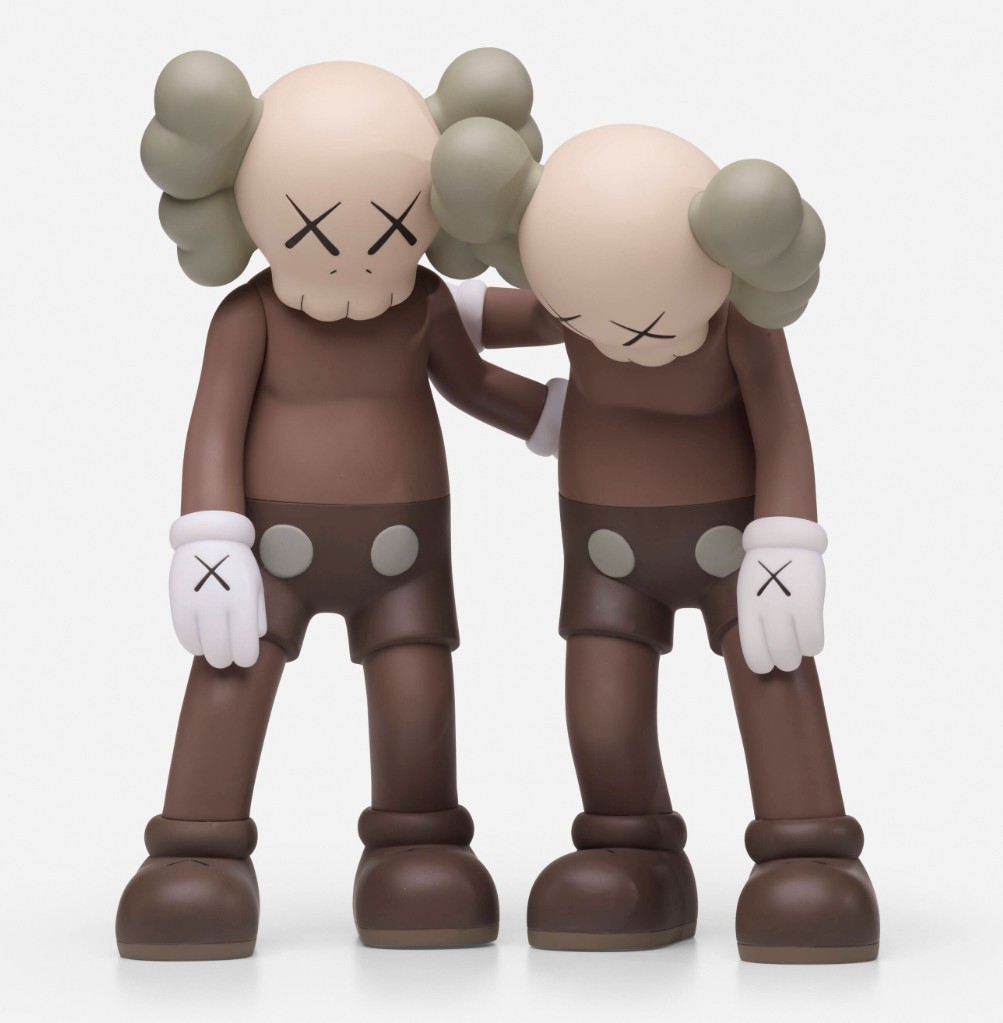
ALONG THE WAY (Brown)
Medium: Painted cast vinyl
Year: 2019
Dimensions: 28x22x15 (11 x 8-1/2 x 6 inches)
Edition: Unknown size
Produced by Medicom Toy, Tokyo
Molded manufacturer’s mark to underside of each element
‘Along the Way Kaws 19’ and ‘Medicom Toy China Kaws 19’
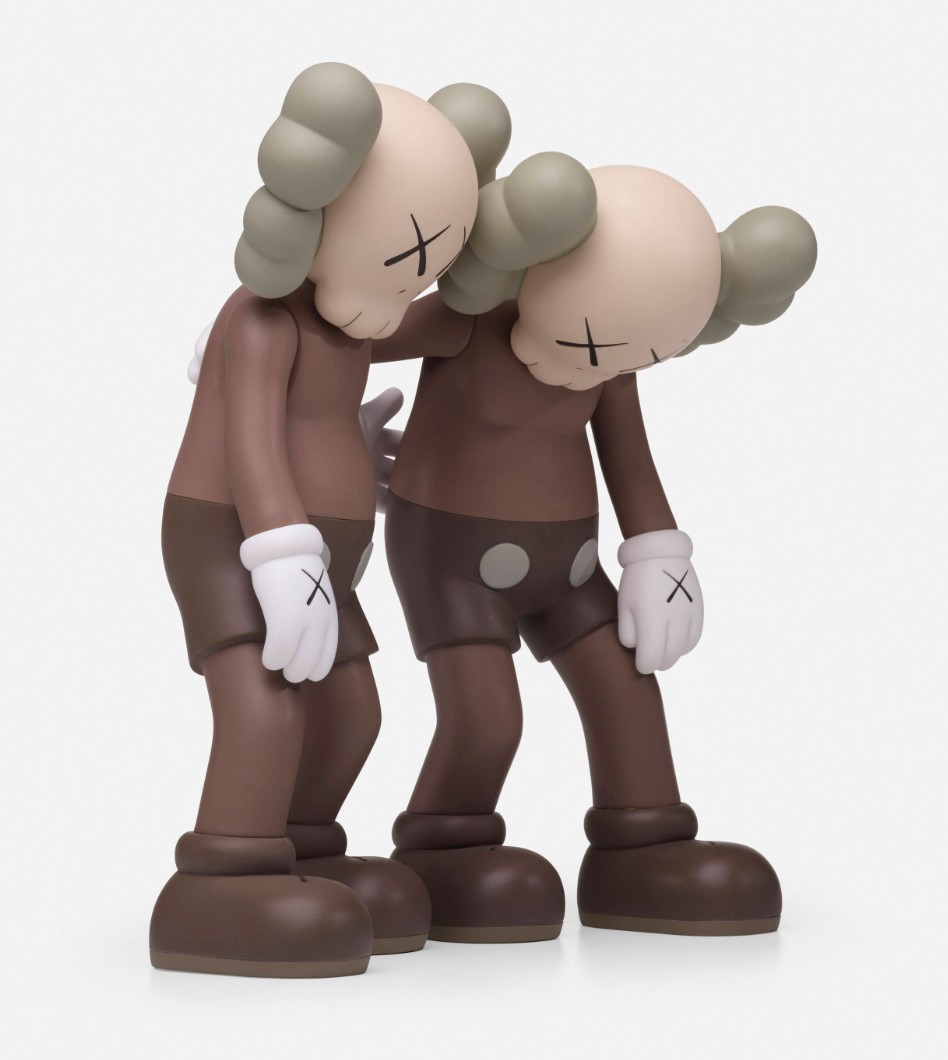
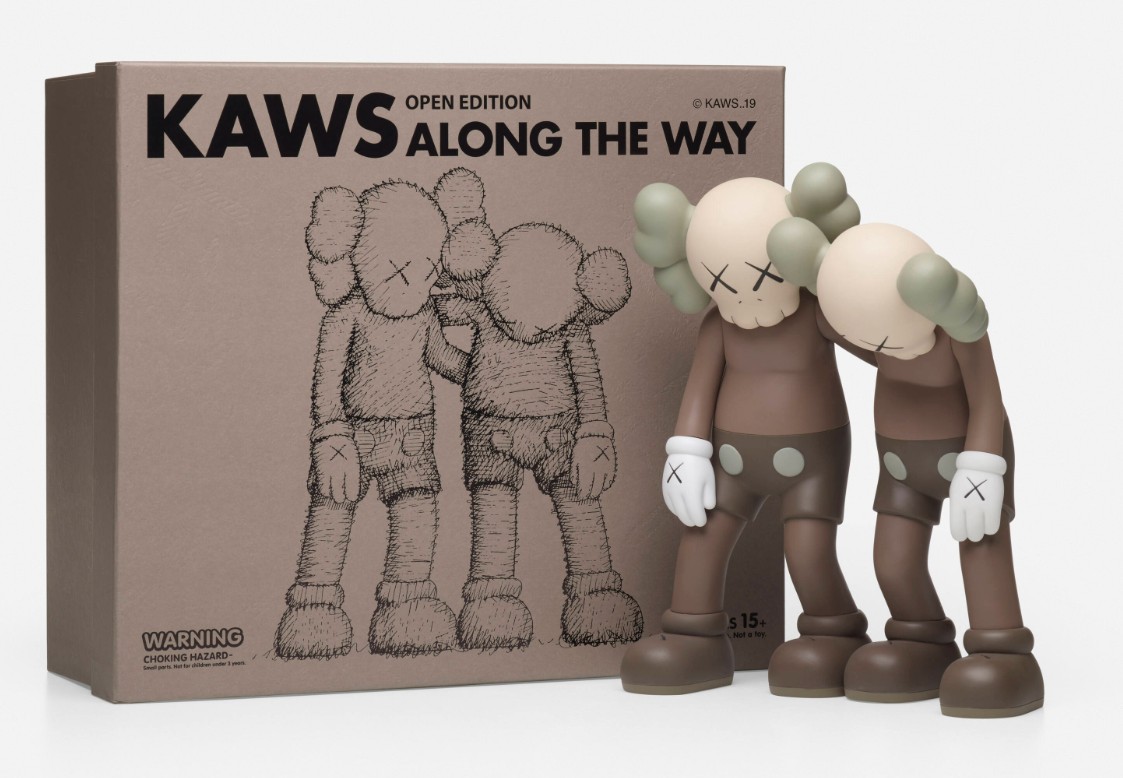
Auction Results
LA Modern: 3 December 2024
Estimated: USD 600 – 800
USD 567
KAWS (Brian Donnelly, b.1974)
Along the Way (Brown), 2019
Painted cast vinyl
Molded manufacturer’s mark to underside of each element
‘Along the Way Kaws 19’ and ‘Medicom Toy China Kaws 19’
This work is from the edition of unknown size
Produced by Medicom Toy, Tokyo
Sold with original packaging
ALONG THE WAY (Black)
ALONG THE WAY (Black)
Medium: Painted cast vinyl
Year: 2019
Dimensions: 28x22x15 (11 x 8-1/2 x 6 inches)
Edition: Unknown size
Produced by Medicom Toy, Tokyo
Molded manufacturer’s mark to underside of each element
‘Along the Way Kaws 19’ and ‘Medicom Toy China Kaws 19’
ALONG THE WAY (MONUMENTAL)
KAWS (B. 1974)
ALONG THE WAY, 2013
Afromosia wood
550 (H) x 448 x 306 cm (216 1/2 x 176 3/8 x 120 1/2 inches)
From a series of three unique works, dark colorway