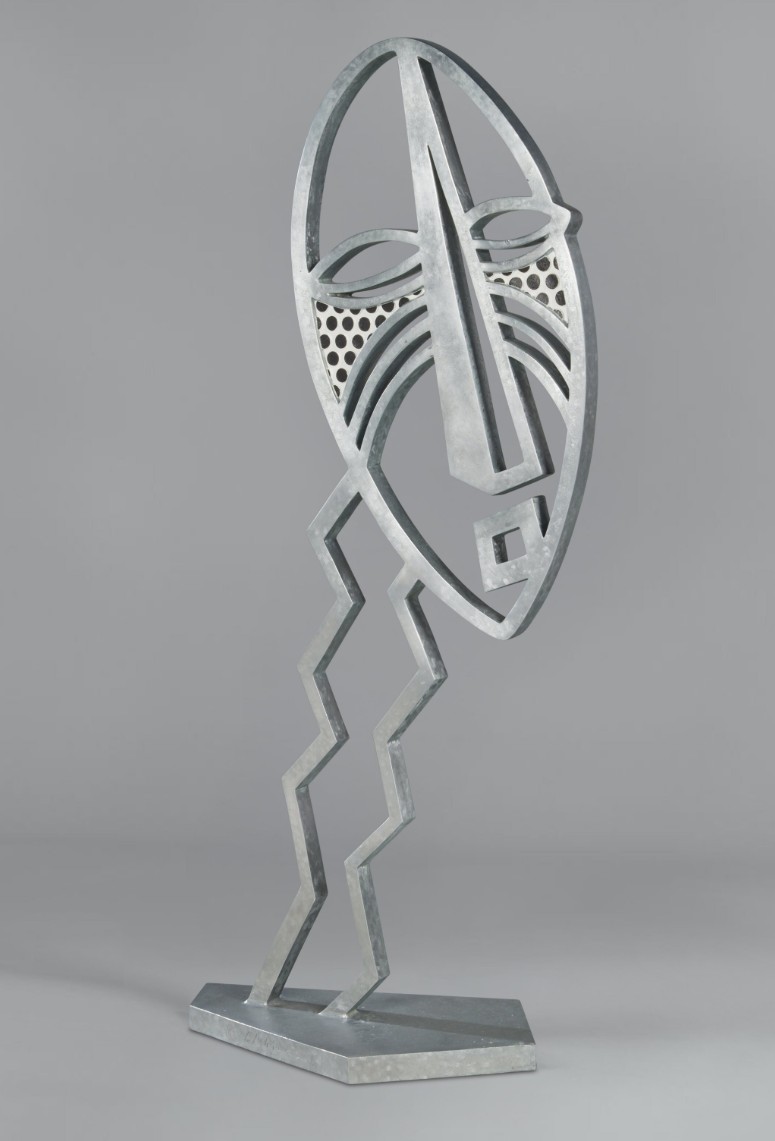
ROY LIHTENSTEIN (1923 – 1997)
Ritual Mask, 1992
Painted galvanized steel
51 1/8 x 23 5/8 x 11 3/8 inches (129.9 x 60 x 28.9 cm)
Edition: 6 + 1 Artist’s Proof
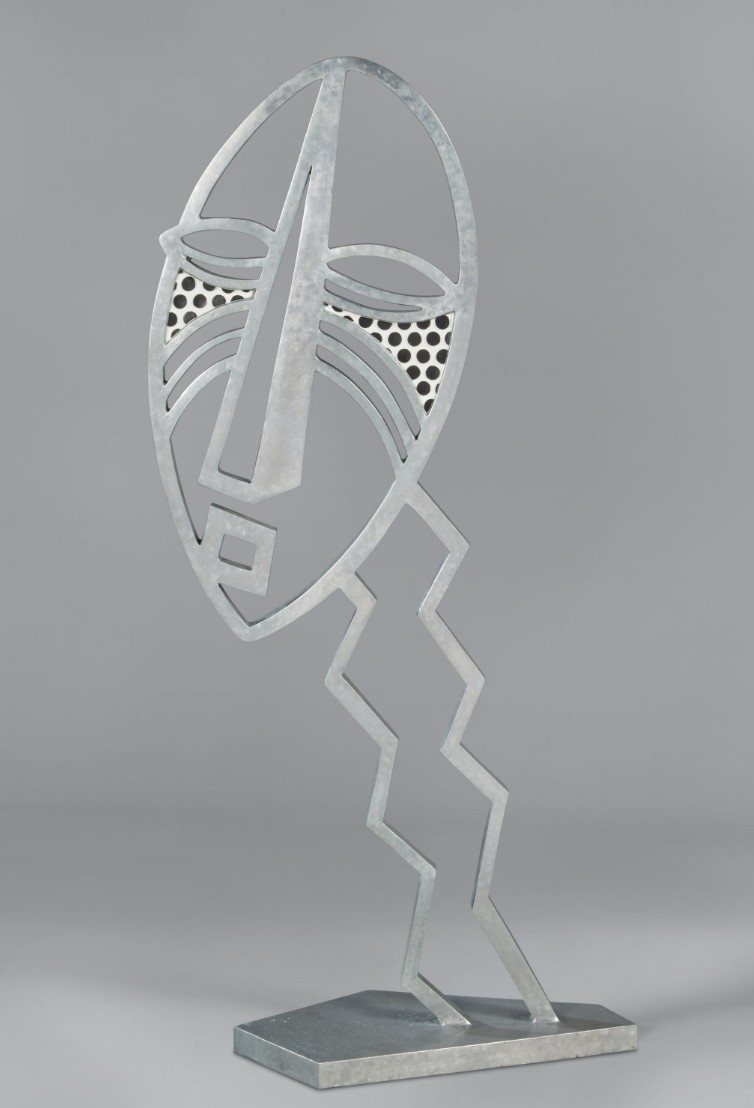
Standing just over four feet high, Ritual Mask showcases Lichtenstein’s ability to transform historical and cultural imagery into the bold, graphic language of Pop Art while highlighting his sustained engagement with the dialogue between past and contemporary visual culture. It presents a stylized mask form, reduced to flat planes and bold outlines. The features are simplified: eyes, mouth, and contours are suggested through angular surfaces and painted shapes rather than carved volume. Painted fields of solid color, accented with Lichtenstein’s signature Ben-Day dots, animate the structure, while deliberate voids leave sections of the form open to the air. These absences are not oversights, but essential parts of the design: they force the viewer to complete the image, filling the gaps with imagination.
Placed against this Pop reinterpretation, one might recall the striking Mahongwé – Ngaré mask from the celebrated Barbier-Mueller collection, exhibited in the United States during the 1970s. That mask, with its shimmering hammered copper plates laid over a wooden core, embodies the Mahongwé’s role as a reliquary guardian: it was created not as an aesthetic object but as a mediator between the living community and the ancestral realm. Its radically abstracted, almost geometric features, reduced to oval planes, incised patterns, and gleaming surfaces, testify to the way African artists distilled spiritual and symbolic weight into formal clarity.
In Lichtenstein’s case, the formal resemblance to such sources is displaced into another register: what in the Mahongwé mask conveyed ancestral presence becomes, in Pop idiom, a play of flatness, color, and mechanical dots. The aura of sacred protection and ritual efficacy is replaced by graphic immediacy and reproducibility. Where the Barbier-Mueller mask’s material, metal reflecting light, created a shimmering, otherworldly presence, Lichtenstein substitutes industrial paint, synthetic color, and the polished neutrality of fabrication.
This tension resonates with a much broader history. Since the early twentieth century, Western modernism had rediscovered and taken inspiration from African and so-called “tribal” art, with Picasso’s engagement with Fang and Grebo masks marking a decisive rupture in the development of Cubism. What had once been ritual instruments were re-read as signs of radical formal innovation, fueling the avant-garde’s search for new idioms of expression. Yet this modernist “revival” of tribal art was also a process of abstraction and dislocation, removing works from their ceremonial context and re-situating them within studios, salons, and museums. Lichtenstein inherits that history, but his Ritual Mask subjects it to Pop’s deadpan logic of replication and display, laying bare the ironies of cultural borrowing in an age of mass media.
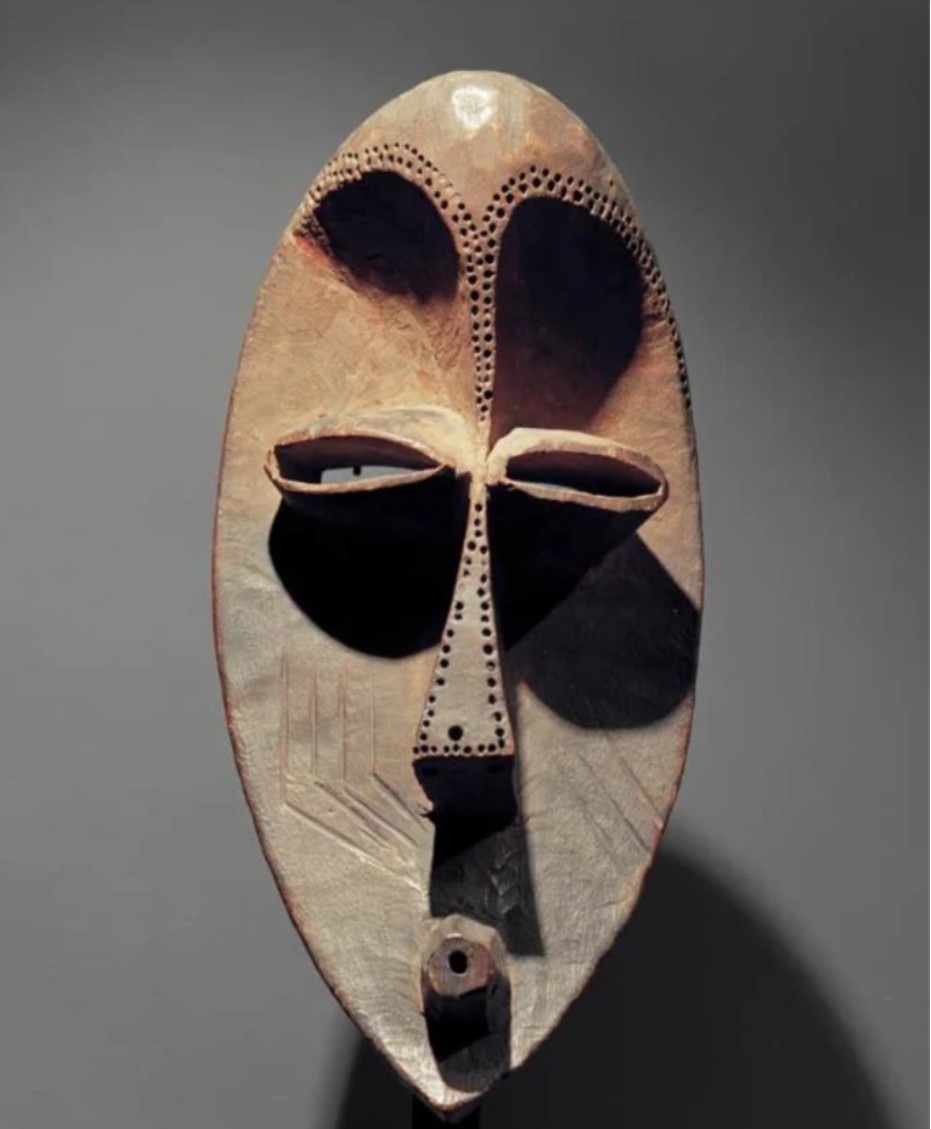
Masque Mahongwé – Ngaré, collection Barbier-Mueller collection
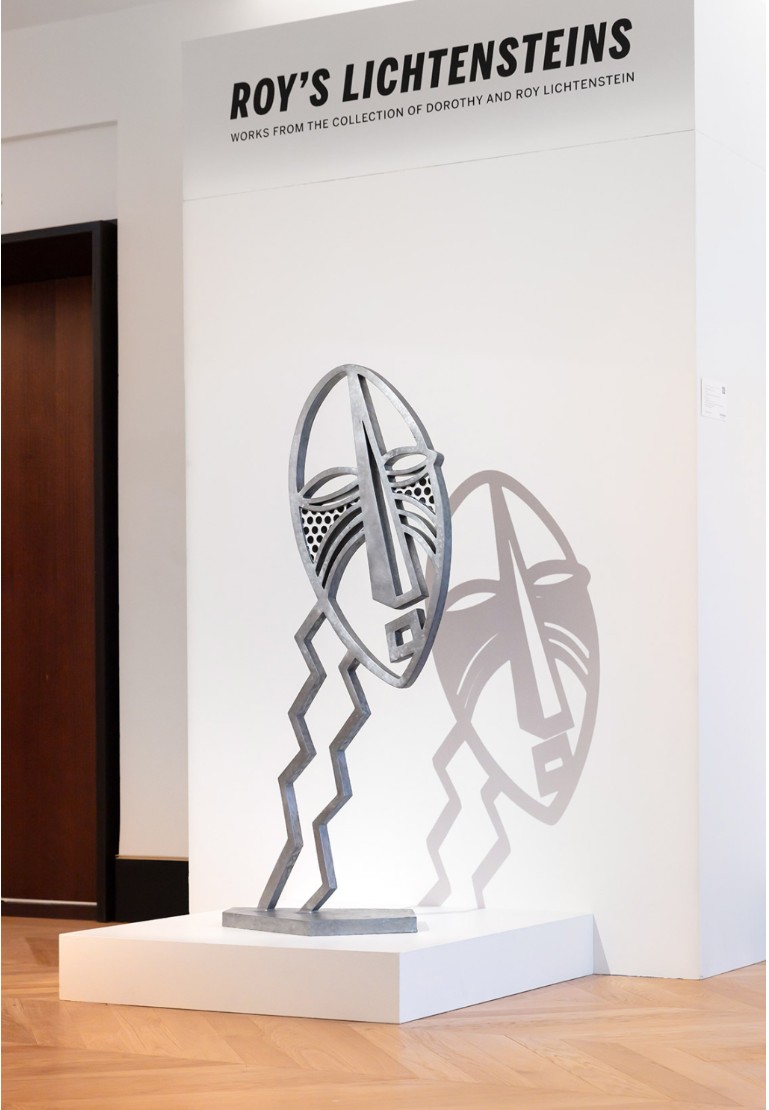
The sculpture exemplifies Lichtenstein’s effort in the late 1980s and early 1990s to translate his Pop vocabulary from painting into three dimensions. What once belonged to the flat space of comics or advertisements is re-staged here as an object in the round. The bold lines and crisp colours assert the same graphic clarity as his canvases, yet the sculpture occupies real space, casting shadows and demanding movement around it. It is both painting and object, surface and volume. The title points to a deeper irony. A “ritual mask” traditionally carries cultural or spiritual weight, as in the Mahongwé example, but Lichtenstein’s version is manufactured, editioned, and destined for galleries rather than ceremonies. In this sense, it acknowledges the long history of modern artists borrowing from African art, Picasso most famously, but subjects that inheritance to Pop’s cool logic of reproduction. It is a mask that cannot be worn, only displayed; its ritual is one of art, commerce, and spectatorship.
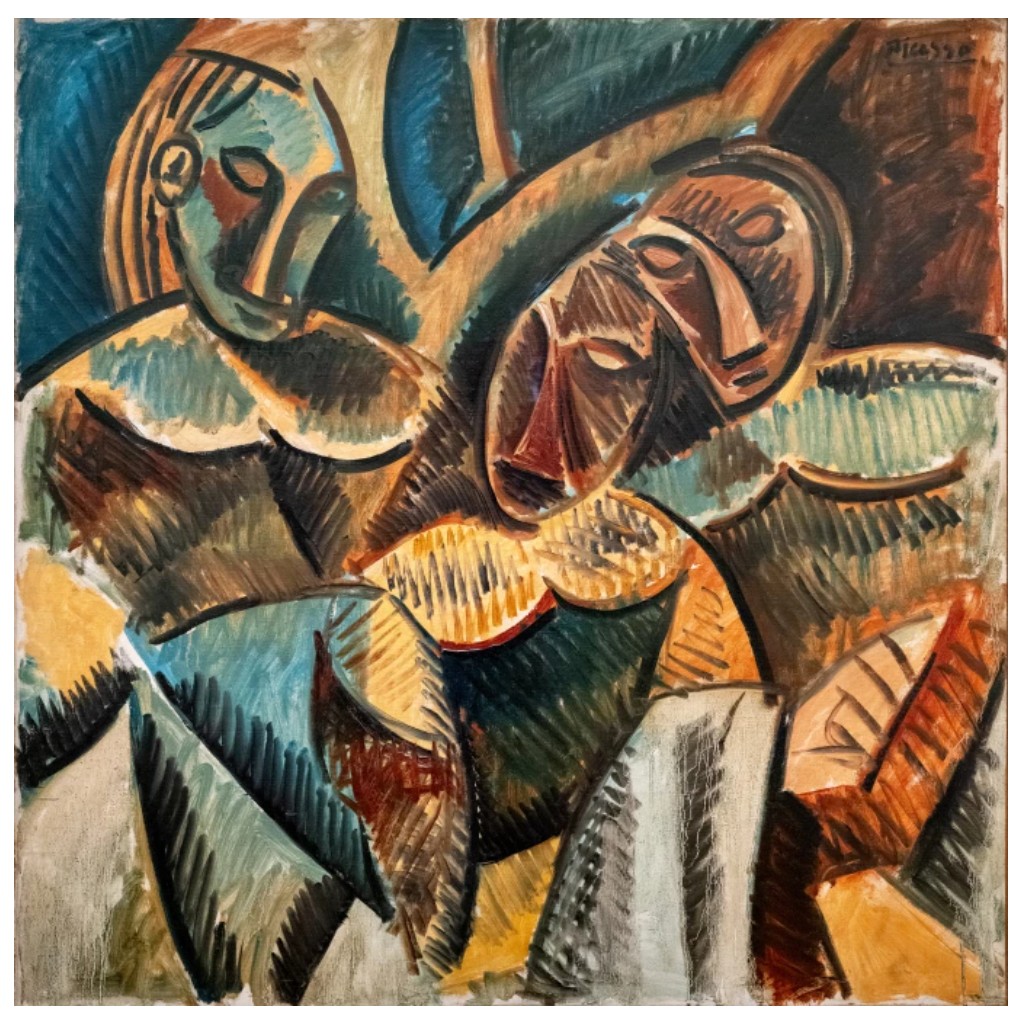
Picasso, Pablo (1881-1973), Trois figures sous un arbre, 1907-1908, Musée National Picasso, Paris © Pablo Picasso / DACS
The work belongs to a fertile phase of Lichtenstein’s career, when he turned increasingly toward sculptural experiments and to the re-examination of art historical motifs. It resonates with his 1991 painting Interior with African Mask, where a mask appears as a decorative object within a domestic scene. In Ritual Mask, that motif is isolated, enlarged, and made autonomous. The result is a work that raises questions about authenticity, appropriation, and the tension between visibility and concealment. What makes Ritual Mask compelling is the way it condenses opposites. It is a mask that reveals as much as it hides, a ritual object emptied of ritualistic qualities, a Pop sculpture that gestures toward both tradition and parody. Like much of Lichtenstein’s art, it is witty, ironic, and unsettlingly clear: an image made solid, a symbol made strange.
Auction Results
WORKS FROM THE COLLECTION OF DOROTHY AND ROY LICHTENSTEIN
Sotheby’s Paris: 24 October 2025
Estimated: EUR 550,000 – 650,000
EUR 698,500 / USD 811,460
Ritual Mask | Surrealism and Its Legacy | 2025 | Sotheby’s
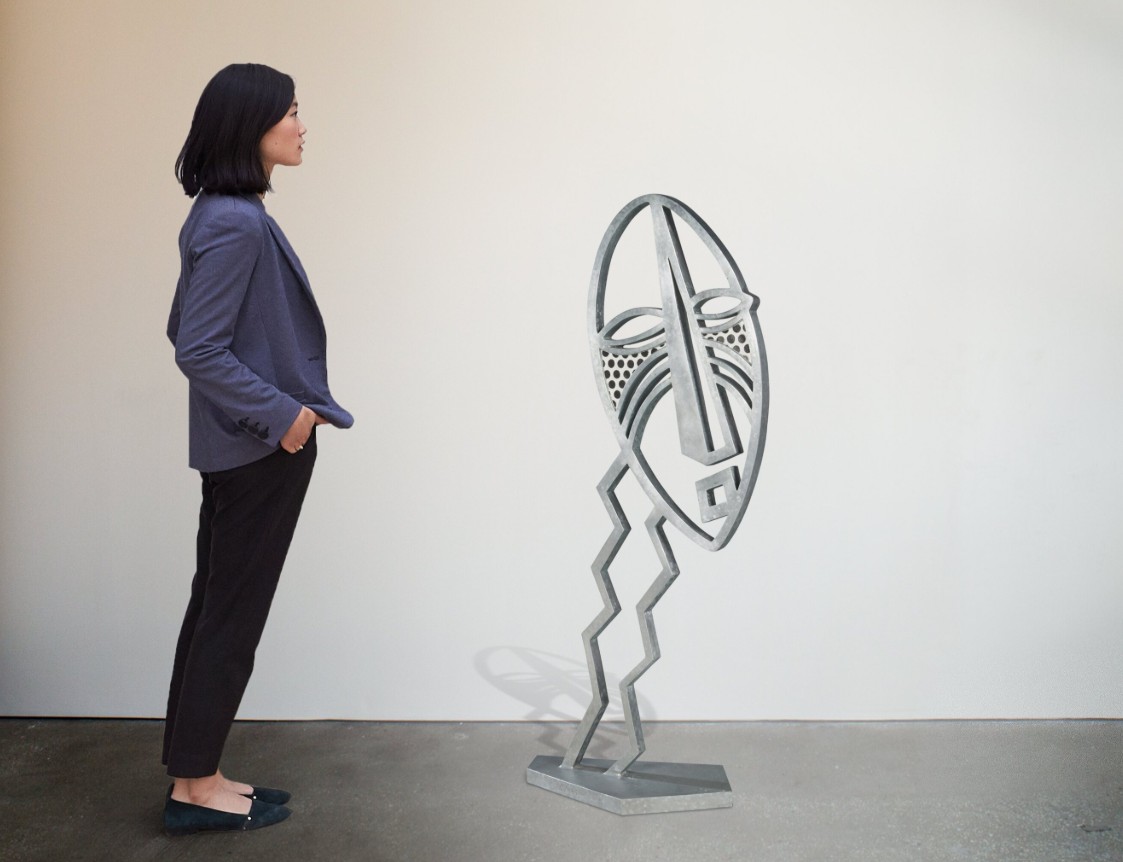
ROY LIHTENSTEIN (1923 – 1997)
Ritual Mask, 1992
Painted galvanized steel
51 1/8 x 23 5/8 x 11 3/8 inches (129.9 x 60 x 28.9 cm)
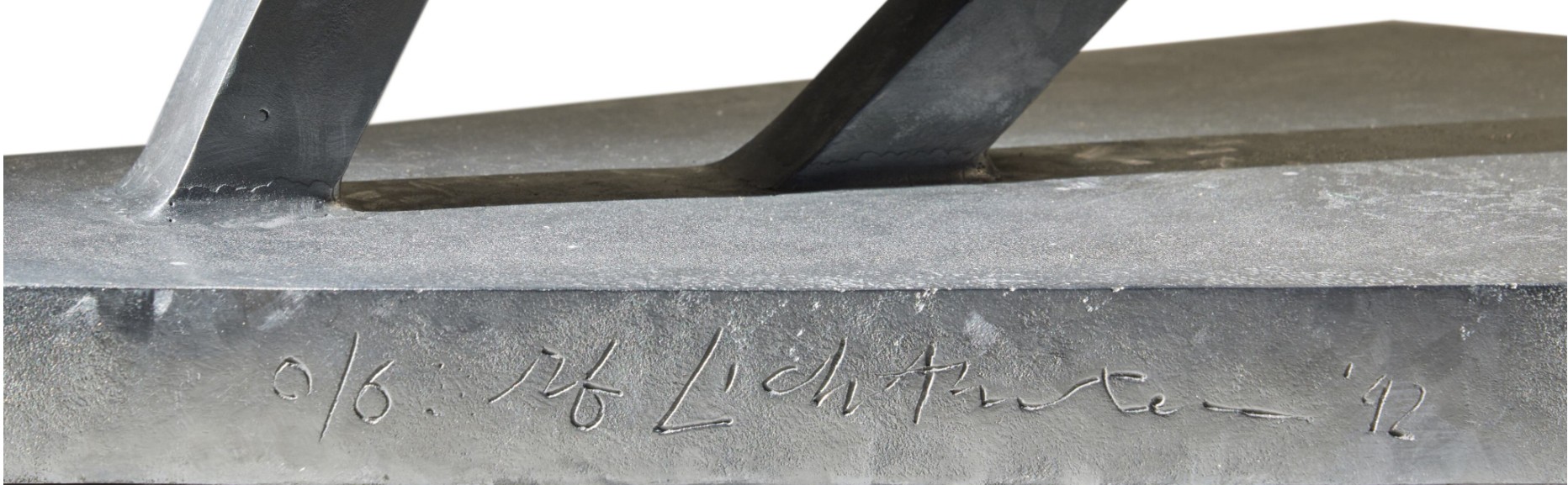
Incised with the artist’s signature rf Lichtenstein, dated ’92, and numbered 0/6
This work is the artist’s proof from an edition of 6 plus 1 artist’s proof
Sotheby’s New-York: 10 May 2005
Estimated: USD 300,000 – 400,000
USD 486,400
Results for “roy lichtenstein ritual mask”
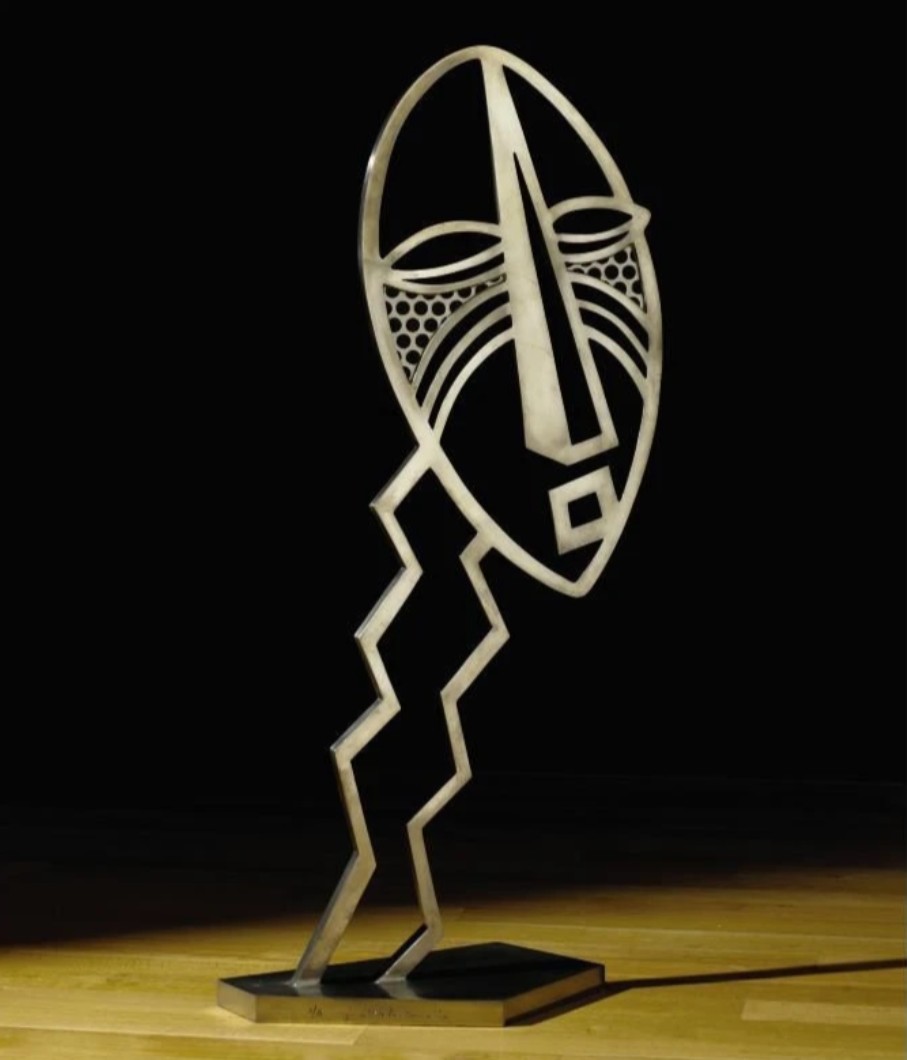
ROY LIHTENSTEIN (1923 – 1997)
Ritual Mask, 1992