DAVID HOCKNEY (B. 1937)
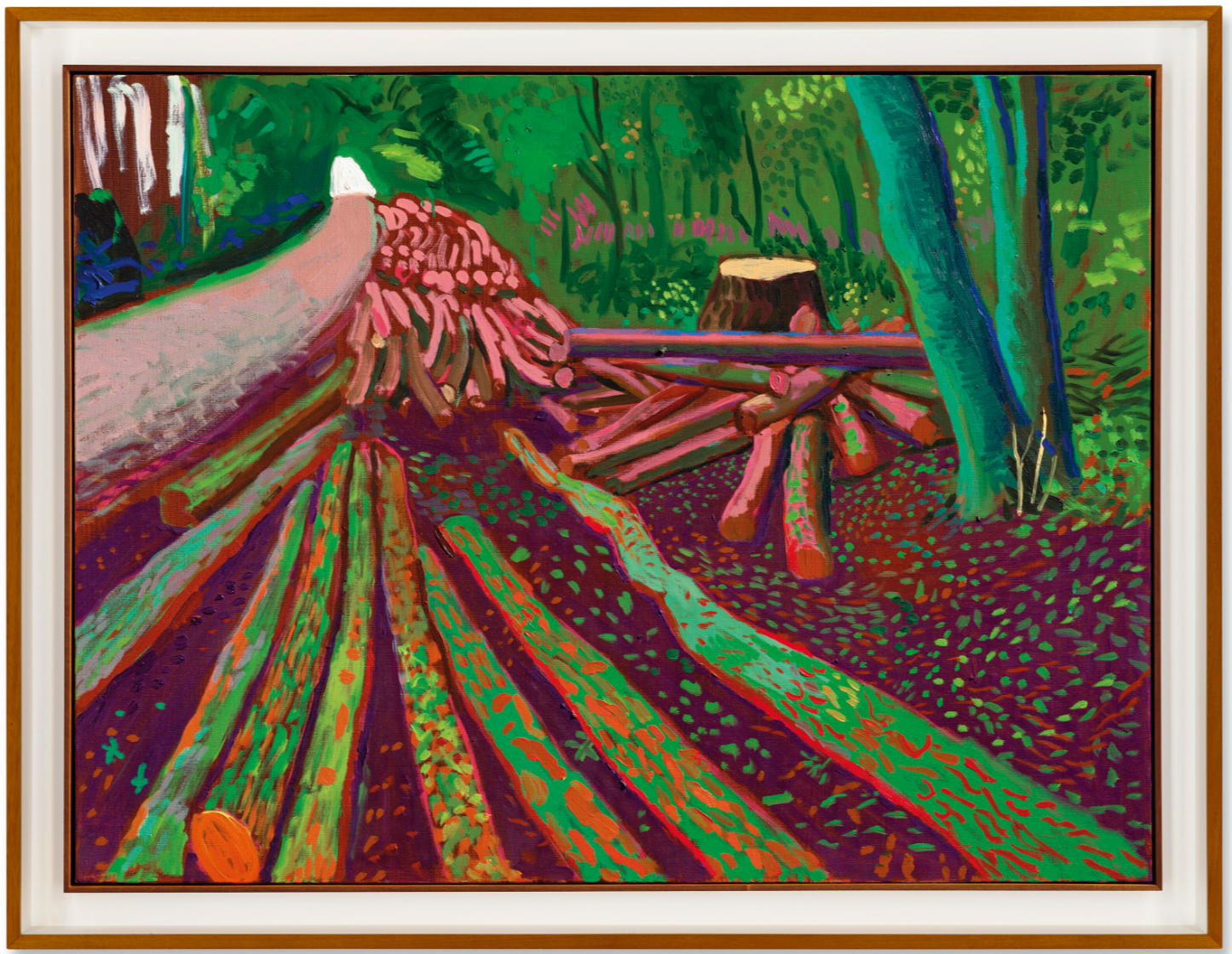
More Woldgate Timber, October 13th 2009, 2009
Oil on canvas
36×48 inches (91.5 x 122 cm)
Signed and dated ‘David Hockney Oct 2009’ (on the reverse)
Provenance
Annely Juda Fine Art, London
Acquired from the above by the present owner in 2011
Auction History
Christie’s London: 9 October 2024
Estimated: GBP 3,800,000 – 5,500,000
GBP 4,638,000 / USD 6,075,780
DAVID HOCKNEY (B. 1937), More Woldgate Timber, October 13th 2009 | Christie’s (christies.com)
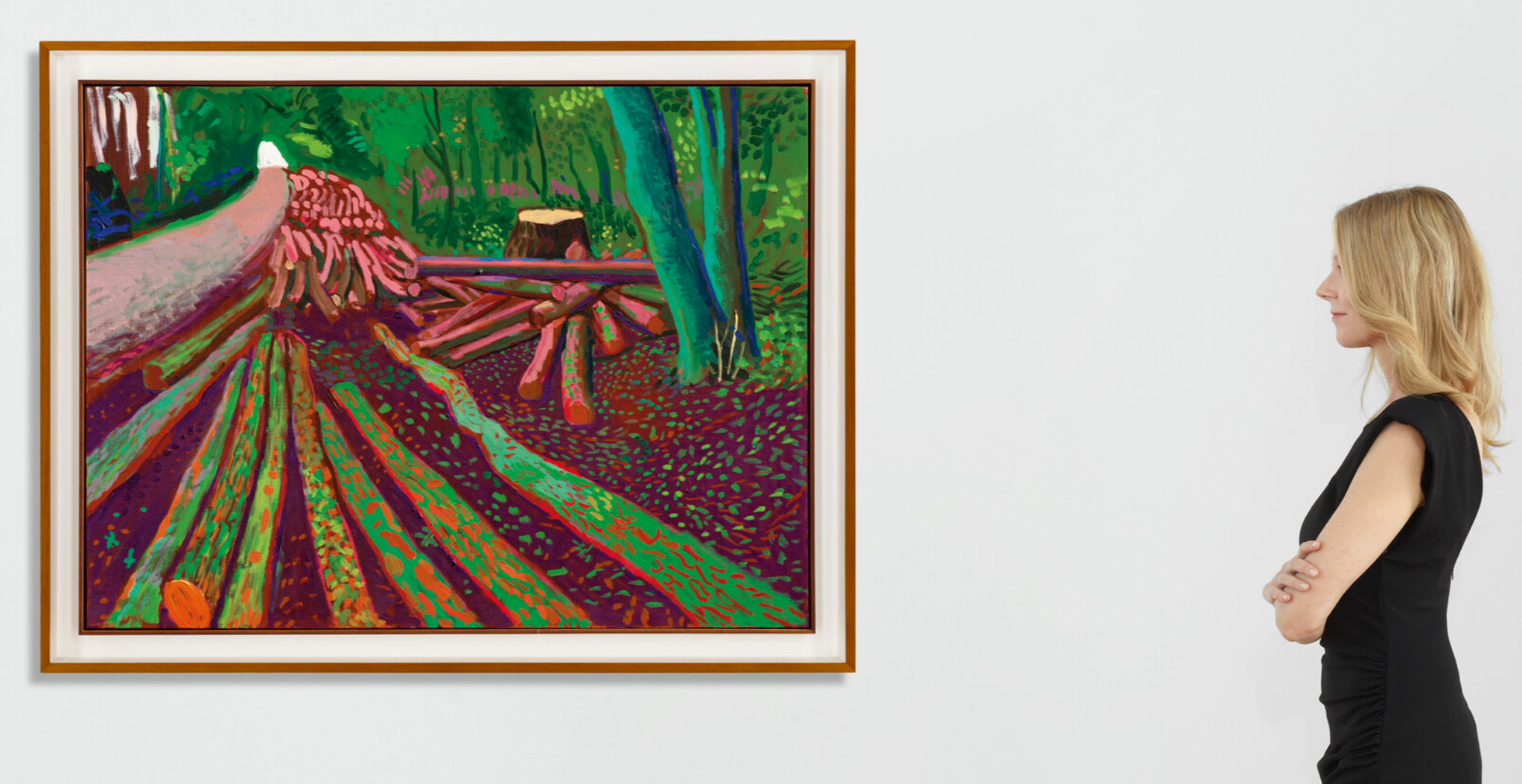
More Woldgate Timber, October 13th 2009 is a radiant love letter to David Hockney’s native Yorkshire landscape. In a vibrant palette of emerald greens, warm reds and earthy browns, the artist depicts a bank of felled trees leading along a wooded pathway, receding in perspectival swoop to a distant glimpse of bright white sky. The forest is alive with color, from greens of every shade to flashes of pink and shadows figured in cool, cobalt blue. The leaf litter shimmers with Pointillist brilliance. The artist had made repeated visits home in the years leading up to his mother’s death in 1999, and was struck by the ever-changing splendor of his native county. Returning in 2004, he began to work outdoors, channeling the influence of Constable, van Gogh, Monet and Turner as he captured the shifting light and seasons across several successive years. Saturated with the same life-affirming glow as his Californian paintings, More Woldgate Timber, October 13th 2009 is a vivid elegy to home.
Hockney was born further west in Bradford, but felt closely connected to the East Riding of Yorkshire. As a boy, he had spent two summers working on farms during the harvest there, admiring the beauty of its rolling hills and valleys. Although he would return to Yorkshire at various points throughout his career, it was not until the late 1990s that he began to paint it—initially at the request of his friend Jonathan Silver, who was battling the final stages of cancer at the time. Silver’s death in 1997, closely followed by that of Hockney’s mother, would ultimately give rise to a newfound yearning for northern England. Hockney toured Norway, Iceland, Spain and Italy during the early 2000s, before realizing that he was simply ‘painting views … sight-seeing’. Returning to Yorkshire in 2004, he began to depict his surroundings again.
“I was painting the land, land that I myself had worked. I had dwelt in those fields, so that out there, seeing, for me, necessarily came steeped in memory.”
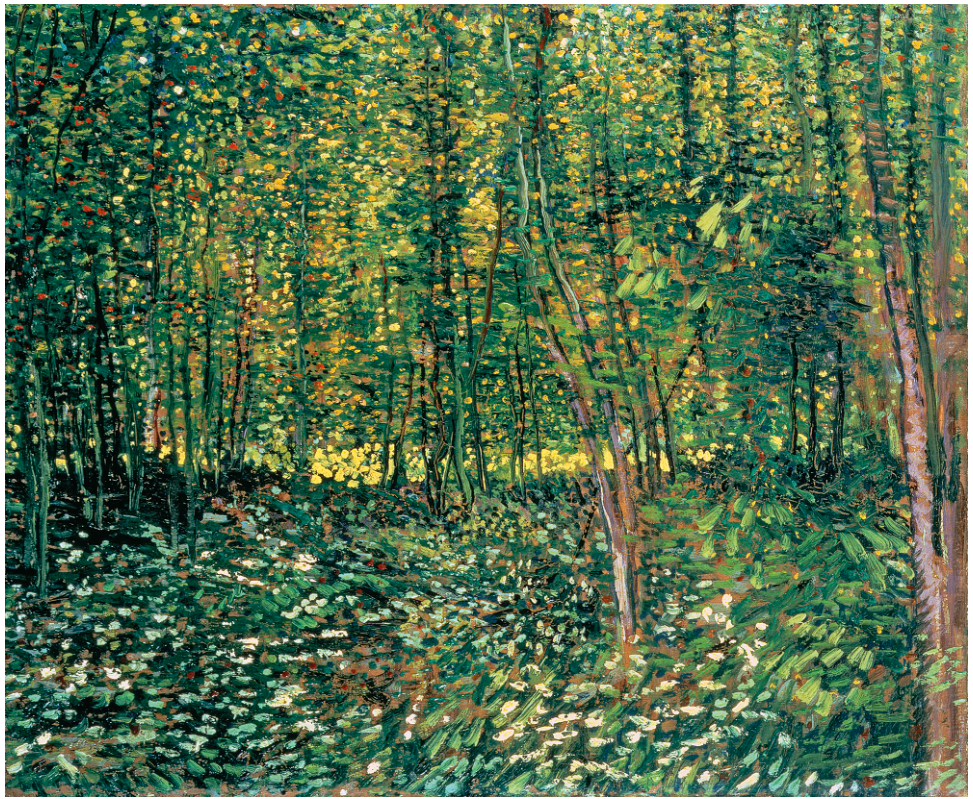
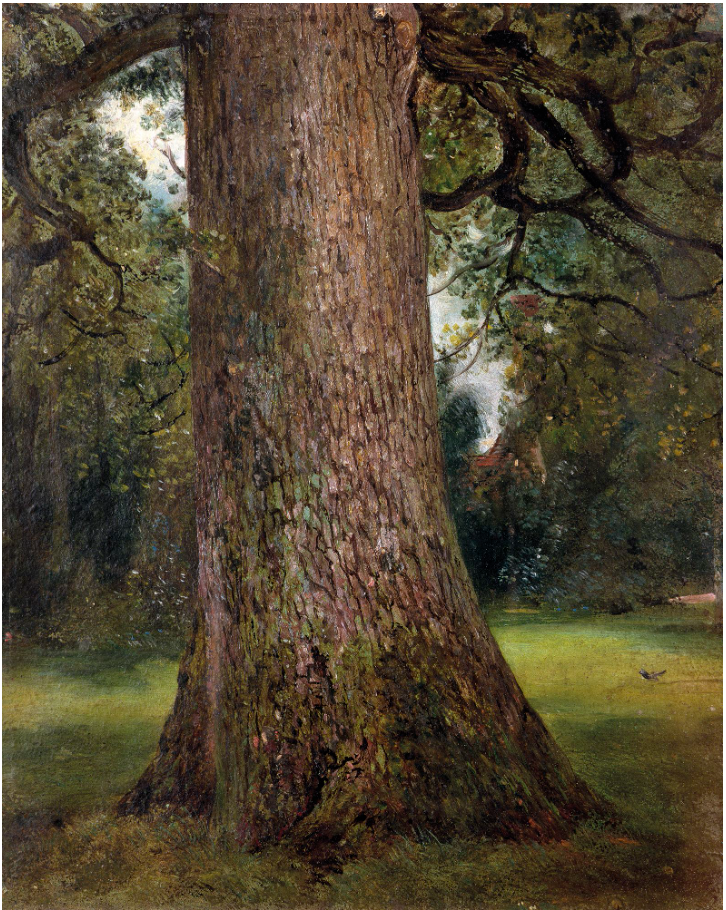
Vincent van Gogh, Trees and Undergrowth, 1887. Van Gogh Museum, Amsterdam. Digital Image: Bridgeman Images.
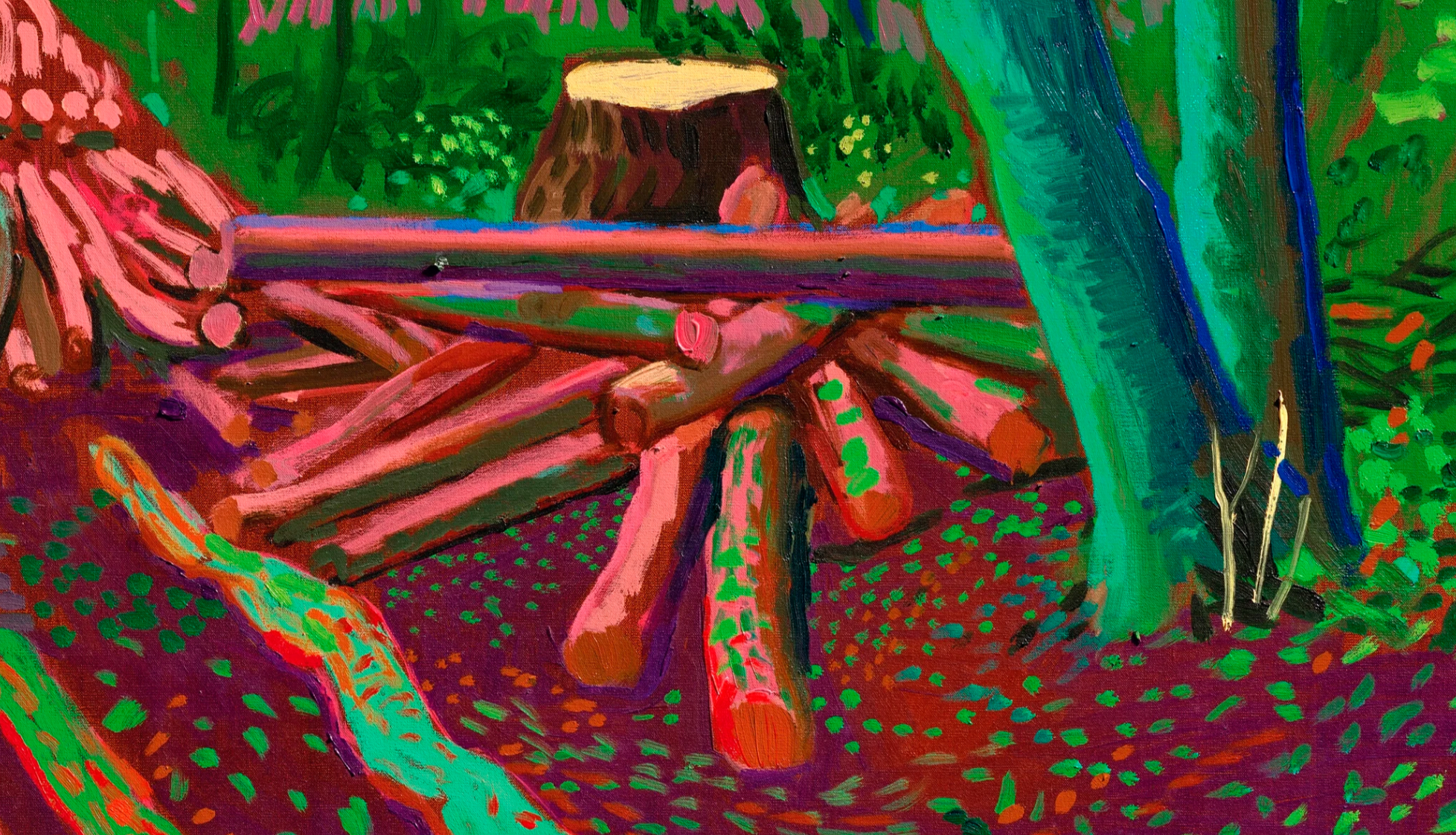
More Woldgate Timber, October 13th 2009 is one of a group of paintings depicting Woldgate, a forested stretch of road that leads west from Bridlington. Driving down this pathway one day in 2009, Hockney saw two dead trees. Undecided whether to paint them then or to wait until summer, when he next returned he found them cut down. He sketched the trunks en plein air and then painted them from memory in his studio. A week later he returned to see many more felled trees, this time with timber stacked along the roadside. This striking vista led to a number of paintings, including the monumental Winter Timber, which employed a dreamlike, Fauvist palette of blues, purples and yellows. With its more naturalistic tones, the present work poignantly captures the scene’s sense of an organic life-cycle: the bare stump and the felled trees, merging with the forest floor; the lush vitality of the living greenery beyond; and the new growth, in vibrant specks of green, that bursts forth from the earth.
Hockney’s portraits, often depicting the same subjects over many years, reveal the intimacies and evolutions of his personal relationships. His landscapes display a similar affinity with the Yorkshire soil, bearing witness to his nuanced engagement with the changing seasons. Bare, snow-covered branches in one painting might elsewhere be seen bejeweled with young leaves, or bursting into spectacular spring blossom. It is arguably in the cool, deep green autumn calm seen in the present work, however, that Hockney’s vision is at its most sensitive. In California, Hockney had missed the thrill of the changing seasons. Back in Yorkshire, they seemed more beautiful and vital than ever before. Alive with the richness of change, More Woldgate Timber, October 13th 2009 captures Hockney’s home turf as a place of familiarity and wonder.