
Born in Dresden in 1932, Gerhard Richter came of age in a rapidly shifting political and cultural landscape, first joining the Dresden Academy of Fine Arts in 1951 and later enrolling at the Dusseldorf Academy in 1961 alongside Sigmar Polke. Spanning almost six decades, Richter’s oeuvre continues to explore the relationships between color and form, abstraction and representation, and remains a paragon of the genre in art history.
“I’ve never found anything to be lacking in a blurry canvas. Quite the contrary: you can see many more things in it than in a sharply focused image.”
Introduction
Known for his use of both photorealism and abstraction in painting, often simultaneously, Gerhard Richter is one of the most important artists working today. Born on 9 February 1932 in Dresden, he began his career as an advertisement and stage painter before attending art school first in Dresden, then in Dusseldorf. Much of Richter’s work can be identified by its layering of photographic imagery and abstraction; photorealistic representations in his paintings are interrupted by purposeful blurring or lack of focus. In this way he is able to play the two artistic genres off of each other, creating a singular style that has contributed to the advancement of abstraction in painting overall.
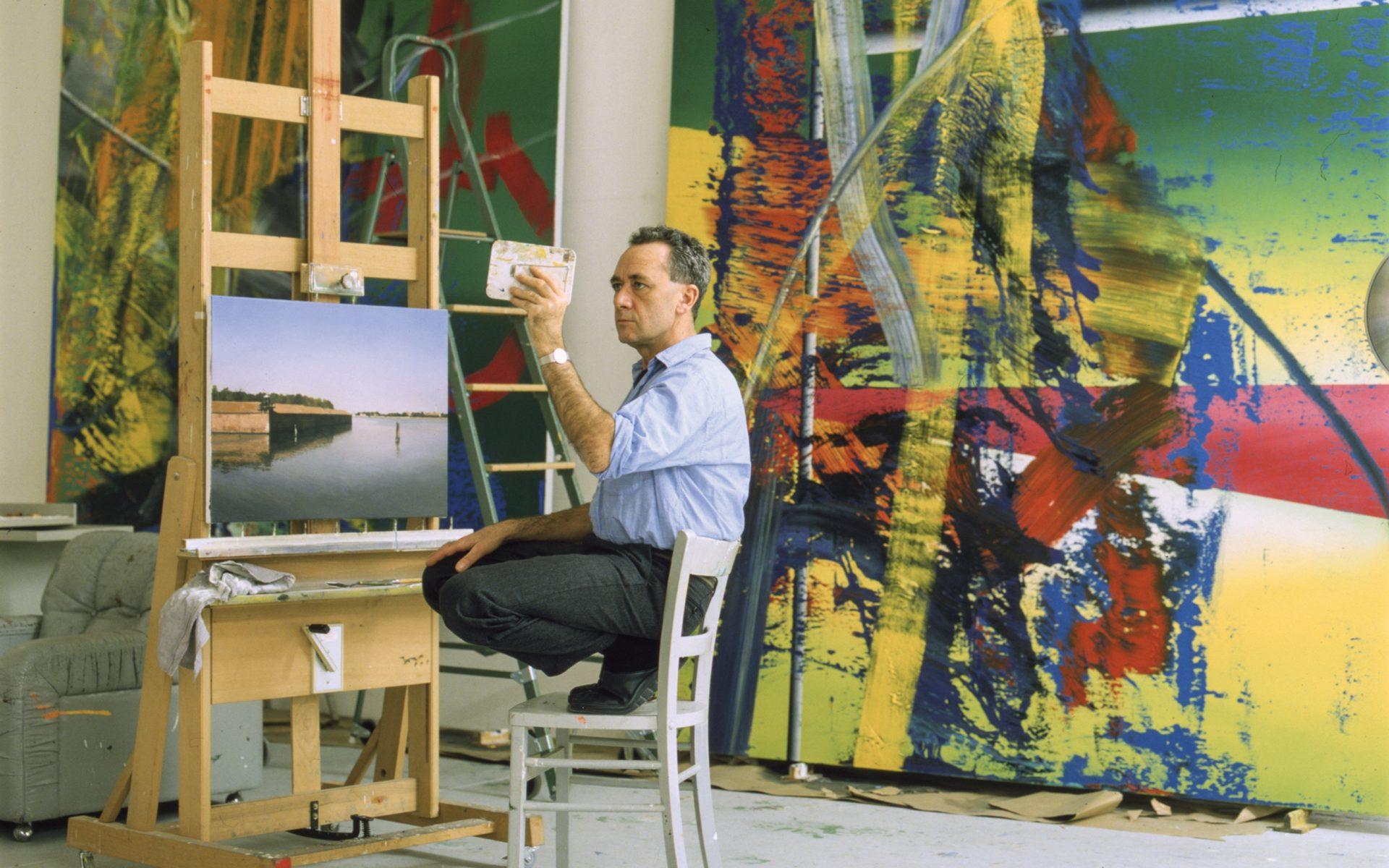
Richter’s abstraction stands as the ultimate culmination to the epic journey of his career, during which he has ceaselessly interrogated the limits of representation, the nature of perception and the operations of visual cognition. Variously evoking something of Joan Mitchell’s exuberance and transformative color, or Jackson Pollock’s instigation of autonomous composition, Richter’s abstraction is ultimately without comparison.
The Abstraktes Bild series celebrates Richter’s mastery of the squeegee technique, a creative method that is crucial in bringing Richter’s abstract paintings to life. Using a large, broad squeegee to scrape away layers of impasto, Richter blurs and mixes pigment in the process, partially concealing and partially revealing what was originally laid beneath. Colors, textures, and layers intermingle, coalescing into organic and beautiful ‘accidents’ that emerge from the canvas.
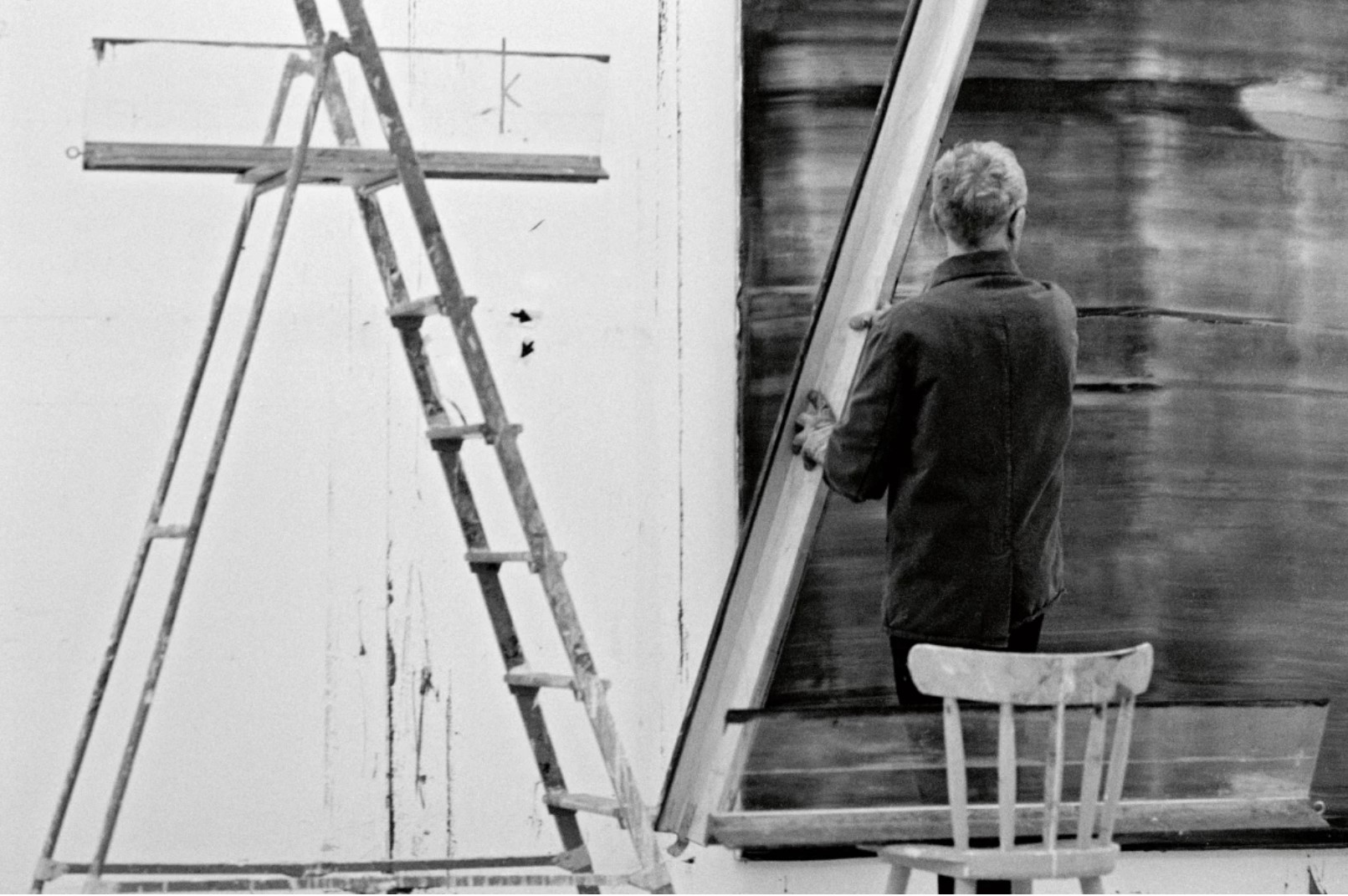
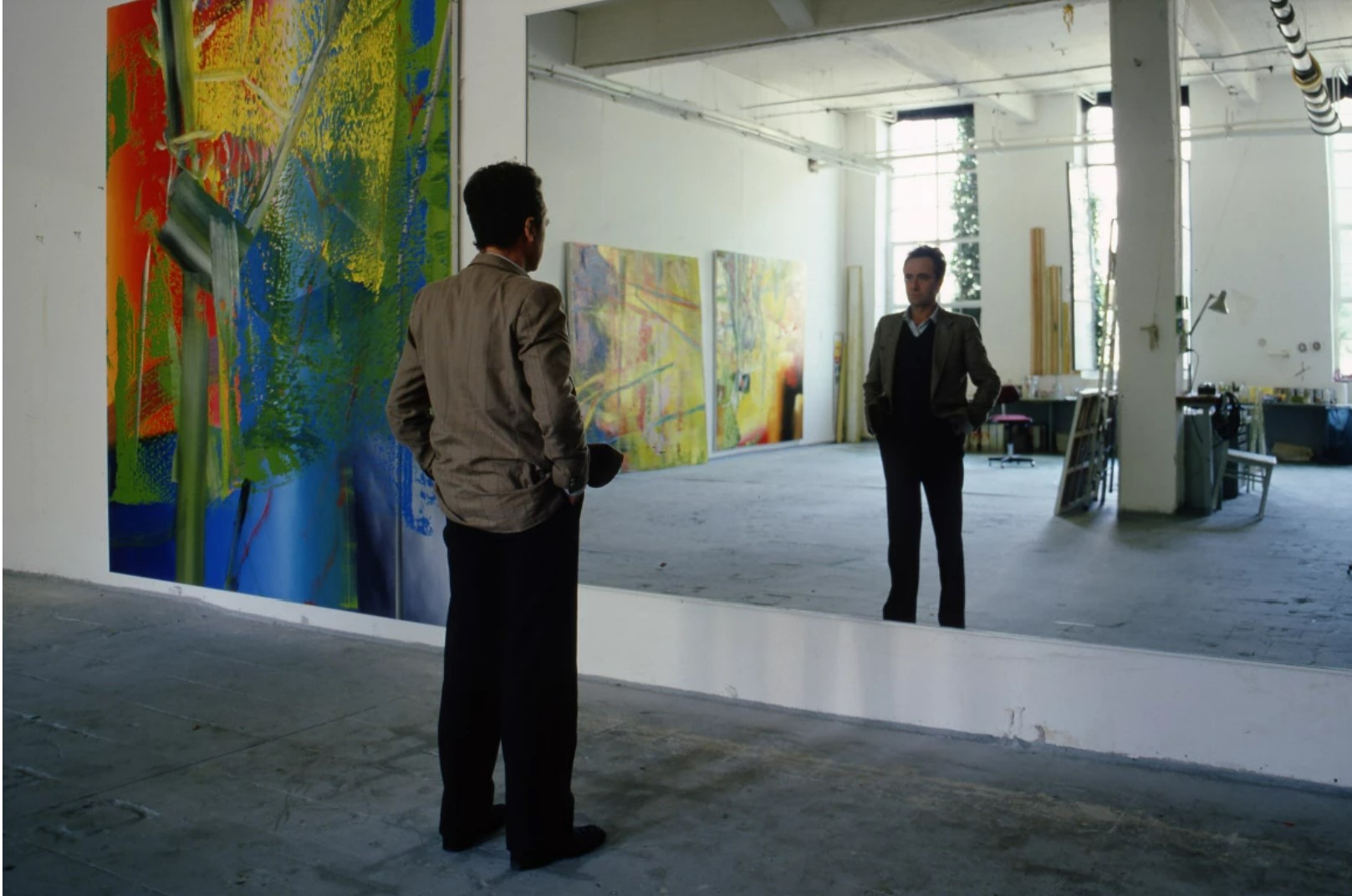
THE ARTIST IN HIS STUDIO, 1994 / IMAGE: © BENJAMIN KATZ © DACS 2022
ARTWORK: © GERHARD RICHTER 2022, COURTESY GERHARD RICHTER ARCHIVE DRESDEN
Given a squeegee, oil paint, and two wooden panels, the result of each Abstrakte Bilder is different, due the role of chance in the painting process. While Richter has control of what colors he uses, where he applies them, and how he moves the squeegee (in what direction, with what force), it is chance that creates the gradations of color across the surface; chance that stipples the lime green in its idiosyncratic, irreplicable pattern over the black center; chance that scratches through the teal and midnight blue. Abstraction is a way to give form to chance; “the moment of chance is very important,” Richter explains, and “it is guided and used” in Abstraktes Bild. Crucially, chance takes place over time in Abstraktes Bild.
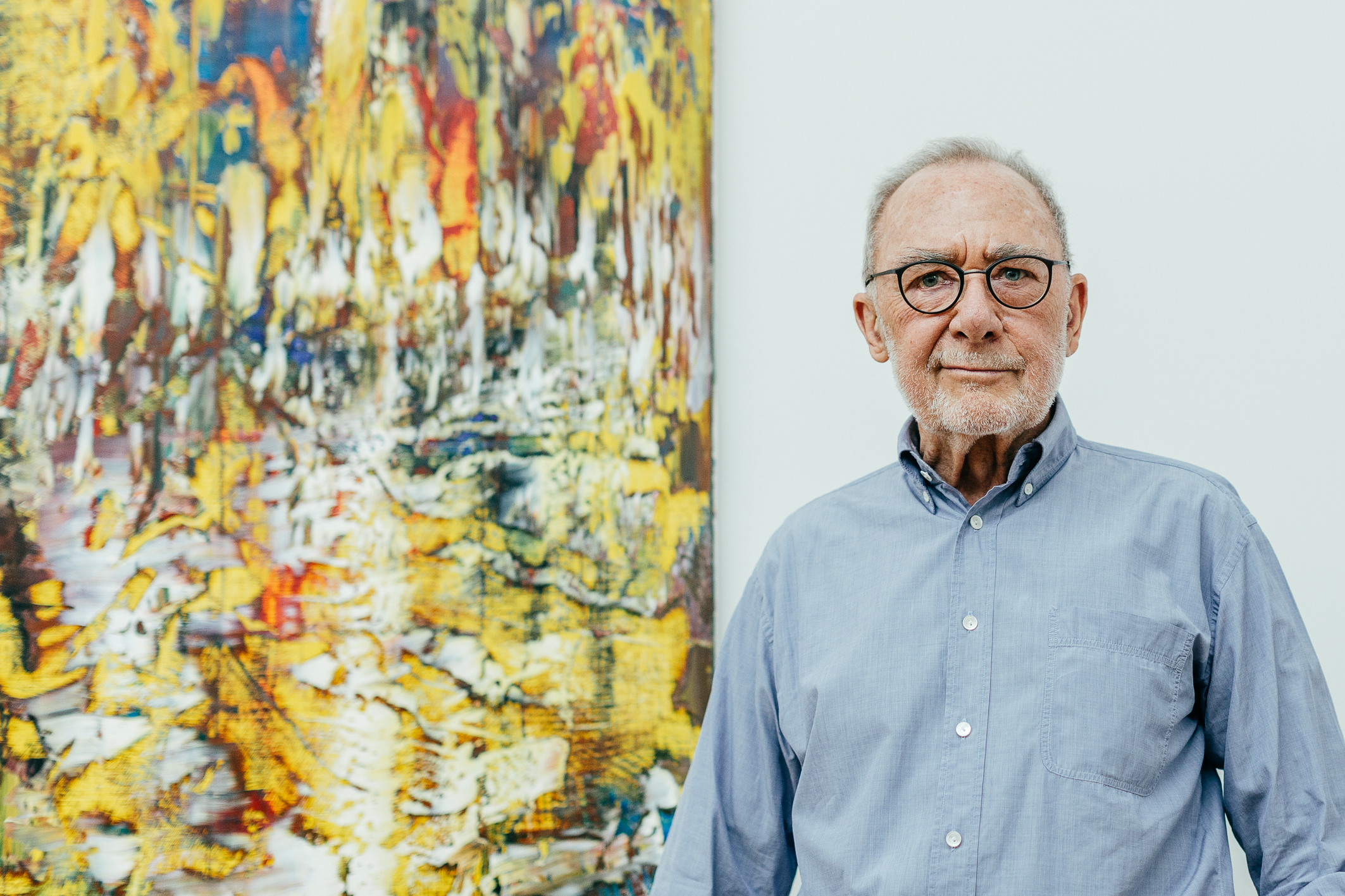
The work is not the result of one swipe of the squeegee, or a spontaneous splat of dripped paint. As does nature, Richter’s work takes time. While not etymologically related, build as a homophone for Bild is a useful interpretive framework here. Richter builds up the painted surface of Abstraktes Bild; the work builds upon itself, layer upon layer, like rings make a tree, sediment makes a rock, bees build a hive. Abstraktes Bild records Richter’s movement with the squeegee; the process of nature, of work, over time. Richter takes up the generative process of nature as his subject in Abstraktes Bild, rather than directly representing a landscape or a tree, and it is this evocation of process that gives Abstraktes Bild its rich associative power. Abstraktes Bild is a close-up of the bark of a tree. It is a comet-strewn night sky. It is the iridescent wings of a beetle. It is these and a thousand more things, and that, Richter says, is where the Abstrakte Bilder “get their effect from, the fact that they incessantly remind you of nature, and so they’re almost naturalistic anyhow.”
Essay
Richter’s repeated title Abstraktes Bild (“Abstract Painting”) is less a single series than a long-running operational mode: an ongoing laboratory where painting tests how much reality, intention, and “truth” an image can carry once it stops depicting anything recognizable. He first begins using Abstraktes Bild as a formal title for many works in the mid-1970s, when abstraction becomes a primary arena for his investigations.
Richter’s abstraction changed the postwar conversation in two radical ways. First, he made abstraction credible again without nostalgia. Not a return to heroic Abstract Expressionism, but a cold-eyed reinvention where the image is produced through procedures that incorporate doubt and revision. Second, he fused conceptual discipline with visual seduction. These paintings can be ravishing, yet their very beauty is suspect, as if the work is asking whether optical pleasure is just another form of belief. This combination (system + sensation) and (doubt + allure) is why Richter’s abstracts sit comfortably in museums while also functioning as trophies in private collections.
Technique
Richter’s abstracts are not improvised gestures in the romantic sense. They are constructed through repeated cycles of application, disruption, and correction, a studio choreography that turns the canvas into a record of decisions and accidents. Paint is laid down in multiple strata, thin veils, dense passages, abrupt blocks, then partially removed, dragged, or obscured. The picture’s “depth” is literal: earlier layers remain embedded and visible at the edges, in scars, in translucent passages. The squeegee (Rakel) as instrument of controlled chance. From the 1980s onward, Richter’s trademark tool is a hard-edged squeegee (often Perspex on a handle). He pulls it across wet paint, scraping and smearing pigment so that composition emerges through partial erasure and redeposition. Sotheby’s describes the process plainly: paint is applied (often by brush), then scraped across the surface “soon after,” so the image is built by a sequence of drags that both reveal and destroy underlying layers. The procedure is as much subtractive as additive painting by removing, not merely by placing.
A painting about seeing, not about things
The best Abstraktes Bild works feel simultaneously engineered and ungovernable: crisp seams beside atmospheric haze; jewel-like color fields ruptured by a single brutal pull; passages that read like geology, compression, fault lines, erosion. Christie’s cataloguing regularly emphasizes this “choreography” between brushwork and squeegee manipulation as a defining feature. Richter is famously allergic to fixed interpretations, but the Abstraktes Bild series still carries a consistent intellectual charge: it stages a duel between human authorship and the autonomy of the image.
These works are less “expressions” than demonstrations of how perception organizes chaos into coherence. You read them the way you read weather systems, satellite images, or ruined walls: the eye searches for order and meaning, then realizes it is partly inventing it. Richter’s wider career oscillates between photo-based painting (blur, memory, evidence) and abstraction (uncertainty, contingency). In that context, Abstraktes Bild functions like a philosophical control group: if a painting depicts nothing, what remains of belief, persuasion, seduction? In postwar German art, one strategy is direct confrontation with history; another is refusal of the illustrative image. Richter does both across his oeuvre, but Abstraktes Bild is where he explores refusal as rigor: painting as a field of possibilities rather than a vehicle for slogans.
Key Periods
Because the title repeats for decades, “periods” are best understood through how the surface behaves rather than through subject matter.
Mid-1970s–early 1980s: Abstraction as experiment
Richter’s biography notes the development of a “substantial number” of colorful abstract works simply titled Abstraktes Bild, shifting away (for a time) from greys toward bold color and optical investigation. Many works from this zone can feel more geometric, with clearer partitions and a sense of systems being tested.
1980s–1990s: The mature squeegee era
The mature squeegee era is the market’s favorite. This is the period most collectors mean when they say “a great Richter abstract.” Large scale becomes crucial, and the Rakel technique yields the now-iconic tension of lush color and violent scraping. Sotheby’s explicitly frames the artist’s “epic cycle” of Abstraktes Bild paintings since the 1980s in these terms.
2000s: refinement, luminosity, and “late style” systems
The title persists, but surfaces often become more crystalline or stratified, with a heightened sense of editing, less “battlefield,” more calibrated compression. Richter largely stops painting in 2017 (while continuing to draw), which effectively caps the supply narrative for major late abstracts. Late Abstraktes Bild works exist, but they sit in a market psychology of “end of production.”
The Market
In Richter’s market, Abstraktes Bild is the blue-chip engine, especially large, 1980s–1990s paintings with strong color and complex scraping. Records anchor the category. The auction record remains Abstraktes Bild (1986), sold for GBP 30,389,000 (USD 46,267,435), at Sotheby’s in London on 10 February 2015).
Scale is not a detail: it’s a pricing mechanism. Monumental works are rare , and rarity at that scale concentrates institutional demand and trophy competition. Condition, provenance, and catalogue clarity are non-negotiable. Because the surfaces are materially complex, thick impasto, scraping, potential micro-cracking, conservators and experienced advisors matter more than usual. The best works come with clean exhibition and ownership histories, often traceable through Richter’s own catalogue infrastructure. Market cycles exist, but the top holds. Even when broader contemporary markets cool, trophy Abstraktes Bild works tend to be defended by scarcity, museum appetite, and their status as “the” Richter category, with auction houses repeatedly positioning them as flagship lots.
Top Lots
#1. Abstraktes Bild, 1986
Sotheby’s London: 10 February 2015
Estimated: GBP 14,000,000 – 18,000,000
GBP 30,389,000 / USD 46,267,435
(#37) Gerhard Richter (sothebys.com)
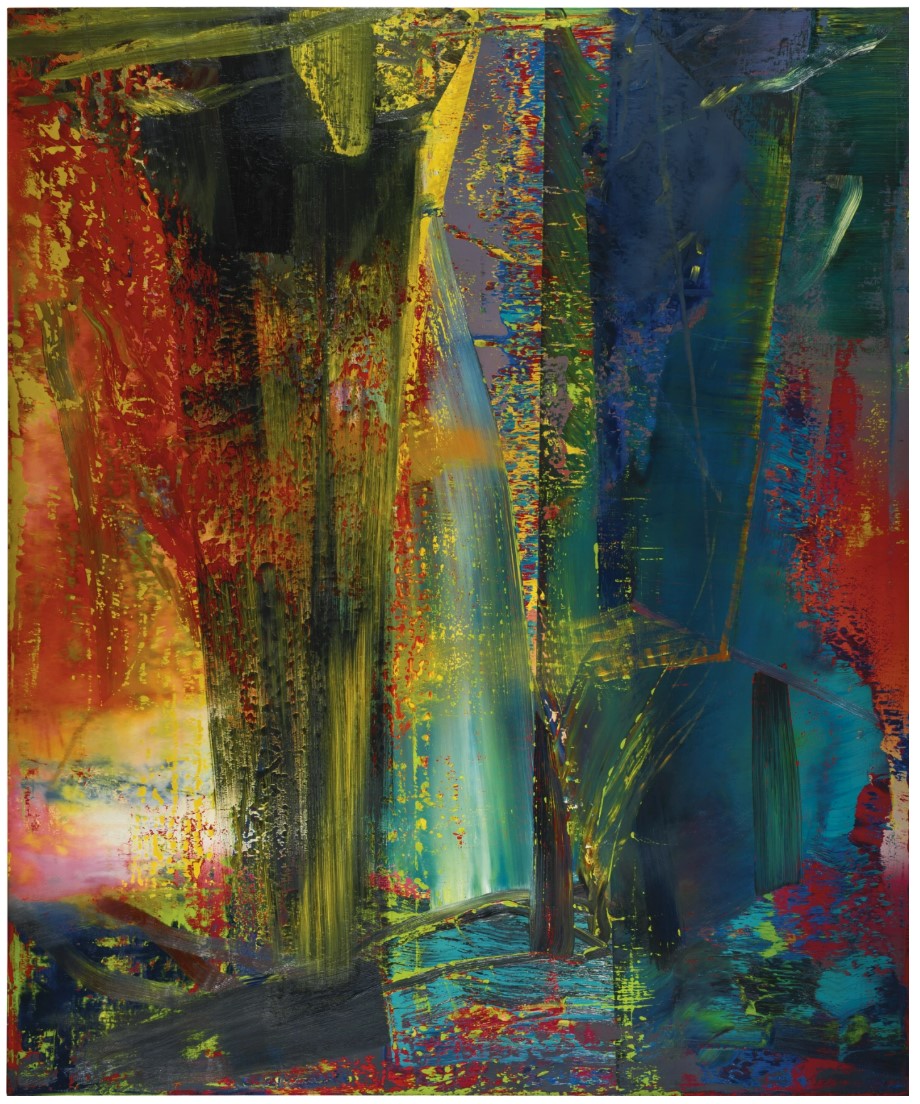
GERHARD RICHTER
Abstraktes Bild, 1986
Oil on canvas
300.5 x 250.5 cm (118 3/8 x 98 5/8 inches)
Signed, dated 1986 and numbered 599 on the reverse
#2. Abstraktes Bild, 1994
Christie’s New-York: 10 May 2022
Estimate on Request
USD 36,500,000
GERHARD RICHTER (B. 1932) (christies.com)
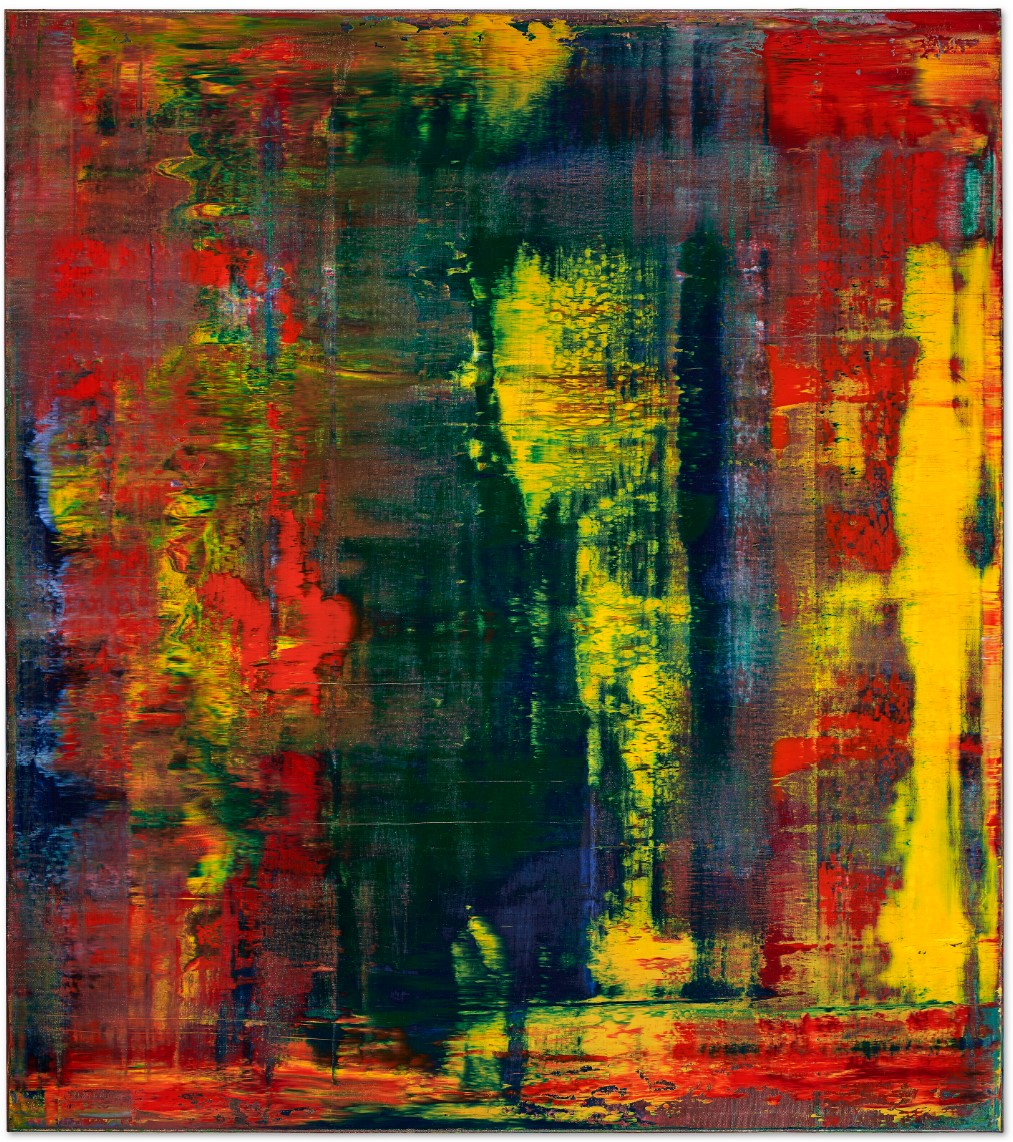
GERHARD RICHTER (B. 1932)
Abstraktes Bild, 1994
Oil on canvas
225×200 cm (88 5⁄8 x 78 3⁄4 inches)
Signed, inscribed and dated ‘809-4 Richter 1994’ (on the reverse)
#3. Abstraktes Bild (636), 1987
Phillips New-York: 14 November 2023
Estimate on Request
USD 34,800,000
Gerhard Richter – 20th Century & Co… Lot 34 November 2023 | Phillips
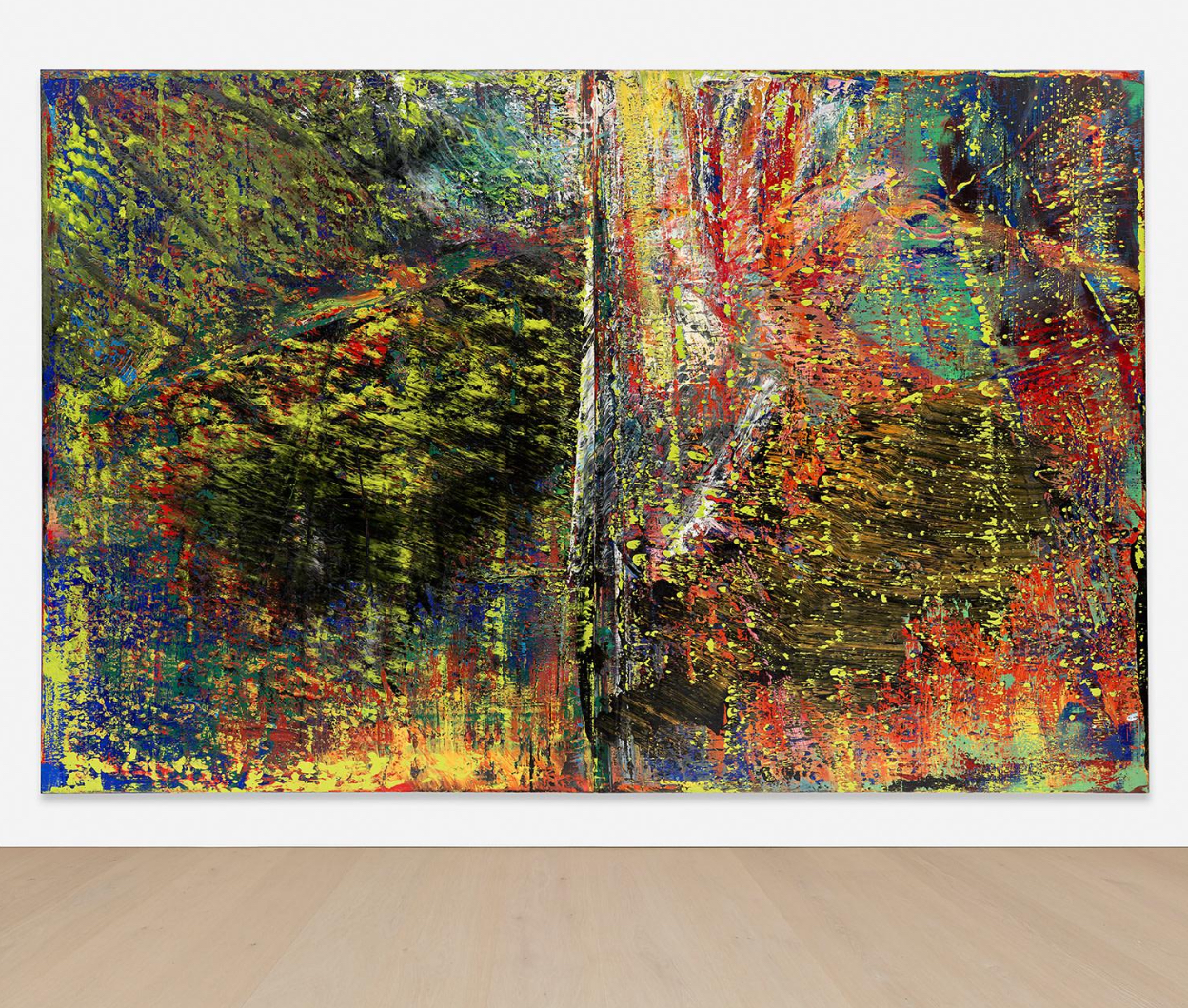
GERHARD RICHTER
Abstraktes Bild (636), 1987
Oil on canvas, in 2 parts
Each 102 1/2 x 78 7/8 in. (260.4 x 200.3 cm)
Overall 102 1/2 x 157 3/4 in. (260.4 x 400.7 cm)
Signed, inscribed and dated “636 Richter 1987” on the reverse of the left panel
Inscribed “636” on the reverse of the right panel
#4. A B, Still, 1986
Sotheby’s New-York: 18 November 2016
Estimated: USD 20,000,000 – 30,000,000
USD 33,987,500
(#13) Gerhard Richter (sothebys.com)
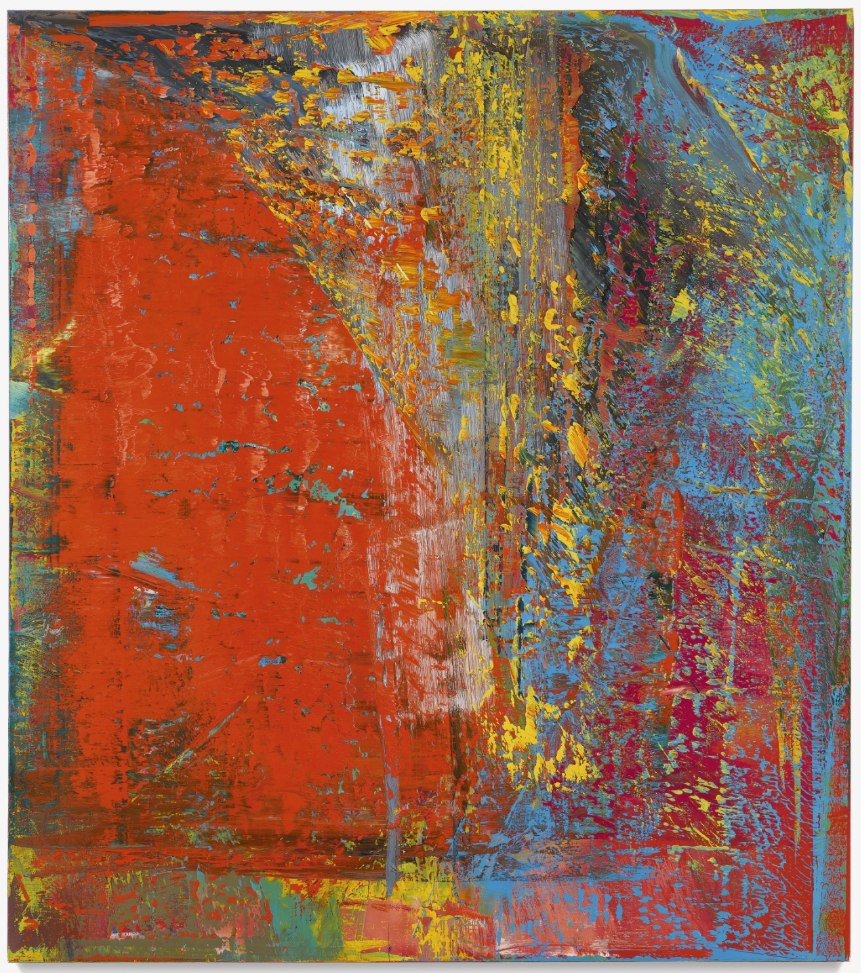
GERHARD RICHTER
A B, Still, 1986
Oil on canvas
224.8 x 200 cm (88 1/2 x 78 3/4 inches)
Signed, dated 1986 and numbered 612-4 on the reverse
#5. Abstraktes Bild, 1993
Sotheby’s New-York: 15 November 2021
Estimated: USD 20,000,000 – 30,000,000
USD 33,010,500
Abstraktes Bild | The Macklowe Collection | 2021 | Sotheby’s (sothebys.com)
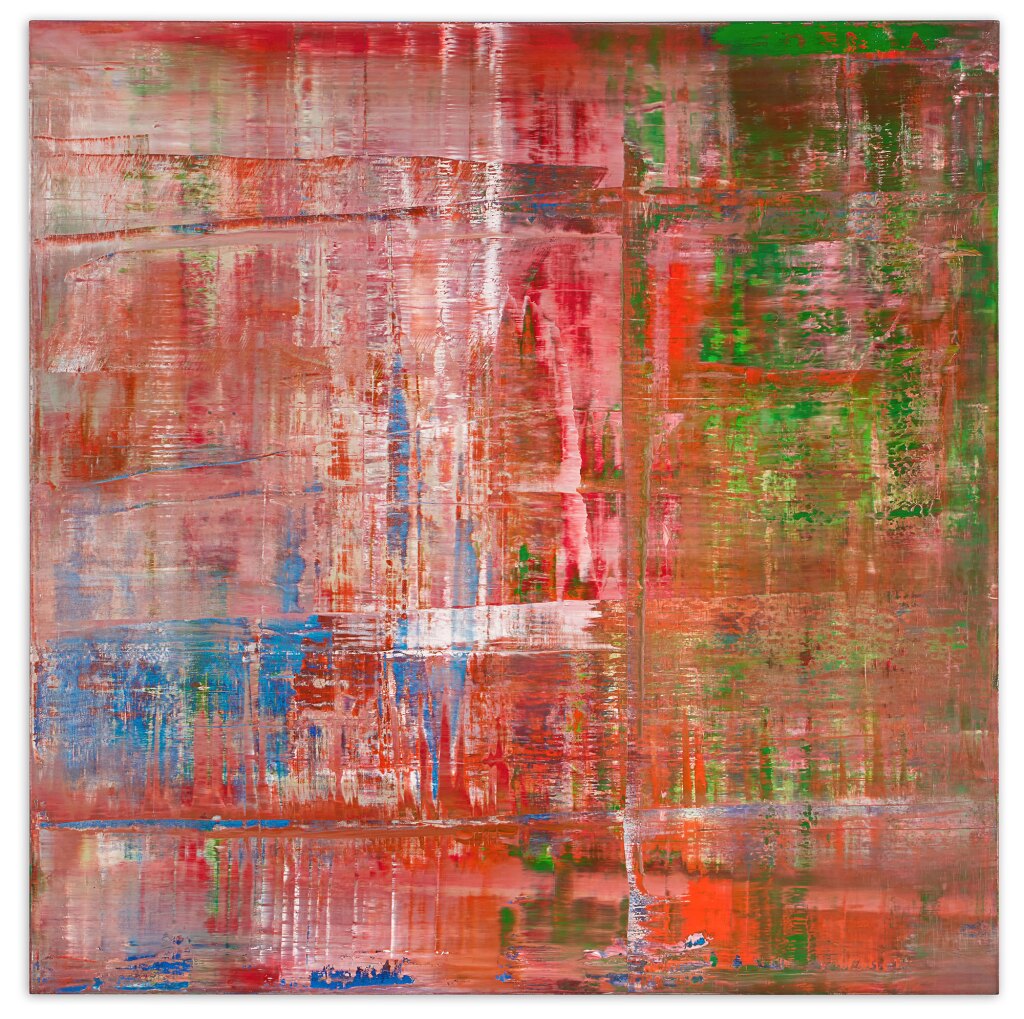
GERHARD RICHTER (b.1932)
Abstraktes Bild, 1993
Oil on canvas
240×240 cm (94 1/2 x 94 1/2 inches)
Signed, dated 1993 and numbered 797-2 on the reverse
#6. Abstraktes Bild, 1989
Christie’s London: 13 February 2014
Estimate on Request
GBP 19,570,500 / USD 32,596,746
Gerhard Richter (b. 1932) (christies.com)
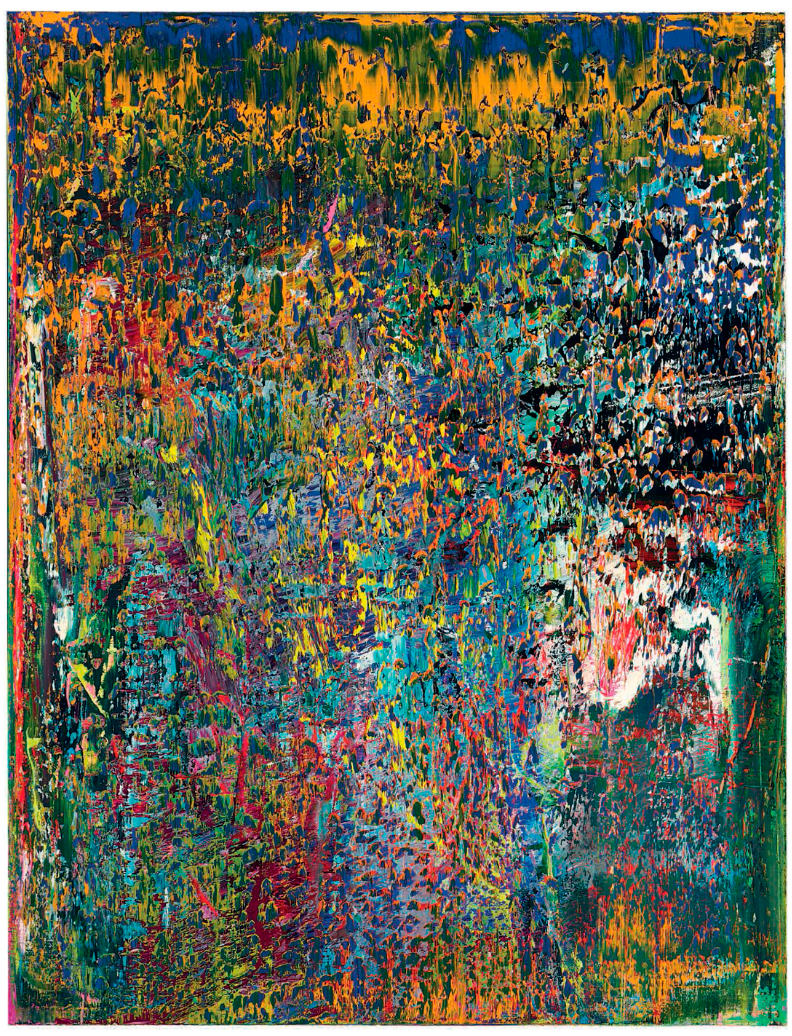
Gerhard Richter (b. 1932)
Abstraktes Bild, 1989
Oil on canvas
259.4 x 200.3 cm (102 1/8 x 78 7/8 inches)
Signed, numbered and dated ‘709 Richter 1989’ (on the reverse)
#7. Abstraktes Bild, 1997
Sotheby’s New-York: 15 November 2023
Estimated: USD 25,000,000 – 35,000,000
USD 31,932,000
Abstraktes Bild | Contemporary Evening Auction | 2023 | Sotheby’s (sothebys.com)
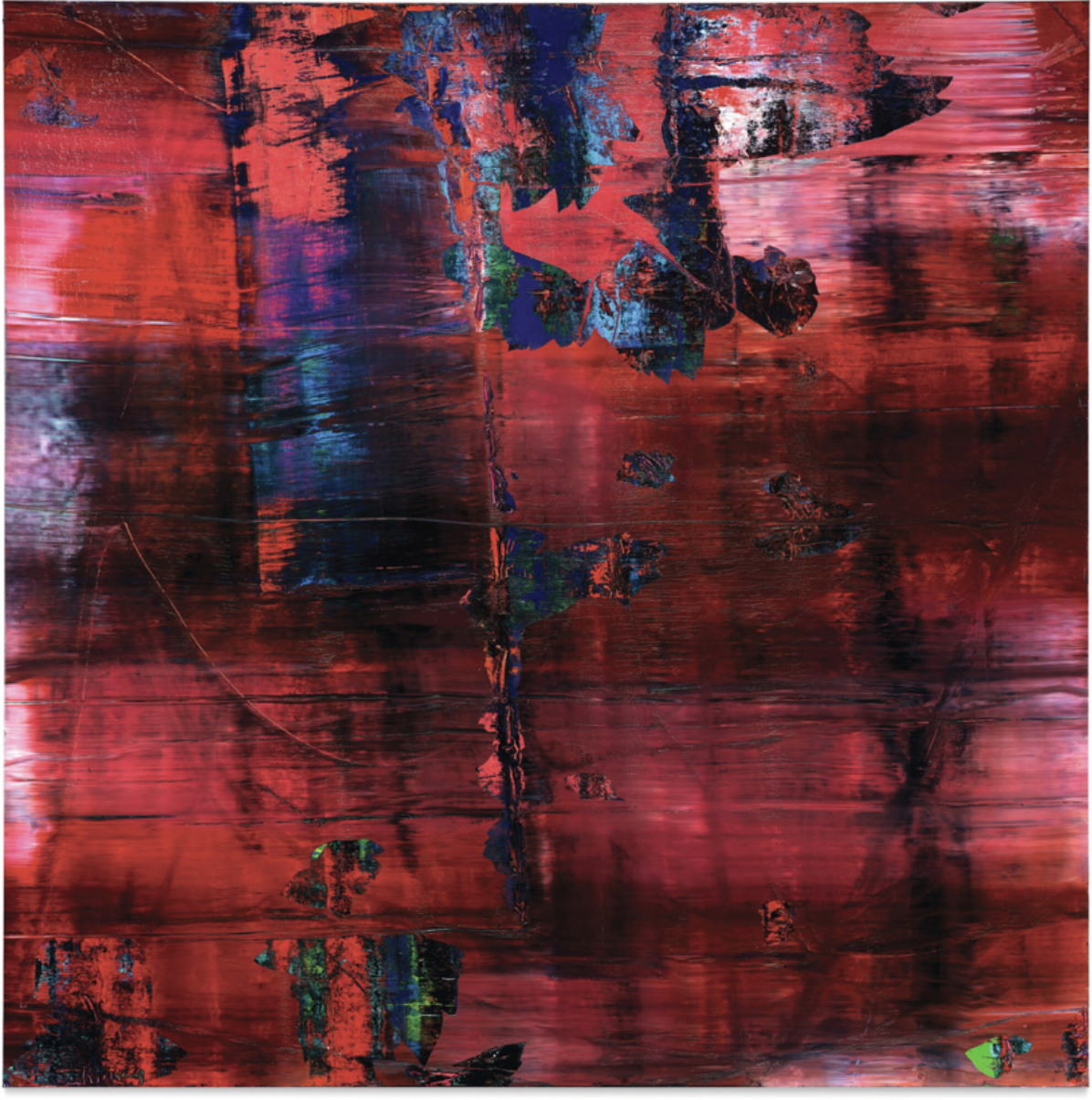
GERHARD RICHTER (b. 1932)
Abstraktes Bild, 1997
Oil on canvas
275×275 cm (108 1/4 x 108 1/4 inches)
Signed, dated 1997 and numbered 849-1 (on the reverse)
#8. Abstraktes Bild (648-3), 1987
Christie’s New-York: 12 November 2014
Estimated: USD 20,000,000 – 30,000,000
USD 31,525,000
Gerhard Richter (b. 1932) (christies.com)
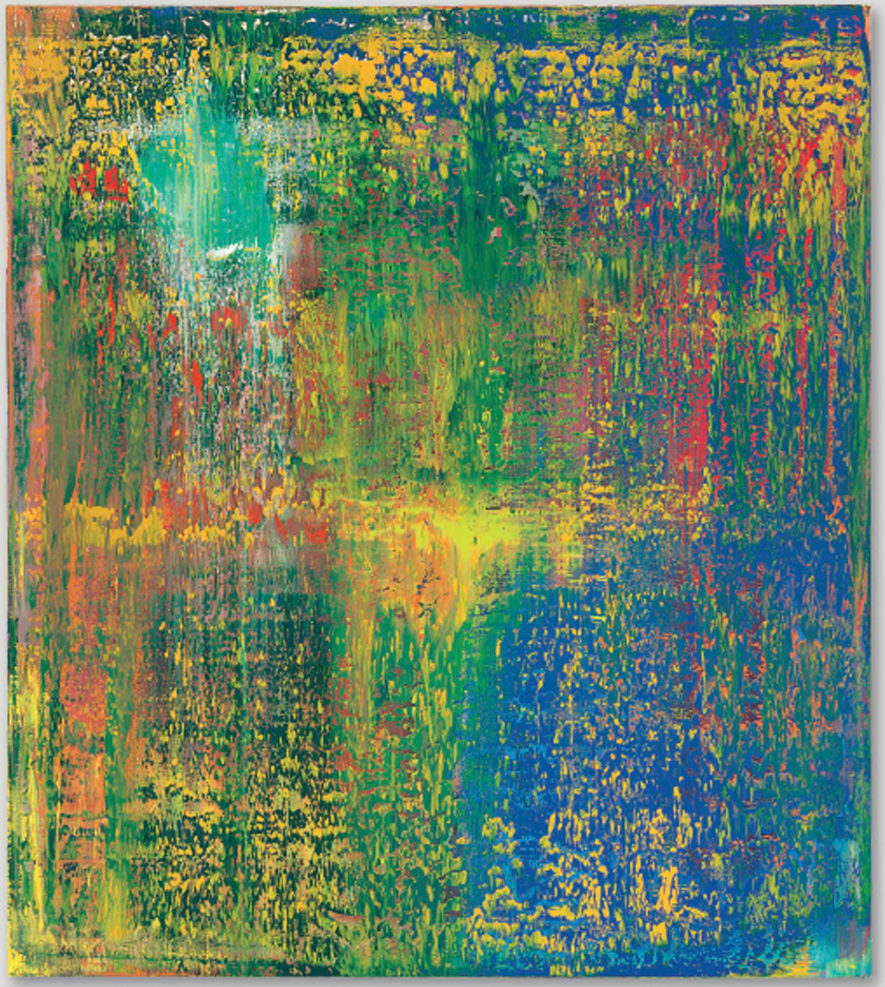
GERHARD RICHTER (b. 1932)
Abstraktes Bild (648-3), 1987
225.4 x 200 cm (88 3/4 x 78 3/4 inches)
Oil on canvas
Signed, numbered and dated ‘Richter 1987 648-3’ (on the reverse)
2026 Auction Results
Abstraktes Bild, 1991
Christie’s Hong-Kong: 27 March 2026
Estimated: HKD 78,000,000 – 98,000,000
HKD 92,100,000 / USD 11,762,450
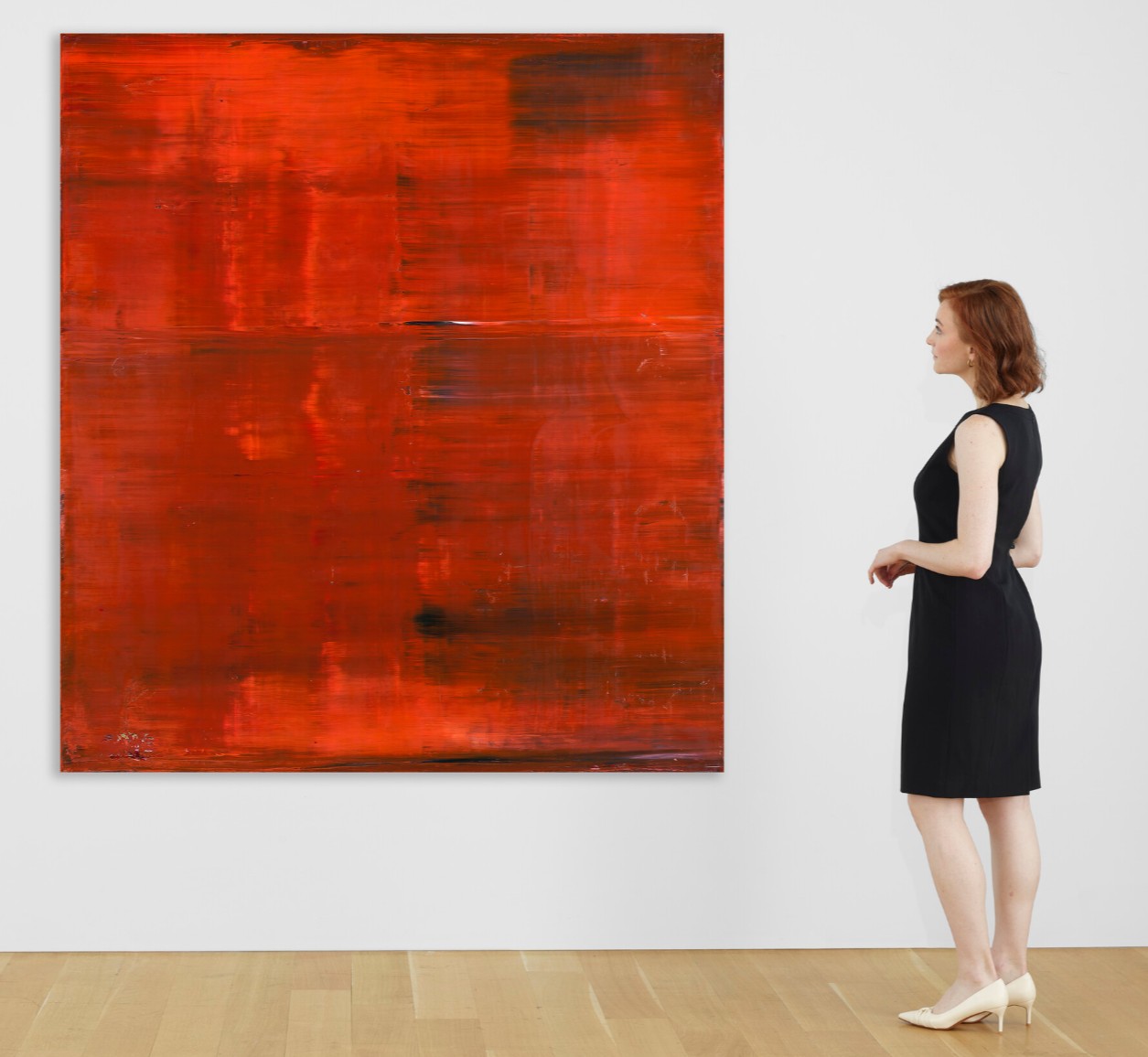
GERHARD RICHTER (B. 1932)
Abstraktes Bild, 1991
Oil on canvas
200×180 cm (78-3/4 x 70-7/8 inches)
Signed, inscribed, and dated ‘745-1 Richter 1991’ (on the reverse)
Abstraktes Bild, 1991
ABSTRACT MASTERWORKS FROM AN IMPORTANT PRIVATE COLLECTION
Christie’s London: 5 March 2026
Estimated: GBP 4,500,000 – 6,500,000
GBP 7,600,000 / USD 10,152,840
GERHARD RICHTER (B. 1932), Abstraktes Bild | Christie’s
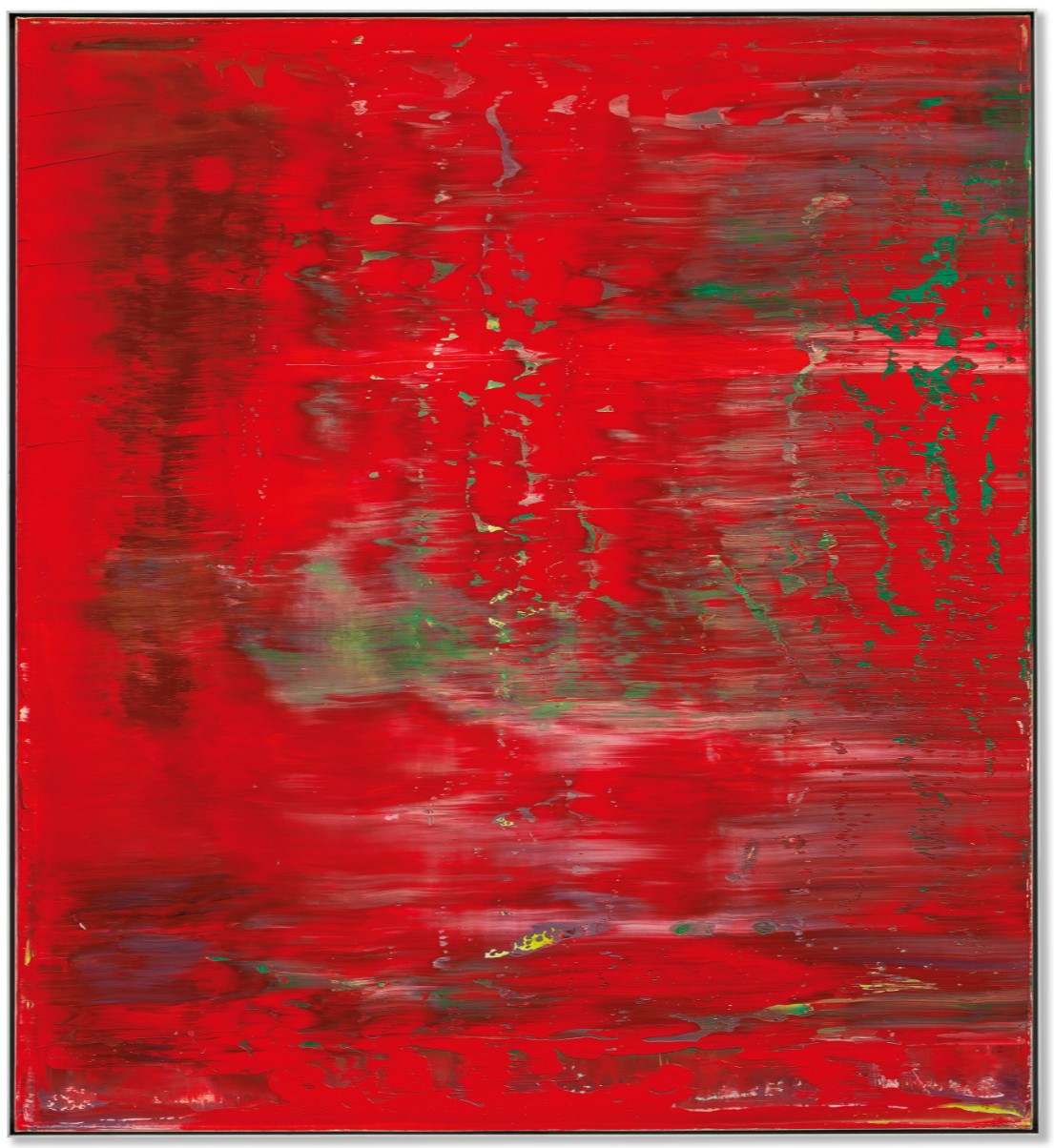
GERHARD RICHTER (B. 1932)
Abstraktes Bild, 1991
Oil on canvas
112×102 cm (44-1/8 x 40-1/8 inches)
Signed, numbered and dated ‘748-5 Richter 1991’ (on the reverse)
USD 10 million
Abstraktes Bild, 1992
Christie’s Paris: 15 April 2026
Estimated: EUR 1,800,000 – 2,500,000
GBP 2,317,000 / USD 2,733,630
Gerhard Richter (né en 1932), Abstraktes Bild | Christie’s
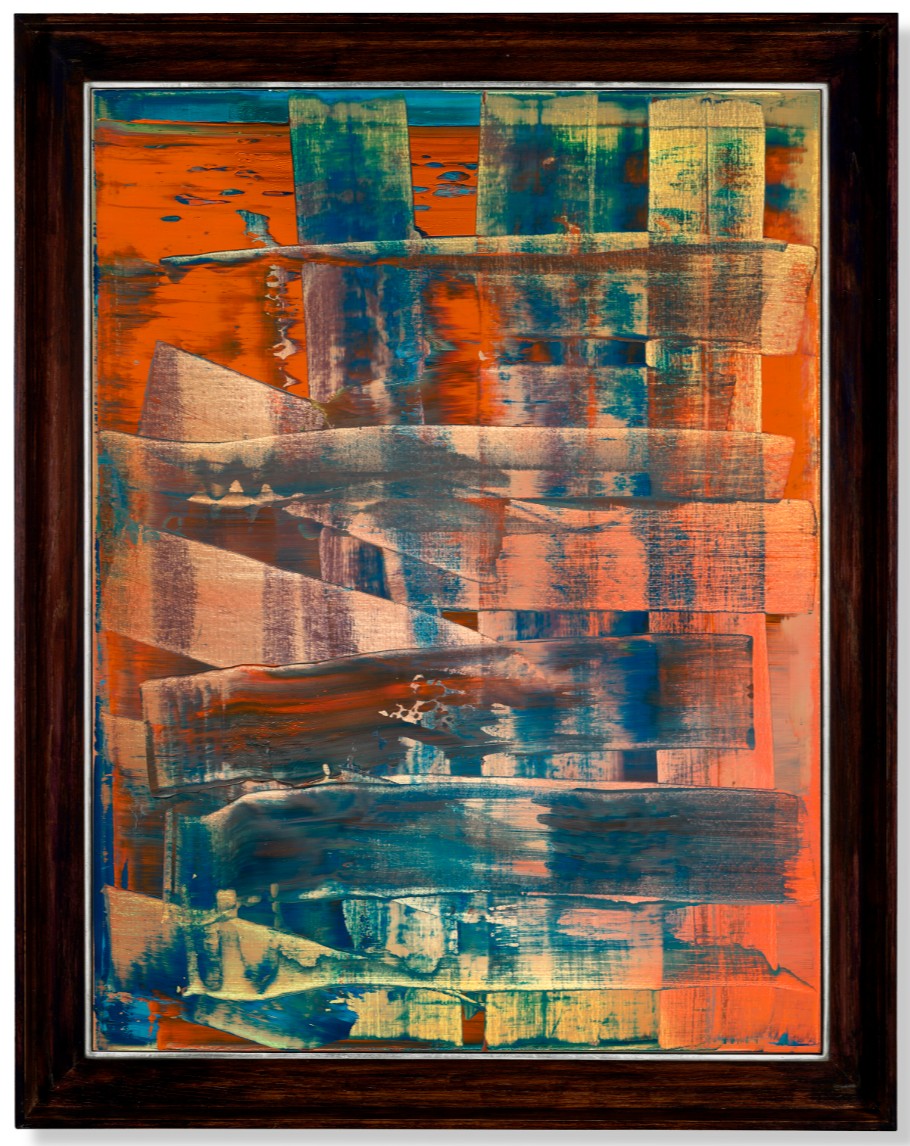
GERHARD RICHTER (born 1932)
Abstraktes Bild, 1992
Oil on canvas
82.2 x 62.3 cm (32-3/8 x 24-1/2 inches)
Signed, numbered and dated ‘761-1 Richter 1992’ (on the reverse)
Abstrakte Skizze (664-3), 1988
Christie’s Hong-Kong: 28 March 2026
Estimated: HKD 6,500,000 – 10,000,000
HKD 8,128,000 / USD 1,038,060
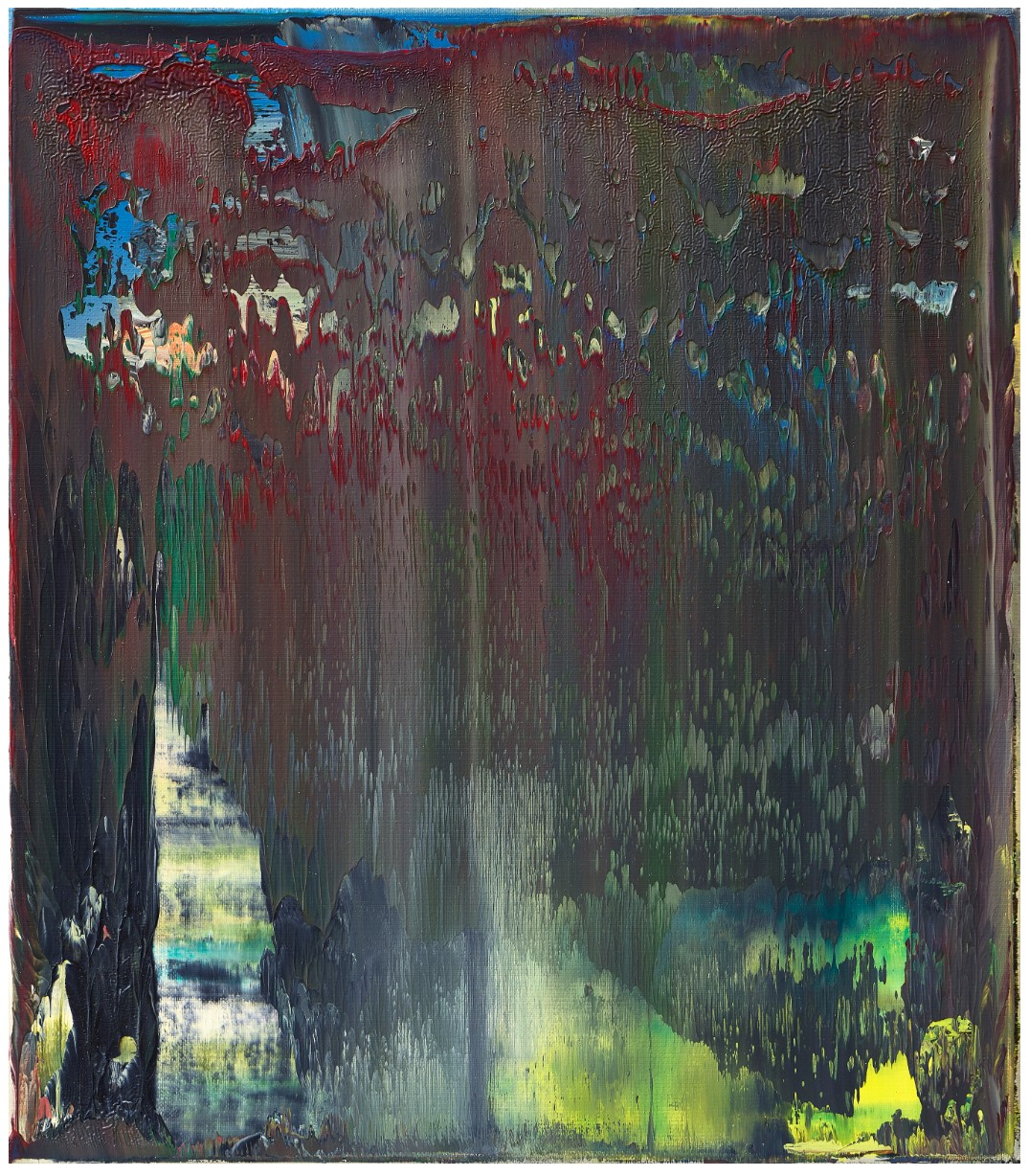
GERHARD RICHTER (B. 1932)
Abstrakte Skizze (664-3), 1988
Oil on canvas
40×35 cm (15-3/4 x 13-3/4 inches)
Signed, titled, and dated ‘664-3 Richter 1988’ (on the reverse)
USD 1 million
Abstraktes Bild, 1992
Christie’s London: 7 March 2026
Estimated: GBP 300,000 – 500,000
GBP 355,600 / USD 475,045
GERHARD RICHTER (B. 1932), Abstraktes Bild | Christie’s
REPEAT SALE
Christie’s Paris: 30 November 2022
Estimated: EUR 450,000 – 650,000
EUR 567,000
Gerhard Richter (né en 1932), Abstraktes Bild | Christie’s
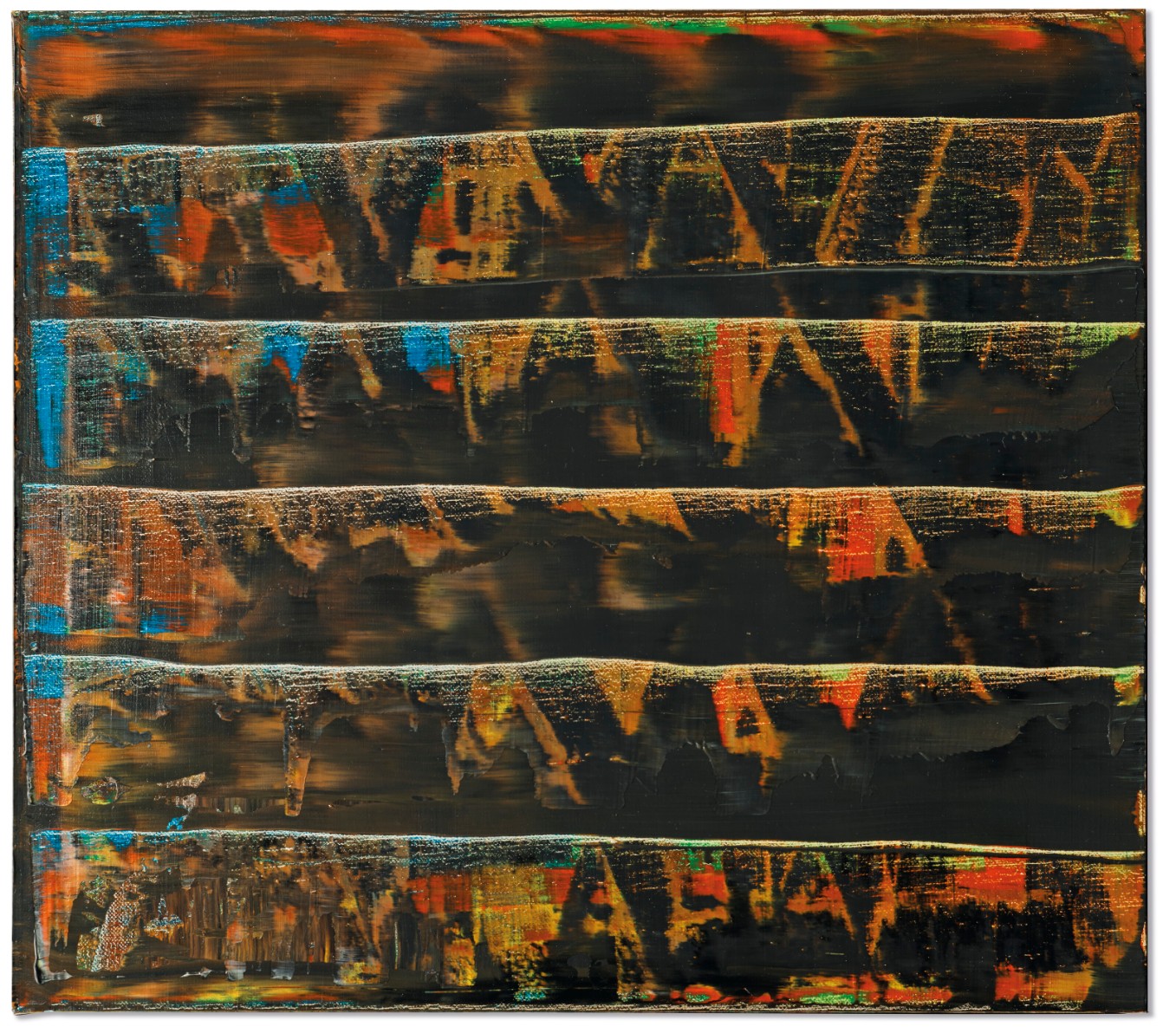
GERHARD RICHTER (B. 1932)
Abstraktes Bild, 1992
Oil on canvas
52×62 cm (20-1/2 x 24-3/8 inches)
Signed, inscribed and dated ‘Richter 92 763-7’ (on the reverse)
Green-Blue-Red, 1993
Property from a Distinguished Asian Collection
Phillips London: 16 April 2026
Estimated: GBP 200,000 – 300,000
GBP 258,000 / USD 349,255
Gerhard Richter Modern & Contemporary Art
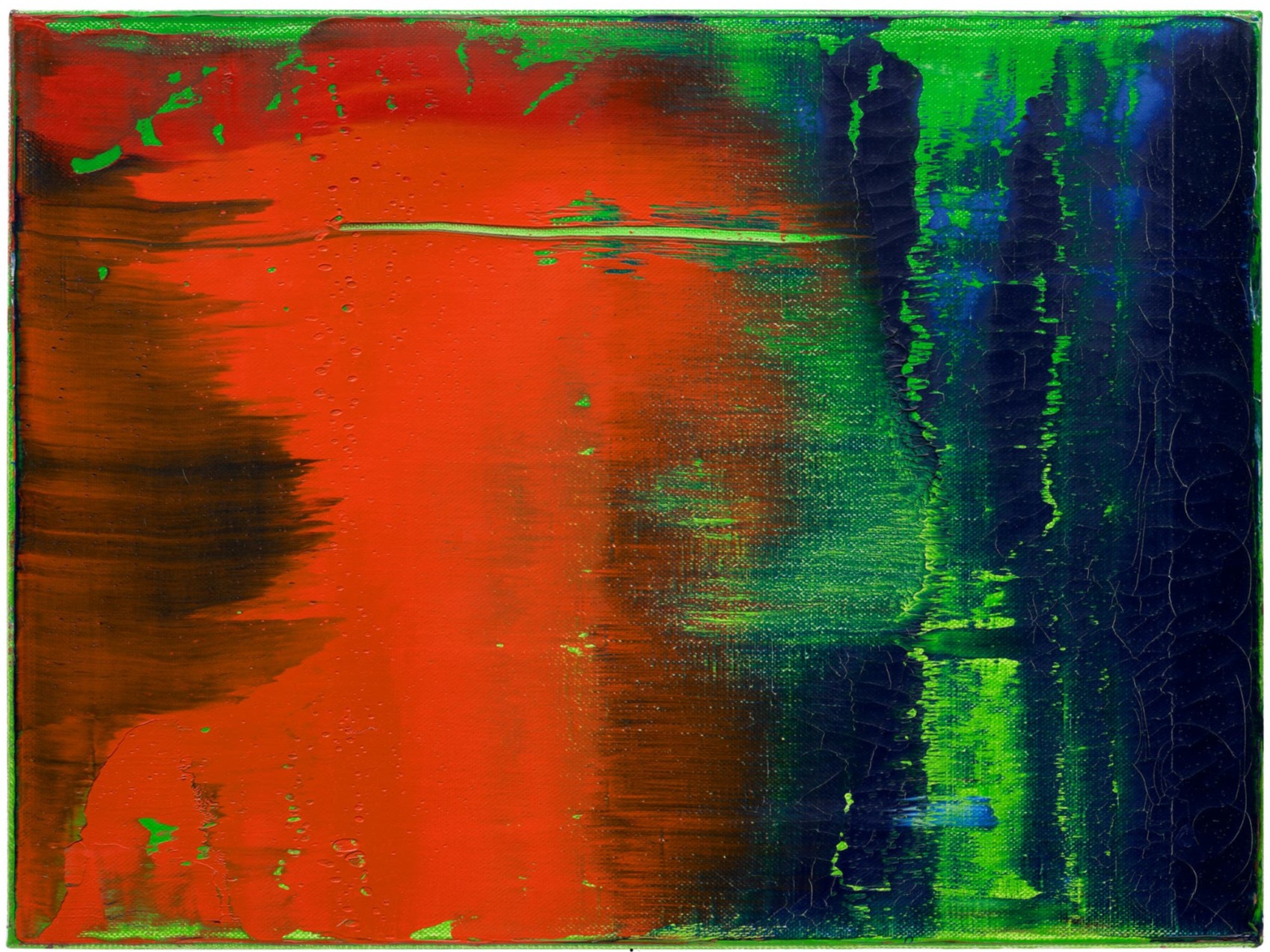
GERHARD RICHTER
Green-Blue-Red, 1993
Oil on canvas
29 x 39.5 cm (11-3/8 x 15-1/2 inches)
Signed, numbered and dated ‘789.28 Richter, 93’ on the reverse
Abstraktes Bild (431-8), 1977
Property from an Important Private European Collection
Phillips London; 7 March 2026
Estimated: GBP 200,000 – 300,000
GBP 199,950 / USD 267,115
Gerhard Richter Modern & Contemporary Art
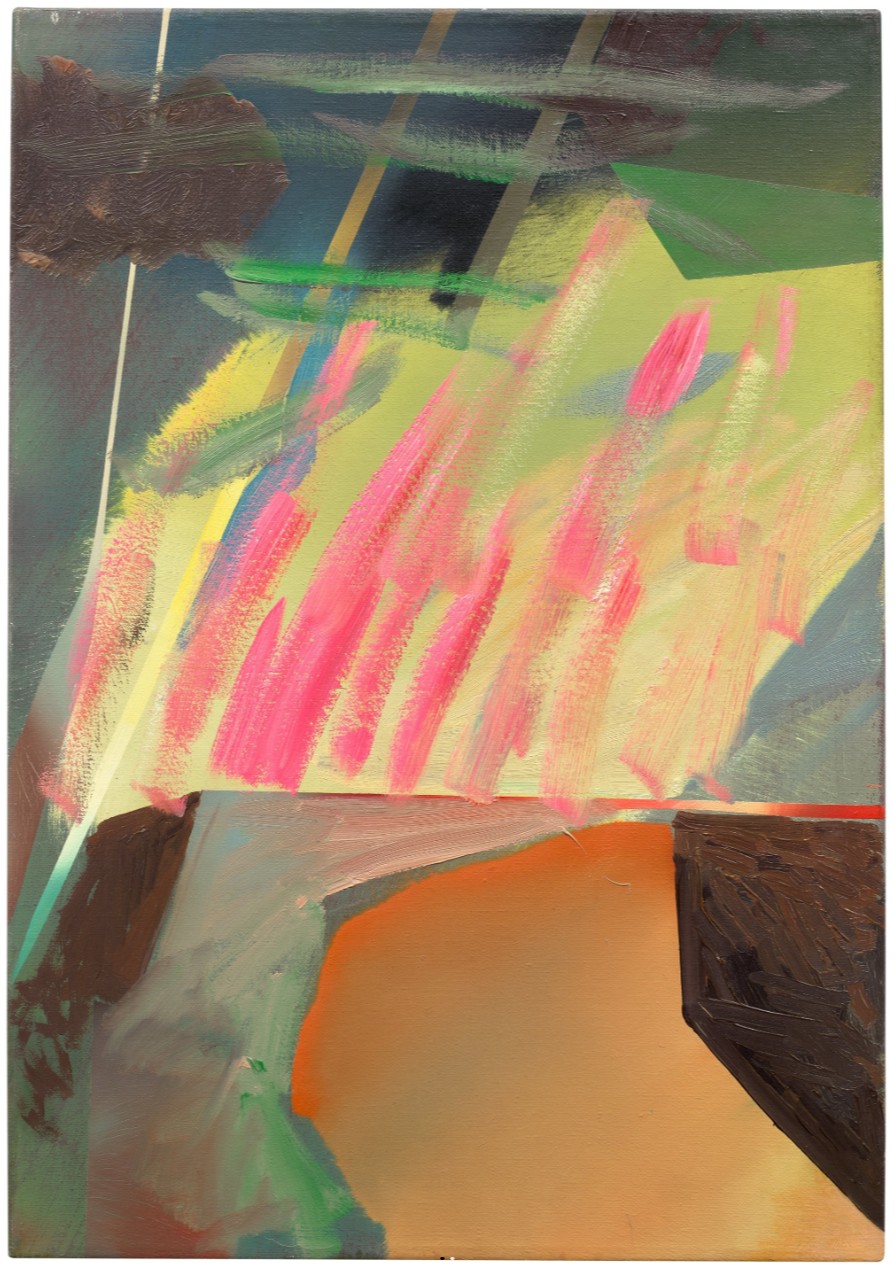
Oil on canvas
60.6 x 42.1 cm (23-7/8 x 16-5/8 inches)
Signed, titled and dated ‘Richter 1977 431-8’ on the reverse
Lots Passed
Fuji (839-13), 1996
Phillips London: 5 March 2026
Estimated: GBP 350,000 – 550,000
PASSED
Gerhard Richter Modern & Contemporary Art Evening Sale
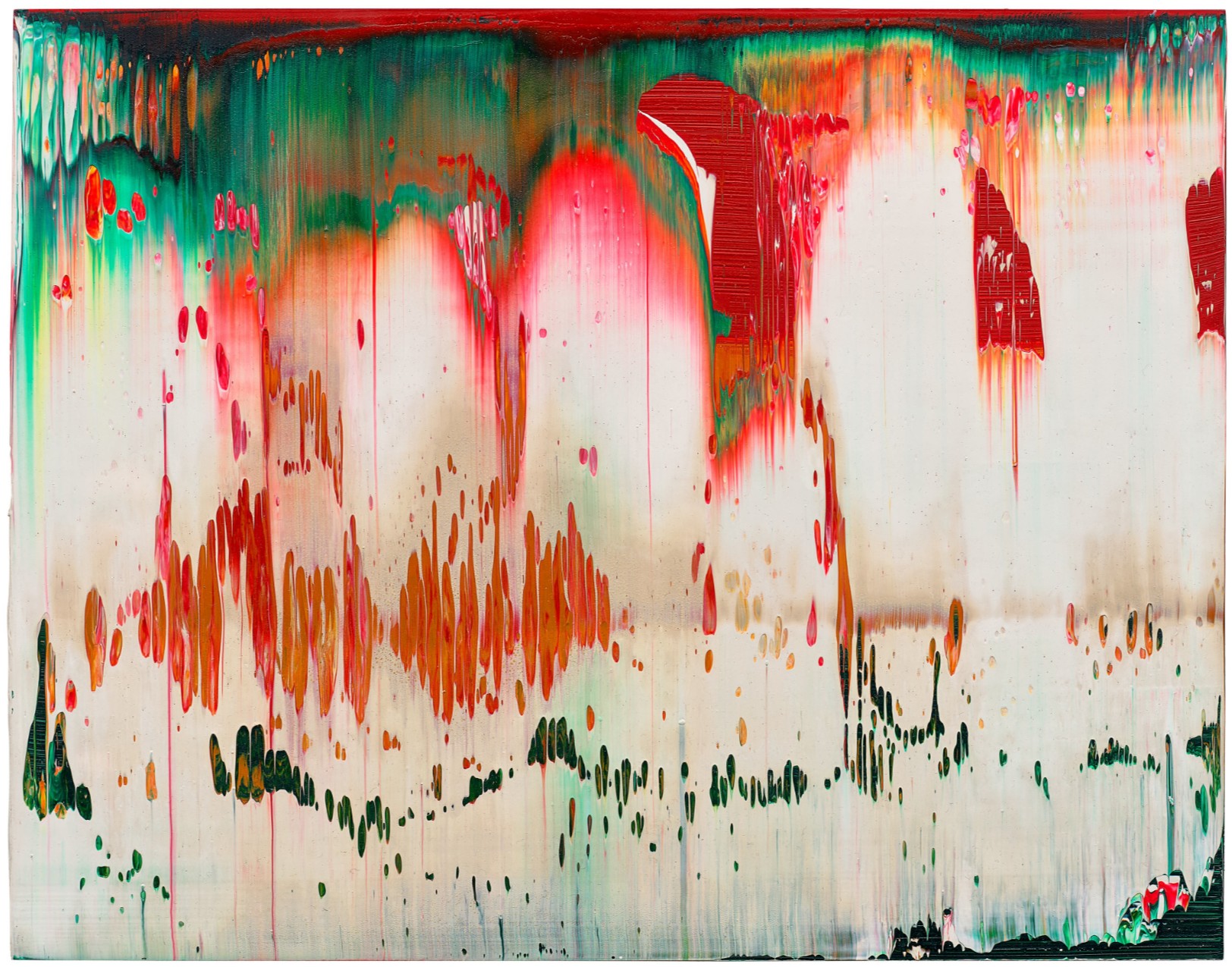
Oil on Alucobond
29.1 x 37.2 cm (11-1/2 x 14-5/8 inches)
Signed ‘Richter’ on the reverse
Numbered ’13’ on an artist label affixed to the reverse
2025 Auction Results
#1. Abstraktes Bild, 2009
Leonard & Louise Riggio: Collected Works
Christie’s New-York: 12 May 2025
Estimated: USD 7,000,000 – 10,000,000
USD 8,460,000
GERHARD RICHTER (B. 1932), Abstraktes Bild | Christie’s
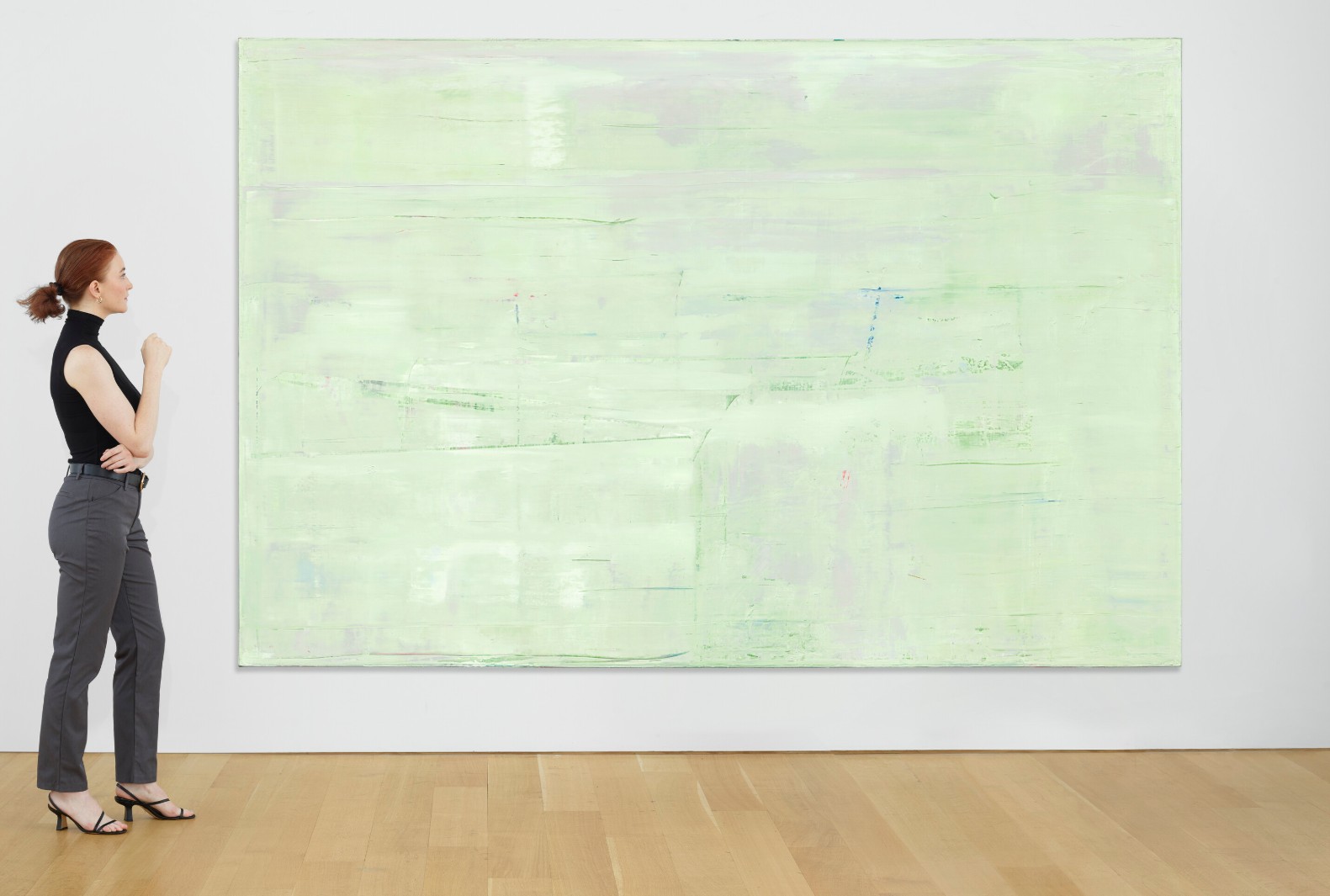
GERHARD RICHTER (B. 1932)
Abstraktes Bild, 2009
Oil on canvas
200×300 cm (78 3/4 x 118 1/8 inches)
Signed, inscribed and dated ‘911-3 Richter 2009’ (on the reverse)
#2. Abstraktes Bild, 1990
Sotheby’s New-York: 15 May 2025
Estimated: USD 5,000,000 – 7,000,000
USD 6,943,000
Abstraktes Bild | The Now and Contemporary Evening Auction | 2025 | Sotheby’s
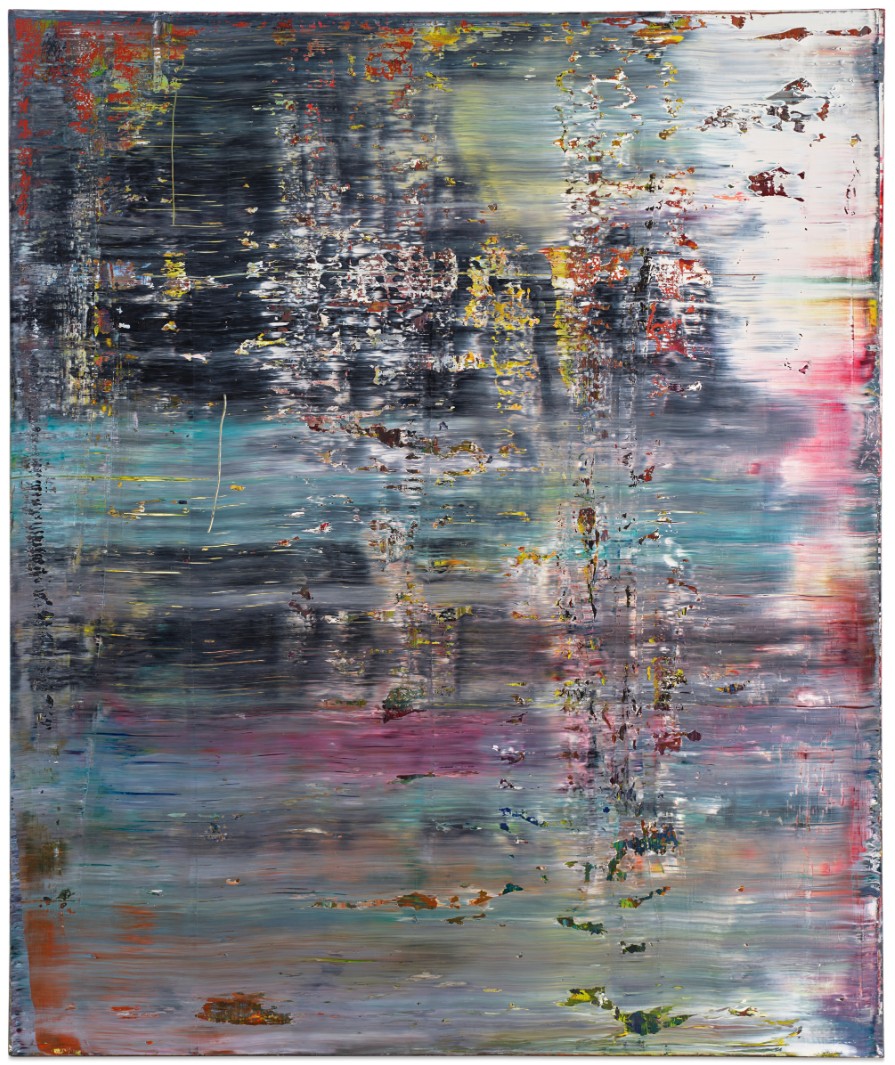
GERHARD RICHTER (b. 1932)
Abstraktes Bild, 1990
Oil on canvas
122×102 cm (48 x 40 1/8 inches)
Signed, dated 1990 and numbered 720-4 (on the reverse)
#3. Abstraktes Bild, 2009
Christie’s New-York: 20 November 2025
Estimated: USD 1,800,000 – 2,500,000
USD 2,759,000
GERHARD RICHTER (B. 1932), Abstraktes Bild | Christie’s
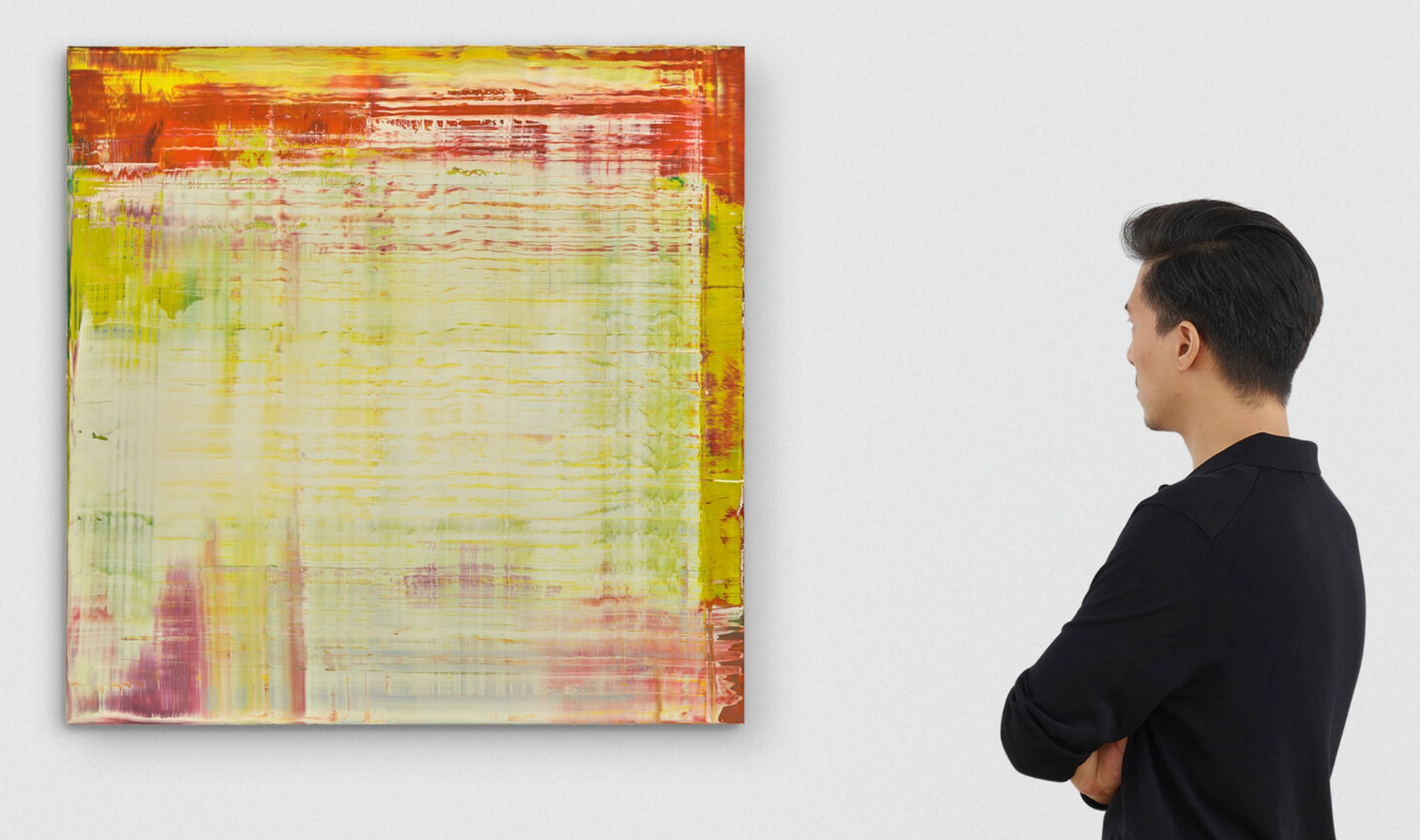
GERHARD RICHTER (B. 1932)
Abstraktes Bild, 2009
Oil on Alu-Dibond
83.8 x 83.8 cm (33×33 inches)
Signed, inscribed and dated ‘910-4 Richter 2009’ (on the reverse)
#4. Abstraktes Bild, 1989
Estimated: EUR 1,500,000
EUR 1,802,500 / USD 2,126,950
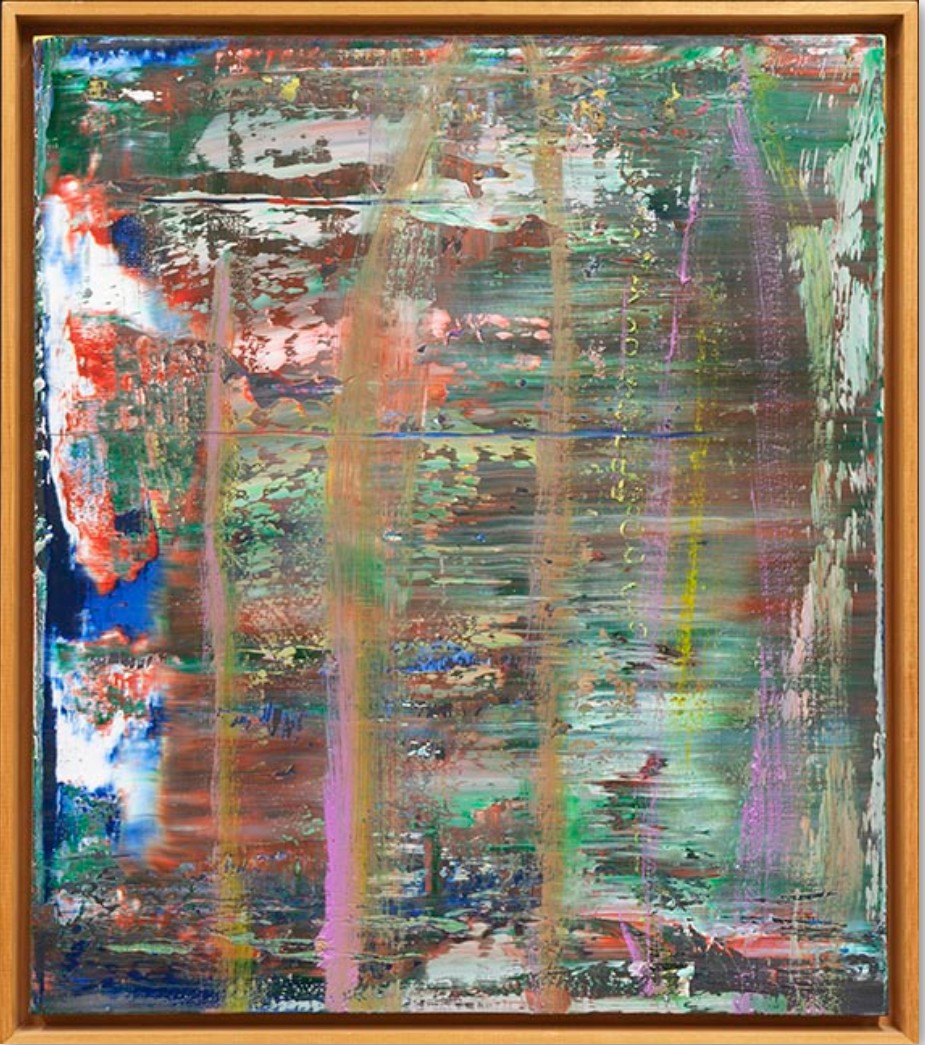
Abstraktes Bild, 1989
Oil on canvas
72×62 cm (28 3/8 x 24 3/8 inches)
Signed, dated and inscribed with the work number “704-3” on the reverse
#5. Abstraktes Bild, 1992
Sotheby’s New-York: 16 May 2025
Estimated: USD 1,200,000 – 1,800,000
USD 1,514,000
Abstraktes Bild | Contemporary Day Auction | 2025 | Sotheby’s
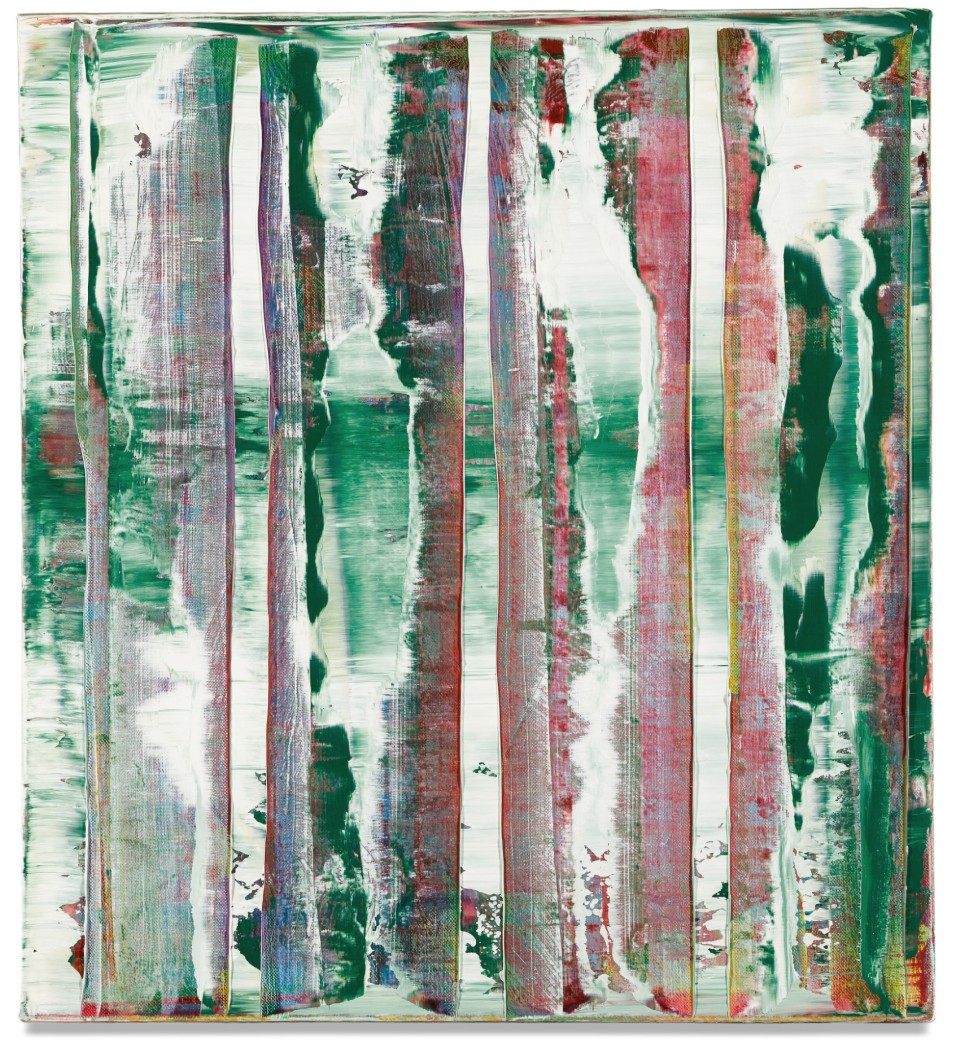
GERHARD RICHTER (b. 1932)
Abstraktes Bild, 1992
Oil on canvas
51 x 46.2 cm (20 x 18 1/8 inches)
Signed, dated 1992 and numbered 775-3 (on the reverse)
#6. Abstraktes Bild, 1995
Sotheby’s New-York: 19 November 2025
Estimated: USD 1,200,000 – 1,800,000
USD 1,514,000
Abstraktes Bild | Contemporary Day Auction | 2025 | Sotheby’s
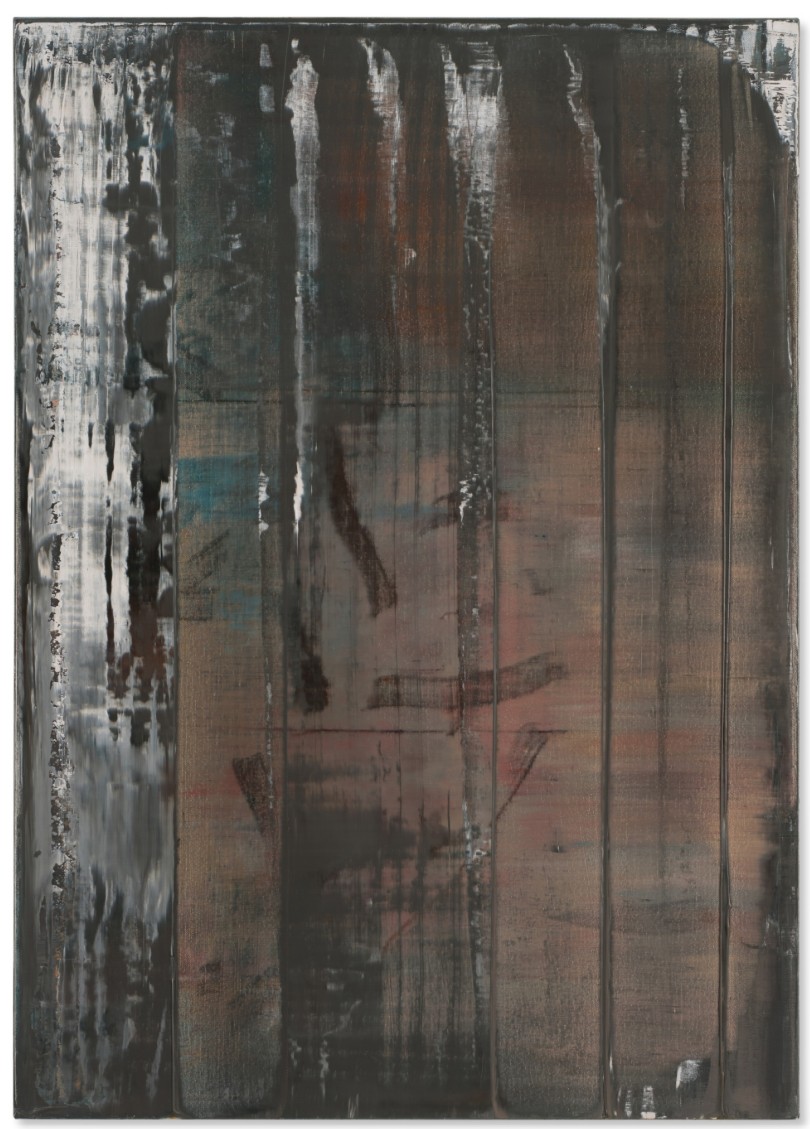
GERHARD RICHTER (b. 1932)
Abstraktes Bild, 1995
Oil on canvas
94 x 66.7 cm (37 x 26 1/4 inches)
Signed twice, dated 1995 and numbered 829-11 (on the reverse)
#7. Abstraktes Bild, 1997
Ketterer Kunst Munich: 5 December 2025
Estimated: EUR 700,000
EUR 1,044,900 / USD 1,212,085
Ketterer Kunst, Art auctions, Book auctions Munich, Hamburg & Berlin
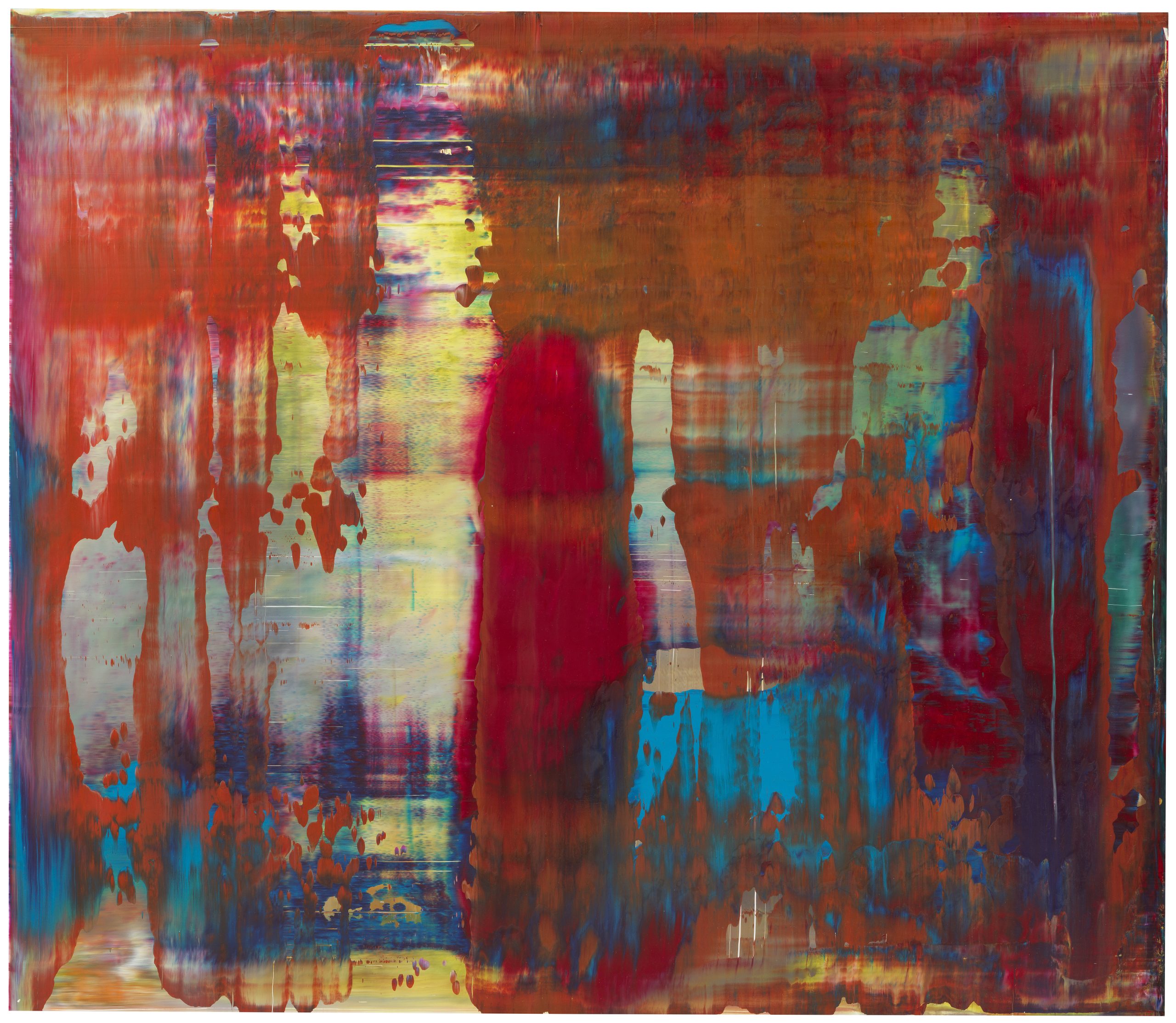
GERHARD RICHTER (b. 1932)
Abstraktes Bild, 1997
Oil auf Alucobond
48×55 cm (18.8 x 21.6 inches)
Signed, dated, and inscribed with the work number “842-4” on the reverse
#8. Abstraktes Bild, 1988
Sotheby’s New-York: 16 May 2025
Estimated: USD 800,000 – 1,200,000
USD 1,016,000
Abstraktes Bild | Contemporary Day Auction | 2025 | Sotheby’s
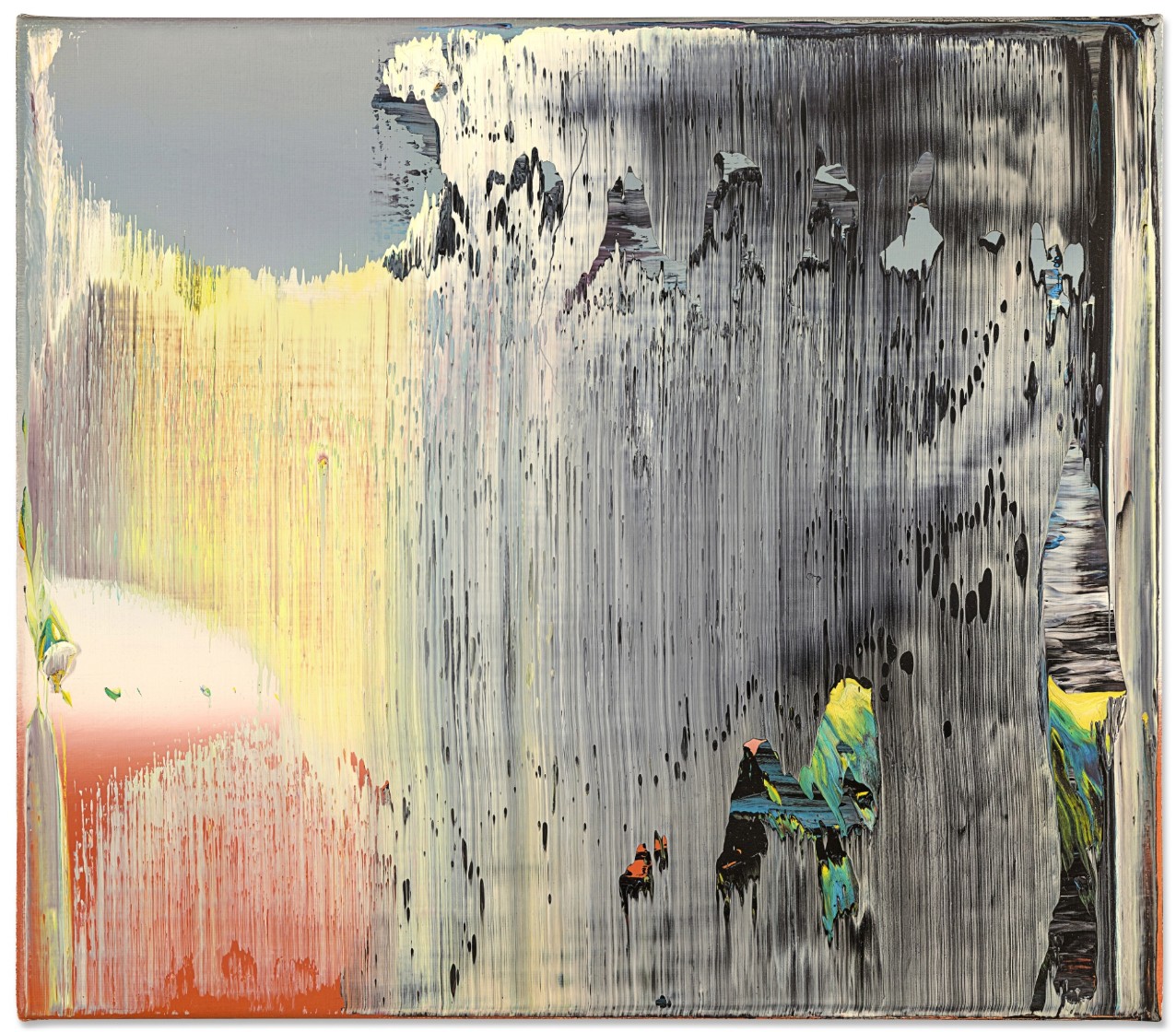
GERHARD RICHTER (b. 1932)
Abstraktes Bild, 1988
Acrylic on canvas
35×40 cm (13 3/4 x 15 3/4 inches)
Signed, dated 88 and numbered 675-2 (on the reverse)
USD 1 million
#9. Fuji, 1996
Christie’s London: 16 October 2025
Estimated: GBP 300,000 – 500,000
GBP 584,200 / USD 782,830
GERHARD RICHTER (B. 1932), Fuji | Christie’s
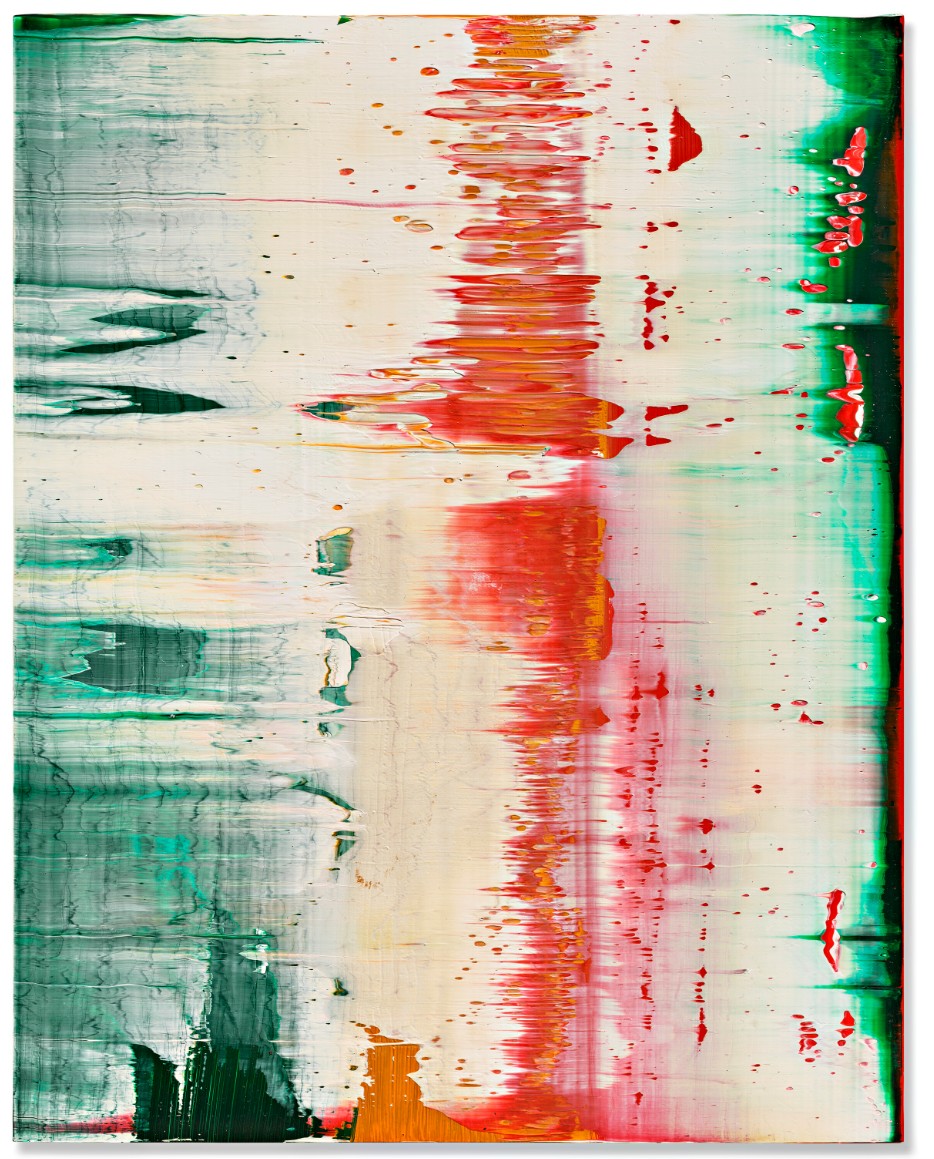
GERHARD RICHTER (B. 1932)
Fuji, 1996
Oil on Alucobond
37×29 cm (14 5/8 x 11 3/8 inches)
Signed ‘Richter’ (on the reverse)
Numbered ‘839-85’ (on a label affixed to the reverse)
#10. Abstraktes Bild, 1992
Sotheby’s London: 17 October 2025
Estimated: GBP 200,000 – 300,000
GBP 406,400 / USD 544,575
Abstraktes Bild | Contemporary Day Auction | 2025 | Sotheby’s
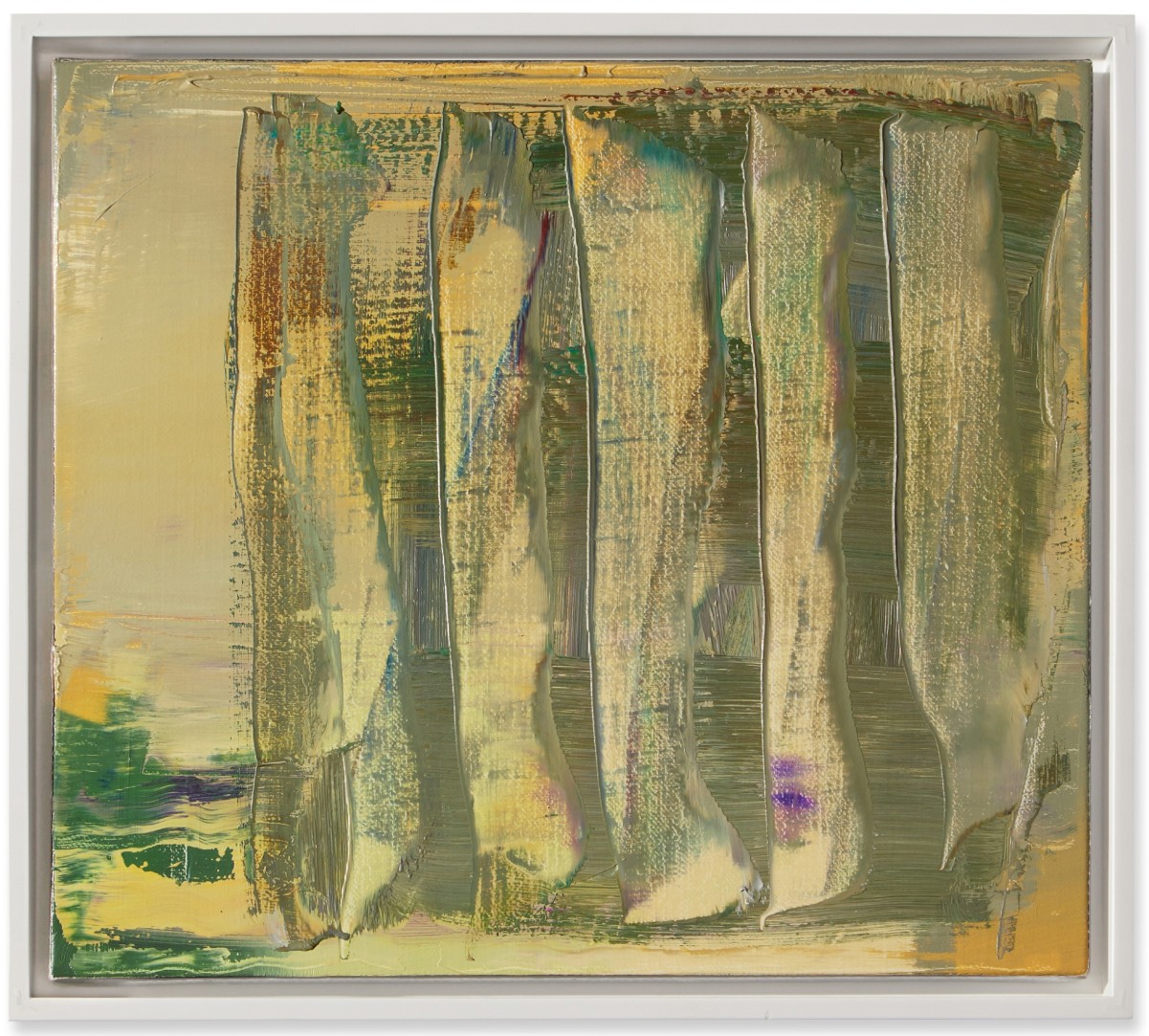
GERHARD RICHTER (b. 1932)
Abstraktes Bild, 1992
Oil on canvas
36 x 40.8 cm (14 1/8 x 16 inches)
Signed, dated 92 and numbered 763-2 (on the reverse)
#11. Fuji, 1996
Grisebach Berlin: 27 November 2025
Estimated: EUR 350,000 – 450,000
EUR 350,000 (Hammer)
EUR 444,500 / USD 515,565
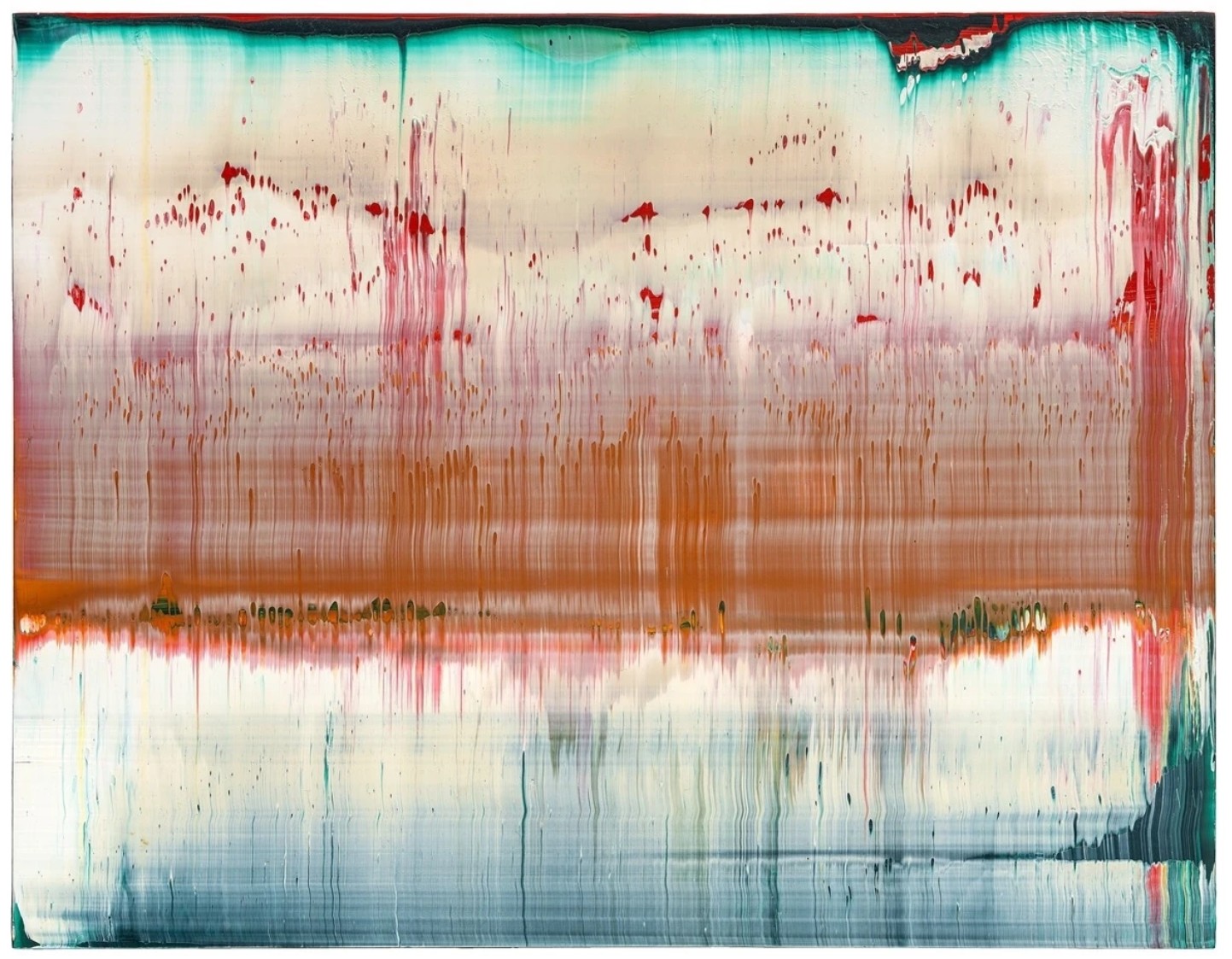
GERHARD RICHTER (Dresden 1932 – lives in Cologne)
Fuji, 1996
Oil on Alucobond
29×37 cm (11 3/8 x 14 5/8 inches)
On the reverse signed in black felt-tip pen: Richter.
One of 110 numbered unique works
Munich, Städtische Galerie im Lenbachhaus
USD 500,000
#12. Abstraktes Bild, 1992
Christie’s Hong-Kong: 29 March 2025
Estimated: HKD 2,000,000 – 3,000,000
HKD 2,520,000 / USD 323,805
GERHARD RICHTER (B. 1932), Abstraktes Bild | Christie’s
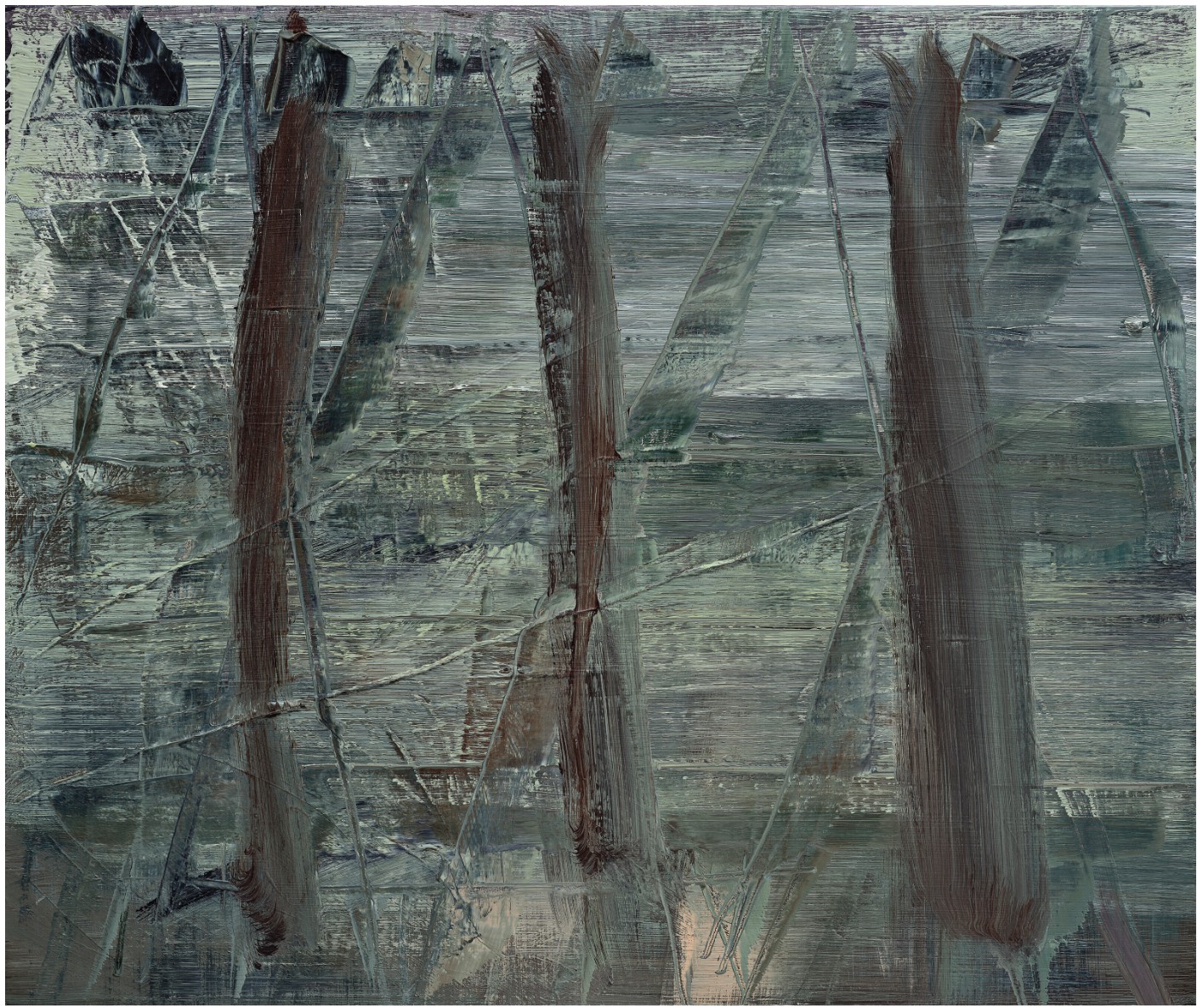
GERHARD RICHTER (B. 1932)
Abstraktes Bild, 1992
Oil on canvas
52×62 cm (20 1/2 x 24 3/8 inches)
Signed, numbered and dated ‘754-2 Richter 1992’ (on the reverse)
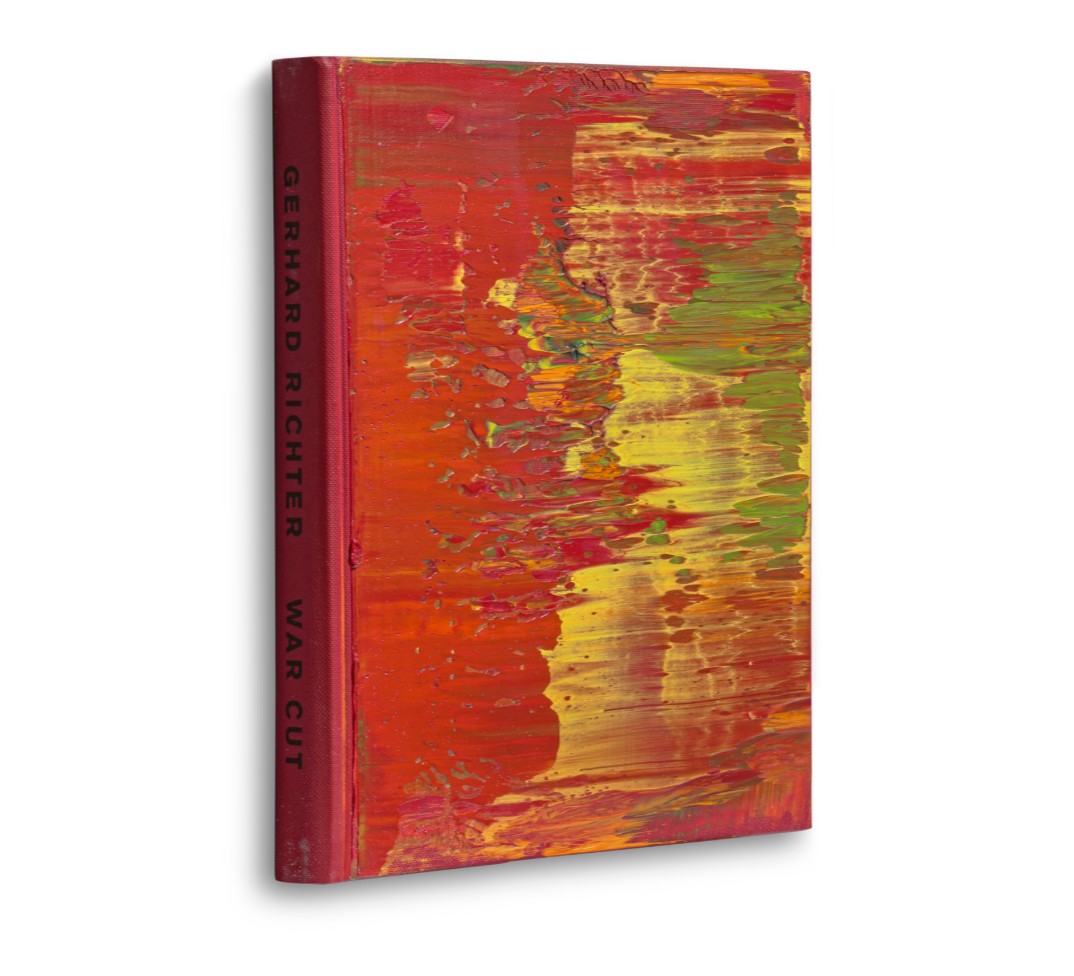
#13. War Cut II, 2005
Christie’s New-York: 20 November 2025
Estimated: USD 100,000 – 150,000
USD 266,700
EDITION OF 30 UNIQUE VARIANTS
GERHARD RICHTER (B. 1932), War Cut II | Christie’s
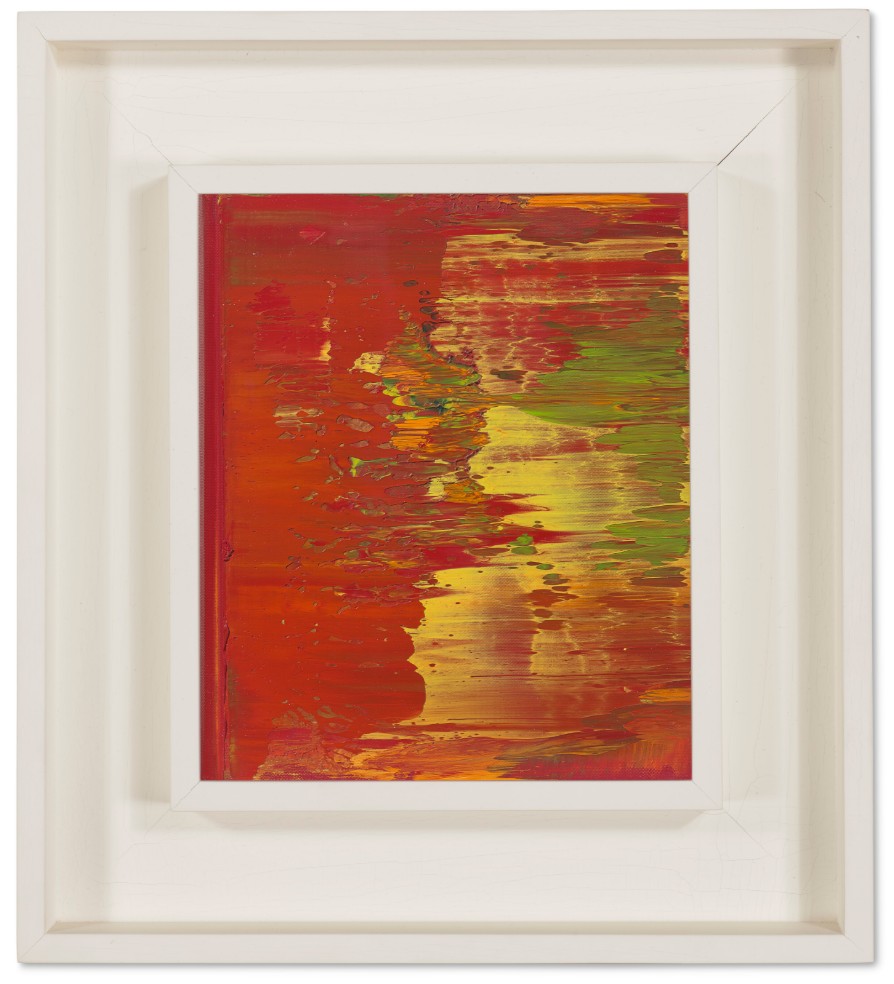
GERHARD RICHTER (B. 1932)
War Cut II, 2005
Oil on artist’s book
25.5 x 21.6 x 2.5 cm (10 x 8 1/2 x 1 inches)
Signed, inscribed, numbered and dated ‘8⁄30 F Richter 2005’ (on the inside front cover)
Signed again, numbered again and dated again ‘8 Richter 2005’ (on the reverse of the colophon page)
This work is number eight from an edition of 30 unique hand-painted variants
#14. Abstraktes Bild, 1979
Ketterer Kunst: 6 June 2025
Estimated: EUR 120,000
EUR 209,550 / USD 247,270
Ketterer Kunst, Art auctions, Book auctions Munich, Hamburg & Berlin
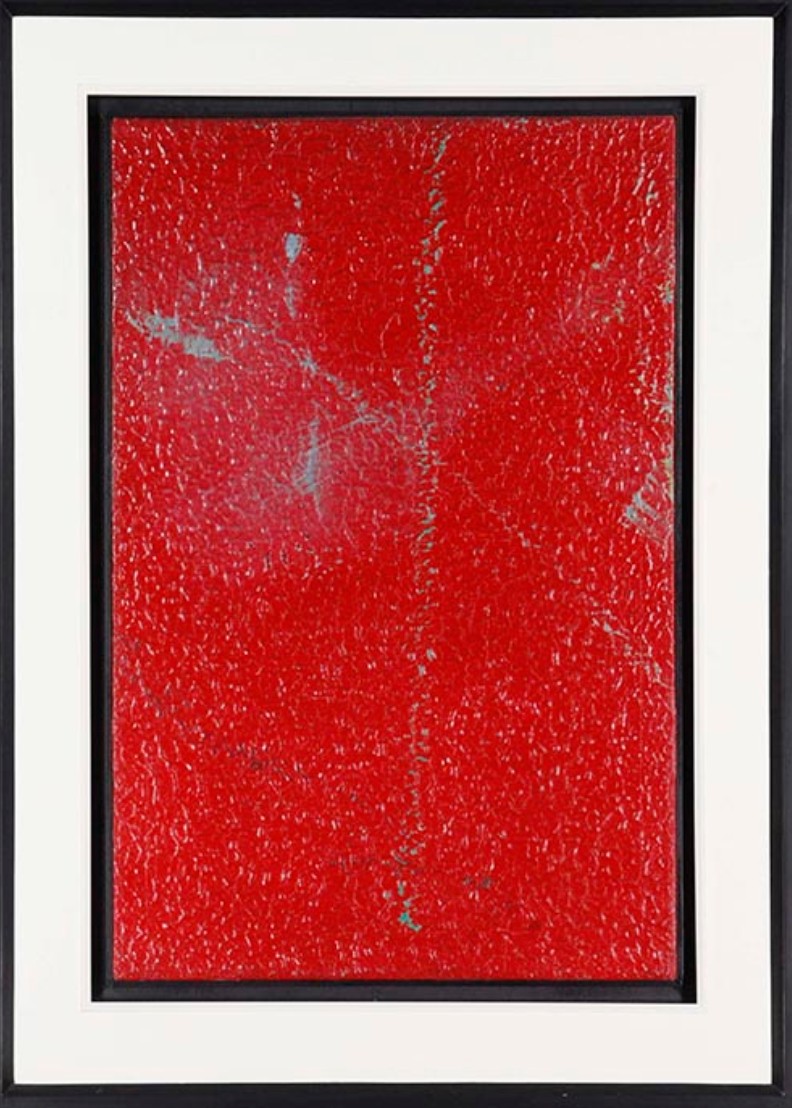
GERHARD RICHTER
Abstraktes Bild, 1979
Oil on canvas
78×52 cm (30 5/8 x 20 3/8 inches)
Signed, dated, and inscribed with the work number “448-3” on the reverse
#15. Ohne titel, 1994
Sotheby’s London: 5 March 2025
Estimated: GBP 120,000 – 180,000
GBP139,700 / USD 178,816
WORK ON PAPER
Ohne titel | Contemporary Day Auction | 2025 | Sotheby’s
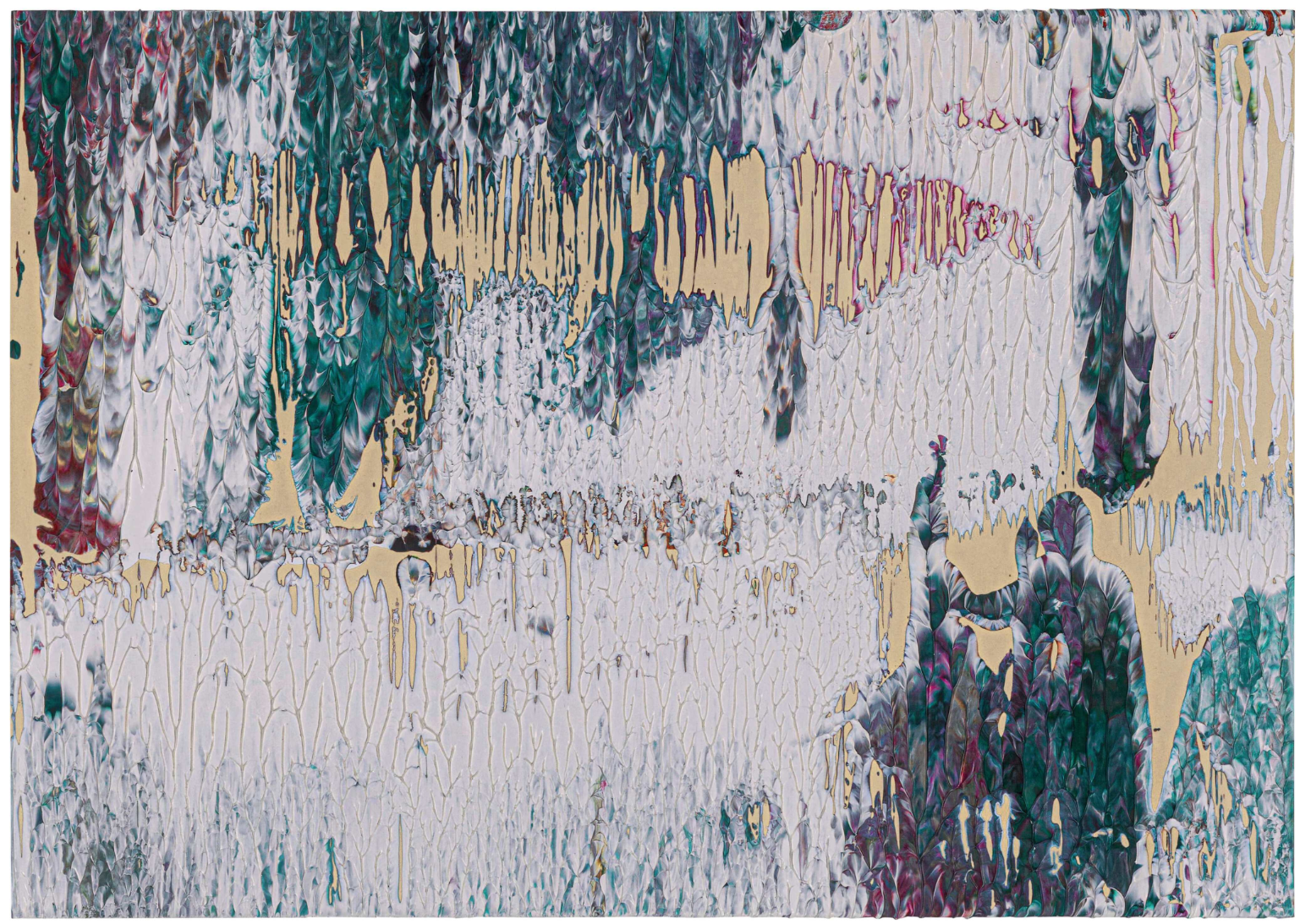
GERHARD RICHTER (b. 1932)
Ohne titel, 1994
Oil on paper
21.2 x 30 cm (8 3/8 x 11 3/4 inches)
Signed and dated 24.2.94 (on the backing board, lower right)
USD 100,000
#16. Goldberg-Variationen, 1984
Van Ham Cologne: 3 December 2025
Estimated: EUR 40,000 – 60,000
EUR 66,000 / USD 76,950
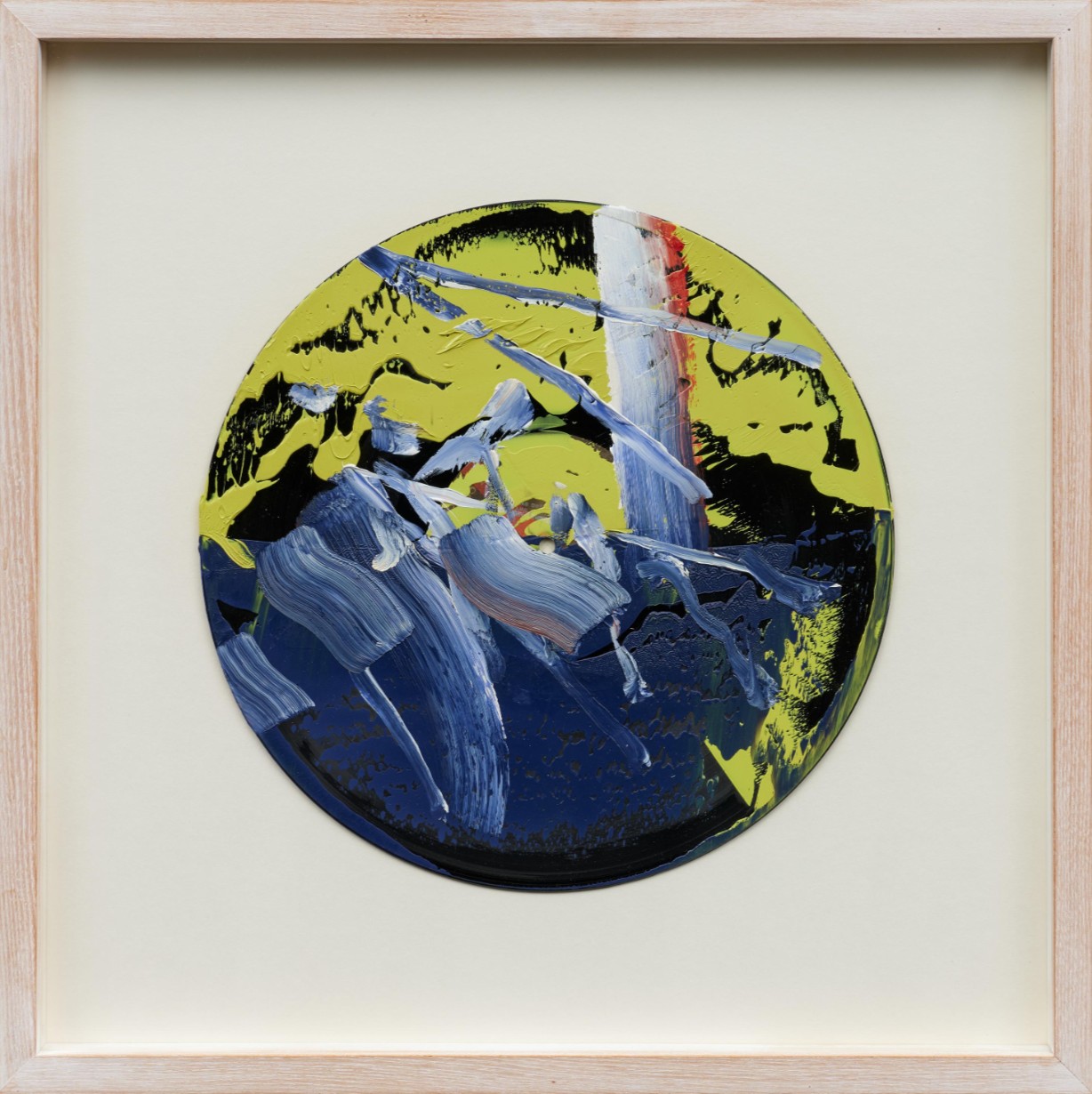
GERHARD RICHTER (1932 Dresden)
Goldberg-Variationen, 1984
Record painted over on one side with oil paint
Featuring Bach’s Goldberg Variations (recorded by Glenn Gould 1982)
Diameter: 30.1 cm (11 7/8 inches)
Numbered, signed and dated on the Label verso: 1/100 Richter 84
Each work is unique
#17. Goldberg-Variationen, 1984
Phillips London: 24 January 2025
Estimated: GBP 40,000 – 60,000
GBP 50,800 / USD 62,755
EDITION OF 100 UNIQUE VARIANTS
Gerhard Richter – Evening & Day Edit… Lot 13 January 2025 | Phillips
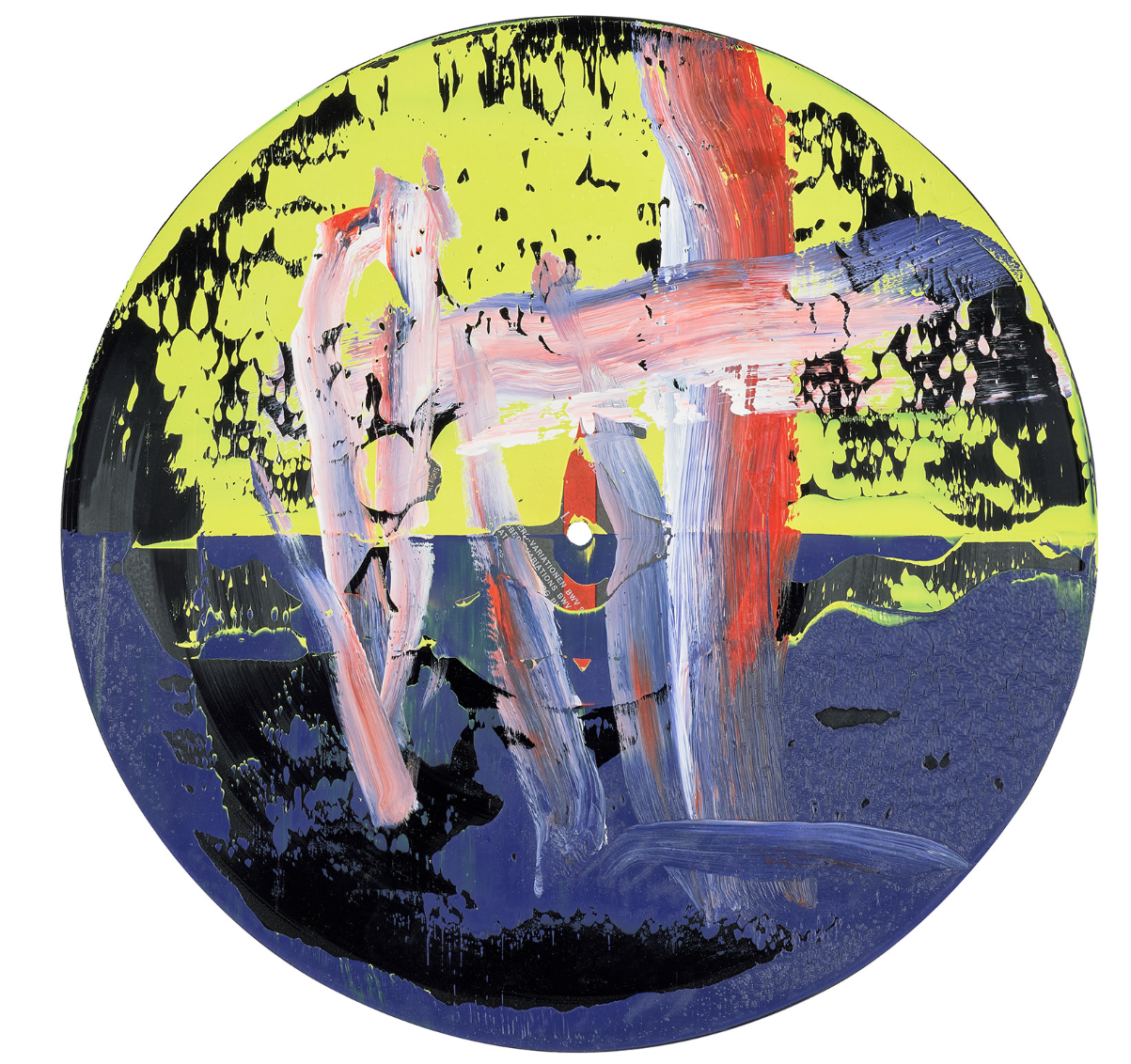
GERHARD RICHTER
Goldberg-Variationen (Goldberg Variations), from Hommage à Cladders (B. 60), 1984
Unique oil painting on a phonograph long play record (Bach: The Goldberg Variations: Glenn Gould, CBS, 1982)
Diameter: 30.1 cm (11 7/8 inches)
Signed, dated and numbered 12/100 in black ink on the reverse
From the edition of 100 unique variants (there were also 20 artist’s proofs in Roman numerals)
Lots Passed
Abstraktes Bild, 1999
Christie’s New-York: 20 November 2025
Estimated: USD 700,000 – 1,000,000
PASSED
GERHARD RICHTER (B. 1932), Abstraktes Bild | Christie’s
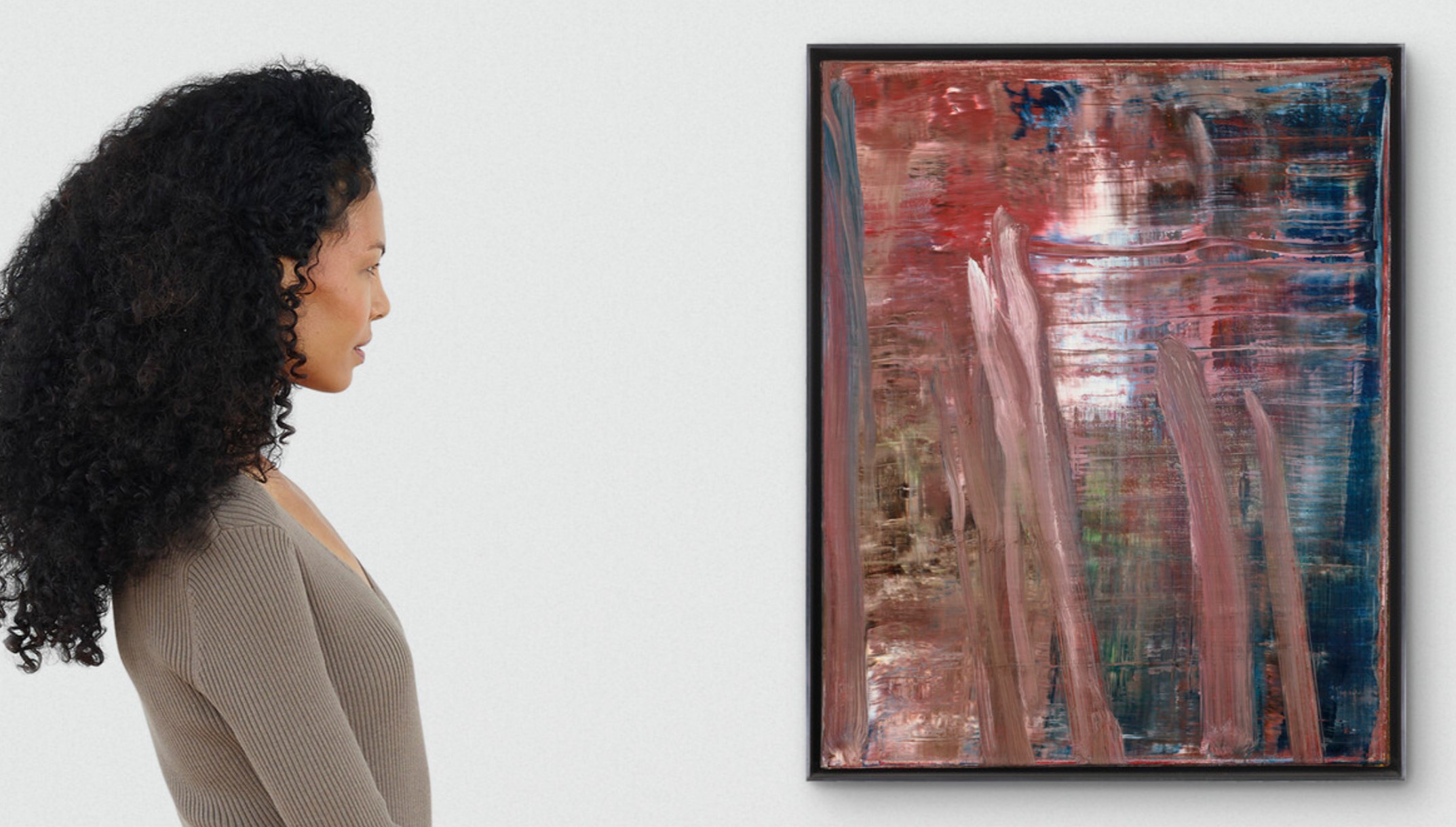
GERHARD RICHTER (B. 1932)
Abstraktes Bild, 1999
Oil on canvas
51×41 cm (20×16 inches)
Signed, inscribed and dated ‘862-1 Richter 1999’ (on the reverse)
Lots Withdrawn
Heu, 1995
Sotheby’s London: 4 March 2025
Estimated: GBP 5,000,000 – 7,000,000
WITHDRAWN
Heu | Modern & Contemporary Evening Auction | 2025 | Sotheby’s
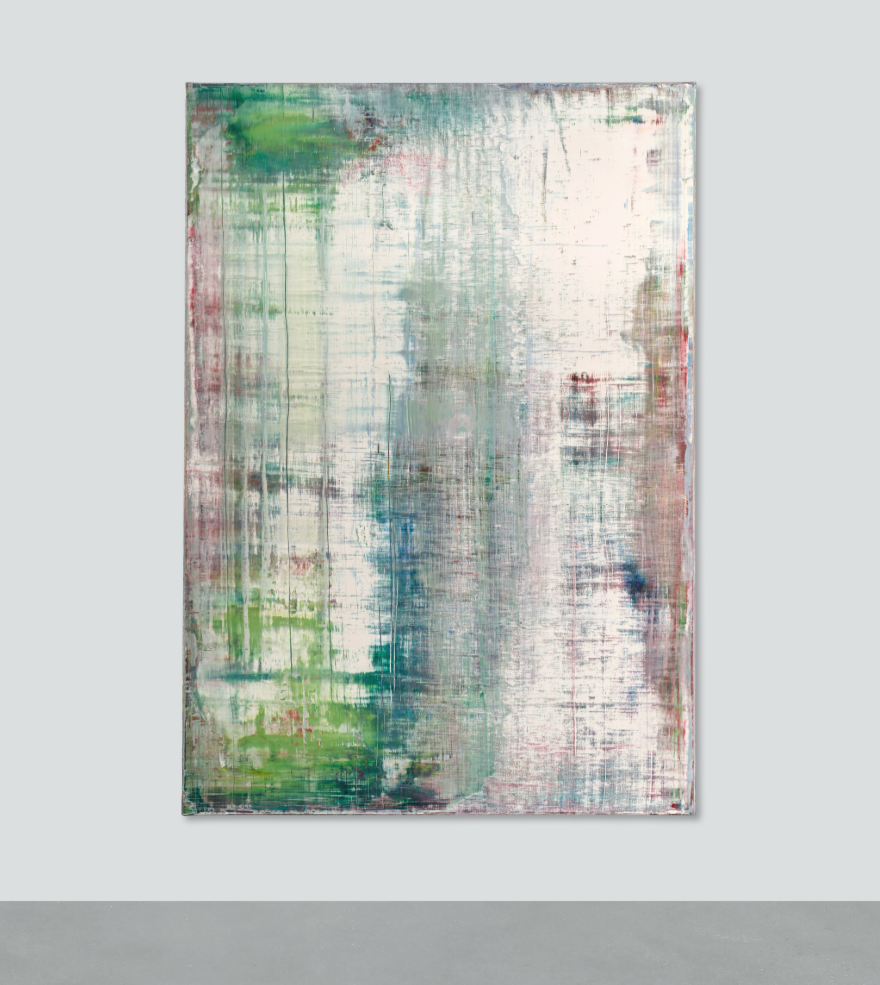
GERHARD RICHTER (b. 1932)
Heu, 1995
Oil on canvas
200.3 x 140 cm (78 7/8 x 55 1/8 inches)
Signed, dated 1995 and numbered 831-1 (on the reverse)
2024 Auction Results
#1. Abstraktes Bild, 1988
Christie’s New-York: 16 May 2024
Estimated: USD 10,000,000 – 15,000,000
USD 11,335,000
GERHARD RICHTER (B. 1932), Abstraktes Bild | Christie’s (christies.com)
GERHARD RICHTER (B. 1932)
Abstraktes Bild, 1988
Oil on canvas
200×180 cm (78 3/4 x 70 7/8 inches)
Signed, inscribed and dated ‘680-2 Richter 1988’ (on the reverse)
USD 10 million
#2. Abstraktes Bild, 1990
Sotheby’s New-York: 14 May 2024
Estimated: USD 4,000,000 – 6,000,000
USD 4,658,000
Abstraktes Bild | Contemporary Evening Auction | 2024 | Sotheby’s (sothebys.com)

GERHARD RICHTER (b. 1932)
Abstraktes Bild, 1990
Oil on wood
120×120 cm (47 1/4 x 47 1/4 inches)
Signed, dated 1990 and numbered 730-1 (on the reverse)
#3. Abstrakte Bilder 581-(1-5) [Five works], 1985
Sotheby’s London: 6 March 2024
Estimated: GBP 2,500,000 – 3,500,000
GBP 2,952,000 / USD 3,743,136
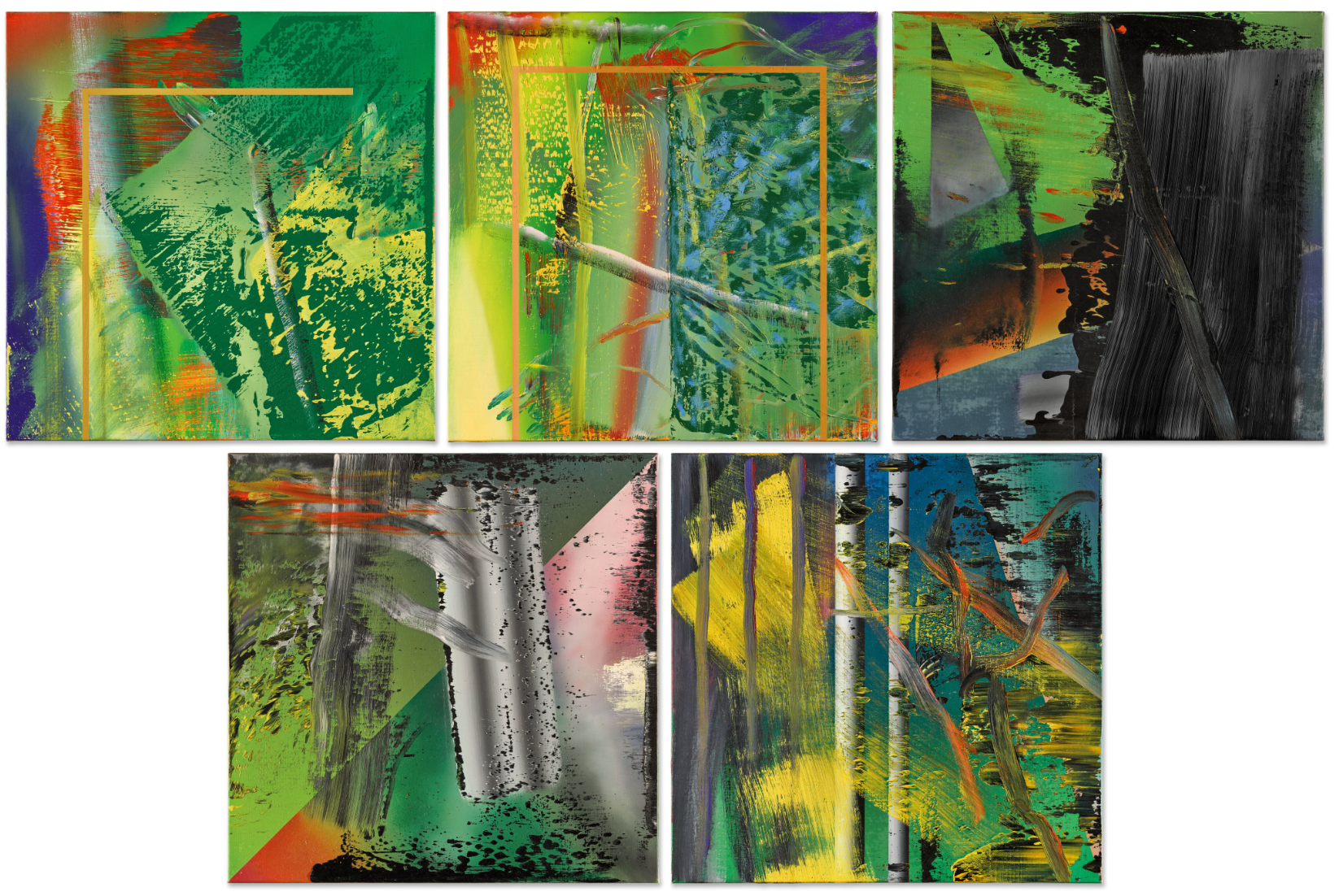
GERHARD RICHTER (b. 1932)
Abstrakte Bilder 581-(1-5) [Five works], 1985
Oil on canvas
Each: 60×60 cm (23 5/8 x 23 3/4 inches)
Each: signed, dated 1985 and numbered 581-(1-5) (on the reverse)
#4. Abstraktes Bild, 1994
Christie’s London: 9 October 2024
Estimated: GBP 1,800,000 – 2,500,000
GBP 1,855,000 / USD 2,430,050
GERHARD RICHTER (B. 1932), Abstraktes Bild | Christie’s
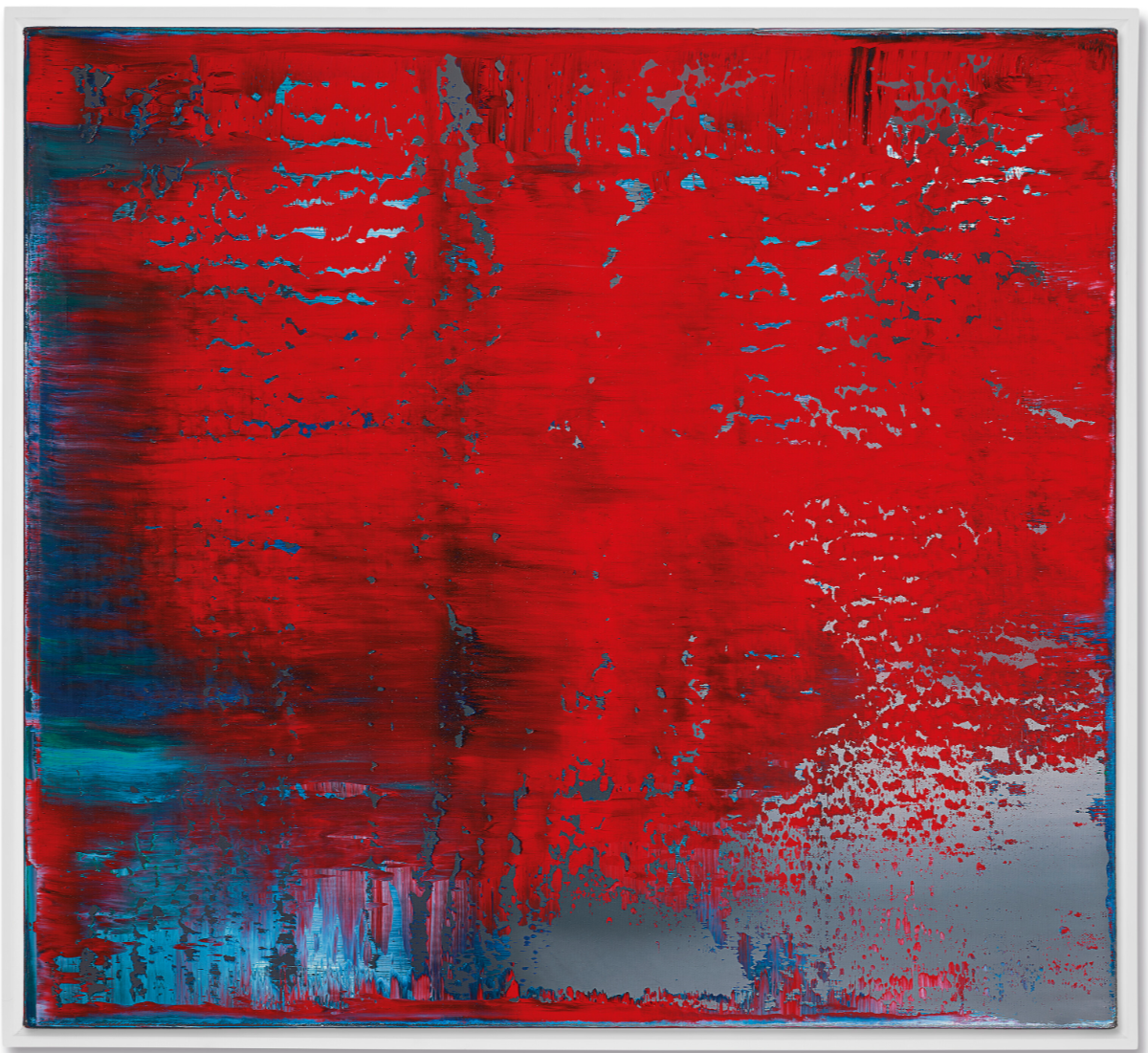
GERHARD RICHTER (B. 1932)
Abstraktes Bild, 1994
Oil on canvas
56×61 cm (22×24 inches)
Signed, inscribed and dated ‘805-4 Richter 1994’ (on the reverse)
#5. Abstraktes Bild, 1983
Sotheby’s New-York: 14 May 2024
Estimated: USD 1,800,000 – 2,500,000
USD 2,056,500
Abstraktes Bild | Contemporary Day Auction | 2024 | Sotheby’s (sothebys.com)

GERHARD RICHTER (b. 1932)
Abstraktes Bild, 1983
Oil on canvas
100×70 cm (39 3/8 x 27 1/2 inches)
Signed, dated 1983 and numbered 522-3 (on the reverse)
#6. Abstraktes Bild, 1990
Christie’s New-York: 1 October 2024
Estimated: USD 2,000,000 – 3,000,000
USD 2,046,500
GERHARD RICHTER (B. 1932), Abstraktes Bild | Christie’s (christies.com)
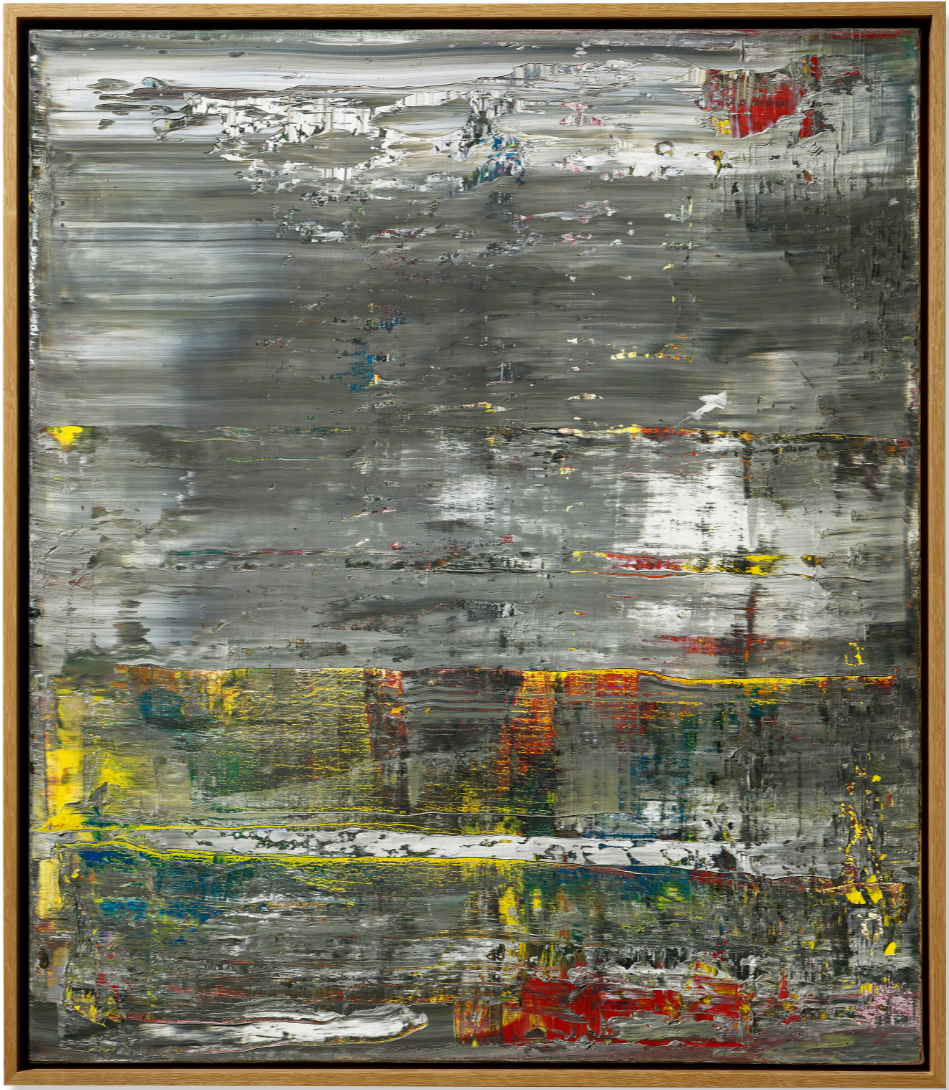
GERHARD RICHTER (B. 1932)
Abstraktes Bild, 1990
Oil on canvas
72.1 x 62.2 cm (28 3/8 x 24 1/2 inches)
Signed, inscribed and dated ‘715-2 Richter 1990’ (on the reverse)
#7. Abstraktes Bild, 1993
Sotheby’s New-York: 14 May 2024
Estimated: USD 1,500,000 – 2,000,000
USD 1,754,000
Abstraktes Bild | Contemporary Day Auction | 2024 | Sotheby’s (sothebys.com)

GERHARD RICHTER (b. 1932)
Abstraktes Bild, 1993
Oil on canvas
61 x 71.1 cm (24×28 inches)
Signed, dated 1993 and numbered 800-5 (on the reverse)
#8. Abstraktes Bild, 1995
Bonhams New-York: 20 November 2024
Estimated: USD 1,200,000 – 1,800,000
USD 1,512,500
Bonhams : GERHARD RICHTER (B. 1932) Abstraktes Bild 24 x 24 in (61 x 61 cm) (Painted in 1995)
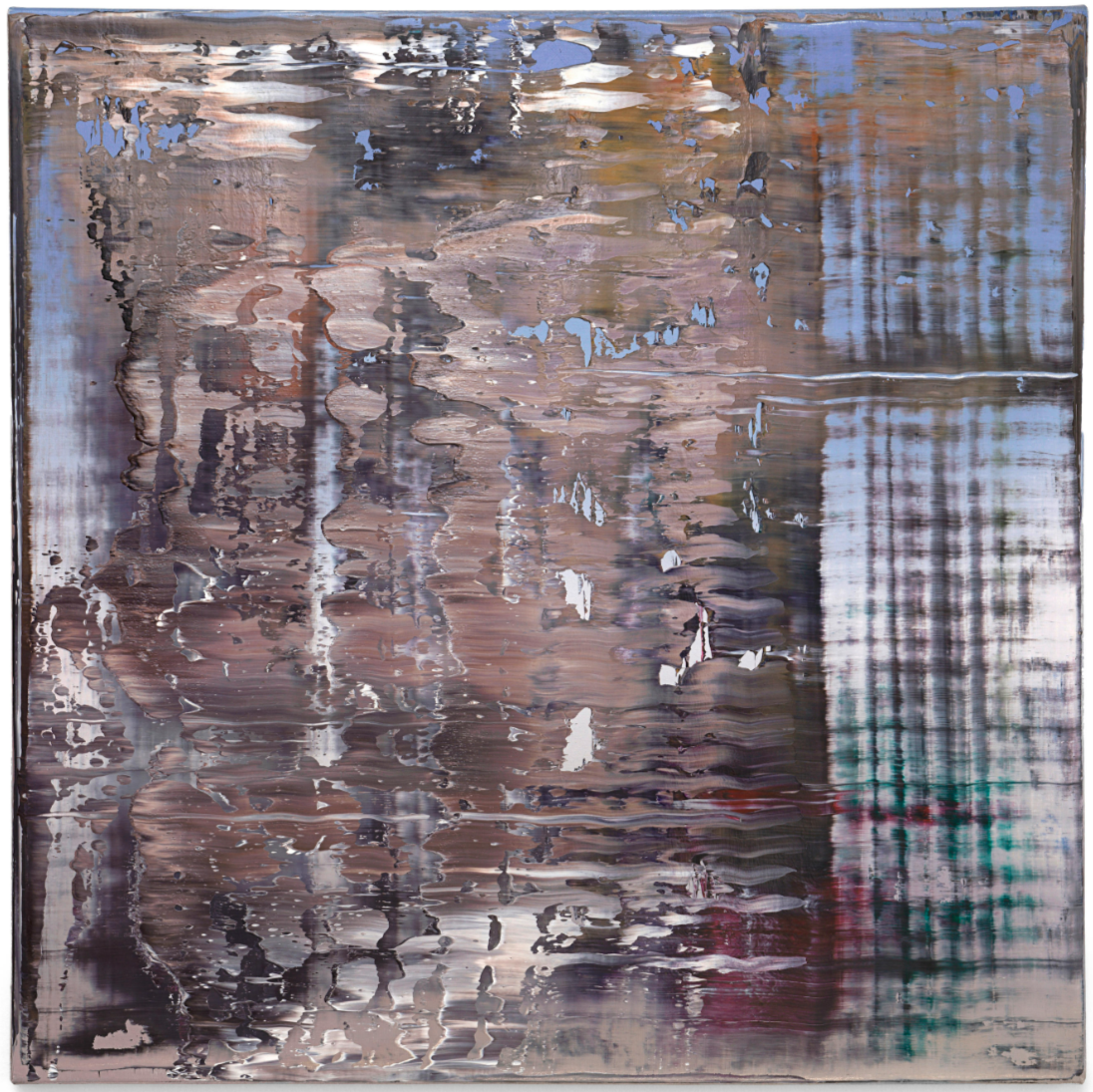
Oil on canvas
61×61 cm (24×24 inches)
Signed, inscribed and dated ‘Richter 1995 835-4’ (on the reverse) and further inscribed ‘835-4’ (on the stretcher)
#9. Abstraktes Bild, 1998
Sotheby’s London: 25 June 2024
Estimated: GBP 900,000 – 1,200,000
GBP 1,140,000 / USD 1,445,520
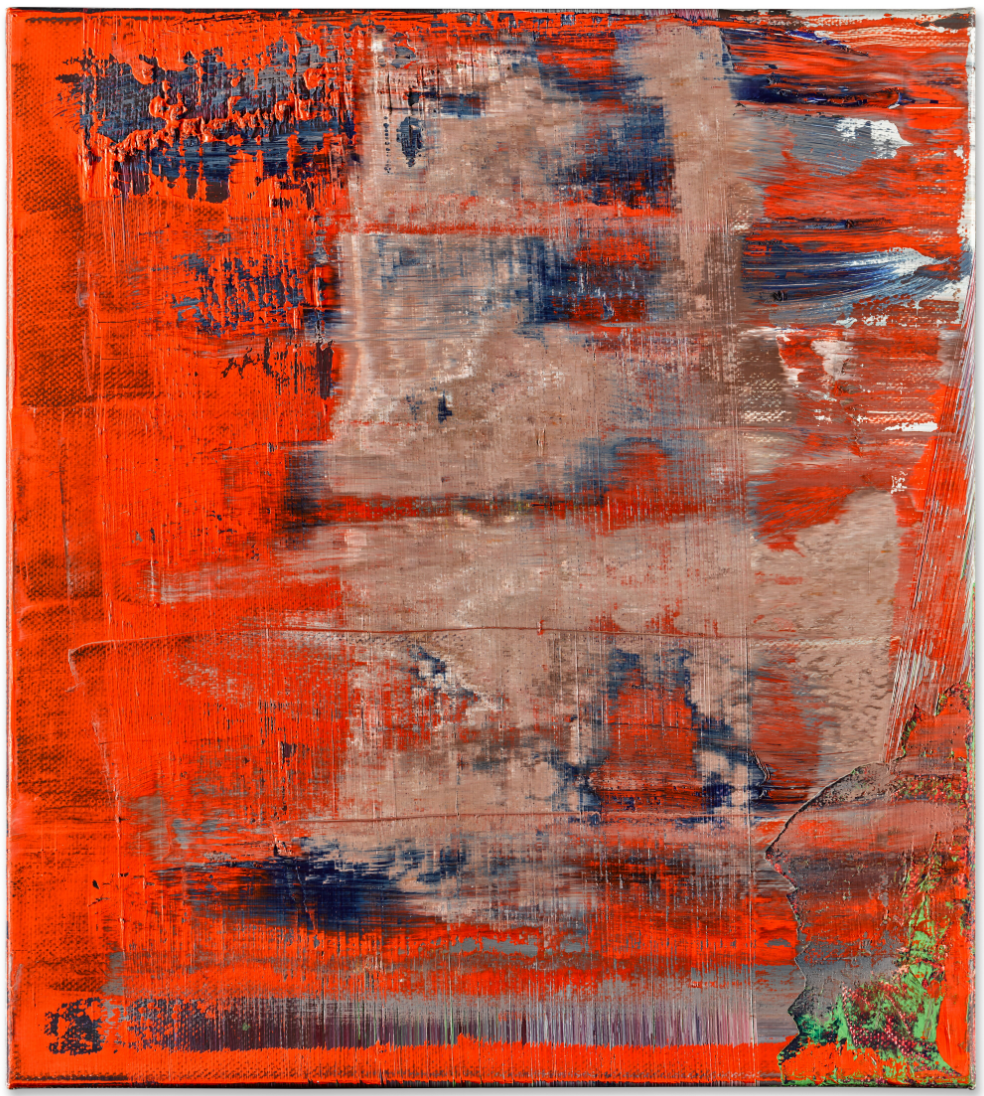
GERHARD RICHTER (b. 1932)
Abstraktes Bild, 1998
Oil on canvas
50×45 cm (20 1/8 x 17 3/4 inches)
Signed, dated 1998 and numbered 850-5 (on the reverse)
USD 1 million
#10. Abstraktes Bild, 1977
Christie’s New-York: 17 May 2024
Estimated: USD 500,000 – 700,000
USD 604,800
GERHARD RICHTER (B. 1932), Abstraktes Bild | Christie’s (christies.com)
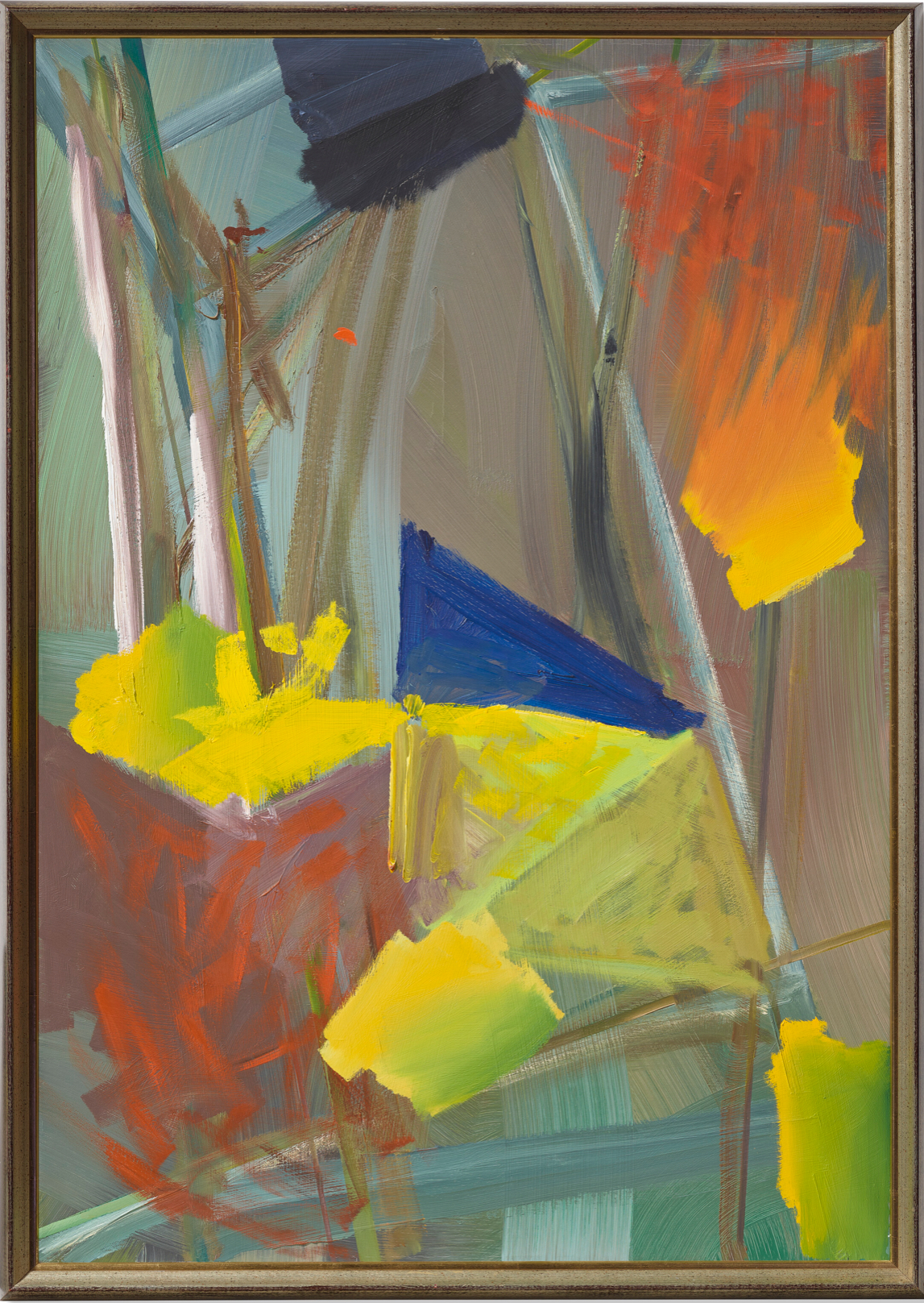
GERHARD RICHTER (B. 1932)
Abstraktes Bild, 1977
Oil on canvas
100×70 cm (39 3/8 x 27 1/2 inches)
Signed, inscribed and dated ‘431/9 Richter 77’ (on the reverse)
USD 500,000
#11. Abstraktes Bild, 1990
Grisebach Berlin: 28 November 2024
Estimated: EUR 300,000 – 400,000
EUR 381,000 / USD 402,345
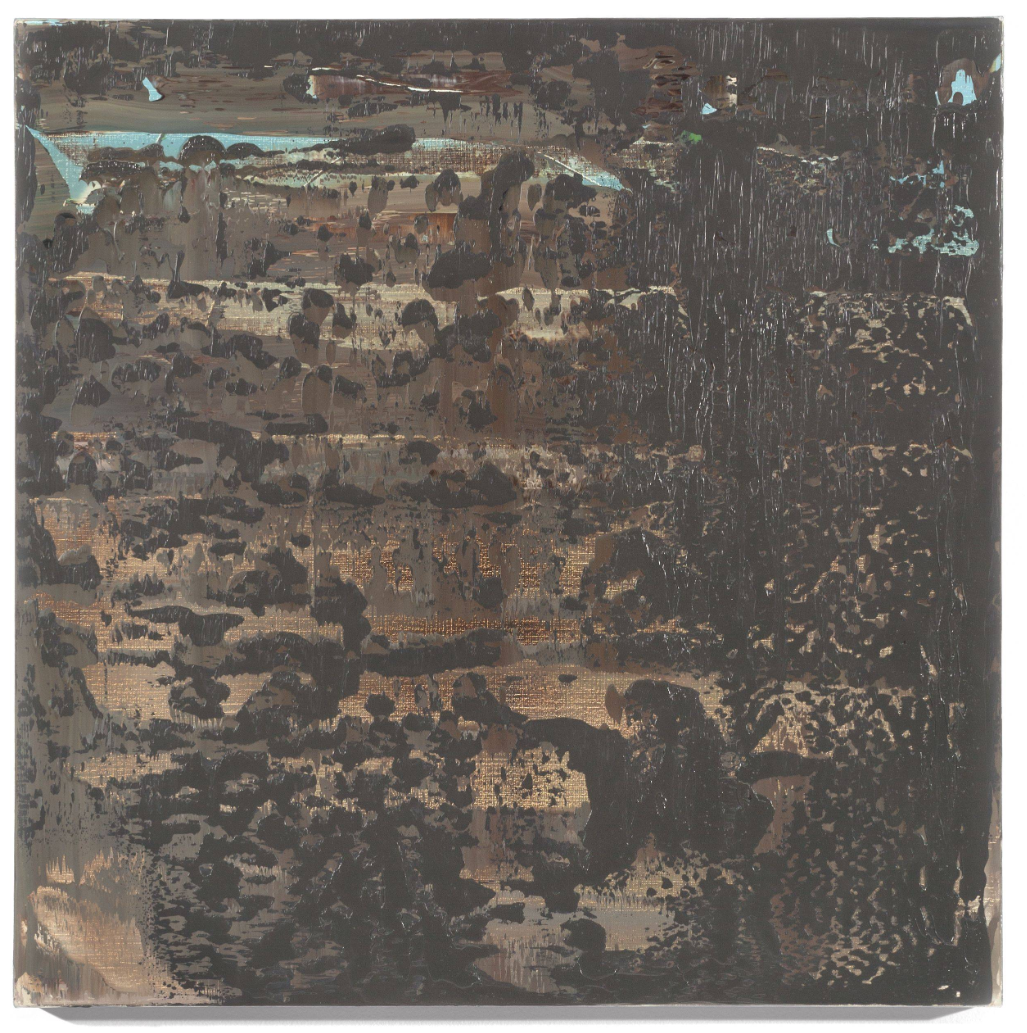
GERHARD RICHTER (Dresden 1932 – lives in Cologne)
Abstraktes Bild, 1990
Oil on canvas
62×62 cm (24 3/8 x 24 3/8 inches)
Inscribed with the work number, signed and dated on the reverse in black felt-tip pen: 713-2 Richter 1990
#12. Abstraktes Bild, 1992
Christie’s New-York: 1 October 2024
Estimated: USD 350,000 – 550,000
USD 378,000
GERHARD RICHTER (B. 1932), Abstraktes Bild | Christie’s
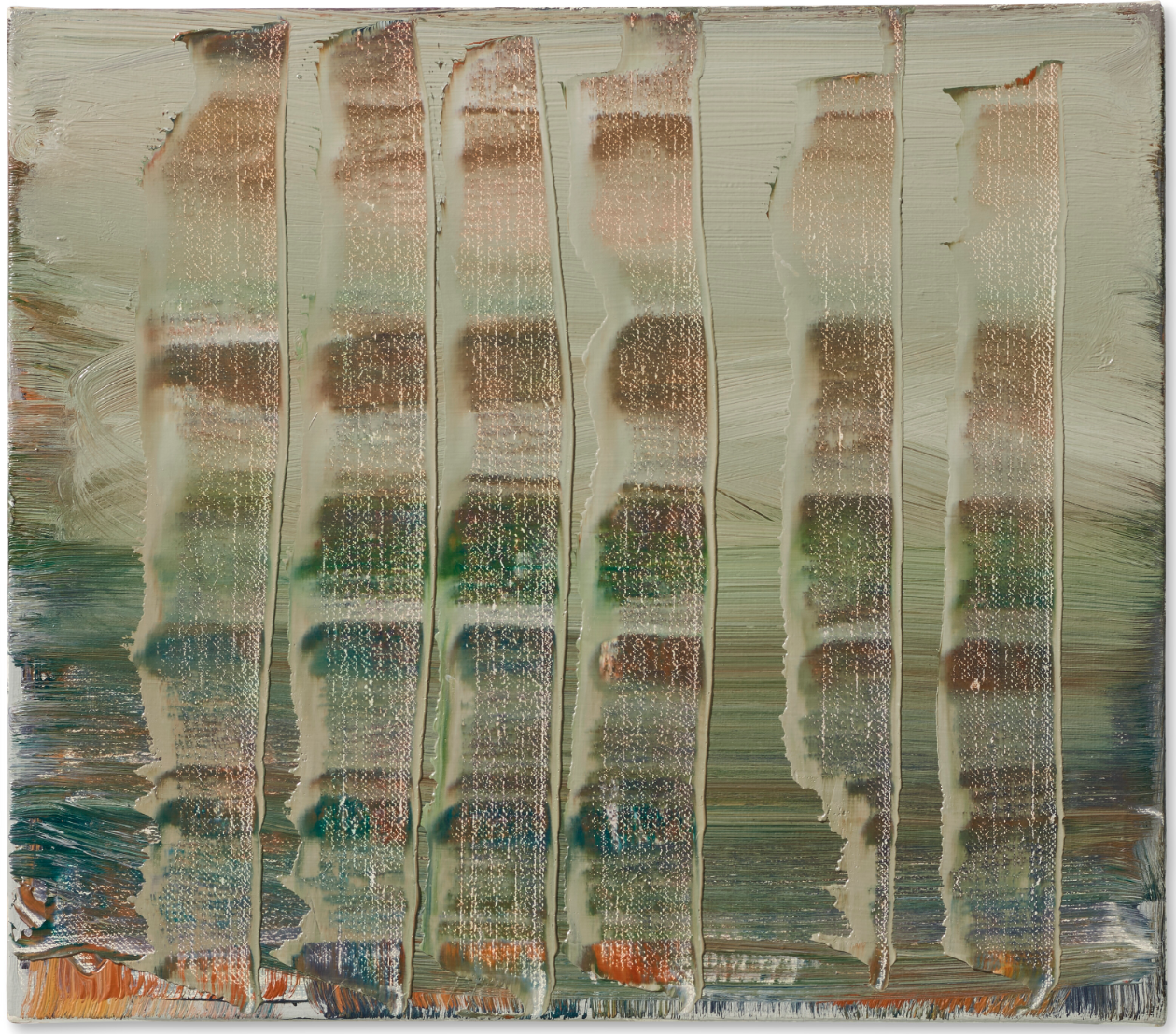
GERHARD RICHTER (B. 1932)
Abstraktes Bild, 1992
Oil on canvas
35.9 x 41 cm (14 1/8 x 16 1/8 inches)
Signed, inscribed and dated ‘763-3 Richter, 92’ (on the reverse)
#13. Abstraktes Bild, 1980
Sotheby’s New-York: 21 November 2024
Estimated: USD 300,000 – 400,000
USD 264,000
Abstraktes Bild | Contemporary Day Auction | 2024 | Sotheby’s
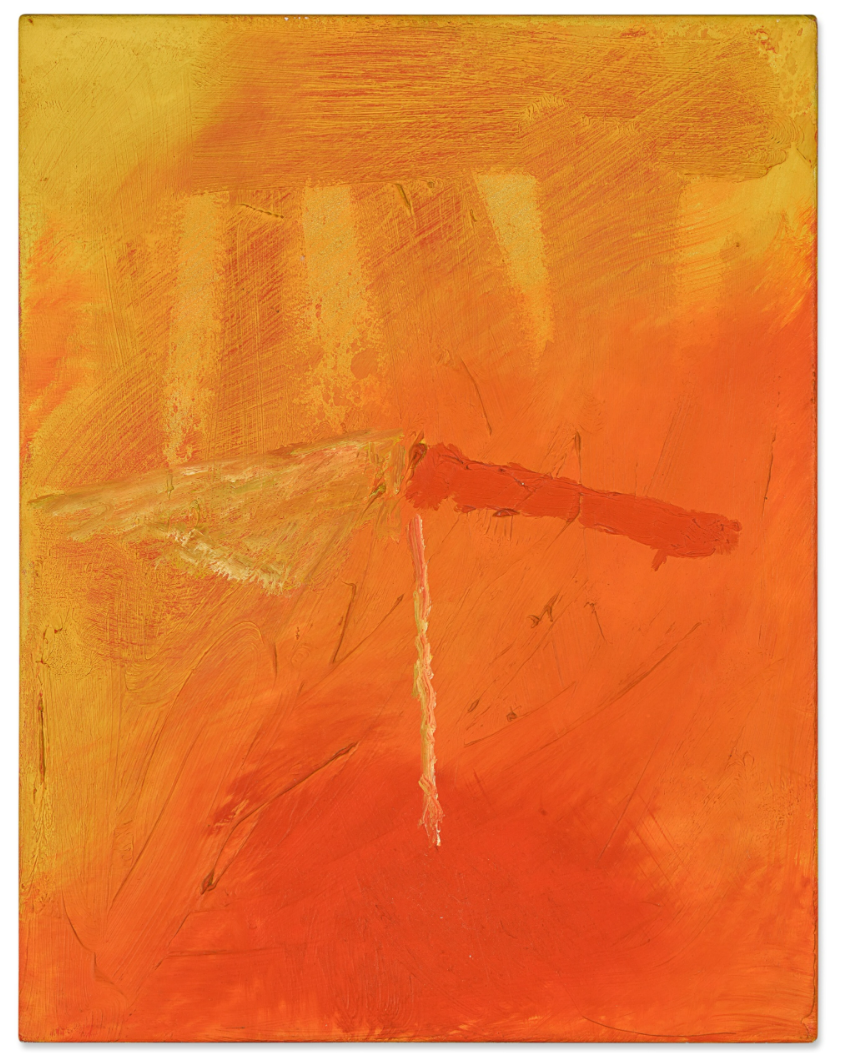
GERHARD RICHTER (b. 1932)
Abstraktes Bild, 1980
Oil on canvas
45.1 x 35.5 cm (17 3/4 x 14 inches)
Signed, dated 80 and numbered 454/4 (on the reverse)
USD 200,000
#14. Untitled 26.2.89, 1989
Phillips New-York: 15 May 2024
Estimated: USD 100,000 – 150,000
USD 190,500
Gerhard Richter – Modern & Contemporary… Lot 162 May 2024 | Phillips
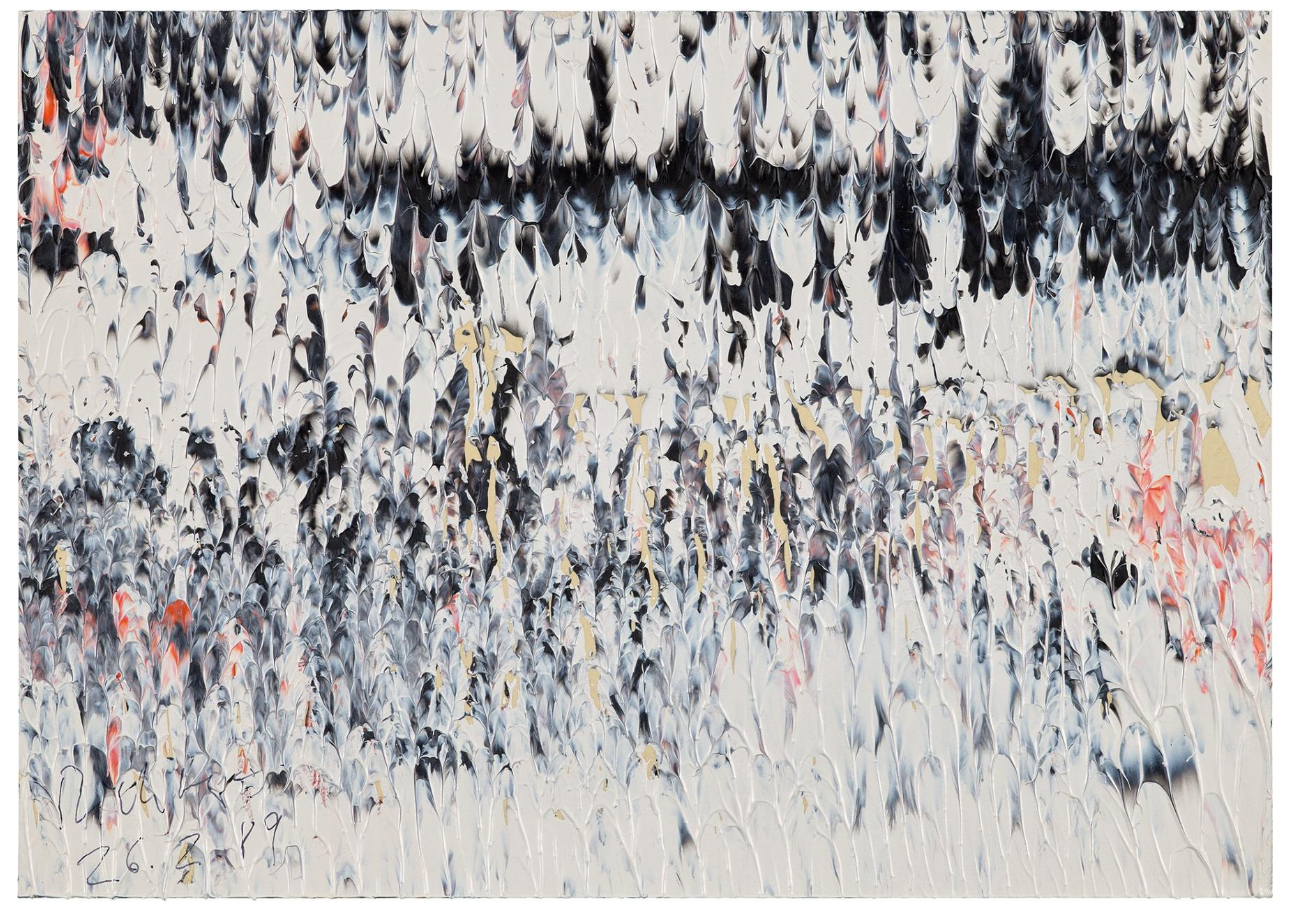
GERHARD RICHTER
Untitled 26.2.89, 1989
Oil on heavy paper
21 x 29.8 cm (8 1/4 x 11 3/4 inches)
Signed and dated “Richter 26.2.89” lower left
Signed and dated “26.2.89 Richter” on the reverse
#15. Abstraktes Bild (753-1), 1991
Christie’s London: 10 October 2024
Estimated: GBP 200,000 – 300,000
GBP 126,000 / USD 164,635
GERHARD RICHTER (B. 1932), Abstraktes Bild (753-1) | Christie’s
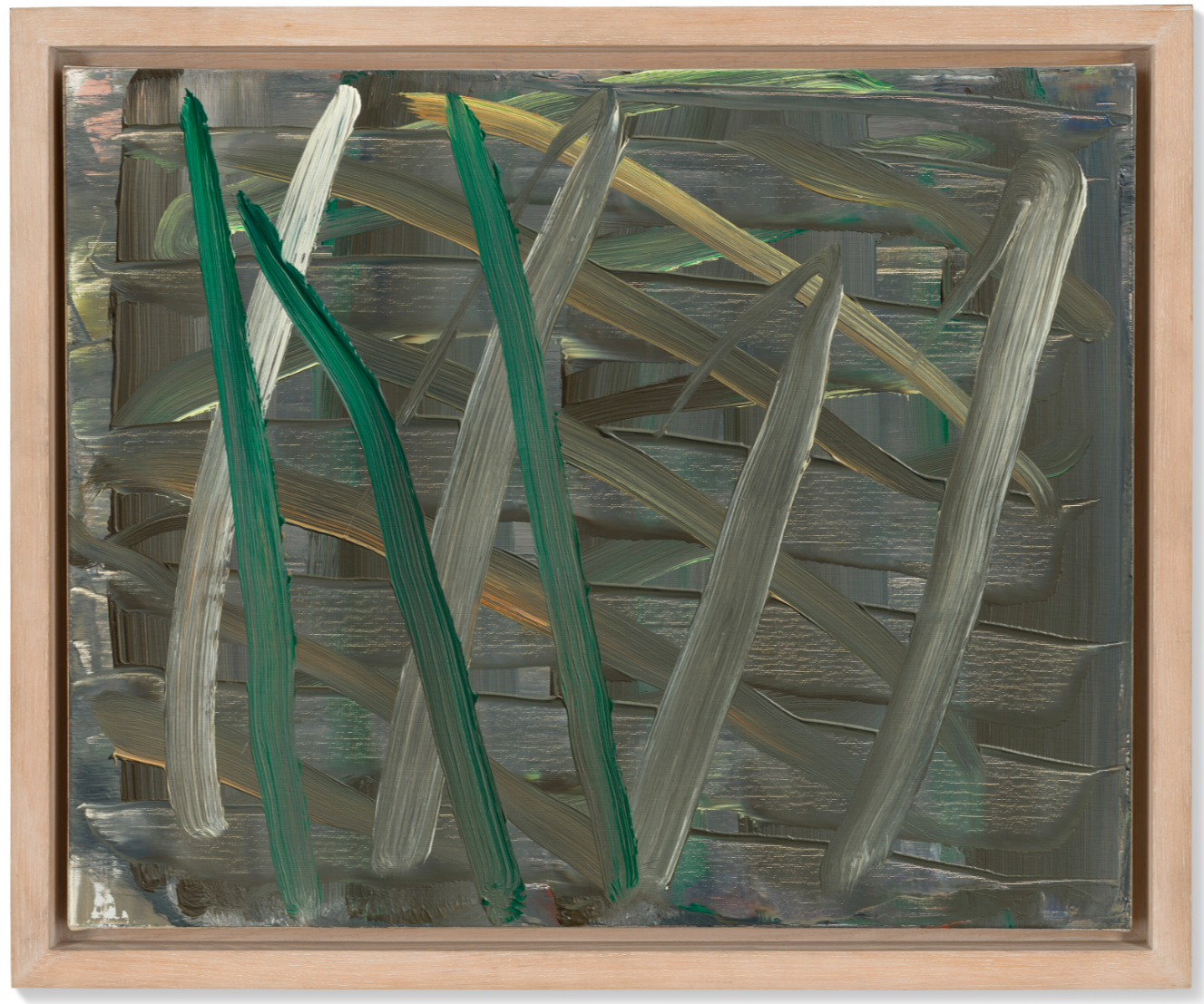
GERHARD RICHTER (B. 1932)
Abstraktes Bild (753-1), 1991
Oil on canvas
16 1/8 x 20 1/8 inches (41×51 cm)
Signed, numbered and dated ‘753-1 Richter 1991’ (on the reverse)
#16. War Cut II, 2004
Grisebach Berlin: 28 November 2024
Estimated: EUR 90,000 – 120,000
EUR 133,350 / USD 140,820
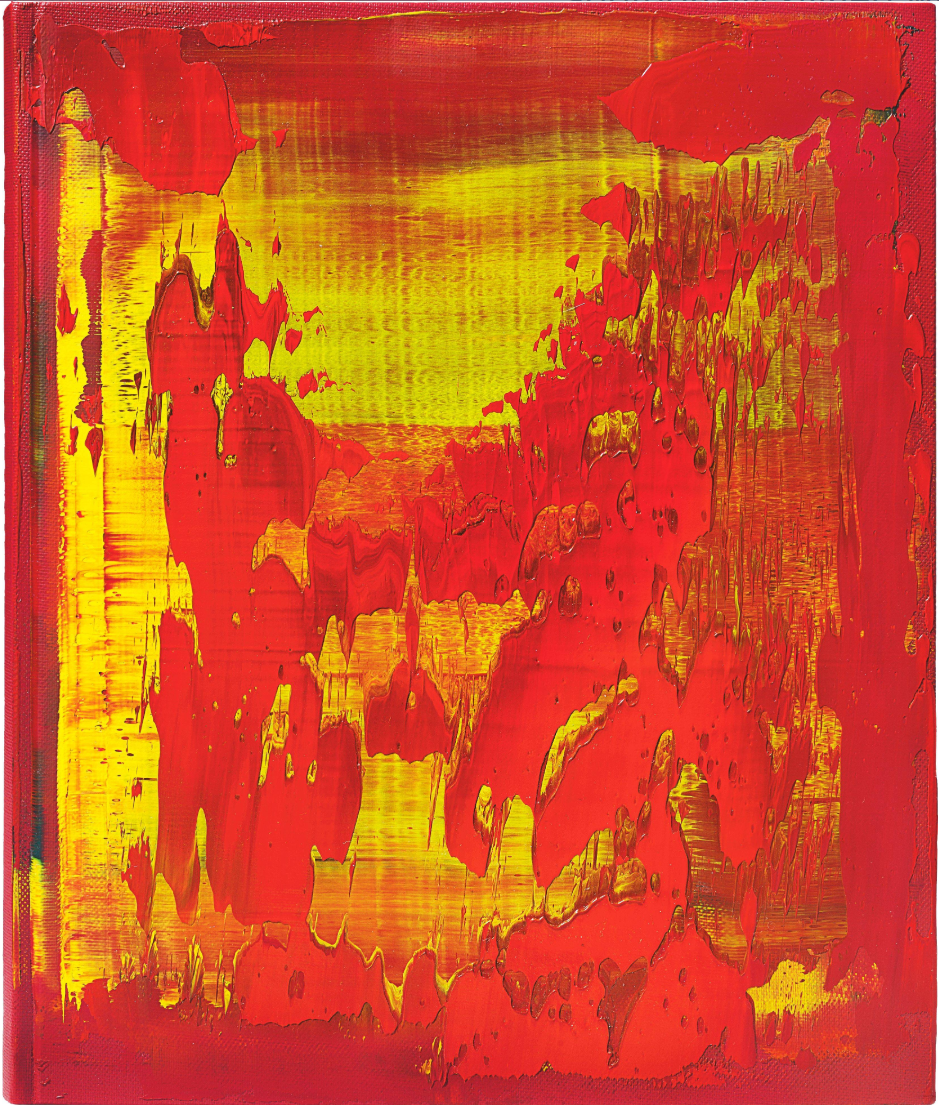
GERHARD RICHTER (Dresden 1932 – lives in Cologne)
War Cut II, 2004
Oil on front cover of the special edition of the artist book “War Cut I“
25.6 × 22 cm (10 1/8 x 8 5/8 inches)
Signed and dated in pencil on the endpaper: Richter, 2004
On the last page additionally signed with ballpoint pen in blue
One of 20 unique works (H.C.) from a total edition of 70 Roman numbered on the endpaper and on the last page
#17. Abstraktes Bild, 1976
Sotheby’s London: 10 October 2024
Estimated: GBP 70,000 – 100,000
GBP 90,000 / USD 117,595
Abstraktes Bild | Contemporary Day Auction | 2024 | Sotheby’s
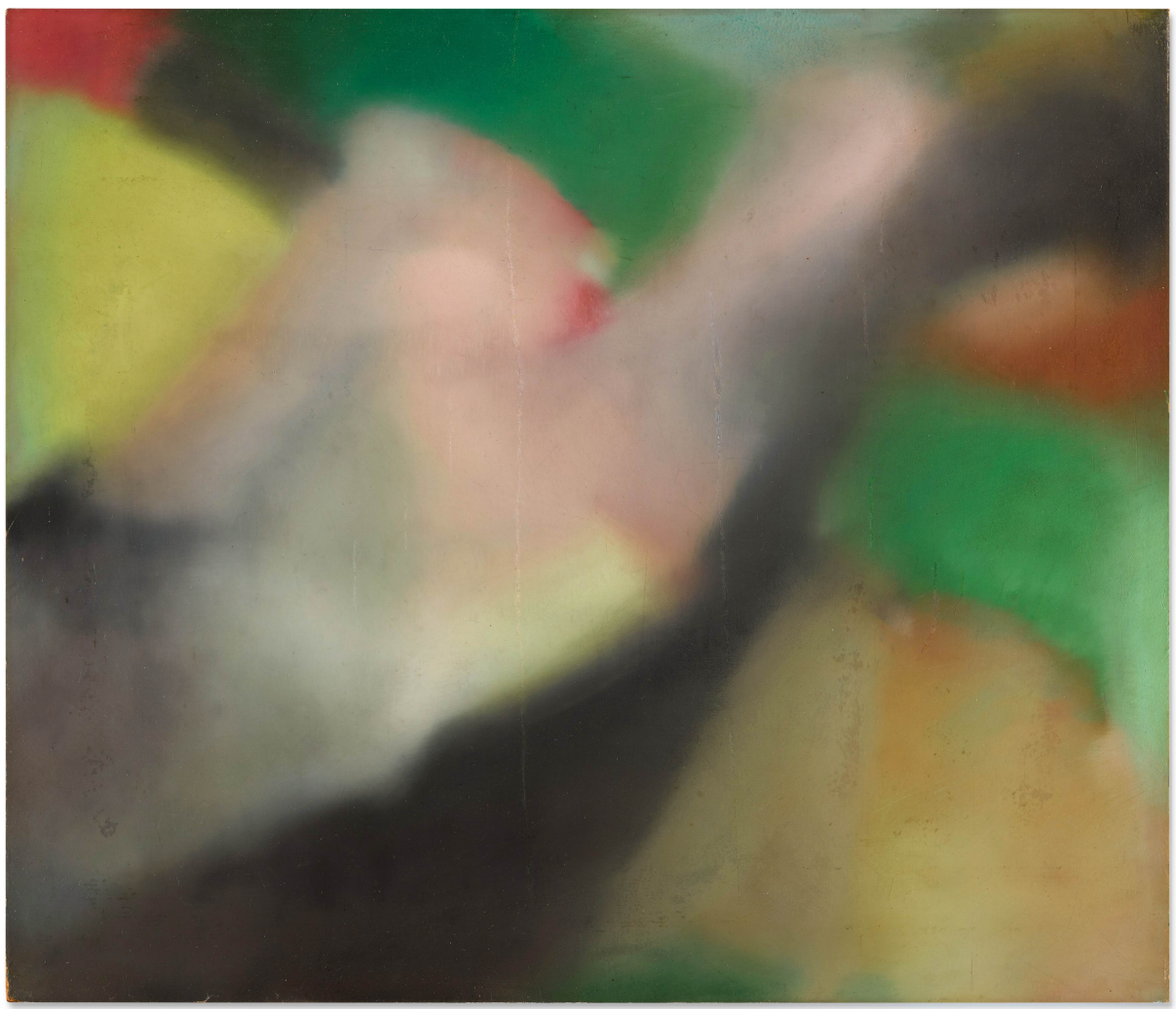
GERHARD RICHTER (b. 1932)
Abstraktes Bild, 1976
Oil on panel
44 x 51.4 cm (17 1/2 x 20 1/4 inches)
Signed and dated 1976 (on the reverse)
#18. Rot, 8.2.84 (Red, 8.2.84), 1984
Christie’s London: 10 October 2024
Estimated: GBP 60,000 – 80,000
GBP 81,900 / USD 107,015
GERHARD RICHTER (B. 1932), Rot, 8.2.84 (Red, 8.2.84) | Christie’s
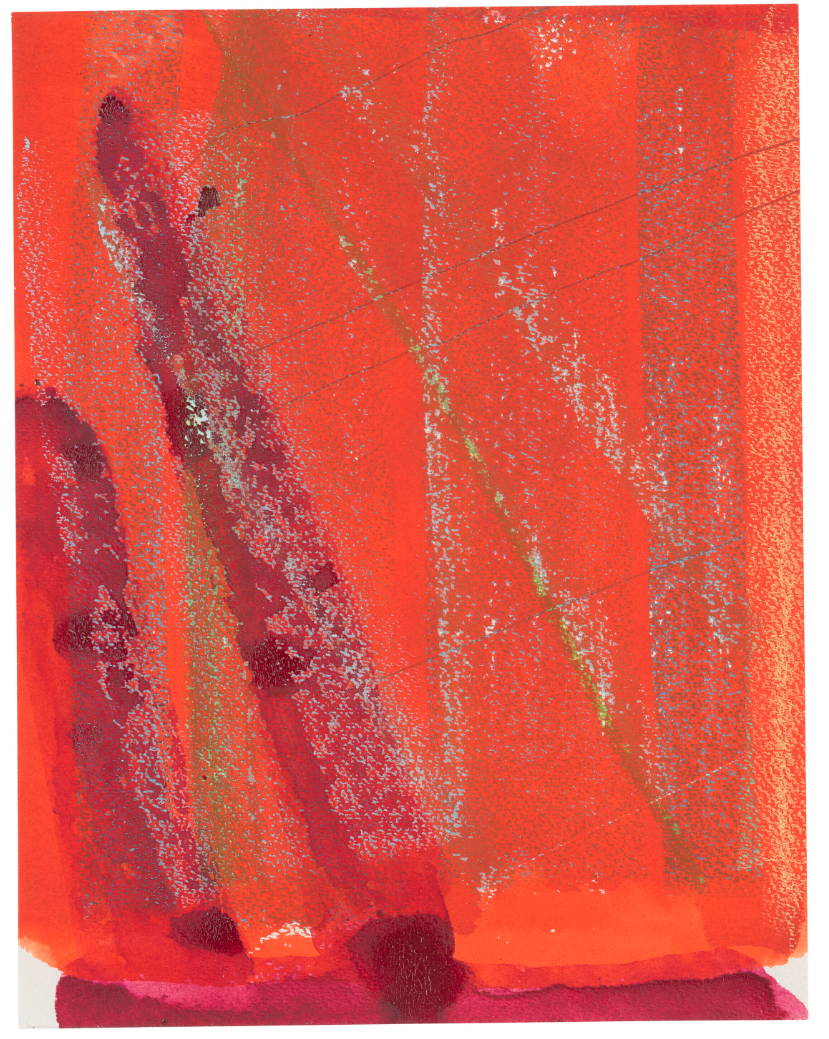
GERHARD RICHTER (B. 1932)
Rot, 8.2.84 (Red, 8.2.84), 1984
Watercolor, pastel and graphite on paper
28 x 21.5 cm (11 x 8 1/2 inches)
Signed and dated ‘Richter, 8.2.84’ (upper right)
Signed and dated ‘Richter, 8.2.84’ (on the reverse)
USD 100,000
#19. War Cut II, 2004
Christie’s London: 27 June 2024
Estimated: GBP 50,000 – 70,000
GBP 73,080 / USD 92,235
GERHARD RICHTER (B. 1932), War Cut II | Christie’s (christies.com)
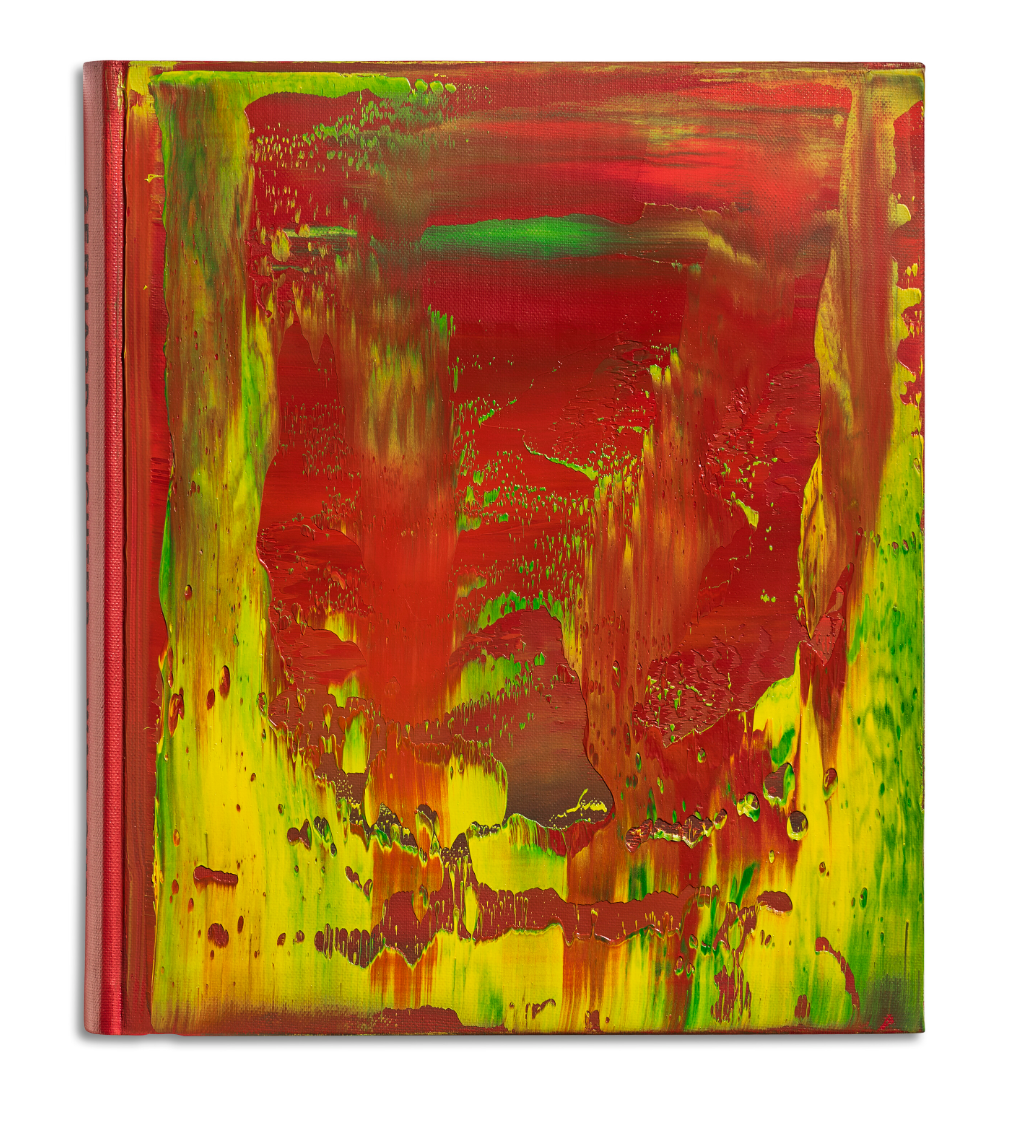
GERHARD RICHTER (B. 1932)
War Cut II, 2004
Oil on artist’s book
25.5 x 21.8 cm (10 x 8 5/8 inches)
Signed, numbered and dated ’24/50 Richter, 2004′ (on the endpaper)
Numbered ’24’ (on the penultimate page)
This work is number twenty-four from an edition of fifty unique variants plus twenty Hors Commerce copies and thirty copies of the French edition.
#20. Goldberg-Variationen (Goldberg Variations), 1984
Christie’s London: 9 March 2024
Estimated: GBP 40,000 – 60,000
GBP 52,920 / USD 68,045
GERHARD RICHTER (B. 1932), Goldberg-Variationen (Goldberg Variations) | Christie’s (christies.com)
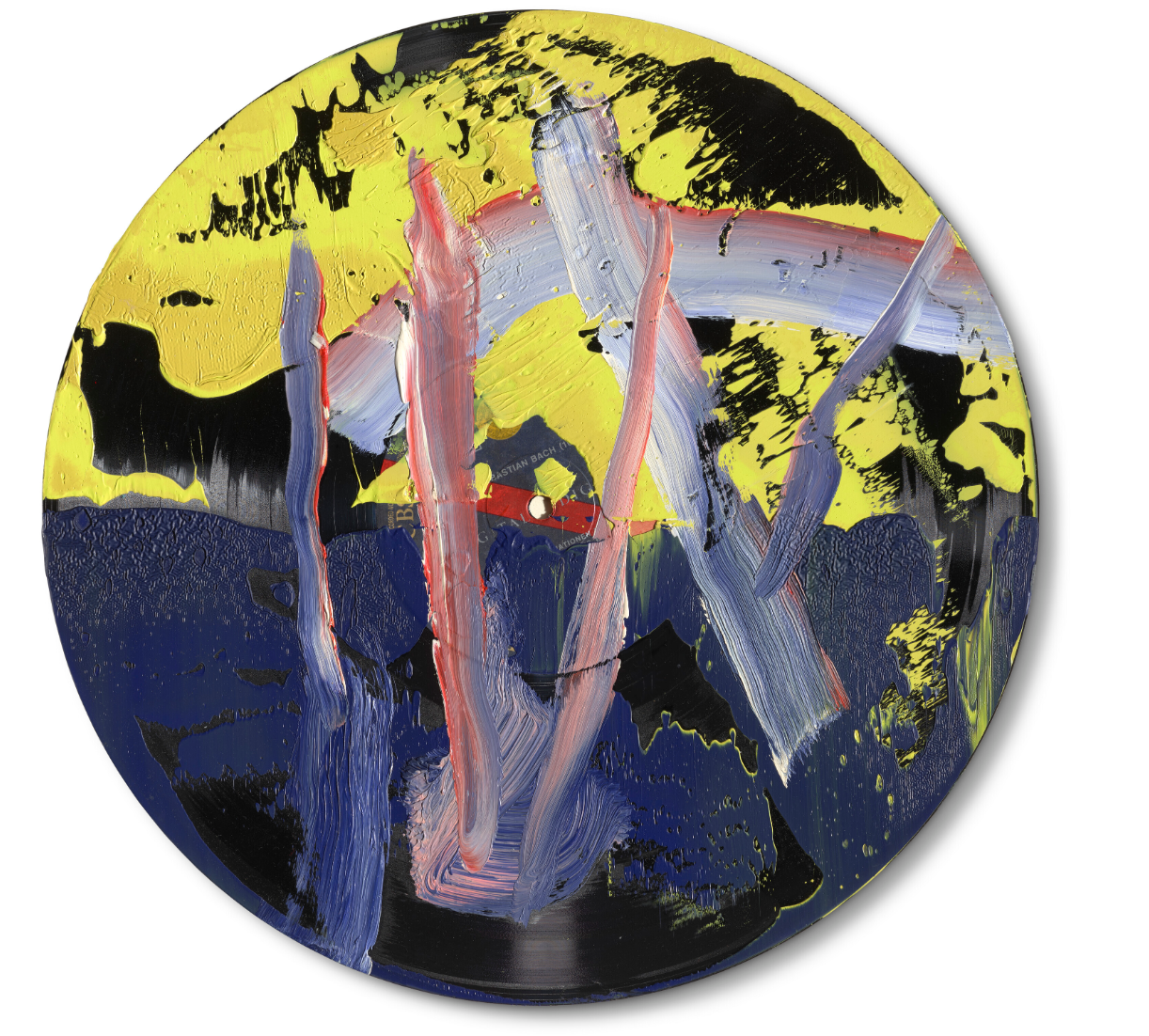
GERHARD RICHTER (B. 1932)
Goldberg-Variationen (Goldberg Variations), 1984
Oil on phonograph long play record, with original record sleeve and record cover
Diameter: 30.1 cm (11 7/8 inches)
Signed, numbered and dated ’56⁄100 Richter 1984′ (on the reverse)
Numbered ’56⁄100′ (on the record sleeve); numbered ’56⁄100′ (on the record cover)
This work is number fifty-six from an edition of one hundred unique variants plus twenty artist’s proofs
#21. Goldberg-Variationen, 1984
Grisebach Berlin: 28 November 2024
Estimated: EUR 50,000 – 70,000
EUR 63,500 / USD 67,060
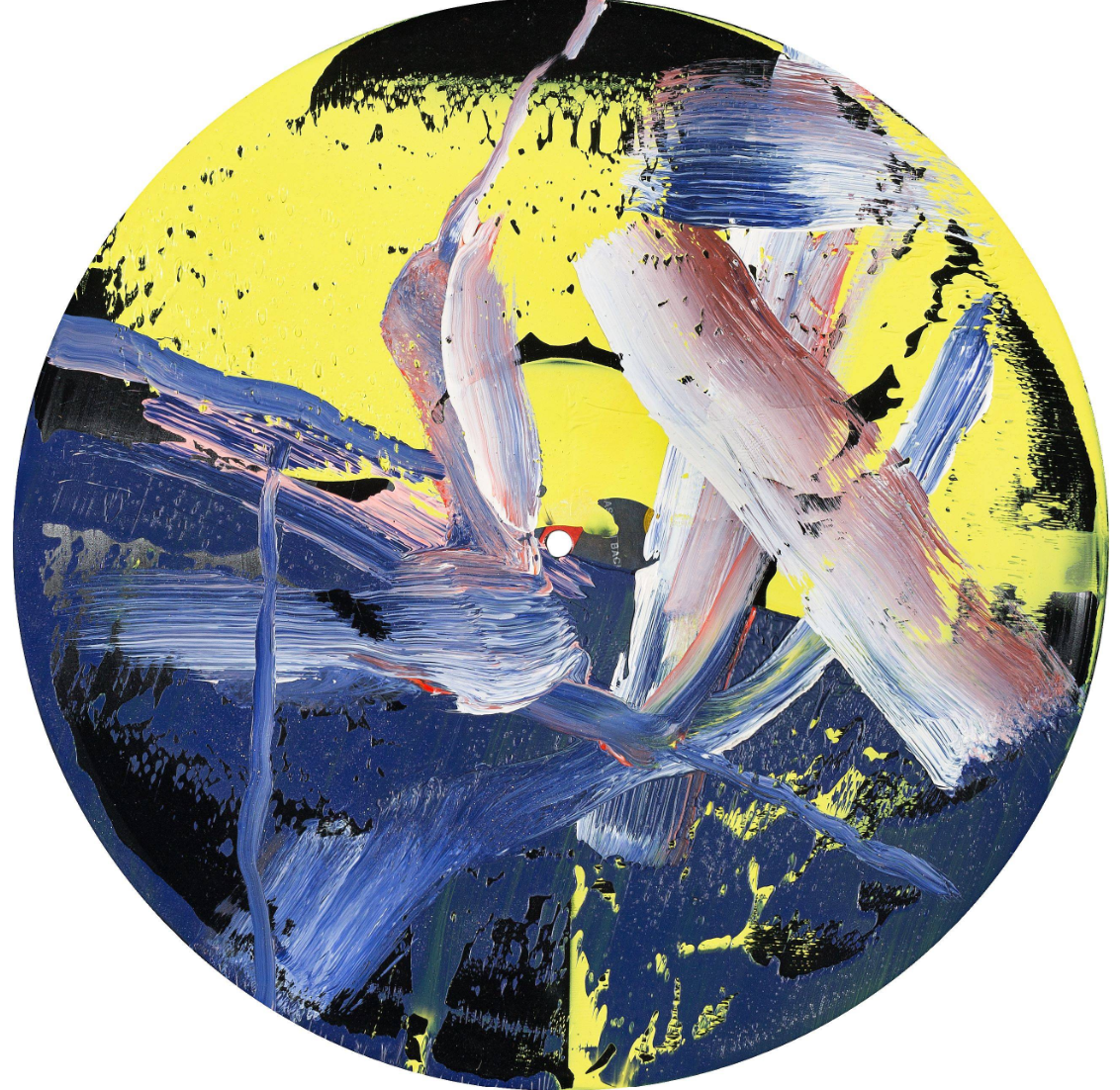
GERHARD RICHTER (Dresden 1932 – lives in Cologne)
Goldberg-Variationen, 1984
Oil on vinyl record, with the original record sleeve
Diameter: 30.1 cm (11 7/8 inches)
Signed and dated on the reverse
One of 100 copies, each numbered on the reverse as well as on the accompanying record cover
Each with the character of a unique work
#22. Souvenir, 1995
Christie’s London: 27 June 2024
Estimated: GBP 45,000 – 55,000
GBP 52,920 / USD 66,790
GERHARD RICHTER (B. 1932), Souvenir | Christie’s
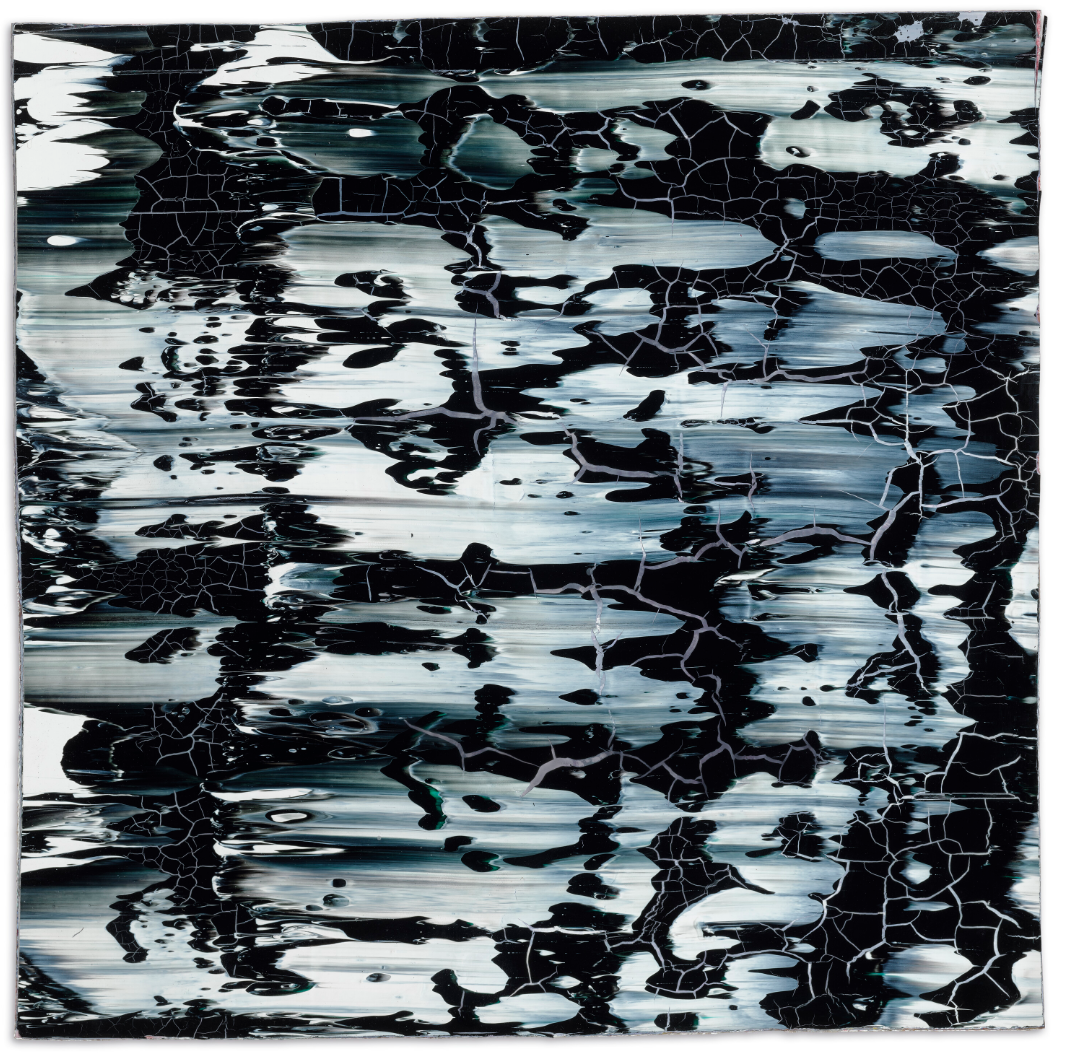
GERHARD RICHTER (B. 1932)
Souvenir, 1995
Oil on canvas
21×21 cm (8 1/4 x 8 1/4 inches)
Signed and numbered ‘Richter 48/64’ (on a label affixed to the reverse of the frame)
This work is number forty-eight of sixty-four unique variants
#23. Goldberg-Varationen, 1984
Lempertz Cologne: 4 June 2024
Estimated: EUR 50,000 – 80,000
EUR 56,953 / USD 62,120
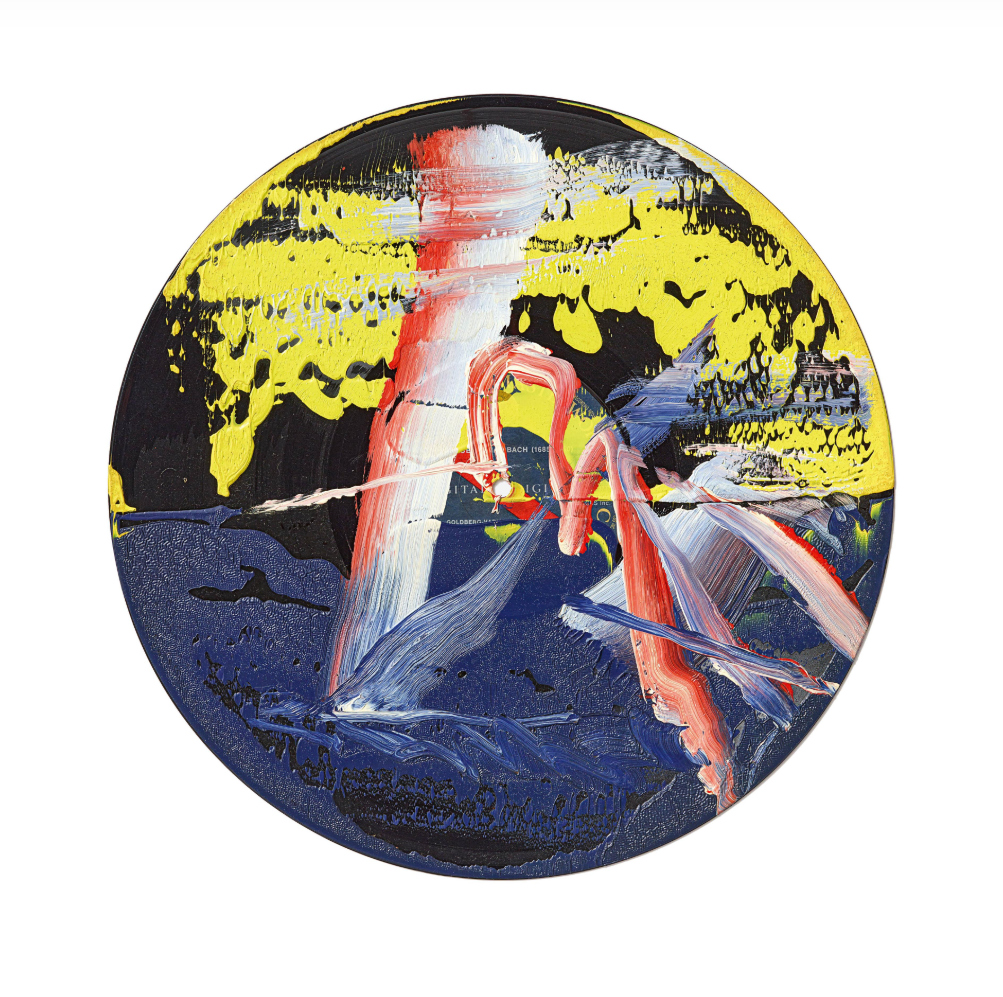
GERHARD RICHTER
Goldberg-Varationen, 1984
Oil on record
Diameter: 30.1 cm
In original record sleeve: J. S. Bach, The Goldberg Variations, Glenn Gould (minor traces of usage)
Signed, dated and numbered verso on label
Proof XVII/XX (+100 +1 +3)
#24. Goldberg Variations, 1984
SBI Art Auction: 24 May 2024
Estimated: JPY 7,000,000 – 13,000,000
JPY 9,545,000 / USD 60,800
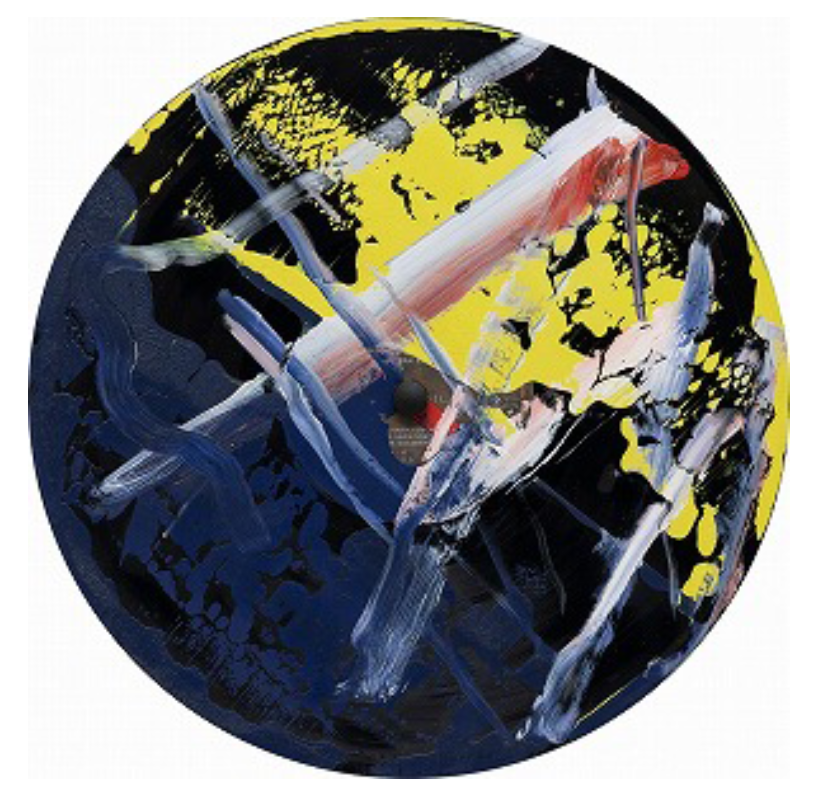
GERHARD RICHTER
Goldberg Variations, 1984
Oil on phonograph record with original record sleeve and record cover
Diameter: 30.1 cm (11 7/8 inches)
Signed, dated and numbered on label on the reverse
Numbered on the record sleeve and record cover
From the edition of 100
#25. 2.06.08, 2008
Christie’s London: 10 October 2024
Estimated: GBP 18,000 – 25,000
GBP 22,680 / USD 29,635
GERHARD RICHTER (B. 1932), 2.06.08 | Christie’s
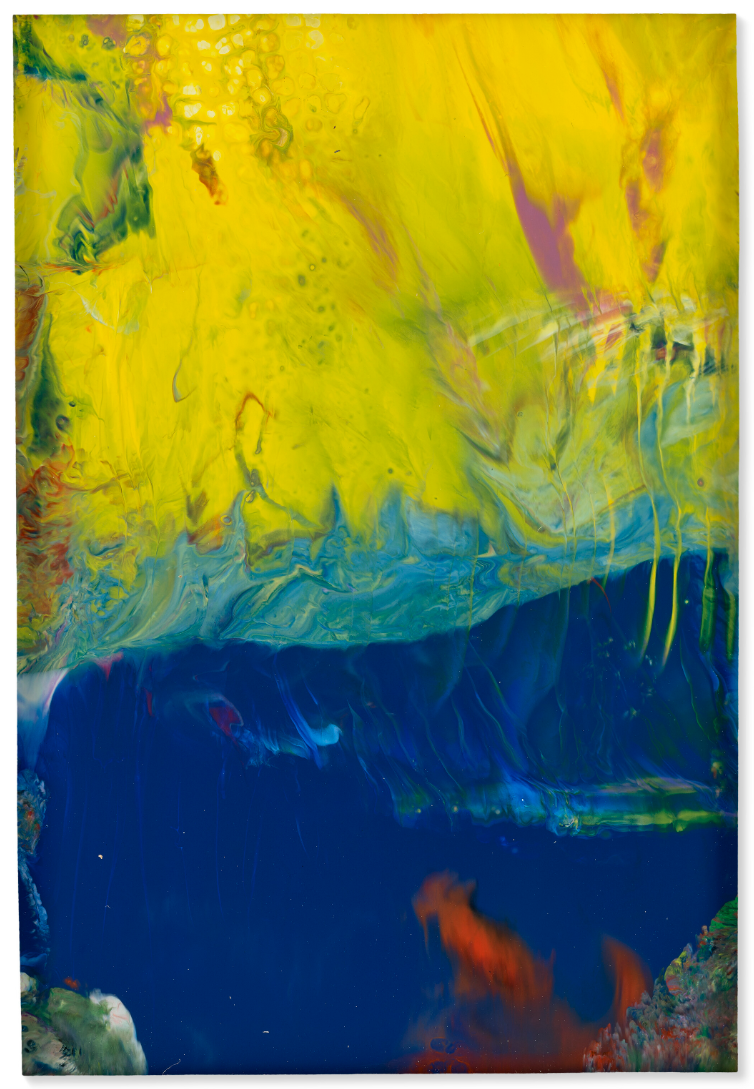
GERHARD RICHTER (B. 1932)
2.06.08, 2008
Lacquer on glass
8.3 x 5.5 cm (3 3/8 x 2 1/4 inches)
Signed and dated ‘Richter 2.6.08’ (on the reverse)
Lots Passed
Abstraktes Bild, 1995
Christie’s New-York: 22 November 2024
Estimated: USD 1,000,000 – 1,500,000
PASSED
GERHARD RICHTER (B. 1932), Abstraktes Bild | Christie’s
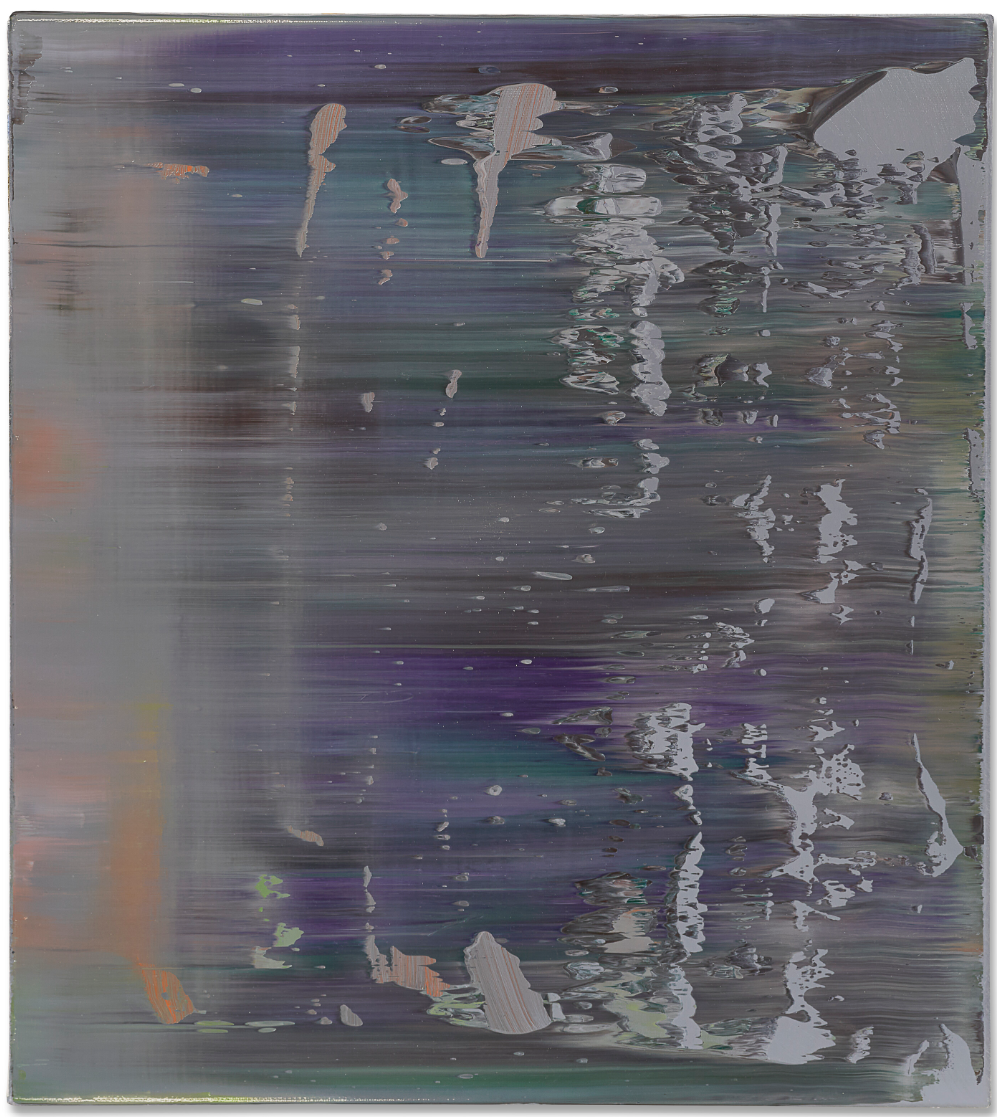
GERHARD RICHTER (B. 1932)
Abstraktes Bild, 1995
Oil on canvas
46.1 x 41.3 cm (18 1/8 x 16 1/4 inches)
signed, inscribed and dated ‘834-3 Richter X.95’ (on the reverse)
2023 Auction Results
#1. Abstraktes Bild (636), 1987
Phillips New-York: 14 November 2023
Estimate on Request
USD 34,800,000
Gerhard Richter – 20th Century & Co… Lot 34 November 2023 | Phillips
GERHARD RICHTER
Abstraktes Bild (636), 1987
Oil on canvas, in 2 parts
Each: 260.4 x 200.3 cm (102 1/2 x 78 7/8 inches)
Overall: 260.4 x 400.7 cm (102 1/2 x 157 3/4 inches)
Signed, inscribed and dated “636 Richter 1987” on the reverse of the left panel
Inscribed “636” on the reverse of the right panel
#2. Abstraktes Bild, 1997
Sotheby’s New-York: 15 November 2023
Estimated: USD 25,000,000 – 35,000,000
USD 31,932,000
Abstraktes Bild | Contemporary Evening Auction | 2023 | Sotheby’s (sothebys.com)
GERHARD RICHTER (b. 1932)
Abstraktes Bild, 1997
Oil on canvas
275×275 cm (108 1/4 x 108 1/4 inches)
Signed, dated 1997 and numbered 849-1 (on the reverse)
#3. Abstraktes Bild, 1986
Sotheby’s London: 1 March 2023
Estimate on Request
GBP 24,179,000 / USD 29,099,772
Abstraktes Bild | Modern & Contemporary Evening Auction | | Sotheby’s (sothebys.com)
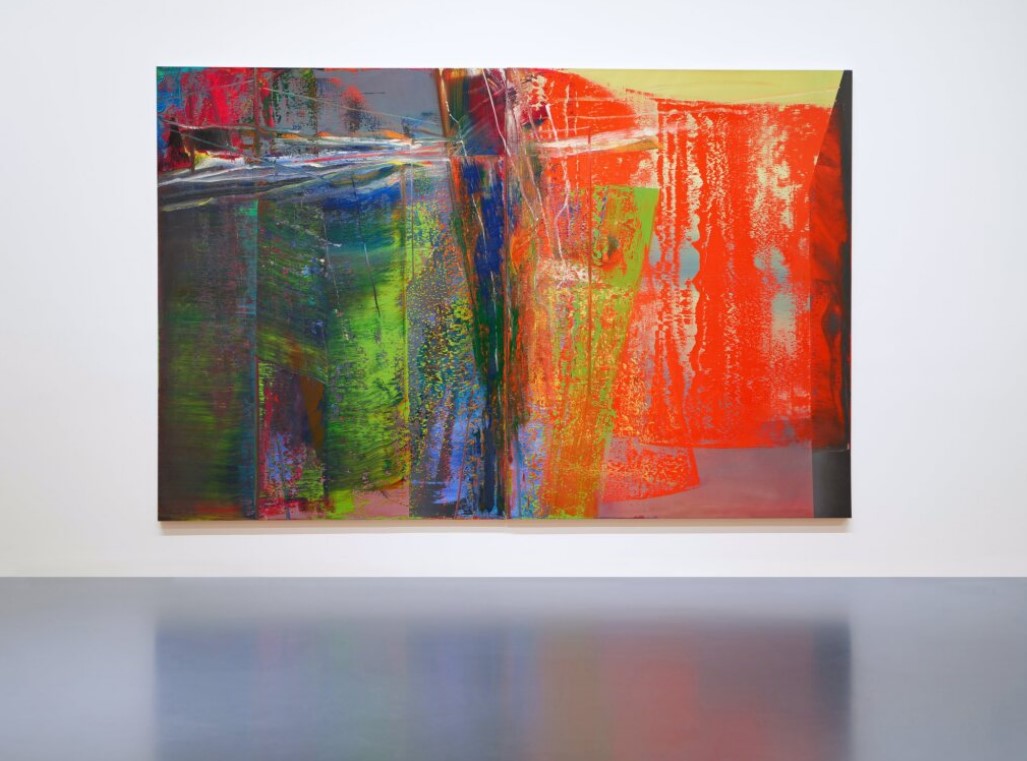
GERHARD RICHTER (B. 1932)
Abstraktes Bild, 1986
Oil on canvas, in two parts
Overall: 260×400 cm (102 3/8 x 157 1/2 inches)
Signed Richter, dated 1986, numbered 596 and inscribed Teil A (on the reverse of left panel)
Numbered 596 and inscribed Teil B (on the reverse of right panel)
#4. Spoleto, 1984
Christie’s New-York: 11 May 2023
Estimated: USD 8,000,000 – 12,000,000
USD 11,335,000
GERHARD RICHTER (B. 1932) (christies.com)
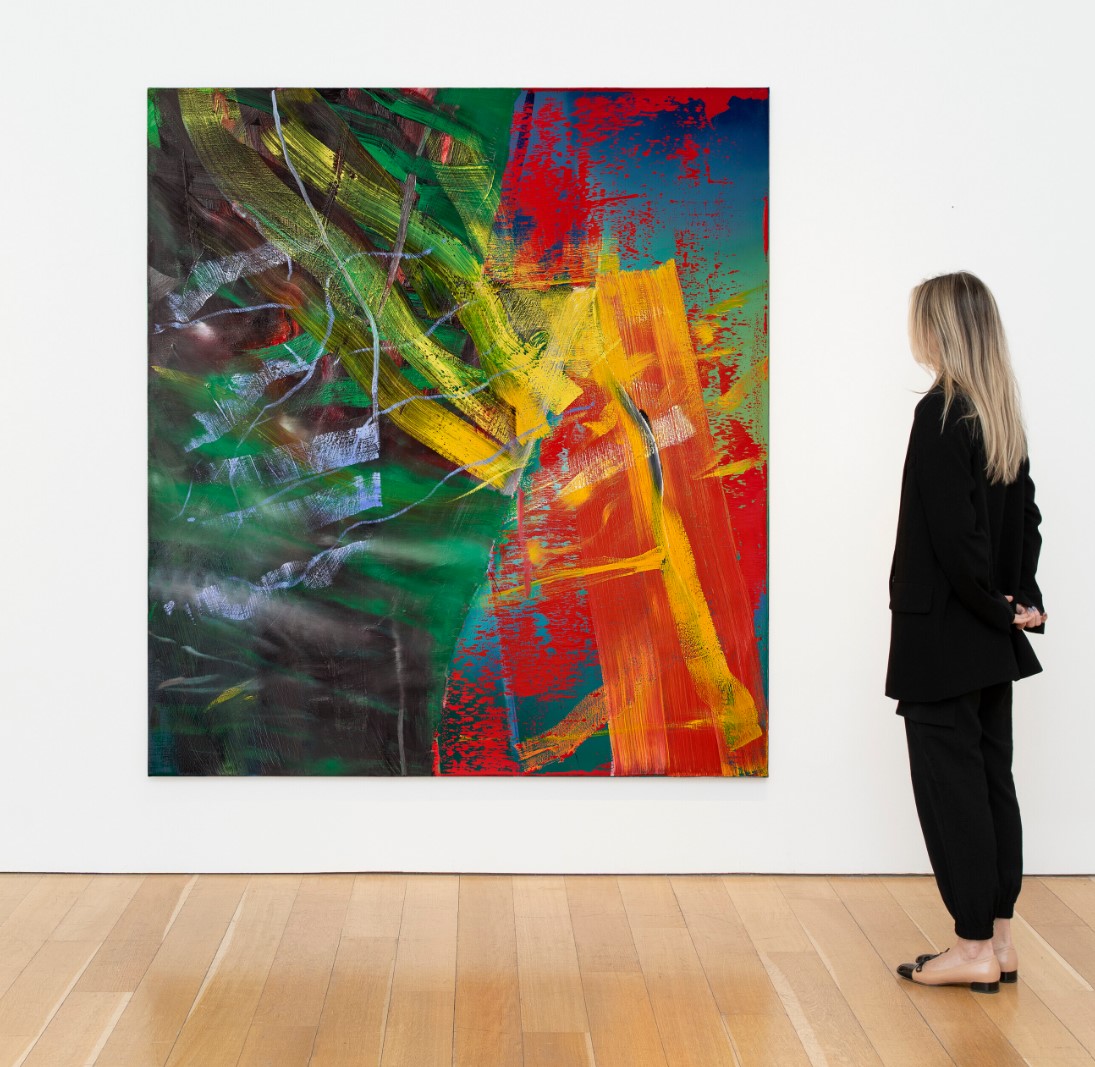
GERHARD RICHTER (B. 1932)
Spoleto, 1984
Oil on canvas
200 x 180.7 cm (78 3/4 x 71 1/8 inches)
Signed, inscribed and dated ‘Richter 1984 565-2’ (on the reverse)
#5. Abstraktes Bild, 1994
Sotheby’s Hong-Kong: 5 October 2023
Estimated: HKD 70,000,000 – 100,000,000
HKD 84,469,000 / USD 10,786,858
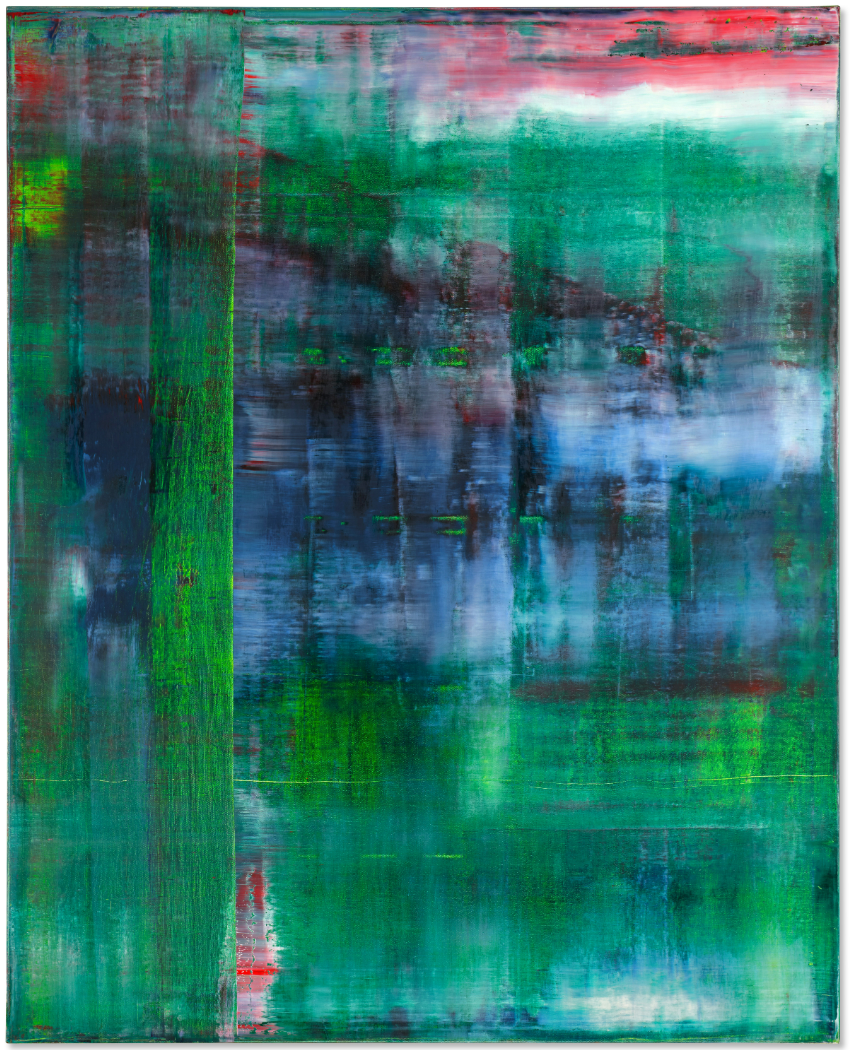
GERHARD RICHTER (b. 1932)
Abstraktes Bild, 1994
Oil on canvas
250×200 cm (98 3/8 x 78 3/4 inches)
Signed, dated 1994 and numbered 811-1 on the reverse
USD 10 million
#6. Abstraktes Bild, 1990
Sotheby’s New-York: 18 May 2023
Estimated: USD 2,000,000 – 3,000,000
USD 5,505,000
Abstraktes Bild | Contemporary Evening Auction | 2023 | Sotheby’s (sothebys.com)
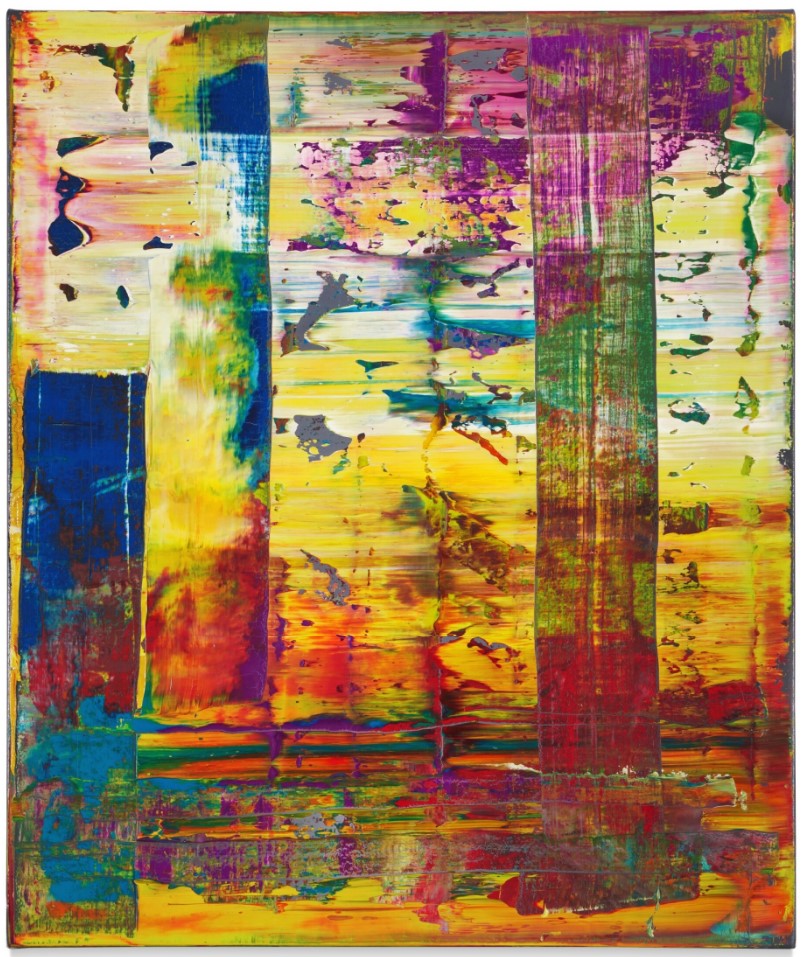
GERHARD RICHTER (b. 1932)
Abstraktes Bild, 1990
Oil on canvas
62×52 cm (24 3/8 x 20 1/2 inches)
Signed, dated 1990 and numbered 721-4 (on the reverse)
USD 5 million
#7. Abstrakte Bilder, 1992
Sotheby’s Hong-Kong: 5 April 2023
Estimated: HKD 32,000,000 – 45,000,000
HKD 36,750,000 / USD 4,681,469
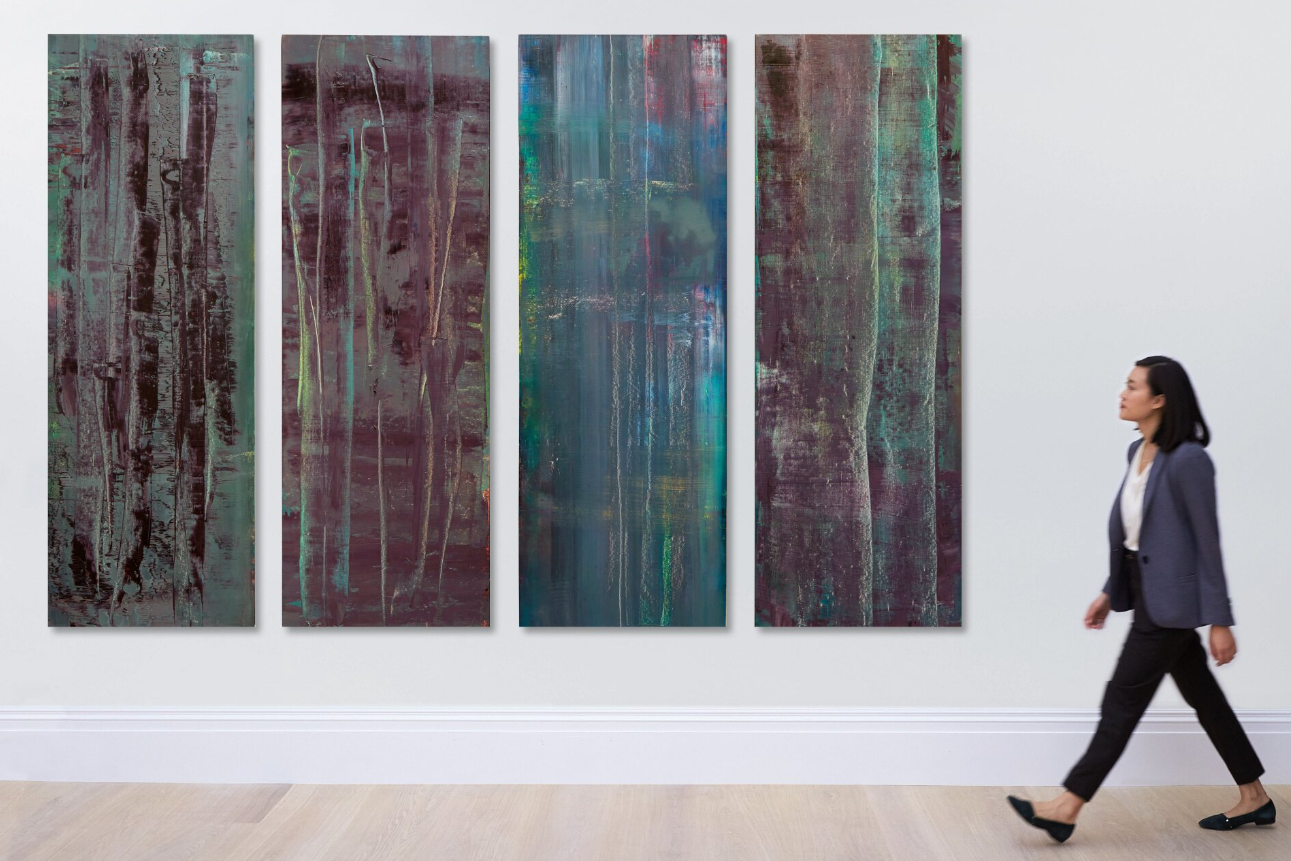
GERHARD RICHTER (b. 1932)
Abstrakte Bilder, 1992
Oil on canvas, in 4 parts
Each: 200×70 cm (78 3/4 x 27 1/2 inches)
Overall: 200×280 cm (78 3/4 x 110 1/4 inches)
Each: signed, dated 1992 and numbered 760-1, 760-2, 760-3 and 760-4 on the reverse, respectively
#8. Abstraktes Bild (704-2), 1989
Christie’s London: 28 February 2023
Estimated: GBP 2,500,000 – 3,500,000
GBP 3,762,000 / USD 4,550,072
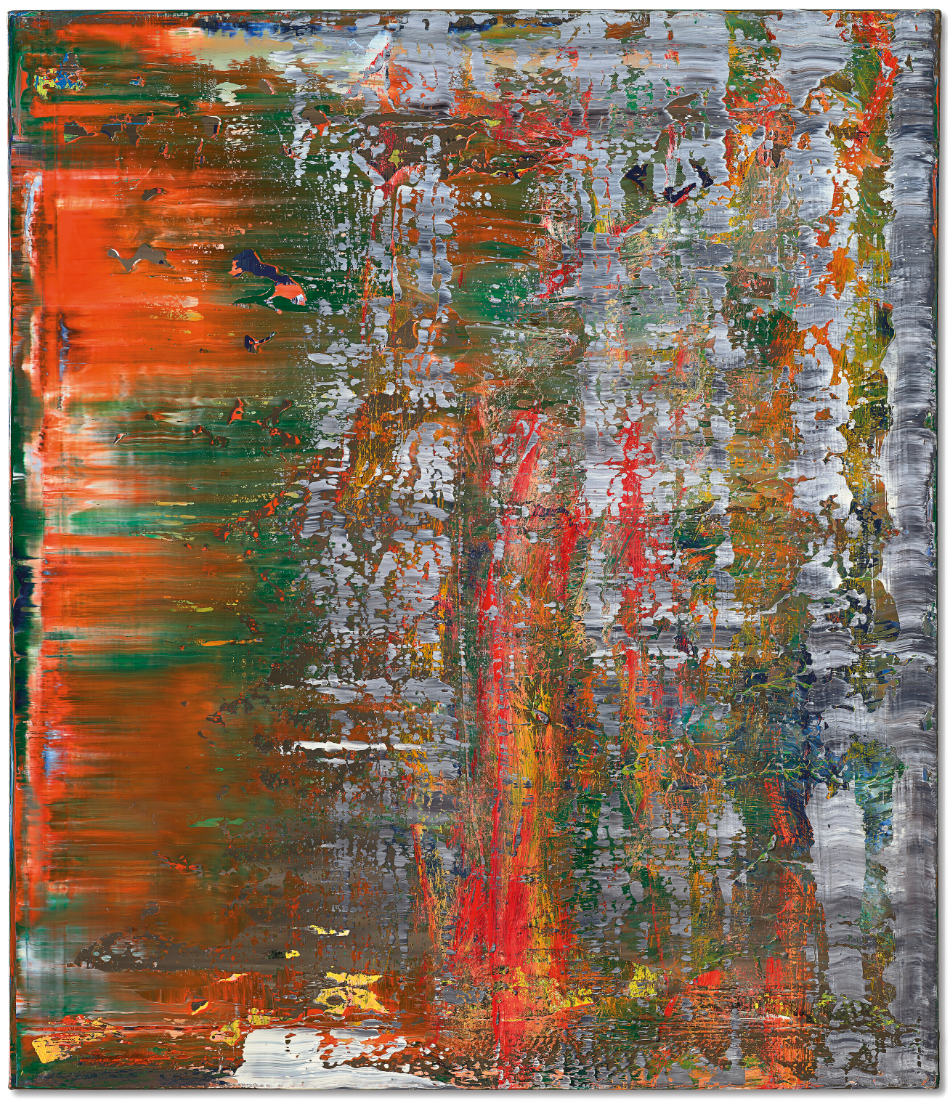
GERHARD RICHTER (B. 1932)
Abstraktes Bild (704-2), 1989
Oil on canvas
72 x 62.2 cm (28 3/8 x 24 1/2 inches)
Signed, numbered and dated ‘704-2 Richter 1989’ (on the reverse)
#9. Abstraktes Bild, 1994
Sotheby’s London: 27 June 2023
Estimated: GBP 2,000,000 – 3,000,000
GPB 3,194,000 / USD 4,072,940

GERHARD RICHTER (b. 1932)
Abstraktes Bild, 1994
Oil on canvas
71×61 cm (28×24 inches)
Signed, titled, dated 1994 and numbered 801-4 (on the reverse)
#10. Abstraktes Bild (607-2), 1986
Poly Auction Hong-Kong: 6 April 2023
Estimated: HKD 18,000,000 – 28,000,000
HKD 30,000,000 / USD 3,821,607
Abstraktes Bild (607-2)|Poly Auction Hong Kong
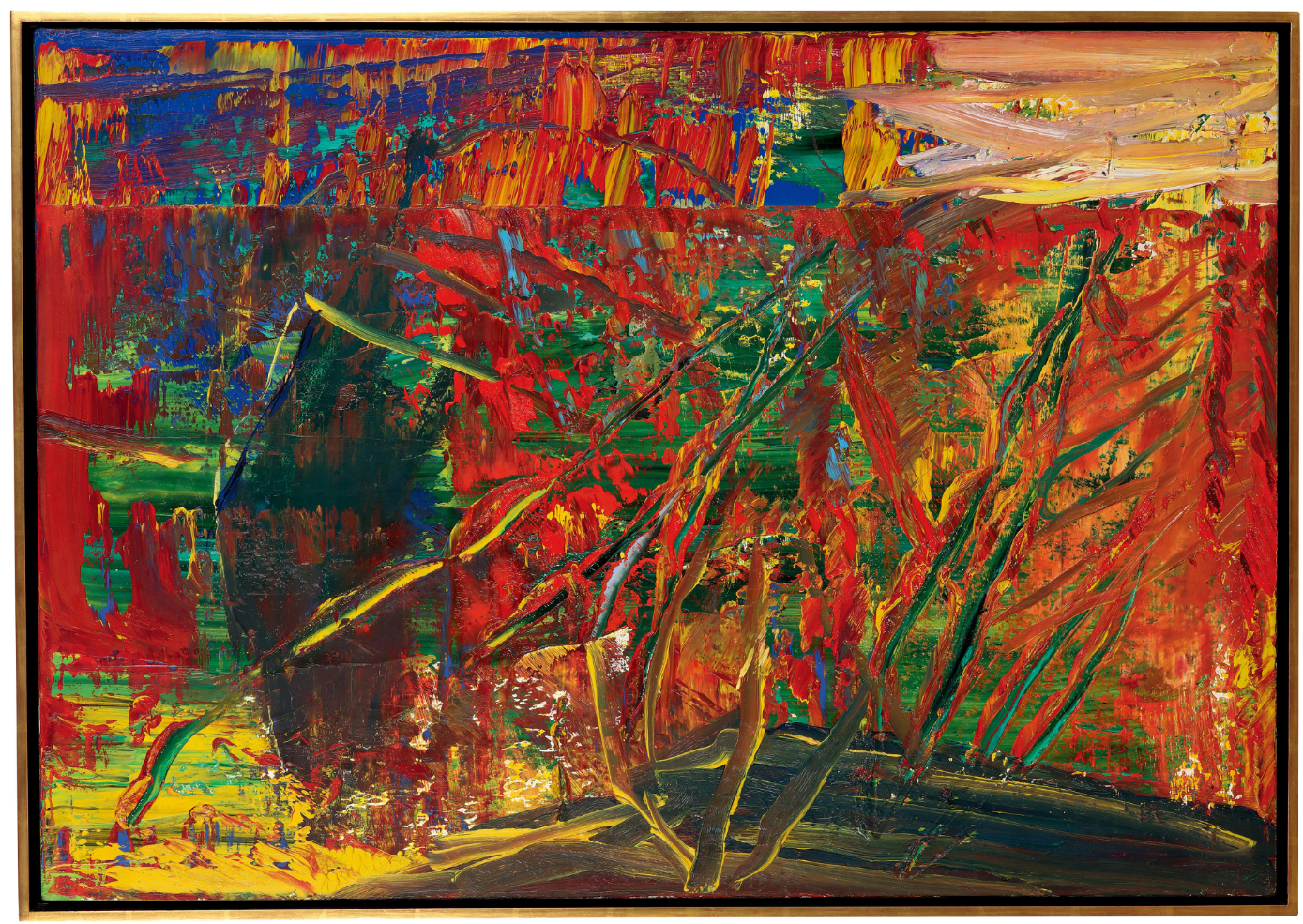
GERHARD RICHTER
Abstraktes Bild (607-2), 1986
Oil on canvas
70.3 x 100.2 cm (27 1/2 x 39 1/2 inches)
Titled, signed and dated ‘607-2 Richter 1986’ (on the reverse)
#11. Abstraktes Bild, 1986
Christie’s New-York: 17 May 2023
Estimated: USD 3,000,000 – 5,000,000
USD 3,680,000
GERHARD RICHTER (b. 1932), Abstraktes Bild | Christie’s (christies.com)
GERHARD RICHTER (b. 1932)
Abstraktes Bild, 1986
Oil on canvas
120×80 cm (47 1/2 x 31 1/2 inches)
Signed, inscribed and dated ‘593-5 Richter 1986’ (on the reverse)
#12. Abstraktes Bild (890-2), 2004
Christie’s New-York: 7 November 2023
Estimated: USD 2,000,000 – 3,000,000
USD 2,591,000
GERHARD RICHTER (B. 1932) (christies.com)
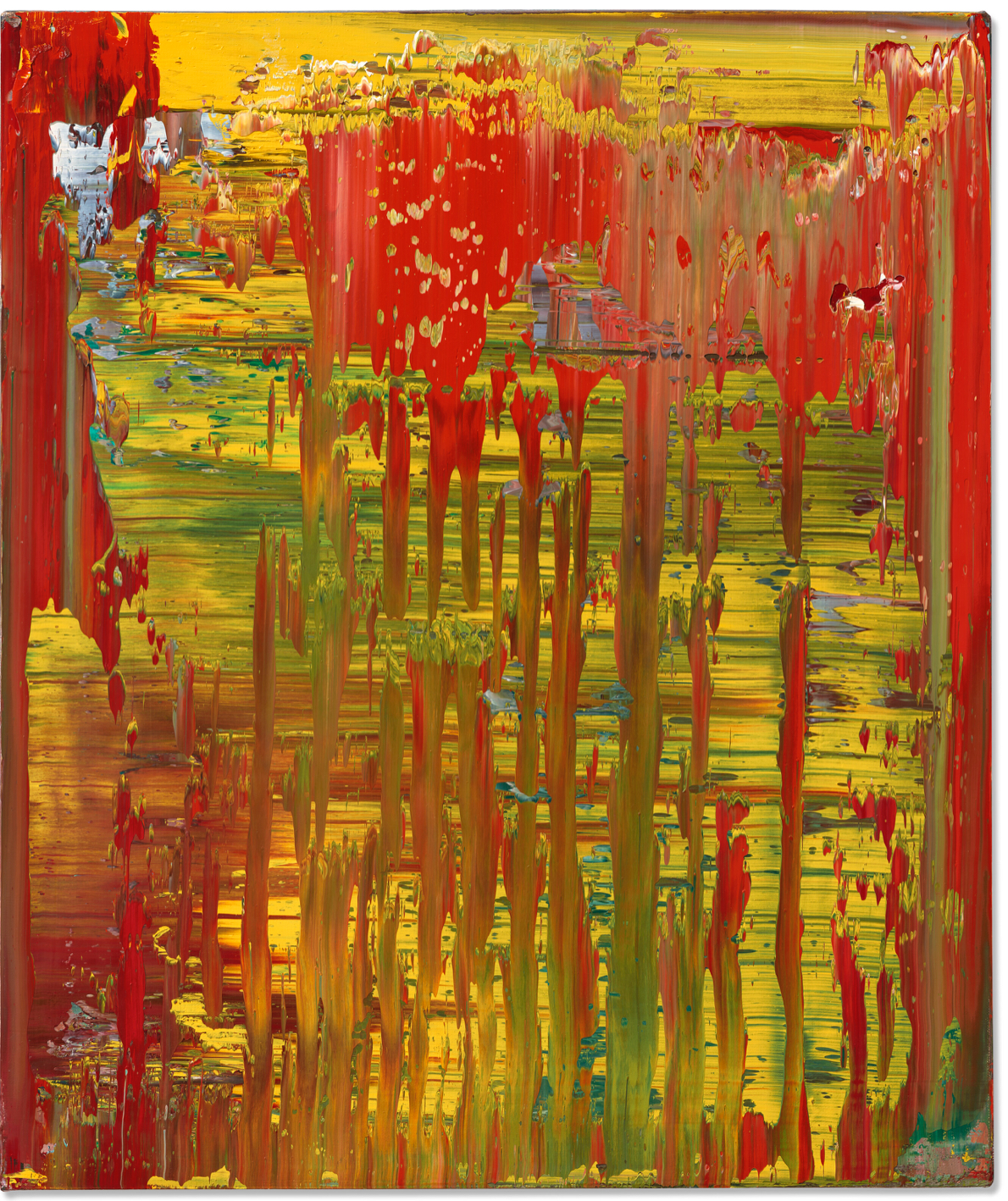
GERHARD RICHTER (B. 1932)
Abstraktes Bild (890-2), 2004
Oil on canvas
63 x 52.5 cm (24 3/4 x 20 1/4 inches)
Signed, inscribed and dated twice ‘890-2 R. 2004 Richter 2004’ (on the reverse)
#13. Abstraktes Bild, 1994
Christie’s London: 13 October 2023
Estimated: GBP 1,800,000 – 2,500,000
GBP 2,097,000 / USD 2,544,902
Gerhard Richter (christies.com)
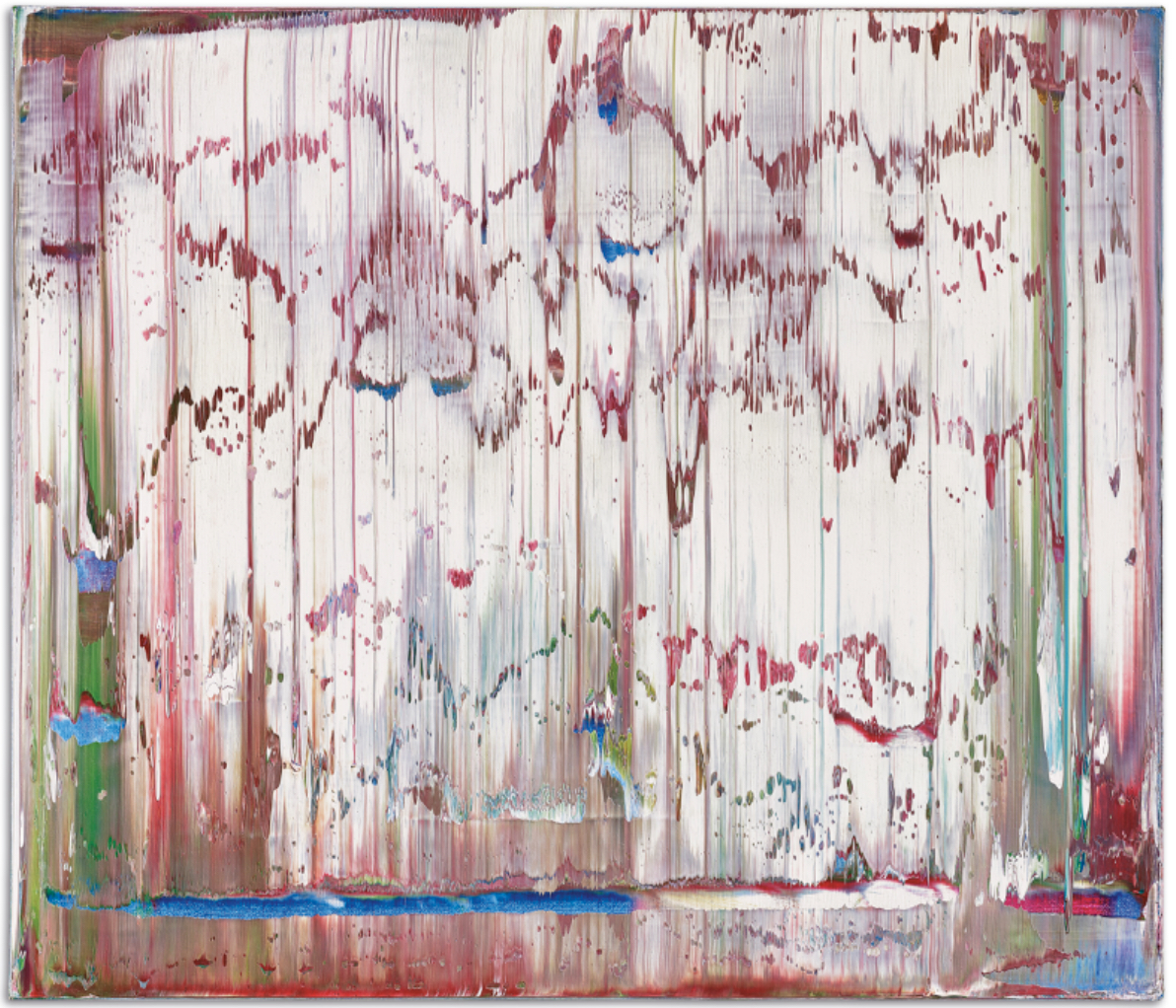
GERHARD RICHTER (B. 1932)
Abstraktes Bild, 1994
Oil on canvas
61×71 cm (24×28 inches)
Signed, numbered and dated ‘819-2 Richter 1994’ (on the reverse)
#14. Abstraktes Bild (557-3), 1984
Phillips New-York: 14 November 2023
Estimated: USD 2,000,000 – 3,000,000
USD 2,298,500
Gerhard Richter – 20th Century & Co… Lot 38 November 2023 | Phillips
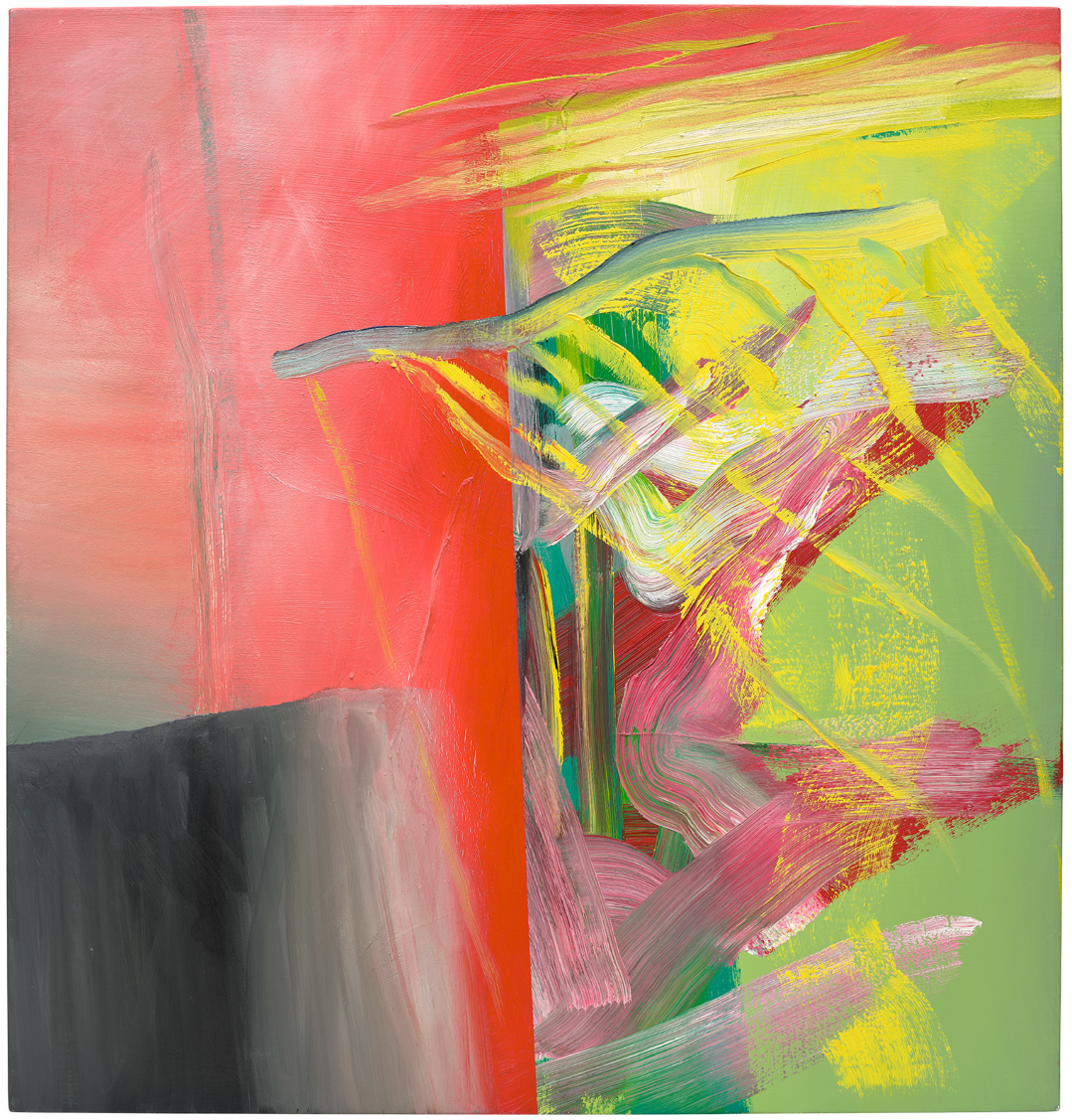
GERHARD RICHTER
Abstraktes Bild (557-3), 1984
Oil on canvas
105.1 x 100 cm (41 3/8 x 39 3/8 inches)
Signed, inscribed and dated “557-3 Richter 1984” on the reverse
#15. Abstraktes Bild 850-7, 1998
Christie’s Hong-Kong: 29 May 2023
Estimated: HKD 12,000,000 – 20,000,000
HKD 14,895,000 / USD 1,902,712
GERHARD RICHTER (B. 1932), Abstraktes Bild 850-7 | Christie’s (christies.com)
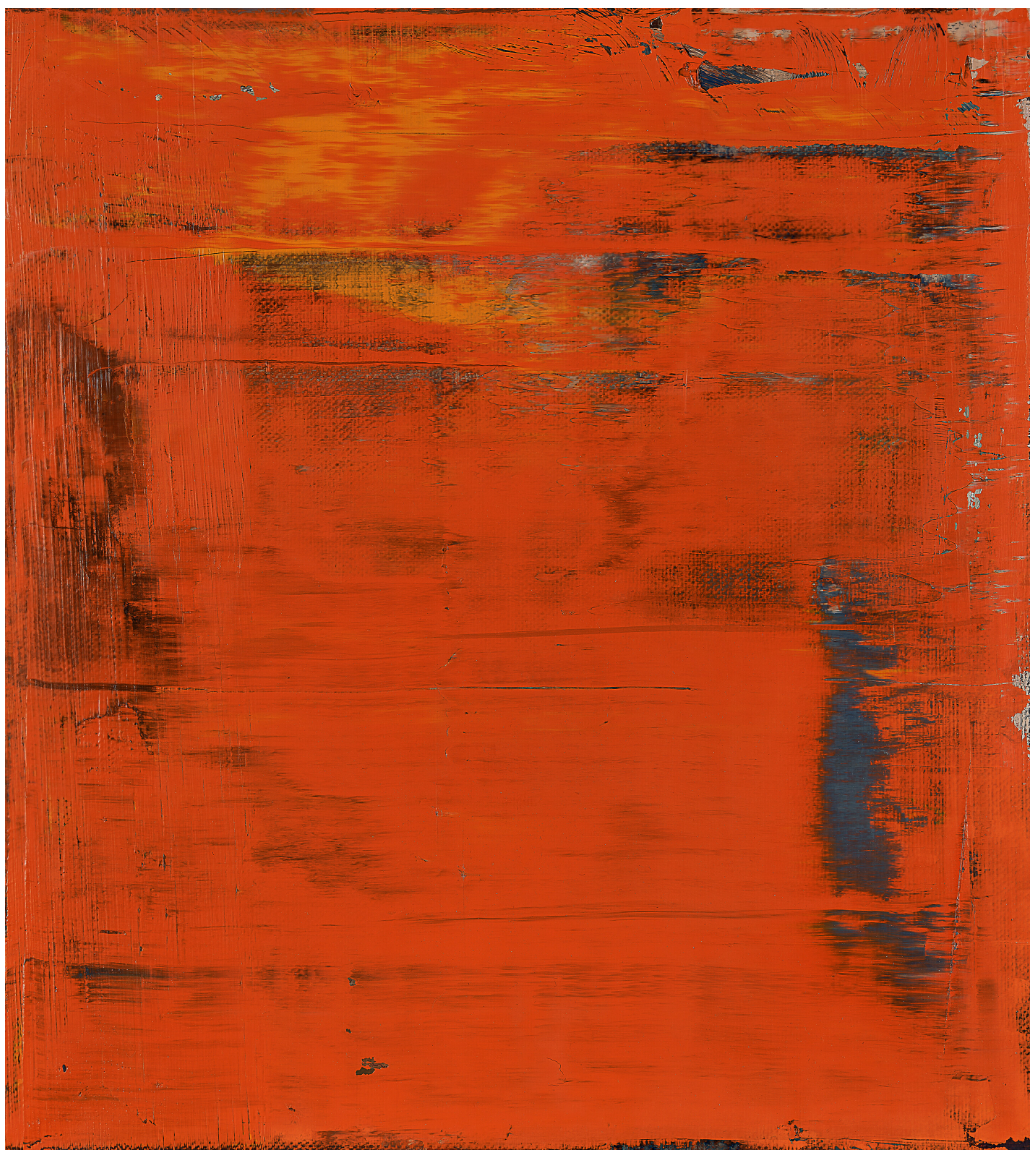
GERHARD RICHTER (B. 1932)
Abstraktes Bild 850-7, 1998
Oil on canvas
50×45 cm (19 5/8 x 17 3/4 inches)
Signed, inscribed and dated ‘Richter 1998 850-7’ (on the reverse)
#16. Abstraktes Bild (456-2), 1980
Phillips Hong-Kong: 6 October 2023
Estimated: HKD 7,500,000 – 12,000,000
HKD 11,340,000 / USD 1,447,980
Gerhard Richter – 20th Century & Con… Lot 11 October 2023 | Phillips
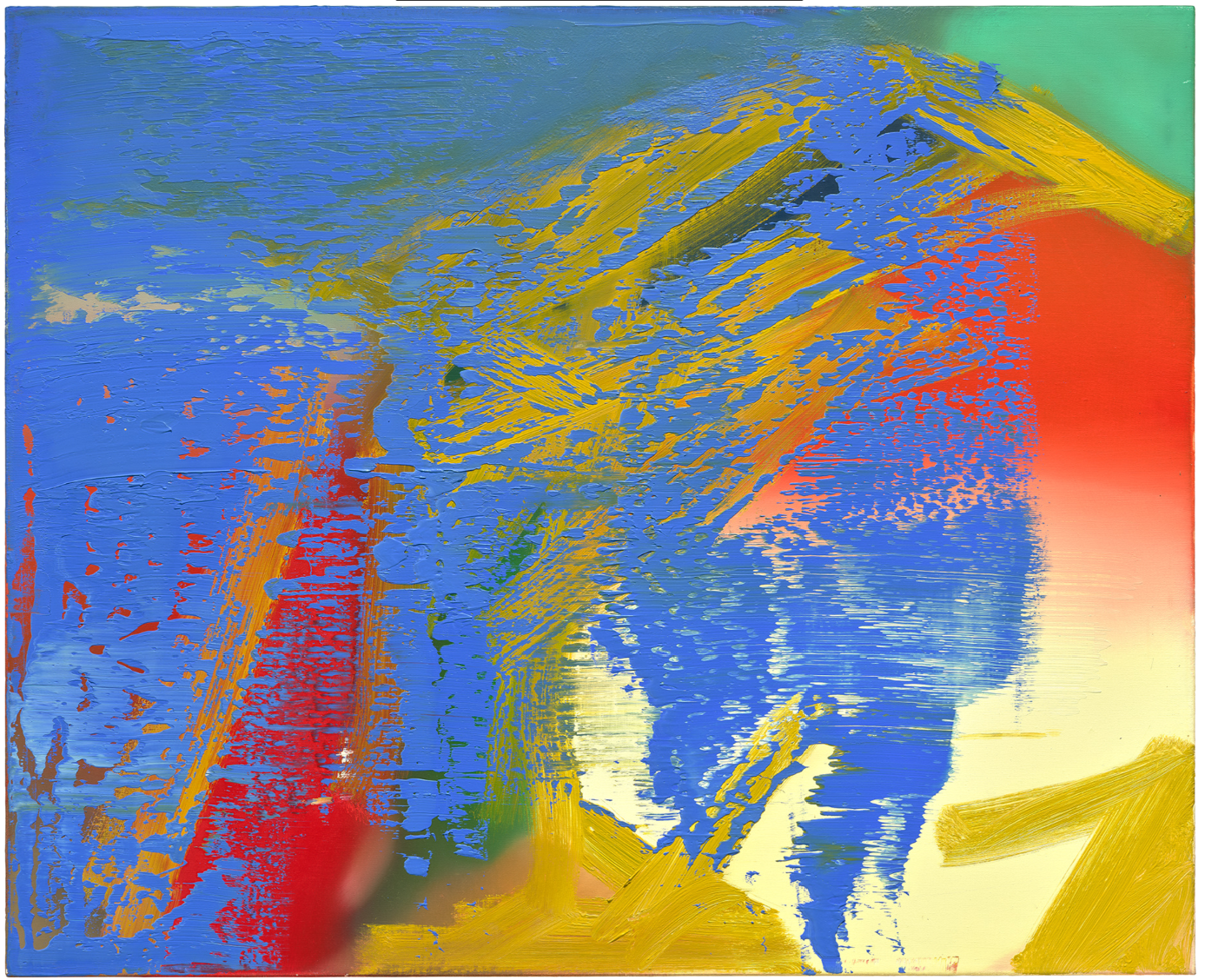
GERHARD RICHTER
Abstraktes Bild (456-2), 1980
Oil on canvas
65.3 x 80.3 cm (25 3/4 x 31 5/8 inches)
Signed, numbered and dated ‘456/2 Richter 1980’ on the reverse
USD 1 million
#17. Abstraktes Bild, 1996
Christie’s New-York: 10 November 2023
Estimated: USD 500,000 – 700,000
USD 630,000
GERHARD RICHTER (B. 1932) (christies.com)
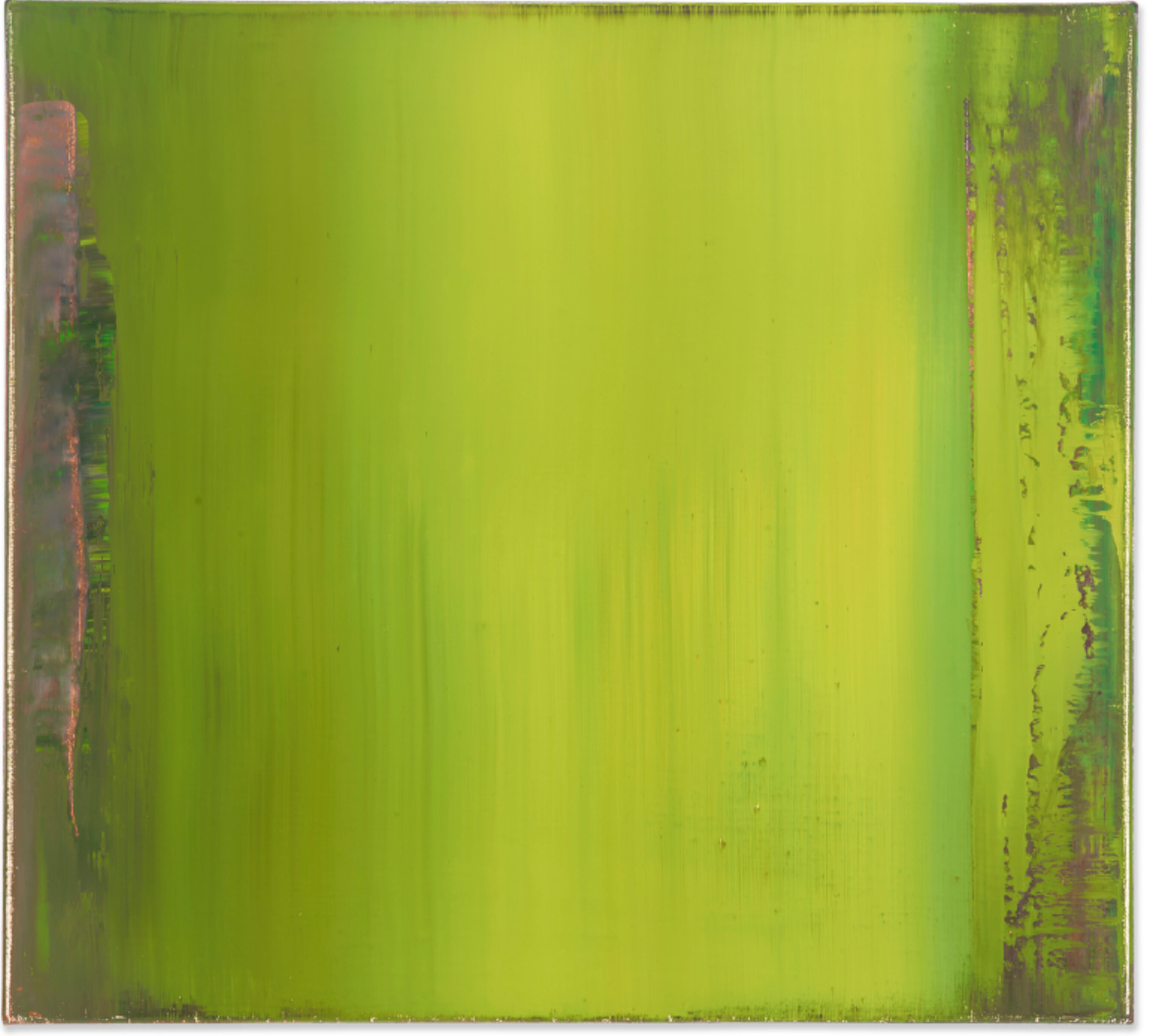
GERHARD RICHTER (B. 1932)
Abstraktes Bild, 1996
Oil on canvas
46.4 x 51.1 cm (18 1/4 x 20 1/8 inches)
Signed, inscribed and dated ‘836-3 Richter 1996’ (on the reverse)
#18. Grün-Blau-Rot 789-33 (Green-Blue-Red 789-33), 1993
Sotheby’s Cologne: 29 March 2023
Estimated: EUR 350,000 – 450,000
EUR 533,400 / USD 577,640
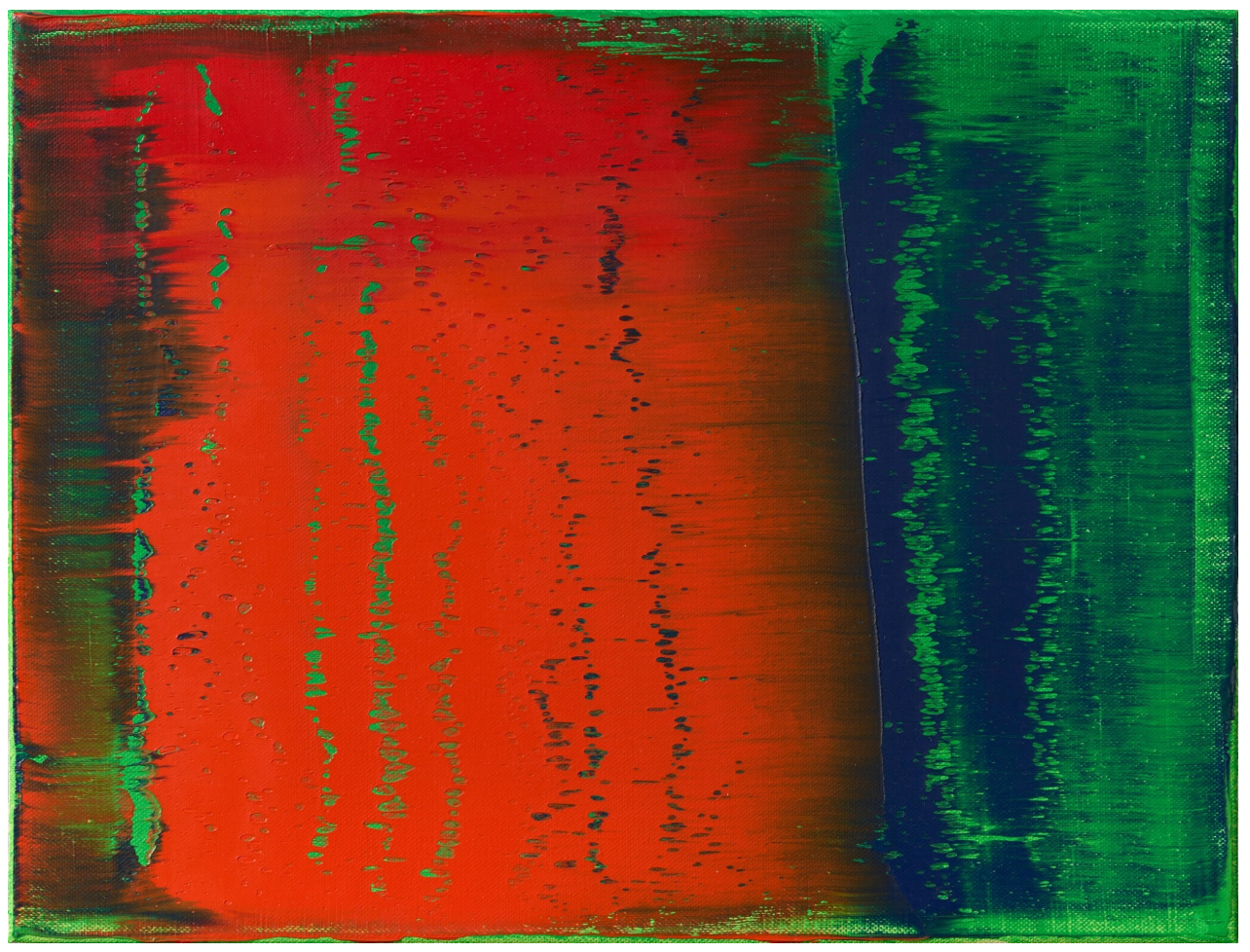
GERHARD RICHTER (b. 1932)
Grün-Blau-Rot 789-33 (Green-Blue-Red 789-33), 1993
Oil on canvas
30×40 cm (11 3/4 x 15 3/4 inches)
Signed Richter, dated ’93 and numbered 789-33 (on the reverse)
#19. Grün-Blau-Rot 789-18, 1993
Sotheby’s New-York: 16 November 2023
Estimated: USD 350,000 – 450,000
USD 571,500
Grün-Blau-Rot 789-18 | Contemporary Day Auction | 2023 | Sotheby’s (sothebys.com)
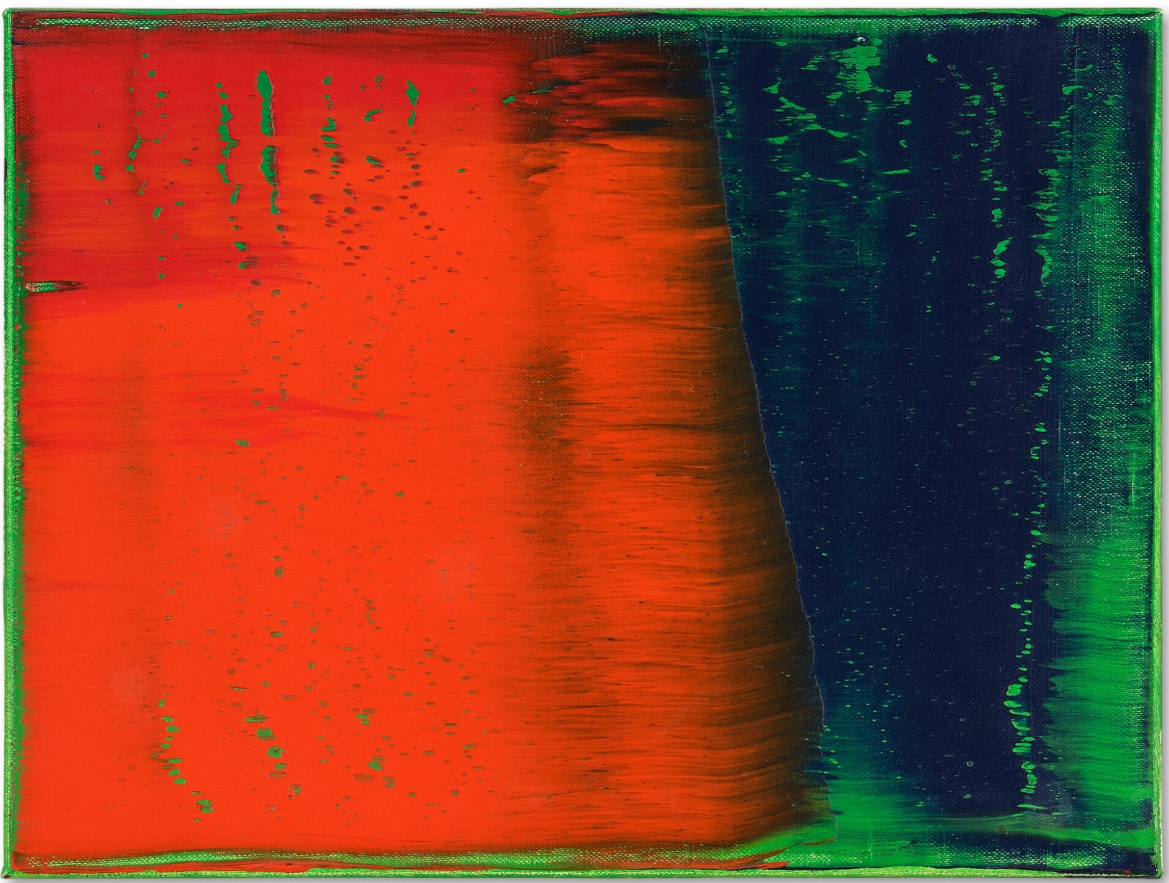
GERHARD RICHTER (b. 1932)
Grün-Blau-Rot 789-18, 1993
Oil on canvas
30.2 x 40 cm (11 7/8 x 15 3/4 inches)
Signed, dated ’93 and numbered 789-18 (on the reverse)
#20. Grün-Blau-Rot, 1993
Ketterer Kunst: 8 December 2023
Estimated: EUR 200,000
EUR 431,800 / USD 474,980
Ketterer Kunst, Art auctions, Book auctions Munich, Hamburg & Berlin
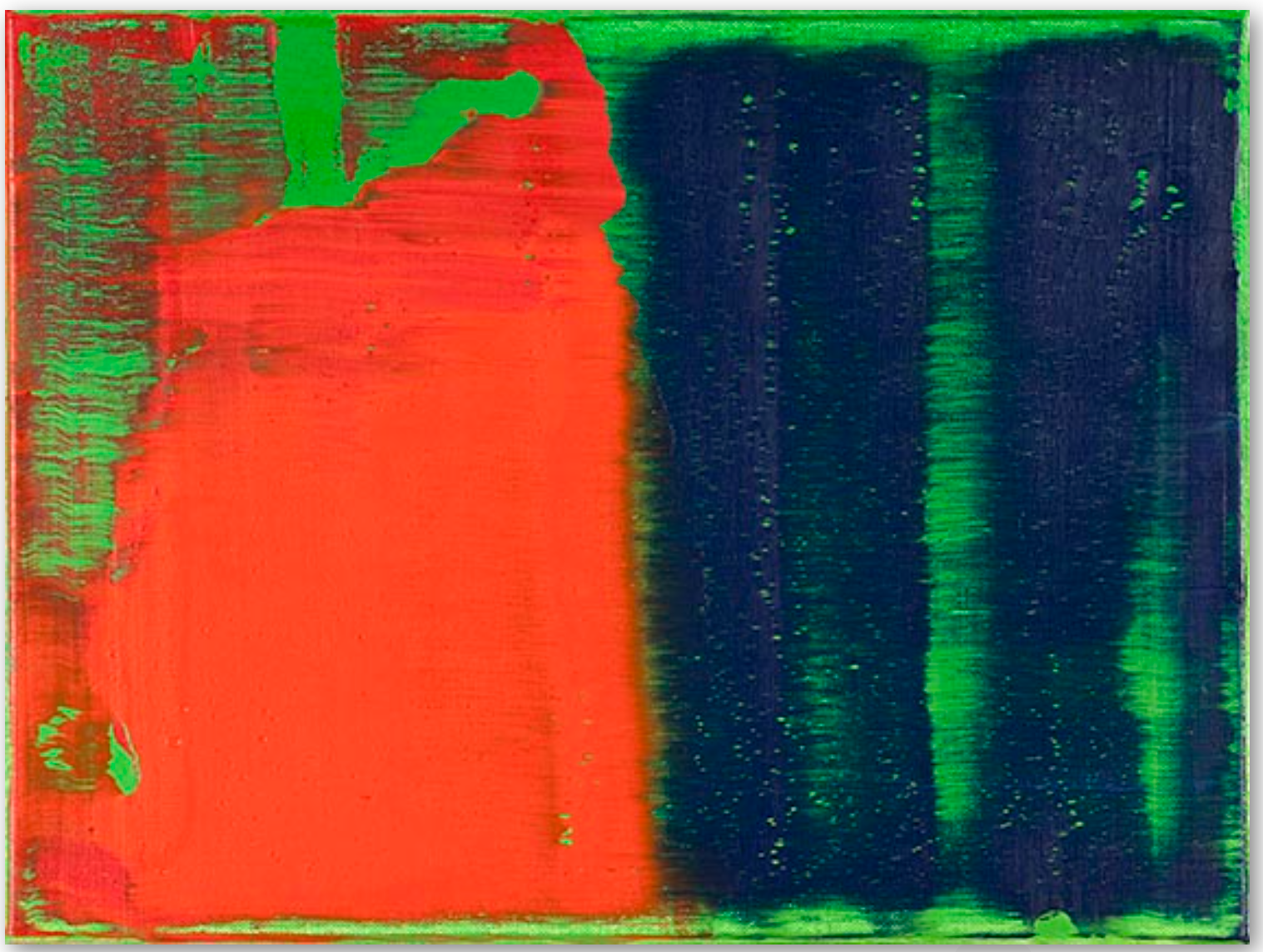
GERHARD RICHTER
Grün-Blau-Rot, 1993
Oil on canvas
30×40 cm (11.8 x 15.7 inches)
Signed, dated and inscribed “789-61” on the reverse, as well with the stamped inscription “Edition for Parkett No. 35”
#21. Grün-Blau-Rot, 1993
Phillips Hong-Kong: 31 March 2023
Estimated: HKD 2,500,000 – 3,500,000
HKD 3,456,000 / USD 452,993
Gerhard Richter – 20th Century & Cont… Lot 125 March 2023 | Phillips
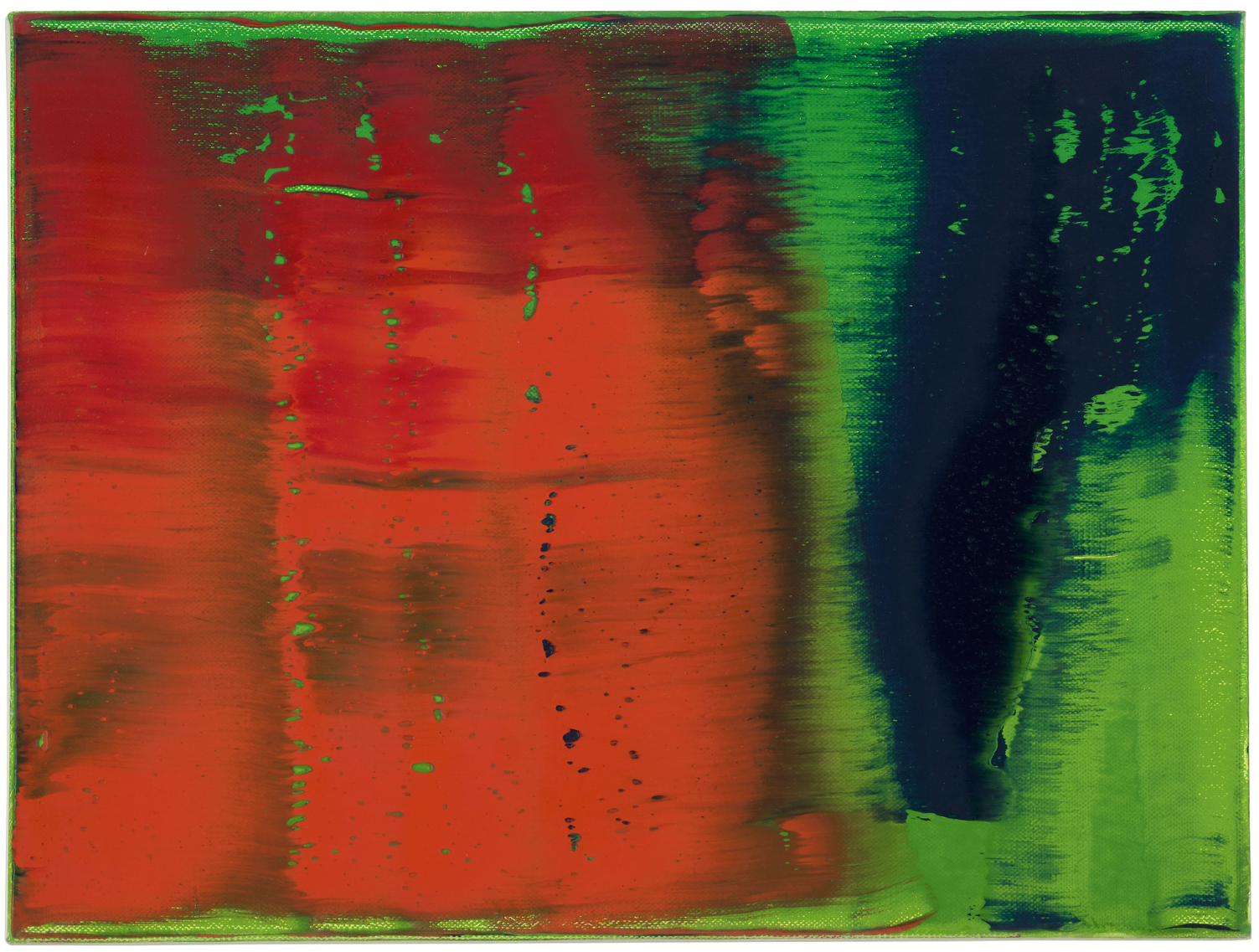
GERHARD RICHTER
Grün-Blau-Rot, 1993
Oil on canvas
29.6 x 39.4 cm (11 5/8 x 15 1/2 inches)
Signed, numbered and dated ‘789-93 Richter, 93’ on the reverse
#22. Grün-Blau-Rot, 1993
Lempertz Cologne: 1 December 2023
Estimated: EUR 250,000 – 350,000
EUR 327,600 / USD 356,814
Grün-Blau-Rot – Lot 50 (lempertz.com)
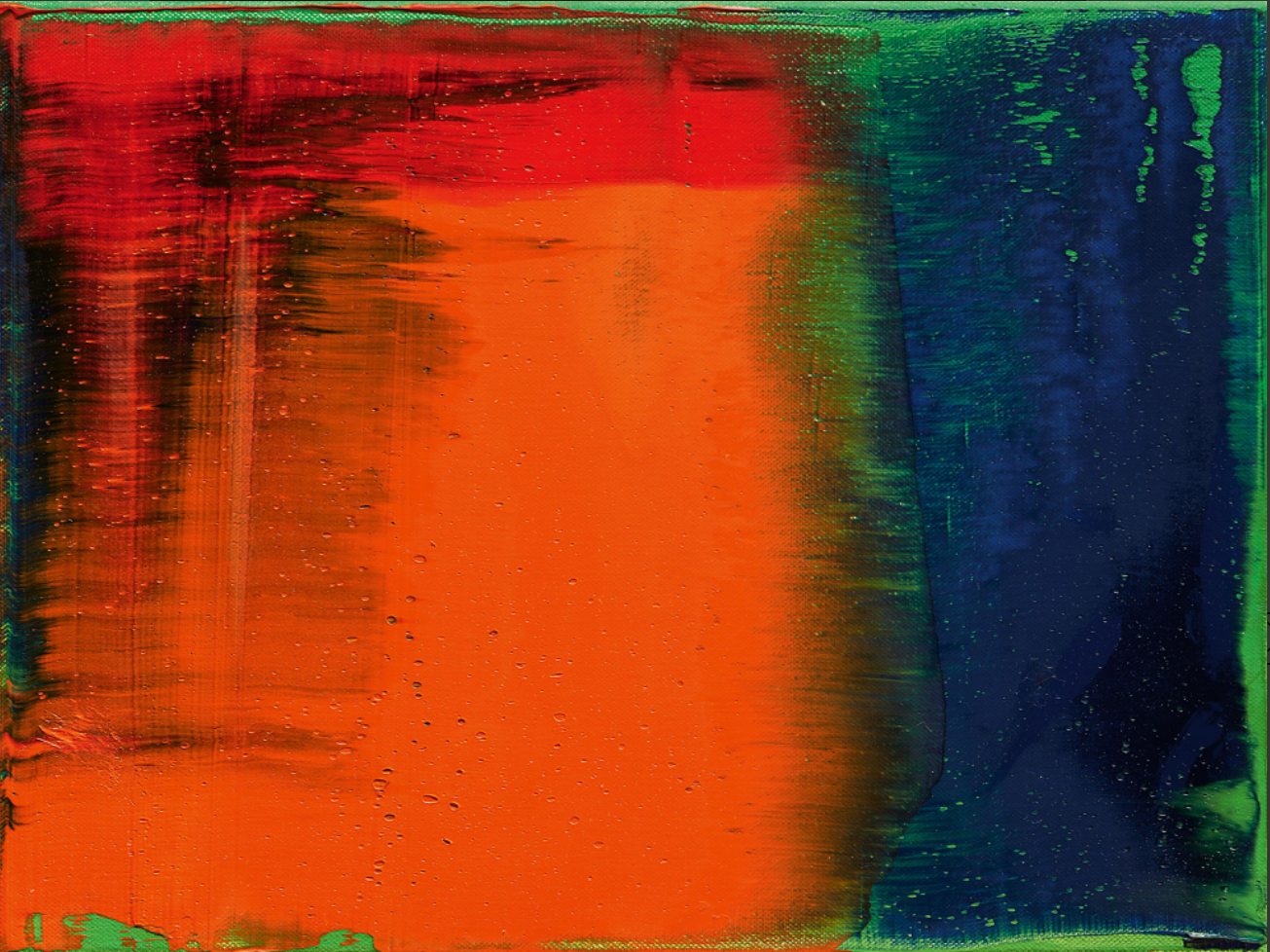
GERHARD RICHTER
Grün-Blau-Rot, 1993
Oil on canvas
30×40 cm
Signed and dated ‘Richter, 93’ verso on canvas and with work number ‘789-13’
One of 115 numbered unique pieces. Edition Parkett, Zurich (edition stamp on stretcher)
Edition of issue no.35, March 1993. With original card box. – Minimal traces of age.
#23. Studie für ein abstraktes Bild, 1978
Phillips New-York: 15 November 2023
Estimated: USD 200,000 – 300,000
USD 304,800
Gerhard Richter – 20th Century & C… Lot 107 November 2023 | Phillips
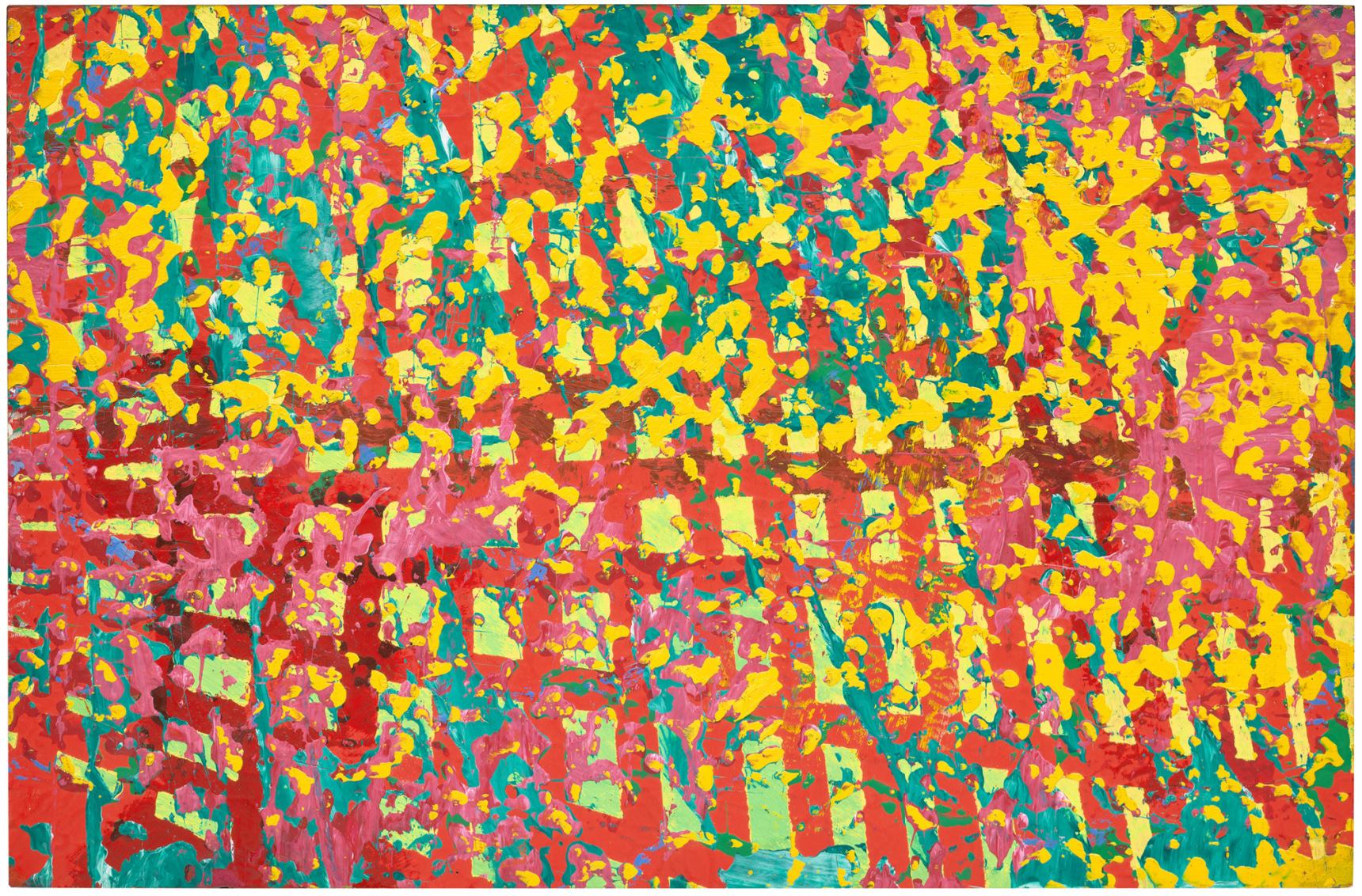
GERHARD RICHTER
Studie für ein abstraktes Bild, 1978
Oil on panel
31.1 x 47.3 cm (12 1/4 x 18 5/8 inches)
Signed, inscribed and dated “Richter IV 1978” on the reverse
#24. Souvenir, 1995
Sotheby’s New-York: 19 May 2023
Estimated: USD 40,000 – 60,000
USD 120,650
Souvenir | Contemporary Day Auction | 2023 | Sotheby’s (sothebys.com)
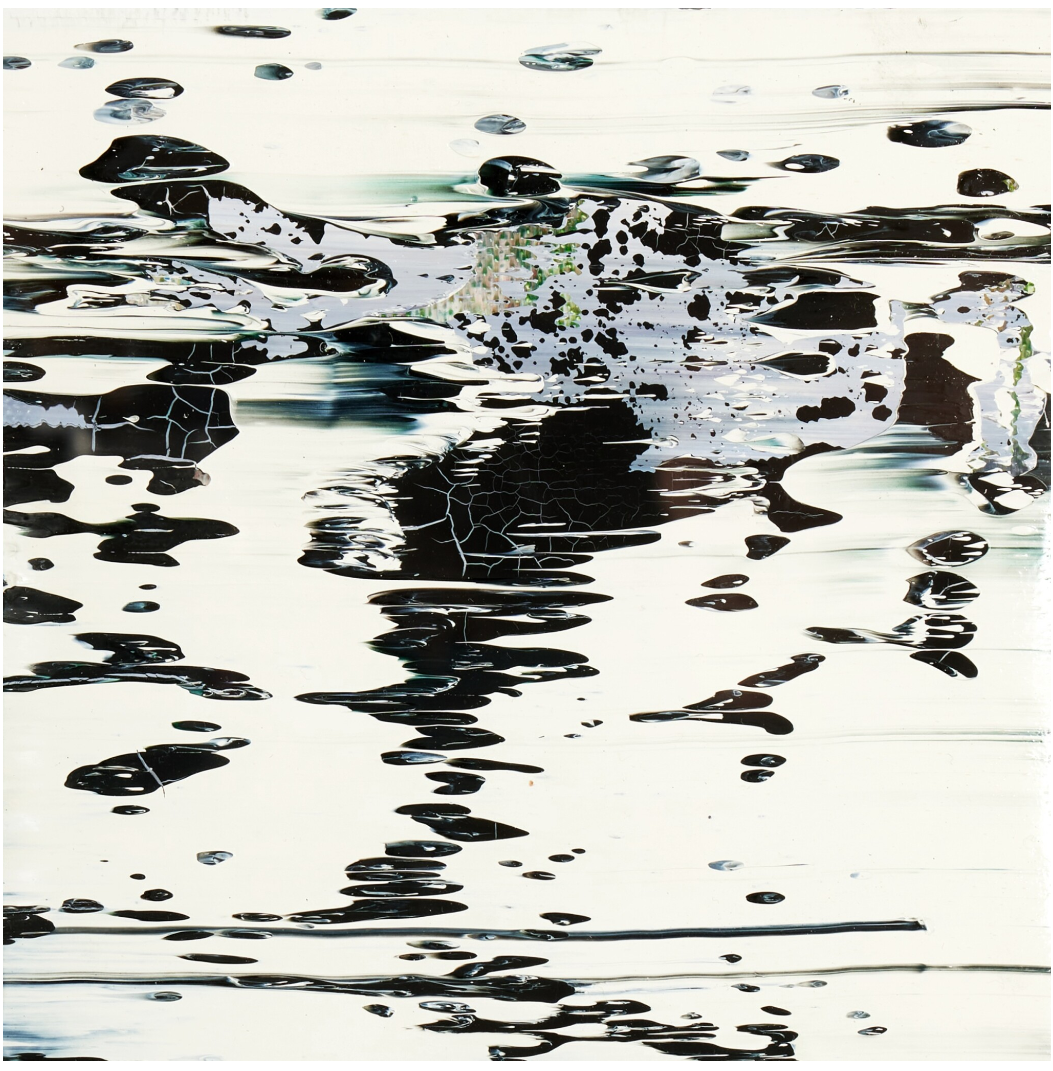
GERHARD RICHTER (b. 1932)
Souvenir, 1995
Oil on canvas
20.9 x 21.3 cm (8 3/8 x 8 1/4 inches)
Signed and numbered 37/64 (on a label affixed to the reverse)
This work is number 37 of 64 unique parts from the painting CR 84, which was cut into individual canvases by the artist
#25. 15. Nov. 1996, 1996
Ketterer Kunst: 8 December 2023
Estimated: EUR 60,000
EUR 57,150 / USD 61,665
Ketterer Kunst, Art auctions, Book auctions Munich, Hamburg & Berlin
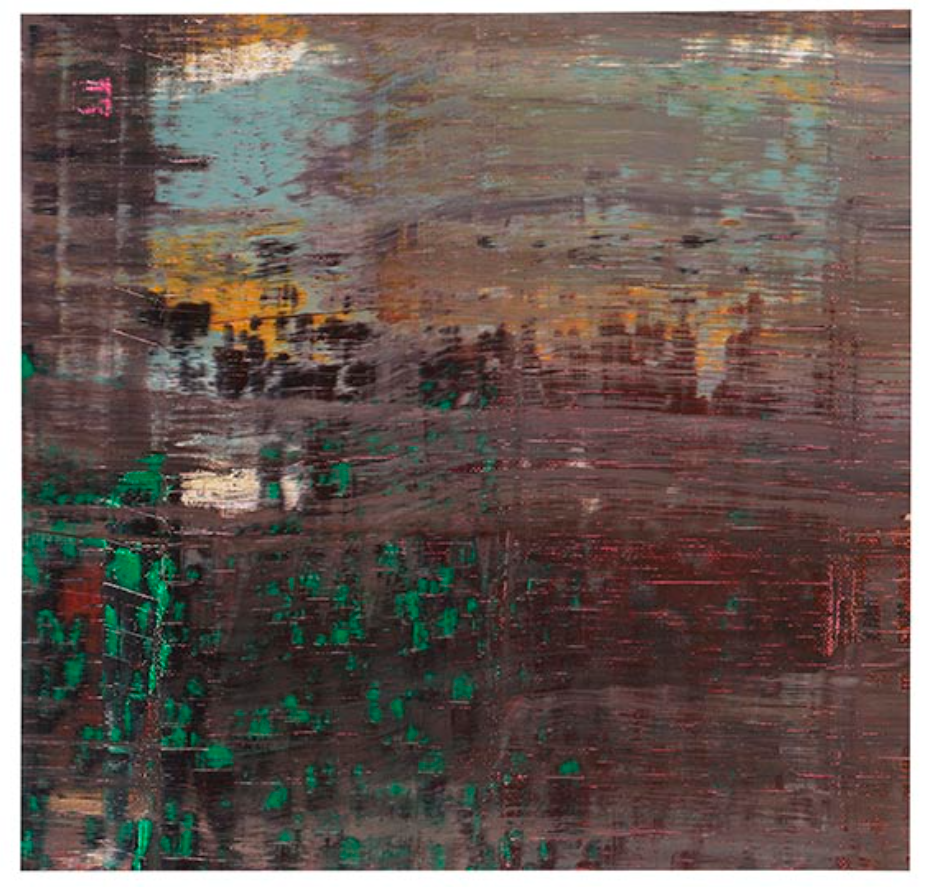
GERHARD RICHTER
15. Nov. 1996 (Teil des verworfenen Abstrakten Bildes 802-4), 1996
Oil on canvas, firmly laid on a backing cardboard
23.4 x 24 cm (9.2 x 9.4 inches)
Signed and dated in lower left of backing
Lower right monogrammed. Inscribed “8” on the reverse
Fragment of the destroyed painting “Abstraktes Bild” from 1994
#26. 11. Nov. 1996, 1996
Ketterer Kunst: 8 December 2023
Estimated: EUR 40,000
EUR 50,800 / USD 54,813
Ketterer Kunst, Art auctions, Book auctions Munich, Hamburg & Berlin
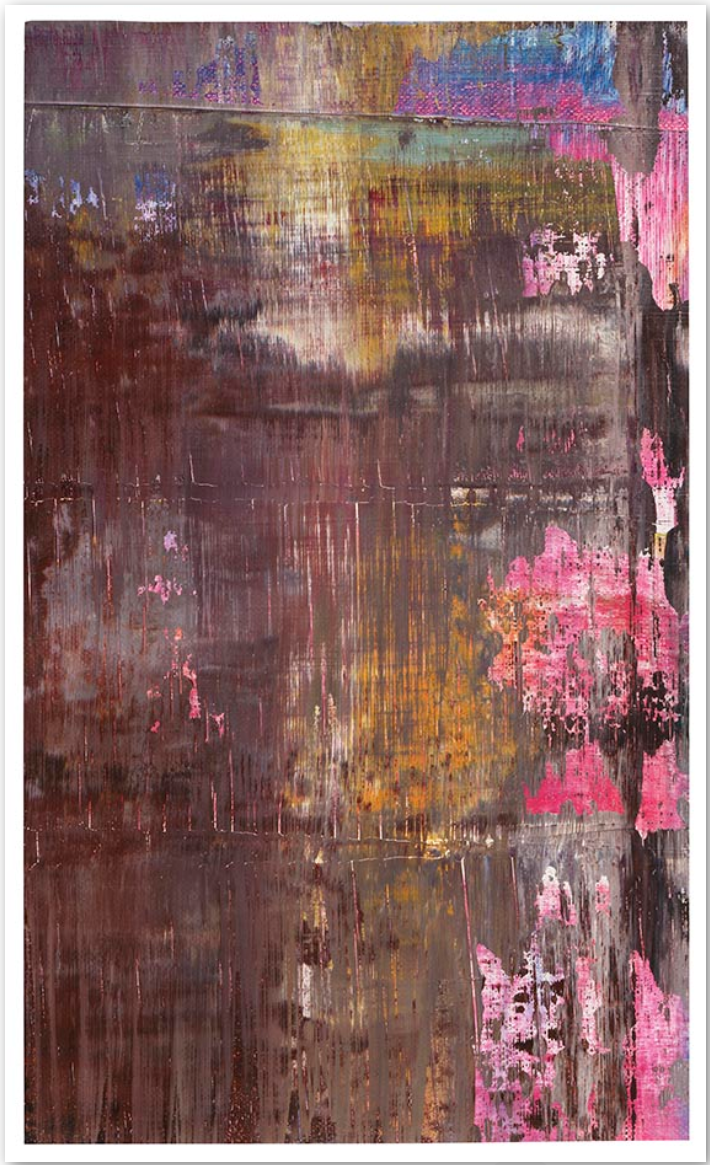
GERHARD RICHTER
11 Nov. 1996 (Teil des verworfenen Abstrakten Bildes 802-4), 1996
Oil on canvas, firmly laid on a backing
28.7 x 17 cm (11.2 x 6.6 inches)
Signed and dated on the backing in lower left. Lower right monogrammed. Inscribed “7” on the reverse
Fragment of the destroyed painting “Abstraktes Bild” from 1994
2022 Auction Results
#1. Abstraktes Bild, 1994
Christie’s New-York: 10 May 2022
Estimate on Request
USD 36,500,000
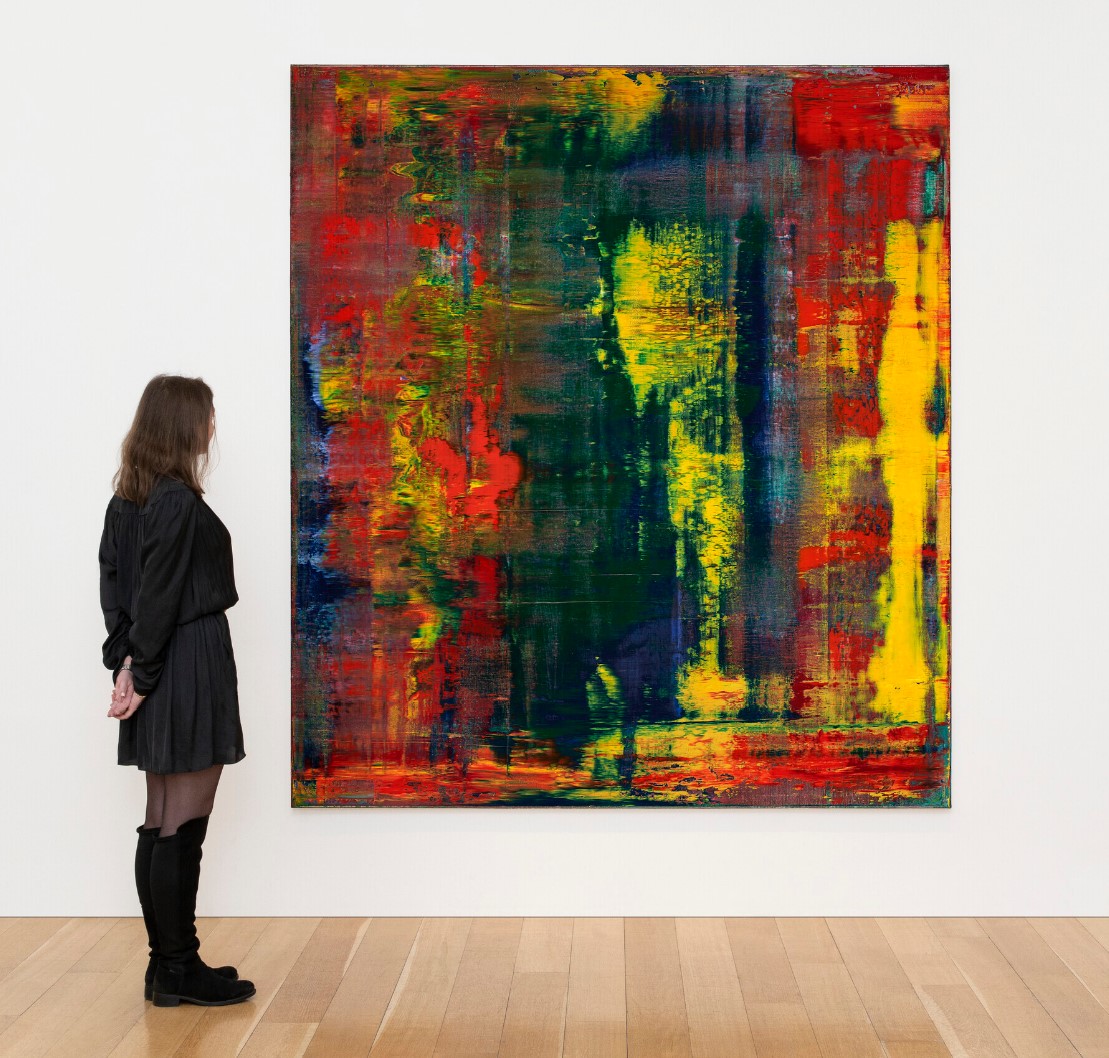
GERHARD RICHTER (B. 1932)
Abstraktes Bild, 1994
Oil on canvas
225×200 cm (88 5⁄8 x 78 3⁄4 inches)
Signed, inscribed and dated ‘809-4 Richter 1994’ (on the reverse)
#2. Abstraktes Bild, 1990
Sotheby’s Hong-Kong: 7 October 2022
Estimated: HKD 175,000,000 – 235,000,000
HKD 200,443,008 / USD 25,532,514
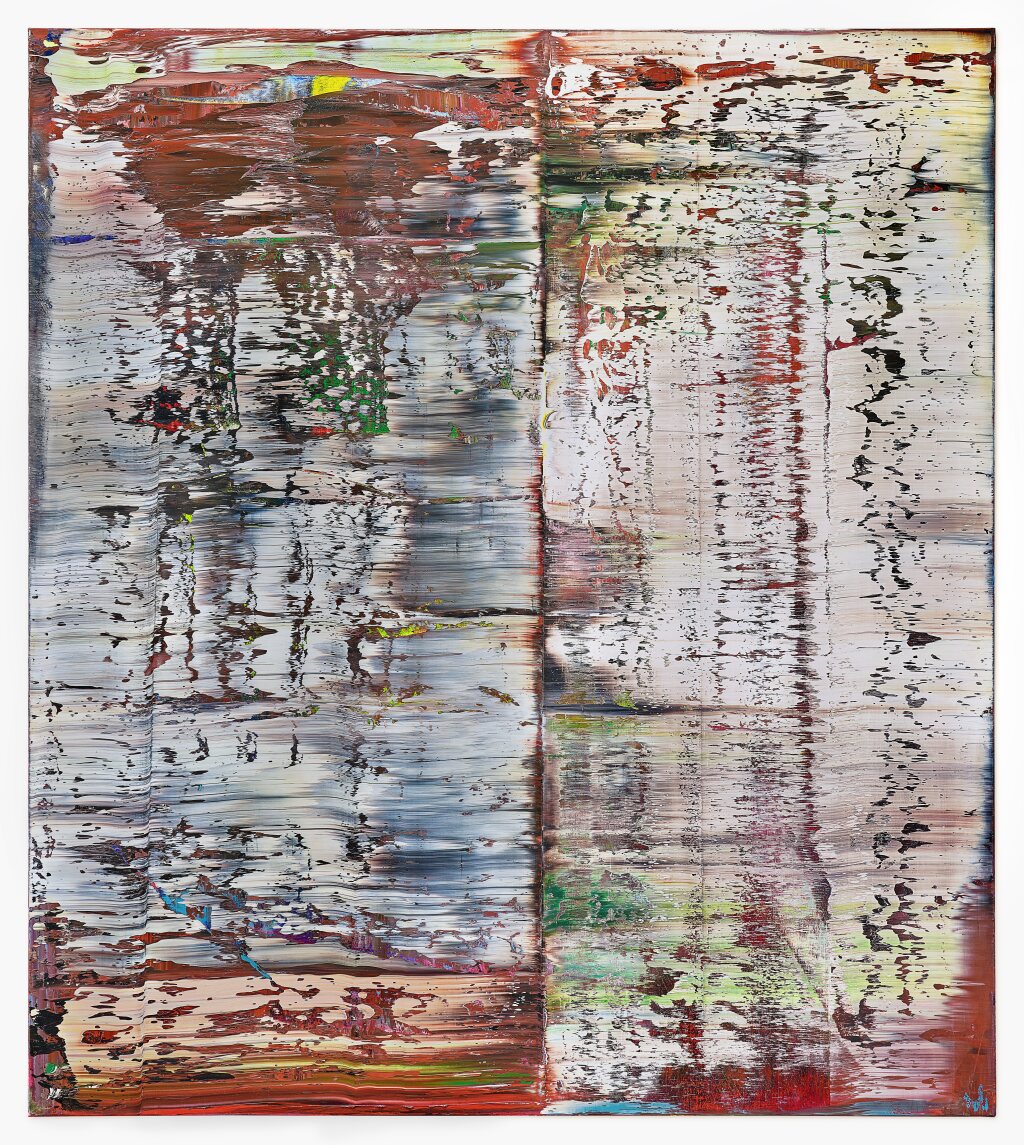
GERHARD RICHTER (b. 1932)
Abstraktes Bild, 1990
Oil on canvas
225×200 cm (88 ⅝ x 78 ¾ inches)
Signed, dated 1990 and numbered 725-1 on the reverse
#3. Abstraktes Bild (774-1), 1992
Phillips Hong-Kong: 1 December 2022
Estimated: HKD 80,000,000 – 120,000,000
HKD 89,375,000 / USD 11,491,039
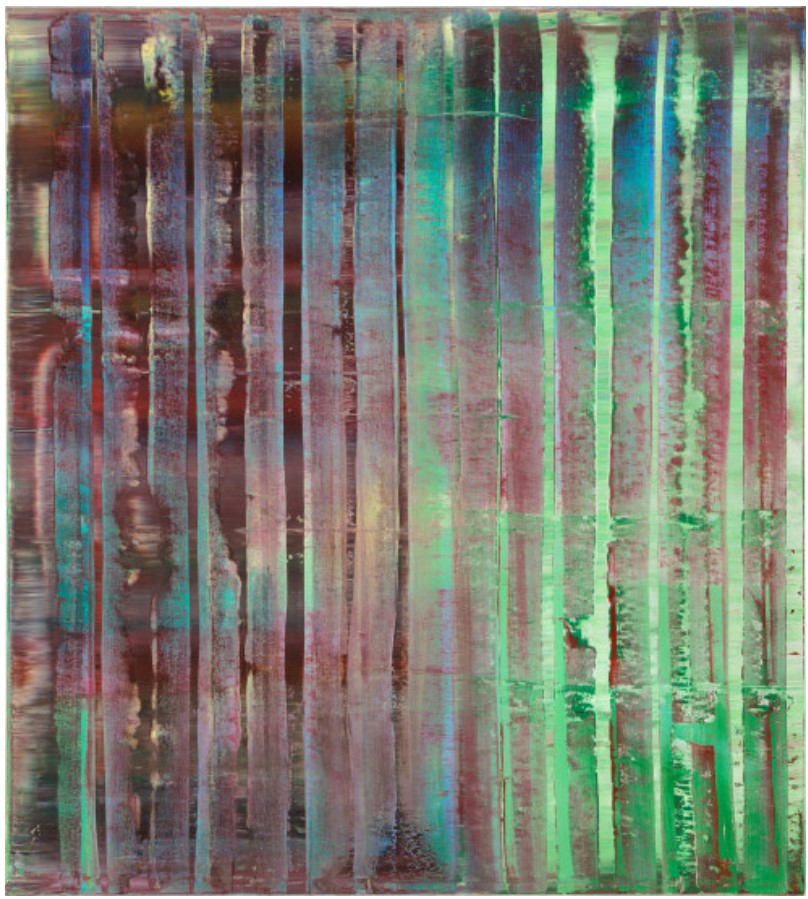
GERHARD RICHTER
Abstraktes Bild (774-1), 1992
Oil on canvas
200 x 180.3 cm (78 3/4 x 70 7/8 inches)
Signed, numbered and dated ‘774-1 RICHTER 1992’ on the reverse
#4. Besen, 1984
Christie’s Hong-Kong: 26 May 2022
Estimated: 55,000,000 – 75,000,000
HKD 79,915,000 / USD 10,180,384
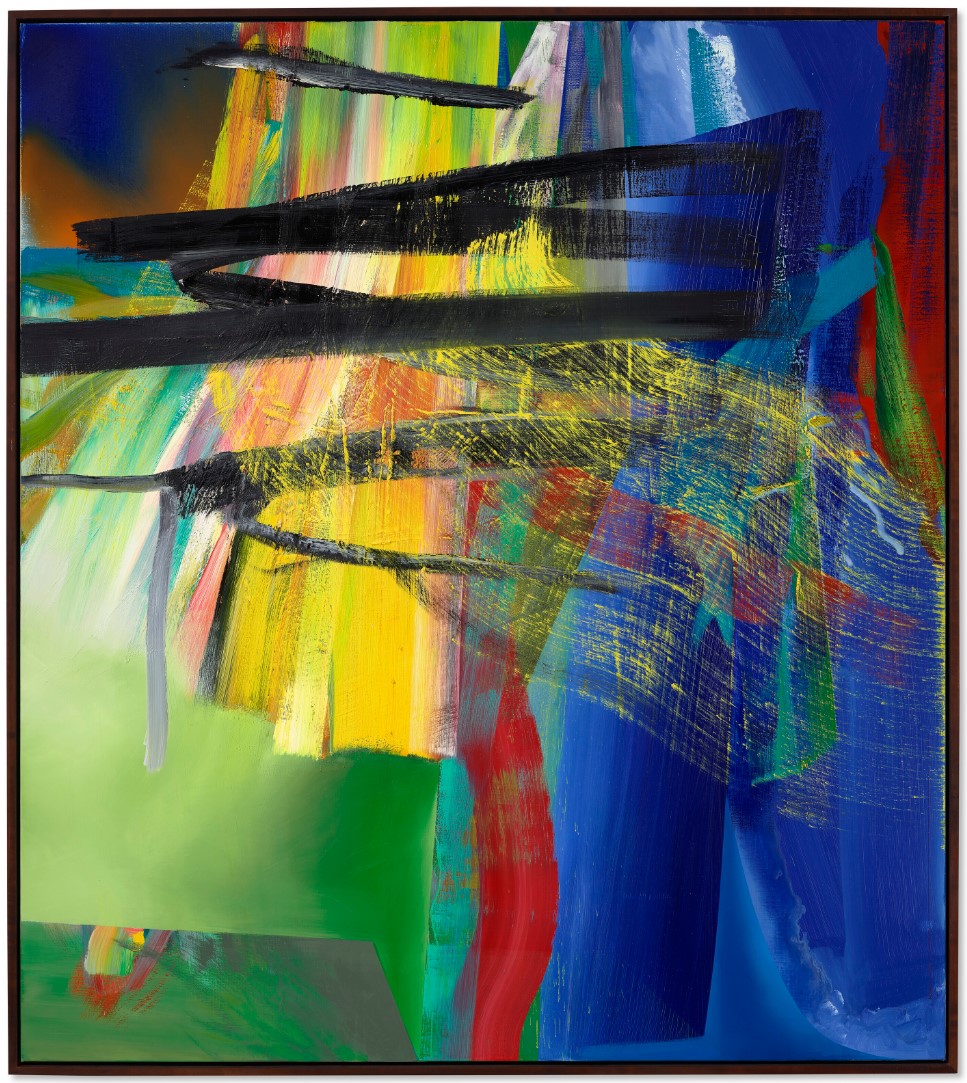
GERHARD RICHTER (B. 1932)
Besen, 1984
Oil on canvas
224.7 x 200 cm (88 1⁄2 x 78 3⁄4 inches)
Signed, dated and inscribed ‘Richter 1984 553-2’ (on the reverse)
USD 10 million
#5. Ohne Titel, 1989
Christie’s New-York: 9 November 2022
Visionary: the Paul G. Allen Collection
Estimated: USD 6,000,000 – 8,000,000
USD 9,321,000
GERHARD RICHTER (B. 1932) (christies.com)
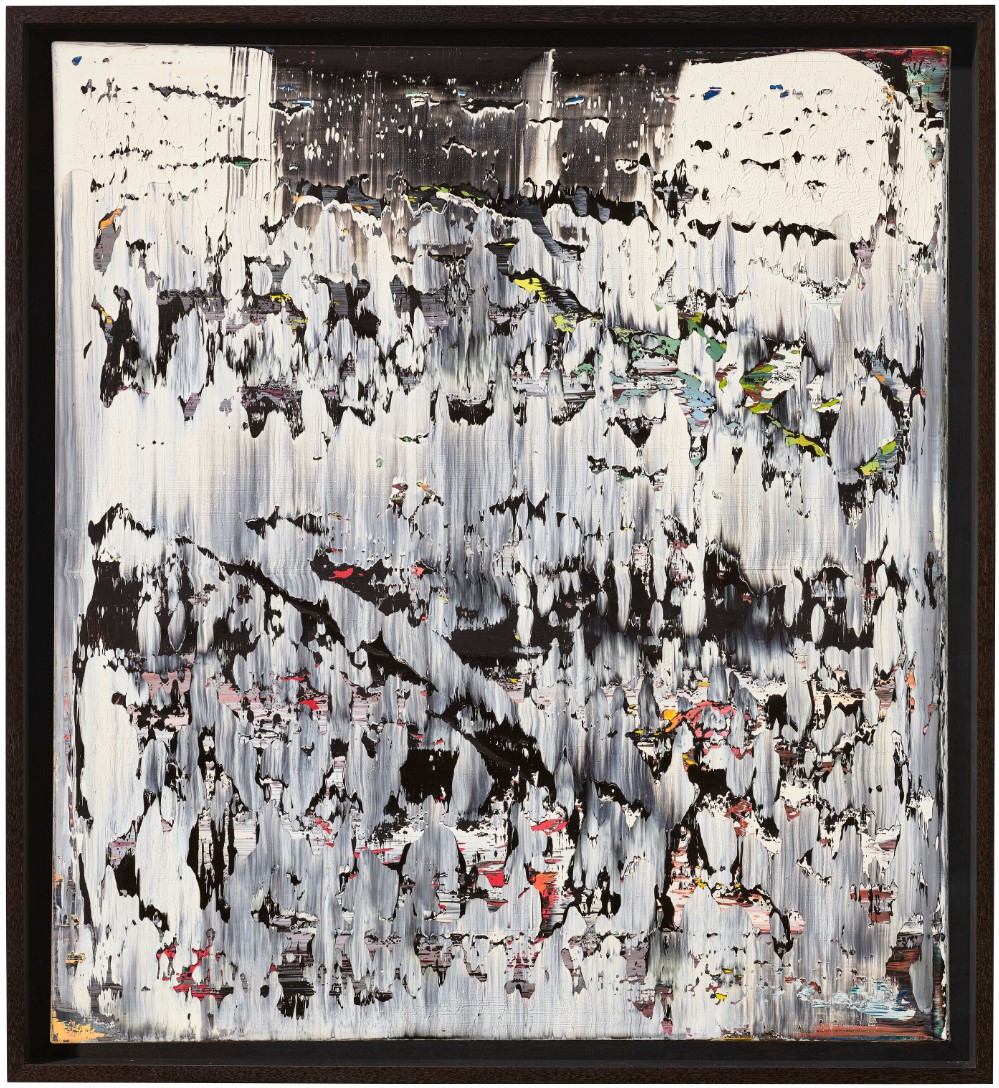
GERHARD RICHTER (B. 1932)
Ohne Titel, 1989
Oil on canvas
112.1 x 102.2 cm (44 1/8 x 40 1/4 inches)
Signed, dated and inscribed ‘687-4 Richter 1989’ (on the reverse)
#6. Abstraktes Bild, 1997
Sotheby’s Hong-Kong: 27 April 2022
Estimated: HKD 35,000,000 – 45,000,000
HKD 36,675,000 / USD 4,673,880
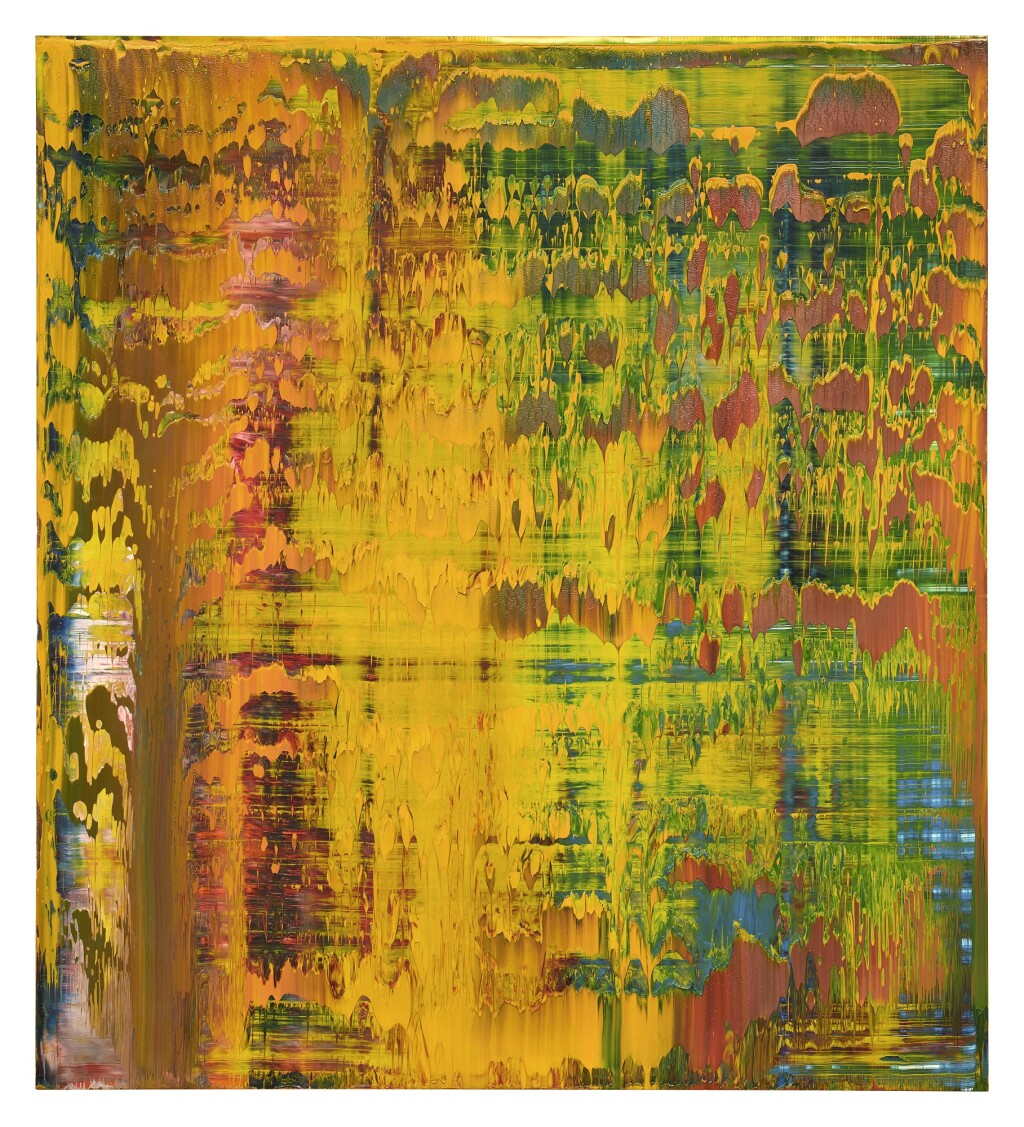
GERHARD RICHTER (b. 1932)
Abstraktes Bild, 1997
Oil on Alu Dibond
100×90 cm (39 ⅜ x 35 ⅜ inches)
Signed, dated 1997 and numbered 845-1 on the reverse
#7. Abstraktes Bild, 1997
Christie’s New-York: 10 November 2022
Estimated: USD 3,000,000 – 5,000,000
USD 3,900,000
GERHARD RICHTER (B. 1932), Abstraktes Bild | Christie’s (christies.com)
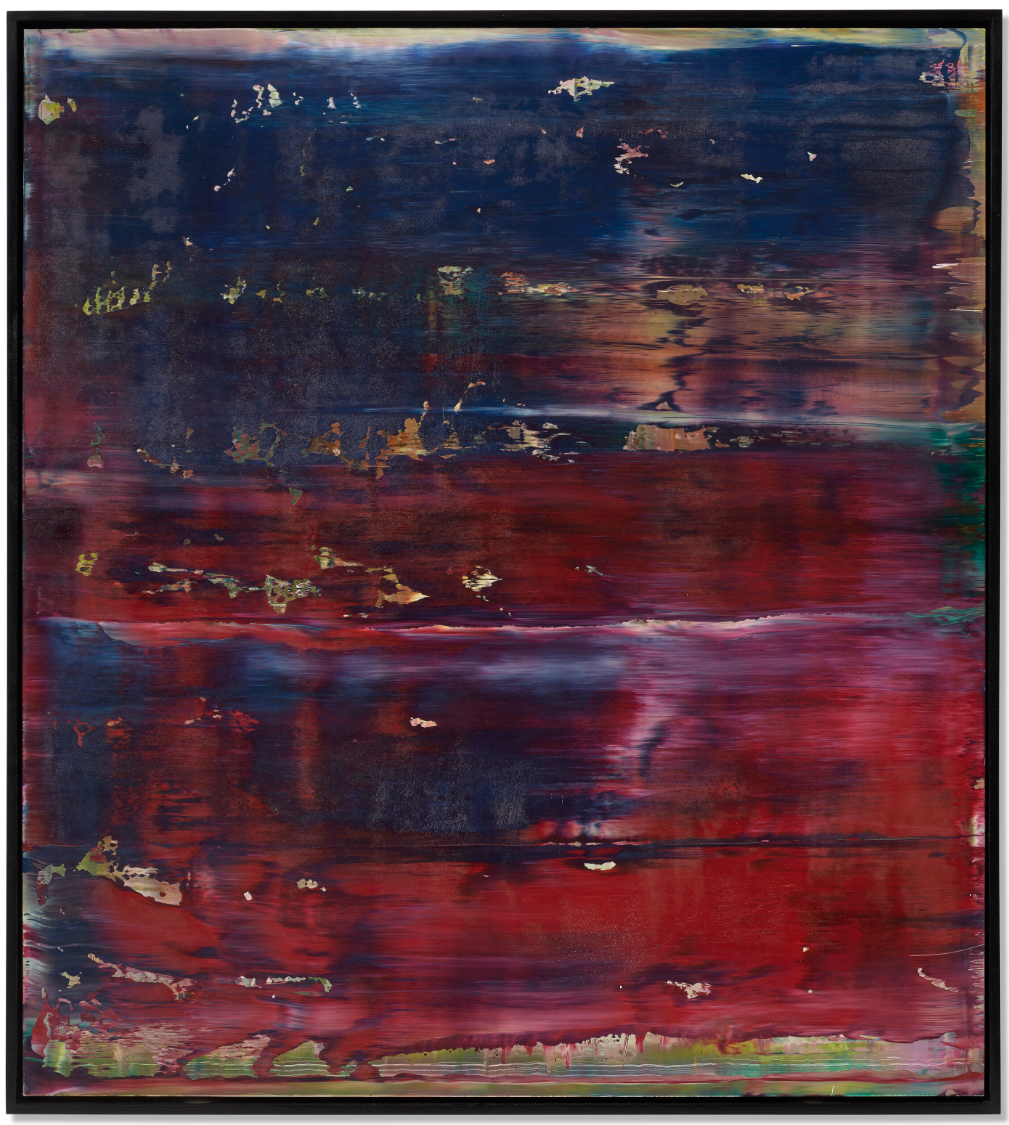
GERHARD RICHTER (B. 1932)
Abstraktes Bild, 1997
Oil on Alucobond
100 x 90.2 cm (39 3/8 x 35 1/2 inches)
Signed, inscribed and dated ‘842-2 Richter 1997’ (on the reverse)
#8. Abstraktes Bild, 1990
Christie’s New-York: 17 November 2022
Estimated: USD 4,000,000 – 6,000,000
USD 3,660,000
GERHARD RICHTER (B. 1932) (christies.com)
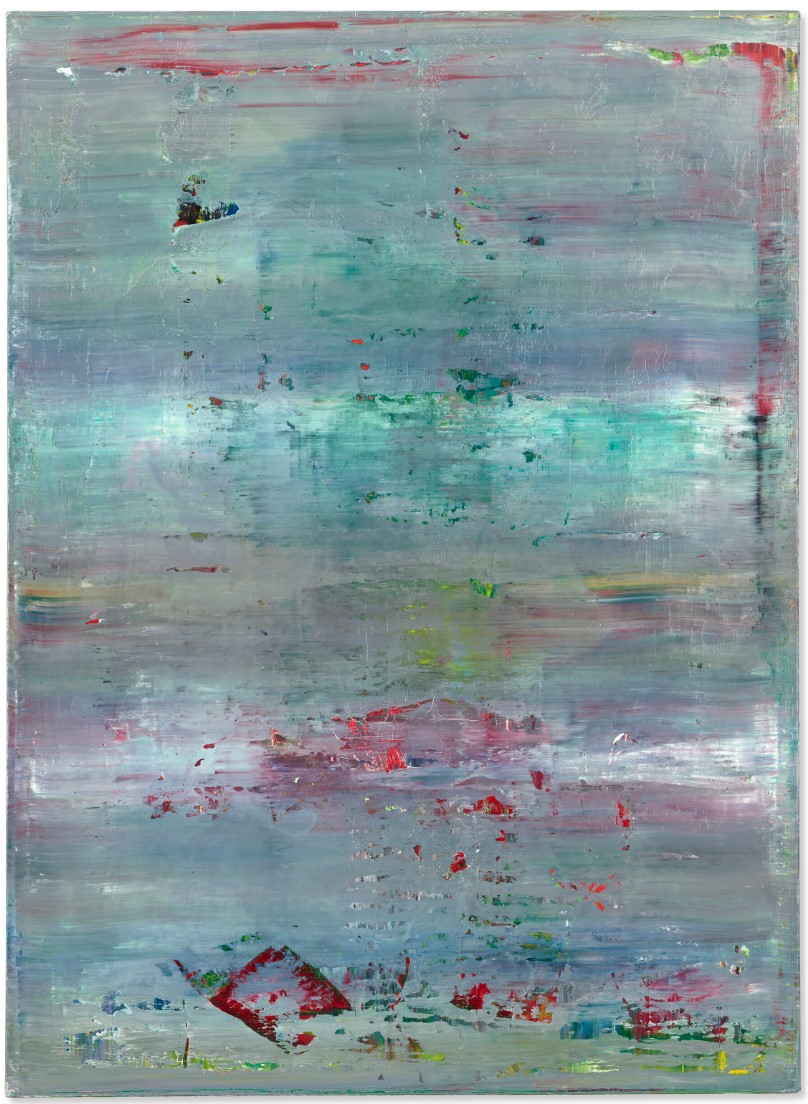
GERHARD RICHTER (B. 1932)
Abstraktes Bild, 1990
Oil on canvas
112×82 cm (44 1/8 x 32 1/4 inches)
Signed, inscribed and dated ‘721-2 Richter 1990’ (on the reverse)
#9. Abstraktes Bild, 1994
Sotheby’s London: 2 March 2022
Estimated: GBP 1,000,000 – 1,500,000
GBP 2,092,000 / USD 2,796,417
Abstraktes Bild | Modern & Contemporary Evening Auction | 2022 | Sotheby’s (sothebys.com)
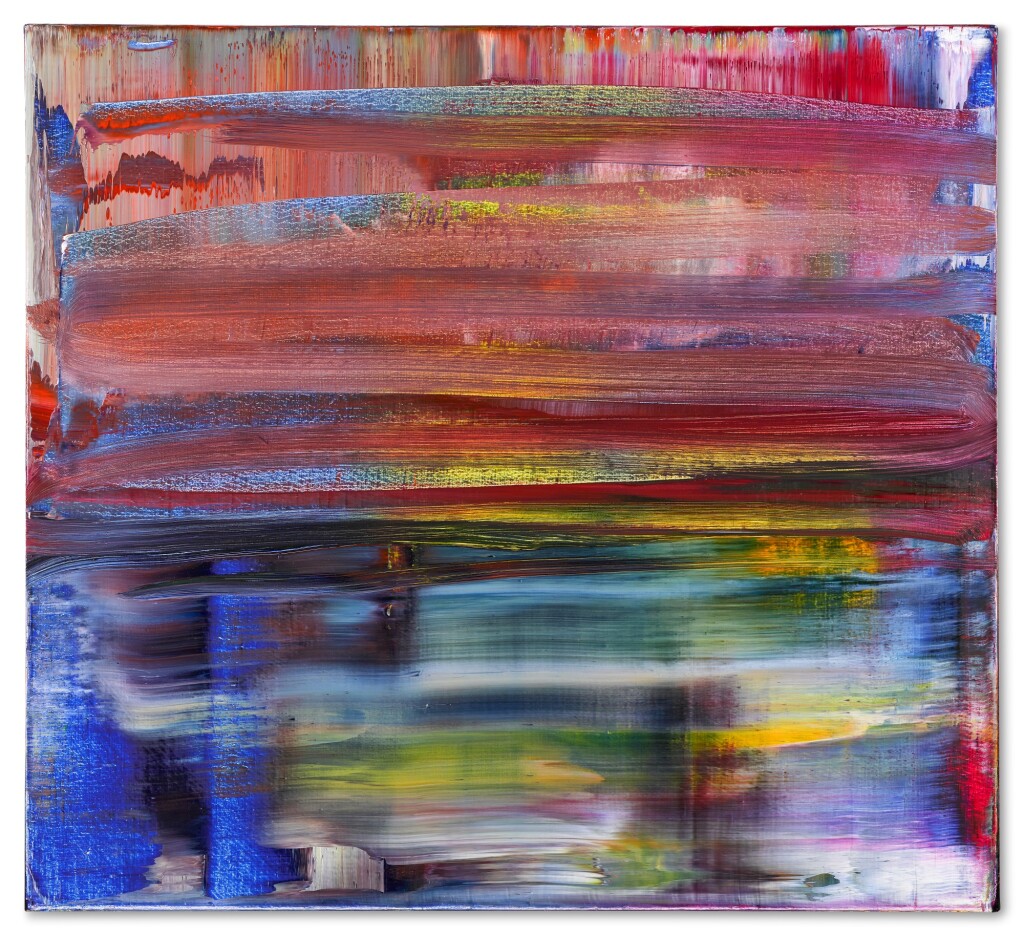
GERHARD RICHTER (b. 1932)
Abstraktes Bild, 1994
Oil on canvas
51 x 56.1 cm (20×22 inches)
Signed Richter, numbered 817-1 and dated 1994 (on the verso)
#10. Abstraktes Bild, 1987
Sotheby’s London: 29 June 2022
Estimated: GBP 1,200,000 – 1,800,000
GBP 1,971,000 / USD 2,394,024
Abstraktes Bild | Modern & Contemporary Evening Auction | 2022 | Sotheby’s (sothebys.com)
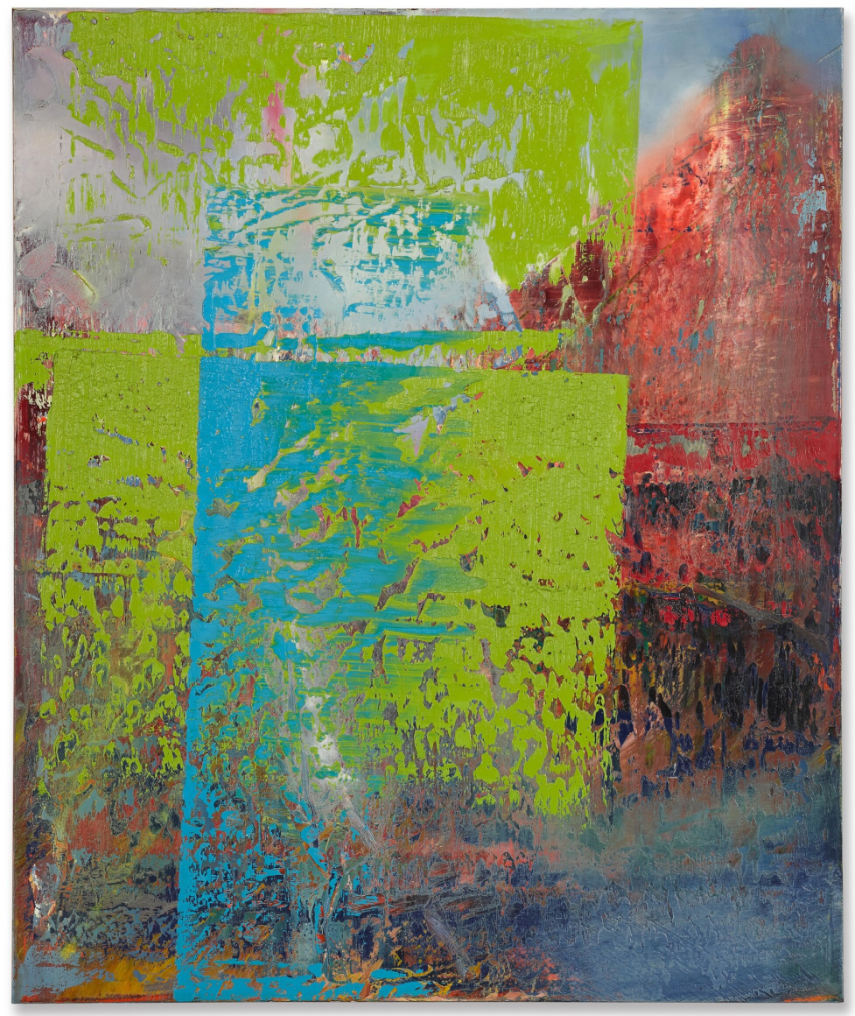
GERHARD RICHTER (b. 1932)
Abstraktes Bild, 1987
Oil on canvas
120×100 cm (47 1/4 x 39 3/8 inches)
Signed Richter, numbered 630-4 and dated 1987 (on the reverse)
#11. Zacharopoulos, 1983
Christie’s London: 13 October 2022
Estimated: GBP 1,200,000 – 1,800,000
GBP 1,962,000 / USD 2,225,499
GERHARD RICHTER (B. 1932), Zacharopoulos | Christie’s (christies.com)
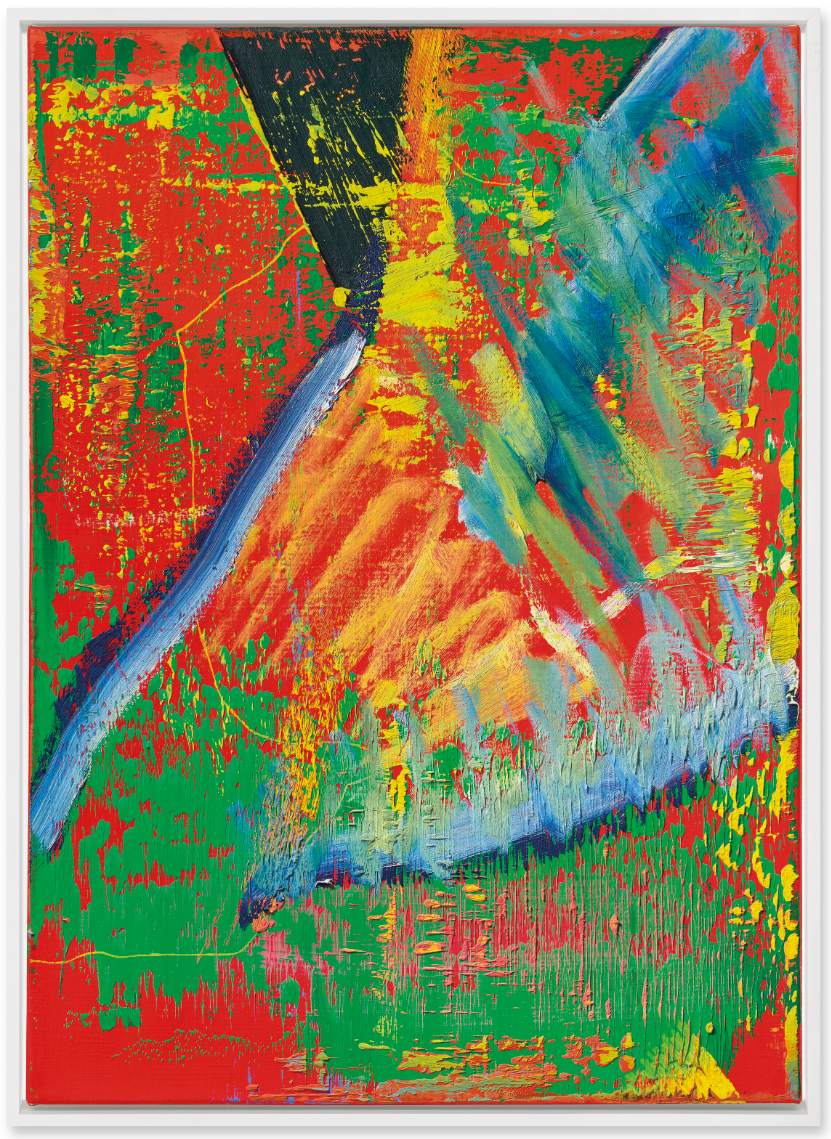
GERHARD RICHTER (B. 1932)
Zacharopoulos, 1983
Oil on canvas
70.4 x 50.3 cm (27 3/4 x 19 3/4 inches)
Signed, numbered and dated ‘520-3 Richter 1983’ (on the reverse)
#12. Abstraktes Bild, 1988
Ketterer Kunst: 10 June 2022
Estimated: EUR 600,000
EUR 1,705,000 / USD 1,875,500
Ketterer Kunst, Art auctions, Book auctions Munich, Hamburg & Berlin
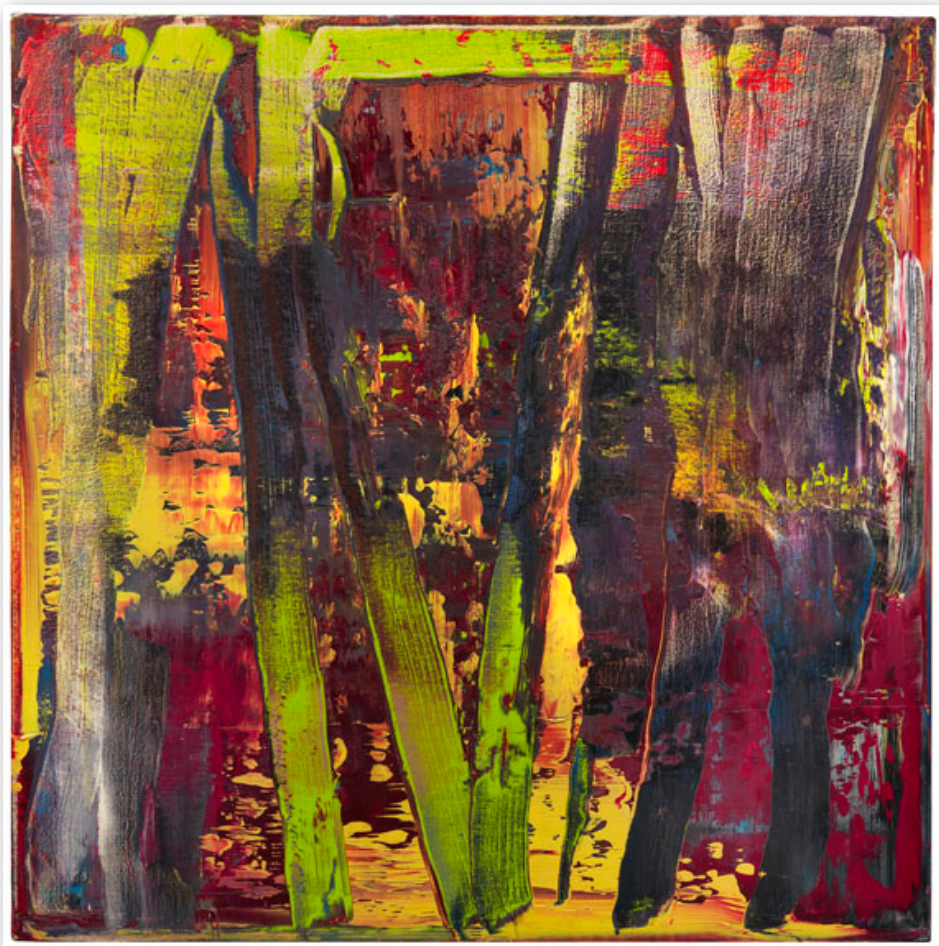
GERHARD RICHTER
Abstraktes Bild, 1988
Oil on canvas
62×62 cm (24.4 x 24.4 inches)
Signed, dated and titled on the reverse
#13. Abstraktes Bild, 1990
Sotheby’s New-York: 20 May 2022
Estimated: USD 600,000 – 800,000
USD 1,008,000
Abstraktes Bild | Contemporary Day Auction | 2022 | Sotheby’s (sothebys.com)
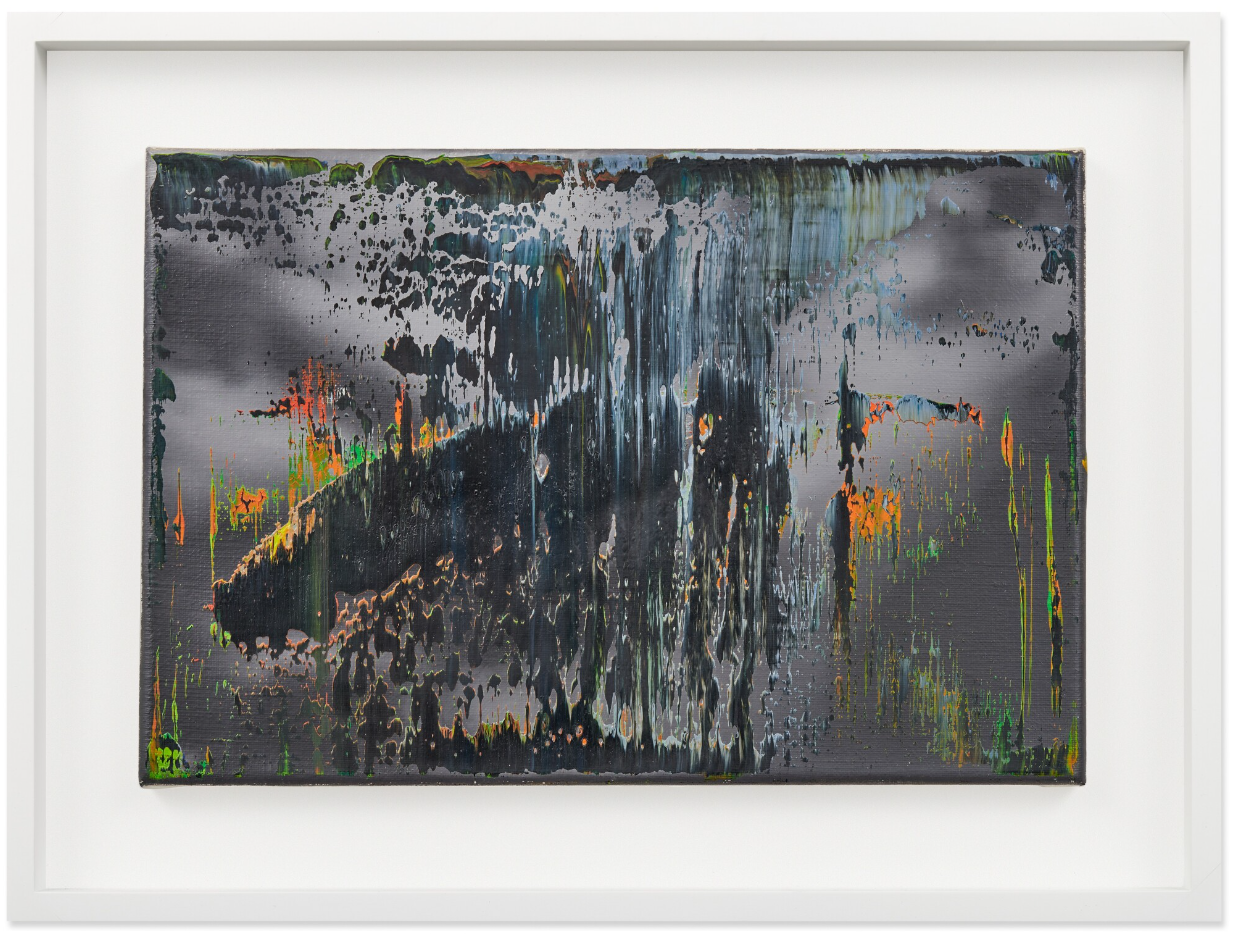
GERHARD RICHTER (b. 1932)
Abstraktes Bild, 1990
Oil on canvas
25.5 x 37.5 cm (10 x 14 3/4 inches)
Signed Richter, dated IV. 90 and numbered 716-8 (on the reverse)
#14. Abstraktes Bild, 1992
Christie’s Paris: 30 November 2022
Estimated: EUR 450,000 – 650,000
EUR 567,000 / USD 585,139
Gerhard Richter (né en 1932), Abstraktes Bild | Christie’s (christies.com)
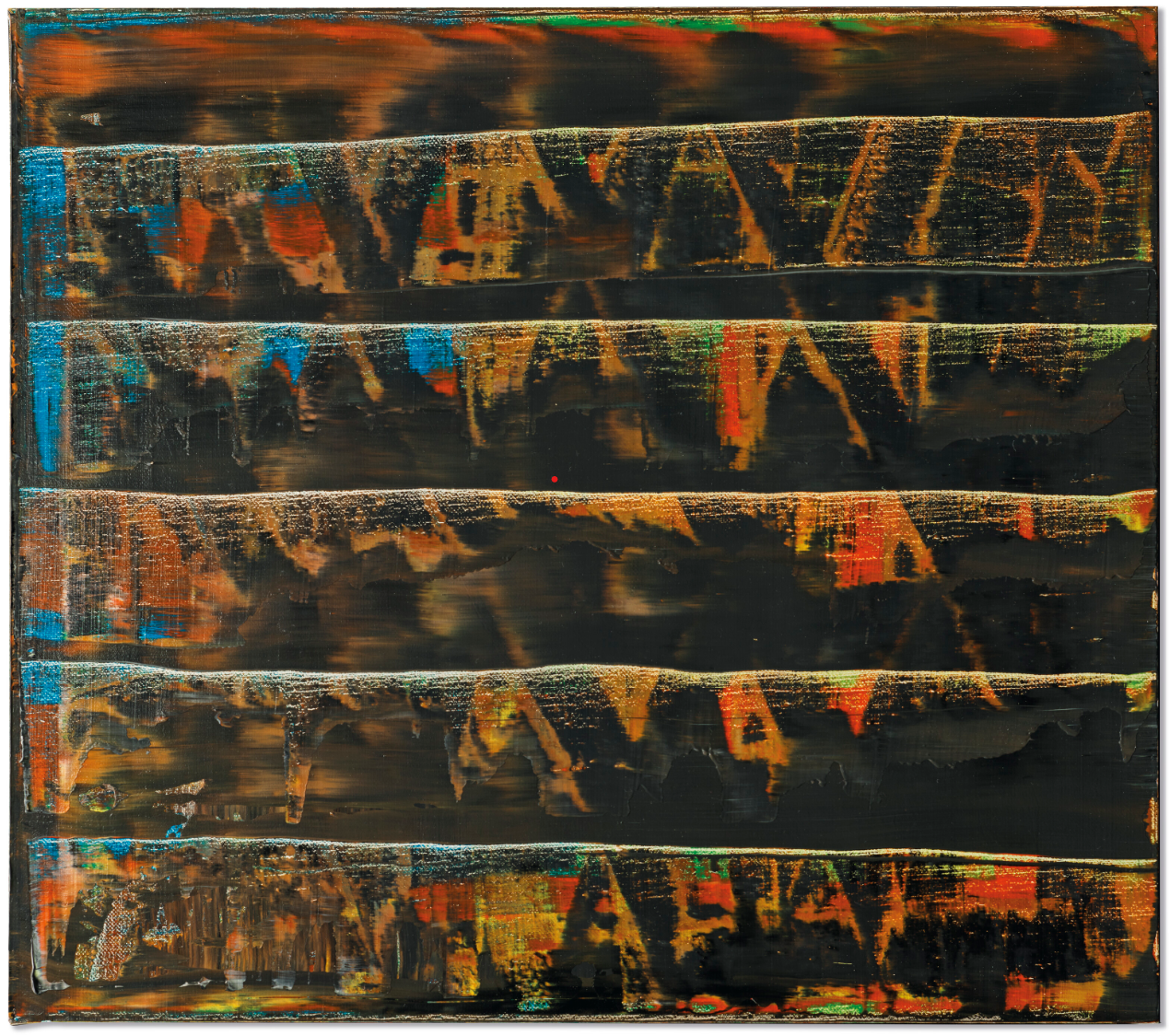
GERHARD RICHTER (Born 1932)
Abstraktes Bild, 1992
Oil on canvas
52×62 cm (20 1/2 x 24 3/8 inches)
Signed, dated and inscribed ‘Richter 92 763-7’ (on the reverse)
2021 Auction Results
#1. Abstraktes Bild, 1993
Sotheby’s New-York: 15 November 2021
Estimated: USD 20,000,000 – 30,000,000
USD 33,010,500
GERHARD RICHTER (b.1932)
Abstraktes Bild, 1993
Oil on canvas
240×240 cm (94 1/2 x 94 1/2 inches)
Signed, dated 1993 and numbered 797-2 on the reverse
#2. Abstraktes Bild, 1988
Christie’s New-York: 11 November 2021
Estimated: USD 25,000,000 – 25,000,000
USD 27,185,000
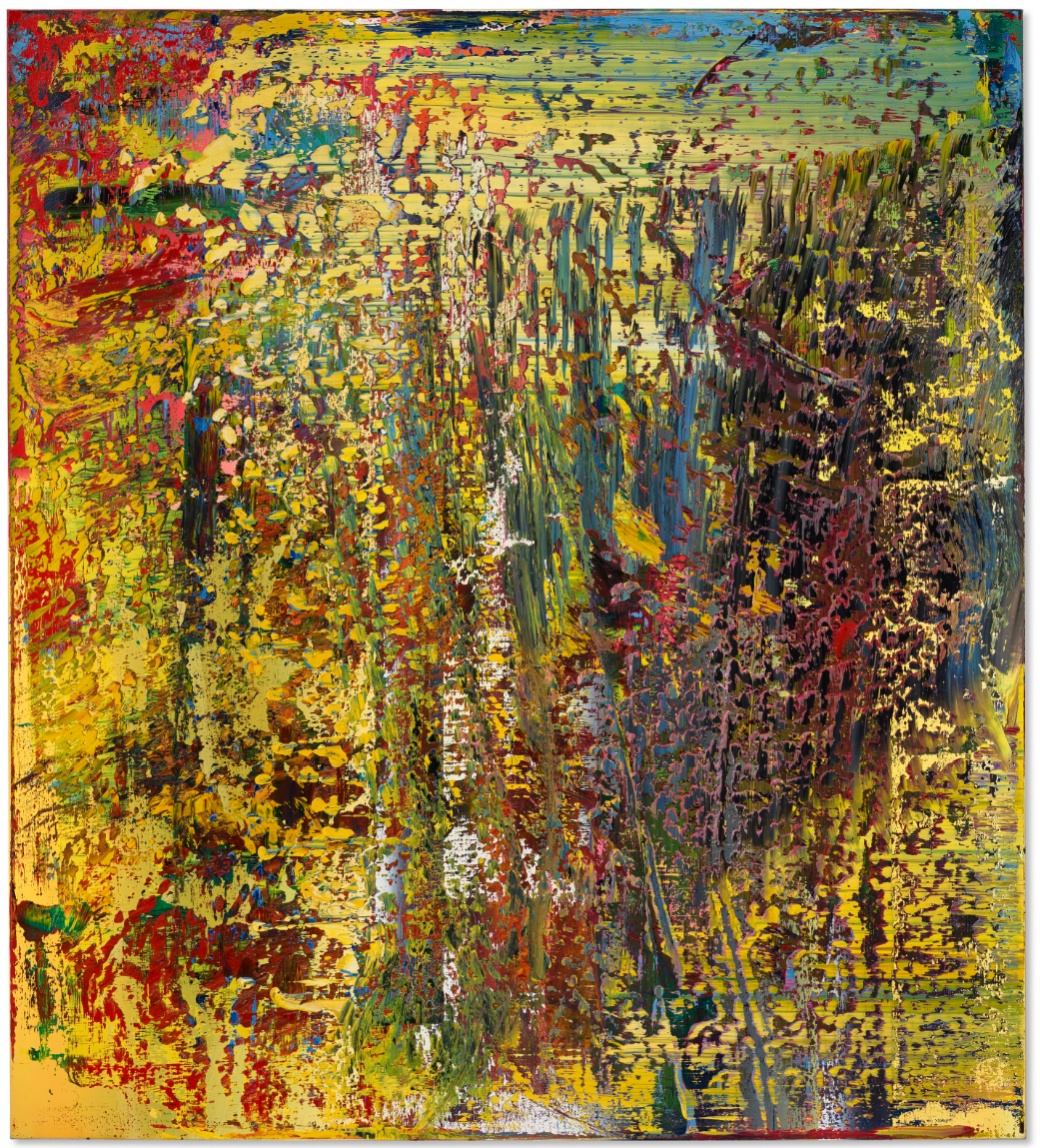
GERHARD RICHTER (B. 1932)
Abstraktes Bild, 1988
Oil on canvas
78 3/4 x 71 1/8 inches (200 x 180.7 cm)
Signed, inscribed and dated ‘680-1 Richter 1988’ (on the reverse)
#3. Abstraktes Bild, 1992
Sotheby’s New-York: 12 May 2021
Estimated: USD 14,000,000 – 18,000,000
USD 23,244,000
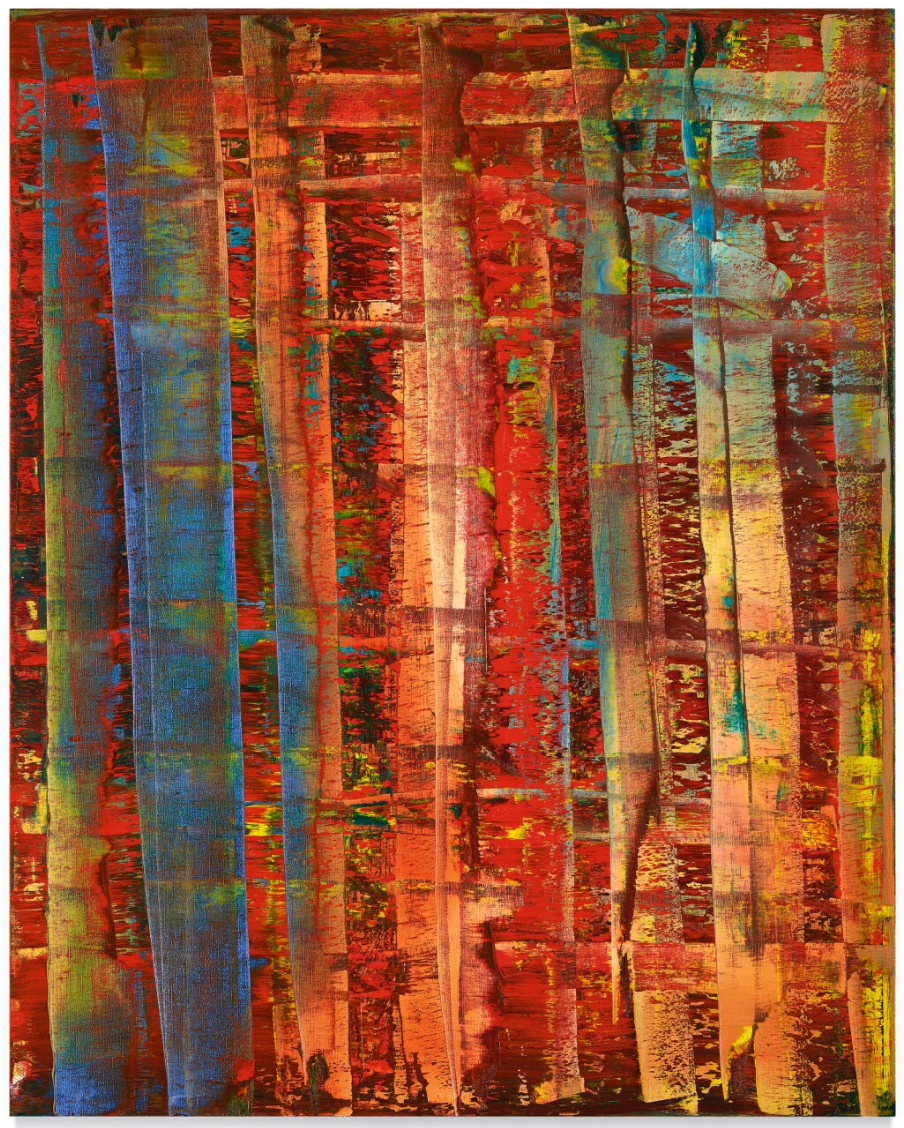
GERHARD RICHTER (b. 1932)
Abstraktes Bild, 1992
Oil on canvas
200×160 cm (78 3/4 x 63 inches)
Signed, dated 1992 and numbered 768-2 on the reverse
#4. Abstraktes Bild 747-1, 1991
Christie’s Hong-Kong: 1 December 2021
Estimated: HKD 128,000,000 – 166,000,000
HKD 140,400,000 / USD 18,019,868
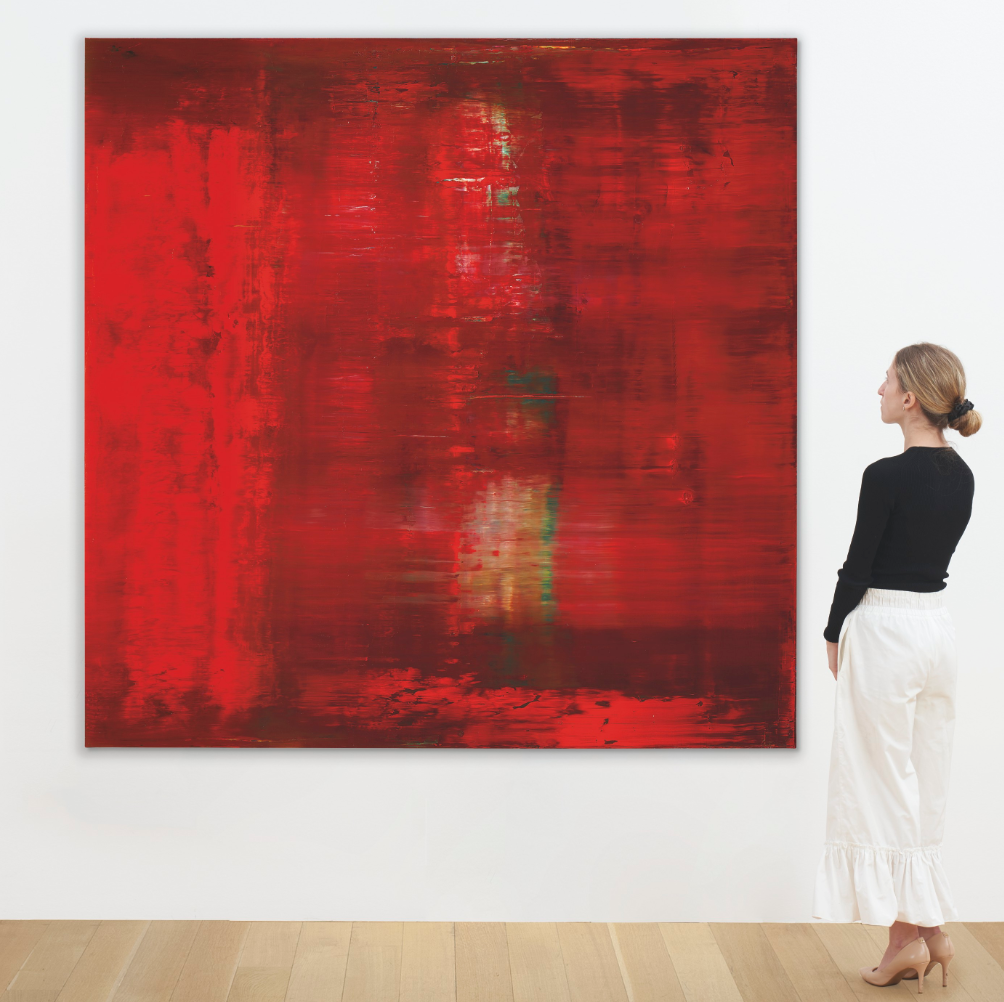
GERHARD RICHTER (B. 1932)
Abstraktes Bild 747-1, 1991
Oil on canvas
200×200 cm (78 3/4 x 78 3/4 inches)
Signed, numbered and dated ‘747-1 Richter 1991’ (on the reverse)
#5. Schwefel (Sulphur)
Sotheby’s Hong-Kong: 19 April 2021
Estimated: HKD 80,000,000 – 100,000,000
HKD 118,115,000 / USD 15,208,854
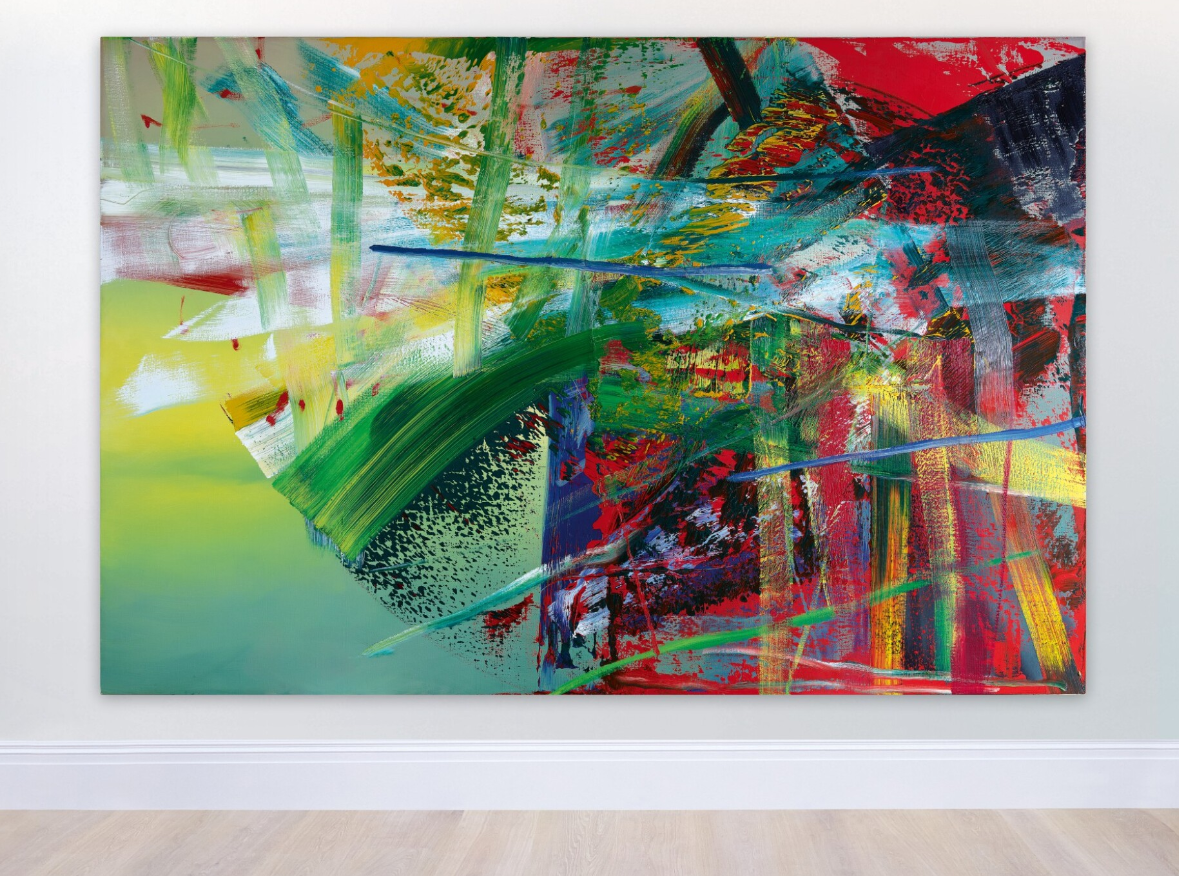
GERHARD RICHTER (b. 1932)
Schwefel (Sulphur)
Oil on canvas
200.3 x 300.5 cm (78 7/8 s 118 3/8 inches)
Signed, dated 1985 and numbered 573-1 on the reverse
#6. S.D., 1985
Sotheby’ London: 14 October 2021
Estimated: GBP 7,000,000 – 9,000,000
GBP 9,619,800 / USD 13,165,184
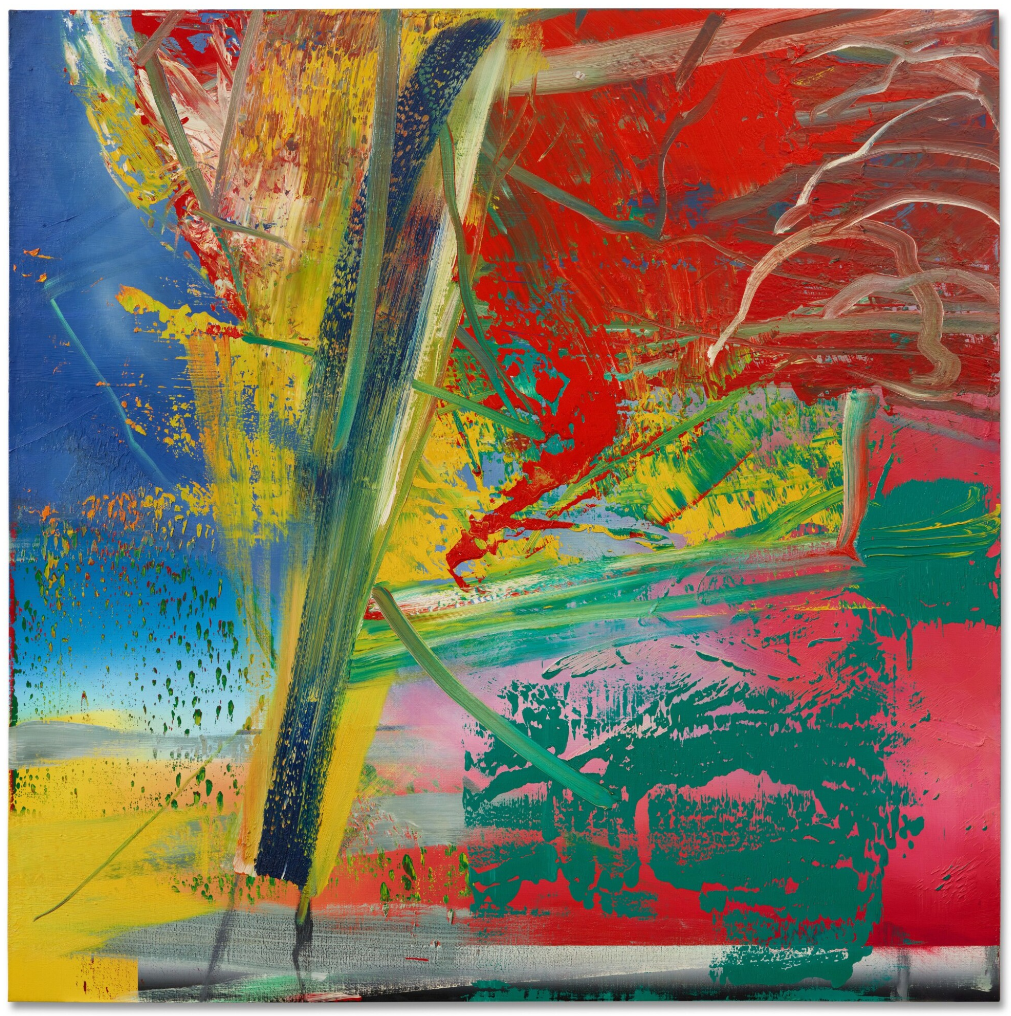
GERHARD RICHTER (b. 1932)
S.D., 1985
Oil on canvas
200×200 cm (78 3/4 x 78 3/4 inches)
Signed, dated 1985 and numbered 575-2 on the reverse
#7. Kerzenschein (Candle-light), 1984
Phillips Hong-Kong: 30 November 2021
Estimated: HKD 55,000,000 – 75,000,000
HKD 101,970,000 / USD 13,078,275
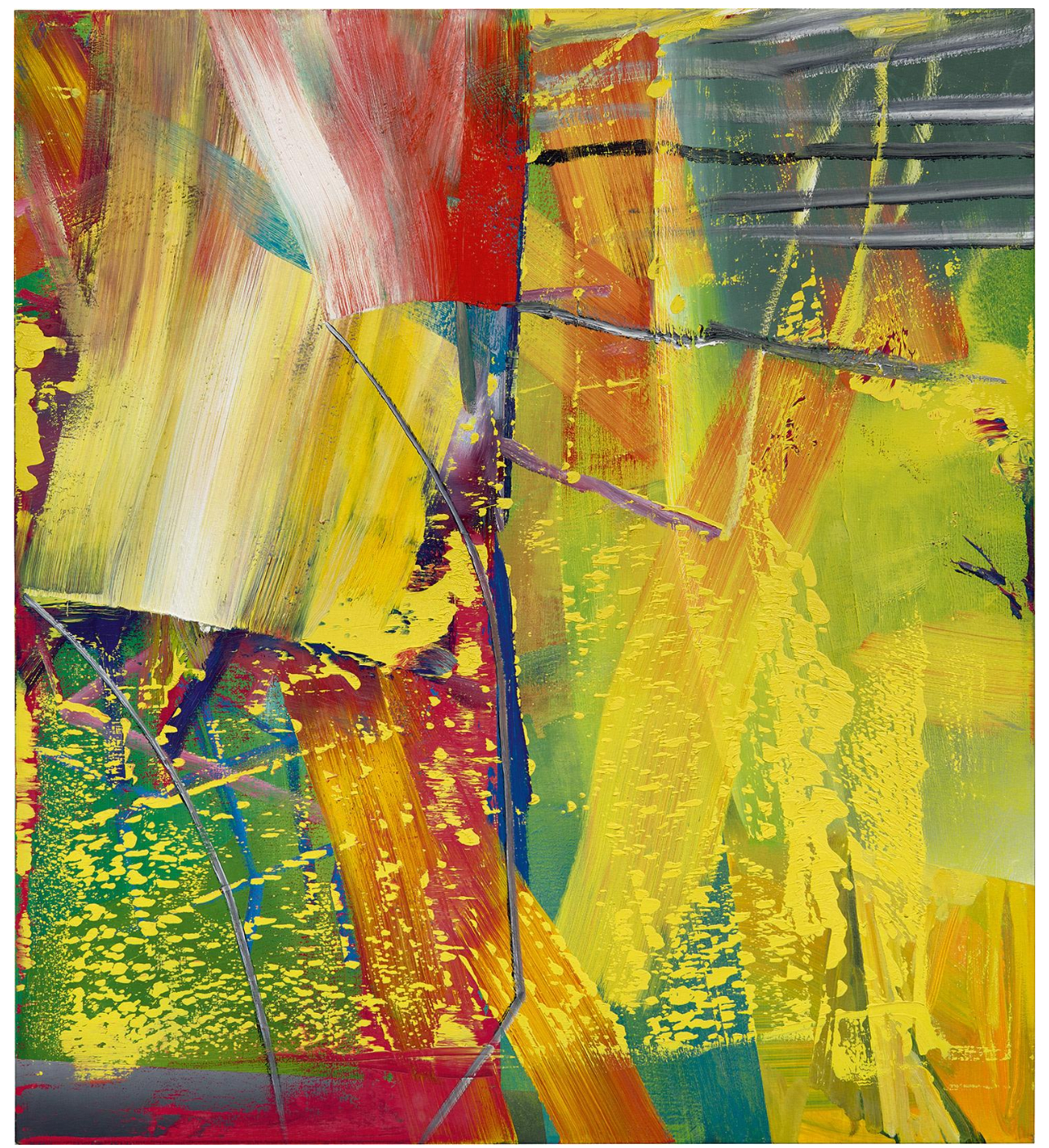
GERHARD RICHTER
Kerzenschein (Candle-light), 1984
Oil on canvas
200.3 x 179.7 cm (78 7/8 x 70 3/4 inches)
Signed, numbered and dated ‘554-3 Richter 1984’ on the reverse
#8. Abstraktes Bild (940-7), 2015
Phillips Hong-Kong: 8 June 2021
Estimated: HKD 75,000,000 – 95,000,000
HKD 95,100,000 / USD 12,255,313
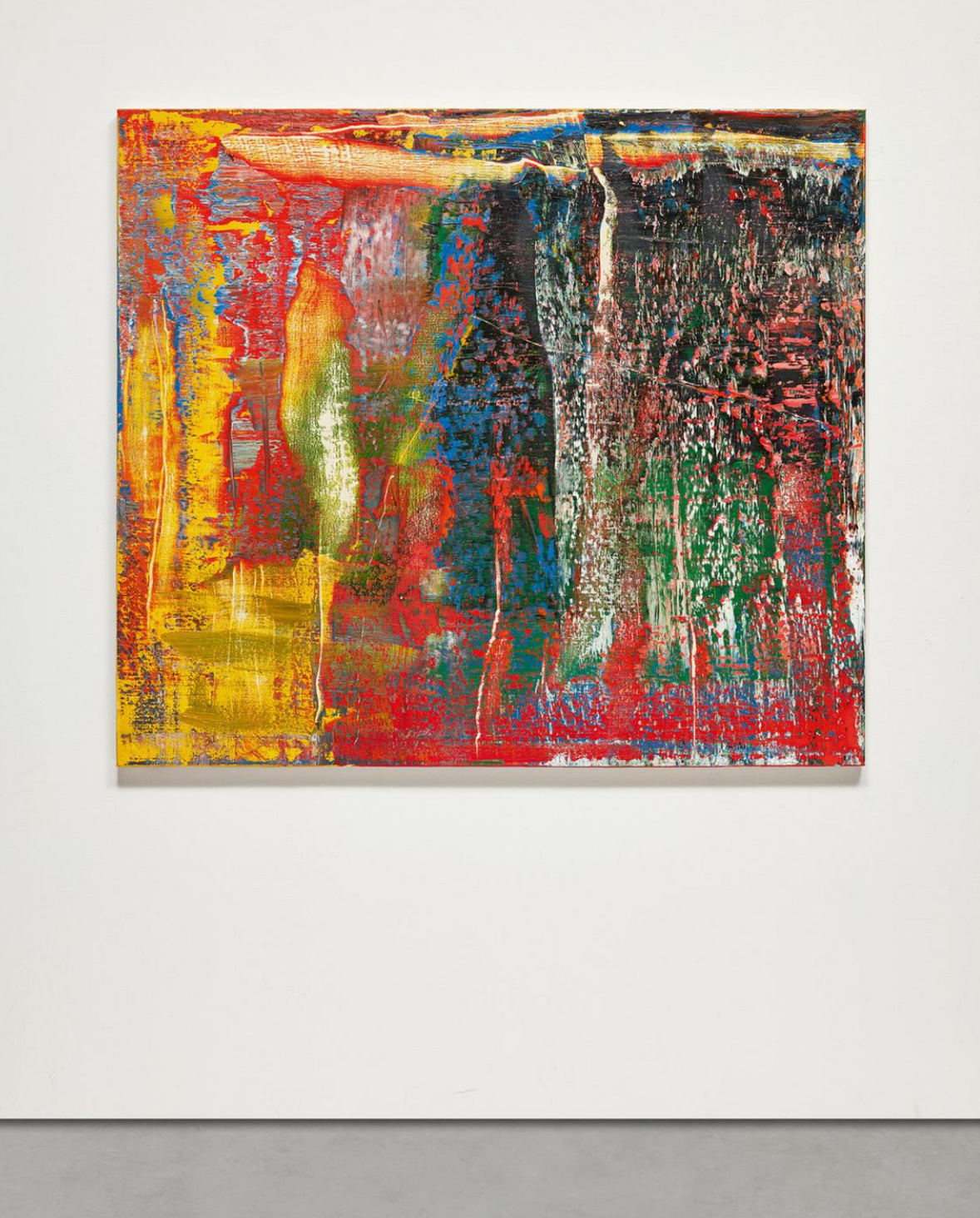
GERHARD RICHTER
Abstraktes Bild (940-7), 2015
Oil on canvas
140×160 cm (55 1/8 x 62 7/8 inches)
Signed, numbered and dated ‘940-7 Richter 2015’ on the reverse
#9. Abstraktes Bild, 1985
Sotheby’ London: 14 October 2021
Estimated: GBP 5,000,000 – 7,000,000
GBP 7,896,300 / USD 10,806,487
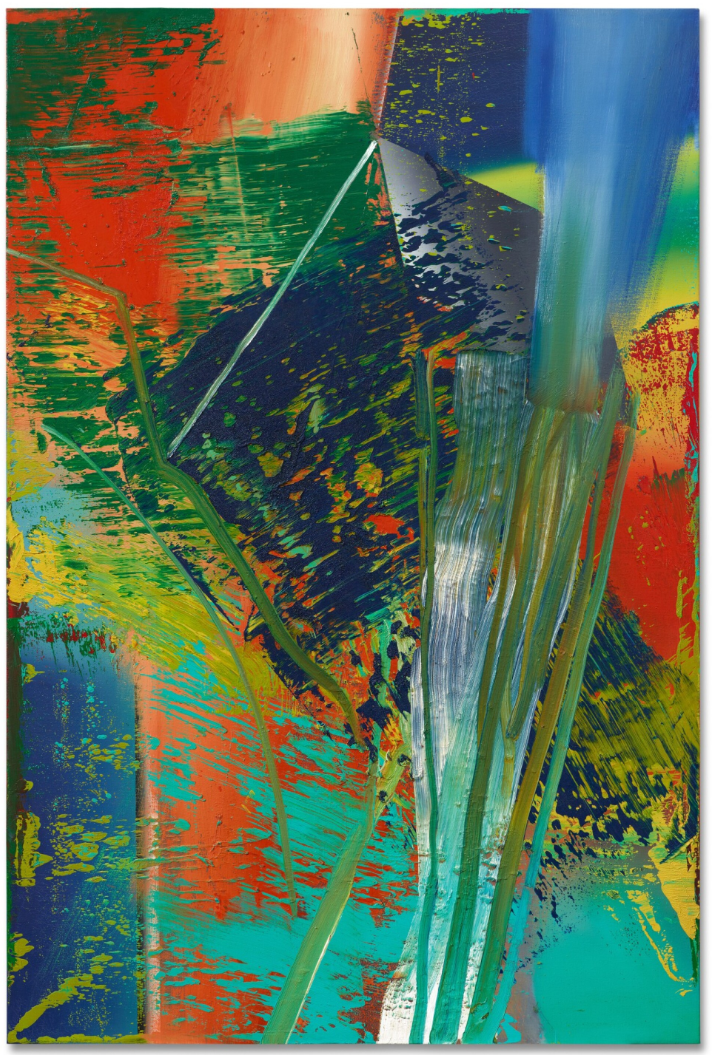
GERHARD RICHTER (b. 1932)
Abstraktes Bild, 1985
Oil on canvas
180×120 cm (71 x 47 1/8 inches)
Signed, dated 1985, and numbered 576-1 on the reverse
USD 10 million
#10. Abstraktes Bild, 1985
Sotheby’ London: 14 October 2021
Estimated: GBP 5,000,000 – 7,000,000
GBP 5,943,000 / USD 8,133,297
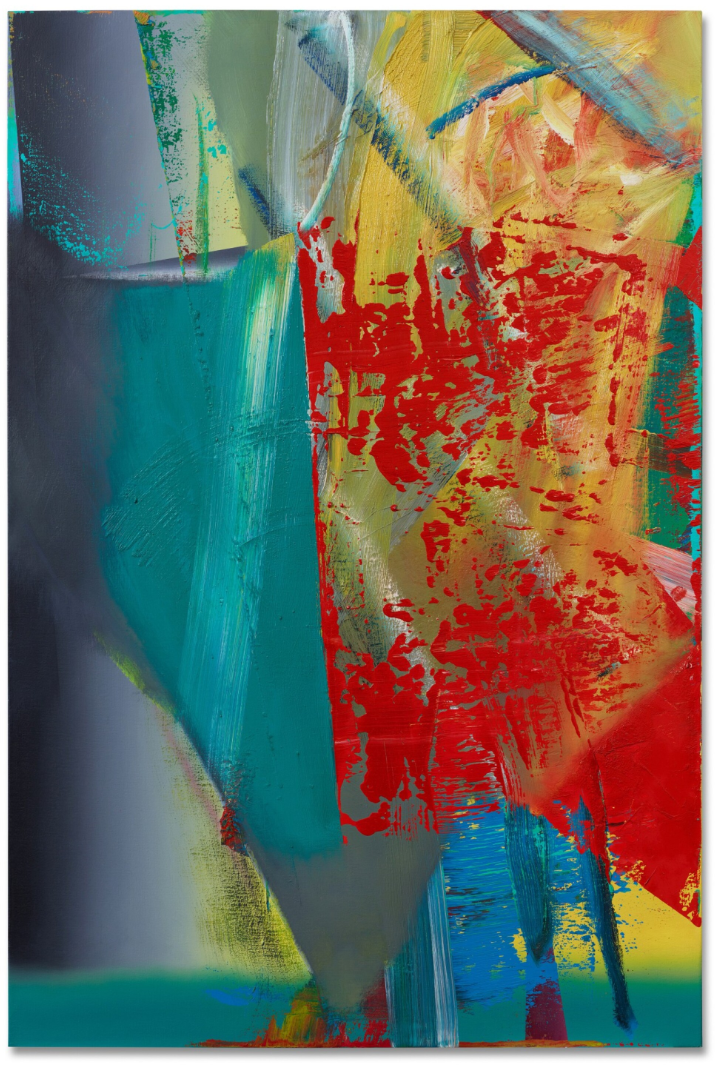
GERHARD RICHTER (b. 1932)
Abstraktes Bild, 1985
Oil on canvas
180×120 cm (71 x 47 1/8 inches)
Signed, dated 1985 and numbered 576-2 on the reverse
#11. Abstraktes Bild, 1992
Christie’s New-York: 11 May 2021
Estimated: USD 9,000,000 – 12,000,000
USD 6,990,000
GERHARD RICHTER (B. 1932), Abstraktes Bild | Christie’s (christies.com)
GERHARD RICHTER (B. 1932)
Abstraktes Bild, 1992
Oil on canvas
200×179 cm (78 3/4 x 70 1/2 inches)
Signed, numbered and dated ‘769-4 Richter 1992’ (on the reverse)
#12. Weiß (White), 1988
Phillips New-York: 19 November 2021
Estimated: USD 4,000,000 – 6,000,000
USD 5,717,000
Gerhard Richter – 20th Century & Co… Lot 29 November 2021 | Phillips
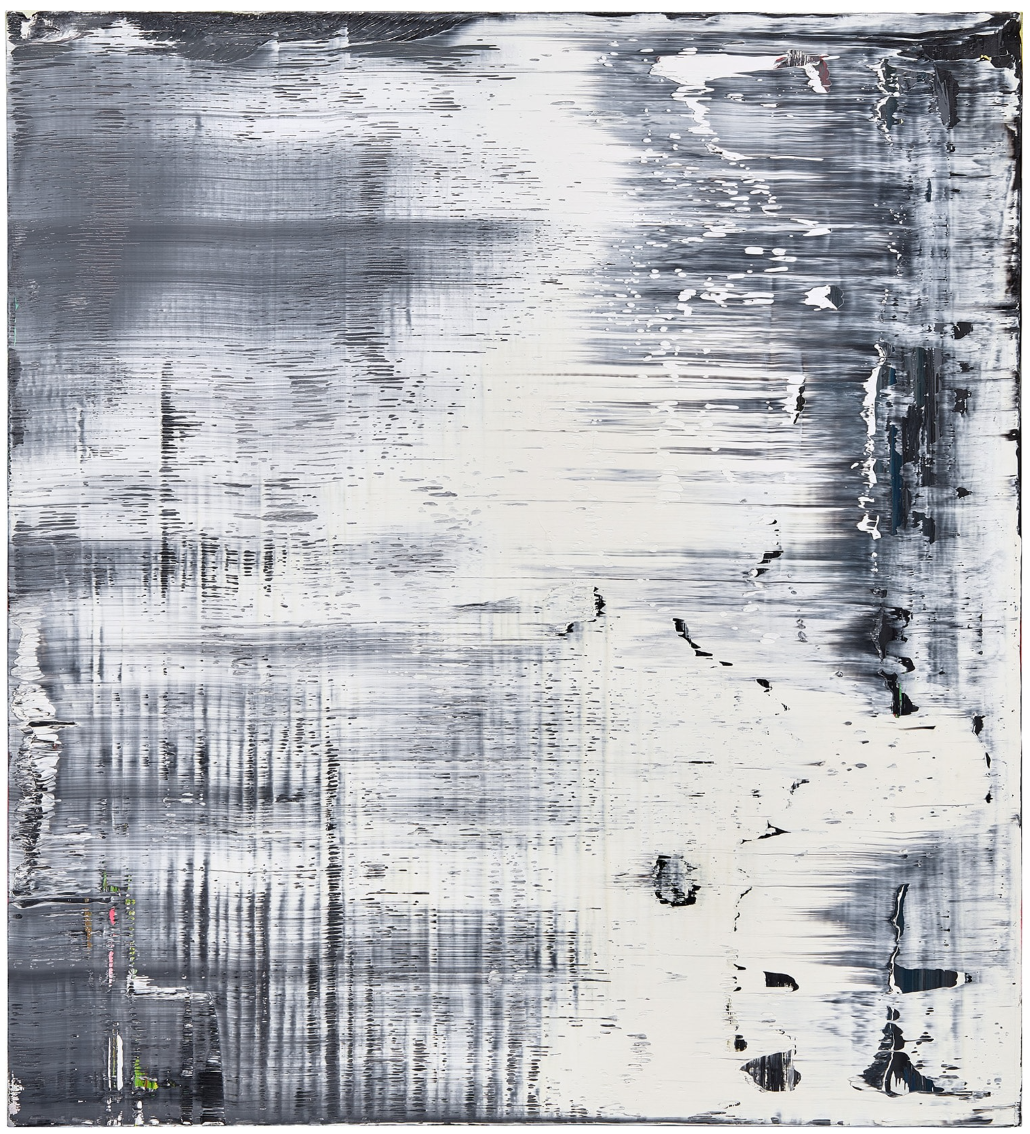
GERHARD RICHTER
Weiß (White), 1988
Oil on canvas
112.1 x 101.9 cm (44 1/8 x 40 1/8 inches)
Signed, inscribed and dated “685-1 Richter 1988” on the reverse
#13. Abstraktes Bild (940-2), 2015
Phillips New-York: 23 June 2021
Estimated: USD 4,500,000 – 5,500,000
USD 5,112,000
Gerhard Richter – 20th Century & Contem… Lot 26 June 2021 | Phillips
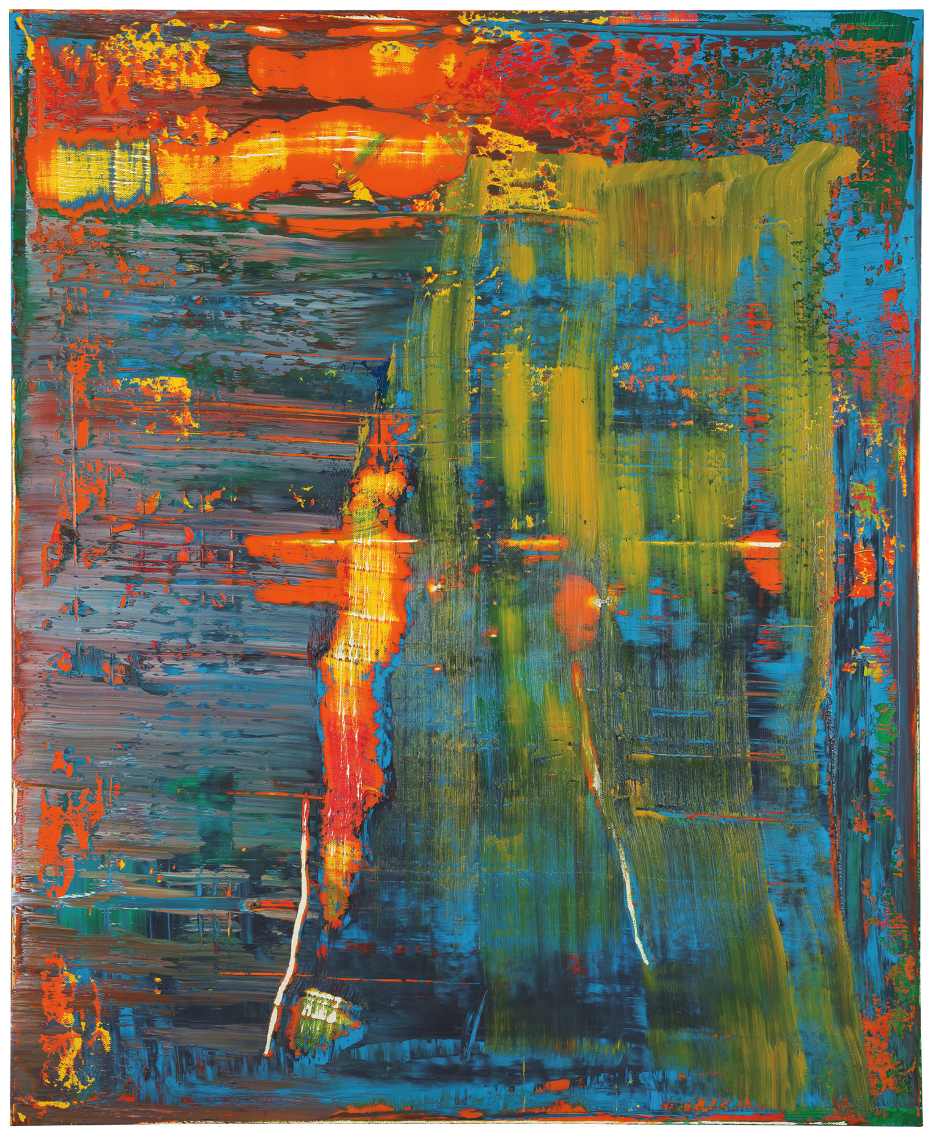
GERHARD RICHTER
Abstraktes Bild (940-2), 2015
Oil on canvas
117 x 96.2 cm (46 1/8 x 37 7/8 inches)
Signed, inscribed and dated “940-2 Richter 2015” on the reverse
USD 5 million
#14. Abstraktes Bild, 1988
Christie’s New-York: 11 November 2021
Estimated: USD 2,500,000 – 3,500,000
USD 4,350,000
GERHARD RICHTER (B. 1932), Abstraktes Bild | Christie’s (christies.com)
GERHARD RICHTER (B. 1932)
Abstraktes Bild, 1988
Oil on canvas
120 x 99.7 cm (47 1/4 x 39 1/4 inches)
Signed, inscribed and dated ‘679-3 Richter 1988’ (on the reverse)
#15. Abstraktes Bild, 2009
Christie’s New-York: 14 May 2021
Estimated: USD 1,800,000 – 2,500,000
USD 3,630,000
GERHARD RICHTER (B. 1932), Abstraktes Bild | Christie’s (christies.com)
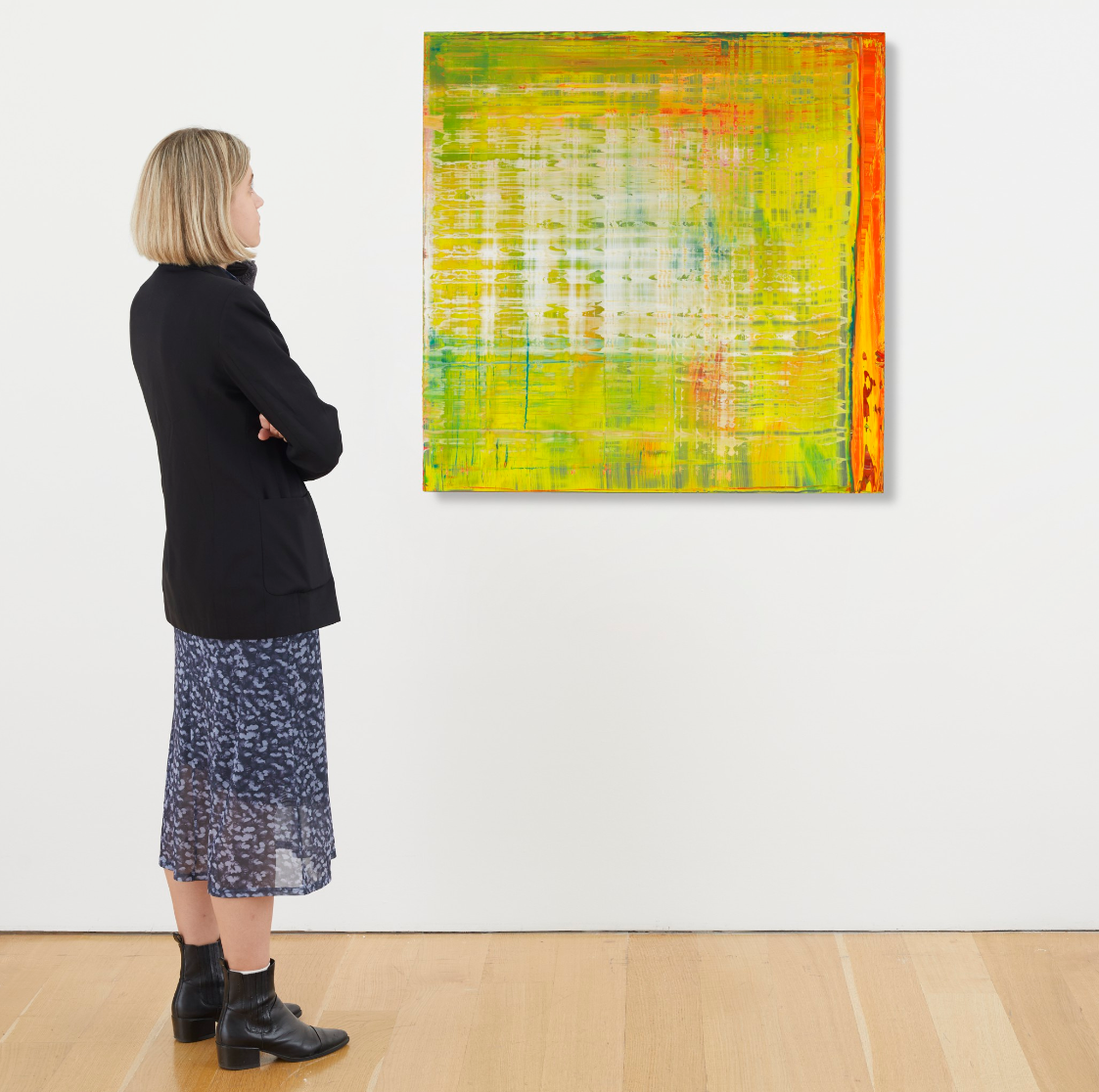
GERHARD RICHTER (B. 1932)
Abstraktes Bild, 2009
Oil on Alu-Dibond
84.1 x 84.1 cm (33 1/8 x 33 1/8 inches)
Signed, inscribed and dated ‘910-3 Richter 2009’ (on the reverse)
USD 1 million
#16. Fuji (839-41), 1996
Sotheby’s New-York: 13 May 2021
Estimated: USD 350,000 – 450,000
USD 437,500
Fuji (839-41) | Contemporary Art Day Auction | 2021 | Sotheby’s (sothebys.com)
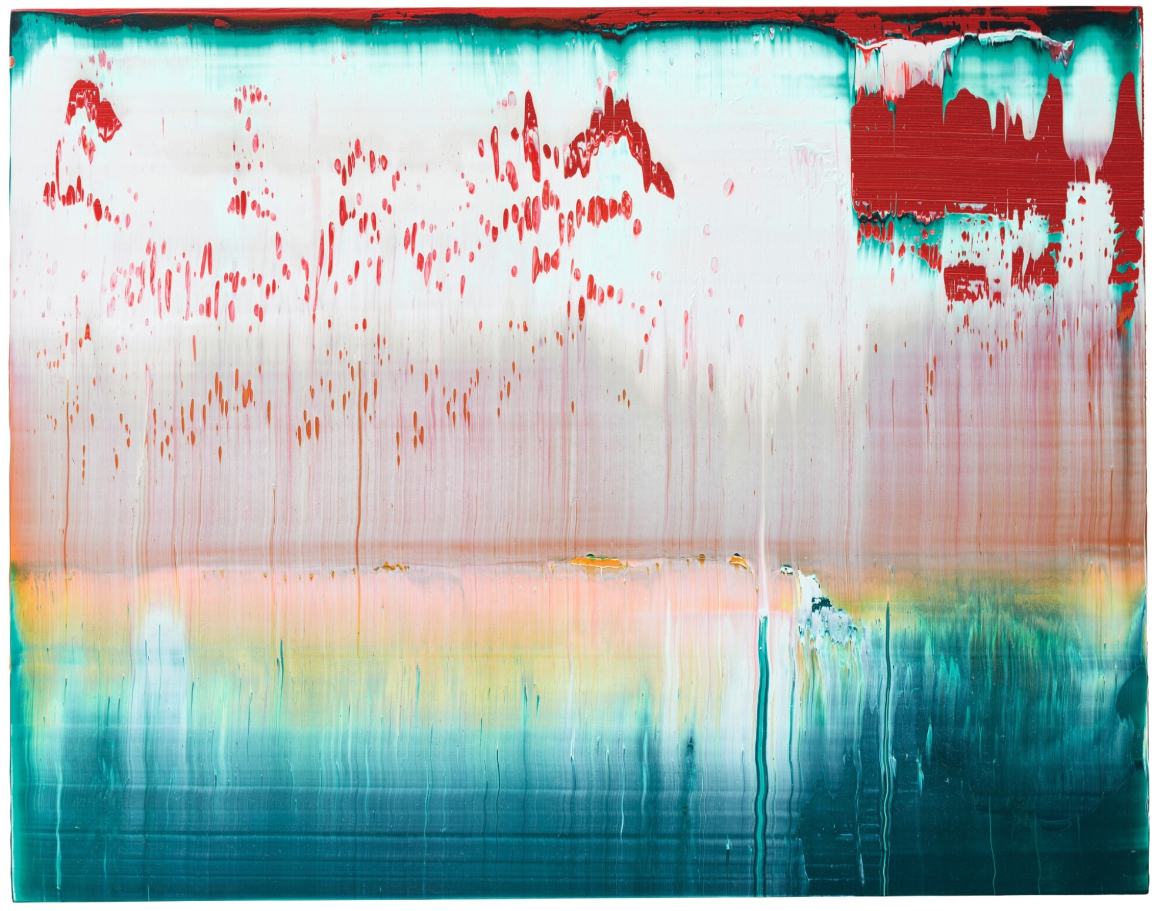
GERHARD RICHTER (b. 1932)
Fuji (839-41), 1996
Oil on steel panel
28.9 x 36.8 cm (11 3/8 x 14 1/2 inches)
Signed on the reverse
Record Breakers
Abstraktes Bild, 1997
Sotheby’s New-York: 15 November 2023
Estimated: USD 25,000,000 – 35,000,000
USD 31,932,000
Abstraktes Bild | Contemporary Evening Auction | 2023 | Sotheby’s (sothebys.com)
GERHARD RICHTER (b. 1932)
Abstraktes Bild, 1997
Oil on canvas
275×275 cm (108 1/4 x 108 1/4 inches)
Signed, dated 1997 and numbered 849-1 (on the reverse)
Presenting a magnificent vista of variegated abstraction and saturated hue, Abstraktes Bild from 1997 is an extraordinary exemplar of Gerhard Richter’s iconic Abstrakte Bilder, a series of paintings widely recognized as the preeminent venture in abstract art of the last fifty years. Even within this rarified group, Abstraktes Bild is indisputably one of the most visually striking and impressive paintings: towering at nearly eleven feet in both directions, Abstraktes Bild is one of only fifteen rare Abstraktes Bilder in this monumental square format and scale that the artist has produced to date, with other examples from the group held in the collections of the San Francisco Museum of Modern Art, the Froehlich Collection in Stuttgart, the Moderna Museet in Stockholm, and the Cage cycle, on long-term loan to the Tate Modern in London.
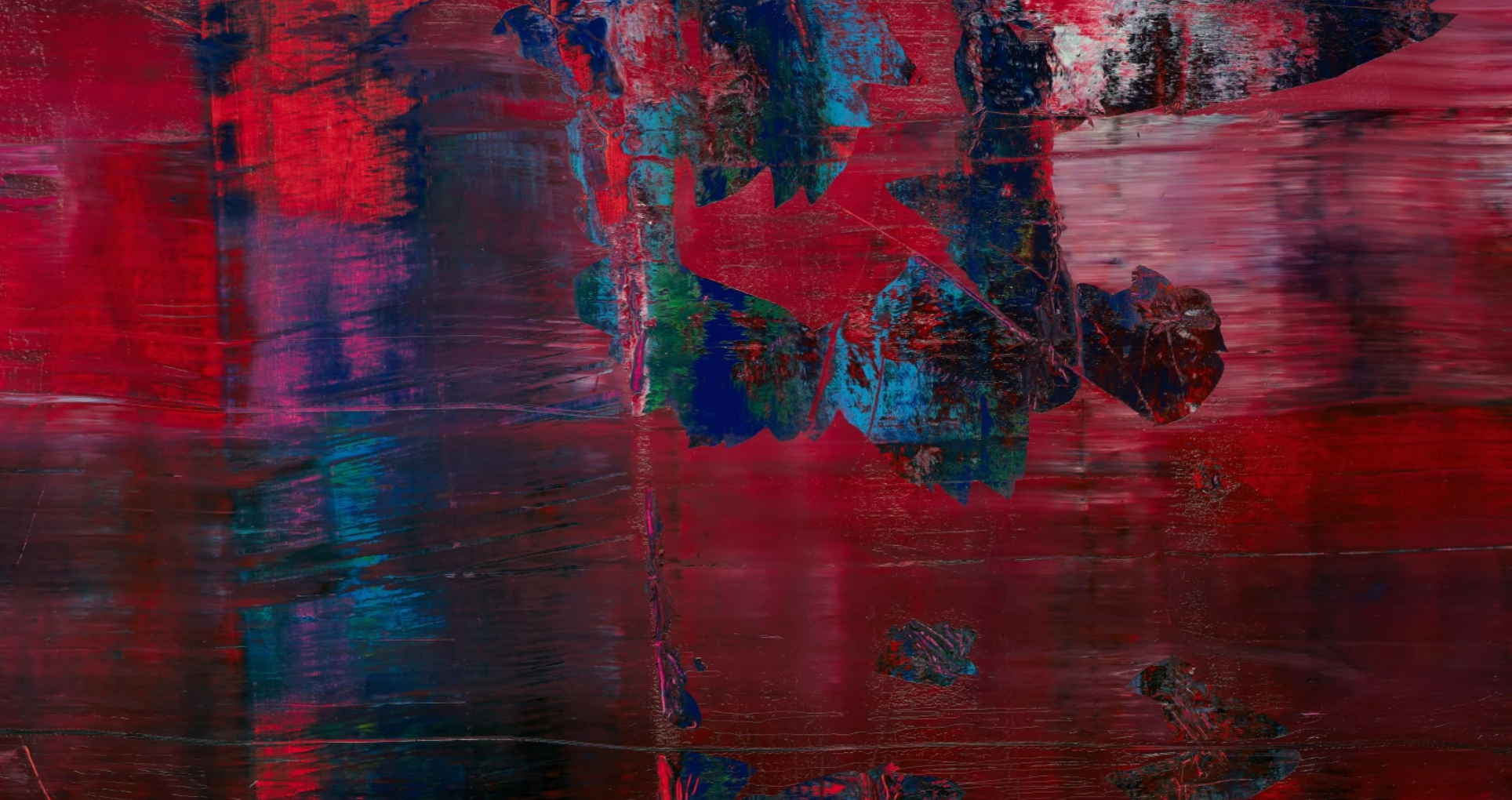
Across the colossal surface, swathes of scarlet and burgundy pigment are pulled aside like gestural veils, revealing underlayers of glimmering blue, green, and even alabaster pigment, the exquisitely ornate surface superbly exhibiting Richter’s command of medium, entirely innovative technique, and, most demonstrably in the present work, his unprecedented mastery of color. Here, we see the artist revel in the chance slippages of his signature squeegee tool, which Richter uses to simultaneously build and erode his mesmerizing surface. One of the last and largest canvases Richter executed in 1997, the present work is the first in a series of three monumental paintings from a limited cycle that Richter produced at the end of that year (numbered “849“). The artists initially painted the triad as a single monumental work, before choosing to split the painting into three sister works. Of the three, the present work is the only one remaining in private hands, with 849-2 held at the High Museum of Art in Atlanta, and 849-3 held in the collection of the Israel Museum in Jerusalem. Acquired directly from Anthony d’Offay Gallery following its debut exhibition there, present work has been held in the same prestigious private European collection for over two decades.
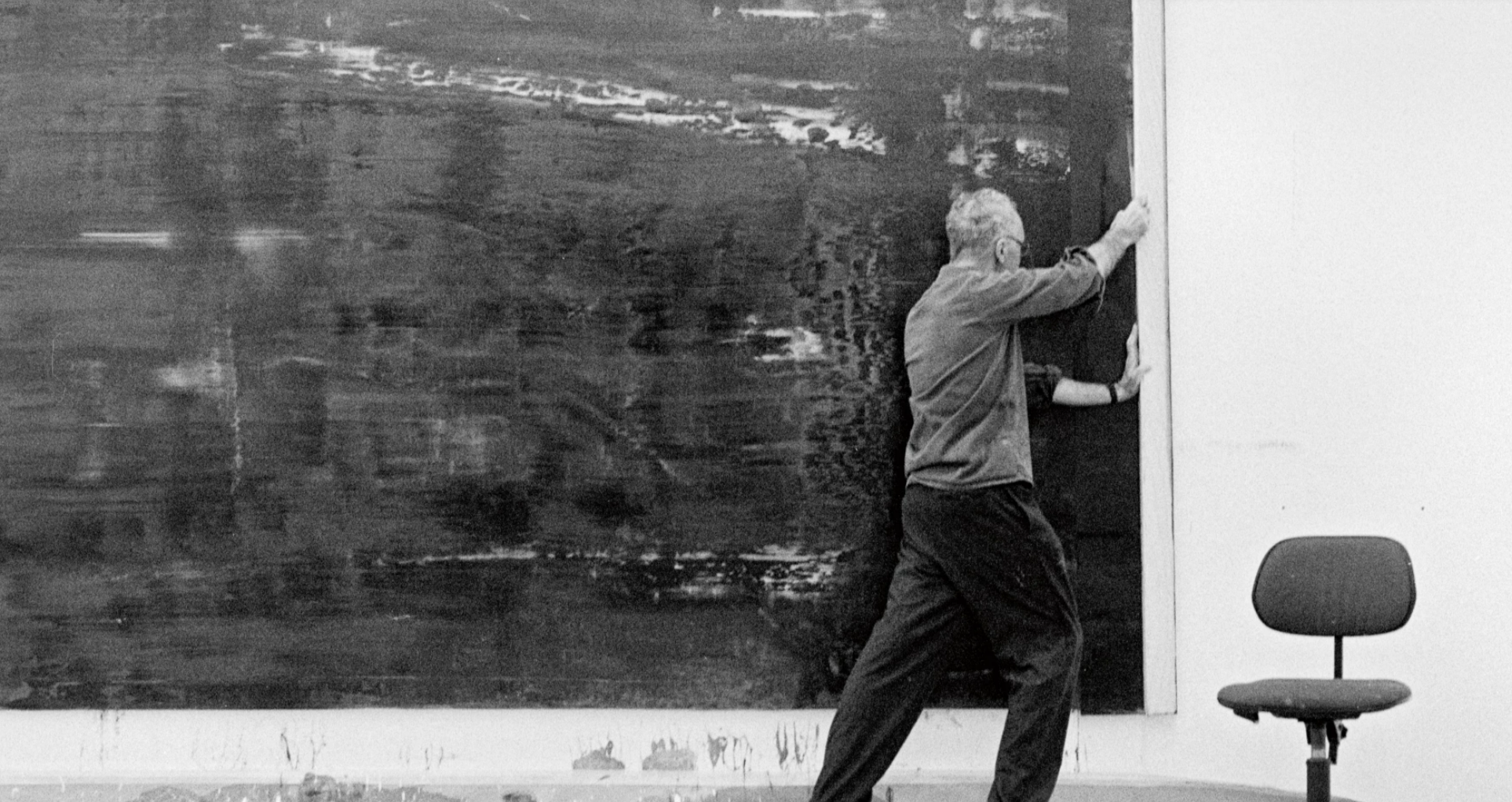
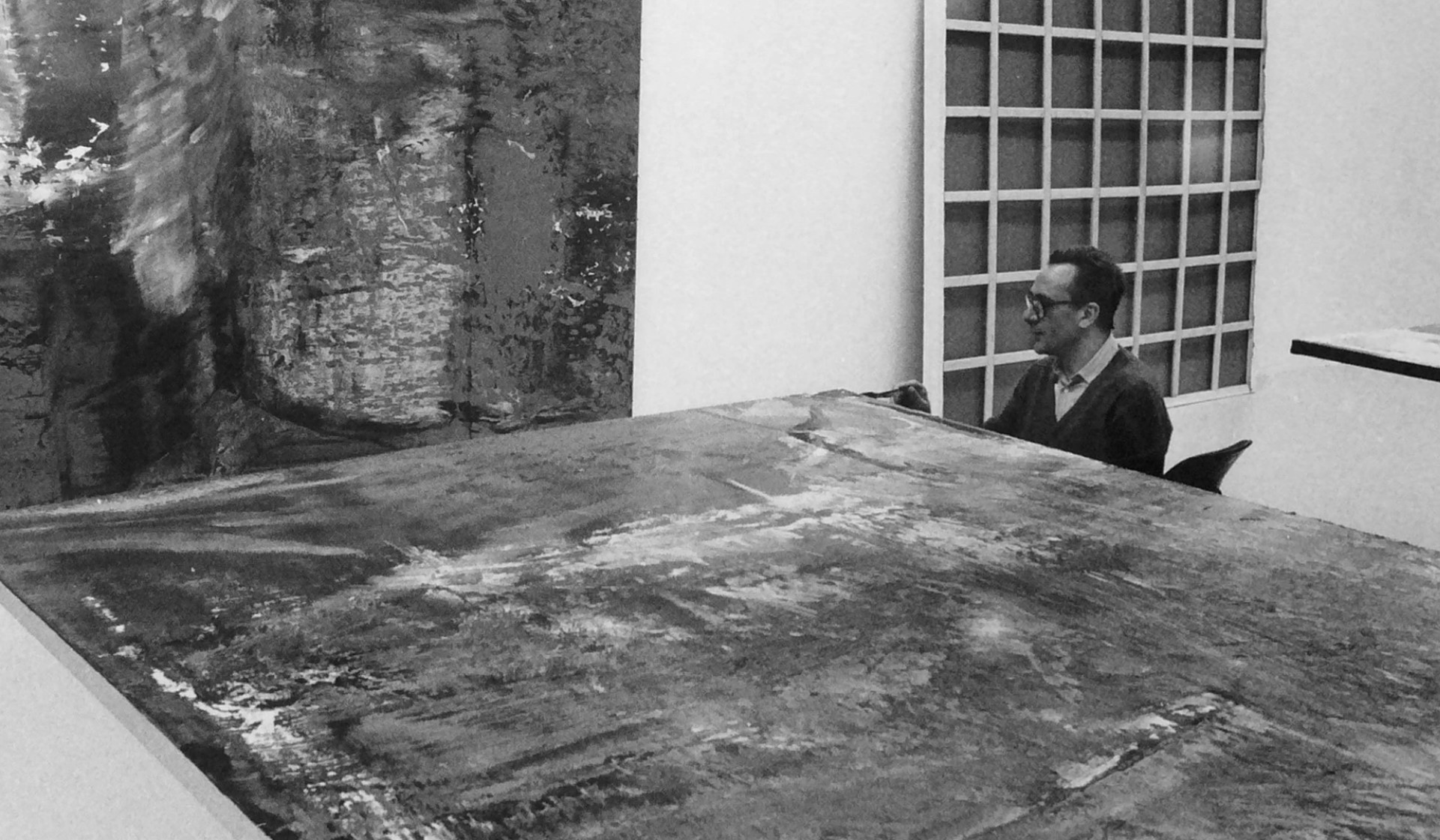
GERHARD RICHTER IN HIS COLOGNE STUDIO, 2006. PHOTO © HUBERT BECKER. ART © 2023 GERHARD RICHTER
In Abstraktes Bild, Richter’s odyssey into the realm of pure abstraction unveils his most extreme engagement with the medium – a raw examination of the very nature of paint itself, as a physical substance in both original and manipulated forms. Embracing an element of automatism, Richter compounds the full force of kinetic energy into the painterly surface of Abstraktes Bild as he draws his far-reaching squeegee across the canvas, layer after layer. Alternating in direction, density of paint, viscosity of the dragged movements, and the drying times between each wipe, Richter indulges in an infinite and unknowable number of permutations borne out of the interaction between oil pigments. As Benjamin Buchloch noted: “With so many combinations, so many permutational relationships, there can’t be any harmonious chromatic order, or compositional either, because there are no ordered relations left either in the colour system or the spatial system” (Benjamin Buchloh quoted in: Benjamin Buchloch, ed., “An Interview with Gerhard Richter,” Gerhard Richter: October Files, Massachusetts 2009, pp. 23-24). It is in this way that Abstraktes Bild resembles a confluence of many paintings at once and exhibits the ultimate painterly palimpsest: the exuberant strata of paint bear the ghosts of previous accretions, of color juxtapositions obsessively applied, erased, remade, and obliterated over again.
Abstraktes Bild (636), 1987
Phillips New-York: 14 November 2023
Estimate on Request
USD 34,800,000
Gerhard Richter – 20th Century & Co… Lot 34 November 2023 | Phillips
GERHARD RICHTER
Abstraktes Bild (636), 1987
Oil on canvas, in 2 parts
Each: 260.4 x 200.3 cm (102 1/2 x 78 7/8 inches)
Overall: 260.4 x 400.7 cm (102 1/2 x 157 3/4 inches)
Signed, inscribed and dated “636 Richter 1987” on the reverse of the left panel
Inscribed “636” on the reverse of the right panel
Gerhard Richter pulls the squeegee across a luminescent expanse of sticking, shimmering oil paint. A central space of black grounds the artist’s brilliant gradations of strawberry red, acid yellow, bright cerulean, turquoise, and lime green. His tool swoops in wide diagonals; vertical and horizontal striations of pigment, a spackling of sunshine yellow and midnight blue. At such scale, the range of color, the prismatic rainbow of hues shining forth, is all-encompassing, overwhelming; astonishing in its depth, its encapsulation of the act of painting, of color played out across time. This is Abstraktes Bild, a painting of monumental scale, and a record of Richter, a true innovator, at the height of his powers.
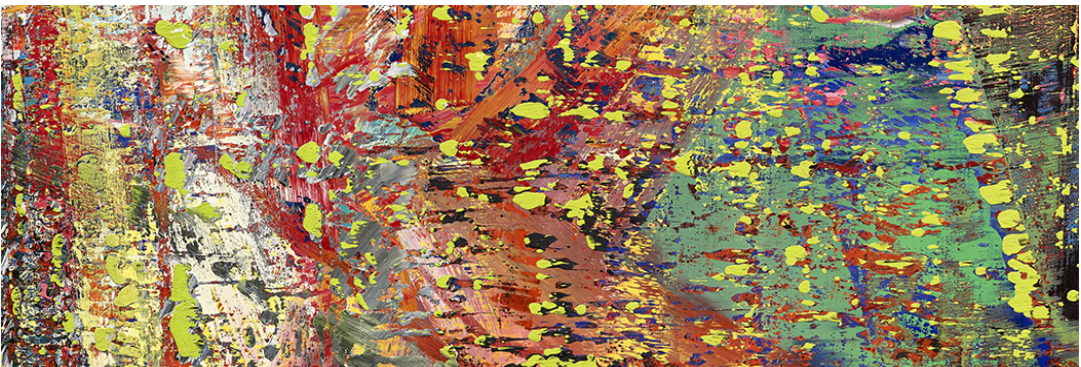
Abstraktes Bild, 1987, comprised of two canvases, spans over eight feet in height and thirteen feet in width. The work is a consummate example of Richter’s skill with the squeegee, a tool he integrated into his abstract paintings only one year prior, which has become a hallmark and visual signature of his richly varied practice. With the squeegee, the artist pulls paint across the composition, working on both canvases at once, scraping layers out from under one another in a seemingly infinite field of color.
Abstraktes Bild, 1986
Sotheby’s London: 1 March 2023
Estimate on Request
GBP 24,179,000 / USD 29,099,772
Abstraktes Bild | Modern & Contemporary Evening Auction | | Sotheby’s (sothebys.com)
GERHARD RICHTER (B. 1932)
Abstraktes Bild, 1986
Oil on canvas, in two parts
Overall: 260×400 cm (102 3/8 x 157 1/2 inches)
Signed Richter, dated 1986, numbered 596 and inscribed Teil A (on the reverse of left panel)
Numbered 596 and inscribed Teil B (on the reverse of right panel)
Painted in 1986 at the apex of a career-breakthrough, Absktraktes Bild (596) is a work of immersive chromatic impact, astounding proportions, and complex compositional power. Across two expansive canvases that seamlessly blend into one compositional whole, Abstraktes Bild delivers a panorama of abstract colour that presents a sparring of opposites within dramatic pictorial space. In a theatrical play of primary and secondary colour – in which chaos is balanced with control – abstraction gives way to the inference of figuration: veils of red pigment both conceal and reveal a photo-realistic underlayer, whilst in the left panel sweeping waves of blue-green and purple conjure landscape associations reminiscent of Monet’s panoramic waterlily paintings at the Musée de l’orangerie. Here the history of painting confronts us in a single work: from the giants of twentieth-century Abstract Expressionism idolised by Richter as a young artist, through to the Impressionists and their reimagination of nature, back through the history of the Romantic landscape genre, Richter’s monumental abstract forms an astounding meta-dialogue. In this picture, as evident in the very best of the Abstrakte Bilder from 1986 onwards, the potential for painting to not only respond to art history but also to form an analogy for the coexistence of seemingly disparate and contradictory elements comes to the fore.
Painted atop what appears to be a photographic layer of pearlescent underpainting, Richter has waged an aesthetic battle of opposing forces. Where a finely articulated gradation sits underneath, horizontal veils of stuttering paint present a riposte to the vertical drag of the squeegee. The central divide between the two panels is blended by a waterfall downpour of blue pigment which is crowned by a kaleidoscopic rainbow-esque burst of color. On the right panel, commanding red pigment dominates, and is punctuated by primary-colored apertures of yellow, blue, and overlayers of acidic green, whilst on the left an aurora borealis-like chromatic spectrum narrates a wave-like movement in which green gives way to pink, red, and inky night-sky blue. Seemingly endless layers of bright color can be found in the smallest details of this painting, elements that further emphasize the illusion of pictorial depth as though a landscape vista might at any moment be perceived. Indeed, furthest back, the smooth gradation of pale-yellow giving way to dusky-blue, giving way to deepest sunset red, is offset by a stark angular form at the far right: these aspects and their suggestive photo-realistic appearance is nonetheless veiled and denied by domineering red pigment applied with the squeegee. It is in this balance between contradictory forms – between representation and free abstraction – that the genius of this painting and Richter’s Abstrakte Bilder lies.
Abstraktes Bild, 1990
Sotheby’s Hong-Kong: 7 October 2022
Estimated: HKD 175,000,000 – 235,000,000
HKD 200,443,008 / USD 25,532,514
GERHARD RICHTER (b. 1932)
Abstraktes Bild, 1990
Oil on canvas
225×200 cm (88 ⅝ x 78 ¾ inches)
Signed, dated 1990 and numbered 725-1 on the reverse
Abstraktes Bild, executed in 1990, is a breathtaking masterwork of Gerhard Richter’s epic cycle of Abstraktes Bild paintings that the artist has produced since the 1980s. Belonging to the concise 725 series of just five works, which includes examples currently housed in the National Gallery of Victoria, Melbourne (725-3) and on loan at the Kunstmuseum Bonn (725-5), this museum-quality work is a paragon of the artist’s most arresting and seductive language of abstraction. One of Richter’s most stylistically stunning works, it measures in excess of two by two metres, thereby functioning on a monumental scale and enveloping the viewer entirely and irresistibly into its chromatic expanse. Testament to the visual power and significance of the work, Abstraktes Bild has been exhibited internationally in notable exhibitions, including Gerhard Richter: Mirrors at Anthony d’Offay Gallery, London (1991); Gerhard Richter in Dallas Collections at Dallas Museum of Art, Dallas (2000); Guess What? Hardcore Contemporary Art’s Truly a World Treasure. Selected Works from the Yageo Foundation Collection which travelled to prominent institutions around Japan including The National Museum of Modern Art, Tokyo (2014-2015); and Gerhard Richter: The Life of Images at Queensland Art Gallery, Brisbane (2017-2018).
Gerhard Richter’s artistic contribution is internationally considered within the highest tier of this era; his inimitably diverse canon evidencing more than five decades of philosophical enquiry into the core natures of perception and cognition. Indeed, with its poignant critical reflections and groundbreaking advancements, it is undeniable that his output has opened up a wealth of possibilities for the future course of Art History. Since the early 1960s he has considered all genres of painting, delving into and pushing the boundaries of theoretical and aesthetic levels of understanding whilst exploring and challenging the fundamentals of their development. However, his extraordinary odyssey into the realm of abstract painting is often regarded as the culmination of his artistic and conceptual inquiries into the foundations of visual understanding. After decades of exploring the role of painting in relation to competing visual cultures; film and photography; and even painting itself, the emergence of the Abstraktes Bild stands as the crowning achievement of his oeuvre.
Abstraktes Bild, 1994
Christie’s New-York: 10 May 2022
Estimate on Request
USD 36,500,000
GERHARD RICHTER (B. 1932) (christies.com)
GERHARD RICHTER (B. 1932)
Abstraktes Bild, 1994
Oil on canvas
225×200 cm (88 5⁄8 x 78 3⁄4 inches)
Signed, inscribed and dated ‘809-4 Richter 1994’ (on the reverse)
Exhibiting a chromatic potency that is unmatched in contemporary painting, Gerhard Richter’s Abstraktes Bilder attest to the timeless and emotive power of color. In the present work, saturated hues of deep red, golden yellows, and rich sapphire blues roil up through the highly active surface to magnificent effect. The culmination of a lifelong investigation into the practice of painting, Abstraktes Bild also encapsulates the artist’s investigations into the formal and conceptual possibilities of painting, his unique technique opening up the composition and disrupting the sanctity of the painted surface.
Measuring nearly seven feet square, the viewer becomes enveloped in the dynamism of the kaleidoscopic surface, captivated by the intricate details are myriad of colorful hues. Formerly in the collection of legendary collector Heiner Pietzsch and his wife Ulla, and latterly the legendary guitarist Eric Clapton, Abstraktes Bild is a magnificent example from one of the most celebrated bodies of work of the past fifty years. Painted in 1994, Abstraktes Bild is a sumptuous example of the artist’s comprehensive interrogations of the painted surface. Executed on a monumental scale, in the present work Richter choreographs a prismatic array of jewel-like hues across the surface of the canvas. With careful sweeps of his brush—and even more stringent manipulations of the pigment using his hard-edged plastic squeegee—the artist lays down seams of vibrant, unadulterated color. Passages of primary red, blue and yellow coalesce throughout the composition, resulting in bottomless pools of saturated color. At their edges, where they come into contact with neighboring passages of color, they transition into activated areas that fizz with energy. Like Rothko’s floating fields of pigment, it is here where pigment coalesces with pigment that the visual energy present in the best examples of Richter’s work can most acutely be seen. The arduous process of applying, and then scraping off, consecutive layers of paint results in an intricate surface of infinite detail: thick impasto sits alongside thin veneers of paint that are so gossamer thin as to reveal the texture of the warp and weft of the underlying canvas. Traces of the broad sweep of the squeegee, are then disrupted by the thin furrows of a sharp implement dragged across the wet surface. Abstraktes Bild’s expansive scale results in a deeply engaging experience. The vibrant, almost acidic green is intricately balanced by the flaming red layer which shimmers through to the surface. Like a fiery sunset reflecting off the surface of the surface of a lake or pond, Richter evokes the natural associations inherent in the physical presence of the painting. But just as in Monet’s late great water lilies, Richter’s intensions are not to fool the eye into recreating an image of a landscape, the effect is deliberately ambiguous, seeming to both conceal and reveal at the same time and vying with one another for the eye’s attention.
Abstraktes Bild, 1993
Sotheby’s New-York: 15 November 2021
Estimated: USD 20,000,000 – 30,000,000
USD 33,010,500
Abstraktes Bild | The Macklowe Collection | 2021 | Sotheby’s (sothebys.com)
GERHARD RICHTER (b.1932)
Abstraktes Bild, 1993
Oil on canvas
240×240 cm (94 1/2 x 94 1/2 inches)
Signed, dated 1993 and numbered 797-2 on the reverse
Abstraktes Bild from 1993 is an extraordinary exemplar of Gerhard Richter’s iconic Abstrakte Bilder, a series of paintings widely recognized as the preeminent venture in abstract art of the last fifty years. Even within this rarified group, Abstraktes Bild is indisputably one of the most visually striking and impressive paintings, superbly exhibiting Richter’s command of medium, entirely innovative technique, and, most demonstrably in the present work, his unprecedented mastery of color. By the time Abstraktes Bild was painted in the early 1990s, the heterogeneous, variegated surfaces of Richter’s 1980s works had given way to paintings that were more unified and chromatically coherent in form, in which the final drag of the squeegee served to level and unite all the previous accretions and layers of paint. Here, flaming bursts of crimson and scarlet dominate the palette, contrasting magnificently with the dusky greens and blues that emerge from the canvas ground; beneath, flashes of yellow are barely glimpsed, flickering in and out of vision from beneath skeins of red and blue. This scintillating combination of colors, kaleidoscopic in its intensity, imbues the work with a visceral energy, seeming to pulsate with raw excitement and endless possibilities.
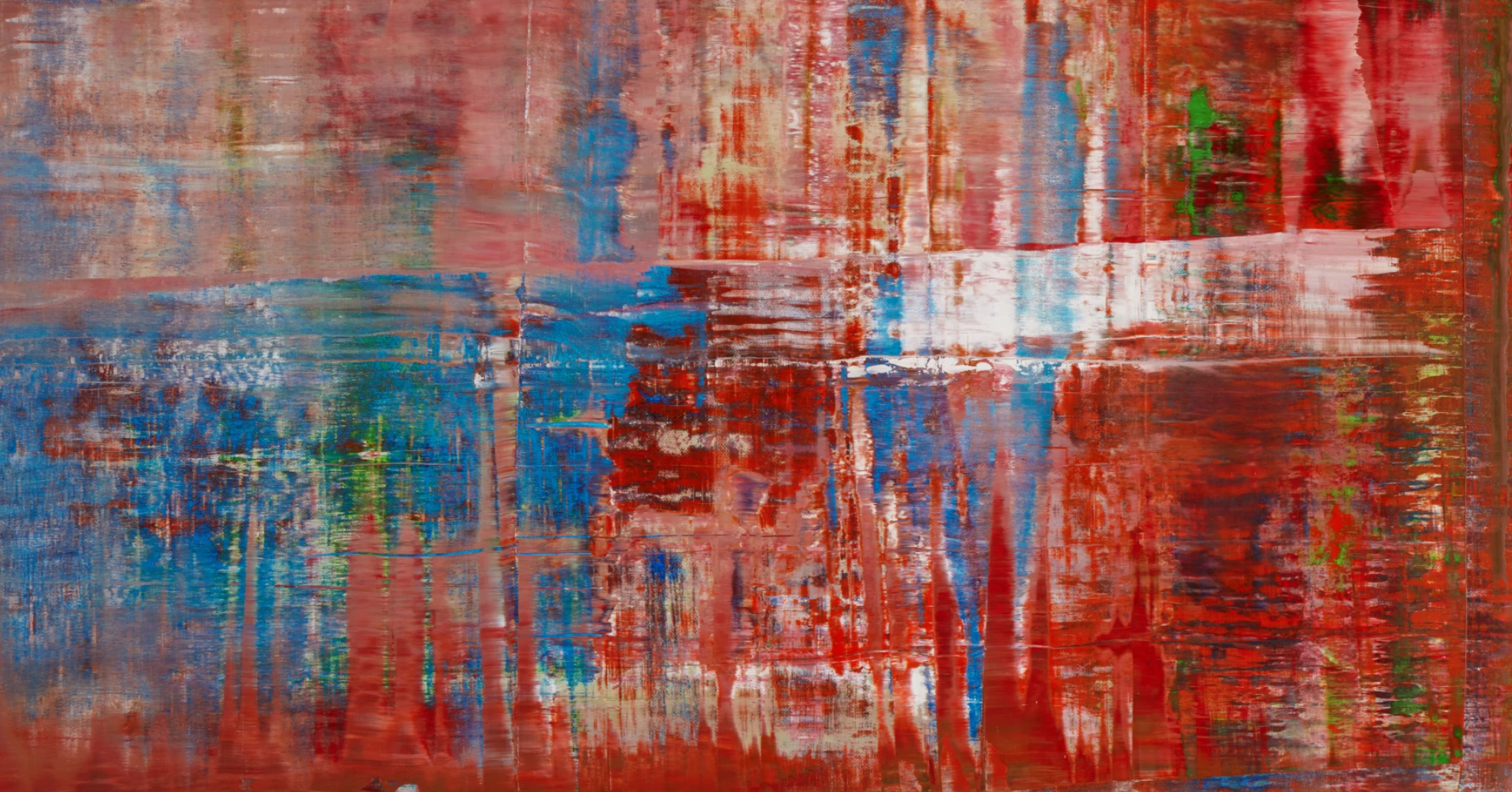
Across the primed vastness of his empty canvas and with the great traction and drag of a hard-edged squeegee, Richter streaked and smeared passages of semi-liquid pigment, fusing and dissecting wide tracts of oil paint. The shadows of the medium’s former malleability are caught now in a perpetually dynamic stasis; cast as staccato ridges, crests, and peaks of impasto that punctuate an underlying fluidity in variously pronounced chromatic contrast, creating a powerful sensation of depth. The interchangeability of light and dark hues in front and behind, such as brilliant whites on deepest crimson in the top left versus vivid lime beneath opaque rich umbers towards the lower right, radically destabilizes this sense of recession. This extreme textural topography creates an arresting energy as the nature of the object subject to our vision constantly transforms with our shifting perspective and an ever-changing play of light across it. What is near and what is far becomes indefinite and our eye is forced to constantly readjust to attempt to comprehend the pure assault of pictorial data. Additional scrapes, smudges, and incisions in all directions carry us forward and back, beyond even the furthermost reaches of color and pigment in a way reminiscent of Fontana’s slashes and scything deconstruction of the picture plane into the infinity of space beyond. The sum of all these accretions and reductions, of Richter’s tireless process of addition and subtraction, is a record of time itself within the paint strata: the innumerable layers of application and eradication have left their traces behind to accumulate and forge a portrait of temporal genesis.
Abstraktes Bild, 1988
Christie’s New-York: 11 November 2021
Estimated: USD 25,000,000 – 25,000,000
USD 27,185,000
GERHARD RICHTER (B. 1932) (christies.com)
GERHARD RICHTER (B. 1932)
Abstraktes Bild, 1988
Oil on canvas
78 3/4 x 71 1/8 inches (200 x 180.7 cm)
Signed, inscribed and dated ‘680-1 Richter 1988’ (on the reverse)
A venerable titan of twentieth century painting, Gerhard Richter has always forged his own artistic path. His expansive oeuvre is a testament to this fact, and will most assuredly continue to influence countless generations of artists. Part of his highly-acclaimed Abstraktes Bild series, this monumental canvas is a vibrant and visually rich example of Richter’s ingenuity and adept handling of raw materials. Probing the depths of his practice in his customarily methodical, inquisitive manner, Richter works in a nearly automatic mode involving a series of layers, scrapes, and smears. The painter responds to how each action changes the canvas and this, in turn, sets up a sequence of subsequent actions.
“I want to end up with a picture that I haven’t planned. This method of arbitrary choice, chance, inspiration and destruction may produce a specific type of picture, but it never produces a predetermined picture. Each picture has to evolve out of a painterly or visual logic: it has to emerge as if inevitably.”
This spirit of inevitability renders each of the works in his Abstracts series forthright in their own unique personalities. Diverging aesthetically from his earlier practice, much of which centered around order and recognizable source material, paintings like the present example illustrate how broad of a net Richter has cast in his experimentation.
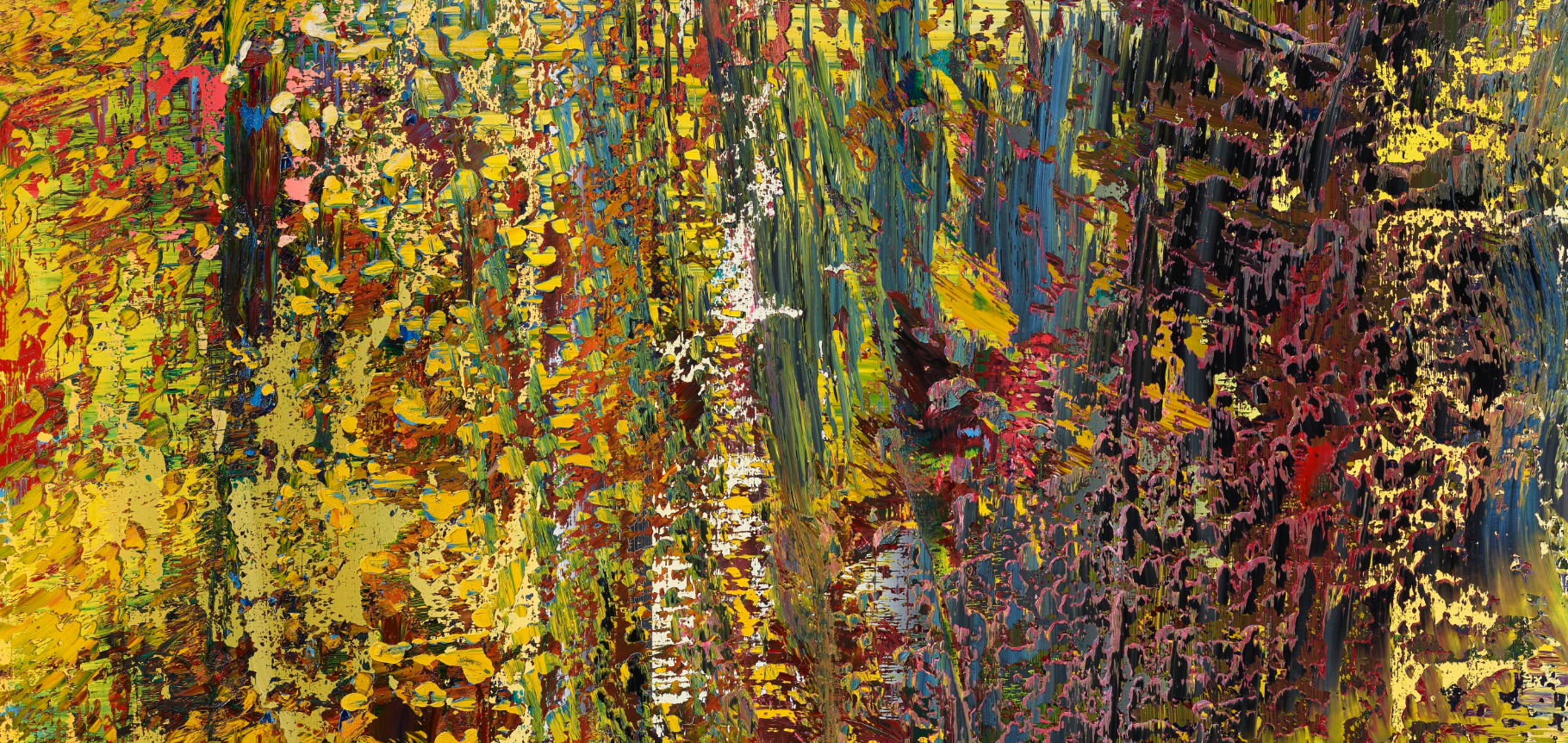
A riot of sumptuous color and a visually complex framework of paint, Abstraktes Bild revels in the pure energy of its creation. Given over to an abundance of golden yellow on the topmost layer, the canvas offers up a dizzying mix of red, pink, blue, green, black, white, and various other hues in between. In the middle of the composition, a shock of white shines out from beneath the turmoil to anchor a central spine. To its right, the dark viscosity of deep black covered in tendrils of meaty red creates a site of absorption that competes with the rest of the canvas. The entire left section, from bottom to top, is a swirl of flaming gold that exhibits jewel-like tones and small pockets reminiscent of exquisite cloisonné work in medieval metalwork. Of course, all of this turmoil and fervor is a result of the delicate dance Richter performs to appease his capricious media.
Below are some of the Abstraktes Bild that sold for record prices before 2021.
A B, Still, 1986
Sotheby’s New-York: 18 November 2016
Estimated: USD 20,000,000 – 30,000,000
USD 33,987,500
(#13) Gerhard Richter (sothebys.com)
GERHARD RICHTER
A B, Still, 1986
Oil on canvas
224.8 x 200 cm (88 1/2 x 78 3/4 inches)
Signed, dated 1986 and numbered 612-4 on the reverse
Broadcasting a majestic vista of unadulterated abstract splendor, Gerhard Richter’s eminent masterwork A B, Still stands as a paragon of the artist’s treatise on the aesthetic and conceptual capacities of painting. Generated through an idiosyncratic alchemy, the artist’s simultaneous revelation and concealment of electrifying colors conjures a near transcendent experience of the chromatic light that emanates from the exquisitely ornate surface. Saturated with tonal vivacity, red, yellow and blue veils of lusciously viscous oil paint are spectacularly applied into a mesmerizing confluence of gestural tides. Stemming from the chronological apex of the period in which Richter perfected and centralized his use of the large-scale spatula or ‘squeegee,’ A B, Still ranks amongst the very finest achievements of the artist’s abstract output. As one of the most elegant and fully resolved exemplars of this historically significant corpus, the engulfing scale of the piece transports the beholder into its unique realm of pure aesthetic ecstasy. Beyond the sensational presence that is a hallmark of this series, the present work also belongs to a limited number of important works that Richter titled specifically in reference to the direct inspirational circumstances surrounding their creation. As a mesmeric vision that elicits a near spiritual encounter, here Richter actualizes the most metaphysical tenants of a practice: extending his continued dialogue between painting and photography, he captures the very aesthetic essence of a quiet moment of contemplation. In sum, A B, Still embodies the fine line between objective distance and subjective expression that is the defining conceptual inquiry of Richter’s oeuvre. Through coloristic harmony, the interplay of Richter’s dense impasto and ethereal washes invite the viewer to look both at and through the immense depth of his laminae of surface; a profound affirmation of painting as both corporeal substance and cognitive illusion.
Abstraktes Bild, 1986
Sotheby’s London: 10 February 2015
Estimated: GBP 14,000,000 – 18,000,000
GBP 30,389,000 / USD 46,267,435
(#37) Gerhard Richter (sothebys.com)
GERHARD RICHTER
Abstraktes Bild, 1986
Oil on canvas
300.5 x 250.5 cm (118 3/8 x 98 5/8 inches)
Signed, dated 1986 and numbered 599 on the reverse
Chance, layering, erasure, chromatic power and compositional counterpoint are wielded to sublime effect in Abstrakes Bild from 1986. Following a corpus of nascent abstractions executed between the years of 1980-85, the present work heralds a decisive break and undeniable landmark achievement; from 1986 onwards Gerhard Richter would relinquish any planned compositional elements of form and structure in favor more predominantly of the indeterminate scrape and accretion of the ‘squeegee’. As laid down in the present work across seemingly photographic layers of pearlescent underpainting (more prominent towards the lower half of the composition), Richter has waged a battle between the squeegee and the brush. Horizontal veils of stuttering paint present a riposte to the vertical drag of wide brushstrokes, both of which are punctuated by finer and more angular accents. The result is a mesmerizing field in which painterly elements both spar against and complement each other while the paint’s chromatic value injects this piece with an undisputed brilliance. Broadcasting deepest blue through to acidic yellow and red, along with all the possible permutations that exist in between these primary values, Abstraktes Bild imparts glorious light effects that verge on the experiential. In the center, a vertical band of radiant green is pierced and intercut by a stream of luminous color to impart a reading akin to light flooding ecclesiastical architecture or sunlight coursing through the soft miasma of cloud. Indeed, the balance between hard and soft, structural solidity and phosphorescence, photographic and the abstract, finds an apogee in this enveloping work. Towering in strident swathes of luminescent and kaleidoscopic paint, Abstraktes Bild is not only one of the largest abstract paintings by the artist, it is also one of the most chromatically, compositionally and redolently astounding. Having been on extended loan to the Museum Ludwig, Cologne, during the 1990s, this painting is a remarkable exposition of the very apogee of Richter’s abstract canon.
Abstraktes Bild (648-3), 1987
Christie’s New-York: 12 November 2014
Estimated: USD 20,000,000 – 30,000,000
USD 31,525,000
Gerhard Richter (b. 1932) (christies.com)
GERHARD RICHTER (b. 1932)
Abstraktes Bild (648-3), 1987
225.4 x 200 cm (88 3/4 x 78 3/4 inches)
Oil on canvas
Signed, numbered and dated ‘Richter 1987 648-3’ (on the reverse)
With virtuosic mastery Gerhard Richter creates a vast seascape of high-keyed chromatic labyrinths that floods the picture plane in wave upon wave of spectral luminescence. The matrix of multiple pictorial registers at work in Abstraktes Bild (648-3)—spatial ambiguity, optical charge, tactile sensation and compositional complexity—delivers a kinetic and sensual force rarely matched in brilliance and beauty. Liquescent teal dissolves into viridian green; staccato punctuations of rich cadmium yellow and fiery red and magenta riddle the terrain disrupting the softly brushed aqueous turquoise and phthalo blue. The stunning grandeur of Abstraktes Bild manifests as much in the sudden bursts of chromatic under-layer as in the floating droplets of high-keyed chroma searing its vast surface. As if adrift in an immense coral underworld, vividly hued textures pulsate as they describe a seeming network of living organisms of almost preternatural vividness—a grand expanse of blazing chromaticism and convulsive materiality.
Abstraktes Bild, 1989
Christie’s London: 13 February 2014
Estimate on Request
GBP 19,570,500 / USD 32,596,746
Gerhard Richter (b. 1932) (christies.com)
Gerhard Richter (b. 1932)
Abstraktes Bild, 1989
Oil on canvas
259.4 x 200.3 cm (102 1/8 x 78 7/8 inches)
Signed, numbered and dated ‘709 Richter 1989’ (on the reverse)
Melting down the length of the monumental canvas in a shimmering iridescence, Abstraktes Bild takes on the characteristics of molten lava burning through a geological stratum of hot colour. Abstraktes Bild’s deliberately dense chromatic fusions of blue, purple, orange and magenta punctuated by yellow, pink and turquoise immediately captivates the eye, which revels in the kaleidoscopic depths of colour present. Robert Storr could certainly be speaking of this work when he espouses that the, ‘layers of pigment have accumulated to the point where the slippages caused by Richter’s scraping techniques result in rich marblings, like those on the endpapers of antique books, although the tactile quality is more like moving lava with trace elements of different minerals providing the attenuated elastic patterns. In other instances, Richter has taken to flaying the painted skin of his canvases with a spatula in broad strokes or long, wavering stripes leaving behind abraded, shimmering surfaces that at their sheerest and most luminous look like the Aurora Borealis suspended above variously red, orange, yellow, green, blue, or violet planets… but in in the unstable painterly terrain saturated hues run together and smear in aggressively impure, sometimes lurid, sometimes garish combinations while the grid itself wobbles and shudders in the ebb and flow of viscous pigment.
Large AB
Abstraktes Bild, 1991
Christie’s Hong-Kong: 27 March 2026
Estimated: HKD 78,000,000 – 98,000,000
HKD 92,100,000 / USD 11,762,450
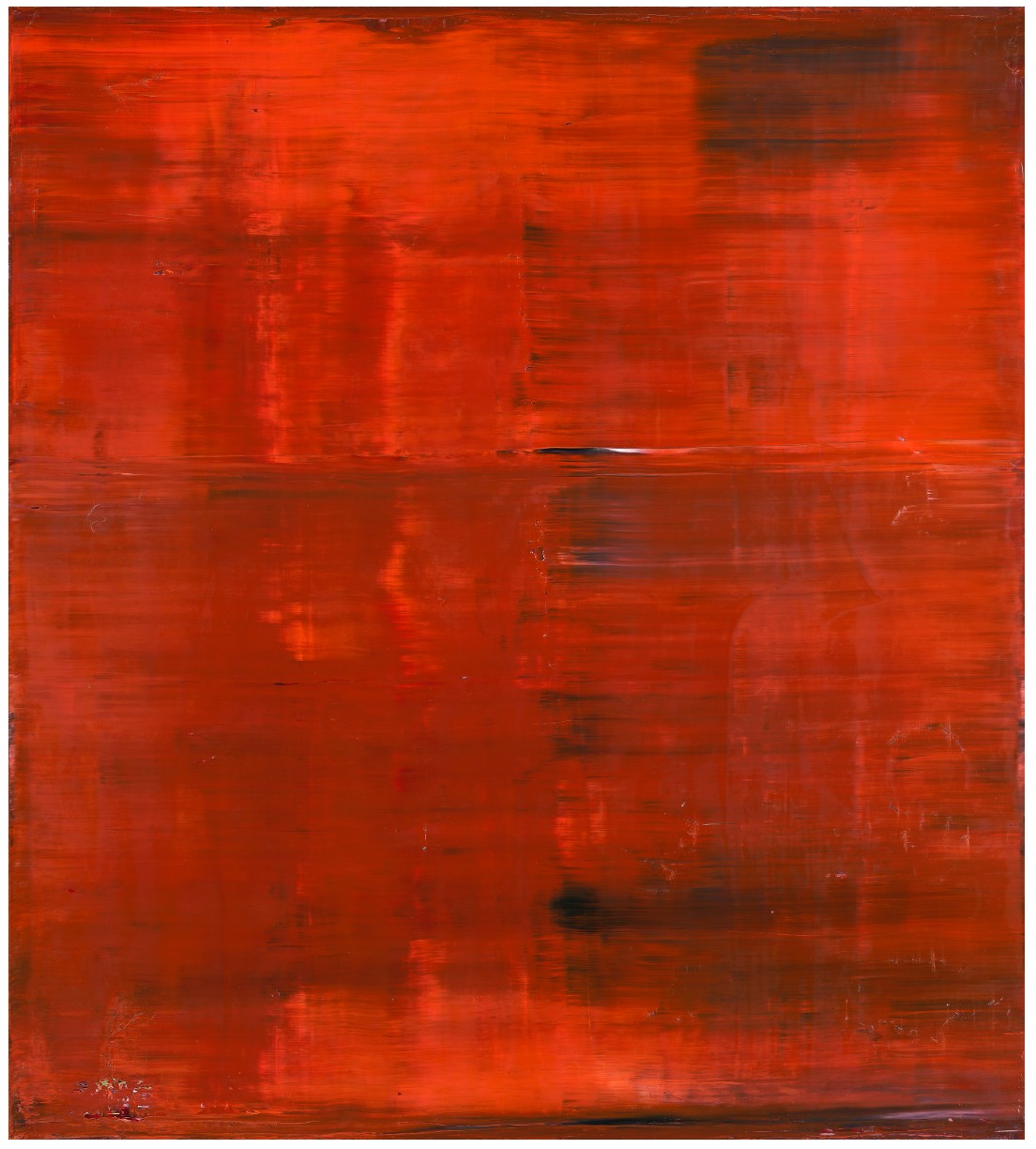
GERHARD RICHTER (B. 1932)
Abstraktes Bild, 1991
Oil on canvas
200×180 cm (78-3/4 x 70-7/8 inches)
Signed, inscribed, and dated ‘745-1 Richter 1991’ (on the reverse)
Engulfed in sweeping incandescent red, Gerhard Richter’s Abstraktes Bild transforms the canvas into a vast, luminescent field of sensation and restless energy. It is a sumptuous red canvas encapsulating the artist’s lifelong interrogation of the painterly process, which has been held in the same private collection for over a decade. The subject of a recent major retrospective at the Fondation Louis Vuitton in Paris, Richter was described by one reviewer as an ‘electrifying genius’ whose paintings attempt to tackle the impossibility of living (A. Searle, ‘“Made my hair fly up”: the electrifying genius of Paris’s Gerhard Richter extravaganza – review,’ The Guardian, October 21, 2026, online [accessed: 2/24/2026]). Here, in the present work, the artist employs vibrant colour and the physical disruption of the painted surface to produce a searing painting that challenges accepted notions of contemporary art. Throughout his long career, Richter has pursued a diverse and influential practice that have probed the possibilities of paint, and the present work is a rare example in which the artist pursues his signature technique to its ultimate conclusion.
This majestic canvas is almost entirely enveloped in warm, rich tones of red; while the work’s complexity lies the multi-colored strata buried beneath. Richter’s signature ‘squeegee’ technique — in which the artist drags a large, flat edged implement across the surface of the paint as it dries—effectively peels back this crimson veil, resulting in a myriad of subtle shifts in this striking color, which ranges from intense crimson, through bright vermilion to a deep Venetian red, revealing the hidden depth of the underlying colored layers. Richter’s technique results in small separations in the paint surface, allowing the viewer to see the intricacies of Richter’s process at first hand. In Abstraktes Bild, these result in a tantalizing flash of white pigment centrally in the upper third of the composition. Evoking the sun peaking over the horizon at daybreak, it nonetheless grounds the viewer directly in the heart of the canvas.
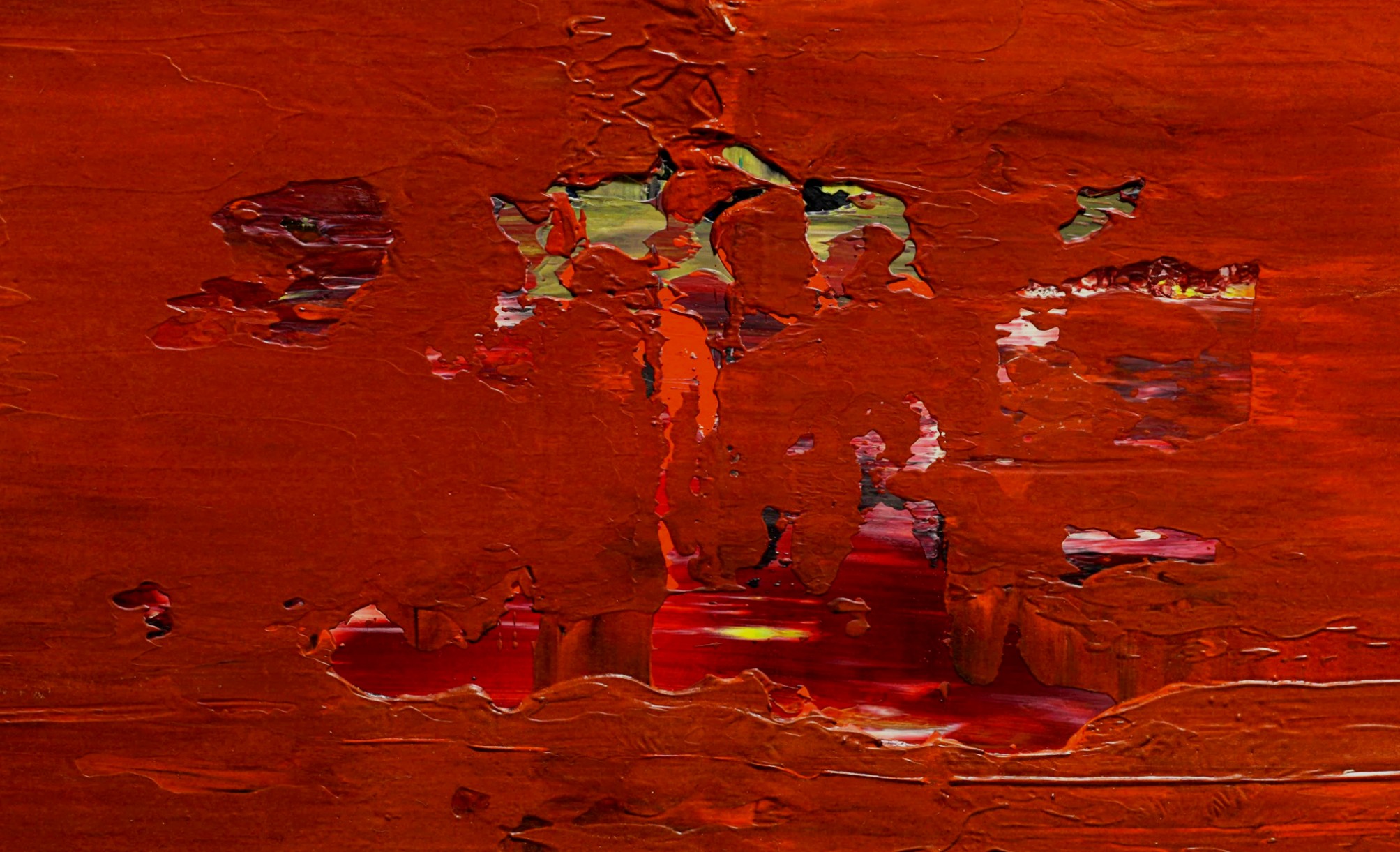
Richter first began his ‘abstract’ paintings in 1976 — initially as a counterpoint to his early photo-realist paintings — but it wasn’t until 1991 that he began working on the small group of abstract paintings predominantly featuring the color red that would prove to be the apotheosis of his paintings of this type. The present work is one of 27 existing paintings, of which three are in institutional collections. This followed a period of intense exploration of color, including a commission for the Hypo-Bank in Dusseldorf which featured color mirrors. By this time his use of the squeegee had increased, and throughout the early 1990s his paintings were increasingly created using this careful process of disruption.
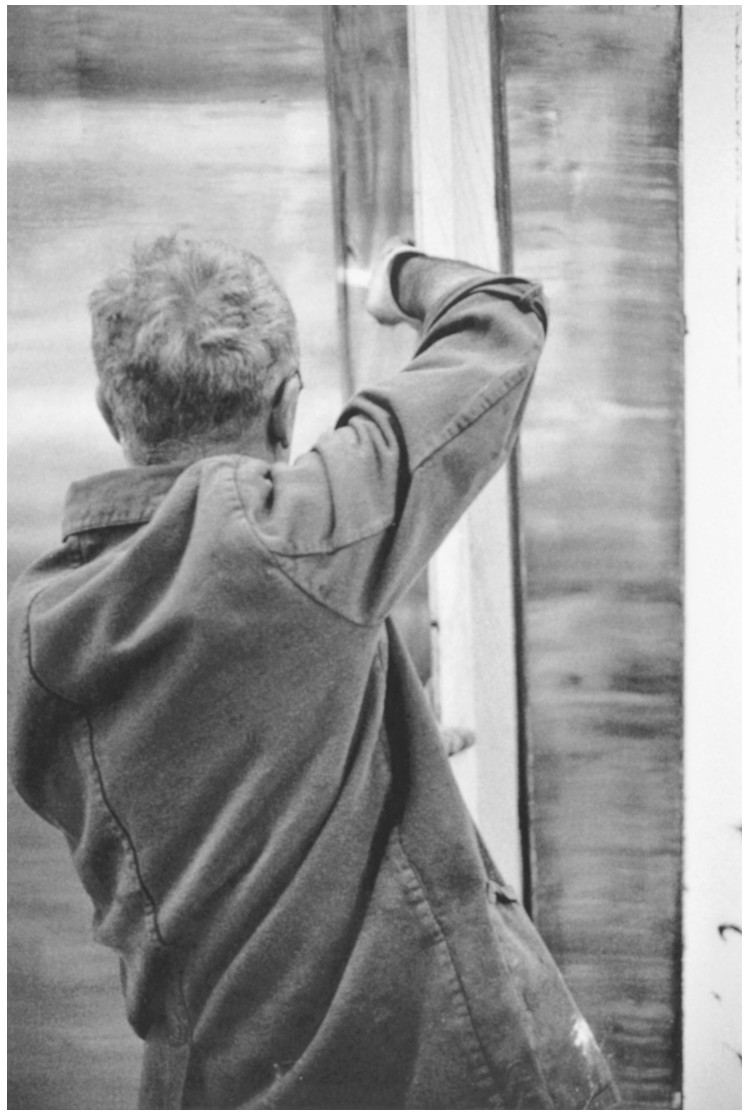
Gerhard Richter in his studio, 1994. Photo: Benjamin Katz. © 2014 Artists Rights Society (ARS), New York/ VG Bild-kunst, Bonn. Artwork: © 2026 Artists Rights Society (ARS), New York/ VG Bild-kunst, Bonn © Gerhard Richter 2026 (04032026)
‘For about a year now, I have not been able to anything in my painting but scrape off, pile on and then removed again,’ the artist has said in 1992 a few months after the present work was completed. ‘In this process I don’t actually reveal what was beneath. If I wanted to do that, I would have to think what to reveal (figurative pictures or signs or patterns); that is pictures that might as well be produced directly. It would also be something of a symbolic trick: bringing to light the lost, buried pictures, or something to that effect. The process of applying, destroying, and layering serves only to achieve a more technical repertoire in picture-making’ (G. Richter, quoted in D. Elger, Gerhard Richter: A Life in Painting, Chicago, 2009, p. 267).
Paleolithic rock painting of several red and black bisonsin the Altamira cave dated 14,500 years ago, Santillana del Mar, Cantabria, Spain. Photo: © Angelines Concepción / Alamy
Richter’s generous application of paint in the present work is evidence of the sheer joy he found in the purity of this painterly process. Unfettered by any requirement for representation, the process is, for Richter, almost akin to a religious experience. As he once said, ‘Art is the pure realization of religious feeling, capacity for faith, longing for God. All other realizations of these, outstanding human qualities, abuse those qualities by exploiting them; that is, by serving an ideology. Even art becomes “applied art” just as it gives up its freedom from function and sets out to convey a message. Art is only human in the absolute refusal to make a statement. The ability to believe is our outstanding quality, and only art adequately translates it into reality.’ (G. Richter, quoted in H.-U. Obrist (ed.), Gerhard Richter. The Daily Practice of Painting, London, 1995, p. 170).
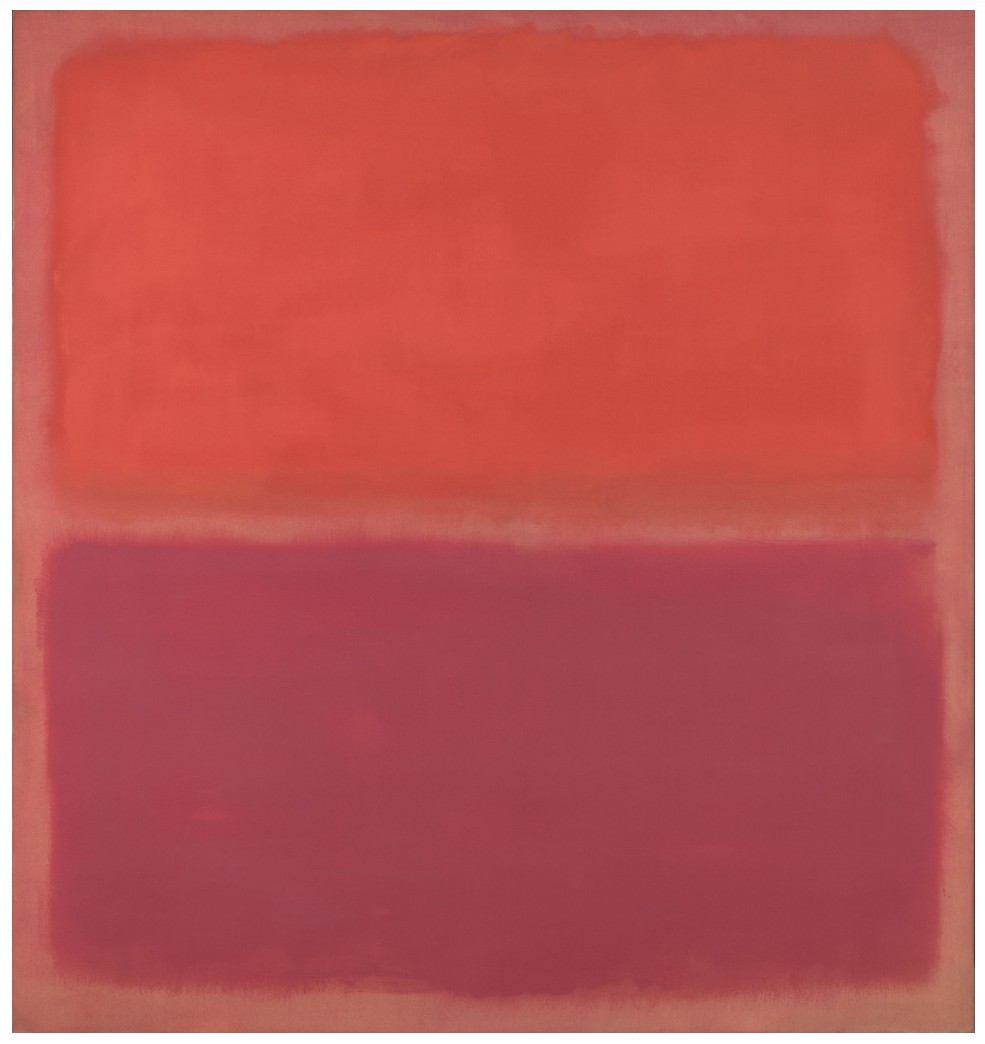
Mark Rothko, No. 3, 1967. Yale University Art Gallery.
Artwork: © 1998 Kate Rothko Prizel & Christopher Rothko / Artists Rights Society (ARS), New York
This example is notable for its generous use of red, one of the most auspicious pigments used in art. In Western art it is one of the oldest pigments in use, with evidence that Stone Age hunters and gatherers used red clay to make body paint. Later, it came to represent power, love, and life-giving blood. It was also used to convey emotion and psychological intensity. In Asian cultures, red is the color of vitality, passion, and good fortune and celebration. The Chinese have long celebrated the color for its associations with fire, the sun, the heart, and the southern direction—all positive forces of energy. A triumphal celebration of painterly expression, standing before Abstraktes Bild can be as evocative an experience as standing before the masterworks of Mark Rothko. Rothko once said that ‘…he wanted a presence, so when you turned your back to the painting, you would feel the presence the way you feel the sun on your back’ (M. Israel, quoted by J. Breslin, Mark Rothko: A Biography, Chicago, 1993, p. 275). Just as Rothko believed his work evoked an ‘otherworldliness,’ Richter’s abstract paintings are the physical and painterly manifestation of the artist’s belief in art as mankind’s highest form of hope.
Abstraktes Bild, 2009
Leonard & Louise Riggio: Collected Works
Christie’s New-York: 12 May 2025
Estimated: USD 7,000,000 – 10,000,000
USD 8,460,000
GERHARD RICHTER (B. 1932), Abstraktes Bild | Christie’s
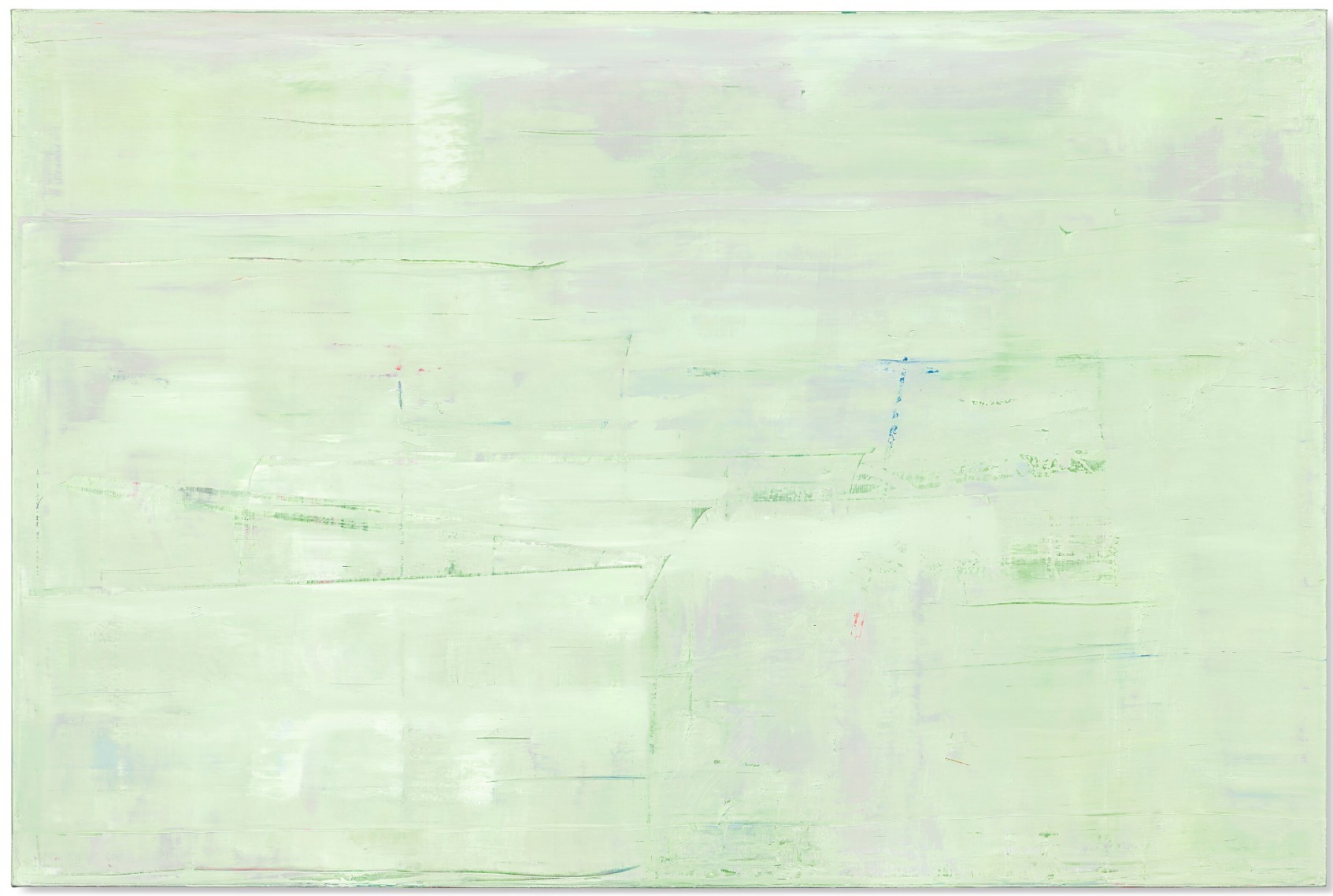
GERHARD RICHTER (B. 1932)
Abstraktes Bild, 2009
Oil on canvas
200×300 cm (78 3/4 x 118 1/8 inches)
Signed, inscribed and dated ‘911-3 Richter 2009’ (on the reverse)
sublime example of Gerhard Richter’s famed abstract paintings, Abstraktes Bild stands at the culmination of almost three decades of painterly exploration. In this large-scale work, expansive sweeps of ethereal pigment envelop a panoramic canvas; an initial consideration announces an almost monochromatic veil of white, but further attention discloses a subtle palette of soft greens, red, blues, pinks and mauves that emerge through the diaphanous upper layer of paint to make themselves visible. The artist began his interrogations of the painted surface in the 1960s with his ‘blurred’ photo paintings, a revolutionary series of works which evolved into his Abstraktes Bilder, the now iconic series of paintings which have come to dominate the latter part of his career. These majestic paintings are celebrated as some of the most visceral and cerebral examinations of what it means to be a painter working today and are now sought after by both major collectors and institutions alike.
The outward simplicity of a painting such as Abstraktes Bild belies the time taken in, and complexity of, its realization.
“A picture like this is painted in different layers, separated by intervals of time. The first layer mostly represents the background, which has a photographic, illusionistic look to it, though done without using photograph. This first, smooth soft-edged paint surface is like a finished picture; but, after a while, I decide that I understand it or have seen enough of it, and in the next stage of painting, I partly destroy it, partly add to it, and so it goes on at intervals, ‘til there is nothing more to do and the picture is finished.”
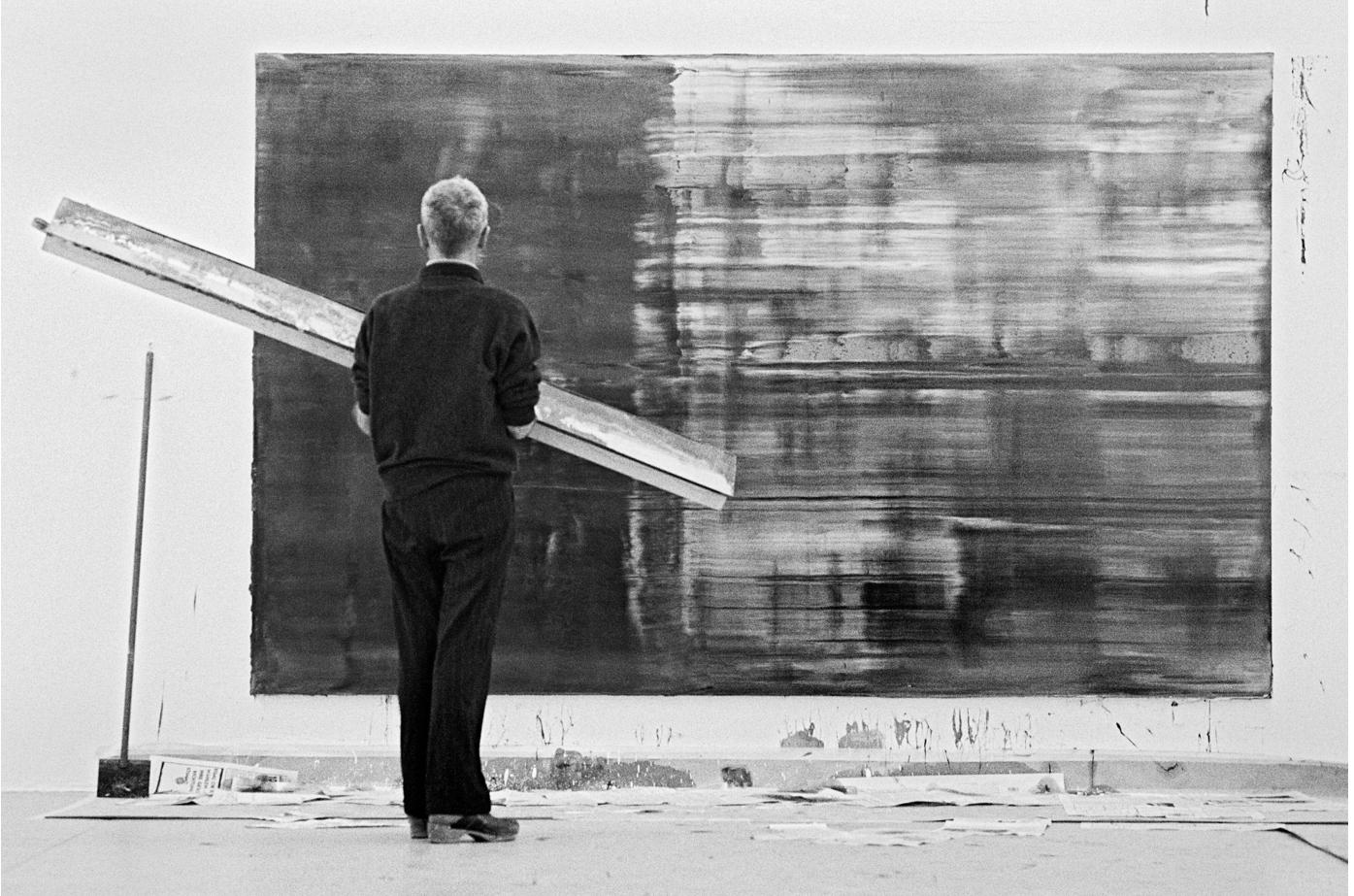
Gerhard Richter in his studio, 1994. Photo: Benjamin Katz. © 2025 Artists Rights Society (ARS), New York/ VG Bild-kunst, Bonn.
Artwork: © Gerhard Richter 2025 (28032025)
The result is a considered study of how paint is applied to the surface of a canvas and the resulting effects that can be achieved. In this manner it has parallels with Claude Monet’s Waterlilies and meteorological studies of the French countryside, and particularly the haystacks that dotted the landscape. Between 1890 and 1891, he completed almost thirty such paintings in which he made a conscious effort to record the effects of ever shifting light on his subject matter. “I am working very hard,” he wrote to the critic Gustave Geoffroy, “struggling with a series of different effects (haystacks), but at this season the sun sets so fast I cannot follow it…” (C. Monet, online [accessed: 4/3/2025]). In Haystacks (Effects of Snow and Sun) (The Metropolitan Museum of Art, New York), from 1891, the combination of the setting sun refracting off the snowy surface of the haystacks produces a subtle, yet dazzling, use of color which can also be seen in the surface of Abstraktes Bild.
Claude Monet, Nymphéas, 1905. Museum of Fine Arts, Boston.
Painted in a landscape format, the present work can also be considered alongside the established tradition established in the eighteenth century by artists such as the German Romantic painter Casper David Friedrich. He was interested in capturing on canvas the feeling of nature as a place for profound spiritual and emotional encounters. He developed pictorial vistas that emphasized intimacy, open-endedness, and the complexity of an individual’s response and relationship to the natural world. The results were paintings that were meditative, mysterious, and full of wonder. For Richter, the German tradition of a strong, intimate relationship with the landscape still rings true. But belonging to a generation who came of age in the immediate aftermath of World War II, Richter’s approach was to question the response of artist to the resulting horrors; his response was to challenge the cultural hegemony and develop a completely new form of artistic language.
Claude Monet, Haystacks (Effect of Snow and Sun), 1891. Metropolitan Museum of Art, New York.
While aesthetically Richter’s Abstraktes Bilder may recall the work of earlier artists, philosophically and contextually, they differ. Richter has often criticized abstraction because of the “phony reverence” it inspires, declaring, in contrast, that his abstractions were “an assault on the falsity and the religiosity of the way people glorified abstraction” (quoted in interview with B.H.D. Buchloh, 1986, The Daily Practice of Painting: Writings and Interviews 1962-1993, London, 1995, p. 141). Rather than an homage to abstraction, Richter’s abstract pictures address the problems of painting and the difficulties confronting contemporary painters working under the great weight of the history of painting at a moment when many artists had abandoned the medium itself. According to Richter, his abstract works represent “my presence, my reality, my problems, my difficulties and contradictions” (quoted in D. Dietrich, “Gerhard Richter: An Interview,” The Print Collectors Newsletter, 16, no. 4, September-October 1985, p. 128).
Caspar David Friedrich, The Monk by the Sea, 1808-1810. Alte Nationalgalerie, Berlin.
Thus, Richter’s Abstraktes Bild forms an important part of the artist’s belief about the fundamentals of painting. In both physical and painterly forms it represents the artist’s faith in painting as the highest form of human endeavor. Although they adhere to no known logic or ideology they are created through a carefully thought out and precise accumulation of paint and executed in a thoroughly distinctive process during which Richter deliberately avoids all conventional rules of aesthetics in order to arrive at work that belies pictorial ideology. I can… see my abstracts as metaphors,” Richter has said; they are “pictures that are about a possibility of social coexistence. Looked at in this way, all that I am trying to do in each picture is to bring together the most disparate and mutually contradictory elements, alive and viable, in the greatest possible freedom. No Paradises.” (in an interview with Benjamin Buchloh, 1986, reprinted in Gerhard Richter. Writings 1962-93, London, 1995, p. 166). This deliberate ambiguity is intended to demonstrate that all perception is an illusion. By seemingly providing several layers of conflicting abstract reality, Richter presents a ‘forest-like’ mystery where the viewer quite literally can’t see the wood for the trees. Playing with the surfaces of his abstracts, Richter is in effect exploring them in the same way that he explored the ambiguity of blurring in his photographic paintings of the 1960s. As with these works, Richter is clearly still fascinated with surface and the insight it can provide into the mystery of what lies beneath.
Peter Doig, Cobourg 3+1 more, 1994. Provinzial Rheinland Vericherung, Dusseldorf.
© 2025 Artists Rights Society (ARS), New York / DACS, London.
Characterized by its subtle palette and series of gentle vertical sweeps of pigment, Abstraktes Bild is an essay into the continued relevance of painting within the canon of contemporary art. As one of the postwar period’s most important and innovative painters, Richter continues to explore and challenge the boundaries of the genre. His abstract paintings are often regarded as the pinnacle of his oeuvre and it is with paintings such the present work we can see the culmination of his life-long investigation in to the visual and philosophical nature of perception and understanding.
Abstraktes Bild, 1988
Christie’s New-York: 16 May 2024
Estimated: USD 10,000,000 – 15,000,000
USD 11,335,000
GERHARD RICHTER (B. 1932), Abstraktes Bild | Christie’s (christies.com)

GERHARD RICHTER (B. 1932)
Abstraktes Bild, 1988
Oil on canvas
200×180 cm (78 3/4 x 70 7/8 inches)
Signed, inscribed and dated ‘680-2 Richter 1988’ (on the reverse)
Forging a singular path through the artistic developments of post-war and contemporary art, Gerhard Richter expanded the idea of what painting could be when he chose it as his primary medium in 1962. Studying in post-World War II Germany, an introduction to American abstraction and British Pop had a profound effect on the artist as he sought to push beyond traditional modes and establish a more investigative practice that questioned medium, process, subject, and objecthood. Abstraktes Bild is a dazzling example of what has become his iconic practice of surface handling and represents Richter’s ability to explore issues of chance and the legacy of Abstract Expressionism within an entirely new framework. Hailing from the innovative series of the same name begun in the 1980s, the present work represents an absolutely new type of non-representational canvas that was born out of the artist’s early experiments with abstract landscapes and color studies. Equating abstraction not to any emotional outburst or action, he remarked, “With abstract painting we create a better means of approaching what can neither be seen nor understood because abstract painting illustrates with the greatest clarity, that is to say, with all the means at the disposal of art, ‘nothing’ … we allow ourselves to see the unseeable, that which has never before been seen and indeed is not visible” (G. Richter, quoted in Gerhard Richter: Paintings, Minnesota, 1988, p. 107). Relinquishing the control that brushes afford, his highly manipulative approach to these dynamic canvases established an intimate dialogue between the artist and the materials themselves.

Rendered in smokey silver tones with an underlying layer of riotous color, Abstraktes Bild is like a geode waiting to be cracked open. The strong downward pull of Richter’s squeegee drags the paint in lines against itself and the stretched canvas beneath, thereby creating an intense verticality that sets the entire composition in motion. Working with a multitude of painterly applications, the artist applies pigment after pigment to the work so that he can establish a thick, complex strata that is representative of his time spent. This accumulation of layers makes itself known as Richter excavates and obscures with his tools. Areas of pewter begin to appear as the dark blue, black, and gray overpainting comes away. Exploring further, orange, red, and yellow patches shine through like the glowing embers hidden in a charred tree. While the choice of tones and the layering order is firmly Richter’s decision, the ways in which they interact throughout the process and in the final work are not. By using the squeegee, a device that allows for little more than directional control by the artist, Richter leaves the results up to chance as areas combine, pull away, stretch, and peel. “If the execution works,” he once explained, “this is only because I partly destroy it, or because it works in spite of everything…I often find this intolerable and even impossible to accept, because, as a thinking, planning human being, it humiliates me to find out that I am so powerless…My only consolation is to tell myself that I did actually make the pictures – even though they treat me any way they like and somehow just take shape. Because it’s still up to me to determine the point at which they are finished (picture-making consists of a multitude of Yes/No decisions with a Yes to end it all)” (G. Richter, quoted in A. Borchardt-Hume, “‘Dreh Dich Nicht Um’: Don’t Turn Around: Richter’s Paintings of the Late 1980s” in Gerhard Richter: Panorama, exh. cat., Tate Modern, London, 2011, p. 172). Allowing the tools and materials to essentially dictate his process, Richter removes much of the artist’s hand in favor of a tenuous authorial control over turbulent encounters.
Abstraktes Bild, 1994
Sotheby’s Hong-Kong: 5 October 2023
Estimated: HKD 70,000,000 – 100,000,000
HKD 84,469,000 / USD 10,786,858
GERHARD RICHTER (b. 1932)
Abstraktes Bild, 1994
Oil on canvas
250×200 cm (98 3/8 x 78 3/4 inches)
Signed, dated 1994 and numbered 811-1 on the reverse
Shimmering with emerald greens, sapphire blues and piercing reds, Abstraktes Bild from 1994 is an iridescent masterwork from Gerhard Richter’s epic cycle of Abstraktes Bild paintings. A magnificent large-format work, Abstraktes Bild immediately recalls Monet’s ground-breaking Nymphéas, and derives from a crucial period of Richter’s long celebrated career. In the early 1990s, the artist had arguably mastered his abstract practice and had been honoured with a series of landmark exhibitions, including the seminal 1991 exhibition at Tate Gallery, London, and the major touring retrospective, Gerhard Richter: Malerei 1962-1993 in Bonn, 1993-1994. Indeed, this period was a time of great personal success and contentment for the artist, which many consider to be reflected in his works from this time such as Abstraktes Bild—its regal, jewel-tone palette; harmonious equilibrium of colour and line; and deft handling of paint which both soothes and excites. Significantly, the present work was included in the 1995 exhibition, Gerhard Richter: Painting in the Nineties, at Anthony d’Offay Gallery in London; a widely-acclaimed show which showcased works that now reside in important institutional collections around the world, including The Cleveland Museum of Art, Cleveland; the Artist Room Collection, Tate, London and National Galleries of Scotland, Edinburgh; La Caixa Foundation, Barcelona; the National Museum of Modern Art, Tokyo; and the Art Gallery of New South Wales, Sydney, Australia.
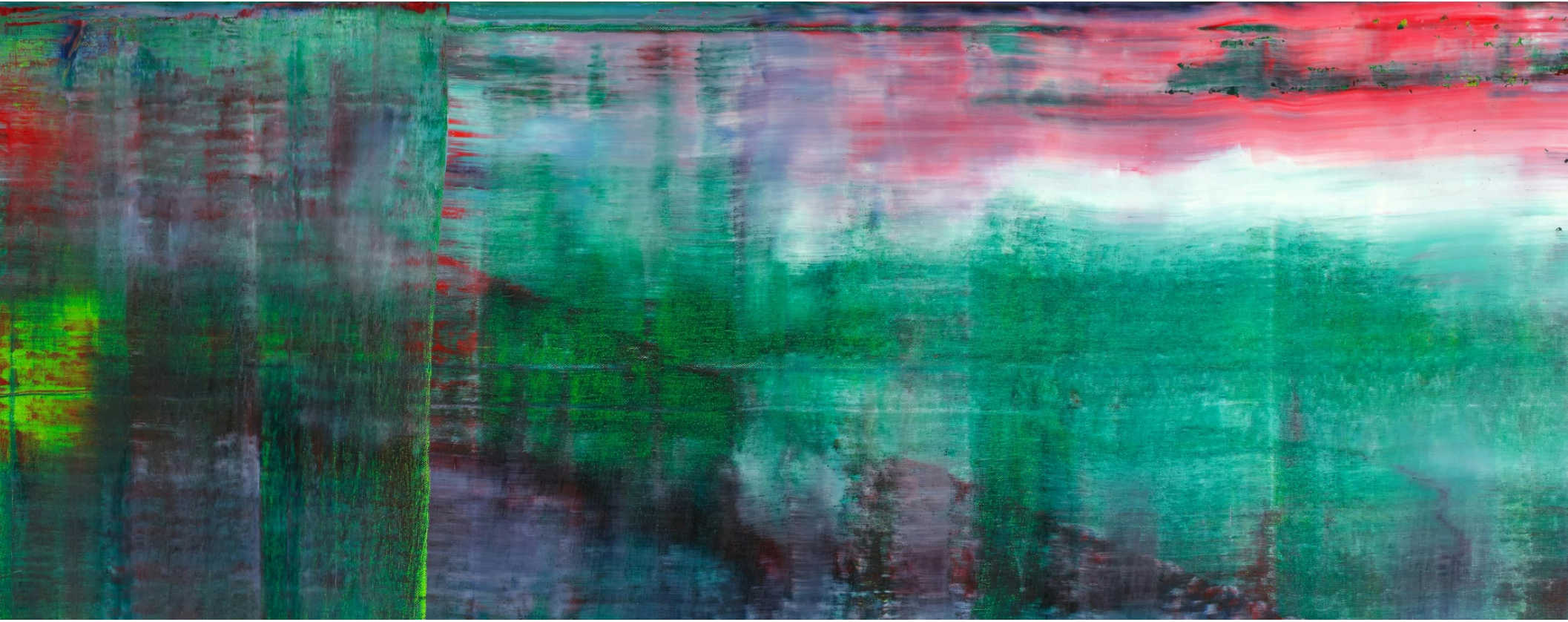
Abstraktes Bild is an exquisite demonstration of Richter’s employment of the squeegee, which during the later 1980s became his principle and most highly valued tool with which to create abstract paintings. As the squeegee is dragged across an expanse of canvas, the pressure and speed of Richter’s application of paint ultimately surrenders to the unpredictability of chance in informing the composition. It is this separation of the artist from direct expression that bestows Richter’s paintings with their inherently natural look. The shimmering and harmoniously artful orchestration of paint within Abstraktes Bild oscillates between an act of intense evocation and a simultaneous effacement of painterly form: ingrained within the work’s destructive and unpredictable formation is a reflection of nature itself.
Spoleto, 1984
Christie’s New-York: 11 May 2023
Estimated: USD 8,000,000 – 12,000,000
USD 11,335,000
GERHARD RICHTER (B. 1932) (christies.com)
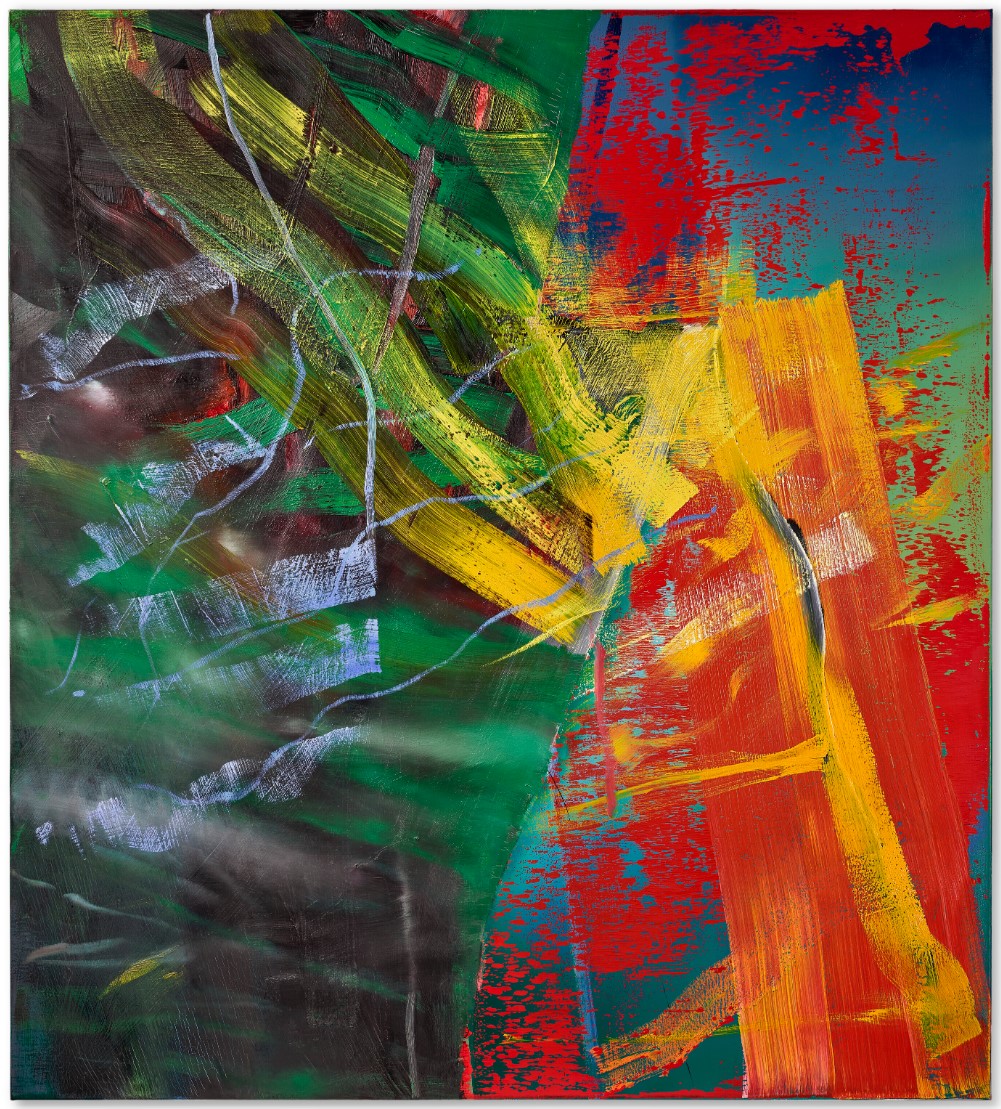
GERHARD RICHTER (B. 1932)
Spoleto, 1984
Oil on canvas
200 x 180.7 cm (78 3/4 x 71 1/8 inches)
Signed, inscribed and dated ‘Richter 1984 565-2’ (on the reverse)
Painted by one of world’s most celebrated living artists, Gerhard Richter’s Spoleto is a sumptuous canvas that serves as testament to his unquenchable thirst for innovation. Executed on an impressive scale, the present work is a vast kaleidoscope of color and mark making that showcases his unique ‘squeegee’ technique, disrupting the previously hallowed status of the painted surface to open up a myriad of conceptual and compositional possibilities. Dazzling fields of emerald green, sapphire blue and ruby red are disrupted by surface interventions as the artist drags various implements across the surface of the paint as it dries. These interruptions first emerged in Richter’s grayscale photo paintings of the 1960s, but abstract canvases, such as the present example, are often regarded as the pinnacle of the artist’s life-long investigation into the visual and philosophical nature of perception and understanding.
At over six feet square, Spoleto envelops the viewer in a rich tapestry of vibrant color. These carefully constructed compositions are the result of a prolonged period of contemplation by the artist. After laying down one area of color, Richter lets the surface begin to dry. As a ‘skin’ forms on the painted surface, the artist will run a hard-edged implement across the surface, opening up the different layers of paint below. Although in control of his implament, there is also a degree of chance as the artist is unable to entirely control the behavior of the paint as he manipulates the surface.
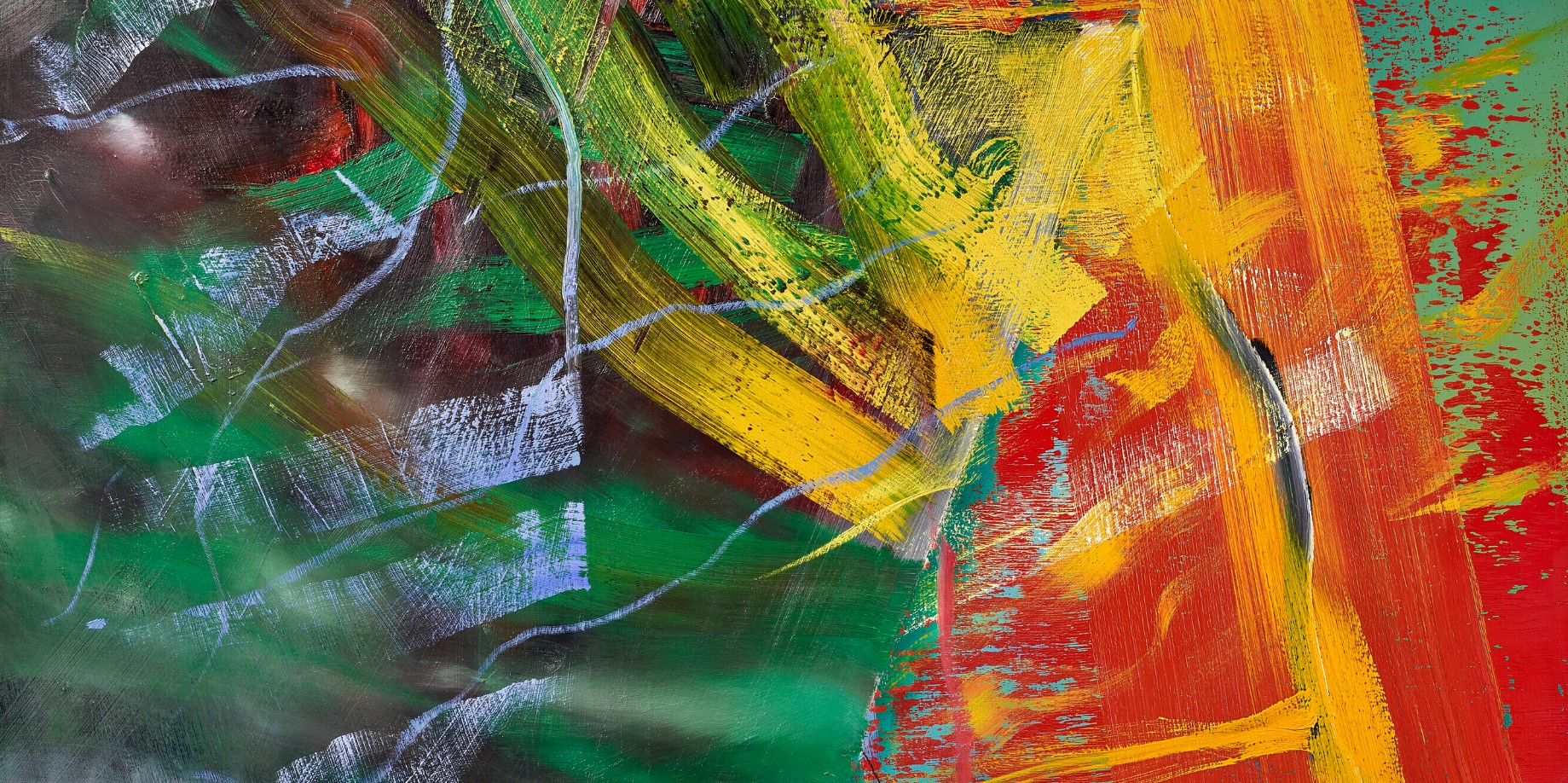
“When I paint an Abstract Picture…I neither know in advance what it is meant to look like nor, during the painting process, what I am aiming at and what to do about getting there.”
As well as being a conceptual study into the possibilities of paint and its physical properties, we can also see multiple veins of art history running throughout the painting, from nineteenth-century verdant European landscapes to the drama of Russian Suprematism, and from German Expressionism to American Color Field painting, all are visible within one canvas. Richter’s bold traversing marks become horizon lines of sorts, offering perspective in an otherwise volatile field of pigment. It is as if these colors have met for the very first time, combining and re-combining into heretofore unconsidered relationships. Richter’s abstract paintings mark an important inflection point in the history of post-war and contemporary art. The artist has always oscillated intentionally between abstraction and figuration, expressiveness and photographic precision, thereby forging a path for himself that is outside of conventional art historical categories. Spoleto could certainly be compared to the abstractions of Willem de Kooning or Helen Frankenthaler, but more pertinent might be the lyrical compositions of Wassily Kandinsky, which have a similarly utopian quality to them. Equally interesting might be a comparison to the chance-based collages of Hans Arp.
Abstrakte Bilder, 1992
Sotheby’s Hong-Kong: 5 April 2023
Estimated: HKD 32,000,000 – 45,000,000
HKD 36,750,000 / USD 4,681,469
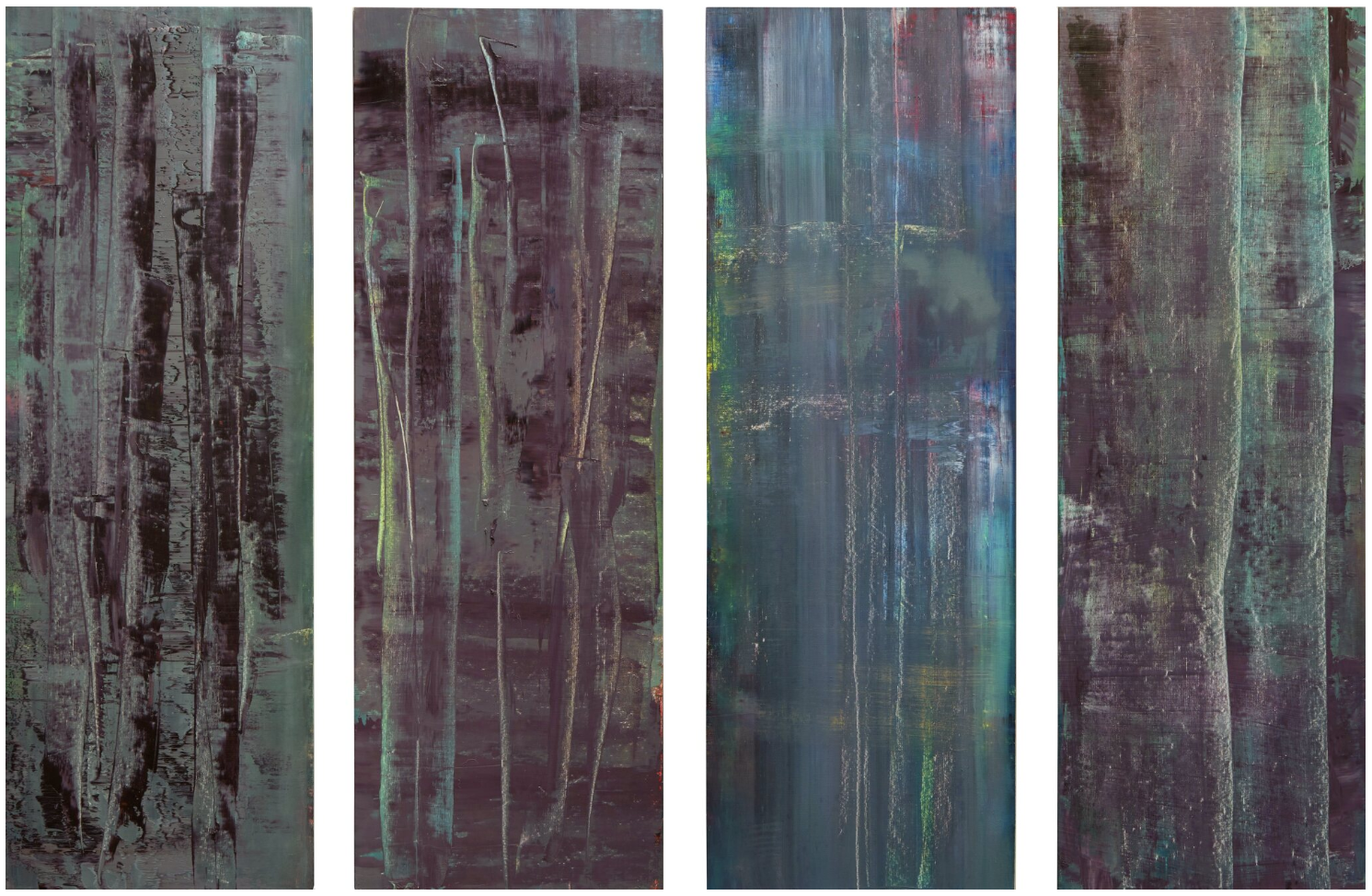
GERHARD RICHTER (b. 1932)
Abstrakte Bilder, 1992
Oil on canvas, in 4 parts
Each: 200×70 cm (78 3/4 x 27 1/2 inches)
Overall: 200×280 cm (78 3/4 x 110 1/4 inches)
Each: signed, dated 1992 and numbered 760-1, 760-2, 760-3 and 760-4 on the reverse, respectively
An exceedingly rare and enigmatic four paneled painting from the height of Gerhard Richter’s abstract practice, Abstrakte Bilder stands over the viewer with immediate chromatic impact. Executed in 1992, a period of thrilling international and critical acclaim for the artist, Richter delivers a panorama of abstract color across four expansive panels, allowing the viewer to experience the work in its entirety, as well as intimately within each plane. Offering a unique visual spectacle, each panel bares the representational characteristics which have come to define Richter’s practice; rich, layered marbling and vivid chromatic fusions that bloom to reveal recesses of carefully orchestrated color. Vertical ribbons of deep, opulent blue cascade downwards like water, yet, certain gestural elements continue across all four panels, bringing each into dialogue with one another and imbuing Abstrakte Bilder with a sense of dynamism that runs throughout the composition.
There is a palpable sense of movement and dynamism in the present work, the horizontal and vertical striations intersecting as the paint in brushed, dragged and streaked across the canvas. It was not until later in his career that Richter began to scrape his canvases, writing in 1992: “Scraping off. For about a year now, I have been unable to do anything in my painting but scrape off, pile on and then remove again. In this process I don’t actually reveal what is beneath…the process of applying, destroying and layering serves only to achieve a more varied technical repertoire in picture making” (Gerhard Richter, The Daily Practice of Painting: Writings 1962-1993, Cambridge, MA 1995, p. 242). The punctuated slippages of paint when combined with the spaces between each panel create a sense of presence and absence that is consonant with Richter’s wider concerns around representation and reality.
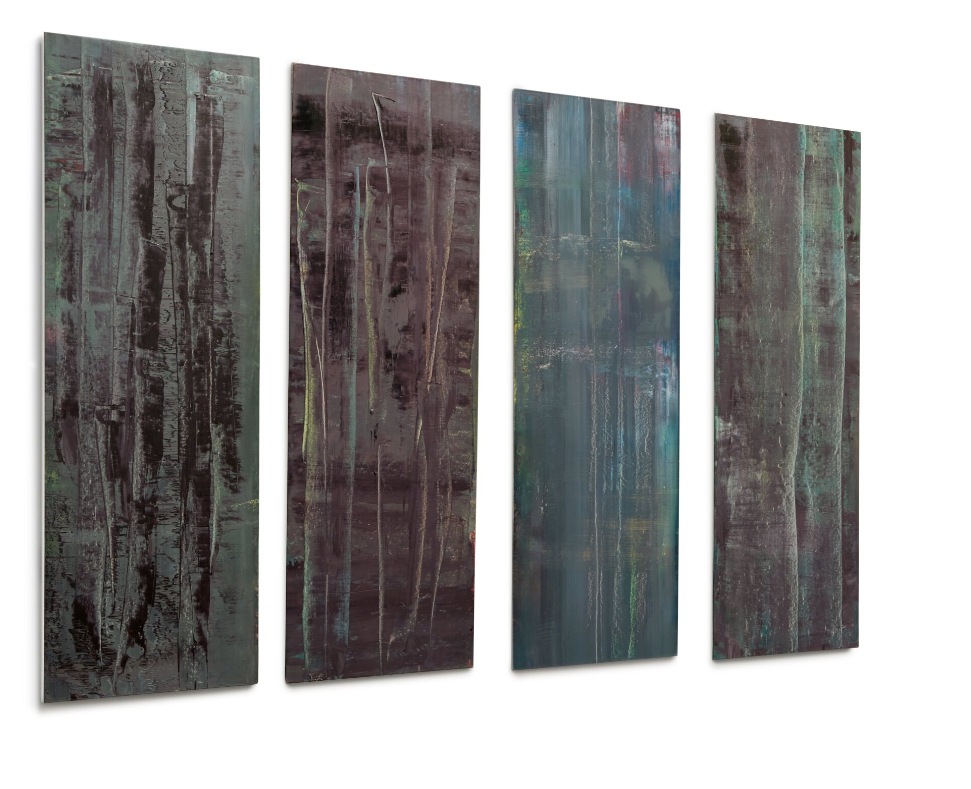
In Abstrakte Bilder, the accumulated layers of non-representational paint in hues of blue and green emphasise the illusory aspect of the textured paint itself. By 1992, Richter had mastered the squeegee technique which had allowed him to surrender a certain amount of artistic control to the physical qualities of paint. Swept across the canvas over layers of wet paint, the tool allowed Richter to fully traverse the dialog between chance and control that lay at the heart of his oeuvre. By excavating his squeegeed surfaces in the manner of the present work, Richter was able to demonstrate paint’s extraordinary capacity for misdirection, his broad vertical strokes blurring the boundary between illusion and representation even further, whilst suggesting at an undetermined reality beyond the canvas.
Abstraktes Bild (774-1), 1992
Phillips Hong-Kong: 1 December 2022
Estimated: HKD 80,000,000 – 120,000,000
HKD 89,375,000 / USD 11,491,039
Gerhard Richter – 20th Century & Con… Lot 8 December 2022 | Phillips
GERHARD RICHTER
Abstraktes Bild (774-1), 1992
Oil on canvas
200 x 180.3 cm (78 3/4 x 70 7/8 inches)
Signed, numbered and dated ‘774-1 RICHTER 1992’ on the reverse
Coming to the auction market for the very first time, Gerhard Richter’s Abstraktes Bild (774-1) is a visually arresting masterpiece that exquisitely exemplifies the artist’s technical and conceptual approach into abstraction. Spatial ambiguity, visual complexity, and tactile materiality all come into play in Abstraktes Bild (774-1), embodying the beauty of marrying spontaneity with orchestration. Created right after Richter’s breakthrough retrospective at London’s Tate Modern in the previous year, Abstraktes Bild (774-1) is representative of a climactic moment within the artist’s career where he garnered unprecedented critical acclaim. There is a domination of primary colors in Abstraktes Bild (774-1) that is reminiscent of bright skies, luscious meadows, and majestic mountainscapes – strokes of bright greens and soft blues melt into a background of deep garnet reds. These colors recall waves of trees and grass as they ripple to the current of the wind. The disconnected strokes of paint, the naturalistic color scheme, and the reminiscence of sky and land are evocative of Paul Cézanne’s famous paintings of the Saint-Victoire mountains.
Besen, 1984
Christie’s Hong-Kong: 26 May 2022
Estimated: 55,000,000 – 75,000,000
HKD 79,915,000 / USD 10,180,384
GERHARD RICHTER (B. 1932) (christies.com)
GERHARD RICHTER (B. 1932)
Besen, 1984
Oil on canvas
224.7 x 200 cm (88 1⁄2 x 78 3⁄4 inches)
Signed, dated and inscribed ‘Richter 1984 553-2’ (on the reverse)
Abstraktes Bild 747-1, 1991
Christie’s Hong-Kong: 1 December 2021
Estimated: HKD 128,000,000 – 166,000,000
HKD 140,400,000 / USD 18,019,868
GERHARD RICHTER (B. 1932) (christies.com)
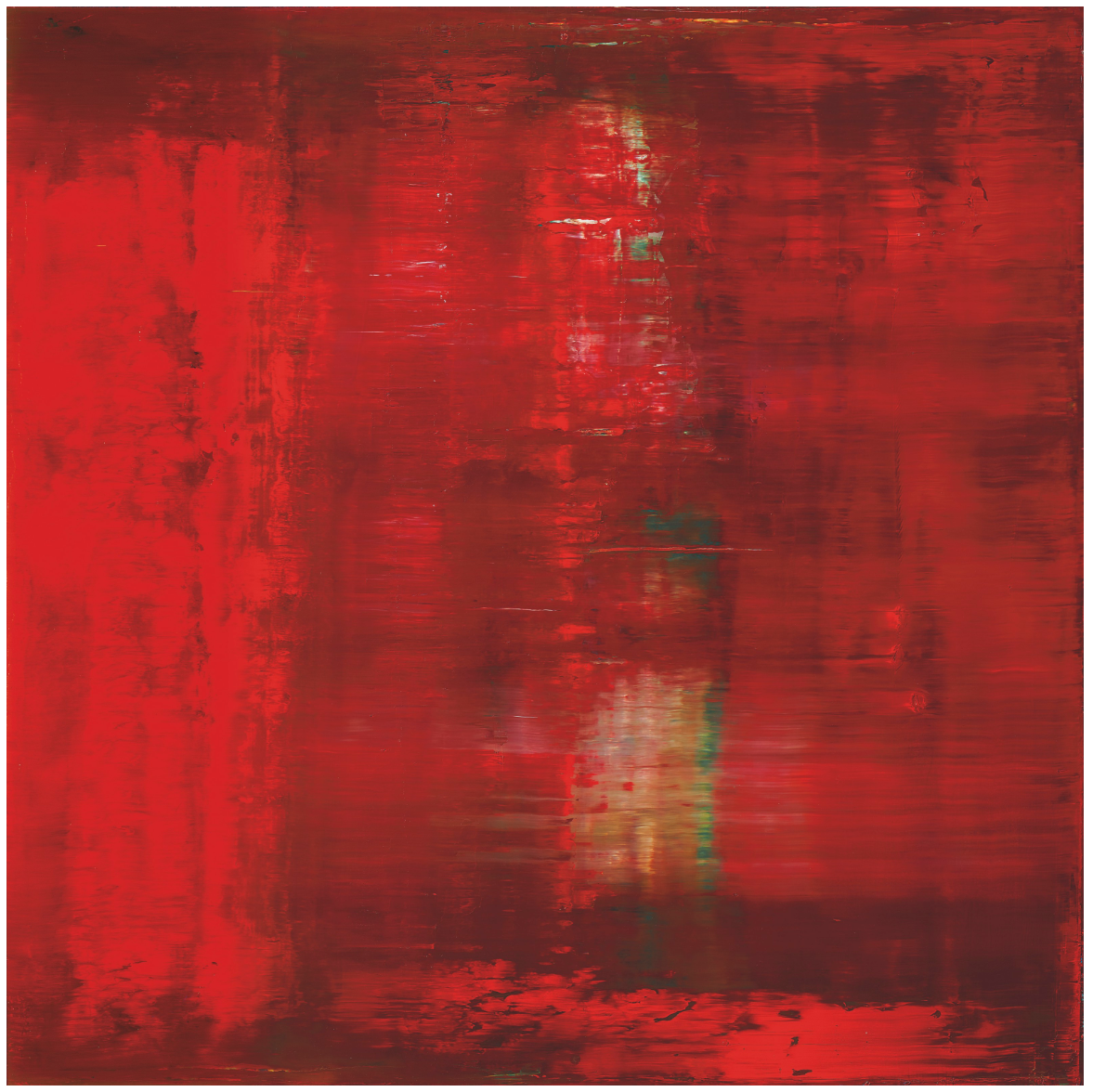
GERHARD RICHTER (B. 1932)
Abstraktes Bild 747-1, 1991
Oil on canvas
200×200 cm (78 3/4 x 78 3/4 inches)
Signed, numbered and dated ‘747-1 Richter 1991’ (on the reverse)
Emanating an almost palpable sense of radiant heat from its incandescent core, Gerhard Richter’s 1991 painting is a stunning and sumptuous example of his celebrated Abstraktes Bilder. Since their inception these canvases have become one of the most celebrated series in late-twentieth century painting, their colorful and highly active surfaces depicting not only physical beauty, but also interrogating the form and function of the art form itself. One of a suite of four works—another example resides in the Sammlung Hoffmann in Berlin—these majestic canvases are exemplary examples of the artist’s unique painterly practice, putting down his brush and picking up a squeegee to manipulate the painted surface. The only work from this suite to be included in Gerhard Richter’s seminal retrospective at the Tate Gallery in London in 1991, it is among his most striking and powerful works. All four paintings were reunited later at The Museo Nacional Centro de Arte Reina Sofía for the Gerhard Richter exhibition in Madrid in 1993-1994; however, the present work is the only one which has been shown in all five European museum exhibitions: London, Paris, Bonn, Stockholm, and Madrid between 1991 and 1994.
By disrupting the normally hallowed surface, Richter—literally—opens up painting to new and more vital aesthetic, forcing a reconsideration of the role of painting, and consequently that of a painter, in contemporary society. Measuring two meters square, this monumental painting resonates with painterly energy. High-keyed passages of sizzling red—with hues ranging from scarlet and crimson to ruby and Imperial red—coalesce into pools of color across the surface. Along with the almost physical feeling of warmth given off by these reds, there is also a visual tension between the different concentrations of color. This is particularly evident in the areas where different tones meet. Richter’s squeegee technique allows them to intermingle without actually coalescing; it is this tautness—like the active edges of Mark Rothko’s floating fields of color—that are the primary sites of the painterly action that is at the heart of Richter’s abstract paintings. In the central portion of the canvas, through the smears of red, hints of verdant green, yellow, and pale creams, emerge, hinting at a mysterious corporeal body submerged in the pools of red. It is the combination of these receding ‘cooler’ colors, next the ‘advancing’ reds, that gives the surface of this particular painting an extraordinary sense of depth.
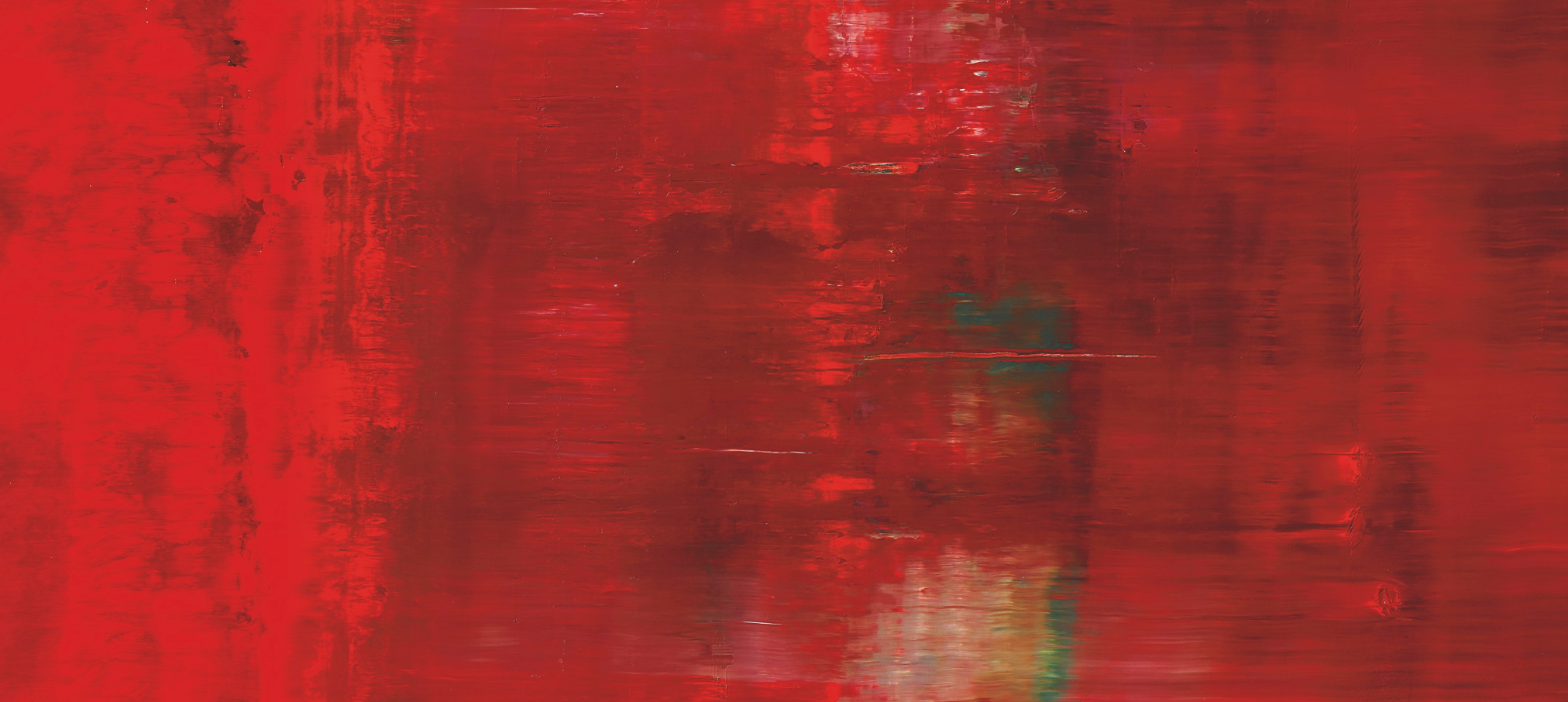
Abstraktes Bild is characterized by a feeling of density and romance, but also intense coloristic harmony, lyrical and tonal resonances reminding us of rich carnations of Titian, Rubens and other great European master and deep, spiritual notes of a great Rothko. In the present work, Richter’s chosen palette of red is an auspicious one, as it is a color with a long and noble lineage in the history of art. From the earthy red ochres used in the earliest cave paintings to the shocking modernism of Malevich’s supremacist red square, red possesses an emotive power unlike any other color in the chromatic spectrum. It is the color of love, but also an indicator of mortality and death; it can symbolize a warning, a cry, an appeal, and temptation, yet it can also signify happiness, success, good luck, and fortune. It is the color of Renaissance Venice, and of revolution! Red has remained one of the most symbolic and constant colors throughout history.
Kerzenschein (Candle-light), 1984
Phillips Hong-Kong: 30 November 2021
Estimated: HKD 55,000,000 – 75,000,000
HKD 101,970,000 / USD 13,078,275
Gerhard Richter – 20th Century & Co… Lot 16 November 2021 | Phillips
GERHARD RICHTER
Kerzenschein (Candle-light), 1984
Oil on canvas
200.3 x 179.7 cm (78 7/8 x 70 3/4 inches)
Signed, numbered and dated ‘554-3 Richter 1984’ on the reverse
A resplendent symphony of painterly dynamism and chromatic brilliance, Gerhard Richter’s Kerzenschein (Candle‐light) is an incandescent, electrifying masterpiece hailing from a critical moment of aesthetic and conceptual transition in the German master’s inimitable career. Painted in 1984, Kerzenschein (Candle‐light) is not only an exemplary specimen of Richter’s early abstract works, but also a singularly important painting that in title and visual association refer back to the artist’s iconic body of Kerzen (Candles) paintings from 1982‐1983. Longitudinally bisected down the center, the present abstract composition presents a crisp duality that echoes the earlier still life works featuring two candles, while its abstract planes of color vividly communicate the dynamic and poignant evanescence of flame and light. Utterly radical and captivating, Richter’s early abstracts scaled new heights of innovation and plumbed formidable depths of conceptual rigor. A large number of abstract paintings executed between 1984 and 1986 are held in public museums and prominent private collections, while works from this period follow a slew of solo exhibitions at prestigious institutions, including the Centre Georges Pompidou, Paris (1977); the Whitechapel Art Gallery, London (1979); and the Stedelijk van Abbemuseum in Eindhoven (1978, 1980). Created during this important, highly productive and pivotal moment in Richter’s career, the present Kerzenschein (Candle‐light) stridently affirms its creator’s visionary genius as one of the most important artists of the 20th and 21st centuries.
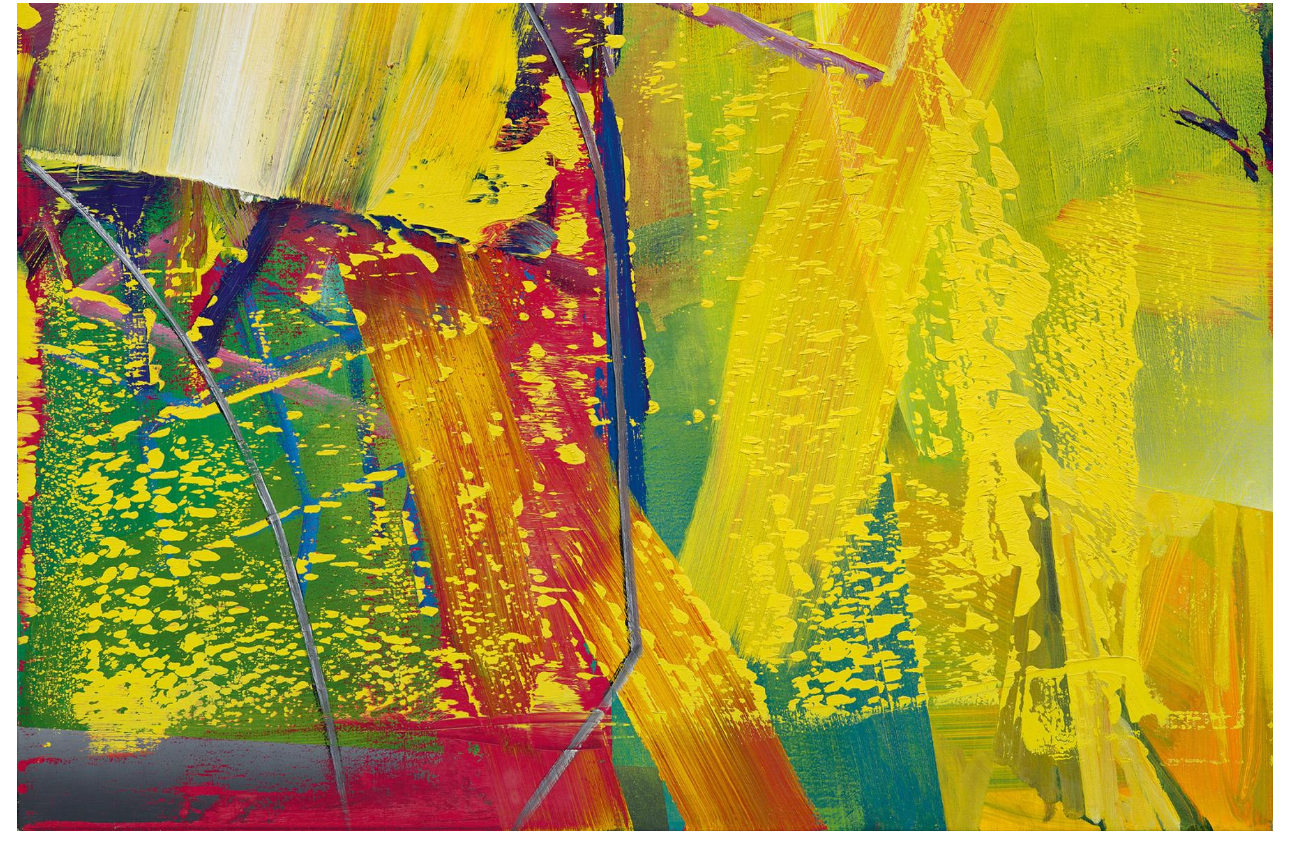
A work of supreme grace and tantalising complexity, Kerzenschein (Candle‐light) is spectacular in its display of riveting interplay of color. A blue Barnett Newman‐esque axis divides the composition into two halves, each of which reveal gestural vistas of texture, depth, and movement. Translucent swathes of yellow and red transmit transcendent white glows at the top left, while narrow claw‐like latitudinal branches imbue assertive rhythm at the top right. Horizontal squeegeed forms traverse the lower half of the canvas, with the stuttering fragmented yellow pigment at the lower left revealing deep green, red, and blue depths of underpainting that contrast beautifully with the relatively tranquil expanses of yellow tracks on the right. Richter discovered the squeegee in 1979 but only began using it as his sole painting tool in 1986; accordingly, Kerzenschein (Candle‐light) from 1984 reveals a plethora of painterly techniques, encompassing squeegee, brush, and blade. Richter’s repeated process of accretions and excavations result in diaphanous sheens, staccato crests and ridges, mesmerizing underlayers and punctuating peaks of impasto, articulating radiant fields of effervescent color and hypnotic depths.
The Helga and Walther Lauffs Collection
Sotheby’s London: 14 October 2021
Sotheby’s is honoured to present three extraordinary paintings by Gerhard Richter from the Helga and Walther Lauffs Collection. Held in this esteemed private collection for over thirty-five years and acquired only one year after each works’ execution in 1985, this seminal group of paintings mark a moment of exceptional mastery within Richter’s enthralling six-decade career. Illuminating magnificent vistas of electrifying colour, S.D., Abstraktes Bild (576-1) and Abstraktes Bild (576-2) were created in the artist’s Cologne studio at the same pivotal moment, and as a result they are recorded nearly in sequence in the catalogue raisonné, the three only separated as a group by one other painting entitled Stuhl (575-3). A number of highly comparable compositions executed between 1984 and 1986 are held in prestigious museum collections, among them Abstraktes Bild (567, Staatsgalerie Stuttgart), Athen (573-3, FRAC Nord-Pas de Calais Collection, Dunkerque), Atelier (574, Staatliche Museen zu Berlin, Neue National-galerie, Berlin), Station (577-2, North Carolina Museum of Art, Raleigh), Billard (583-1, Stifterkreis Kunsthalle zu Kiel), Abstraktes Bild (594-1, Virginia Museum of Fine Arts, Richmond), and Ölberg (598, The Saint Louis Art Museum). The works in the Helga and Walther Lauffs Collection exemplify Richter’s aesthetic and conceptual investigations into painterly abstraction. These three transcendent paintings are testament to Richter’s status as one of the most significant painters of the Twentieth and Twenty-First Centuries.
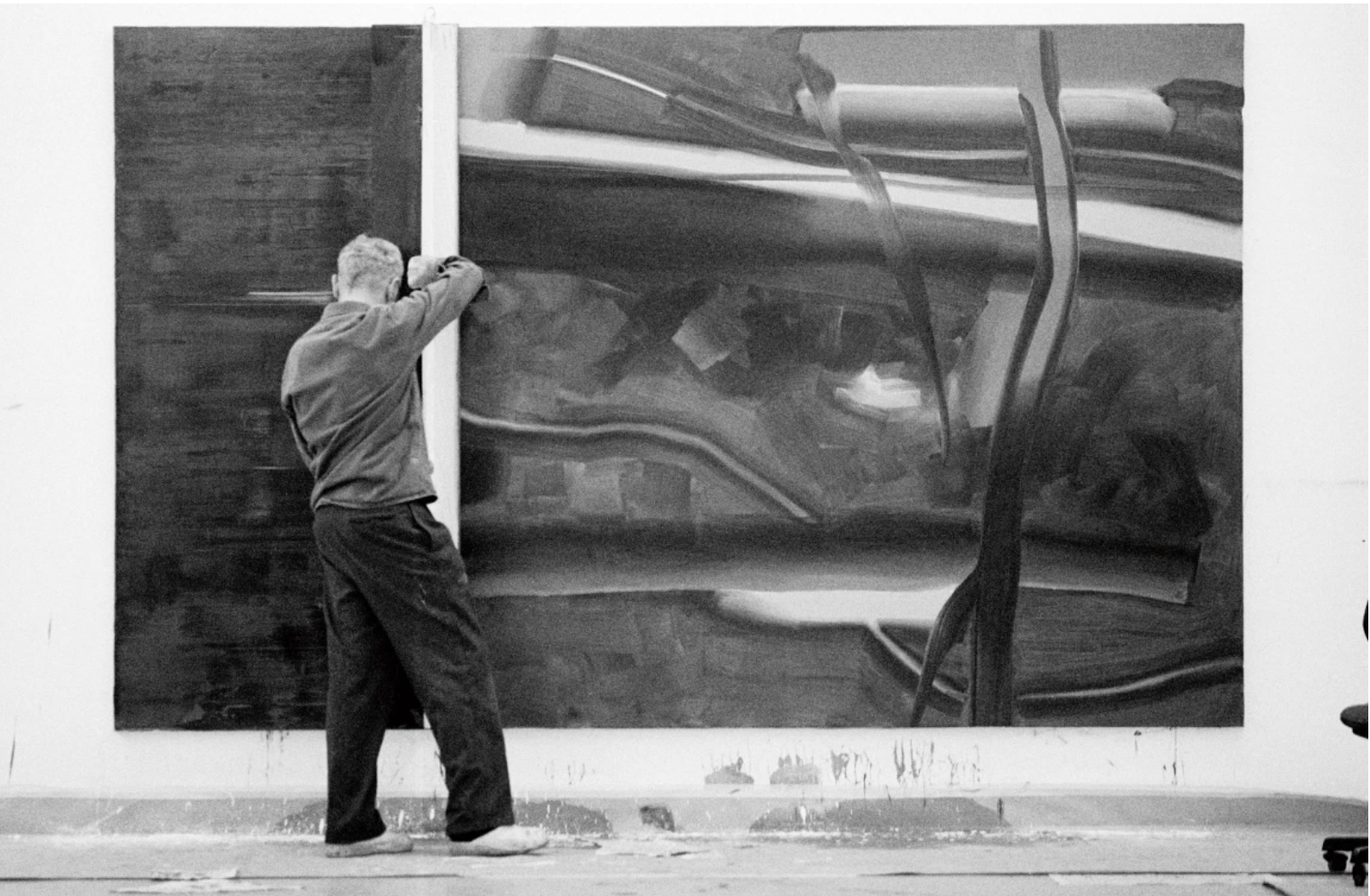
GERHARD RICHTER IN HIS STUDIO IN COLOGNE IN THE EARLY 1980S
IMAGE: © DACS 2021 / ARTWORK: © GERHARD RICHTER 2021 (10092021)
Employing vibrant, primary colours, S.D., Abstraktes Bild (576-1) and Abstraktes Bild (576-2) are compositionally complex in their varying spatial suggestions. Sequences of solid color on the canvas grounds – applied uniformly with a brush – exude a distinct sense of flatness, while the use of the squeegee and a fine brush dragged through layers of wet paint imbue each composition with a three-dimensionality unique to the Abstraktes Bilder of this period. By scraping away layers of pigment, Richter reveals a multitude of exquisite colors, each passage of colliding paint more dynamic than the next. The present works exude this endless process of doing and undoing, mark-making and obliteration. Gerhard Richter’s unprecedented abstract oeuvre stands as culmination to the epic journey of his career, during which he has ceaselessly interrogated the limits of representation, the nature of perception and the operations of visual cognition. The artist’s corpus of abstraction is at once esoterically dense and strikingly beautiful. In converging hues of brilliant crimson, cerulean, orange, and emerald green, the vast expanses of S.D., Abstraktes Bild (576-1) and Abstraktes Bild (576-2) convey an oscillation between conscious control and chance central to Richter’s conceptual approach to painting, an approach that is inevitably unrivalled and without comparison. Symphonies of frenetic colour and imposing beauty, the three paintings from the Helga and Walther Lauffs Collection signify a defining moment of painterly mastery within Richter’s artistic production of over half a century, in turn illuminating the magnitude of the artist’s visionary contributions to contemporary art.
S.D., 1985
Sotheby’ London: 14 October 2021
Estimated: GBP 7,000,000 – 9,000,000
GBP 9,619,800 / USD 13,165,184
S.D. | Contemporary Art Evening Auction | 2021 | Sotheby’s (sothebys.com)
GERHARD RICHTER (b. 1932)
S.D., 1985
Oil on canvas
200×200 cm (78 3/4 x 78 3/4 inches)
Signed, dated 1985 and numbered 575-2 on the reverse
On the surface of S.D., plumes of yellow, green and white interrupt passages of thicker crimson and blue brushwork, while the trajectory of the squeegee is palpable in bold horizontal and vertical cross-sections. The plexiglass blade of the squeegee often dragged a new layer of pigment across the surface of the canvas, yet Richter also employed the blade as a means to excavate the top layers of paint, scraping away pigment to reveal chromatically resplendent underlayers.
Abstraktes Bild, 1985
Sotheby’ London: 14 October 2021
Estimated: GBP 5,000,000 – 7,000,000
GBP 7,896,300 / USD 10,806,487
Abstraktes Bild | Contemporary Art Evening Auction | 2021 | Sotheby’s (sothebys.com)
GERHARD RICHTER (b. 1932)
Abstraktes Bild, 1985
Oil on canvas
180×120 cm (71 x 47 1/8 inches)
Signed, dated 1985, and numbered 576-1 on the reverse
Abstraktes Bild, 1985
Sotheby’ London: 14 October 2021
Estimated: GBP 5,000,000 – 7,000,000
GBP 5,943,000 / USD 8,133,297
Abstraktes Bild | Contemporary Art Evening Auction | 2021 | Sotheby’s (sothebys.com)
GERHARD RICHTER (b. 1932)
Abstraktes Bild, 1985
Oil on canvas
180×120 cm (71 x 47 1/8 inches)
Signed, dated 1985 and numbered 576-2 on the reverse
Abstraktes Bild (940-7), 2015
Phillips Hong-Kong: 8 June 2021
Estimated: HKD 75,000,000 – 95,000,000
HKD 95,100,000 / USD 12,255,313
Gerhard Richter – 20th Century & Contem… Lot 13 June 2021 | Phillips
GERHARD RICHTER
Abstraktes Bild (940-7), 2015
Oil on canvas
140×160 cm (55 1/8 x 62 7/8 inches)
Signed, numbered and dated ‘940-7 Richter 2015’ on the reverse
Firmly placed within the very highest tier of his most prized series, Abstraktes Bild (940-7) stands as the ultimate culmination to the epic journey of Richter’s career-long investigation into the formal possibilities of painting – one of the most extensive enquiries into the bounds of painterly abstraction to have ever occurred. A veritable feast for the senses, its captivating compositional dynamism is both strikingly seductive and sensitive, engulfing viewers in meditative depths of pigment that ricochet across the layered canvas surface in an infinite game of hide-and-seek. Though remarkable even upon first glance, the shimmering canvas fully reveals itself through prolonged contemplation, its astounding topography calling upon us to delve into an archaeological exploration of sorts as we trace each new sweeping accretion of paint that introduces new colour and textural juxtaposition to the work’s architecture.
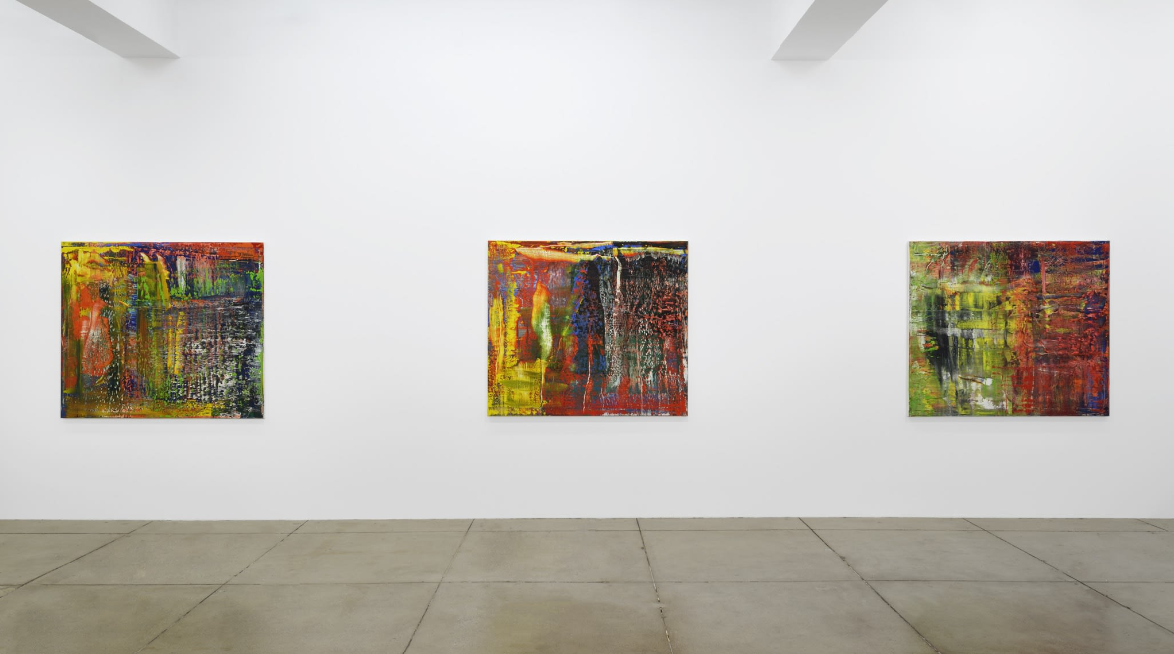
Painted in 2015 and unveiled at the artist’s 2016 solo exhibition in New York at the gallery of his long-term friend and mentor, Marian Goodman, Abstraktes Bild (940-7) is the last and most authorative of the seven-part series of Abstrakte Bilder paintings numbered 940 in the Richter’s Catalogue Raisonné. Delivering a tonal vivacity of kaleidoscopic primary colour reminiscent of Richter’s most celebrated breakthrough of Abstrakte Bilder works from 1976 and 1977, the present painting marks a distinct departure from an extended period of predominantly more muted, earthy-toned compositions.
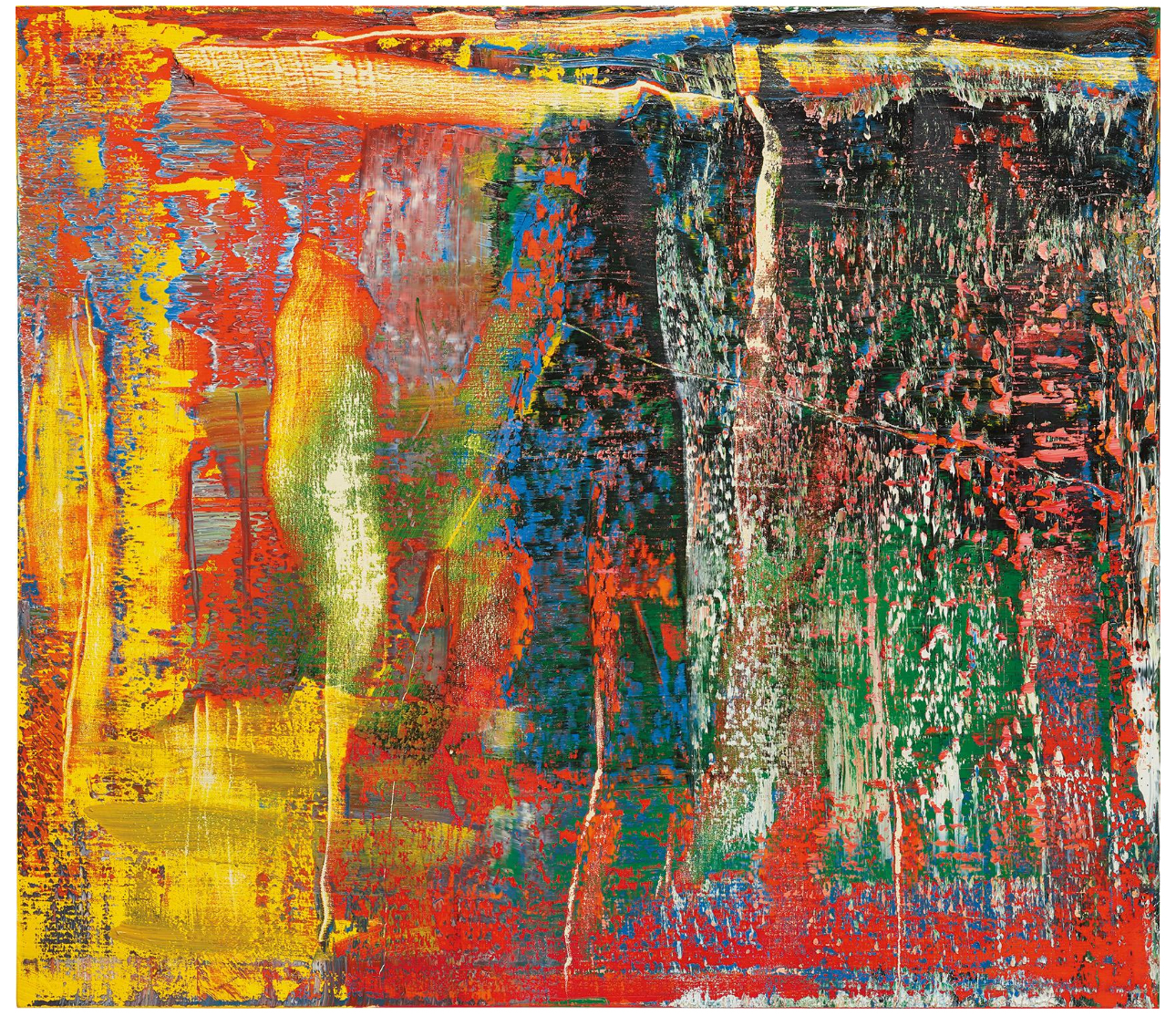
Caught within the perimeters of this mature, confident painting – one of the three largest oil on canvas works created this millennium by Richter to have been offered at auction – we can trace every phase of his artistic transformation that, over the past sixty years, has now developed into its most sophisticated stage. At the same time, however, as praised by critic Harvey Brock who notes of Richter’s 2015 paintings: ‘the surfaces of the oil paintings are more active than ever, with patches and lines of scraped canvas standing out like livid scars, and betray a compelling need—an old man’s impatience, perhaps—to get to the point, Abstraktes Bild (940-7) perfectly exemplifies the artist’s masterful ability to, decades on from its conception, surge the series forth to new directions.
Abstraktes Bild, 1992
Sotheby’s New-York: 12 May 2021
Estimated: USD 14,000,000 – 18,000,000
USD 23,244,000
GERHARD RICHTER (b. 1932)
Abstraktes Bild, 1992
Oil on canvas
200×160 cm (78 3/4 x 63 inches)
Signed, dated 1992 and numbered 768-2 on the reverse
Abstraktes Bild from 1992 represents an aggregation of Gerhard Richter’s pioneering work in the field of abstraction and affords a sublime experience to the viewer. It is a breathtaking masterwork of Richter’s epic, eponymous cycle, which is recognized as the preeminent venture in abstract art of the last forty years. Broadcasting an awe-inspiring spectrum of hue, dominated by fiery reds but also evincing intense shades of the other primaries, this is a paradigm of the artist’s most arresting and seductive work. Executed on a monumental scale, Abstraktes Bild envelops the viewer entirely and irresistibly into its chromatic expanse. Fundamentally non-representational, the work offers an interaction that is almost unearthly, emanating a shimmering fluidity of color that rushes towards the eye. Richter’s intense manipulation of the surface conjures a sensation of infinite paint layering. As the artist stated in conversation with Nicholas Serota in advance of his 2011 Tate retrospective: “Almost all the abstract paintings show scenarios, surroundings and landscapes that don’t exist, but they create the impression that they could exist. As though they were photographs of scenarios and regions that had never yet been seen.” (‘I Have Nothing to Say and I’m Saying It: Conversation between Gerhard Richter and Nicholas Serota, Spring 2011’ in: Exh. Cat., London, Tate Modern, Gerhard Richter: Panorama, 2011, p. 19)
Abstraktes Bild, 1992
Christie’s New-York: 11 May 2021
Estimated: USD 9,000,000 – 12,000,000
USD 6,990,000
GERHARD RICHTER (B. 1932), Abstraktes Bild | Christie’s (christies.com)
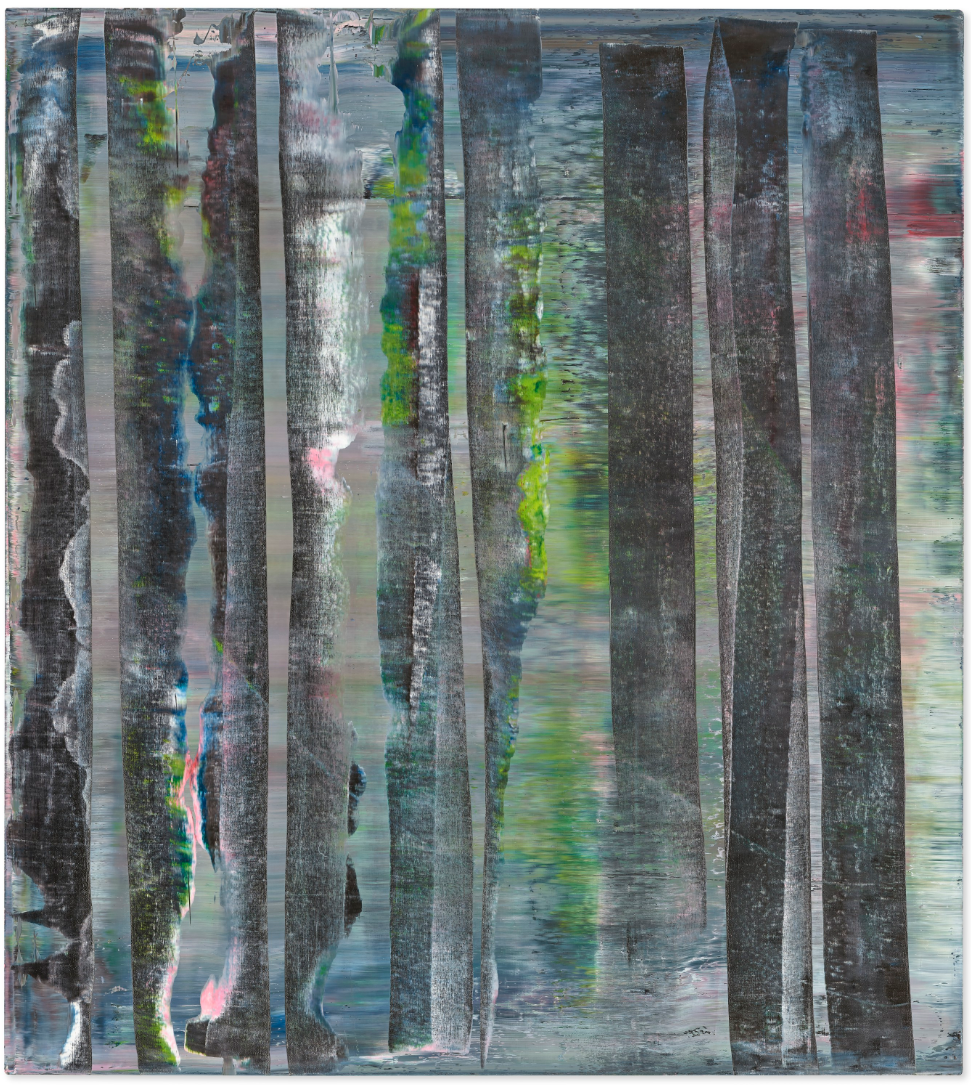
GERHARD RICHTER (B. 1932)
Abstraktes Bild, 1992
Oil on canvas
200×179 cm (78 3/4 x 70 1/2 inches)
Signed, numbered and dated ‘769-4 Richter 1992’ (on the reverse)
Dating from one of the most majestic periods of Gerhard Richter’s abstract practice, Abstraktes Bild is a rich, complex and enigmatic work that demonstrates the extraordinary flourishing of his technique during the early 1990s. Vertical ribbons of deep, opulent color cascade down the length of the picture plane, flickering like folds in a veil. Below, a shimmering ground of pink, blue and piercing green tones weaves in and out of focus, illuminating the darkness like shards of light through trees. Painted in 1992, during a period of thrilling international acclaim, the work belongs to a distinctive group of canvases created by dragging a spatula and palette knife in vertical bands over a squeegeed underlayer. At once rhythmic and chaotic, these works set a new benchmark within Richter’s oeuvre, staking out virtuosic new ground in his lifelong exploration of the relationship between abstraction and figuration. Included in the 12th Sydney Biennale in 2000 after two years on display at the Art Gallery of Western Australia, Perth, the present work takes its place alongside examples held in the Kunsthalle Hamburg and the National Gallery of Art, Washington D.C., amongst others.
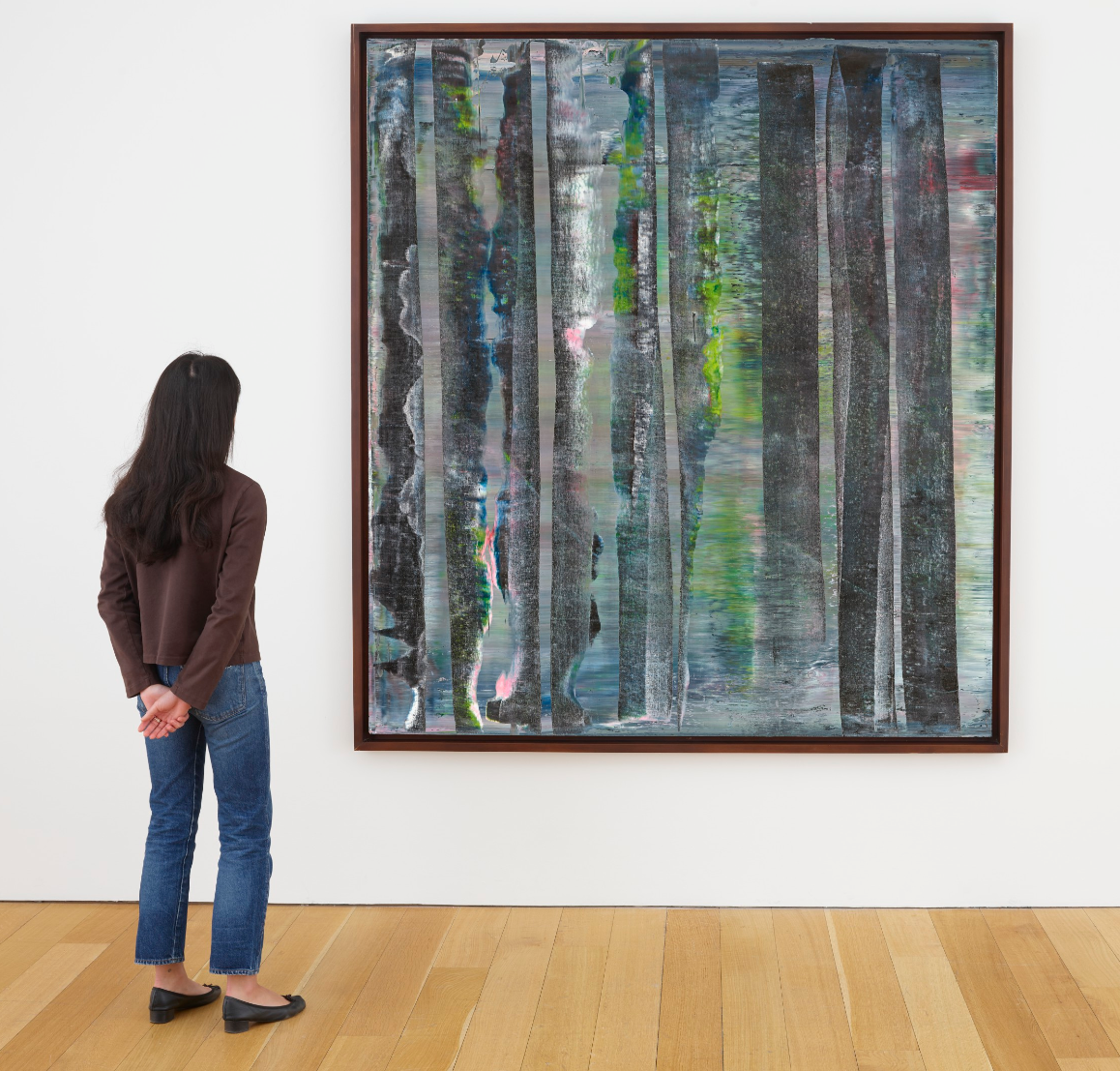
By the 1990s, Richter had fully mastered the squeegee technique that had fuelled his investigations since the beginning of the previous decade. Swept across the canvas over layers of wet paint, the tool allowed him to fully exploit the dialog between chance and control that lay at the heart of his oeuvre. The addition of a new vertical dimension, as demonstrated here, unlocked further layers of potential, allowing Richter to effectively overwrite the patterns created by the squeegee. Occasionally, he cuts through the surface with a palette knife, forcing rills of paint to run up the edges of the bands like cresting waves. Elsewhere, horizontal threads seem to intersect with the vertical striations, creating a seemingly impossible web of interwoven layers.
Schwefel (Sulphur)
Sotheby’s Hong-Kong: 19 April 2021
Estimated: HKD 80,000,000 – 100,000,000
HKD 118,115,000 / USD 15,208,854
GERHARD RICHTER (b. 1932)
Schwefel (Sulphur)
Oil on canvas
200.3 x 300.5 cm (78 7/8 s 118 3/8 inches)
Signed, dated 1985 and numbered 573-1 on the reverse
Bursting with exuberant color, gestural dynamism and compositional complexity, Gerhard Richter’s highly expressive Schwefel, produced in 1985, marks the genesis of the artist’s iconic Abstrakte Bilder; a body of work that revolutionized the historic progression of Western abstraction by injecting the weathered doctrine of formalism with much needed existential verve. Richter’s monumental painting, measuring over nine feet wide and six feet tall, immerses viewers in a pictorial adventure that leads them to contend with the mercuriality of paint. In Richter’s Schwefel, one observes a mature artist who, despite being a renowned skeptic of formalism, has clearly mastered the fundamental tenets of the medium. His varied techniques in manipulating paint, not merely for the sake of it, but as a means for representing an unknowable reality, imbue his Abstrakte Bilder with an indelible metaphysical dimension. Richter’s technical agility manifests with considerable force in Schwefel, evident in the translucent white plane that latitudinally bisects the painting’s upper-half area; the fragmented red and black squeegeed forms that occupy the work’s right side; and the broad brush-applied green gestural stroke that hovers in the painting’s center. Schwefel also showcases Richter’s high aptitude for composition, as the unperturbed yellow-green negative space on the left half of the canvas contrasts beautifully with the dynamism of the interacting variegated forms on the canvas’s right-half, establishing a dramatically resolved visual equilibrium. Moreover, by recalling Richter’s earlier abstract works of the 1970s and anticipating the entirely squeegeed paintings of the late 1980s, Schwefel presents itself as an open-ended negotiation of the artist’s widely celebrated styles.
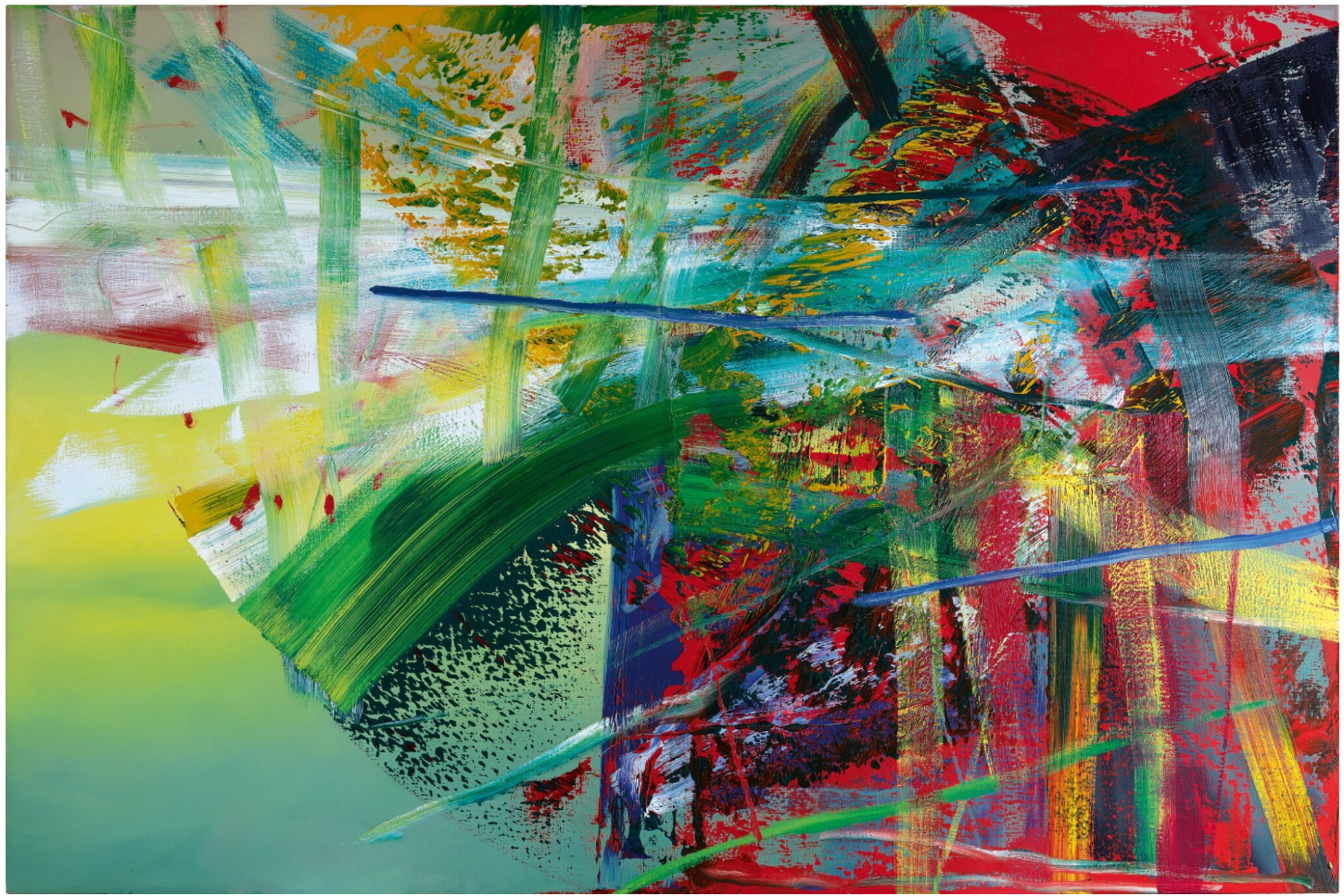
Schwefel was assiduously created over a period of several months, in tandem with other large abstract works present in Richter’s Cologne studio. Thereafter, Richter follows a meticulous process to realize his spectacular abstract compositions, of which Schwefel is a quintessential example. First, Richter applies a soft ground of color to the canvas, a deep earthy green in the case of the present work. Second, the artist alters this simple composition with a first form, such as a large brush stroke, a track of color drawn out with a squeegee, a geometric shape. Gradually, the composition takes shape evolving through many stages, each stage giving rise to a unique ordering of colored forms. Unlike the radical spontaneity seen in mid-century Abstract Expressionism, such as in Pollock’s drip paintings, Richter’s abstract paintings are constructed with great deliberation, exhibiting the artist’s utter dedication to the medium and process-driven approach. The artist’s protracted painting process also explains the dense layering of color that appears in the right-half of Schwefel. Richter, however, allows a certain degree of chance in his process. For example, his adept use of the squeegee, evident in the ethereal forms that dominate the right side of the canvas, mediate the unplanned effects of the instrument with the artist’s pictorial calculations.
Medium AB
Abstraktes Bild, 1992
Christie’s Paris: 15 April 2026
Estimated: EUR 1,800,000 – 2,500,000
GBP 2,317,000 / USD 2,733,630
Gerhard Richter (né en 1932), Abstraktes Bild | Christie’s
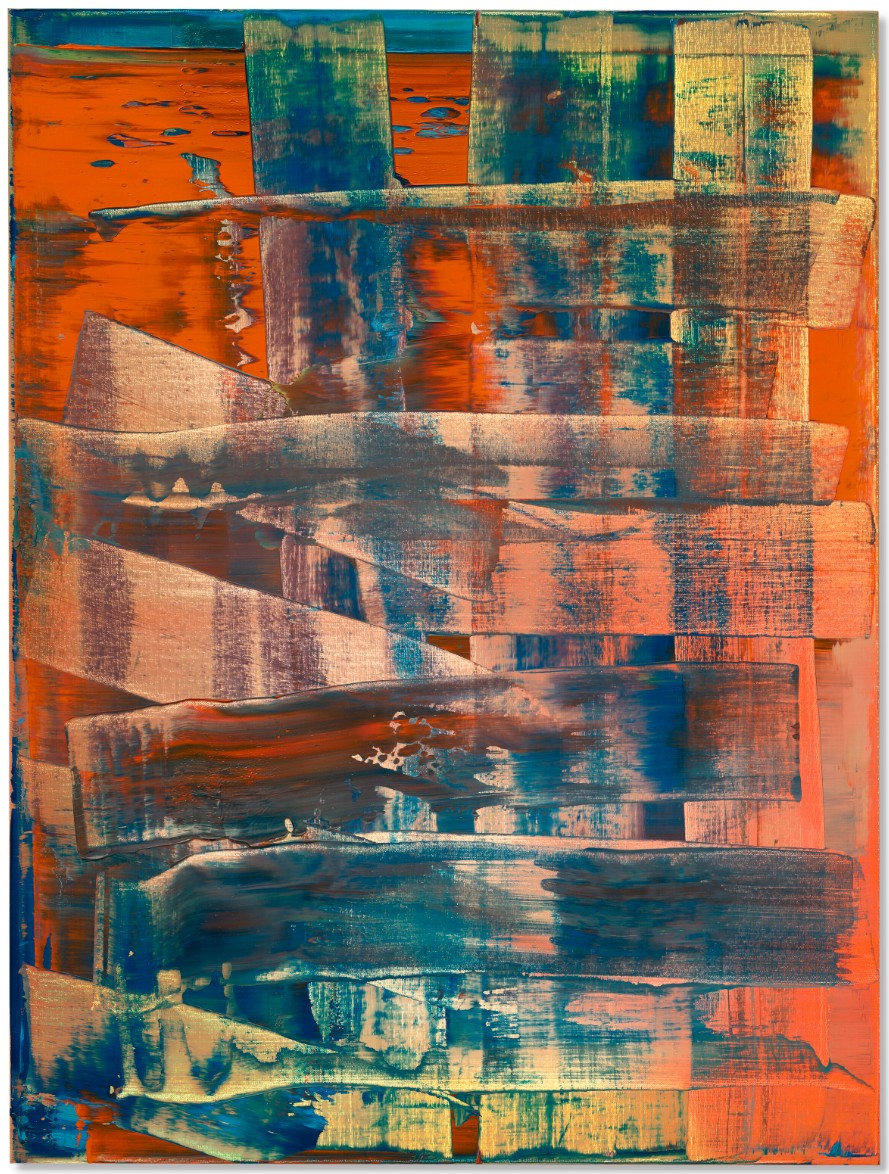
GERHARD RICHTER (born 1932)
Abstraktes Bild, 1992
Oil on canvas
82.2 x 62.3 cm (32-3/8 x 24-1/2 inches)
Signed, numbered and dated ‘761-1 Richter 1992’ (on the reverse)
Sating from one of the finest periods of Gerhard Richter’s practice, the present work is an exquisite example of his Abstrakte Bilder (Abstract Paintings). Luminous tones of red, orange and blue unfurl across the canvas, mingling and colliding in hypnotic layers. Passages of yellow gleam through the texture, bathing the surface in golden light. The work was painted in 1992, at a time of extraordinary professional and creative triumph. Contemporaneous with Richter’s majestic Bach cycle (1992, Moderna Museet, Stockholm), it belongs to a distinctive group of works defined by their vertical and horizontal bands. Into a marbled ground, created using his signature squeegee, the artist cuts broad, sweeping ribbons, rippled with color and texture. This technique gave rise to some of his most arresting abstract works, with examples held in the Museum Frieder Burda, Baden-Baden, the National Gallery of Art, Washington D.C. and the Doris and Donald Fisher Collection at the San Francisco Museum of Modern Art.
Richter’s abstracts evolved in tandem with his photorealist paintings, begun during the 1960s. Both bodies of work posed vital questions about the relationship between image and illusion. His photo-paintings meticulously reproduced the blurred imperfections of their original sources, taking to task the truth claims of the camera. In his abstract canvases, he delighted in the opposite phenomenon, relishing the unpredictable hints of reality that emerged from layers of non-representational colour and texture. Following on from his Farbtafeln (Colour Charts) and Rot-Blau-Gelb (Red-Blue-Yellow) works of the late 1960s and early 1970s, he began to produce his first ‘soft’ abstracts, often based on photographs of brushstrokes and painted surfaces. Gradually, these illusionistic elements were replaced by free gesture, fuelled by his adoption of the squeegee during the early 1980s. Dragged over layers of wet paint, this extraordinary hand-made tool allowed Richter to submit himself to the forces of chance. Unplanned optical effects emerged in its wake, frequently reminiscent of spectacular sunsets or watery reflections.
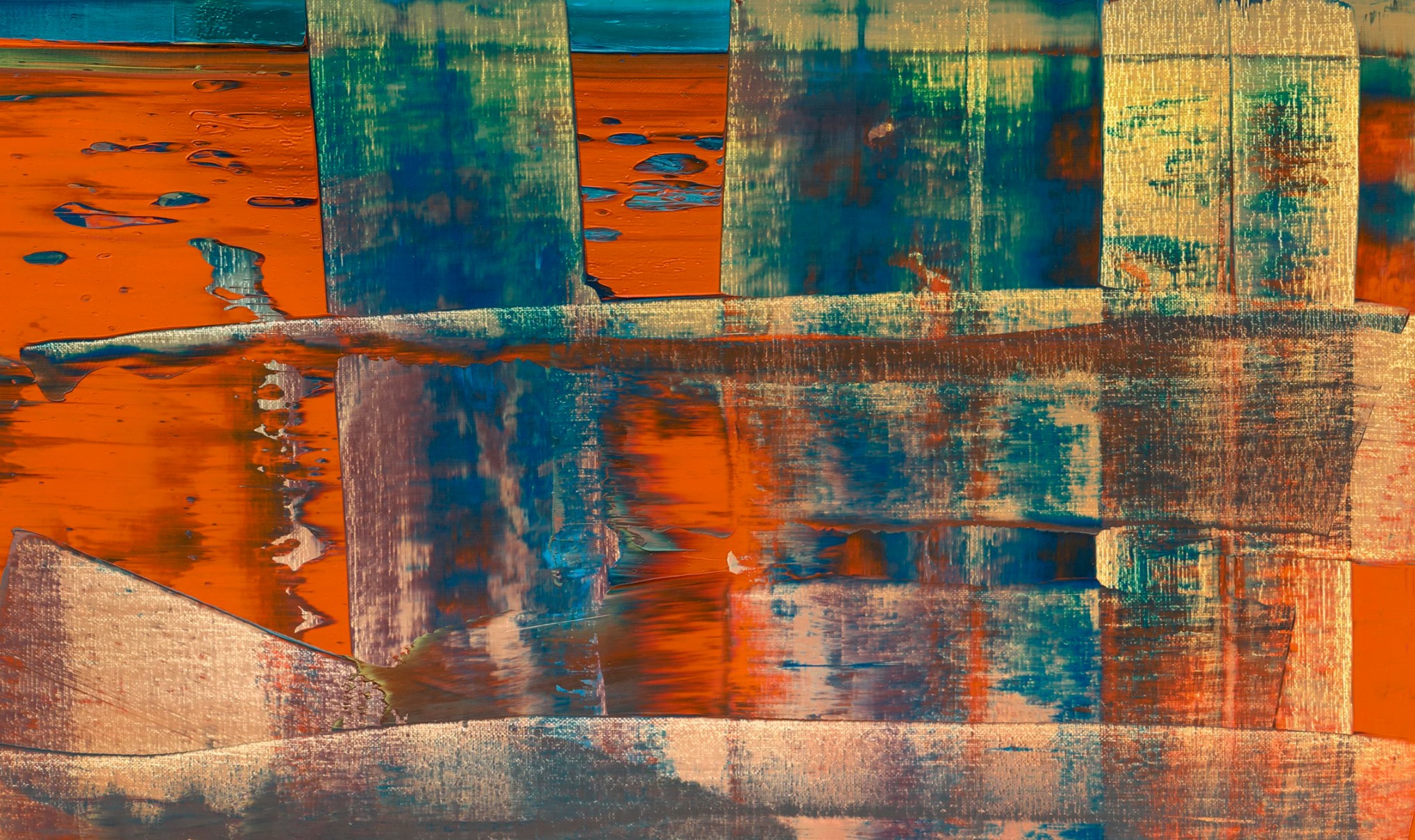
By the 1990s, Richter’s techniques had become increasingly sophisticated. His abstract paintings reached new and ambitious heights, each canvas more beautiful and virtuosic than the last. The present work and its companions reveal the nuanced complexity of his approach. ‘For about a year now, I have been unable to do anything in my painting but scrape off, pile on and then remove again’, he wrote in 1992. ‘In this process, I don’t actually reveal what was beneath … The process of applying, destroying and layering serves only to achieve a more varied technical repertoire in picture-making’ (G. Richter, ‘Notes 1992’ in H-U. Obrist (ed.), Gerhard Richter: The Daily Practice of Painting, London 1995, p. 245). In tandem with this approach, Richter’s international reputation began to soar. In 1992, following his major retrospective at the Tate Gallery, London, the artist mounted an important showcase of large-scale Abstrakte Bilder at documenta IX in Kassel. The following year his career-defining retrospective opened at the Musée d’Art Moderne de la Ville de Paris, subsequently touring museums across Europe.
“With abstract painting we create a better means of approaching what can be neither seen nor understood.”
André Derain, The Turning Road, L’Estaque, 1906. The Museum of Fine Arts, Houston, TX. © Public domain / Wikimedia Commons
While the Modernist grid-like structures of Piet Mondrian certainly loomed large in Richter’s imagination, the present work demonstrates the increasingly sublime textures and colours that came to define his paintings of this period. Its kaleidoscopic surface calls to mind the jewel-toned palettes of Fauvism and Abstract Expressionism, offering tantalising hints of a world beyond. In his commentary on these works, the art historian Robert Storr wrote that ‘the slippages caused by Richter’s scraping techniques result in rich marblings, like those on the endpapers of antique books, although the tactile quality is more like moving lava … In other instances Richter has taken to flaying the painted skin of his canvases with a spatula in broad strokes or long, wavering stripes leaving behind abraded, shimmering surfaces that at their sheerest and most luminous look like the Aurora Borealis suspended above various red, orange, yellow, green, blue or violet planets’ (R. Storr, Gerhard Richter: Forty Years of Painting, exh. cat. Museum of Modern Art, New York 2002, p. 81). This description speaks directly to the present work, which glimmers with otherworldly light.
Abstraktes Bild, 1991
ABSTRACT MASTERWORKS FROM AN IMPORTANT PRIVATE COLLECTION
Christie’s London: 5 March 2026
Estimated: GBP 4,500,000 – 6,500,000
GBP 7,600,000 / USD 10,152,840
GERHARD RICHTER (B. 1932), Abstraktes Bild | Christie’s
GERHARD RICHTER (B. 1932)
Abstraktes Bild, 1991
Oil on canvas
112×102 cm (44-1/8 x 40-1/8 inches)
Signed, numbered and dated ‘748-5 Richter 1991’ (on the reverse)
Provenance
Galerie Liliane & Michel Durand-Dessert, Paris
Private Collection, Spain (acquired from the above in 1992)
Acquired from the above by the present owner
With its blazing red surface and cinematic sense of depth, the present work is an incandescent example of Gerhard Richter’s celebrated Abstrakte Bilder (‘Abstract Paintings’). Painted in 1991, during a period of outstanding professional triumph, it belongs to an extraordinary suite of distinctive red canvases created that year. With examples held in the Israel Museum, Jerusalem and the Institut für Auslandsbeziehungen, Stuttgart, these works take their place at the height of his abstract practice: a further example was illustrated on the cover of the catalogue for his retrospective at the Tate Gallery, London, that year. In the present work, tones of crimson, scarlet and vermilion shimmer and collide, marbled with silken swathes of shadow. The squeegee, Richter’s signature tool since the 1980s, is used to subtle yet dramatic effect, delicately parting the skeins of red to reveal flashes of light beneath. It is an exquisite meditation on the relationship between chance and control, illusion and reality, revelling in the fiery friction between them.
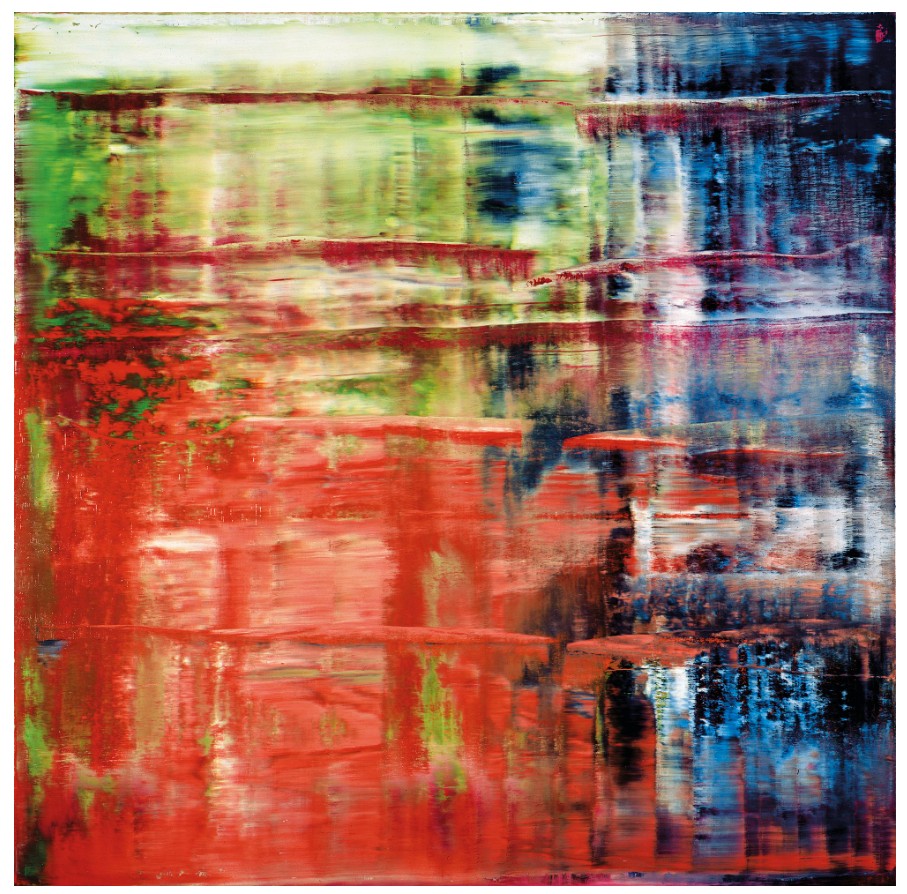
Gerhard Richter, Bach (1), 1992. Moderna Museet, Stockholm. Artwork and photo: © Gerhard Richter 2026 (0029).
The Abstrakte Bilder dating from the late 1980s and early 1990s are widely considered to represent Richter’s finest achievements. Begun in the 1970s, and honed over the course of the following decade, these paintings took on a life of their own during this period, increasing in complexity, scale and ambition. Major series arose, including Eis (Ice) (1989, Art Institute of Chicago), Wald (Forest) (1990) and the celebrated Bach suite (1992, Moderna Museet, Stockholm). The latter, in particular—with their glimmering ruby curtains—may be seen to have their origins in the red paintings of 1991. Concurrently, Richter’s international reputation began to soar. The Tate retrospective was followed by a major presentation at Documenta IX in 1992, while 1993 saw the opening of his career-defining touring retrospective at the Musée d’Art Moderne de la Ville de Paris. This landmark survey of more than 100 paintings, accompanied by a new catalogue raisonné, propelled the artist to global stardom.
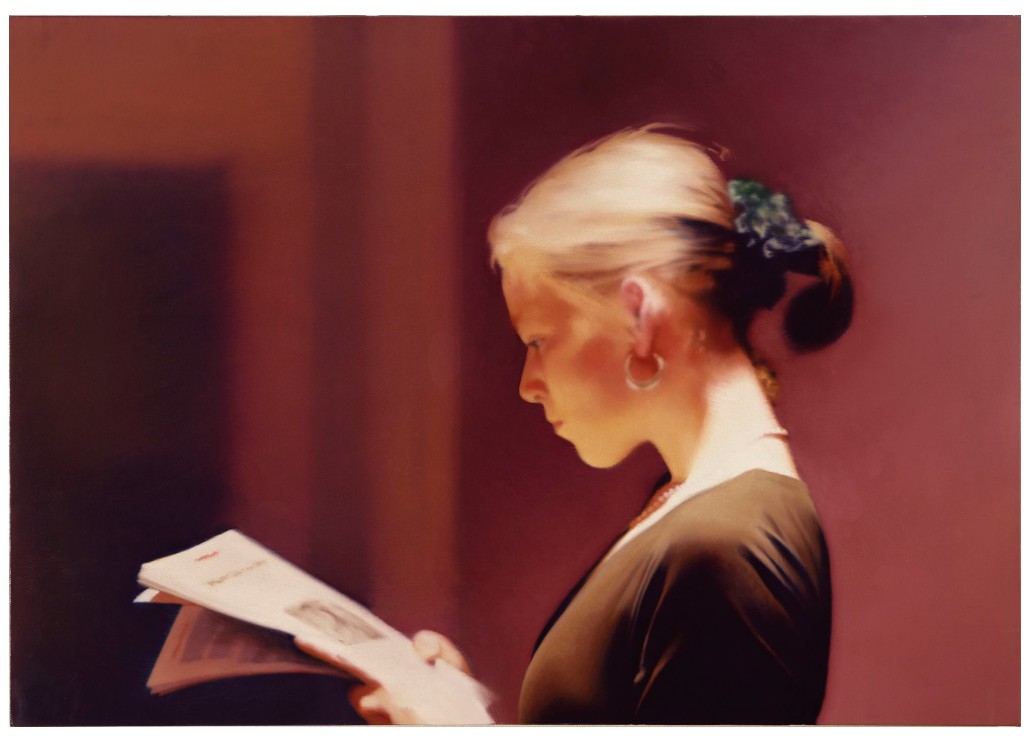
Gerhard Richter, Lesende (Reader), 1994. San Francisco Museum of Modern Art. Artwork and photo: © Gerhard Richter 2026 (0029).
Many of the red abstracts, including the present, were unveiled at Galerie Liliane & Michel Durand-Dessert in September 1991. It was one of the first times in Richter’s abstract practice that he had focused with such sustained intensity upon a single colour. His choice was not without art-historical precedent: Robert Rauschenberg and Ad Reinhardt had both dedicated specific series to red, while artists from Kazimir Malevich and Henri Matisse to Barnett Newman and Cy Twombly had rigorously plumbed its depths. For Richter, too, red was a potent hue, saturating major photo-paintings such as Betty (1988, Saint Louis Art Museum) and later the exquisite Lesende (Reader) (1994, San Francisco Museum of Modern Art). At the time of the present work he had also just completed a series of coloured mirror paintings, including eight ‘blood red’ examples—one of which resides in the San Francisco Museum of Modern Art.
Diego Velázquez, Portrait of Pope Innocent X, circa 1650. Galleria Doria Pamphilj, Rome.
Since the late 1960s, when he moved away from his early greyscale photo-paintings, Richter has repeatedly sought to dissect the chromatic spectrum. His Farbtafeln (Colour Charts) drew upon commercial color samples in the spirit of Pop Art; his Rot-Blau-Gelb (Red-Blue-Yellow) paintings had mixed three tones in endless configurations. Many of his major series of the 1990s would also explore deliberately limited palettes, including the four Grün-Blau abstracts of 1993 (Museo Nacional Centro de Arte Reina Sofía, Madrid), and the five Rot-Blau-Grün paintings of 1994 (Abgeordnetenhaus, Berlin). While the red paintings may be understood within this context, however, they are far from monochrome statements. In Richter’s hands, red fractures into a spectrum of infinite shades: from cherry and rose to brick, burgundy and carmine. In the present work, as in many others from the series, other colours glimmer through the surface like jewels. Red becomes a cloak, veiling tantalizing hints of a world beyond.
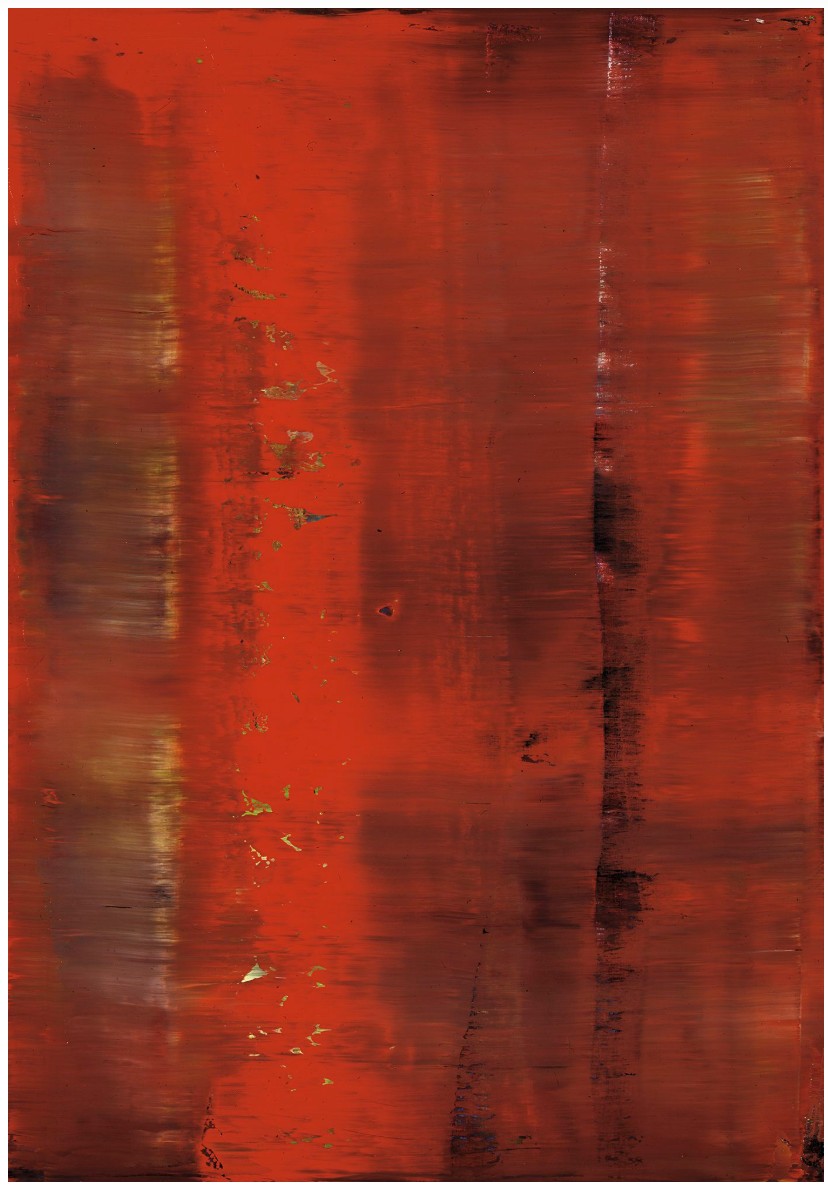
Gerhard Richter, Abstraktes Bild (743-3), 1991. The Israel Museum, Jerusalem. Artwork and photo: © Gerhard Richter 2026 (0029).
Richter’s abstracts emerged and evolved in dialogue with his photorealist paintings. Together these twin bodies of work asked important questions about the nature of art-making, suggesting that all images were inherently deceptive. Richter’s photo-paintings frequently blurred their subjects to the point of ambiguity, reproducing the slippages of the camera lens. His abstracts, conversely, revelled in their unplanned semblance to reality, their surfaces swimming with hints of recognizable phenomena. The present work quivers with the same ethereal beauty as light upon water, or a dazzling sunrise. The closer we get to the surface, however, the more its illusion dissolves. ‘With abstract painting we create a better means of approaching what can be neither seen nor understood’, explained Richter (G. Richter, quoted in R. Nasgaard, ‘Gerhard Richter’, in Gerhard Richter: Paintings, exh. cat. Museum of Contemporary Art, Chicago 1988, p. 107).
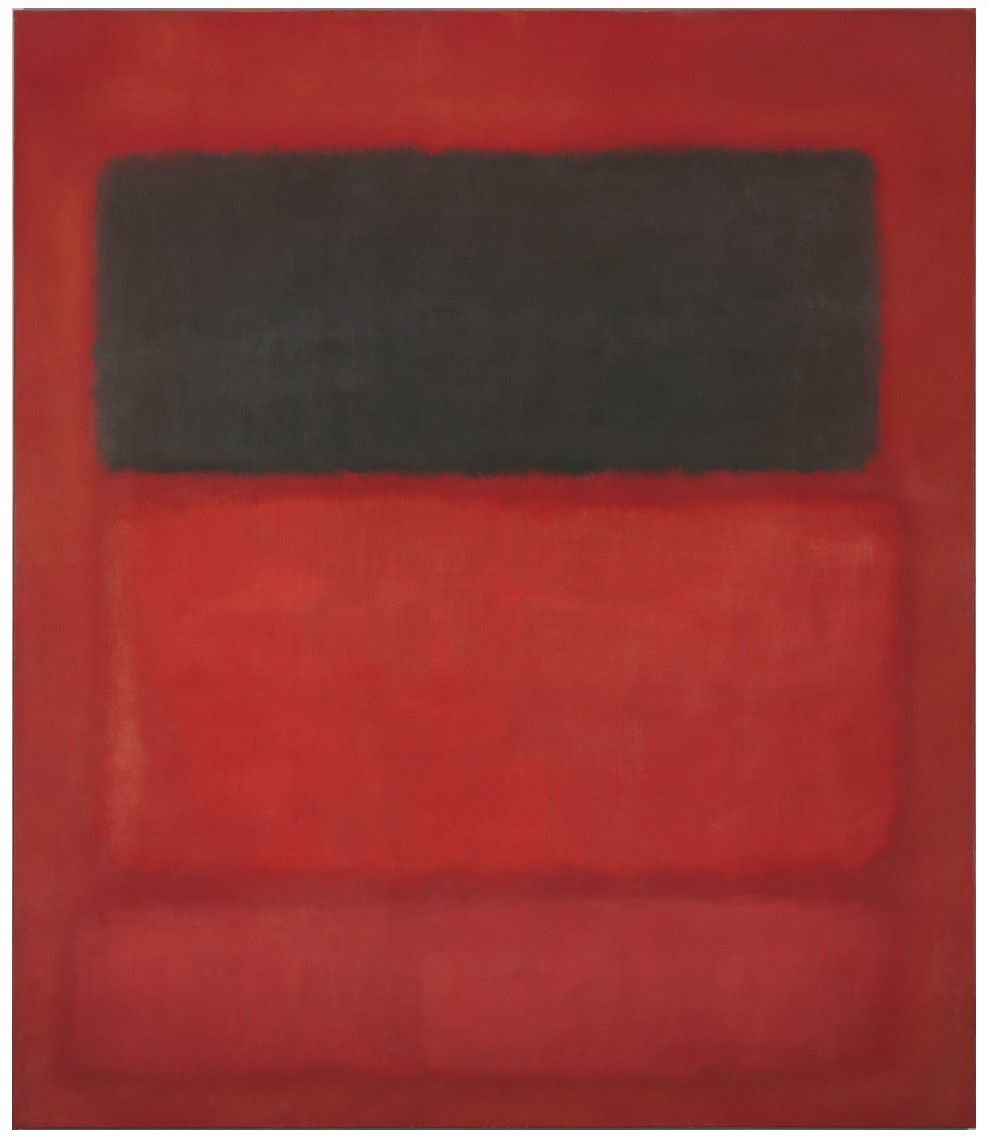
Mark Rothko, Black over Reds (Black on Red), 1957. Baltimore Museum of Art.
Artwork: © 2026 Mark Rothko/DACS. Digital image: Baltimore Museum of Art / Bridgeman Images.
The squeegee, adopted in the early 1980s, became an essential part of this approach. It allowed Richter to move away from his early ‘soft’ abstracts—often based on photographs of enlarged brushstrokes—and to submit himself to the powers of chance. Dragged over layers of wet paint, it became a tool for mixing and excavating, marbling different tonalities together while simultaneously exposing others. The effects recall the vast, shimmering color fields of Mark Rothko, the dappled surfaces of the Impressionists and the rich chiaroscuro of Velázquez and Caravaggio. None, however, were explicit models for Richter: in works such as the present, paint itself remains the sole subject. The squeegee, he writes, ‘is a good technique for switching off thinking. Consciously, I can’t calculate the result. But subconsciously, I can sense it’ (G. Richter, quoted in S. Koldehoff, ‘Gerhard Richter, Die Macht der Malerei’, in Art. Das Kunstmagazin, December 1999, p. 20). Across the surface of the present work, pigment writes its own story, drifting in and out of resemblance to the world we know.
Abstraktes Bild, 1990
Sotheby’s New-York: 15 May 2025
Estimated: USD 5,000,000 – 7,000,000
USD 6,943,000
Abstraktes Bild | The Now and Contemporary Evening Auction | 2025 | Sotheby’s
GERHARD RICHTER (b. 1932)
Abstraktes Bild, 1990
Oil on canvas
122×102 cm (48 x 40 1/8 inches)
Signed, dated 1990 and numbered 720-4 (on the reverse)
Provenance
Anthony d’Offay Gallery, London
Acquired from the above in April 1991 by the present owner
Abstraktes Bild from 1990 is an exemplary testament to Gerhard Richter’s singular artistic voice and unparalleled impact on the legacy of contemporary painting. The present work is among Richter’s iconic Abstrakte Bilder—widely acclaimed as one of the most groundbreaking innovations in abstract art over the last five decades—and foregrounds the artist’s pioneering endeavor to capture a more visceral and fundamental interaction between artist and painting. Diverging from his earlier photorealist paintings in favor of pure abstraction, Richter harnessed the liberating capacities of variegated hues and an entirely innovative technique.
“What I am trying to do in each picture is to bring together the most disparate and mutually contradictory elements, alive and viable, in the greatest possible freedom.”
A paragon of the artist’s epoch-defining series, Abstraktes Bild wholly embodies Gerhard Richter’s conceptual and aesthetic enterprise. Executed in shimmering gunmetal, violet, ruby, and alabaster hues, Abstraktes Bild is further distinguished by its inclusion in the acclaimed 1991 presentation, Gerhard Richter: Mirrors at Anthony d’Offay Gallery, London. Works from this exhibition are lauded among the finest examples in Richter’s prolific oeuvre and are today represented in prestigious public and private collections, including the Tate, London; National Gallery of Victoria, Melbourne; and the Doris and Donald Fisher Collection, San Francisco.
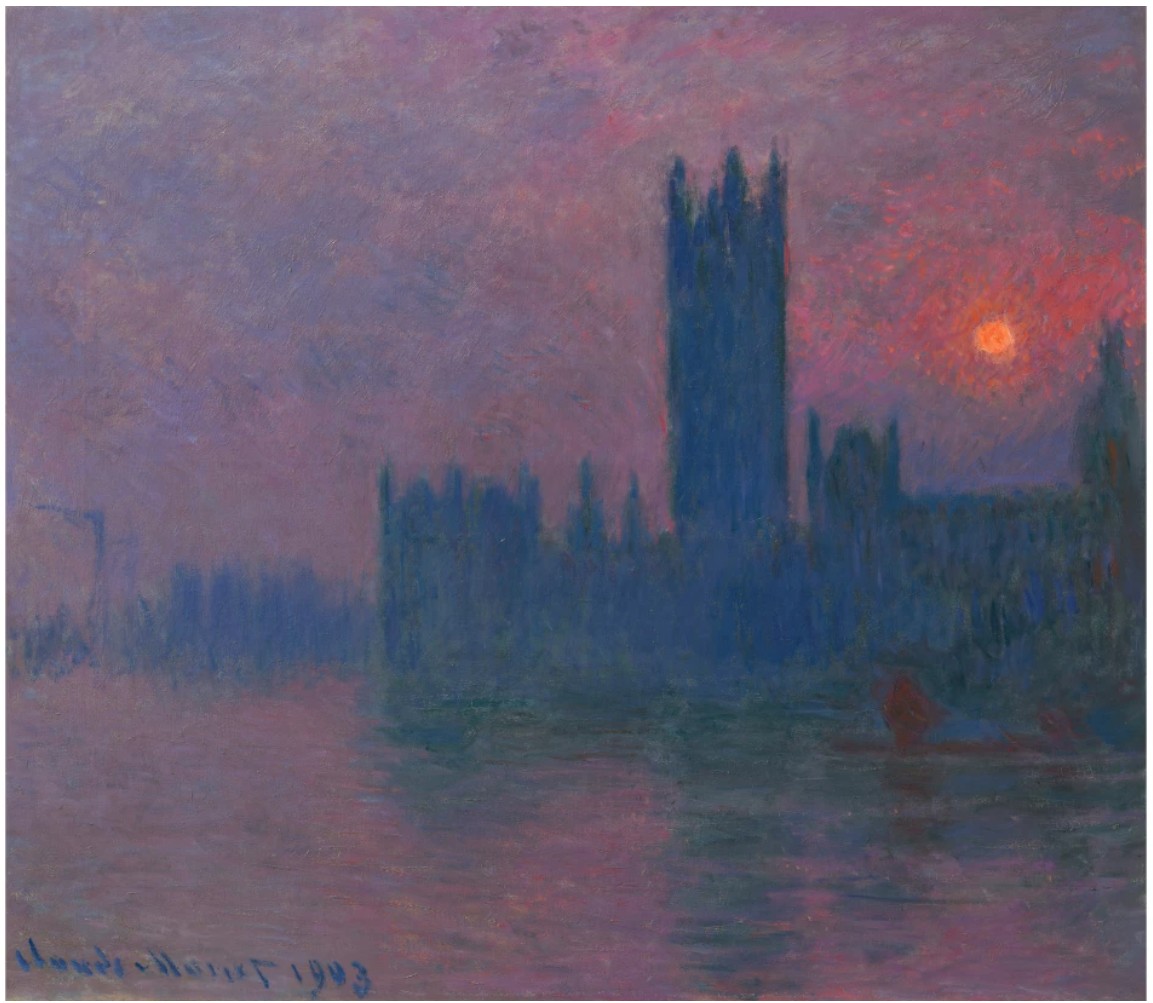
Claude Monet, Parliament, Setting Sun, c. 1900-03. Private Collection. Image © Christie’s Images / Bridgeman Images
A bright alabaster white illuminates the upper right corner of the canvas, shifting across the right edge of the composition, evoking a glimmering moonlight rippling across a gently rippling pond. In stark contrast with this brightness are the horizontal strokes of inky ebony, unfurling across the upper register of the canvas, receding into glimpses of crimson red and golden yellow sporadically peeking out into the picture plane. This interplay of color evokes the slow yet dramatic transformation of celestial vistas—of the midnight sky steadily shrouding the embers of the setting sun—stacked atop the hazy earthly tones of dusty teal, gunmetal, and muted amethyst dancing rhythmically across the canvas. Flickering in and out of our vision are the chance slippages left behind by Richter’s squeegee, punctuating the painting’s textural topography through their staccato ridges, crests, and peaks of impasto, thus unveiling an intense interrogation of the very nature of paint and pigment.
As evidenced by the conceptual rigor and aesthetic complexity of Abstraktes Bild, Richter’s abstract paintings have often been considered the culmination of the manifold lines of artistic and intellectual inquiry the artist has pursued throughout his career. Ceaselessly probing the limits and capabilities of visual cognition, Richter’s paintings have operated under the acute awareness of an innate human urge to locate patterns and construct meaning: “I just wanted to reemphasize my claim that we are not able to see in any other way. We only find paintings interesting because we always search for something that looks familiar to us. … When we don’t find anything, we are frustrated, and that keeps us excited and interested until we have to turn away because we are bored.” (the artist quoted in: Exh. Cat., New York, Museum of Modern Art, Gerhard Richter: Forty Years of Painting, 2002, p. 304) In this sense, Richter presents in Abstraktes Bild an endlessly mesmerizing question, one that compels viewers to persist in their search for understanding while it successfully evades straightforward interpretation. This provocative attitude, along with the expressive energy of the composition, recalls works by titans of abstract art such as Mark Rothko or Clyfford Still, while the dramatic contrast between bright and dark hues hints at a certain sense of the sublime found in Caspar David Friedrich’s German Romantic landscapes or J.M.W. Turner’s sea storms. Much like how these masters expanded the expressive potential of painting, Richter introduces an inimitable artistic vision that realigns our understanding of abstract painting. Intellectually rigorous and captivatingly beautiful, Abstraktes Bild joins art historical predecessors in a rich dialogue redefining the boundaries of representation, illusion, and perception.
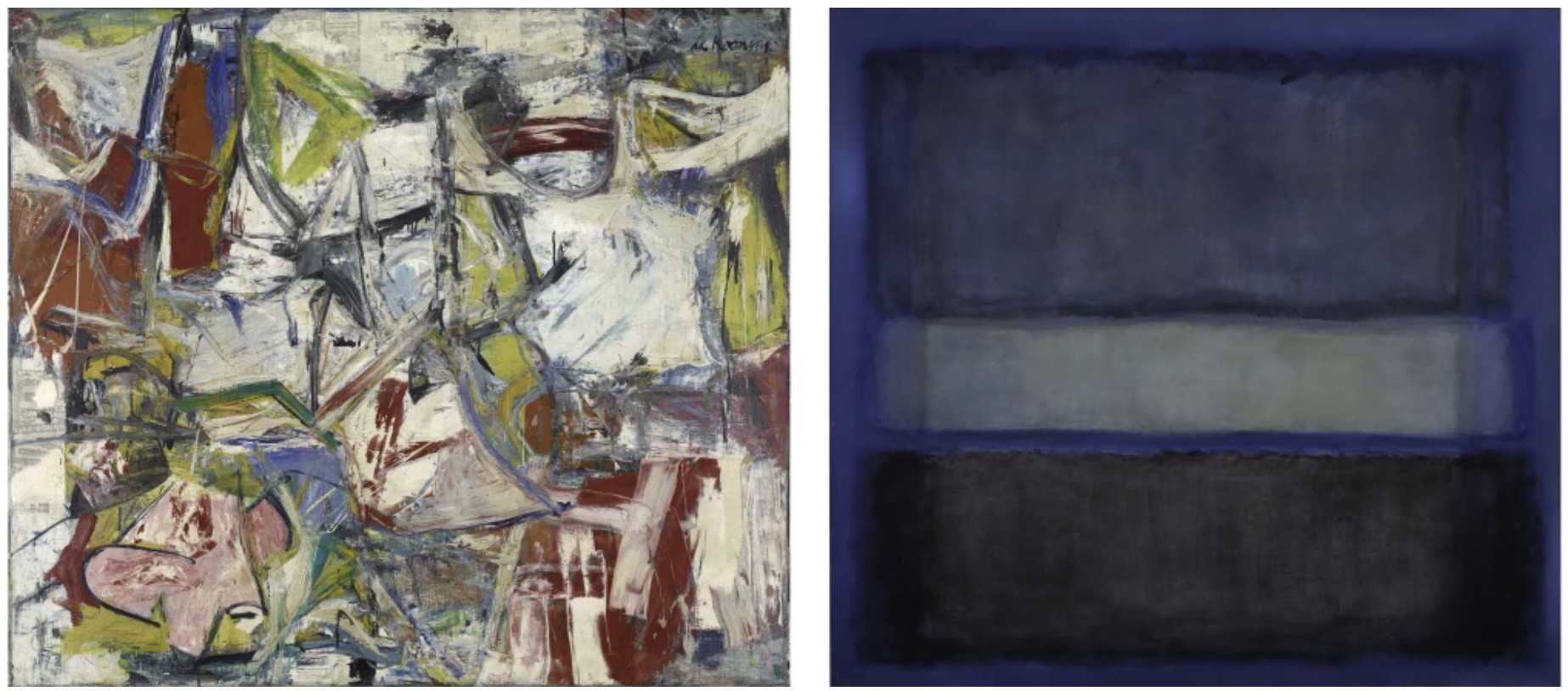
Left: Willem de Kooning, Gotham News, 1955. Buffalo AKG Art Museum. Image © Buffalo AKG Art Museum / Art Resource, NY. Art © 2025 The Willem de Kooning Foundation / Artists Rights Society (ARS), New York. Right: Mark Rothko, White Band No. 27, 1954. Modern Art Museum of Fort Worth. Art © 1998 Kate Rothko Prizel & Christopher Rothko / Artists Rights Society (ARS), New York
Central to Abstraktes Bild’s capacity to deconstruct perception is the squeegee, which Richter uses to unlock compositional complexity, gestural energy, and the influence of serendipity in his canvasses. The traction of the hard-edged squeegee streaks and smears the pigment, at times piling onto and at others eroding away from each other, carrying with them scrapes, smudges, and incisions of various chromatic intensity. The resulting composition is a geologic cross-section of the myriad strata of paint, all varying in their density, viscosity, and color, the conclusion of incalculable permutations of mark-making brought about by the aleatory principles of the squeegee’s application. This painterly process urges the viewer to respond with a visual excavation of sorts, unearthing the vestiges of paint that record every step of the painting’s relentless transformation. Chance and unpredictability lie at the heart of Abstrakte Bilder’s compositions: “I want to end up with a picture that I haven’t planned. This method of arbitrary choice, chance, inspiration and destruction may produce a specific type of picture, but it never produces a predetermined picture… I just want to get something more interesting out of it than those things I can think for myself.” (the artist quoted in: Hubertus Butin and Stefan Gronert, eds., Gerhard Richter: Editions 1965 – 2004: Catalogue Raisonné, Ostfildern-Ruit 2004, p. 36) Whereas abstraction is conventionally understood as a process of simplification or essentialization, Richter brings about a singular artistic vision in taking the opposite direction, underscoring the complexity of his tireless addition and application of layers in his meticulous composition; thus, Abstraktes Bild becomes a kaleidoscopic accumulation of color, a palimpsest that carries the records of the artist’s energetic painterly process.
Caravaggio, Narcissus, c. 1597-99. Gallerie Nazionali di Arte Antica, Barberini Corsini, Palazzo Barberini, Rome.
Image © Luisa Ricciarni / Bridgeman Images
Masterfully marrying his control of color with the arbitrary chance of the squeegee, Gerhard Richter underscores his virtuosic command over painting and innovative technique upon the picture plane. Abstraktes Bild foregrounds Richter’s singular capacity to weave together seemingly disparate ventures—astronomical allusions, cerebral interrogations, chromatic experimentation, and more—to create a fabric of visual poetry that expands our conception of painting. A glimmering crescendo of prismatic hues, Abstraktes Bild stands as an emblem of the radical innovation and profound brilliance that solidified Gerhard Richter’s status as a visionary of contemporary art.
Abstraktes Bild, 1990
Sotheby’s New-York: 14 May 2024
Estimated: USD 4,000,000 – 6,000,000
USD 4,658,000
Abstraktes Bild | Contemporary Evening Auction | 2024 | Sotheby’s (sothebys.com)
GERHARD RICHTER (b. 1932)
Abstraktes Bild, 1990
Oil on wood
120×120 cm (47 1/4 x 47 1/4 inches)
Signed, dated 1990 and numbered 730-1 (on the reverse)
Provenance
Anthony d’Offay Gallery, London
Acquired from the above in 1991 by the present owner
Gerhard Richter’s Abstraktes Bild is a paragon of the artist’s treatise on the aesthetic and conceptual capacities of painting. Executed in 1990, the present work emerges from the apex of Richter’s legendary career and is a resplendent exemplar of the artist’s epoch defining Abstrakte Bilder, a series of paintings widely recognized as the preeminent venture in abstract art of the last fifty years. Abstraktes Bild was notably exhibited in Richter’s acclaimed presentation, Gerhard Richter: Mirrors at Anthony d’Offay Gallery, London (1991); acquired directly from Anthony d’Offay Gallery following its debut exhibition, present work has been held in the same prestigious private European collection for over three decades.

WILLEM DE KOONING, ASHEVILLE, 1948. IMAGE © THE PHILLIPS COLLECTION, WASHINGTON, USA / ACQUIRED 1952 / BRIDGEMAN IMAGES. ART © 2024 THE WILLEM DE KOONING FOUNDATION / ARTISTS RIGHTS SOCIETY (ARS), NEW YORK
Emanating a shimmering fluidity that evokes a landscape refracted through water, swathes of gunmetal, crimson, and chartreuse in Abstraktes Bild give way to fissures of onyx and burgundy beneath. Here, we see Richter revel in the chance slippages of his signature squeegee tool, which the artist uses to simultaneously build and erode his mesmerizing surface, superbly exhibiting Richter’s command of medium, entirely innovative technique, and his unprecedented mastery of color. Sonorous and seductive, Abstraktes Bild exemplifies Richter’s arrival at a greater suppleness and fluency, honing in the momentum and tension of his painterly hand to a pitch-perfect degree.

Richter often included remnants of his past works in new compositions – Abstraktes Bild is no exception. The chromatic permutation of the present work can be seen in the subsequent painting Richter produced following Abstraktes Bild, Wald (1) from 1990, as if it extends from the surface of the present work. Thus, Abstraktes Bild exemplifies a sense of continuity in Richter’s abstraction and exhibits the ultimate painterly palimpsest: the exuberant strata of paint bear the ghosts of previous accretions, of color juxtapositions obsessively applied, erased, remade, and obliterated over again, only to beget fresh cogitations of its own.
In Abstraktes Bild, Richter’s odyssey into the realm of pure abstraction is his most extreme engagement with the medium – a raw examination of the very nature of paint itself, as a physical substance in both original and manipulated forms. Embracing an element of automatism, Richter harnesses the full force of kinetic energy into the painterly surface of Abstraktes Bild as he draws his far-reaching squeegee across the grain of his wood panel surface, layer after layer. Alternating in direction, density of paint, viscosity of the dragged movements, and the drying times between each wipe, Richter indulges in an infinite and unknowable number of permutations borne out of the interaction between oil pigments.

CLAUDE MONET, STACK OF WHEAT (THAW, SUNSET), 1890-91. IMAGE © THE ART INSTITUTE OF CHICAGO / ART RESOURCE, NY
While Richter’s earlier Photo Paintings fall away into abstraction, the Abstrakte Bilder series sees the artist launch a critical breakthrough in his oeuvre as he returns to a suggestion of referentiality. Evoking a blurred image from the nebulous recesses of memory and demanding the same cognitive viewing experience as his photo works, the coagulation of endlessly scraped pigment counters the canon of abstraction by privileging the photographic, the mechanical, and the aleatory. Thrumming with a galvanic, distortive energy redolent within pearlescent smears of color, Abstraktes Bild‘s abstract field of chromatic variegation unmistakably bears the mark of a postmodern digital glow. A glimmering blizzard of kaleidoscopic hues and surging power, Abstraktes Bild represents the epic crescendo of Gerhard Richter’s tireless aesthetic project at its most refined. With the repeated synthesis of chance being a defining trait of its execution, the acts of premeditated chaos that make up the surface of Abstraktes Bild evoke something not quite of this realm, something that is both unfathomable and phenomenal – ultimately encapsulating the paradigm of Gerhard Richter’s mature artistic and philosophical achievement.
Abstraktes Bild (557-3), 1984
Phillips New-York: 14 November 2023
Estimated: USD 2,000,000 – 3,000,000
USD 2,298,500
Gerhard Richter – 20th Century & Co… Lot 38 November 2023 | Phillips
GERHARD RICHTER
Abstraktes Bild (557-3), 1984
Oil on canvas
105.1 x 100 cm (41 3/8 x 39 3/8 inches)
Signed, inscribed and dated “557-3 Richter 1984” on the reverse
Provenance
Kamakura Gallery, Tokyo
Vrej Baghoomian Gallery, New York
Wolff Gallery, New York
Christie’s, New York, November 13, 1991, lot 287
Senator and Mrs. Thomas F. Eagleton, Saint Louis
The Saint Louis Art Museum, Saint Louis (gifted by the above in 1994)
Christie’s, New York, November 11, 2004, lot 184
Acquired at the above sale by the present owner
With characteristic boldness and a bright sense of color theory, Gerhard Richter splits his 1984 Abstraktes Bild down the middle. To the left, perpendicular gradients of scarlet and grey create a sense of depth, as if viewing a fiery sunset over a mountain. Across the border, energetic brushstrokes of white, crimson, and phthalo green writhe against a lime green background that fades to a darker shade at far right. Diagonal strokes cross the center, like a storm cloud with lime green lightning bolts, uniting both sections in the same abstract ecosystem. These formal contrasts push and pull the eye over the canvas, across Richter’s virtuosic juxtaposition of complementary colors and variance of brushstroke.
Abstraktes Bild, 1986
Christie’s New-York: 17 May 2023
Estimated: USD 3,000,000 – 5,000,000
USD 3,680,000
GERHARD RICHTER (b. 1932), Abstraktes Bild | Christie’s (christies.com)
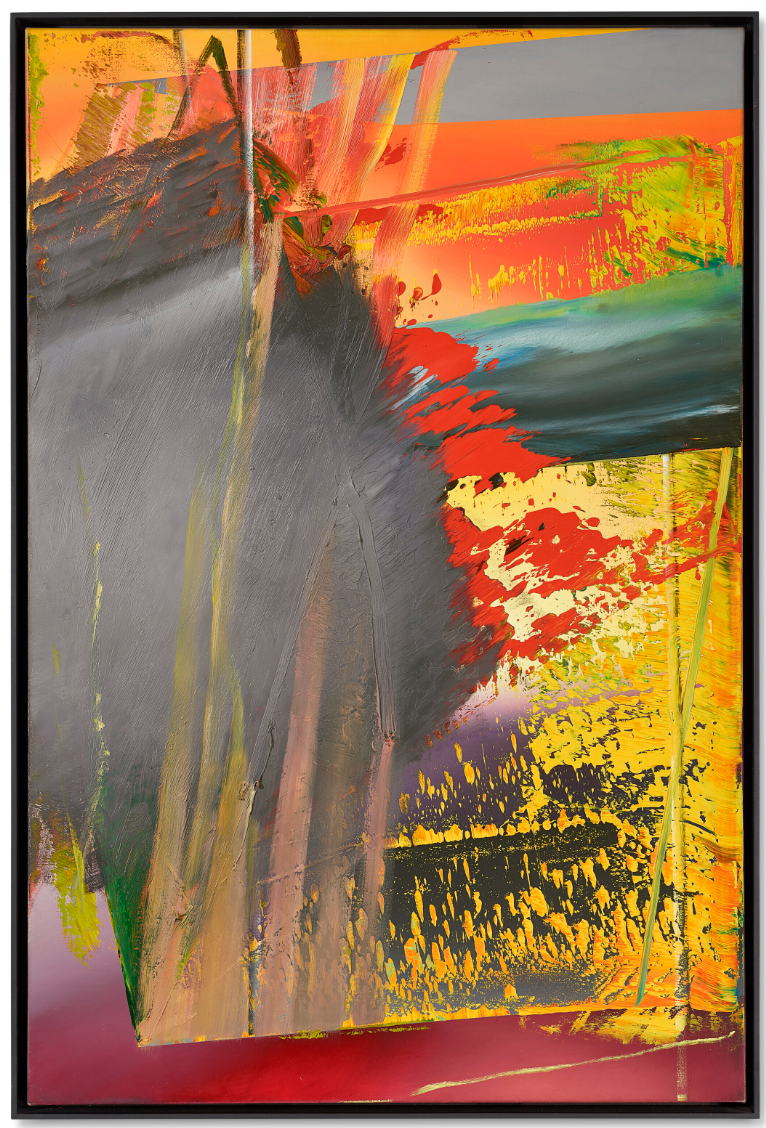
GERHARD RICHTER (b. 1932)
Abstraktes Bild, 1986
Oil on canvas
120×80 cm (47 1/2 x 31 1/2 inches)
Signed, inscribed and dated ‘593-5 Richter 1986’ (on the reverse)
Gerhard Richter began working on his career-defining Abstrakte Bilder paintings in 1976, and the present work is exemplary of the ongoing series’ enormous influence on the history of painting. Its reds, yellows, and oranges collide with a swath of grey, evoking sunshine before a storm. This is not a combative relationship, but rather a symbiotic one. Created at a turning point when Richter began to use a squeegee to manipulate his pigments, Abstraktes Bild epitomizes his innovations of the late 1980s.
“What I am trying to do in each picture is to bring together the most disparate and mutually contradictory elements, alive and viable, in the greatest possible freedom.”
This expansive impulse is certainly evident in Abstraktes Bild, which evinces not only the freedom of the artist, but also the freedom and chance inherent in paint.
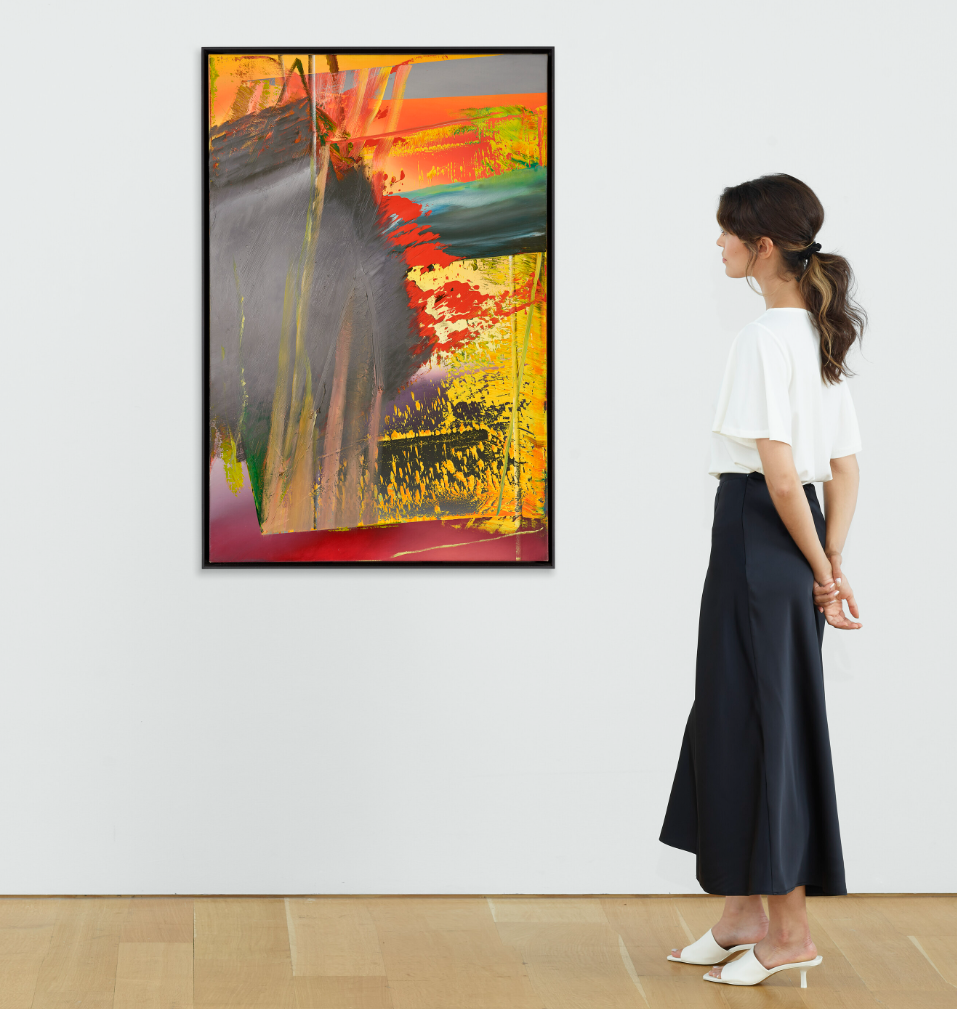
Exhibited in the important group show Moving Energies #3: Aspects of the Olbricht Collection at the Museum Folkwang, Essen, Germany, the present work is a pivotal canvas. It is like a set of crashing waves that provokes sublime awe. Richter’s admixture of vertical and horizontal swaths of paint has all the motion and depth of the sea—a Romantic gesture to be sure, but also a resolutely 20th century one that emphasizes the medium-specificity of his chosen materials. Like an Impressionist scene, the luminescent colors of Abstraktes Bild also become studies of light. Richter’s paintings have rightly been compared to Claude Monet’s Haystacks (1890-1891), which, like the present work, highlight painting’s ability to mark and embody time. As with a storm or a choppy sea, every landscape has an uncontrollable element, for nature, like abstraction, is not entirely predictable. Richter’s homemade squeegee is an instrument of chance, which allows for the unique encounters between hues and forms found in Abstraktes Bild. Above all, it is unafraid to be beautiful. On the painting’s right side, a delicate swath of blue-green enters the picture, like a growing coral reef. This transcendent, even reverential, aura is not unlike the Rothko Chapel of about 15 years prior or Richter’s own stained-glass window for the Cologne Cathedral.
Abstraktes Bild, 1990
Christie’s New-York: 17 November 2022
Estimated: USD 4,000,000 – 6,000,000
USD 3,660,000
GERHARD RICHTER (B. 1932) (christies.com)
GERHARD RICHTER (B. 1932)
Abstraktes Bild, 1990
Oil on canvas
112×82 cm (44 1/8 x 32 1/4 inches)
Signed, inscribed and dated ‘721-2 Richter 1990’ (on the reverse)
A sublime demonstration of Gerhard Richter’s mastery over his technique, in which flashes of color sparkle and skitter across a luminous, jade-green surface, Abstraktes Bild is a rapturous painting from the best year of Richter’s abstract period. Painted in 1990, and resulting from countless hours of investigation and refinement, in which Richter’s squeegee is dragged and scraped, smoothed over with brushes only to begin again, Abstraktes Bild demonstrates the extreme surface complexity and extraordinary depth he has achieved during this celebrated time in his career. In Abstraktes Bild, Richter manages to create a mirror-like surface that evokes watery depths, icy glaciers and the striations of precious gems and minerals. As if a jade stone were infused with a prismatic rainbow and liquified, the painting’s vast network of interconnected layers is suffused with every possible hue imaginable. Flashes of red, yellow, green, pink, blue and mauve punctuate the surface in staccato bursts that rise upward from the lower register; this riotous display of bright colors are like fireworks reflected over a jade-green pool.
Abstraktes Bild, 1997
Christie’s New-York: 10 November 2022
Estimated: USD 3,000,000 – 5,000,000
USD 3,900,000
GERHARD RICHTER (B. 1932), Abstraktes Bild | Christie’s (christies.com)
GERHARD RICHTER (B. 1932)
Abstraktes Bild, 1997
Oil on Alucobond
100 x 90.2 cm (39 3/8 x 35 1/2 inches)
Signed, inscribed and dated ‘842-2 Richter 1997’ (on the reverse)
Abstraktes Bild is a sumptuous canvas that perfectly typifies the nuances and power of Richter’s methods. Observing the surface, one notes that the lower two-thirds are dominated by hues of deep red while the upper portion is dominated by a rich navy blue. However, these two areas are far from pure, and they mix with each other readily to create pools and streaks of purple that blend and merge together. The viewer is intimately aware of the artist’s process as ghostly vertical lines indicate places where the large smearing implement rested briefly on its journeys back and forth across the work. As he once described, “It is a good technique for switching off thinking consciously, I can’t calculate the result. But subconsciously, I can sense it. This is a nice ‘between’ state” (G. Richter quoted in D. Elger, Gerhard Richter: A Life in Painting, Chicago, 2009, p. 251). Beneath the upper layers of color, one notices yellow, green, pink, and white that burn brightly from under the darker tones on top. At times, the squeegee catches the oil paint and strips away the overriding surface to reveal vibrant voids that offer up the underpainting like a glowing ember. Richter embraces each peel, smear, and blur and celebrates their creation with fervor.
Ohne Titel, 1989
Christie’s New-York: 9 November 2022
Visionary: the Paul G. Allen Collection
Estimated: USD 6,000,000 – 8,000,000
USD 9,321,000
GERHARD RICHTER (B. 1932) (christies.com)
GERHARD RICHTER (B. 1932)
Ohne Titel, 1989
Oil on canvas
112.1 x 102.2 cm (44 1/8 x 40 1/4 inches)
Signed, dated and inscribed ‘687-4 Richter 1989’ (on the reverse)
Dating from a highpoint in Gerhard Richter’s career, Ohne Titel is a dazzling example of the artist’s “abstract paintings.” Richter used these paintings to thoroughly investigate the process of painting, questioning the nature of composition and forging a new path that advanced the conceptual rigor that had been typical of his earlier practice. Painted in 1989, Ohne Titel was exhibited that same year at a major retrospective of the artist’s work at the Museum Boijmans Van Beuningen in Rotterdam. Richter was invited to produce a series of new work that brought together his past and present practice; the result was a series of magnificent grayscale canvases which combined his earlier love of monochrome with his later practice of continually laying down and then subsequently scraping off layers of paint, resulting in the dynamic painterly surface that we can see in the present example. To create these dynamic surfaces, Richter puts down layer upon layer of contrasting colored paint. Just as the surface begins to dry, he drags a hard-edged squeegee across the canvas, challenging the primacy of the painted surface and opening up schisms and pools of rich vibrant color. Here, in Ohne Titel, sparks of vibrant red and shocks of electric blue roil up through the earlier layers of dark and silver pigment. From light to dark, and from high-keyed primary colors through to delicate variations of more organic hues, the painting becomes a bejeweled combination of both color, energy and mystery.
Abstraktes Bild, 1987
Sotheby’s London: 29 June 2022
Estimated: GBP 1,200,000 – 1,800,000
GBP 1,971,000 / USD 2,394,024
Abstraktes Bild | Modern & Contemporary Evening Auction | 2022 | Sotheby’s (sothebys.com)
GERHARD RICHTER (b. 1932)
Abstraktes Bild, 1987
Oil on canvas
120×100 cm (47 1/4 x 39 3/8 inches)
Signed Richter, numbered 630-4 and dated 1987 (on the reverse)
Chromatically arresting and compositionally complex, Abstraktes Bild is part of Gerhard Richter’s seminal opus of abstraction – an aesthetic investigation that has preoccupied the artist for more than four decades. Executed in 1987, the painting aptly demonstrates the theatre of Richter’s idiosyncratic painterly method and witnesses the full induction of the squeegee as principal painterly tool. As the fourth iteration within a four-part cycle of Abstrakte Bilder numbered 630-1 to 630-4 in the artist’s catalogue raisonné, the present work was executed following a period of remarkable production and a number of solo exhibitions at prestigious museums, among them Centre Georges Pompidou, Paris (1977), the Stedelijk van Abbemuseum in Eindhoven (1978 and 1980), Whitechapel Art Gallery in London (1979) and the Staatsgalerie Stuttgart (1985), Abstraktes Bild exemplifies the seductive painterly sensibility that has defined Richter’s celebrated oeuvre. Distinguished by its bold geometry and strident colour palette, Abstraktes Bild is a visually arresting example of Gerhard Richter’s revered body of abstract paintings. At once visually demanding and effortlessly elegant, the present work delivers a superlative balance between colour and texture, creation and erasure, revealing and concealing a magnificent model of Richter’s inimitable inquiry into abstraction.
Abstraktes Bild, 1997
Sotheby’s Hong-Kong: 27 April 2022
Estimated: HKD 35,000,000 – 45,000,000
HKD 36,675,000 / USD 4,673,880
GERHARD RICHTER (b. 1932)
Abstraktes Bild, 1997
Oil on Alu Dibond
100×90 cm (39 ⅜ x 35 ⅜ inches)
Signed, dated 1997 and numbered 845-1 on the reverse
Executed in 1997, Abstraktes Bild is a refined example of Richter’s signature abstract works, expressive of his vivid color palette and dazzling use of the colour yellow in this particular body of work in 1997. Abstraktes Bild is a masterwork of museum quality, with another warm-hued abstract painting, Abstraktes Bild 845-5, and a more muted painting from the same body of work, Abstraktes Bild 845-8, both currently housed in the 21st Century Museum of Contemporary Art, Kanazawa, Japan. The first of eight works from the designated 845 group, Abstraktes Bild signals a development in Richter’s working process—the pioneering use of Alu Dibond, a composite aluminum surface that enhances the chromaticity of his pigments. Richter’s Abstraktes Bild paintings are of great art historical significance and are widely regarded at the forefront of the development of abstract art in the past 50 years.
Weiß (White), 1988
Phillips New-York: 19 November 2021
Estimated: USD 4,000,000 – 6,000,000
USD 5,717,000
Gerhard Richter – 20th Century & Co… Lot 29 November 2021 | Phillips
GERHARD RICHTER
Weiß (White), 1988
Oil on canvas
112.1 x 101.9 cm (44 1/8 x 40 1/8 inches)
Signed, inscribed and dated “685-1 Richter 1988” on the reverse
Painted in 1988, Weiß (White) is a lavish exemplar of Gerhard Richter’s meditative engagement with abstraction within his acclaimed painterly practice. Belonging to his canonical Abstraktes Bild series, the present work ebbs and flows through a lushness of white, set against sharp tones of black and grey as subtle pops of pinks, blues, and greens glimmer from underneath the surface, resulting in a shimmering passage of painterly scintillation across the canvas. The colors undulate through the surface with the variance of each layer of paint, exuding an iridescent atmospheric quality through its chromatic life force and textual richness. The present work stands at the crossroads of the artist’s early all-over investigations that characterized the 1980s and the more controlled chance of his single-pull squeegee technique of the early 1990s that marked the mature apex of his celebrated abstract visions. Marking this critical juncture in Richter’s oeuvre, Weiß (White) magnificently delivers the artist’s glimpse of “scenarios, surroundings or landscapes that don’t exist…somewhere you can’t go, something you can’t touch.”
Abstraktes Bild, 1988
Christie’s New-York: 11 November 2021
Estimated: USD 2,500,000 – 3,500,000
USD 4,350,000
GERHARD RICHTER (B. 1932), Abstraktes Bild | Christie’s (christies.com)
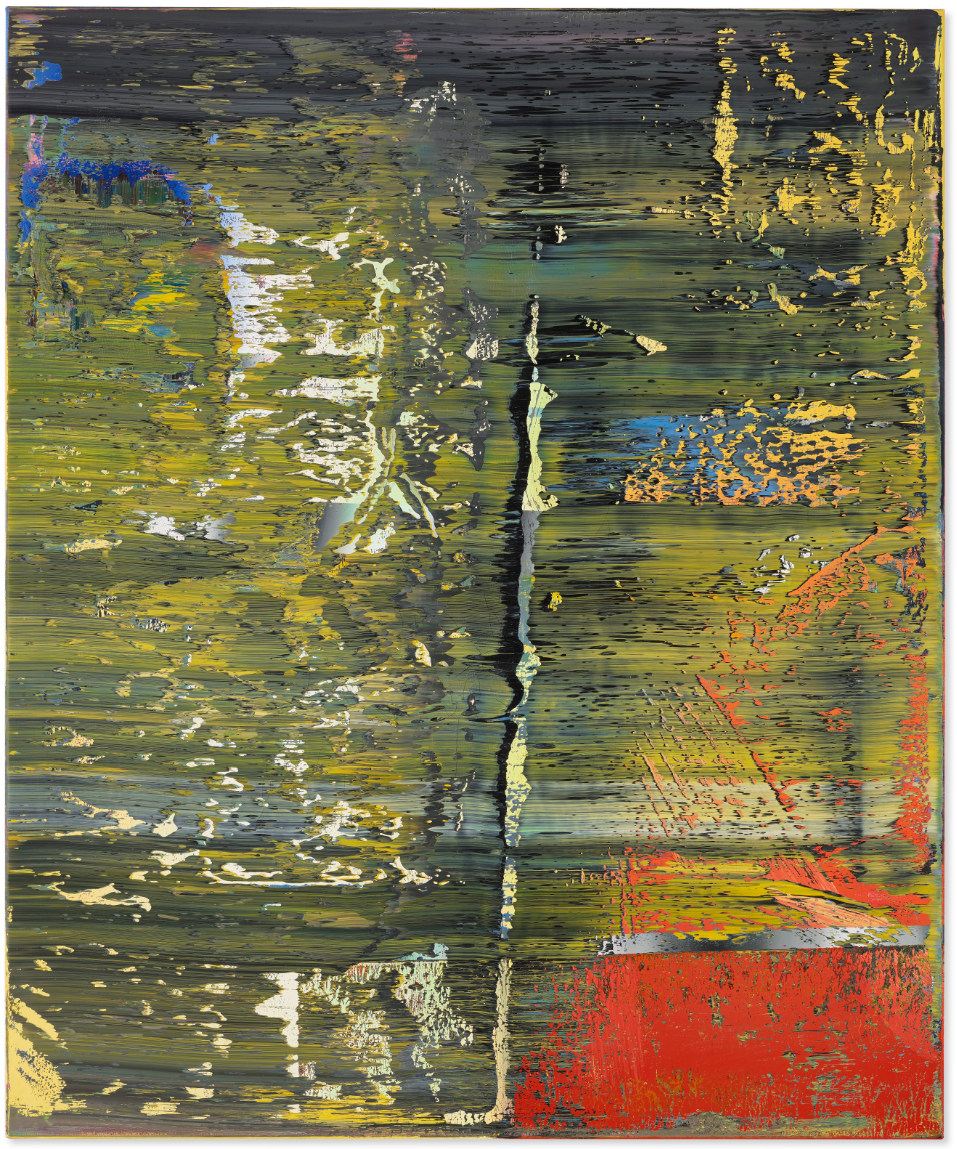
GERHARD RICHTER (B. 1932)
Abstraktes Bild, 1988
Oil on canvas
120 x 99.7 cm (47 1/4 x 39 1/4 inches)
Signed, inscribed and dated ‘679-3 Richter 1988’ (on the reverse)
In Abstraktes Bild, wide swathes of yellow tinged with black are pulled across the painting’s surface, revealing cool blue tones ranging in hue from turquoise to aquamarine and cobalt. A fiery orange section within the lower register bubbles up toward the top, changing hue from bright persimmon to orange and culminating in pale yellow. The overall effect is one of fire and ice—as if both had been pulled through a prism or reflected in a mirror. Along the painting’s left-hand register, there are bright patches of pure white. These skitter across the surface like the play of light across glass. They are not just white but white-hot, infusing the paintings with an airy and intangible sort of energy and heat. It is this particular kind of visual buzz that makes the Abstraktes Bild so exalted and revered.
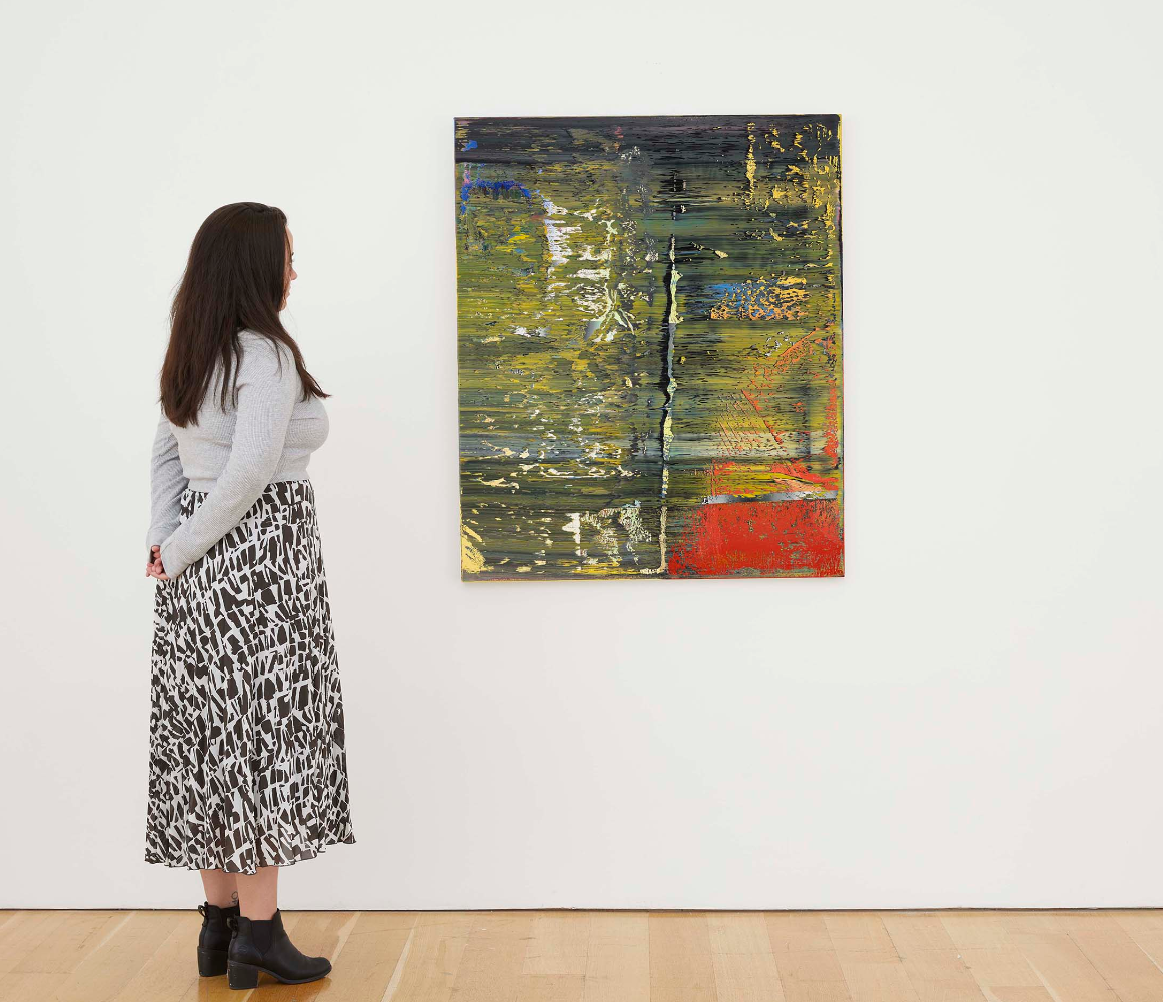
The painted surface of the present work serves as a sort of geological survey of the physical process of its own making; if not by the artist’s “hand,” then, by a curious mixture of chance and control. This radical new method of painting was essentially an act of erasure, the result of Richter’s removal rather than of building up. Ironically, the smeared surface of Richter’s Abstraktes Bild also visually echoes the blurred photo-paintings that Richter had created from black-and-white photographs in the 1960s. Like those paintings, the Abstraktes Bild are rather transient images—as soon as the image begins to coalesce, it only seems to dissolve again just as the viewer has come to perceive it.
Abstraktes Bild (940-2), 2015
Phillips New-York: 23 June 2021
Estimated: USD 4,500,000 – 5,500,000
USD 5,112,000
Gerhard Richter – 20th Century & Contem… Lot 26 June 2021 | Phillips
GERHARD RICHTER
Abstraktes Bild (940-2), 2015
Oil on canvas
117 x 96.2 cm (46 1/8 x 37 7/8 inches)
Signed, inscribed and dated “940-2 Richter 2015” on the reverse
A striking example of his mature oeuvre, Gerhard Richter’s Abstraktes Bild (940-2), 2015 encapsulates the unrelenting formal innovation that distinguishes the artist’s interrogation of truth and perception in painting. Incorporating the artist’s innovative squeegee technique that invites chance into his process, Abstraktes Bild exemplifies the masterful effects of this formal innovation, presenting the viewer with visual meditations on “transparency and opacity, proximity and distance, forgetting, remembering, and expecting.”
In all of his experimentations with abstraction, from the early semi-abstract breakthrough Tisch (Table), 1962 to grand, richly textured compositions like Abstraktes Bild, Richter has forged a unique model for the relation of painting to its sources—literal or spiritual—in real-world experience. Rather than solely striving to achieve a traditionally idealized and harmonious composition, Richter uses the pure expression of abstraction to reveal to the viewer the fundamental verities of lived experience, its imprecision, uncertainty, and transience. Passages of vibrant color, the archaeological evidence of underpainting, shine through velvet washes of black, blue, and red that are alternately poured onto and scraped away from the canvas to create thick cloaks of color. Abstrakes Bild expresses the murky inexactness of perception and the grasping inadequacy of representation; its core truths are intimated but never fully revealed.
Small AB
Abstrakte Skizze (664-3), 1988
Christie’s Hong-Kong: 28 March 2026
Estimated: HKD 6,500,000 – 10,000,000
HKD 8,128,000 / USD 1,038,060
GERHARD RICHTER (B. 1932)
Abstrakte Skizze (664-3), 1988
Oil on canvas
40×35 cm (15-3/4 x 13-3/4 inches)
Signed, titled, and dated ‘664-3 Richter 1988’ (on the reverse)
Created in 1988 at the very pinnacle of Gerhard Richter’s career, Abstrakte Skizze 644‑3 is one of the 32 works in the distinguished series of Abstrakte Skizzen (Abstract Sketches). This work reflects a pivotal moment in Richter’s artistic evolution, when he was refining the dual strands that came to define his oeuvre: the celebrated photorealist paintings — exemplified that same year by the iconic and enigmatic Betty — and the increasingly ambitious abstractions that secured his international reputation. Among the 9 Abstrakte Skizze paintings created in 1988, the present work is surged with the powerful visuals influenced by a period of profound cultural and political transition. It was created just one year before the fall of the Berlin Wall and in the same year as Richter’s first major North American retrospective, which toured leading institutions including the Museum of Contemporary Art, Chicago, the Hirshhorn Museum and Sculpture Garden, Washington and the San Francisco Museum of Modern Art, elevating his global stature to unprecedented heights.
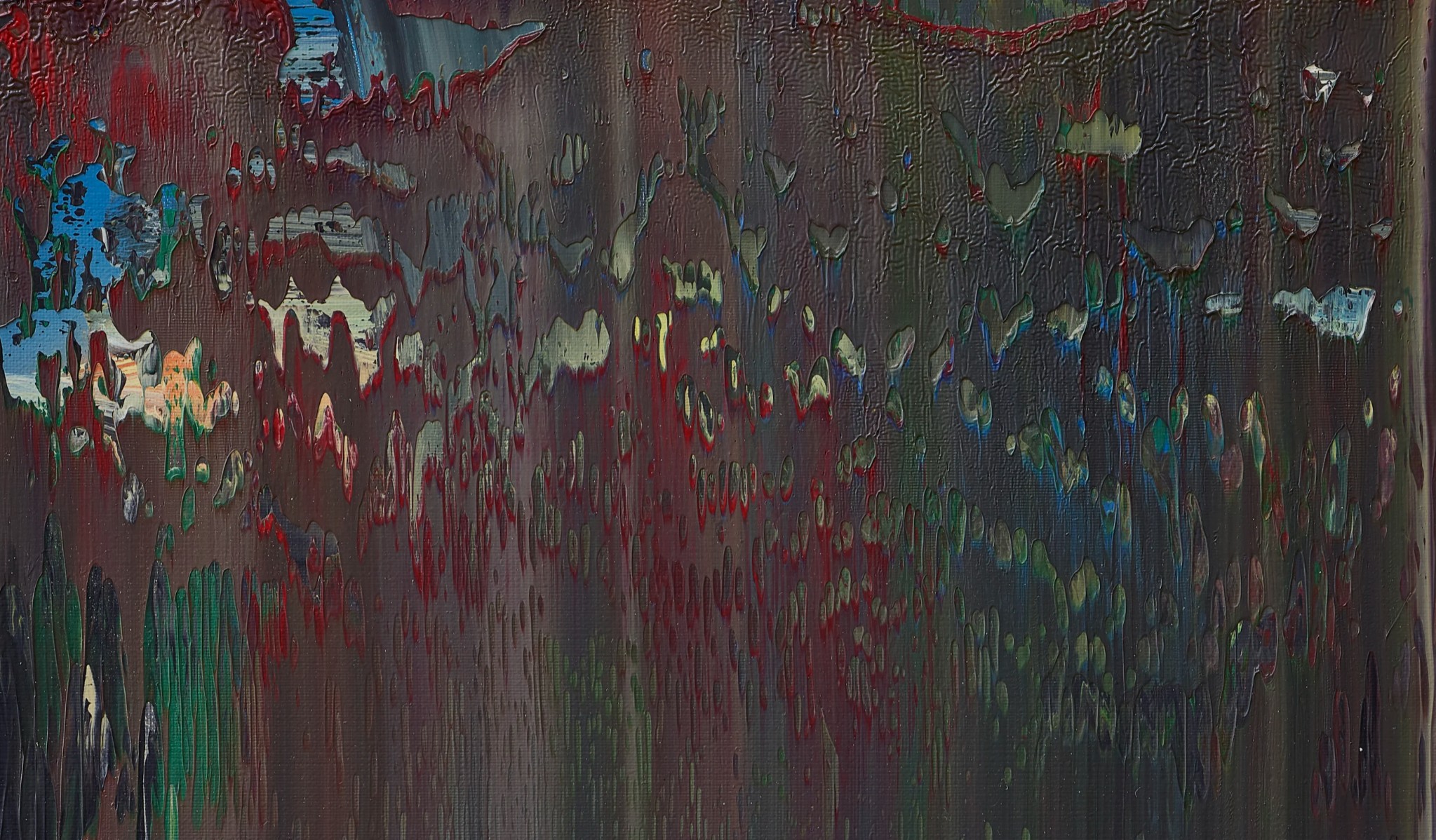
Richter began the Abstrakte Skizze series around 1988, continuing into the early 1990s, as part of a broader trajectory of abstract investigations. Replacing traditional paint brush, his distinctive use of the squeegee — drags layers of paint across the canvas — produced textured, layered kaleidoscope that blur the boundaries between representation and abstraction. This innovative technique is evident in Abstrakte Skizze 644‑3, a rare example within the Abstrakte Skizze series that fully incorporates this signature squeegee approach. Further developed in parallel with the Abstraktes Bild series, the Abstrakte Skizze series reveals an intimate and exploratory dimension of Richter’s creative practice. These compact, visually intricate paintings function as experimental arenas in which he deployed gestures, chromatic tensions, and material effects that simultaneously informed his monumental canvases.
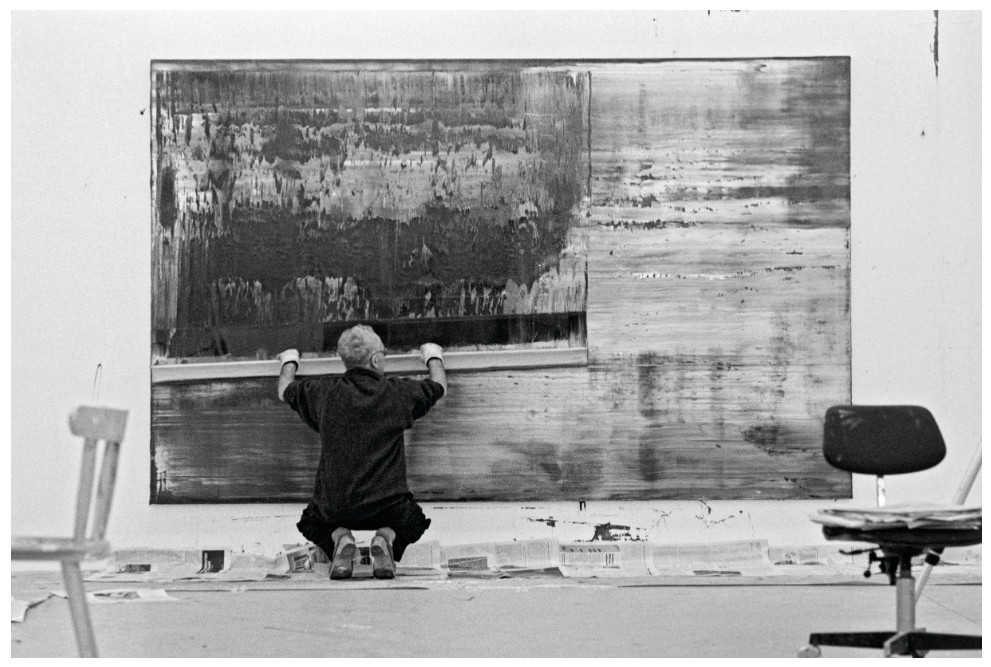
The artist using squeegee in the studio, 1994. Photograph by Benjamin Katz.
Photo: © 2026 Artists Rights Society (ARS), New York/ VG Bild-kunst, Bonn © Gerhard Richter 2026 (09032026)
In the present work, the artist’s gestures appear direct and unfiltered, alive with the energy of experimentation. The work captures the curiosity and restless inquiry that characterized Richter during this period, when he was actively engaging with — yet maintaining his own distance from — the legacies of Abstract Expressionism, Minimalism, and Conceptualism. In this spirit, his abstract paintings expose the very act of image-making, confronting the question of what an “image” becomes when it no longer relies on recognizable subjects. Among the Abstrakte Skizze series, the present work is distinguished by its strikingly vivid chromatic intensity. Dominated by an expressive field of crimson red, the surface unfolds across a spectrum of tonalities — from cherry and rose to burgundy and carmine — each variation shaped by layered acts of application and removal. Through slender ruptures in the surface, flashes of blue and neon orange pierce the surface, like light breaking through the veil. These colors do not sit as static fields but interact dynamically, generating depth and motion that far exceed the work’s modest physical scale.
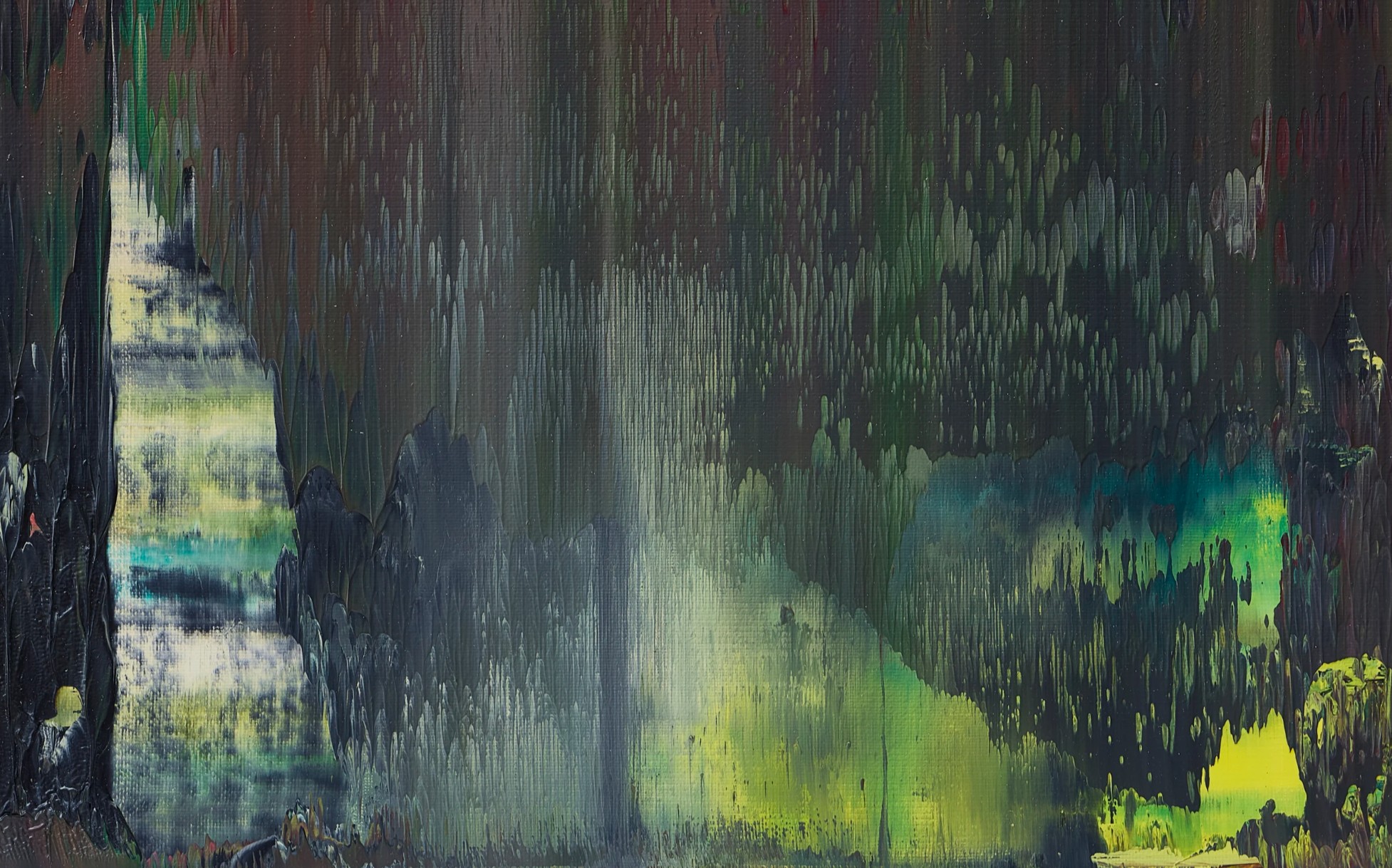
Through its visual and conceptual intricacy and delicacy, Abstrakte Skizze 644‑3 encapsulates the artist’s heightened power, holding a distinguished place within the Abstrakte Skizze series and marks an important moment of one of the most influential painters of the twentieth century.
Abstraktes Bild, 1992
Christie’s London: 7 March 2026
Estimated: GBP 300,000 – 500,000
GBP 355,600 / USD 475,045
GERHARD RICHTER (B. 1932), Abstraktes Bild | Christie’s
REPEAT SALE
Christie’s Paris: 30 November 2022
Estimated: EUR 450,000 – 650,000
EUR 567,000
Gerhard Richter (né en 1932), Abstraktes Bild | Christie’s
GERHARD RICHTER (B. 1932)
Abstraktes Bild, 1992
Oil on canvas
52×62 cm (20-1/2 x 24-3/8 inches)
Signed, inscribed and dated ‘Richter 92 763-7’ (on the reverse)
Formerly part of the celebrated Jan Krugier Collection, the present work is a jewel-like example of Gerhard Richter’s Abstrakte Bilder, or ‘Abstract Pictures’. Painted in 1992, it coincides with that year’s showcase of large-scale Abstrakte Bilder at documenta IX in Kassel, which propelled his abstract practice to new international acclaim. Examples from this period—some of them seen in the recent landmark retrospective at the Fondation Louis Vuitton, Paris—are considered among the finest of Richter’s career. Using a squeegee to drag paint across the canvas, he began to stripe, lattice and intercut their layered surfaces, creating a new chromatic and textural intricacy. The present painting builds up a darkly opulent ground, with fiery oranges, blues and greens flashing through a field of black. These pigments are marbled together in broad sweeps and descending diagonal strokes. Five rhythmic, horizontal bands have been scraped through the semi-wet paint, pulling it back to reveal the toothed shimmer of the canvas beneath. Where the Abstract Expressionists had conceived of the canvas as an arena for gestural action, or a receptacle for the painter’s emotions, Richter understood his Abstrakte Bilder in more impersonal terms. He worked slowly and deliberately, wielding his squeegee in a smooth, purposeful motion. He acknowledged that his own ‘inner state’ had an impact on the works, but not in the sense of subjective content or mental imagery. Rather, he saw his disposition as just one of the myriad natural inputs that would lead to the painting’s final form, which—like the shape of a tree in a forest—was ultimately the product of chains of causation too complex to comprehend, predict or analyze. The present work exemplifies the variegated, delicate and mysterious splendor he was able to achieve.
Abstraktes Bild, 1997
Ketterer Kunst Munich: 5 December 2025
Estimated: EUR 700,000
EUR 1,044,900 / USD 1,212,085
Ketterer Kunst, Art auctions, Book auctions Munich, Hamburg & Berlin
GERHARD RICHTER (b. 1932)
Abstraktes Bild, 1997
Oil on Alucobond
48×55 cm (18.8 x 21.6 inches)
Signed, dated, and inscribed with the work number “842-4” on the reverse
In the present composition “Abstract Painting” (1997), which was exhibited in the critical American Richter retrospective at the Museum of Modern Art in New York in 2002/2003, Richter not only achieved a perfect balance between sharpness and blur, depth and surface, light and dark, but also brought his painting to a new level of perfection through the choice of medium. It is one of the first “Abstract Paintings” for which Richter used a thin aluminum plate called alucobond as image carrier instead of canvas. Richter exploits the material’s hardness, which enables him to achieve technical perfection in his painting, allowing him to apply the paint with the squeegee with greater pressure so that the oil-based colors mix particularly delicately on the smooth, hard surface. In contrast to the canvas, the aluminum surface is free of anything that could interfere with the blending of the color layers: no fabric structure, no stretcher bars, no folding edges that show through in the final color gradient. The only disadvantage of this material, which Richter rediscovered, is its weight, which explains why he decided to produce smaller formats at this time before finally switching to the significantly lighter aludibond panels after the turn of the millennium, allowing him to work in larger formats again.
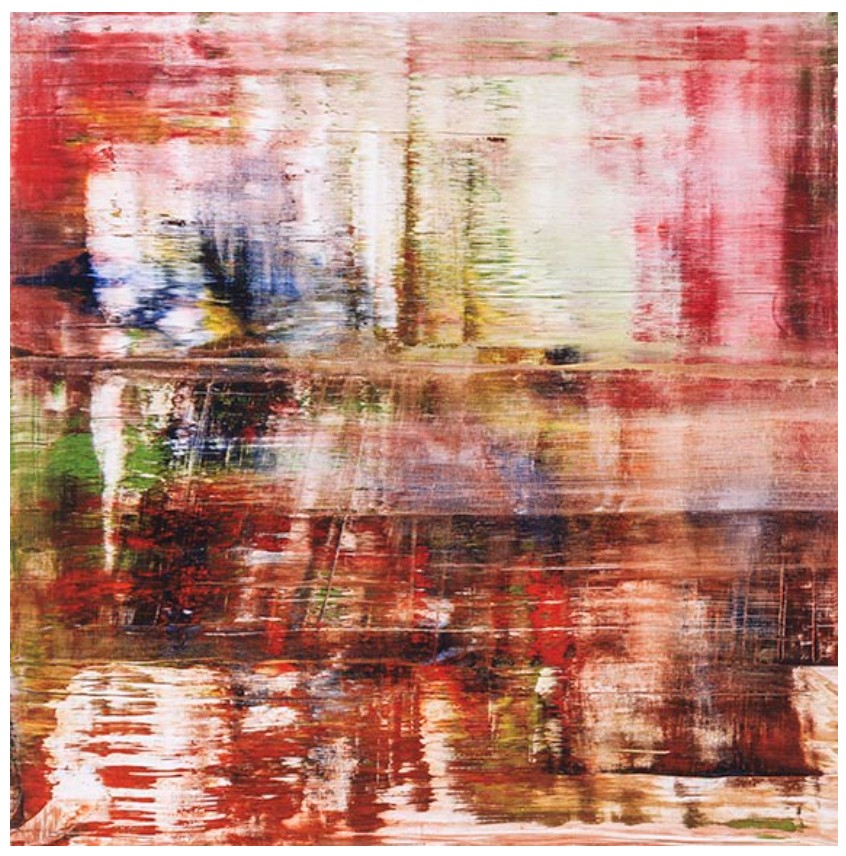
Gerhard Richter, Abstraktes Bild, 1994, oil on canvas, Guggenheim Museum, Abu Dhabi. © Gerhard Richter 2025 (0125)
In the present composition, which was first exhibited at the XLVII Venice Biennale in the year of its creation, dark red, earthy verticals move in front of vernal, luminous horizontals in subtly nuanced gradients of green, yellow, blue, and violet, much like a musical composition. Although Richter generally did not give his “Abstract Paintings” descriptive titles, the subtle optical play with the observer’s eye that is trained on the perception of objects is inherent in all his abstract creations.
“The pictures thrive on the desire to recognize something in them. They show similarities to real phenomena at every point, but they cannot be properly identified. It’s like in music: moods are created by notes that resemble real sounds, whether plaintive, joyful, shrill, or delicate. […] They always remind us of something; otherwise, they would not be images at all.”
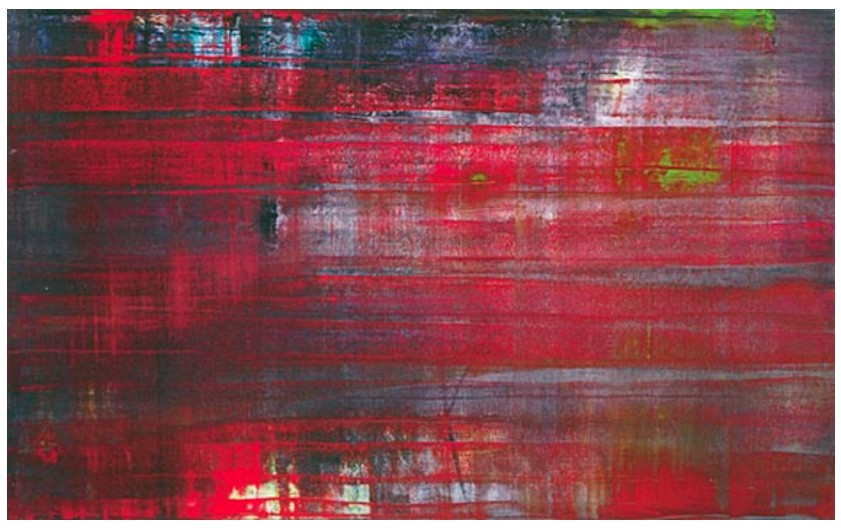
Gerhard Richter, Red, 1994, oil on canvas, National Museum of Modern Art, Tokyo. © Gerhard Richter 2025 (0125)
It is not only the viewer’s perception and Richter’s compositional principles of a subtle interplay of horizontals and verticals oriented toward the model of nature, but also the time-consuming process behind the making of his “Abstract Paintings,” which may take several months. Resembling the natural process of creation, formed by time and the laws of becoming and perishing, which cannot be ultimately penetrated by rational thought.
“So, this working method involving arbitrariness, chance, inspiration, and destruction may produce a certain type of image, but never a predetermined image. The respective image should develop from a painterly or visual logic, as if it were inevitable. And by not planning the final image, I hope to achieve a coherence and objectivity that any piece of nature […] always has.”
In 2020, the Metropolitan Museum of Art in New York honored the epochal work of the exceptional German artist with the major solo exhibition “Gerhard Richter – Painting after all,” which, like the retrospective “Gerhard Richter. Forty Years of Painting“ at the Museum of Modern Art (2002) and the retrospective ”Gerhard Richter: Panorama” (2013/14) at Tate Modern, spanned the arc from Richter’s black-and-white photo paintings to his legendary abstract squeegee paintings. The Fondation Louis Vuitton in Paris currently honors the master artist with a spectacular retrospective that runs until March 2026.
Abstraktes Bild, 2009
Christie’s New-York: 20 November 2025
Estimated: USD 1,800,000 – 2,500,000
USD 2,759,000
GERHARD RICHTER (B. 1932), Abstraktes Bild | Christie’s
GERHARD RICHTER (B. 1932)
Abstraktes Bild, 2009
Oil on Alu-Dibond
83.8 x 83.8 cm (33×33 inches)
Signed, inscribed and dated ‘910-4 Richter 2009’ (on the reverse)
With its charged palette and layered construction, Abstraktes Bild distills over forty years of Richter’s inquiry into abstraction on a single, decisive surface. A fiery red surges across the canvas like molten metal – thickly dragged, folding back into itself. This red does not rest; it seems to move, still cooling from a heated state. As the eye travels downward, the color fractures, revealing sharp contrasts of medallion yellow. Richter stages this intensity against a field of white – not a neutral void, but an active force. Scraped and pulled with a squeegee, the white behaves like a veil, catching on ridges and pigment drags to form a surface reminiscent of weathered wood grain.
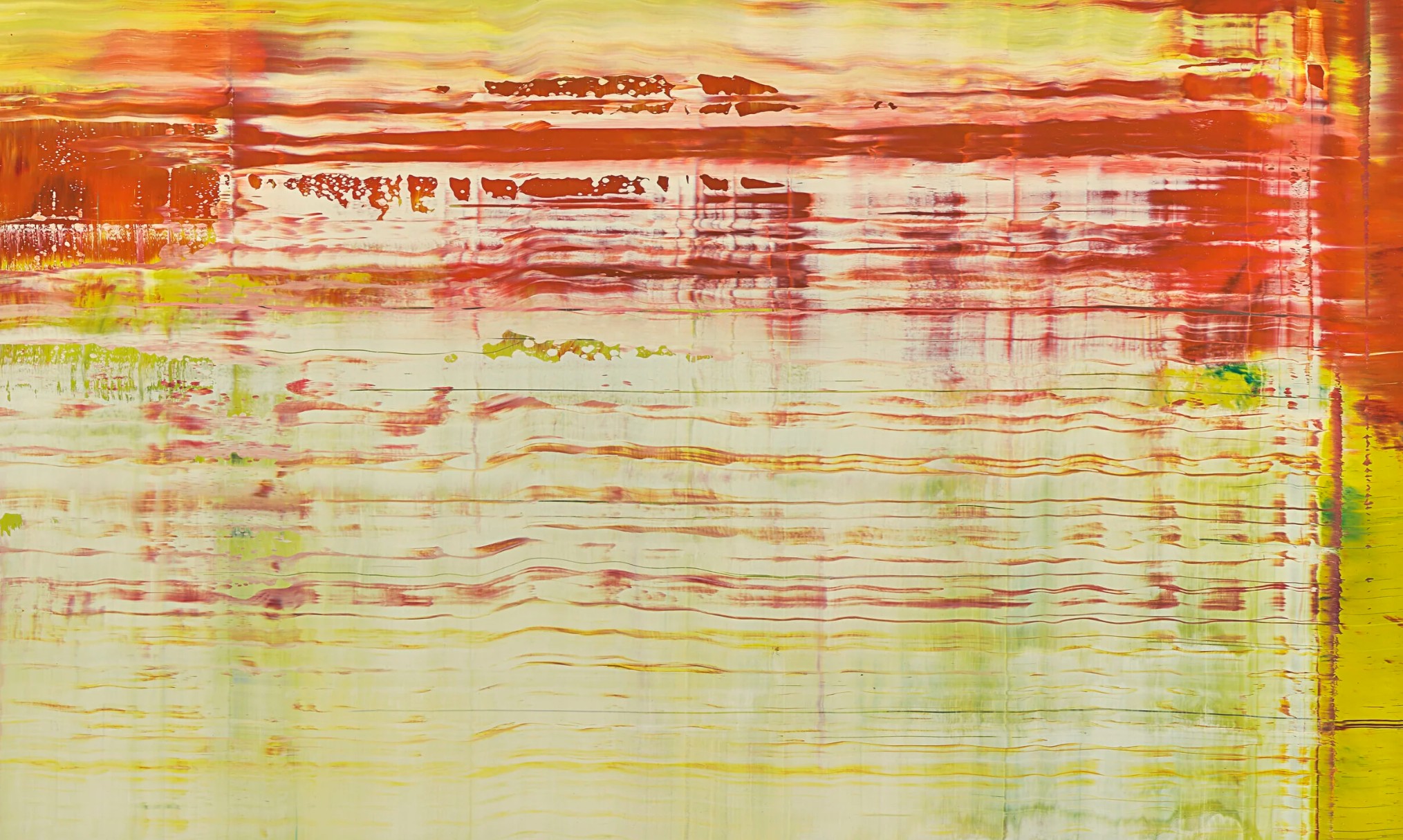
Through these striations, faint yellows, mauves, and greens emerge, resisting erasure and asserting presence. The painting is a record of pressure, friction, and hesitation – built through the layering and removal of horizontal strokes. Its brilliance lies in balance: red burns with heat while white breathes across it, cooling and tempering. This visual tension defines the work’s authority and dichotomy.
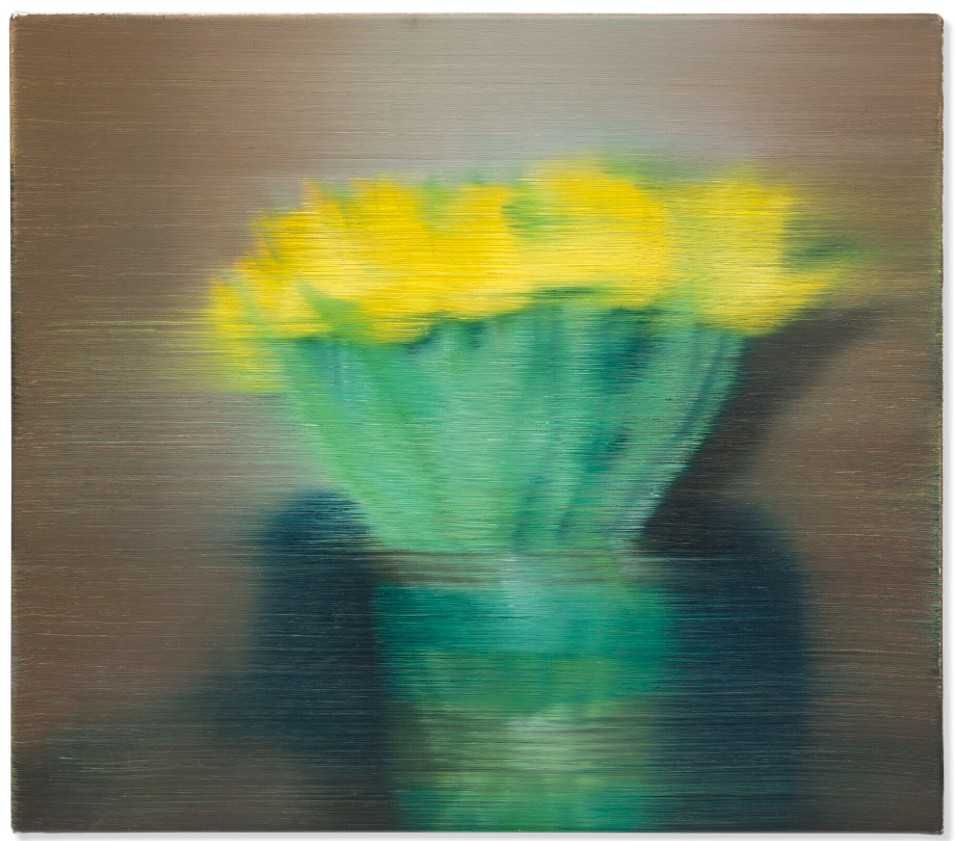
Gerhard Richter, Tulpen (Tulips), 1995. Private collection. © Gerhard Richter 2025 (0123).
To understand Abstraktes Bild, one must consider the evolution of Richter’s career. Born in Dresden and shaped by the aftermath of World War II, Richter’s early disillusionment with ideology fostered a deliberate detachment that freed him to explore an extraordinary range of styles. Indeed, what distinguishes Richter as one of the greatest living painters is his restless intellectual curiosity and resistance to confinement.
“I have no program, no style, no direction.”
His early photo-paintings blurred photographic clarity with painterly gesture, while his abstractions extended that same inquiry. Both modes are complementary expressions of a single question: how painting can still reveal truth in a post-ideological age.
Mark Rothko, Untitled (Blue, Yellow, Green on Red), 1954. Whitney Museum of American Art, New York.
© 1998 Kate Rothko Prizel & Christopher Rothko / Artists Rights Society (ARS), New York.
Richter’s abstractions emerged partly in response to minimalism and color theory. They challenge the assumption that certain colors inherently harmonize. For Richter, any color may coexist with any other; harmony becomes incidental. Abstraktes Bild takes this further, layering red and yellow – two primary hues that pulse against one another – beneath a stark white overlay. Traditionally used to lighten colors, here white remains unblended, allowing softer tones to seep through yet freeze mid-transformation. The result subtly comments on color theory itself, transforming the canvas into a symphony wholly Richterian.
“You can put each color next to any other and it fits… Isn’t that truly anarchic?”
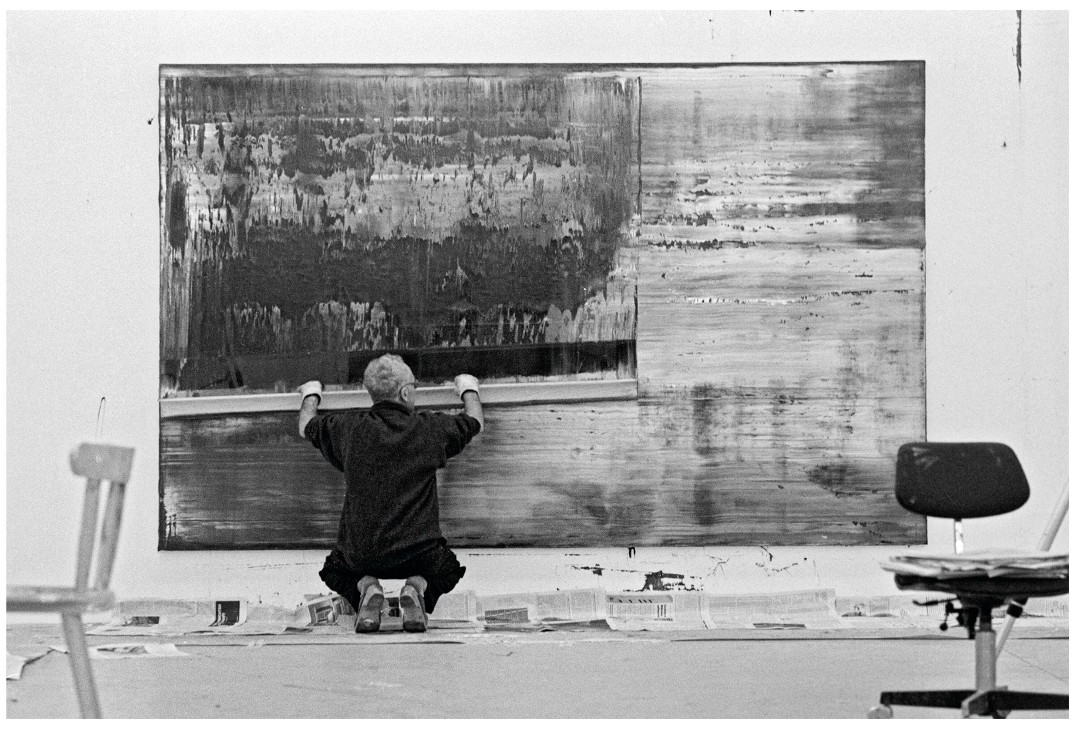
Gerhard Richter in his studio, 1994. Photo: Benjamin Katz.
© 2025 Artists Rights Society (ARS), New York/ VG Bild-kunst, Bonn. Artwork: © Gerhard Richter 2025 (0123).
The composition flirts with geometry: the top edge and outer right margin remain largely untouched by the white overlay, creating a soft structural boundary that frames the central field and exposes the painting’s underlying process. In doing so, Richter disrupts the boundless atmosphere of Rothko’s dissolved edges.
“Rothko’s enormous calm paintings… where any trace of chance is removed.”
For Richter, chance is not eliminated but embraced – scraped layers, drag marks, and chromatic interruptions resist closure. Yet he never relinquishes full control. Each work becomes a negotiation between will and accident.
Abstraktes Bild, 1995
Sotheby’s New-York: 19 November 2025
Estimated: USD 1,200,000 – 1,800,000
USD 1,514,000
Abstraktes Bild | Contemporary Day Auction | 2025 | Sotheby’s
GERHARD RICHTER (b. 1932)
Abstraktes Bild, 1995
Oil on canvas
94 x 66.7 cm (37 x 26 1/4 inches)
Signed twice, dated 1995 and numbered 829-11 (on the reverse)
Painted in 1995, Abstraktes Bild (829-11) stands as a refined and meditative example of Gerhard Richter’s mature abstraction and series of Abstraktes Bilder, an oeuvre that has come to define the intellectual and emotional range of postwar painting. Executed during a pivotal decade in which Richter consolidated the language of his squeegee technique, the present work exemplifies the painter’s unparalleled ability to reconcile chance and control, opacity and luminosity, materiality and illusion.
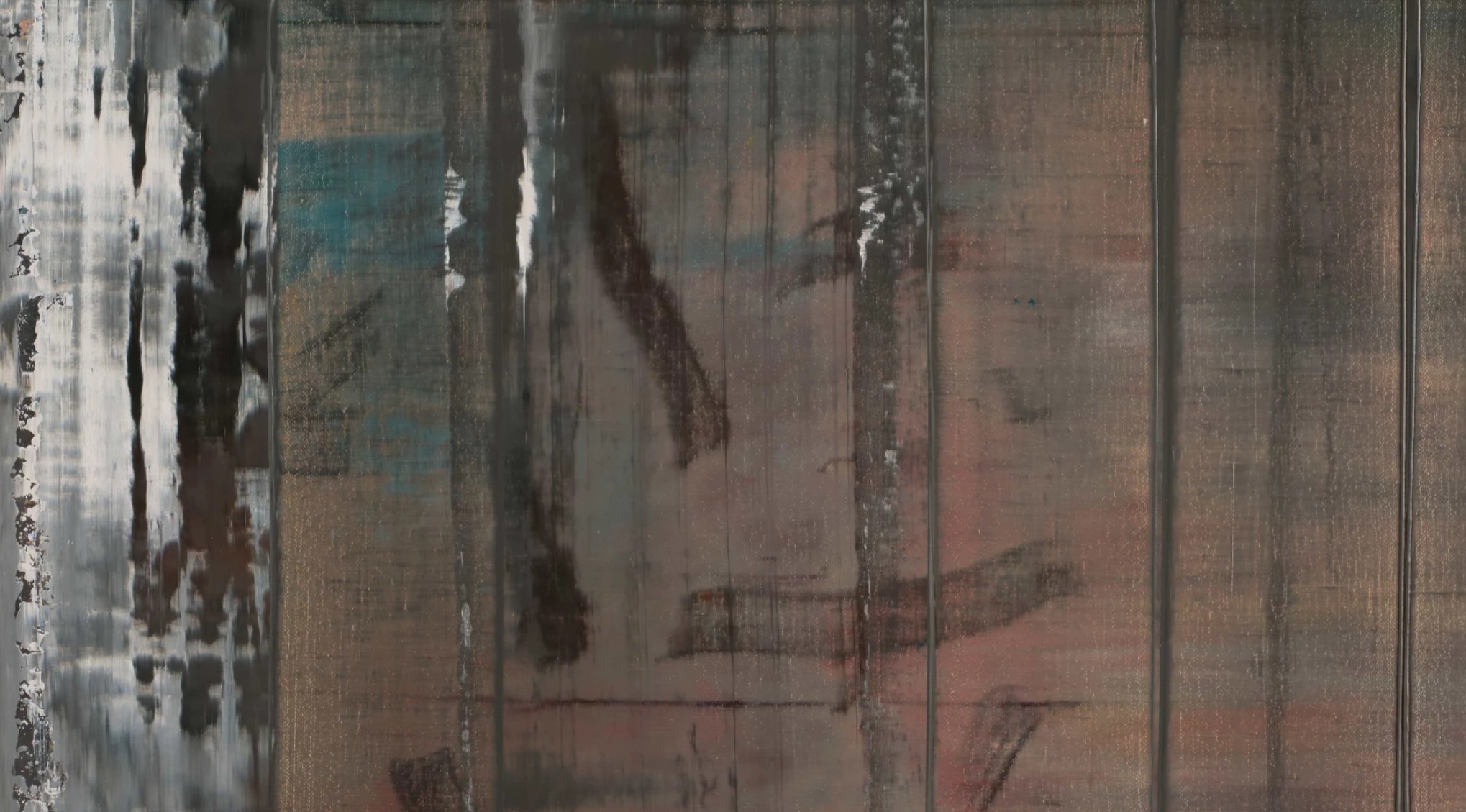
The surface of Abstraktes Bild (829-11) reveals a dynamic choreography of movement and restraint. Broad, vertical sweeps of the squeegee drag and layer pigment across the canvas, generating translucent veils that alternately obscure and reveal the strata beneath. The palette, consisting of muted blacks, greys, and earthen browns, interrupted by flickers of white and faint teal, suggests both depth and dissolution. In these suspended gestures, Richter transforms the physical act of painting into a meditation on time and perception. Each mark simultaneously builds and erases, invoking the memory of prior states, and what remains is a palimpsest of both intention and accident.
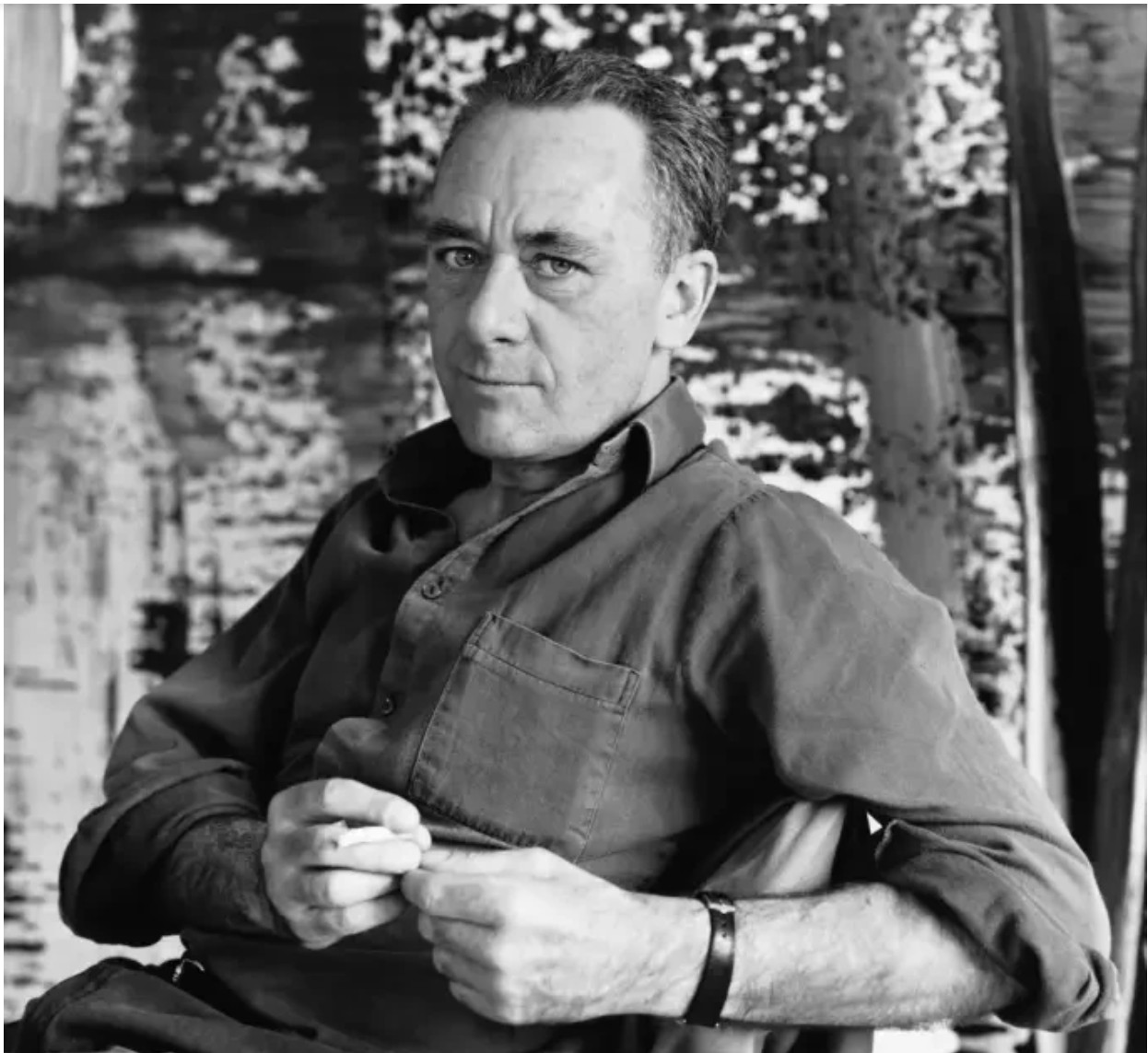
GERHARD RICHTER IN COLOGNE, 1989. IMAGE: © PHOTO BY CHRIS FELVER/GETTY IMAGES ART © GERHARD RICHTER 2025
By 1995, Richter had fully mastered this dialectic between chaos and composition. The Abstraktes Bild paintings of the 1990s mark the culmination of decades of inquiry into the limits of representation. Having moved from photorealism to color charts and grey paintings, Richter turned to abstraction as a means of capturing the ineffable, a visual analogue to experience itself. In the present work, the surface oscillates between painterly gesture and photographic blur, inviting the viewer to navigate between material fact and optical suggestion.
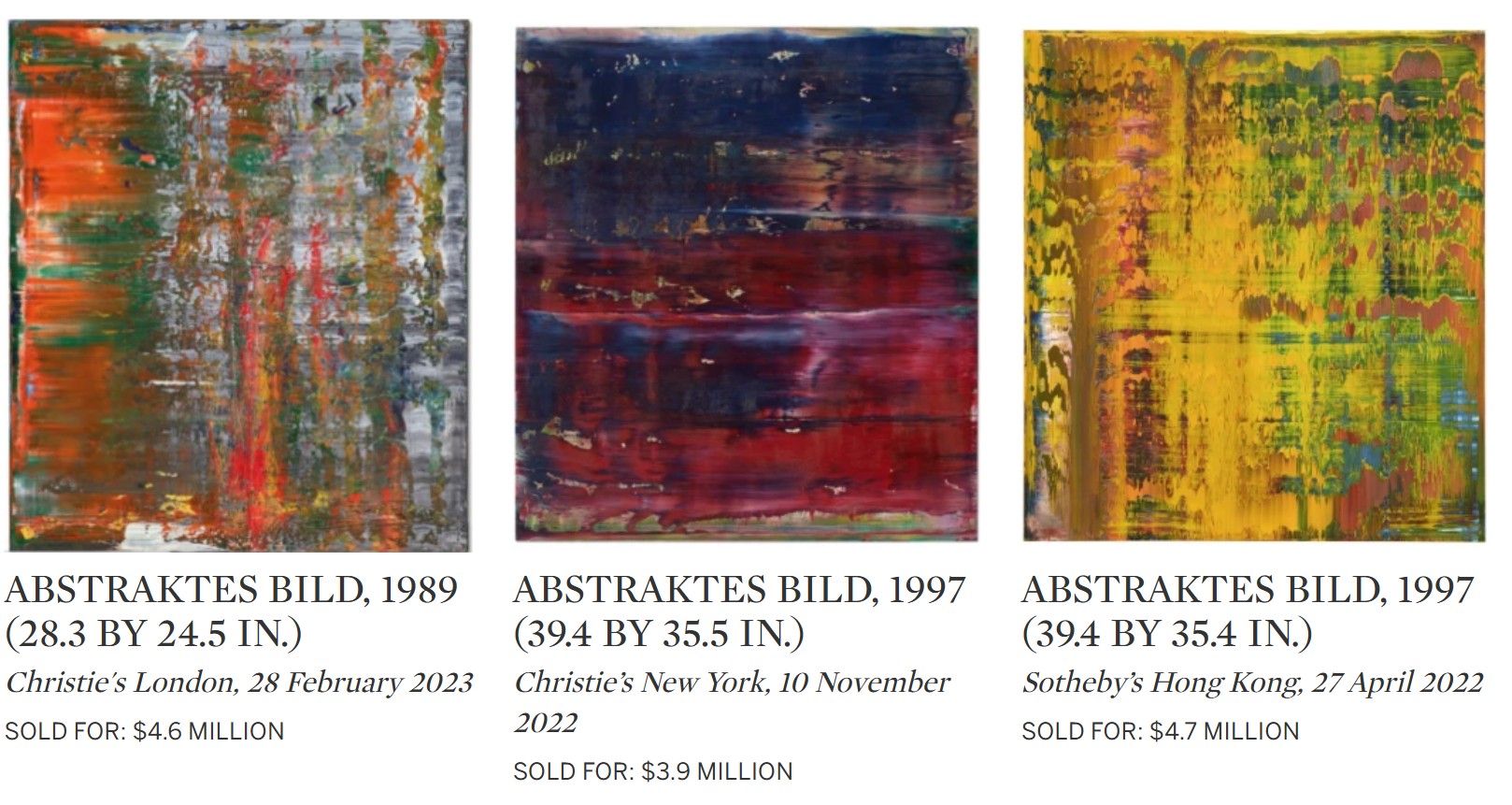
The atmosphere of Abstraktes Bild (829-11) carries the quiet intensity of Richter’s most celebrated canvases from this period, revealing the artist’s orchestration of visual tension where serenity emerges from turbulence. The vertical pulls of pigment create an almost architectural rhythm, recalling the structure of landscape or windowpanes, while the diffused light within the paint conjures a sense of atmosphere that is as much emotional as visual.
Rudolf Stingel, Untitled, 1991. The Whitney Museum of American Art, New York. Art © 2025 Rudolf Stingel
Richter’s achievement lies in his transformation of abstraction into an epistemological exercise, a form of seeing that acknowledges the limits of knowledge. In this respect, his practice finds kinship with Mark Rothko, whose color fields evoke spiritual depth through chromatic vibration, and Jackson Pollock, whose gestural networks similarly balance control and surrender. Yet Richter’s process remains uniquely his own: where Rothko dissolved form into aura and Pollock externalized gesture, Richter internalizes the act of painting, using the mechanics of removal to generate presence.
Mark Rothko, Red on Maroon, 1959. Tate London.
Art © 2025 Kate Rothko Prizel & Christopher Rothko / Artists Rights Society (ARS), New York
In its layered veils and restrained chromatic range, Abstraktes Bild (829-11) epitomizes the silent grandeur of Richter’s abstraction. The painting invites the viewer to dwell within uncertainty, to perceive the beauty of flux and the eloquence of what cannot be fixed. As both image and object, it reflects the paradox at the core of Richter’s art: the simultaneous pursuit of control and the acceptance of its impossibility. In its quiet gravity and material grace, the work stands as a testament to painting’s continued power to evoke mystery in the age of mechanical reproduction.
Abstraktes Bild, 1992
Sotheby’s London: 17 October 2025
Estimated: GBP 200,000 – 300,000
GBP 406,400 / USD 544,575
Abstraktes Bild | Contemporary Day Auction | 2025 | Sotheby’s
GERHARD RICHTER (b. 1932)
Abstraktes Bild, 1992
Oil on canvas
36 x 40.8 cm (14 1/8 x 16 inches)
Signed, dated 92 and numbered 763-2 (on the reverse)
Painted in 1992, Abstraktes Bild is a beautiful example of Gerhard Richter’s mature abstract practice, a period that brought him international acclaim through his radical exploration of chance, control, and the unstable nature of perception. The work, with its vertical veils of muted green and pale lilac, reveals the painter’s method of layering, scraping, and erasing pigment across the canvas, creating an image at once material and elusive. In this intimate format, Richter demonstrates how even small-scale works can carry the density and mystery of his larger Abstrakte Bilder of the same period.
“The unknown simultaneously alarms us and fills us with hope, and so we accept the pictures as a possible way to make the inexplicable more explicable, or at all events more accessible… So, in dealing with this inexplicable reality, the lovelier, cleverer, madder, extremer and more incomprehensible the analogy, the better the picture.”
Richter’s path to abstraction was neither linear nor doctrinaire. Having begun his career with blurred photo-based paintings in the 1960s, he persistently questioned the truth claims of representation. His Color Charts of 1966 and his cityscapes of the early 1970s revealed his interest in the limits of depiction, suggesting that every image was already mediated, every surface already uncertain. By the 1980s and 1990s, abstraction became his principal means of negotiating these concerns. Unlike earlier generations of abstractionists, however, Richter did not pursue transcendence or utopian ideals. Instead, he sought to embody painting’s contradictions.
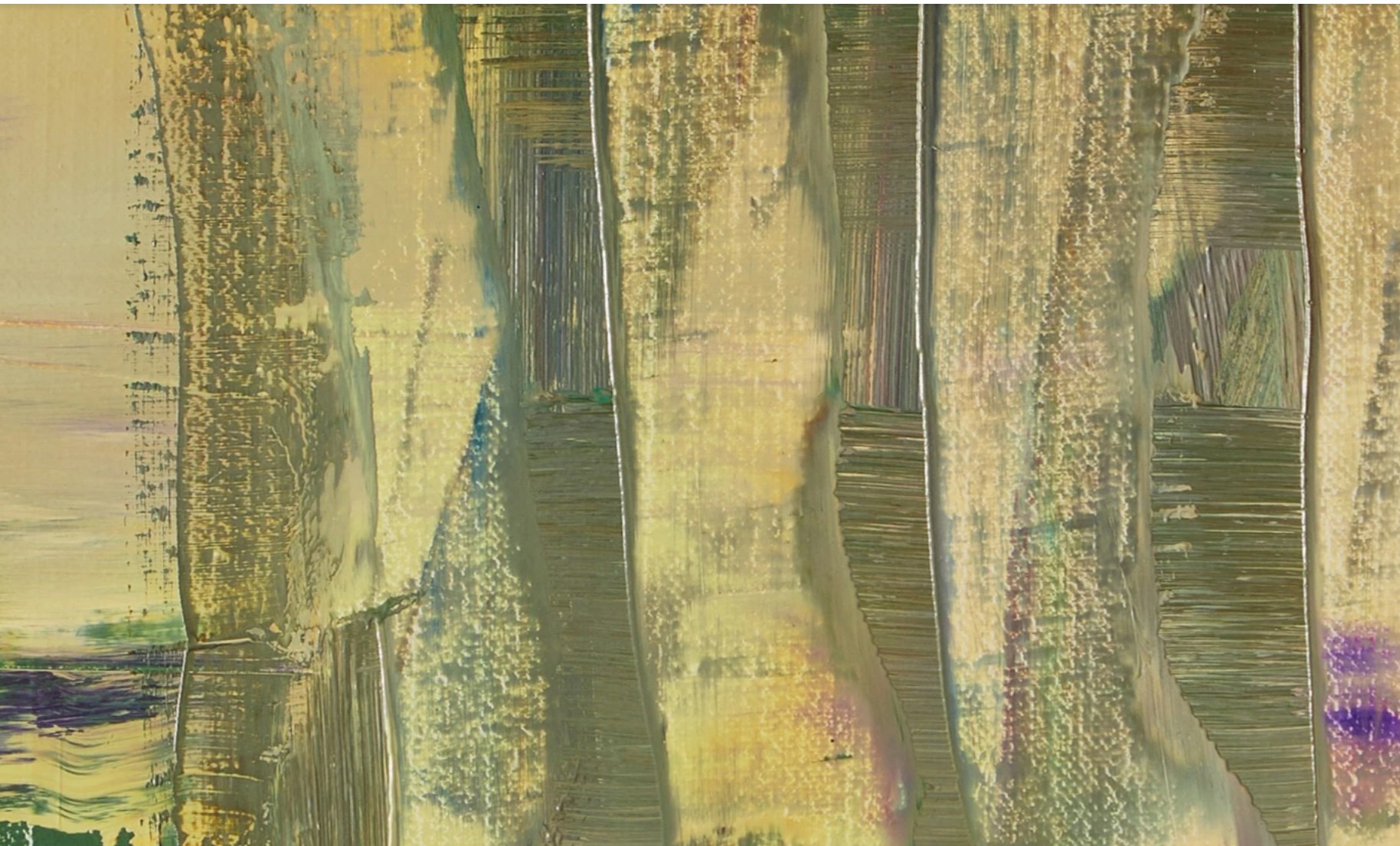
The present work, executed the same year Richter showed his monumental abstracts at Documenta IX, demonstrates this philosophy with remarkable clarity. Its structure is formed by a series of vertical striations that appear like curtains or drapes, alternately concealing and revealing the underlying layers of paint. At moments, the vertical striations and subtle modulations of color evoke the soft, atmospheric brushwork of Impressionist landscapes, recalling the ways Claude Monet captured light and movement across water and foliage.
Claude Monet, The Four Trees, 1981
The Metropolitan Museum of Art, New York
The squeegee, Richter’s signature tool, plays a decisive role here and chance is essential to this process. Pulled across the surface, it drags pigment in broad gestures, blending colours, scraping away sections, and exposing traces of earlier applications. In places, the paint appears translucent, as if light were filtering through fabric; in others, it thickens into opaque, crusted passages. Yet these accidents are not left untouched. The artist responds to them, deciding what to keep, what to cover, and what to destroy. The early 1990s marked a turning point in Richter’s career. Following his major retrospective at the Tate Gallery in 1991 and his triumph at Documenta IX, he achieved unprecedented international recognition. The works of this moment, including Abstraktes Bild, are often considered the purest expression of his abstract language, distilling decades of experimentation into a singular vocabulary of layering, scraping, and revision. This was also the period that laid the groundwork for later cycles such as the Cage paintings of 2006, vast canvases whose dense strata of color were named after the composer whose ideas had long inspired Richter. Ultimately, Abstraktes Bild demonstrates Richter’s achievement as one of the most significant painters of the postwar era. It embodies his conviction that abstraction, far from a retreat into pure form, can serve as a means of grappling with the profound uncertainties of modern existence. In its layered surface, its play of concealment and disclosure, and its delicate balance of accident and control, the work testifies to painting’s enduring ability to engage with the mysteries of perception, memory, and time.
Abstraktes Bild, 1979
Ketterer Kunst: 6 June 2025
Estimated: EUR 120,000
EUR 209,550 / USD 247,270
Ketterer Kunst, Art auctions, Book auctions Munich, Hamburg & Berlin
GERHARD RICHTER
Abstraktes Bild, 1979
Oil on canvas
78×52 cm (30 5/8 x 20 3/8 inches)
Signed, dated, and inscribed with the work number “448-3” on the reverse
This almost monochrome red work by Gerhard Richter from 1979 occupies a special place within his oeuvre. It is one of his early “Abstract Paintings,” which Richter began in the late 1970s. During this transitional period, the artist increasingly abandoned the figurative imagery of his well-known photographic paintings and strove for a radical opening toward a free, non-representational style. Therefore, the 1970s may be interpreted as a pivotal point in his career. What is typical of this creative phase is the tension between planned composition and gestural expression, while Richter’s later abstract works are characterized by, for example, complex overpainting. The present work is an impressive commentary on this radical change. The partly impasto red paint generates a dense, meditative atmosphere and makes for an immediate physical presence in which the color stands out as a pure means of expression. The texture of the paint application is quite unusual and intentionally made to look like woodchip wallpaper. He varies this in only a few paintings, using two color schemes: predominantly red (catalogue raisonné numbers 448-1 to 4) and beige with green (448-5 to 6). He revisited this theme in a much larger format in the two spatial works “Strich (auf Blau)” (451) and “Strich (auf Rot)” (WVZ 452) commissioned by the Soest district vocational school.
The color red is of central importance in this context: red symbolizes energy, transformation, and emotions, but it is also a signal color that inevitably draws the viewer’s gaze into the depths of the pictorial space. The reduction to this color, except for a few green accents, creates an expressive power. At the same time, it can be seen as a reference to Richter’s intense engagement with painting: with color, surface, and structure. This Abstract Painting also shows traces of the artist’s search for a new approach, in which openness to chance and a conscious renunciation of identifiable forms play a central role and lend the work a very special aesthetic quality. This painting is a fascinating art-historical document within the context of Gerhard Richter’s oeuvre and a testimony to the artistic transformation of one of the most important painters of our time.
Abstraktes Bild, 1992
Sotheby’s New-York: 16 May 2025
Estimated: USD 1,200,000 – 1,800,000
USD 1,514,000
Abstraktes Bild | Contemporary Day Auction | 2025 | Sotheby’s
GERHARD RICHTER (b. 1932)
Abstraktes Bild, 1992
Oil on canvas
51 x 46.2 cm (20 x 18 1/8 inches)
Signed, dated 1992 and numbered 775-3 (on the reverse)
Executed in resplendent tones of emerald, ruby, mauve, and white, Abstraktes Bild stands among the most compelling achievements in Gerhard Richter’s epoch-defining Abstrakte Bilder series. Painted in 1992, a year widely regarded as a pinnacle in his five-decade engagement with abstraction, this dazzling composition channels the full force of Richter’s mature squeegee technique into a jewel-like canvas of arresting complexity and crystalline precision. One of only four works Richter painted that year at this intimate scale, another of which is housed in the permanent collection of the Sprengel Museum in Hannover, Abstraktes Bild is a rare embodiment of the painter’s extraordinary control over color, texture, and chance.
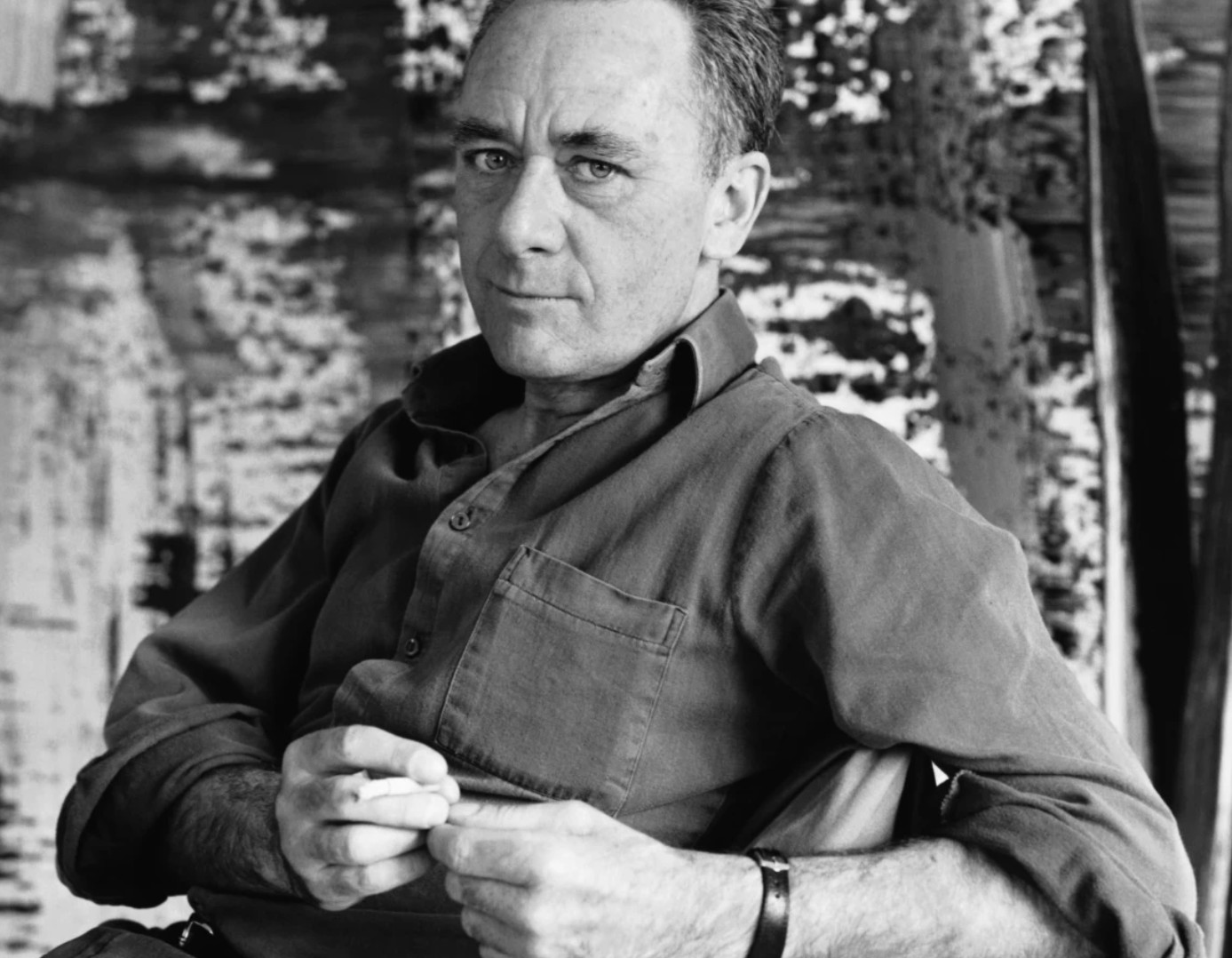
Gerhard Richter in Cologne, 1989. Image © Photo by Chris Felver/Getty Images. Art © Gerhard Richter 2025
The early 1990s marked a particularly fertile period in Richter’s career, culminating in the Golden Lion award at the 1992 Venice Biennale. That same year, he produced a number of major Abstrakte Bilder now held by institutions such as The Museum of Modern Art, New York; Tate, London; and the Fondation Louis Vuitton, Paris. Within this distinguished context, the present work stands out as a model of compositional clarity and philosophical depth. Its vertical format and domestic scale lend the work an architectural intimacy, while the dynamic interplay of layered pigment and effacement generates a quiet, meditative rhythm. It is a painting that rewards slow looking—a surface alive with sedimentary accumulation, glinting color, and tactile interruptions.
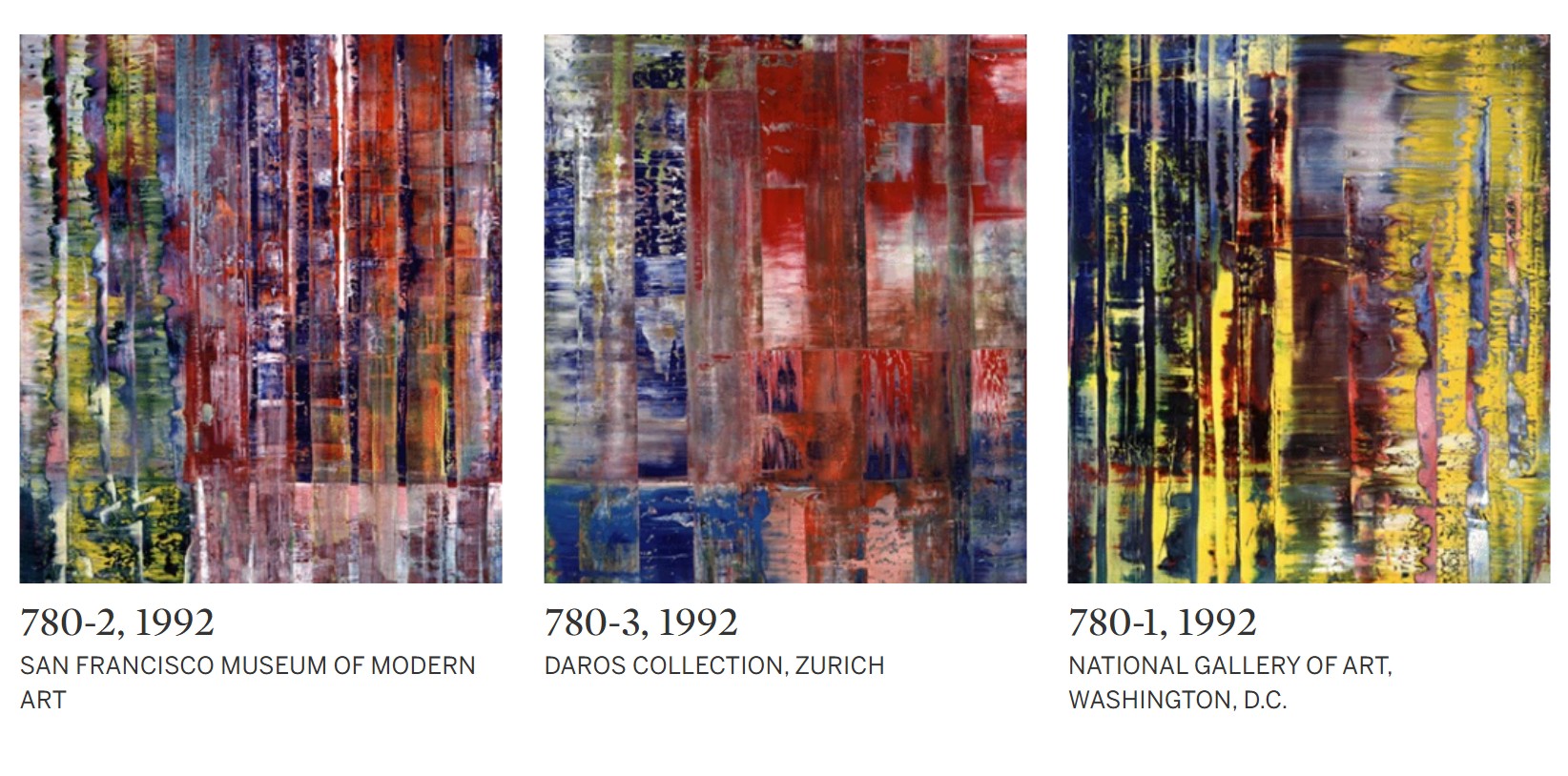
Richter’s abstraction does not emerge from expressive spontaneity but from an intricate process of construction and erasure. With the hard edge of a homemade squeegee, he drags semi-liquid pigment across the canvas in successive layers. Each gesture fuses, dissects, or effaces the colors beneath, yielding a surface that is both immediate and elusive. Brilliant whites stretch across deep purples, while vivid emeralds are buried beneath rich umbers; passages of intense color alternate with subtle veils, producing a sense of simultaneous depth and flatness. This dense chromatic layering destabilizes traditional figure-ground relationships and confounds the eye’s attempts to locate a single point of recession. As viewers, we are forced to continually adjust, our perception undone and remade by every movement across the painting’s luminous skin.
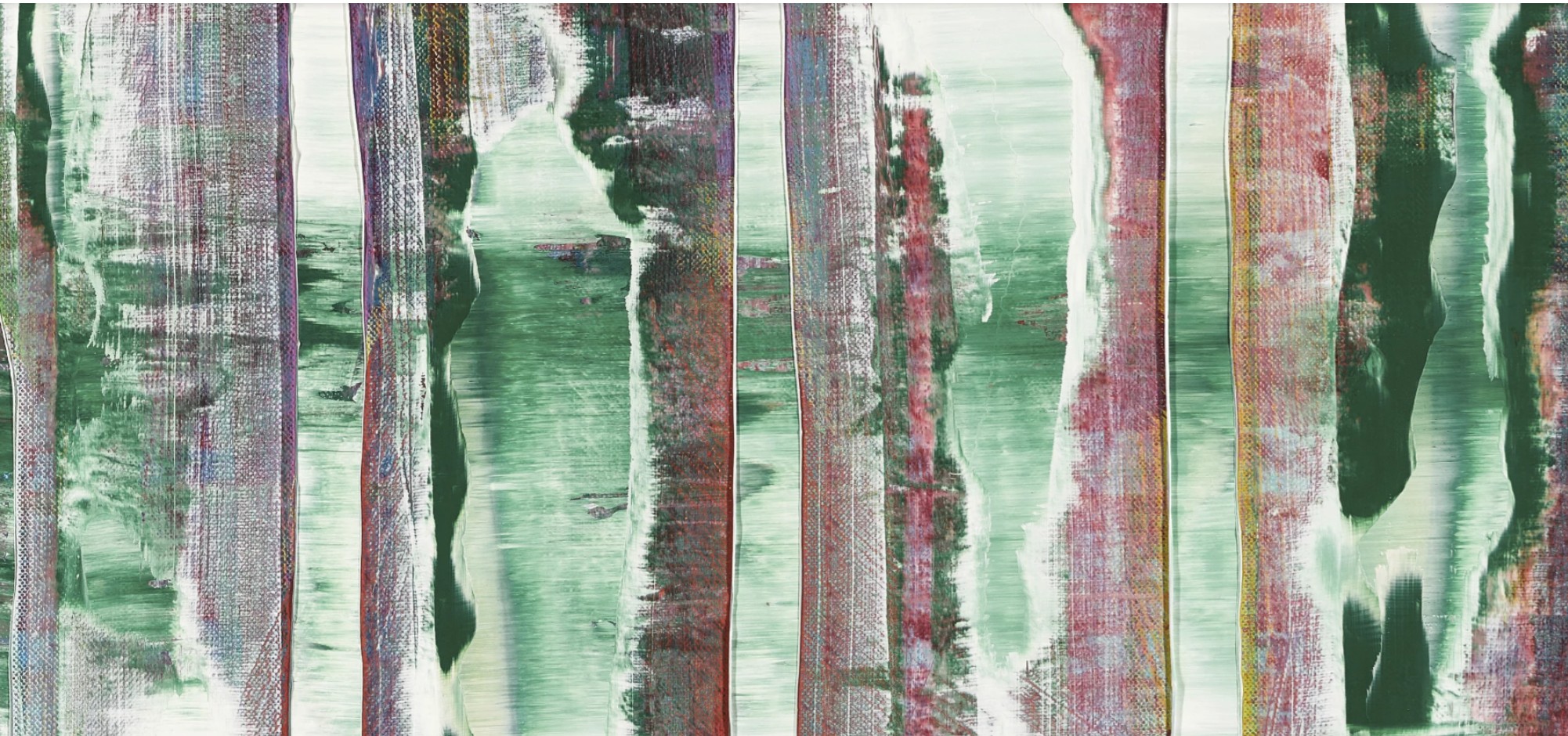
The process by which Abstraktes Bild came into being reflects Richter’s radical embrace of chance. “I want to end up with a picture that I haven’t planned,” the artist explained in 1990. “This method of arbitrary choice, chance, inspiration and destruction… never produces a predetermined picture… I just want to get something more interesting out of it than those things I can think out for myself.” (Gerhard Richter, interview with Dorothea Dietrich, 1990, in Gerhard Richter: Editions 1965-2004, Ostfildern-Ruit, 2004, p. 36). Throughout the execution of Abstraktes Bild, layers of pigment were applied, scraped away, and reworked—sometimes partially, sometimes completely—until the composition arrived at an unexpected yet irrevocable resolution. What appears effortless is in fact the result of cerebral labor, of conscious restraint and relinquishment of control. The squeegee, in Richter’s hands, becomes a paradoxical tool: one of creation and erasure, of intuition and interruption.
“This method of arbitrary choice, chance, inspiration and destruction… never produces a predetermined picture… I just want to get something more interesting out of it than those things I can think out for myself.”
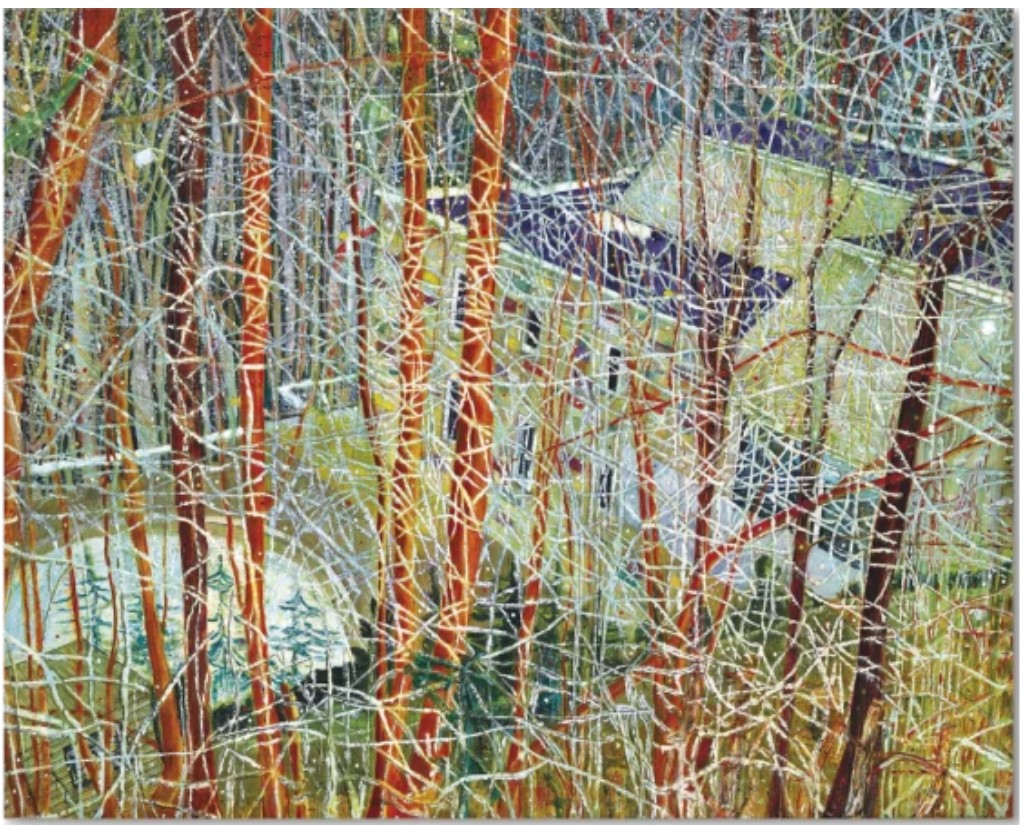
Peter Doig, The Architect’s Home in the Ravine, 1991. Private Collection. Art © 2025 Peter Doig / Artists Rights Society (ARS), New York
In this way, the painting is a record of time. Each accretion and removal leaves a trace, building a topography of touch and thought. Like the palimpsest of a memory that can never be fully retrieved, Abstraktes Bild bears witness to what was, what might have been, and what remains. In this state of flux, the work achieves an intensity that recalls natural phenomena without ever describing them. We are reminded of cascading waterfalls, geological strata, auroras, or stained-glass windows—not through representation, but through resonance. In Richter’s hands, abstraction becomes a form of seeing that bypasses language and opens onto something elemental, even spiritual.
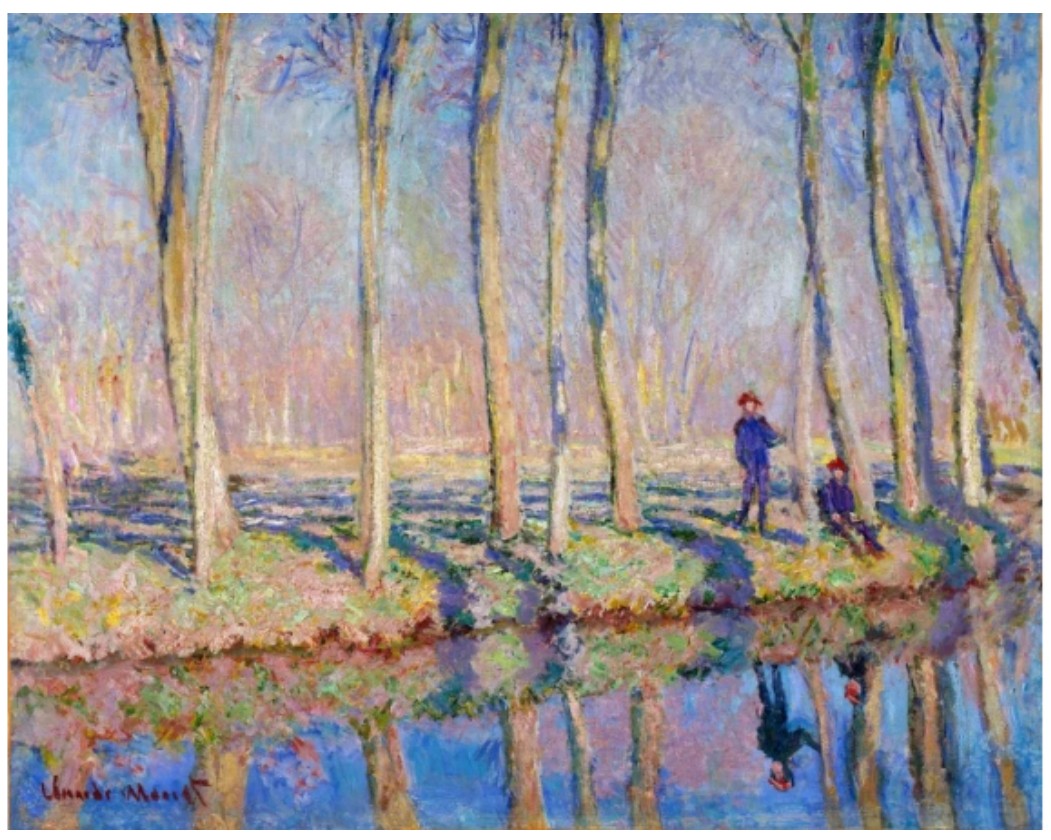
Claude Monet, Jean-Pierre Hoschedé and Michel Monet on the Banks of the Epte, c. 1887 – 1890. National Gallery of Canada, Ottawa.
That these works seem to flicker between abstraction and figuration is no accident. In contrast to the overt referentiality of his earlier photo paintings, Richter’s abstractions elicit an elusive sense of familiarity. Their organic rhythms and chromatic tensions evoke the natural world, while simultaneously refusing the comforts of narrative or symbol. As Birgit Pelzer has argued, Richter’s abstract works “prove that which cannot be articulated” (Birgit Pelzer, in Gerhard Richter: The Daily Practice of Painting, ed. Hans Ulrich Obrist, London, 1995, p. 124). They are not depictions of things, but propositions—acts of philosophical inquiry, where meaning is suspended between appearance and disappearance.
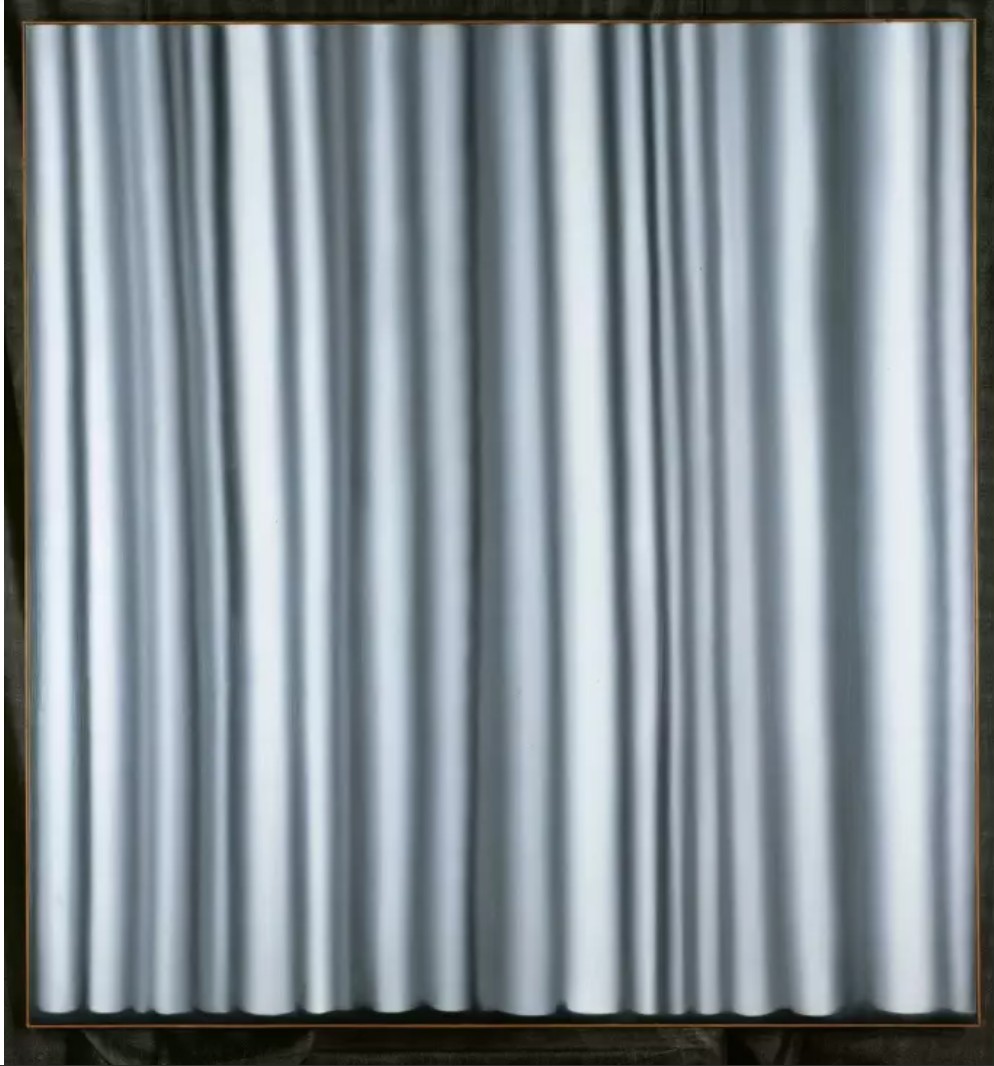
Gerhard Richter, Vorhang III (hell)(Curtain III (Light)), 1965. Nationalgalerie, Staatliche Museen zu Berlin, Berlin.
Art © Gerhard Richter 2025
Indeed, Abstraktes Bild stands as a visual analogue to Richter’s lifelong interrogation of image, memory, and truth. Having lived through the trauma of World War II and the rise and fall of East German communism, Richter has long questioned the reliability of representation. His abstraction does not seek to escape this history, but to confront it obliquely: to test what painting can still mean in an age of media saturation and political fracture. In this context, Abstraktes Bild is less a picture than a process—an emergent structure in which thought and material collide. The extraordinary power of Abstraktes Bild lies in this interplay between presence and absence, intuition and control. In its vertical striations and chromatic veils, we glimpse the tension between painterly gesture and visual perception, between surface and depth, opacity and transparency. Rather than pursue a single ideal, Richter opens the canvas to contingency, allowing the painting to find its own equilibrium. The result is a work that feels at once meticulous and mysterious, deliberate and divine.
Abstraktes Bild, 1988
Sotheby’s New-York: 16 May 2025
Estimated: USD 800,000 – 1,200,000
USD 1,016,000
Abstraktes Bild | Contemporary Day Auction | 2025 | Sotheby’s
GERHARD RICHTER (b. 1932)
Abstraktes Bild, 1988
Acrylic on canvas
35×40 cm (13 3/4 x 15 3/4 inches)
Signed, dated 88 and numbered 675-2 (on the reverse)
Executed in 1988, Abstraktes Bild is a luminous example of Gerhard Richter’s groundbreaking investigations into abstraction—a series widely regarded as one of the most significant and enduring contribution to abstract painting in the 20th century. Ethereal yellows and warm pinks emerge from beneath veils of enchanting silver, yellow and shimmering black, creating a complex visual field where color is simultaneously concealed and exposed. Intimately-scaled yet entirely commanding, the present work possesses a strikingly expansive presence, its densely layered surface radiating with quiet authority and optical intrigue. Here, we see the artist revel in the chance slippages of his signature squeegee tool, which Richter uses to simultaneously build and erode his mesmerizing surface. This deliberate interplay of layering and erasure, control and chance, places the work squarely within Richter’s conceptual interrogation of painting’s potential.
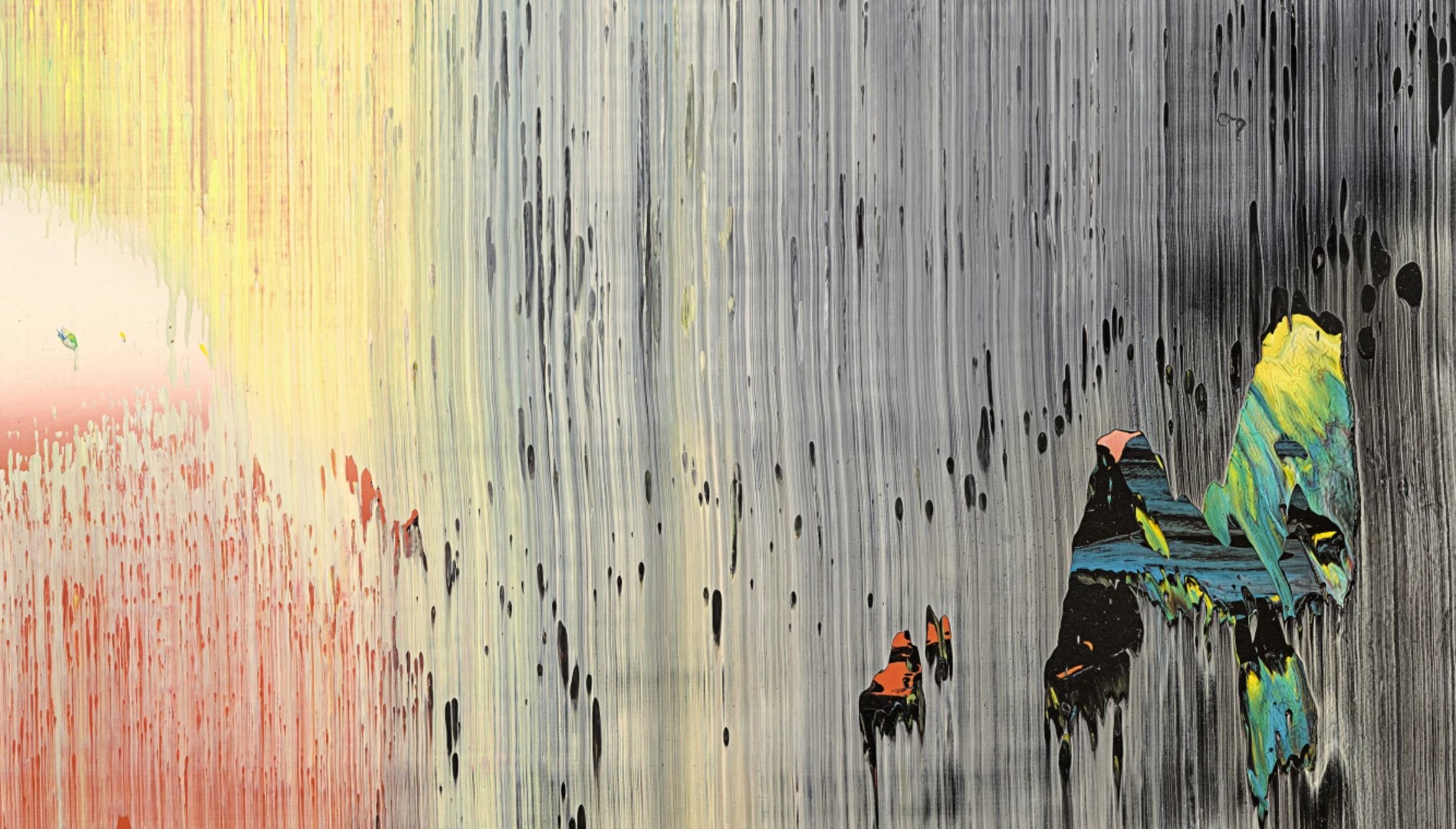
Part of the iconic Abstraktes Bilder series, the present work stands within what is widely considered the most important body of abstract painting of the late 20th century. Richter’s approach—neither wholly gestural nor entirely systematic—offers a new visual language that redefined the potential of abstraction in a postmodern context. Rather than depicting or describing, the painting becomes a record of its own making, a surface charged with the tension between randomness and control, concealment and expression. Painted in 1988, Abstraktes Bild belongs to a period of remarkable innovation, when Richter’s abstraction reached new heights of technical and conceptual sophistication. Variously evoking something of Monet’s translation of his garden at Giverny, Rothko’s exuberance of transformative color, Kline’s structural expressionism, Pollock’s instigation of autonomous composition, and de Kooning’s transferal of the figural to the abstract, Richter’s abstraction is ultimately without comparison. Its jewel-like dimensions concentrate a visceral energy more commonly associated with his larger-format works, demonstrating the artist’s unique ability to imbue intimacy with monumentality.
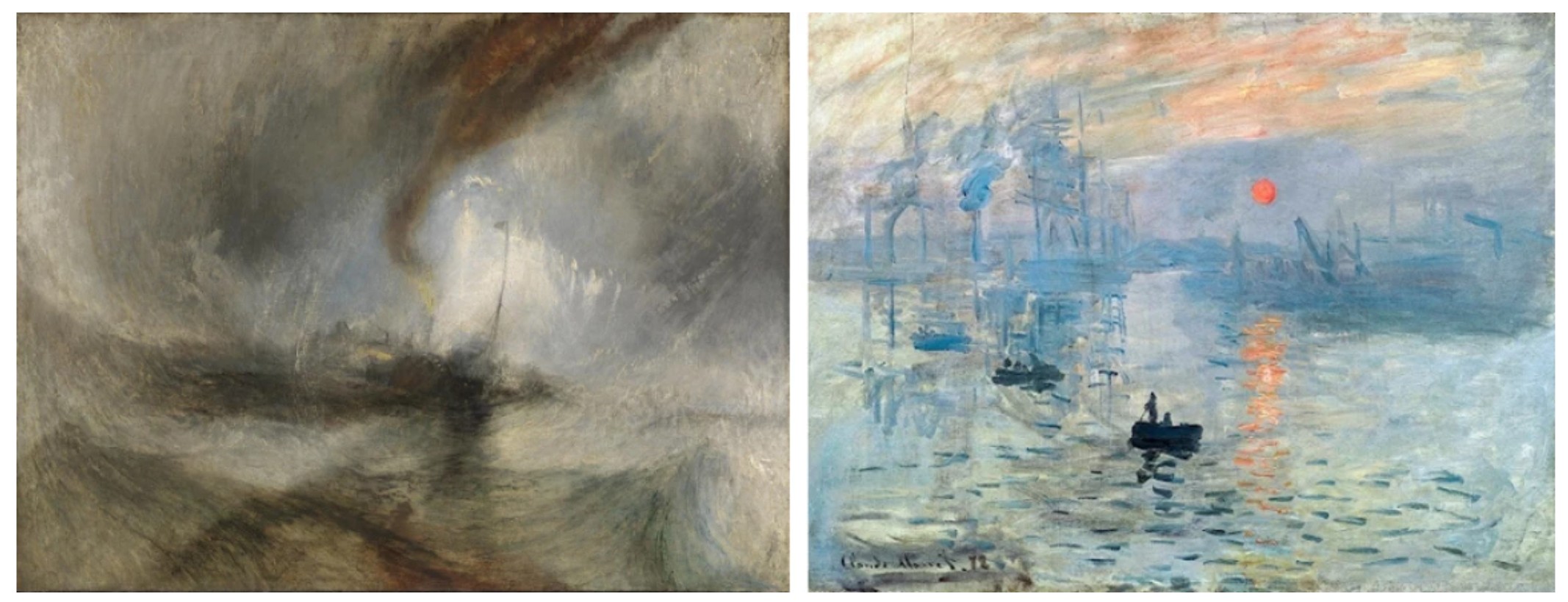
Left: J.M.W. Turner, Snow Storm – Steam-Boat off a Harbour’s Mouth, 1842. The Tate Gallery, London.
Right: Claude Monet, Impression, Sunrise, 1872. Musée Marmottan Monet, Paris.
With its richly layered surface and contemplative depth, Abstraktes Bild (675-2) stands as a powerful testament to Richter’s enduring legacy—an artist who, through abstraction, reshaped the visual and philosophical landscape of contemporary painting. Incontestably one of the greatest ventures in Contemporary art, Abstraktes Bild combines the greatest stylistic fissures of Richter’s output with the discourse on the crisis of postmodern painting.
“What I am trying to do in each picture is to bring together the most disparate and mutually contradictory elements, alive and viable, in the greatest possible freedom.”
The work that followed, most superlatively in the present work, bore the consequential self-consciousness that signaled Richter at his very best: each daub of oil carries this goal in mind, and as such, Abstraktes Bild is charged by its very own perceptive breath. It is at once the birth of a new kind of painting and the death of a narrative past – both potential and kinetic energies, generation and destruction – in a feat of technique and invention that can only be rightfully labeled a masterpiece.
Abstraktes Bild, 1980
Sotheby’s New-York: 21 November 2024
Estimated: USD 300,000 – 400,000
USD 264,000
Abstraktes Bild | Contemporary Day Auction | 2024 | Sotheby’s
GERHARD RICHTER (b. 1932)
Abstraktes Bild, 1980
Oil on canvas
45.1 x 35.5 cm (17 3/4 x 14 inches)
Signed, dated 80 and numbered 454/4 (on the reverse)
Radiating with a blaze of vivid orange, rich vermillion and brilliant yellow, Abstraktes Bild stands as a preeminent example from Gerhard Richter’s Abstraktes Bilder series, one of the most significant and extensive strands of the artist’s practice, spanning multiple decades and witnessing a great deal of technical innovation. Beginning in the late 1970s, Richter’s initial abstract output encompassed a series of sophisticated paintings executed on an intimate scale. Painted in 1980, Abstraktes Bild is an important and early work of art that exudes movement, depth and spontaneity. Richter describes the way in which his early abstract paintings “allowed me to do what I had never let myself do; put something down at random. And then, of course, I realized that it never can be random. It was all a way of opening a door for me” (Gerhard Richter cited in: Hans Ulrich Obrist, Ed., Gerhard Richter: The Daily Practice of Painting Writings and Interviews 1962-1993, London 1995, pp. 215-16). The present work perfectly embodies Richter’s interrogations of order and chaos, its composition delicately poised between the two. The artist’s method for creating Abstraktes Bild embraces a technique of building up layers of paint, with the goal to create a newly complex surface. As each stage of the painting is completed, a new degree of abstraction was adopted; from the smooth layer of the foreground to the final applications of thick impasto. Describing his method at this time, Richter explains, “A picture like this is painted in different layers, separated by intervals of time. The first layer mostly represents the background, which has a photographic, illusionistic look to it, though done without using a photograph. This first, smooth, soft-edged paint surface is like a finished picture; but after a while I decide that I understand it or have seen enough of it, and in the next stage of painting I partly destroy it, partly add to it; and so it goes on at intervals, till there is nothing more to do and the picture is finished” (Ibid., p. 112). Richter’s utterly extraordinary and pioneering art of abstraction stands as the ultimate culmination of the heroic journey of his career, during which he has endlessly questioned the limits of representation, the nature of perception, and the operations of visual understanding. Abstraktes Bild is both compelling, mysterious and a timeless image that, in decades to come, will be still be yielding new readings.
Abstraktes Bild, 1995
Bonhams New-York: 20 November 2024
Estimated: USD 1,200,000 – 1,800,000
USD 1,512,500
Bonhams : GERHARD RICHTER (B. 1932) Abstraktes Bild 24 x 24 in (61 x 61 cm) (Painted in 1995)
Oil on canvas
61×61 cm (24×24 inches)
Signed, inscribed and dated ‘Richter 1995 835-4’ (on the reverse) and further inscribed ‘835-4’ (on the stretcher)
Born in Dresden in 1932, Gerhard Richter is arguably the most important European artist of the postmodern period. A polymathic painter of the highest degree, he has been a singular force in the twentieth century, challenging the relationships between abstraction, representation, stylistic consistency and imagistic meaning, maintaining a steadfast commitment to painting as the medium through which to probe the concept of History as it underpins the Western art canon. An artist who has endured the real arc of history – one not only long, but cruelly war-torn and divided in his native Germany – the scope of his impact through six decades of art making is broad and deep. Abstraktes Bild, from 1995, demonstrates the adroitness of Richter’s hand; we peer through the sinuous, taut surface into an atmospheric space beyond, endowing it with a shimmering, emanating light. Such an effect is rare in Richter’s Abstraktes Bild, particularly versions of this size, where chromatic intensity or ploys often override imagistic nuance at this scale. The palette and compositional effect is engrossing – we sense a ‘subject’ is one or two curtains of paint behind the luscious surface of ‘grips’ and ‘drags.’ The truth of the work, if you will, is hidden in plain sight. This is precisely Richter’s masterful stroke and highlights still more how the German artist has been at the forefront of painterly practice, pushing at its boundaries with photography and its capacity for political-historical account.
Abstraktes Bild, 1990
Christie’s New-York: 1 October 2024
Estimated: USD 2,000,000 – 3,000,000
USD 2,046,500
GERHARD RICHTER (B. 1932), Abstraktes Bild | Christie’s (christies.com)
GERHARD RICHTER (B. 1932)
Abstraktes Bild, 1990
Oil on canvas
72.1 x 62.2 cm (28 3/8 x 24 1/2 inches)
Signed, inscribed and dated ‘715-2 Richter 1990’ (on the reverse)
Shimmering layers of silver oil paint form a patina-like encasement over Abstraktes Bild’s surface, almost fully cloaking a ground populated with bright yellow, red, and blue pigments. The glossy sheen of the grayish topmost layer provides a uniformly smooth texture only momentarily interrupted by divots in which color appears. Color is concealed and revealed to the viewer in this important abstract work by Gerhard Richter in an analogous way to which the artist worked his canvas, inventing a novel form of abstraction which continues to exert a strong influence on contemporary art. The present work arises from 1990, a critical year in Richter’s life linking the artist’s emergence to his mature career.
Abstraktes Bild, 1983
Sotheby’s New-York: 14 May 2024
Estimated: USD 1,800,000 – 2,500,000
USD 2,056,500
Abstraktes Bild | Contemporary Day Auction | 2024 | Sotheby’s (sothebys.com)
GERHARD RICHTER (b. 1932)
Abstraktes Bild, 1983
Oil on canvas
100×70 cm (39 3/8 x 27 1/2 inches)
Signed, dated 1983 and numbered 522-3 (on the reverse)
Chance, layering, erasure, chromatic power and compositional counterpoint are wielded to sublime effect in Abstrakes Bild from 1983. Following a corpus of nascent abstractions executed between the years of 1980-85, the present workhails from a period of profound exploration into a language of abstraction. In fact, Richter called these works executed in the early 1980s ‘free abstracts’, a name aptly conveying an open embrace of movement and irregularity. As laid down in the present work across layers of saturated and vibrant underpainting, Richter holds in tension the dominance of the squeegee over the brush. Horizontal veils of stuttering paint present a riposte to the vertical drag of wide brush-strokes, both of which are punctuated by finer and more angular accents. The result is a mesmerizing field in which painterly elements both spar against and complement each other while the paint’s chromatic value injects this piece with an undisputed brilliance. Broadcasting deepest green through to acidic yellow and shocking reds, along with all the possible permutations that exist in between these primary values, Abstraktes Bild imparts glorious light effects that verge on the experiential. In the left of the composition, stuttering verdant greens interrupt a stream of luminous color, reminiscent of light flooding through stained glass, or the colors of a sunset coursing through a soft miasma of clouds. Indeed, the balance between hard and soft, structural solidity and phosphorescence, photographic and the abstract, finds an apogee in this profound yet domestically scaled work.

Texture, color and structure are deployed in Abstraktes Bild with spectacular force and sensitivity to engender a seductive painterly synthesis visually aligned to an exquisite and strikingly atmospheric evocation: structural strips and impastoed ridges of thick oil paint delineate a schema of painterly revelations and under layers of diaphanous blue, green and red that are punctuated with sunset flashes of yellow, orange and pink. The present work draws a uniquely evocative dialogue with late nineteenth-century landscape painting from a distinctly contemporary perspective. Indeed, Richter’s breathtaking Abstraktes Bild captures an atmosphere akin to a post impressionistic translation of landscape scenery.
Abstrakte Bilder 581-(1-5) [Five works], 1985
Sotheby’s London: 6 March 2024
Estimated: GBP 2,500,000 – 3,500,000
GBP 2,952,000 / USD 3,743,136
GERHARD RICHTER (b. 1932)
Abstrakte Bilder 581-(1-5) [Five works], 1985
Oil on canvas
Each: 60×60 cm (23 5/8 x 23 3/4 inches)
Each: signed, dated 1985 and numbered 581-(1-5) (on the reverse)
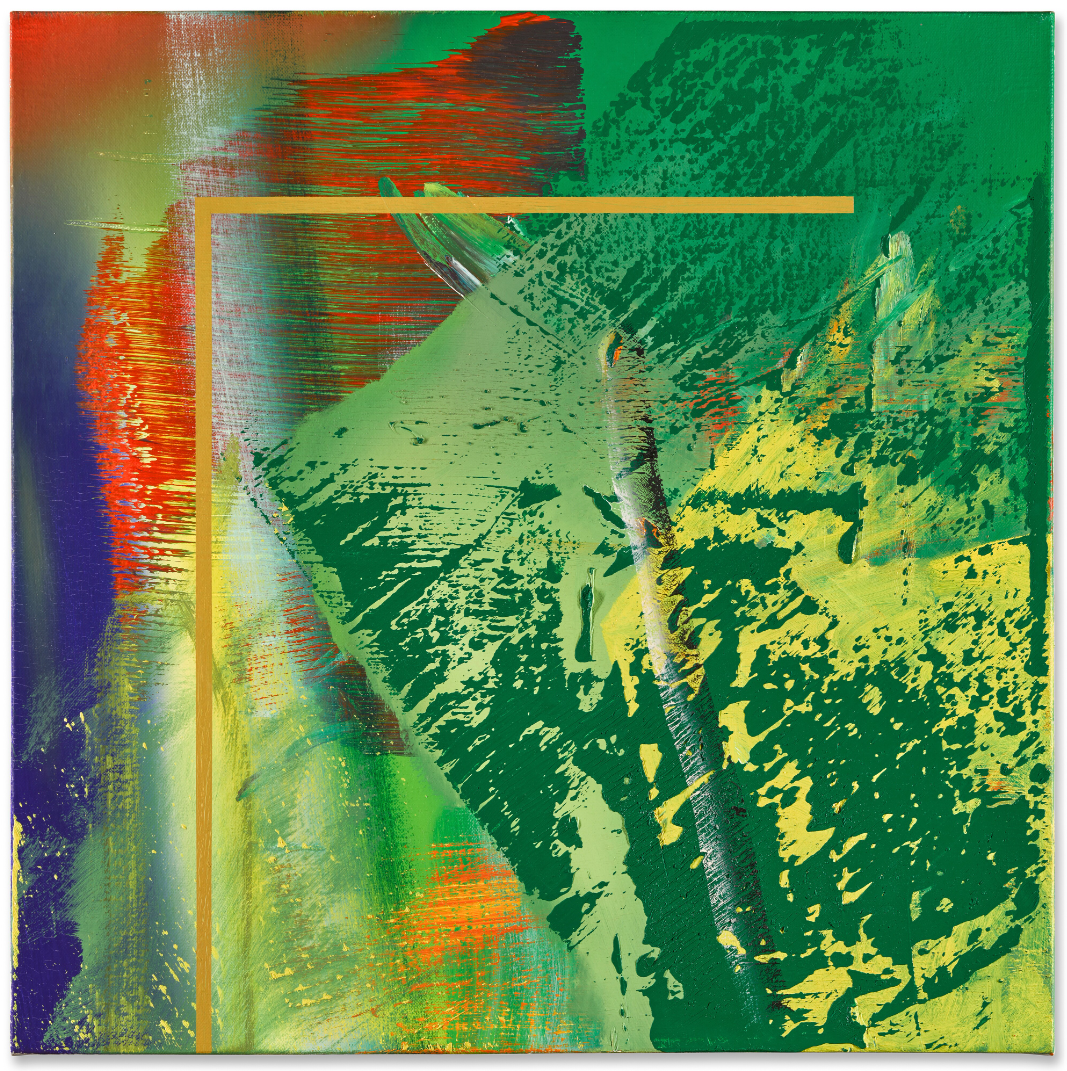
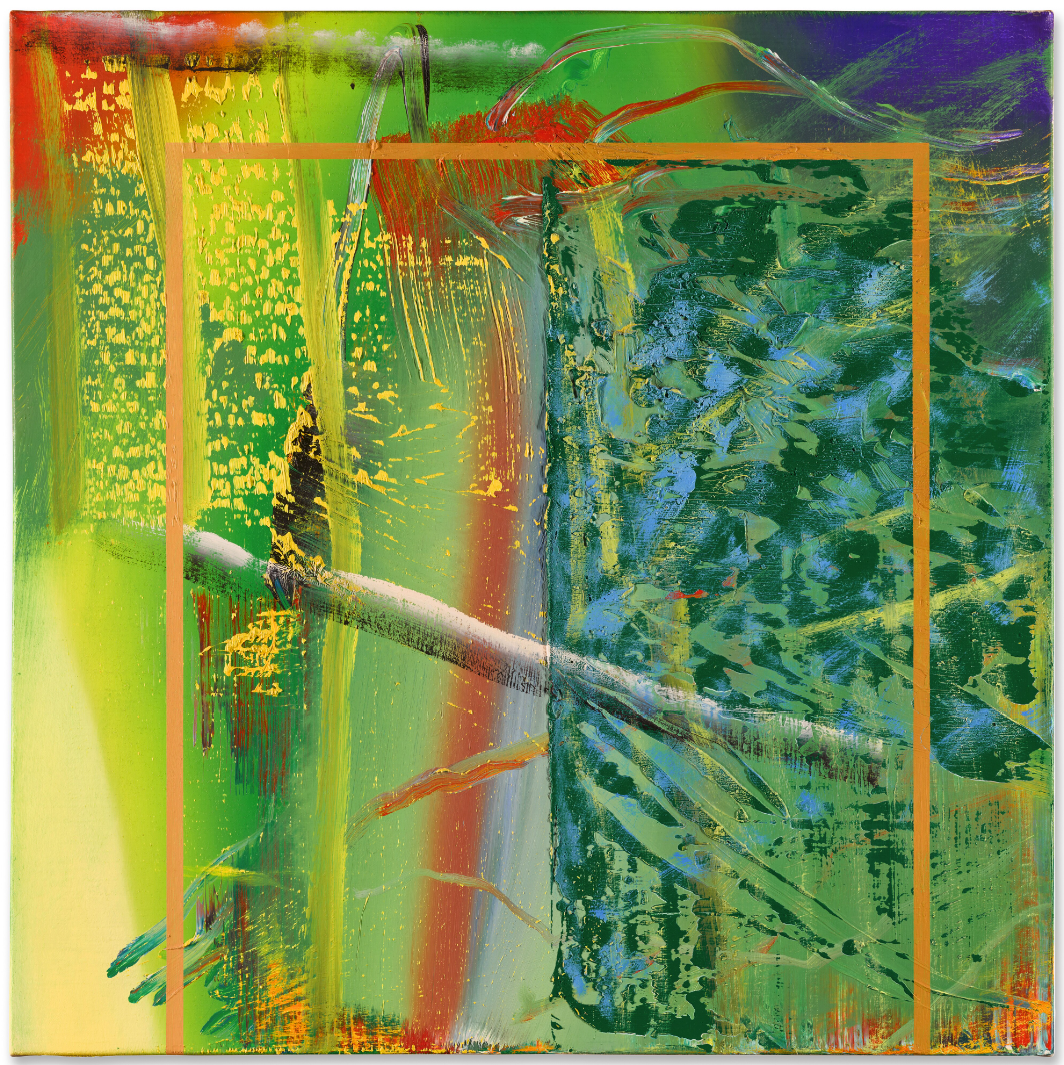
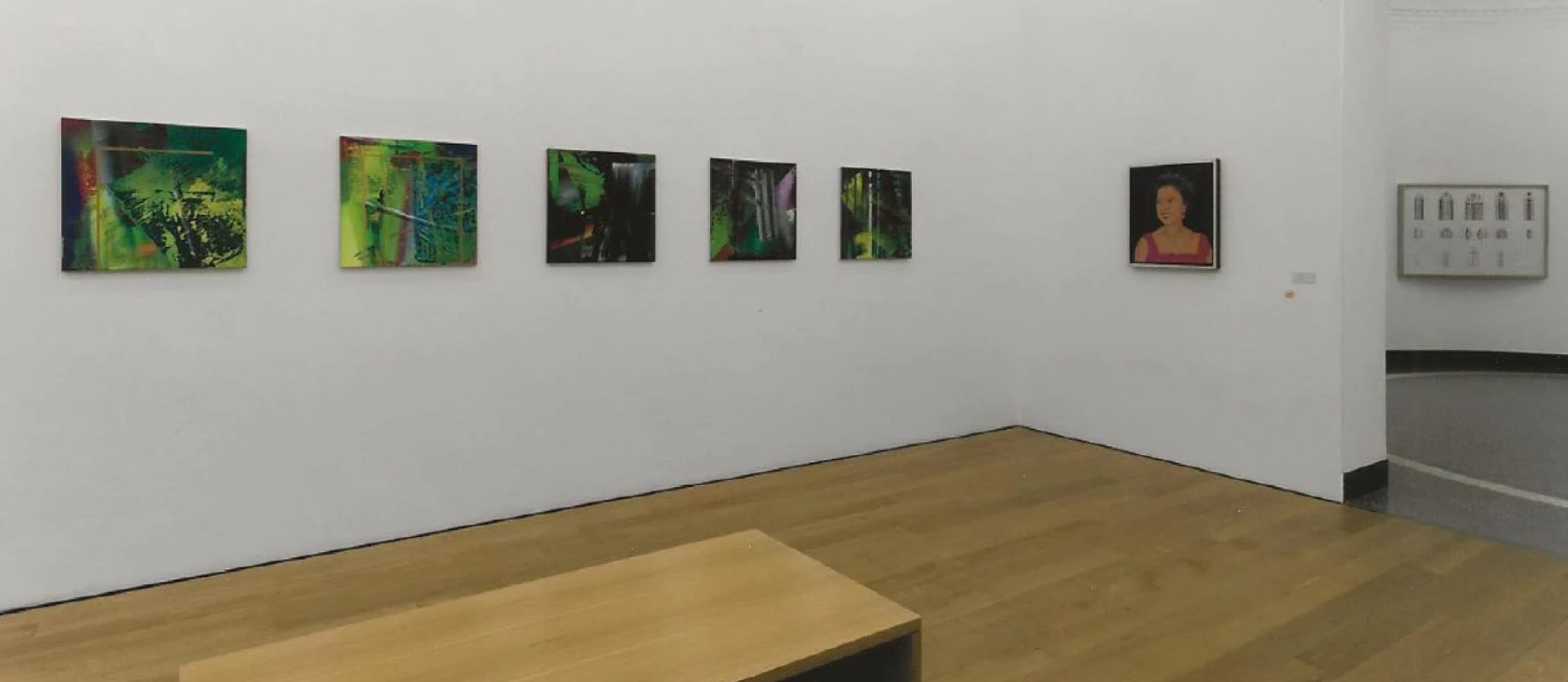
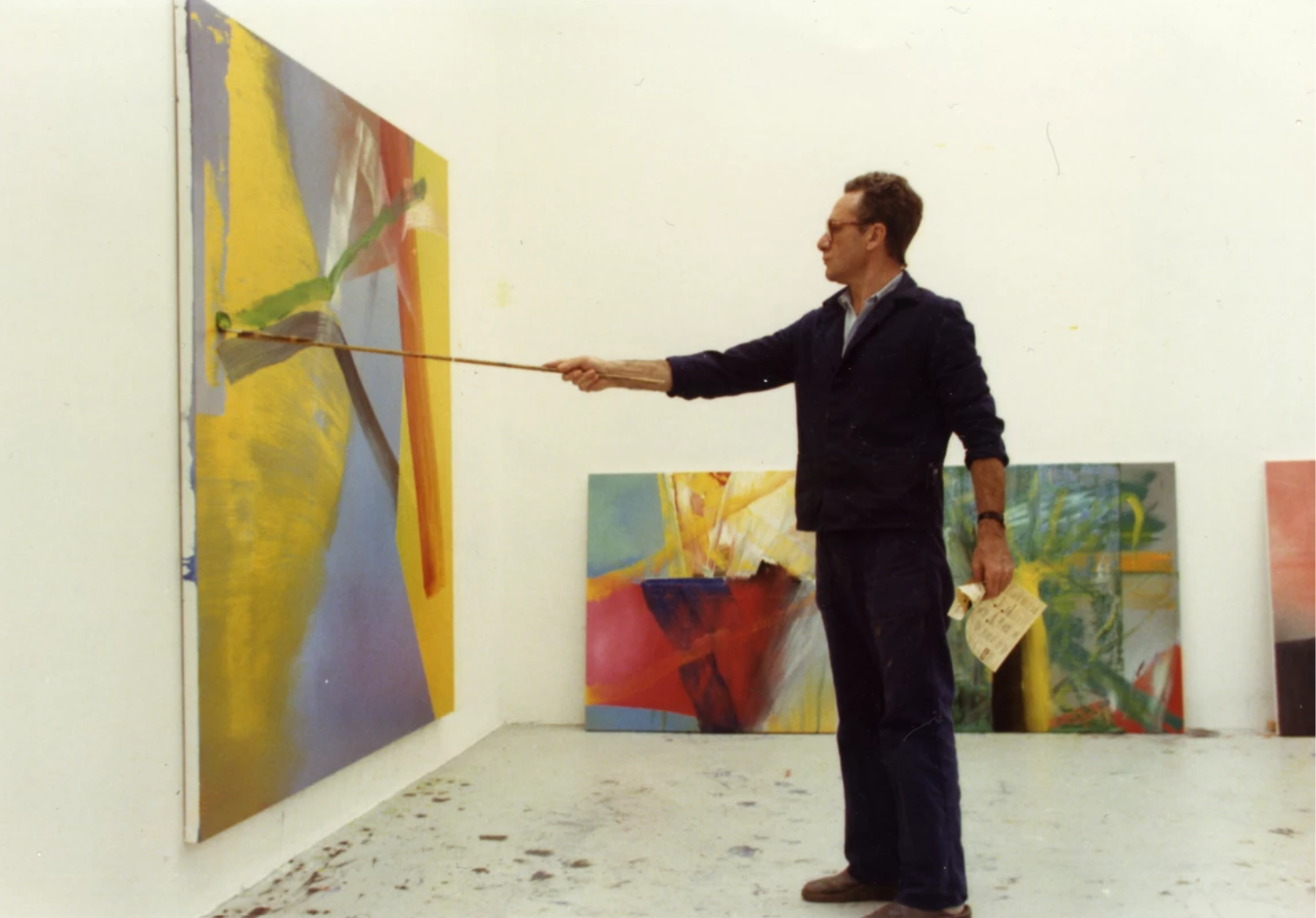
Richter has called the works executed in the early 1980s ‘free abstracts’, a name aptly conveying an open embrace of movement and irregularity. As an example of the series that has formed a conceptual keystone of his oeuvre for decades, the present work bears the legacy of Richter’s prolifically sustained philosophical inquiry into the role of paint. His mastery of the medium, exemplified by the present Abstraktes Bild, demonstrates his unrivalled ability to produce mysterious and atmospheric works that also question the very nature of painting in the modern age.
Abstraktes Bild, 1996
Christie’s New-York: 10 November 2023
Estimated: USD 500,000 – 700,000
USD 630,000
GERHARD RICHTER (B. 1932) (christies.com)
GERHARD RICHTER (B. 1932)
Abstraktes Bild, 1996
Oil on canvas
46.4 x 51.1 cm (18 1/4 x 20 1/8 inches)
Signed, inscribed and dated ‘836-3 Richter 1996’ (on the reverse)
Featuring a serene and otherworldly gradient of green-yellow punctuated by vertical swaths of Richter’s signature squeegee technique, Abstraktes Bild is a superlative example from Richter’s career-defining series reverberating on an intimate scale. In the present work, Richter manages to create a mirror-like surface that evokes watery depths, the banks of a secluded, forest pond, and the striations of precious gems and minerals. Glimmers of vibrant yellow shine through an impossibly smooth mossy gradient at center. The concentration of green-yellow soon flows into tantalizing ravines of effervescent pink and purple shades, unearthed by Richter’s vertical squeegee. The ethereal, atmospheric gradient of Abstraktes Bild combined with its intimate scale make this painting distinctly powerful. Although the painting is resolutely abstract, the richness of its colors and the intensity of its mystical depths conjures up the sublime, awe-inspiring paintings of the great German Romantics, such as Caspar David Friedrich. The present work is particularly exemplary in demonstrating how control and accident can coalesce to produce something striking and masterful. As in Richter’s greatest paintings, prolonged viewing of this work rewards the beholder. The luminous open center of green and yellow ripples with life, inspiring a wistful reverie and contemplation of the majesty of the natural world.
Abstraktes Bild (890-2), 2004
Christie’s New-York: 7 November 2023
Estimated: USD 2,000,000 – 3,000,000
USD 2,591,000
GERHARD RICHTER (B. 1932) (christies.com)
GERHARD RICHTER (B. 1932)
Abstraktes Bild (890-2), 2004
Oil on canvas
63 x 52.5 cm (24 3/4 x 20 1/4 inches)
Signed, inscribed and dated twice ‘890-2 R. 2004 Richter 2004’ (on the reverse)
Gerhard Richter’s Abstraktes Bild (890-2) is a vigorous example of his critically acclaimed abstract canvases that throw aside traditional values in favor of a heady combination of chance and control. Known early on for his work with photographic sources, the artist has always been interested in giving up some of his autonomy in an effort to let the work essentially plan and build itself. “I want to end up with a picture that I haven’t planned,” Richter has noted about his abstract process. “This method of arbitrary choice, chance, inspiration and destruction may produce a specific type of picture, but it never produces a predetermined picture. Each picture has to evolve out of a painterly or visual logic: it has to emerge as if inevitably” (G. Richter, quoted in D. Elger, Gerhard Richter: A Life in Painting, Chicago 2009, p. 312). His abstract paintings are the most clear example of Richter’s embracing these chance moments, the unexpected results while still retaining a programmatic sense of control over the entire proceedings. Though tangentially linked to the emphatic work of the Abstract Expressionists, pieces like the present example highlights Richter’s investigative technique over emotion and angst.
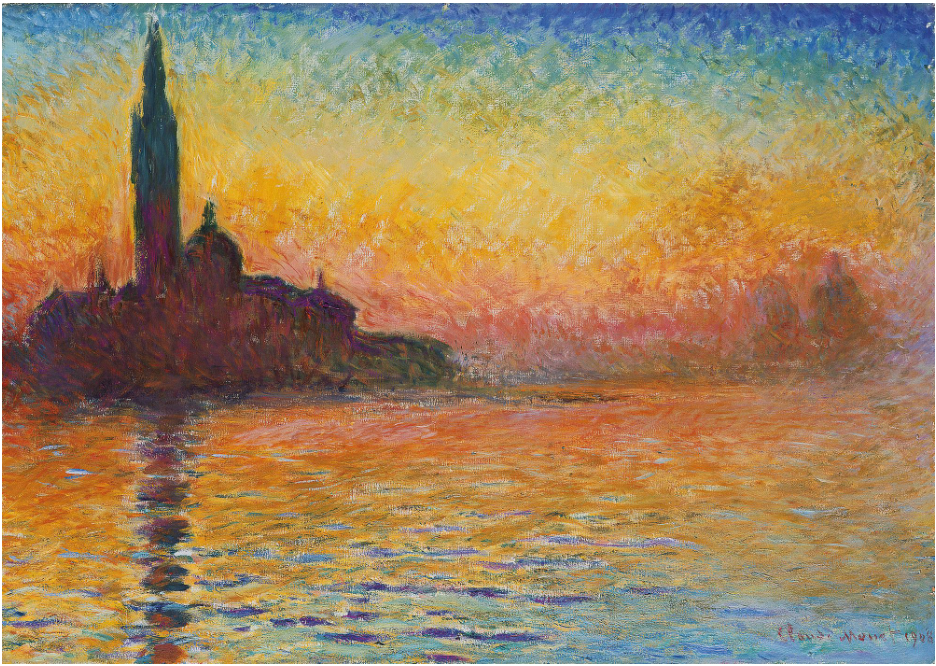
Claude Monet, San Giorgio Maggiore at Dusk, 1908. National Museum, Cardiff. Photo: © National Museum, Cardiff / HIP / Art Resource, New York.
One of his more intimate abstracts, Abstraktes Bild (890-2) is nonetheless rife with energy and painterly motion. Even at this smaller scale, the same depth and optical richness continue to play out upon the surface of the work. Constructed from a preponderance of yellow and red, the image highlights a variety of strokes that compete for the viewer’s attention. Horizontal bands of cheery yellow hover over darker areas, the underpainting bleeding into view like a shadow beneath. On the edges, rich red makes itself known in heavy layers that echo the central streaks of paint running vertically across the whole composition. It is these stripes that exhibit the telltale texture of Richter’s squeegee process. The result is a smoothly marbled surface where a variety of colors intermingle in a swirling dance. These mixtures force the eye to find other shades within the work, and by doing so one is allowed to enter the painting and begin to investigate the built environment which Richter has constructed. “[A] picture emerges that may look quite good for a while, so airy and colourful and new,” he notes. “But that will only last for a day at most, at which point it starts to look cheap and fake. And then the real work begins—changing, eradicating, starting again, and so on, until it’s done” (G. Richter, Panorama: A Retrospective, London, 2011, p. 17). Evidence of this meticulous work is brought to the surface by the artist’s machinations for a brief moment only to be plunged back into the depths with a decisive movement of his tools.
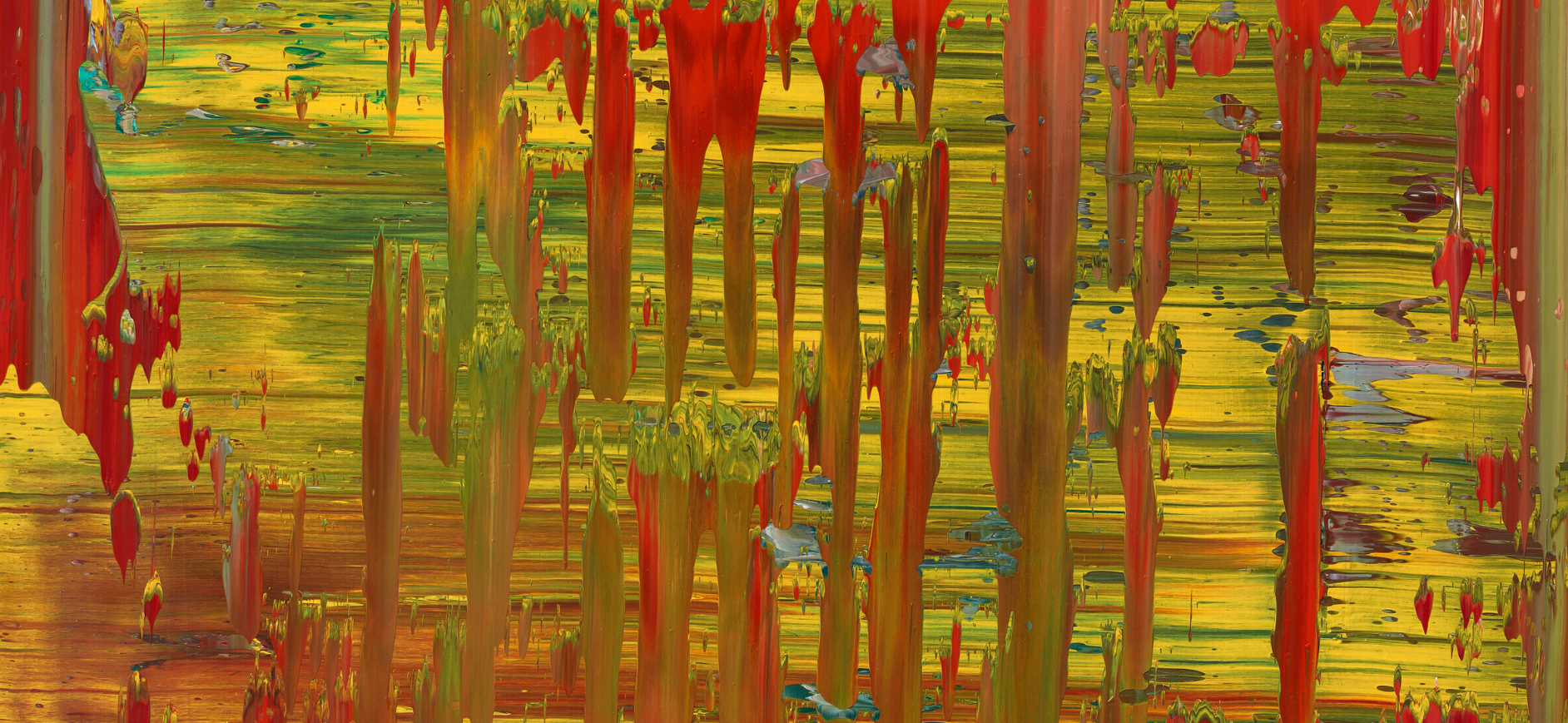
Part of his momentous series of squeegee paintings, Abstraktes Bild (890-2) and its brethren are a testament to Richter’s continued investigation of the painting process. Beginning with the photo-based works, the artist has worked in distinct groupings throughout his career. Rather than merely a fleeting blip within a larger thread, series like the Abstraktes Bilder exist in longer conversations that Richter has used to continuously challenge himself and his viewers. The current example shows a mixture of freedom and control that collide within the composition and hint at the artist’s meticulous work in the past and his journey toward a less controlled practice. When he first began making the abstract paintings, he noted that they “allowed me to do what I had never let myself do: put something down at random. And then, of course, I realized that it never can be random. It was all a way of opening a door for me. If I don’t know what’s coming—that is, if I have no hard-and-fast image, as I have with a photographic original—then arbitrary choice and chance play an important part” (G. Richter, quoted in Gerhard Richter: Text, London, 2009, p. 256). The squeegee paintings are created within a carefully tested system where the artist’s process rarely differs but the results can be wildly different. By choosing particular color combinations to highlight throughout the works and then smearing and dragging them around the canvas, Richter is able to form complex relationships that are not predetermined or rooted within visual tradition.
Abstraktes Bild, 1994
Christie’s London: 13 October 2023
Estimated: GBP 1,800,000 – 2,500,000
GBP 2,097,000 / USD 2,544,902
Gerhard Richter (christies.com)
GERHARD RICHTER (B. 1932)
Abstraktes Bild, 1994
Oil on canvas
61×71 cm (24×28 inches)
Signed, numbered and dated ‘819-2 Richter 1994’ (on the reverse)
Painted in 1994, Abstraktes Bild is an exquisite work dating from the finest period of Gerhard Richter’s abstract practice. Rendered in a sumptuous palette of crimson, silver and ivory, spiked with flashes of blue, green, violet and magenta, its shimmering curtain of color hovers before the viewer. Paint cascades down the length of the picture, flickering in vertical bands like cinematic distortion. Layers of marbled texture glint through the surface. The work was created at the height of Richter’s international acclaim, following the critical success of his career-defining retrospective at the Musée d’Art Moderne de la Ville de Paris in 1993. The paintings of this period capture his consummate mastery of the squeegee—his signature tool—reveling in the relationship between chance and control. Many were included in the landmark 1995 exhibition Gerhard Richter: Painting in the Nineties at Anthony d’Offay Gallery, London. The present work was acquired directly from the show: other examples now reside in institutional collections including the Cleveland Museum of Art, Tate Modern, London, La Caixa Foundation, Barcelona, the National Museum of Modern Art, Tokyo and the Art Gallery of New South Wales.
Abstraktes Bild (456-2), 1980
Phillips Hong-Kong: 6 October 2023
Estimated: HKD 7,500,000 – 12,000,000
HKD 11,340,000 / USD 1,447,980
Gerhard Richter – 20th Century & Con… Lot 11 October 2023 | Phillips
GERHARD RICHTER
Abstraktes Bild (456-2), 1980
Oil on canvas
65.3 x 80.3 cm (25 3/4 x 31 5/8 inches)
Signed, numbered and dated ‘456/2 Richter 1980’ on the reverse
Technically brilliant and hailed as one of the greatest living artists in the 21st century, Gerhard Richter has remained a key figure in the redefinition of painting by blurring the lines between figuration and representation. Already well renowned for his photorealistic paintings and attention to detail, Richter began experimenting with abstraction in the 1970s and created the first Abstraktes Bild work in 1976. Painted just 4 years after the first in the series, Abstraktes Bild (456-2) is a relatively early example of Richter’s non-representational works. More importantly, the present piece immediately follows the artist’s first ever squeegee work, namely Abstraktes Bild 456-1, marking it as important and representational within Richter’s oeuvre. Marrying spontaneity with orchestration, it showcases the artist’s experimental approach to colour and technique as well as the unbridled nature of his compositions, elements that have remained recurring motifs in his celebrated masterpieces. Layering different types of pigment, the squeegee is used to scrape away the still-wet paint, causing the colours to blend and melt into one another while also revealing what originally laid beneath. Abstraktes Bild (456-2) features vivid shades of primary colours mixed and blended in various directions, resulting in highly energetic sections of overlapping pigments that fill the foreground with a unique visual complexity. A seminal work executed during a pivotal turning point in Richter’s career, it was notably included in the 1982 show Abstrakte Bilder 1976 bis 1981 that travelled across Germany, where the current lot was highlighted with a full colour illustration on the cover of and within the published catalogue, as well as within Art Allemagne Aujourd’hui (German Art Today) at the Musée d’art modern de la Ville de Paris in 1981. Richter’s catalogue raisonné also dedicated two pages to the introduction of Abstraktes Bild (456-2), one of which features a full-page illustration, a testament to both the beauty and importance of this historic piece.
Abstraktes Bild, 1994
Sotheby’s London: 27 June 2023
Estimated: GBP 2,000,000 – 3,000,000
GPB 3,194,000 / USD 4,072,940
GERHARD RICHTER (b. 1932)
Abstraktes Bild, 1994
Oil on canvas
71×61 cm (28×24 inches)
Signed, titled, dated 1994 and numbered 801-4 (on the reverse)
Gerhard Richter’s abstract paintings of the 1990s stand among the most accomplished of his career. Simultaneously revealing and concealing exquisite chromatic layers, Abstrkates Bild of 1994 bespeaks Richter’s mastery of the squeegee method, an approach to creating non-referential pure abstractions that are resplendent in colour and conceptually complex. Articulated in breathtaking tonal shades of red, green, white and punctuated with bursts of yellow, Abstraktes Bild exhibits an extraordinary breadth of colour and miraculously scraped-back vibrancy. Embodying a masterpiece of scaled down proportions, Abstraktes Bild delivers a superlative equilibrium between illusion and allusion, erasure and construction, veiling and revealing.

Since the very outset of his career during the early 1960s, Gerhard Richter has called into question the conceptual underpinnings of painting and representation. Now considered the greatest artist living today, Richter’s career long conceptual project has ushered in the practice of painting as a legitimate critical dialogue firmly established in the Post-Modern canon. Navigating a systematic trajectory of incredibly disparate but thematically related painterly approaches, at once including his formative Photo Paintings, Stadtbilder, Colour Charts, and the monochrome Grau Paintings, Richter’s career represents a cumulative inquiry into representation and abstraction in paint as marked by the stamp of our increasingly media saturated contemporary age. Positioned at the vanguard of this continuing project are the Abstrakte Bilder. As forcefully illustrated by the present work, Richter’s exploration into the field of abstraction stands distinct from both the formal and chromatic sparseness of minimalism, and the impassioned or emotive gestures of abstract expressionism. Rather, evoking the aesthetic blur of photography and immaculate cibachrome lamina of the print, Richter’s semi-automated procedure of repeatedly drawing tract-like layers of paint across the canvas with the squeegee incites a harmonic yet compositionally discordant painterly equilibrium. Achieved via a balance of contingency and agency, these works represent fraught palimpsests of Richter’s battle with painting as an independent autonomous entity.
Abstraktes Bild, 1990
Sotheby’s New-York: 18 May 2023
Estimated: USD 2,000,000 – 3,000,000
USD 5,505,000
Abstraktes Bild | Contemporary Evening Auction | 2023 | Sotheby’s (sothebys.com)
GERHARD RICHTER (b. 1932)
Abstraktes Bild, 1990
Oil on canvas
62×52 cm (24 3/8 x 20 1/2 inches)
Signed, dated 1990 and numbered 721-4 (on the reverse)
A singularly stunning and jewel-like example of Gerhard Richter’s iconic squeegee crafted abstractions from 1990, the very apex of his seminal 1988 – 1992 period of production, Abstraktes Bild 721-4 features a riotous combination of colors from across the spectrum and a rigorous and distinctive orthogonal composition. The Abstraktes Bilder series represent Richter’s profound rebuttal to the New York School’s brand of post-war modernism and his singular contribution to the canon of abstract painting. In its lush, seductive surface, the present work exemplifies Richter’s deft use of new tools, in particular the squeegee, to explore a new frontier in abstraction. Arguably the most sought-after and highly lauded European painter of his generation, Richter’s sharp intellect and painterly talents are nowhere more evident than in his Abstrakte Bilder, which rank amongst the most pivotal developments in abstract painting of the last century. In Richter’s pantheon of small-scale Abstrakte Bilder paintings, the present work represents the very pinnacle of his output.
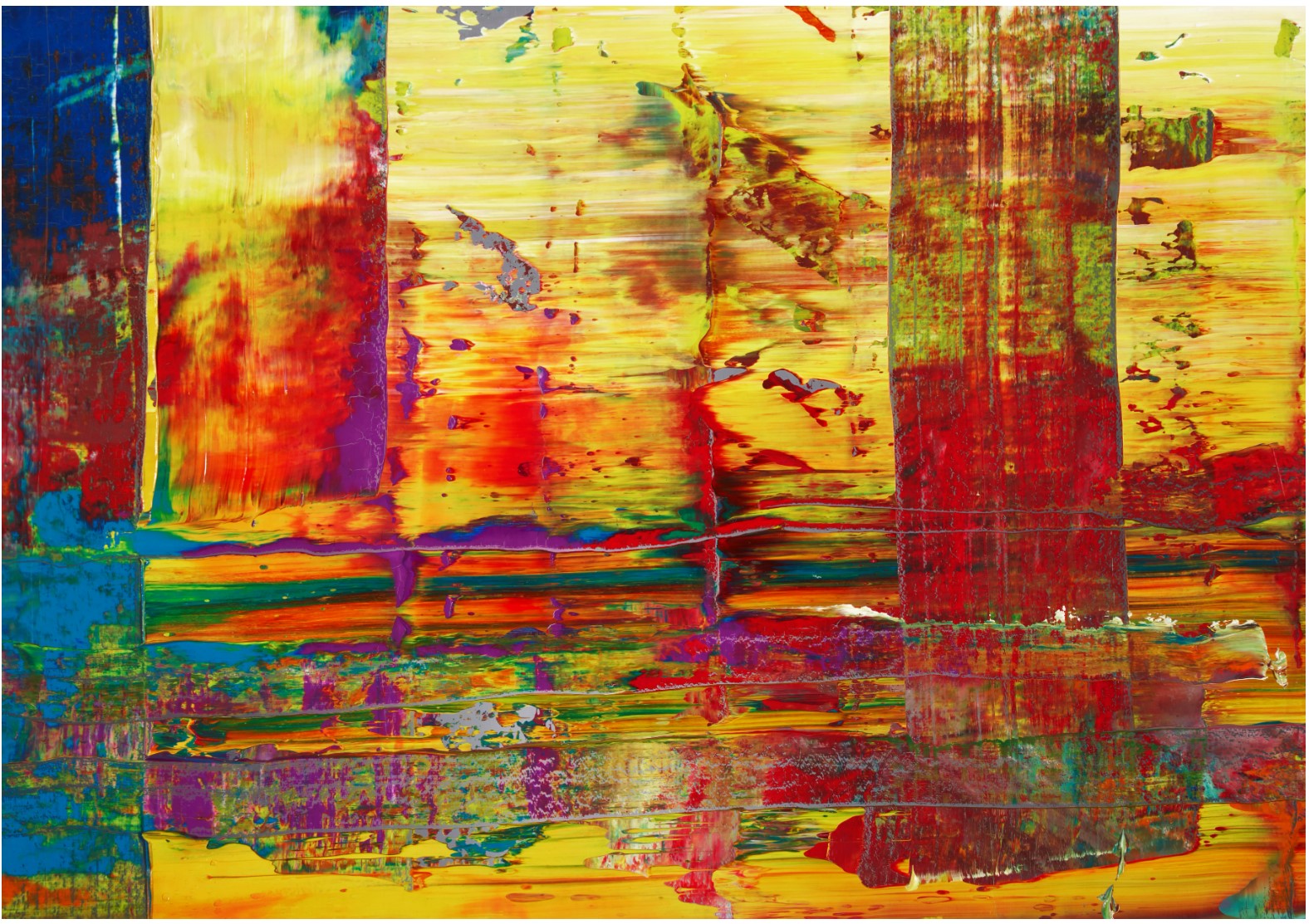
Abstraktes Bild evokes powerful emotions from its many layers and hues uncovered and sometimes overpainted by vertical and horizontal drags of the squeegee, with passages of brilliant scarlet, cerulean, cobalt, and violet under and over bright yellow, purple, white and gray. In the slight impasto, we can see the full range of this series’ distinct — and sui generis — surfaces. The sheen of immaculate color and endless permutations mimic the aesthetic of a Cibachrome print, while a distinctly photographic quality is compounded by the out-of-focus consistency of sweeping accretions of paint. Richter’s intense manipulation of the surface in Abstraktes Bild conjures a sensation of infinite paint layering.
Abstraktes Bild (704-2), 1989
Christie’s London: 28 February 2023
Estimated: GBP 2,500,000 – 3,500,000
GBP 3,762,000 / USD 4,550,072
GERHARD RICHTER (B. 1932) (christies.com)
GERHARD RICHTER (B. 1932)
Abstraktes Bild (704-2), 1989
Oil on canvas
72 x 62.2 cm (28 3/8 x 24 1/2 inches)
Signed, numbered and dated ‘704-2 Richter 1989’ (on the reverse)
With its fiery reds and yellows blazing amid smeared, fractured layers of viridian and silver-grey, the present work is a richly atmospheric example of Gerhard Richter’s Abstrakte Bilder or abstract pictures. Painted in 1989—the same year as such celebrated abstract works as the Eis (Ice) quartet, today held in the collection of the Art Institute of Chicago, USA—it stands at a key moment in the artist’s practice. Where other years had seen him explore the abstract and photo-based poles of his painting in tandem, Richter made only a handful of figurative canvases in 1989, focusing intensely on his Abstrakte Bilder. Refining the distinctive squeegee technique which he had started using at the start of the decade, he dragged and marbled veils of still-wet pigment over one another, taking the works’ colours and textures to complex, variegated and volatile new heights. He also began to welcome echoes of the natural world into these outwardly non-representational paintings. Alongside the Ice group, other allusive titles from this year include Frost, Karst, Split (Rubble), Fels (Rock) and Grat (Ridge), all exhibiting telluric surfaces and earthy, elemental palettes. The present painting’s shimmer of solar reds, hazy silvers and boreal greens likewise evokes hints of forest, sunset and glinting water. Its organic character speaks to the dialogue with nature itself that defines Richter’s abstract works: in the surrender of his process partly to chance, the artist interfaces with the vast, mysterious forces that shape our world.
Zacharopoulos, 1983
Christie’s London: 13 October 2022
Estimated: GBP 1,200,000 – 1,800,000
GBP 1,962,000 / USD 2,225,499
GERHARD RICHTER (B. 1932), Zacharopoulos | Christie’s (christies.com)
GERHARD RICHTER (B. 1932)
Zacharopoulos, 1983
Oil on canvas
70.4 x 50.3 cm (27 3/4 x 19 3/4 inches)
Signed, numbered and dated ‘520-3 Richter 1983’ (on the reverse)
In Gerhard Richter’s Zacharopoulos (1983), leaf greens, bright yellows and blues clash before a blazing vermillion ground. With its incandescent streaks and stuttering veils of color, some dragged across the surface using the artist’s signature squeegee technique, and others blurred by rhythmic, feathery brushstrokes. It is a superb example of his early-1980s abstract paintings, which stand among the most vibrant and striking of his decades-long career. The present painting is named for the art historian and theorist Denys Zacharopoulos: a noted scholar of Richter’s work who served as co-director of Documenta IX in Kassel (1992) and curator of the French Pavilion at the 48th Venice Biennale (1999), among other exhibitions, and has taught as Professor in the Academies of Fine Arts in Geneva, Vienna, and Amsterdam.
Abstraktes Bild, 1988
Ketterer Kunst: 10 June 2022
Estimated: EUR 600,000
EUR 1,705,000 / USD 1,875,500
Ketterer Kunst, Art auctions, Book auctions Munich, Hamburg & Berlin
GERHARD RICHTER
Abstraktes Bild, 1988
Oil on canvas
62×62 cm (24.4 x 24.4 inches)
Signed, dated and titled on the reverse
Abstraktes Bild, 1994
Sotheby’s London: 2 March 2022
Estimated: GBP 1,000,000 – 1,500,000
GBP 2,092,000 / USD 2,796,417
Abstraktes Bild | Modern & Contemporary Evening Auction | 2022 | Sotheby’s (sothebys.com)
GERHARD RICHTER (b. 1932)
Abstraktes Bild, 1994
Oil on canvas
51 x 56.1 cm (20×22 inches)
Signed Richter, numbered 817-1 and dated 1994 (on the verso)
Executed in jewel-like tones of maroon, crimson and violet, Abstraktes Bild is a luminescent example of Gerhard Richter’s epoch-defining abstract painting. Saturated with tonal vivacity, the surface of the present work reveals veils of lusciously viscous oil paint spectacularly applied into a mesmerizing confluence of gestural tides. The present painting is the first iteration within a cycle of five intimately-scaled Abstraktes Bilder measuring 51 by 56 centimeters and numbered 817-1 to 817-5 in the artist’s catalogue raisonné. The series debuted at Anthony d’Offay Gallery one year after they were executed during the exhibition Gerhard Richter, Painting in the Nineties which ran through the summer of 1995. Executed during one of the most prolific decades of the artist’s magnificent oeuvre, Abstraktes Bild is testament to Richter’s postmodern reinvention of abstract painting.
Abstraktes Bild, 2009
Christie’s New-York: 14 May 2021
Estimated: USD 1,800,000 – 2,500,000
USD 3,630,000
GERHARD RICHTER (B. 1932), Abstraktes Bild | Christie’s (christies.com)
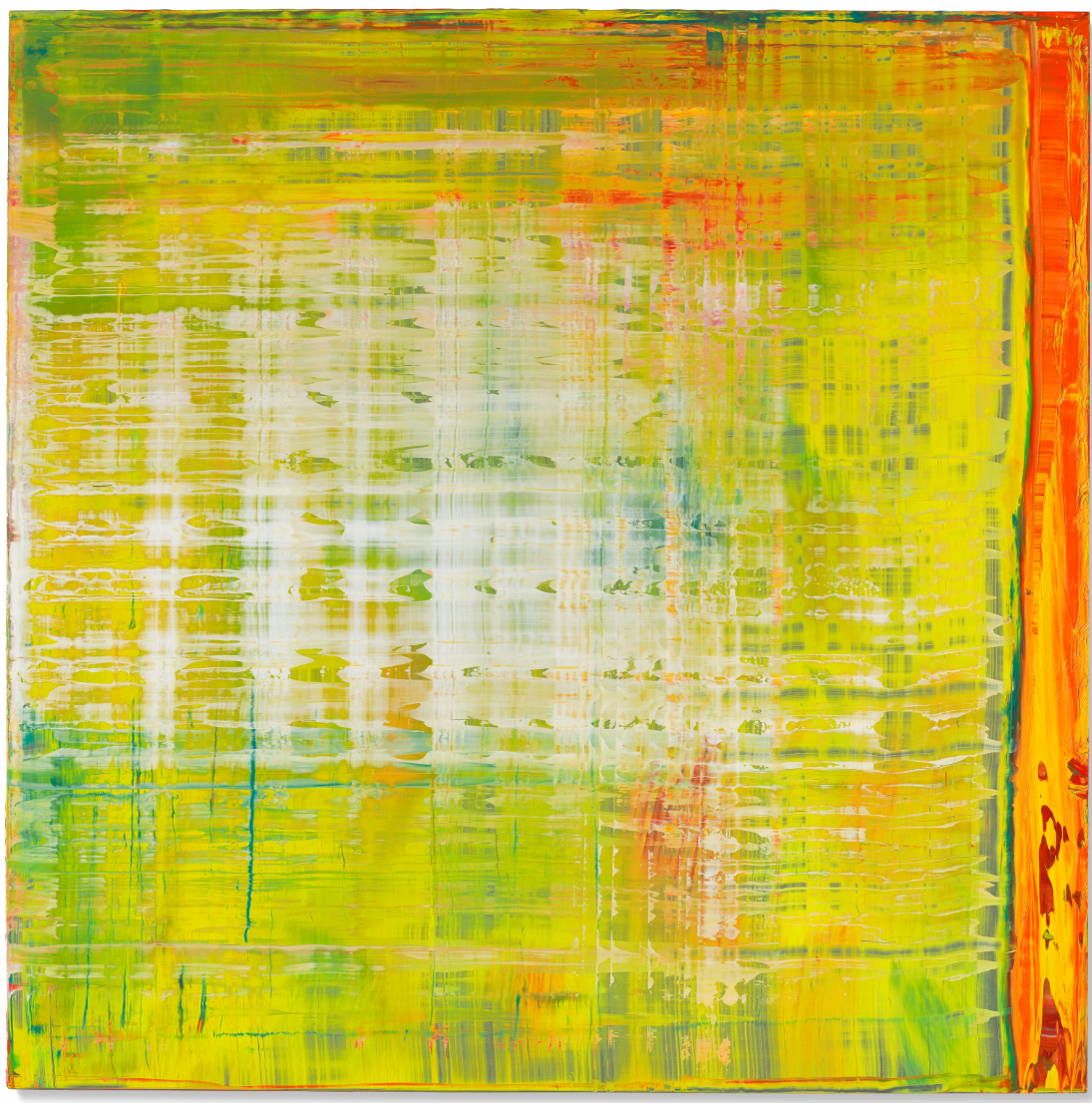
GERHARD RICHTER (B. 1932)
Abstraktes Bild, 2009
Oil on Alu-Dibond
84.1 x 84.1 cm (33 1/8 x 33 1/8 inches)
Signed, inscribed and dated ‘910-3 Richter 2009’ (on the reverse)
A glowing heady golden yellow fill the mysterious terrain of Gerhard Richter’s Abstraktes Bild (2009). Luminous flickers of orange and white smolder and burn as slivers of aquamarine hint at salvation, an oasis within this blistering, dazzling terra incognita. In the present work, Richter carefully layered colors across the pristine aluminum surface to produce a glowing chromatic intensity. Indeed, Abstraktes Bild seems to capture light itself. Painted in 2009, Abstraktes Bild is a testament to the artist’s experimental and visionary practice: as one of the post-war period’s most important and innovative painters, Richter continues to challenge the boundaries of his medium. His abstractions are often regarded as the pinnacle of his oeuvre, and paintings such as Abstraktes Bild encapsulate his lifelong investigation into the visual and philosophical nature of perception.
The intoxicating striations in Abstraktes Bild can be compared to the vivid yellows of Pierre Bonnard’s billowing landscapes or to the clean lines of Barnett Newman. These are paintings that summon the breadth of art history while simultaneously avoiding aesthetic conventions. The painting—an evocation of atmosphere and texture—gives the viewer space to imagine and dream.
Grün-Blau-Rot, 1993
With its bold smears of richly textured primary colors of green, blue and red, Grün-Blau-Rot stands as an exceptional and intimately scaled example of Gerhard Richter’s investigation into the compositional challenges of abstraction. Executed in 1993 in collaboration with the Swiss art magazine Parkett, Grün-Blau-Rot is a prolific series of 105 works on canvas in the same format, all revolving around the endless chromatic and visual variations which can be obtained by mixing three colors – green, blue and red – with a squeegee.
The squeegee is a narrow piece of plastic the artist uses to distribute the paint on the canvas. Depending on the application of the paint, it usually leaves thin, smoothly warped layers of paint that replace or even exclude the individual brushstroke. With the use of the squeegee, Richter developed an independent technique; the result opened up unimagined possibilities of a purely formal structure inherent in the picture, with which Richter redefined the subject of abstraction in painting.
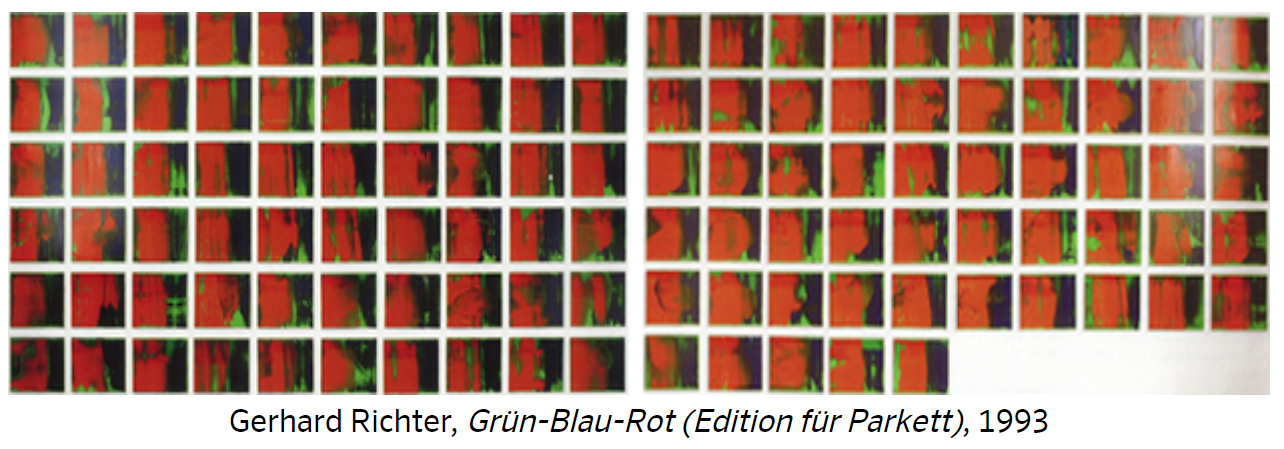
A parallel can be drawn between Grün-Blau-Rot and the 1910 painting Music by Henry Matisse. Richter’s choice to only work with three colors, and explore the visual effects which result from the combination of these nuances, recalls the French painter’s vibrant depiction of two musicians and their audience made of three people, which, likewise, focuses exclusively on the same three main tones: green, blue and red.
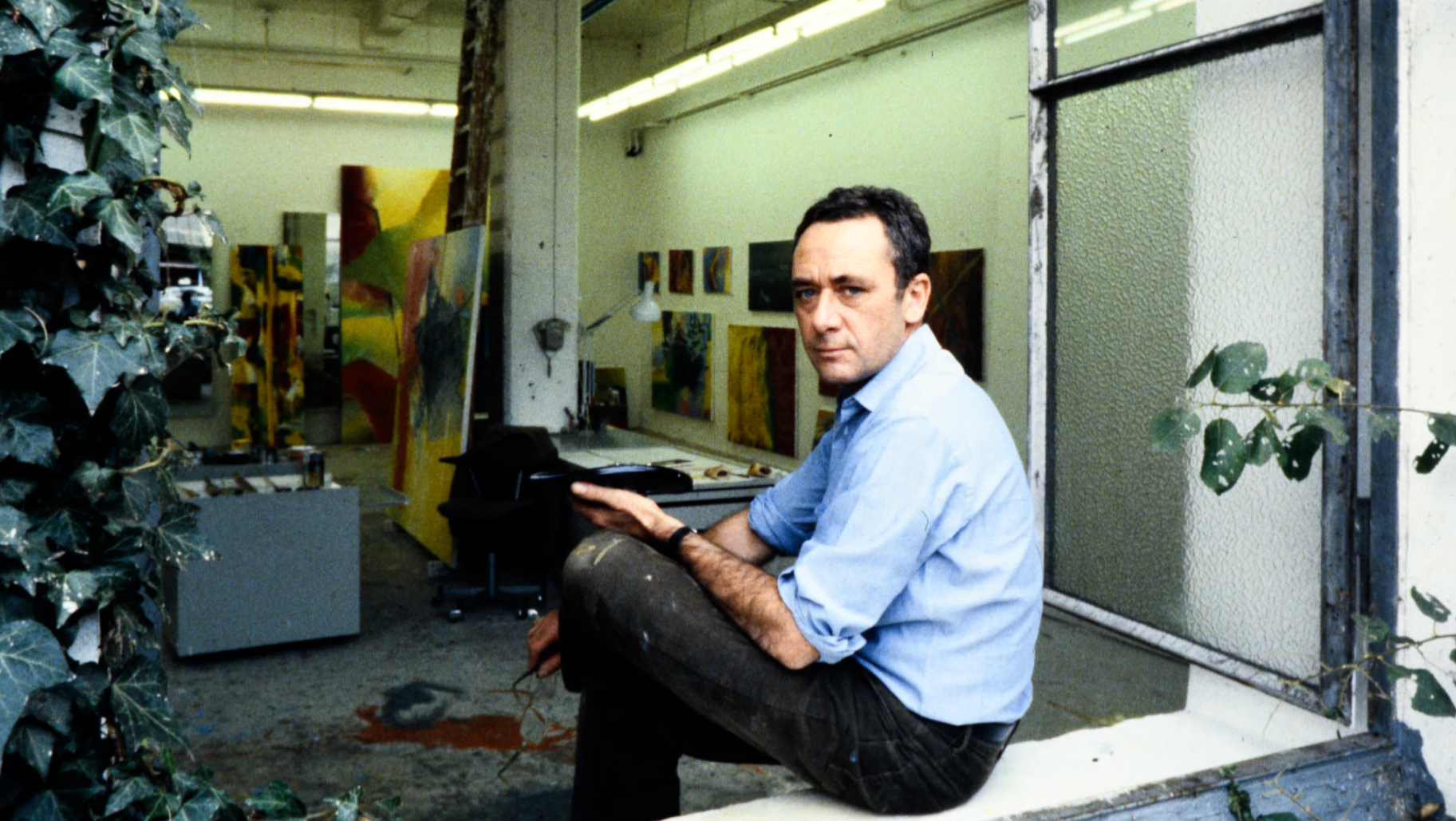
GERHARD RICHTER IN HIS STUDIO AT DÜSSELDORF, 1981. PHOTO © BRIGITTE HELLGOTH / AKG IMAGES. ART © 2023 GERHARD RICHTER
From the late 1970s until the late 1980s, Richter created his abstract paintings almost exclusively by using a squeegee, a long and narrow scraper to draw paint across the canvas. This method resulted in an unpredictable application of oil paint, ultimately leaving the behavior of the medium to chance. At some moments creating smooth overlapping layers of paints and at others tearing into striated patches on its surface, this method ultimately creates the sensation of depth and space while blurring the actual order of application. Richter describes his abstract paintings as “fictive models, because they make visible a reality that we can neither see nor describe, but whose existence we can postulate.” In Richter’s work, the painting sets the parameters of its own reality. Richter says he doesn’t know reality, he just knows what impressions he has of reality. Impressions are always changing as is the appearance of reality always changing. His reality is paint and the different ways he can manipulate it. As the artist expresses it, “later you realize that you can’t represent reality at all – that what you make represents nothing but itself, and therefore is itself reality” (Gerhard Richter in conversation with Rolf Schön, in: ibid., p. 59).
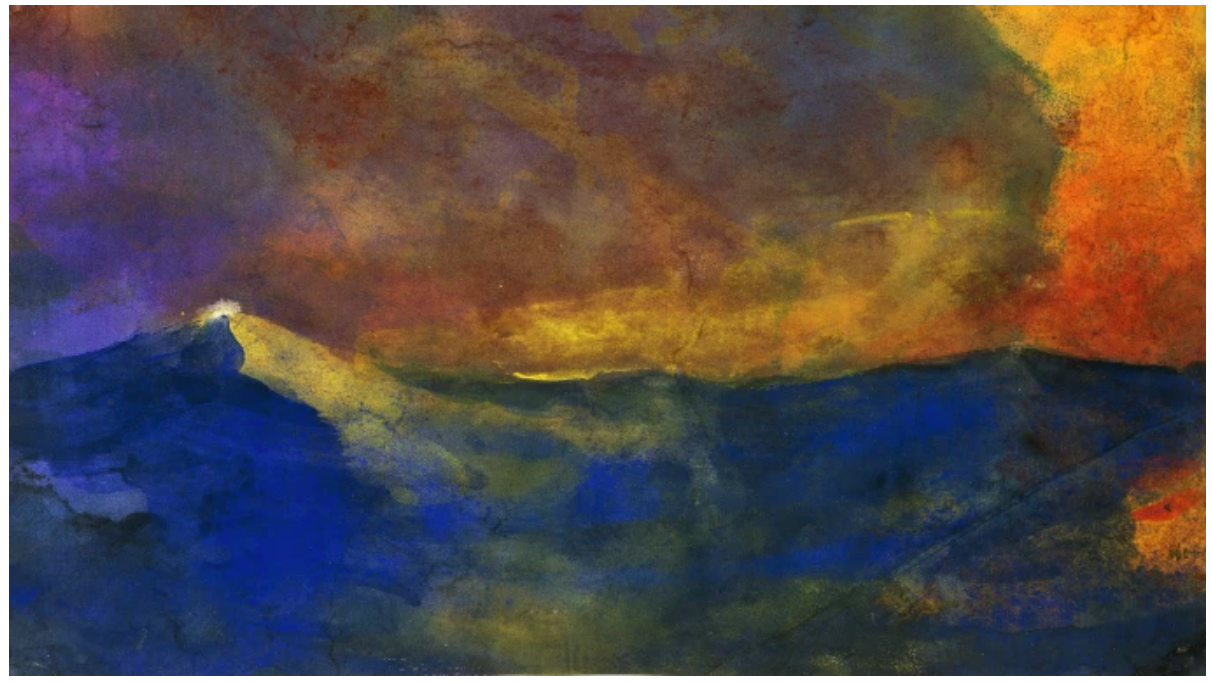
EMIL NOLDE, WAVES, UNDATED. SPRENGEL MUSEUM, HANOVER. IMAGE: NPL – DEA PICTURE LIBRARY / M. CARRIERI / BRIDGEMAN IMAGES
The mechanical, arbitrary mode of execution in Grün-Blau-Rot epitomizes Richter’s bridging of the two apparently dichotomous realms of abstraction and figuration. The title and color palette of the present works immediately recalls the ‘RGB’ (red, green and blue) color model – through which the three main light wavelengths merge to create images in analogue photography.
In doing so, Grün-Blau-Rot perfectly embodies Richter’s declaration:
“I’m not trying to imitate a photograph, I’m trying to make one. And if I disregard the assumption that a photograph is a piece of paper exposed to light, then I am practicing photography by other means. Those of my paintings that have no photographic source (e.g. the abstracts) are also photographs.”
Richter’s abstraction stands as the ultimate culmination to the epic journey of his career, during which he has ceaselessly interrogated the limits of representation, the nature of perception and the operations of visual cognition. Simultaneously evoking Joan Mitchell’s exuberance and transformative color and Jackson Pollock’s instigation of autonomous composition, Richter’s abstraction is a tour de force of conceptual rigor and exceptional beauty.
Green-Blue-Red, 1993
Property from a Distinguished Asian Collection
Phillips London: 16 April 2026
Estimated: GBP 200,000 – 300,000
GBP 258,000 / USD 349,255
Gerhard Richter Modern & Contemporary Art
GERHARD RICHTER
Green-Blue-Red, 1993
Oil on canvas
29 x 39.5 cm (11-3/8 x 15-1/2 inches)
Signed, numbered and dated ‘789.28 Richter, 93’ on the reverse
“It’s not unusual for me to start from the figurative
and end up with something abstract.”
The present work, Green-Blue-Red, is a small-scale abstract oil painting executed in 1993 as part of a series of 115 unique paintings produced in collaboration with Parkett magazine, Zurich, all sharing the same intimate format. In keeping with his characteristic abstract manner, the work features areas of hazily blended color alongside dynamic, sweeping gestures that animate the surface. The palette is bold and saturated, comprising red, green, and blue oil paint, and each iteration within the series presents an individual chromatic variation arising from the particular way in which these three colours are combined and distributed across the canvas. To create each work, Richter employed his now-iconic squeegee technique, applying paint directly from the tube onto the canvas before drawing a squeegee across the surface to produce a wholly individual and unrepeatable blend. This method deliberately invites and exploits difference: by distorting and displacing the colours as they merge in unpredictable ways, no two works within the series are alike. The squeegee thus functions not merely as a tool but as an agent of controlled chance.
“I want to end up with a picture that I haven’t planned. This method of arbitrary choice, chance, inspiration and destruction may produce a specific type of picture, but it never produces a predetermined picture. Each picture has to evolve out of a painterly or visual logic: it has to emerge as if inevitably.”
Richter first developed this technique in the late 1970s, and it came to dominate his abstract practice almost exclusively through to the late 1980s. In its earlier applications, he favored a long, narrow scraper to move the paint across the canvas in broad, decisive strokes. The resulting surfaces were governed by contingency: at times the paint would blend into smooth, luminous transitions between layers, yet at others, it would separate into discrete patches, generating a compelling optical illusion of depth, recession, and spatial complexity. Richter’s sustained engagement with abstraction has consistently interrogated the boundaries between representation and pure painterly form, reflecting his enduring preoccupation with the nature of perception and the mechanisms by which we make sense of visual experience. In this sense, even his most apparently autonomous abstract works remain deeply connected to the philosophical enquiries that have animated his practice across more than six decades.
Grün-Blau-Rot, 1993
Ketterer Kunst: 8 December 2023
Estimated: EUR 200,000
EUR 431,800 / USD 474,980
Ketterer Kunst, Art auctions, Book auctions Munich, Hamburg & Berlin
GERHARD RICHTER
Grün-Blau-Rot, 1993
Oil on canvas
30×40 cm (11.8 x 15.7 inches)
Signed, dated and inscribed “789-61” on the reverse, as well with the stamped inscription “Edition for Parkett No. 35”
The edition “Grün-Blau-Rot” is also subject to this principle. The title states both the three colors and the order in which Richter applied them to the small individual canvases for the Swiss art magazine “Parkett”. The artist covered the primed canvas with the squeegee in a strong green, then covers the result with a very dark blue, followed by the bright red. Of course, Richter weights the color fields, gives preference to an almost balanced red-blue composition and creates an inspired illusion of space and thus a value for the composition. Richter has been working with the squeegee since the late 1970s.
Grün-Blau-Rot, 1993
Lempertz Cologne: 1 December 2023
Estimated: EUR 250,000 – 350,000
EUR 327,600 / USD 356,814
Grün-Blau-Rot – Lot 50 (lempertz.com)
GERHARD RICHTER
Grün-Blau-Rot, 1993
Oil on canvas
30×40 cm
Signed and dated ‘Richter, 93’ verso on canvas and with work number ‘789-13’
One of 115 numbered unique pieces. Edition Parkett, Zurich (edition stamp on stretcher)
Edition of issue no.35, March 1993. With original card box. – Minimal traces of age.
In his abstract works, Gerhard Richter consciously restrains his artist personality and works with the principle of chance. The use of a squeegee for the application of paint onto the painting support lends the creative process an unpredictable component. By renouncing his own brush style, the artist achieves a considerable de-individualization. The series of unique works titled “Grün–Blau–Rot” that Gerhard Richter created for the Swiss art magazine “Parkett” in 1993 shows the variety which this process has already achieved, even when using only three colors. Over a surface that he has entirely covered with green, he uses a squeegee to apply dark blue and finally bright red. With this method, each of the paintings obtains a completely independent character. Opacity and transparency also vary, as do the contours and contrasts of the colors. Our painting has color gradients gently blending into one another; the underlying green is only visible in some narrow sections. The red, applied in a pure and dense manner in the center of the picture, creates a three-dimensional effect and seems to bulge into the foreground.
Grün-Blau-Rot 789-18, 1993
Sotheby’s New-York: 16 November 2023
Estimated: USD 350,000 – 450,000
USD 571,500
Grün-Blau-Rot 789-18 | Contemporary Day Auction | 2023 | Sotheby’s (sothebys.com)
GERHARD RICHTER (b. 1932)
Grün-Blau-Rot 789-18, 1993
Oil on canvas
30.2 x 40 cm (11 7/8 x 15 3/4 inches)
Signed, dated ’93 and numbered 789-18 (on the reverse)
Grün-Blau-Rot, 1993
Phillips Hong-Kong: 31 March 2023
Estimated: HKD 2,500,000 – 3,500,000
HKD 3,456,000 / USD 452,993
Gerhard Richter – 20th Century & Cont… Lot 125 March 2023 | Phillips
GERHARD RICHTER
Grün-Blau-Rot, 1993
Oil on canvas
29.6 x 39.4 cm (11 5/8 x 15 1/2 inches)
Signed, numbered and dated ‘789-93 Richter, 93’ on the reverse
Grün-Blau-Rot 789-33 (Green-Blue-Red 789-33), 1993
Sotheby’s Cologne: 29 March 2023
Estimated: EUR 350,000 – 450,000
EUR 533,400
GERHARD RICHTER (b. 1932)
Grün-Blau-Rot 789-33 (Green-Blue-Red 789-33), 1993
Oil on canvas
30×40 cm (11 3/4 x 15 3/4 inches)
Signed Richter, dated ’93 and numbered 789-33 (on the reverse)
Fuji, 1996
The Fuji series was conceived in 1996 as a series of 110 unique paintings. Each Fuji painting was individually produced by applying separate layers of red, turquoise, and ochre paint on an aluminum surface, after which the artist applied another layer of white paint with his signature squeegee tool on top.
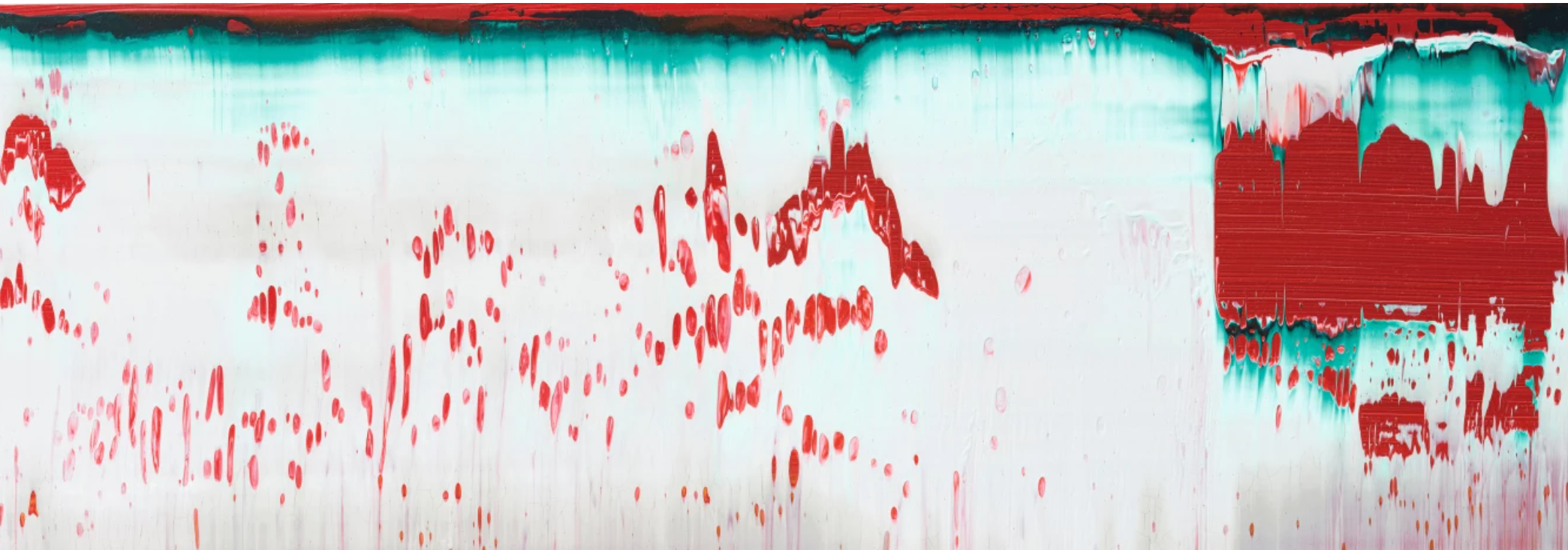
By spreading out these different layers of oil paint over the smooth surface, unexpected gradients and ruptures emerge that produce the unmistakable aesthetic of Richter’s abstract paintings and create a beautiful contrast between soft color transitions and abrupt breaks where the underlying paint layers become visible. This combination of a controlled, pre-conceived process and the unexpected effects of the squeegee are characteristic for Richter.
“We only find paintings interesting because we always search for something that looks familiar to us. I see something and in my head I compare it and try to find out what it relates to. And usually we do find those similarities and name them… When we don’t find anything, we are frustrated and that keeps us excited and interested.”
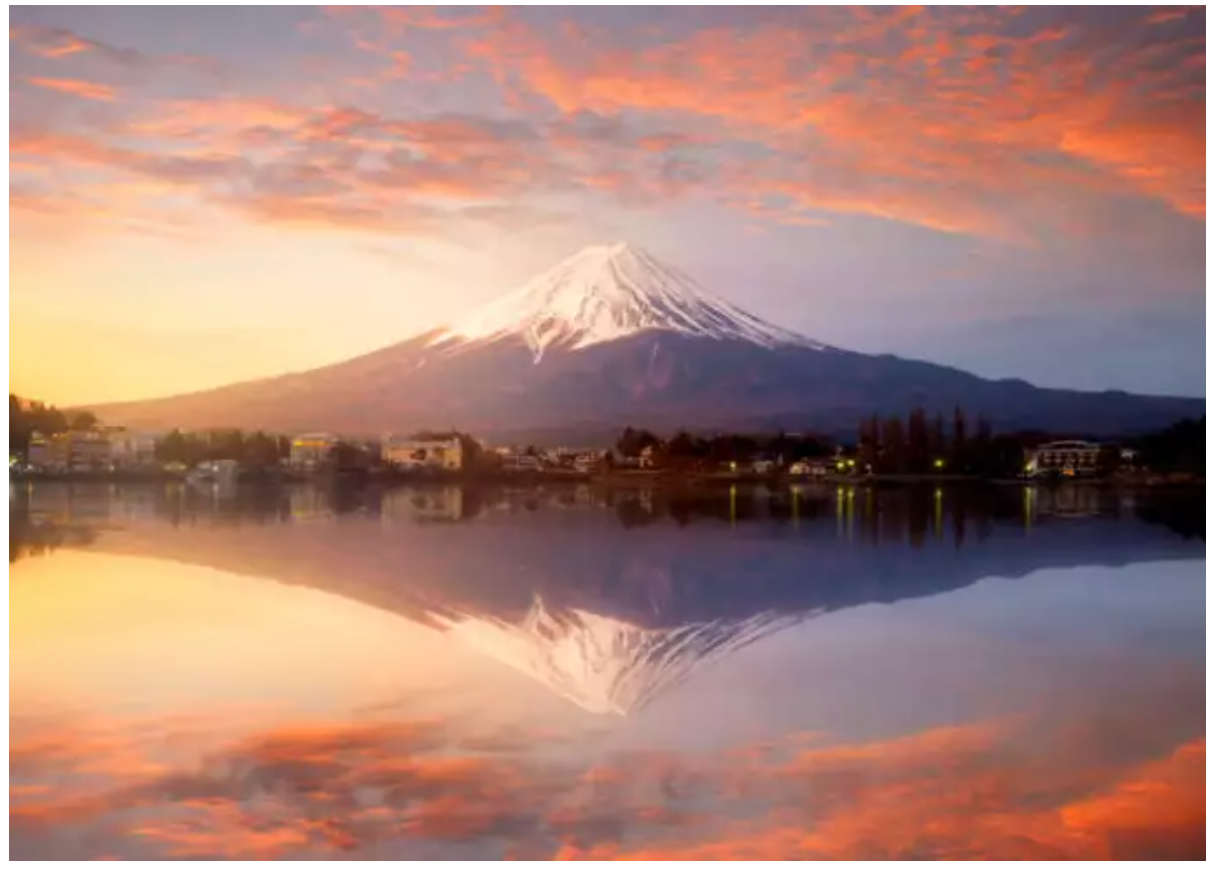
MOUNT FUJI, SHIZUOKA, JAPAN.
Inspired by the snow-covered mountain tops of Mount Fuji, the present work recalls an Impressionist landscape. However, Richter has frequently spoken of aspects of his work as ‘cuckoo’s eggs’ in that his paintings are often mistaken for something they are not, or not fully. Where this most aptly applies to the artist’s take on the sublime landscape, it is also at stake within his response to both an evocation of an Impressionist landscape and the sublime abstraction of the Twentieth Century’s great American painters.
Fuji, 1996
Grisebach Berlin: 27 November 2025
Estimated: EUR 350,000 – 450,000
EUR 350,000 (Hammer)
EUR 444,500 / USD 515,565
GERHARD RICHTER (Dresden 1932 – lives in Cologne)
Fuji, 1996
Oil on Alucobond
29×37 cm (11 3/8 x 14 5/8 inches)
On the reverse signed in black felt-tip pen: Richter.
One of 110 numbered unique works
Munich, Städtische Galerie im Lenbachhaus
Fuji, 1996
Christie’s London: 16 October 2025
Estimated: GBP 300,000 – 500,000
GBP 584,200 / USD 782,830
GERHARD RICHTER (B. 1932), Fuji | Christie’s
GERHARD RICHTER (B. 1932)
Fuji, 1996
Oil on Alucobond
37×29 cm (14 5/8 x 11 3/8 inches)
Signed ‘Richter’ (on the reverse)
Numbered ‘839-85’ (on a label affixed to the reverse)
he present work is a spectacular example of Gerhard Richter’s Fuji series. This sequence of 110 unique paintings was conceived in 1996 to aid the Städtische Galerie im Lenbachhaus, Munich, in its purchase of Atlas: the vast archive of photographs, newspaper clippings and sketches that Richter has been assembling since the mid-1960s. Displaying Richter’s distinctive abstract language on an intimate scale, each painting presents an exuberant fusion of red, orange and viridian oil paint on aluminum, overlaid with a squeegeed layer of white that drags the surface into symphonic splendor. Gliding transitions of color are accompanied by abrupt breaks that unveil shimmering gradients beneath, revealing the electric dialogue between chance and control that distinguishes Richter’s abstract work.
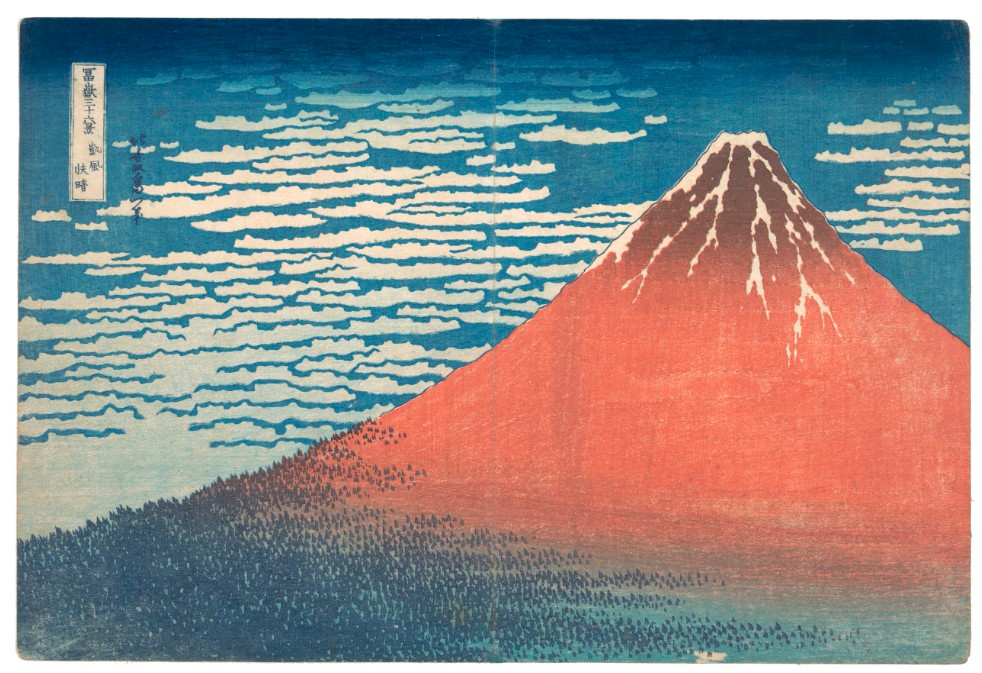
Katsushika Hokusai, South Wind, Clear Sky (Gaifū kaisei), also known as Red Fuji
From the series Thirty-six Views of Mount Fuji (Fugaku sanjūrokkei), circa 1830–32. The Metropolitan Museum of Art.
The Fuji paintings echo the hues of Katsushika Hokusai’s iconic woodblock print series 36 Views of Mount Fuji (1826-1833), which is itself a suite of variations on a theme. Where Hokusai depicts the mountain from multiple viewpoints and in varying weather conditions, Richter exults in the infinite chromatic combinations and textural nuances occasioned by his process, which he has compared to a dialogue with the forces of the natural world. In the present work, Richter conjures a range of radiant encounters from his quartet of colours. Tides of seafoam green offset flickering pits of crimson depth; verdant canyons plunge through snowy swathes of white.
“Using chance is like painting nature—but which chance event, out of all the countless possibilities?”
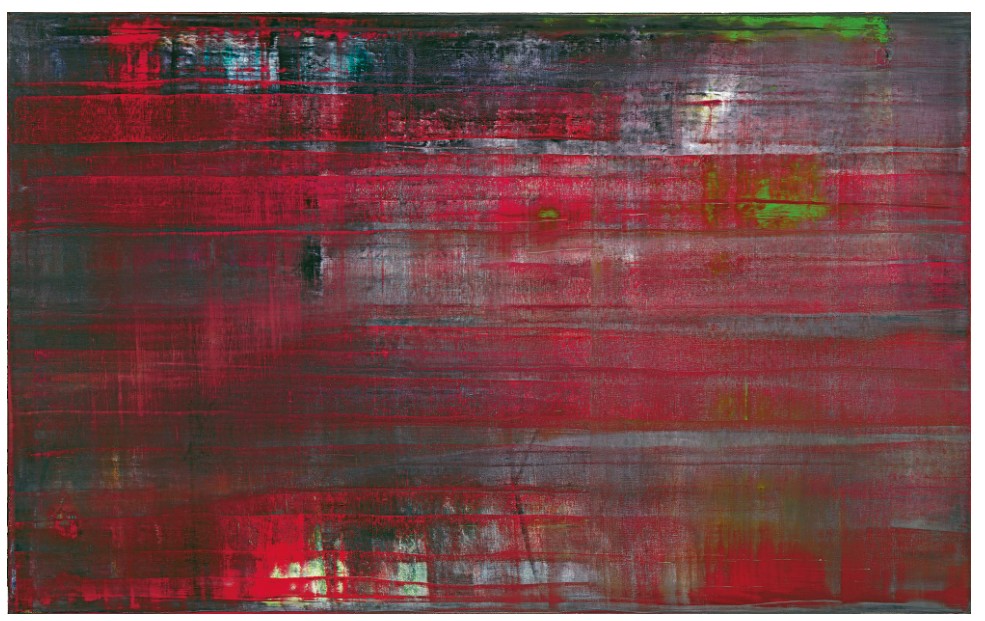
Gerhard Richter, Rot, 1994. The National Museum of Modern Art, Tokyo. Artwork and photo: © Gerhard Richter 2025 (0110).
The mid-1990s is widely regarded as the peak of Richter’s abstract practice. As he enjoyed successive professional triumphs—including a major 1993-1994 European touring retrospective and the acquisition of his cycle October 18, 1977 by the Museum of Modern Art, New York in 1995—his Abstrakte Bilder became ever more self-assured, their colours and textures reaching complex, variegated and volatile new heights. The Fuji works are jewel-like encapsulations of this moment. The involvement of chance, Richter believed, freed the works from his own ‘constructions and inventions’ into an open field of boundless, proliferating potential.
Fuji, 1996
Christie’s Paris: 1 December 2022
Estimated: EUR 300,000 – 500,000
EUR 428,400
Gerhard Richter (né en 1932), Fuji 1996 | Christie’s (christies.com)
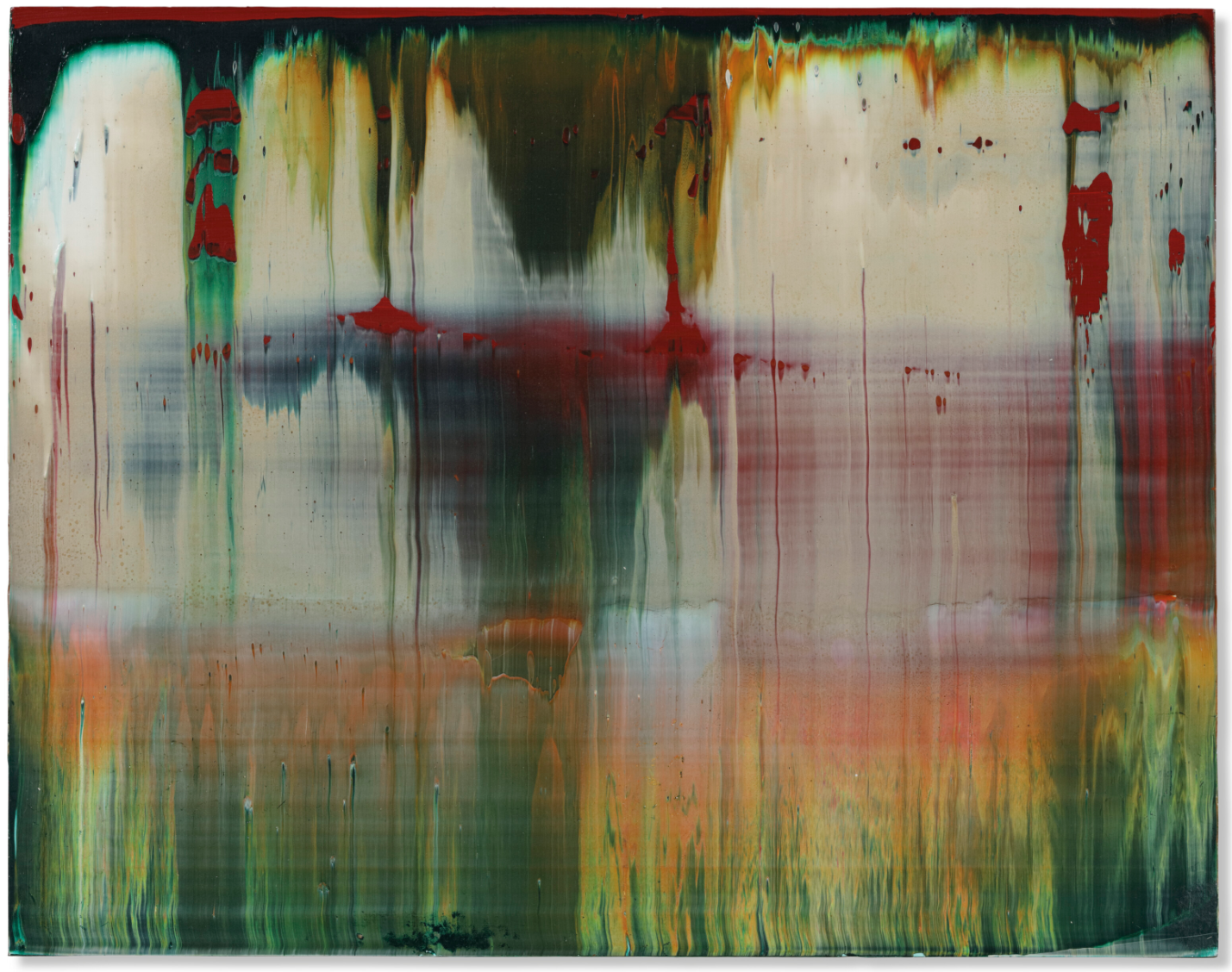
GERHARD RICHTER (Born 1932)
Fuji, 1996
Oil on aluminum (Alucobond Plate)
29.2 x 37.4 cm (11 1/2 x 14 1/2 inches)
Signed ‘Richter’ (on the reverse)
Numbered ‘839-50’ (on a paper label affixed to the reverse)
Fuji (839-41), 1996
Sotheby’s New-York: 13 May 2021
Estimated: USD 350,000 – 450,000
USD 437,500
Fuji (839-41) | Contemporary Art Day Auction | 2021 | Sotheby’s (sothebys.com)
GERHARD RICHTER (b. 1932)
Fuji (839-41), 1996
Oil on steel panel
28.9 x 36.8 cm (11 3/8 x 14 1/2 inches)
Signed on the reverse
With its chromatically spectacular arrangement of red, green and white oil paint on a shimmering aluminum base, Gerhard Richter’s Fuji #41 is an energetically accomplished example from the artist’s celebrated abstract paintings. Beautifully fusing his distinctive interest in chance and control, Fuji #41 captures Richter’s unique visual language and echoes the arresting aesthetic of his monumental paintings from the 1990s on a domestic scale. As one of the most brightly colored and beautifully constructed paintings, the present painting is an exceptional work from the series, as well as an outstanding example of Richter’s iconic abstract paintings. With deep reds, blues, and greens appearing from underneath the white top layer, the particularly vivid colors and tangible surface make Fuji #41 an unmistakably important work from one of the leading artists of Contemporary Art today.
Goldberg Variations, 1984
Johann Sebastian Bach’s “Goldberg Variations”, first published in 1741, are among the most complex works of classical music. They consist of an aria at the beginning and end, along with 30 contrapuntal variations that place the highest demands on performers. Canadian pianist Glenn Gould was the first to include the variations in his standard repertoire in 1954, interpreting them so virtuously that his 1956 recording was to make him world famous.
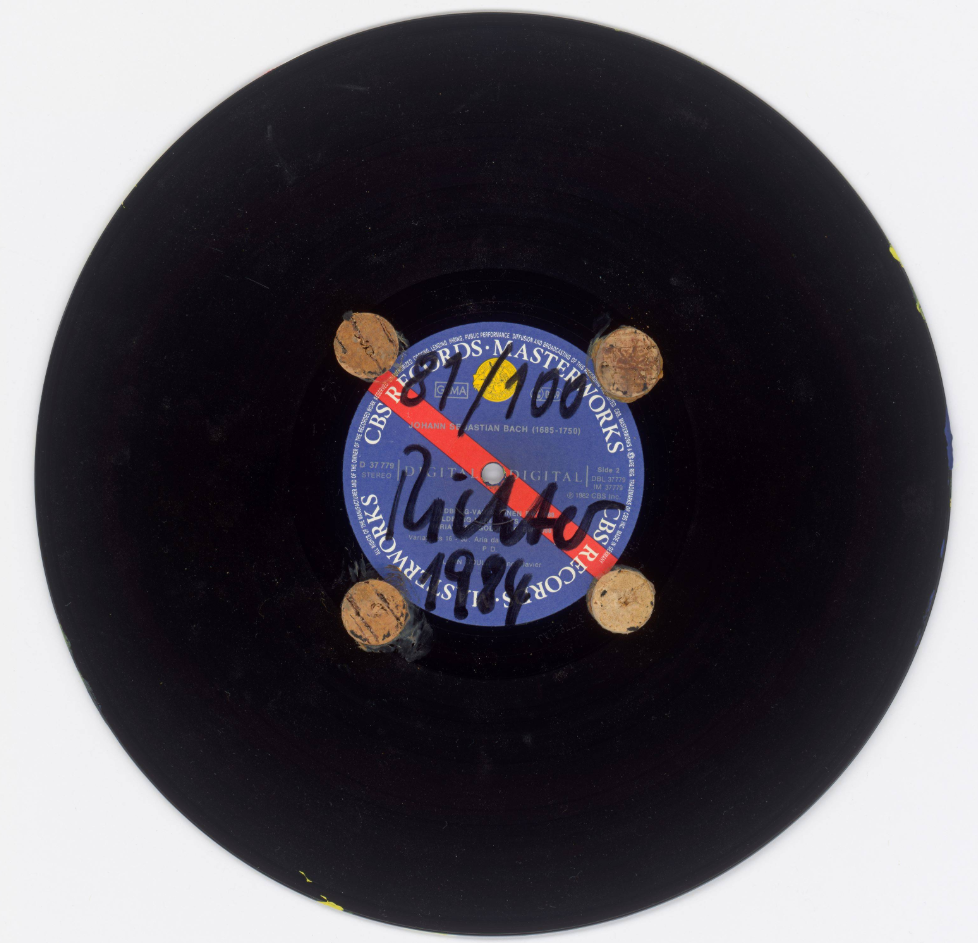
This recording is still considered one of the most significant interpretations of the work. Shortly before his death in 1982, Gould re-recorded the “Goldberg Variations”. Gerhard Richter’s notes reveal that he admired the perfection of both the music and the interpretation, and so they served as inspiration for the design of the present edition. Richter uses 100 vinyl records from Gould’s 1982 recording as the basis for his works, creating dynamic blue-yellow abstractions with a squeegee, brush, and his fingers, intentionally integrating the deep black of the records as part of the composition. These works were initially a contribution to the portfolio “Hommage à Cladders,” published by the Museum Association of Mönchengladbach, featuring editions from 18 artists in an edition of 50 copies. The remaining 50 copies were sold individually.
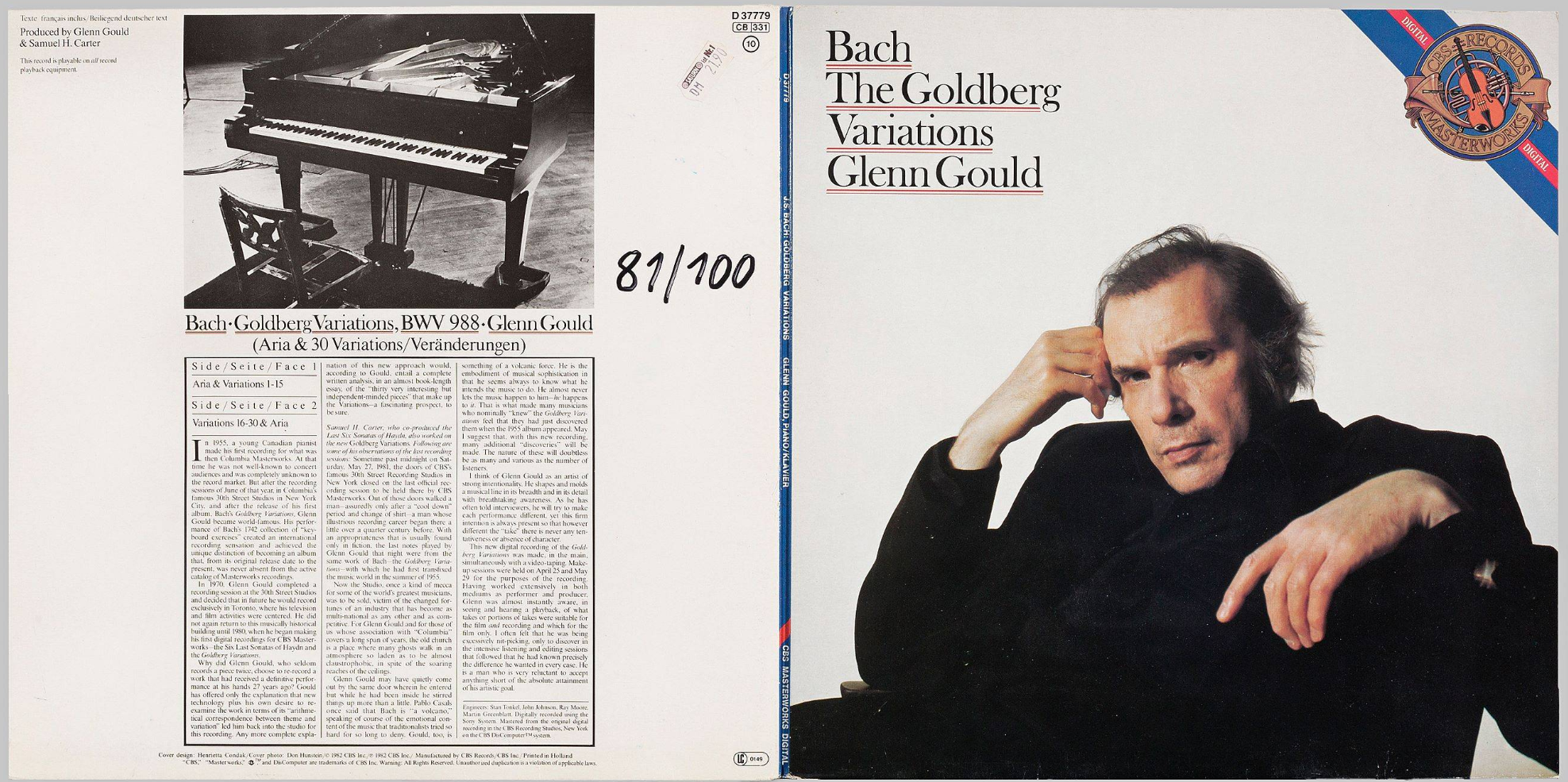
Designed as an edition, each record is a unique piece due to its individual handling. Editions have played a central role in Richter’s artistic development from the beginning, offering him unlimited opportunities for experimentation. His growing body of work includes prints such as offset prints and serigraphs, as well as photographs, multiples, and, in his later work, digital and giclée prints. He produces both editions in the classical sense and unique pieces that he compiles in the form of editions. Just like with the “Goldberg Variations”, where there are overarching themes and connecting elements, yet each work remains unmistakably marked by Richter’s handwriting.
“Glenn Gould, Goldberg Variations – I have been listening to hardly anything else for almost a year. What is starting to bother me, is the perfection. The totally absurd, boring, malicious perfection. No wonder that he died early. I should listen to the radio”.
Gerhard Richter applies his idiosyncratic squeegee technique and radiant brushstrokes to produce irreplicable patterns of colour across the surface of a phonograph record. Swathes of cobalt blue and bright yellow paint have been applied with a squeegee to the record’s surface, interlocking to create an almost even line that divides the record in two. The materiality of the work plays a fundamental role: while the pitch-black surface of the record emerges sporadically, it is taken over by the paint that has been generously applied to its surface. The colors ooze across the surface of the record, forming a visual record of the squeegee’s motion, highlighted by both the dense brushstrokes and the stark opposition between the blue and yellow paint.
Goldberg-Variationen, 1984
Van Ham Cologne: 3 December 2025
Estimated: EUR 40,000 – 60,000
EUR 66,000 / USD 76,950
GERHARD RICHTER (1932 Dresden)
Goldberg-Variationen, 1984
Record painted over on one side with oil paint
Featuring Bach’s Goldberg Variations (recorded by Glenn Gould 1982)
Diameter: 30.1 cm (11 7/8 inches)
Numbered, signed and dated on the Label verso: 1/100 Richter 84
Each work is unique
The original record sleeve is included with the work. The painted record is Richter’s contribution to the portfolio ‘Hommage à Cladders’ published by the Museumsverein Mönchengladbach, which contains editions by 18 artists. Fifty copies of the edition were published in the portfolio, and another 50 copies were sold individually.
The work is listed on the official internet site of the artist under Editionen (Editions). (www.gerhard-richter.com)
In 1984, Gerhard Richter used the legendary LP that Canadian pianist Glenn Gould had recorded in 1982 with Johann Sebastian Bach’s “Goldberg Variations” as the image carrier or painting surface for his edition of the same name. The edition consists of one hundred variants, which can be described as unique pieces in a series, as each copy is slightly different.
The artist first applied yellow and blue oil paint with a squeegee and then blue, white, and red oil paint with a brush. Since the painted side of the record can no longer be played, this suggests an ambivalence in the artistic intention, especially since Richter had an ambivalent relationship with the music when he created the edition. He greatly admired and appreciated Bach’s famous composition and often listened to it while working in his studio. But in 1984, his admiration turned to rejection. On October 19 of that year, Richter noted the following thought: “Glenn Gould, Goldberg Variations. For a year or two, I’ve listened to almost nothing else. What is beginning to annoy me is the perfection. This completely absurd, boring, malicious perfection.” Therefore, the painterly treatment of the record can be understood both as an homage to Bach and as a destruction of Gould’s recording. Admiration and rejection, appreciation and negation go hand in hand here without canceling each other out.
Goldberg-Variationen, 1984
Phillips London: 24 January 2025
Estimated: GBP 40,000 – 60,000
GBP 50,800 / USD 62,755
Gerhard Richter – Evening & Day Edit… Lot 13 January 2025 | Phillips
GERHARD RICHTER
Goldberg-Variationen (Goldberg Variations), from Hommage à Cladders (B. 60), 1984
Unique oil painting on a phonograph long play record (Bach: The Goldberg Variations: Glenn Gould, CBS, 1982)
Diameter: 30.1 cm (11 7/8 inches)
Signed, dated and numbered 12/100 in black ink on the reverse
From the edition of 100 unique variants (there were also 20 artist’s proofs in Roman numerals)
Goldberg-Variationen, 1984
Grisebach Berlin: 28 November 2024
Estimated: EUR 50,000 – 70,000
EUR 63,500 / USD 67,060
GERHARD RICHTER (Dresden 1932 – lives in Cologne)
Goldberg-Variationen, 1984
Oil on vinyl record, with the original record sleeve
Diameter: 30.1 cm (11 7/8 inches)
Signed and dated on the reverse
One of 100 copies, each numbered on the reverse as well as on the accompanying record cover
Each with the character of a unique work
Goldberg-Variationen (Goldberg Variations), 1984
Christie’s London: 9 March 2024
Estimated: GBP 40,000 – 60,000
GBP 52,920 / USD 68,045
GERHARD RICHTER (B. 1932), Goldberg-Variationen (Goldberg Variations) | Christie’s (christies.com)
GERHARD RICHTER (B. 1932)
Goldberg-Variationen (Goldberg Variations), 1984
Oil on phonograph long play record, with original record sleeve and record cover
Diameter: 30.1 cm (11 7/8 inches)
Signed, numbered and dated ’56⁄100 Richter 1984′ (on the reverse)
Numbered ’56⁄100′ (on the record sleeve); numbered ’56⁄100′ (on the record cover)
This work is number fifty-six from an edition of one hundred unique variants plus twenty artist’s proofs
Goldberg-Varationen, 1984
Lempertz Cologne: 4 June 2024
Estimated: EUR 50,000 – 80,000
EUR 56,953 / USD 62,120
GERHARD RICHTER
Goldberg-Varationen, 1984
Oil on record
Diameter: 30.1 cm
In original record sleeve: J. S. Bach, The Goldberg Variations, Glenn Gould (minor traces of usage)
Signed, dated and numbered verso on label
Proof XVII/XX (+100 +1 +3)
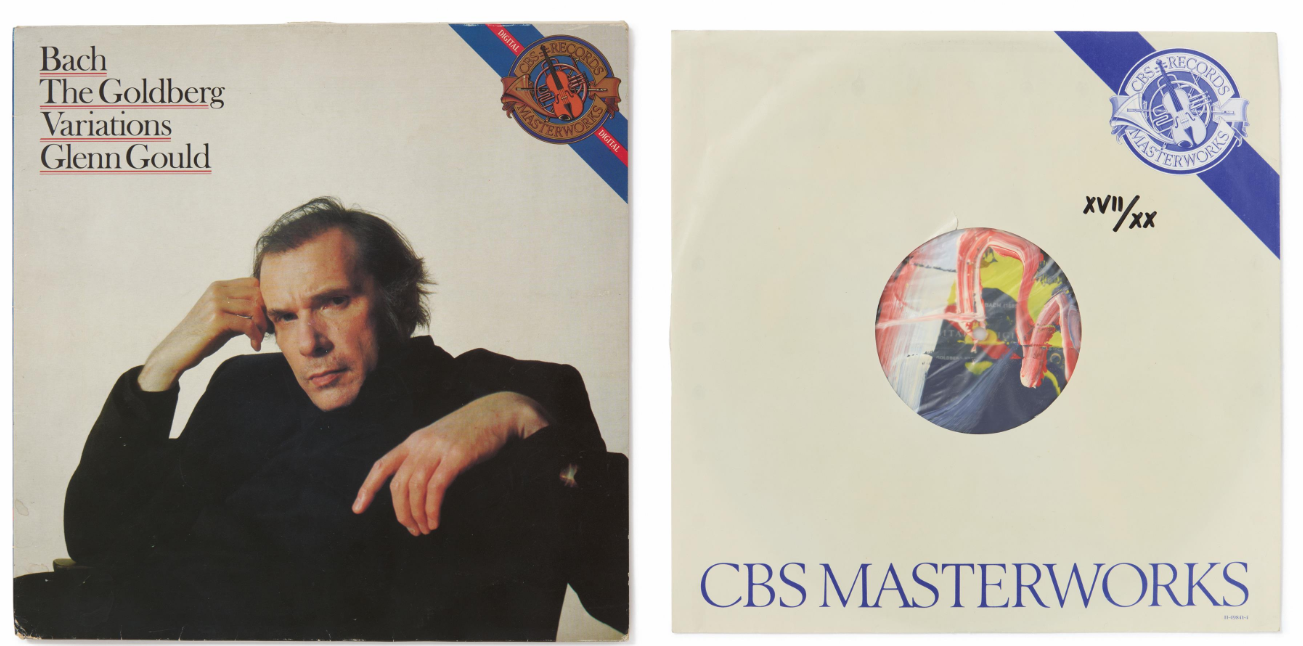
Goldberg Variations, 1984
SBI Art Auction: 24 May 2024
Estimated: JPY 7,000,000 – 13,000,000
JPY 9,545,000 / USD 60,800
GERHARD RICHTER
Goldberg Variations, 1984
Oil on phonograph record with original record sleeve and record cover
Diameter: 30.1 cm (11 7/8 inches)
Signed, dated and numbered on label on the reverse
Numbered on the record sleeve and record cover
From the edition of 100