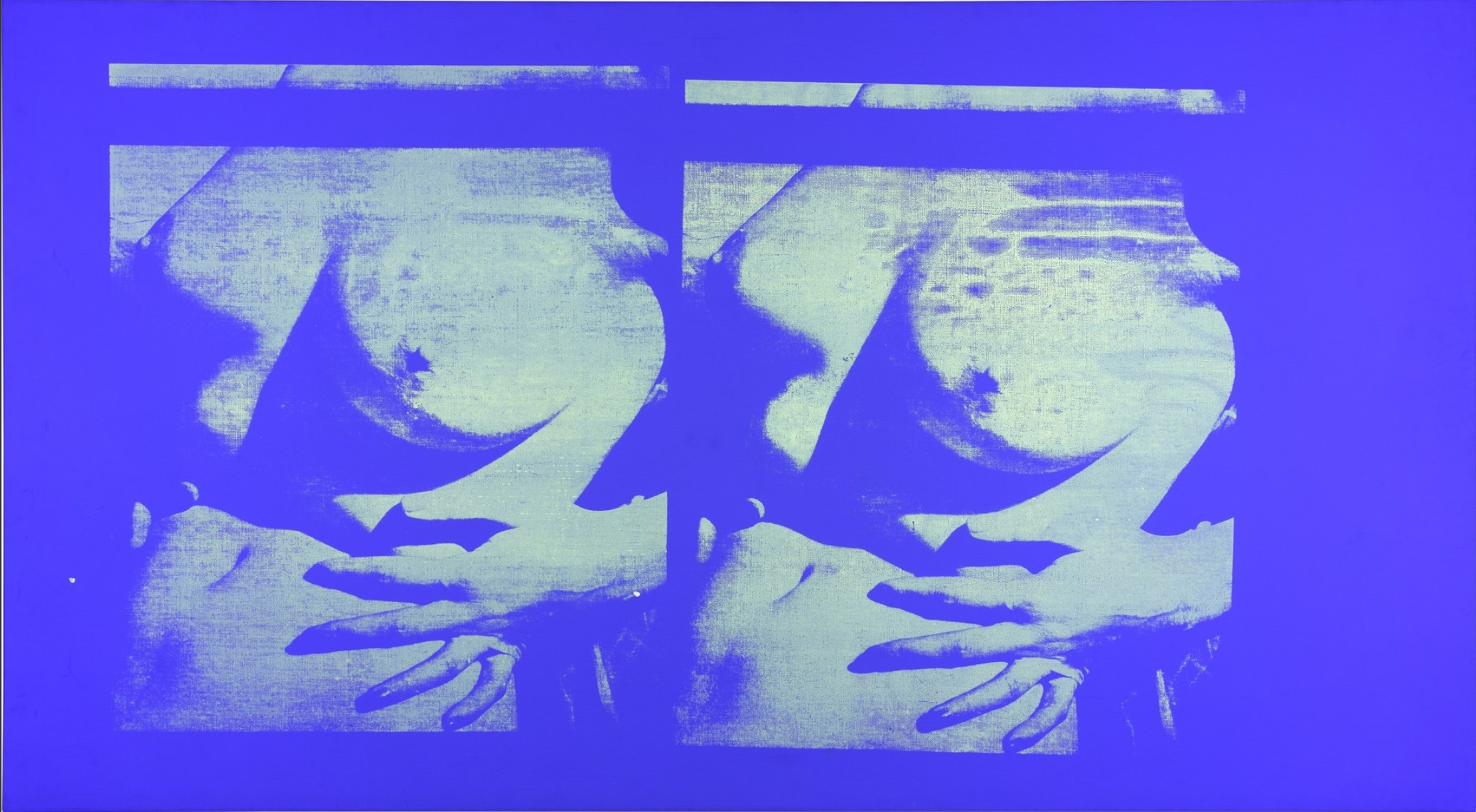
Double Torso, 1966
Fluorescent ink on linen
Playboy Enterprises, Inc. (acquired from the artist in 1967)
Christie’s, New York, May 17, 2007, lot 123
Acquired at the above sale by the present owner
Auction History
Phillips New-York: 14 May 2025
Estimated: USD 450,000 – 650,000
Price realized: USD 584,200
Andy Warhol Modern & Contemporary Art Day Sale, Morning Session
At first glance, Andy Warhol’s Double Torso, 1966, appears to be a ghostly, white canvas – muted and unassuming under natural light. However, when viewed under ultraviolet light, the composition comes to life, revealing a duplicated image of a woman’s nude torso. The present work was commissioned by Playboy Magazine as part of a feature called The Playmate as Fine Art; an editorial published in January 1967 which featured the works of 11 other prominent artists of the time, including Salvador Dalí, Larry Rivers, James Rosenquist and Tom Wesselmann.
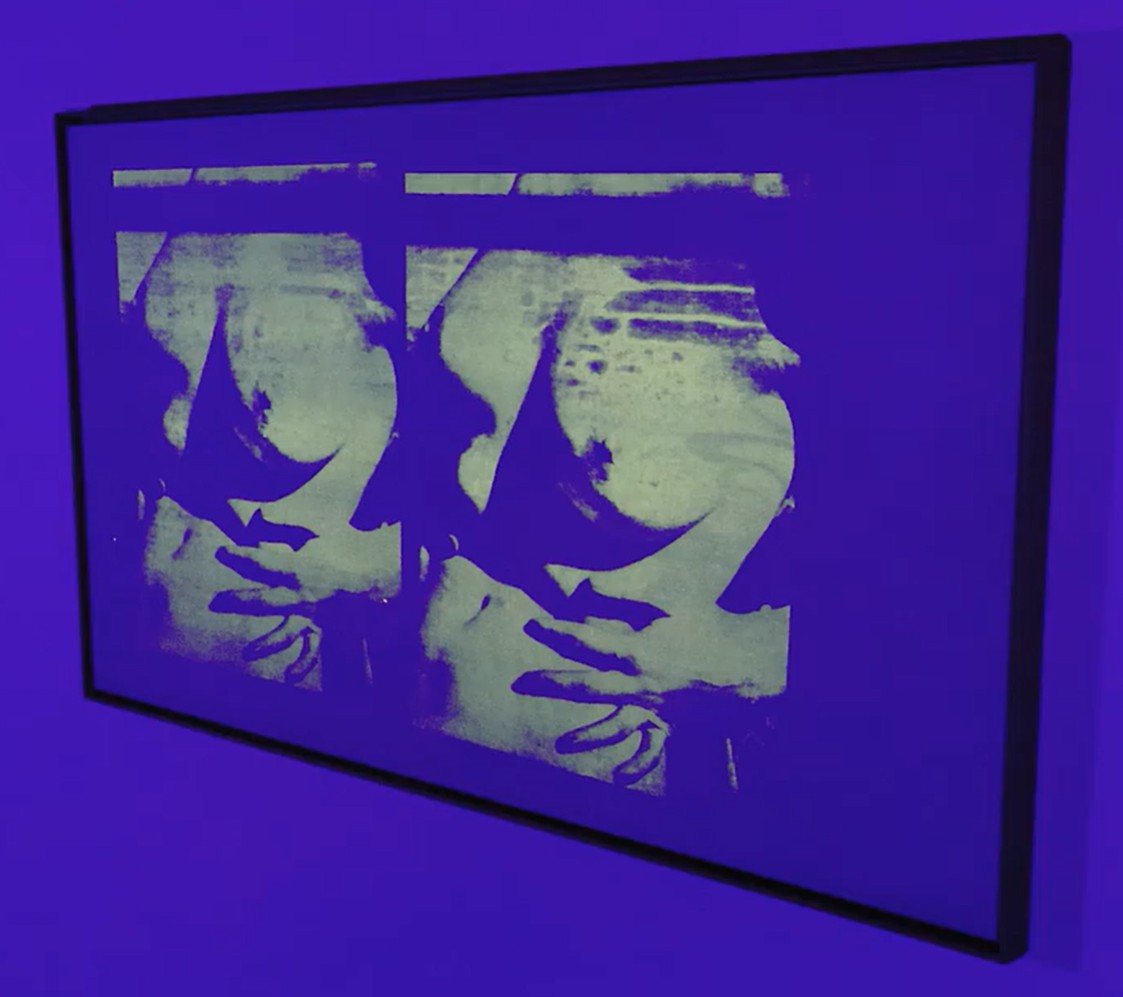
Using a photograph taken by Playboy to create the screen, Warhol created Double Torso during the 1960s alongside two other ultraviolet paintings – one of which is currently in the collection of the Norton Simon Museum of Art, Pasadena, and the third whose location is unknown; the painting may have been lost or inadvertently destroyed due to its supposed blankness under regular light. Exhibited extensively since 1972, the present work reflects Warhol’s innovation in silkscreen and continual experimentation with his materials, elevating the viewing experience of painting to each end of the visual spectrum.
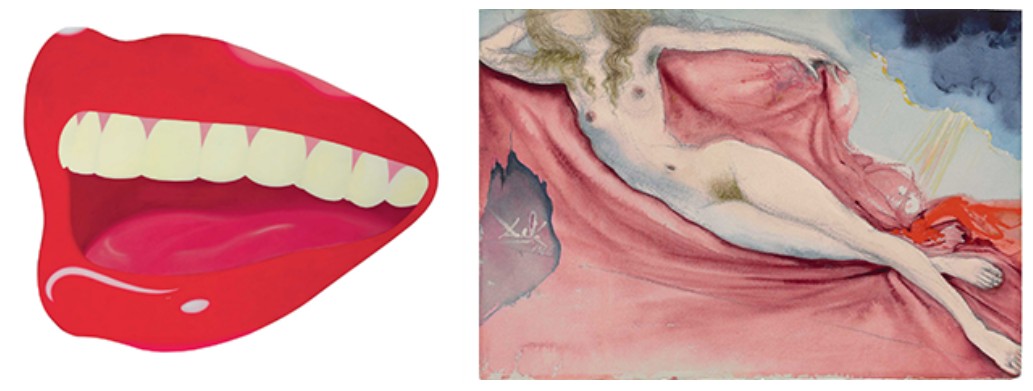
[Left] Tom Wesselmann, Mouth #8, 1966. Created for The Playmate as Fine Art. Artwork: © 2025 Estate of Tom Wesselmann / Artists Rights Society (ARS), New York
[Right] Salvador Dali, Playmate after Rokeby Venus, 1966. Created for The Playmate as Fine Art. Artwork: © 2025 Salvador Dalí, Gala-Salvador Dalí Foundation / Artists Rights Society (ARS), New York
“My next series will be of pornographic pictures. They will look blank. When you turn on the lights, then you see them… if a cop came in, you could just flick out the lights or turn on the regular lights – how could you say that was pornography?”
The present work and the ultraviolet paintings as a whole were not Warhol’s first or last foray into the depiction of the nude. In addition to his early 1960s erotic films, Warhol is well known for two series begun in the late 1970s, Torsos and Sex Parts, each depicting close-up images of male bodies and genitalia. Many of these works, as with Double Torso, were created during a sexual revolution in America, and rather than abiding by the increasing restrictions on graphic imagery, Warhol embraced sexuality, forefronting it in his paintings, prints, and films. Using ultraviolet light to mask the female nude, Warhol asks the viewer to question their feelings towards sex.
“what’s pornography anyway? The muscle magazines are pornography, but they’re really not. They teach us how to have good bodies. They’re the fashion magazines of Forty-Second Street – that more people read.”
Double Torso may have been created for the Playboy feature, but it also allowed the artist to impose his own commentary on the censorship laws banning pornography in the 1960s. Criticizing the notions of what could or could not be seen, Warhol truly turns this idea on its head, presenting an image which is at once visible and invisible, depending on lighting. Fascinated with technology and continually experimenting with various methods during his career, Warhol was a pioneer of the use of ultraviolet light in his art, pushing the boundaries of traditional media and engaging with new visual effects. The employment of ultraviolet light allowed Warhol to further explore his ongoing preoccupation with visibility and perception – how we see, what we choose to look at, and what remains hidden until brought to light. Indeed, ultraviolet light became another tool in Warhol’s visual vocabulary, linking spectacle, sensation and social commentary in Double Torso.