Fresh from the success of his groundbreaking paintings inspired by comic books, in 1969 the artist turned his attention to the celebrated paintings of Claude Monet, one of the most visionary artists of the late nineteenth and early twentieth centuries. Captivated by the French artist’s investigations into painting light, Lichtenstein took as his inspiration Monet’s famous painting Rouen Cathedral, Façade (1894; Museum of Fine Art Boston). He had seen the painting in a monograph about the artist and began transforming Monet’s ethereal brushstrokes into his signature Ben-Day dots. The result was a group of about half a dozen triptychs (two of which are now in major international museum collections) that demonstrates Lichtenstein’s uniquely academic approach to Pop Art.
“It’s an industrial way of making Impressionism—or something like it—by a machinelike technique. But it probably takes me ten times as long to do one of the Cathedral or Haystacks paintings as it took Monet to do his.”
Similarly, Roy Lichtenstein’s Haystacks stands as a brilliant act of art historical reflection and conceptual subversion. The artist only created five works reinterpreting the pastoral haystack motif, an image steeped in the traditions of Van Gogh and, most notably, Claude Monet’s Meules series. Yet Lichtenstein approaches this bucolic subject not with the atmosphere and brushy light of Impressionism, but with the crisp visual mechanics of Pop art.
Auction Results
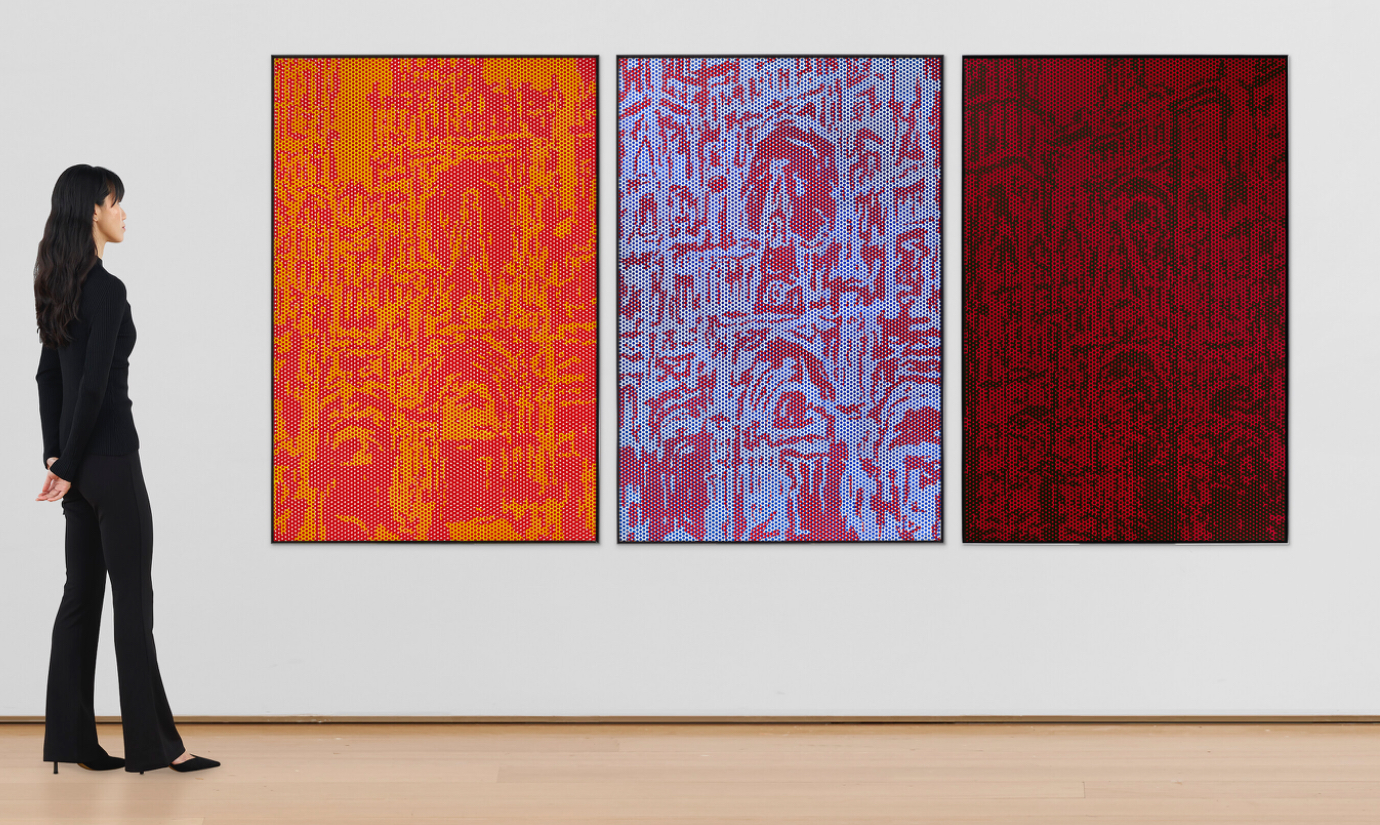
Rouen Cathedral, Set IV, 1969
Christie’s New-York: 11 May 2023
Estimated: USD 18,000,000 – 25,000,000
USD 15,360,000
ROY LICHTENSTEIN (1923-1997) (christies.com)
ROY LICHTENSTEIN (1923-1997)
Rouen Cathedral, Set IV, 1969
Oil and Magna on canvas tryptich
Each: 63×42 inches (160 x 106.7 cm)
Signed and dated ‘rf Lichtenstein ’69’ (on the reverse of each canvas)
XXXXXXXXXX
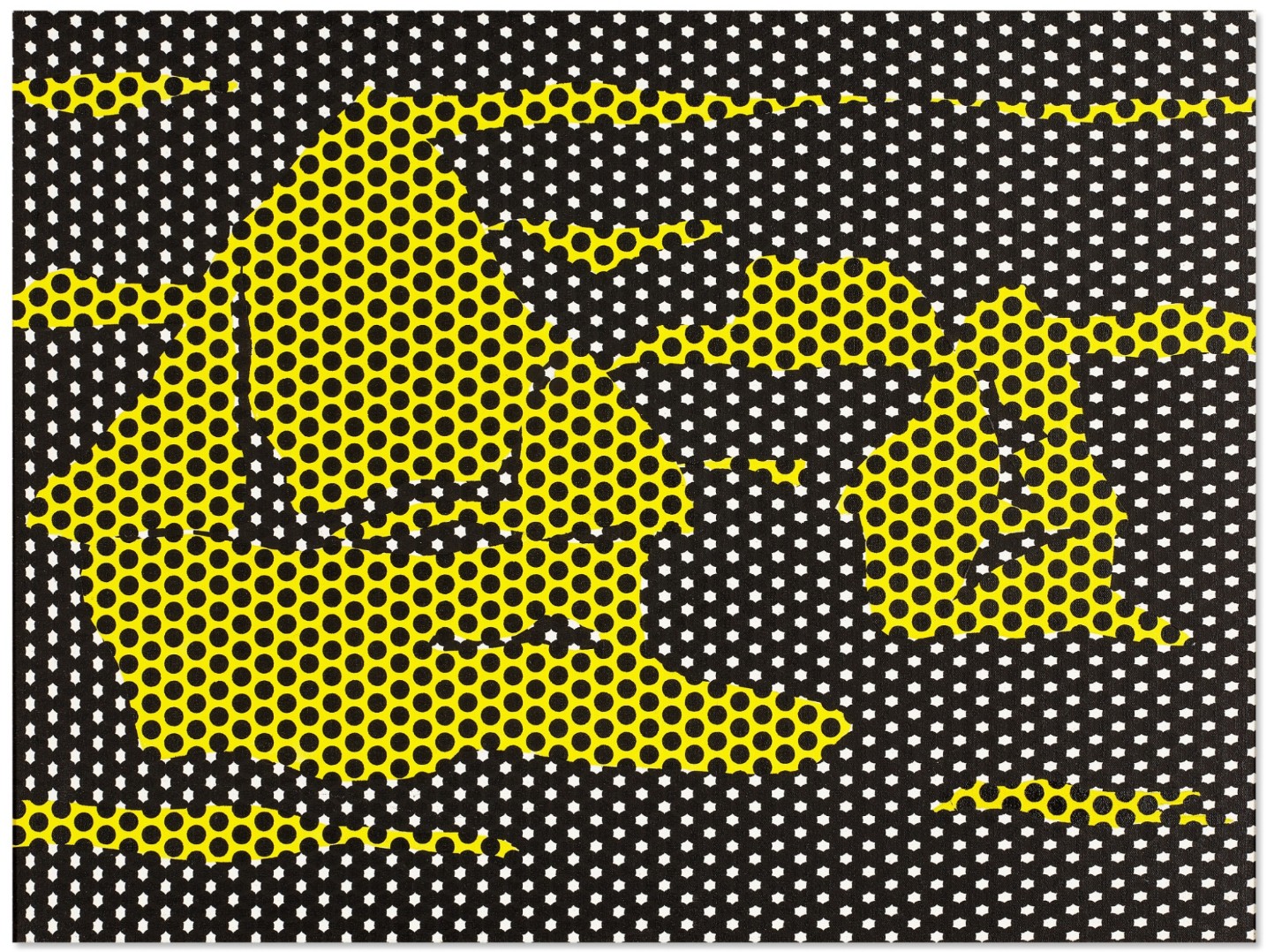
#1. Haystacks, 1968
Works from the Collection of Dorothy and Roy Lichtenstein
Sotheby’s New-York: 16 May 2025
Estimated: USD 400,000 – 600,000
USD 1,392,000
Haystacks | Contemporary Day Auction | 2025 | Sotheby’s
ROY LICHTENSTEIN (1923 – 1997)
Haystacks, 1968
Oil, acrylic and graphite on canvas
18×24 inches (45.7 x 60.9 cm)
Signed, dated ’68 and variously inscribed (on the reverse)
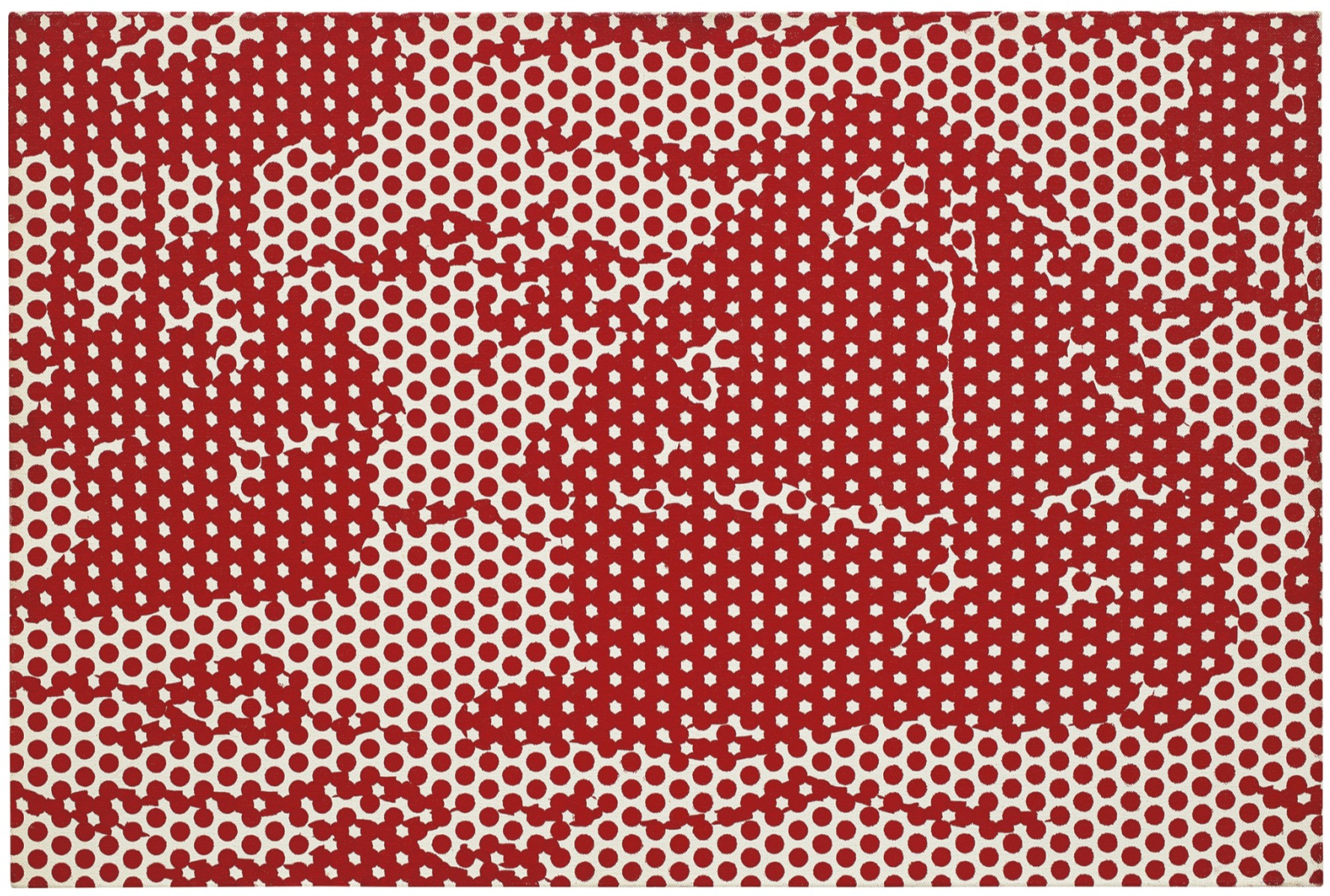
#2. Haystacks, 1968
Property from an Important Private Collection
Phillips New-York: 14 November 2019
Estimated: USD 500,000 – 700,000
USD 980,000
Roy Lichtenstein 20th C. & Contemporary Art Evening Sale
ROY LICHTENSTEIN
Haystacks, 1968
Oil on canvas
16×24 inches (40.6 x 61 cm)
Signed and dated “rf Lichtenstein ’68” on the reverse
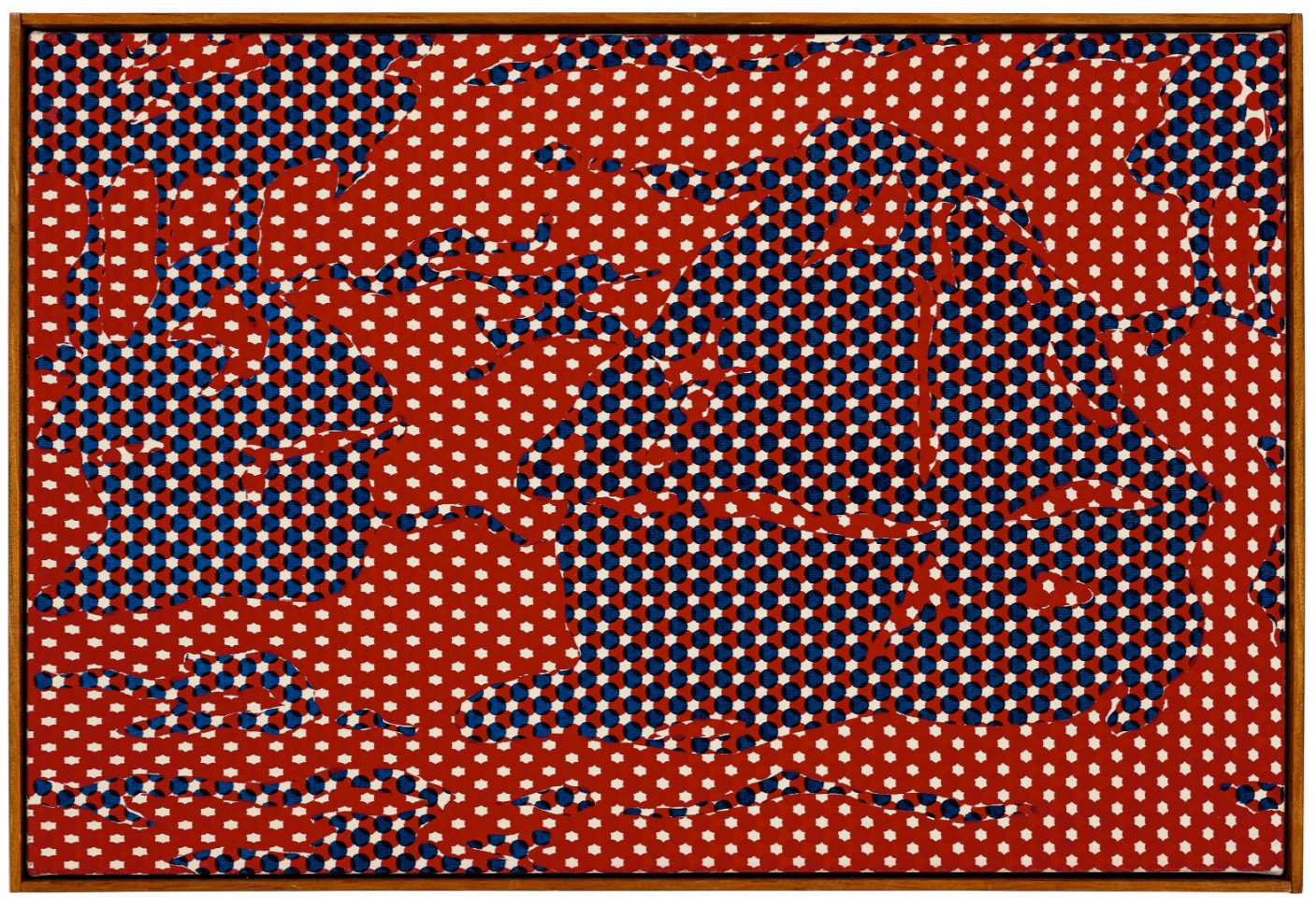
#3. Haystacks, 1969
Christie’s New-York: 20 November 2025
Estimated: USD 500,000 – 700,000
USD 787,400
ROY LICHTENSTEIN (1923-1997), Haystacks | Christie’s
ROY LICHTENSTEIN (1923-1997)
Haystacks, 1969
Oil and acrylic on canvas
16×24 inches (40.6 x 61 cm)
Signed and dated ‘rf Lichtenstein ’69’ (on the reverse)
#4. Haystacks, 1969
Christie’s New-York: 10 March 2023
Estimated: USD 500,000 – 700,000
USD 579,600
ROY LICHTENSTEIN (1923-1997) (christies.com)
REPEAT SALE
Christie’s New-York: 2 November 1998
Estimated: USD 150,000 – 200,000
USD 165,300
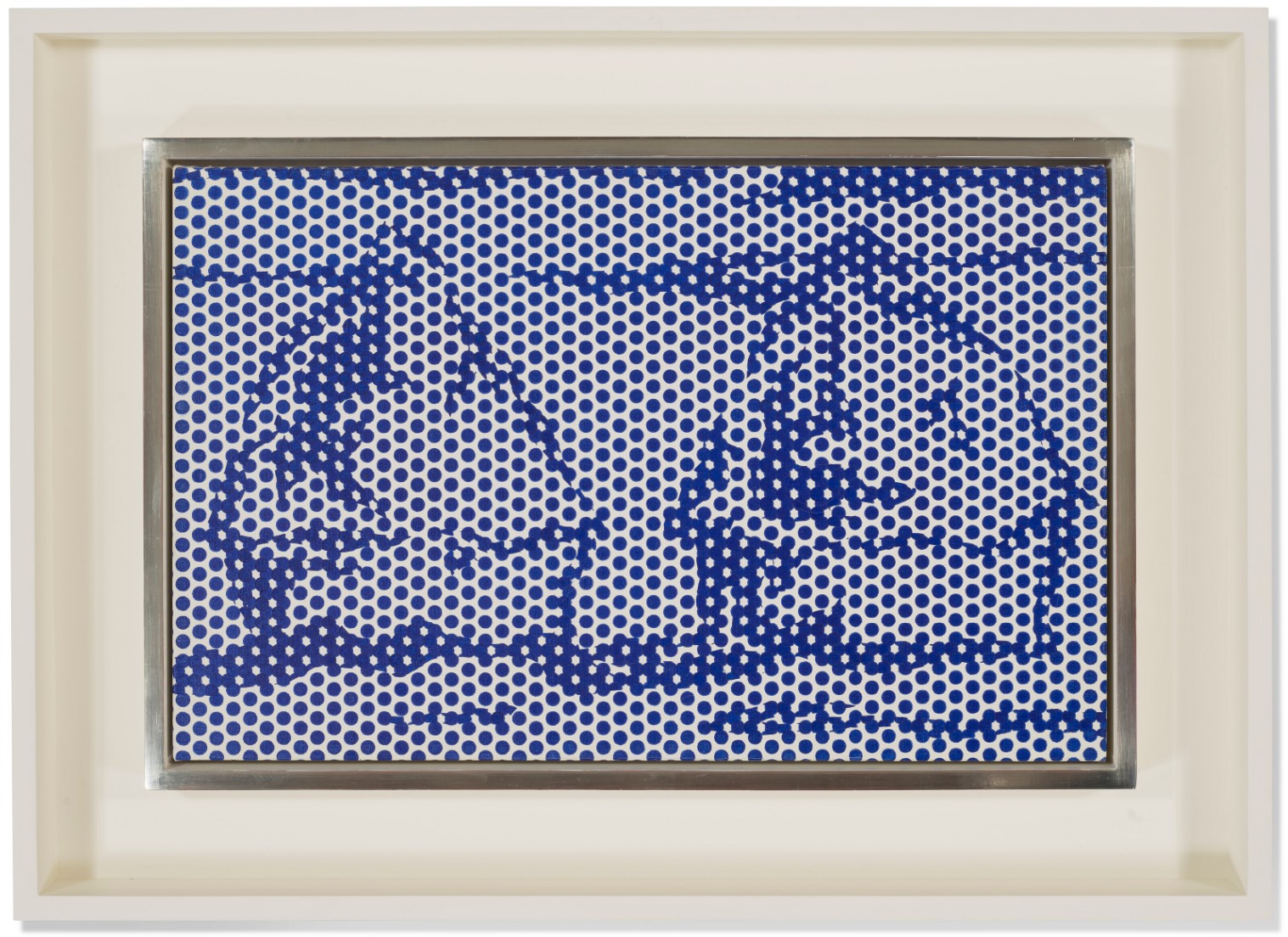
ROY LICHTENSTEIN (1923-1997)
Haystacks, 1969
Oil and Magna on canvas
15 1/4 x 24 inches (38.7 x 61 cm)
Signed, dated and inscribed ‘rf Lichtenstein ’69 PANEL #2 OF 5 PANELS’ (on the reverse)
Rouen Cathedral
Rouen Cathedral, Set IV, 1969
Christie’s New-York: 11 May 2023
Estimated: USD 18,000,000 – 25,000,000
USD 15,360,000
ROY LICHTENSTEIN (1923-1997) (christies.com)
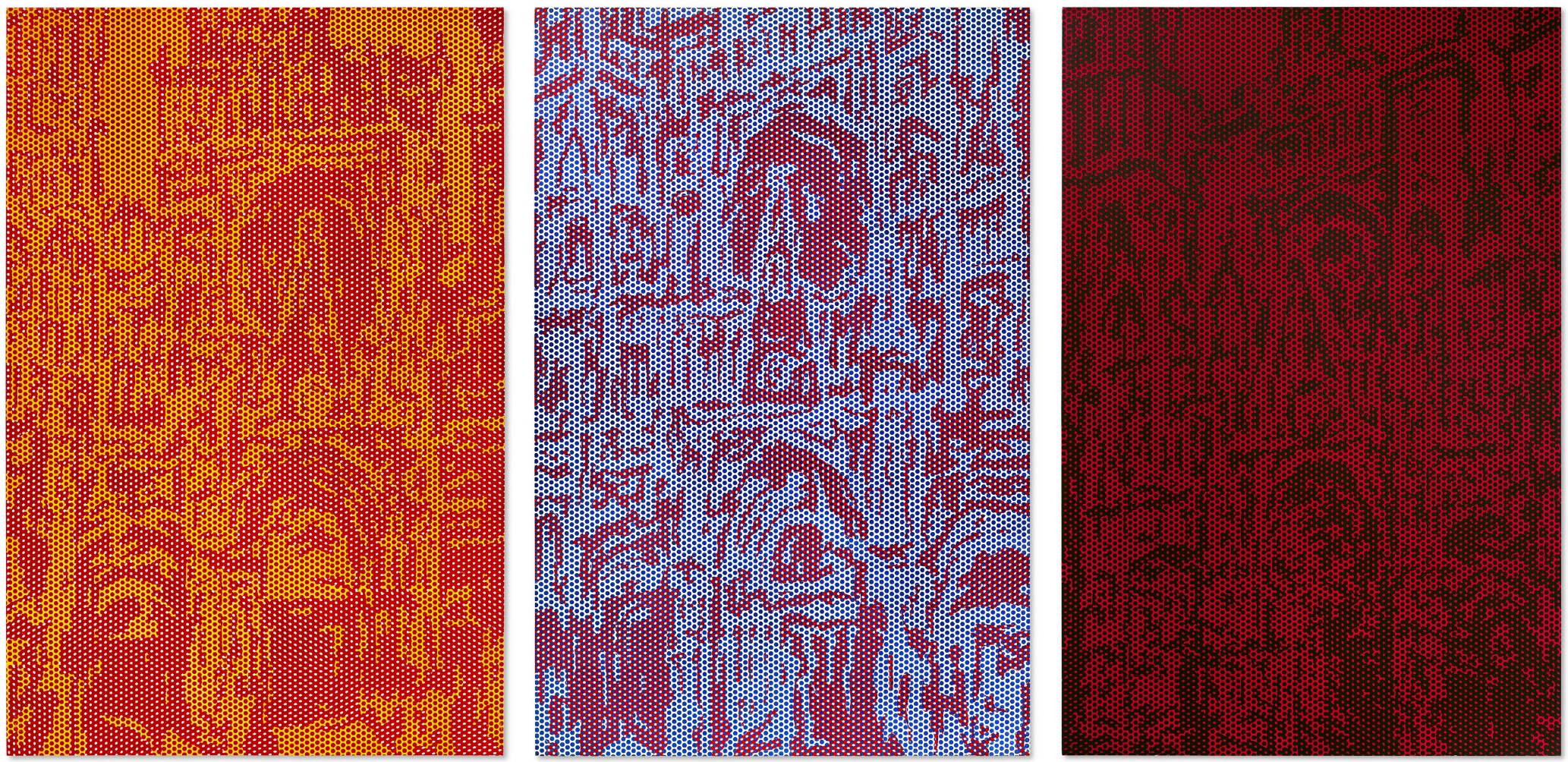
ROY LICHTENSTEIN (1923-1997)
Rouen Cathedral, Set IV, 1969
Oil and Magna on canvas tryptich
Each: 63×42 inches (160 x 106.7 cm)
Signed and dated ‘rf Lichtenstein ’69’ (on the reverse of each canvas)
Rouen Cathedral, Set IV, Roy Lichtenstein’s epic interrogation of art history through the lens of contemporary art, is one of the most perceptive paintings of his career. Fresh from the success of his groundbreaking paintings inspired by comic books, in 1969 the artist turned his attention to the celebrated paintings of Claude Monet, one of the most visionary artists of the late nineteenth and early twentieth centuries. Captivated by the French artist’s investigations into painting light, Lichtenstein took as his inspiration Monet’s famous painting Rouen Cathedral, Façade (1894; Museum of Fine Art Boston). He had seen the painting in a monograph about the artist and began transforming Monet’s ethereal brushstrokes into his signature Ben-Day dots. The result was a group of about half a dozen triptychs (two of which are now in major international museum collections) that demonstrates Lichtenstein’s uniquely academic approach to Pop Art.
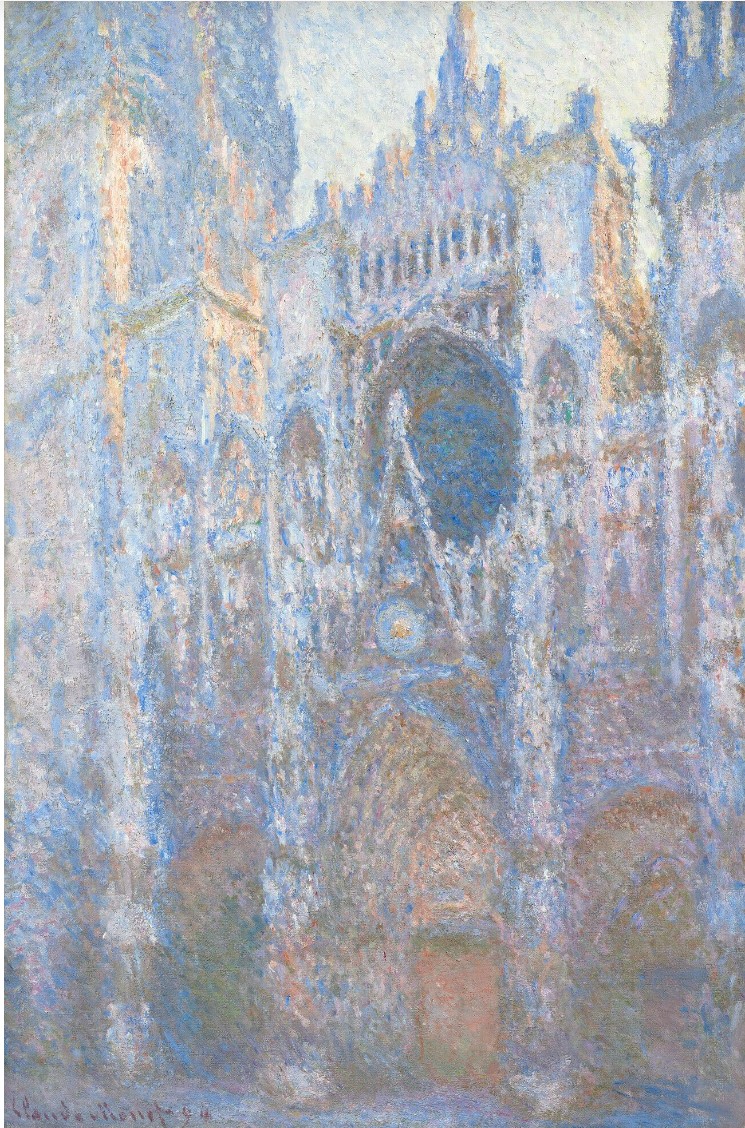
Claude Monet, Rouen Cathedral, West Façade, 1894. National Gallery of Art, Washington, D.C. Photo: Art Resource, NY.
“I follow Monet’s general idea in a much more mechanical way. Of course, they are different from Monet, but they do deal with the Impressionist cliché of not being able to read the image close up—it becomes clearer as you move away”
Across these three conjoined canvases, Lichtenstein produces a simulacrum of Monet’s famous depiction of the west front of Rouen Cathedral. The French master’s version was a triumphal essay on the Impressionists’ treatment of light, as—over approximately thirty canvases—he painted the same building at different times of day and at different times of the year, replicating the deep shadows cast by the building’s Gothic façade as it changed in the different light conditions. In Rouen Cathedral, Set IV, Lichtenstein swaps Monet’s loaded brushstrokes for the utilitarian nature of his Ben-Day dots, imitating the printing process that has reproduced Monet’s original painting countless times. The result is a Pop painting that dissolves into abstraction before our very eyes.
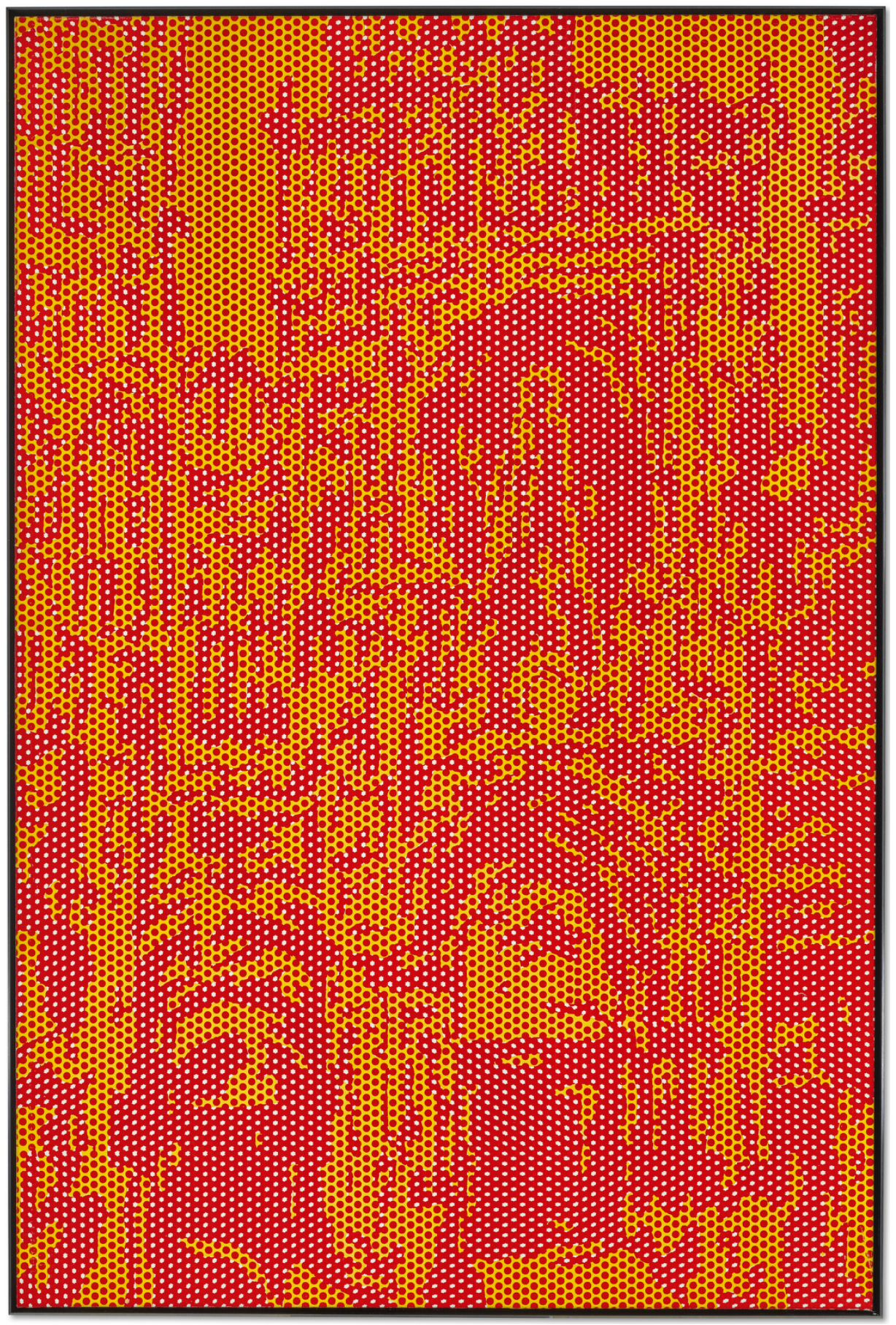
Rather than applying color in a field of luscious brushstrokes as the Impressionists did, Lichtenstein’s canvases were painted using a metal stencil, producing the hard-edged optical dots of color. Although mimicking the mechanical process of industrial CMYK printing, Lichtenstein’s process is much more laborious and complex than rapid printing.
“It’s an industrialized way of Impressionism, by a machine-like technique, but it probably takes me ten times as long to do one of the Cathedrals or Haystacks as it took Monet to do his.”
Each of the works in the series is painted individually using the same labor-intensive process of applying the dots by hand, yet each of the sets is unique: slightly different images and changing color combinations insuring that no aspect of the composition is repeated. The use of repeating images also plays into the idea of seriality, something which interested both Monet and Pop artists such as Lichtenstein and his contemporary, Andy Warhol. Lichtenstein reminds us that Monet painted in series—a very modern idea at the time—by painting essentially the same view of Rouen Cathedral at different times of day, and at different times of the year. Lichtenstein replicated this idea but with a slight, yet significant, difference. “I thought using three slightly different images in three different colors as a play on different times of day would be more interesting” he said (ibid.).
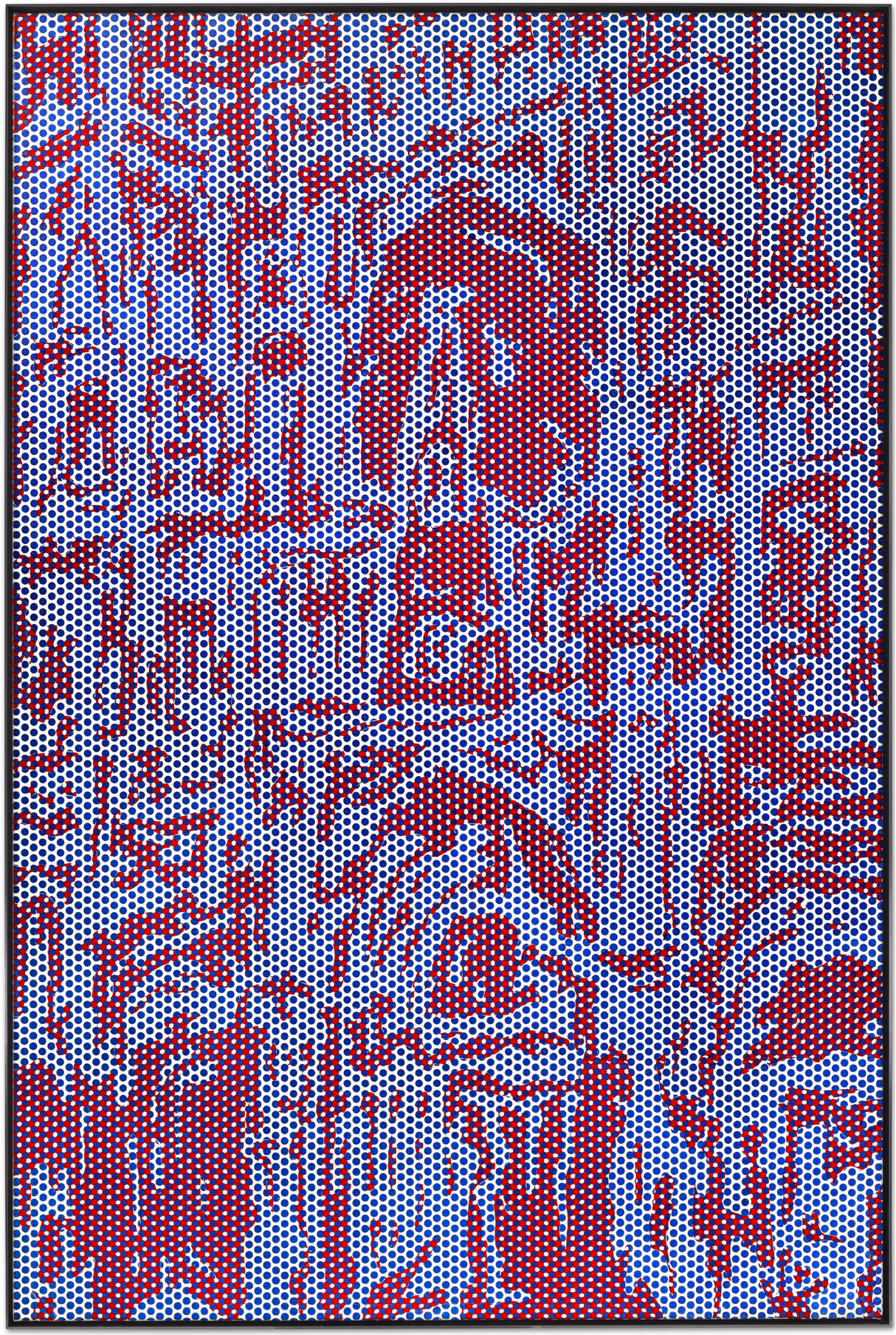
Lichtenstein’s sophisticated understanding of color is another factor that is paramount to the success of his Cathedral paintings. In Rouen Cathedral, Set IV, the artist situates his canvases at the red light end of the spectrum: the first canvas in the sequence combines a lighter orange ground with a deep red primary image, the second canvas is comprised of a cooler ground counteracted by the same red hue as the first canvas, and the final canvas in the triptych combines two tones of deep red. “I think changing the color to represent different times of the day is a mass-production way of using the printing process” Lichtenstein has admitted. In this matter, he was continuing an interest in color theory and the science of optics that had enthused Monet and his contemporaries. In paintings such as Circus Sideshow (1887-1988; The Metropolitan Museum of Art, New York), Georges Seurat employs his pointillist technique to play with the idea of light and shadow, fracturing it into dots of pure color. Rather than mixing together colors on a palette or directly on the surface of the canvas, Seurat was placing dabs of contrasting colors side by side and letting the eye do the mixing. In the present work, Lichtenstein advances the same line of enquiry, but with an industrial technique, thus reversing the traditional high art-to-low art trajectory of the time.
It was this interest in light and shadow falling across the façade of Rouen Cathedral that attracted Monet to this particular subject matter in the first place. In February 1892 he was in the French city to meet his older brother Léon. While he was there, Monet searched the city for a subject to paint and eventually fell upon the façade of the city’s gothic cathedral. The result transformed the nature of our understanding of perception, and today these paintings are considered to be the climax of Impressionism.
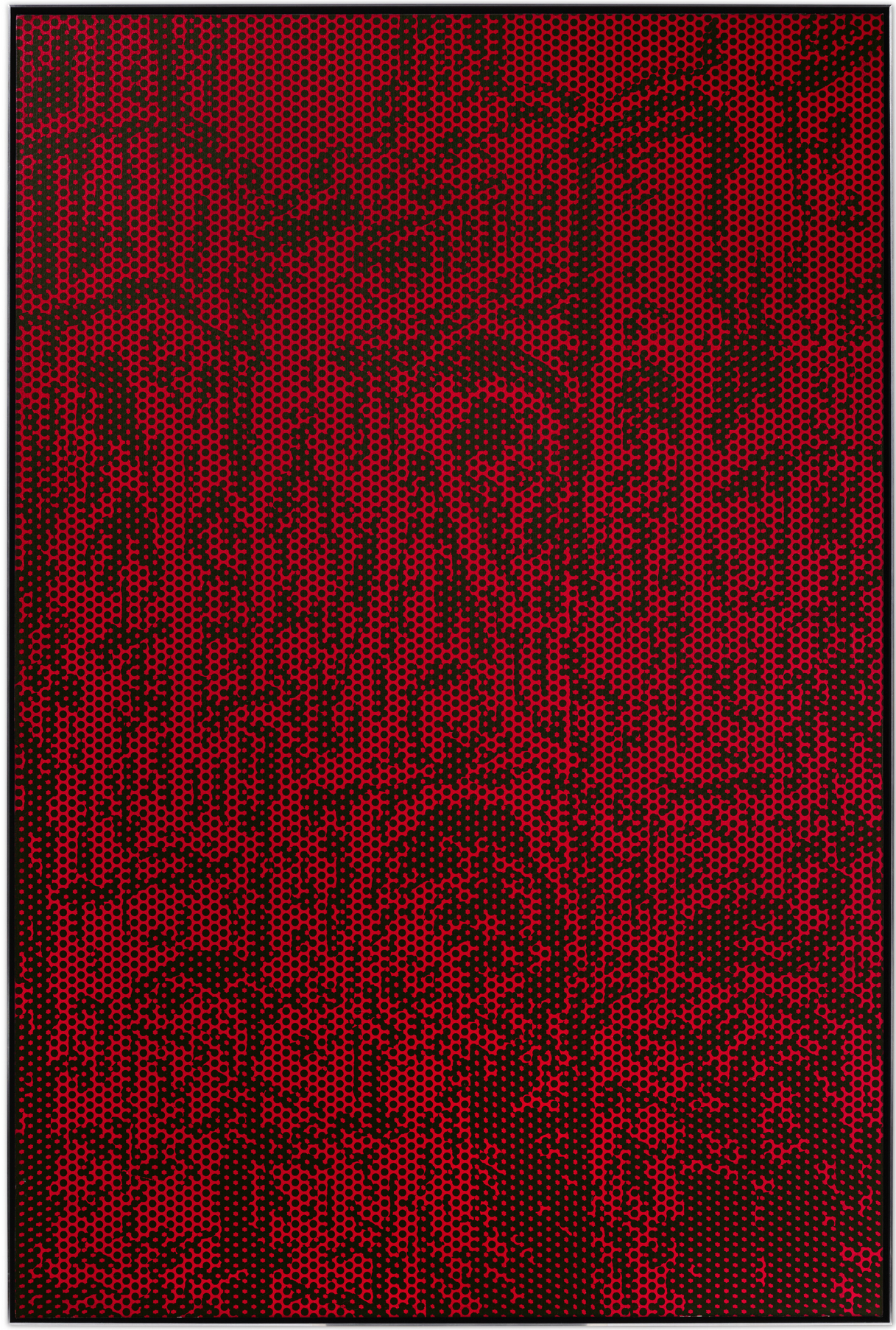
Rouen Cathedral, Set IV was included in Lichtenstein’s first ever museum retrospective, organized by the Solomon R. Guggenheim Museum, New York in 1969. In his review of the exhibition, Max Kozloff of Artforum recognized Lichtenstein’s progressive approach, even among the Pop artists. He wrote “Lichtenstein has always been a revisionist. It means nothing and everything to say that he feeds off the given accoutrements of culture, high and low, old and new. Even when he invents a composition, he is not free from borrowing its style, and even when he is at his most derivative in style, he can be most authentic in thought.
Rightly regarded as one of the founders of the Pop Art movement, Lichtenstein was also in many ways a conceptual painter. As can be seen with the Brushstroke paintings that preceded his Cathedral canvases, the artist was fascinated by the physical act of painting as much as he was by the visual language used to convey different ideas. He was also a consummate student of art history and joined the canon with his insightful interpretation of the artistic process. In Rouen Cathedral, Set IV, Lichtenstein knowingly engaged in a century long conversation with one of his artistic heroes to create a fundamentally new style that allowed him the capacity to innovate while pursuing the same artistic conventions that had dominated the previous two decades.
Haystacks
Haystacks, 1969
Christie’s New-York: 20 November 2025
Estimated: USD 500,000 – 700,000
USD 787,400
ROY LICHTENSTEIN (1923-1997), Haystacks | Christie’s
ROY LICHTENSTEIN (1923-1997)
Haystacks, 1969
Oil and acrylic on canvas
16×24 inches (40.6 x 61 cm)
Signed and dated ‘rf Lichtenstein ’69’ (on the reverse)
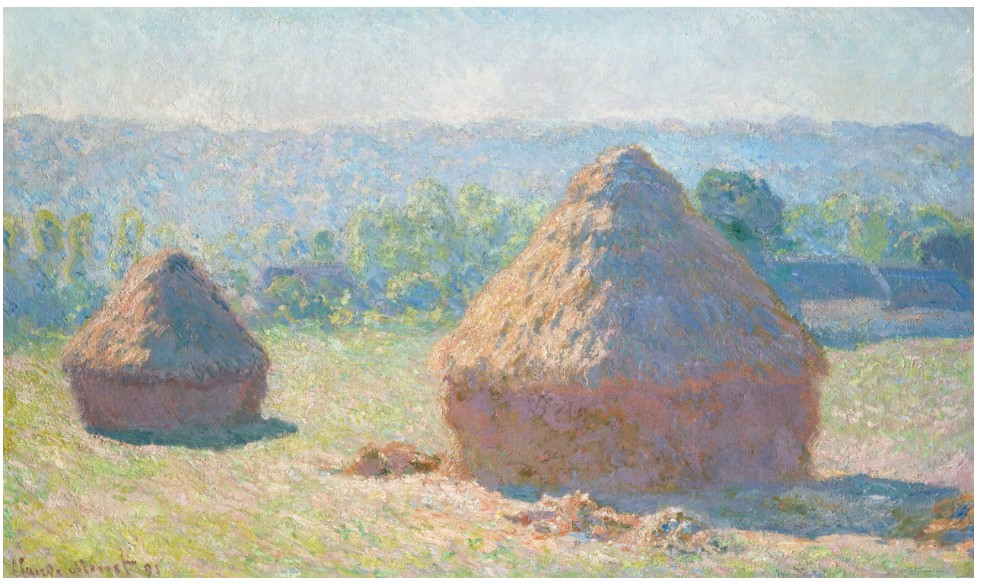
Claude Monet, Meules, fin de l’été, 1891. Musée d’Orsay, Paris.
Haystacks, 1968
Works from the Collection of Dorothy and Roy Lichtenstein
Sotheby’s New-York: 16 May 2025
Estimated: USD 400,000 – 600,000
USD 1,392,000
Haystacks | Contemporary Day Auction | 2025 | Sotheby’s
ROY LICHTENSTEIN (1923 – 1997)
Haystacks, 1968
Oil, acrylic and graphite on canvas
18×24 inches (45.7 x 60.9 cm)
Signed, dated ’68 and variously inscribed (on the reverse)
Roy Lichtenstein’s Haystacks stands as a brilliant act of art historical reflection and conceptual subversion. Executed in 1968, this work is one of only five works reinterpreting the pastoral haystack motif, an image steeped in the traditions of Van Gogh and, most notably, Claude Monet’s Meules series. Yet Lichtenstein approaches this bucolic subject not with the atmosphere and brushy light of Impressionism, but with the crisp visual mechanics of Pop art. First exhibited at The Met in 1969 and later in major international retrospectives, Haystacks has long been recognized as a key moment in Lichtenstein’s dialogue with modernist masters. And yet, it remains deeply original. Through the prism of Pop, Lichtenstein does not replicate Monet—he reanimates him, turning the haystack into a site of conceptual inquiry.
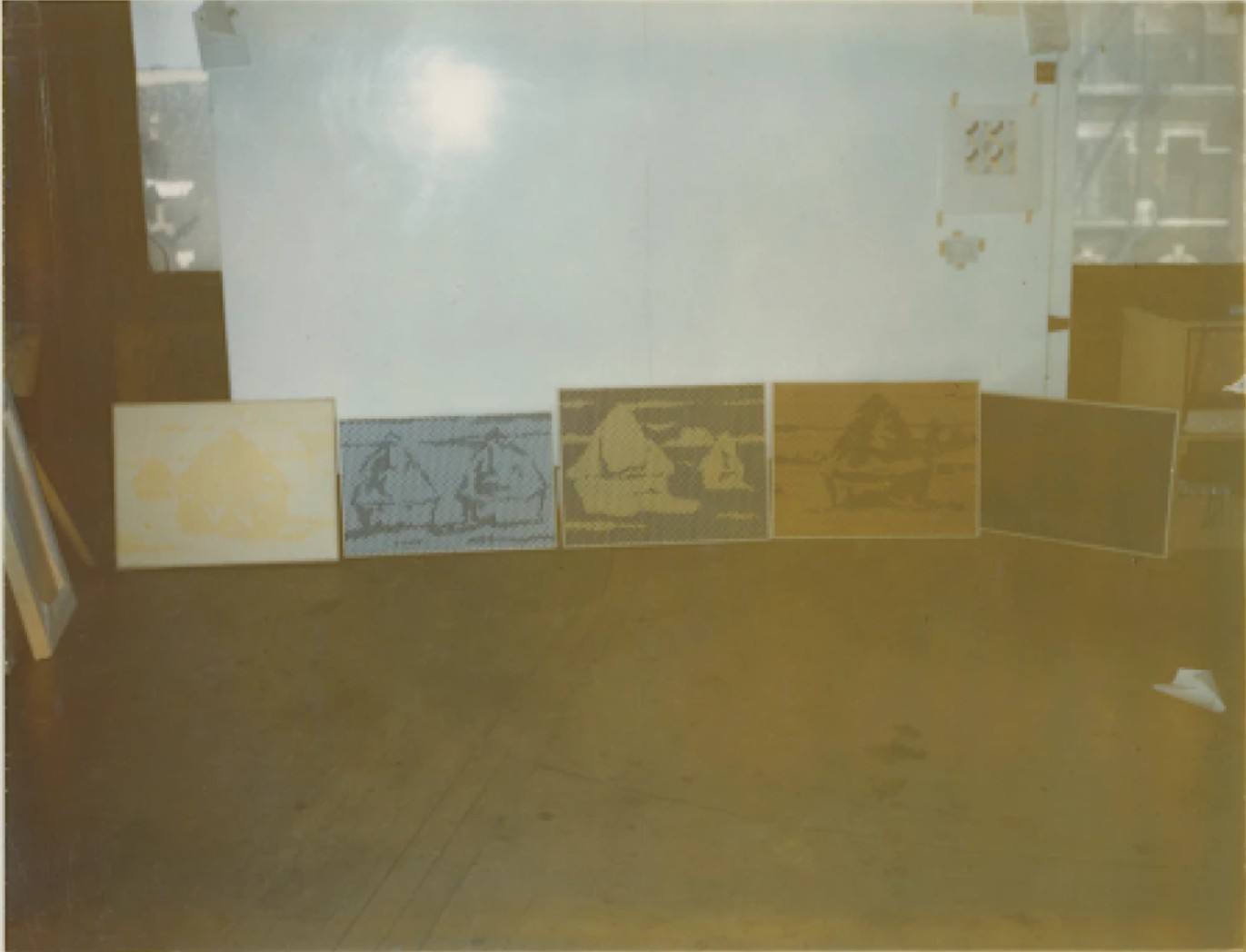
The Haystack paintings. including the present work, arranged in artist’s studio, c. 1969.
Photo: Courtesy RLF Archives. Art © Estate of Roy Lichtenstein.
In Haystacks, Lichtenstein looks backward while pushing forward. His treatment of the rural subject is filtered through his signature graphic style: a flattened composition, bold outlines, a limited palette, and of course, his signature use of Ben-Day dots—a mechanical printing process that here takes the place of dappled paint. Where Monet’s haystacks shift in color and light across seasons and time of day, Lichtenstein’s stack is temporally static, reduced to its essential geometry, stripped of context, and re-rendered in the cool language of mass media. What was once a symbol of agrarian life becomes a printed icon—an agricultural ghost in the industrial age.
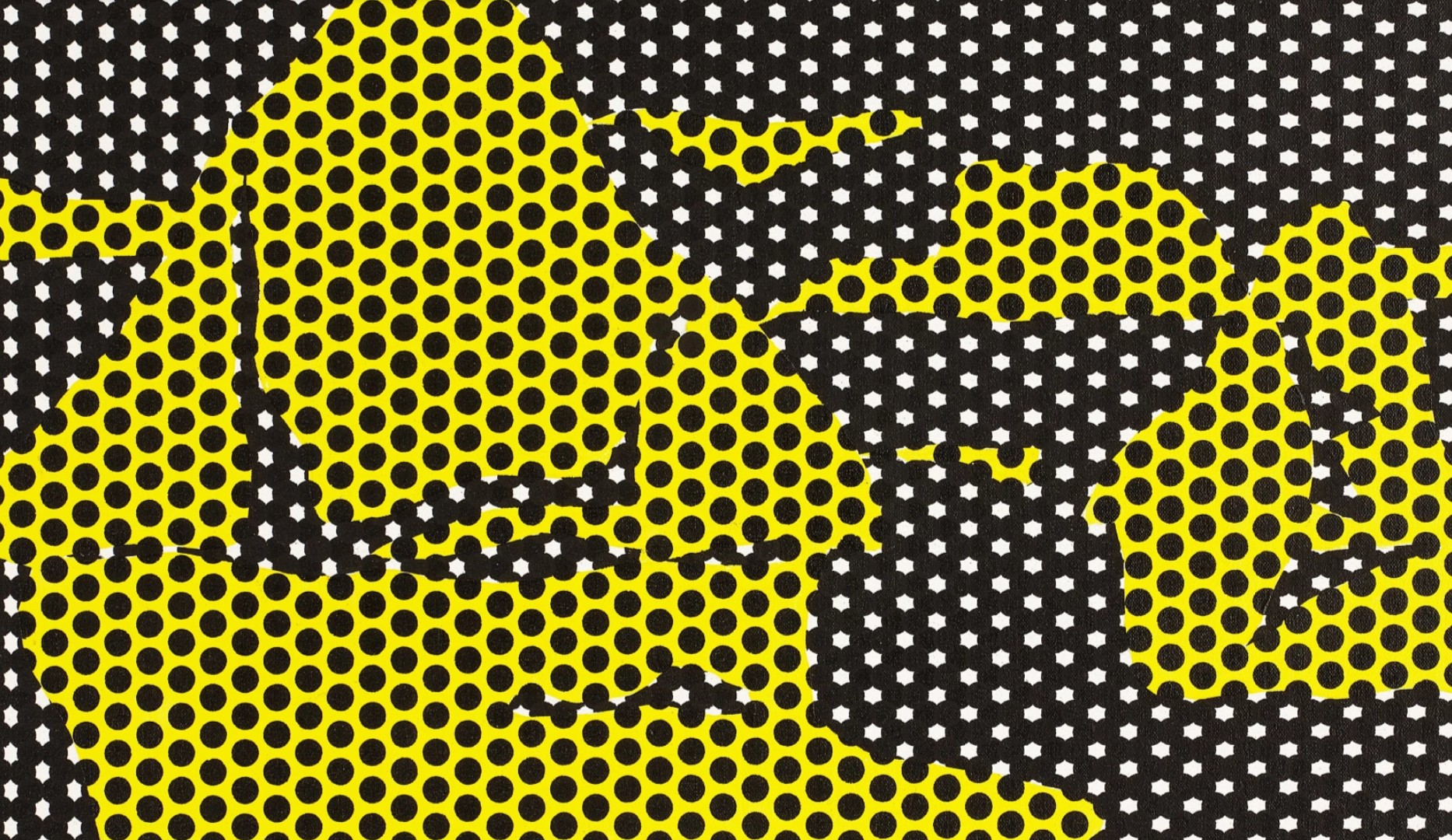
The composition is deceptively simple. A horizon line divides a color-blocked landscape. A haystack, abstracted almost to the point of illegibility, rests against it. Lichtenstein’s use of Ben-Day dots throughout the foreground and sky replaces the nuanced atmospheric conditions of Monet with a reproducible texture that flattens both figure and field. This repetition of dots is not merely decorative; it is ideological. It calls attention to the systems of reproduction, visual language, and authorship that Lichtenstein so deftly interrogates. In doing so, Haystacks becomes a meditation on how we view and value the “natural” in a mediated culture.
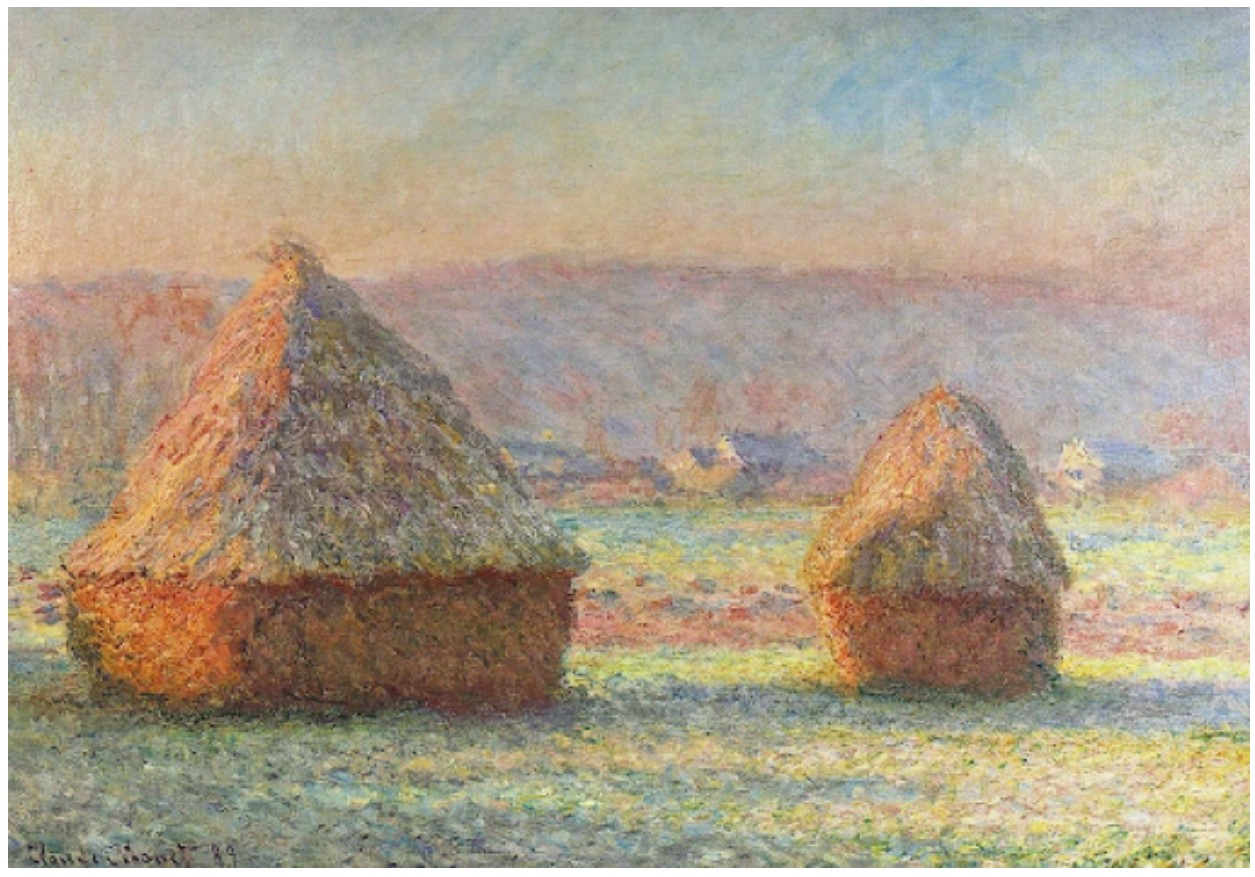
Claude Monet, Les Meules, effect de gelee balance, 1888-89. Hill-stead Museum, Farmington, Connecticut.
Coming directly from the estate of the artist, Haystacks holds particular importance in tracing Lichtenstein’s engagement with the history of painting. This was a period when he began systematically revisiting art historical genres—still life, landscape, abstraction—not to parody them, but to mine their formal structures and transform their painterly conventions into printed ones. His Haystacks are not ironic so much as they are analytical: what remains of Monet after being subjected to the visual lexicon of American consumer culture? Haystacks is both homage and critique, a landscape made anew through the tools of the machine age. In its distillation of vision, it reminds us that history is always being reprocessed—dot by dot, line by line.
Haystacks, 1969
Christie’s New-York: 10 March 2023
Estimated: USD 500,000 – 700,000
USD 579,600
ROY LICHTENSTEIN (1923-1997) (christies.com)
REPEAT SALE
Christie’s New-York: 2 November 1998
Estimated: USD 150,000 – 200,000
USD 165,300
ROY LICHTENSTEIN (1923-1997)
Haystacks, 1969
Oil and Magna on canvas
15 1/4 x 24 inches (38.7 x 61 cm)
Signed, dated and inscribed ‘rf Lichtenstein ’69 PANEL #2 OF 5 PANELS’ (on the reverse)
Haystacks, 1968
Property from an Important Private Collection
Phillips New-York: 14 November 2019
Estimated: USD 500,000 – 700,000
USD 980,000
Roy Lichtenstein 20th C. & Contemporary Art Evening Sale
ROY LICHTENSTEIN
Haystacks, 1968
Oil on canvas
16×24 inches (40.6 x 61 cm)
Signed and dated “rf Lichtenstein ’68” on the reverse
Painted in Roy Lichtenstein’s idiosyncratic Ben-Day dot method, Haystacks epitomizes the artist’s ability to re-envision the chef-d’oeuvres of Modernism in a Pop lexicon. The work was created after a trip Lichtenstein took to Los Angeles in the summer of 1968, when he visited John Coplans at the Pasadena Art Museum to discuss the curator’s plans for an exhibition on serial imagery. At the museum, Coplans showed Lichtenstein myriad photographs of Claude Monet’s renowned Stacks of Wheat from 1891 and Rouen Cathedral paintings, which immediately encouraged the Pop artist’s own undertaking of 20 pictures in five variations using the former as source material before embarking on a series of the latter, examples from which are held in preeminent institutions such as the San Francisco Museum of Art, Los Angeles County Museum of Art, and Museum of Fine Arts, Boston. Haystacks takes its place among Lichtenstein’s other interpretations of the masterpieces of Modernism: he also applied his painstaking, distinctive dot process to the paintings of Piet Mondrian and Pablo Picasso in Non-Object I, 1964, and Femme d’Alger, 1963, both at the Broad Collection, Los Angeles. Haystacks thus reinvents Monet’s work for the 20th century, appropriating the treasures of the past by executing them in the artistic style of his present.
During this pivotal stroll with Coplans where he was exposed to numerous reproductions of Monet’s work in succession, Lichtenstein visually comprehended the Impressionist’s propensity to paint in series. This practice no doubt appealed to Lichtenstein’s predilection for seriality, who then became intrigued in the inherent paradox of a calculated approach to Impressionism. Consequently, he embarked on a chapter of producing paintings derived from Monet’s Haystacks before taking this interest in repetition even a step further by running a series of prints of the same subject the year after.
By drawing this counterintuitive comparison, Lichtenstein testified to the laboriously meticulous process behind Haystacks’ appearance of seemingly impersonality, and that the mechanization of artistic procedure can actually be used as a means of achieving a high finish. The result of this extremely methodical manner of production, meant to efface any indication of the artist’s hand, is an unperturbed, balanced surface. In this sense, while Monet’s original paintings were optical, subjective depictions of the play of light, Haystacks portrays the automation of the artistic process in the same vein as color reproduction. Typical of his working process, Lichtenstein reproduced the original image by hand before he and his assistants traced his sketch onto the canvas with the help of a projector. Then, they painted the large Ben-Day dots, but instead of featuring Lichtenstein’s customary jet black contours to define shapes and figures, Haystacks’ forms are defined by the concentration of the dots themselves and its resulting illusionistic inversion of red and white. Thus, though Haystacks is more a manifestation of Lichtenstein’s interest in the relationship between flatness and shapes than of the inextricability of color and light, the all-over application of Ben-Day dots and undefined forms still hint at the acute visual sensibility present in the Stacks of Wheat paintings.
Given its late 19th-century source material, it is possible to read the Ben-Day dots in Haystacks as a nod to pointillism: that in approaching Monet via Georges Seurat, Lichtenstein’s tongue-in-cheek interpretation of Impressionism was actually two-fold. Regardless, Lichtenstein’s homage to this chapter in art history in Haystacks captures the innovative spirit of two artists who—despite working 70 years apart—were each pioneering in their respective times; in facilitating this dialogue between Modernism and Postmodernism, Lichtenstein made the old new again.