Agenda
Christie’s Hong-Kong
20th/21st Century Evening Sale
28 March 2025
20th/21st Century Evening Sale
21st Century Day Sale
29 March 2025
Christie’s Shanghai
20th/21st Century Evening Sale
3 April 2025
20th/21st Century Evening Sale
Sotheby’s Hong-Kong
Modern & Contemporary Evening Auction
29 March 2025
Modern & Contemporary Evening Auction | 2025 | Sotheby’s
Modern & Contemporary Day Auction
30 March 2025
Modern & Contemporary Day Auction | 2025 | Sotheby’s
PART II: AUCTION RESULTS
Christie’s Hong-Kong
20th/21st Century Evening Sale
28 March 2025
20th/21st Century Evening Sale
FX USD/HKD @ 7.78
TOTAL
HKD 559,955,200 / USD 71,973,676
# Lots: 43
Withdrawn: 2 Lots
Passed: 2 Lots
Sold: 39 Lots
Sell-Through Rate: 95.1%
#1. Sabado por la Noche (Saturday Night), 1984
Christie’s Hong-Kong: 28 March 2024
Estimated: HKD 95,000,000 – 125,000,000
HKD 112,625,000 / USD 14,476,221
Sabado por la Noche (Saturday Night)
JEAN-MICHEL BASQUIAT (1960-1988)
Sabado por la Noche (Saturday Night), 1984
Acrylic, silkscreen, oil stick, and paper collage on canvas
77×88 inches (195.6 x 223.5 cm)
Signed, titled, and dated ‘Jean Michel 1984 – “SABADO POR LA NOCHE”‘ (on the reverse)
#2. 28.8.67, 1967
Christie’s Hong-Kong: 28 March 2024
Estimated: HKD 40,000,000 – 60,000,000
HKD 48,775,000 / USD 6,269,280
ZAO WOU-KI (ZHAO WUJI, 1920-2013), 28.8.67 | Christie’s
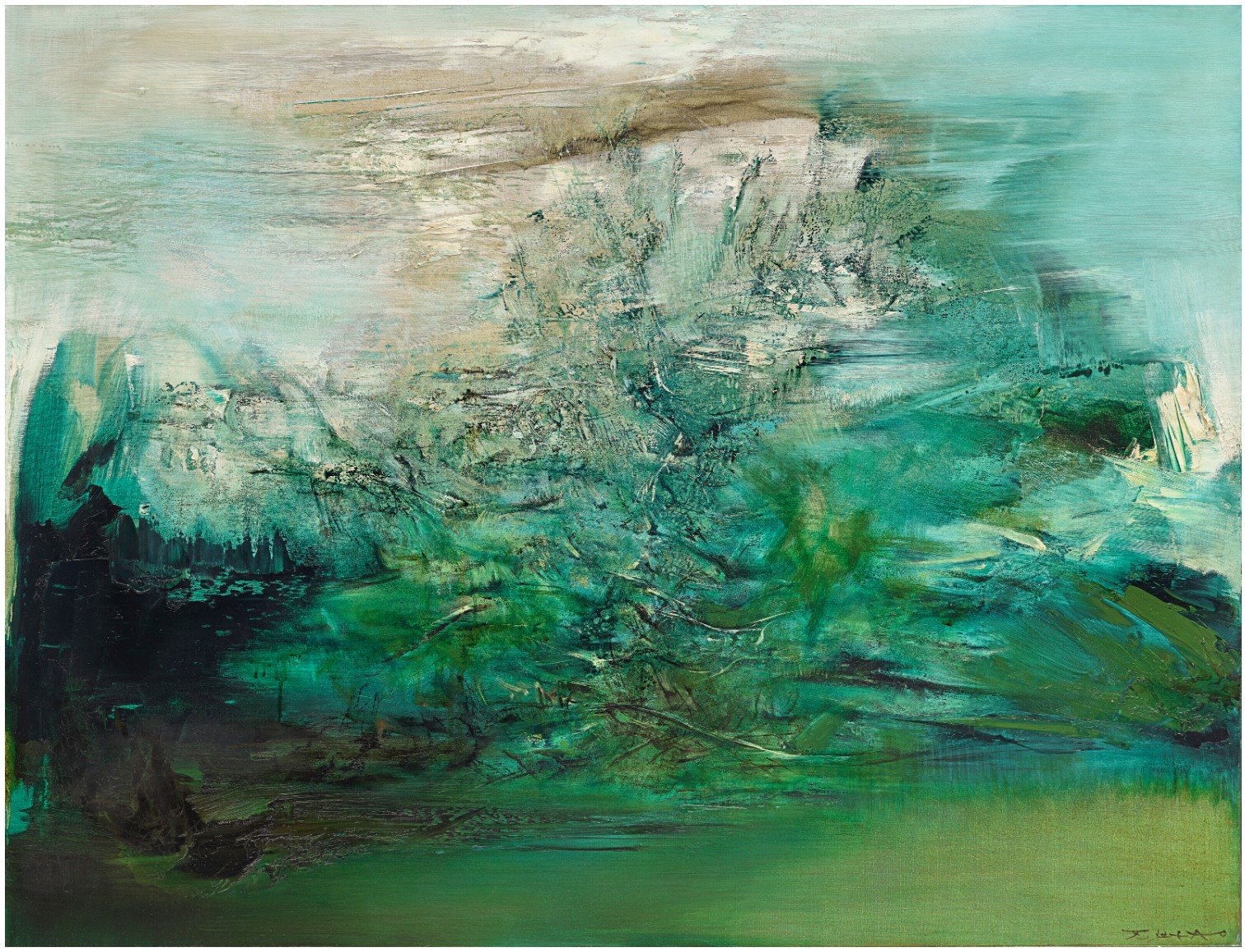
ZAO WOU-KI (ZHAO WUJI, 1920-2013)
28.8.67, 1967
Oil on canvas
89×116 cm (35 x 45 5/8 inches)
Signed in Chinese and ‘Zao’ (lower right)
Signed and dated ‘ZAO WOU-KI 28.8.67’ (on the reverse)
#3. Rêverie de Monsieur James, 1943
Christie’s Hong-Kong: 28 March 2024
Estimated: HKD 42,000,000 – 55,000,000
HKD 47,565,000 / USD 6,113,753
RENÉ MAGRITTE (1898-1967)
Rêverie de Monsieur James, 1943
Oil on canvas
54.3 x 73.7 cm (21 3/8 x 29 inches)
Signed ‘Magritte’ (lower right)
Signed again, titled, dated and inscribed
‘”RÊVERIE DE MONSIEUR JAMES” MAGRITTE 1943 20P.’
(on the reverse)
#4. PUMPKIN (HRU), 2014
Christie’s Hong-Kong: 28 March 2024
Estimated: HKD 25,000,000 – 35,000,000
HKD 39,095,000 / USD 5,025,064
YAYOI KUSAMA (B. 1929), PUMPKIN (HRU) | Christie’s
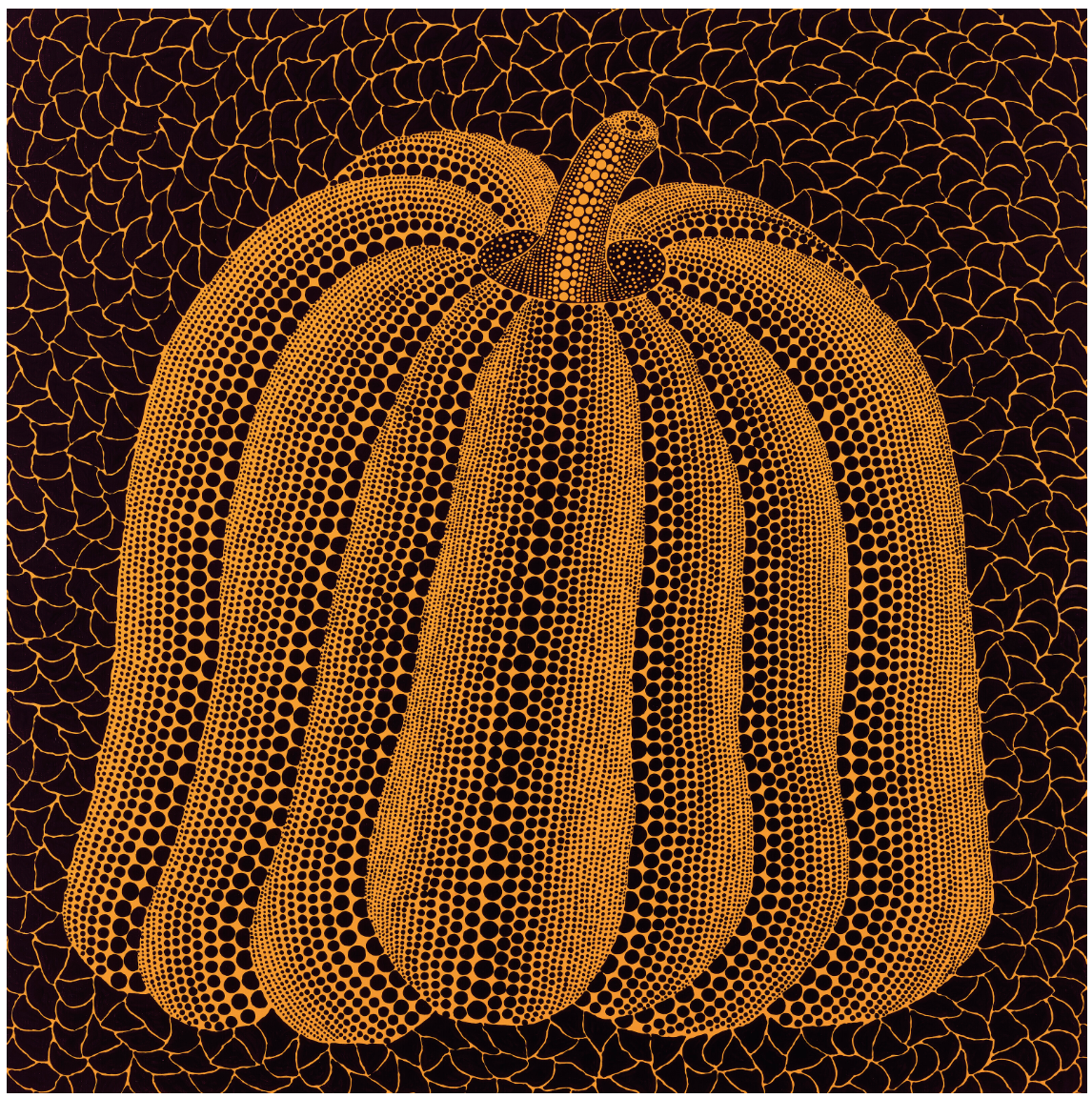
YAYOI KUSAMA (B. 1929)
PUMPKIN (HRU), 2014
Acrylic on canvas
100×100 cm (39 3/8 x 39 3/8 inches)
Signed, titled, titled again in Japanese, and dated ‘HRU PUMPKIN YAYOI KUSAMA 2014’ (on the reverse)
#5. La Promenade au bord de la mer, circa 1892
Christie’s Hong-Kong: 28 March 2024
Estimated: HKD 18,000,000 – 28,000,000
HKD 34,860,000 / USD 4,480,720
La Promenade au bord de la mer (Le Bois de la Chaise Noirmoutier)
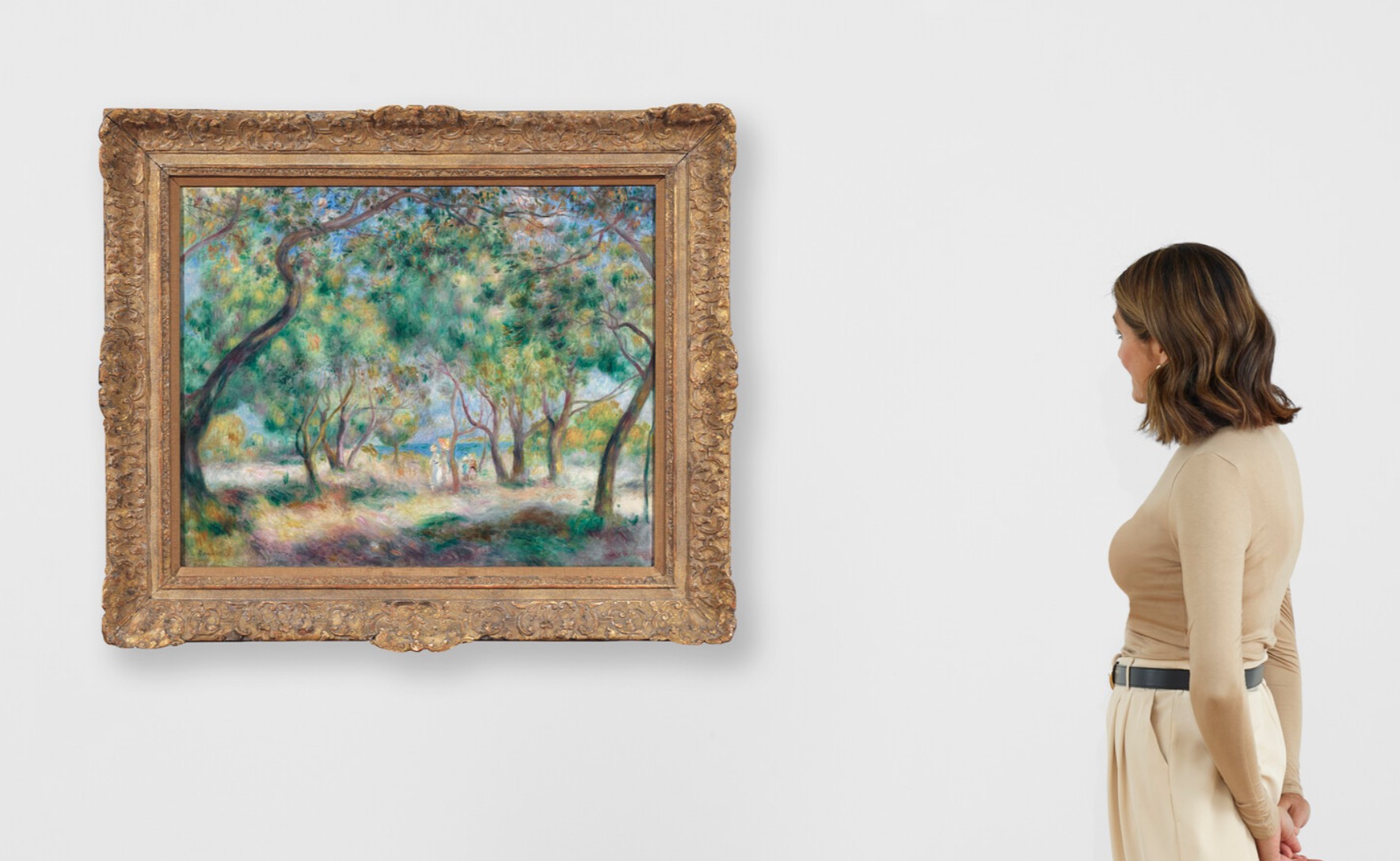
PIERRE-AUGUSTE RENOIR (1841-1919)
La Promenade au bord de la mer (Le Bois de la Chaise Noirmoutier), circa 1892
Oil on canvas
66.2 x 81.4 cm (26×32 inches)
Signed ‘Renoir.’ (lower left)
#6. La clairvoyance, circa 1962
Christie’s Hong-Kong: 28 March 2024
Estimated: HKD 15,000,000 – 25,000,000
HKD 28,810,000 / USD 3,703,085
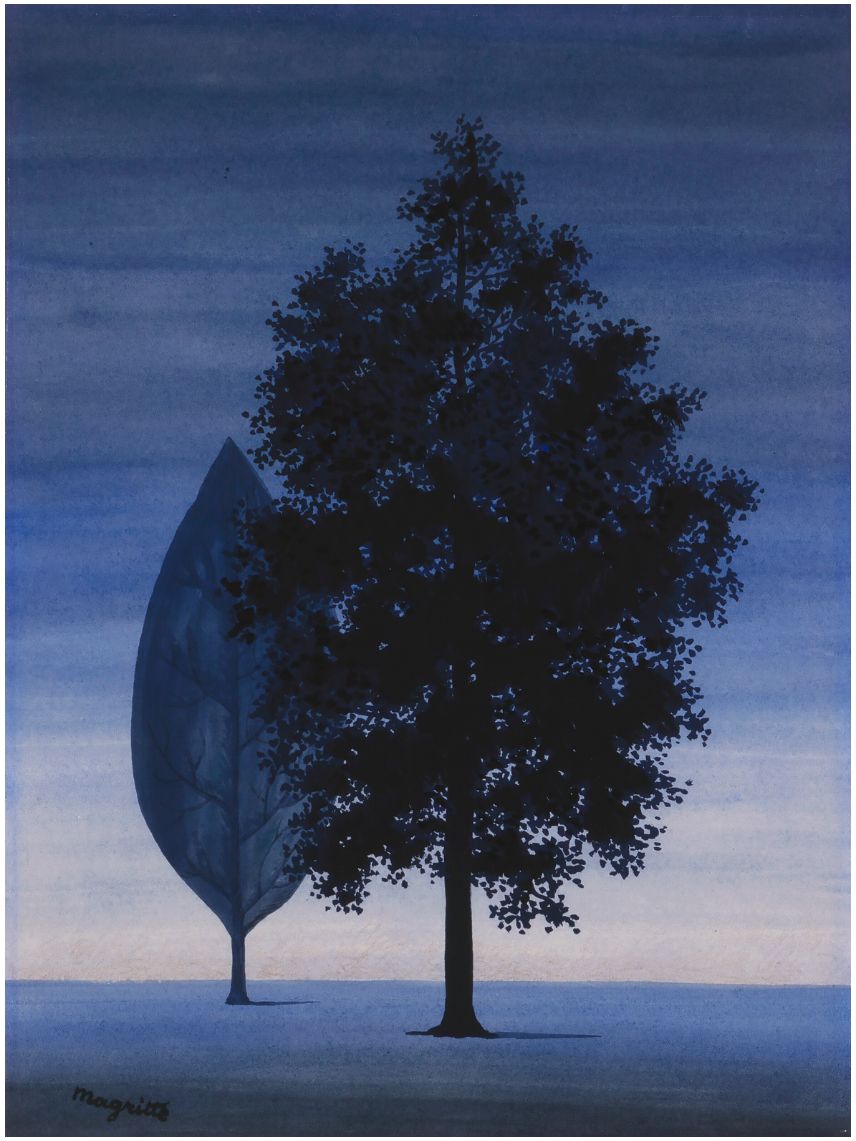
La clairvoyance, circa 1962
Gouache, watercolour and coloured pencil on paper
36 x 26.8 cm (14 1/8 x 10 1/2 inches)
Signed ‘Magritte’ (lower left)
#7. Untitled (After Henri Rousseau), 2020
Christie’s Hong-Kong: 28 March 2024
Estimated: HKD 10,000,000 – 15,000,000
HKD 23,365,000 / USD 3,003,213
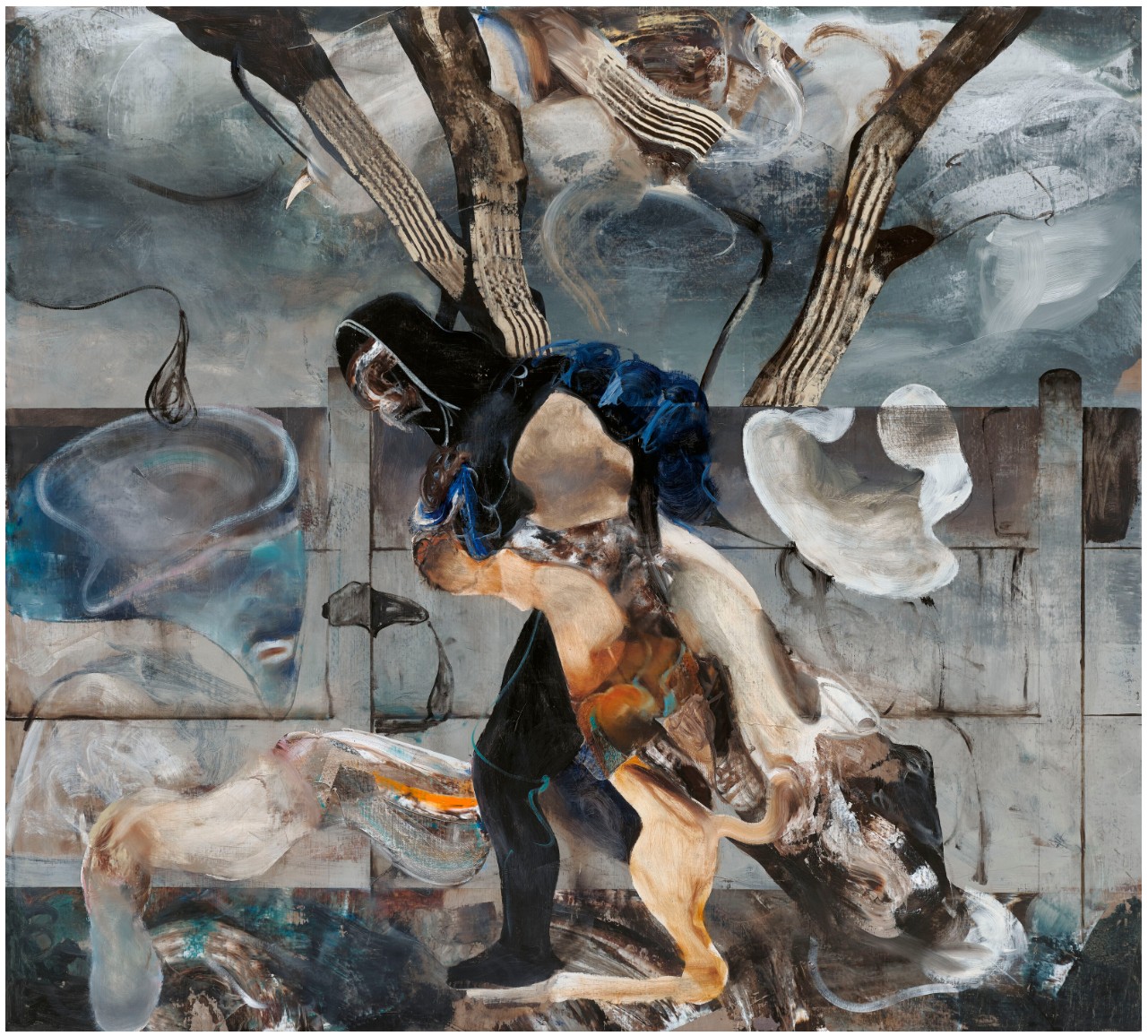
Untitled (After Henri Rousseau)
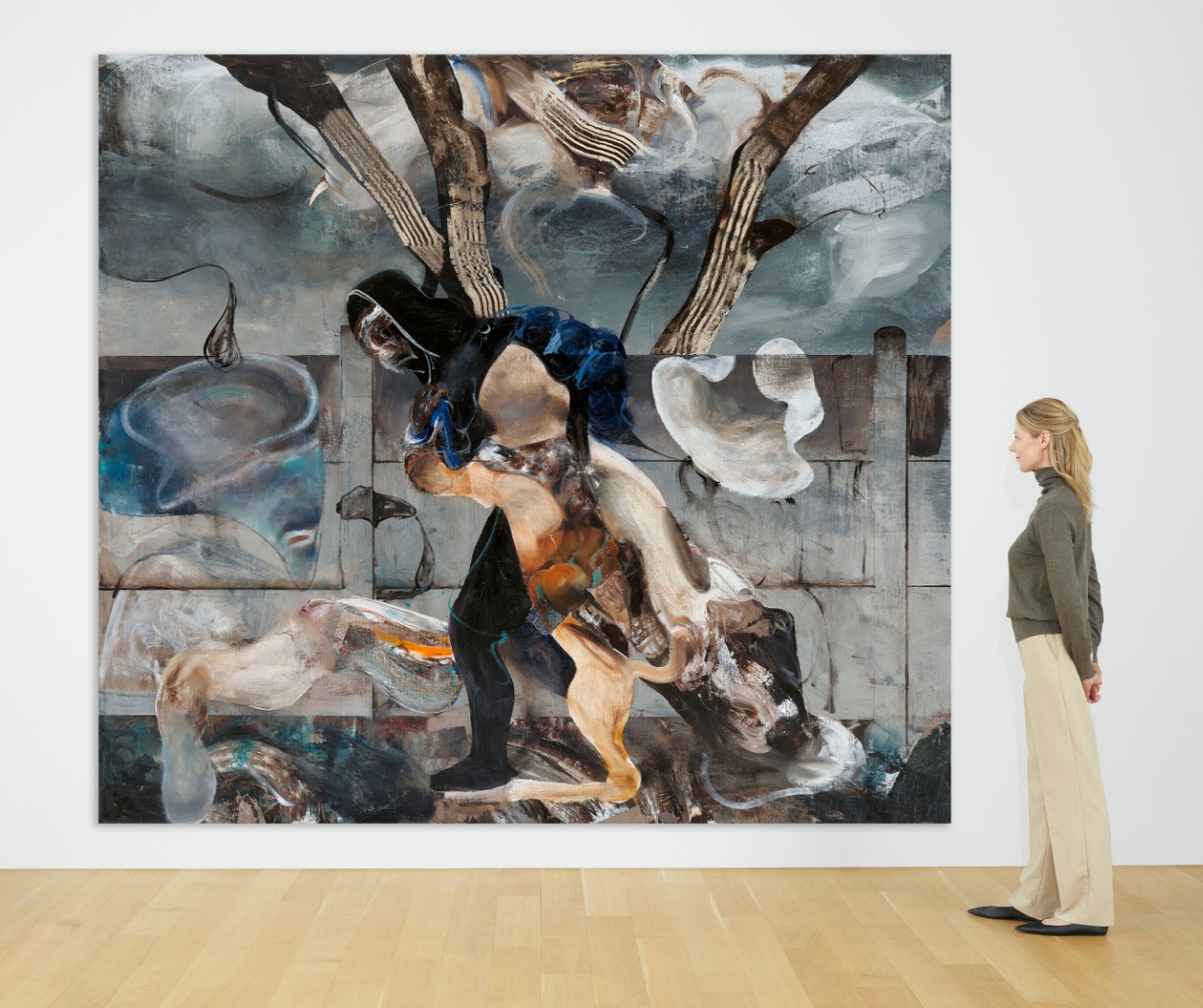
ADRIAN GHENIE (B. 1977)
Untitled (After Henri Rousseau), 2020
Oil on canvas
270×300 cm (106 1/4 x 118 1/8 inches)
Signed and dated ‘Ghenie 2020’ (on the reverse)
xxxxxxx
#14. Pumpkin (S), 2016
Christie’s Hong-Kong: 28 March 2024
Estimated: HKD 12,500,000 – 18,500,000
HKD 13,685,000 / USD 1,758,997
YAYOI KUSAMA (B. 1929), Pumpkin (S) | Christie’s
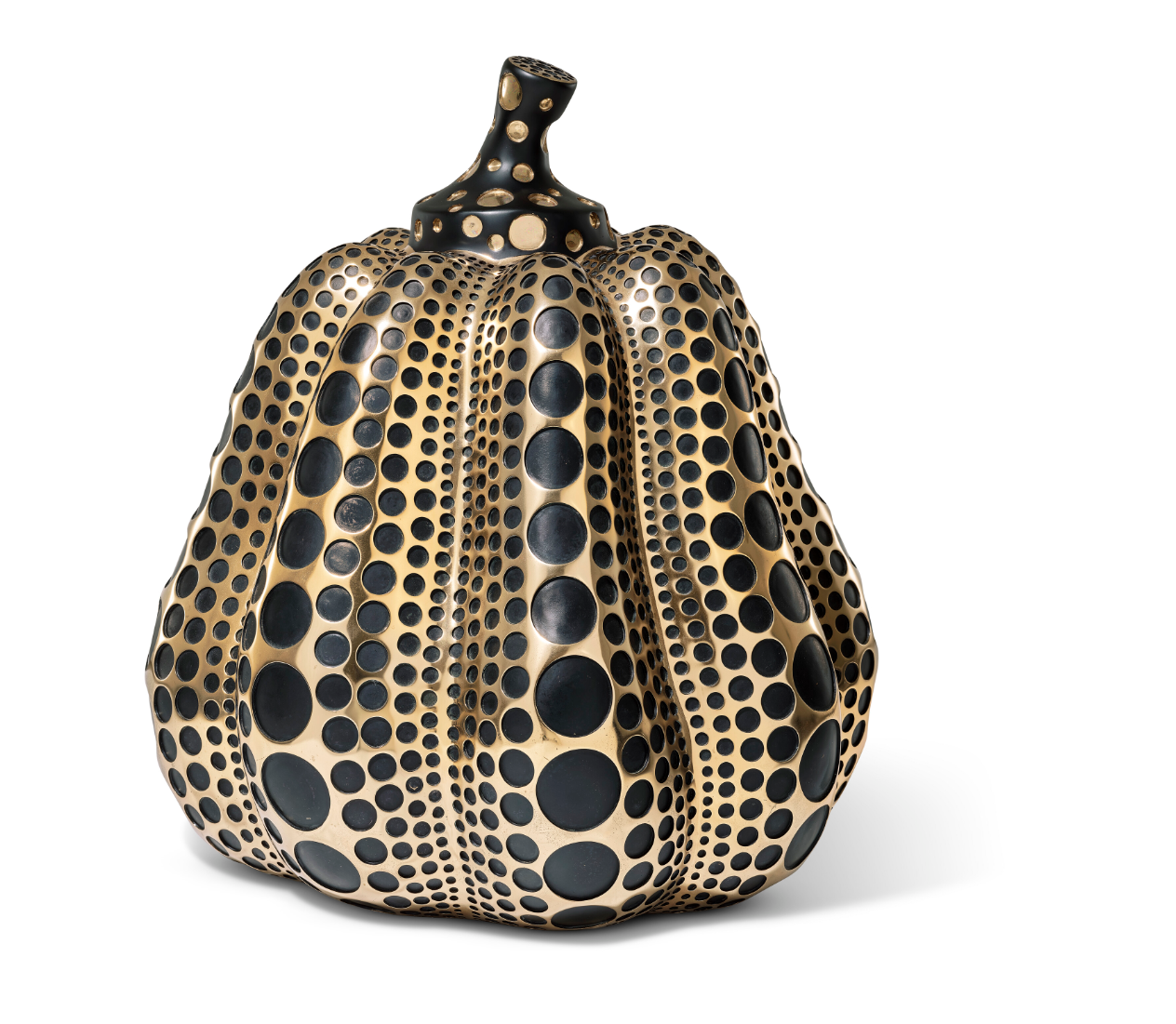
Pumpkin (S), 2016
Mirror polished bronze
67.3 (H) x 63.5 x 63.5 cm (26 1/2 x 25 x 25 inches)
Incised with the artist’s signature ‘Yayoi Kusama’ (lower edge)
This work is number three from an edition of eight plus two artist’s proofs
#15. Beijing Madonna, 1994-1995
Christie’s Hong-Kong: 28 March 2024
Estimated: HKD 12,000,000 – 18,000,000
HKD 12,475,000 / USD 1,603,470
LIU YE (B. 1964), Beijing Madonna | Christie’s
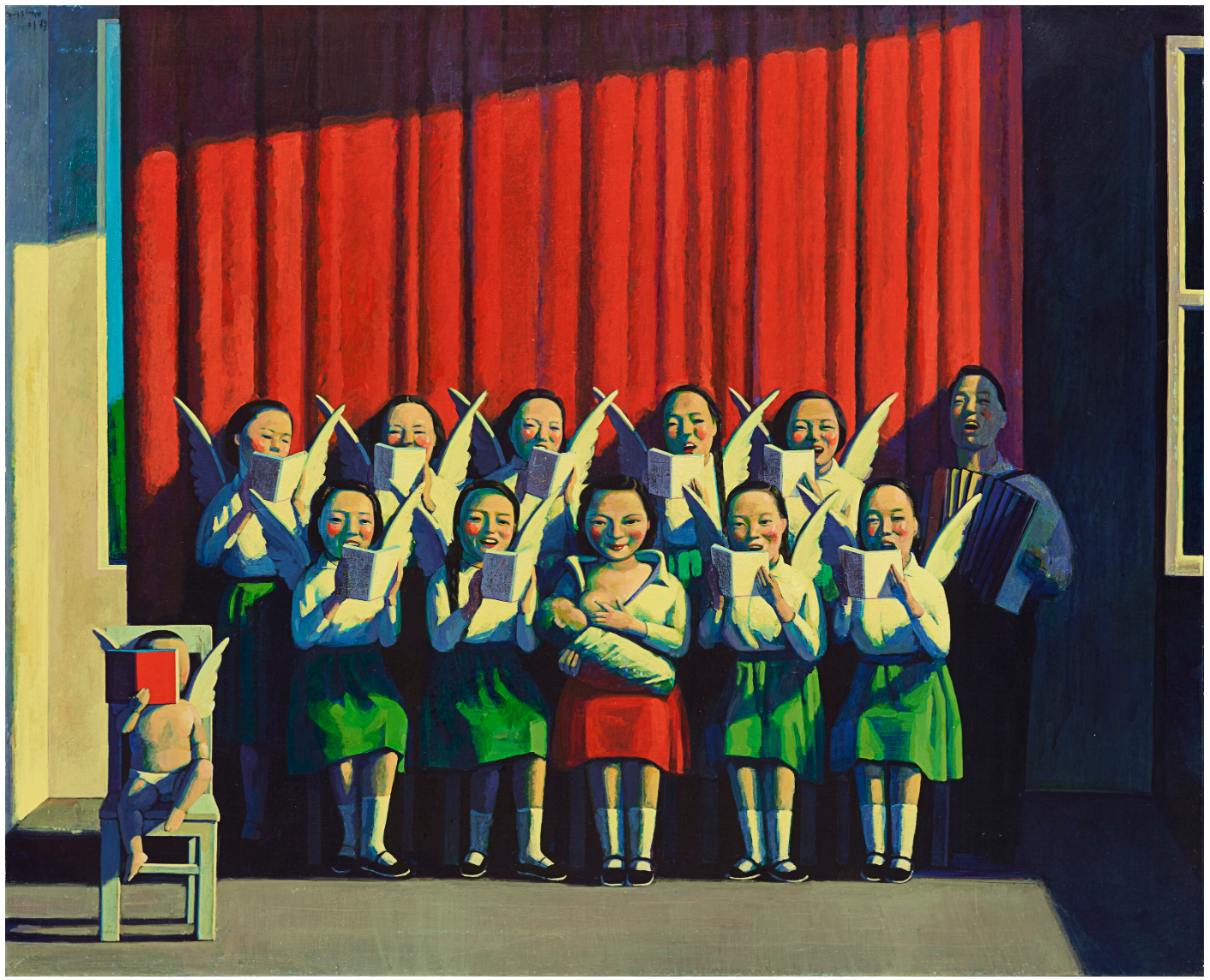
LIU YE (B. 1964)
Beijing Madonna, 1994-1995
Acrylic and oil on canvas
80×100 cm (31 1/2 x 39 3/8 inches)
Signed, signed again in Chinese, and dated ’94-95 Liu ye’ (upper left)
#12. Portrait of Nadine Haim, 1977
Christie’s Hong-Kong: 28 March 2024
Estimated: HKD 2,500,000 – 3,500,000
HKD 3,402,000 / USD 437,275
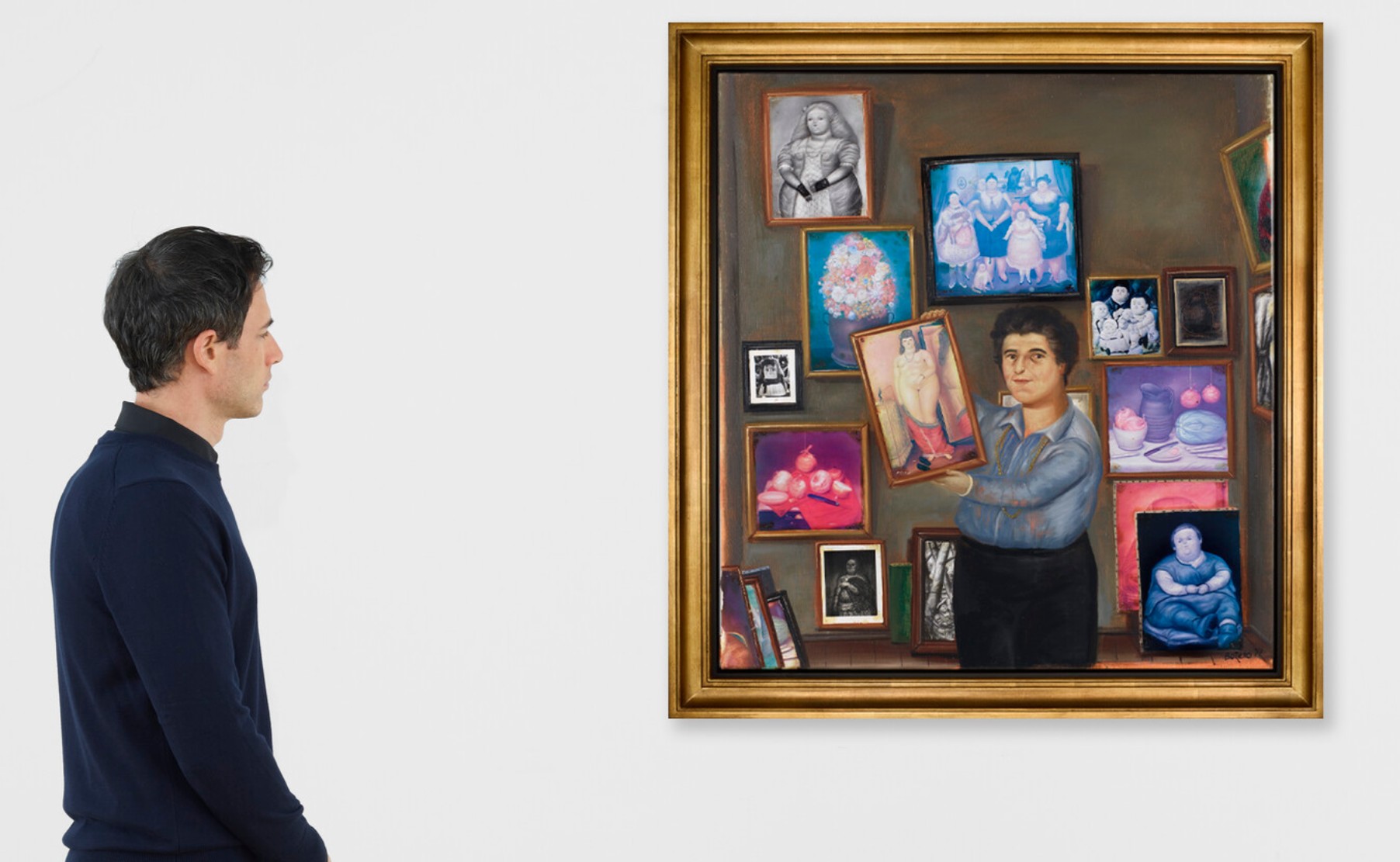
Portrait of Nadine Haim, 1977
Oil and photo collage on canvas mounted on board
88.5 x 83 cm (34 7/8 x 32 5/8 inches)
Signed and dated ‘Botero 77’ (lower right)
Signed, titled and dated ‘”NADINE HAIM” Botero 77’ (on the reverse)
Colored plastic complex of noise + dance + joy, 2009
Christie’s Hong-Kong: 28 March 2024
Estimated: HKD 3,000,000 – 5,000,000
HKD 3,402,000 / USD 437,275
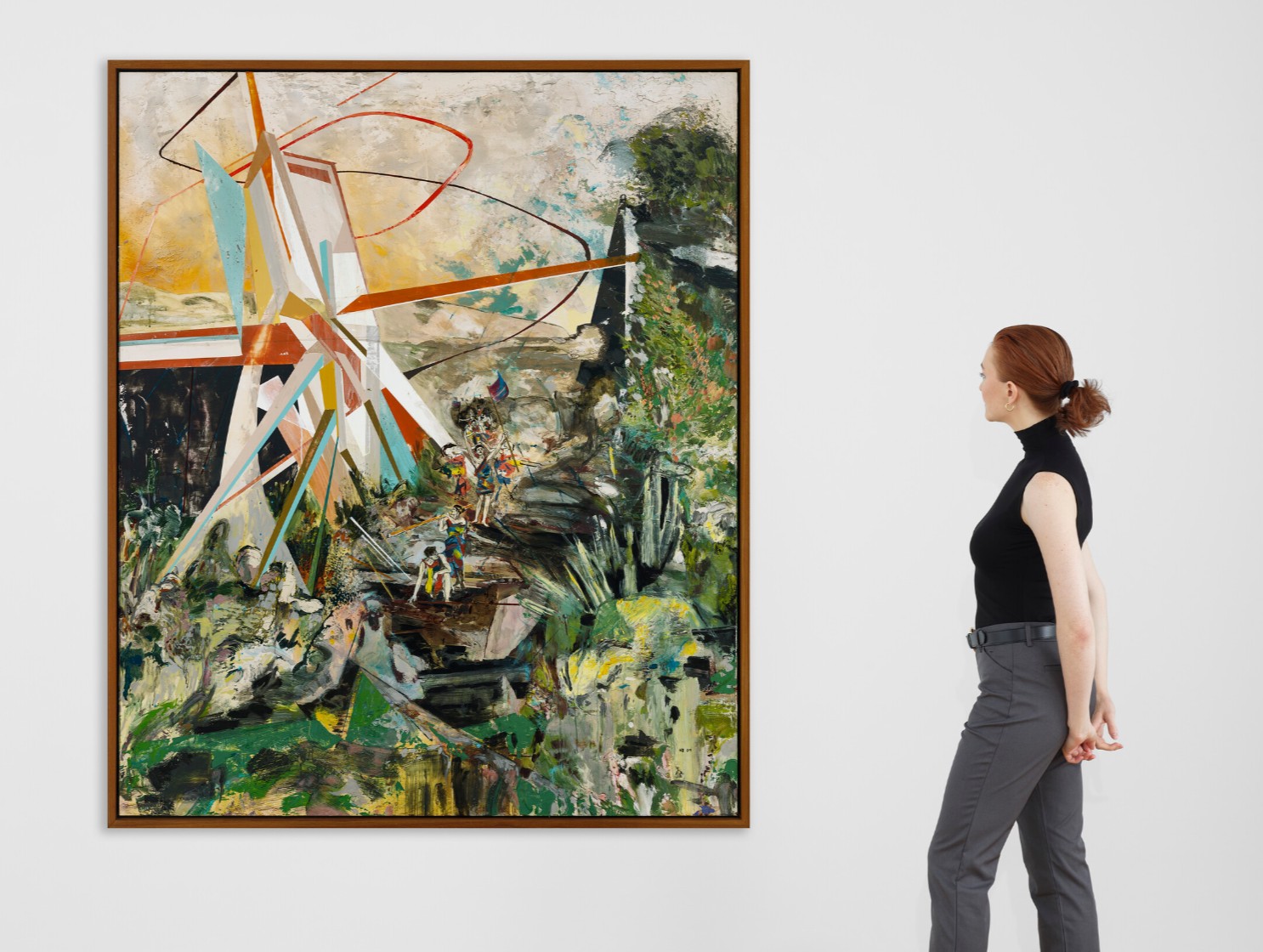
Colored plastic complex of noise + dance + joy, 2009
Acrylic on linen laid on panel
72×60 inches (182.9 x 152.4 cm)
Signed with the artist’s initials and dated ‘HB 09’ (lower right)
Signed with the artist’s initials, titled, and dated
‘colored plastic complex of noise + dance + joy HB 2009’
(on the reverse)
Untitled, circa 1970
Christie’s Hong-Kong: 28 March 2024
Estimated: HKD 12,000,000 – 18,000,000
PASSED
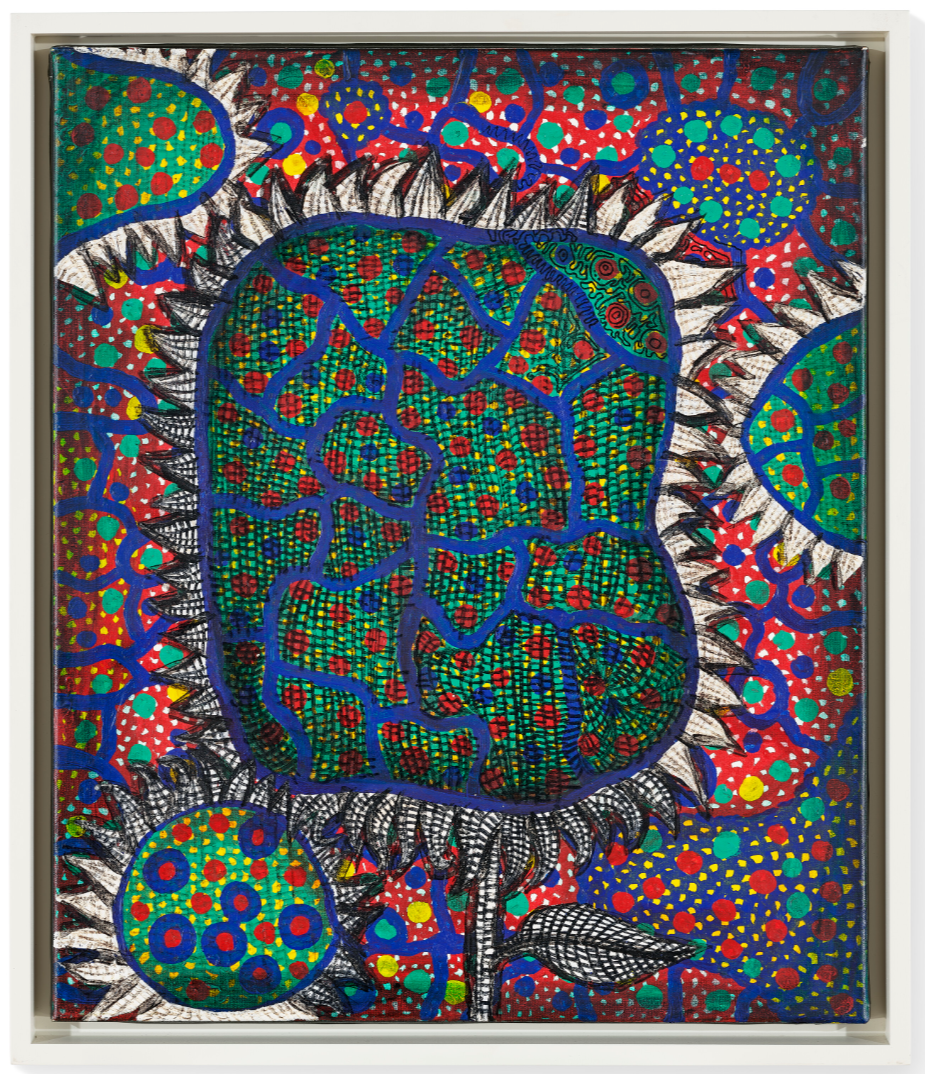
Untitled, circa 1970
Oil and mixed media on canvas
60 x 50.4 cm (23 5/8 x 19 7/8 inches)
Signed twice and dated ‘Yayoi Kusama 1970 c.’ (on the reverse)
Christie’s: 21st Century Day Sale
29 March 2025
TOTAL
HKD 113,839,500 / USD 14,632,326
# Lots: 68
Passed: 6 Lots
Sold: 62 Lots
Sell-Through Rate: 91.2%
#1. Mine Detector, 1993
Christie’s Hong-Kong: 29 March 2024
Estimated: HKD 15,000,000 – 20,000,000
HKD 23,970,000 / USD 3,080,977
YOSHITOMO NARA (B. 1959), Mine Detector | Christie’s
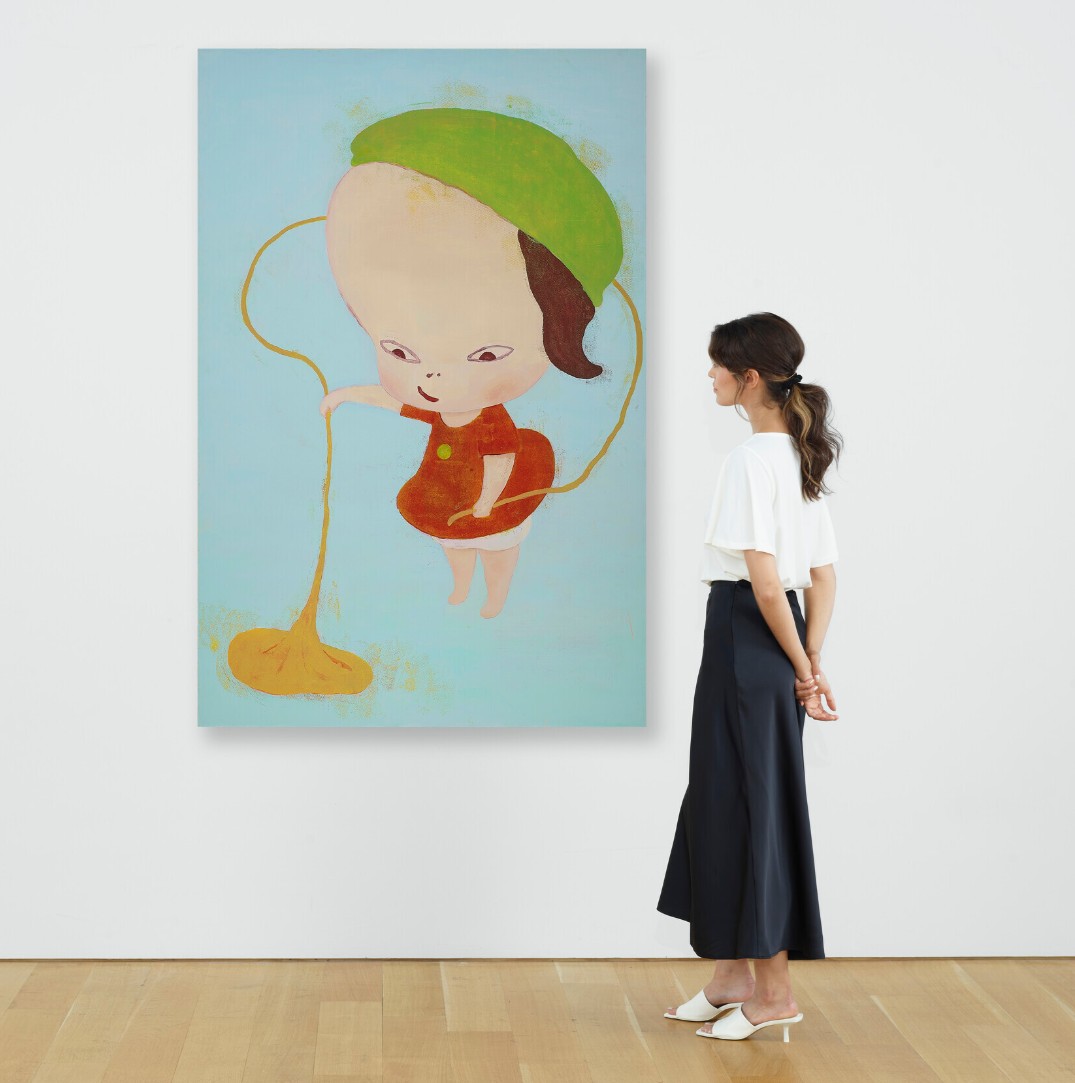
YOSHITOMO NARA (B. 1959)
Mine Detector, 1993
Acrylic on canvas
150×100 cm (59 x 39 3/8 inches)
Signed and dated ‘YOSHITOMO NARA ’93’ (on the overlap)
#2. Darisa, 2015
Christie’s Hong-Kong: 29 March 2024
Estimated: HKD 4,500,000 – 6,500,000
HKD 7,560,000 / USD 971,722
ALEX KATZ (B. 1927), Darisa | Christie’s
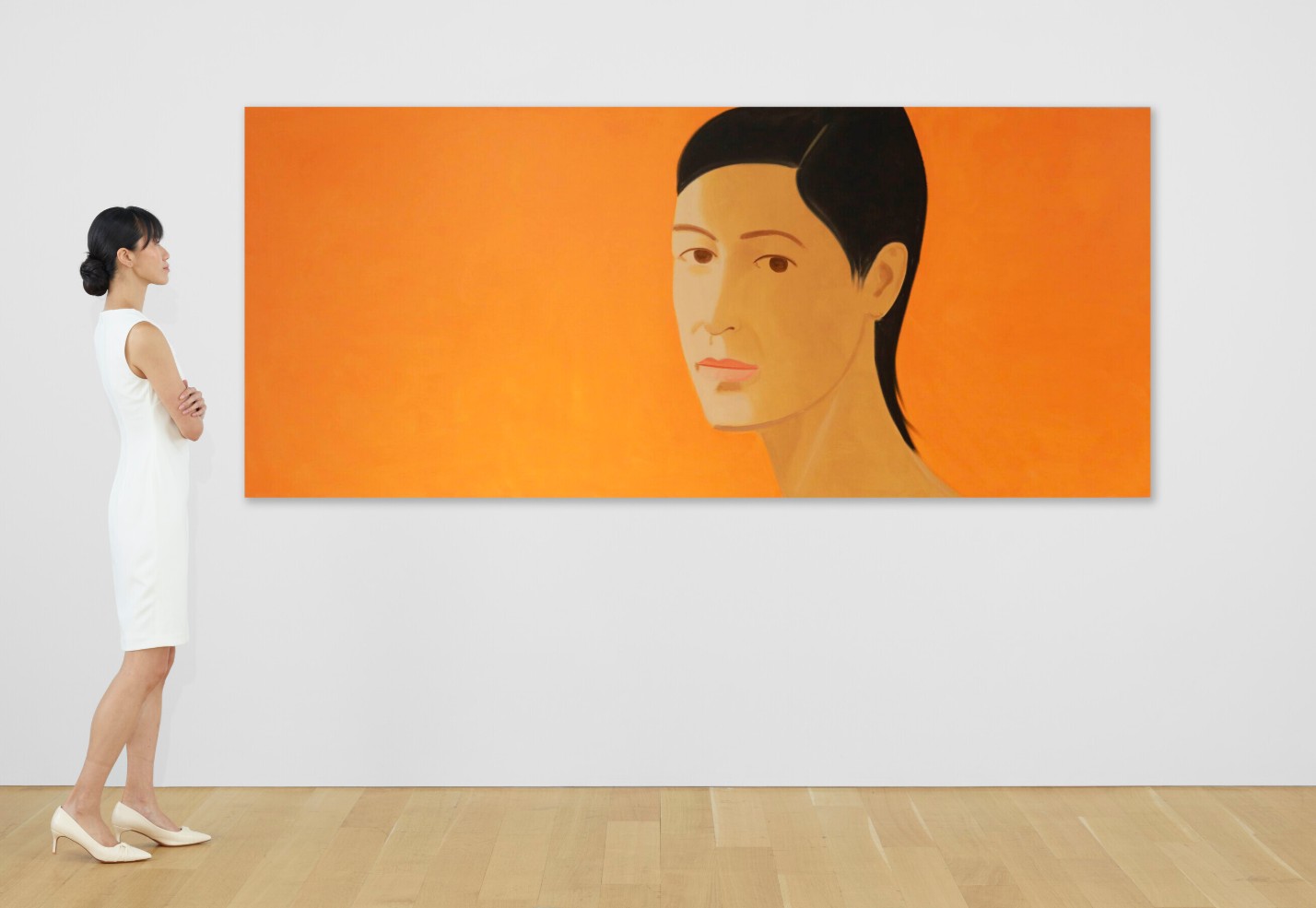
ALEX KATZ (B. 1927)
Darisa, 2015
Oil on linen
48×112 inches (121.9 x 284.5 cm)
Signed and dated ‘alex katz 14’ (on the overlap)
#3. Nets, 1999
Christie’s Hong-Kong: 29 March 2024
Estimated: HKD 6,000,000 – 8,000,000
HKD 7,560,000 / USD 971,722
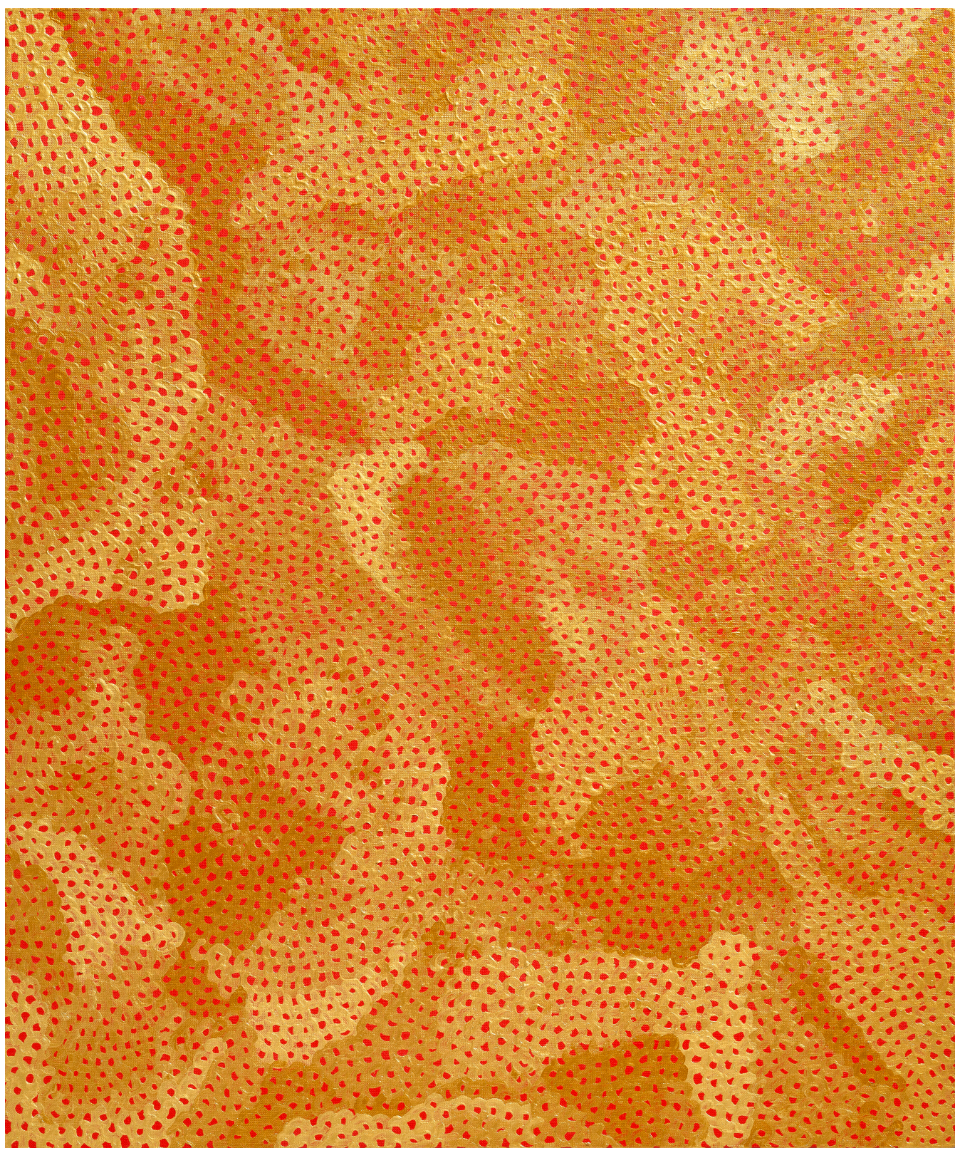
Nets, 1999
Acrylic on canvas
73 x 60.8 cm (28 3/4 x 23 7/8 inches)
Signed, titled, and dated ‘Yayoi Kusama 1999 Nets’ (on the reverse)
#4. INFINITY-NETS (TTWAM), 2007
Christie’s Hong-Kong: 29 March 2024
Estimated: HKD 7,800,000 – 12,800,000
HKD 7,308,000 / USD 939,332
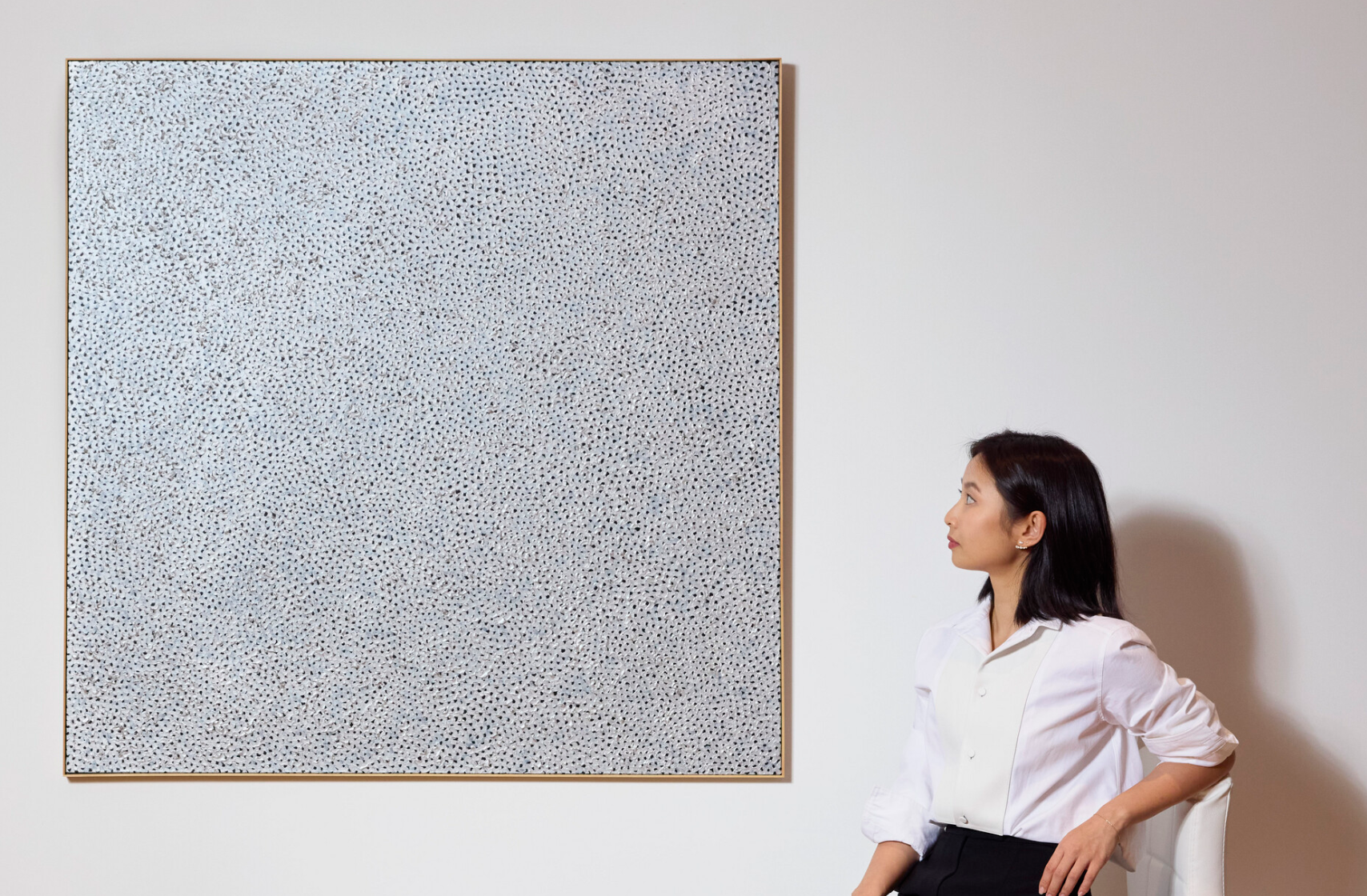
INFINITY-NETS (TTWAM), 2007
Acrylic on canvas
117×117 cm (46×46 inches)
Signed, titled and dated ‘Yayoi Kusama 2007 INFINITY-NETS TTWAM’
Titled again in Japanese (on the reverse)
#5. Hat, 1981
Christie’s Hong-Kong: 29 March 2024
Estimated: HKD 7,800,000 – 12,800,000
HKD 6,930,000 / USD 890,746
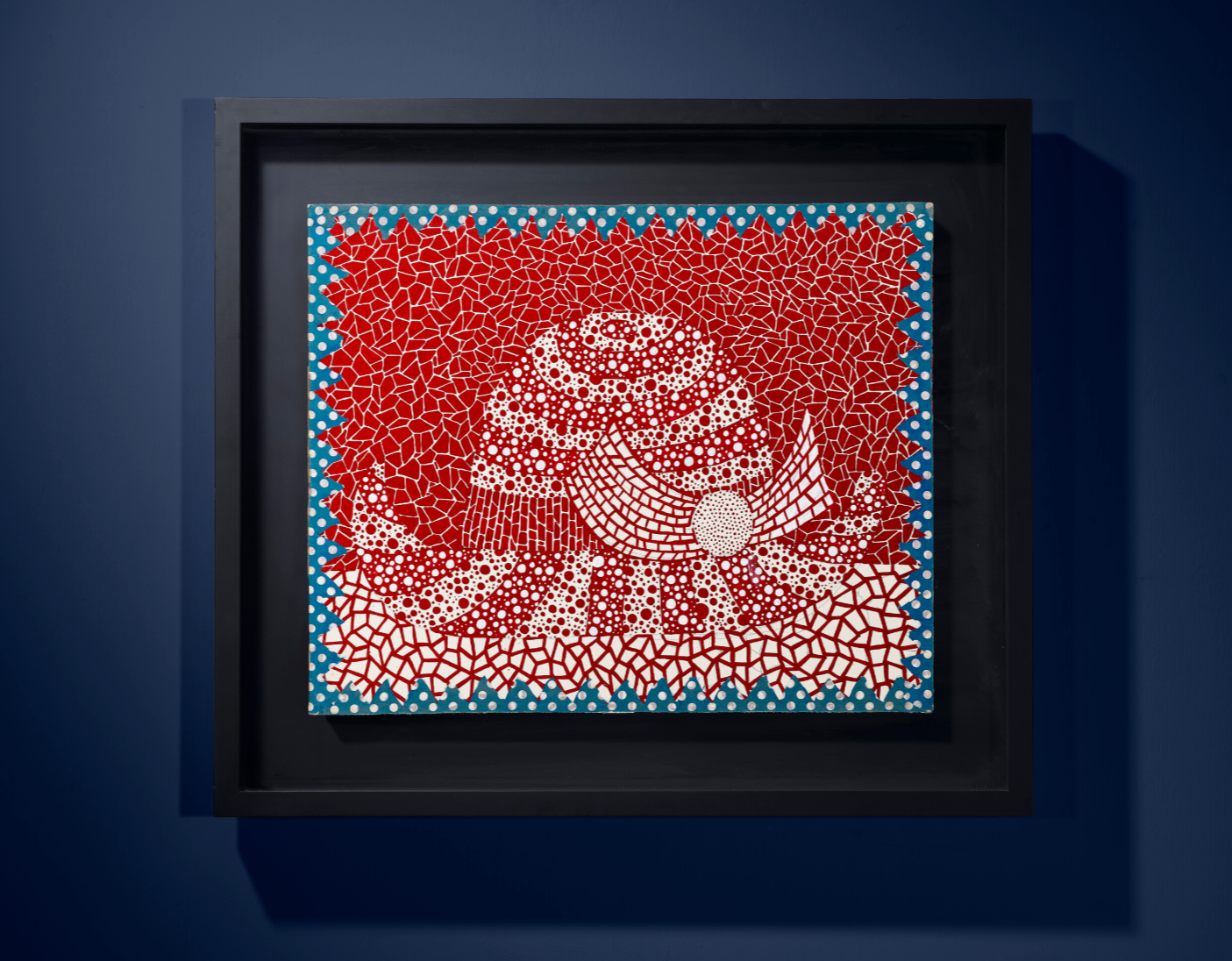
Hat, 1981
Acrylic, pencil, and cloth collage on canvas
53 x 65.2 cm (20 7/8 x 25 5/8 inches)
Signed and dated ‘YAYOI KUSAMA 1981’, titled in Japanese (on the reverse)
#6. The Flying Balloon, 2013
Christie’s Hong-Kong: 29 March 2024
Estimated: HKD 4,800,000 – 6,800,000
HKD 6,804,000 / USD 874,550
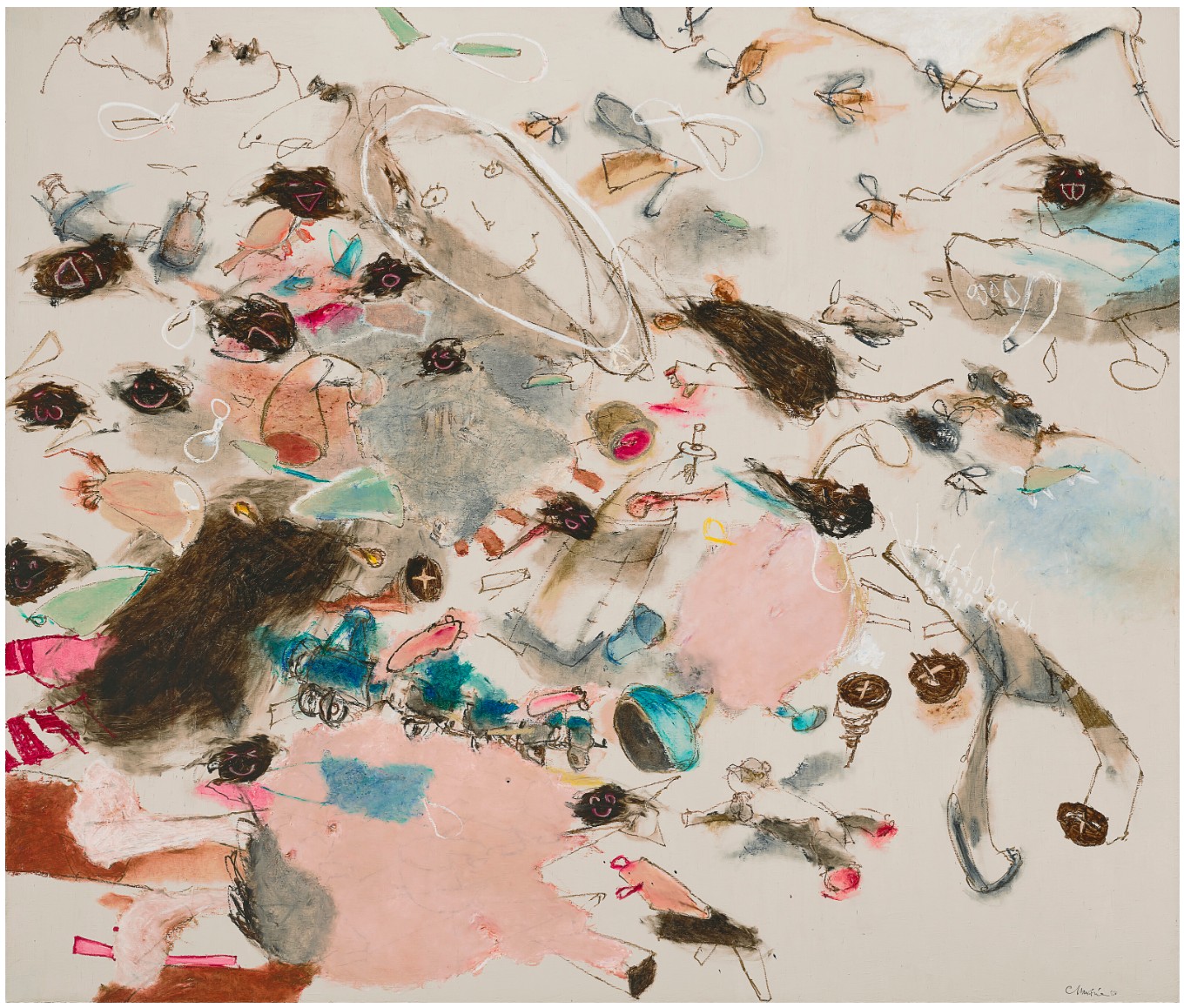
The Flying Balloon, 2013
Oil on canvas
170×200 cm (67 x 78 3/4 inches)
Signed and dated ‘Christine 13’ (lower right)
Signed, titled, inscribed and dated
‘ay tjoe Christine “the Flying Balloon” 200 x 170 cm oil on canvas 2013’
(on the reverse)
#7. Pumpkin, 2001
Christie’s Hong-Kong: 29 March 2024
Estimated: HKD 6,000,000 – 8,000,000
HKD 6,552,000 / USD 842,159
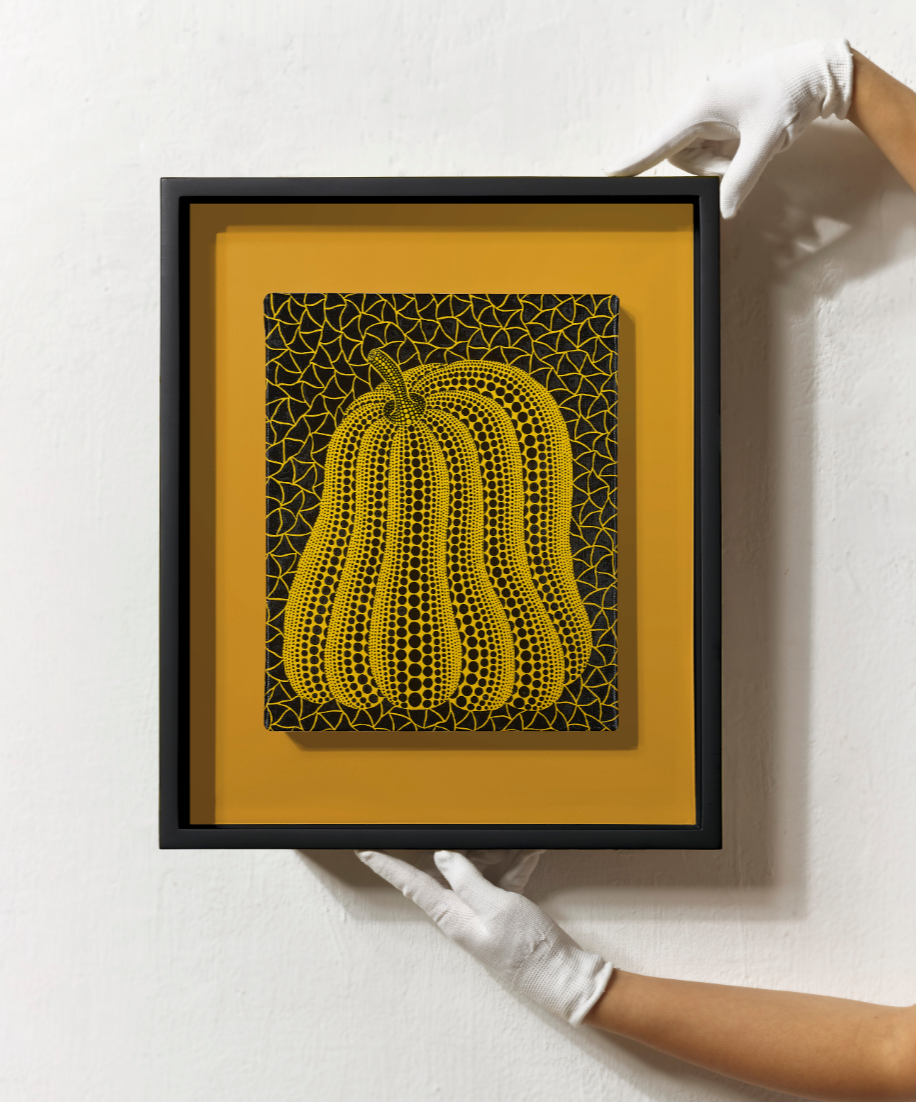
Pumpkin, 2001
Acrylic on canvas
27×22 cm (10 5/8 x 8 5/8 inches)
Signed and dated ‘YAYOI KUSAMA 2001’
Titled in Japanese (on the reverse)
#8. Swallow’s Nest, 1989
Christie’s Hong-Kong: 29 March 2024
Estimated: HKD 4,500,000 – 6,500,000
HKD 5,670,000 / USD 728,792
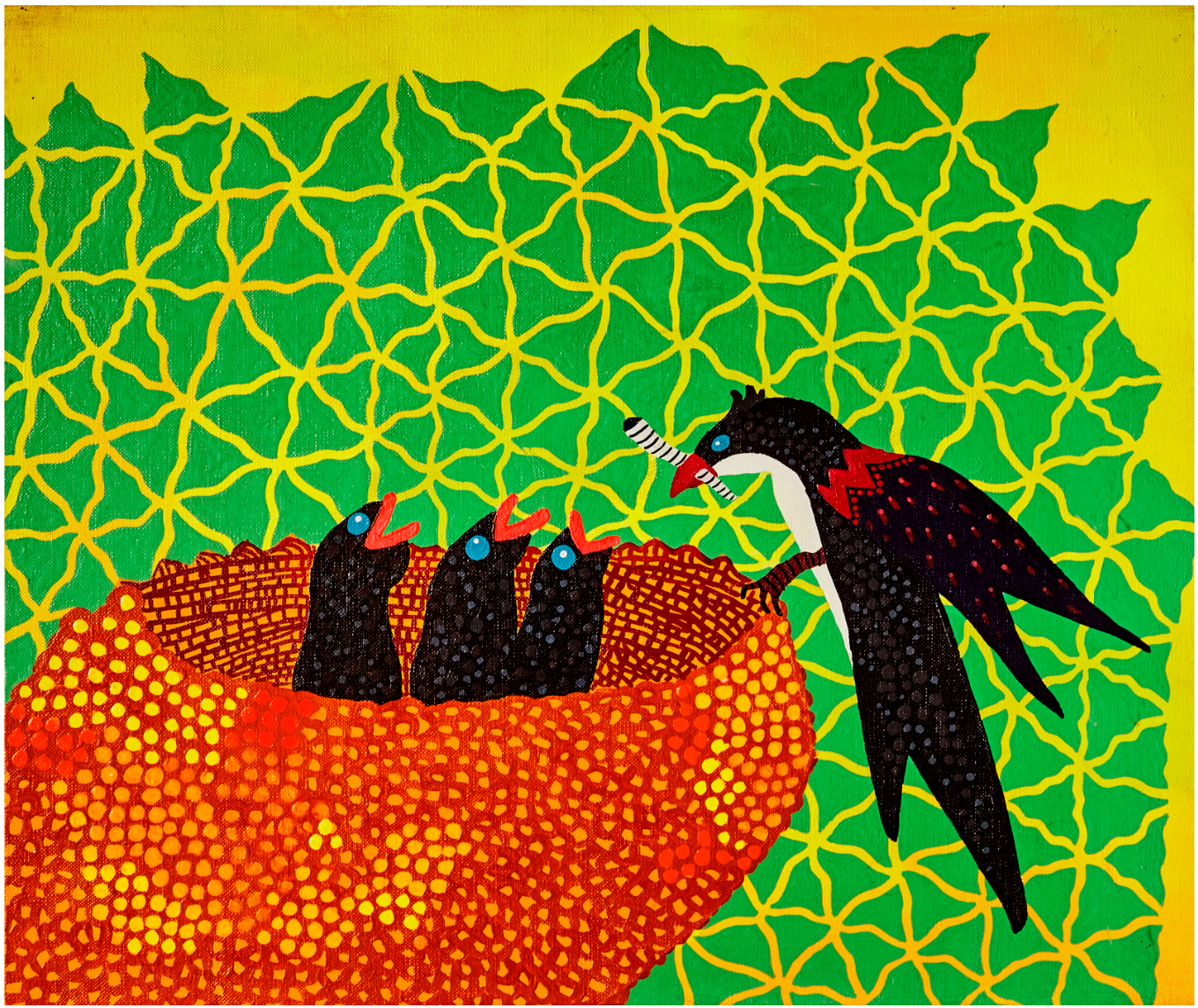
Swallow’s Nest, 1989
Acrylic on canvas
38.5 x 46 cm (15 1/8 x 18 1/8 inches)
Signed and dated ‘Yayoi Kusama 1989’
Titled in Japanese (on the reverse)
#9. Untitled, 1996
Christie’s Hong-Kong: 29 March 2024
Estimated: HKD 4,500,000 – 6,500,000
HKD 5,040,000 / USD 647,815
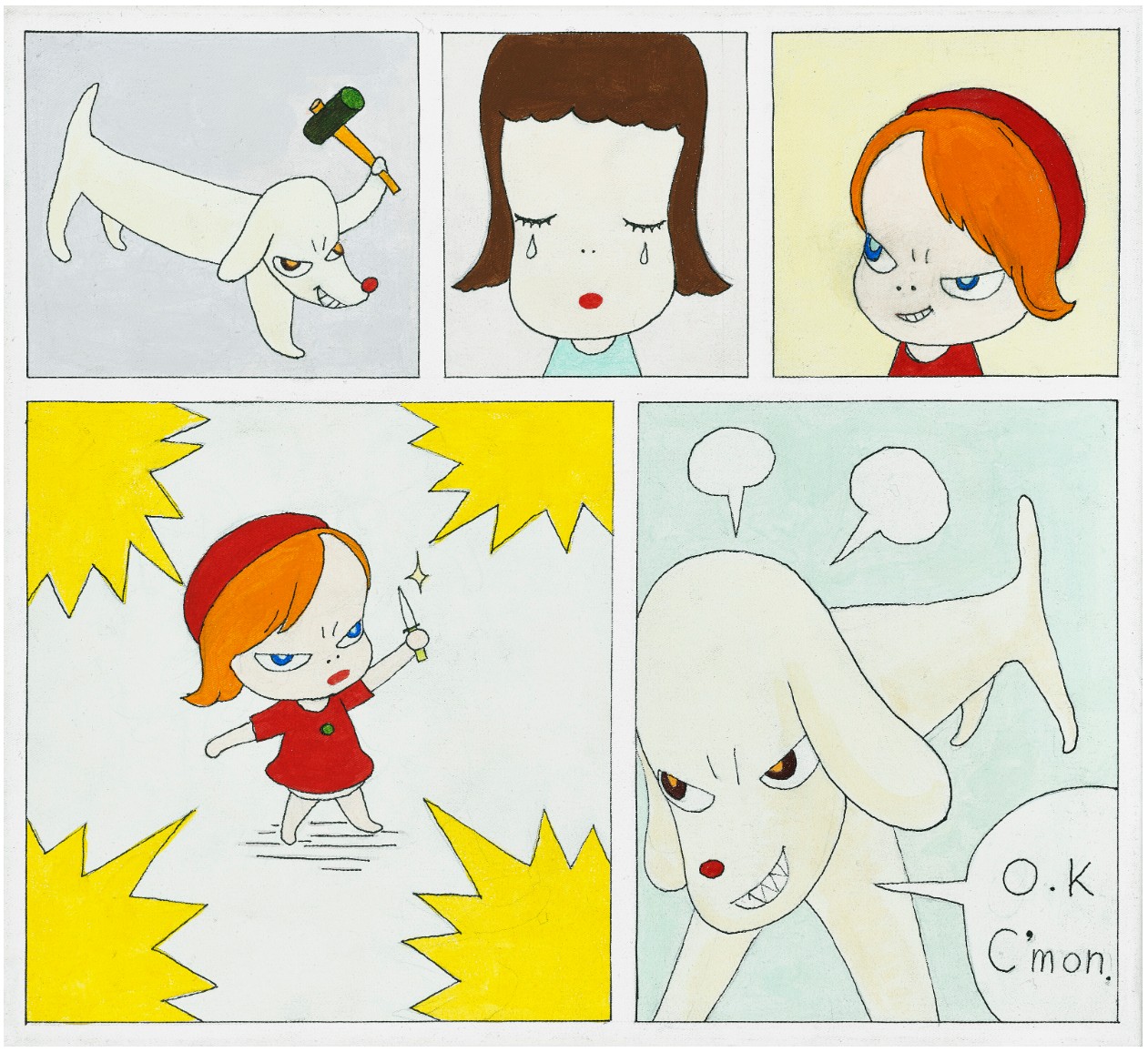
Untitled, 1996
Acrylic, pen, and pencil on canvas
42×46 cm (16 1/2 x 18 1/8 inches)
Signed, inscribed, and dated ”96 Say Good-Bye to stuffed dog, No1 artist’s stamp’ (on the reverse)
#10. Heart Shaped Candy Box (True Love), 1984
Christie’s Hong-Kong: 29 March 2024
Estimated: HKD 800,000 – 1,200,000
HKD 3,150,000 / USD 404,884
ANDY WARHOL (1928-1987), Heart Shaped Candy Box (True Love) | Christie’s
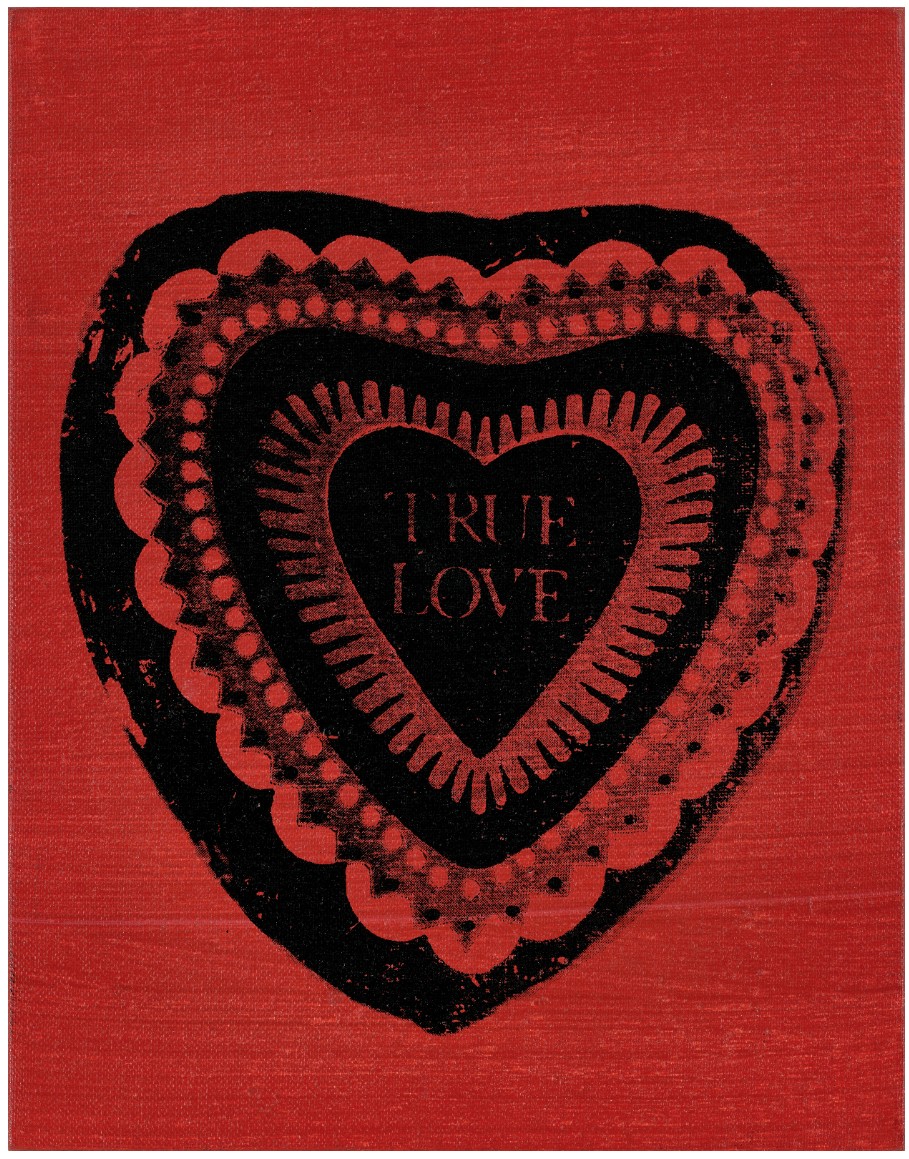
Heart Shaped Candy Box (True Love), 1984
Synthetic polymer and silkscreen ink on canvas
10 1/8 x 8 inches (25.7 x 20.3 cm)
Signed, inscribed, dedicated and dated ‘TO LIZA H.B. March 12 Andy Warhol 84’ (on the overlap)
#11. Young Boy and Lacoste, 2005
Christie’s Hong-Kong: 29 March 2024
Estimated: HKD 1,500,000 – 2,500,000
HKD 2,268,000 / USD 291,517
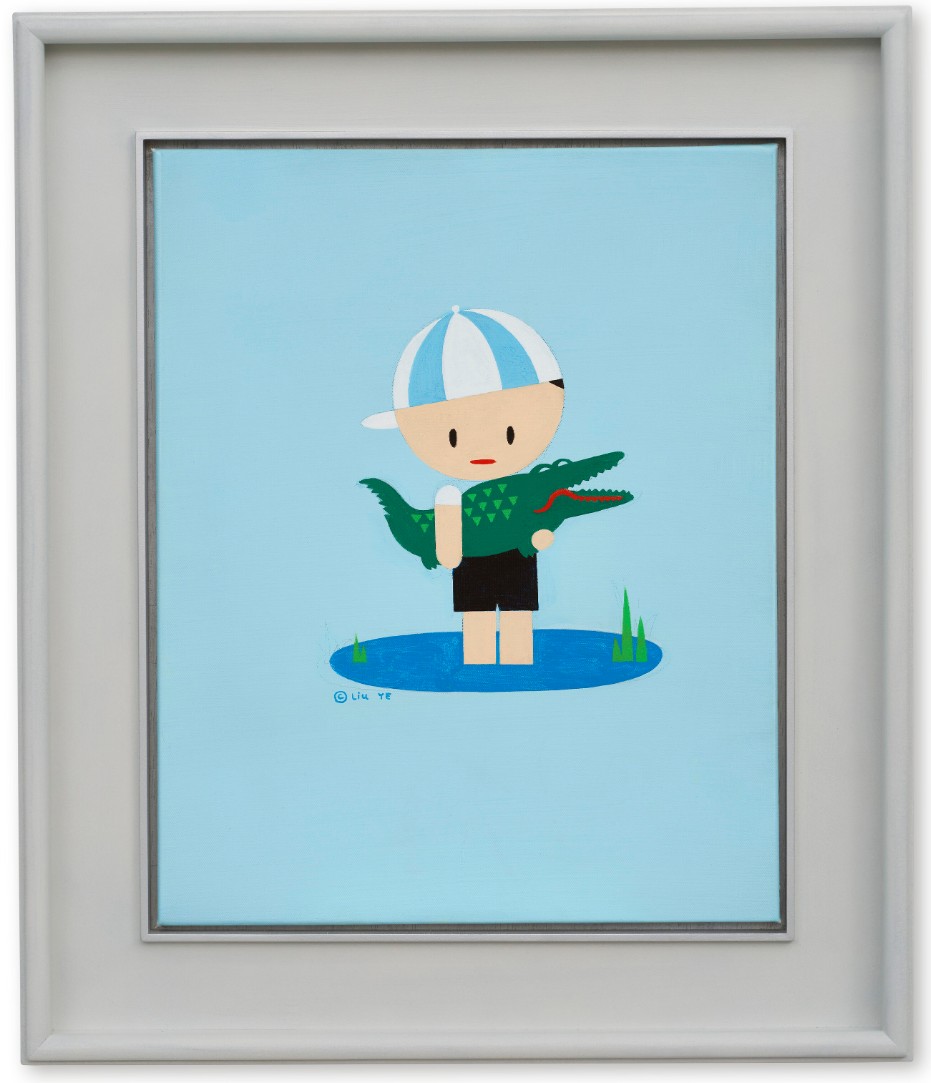
Young Boy and Lacoste, 2005
Acrylic and pencil on canvas
50×40 cm (19 5/8 x 15 3/4 inches)
Signed ‘©LIU YE’ (lower left)
#12. Keep Calm, 2020
Christie’s Hong-Kong: 29 March 2024
Estimated: HKD 1,000,000 – 2,000,000
HKD 2,016,000 / USD 259,126
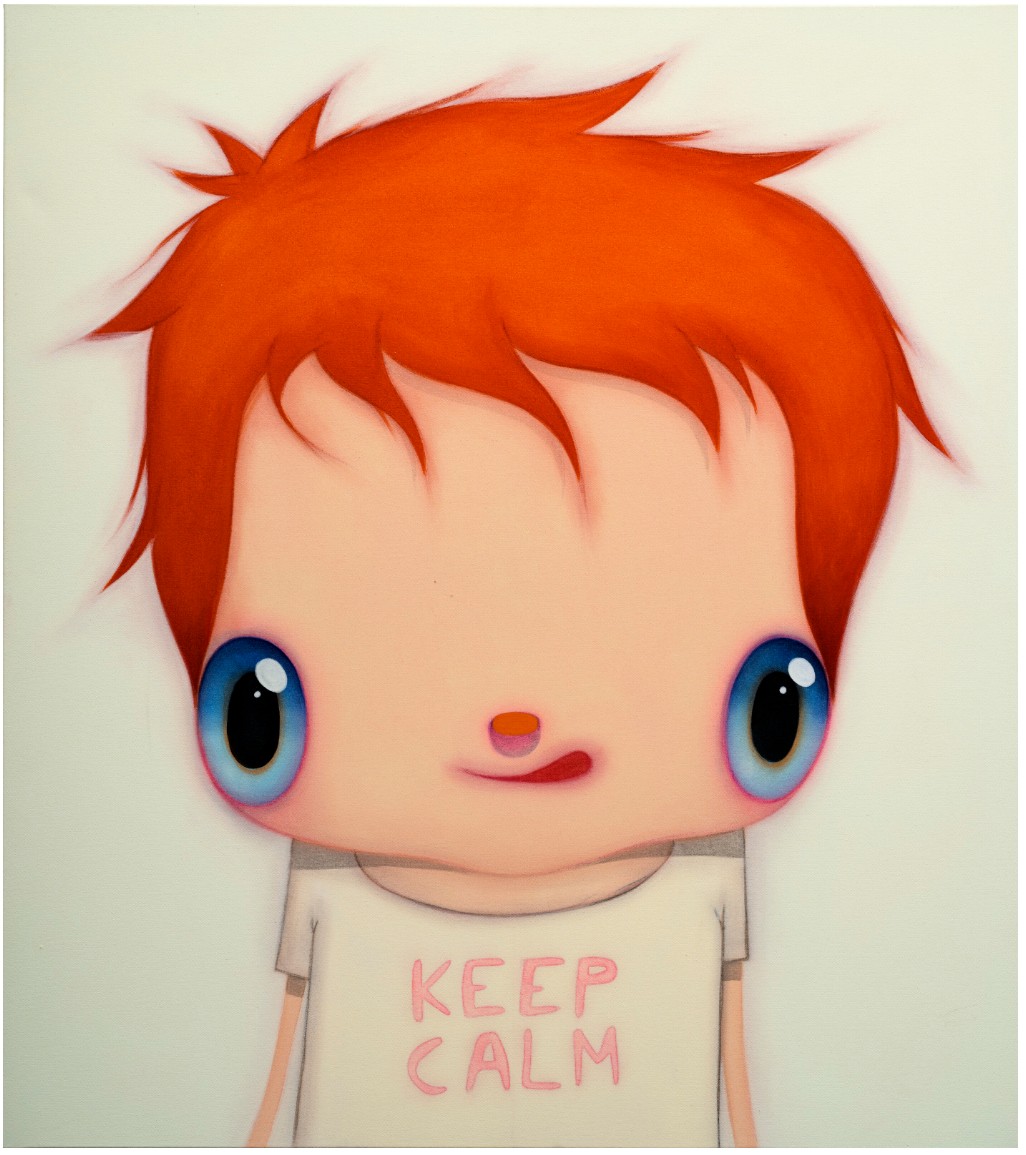
Keep Calm, 2020
Acrylic on canvas
130×116 cm (51 1/8 x 45 5/8 inches)
Signed, dated and titled ‘Javier Calleja 2020 KEEP CALM’ (on the overlap)
#13. Comrade, 2002
Christie’s Hong-Kong: 29 March 2024
Estimated: HKD 500,000 – 800,000
HKD 1,638,000 / USD 210,540
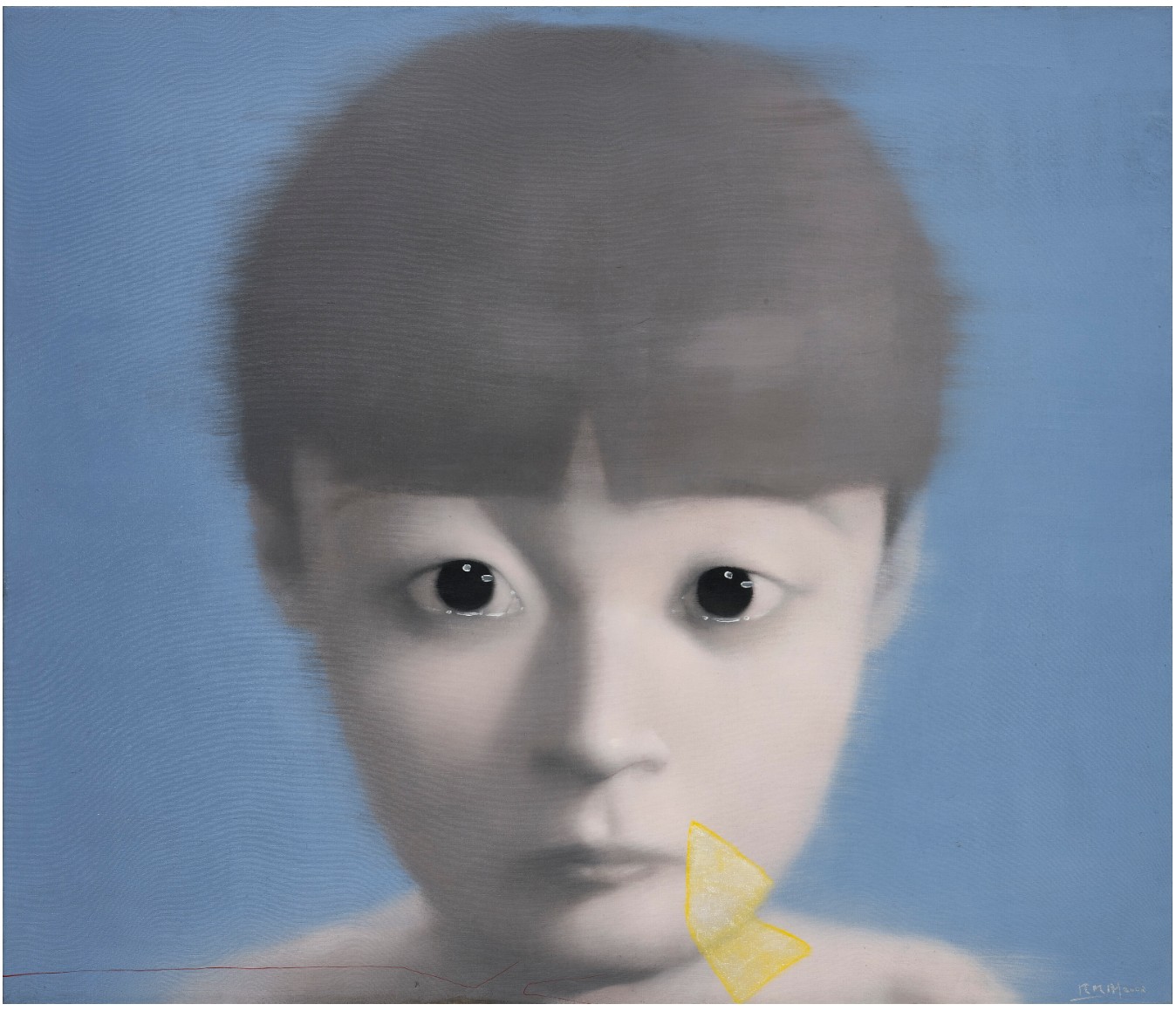
Comrade, 2002
Oil on canvas
108.4 x 126.9 cm (42 5/8 x 50 inches)
Signed in Chinese and dated ‘2002’ (lower right)
#14. A Bundle of Wire, 2013
Christie’s Hong-Kong: 29 March 2024
Estimated: HKD 800,000 – 1,200,000
HKD 1,512,000 / USD 194,344
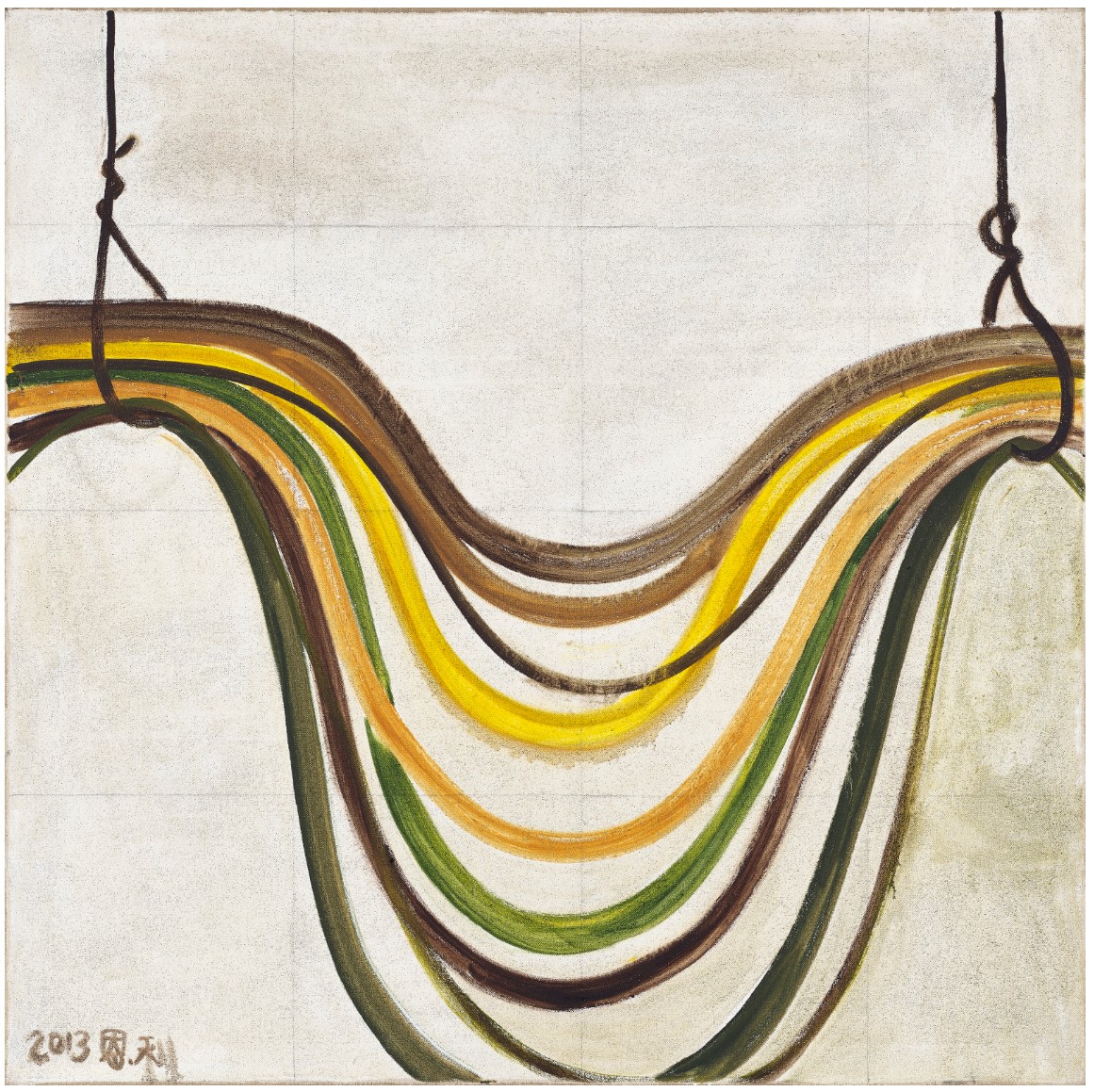
A Bundle of Wire, 2013
Oil on canvas
150×150 cm (59×59 inches)
Signed in Chinese and dated ‘2013’ (lower left)
Signed and titled in Chinese, dated and inscribed ‘2013 150 x 150 cm’ (on the reverse)
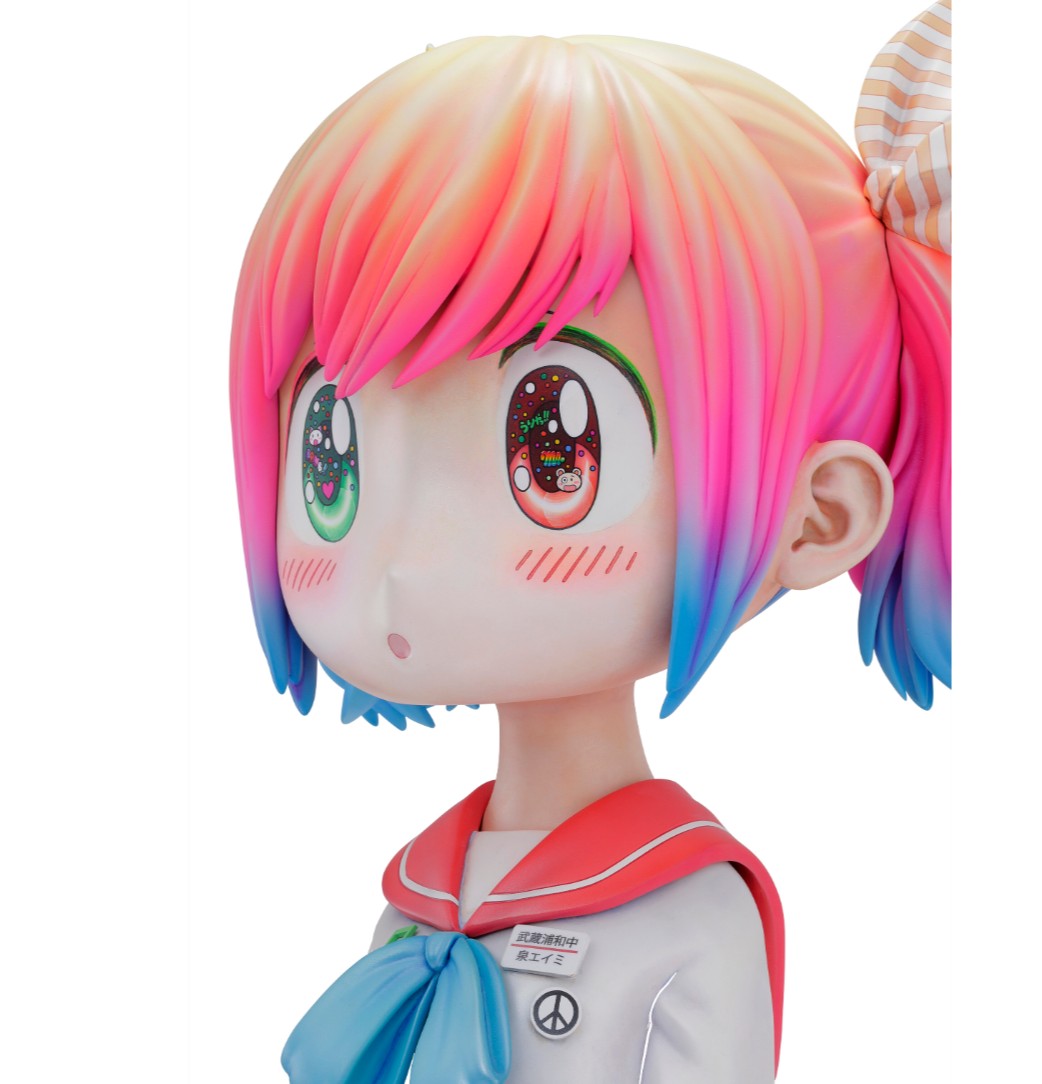
#15. Amy – Drinking Tropical Juice, 2020
Christie’s Hong-Kong: 29 March 2024
Estimated: HKD 1,200,000 – 2,200,000
HKD 1,386,000 / USD 178,149
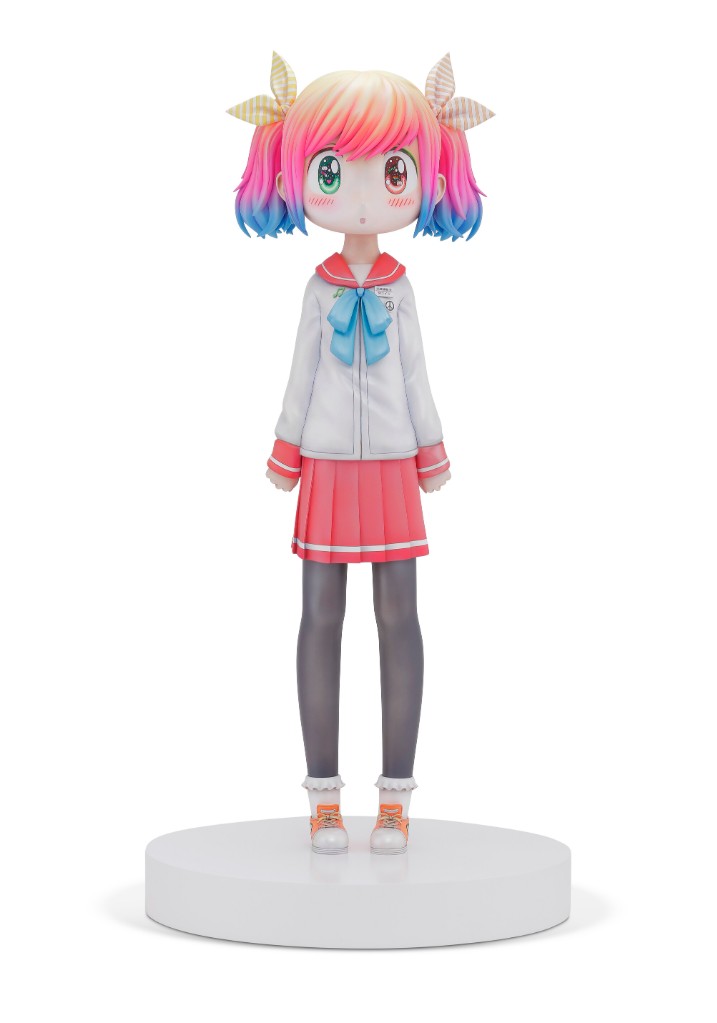
Amy – Drinking Tropical Juice, 2020
Iron, FRP, urethane paint, acrylic paint, and plywood base with MDF surface finish
145 (H) x 70 x 70 cm (57 x 27 1/2 x 27 1/2 inches)
Edition: 7⁄10 + 3 AP + 1 special edition
#16. Yuzuru (Helsinki Grand Prix), 2018
Christie’s Hong-Kong: 29 March 2024
Estimated: HKD 1,500,000 – 2,500,000
HKD 1,386,000 / USD 178,149
ELIZABETH PEYTON (B. 1965), Yuzuru (Helsinki Grand Prix) | Christie’s
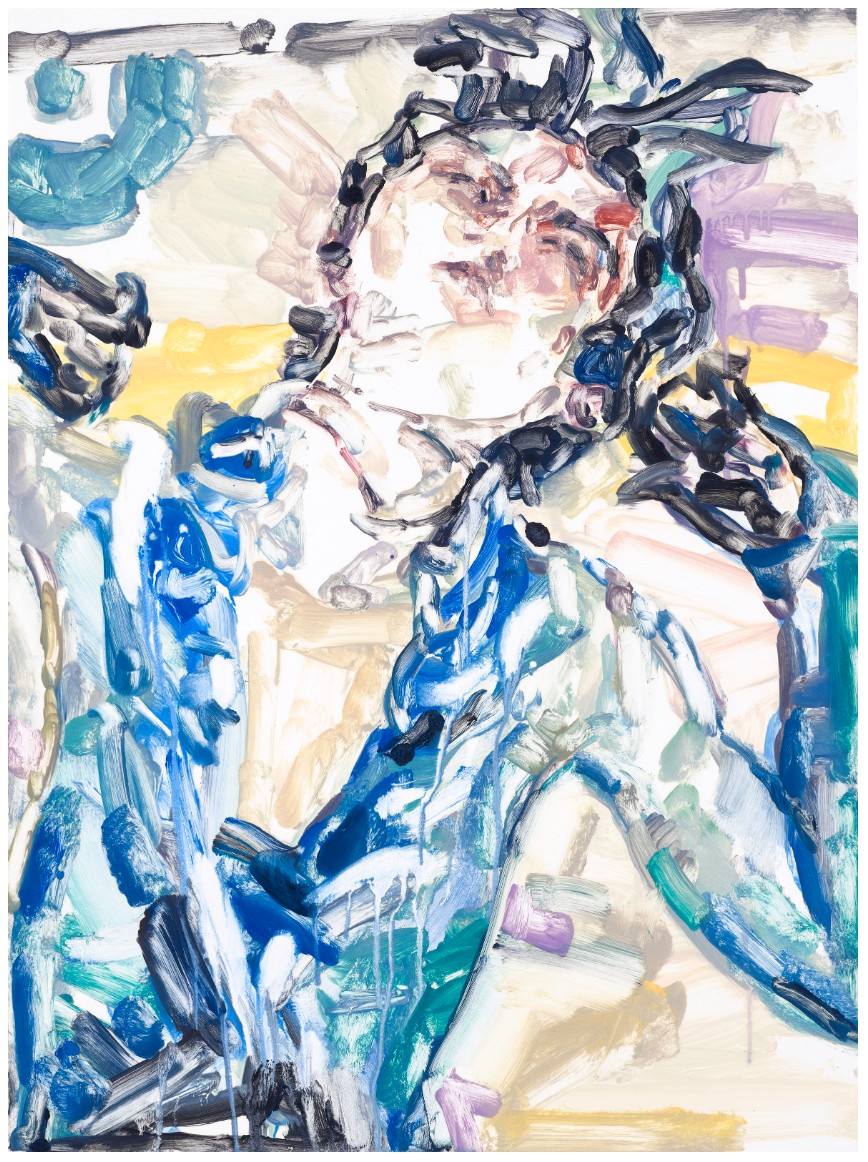
ELIZABETH PEYTON (B. 1965)
Yuzuru (Helsinki Grand Prix), 2018
Monotype on Twinrocker handmade paper
79.7 x 59.5 cm. (31 3/8 x 23 3/8 inches)
#17. $ (Quadrant), 1982
Christie’s Hong-Kong: 29 March 2024
Estimated: HKD 500,000 – 800,000
HKD 1,260,000 / USD 161,954
ANDY WARHOL (1928-1987), $ (Quadrant) | Christie’s
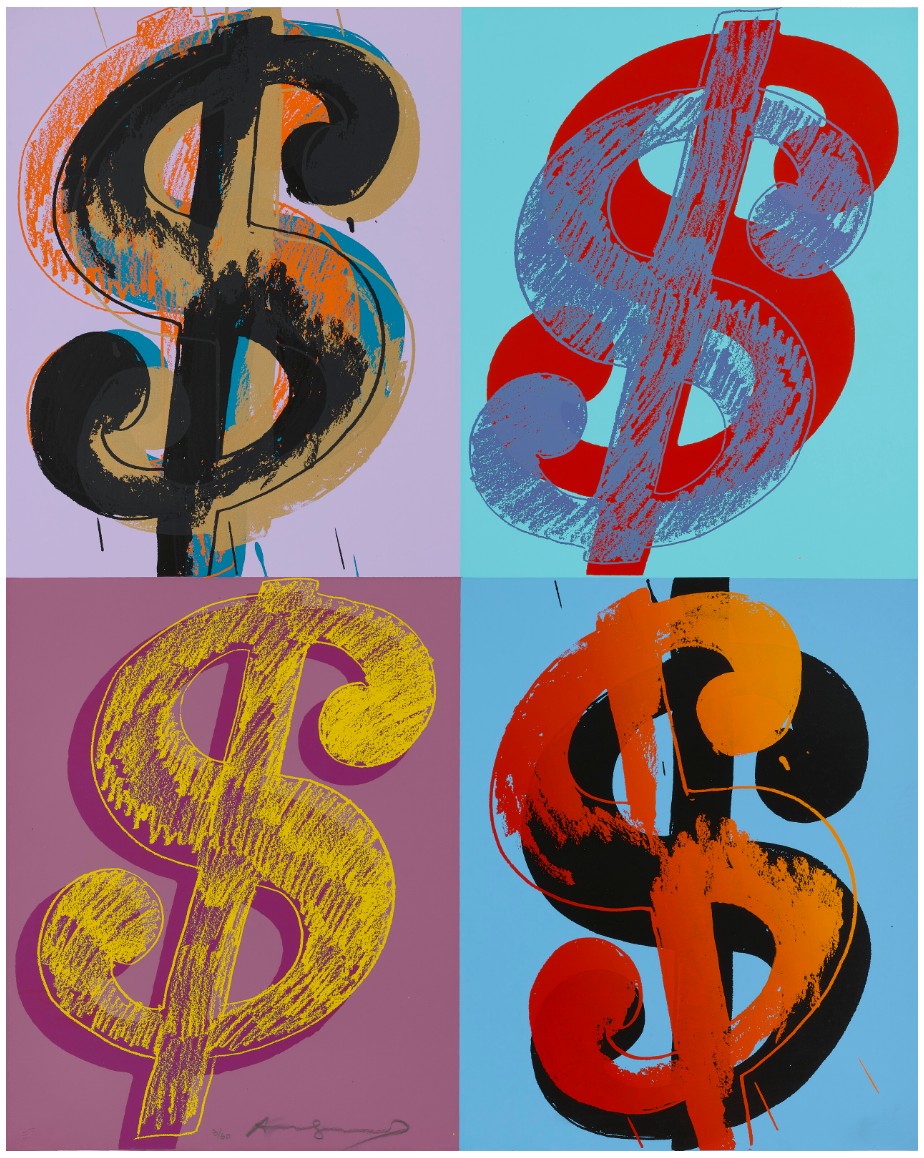
ANDY WARHOL (1928-1987)
$ (Quadrant) (Feldman & Schellmann no. II.283), 1982
Unique screenprint in colors on Lenox Museum Board
Sheet: 40 1/8 x 32 inches (102 x 81.3 cm)
Signed in pencil, numbered 8⁄60
From the edition of 60 unique variants, there were also ten artist’s proofs
Christie’s Shanghai
20th/21st Century Evening Sale
3 April 2025
20th/21st Century Evening Sale
DKG NPP #2, 2017
Christie’s Shanghai: 3 April 2025
Estimated: CNY 2,200,000 – 3,200,000
JONAS WOOD (B. 1977), DKG NPP #2 | Christie’s
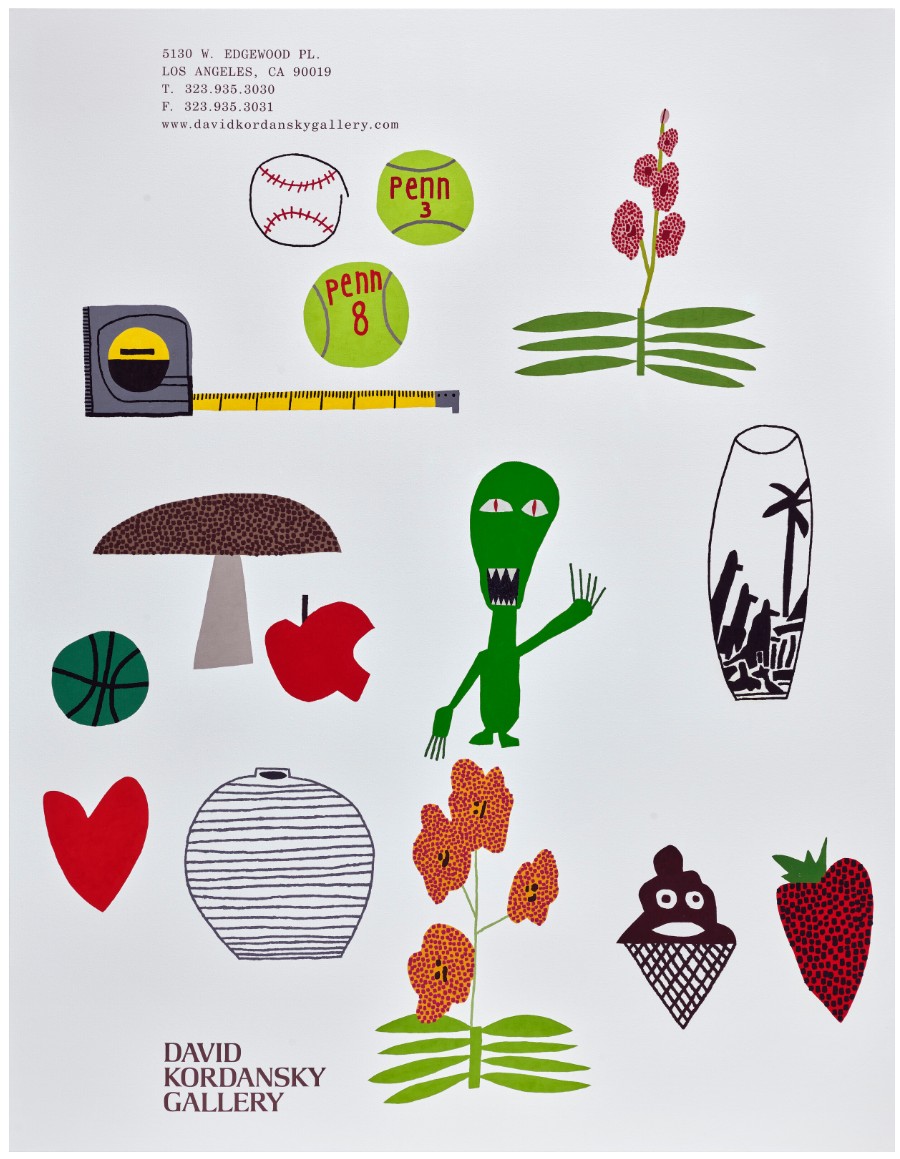
JONAS WOOD (B. 1977)
DKG NPP #2, 2017
Screenprint, oil and acrylic on canvas
80×62 inches (203.2 x 157.5 cm)
Signed and dated twice, titled ‘JBRW 2017 DKG NPP #2 JBRW 2017’ (on the overlap)
Young Girl and Lacoste, 2005
Christie’s Shanghai: 3 April 2025
Estimated: CNY 1,800,000 – 2,800,000
LIU YE (B. 1964), Young Girl and Lacoste | Christie’s
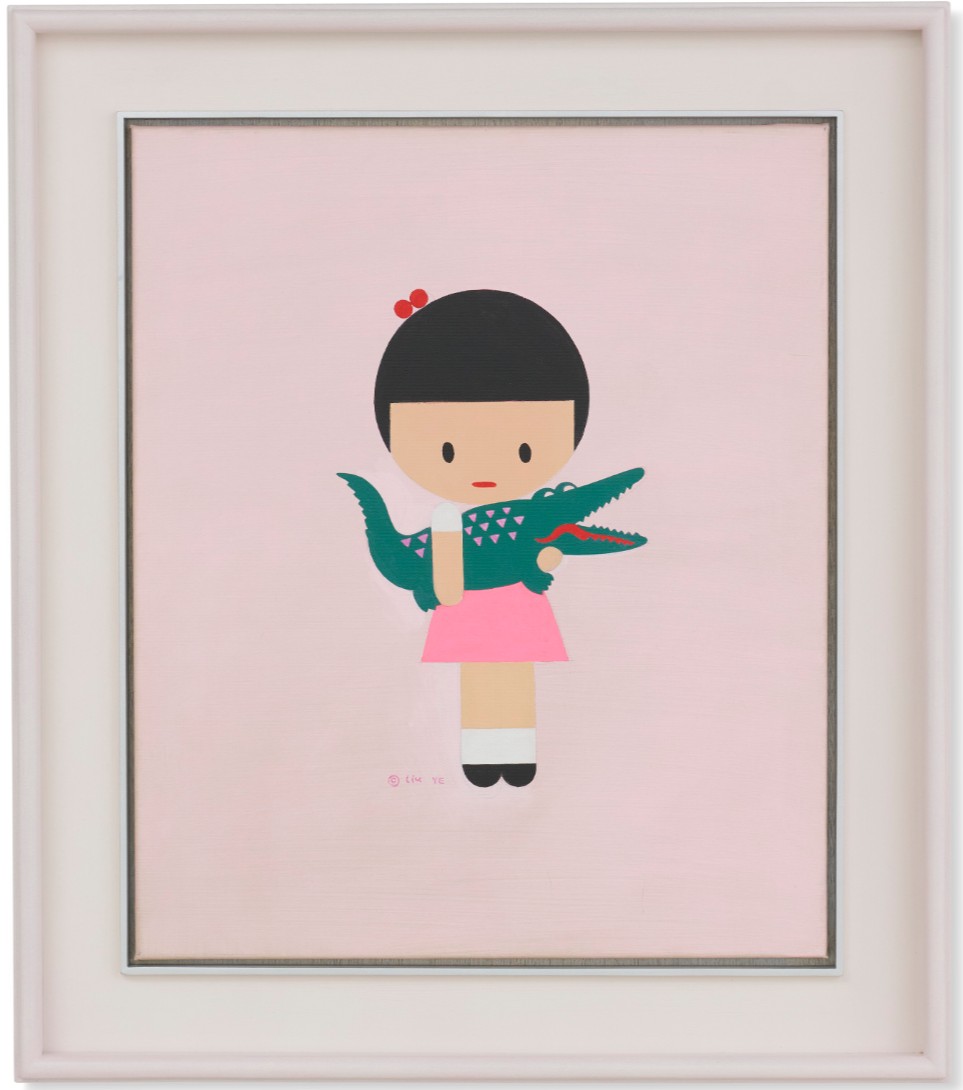
LIU YE (B. 1964)
Young Girl and Lacoste, 2005
Acrylic on canvas
60×50 cm (23 5/8 x 19 5/8 inches)
Signed ‘©LIU YE’ (lower left)
Sotheby’s
Modern & Contemporary Evening Auction
29 March 2025
Modern & Contemporary Evening Auction | 2025 | Sotheby’s
TOTAL
HKD 297,519,500 / USD 38,241,581
# Lots: 45 Lots
Withdrawn: 3 Lots
Passed: 2 Lots
Sold: 40 Lots
Sell-Through Rate: 95.2%
#1. Fleurs de printemps, 1930
Sotheby’s Hong-Kong: 29 March 2025
Estimated: HKD 22,000,000 – 28,000,000
HKD 34,535,000 / USD 4,438,946
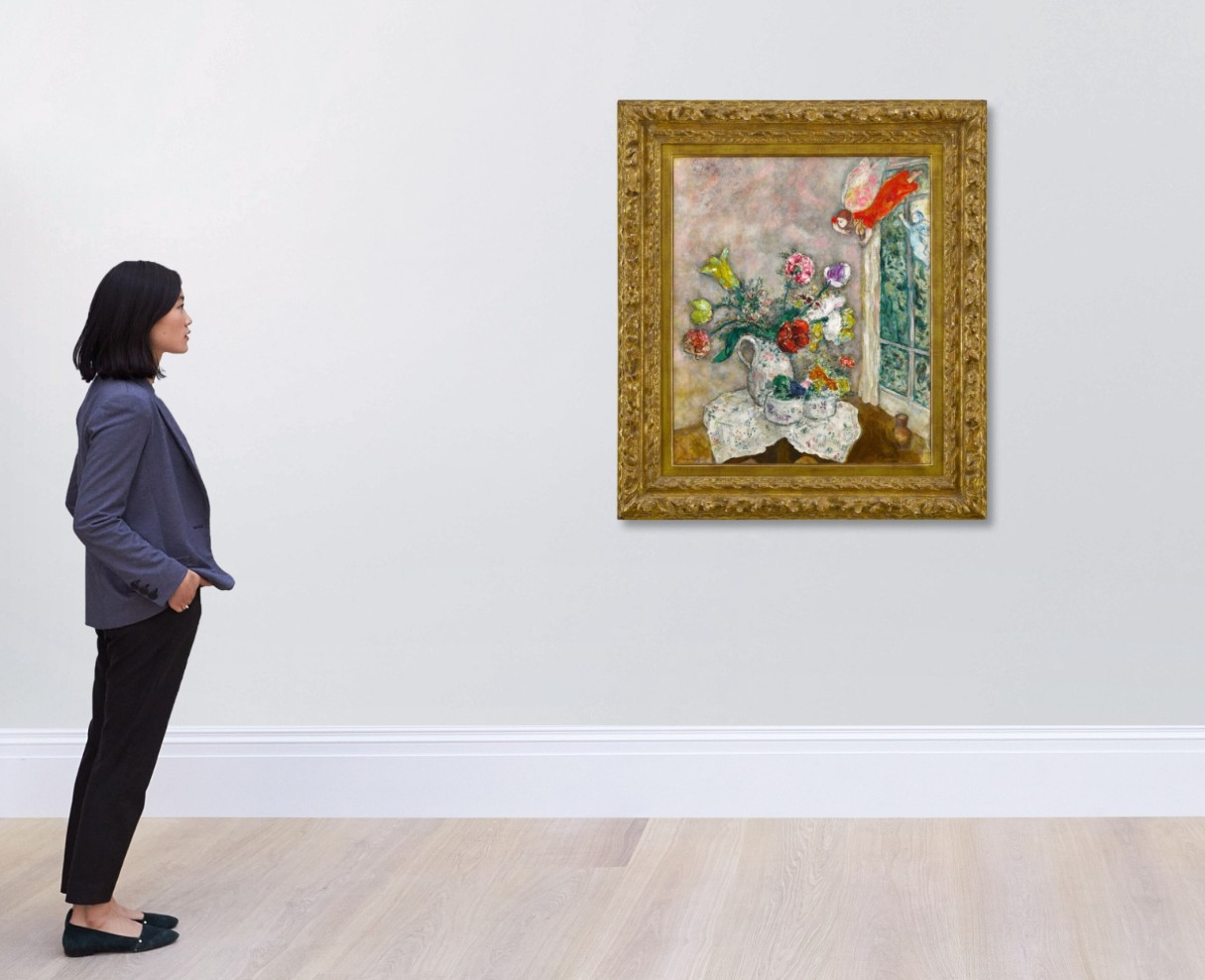
MARC CHAGALL (1887 – 1985)
Fleurs de printemps (La Cruche aux fleurs de printemps), 1930
Oil on canvas
72 x 60.6 cm (28 3/8 x 23 7/8 inches)
Signed Marc Chagall (lower left)
#2. Baigneuse accoudée, 1882
Sotheby’s Hong-Kong: 29 March 2025
Estimated: HKD 14,000,000 – 22,000,000
HKD 23,555,000 / USD 3,027,635
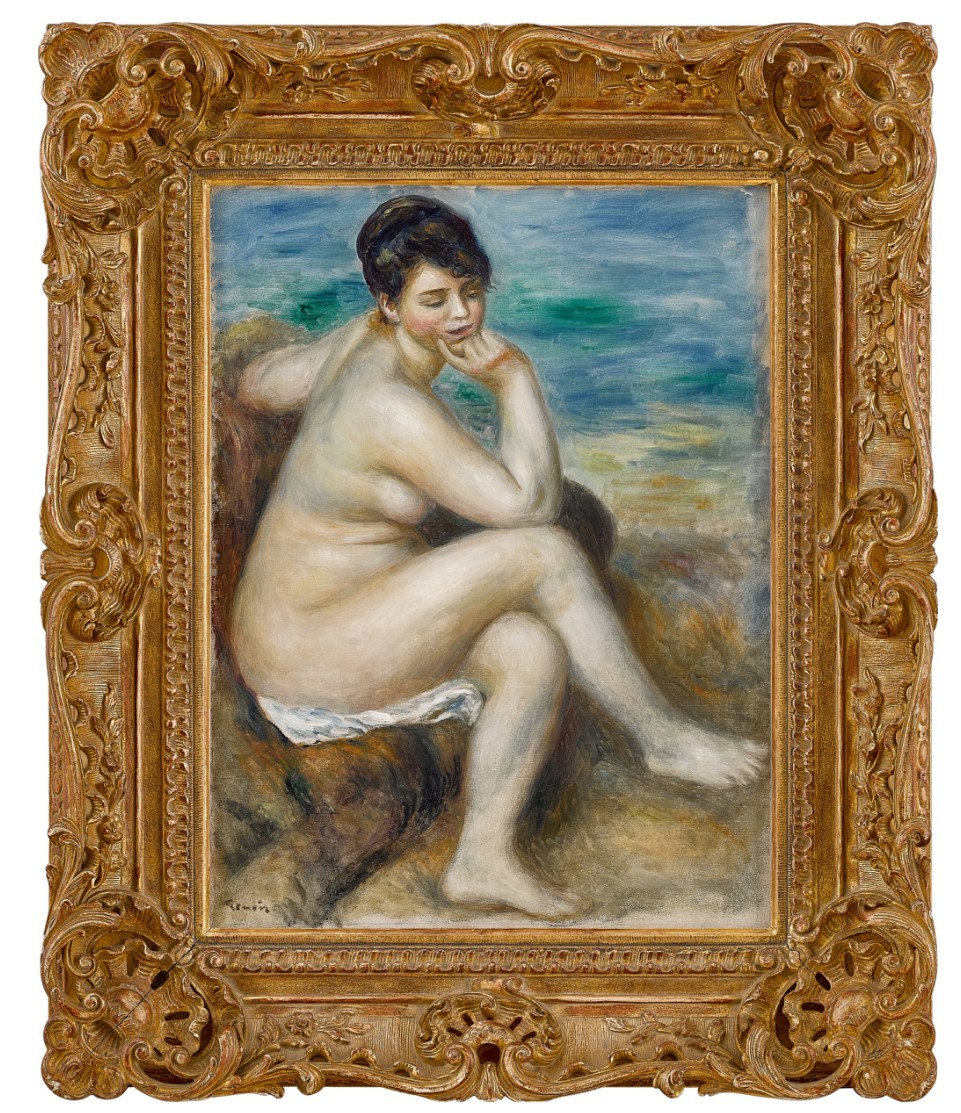
PIERRE-AUGUSTE RENOIR (1841 – 1919)
Baigneuse accoudée, 1882
Oil on canvas
54 x 40.5 cm (21 1/4 x 15 7/8 inches)
Signed Renoir (lower left)
#3. Working Model for Reclining Figure: Prop, 1976
Sotheby’s Hong-Kong: 29 March 2025
Estimated: HKD 16,000,000 – 24,000,000
HKD 20,505,000 / USD 2,635,604
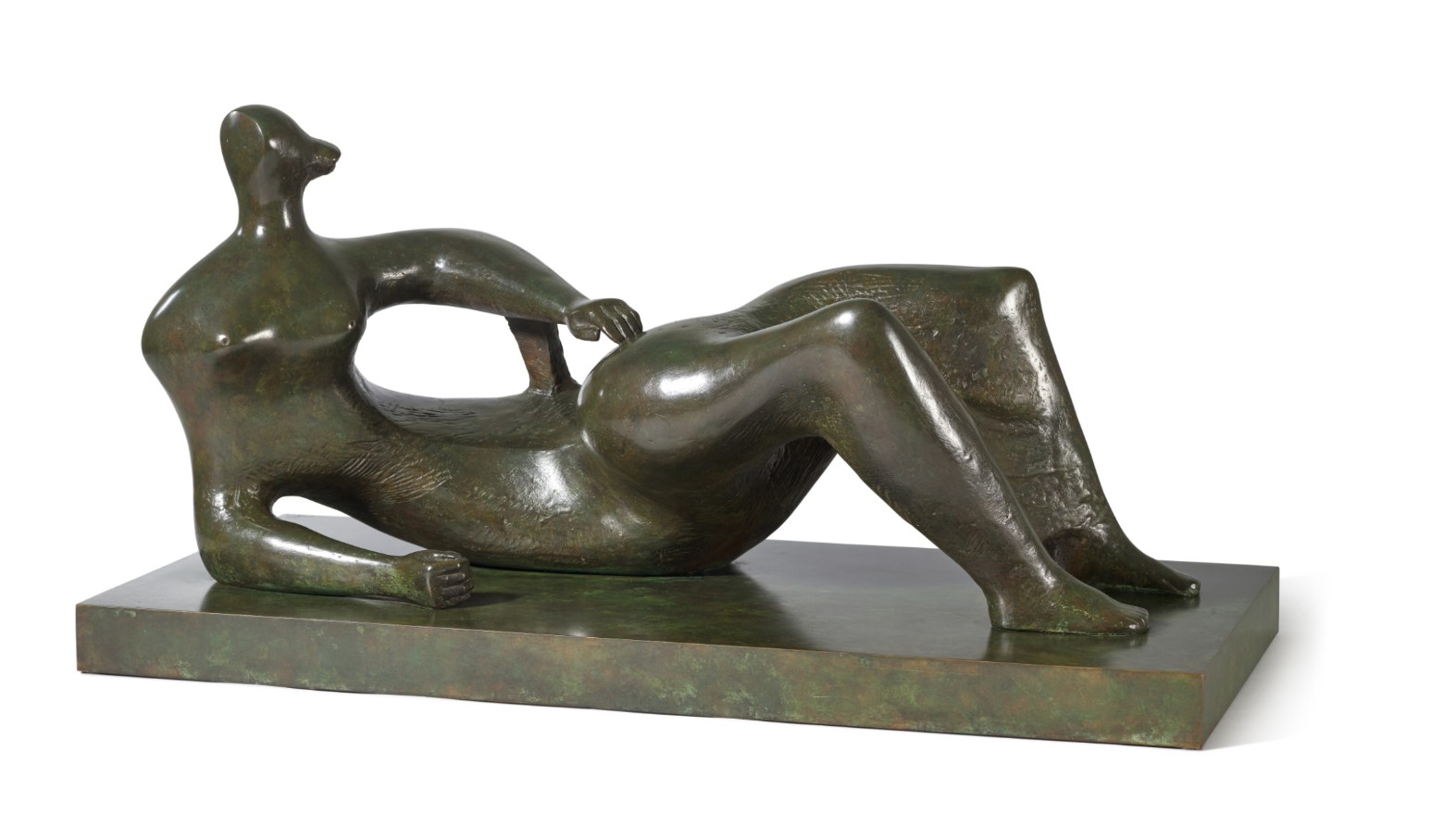
HENRY MOORE (1898 – 1986)
Working Model for Reclining Figure: Prop, 1976
Bronze
Length: 80.5 cm (31 3/4 inches)
Inscribed with the signature Moore and numbered 3/9 (base)
Conceived and cast in 1976, this work is number 3 from an edition of 9 + 1
Cast by Fiorini, London
#4. Le miroir, 1947
Estimated: HKD 15,000,000 – 25,000,000
HKD 18,675,000 / USD 2,400,386
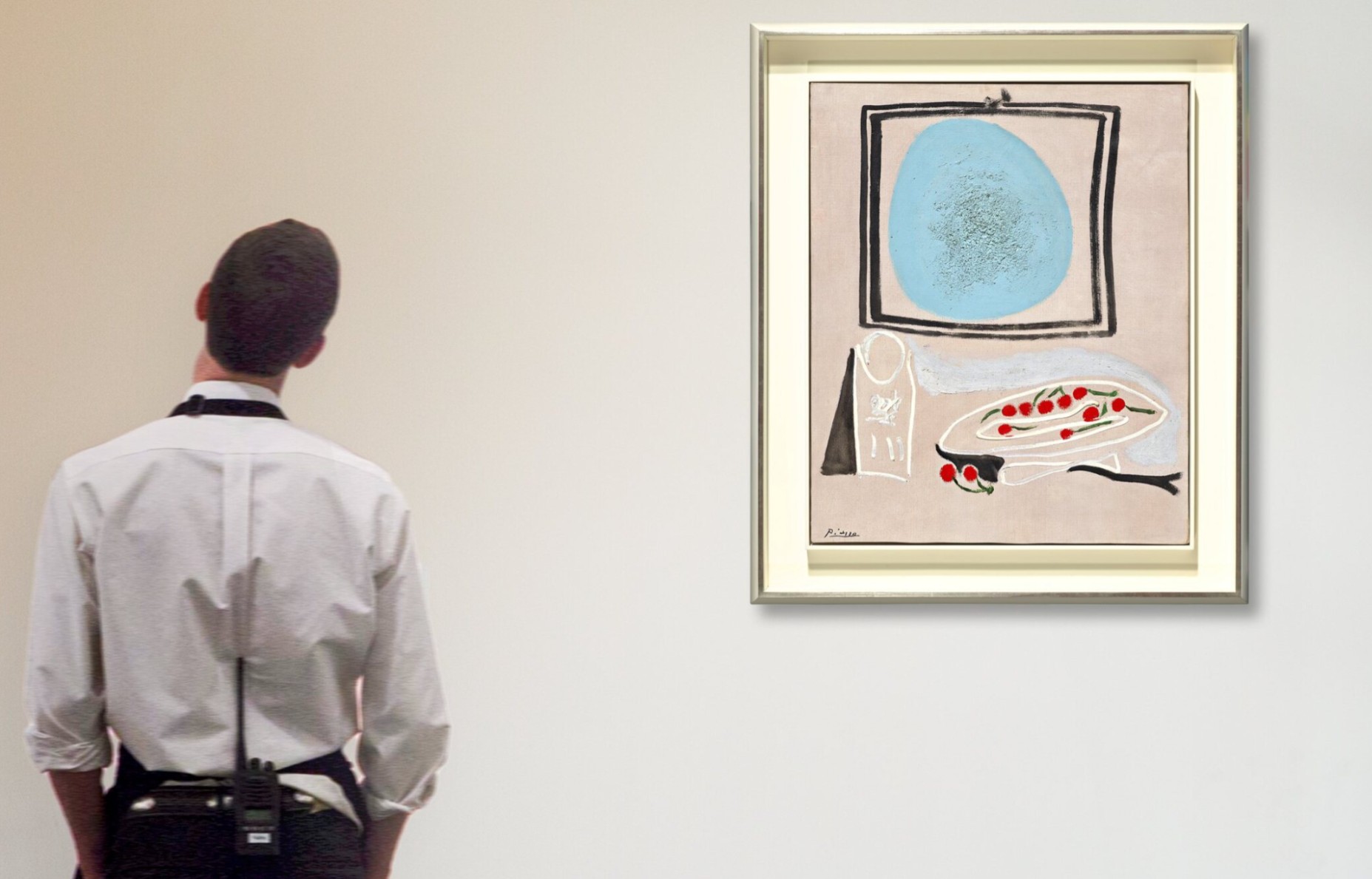
PABLO PICASSO (1881 – 1973)
Le miroir, 1947
Oil and sand on canvas
61 x 50.2 cm (24 x 19 3/4 inches)
Signed Picasso (lower left) and dated 23 juin 47 (on the reverse)
Executed on 23 June 1947
#5. Grotto, 2019
Sotheby’s Hong-Kong: 29 March 2025
Estimated: HKD 10,000,000 – 15,000,000
HKD 15,015,000 / USD 1,929,949
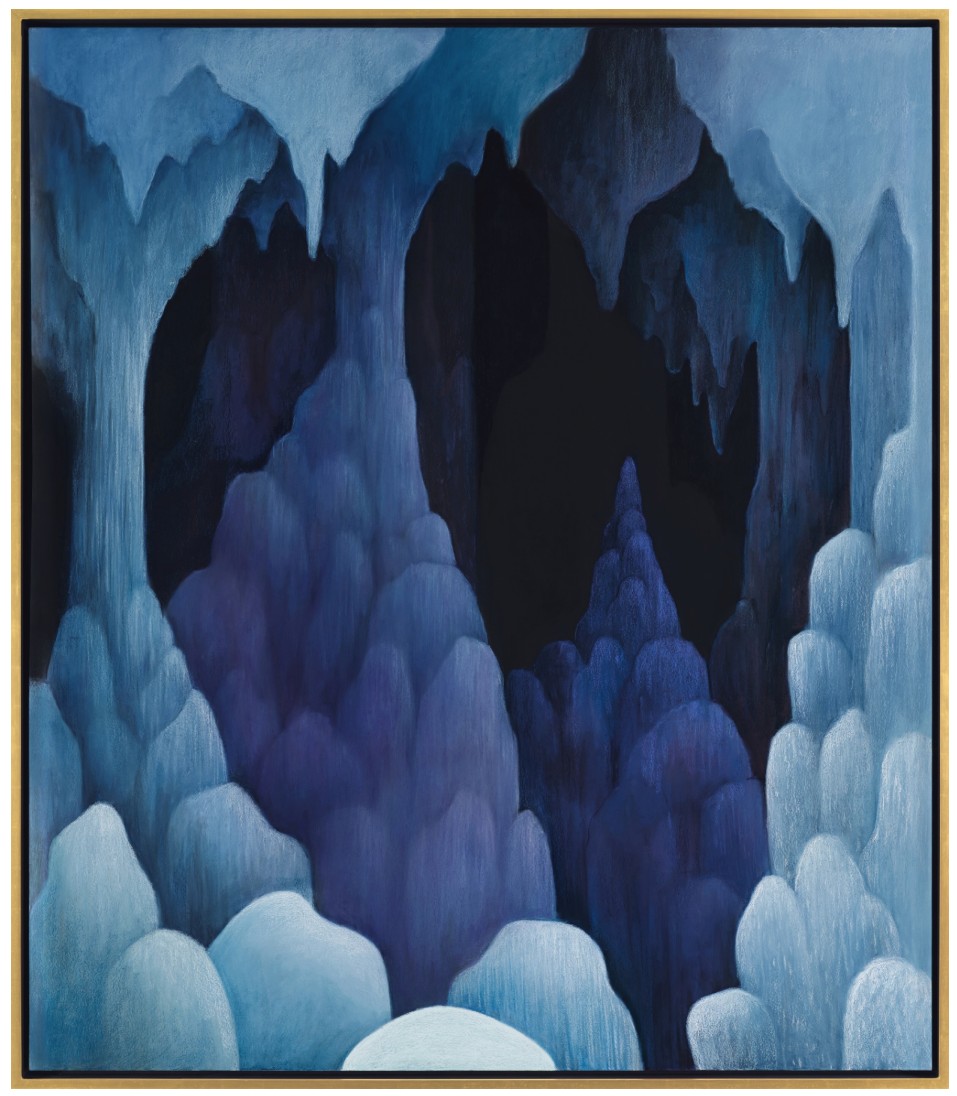
Nicolas Party 尼古拉 · 帕爾蒂 | Grotto 洞穴 | Modern & Contemporary Evening Auction | 2025 | Sotheby’s
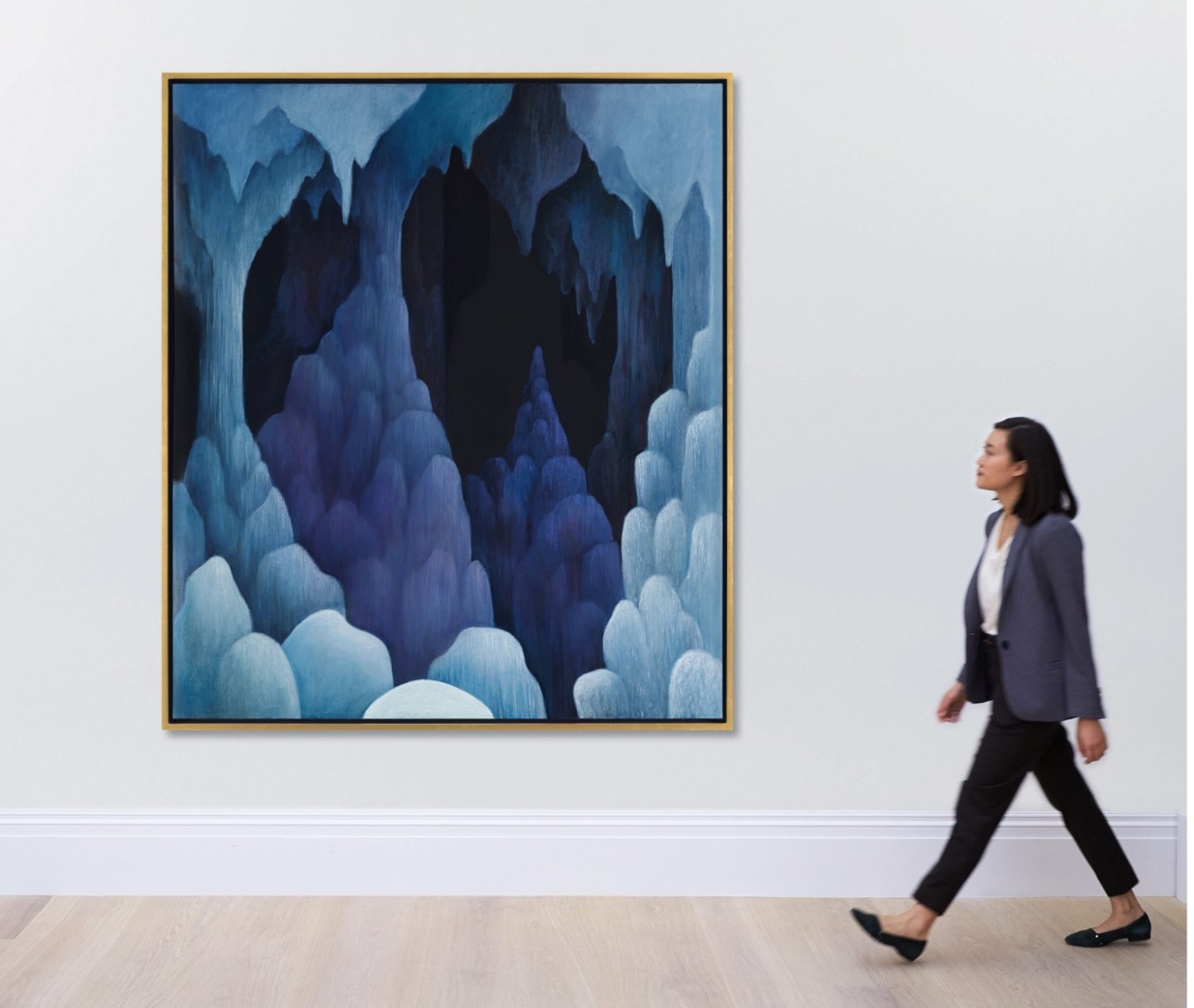
NICOLAS PARTY (b. 1980)
Grotto, 2019
Soft pastel on linen
190.8 x 165.1 cm (75 1/8 x 65 inches)
Signed and dated 2019 (on the reverse)
#5ex. Starry Pumpkin, 2019
Estimated: HKD 16,000,000 – 32,000,000
HKD 15,015,000 / USD 1,929,949
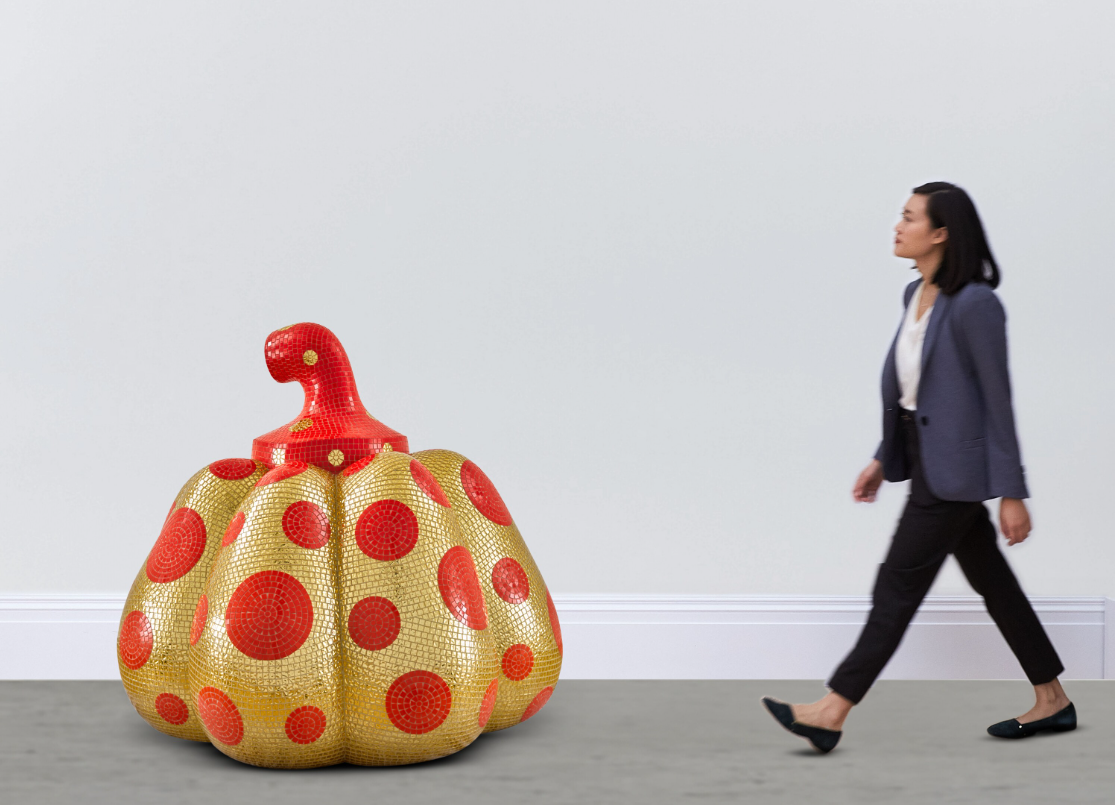
YAYOI KUSAMA (b. 1929)
Starry Pumpkin, 2019
Fiberglass reinforced plastic and tile
130x150x150 cm (51 1/8 x 59 x 59 inches)
#9. Man on Horseback, 2008
Sotheby’s Hong-Kong: 29 March 2025
Estimated: HKD 5,400,000 – 11,000,000
HKD 10,745,000 / USD 1,381,105
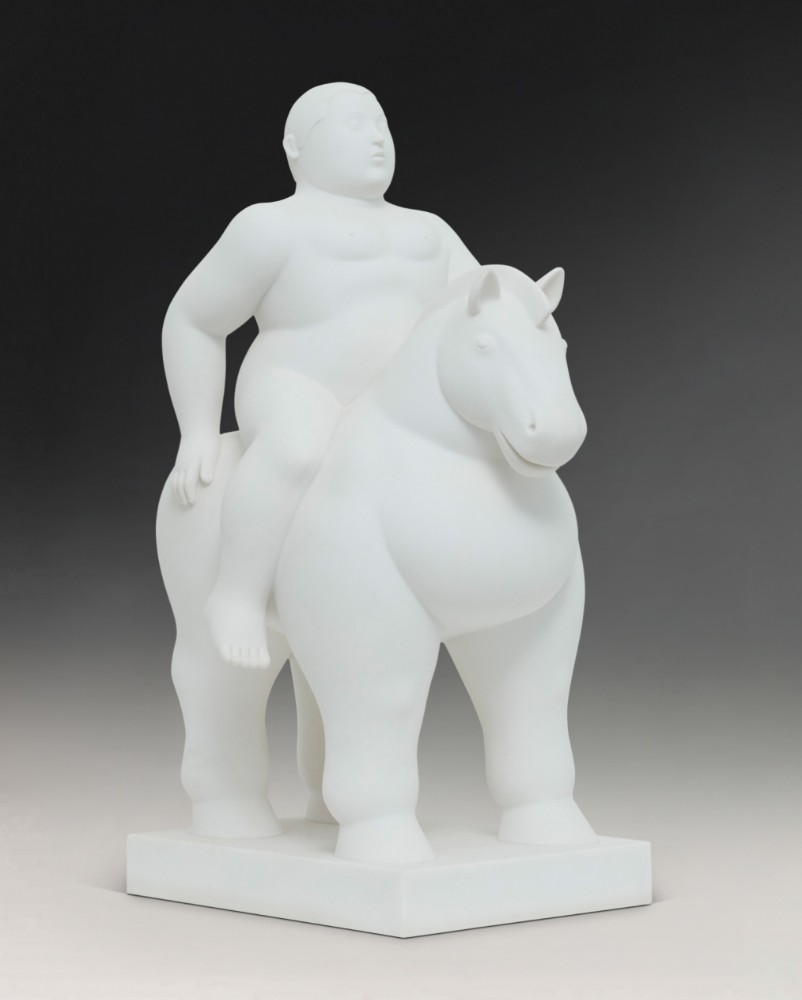
FERNANDO BOTERO (1932 – 2023)
Man on Horseback, 2008
White Carrara marble
110x85x57 cm (43 1/4 x 33 1/2 x 22 3/8 inches)
Inscribed with artist signature (on the base)
#12. An Homage to IKB, 1957 E, 2012
Sotheby’s Hong-Kong: 29 March 2025
Estimated: HKD 5,500,000 – 10,000,000
HKD 9,525,000 / USD 1,224,293
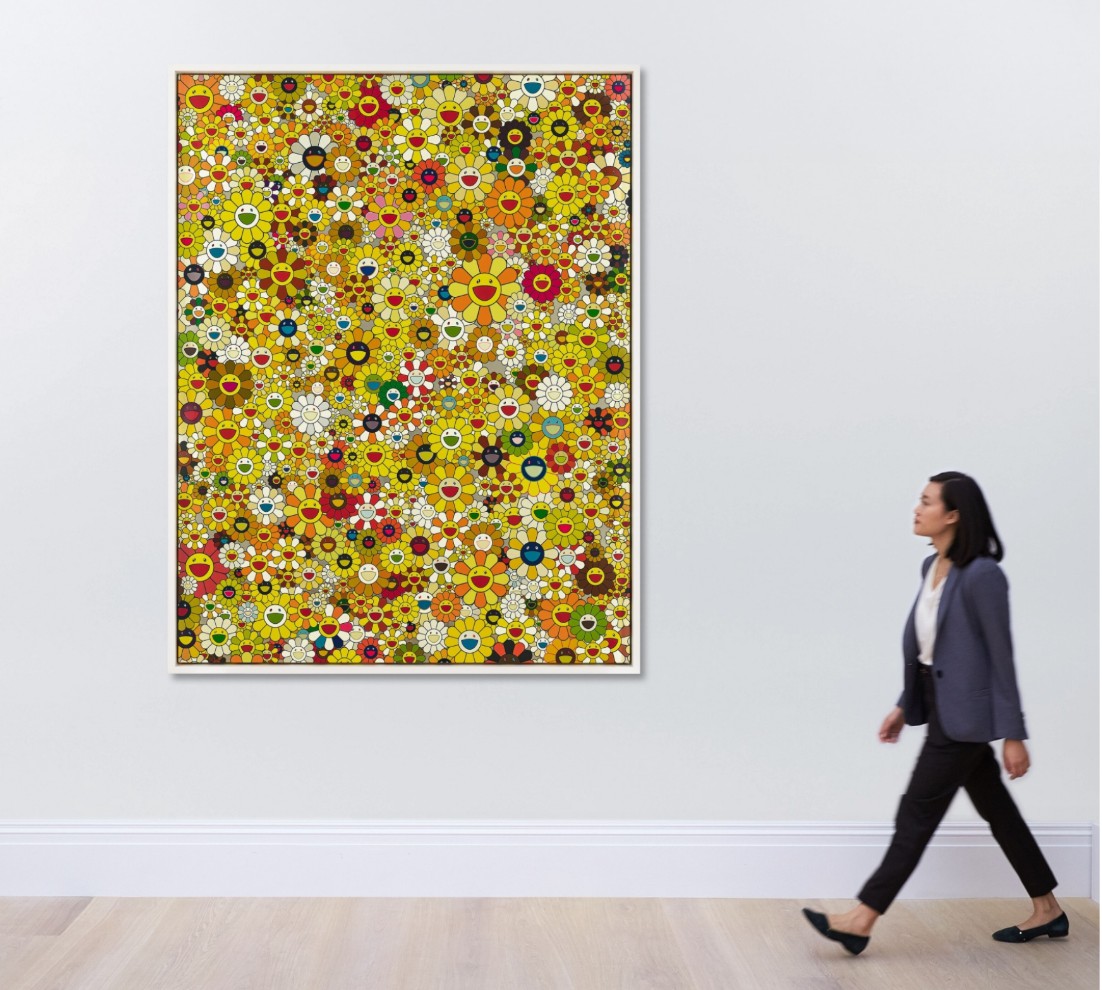
TAKASHI MURAKAMI (b. 1962)
An Homage to IKB, 1957 E, 2012
Acrylic on canvas mounted on board
199×153 cm (78 3/8 x 60 1/4 inches)
Signed and dated 2012 (on the overlap)
© 2012 Takashi Murakami/Kaikai Kiki Co., Ltd. All Rights Reserved
#19. Dots (Infinity Dots), 1990
Estimated: HKD 3,800,000 – 6,000,000
HKD 5,080,000 / USD 652,956
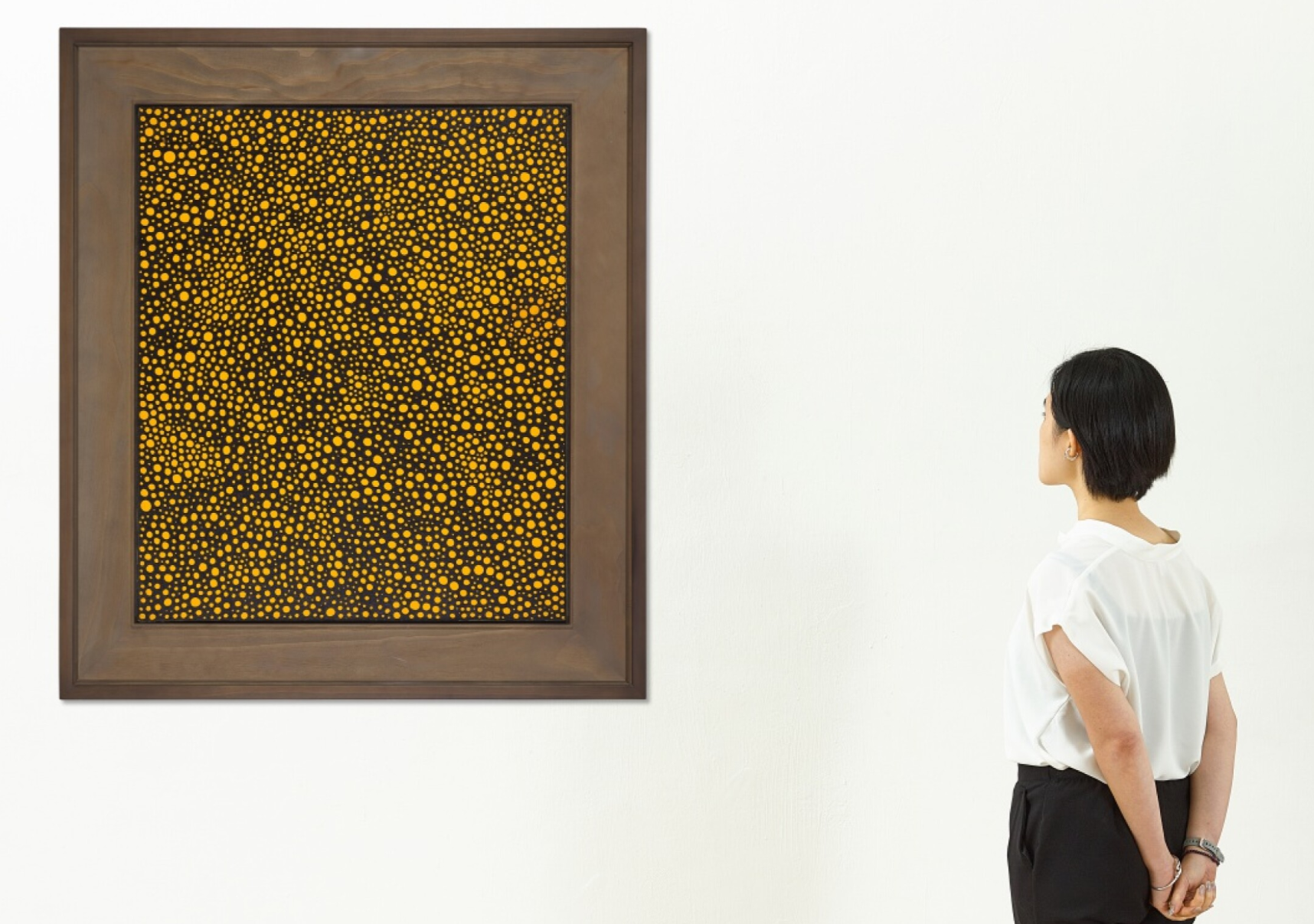
Dots (Infinity Dots), 1990
Acrylic on canvas
72.5 x 60 cm (28 1/2 x 23 5/8 inches)
Signed, titled and dated 1990 (on the reverse)
Nets (A.B.C), 1990
Estimated: HKD 3,200,000 – 5,500,000
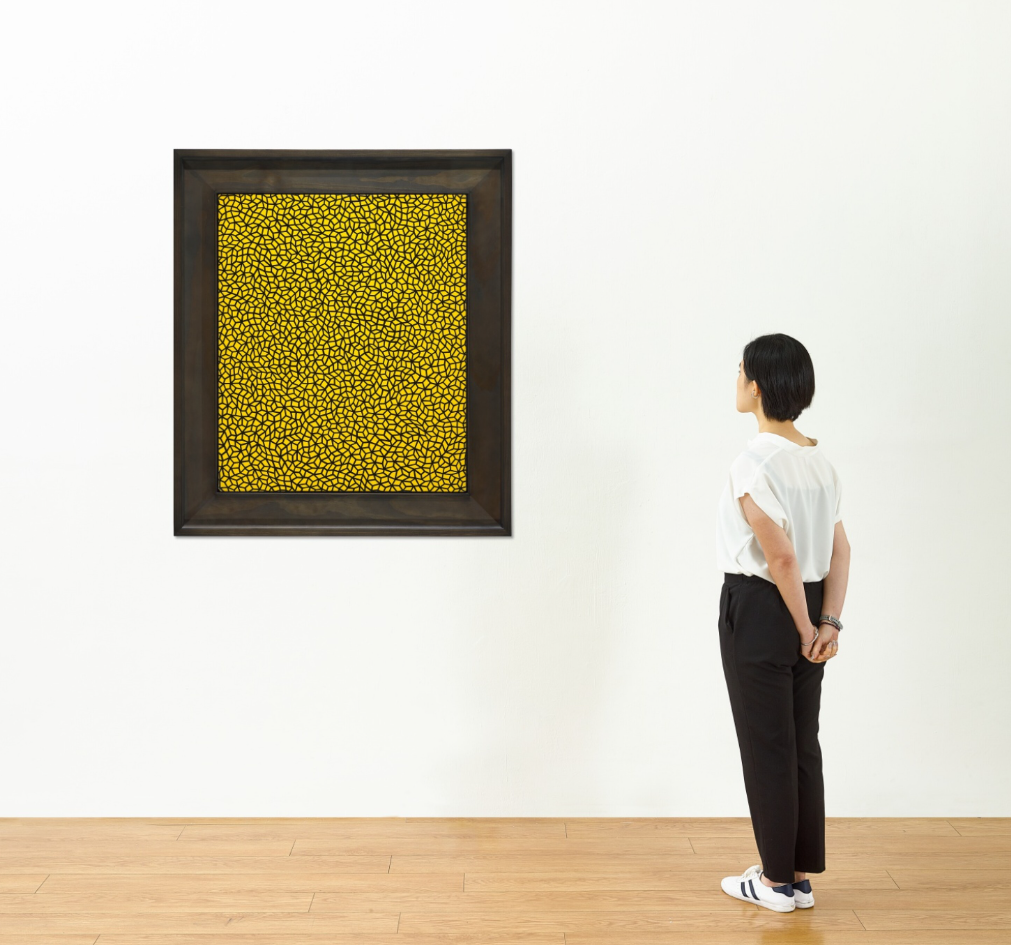
YAYOI KUSAMA (b. 1929)
Nets (A.B.C), 1990
Acrylic on canvas
72.5 x 60 cm (28 1/2 x 23 5/8 inches)
Signed, titled and dated 1990 (on the reverse)
PART III: FOCUS
Nicolas Party
Grotto, 2019
Sotheby’s Hong-Kong: 29 March 2025
Estimated: HKD 10,000,000 – 15,000,000
HKD 15,015,000 / USD 1,929,949
Nicolas Party 尼古拉 · 帕爾蒂 | Grotto 洞穴 | Modern & Contemporary Evening Auction | 2025 | Sotheby’s
NICOLAS PARTY (b. 1980)
Grotto, 2019
Soft pastel on linen
190.8 x 165.1 cm (75 1/8 x 65 inches)
Signed and dated 2019 (on the reverse)
Born in 1980 in Lausanne, Switzerland, Party studied at the Lausanne School of Art before undertaking an MA at The Glasgow School of Art. Classically trained, Party transforms the paradigm of portraiture of art history into a dialogue with both past and future. Speaking about his figurative paintings, Party remarks: “I’m trying to work with subjects that are not original. Subjects that have been, and still are, painted all the time. Like a portrait, or a cat. What fascinates me about these topics is their capacity to regenerate themselves at any period of history, and still be relevant to us. I also believe some subjects are always painted because they are an infinite source of meaning and inspiration” (the artist cited in Federica Tattoli, “Talking with the Swiss painter Nicolas Party”, Fruit of the Forest, December 2016). Rather than creating landscapes, still lives and portraits from real life, Party takes inspiration from other works in the history of these categories instead, and Grotto acts as an outstanding example.
Grotto is part of a new series of works by Nicolas Party which reinterprets art historical themes, created upon his return to Brussels following his exhibition at the Magritte Museum in 2018. This series of works was later featured in the artist’s solo show at Xavier Hufkens Gallery in 2019. The exhibition, also titled Grotto, featured three large soft pastel paintings, including the present work depicting the interior of grottos in monochromes of red, green and blue. They explored the long art-historical fascination with caves, with the present work paying specific homage to Caves of Manacor (c. 1901) by the Belgian painter William Degouve. Party recalls being “totally stunned” upon viewing Picasso’s Tête de Femme (1921) at the Foundation Beyeler in 2013, and was inspired in particular by Picasso’s use of pastel in Tête de Femme, and the challenging and idiosyncratic medium has dominated his work ever since.
“Oils allow you to endlessly retouch. With pastels it’s kind of the exact opposite. You can layer and layer, but you can’t start over. The nature of the medium is much more direct. Nothing dries or is wet – it stays exactly how it is.”
Applying the soft chalk material with his fingertips with painterly precision, pastel best allows Party to mould the essence of his subjects in new and revelatory ways, to amplify physical presence and heighten emotional resonance. Party’s resulting works are simple, seductive and highly accessible, yet still engage in dialogue with the art-historical binaries of representation and abstraction, observation and imagination. In addition to paintings, Party creates large-scale public murals, sculptures and installation works that employ colour and intervention strategies to construct immersive experiences for viewers. The artist has been subject of numerous solo exhibitions at prestigious institutions worldwide, including the Magritte Museum, Brussels (2018); Hirshhorn Museum and Sculpture Garden, Washington, D.C. (2017); Hammer Museum, Los Angeles (2016); and the Modern Institute, Glasgow (2016).
Adrian Ghenie
Untitled (After Henri Rousseau), 2020
Christie’s Hong-Kong: 28 March 2024
Estimated: HKD 10,000,000 – 15,000,000
HKD 23,365,000 / USD 3,003,213
Untitled (After Henri Rousseau)
ADRIAN GHENIE (B. 1977)
Untitled (After Henri Rousseau), 2020
Oil on canvas
270×300 cm (106 1/4 x 118 1/8 inches)
Signed and dated ‘Ghenie 2020’ (on the reverse)
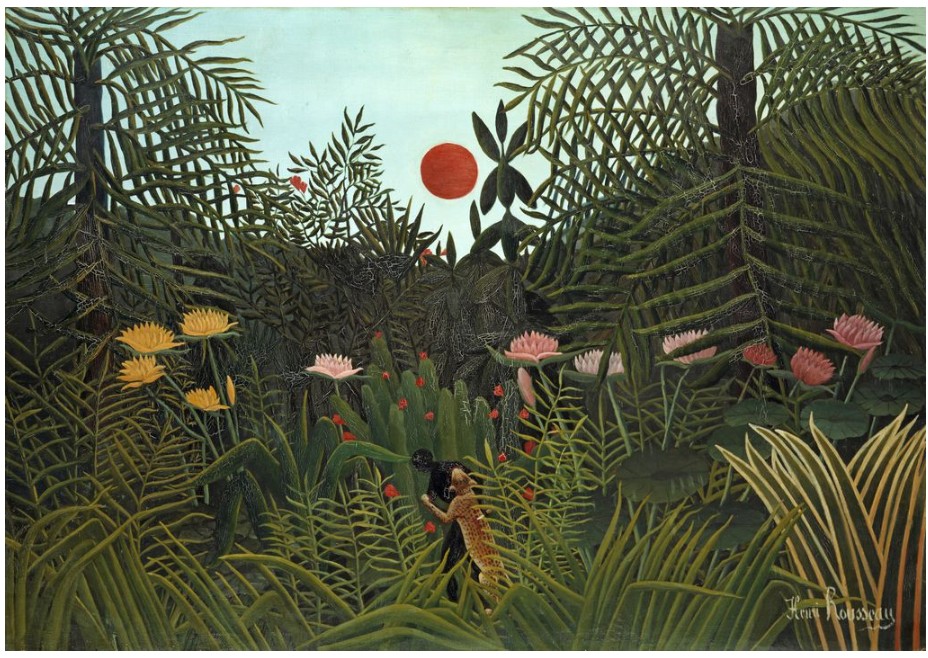
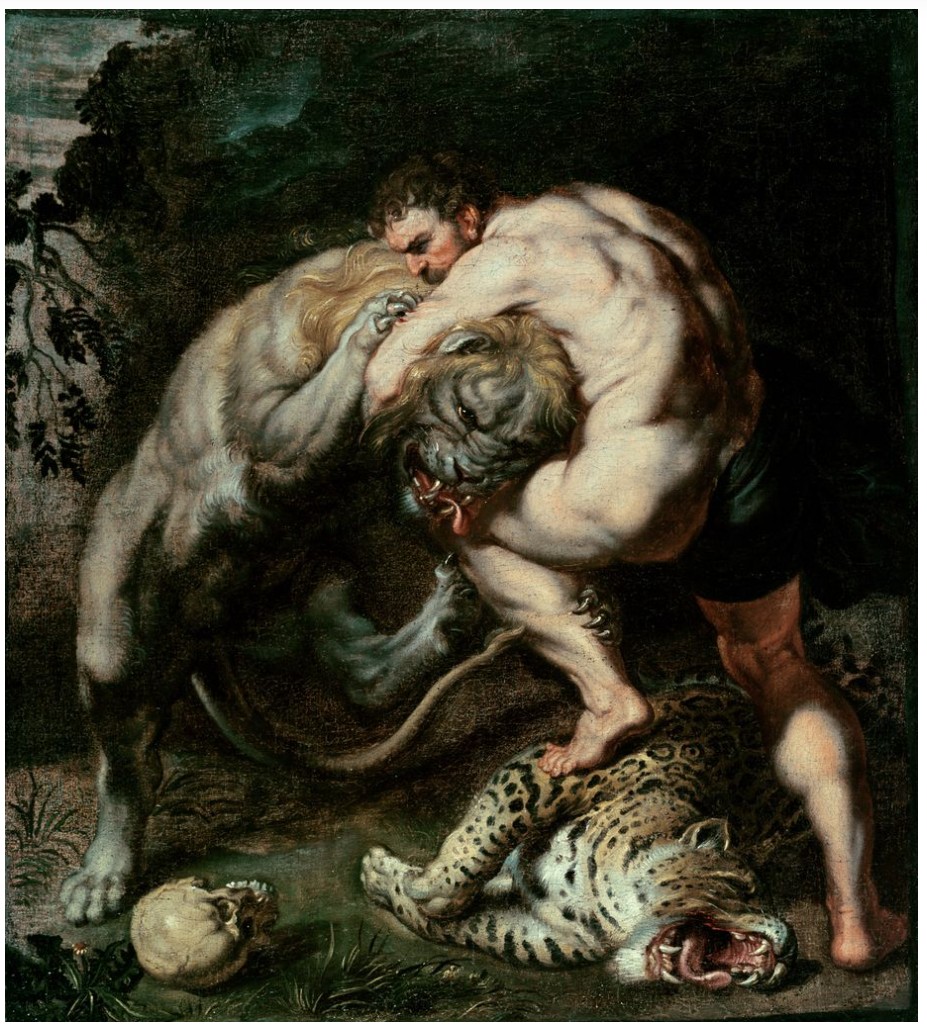
A vista of turbulent, vital color and form spanning three metres across, Untitled (After Henri Rousseau) (2020) sees Adrian Ghenie’s renowned painterly eloquence reach incandescent new heights. At its heart is a powerful encounter between man and beast. The figures derive from Henri Rousseau’s iconic jungle scene Nègre attaqué par un jaguar (1910, Kunstmuseum Basel), which depicts a man attacked by a jaguar. In Ghenie’s vision, the action takes place before a concrete wall and a roiling, gunmetal sky, with vaporous blooms of pigment and dark, palette-knifed umber streaks that carve through space. The man’s dark silhouette leans forward, with billowing, inky-blue brushstrokes licking up his body like flames. The wild cat is conveyed in a swirling melee of ochre, orange and turquoise, variously marbled and masked off to create sharp, dynamic outlines. If the motif emerged from Rousseau, the work’s array of textures and techniques evokes artists from Francis Bacon to Willem de Kooning and Gerhard Richter. The drama of tangled limbs, meanwhile, displays Ghenie’s close affinity with Baroque painting, conjuring muscular depictions of Classical and Biblical lion-wrestlers such as Hercules and Samson.
Ghenie rose to prominence in the 2010s for powerful, layered and cinematic paintings that were concerned with the dark moments and pivotal figures of European history. Filtered through collations of found photographic imagery, they included reflections on the Second World War and life under communism in his native Romania, and featured the distorted countenances of Charles Darwin and Vincent van Gogh. In recent years, Ghenie has evolved his style in new directions, turning his gaze towards contemporary life and imagining the future. He has also widened his palette of art-historical references, engaging in open dialogue with Andrea Mantegna, Théodore Géricault and—as in the present work—Henri Rousseau. As well as working with collage studies, he develops his ideas in large-scale charcoal drawings, whose sweeping elegance can be felt in the present painting.
Henri Rousseau, Negro Attacked by a Jaguar, 1910, Kunstmuseum, Basel. © Bridgeman Images
Rousseau has long fascinated Ghenie. The self-taught artist, who died in 1910, is famed for his visionary and highly distinctive jungle paintings. They were admired during his lifetime by avant-garde figures including Pablo Picasso, Constantin Brâncuși and Robert Delaunay, and later by the Surrealists, who were drawn to their dreamlike moods and unusual juxtapositions. Their carefully delineated surfaces of flat, overlapping planes also foreshadowed aspects of Modernism, and Ghenie has described Rousseau as the first abstract painter. Figurative and abstract paintings, he believes, are engaged with the same fundamental problems: ‘Deep inside every painting exists a deep abstract challenge’ (A. Ghenie in conversation with M. Gnyp, Zoo Magazine, No. 57, 2017). The present work, with its combination of spontaneous Abstract Expressionist gestures, grid-like backdrop and energetic bodily form, exemplifies Ghenie’s own synthesis of different formal languages.
Peter Paul Rubens, Heracles and the Nemea Lion, 17th century. Private collection. © Bridgeman Images.
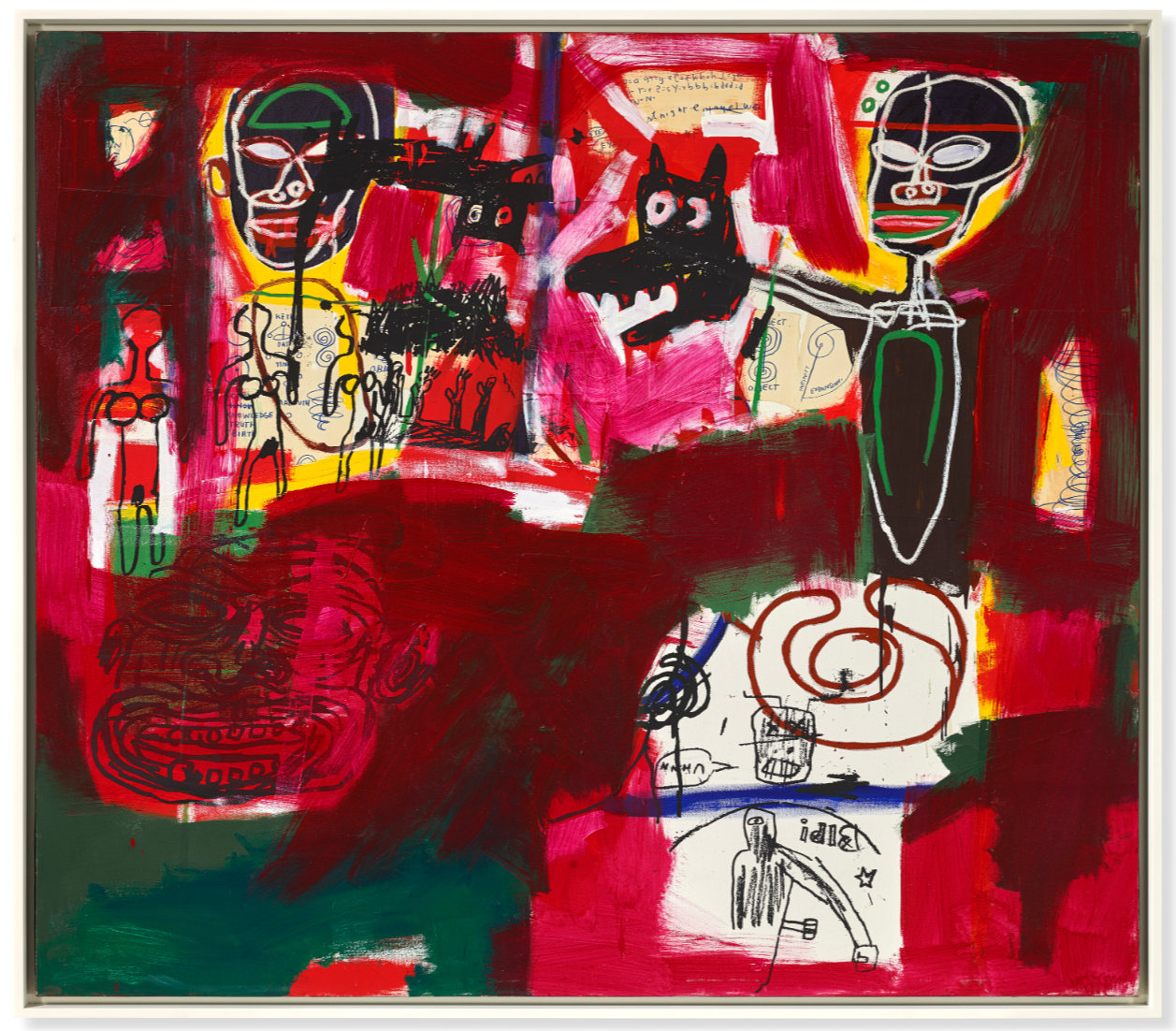
Jean-Michel Basquiat
Sabado por la Noche (Saturday Night), 1984
Christie’s Hong-Kong: 28 March 2024
Estimated: HKD 95,000,000 – 125,000,000
Sabado por la Noche (Saturday Night)
JEAN-MICHEL BASQUIAT (1960-1988)
Sabado por la Noche (Saturday Night), 1984
Acrylic, silkscreen, oil stick, and paper collage on canvas
77×88 inches (195.6 x 223.5 cm)
Signed, titled, and dated ‘Jean Michel 1984 – “SABADO POR LA NOCHE”‘ (on the reverse)
Sabado por la Noche (Saturday Night) (1984) is a vibrant and multi-layered work that represents an important period in Jean-Michel Basquiat’s career. Across a vast canvas layered with acrylic, oilstick silkscreen and paper collage, the artist brings together text, icons and human figures. Brilliant swathes of magenta, yellow and emerald green structure the composition, which is dominated by two mask-like ‘griot’ heads that relate to those seen in several major works from the same year, including Gold Griot (The Broad, Los Angeles) and Grillo (Fondation Louis Vuitton, Paris). Embedded sheets of paper are scrawled with symbols relating to the solar system, Fibonacci’s golden ratio, ‘knowledge’, ‘truth’, and ‘birth’, and doubled gyres and spirals. A third mask-like head, submerged in pink to the lower left, dreams forth a trio of female forms amid an aura of red, green and gold: the colours of the Pan-African flag. While these details reflect Basquiat’s increasing interest in African spiritualism and history, other elements reflect different influences, such as a cartoonish wolf-head brandished by the rightmost figure, and a silkscreened comic-strip boxing scene (‘BIP!’), which reproduces one of the artist’s own drawings in reverse. In Sabado por la Noche, Basquiat brings a bounty of ideas and techniques into luminous conversation.
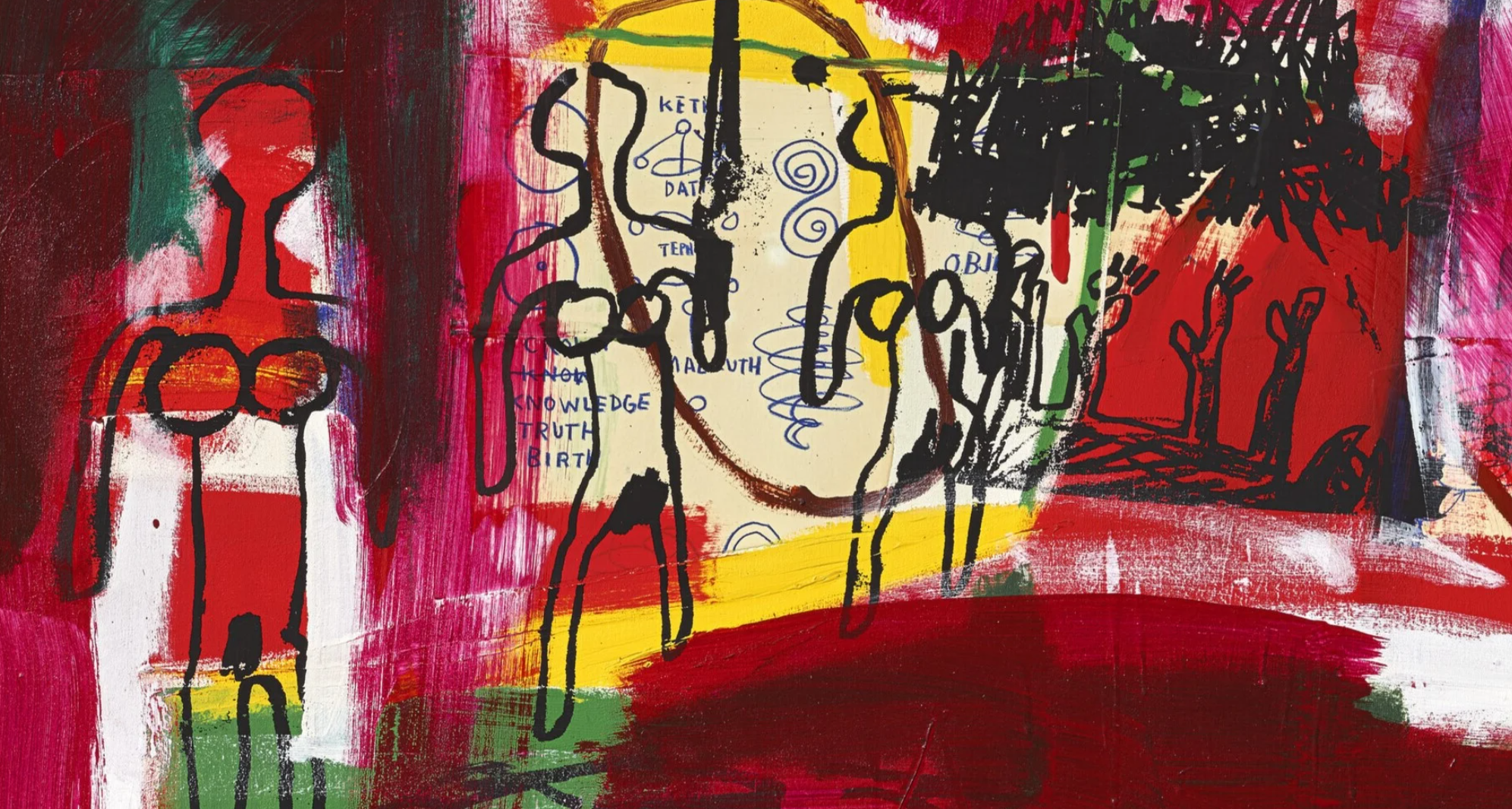
1984 was a pivotal year for Basquiat. He had moved into a loft space owned by Andy Warhol in August 1983, and the two artists made their first collaborative works in silkscreen and paint shortly afterwards. As he continued his dialogue with Warhol over the following two years, Basquiat’s own work took on a greater material richness and thematic complexity. Crowning his ascent to global fame, August 1984 saw the opening of Basquiat’s first solo museum show, which debuted at the Fruitmarket Gallery, Edinburgh, before travelling to London’s Institute of Contemporary Art.
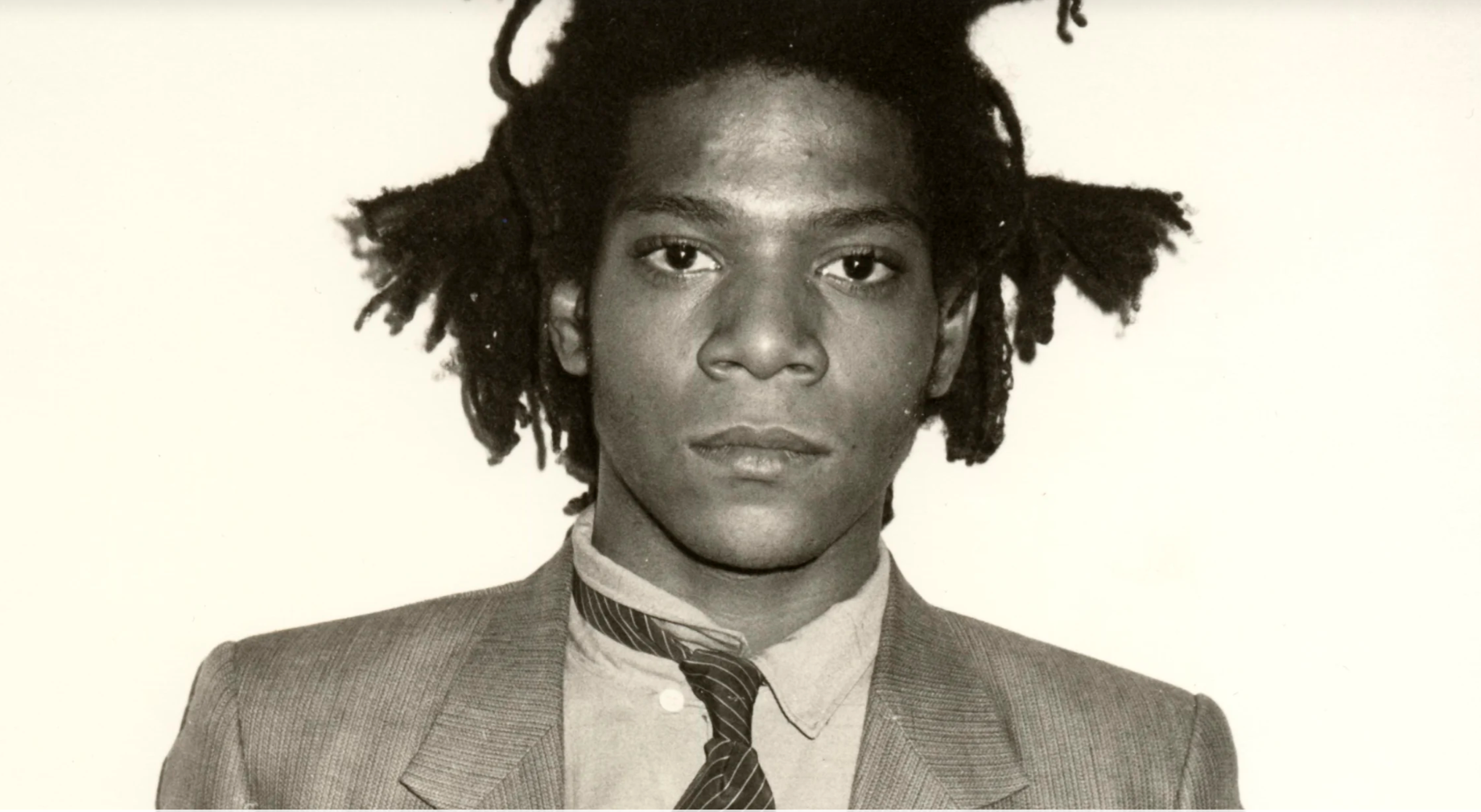
Andy Warhol, Jean-Michel Basquiat, 1982. © 2025 The Andy Warhol Foundation for the Visual Arts, Inc. / Licensed by Artists Rights Society (ARS).
In West Africa a griot is a poet-storyteller who plays a central role in his community’s oral tradition. Basquiat’s griots, their features electric with bright lines of oilstick, show the influence of idols illustrated in Robert Farris Thompson’s book Flash of the Spirit: African & Afro-American Art & Philosophy (1983). Basquiat was likely introduced to Flash of the Spirit by his friend Shenge Ka Pharaoh, who became an assistant in 1984. He was so enamored with the book that he asked Thompson to contribute a catalogue essay for a 1985 solo show in New York. Drawing a musical or vocal equivalence between Basquiat’s work and the magic of a voodoo shaman, Thompson identified the artist as displaying a postmodern ‘Creole’ sensibility, enthusing that ‘He transforms paint into incantation … He chants paint. He chants body. He chants them in splendid repetitions’ (R. F. Thompson, Jean-Michel Basquiat: 2 March – 23 March 1985, exh. cat. Mary Boone / Michael Werner Gallery, New York 1985, n.p.).
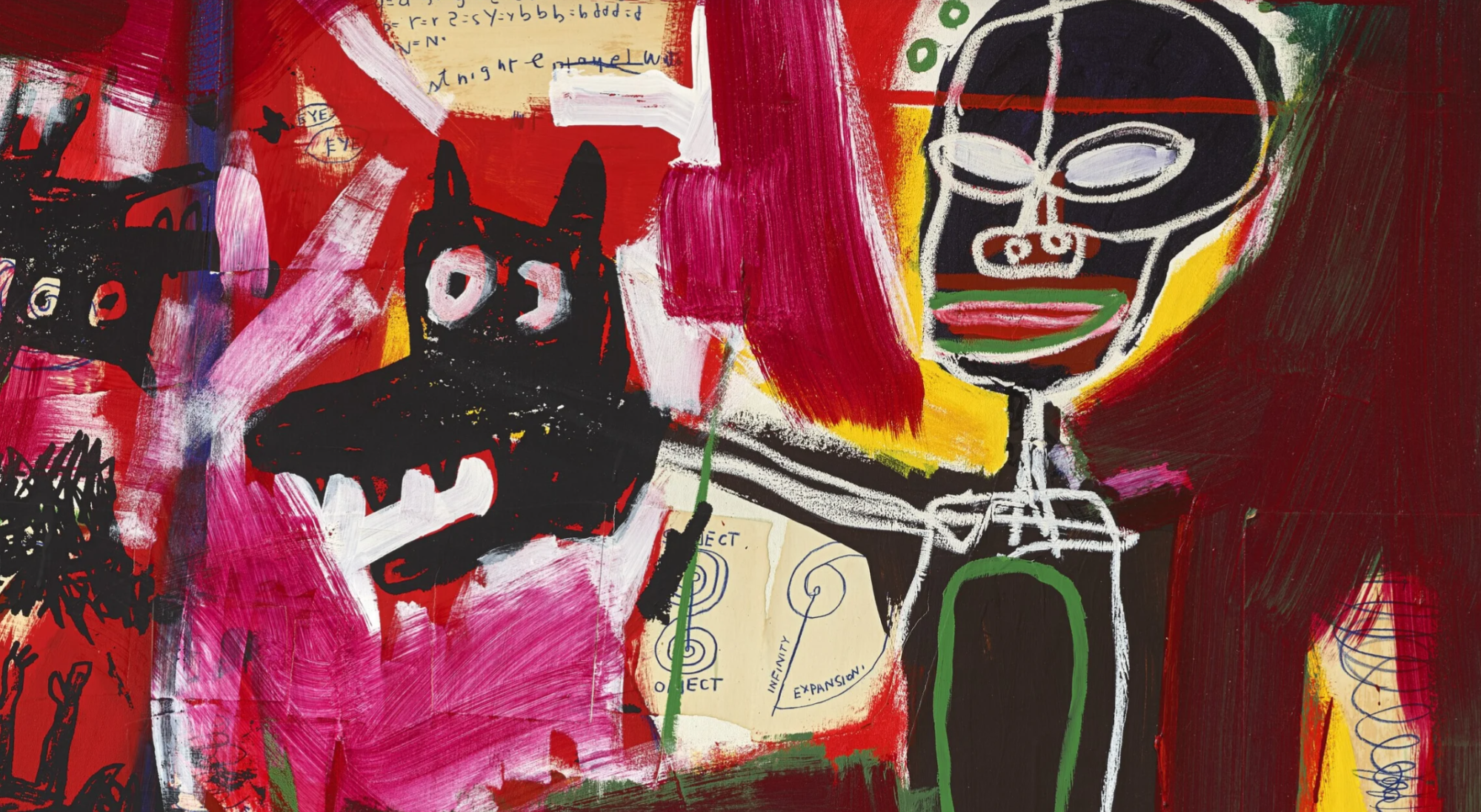
The griot masks in Sabado por la Noche, awash in sweeping gestural brushwork, are an instance of different artistic languages coming together: African cultural forms meeting the color of Abstract Expressionism, which remained enormously influential in Basquiat’s New York. The work’s Spanish title also tells a polyvocal story. Having grown up in a multilingual Haitian-Puerto Rican household, Basquiat was fluent in Spanish and often used the language in his works. Elsewhere, diagrammatic evocations of esoteric knowledge and sacred geometry speak to his fascination with encyclopedias, symbol sourcebooks and other literature, sitting alongside images that evoke the everyday imagery of TV cartoons and comic-books. Basquiat sampled and synthesized ideas from a dizzying array of fields, assembling them onto one vibrant plane. As with many of the faces that fill Basquiat’s most celebrated works, it is tempting to search for elements of self-portraiture in Sabado por la Noche. Otherworldly and glowing, the masks’ bright lineation hints at skeleton and muscle beneath the skin. Many of Basquiat’s faces become skulls—a key early influence was the medical textbook Gray’s Anatomy and a book of anatomical drawings by Leonardo da Vinci, which he had been given while in hospital as a child—and can evoke themes of mortality. The present work’s faces, however, appear alive with a spiritual and celebratory power. If Basquiat did see himself in the griot’s guise, he was perhaps here depicting himself as a multiform painter-troubadour, spinning ambiguous and many-layered stories between internal and external worlds.
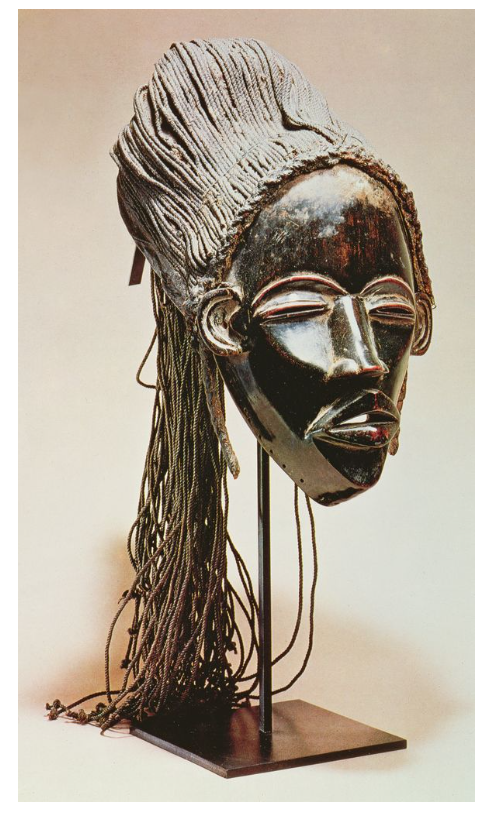
Dan mask, Wood and Fibre. Image: Bridgeman Images.
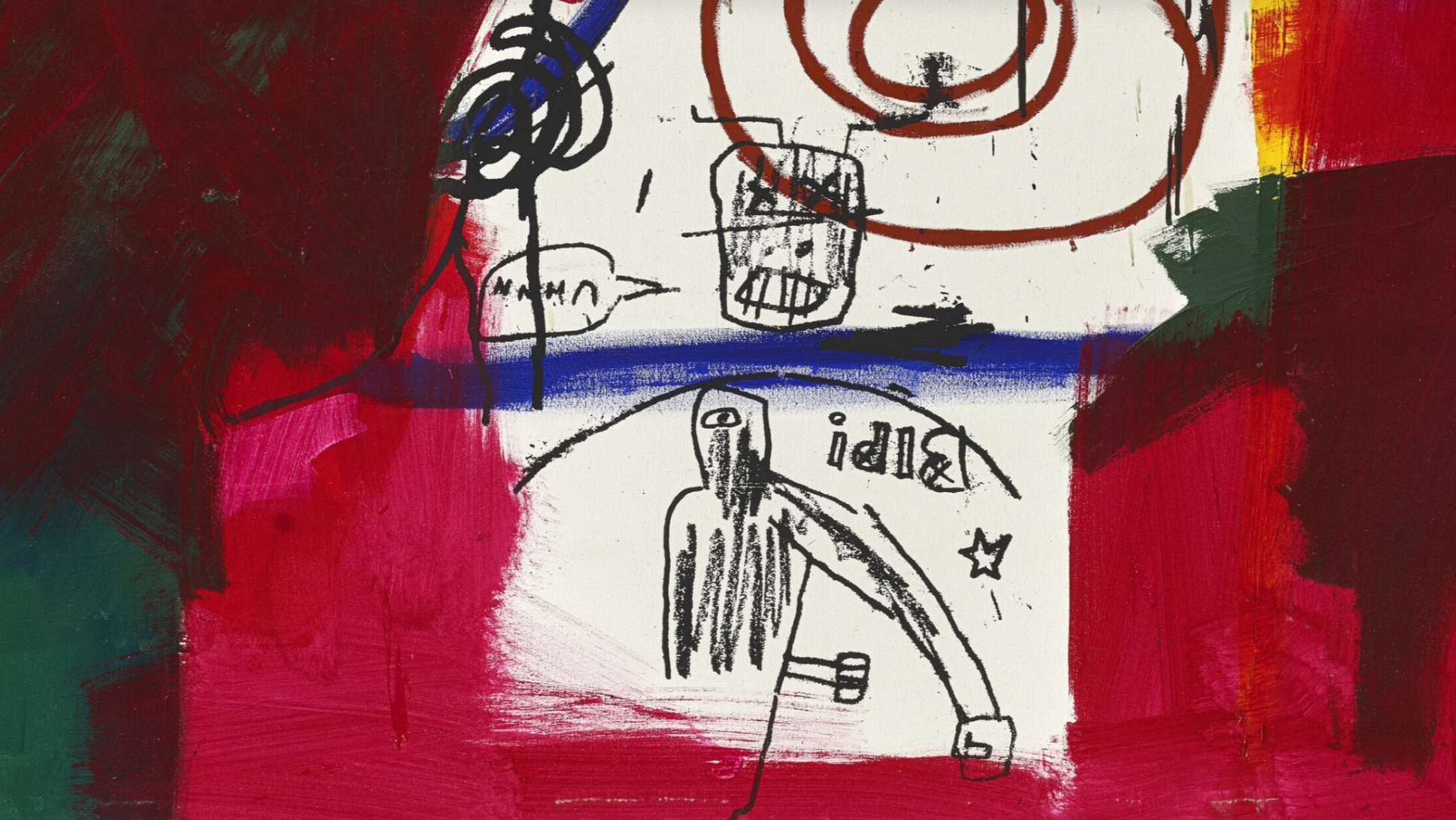
The diversity of media in Sabado por la Noche—drawn, painted, collaged, silkscreened—matches its range of ideas. Basquiat’s mastery lies in his quickfire and seemingly effortless process of selection and composition: for all its density and multiplicity, the canvas is neither overwhelmed or unbalanced. The artist deploys colour and form with an instinctive grace. Bravado brushwork, mysterious glyphs and powerful human figures sing in harmony. As Demosthenes Davvetas has written, Basquiat’s work ‘is less like a mirror than like an eye and a voice: as eye, it observes and interprets life, collecting selected items and organizing them within itself; thus organized, it becomes voice, a clear utterance expressing what has been seen’ (D. Davvetas, ‘Lines, Chapters and Verses: The Art of Jean-Michel Basquiat’, in E. Navarra, ed., Jean-Michel Basquiat, 3rd ed., Paris 2000, p. 59).
Takashi Murakami
An Homage to IKB, 1957 E, 2012
Sotheby’s Hong-Kong: 29 March 2025
Estimated: HKD 5,500,000 – 10,000,000
HKD 9,525,000 / USD 1,224,293
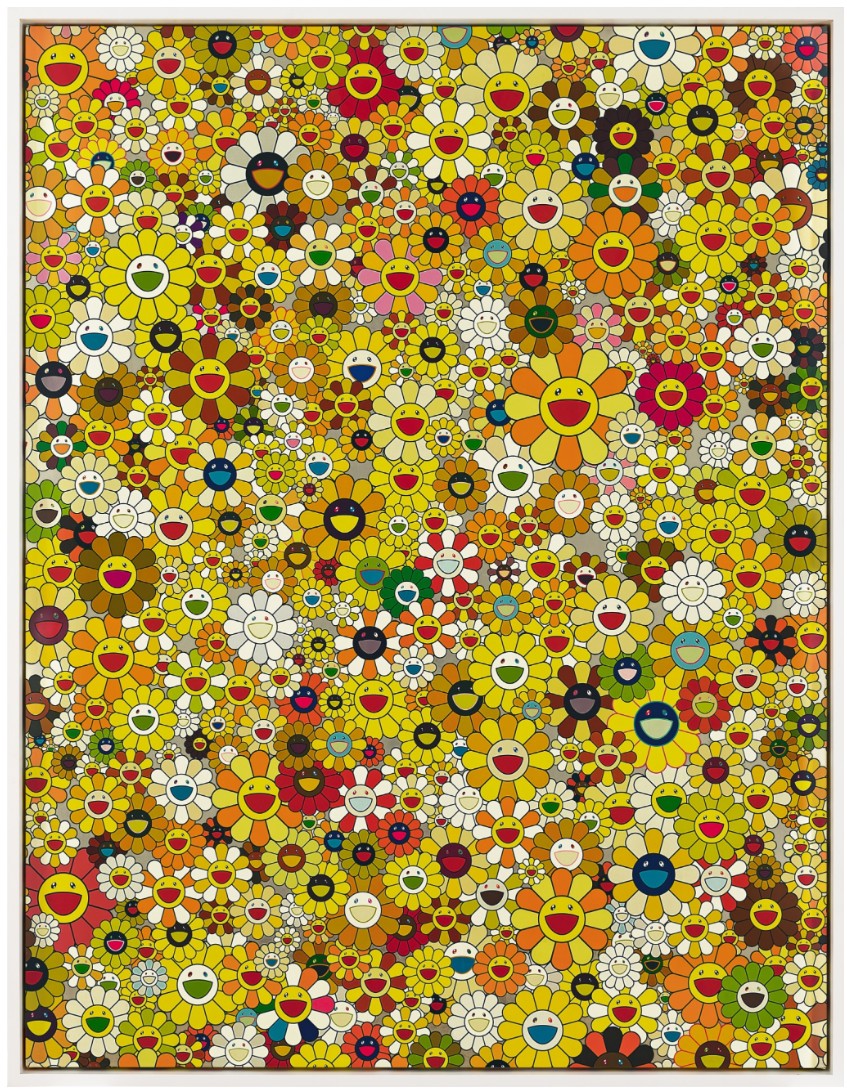
TAKASHI MURAKAMI (b. 1962)
An Homage to IKB, 1957 E, 2012
Acrylic on canvas mounted on board
199×153 cm (78 3/8 x 60 1/4 inches)
Signed and dated 2012 (on the overlap)
© 2012 Takashi Murakami/Kaikai Kiki Co., Ltd. All Rights Reserved
Smiling flowers represent the hallmark and signature motif of Takashi Murakami’s extraordinary and ambitious artistic enterprise. An Homage to Monogold 1960 E (2012) is a meticulously rendered example of the artist’s characteristic style: each of the densely layered smiling flowers is hand painted with immaculate precision to deliver a sense of digital-like perfection. Dominated by a rich array of chrome yellow and orange hues punctuated by a glowing mixture of spectral shades and neon highlights, the present work is immediately impactful and a visually stunning paradigm of the multi-layered yet obsessively flat production of Takashi Murakami. An Homage to Monogold 1960 E is part of a series of paintings paying tribute to Yves Klein’s monochromatic works which have influenced Murakami’s oeuvre since the early 1990s. The present work, as eluded by its title and vivid yellow palette, pays direct homage to Klein’s first Monogolds, which were created in the early 1960s, using delicate gold leaves in their composition. However, instead of Klein’s monochromatic surface, Murakami’s painting is made up of countless flowers in various colours.
The smiling flower, Murakami’s worldly recognized motif, was first created in 1995. This motif is instantly recognizable and considered to be the intersection of today’s art, fashion, and culture. Entrenched in the ancient Eastern practice of decorative flower painting on traditional lacquered panels, Murakami engenders a new expression for Japanese high-art that encompasses the mythology, craft and skill of Japan’s past with the pervasive and highly commercial visual culture that has developed in Japan since the Second World War. Trained in the traditional Japanese art movement of Nihonga, the artist has also found inspiration in everything from manga and anime to Buddhist forms and iconography. His practice invokes an artistic plurality disconcertingly underscored by the profound impairment of Japanese culture in the aftermath of the Second World War. Murakami confronts the literal and metaphoric “flattening” of Japanese culture—heralded by the atomic bombing of Hiroshima and Nagasaki in 1945 and exacerbated by the dominance of Western surveillance and influence thereafter—in his oeuvre, united by the term Superflat. An Homage to Monogold 1960 E perfectly synthesizes the artist’s Superflat series and his spiritual and cultural interests.
Doraemon: Time with Friends, 2019
Estimated: HKD 1,500,000 – 2,500,000
HKD 1,134,000 / USD 145,758
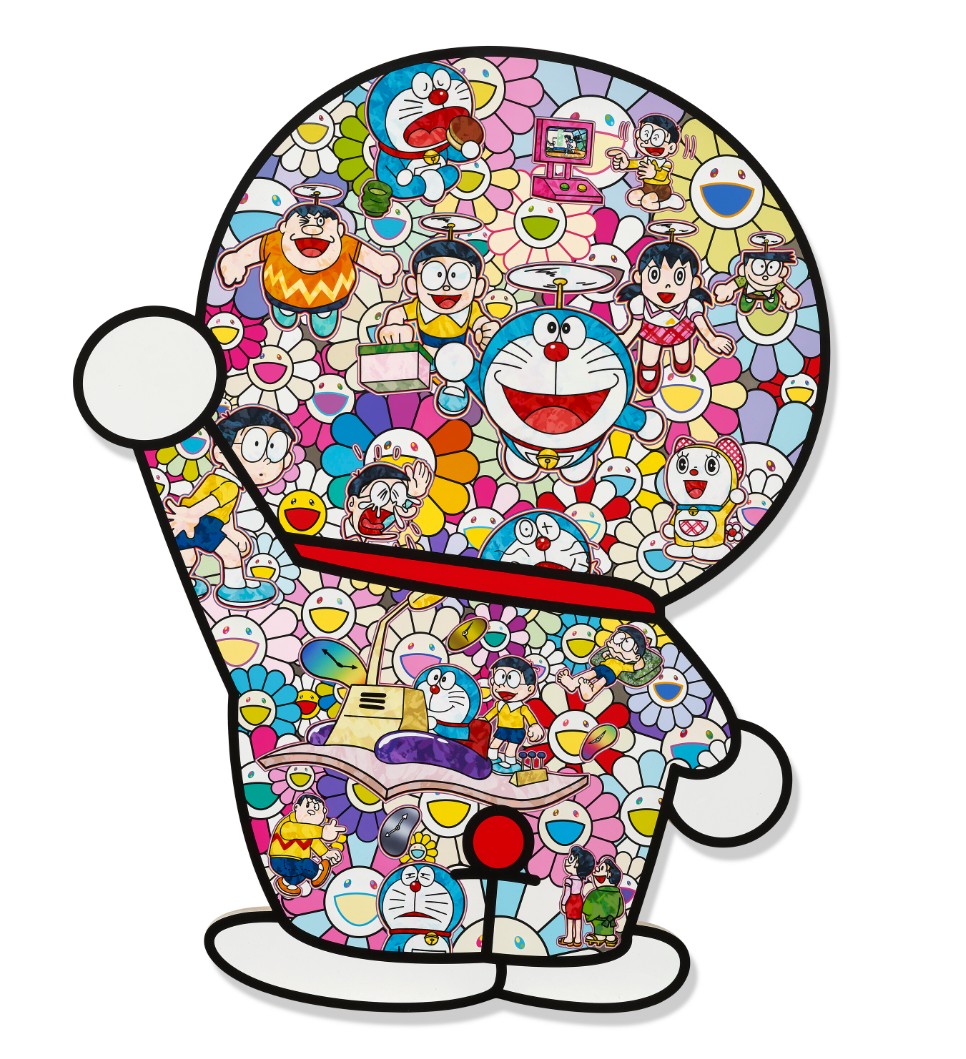
TAKASHI MURAKAMI (B. 1962)
Doraemon: Time with Friends, 2019
Acrylic, platinum leaf and gold leaf on canvas mounted on wood panel
120 x 93.6 cm (47 1/4 x 36 7/8 inches)
Signed with the artist’s signature and dated ‘2019’ (on the reverse)
Monogramouflage, 2008
Christie’s Hong-Kong: 29 March 2025
Estimated: HKD 700,000 – 900,000
HKD 882,000 / USD 113,368
TAKASHI MURAKAMI (B. 1962), Monogramouflage | Christie’s
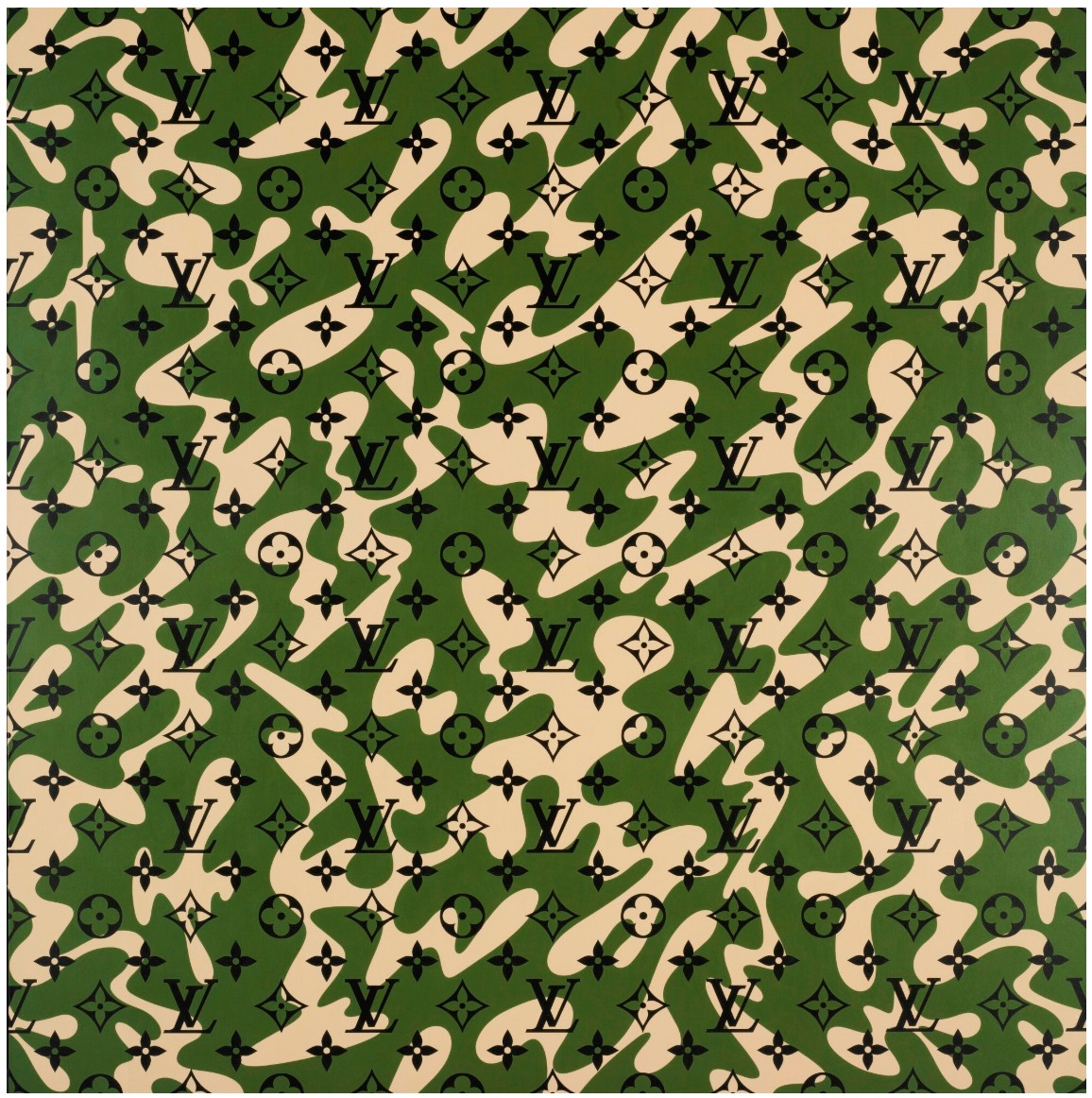
TAKASHI MURAKAMI (B. 1962)
Monogramouflage, 2008
Acrylic on canvas mounted on aluminum frame
180.3 x 180.3 cm (71×71 inches)
Signed with the artist’s signature and dated ’08’ (on the stretcher)
Liu Ye
Beijing Madonna, 1994-1995
Christie’s Hong-Kong: 28 March 2024
Estimated: HKD 12,000,000 – 18,000,000
HKD 12,475,000 / USD 1,603,470
LIU YE (B. 1964), Beijing Madonna | Christie’s
LIU YE (B. 1964)
Beijing Madonna, 1994-1995
Acrylic and oil on canvas
80×100 cm (31 1/2 x 39 3/8 inches)
Signed, signed again in Chinese, and dated ’94-95 Liu ye’ (upper left)
Young Boy and Lacoste, 2005
Christie’s Hong-Kong: 29 March 2024
Estimated: HKD 1,500,000 – 2,500,000
HKD 2,268,000 / USD 291,517
Young Boy and Lacoste, 2005
Acrylic and pencil on canvas
50×40 cm (19 5/8 x 15 3/4 inches)
Signed ‘©LIU YE’ (lower left)
Girl with Mondrian, 2004
Sotheby’s Hong-Kong: 30 March 2024
Estimated: HKD 700,000 – 1,000,000
HKD 2,032,000 / USD 261,183
WORK ON PAPER
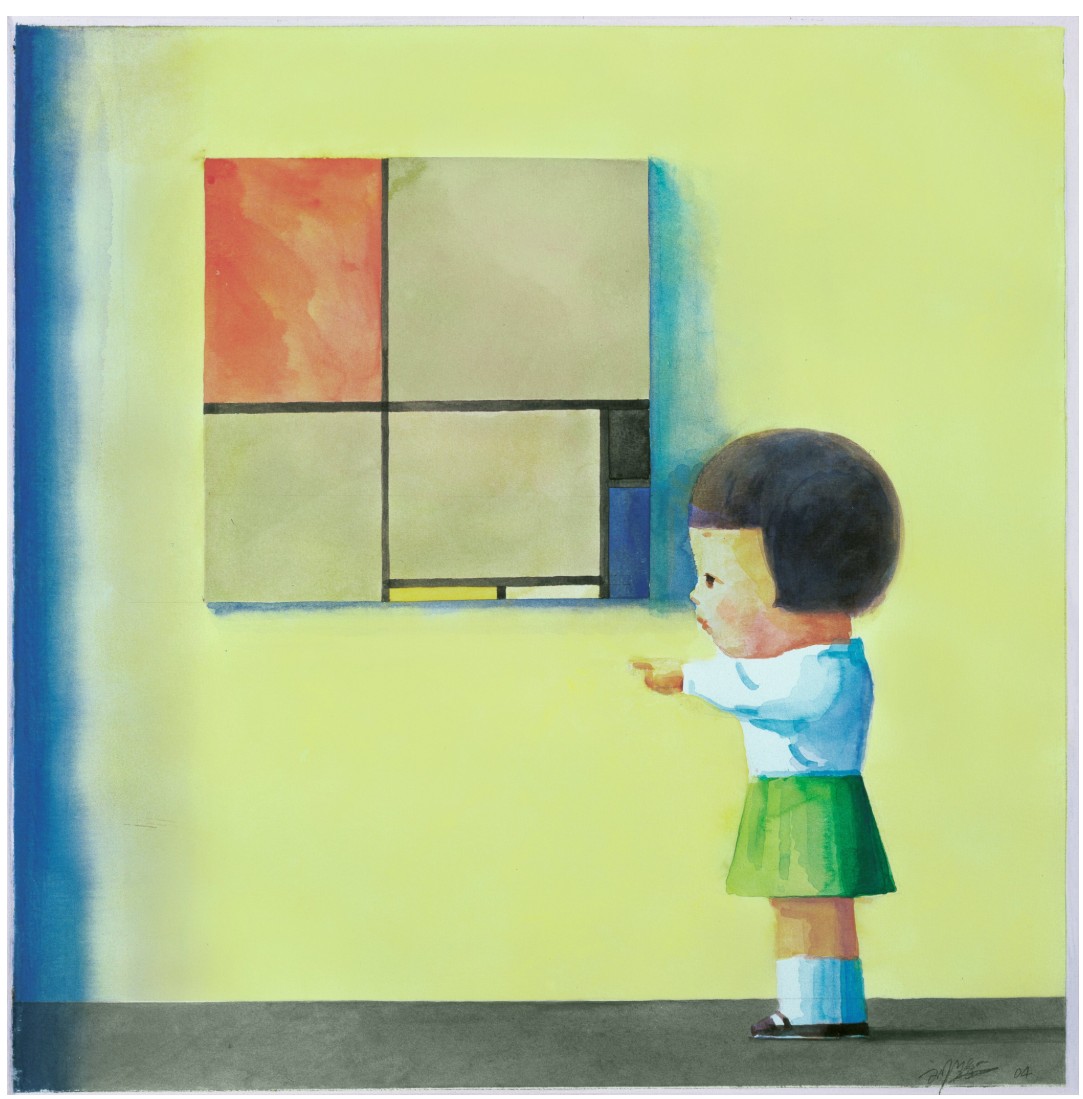
LIU YE (b. 1964)
Girl with Mondrian, 2004
Watercolor on paper
50 x 52.5 cm (19 3/4 x 20 5/8 inches)
Signed in English and Chinese and dated 04 (lower right)
Yayoi Kusama
PUMPKIN (HRU), 2014
Christie’s Hong-Kong: 28 March 2024
Estimated: HKD 25,000,000 – 35,000,000
YAYOI KUSAMA (B. 1929), PUMPKIN (HRU) | Christie’s
YAYOI KUSAMA (B. 1929)
PUMPKIN (HRU), 2014
Acrylic on canvas
100×100 cm (39 3/8 x 39 3/8 inches)
Signed, titled, titled again in Japanese, and dated ‘HRU PUMPKIN YAYOI KUSAMA 2014’ (on the reverse)
Pumpkin (S), 2016
Christie’s Hong-Kong: 28 March 2024
Estimated: HKD 12,500,000 – 18,500,000
YAYOI KUSAMA (B. 1929), Pumpkin (S) | Christie’s
Pumpkin (S), 2016
Mirror polished bronze
67.3 (H) x 63.5 x 63.5 cm (26 1/2 x 25 x 25 inches)
Incised with the artist’s signature ‘Yayoi Kusama’ (lower edge)
This work is number three from an edition of eight plus two artist’s proofs
Starry Pumpkin, 2019
Estimated: HKD 16,000,000 – 32,000,000
YAYOI KUSAMA (b. 1929)
Starry Pumpkin, 2019
Fiberglass reinforced plastic and tile
130x150x150 cm (51 1/8 x 59 x 59 inches)
Untitled, circa 1970
Christie’s Hong-Kong: 28 March 2024
Estimated: HKD 12,000,000 – 18,000,000
Untitled, circa 1970
Oil and mixed media on canvas
60 x 50.4 cm (23 5/8 x 19 7/8 inches)
Signed twice and dated ‘Yayoi Kusama 1970 c.’ (on the reverse)
Spring Festival, 1981
Christie’s Hong-Kong: 28 March 2024
Estimated: HKD 4,000,000 – 6,000,000
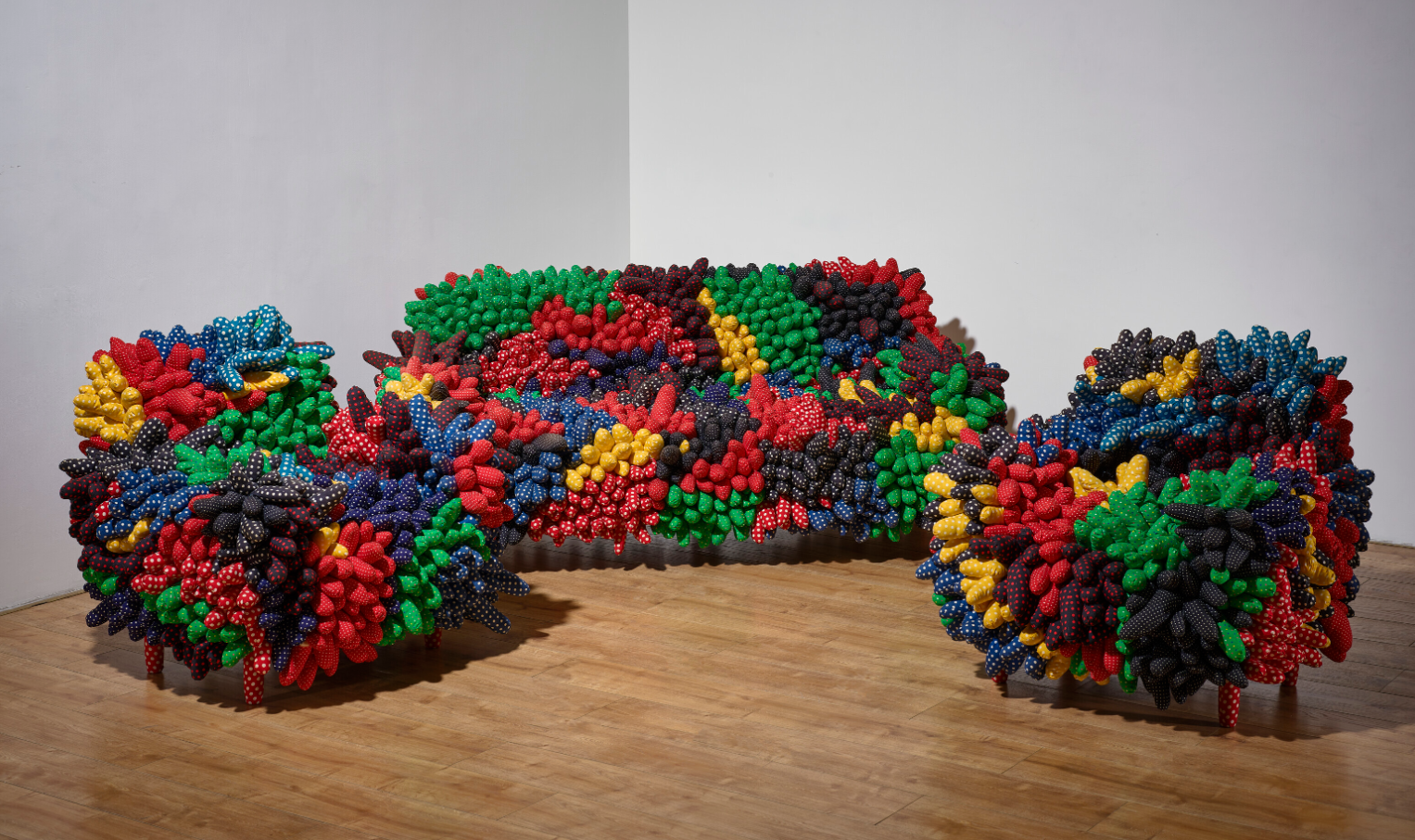
Spring Festival, 1981
Mixed media, in three parts
Sofa: 80 (H) x 150 x 75 cm (31 1/2 x 59 x 29 1/2 inches)
Each chair: 80 (H) x 70 x 75 cm (31 1/2 x 27 1/2 x 29 1/2 inches) (2)
Signed, titled, and dated ‘Spring Festival 1981 Yayoi Kusama’
Titled again in Japanese (on the underside of each sofa and chair)
INFINITY-NETS (TTWAM), 2007
Christie’s Hong-Kong: 29 March 2024
Estimated: HKD 7,800,000 – 12,800,000
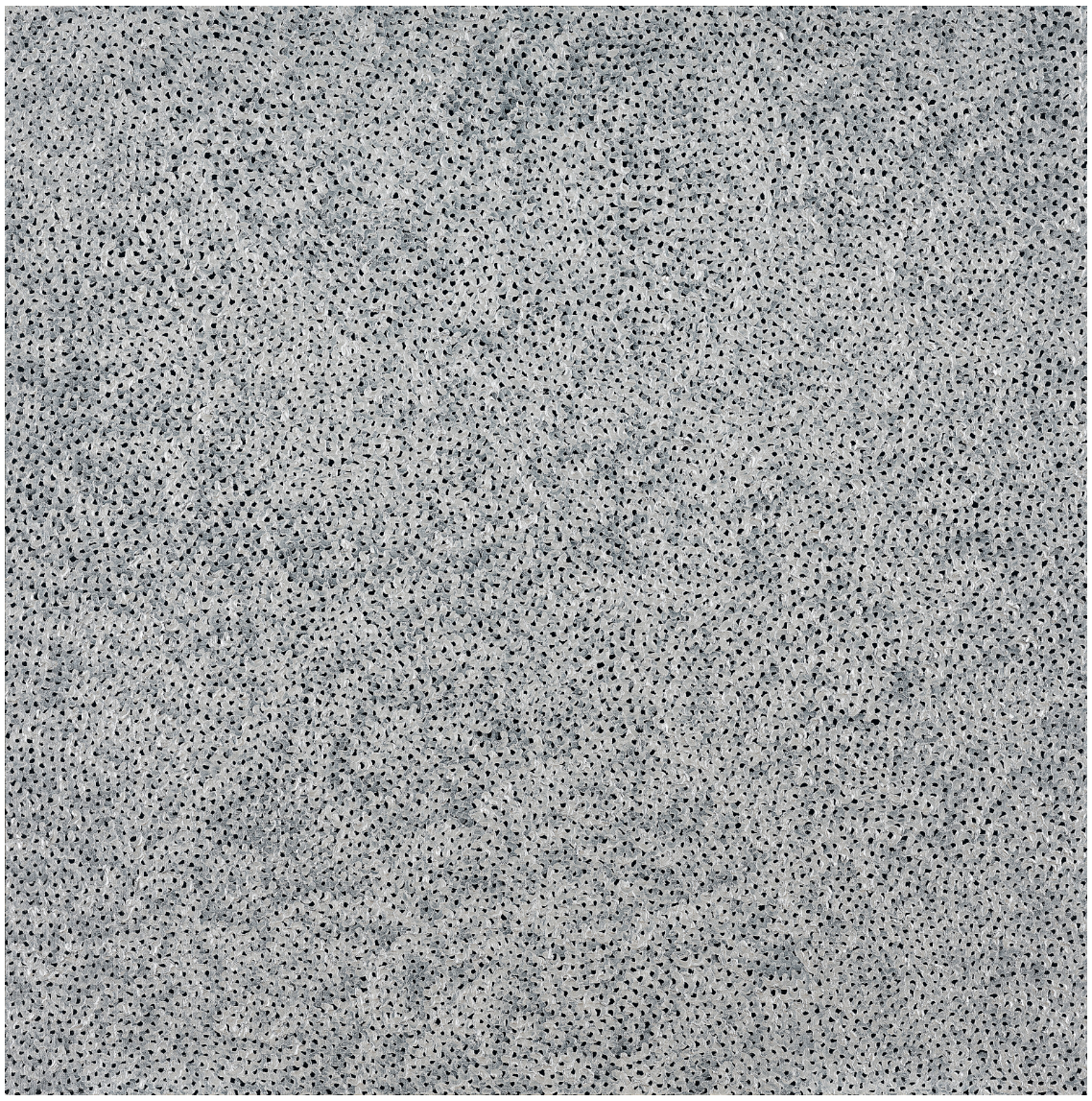
INFINITY-NETS (TTWAM), 2007
Acrylic on canvas
117×117 cm (46×46 inches)
Signed, titled and dated ‘Yayoi Kusama 2007 INFINITY-NETS TTWAM’
Titled again in Japanese (on the reverse)
“My Infinity Net paintings and Accumulation works had different origins from the European monochrome works. They were about an obsession: infinite repetition. In the 1960s, I said: “I feel as if I were driving on the highways or carried on a conveyor belt without ending until my death. This is like continuing to drink thousands of cups of coffee or eating thousands of feet of macaroni… I am deeply terrified by the obsessions crawling over my body, whether they come within me or from outside. I fluctuate between feelings of reality and unreality.”‘
Nets, 1999
Christie’s Hong-Kong: 29 March 2024
Estimated: HKD 6,000,000 – 8,000,000
Nets, 1999
Acrylic on canvas
73 x 60.8 cm (28 3/4 x 23 7/8 inches)
Signed, titled, and dated ‘Yayoi Kusama 1999 Nets’ (on the reverse)
Pumpkin, 2001
Christie’s Hong-Kong: 29 March 2024
Estimated: HKD 6,000,000 – 8,000,000
Pumpkin, 2001
Acrylic on canvas
27×22 cm (10 5/8 x 8 5/8 inches)
Signed and dated ‘YAYOI KUSAMA 2001’
Titled in Japanese (on the reverse)
Nets (A.B.C), 1990
Estimated: HKD 3,200,000 – 5,500,000
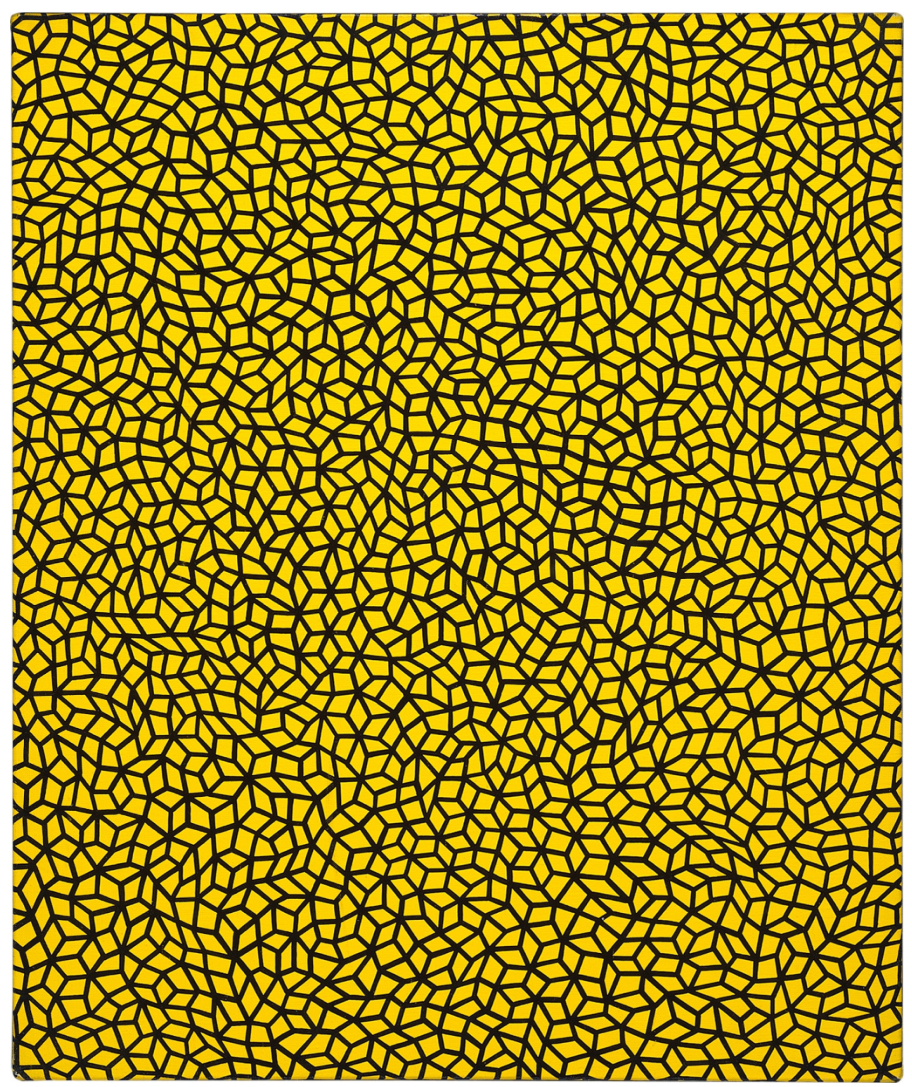
YAYOI KUSAMA (b. 1929)
Nets (A.B.C), 1990
Acrylic on canvas
72.5 x 60 cm (28 1/2 x 23 5/8 inches)
Signed, titled and dated 1990 (on the reverse)
Yayoi Kusama exhibited her first Infinity Net paintings in New York in 1959. Employing the minimal repeated gesture of a single touch of the brush, Kusama’s revolutionary paintings responded critically to the emotionally and semiotically charged brushstrokes of Jackson Pollock and Willem de Kooning. Albeit a relative novice to oil painting at the time, Kusama was able to at once firmly grasp and radically redefine the medium in bold defiance of gestural abstraction, meting out the ecstatic masculine gesture into dainty increments and forging a sophisticated feminine aesthetics of obsession and repetition. Replacing the expressive gesture with an exhaustive one, Kusama’s meticulous and labor-intensive methods literally pushed painting to its limits.
Diagnosed with an obsessional neurosis, Kusama used her art to “self-obliterate” hallucinatory visions through the process of compulsive reproduction of dots and lines. Her art was that of epic excess, exuding an infinitely self-perpetuating momentum that engulfs and overwhelms even as it entrances and enthralls. In a conversation with Gordon Brown in 1964 the artist declared: “My nets grew beyond myself and beyond the canvases I was covering with them. They began to cover the walls, the ceiling, and finally the whole universe. I was always standing at the centre of the obsession, over the passionate accretion and repetition inside of me”. Compulsively painting, often for days at a time, Kusama’s high-intensity process is integral to the meaning of her celebrated Nets series: each loop and each line is indexical to her very being.
Hat, 1981
Christie’s Hong-Kong: 29 March 2024
Estimated: HKD 7,800,000 – 12,800,000
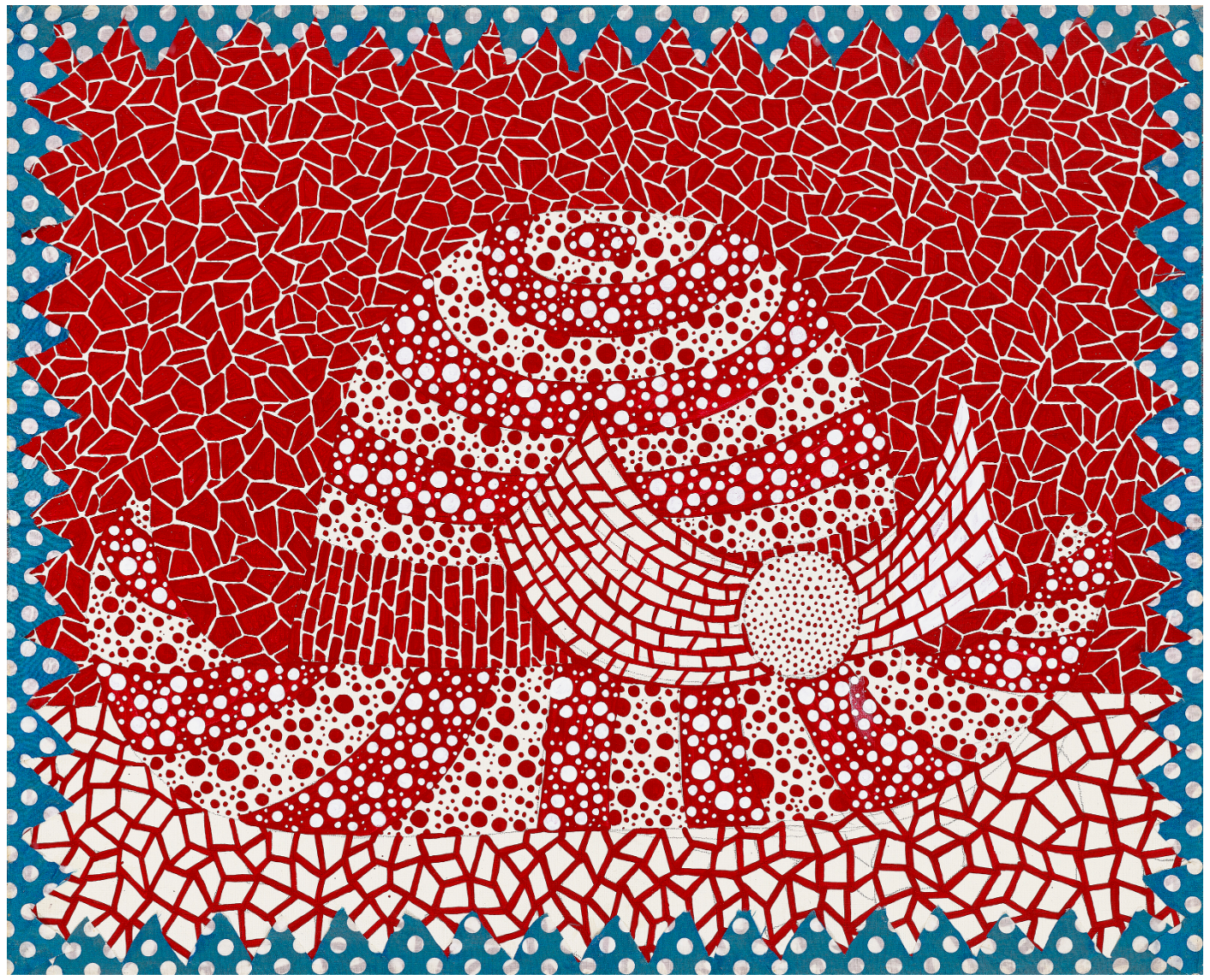
Hat, 1981
Acrylic, pencil, and cloth collage on canvas
53 x 65.2 cm (20 7/8 x 25 5/8 inches)
Signed and dated ‘YAYOI KUSAMA 1981’, titled in Japanese (on the reverse)
“I think fashion is very important for human beings because people can become happy and excited from fashion. I focused on that aspect and entered the fashion world, showing my fashion work to public.”
Swallow’s Nest, 1989
Christie’s Hong-Kong: 29 March 2024
Estimated: HKD 4,500,000 – 6,500,000
Swallow’s Nest, 1989
Acrylic on canvas
38.5 x 46 cm (15 1/8 x 18 1/8 inches)
Signed and dated ‘Yayoi Kusama 1989’
Titled in Japanese (on the reverse)
Dots (Infinity Dots), 1990
Estimated: HKD 3,800,000 – 6,000,000
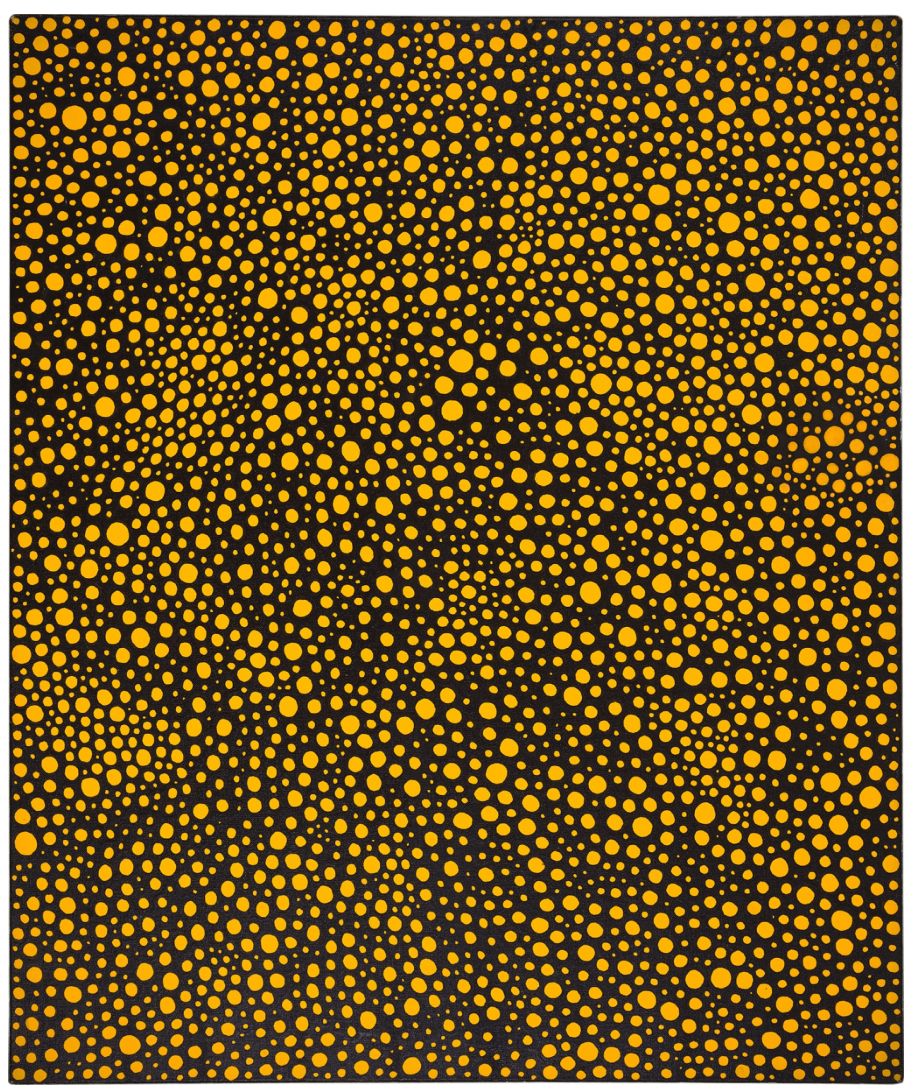
Dots (Infinity Dots), 1990
Acrylic on canvas
72.5 x 60 cm (28 1/2 x 23 5/8 inches)
Signed, titled and dated 1990 (on the reverse)
Dots (Infinity Dots) is a sublime, instantly arresting and technically virtuosic archetype that encapsulates Kusama’s ubiquitous polka-dot aesthetic, which the artist regards as a symbol of “love and peace”.
Diagnosed with an obsessional neurosis, Kusama used her art to “self-obliterate” hallucinatory visions through the process of compulsive reproduction of dots and lines. Her art was that of epic excess, exuding an infinitely self-perpetuating momentum that engulfs and overwhelms even as it entrances and enthralls. In a conversation with Gordon Brown in 1964 the artist declared: “My nets grew beyond myself and beyond the canvases I was covering with them. They began to cover the walls, the ceiling, and finally the whole universe. I was always standing at the centre of the obsession, over the passionate accretion and repetition inside of me”.Compulsively painting, often for days at a time, Kusama’s high-intensity process is integral to the meaning of her celebrated Nets series: each loop and each line is indexical to her very being.
Fernando Botero
Portrait of Nadine Haim, 1977
Christie’s Hong-Kong: 28 March 2024
Estimated: HKD 2,500,000 – 3,500,000
HKD 3,402,000 / USD 437,275
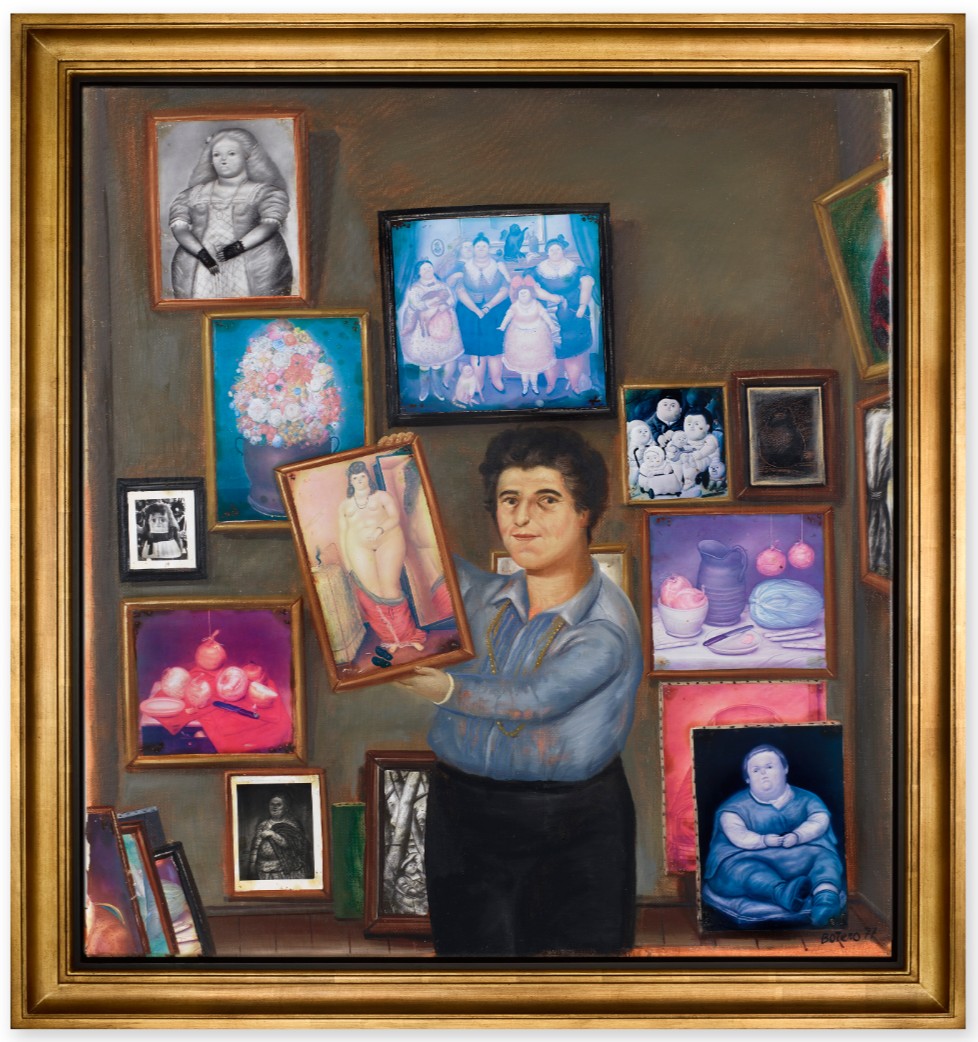
Portrait of Nadine Haim, 1977
Oil and photo collage on canvas mounted on board
88.5 x 83 cm (34 7/8 x 32 5/8 inches)
Signed and dated ‘Botero 77’ (lower right)
Signed, titled and dated ‘”NADINE HAIM” Botero 77’ (on the reverse)
Portrait of Nadine Haim pays homage to the tradition of Kunstkammer paintings, which showcased an individual’s collection with replicas of the artworks they owned displayed together. In the present work, Botero has used printed images of his own paintings, collaging the cut-outs onto the canvas. These juxtaposed reproductions are not reflective of the scale of their original counterparts, should they be hung together, which imbues the work with a surreal quality. Botero took the print copies from contemporary literature and exhibition catalogues featuring his works, some of which were reproduced in print in monochrome. Yet, some of these figures were finalised after the addition of the collage elements, as the peak of a hat, or a lock of hair, skirts onto the reproduced image. For the artist, whose recognisably voluptuous figures have always attracted attention, volume and depth were of incessant significance, and he sought to ‘create a language of plasticity that would be effective and that people would be touched by’ (Botero, quoted in an interview with I. Sischy, ‘An Interview with Fernando Botero’, Artforum, May 1985, p. 72). In Portrait of Nadine Haim, the artist’s inventive use of media not only acts as modernising take on an art historical tradition, but furthers his exploration of plasticity in his work. A vivid three-dimensionality is created by the dialogue between the glossy sheen of the collaged reproductions, and the rich, curving brushstrokes of the oil paint.
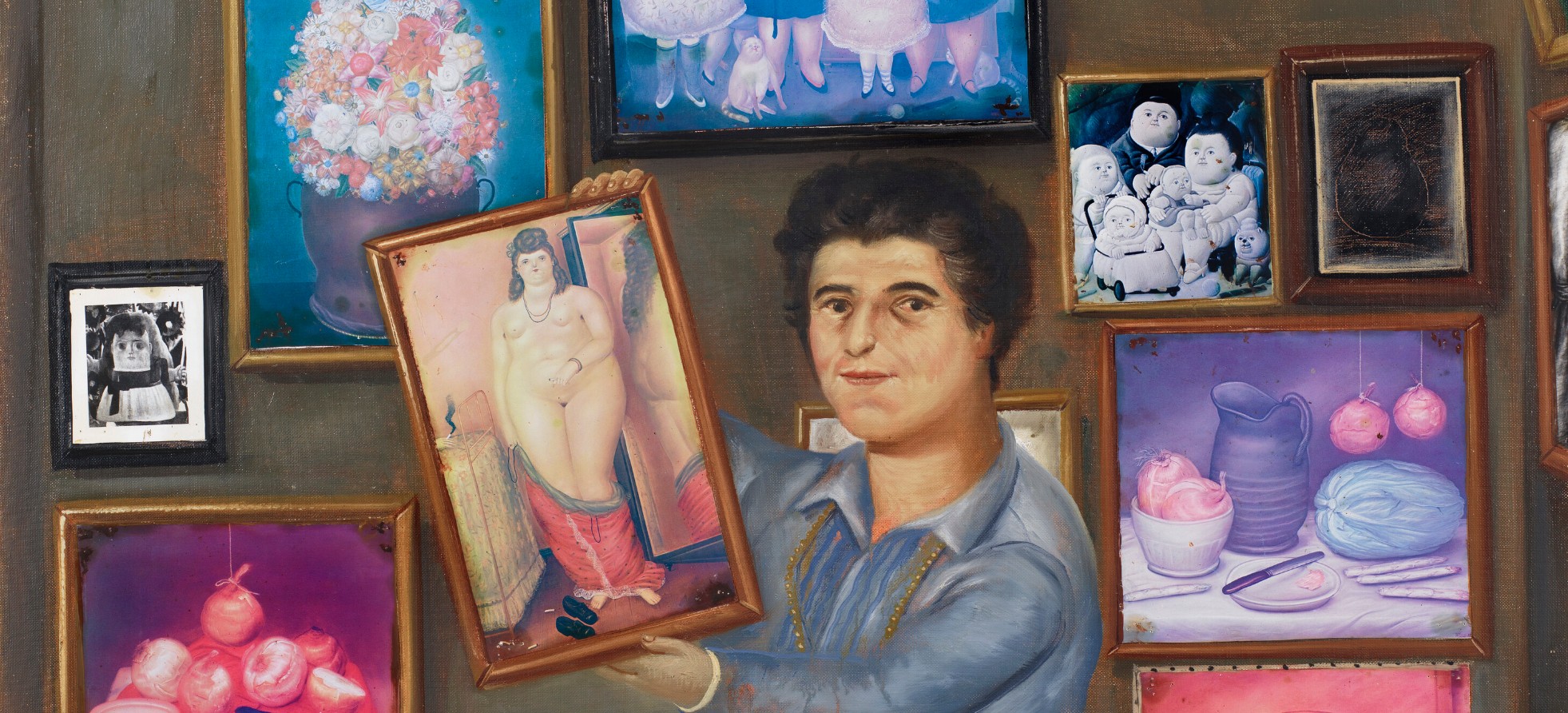
The portrait, Nadine Haim, emerges from a serene, neutral background—her figure rendered with the tender monumentality that defines Botero’s oeuvre. Her composed expression and elegantly coiffed hair suggest an inner world of quiet confidence, while the meticulous detailing of her attire conveys a sense of timeless sophistication. The subtle interplay of light and shadow accentuates the rounded contours of her face and hands, lending the work an almost sculptural quality. Botero’s portrayal of Haim transcends mere likeness, inviting the viewer into a realm where beauty is redefined through the artist’s singular vision. The gentle exaggeration of form is not a caricature but rather a celebration of fullness, vitality, and the human condition. As with his finest portraits, the sitter’s gaze—calm, self-assured, and enigmatic—imbues the painting with an air of intimacy and quiet reverence. Executed during a period when Botero’s international reputation was firmly established, Portrait of Nadine Haim stands as a testament to the artist’s ability to fuse technical virtuosity with profound psychological insight. The inclusion of printed paper collage elements adds a unique dimension, reinforcing the painting’s significance within Botero’s body of work. The painting is not only a tribute to its subject but also an enduring reflection of Botero’s belief in the power of art to transform reality into a world of heightened grace and beauty.
Man on Horseback, 2008
Sotheby’s Hong-Kong: 29 March 2025
Estimated: HKD 5,400,000 – 11,000,000
HKD 10,745,000 / USD 1,381,105
FERNANDO BOTERO (1932 – 2023)
Man on Horseback, 2008
White Carrara marble
110x85x57 cm (43 1/4 x 33 1/2 x 22 3/8 inches)
Inscribed with artist signature (on the base)
Rene Magritte
Rêverie de Monsieur James, 1943
Christie’s Hong-Kong: 28 March 2024
Estimated: HKD 42,000,000 – 55,000,000
HKD 47,565,000 / USD 6,113,753
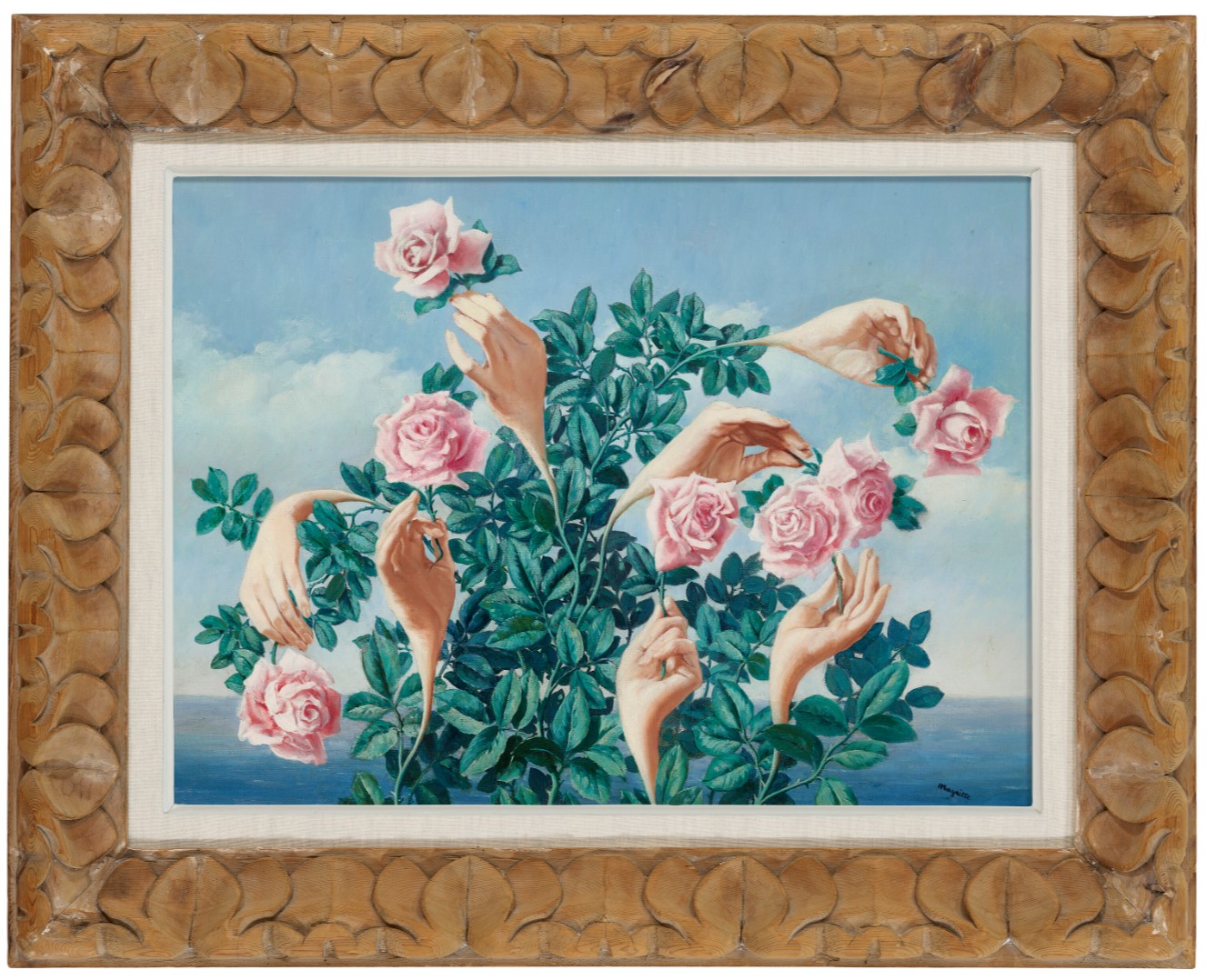
RENÉ MAGRITTE (1898-1967)
Rêverie de Monsieur James, 1943
Oil on canvas
54.3 x 73.7 cm (21 3/8 x 29 inches)
Signed ‘Magritte’ (lower right)
Signed again, titled, dated and inscribed
‘”RÊVERIE DE MONSIEUR JAMES” MAGRITTE 1943 20P.’
(on the reverse)
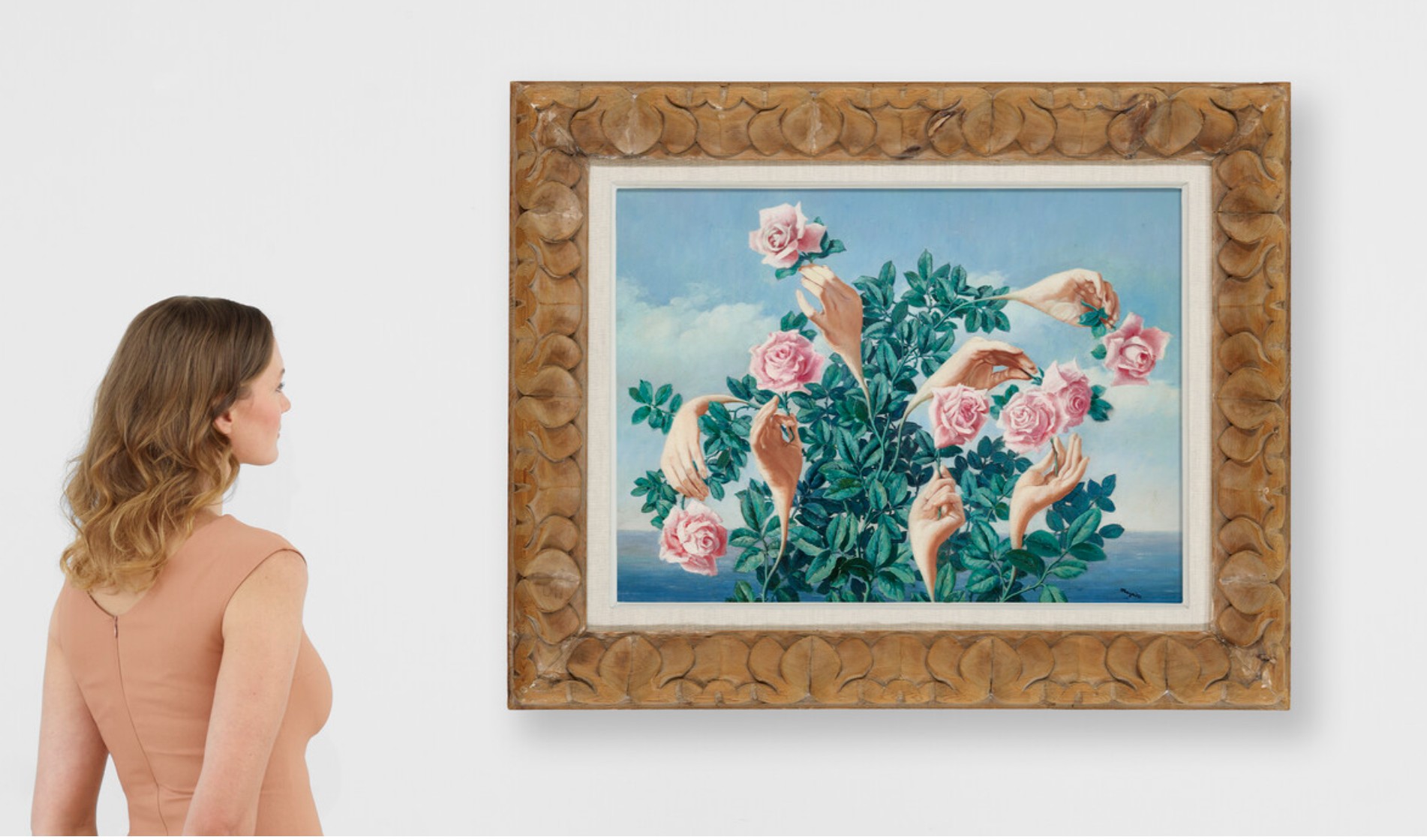
In René Magritte’s Rêverie de Monsieur James, elegant hands bloom like arum lilies from a rose bush, each daintily holding a pink rose, before an idyllic backdrop of a seascape. In this unusual scene, plant metamorphoses into human, before growing back into flora. The seven hands are balletic, the stem of the roses delicately held between the thumb and index finger, though the roses emerge from various points of the hand, some through the palm, others through the forefinger, and others through the thumb. With their graceful positioning, and the naturalistic growth of the wrist from the green branches of the rose bush, the hands fan out beneath the rose petals like sepals.
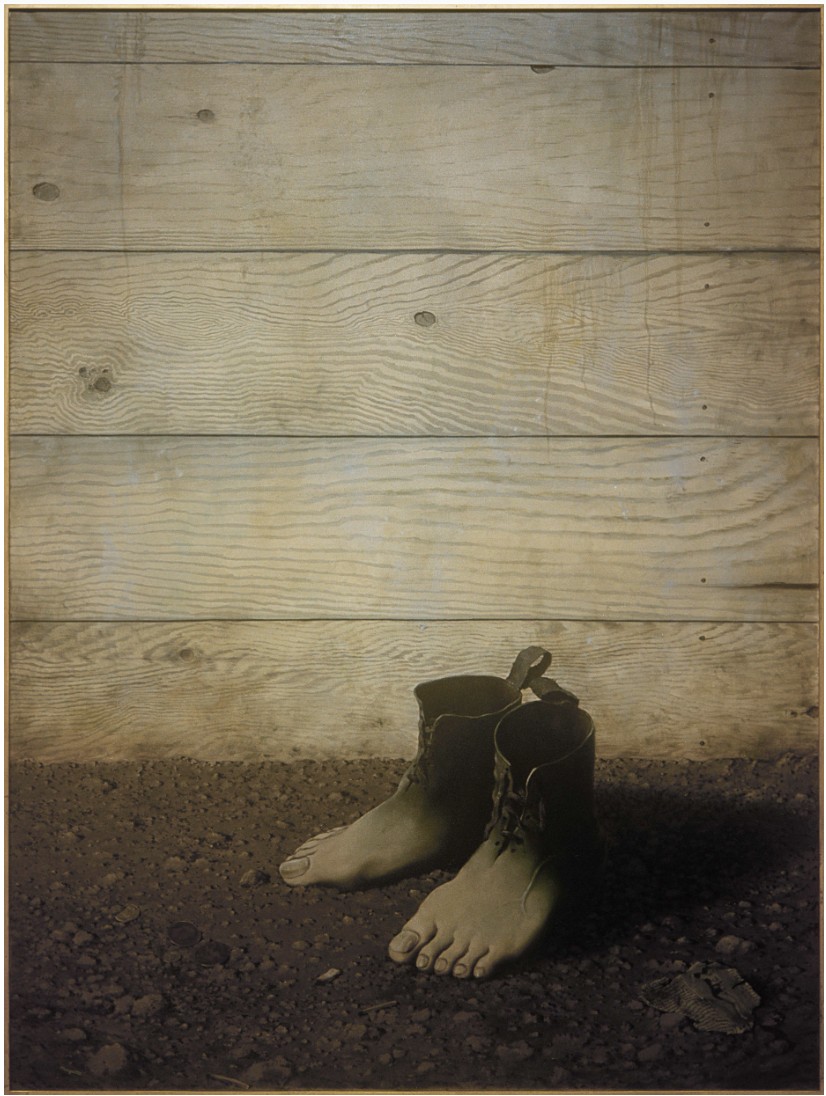
The title of the present work Rêverie de Monsieur James is a reference to Edward James, the Surrealist poet and collector, who Magritte had first met in 1936. An English aristocrat, James was a pivotal influence on the Surrealist movement – a key patron of Salvador Dalí, Leonor Fini, and Leonora Carrington, as well as Magritte. James is perhaps best remembered for his ambitious and opulent renovation of Monkton House, a traditional English country house on his extensive West Dean estate in Sussex, which he transformed into an extraordinary Surrealist dreamscape. James’ pioneering approaches to interior design extended to his London townhouse, 35 Wimpole Street, too, and following James and Magritte’s initial meeting in Paris, the eccentric collector wrote to the artist in January 1937, inviting him to stay at his English residencies. Magritte arrived in London that spring, and during his sojourn he was commissioned by James to paint three works for the ballroom at Wimpole Street – Le modèle rouge (Sylvester, vol. II, no. 428; Museum Boymans-van Beuningen, Rotterdam), La jeunesse illustrée (Sylvester, vol. II, no. 429; Museum Boymans-van Beuningen, Rotterdam), and Auseuil de la liberté (Sylvester, vol. II, no. 430; The Art Institute of Chicago). These paintings were to be placed behind the two-way mirrors in the ballroom, so that it was only when the lights behind the looking-glasses were switched on that the paintings would be visible.
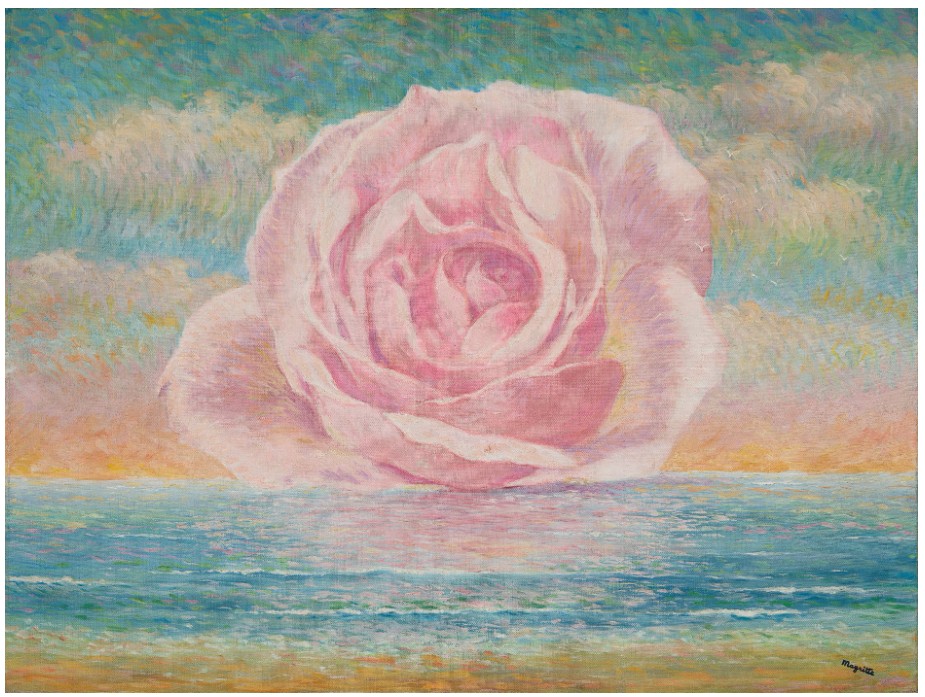
René Magritte, L’invitation au voyage, 1944. Private collection.
James was evidently pleased by this first commission from Magritte, and requested two more paintings, one a portrait of himself, before Magritte returned to Belgium. James was always eager to work creatively with the artists, sharing ideas or discussing concepts, and he and Magritte had done so during the artist’s February and March visit. In a letter to James from June 1937, Magritte wrote that he had made a preliminary study of a man ‘whose head is a light,’ and that since the final painting would belong to James, what did James think about his person being recognisable in it (Letter from Magritte to James, 27 June 1937). Magritte went on to outline the specific set up James must be photographed in, should he like the idea, and James subsequently arranged for the artist Man Ray to take the photographs. The finished composition, Le principe du plaisir (Sylvester, vol. II, no. 443; Private collection), depicts James’ torso and arms, seated behind a table, with a gleaming nimbus of light shining in the place of his head. It is clear from their letters that the artist and James must have discussed the concept and the composition, and this kind of creative collaboration between the two continued in Rêverie de Monsieur James.
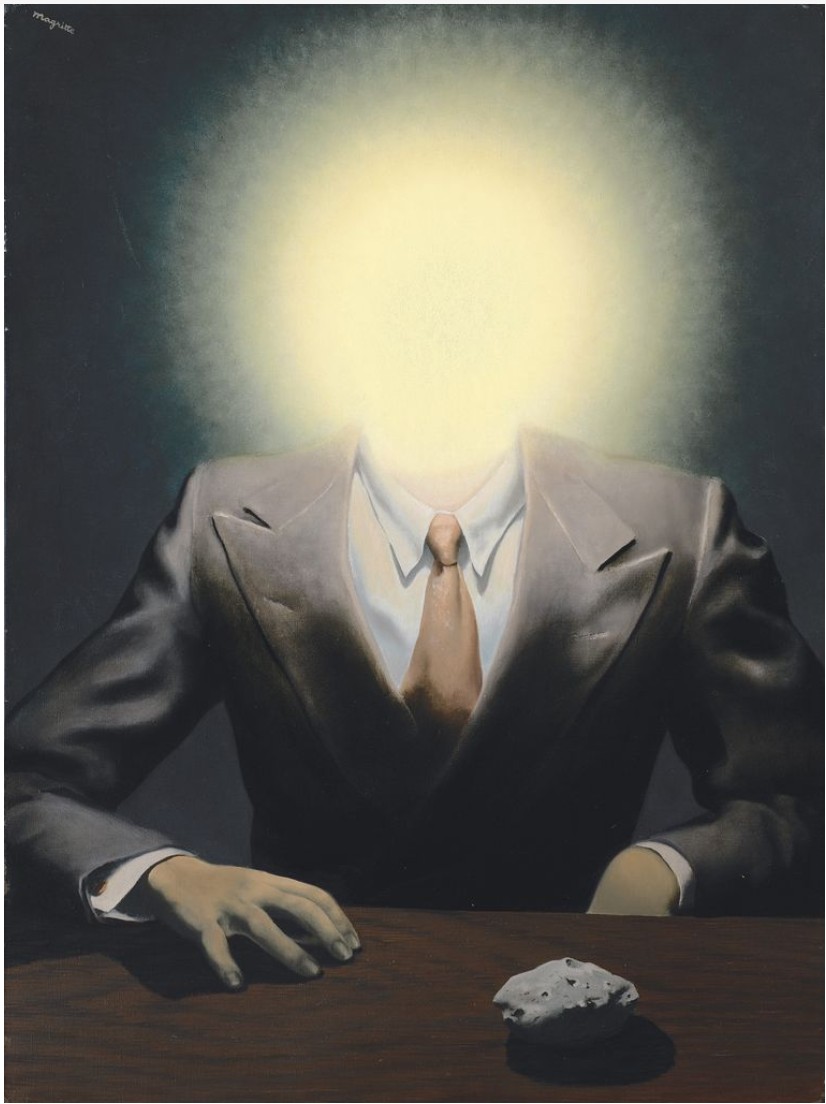
René Magritte, Le principe du plaisir, 1937. Private collection. Photo: Bridgeman Images
“I painted this picture during the Occupation in memory of the happier times when I met you. You probably remember that it was you who suggested the subject of this picture?”
“I have found a new potential inherent in things, their ability to become gradually something else, and object merging into an object other than itself…. This seems to me to be something quite different from a composite object, since there is no break between the two substances, and no limit.”
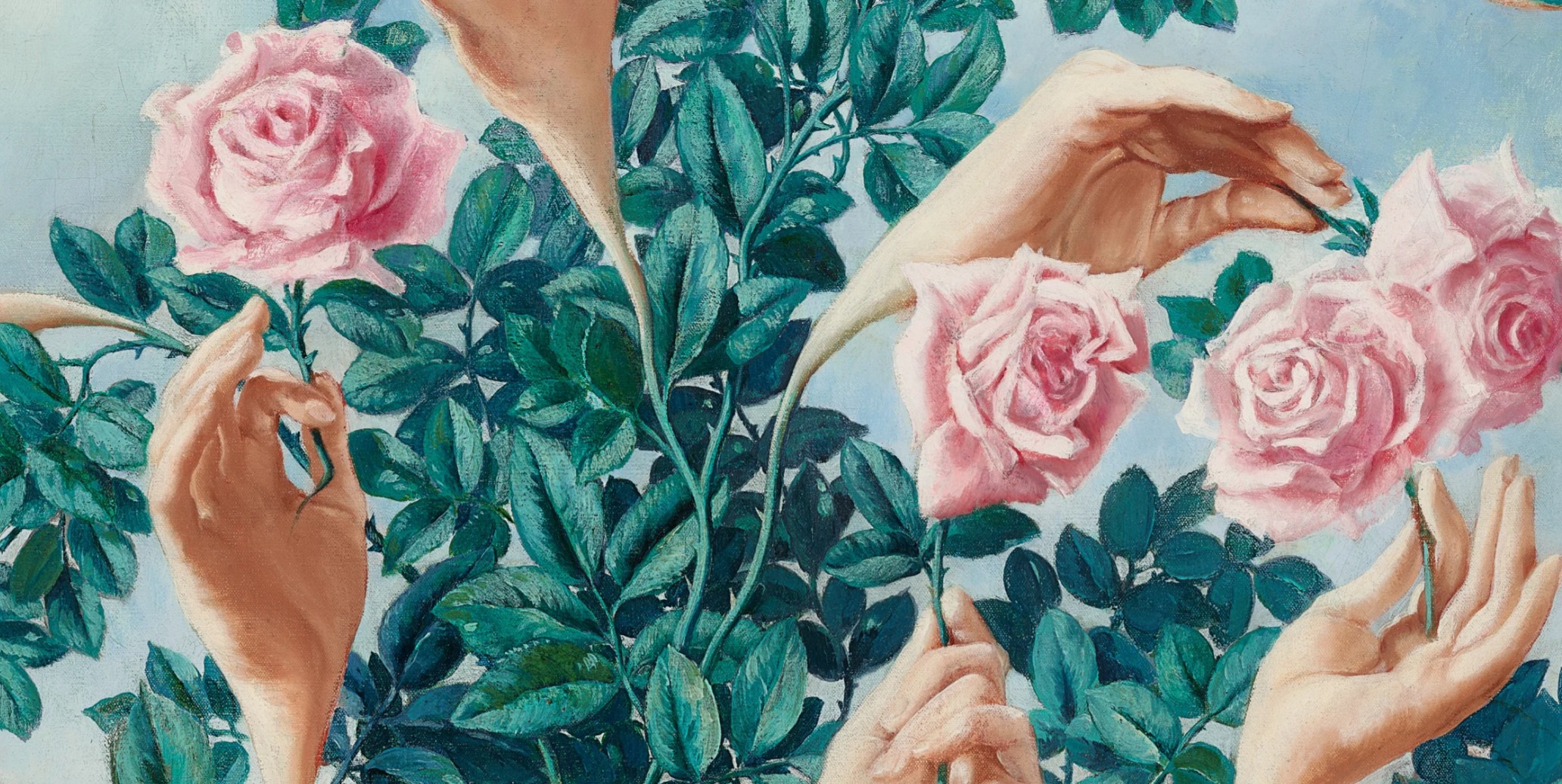
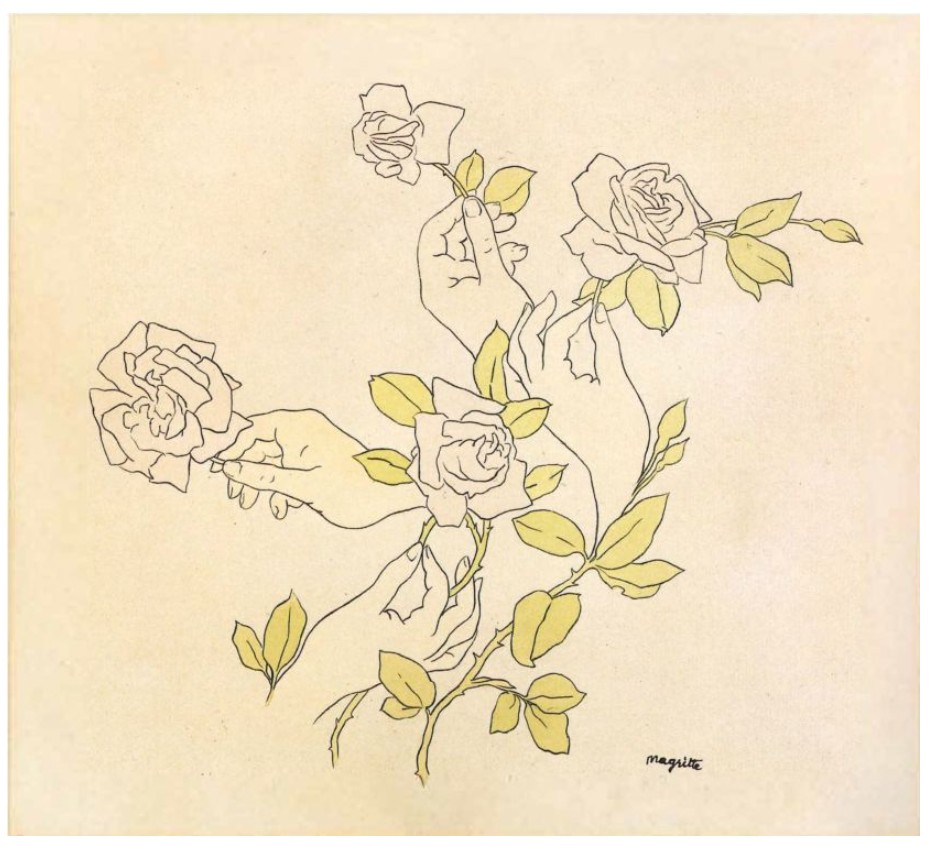
The blissful romanticism inherent in Rêverie de Monsieur James is reflective of Magritte’s output from the years of Nazi Occupation in Belgium, where the artist felt that a new visual idiom was required to adequately respond to the horrors of the conflict that surrounded him. In some of his paintings he adopted a new, Impressionistic style of brushwork which he called Le Surréalisme en plein soleil, while in others – like the present work – he turned to enchanting, and delightful subject matters, and preserved his much-admired illusionistic style of painting from his pre-war works. Beauty was his counter-offensive to the turbulence of war.
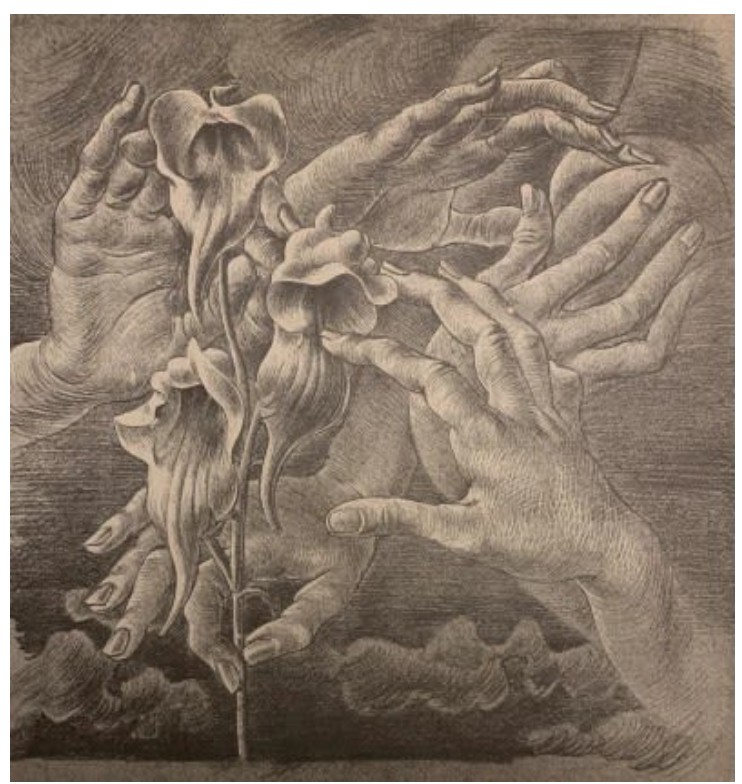
Hans Bellmer, Mains de demimijaurees fleurissant des sillons de parterre, 1934, Private collection.
In both the history of its creation and its subject, Rêverie de Monsieur James plays an important part in Surrealist histories. A compelling and original composition, it has a simple beauty that belies the work’s conceptual complexity. It is this combination of simplicity and complexity that makes Magritte such an intriguing artist and positions him among the most influential and sought-after of all the Surrealist painters.
La clairvoyance, circa 1962
Christie’s Hong-Kong: 28 March 2024
Estimated: HKD 15,000,000 – 25,000,000
HKD 28,810,000 / USD 3,703,085
La clairvoyance, circa 1962
Gouache, watercolour and coloured pencil on paper
36 x 26.8 cm (14 1/8 x 10 1/2 inches)
Signed ‘Magritte’ (lower left)
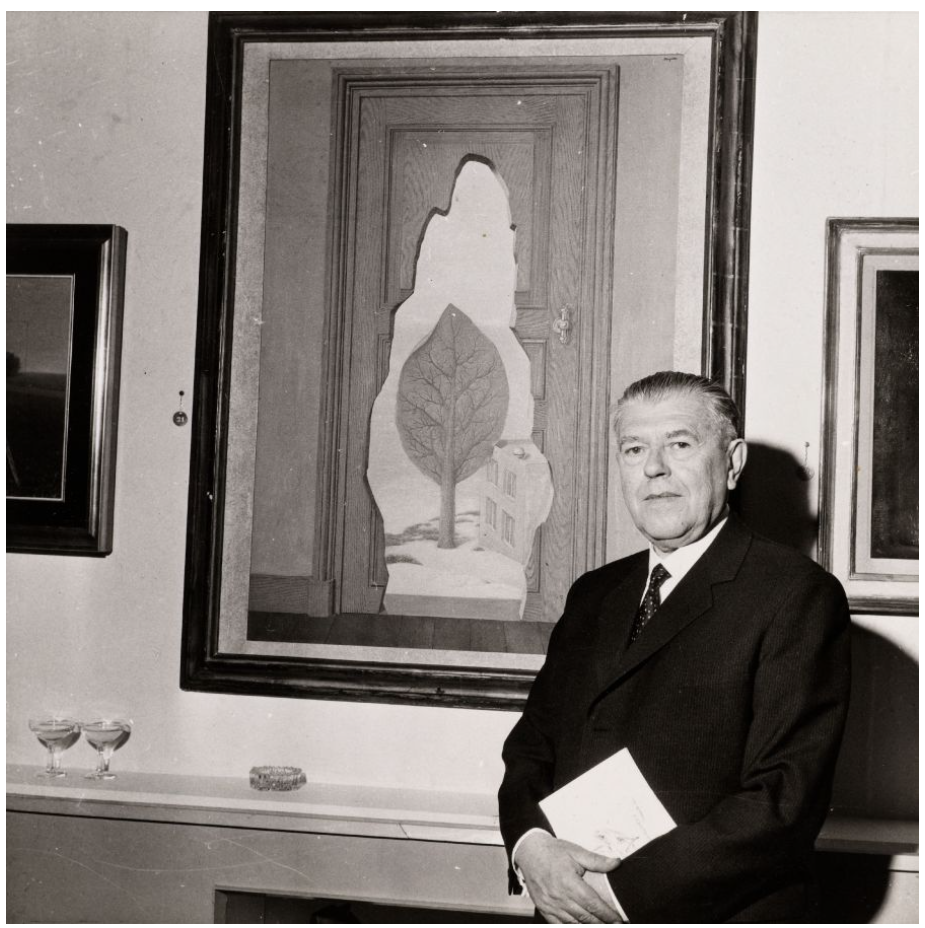
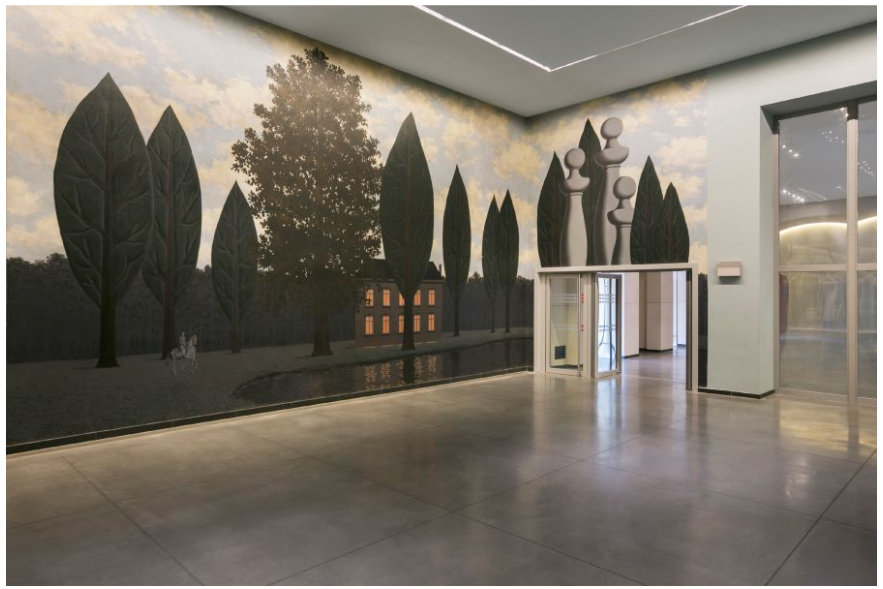
The idea of the “leaf-tree” first entered Magritte’s art in La Géante of 1935 (Sylvester, no. 362), in which a sturdy tree trunk set within a verdant landscape is adorned not with a multitude of leaves, but with one single, over-sized leaf. At the time that he painted this oil, Magritte was in the midst of one of the most important periods of his career, during which he had embarked upon an artistic exploration to seek “solutions” to particular pictorial “problems” posed by various objects. In seeking, and subsequently revealing, the “elective affinities” that lay hidden between related objects, Magritte was able to render the most banal and ubiquitous elements in an extraordinary way. In July 1934, Magritte wrote to André Breton, “I am trying at the moment to discover what it is in a tree that belongs to it specifically but which would run counter to our concept of a tree” (quoted in D. Sylvester, op. cit., 1993, vol. II, p. 194). The answer he found was brilliant in its sheer simplicity—it was of course, the leaf. As he later explained in his lecture of 1938, “The tree, as the subject of a problem, became a large leaf the stem of which was a trunk directly planted in the ground” (“La Ligne de vie,” in G. Ollinger-Zinque and F. Leen, eds., René Magritte 1898-1967, exh. cat., Musées Royaux des Beaux-Arts de Belgique, Brussels, 1998, p. 47).
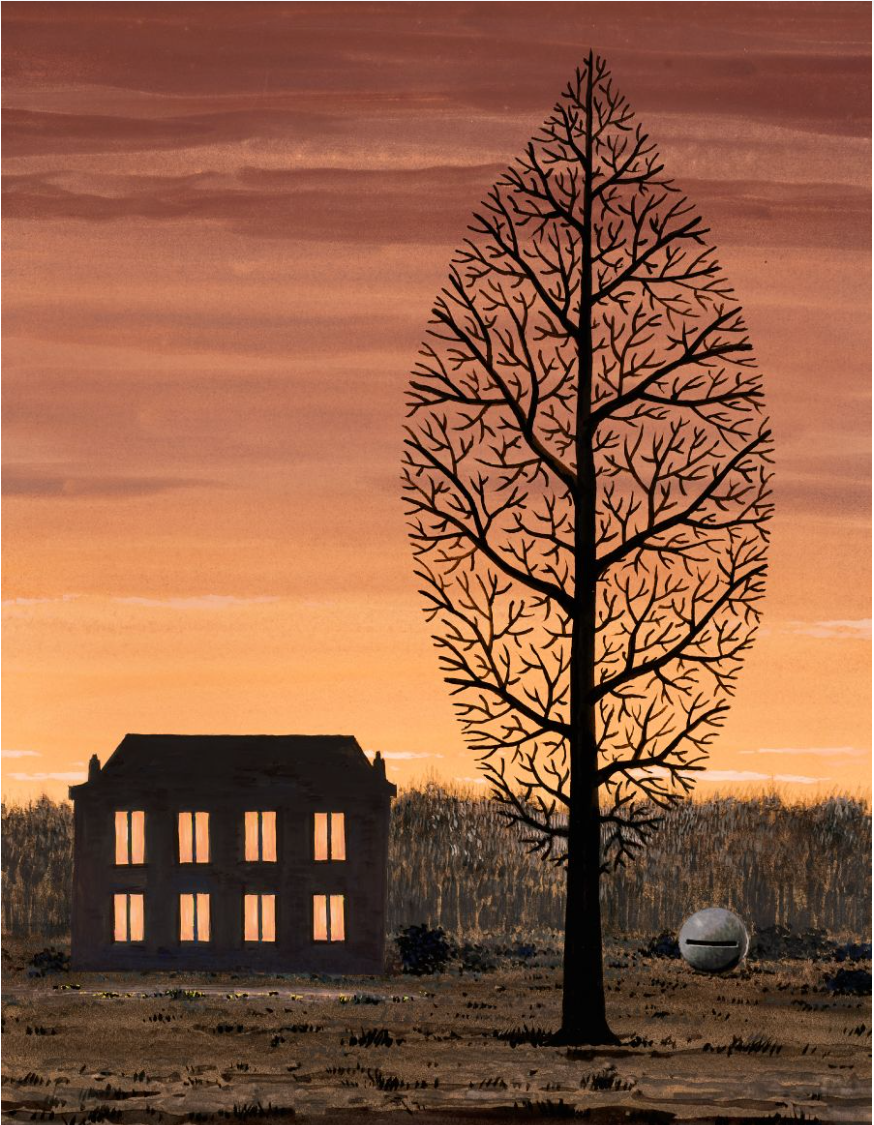
Rene Magritte, La recherche de l’absolu, circa 1963. Christie’s New York, 19 Nov 2024, lot 36A. Sold for USD 8,460,000.
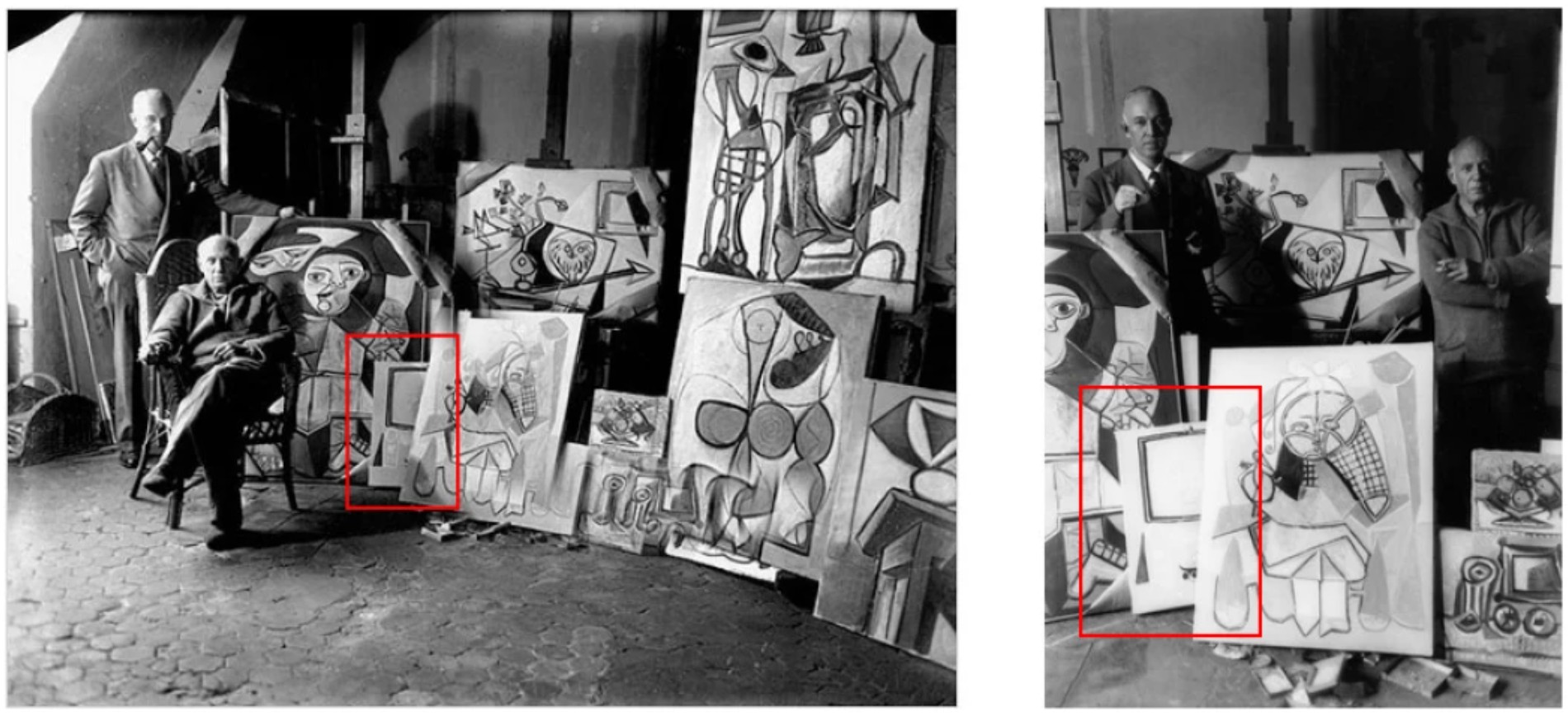
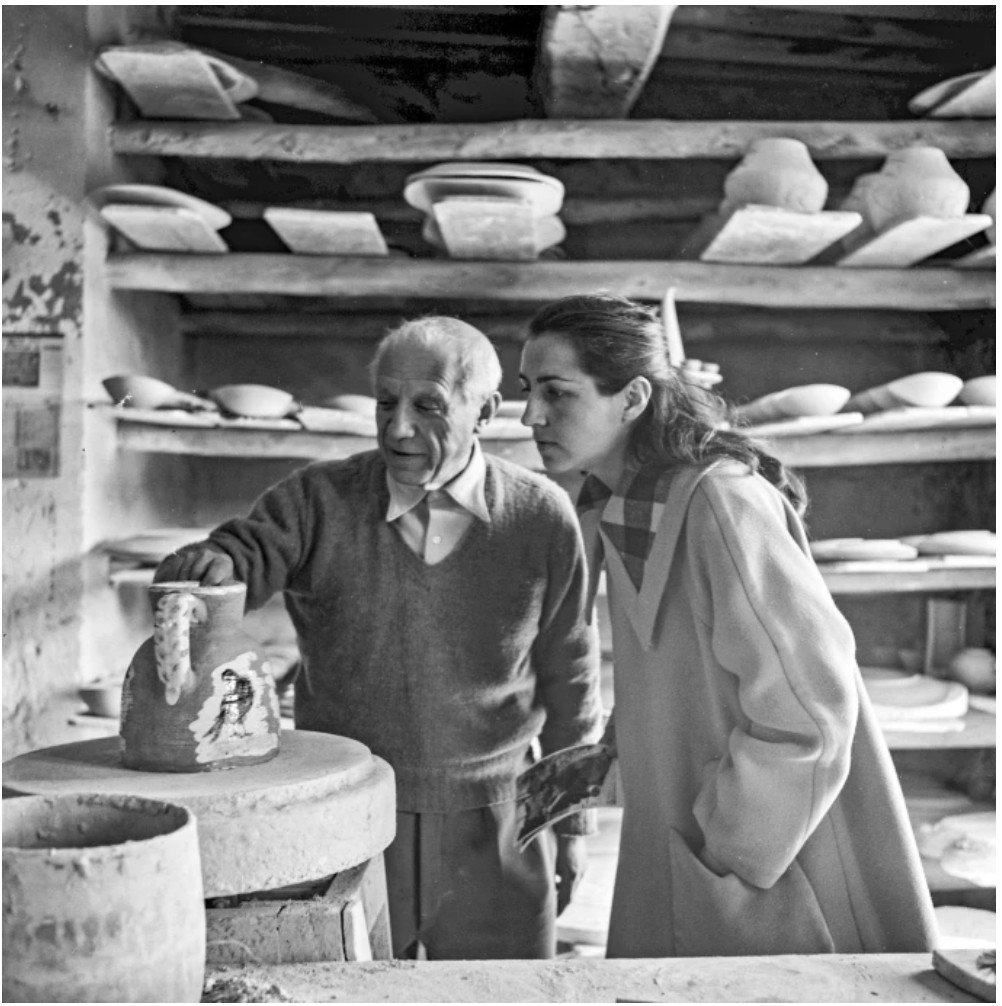
Pablo Picasso
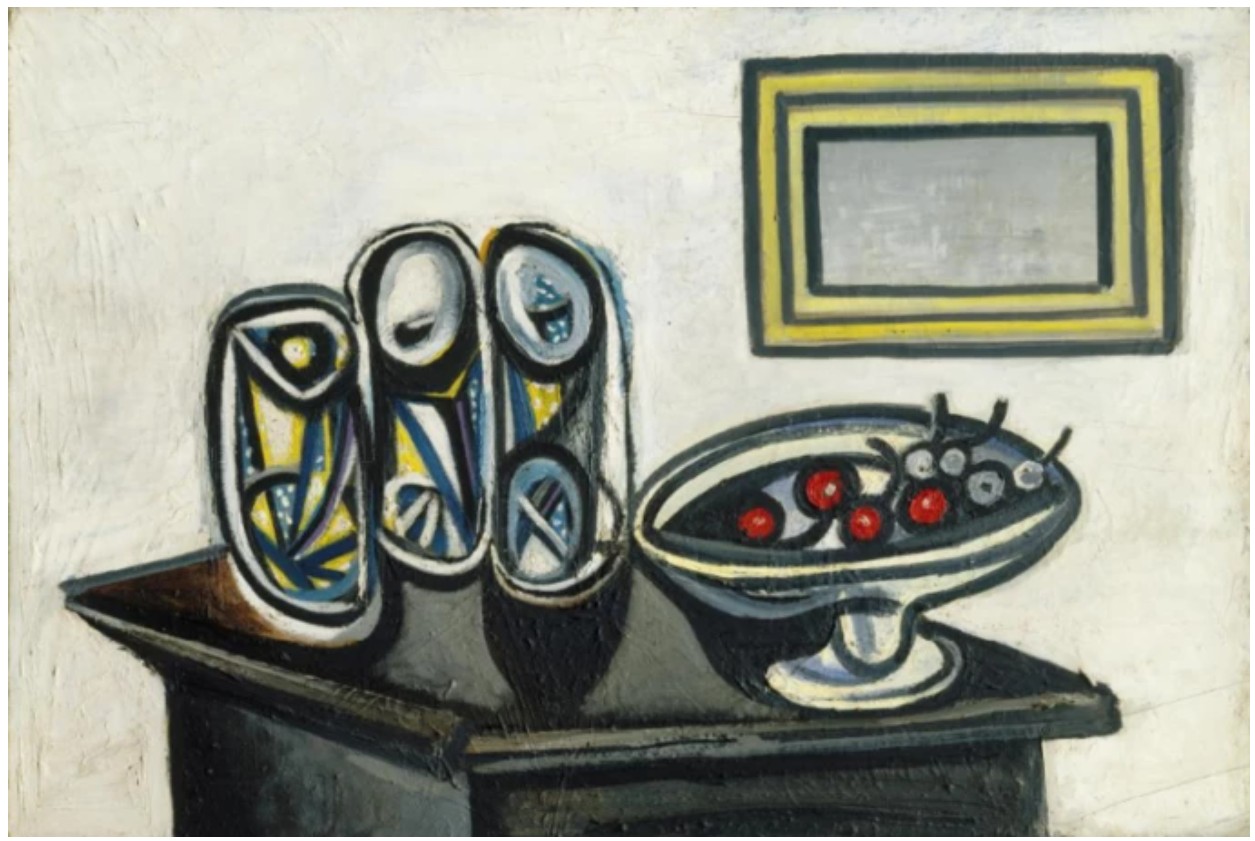
Le miroir, 1947
Estimated: HKD 15,000,000 – 25,000,000
HKD 18,675,000 / USD 2,400,386
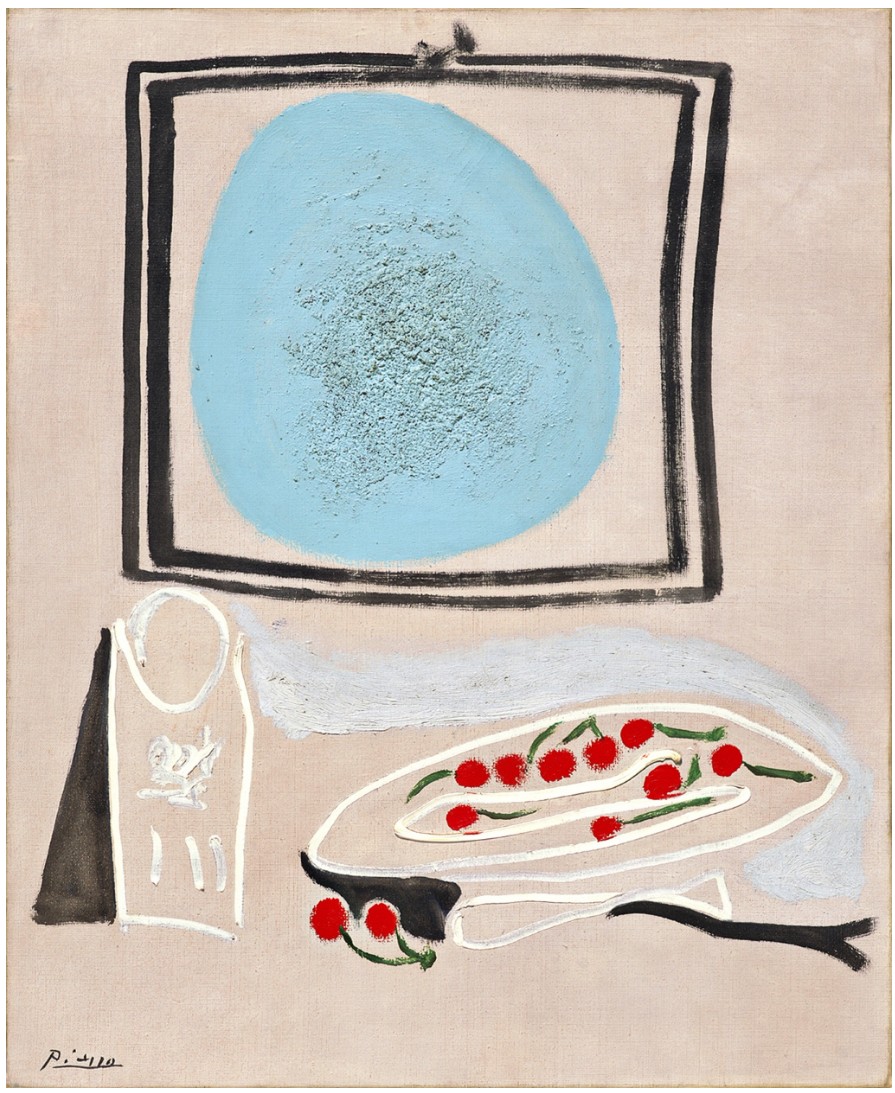
PABLO PICASSO (1881 – 1973)
Le miroir, 1947
Oil and sand on canvas
61 x 50.2 cm (24 x 19 3/4 inches)
Signed Picasso (lower left) and dated 23 juin 47 (on the reverse)
Executed on 23 June 1947