Introduction
Roy Lichtenstein’s celebrated Nudes series, with comic imagery once again at the center of his oeuvre, marked the artist’s career coming full circle. As the first series Lichtenstein undertook following his comprehensive survey in 1993 at the Solomon R. Guggenheim museum, the Nudes elegantly encapsulated many of the recurring themes found throughout the artist’s career. The Nudes mark Roy Lictenstein’s majestic return to the comic-book heroines that propelled him to fame in the early 1960s and together, they rank among his most significant bodies of work. Culled from his prodigious archive of vintage comics, the Nudes marry Lichtenstein’s Pop Art sensibility with the most storied subject in the history of Western art—the female nude.
Together, as a series, the Nudes were the first body of work that Lichtenstein undertook following his exhaustive Solomon R. Guggenheim Museum retrospective in New York in 1993. Taken as a group, the Nudes comprise only about twenty large-scale paintings, spanning the years 1993 to 1997. Each painting is based upon a scantily-clad comic-book heroine, and often situated in domestic interiors filled with the trappings of a simple, bourgeois life, Lichtenstein’s epic nudes are enlarged to monumental proportions, stripped bare, and inventively remixed. They lie around, read books or gaze into mirrors—either alone or in pairs. Their bodies sleek and trim, they’re always nude but sometimes wear pearls, and their hair is always perfectly coiffed.
“It’s kind of amusing that you just paint them and leave the clothes off and it means something different. It’s more riveting.”

Roy Lichtenstein
Nudes
November 19 – December 17, 1994
420 WEST BROADWAY
Roy Lichtenstein – Nudes – Exhibitions – Castelli Gallery
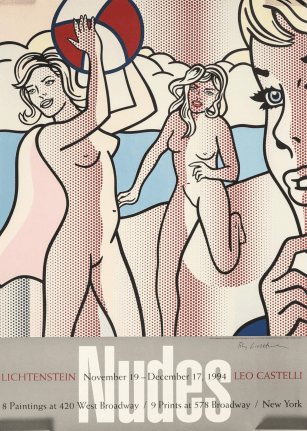
In rendering the classic nude, Lichtenstein joins in the dialogue with the great Modernist masters of the twentieth century, who took as their subject the legendary motif of the female form. Of particular interest to Lichtenstein were Pablo Picasso, Henri Matisse and Paul Cézanne. Lichtenstein famously owned over sixty books on Picasso and nearly twenty-five on Matisse. In countless paintings and drawings, he wrestled with the legacy of both artists, particularly in the 1970s when he devoted several series to the major “isms” of Modern art ranging from Cubism, Purism, Surrealism and Expressionism. The lithe forms of Matisse’s Danse (I), 1909, which Lichtenstein would have undoubtedly seen at New York’s Museum of Modern Art, reflect both the formal and lyrical qualities that the American artist addressed in the present work.
“I’ve always been interested in Matisse but maybe a little more interested in Picasso. But they are both overwhelming influences on everyone, really. Whether one tries to be like them or tries not to be like them, they’re always there as presences to be dealt with. They’re just too formidable to have no interest. I think that somebody who pretends he’s not interested is not interested in art.”
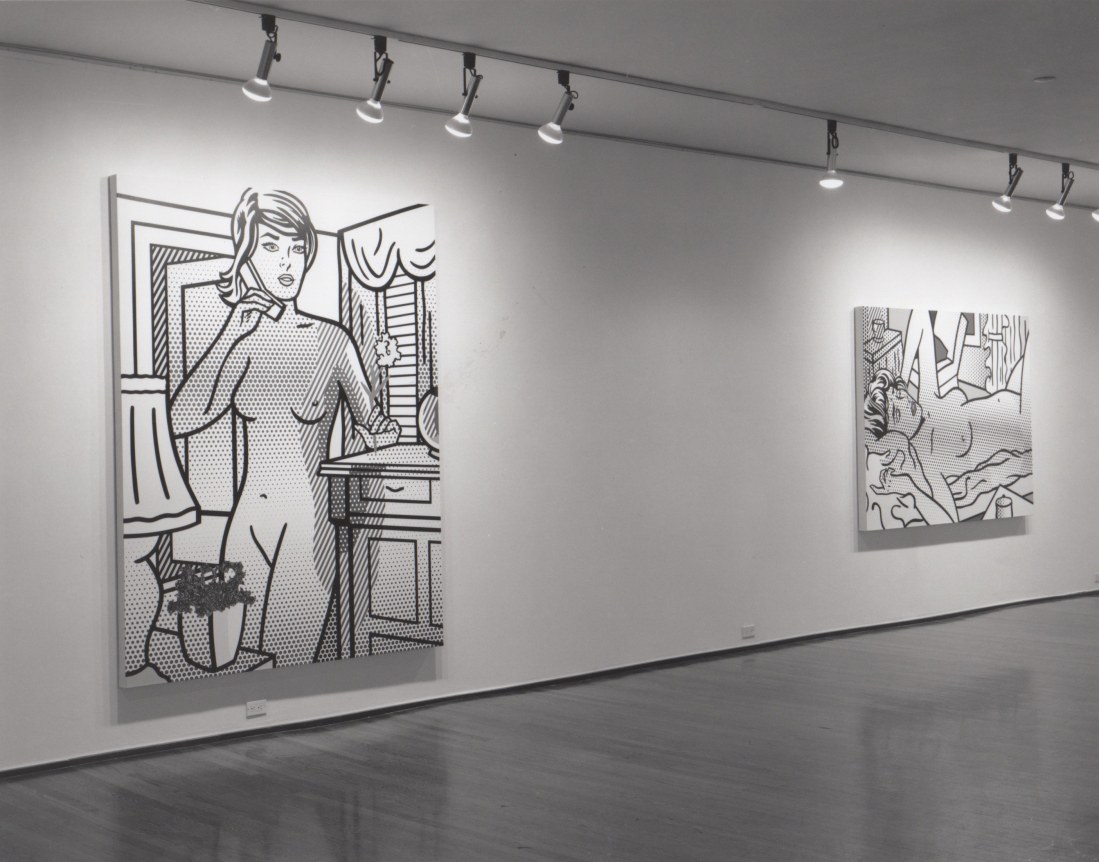
Roy Lichtenstein – Nudes – Exhibitions – Castelli Gallery
On the occasion of Lichtenstein’s solo show at Leo Castelli in late 1994—in what proved to be one of his last exhibits before his untimely death in 1997—the New York Daily News declared, with tongue planted firmly in cheek: “The king of the blown-up comic-book frame had seemed to be settling into a quiet, Old Masterly period of late—but he’s broken out with a bang with his new series of nudes. Yep, nudes—the least politically acceptable subject he could take up today.” Indeed, Lichtenstein’s last series of Nudes rank among his greatest, most fascinating body of work. As an artist who ceaselessly innovated whilst staying true to his signature style, Lichtenstein’s Nudes reveal ingenious new formal devices—especially his new form of Ben-Day dots, a rich array of new color and “quoting” of previous work. More than just an erotic pin-up, they are rich with art historical references and cleverly-veiled allusions to the act of looking itself.
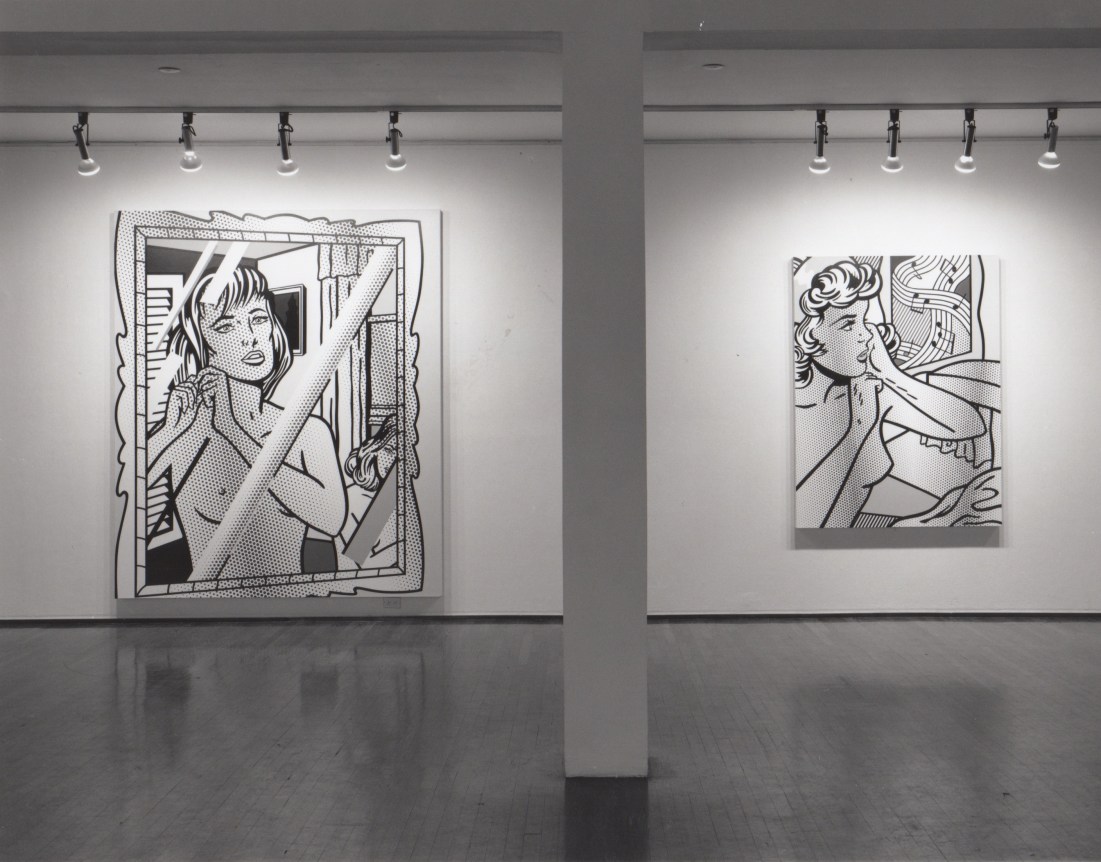
These artists remained a touchstone for Lichtenstein as their work kept him focused on the aesthetic quandaries of twentieth century art, namely the conventions of painting; the distinctions between art and nature; the role of subject in art; and the functions of line, color and spatial depth. Picasso and Matisse’s interest in the female nude was also a source of fascination for Lichtenstein. For both artists, the female nude was a symbol of desire whose appeal, from antiquity to the present day, lay in its potential for formal perfection. Female nudes are a timeless vehicle for exploring plastic possibilities and a classic allegory of the artist’s creative potency. For this reason, they have been markers of formal and intellectual changes in art throughout the ages, including idealized Greek statuary; Titian’s unapologetically erotic Venus of Urbino1538 (Galleria degli Uffizi, Florence); Ingres elongated La Grande Odalisque, 1814 (Louvre, Paris); douard Manet’s daring Olympia, 1863 (Muse d’Orsay, Paris); Picasso’s revolutionary Demoiselles d’Avignon, 1907 (Museum of Modern Art, New York); Matisse’s streamlined Large Reclining Nude (The Pink Nude), 1935 (The Baltimore Museum of Art); Willem de Kooning’s abstract expressionist Woman I, 1950 (Museum of Modern Art, New York); and even the ‘live paintbrush’ performances of Yves Klein’s blue-painted models, among countless others. Lichtenstein has seized on this theme to jockey himself into a pantheon of artists who dealt with the mainstay of art history. He had always overtly stated his intention that he was making art about art, and in the case of the Nudes his subject matter aligned, and arguably overrode, his formal theories: “I thought that the nudes would disappear because the idea I had in my head was so strong. It wasn’t that way at all. If you draw three lines that look like a nude, people see a nude” he observed (R. Lichtenstein, quoted in R. Enright, op. cit., p. 27).
Auction Results (Paintings)
#1. Nude with Joyous Painting, 1994
Christie’s New-York: 10 July 2020
Estimate on Request
USD 46,242,500
Roy Lichtenstein (1923-1997), Nude with Joyous Painting | Christie’s
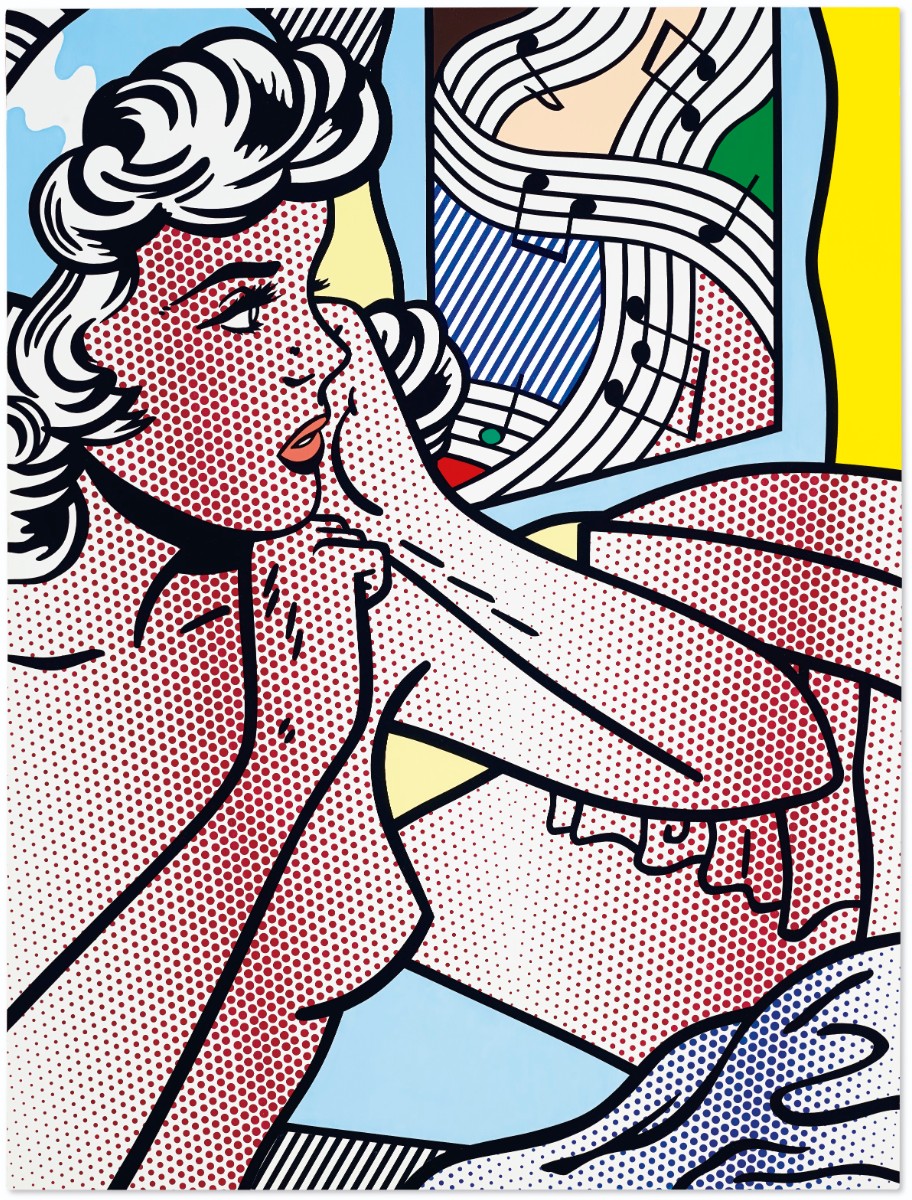
ROY LICHTENSTEIN (1923-1997)
Nude with Joyous Painting, 1994
Oil and Magna on canvas
70×53 inches (177.8 x 134.6 cm.)
Signed and dated ‘rf Lichtenstein ’94’ (on the reverse)
#2. Seductive Girl, 1996
Christie’s New-York: 12 November 2013
Estimated: USD 22,000,000 – 28,000,000
USD 31,525,000
Roy Lichtenstein (1923-1997), Seductive Girl | Christie’s
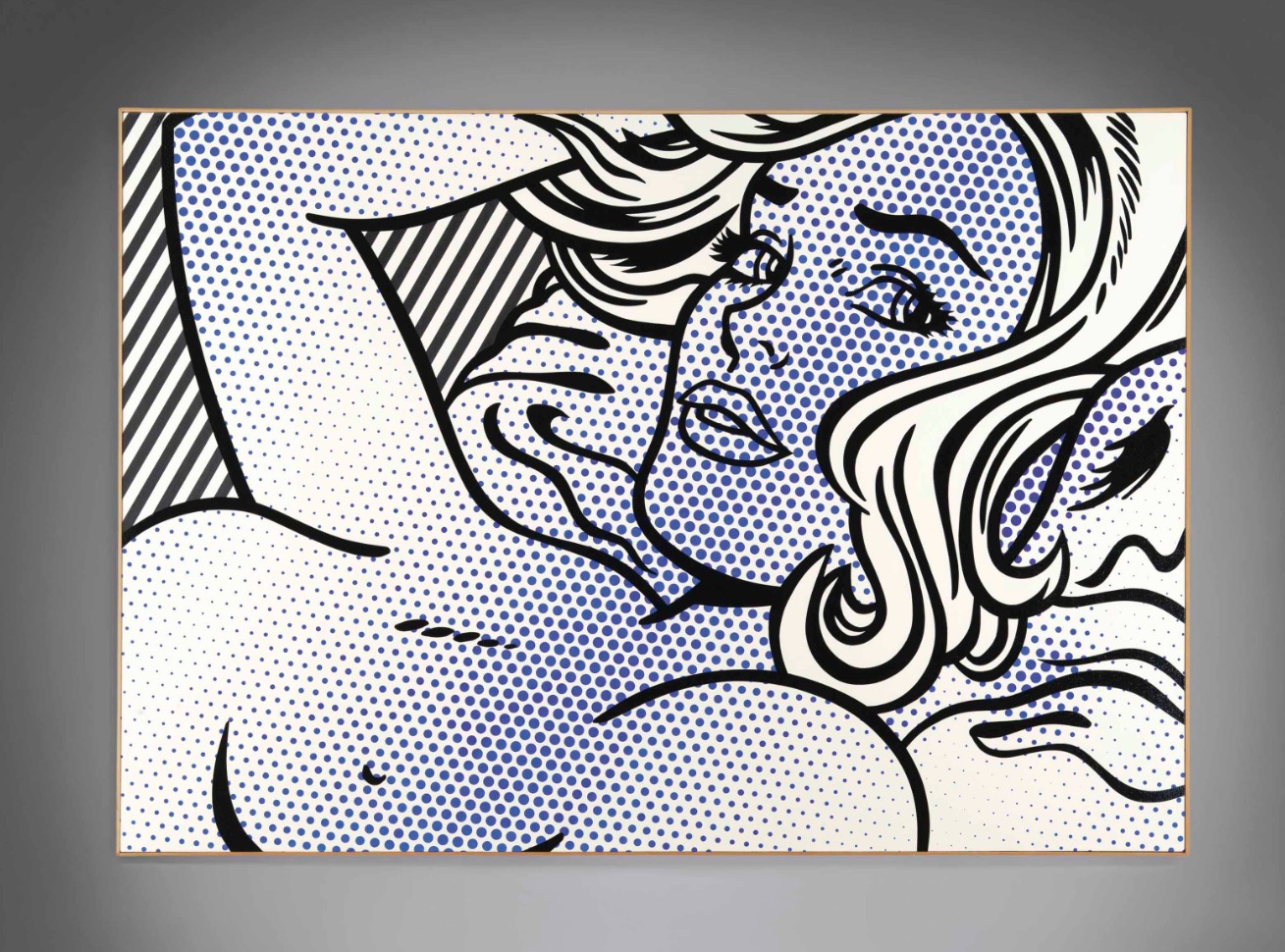
ROY LICHTENSTEIN (1923-1997)
Seductive Girl, 1996
Oil and Magna on canvas
50×72 inches (127 x 182.8 cm)
Signed and dated ‘rf Lichtenstein ’96’ (on the reverse)
#3. Nude with Red Shirt, 1995
Christie’s New-York: 14 November 2012
Estimated: USD 12,000,000 – 18,000,000
USD 28,082,500
Roy Lichtenstein (1923-1997) , Nude with Red Shirt | Christie’s
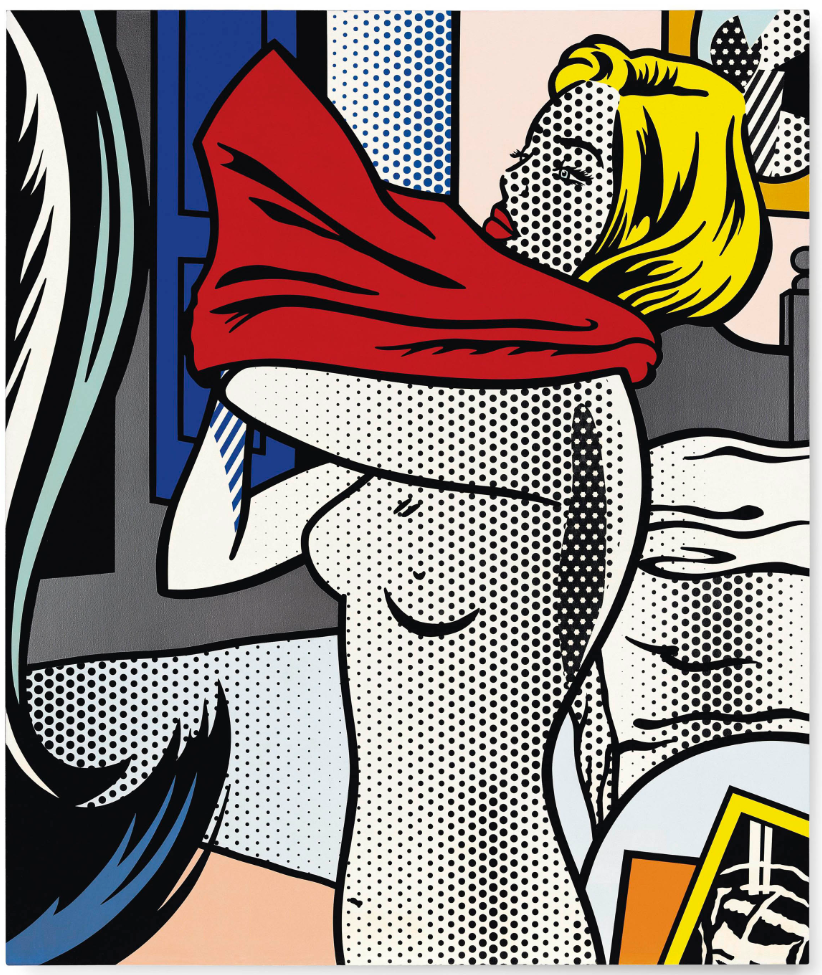
ROY LICHTENSTEIN (1923-1997)
Nude with Red Shirt, 1995
Oil and Magna on canvas
77×65 inches (198.1 x 167.7 cm)
Signed and dated ‘rf Lichtenstein ’95’ (on the reverse)
#4. Nude Sunbathing, 1995
Sotheby’s New-York: 17 May 2017
Estimated: USD 20,000,000 – 30,000,000
USD 24,000,000
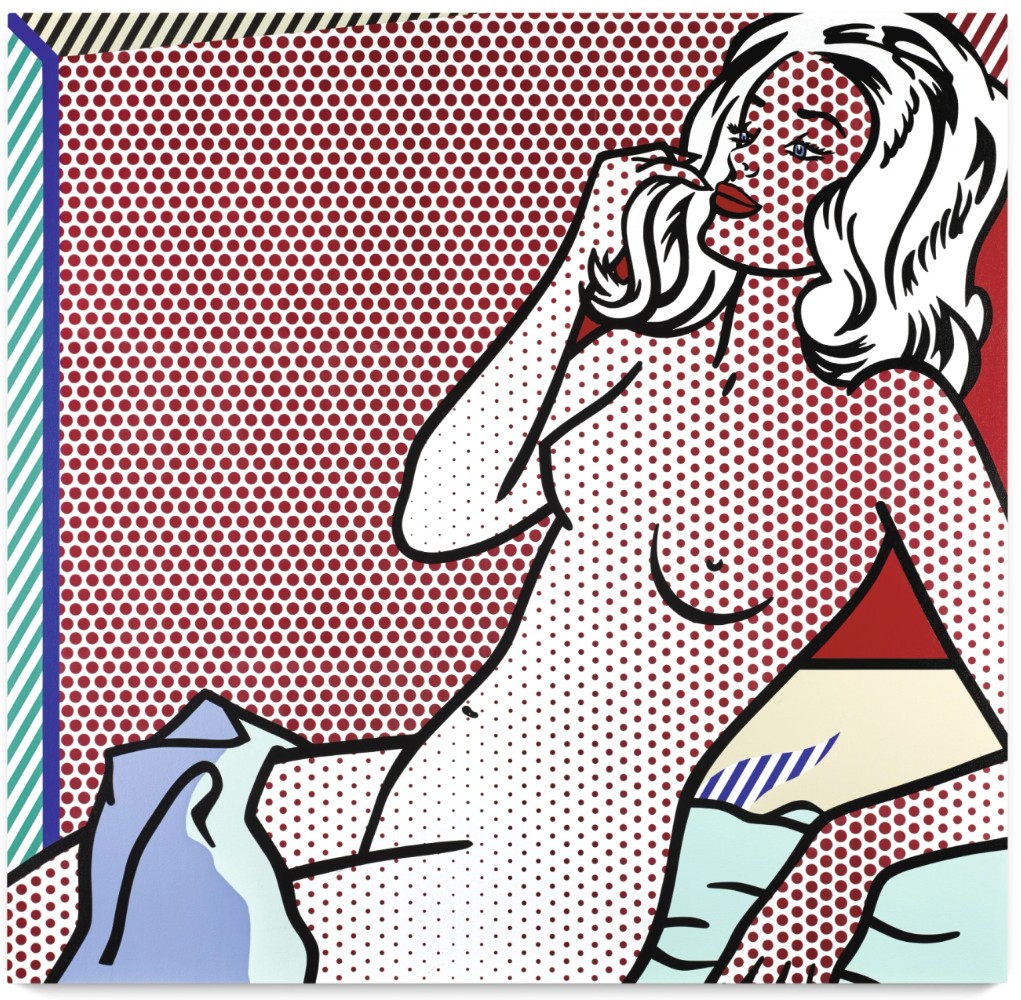
ROY LICHTENSTEIN
Nude Sunbathing, 1995
Oil and Magna on canvas
58 1/8 x 60 inches (147.6 x 152.4 cm)
Signed and dated 95 on the reverse
#5. Nude with Yellow Flower, 1994
Christie’s New-York: 15 May 2013
Estimated: USD 12,000,000 – 16,000,000
USD 23,643,750
Roy Lichtenstein (1923-1997) , Nude with Yellow Flower | Christie’s
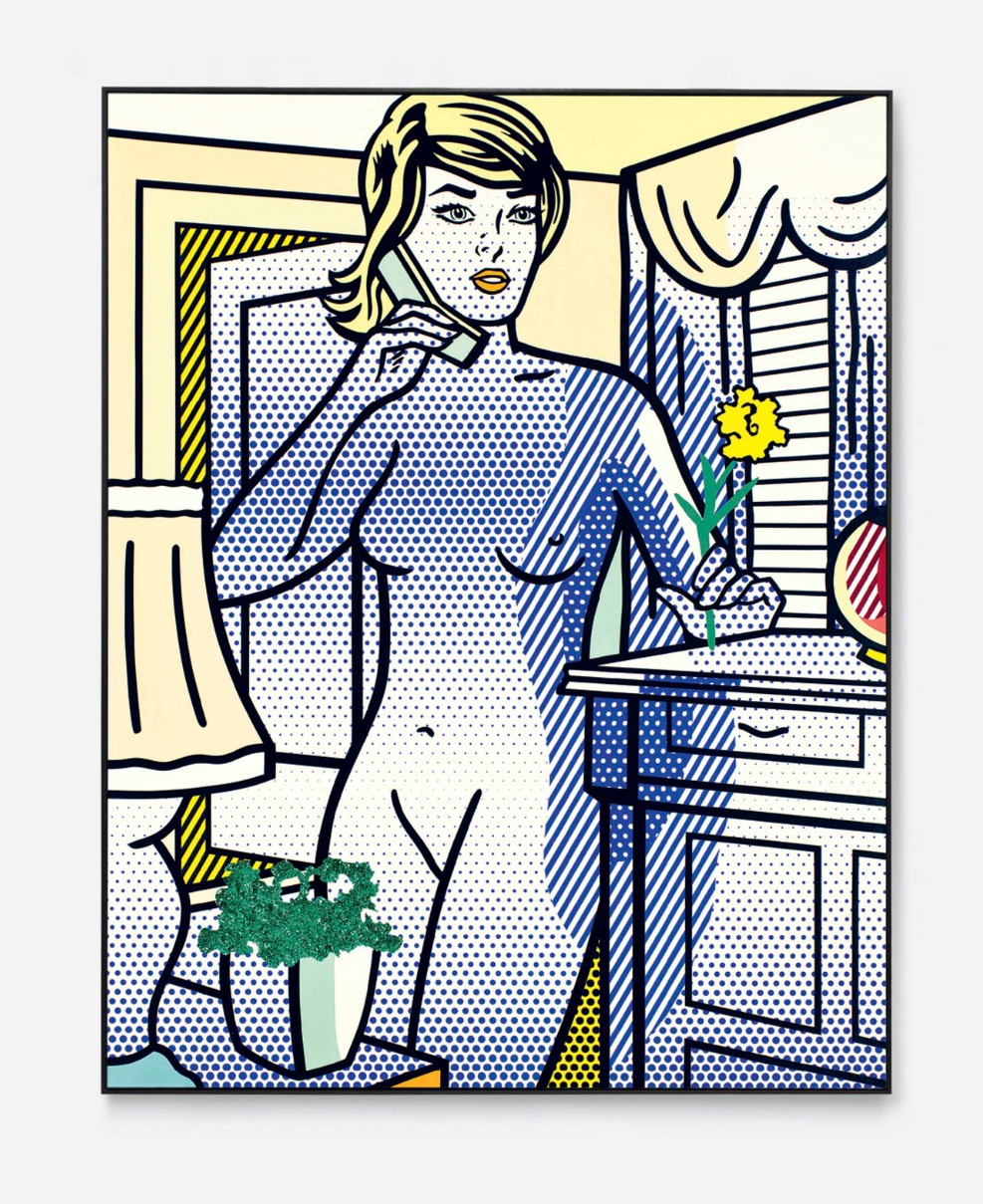
ROY LICHTENSTEIN (1923-1997)
Nude with Yellow Flower, 1994
Oil and Magna on canvas
92×72 inches (233×183 cm)
Signed and dated ‘rf Lichtenstein ’94’ (on the reverse)
#6. Nudes in Mirror, 1994
Phillips New-York: 15 November 2016
Estimated on Request
USD 21,530,000
Roy Lichtenstein – 20th Century & C… Lot 15 November 2016 | Phillips
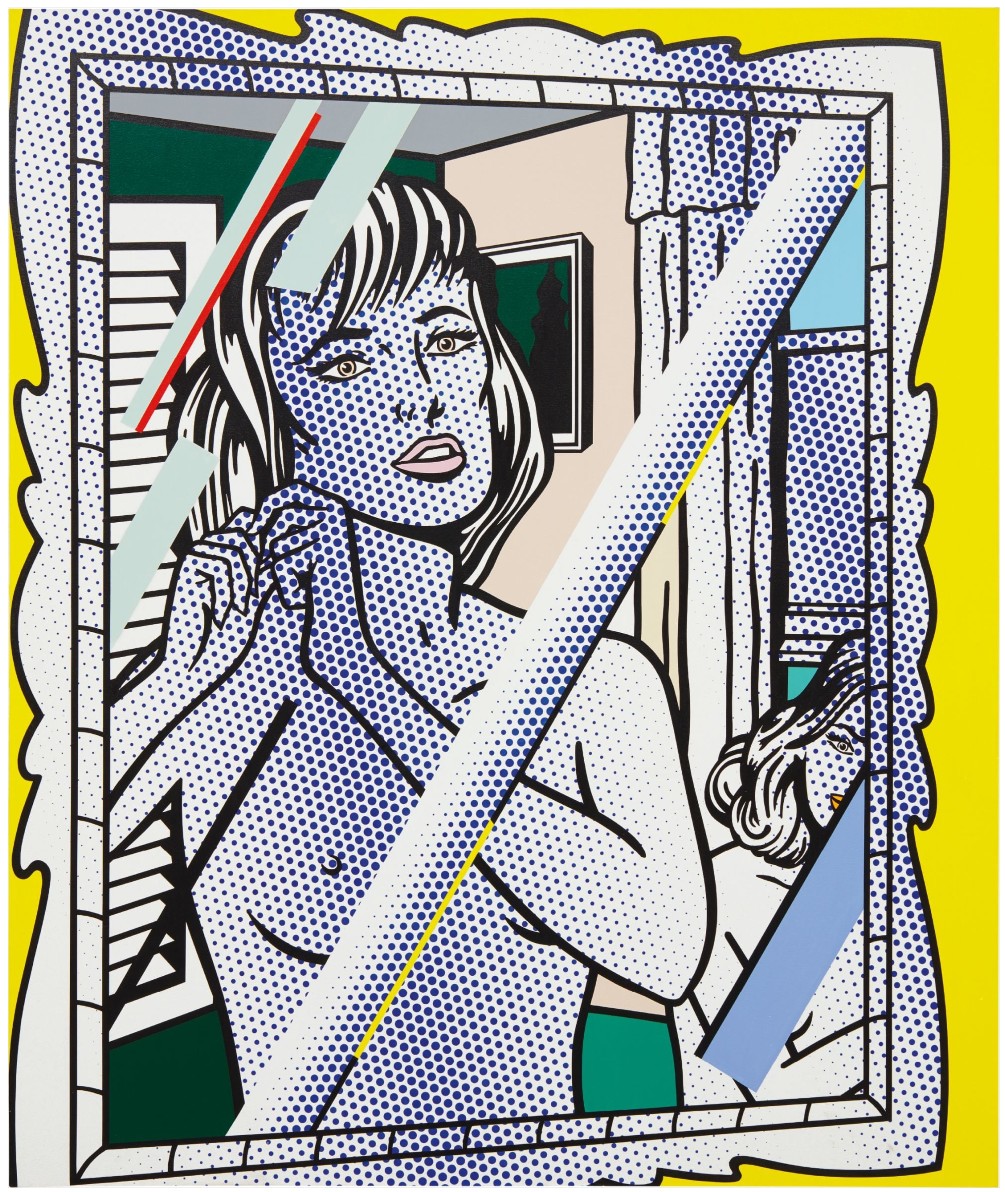
ROY LICHTENSTEIN
Nudes in Mirror, 1994
Oil and Magna on canvas
100×84 inches (254 x 213.4 cm)
Signed and dated “rf Lichtenstein ’94” on the reverse
Nude, 1997
Phillips New-York: 18 May 2022
Estimated: USD 8,000,000 – 12,000,000
USD 10,267,000
Roy Lichtenstein – 20th Century & Contem… Lot 19 May 2022 | Phillips
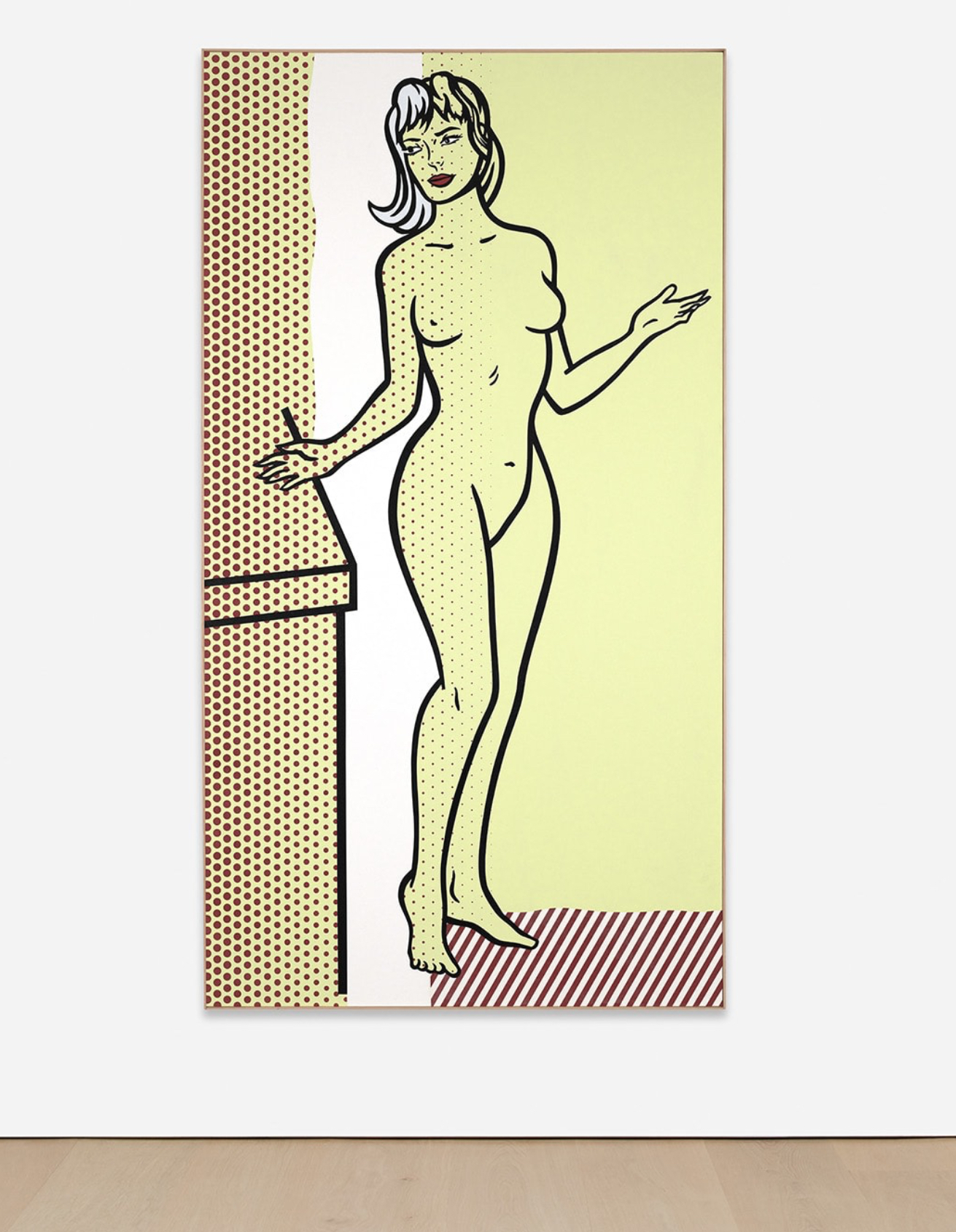
ROY LICHTENSTEIN
Nude, 1997
Oil and Magna on canvas
82 1/2 x 45 inches (209.6 x 114.3 cm)
Auction Results (Studies)
Nude with Bust (Study), 1995
Works from the Collection of Dorothy and Roy Lichtenstein
Sotheby’s New-York: 20 November 2024
Estimated: USD 3,000,000 – 5,000,000
USD 4,560,000
Nude with Bust (Study) | The Now and Contemporary Evening Auction | 2024 | Sotheby’s
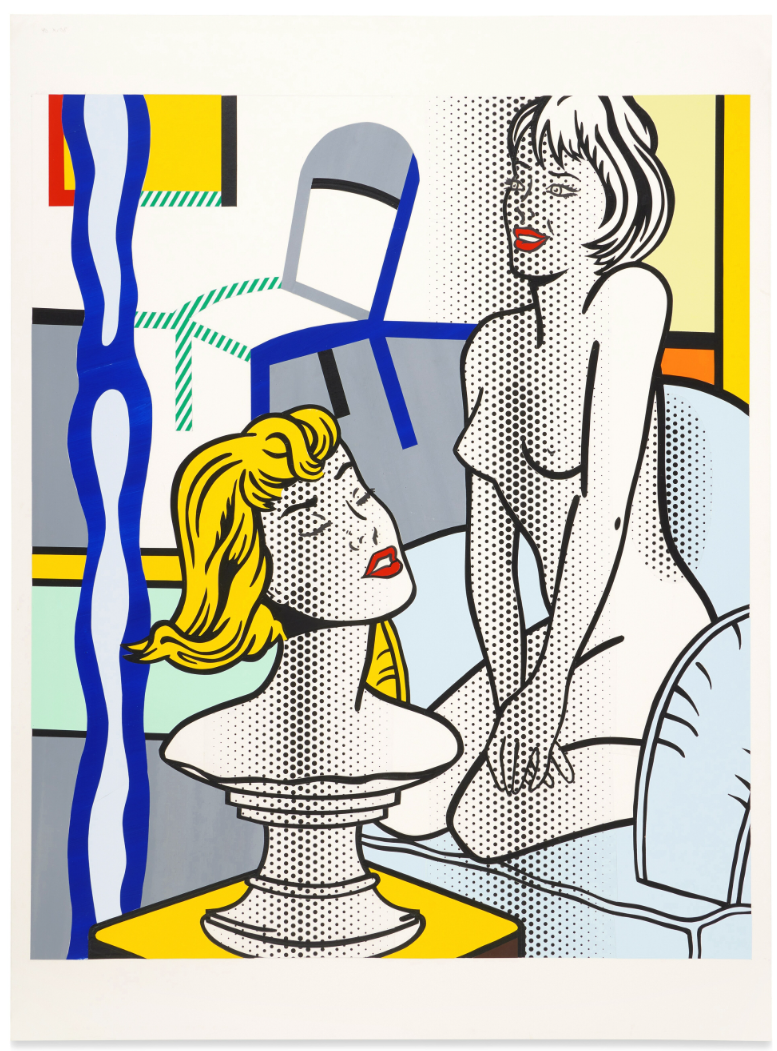
ROY LICHTENSTEIN (1923 – 1997)
Nude with Bust (Study), 1995
Tape, cut painted paper, cut printed paper, marker and graphite on board
Image: 53 7/8 x 45 inches (136.8 x 114.3 cm)
Board: 63 7/8 x 47 1/2 inches (162.2 x 120.7 cm)
Woman: Sunlight, Moonlight (Study), 1995
A Legacy Reimagined: Works from the Collection of Dorothy and Roy Lichtenstein
Sotheby’s New-York: 18 November 2025
Estimated: USD 1,500,000 – 2,000,000
USD 2,734,000
Woman: Sunlight, Moonlight (Study) | The Now & Contemporary Evening Auction | 2025 | Sotheby’s
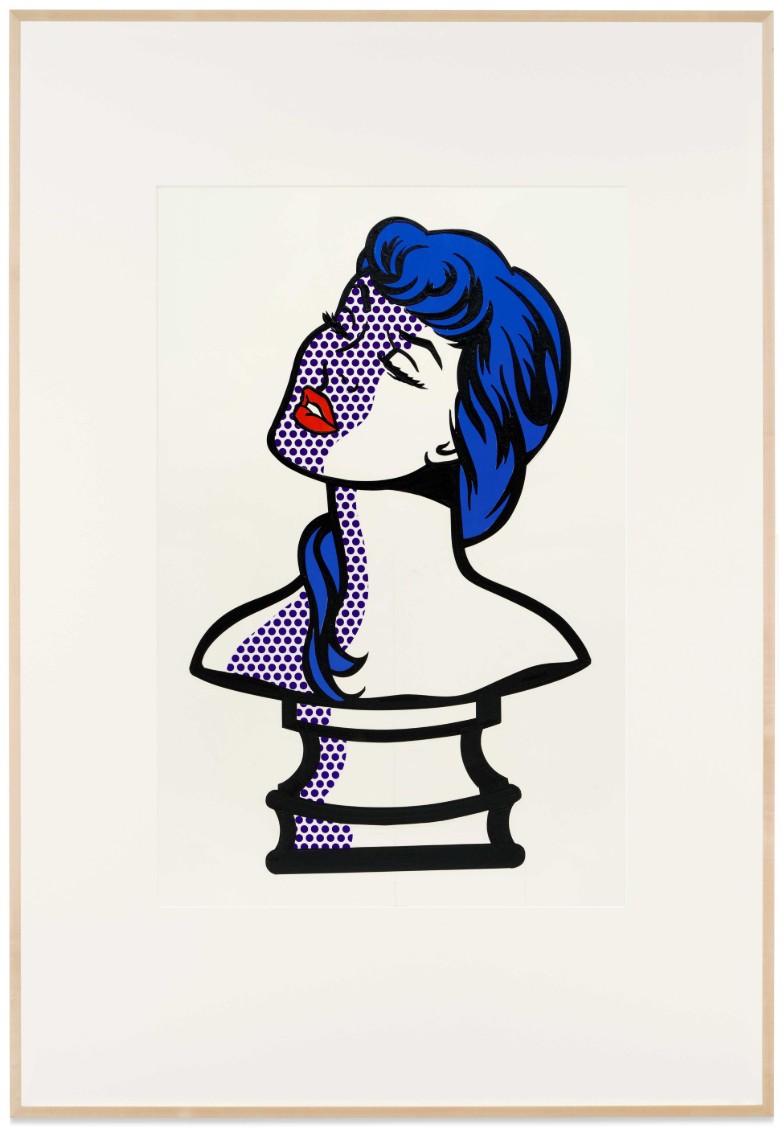
ROY LICHTENSTEIN (1923 – 1997)
Woman: Sunlight, Moonlight (Study), 1995
Tape, cut painted paper, cut printed paper and graphite on board
60×36 inches (152.4 x 91.4 cm)
Signed and dated ‘95 (on the reverse)
Nudes in Mirror (Study), 1994
Works from the Collection of Dorothy and Roy Lichtenstein
Sotheby’s New-York: 16 May 2025
Estimated: USD 1,000,000 – 1,500,000
USD 2,405,o00
Nudes in Mirror (Study) | The Now and Contemporary Evening Auction | 2025 | Sotheby’s
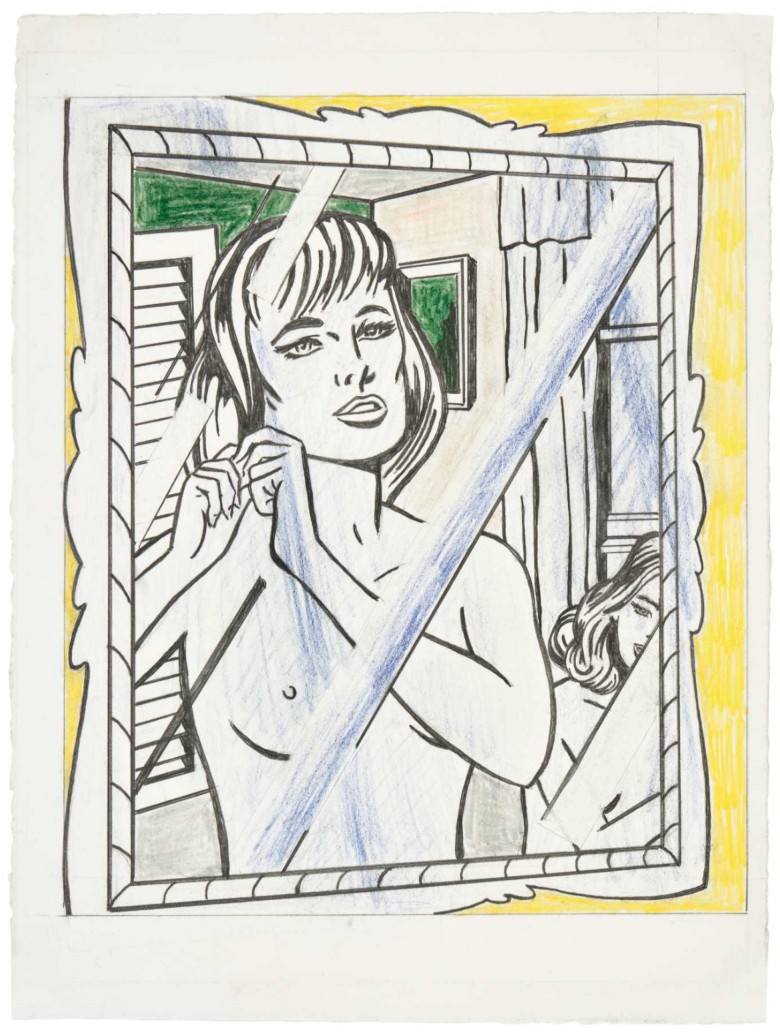
ROY LICHTENSTEIN (1923 – 1997)
Nudes in Mirror (Study), 1994
Colored pencil and graphite on paper
Image: 12 1/4 x 10 1/4 inches (31.1 x 26 cm)
Sheet: 15 1/4 x 11 3/8 inches (38.7 x 28.9 cm)
Signed and dated ’94 (on the reverse)
Nude with Pyramid (Study), 1994
Works from the Collection of Dorothy and Roy Lichtenstein
Sotheby’s New-York: 20 November 2024
Estimated: USD 1,000,000 – 1,500,000
USD 2,040,000
Nude with Pyramid (Study) | The Now and Contemporary Evening Auction | 2024 | Sotheby’s
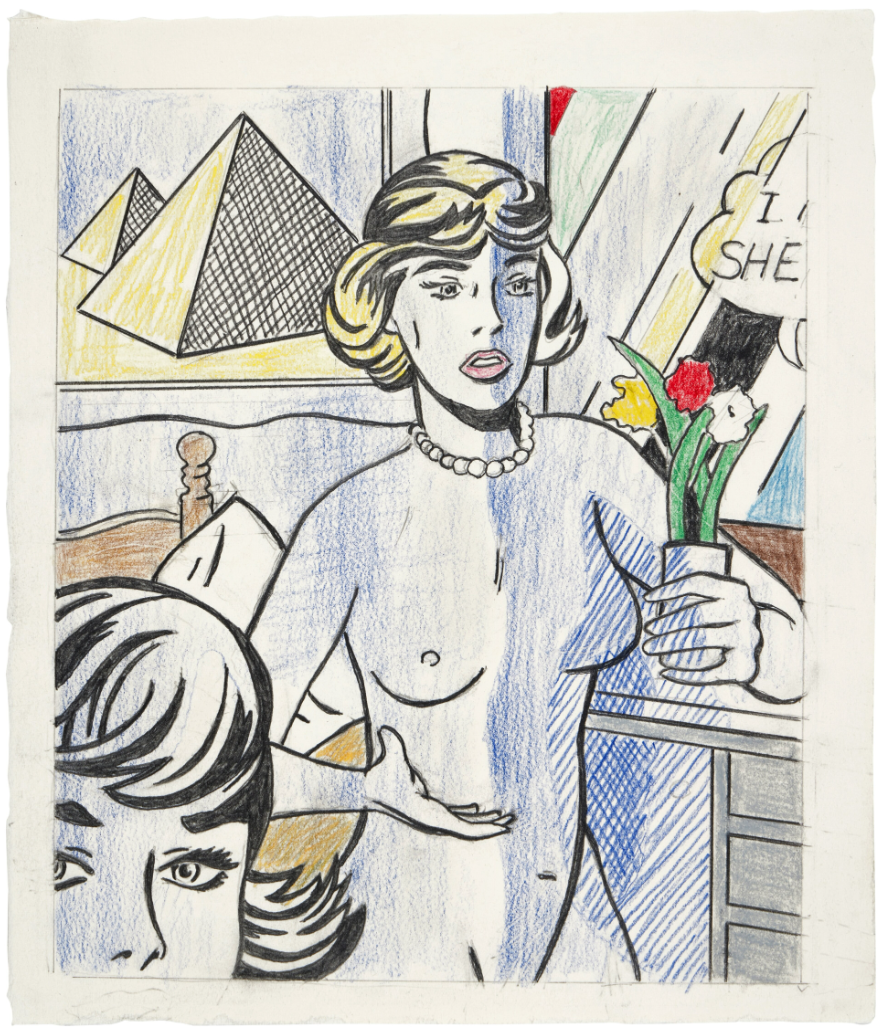
ROY LICHTENSTEIN (1923 – 1997)
Nude with Pyramid (Study), 1994
Colored pencil and graphite on paper
Image: 11 3/8 x 9 1/2 inches (28.9 x 24.1 cm)
Sheet: 13 1/8 x 11 1/8 inches (33.3 x 28.3 cm)
Signed and dated ‘94 (on the reverse)
Woman Contemplating a Yellow Cup (Study), 1994
Phillips New-York: 14 November 2023
Estimated: USD 1,500,000 – 2,000,000
USD 1,996,000
Roy Lichtenstein – Living the Avant… Lot 15 November 2023 | Phillips
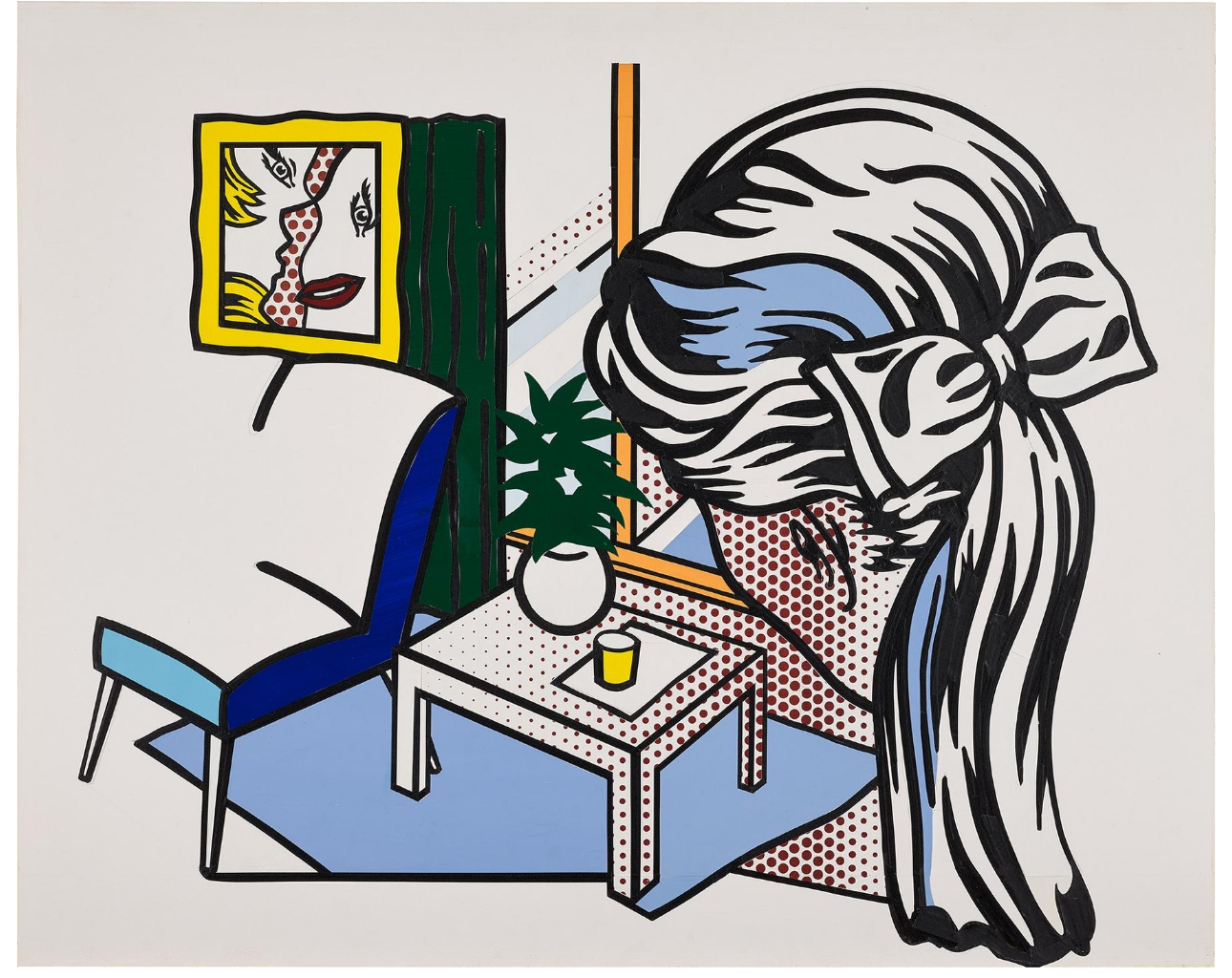
ROY LICHTENSTEIN
Woman Contemplating a Yellow Cup (Study), 1994
Tape, cut painted paper, cut printed paper and graphite pencil on board
36 1/8 x 44 3/4 inches (91.8 x 113.7 cm)
Signed and dated “Rf Lichtenstein ’94” on the reverse
Seductive Girl (Study), 1996
Works from the Collection of Dorothy and Roy Lichtenstein
Sotheby’s London: 24 June 2025
Estimated: GBP 500,000 – 700,000
GBP 952,500 / USD 1,285,875
Seductive Girl (Study) | Modern & Contemporary Evening Auction | 2025 | Sotheby’s
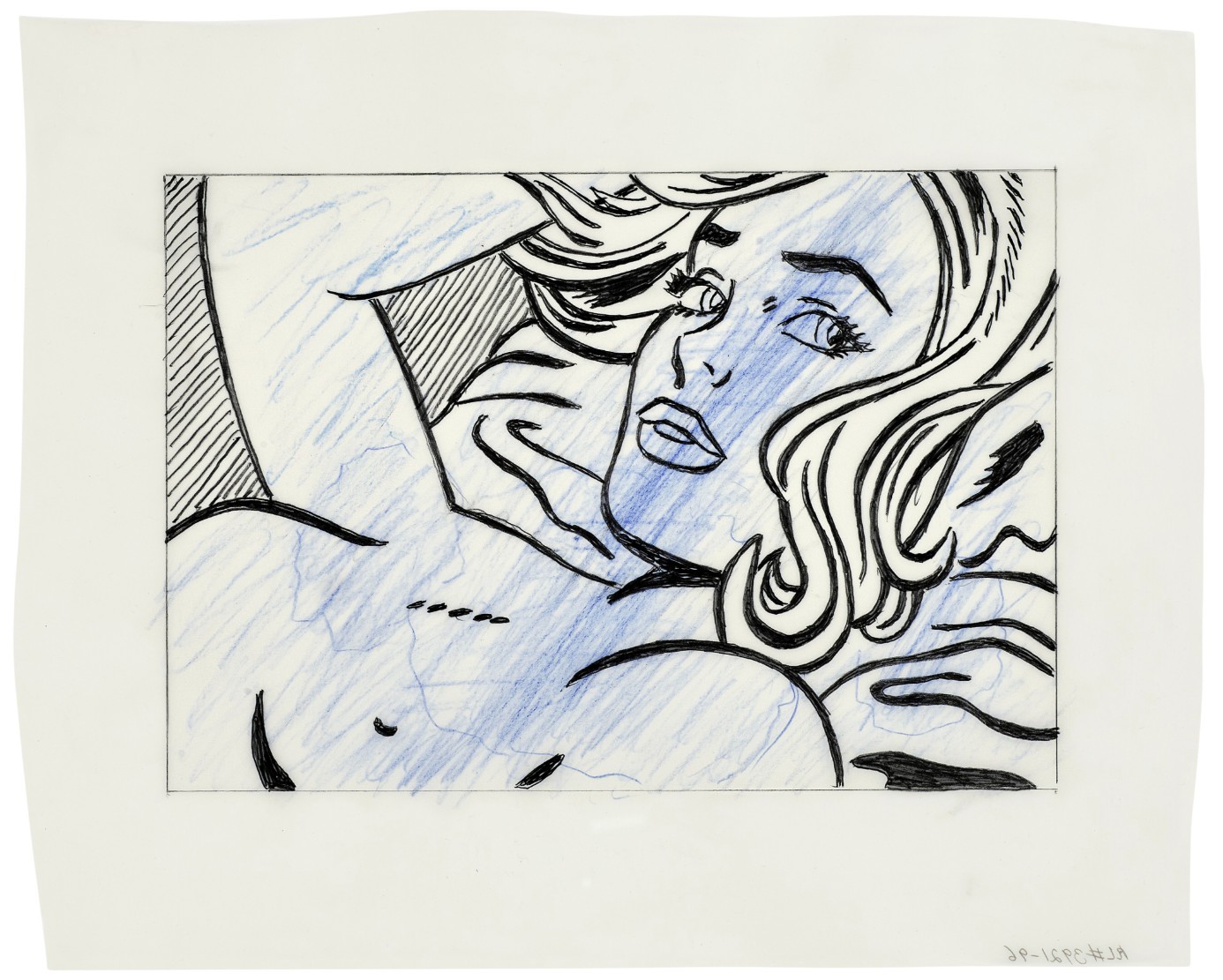
ROY LICHTENSTEIN (1923 – 1997)
Seductive Girl (Study), 1996
Graphite and coloured pencil on Denril
Image: 6 3/4 x 9 1/2 inches (17.1 x 24.1 cm)
Sheet:10 3/8 x 12 7/8 inches (26.4 x 32.6 cm)
Nude (Study), 1997
Reflections on Pop: Works from the Collection of Dorothy and Roy Lichtenstein
Sotheby’s New-York: 26 September 2025
Estimated: USD 800,000 – 1,200,000
USD 1,079,500
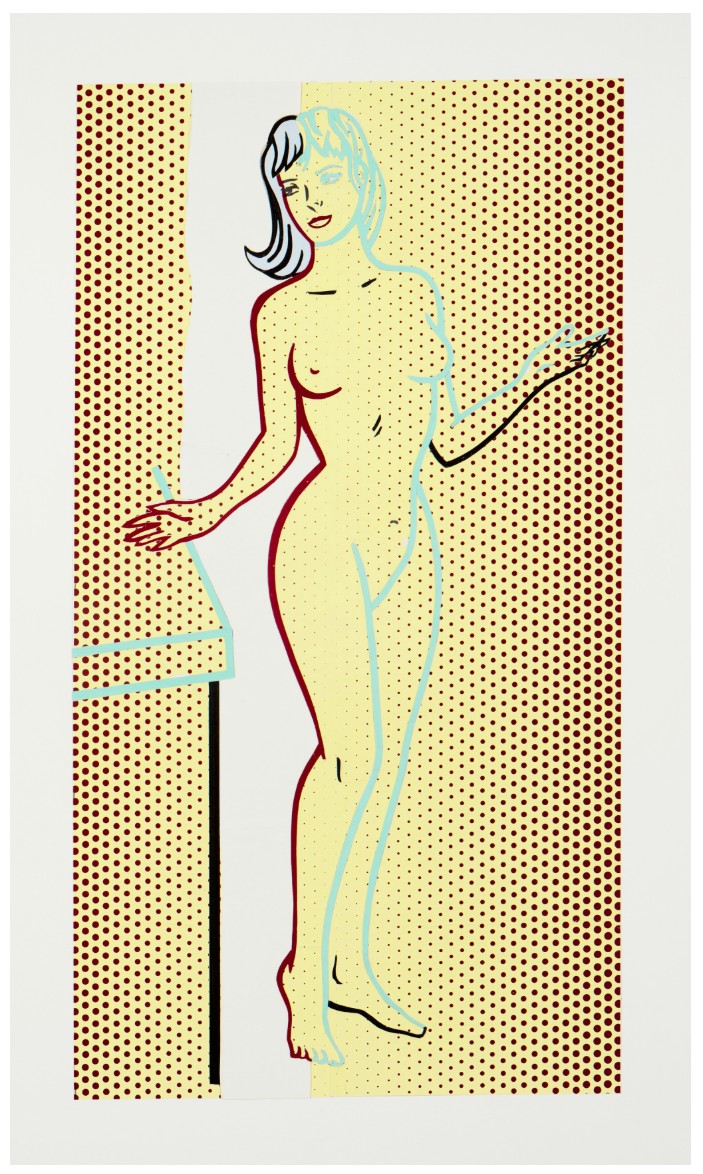
ROY LICHTENSTEIN (1923 – 1997)
Nude (Study), 1997
Tape, cut painted paper, cut printed paper, cut paper, marker and graphite on paperboard
Image: 41 3/8 x 22 1/4 inches (105.1 x 56.5 cm)
Paperboard: 51×32 inches (129.5 x 81.3 cm)
Nude with Bust (Study), 1995
Reflections on Pop: Works from the Collection of Dorothy and Roy Lichtenstein
Sotheby’s New-York: 26 September 2025
Estimated: USD 400,000 – 600,000
USD 825,500
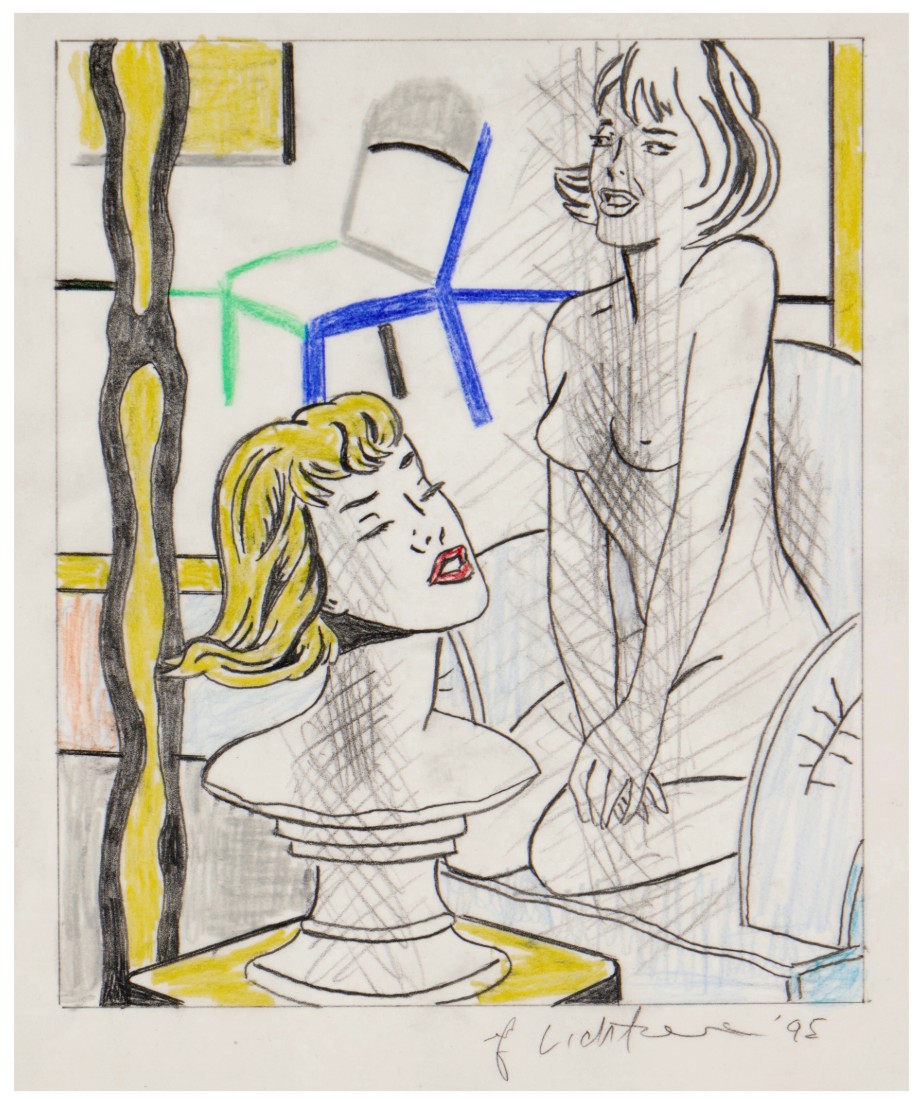
ROY LICHTENSTEIN (1923 – 1997)
Nude with Bust (Study), 1995
Colored pencil and graphite on Denril
Image: 9 7/8 x 8 1/4 inches (25.1 x 21 cm)
Sheet: 15 5/8 x 9 3/8 inches (39.7 x 23.8 cm)
Signed and dated ’95 (lower right)
Roommates (Study), 1993
Works from the Collection of Dorothy and Roy Lichtenstein
Sotheby’s New-York: 16 May 2025
Estimated: USD 600,000 – 800,000
USD 609,600
Roommates (Study) | Contemporary Day Auction | 2025 | Sotheby’s
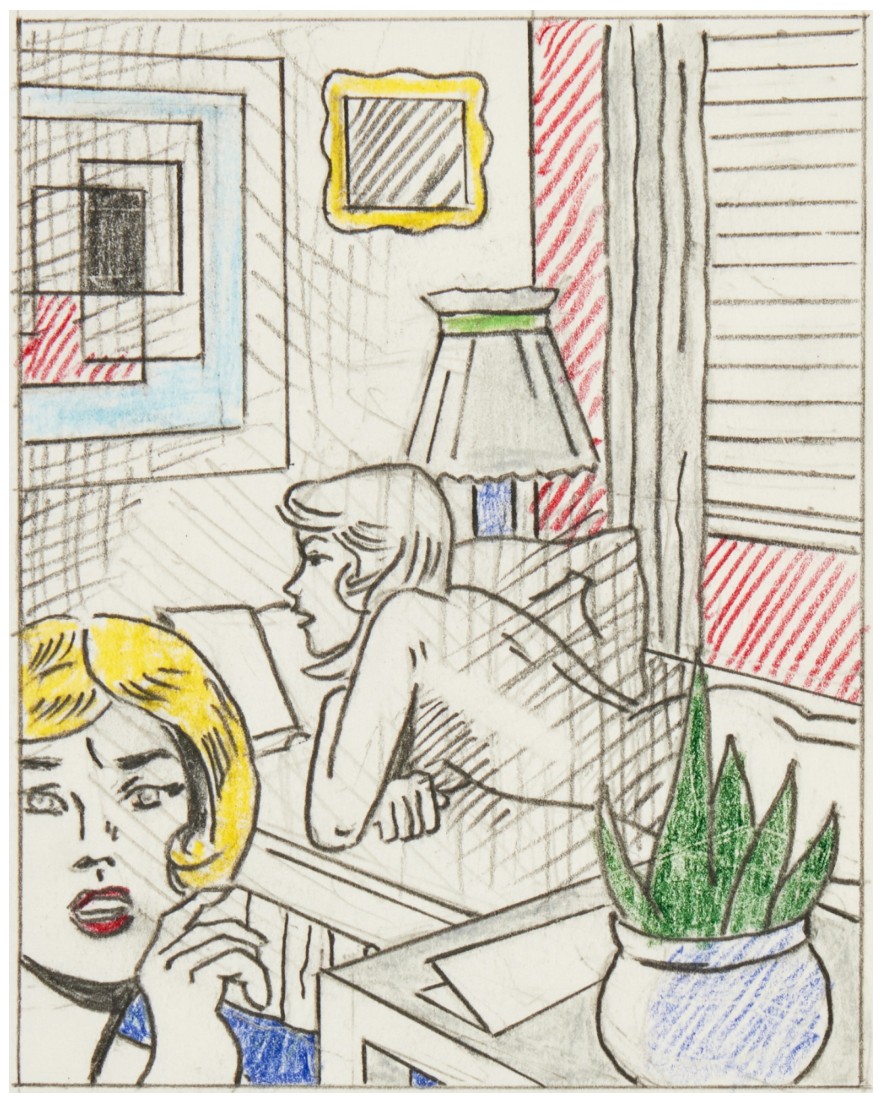
ROY LICHTENSTEIN (1923 – 1997)
Roommates (Study), 1993
Colored pencil and graphite on paper
Image: 4 7/8 x 3 3/4 inches (12.5 x 9.7 cm)
Sheet: 9 5/8 x 8 inches (24.4 x 20.3 cm)
Signed and dated ’93 (on the verso)
PAINTINGS

Nude with Joyous Painting, 1994
Nude with Joyous Painting, 1994
Christie’s New-York: 10 July 2020
Estimate on Request
USD 46,242,500
Roy Lichtenstein (1923-1997), Nude with Joyous Painting | Christie’s
ROY LICHTENSTEIN (1923-1997)
Nude with Joyous Painting, 1994
Oil and Magna on canvas
70×53 inches (177.8 x 134.6 cm.)
Signed and dated ‘rf Lichtenstein ’94’ (on the reverse)
Provenance
Leo Castelli Gallery, New York
Private collection, New York
James Goodman Gallery, New York
Private collection, Detroit
Acquired from the above by the present owner
Clad in only a pale blue headband, the shapely contours of the heroine in Roy Lichtenstein’s masterful late painting Nude with Joyous Painting is a classic American beauty, a sumptuous marriage of soft, supple flesh and steamy pulp fiction pin-up. Painted in 1994, it is an iconic, tour-de-force of the last series of great nudes that the artist began in 1993 and continued until his death in 1997. The Nudes mark his majestic return to the comic-book heroines that propelled him to fame in the early 1960s and together, they rank among his most significant bodies of work. Culled from his prodigious archive of vintage comics, the Nudes marry Lichtenstein’s Pop Art sensibility with the most storied subject in the history of Western art—the female nude. “The later women paintings and nudes that Roy did are just absolutely gorgeous,” the artist Jeff Koons has affirmed, “I know the first one[s] have history, but in terms of beauty and engaging imagery–interesting, viral imagery—the women are fantastic” (J. Koons, quoted Lichtenstein Girls, exh. cat., Gagosian, New York, 2008, p. 16). Shortly after it was painted, Nude with Joyous Painting was first exhibited to the public at Leo Castelli’s SoHo gallery in November of 1994. There, it was included in a group of seven other large-scale nude paintings, of which at least two are now housed in major American public collections, including Nude at Vanity, 1994 (San Francisco Museum of Modern Art, the Doris and Donald Fisher Collection) and Nude with Pyramid, 1994 (The Broad, Los Angeles).
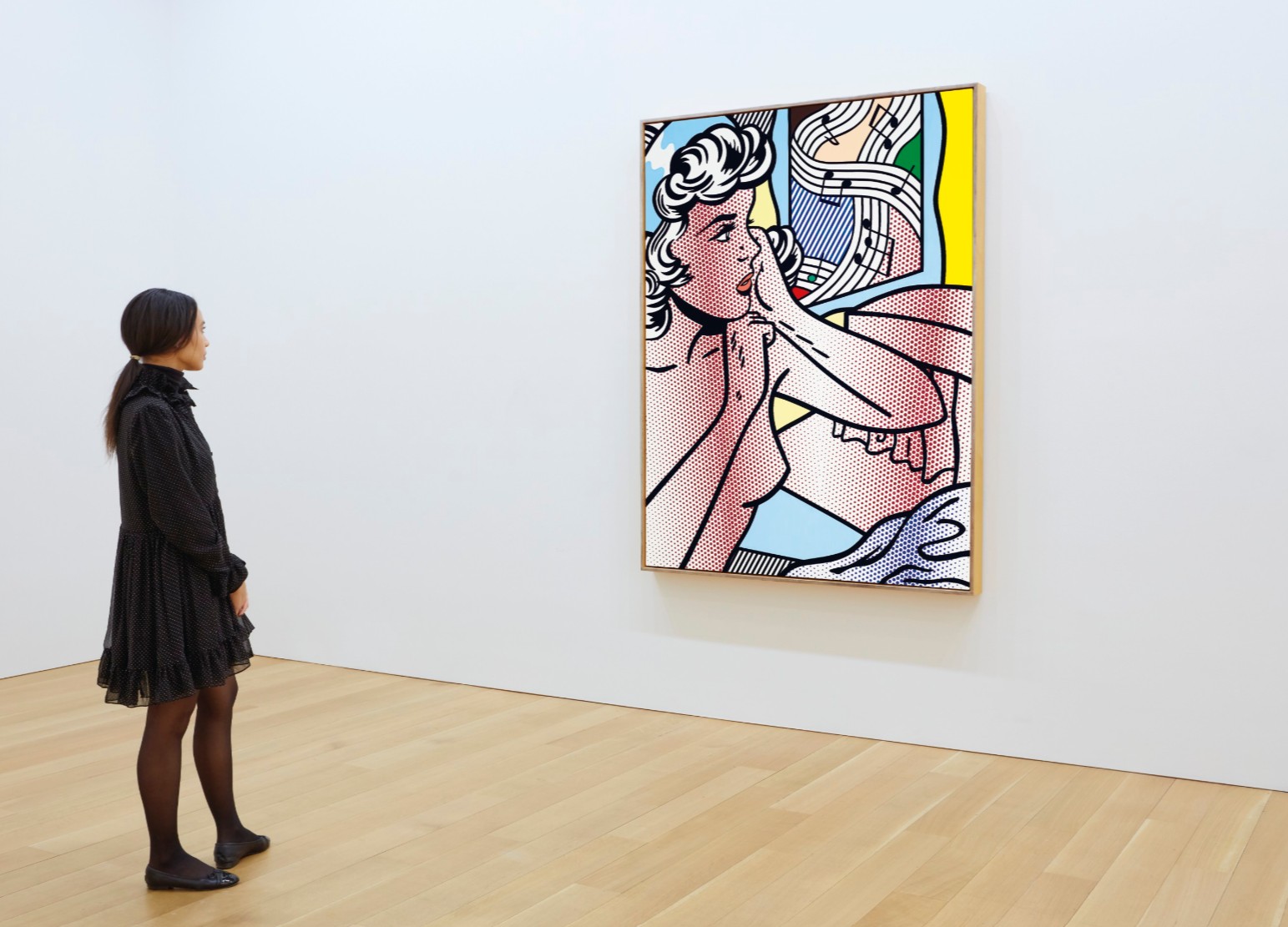
Bathed in a scrim of delicate Ben-Day dots, Lichtenstein’s leading lady exudes sensuality. Her bright red lips, perfectly coiffed hair and lithe nude body represent the classical ideal. Here, the Pop Art master’s instinctive gift for creating a melodramatic mise-en-scene is in full effect. He crops out details of the original comic and pulls us in in closer, capturing a fraught moment bristling with suspense that rivals any Hitchcock thriller. Scaled to epic proportions, Lichtenstein’s slender beauty has leapt from the comic’s pages to reach Amazonian heights. In the subtle curve of her breast and the delicate bend of her bare arms, Lichtenstein delights in her trim, pert form. He immerses her in an array of Ben-Day dots ranging in density from a tight matrix of closely-clustered dots to a looser, more scattered supply. The same dot-pattern blankets the area rug and ottoman nearby, and extends upward into the painting of musical notes hanging on the wall. These dots read as “flesh” when overlaid upon the nude’s bare skin, and yet their placement does not always indicate roundness and depth. Instead, Lichtenstein freely experiments with the dots, clustering them in wide vertical bands that often bear no relation to the contours and depth of the figure’s nude form. Meanwhile, the domestic trappings of a bourgeois lifestyle linger nearby—holdovers from Lichtenstein’s Interiors series—and Lichtenstein’s own painting of musical notes, Unchained Melody (1994), hangs upon the wall. Turmoil invades even such an ordinary domestic scene, though, as our heroine is broken from her placid reverie by an unknown intrusion. In an interesting pictorial conceit, she glances backward toward the source, with her vantage point much the same as the viewer’s. The mystery surrounding her crackles with a palpable tension.
Rather than work from the live model as his predecessors had done, Lichtenstein’s nudes were based upon fully-clothed illustrations. In Nude with Joyous Painting, the artist’s source was a vintage DC Comics series called Girls’ Romance from August 1963, where a beautiful blonde falls for a dashing male lifeguard. Titled My Rival’s Secret, the stunning protagonist, named Gloria, is saved from turmoil by Bob, a handsome, sun-kissed hunk of a man. She’s then forced to compete for his affections with a pretty brunette rival. In the panel that Lichtenstein selected for the present work, Gloria is about to drown her sorrows in the ocean, thinking: “Although I tried to bury my sorrow…It doesn’t seem…that even the sea…is deep enough.” Gloria is saved at the last moment by the beefy Bob, who rushes toward her, yelling: “Don’t go in — There’s a tremendous undertow!” The following few panels illustrate Gloria and Bob dancing arm-in-arm. Keeping the melodrama at a fever pitch, though, Gloria’s rival soon approaches Bob, saying, “How about your sister ‘cutting in,’ Gloria? It’s not fair to keep the ‘king of the sea’ all to yourself!”
A painting fraught with melodrama, Nude with Joyous Painting rivals that of even the earlier 1960s comic-book paintings that preceded it, coming to stand at a crucial moment in Lichtenstein’s career. Its formal structure, visual simplicity and zoomed-in, close-up cropping is very much aligned with the earlier ’60 Girl paintings. So, too, was Lichtenstein’s procedure for devising the composition, and he proceeded with the work in much the same manner as he had done thirty-five years earlier. He searched through the stacks of comic books, magazines and newspaper illustrations to find compelling images that suited his purpose, before translating them on a vast scale. “He specifically picked images and cartoons that had a lot of emotional charge–the archetypal idea of the woman disappointed by love, the war hero in the heat of a battle. These are typically American; and this is a typically American way of glorifying a subject” (D. Lichtenstein, Lichtenstein Girls, op. cit., p 10).
Just months before Nude with Joyous Painting was unveiled at Leo Castelli Gallery, Lichtenstein went to see Picasso and the Weeping Women: The Years of Marie-Therese Walter and Dora Maar that premiered at the Metropolitan Museum of Art. The exhibit featured over eighty works—drawings, paintings and sculpture—all executed between 1920 and 1941. They illustrate the two divergent views of Picasso’s French lover, model and mother of his child, Marie-Therese Walter, and Dora Maar, the photographer, painter and poet that Picasso met toward the end of 1935 and began a tumultuous, nine-year long affair. Of course, the two women were famously opposed to each other’s existence, and in Picasso’s portraits Walter appears as blonde, sunny and bright, as in Le Rêve (1932), in contrast to his darker portrayal of Dora Maar, whom Picasso painted as the tortured “weeping woman.” The sheer variety of Picasso’s technique is staggering to behold, as he effortlessly switched between modes—the Cubist-derived Weeping Women with their striking, lurid palette is diametrically opposed to the more subdued, almost “classical” portraits that time and again reveal Picasso’s unrivaled skill as a draftsman. Critics have recently speculated that these paintings played a formative role on Lichtenstein’s Nudes, which is tempting to consider.
Picasso and Matisse were Lichtenstein’s most venerated artistic predecessors; he applied his comic style to ersatz versions of their work on many occasions throughout his career. In Nude with Joyous Painting, Lichtenstein manages to eke out two separate and wholly opposed conditions from the same Ben-Day dot technique, an aspect that only benefits from his constant and continuous dialogue with Picasso, Matisse and the great Modernist masters. His relentless experimentation and refinement in the thirty-five years since his comic-book heroines first appeared is staggering to consider. In painting the female nude, he joins in a legion of artists stretching back two millennia that wrestled with rendering the complexities of the female form in all its fleshy complexity.
In what has typically been so highly-prized by artists of the Western canon—the realistic portrayal of the softness and roundness of the female form in all its sensuous detail—Lichtenstein instead employs an abstract design where the closely-clustered dots don’t provide fullness or depth. Several critics have noticed this important visual device, which they see as a sly commentary on the prototypical technique for three-dimensional modeling known as chiaroscuro. Indeed, the bands of Ben-Day dots that bathe the figure’s bare skin in Nude with Joyous Painting are put to a new purpose. Rather than cluster together in dense arrangements to connote three-dimensional modeling and shadow—as they had typically been used in the halftone printing process of comic-books and in his own 60s paintings—the artist freely experiments with the dots, arranging them in wide vertical bands that often bear no relation to the contours and depth of the figure’s body. In certain areas, the tightly-clustered dots seem to denote shadow, such as the side of the heroine’s face and beneath her chin, but elsewhere, they can be found in places that should be brightly-lit and therefore devoid of shadow, for instance along her lower arm. In this way, the illustration snaps back and forth between realistic, three-dimensional representation and an overall flat decorative pattern.
Whereas the earlier ‘60s paintings employed only a select few potent primary colors—namely red, yellow and black—the later Nudes maintained a staggering array of nearly fifty colors that reveal Lichtenstein’s mastery as a brilliant colorist. In the present work, his selection went through a rigorous process that began with a simple pencil sketch based on the Girls’ Romance panel, where the music painting was initially given a bright yellow frame. The next step in the process was a larger collage, where he changed the frame to light blue and added a bright yellow strip of streaming sunlight along its right edge. In the final painting, Lichtenstein added three segments of pale yellow to highlight the figure’s skin, and added a single, green music note to the painting. He also added two sections of vertical crosshatching along the upper and lower registers.
Lichtenstein’s paintings were always infused with irreverence and wit. In many instances, he even parodied his own paintings. Such is the case in Nude with a Joyous Painting, where the musical notes not only reference another painting of 1994, Unchained Melody, but also his own love of music. “Roy loved music and the studio was always filled with the sounds he loved. Bach and bebop were his favorites. … And wouldn’t you know, those musical notes found their way into his paintings” (D Lichtenstein, Roy Lichtenstein: Interiors, New York, 2002, p. 21).
Seductive Girl, 1996
Seductive Girl, 1996
Christie’s New-York: 12 November 2013
Estimated: USD 22,000,000 – 28,000,000
USD 31,525,000
Roy Lichtenstein (1923-1997), Seductive Girl | Christie’s
ROY LICHTENSTEIN (1923-1997)
Seductive Girl, 1996
Oil and Magna on canvas
50×72 inches (127 x 182.8 cm)
Signed and dated ‘rf Lichtenstein ’96’ (on the reverse)
Provenance
Private collection, New York
Acquired from the above by the present owner
Seductive Girl is a majestic and monumental Pop tribute to art history’s most enduring subject: the female nude. Executed in 1996, it represents Roy Lichtenstein’s triumphal return to the comic heroines of the 1960s, which had defined him as one of the major painters of the twentieth century. This beguiling playmate, rendered in the Lichtenstein’s bold signature style, belongs to a series of larger-than-life Nudes that were instigated in 1993 and curtailed by the artist’s death in 1997. During this prolific period, he explored the theme extensively, producing prints, drawings, collages and large canvases like the present work. Together the series has been recognized as a significant component within the artist’s oeuvre. The Nudes were well represented within the recent touring retrospective organized by the Art Institute of Chicago and Tate Modern and their joyous sensuality has attracted many long-standing admirers, including the artist Jeff Koons, who has declared: “The later women paintings and nudes that Roy did are absolutely gorgeous” (J. Koons in “Conversation,” M. Francis & S. Ratibor (eds.), Lichtenstein: Girls, exh. cat., Gagosian Gallery, New York 2008, p. 16).
Seductive Girl does not need its title to give meaning to the naked woman it depicts. She instantly enters the domain of narrative through her implied sexuality. Her sultry pose communicates a blatant and uncomplicated erotic availability made familiar to us from countless images from the mass media as much as the canon of art history. The sidelong glance of her bedroom eyes directly engages the viewer, inviting our own gaze and through it, participation in her world. Her nipple is also a focal point, which recalls other visual rhymes of the dot in Lichtenstein’s work, such as the dimples on a golf ball, the pores in a sponge or the contents of a cherry pie. The foregrounded nipple cannot be ignored, arguably it is the first thing one notices, and the eye is continually brought back to it through a tightly framed composition of curvilinear forms. The sweeping line of her breast carries our line of sight upwards through her raised arm, along to her face, and is then brought tumbling back down through her luxuriously wavy hair. This spiraling movement creates an optic-erotic vibration that lends the painting a powerful iconicity, its visual impact ensuring its place amongst Lichtenstein’s greatest comic portraits.
Images of women culled from the pages of comics and magazines appeared in Lichtenstein’s work as early as 1961, when Girl with a Ball (Museum of Modern Art, New York) was painted. A succession of females followed, whether engaged in the household chores of cleaning and cooking, such as Washing Machine, 1961 (Yale University Art Gallery, Connecticut), or the more widely known fantasy dramas of pensive, love-struck women like Hopeless, 1963 (Kunstmuseum, Basel). These subjects drew on the already slightly dated images of womankind that had become ingrained as a social stereotype during the post-war era. As Diane Waldman has written, these women were “not heroines but supplicants to the male ego, and Lichtenstein did not invent them; they or their counterparts can be found in the ads or romance comic books of the time” (D. Waldman, Roy Lichtenstein, exh. cat., New York, 1993, p.113). By re-presenting these visual and cultural clichs to the world through the medium of “high art,” Lichtenstein asked his audience to question their origins and role in society anew.
Social attitudes changed in the decades following Lichtenstein’s first paintings of “All-American” comic book girls, and he responded to that shift in the late Nudes. These are not the vulnerable girls that Lichtenstein painted in the 1960s; his nude figures from the 1990s have benefitted from the advances that the earlier girls were struggling to come to terms with. Unlike the first Girl paintings (whose subjects looked to ‘Brad’ or ‘Jeff’ to make their lives complete) the figure in Seductive Girl is an independent woman happy to acknowledge her body and the power it has over men. “The 1990s nudes take pleasure in their own company,” writer Avis Berman observes, “without the slightest hint of needing or missing a man. They are not paralyzed by their emotions. In contrast to Lichtenstein’s original romance-comic pictures, this world flourishes exuberantly without men or engagement rings or kisses. The older norm didn’t disappear, but needed to be adjusted” (A. Berman, “‘Joy and Bravura and Irreverence’: Roy Lichtenstein and Images of Women,” in Roy Lichtenstein–Classic of the New, exh. cat., Kunsthaus Bregenz, Vienna 2005, p. 143). An early counterpart to Seductive Girl‘s self-possessed sexuality can be found in the glamorous brunette in Aloha (The Helman Collection) and its close-cropped sister Little Aloha (Private collection), both from 1962. Yet these paintings seem to depict another deeply engrained female archetype: that of the femme fatale. The languidly sensual Seductive Girl on the other hand is a much less threatening presence. This is a woman of a new generation, confident and assured, and with a visual intensity brought alive by her undeniable eroticism.
The structure, simplicity and close-up framing of this painting are closely aligned with the format of Lichtenstein’s early Girl paintings of the 1960s. When it came to planning the composition, the artist approached his work in much the same way that he had constructed his paintings thirty-five years before. He raided his archives of clippings from comics and magazines to find compelling images that suited his purpose before translating them on a vast scale. This reclining beauty is translated from a 1964 Heart Throbs comic book, which charts the trials and tribulations of teen romance. The original image comes from the cover story “Love Me Not for Beauty Only” in which a fashionable blonde is desperately frustrated by unrequited love. Lichtenstein chose a frame of the girl alone in bed, headed by the expository statement: “Later that night, I couldn’t fall asleep.” The cause of the winsome protagonist’s sleeplessness is outlined in the thought bubble that hovers above her: “His thoughts are with that other girl…Oh Danny…Please love me! Don’t let her take you from me…” In Lichtenstein’s enlarged interpretation the text is cropped out and the lovelorn subject is stripped of her frilly nightgown, bringing forward the latent messages that lie at the heart of the image. By making these changes, Lichtenstein exploits our understanding of the visual language of the comic, turning it from a relatively benign scene of female objectification into a tableau that crackles with sexual frisson. About his late nudes from 1994-97, the artist noted, “It’s kind of amusing that you just paint them and leave the clothes off and it means something different. It’s more riveting” (R. Lichtenstein quoted on R. Enright, “Pop Goes the Tradition,” Border Crossings, vol.13 no.3, August 1994, p.27).
A number of other less obvious alterations have been made to Seductive Girl to strengthen the image, including a slight rearrangement of limbs to enhance the figure’s more curved bustline; the lock of hair flowing over her arm which leads us to her face; the removal of extraneous details from her features; and the fluid rendering of the pillow creases, not to mention the dots and stripes that fill in the picture plane. These marks are a continuation of the classic graphic lexicon that Lichtenstein began exploring in the 1960s. In common with his early paintings, Seductive Girl examines the language of visual communication–how signs and symbols act as visual shorthand for comprehending what we see. Lichtenstein emulates the comic artist’s reduction of the rich, infinitesimally nuanced amounts of visual detail that we absorb in our daily lives to a beautifully simple series of lines, dots and unmodulated color. With these simple devices, he is able to construct a narrative that is as striking as it is subtle.
The changes that occurred between the source material and the final painting were carefully mapped out in works on paper, where the graphic logic of Lichtenstein’s composition and his adaptation of marks as pattern are revealed. In planning Seductive Girl, one preliminary drawing shows the figure bifurcated by shaded scribbles of blue pencil lines, with further dark zones encircled on her chest and pillow. A second drawing shows the figure and background filled in by evenly spaced blue and black diagonal lines. In the early 1990s, Lichtenstein had also begun to rely on collages between the drawing and painting stages in order to further refine the image. A highly finished collage for Seductive Girl amalgamates the schema plotted out in the two drawings described above. Black diagonal lines remain in the background while the shaded blue pencil marks have been converted into graduated Ben-Day dots across the figure and her support, the most intensely colored areas being filled with the largest dots. Photographer’s tape was used to define the outline of the figure over these patterns as it provided a definitive black line that was easily manipulated. This is would be the final blueprint for the enlarged canvas.
Throughout his career, Lichtenstein was principally concerned with formal techniques and the problems of art and image making. The introduction of graduated Ben-Day dots in the late nude paintings was formally groundbreaking as they drew attention to the artistic illusion of shadow, light and depth in painting in a way hitherto unexplored in Lichtenstein’s art. Seductive Girl‘s position is made ambiguous by the deliberately unconvincing areas of illumination and shadow caused by the conglomeration of large dots tapering into pinpoints, and the fact they spill outside the boundaries of her body onto the pillow behind. They are employed to create a spatial conundrum between color planes and contour lines that simultaneously evoke and flatten depth of field. This system deflects our attention from the principle motif in a way that recalls Henri Matisse’s use of patterning and unconfined fields of vivid color to unite figure and ground.
The painting’s subject matter is there to lure the viewer into a visual narrative, yet she is a trap, an ambush designed to make us look at art with renewed scrutiny. Like all Lichtenstein’s paintings, the nudes ultimately are about issues of perception. His principle concern in Seductive Girl, and the Nudes in general, was the idea behind the technique of chiaroscuro, where dark shaded tones are typically used to overlap the figure and background to create a sense of volume. His idea wasn’t to simulate shadows precisely, but to symbolize the convention of chiaroscuro. The dots loosen their form-giving function to become isolated signs, marks of interest in themselves. In the original comic, the color blue was used to indicate the scene was taking place at night. Lichtenstein’s re-use of the blue across both figure and bedclothes, excluding the girl’s hair, further problematizes the realism of image. These devices remind the viewer that what we are looking at is only a painting made up of only marks upon a plane. In the 1997 interview between David Sylvester and Lichtenstein, the last ever given by the artist, he described this recent process of abstraction and slippage in the following way: “I’ve been using gradated dots or colors that go from one form to another, but the idea is that the lines could act like that to make areas or localities of the things that are independent. Of course, they don’t look like anything in nature, so there’s no subject matter excuse–though we don’t really have to have excuses, I think, after Mondrian or Picasso or Cézanne…. If you did it without the subject matter you wouldn’t know this was being done, so the subject matter helps because there’s a reference to reality. Some kind of reality anyway” (R. Lichtenstein quoted in D. Sylvester Some Kind of Reality: Roy Lichtenstein interviewed by David Sylvester in 1966 and 1997, exh. cat., Anthony d’Offay, London, 1997, p.38)
As this above quote indicates, the subject matter of Seductive Girl is designed to hold the pictorial framework in tension. Lichtenstein also indicates that his preoccupation with such formal concerns stem from his familiarity with the great masters of modern art whose work highlighted the fundamental flatness of the picture plane. Picasso and Matisse were Lichtenstein’s most venerated artistic predecessors. He owned a prodigious sixty-one books dedicated to the art of Picasso, and twenty-four books on Matisse, and he applied his comic style to ersatz versions of their work on many occasions throughout his career. His late nude paintings have also been compared to the work of both painters. Sheena Wagstaff, in her chapter on Lichtenstein’s Nudes in the catalogue for the artist’s recent retrospective, argues that his return to the female form was more than revisiting old ground, it was a considered attempt to invoke his favorite subject matter with a new, more powerful syntax; one based on Picasso’s celebrated portraits of his young mistress Marie-Thérèse Walter from the 1920s and the painter’s obsession with the theme of ‘the artist and his model’ in his later years. The profound fascination that Picasso held for paintings of women is directly comparable to Matisse’s synchronous elevation of the woman as muse. Sensual, languorous nudes preoccupied Matisse for much of his life and he progressively flattened and abstracted the figure of his model and her environment in an attempt to universalize his subject matter.
Nude with Red Shirt, 1995
Nude with Red Shirt, 1995
Christie’s New-York: 14 November 2012
Estimated: USD 12,000,000 – 18,000,000
USD 28,082,500
Roy Lichtenstein (1923-1997) , Nude with Red Shirt | Christie’s
ROY LICHTENSTEIN (1923-1997)
Nude with Red Shirt, 1995
Oil and Magna on canvas
77×65 inches (198.1 x 167.7 cm)
Signed and dated ‘rf Lichtenstein ’95’ (on the reverse)
Provenance
Leo Castelli Gallery, New York
Thomas Gibson Fine Art, London
Acquired from the above by the present owner, 1995
Sizzling with veiled sexuality, Nude with Red Shirt marks Roy Lichtenstein’s triumphal return to the comic-book sources from the 1960s which defined him as one of the major painters of the twentieth century. His iconic Girls heralded the end of Abstract Expressionism and his return to the curvaceous contours of the female form in the 1990s possessed the same visual and emotional intensity of his earlier iconic paintings, yet in these works the artist introduced a new, more contemporary generation of female protagonists. While still taking his cue from the comic books of his youth, in Nude with Red Shirt the artist’s earlier renditions of love-struck teenagers have been replaced by confident figures that are no longer waiting for a man to bring them happiness–they know what they want and are out to get it.
Caught in her bedroom, in the very private act of dressing, the naked figure of a woman is captured as she slips her red shirt over her shoulders. The contours of her slender figure are rendered in Lichtenstein’s unique visual language; a mixture of Ben-day dots contained within the serpentine sweeps of bold, defining outlines. These marks are evidence of Lichtenstein’s skillful understating of the language of graphic communication, in that despite the reductive nature of her figure, the artist’s amalgamation of dots and lines still conveys all the seductive sensuality of any classic painted nude. But, lurking in the shadows–disrupting this seemingly innocent narrative–the head of an anonymous female figure breaks into the picture frame from the left, introducing a tangible sense of tension into the composition. Who is this woman? Why is she looking and does our heroine know she is being observed?
Based on an image taken from a 1967 Secret Hearts romance-comic entitled ‘Reaching for Happiness: Can you be thrilled by one man while you’re in love with another?’ Nude with Red Shirt employs the classic graphic lexicon that Lichtenstein began exploring in the 1960s. In common with his early paintings, Nude with Red Shirt examines the language of visual communication–how signs and symbols act as a visual shorthand for comprehending what we see. Lichtenstein reduces the rich, infinitesimally nuanced amounts of visual detail that we absorb in our daily lives and reduces them to a beautifully simple series of lines and dots accentuated by bold splashes of color. With these simple devices he is able to construct a narrative that is as striking as it is subtle. As art historian Avis Berman points out, “The romance-comic paintings allowed Lichtenstein to play with what we think we see versus what we actually see–the ambiguities of perception that he constantly explored in his art” (A. Berman, “Joy and Bravura and Irreverence: Roy Lichtenstein and Images of Women,” in E. Schneider (ed.), Roy Lichtenstein: Classic of the New, exh. cat., Kunsthaus Bregenz, 2005, p. 138).
Unlike his fellow Pop artist Andy Warhol, who appropriated mass-produced and commercial images to highlight their formal and aesthetic qualities, Lichtenstein subtly manipulates the original composition to upset the seemingly familiar narrative with dramatic effect. In the original comic book image the heroine, Karen, is pictured in a room with her sister, discussing her upcoming date with a man she is clearly not in love with. In Lichtenstein’s composition the speech bubbles are removed and the decor is updated slightly. But perhaps the two most dramatic changes are the removal of Karen’s slip–leaving her naked and vulnerable–and moving the voyeur’s head to the left slightly, making it less obtrusive and therefore more mysterious. By making these relatively small compositional changes, Lichtenstein exploits our understanding of the visual language of comic books to dramatically sexualizes the entire composition, turning it from a relatively benign scene of pre-date preparations to a tableau that crackles with sexual frisson.
Lichtenstein’s 1960s series of Girl paintings drew on the already slightly dated comic books published for the burgeoning post-war teenage market. The plotline of these stories typically follows a young girl who falls in love with a young man; a serious problem arises to threaten the relationship, and the heroine is briefly devastated before an inevitable happy conclusion. These subjects fulfilled Lichtenstein’s fascination with strong visual and cultural clichés as well as his preoccupation with form and style. By selecting and amplifying the romance genre beyond all normal bounds of scale in works like Nude with Red Shirt, Lichtenstein sharpens its essential content– pointing out how adolescent notions of love are consistently reinforced through representation in popular culture. The romance comics are essentially illustrated soap operas aimed at readers presumably navigating the treacherous waters of love for the very first time. Yet Lichtenstein’s paintings address an audience of sophisticated adults that will mostly have found love to be at odds with its idyllic promise. Nevertheless, few among us ever completely give up on the dream of perfect love, as the endless stream of Hollywood romantic comedies attest to every year.
After a lengthy period away from his comic-book inspired motifs, Lichtenstein returned to this source for one of his last great paintings of Nudes paintings in 1993. Following his expansive retrospective at the Solomon R. Guggenheim museum in New York that year, Lichtenstein began to look again at the female figure and began working on a series of large scale, more provocative images. Sheena Wagstaff, in her chapter on Lichtenstein’s late Nudes in the catalogue for the artist’s current retrospective organized by the Art Institute of Chicago and Tate Modern, argues that this return to the female form was more than revisiting old ground, it was a considered attempt to invoke his favorite subject matter with a new, more powerful syntax, “In the Nudes, not only did Lichtenstein alter the equation in the compositional tension between motif and formal concerns, but also crucially, he seized upon a new pictorial language” (S. Wagstaff, “Late Nudes,” Roy Lichtenstein: A Retrospective, exh. cat., Art Institute of Chicago, 2012, p. 95).
In Nude with Red Shirt, Lichtenstein adopts a subject that had long been the favorite of painters throughout history. From Edgar Degas’ Baigneuse to Henri Matisse’s Odalisques and particularly Pablo Picasso’s paintings of his mistress Marie-Thérèse Walter, the voyeuristic view of a woman in her intimate moments had long been a staple of painting. But in Nude with Red Shirt, Lichtenstein subverts the male gaze by introducing a female voyeur. Suddenly the established narrative becomes disrupted–the woman is still the object of the gaze, but whose gaze? Who is watching who? This type of female gaze becomes less threatening, but as a result it becomes more sexual. The photo of Karen’s boyfriend on her nightstand hints that the protagonist’s sexuality is more fluid than the wholesome 1960s girl that Lichtenstein uses as his inspiration. Social attitudes have changed in the thirty years since Lichtenstein first depicted his lovelorn ‘All-American’ wholesome girl, and Lichtenstein has responded to that shift. “Lichtenstein hit upon deliberately provocative subject matter in his Nudes, begun in earnest when the artist turned seventy years old,” Wagstaff concludes, “Their undeniable frisson of pictorial eroticism both problematizes a compositional architecture’s integrity and highlights Lichtenstein’s supreme mastery of form, distilled over a lifetime of pursuing technical perfection (ibid.).
Although often regarded as a blunt instrument, in Lichtenstein’s hands the artist’s comic-book source comes alive with a palpable sense of tension that leaves the viewer searching for the narrative conclusion to the scenario that Lichtenstein has initiated. By ingeniously relying on widely understood conventions, Lichtenstein plays with what the cultural critic Edward Said called the tension between what is represented and what is not represented, between the articulate and the silent. All of which results in painting that continues Lichtenstein’s career-long decision of subverting convention and produces a painting that continues to crackle with both visual and emotional excitement.
Nude Sunbathing, 1995
Nude Sunbathing, 1995
Sotheby’s New-York: 17 May 2017
Estimated: USD 20,000,000 – 30,000,000
USD 24,000,000
ROY LICHTENSTEIN
Nude Sunbathing, 1995
Oil and Magna on canvas
58 1/8 x 60 inches (147.6 x 152.4 cm)
Signed and dated 95 on the reverse
Provenance
Gagosian Gallery, New York
Acquired by the present owner from the above in 1996
A radiant vision of exquisite beauty and devastating allure, Roy Lichtenstein’s Nude Sunbathing unequivocally embodies the very essence of confident and unadulterated female sensuality. From the sultry gaze of her half-lidded blue eyes to the languorous arch of her slender back, the idle motion of cascading blonde curls to the coquettish pout of her scarlet mouth, every inch of Lichtenstein’s breathtaking bombshell is imbued with a magnetic charisma that completely and utterly seduces the viewer. A resounding testament to the visual dynamism of Lichtenstein’s bold signature style, Nude Sunbathing constitutes the ultimate crystallization of the artist’s enduring engagement with the quintessential heroine of his inimitable oeuvre; freed from the narrative constraints of her previous embodiments, Lichtenstein’s nude revels in the enjoyment of her own peerless form. Executed in 1995, the present work is a masterpiece from Lichtenstein’s celebrated late Nudes, the first series the artist undertook following his acclaimed retrospective in 1993 at the Solomon R. Guggenheim Museum and, ultimately, the last major body of work before the artist’s death in 1997. Testifying to the incontrovertible allure of the monumental paintings, this limited series is distributed amongst the world’s most renowned public and private collections; the present work, held in the same private collection since the year following its execution and never before offered for public sale, numbers amongst the finest examples of the Nudes ever to appear at auction. The intimately close-cut tableau of Nude Sunbathing brings Lichtenstein’s seductress bewitchingly close to the viewer, her sensuous curves filling the frame with a confidence and self-possessed sexuality unrivaled in other examples. Presented against the radiantly prismatic abstract backdrop of Lichtenstein’s trademark Ben-Day dots, Nude Sunbathing, the only example from the series to be rendered in an emboldened red-on-red palette, relishes her status as the singular focus of the viewer’s adoring gaze. Her languid pose, one hand leisurely raised to gently toy with lustrous blonde locks, enacts a bold and unapologetic invocation of such canonical nudes as Matisse’s Draped Nude and Titian’s Venus of Urbino, effortlessly invoking centuries of art historical legacy with captivating aplomb. In Nude Sunbathing, Lichtenstein enters a final, dazzling confrontation with the weighty mantle of his artistic predecessors: with the daring provocation of Manet’s Olympia, the exquisite loveliness of Botticelli’s Venus, and the radical stylistic innovation of Ingres’s La Grande Odalisque, Nude Sunbathing is a magnificent example of Lichtenstein’s ultimate contribution to Contemporary art.
A beguiling mixture of iconic familiarity and inaccessible perfection, Nude Sunbathing marks Lichtenstein’s ultimate and final reunion with his signature blondes. These peerless idols of femininity, gleaned from the pages of comic books and advertisements, appear in Lichtenstein’s oeuvre as early as Girl with Ball of 1961, held in the collection of the Museum of Modern Art in New York; over the course of the 1960s, Lichtenstein’s heroines appeared in a number of disparate narratives and guises, ranging from the distressed damsel of Drowning Girl to the domestic temptress of Girl in Bath. Undisputed icons of postwar American art, Lichtenstein’s Girls exemplify the explicit tension at the very core of the artist’s practice: an irreconcilable distinction between the quotidian imagery of popular culture and the refined cultural paradigm of fine art. Remarking upon the significance of these women within the artist’s oeuvre, his wife, Dorothy Lichtenstein, comments, “I think that he was portraying his idea of the dream girl.” (Dorothy Lichtenstein in conversation with Jeff Koons in Exh. Cat, New York, Gagosian Gallery, Lichtenstein: Girls, 2008, p. 15) In the late 1970s, Lichtenstein’s archetypal female underwent a radical stylistic transformation, departing from her role as the heroine of fictional and comic narrative to be reintroduced in a fantastical Surrealist dreamscape of compositional fragmentation and abstracted symbolism. Following the Surrealist paintings, Lichtenstein did not revive his signature subject matter until the mid-1990s when, following his major 1993 retrospective, the artist embarked upon his celebrated late Nudes. In her essay on the Nudes in the recent Lichtenstein retrospective co-organized by the Art Institute of Chicago and the Tate Modern, London, scholar Sheena Wagstaff refers to the Nudes as “monumental celebrations of domesticated eroticism,” further noting, “Lichtenstein hit upon deliberately provocative subject matter in his Nudes… their undeniable frisson of pictorial eroticism both problematizes a compositional architecture’s integrity and highlights Lichtenstein’s supreme mastery of form, distilled over a lifetime of pursuing technical perfection.” (Sheena Wagstaff, “Late Nudes,” in Exh. Cat., Art Institute of Chicago, Roy Lichtenstein: A Retrospective, 2012, pp. 95, 97) As in his iconic paintings of the 1960s, the pose and delightful physique of the stunning blonde in the present work is drawn from popular culture; in this case, Lichtenstein culled his inspiration from the DC Comic Heart Throbs, in which our beauty lounges, her bedroom eyes seductively fluttering, as she reflects, “Danny likes me…I can tell….He likes me for me…but he doesn’t know I can be beautiful.” In Nude Sunbathing, as in the other paradigmatic examples from the Nudes, Lichtenstein confronts his heroine in her final, conclusive iteration; stripped bare of the trappings of narrative drama or stylistic rendering, the artist’s dream girl appears in her purest and undiluted form, her alluring and sensual contours rendered with boldly unhindered erotic charge.
While women have always featured prominently within the artist’s quintessential Pop lexicon, Lichtenstein returned to his signature subject matter—the female form—in the Nudes with a new, more powerful syntax. Wagstaff notes, “In the Nudes, not only did Lichtenstein alter the equation in the compositional tension between motif and formal concerns, but also, crucially, he seized upon a new pictorial language. He deduced and acknowledged the nude as a form through which a new syntax could emerge by means of an understated narrative that implies a relationship between the artist-creator and the nude—a contemporary rendition of the Pygmalion-artist conjuring a plausible painterly version of his Galatean muse. Both the artistic and the perceptual tension between form and content, most especially in those paintings that intensified this balance through a mirroring device, were to occupy Lichtenstein in the last years of his life.” (Ibid., 95) Unlike the earlier women, embroiled in romantic trysts or histrionic exploits, Nude Sunbathing does not offer an explicit storyline; instead, the only suggestion of narrative is held in the suggestive glimmer and implied sexuality of her heavily lidded eyes, which gaze at something—or someone—beyond the viewer’s field of vision. Remarking upon the elusive allure of the Nudes, Edward Said notes, “Lichtenstein’s Nudes signal the tension between what is represented and what isn’t represented, between the articulate and the silent.” (Edward W. Said, On Late Style: Music, and Literature against the Grain, 2006, p. xix) Moreover, in their unapologetic celebration of the female form, Lichtenstein’s Nudes capture a more contemporary and more provocative characterization of femininity. Critic Avis Berman comments, “The 1990s Nudes take pleasure in their own company, without the slightest hint of needing or missing a man. They are not paralyzed by their emotions. In contrast to Lichtenstein’s original romance-comic pictures, this world flourishes exuberantly without men or engagement rings or kisses.” (Exh. Cat., Vienna, Kunsthaus Bregenz, Roy Lichtenstein: Classic of the New, 2005, p. 143) Indeed, as she languidly reclines, gently toying with a thick, lustrous lock of blonde hair, the nude of the present work is utterly unconcerned by the viewer’s voyeuristic gaze upon the sensuous curves of her body; confident in the profound power of her allure, Nude Sunbathing accepts her rightful place within the timeless canon of nudes throughout art history.
In his late focus upon the larger-than-life Nudes, which dominated his considerable creative faculties in the final years of his career, Lichtenstein paid homage to the iconic subject matter of two of his greatest mentors: Pablo Picasso and Henri Matisse. For both of these artists, the nude operated as the original signifier of desire, codified and distilled into the sinuous contours of the idealized female form. Recalling the profound influence these artists enacted upon Lichtenstein, Dorothy Lichtenstein notes, “He grew up studying [the Venus de Milo], but I think he felt more challenged by what we would call the early Modernists – Picasso, Cézanne, and Matisse. He felt that they had restructured painting and they were actually part of his time. He grew up in New York, and so these were really the first works he saw in the Museum of Modern Art.” (Dorothy Lichtenstein in conversation with Jeff Koons in Exh. Cat, New York, Gagosian Gallery, Lichtenstein: Girls, 2008, p. 11) Throughout his career, these giants of Modernism remained touchstones for Lichtenstein, their investigation of the aesthetic quandaries of modern art—namely the relationship between subject and artist, the temporal nature of reality, and the formal functions of line, light, and color—mirrored within his own oeuvre. In particular, Lichtenstein’s late Nudes trace a markedly similar trajectory to the remarkable creative vigor of Picasso’s artistic experimentation of the late 1920s and early 1930s; in these years, the so-called Marie-Thérèse era, Picasso, inspired and enlivened by the beauty and vitality of his youthful mistress Marie-Thérèse Walter, embarked upon a series of formally inventive and powerfully volumetric paintings, sculptures, and etchings of his beloved’s voluptuous form. While Lichtenstein revisited Picasso’s oeuvre with increasing verve in the years following the latter’s death in 1973, the 1990s Nudes represent the crowning achievement and final culmination of the aesthetic engagement between the two. The exhibitions Picasso and the Weeping Women: Marie-Thérèse Walter and Dora Maar, organized by the Metropolitan Museum of Art in 1994, and Picasso and Portraiture, mounted by the Museum of Modern Art in early 1996, further contributed to Lichtenstein’s focus upon the Modern master’s renderings of the female form in the mid-1990s. Indeed, although the figural source for Nude Sunbathing is characteristically pulled from the fantasy realm of comic books, her languid pose is startlingly reminiscent of Picasso’s 1932 rendering of Marie-Thérèse in Nude Woman in a Red Armchair, while her cascading drapery, formally complementing and accentuating the silhouette of her slim thighs and abdomen, powerfully evokes Henri Matisse’s Draped Nude of 1936. Lichtenstein’s invocation of these canonical nudes of Modernism in the present work is, however, delightfully problematized by her affinity with the glorified pin-up bombshells of American popular media. Absorbing and advancing the cause of his artistic predecessors, Nude Sunbathing is Lichtenstein’s Pop answer to a decade long dialogue with the iconic nudes of the Twentieth Century.
Lichtenstein’s arresting use of his trademark Ben-Day dots in Nude Sunbathing, echoed in other decisive examples of the late Nudes, profoundly intensifies the artist’s already potent visual vernacular. Addressing the formal brilliance of the Nudes, Sheena Wagstaff reflects, “By the 1990s, [Lichtenstein] had discovered a new way to render color plane and contour, filtered through his profound understanding of mutual influence—an artistic process of call-and-response that defined the innovations of both Picasso and Matisse in the 1930s in holding the pictorial framework in tension.” (Sheena Wagstaff, “Late Nudes,” in Exh. Cat., Art Institute of Chicago, Roy Lichtenstein: A Retrospective, 2012, p. 98) Describing the artistic impulse which prompted him to embark upon the late Nudes, Lichtenstein explains, “With my nudes, I wanted to mix artistic conventions that you would think incompatible, namely chiaroscuro and local color, and see what happened. I’d seen something similar in Léger’s work. My nudes are part light and shade, and so are the backgrounds, with dots to indicate the shade. The dots are also graduated from large to small, which usually suggests modeling in people’s minds, but that’s not what you get with these figures.” (Roy Lichtenstein, quoted in Michael Kimmelmann, Portraits: Talking with Artists at the Met, the Modern, the Louvre, and Elsewhere, New York, 1998, p. 89) Lichtenstein’s remarkable employment of the Ben-Day dots in Nude Sunbathing achieves the suggestion of chiaroscuro, long used by artists to evoke the volumetric modeling of three-dimensional subjects, while simultaneously evoking the artist’s iconic Pop lexicon. Cascading across the alabaster flesh of his lounging subject, the scarlet Ben-Day dots expand and contract with meticulous precision, intensifying to bold rows across one slender shoulder before fading to bright pinpricks along the curves of her torso. The modeled treatment of the Ben-Day dots upon the nude strikes a stark contrast with the uniformed red pattern of the background, further highlighting the appearance of illuminating rays upon her naked form. Reflecting upon Lichtenstein’s remarkable use of the Ben-Day dots in the Nudes, Harry Coplans remarks, “In this daring return to the human figure, Lichtenstein employed the dots to depict the flush—not the blush—of female flesh.” He continues, “But wait: the waves of dots exceed the outlines of the figures, continuing into other objects or into the background. The figure has been overtaken, abducted. Dots course through the scene and settle here or there, their action difficult to understand, obscuring bodies and crossing boundaries, like a cataract in the sense of both waterfall and obstruction of vision. As these dots, following their own formal and psychic logic, spread beyond the body, they escape narrative and depiction to become identified instead with the surface of the painting, the plane where the subject and object, artist/beholder and model, would meet, the intersubjective space of the blush.” (Harry Cooper, “On the Dot,” in Exh. Cat., Chicago, Art Institute of Chicago (and travelling), Roy Lichtenstein: A Retrospective, 2012, p. 33)
While the entirety of Lichtenstein’s output is marked by an economy of means, the radical pictorial language of the late Nudes was unprecedented. Speaking in the year the present work was painted, Lichtenstein remarked, “I’m trying to make paintings like giant musical chords, with a polyphony of colors that is nuts but works…It’s tough to make a painting succeed in terms of color and drawing within the constraints I insist on for myself.” (Roy Lichtenstein quoted in Michael Kimmelmann, “At the Met with: Roy Lichtenstein; Disciple of Color and Line, Master of Irony,” New York Times, March 31, 1995, p. C27) Showcasing his remarkable technical virtuosity, Lichtenstein creates a striking and complex composition from the limited vernacular of patterned dots and saturated splashes of prismatic primary colors, constrained and defined by the bold contours of his thick black outlines. By highlighting his figure within a tightly cropped frame, Lichtenstein further imbues his painting with a heightened intensity and emphatic force; as John Coplans suggested, “This paring away of the unessential led Lichtenstein to a sharper confrontation with the outside world, to a wider range and sharper focus in his use of stereotype… It is not that Lichtenstein avoids painting the whole figure because it is too complex but, rather, that the whole figure is too specific, too anecdotal for his purpose. Too much detail weakens the focus and the power of the image to immediately and recognizably signal the desired content. Thus, Lichtenstein crops away until he gets to the irreducible minimum and compresses into the format the exact cliché he desires to expose. Lichtenstein’s technique is similar to his imagery: He reduces his form and color to the simplest possible elements in order to make an extremely complex statement. In short, he uses a reductive imagery and a reductive technique for their sign-carrying potential.” (John Coplans, Roy Lichtenstein, New York, 1972, p. 23) Set against an abstract background of pure pattern, Nude Sunbathing is amongst the most emphatic articulations of Lichtenstein’s emphasis upon style and form in the late Nudes; unlike other examples from the series, which contextualize and domesticate the Nudes within lush interiors and playful narratives, the present work commits itself, utterly and entirely, to the celebration of line, color, and light in the beautiful form of the central figure.
Achieving a sensational juxtaposition of prosaic popular imagery with the exalted dominion of fine art, Nude Sunbathing is amongst the most succinct and compelling embodiments of Lichtenstein’s unique artistic project. More than any other artist of his generation, Lichtenstein instinctively understood the phenomenal potential of popular imagery and endeavored to realign the cipher of that imagery to unveil verities behind the ever-proliferating pictorial panorama of contemporary culture in Twentieth-Century America. By invoking the impersonal artifice of mass-produced visuals in his meticulously rendered Ben-Day dots, Lichtenstein’s oeuvre enlists and effectively subverts the expectations of his audience, offering us a brilliantly executed masterwork disguised as the everyday visual matter of contemporary popular culture. In the final years of his career, Lichtenstein further heightened the stakes of his aesthetic endeavor, harnessing the familiar iconicity of mainstream media to depict art history’s ultimate symbol for formal perfection, from antiquity to the present. The annals of art history virtually overflow with examples of seminal nudes, from the cherished marble proportions of Praxitales’s Aphrodite of Knidos, to the frank eroticism of Titian’s Venus of Urbino, to the radical innovation of Picasso’s Demoiselles d’Avignon; in each, the artist offered a purified, conclusive embodiment of his unique aesthetic treatise. There is a profound eloquence to the Nudes, as Lichtenstein’s last significant body of work; Wagstaff notes, “In its powerful iconicity, the nude as an evocative embodiment of the creative process itself is reticulated through serial reiteration of the subject matter. It is the discovery and convulsive act of formal genesis—and Lichtenstein’s symbolic transfiguration of pictorial skin and gristle—that signals its real pictorial metamorphosis, and thus become the means of simultaneously overcoming yet emphasizing its narrative associations. Lichtenstein’s Nudes, created in the last four years of his life, are a profoundly innovative and active meditation upon the relationship of creation and perception.” (Sheena Wagstaff, “Late Nudes,” in Exh. Cat., Chicago, Art Institute of Chicago (and travelling), Roy Lichtenstein: A Retrospective, 2012, p. 103-104)
Nude with Yellow Flower, 1994
Nude with Yellow Flower, 1994
Christie’s New-York: 15 May 2013
Estimated: USD 12,000,000 – 16,000,000
USD 23,643,750
Roy Lichtenstein (1923-1997) , Nude with Yellow Flower | Christie’s
ROY LICHTENSTEIN (1923-1997)
Nude with Yellow Flower, 1994
Oil and Magna on canvas
92×72 inches (233×183 cm)
Signed and dated ‘rf Lichtenstein ’94’ (on the reverse)
Provenance
Leo Castelli Gallery, New York
Stefan T. Edlis Collection, Chicago
Mitchell-Innes & Nash, New York
Thomas Gibson Fine Art Ltd., London
Acquired from the above by the present owner
Roy Lichtenstein’s monumental Nude with Yellow Flower represents the triumphal return of the comic heroine in the Pop master’s late career. This provocative domestic goddess, rendered in the artist’s bold signature style, is a modern variation on an ancient artistic genre. Like Picasso, Renoir, and Matisse before him, Lichtenstein seized on the classic theme of the female nude late in life, using the motif to invent new creative possibilities. The Nudes became one of Lichtenstein’s last major series, which was instigated in 1993 and curtailed by the artist’s death in 1997. During this prolific period, he explored the theme extensively, producing prints, drawings, collages, and large canvases like the present work. Together the series has been recognized as a significant component within the artist’s oeuvre. The Nudes were well represented within the recent touring retrospective organized by The Art Institute of Chicago and Tate Modern and their joyous sensuality has attracted many long-standing admirers, including the artist Jeff Koons who has declared: “The later women paintings and nudes that Roy did are absolutely gorgeous” (J. Koons in ‘Conversation,’ M. Francis & S. Ratibor (eds.), Lichtenstein: Girls, exh. cat., Gagosian Gallery, New York 2008, p. 16).
Each composition for the Nudes evolved out of a sophisticated process of image selection and inventive remixing. For Nude with Yellow Flower, Lichtenstein raided his archives of clippings from comics and magazines before recompiling and reinterpreting them on a vast scale. The larger-than-life beauty occupying this cozy scene is translated from a 1963 Girl’s Love Stories comic book which charts the trials and tribulations of teen romance. The original image shows a swimsuit-clad model chatting on a rotary dial phone in the midst of a photo-shoot. In this painting, Lichtenstein modernizes her phone and transplants her from the commercial environment into the home, from public to private realms. He has also stripped her bare, with the fecundity of her natural state seemingly underlined by the addition of the yellow bloom in her hand and the bushy leaves of the pot plant to the left of her waist. By making these changes, Lichtenstein exploits our understanding of the visual language of the dated comics to dramatically sexualize the entire composition, turning it from a relatively benign scene of female objectification to a tableau that crackles with sexual frisson.
Lichtenstein’s first nudes emerged out of a concurrent series of Interiors paintings, which caricatured the lavish spreads of pristine homes in magazines like Architectural Digest. The Interiors focused on a subject that has long captured the fascination of Pop artists: the myth of blissful bourgeois domesticity. They depict rooms cobbled together from illustrations of furniture and reproductions of artworks and all lack a human presence to bring the spaces alive. As the series evolved Lichtenstein gradually took the pictures of nudes off the walls and allowed women to inhabit these ultra-cool environments. In doing so, Lichtenstein ensured his muses remained as carefully edited and stylized as the furnishings that surround them. The calculated arrangement of motifs and the somewhat incongruous quality of Nude with Yellow Flower pays tribute to a seminal work of Pop art: Richard Hamilton’s Just what is it that makes today’s homes so different, so appealing? which brought the buff imagery of American men’s physique magazines and semi-clad sirens into a domestic realm filled with all the trappings of an idealized middle-class lifestyle. Yet Nude with Yellow Flower is less a commentary on consumer culture and more a reflection on art itself. The subject of the nude fulfilled Lichtenstein’s fascination with strong visual and cultural clichés as well as his preoccupation with style and form. It enabled him to make a knowing and witty nod to art historical precedents, including that of his own world-famous oeuvre. The result was a double loop of appropriation that exemplified new approaches to visual practice in the post-modern era.
Presenting the comic-book girls in the nude within composite scenes meant they were not a straight redux of what had gone before. They instead provided a vehicle for Lichtenstein’s continued testing of formal artistic methods. In Nude with Yellow Flower diagonal stripes and Benday dots simultaneously evoke and flatten the picture’s depth of field. These graphic techniques, typically used as short-hand to define shadow and volume, spill over the girl’s curvaceous body and onto her surroundings, creating a peculiar spatial conundrum that highlights the artificiality and unreliability of the image. “My nudes are part light and shade, and so are the backgrounds, with dots to indicate the shade,” Lichtenstein explains. “The dots are also graduated from large to small, which usually suggests modeling in people’s minds, but that’s not what you get with these figures. I don’t really know why I chose nudes. I’d never done them before, so that was maybe something, but I also felt chiaroscuro would look good on a body. And with my nudes there’s so little sense of body flesh or skin tones–they’re so unrealistic–that using them underscored the separation between reality and artistic convention” (R. Lichtenstein, quoted in M. Kimmelman, PORTRAITS, Talking with Artists at the Met, The Modern, The Louvre and Elsewhere, 1995, reproduced at www.lichtensteinfoundation.org).
Lichtenstein’s art may be defined by the tension that exists between subject and object. The paradox of his work has always remained that its outward embrace of quotidian imagery belies an inward concern for art as arrangements of colors and shapes. Lichtenstein continually repeated the mantra that even if his work looks like it depicts something, it is always essentially a flat two-dimensional image. But the narrative aspects of his pictures often win out. In the early 1960s he usually chose to depict women in a moment of vulnerability, suspense, or worry to evoke an irrepressible sense of empathy in the viewer, while the simultaneous war paintings of explosions and soldiers are all aggression and decisive action. The war and romance series both select tense, climactic moments when the conventional images of masculinity and femininity are at their most extreme. Tellingly, the dates of these comic inspired paintings correspond with Lichtenstein’s marital break-up and his choice of themes appear more than coincidental. The duality of the subjects may well have helped him to cope with the hopes and disappointments of this tumultuous time, while also indicating his pessimism in the stereotypical love story. By 1965, Lichtenstein had finalized his divorce and he gradually phased out the comic imagery, perhaps having fulfilled his psychological need. It seems the revival of the comic heroine in the 1990s, now in the nude, may also relate to Lichtenstein’s personal life as they have very recently been linked to an affair with a younger woman that he was engaged in at that time. This may explain why, several decades later, his re-appropriation of comic sources yielded more serene, but less chaste females. Indeed, Nude with Yellow Flower has a confidence and overt sexuality unseen in the earlier waiting, stammering, or distraught protagonists. This is a woman of a new generation, confident and assured, and with a visual intensity brought alive by her undeniable eroticism. “The 1990s nudes take pleasure in their own company,’ Avis Berman observes, ‘without the slightest hint of needing or missing a man. They are not paralyzed by their emotions. In contrast to Lichtenstein’s original romance-comic pictures, this world flourishes exuberantly without men or engagement rings or kisses. The older norm didn’t disappear, but needed to be adjusted. Even as he updated the stereotypes of erotic fantasies, Lichtenstein wove them into the consistent narrative of his own carrier” (A. Berman, ‘”Joy and Bravura and Irreverence”: Roy Lichtenstein and Images of Women,’ in Roy Lichtenstein-Classic of the New, exh. cat., Kunsthaus Bregenz, Vienna 2005, p. 143).
Nudes in Mirror, 1994
Nudes in Mirror, 1994
Phillips New-York: 15 November 2016
Estimated on Request
USD 21,530,000
Roy Lichtenstein – 20th Century & C… Lot 15 November 2016 | Phillips
ROY LICHTENSTEIN
Nudes in Mirror, 1994
Oil and Magna on canvas
100×84 inches (254 x 213.4 cm)
Signed and dated “rf Lichtenstein ’94” on the reverse
Provenance
Leo Castelli, New York
Acquired from the above by the present owner
In particular, Nudes in Mirror, 1994, stands as one of the best iterations from this series. Lichtenstein offers a nude figure on a dramatic scale rendered in his signature Benday dots. Gently toying with her hair, she gazes dreamily in a mirror that ostensibly captures her own likeness, but also reflects a duplicated image at the mirror’s edge. As such, Nudes in Mirror offers the viewer a perfect distillation of Lichtenstein’s graphic lexicon operating both formally and figuratively, the ultimate erotic punctuation to his final series. “Lichtenstein’s Nudes in Mirror is one of his most frankly voyeuristic works,” critic Harry Cooper wrote. “It provides the perfect rhyme of a dot with a nipple, recalling other sensual rhymes of the dot in his work: with the dimples on a golf ball, the pores in a sponge the circle or a ring about to be enfingered, a peephole.”
Lichtenstein was unquestionably among the greatest contributors to Pop Art’s placement in the pantheon of art historical movements. While comic heroines had been a core component of the artist’s practice from the 1960s, as epitomized in such iconic works as Girl with Ball from 1961 and Drowning Girl from 1963, the women captured in Nudes are undeniably more contemporary and erotic iterations of femininity. As critic Avis Berman noted, “The 1990s nudes take pleasure in their own company, without the slightest hint of needing or missing a man. They are not paralyzed by their emotions. In contrast to Lichtenstein’s original romance-comic pictures, this world flourishes exuberantly without men or engagement rings or kisses.” (“’Joy and Bravura and Irreverence’: Roy Lichtenstein and Images of Women,” Roy Lichtenstein-Classic of the New, exh. cat., Kunsthaus Bregenz, Vienna, 2005, p. 143)
As the artist’s last major series before his death in 1997, Nudes in many ways pays homage to Picasso, a major influence on the artist. In particular, Lichtenstein noted the impact of Picasso’s image of Marie Thérèse had on him: “Girl before a Mirror has a special meaning for me. Its strength and color relationships are extraordinary…it reaches a level of discord and intensity that has few parallels.”
Picasso’s influence on Lichtenstein can be seen as early as 1964 in Girl in Mirror, which played with notions of object and reflection on a single compositional plane, and then more fervently in the aftermath of Picasso’s death in 1973. During the 1970s, Lichtenstein started a sustained interrogation of Picasso’s practice, first exploring his Cubist still lifes and later the surrealist Bather with Beach Ball of 1932, which Lichtenstein reimaged as abstracted amoeba-like forms distilled to individual features of lips, eyes or hair. While the series did not mark the first time Lichtenstein used the nude figure, the Nudes demonstrate the first time the subject took center stage. Like Picasso, Matisse and others, Lichtenstein seized on the classic theme of “the artist and his muse” late in life; but in works like Nudes in Mirror, he offers a more nuanced motif by recalling artists who sought to recreate the painted mirror. “As monumental celebrations of domesticated eroticism, a number of them [the Nudes] involve mirrors, which in their function as reflections of narcissism, can also extend to the related theme of the artist and model,” curator Sheena Wagstaff wrote.
In the painting, a second female figure is reflected in the mirror. No longer a supporting character, she is a mirror-image of the protagonist closely duplicating the position of the main figure’s head and arm. As Dorothy Lichtenstein noted, duplication and reflection, especially when presented in the female form, was a recurring theme in her husband’s work. “He really got interested in that theme again,” she said, “the paintings with two women…that was certainly a theme that Roy always returned to.” While the stolen glimpse of a woman captured at a moment of heightened intimacy is a recurring theme in Western art, the voyeur’s gaze has always been a man’s. In his Nudes, Lichtenstein has taken this classical narrative and subverted it. Ironically, the male gaze is largely absent in this series—unless the mirror here is a symbol of the artist’s presence. Lichtenstein has placed the viewer in the position of the naked woman looking at herself, thereby replacing the male gaze with the female.
In the present work, Lichtenstein allows swathes of blue dots to gradate over the naked torso of his female figure. In keeping with the creative method he developed in his first Pop works, the present work evolved from a meticulous process of selection and reimaging that found inspiration in his archives of comic and magazine clippings. The specific inspiration for the present work was culled from a 1964 romance comic book frame from Secret Hearts. Whereas the original image presented a scene of muted tension, in Lichtenstein’s reimaging the scene takes a more provocative turn. Lichtenstein has nude figures standing in for clothed ones and has added an open window to the composition, a motif Sheena Wagstaff said is a “hackneyed symbol for sexual availability.” In addition, the main figure is no longer gazing into a space beyond the viewer, but is reflected in a mirror set against a solid yellow background, the edges of which are barely held within the confines of the canvas.
In the artist’s world, the mirror often performs as an allegory for Lichtenstein, a conduit to address the elusive notion of reproducibility. Lichtenstein advances his formal and conceptual concerns in Nudes in Mirror through the use of broad, diagonal bands of Benday dots and flat expanses of color that simulate reflected light. Here, the artist employs gradated blue dots, punctuated with yellow and black, balanced with broad swathes of light blue and red that paradoxically convey the unmistakable reflection of light off the glass surface despite offering no real reproducible image. These flashes of color at once unify the composition and fragment it, which playfully capture the viewer’s inability to view the reflection. The refracted image is frozen on the surface, creating a clear disconnect between the way we perceive our world and the way the artist presented it. As a result, Lichtenstein succeeds in allowing this faceting between image and representation to come to the fore in Nudes in Mirron, a principle that is at the core of his practice.
In his own unique visual language, Lichtenstein employs his characteristic Benday dots in the Nudes as indicators of light and shadow, creating strong contrasts to achieve the effect of chiaroscuro to evoke volume and depth. The blue Benday dots that overlay his figure act at once to indicate the cool, detached quality of the mirror, an object usually reserved for the personal reflections of self-portrait and to denote the curves and contours of his figure. Through an expanded color palette and vocabulary of patterned dots and diagonals, Lichtenstein’s composition became more intricate. By alternating their size, density and saturation, he uses his distinctive motif to new effect, ultimately informing the way we perceive light and shadow.
These graphic techniques create a peculiar spatial conundrum that highlights the artificiality and unreliability of the image. “My nudes are part light and shade, and so are the backgrounds, with dots to indicate the shade,” Lichtenstein explained. “The dots are also graduated from large to small, which usually suggests modeling in people’s minds, but that’s not what you get with these figures. I don’t really know why I chose nudes. I’d never done them before, so that was maybe something, but I also felt chiaroscuro would look good on a body. And with my nudes there’s so little sense of body flesh or skin tones–they’re so unrealistic–that using them underscored the separation between reality and artistic convention.”
Nude, 1997
Nude, 1997
Phillips New-York: 18 May 2022
Estimated: USD 8,000,000 – 12,000,000
USD 10,267,000
Roy Lichtenstein – 20th Century & Contem… Lot 19 May 2022 | Phillips
ROY LICHTENSTEIN
Nude, 1997
Oil and Magna on canvas
82 1/2 x 45 inches (209.6 x 114.3 cm)
Among Roy Lichtenstein’s final paintings, Nude encapsulates the artist’s reflections on both his career and modernism as a whole—on his own terms and through his own approach. An image of radiant beauty and unadulterated allure, Lichtenstein’s bombshell seduces the viewer with a soft smile and brilliant red lips, inviting our gaze with averted eyes.
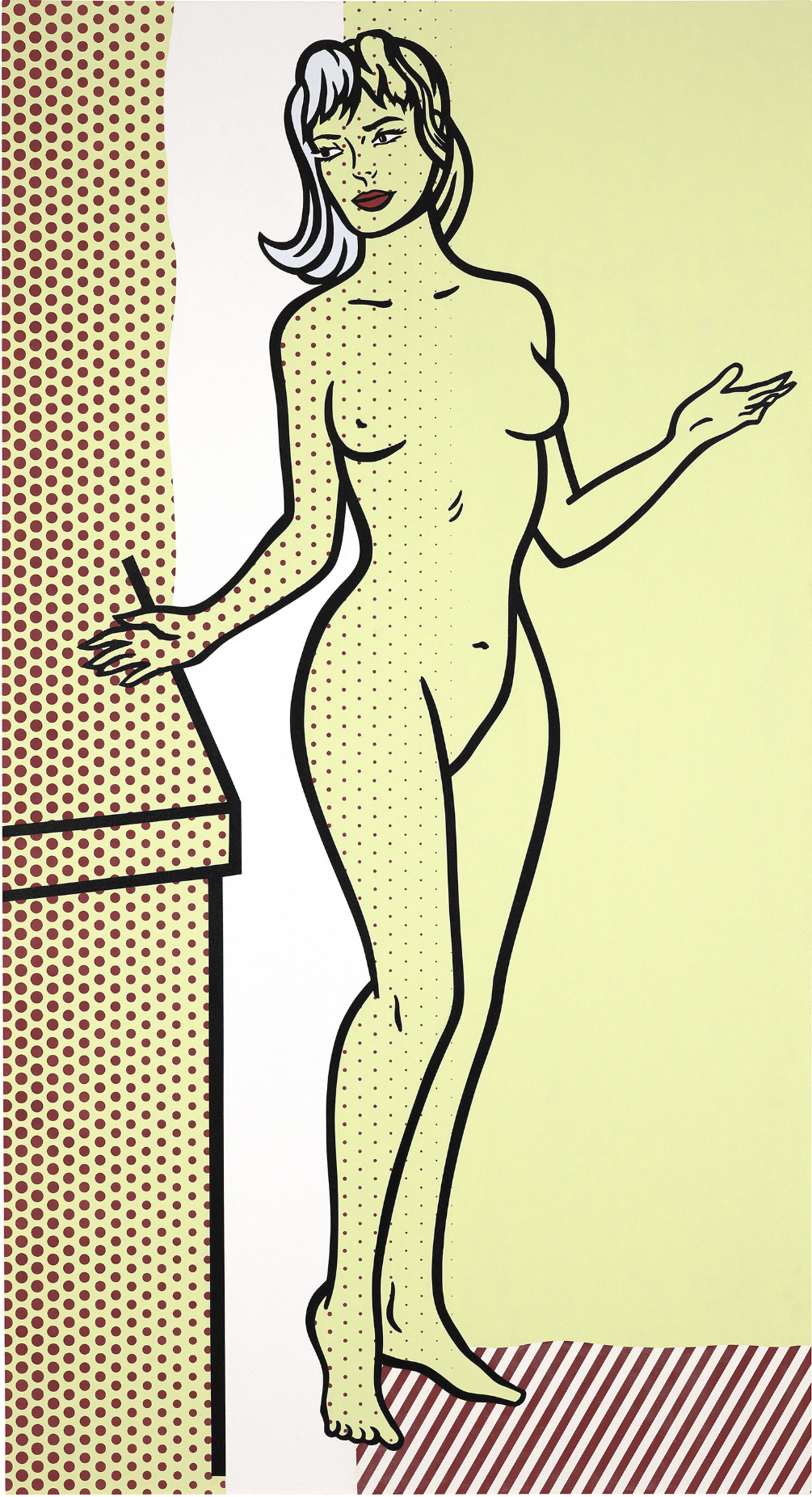
Executed in 1997, the year of Lichtenstein’s death, this superb example from his last major body of work (1993-1997) sustained his career-long preoccupation with cultural clichés: once again seizing the cartoon imagery that featured in his earlier work, he deviated from his original source material only by visualizing them without their clothes. Their metamorphosis into another stock image of femininity perpetuated by printed media—that of the erotic, domestic blonde—veiled by his arresting Ben-Day dots, his stock-in-trade, reflects his ever-evolving dialogue with pop culture and the art historical canon.
The first body of work executed after his monumental retrospective in 1993 at the Solomon R. Guggenheim Museum, New York, the Nudes were Lichtenstein’s last contributions to art history and many are now held in important institutional collections, including the San Francisco Museum of Modern Art and The Broad, Los Angeles.
Roy Lichtenstein in his studio in Southampton, New York, 1997. Image: © Bob Adelman Estate, Artwork: © Estate of Roy Lichtenstein
Lichtenstein’s nudes were birthed from his concurrent Interiors series, caricatures of pristine Architectural Digest-esque representations of post-war bourgeois domesticity. First contained within decorative paintings on the walls, his nudes soon began to inhabit these homes themselves, their picture-perfect physiques as satirically commodified as the lavish furnishings which surrounded them. Nude is the culmination of this progression: the primary subject of the painting, Lichtenstein’s figure stands next to a plinth or table in a bare room only schematically rendered.

Pamela Anderson as C.J. Parker in “Baywatch”. Image: Collection Christophel / Alamy Stock Photo
The artist considered these late Nudes to be a marked distinction from his iconic representations of sentimental comic book romances, which he characterized as “perfectly pure” and “ended in a nice kiss.”i Though these figures encapsulate the same eroticism as his earlier work, “the 1990s nudes take pleasure in their own company without the slightest hint of needing or missing a man. They are not paralyzed by their emotions,” Avis Berman observed. “In contrast to Lichtenstein’s original romance-comic pictures, this world flourishes exuberantly without men or engagement rings or kisses.” Indeed, perhaps reflective of wider social changes in the second half of the 20th century, Nude’s sexuality is presented in new terms; within a 1990s context, the figure is perhaps evocative of Pamela Anderson’s status as the ultimate American sex symbol during the contemporaneous run of Baywatch. “The older norm didn’t disappear, but needed to be adjusted,” Berman continued. “Even as he updated the stereotypes of erotic fantasies, Lichtenstein wove them into the consistent narrative of his own carrier.”ii
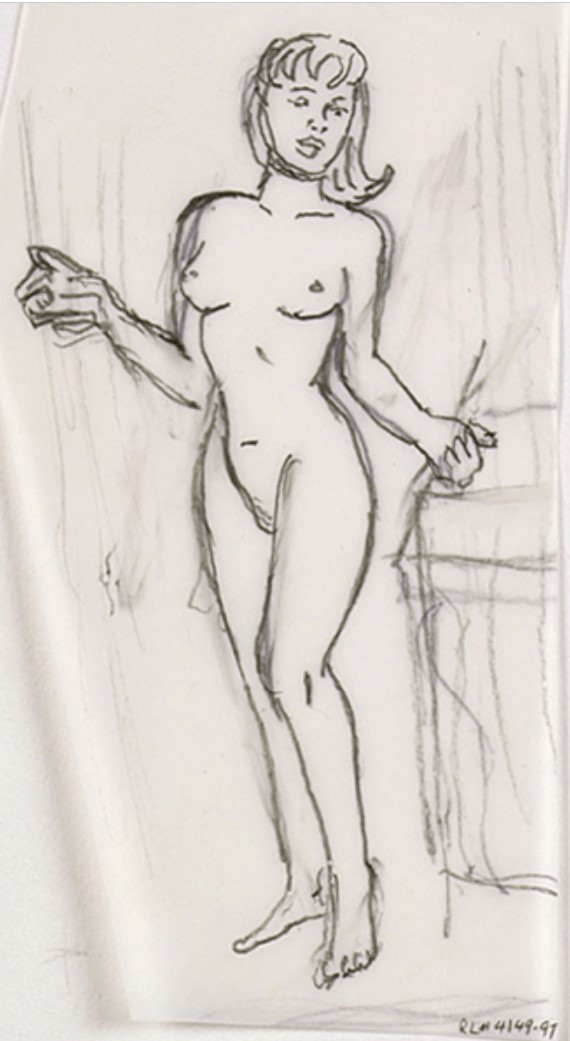
Roy Lichtenstein, Nude (Study), 1997. Artwork: © The Estate of Roy Lichtenstein
Following in the footsteps of many of his forebears, including Henri Matisse, Auguste Renoir, Paul Cézanne, and Pablo Picasso, Lichtenstein rendered the classic theme of the nude—likely the canon’s most persistent trope—in his distinctive aesthetic idiom late in life, often as a means of indexing art history itself. “The king of the blown-up comic-book frame had seemed to be settled into a quiet, Old Masterly period of late—but he’s broken out with a bang with his new series of nudes,” the New York Daily News declared when the artist returned to the motif in 1993. On one hand, the subject bears an immediate resemblance to Picasso’s volumetric Standing Nudes from the 1920s. On the other, the preliminary tracing paper study for Lichtenstein’s Nude depicts the figure gripping a flowing piece of fabric, betraying that the likely original inspiration for the picture was among the first life-sized representations of the female nude in Western art history: the Ancient Greek sculpture Aphrodite of Knidos, executed by Praxiteles circa 4th century BC. Indeed, Lichtenstein’s 1997 canvases are replete with references to antiquity; ironically, it was in the final paintings of his lifetime that he returned to the very first images of Western art history.
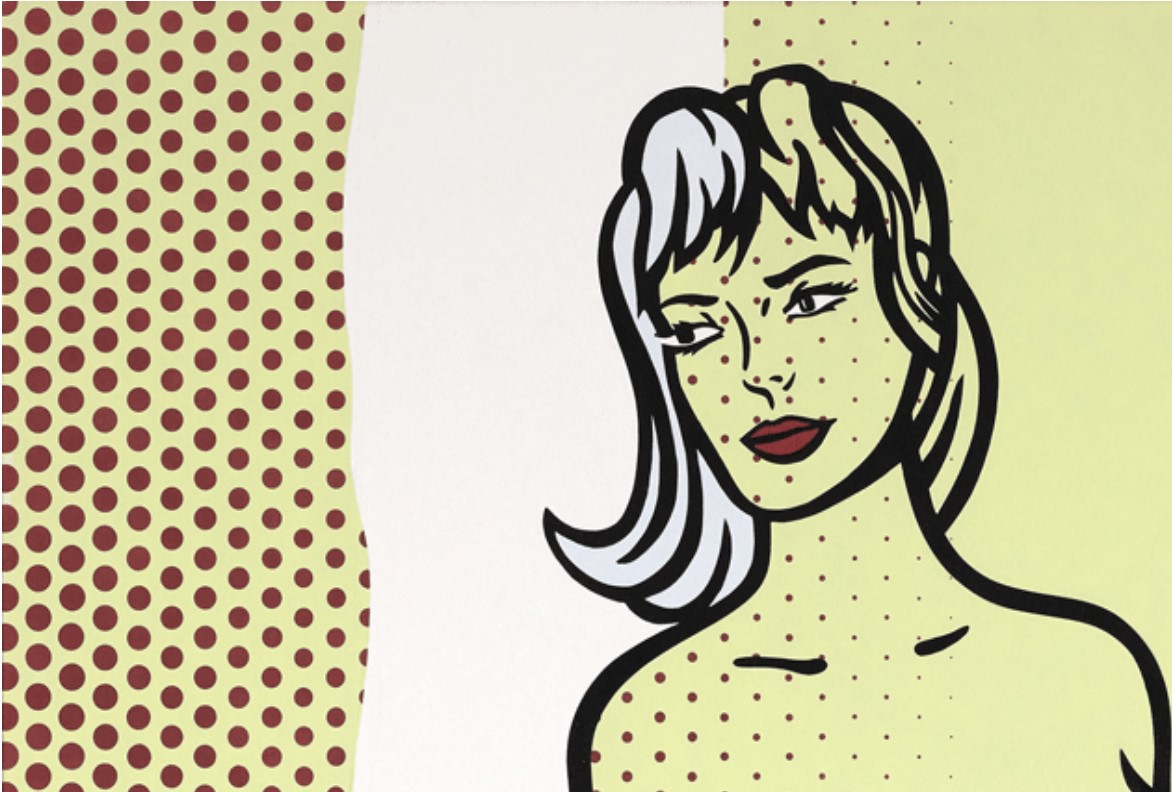
Despite the classical richness of the subject matter, it is her translation into Lichtenstein’s signature vernacular that distinguish Nude as a meditation on the act of painting. As a critic illuminated, “Lichtenstein’s work… is not so much about the subject matter as about what his treatment—outlines, unmodulated color, Ben-day dots—does to the subject.” After a career critically interrogating the potentialities of a post-war machine aesthetic, Lichtenstein ironically employs the language of mechanism in Nude as a means of reflecting on the act of painting. His signature Ben-Day dots suggest contouring, and the diagonal lines in the lower right of the picture establish the illusion of depth that defines the space in which the woman stands. Though these motifs allude to the building blocks of draughtsmanship and rudimentary chiaroscuro, they figure more as a two-dimensional decorative patterning, emphasizing the flatness of the picture plane. “My nudes are part light and shade, and so are the backgrounds, with dots to indicate the shade,” Lichtenstein elucidated. “The dots are also graduated from large to small, which usually suggests modeling in people’s minds, but that’s not what you get with these figures.” Redolent of the printing process, these dots and diagonal lines are mechanical marks that are typically intended to go unnoticed, but in Nude they emphatically convey a complete deconstruction of space. The dots that fill the left side of the figure bleed into the plinth and wall beside her, collapsing the illusion of depth; a white stripe (and the small area of the figure’s hair that it intersects) disrupts any coherency, reminiscent of a glitch or printing error.
Woman Contemplating Yellow Cup, 1995
Woman Contemplating Yellow Cup, 1995
Sotheby’s New-York: 16 November 2023
Estimated: USD 1,200,000 – 1,800,000
USD 1,996,000
Woman Contemplating Yellow Cup | Contemporary Day Auction | 2023 | Sotheby’s (sothebys.com)
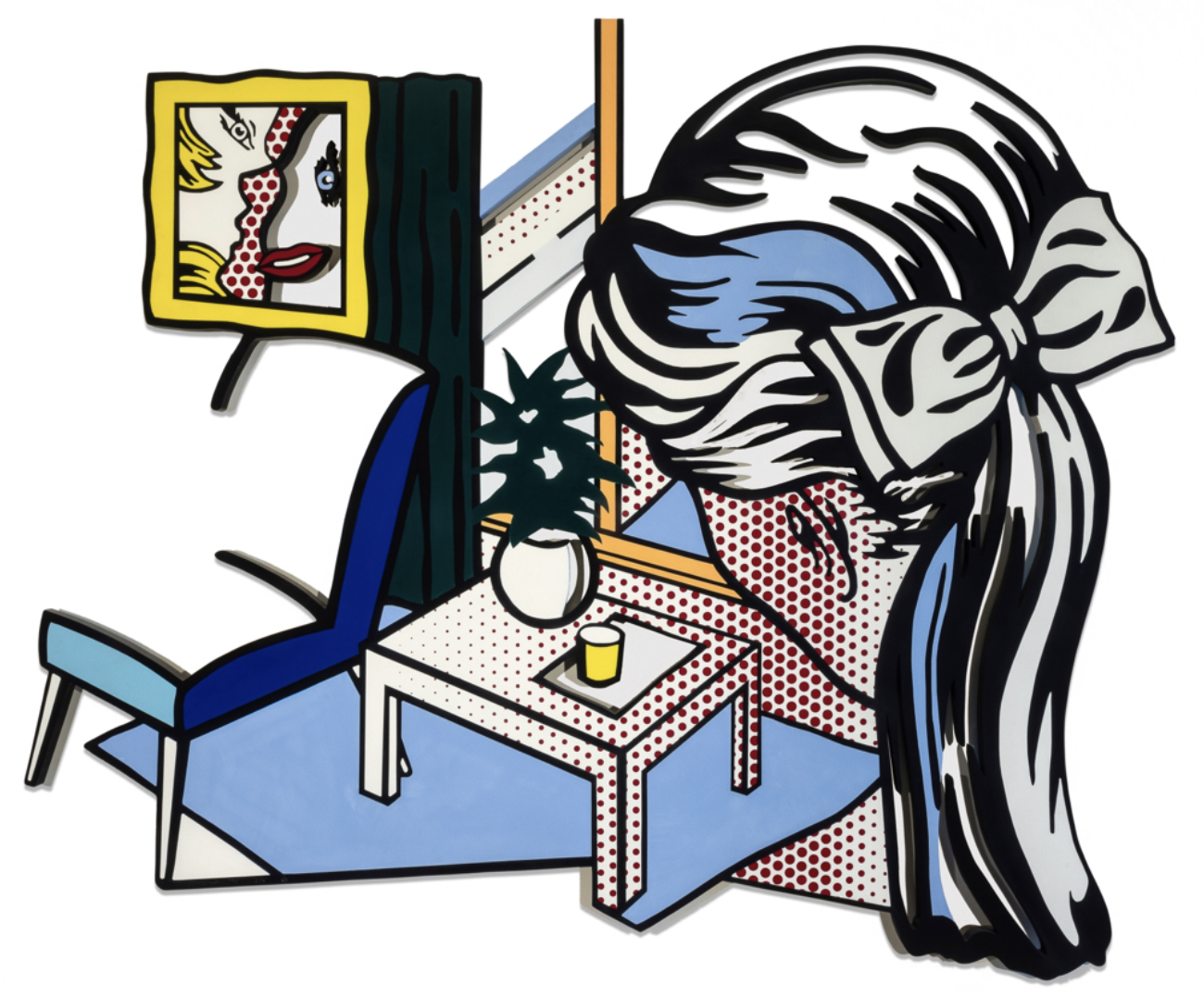
ROY LICHTENSTEIN (1923 – 1997)
Woman Contemplating Yellow Cup, 1995
Paint and pigmented wax on aluminum
71 3/4 x 84 x 1 1/2 inches (182.2 x 213.4 x 3.8 cm)
Incised with the artist’s signature, date ’95 and number 3/6 (lower left)
This work is number 3 from an edition of 6
Woman Contemplating Yellow Cup is a testament to the brilliance, conceptual rigor, and ceaseless reinvention of craft that defines his artistic career. Embodying his characteristic sense of irony, Roy Lichtenstein playfully subverts the three-dimensional nature of sculpture in the present work. Executed in 1995 – the decade during which Lichtenstein would produce more dispersed and open-ended sculpture than ever before – Woman Contemplating Yellow Cup fuses the artist’s career-long fascination with both the female form and the domestic realm. Intentionally voyeuristic in its compositional nature, the viewer must assume the position of onlooker and peer over the shoulder of our singular and anonymous female character. Lichtenstein’s quintessential Benday dots pepper the woman’s cheek and spill further into the living space, cementing her as fully immersed in the tableau. Strikingly flat and reduced, Siegfried Gohr notes of Lichtenstein’s Women series: “Their artificiality cancels out the threatening aspect of female sexuality for a male gaze. And the sophisticated visual strategy pursued by Lichtenstein creates another perceptual problem: In the studio pictures and his other interiors he never makes it clear whether these are real women or works of art, reflections in mirrors or projected images, or fantasy figures whose slimness carries subliminal phallic connotations. These images of images, abstracted and transformed into ciphers, make us feel we are witnessing the union of painting with beauty. We are not deprived of this illusion immediately because the artist’s shaping hand grants everything a grain of truth without establishing absolute truths” (Siegfried Gohr, “Muses in Life and Art – Roy Lichtenstein’s Paintings of Women” in Exh. Cat., Bregenz, Kunsthaus Bregenz, Roy Lichtenstein – Classic of the New, June – September 2005, p. 81). Packed with references to his own seminal bodies of work as well as the history of Modernism, Woman Contemplating Yellow Cup represents a pivotal moment in Roy Lichtenstein’s mature output and career-long investigation of the art and artifice of twentieth-century society.
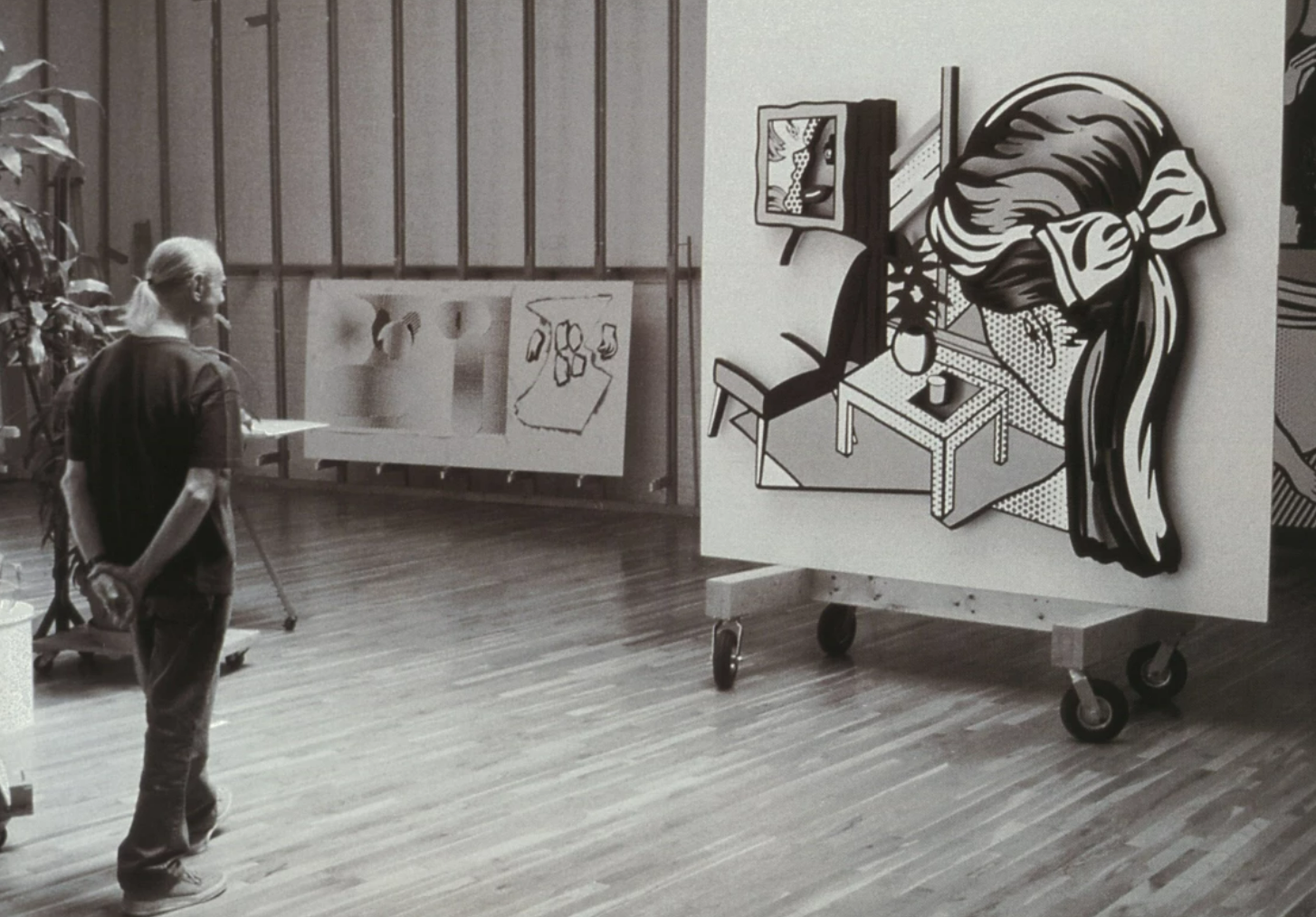
ROY LICHTENSTEIN WITH WOMAN CONTEMPLATING A YELLOW CUP IN HIS NEW YORK STUDIO, 1995
Woman Contemplating Yellow Cup features only the most pared-down, essential details of interior design. The simplicity of the scene is drawn not from a life study, but is instead mediated through the artist’s collection of printed source material: monotone newspaper and Yellow Pages advertisements for carpets, draperies, windows, sliding doors, lamps, sofa sets, and the like, which Lichtenstein cut out and pasted into notebooks. Lichtenstein begins his sculptural process on the page, with pencil sketches and color studies, then assesses his designs in a full-scale maquette before constructing the final work. Remarkable in its technical complexity and tremendous scale, the present aluminum wall relief is a collaborative feat, as achieved by Lichtenstein with the aid of artist scholar and innovator Donald Saff. In 1995, Saff proposed a new technique to Lichtenstein for combining metal and pigmented wax, ultimately “morphing a painting into a sculpture” (Roy Lichtenstein, “A Review of My Work Since 1961 – A Slide Presentation (November 11, 1995)” in Graham Bader, Roy Lichtenstein (October Files), Cambridge, 2001, p. 70). Through this radical development, he married flat symbols of perspective with three-dimensional objects. In the forthright embrace of negative space and paradox, Lichtenstein further invented his own brand of perception.
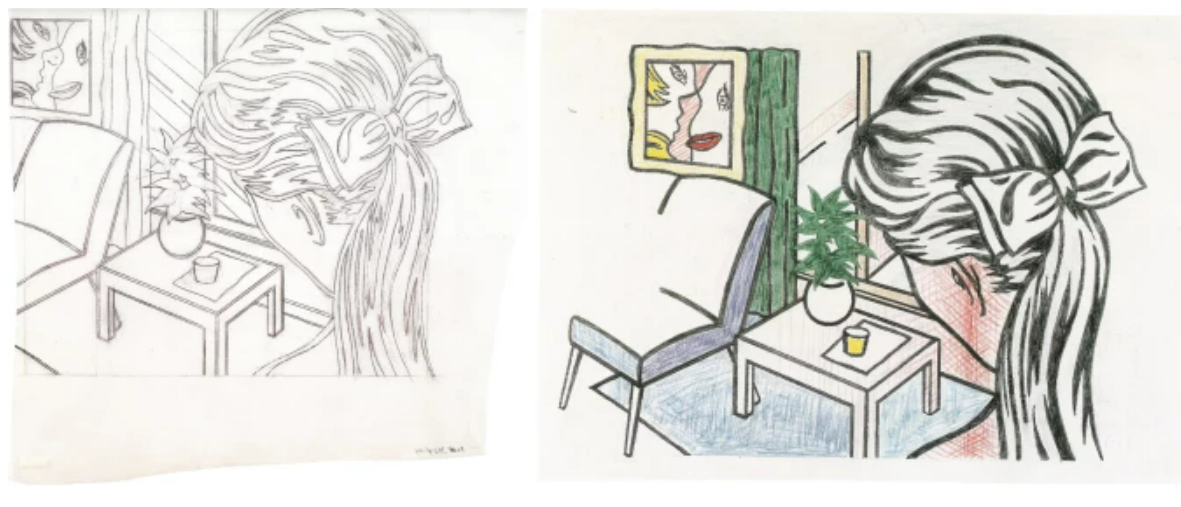
LEFT: DRAWING FOR SCULPTURE: US LOOKING AT GIRL LOOKING AT YELLOW CUP, 1994. ART © ESTATE OF ROY LICHTENSTEIN
RIGHT: DRAWING FOR SCULPTURE: US LOOKING AT GIRL LOOKING AT YELLOW CUP, 1994 [LATER TITLED WOMAN CONTEMPLATING A YELLOW CUP]. ART © ESTATE OF ROY LICHTENSTEIN
Lichtenstein’s sculptural output during the nineties is best recognized for its immense combinatory skill. Through the seamless melding of objects and figures, each component of the Interior compositions are considered equal. In his characteristically reductive manner, the artist translates furnishings such as Arco lamps and chairs by Saarinen into symbols of “modern” furniture, rendering them in his own vocabulary of graphic forms. Coolly temperate in his pictorial strategy of the 1990s, Lichtenstein’s women appear as items of decoration, contrasting with the human emptiness of the rooms themselves. Filled with quotations of elements of earlier paintings, Woman Contemplating Yellow Cup reincorporates Lichtenstein’s still life subjects–a practice of his output dating back to the 1960s. Historically referential, the reflection in the mirror is not of our female subject, but rather a Pop Art interpretation of one of Picasso’s female muses, hailing from his surrealist period. Through layered perspectives and a disorienting spatial organization, the hallmarks of Lichtenstein’s most iconic paintings are cast anew in this unprecedented exploration of space.
STUDIES
Nude with Bust (Study), 1995
Nude with Bust (Study), 1995
Works from the Collection of Dorothy and Roy Lichtenstein
Sotheby’s New-York: 20 November 2024
Estimated: USD 3,000,000 – 5,000,000
USD 4,560,000
Nude with Bust (Study) | The Now and Contemporary Evening Auction | 2024 | Sotheby’s
ROY LICHTENSTEIN (1923 – 1997)
Nude with Bust (Study), 1995
Tape, cut painted paper, cut printed paper, marker and graphite on board
Image: 53 7/8 x 45 inches (136.8 x 114.3 cm)
Board: 63 7/8 x 47 1/2 inches (162.2 x 120.7 cm)
A radiant portrayal of exquisite beauty, Roy Lichtenstein’s Nude with Bust (Study) from 1995 constitutes the ultimate crystallization of the artist’s enduring engagement with the quintessential heroine of his inimitable oeuvre. Impeccably realized and wholly complete on its own, Nude with Bust (Study) serves as the preliminary collage for the large-scale final painting of the same name and composition, and a paradigmatic example of the broader series of Nudes which became the fixation of Roy Lichtenstein’s practice in the mid-1990s. At its core, the series took as its focus the reformulation of the canonical female nude, a motif which has served as an iconographic cornerstone throughout the evolution of art history, and indeed throughout the evolution of Lichtenstein’s own artistic practice as well. The present composition is distinguished by its inclusion of two female figures: one seated female nude, and the other a female bust based on the model beside it. In this iconic interior scene, Lichtenstein places a bust on a pedestal, perhaps implying the space as a studio, thus once again interacting with an quintessential motif of the artist portraying their studio that has pervaded the Western art tradition. By nature of their source and the history of the theme more broadly, both the bust and the seated nude within the present work serve as self-conscious reappropriations of a long-appropriated motif. The result is a playful yet ultimately transgressive reconsideration of the art historical approach to the female nude, one that places Lichtenstein into dialogue with the weighty mantle of his artistic predecessors, while also cementing his own ultimate grand contribution to Contemporary Art. A testament to its significance and enduring importance within Lichtenstein’s practice, Nude with Bust (Study) has been widely exhibited internationally.

One of few works that Dorothy and Roy Lichtenstein retained for their personal collection, Nude with Bust (Study), alongside the other choice examples from their collection, provides a rare glimpse into Roy’s process and artistic development. The very first time that these treasured works have been available on the public market, their presentation this fall represents a remarkable and unprecedented opportunity to acquire masterworks from pivotal moments in Roy’s practice, and the works he and Dorothy cherished most.

Roy Lichtenstein pictured in his studio. Photo © Bob Adelman
As the viewer approaches Nude with Bust (Study), Lichtenstein’s characteristically sharp linework and decisive coloration reveals itself to be a collaged construction, made up of tape, cut painted paper, marker, and graphite pencil. The seams where sheets of paper meet reveal the surgical precision required of Lichtenstein’s masterful draftsmanship, and upon close inspection fine pencil lines offer a rare glimpse into the artist’s process. The visible signs of the work’s construction lend themself to Lichtenstein’s lifelong exploration into the nexus between the mechanical aesthetic and the handmade image, and the questions of originality and appropriation which come to bear in the conflation of the two. Through the initial collages, Lichtenstein developed the compositional schema and theoretical challenges of the work – playing with perspective and art historical references. Then, by enlarging the composition beyond human scale, the artist confronts the viewer’s conception of real life and artifice. The physical construction of the collage serves as a remarkable insight to and record of Lichtenstein’s artistic process. The Nudes series marks a return to the motif explored in the artist’s earlier series on war and romance, which likewise took their inspiration from the caricatured protagonists in contemporaneous comic books. Working in the 1960s, it was the dichotomy between these two points of reference—the hyperbolic sentimentality and sexuality of the blonde bombshell in romance comics of the time, and the hypermasculinity of the men in the war comics—which inspired his first concerted engagement with gender stereotypes as calcified by their representation in the mass media. It was also during this critical decade that Lichtenstein first developed his trademark Ben-Day dot motif, harnessing the impersonal artifice of mass-reproduced imagery. Within the present work and the Nudes series more broadly, however, Lichtenstein introduces the full-length female nude as an added layer in this discourse on representation. In its overt cliché and dispassionate technical drawing style, the present work thematizes the concepts of object and subject which have long informed discussion of the nude, here rendered in Lichtenstein’s distinctly Pop dialect.
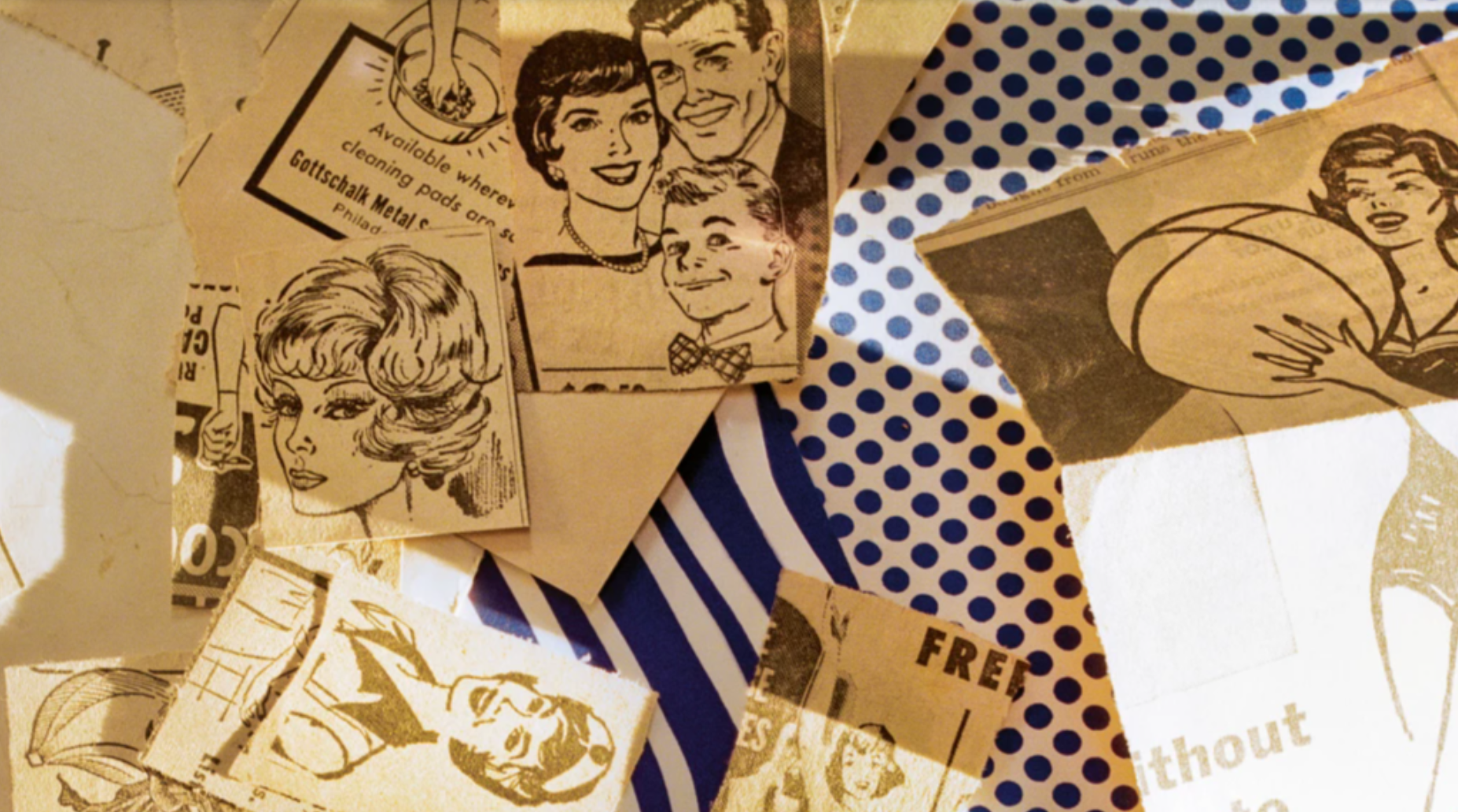
The notions of repetition and reproduction invoked through his use of archival comic materials were central tactics within the Pop movement more broadly. In his monumental Marilyn Diptych, Andy Warhol explores both the physical and visual effects of distortion and disappearance which result from the over-exposure of a single image within popular media. Warhol’s commentary on this phenomenon with respect to the idea of celebrity is here redirected onto the same pervasive effects at play within the art historical canon. In his choice of the readily recognizable comic book heroine, here differentiated from the source image by her state of undress, Lichtenstein mitigates the mass-produced nature of the original. By removing the image-type from its quotidian context, he in turn calls attention to the way in which that context desensitizes us to the modes of representation it engages. This exploration into the dematerialization of the female body throughout art history is given explicit articulation in Nude with Bust (Study) through the doubling enacted between the nude and her sculpted pendant. Much like Henri Matisse’s Blue Nude (III) of 1952, Lichtenstein takes a centuries-old tradition of Western art and simplifies its forms into a recognizable, flat image, renegotiating the terms of expression and interrogating the charged meaning behind the female nude; by collaging paper cutouts, Lichtenstein pursues an effect that Matisse had explored, in imbuing a relief-like quality and their sense of volume to their subjects. Unlike in the work of Pablo Picasso, wherein the linear narrative between his muse and the sculpture she inspired is made explicit, Lichtenstein offers no such continuity. Their juxtaposition renders the present work to be read perhaps not only as an interior studio scene with a figure and an artwork but also as a flattened image lying outside of the restrictions of narrative. Though rendered in the same visual language, both the seated nude and the sculpture appear to occupy separate planes; while there is seemingly no acknowledgement of one figure by the other, they appear as complementary representations of the same woman, or of ‘woman’ as a motif more generally. The link is therefore drawn along their visual similarity, and the glimmer of implied sexuality which saturates both of their postures.
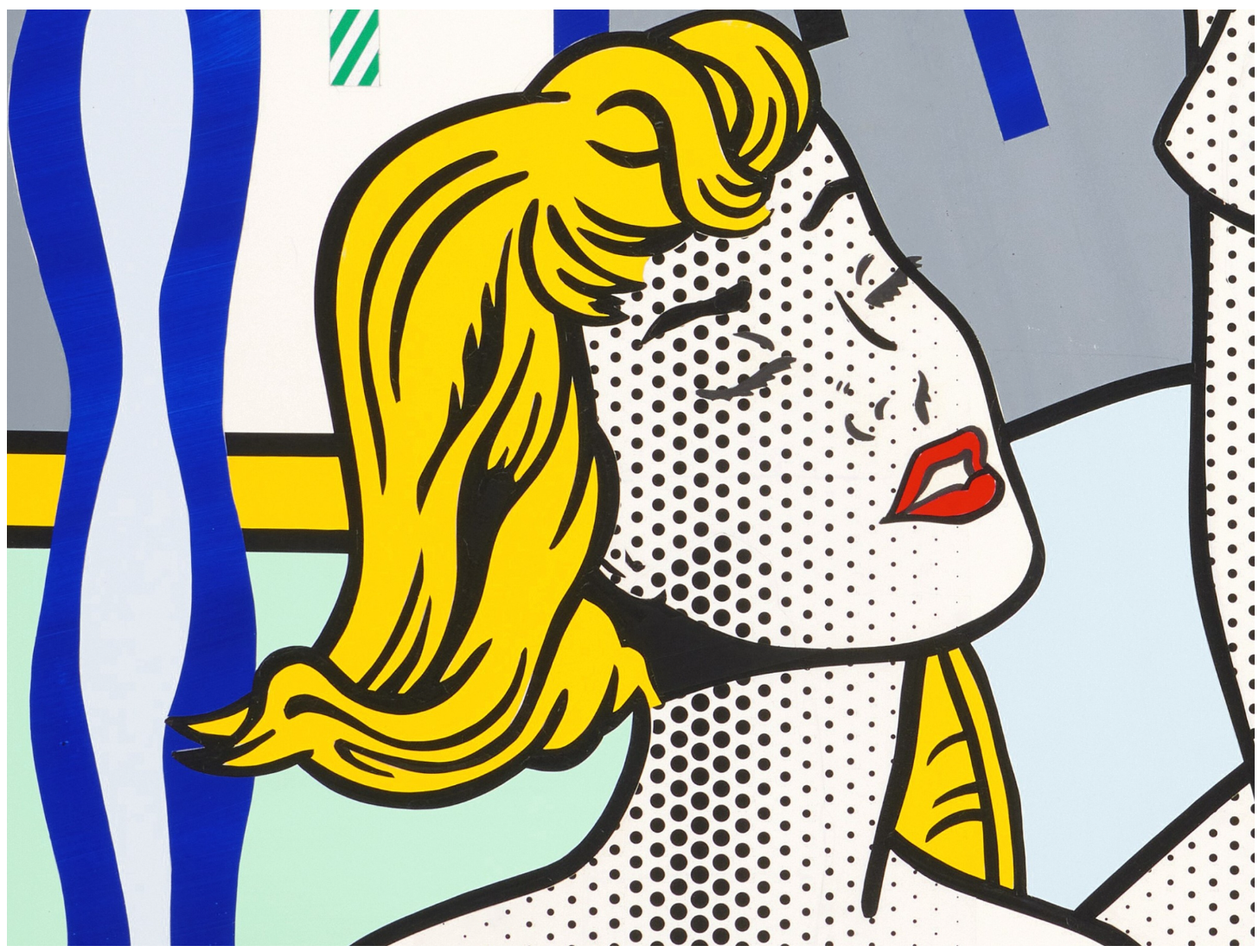
Whereas in earlier works, Lichtenstein’s ubiquitous dots were uniform in their size and spacing and were meticulously contained within the boundaries of a single object or outline, in Nude with Bust (Study), they here take on a more dynamic character. Freed from their figurative obligation, they instead come to communicate and schematize these emotive qualities of light. The black dots are here applied in bands which undulate according to their gradation of density, and so emulate the effect of a shadow over the areas they cover. In the sculpted bust, these dots crescendo along a band which traces from her hairline to the bottom of the pedestal, while in the seated nude they transcend her curvilinear torso, arranged along a vertical line which stretches the length of the picture field. The dots appear particularly dense in areas where natural shadows would appear, along her upper torso, between her breasts, in the curve of her back and the side of her face seen in three-quarter profile. Lichtenstein was particularly interested in the somewhat paradoxical visual effect achieved through the present use of synthetic geometric patterning to emulate the natural qualities of light. In their simultaneous disregard for and interaction with the figurative element, they lend an animating sense of volume to the woman’s body, and an exaggerated flatness to the overall composition.
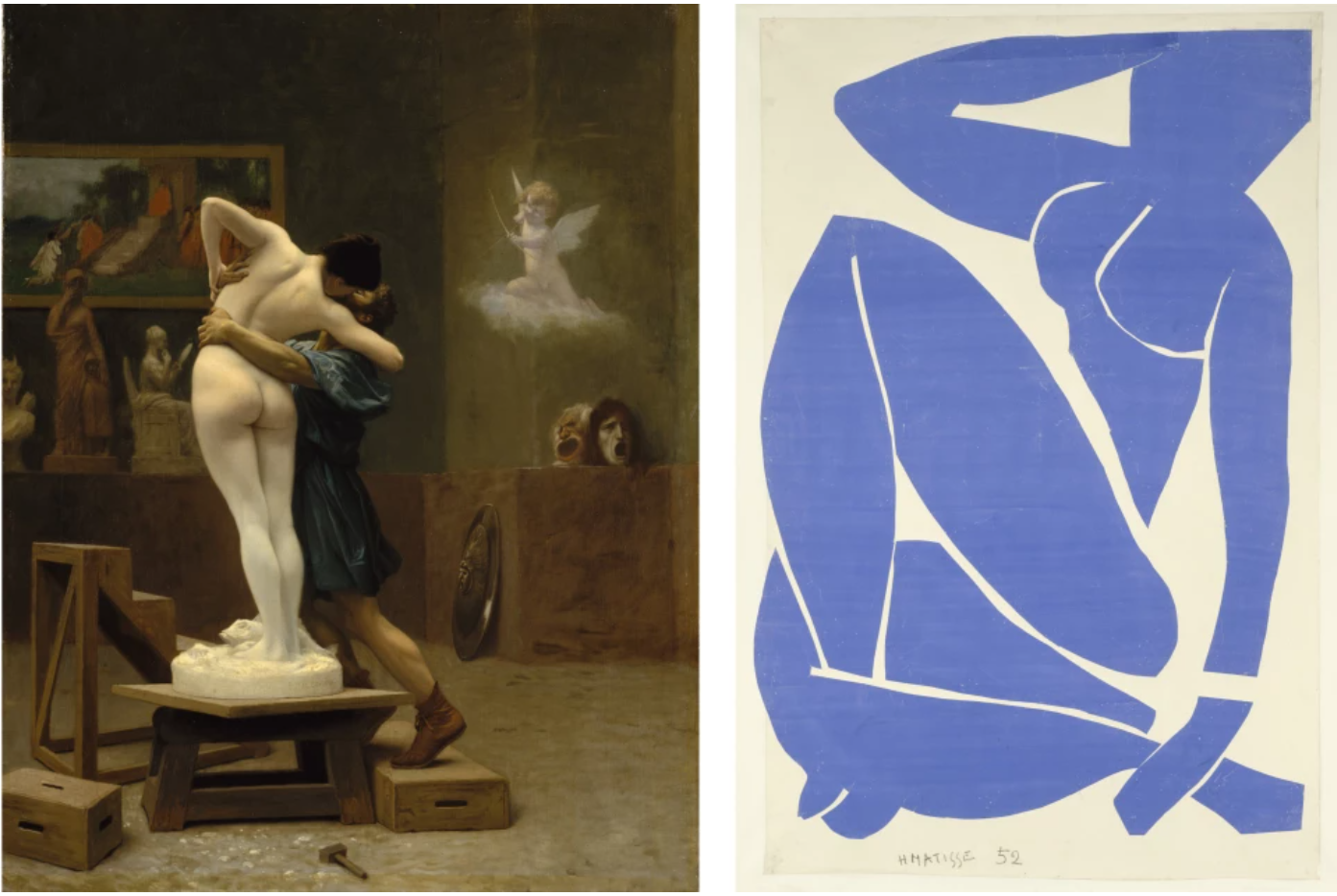
Left: Jean-Léon Gérôme, Pygmalion and Galatea, c. 1890. The Metropolitan Museum of Art, New York. Image © The Metropolitan Museum of Art. Image source: Art Resource, NY. Right: Henri Matisse, Blue Nude (III), 1952. Musée National d’Art Moderne, Centre Georges Pompidou, Paris. Image © CNAC/MNAM, Dist. RMN-Grand Palais / Art Resource, NY. Art © 2024 Succession H. Matisse / Artists Rights Society (ARS), New York
Executed in the twilight of his storied life and career, Nude with Bust (Study) offers an exceptional late example of Lichtenstein’s inimitable artistic process and incisive stylistic eye. Replete not only with art historical referent, the present work also sees Lichtenstein reflect on his own artistic career: for example, Lichtenstein includes in the present composition a painted version of two of his sculptures, Woman: Sunlight, Moonlight and Endless Drip, the latter of which was inspired by Constantin Brancusi’s Endless Column. And even beyond these explicit allusions to his broader oeuvre, Nude with Bust (Study) serves as a poignant self-portrait of the artist himself in style as in subject matter, a realization that is further reinforced by the medium itself. The physical construction of the collage serves as a remarkable insight to and record of Lichtenstein’s artistic process.
Woman: Sunlight, Moonlight (Study), 1995
Woman: Sunlight, Moonlight (Study), 1995
A Legacy Reimagined: Works from the Collection of Dorothy and Roy Lichtenstein
Sotheby’s New-York: 18 November 2025
Estimated: USD 1,500,000 – 2,000,000
USD 2,734,000
Woman: Sunlight, Moonlight (Study) | The Now & Contemporary Evening Auction | 2025 | Sotheby’s
ROY LICHTENSTEIN (1923 – 1997)
Woman: Sunlight, Moonlight (Study), 1995
Tape, cut painted paper, cut printed paper and graphite on board
60×36 inches (152.4 x 91.4 cm)
Signed and dated ‘95 (on the reverse)
Capturing the radiant beauty and defining Pop style of Roy Lichtenstein’s revolutionary oeuvre, Woman: Sunlight, Moonlight (Study) embodies the investigation of materiality and image-making at the heart of the artist’s practice. Executed in 1995, Woman: Sunlight, Moonlight (Study) harkens back to the comic-book heroines that catapulted Lichtenstein’s career in the mid-1960s, but is distinguished by a twist: here, Lichtenstein reimagines the inherently two-dimensional comic-book subject as a three-dimensional sculpture.
Lichtenstein’s subject is the pinnacle of his acclaimed series of Nudes from the mid-1990s, which revisited the iconic female figures at the core of his early practice and, moreover, the Western art historical canon. Reflective and iterative, Lichtenstein’s practice is the result of reappropriations of his own oeuvre and the canon as well as exploration across media and form. Predating the celebrated bronze and wooden sculptures by the same title, Woman: Sunlight, Moonlight (Study) constitutes a masterful evocation of the extraordinary and defining process that differentiates Lichtenstein’s revolutionary career. Enchanting and timeless, yet pioneering and triumphant, Woman: Sunlight, Moonlight (Study) reveals a scintillating glimpse into the process that underpins Lichtenstein’s groundbreaking oeuvre.
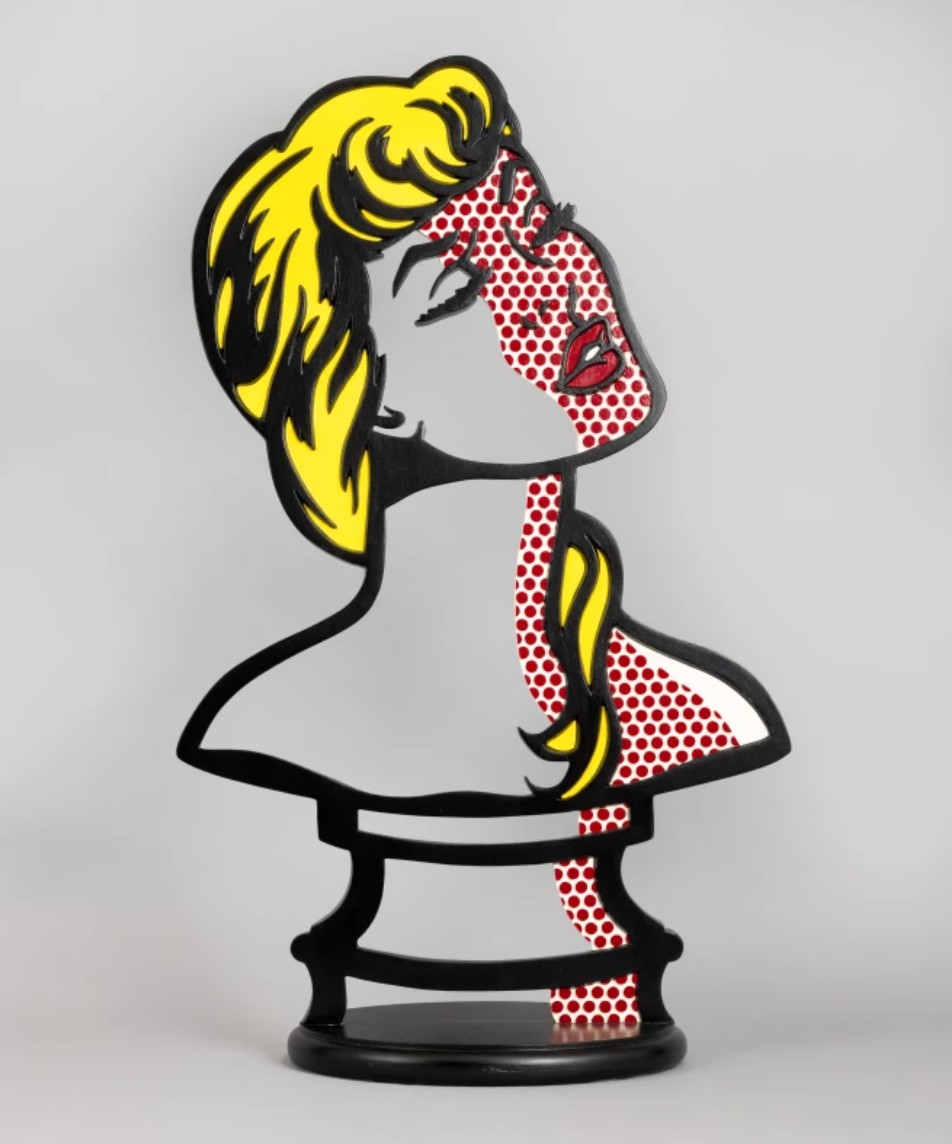
Roy Lichtenstein, Woman: Sunlight, Moonlight, 1996. Private Collection.
Sold at Sotheby’s New York in May 2025 for $4.9 million. Art © Estate of Roy Lichtenstein
Her face gently tipped upwards, eyelids softly closed and lips forming a subtle smile, Lichtenstein’s figure appears transfixed by the sky above. A stream of blue Ben-Day dots evokes the moon’s beams radiating against her skin. The progression of Lichtenstein’s signature pattern trickling down the base of the bust is punctuated only by a cherry red lip. Using color and line sparingly, Lichtenstein captures the full essence of the figure, offering a reappraisal of his own 1965 sculpture, Head with Blue Shadow, held in the Raymond and Patsy Nasher Sculpture Collection in Dallas. In his earlier three-dimensional sculpture, the figure gazes forward, her face divided in two: one side adorned with red Ben-Day dots and the other blue. Three decades later, Lichtenstein revitalizes the same concept but employs bold black contour lines and negative space to suggest volume. Woman: Sunlight, Moonlight (Study) perfectly encapsulates Lichtenstein’s legendary status as an artist who investigated and recalibrated both art history and, eventually, his own practice in a relentless quest for discovery and innovation.
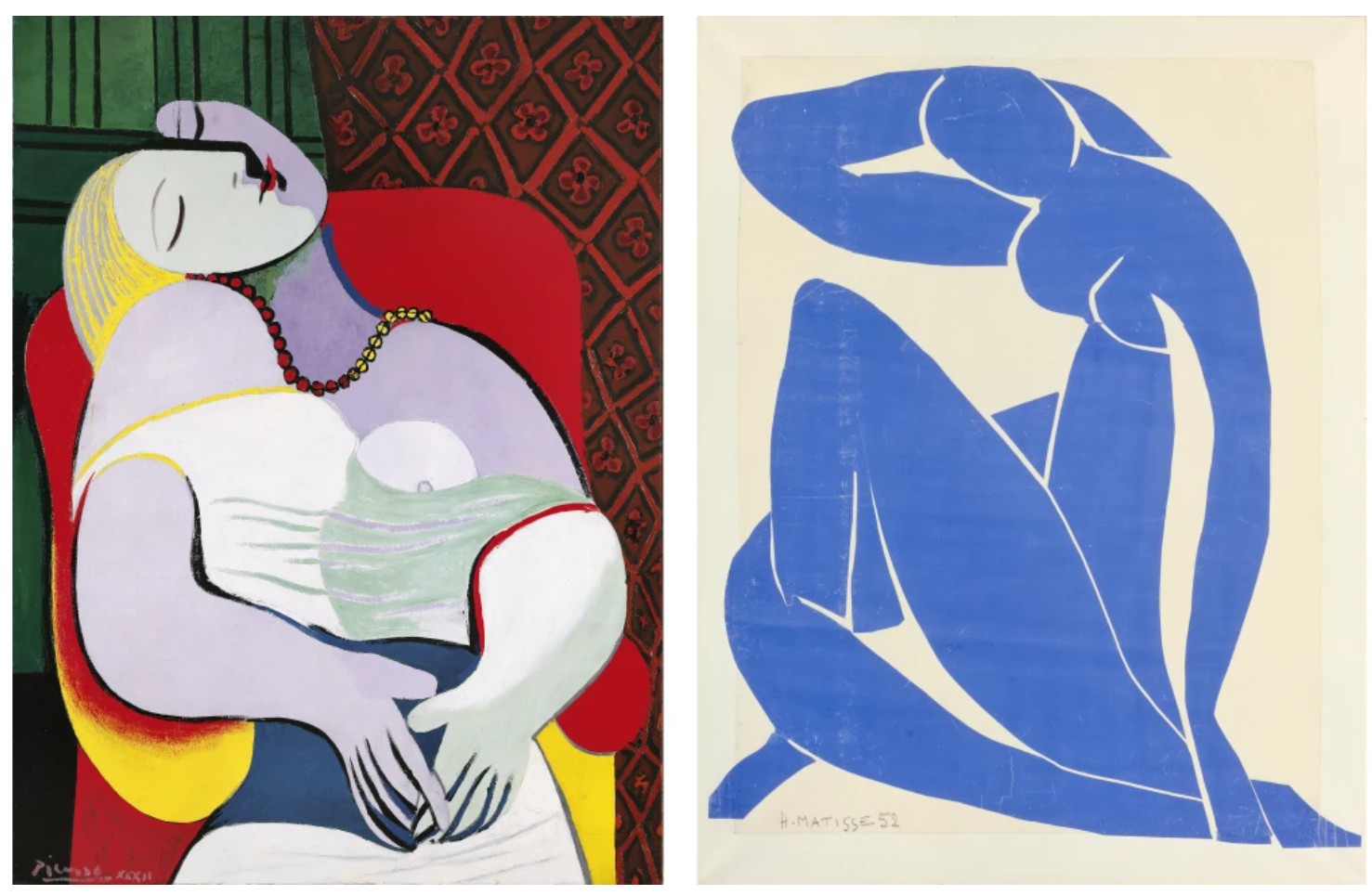
Left: Pablo Picasso, The Dream, 1932. Private Collection. Image © Christie’s Images / © Succession Picasso / DACS, London 2025 / Bridgeman Images. Art © 2025 Estate of Pablo Picasso / Artists Rights Society (ARS), New York. Right: Henri Matisse, Blue Nude II, 1952. Musée National d’Art Moderne, Paris. Image © CNAC / MNAM, Dist. RMN-Grand Palais / Art Resource, NY. Art © 2025 Succession H. Matisse / Artists Right Society (ARS), New York
The smooth contours, bold outlines, and meticulous execution of Woman: Sunlight, Moonlight (Study) are the result of Lichtenstein’s assiduous collaged construction using tape, cut painted paper, marker, and graphite. Employing the most salient identifier of his iconography—the Ben-Day dot—in his iconic royal blue, Lichtenstein reformulates the caricatured female bombshell motif that commands his earliest comic-book paintings. Lichtenstein’s sapphire celebration of the female form emerges from collaged elements, using cut planes of color to create an image of profound beauty. Much like Henri Matisse’s own innovations with medium, the present work recalls Matisse’s languid azure composition, Blue Nude II.
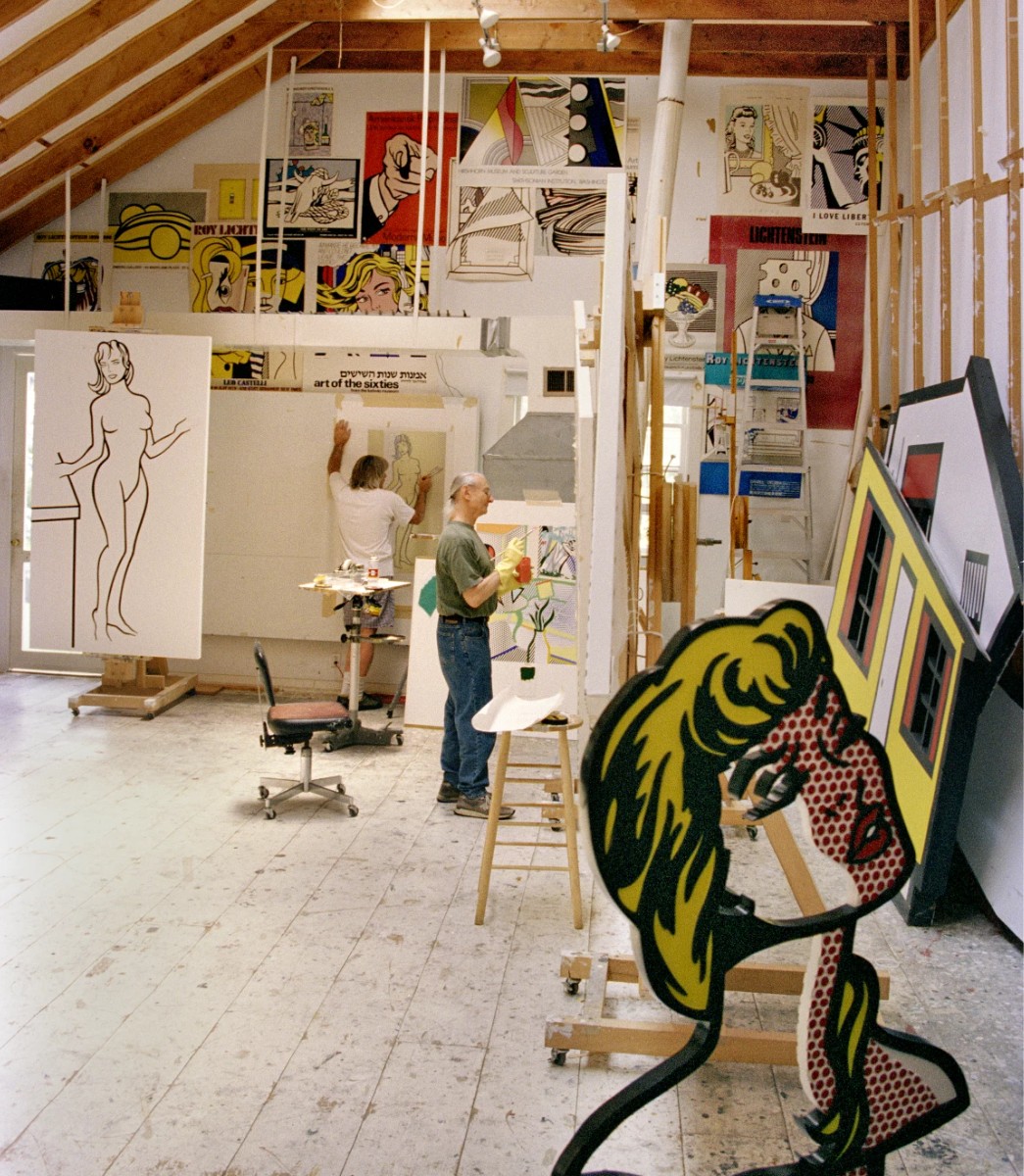
Roy Lichtenstein in his studio. Photo © Bob Adelman. Art © Estate of Roy Lichtenstein
Lichtenstein’s collaged work reveals a rare view of the artist’s vision and intervention—the synthesis of mechanical perfection and handmade production that defines his oeuvre. Lichtenstein’s exploration across drawing, collage, painting, sculpture and printmaking brings the governing questions of originality and appropriation at the heart of his conceptual project to the fore. Through Lichtenstein’s initial collages, he contended with the compositional and theoretical challenges of his subject, utilizing his celebrated Pop vernacular and challenging the viewer’s expectations at every stage. In Woman: Sunlight, Moonlight (Study), Lichtenstein borrows from the visual lexicon of mid-century romance comics, but plays with representing three-dimensionality in a two-dimensional form. Lichtenstein shatters multiple conventions in one image—contending with the arbitrary boundaries of both two- and three-dimensional representation in a singular collage.
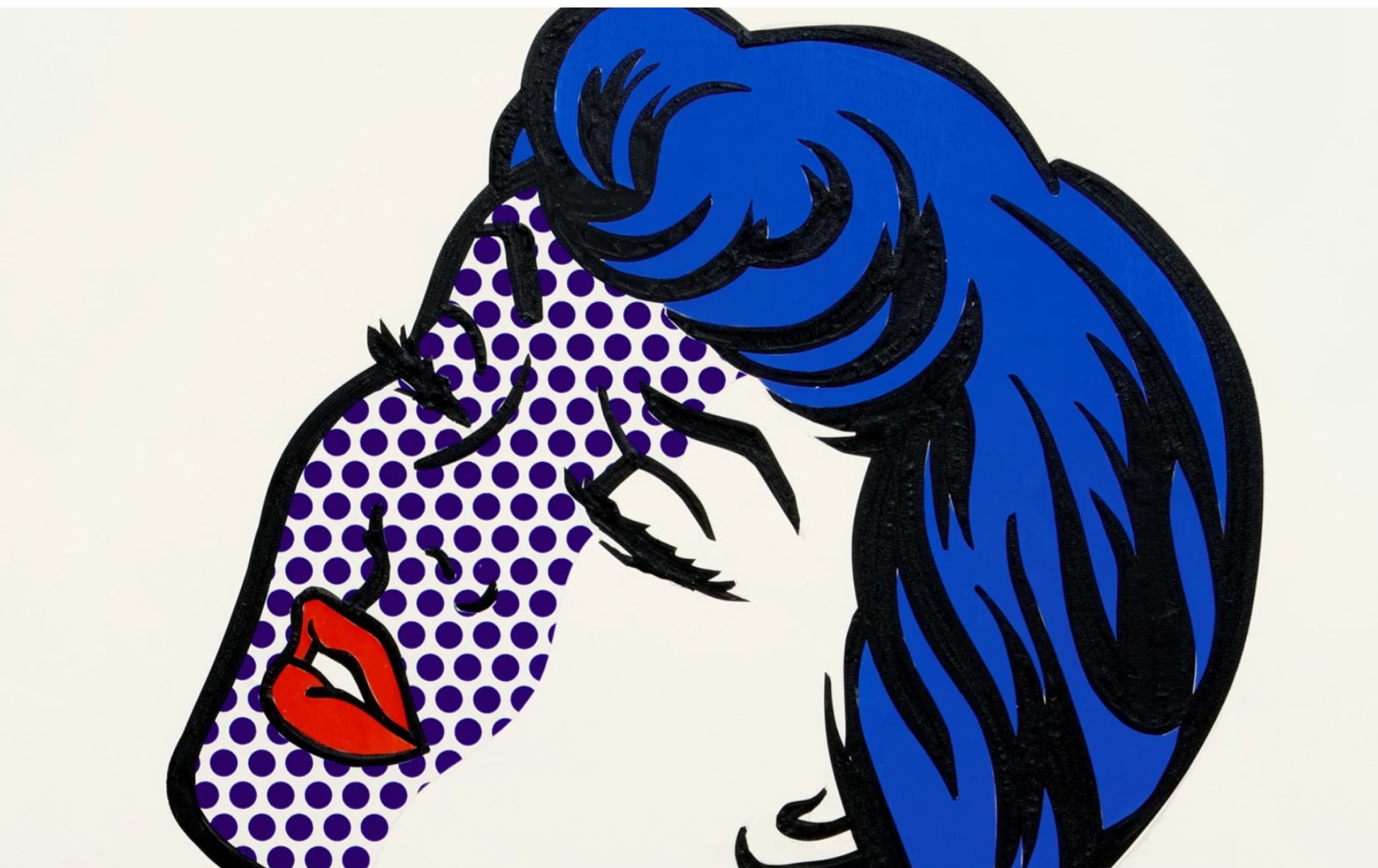
In the mid-1990s, shortly before Lichtenstein’s death in 1997, the artist returned to the female heroines of his 60s paintings, which were inspired by contemporaneous romance comics. The portrayal of feminine beauty across art history and popular media remains at the center of Lichtenstein’s practice across four decades, reaching a final peak with works such as Woman: Sunlight, Moonlight (Study). Predating the acclaimed two-sided bronze and wooden sculptures by the same name, Woman: Sunlight, Moonlight (Study) is the original manifestation of his conceptual program. Lichtenstein only executes a collage study of the cool blue, nighttime side, in which the figure tilts her head upward as if illuminated by the skies above. Lichtenstein would go on to create two unique wooden examples, one of which resides in the collection of the Whitney Museum of American Art, New York, as well as a bronze edition of six, an example from which is held in the esteemed collection of The Broad, Los Angeles.
Nudes in Mirror (Study), 1994
Nudes in Mirror (Study), 1994
Works from the Collection of Dorothy and Roy Lichtenstein
Sotheby’s New-York: 16 May 2025
Estimated: USD 1,000,000 – 1,500,000
USD 2,405,o00
Nudes in Mirror (Study) | The Now and Contemporary Evening Auction | 2025 | Sotheby’s
ROY LICHTENSTEIN (1923 – 1997)
Nudes in Mirror (Study), 1994
Colored pencil and graphite on paper
Image: 12 1/4 x 10 1/4 inches (31.1 x 26 cm)
Sheet: 15 1/4 x 11 3/8 inches (38.7 x 28.9 cm)
Signed and dated ’94 (on the reverse)
Nudes in Mirror (Study) is a paragon of Lichtenstein’s exploration of nudes and interiors in the late 1990s, harkening back to the iconic comic book heroines of his 1960s paintings. Transposing the composition through a mirror—a motif that Lichtenstein thoroughly explored in both two- and three-dimensions—offers a moment for reflecting upon Lichtenstein’s celebrated career and his singular visual lexicon. The present work predates a large-scale painting with the same title and composition.
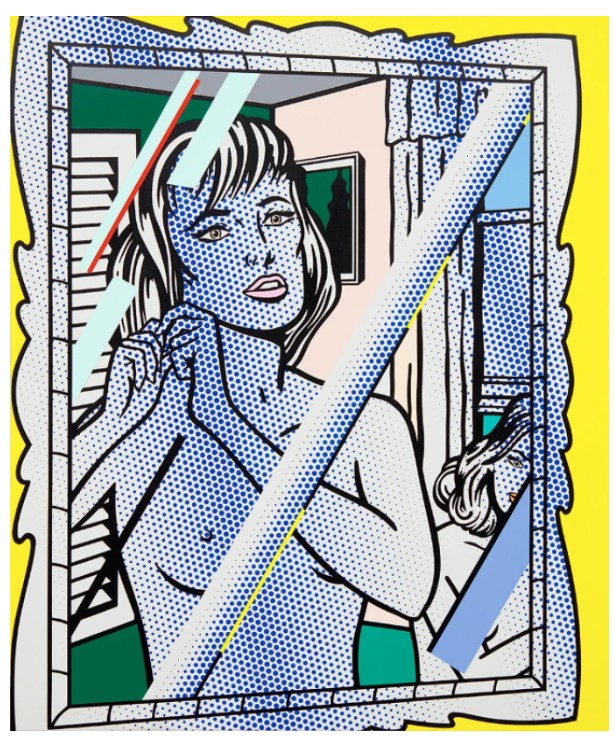
Roy Lichtenstein, Nudes in Mirror, 1994. Private Collection. Art © Estate of Roy Lichtenstein
The last major series before the artist’s death in 1997, the series revisited not only the female nude—a motif so heavily and frequently featured in the Western art historical canon—but also Lichtenstein’s own legacy, foregrounding the ‘reflections’ panels of his titular series of work, taking compositional inspiration from his Interiors of the 1990s, and heralding the return of his comic-book heroines that fueled his meteoric rise to fame in the 1960s. Capturing an intimate interior scene, Nudes in Mirror (Study) presents a captivating perspective into the central themes that weave through Lichtenstein’s artistic legacy.
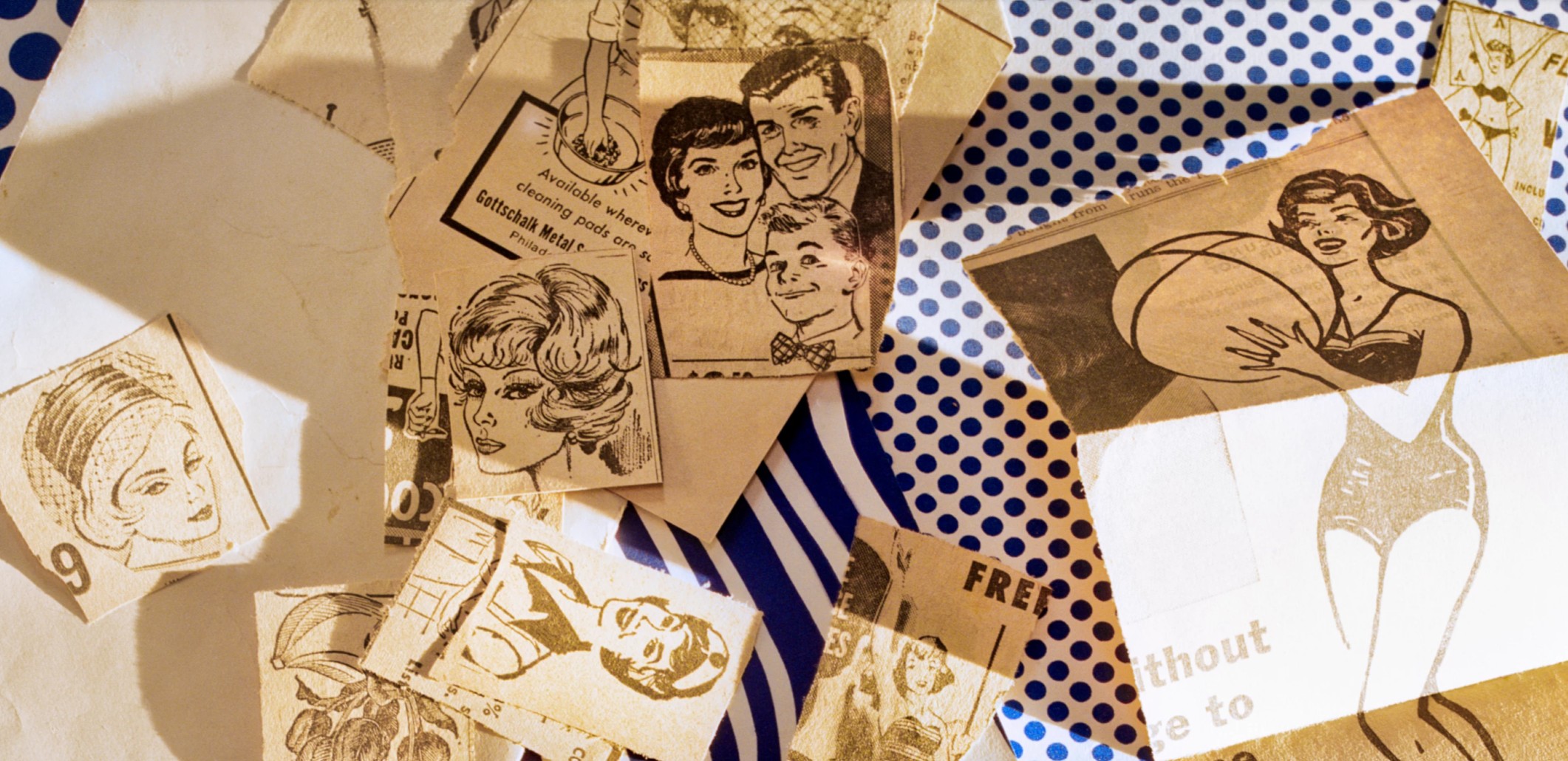
Roy Lichtenstein’s source material, 1990. Photo © Laurie Lambrecht
A mirror tilted at a slight angle captures two nude female figures in a bedroom scene. Standing up close to the mirror is a short-haired woman with a dreamy gaze, arranging her hair. Lichtenstein places a second figure in the frame, positioned on the other side of the protagonist from the viewer’s point of view; her stare is at once alluring and cryptic, her countenance obscured by the reflection panes yet her locking eyes aloofly acknowledging our presence in this intimate interior space.
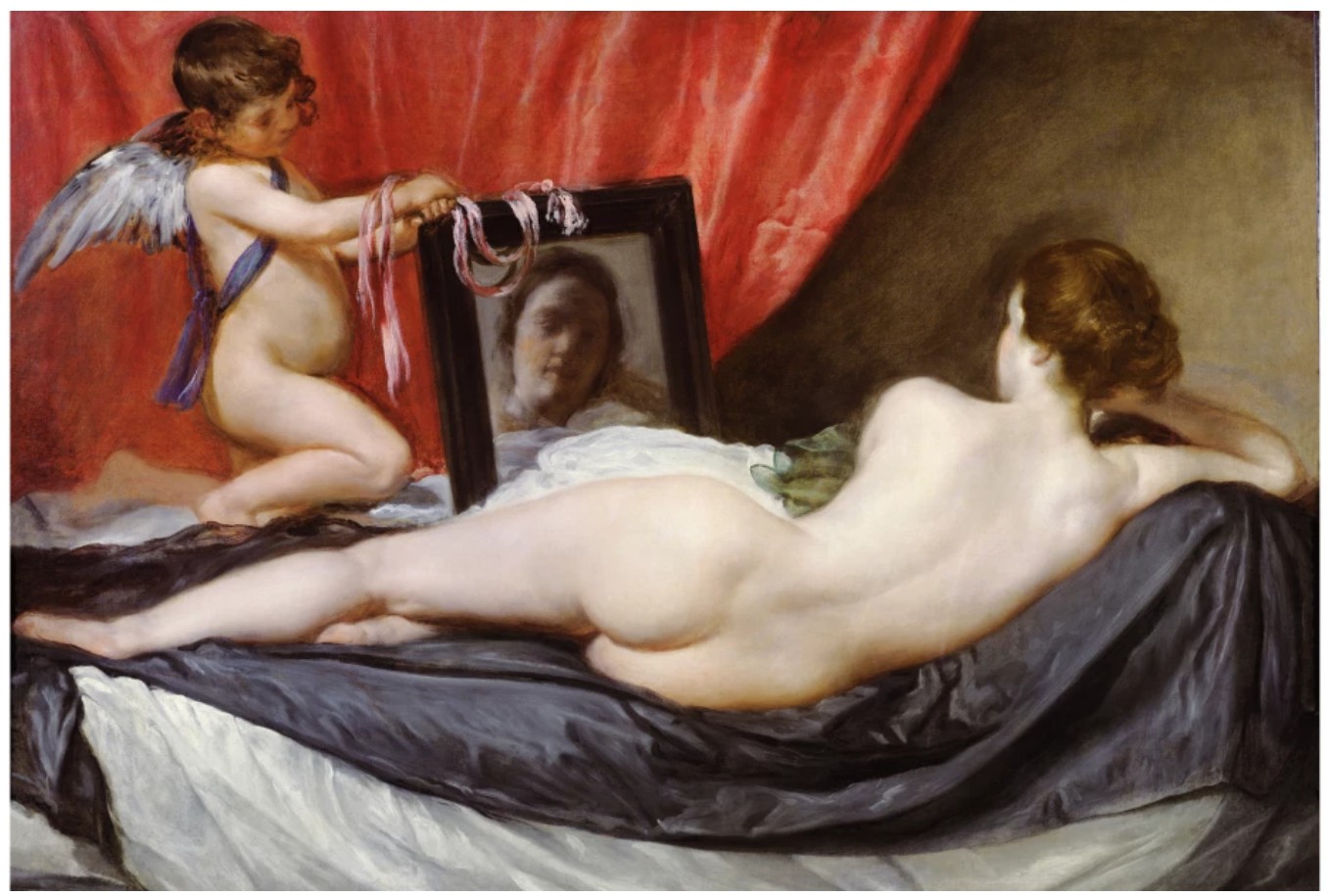
Diego Velázquez, The Toilet of Venus, 1647-51. National Gallery, London. Image © Bridgeman Images
Concepts of object and subject—which have in art history pitted the female nude against the male gaze as the empowered voyeur—are here subtly subverted in Lichtenstein’s distinctly Pop dialect; in Nudes in Mirror (Study), the viewer is placed in the position of the protagonist, as if we gaze back at ourselves. Unlike in his earlier comic book heroine scenes, which often feature male counterparts, Lichtenstein’s Nudes of the 1990s are resolutely sovereign: “The 1990s nudes take pleasure in their own company, without the slightest hint of needing or missing a man. They are not paralyzed by their emotions. In contrast to Lichtenstein’s original romance-comic pictures, this world flourishes exuberantly without men or engagement rings or kisses.” (Avis Berman, “Joy and Bravura and Irreverence” in: Roy Lichtenstein and Images of Women,” Exh. Cat., Kunsthaus Bregenz, Roy Lichtenstein: Classic of the New, 2005, p. 143)
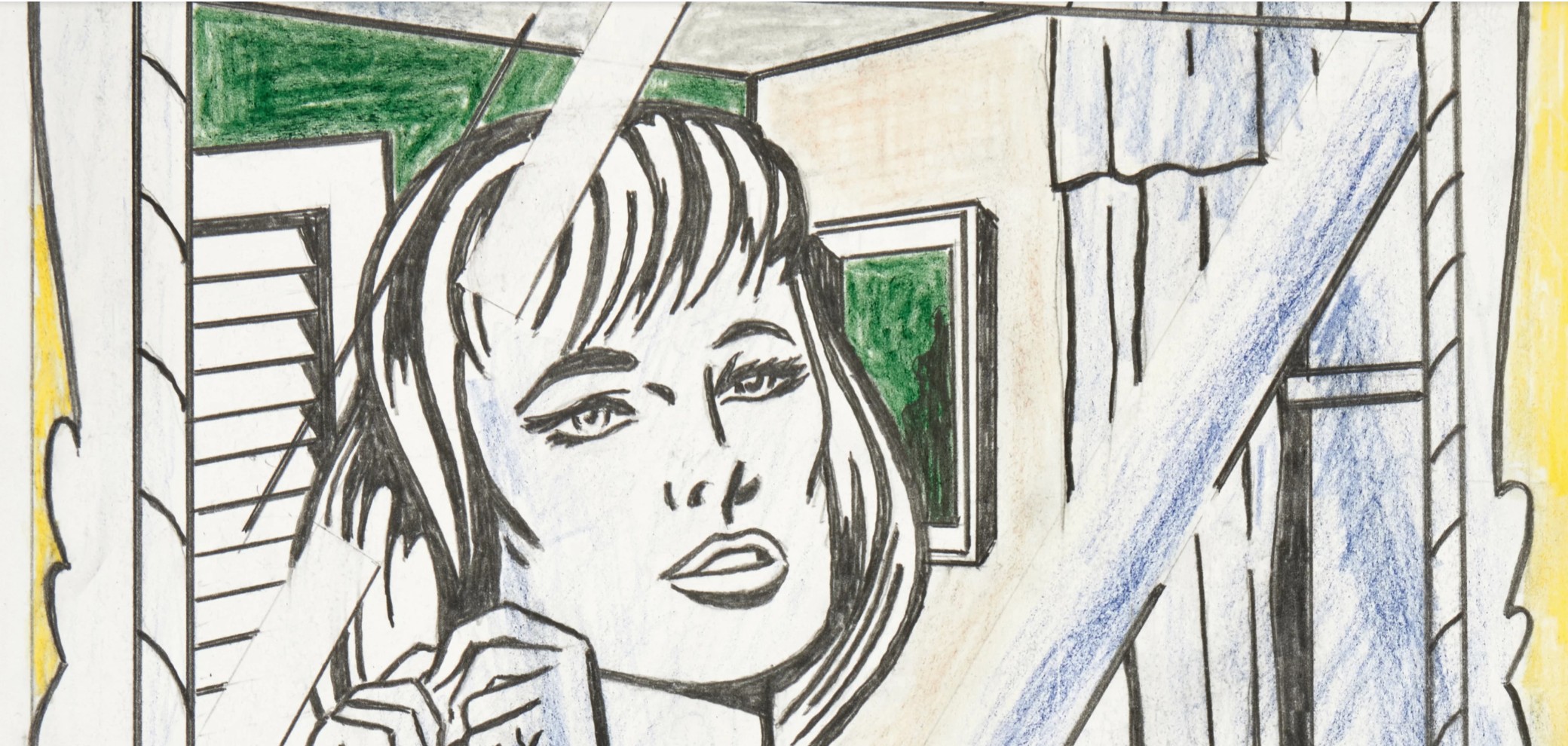
Lichtenstein’s figures display reserved and enigmatic expressions, resisting the viewer’s instinct to find readily comprehensible throughlines of interpretation with a certain emotional and narrative opacity. Despite appropriating the readily recognizable comic strip aesthetic, the artist creates works that are anything but simple and unambiguous; through Nudes in Mirror (Study), he presents a visual puzzle that urges the viewer to reflect on the nature of how femininity is represented in art. By placing the entire composition within a mirror, Lichtenstein positions himself in dialogue with great artistic forebears and invokes the structural mastery found in Diego Velázquez’ The Toilet of Venus, Peter Paul Rubens’ Venus in Front of the Mirror, or Édouard Manet’s A Bar at the Folies-Bergère. This compositional device not only adroitly frames the subjects’ countenances but also insets a degree of separation between the image and the viewer, interrogating themes of introspection and voyeurism with nearly unparalleled dexterity. This interplay between the study and painting reveals Lichtenstein’s continual exploration of form and depth, showcasing how he adapted and refined his techniques in this later phase of his career.
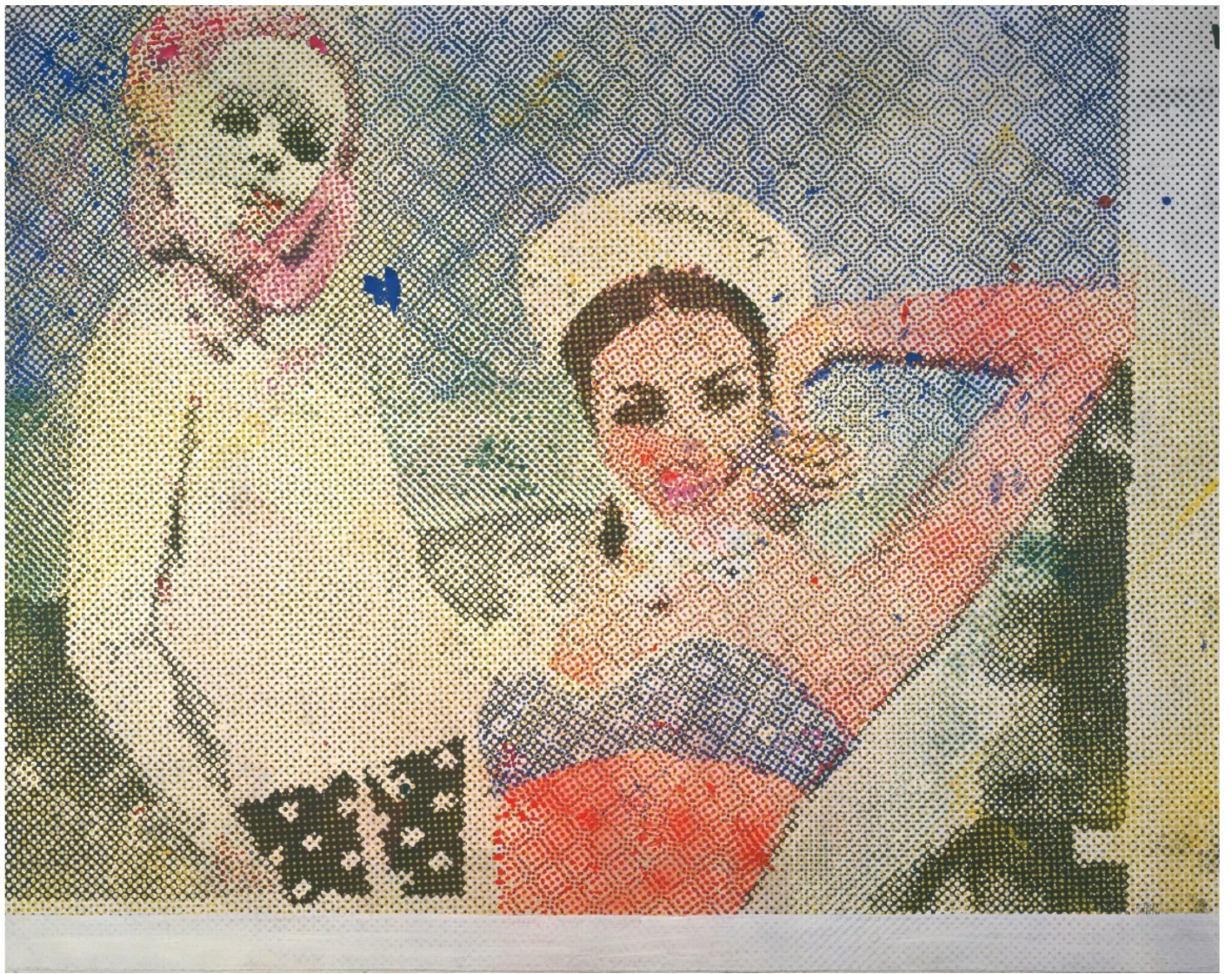
Sigmar Polke, Freundinnen, 1965-6. Stiftung Froehlich, Leinfelden-Echterdingen.
Art © 2025 Estate of Sigmar Polke / Artists Rights Society (ARS), New York / VG Bild-Kunst, Bonn, Germany
Executed in the twilight of his celebrated career, Nudes in Mirror (Study) is an exceptional work that foregrounds his iconic comic book bombshell protagonists along with his career-long exploration of reflections as both a visual device and metaphor for his contemplation upon art history. Through subtle shading and crisp graphite lines, we see a glimpse of Lichtenstein’s masterful creative process, particularly revealed in the intervention of the artist largely concealed in his paintings. Nudes in Mirror (Study) stands as a remarkable act of reflection, not simply carried about the two figures sketched atop the paper, but of Lichtenstein looking back into the decades of his own practice and the centuries of art history before him. An exemplar of Lichtenstein’s mature practice, Nudes in Mirror (Study) epitomizes the artist’s profound understanding of artmaking: “All painters take a personal attitude towards painting. What makes each object in the work is that it is organized by that artist’s vision. The style and the content are also different from anyone else’s. They are unified by the point of view—mine. This is the big tradition of art.” (the artist quoted in: Calvin Tomkins, Roy Lichtenstein: Mural with Blue Brushstroke, New York 1988, p. 42)
The Mirror in Art History
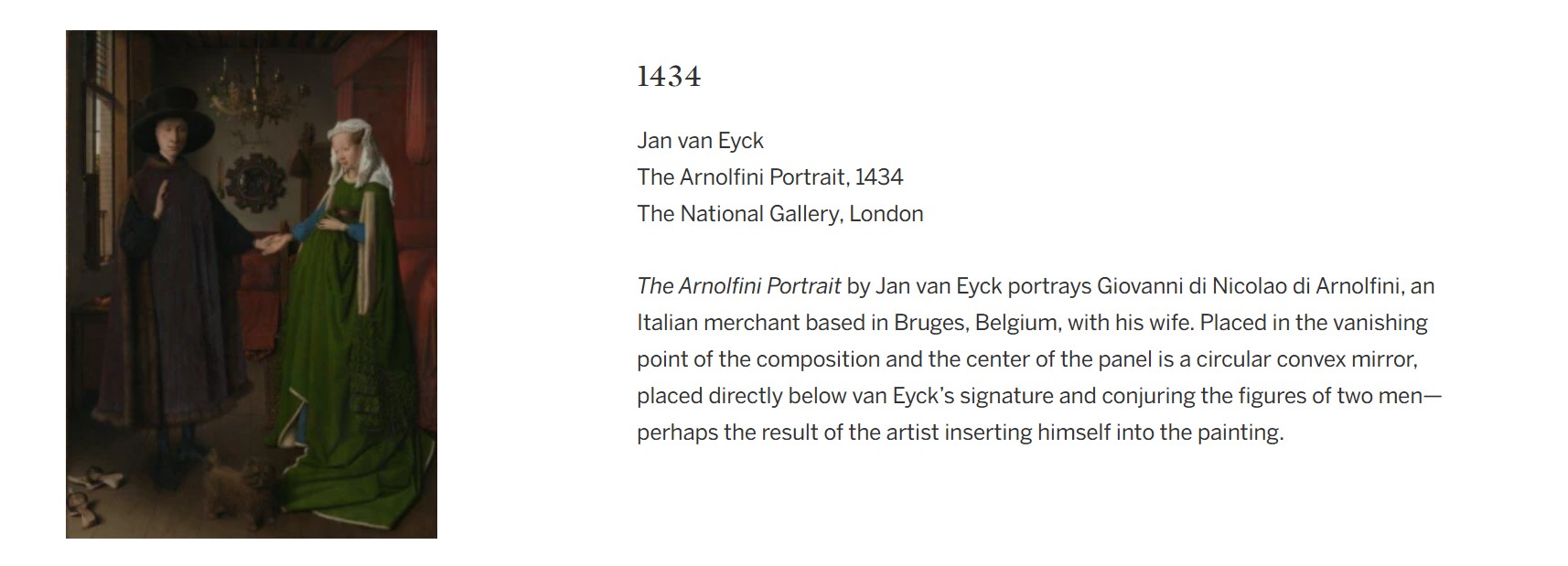
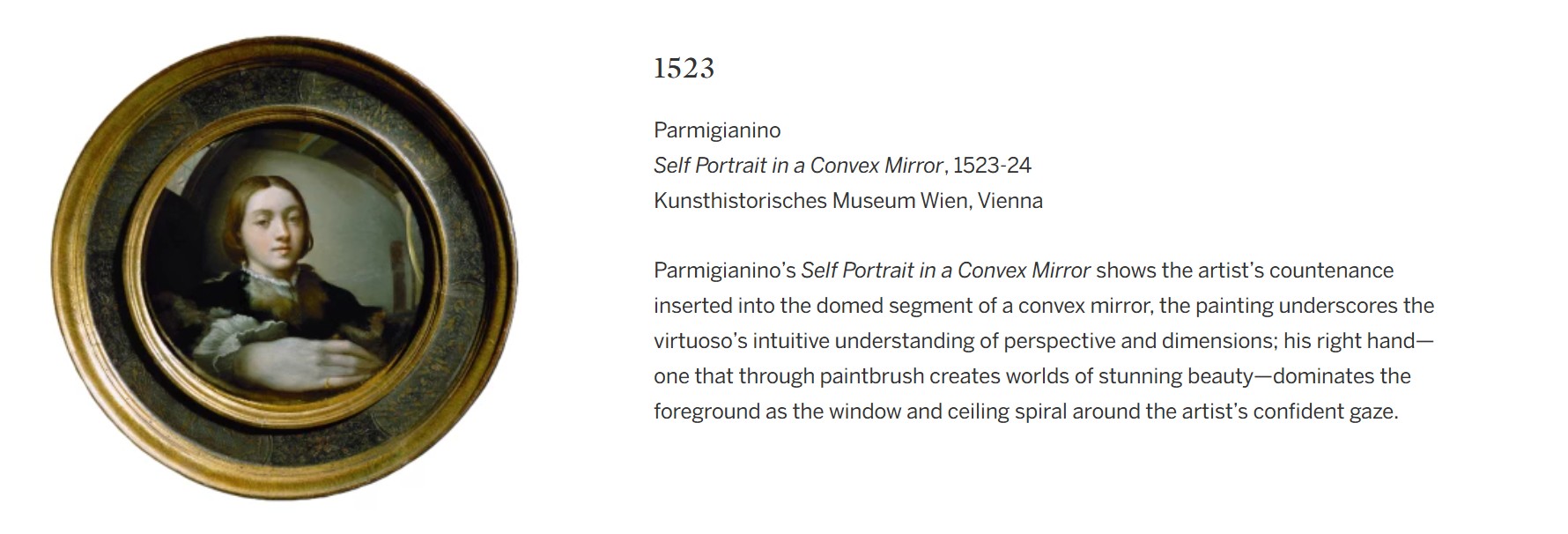
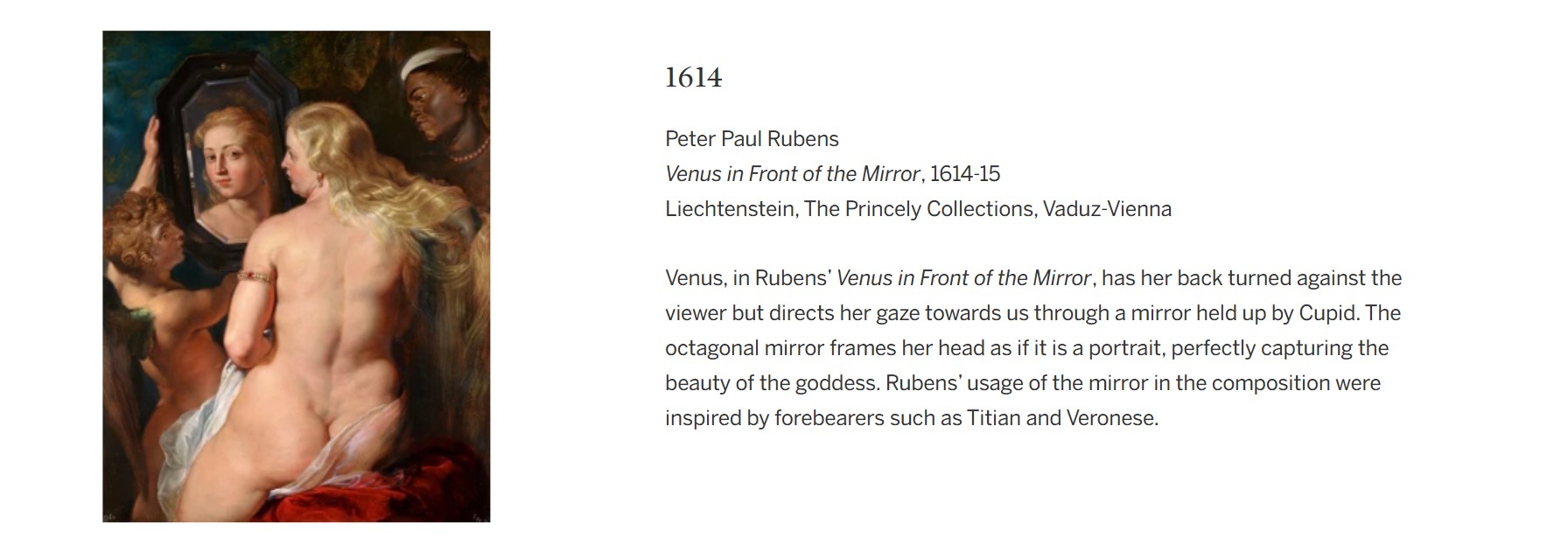
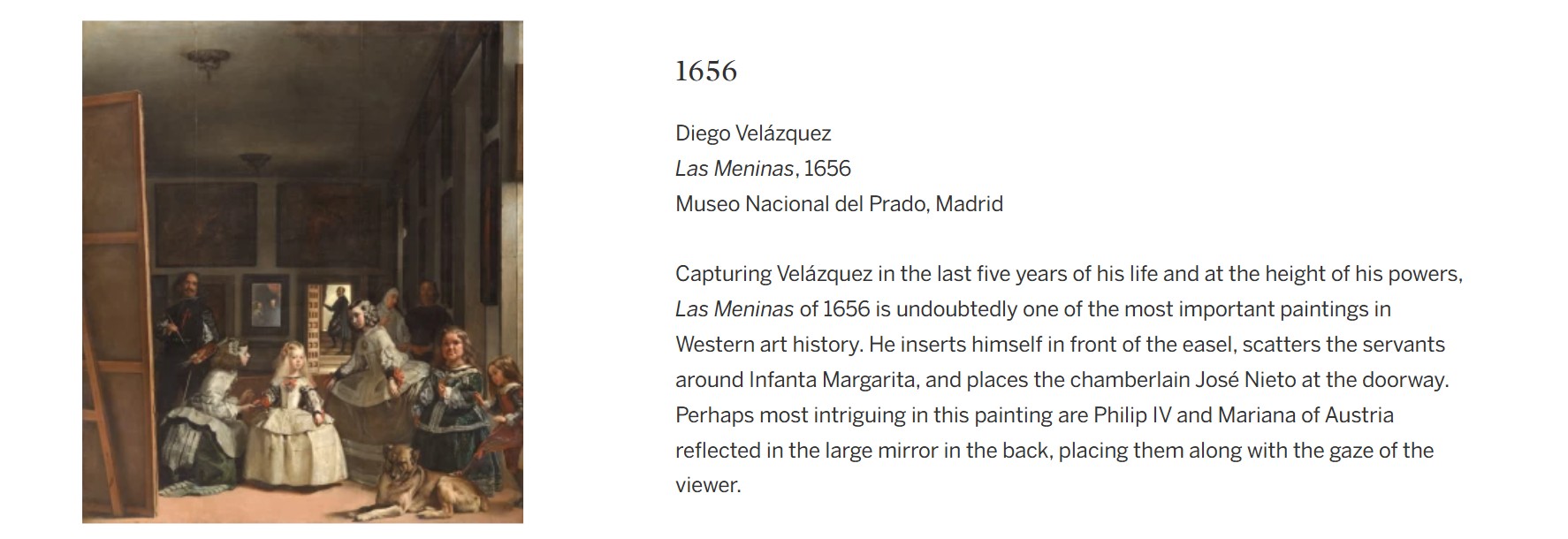
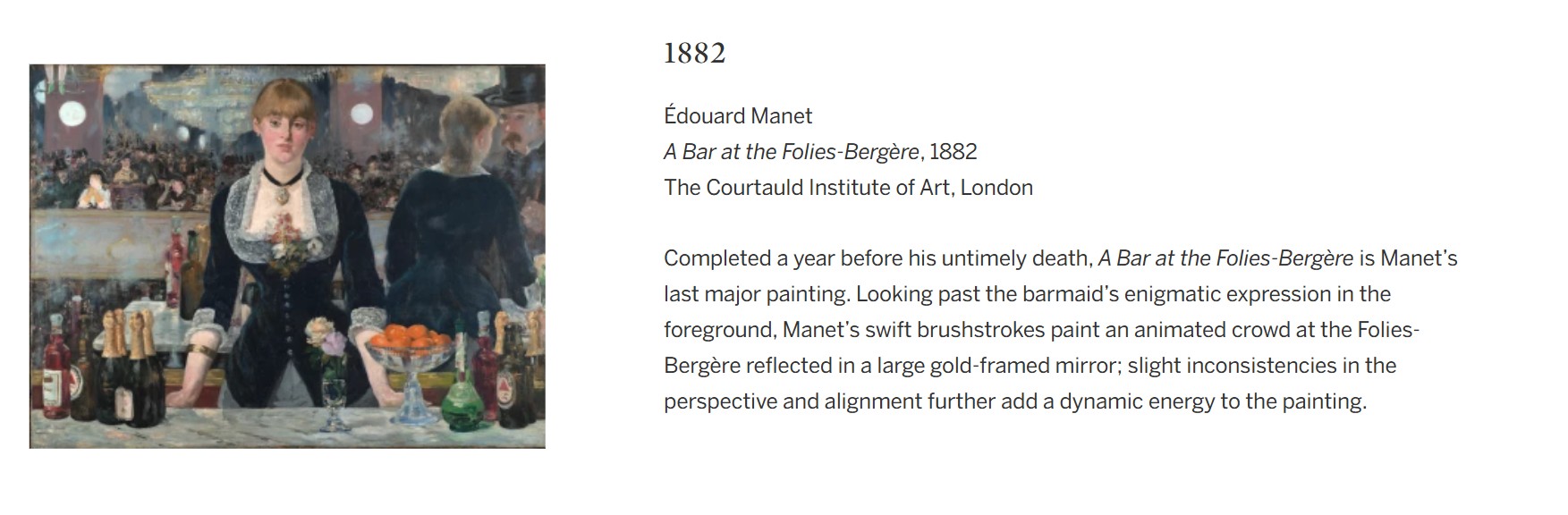
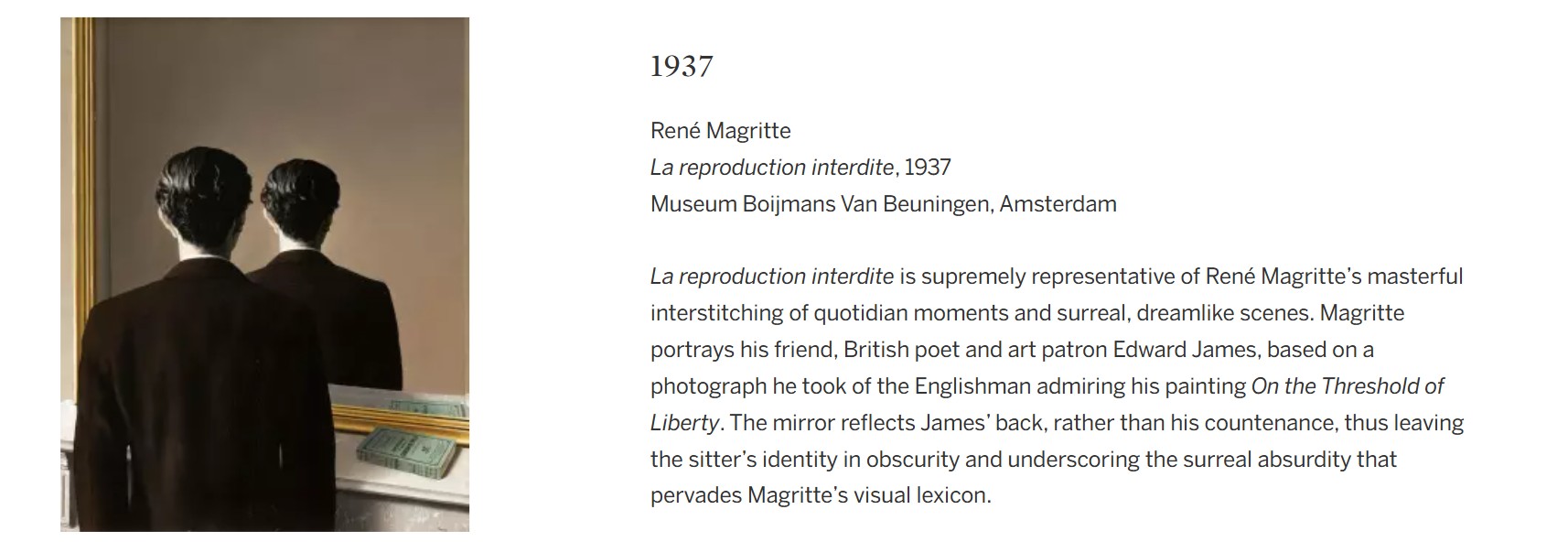
Nude with Pyramid (Study), 1994
Nude with Pyramid (Study), 1994
Works from the Collection of Dorothy and Roy Lichtenstein
Sotheby’s New-York: 20 November 2024
Estimated: USD 1,000,000 – 1,500,000
USD 2,040,000
Nude with Pyramid (Study) | The Now and Contemporary Evening Auction | 2024 | Sotheby’s
ROY LICHTENSTEIN (1923 – 1997)
Nude with Pyramid (Study), 1994
Colored pencil and graphite on paper
Image: 11 3/8 x 9 1/2 inches (28.9 x 24.1 cm)
Sheet: 13 1/8 x 11 1/8 inches (33.3 x 28.3 cm)
Signed and dated ‘94 (on the reverse)
Nude with Pyramid (Study) is a compelling illustration of Roy Lichtenstein’s late exploration of the female figure and interiors. This work serves as a significant precursor to the painting of the same name, which is now housed at the Broad in Los Angeles. Executed in 1994, the present work is a masterpiece from Lichtenstein’s celebrated late Nudes, the first series the artist undertook following his acclaimed retrospective in 1993 at the Solomon R. Guggenheim Museum. This body of work heralds Lichtenstein’s triumphant return to the iconic comic-book heroines that catapulted him to fame in the early 1960s. Drawing from his rich archive of vintage comics, the Nudes elegantly fuse Lichtenstein’s vibrant Pop Art sensibility with the timeless and storied subject of the female nude, a motif that has captivated artists throughout the history of Western art.
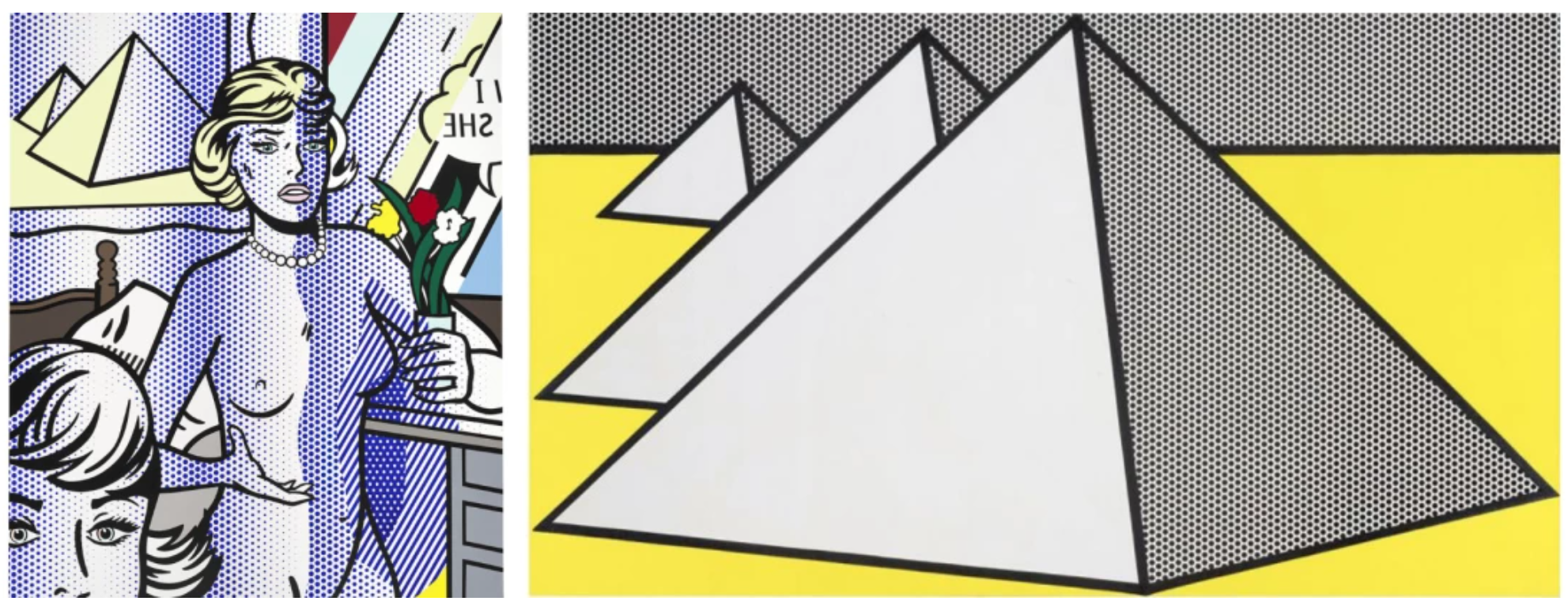
Left: Roy Lichtenstein, Nude with Pyramid, 1994. The Broad, Los Angeles. Art © Estate of Roy Lichtenstein.
Right: Roy Lichtenstein, Pyramids II, 1969. RISD Museum, Providence. Art © Estate of Roy Lichtenstein.
The present work features two female figures set against a bedroom scene, with the central figure holding a vase of flowers. The namesake invites viewers to focus on the nudes as much as on the prominently displayed imagery of two pyramids framed on the wall. This interplay evokes a rich dialogue between the modern and the classic, the organic and the angular, and, crucially, the present and the past within the tapestry of art history. Pyramids hold significance not only in the broader context of art history but also within Lichtenstein’s personal canon. Between 1968 and 1969, he created a series of Pyramid paintings, reflecting the ethos of the Minimalist movement of the 1960s. The composition also features an intriguing element of fragmentation. Text on the right side of the drawing is deliberately cut off, leaving viewers to ponder the meaning of the incomplete phrase “I” and “she,” an engagement further complicated by the presence of a speech bubble at the right of the composition, which intimates a third unseen interlocutor. This deliberate omission invites a deeper engagement with the work, compelling viewers to fill in the narrative gaps and consider the complexities of identity and representation. In the finalized version of the work, the mirrored presence of “SHE” enhances this theme, suggesting a duality of perception that complicates the viewer’s understanding of both the figure and the self.
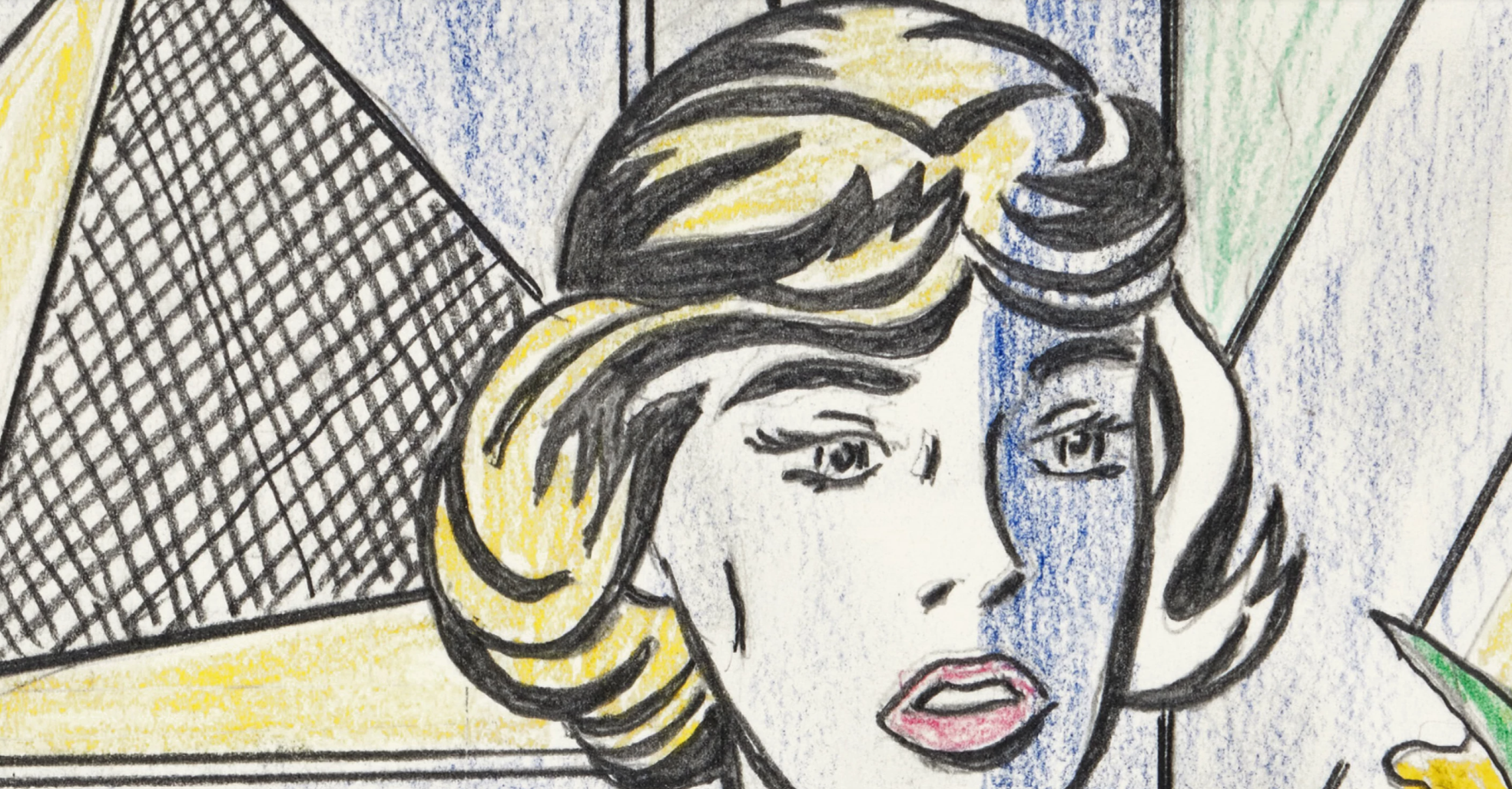
Nude with Pyramid (Study) ultimately serves as a pivotal work within Lichtenstein’s oeuvre, encapsulating the themes of femininity, identity, and the complexities of visual representation. As a study, it offers a glimpse into the artist’s creative process, revealing the layers of thought that underpin his final compositions. This drawing stands as a celebration of Lichtenstein’s legacy, reflecting his enduring influence on contemporary art and the ongoing dialogue surrounding the representation of the female figures and interiors in the modern era.
Woman Contemplating a Yellow Cup (Study), 1994
Woman Contemplating a Yellow Cup (Study), 1994
Phillips New-York: 14 November 2023
Estimated: USD 1,500,000 – 2,000,000
USD 1,996,000
Roy Lichtenstein – Living the Avant… Lot 15 November 2023 | Phillips
ROY LICHTENSTEIN
Woman Contemplating a Yellow Cup (Study), 1994
Tape, cut painted paper, cut printed paper and graphite pencil on board
36 1/8 x 44 3/4 inches (91.8 x 113.7 cm)
Signed and dated “Rf Lichtenstein ’94” on the reverse
The female figure made a triumphant reappearance in Roy Lichtenstein’s images in the 1990s, thirty years after his seminal Girl paintings. However, in this late body of work, the women have been lifted from their contrived, comic book settings to navigate worlds replete with motifs spanning the artist’s 50-year corpus. Often nude, they were birthed from his concurrent Interiors series that caricatured the sterile representations of Post-War bourgeois domesticity found in Architectural Digest spreads and Yellow Pages advertisements. First contained within decorative paintings on the walls, these women soon began to inhabit these homes themselves, their likeness as satirically commodified as the pristine furnishings which surrounded them.
“I don’t think the importance of the art has anything to do with the importance of the subject matter. I think importance resides more in the unity of the composition and in the inventiveness of perception.”
Woman Contemplating a Yellow Cup (Study) exemplifies this remarkable chapter of work Lichtenstein executed in his final years, an introspective group of images that brought his career full circle. Created in 1994, the collage prefigures a larger aluminum wall relief created the following year with a similar composition. A disembodied woman’s head peers into one of Lichtenstein’s immaculate rooms, empty spaces. The room is not a lived-in space but a liminal one: there is no evidence that anyone has ever drank from the cup perfectly placed on a small table or sat on the well-fluffed chair behind it. Even more disorienting is how the very vertical, horizontal, and diagonal lines that are meant to establish a three-dimensional configuration undermine it. A crooked border cuts off the bottom of the image; not entirely defined, the chair cushions disappear into space. These inconsistencies are reminiscent of printing glitches, collapsing the illusion of depth and disrupting any pictorial coherency.
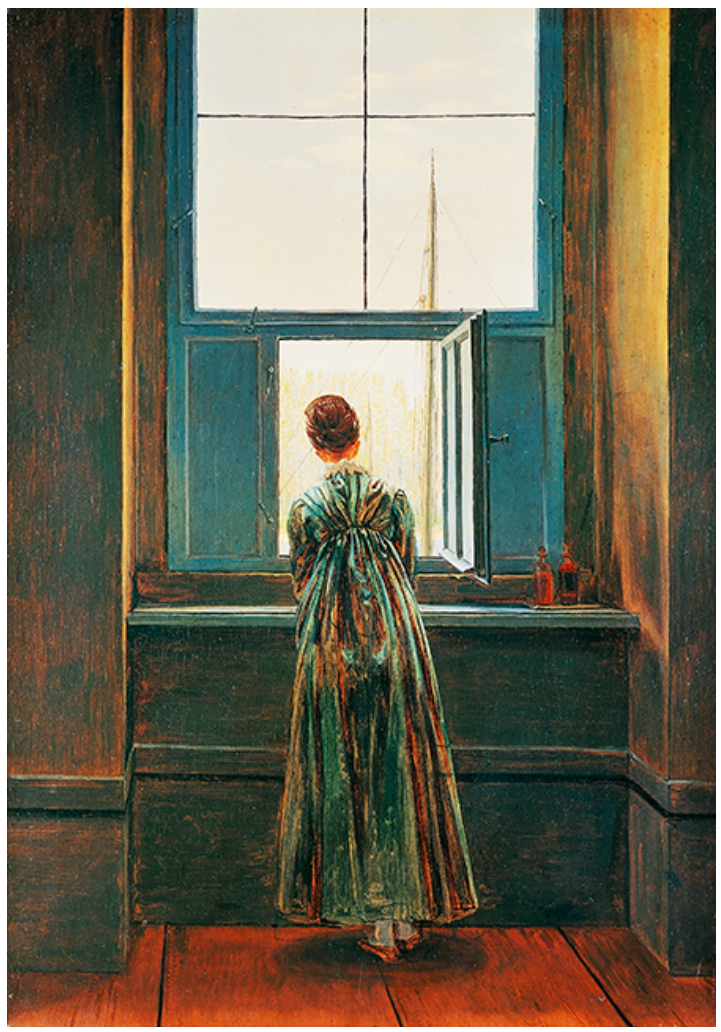
Caspar David Friedrich, Woman at a Window, 1822. Alte Nationalgalerie, Berlin. Image: © NPL – DeA Picture Library / Bridgeman Images
The contouring suggested by Ben-Day dots, Lichtenstein’s stock-in-trade, further complicate the spatial logic of Woman Contemplating a Yellow Cup (Study). The artist’s subjects “are part light and shade, and so are the backgrounds, with dots to indicate the shade,” Lichtenstein elucidated.
“The dots are also graduated from large to small, which usually suggests modeling in people’s minds, but that’s not what you get with these figures.”
Though they allude to the building blocks of draftsmanship and rudimentary chiaroscuro, the dots here simply figure as a two-dimensional decorative patterning: by not corresponding to any conceivable delineation of positive and negative place, they ironically emphasize the flatness of the picture plane instead of concealing it. The formal idiosyncrasies of Woman Contemplating a Yellow Cup (Study) represent the culmination of Lichtenstein’s career-long efforts to convey a complete deconstruction of three-dimensional space. Though the protagonist is depicted as a Rückenfigur—a common art historical motif translating to “figure from the back”—it is clear by her perfectly-kept hair, gently tied back with a ribbon, that she epitomizes the Post-War feminine ideal. Lichtenstein’s often-blonde bombshells were typically sourced from 1960s romance comic books, which are evoked by the present work’s close-up framing and narrative simplicity. Within her field of vision is an emblem of Lichtenstein’s engagement with the lexicon of modernism—an enigmatic framed image harkening back to his “Surrealist” period in the late 1970s. The composition is particularly reminiscent of Pablo Picasso’s abstracted portrayals of his lover Marie-Thérèse Walter from the 1930s, which Lichtenstein was reminded of in 1994 when he visited the exhibition Picasso & the Weeping Women at the Metropolitan Museum of Art in New York. These feminine icons of the 20th century—Picasso’s women and Lichtenstein’s girls—meet in the present work, representing a direct confrontation between the “high culture” of modern painting and the “low culture” of comic book illustration.
Seductive Girl (Study), 1996
Seductive Girl (Study), 1996
Works from the Collection of Dorothy and Roy Lichtenstein
Sotheby’s London: 24 June 2025
Estimated: GBP 500,000 – 700,000
GBP 952,500 / USD 1,285,875
Seductive Girl (Study) | Modern & Contemporary Evening Auction | 2025 | Sotheby’s
ROY LICHTENSTEIN (1923 – 1997)
Seductive Girl (Study), 1996
Graphite and coloured pencil on Denril
Image: 6 3/4 x 9 1/2 inches (17.1 x 24.1 cm)
Sheet:10 3/8 x 12 7/8 inches (26.4 x 32.6 cm)
Roy Lichtenstein’s Seductive Girl (Study) offers an intimate and mesmerizing glimpse into the artist’s late-career process as he revisited the comic-inspired heroines that first catapulted him to fame in the 1960s. Intimately scaled yet saturated with Lichtenstein’s trademark visual vocabulary, this beguiling figure exemplifies the artist’s fastidious approach to the process of production, here applied in a Pop tribute to art history’s most enduring subject: the nude. Rendered in graphite and colored pencil in 1996, this drawing serves as a significant precursor to the large-scale painting of the same name, a masterpiece from Lichtenstein’s celebrated late Nudes, the first series the artist undertook following his acclaimed retrospective in 1993 at the Guggenheim Museum and one of the primary subjects that would occupy him until his death in 1997. As one of the works retained by the artist and his wife Dorothy in their own collection, Seductive Girl (Study) presents a rare and captivating perspective into the central themes that weave through Lichtenstein’s creative legacy and the iconic style that has come to define him as one of the foremost titans of the twentieth century.
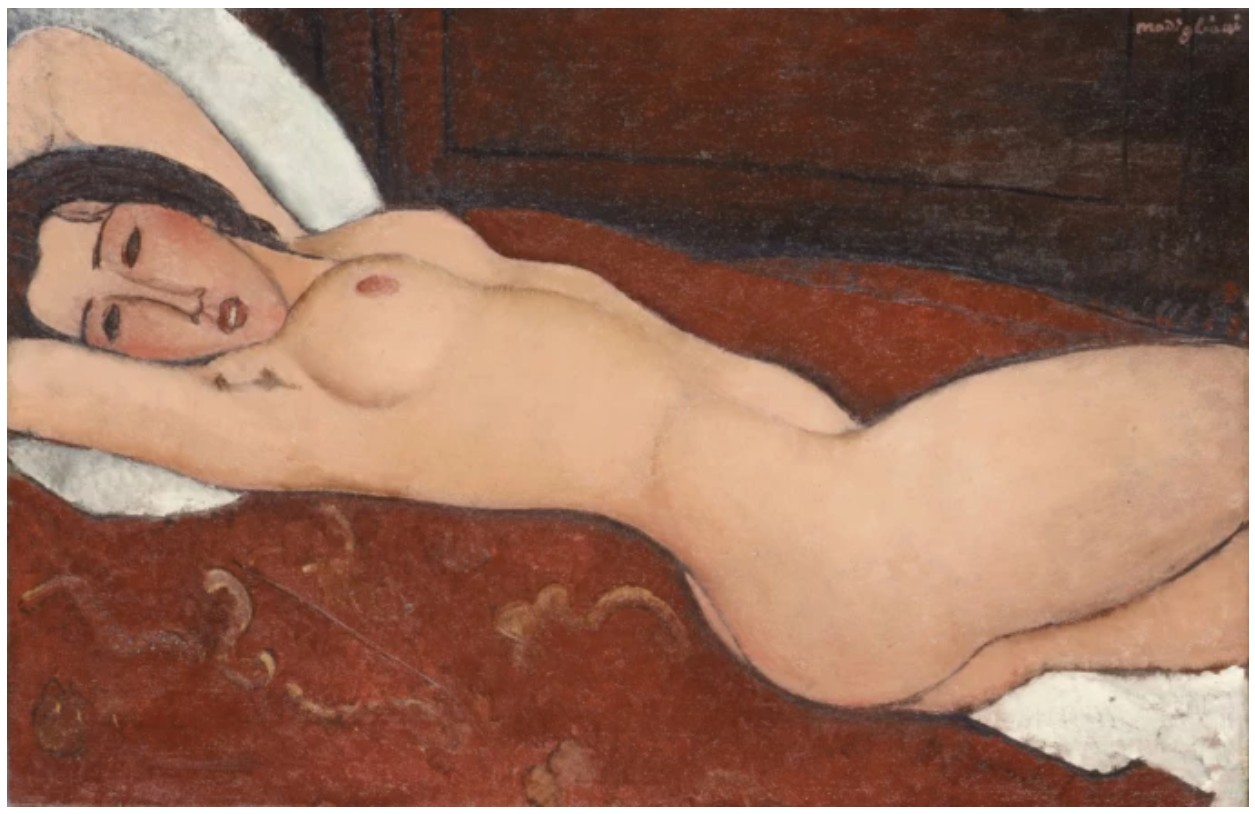
Amedeo Modigliani, Reclining Nude, 1917. Metropolitan Museum of Art, New York, USA. Image: © Art Resource/Scala, Florence
Gazing directly at the viewer, the alluring heroine fills the picture plane in a cinematic, Hitchcockian guise, her chest exposed and one arm stretched above her. The immediacy of the image is underscored by the rich figure-ground relationship achieved using vigorous strokes of blue pencil, concentrated along the figure’s center line and tapering away, to imply the shadows cast by a wash of moonlight. In this way the composition echoes its comic-book source material: the original image, appropriated from the 1964 Heart Throbs comic “Love Me Not for Beauty Only,” frames a fashionable blonde alone in bed pining for her unrequited love under the text “Later that night, I couldn’t fall asleep.” The lovelorn subject is bathed in blue light to indicate the evening hour; in Lichtenstein’s translation, this device becomes highly abstracted – the color blue is alien to human flesh, and the way the shading equates the figure’s body with the bedding underneath her while excluding her hair and wallpaper further problematizes any security of image. These interventions by the Pop master remind the viewer that what we behold is merely a composition of marks upon a surface, a key theme of Lichtenstein’s entire oeuvre.
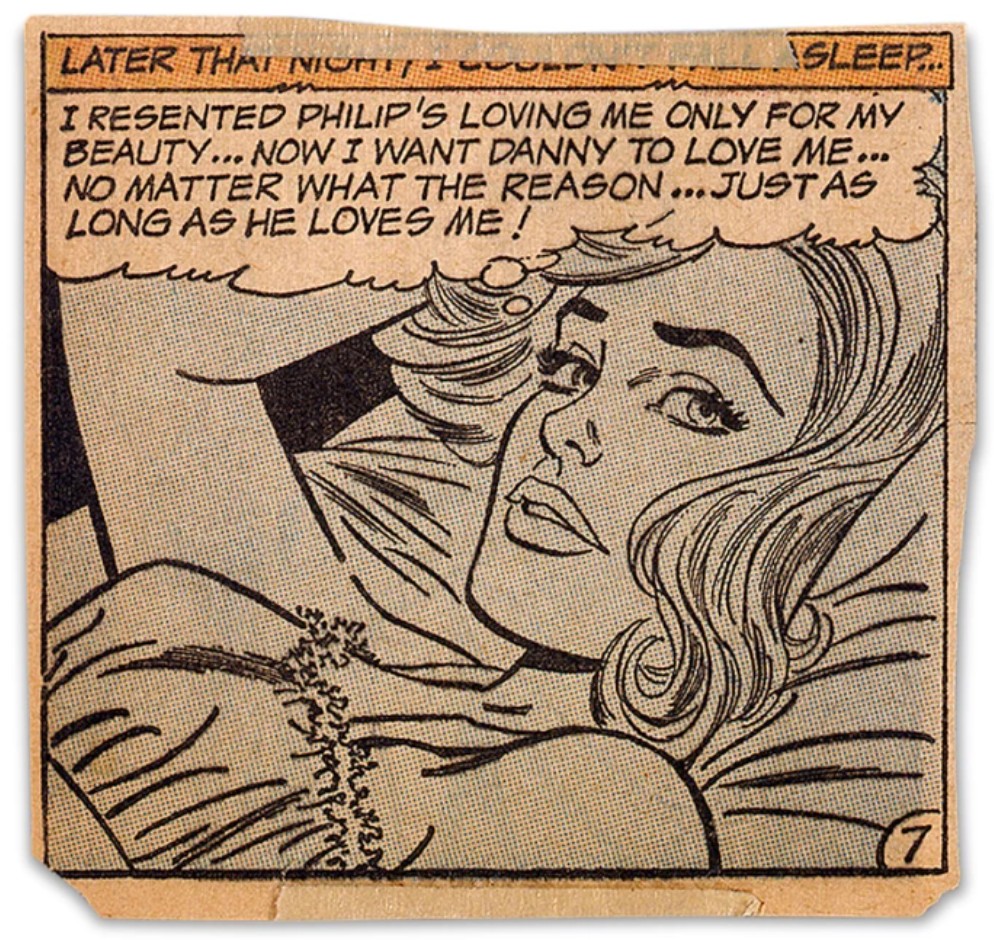
Lichtenstein’s reference material for Seductive Girl: Heart Throbs, February – March 1964. DC Publishing.
The present work also offers a rare glimpse into many of the formal processes that Lichtenstein undertook while creating suites of compositional studies that would seek to resolve questions of layout, coloring, and visual effect, laying the groundwork for compositional elements like his signature use of Ben-Day dots. While this study forgoes the dots, they emerge prominently in the later canvas, where the shaded areas are transformed into blue Ben-Day dots, following the same areas of light and dark. This evolution reflects a profound shift in Lichtenstein’s artistic approach, as he reimagines the dots – not merely as elements drawn from comic book inspiration – but as a sophisticated means of achieving chiaroscuro.
“It’s a little bit the way chiaroscuro isn’t just shadows but a way of combining the figure and background, or whatever’s near it in a dark area… You’re not confined to the object pattern, but the subject matter excuse for this is that it’s a shadow. And that’s interesting to me.”
This interplay between the study and the finished work reveals his continual exploration of form and depth, showcasing the ways in which he adapted and refined his techniques in this later phase of his career.
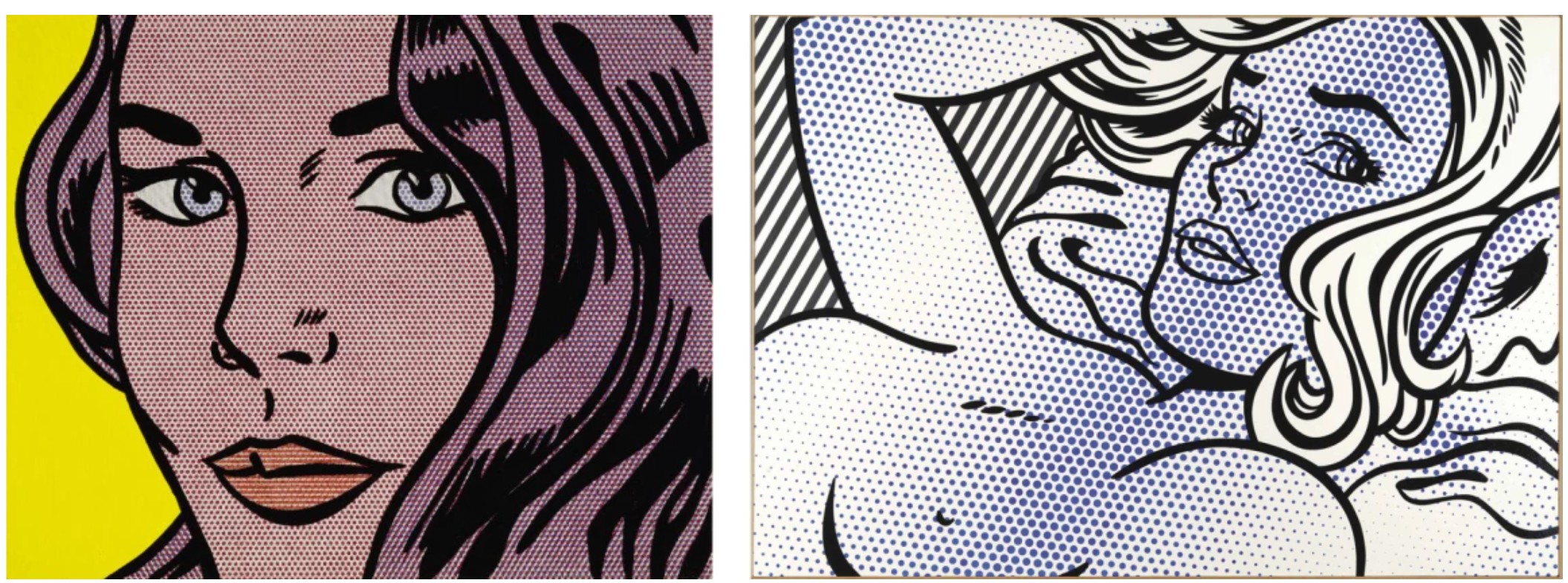
Left: Roy Lichtenstein, Seductive Girl, 1964. Private Collection. © Estate of Roy Lichtenstein/DACS 2025
Right: Roy Lichtenstein, Seductive Girl, 1996. Private Collection. Sold New York, November 2013, for $31.5 million. © Estate of Roy Lichtenstein/DACS 2025
In its structure, simplicity and close-up framing, the present composition is closely aligned with the format of Lichtenstein’s early Girl paintings of the 1960s, including the 1964 canvas sharing the same title. However, whereas Lichtenstein’s paintings of women in the 1960s relied heavily upon melodramatic and romantic scenes of damsels in distress, his 1990s Nudes depict women of an entirely new generation, exuding a quiet, self-assured confidence that is unconcerned by the voyeuristic gaze brought upon by the viewer. Seductive Girl (Study) ultimately serves as a pivotal work within Lichtenstein’s oeuvre, encapsulating the themes of femininity, identity, and the complexities of visual representation. In its economy of line, compositional clarity, and psychological nuance, it encapsulates the essence of his late style: confident, formally rigorous, and unmistakably his own. As a study, it offers a glimpse into the artist’s creative process, revealing the layers of thought that underpin his final compositions. This drawing stands as a celebration of Lichtenstein’s legacy, reflecting his enduring influence on contemporary art and the ongoing dialogue surrounding the representation of the female figure in the modern era.
Nude (Study), 1997
Nude (Study), 1997
Reflections on Pop: Works from the Collection of Dorothy and Roy Lichtenstein
Sotheby’s New-York: 26 September 2025
Estimated: USD 800,000 – 1,200,000
USD 1,079,500
ROY LICHTENSTEIN (1923 – 1997)
Nude (Study), 1997
Tape, cut painted paper, cut printed paper, cut paper, marker and graphite on paperboard
Image: 41 3/8 x 22 1/4 inches (105.1 x 56.5 cm)
Paperboard: 51×32 inches (129.5 x 81.3 cm)
Roy Lichtenstein’s Nude (Study) from 1997 exemplifies the confident sensuality and formal brilliance that define the artist’s celebrated late Nudes. Executed in the twilight of his storied career, this intimate collage on paper belongs to the first series Lichtenstein undertook following his acclaimed 1993 retrospective at the Solomon R. Guggenheim Museum, ultimately constituting his last major body of work before his death later that year. Though smaller in scale than the monumental canvases, Nude (Study) crystallizes the ambitions of the series: uniting centuries of art-historical tradition with the unmistakable clarity of Lichtenstein’s Pop idiom. From the confident yet relaxed pose to the subtle interplay of dual outlines, patterned background planes, and graded Ben-Day dots, every element of the composition is imbued with a self-possessed sensuality, demonstrating Lichtenstein’s consummate skill in distilling the nude into a rhythm of line, shape, and color.
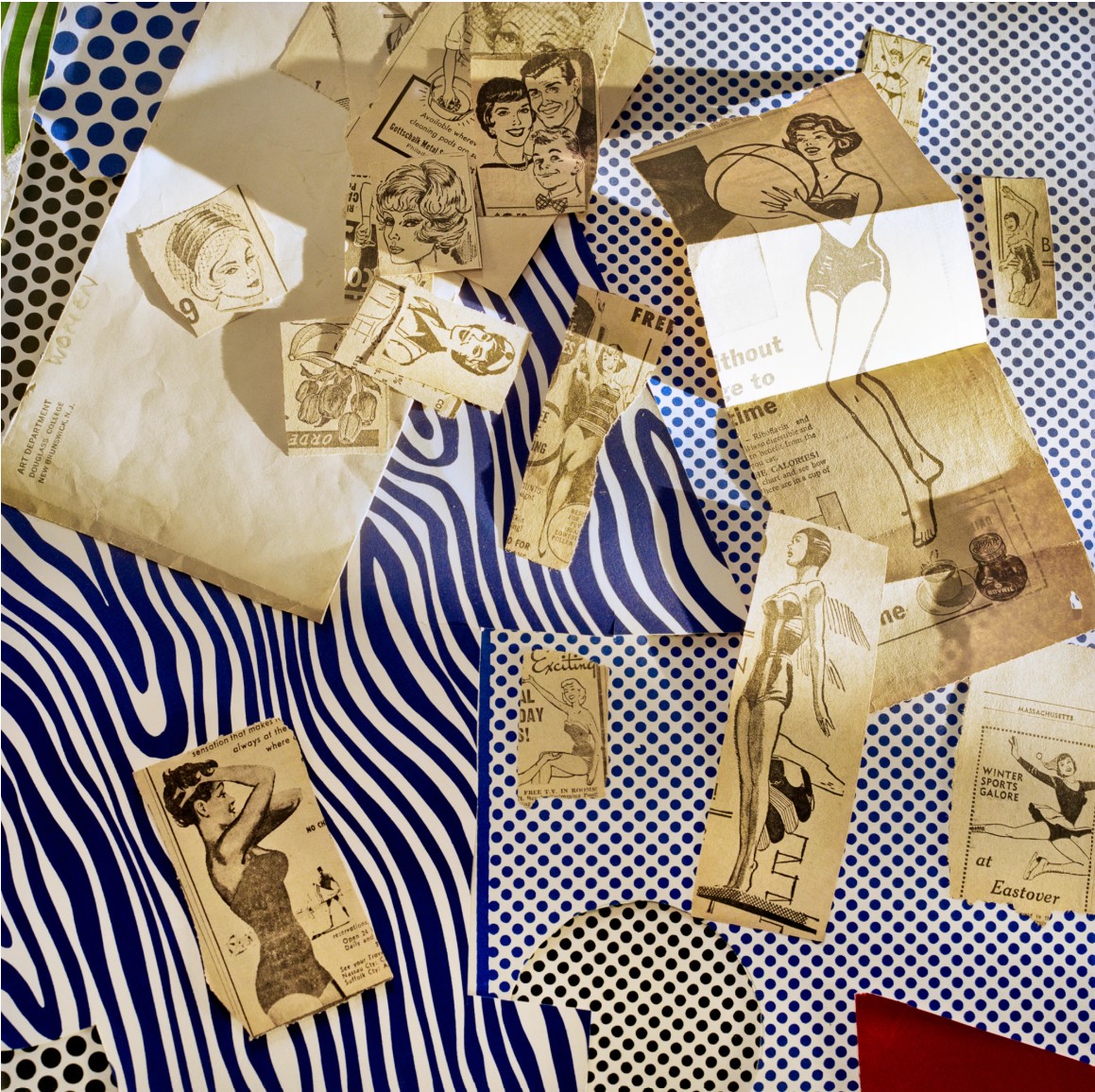
Roy Lichtenstein’s source material, 1990. Photo © Laurie Lambrecht
Unlike the Girl paintings of the early 1960s, drawn from romance comics and imbued with melodramatic narratives of longing and heartbreak, the heroines of the late Nudes are freed from narrative constraint. Their allure lies not in story but in the self-contained confidence of their form.
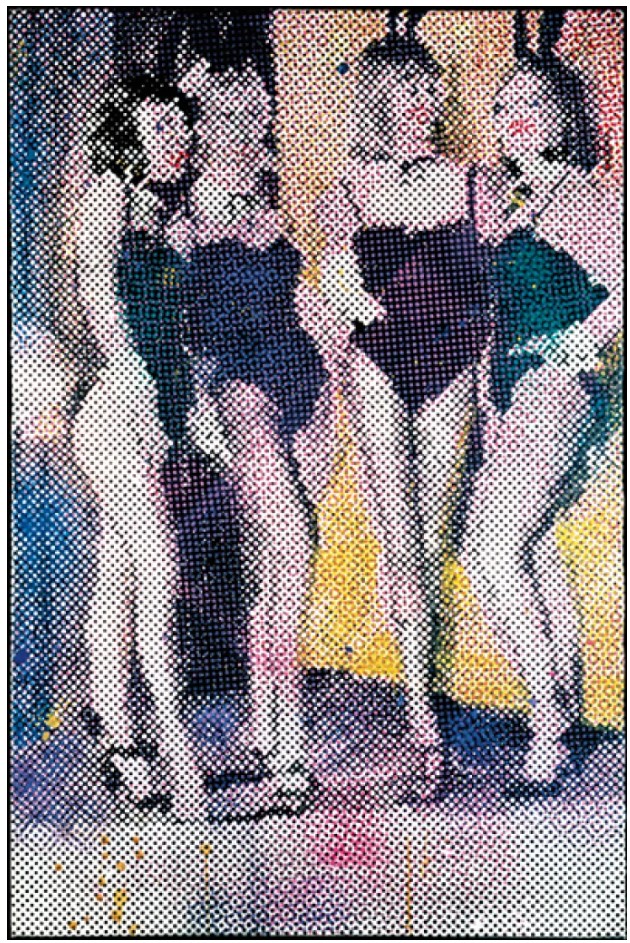
Sigmar Polke, Bunnies, 1966. Hirshhorn Museum, Washington D.C. Art © 2025 Estate of Sigmar Polke / Artists Rights Society (ARS), New York / VG Bild-Kunst, Bonn, Germany
In this late work, Lichtenstein’s trademark Ben-Day dots are employed to remarkable effect. Graded sequences of dots ripple around the nude’s form, functioning as a Pop reinterpretation of chiaroscuro: light and shade are conveyed not by painterly illusion but through the mechanical cadence of Lichtenstein’s graphic language. Indeed, Nude (Study) exemplifies this interplay between figure and background, dot and plane, light and shade, producing a composition at once playful, rigorous, and hypnotically precise.
“With my nudes, I wanted to mix artistic conventions that you would think incompatible, namely chiaroscuro and local color, and see what happened. I’d seen something similar in Léger’s work. My nudes are part light and shade, and so are the backgrounds, with dots to indicate the shade. The dots are also graduated from large to small, which usually suggests modeling in people’s minds, but that’s not what you get with these figures.”
The work resonates with art-historical precedent while distinctly asserting its own modernity. References to canonical nudes—from Titian’s Venus of Urbino to Manet’s Olympia—inform the composition, yet Lichtenstein translates these influences into his unique Pop idiom. Edward Said has noted, “Lichtenstein’s Nudes signal the tension between what is represented and what isn’t represented, between the articulate and the silent.” (Edward W. Said, On Late Style: Music, and Literature against the Grain, 2006, p. xix). Here, the figure asserts her autonomy: she exists fully in her own space, her sensuality unmediated by narrative or male gaze.
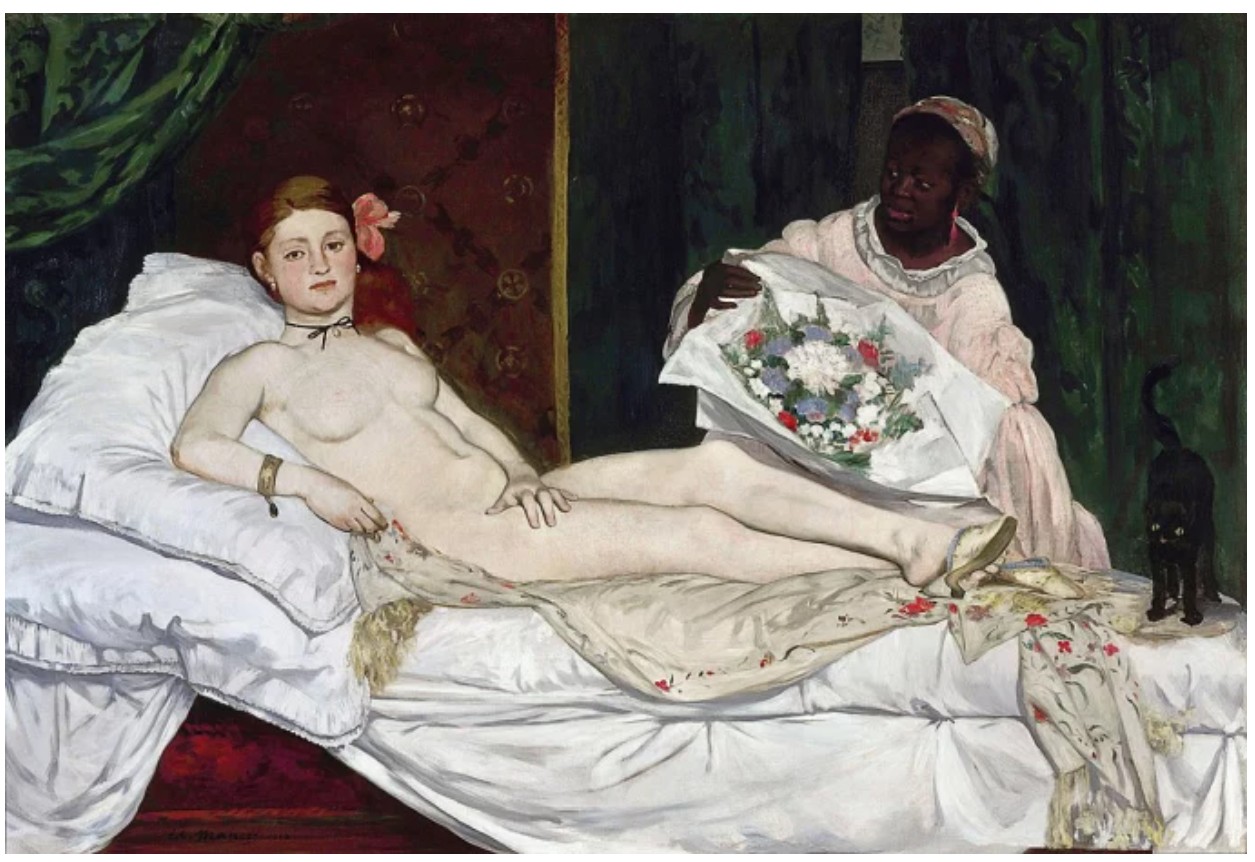
Edouard Manet, Olympia, 1863-1865. Musée d’Orsay, Paris
Nude (Study) demonstrates how Lichtenstein used collage to probe and refine the visual strategies of his late Nudes. The immediacy of the medium emphasizes the artist’s restless innovation, producing a work that is formally rigorous, visually captivating, and conceptually sophisticated. Nude (Study) stands as a consummate statement of Lichtenstein’s late style: bold, confident, and utterly his own—a luminous meditation on the enduring power of the female form, filtered through the mechanized yet sensuous lens of Pop art. In Nude (Study), Lichtenstein displays a masterful command of his subject, capturing her with striking grace and precision. Through its bold reinterpretation of art history and seamless integration into the Pop idiom, the work stands as a tour de force, an embodiment of everything that defines Lichtenstein’s brilliance.
Nude with Bust (Study), 1995
Nude with Bust (Study), 1995
Reflections on Pop: Works from the Collection of Dorothy and Roy Lichtenstein
Sotheby’s New-York: 26 September 2025
Estimated: USD 400,000 – 600,000
USD 825,500
ROY LICHTENSTEIN (1923 – 1997)
Nude with Bust (Study), 1995
Colored pencil and graphite on Denril
Image: 9 7/8 x 8 1/4 inches (25.1 x 21 cm)
Sheet: 15 5/8 x 9 3/8 inches (39.7 x 23.8 cm)
Signed and dated ’95 (lower right)
Executed in 1995, Nude with Bust (Study) is a distinguished late work on paper that represents the ultimate crystallization of Roy Lichtenstein’s enduring engagement with the quintessential heroine of his inimitable oeuvre. Conceived as the study for the collage and, ultimately, the large-scale painting of the same title, the composition demonstrates Lichtenstein’s vision with striking clarity and refinement, standing as an exquisite expression of the artist’s hand. As part of the acclaimed Nudes series, which dominated Lichtenstein’s practice in the mid-1990s, the work embodies his final and definitive reformulation of an art historical archetype through the distinctive lens of his Pop idiom.
The composition is distinguished by the presence of two figures: a seated nude and a sculpted bust set upon a pedestal, together evoking the studio interior as both a subject and a symbol. This doubling of figure and representation transforms a familiar art-historical motif into a distinctly Pop image—at once playful, critical, and self-conscious. In doing so, Lichtenstein places himself in dialogue with a lineage of artists who explored the studio as a site of artmaking and the nude as its central theme. Like these precedents, Nude with Bust (Study) interrogates the relationship between artist, model, and artwork, while Lichtenstein’s stylization and graphic flatness destabilize the conventions of intimacy and authenticity traditionally associated with the subject.
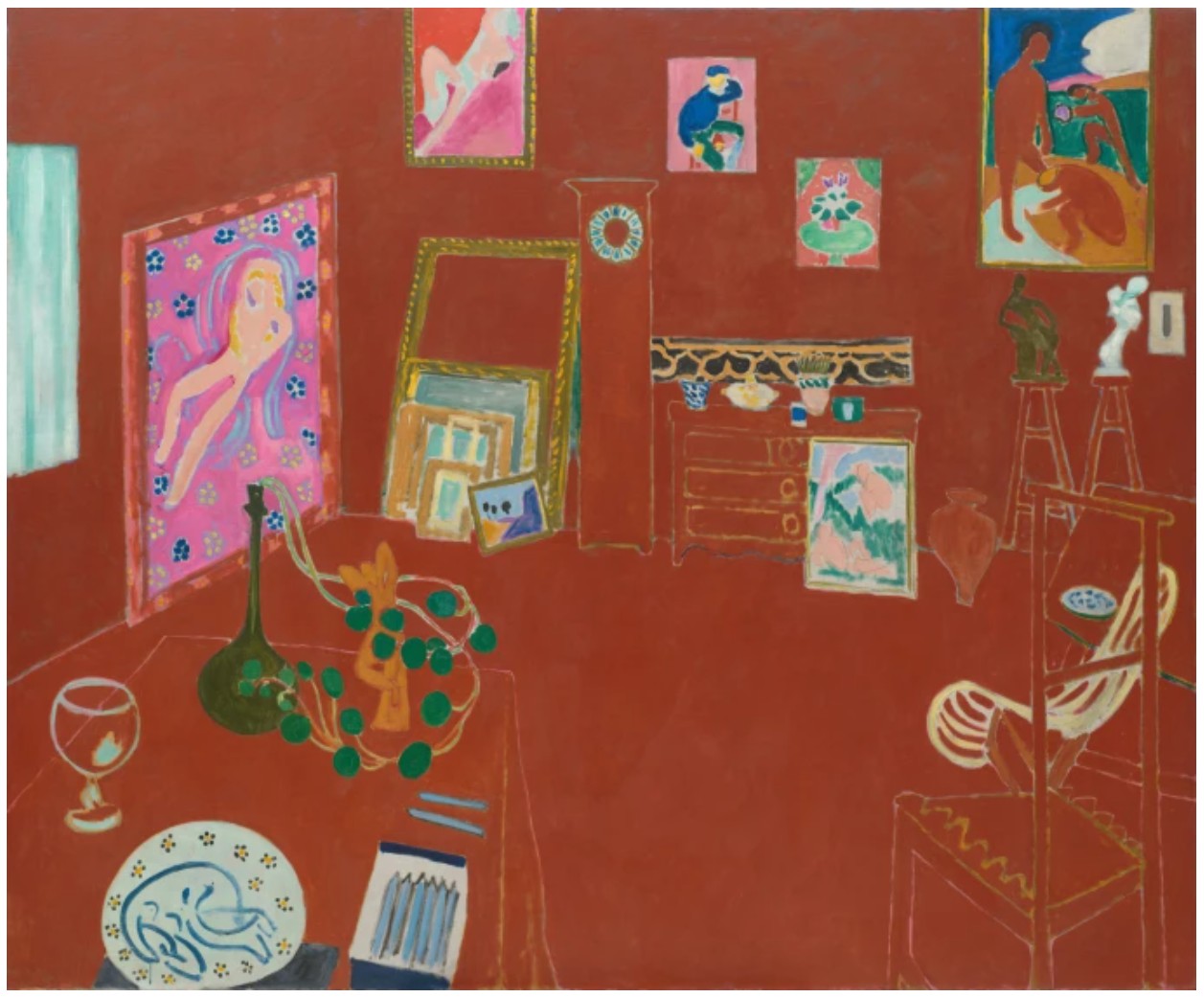
Henri Matisse, The Red Studio, 1911. The Museum of Modern Art, New York.
Art © 2025 Succession H. Matisse / Artists Rights Society (ARS), New York
The Nudes series also marks a return to motifs Lichtenstein first explored in his early paintings of war and romance, which drew on the exaggerated characters of mid-century comic books. In the 1960s, it was the stark opposition between the two archetypes—the sentimental blonde heroine of romance comics and the hyper-masculine soldier of war comics—that prompted his first sustained interrogation of gender stereotypes as fixed by mass media. In the Nudes series, and in Nude with Bust (Study) in particular, Lichtenstein extends this discourse by introducing the full-length female nude into his Pop vocabulary. Rendered with deliberate cliché, the work highlights the tension between object and subject that has long defined the tradition of the nude, here recast through Lichtenstein’s distinctly Pop lens.
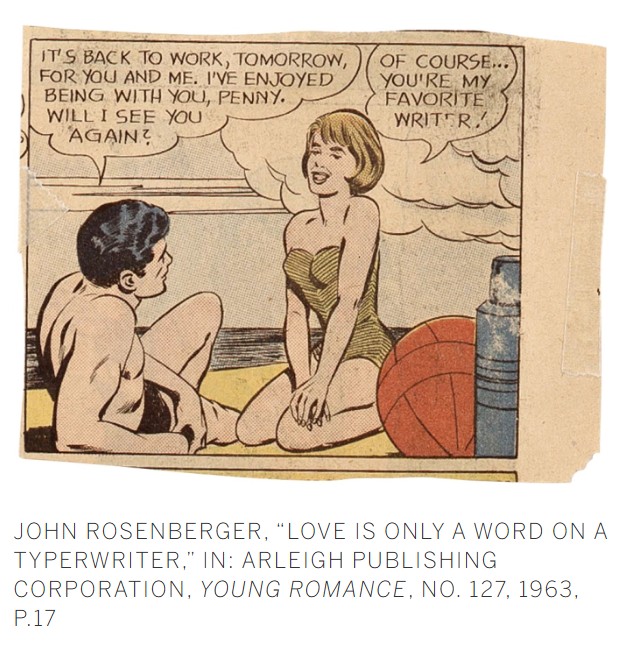
Executed in the twilight of his storied life and career, Nude with Bust (Study) offers an exceptional late example of Lichtenstein’s inimitable artistic process and incisive stylistic eye. Replete with art historical references, the work also reflects directly on the artist’s own oeuvre: within the composition, Lichtenstein includes painted versions of two of his sculptures, Woman: Sunlight, Moonlight and Endless Drip, the latter inspired by Constantin Brancusi’s Endless Column. These self-referential inclusions underscore how, even in his final years, Lichtenstein revisited and reimagined his own vocabulary, situating his late work in direct dialogue with the modernist masters who had shaped him. Beyond these explicit allusions, Nude with Bust (Study) functions as a poignant self-portrait in both style and subject, a realization reinforced by its very medium: the physical construction of the work on paper provides a remarkable record of Lichtenstein’s artistic process at its most distilled and reflective.
Part of Dorothy and Roy Lichtenstein personal collection, Nude with Bust (Study) carries particular resonance as a distillation of the artist’s late practice. It offers a summation of Lichtenstein’s formal innovations: his lifelong exploration of the boundary between the mechanical and the handmade as well as a pointed reengagement with the art historical references that had shaped his oeuvre.
Roommates (Study), 1993
Roommates (Study), 1993
Works from the Collection of Dorothy and Roy Lichtenstein
Sotheby’s New-York: 16 May 2025
Estimated: USD 600,000 – 800,000
USD 609,600
Roommates (Study) | Contemporary Day Auction | 2025 | Sotheby’s
ROY LICHTENSTEIN (1923 – 1997)
Roommates (Study), 1993
Colored pencil and graphite on paper
Image: 4 7/8 x 3 3/4 inches (12.5 x 9.7 cm)
Sheet: 9 5/8 x 8 inches (24.4 x 20.3 cm)
Signed and dated ’93 (on the verso)
Roy Lichtenstein’s Roommates (Study) offers a rare and intimate glimpse into the artist’s late-career process as he revisited the comic-inspired heroines that first catapulted him to fame in the 1960s. Rendered in graphite and colored pencil, this preparatory drawing forms the conceptual foundation for his 1994 screenprint Roommates, part of the celebrated Nudes series that would ultimately become the final major body of work done by the artist before his death in 1997. Intimately scaled yet saturated with Lichtenstein’s trademark visual vocabulary, the work exemplifies the artist’s fastidious approach to the process of production, distilled into an image that saw the artist revisit one of the dominant themes in the history of art: the nude.

Lichtenstein’s wall in his studio. Art © Estate of Roy Lichtenstein
Though women had long been a central component of Lichtenstein’s practice from the 1960s onwards, the Nudes marked the first time that Lichtenstein would explore the hallowed subject of the female nude. Whereas Lichtenstein’s paintings of women in the 1960s relied heavily upon melodramatic and romantic scenes of damsels in distress, his 1990s Nudes depict women of an entirely new generation, exuding a quiet, self-assured confidence that is unconcerned by the voyeuristic gaze brought upon by the viewer.
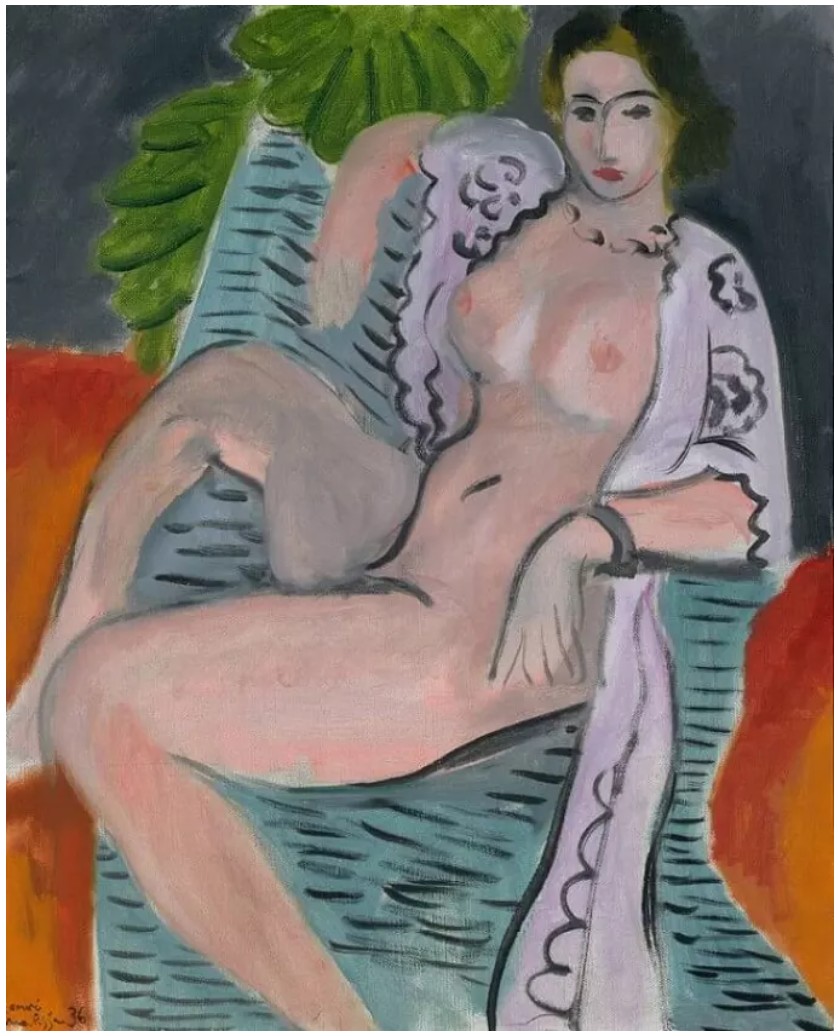
Henri Matisse, Draped Nude, 1936. Tate, London. Art © 2025 Succession H. Matisse / Artists Rights Society (ARS), New York.
In Roommates (Study), two female figures inhabit the composition separated both emotionally and figuratively. Offering no explicit narrative and allowing the ambiguity of the scene to flourish, the figure in the foreground turns toward the viewer with a gaze of subtle concern and contemplation while the nude figure behind her lounges casually, reading on the bed. Extending Lichtenstein’s career-long interest in depicting domesticity, rendering interior scenes that drew upon popular American culture and periodicals like Architectural Digest, the figures’ surroundings in Roommates (Study) is relatively bare yet carefully composed with elements that drew upon both his own corpus and that of the art historical canon. On the wall behind the lounging nude, Lichtenstein’s rendition of a painting by the De Stijl movement’s founder Theo van Doesburg hangs to the left of one of Lichtenstein’s own mirror paintings, while a potted plant in the lower right foreground—one of the artist’s recurring motifs—softens the space’s linear rigidity with organic form.
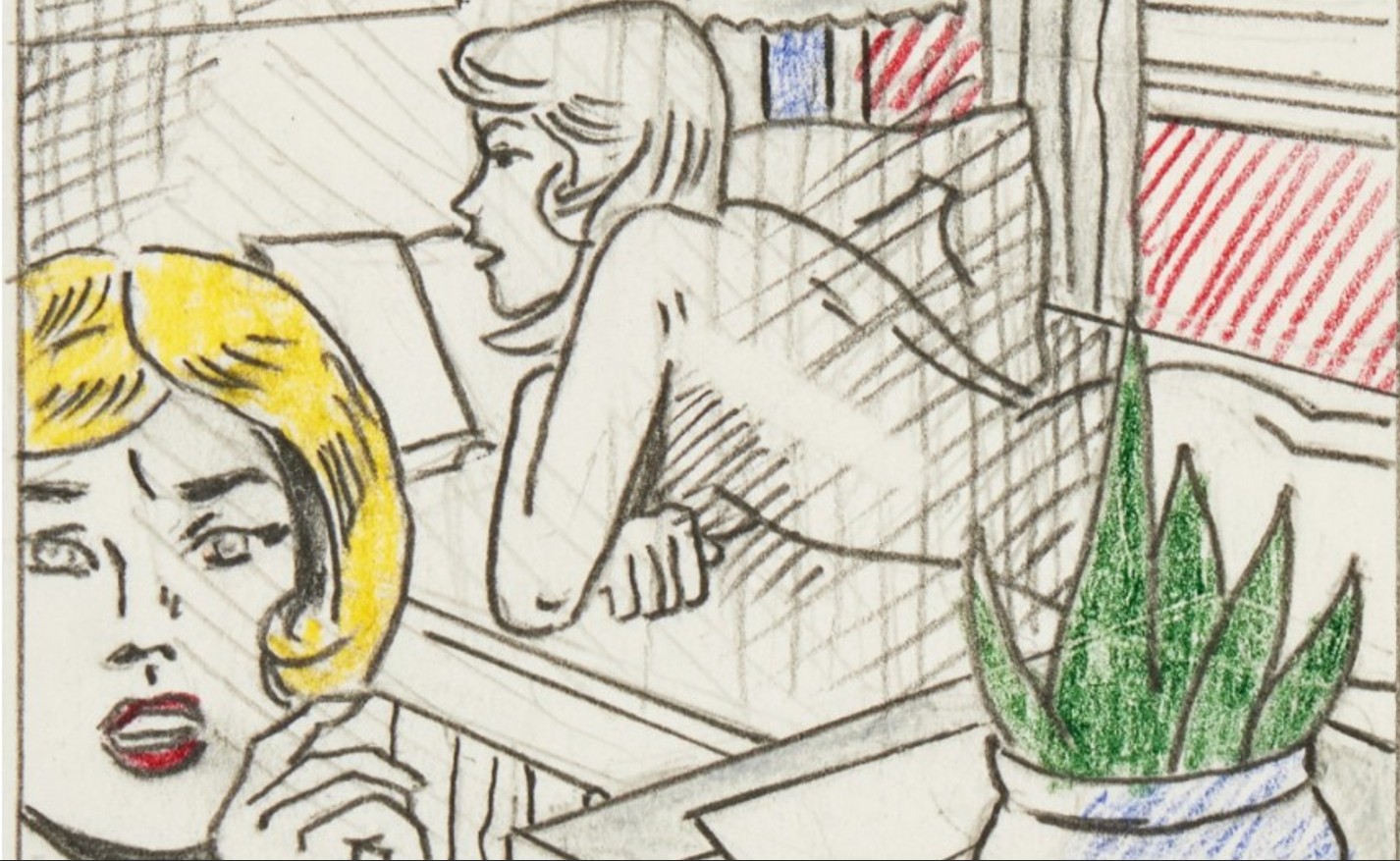
Throughout his career, Lichtenstein remained deeply engaged with Modernist questions — the relationship between subject and artist, the fleeting nature of reality, and the expressive possibilities of line, light, and color. His late Nudes series parallels Picasso’s own creative outpouring during the Marie-Thérèse period of the late 1920s and early ’30s, when Picasso produced a prolific body of work inspired by his youthful muse. Similarly, Lichtenstein’s 1990s Nudes represent a culmination of his dialogue with Modernism.
The present work also offers a rare glimpse into many of the formal processes that Lichtenstein undertook while creating suites of compositional studies that would seek to resolve questions of layout, coloring, and visual effect, laying the groundwork for compositional elements like his signature use of Ben-Day dots. As art historian Bernice Rose remarks, “The studies carry another code, to indicate areas of dots in color in the paintings” (Bernice Rose, Exh. Cat., New York, The Museum of Modern Art, The Drawings of Roy Lichtenstein, 1987, p. 31). The diagonal lines and crosshatching throughout the composition were used by Lichtenstein to signify where he would employ his dots in the finished product, resulting in a kind of Pop Art chiaroscuro — one that adds both depth and dimension while maintaining the flatness of the composition.
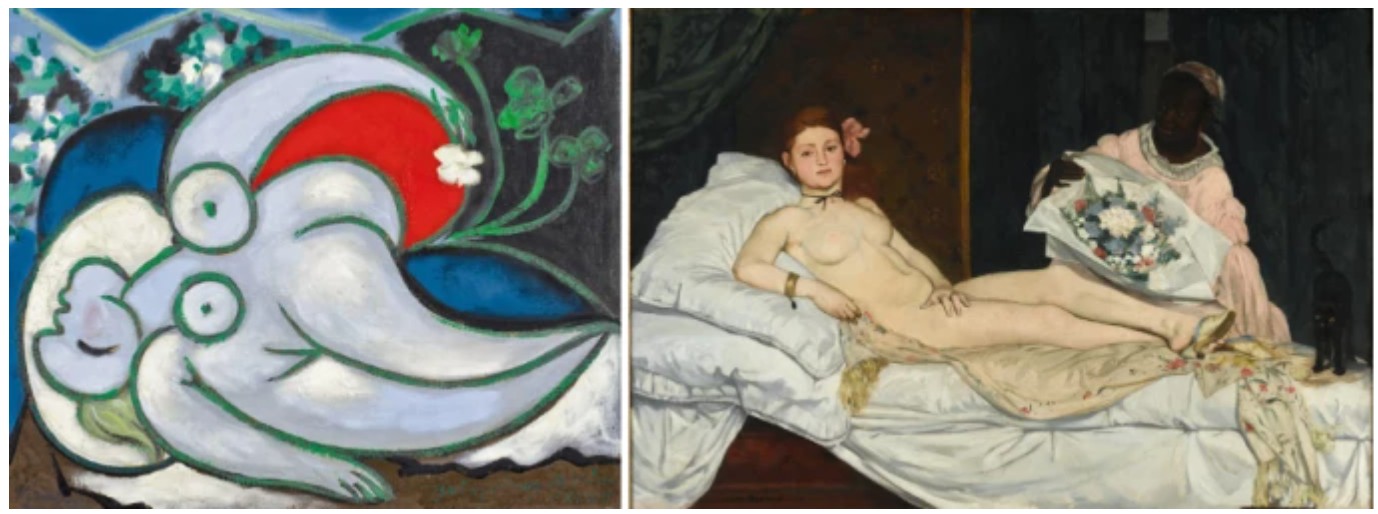
Left: Pablo Picasso, Reclining Nude, 1932, Musée National d’Art Moderne, Centre Georges Pompidou, Paris. Art © 2025 Estate of Pablo Picasso / Artists Rights Society (ARS), New York. Right: Edouard Manet, Olympia, 1863, Musée d’Orsay, Paris.
Embodying the triumphant return to the iconic comic-book heroines of the early 1960s, Lichtenstein’s Roommates (Study) combine the artist’s vibrant Pop Art sensibility with one of the most storied subjects of the art historical canon. In its economy of line, compositional clarity, and psychological nuance, it encapsulates the essence of his late style: reflective, formally rigorous, and unmistakably his own. As a standalone work, it holds its own as a jewel-like insight into one of Pop’s most intellectually complex practitioners—and a crucial artifact of one of his last and most reflective bodies of work.
Prints
Roy Lichtenstein’s Nudes Series was the final major series the artist produced before his death in 1997. The nine prints consider the traditional art historical genre of the female nude through the lens of Pop Art and mark Lichtenstein’s return to his iconic 1960s comic book style, consisting of Benday dot patterns, bright colors, and bold lines. Published and printed by Tyler Graphics Ltd., Mount Kisco, New York, Lichtenstein referenced his own oeuvre, integrating motifs found in earlier works from the Reflections, Imperfect, Water Lily, and Interiors Series. After four decades of radically probing fundamental questions of art and artmaking, it was apt for him to select the female nude as a symbol of returning to the beginning of both his oeuvre and art history.
READ ABOUT NUDE SERIES
FIND ALL HISTORICAL AUCTION RESULTS
Nude with Blue Hair, 1994
Works from the Collection of Dorothy and Roy Lichtenstein
Sotheby’s New-York: 20 November 2024
Estimated: USD 350,000 – 450,000
USD 960,000
Nude with Blue Hair | The Now and Contemporary Evening Auction | 2024 | Sotheby’s
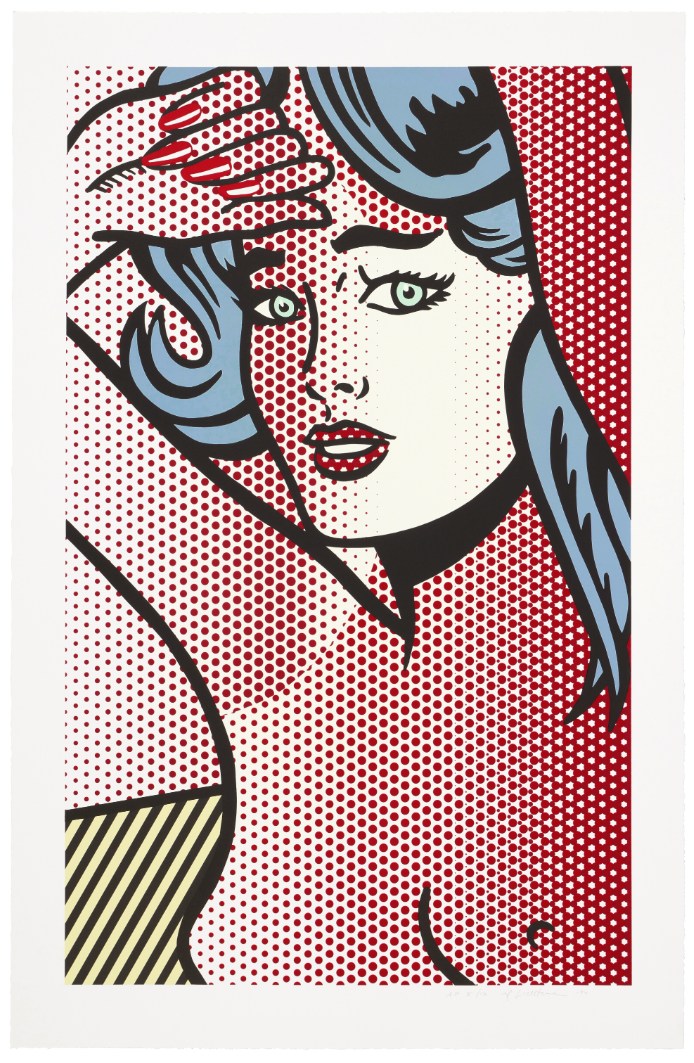
ROY LICHTENSTEIN (1923 – 1997)
Nude with Blue Hair, 1994
Relief print in colors on Rives BFK mold-made paper
Image: 51 1/2 x 31 3/4 inches (130 x 80.2 cm)
Sheet: 57 7/8 x 37 5/8 inches (146.7 x 95.3 cm)
Signed, dated ’94 and inscribed AP 5/12 (lower right)
This impression is one of 12 artist’s proofs aside from the numbered edition of 40
Of the works in the Nudes series, Nude with Blue Hair is perhaps the most intimate and introspective. Gazing directly towards the viewer, the comic heroine inhabits almost the entirety of the picture plane in a cinematic, Hitchcockian guise, her chest just exposed and arms outstretched above her. The immediacy of the image is underscored by the rich figure-ground relationship achieved using varying sizes of Benday dots which overlap several objects at a time, rather than be restricted within the boundaries of a certain object or outline, as was the case in Lichtenstein’s previous work. Describing the technique, Lichtenstein noted,
“It’s a little bit the way chiaroscuro isn’t just shadows but a way of combining the figure and background, or whatever’s near it in a dark area… You’re not confined to the object pattern, but the subject matter excuse for this is that it’s a shadow. And that’s interesting to me.”
One of few works that Dorothy and Roy Lichtenstein retained for their personal collection, Nude with Blue Hair, alongside the other choice examples from their collection, provides a rare glimpse into Roy’s process and artistic development. The very first time that these treasured works have been available on the public market, their presentation this fall represents a remarkable and unprecedented opportunity to acquire masterworks from pivotal moments in Roy’s practice, and the works he and Dorothy cherished most.
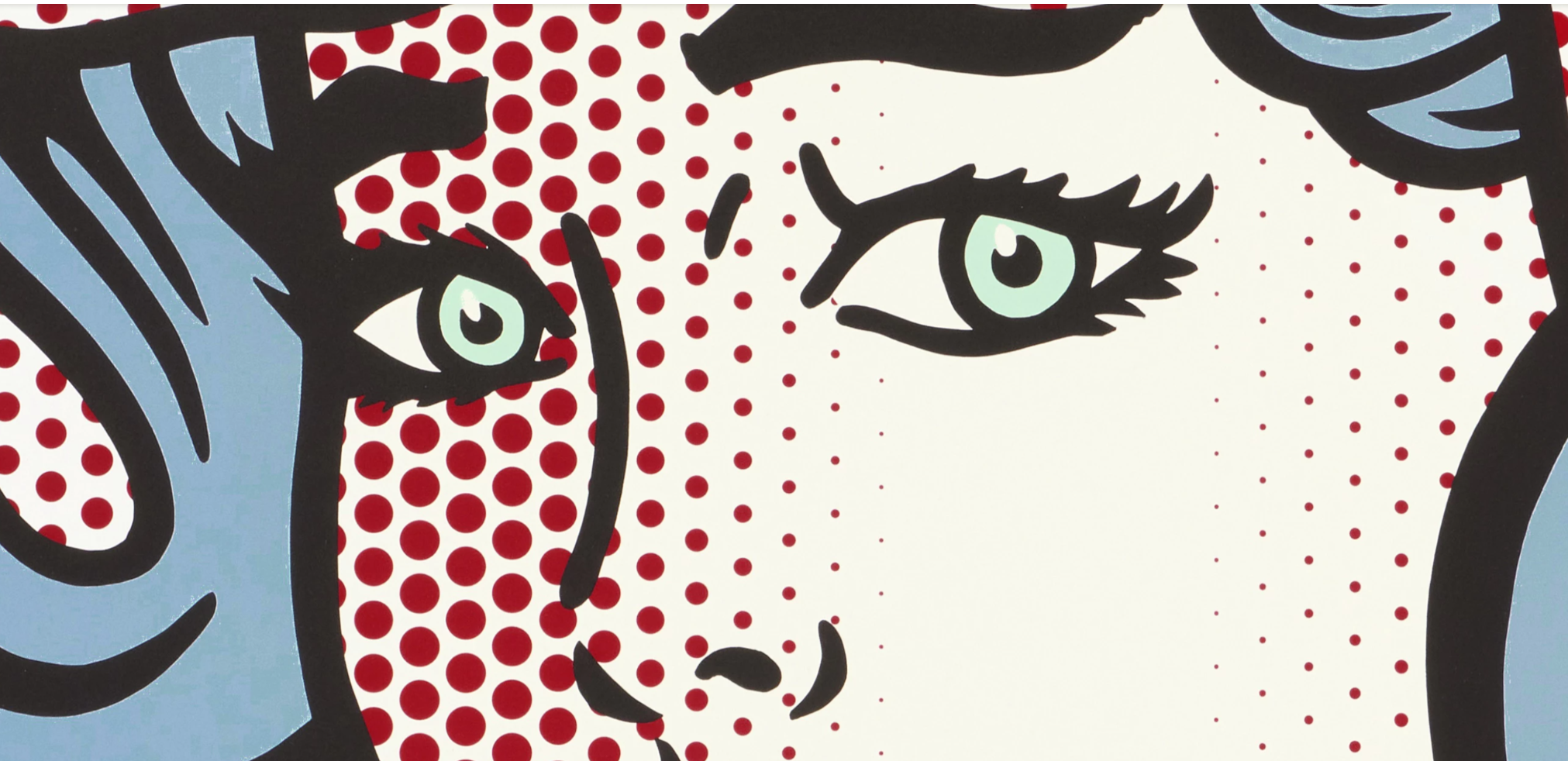
With cornflower blue highlights and striking red nails, Nude with Blue Hair moves beyond self-reference and introduces stylistic ingenuity and an element of voyeurism with the overlapping qualities of Benday dots. As the dots glide across the figure’s body, the gradations of light and shadow mimic reflections across a lens, further manipulating the viewer’s concept of reality. As scholar Sheena Wagstaff describes, “Lichtenstein’s Nudes series, created in the last four years of his life, are a profoundly innovative and active meditation upon the relationship of creation and perception.” (Sheena Wagstaff, “Late Nudes,” in Exh. Cat., Art Institute of Chicago (and traveling), Roy Lichtenstein: A Retrospective, May 2012 – May 2013, pp. 103-104) Nude with Blue Hair is no exception; at alluring proportions, the present work evokes Lichtenstein’s graphic sensibility while simultaneously illustrating his adept sophistication and mastery of the printmaking medium.
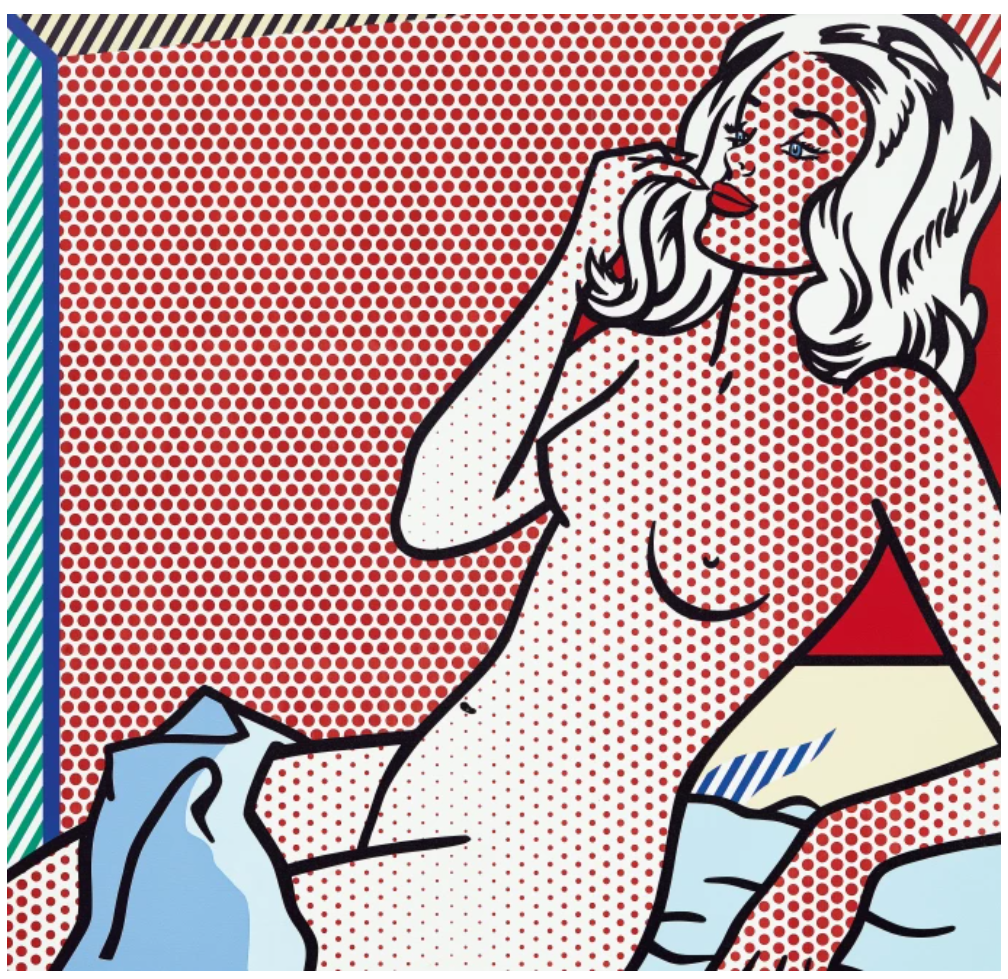
Roy Lichtenstein, Nude Sunbathing, 1995. Private Collection. Sold at Sotheby’s New York in May 2017 for $24 million.
Art © Estate of Roy Lichtenstein
In 1993, Roy Lichtenstein embarked on his final print series with Tyler Graphics and unveiled images of the female nude for the very first time. Hailing from this iconic series of Nudes, Nude with Blue Hair represents a notable point in Lichtenstein’s late oeuvre: creating a greater undulation of light and space using subtler, more delicate tones and overlapping Benday dots. Based on “love” and “girl” comic book illustrations, the Nudes became a starting point for what would come to be Lichtenstein’s final paintings before the artist’s passing in 1997, such as Nude with Pyramid, in the collection of The Broad, Los Angeles, Nude at Vanity, in the collection of the San Francisco Museum of Modern Art, and Nude with Bust, the study for which is on offer this season. Nude with Blue Hair not only evinces Lichtenstein’s characteristic Pop aesthetic, but reveals the artist’s profound influence and accomplishment in the field of contemporary printmaking.
Roommates, 1994
Works from the Collection of Dorothy and Roy Lichtenstein
Sotheby’s New-York: 21 November 2024
Estimated: USD 250,000 – 350,000
USD 1,200,000
Roommates | Contemporary Day Auction | 2024 | Sotheby’s
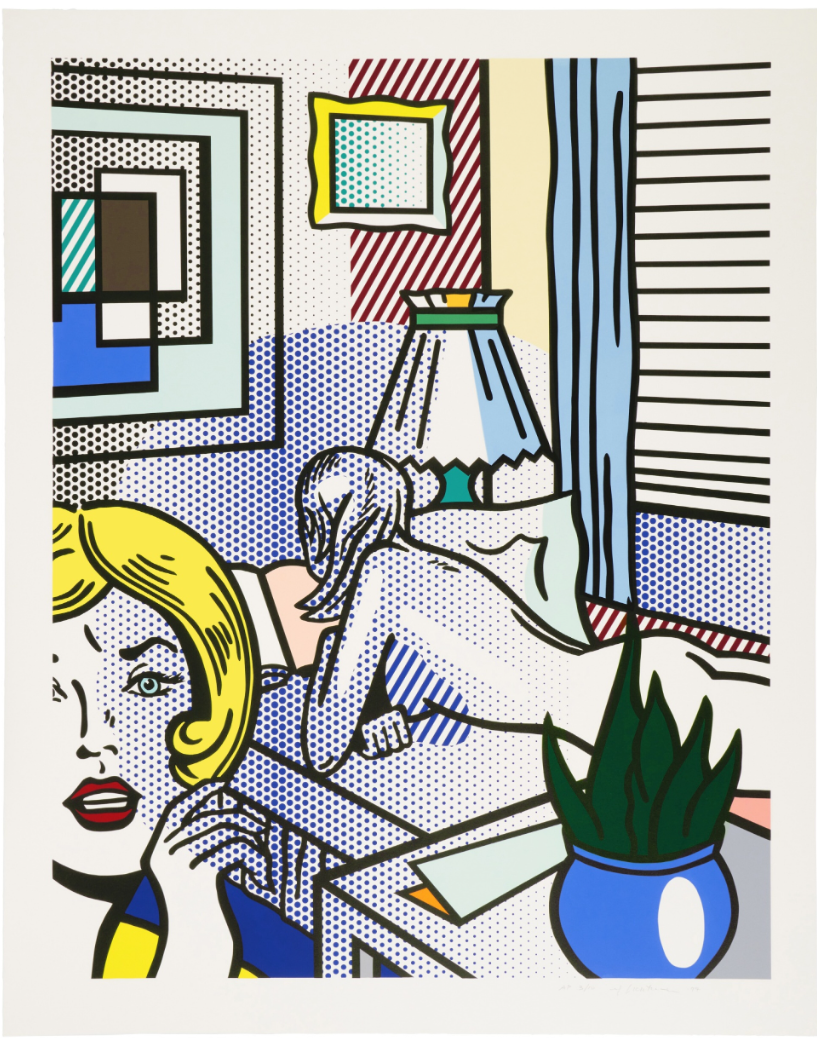
ROY LICHTENSTEIN (1923 – 1997)
Roommates, 1994
Relief print in colors on Rives BFK mold-made paper
Image: 57 1/2 x 45 inches (146.1 x 114.5 cm)
Sheet: 64 1/4 x 51 1/8 inches (163.1 x 129.7 cm)
Signed in pencil, dated ’94 and inscribed AP 3/10 (lower right)
This impression is one of ten artist’s proofs aside from the numbered edition of 40
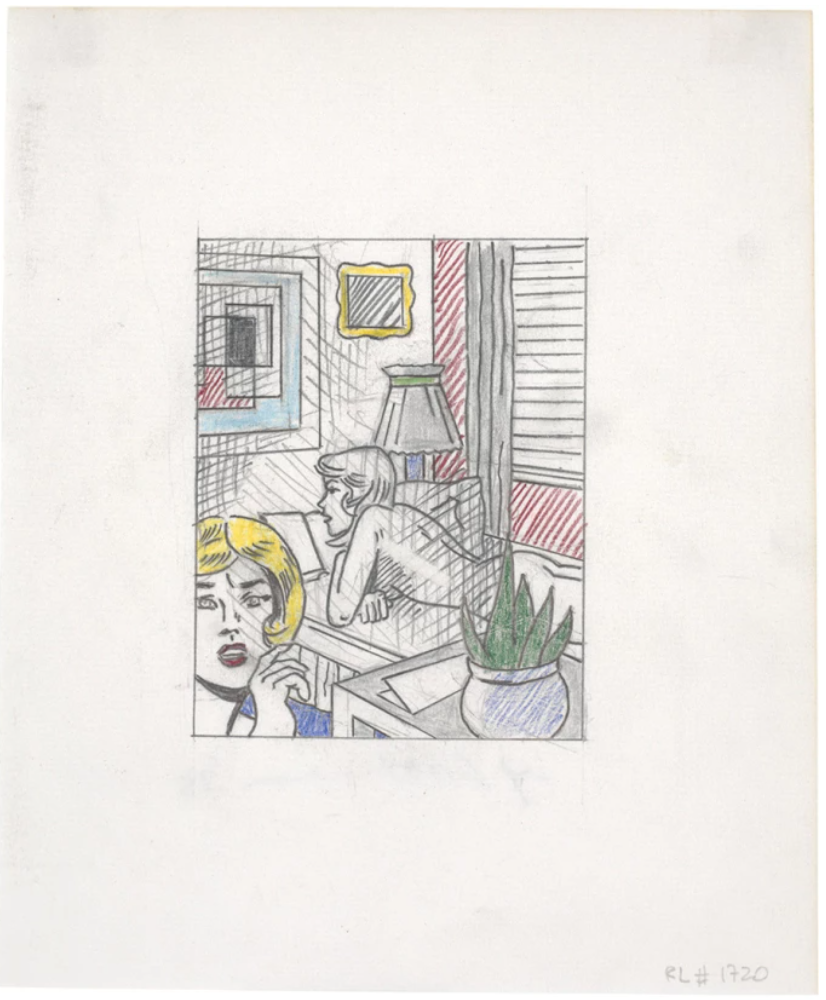
Roy Lichtenstein, Roommates (Study), 1993. Private Collection. Art © Roy Lichtenstein 2024
Nude with Yellow Pillow, 1994
Works from the Collection of Dorothy and Roy Lichtenstein
Sotheby’s New-York: 21 November 2024
Estimated: USD 250,000 – 350,000
USD 1,2o0,000
Nude with Yellow Pillow | Contemporary Day Auction | 2024 | Sotheby’s
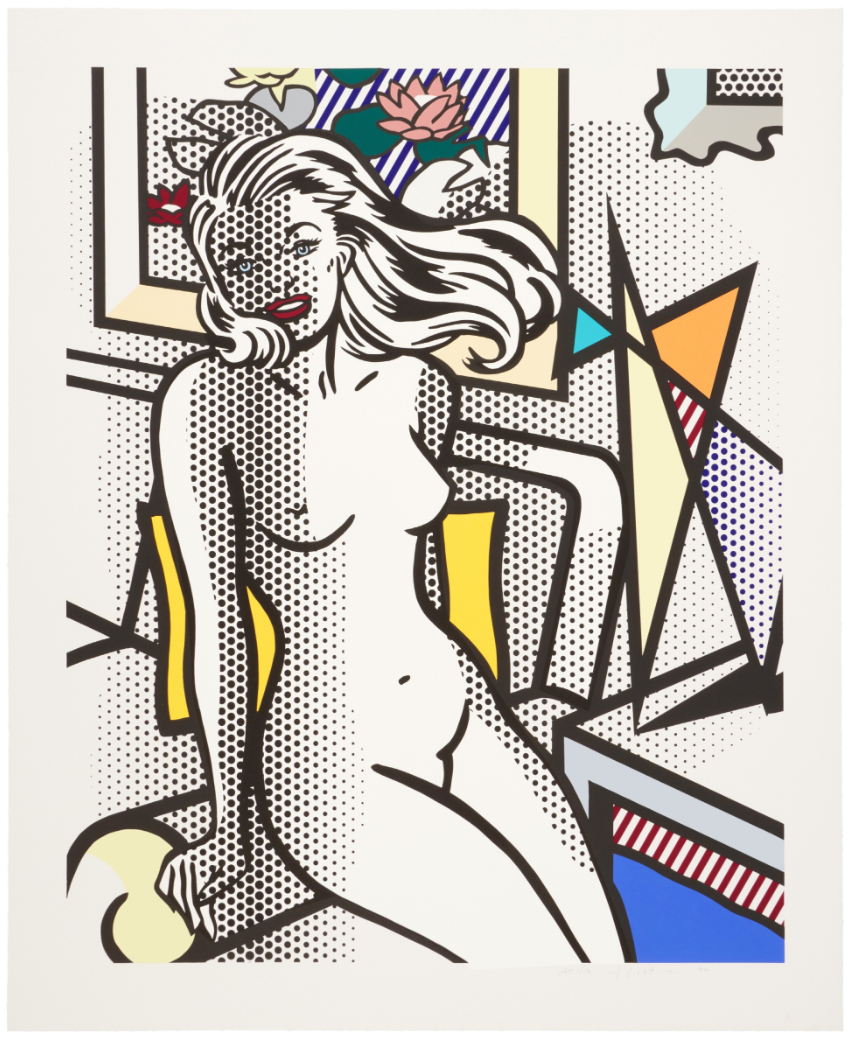
ROY LICHTENSTEIN (1923 – 1997)
Nude with Yellow Pillow, 1994
Relief print in colors on Rives BFK mold-made paper
Image: 46×37 inches (117×94 cm)
Sheet: 52 5/8 x 43 1/8 inches (113.3 x 109.4 cm)
Signed in pencil, dated ’94 and inscribed AP 1/12 (lower right)
This impression is one of 12 artist’s proofs aside from the numbered edition of 60