Unpretentious and childlike, these organic objects likely speak to Kusama’s early memories of growing up in the rural provincial town of Matsumoto, and of formative visits to the botanical greenhouses and meadows of her grandparents’ plant nursery. A particularly beloved subject from the 1980s onwards, the butterfly possesses spiritual significance in Japanese culture. A symbol of metamorphosis and transformation, it is believed by many to transport the soul between terrestrial and celestial realms after death. Its associated mythology pertains to Kusama’s own practice, her deep and enduring meditations on the self, the cosmos and eternity. Her sensitivity to the fragile creature is indeed a personal as well as artistic one.
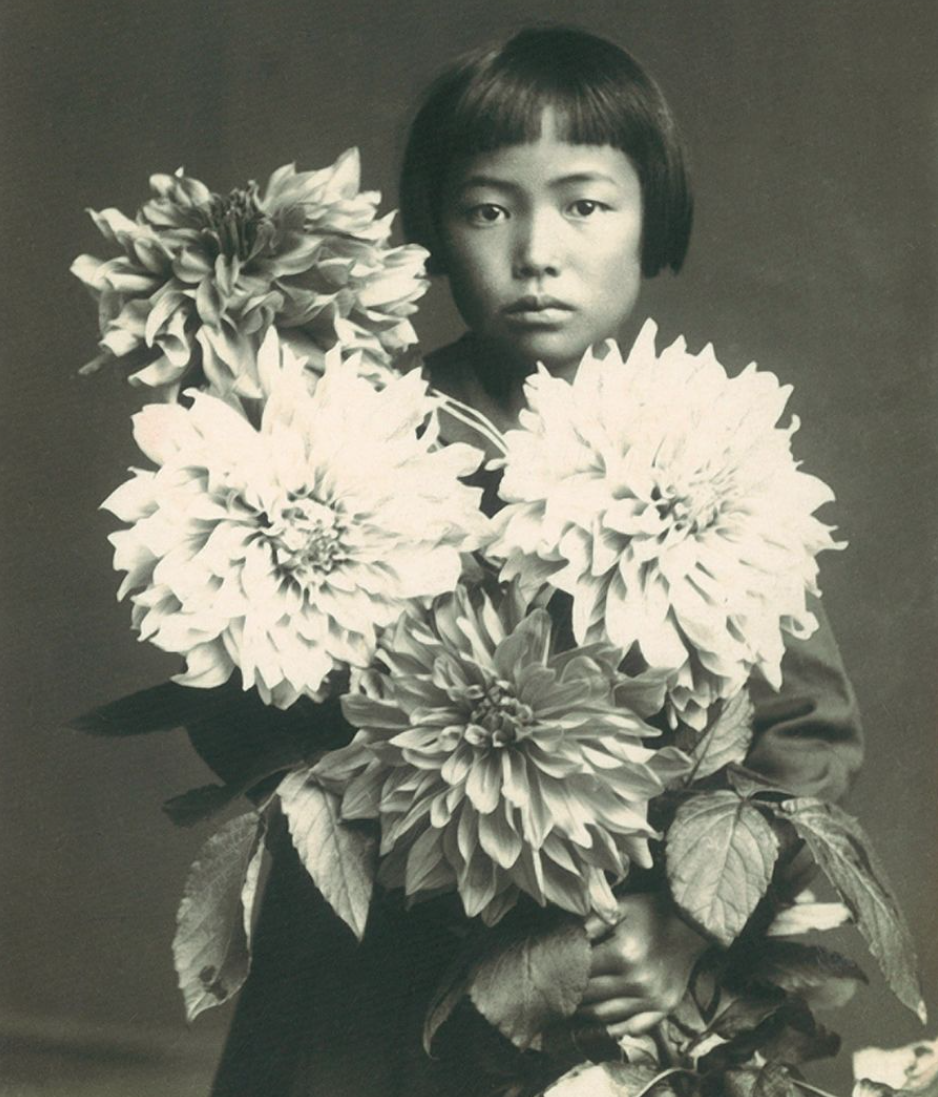
Yayoi Kusama at the age of ten in 1939. Private collection. © 2024 YAYOI KUSAMA.
1. Butterfly
Butterflies hold a special place in the artwork of Yayoi Kusama, serving as powerful symbols within her prints that reflect both traditional Japanese cultural meanings and her own artistic vision. Throughout her career, Kusama has frequently incorporated butterflies into her work, using their delicate and transformative nature to explore themes of change, beauty, and the ephemeral nature of life.
In traditional Japanese society, butterflies are often seen as symbols of transformation, renewal, and the soul. They are associated with the fleeting beauty of life and the impermanence that is central to Japanese aesthetics, such as in the concept of mono no aware—an awareness of the transience of all things. Kusama’s use of butterflies taps into this rich cultural symbolism, but she brings her own unique interpretation to the motif, often blending it with her signature patterns and vibrant colors.
For Kusama, butterflies represent not only beauty and transformation but also freedom and transcendence. Her prints often depict butterflies in bold, repetitive patterns, creating a sense of movement and energy that reflects the creatures’ natural grace and the infinite possibilities they symbolize. This approach aligns with Kusama’s broader exploration of infinity and the dissolution of boundaries, themes that are central to much of her work.
Butterflies in Kusama’s art also serve as a metaphor for her personal journey as an artist. Just as the butterfly undergoes metamorphosis, Kusama has continually evolved and reinvented herself throughout her career, breaking free from the constraints of traditional roles and expectations. The butterfly, with its ability to move freely between different states of being, mirrors Kusama’s own quest for creative and personal liberation.
Through her prints, Kusama elevates the butterfly from a mere symbol of beauty to a representation of profound spiritual and emotional transformation. Her work invites viewers to contemplate the deeper meanings behind this delicate creature, encouraging a reflection on the cycles of life, the pursuit of freedom, and the continual process of change that defines the human experience. By intertwining traditional Japanese symbolism with her own distinctive style, Kusama creates a visual language that resonates with universal themes while remaining deeply personal.
In Kusama’s hands, the butterfly becomes a powerful metaphor for transformation, illustrating the beauty and potential inherent in change. Her art captures the delicate balance between the fragility and strength of life, using the butterfly to symbolize the resilience and grace that come with embracing one’s own evolution. Through these vibrant and thought-provoking works, Kusama continues to inspire and challenge perceptions, making the butterfly a central and enduring motif in her artistic legacy.
Butterfly, 1982
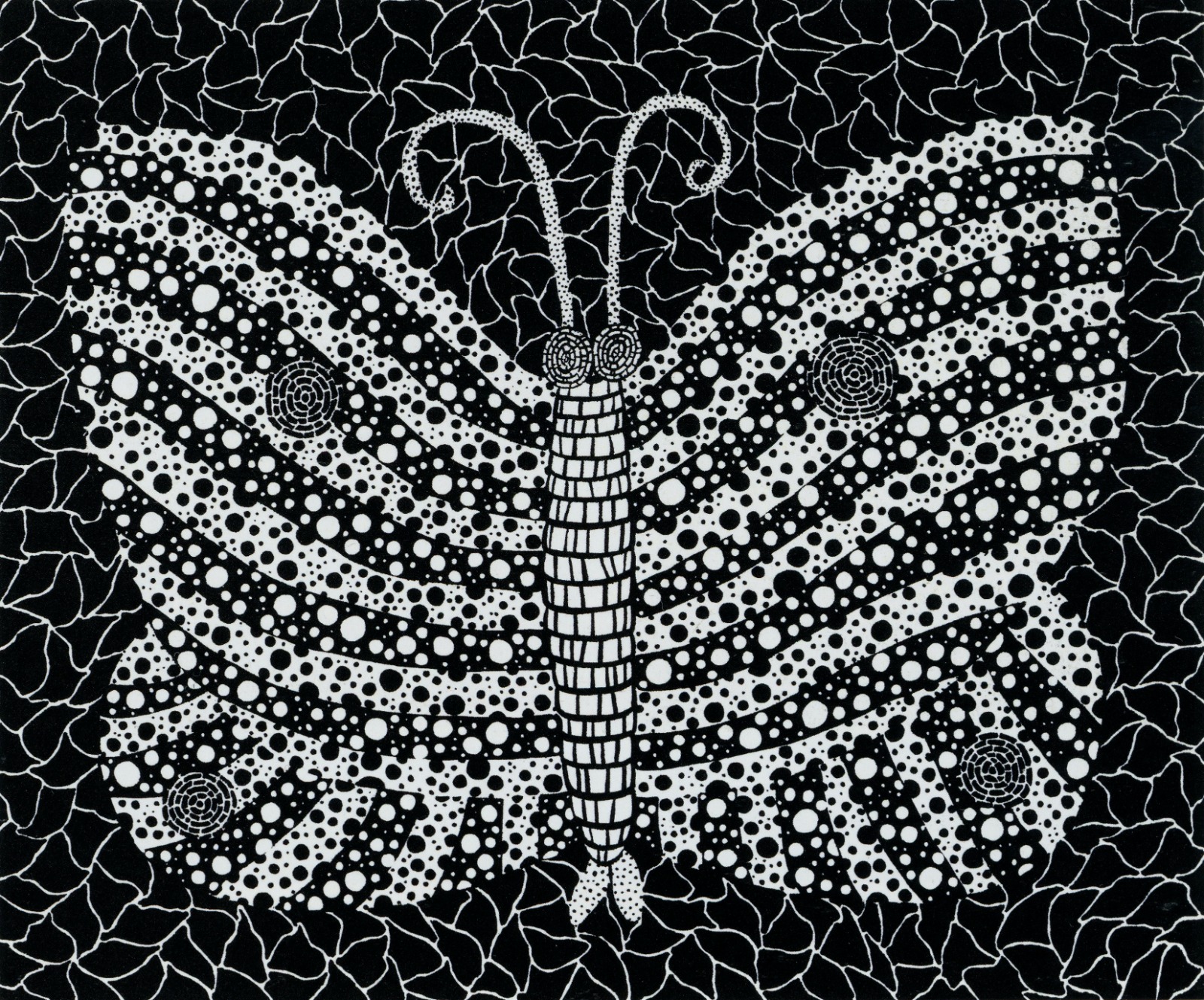
Butterfly, 1982
Screen-print in colors on Verin d’Arches paper
Sheet: 26.8 x 32.1 cm (10.6 x 12.6 inches)
Edition: 50 + 5 AP + 3 PP
Literature: ABE 18
BUTTERFLY, 1985
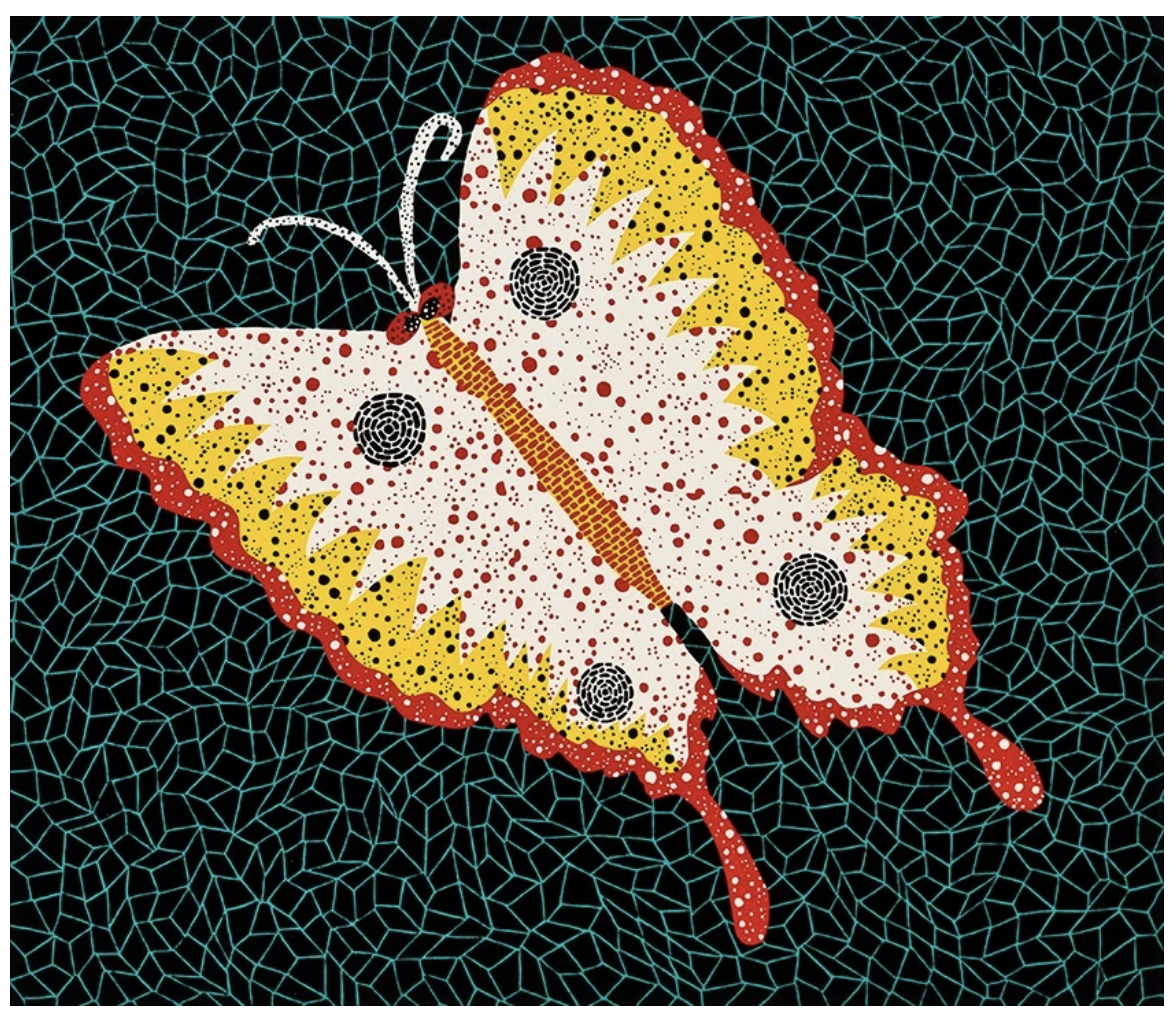
BUTTERFLY, 1985
Screen-print in colors on Verin d’Arches paper
Sheet: 53 x 60.8 cm (19.9 x 23.9 inches)
Edition: 100 + 10 AP
Literature: ABE 8
BUTTERFLY, 1985
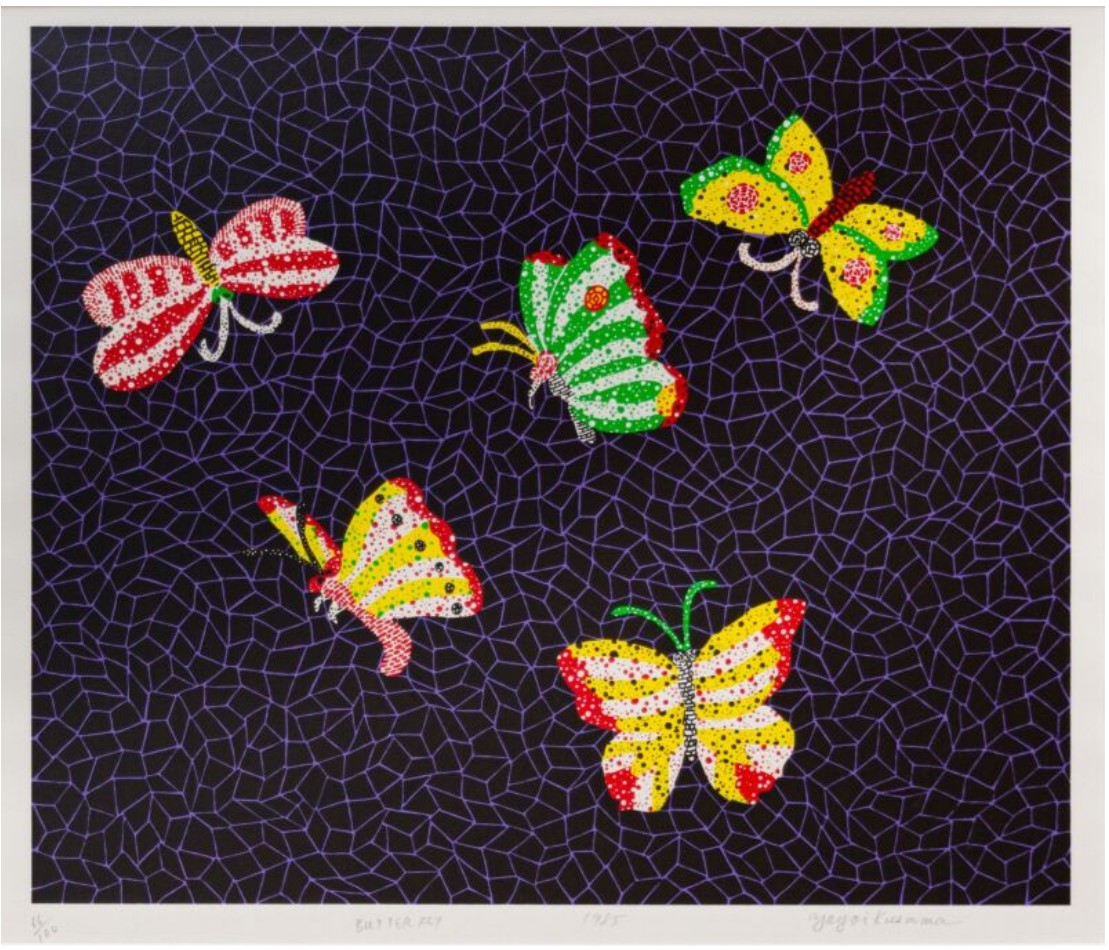
BUTTERFLY, 1985
Screen-print in colors on Verin d’Arches paper
Sheet: 53.2 x 60.8 cm (20 x 23.9 inches)
Edition: 100 + 10 AP
Literature: ABE 82
Butterfly, 1988
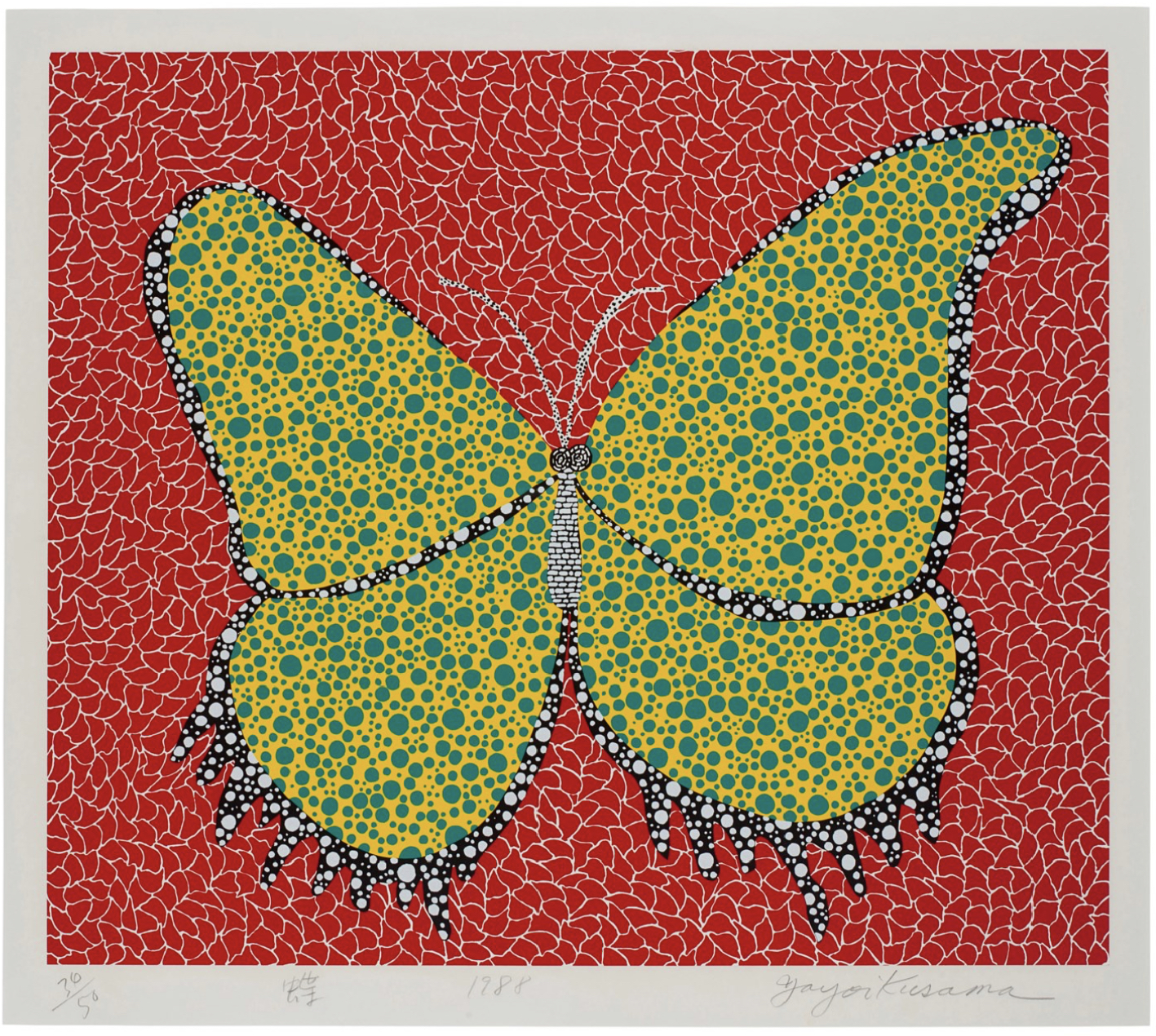
Butterfly, 1988
Screen-print in colors on Verin d’Arches paper
Sheet: 79.5 x 93.5 cm (31.3 x 36.8 inches)
Edition: 50 + 5 AP + 3 PP
Literature: ABE 119
Papillon (I), 2000
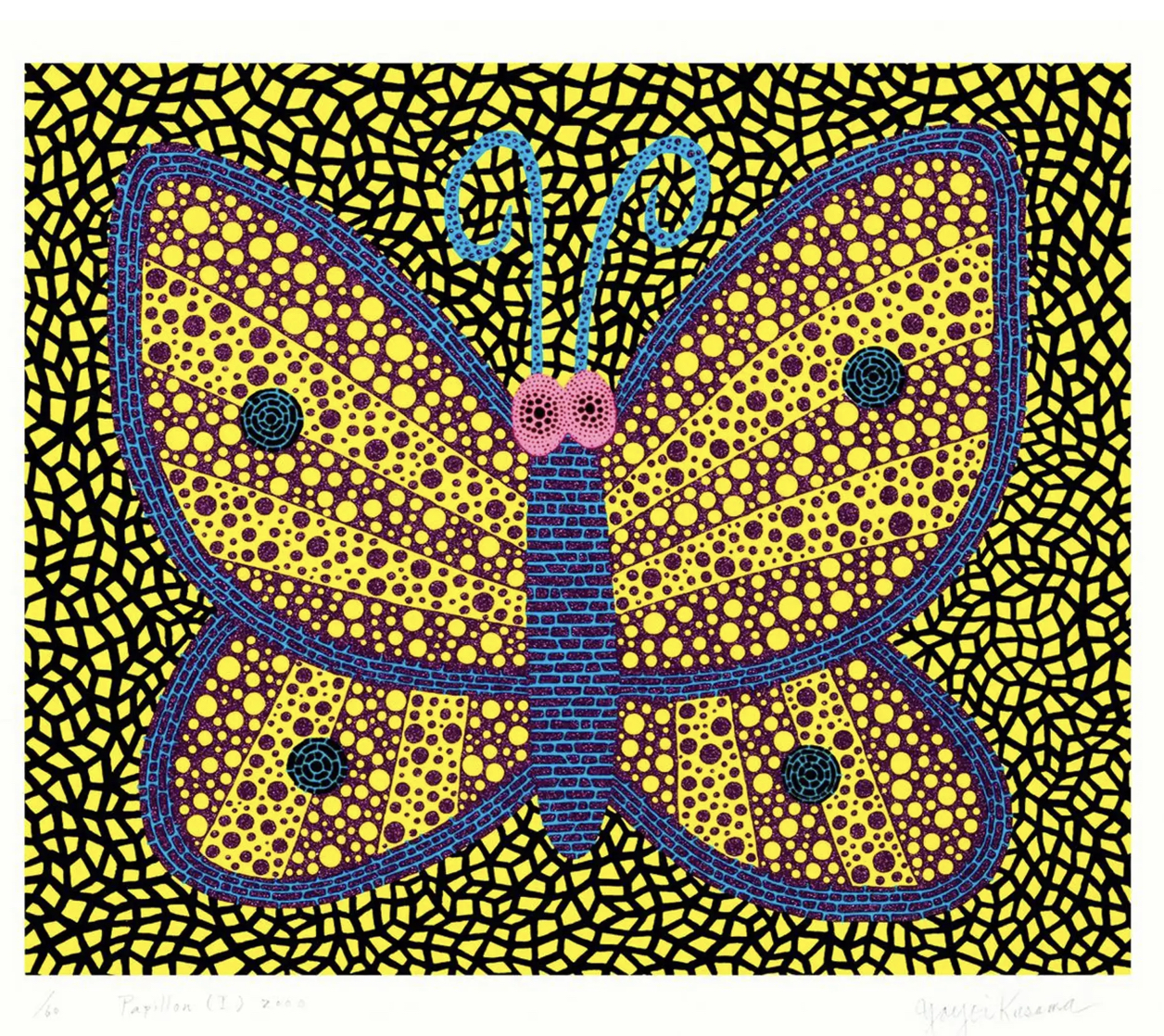
Papillon (I), 2000
from Amour Pour Toujours
Screen-print and lamé in colors on BFK Rives paper
Sheet: 50×65 cm (19.7 x 25.6 inches)
Edition: 60 + 7 AP + 13 HC
Literature: ABE 288
Papillon (II), 2000
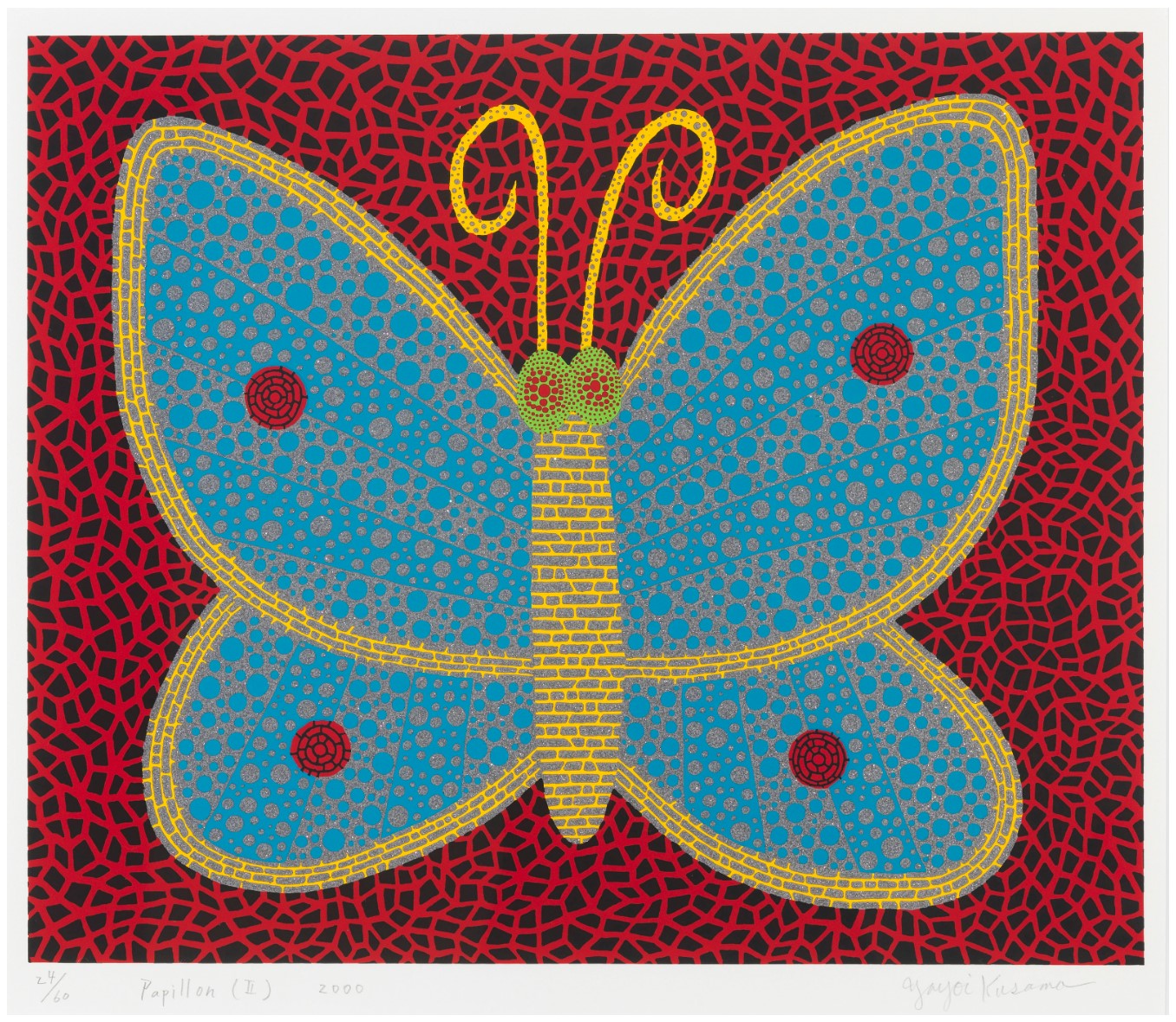
Papillon (II), 2000
from Amour Pour Toujours
Screen-print and lamé in colors on BFK Rives paper
Sheet: 50×65 cm (19.7 x 25.6 inches)
Edition: 60 + 7 AP + 12 HC
Literature: ABE 289
2. Sea, Fish, and other Sea Creatures
Yayoi Kusama’s relationship with animals and sea creatures in her art is deeply symbolic, reflecting her broader exploration of life, the natural world, and her own psychological landscape. Through her depictions of creatures like seahorses, fish, and other marine life, Kusama delves into themes of transformation, survival, and the interconnectedness of all living things.
In her prints, these creatures often appear as repetitive patterns, a hallmark of Kusama’s style that echoes her experiences with hallucinations and obsessive thoughts. The sea, with its vastness and mystery, serves as a metaphor for the subconscious mind, where these creatures inhabit a dreamlike space. Seahorses, for instance, may symbolize grace and fragility, yet they also possess a resilience that reflects Kusama’s own persistence in overcoming personal struggles.
Fish, frequently seen in her works, represent fluidity and the constant movement of life, mirroring the artist’s own journey through various phases of creativity and self-discovery. The vibrant colors and intricate details she uses to depict these creatures highlight their beauty, while also pointing to the delicate balance of life in the natural world.
Kusama’s fascination with the ocean and its inhabitants could also be seen as a reflection of her feeling of being ‘adrift’ in the vastness of the universe, a theme that recurs in her work. The repetitive depiction of these creatures suggests a form of meditation, a way for Kusama to connect with the natural world while grappling with her inner turmoil.
Overall, Kusama’s use of animals and sea creatures in her art is a powerful symbol of her connection to nature, her exploration of the subconscious, and her ongoing quest for healing and self-expression.
Fish, 1986 (ABE 88)

Fish, 1986
Screen-print in colors on Izumi paper
Sheet: 54 x 61.8 cm (21.3 x 24.3 inches)
Edition: 75 + 8 AP + 3 PP
Literature: ABE 88
Seahorses, 1989 (ABE 128)
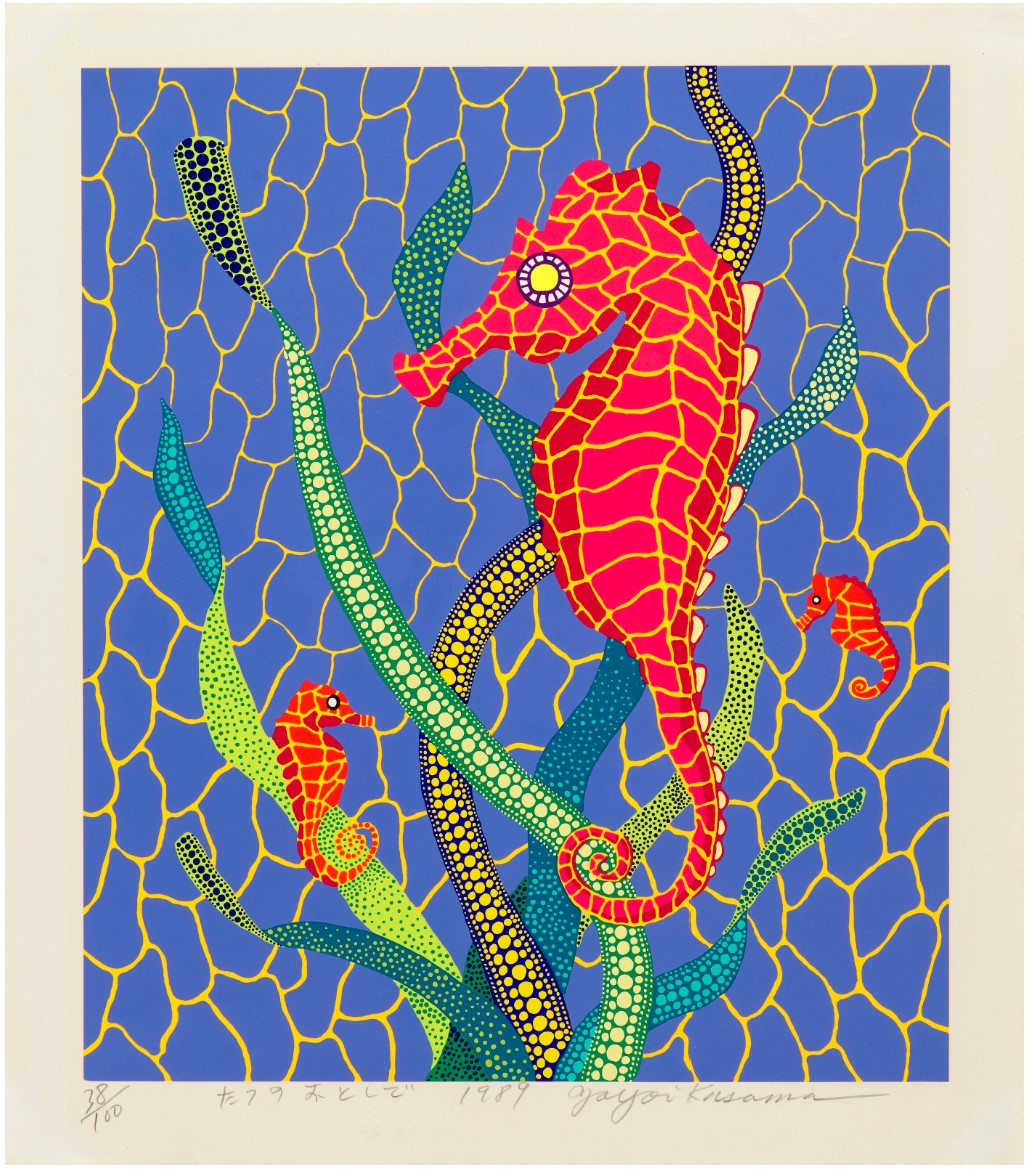
Seahorses, 1989
Screen-print in colors on Izumi paper
Sheet: 61 x 53.5 cm (24 x 21.1 inches)
Edition: 100 +10 AP + 3 PP
Literature: ABE 128
Depth of the Sea, 1989 (ABE 125)
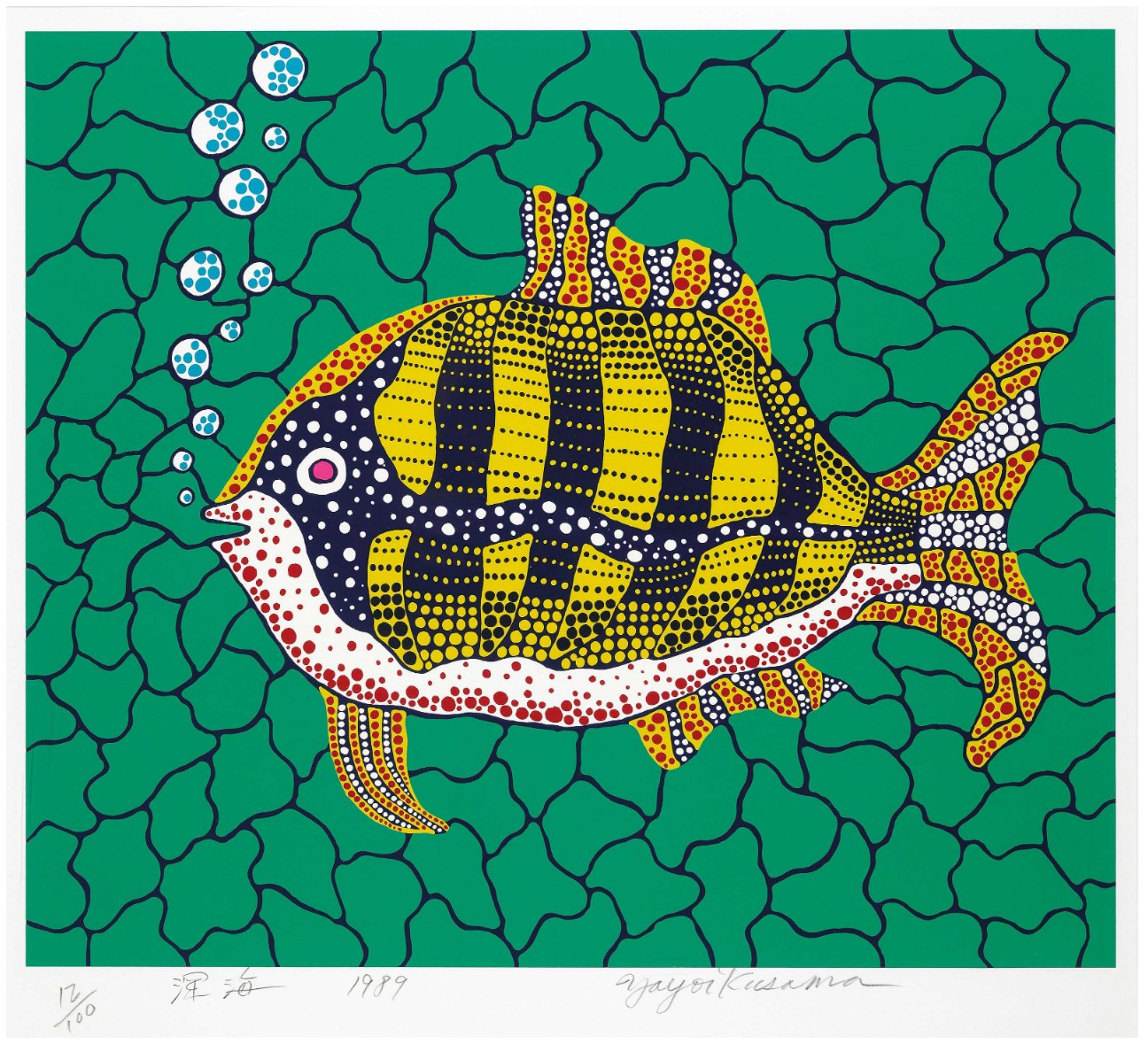
Depth of the Sea, 1989
Screen-print in colors on Izumi paper
Sheet: 53.5 x 61 cm (21.1 x 24 inches)
Edition: 100 + 10 AP + 3 PP
Literature: ABE 135
Sea, 1989 (ABE 136)
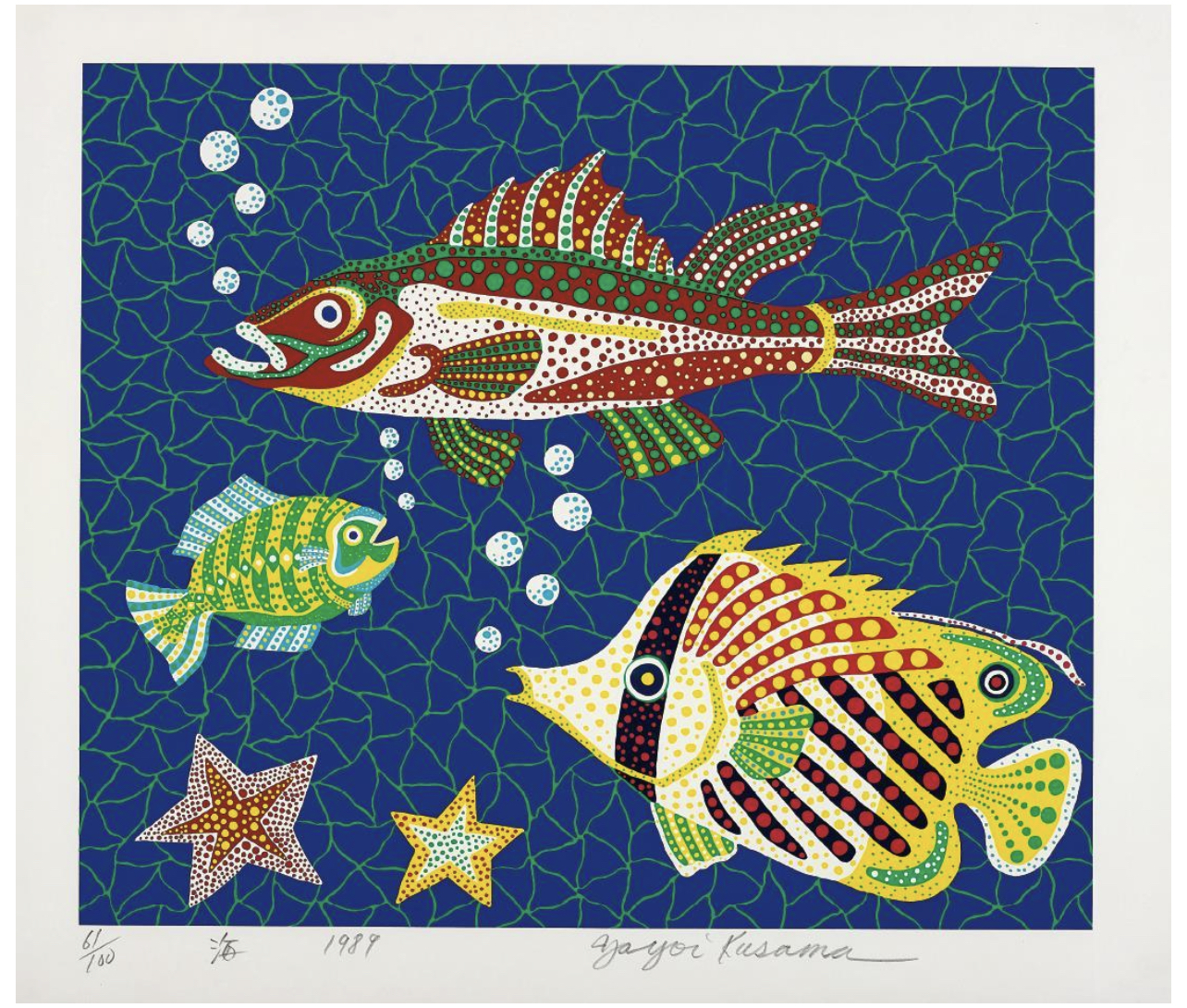
Sea, 1989
Screen-print in colors on Izumi paper
Sheet: 53.5 x 61 cm (21.1 x 24 inches)
Edition: 100 + 10 AP + 3 PP
Literature: ABE 136
Goldfish, 1990 (ABE 139)
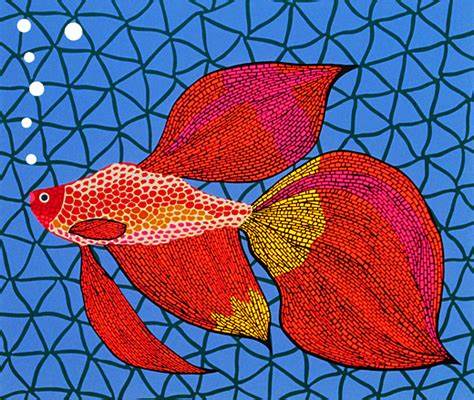
Goldfish, 1990
Screen-print in colors on Izumi paper
Sheet: 54×63 cm (21.3 x 24.8 inches)
Edition: 100 + 10 AP + 3 PP
Literature: ABE 139
3. Lizard, Snail, and other Earth Creatures
In the world of Yayoi Kusama, earth creatures like lizards hold a special place within her printmaking, embodying themes of transformation, resilience, and the interconnectedness of life. Kusama often draws on the symbolic qualities of these animals to explore the complex relationship between the natural world and the human psyche.
Lizards, for instance, are frequently associated with regeneration and adaptability, given their ability to shed their skin and regenerate lost limbs. In Kusama’s art, they symbolize the continuous cycle of life and the capacity for renewal, both physically and mentally. This reflects her own journey of coping with and transforming her personal struggles into powerful artistic expressions.
Kusama’s use of these creatures also speaks to a deeper connection with nature and its inherent wisdom. By depicting lizards and other earth-bound animals, she emphasizes the importance of resilience and survival in the face of challenges. The intricate patterns and vibrant colors that characterize these creatures in her prints mirror the complexity and beauty of life itself, urging viewers to consider the delicate balance that exists within the natural world.
Through these earth creatures, Kusama invites us to reflect on the qualities we share with them—adaptability, persistence, and the ability to transform. They become symbols not only of the natural world’s mysteries but also of the inner strength that lies within each of us.
Snails hold a unique symbolism in Yayoi Kusama’s work, particularly within her exploration of earth-bound creatures. In her art, snails often represent themes of patience, persistence, and the slow but steady progress of life. The snail’s spiral shell, a recurring motif in Kusama’s prints, mirrors her fascination with infinity and the cyclical nature of existence.
The slow, deliberate movement of snails can be seen as a metaphor for Kusama’s own artistic journey, marked by continuous effort and enduring determination. Despite the challenges and obstacles she has faced, like the snail, she progresses steadily, embracing the journey rather than rushing toward the destination. The spiral shape of the snail’s shell is also significant, echoing the repetitive patterns that Kusama uses to express her experiences with obsessive thoughts and hallucinations. This spiral can be seen as a symbol of the inward and outward journey of self-discovery and the infinite possibilities of the mind.
In this way, snails in Kusama’s art symbolize both the meditative pace of life and the intricate beauty found in the smallest details of the natural world. They remind us that even the most modest creatures possess profound wisdom, embodying the themes of endurance and the quiet, persistent strength that defines Kusama’s work.
Snail, 1989 (ABE 127)
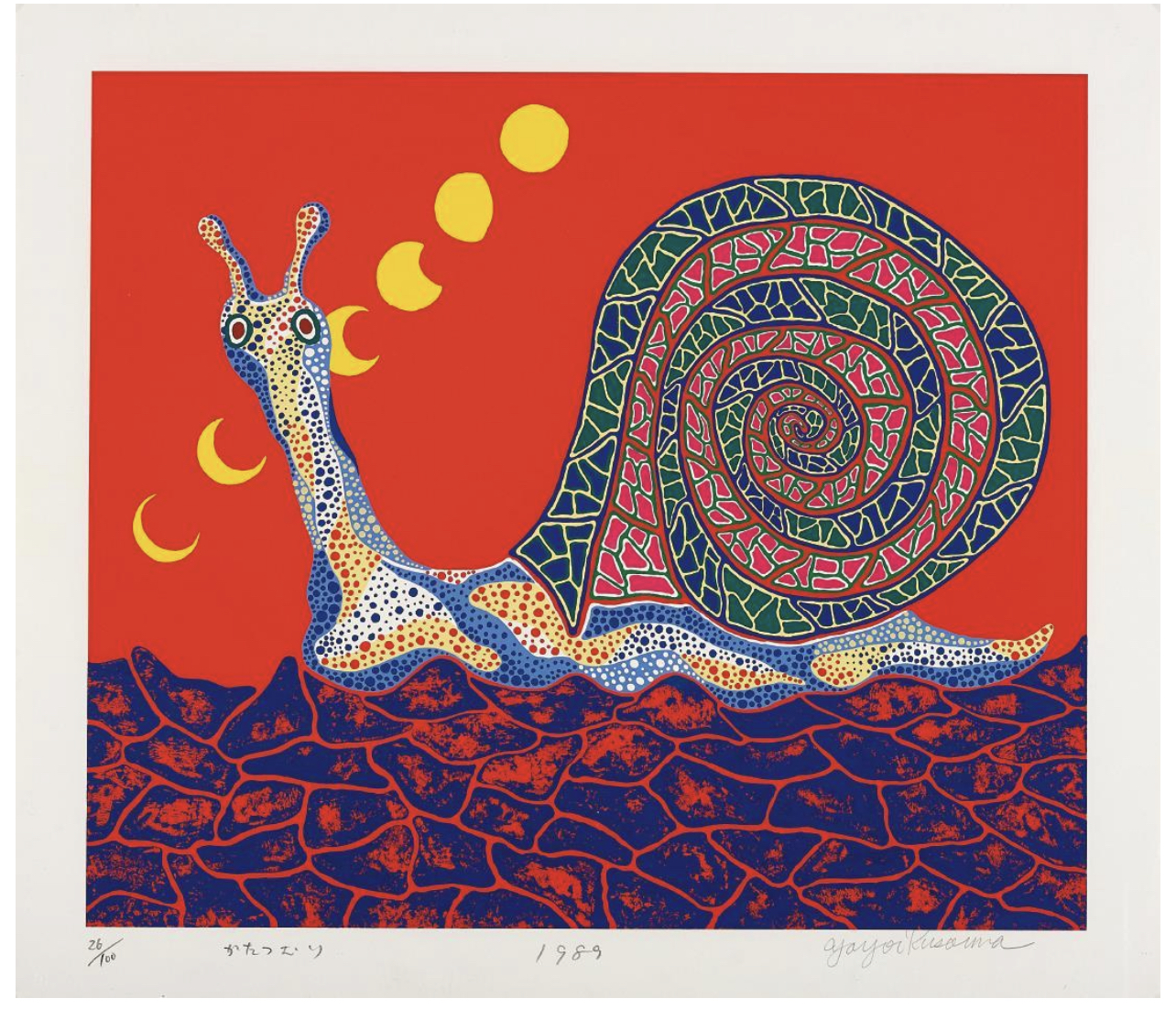
Snail, 1989
Screen-print in colors on Izumi paper
Sheet: 53.5 x 61 cm (21.1 x 24 inches)
Edition: 100 + 8 AP
Literature: ABE 127
Black Lizards, 1989 (ABE 132)
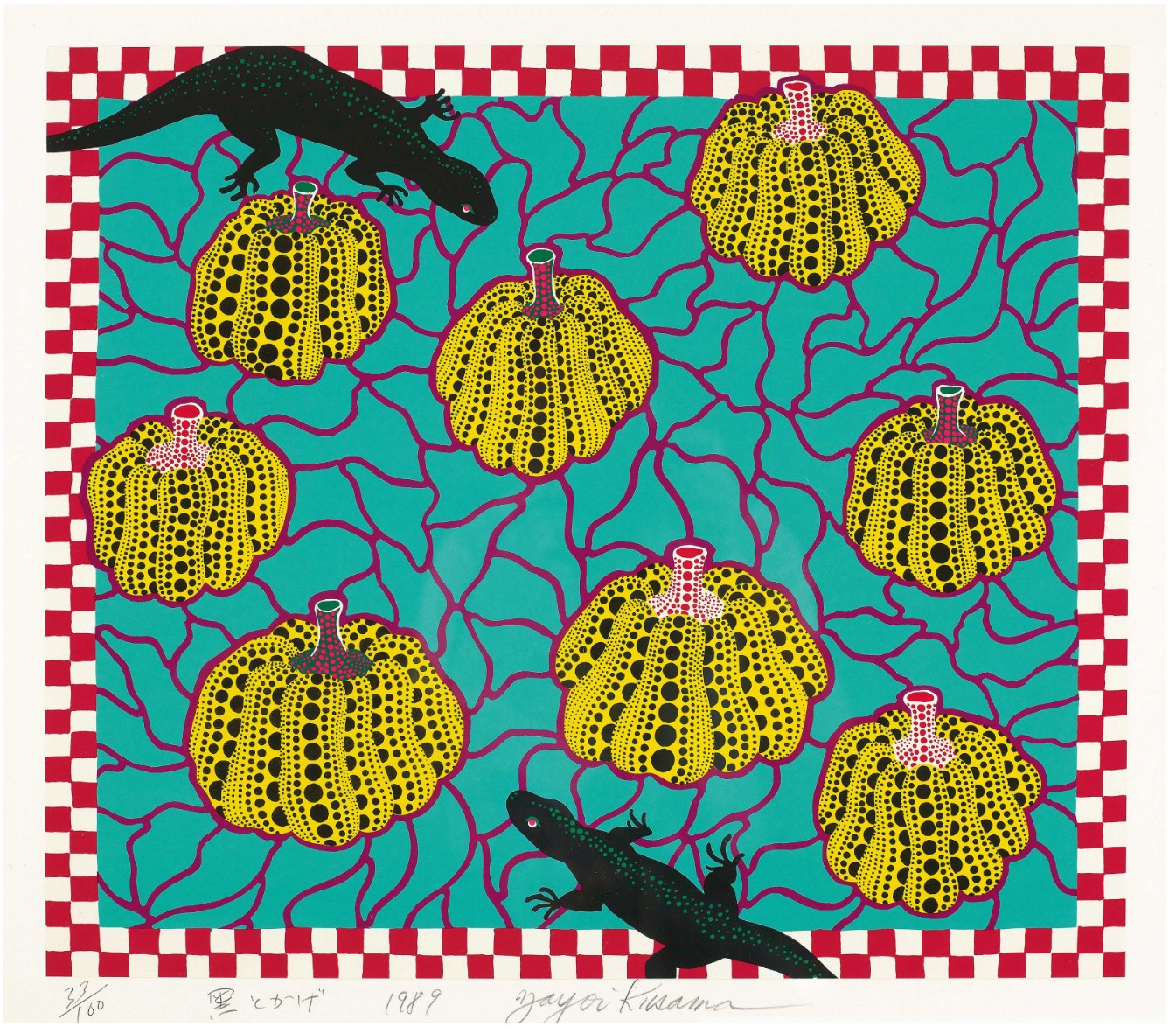
Black Lizards, 1989
Screenprint in colors on Izumi paper
Sheet: 53.5 x 61 cm (21.1 x 24 inches)
Edition: 100 + 10 AP + 3 PP
Literature: ABE 132
Lizard, 1989 (ABE 133)
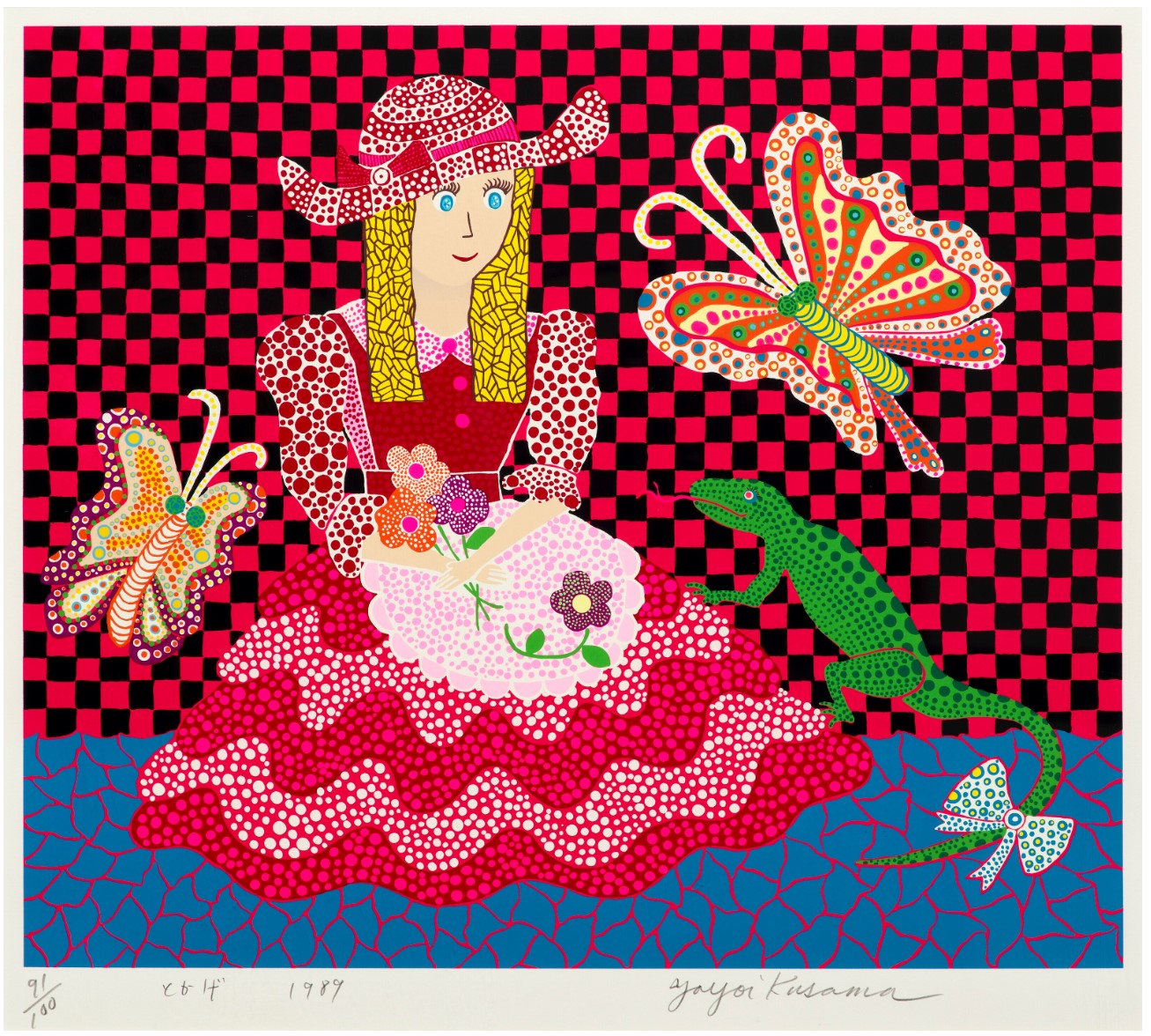
Lizard, 1989
Screen-print in colors on Izumi paper
Sheet: 53.5 x 61 cm (21.1 x 24 inches)
Edition: 100 + 10 AP + 3 PP
Literature: ABE 133