JEAN-MICHEL BASQUIAT (1960-1988)
Untitled, 1981
Acrylic and oilstick on canvas
50×119 inches (127 x 302.3 cm)
Signed and dated ‘Jean-Michel Basquiat 1981’ (on the reverse)
Provenance
Diego Cortez, New York, acquired directly from the artist
Galerie Bruno Bischofberger, Zürich
Private collection, Switzerland
Anon. sale; Christie’s, New York, 10 November 2004, lot 48
Private collection, Asia
Anon. sale; Sotheby’s, London, 12 October 2007, lot 48
Acquired at the above sale by the present owner
Christie’s New-York: 7 November 2023
Estimated: USD 10,000,000 – 15,000,000
USD 11,910,000
JEAN-MICHEL BASQUIAT (1960-1988) (christies.com)
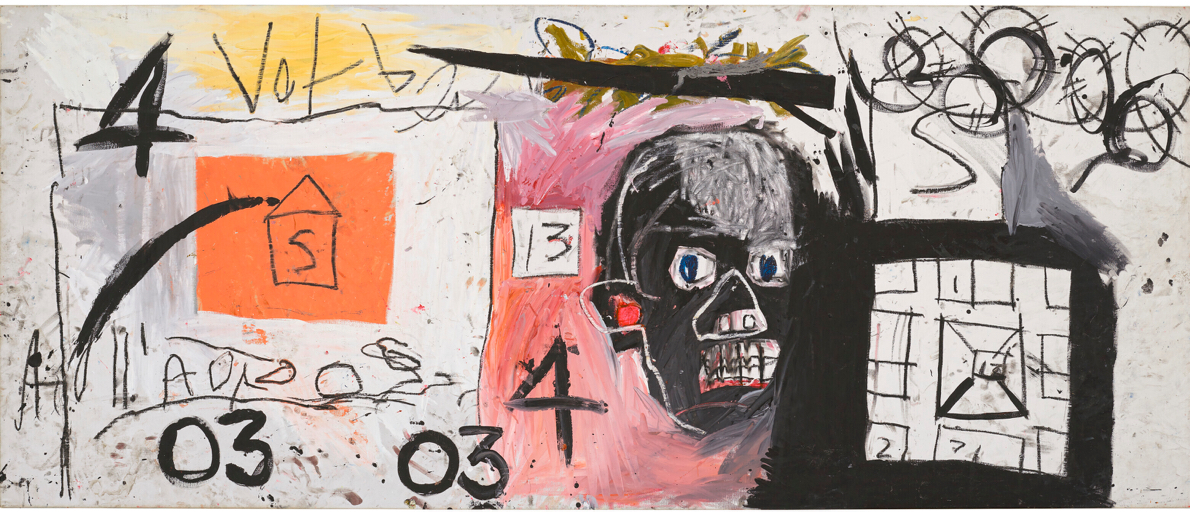
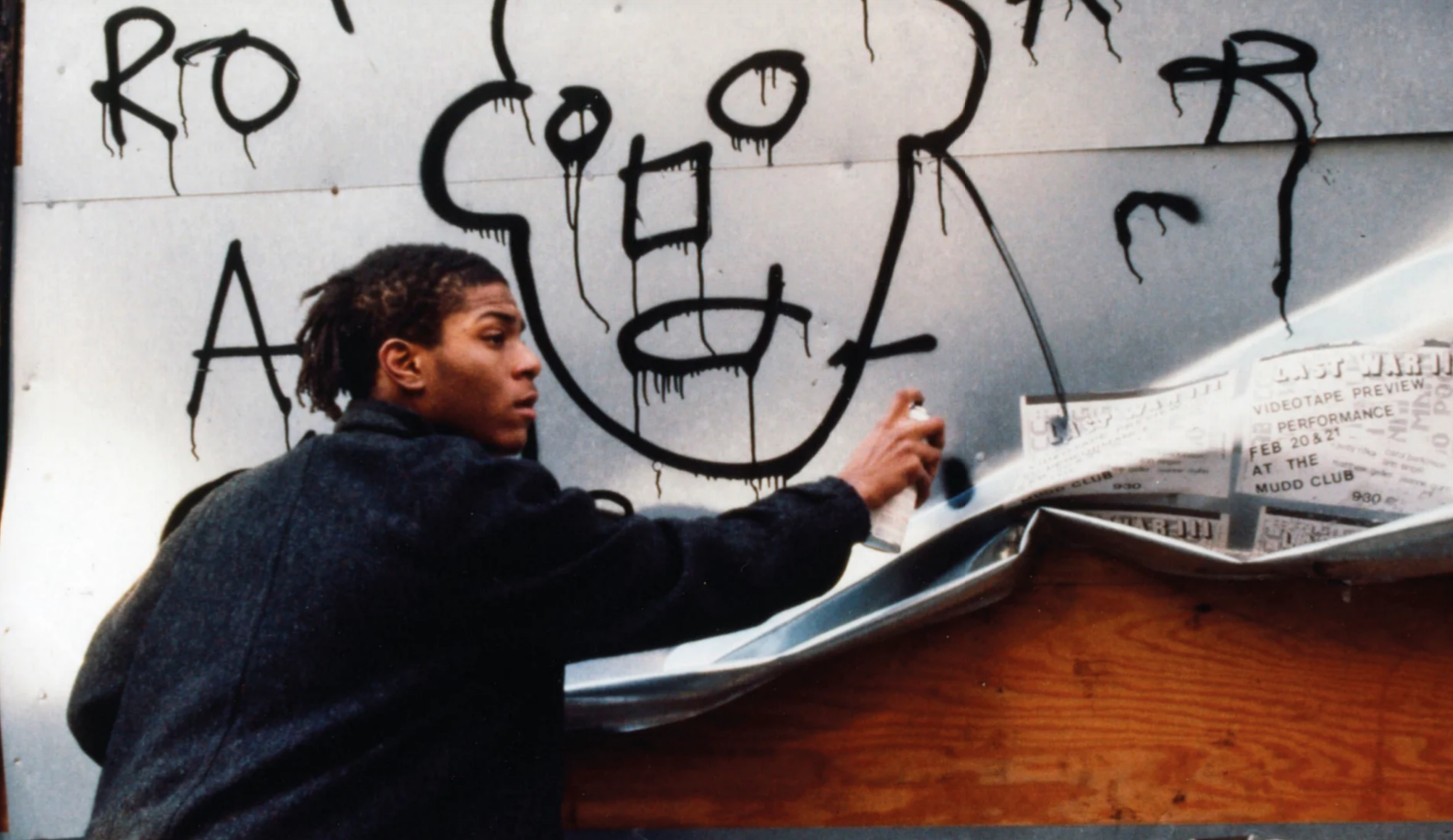
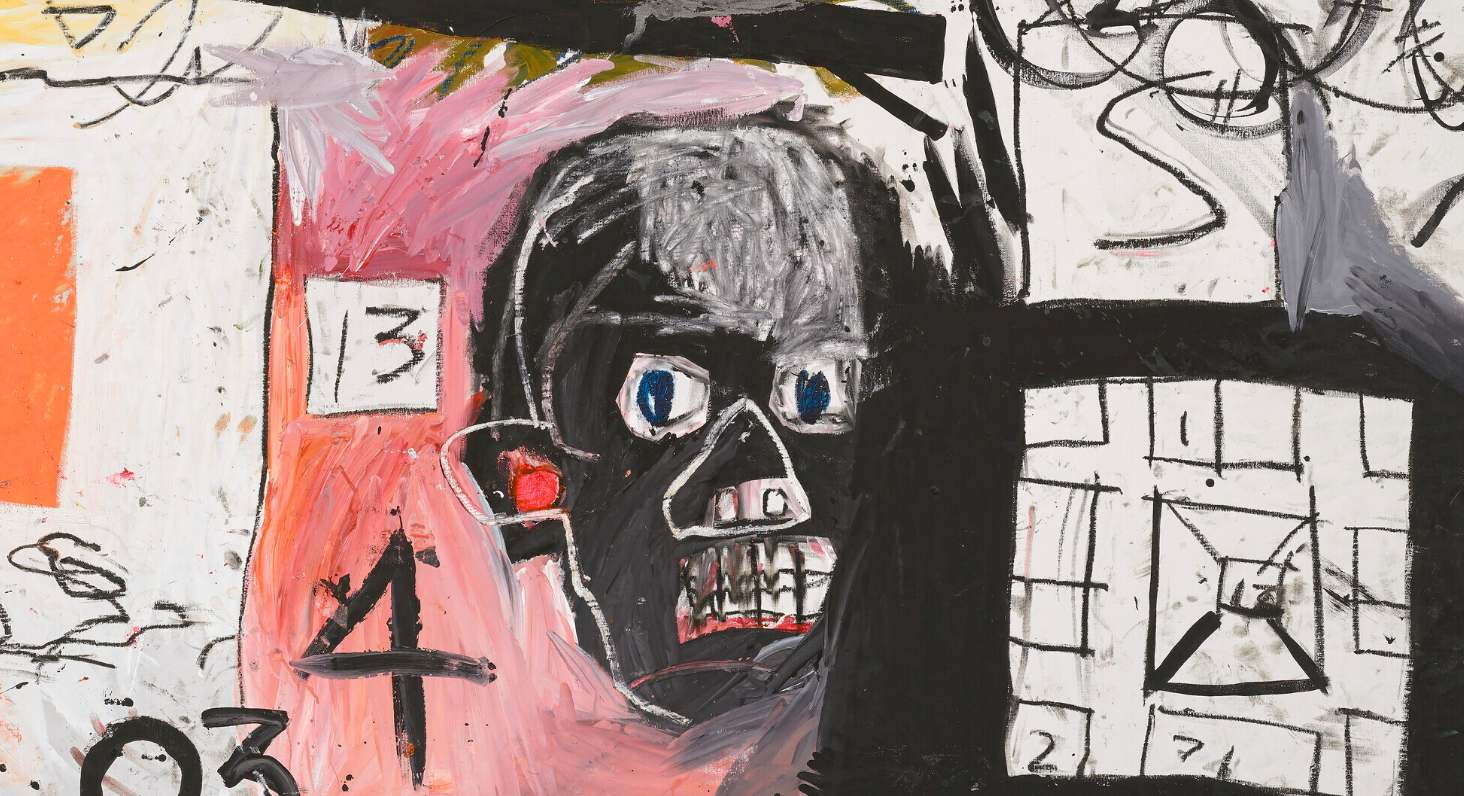
Painted in 1981, Jean-Michel Basquiat’s Untitled displays all the energy, excitement, and ingenuity of a young artist on the verge of art-world superstardom. Completed when he was barely 20 years old, this canvas contains all the hallmarks of his subsequent career: dynamic mark-making, sophisticated paint handling, evocative numbers and symbols, and one of the artist’s most iconic motifs, a large head. This work in particular also pays homage to Basquiat’s origins as one of New York’s most talented and recognizable street artists. At a young age, he became a legend of the Downtown street culture, with his SAMO tag becoming a badge of honor that appeared all over the city. Elements of 1980s New York are visible in the present work, along with the highly sophisticated visual language that would come to exemplify his work. Acquired directly from the artist by his friend, the curator and cultural critic Diego Cortez, Untitled stands as a prescient example of Basquiat’s work as he stood on the verge of greatness.
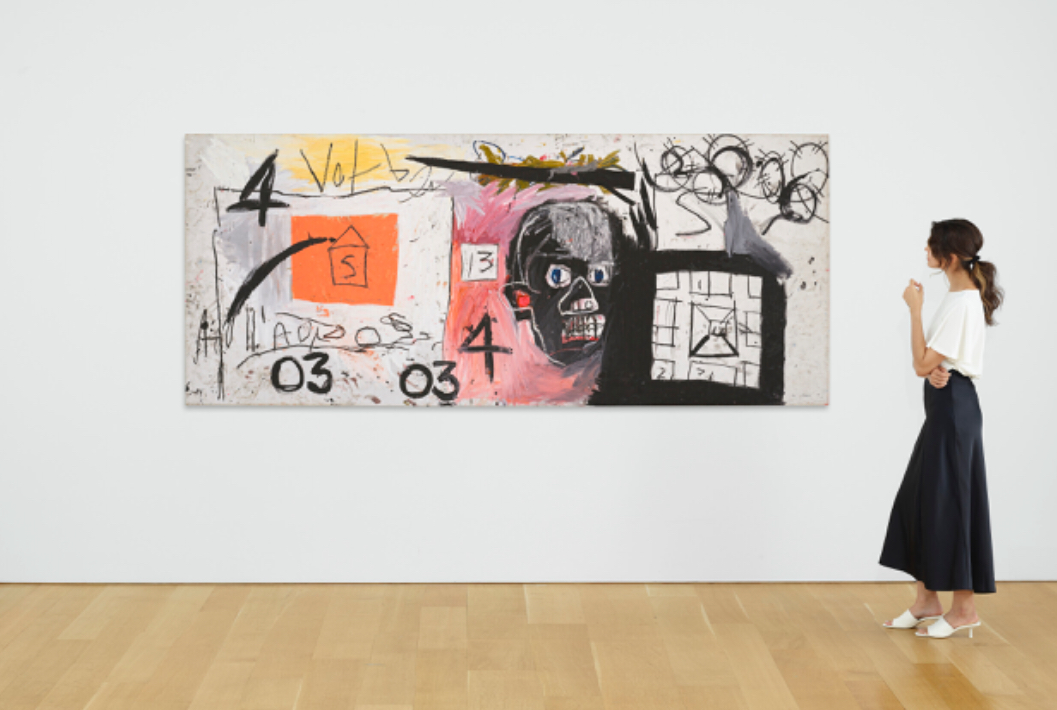
Across this monumental canvas, Basquiat choreographs many of the visual elements that would become an important part of his oeuvre. Assorted numbers, scrawled words, and eclectic symbols capture the energy of the streets of New York. The grid laid out in the thick black box mimics the markings of a skelly court, a street game whose markings are scrawled in chalk onto the street or sidewalk. Sitting above the grid is another box containing the letter ‘S’ (a reference perhaps to Basquiat’s alter ego SAMO, or Suzanne Mallouk, his girlfriend at the time?) topped off with a curlicue of barbed wire, iterations of which would feature in several later important paintings including, Profit I, and Untitled (Boxer). Opposing this on the other end of the canvas is a comprehensive array of mysterious words, letters, and numbers set against a dynamic painted surface. Anchored by another boxed ‘S’ (set within a warm colored square), the repeated numbers 3 and 4 sit alongside enigmatic words, barely legible in their scrawled forms. This section is further embellished by an array of painterly techniques as, on a white ground, Basquiat applies diaphanous layers of gray, yellow, and pale blue embellished with drips, splashes and smears of paint.
Dominating these active elements is a prominent black head. Seemingly carved out of successive painterly layers, the face provides ample evidence of Basquiat’s innovative approach to figuration. Onto the white ground, he forms the face out of substantial passages of black paint; leaving voids where the eyes, nose and mouth will be, he then proceeds to fill in the details with rapid movements of an oil stick, denoting dark blue pupils, flared nostrils, and a scowl of white teeth. A fiendish quality is added by flashes of red paint around the ears and mouth. To establish the final silhouette, Basquiat traces the outline of the head in white oil stick before surrounding it with a cloud of warm salmon pink. One of the other distinguishing qualities of the present work, along with much of his early work, is the references to the artist’s urban surroundings. Here, the outlines of the skelly court are one of the most prominent components of this composition. The street game was popular in the black neighborhoods of large urban centres, and particularly appealed to Basquiat because of its childlike qualities and graffiti-like origins.
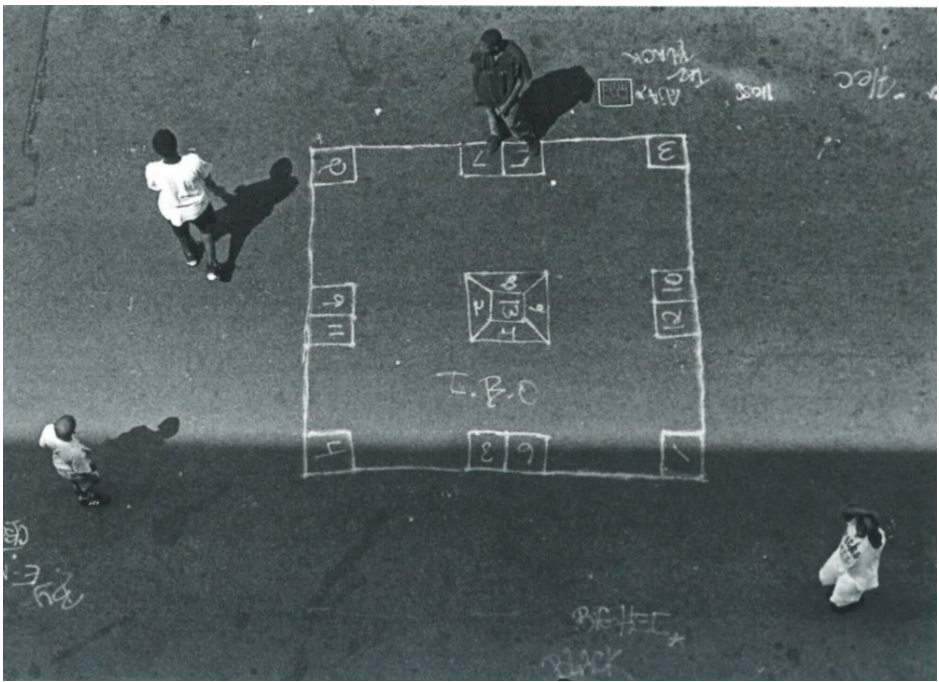
Children playing Skelly, New York, 1995. Photo: © Edward Keating / New York Times Pictures.
The game was popular with kids and was played on a linear diagram that was drawn onto the surface of a street or sidewalk with chalk or paint. Players would then throw markers (rocks, coins, bottle caps etc.) into numbered boxes that are contained within a large square. The goal was to progress from box number one to the final box thirteen, which is located in the center of the court.
Untitled was acquired directly from the artist by Diego Cortez, curator of the 1981 New York/New Wave exhibition that changed the course of Basquiat’s career. Cortez was a key figure in the Downtown art and music scene in Manhattan in the 1970s and ‘80s, and was the founder of the iconic Mudd Club, a groundbreaking nightclub that saw performances by the likes of Talking Heads and Basquiat’s own band, Gray. In 1981 his legendary show at the cutting-edge P.S. 1 Contemporary Art Center (now MoMA PS 1) brought together the worlds of art and music that he knew so well, showing works by the likes of Basquiat, Robert Mapplethorpe, Keith Haring, Nan Golding, Andy Warhol, Fab 5 Freddy, and William Burroughs. As such, Untitled sits at a pivotal point in Basquiat’s brief but storied career. Painted when he was on the brink of becoming one of the defining artists of his generation, it contains the painterly qualities, and many of the motifs, that would define the rest of his oeuvre. It virtually pulsates with the bravado of youth, but also displays the maturity that made him stand in an already crowded field of young artists seeking to redefine the New York art scene.