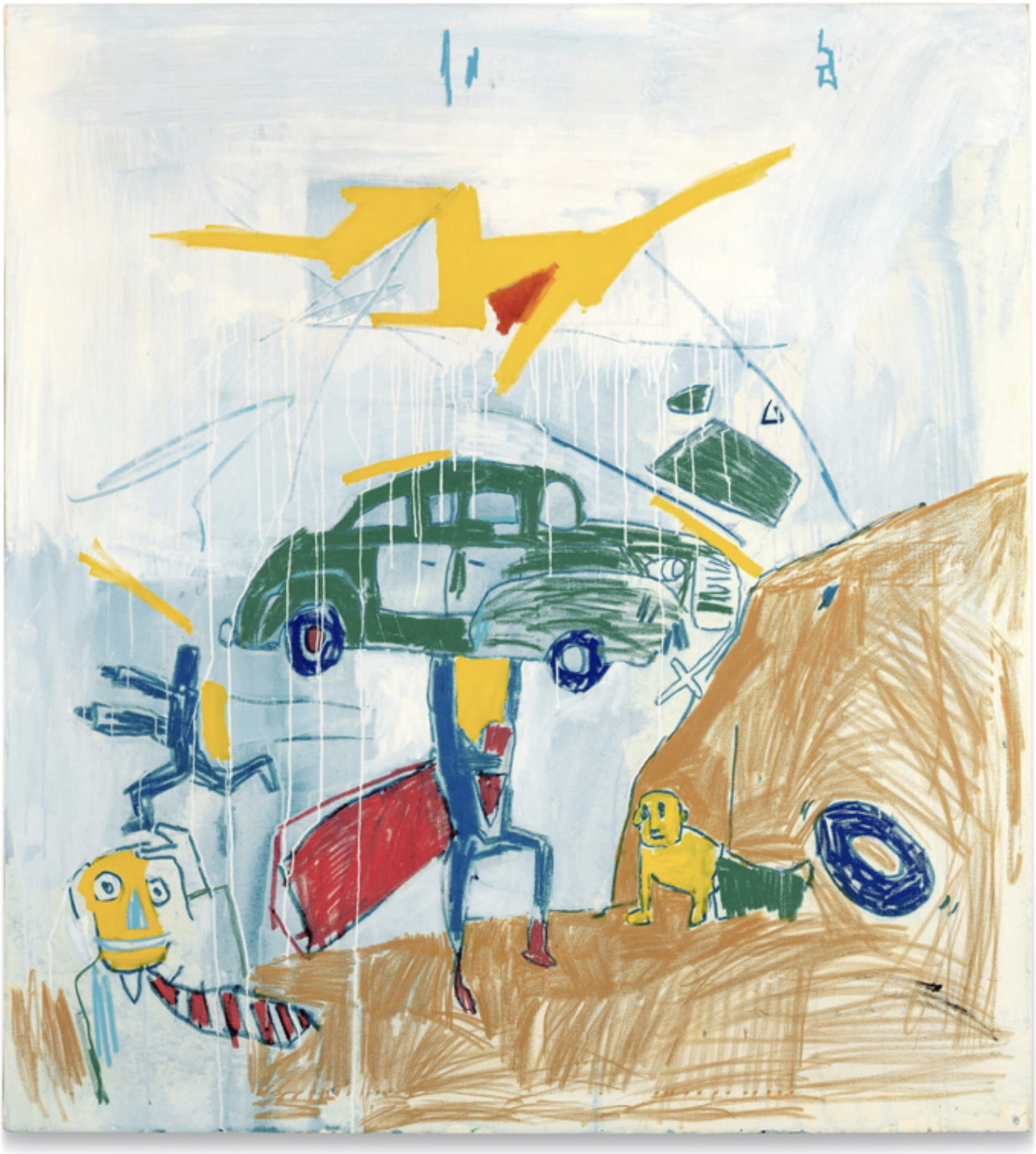
JEAN-MICHEL BASQUIAT (1960 – 1988)
Action Comics One, 1983
Acrylic, colored pencil and oilstick on canvas
66 1/8 x 60 1/4 inches (168×153 cm)
Signed, titled and dated Nov. 1983 (on the reverse)
Provenance
Ira Young, Vancouver
Private Collection, New York
Christie’s New York, 4 November 1987, lot 304 (consigned by the above)
Private Collection
Perrin-Royère-Lajeunesse Versaille, 18 June 1988, lot 122
Acquired from the above by the present owner
Sotheby’s New-York: 15 November 2023
Estimated: USD 6,000,000 – 9,000,000
USD 6,928,500
Action Comics One | Contemporary Evening Auction | 2023 | Sotheby’s (sothebys.com)
Exemplifying the electrifying collision of mainstream imagery and searing gestural exhibition that defines Jean-Michel’s Basquiat legendary oeuvre, Action Comics One from 1983 forcefully showcases the wry commentary on pop culture and social mythology that is so central to his artistic practice. In the present work, Basquiat elevates and refines an action-packed cartoon scene of dramatic, heroic valor to the level of fine art through his deft draftsmanship and subtle symbolism, all while unpacking and provoking the politics of heroism and American cultural myths. Testament to the supreme rarity of the present work, Action Comics One belongs to a highly limited series of nine known superhero works that feature such popular figures such as Thor, Batman, and The Flash, all rendered in his signature lexicon of punchy, saturated colors, furious mark making, and his quintessential fusion of image and text. Held in the same distinguished private collection for over three decades, Action Comics One is a consummate example of Basquiat’s distinctive style, engagement with broader socio-political phenomena, and iconic personal cast of champions for which he is rightfully lionized in the canon of art history.
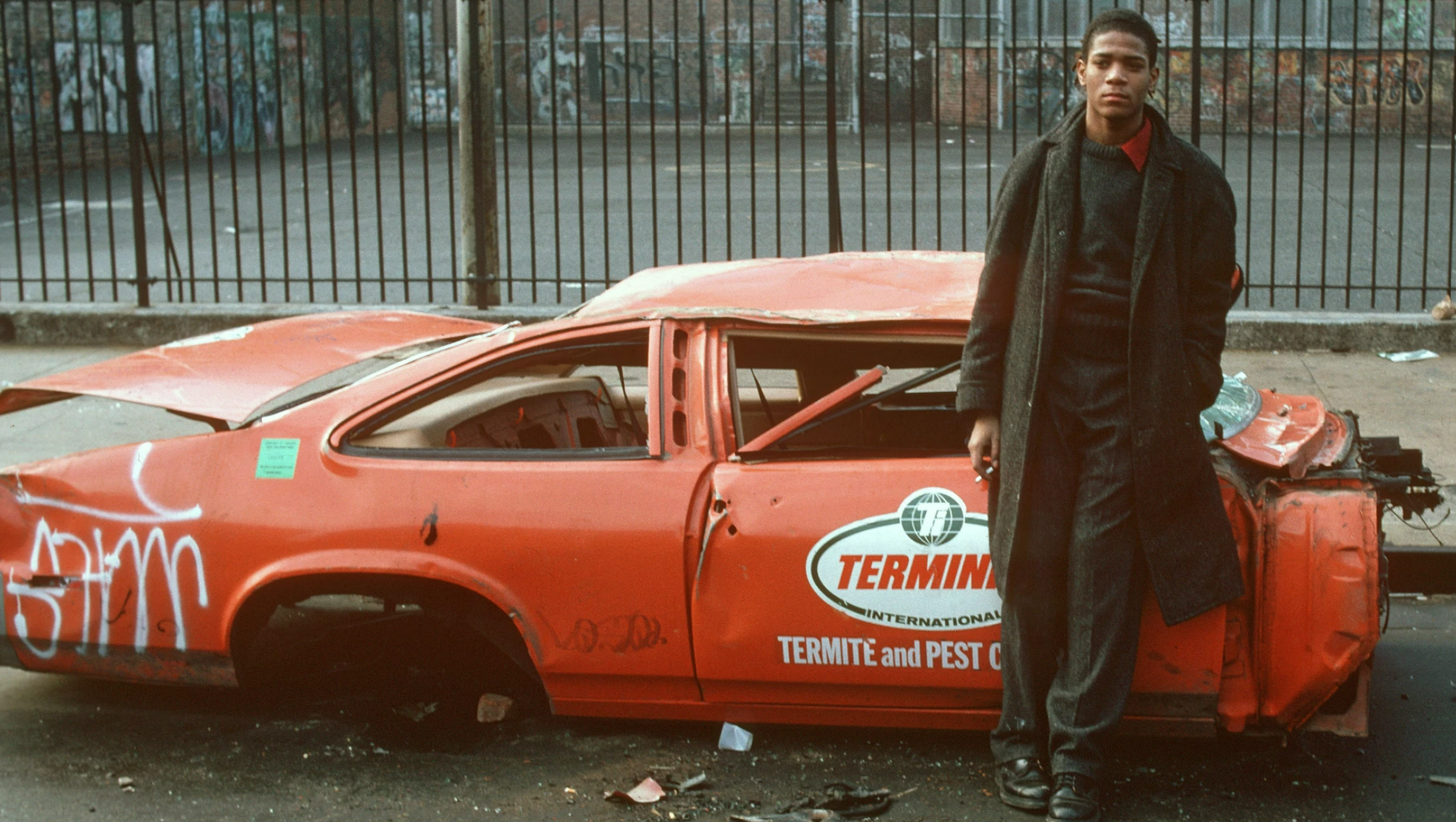
JEAN-MICHEL BASQUIAT IN A FILM STILL FROM DOWNTOWN ‘81, 1980-1981. PHOTO © METROGRAPH PICTURES/EDO BERTOGLIO
Appearing in a number of Basquiat’s paintings from this period, the artist’s love of and familiarity with comic books and cartoons dates to his early childhood. A visual auto-didact, the images and animations of these books are amongst the vast and varied sources of rich visual media Basquiat collected over the course of his life and subsequently appear in his paintings, creating a highly specific visual vernacular of cultural images and iconography at once universally familiar and entirely distinct. In title and content, Action Comics One directly references the first issue of Action Comics, widely attributed as the first publication of the superhero genre to introduce the character of Superman. As such, Action Comics established the foundations for the superhero genre as it is known today: mass-produced iconography of notable superheroes that have largely become household names, complete with blockbuster film premieres and branded merchandise. First published in 1938 during the Great Depression, the icon of Superman embodied the traditional American core values of resilience and heroism in the face of the most severe economic tragedy in modern history. Within the present work, Basquiat engages the figure of Superman as a visualization of physical and emotional strength: central figure of Superman is shown faceless in a skintight, unmarked uniform, yet ceremoniously adorned in a billowing cape and triumphantly lifting a car from a crouching victim’s wake.
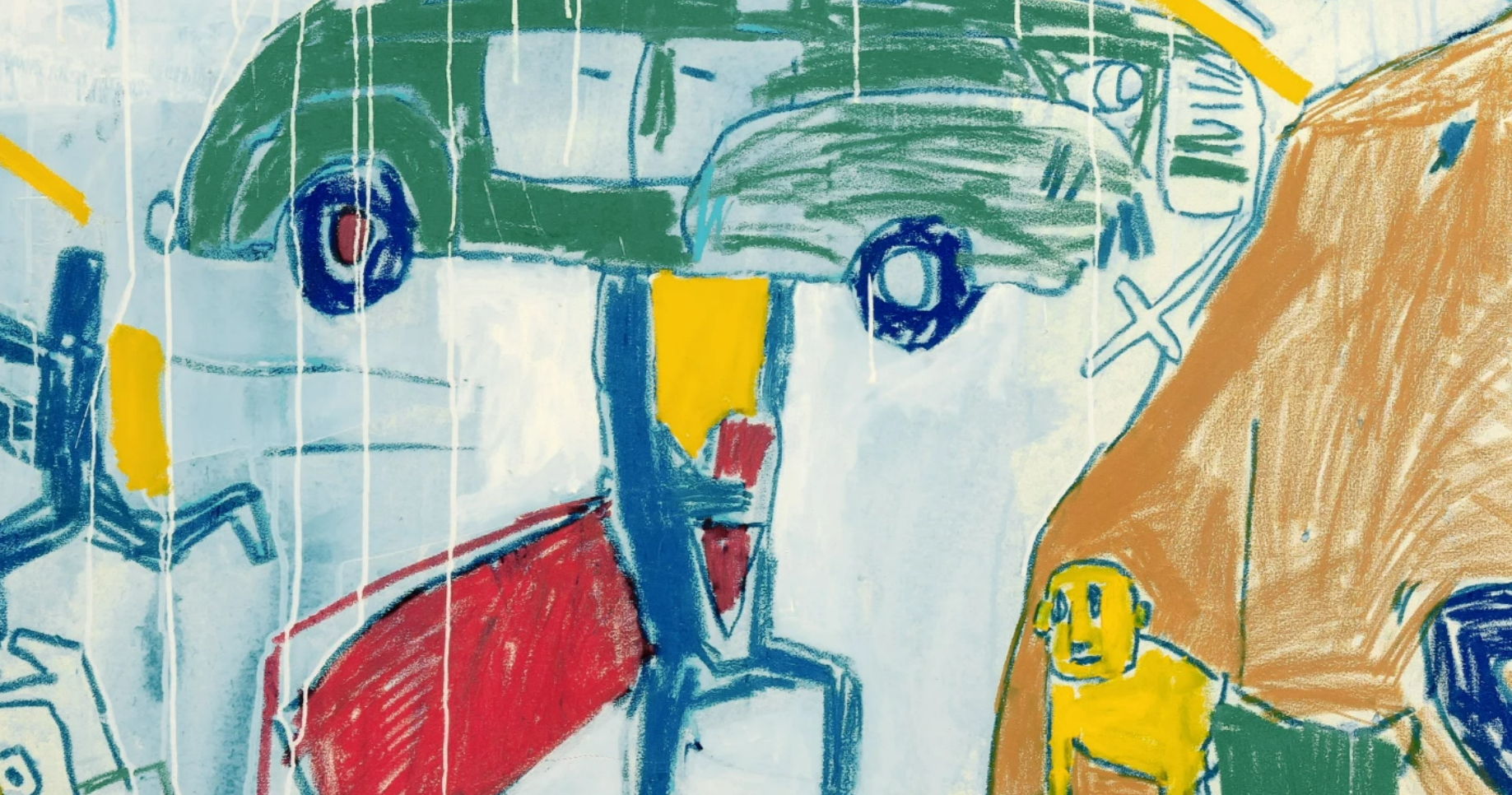
Central to Basquiat’s practice is his enduring concern with heroism, and particularly the cast of heroes adopted by young Black Americans. In many of his most significant works, Basquiat illuminates the shortcomings of American culture’s larger pantheon of heroes: notably, the lack of diverse representation. It is in this context that Basquiat’s personal legion of heroes emerges, most often Black athletes and musicians such as Charlie Parker, Muhammed Ali, Dizzy Gillespie, and Sugar Ray Robinson. Affectionately and reverently dubbing them his “kings” and “saints,” these personal myths contain a nuanced probe into the politics of race, class, identity, and mortality baked into the microcosm of children’s cartoons. In electing the most revered figure in American popular culture the subject of the present work, Basquiat taps into the very root of heroism at large and its origins in collective memory. An exceptionally painterly and richly worked example of one of Basquiat’s most celebrated series, Action Comics One valiantly sets forth an interpretation and intervention into ideas of American heroism. Invoking a painterly narrative of the United States’ most beloved hero, Basquiat probes the relationship between fiction and salvation. Indeed, the remarkable diversity of marks woven into the impenetrable layers of Action Comics One clearly articulates both the artist’s past as a celebrated member of Manhattan’s street art vanguard and of his present career as contemporary art’s dazzling prodigy.