In Brushstroke Figures, Roy Lichtenstein brings together a wide vocabulary of mark-making from diagonals, Ben-Day dots, hard-edged cartoon outlines, and seemingly realistic paintbrush strokes. Throughout the series, he orchestrates a continual shift between abstraction and representation. Returning to his earlier investigations into the nature of artmaking within the Pop Art movement, Lichtenstein distilled the act of painting into a set of stylized motifs. By doing so, he separated the brushstroke from its traditional association with the artist’s hand, critiquing the art-historical emphasis on expressive, gestural marks and absorbing them into his own visual language. What appear at first to be abstract shapes and colors gradually coalesce into forms that build depth and ultimately define portraits.
Introduction
Modern artists have typically maintained that the subject of a painting is painting itself and Lichtenstein took this idea one imaginative step further turning it into a compositional element that could serve as a key subject matter of a work. His brushstroke is at once a playful yet serious exploration of key themes in art history: high culture and low art; abstraction and representation; and, of course, the artist’s ironic nod to the slashing painterly gesture so central to the style of the Abstract Expressionist painters. From the early stages of his career, Lichtenstein was openly comparative of his work in relation to Abstract Expressionism.
“You put something down, react to it, put something else down, and the painting itself becomes a symbol of this.”
While Lichtenstein was also quick to identify the tendencies of Pop Art as more object-oriented, in comparison, he always admitted to the undeniable ties between his work and the New York Abstractionists.
“There is humor here. The work is still ground-directed; the fact that it’s an eyebrow or an almost direct copy of something is unimportant. The ground-directedness is in the painter’s mind and not immediately apparent in the painting.”
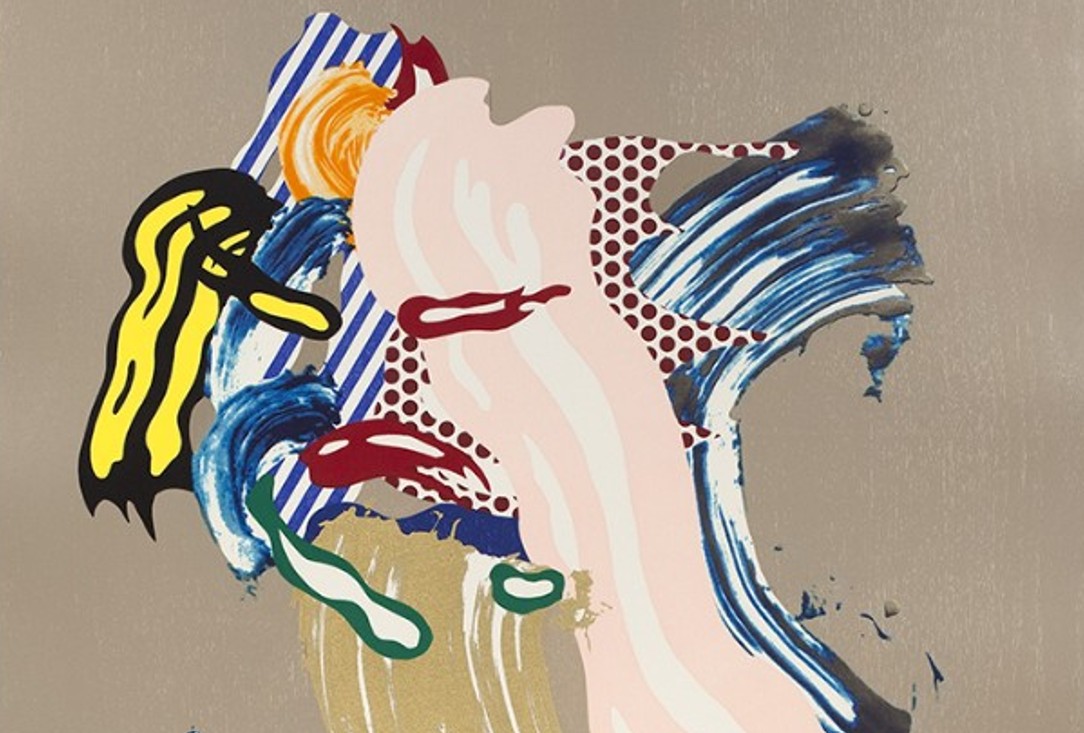
The Brushstroke Figure Series is comprised of 8 prints Roy Lichtenstein created in 1989. This series represents a later exploration of a motif, the painted brushstroke, that Lichtenstein first introduced in the mid-1960s. It continues Lichtenstein’s lifelong engagement with and witty critique of Abstract Expressionism, the dominant art movement in America before Pop Art. Abstract Expressionists (like Willem de Kooning and Jackson Pollock) championed the brushstroke as an “autographic mark”, a spontaneous, emotional, and unique index of the artist’s inner self and creative genius. Lichtenstein satirizes this by rendering the brushstroke in his signature, detached, mechanical Pop Art style (flat color, bold black outlines, and Benday dots).
“Visible brushstrokes in a painting convey a sense of grand gesture; but in my hands, the brushstroke becomes a depiction of a grand gesture.”
By isolating and magnifying the brushstroke, and then using these enlarged, stylized marks to construct figures, Lichtenstein turns the essential building block of painting into the subject itself. This action questions the romantic notion of “originality” and “spontaneity” in art. The figures in this series are suggested, rather than realistically depicted, by an assembly of different brushstroke types, cartoon-like strokes, diagonal lines, Benday dots, and even strokes that simulate painterly washes and wood grain. This combination creates a tension between pure abstraction and figural representation.
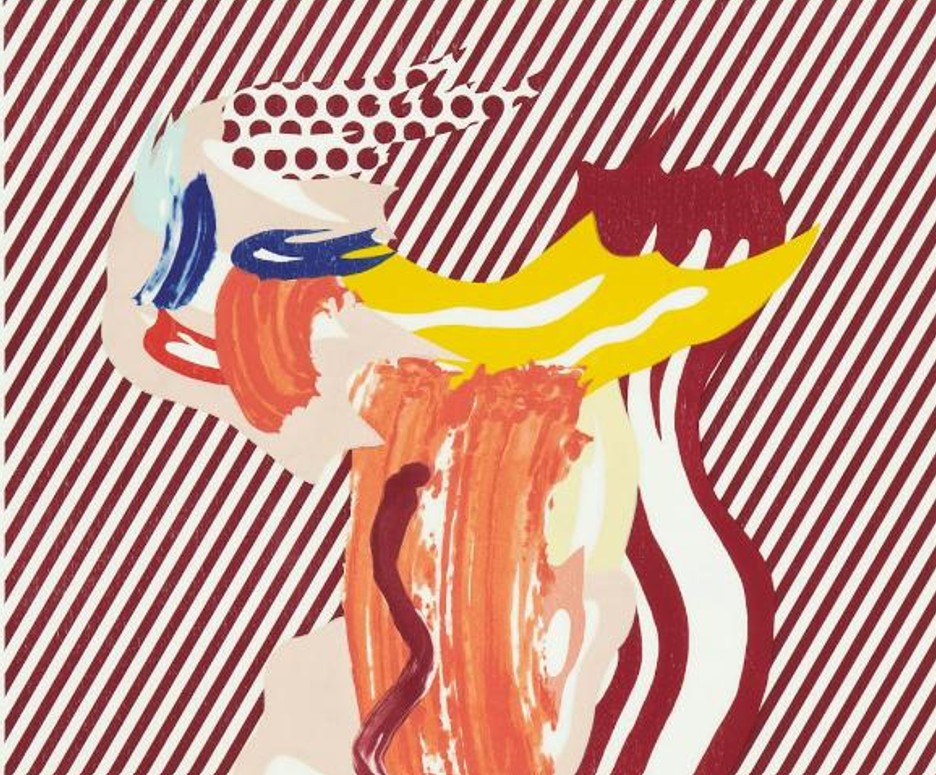
The series is notable for its technical complexity, combining multiple printmaking processes to create rich, varied surfaces that simulate the texture and layering of his original collages and paintings. Working from individual collage prototypes, Lichtenstein used screenprint, lithography, woodcut, and waxtype to translate the layered surfaces of the originals, pushing at the boundaries of conventional portraiture for a contemporary audience. Notably, he was the first artist to employ the waxtype process developed at Graphicstudio, a screenprint technique that replaces traditional ink with pigmented beeswax. Pulled through a specially prepared steel screen, often over multiple layers, the wax can be heated with a microtorch and burnished to produce a smooth encaustic finish, or left unheated to preserve the matte, fabric-like texture of the screen.
Brushstroke Figures Series, 1989
The Brushstroke Figures series is comprised of 8 print. In all of them the artist combined brushstrokes, variously composed of diagonals, Benday dots, hard-edged cartoon strokes, and realistic brushstrokes, to suggest faces and figures.
1. Blue Face (Corlett 226)
2. The Mask (Corlett 227)
3. Roads Collar (Corlett 228)
4. Portrait (Corlett 229)
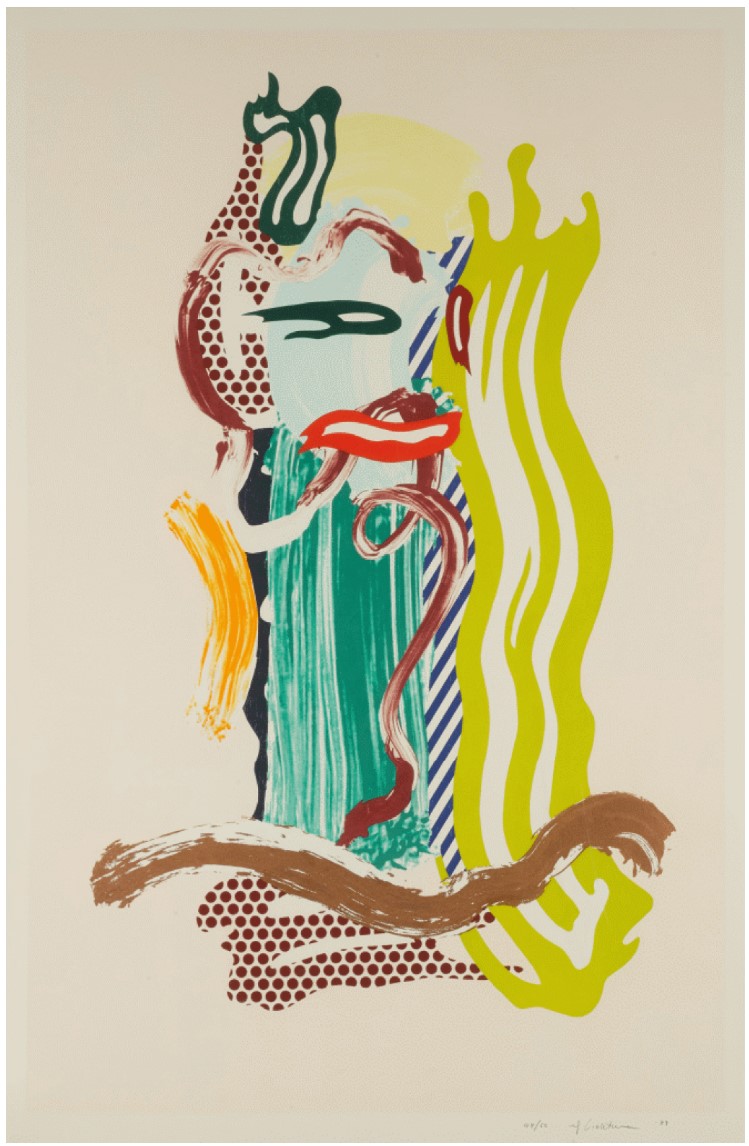
5. Blonde (Corlett 230)
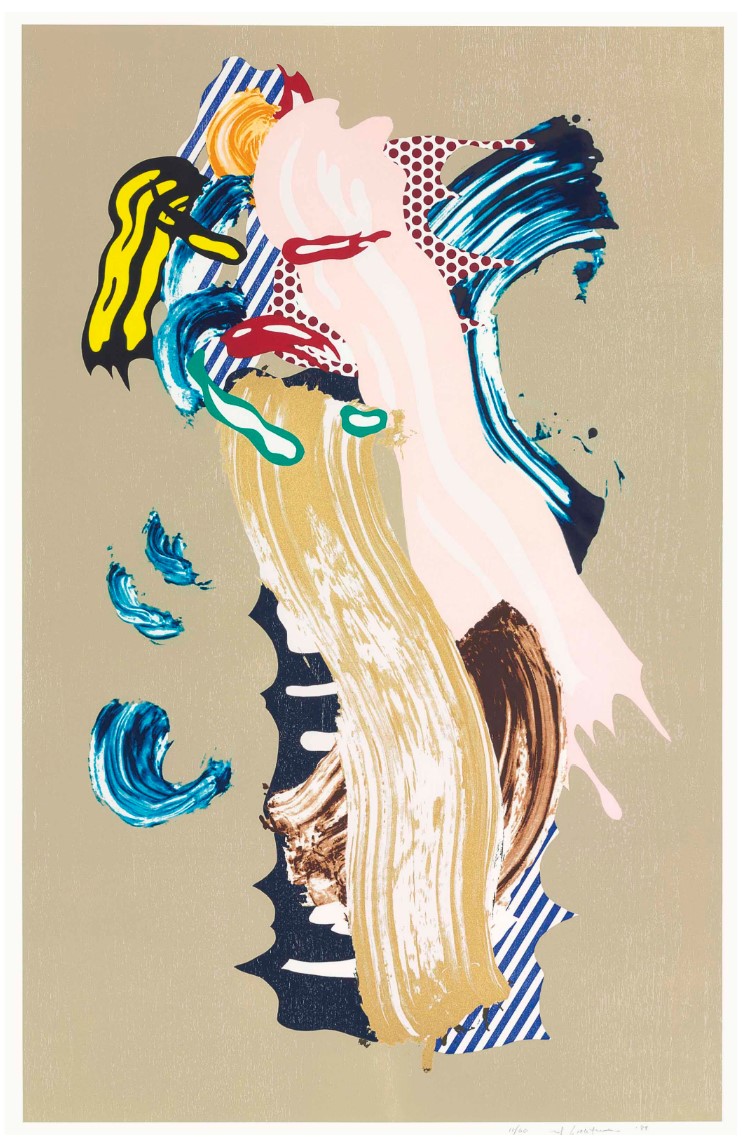
6. Grandpa (Corlett 231)
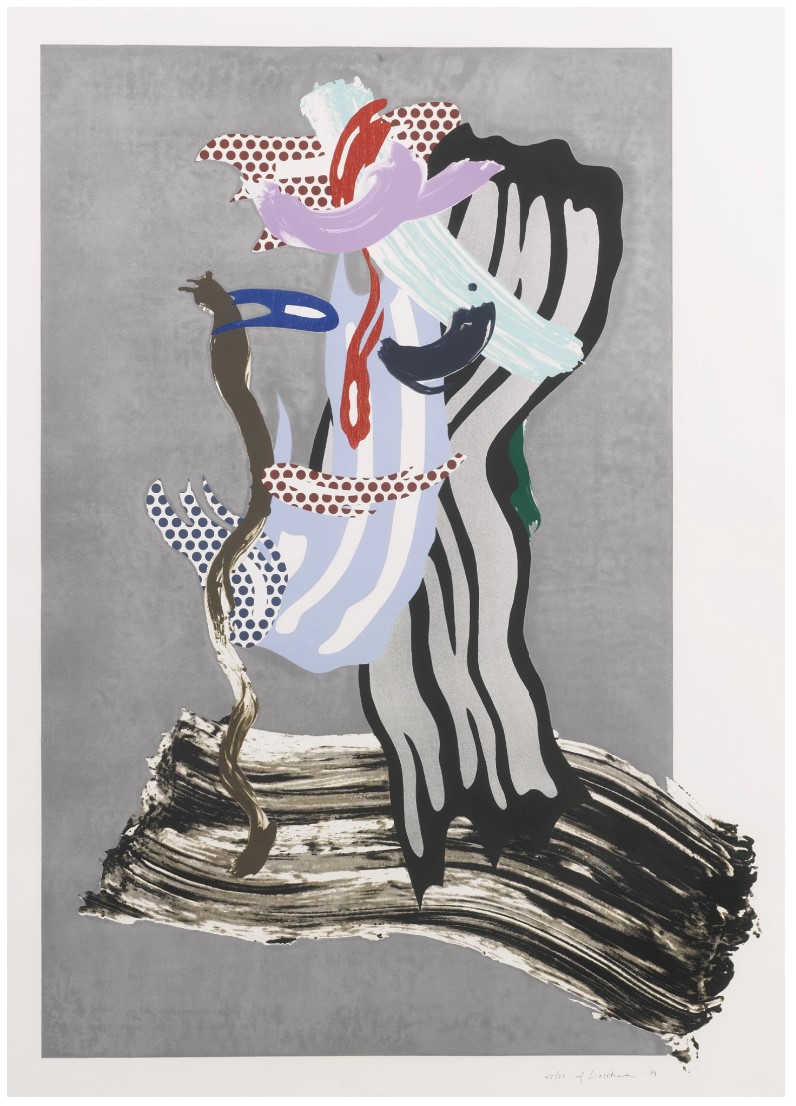
7. Green Face (Corlett 232)
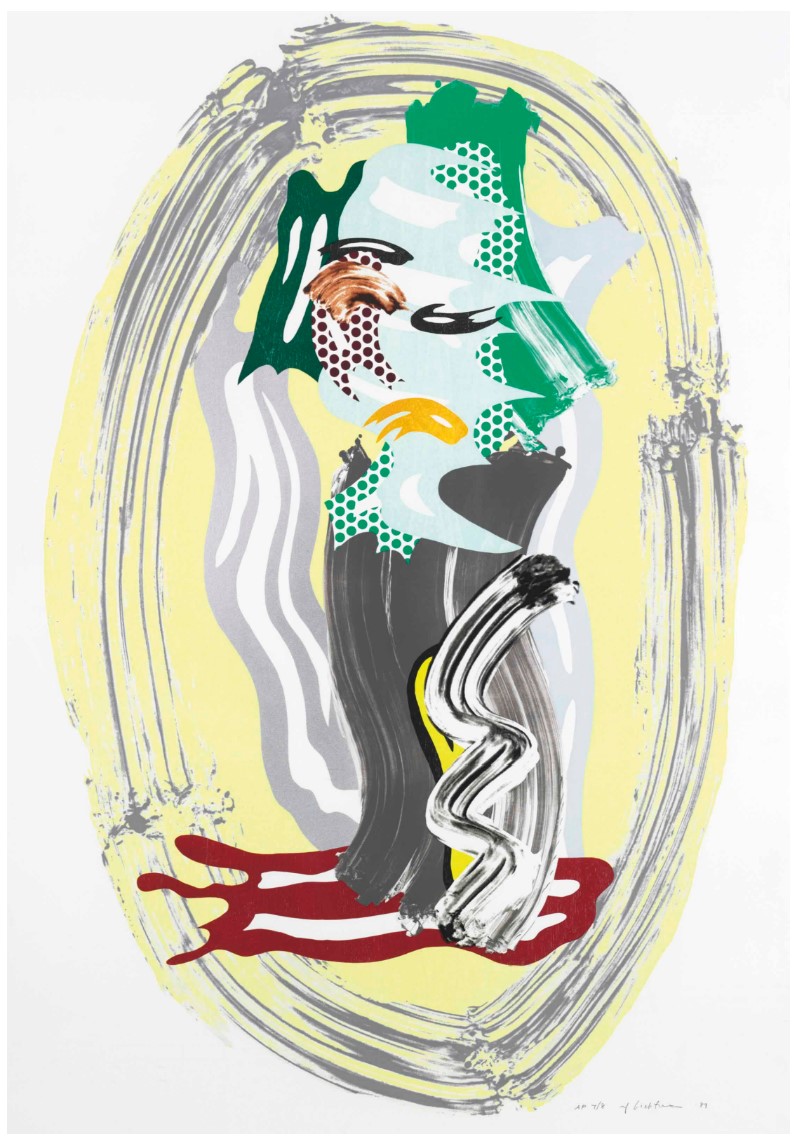
8. Nude (Corlett 233)
2026 Auction Results
Blue Face, 1989
Bonhams London: 23 June 2026
Estimated: GBP 18,000 – 25,000
GBP 19,200 / USD 25,325
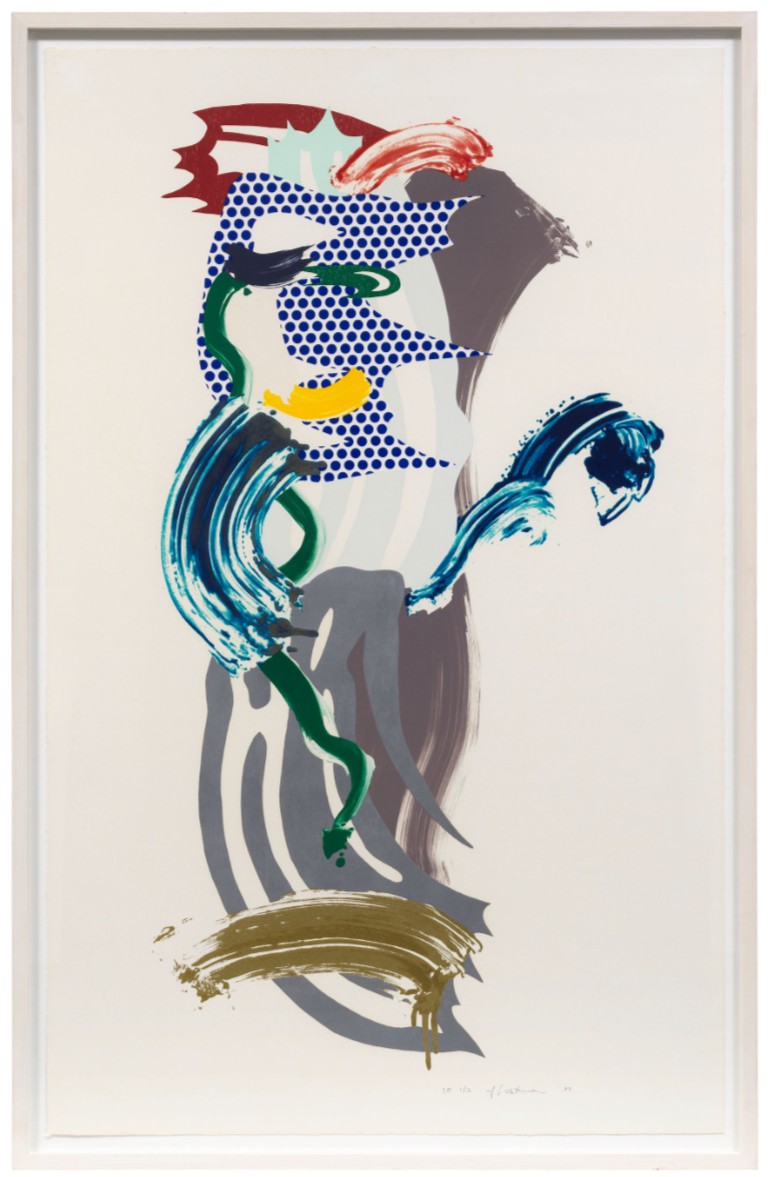
ROY LICHTENSTEIN (American, 1923-1997)
Blue Face, from Brushstroke Figures Series (Corlett 226), 1989
Lithograph, waxtype, woodcut and screenprint in colors on Saunders Waterford wove paper
Signed, dated and inscribed ‘S.P. 1/2’ in pencil
A special proof created for presentation purposes by the artist/publisher aside from the numbered edition of 60
Printed by Waddington Graphics, London, and Graphicstudio, Tampa
Published by Graphicstudio, Tampa, with their blindstamp
With the artist’s and printer’s copyright inkstamp verso
With the Workshop number in pencil verso
The Mask, 1989
LA Modern: 19 May 2026
Estimated: USD 20,000 – 30,000
USD 30,720
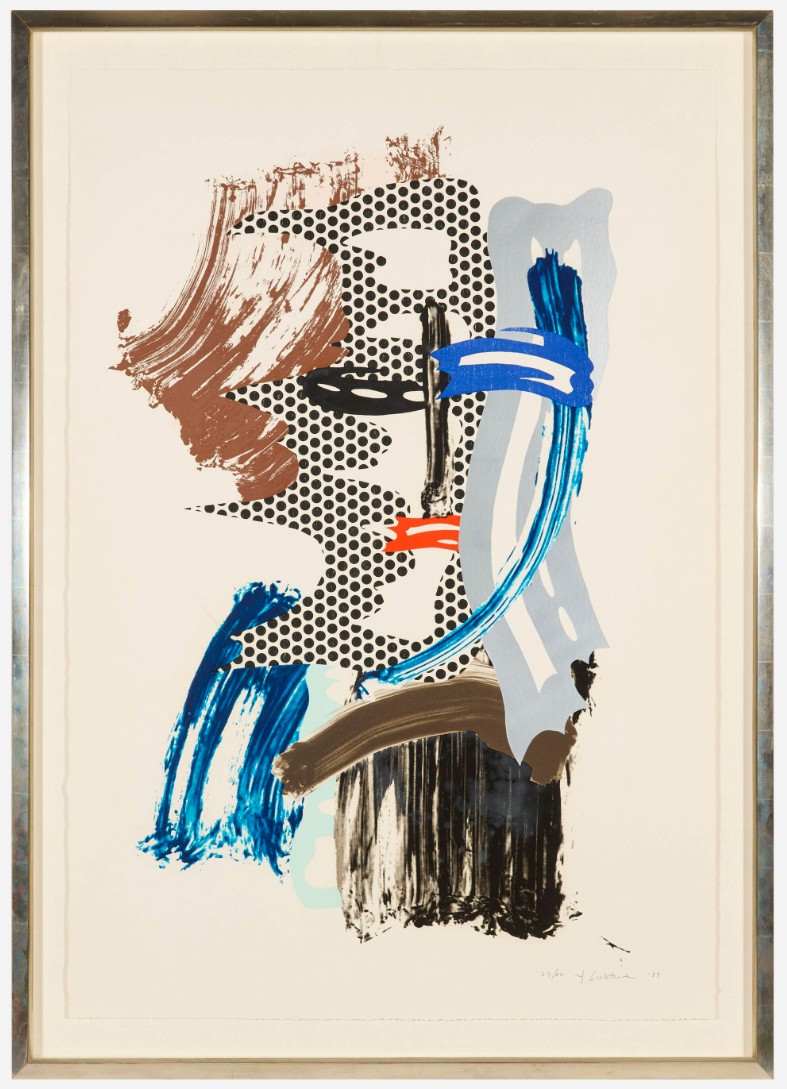
ROY LICHTENSTEIN (1923-1997) ⊕
The Mask (Corlett 227), 1989
Lithograph, waxtype, woodcut and screenprint in colors on Saunders Waterford
Signed, dated, and numbered to lower edge ’29/60 rf Lichtenstein ’89’ with publisher’s blindstamps
Co-published by Waddington Graphics, London and Graphicstudio, Tampa
Blonde, 1989
The Geri Brawerman Collection: A Tribute to Los Angeles and A Legacy of Giving
Sotheby’s New-York: 15 April 2026
Estimated: USD 20,000 – 30,000
USD 40,960
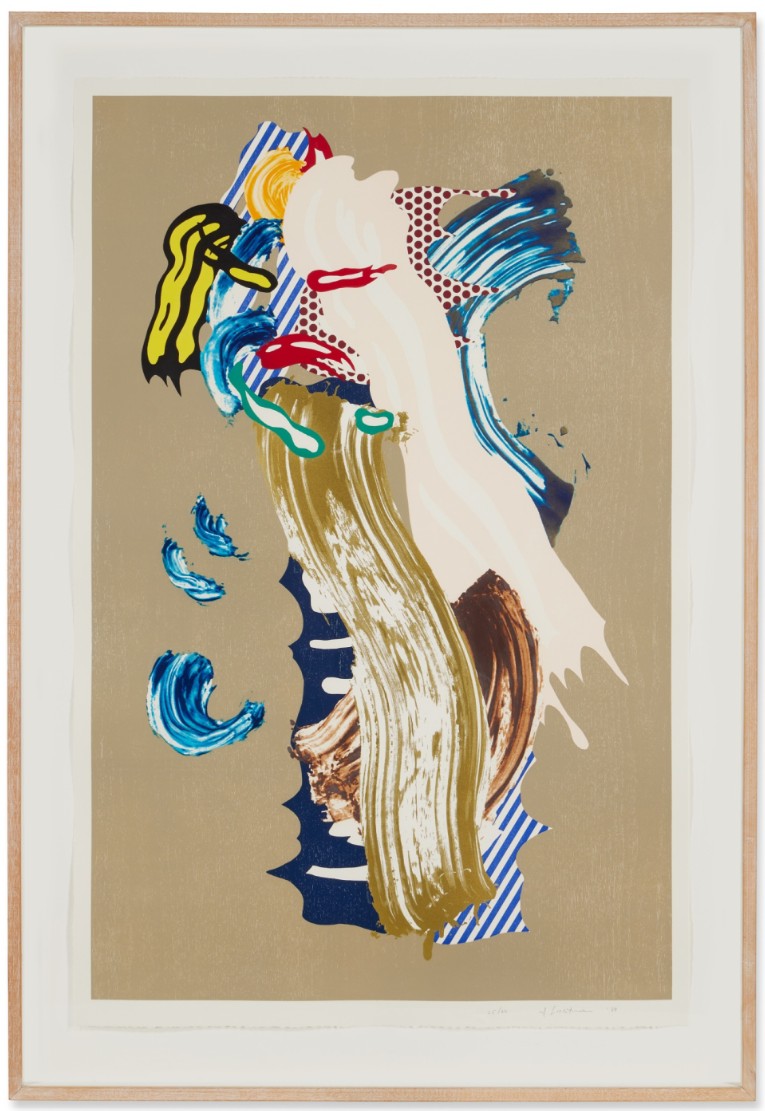
ROY LICHTENSTEIN (1923 – 1997)
Blonde, from the Brushstroke Figures series (Corlett 230; RLCR 3776), 1989
Lithograph, waxtype, woodcut and screenprint in colors on Saunders Waterford paper
Signed in pencil, dated and numbered 25/60
This impression is number 25 from the edition of 60 plus eight artist’s proofs
Co-published by Waddington Graphics and Graphicstudio
Roads Collar, 1989
K Auction Seoul: 27 February 2026
Estimated: KRW 30,000,000 – 100,000,000
KRW 30,000,000 (Hammer)
KRW 34,950,000 / USD 24,255
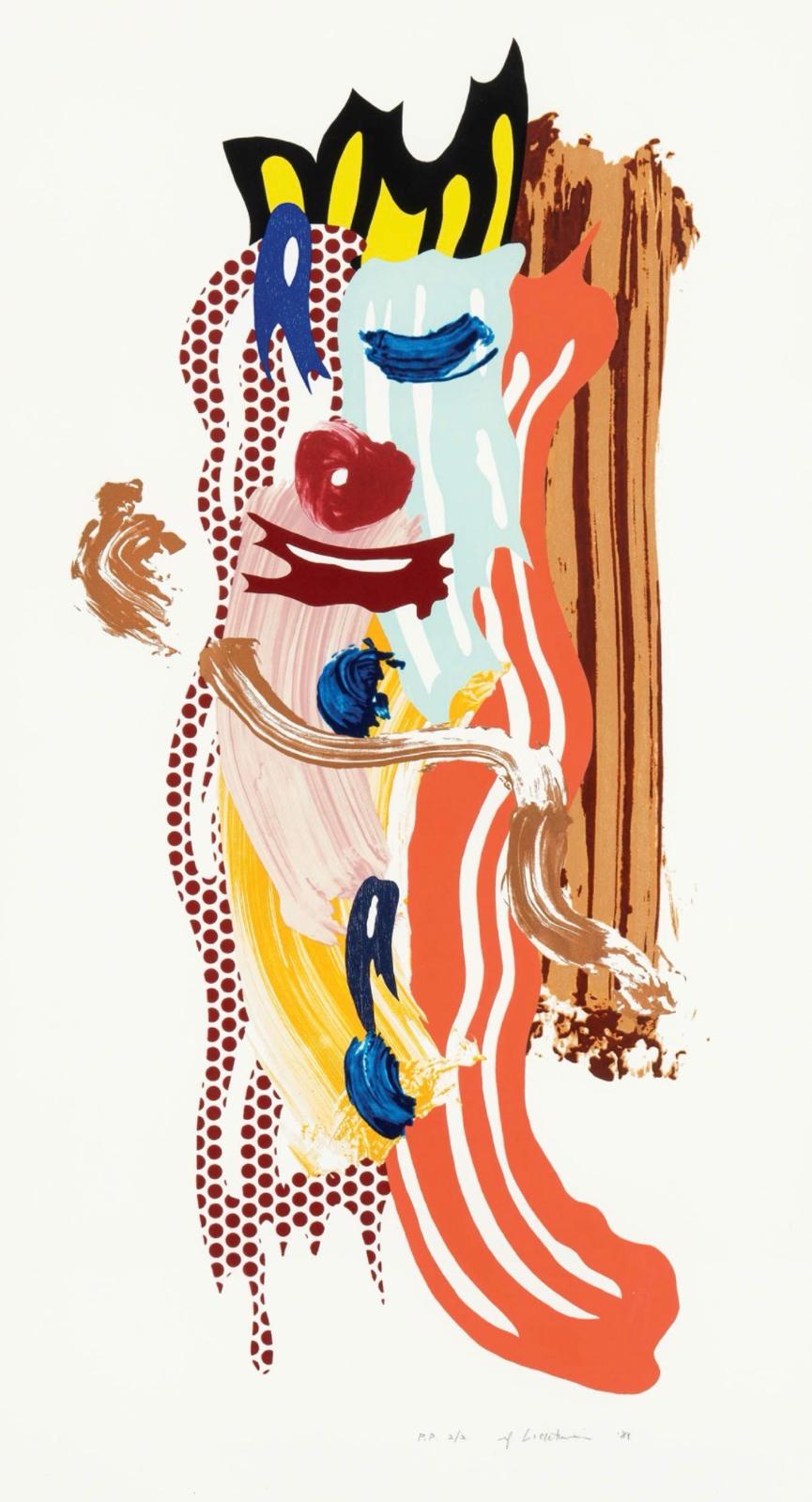
ROY LICHTENSTEIN
Roads Collar: Brushstroke Figures Series, 1989
Screenprint, lithograph, waxtype, woodcut
Signed, dated and numbered PP2/2 on the lower right
(original edition of 30+2PP+2SP+8AP)
Printed and published by Graphicstudio, University of South Florida, Tampa
2025 Auction Results
#1. Blue Face, 1989
Works from the Collection of Dorothy and Roy Lichtenstein
Sotheby’s New-York: 26 September 2025
Estimated: USD 20,000 – 30,000
USD 60,960
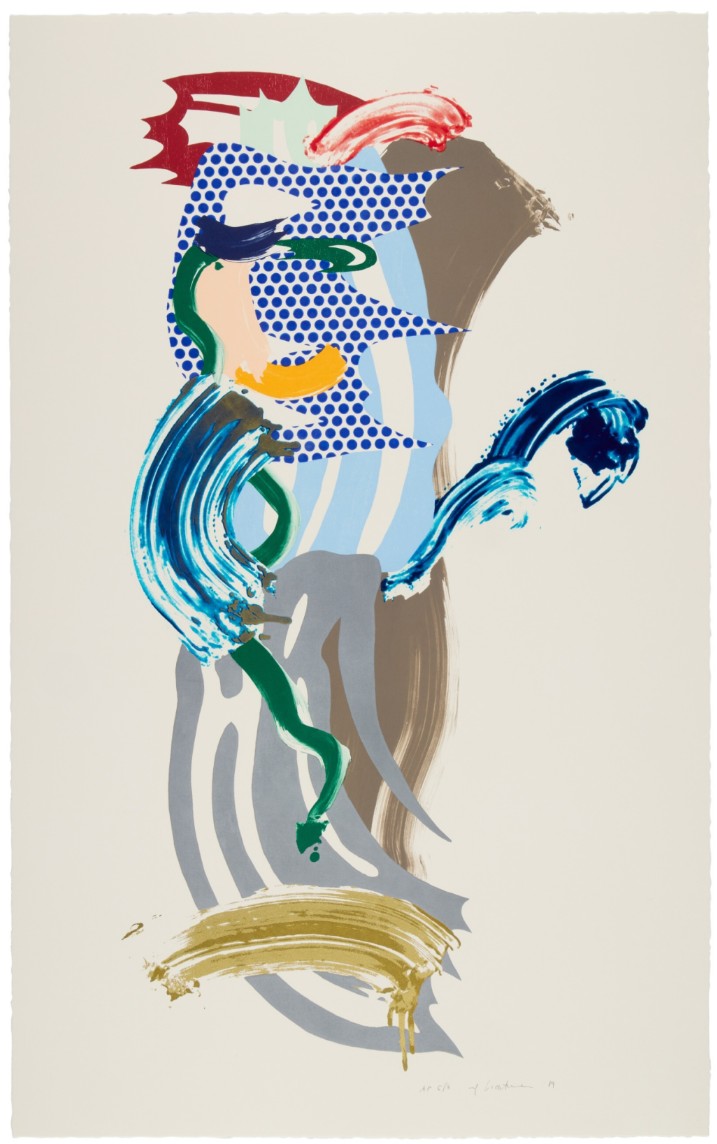
ROY LICHTENSTEIN (1923 – 1997)
Blue Face, from the Brushstroke Figures series (Corlett 226), 1989
Lithograph, waxtype, woodcut and screenprint in colors on cold-pressed Saunders Waterford paper
Signed, dated ’89 and inscribed AP 6/8 (lower right)
One of 8 artist’s proofs aside from the numbered edition of 60
USD 50,000
#2. The Mask, 1989
Works from the Collection of Dorothy and Roy Lichtenstein
Sotheby’s New-York: 26 September 2025
Estimated: USD 20,000 – 30,000
USD 48,260
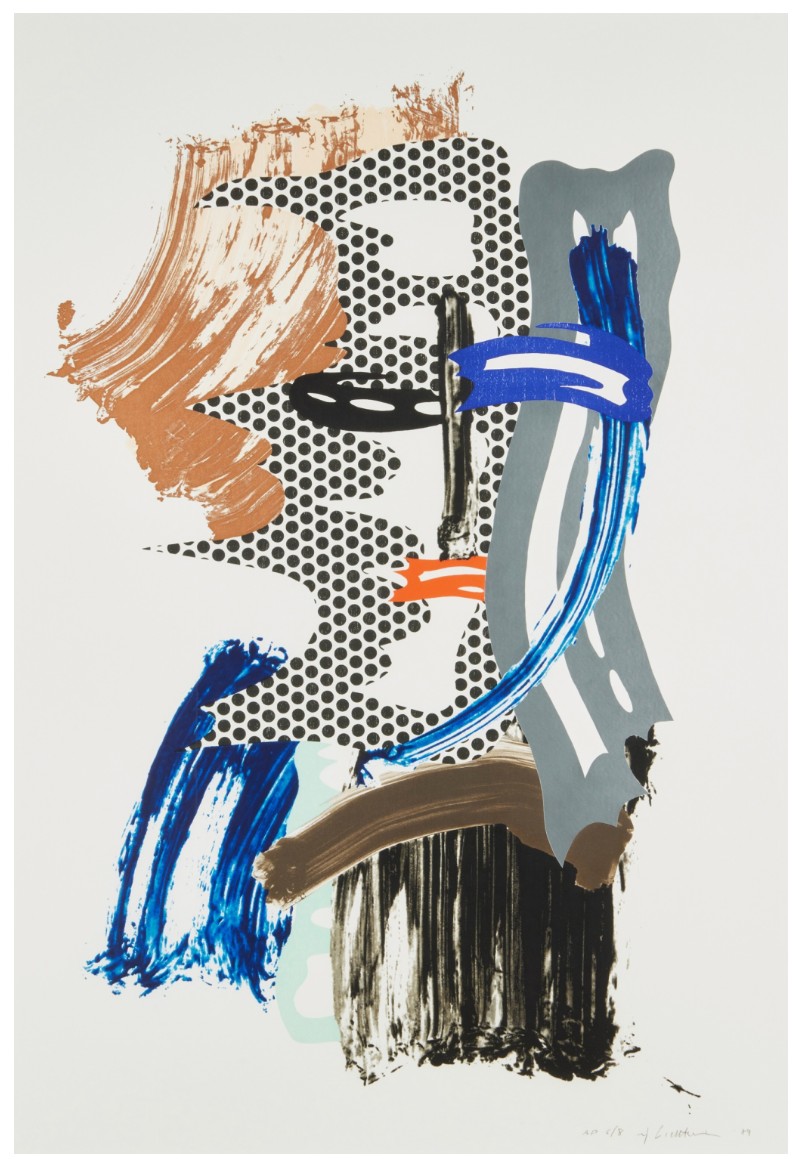
ROY LICHTENSTEIN (1923 – 1997)
The Mask, from the Brushstroke Figures series (Corlett 227), 1989
Lithograph, waxtype, woodcut and screenprint in colors with collage on Saunders Waterford wove paper
Signed, dated ’89 and inscribed AP 6/8 (lower right)
One of 8 artist’s proofs aside from the numbered edition of 60
#3. Portrait, 1989
Works from the Collection of Dorothy and Roy Lichtenstein
Sotheby’s New-York: 26 September 2025
Estimated: USD 20,000 – 30,000
USD 48,260
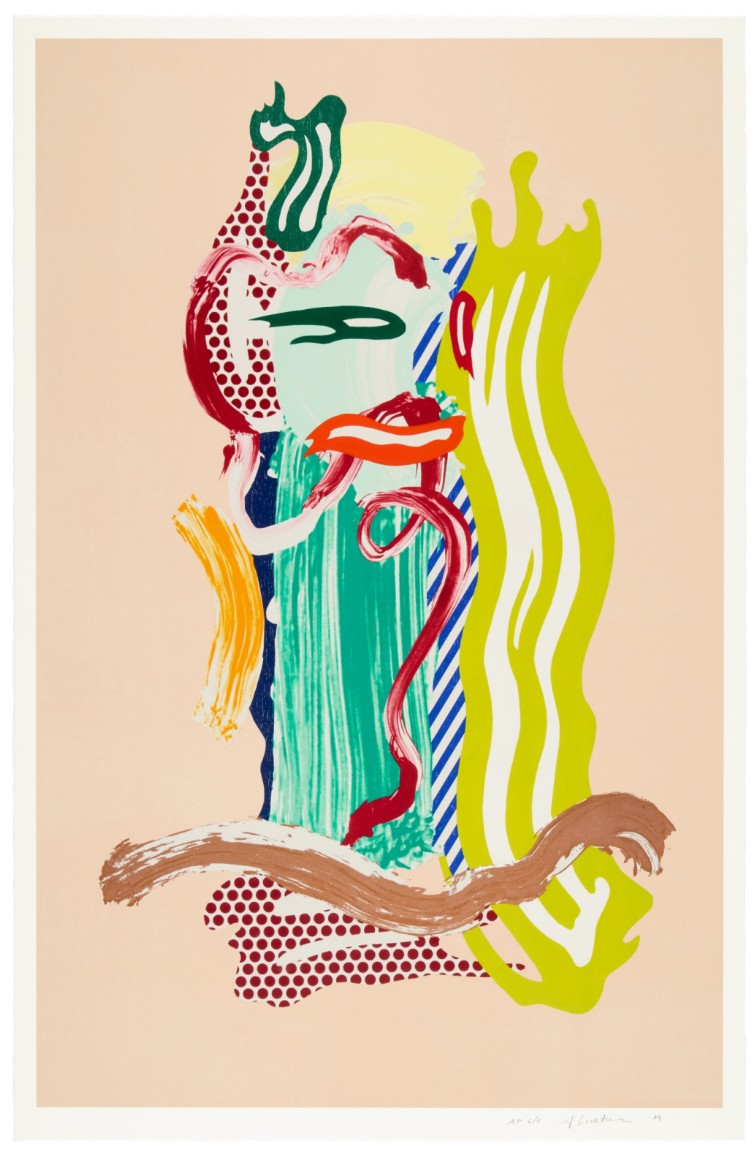
ROY LICHTENSTEIN (1923 – 1997)
Portrait, from the Brushstroke Figures series (Corlett 229), 1989
Lithograph, waxtype, woodcut and screenprint in colors on cold-pressed Saunders Waterford paper
Signed, dated ’89 and inscribed AP 6/8 (lower right)
One of 8 artist’s proofs aside from the numbered edition of 60
#4. Blue Face, 1989
Freeman’s Hindman: 12 December 2025
Estimated: USD 20,000 – 30,000
USD 38,400
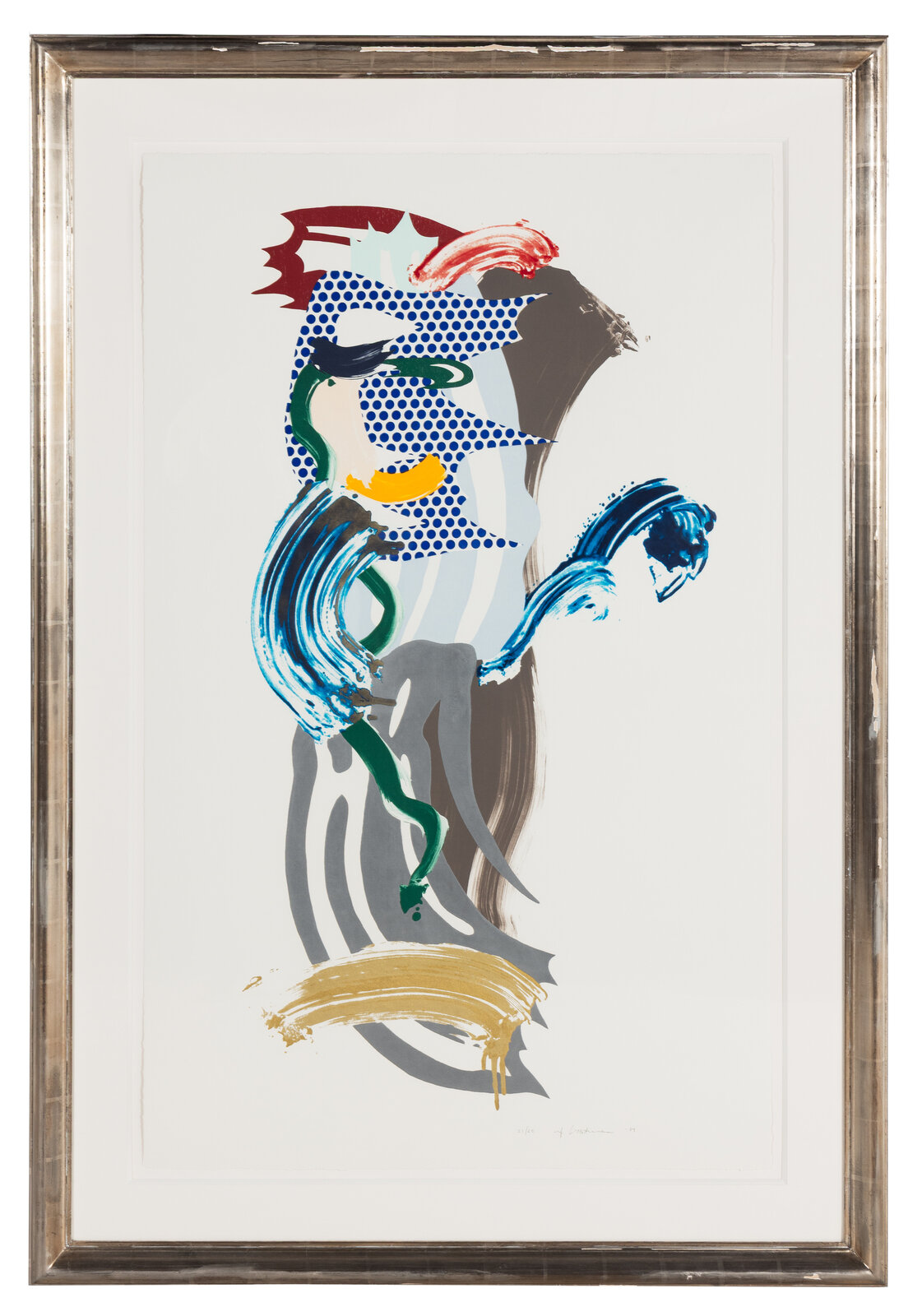
ROY LICHTENSTEIN (American, 1923–1997)
Blue Face (Corlett 226), 1989
from Brushstroke Figures
Lithograph, waxtype, woodcut, and screenprint
Signed, dated, and numbered 21/60 in pencil
#5. The Mask, 1989
Phillips London: 23 January 2025
Estimated: GBP 20,000 – 30,000
GBP 30,480 / USD 37,655
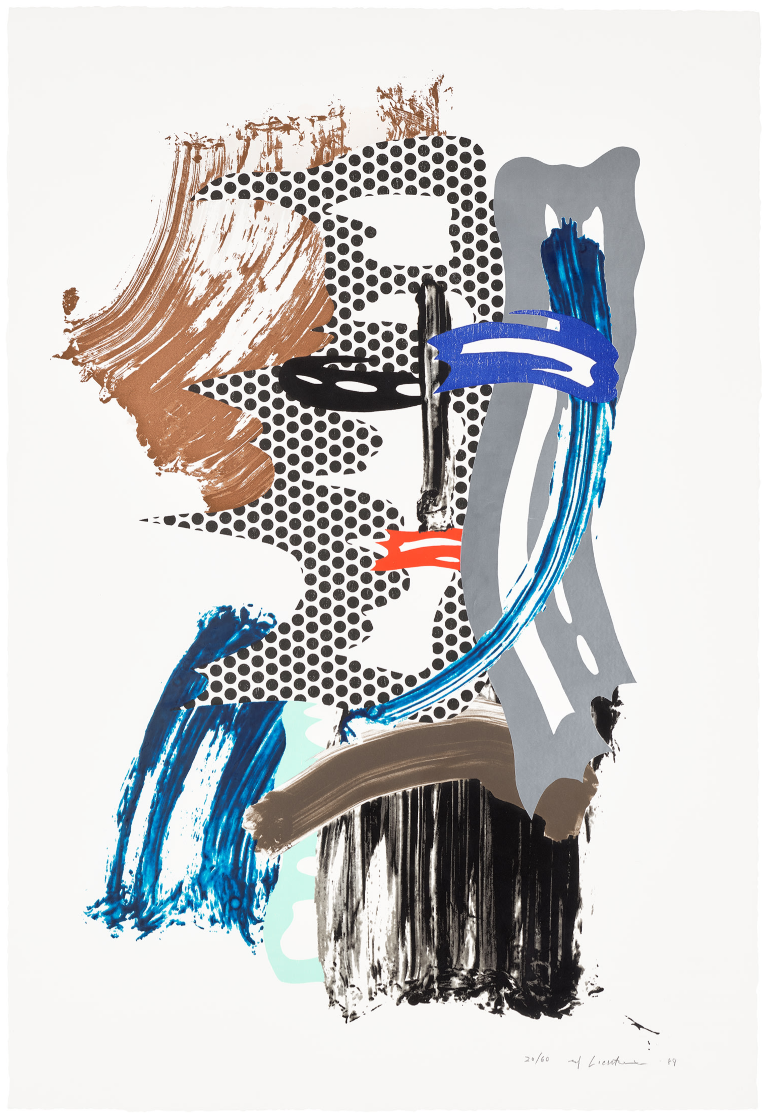
ROY LICHTENSTEIN
The Mask, from Brushstroke Figures Series (C. 227), 1989
Lithograph, waxtype, woodcut and screenprint in colors with collage, on Saunders Waterford paper
Signed, dated and numbered 20/60 in pencil (there were also 8 artist’s proofs)
#6. Green Face, 1989
Estimated: USD 35,000 – 45,000
USD 35,560
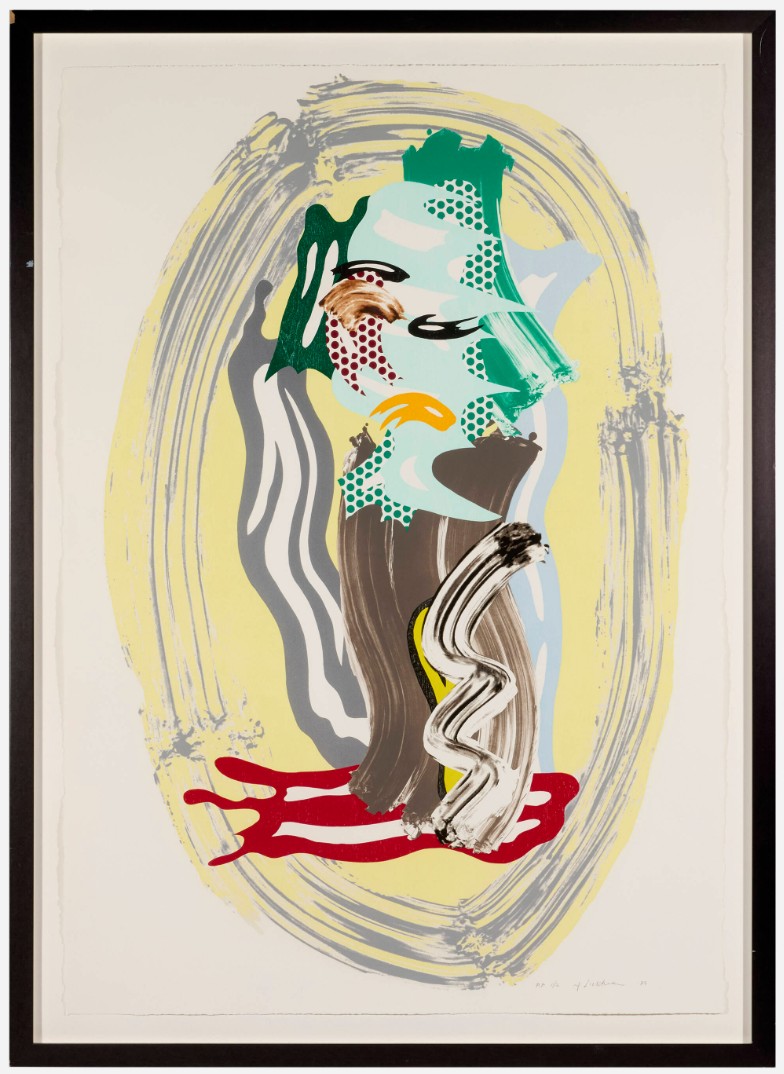
Signed, dated and numbered to lower right ‘P.P. 1/2 rf Lichtenstein ’89’.
Printer’s proof 1 of 2 apart from the edition of 60
#7. Nude, 1989
K Auction Seoul: 23 July 2025
Estimated: KRW 30,000,000 – 80,000,000
KRW 36,800,000 / USD 26,645
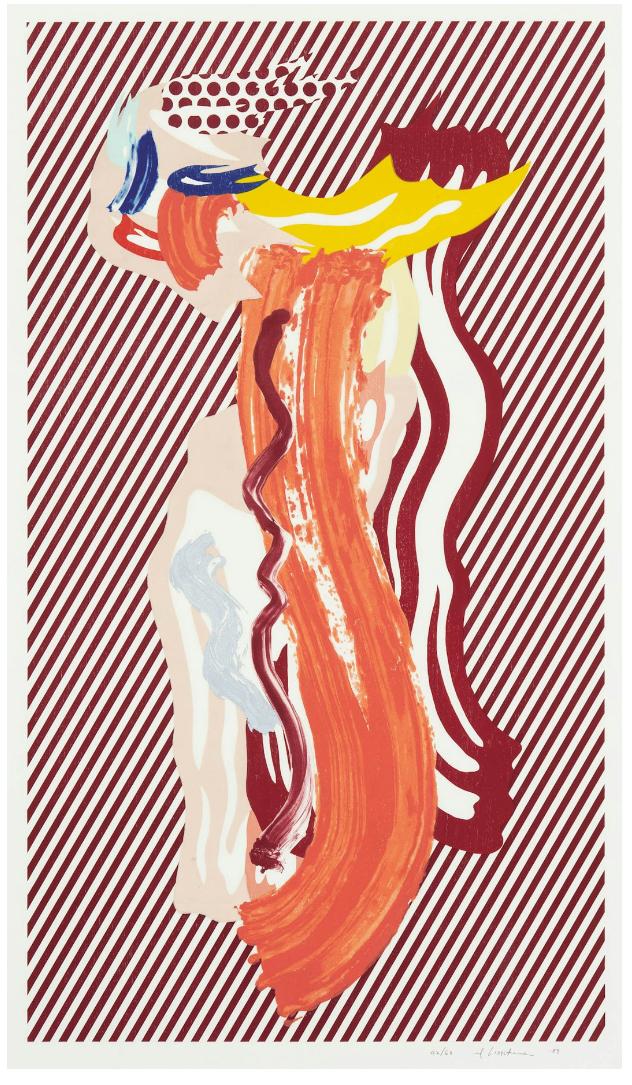
ROY LICHTENSTEIN
Nude: Brushstroke Figure Series, 1989
Screenprint, lithograph, waxtype, woodcut
Edition 42/60
Signed, dated and numbered on the lower right
2024 Auction Results
#1. Grandpa, 1989
Hindman Chicago: 26 September 2024
Estimated: USD 20,000 – 30,000
USD 34,925
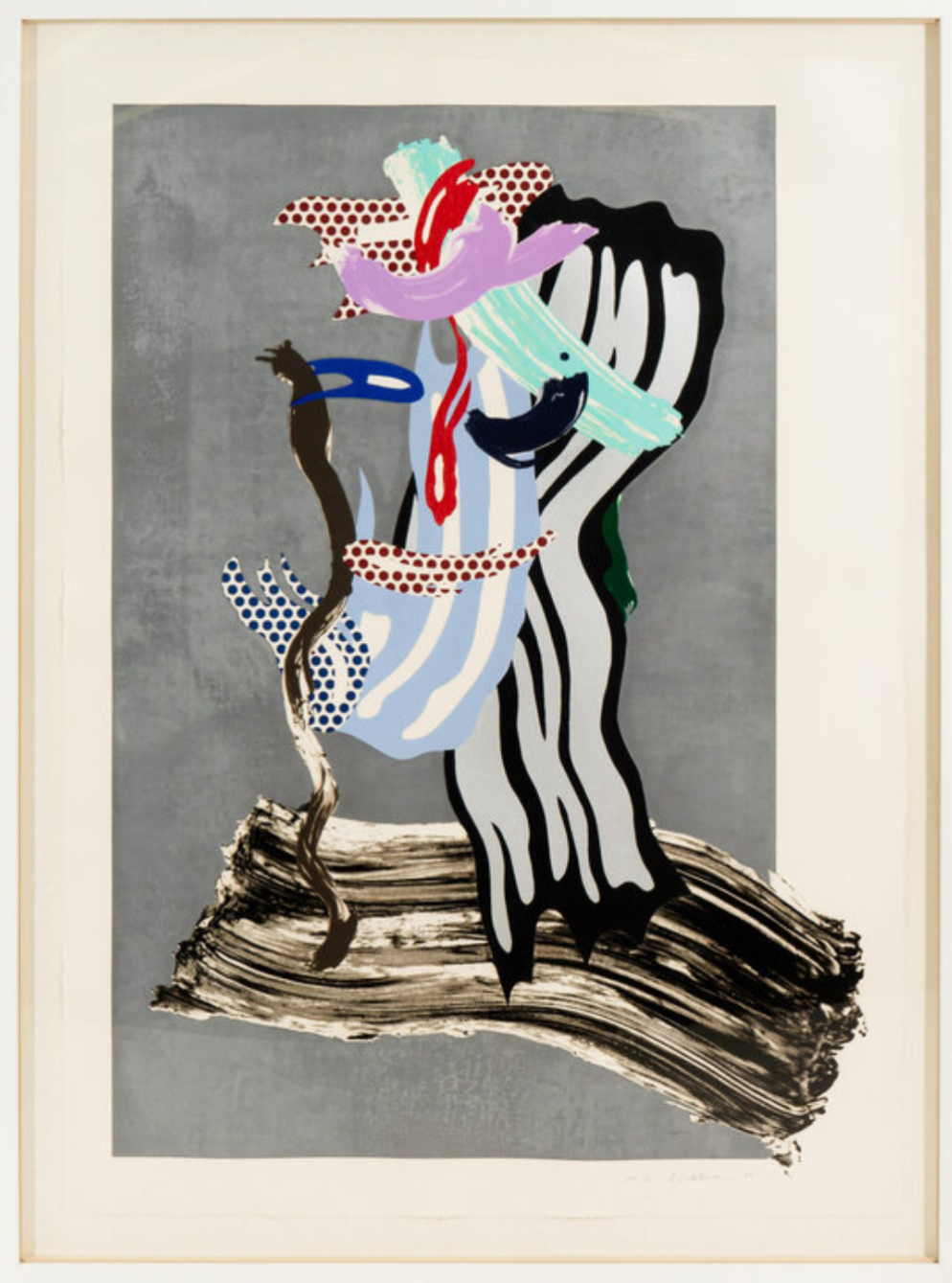
ROY LICHTENSTEIN (American, 1923–1997)
Grandpa (from Brushstroke Figures) (Corlett 231), 1989
Lithograph, waxtype, woodcut and screenprint in colors
Sheet: 53×37 inches
Signed, dated, and inscribed ‘P.P 1/2’ in pencil
#2. Green Face, 1989
Sotheby’s New-York: 19 April 2024
Estimated: USD 25,000 – 35,000
USD 30,480
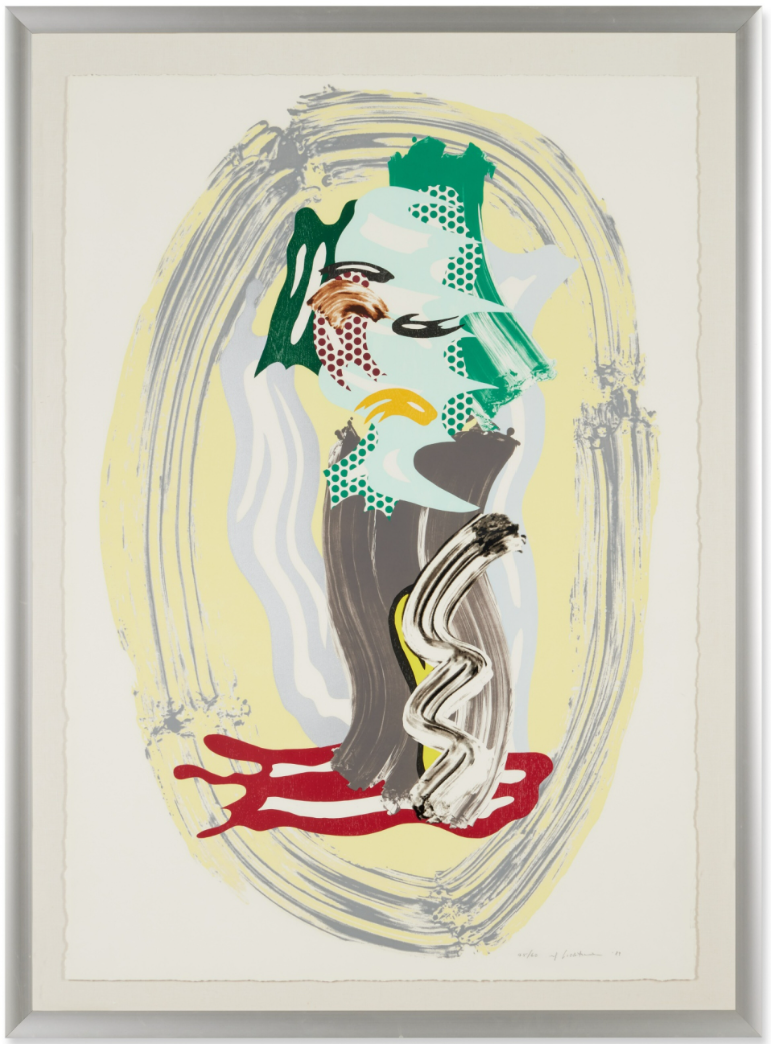
ROY LICHTENSTEIN (1923 – 1997)
Green Face, from Brushstroke Figure Series (Corlett 232), 1989
Lithograph, waxtype, woodcut and screenprint in colors on Saunders Waterford paper
Signed in pencil, dated and numbered 45/60
2023 Auction Results
#1. Portrait, 1989
LA Modern: 7 September 2023
Estimated: USD 20,000 – 30,000
USD 40,320
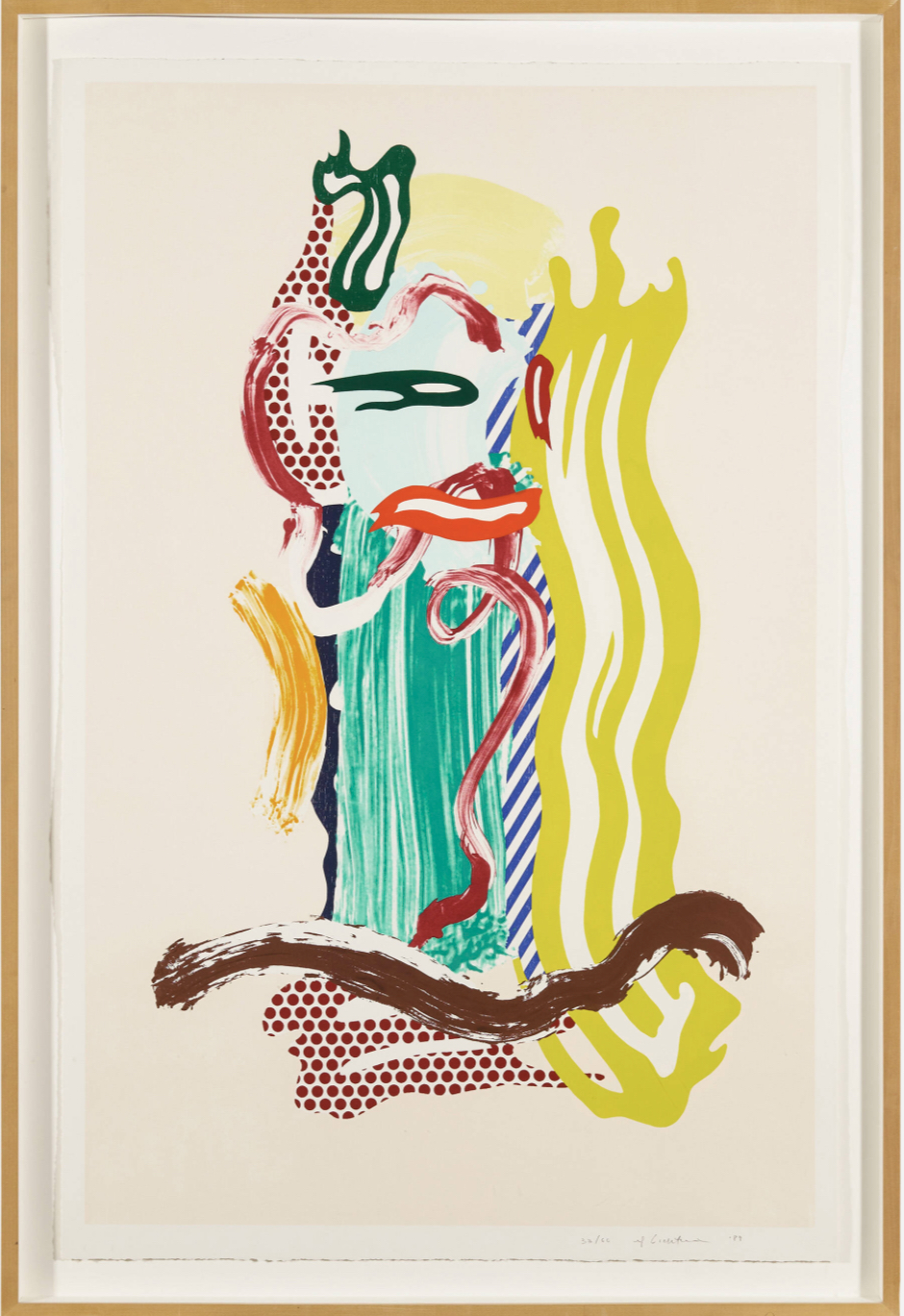
ROY LICHTENSTEIN 1923–1997
Portrait (from the Brushstroke Figures series), 1989
Lithograph, woodcut, wax encaustic and screenprint in colors on Saunders Waterford
Signed, dated and numbered to lower margin ‘33/60 rf Lichtenstein ’89’ with blindstamp
#2. Blue Face, 1989
Phillips New-York: 26 October 2023
Estimated: USD 20,000 – 30,000
USD 38,100
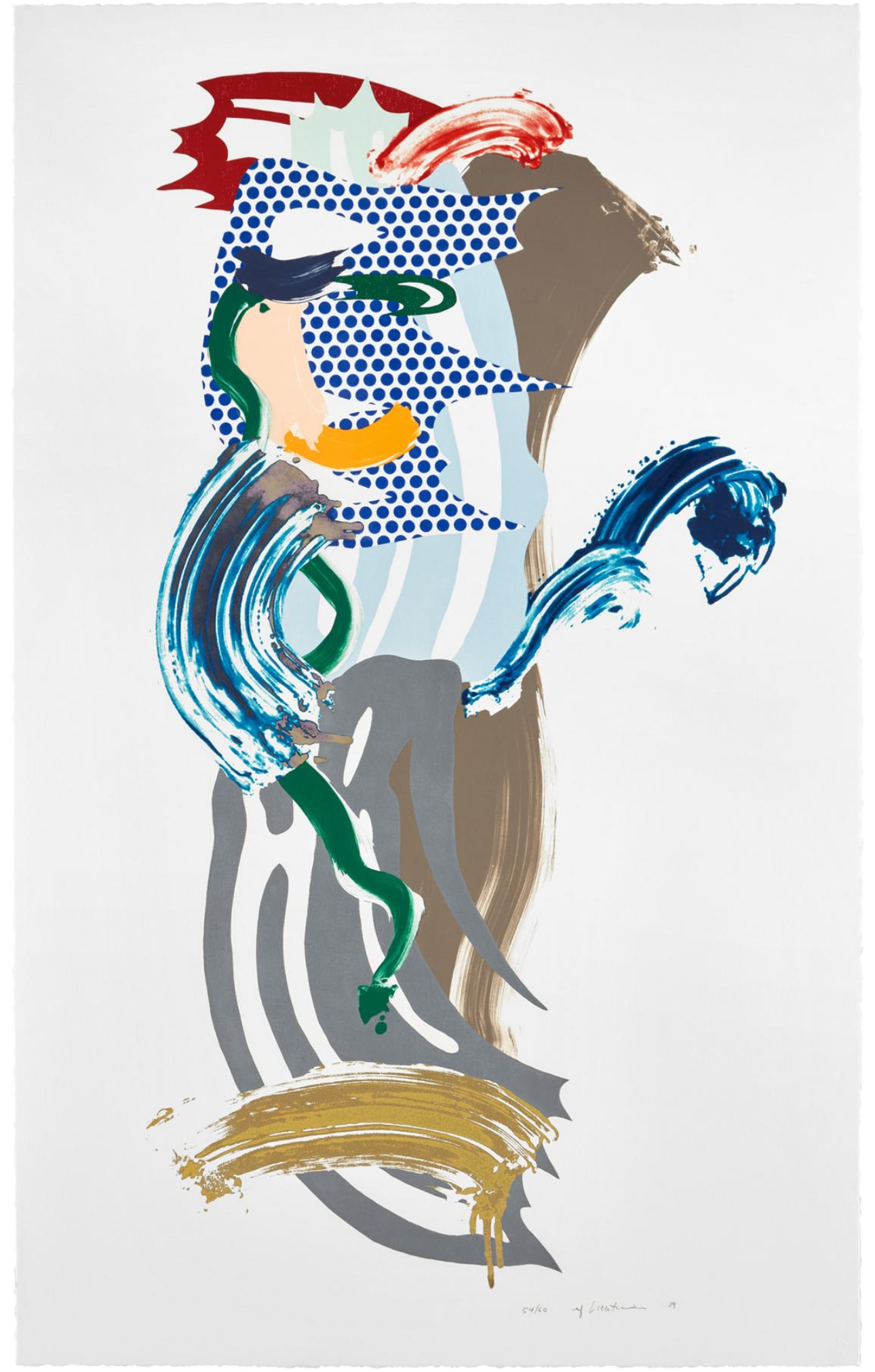
ROY LICHTENSTEIN
Blue Face, from Brushstroke Figures Series (C. 226), 1989
Lithograph, waxtype, woodcut and screenprint in colors on Saunders Waterford paper
Signed, dated and numbered 54/60 in pencil
#3. Green Face, 1989
Christie’s New-York: 28 October 2023
Estimated: USD 25,000 – 30,000
USD 32,760
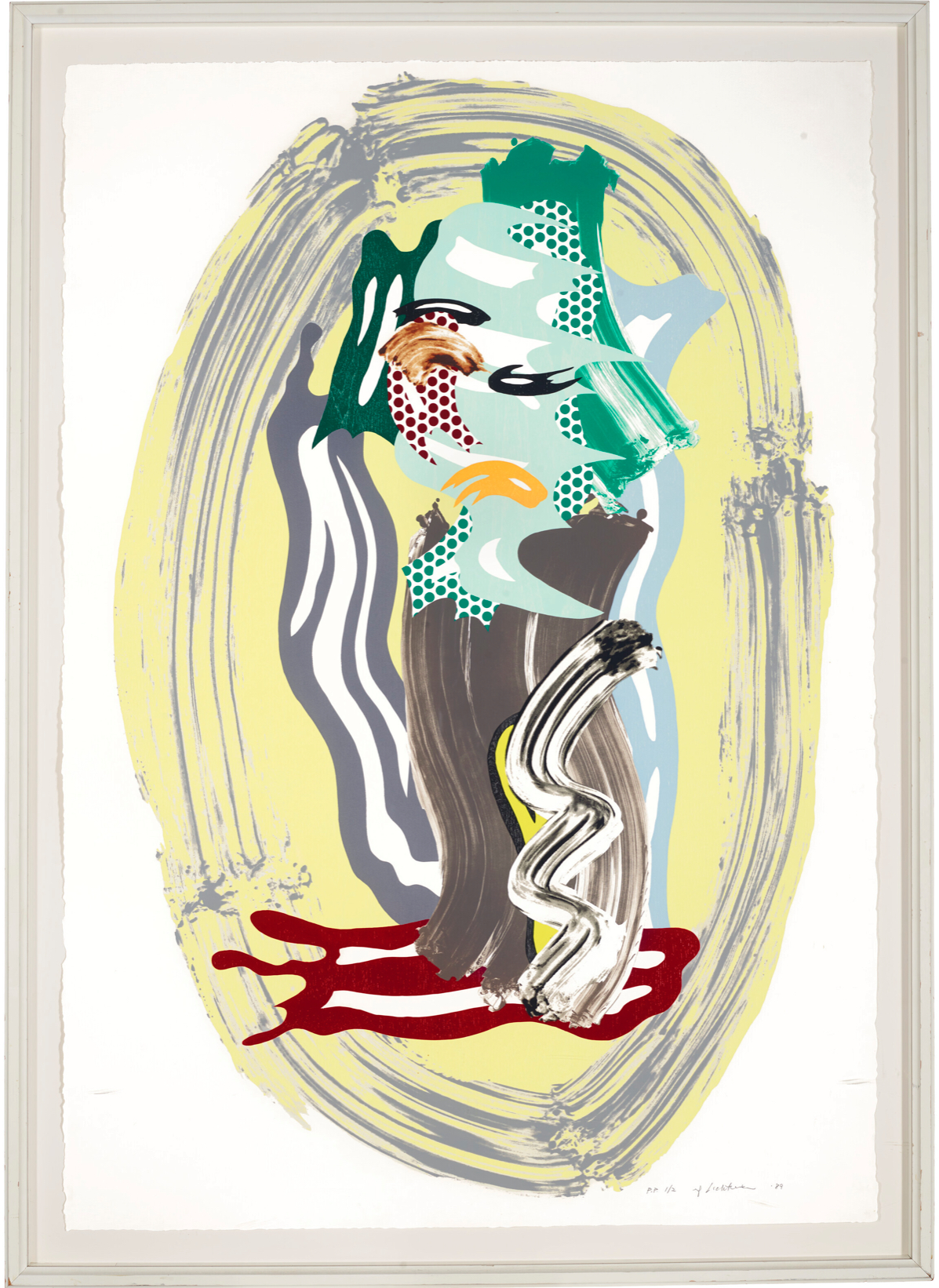
ROY LICHTENSTEIN (1923-1997)
Green Face, from Brushstroke Figures, 1989
Lithograph, waxtype, woodcut and screenprint in colors on Saunders Waterford paper
Signed and dated in pencil, numbered ‘P.P. 1⁄2’
A Printer’s Proof, the edition was 60 plus 8 Artist’s Proofs
#4. Nude, 1989
Bukowskis Stockholm: 25 October 2023
Estimated: SEK 250,000 – 300,000
SEK 350,000 / USD 31,462
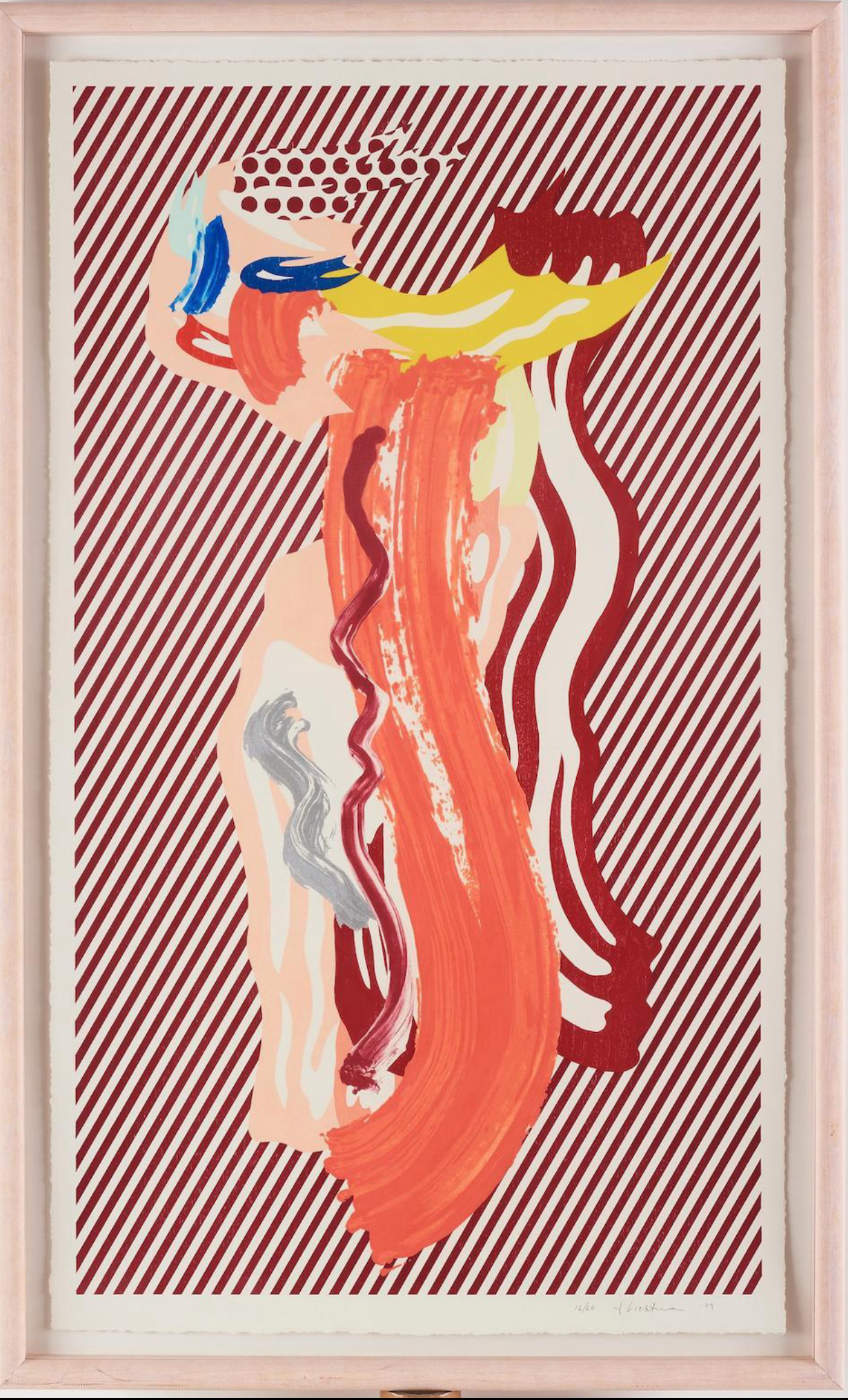
ROY LICHTENSTEIN
Nude from Brushstrokes Figures Series, 1989
Lithograph, waxtype, woodcut and screenprint in colors
Signed in pencil, and numbered 16/60
2022 Auction Results
#1. Green Face, 1989
LA Modern: 29 April 2022
Estimated: USD 40,000 – 60,000
USD 56,250
AUCTION RECORD FOR GREEN FACE
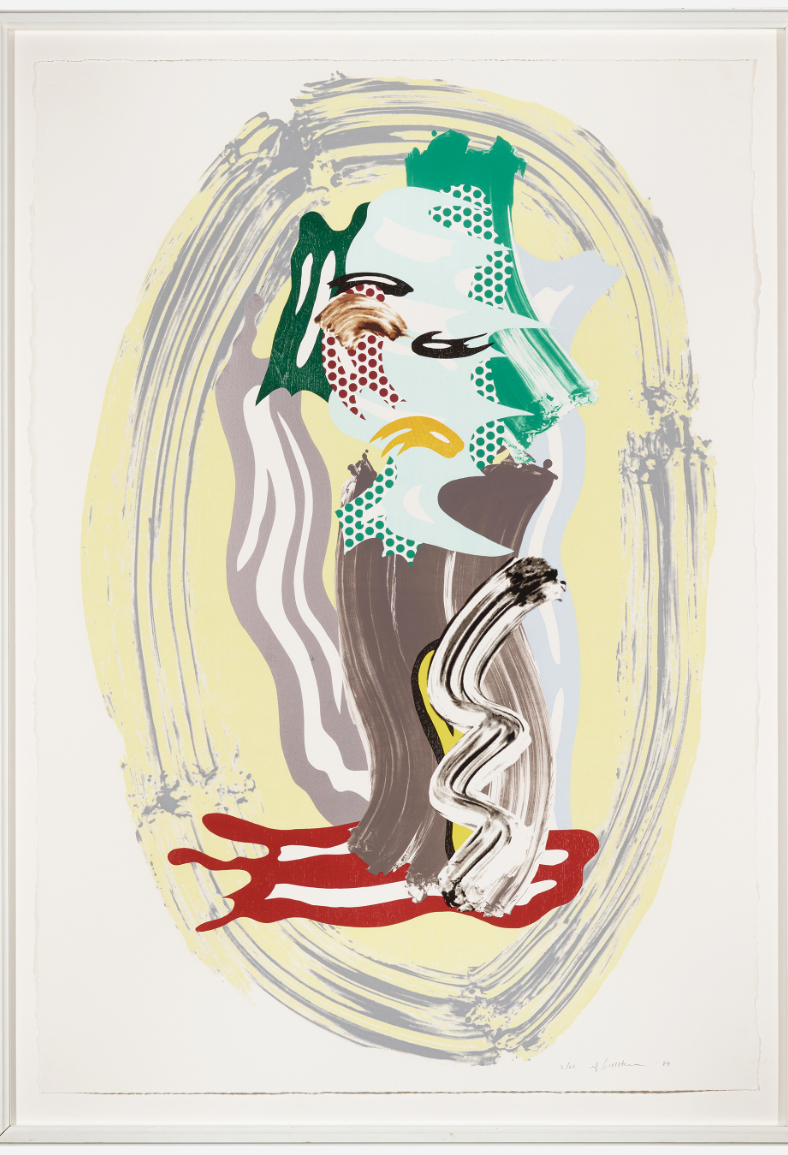
ROY LICHTENSTEIN
Green Face (from the Brushstroke Figures series), 1989
Lithograph, waxtype woodcut and screenprint in colors on cold-pressed Saunders Waterford
Signed, dated and numbered to lower right ‘2/60 rf Lichtenstein 89’
#2. Portrait, 1989
Sotheby’s New-York: 3 October 2022
Estimated: USD 20,000 – 30,000
USD 40,320
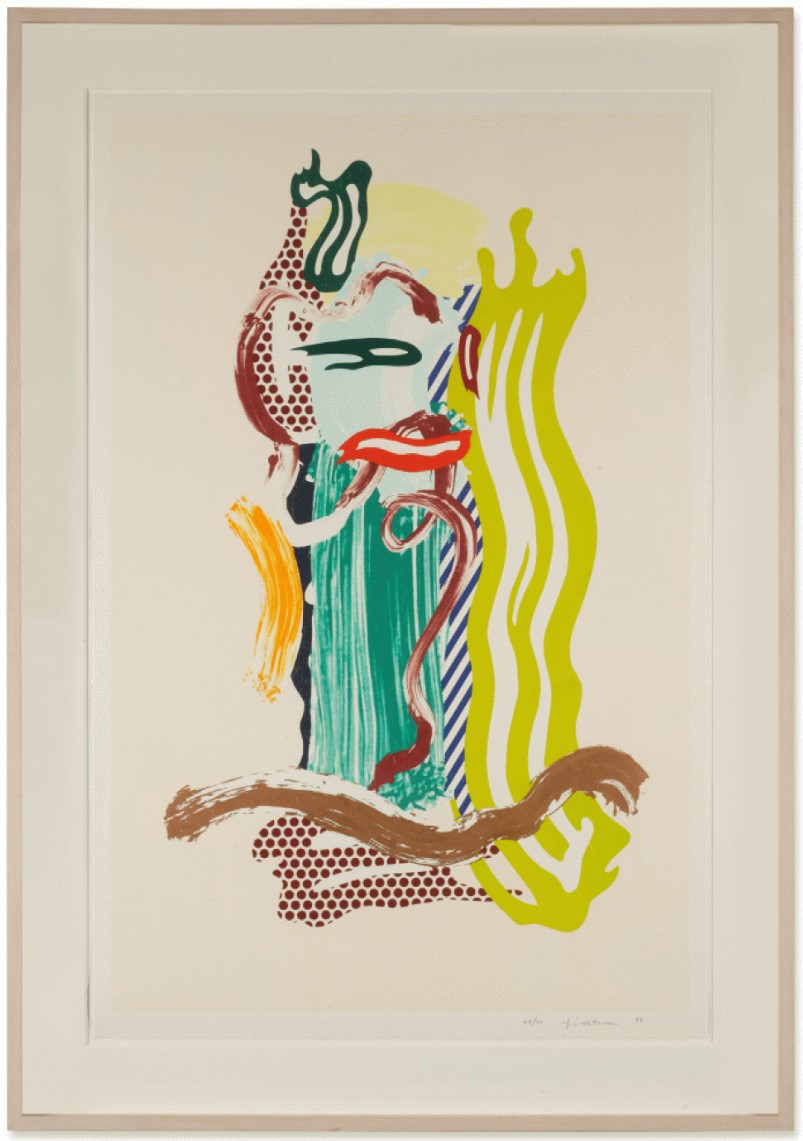
ROY LICHTENSTEIN (1923 – 1997)
Portrait, from Brushstroke Figure Series, 1989
Lithograph, waxtype, woodcut, and screenprint in colors on Saunders Waterford paper
Signed in pencil R Lichtenstein, dated 89 and numbered 48/60 (lower right)
#3. Blonde, 1989
SBI Art Auction Tokyo: 12 March 2022
Estimated: JPY 1,800,000 – 2,800,000
JPY 4,600,000 / USD 39,195
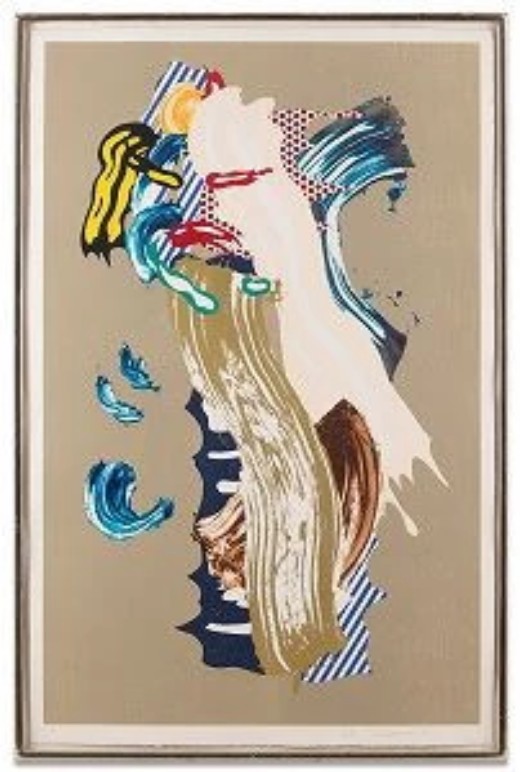
Roy LICHTENSTEIN
Blonde, from the Brushstroke Figures series (Corlett 230), 1989
Lithograph, waxtype, woodcut, screenprint
Signed, dated and numbered on the lower right
From the edition of 60
#4. Nude, 1989
Seoul Auction: 24 May 2022
Estimated: KRW 20,000,000 – 30,000,000
KRW 41,300,000 / USD 32,805
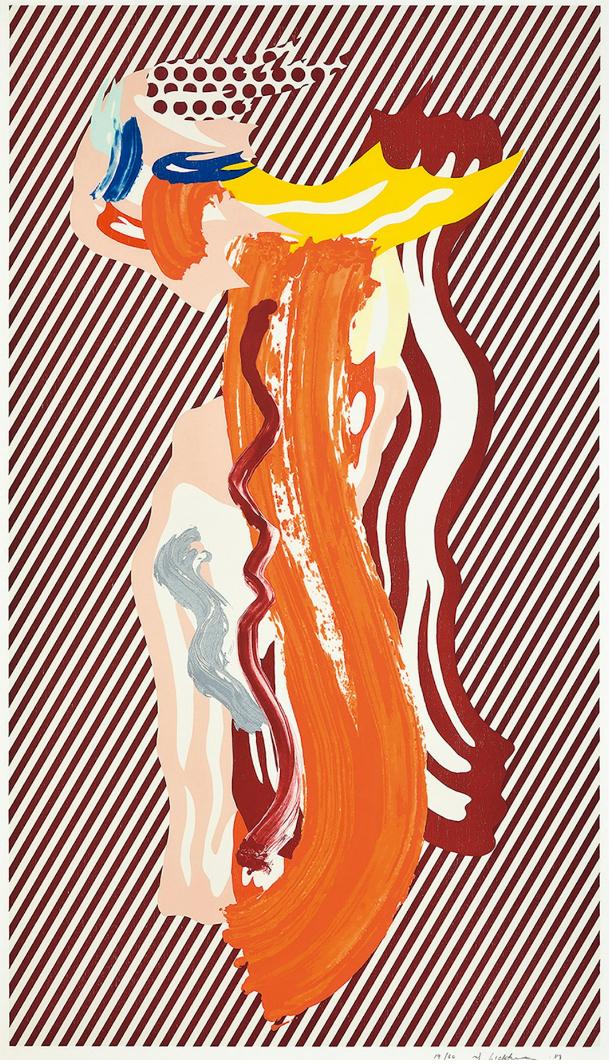
ROY LICHTENSTEIN
Nude from Brushstrokes Figures Series, 1989
Lithograph, waxtype, woodcut and screenprint in colors
Signed in pencil, and numbered 19/60
#5. Blue Face, 1989
Seoul Auction: 28 June 2022
Estimated: KRW 20,000,000 – 40,000,000
KRW 29,500,000 / USD 22,930
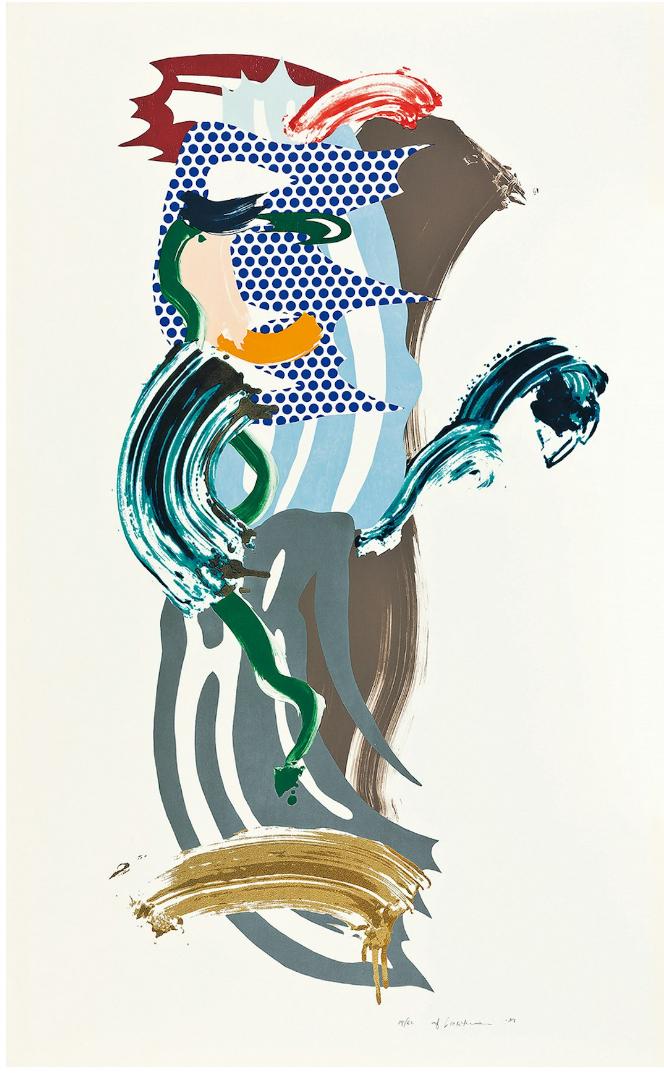
ROY LICHTENSTEIN
Blue Face, 1989
Lithograph, waxtype, woodcut and screenprint in colors on Saunders Waterford paper
Signed, dated and numbered 19/60 in pencil
2021 Auction Results
#1. Blue Face, 1989
Sotheby’s New-York: 23 April 2021
Estimated: USD 20,000 – 30,000
USD 50,400
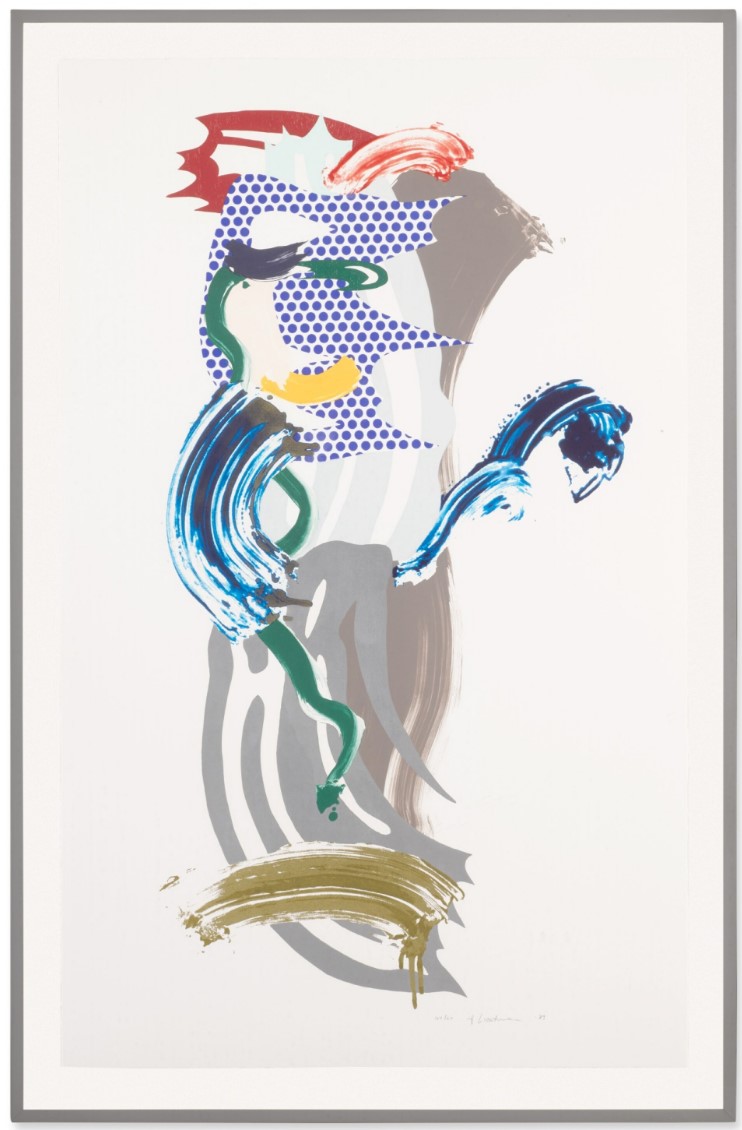
ROY LICHTENSTEIN (1923 – 1997)
Blue Face (Corlett 226) from Brushstroke Figures, 1989
Lithograph, waxtype, woodcut and screen-print in colors
Signed in pencil, dated and numbered 47/60
2020 Auction Results
#1. Blonde, 1989
Hindman Chicago: 21 May 2020
Estimated: USD 10,000 – 15,000
USD 35,000
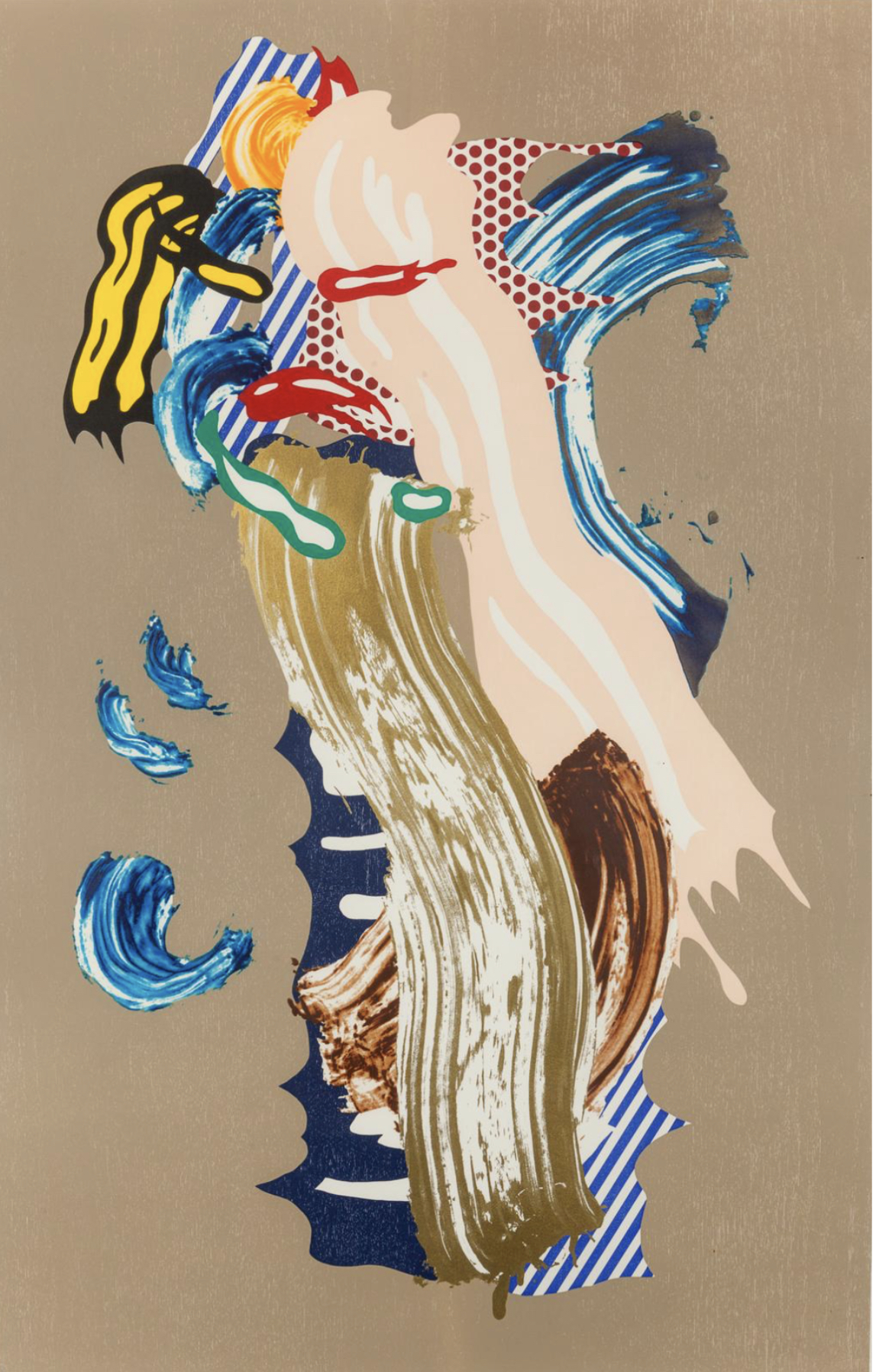
ROY LICHTENSTEIN (1923-1997)
Blonde (from the Brushstroke Figure Series), 1989
Lithograph, waxtype, woodcut and screen-print
Signed, dated and numbered 60/60 in pencil
#2. The Mask, 1989
Christie’s London: 18 March 2020
Estimated: GBP 15,000 – 25,000
GBP 25,000 / USD 29,405
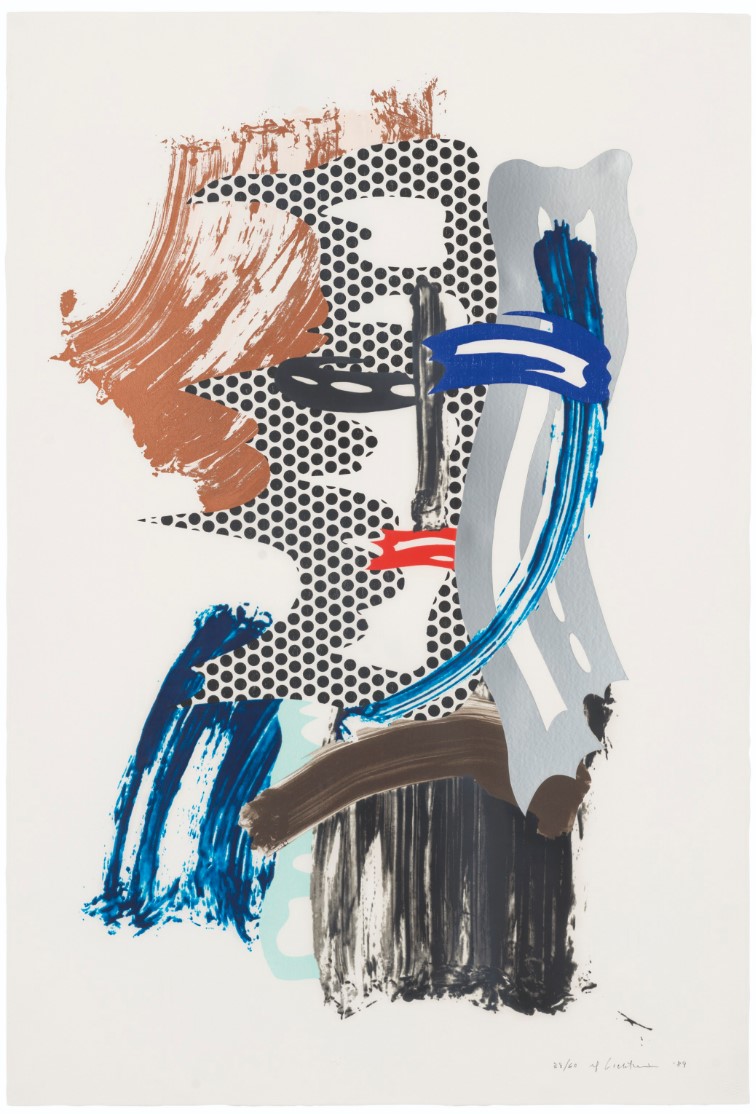
ROY LICHTENSTEIN (1923-1997)
The Mask, 1989
Lithograph, waxtype, woodcut, screen-print and collage in colors on Saunders Waterford wove paper Signed and dated in pencil, numbered 38/60
Blue Face
Blue Face
from Brushstroke Figures Series
Medium: Lithograph, waxtype, woodcut, and screen-print in colors on Saunders Waterford paper
Year: 1989
Sheet: 53 3/4 x 33 3/8 inches (136.6 x 84.7 cm)
Edition: 60
Artist’s Proofs: 8 AP
Publishers: Waddington Graphics, London and Graphicstudio, University of South Florida, Tampa
Printer: Graphicstudio, University of South Florida
Literature: Corlett 226, RLCR 3777
Blue Face, 1989 (RLCR 3777) | Catalogue entry | Roy Lichtenstein: A Catalogue Raisonné
Signed dated and numbered in pencil with the printer’s blindstamp
Blue Face is a striking example of Lichtenstein’s ability to manipulate abstract forms to suggest a recognizable portrait. Unlike some of the other, more brightly colored prints in the series (like Blonde), this piece utilizes an unusually muted and sophisticated color palette. The central facial form is constructed primarily from pale gray and light blue brushstrokes that intersect and overlap, defining the head and shoulders. The facial features are only subtly hinted at. A stroke of mustard yellow provides a contour that suggests a mouth, while darker smudges of dark blue and green are positioned higher up to suggest the eyes. This economy of line forces the viewer’s mind to resolve the abstract marks into a human image. A crucial detail is the inclusion of a single, noticeable patch of blue Benday dots that helps to form the figure’s face. This moment directly ties the piece back to Lichtenstein’s foundational Pop Art vocabulary, creating a rhythmic counterpoint between the “painterly” strokes and the mechanical, commercial printing pattern. The light blue and gray strokes often radiate outward, giving the composition a feeling of hovering between construction and dissolution. The figure is less sharply defined than other prints from the series, giving it an almost ghostly or ephemeral quality.
In Blue Face, the brushstrokes are further flattened by an unusually muted color palette. Unlike many of Lichtenstein’s works, the piece sheds any overt personal narrative, speaking instead through material experimentation and graceful, sweeping passages of color. Pale grey and light blue strokes converge to define the central form, radiating outward in multiple directions as though hovering between construction and dissolution. A mustard-yellow contour hints at a mouth, while dark green and blue smudges above it suggest the presence of eyes. The comic-book origins of the Brushstrokes series resurface in the single patch of blue dots that forms the figure’s face, subtly tying the work back to its graphic source. Yet this moment of patterning also invites a deeper reading: the dots introduce a rhythmic counterpoint to the looser strokes, heightening the tension between mechanical reproduction and painterly gesture. In combining these elements, Blue Face becomes more than a study in abstract portraiture, it becomes a meditation on how identity can be constructed, obscured, or reinvented through the language of marks themselves.
Auction Results
Bonhams London: 23 June 2026
Estimated: GBP 18,000 – 25,000
GBP 19,200 / USD 25,325
ROY LICHTENSTEIN (American, 1923-1997)
Blue Face, from Brushstroke Figures Series (Corlett 226), 1989
Lithograph, waxtype, woodcut and screenprint in colors on Saunders Waterford wove paper
Signed, dated and inscribed ‘S.P. 1/2’ in pencil
A special proof created for presentation purposes by the artist/publisher aside from the numbered edition of 60
Printed by Waddington Graphics, London, and Graphicstudio, Tampa
Published by Graphicstudio, Tampa, with their blindstamp
With the artist’s and printer’s copyright inkstamp verso
With the Workshop number in pencil verso
Freeman’s Hindman: 12 December 2025
Estimated: USD 20,000 – 30,000
USD 38,400
ROY LICHTENSTEIN (American, 1923–1997)
Blue Face (Corlett 226), 1989
from Brushstroke Figures
Lithograph, waxtype, woodcut, and screenprint
Signed, dated, and numbered 21/60 in pencil
Works from the Collection of Dorothy and Roy Lichtenstein
Sotheby’s New-York: 26 September 2025
Estimated: USD 20,000 – 30,000
USD 60,960
ROY LICHTENSTEIN (1923 – 1997)
Blue Face, from the Brushstroke Figures series (Corlett 226), 1989
Lithograph, waxtype, woodcut and screenprint in colors on cold-pressed Saunders Waterford paper
Signed, dated ’89 and inscribed AP 6/8 (lower right)
One of 8 artist’s proofs aside from the numbered edition of 60
XXXXXXXXXX
Phillips New-York: 26 October 2023
Estimated: USD 20,000 – 30,000
USD 38,100
ROY LICHTENSTEIN
Blue Face, from Brushstroke Figures Series (C. 226), 1989
Lithograph, waxtype, woodcut and screenprint in colors on Saunders Waterford paper
Signed, dated and numbered 54/60 in pencil
XXXXXXXXXXX
Seoul Auction: 28 June 2022
Estimated: KRW 20,000,000 – 40,000,000
KRW 29,500,000 / USD 22,930
ROY LICHTENSTEIN
Blue Face, 1989
Lithograph, waxtype, woodcut and screenprint in colors on Saunders Waterford paper
Signed, dated and numbered 19/60 in pencil
XXXXXXXXXXX
Sotheby’s New-York: 23 April 2021
Estimated: USD 20,000 – 30,000
USD 50,400
ROY LICHTENSTEIN (1923 – 1997)
Blue Face (Corlett 226) from Brushstroke Figures, 1989
Lithograph, waxtype, woodcut and screen-print in colors
Signed in pencil, dated and numbered 47/60
XXXXXXXXXXX
Christie’s New-York: 20 April 2018
Estimated: USD 15,000 – 20,000
USD 40,000
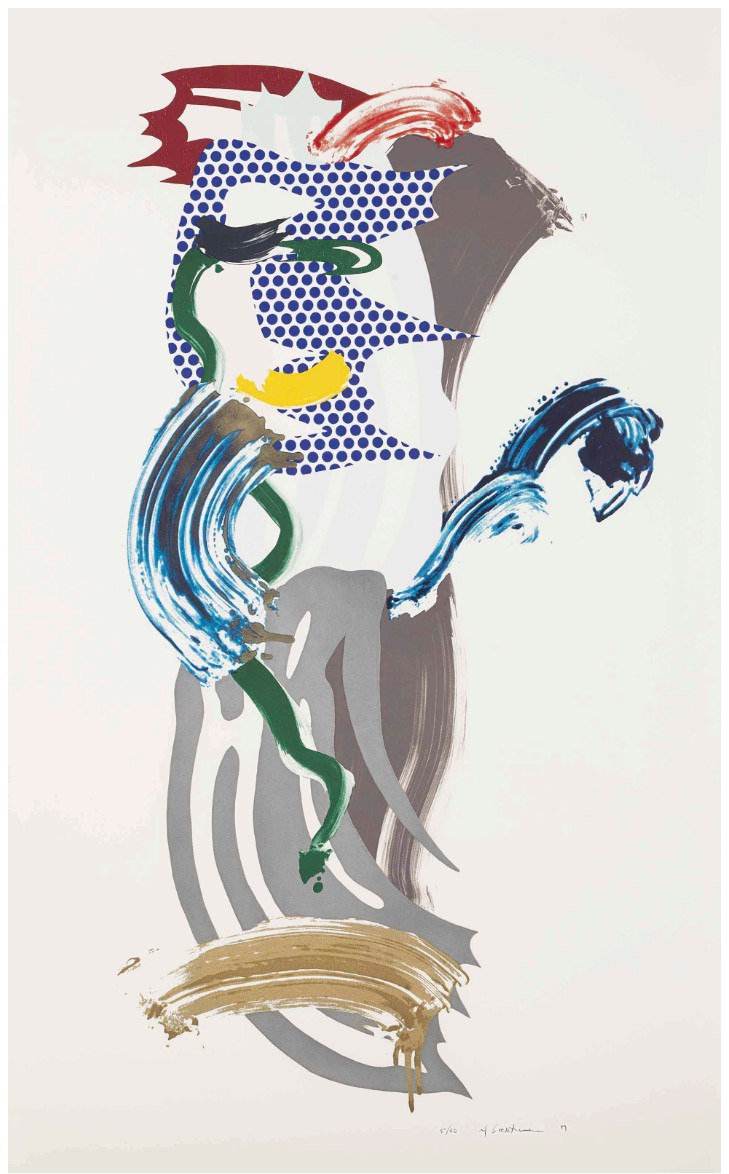
ROY LICHTENSTEIN (1923-1997)
Blue Face, from Brushstroke Figures, 1989
Lithograph, waxtype, woodcut and screen-print in colors on Saunders Waterford paper
Signed and dated in pencil, numbered 5/60
The Mask
The Mask
from Brushstroke Figures Series
Medium: Lithograph, waxtype, woodcut, and screen-print in colors on Saunders Waterford paper
Year: 1989
Sheet: 54 3/8 x 35 7/8 inches (138×91 cm)
Edition: 60
Artist’s Proofs: 8 AP
Publishers: Waddington Graphics, London and Graphicstudio, University of South Florida, Tampa
Printer: Graphicstudio, University of South Florida
Literature: Corlett 227, RLCR 3846
The Mask, 1989 (RLCR 3846) | Catalogue entry | Roy Lichtenstein: A Catalogue Raisonné
Signed dated and numbered in pencil with the printer’s blindstamp
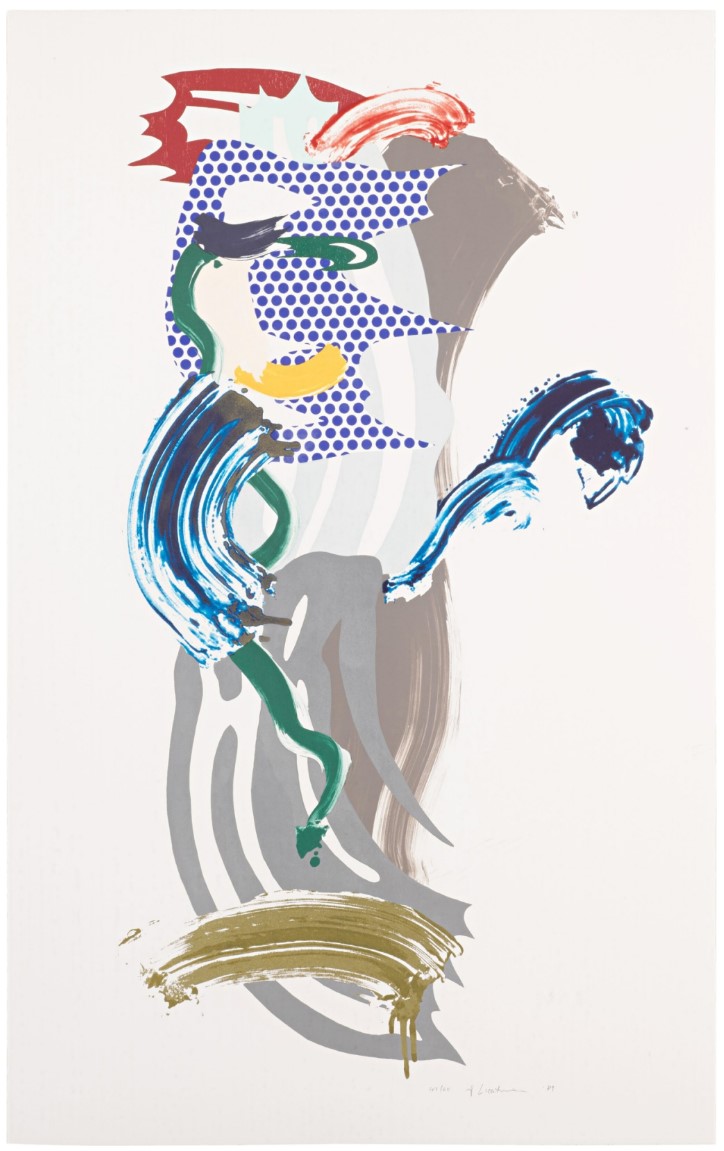
The Mask is a powerful exploration of how minimal, stylized marks can signify the human face. The composition is highly graphic and front-facing, deliberately evoking the flat, symbolic quality of a theatrical mask or a primitive effigy. The face is defined by a bold assembly of intersecting brushstrokes in various colors, red, yellow, blue, and black. These strokes are highly controlled, not spontaneous, and serve as structural elements rather than expressions of feeling. A prominent blue, swooping outline often defines one side of the face or a half-turned cheek, providing the primary sense of contour. Features are suggested with striking economy: a quick red horizontal stroke for the mouth and half-closed black and blue curved strokes for the eyes.
The curved eye elements are frequently designed to look like they are bending in opposite directions, a visual reference to the comedy and tragedy masks of Greek drama. This theatrical allusion reinforces the idea that the face is a symbol, a persona, or a constructed front, rather than a deep psychological portrait. As with the other prints in the series, the background and negative space are crucial. They feature Lichtenstein’s classic Benday dots or simple, contrasting diagonal line patterns. This solid, manufactured ground sets the stage for the chaotic, yet controlled, energy of the painted strokes, emphasizing the tension between the graphic and the gestural.
The Mask strips portraiture down to its simplest components, forcing the viewer to confront the gap between abstraction and representation. The figure is formed by abstract elements (the brushstrokes), yet the final product is instantly recognized as a face. The very notion of the “mask” aligns perfectly with Lichtenstein’s overall critique of Abstract Expressionism. If the expressive brushstroke was meant to reveal the artist’s soul, Lichtenstein uses that same mark to create a “mask”—a cover, a symbol of concealment, or a standardized persona—thereby stripping the brushstroke of its claim to authentic self-expression.
The Mask is one of the most intellectually focused pieces in the Brushstroke Figures series, using Pop’s detachment to turn the expressive, romantic gesture of the brushstroke into an objective, two-dimensional symbol of identity.
Auction Results
LA Modern: 19 May 2026
Estimated: USD 20,000 – 30,000
USD 30,720
ROY LICHTENSTEIN (1923-1997) ⊕
The Mask (Corlett 227), 1989
Lithograph, waxtype, woodcut and screenprint in colors on Saunders Waterford
Signed, dated, and numbered to lower edge ’29/60 rf Lichtenstein ’89’ with publisher’s blindstamps
Co-published by Waddington Graphics, London and Graphicstudio, Tampa
Works from the Collection of Dorothy and Roy Lichtenstein
Sotheby’s New-York: 26 September 2025
Estimated: USD 20,000 – 30,000
USD 48,260
ROY LICHTENSTEIN (1923 – 1997)
The Mask, from the Brushstroke Figures series (Corlett 227), 1989
Lithograph, waxtype, woodcut and screenprint in colors with collage on Saunders Waterford wove paper
Signed, dated ’89 and inscribed AP 6/8 (lower right)
One of 8 artist’s proofs aside from the numbered edition of 60
Phillips London: 23 January 2025
Estimated: GBP 20,000 – 30,000
GBP 30,480 / USD 37,655
ROY LICHTENSTEIN
The Mask, from Brushstroke Figures Series (C. 227), 1989
Lithograph, waxtype, woodcut and screenprint in colors with collage, on Saunders Waterford paper
Signed, dated and numbered 20/60 in pencil (there were also 8 artist’s proofs)
XXXXXXXXXXX
Christie’s London: 18 March 2020
Estimated: GBP 15,000 – 25,000
GBP 25,000 / USD 29,405
ROY LICHTENSTEIN (1923-1997)
The Mask, 1989
Lithograph, waxtype, woodcut, screen-print and collage in colors on Saunders Waterford wove paper Signed and dated in pencil, numbered 38/60
XXXXXXXXXXX
Christie’s London: 29 March 2017
Estimated: GBP 15,000 – 20,000
GBP 27,500 / USD 34,120
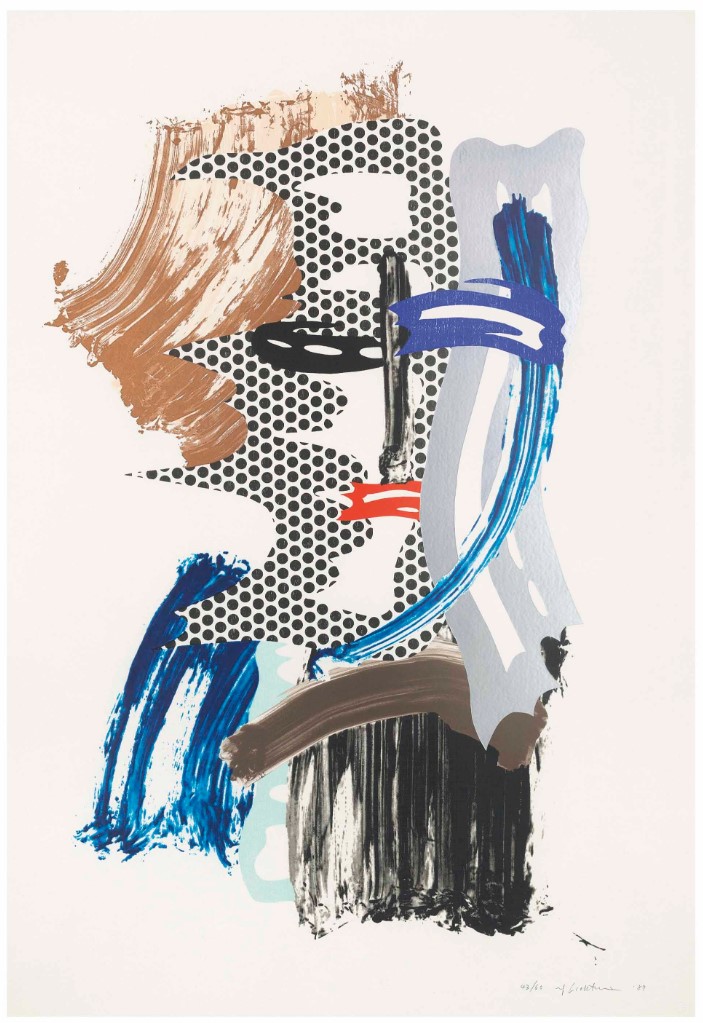
ROY LICHTENSTEIN (1923-1997)
The Mask, 1989
Lithograph, waxtype, woodcut, screenprint and collage in colors on Saunders Waterford wove paper
Signed and dated in pencil, numbered 43/60
Roads Collar
Roads Collar
from Brushstroke Figures Series
Medium: Lithograph, waxtype, woodcut, and screenprint on 638-g/m² cold-pressed Saunders Waterford paper
Year: 1989
Sheet: 52 3/8 x 28 7/8 inches (133 x 73.3 cm) (irregular)
Edition: 60
Artist’s Proofs: 8 AP
Publishers: Waddington Graphics, London and Graphicstudio, University of South Florida, Tampa
Printer: Graphicstudio, University of South Florida
Literature: Corlett 228, RLCR 3837
Roads Collar, 1989 (RLCR 3837) | Catalogue entry | Roy Lichtenstein: A Catalogue Raisonné
Signed dated and numbered in pencil with the printer’s blindstamp
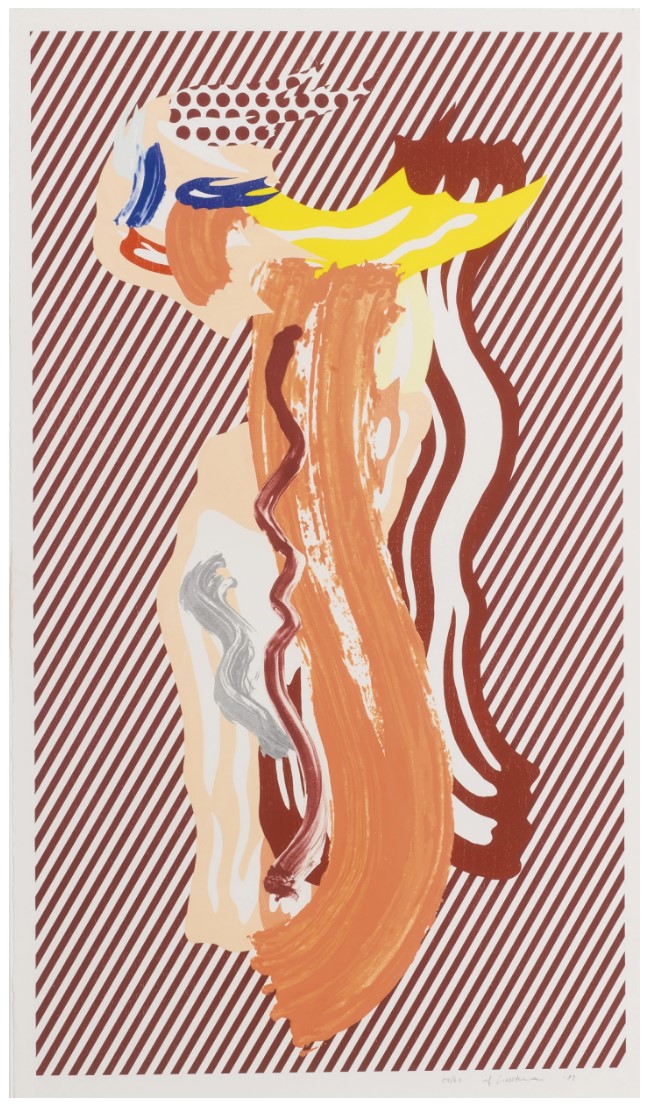
Roads Collar is one of the most abstract pieces in the series, often focusing more on the construction of the figure’s clothing or surroundings than on the face itself, which is implied or partially obscured. The title itself suggests a focus on the structural elements around the neck or shoulders. This print features a complex, chaotic array of strokes that suggest a figure, perhaps clad in a collared garment. The “roads” component of the title may reference the patterned strokes that resemble overlapping pathways or the diagonal stripes that often characterize the background or a piece of the figure’s clothing.
The “Collar” area is usually highlighted by contrasting brushstrokes—perhaps a solid block of color or a highly patterned set of lines (like thin, parallel strokes used to suggest a fold or texture) that sharply define the neck opening against the torso or jacket. This print employs the woodcut and waxtype techniques extensively to achieve a varied, tactile surface. Some areas appear rough and wood-grained, while others, defined by the waxtype, might have a waxy, semi-transparent quality. The colors are often vibrant but intentionally clashing, using reds, blues, and yellows to delineate the various abstract components that make up the figure and its implied garment.
In Roads Collar, Lichtenstein takes the satirical critique of Abstract Expressionism one step further by using the emotional, expressive brushstroke to describe something entirely mundane and manufactured: clothing and pattern. He turns the gesture into texture, demonstrating that his stylized strokes can be used as easily to depict tweed, denim, or the edge of a plastic collar as they can a stormy sky. Because the focus shifts away from a clearly defined face, the figure in Roads Collar becomes even more ambiguous. It is purely an assemblage of graphic techniques and materials, emphasizing the artificiality of the entire representation. The piece is less a portrait of a person and more a portrait of painting materials and printing techniques used to suggest a person.
Auction Results
K Auction Seoul: 27 February 2026
Estimated: KRW 30,000,000 – 100,000,000
KRW 30,000,000 (Hammer)
KRW 34,950,000 / USD 24,255
ROY LICHTENSTEIN
Roads Collar: Brushstroke Figures Series, 1989
Screenprint, lithograph, waxtype, woodcut
Signed, dated and numbered PP2/2 on the lower right
(original edition of 30+2PP+2SP+8AP)
Printed and published by Graphicstudio, University of South Florida, Tampa
LA Modern: 5 March 2017
Estimated: USD 25,000 – 35,000
USD 23,000
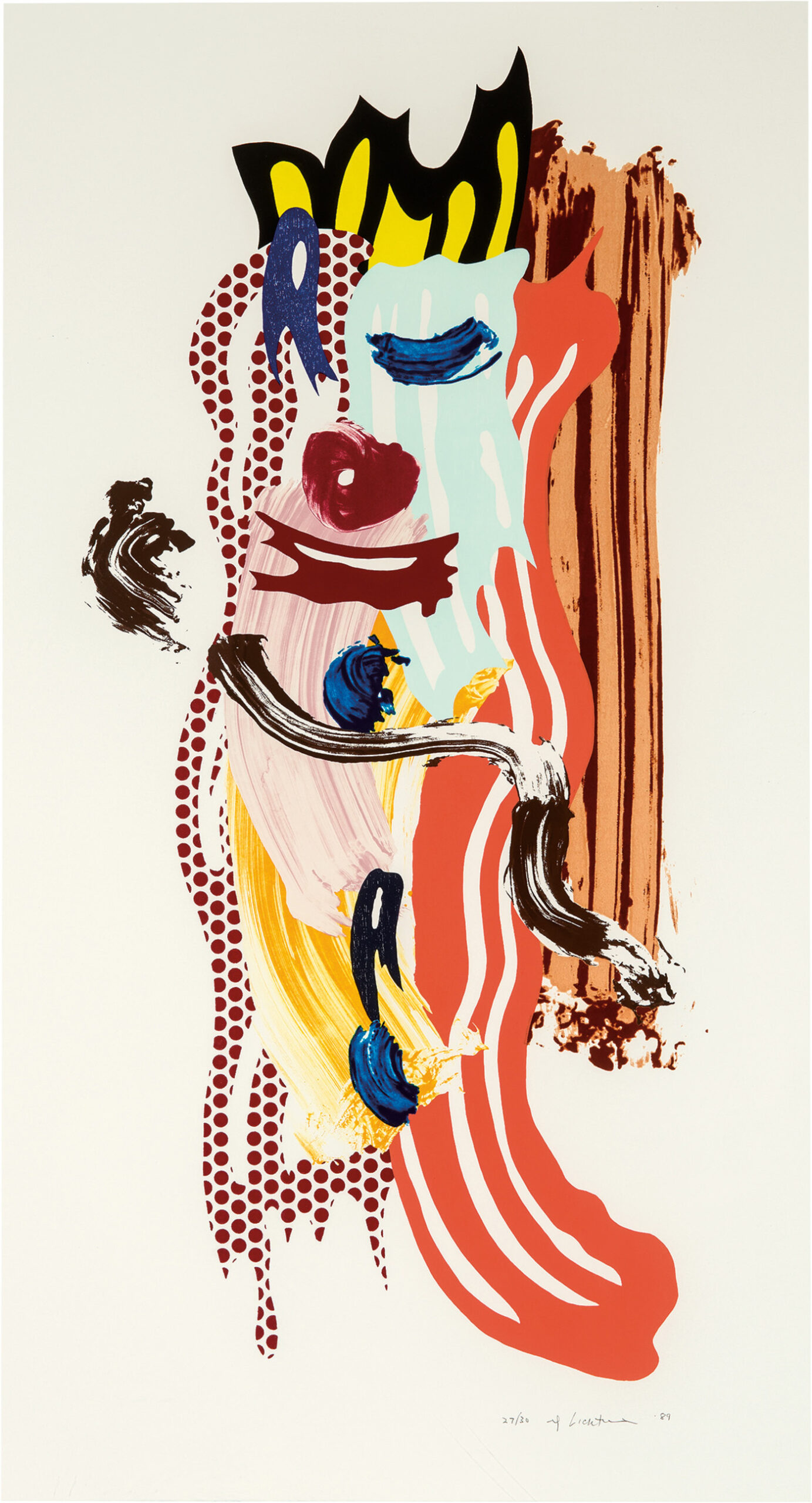
ROY LICHTENSTEIN 1923–1997
Roads Collar (from Brushstroke Figures series), 1989
14-color lithograph, waxtype, woodcut and screenprint in colors on Saunders Waterford
Signed and dated with edition 27/30 in graphite lower right sheet with blindstamp
Portrait
Portrait
from Brushstroke Figures Series
Medium: Lithograph, waxtype, woodcut, and screenprint on 638-g/m² cold-pressed Saunders Waterford paper
Year: 1989
Sheet: 52 9/16 x 34 1/4 inches (133.5 x 87 cm) (irregular)
Image: 50 x 32 1/8 inches (127 x 81.6 cm)
Edition: 60
Artist’s Proofs: 8 AP
Publishers: Waddington Graphics, London and Graphicstudio, University of South Florida, Tampa
Printer: Graphicstudio, University of South Florida
Literature: Corlett 229, RLCR 3800
Portrait, 1989 (RLCR 3800) | Catalogue entry | Roy Lichtenstein: A Catalogue Raisonné
Signed dated and numbered in pencil with the printer’s blindstamp
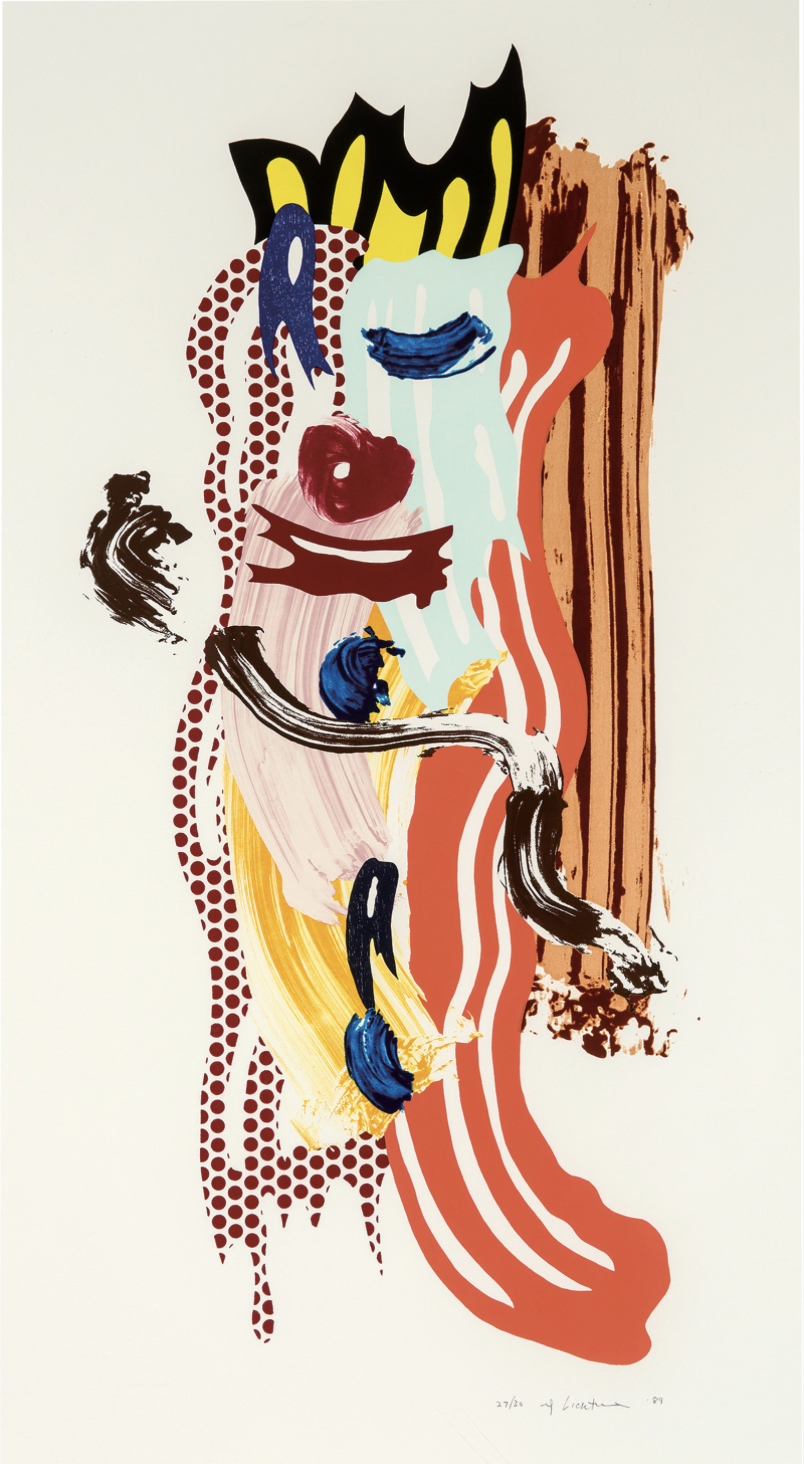
Portrait is a definitive example of Lichtenstein’s late-career synthesis, where he combines his classic Pop methods with the complex textural simulation of Abstract Expressionism. Since the title is non-specific, the print often functions as an archetypal human head, demonstrating the fundamental principle of the series: constructing identity from abstract marks. This print is typically one of the most visually dense in the series, featuring a wide variety of strokes, colors, and patterns, all layered to suggest the depth and form of a head-and-shoulders bust.
It consciously merges different techniques. Bold, thick black outlines define the large, sweeping yellow or blue brushstrokes that form the overall shape of the face and hair, recalling the simple, graphic impact of his 1960s work. Crucially, Portrait firmly incorporates Lichtenstein’s traditional red Benday dots and blue diagonal stripes within the main body of the composition. These elements are not just background; they become textural components of the figure itself, highlighting the artifice of the image. The facial features are composed of highly contrasting and strategically placed marks. A flat sweep of bright yellow might define the cheek, similar to the color in Blonde, while intersecting eggshell, mint green, and ash brown strokes span the center, suggesting contours and shadow.
The subject is completely devoid of individual personality or emotion. The title Portrait is a sly comment on the genre itself, the work is a portrait of how a portrait is made, broken down into its fundamental visual codes (the expressive mark, the commercial dot screen, the flat color field). Portrait showcases the artist’s technical mastery in printmaking, combining color lithography, waxtype, woodcut, and screenprint. The use of waxtype (pigmented beeswax) gives certain strokes a distinct, polished, or thick texture that ironically mimics the impasto of an oil painting, while the woodcut adds deliberately rough, textural marks.
This work is a sophisticated late-career summation. Lichtenstein is not only parodying Abstract Expressionism (the gestural brushstroke) but also celebrating Pop Art’s ability to absorb and codify any artistic language. Portrait proves that even the supposed height of personal artistic expression can be mass-produced, organized, and used to depict familiar archetypes. In essence, Portrait is a conceptual self-referential piece within the series, acting as a definitive statement on the relationship between high art, commercial aesthetics, and the enduring challenge of representing the human figure.
Auction Results
Works from the Collection of Dorothy and Roy Lichtenstein
Sotheby’s New-York: 26 September 2025
Estimated: USD 20,000 – 30,000
USD 48,260
ROY LICHTENSTEIN (1923 – 1997)
Portrait, from the Brushstroke Figures series (Corlett 229), 1989
Lithograph, waxtype, woodcut and screenprint in colors on cold-pressed Saunders Waterford paper
Signed, dated ’89 and inscribed AP 6/8 (lower right)
One of 8 artist’s proofs aside from the numbered edition of 60
XXXXXXXXXXX
LA Modern: 7 September 2023
Estimated: USD 20,000 – 30,000
USD 40,320
ROY LICHTENSTEIN 1923–1997
Portrait (from the Brushstroke Figures series), 1989
Lithograph, woodcut, wax encaustic and screenprint in colors on Saunders Waterford
Signed, dated and numbered to lower margin ‘33/60 rf Lichtenstein ’89’ with blindstamp
XXXXXXXXXXX
Sotheby’s New-York: 3 October 2022
Estimated: USD 20,000 – 30,000
USD 40,320
ROY LICHTENSTEIN (1923 – 1997)
Portrait, from Brushstroke Figure Series, 1989
Lithograph, waxtype, woodcut, and screenprint in colors on Saunders Waterford paper
Signed in pencil R Lichtenstein, dated 89 and numbered 48/60 (lower right)
XXXXXXXXXXX
American Visionary: The Collection of Mrs. John L. Marion
Sotheby’s New-York: 13 May 2021
Estimated: USD 15,000 – 25,000
USD 50,400
AUCTION RECORD FOR PORTRAIT
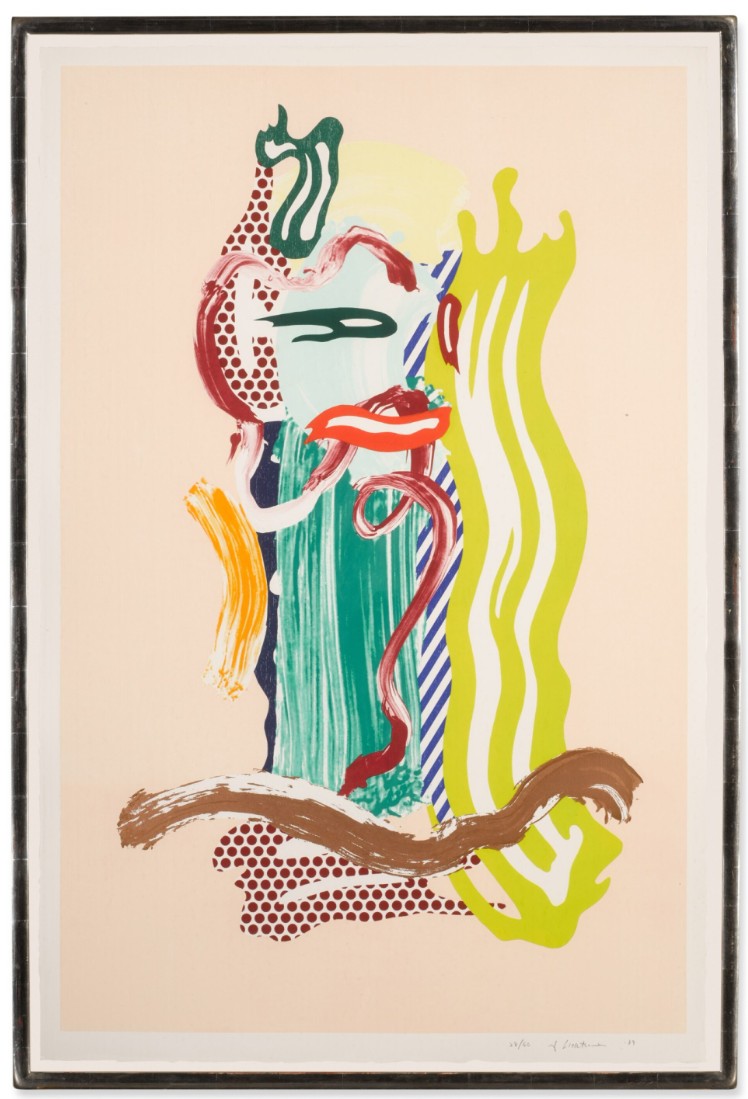
ROY LICHTENSTEIN (1923 – 1997)
Portrait (C. 229), 1989
Lithograph, waxtype, woodcut and screenprint on paper
Signed, dated 1989 and numbered 28/60 with the publisher’s blindstamp
XXXXXXXXXXX
Phillips New-York: 23 April 2019
Estimated: USD 18,000 – 25,000
USD 22,500
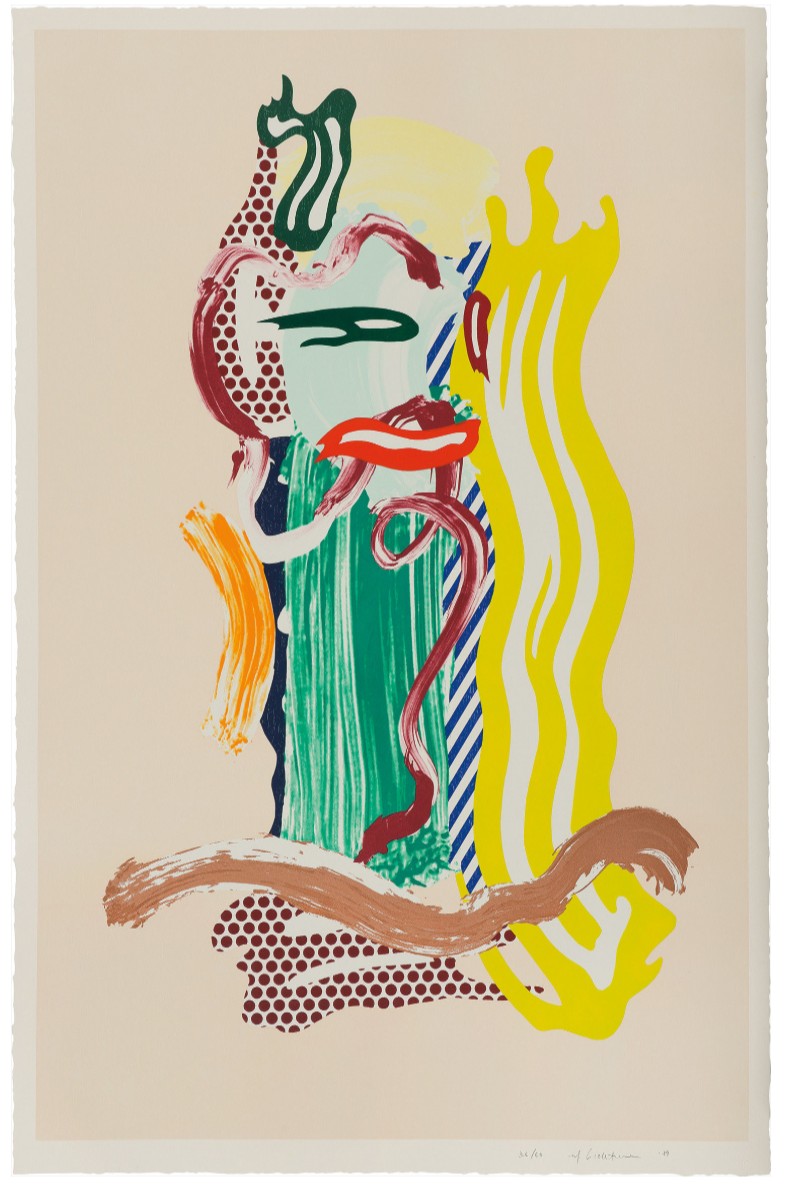
Lithograph, waxtype, woodcut and screenprint in colors, on Saunders Waterford paper
Signed, dated and numbered 36/60 in pencil
Phillips London: 7 June 2017
Estimated: GBP 15,000 – 20,000
GBP 23,750 / USD 30,730
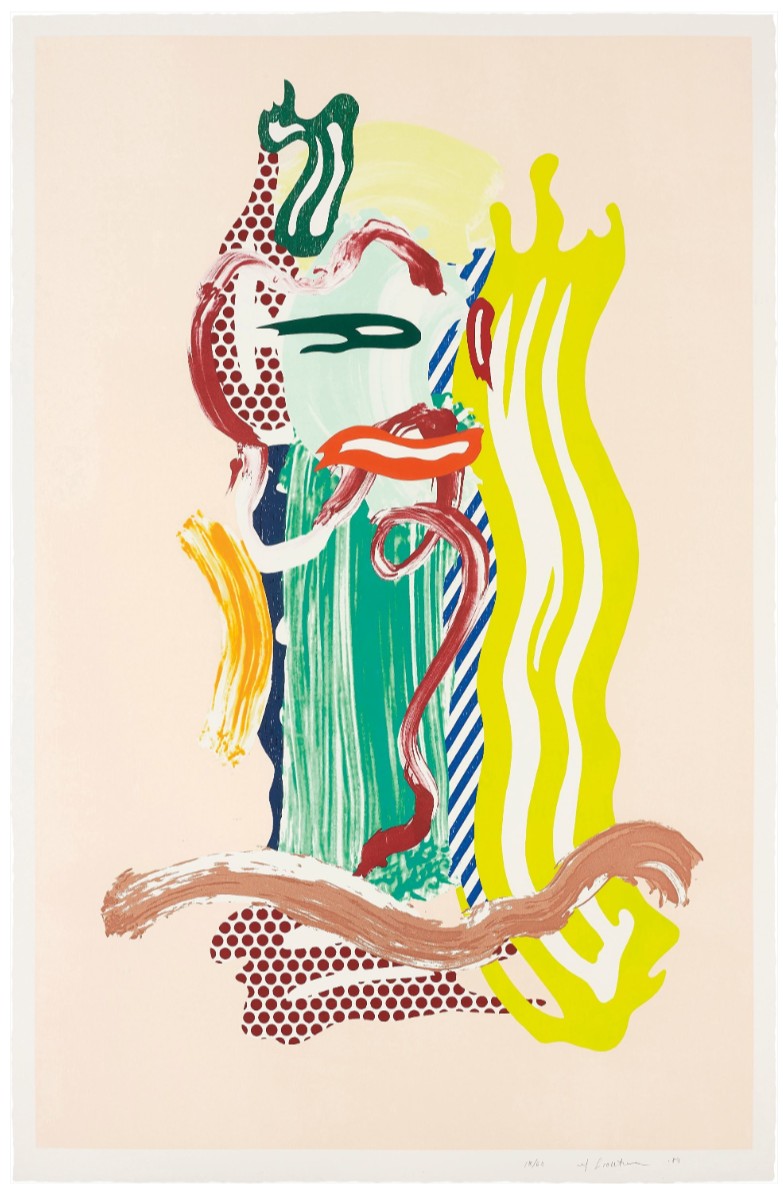
Lithograph, waxtype, woodcut and screenprint in colors, on Saunders Waterford paper
Signed, dated and numbered 18/60 in pencil
Blonde
Blonde
from Brushstroke Figures Series
Medium: Lithograph, waxtype, woodcut, and screenprint on 638-g/m² cold-pressed Saunders Waterford paper
Year: 1989
Sheet: 57 13/16 x 37 3/8 inches (146.9 x 94.9 cm) (irregular)
Image: 55 1/8 x 35 5/16 inches (140 x 89.7 cm)
Edition: 60
Artist’s Proofs: 8 AP
Publishers: Waddington Graphics, London and Graphicstudio, University of South Florida, Tampa
Printer: Graphicstudio, University of South Florida
Literature: Corlett 230, RLCR 3776
Blonde, 1989 (RLCR 3776) | Catalogue entry | Roy Lichtenstein: A Catalogue Raisonné
Signed dated and numbered in pencil with the printer’s blindstamp
Blonde is an exuberant and highly focused print that immediately recalls Lichtenstein’s comic-book heroines of the 1960s, but here, the figure is composed entirely of the stylistic marks she once only appeared next to. The print is dominated by the sweeping, exaggerated brushstrokes used to form the hair. These strokes are typically colored in vivid, artificial yellows, golds, or oranges, conveying the unmistakable suggestion of voluminous, stylized blonde hair. The strokes are active and dynamic, emphasizing the “grand gesture” Lichtenstein sought to satirize.
The features of the face are reduced to the absolute minimum, defined only by the careful placement of different brushstroke types. A patch of Benday dots might form the cheek or chin, while a bold, thick stroke of a contrasting color (like black or blue) is strategically placed to delineate the outline of the eye or the curve of the mouth. The look is more implied than drawn, forcing the viewer to complete the portrait based on the strong visual cue of the hair. The high-energy, curvilinear strokes that make up the figure often stand out dramatically against a flatter, more mechanical background, which might use simple horizontal or diagonal stripes, or a solid field of color, enhancing the graphic tension.
By applying the supposedly profound, subjective mark of Abstract Expressionism (the brushstroke) to a commercialized, manufactured archetype (the ideal blonde bombshell), Lichtenstein achieves maximum irony. He is effectively saying that the highest form of artistic expression can be used simply to draw a comic-book cliché. The dynamism of the strokes used for the hair gives the figure a sense of motion or energy, yet the realization that these strokes are meticulously planned, silkscreened, and woodcut elements removes all actual spontaneity. It is a depiction of energy, not an expression of it. Blonde is a quintessential piece from Brushstroke Figures series, showcasing Lichtenstein’s intellectual wit and technical brilliance in turning the romantic gesture into a cool, calculated sign.
Auction Results
SBI Art Auction Tokyo: 12 March 2022
Estimated: JPY 1,800,000 – 2,800,000
JPY 4,600,000 / USD 39,195
Roy LICHTENSTEIN
Blonde, from the Brushstroke Figures series (Corlett 230), 1989
Lithograph, waxtype, woodcut, screenprint
Signed, dated and numbered on the lower right
From the edition of 60
XXXXXXXXXXX
Hindman Chicago: 21 May 2020
Estimated: USD 10,000 – 15,000
USD 35,000
ROY LICHTENSTEIN (1923-1997)
Blonde (from the Brushstroke Figure Series), 1989
Lithograph, waxtype, woodcut and screen-print
Signed, dated and numbered 60/60 in pencil
XXXXXXXXXXX
LA Modern: 5 March 2017
Estimated: USD 12,000 – 18,000
USD 20,625
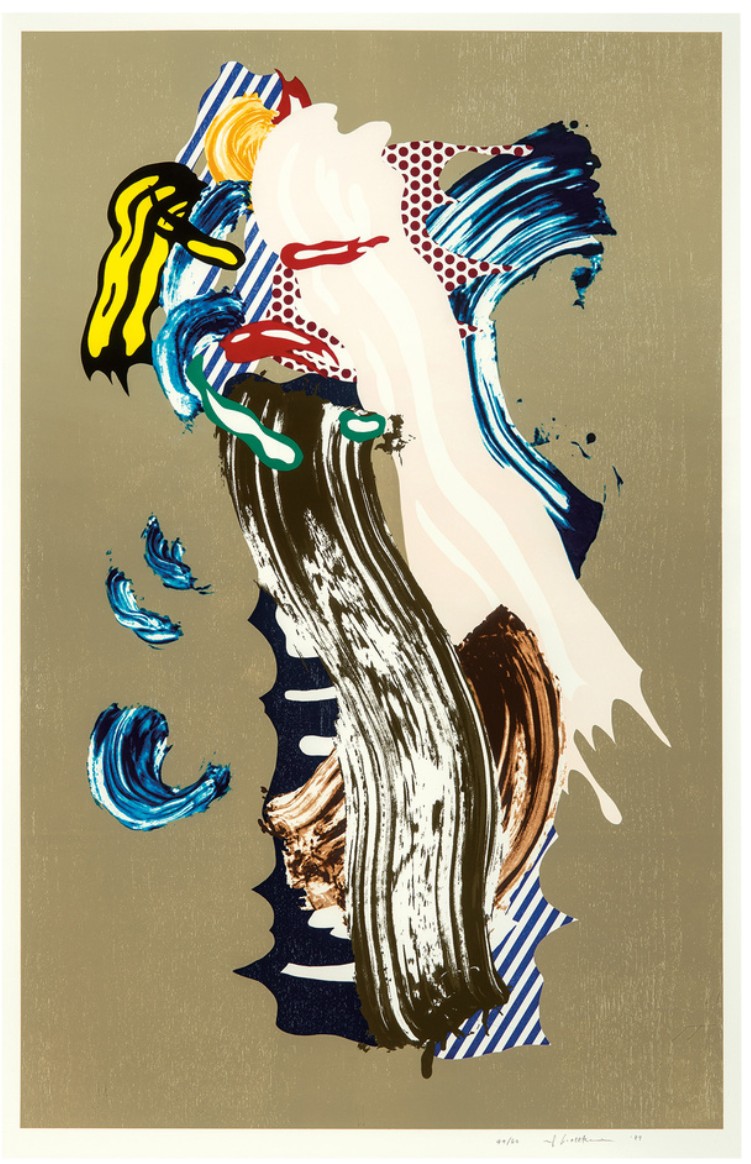
ROY LICHTENSTEIN (1923-1997)
Blonde (from Brushstroke Figures Series), 1989
14-color lithograph, waxtype, woodcut, and screenprint on Saunders Waterford paper
Signed and dated with edition in graphite lower right margin of sheet with blind stamp
Edition: #49 of 60
XXXXXXXXXXX
Christie’s New-York: 2 November 2016
Estimated: USD 15,000 – 25,000
USD 25,000
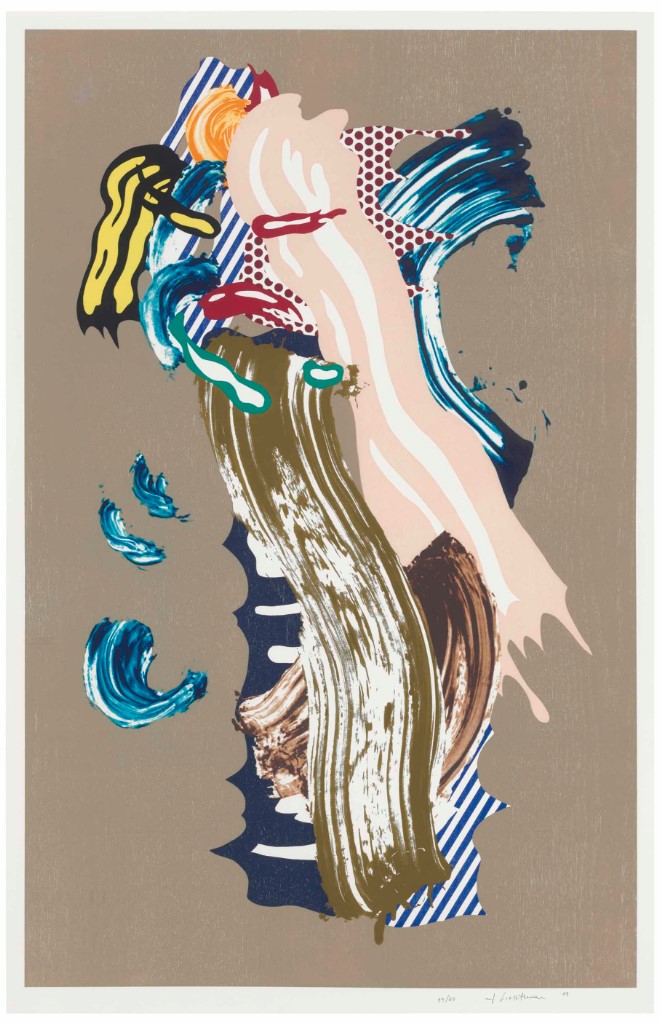
ROY LICHTENSTEIN (1923-1997)
Blonde, from The Brushstroke Figure Series, 1989
Lithograph, waxtype, woodcut and screen-print in colors on Saunders Waterford paper
Signed and dated in pencil, numbered 39/60
Christie’s New-York: 27 April 2016
Estimated: USD 10,000 – 15,000
USD 23,750
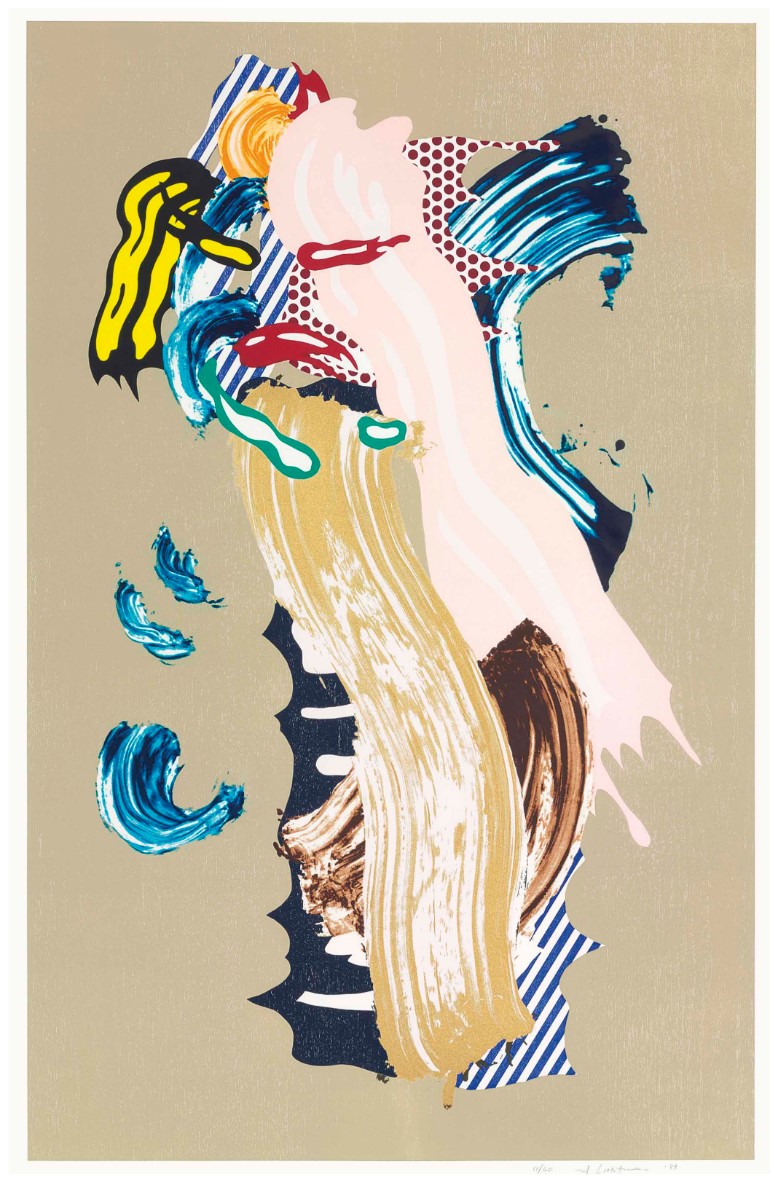
ROY LICHTENSTEIN (1923-1997)
Blonde, from The Brushstroke Figure Series, 1989
Lithograph, waxtype, woodcut and screen-print in colors on Saunders Waterford paper
Signed and dated in pencil, numbered 11/60
Grandpa
Grandpa
from Brushstroke Figures Series
Medium: Lithograph, waxtype, woodcut, and screenprint on 638-g/m² cold-pressed Saunders Waterford paper
Year: 1989
Sheet: 56 13/16 x 41 inches (144.3 x 104.1 cm) (irregular)
Image: 52 9/16 x 36 15/16 inches (133.5 x 93.8 cm)
Edition: 60
Artist’s Proofs: 8 AP
Publishers: Waddington Graphics, London and Graphicstudio, University of South Florida, Tampa
Printer: Graphicstudio, University of South Florida
Literature: Corlett 231, RLCR 3785
Grandpa, 1989 (RLCR 3785) | Catalogue entry | Roy Lichtenstein: A Catalogue Raisonné
Signed dated and numbered in pencil with the printer’s blindstamp
Grandpa features a portrait assembled from brushstrokes that imply the features and character of an older man. Unlike the smooth, idealistic forms of Blonde or the stark simplicity of The Mask, the strokes used here often have a more deliberate, sometimes rougher, texture. Lichtenstein achieves the suggestion of age not through realistic rendering, but through the placement and coloration of the strokes. Darker, heavier strokes are used to suggest the shadows or wrinkles of an older face, such as around the eyes, beneath the chin, or to imply a furrowed brow. The overall shape of the face might be broader or more angular than the younger figures in the series. The palette in Grandpa often leans toward earthier or more subdued tones, deep blues, grays, browns, and sometimes greens, avoiding the highly saturated primaries used elsewhere, which subtly conveys a sense of maturity or sobriety. The arrangement of the eye strokes is crucial in this piece, often giving the figure a slightly stoic or contemplative gaze, contrasting sharply with the cartoonish lightness of the surrounding strokes.
By labeling this figure “Grandpa,” Lichtenstein applies his critique of the expressive brushstroke to a cultural archetype associated with familial warmth and experience. The emotional depth and wisdom implied by the title are undercut by the cold, mechanical execution of the portrait. The figure is not painted spontaneously from life, but is constructed using standardized, parodic marks. The sense of age and texture is partly achieved through the sophisticated print techniques employed. The woodcut elements are especially effective here, as the deliberate grain and texture of the wood block translate into rougher, more uneven marks in the final print, simulating the texture of aged skin or rough fabric.
Grandpa maintains the series’ core tension: the figure is immediately recognizable due to the arrangement of the strokes, yet the strokes themselves are the very symbol of abstraction and spontaneous gesture. Lichtenstein forces the viewer to reconcile the figure’s sentimental identity with the fact that it is built from highly stylized, anti-expressive marks.
Auction Results
Hindman Chicago: 26 September 2024
Estimated: USD 20,000 – 30,000
USD 34,925
ROY LICHTENSTEIN (American, 1923–1997)
Signed, dated, and inscribed ‘P.P 1/2’ in pencil
Phillips London: 25 January 2018
Estimated: GBP 15,000 – 20,000
GBP 35,000 / USD 49,930
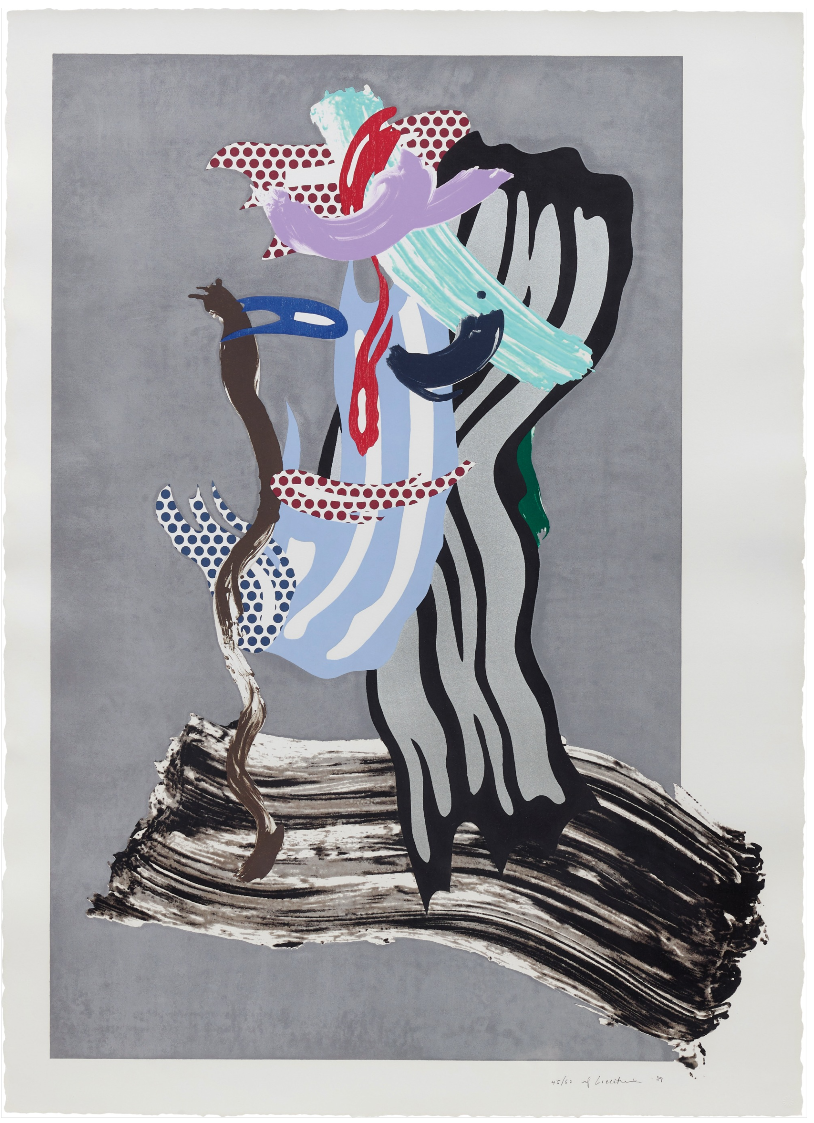
ROY LICHTENSTEIN
Grandpa, from Brushstrokes Figure Series, 1989
Lithograph, waxtype, woodcut and screenprint in colours, on Saunders Waterford paper
Signed, dated and numbered 45/60 in pencil (there were also 8 artist’s proofs)
XXXXXXXXXXX
Christie’s London: 21 September 2016
Estimated: GBP 18,000 – 22,000
GBP 22,500 / USD 29,200
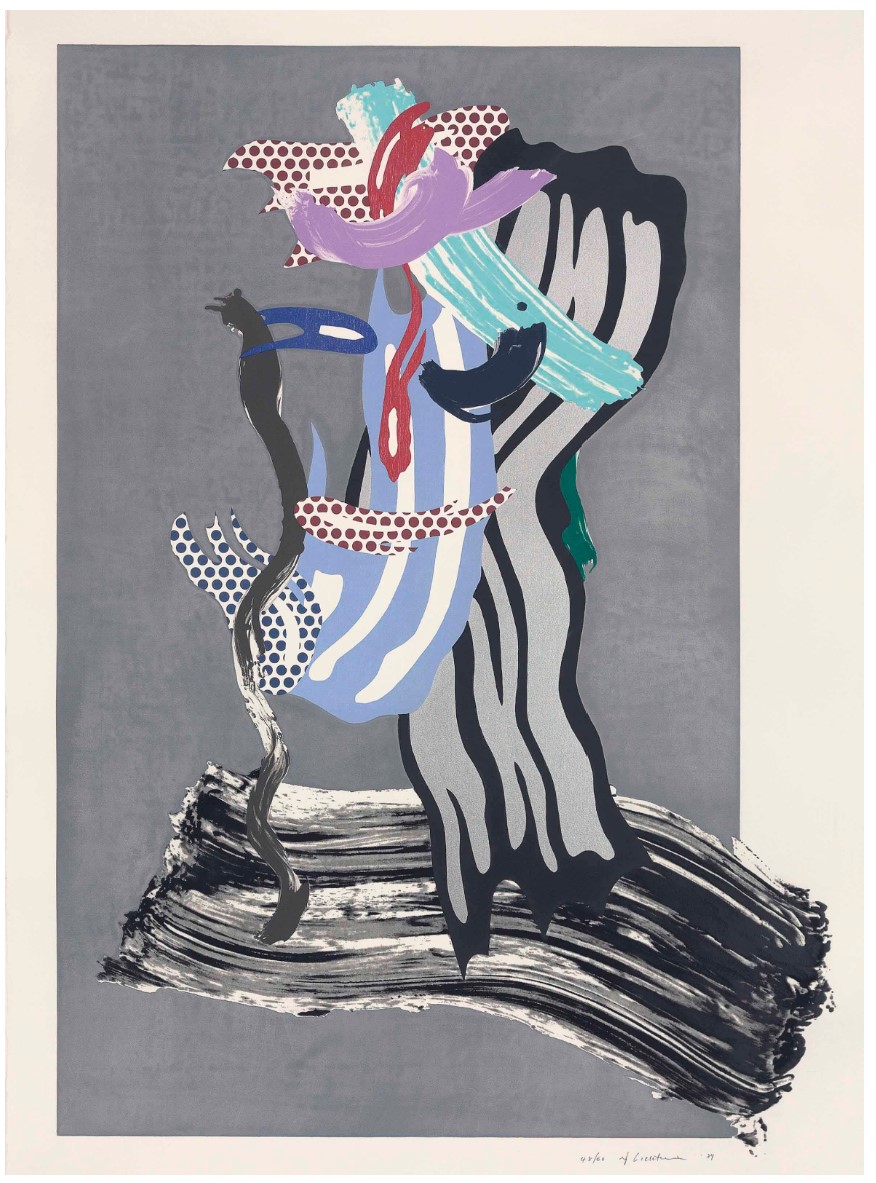
ROY LICHTENSTEIN (1923-1997)
Grandpa, from: Brushstroke Figures Series, 1989
Lithograph, waxtype, woodcut and screen-print in colors on Saunders Waterford wove paper
Signed and dated in pencil, numbered 48/60
Sotheby’s New-York: 21 April 2016
Estimated: USD 15,000 – 25,000
USD 21,250
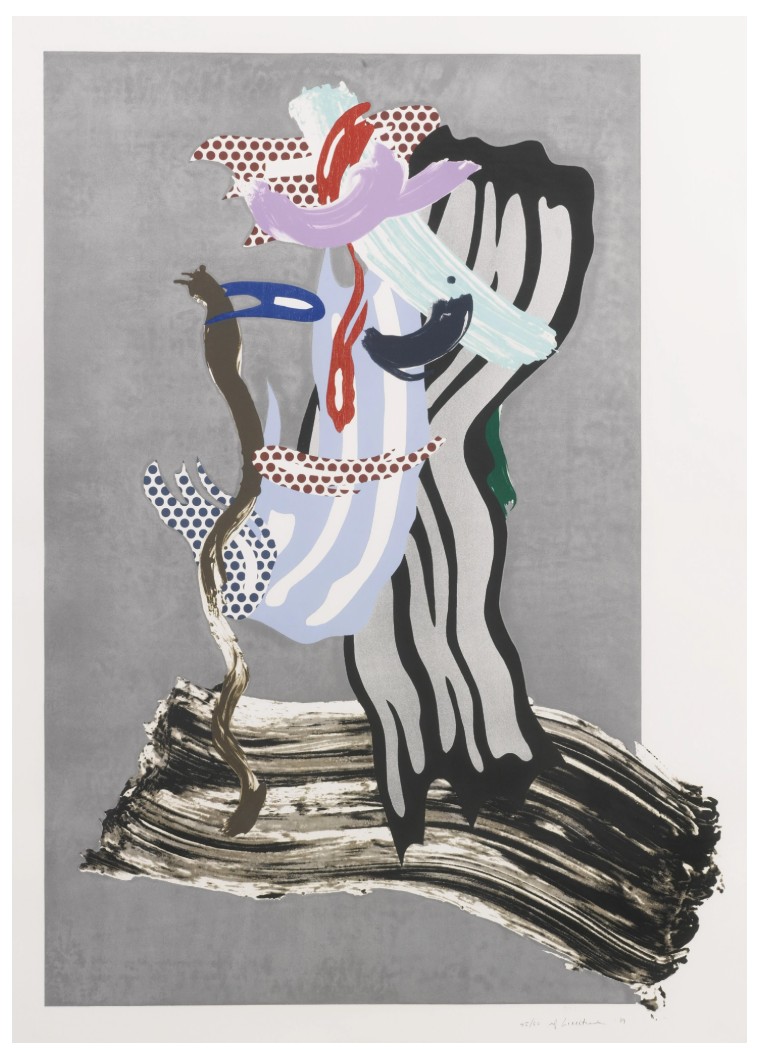
ROY LICHTENSTEIN (1923-1997)
Grandpa (C. 231), 1989
from the Brushstroke Figures series
Lithograph and screenprint in colors on wove paper
Signed in pencil, dated, numbered 45/60
XXXXXXXXXXX
Christie’s New-York: 30 October 2013
Estimated: USD 12,000 – 18,000
USD 40,000
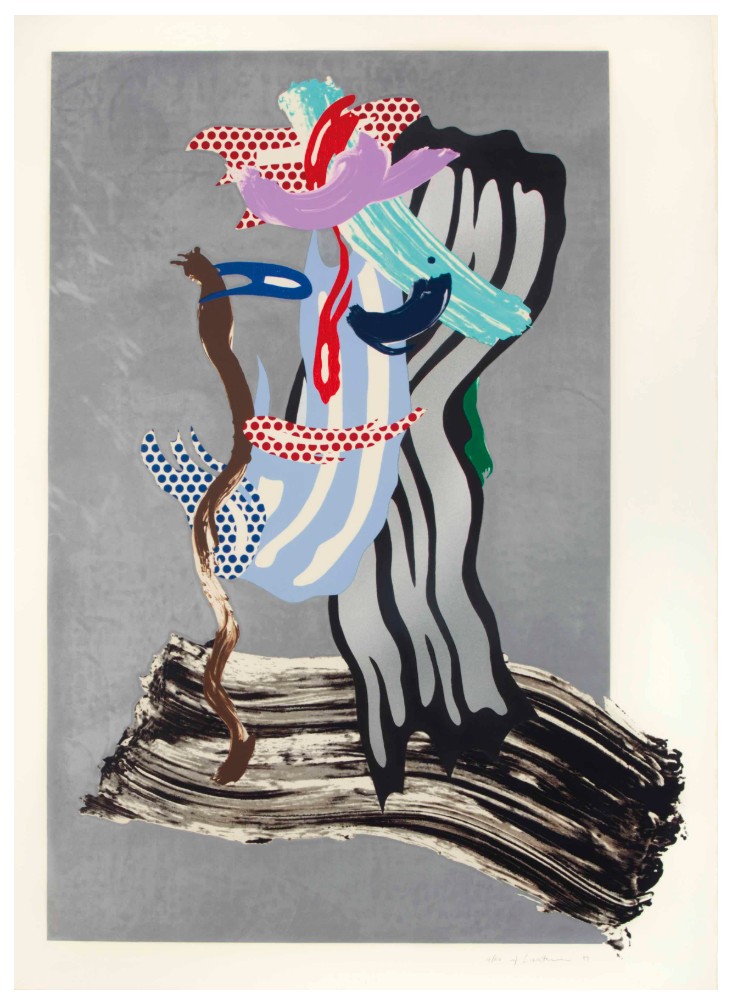
ROY LICHTENSTEIN (1923-1997)
Grandpa, from Brushstroke Figures Series, 1989
Lithograph, waxtype, woodcut and screenprint in colors on Saunders Waterford paper
Signed and dated in pencil, numbered 4/60
Green Face
Green Face
from Brushstroke Figures Series
Medium: Lithograph, waxtype, woodcut, and screenprint on 638-g/m² cold-pressed Saunders Waterford paper
Year: 1989
Sheet: 58 15/16 x 41 inches (149.7 x 104.1 cm) (irregular)
Image: 56 15/16 x 36 5/8 inches (144.6 x 93 cm)
Edition: 60
Artist’s Proofs: 8 AP
Publishers: Waddington Graphics, London and Graphicstudio, University of South Florida, Tampa
Printer: Graphicstudio, University of South Florida
Literature: Corlett 232, RLCR 3786
Green Face, 1989 (RLCR 3786) | Catalogue entry | Roy Lichtenstein: A Catalogue Raisonné
Signed dated and numbered in pencil with the printer’s blindstamp
Green Face is one of the most vividly colored and graphically complex portraits in the series. It showcases Lichtenstein’s masterful use of different shades and textures of green to create a startlingly vivid, yet artificial, likeness. The print is dominated by greens (from pale mint and neon lime to deep forest green) with the unnatural color palette being the primary subject-defining characteristic. The use of a single, non-realistic hue immediately distances the figure from traditional portraiture, which relies on skin tones.
The face is not simply painted green; it is constructed by meticulously placed brushstrokes of varying shades of green, black, and sometimes white. These strokes function as contour lines and shading, defining the structure of the nose, eyes, and cheekbones. For example, a sharp, light-green stroke might represent a highlight, while a darker green stroke defines a shadow. Lichtenstein expertly uses his signature patterns to create visual dissonance. One half of the face or background might be covered in green Benday dots, while another section uses bold, diagonal green and white stripes. This clash between the simulated “painterly” strokes and the flat, mechanical patterns is the engine of the work’s meaning. Due to the wide variety of marks, the image feels highly energetic. The different types of strokes, from hard-edged cartoon lines to soft textural waxtype, and linear woodcut patterns, all coexist on the same plane, creating a highly textured and dynamic surface.
Green Face serves as a sophisticated experiment in how much the viewer can tolerate the disruption of natural color and form while still recognizing a human portrait. The use of green evokes historical precedents, such as Expressionist portraits or even classical sculpture oxidation, but here, it is applied with Pop Art’s characteristic detachment. Portrait, composed of marks that are meant to look expressive, ultimately communicates no genuine emotion. The green color suggests an alien quality or a manufactured, mask-like persona, reinforcing the idea that this figure is purely a product of graphic convention.
Auction Results
Estimated: USD 35,000 – 45,000
USD 35,560
Signed, dated and numbered to lower right ‘P.P. 1/2 rf Lichtenstein ’89’.
Printer’s proof 1 of 2 apart from the edition of 60
Sotheby’s New-York: 19 April 2024
Estimated: USD 25,000 – 35,000
USD 30,480
ROY LICHTENSTEIN (1923 – 1997)
Green Face, from Brushstroke Figure Series (Corlett 232), 1989
Lithograph, waxtype, woodcut and screenprint in colors on Saunders Waterford paper
Signed in pencil, dated and numbered 45/60
XXXXXXXXXXX
Christie’s New-York: 28 October 2023
Estimated: USD 25,000 – 30,000
USD 32,760
ROY LICHTENSTEIN (1923-1997)
Green Face, from Brushstroke Figures, 1989
Lithograph, waxtype, woodcut and screenprint in colors on Saunders Waterford paper
Signed and dated in pencil, numbered ‘P.P. 1⁄2’
A Printer’s Proof, the edition was 60 plus 8 Artist’s Proofs
XXXXXXXXXXX
LA Modern: 29 April 2022
Estimated: USD 40,000 – 60,000
USD 56,250
AUCTION RECORD FOR GREEN FACE
ROY LICHTENSTEIN
Green Face (from the Brushstroke Figures series), 1989
Lithograph, waxtype woodcut and screenprint in colors on cold-pressed Saunders Waterford
Signed, dated and numbered to lower right ‘2/60 rf Lichtenstein 89’
XXXXXXXXXXX
Bonhams New-York: 8 November 2018
Estimated: USD 15,000 – 20,000
USD 23,750
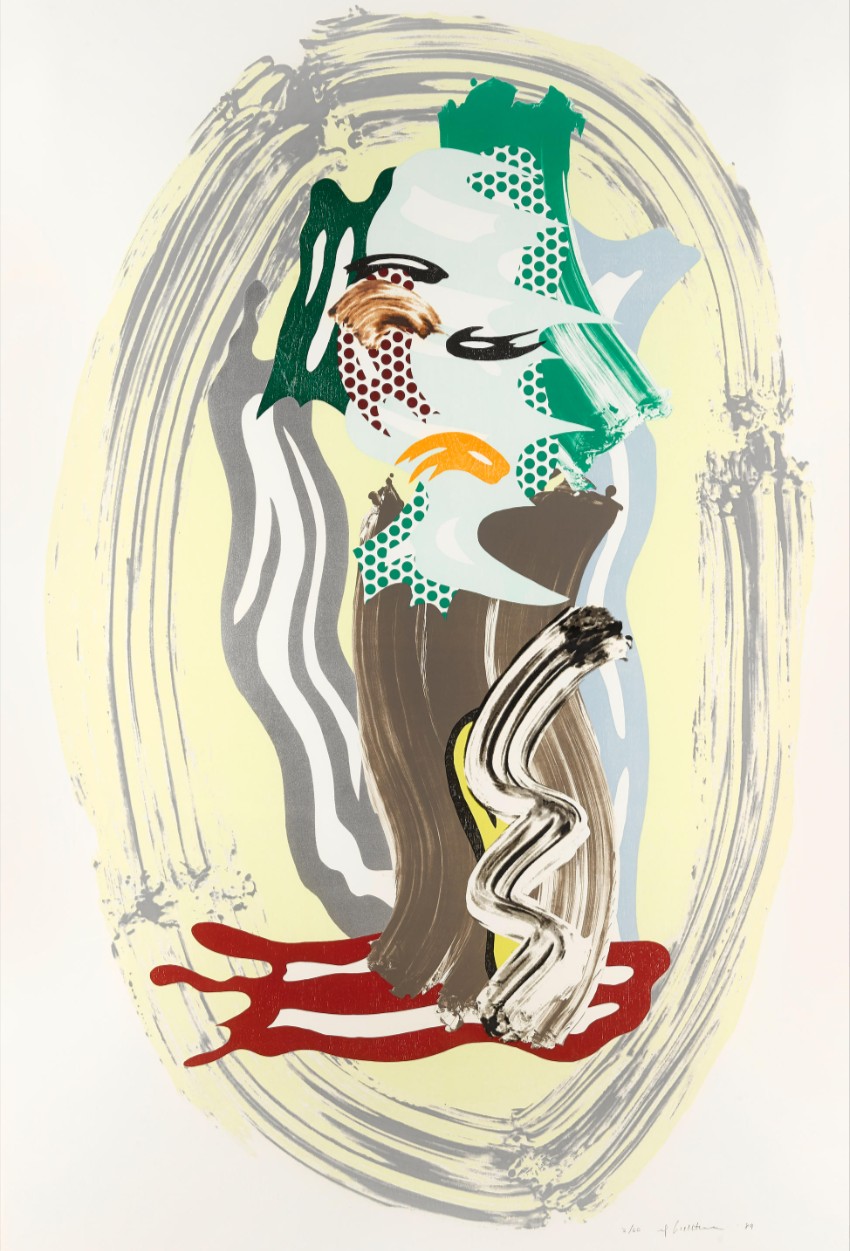
Lithograph, waxtype, woodcut, and screenprint on Saunders Waterford paper
Signed in pencil, dated and numbered 2/60
Nude
Nude
from Brushstroke Figures Series
Medium: Lithograph, waxtype, woodcut, and screenprint on 638-g/m² cold-pressed Saunders Waterford paper
Year: 1989
Sheet: 56 1/4 x 32 1/2 inches (142.9 x 82.6 cm) (irregular)
Image: 53 1/2 x 30 5/16 inches (135.9 x 77 cm)
Edition: 60
Artist’s Proofs: 8 AP
Publishers: Waddington Graphics, London and Graphicstudio, University of South Florida, Tampa
Printer: Graphicstudio, University of South Florida
Literature: Corlett 233, RLCR 3786
Nude, 1989 (RLCR 3798) | Catalogue entry | Roy Lichtenstein: A Catalogue Raisonné
Signed dated and numbered in pencil with the printer’s blindstamp
Nude is a particularly potent work in the Brushstroke Figures series, as it tackles two major traditions simultaneously: the classical art subject of the nude figure and the expressionist use of the brushstroke. It is also significant because it is one of the few pieces in the series that attempts to render a full or partial figure, rather than just a face or bust, forcing the abstract marks to delineate complex anatomical forms. The body is built entirely from a complex, interlocking mesh of multi-colored, intersecting brushstrokes. Broad, curvilinear strokes of blue, yellow, green, and red twist and curve to suggest the contours of the torso, breasts, hips, and limbs. The illusion of a three-dimensional body is created solely by the juxtaposition of these flat, two-dimensional marks. Unlike traditional drawing, where the figure might be defined by a contour outline, Nude is defined by the edges of the simulated paint marks. This emphasizes the figure’s origin in pure abstraction—the body is made of paint gestures, not simply painted with them.
Lichtenstein often incorporates patches of Benday dots into the figure’s “skin” or the surrounding space. This familiar Pop element serves to flatten the image further, reminding the viewer that this supposed “painterly” figure is, in fact, a manufactured graphic composed of reproducible commercial patterns. The overall impression is one of controlled chaos. The strokes are active and seem to move across the page, giving the figure an energy that mimics the expressive spontaneity of Abstract Expressionism, even though every single mark was meticulously pre-planned for the printing process. The Nude is one of the most enduring subjects in Western art history, intended to represent idealized form, beauty, or vulnerability. By rendering it in a deconstructed, graphic, and ironic manner, Lichtenstein questions the traditional authority and sentimentality associated with the subject. The nude figure is turned into a formal problem, an arrangement of lines and colors, rather than an emotional subject. By using the expressive brushstroke, the mark traditionally considered the most truthful and personal index of the artist’s feeling, to construct a nude, Lichtenstein strips the mark of its emotional claims. He proves that the gesture is ultimately just another graphic tool that can be employed for objective, reproducible ends.
Auction Results
K Auction Seoul: 23 July 2025
Estimated: KRW 30,000,000 – 80,000,000
KRW 36,800,000 / USD 26,645
ROY LICHTENSTEIN
Nude: Brushstroke Figure Series, 1989
Screenprint, lithograph, waxtype, woodcut
Edition 42/60
Signed, dated and numbered on the lower right
XXXXXXXXXXX
Bukowskis Stockholm: 25 October 2023
Estimated: SEK 250,000 – 300,000
SEK 350,000 / USD 31,462
ROY LICHTENSTEIN
Nude from Brushstrokes Figures Series, 1989
Lithograph, waxtype, woodcut and screenprint in colors
Signed in pencil, and numbered 16/60
XXXXXXXXXXX
Seoul Auction: 24 May 2022
Estimated: KRW 20,000,000 – 30,000,000
KRW 41,300,000 / USD 32,805
ROY LICHTENSTEIN
Nude from Brushstrokes Figures Series, 1989
Lithograph, waxtype, woodcut and screenprint in colors
Signed in pencil, and numbered 19/60
XXXXXXXXXXX
Ketterer Kunst Munich: 7 June 2019
Estimated: EUR 15,000
EUR 22,500 / USD 26,100
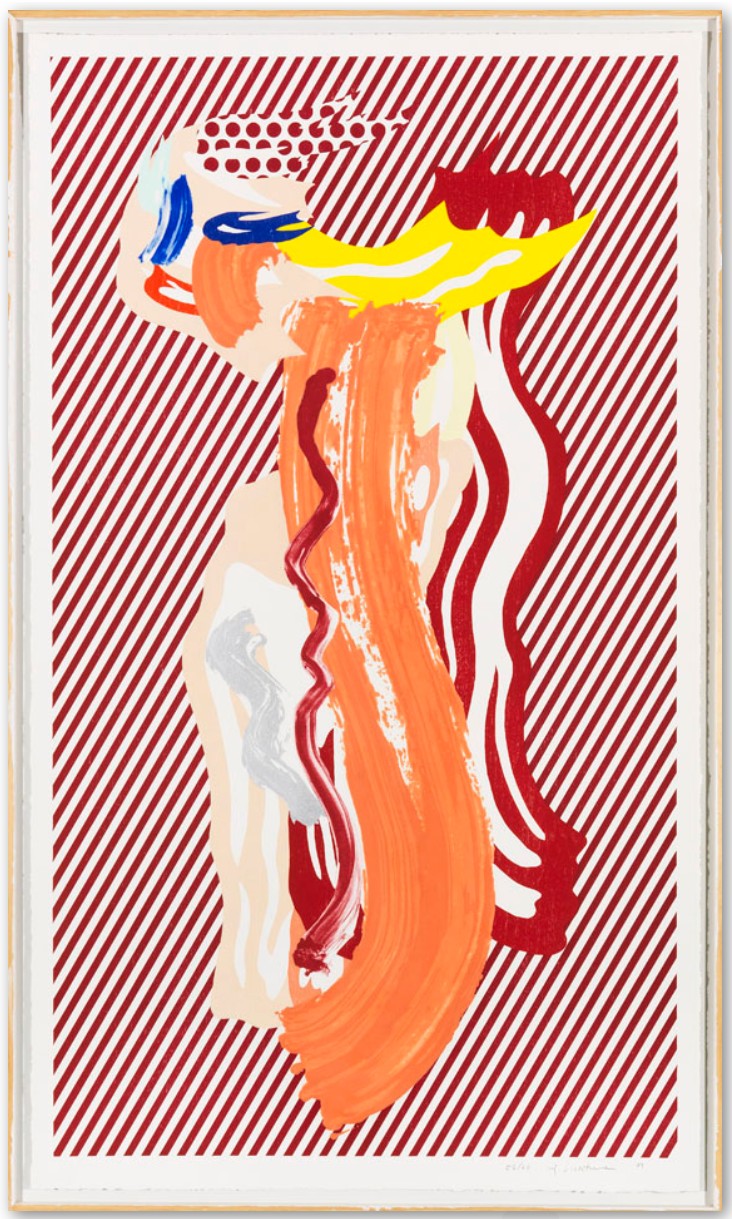
ROY LICHTENSTEIN
Nude, 1989
Lithograph in colors , silkscreen, woodcut and monotype on firm wove paper
Signed, dated and numbered from an edition of 60 copies
Verso with the copyright stamp and the studio number
Complete Sets
Christie’s New-York: 26 April 2011
Estimated: USD 100,000 – 150,000
USD 158,500
COMPLETE SET
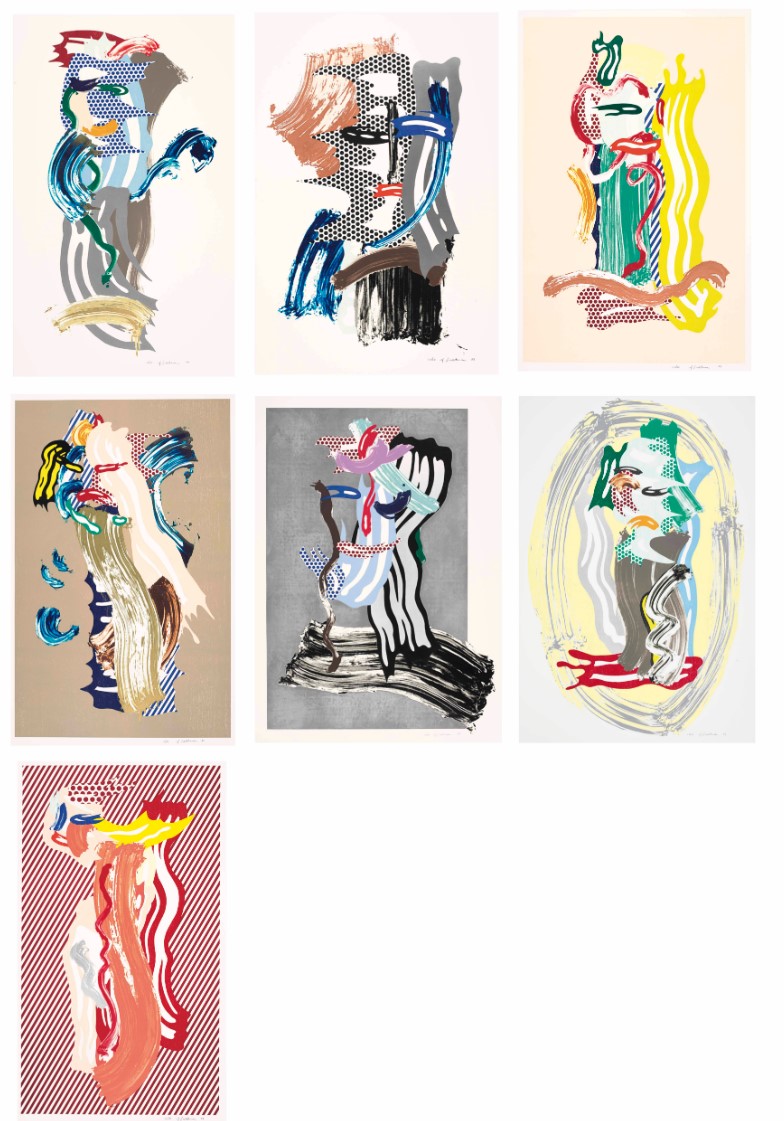
ROY LICHTENSTEIN
Brushstrokes Figures Series (C. 226-27, 229-233), 1989
The complete set of seven lithograph, waxtype, woodcut and screenprints in colors (The Mask with collage) on Saunders Waterford
Each signed, dated and numbered 17/60 (there were also 8 artist’s proofs for each)