Auction Results
London, February/March 2023
With a total of 5 evening sales, and 4 days sales, Christie’s, Sotheby’s and Phillips sold 782 artworks for a total of GBP 429,464,517.
Christie’s
Total: GBP 198,888,394
390 Lots sold
Sell-Through Rate: 86.9%
20/21st Century Evening Sale: GBP 128,952,500 (64 lots)
The Art of the Surreal Evening Sale: GBP 38,861,900 (30 lots)
Post-War and Contemporary Art Day Sale: GBP 12,502,350 (130 lots)
Impressionist and Modern Art Day Sale: GBP 18,571,644 (166 lots)
Sotheby’s
Total: GBP 197,911,220
188 Lots sold
Sell-Through Rate: 83.6%
The Now Evening Sale: GBP 13,729,850 (21 lots)
Modern and Contemporary Art Evening Sale: GBP 160,393,900 (30 lots)
Modern and Contemporary Day Auction: GBP 23,787,470 (137 lots)
Phillips
Total: GBP 32,664,903
204 Lots sold
Sell-Through: 89.9%
20th Century and Contemporary Art Evening Sale: GBP 20,321,900 (23 lots)
20th Century and Contemporary Day Sale: GBP 12,343,003 (181 lots)
1. CHRISTIE’S
20th/21st Century Evening Sale
28 February 2023
20th/21st Century: London Evening Sale (christies.com)
Total: GBP 128,952,500
Top Lot: GBP 16,892,000
37 Lots sold over GBP 1 million
# Lots: 76
# Lots Sold: 62
Sell-Through Rate: 84%
Above Estimates: 35 Lots (46%)
Within Estimates: 25 Lots (33%)
Below Estimates: 4 Lots (5%)
Unsold: 12 Lots (16%)
Top 5 Lots
#1. Pablo Picasso
Christie’s London: 28 February 2023
Estimated: GBP 15,000,000 – 20,000,000
GBP 16,892,000
PABLO PICASSO (1881-1973) (christies.com)
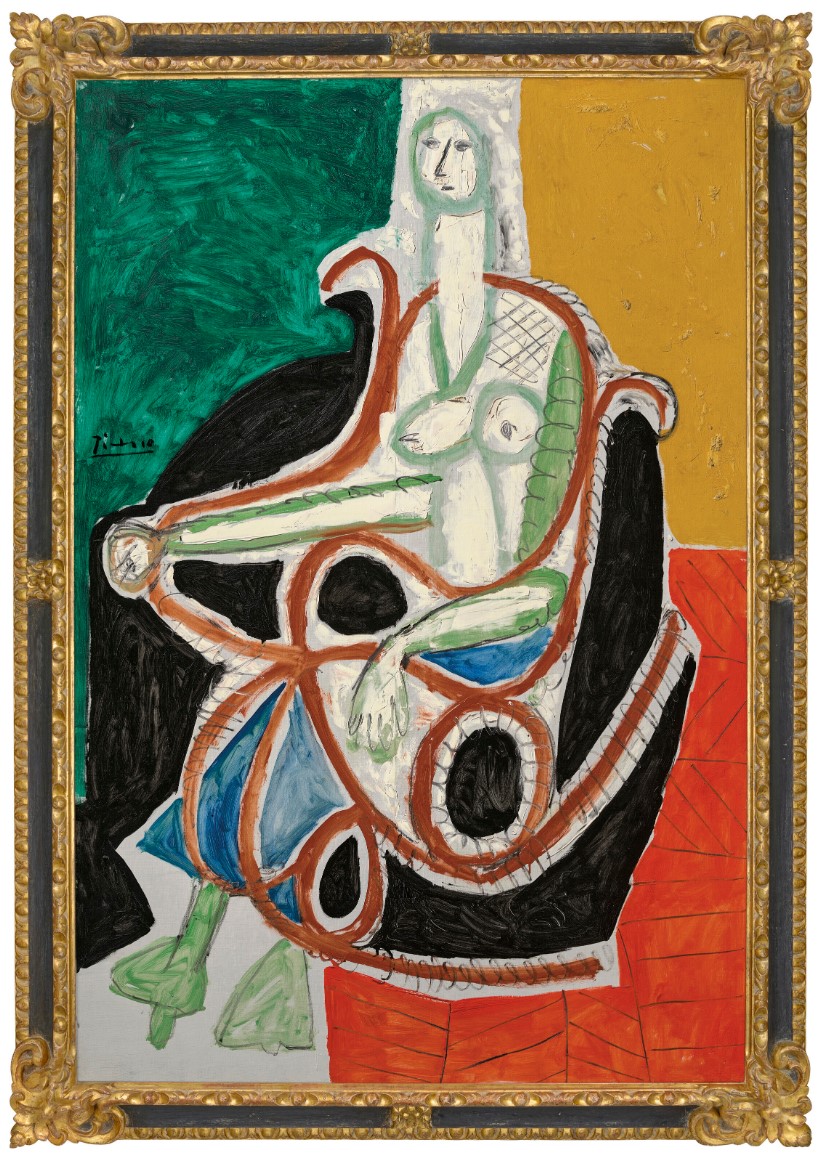
PABLO PICASSO (1881-1973)
Femme dans un rocking-chair (Jacqueline), 1956
Oil on canvas
194.5 x 130.1 cm (76 x 51 1/4 inches)
Signed ‘Picasso’ (center left); indistinctly dated ‘25.3.56’ (on the reverse)
#2. Paul Cezanne
Christie’s London: 28 February 2023
Estimated: GBP 6,000,000 – 9,000,000
GBP 7,159,500
PAUL CEZANNE (1839-1906) (christies.com)
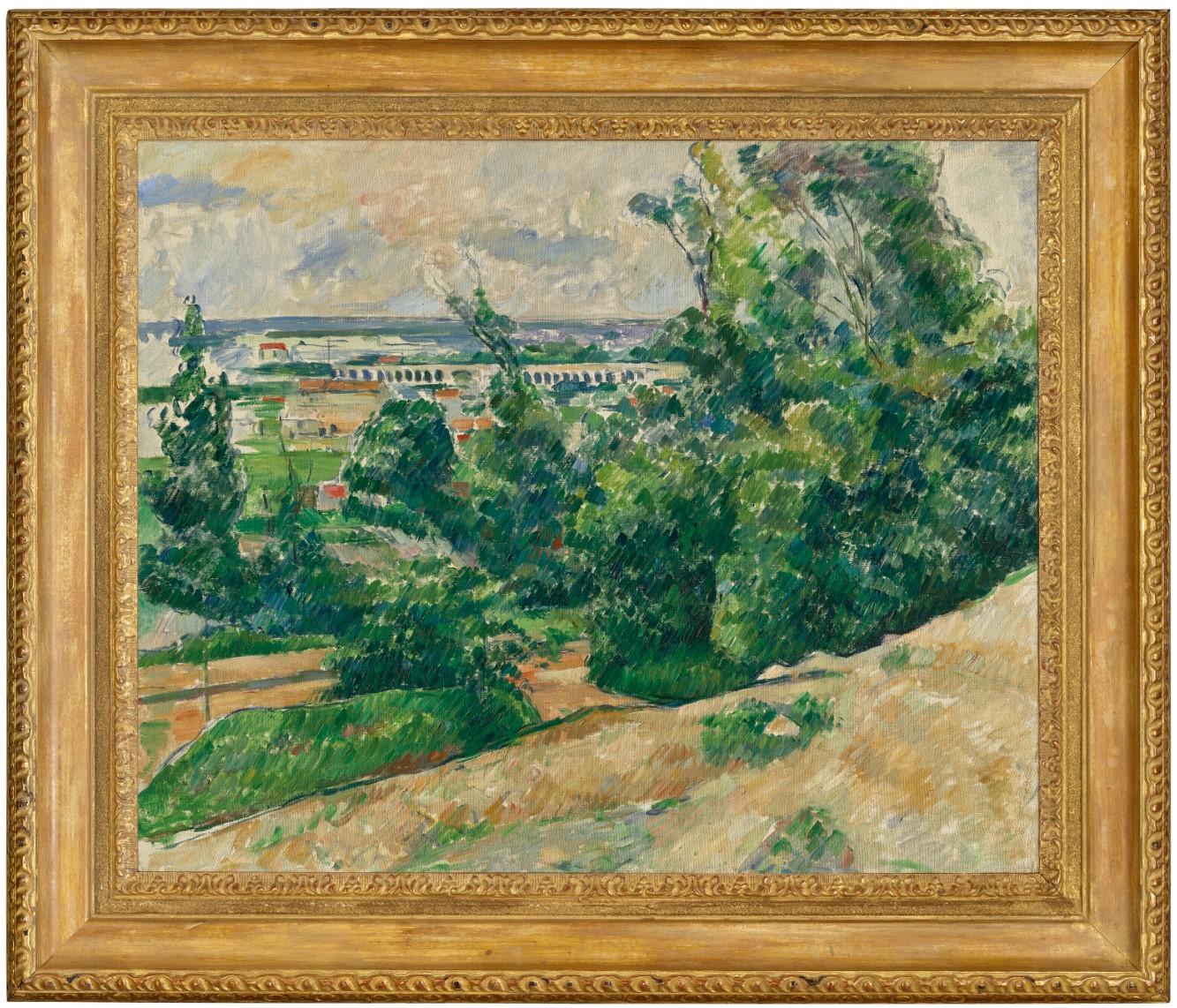
PAUL CEZANNE (1839-1906)
L’Aqueduc du canal de Verdon au nord d’Aix, 1882-1883
Oil on canvas
60 x 73.4 cm (23 5/8 x 28 7/8 inches)
Painted in 1882-1883
#3. Pablo Picasso
Christie’s London: 28 February 2023
Estimated: GBP 4,500,000 – 6,500,000
GBP 5,442,000
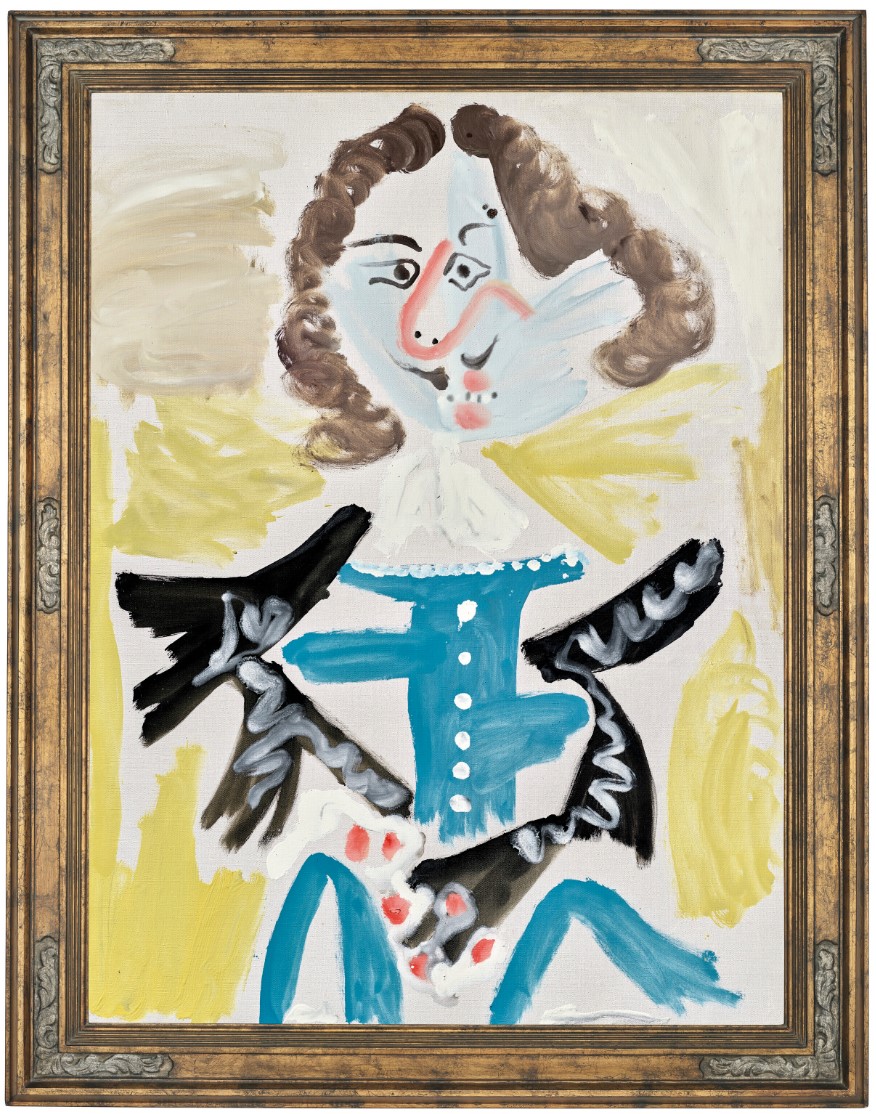
PABLO PICASSO (1881-1973)
Mousquetaire I (Espagnol du XVllème siècle), 1967
Oil on canvas
128.3 x 97.1 cm (51 x 38 1/4 inches)
Sated ‘21.4.67’ (on the reverse)
#4. Pablo Picasso
Christie’s London: 28 February 2023
Estimated: GBP 6,000,000 – 9,000,000
GBP 5,322,000
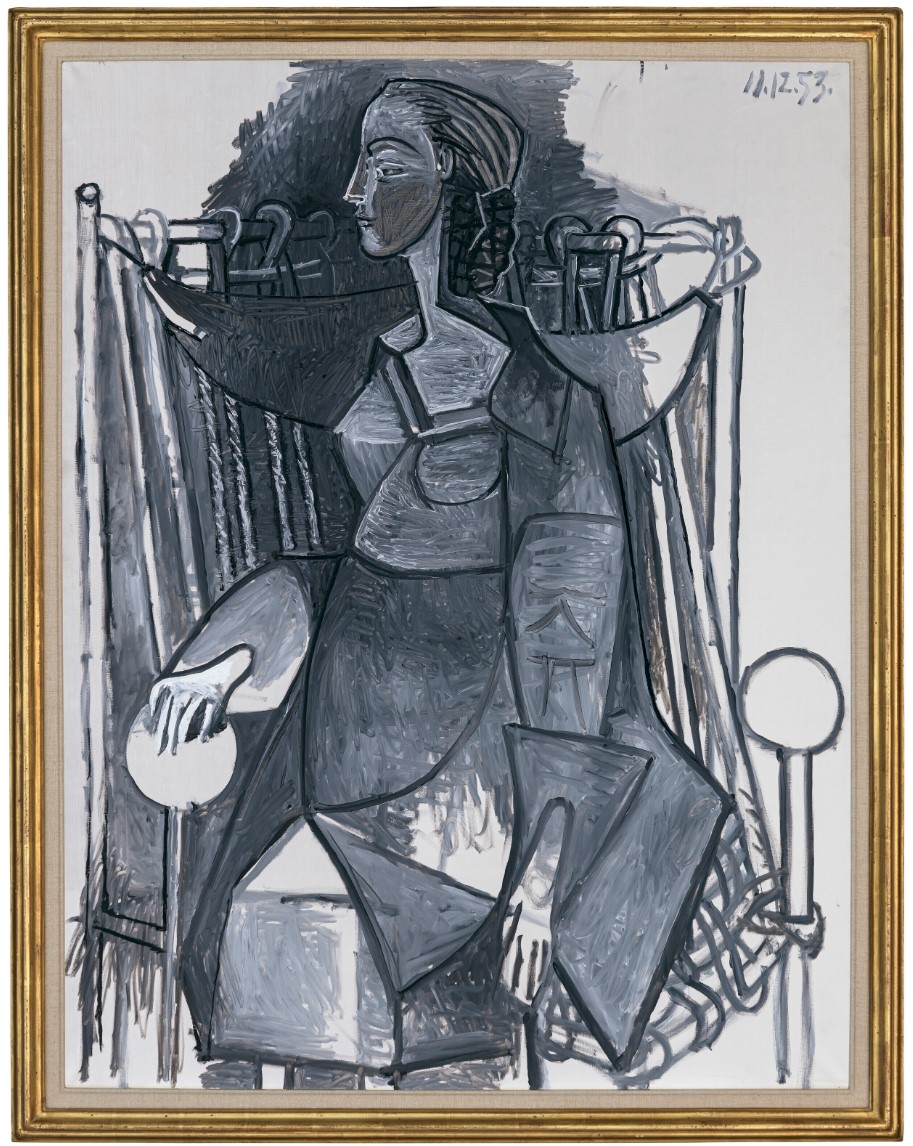
PABLO PICASSO (1881-1973)
Femme assise dans un fauteuil tressé, en gris (Françoise), 1953
Oil on canvas
116.2 x 88.9 cm (45 3/4 x 35 inches)
Dated ‘11.12.53.’ (upper right); dated again and inscribed ‘11.12.53. Vallauris’ (on the reverse)
#5. Pierre-Auguste Renoir
Christie’s London: 28 February 2023
Estimated: GBP 2,000,000 – 3,000,000
GBP 4,962,000
PIERRE-AUGUSTE RENOIR (1841-1919) (christies.com)
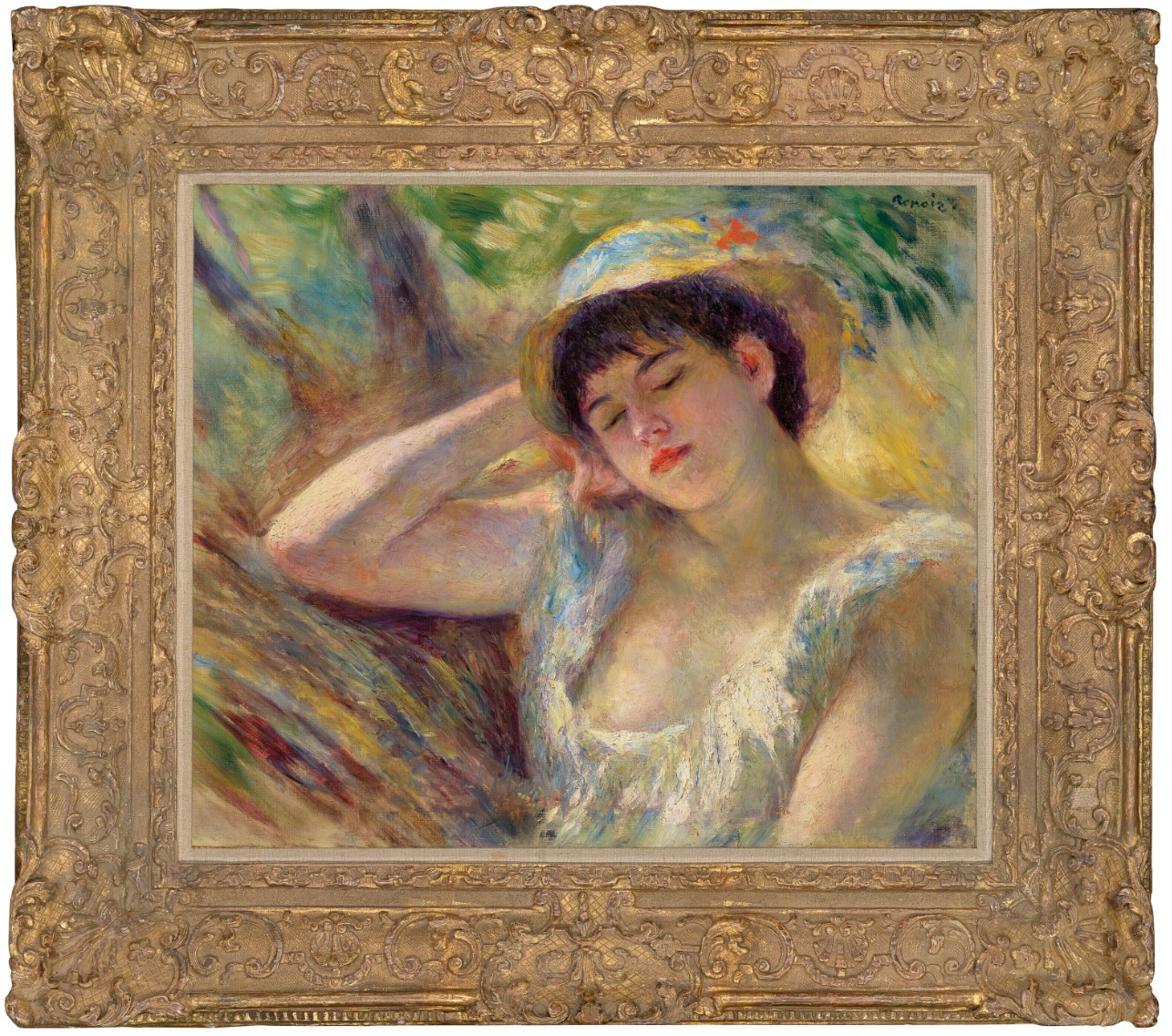
PIERRE-AUGUSTE RENOIR (1841-1919)
Jeune fille endormie (La dormeuse), circa 1880
Oil on canvas
50.2 x 61.2 cm (19 3/4 x 24 inches)
Signed ‘Renoir.’ (upper right)
Top 5 Performers
#1. Michaela Yearwood-Dan
Christie’s London: 28 February 2023
Estimated: GBP 40,000 – 60,000
GBP 730,800
MICHAELA YEARWOOD-DAN (christies.com)
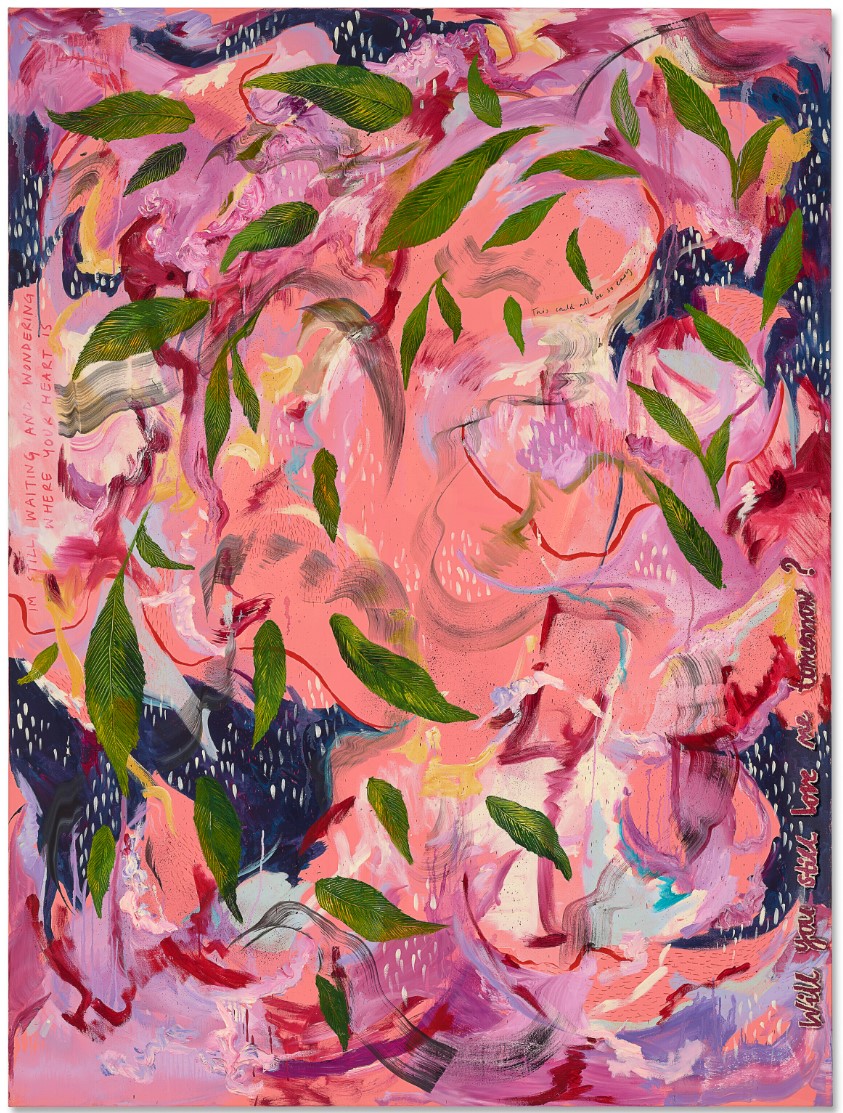
MICHAELA YEARWOOD-DAN (B. 1994)
Love me nots, 2021
Oil, acrylic, ink, embroidery and gold leaf on canvas
200×150 cm (78 3/4 x 59 1/8 inches)
Signed, titled and dated ‘”Love me nots” Michaela Yearwood-Dan 2021’ (on the reverse)
Signed and dated ‘MICHAELA YEARWOOD-DAN ‘21’ (on the stretcher)
#2. Caroline Walker
Christie’s London: 28 February 2023
Estimated: GBP 150,000 – 200,000
GBP 693,000
CAROLINE WALKER (christies.com)
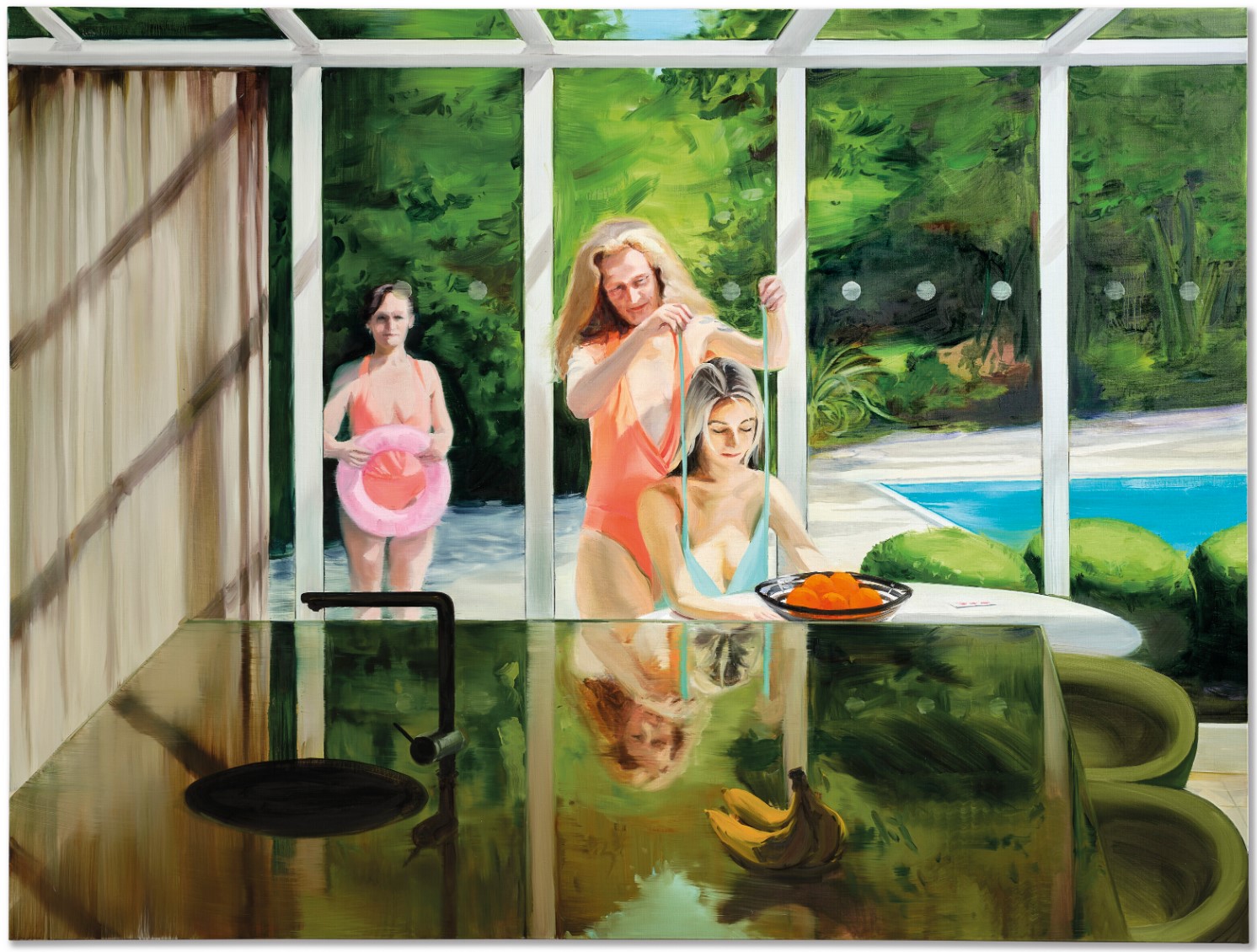
CAROLINE WALKER (B. 1982)
The Puppeteer, 2013
Oil on linen
71 x 94 3/8 inches (180.2 x 239.8 cm)
Signed, titled and dated ‘‘THE PUPPETEER’ Caroline Walker 2013’ (on the reverse)
#4. Liu Ye
Christie’s London: 28 February 2023
Estimated: GBP 800,000 – 1,200,000
GBP 3,102,000
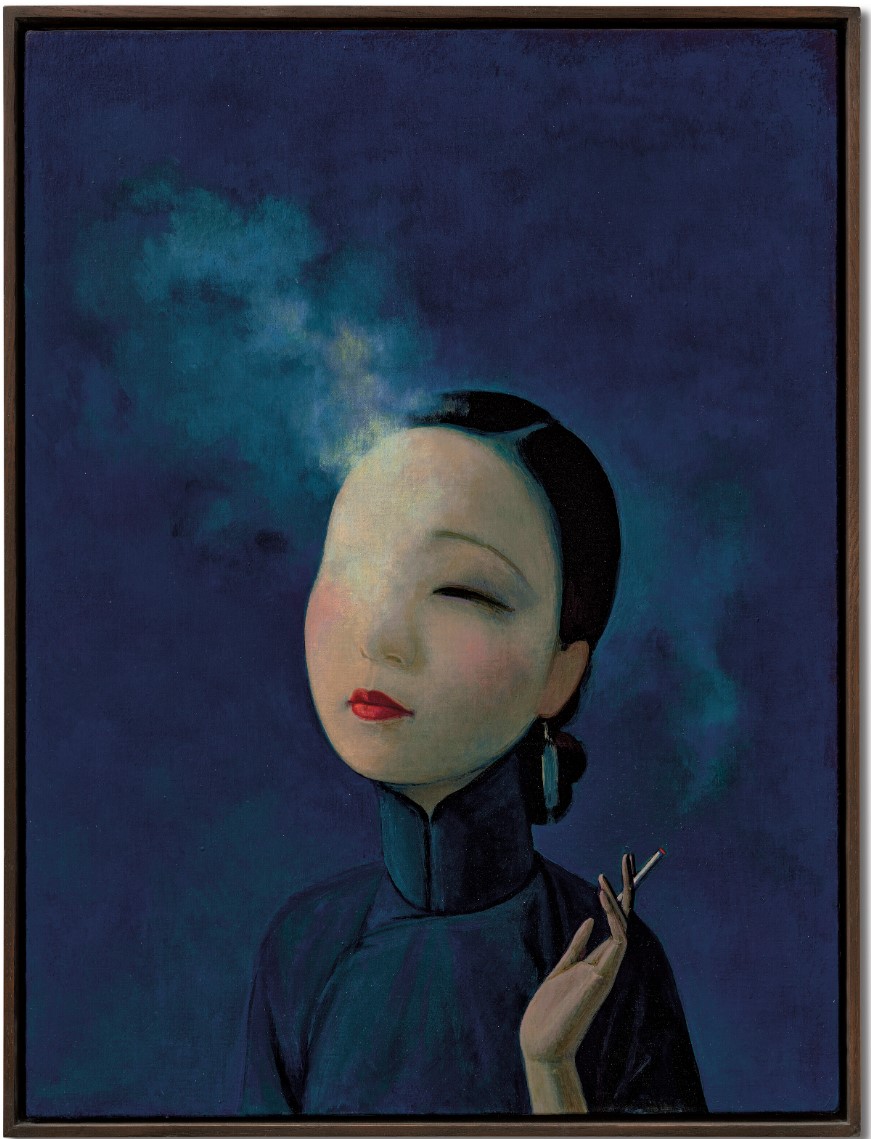
LIU YE (B. 1964)
The Goddess, 2018
Acrylic on canvas
23 5/8 x 17 3/4 inches (60.1 x 45 cm)
Signed, titled and dated (on the reverse)
An icon of contemporary Chinese art, The Goddess stands among Liu Ye’s most celebrated works. Painted in 2018, it featured in the artist’s major exhibition at the Prada Rong Zhai, Shanghai, that year, subsequently travelling to the Fondazione Prada in Milan. From a deep midnight blue background emerges the Chinese silent film star Ruan Lingyu, her face veiled by a screen of smoke. Her lips glow bright red against the darkness, matching the burning embers of the cigarette in her hand. The painting takes its title from the celebrated 1934 film that represents Ruan’s best-known work. The following year, the young actress would tragically take her own life at the age of just twenty-four, driven to suicide by relentless tabloid scrutiny. Echoing Andy Warhol’s depictions of Marilyn Monroe and Liz Taylor, Ruan has become a recurring subject for Liu, taking her place within his cast of celebrated Chinese women. Reflecting the artist’s love of cinema and storytelling, the work also demonstrates the dialogue between Eastern and Western culture that fuels his practice, replete with echoes of Vermeer, Balthus and German Expressionism.

Born in Beijing in 1964, Liu grew up during China’s Cultural Revolution. His father, a children’s author, introduced him to books including Hans Christian Andersen’s fairy tales, Anna Karenina and Chinese novels such as Journey to the West and Water Margin. As a child Liu absorbed these stories and their illustrations. He went on to attend art school in Beijing, studying industrial design at the School of Arts and Crafts and mural painting at the Central Academy of Fine Arts during the 1980s. Much of the following decade was spent in Europe, as a student at the Hochschule der Künste in Berlin and subsequently as artist-in-residence at the Rijksakademie in Amsterdam. During this period, Liu’s artistic language began to take shape, drawing together influences from his travels with memories from his childhood. Crisp, seductive and refined, his paintings offer enigmatic scenes, populated by recurring references and talismans: from Old Master paintings to the works of Piet Mondrian, to Dick Bruna’s beloved cartoon character Miffy and figures from popular culture. Each is conceived as a self-portrait of sorts: a record of emotion, composed like a snapshot from a film.
Other Highlights
Cecily Brown
Christie’s London: 28 February 2023
Estimated: GBP 3,500,000 – 5,500,000
GBP 4,242,000
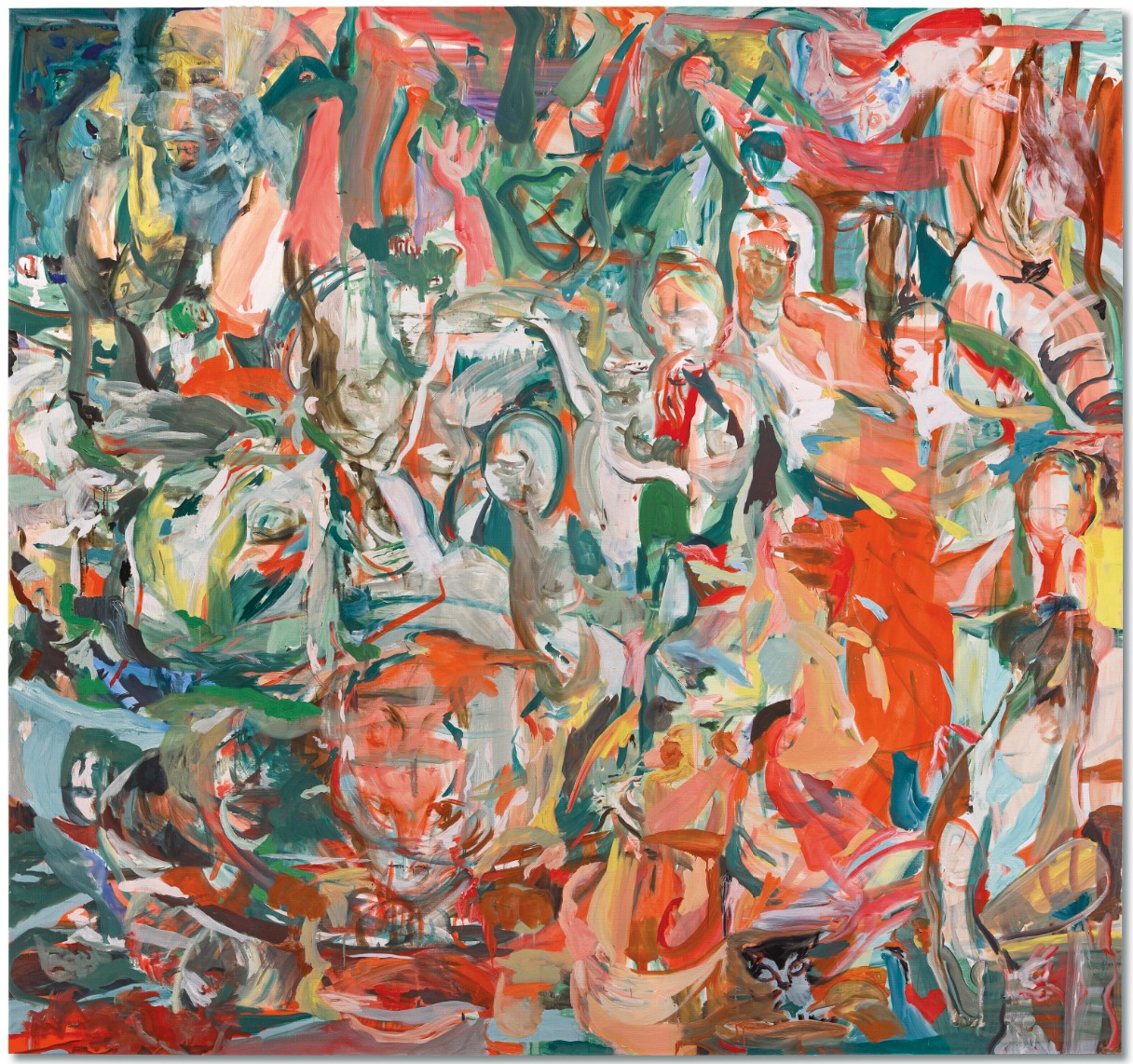
CECILY BROWN (B. 1969)
Make it Rain, 2014
Oil on linen
96 1/8 x 103 inches (246.7 x 261.7 cm)
Signed and dated ‘Cecily Brown 2014’ (on the reverse)
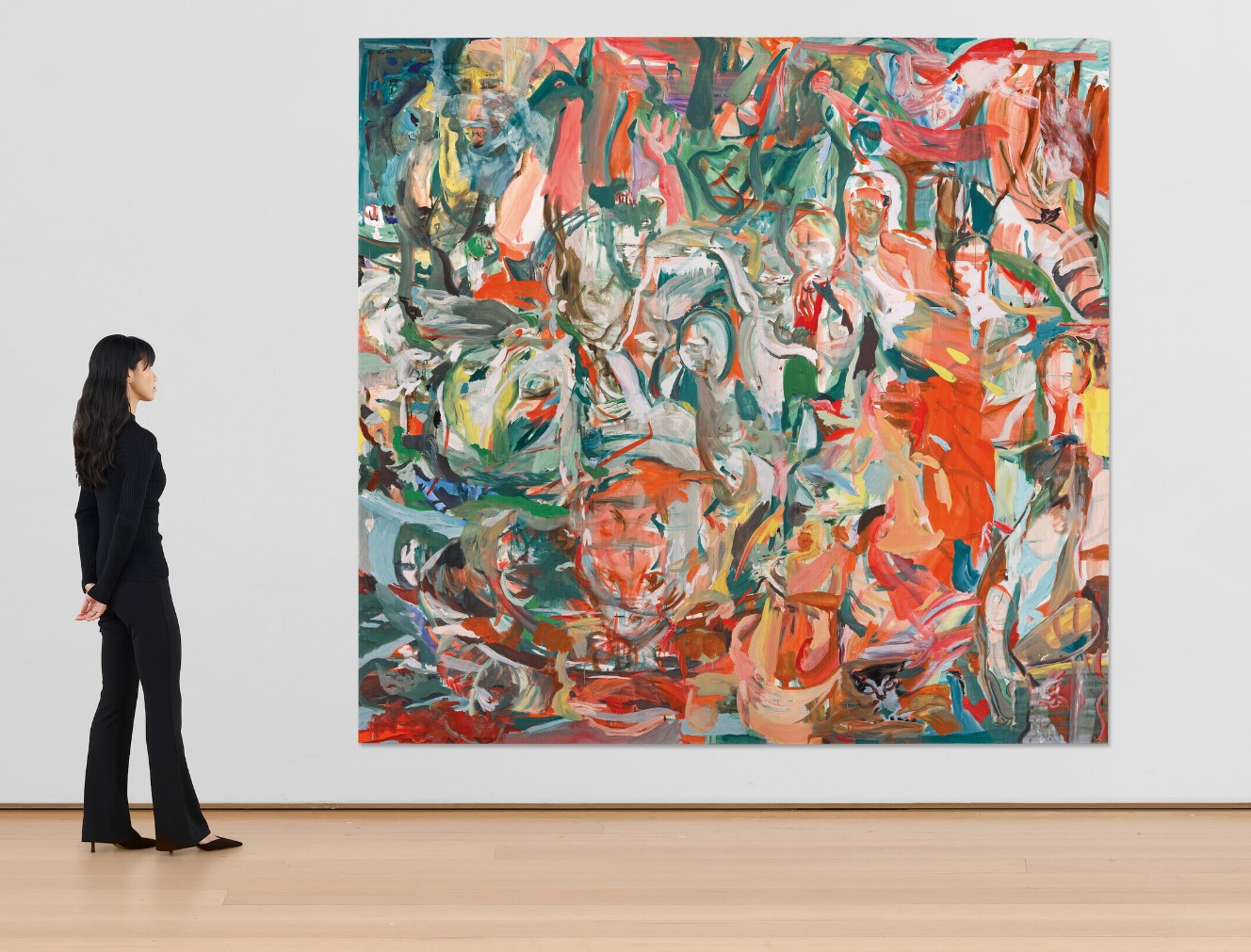
Across the vast canvas of Cecily Brown’s Make it Rain (2014), a glorious monsoon of form and colour bursts into life. Ribbons of pink, vermillion, teal, blue and yellow tangle and explode with vibrant energy. The paint runs from thick daubs of impasto to glistening, marbled licks and humid washes of vapour. Human silhouettes emerge amid the melee, bodies crowding together and limbs thrown out in ecstasy; one figure seems to plunge down from the sky. Feline faces, too, flicker in the lower reaches, bearing hints of blood-splashed maw and paw. The painting courses with torrents of activity, its clamorous battle between form and abstraction never coming to rest. With the title Make it Rain, Brown invokes a sense of the primal, elemental power of her liquid pigment, celebrating its capacity for creation, immersion and thrilling, ceaseless change. First exhibited in Paris in 2014, this masterful work has remained in the same private collection since.
When she emerged as a painter in 1990s London, Brown’s practice stood in lavish contrast to the more conceptual stance of her YBA contemporaries. In 1994 she moved to New York, where she still lives and works today. While charged with a vigor entirely her own, Brown’s brushwork inherits much from the work of American Abstract Expressionists such as Willem de Kooning. In line with de Kooning’s claim that ‘flesh is the reason oil paint was invented’, Brown’s early, more figurative works dealt with distinctly carnal subject matter, complementing the medium’s voluptuous power. She describes oil paint as ‘sensual, it moves, it catches the light, it’s great for skin and flesh and heft and meat’ (C. Brown, quoted in D. Peck, ‘New York Minute: Cecily Brown’, AnOther, 14 September 2012). While her later paintings have become less legibly erotic, their surging streams of color remain charged with physicality, as muscular, raw and atmospheric as the paintings of her male forebears.
George Condo
Christie’s London: 28 February 2023
Estimated: GBP 1,800,000 – 2,500,000
GBP 2,022,000
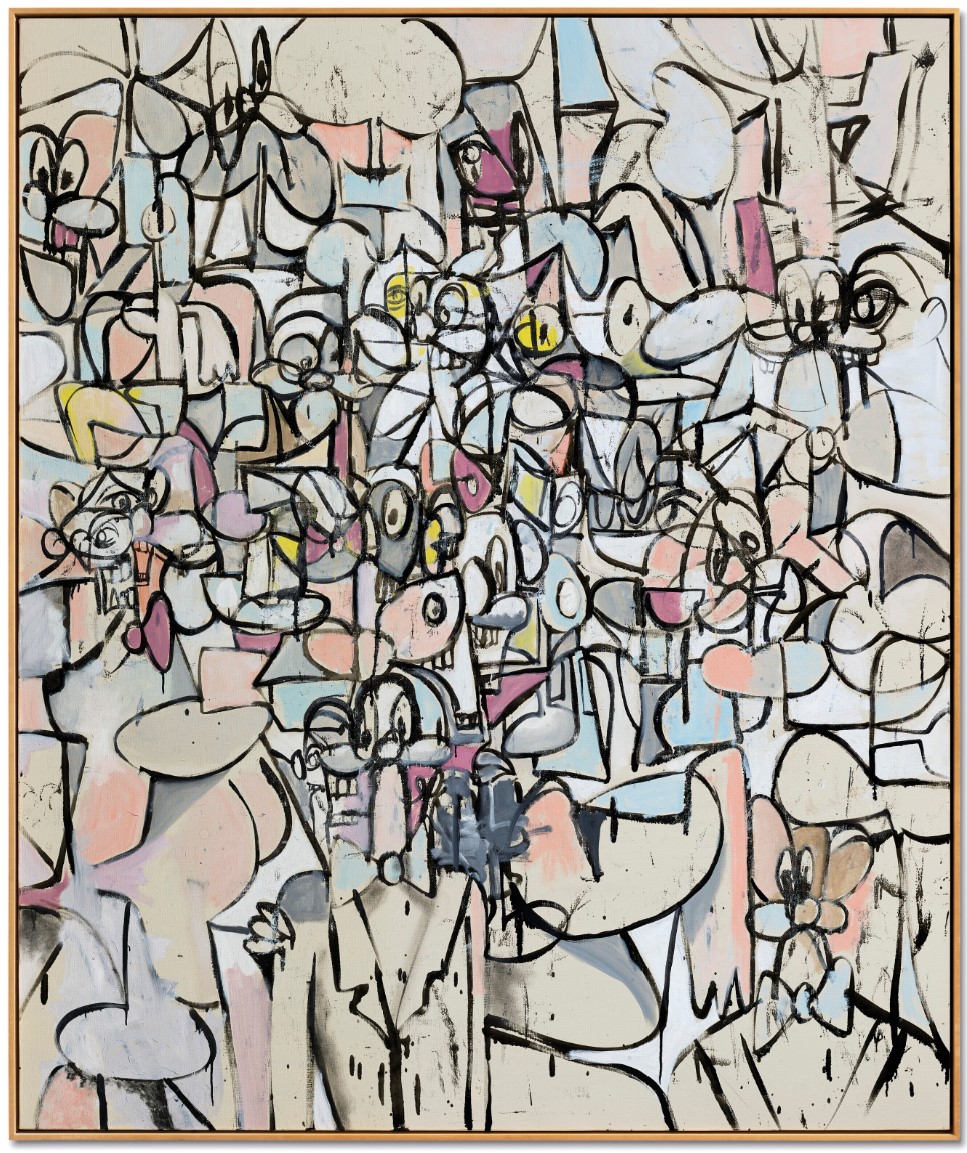
GEORGE CONDO (B. 1957)
Easter Sunday, 2011
Oil on linen
72×60 inches (182.8 x 152.5 cm)
Signed and dated ‘Condo 2011’ (on the overlap)
Painted in 2011—the year the artist’s major touring retrospective George Condo: Mental States opened at the New Museum, New York—Easter Sunday is a scintillating large-scale composition by George Condo. Faces, curves and facets flash in pearlescent hues of peach, powder-blue, silver and lilac against a pale khaki ground. Marshalled by deft, sinuous black lines, the forms assemble a dynamic ‘all-over’ surface that recalls both the Abstract Expressionism of de Kooning and the crystalline Cubism of Picasso. The picture clusters towards its centre, where flares of bright yellow illuminate nestled eyes and toothy grins; some of these features are joined by cartoonish rabbit ears, perhaps inspiring the title’s playful reference to Easter. The tuxedoed figure of Rodrigo—a roguish manservant who reappears across Condo’s oeuvre—emerges at least three times from the foreground, his bow-tie flitting through the action like a butterfly. Relating both to the musically-inspired ‘expanded canvases’ Condo began painting in the 1980s and to the ‘drawing paintings’ he first made in 2008, Easter Sunday is a feat of painterly, graphic and improvisational brilliance, riffing on art history and Condo’s own oeuvre with the skill and daring of a jazz virtuoso.
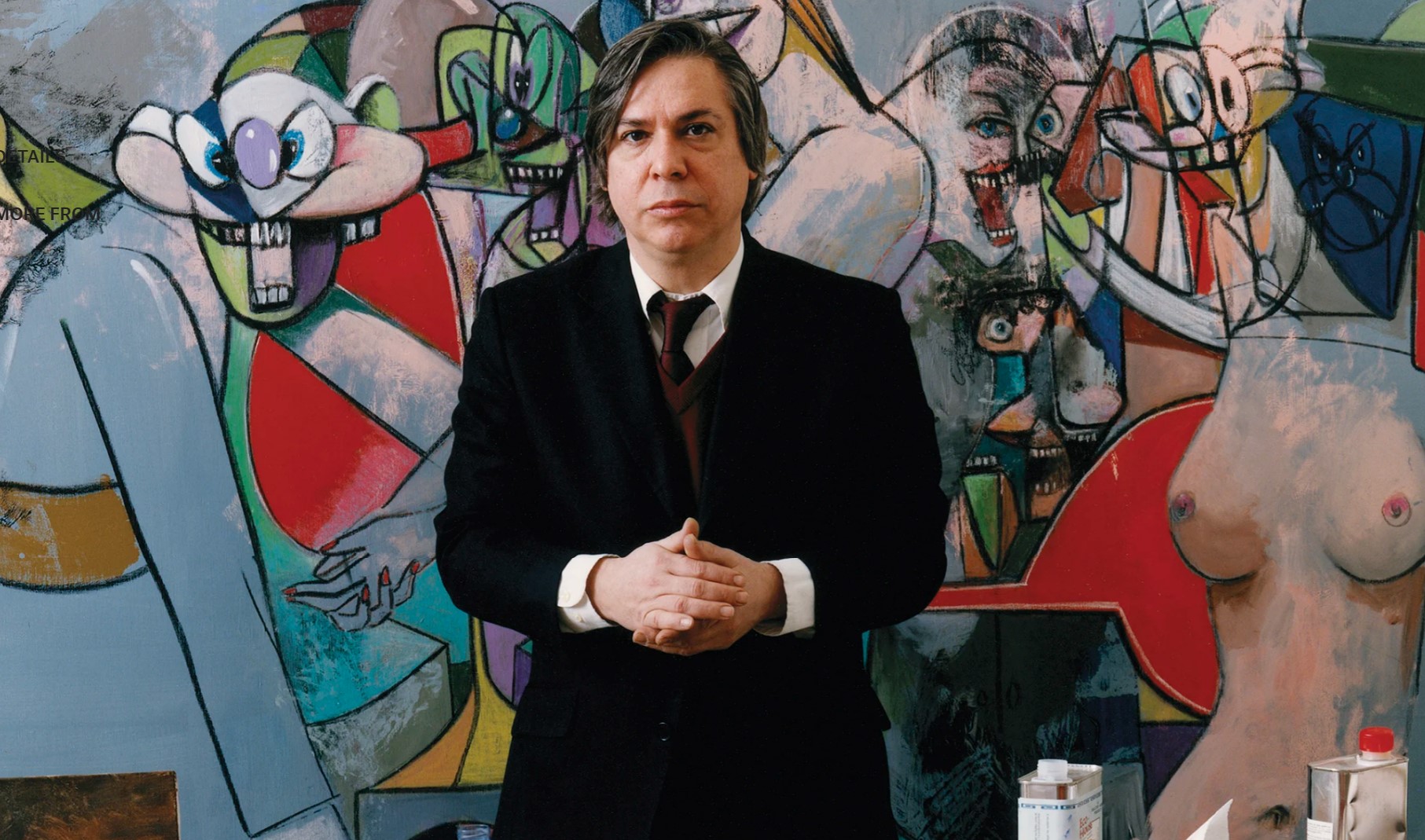
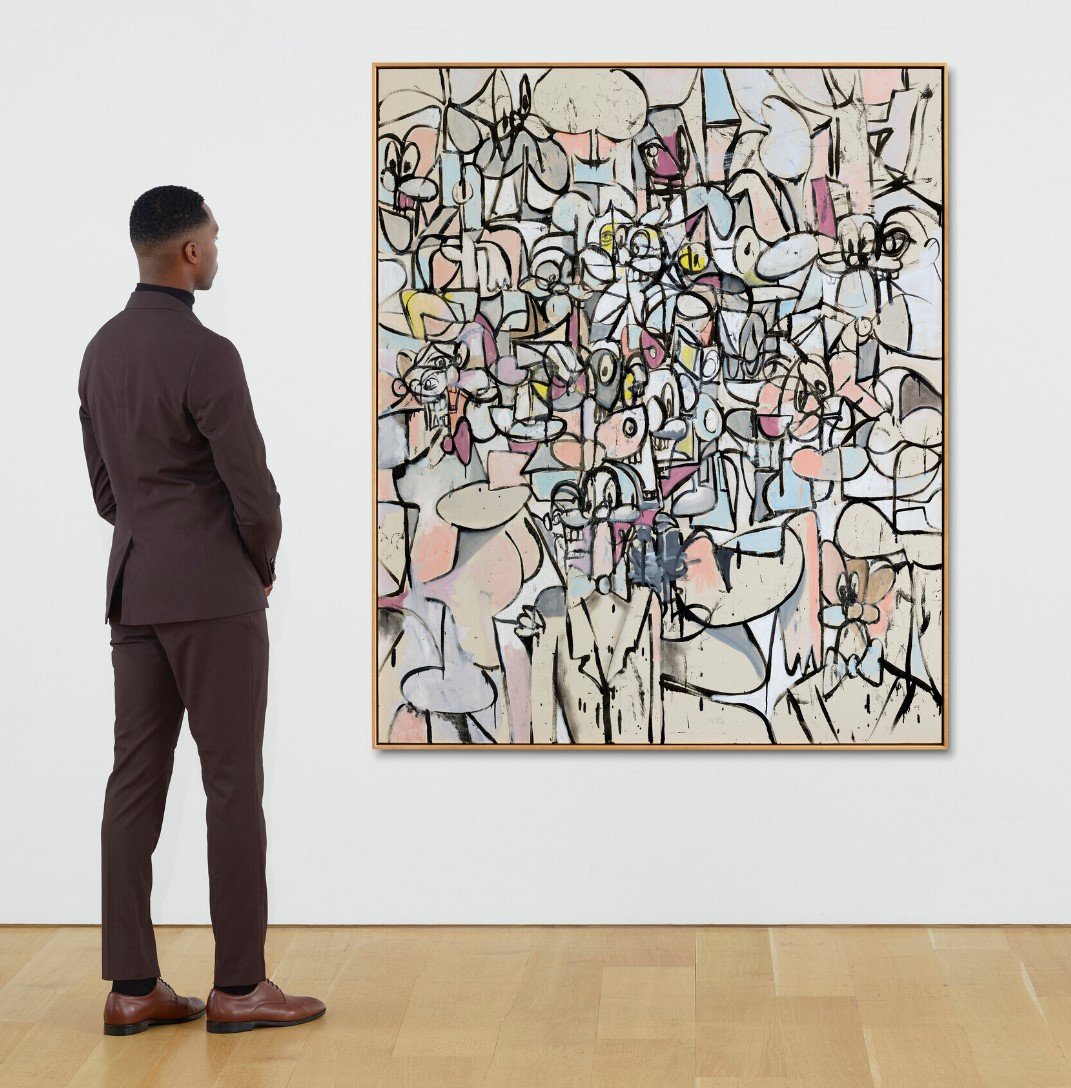
Condo has described the major early ‘expanded canvases’ Diaries of Milan (1984, Museum of Modern Art, New York) and Dancing to Miles (1985-1986, The Broad, Santa Monica) as ‘improvisations’ on the ‘chords’ provided by the symbolic content of the Old Masterly pastiches he had painted previously. These motifs included swords, bunches of grapes, rabbits, and his own spelled-out name. In Easter Sunday, the chords are characters and shapes that run through several decades of Condo’s work, including the recurring rabbits and the dastardly Rodrigo. Like a vision of his interior creative landscape, the tableau chatters with the noise of a crowded party scene. Its elegant, high-modernist palette counterpoises the manic energy of its grinning teeth and staring eyes: gleeful, anarchic and barely repressed, they seem to embody the psychic drives that lie beneath our outward surfaces, and the busy, fugitive complexity of unfiltered thought. ‘I describe what I do’ said Condo in 2014, ‘as psychological cubism. Picasso painted a violin from four different perspectives at one moment. I do the same with psychological states’ (G. Condo, quoted in S. Jeffries, ‘George Condo: “I was delirious. Nearly died”’, The Guardian, 10 February, 2014).
Pierre Soulages
Christie’s London: 28 February 2023
Estimated: GBP 650,000 – 850,000
GBP 1,026,000
PIERRE SOULAGES (christies.com)
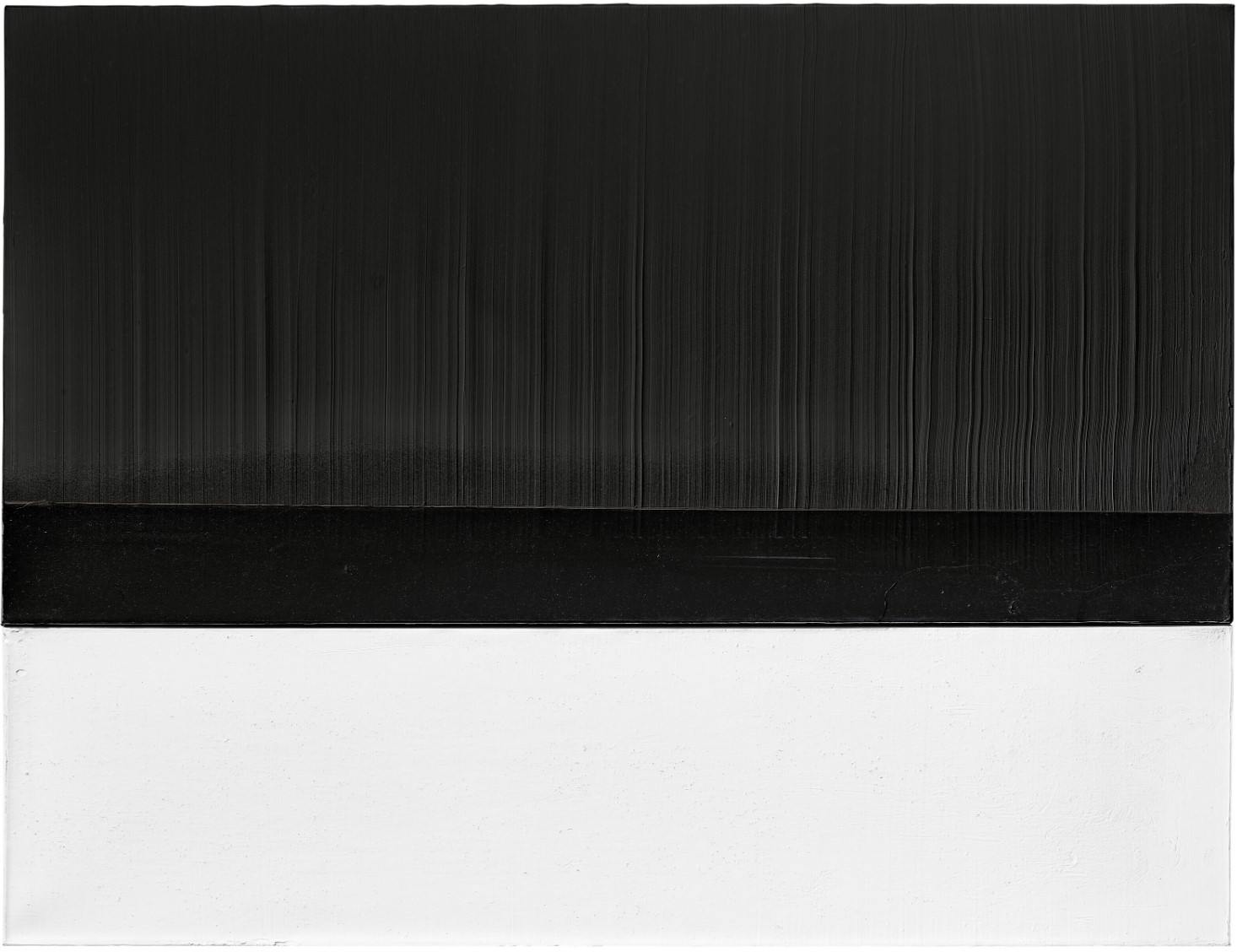
PIERRE SOULAGES (1919-2022)
Peinture 138 x 181 cm, 26 novembre 2010, 2010
Acrylic on canvas, in two parts
Overall: 54 5/8 x 71 5/8 inches (138.8 x 181.8 cm)
Signed, titled and dated ‘SOULAGES “Peinture 138 x 181 cm” 26 novembre 2010’ (on the reverse)
With its shimmering dark surface underscored by a pristine pale strip, Peinture 138 x 181 cm, 26 novembre 2010 occupies rare territory in Pierre Soulages’ oeuvre. While the relationship between black and white lay at the heart of the artist’s enquiries, the present work’s clean, bisected structure distinguishes it within his practice, offering a vision of distilled elegance and clarity. Spanning almost two metres in width, the painting captures Soulages’ enduring fascination with black as a source of light. With its flickering vertical striations hovering above a horizontal ribbon of rich impasto, the work reflects his longstanding exploration of the state he termed ‘outrenoir’, or ‘beyond black’. Here, the deep, light-reflecting properties of his dark paint are made all the more brilliant by their sharp-edged encounter with white, the two zones throwing one another into powerful relief. In 2014, the work was included in the inaugural exhibition at the Musée Soulages in Rodez: the first European retrospective dedicated to the outrenoirs. There, it stood as a symbol of the restless creative spirit that continued to drive Soulages into his tenth decade.
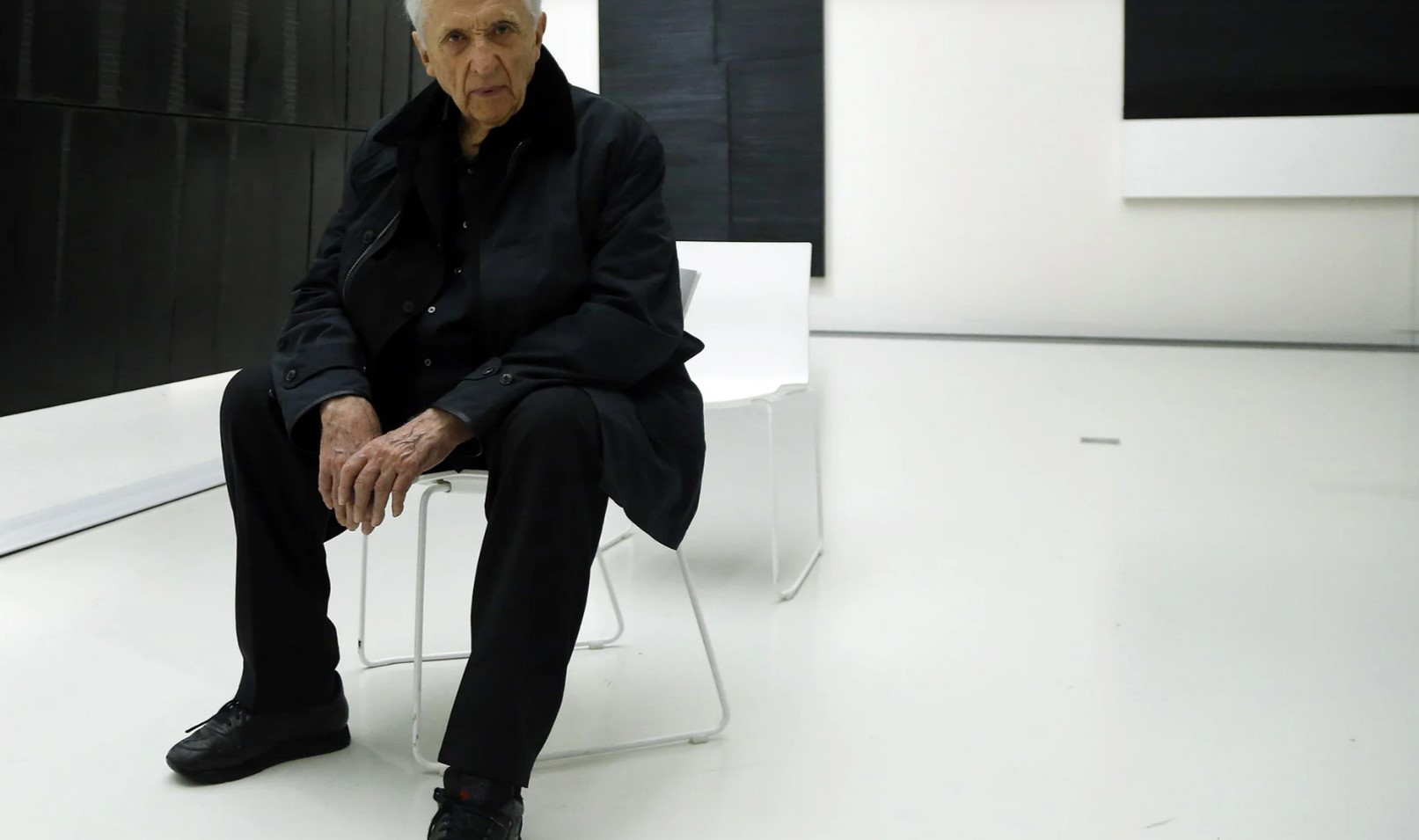
Soulages’ death in October 2022—three years after his landmark centenary exhibition at the Musée du Louvre—brought an end to one of the twentieth century’s most remarkable artistic practices. From an early age, he had understood that black was the most fundamental colour: famously, while spreading dark ink upon white paper as a child, he had explained to a family friend that he was attempting to paint ‘snow’. Encounters with the 20,000-year-old cave paintings of Lascaux, and the dark vaulted interior of the eleventh-century abbey near his hometown, strengthened his convictions. Black, he believed, could absorb and contain the light of the world around it, making other colours more visible and potent by association. In 1979, after more than thirty years of exploring this idea in his art, Soulages experienced an epiphany. It was time, he decided, for total darkness to permeate his paintings, saturating every inch of the canvas. He conceived the term ‘outrenoir’ to describe this condition. Just as ‘outre-Manche’ indicated a land ‘across the Channel’, so too did ‘outrenoir’ denote a place ‘beyond’: one where black transcended its ‘blackness’, giving way—simply—to light.
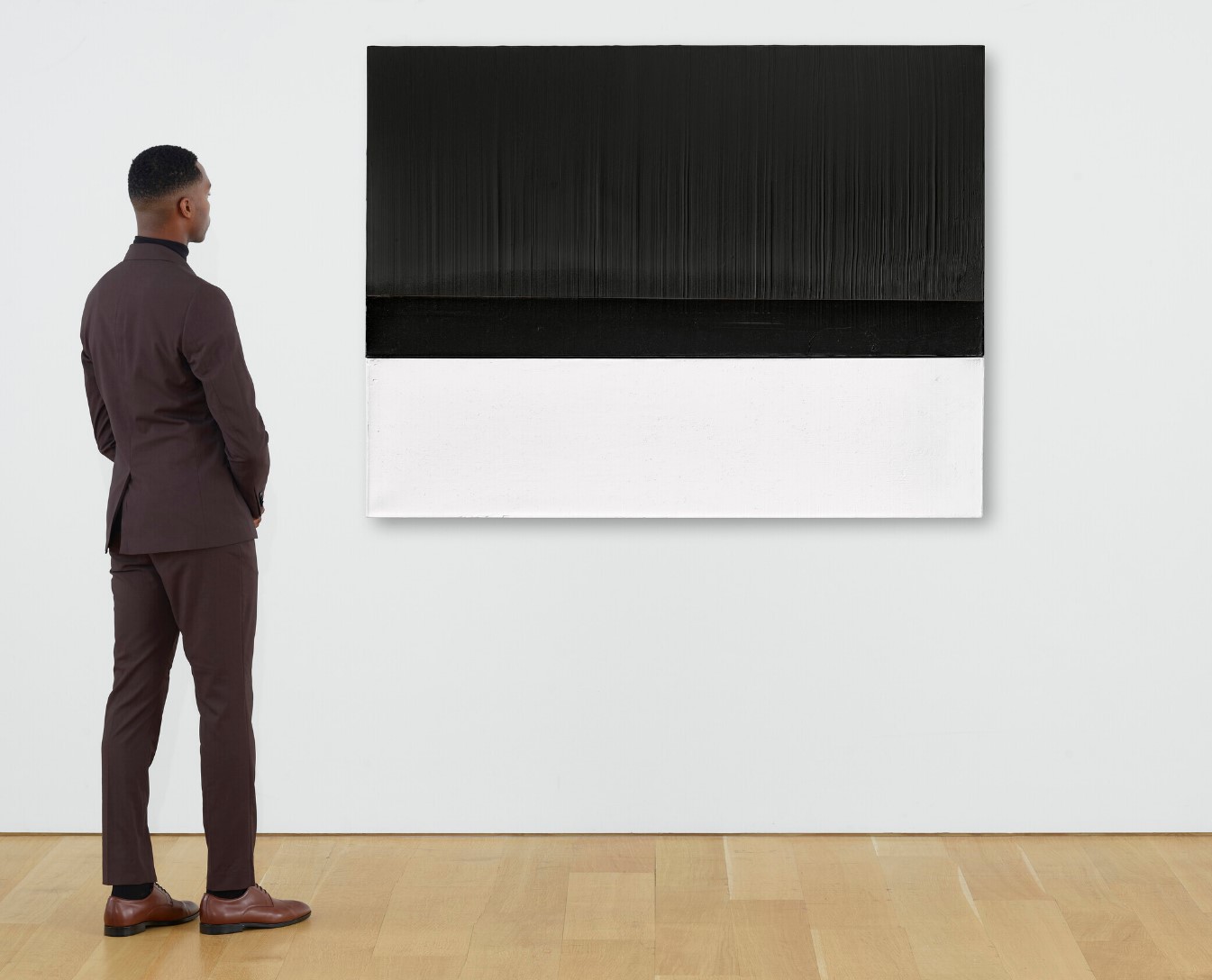
At the time of the present work, Soulages had just celebrated his ninetieth birthday: an occasion marked by a major retrospective at the Centre Georges Pompidou in Paris. His outrenoirs, by this stage, had reached new levels of complexity and ambition. Since the 1980s, many had taken the form of polyptychs, allowing the artist to juxtapose different textures on grand scales. The present work, indeed, seems to reflect something of this impetus, its surface dividing naturally into two or even three clear sections. This structural zoning seems to evoke Soulages’ early associations with Mark Rothko and other Colour Field painters, many of whom were yoked together under the rubric of Art Informel in the 1950s. The work’s rich, near-sculptural textures, meanwhile, demonstrate the artist’s use of acrylic, which replaced oil as his primary medium during the mid-2000s. Applied in thick pastes, its vertical ridges and grooves allow light to shutter rapidly across the surface, the physicality of the paint dissolving in its wake. Shadows, by contrast, flicker across the white expanse beneath. Forged as the sun began to set upon his art, it is a work of staggering crystalline beauty, giving form to the elemental forces that define our existence.
Scott Kahn
Christie’s London: 28 February 2023
Estimated: GBP 300,000 – 500,000
GBP 978,000 / USD 1,182,873
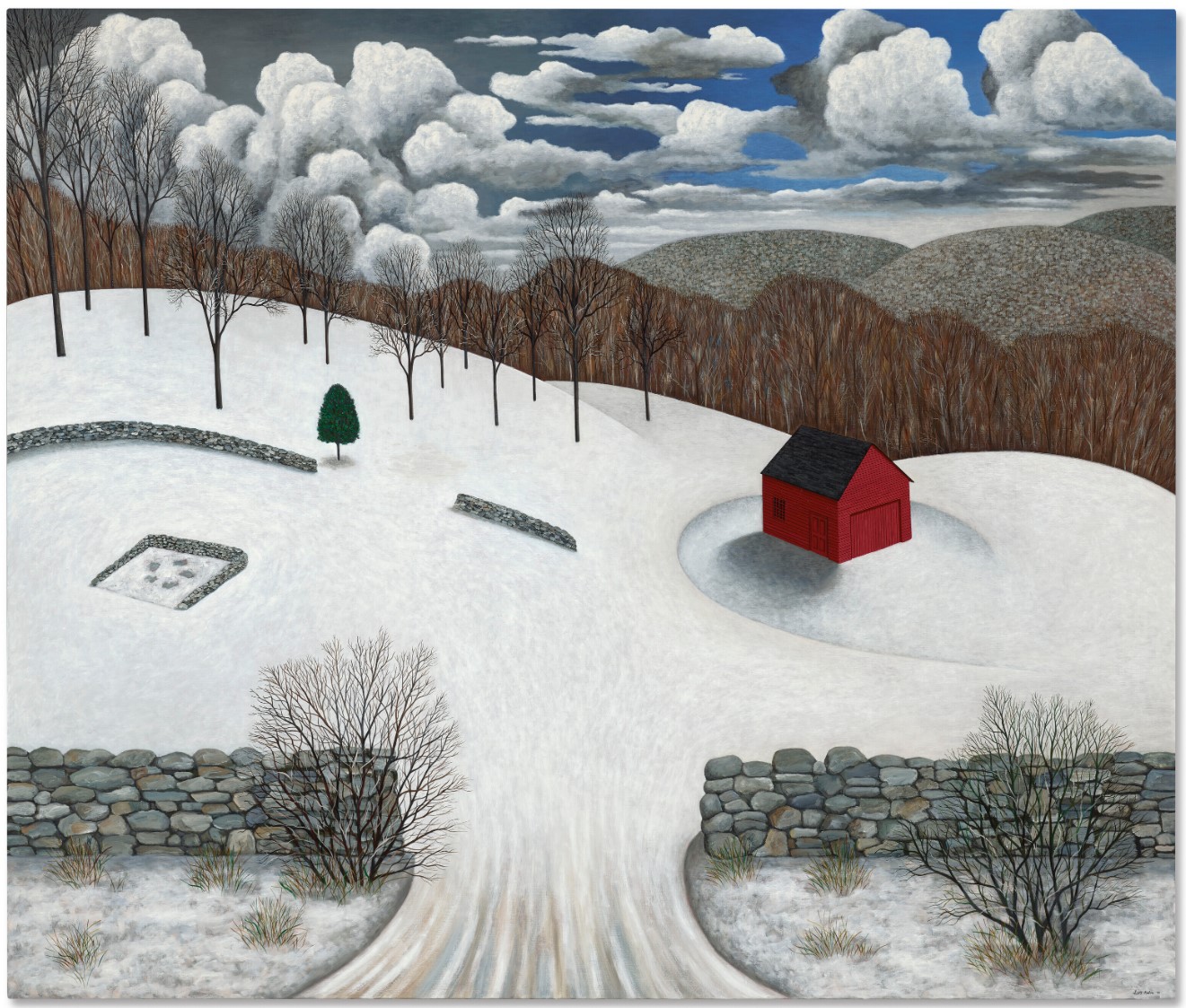
SCOTT KAHN (B. 1946)
Winter on Wig Hill, 1991
Oil on linen
66×78 inches (167.7 x 198 cm)
Signed and dated ‘Scott Kahn ‘91’ (lower right)
Signed, titled and dated ‘WINTER ON WIG HILL KAHN 1991’ (on the overlap)
An enigmatic scene of snow-hushed splendor, Winter on Wig Hill (1991) is a magical large-scale landscape by Scott Kahn. Spanning almost two meters across, it presents an immersive vista rich in detail, texture and hints of symbolism, based on a location in Chester, Connecticut, close to the artist’s long-time home. The painting is dominated by swelling, dappled mounds of snow, their soft shadows and contours as smooth as polished marble. They are dotted with dark, spindly trees, sections of low stone wall, and a red-painted garage that seems to float on its blanket of white: it is answered, to the left, by a single evergreen shrub. Free of human presence, the painting places these objects in silent conversation. The background gives way to a tree line of variegated golden-brown branches and distant, stippled hills. Crisp clouds fill the sky, which fades from a stormy grey to a clear blue. Stone walls frame the foreground, furthering the picture’s play of symmetry: a driveway of rutted snow seems to rush out towards the viewer.
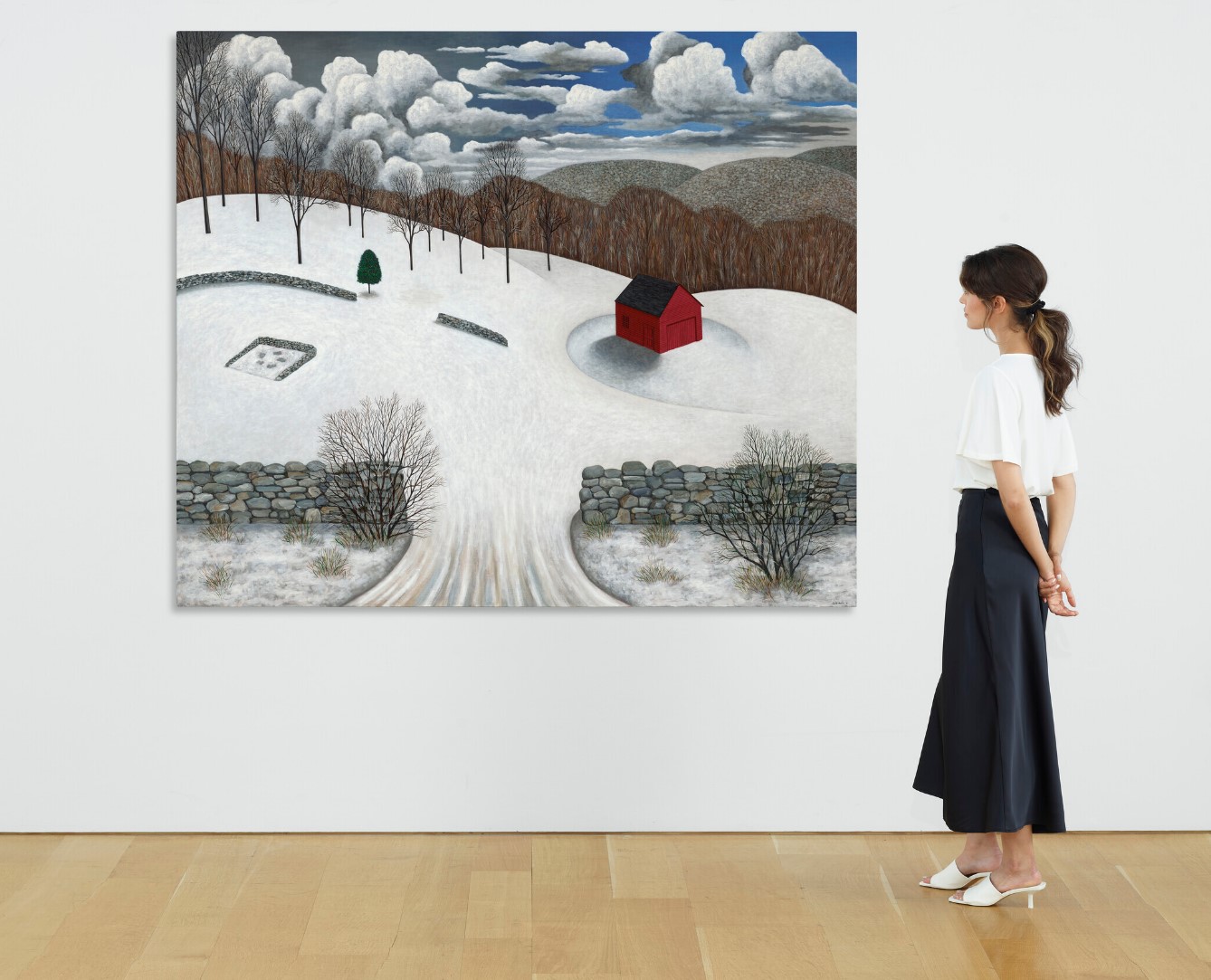
Kahn’s paintings are renowned for their surreal, cinematic staging and beguilingly dreamlike aura. They are also animated by a rich sensitivity to the realities of landscape, light, and the shifting seasons. Kahn studied at the Arts Students League, New York, under Theodoros Stamos in 1968, and received his MFA in painting two years later. After this early abstract period, it was a four-year stint living in Sag Harbor, Long Island, where he taught himself to paint landscapes, portraits, and interiors from life, that proved foundational for Kahn’s mature practice. His more fantastical works are often composed when he has no appropriate setting at hand, and must draw instead on imagination and memory. With beauty in his sights, however, he is a keen observer of the outside world.
Damien Hirst
Christie’s London: 28 February 2023
Estimated: GBP 500,000 – 700,000
GBP 787,500
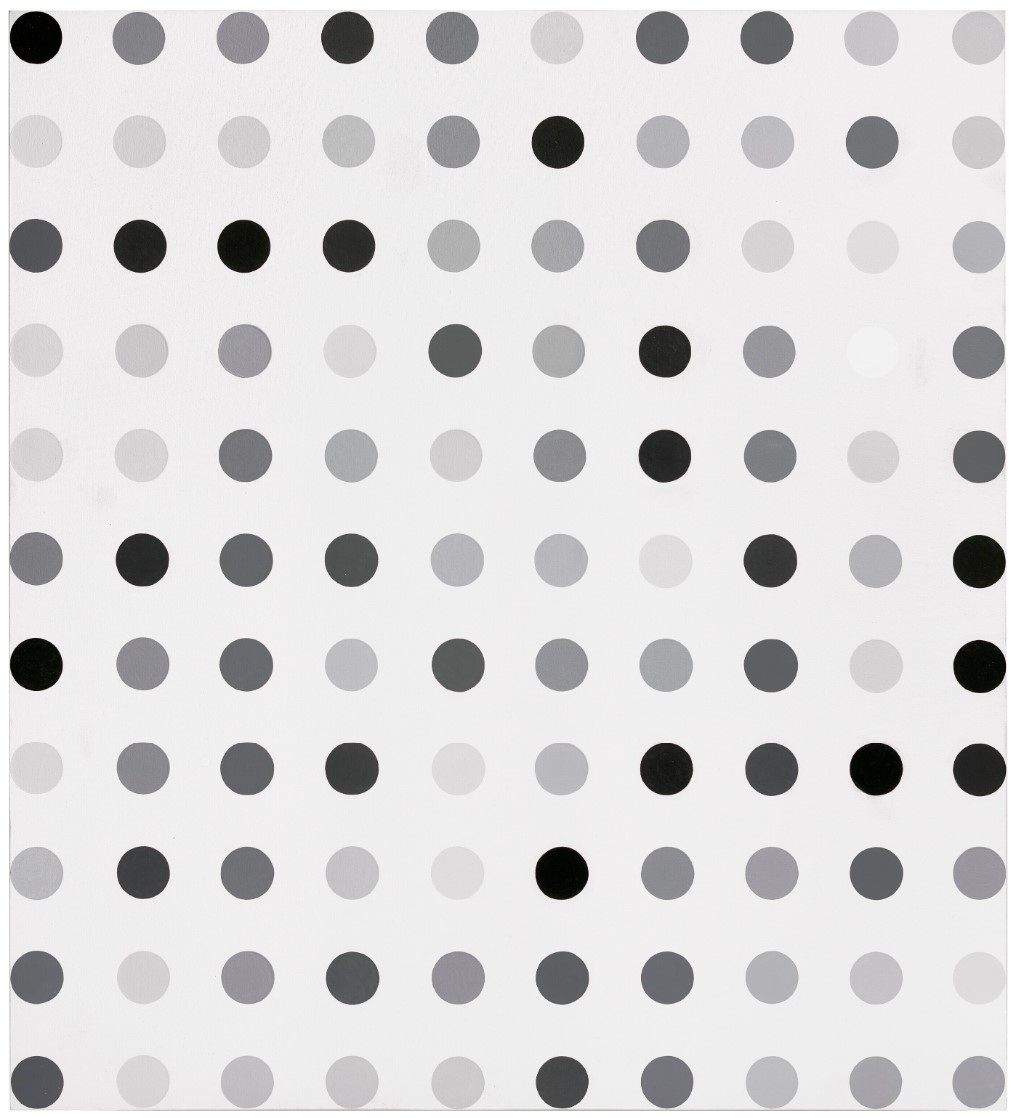
DAMIEN HIRST (B. 1965)
Cardura Doxazosin, 1992
Household gloss on canvas
83 7/8 x 72 inches (213×183 cm) (4 inch spot)
Stretching over two metres in height, Cardura Doxazosin (1992) is a hypnotic early example of Damien Hirst’s spot paintings from the group of ‘Deuterated Compounds’: a rare subseries distinguished by their greyscale palette. Other than a single work from the pastel-coloured ‘Venoms’ made in 1989, the ‘Deuterated Compounds’ were the first subgroup aside from the ‘Pharmaceuticals’—which form by far the largest category of spot paintings—to be created. Hirst made four of these grisaille works in 1992, and just twenty-two in total. They follow the same set of rules that applies to almost all of his spot paintings: no spot is precisely the same shade as any other within the work; the spots are hand-painted in household gloss on canvas; and the gap between each spot is equal to the width of the spots themselves. In subtle shades of platinum, ash, graphite and gunmetal, Cardura Doxazosin’s 110 spots create a dynamic optical spectacle. They pulse and oscillate as the eye attempts to grasp a pattern from the grid, or hones in on one spot’s particular hue.
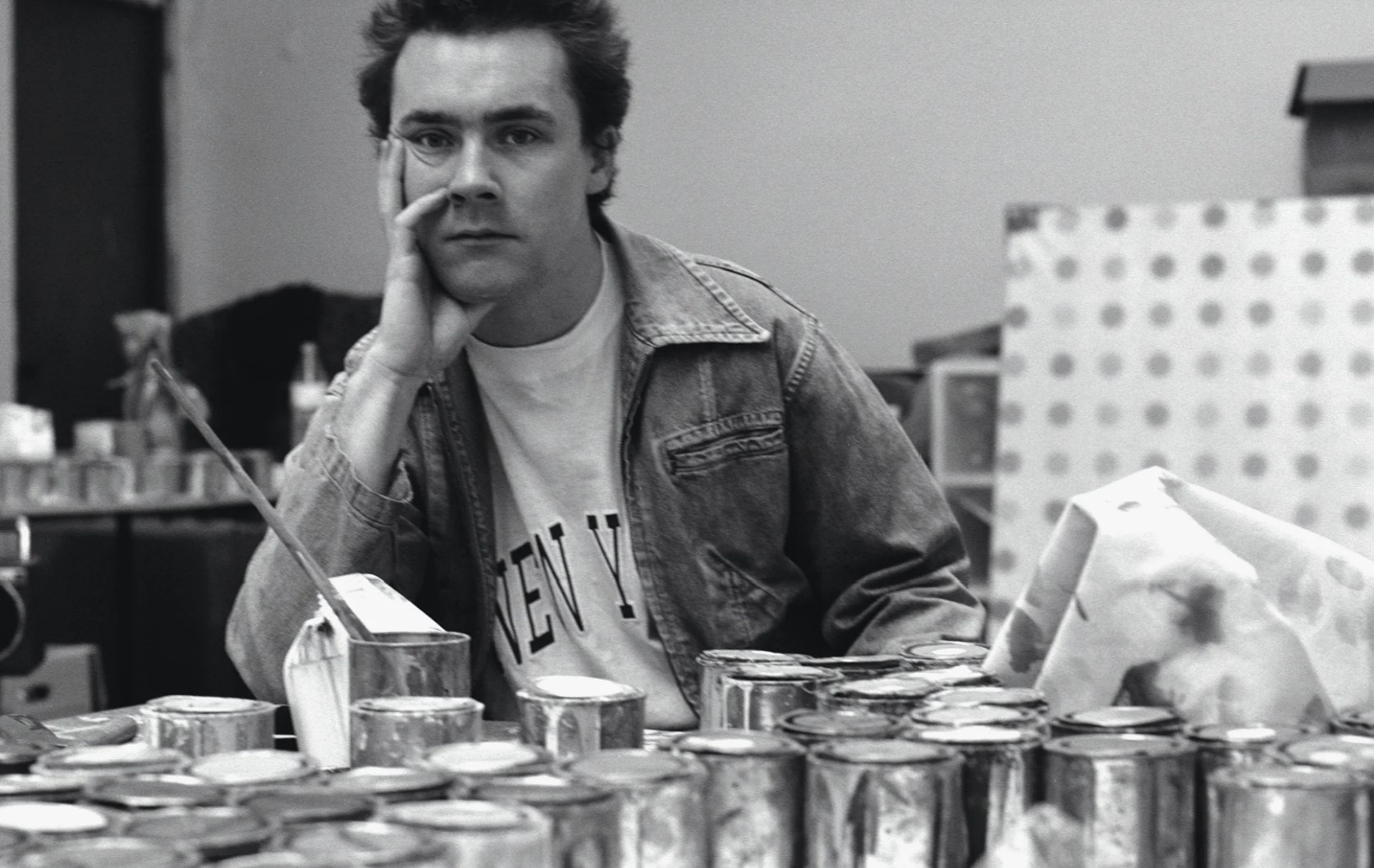
Hirst’s spot paintings are some of the most recognizable works in modern art. Alongside his sculptures and installations, they helped to define the era of the Young British Artists, sparking controversy and acclaim in equal measure. Cardura Doxazosin was painted at a pivotal moment. In March 1992, the first of Charles Saatchi’s ‘Young British Artists’ group shows opened at his Boundary Road gallery, where Hirst exhibited his now legendary works A Thousand Years (1990) and The Physical Impossibility of Death in the Mind of Someone Living (1991): the acronym ‘YBA’ would soon enter the curatorial lexicon. In November, Hirst was shortlisted for the Turner Prize. At the end of the year, he debuted his room-sized Pharmacy (1992)—today in the collection of Tate, London—at New York’s Cohen Gallery. Like his earlier medicine cabinets and later mirror-backed pill cabinets, the installation’s rows of packaged drugs related closely to the spot paintings’ formal purism and therapeutic themes.
Ewa Juszkiewicz
Christie’s London: 28 February 2023
Estimated: GBP 300,000 – 500,000
GBP 630,000
EWA JUSZKIEWICZ (christies.com)
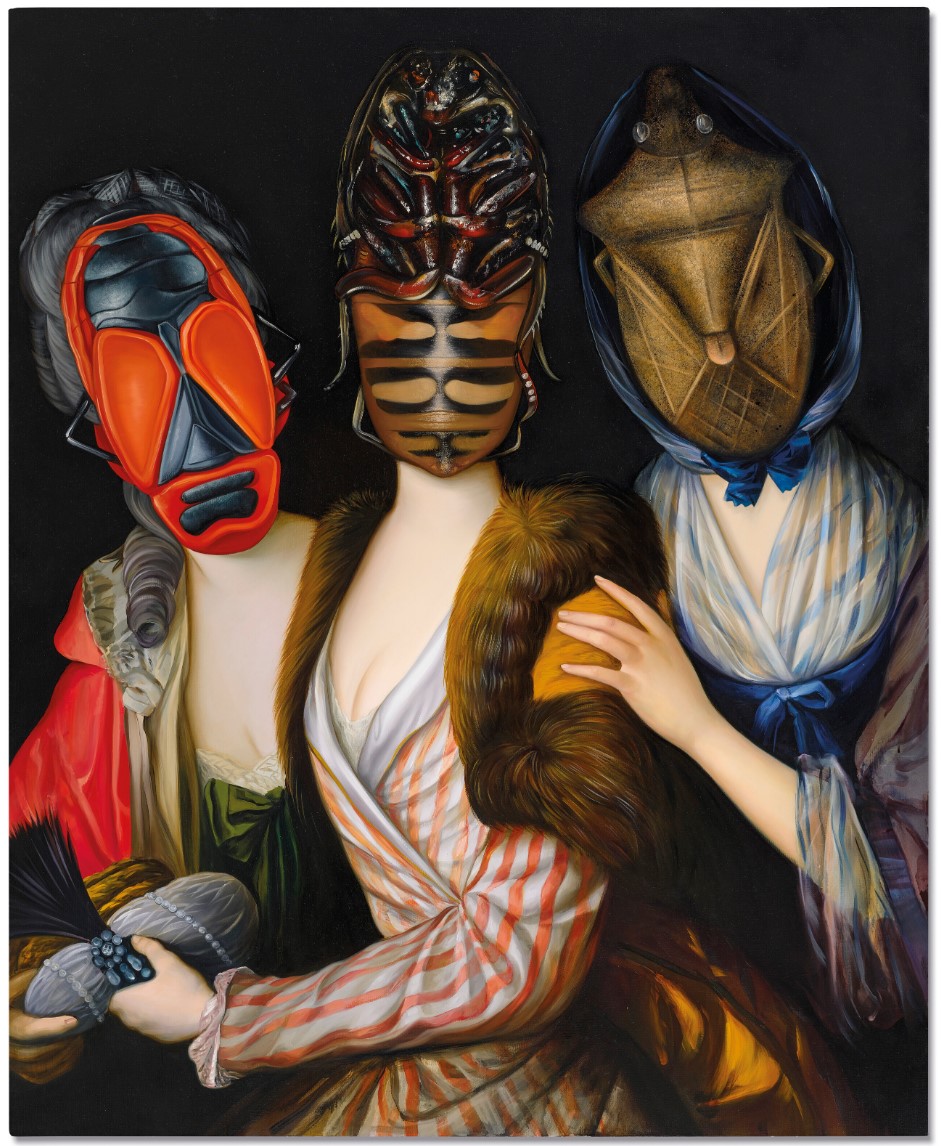
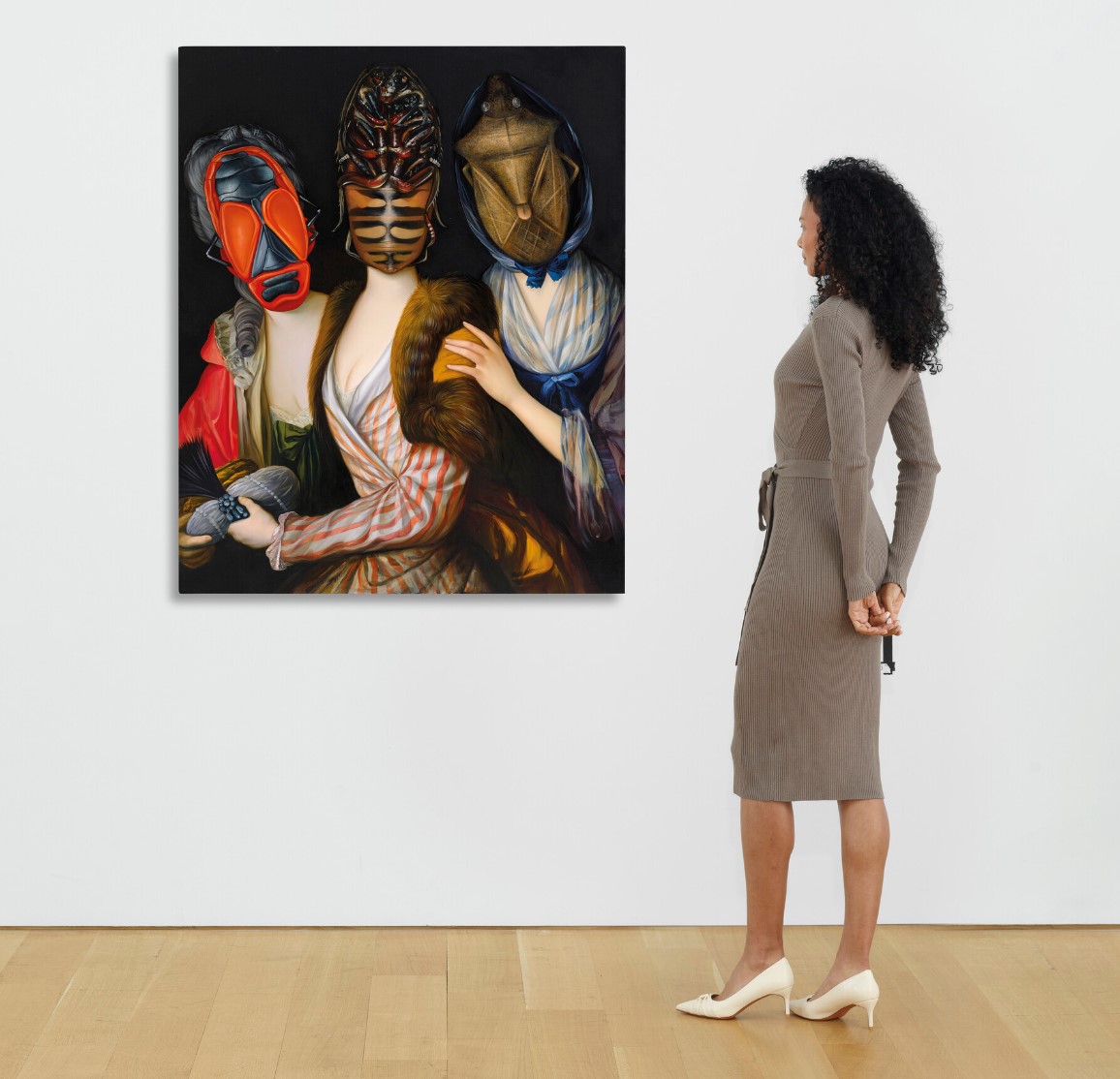
EWA JUSZKIEWICZ (B. 1984)
Sisters, 2014
Oil on canvas
56 x 45 3/4 inches (142.3 x 116.1 cm)
Signed, titled and dated ‘Ewa Juszkiewicz 2014 “Sisters”’ (on the reverse)
The only portrait by the artist to feature a trio of subjects, Sisters (2014) is a rare example of Ewa Juszkiewicz’s historical appropriations. Shown at the National Art Gallery of China, Beijing, in 2015, it forms part of an enigmatic painterly practice dedicated to reimagining pre-existing portraits of women. The work is based on Group portrait of the three daughters of Julius Johann von Vieth und Gossenau (1773) by the Swiss court painter Anton Graff. In vivid, hyperreal detail, Juszkiewicz brings their garments and postures to life, relishing the textures of fur, chiffon and lace, and amplifying the colors of their dresses to rich tones of orange, crimson, royal blue and gold. Their faces, however, have been erased, replaced by startling insect masks that match the opulent intricacy of their gowns. By transforming her classical subjects into surreal apparitions, Juszkiewicz prompts the viewer to reflect upon the role of women in historical portraiture. Here, the three sisters rebel against uniformity and anonymity, disrupting conventional notions of beauty and inviting new conversations with the past.
Born in Gdańsk, Poland, and now based in Warsaw, Juszkiewicz completed a PhD at the Academy of Fine Arts, Krakow, in 2013. She has risen to prominence over the past decade, with works held in international collections including the Musée d’Art Moderne de Paris, the Long Museum, Shanghai and the ICA Miami. Begun in 2011, her practice sprung from a close engagement with eighteenth- and nineteenth-century European portraiture during her studies, and the realization that women were frequently presented as archetypes. Often selecting little-known works, or canvases that were lost or destroyed, she deliberately obscures her sitters’ identities, replacing their heads with fungi, flowers, insects or drapery. In doing so, she seeks to provoke new associations, liberating her female protagonists from the male gaze and forcing them into bold confrontation with the viewer. They are no longer quiet, pristine specimens, but sensory, metamorphic hybrids, each alive with stories and secrets.
Stanley Whitney
Christie’s London: 28 February 2023
Estimated: GBP 400,000 – 600,000
GBP 630,000
STANLEY WHITNEY (christies.com)
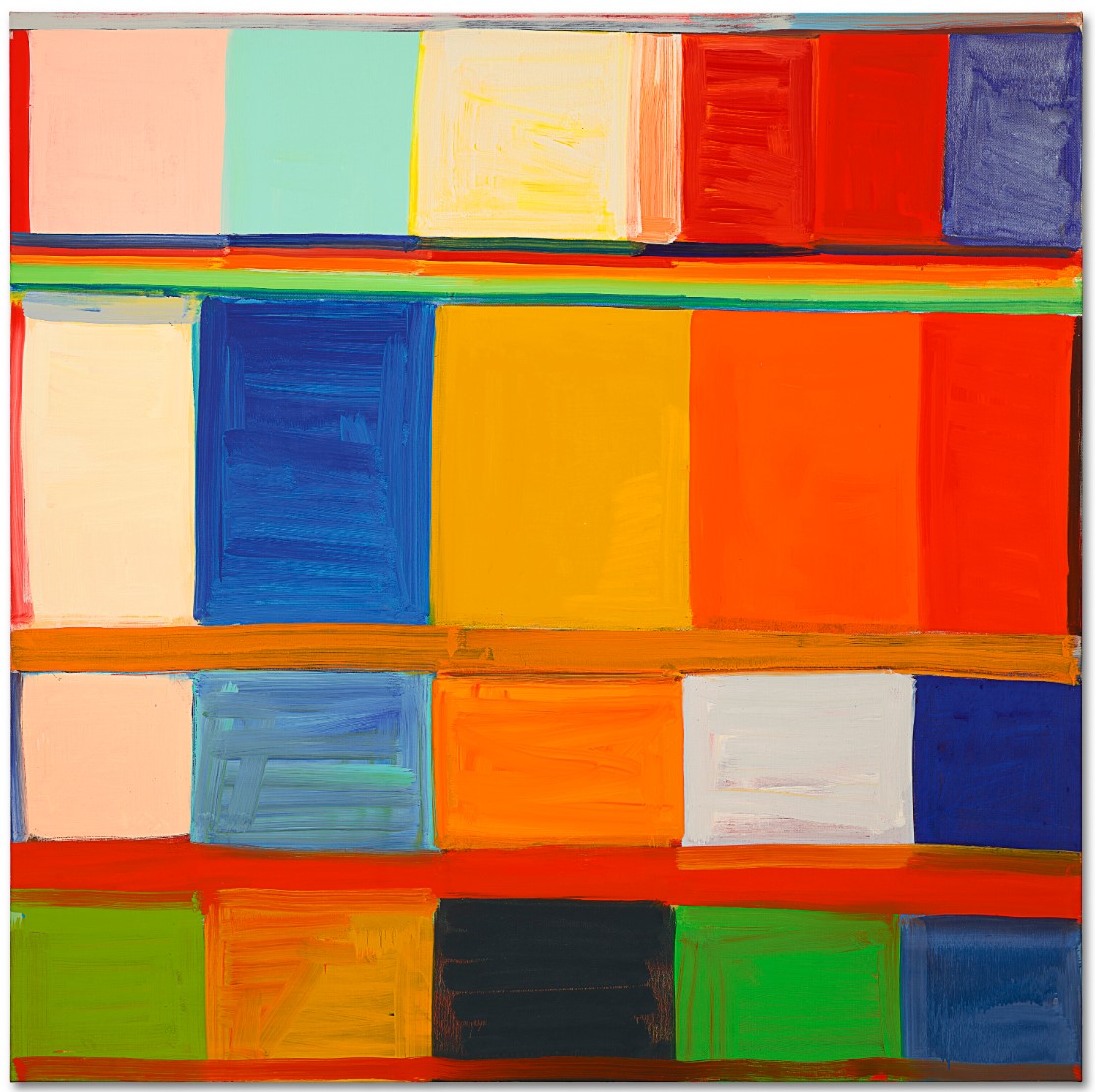
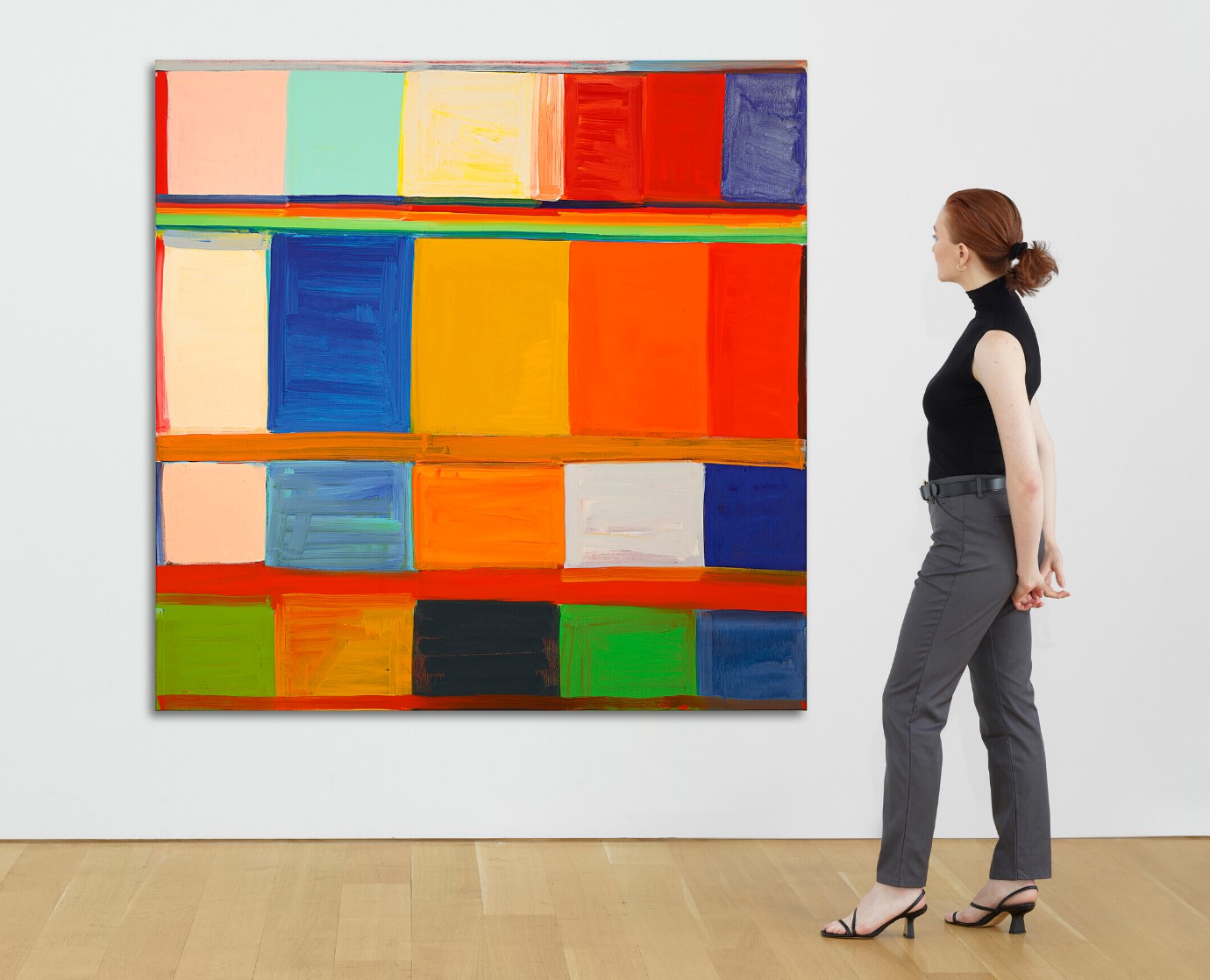
STANLEY WHITNEY (B. 1946)
Bob’s Smile, 2009
Oil on linen
72×72 inches (182.9 x 182.9 cm)
Signed, titled and dated ‘Dec. 2009 Stanley Whitney “Bob’s Smile”’ (on the reverse)
Shara Hughes
Christie’s London: 28 February 2023
Estimated: GBP 200,000 – 300,000
GBP 630,000
SHARA HUGHES (B. 1981) (christies.com)
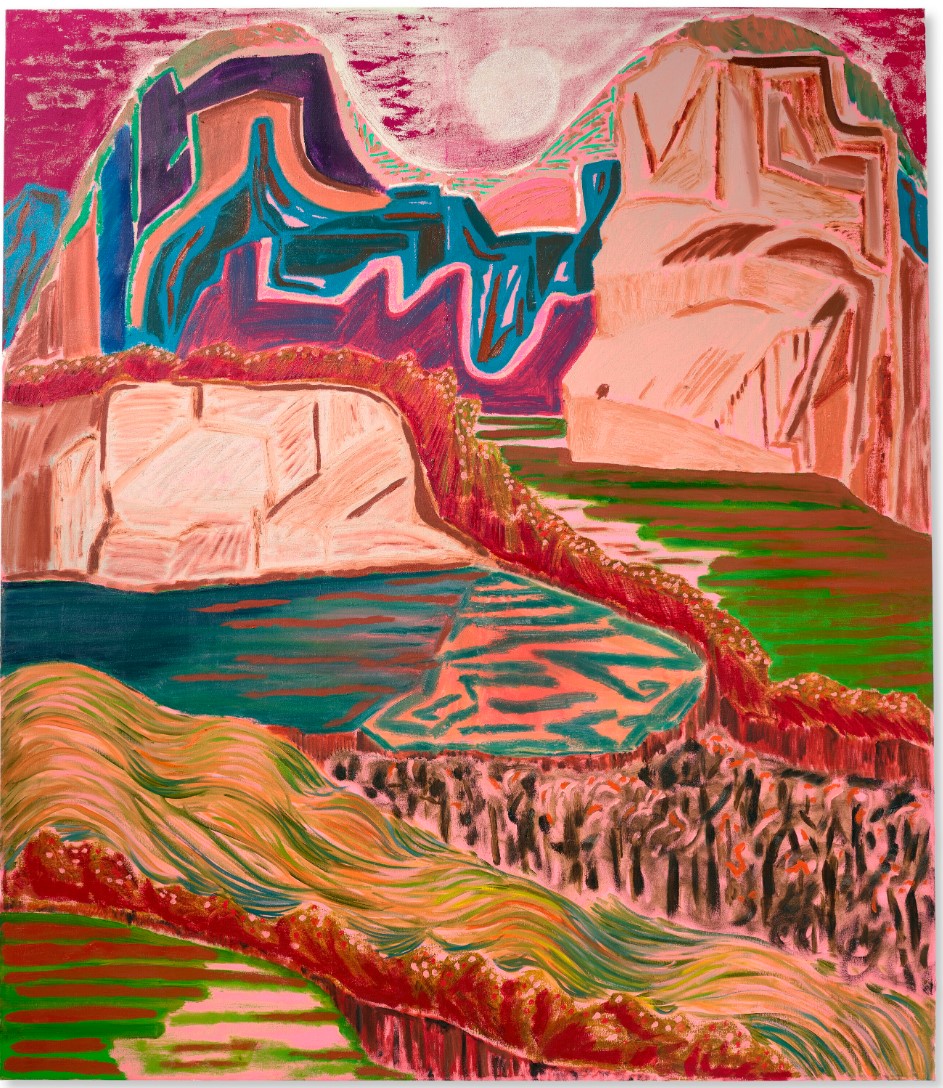
SHARA HUGHES (B. 1981)
Rough Terrain, 2017
Oil and acrylic on canvas
60×52 inches (152.4 x 132.1 cm)
Signed, titled, inscribed and dated (on the reverse)
Adrian Ghenie
Christie’s London: 28 February 2023
Estimated: GBP 300,000 – 500,000
GBP 352,800
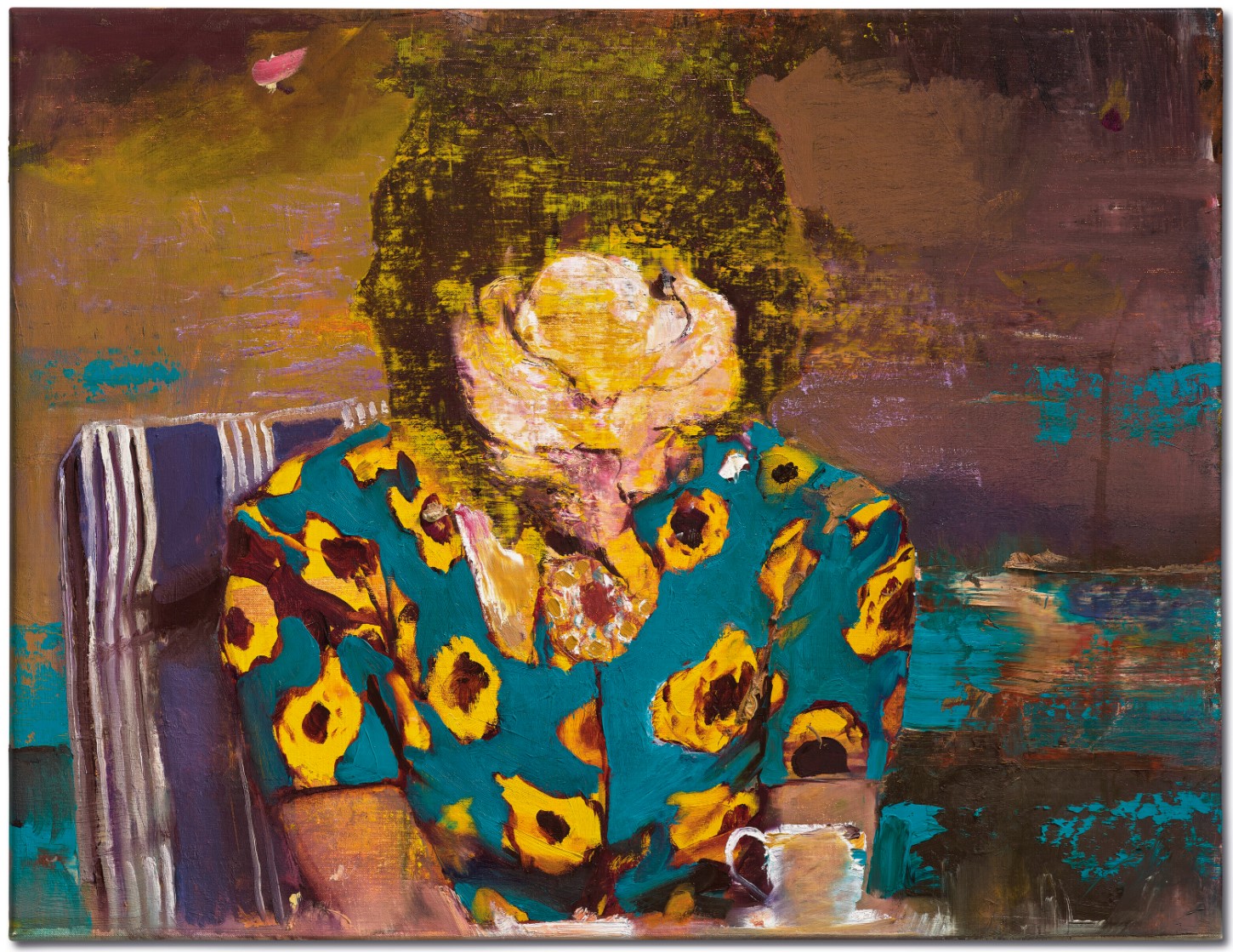
ADRIAN GHENIE (B. 1977)
Pie Fight Study, 2012
Oil on canvas
22 1/4 x 28 7/8 inches (56.4 x 73.2 cm)
Signed and dated ‘Ghenie 2012’ (on the reverse)
Alive with texture, color and visceral allusion, the present work stems from Adrian Ghenie’s celebrated early series of Pie Fight Studies. Closely related to his large-scale Pie Fight Interiors, these extraordinary creations were among the works that launched his career, forming the subject of his first solo institutional exhibition Pie Fights and Pathos at the Museum of Contemporary Art, Denver in 2012. Executed that year, the present work is based on a still from The Three Stooges’ 1941 film In the Sweet Pie and Pie. Ghenie transposes the image into electrifying color, replacing the woman’s dress with a blue and yellow flowery shirt, and adding a striped deckchair and coffee cup to the scene. Thick, sculptural impasto mimics the custard that obscures her features, while the background dissolves into a near-cinematic blur, marbled with skeins of blue, yellow and purple. For Ghenie, the vaudeville slapstick of the pie fight would ultimately become a gateway for exploring what he describes as ‘the texture of history’. The abstract accruals of paint, thrown, scraped and dripped across the surface, dramatize the way in which images become fossilized and excavated over time, inviting the viewer to question what really lies beneath.
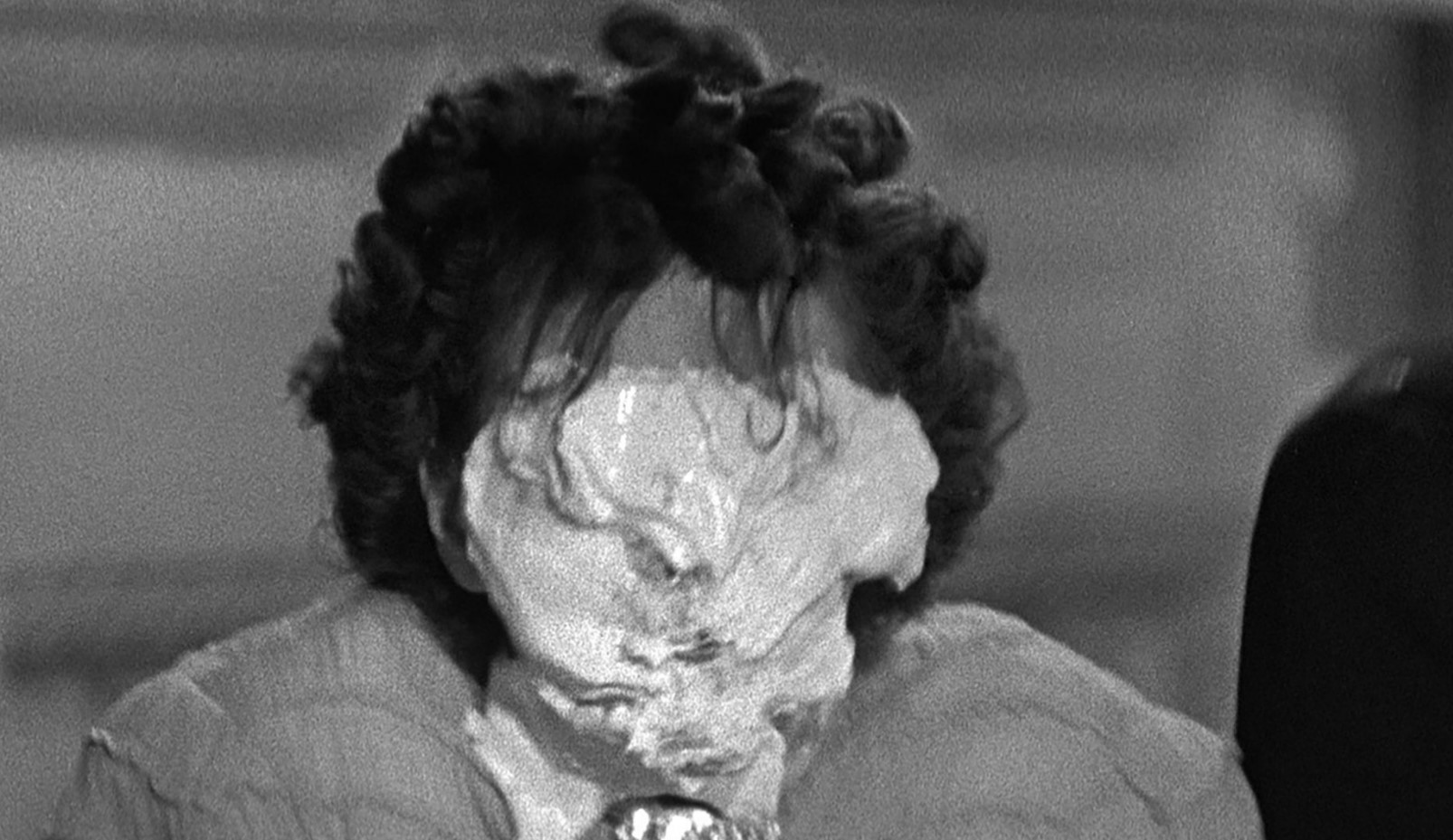
Source image for the present lot from IN THE SWEET PIE AND PIE © 1941, renewed 1969 Columbia Pictures Industries, Inc. All Rights Reserved.
With examples held in the Centre Georges Pompidou, Paris and the San Francisco Museum of Modern Art, Ghenie’s Pie Fights were begun in 2008. Evoking the films of Laurel and Hardy as well as The Three Stooges, the genre embodied a particular kind of debasement that—for Ghenie—spoke to our relationship with the past. In many of the paintings, the artist substituted the settings and characters of his filmic sources with elusive echoes of scenes from European history. Having grown up in Romania under the regime of Nicolae Ceaușescu, and watched the public broadcast of his execution in 1989, Ghenie was all too aware that some of humanity’s darkest epochs had been progressively flattened by their reproduction through lenses and screens. Operating in the age of the internet, he proposed that paint could help to ‘re-materialize’ some of the sensory reality that our re-telling of history had lost over time. In the Pie Fights, the act of humiliation—a strategy wielded by dictators, the press and other instruments of power—is given tactile, viscous, painterly form.
Louise Bonnet
Christie’s London: 28 February 2023
Estimated: GBP 150,000 – 250,000
GBP 277,200
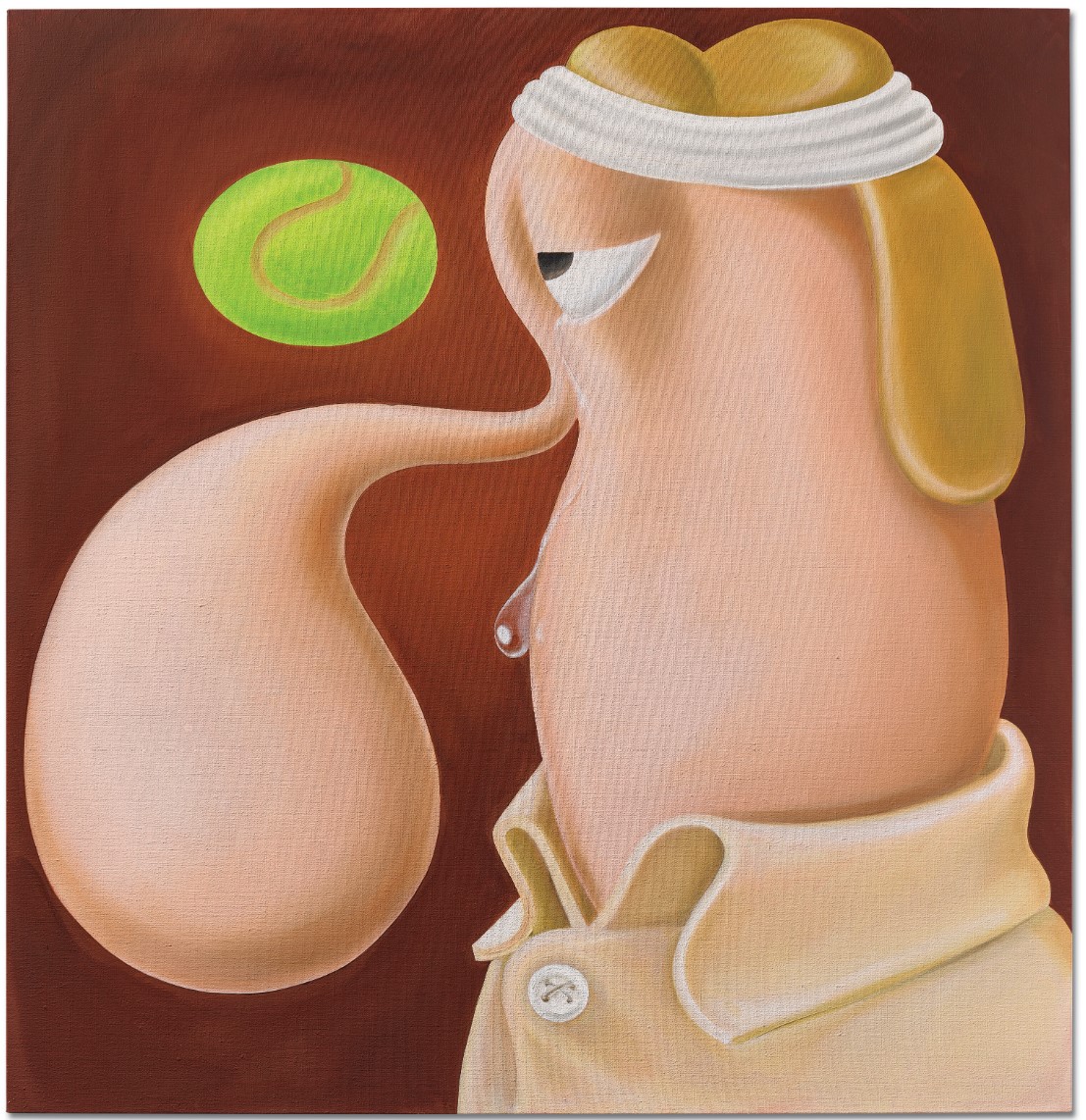
LOUISE BONNET (B. 1970)
The Tear, 2016
Oil on canvas
52 x 50 1/8 inches (132.2 x 127.2 cm)
At once tragic and comic, The Tear is a bold early example of Louise Bonnet’s surreal portraits. Painted in 2016, it forms part of the celebrated series of tennis players that propelled her to public acclaim. Against a rich monochrome backdrop, Bonnet’s subject stands in crisp profile. A single hooded eye is trained upon the levitated ball before him, whose radiant green surface seems to illuminate the space around it. His wildly exaggerated nose—a hallmark of the artist’s practice—mirrors not only the ball’s engraved pattern, but also the shape of the titular teardrop that rolls in glassy perfection down his cheek. Every element of the composition—from the wrinkles of the character’s bandana, to the shadows that play across his face and shirt—is rendered with precise, graphic clarity. Rooted in close engagement with art history, film and comics, Bonnet’s caricatured muses express real emotions and psychological states, highlighting the anguish and absurdity of the human condition. Part clown, part athlete, the present work’s protagonist refuses to return our gaze, quietly begging for empathy.
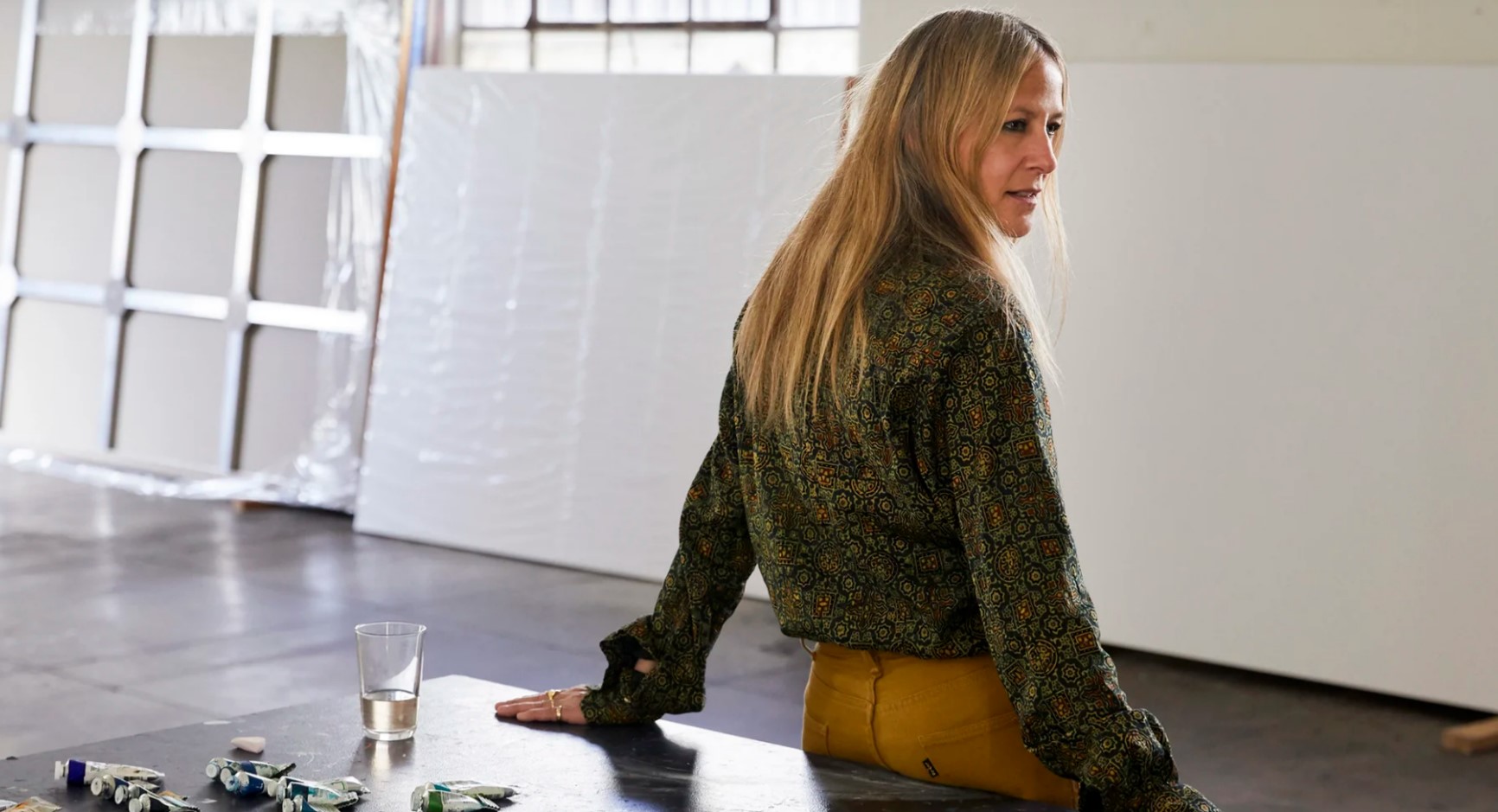
Bonnet has risen to critical acclaim over the past decade, notably exhibiting in last year’s Venice Biennale. Born in Geneva, she studied at the Haute École d’art et de design, before relocating to Los Angeles in 1994. Following a career in illustration and graphic design, she began exhibiting in 2008, ultimately arriving at her signature style after switching from acrylic to oil paint in 2014. Her characters are plucked from her imagination, informed by sources ranging from Pablo Picasso and medieval portraits, to classic horror films and the work of American cartoonist Robert Crumb. The tennis players, she explains, sprung solely from a fascination with uniform: their starched white outfits not only slipped seamlessly into her crisp, hyper-real aesthetic, but also fought humorously with her subjects’ inflated, out-of-control features. Ultimately, however, Bonnet seeks to confer a sense of dignity upon her characters. In The Tear, her grotesque, melancholic wit is offset by deft, cinematic chiaroscuro, precise volumetric modelling and highly-polished draughtsmanship. Beauty and ugliness are held in scintillating tension, frozen—like the tennis ball—in Bonnet’s strange parallel universe.
The Art of The Surreal Evening Sale
28 February 2023
The Art of the Surreal Evening Sale (christies.com)
Total: GBP 38,861,900
Top Lot: GBP 6,129,000
8 Lots sold over GBP 1 million
# Lots: 32
# Lots Sold: 30
Sell-Through Rate: 94%
Above Estimates: 12 Lots (38%)
Within Estimates: 14 Lots (44%)
Below Estimates: 4 Lots (13%)
Unsold: 2 Lots (6%)
Top 3 Lots
#1. Rene Magritte
Christie’s London: 28 February 2023
Estimated: GBP 4,000,000 – 6,000,000
GBP 6,129,000
RENÉ MAGRITTE (1898-1967) (christies.com)
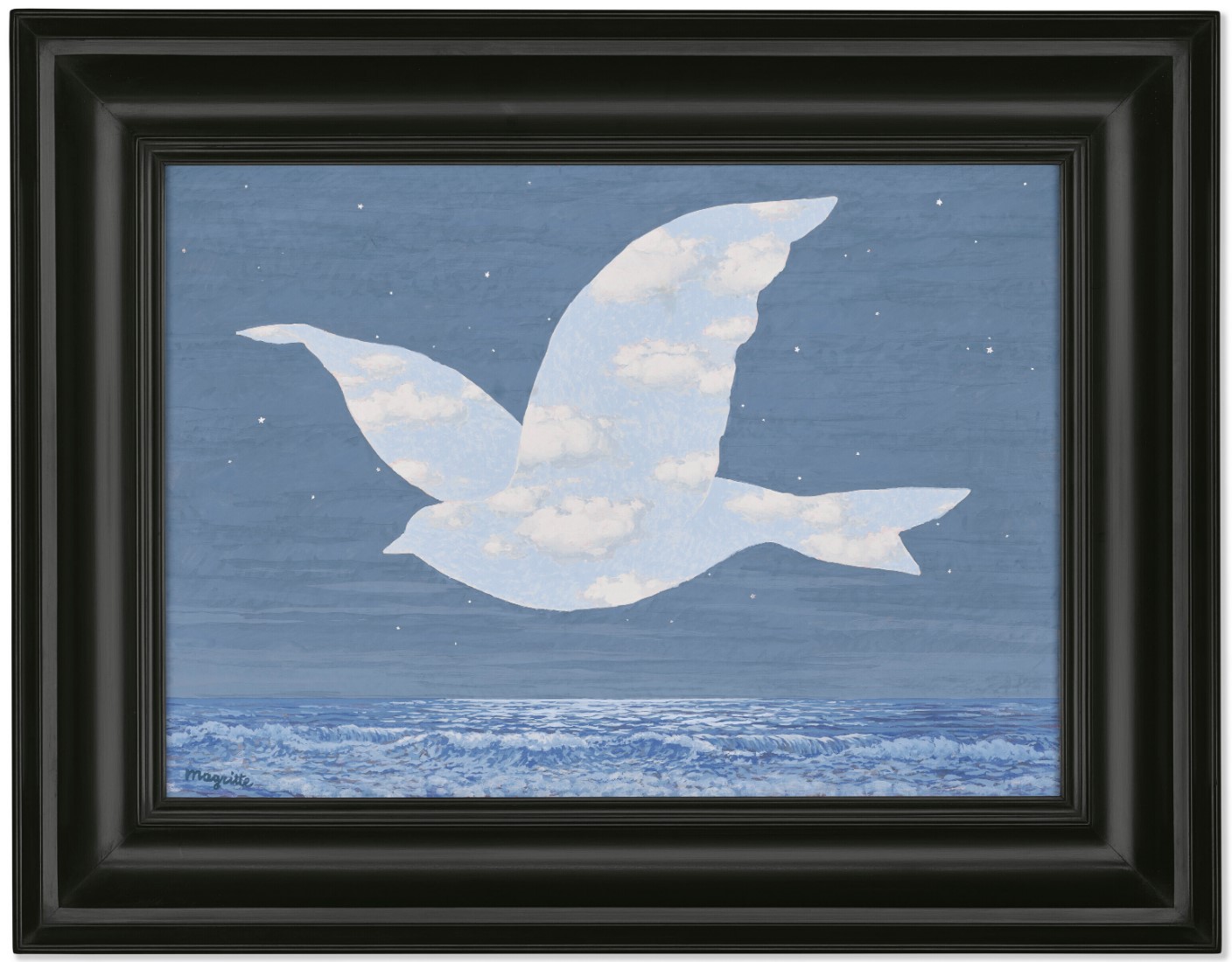
RENÉ MAGRITTE (1898-1967)
Le retour, circa 1950
Gouache on paper
29.6 x 41.7 cm (11 5/8 x 16 3/8 inches)
Signed ‘Magritte’ (lower left)
#2. Rene Magritte
Christie’s London: 28 February 2023
Estimated: GBP 2,500,000 – 3,500,000
GBP 5,556,500
RENÉ MAGRITTE (1898-1967) (christies.com)
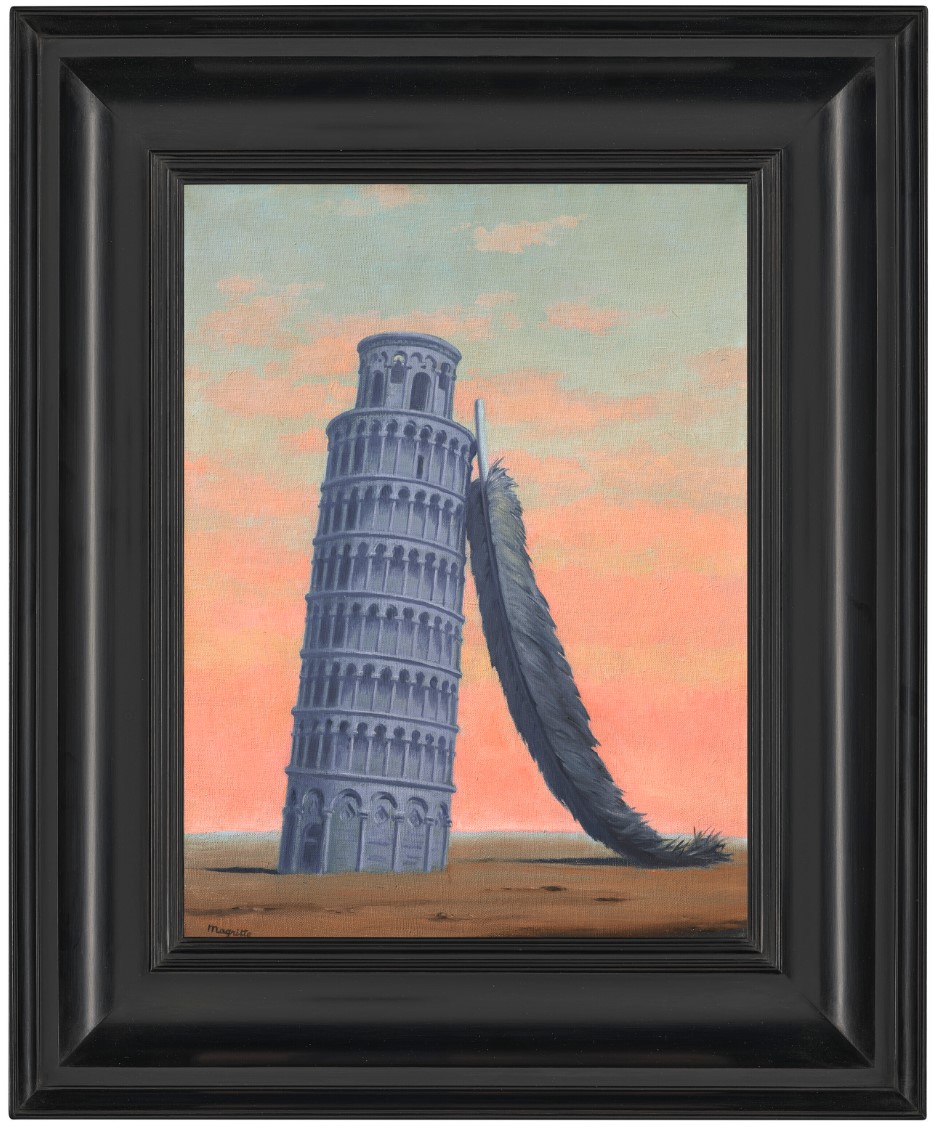
RENÉ MAGRITTE (1898-1967)
Souvenir de voyage, 1958
Oil on canvas
40.1 x 30.2 cm (15 7/8 x 12 inches)
Signed ‘Magritte’ (lower left)
#3. Oscar Dominguez
Christie’s London: 28 February 2023
Estimated: GBP 2,000,000 – 3,000,000
GBP 4,602,000
Machine à coudre électro-sexuelle (christies.com)
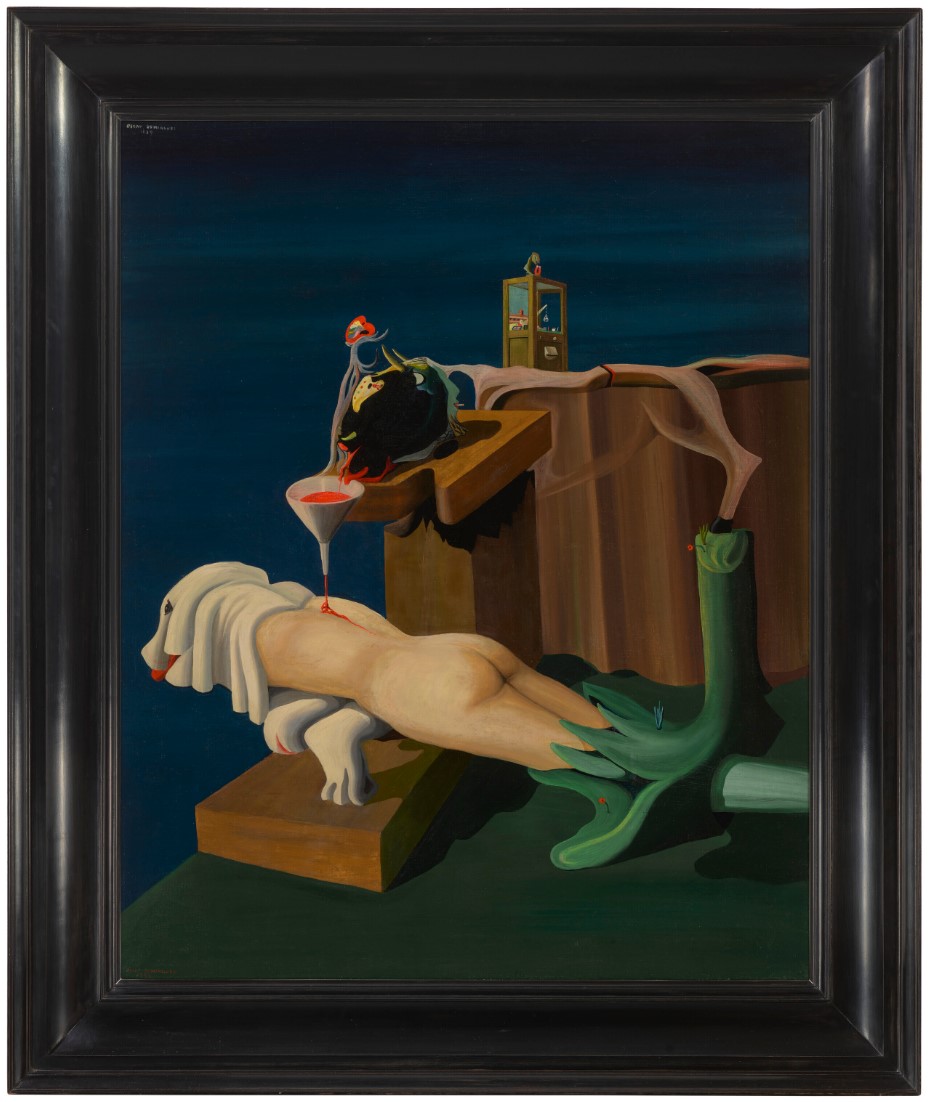
ÓSCAR DOMÍNGUEZ (1906-1957)
Machine à coudre électro-sexuelle, 1934-1935
Oil on canvas
100.2 x 80.8 cm (39 1/2 x 31 7/8 inches)
Signed and dated ‘OSCAR DOMINGUEZ 1934’ (upper left)
Signed and dated again ‘OSCAR DOMINGUEZ 1935’ (lower left)
Post-War and Contemporary Art Day Sale
1 March 2023
Post-War and Contemporary Art Day Sale (christies.com)
Total: GBP 12,502,350
Top Lot: GBP 756,000
# Lots: 152
# Lots Sold: 130
Sell-Through Rate: 85.5%
Selected Highlights
Yoshitomo Nara
Christie’s London: 1 March 2023
Estimated: GBP 350,000 – 500,000
GBP 403,200
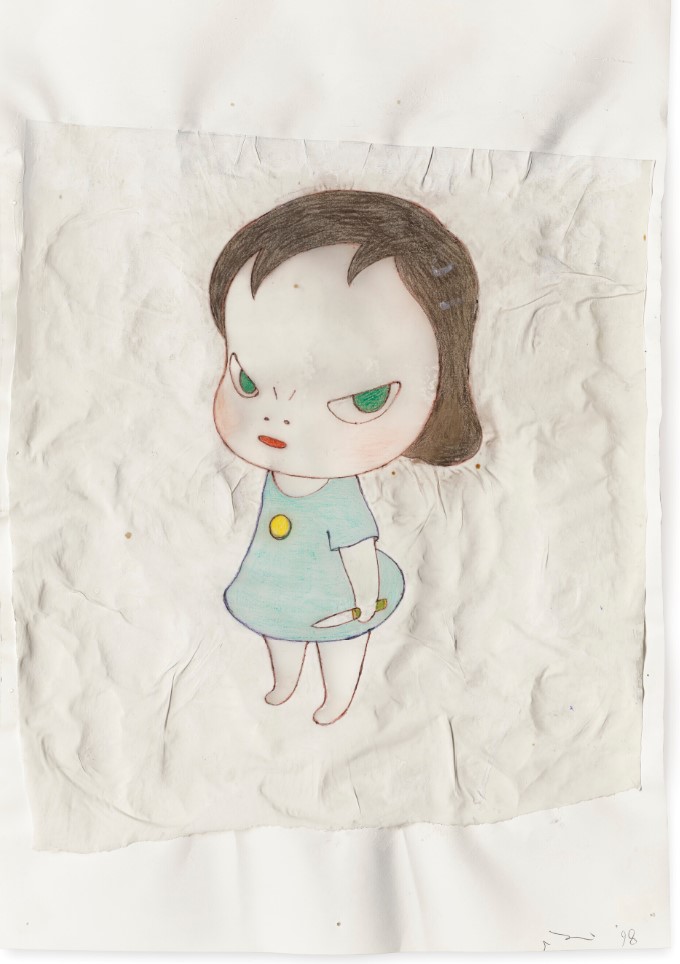
YOSHITOMO NARA (B. 1959)
The Girl with a Knife, 1998
Acrylic, gouache, colored pencil and ink on paper laid on paper
44.8 x 30.7 cm (17 5/8 x 12 1/8 inches)
Signed in Japanese and dated ’98’ (lower right)
David Hockney
Christie’s London: 1 March 2023
Estimated: GBP 300,000 – 500,000
GBP 352,800
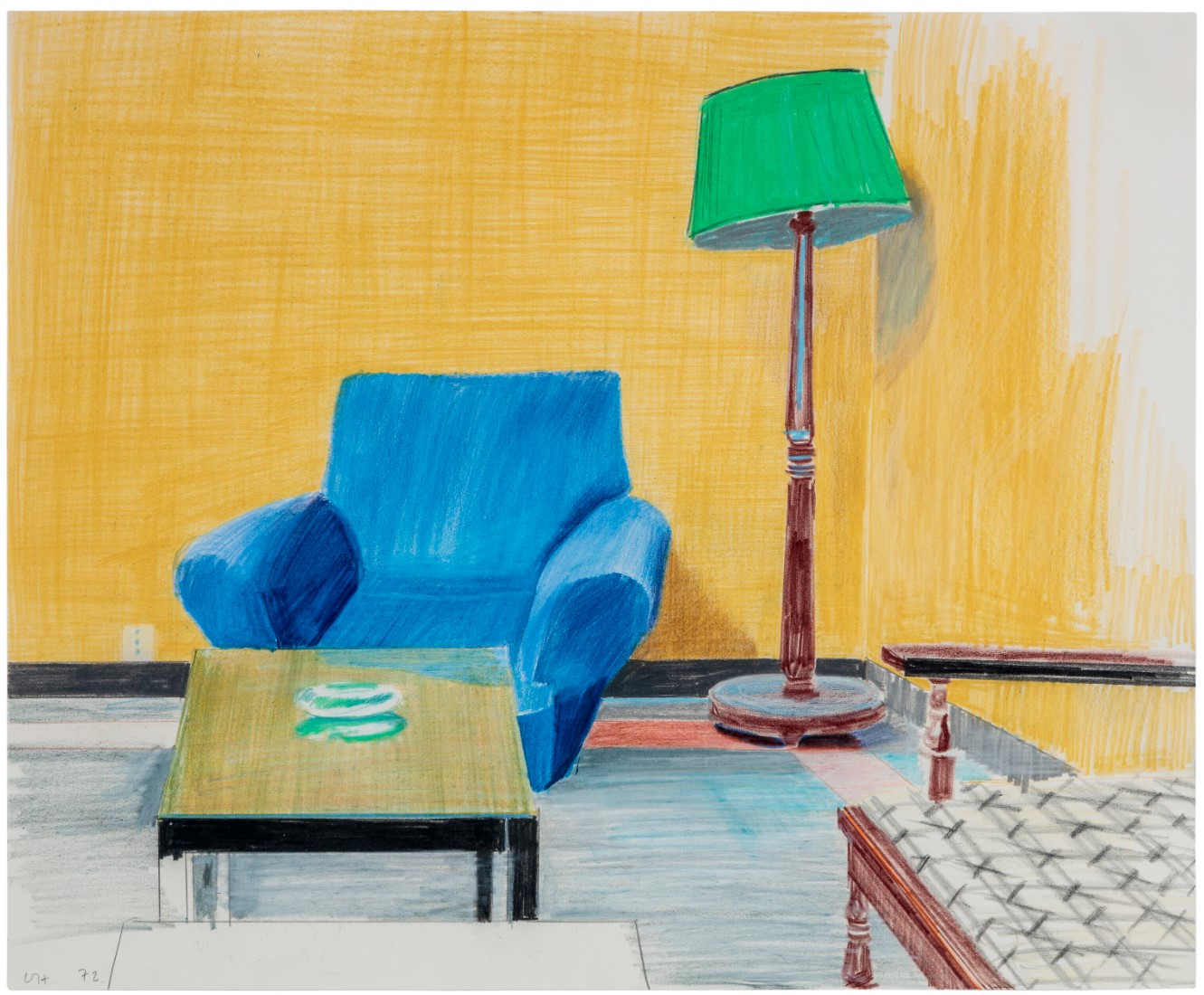
DAVID HOCKNEY (B. 1937)
Armchair, Table and Lamp, 1972
Colored crayon and graphite on paper
13 1/4 x 16 1/2 inches (34.9 x 41.9 cm)
Signed with the artist’s initials and dated ‘DH 72.’ (lower left)
Peter Doig
Christie’s London: 1 March 2023
Estimated: GBP 180,000 – 250,000
GBP 327,600
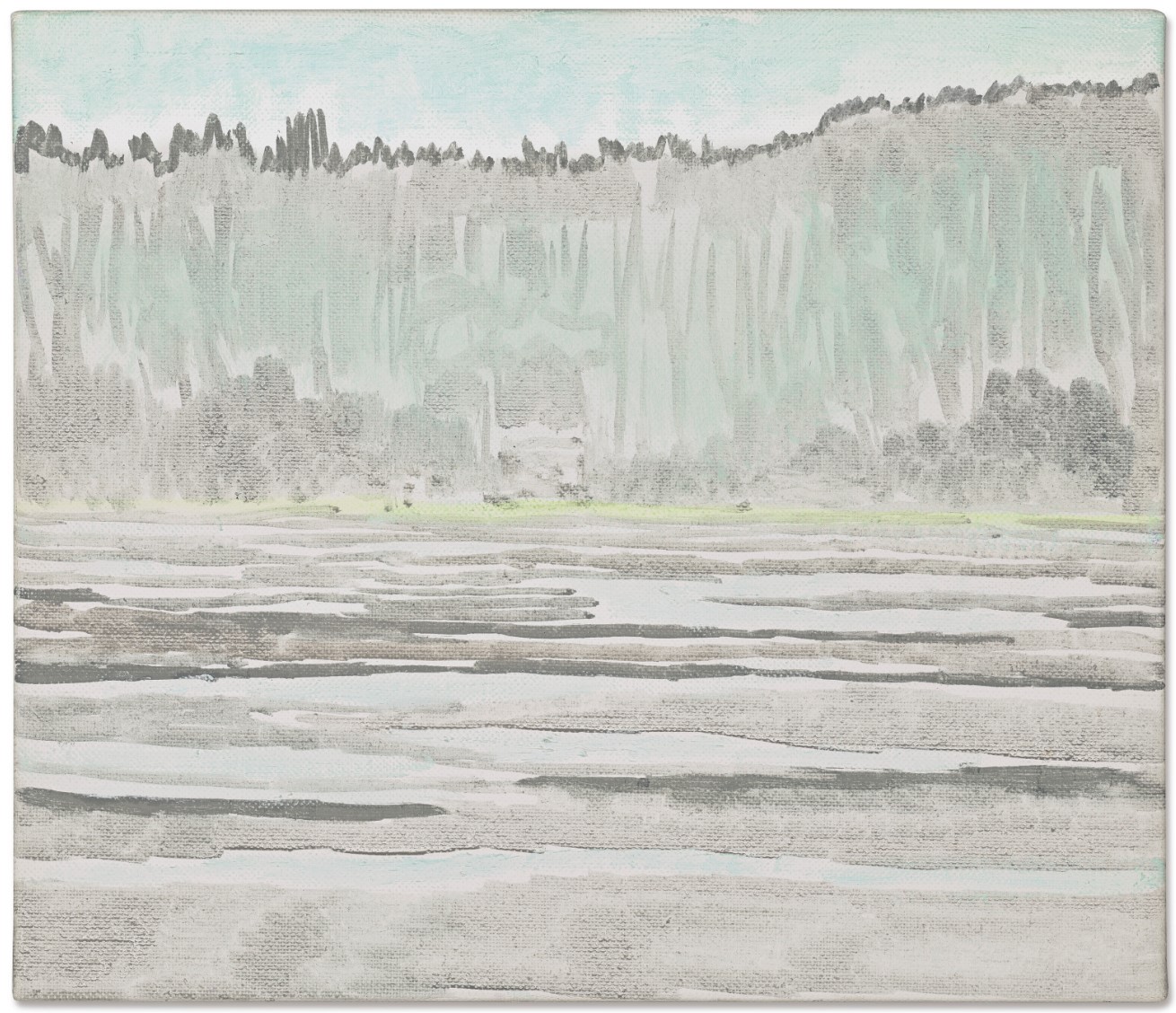
PETER DOIG (B. 1959)
Frozen Lake, 1997
Oil on canvas
12 1/8 x 14 1/4 inches (30.7 x 36.2 cm)
Signed, titled and dated ”FROZEN LAKE’ PM Doig ’97’ (on reverse)
Scott Kahn
Christie’s London: 1 March 2023
Estimated: GBP 80,000 – 120,000
GBP 201,600
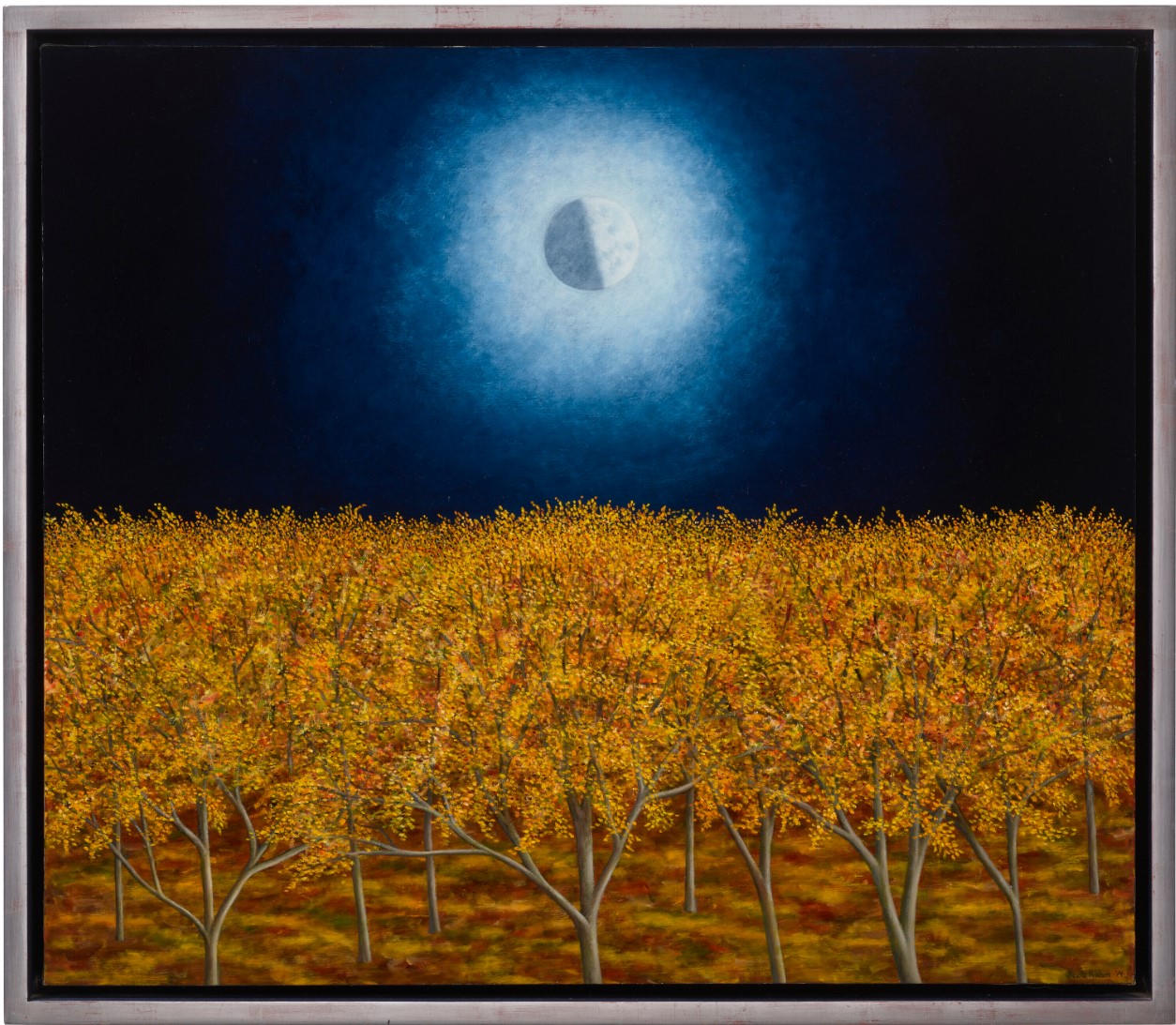
SCOTT KAHN (B. 1946)
Autumn Moon, 2014-2015
Oil on linen
24 1/8 x 28 1/8 inches (61.3 x 71.5 cm)s
Signed and dated ‘Scott Kahn ’14’ (lower right)
George Condo
Christie’s London: 1 March 2023
Estimated: GBP 80,000 – 120,000
GBP 176,400
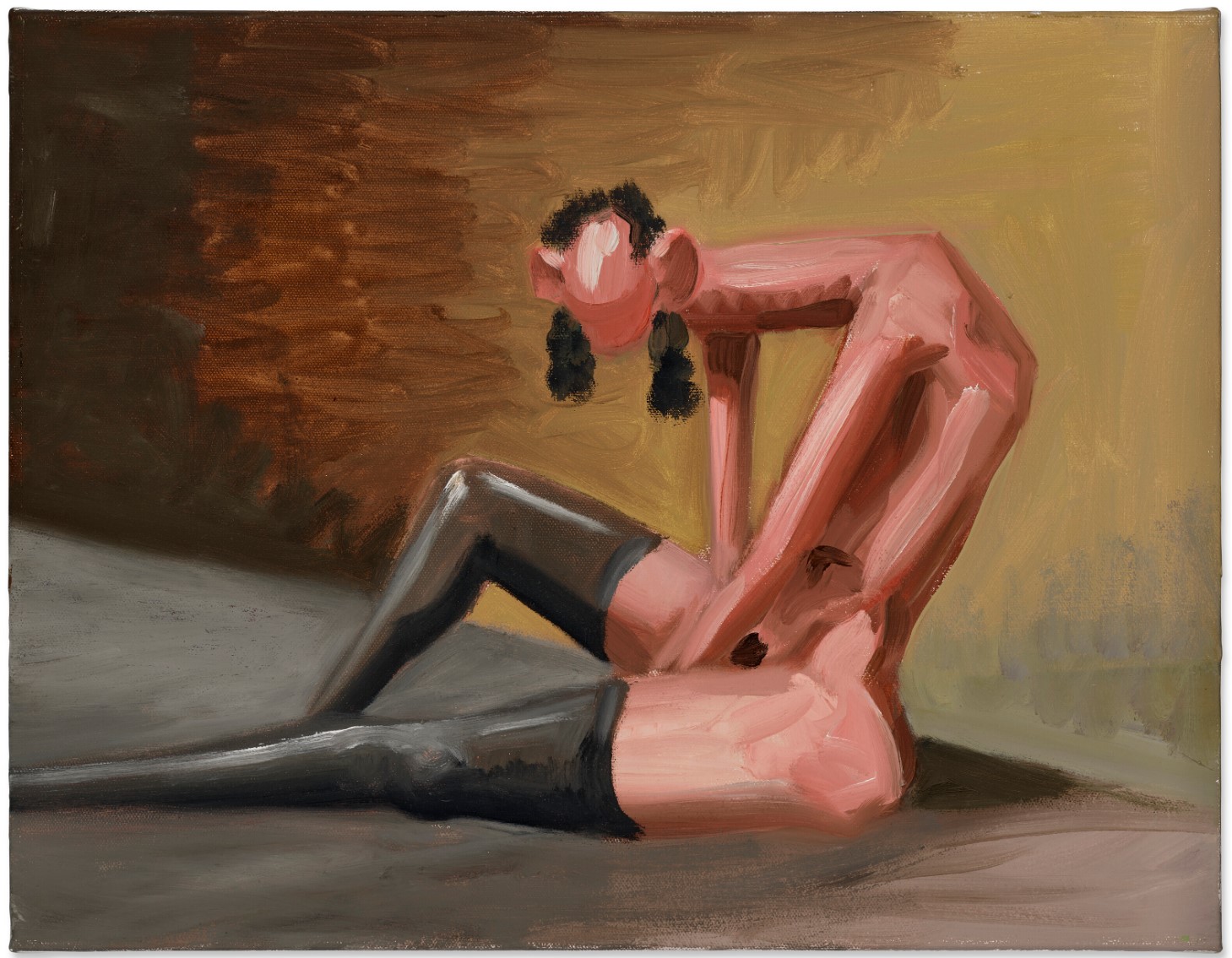
GEORGE CONDO (B. 1957)
Seated Nude, 2005
Oil on canvas
14 x 17 7/8 inches (35.5 x 45.5 cm)
Signed and titled ‘Condo Seated Nude’ (on the reverse)
Rafa Macarron
Christie’s London: 1 March 2023
Estimated: GBP 60,000 – 80,000
GBP 151,200
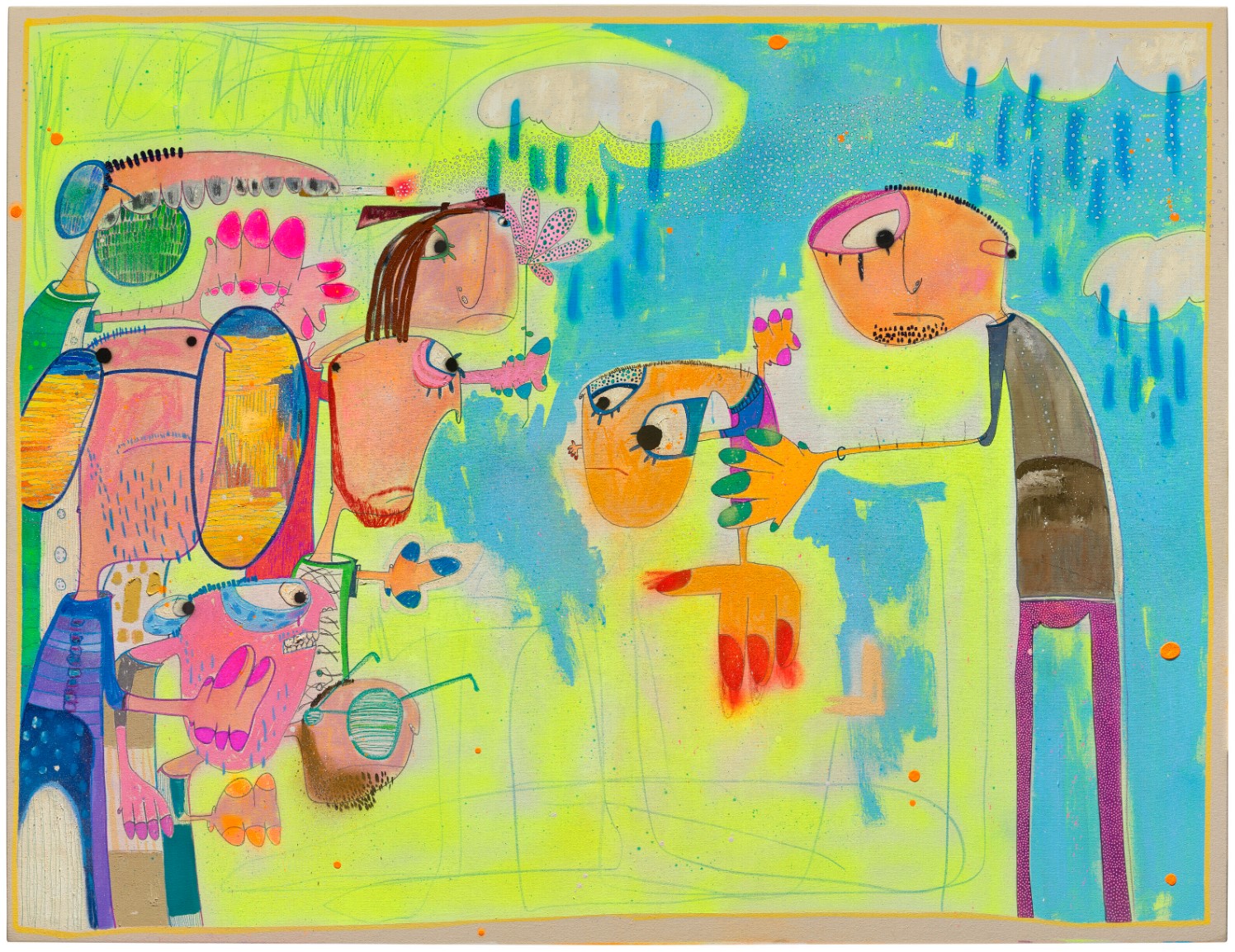
RAFA MACARRÓN (B. 1981)
Untitled, 2021
Acrylic, spray enamel, oil, pastel, ballpoint pen and charcoal on canvas
140 x 183.5 cm (55 1/8 x 72 1/4 inches)
Signed with the artist’s intials and dated ‘RM 21’ (on the reverse)
ABOUDIA
Christie’s London: 1 March 2023
Estimated: GBP 30,000 – 50,000
GBP 88,200
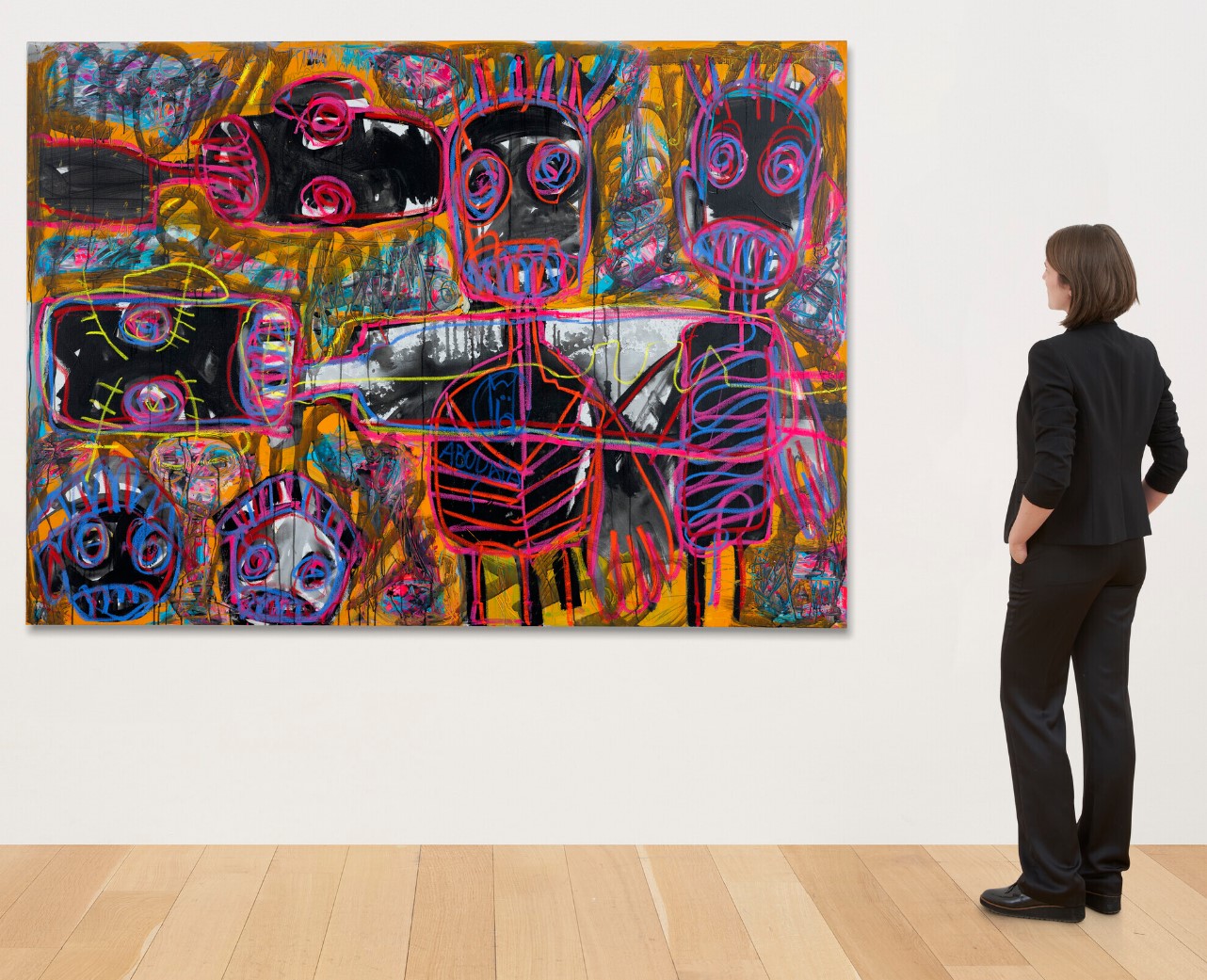
ABOUDIA (B. 1983)
Untitled, 2014
Acrylic and oilstick on canvas
59 1/8 x 82 3/4 inches (150.2 x 210.2 cm)
signed ‘ABOUDIA’ (lower centre)
2. SOTHEBY’S
The Now Evening Auction
1 March 2023
Total: GBP 13,729,850
Top Lot: GBP 3,436,000
3 Lots sold over GBP 1 million
# Lots: 21
# Lots Sold: 21
Sell-Through Rate: 100%
Above Estimates: 18 Lots (86%)
Within Estimates: 3 Lots (14%)
Below Estimates/Unsold: 0 Lot
Top 3 Lots
#1. Cecily Brown
Sotheby’s London: 1 March 2023
Estimated: GBP 2,500,000 – 3,500,000
GBP 3,436,000
The Nymphs Have Departed | The Now Evening Auction | | Sotheby’s (sothebys.com)
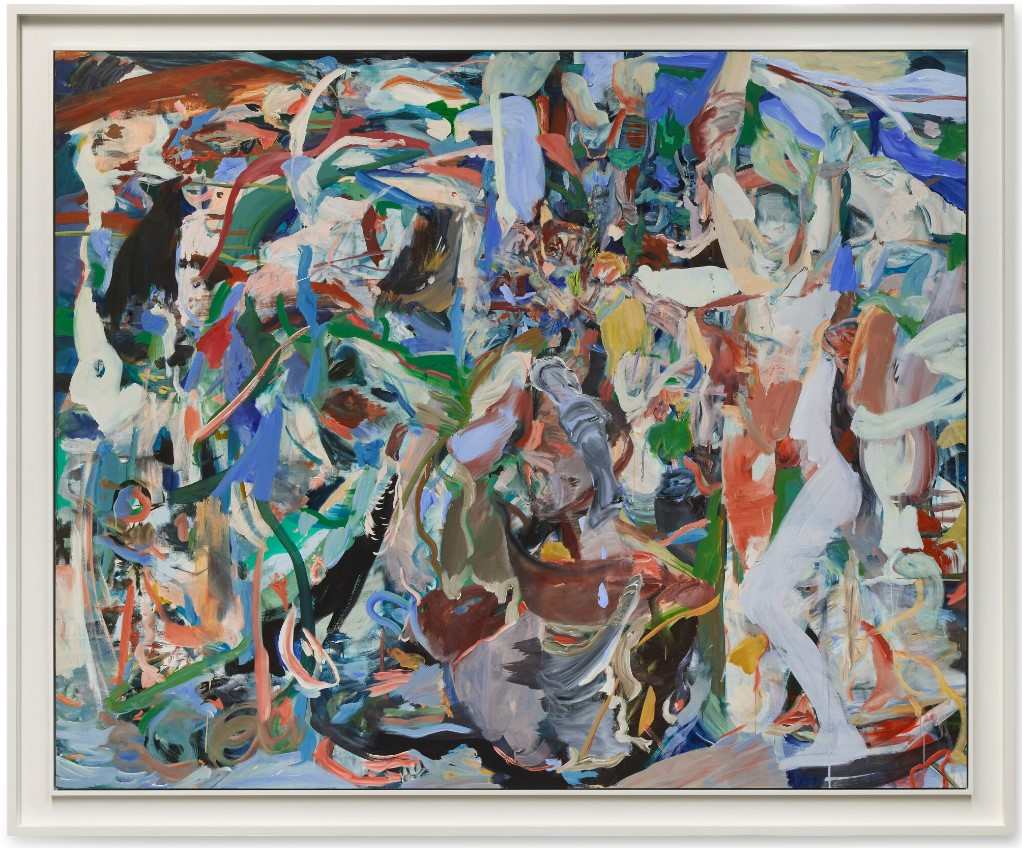
CECILY BROWN (b. 1969)
The Nymphs Have Departed, 2014
Oil on canvas
67×83 inches (170.2 x 210.8 cm)
Signed Cecily Brown and dated 2014 (on the reverse)
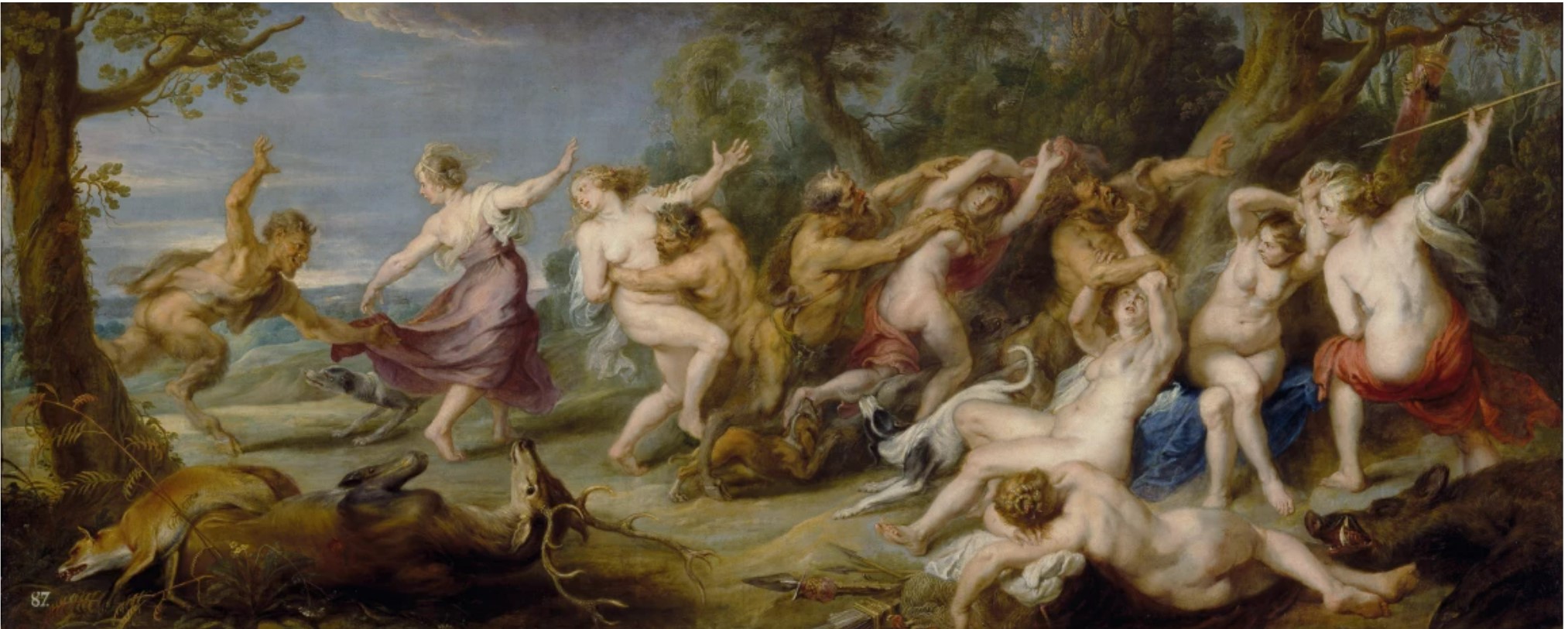
PETER PAUL RUBENS, DIANA AND HER NYMPHS SUPRISED BY SATYRS, 1639-40
MUSEO DEL PRADO, MADRID / IMAGE: © MUSEO DEL PRADO, MADRID/MNP/SCALA, FLORENCE
The composition and title of The Nymphs Have Departed alludes to one of the most celebrated mythological stories in the Western art historical canon: Diana, the roman goddess of virginity, the hunt, and the moon, and her devoted nymphs. Painted across the centuries by artists such as Veronese, Gentileschi, Titian, Rubens, Rembrandt, and Vermeer, Diana is often portrayed nude or scantily dressed, her image erotically charged. Brown’s dynamic composition is particularly reminiscent of Titian’s Diana and Actaeon from 1556-59 and Rubens’ Diana and her Nymphs Surprised by Satyrs from 1639-40. Her vibrant use of sky blue and ultramarine, as well as shades of coral and crimson with accents of white recall the elegant drapery of fabric in these celebrated Old Master works. Even the loosely delineated pose of Brown’s figure to the right of her composition recalls the reaction of surprise in the figure of Diana and a nude nymph in Titian and Rubens’ respective paintings. These figures’ arms appear to be stretched above the head, yet in Brown’s painting they melt and morph into the topography of her quick brushwork, disappearing before the viewer’s eyes. Brown simultaneously transcends this conventional, straight-forward narrative via a rich and vibrant facturing of the figure and the landscape.
#2. Michael Armitage
Sotheby’s London: 1 March 2023
Estimated: GBP 1,000,000 – 1,500,000
GBP 1,863,000
Muliro Gardens (baboons) | The Now Evening Auction | | Sotheby’s (sothebys.com)
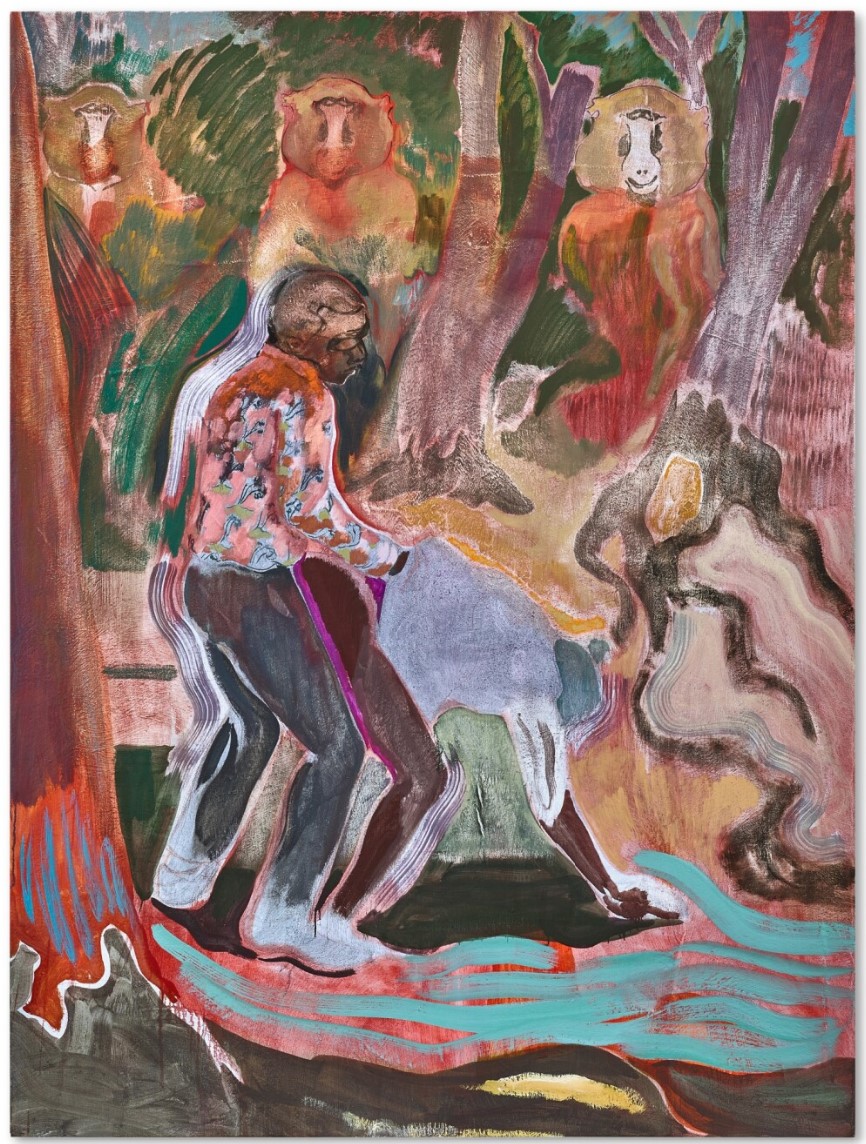
MICHAEL ARMITAGE (b. 1984)
Muliro Gardens (baboons), 2016
Oil on lubugo bark cloth
200×150 cm (78 3/4 x 59 inches)
Signed Armitage, titled Muliro Gardens (baboons) and dated 2016 (on the reverse)
Executed in 2016, Muliro Gardens (Baboons) by Michael Armitage is a lyrical mediation on cultural and social narratives of contemporary society. Based on a viral news story from 2011, the present work weaves together historical references and current news, internet gossip, and his own ongoing recollections of Kenya, to create a fantastically surreal yet unapologetically honest depiction of reality. Muliro Gardens (Baboons) is a voyeuristic scene of a couple having sex, surrounded by lush vegetation and three onlooking baboons. The imagery originates from an actual event in Kakamega, Kenya, where police set up a hidden camera near an infamous bench in Muliro Gardens – a spot famous for public sex – and released the video footage online to publicly shame those involved. The Garden is named in honor of Masinde Muliro, one of Luhya’s (second largest ethnic group in Kenya) greatest leaders, and this public exposé of the unsaid urban secret sprung a social uproar in Kenyan media. In the following weeks of the scandal, church leaders would cleanse the bench with prayers and the government gated the garden, assigning police to strictly monitor the area. Recently renovated and re-opened to the public, the garden has become an internet-famous spot and an important part of the city’s recent history, providing fertile grounds from which Armitage explores the complexity of human behaviors and cultural constructions.
#3. Nicolas Party
Sotheby’s London: 1 March 2023
Estimated: GBP 900,000 – 1,300,000
GBP 1,439,500
Trees | The Now Evening Auction | | Sotheby’s (sothebys.com)
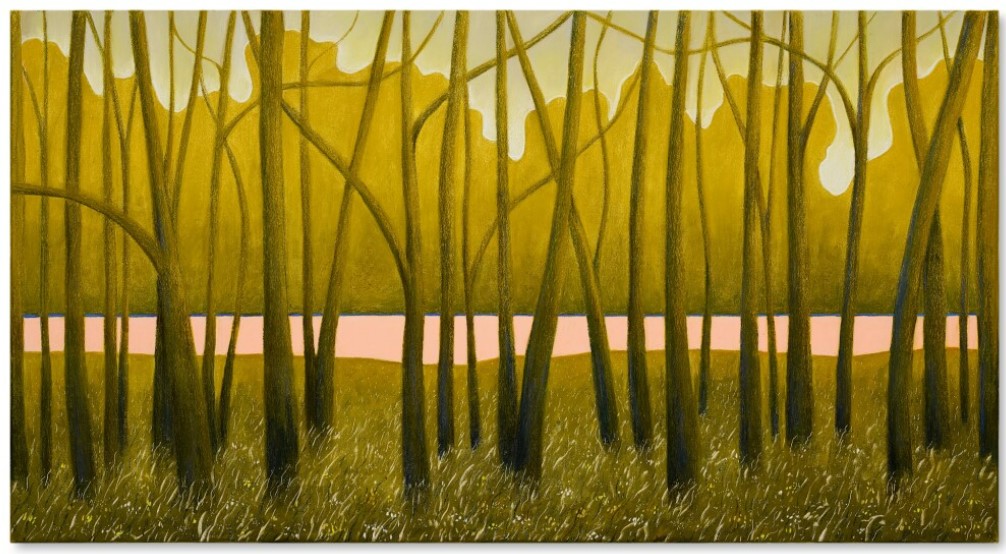
NICOLAS PARTY (b. 1980)
Trees, 2019
Soft pastel on canvas
85.9 x 155.7 cm (33 7/8 x 61 1/4 inches)
Signed Nicolas Party and dated 2019 (on the reverse)
Trees by Nicolas Party conjures a surreal dreamscape, executed in subtle modulations of soft pastel hues. Transporting the viewer into an unknown landscape of Party’s visual universe, the present work reimagines the natural world and the landscape genre. In the present work, a screen of trees occupies the foreground, their smooth elongated forms growing from a swaying field of grass and wildflowers. Behind the trees a pink river flows, beyond which a silhouette of a dense forest graces the skyline. Stripping the forms of their textural details, Party abstracts the natural world into geometric shapes; the trees become abstracted into elongated tendrils, whilst the river becomes a single solid mass of color. Engaging in a dialogue with the traditions of representation, abstraction and imagination, Party constructs a playful yet complex visual language.
Other Highlights
Caroline Walker
Sotheby’s London: 1 March 2023
Estimated: GBP 100,000 – 150,000
GBP 622,300
In Every Dream Home | The Now Evening Auction | | Sotheby’s (sothebys.com)
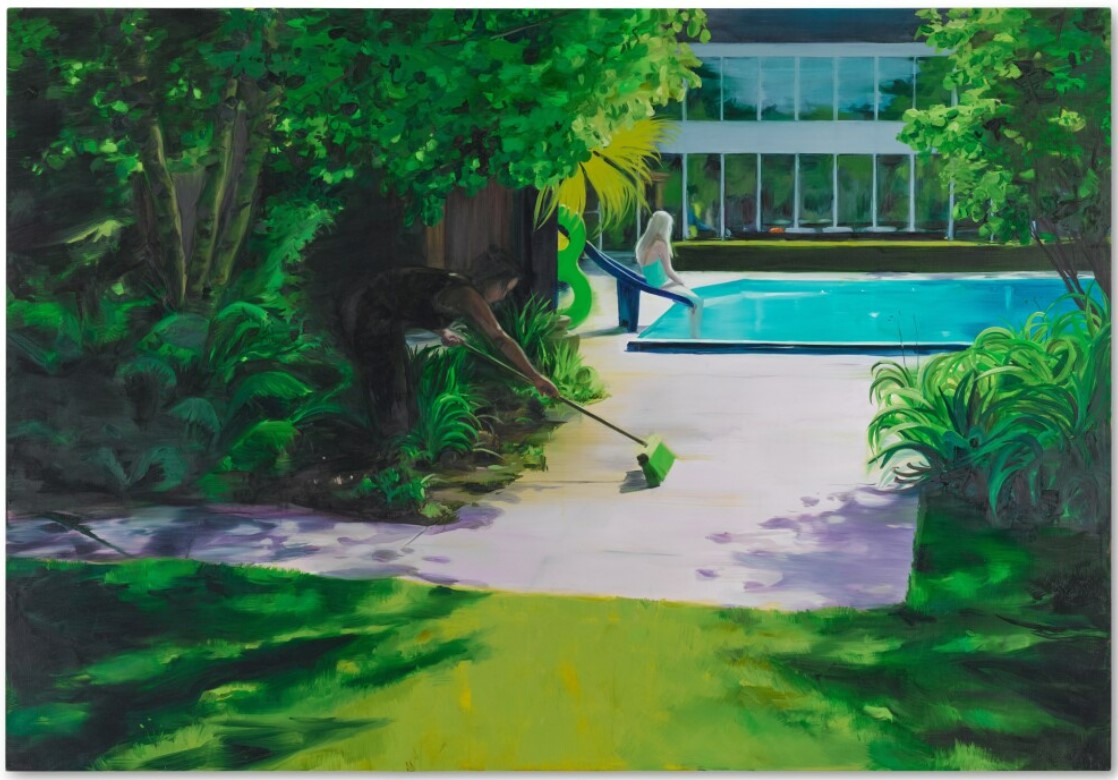
CAROLINE WALKER (b. 1982)
In Every Dream Home, 2013
Oil on linen
200.4 x 290.3 cm (78 7/8 x 114 1/4 inches)
Signed Caroline Walker, titled In Every Dream Home and dated 2013 (on the reverse)
Executed in 2013, the resplendent In Every Dream Home belongs to Caroline Walker’s celebrated series of Palm Springs paintings executed during the mid-2010s. Forming her subjects and spaces with a filmic sense of narrative, Walker’s paintings combine the aesthetics of suburban, upper class Palm Springs with found imagery, memory, imagination, and highly considered photoshoots on location to produce the compositions in this series. Providing a voyeuristic glimpse behind closed doors, what distinguishes the present work is the presence of two figures. Juxtaposing the active figure in the foreground, cleaning the already pristine walkway to the pool, with the passive, seated figure in the background, Walker invokes class contentions between the languid rich and the working class. As an artist who’s oeuvre is centrally focused on female identity and women at work, In Every Dream Home speaks to the very heart of Walker’s painterly practice.
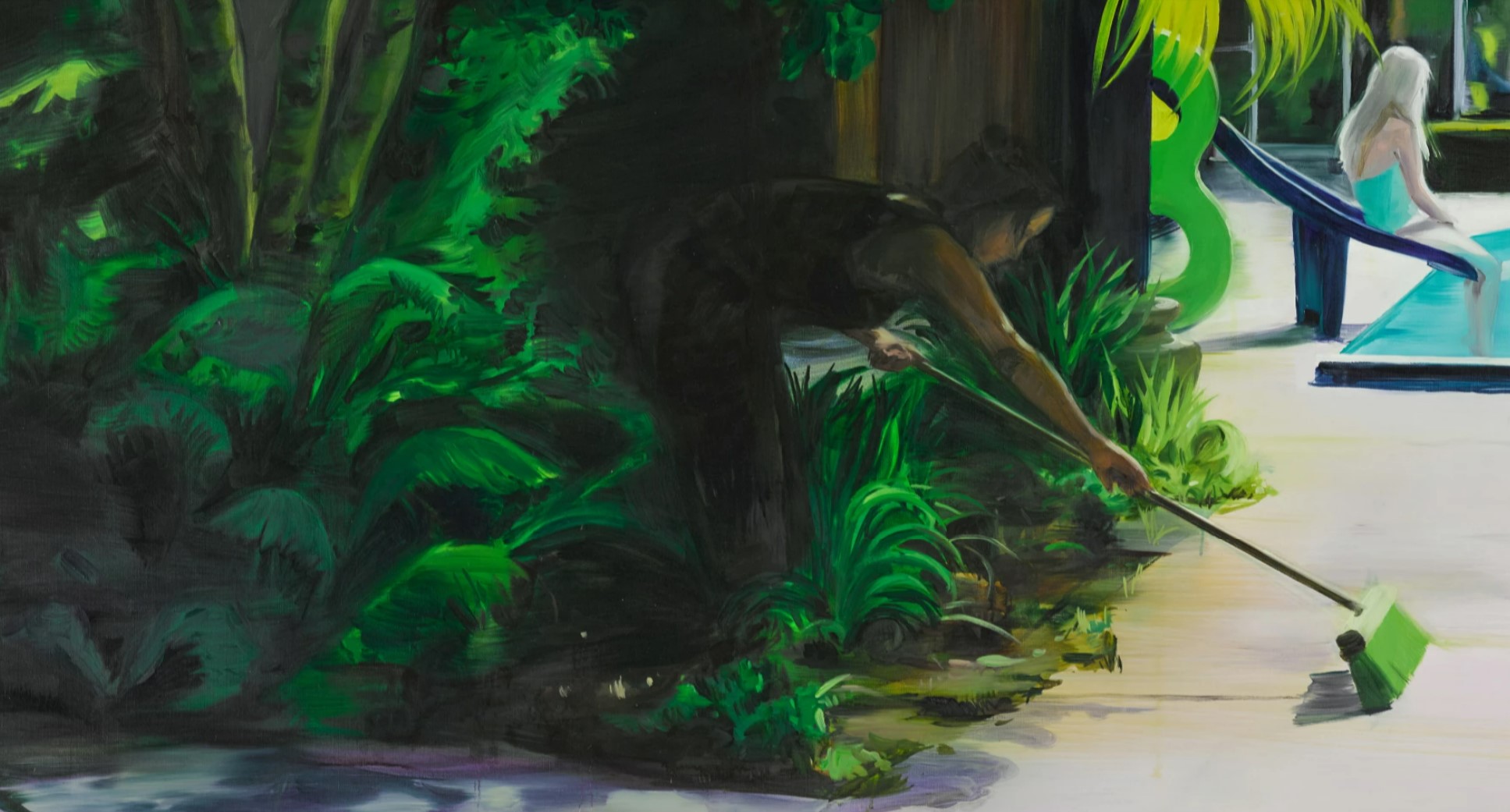
First developed for Los Angeles’ upper class and Hollywood’s biggest stars of the 1920s, the Californian desert of Palm Springs is famous for its sharp mid-century modern architecture and design. Embodying a distinctly artificial sense of ‘the good life’, the town’s lush gardens, and turquoise pools defy its desolate, desert location. A culture of prosperity set within a landscape of disparity, something about this manufactured would-be paradise suggests the possibility of darker psychological undercurrents. The imagery of a pristine green lawn outlined by a white pavement pathway alludes to the iconography of the American Dream which has captured the imagination of many artists including David Hockney.
“Obviously the David Hockney refence looms quite large in them, but probably more so, for me, somebody like Eric Fischl.
I was thinking a lot about those paintings he made in the 1980s of dystopian suburban American life.”
Exhibited at the artist’s first solo institutional show in 2012 at Pizhanger Manor, In Every Dream Home is a voyeuristic window not only into socioeconomic frictions and the consequential relationship between environment and female identity. Born in 1982 in Dunfermline, Scotland, Walker currently lives and works in London. Walker attended Glasgow School of Art before completing her MA at the Royal College of Art, London, and has had solo exhibitions at Kettle’s Yard, Cambridge, 2018; the Midlands Art Centre, Birmingham and KM21, The Hague, 2021; as well as Fitzrovia Chapel, London. Having received widespread critical recognition over the past decade, her works are represented in important collections around the world including KM21 Kunstmuseum, The Hague, The UK Government Art Collection, National Museum Wales, and the Pérez Art Museum Miami.
Ewa Juszkiewicz
Sotheby’s London: 1 March 2023
Estimated: GBP 200,000 – 300,000
GBP 609,600
Untitled (after Joseph Wright) | The Now Evening Auction | | Sotheby’s (sothebys.com)
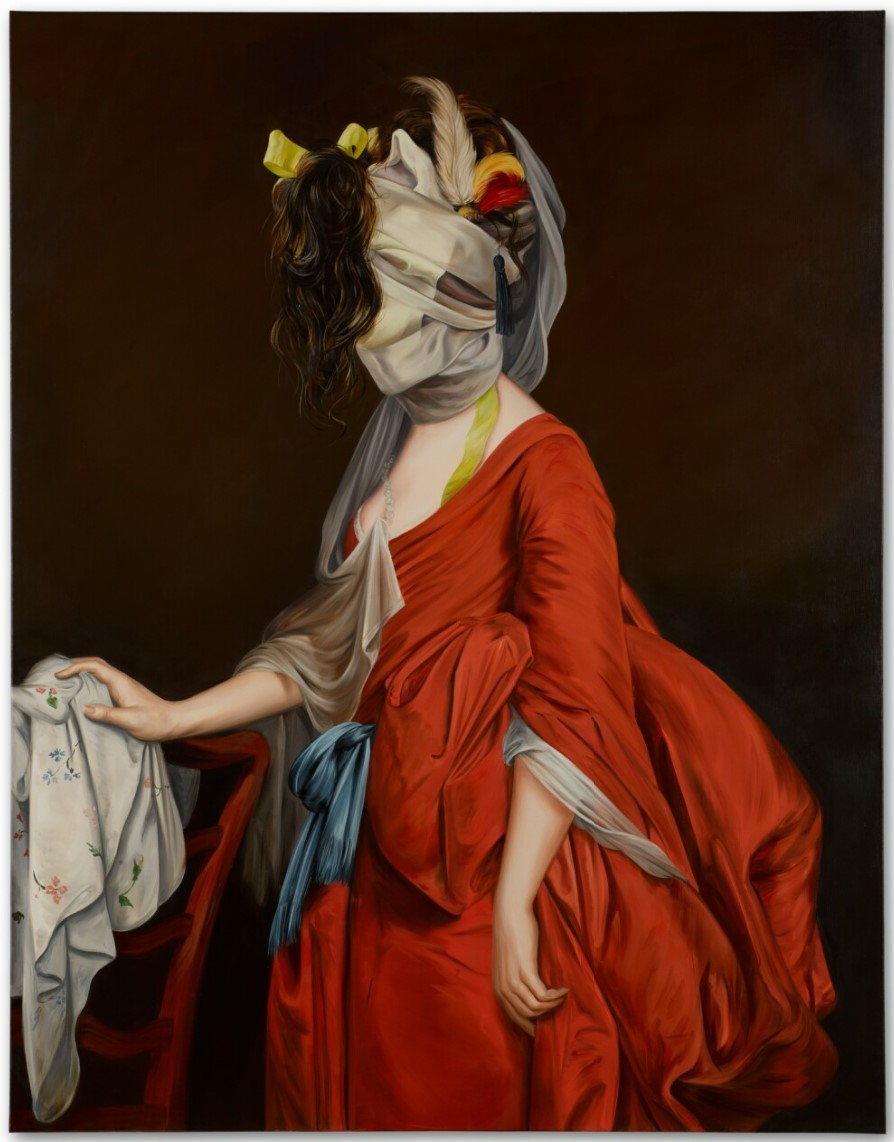
Ewa Juszkiewicz (b. 1984)
Untitled (after Joseph Wright), 2018-19
Oil on canvas
160 x 124.7 cm (63 x 49 1/8 inches)
Signed Ewa Juszkiewicz, dated 2018/2019 and variously inscribed (on the reverse)
Executed in 2019, Untitled (after Joseph Wright) is a superb example of Ewa Juszkiewicz’s painterly practice. Investigating the role of the female sitter in contemporary portraiture, the composition of the present work references eighteenth century English landscape, particularly Joseph Wright of Derby and his celebrated work Portrait of Dorothy Beridge, currently held in the collection of the Minneapolis Institute of Art. In 2022, Juszkiewicz’s work was exhibited at Gagosian in London (Haunted Realism, June – August, 2022), the Musée d’Art Moderne de Paris (Des corps, des écritures, April – August, 2022), and the ICA Miami (Fire Figure Fantasy: Selections from the ICA Miami’s Collection, May – October, 2022). One of the most exciting young artists working today, Juszkiewicz’s painterly practice challenges conventional standards of beauty and interrogates art historical canons of picturing women.
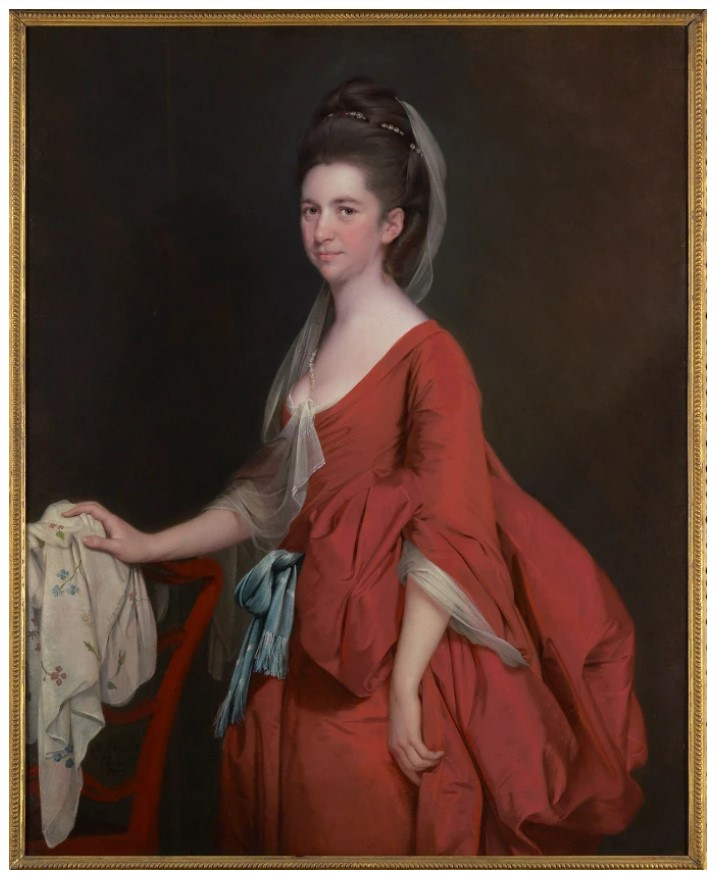
JOSEPH WRIGHT, PORTRAIT OF DOROTHY BERIDGE, 1777
MINNEAPOLIS INSTITUTE OF ART, MINNEAPOLIS
IMAGE: © MINNEAPOLIS INSTITUTE OF ART/BEQUEST OF JOHN R. VAN DERLIP IN MEMORY OF ETHEL MORRISON VAN DERLIP/BRIDGEMAN IMAGES
Set against a muted background, Untitled (after Joseph Wright) depicts a woman wearing a vibrant red dress with a blue silk sash. The subject stands poised, her hand resting casually on a piece of fabric over the chair set in front of her. From the angle of her shoulders, her pose suggests that she is looking out to the viewer, yet in Juszkiewicz’s re-imagining of the composition, her face has been obscured by white silk which is loosely wrapped her head, leaving only a plumage of hair to emerge from the top. Juszkiewicz’s nuanced depiction of luscious drapes of fabric is reminiscent of Old Masters, yet her uncanny concealment of the sitter’s face immediately subverts such art historical reference. Juszkiewicz’s adaptation, interrogation, and ultimate subversion of traditional modes of portraiture reject the notion of the female sitter as a passive subject of the male gaze. In concealing the visages of her figures, Juszkiewicz not only magnifies the female sitter’s lack of agency throughout the art historical canon, but furthermore, she denies the contemporary viewer access to their identity, leaving them with questions unanswered. Infused with compositional devices descendant from Surrealists such as Magritte and Dalí, Juszkiewicz’s canvases recontextualize the genre of portraiture within a twenty-first century context.
Jonas Wood
Sotheby’s London: 1 March 2023
Estimated: GBP 350,000 – 450,000
GBP 609,600
Untitled (Take 2) | The Now Evening Auction | | Sotheby’s (sothebys.com)
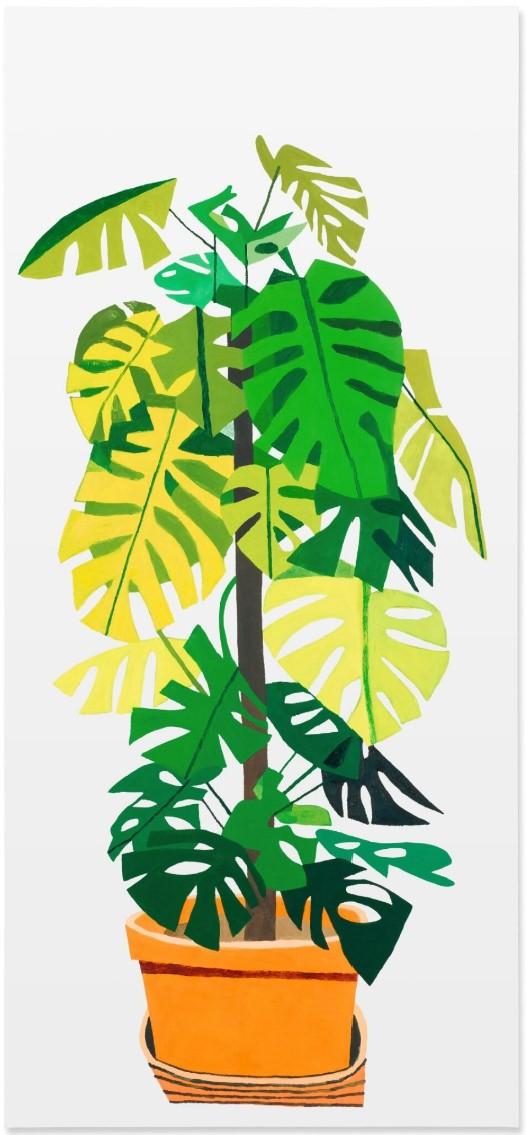
JONAS WOOD (b. 1977)
Untitled (Take 2), 2009
Oil on canvas
213×97 cm (83 7/8 x 38 1/4 inches)
Signed JBRW, titled Untitled (Take 2) and dated 2009 (on the reverse)
A towering display of his unique artistic vernacular, Untitled (Take 2) depicts a vibrant and towering monstera plant emerging from a terracotta pot, encompassing the viewer in the larger-than-life world of Jonas Wood. Anatomical and saturated while simultaneously geometric and aesthetically sharp, the present work encapsulates the familiar style and iconography of Jonas Wood’s lexicon, translating quotidian objects into highly stylized, blockish forms on a large scale. Executed in 2009, Untitled (Take 2) draws on and unites many of the most important and celebrated elements of Wood’s oeuvre, thus epitomizing the artist’s aesthetic project with serene vibrance on a monumental scale.
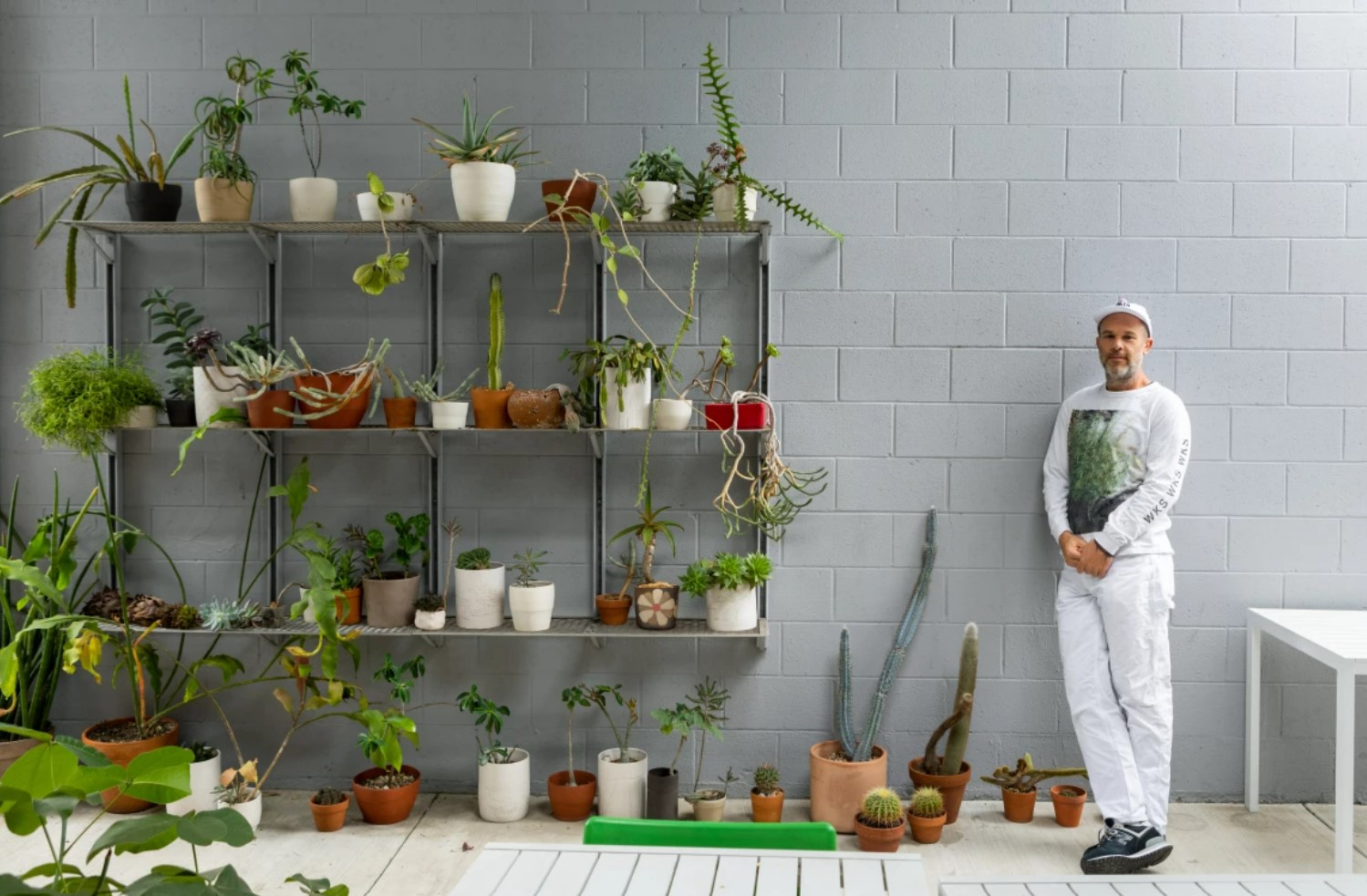
As an MFA student at the University of Washington in Seattle, Wood explored collage-based works, montaging photographs he took of himself, his friends, and their interior and exterior surroundings. The flatness of these early works persists in the pictorial flatness of his paintings and drawings today. In the surface of Untitled (Take 2), color, depth and narrative are only visible in the contours of Wood’s depicted subject. Isolated against the cool grey background of indeterminable space, the soft edges of the monstera leaves and the stiff edges of the terracotta pot become more pronounced. Consuming all but the canvas on which it is painted, Untitled (Take 2) implies parity between painting and vessel. Confounding expectations of scale and perspective, Wood reimagines the world as a variegated collage of overlapping, flatly rendered patterns.
Shara Hughes
Sotheby’s London: 1 March 2023
Estimated: GBP 400,000 – 600,000
GBP 533,400
Sticks and Stones | The Now Evening Auction | | Sotheby’s (sothebys.com)
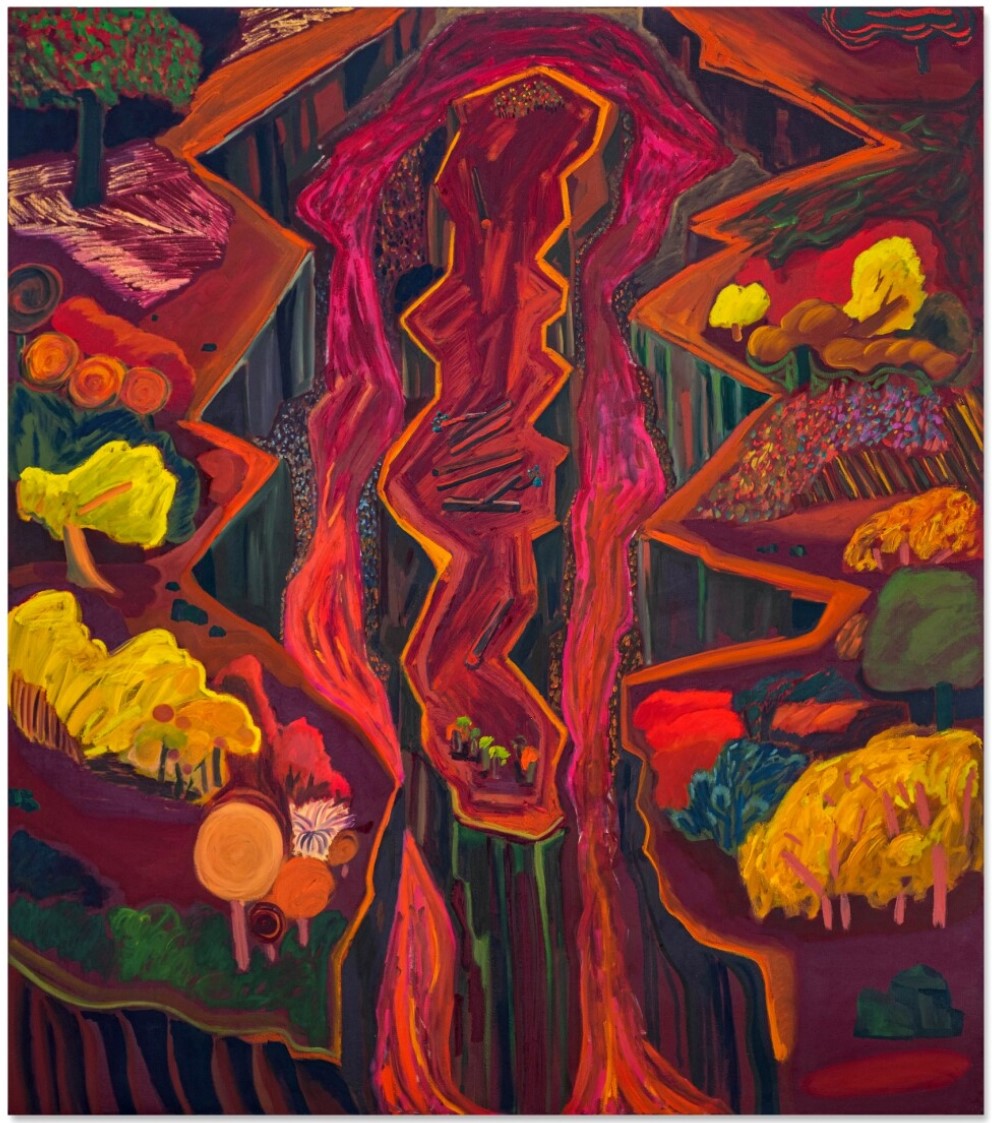
SHARA HUGHES (b. 1981)
Sticks and Stones, 2018
Oil and acrylic on canvas
68×60 inches (172.7 x 152.4 cm)
Signed Shara Hughes, titled Sticks and Stones, dated 2018 and variously inscribed (on the reverse)
A striking example of Shara Hughes’ fantastical landscapes, Sticks and Stones from 2018 illuminates a vivid engagement with color and light, and a harmonic balance between the natural and the imaginative, the organic and the surreal. Hovering between representation and abstraction, Hughes’ landscape evokes a whimsical, otherworldly realm via expressive, sinuous brushstrokes. The present work was the centerpiece of Berggruen Gallery’s 2018 show Shara Hughes: Sticks and Stones which included twelve large-scale canvases. Taking flowers and psychedelic garden scenes as her central subject and adopting a rich color palette, Hughes toys with surrealism and abstraction via an investigation into the genre of contemporary landscape painting, in turn interrogating the role of flowers and trees within the canon of art history. Elements of her landscapes often hint at the figurative, and the artist herself has noted, “I have often thought of the flowers and trees as figures. Sometimes, even a wave or a sun in the painting takes on a personality, so it varies depending on how the work turns out” (Shara Hughes quoted in: “Shara Hughes – Interview: ‘I wanted the works to feel like figures you would visit at a church, something divine,’” in Studio International, 17 May 2021 (online)).
Modern and Contemporary Evening Auction
1 March 2023
Total: GBP 160,393,900
Top Lot: GBP 37,196,800
22 Lots sold over GBP 1 million
# Lots: 36
# Lots Sold: 30
Sell-Through Rate: 83%
Above Estimates: 15 Lots (42%)
Within Estimates: 13 Lots (36%)
Estimate On Request: 2 Lots (6%)
Unsold: 6 Lots (17%)
Top 5 Lots
#1. Wassily Kandinsky
Sotheby’s London: 1 March 2023
Estimate on Request
GBP 37,196,800
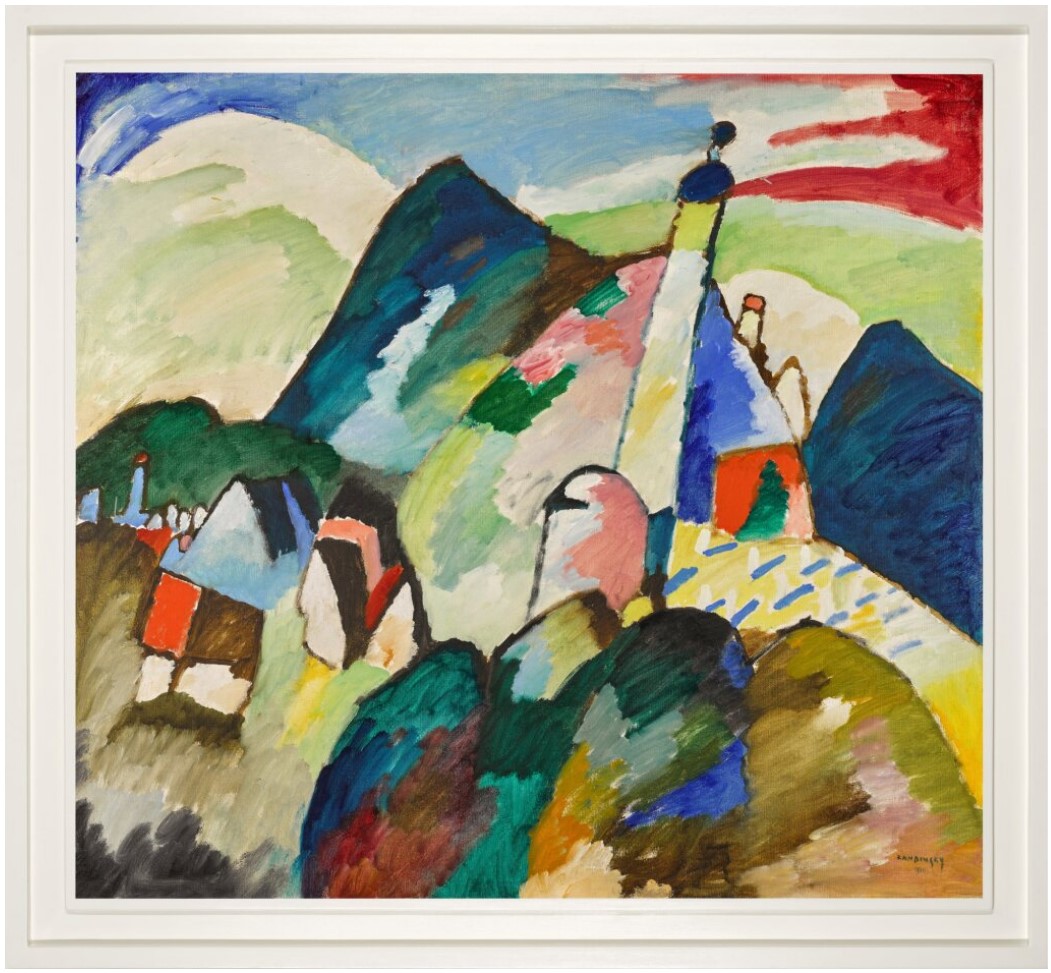
WASSILY KANDINSKY (1866 – 1944)
Murnau mit Kirche II (Murnau with Church II), 1910
Oil on canvas
96 x 105.5 cm (37 3/4 x 41 1/2 inches)
Signed Kandinsky and dated 1910 (lower right)
Combining scale with a majestic sense of colour and form, Murnau mit Kirche II embodies the achievements of this crucial moment. It realises a vision that Kandinsky had as early as 1904, when he wrote to Gabriele Münter setting out his ambition for his work: ‘Without exaggerating, I can say that, should I succeed in this task, I will be showing [a] new, beautiful path for painting susceptible to infinite development. I am on a new track, which some masters, just here and there, suspected, and which will be recognised, sooner or later’ (quoted in Vivian Endicott Barnett, Kandinsky, New York, 2009, p. 27). His statement would prove prophetic – by 1910 when he painted Murnau mit Kirche II he had found this new pathway and taken the first important steps on his journey towards abstraction. The breakthrough years of 1909-1911 would lead Kandinsky to develop a fully abstracted style that would form the basis of his career and make him one of the most influential artists of the twentieth century.
#2. Gerhard Richter
Sotheby’s London: 1 March 2023
Estimate on Request
GBP 24,179,000
Abstraktes Bild | Modern & Contemporary Evening Auction | | Sotheby’s (sothebys.com)
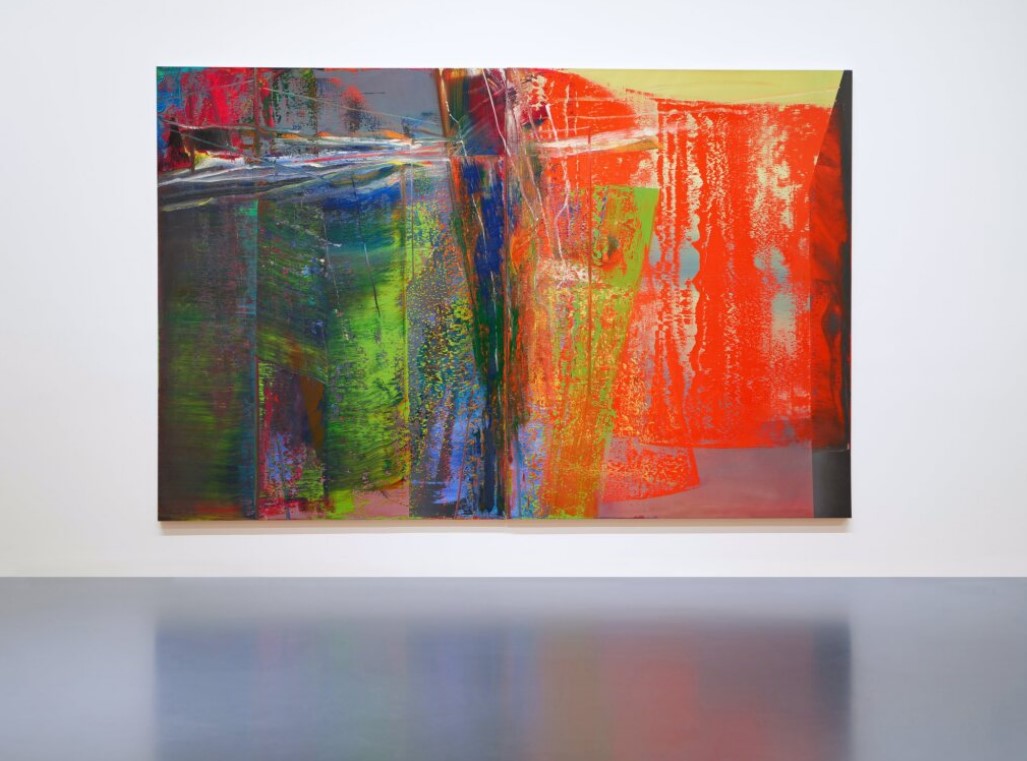
GERHARD RICHTER (B. 1932)
Abstraktes Bild, 1986
Oil on canvas, in two parts
Overall: 260×400 cm (102 3/8 x 157 1/2 inches)
Signed Richter, dated 1986, numbered 596 and inscribed Teil A (on the reverse of left panel)
Numbered 596 and inscribed Teil B (on the reverse of right panel)
Painted in 1986 at the apex of a career-breakthrough, Absktraktes Bild (596) is a work of immersive chromatic impact, astounding proportions, and complex compositional power. Across two expansive canvases that seamlessly blend into one compositional whole, Abstraktes Bild delivers a panorama of abstract colour that presents a sparring of opposites within dramatic pictorial space. In a theatrical play of primary and secondary colour – in which chaos is balanced with control – abstraction gives way to the inference of figuration: veils of red pigment both conceal and reveal a photo-realistic underlayer, whilst in the left panel sweeping waves of blue-green and purple conjure landscape associations reminiscent of Monet’s panoramic waterlily paintings at the Musée de l’orangerie. Here the history of painting confronts us in a single work: from the giants of twentieth-century Abstract Expressionism idolised by Richter as a young artist, through to the Impressionists and their reimagination of nature, back through the history of the Romantic landscape genre, Richter’s monumental abstract forms an astounding meta-dialogue. In this picture, as evident in the very best of the Abstrakte Bilder from 1986 onwards, the potential for painting to not only respond to art history but also to form an analogy for the coexistence of seemingly disparate and contradictory elements comes to the fore.
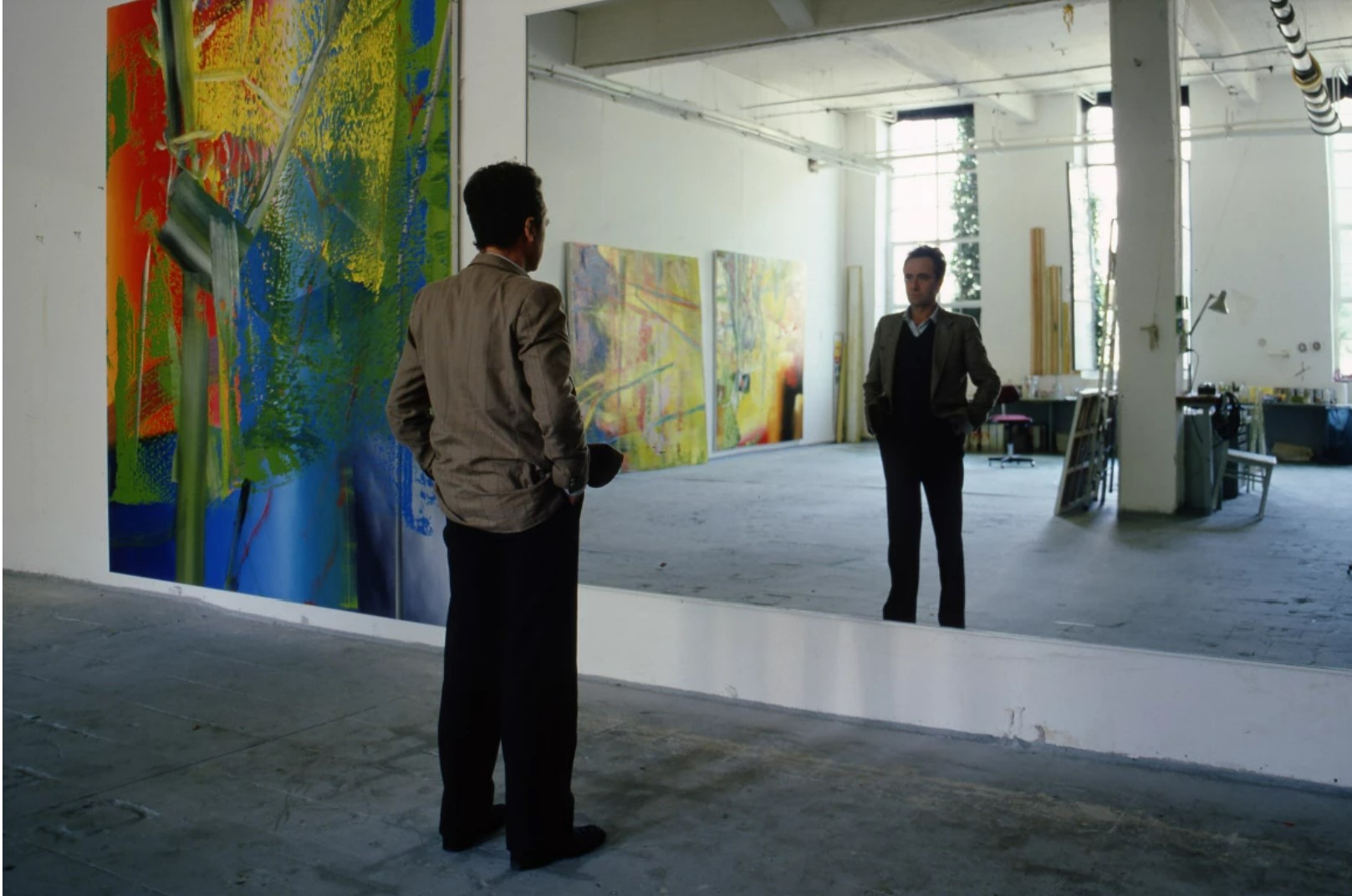
Painted atop what appears to be a photographic layer of pearlescent underpainting, Richter has waged an aesthetic battle of opposing forces. Where a finely articulated gradation sits underneath, horizontal veils of stuttering paint present a riposte to the vertical drag of the squeegee. The central divide between the two panels is blended by a waterfall downpour of blue pigment which is crowned by a kaleidoscopic rainbow-esque burst of colour. On the right panel, commanding red pigment dominates, and is punctuated by primary-coloured apertures of yellow, blue, and overlayers of acidic green, whilst on the left an aurora borealis-like chromatic spectrum narrates a wave-like movement in which green gives way to pink, red, and inky night-sky blue. Seemingly endless layers of bright colour can be found in the smallest details of this painting, elements that further emphasize the illusion of pictorial depth as though a landscape vista might at any moment be perceived. Indeed, furthest back, the smooth gradation of pale-yellow giving way to dusky-blue, giving way to deepest sunset red, is offset by a stark angular form at the far right: these aspects and their suggestive photo-realistic appearance is nonetheless veiled and denied by domineering red pigment applied with the squeegee. It is in this balance between contradictory forms – between representation and free abstraction – that the genius of this painting and Richter’s Abstrakte Bilder lies.
#3. Pablo Picasso
Sotheby’s London: 1 March 2023
Estimated: GBP 12,000,000 -18,000,000
GBP 18,089,300
Fillette au bateau, Maya | Modern & Contemporary Evening Auction | | Sotheby’s (sothebys.com)
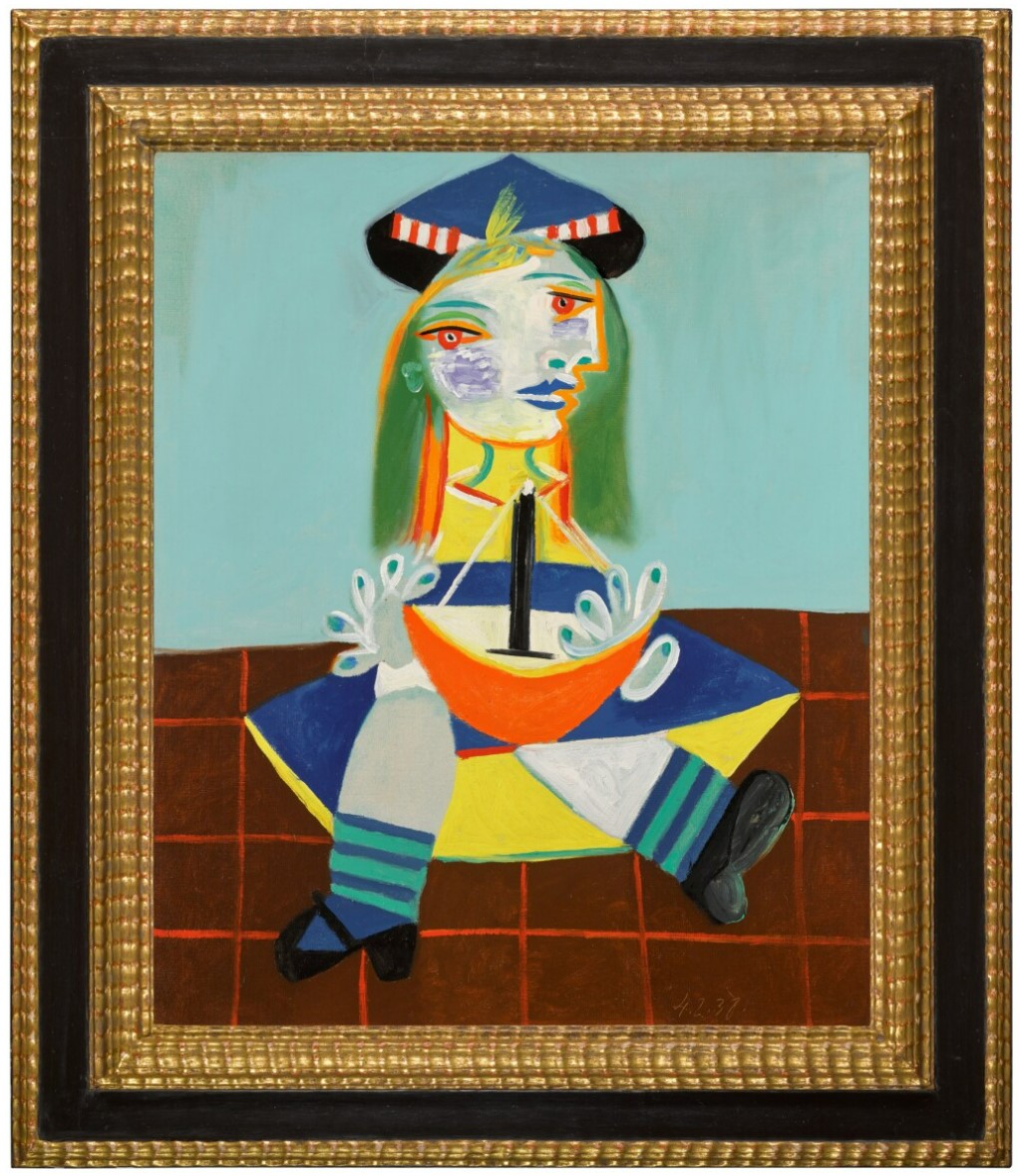
PABLO PICASSO (1881 – 1973)
Fillette au bateau, Maya, 1938
Oil on canvas
73.3 x 60 cm (28 7/8 x 23 5/8 inches)
Dated 4.2.38. (lower right)
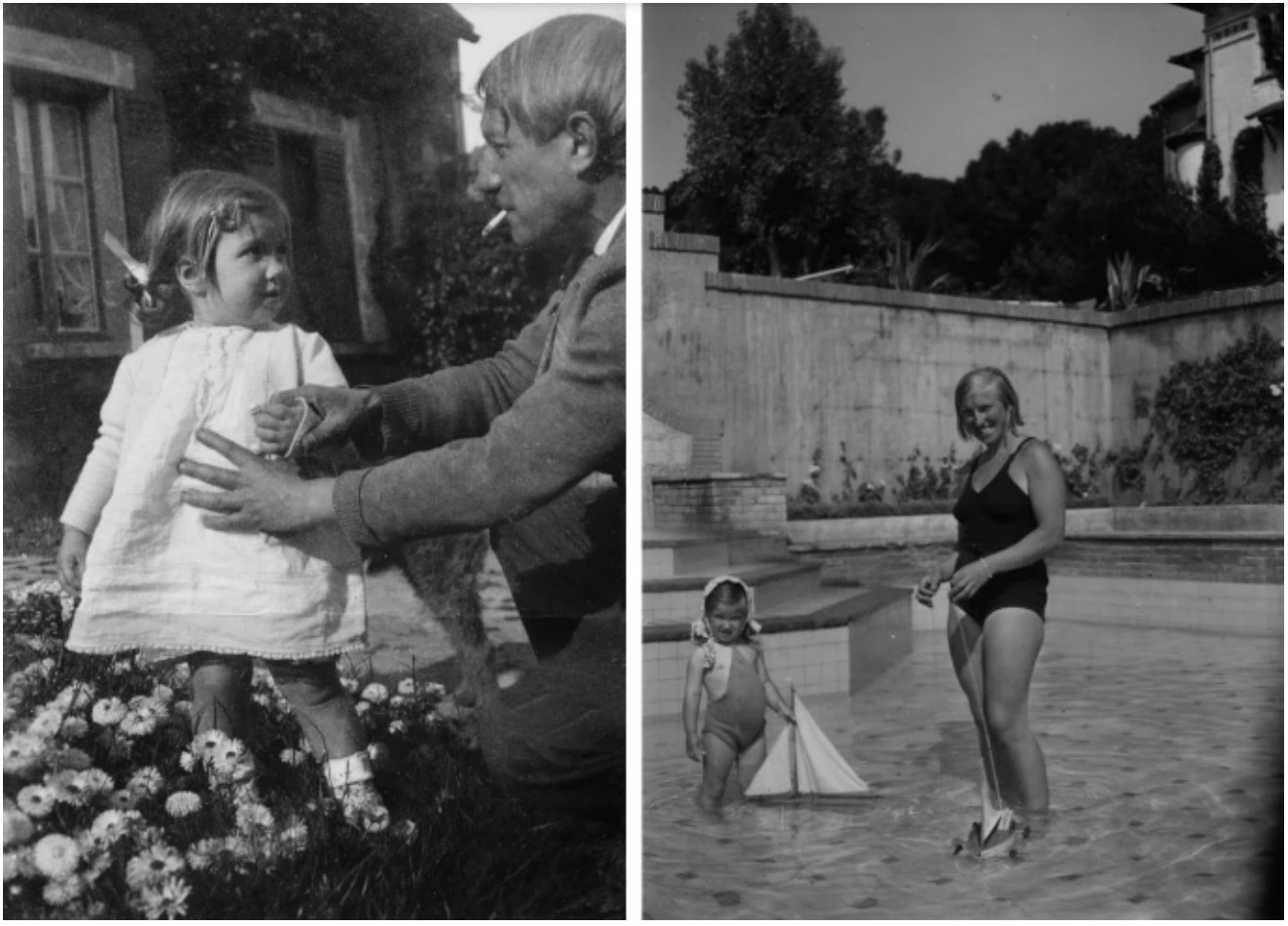
Picasso’s daughter Maya, aged just two-and-a-half at the time, is the subject of this bold and playful full-length portrait painted on 4th February 1938. Filled with exuberant color and energy, it was executed shortly after the artist had completed the monumental Guernica, and encapsulates the happiness Maya brought into Picasso’s life during these challenging years. Maya, named María de la Conceptión after Picasso’s beloved late sister, was the fruit of the passionate love between the artist and his young muse and mistress Marie-Thérèse Walter. She was born in secret in 1935 while Picasso was still married to his first wife, the former ballerina Olga Khokhlova. Maya’s birth coincided with a personal crisis which Picasso later referred to as ‘the worst period of his life’ (John Richardson, A Life of Picasso: The Minotaur Years 1933-1943, New York, 2021, p. 93). A combination of factors contributed to this dramatic attestation including a lengthy divorce battle with Olga and the associated loss of his beloved property, Château de Boisgeloup, which he was forced to hand over following their separation in 1935, and at the same time the worsening political situation in Europe and the growing inevitability of war.
A work of real importance, Fillette au bateau, Maya serves as a formal embodiment of how Maya ‘stimulated and amplified the artist’s fascination with childhood’ (op. cit., 2022, p. 12), helping strengthen his freedom from the conventions of representation and capture the unrestrained, youthful spirit that so often eludes adults. Fillette au bateau, Maya goes beyond a creative, playful depiction of the artist’s daughter, becoming a symbolic representation of his evolving relationship with his greatest muse Marie-Thérèse.
#4. Lucian Freud
Sotheby’s London: 1 March 2023
Estimated: GBP 15,000,000 – 20,000,000
GBP 17,014,800
Ib Reading | Modern & Contemporary Evening Auction | | Sotheby’s (sothebys.com)
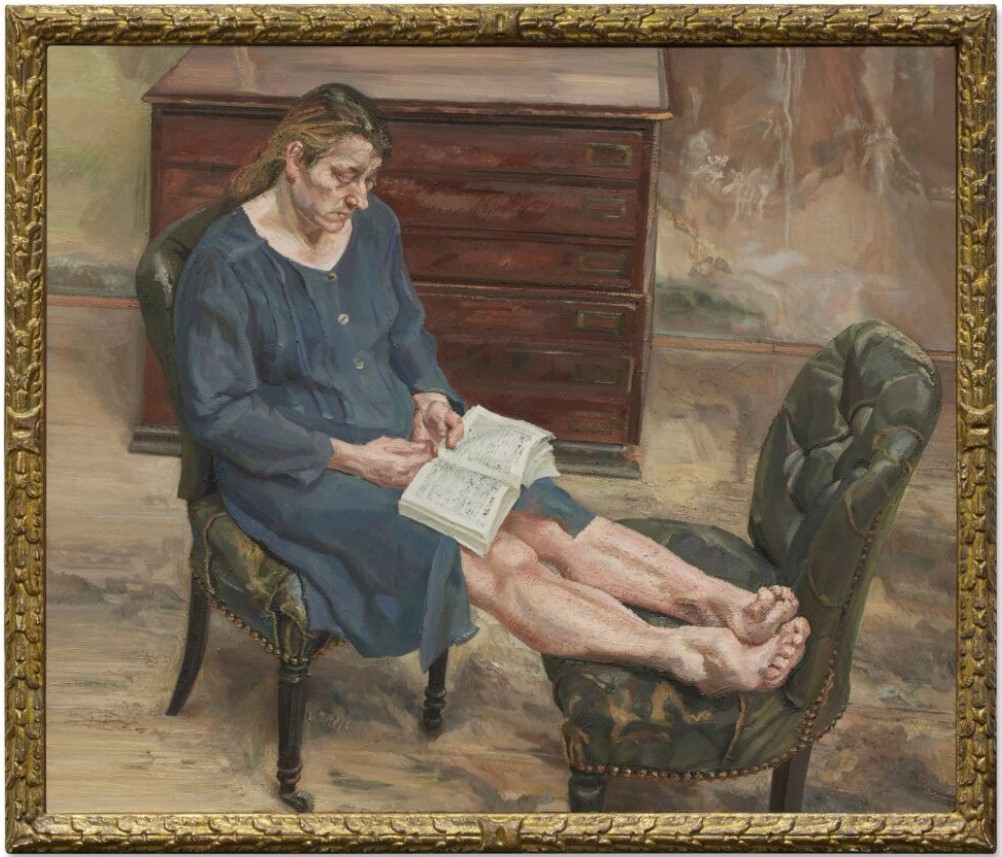
LUCIAN FREUD (1922 – 2011)
Ib Reading, 1997
Oil on canvas
134×158 cm (52 3/4 x 62 1/4 inches)
Executed in 1997, Ib Reading is an exquisite testament to the superlative power of Lucian Freud’s preoccupation with the single-figure portrait – a fascination that spanned over seven decades and lies at the very heart of the artist’s dynamic oeuvre. If Freud, as Robert Hughes once declared, was the world’s ‘greatest living realist painter’ then it was the single-figure subject that best afforded the artist the opportunity to display his unquestionably masterful ability to capture the mood and, furthermore, the inner essence of his sitters. Freud’s genius was to present in his work the totality of self in all its complex variations. As Bruce Bernard wrote, “The essence of [Freud’s]… genius in the perception of human beings is felt most keenly when he has asked one person who interests him, both in look and character, to submit to his scrutiny and help him realise their truest possible image in paint.” (Bruce Bernard, Lucian Freud, New York, 1996, p. 12). Daughter of Freud and Suzy Boyt, Isobel Boyt is painted in Ib Reading with exceptional prowess in a portrait that is at once tender and meditative, intimate and contemplative. Evoking the relationship between father and daughter, artist and sitter, the present work illuminates Freud’s mastery in the genre of portraiture. The artist’s exacting technique and sensational brushwork is, on the surface of the present work, at its finest; the late 1990s indeed mark the very apex of Freud’s career. Held in the same private collection since shortly after its execution in 1997, Ib Reading captures a profoundly private moment, and in doing so succeeds in grasping the pure essence of humanity, a feat which lies at the very core of Freud’s greater oeuvre.
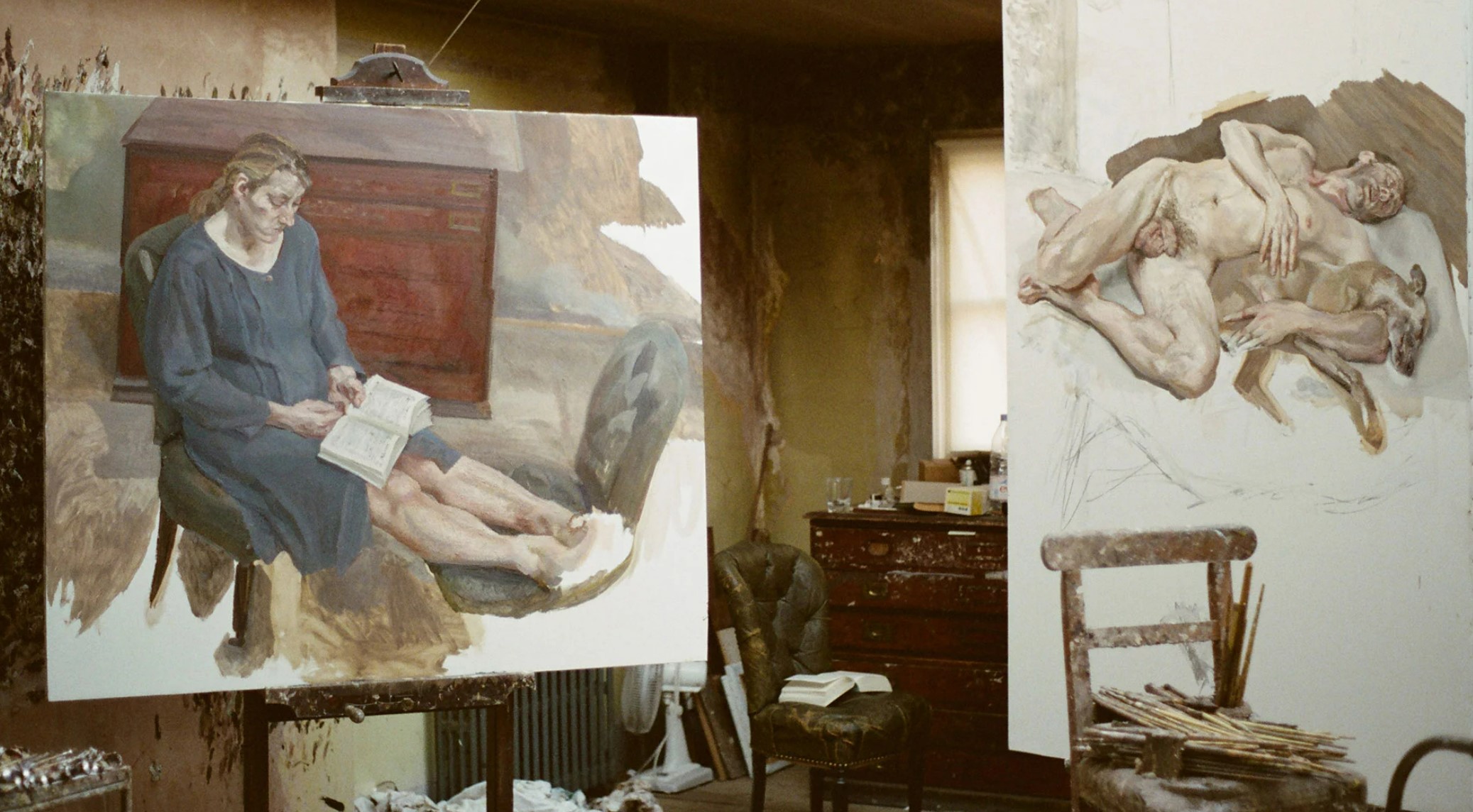
Ib Reading is one of several portraits Freud painted of Isobel at different ages throughout his career, the first being Large Interior. Paddington of 1968-69 now in the collection of Museo Nacional Thyssen-Bornemisza in Madrid. Another, slightly later portrait from 1977-78 entitled Portrait of Ib resides in the collection of Cleveland Art Museum and depicts Isobel nude as a teenager. These nuanced portrayals of Isobel are part of a wider cycle of portraits Freud painted of his children; these were often made after what were several years of paternal absence and the process of their making formed a way for the artist to get to know his children better. Within the entirety of Freud’s oeuvre only a small percentage of his sitters were designated by name, indeed, by naming his sitters in these paintings Freud was making a formal acknowledgment of his children through his art. As William Feaver asserts, “To name [his children] was to acknowledge them, to paint them was to get to know them after the missing years of childhood.” (William Feaver, Lucian Freud, London, 2002, p. 35). As a result, Ib Reading reflects a familial intimacy between artist and sitter. Freud’s portraits of his children rank among the most significant within his celebrated oeuvre. He did not take commissions and always had a specific reason to paint a particular person that was close to him. As Freud himself reflected, “My work is purely autobiographical. It is about myself and my surroundings. It is an attempt at a record. I work from people that interest me and that I care about, in rooms that I live in and know. I use the people to invent my pictures with, and I can work more freely when they are there.” (Lucian Freud, quoted in: Exh. Cat., London, National Portrait Gallery, Lucian Freud: Portraits, 2012, p. 14). Turning his masterful and exacting gaze and brush towards his daughter Isobel, in Ib Reading Freud captures the physicality and psychology of his sitter with the confidence and expression inherent to his mature style.
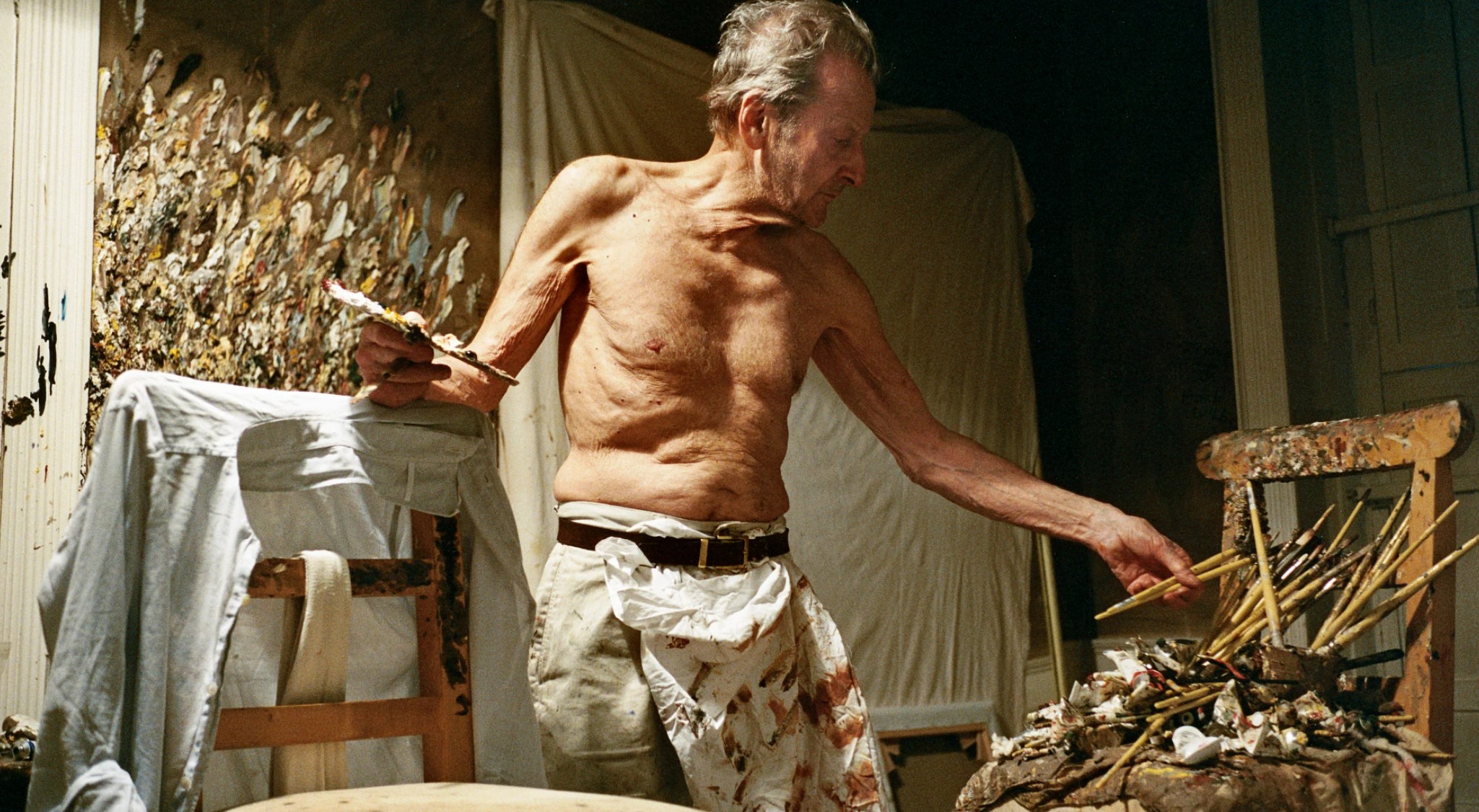
Rendered with meticulous detail and a liberal use of rich impasto, the surface of Ib Reading exhibits the breathtaking and calculated brushwork inherent to Freud’s portraits of the 1990s: “As time went by, Freud’s brushstrokes became looser and pastier, but his way of working remained slow and deliberate, with compositions taking shape through multiple, successive layers of paint. He also started to paint standing up, so that he could move around his models, affording him a physical proximity that allowed him to notice the tiniest details.” (Paloma Alarcó quoted in: Exh. Cat., London, The National Gallery, Lucian Freud, 2022, p. 154). Freud referred to the finished composition of Ib Reading as ‘The Ibscape’ and Isobel herself reminisced about the duration for which she sat for her father: “That one took forever: all the volumes of Remembrance of Things Past and one or two other books too.” (Isobel Boyt quoted in: William Feaver, The Lives of Lucian Freud, London, 2020, p. 331).
#5. Edvard Munch
Sotheby’s London: 1 March 2023
Estimated: GBP 12,000,000 – 20,000,000
GBP 16,940,300
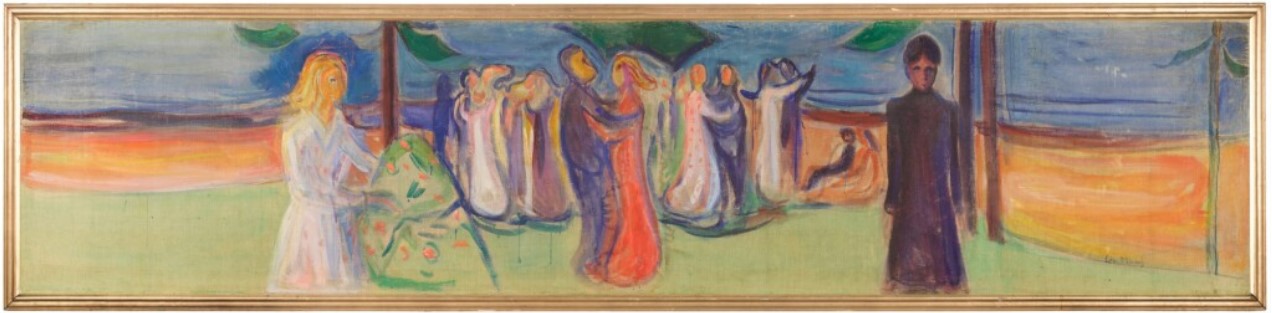
EDVARD MUNCH (1863 – 1944)
Dans på stranden (Reinhardt-frisen) (Dance on the Beach (The Reinhardt Frieze)), 1906-07
Tempera on canvas
90 x 402.6 cm (35 3/8 by 158 1/2 inches)
Signed Edv. Munch (lower right)
Dance on the Beach gives vivid life to Munch’s unique vision. Encompassing the full range of emotional life, from love and desire to anxiety and death, his art turned inward to make feeling itself the subject. In his sustained exploration of the ‘modern life of the soul’, Munch would have a profound impact on artists from the 1890s to today, opening up a rich seam of expressionism. Combining his rich coloration, magical mood and exquisite handling, the present work is as compelling as it is enigmatic. It realizes fully Munch’s ambition to capture in paint our ‘dance of life’. In 1906, legendary theatre director Max Reinhardt (who would later go on to direct films in Hollywood) commissioned Munch to decorate a room in his new theatre, the Kammerspiele, in Berlin. The room would act as an entrance to the theatre and was envisaged as an immersive experience in which the theatregoer would be fully subsumed into Munch’s world. The result of this commission was the twelve canvases that are now known as The Reinhardt Frieze. Munch once wrote that a frieze should have, ‘the same effect as a symphony. It can rise in scale towards the light, and it can sink down into the depths; it can rise and fall in strength. In the same way its tones can sound and resound […]. But the rhythm will still be there’ (quoted in Johan H. Langaard & Reidar Revold, op. cit. p. 22). In this case, Dance on the Beach might be seen as the height of a crescendo; at just over four metres wide, it is the largest work from the frieze and the only part still in private hands — the others are all in museum collections in Germany.
Other Highlights
Andy Warhol
Sotheby’s London: 1 March 2023
Estimated: GBP 4,000,000 – 6,000,000
GBP 6,599,300
Debbie Harry | Modern & Contemporary Evening Auction | | Sotheby’s (sothebys.com)
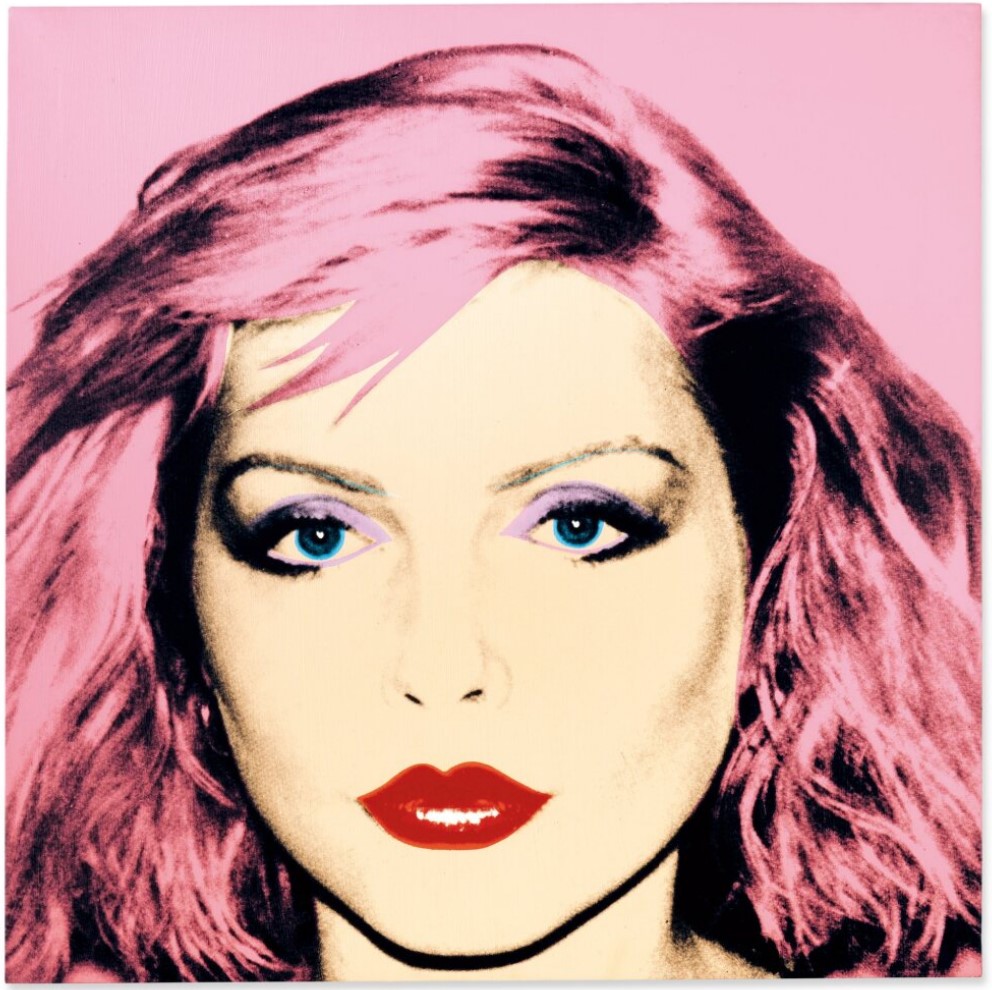
ANDY WARHOL (1928 – 1987)
Debbie Harry, 1980
Acrylic and silkscreen ink on canvas
42×42 inches (106.7 x 106.7 cm)
Stamped by the Estate of Andy Warhol and the Andy Warhol Foundation for the Visual Arts
Numbered PO50-172 (on the overlap)
Featured on the cover of Phaidon’s major volume on Warhol’s portraiture published in 2005, Debbie Harry, from 1980, is one of Warhol’s most striking and accomplished portraits of celebrity. One of only four portraits of the Blondie star in this rare 42 inches format, two of which are in the Andy Warhol Museum in Pittsburgh, this pink version has become one of the best recognized images in Warhol’s oeuvre and is a definitive portrait of the 1980s style icon. Built up of no fewer than five silk-screened layers of ink over a bubblegum pink acrylic ground, this portrait stands head and shoulders above its peers as a masterclass in the genre. Painted at a late high point in Warhol’s career, on the eve of the decade which saw a renewed creative enterprise in his art, Debbie Harry sits squarely in the lineage of great portraiture that began with Liz Taylor, Marilyn Monroe and Jackie Kennedy in the 1960s through to the final fright-wig self-portraits painted only months before Warhol’s death. Like the early portraits of female stage stars, Debbie Harry reveals Warhol’s lifelong fascination with celebrity and beauty; like his final self-portraits, it exhibits the sheer perfection of Warhol’s flawless silkscreen technique, honed and refined over two decades.
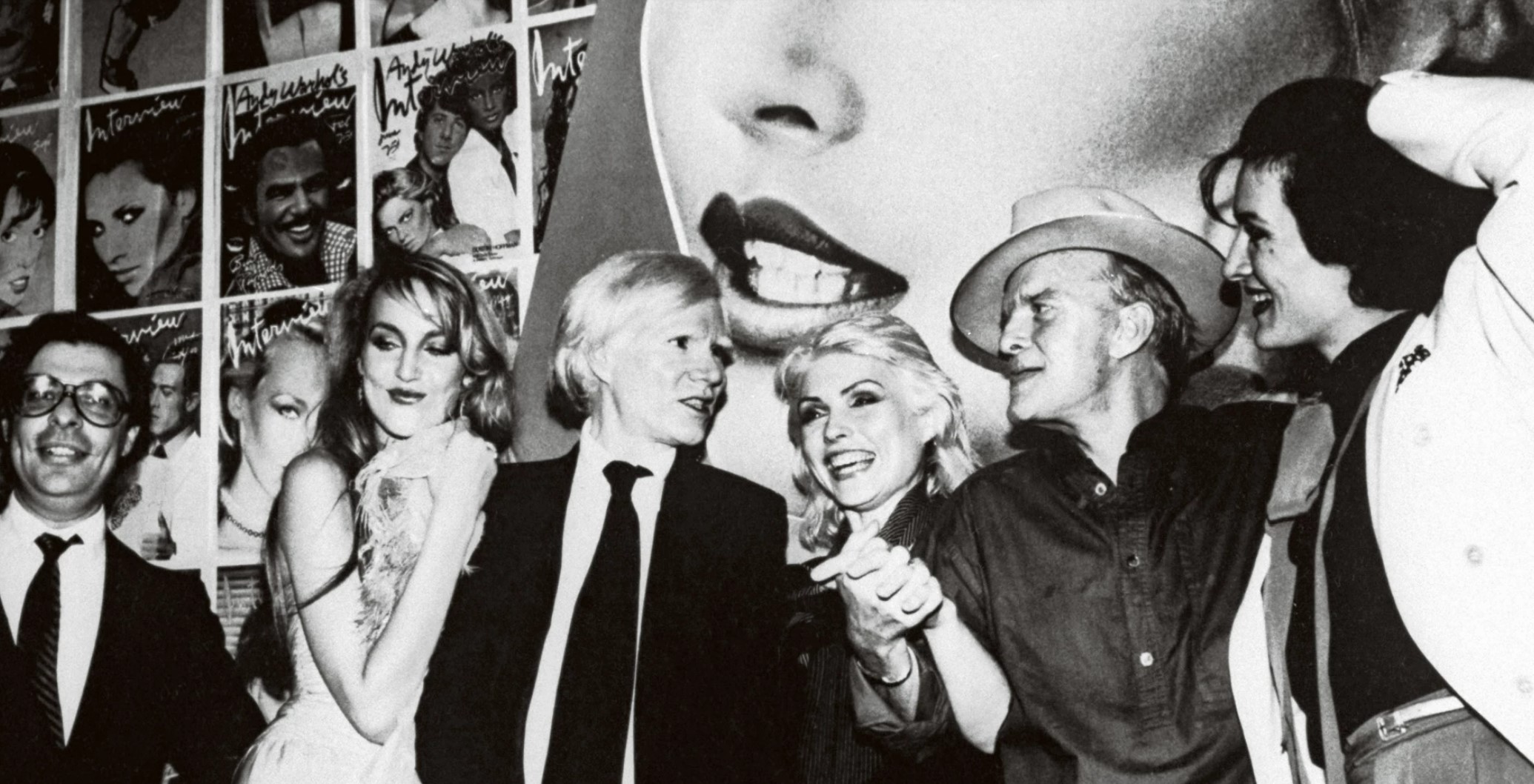
Warhol continued to be inspired and fascinated by beautiful female celebrities throughout his career. Harry, a striking bottle-blonde haired New Jersey native with an equally effervescent personality, had moved to New York City to launch her music career. She was a waitress at Max’s Kansas City, a meeting place for artists and musicians and a favourite hangout for Warhol and his entourage. Warhol and Harry became friends just as her band – Blondie – was becoming successful. She was quickly a staple on the New York social scene and a regular at Studio 54. Blondie, a punk band so named after its diva lead singer, was an immediate huge success. The group launched their debut album in 1976, had their first European tour in 1977 and by 1978 Harry and the band were global superstars. She epitomized the rocket launch rise to fame that infatuated Warhol and in 1979 she graced the cover of his celebrity centered magazine Interview. Her fame, her beauty, and their friendship, made her an instant muse for the artist.
Keith Haring
Sotheby’s London: 1 March 2023
Estimated: GBP 1,500,000 – 2,000,000
GBP 2,226,000
Untitled (Sept. 6 1986) | Modern & Contemporary Evening Auction | | Sotheby’s (sothebys.com)
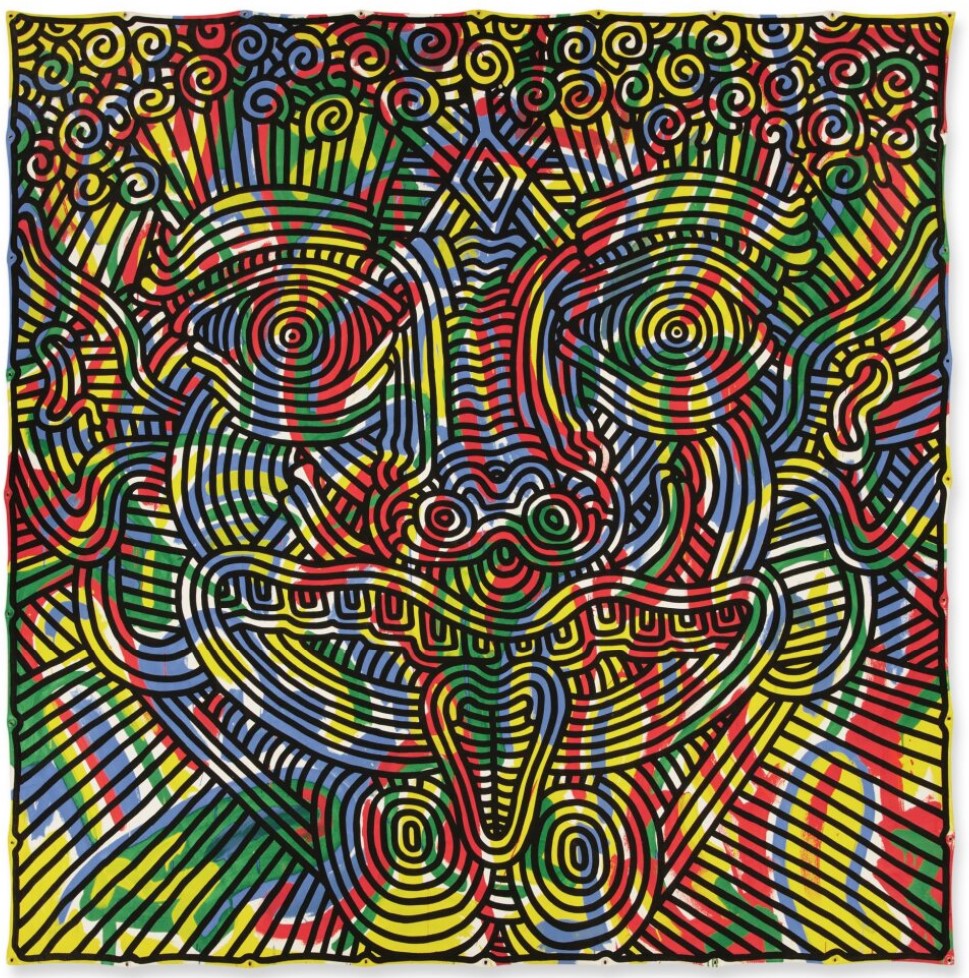
KEITH HARING (1958 – 1990)
Untitled (Sept. 6 1986), 1986
Vinyl paint on canvas
95 3/8 x 94 1/4 inches (242.3 x 239.4 cm)
Signed K. Haring, dated Sept. 6 1986 and inscribed NYC (on the reverse)
Vibrant and briming with graphic energy, Keith Haring’s Untitled of 1986 emblematizes the compositional dynamism and iconic figuration signature to one of the most innovative and influential artists of the Twentieth Century. Across this monumental works on industrial canvas, the artist’s instantly recognizable pop iconography of flat line and bold color here articulates the face of an imperial guardian lion. Executed at the height of his artistic powers, Untitled is a seminal example of the artist’s distinct, idiosyncratic visual language and his tireless determination to celebrate the interconnectedness of the human spirit through art.
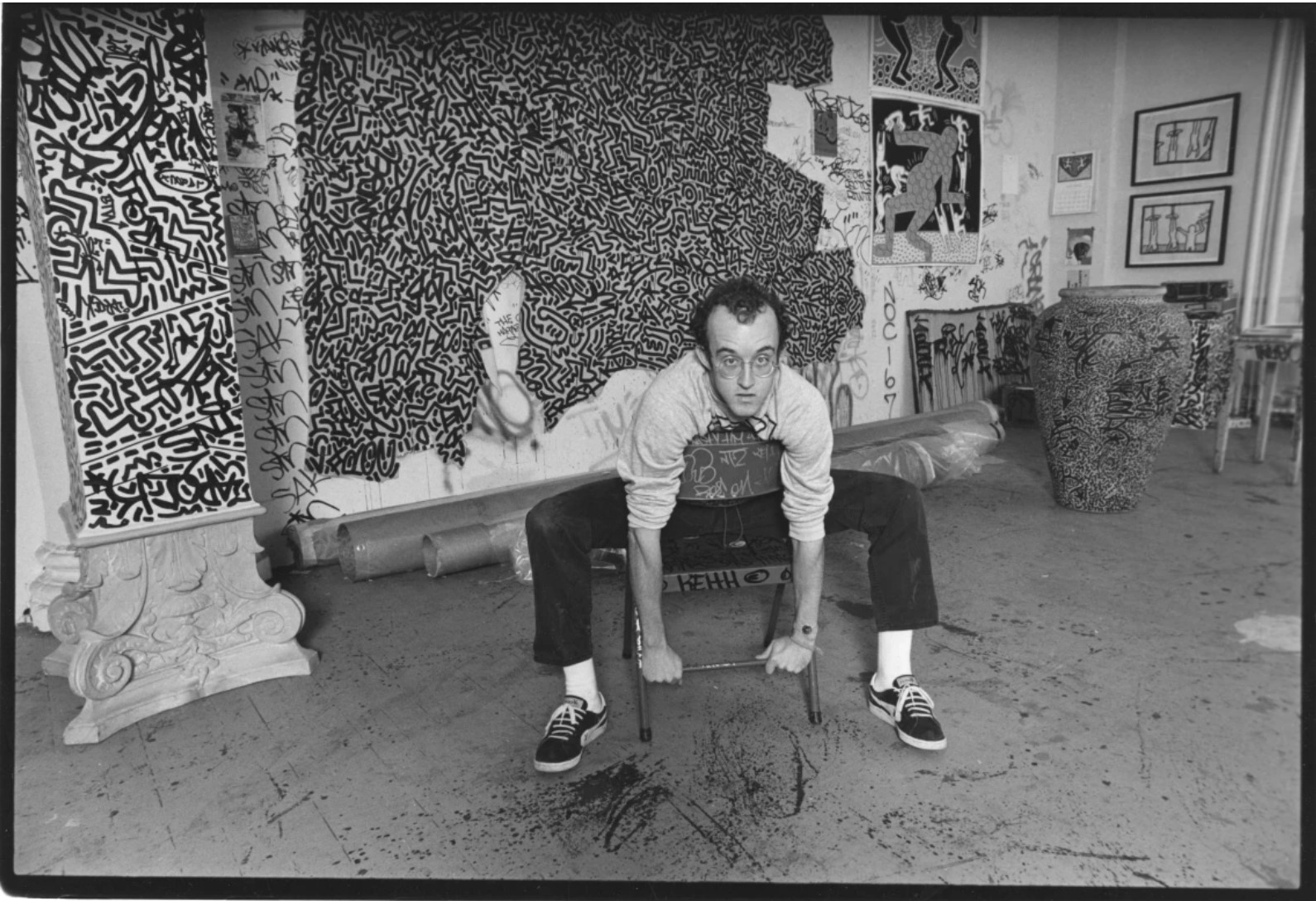
Combining vivid, primary color with bold, articulative lines, Untitled conveys an image enlivened with potent energy and strong emotive power. Throughout his career, Haring studied a range of visual cultures from Egyptian hieroglyphics to Japanese, Chinese and Mayan pictograms. Seeking to reduce form and concept into primary elements of line, looking to cultures outside of his own enabled Haring to develop a means of formal communication through a syntax of signs as exemplified in the present work. Originating in Chinese Buddhism, Imperial Guardian Lions or Feng Shui Fu Dogs are a type of sculpture typically placed at the entrance to homes and important buildings as a protection symbol. Traditionally made of marble, granite or cast from iron and bronze, these figures are believed to ward off harmful spiritual influences and individuals. The eyes of Imperial Guardian Lions are typically wide open as are their mouths, seemingly roaring with ferocity. In the chaos of concentric lines and swirling color, Haring has translated the fierce vitality of this ancient icon into two-dimensional form. In Untitled, the face of the lion boldly emerges from the surface of the work as if moving into the space of the viewer. Haring’s images belie a visual language of totemic symbols that do not seek to appropriate reality, as Pop art had done, but rather birthed a new succinct and direct vernacular which resonated with the hearts of a generation.
Stanley Whitney
Sotheby’s London: 1 March 2023
Estimated: GBP 700,000 – 1,000,000
GBP 1,076,500
Untitled | Modern & Contemporary Evening Auction | | Sotheby’s (sothebys.com)
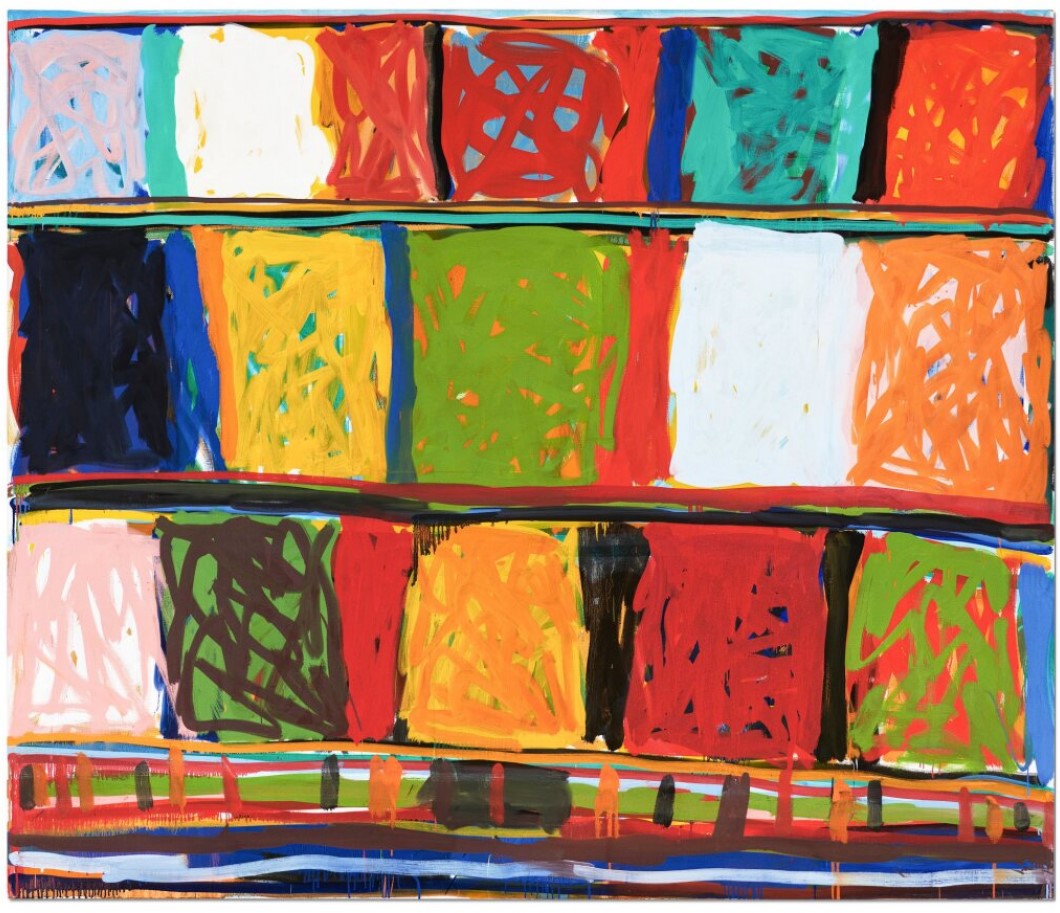
STANLEY WHITNEY (b. 1946)
Untitled, 1997
Oil on linen
75×88 inches (190.5 x 223.5 cm)
Signed Stanley Whitney and variously inscribed (on the reverse)
Untitled from 1997 is an early example of Stanley Whitney’s celebrated colour grid series in which the artist explores the conceptual possibilities of colour. Displaying deep hues of acute primaries, secondaries and tertiaries, the present work is imbued with rhythmic dynamism that pulses, expands, and contracts before the viewer’s eyes. Vivid and large-scale, Untitled attests to Whitney’s life-long experimentation with colour. As described by the artist in his own words: “I don’t have any colour theory. The colour is magic, and I want the work to be magic. I lay a colour down and that colour calls another colour, and then it’s a balancing act. You don’t want to have something dominate something else, you want to have good transitions” (Stanley Whitney quoted in: Alteronce Gumby, “Oral History Project: Stanley Whitney by Alteronce Gumby,” BOMB, 21 April 2015, (online)).
Whitney’s approach to painting arrived after many years of experimentation that saw the artist draw from a multitude of historical and cultural references, ranging from American quilt making and Jazz music, to the expansive natural landscape of the great American West. Recalling a trip he took in 1984, Whitney reminisced; “I was travelling across the country a lot, and going through landscapes, and sitting up on great spots… Yes, the southwest, the Four Corners, Canyon De Chelly, Grand Canyon, Monument Valley… all the sacred places of the West… the Badlands… North Dakota… And that kind of landscape really influenced me. That kind of openness in space, that kind of light… I really think of it as an American kind of space. A big open space. But it was all about landscape and I didn’t want it to be landscapes, I wanted it to be space” (Stanley Whitney quoted in: Matthew Jeffrey Abrams, “Stanley Whitney: The Ruins,” Gagosian Quarterly, Spring 2020, online).
Damien Hirst
Sotheby’s London: 1 March 2023
Estimated: GBP 300,000 – 500,000
GBP 508,000
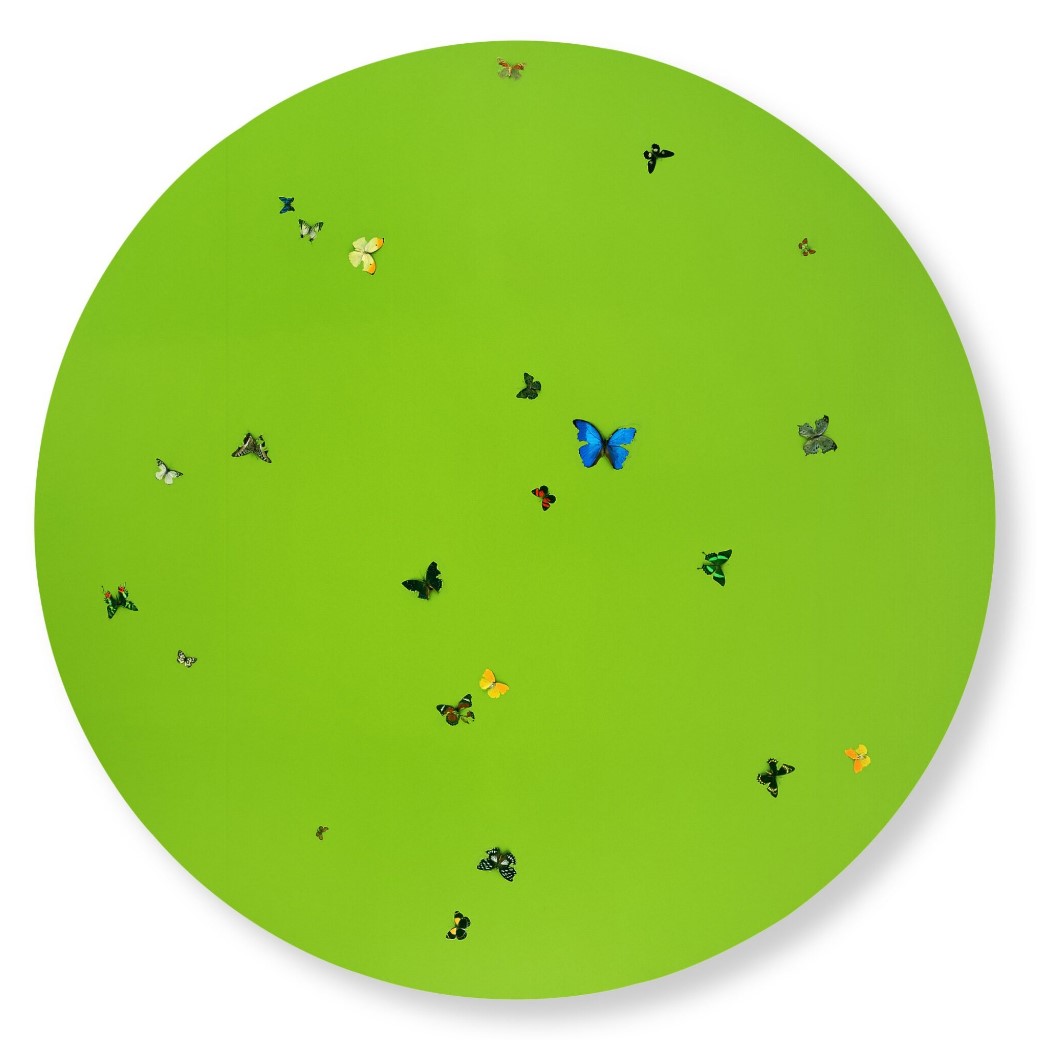
DAMIEN HIRST (b. 1965)
I Love You More Than Words Can Say, 1999
Butterflies and household gloss on canvas
Diameter: 84 inches (213.4 cm)
Within the frame of its perfectly circular composition, I Love you More Than Words Can Say from 1999 exhibits an array of butterflies of varied shapes, colours, and sizes which pepper its luscious field of glossy green paint. Perhaps one of his most recognizable and iconic motifs, Hirst’s butterflies established the artist as a household name. Setting the luminous butterflied against an expanse of vibrant green, the present work is a contemporary take on the idealised British landscape. Poised within the stillness of death, the radiant butterflies also provoke debate on issues of contemporary existence as the viewer makes subtle links between the transient fragility of life and the simultaneous imminence of death. The central contradiction of Hirst’s oeuvre is nowhere better exemplified than in his celebrated Butterfly Paintings.
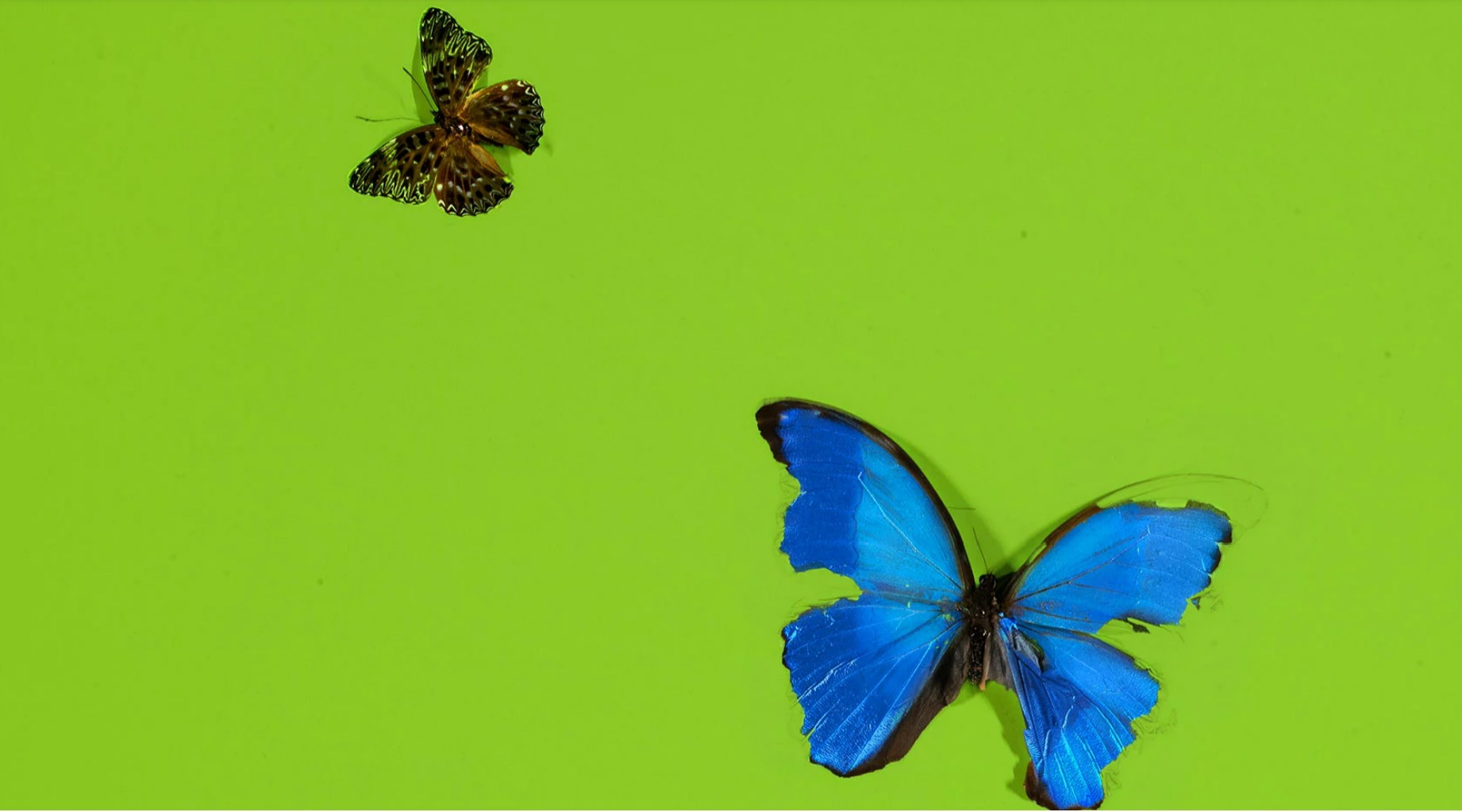
An emblem of religion, death and rebirth, the butterfly has become one of Hirst’s most enduring motifs, one that encourages his viewers to consider the extraordinary — yet fragile — beauty of the natural world. As art critic and writer Michael Bracewell vividly summarizes, “The viewer is confronted in each work by the physical representation, or its meticulously honed depiction, of those beliefs, ideas, conditions and institutions which shape the common basis of human experience. Morality, faith, medicine, religion, wealth and aesthetics comprise the principal themes and subject matter of Hirst’s paintings, sculptures and installations. The ceaseless interplay of these fundamental concerns, and their intrinsic relationship to the individual and society, are brought to life in works of the exquisite aphoristic refinement as well as graphic violence and sheer spectacle” (Michael Bracewell quoted in: Damien Hirst, Requiem I, 2009 (online)). Illustrating the beauty of horror and the horror of beauty, the caterpillar dies in the chrysalis and is reborn a butterfly. Powerfully suggestive, I Love you More Than Words Can Say recalls the ever-revolving cycle of life and death with an image of heavenly beauty.
Modern and Contemporary Day Auction
2 March 2023
Modern & Contemporary Day Auction | | Sotheby’s (sothebys.com)
Total: GBP 23,787,470
Top Lot: GBP 1,742,000
# Lots: 168
# Lots Sold: 137
Sell-Through Rate: 81.5%
Selected Highlights
Wassily Kandinsky
Sotheby’s London: 2 March 2023
Estimated: GBP 500,000 – 700,000
GBP 1,741,000
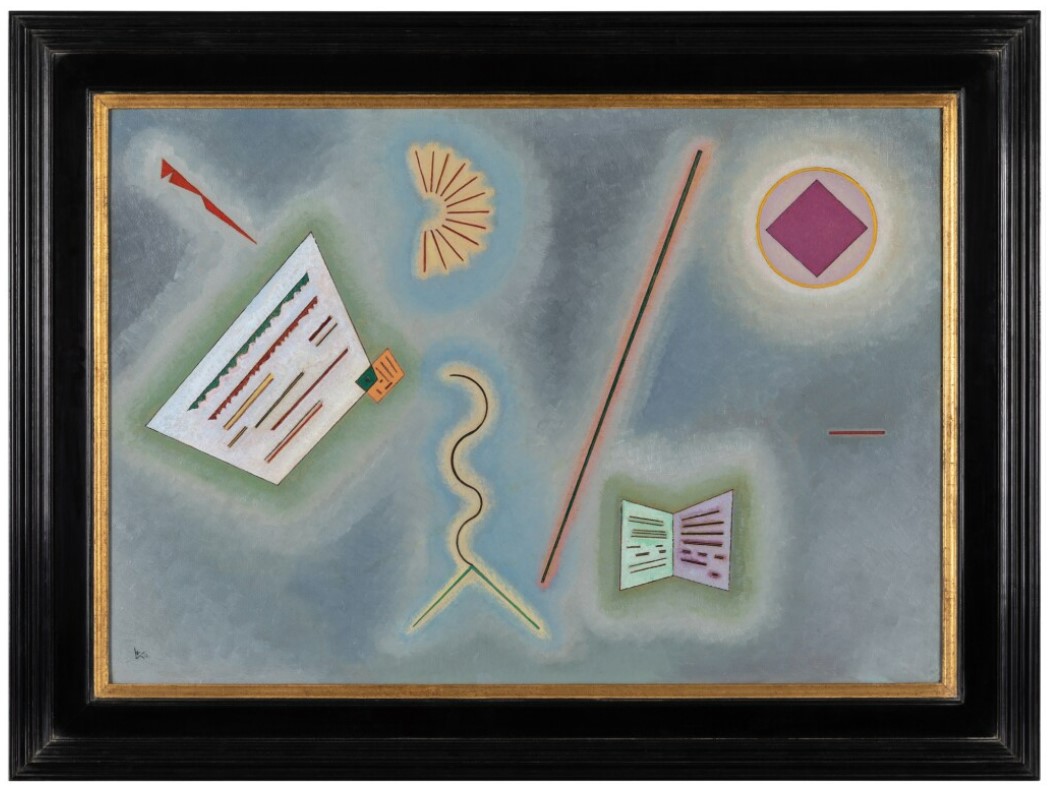
WASSILY KANDINSKY (1866 – 1944)
Flächen und Linien (Surfaces and Lines), 1930
Oil on board
49.5 x 70.7 cm (19 1/2 x 27 3/4 inches)
Signed with the monogram and dated 30 (lower left)
A balanced study of colours and shapes, Flächen und Linien (Surfaces and lines) is a perfect marriage of the figurative and abstracted. Painted in 1930, Wassily Kandinsky completed this work while in Dessau, where the Bauhaus school had relocated in 1925 after it had been met with hostile right-wing forces in Weimar. While in Dessau, Kandinsky produced some of his most experimental and creative works, including the present painting, where he has combined bold planes of colour, abstracted shapes lines and forms reminiscent of their original, figurative, design.
Keith Haring
Sotheby’s London: 2 March 2023
Estimated: GBP 1,000,000 – 1,500,000
GBP 952,500
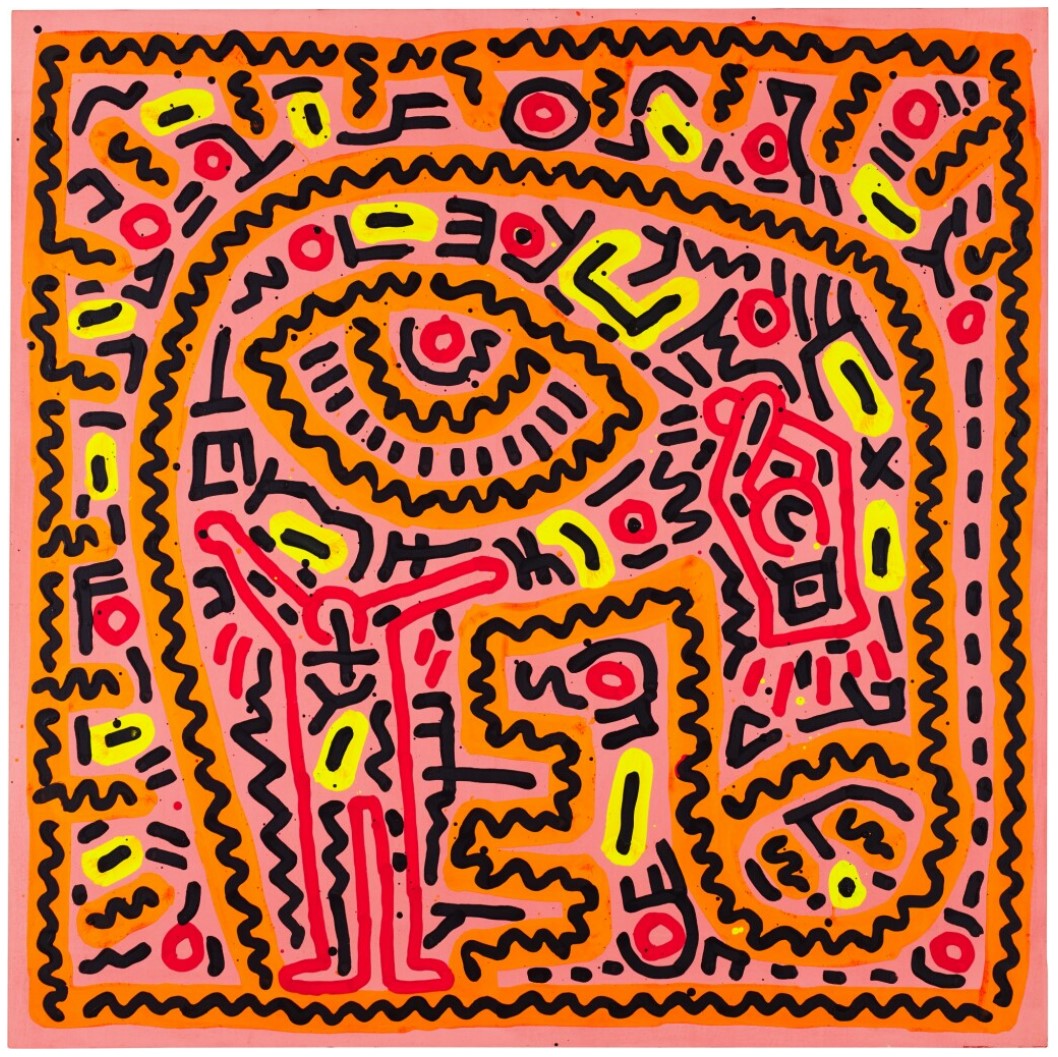
KEITH HARING (1958 – 1990)
Untitled, 1984
Acrylic on canvas
100×100 cm (39 3/8 x 39 3/8 inches)
Signed and dated JUNE 11-84 MILANO on the overlap
Rendered in a vibrant mix of bright orange, pink, red, yellow and black, the present work epitomizes the frenetic energy and visual exuberance of Haring’s instantly recognizable style. Dancing figures, zig-zagging lines and dashes of paint bounce across the canvas to form a psychedelic pattern infused with vitality and optimism. The painting dates from Haring’s momentous exhibition at Galleria Salvatore Ala in June 1984 and was completed in the weeks prior during a whirlwind of making. Haring spent three weeks in Milan preparing for the exhibition, working in the gallery on via Mameli as well as studios and workshops throughout the city. By the opening, Haring had completed twenty paintings alongside terracotta vases, wooden works and plaster sculptures. A restless sense of discovery bounds through this collection, and as the Milanese critic Alessandra Galasso notes, the exhibition allowed Haring to “broaden his iconographical repertoire and to experiment with new techniques and materials” (Alessandra Galasso, Keith Haring a Milano, Milan 2005, p. 25). The present work is a compelling example; painted with Day-Glo acrylic on muslin, it is one of first instances of these materials in Haring’s oeuvre. Executed at a seminal moment in his career, the painting is emblematic of the Haring’s artistic experimentation during his stay in Milan.
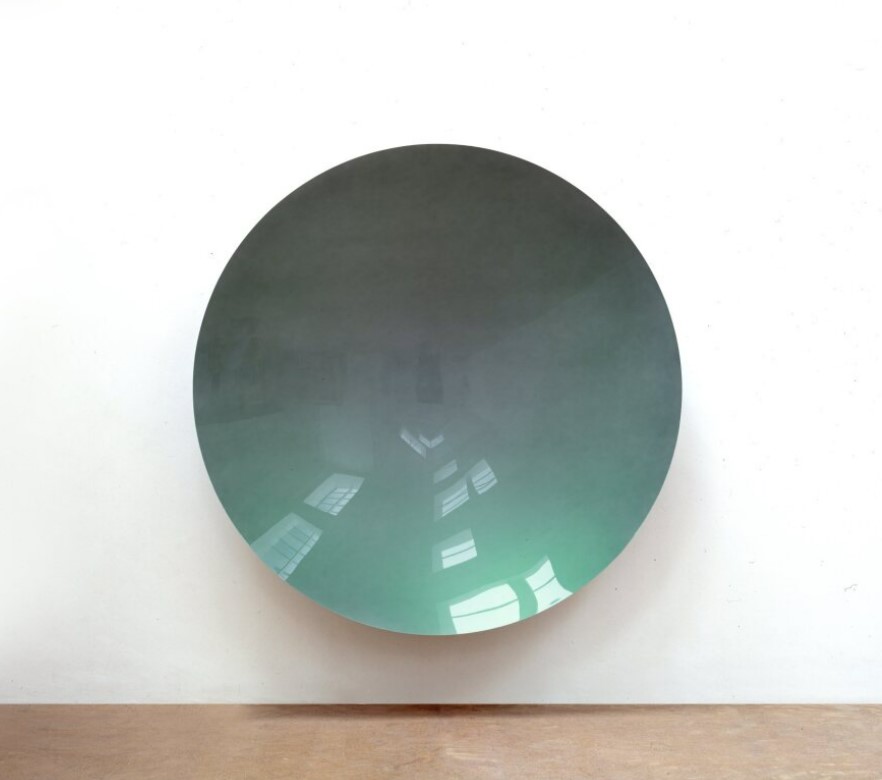
ANISH KAPOOR (b. 1954)
Untitled, 2005
Painted aluminim
224.5 x 224.5 x 49.5 cm (88 3/8 x 88 3/8 x 19 1/2 inches)
Signed and dated 2005 on the reverse
Caroline Walker
Sotheby’s London: 2 March 2023
Estimated: GBP 100,000 – 150,000
GBP 381,000
Logged In | Modern & Contemporary Day Auction | | Sotheby’s (sothebys.com)
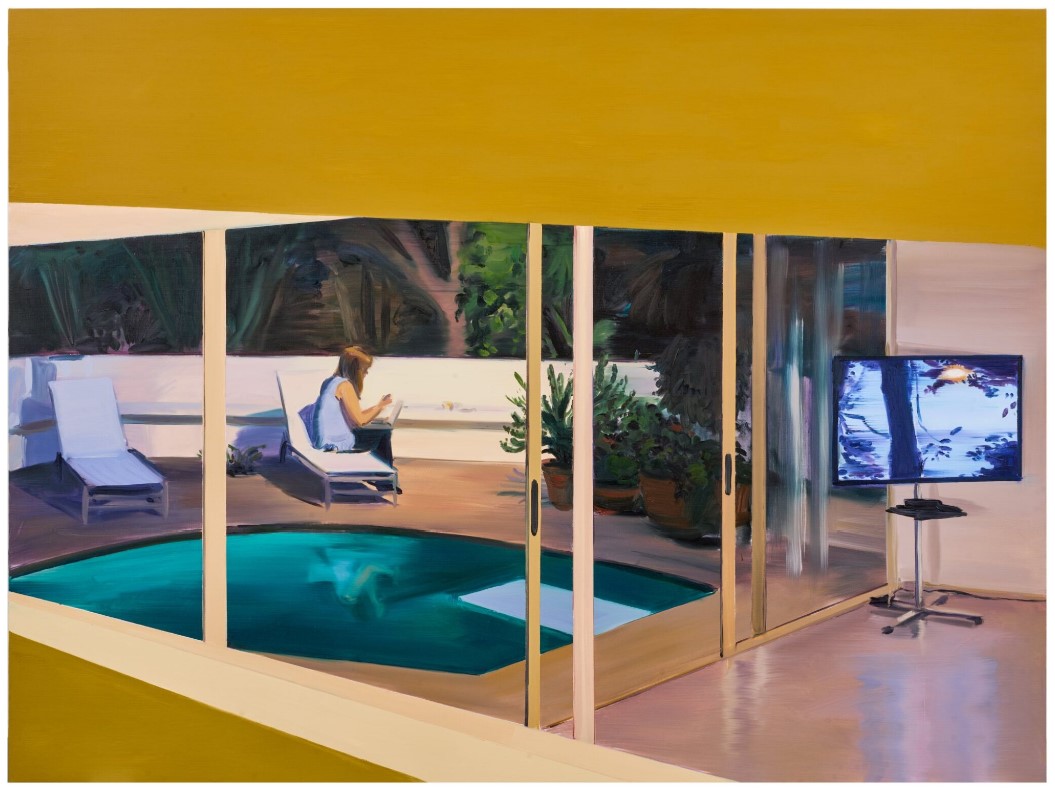
CAROLINE WALKER (b. 1982)
Logged In, 2019
Oil on canvas
180×240 cm (70 7/8 x 94 1/2 inches)
Signed, titled and dated 2019 on the reverse
Imbued with complexity and humanity, Caroline Walker’s Logged In from 2019 perfectly embodies the artist’s mastery of depicting social and psychological tension within contemporary spaces. Moving away from her earlier works set in more traditional Victorian architectural spaces, Walker’s newer oeuvre of paintings within more modern settings allow her to engage deeper with modern living. Her commitment to the contemporary world extends to her working process, with the artist using photographic material of real spaces as catalysts for her personal exploration of spatial memory and atmosphere. Walker’s paintings capture the fictional days of her unnamed inhabitants lounging by the poolside, or relaxing within the safeness of home. The paintings provide a voyeuristic view of their lifestyle, executed with a sense of cinematic desolation and rich colour palette reminiscent of the great American realist painter Edward Hopper, deftly blended with the careful observations and loose, lyrical brushwork of 19th century artists like Edgar Degas and Édouard Manet.
3. PHILLIPS
20th Century and Contemporary Art Evening Sale
London
2 March 2023
20th Century & Contemporary Art Evening Sale: London March 2023 (phillips.com)
Total: GBP 20,321,900
Top Lot: GBP 6,965,500
22 Lots sold over GBP 1 million
# Lots: 24
# Lots Sold: 23
Sell-Through Rate: 96%
Above Estimates: 13 Lots (54%)
Within Estimates: 7 Lots (29%)
Below Estimates: 3 Lots (13%)
Unsold: 1 Lot (4%)
Top 3 Lots
#1. Willem de Kooning
Phillips London: 2 March 2023
Estimated: GBP 7,000,000 – 9,000,000
GBP 6,965,500
Willem de Kooning – 20th Century & Cont… Lot 9 March 2023 | Phillips
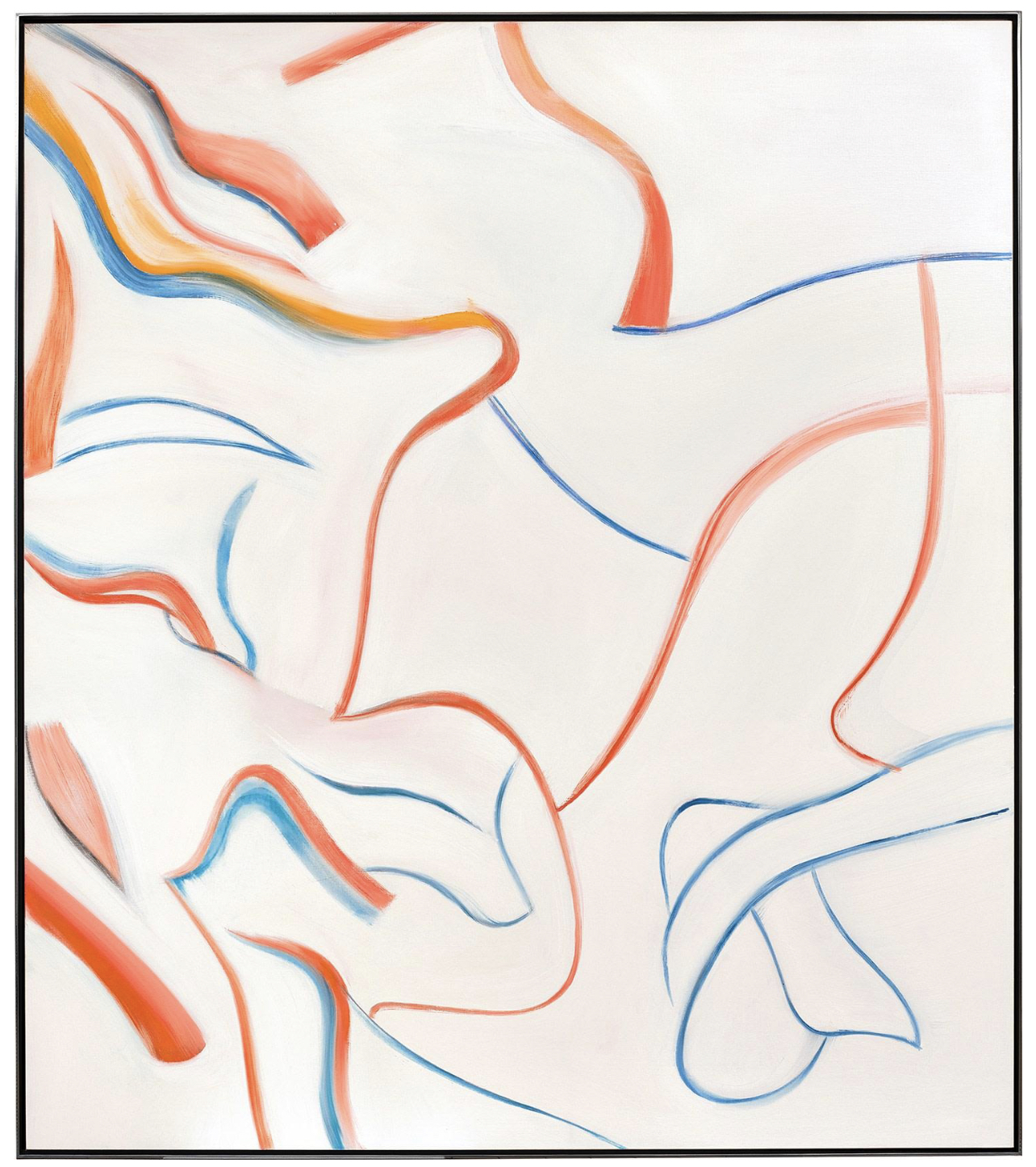
WILLEM DE KOONING
Untitled, 1984
Oil on canvas
88×77 inches (223.5 x 195.6 cm)
Signed ‘de Kooning’ on the stretcher
Suffused with radiant light and the gentle fluctuations of line and color, this profoundly lyrical and harmonious untitled work belongs to Willem de Kooning’s celebrated last great cycle of paintings. A remarkable body of work, lauded by Robert Storr as ‘the most distinctive, graceful, and mysterious de Kooning himself ever made’, these delicate visions carry us into the vast, airy spaces where ideas and poetry thrive, their forms mutable and effervescent.
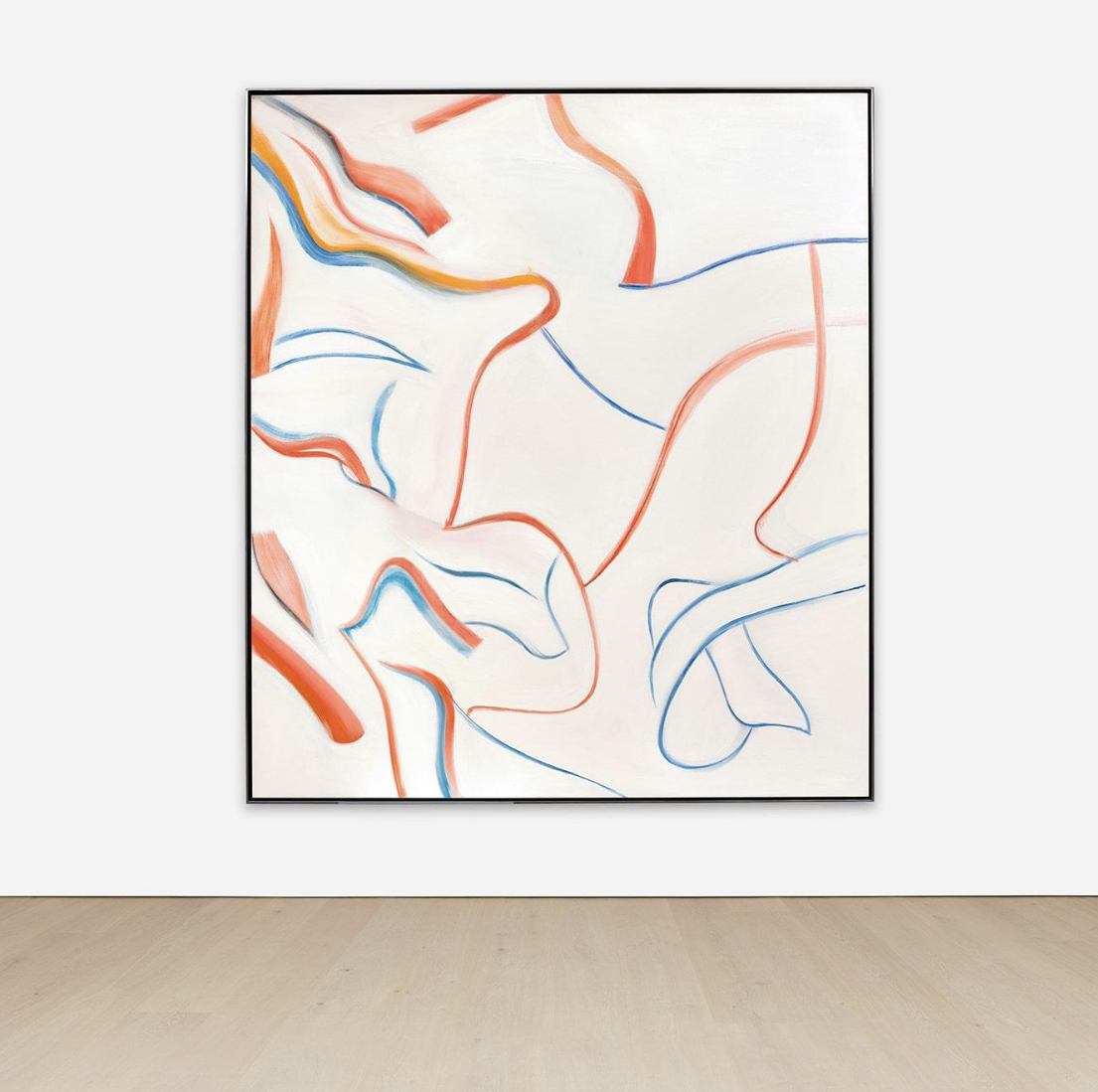
Although at first glance appearing in stark contrast to the violent, gestural energy, heavy impasto, and distortive approach to form adopted in the 1950s and developed across his infamous Women canvases, in the clarity of their structure these luminous compositions retain the formal consistency and emotional depth of the artist’s earlier work. Such connections not only speak to the internal coherence of his restlessly experimental oeuvre but, more pointedly, illuminate the constant, fluid exchanges between figuration and abstraction from which his paintings emerged. Distilled to the essence of line and color, the present work’s supple forms bend and pirouette against the luminous and remarkably subtle white tonalities beneath, weightless ribbons of soft reds, butter yellow, and electric blue unspooling across its expansive surface. Fluid and shifting, these late works crystalize the dance between figuration and abstraction that best define de Kooning’s remarkably inventive 60-year career, highlighting the extent to which he never truly abandoned the figure, even as he pushed abstraction into radically new territory.
#2. Cecily Brown
Phillips London: 2 March 2023
Estimated: GBP 1,000,000 – 1,500,000
GBP 2,226,000
Cecily Brown – 20th Century & Contempor… Lot 7 March 2023 | Phillips
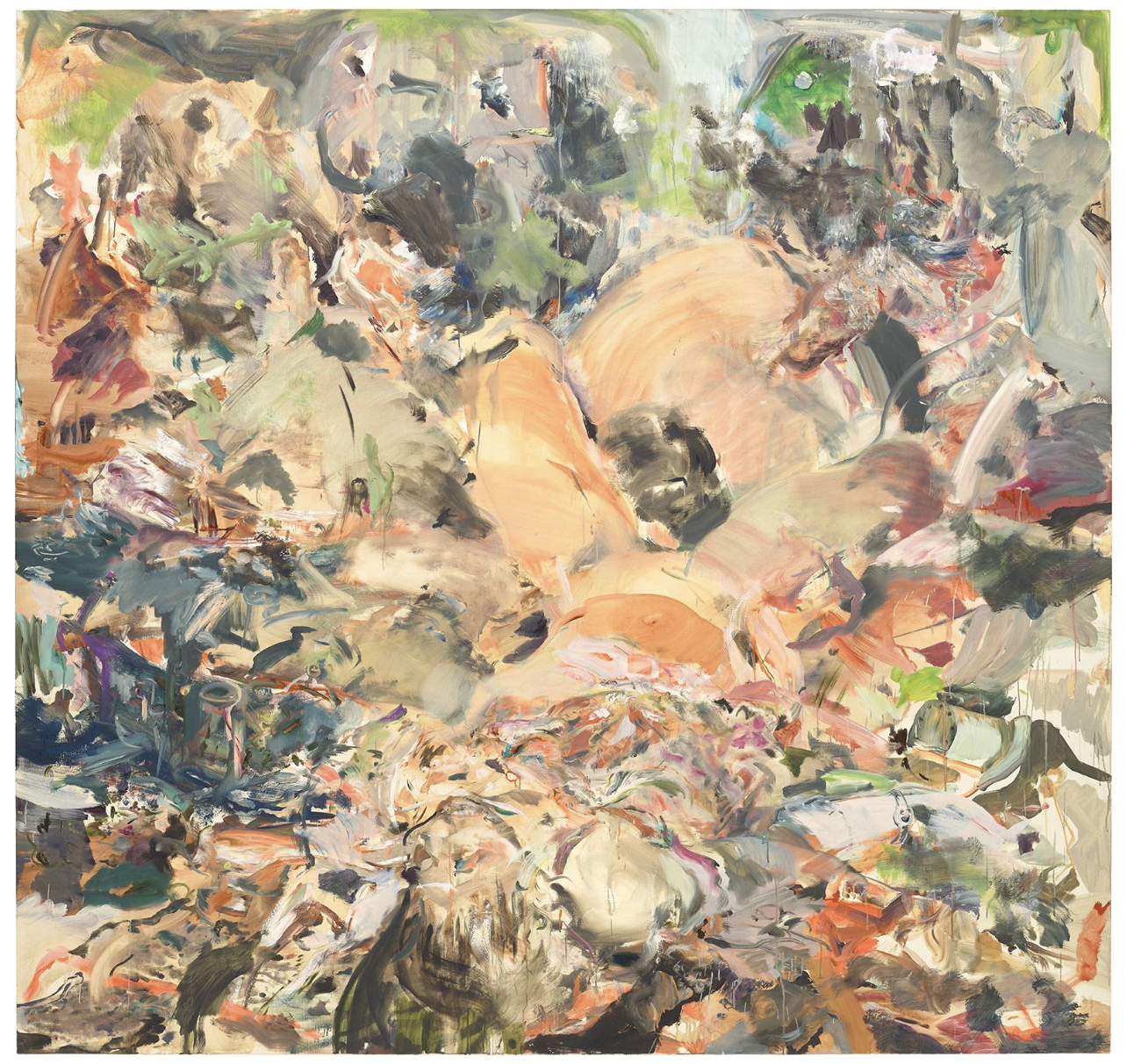
CECILY BROWN
Skulldiver II, 2006
Oil on linen
85×89 inches (215.9 x 226.1 cm)
Signed and dated ‘Cecily Brown 2006’ on the reverse
Immediately arresting in its scale, subject, and stylistic virtuosity, Skulldiver II is a breath-taking 2006 work by acclaimed British artist Cecily Brown. With every corner of the surface activated by writhing, protean brushstrokes, the work’s climactic energy is palpable – an erotic charge passing through the two figures at the center and electrifying the entire composition. Richly painted in thick, gestural marks of variegated fleshy tones, the present work is one of a suite of four Skulldiver paintings focused on the same explicit theme and was included in Brown’s 2008 exhibition with Gagosian in New York alongside two other works from the series, one of which is now held in the permanent collection of The Museum of Fine Arts, Boston.
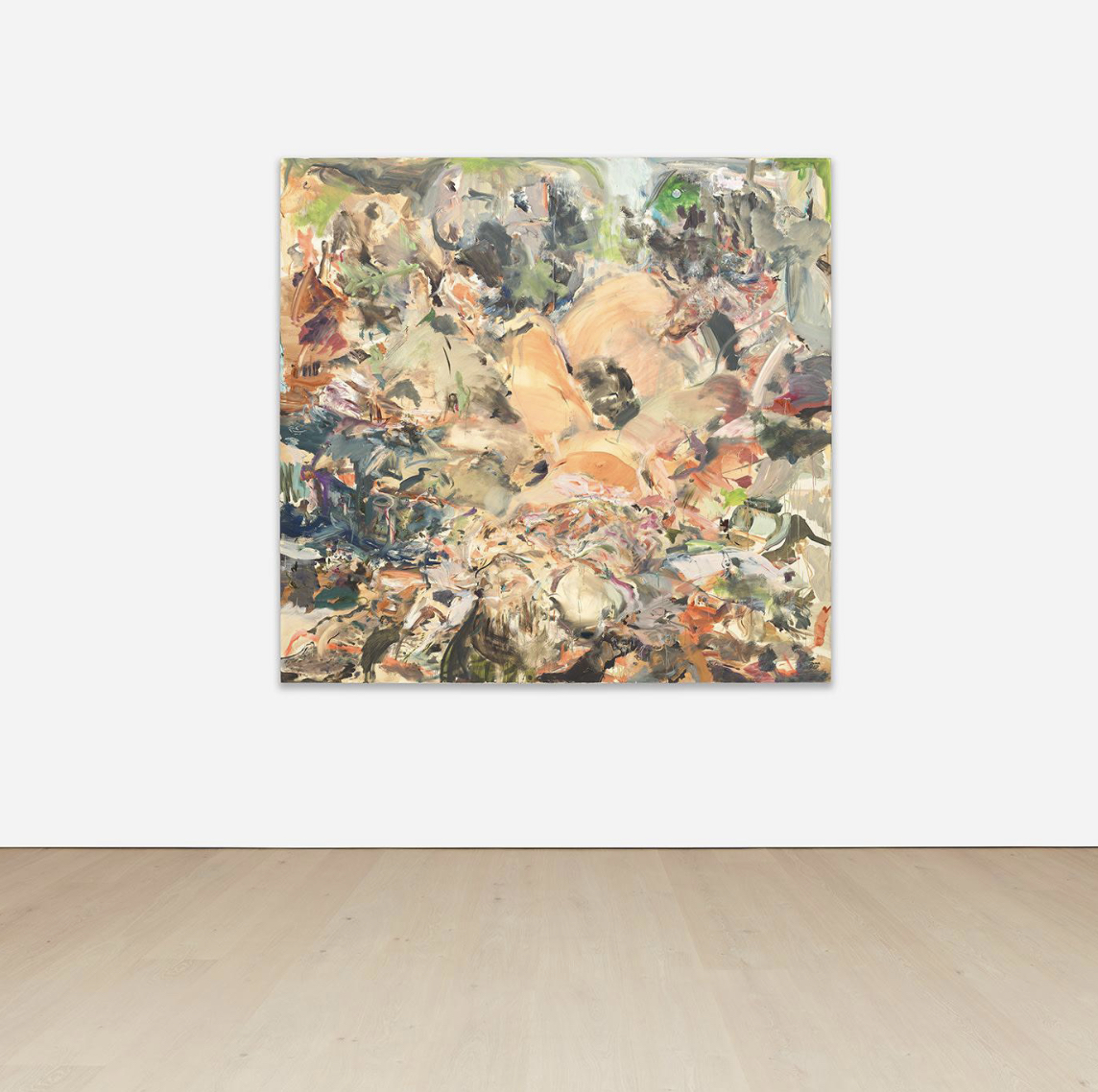
Abandoning themselves to pleasure, the figures at the center of these paintings appear to dissolve into one another, as overcome by Brown’s sensuous application of paint as by their own carnal desires. Borrowing from pornographic and painterly sources alike, Skulldiver II bluntly emphasizes the centrality of touch and sensation in Brown’s practice, the monumental canvas showcasing the close conceptual connections between oil paint and corporeality that have interested the artist throughout her career. Shifting restlessly between figuration and abstraction, Brown’s paintings are – as feminist art historian Linda Nochlin has noted – intensely embodied, making close and careful reference ‘to the act of painting, painting as process’ within which she positions the sex act itself as ‘both an analogy and a specific referent. Drawing out the latent sensuality of oil paint and its proximity to bodily textures, Brown seems to suggest that sex has as much to say about painting as painting might have to say about sex.
#3. BANKSY
Phillips London: 2 March 2023
Estimated: GBP 1,500,000 – 2,500,000
GBP 1,742,000
Banksy – 20th Century & Contemporary A… Lot 21 March 2023 | Phillips

BANKSY
Home Sweet Home, 2006
Modified oil on canvas, in artist’s frame
80×110 cm (31 1/2 x 43 1/4 inches)
Signed and dated ‘Bansky 06’ on the reverse
No stranger to staging interventions in public space and sparking debates about its uses and abuses, in 2009 Banksy took this practice indoors for the landmark exhibition Banksy vs The Bristol Museum. Taking over the historical building and its collection, Banksy transformed the space into ‘a menagerie of Unnatural History’, disrupting the curatorial logic of the museum as a way of provoking a conversation around who decides which objects belong in museums and why. Alongside larger installations and sculptural pieces ‘adjusted’ in characteristic Banksy fashion, the exhibition took advantage of its location to place objects from the collection into direct dialogue with examples of Banksy’s Vandalized Oils series, radically extending the underlying premise of this body of work as a witty challenge to the art historical canon and the broader cultural assumptions that it maintains. Loaned by the current owner to the Moca Museum in Barcelona, Home Sweet Home has also been included in some of Banksy’s most notorious exhibitions including his Los Angeles debut, Barely Legal and Banksy vs the Bristol Museum.
Other Highlights
Caroline Walker
Phillips London: 2 March 2023
Estimated: GBP 150,000 – 200,000
GBP 927,100
Caroline Walker – 20th Century & Contem… Lot 8 March 2023 | Phillips
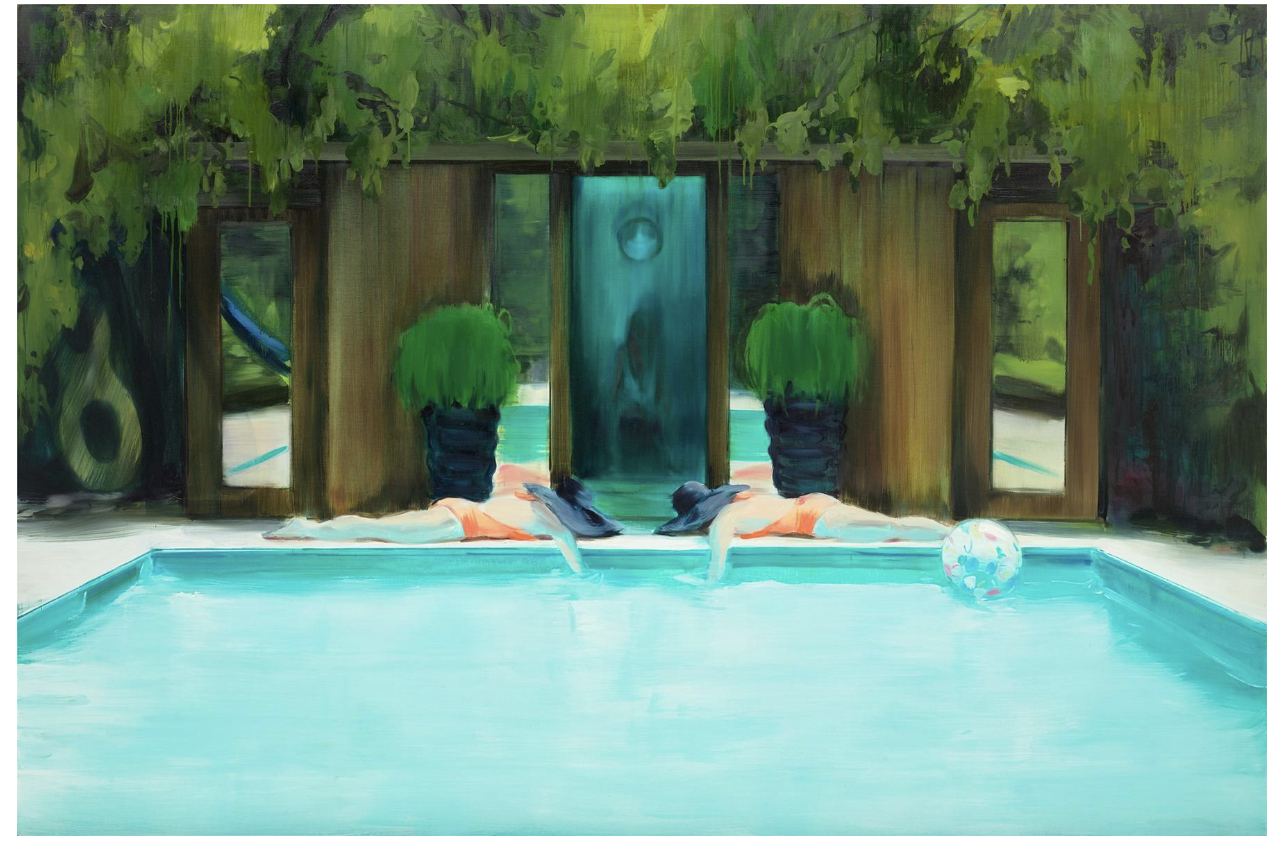
CAROLINE WALKER
Threshold, 2014
Oil on canvas
200×300 cm (78 3/4 x 118 1/8 inches)
Signed, titled and dated ”THRESHOLD’ CAROLINE WALKER 2014 Caroline Walker’ on the reverse
Executed in seductive washes of turquoise and deep, forest greens, Threshold is a captivating work by Scottish artist Caroline Walker, balancing compositional harmony with a richly atmospheric sense of narrative ambiguity. Framed by dense, overhanging foliage, two women dressed in identical orange swimsuits lie head-to-head at the edge of an outdoor swimming pool, their faces hidden by broad-rimmed, black sunhats. Mirroring each other, both trail an arm languorously in the water, the strange symmetry of their arrangement and attire echoed in the doubled reflection of the pool and enforced by the rigid symmetry of the alternating panels of oak and glass behind the figures.
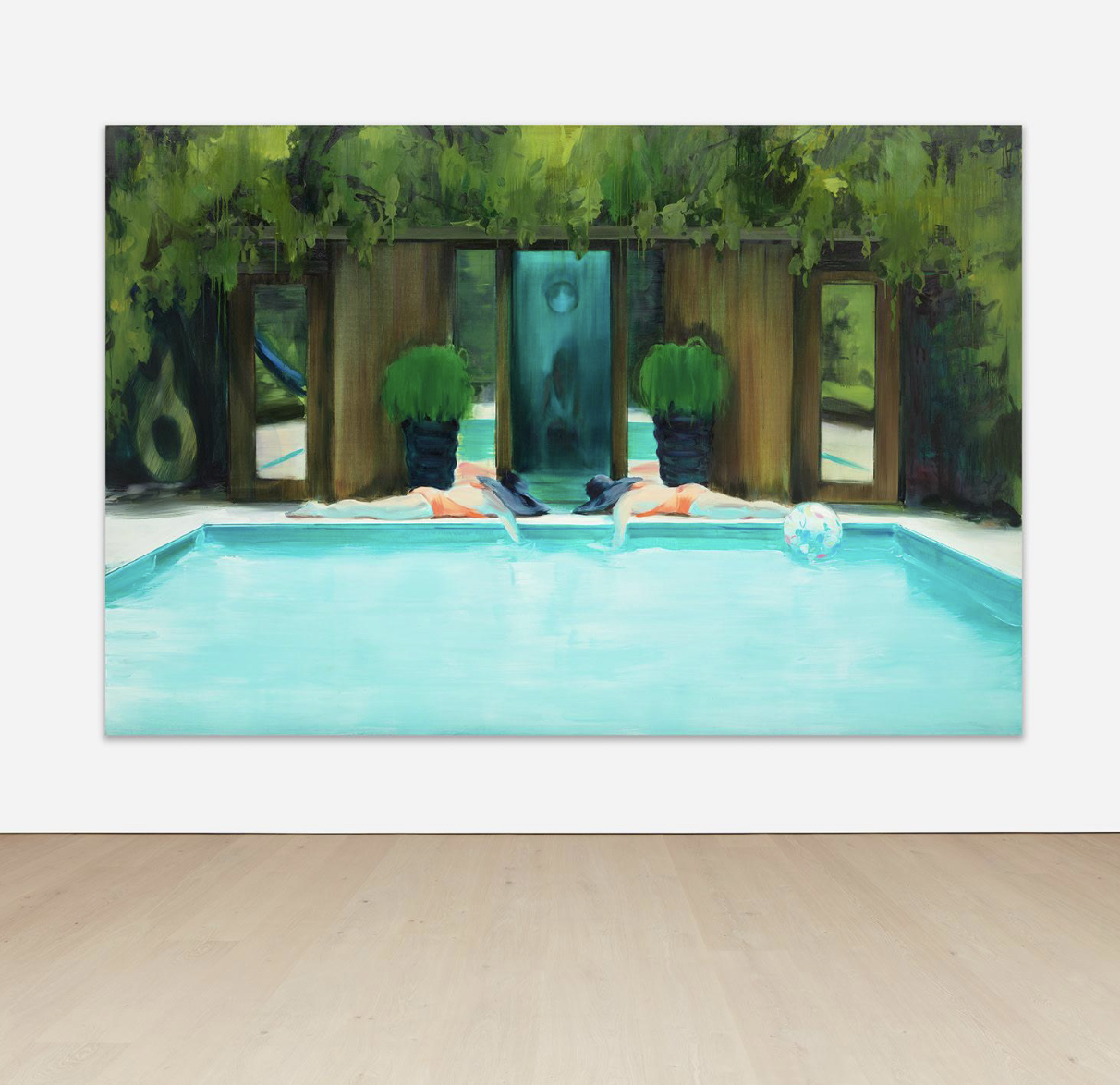
Painted in 2014, Threshold is a late work from Walker’s In Every Dream Home series, a suite of paintings first presented in the artist’s solo exhibition with Pitzhanger Manor Gallery the year before. Staged in the same, luxurious residential setting, the paintings feature a recurring cast of women who we glimpse in moments of unguarded stillness, the passage of the day carrying them through a set of familiar domestic and leisure activities. Alongside the house and the three women themselves, the oversized hats and orange bathing suits run like a thread through the series, compellingly connecting the individual paintings like fragments of a narrative that always seems to fall just beyond the scope of our comprehension. The arrangement of the two figures here is repeated across the series, with other works such as Recreation Pavillion reprising the composition from a different, elevated and more closely cropped angle. Non-linear and strikingly cinematic, Walker sets up visual clues about the lives of the women without ever being explicit about who they are or what their relationship to one another might be, establishing the central tension between luxury and artifice, appearance and reality that energizes these dramas of contemporary domesticity.
Joel Mesler
Phillips London: 2 March 2023
Estimated: GBP 150,000 – 250,000
GBP 533,400
Joel Mesler – 20th Century & Contempora… Lot 5 March 2023 | Phillips
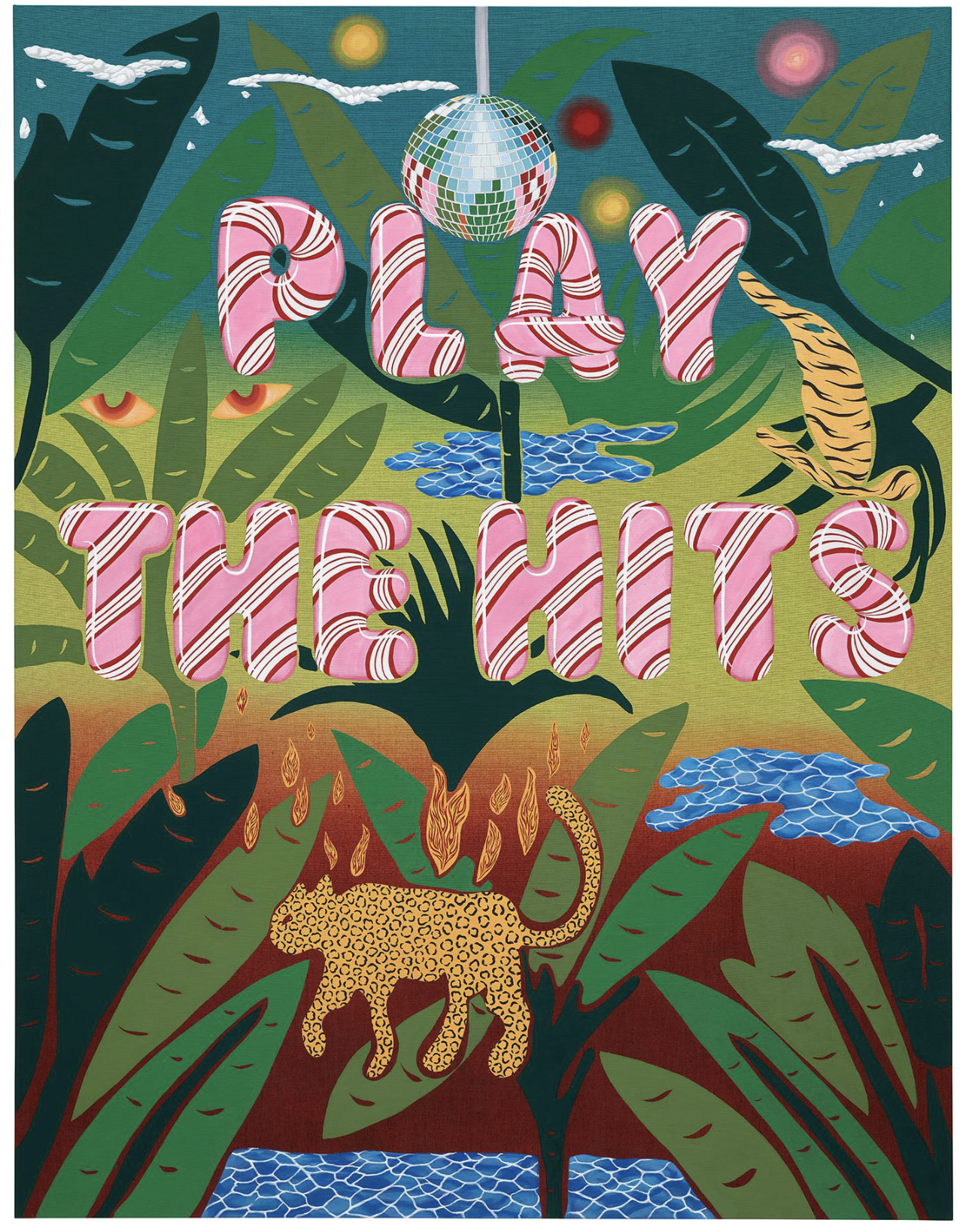
JOEL MESLER
Untitled (Play the Hits), 2021
Pigment on linen
84×65 inches (213.4 x 165.1 cm)
Signed and dated ‘Joel Mesler 2021’ on the overlap
Bright, bold, and unapologetically playful, Californian artist Joel Mesler’s canvases are instantly recognizable in their juxtaposition of familiar, resonant phrases against highly stylised backgrounds. Universal in its appeal, Untitled (Play the Hits) has a sharp, graphic quality that nods to Mesler’s earlier printmaking practice on a technical level, while its wry humor draws on more personal autobiographic elements gleaned from the artist’s childhood. Coming to painting later in life after a mercurial career that saw him working as a landlord and art dealer amongst other ventures, Mesler creates nuanced, vibrant canvases which explore the relationship between word and image, combining the personal and the universal as family history dovetails with more collective experiences. Created by applying paint directly onto the canvas’s raw linen in a series of carefully layered brushstrokes, Mesler’s energetic colors and precise sense of pictorial precision make his work highly accessible, drawing frequent comparison to the direct style and simplicity of children’s picture books as well as the exotic fauna of Henri Rousseau’s stylized scenes. As in Rousseau’s canvases, the long, sculptural fronds of palms and banana leaves are a signature element that recurs throughout Mesler’s oeuvre, conjuring the imaginative jungles of our childhood games and stories which the artist then populates with seemingly unrelated motifs, here including a lone leopard, sauntering over scorching sand; a glittering disco ball suspended, impossibly, above his head; and a host of strange, brightly colored lights dance in the skies overhead.
Jeff Koons
Phillips London: 2 March 2023
Estimated: GBP 500,000 – 700,000
GBP 482,600
Jeff Koons – 20th Century & Contempora… Lot 16 March 2023 | Phillips
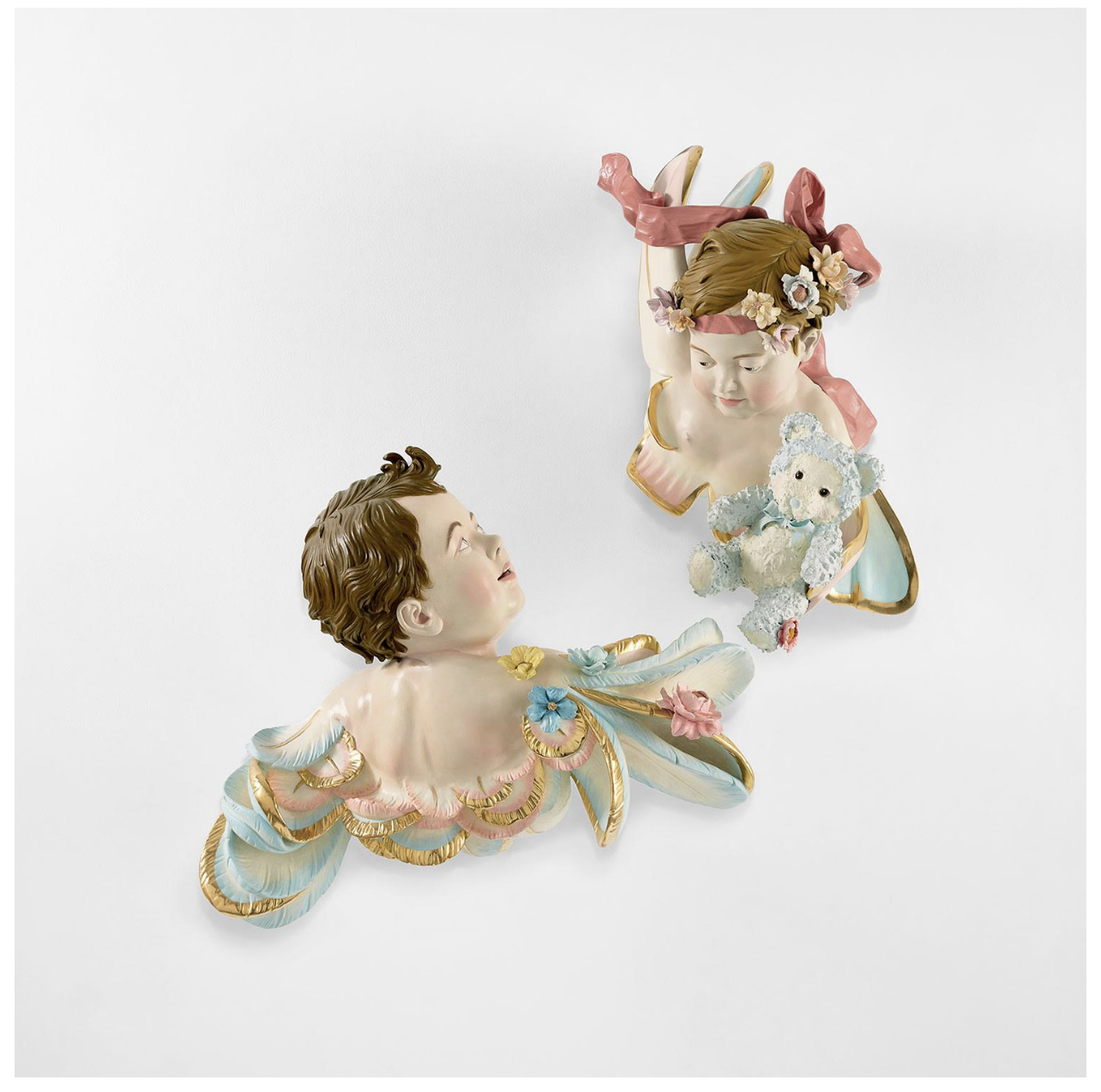
JEFF KOONS
Cherubs, 1991
Polychromed wood, in 2 parts
121.9 x 110.5 x 48.3 cm (47 7/8 x 43 1/2 x 19 inches)
Inscribed with signature, number and date ‘3/3 91 J FUX’
An art-world provocateur, Jeff Koons has been no stranger to controversy during his four-decade career, infamous for his ‘pagan monuments to mass-culture triviality’ as much as his flirtation with large-scale spectacle in a multi-media age.i However, unlike other artists with works that are controversial, Koons insists that the shock and sensation provoked by some of his more infamous pieces are not intentional, his aims being more closely aligned to notions of acceptance and affirmation. No body of work speaks more clearly to these tensions than his Made in Heaven series, which moves between hardcore pornographic imagery and kitsch, encompassing sculptural depictions of flowers, pet dogs, and cherubs with more sexually explicit works of the artist and his then wife, the adult film star Ilona Staller.
Brash and unapologetic, Made in Heaven was first announced in 1989 with the appearance of a giant billboard at various sites across New York, styled like a promotional still from a feature film featuring a nude Koons draped across his prone wife as painterly waves crash suggestively behind them. Installed as part of the Whitney Museum of American Art’s Image World exhibition, the billboard’s blend of kitsch aesthetics and eroticism set the tone for the series to come, which created an immediate sensation following its inaugural presentation at La Biennale di Venezia in 1990 and in Koons’ hotly anticipated solo show at the Sonnabend Gallery in New York the following year.
Damien Hirst
Phillips London: 2 March 2023
Estimated: GBP 400,000 – 600,000
GBP 457,200
Damien Hirst – 20th Century & Contempo… Lot 18 March 2023 | Phillips
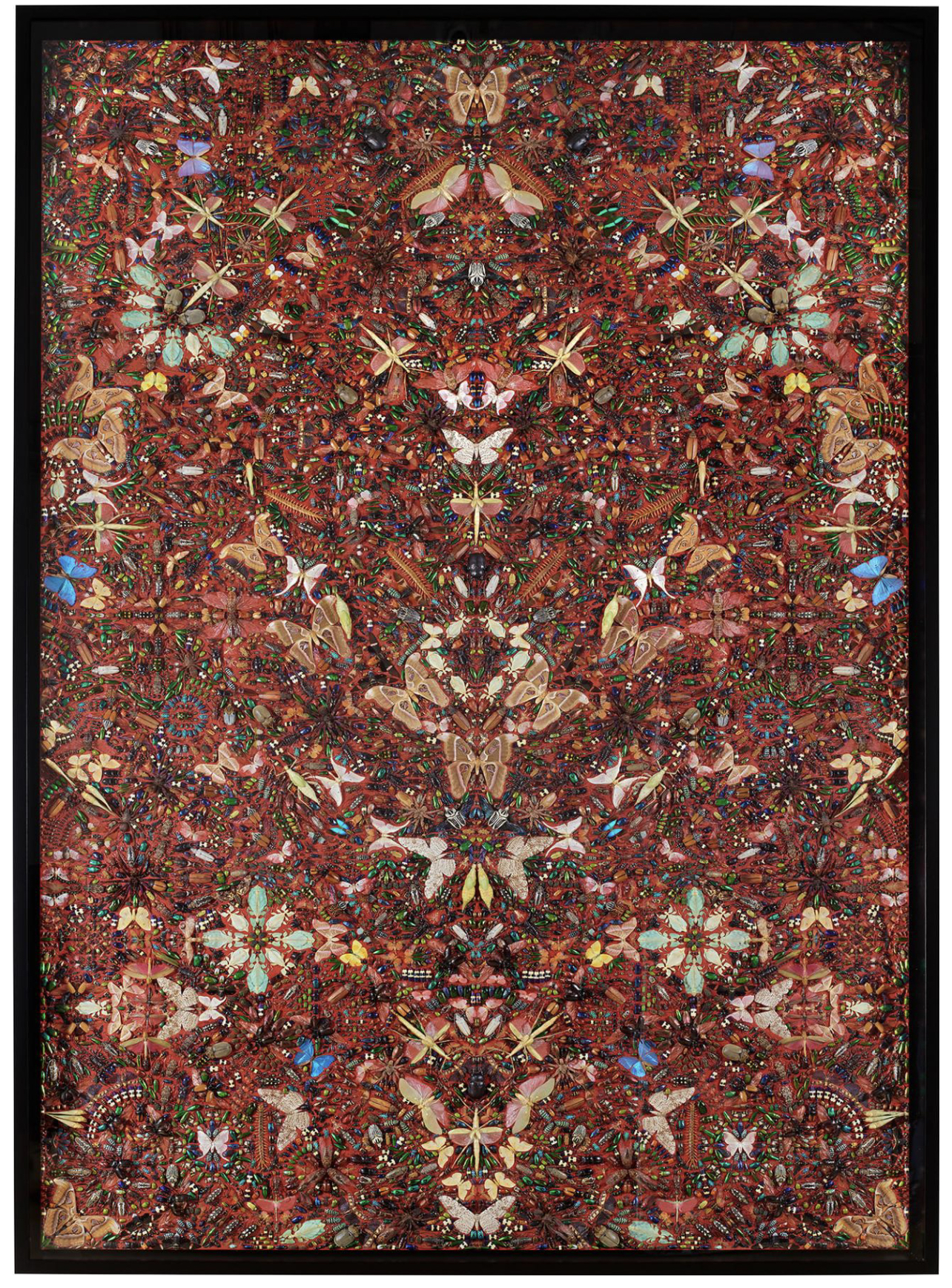
DAMIEN HIRST
Briareus, 2012
Entomological specimens and Hammerite paint on canvas
365.8 x 243.8 cm (144 x 95 7/8 inches)
Signed, stamped with the artist’s stamp, titled and dated on the backing board
Immersive in its scale and brilliantly shifting, kaleidoscopic qualities, Briareus is a mesmerising example of Damien Hirst’s Entomology Paintings. Refracting outwards from a central line of symmetry, vivid, jewelled hues of lapis lazuli, chartreuse, and jade shimmer and refract across its complex surface, its effects ‘at once delicate and epic […] the relays of mirrored and repeating elements’ overwhelming in its totality.i Appearing at first glance like highly polished precious stones, the dazzling visual effects created here have quite a different source. In an evolution of the iconic butterfly paintings first explored in his Kaleidoscope series, the artist started to explore the possibilities of expanding his repertoire to incorporate other, perhaps less straightforwardly ‘beautiful’ species. Composed of hundreds of different varieties of insect, beetle, and butterfly species affixed with Hammerite gloss paint, Briareus exemplifies the delicate balance that Hirst strikes in his work between beauty and horror, desire and disgust, and the very human preoccupation with life and death that continues to absorb the artist. Included in Hirst’s 2013 exhibition with White Cube in Hong Kong alongside examples of his Entomology Cabinets and Scalpel Blade Paintings, Briareus highlights the close stylistic and conceptual connections between these bodies of work.