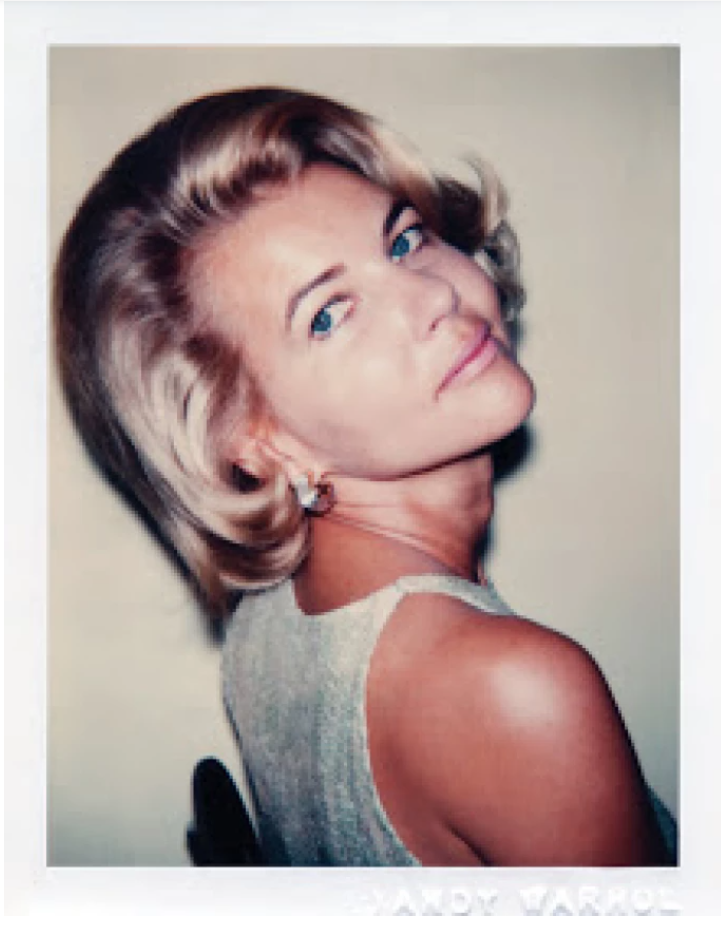
After a decade silk-screening iconic Campbell soup cans, dollar bills and Coca-Cola bottles in the 1960s, Warhol turned to the celebrity, arguably America’s most revered commodity. Already captured and consumed, if not devoured, by popular visual culture and media, the society portrait provided Warhol all-exclusive access to the world of the rich and famous. The series forms his single largest body of work.
Introduction
The portraits began with photographs taken by Warhol with a Polaroid Big Shot camera in his ‘Factory’ on Union Square, Manhattan. Enjoying the rudimentary appearance of its stark flash and fixed focus, Warhol often exaggerated its flattening effects by applying white based foundation and bright cosmetics to his sitters. In lieu of the traditional portraitist’s preparatory sketch, Warhol’s use of the inexpensive instant camera offered him equivalent immediacy with his subject, resulting in works with surprising glimmers of personality amidst a graphic, Pop surface. Printing his favorite of the polaroids to acetates, Warhol would set to work, meticulously retouching his sitters’ faces, erasing the texture of fine lines and wrinkles to create smooth planes of dimension. He was particular about printing onto standardized canvases of 40 by 40 inches, envisaging an eventual, monumental display of the series side-by-side in a comprehensive ‘Portrait of Society’.
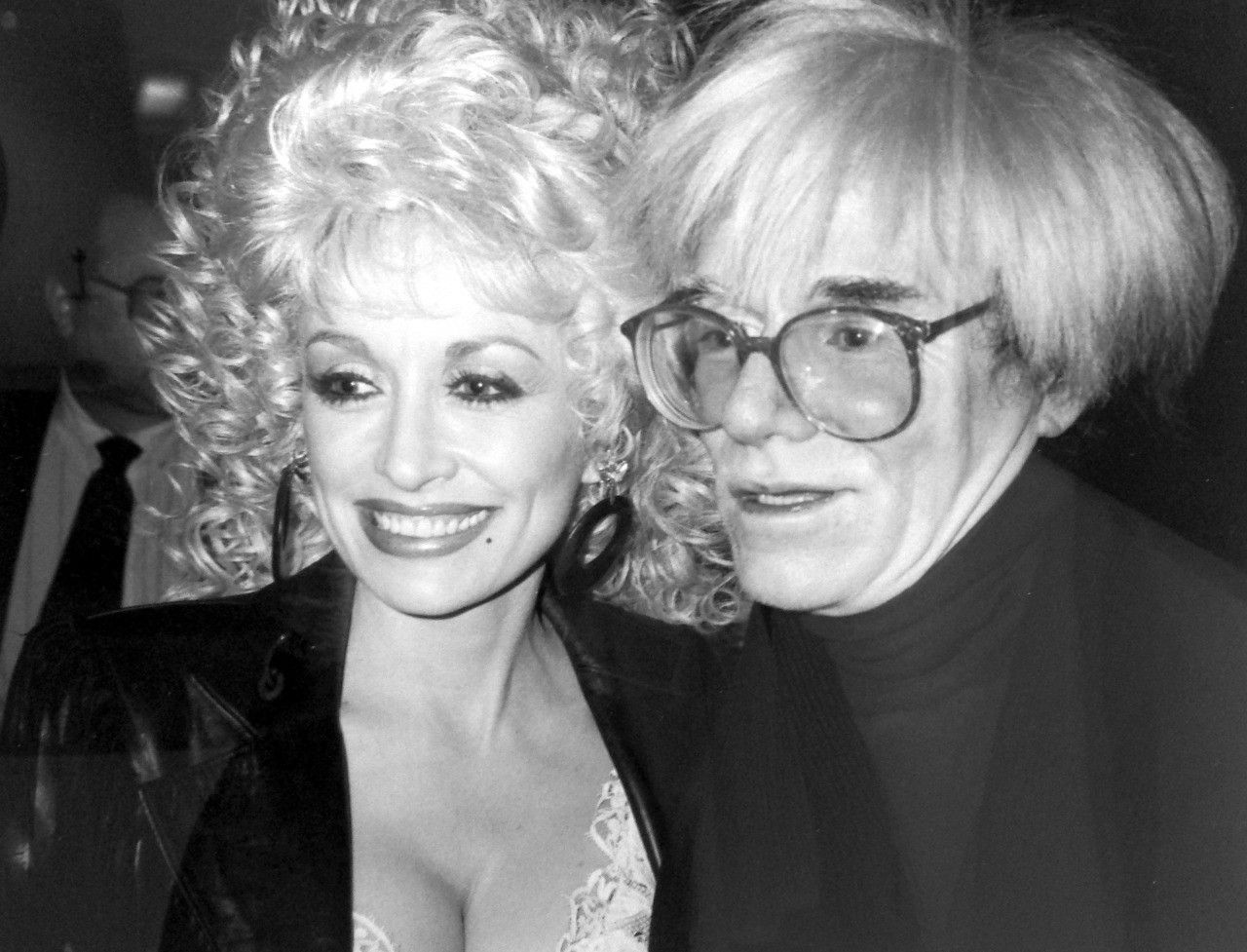
Capturing the likenesses of actresses, rockstars, politicians, businessmen, starlets and even royalty, Warhol’s series of large, square-format canvases constitutes an almost encyclopedic visual catalogue of the upper echelons. Harnessing the technologies of the instant, readymade photograph within his portraits, these works draw on the contemporary language of the mass-produced, recalling imagery from glossy magazines, newspapers and Hollywood films. Resuscitating 20th-century portraiture in America after a succession of non-figurative artistic movements—Abstract Expressionism, Minimalism, and Conceptualism—Warhol’s Pop revitalization of the genre is one of his greatest legacies.
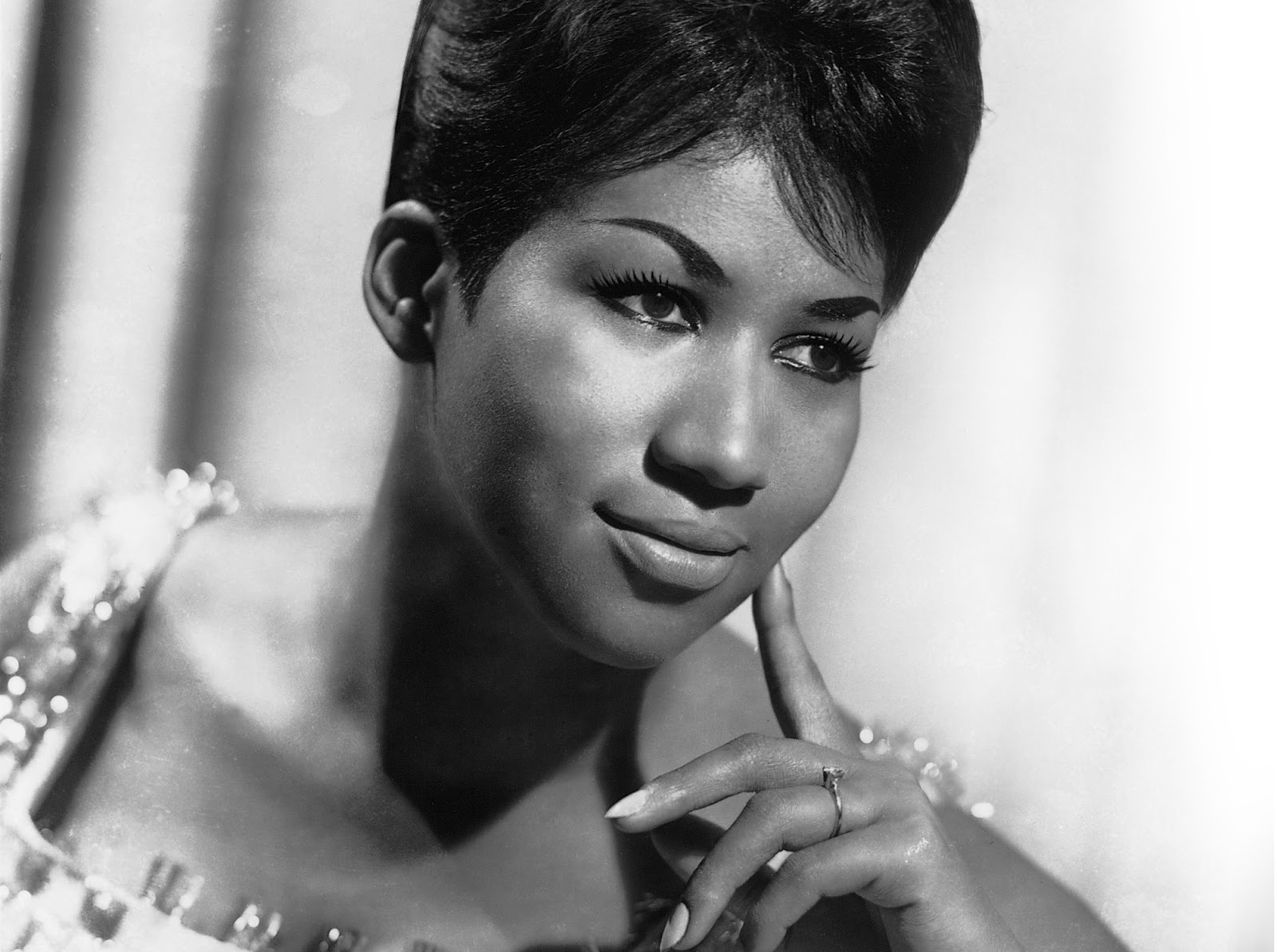
Enamored with celebrity and consumer culture, Andy Warhol created several portraits of icons of his time including Jackie Kennedy, Marilyn Monroe, Elvis Presley, and, seen in the present work, Aretha Franklin. Since childhood, Warhol had always had a fascination with celebrity; he decorated his room with images from tabloid magazines and maintained a collection of autographs. When he moved to New York in 1949 to become an illustrator for Glamour magazine, Warhol quickly joined the circles of the rich and famous ties which were only strengthened once he rose to fame in his career as a groundbreaking Pop artist. Through producing these portraits using his semi-mechanized silkscreen process, Warhol essentially furthered the conceptualization of these celebrities as products of the consumer culture: their facades were mass-produced, bought, and sold, further emphasizing the commoditization of the celebrities themselves.
Warhol’s celebrity portraits began with his commemoration of Marilyn Monroe’s death in 1962, and the series continued throughout his career. To create these portraits, Warhol began with a camera: he took numerous pictures using his Polaroid, and he would then blow up one picture, convert it to a negative, and trace it on the canvas in order to capture the sitter’s features before creating a silkscreen. This involved creative process furthered Warhol’s intimacy with his subjects; however, it was intimacy that was achieved after the celebrity themselves had left his studio.
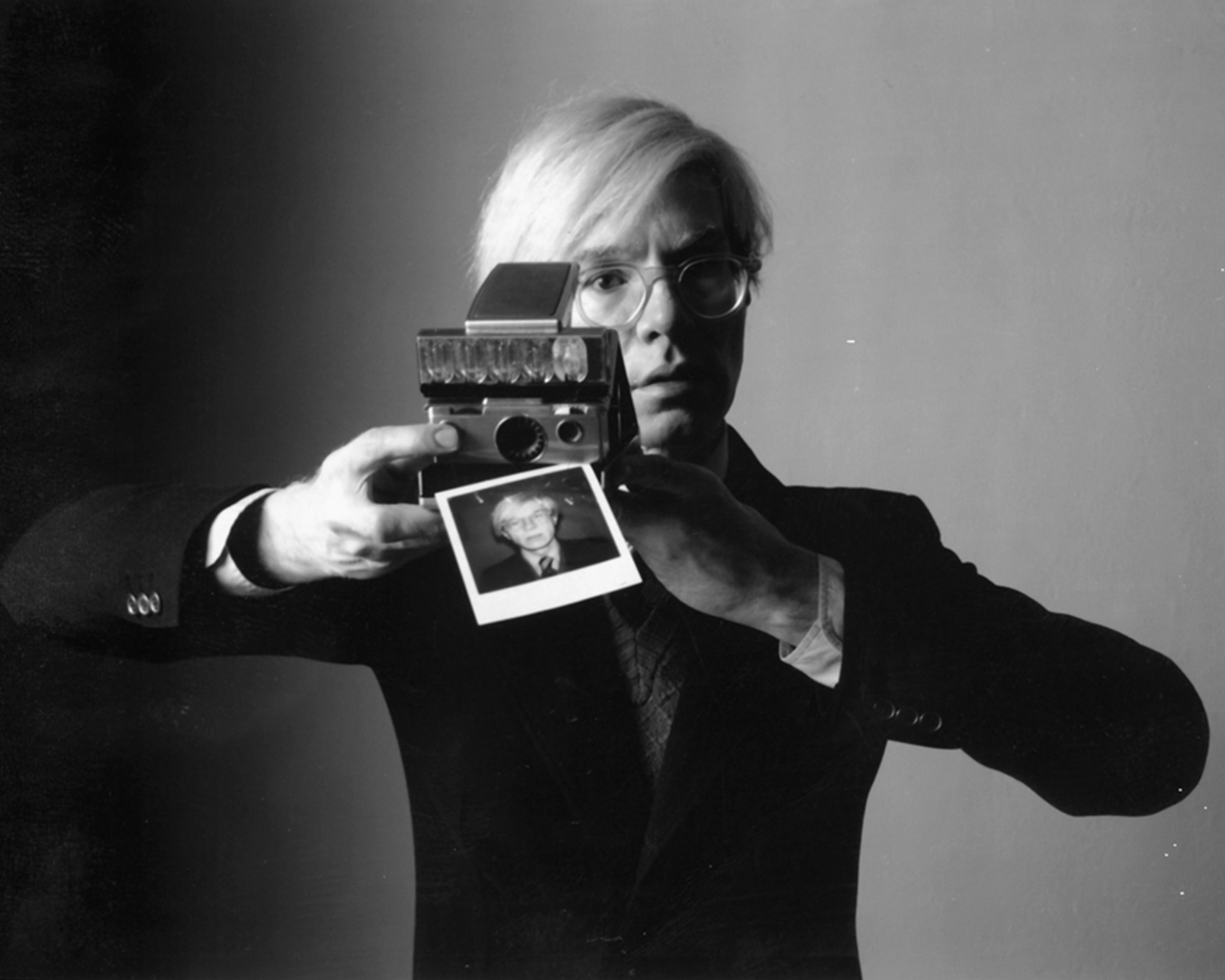
To create his portraits, Warhol employed a semi-mechanized silk-screening process that allowed him to mass-produce his images. Beginning with a camera, Warhol would take countless pictures of his subjects using a Polaroid camera. Often referring to his camera as his ‘pencil and paper’, Warhol used it as a filter with which to mediate his interaction with the world. Warhol was aware of the potential of photography to shape meaning and to both reflect and reaffirm the wider cultural fascination of the American public. Warhol’s captivation with the ephemerality of popular culture, as well as his concern with appearances and representation, make the Polaroid a fitting medium for his portraits. This Polaroid would then be blown up and converted into a negative which Warhol used to trace the sitter’s features onto the canvas from which he would create a silkscreen. This process results in an idealized interpretation of his subject composed of simplified, colorful shapes.
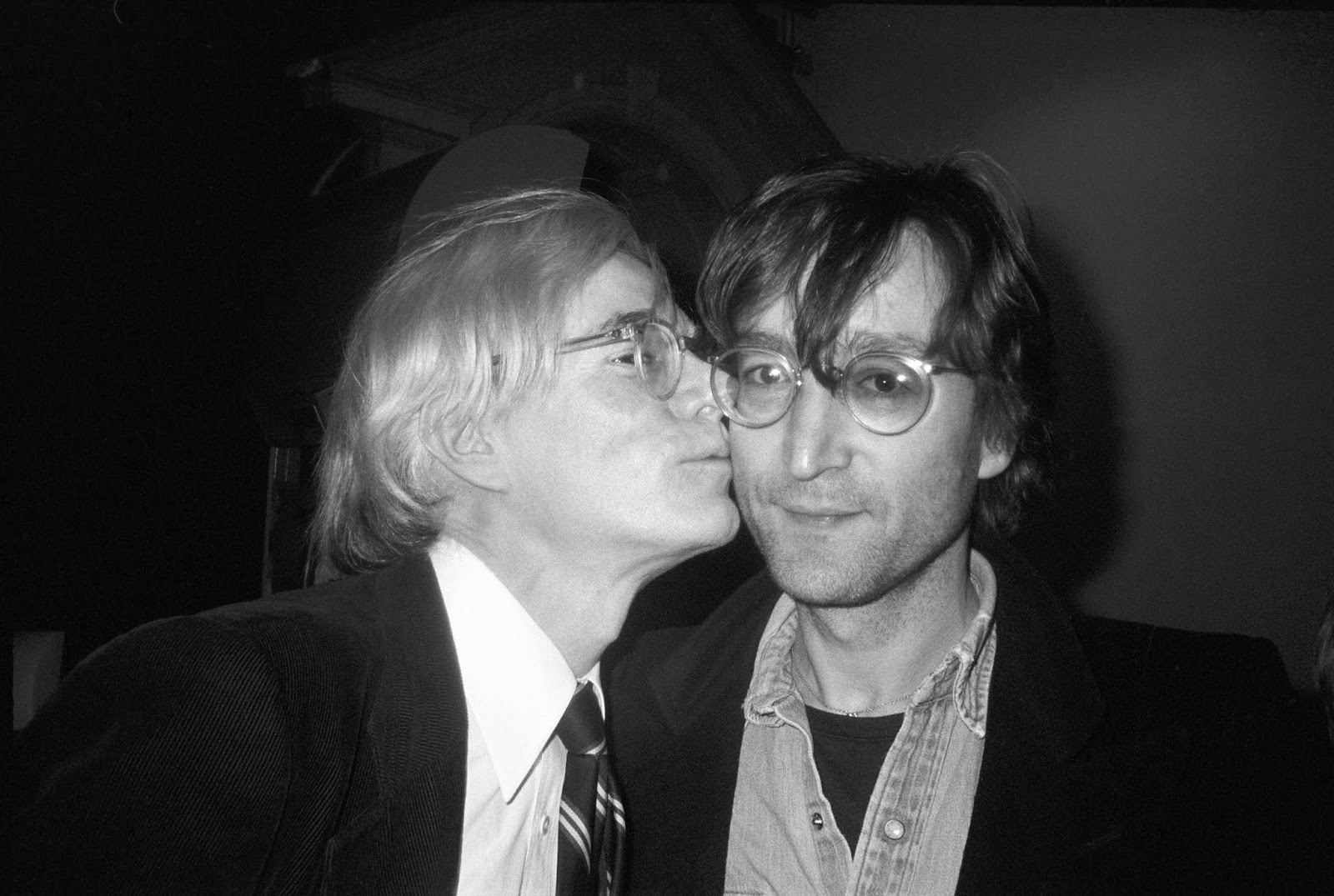
Having been fascinated by the culture of celebrity throughout his life, by the 1970s, Warhol’s own success and notoriety was such that his fame now rivalled that of stars he had first idolized. Seamlessly combining social life with business, he established himself as the foremost portraitist in America undertaking commissions from the stars of his acquaintance: Mick Jagger, Yves Saint Lauren, Liza Minnelli, presidents Gerald Ford and Jimmy Carter, the Shah of Iran, to name but a few. Even though he was as (if not more) famous than his sitters, he remained easily star-struck and admitted to being thrilled by the experience.
“I am thrilled to be able to know what color eyes a person has just from looking at them, because color TV still can’t help you too much there.”
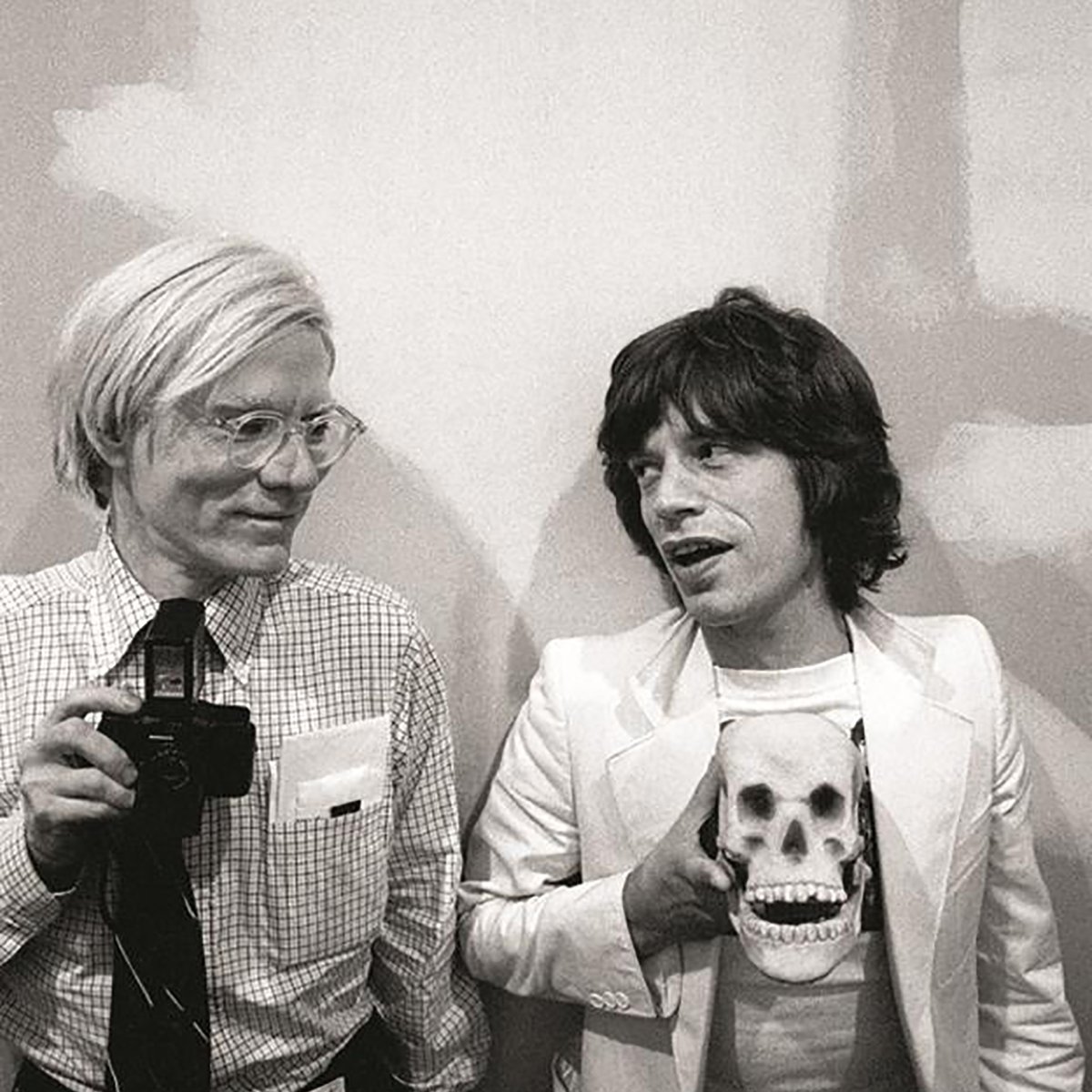
Warhol’s portraits of TV, movie and rock stars shifted his production into the next level, and satisfied an urge he clearly had been feeling ever since his first photo-inspired portraits of Marilyn, Liz and Elvis. Although his first portrait commission had been in 1963 from Bob Scull for the portrait of his wife, Ethel, it wasn’t until the mid 1970s that Warhol decided to turn his full focus into producing commissioned portraits of the protagonists of the “tinsel and glitter” era. These commissioned portraits of the 70s were as beneficial for the reputations of the people in them as they were for Warhol. For the sitters, it was a means of associating themselves with the instantly recognizable cool Warhol aesthetic, and for the artist it was a reflection of his rising star and a validation of his own celebrity status. As the bold colors and intimate clarity of the celebrity portraits convey, Warhol relished his privileged face to face access to the stars and icons of his time. His silkscreen technique had now been refined to such a degree that he was able to create flawless and flattering images of his subjects, and popularity of the celebrity portraits was such that they became the artist’s primary source of income.
In the opening years of the 1960s Andy Warhol famously married the objective realism of photography and the historic power of the genre of portraiture to create a new cast of modern icons in the newfound Pop Art aesthetic. In his idiosyncratic silkscreen technique, he handled consumer objects and celebrities with equal detachment. It was in 1967, during a period in which he otherwise drastically reduced his painterly output, that Warhol made his first major portrait series depicting artists. At the time, both Warhol and Lichtenstein worked under the auspices of New York’s most influential gallerist, Leo Castelli. Ever aware of the gravity of his immediate context, Warhol initiated a series of portraits of artists represented by Castelli, including Lichtenstein, Robert Rauschenberg, Frank Stella and Donald Judd. Painted in an intimate scale, the three portraits he made of Lichtenstein at this time form an important precursor to the present work. In the 1967 portraits, Warhol used a second-hand photograph supplied to him by Castelli, with a closely cropped format reminiscent of the photobooth paintings he had experimented with earlier in the decade.
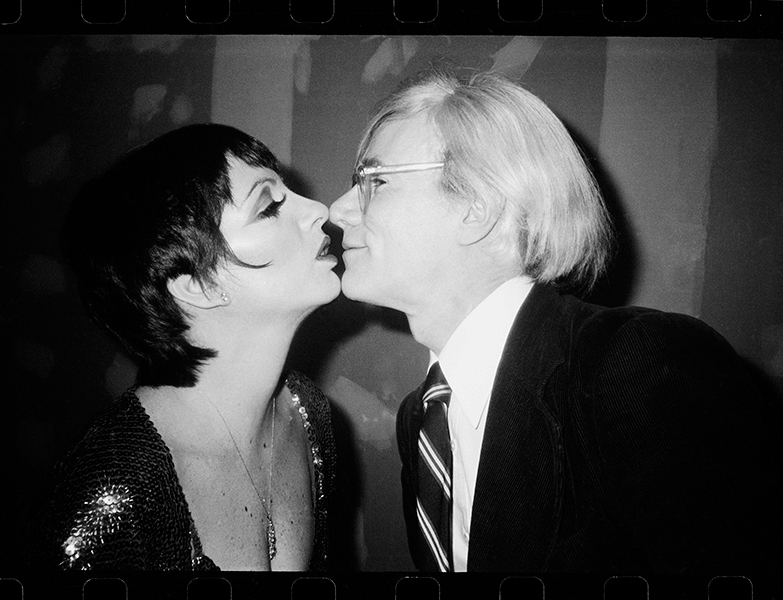
By 1976 when Warhol came to make the silkscreen paintings, the artist had firmly established the parameters of his new portrait practice. Using his beloved grey plastic Polaroid camera, the “Big Shot”, Warhol arranged ad-hoc photoshoots with his notoriously glamorous circle of friends, artists, celebrities and socialites. Transferring the images to silkscreen in a revival of his idiosyncratic methodology, the artist steadily built a social portrait of his vibrant cultural milieu through individual canvases in the 40-inch square format, a meta-museum that reimagined the pantheon of rock stars and actresses from Old Hollywood that dominated his early work.
Auction Results
2025 Auction Results
Beautiful Lady, 1984
Van Ham Cologne: 3 December 2025
Estimated: EUR 300,000 – 500,000
EUR 369,600 / USD 430,930
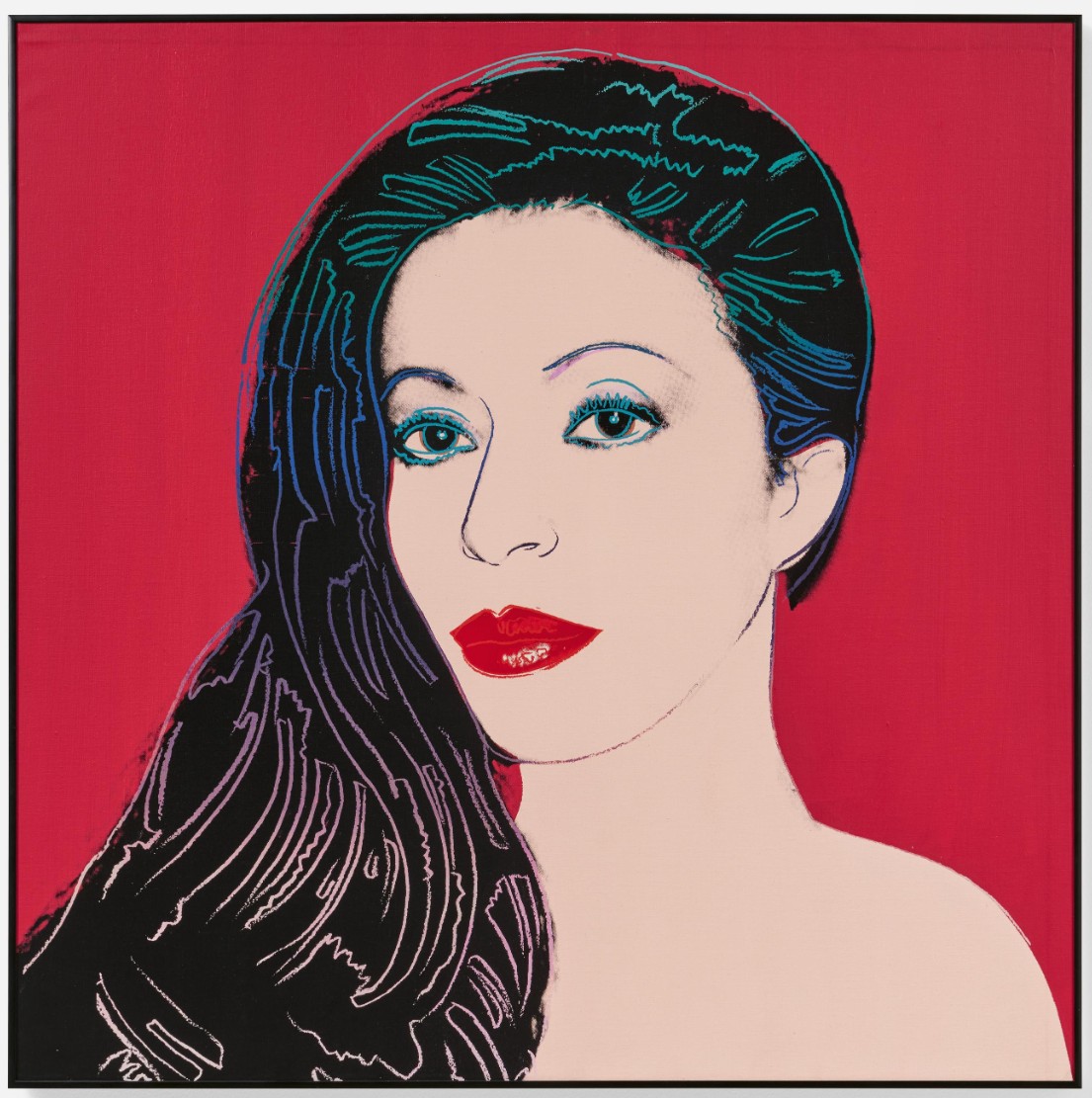
ANDY WARHOL (1928 Pittsburgh, PA/USA – 1987 New York)
Beautiful Lady, 1984
Acrylic on canvas
40×40 inches (101×101 cm)
Signed and dated verso on the former canvas cover on the stretcher: Andy Warhol 84
Robert J. Denison (Two Works), 1974
Bonhams New-York: 19 November 2025
Estimated: USD 300,000 – 500,000
USD 203,700
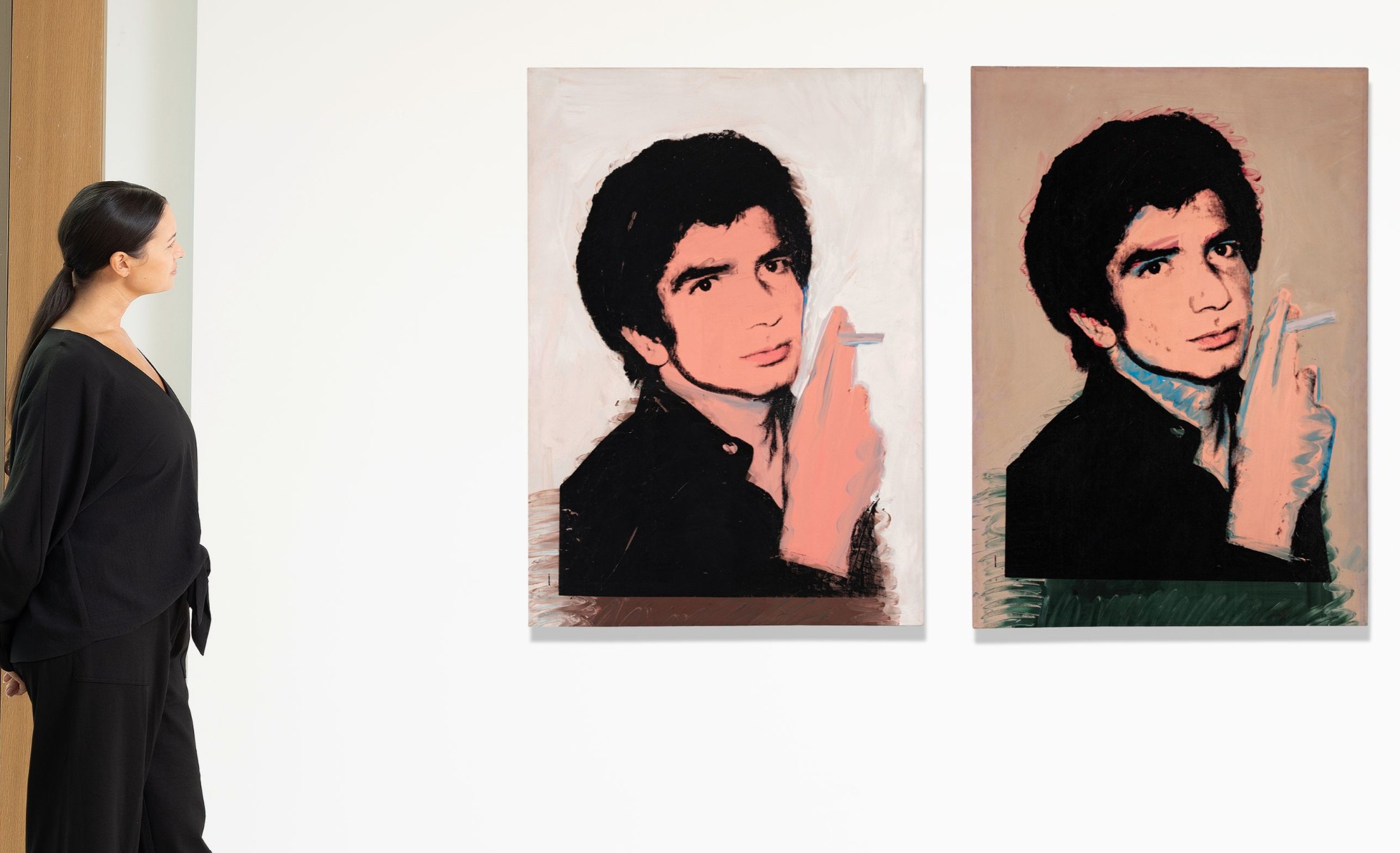
ANDY WARHOL (1928-1987)
Robert J. Denison (Two Works), 1974
Each: acrylic and silkscreen on canvas
Each: 48×34 inches (122 x 86.3 cm)
Signed, inscribed and dated ‘Bob D Andy Warhol 1977’ (on the overlap)
Signed, inscribed and dated ‘Bob Andy Warhol 1977’ (on the overlap)
Man Ray, 1974
Sotheby’s London: 17 September 2025
Estimated: GBP 400,000 – 600,000
GBP 584,200 / USD 797,630
Man Ray | Pauline Karpidas: The London Collection Evening Auction | 2025 | Sotheby’s
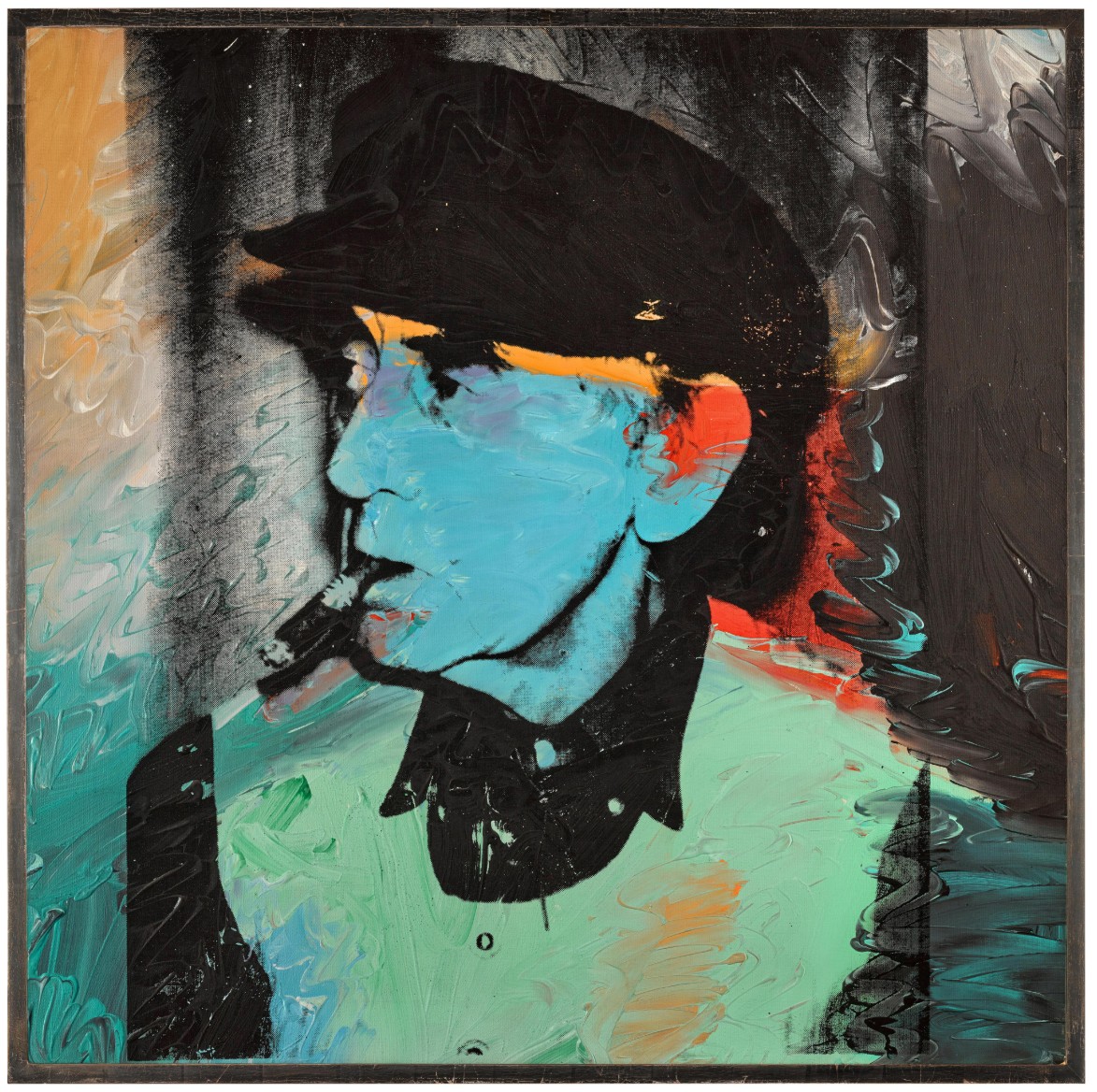
ANDY WARHOL (1928 – 1987)
Man Ray, 1974
Acrylic and silkscreen ink on canvas
39 3/4 x 39 3/4 inches (101×101 cm)
Signed, titled, numbered 6/6 and dated 74 (on the overlap)
Untitled (Portrait of Nastassja Kinski), 1984
Van Ham: 3 June 2025
Estimated: EUR 300,000 – 500,000
EUR 434,848 / USD 494,510
The Bayer Collection | Andy Warhol-Untitled (Portrait of Nastassja Kinski) | Van Ham Art Auctions
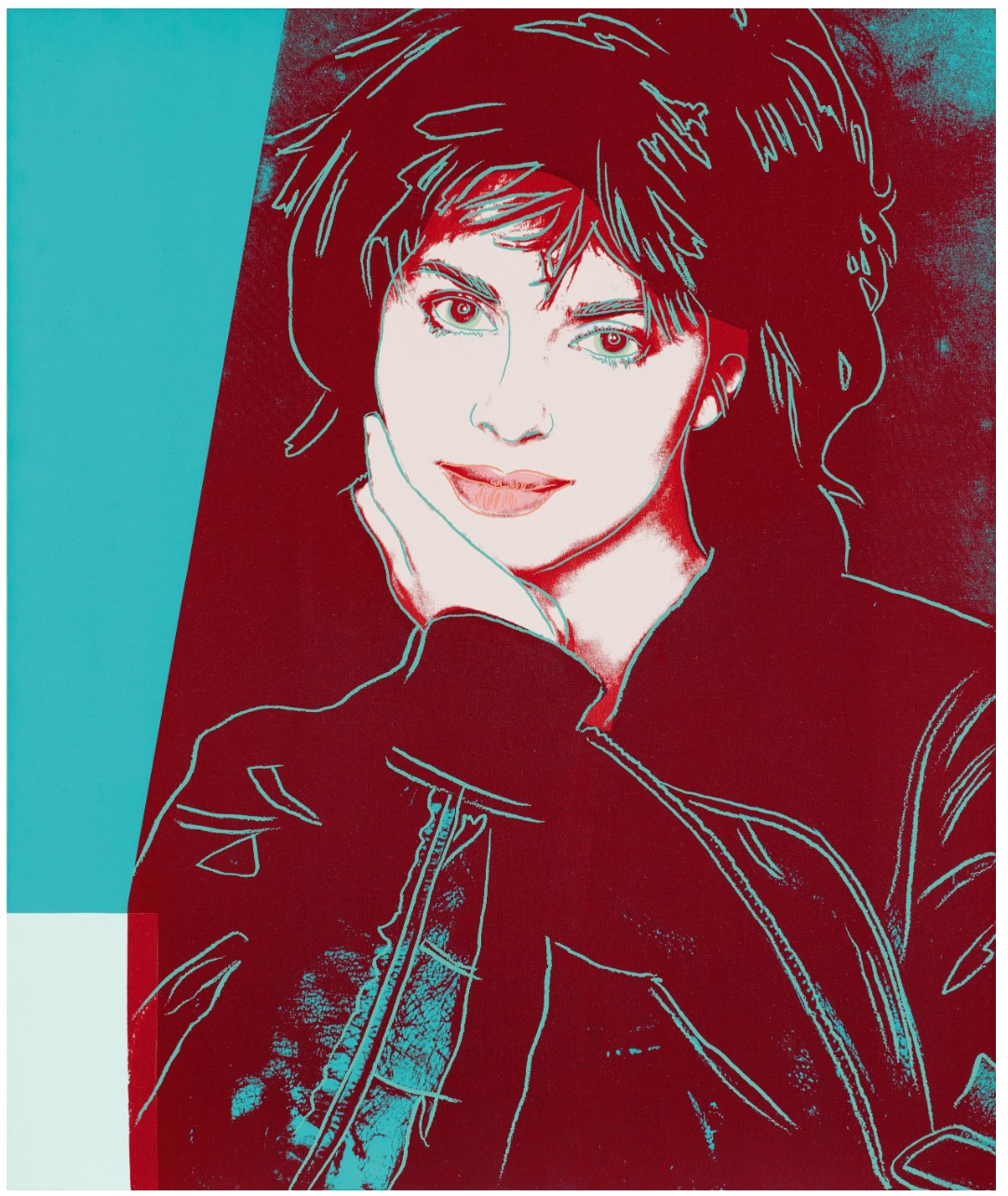
ANDY WARHOL (1928 Pittsburgh, PA/USA – 1987 New York)
Untitled (Portrait of Nastassja Kinski), 1984
Acrylic on canvas
50×42 inches (127 x 106.5 cm)
Signed and dated on the folded canvas verso top right: Andy Warhol 84
Cardi Smith (Madame Smith), 1974
Christie’s London: 6 March 2025
Estimated: GBP 400,000 – 600,000
GBP 378,000 / USD 483,840
ANDY WARHOL (1928-1987), (i) Cardi Smith (Madame Smith)(ii) Cardi Smith (Madame Smith) | Christie’s
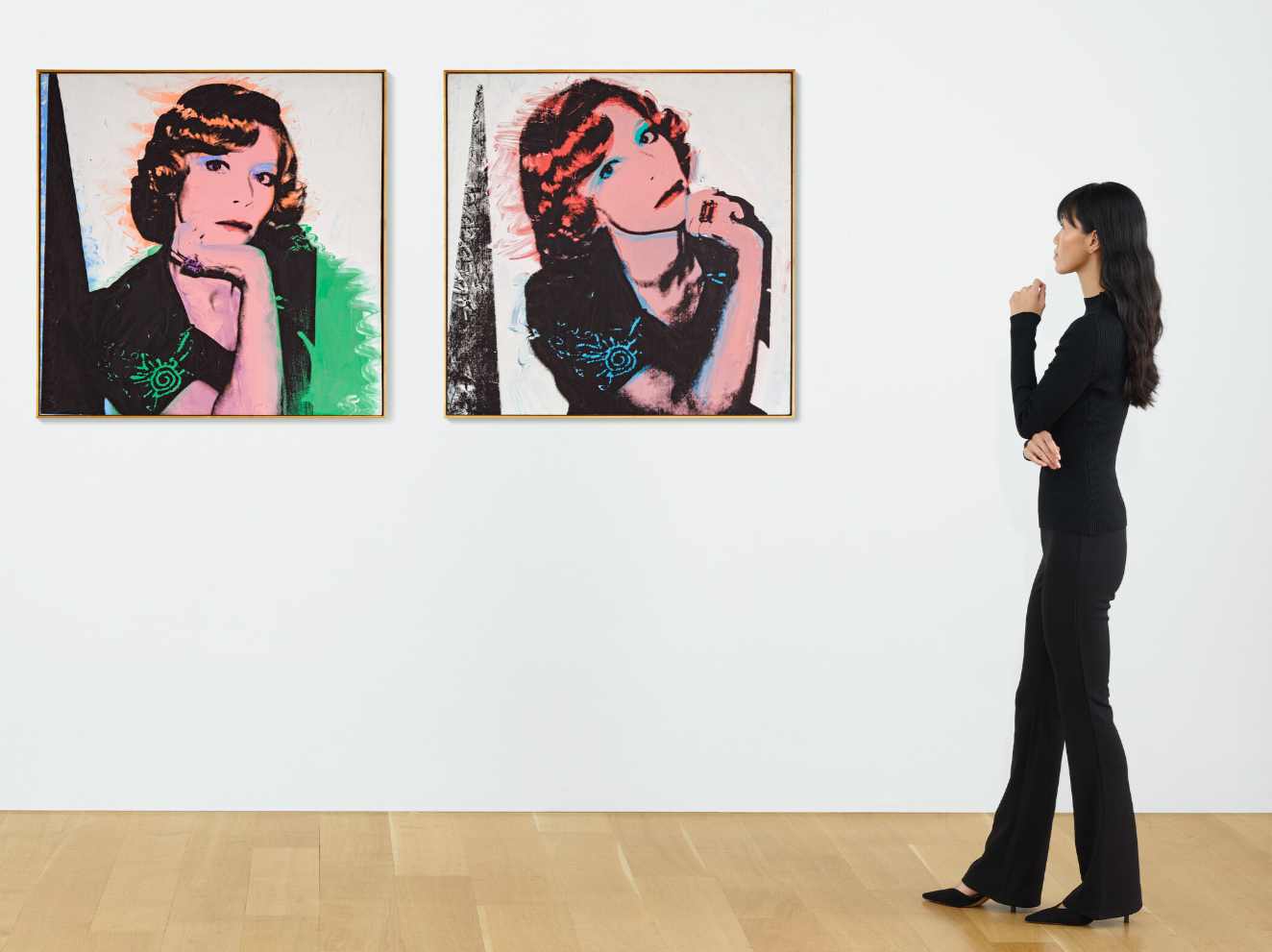
ANDY WARHOL (1928-1987)
(i) (ii) Cardi Smith (Madame Smith), 1974
Each: acrylic and silkscreen ink on linen
Each: 39 3/8 x 39 3/8 inches (100×100 cm)
(i) Stamped with the artist’s signature ‘Andy Warhol’ (on the overlap); signed, inscribed and numbered by Frederick Hughes ‘#A1290.10 CERTIFIED © 1974 Frederick Hughes’ (on the overlap)
(ii) Stamped with the artist’s signature ‘Andy Warhol’ (on the overlap); signed, inscribed and numbered by Frederick Hughes ‘CERTIFIED Frederick Hughes A1290.11© 1974’ (on the overlap)
Man Ray [Two Works], 1974
Sotheby’s New-York: 16 May 2025
Estimated: USD 200,000 – 300,000
USD 355,600
Man Ray [Two Works] | Contemporary Day Auction | 2025 | Sotheby’s
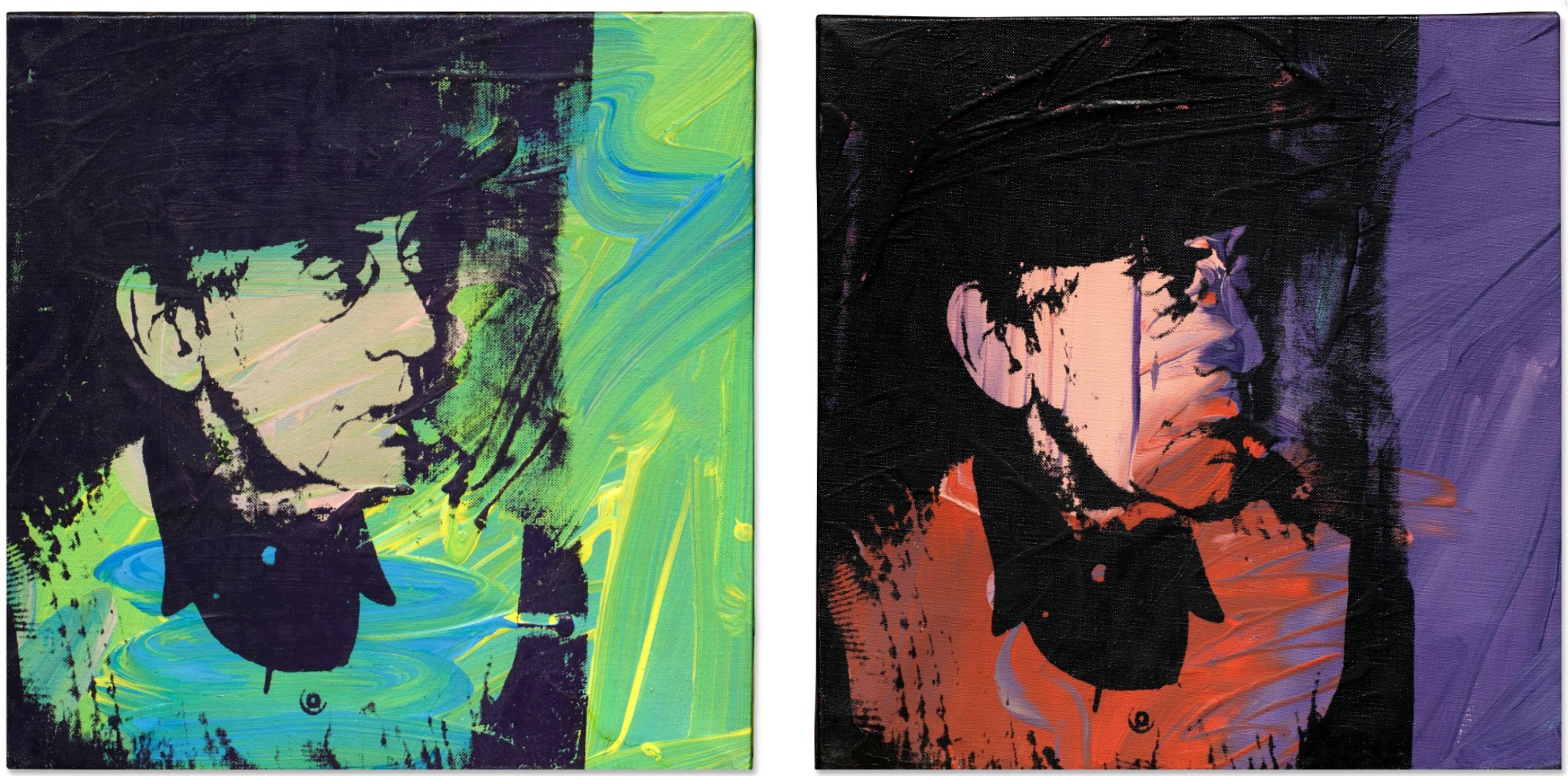
ANDY WARHOL (1928 – 1987)
Man Ray [Two Works], 1974
Acrylic and silkscreen ink on canvas in 2 parts
Each: 13×13 inches (33×33 cm)
Signed and dated 74 (on the reverse of each)
Margaret Krebs, 1982
Property from the former Margaret Krebs collection
Sotheby’s Paris: 8 July 2025
Estimated: EUR 200,000 – 300,000
EUR 254,000 / USD 297,775
Margaret Krebs | Modern & Contemporary Discoveries | 2025 | Sotheby’s
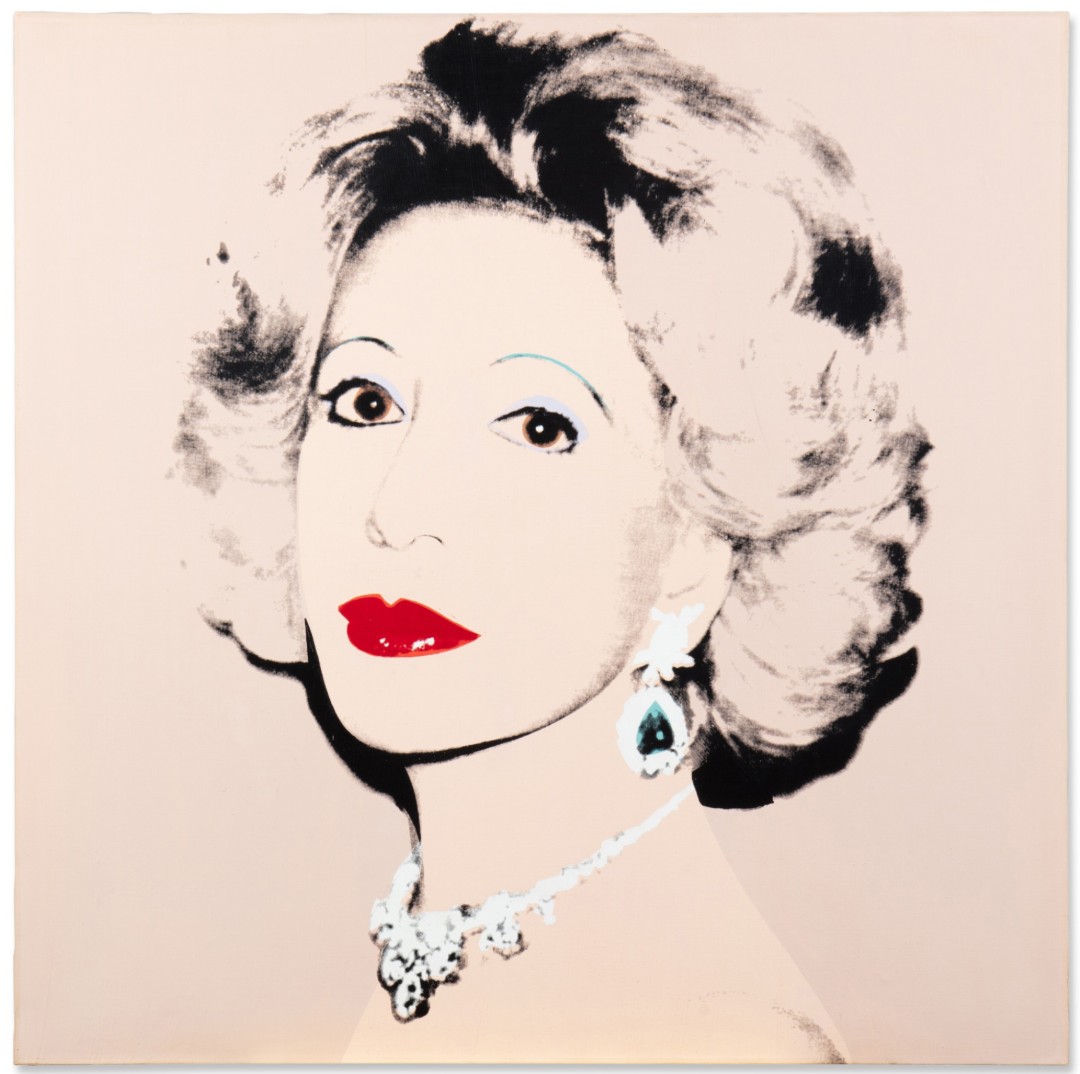
ANDY WARHOL (1928 – 1987)
Margaret Krebs, 1982
Acrylic and silkscreen ink on canvas
40×40 inches (101.6 x 101.6 cm)
Signed and dated 1982 (on the overlap)
2024 Auction Results
#1. Portrait of Princess Diana, 1982
Phillips London: 7 March 2024
Estimated: GBP 1,200,000 – 1,800,000
GBP 2,407,500 / USD 3,052,710
Andy Warhol – 20th Century & Contempor… Lot 12 March 2024 | Phillips
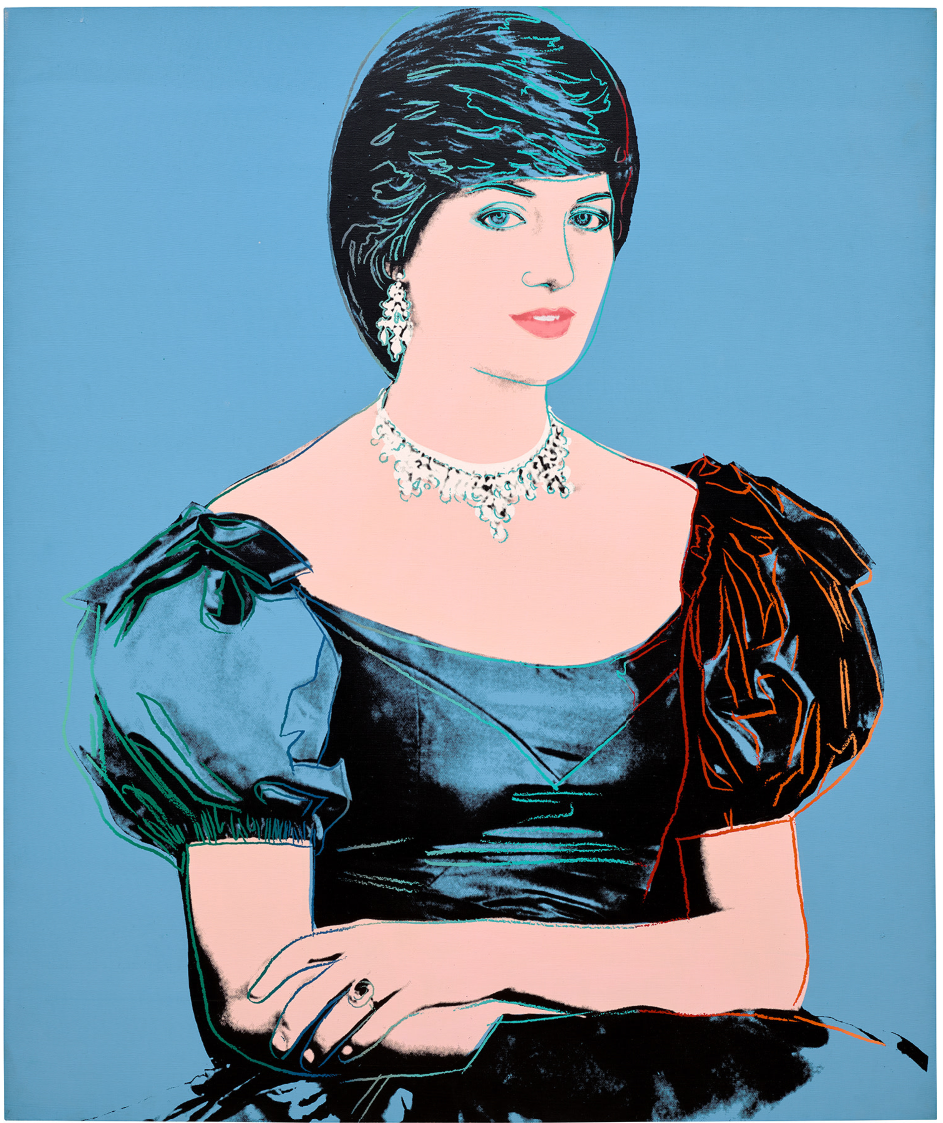
ANDY WARHOL
Portrait of Princess Diana, 1982
Synthetic polymer and silkscreen ink on canvas
50 x 42 3/8 inches (127 x 107.5 cm)
Signed and dated ‘Andy Warhol 82’ on the overlap
#2. Portrait of Princess Diana, 1982
Phillips London: 10 October 2024
Estimated: GBP 1,200,000 – 1,800,000
GBP 1,258,000 / USD 1,647,980
Andy Warhol – Modern & Contemporary … Lot 11 October 2024 | Phillips
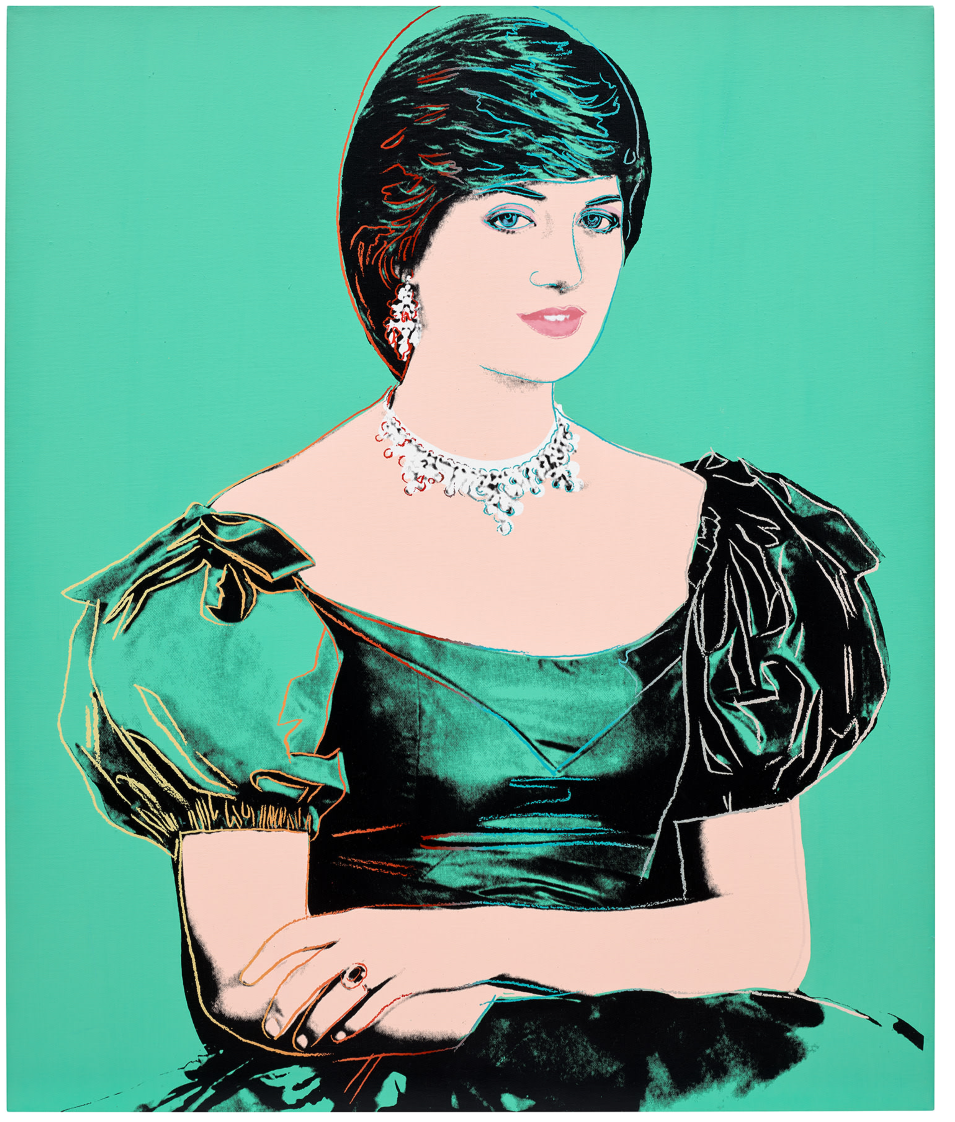
ANDY WARHOL
Portrait of Princess Diana, 1982
Synthetic polymer paint and silkscreen ink on canvas
50 1/8 x 42 inches (127.4 x 106.8 cm)
Signed and dated ‘Andy Warhol 82’
Stamped with the Estate of Andy Warhol and the Andy Warhol Foundation for the Visual Arts, Inc. stamps
Numbered ‘P050.190’ on the overlap
Farrah Fawcett, 1980
Bonhams New-York: 20 November 2024
Estimated: USD 300,000 – 500,000
USD 1,512,500
Bonhams : ANDY WARHOL (1928-1987) Farrah Fawcett 40 x 40 in (101.6 x 101.6 cm) (Painted in 1980)
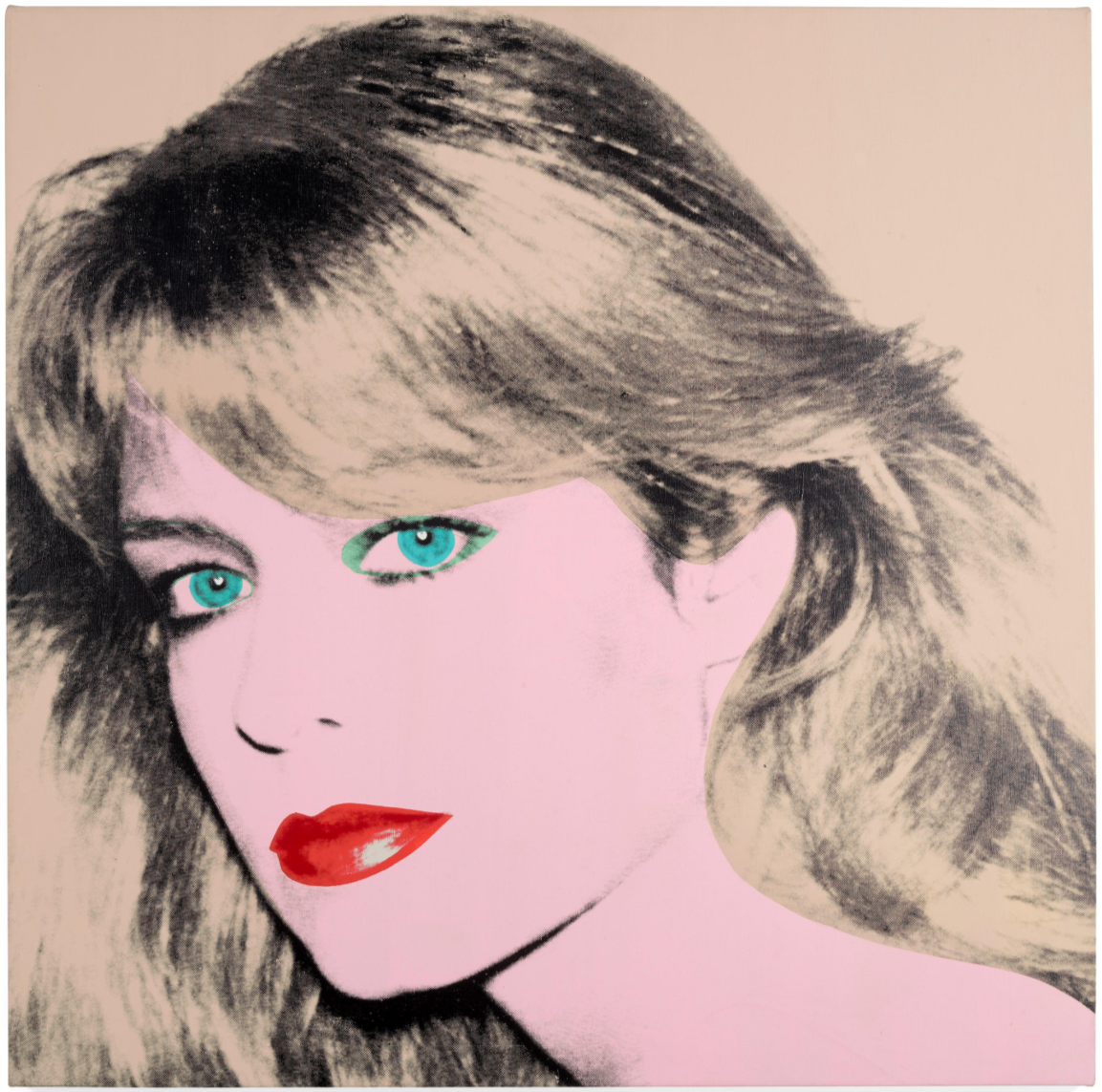
Synthetic polymer paint and silkscreen ink on canvas
40×40 inches (101.6 x 101.6 cm)
Signed, inscribed and dated ‘F.F. Andy Warhol 1980’ (on the overlap)
Kimiko Powers, 1972
Sotheby’s New-York: 21 November 2024
Estimated: USD 400,000 – 600,000
USD 480,000
Kimiko Powers | Contemporary Day Auction | 2024 | Sotheby’s
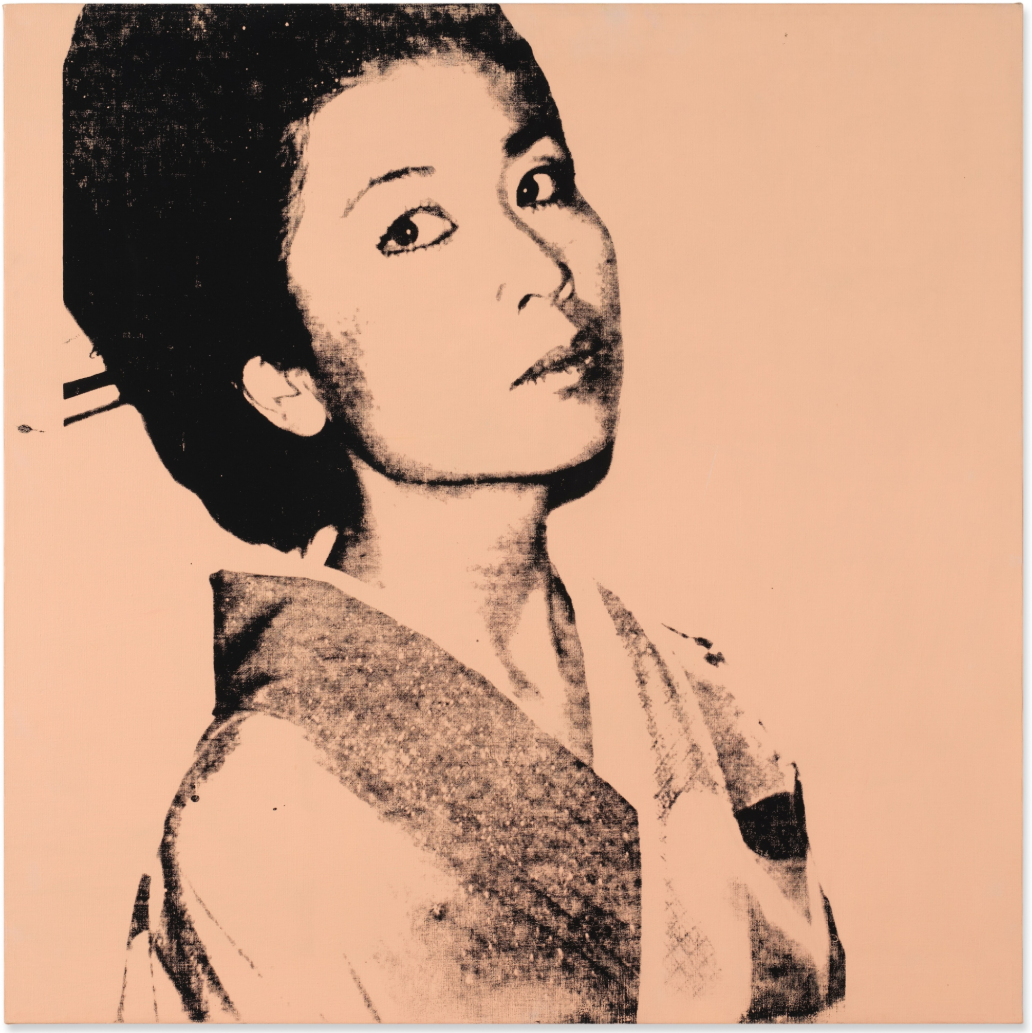
ANDY WARHOL (1928 – 1987)
Kimiko Powers, 1972
Acrylic and silkscreen ink on canvas
40×40 inches (101.6 x 101.6 cm)
Signed and dated 72 (on the overlap)
Marcel Proust, 1974
Dorotheum: 20 November 2024
Estimated: EUR 280,000 – 380,000
EUR 383,500 / USD 406,785
Andy Warhol – Contemporary Art I 2024/11/20 – Realized price: EUR 383,500 – Dorotheum
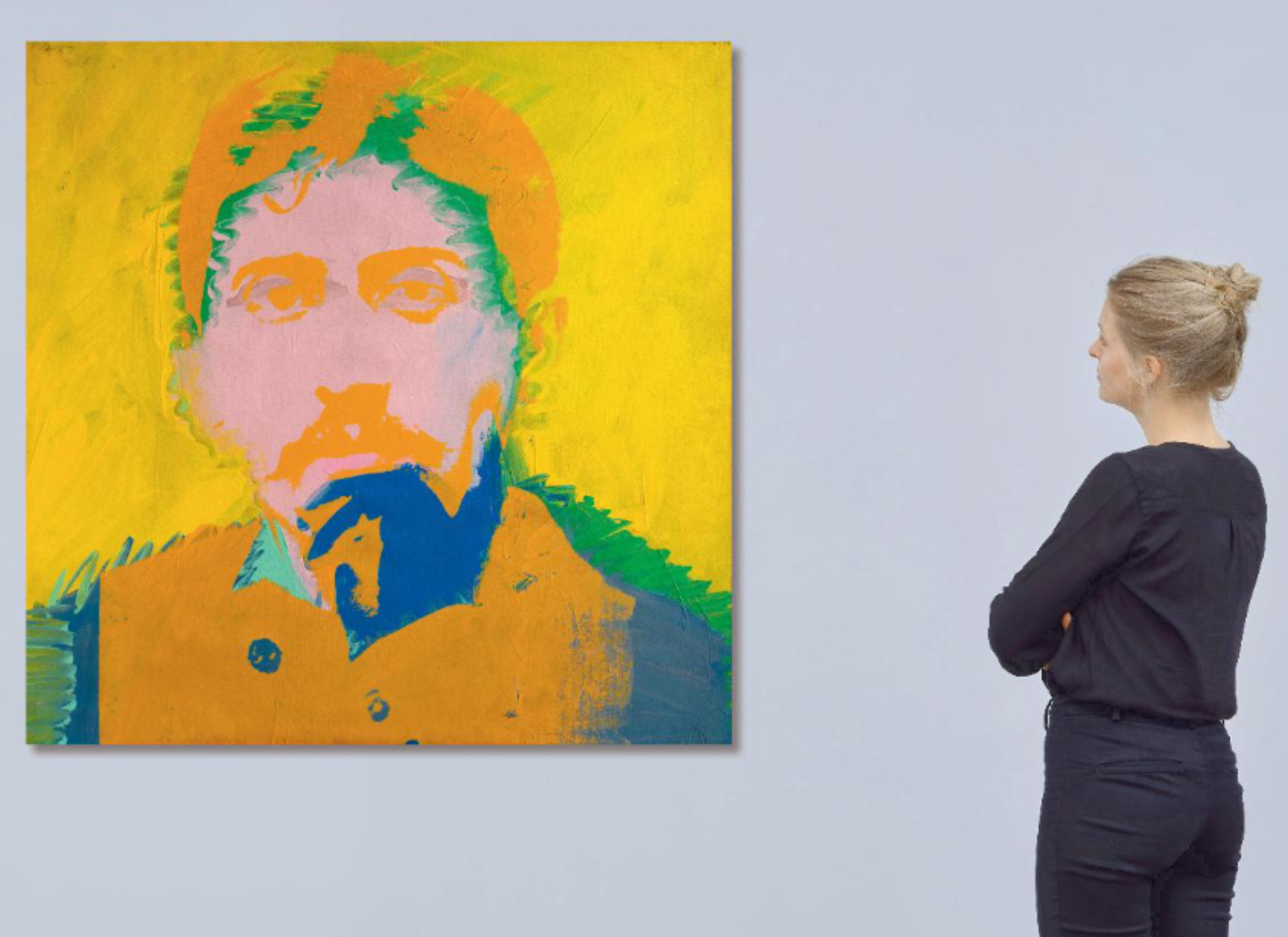
ANDY WARHOL (Pittsburgh 1928–1987 New York)
Marcel Proust, 1974
Acrylic and silkscreen ink on linen
39 7/8 x 39 7/8 inches (101×101 cm)
Portrait of Locksley Shea Gallery, 1975
Bonhams New-York: 31 July 2024
Estimated: USD 300,000 – 500,000
USD 279,900
Bonhams : ANDY WARHOL (1928-1987) Portrait of Locksley Shea Gallery 1975
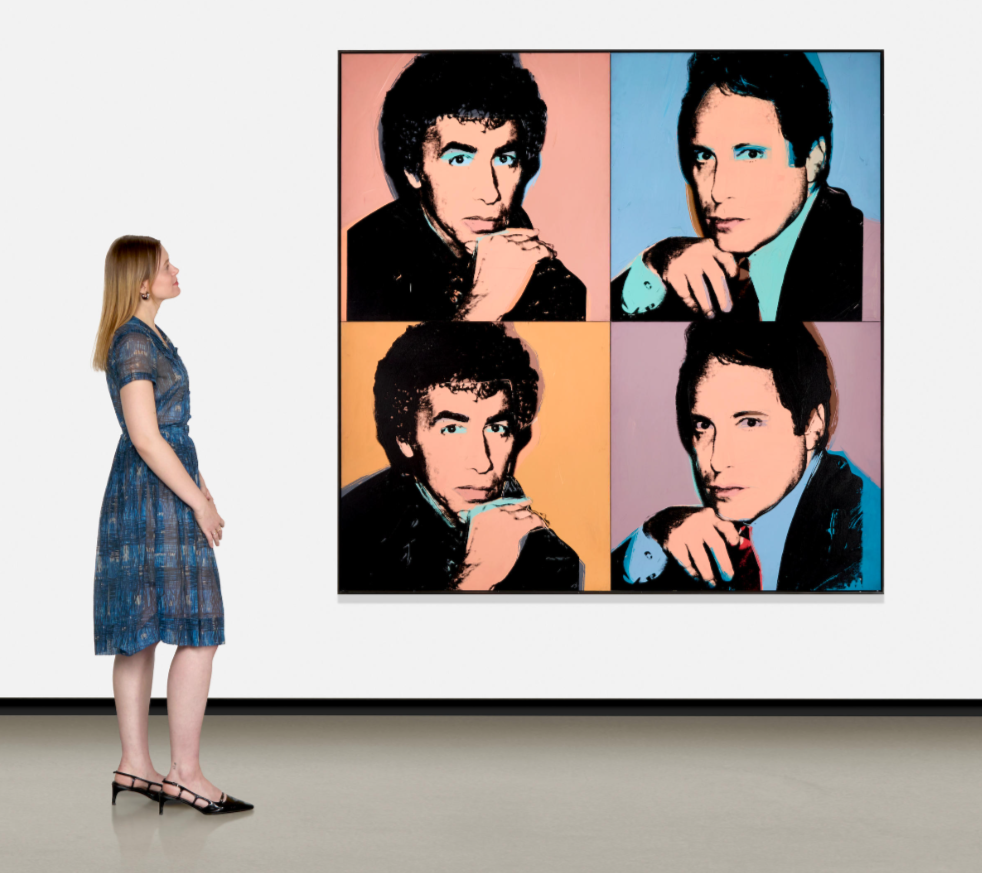
Synthetic polymer paint and silkscreen on canvas, in four parts
79×79 inches (200.7 x 200.7 cm)
John Gould, 1981
Bonhams New-York: 16 May 2024
Estimated: USD 150,000 – 250,000
USD 152,900
Bonhams : ANDY WARHOL (1928-1987) John Gould 1981
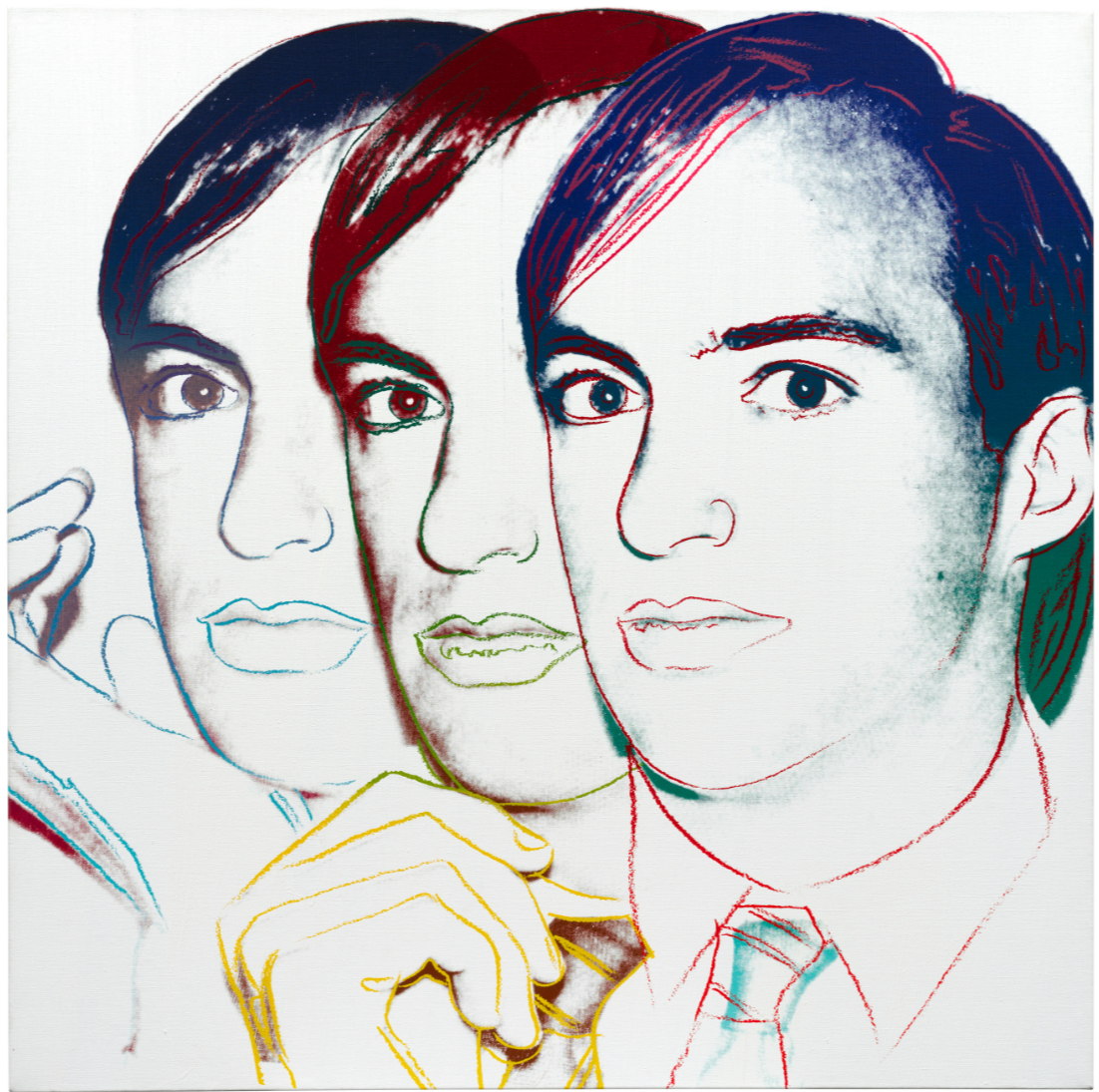
Synthetic polymer paint and silkscreen ink on canvas
40×40 inches (101.6 x 101.6 cm)
Numbered VF P050.786 and inscribed 10-375-1312 on the overlap
Portrait of Jon Gould, 1981
Christie’s New-York: 1 October 2024
Estimated: USD 120,000 – 180,000
USD 151,200
ANDY WARHOL (1928-1987), Portrait of Jon Gould | Christie’s (christies.com)
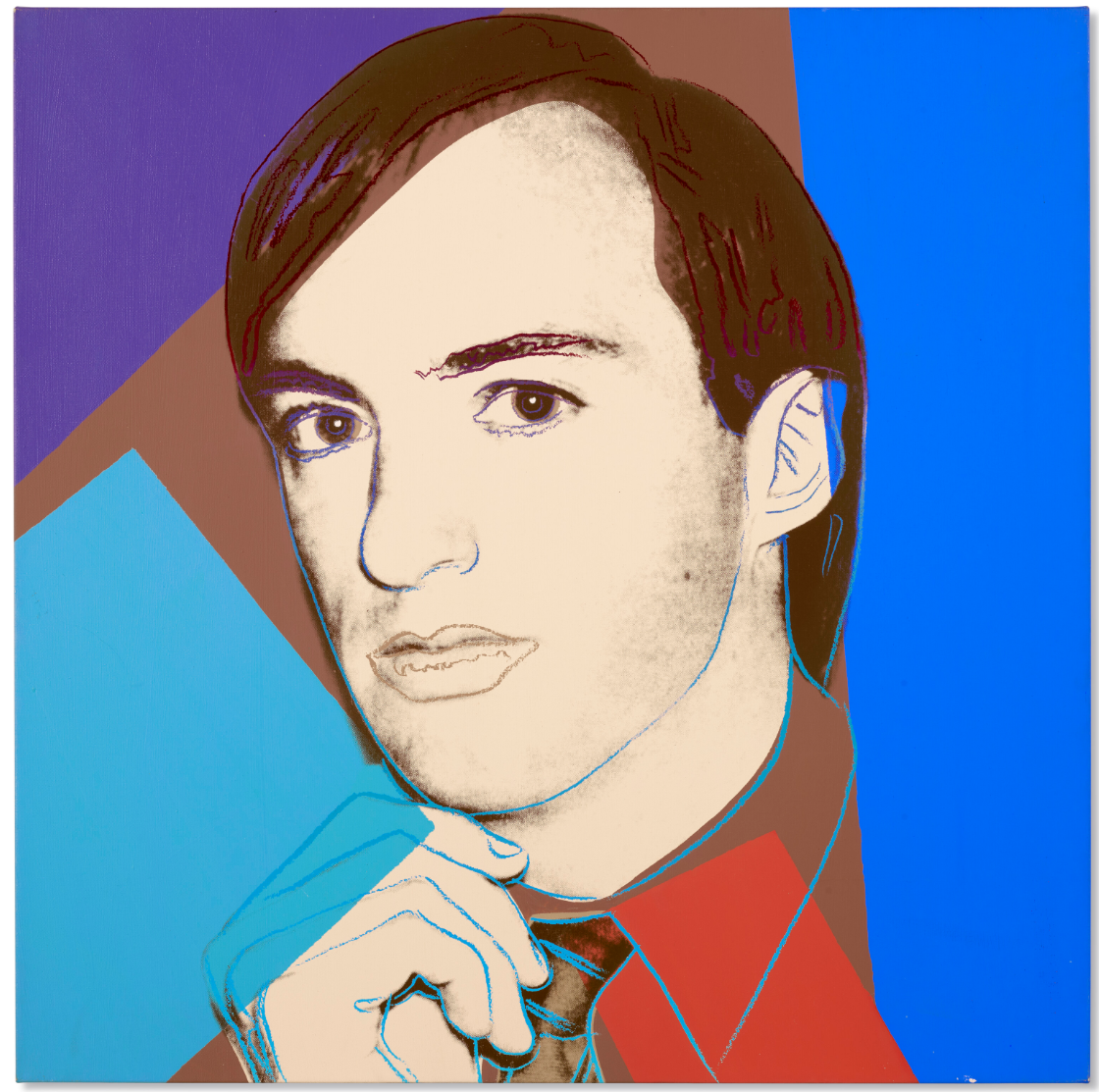
ANDY WARHOL (1928-1987)
Portrait of Jon Gould, 1981
Synthetic polymer and silkscreen ink on canvas
40×40 inches (101.6 x 101.6 cm)
Signed, inscribed and dated ‘love Jon/Andy Warhol 81’ (on the overlap)
2023 Auction Results
#1. Debbie Harry, 1980
Sotheby’s London: 1 March 2023
Estimated: GBP 4,000,000 – 6,000,000
GBP 6,599,300
READ MORE IN FOCUS SECTION
Debbie Harry | Modern & Contemporary Evening Auction | | Sotheby’s (sothebys.com)
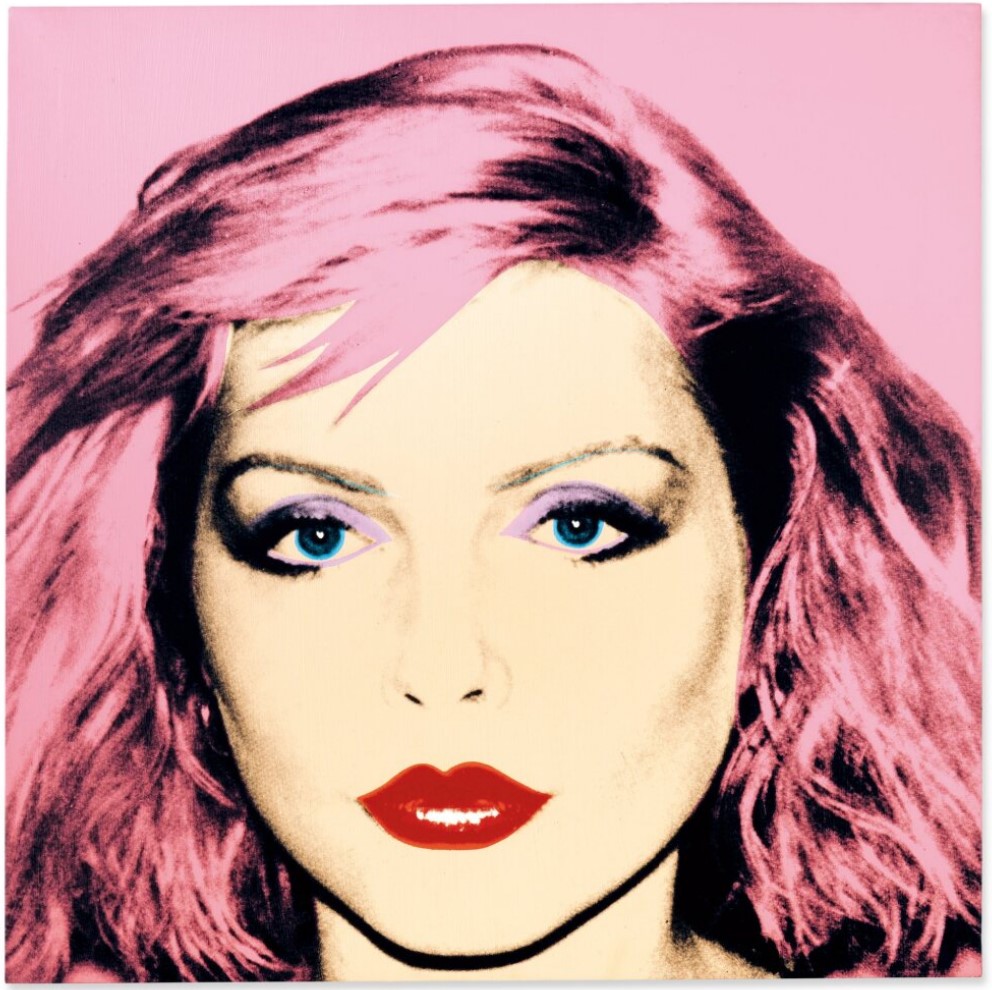
ANDY WARHOL (1928 – 1987)
Debbie Harry, 1980
Acrylic and silkscreen ink on canvas
42×42 inches (106.7 x 106.7 cm)
Stamped by the Estate of Andy Warhol and the Andy Warhol Foundation for the Visual Arts
Numbered PO50-172 (on the overlap)
#2. Kimiko Powers, 1972
Phillips New-York: 15 November 2023
Estimated: USD 300,000 – 400,000
USD 952,500
Andy Warhol – 20th Century & Conte… Lot 130 November 2023 | Phillips
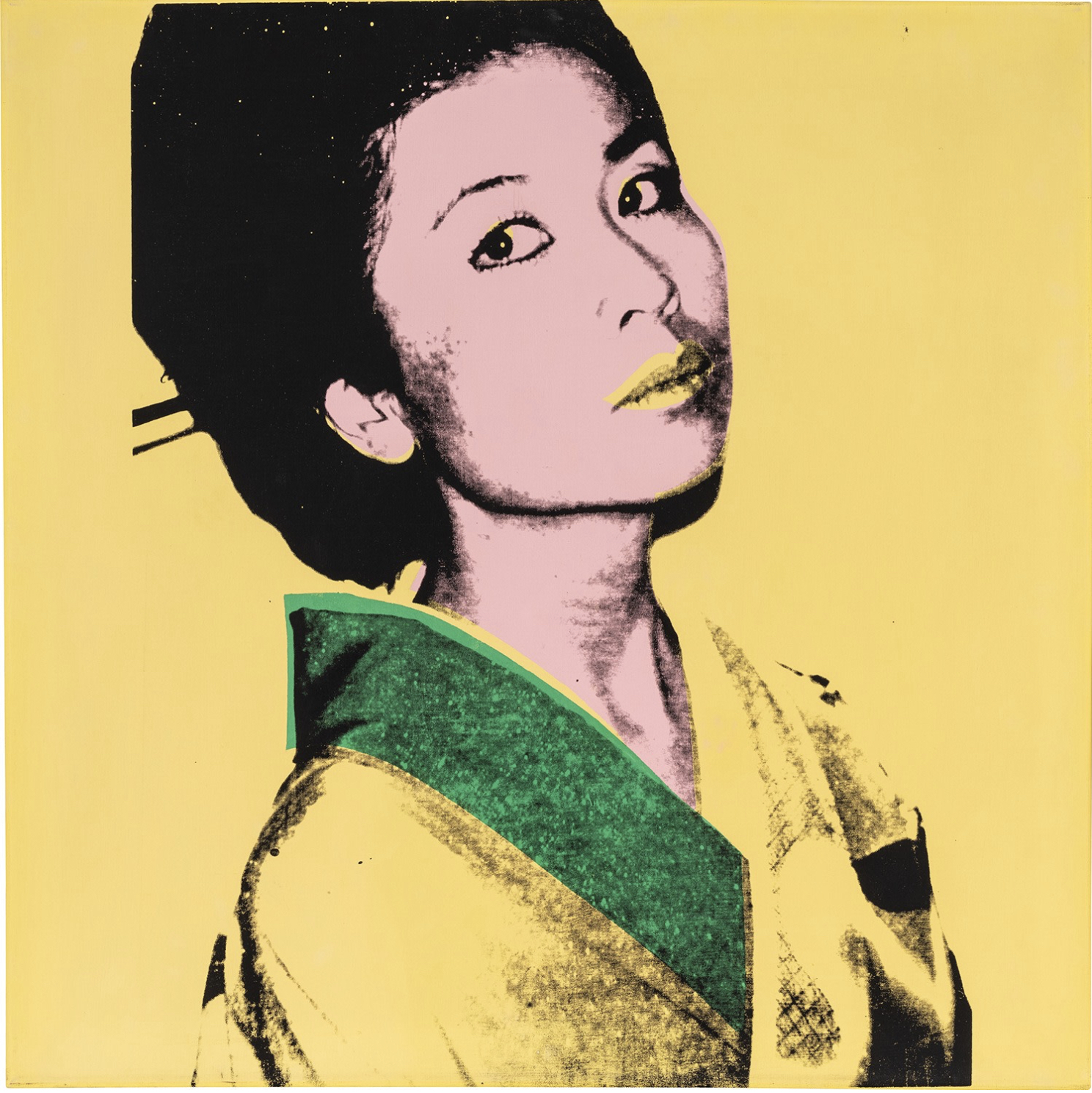
ANDY WARHOL
Kimiko Powers, 1972
Acrylic and silkscreen ink on linen
40×40 inches (101.6 x 101.6 cm)
Signed, partially titled and dated “Kimiko Andy Warhol 72” on the overlap
#3. Prince, 1984
Christie’s New-York: 10 November 2023
Estimated: USD 600,000 – 800,000
USD 756,000
READ MORE IN FOCUS SECTION
ANDY WARHOL (1928-1987) (christies.com)
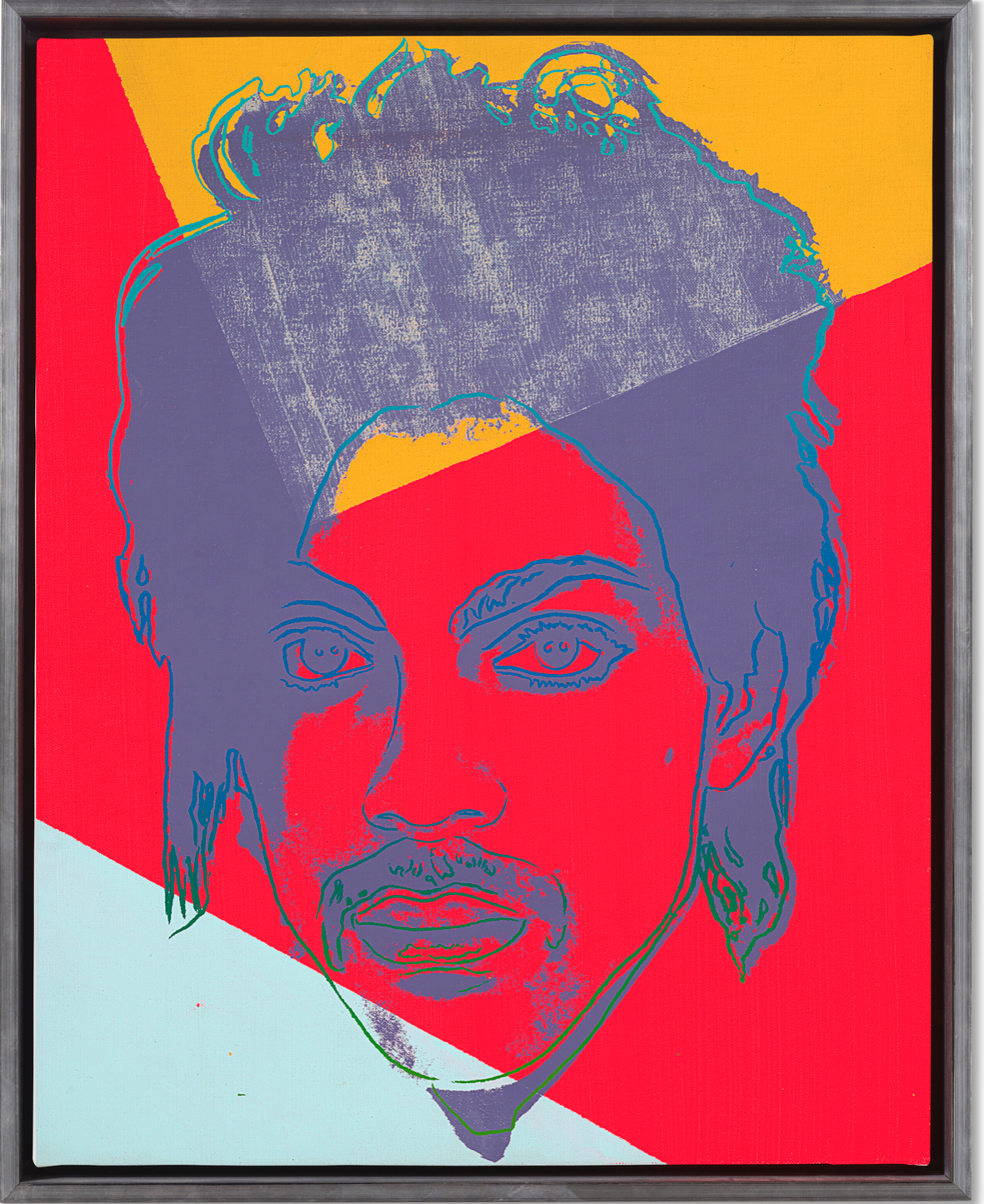
ANDY WARHOL (1928-1987)
Prince, 1984
Acrylic and silkscreen ink on canvas
20×16 inches (50.8 x 40.6 cm)
Stamped with the Estate of Andy Warhol and the Andy Warhol Art Authentication Board, Inc. stamps
Numbered ‘A105.0210’ (on the overlap); numbered ‘P050.539’ (on the stretcher)
#4. Emily Fisher Landau, 1982
Sotheby’s New-York: 8 November 2023
Estimated: USD 500,000 – 700,000
USD 571,000
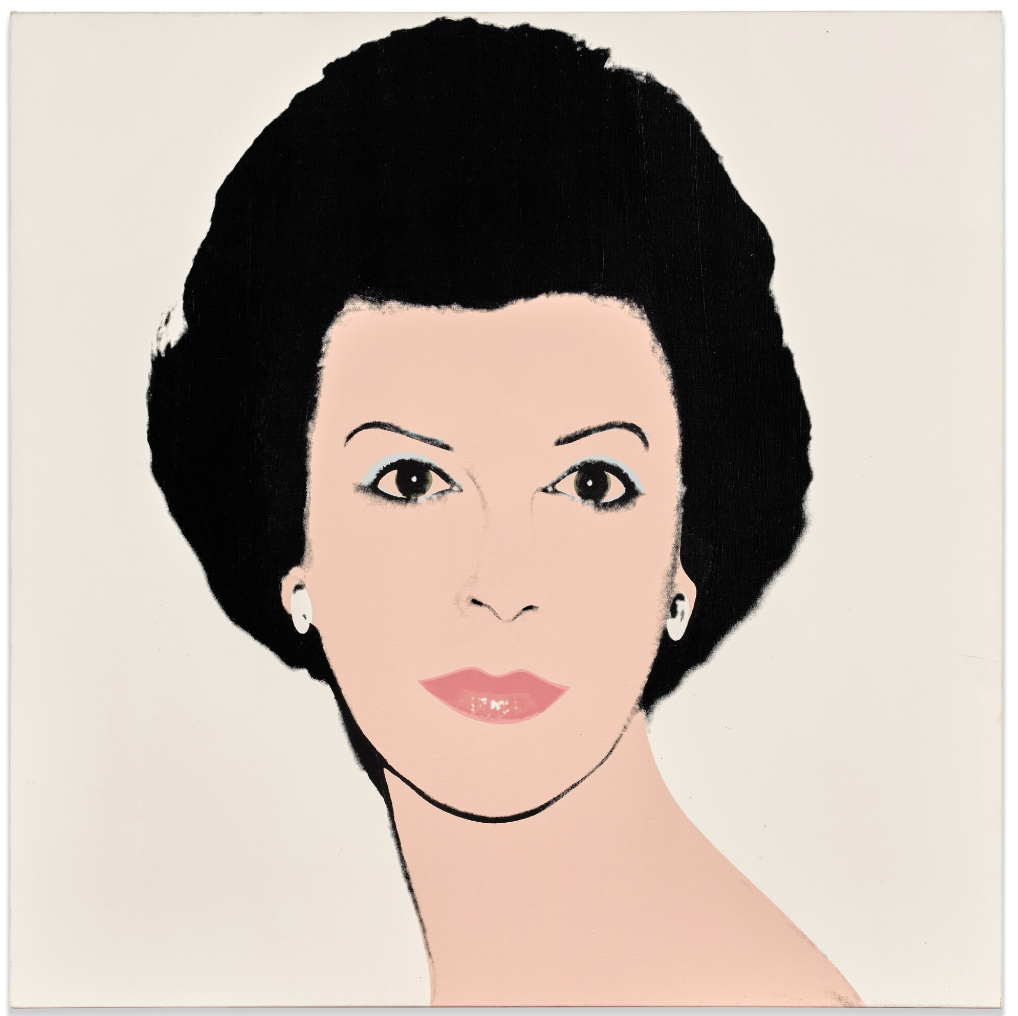
ANDY WARHOL (1928 – 1987)
Emily Fisher Landau, 1982
Acrylic and silkscreen ink on canvas
40 1/8 x 40 1/8 inches (101.9 x 101.9 cm)
Signed and dated 82 (on the overlap)
Numbered by the Foundation PO 50.933 (on the stretcher)
#5. Chris Royer, 1980
Sotheby’s New-York: 16 November 2023
Estimated: USD 300,000 – 400,000
USD 533,400
Chris Royer | Contemporary Day Auction | 2023 | Sotheby’s (sothebys.com)
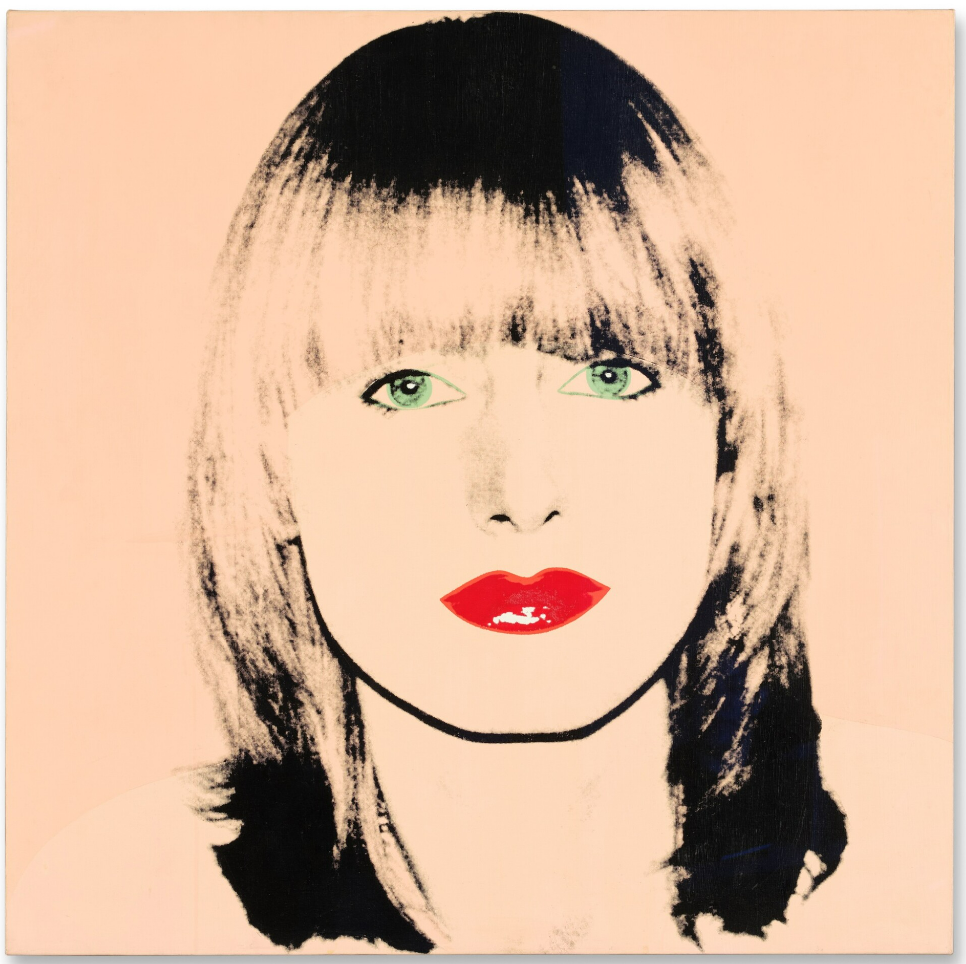
ANDY WARHOL (1928 – 1987)
Chris Royer, 1980
Acrylic and silkscreen ink on canvas
40×40 inches (101.6 x 101.6 cm)
Signed and dated 1980 (on the overlap)
Stamped by the Estate of Andy Warhol and numbered PO50.678 on the overlap
Pia Zadora, 1983
Christie’s London: 14 October 2023
Estimated: GBP 280,000 – 350,000
GBP 371,700 / USD 450,709

ANDY WARHOL (1928-1987)
Pia Zadora, 1983
Acrylic and silkscreen ink on canvas
40×40 inches (101.7 x 101.7 cm)
Stamped twice with the Andy Warhol Foundation for the Visual Arts, Inc. and the Estate of Andy Warhol stamps
Numbered ‘PO50.259′ (on the overlap)
Numbered ’10-960-2883 PO50.259’ (on the stretcher)
Marie-Louise Jeanneret, 1974
Dorotheum Vienna: 24 May 2023
Estimated: EUR 200,000 – 300,000
EUR 351,000 / USD 410,000
Andy Warhol – Contemporary Art I 2023/05/24 – Realized price: EUR 351,000 – Dorotheum
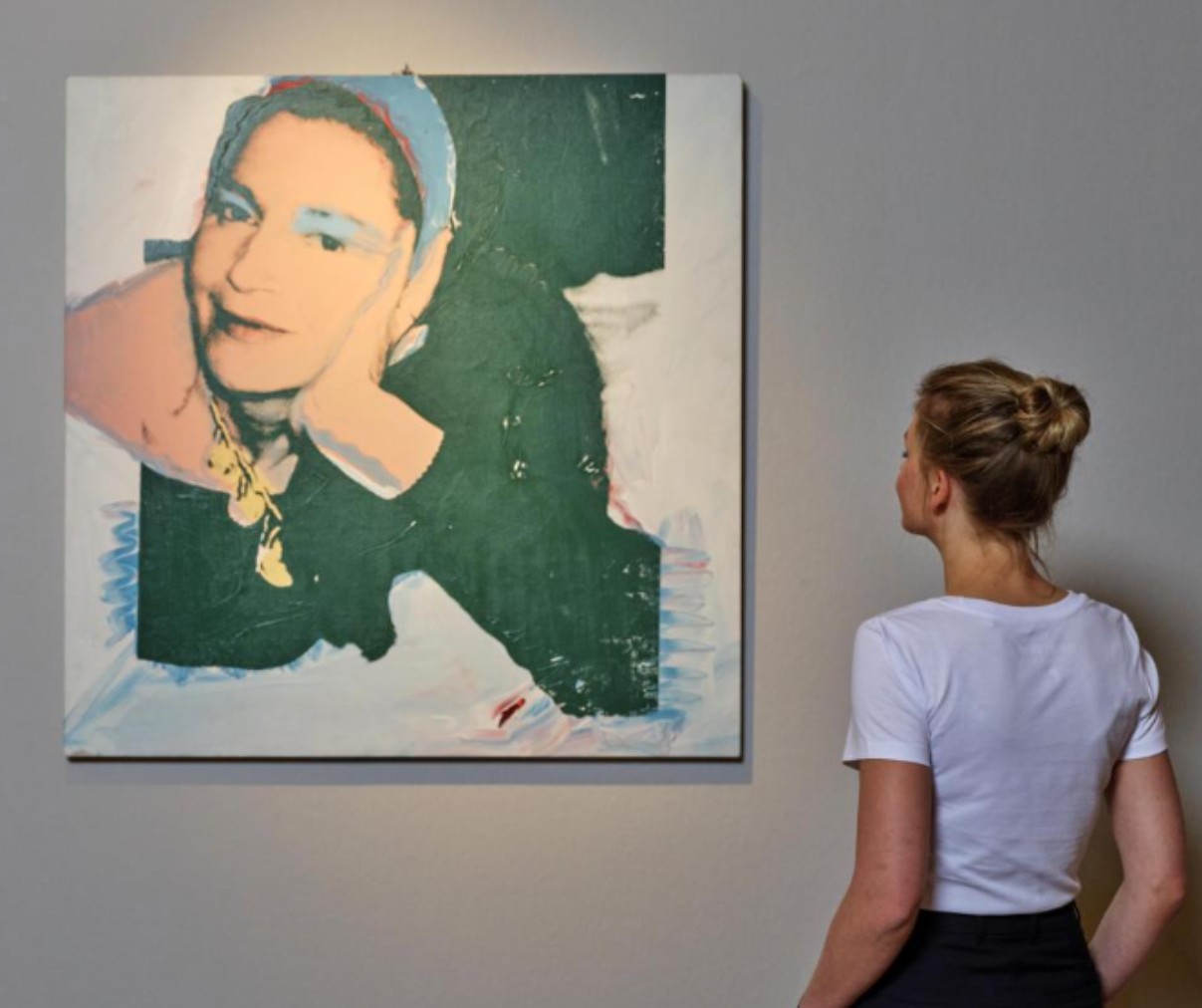
ANDY WARHOL (Pittsburgh 1928–1987 New York)
Marie-Louise Jeanneret, 1974
Acrylic and silkscreen ink on canvas
40×40 inches (102×102 cm)
Signed and dated on the reverse with the stamp of the Andy Warhol Authentication Board, Inc.
Portrait of Craig W. Johnson, 1985
Sotheby’s London: 28 June 2023
Estimated: GBP 100,000 – 150,000
GBP 254,000 / USD 320,909
Portrait of Craig W. Johnson | Modern & Contemporary Day Auction | 2023 | Sotheby’s (sothebys.com)
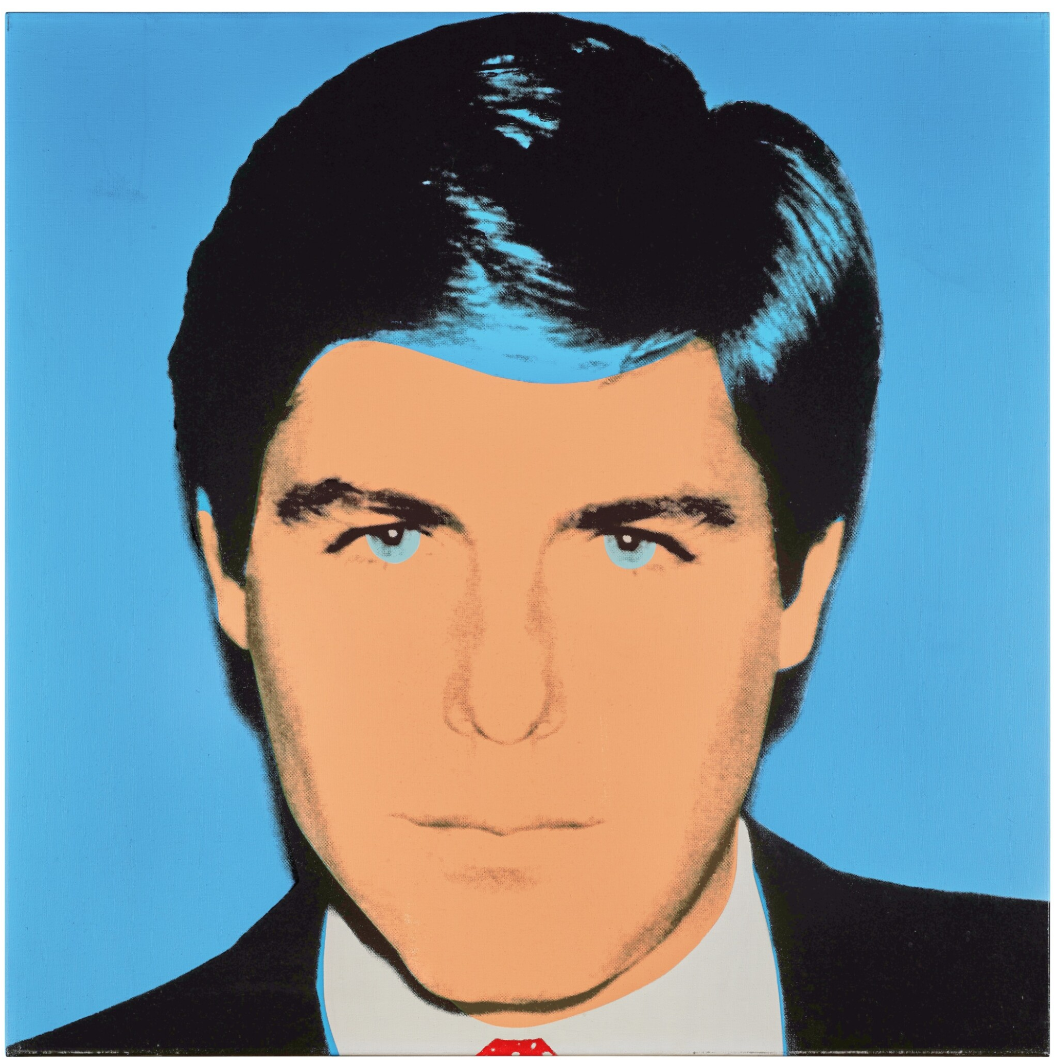
ANDY WARHOL (1928 – 1987)
Portrait of Craig W. Johnson, 1985
Acrylic and silkscreen ink on canvas
40 1/8 x 40 1/8 inches (102×102 cm)
Signed and dated 85 on the overlap
Stamped by the Estate of Andy Warhol and the Andy Warhol Foundation for the Visual Arts, Inc.
Numbered VF P050.026 on the overlap
Portrait of Craig W. Johnson, 1985
Sotheby’s London: 13 October 2023
Estimated: GBP 100,000 – 150,000
GBP 241,300 / USD 292,839
Portrait of Craig W. Johnson | Contemporary Day Auction | 2023 | Sotheby’s (sothebys.com)
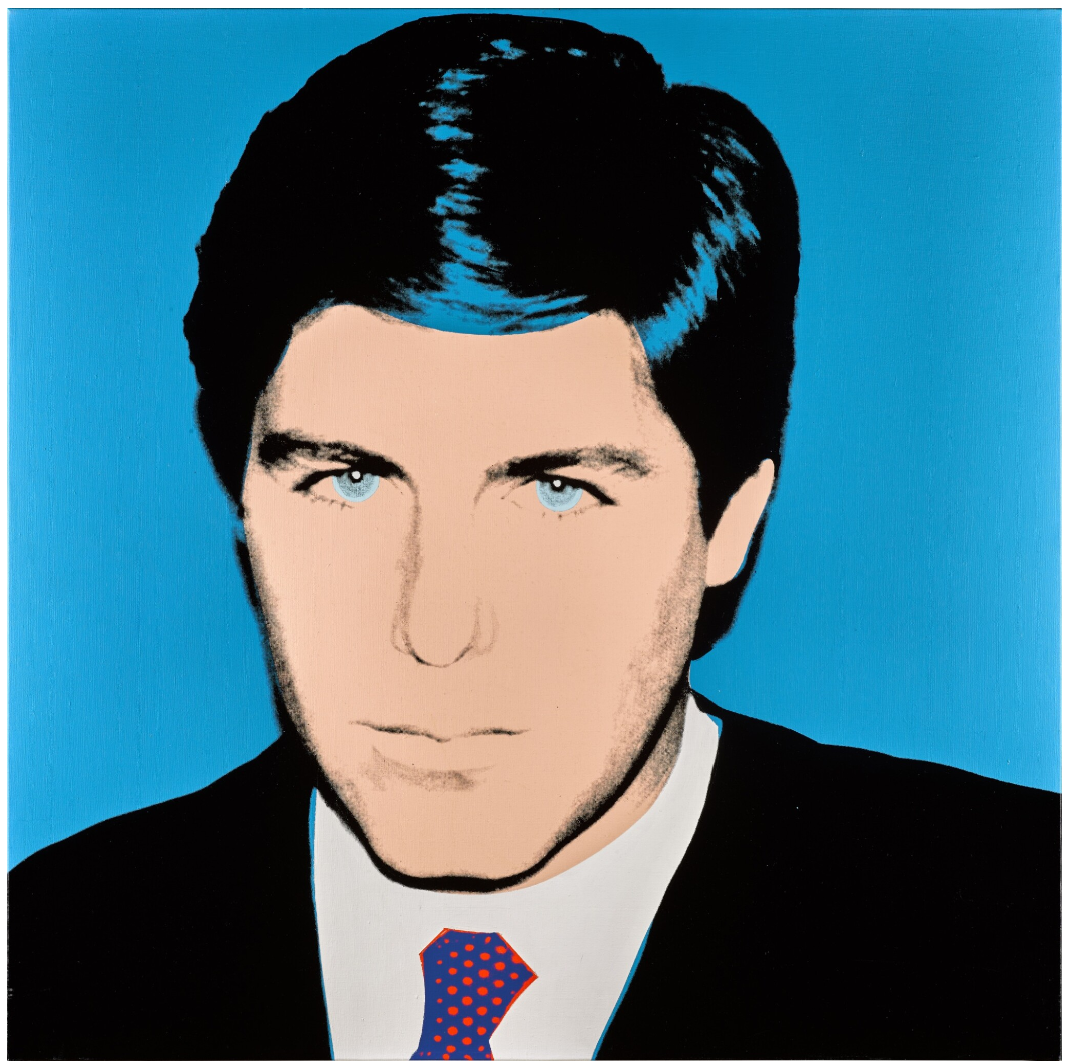
ANDY WARHOL (1928 – 1987)
Portrait of Craig W. Johnson, 1985
Acrylic and silkscreen ink on canvas
40 x 39 7/8 inches (101.5 x 101.3 cm)
Stamped by the Estate of Andy Warhol and the Andy Warhol Foundation for the Visual Arts, Inc.
Numbered VF P050.025 on the overlap
Jerry Moss, 1985
Christie’s New-York: 10 November 2023
Estimated: USD 150,000 – 200,000
USD 264,600
ANDY WARHOL (1928-1987) (christies.com)
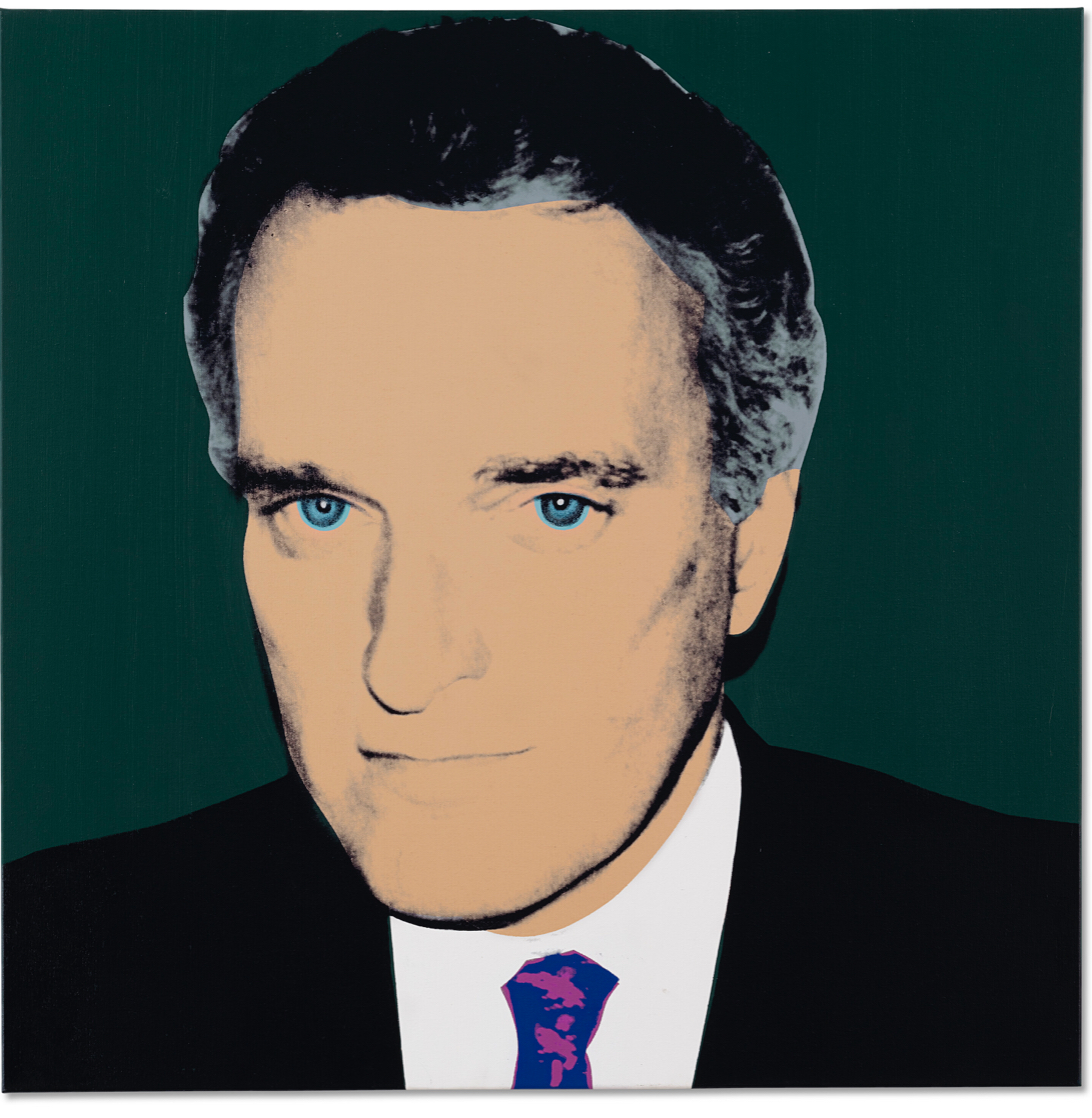
ANDY WARHOL (1928-1987)
Jerry Moss, 1985
Acrylic and silkscreen ink on canvas
40×40 inches (101.6 x 101.6 cm)
Signed and dated ‘Andy Warhol 85’ (on the overlap)
Portrait of a Lady (Natalie Sparber), 1984
Phillips London: 6 December 2023
Estimated: GBP 150,000 – 200,000
GBP 190,500 / USD 239,925
Andy Warhol – New Now London Lot 25 December 2023 | Phillips
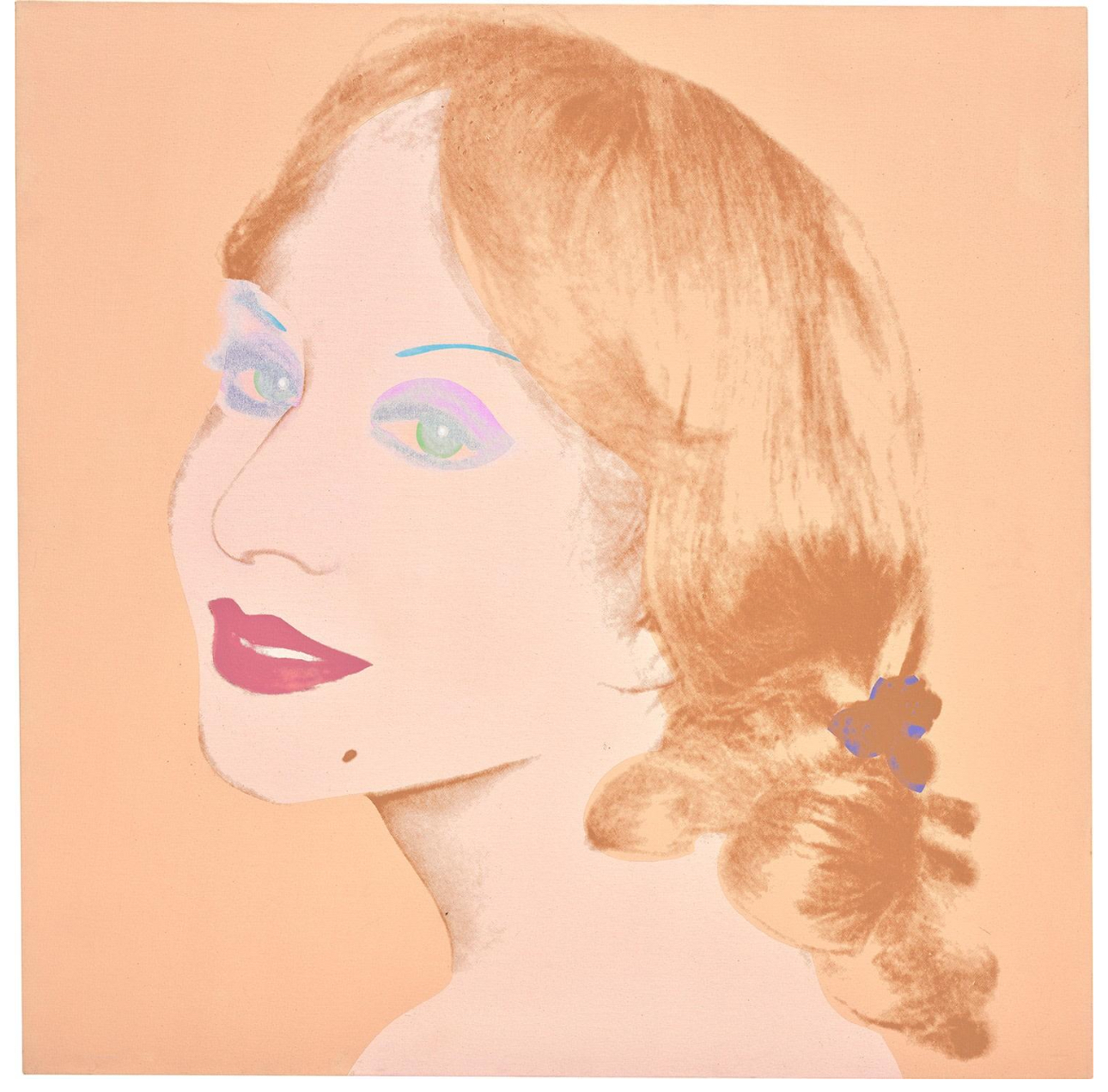 ANDY WARHOL
Portrait of a Lady (Natalie Sparber), 1984
Synthetic polymer and screenprint ink on linen
40 x 39 7/8 inches (101.6 x 101.4 cm)
Stamped by the Estate of Andy Warhol and The Andy Warhol Foundation for the Visual Arts, Inc., New York
Numbered ‘VP PO 50273’ on the overlap; numbered ‘PO 50.273 10-980-2903’ on the stretcher
2022 Auction Results
#1. Man Ray, 1974
Dorotheum Vienna: 1 June 2022
Estimated: EUR 300,000 – 500,000
EUR 753,000 / USD 880,000
Andy Warhol – Contemporary Art I 2022/06/01 – Realized price: EUR 753,000 – Dorotheum
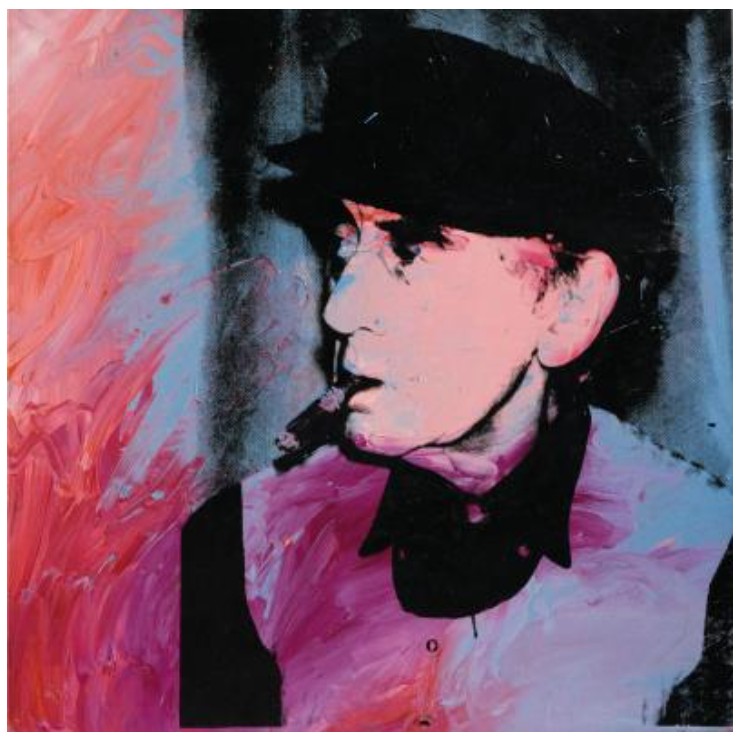
ANDY WARHOL (Pittsburgh 1928–1987 New York)
Man Ray, 1974
Acrylic and silkscreen ink on canvas
40×40 inches (101×101 cm)
Signed, titled and numbered 2/6 on the top overlap
Ryuichi Sakamoto, 1984
Sotheby’s New-York: 11 March 2022
Estimated: USD 500,000 – 700,000
USD 630,000
Ryuichi Sakamoto | Contemporary Curated | 2022 | Sotheby’s (sothebys.com)
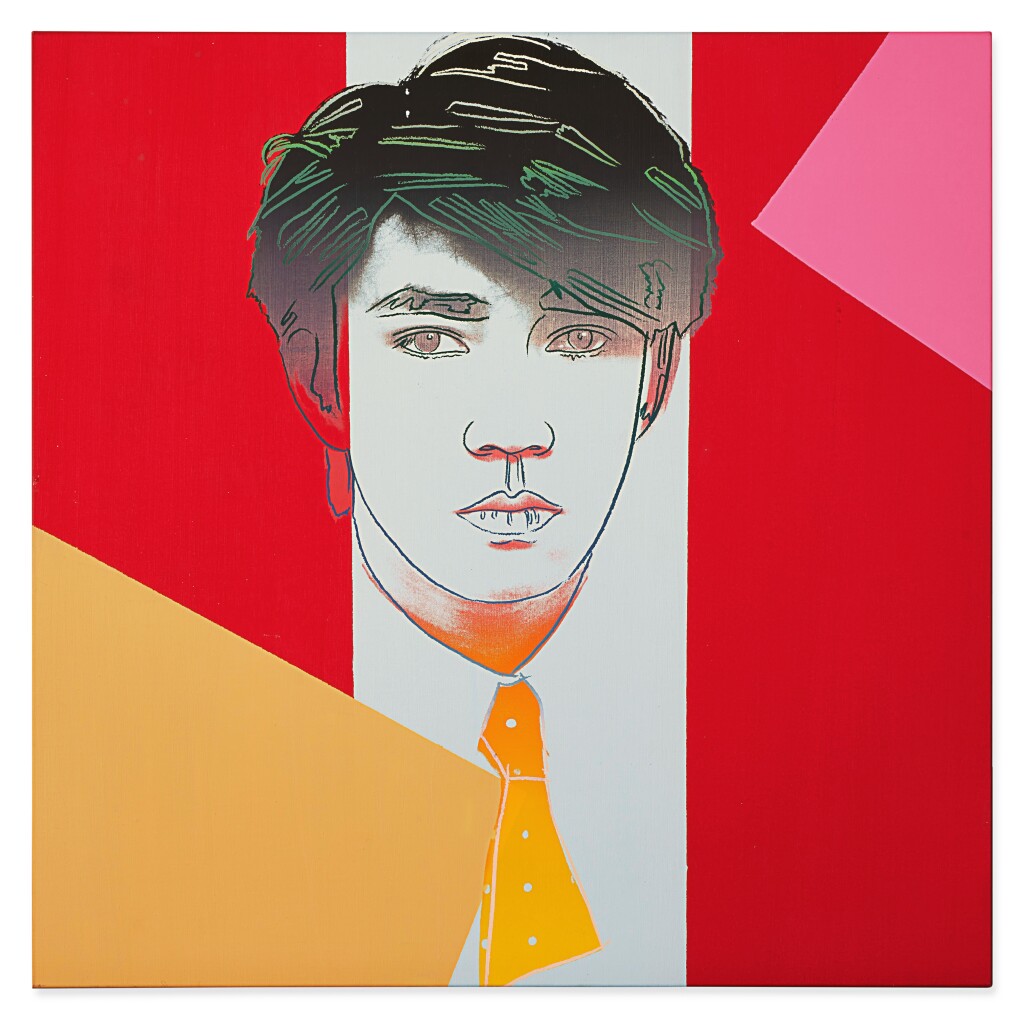
ANDY WARHOL
Ryuichi Sakamoto, 1984
Acrylic and silkscreen ink on canvas
40×40 inches (101.6 x 101.6 cm)
Stamped with the Estate of Andy Warhol stamp and the Andy Warhol Foundation for the Visual Arts Inc. stamp and numbered ‘P.050284’
Dr. Erich Marx, 1978
Estimated: USD 300,000 – 400,000
USD 403,200
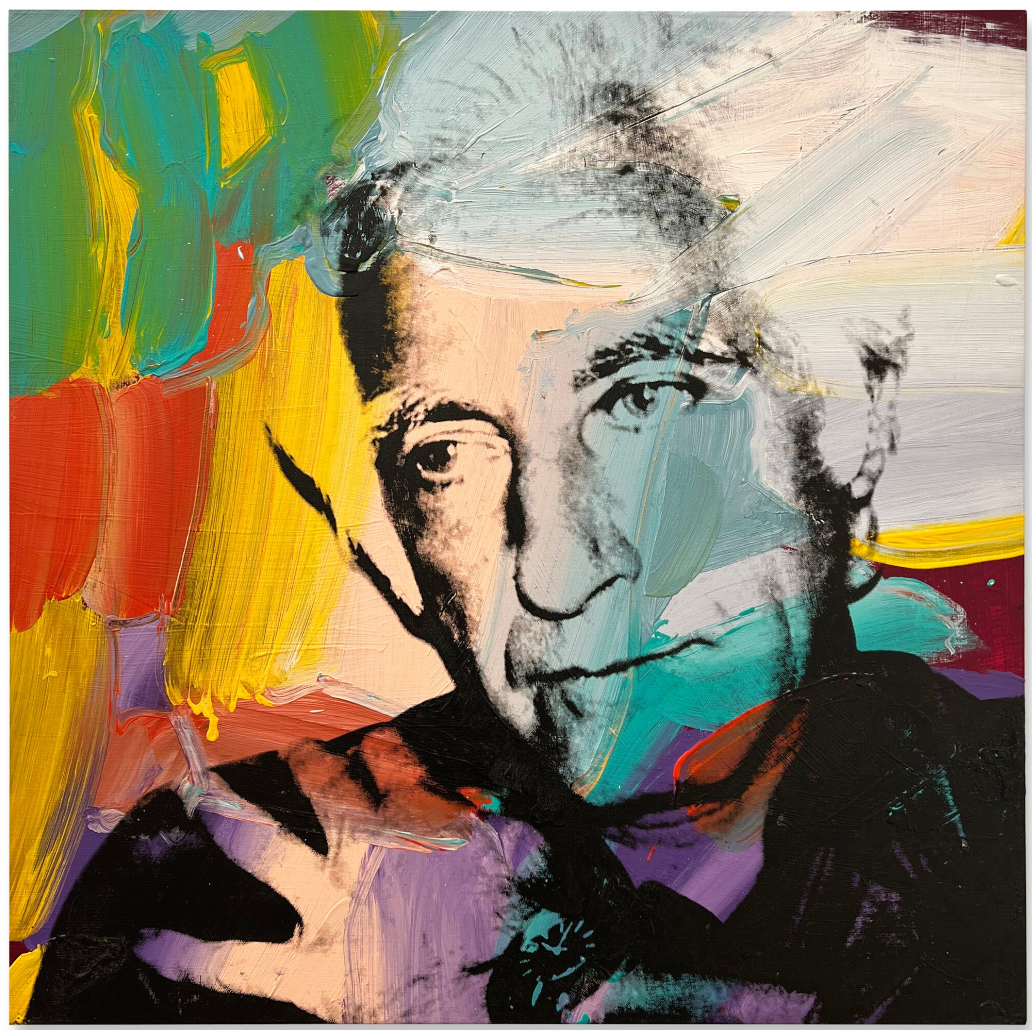
ANDY WARHOL (1928 – 1987)
Dr. Erich Marx, 1978
Acrylic and silkscreen ink on canvas
40×40 inches (101.6 x 101.6 cm)
Sachiko Bower, 1977
Sotheby’s New-York: 20 May 2022
USD 300,000 – 500,000
USD 378,000
Sachiko Bower | Contemporary Day Auction | 2022 | Sotheby’s (sothebys.com)
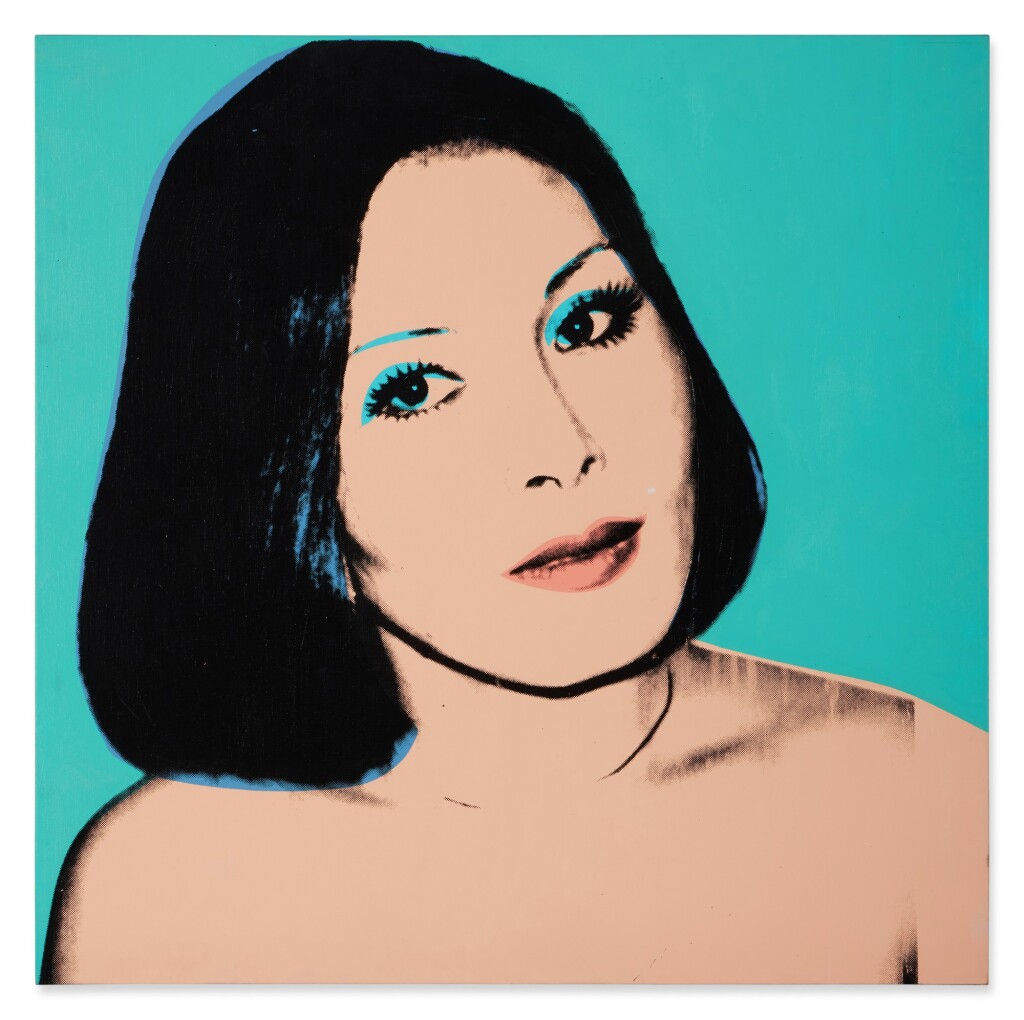
ANDY WARHOL
Sachiko Bower, 1977
Acrylic and silkscreen ink on canvas
40×40 inches (101.6 x 101.6 cm)
Portrait of a Lady, 1983
Christie’s New-York: 18 November 2022
Estimated: USD 300,000 – 500,000
USD 327,600
ANDY WARHOL (1928-1987) (christies.com)
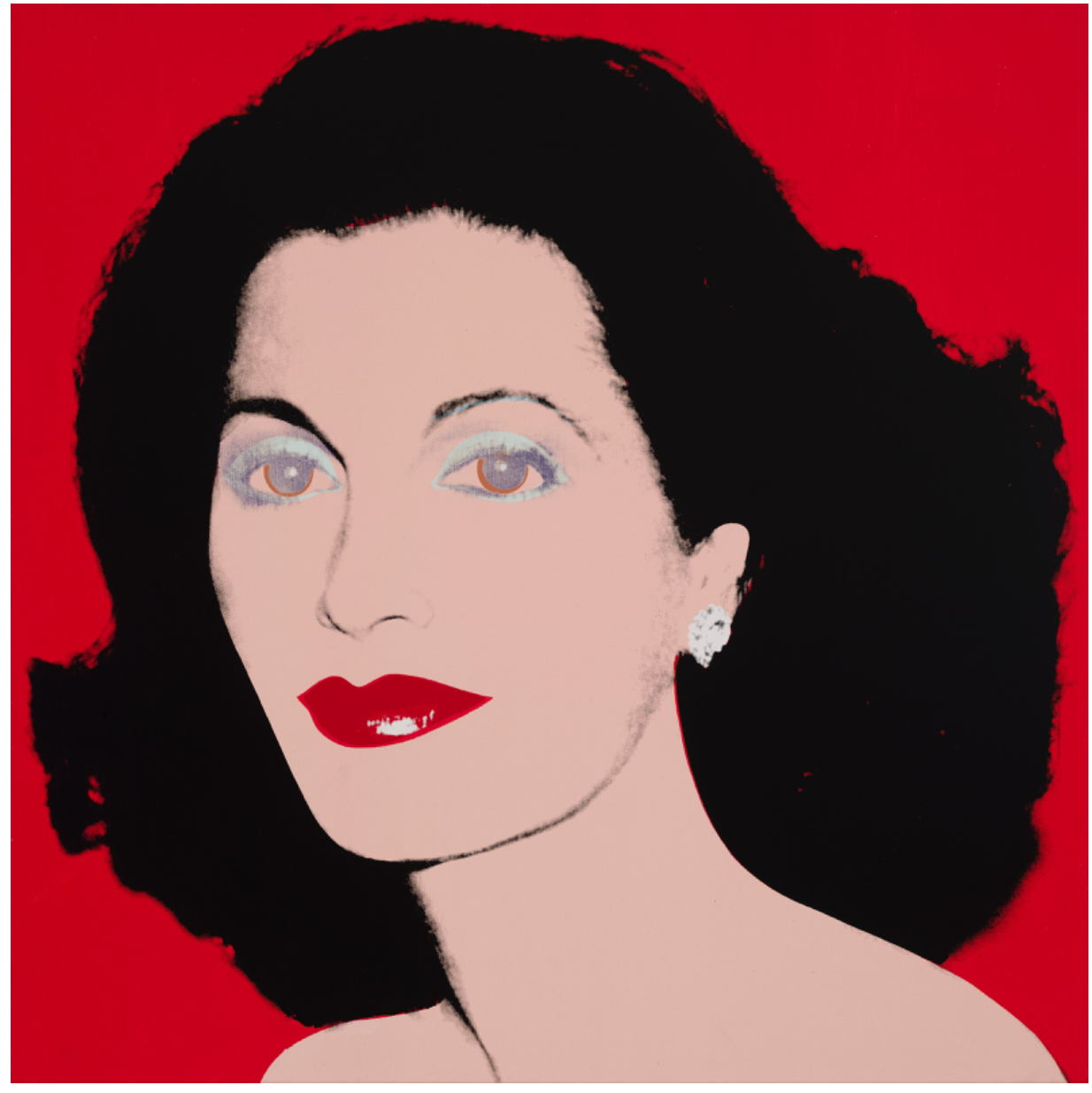
ANDY WARHOL (1928-1987)
Portrait of a Lady, 1983
Acrylic and silkscreen ink on canvas
40×40 inches (101.6 x 101.6 cm)
Signed and dated ‘Andy Warhol 83’ (on the overlap)
Portrait of a Lady, 1983
Christie’s New-York: 18 November 2022
Estimated: USD 300,000 – 500,000
USD 327,600
ANDY WARHOL (1928-1987) (christies.com)
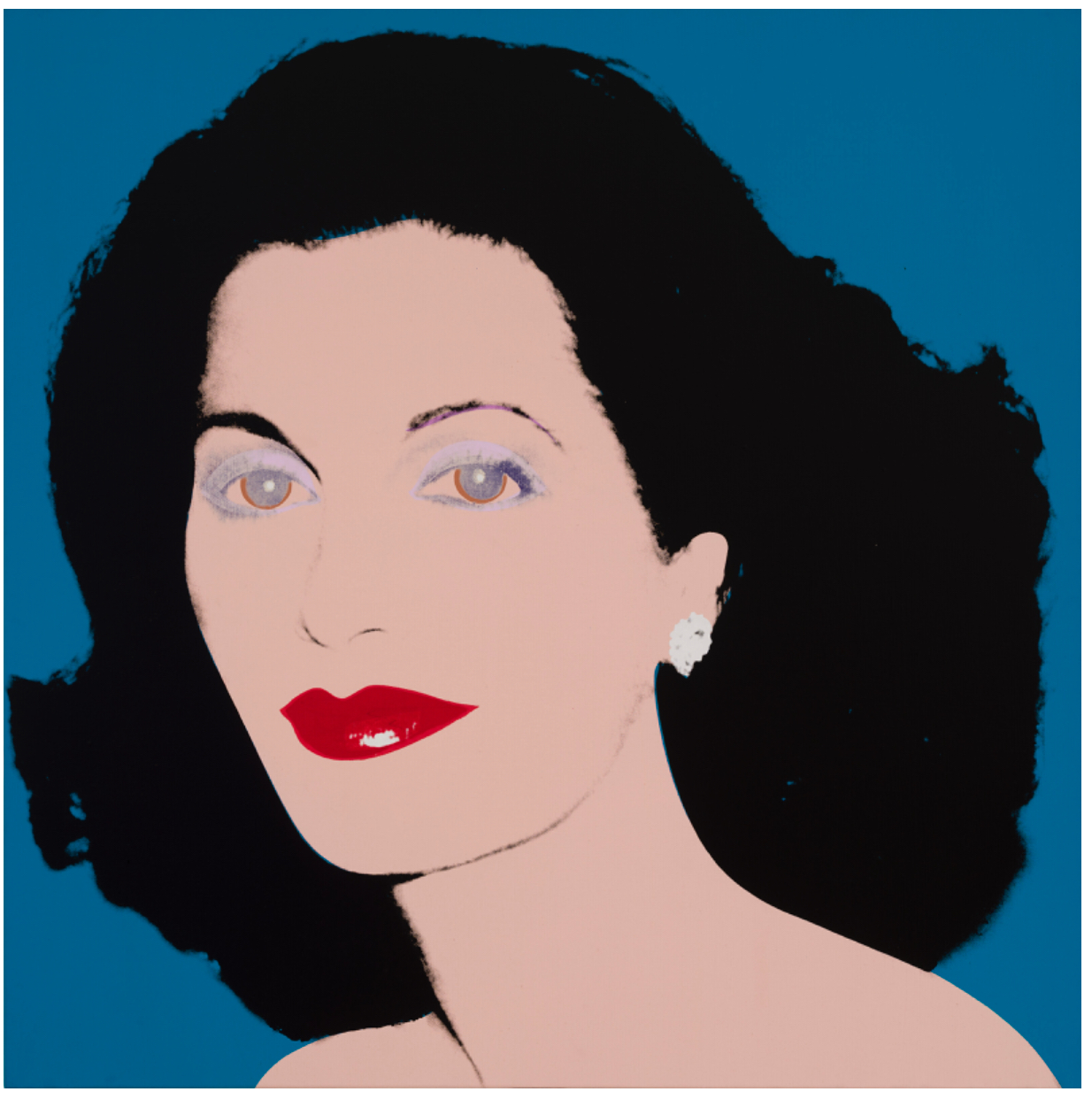
ANDY WARHOL (1928-1987)
Portrait of a Lady, 1983
Acrylic and silkscreen ink on canvas
40×40 inches (101.6 x 101.6 cm)
Signed and dated ‘Andy Warhol 83’ (on the overlap)
Mrs. Zoppas-Sachs, 1973
Sotheby’s New-York: 17 November 2022
Estimated: USD 250,000 – 350,000
USD 277,200
Mrs. Zoppas-Sachs | Contemporary Day Auction | 2022 | Sotheby’s (sothebys.com)
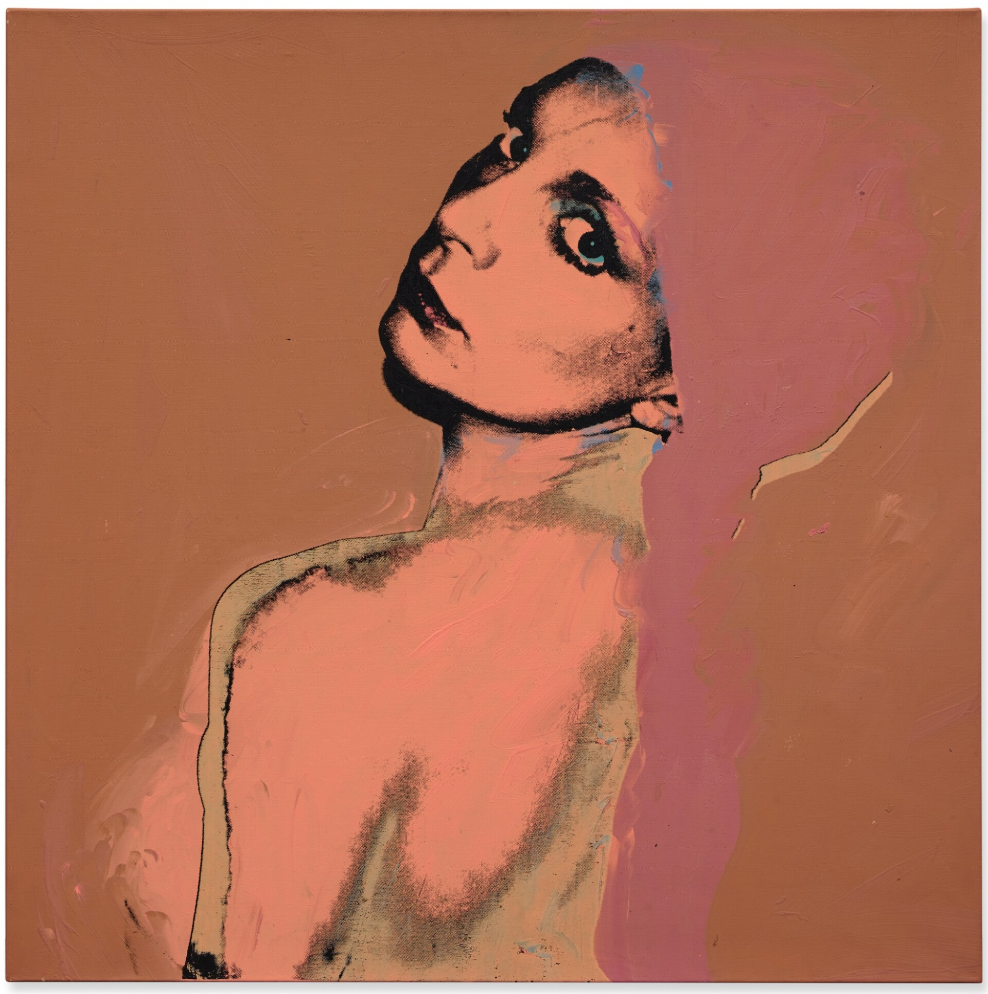
ANDY WARHOL (1928 – 1987)
Mrs. Zoppas-Sachs, 1973
Acrylic and silkscreen ink on canvas
40×40 inches (101.6 x 101.6 cm)
2021 Auction Results
Kay Fortson (an American Lady), 1976
Sotheby’s New-York: 13 May 2021
Estimated: USD 450,000 – 650,000
USD 1,109,000
Kay Fortson (an American Lady) | Contemporary Art Day Auction | 2021 | Sotheby’s (sothebys.com)
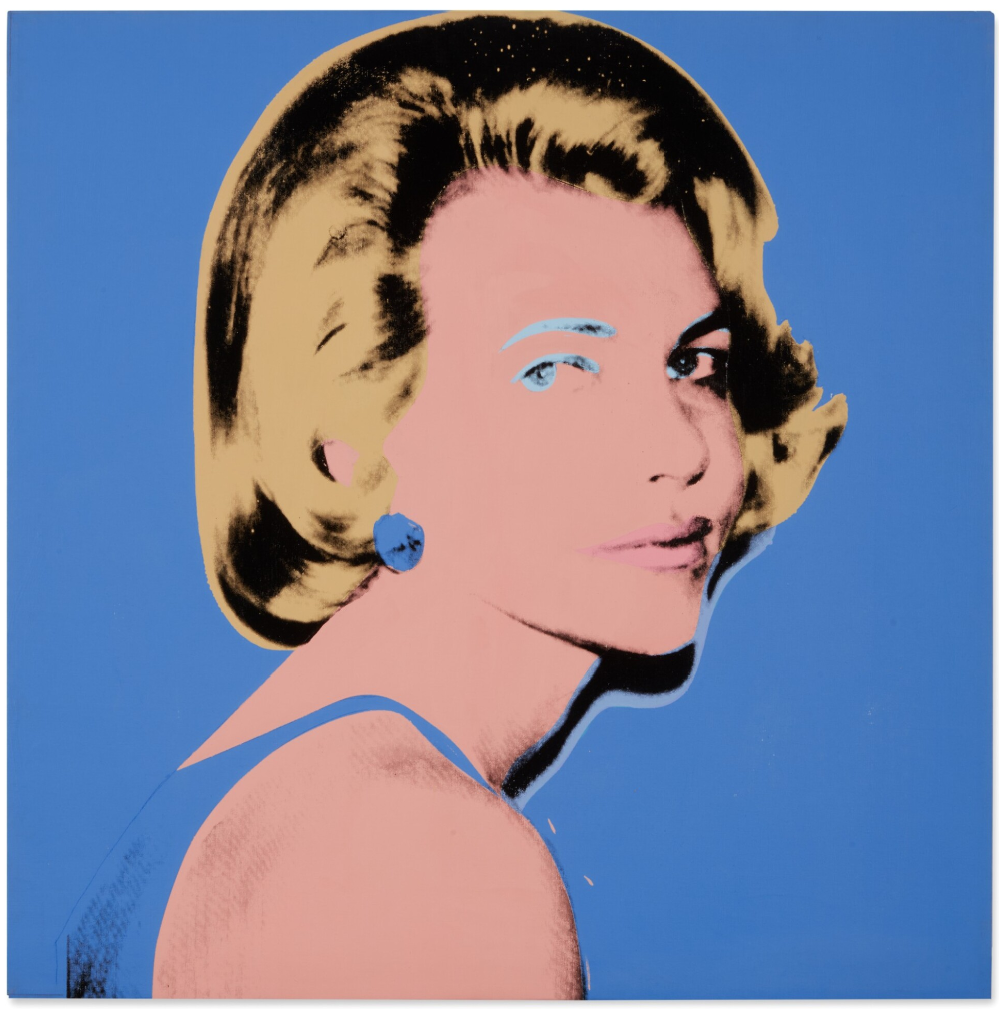
ANDY WARHOL (1928 – 1987)
Kay Fortson (an American Lady), 1976
Acrylic and silkscreen ink on canvas
40 1/8 x 40 1/8 inches (101.9 x 101.9 cm)
Stamped twice by the Estate of Andy Warhol and twice by The Andy Warhol Foundation for the Visual Arts, Inc.
Numbered VF PO50.330 on the overlap and on the stretcher
Aretha Franklin, 1986
Sotheby’s New-York: 12 March 2021
Estimated: USD 900,000 – 1,200,000
USD 1,048,500
Aretha Franklin | Contemporary Curated | 2021 | Sotheby’s (sothebys.com)
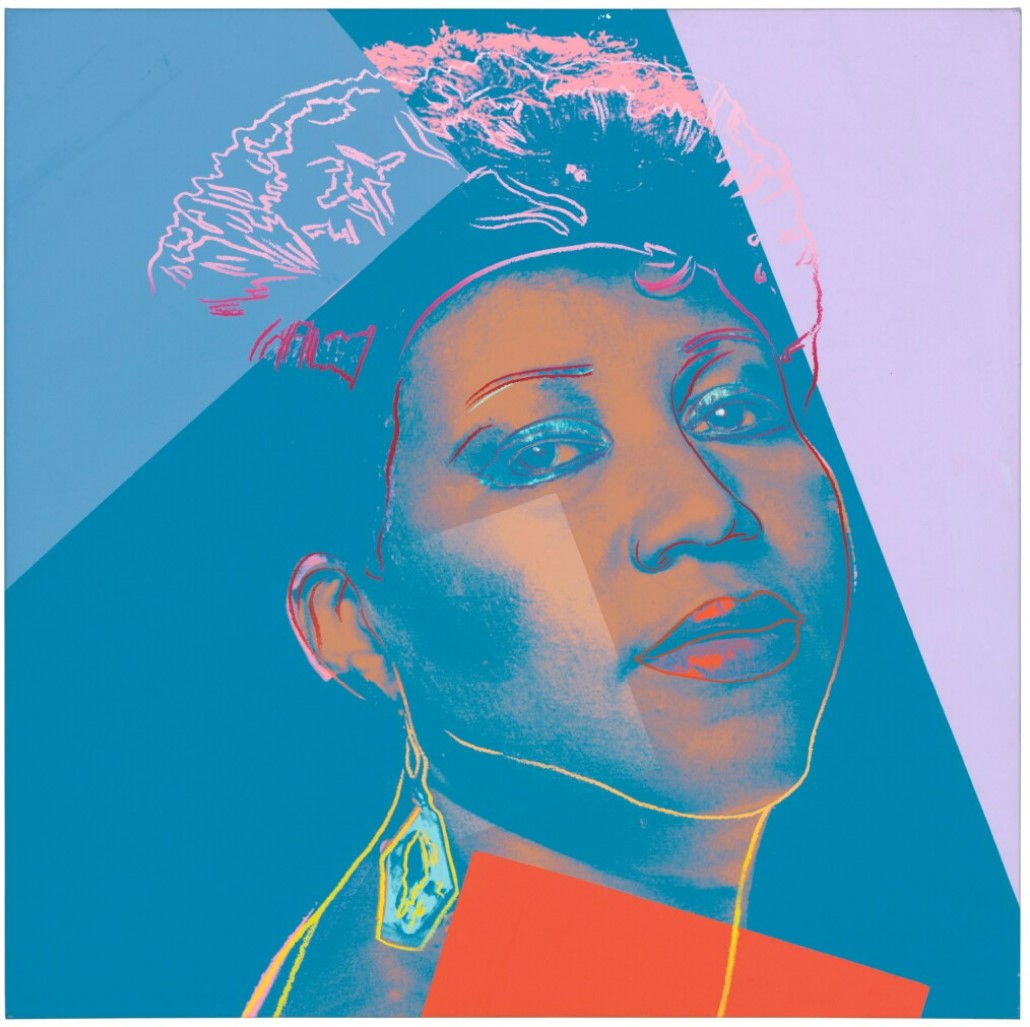
ANDY WARHOL
Aretha Franklin, 1986
Acrylic and silkscreen ink on canvas
40×40 inches (101.6 x 101.6 cm)
Stamped twice with the Estate of Andy Warhol stamp
Stamped with the Andy Warhol Foundation for the Visual Arts stamp
Numbered VF P050.008 on the overlap
Numbered ‘P050.008’ on the stretcher
Maria Shriver, 1986
Christie’s New-York: 12 November 2021
Estimated: USD 400,000 – 600,000
USD 625,000
ANDY WARHOL (1928-1987), Maria Shriver | Christie’s (christies.com)
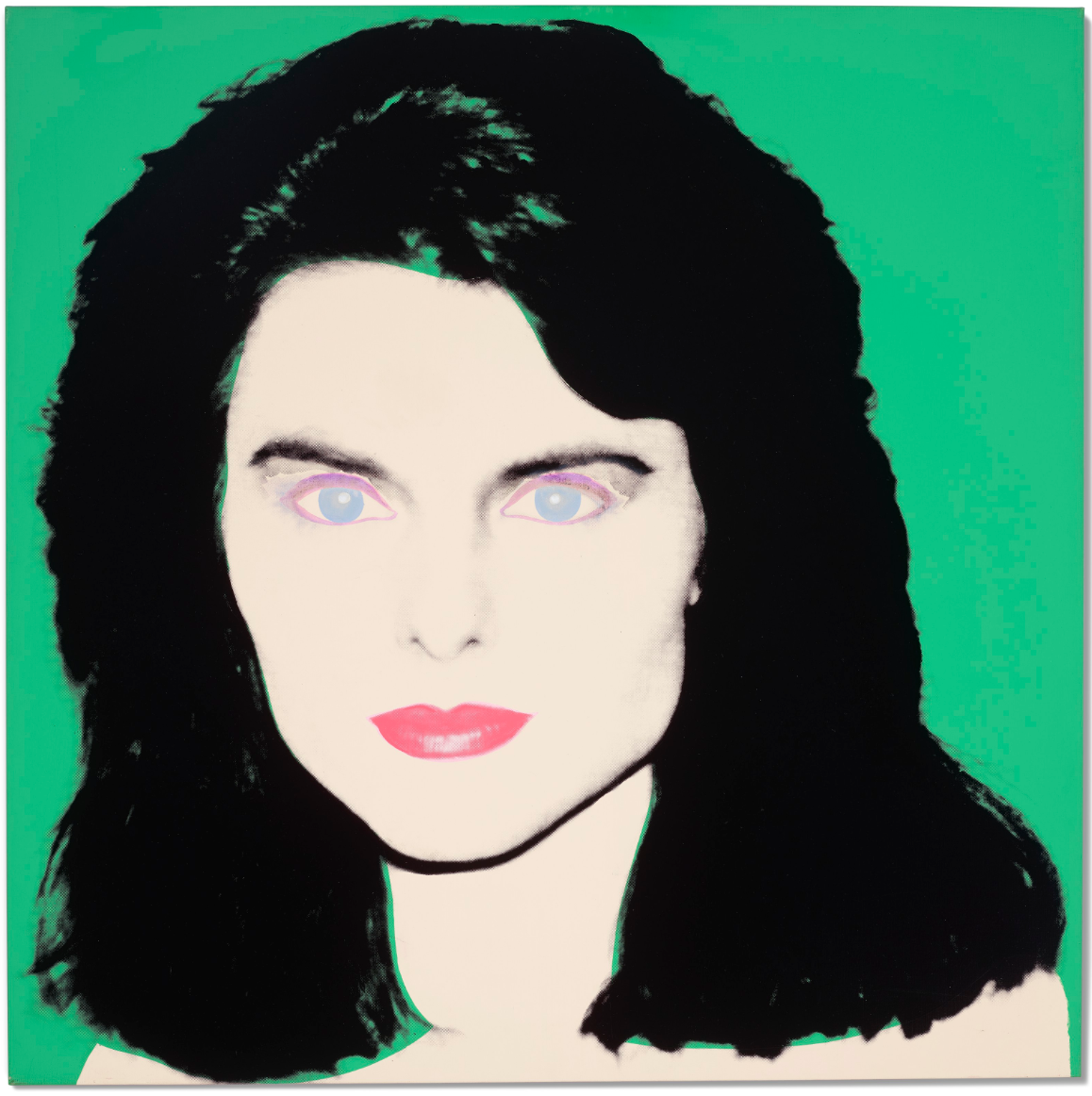
ANDY WARHOL (1928-1987)
Maria Shriver, 1986
Acrylic and silkscreen ink on canvas
40×40 inches (101.6 x 101.6 cm)
Signed and dated ‘Andy Warhol 86’ (on the overlap)
Stamped with the Andy Warhol Foundation for the Visual Arts, Inc. and the Andy Warhol Estate stamps
Numbered twice ‘P050.013’ (on the overlap)
Karen Kain, 1980
Christie’s London: 16 October 2021
Estimated: GBP 150,000 – 200,000
GBP 437,500 / USD 600,137
ANDY WARHOL (1928-1987), Karen Kain | Christie’s (christies.com)
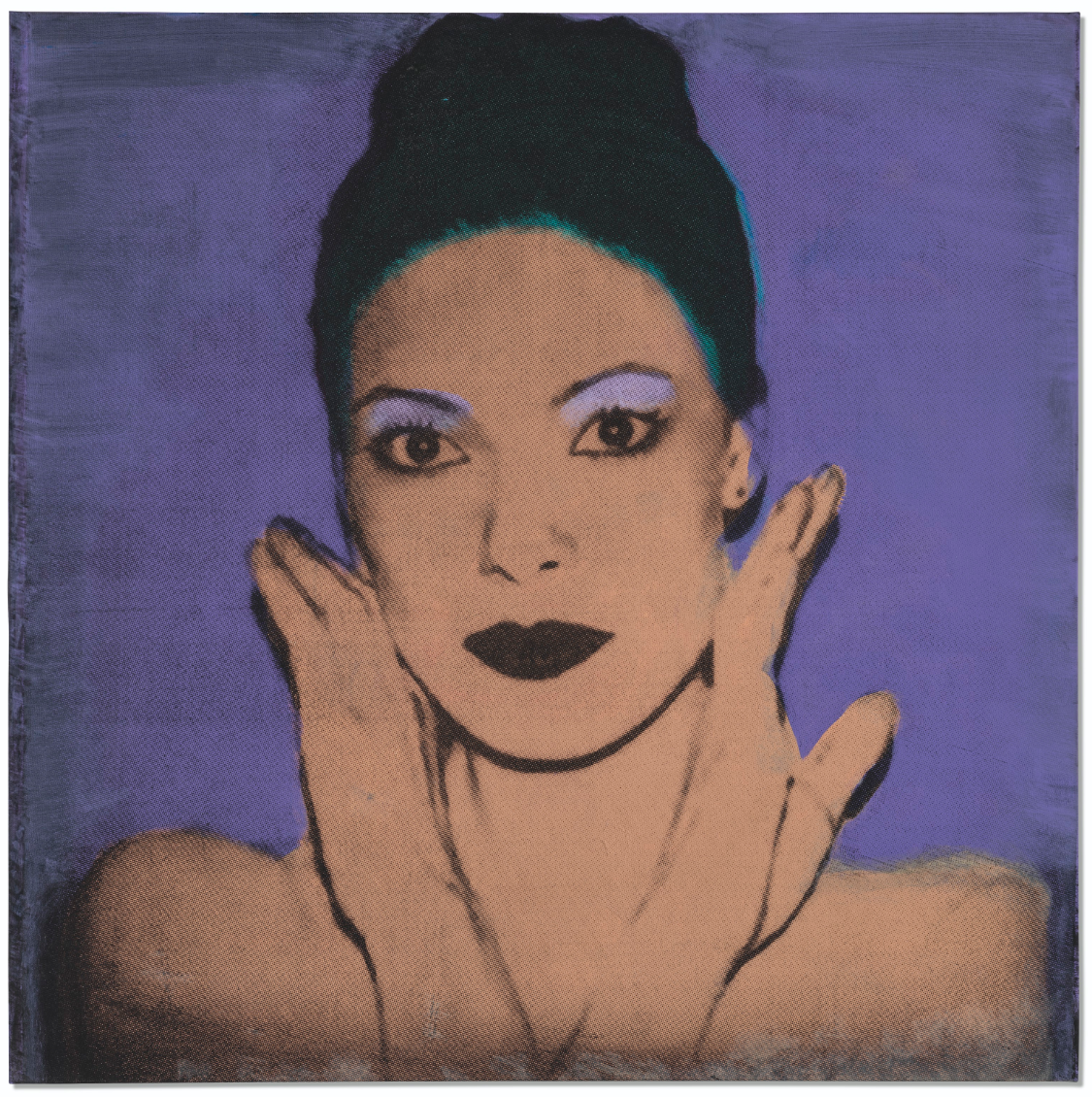
ANDY WARHOL (1928-1987)
Karen Kain, 1980
Acrylic and silkscreen on canvas
40×40 inches (101.6 x 101.6 cm)
Signed, inscribed and dated ‘to Willy Co Andy Warhol 1980’ and inscribed again ‘For and To Willy Co Ronnie Cutrone – NY’ (on the overlap)
Portrait of a Lady, 1983
Dorotheum Vienna: 23 June 2021
Estimated: EUR 350,000 – 450,000
EUR 450,213 / USD 538,017
Andy Warhol – Contemporary Art I 2021/06/23 – Realized price: EUR 450,213 – Dorotheum
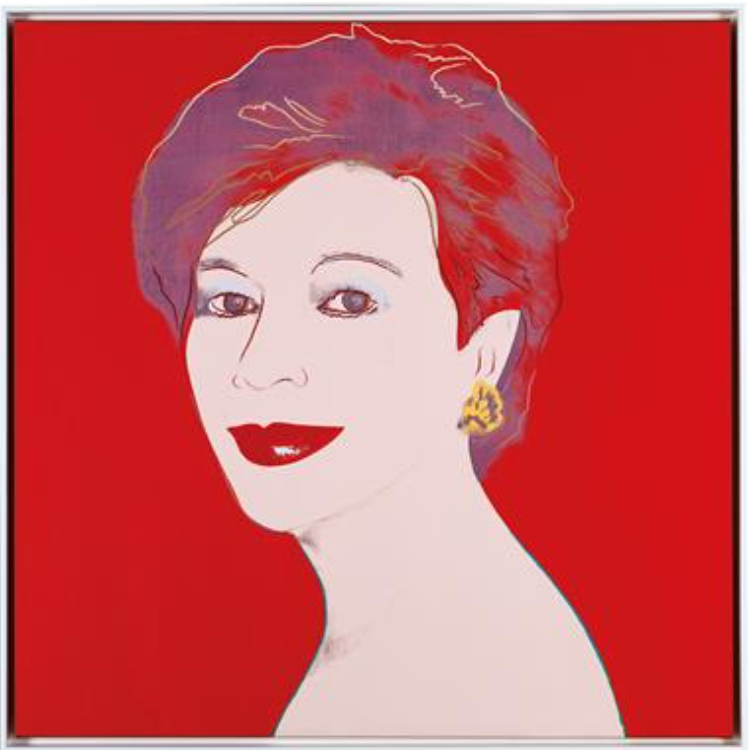
ANDY WARHOL (Pittsburgh 1928–1987 New York)
Portrait of a Lady, 1983
Acrylic and silkscreen on canvas
40×40 inches (101.6 x 101.6 cm)
Signed, dated Andy Warhol 83 on the overlap
Sachiko Bower, 1977
Sotheby’s New-York: 19 November 2021
Estimated: USD 450,000 – 650,000
USD 504,000
Sachiko Bower | Contemporary Day Auction | 2021 | Sotheby’s (sothebys.com)
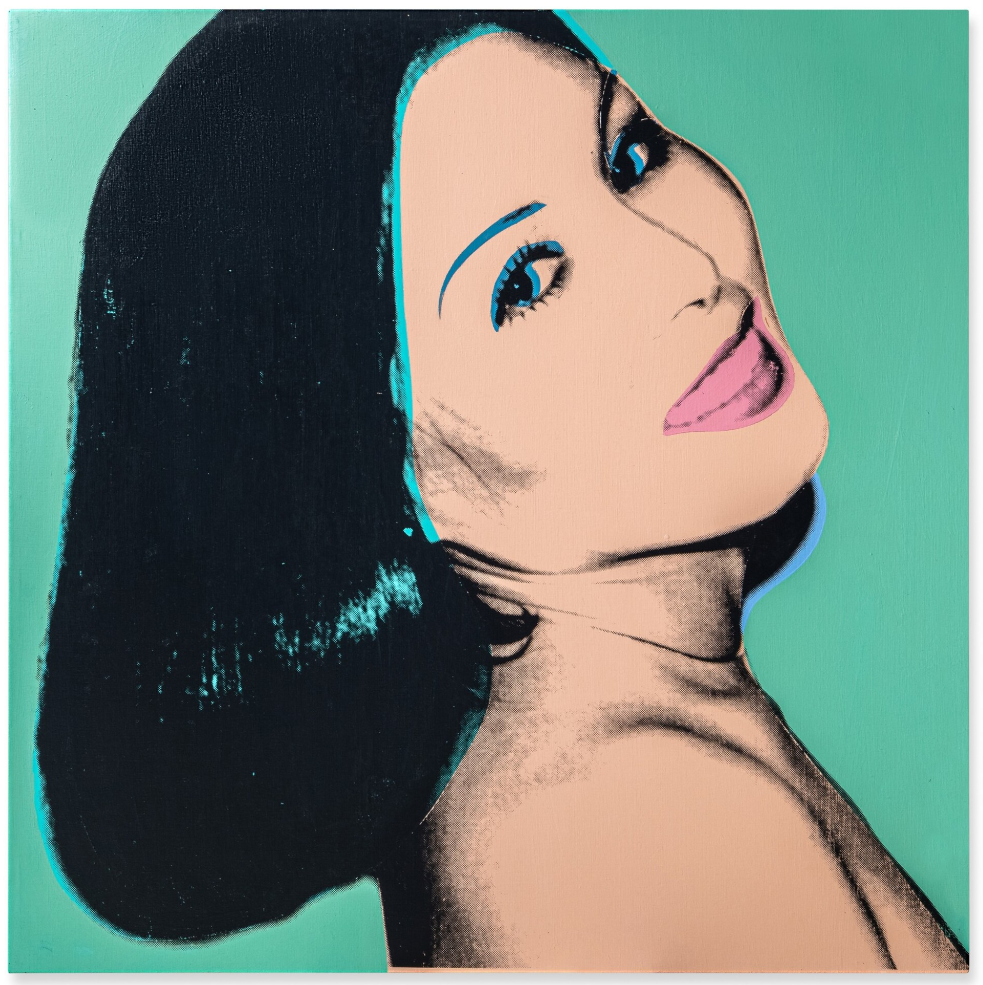
ANDY WARHOL (1928 – 1987)
Sachiko Bower, 1977
Acrylic and silkscreen ink on canvas
40×40 inches (101.6 x 101.6 cm)
Signed Andy Warhol, dated May 1977 and dedicated Sachiko (on the overlap)
Janet Sartin, 1982
Phillips London: 16 April 2021
Estimated: GBP 180,000 – 250,000
GBP 226,800 / USD 313,562
Andy Warhol – 20th Century & Contempo… Lot 230 April 2021 | Phillips
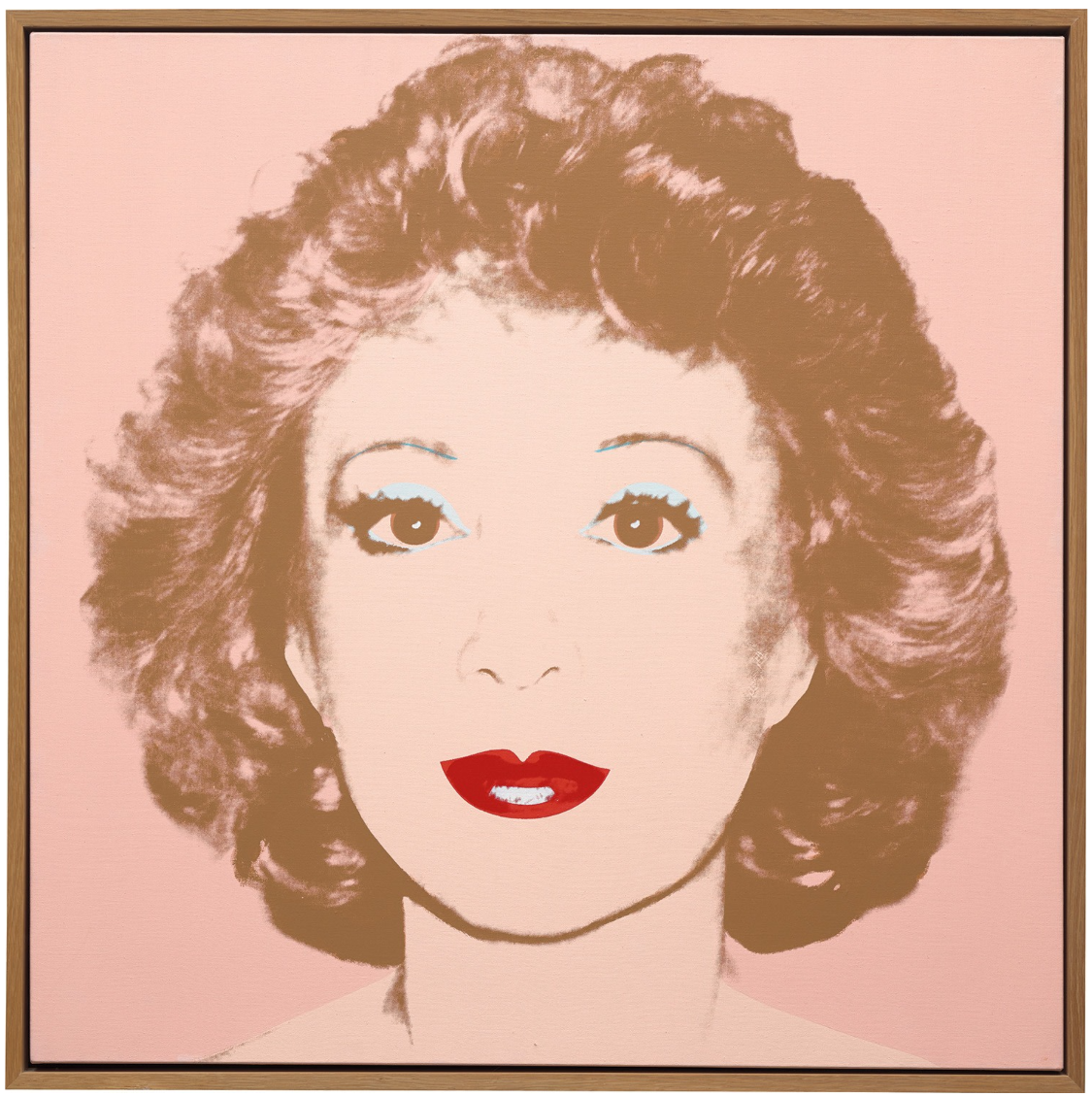
ANDY WARHOL
Janet Sartin, 1982
Synthetic polymer paint and silkscreen ink on canvas
40 x 40 1/8 inches (101.7 x 101.9 cm)
Stamped by the Estate of Andy Warhol and the Andy Warhol Foundation for the Visual Arts, Inc., New York
Numbered ‘PO 50.214’
Mick Jagger, 1974-75
Linking the worlds of popular culture and art with unprecedented directness, the celebrity portraits of the 1970s have a further autobiographical role in their depiction of the people in Warhol’s life at this time. Mick Jagger was one of the first celebrity portraits Warhol made and it represented the longstanding friendship between two of the hottest stars of the time. Warhol met Jagger in 1963 during the Rolling Stones’ first tour to the United States, before the band reached its height of international popularity. The pair formed a friendship and professional relationship that became the foundation for several years of artistic collaboration.
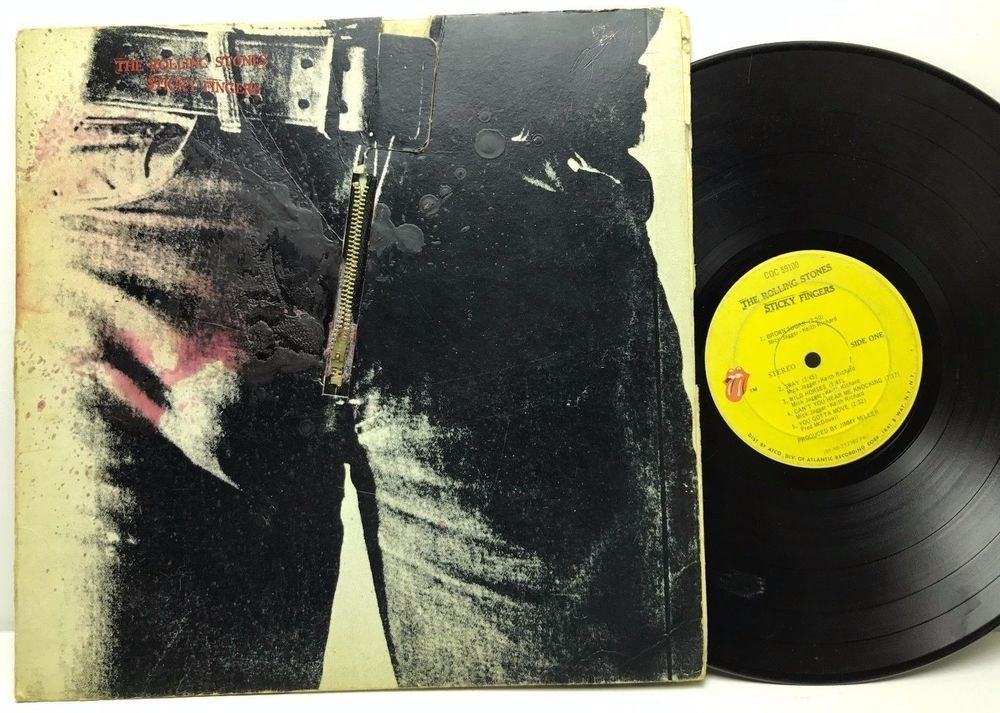
Most famously, Warhol was commissioned to design the iconic cover for the Rolling Stones 1971 album Sticky Fingers, an image that became renowned for its provocativeness and expressivity of 1970s rock and roll. By the mid ’70s Jagger’s fame was at its peak, leading Warhol to pursue the rock star as the subject of his next series of acclaimed screen prints. In the summer of 1975, whilst Jagger and his wife were renting Warhol’s home in Long Island, the artist took the opportunity to photograph Jagger, capturing a variety of expressive images that would form the basis of his next portfolio.
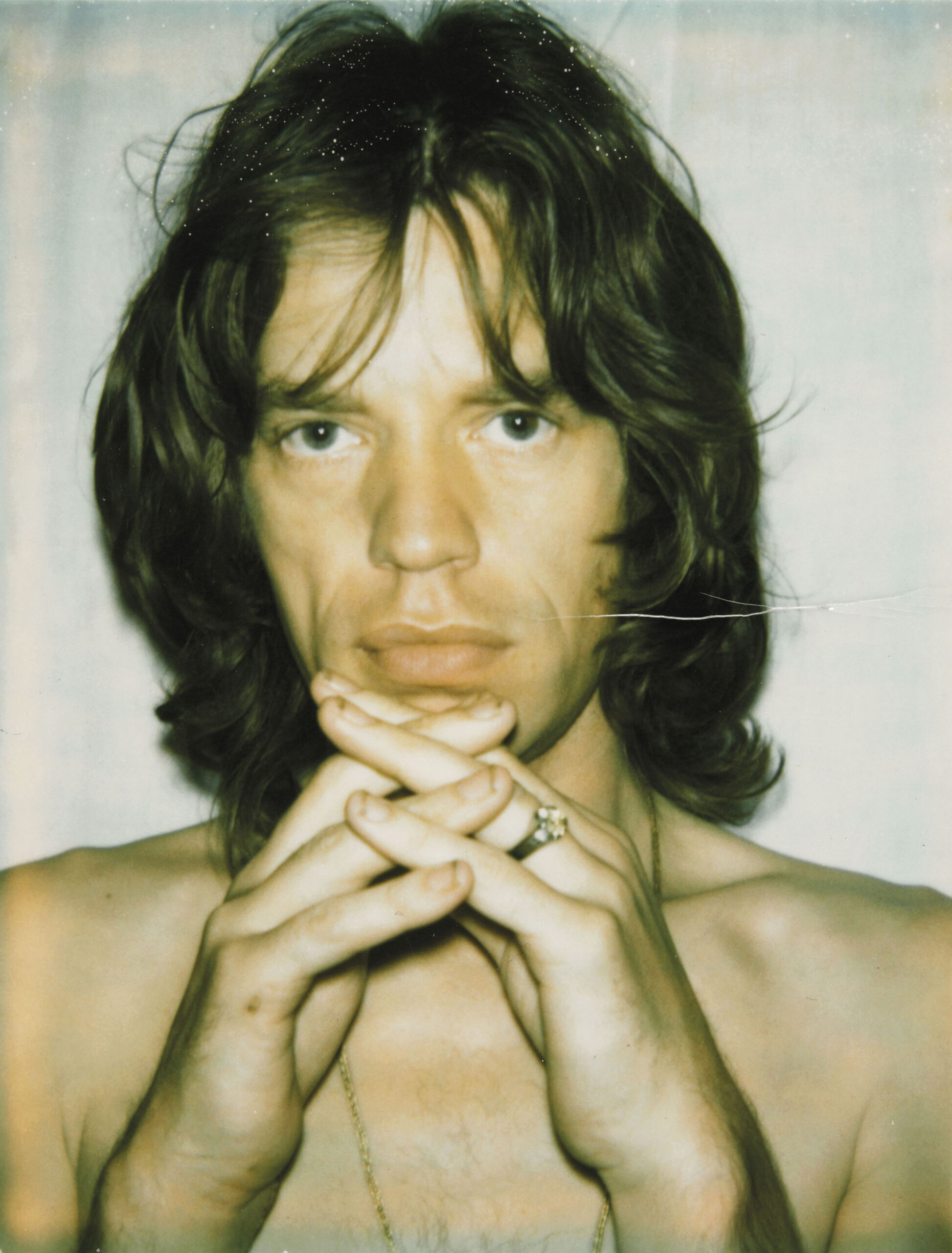
This process marked an important stylistic turning point in Warhol’s artistic career as he began to more frequently photograph his subjects, as opposed to relying on the pre-existing imagery used for his earlier portfolios. Warhol’s 1975 photographs of Jagger capture the rock star bare-chested in a range of emotive poses. These images were projected and used to create stylized line drawings, then layered with solid areas of color to create intersecting lines and shapes, sometimes obscuring the singer’s face. Warhol’s collage technique is again symptomatic of this shift in aesthetic, creating more expressive imagery than the screen prints of his earlier career. This increasingly abstract style also demonstrates Warhol’s interest in the use of photography and collage to create a new conceptual framework, one that is comparable to the more non-representational art that was emerging in the 1970s.
“I thought that the album cover he did for the Rolling Stones’ Sticky Fingers was the most original, sexy and amusing package that I have ever been involved with.”
Mick Jagger
Mick Jagger, 1975
Christie’s London: 16 February 2011
Estimated: GBP 550,000 – 750,000
GBP 881,250
Andy Warhol (1928-1987) (christies.com)
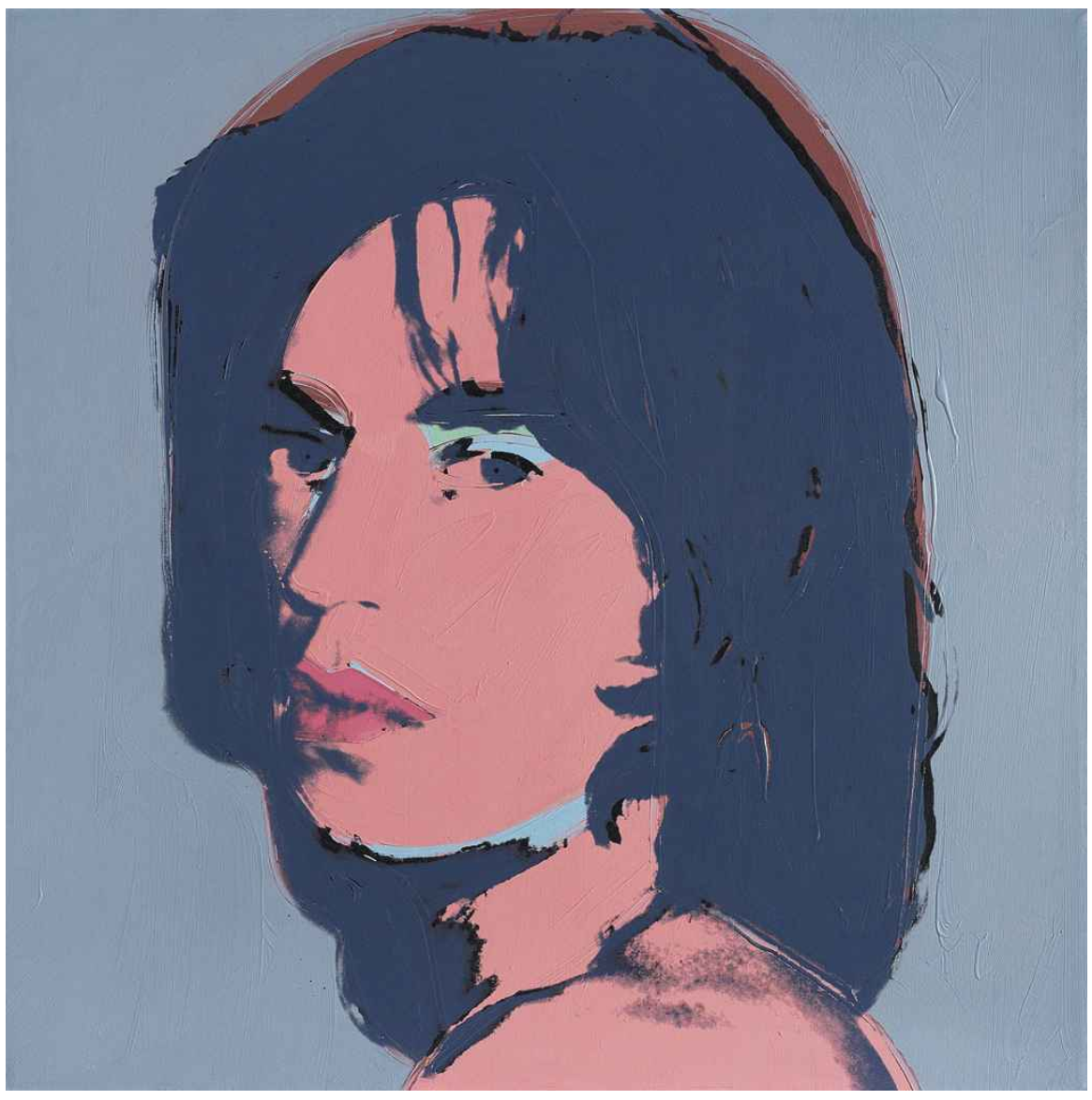
ANDY WARHOL (1928-1987)
Mick Jagger, 1975
Acrylic and silkscreen inks on canvas
40×40 inches (101.6 x 101.6 cm)
With the Andy Warhol Art Authentication Board, Inc., stamp and numbered ‘A112.056’ (on the overlap)
In Mick Jagger, created circa 1975, Jagger is shown with his famous pouting lips highlighted in pink with flecks of turquoise. Warhol has added a painterly zest to the surface of this picture, allowing the inks to amass in a way that appears more gestural, and has heightened this effect with the flickering drawn marks. This pictorial energy reflects the charisma of its subject Jagger is shown with his shoulders bare, his hair flowing. This is the face of a true celebrity. Yet it is a tribute to the friendship between Jagger and Warhol that the singer had posed for several Polaroid shots which the artist then used as the basis for his portraits.
Mick Jagger, circa 1975
Sotheby’s London: 5 February 2009
Estimated: GBP 500,000 – 700,000
GBP 797,250
(#17) Andy Warhol (sothebys.com)
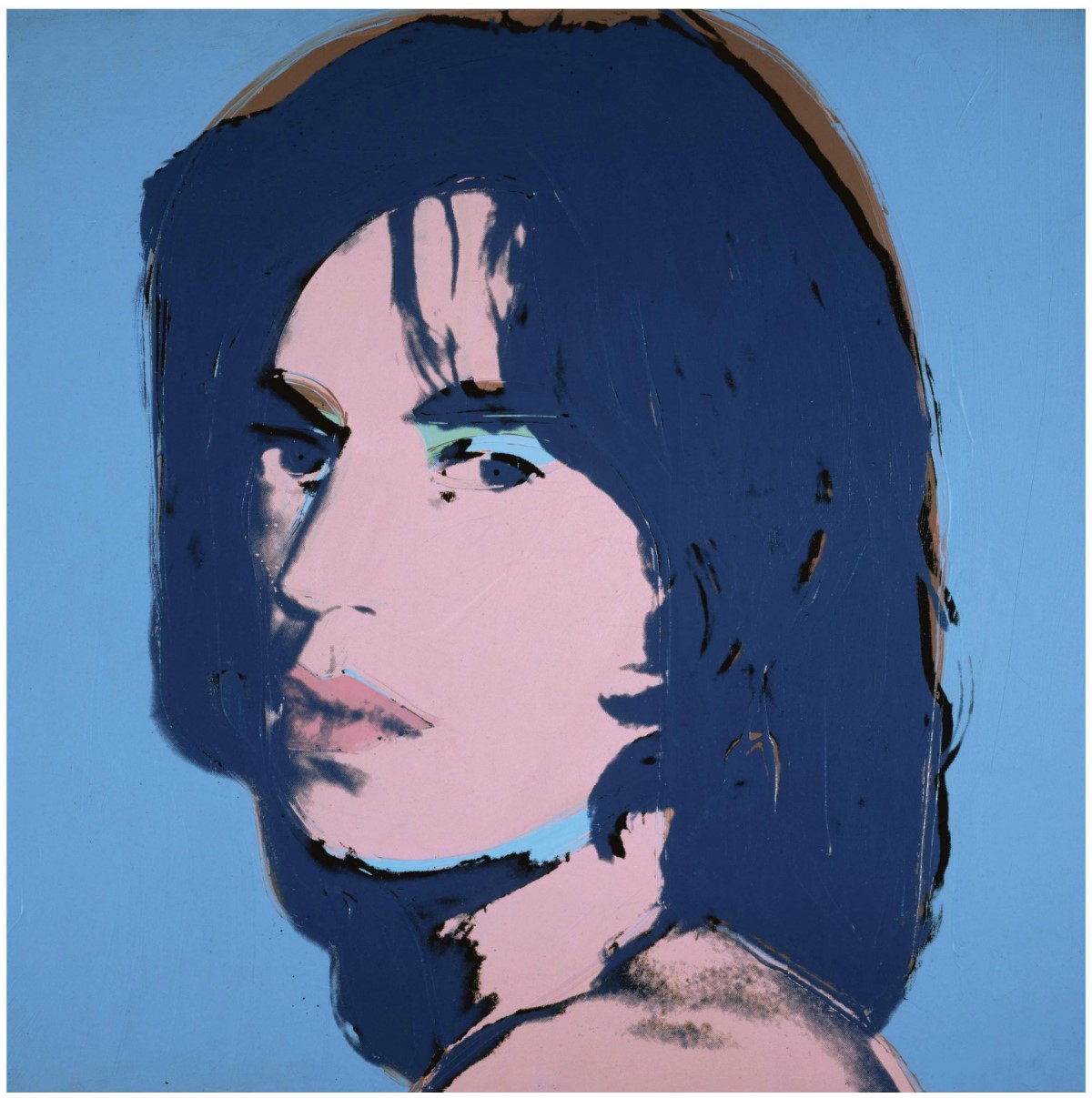
ANDY WARHOL
Mick Jagger, circa 1975
Acrylic and silkscreen ink on canvas
40×40 inches (101.6 x 101.6 cm)
Stamped by the Andy Warhol Art Authentication Board, Inc.
Numbered A112.056 on the overlap
In Mick Jagger’s portraits as a series, and in this one in particular, the sitter’s gaze is the undisputed protagonist. So much so here, that the predominant color used for the entire composition is blue, in all its nuances, starting from Jagger’s eye tone. Here is where Warhol most effectively expresses his fascination with celebrities and star-culture: his emotion and pride for finally having entered the realm of the people that can see stars’ eyes from a close distance.
Brigitte Bardot, 1974
Devastatingly and irresistibly seductive, Brigitte Bardot gazes sultrily toward us, enrapturing the viewer with her screen vixen persona. With his bewitching 1974 portrait of the steamy bombshell blonde, Andy Warhol offered the magnetic essence of the siren who seduced the world, enticing us with her come-hither allure. Bardot’s blue visage lures with powerful hypnotic intensity, and yet as is archetypal of Warhol’s enduring conceptual project, all we are left with is her image frozen in the eternal moment of the camera’s flash. Belonging to the legendary series of eight works commissioned by Gunter Sachs, to whom Bardot was married from 1966-1969, Bardot’s radiant sapphire visage stands as inevitable successor to the irresistible trinity of Liz Taylor, Marilyn Monroe, and Jackie Kennedy beatified by Warhol’s immaculate silkscreen in the 1960s. Superbly manifest of the artist’s obsession with fame, celebrity, and popular culture, Bardot’s movie-star status, goddess-like beauty, flawless physiognomic symmetry, and radical eroticism mark her as the consummate Warholian muse. Of the eight total portraits that Warhol executed of Bardot, only three saw Warhol use four discrete colors and red lips, exemplified by the distinctive chromatic arrangement of the present work—a striking cerulean for the ground, luscious violet for the screen, brilliant cadmium red for her lips, and deep purple for her eyeshadow. Exceptional for its prismatic complexity, the present work stands at the pinnacle of the series, rich in hue and dramatic visual impact.
“Monroe was a tease… but Bardot was the real thing!”
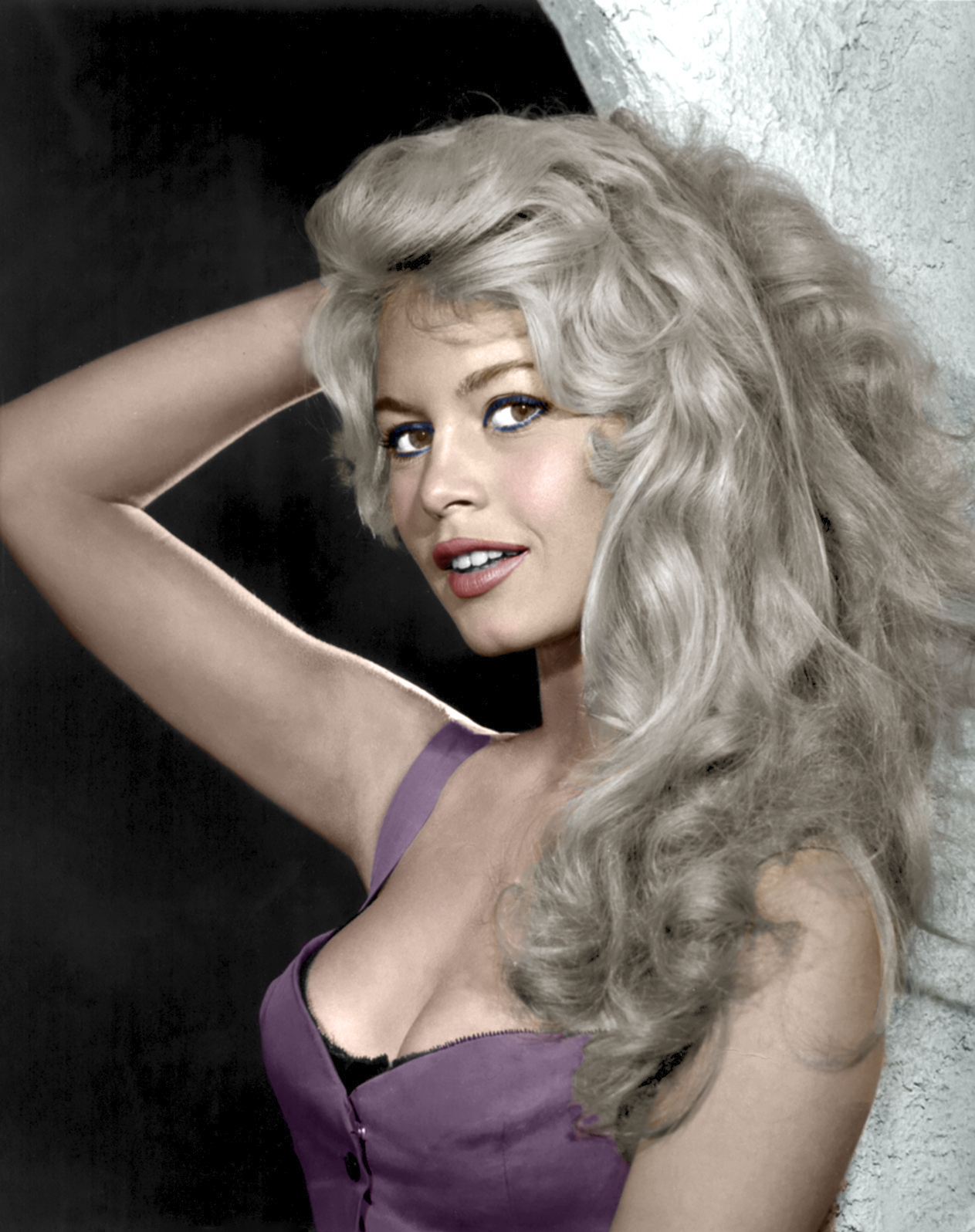
In 1974, at the age of 39 and still at the height of her career, Bardot or ‘BB’ as she was known in France, was as beautiful and as famous as ever. Her blond hair, heavy eyeliner and pouting lips were an instantly recognizable trademark of her free-spirited energy and sexual allure all over the world. It was at this point, that she shocked many people by announcing her retirement.
‘I’ve made 48 films of which only five were good. The rest are not worth anything. I will not make another.’
Brigitte Bardot stands apart from all of Warhol’s 1970s Society Portraits in size and technique, lending it a distinctive eminence that reflects Warhol’s unparalleled admiration and enchantment for his subject. Typically, the other portraits from this decade adhered to the artist’s standard 40×40 inch format; during this period Warhol would take his own Polaroids of his sitters with his ubiquitous Big Shot camera and use these portraits as the source images for his silkscreens. Stories abound of the sessions in which Warhol invited his subjects up to the Factory to sit for his camera.
However, for Bardot, the portraits were executed in an exceptionally large format, and rather than using his own photograph Warhol based the screen on the acclaimed photographer Richard Avedon’s iconic 1959 image of the sultry starlet at her peak. Sachs provided the image—found in the pages of a magazine—to Warhol upon his commission, and it is not known if Warhol was even aware at the time that he had paraphrased an image by the famed Avedon. Avedon had photographed Bardot fifteen years prior, in January 1959 in his Paris studio. The actress wore a sumptuous Lanvin dress and had her hair done by Alexandre of Paris, then considered the world’s most famous hairdresser. Alexandre had also styled Elizabeth Taylor’s classic coiffure for Cleopatra—another image Warhol used in his portraits of Liz, making Brigitte Bardot the second chance collaboration between Warhol and the hairstylist.
Reverberating with extraordinary volume, Bardot’s hair swoops symmetrically away from her face and enrobes her sharply contoured features in a mane of pure luxuriance. Avedon’s portrait already possessed a distinctly Warholian quality in its pronounced double-exposure effect; each curled lock of hair appears to vibrate independently within the confines of the frame, achieving the quietly rippling effect of Warhol’s out of register screens through Avedon’s own darkroom manipulation. In this regard, Avedon’s portrait functions as a sort of readymade, already exuding the buzzing of Warhol’s silkscreens a priori to the artist’s appropriation. Based on an existing photo that was not his own, in both painterly approach and style Bardot aligns with the seminal silkscreens of Jackie, Liz and Marilyn, whose images Warhol collected from the press. Divergent from the brushy and almost expressionistic application of paint familiar to Warhol’s large corpus of society portraits, Bardot evokes a retrospective appropriation of the earlier hard Pop style of unmodulated coloring and closed contours to emphasize a machine-like touch. Detached, however, from the sobering presence of death in the portraits of Marilyn and intimated at in his depictions of Jackie and Liz, Bardot is sheer screen magnetism incarnate.
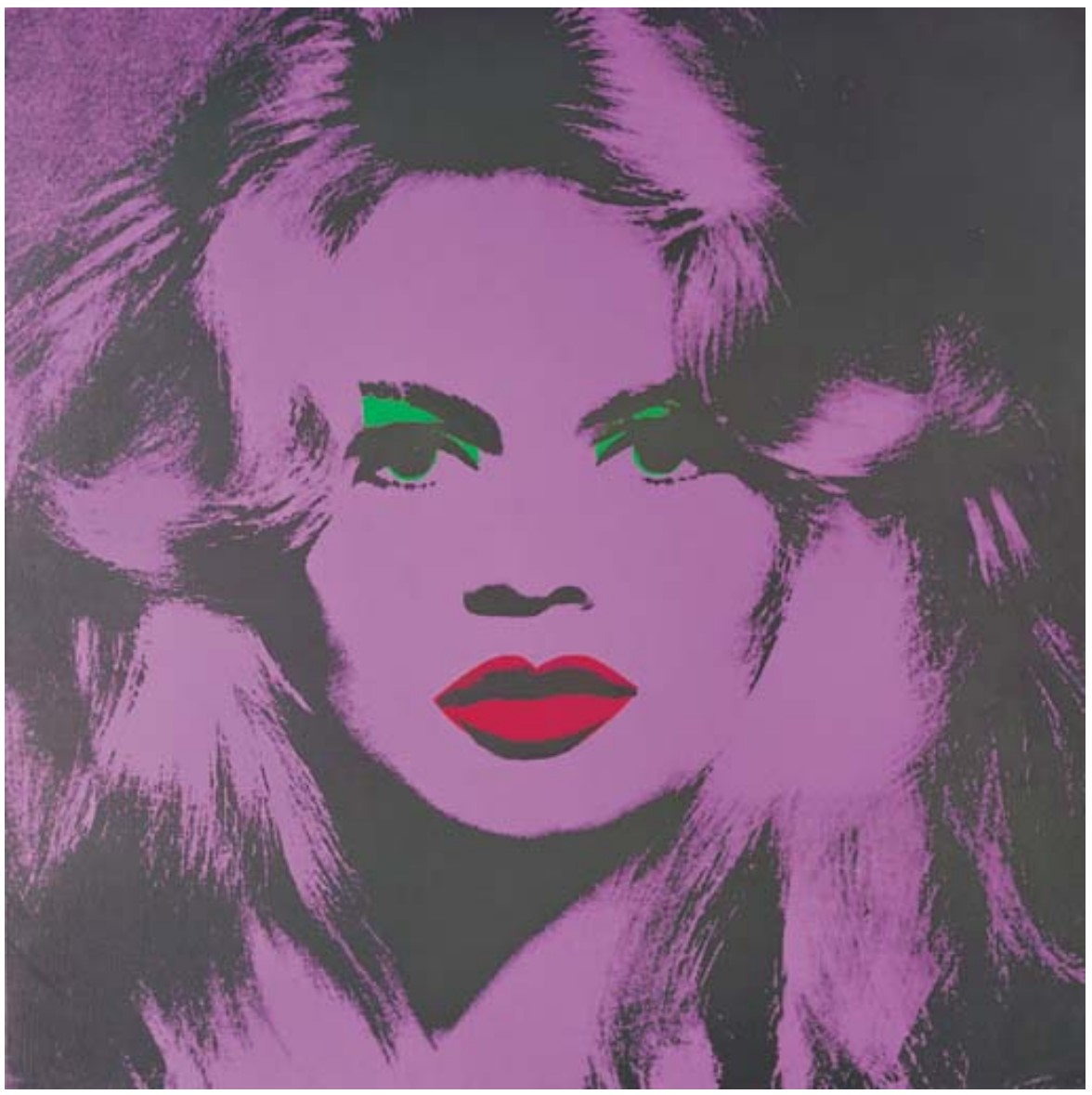
Following Warhol’s first major retrospective exhibition in Hamburg during 1972, an effort largely initiated by Sachs himself, the set of eight paintings of Bardot were commissioned to hang as pendants to a corresponding series portraying Sachs. Intended to adorn the walls of his extravagant Pop Art temple in the tower of the luxurious Palace Hotel, St. Moritz, the portraits of Bardot and Sachs together stand as a testament to their fiery and brilliantly seductive relationship.
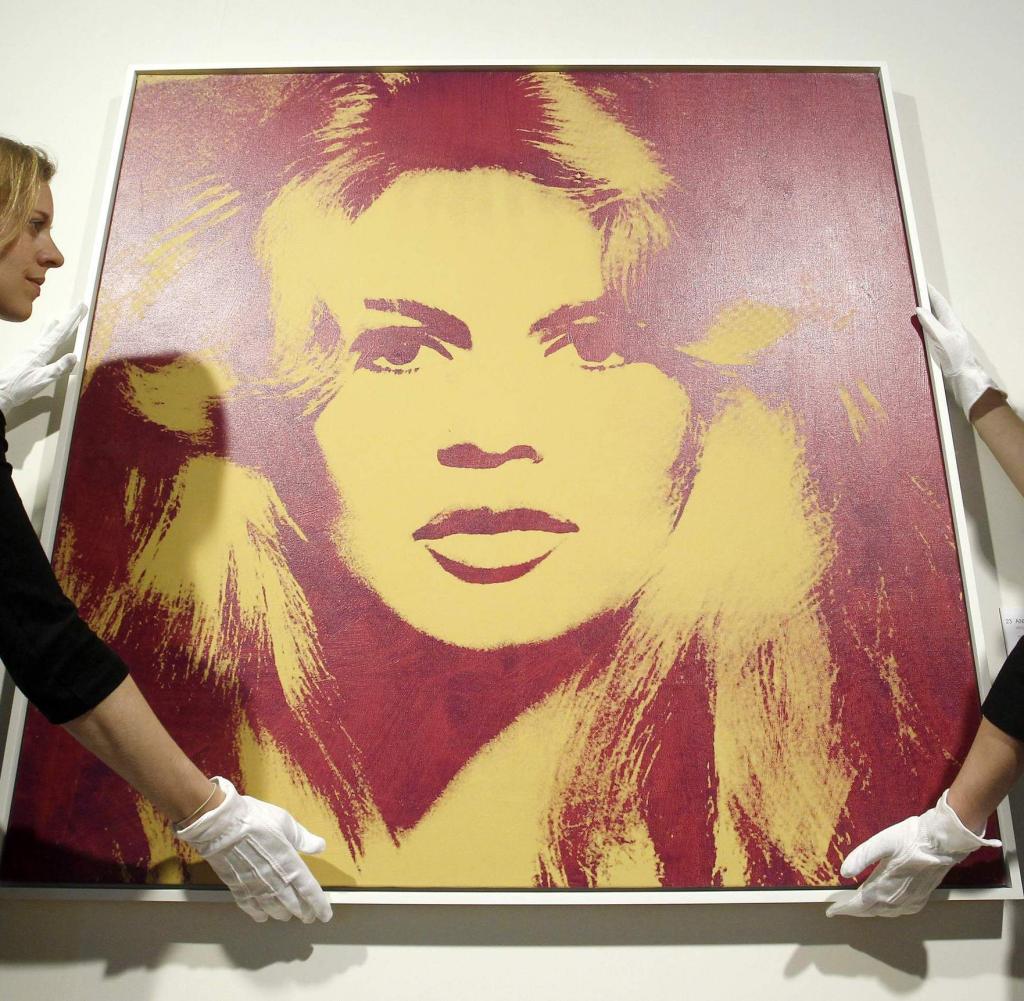
Finally executed in 1974, Warhol’s seductive portrayal of Brigitte Bardot was a creation almost eight years in the making. The origin of the eight paintings after Bardot’s iconic likeness can be traced to the couples’ very first encounter with Warhol during the spring of 1967. Visiting the South of France to promote his film Chelsea Girls, Warhol first encountered Sachs at the Gorilla Bar in St. Tropez. Though Warhol’s attempts to host screenings of his film were abortive, the artist and his gang of Factory cohorts stayed to star-gaze and bask in the glamorous atmosphere. Famed for his lavish lifestyle and burgeoning reputation as a visionary arts patron, Sachs was approached directly by Warhol, who made such a striking first impression that Sachs was prompted to describe the encounter “as unusual as Andy Warhol himself.” (Ibid., p. 18)
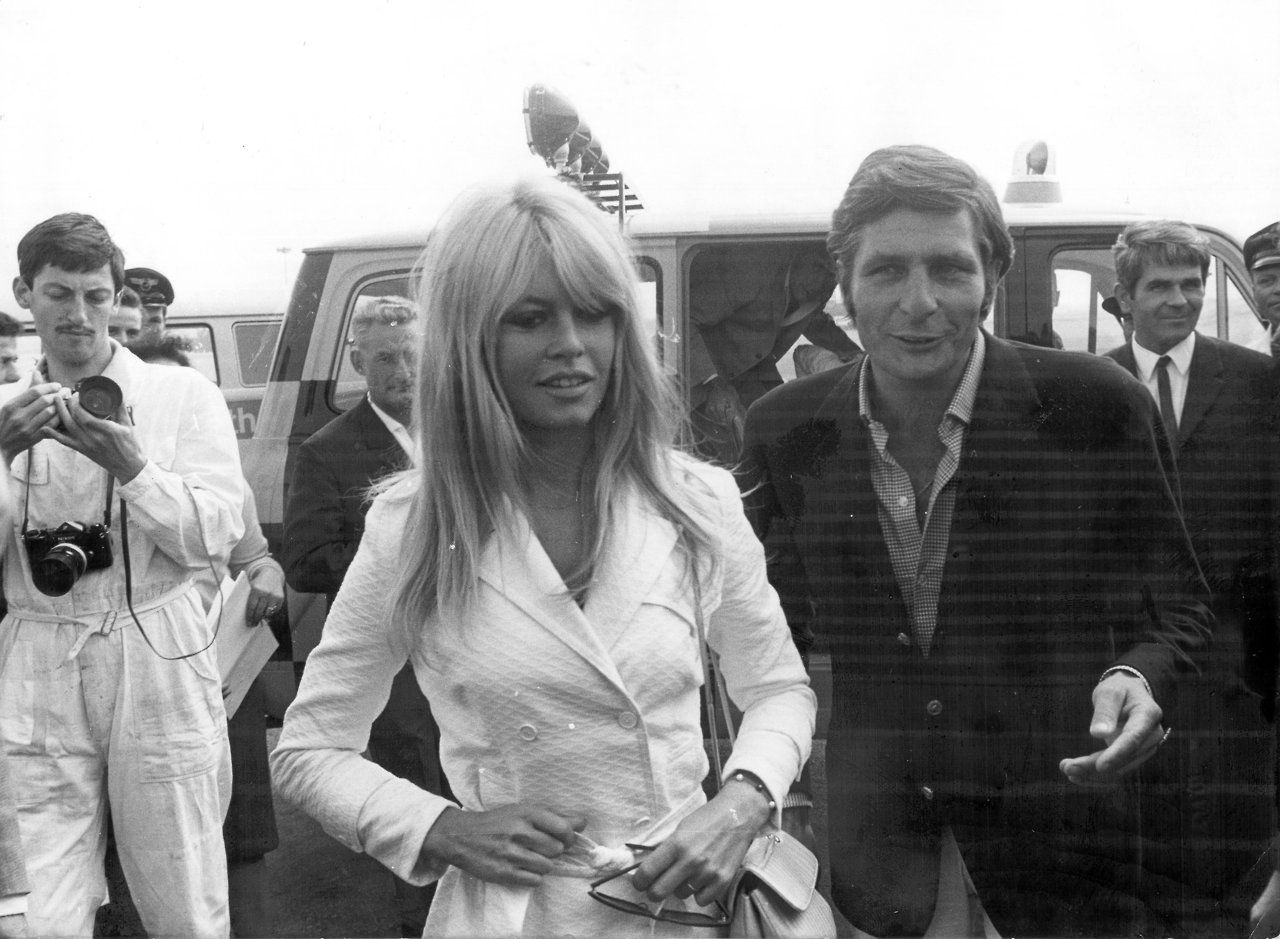
For Warhol however, the most memorable aspect of the entire encounter was meeting Sachs’ wife, Brigitte Bardot. Documented in Warhol’s 1960s memoirs, the artist remembered meeting Bardot in some detail.
“We decided to hang around anyway and just have fun as that’s what we were always good at, going to parties, water skiing, meeting the foreign movie people… we met Gunter Sachs, the West German heir who brought us home to meet his wife Brigitte Bardot. She came downstairs and entertained like a good European hostess, and I couldn’t get over how sweet that was – to be Brigitte Bardot and still bother to make your guests comfortable!”
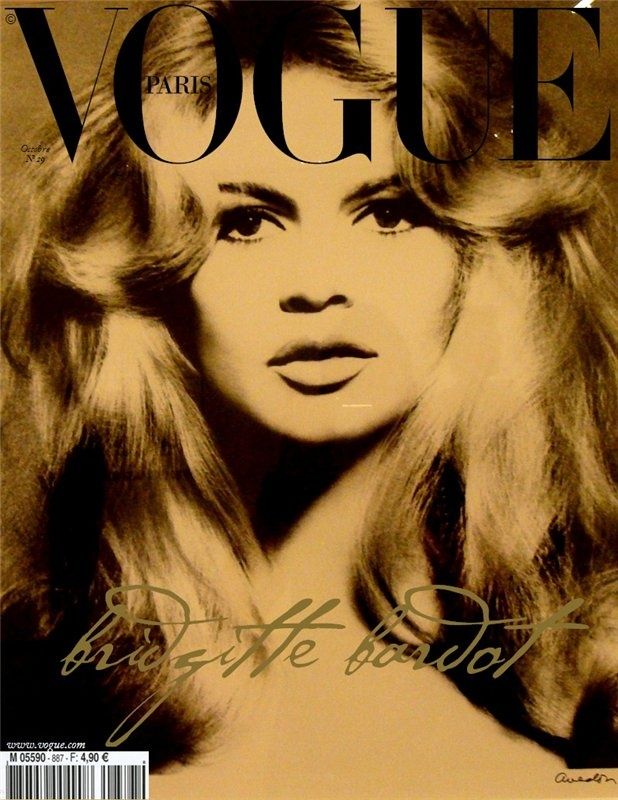
By the time Bardot married Sachs in 1966, the actress had long since attained legendary status. At the age of only 15 she had appeared on the cover of Elle and forged the blueprint for the original jeune filles and prototypical Lolita five years preceding the publication of Nabokov’s eponymous novel. In 1956 Bardot shot to stardom almost overnight in the controversially provocative film directed by her then husband Roger Vadim, And God Created Woman – the film which scandalized America and earned her the status of sex-kitten extraordinaire; by 1959 the Bardot myth was truly cemented when she elicited the attention of France’s existential elite as the focus of Simone de Beauvoir’s article “Brigitte Bardot and the Lolita Syndrome.” This essay recognized Bardot as the “locomotive of women’s history” presenting her as the most liberated woman of post-war France, a status which would be nationally endorsed ten years later when Bardot was prestigiously asked to bestow her features as the first official incarnation of the traditionally archetypal Marianne – France’s revolutionary icon of liberty and national symbol La Patrie.
Brigitte Bardot, 1974
Sotheby’s New-York: 11 November 2014
Estimated: USD 10,000,000 – 15,000,000
USD 11,645,000
(#41) Andy Warhol (sothebys.com)
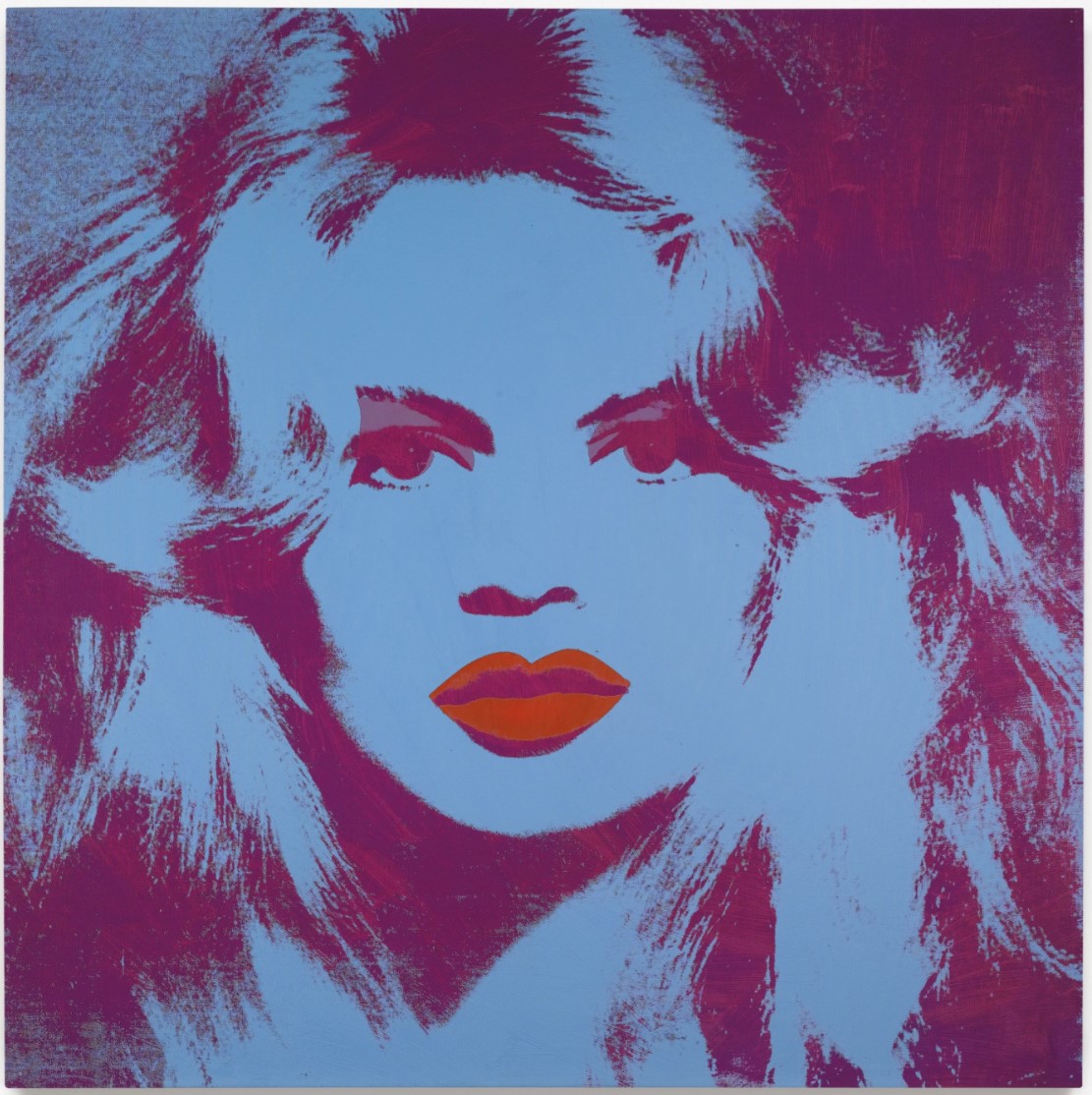
ANDY WARHOL
Brigitte Bardot, 1974
Acrylic, silkscreen ink and pencil on canvas
47.5 x 47.2 inches (120.6 x 120 cm)
Brigitte Bardot, 1974
Sotheby’s London: 22 May 2012
Estimated: GBP 3,000,000 – 4,000,000
GBP 3,009,250
(#23) Andy Warhol (sothebys.com)
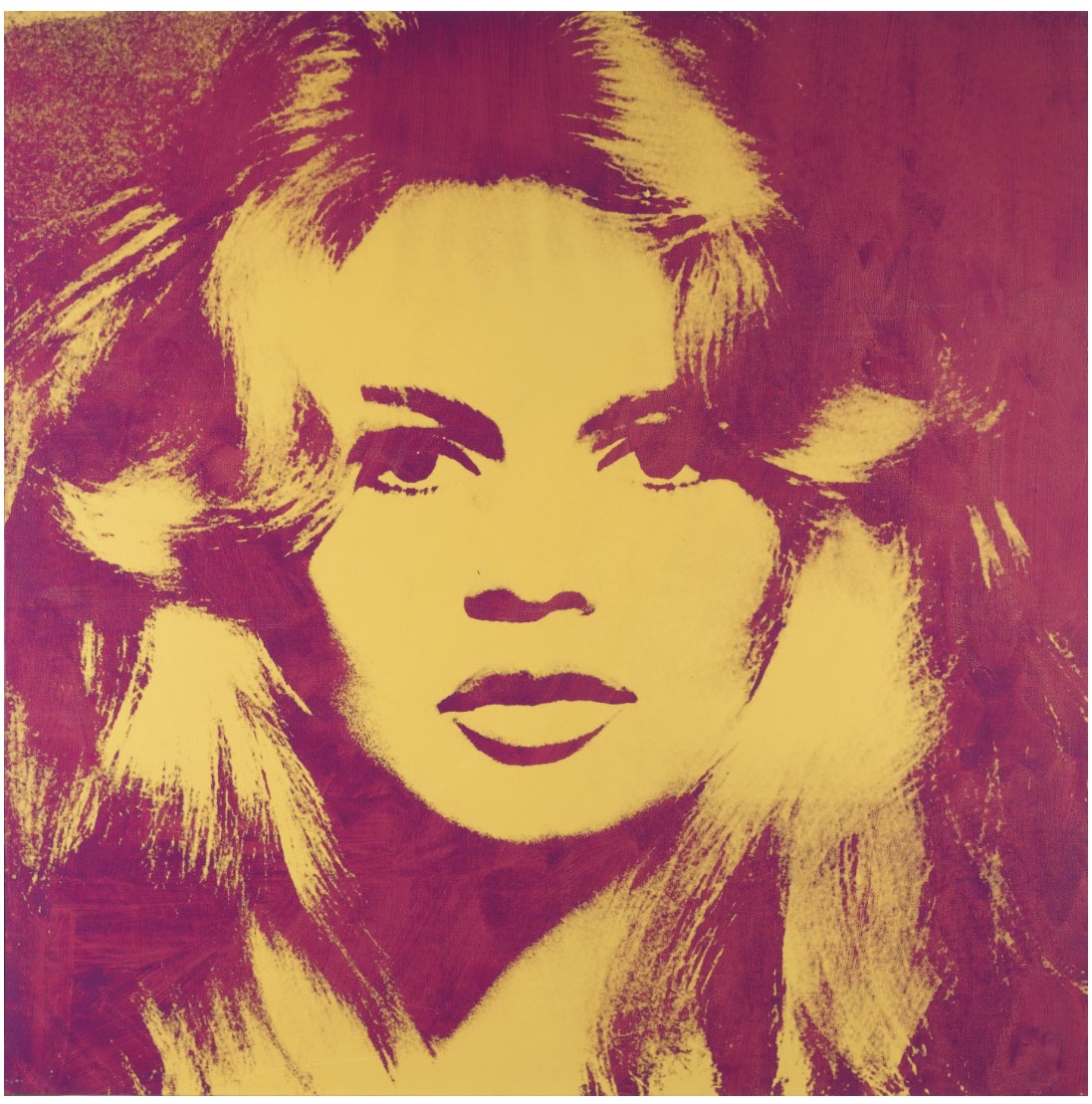
ANDY WARHOL
Brigitte Bardot, 1974
Acrylic and silkscreen ink on canvas
48×48 inches (120×120 cm)
Signed and dated A.W.74 on the overlap
Brigitte Bardot, 1974
Christie’s London: 8 February 2007
Estimated: GBP 1,500,000 – 2,000,000
GBP 5,396,000
ANDY WARHOL
Brigitte Bardot, 1974
Synthetic polymer paint and silkscreen inks on canvas
47.2 x 47.2 inches (120×120 cm)
Signed ‘Andy’ (on the overlap)
The present work is one of only eight paintings that Warhol made from a photograph of her at this time. Filling the frame of the picture with her image in a direct and open way, Warhol lets Bardot’s famous features dominate the canvas, her doe-like eyes and childish beauty emerging from the fur-like folds of her hair to command the picture plane and arrest the attention of the viewer. Indeed it is this focus of her stare that Warhol has heightened in this work, sharply angling the vivid green highlights on her eyes and contrasting this with the sharp red of her famously vulvular lips to accentuate the vampiric nature of the image. In keeping with Bardot’s own nature, this more straight-forward and direct nature of the image is one that remains faithful to the simplicity of Bardot’s beauty. Because of this Warhol’s ‘star’ treatment of Bardot actually accentuates her status as an icon creating a portrait of Bardot as both individual and phenomenon.
Brigitte Bardot, 1974
Christie’s New-York: 9 May 2006
Estimated: USD 1,000,000 – 1,500,000
USD 3,040,000
Andy Warhol (1928-1997) (christies.com)
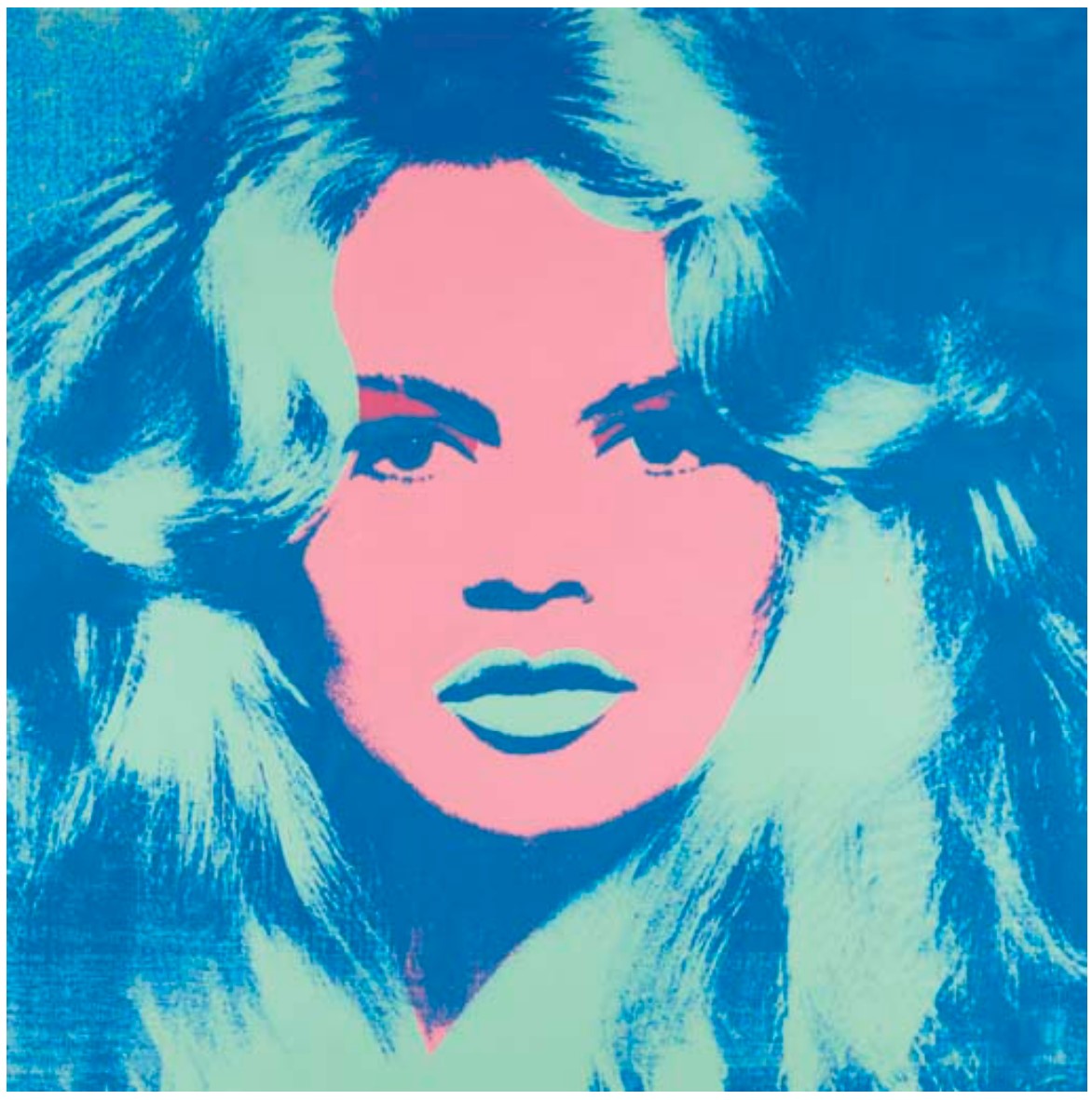
ANDY WARHOL
Brigitte Bardot, 1974
Synthetic polymer paint and silkscreen inks on canvas
47.2 x 47.2 inches (120×120 cm)
Signed with initials and indistinctly dated ‘A.W. 74’ (on the overlap)
The present work is one of only eight paintings that Warhol made of her. Filling the frame of the picture with her image in a direct and open way, Warhol lets Bardot’s famous features dominate the canvas, her doe-like eyes and childish beauty emerging from the fur-like folds of her fluorescent colored hair to command the picture plane and arrest the attention of the viewer. More sensitive in his treatment of Bardot than in his more garish and brutal treatments of Liz Taylor and Marilyn, Warhol has used a comparatively subdued cosmetic color scheme so as to ensure that Bardot’s beauty and allure transcends her transformation into a Warhol Pop icon. Perhaps also because Bardot needed and used little make-up, her image responds well to Warhol’s neon colored overpainted additions. Using a straightforward and personal image of her — albeit one that looks like an album cover — and remaining faithful to the simplicity of her beauty, Warhol has accurately created in this work a portrait of Bardot as both individual and phenomenon.
Gunter Sachs, 1972
In a fateful meeting at Le Gorille bar in Saint Tropez in the spring of 1967, Andy Warhol and Gunter Sachs laid the foundations for a collaborative and enduring friendship grounded in reciprocal like-mindedness and respect. Indeed, their initial meeting marked a seismic change for Sachs and the future of his collection. Though impressively already aware of Warhol’s then nascent reputation as the foremost proponent of the burgeoning Pop Art movement, it was their face-to-face encounter that impelled Sachs to acquire and commission some of Warhol’s most iconic works.
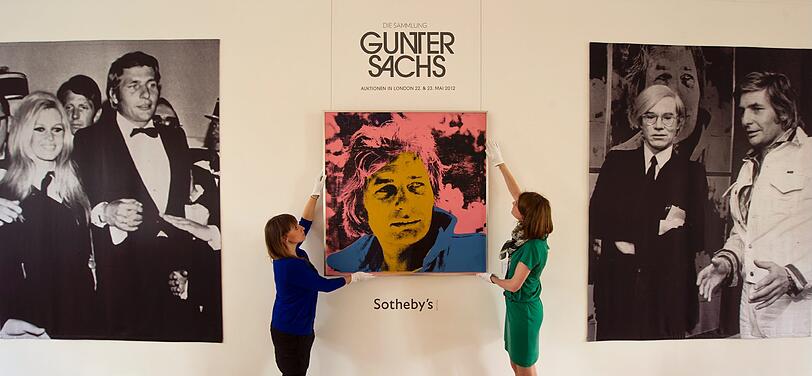
Moreover, this meeting would inspire Sachs to personally undertake a promotional project in Germany: in 1972, Sachs opened his own gallery in Milchstrasse in Hamburg and, alongside Bruno Bischofberger, organised one of the first fully comprehensive exhibitions of Warhol’s work in Europe. With great vision and foresight, Sachs looked to disseminate the relatively obscure Warhol to the moneyed European elite. Bearing witness to this great event was the series of eight commissioned portraits of Gunter Sachs painted by Warhol for the exhibition. An array of kaleidoscopic effigies rendered in the artist’s iconic silk-screen technique, these commissioned portrayals are at once exceptional as pioneering examples from the pivotal corpus of ‘Society Portraits’, whilst encapsulating the essence of Gunter Sachs and Andy Warhol’s friendship. Radiating luminous pink and strident cobalt blue, the present work utterly enshrines the spirit of Gunter Sachs’ life and times.
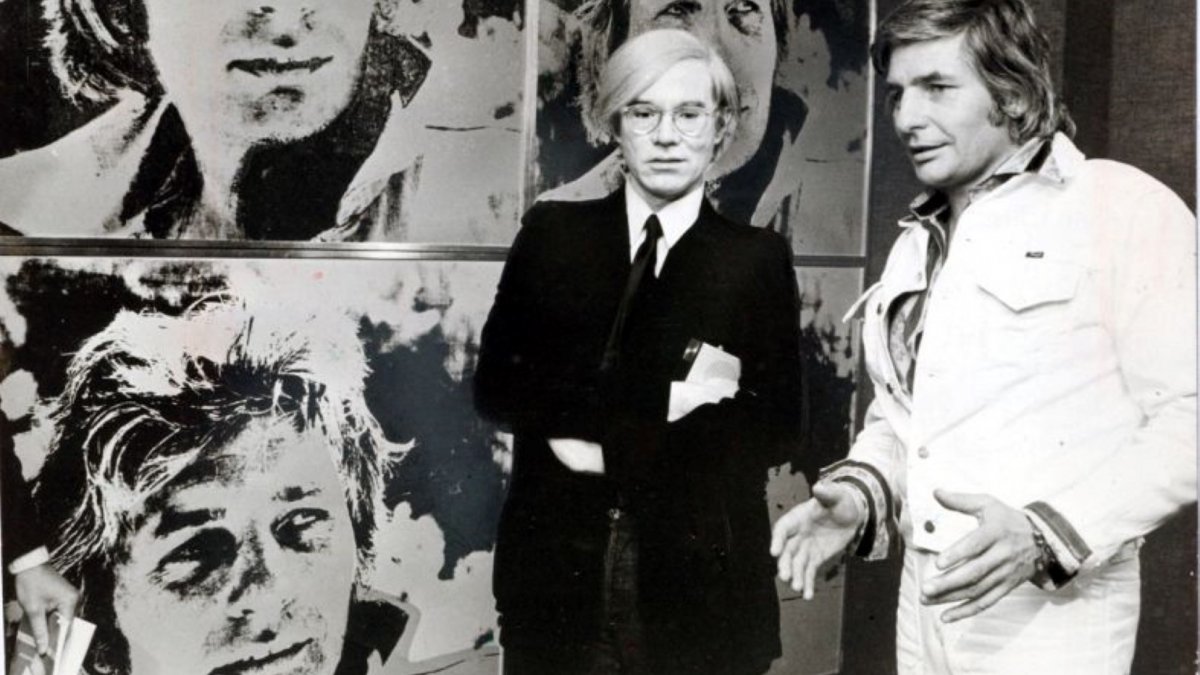
Significantly it was Warhol who first sought out Sachs in Saint Tropez and not vice versa; the glamorous and wealthy husband of Bridget Bardot who had carved a name for himself as a serious and farsighted art collector, was exactly the kind of charismatic personality that enthralled Warhol. The artist was in Cannes to promote his film ‘Chelsea Girls’; however when screening opportunities failed to materialise, Warhol and his entourage decided to stay on in the South of France to soak up the glamorous ambience of Saint Tropez and socialise with the glitterati. After meeting at Le Gorille bar, Sachs invited Warhol and his enclave back to his home to meet and dine with his then wife, the screen siren Brigitte Bardot. Warhol, though a celebrity in his own right by this point, was immediately entranced by the glamorous couple. Indeed, as explicated by Glenn O’Brien, though Warhol had relinquished painting in 1965 in favour of a film career, “Cannes had probably been the handwriting on the wall for him, the end of his mental retirement from painting. He must have realised then that even if film was his future, painting was still the way to ‘bring home the bacon’, and there were great portraits still to be made” (Glenn O’Brien, ‘And Warhol Created Bardot’ in: Exhibition Catalogue, London, Gagosian, Andy Warhol: Brigitte Bardot, London 2011, p. 19).
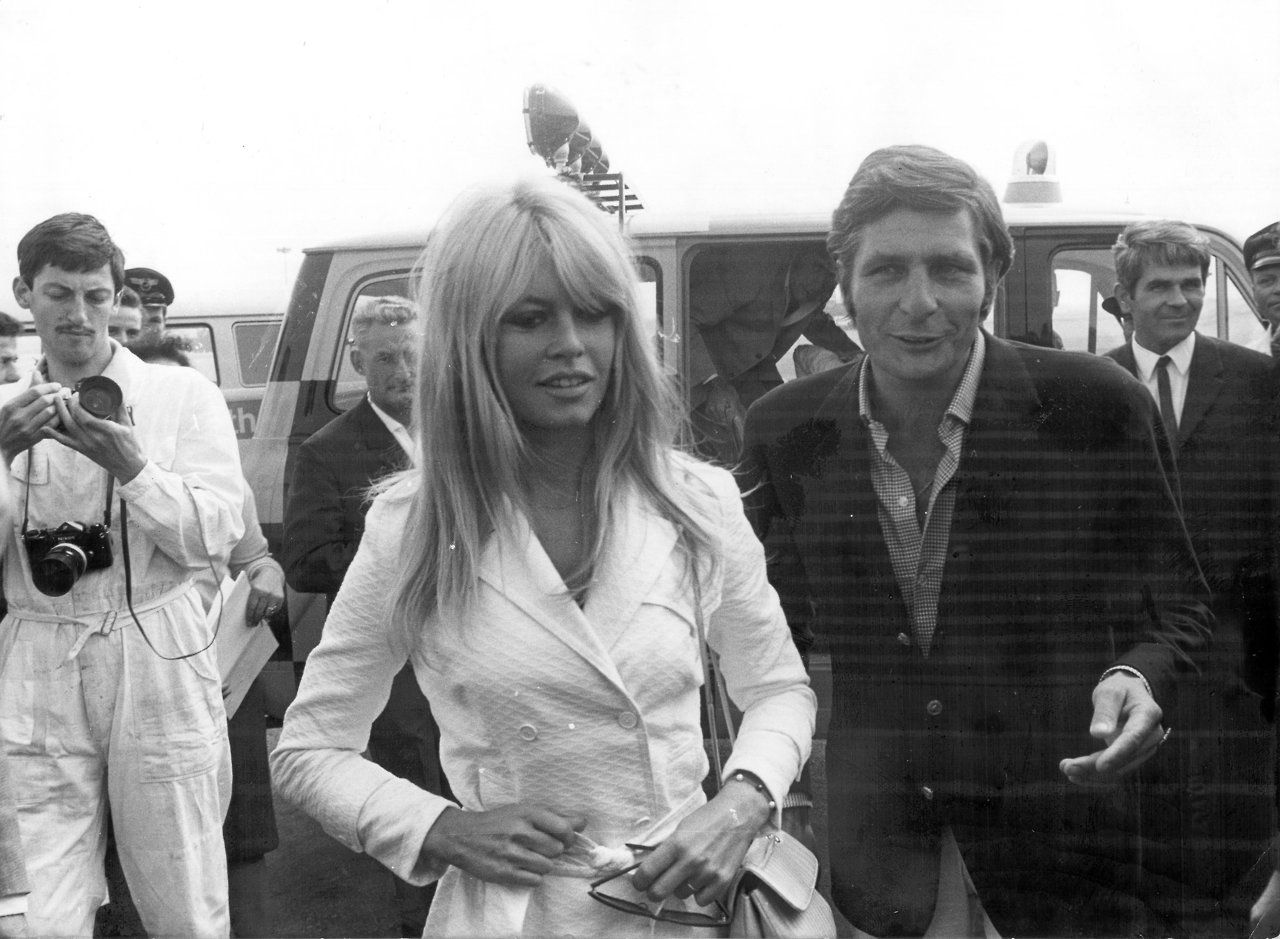
Two years later Sachs would devote the refurbishment of his apartment in the tower of the luxurious Palace Hotel in St Moritz to a totally immersive Pop art environment. Upon their completion in 1972, Warhol’s portraits of Gunter Sachs, and later the 1974 portraits of Brigitte Bardot, took pride of place in Sachs’ concept apartment. Commissioned as exhibits for the 1972 Hamburg gallery show chiefly organised by Sachs himself, these works were complemented by an encompassing survey of Warhol’s work to date. Although the opening was very well publicized and attended by a large number of Sachs’ international friends, remarkably, not a single painting sold. To save both his and Warhol’s honour Sachs came to acquire almost a third of the works exhibited; Sachs remembered in 1995: “I had not expected too great an interest on the part of the conservative Hamburg establishment anyway. But I could not possibly admit this state of affairs to Andy… So I secretly took on about a third of the exhibits myself and reported them to Andy as sold. He was happy with it, and I will forever be indebted to the people of Hamburg and their then still dormant expertise in art.” (Gunter Sachs, ‘Encounters with Andy Warhol’ in: Exhibition Catalogue, Cologne, Chapel Art Centre, German Photography in the Rhineland, 1995, p. 10). Alongside the commissioned portraits of himself, Sachs came to acquire an outstanding and substantial cross-section of Warhol’s output: a collection which, spurred by unwavering passion, continued to grow throughout Sachs’ lifetime.
Gunter Sachs, 1972
Sotheby’s London: 22 May 2012
Estimated: GBP 400,000 – 600,000
GBP 1,273,250
(#16) Andy Warhol (sothebys.com)
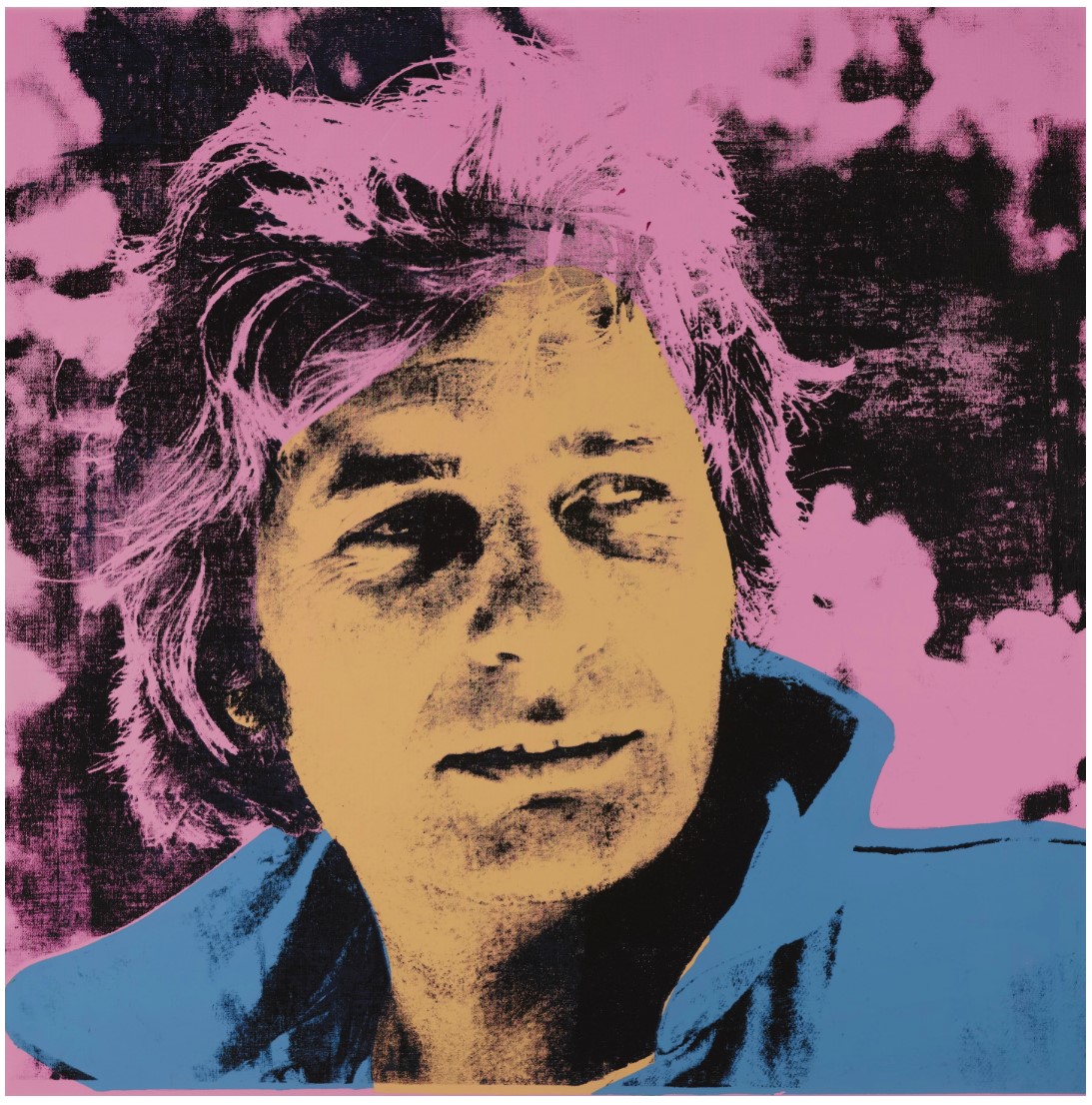
ANDY WARHOL
Gunter Sachs, 1972
Acrylic and silkscreen ink on canvas
48×48 inches (122×122 cm)
While positioned at the very heart of the Gunter Sachs Collection, this painting also stands at the very forefront of Warhol’s single handed revival, and Twentieth Century revision, of the nineteenth century tradition of grand-style portraiture of the rich, glamorous and important. After the portrait commissioned by Bruno Bischofberger in 1971 and the former Chanel model Buxy Gancia, Sachs’ portrait commission was first among the extensive series of Society Portraits painted by Warhol. After recovering from his shooting in 1968 and following his dedicated foray into film making since his ‘retirement from painting’ in ’65, Warhol returned to his principle medium. Collectively known as the ‘Society Portraits’, these works appeared in direct correlation with Warhol’s own ascending stardom; as propounded by Robert Rosenblum in 1979: “Warhol’s upward mobility was supersonic. Instead of getting the super stars’ photos from movie magazines or the Sunday color supplement, he himself quickly invaded their society on equal terms, and could be begged by prospective sitters to turn his own Polaroid camera on their fabled faces in both public and private moods. He had become a celebrity among celebrities, and an ideal court painter to the 1970s international aristocracy that mixed, in wildly varying proportions, wealth, high fashion, and brains” (Robert Rosenblum, ‘Andy Warhol Court Painter to the 70s’, Exhibition Catalogue, New York, Whitney Museum, Andy Warhol Portraits of the Seventies, 1979, p. 15).
Alongside the iconic portraits of Brigitte Bardot commissioned to hang in St Moritz apartment, Warhol’s Gunter Sachs represents a unique anomaly within the artist’s illustrious production. Executed in the unusual dimensions of 48 by 48 inches, these portraits are noticeably larger than the criterion of 40 inch canvases employed for his Society Portraits. Furthermore, where Warhol customarily took his own source imagery with his famous Polaroid ‘Big Shot’ camera, Sachs’ portrait utilises the glamorous picture taken by the photographer Jay Ullal. Exuding movie-star good looks, these portraits hark back to Warhol’s earliest silk-screen film-star icons culled from publicity stills or magazine photo shoots. What’s more, exhibiting vibrant complementary colours and a solid delineation between the layers of paint, the Gunter Sachs portraits stand in stark contrast to the expressionist painterly execution redolent across the gamut of Warhol’s 1970s production. Radiating magnetic star-quality and set against a background of foliage that echoes Warhol’s 1960s Flowers, Gunter Sachs’ silk-screen effigy elicits the truly archetypal and classic Pop style synonymous with Andy Warhol’s iconic Twentieth Century canon.
Man Ray, 1974
With Andy Warhol, there are always at least two sides to the story. Take Man Ray, for example: Warhol photographed Man Ray in his Paris apartment on 30th November 1973. It is generally accepted by art historians that many of the principles of Warhol’s art, and Pop Art in general, had their genesis in the work of the influential U.S. photographer and experimental filmmaker. Amongst the influences said to come from Man Ray, who, like Warhol, came from a poor, immigrant background, are the repetition and reproduction of motifs, such as we see in Warhol’s series of Soup Cans, Marilyns, Maos, and electric chairs and so on. As an art student, in his native Pittsburgh, Warhol had also experimented with the shadow-like photograms, or “rayographs” which had been pioneered by Man Ray.
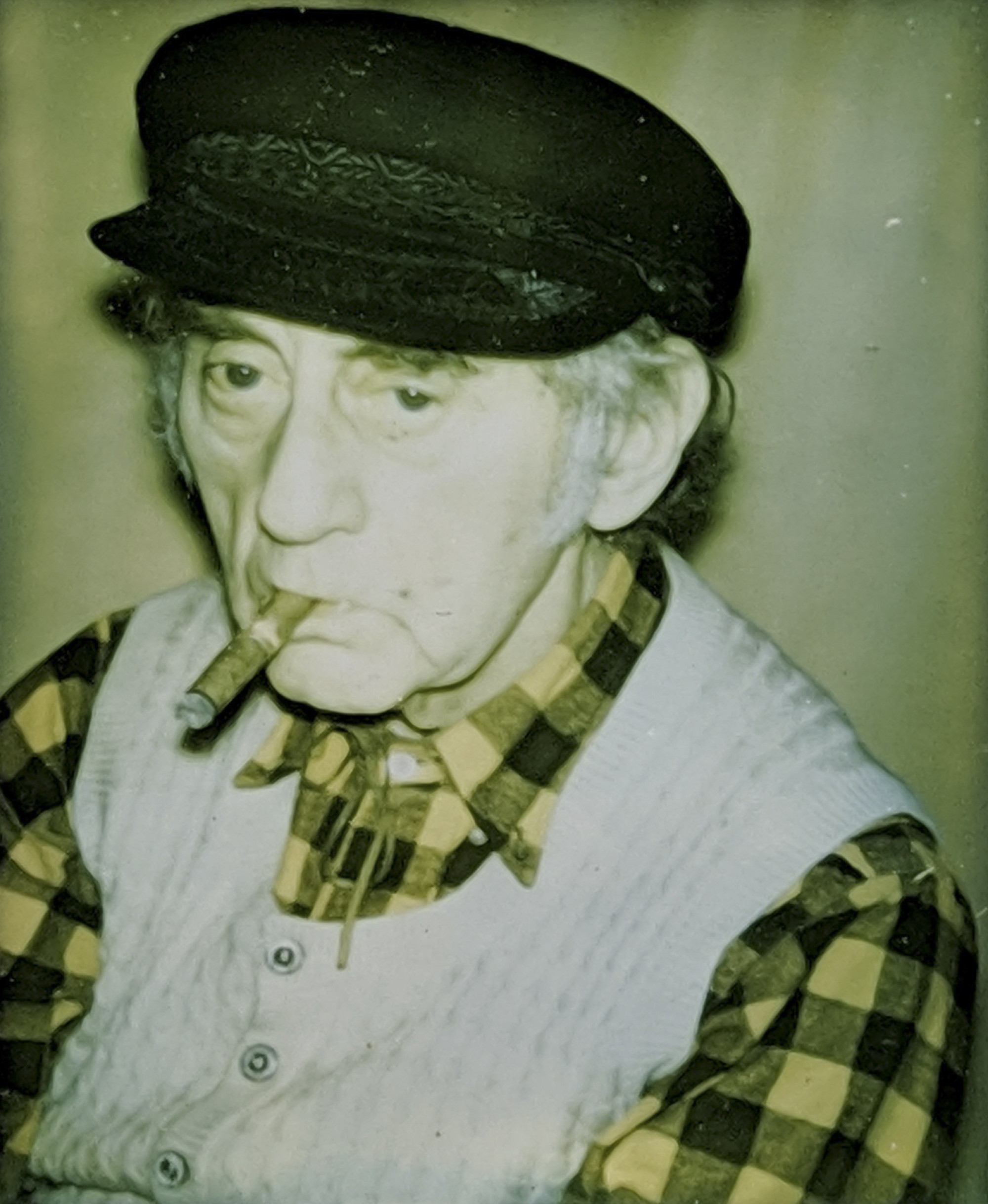
It may not come as a surprise to hear that Andy Warhol’s own version of the outcome of the Paris encounter is somewhat different from the art historical narrative. In a selection of interviews entitled “I’ll Be Your Mirror”, he discussed the matter in his inimitable, dry and sphinx-like style. The only thing he could remember, he said, from his meeting with Man Ray, was his toilet seat, because it had a fabric cover. He went on to say that he “only really loved him for his name” – Man Ray. Despite this however, one thing is certain: Warhol was very much taken with May Ray and his work, as he was with Salvador Dalí: he even owned some early pieces by Man Ray. How did these legends of Dada, Surrealism and Pop Art actually come together in 1973? The meeting between Warhol and Man Ray was arranged by the young Turin art dealer, Giovanni Anselmino, who was instrumental in popularizing Man Ray’s work in Italy in the early 1970s, thereby contributing to the artist’s gradual rediscovery after the 1950s. Anselmino (who, according to Bob Colacello, was nicknamed “Anselmino of Torino” because he “looked more like a hairdresser than an art dealer”) wanted to commission Warhol to make a series of Man Ray canvasses and prints. According to Colacello who was Editor of the renowned Interview Magazine and habitué of Warhol’s studio “The Factory”, Anselmino had probably met Man Ray in 1969 on the initiative of gallerist Alexandre Iolas who had organized Warhol’s first show in New York in 1952 (and, incidentally, was also to put on his last show in Milan in 1987).
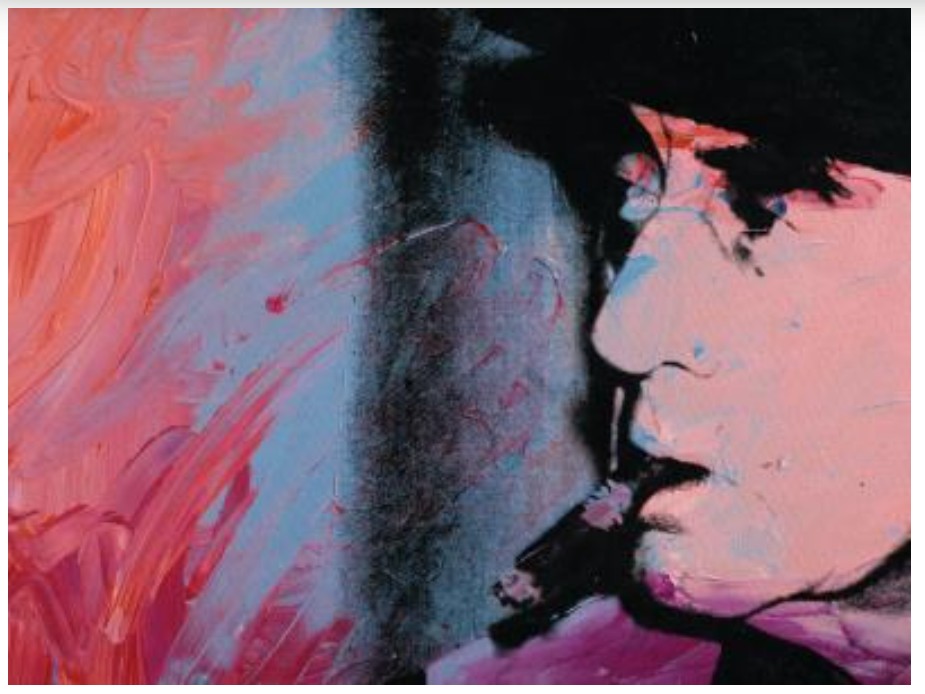
What remains of Warhol’s legendary visit to the 83-year- old Man Ray, is a series of canvases. The commission from Anselmino comprised six canvasses based on photos taken at the Paris shoot. Warhol also used the Man Ray motif for other, small-sized series and a limited edition of 100 prints, which was supposed to feature a Henry Miller text and a Jasper Johns illustration, although this never materialized. The Man Ray series was created at a time when “business artist” Warhol, in the manner of old masters, took on portrait commissions from dozens of rich and famous clients across the globe. The Man Ray series is not one of them; it is one of a series of portraits of people – mostly artists – whom Warhol truly admired. This is also evidenced by the fact that he kept three of his “Man Rays” for himself.
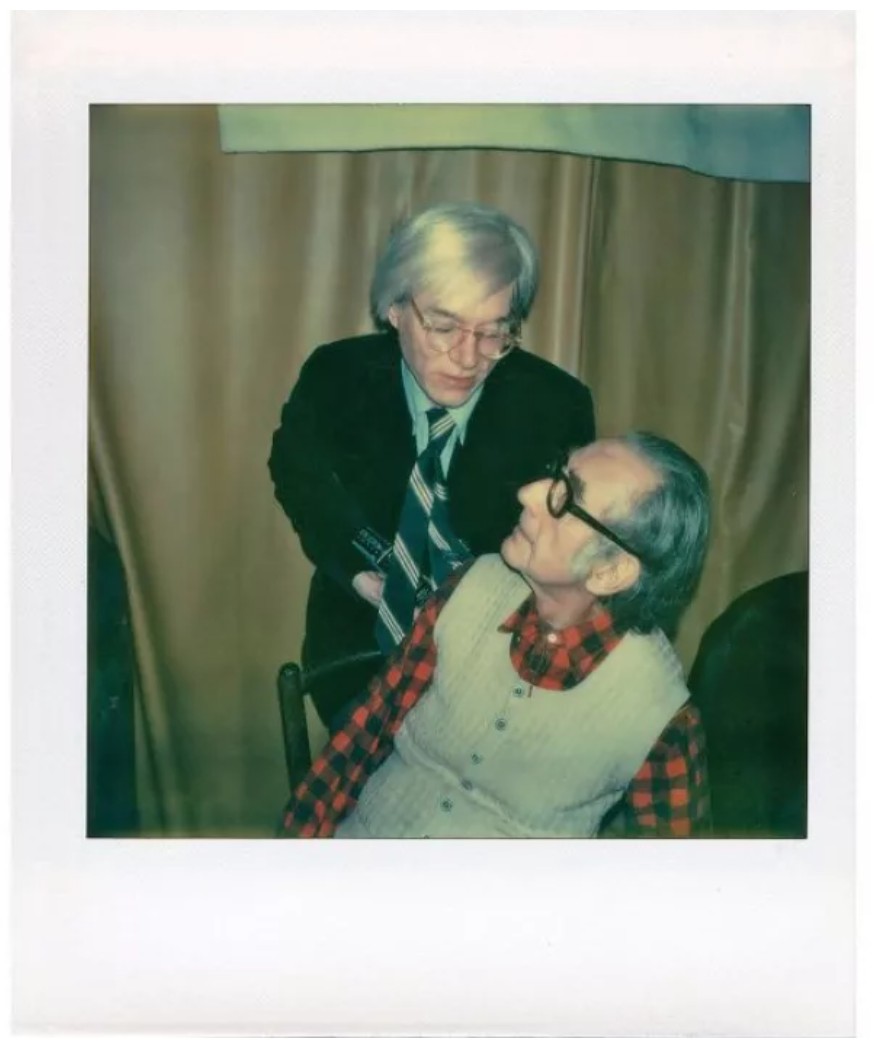
Polaroid of Andy Warhol and Man Ray. Image © The Andy Warhol Foundation for the Visual Arts, Inc.
“I took a SX-70 and then I put in a whole roll and I got ten… ten pictures of that and then he put a cigar in his mouth… And actually the cigar was bigger than he was because he’d… he’d gotten very… very bent over. And he looked like he was always far out but uh… I think it was just because he was bent over… I had him smoke the cigar.”
In “Letter to Man Ray”, an absurdist 20-minute video monologue recorded on the occasion of Man Ray’s death in 1976, Warhol gives a performative account of his Paris photo shoot with the master. The repetitive speech reflects the principle of Warhol’s pictures:
“I took another picture of Man Ray, another Polaroid portrait of Man Ray and another Polaroid portrait of Man Ray, another Polaroid portrait of Man Ray and then another Polaroid portrait of Man Ray and then I took another Polaroid portrait of Man Ray and then I took another Polaroid portrait of Man Ray. And then I took another portrait. And then I think he took another portrait of me and then he signed that one for me and I put it in my Brownie shopping bag.”
Apparently, Man Ray had no idea at the modelling session how famous his visitor was. He was recorded on an audiotape asking Warhol how he liked the Big Shot camera, and which focal length he used, but Warhol, who wouldn’t have this shop talk, replied that it was the cheapest camera and therefore his favorite remove stop. There is a sense of homage in Warhol’s portraits of Man Ray one does not feel in the images of his contemporaries. During their meeting in late 1973, this sense of homage extended to an almost student-master relationship. Trading the camera: a cheap model Warhol preferred – back and forth, they spent the day photographing each other.
The reverence Warhol held for Man Ray extended far past the source photograph of those works to the large collection of photographs by Man Ray that he religiously collected. Warhol was naturally drawn to the enigmatic societal portraits Man Ray made of the celebrities and socialites that preceded his heyday. Images of key figures such as Pablo Picasso, Dora Maar and Nancy Cunard formed the basis of his collection that also counted a number of Man Ray’s revolutionary Solarizations and Rayographs. Yet as always, Warhol had a decidedly capricious opinion of his idol; in a self-recorded video diary taken in 1976 – only a few years after he produced the present work – Warhol claimed he “only really loved him [Man Ray], to be truthful…his name was the best thing about him” (Andy Warhol cited in: Ibid, p.231). While this is typical of Warhol’s interest in surface and the vapid celebrity of a name, it hardly tallies with the pride of place in which he installed a rare painting by Man Ray, Peinture Feminine (1954) – hung prominently in the sitting room of his New York home. In many ways, this attests to the complex relationship Warhol had with the world, one moment deeply involved in the richness of one man’s art, the next vulgarly obsessed with simply the power of one’s name.
Man Ray, 1974
Sotheby’s London: 17 September 2025
Estimated: GBP 400,000 – 600,000
GBP 584,200 / USD 797,630
Man Ray | Pauline Karpidas: The London Collection Evening Auction | 2025 | Sotheby’s
ANDY WARHOL (1928 – 1987)
Man Ray, 1974
Acrylic and silkscreen ink on canvas
39 3/4 x 39 3/4 inches (101×101 cm)
Signed, titled, numbered 6/6 and dated 74 (on the overlap)
Few figures in twentieth-century art are as steeped in legend as Man Ray, the visionary Surrealist whose photographs defined the avant-garde artistic circle of Paris before the war. In this striking portrait, Warhol—himself a master at elevating the status of cultural icons—turns to the Surrealist master whose influence quietly informed his own practice. The present work was one of nine in this 40-inch scale that captured the enigmatic Man Ray at the age of eighty-three, stooped over, and defiantly eccentric with cigar in hand wearing a seaman’s cap. Reproduced as the poster image for the landmark 1974 exhibition at Galleria II Fauno and Alexandre Iolas in Milan, the present work bursts with the saturated colour and gestural bravado that marked Warhol’s painterly evolution in the early 1970s. Here, Warhol does not simply record his likeness; he enshrines Man Ray as a Pop icon, fusing Surrealist mystique with the seriality and commercial Warholian edge. The result is an exuberant homage to Man Ray and the meeting of two artistic greats whose legacies shaped the course of art in the twentieth century.
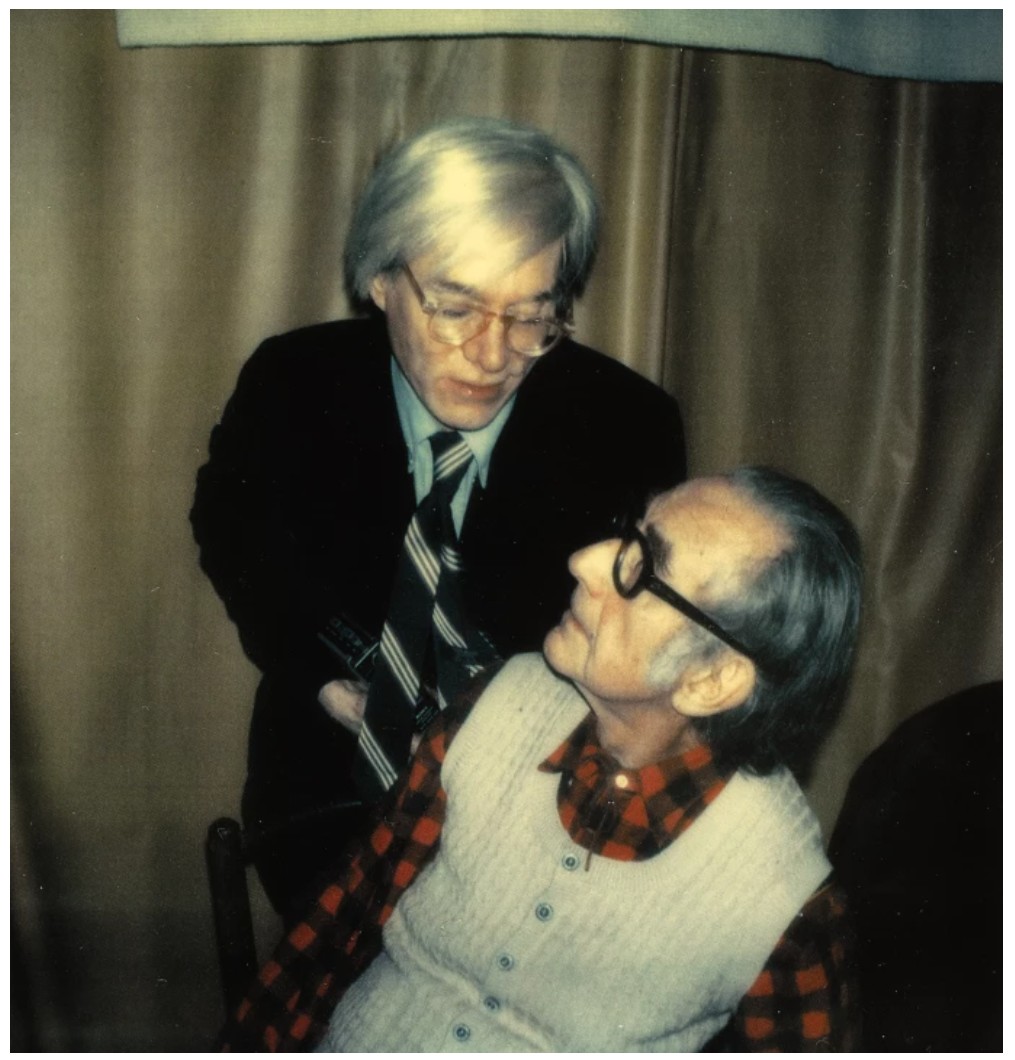
Andy Warhol and Man Ray, November 30, 1973
© The Andy Warhol Foundation for the Visual Arts / Artists Rights Society (ARS), New York / DACS, London 2025
The series’ commission transpired in 1973 thanks to the art dealers Luciano Anselmino and Alexander Iolas; the latter apparently fascinated the former who would never leave him alone, according to Iolas’ partner André Morgues. Celebrated as discovering Warhol in the 1950s, Iolas was an exceptionally talented art dealer and indeed the most influential advisor to the present owner, Pauline Karpidas, even introducing her to Warhol in the 1970s. Iolas and Anselmino would collaborate for the commission of the Ladies and Gentlemen and Man Ray series after Anselmino was introduced to Warhol. Anselmino had himself popularised Man Ray’s Surrealist photographs in the early 1970s with exhibitions at his Turin gallery, Galleria Il Fauno, so this was a fitting collaboration. The genesis of the present work can be traced back to a singular day in Paris on the 30th November 1973 when Warhol, accompanied by Anselmino, his assistant Dino, and Fred Hughes, met Man Ray, his wife Juliet, and Timothy Baum at the artist’s studio on the rue Ferrou. This was indeed the same trip to Paris where Warhol also captured Iolas for his second portrait commission and David Hockney with whom he was to trade portraits.
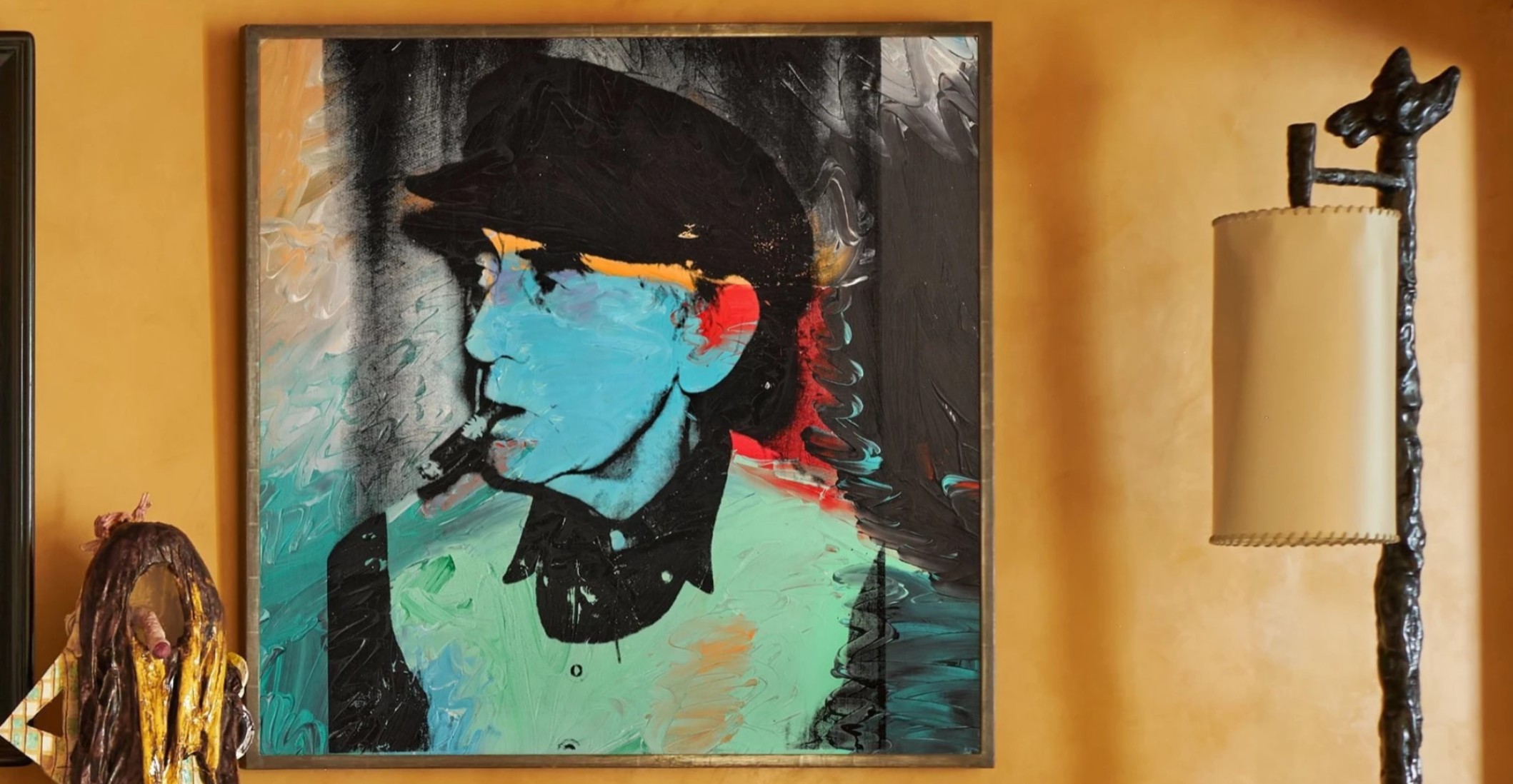
The present work shown in the London home of Pauline Karpidas
For the sitting, Warhol obsessively photographed Man Ray, armed with his signature Polaroid Big Shot camera capturing him in various guises and moods. Man Ray memorably remarked to Warhol with signature wit, “I forget whether I’m in front or behind the camera” (Man Ray quoted in Ibid, p. 372). Man Ray was offered props such as a seaman’s cap and cigar. It was only at the end of the sitting that he finally captured the source image later used for this series after Warhol had demanded Man Ray remove his spectacles and place the cigar in his mouth. Warhol later remarked how much fun the sitting had been and perhaps this explains why the resulting photograph is arguably the least posed of any of the source images that inform Warhol’s portraits of the 1970s and 1980s, free of the artifice that resulted from the attempts of stylists to titivate sitters, the usual prelude to a Warhol commission. In total, including the usual additional works Warhol produced on the side, the overall suite of the Man Ray series consisted of three canvases in the 80-inch size, nine in the 40-inch size and 31 in the 12-inch size. The works—part of the Anselmino and Iolas commission—were shown at Iolas’ gallery in Milan rather than Anselmino’s in Turin; it was decided Iolas offered a more prestigious name and location.
Warhol’s reverence for Man Ray extended past the source photograph of the present work to the large collection of photographs by Man Ray he avidly collected—over 25 were included in the artist’s estate sale at Sotheby’s. Warhol’s admiration extended to the part he had played in the development of the Dada and Surrealist movements, which greatly informed his own motif-driven idiom. Warhol was naturally drawn to the enigmatic societal portraits Man Ray made of the celebrities and socialites such as Pablo Picasso, Dora Maar and Kiki de Montparnasse. Whilst Man Ray captured Paris’ artistic scene in the pre-war period, Warhol’s subjects provided a fascinating snapshot of the burgeoning New York art scene in the 1960s and 1970s, especially as he took commissions in this period. The artist memorably captured the present owner Pauline Karpidas and her late husband Dinos Karpidas in this way. Yet as always, Warhol had a decidedly capricious opinion of one of his forebears in Man Ray as Warhol claimed that his name was the best thing about him. While this is typical of Warhol’s interest in the celebrity of a name and the associated resonance, it does not reflect his actual admiration of the Surrealist’s work. For example, the rare Peinture Feminine (1954) by Man Ray was prominently placed in the sitting room of Warhol’s New York home. This comment attests more to Warhol’s fascination with the power of one’s names; take for example the 1974 exhibition poster, Man Ray is pictured with Warhol in capital letter below. Man Ray—incisive, compact and mysterious—fit neatly into Warhol’s pantheon of brands and icons, from Marilyn and Jackie to Campell’s and Brillo.
“I only loved him because of his name – Man Ray.”
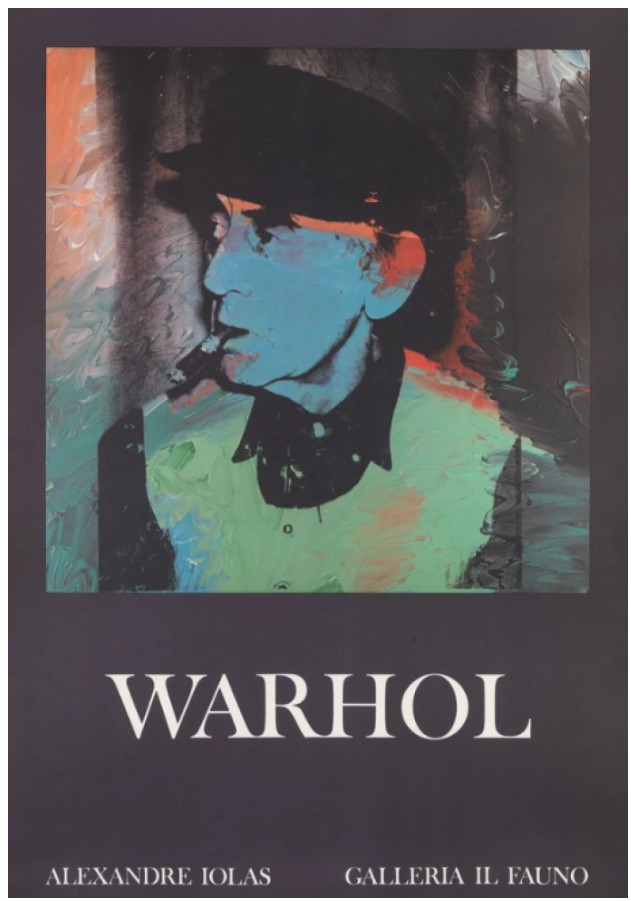
The present work featured on the poster for Warhol’s 1974 exhibition at Galleria Il Fauno, Milan, done in collaboration with Alexandre Iolas
Man Ray also marks a pivotal moment in Warhol’s technical evolution; it is one of the most purely painterly images Warhol produced during his artistic career, what Anselmino labelled his ‘free style.’ The stark, graphic flatness of his early Pop years gave way to this expressive style. Here, the face of Man Ray is rendered in a cerulean blue with a streak of cadmium orange under his cap and a patch of red near his ear; his chromatic palette enlivens the surface of the work. Perhaps most striking is Warhol’s brushwork in the present work as he employed broad and coiled brushstrokes across the surface with wet-on-wet application, scumbled textures and optical layering. “Warhol’s portraits of Man Ray show just how far he was willing to push painterliness, how free-style the brush could become in his hands” (Ibid., p. 374). These flourishes of painterly bravado depart from the cool detachment of his earlier Pop aesthetic—the mechanical, hard-edged graphic effect of his silkscreens of the 1960s—as he developed a hybrid style.
Painted only a few years prior to Man Ray’s death in 1976, Warhol’s portrait exists as an intergenerational dialogue between two great artists. It is the meeting of two artists who shaped, in their respective eras, the aesthetics and philosophies of the avant-garde. In Man Ray, Warhol does not just depict the man himself, he brands Man Ray as a Pop icon. Man Ray was better known across Europe than in his homeland; Warhol takes the iconic and influential Surrealist and immortalizes him in the Pop aesthetic, and in this way casts him back into an American setting.
Man Ray, 1974
Dorotheum Vienna: 1 June 2022
Estimated: EUR 300,000 – 500,000
EUR 753,000 / USD 880,000
Andy Warhol – Contemporary Art I 2022/06/01 – Realized price: EUR 753,000 – Dorotheum
ANDY WARHOL (Pittsburgh 1928–1987 New York)
Man Ray, 1974
Acrylic and silkscreen ink on canvas
40×40 inches (101×101 cm)
Signed, titled and numbered 2/6 on the top overlap
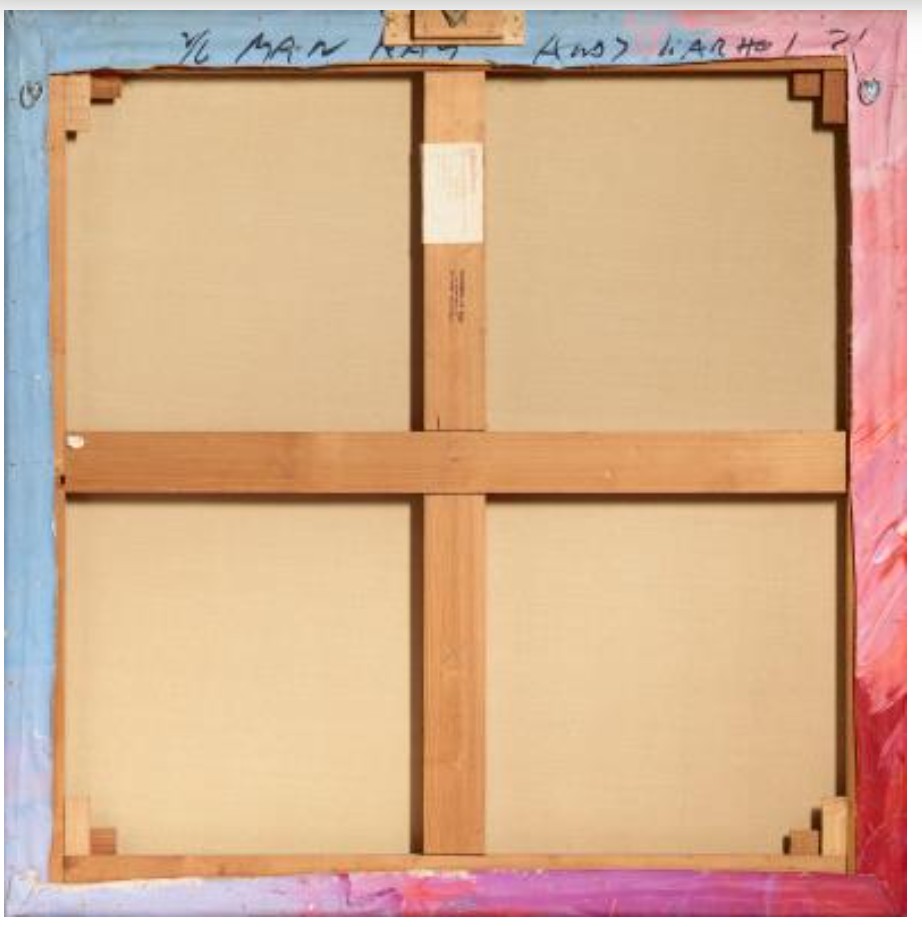
Man Ray [Two Works], 1974
Sotheby’s New-York: 16 May 2025
Estimated: USD 200,000 – 300,000
USD 355,600
Man Ray [Two Works] | Contemporary Day Auction | 2025 | Sotheby’s
ANDY WARHOL (1928 – 1987)
Man Ray [Two Works], 1974
Acrylic and silkscreen ink on canvas in 2 parts
Each: 13×13 inches (33×33 cm)
Signed and dated 74 (on the reverse of each)
Man Ray, 1974
Christie’s New-York: 10 November 2023
Estimated: USD 100,000 – 150,000
USD 119,700
ANDY WARHOL (1928-1987) (christies.com)
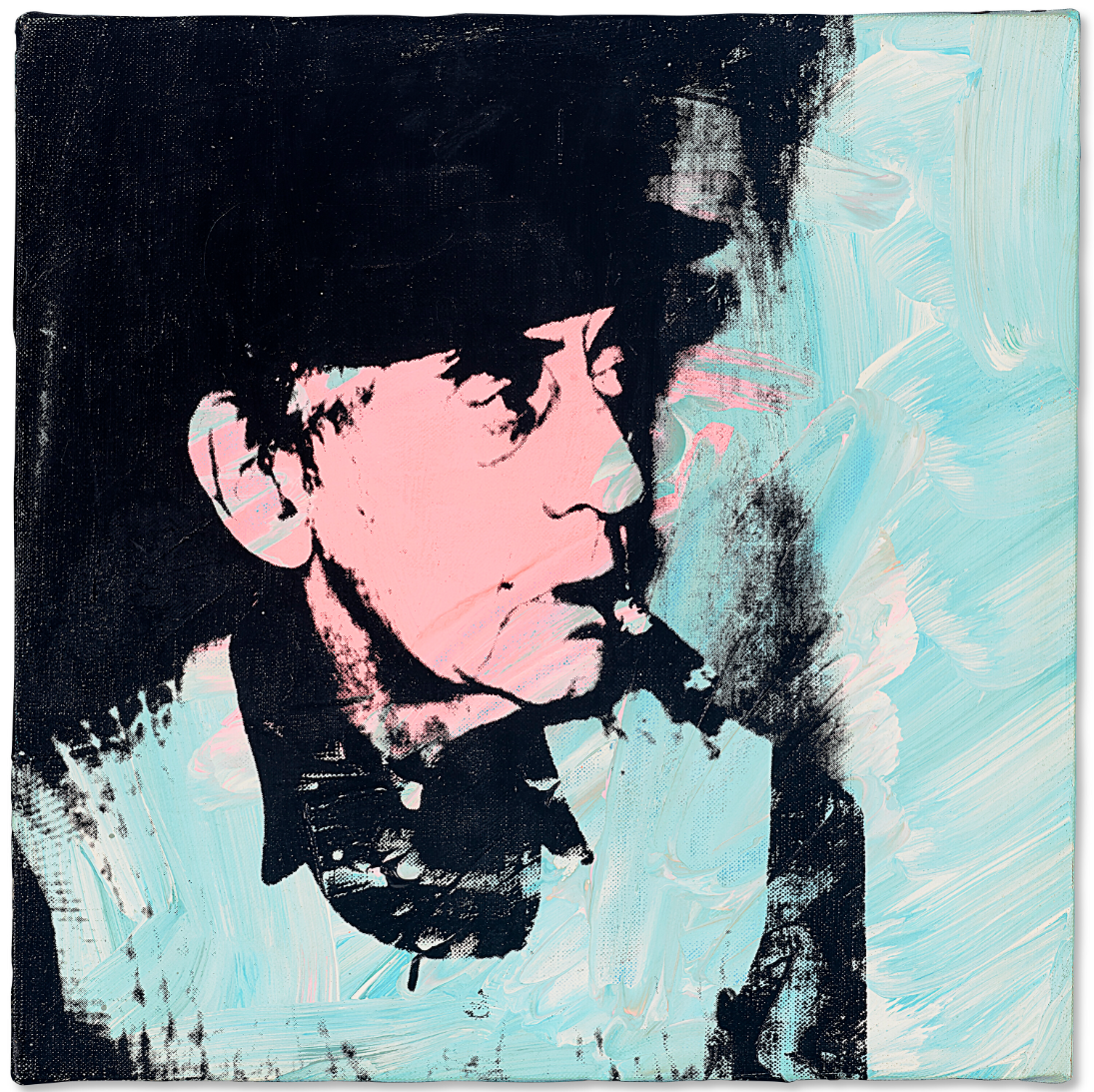
ANDY WARHOL (1928-1987)
Man Ray, 1974
Acrylic and silkscreen ink on canvas
13×13 inches (33×33 cm)
Signed and dated ‘Andy Warhol 74’ (on the reverse)
Stamped with the Andy Warhol Authentication Board, Inc. stamp and numbered ‘A101.0410’ (on the overlap)
Man Ray, 1974
Sotheby’s London: 6 October 2017
Estimated: GBP 180,000 – 250,000
GBP 296,750
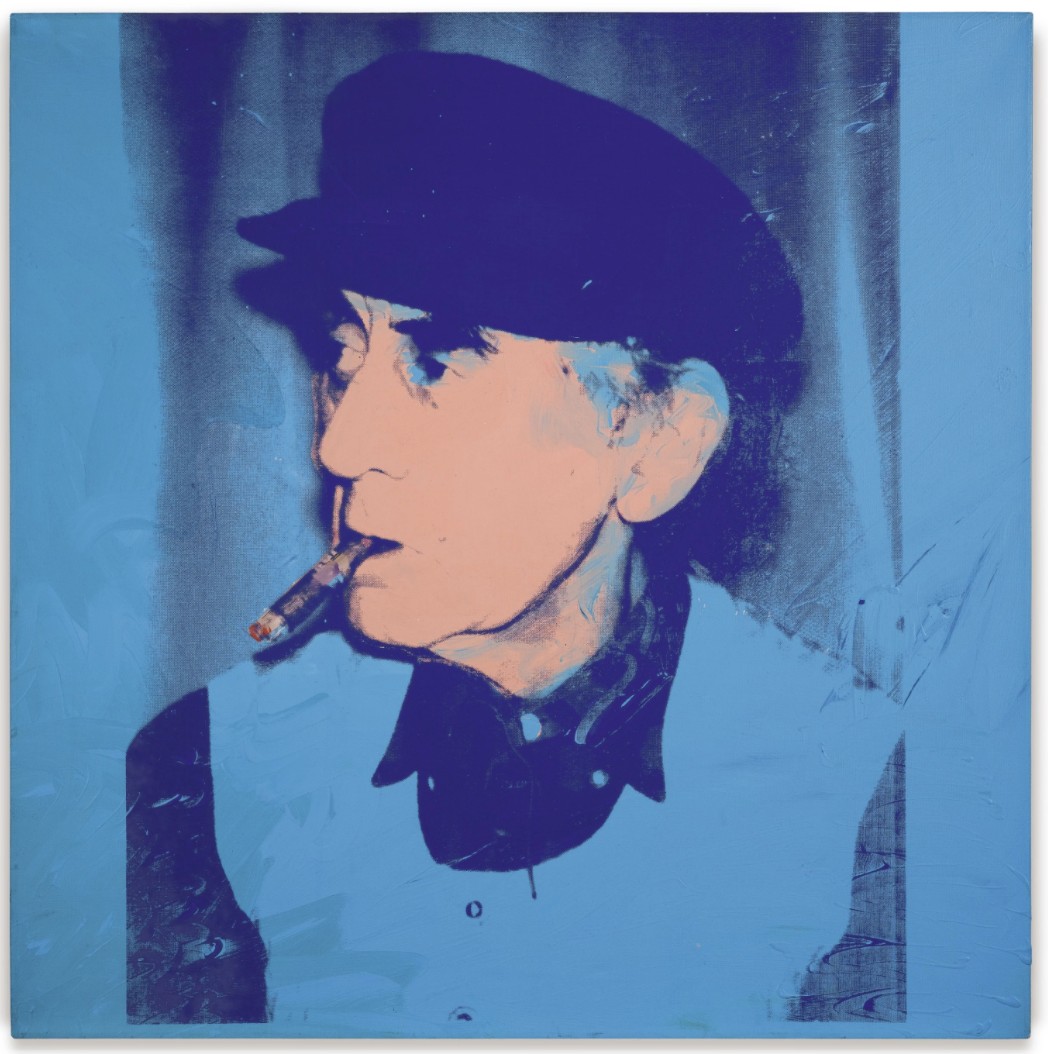
ANDY WARHOL
Man Ray, 1974
Acrylic and silkscreen ink on canvas
40×40 inches (101.6 x 101.6 cm)
Signed, titled and dated 74 on the overlap
Built up through wet-on-wet paint, the present work is the most boldly simplified composition of colorways with bright – somewhat melancholic – blue flashes against the cool pink of Man Ray’s face. The most alive of the series, it is the only work out of the twelve listed in the catalogue raisonné in which Warhol playfully touches a bold dot of red paint to light the end of his cigar. Indeed, Warhol engaged in a more traditional form of portrait making than his pop aesthetic would usually reveal – 5 drawings of Man Ray attest to an artist working out preliminary compositions before transferring to canvas. Part of the 40 by 40 inch series, it is a substantially larger work than the two held in the Tate’s collection. The various styles of canvas and thick involved brushwork with which they were painted attests to Warhol’s regard for a photographer he admired and collected throughout the formative years of his career. It stands witness to a seminal meeting for Warhol on 30th November 1973 when two of the major artists of the Twentieth century traded portraits of each other, united by their love for film, and for the undeniable lure of their own celebrity.
Portrait of Man Ray, 1974
Christie’s London: 11 February 2016
Estimated: GBP 200,000 – 300,000
GBP 362,500
Andy Warhol (1928-1987), Portrait of Man Ray | Christie’s
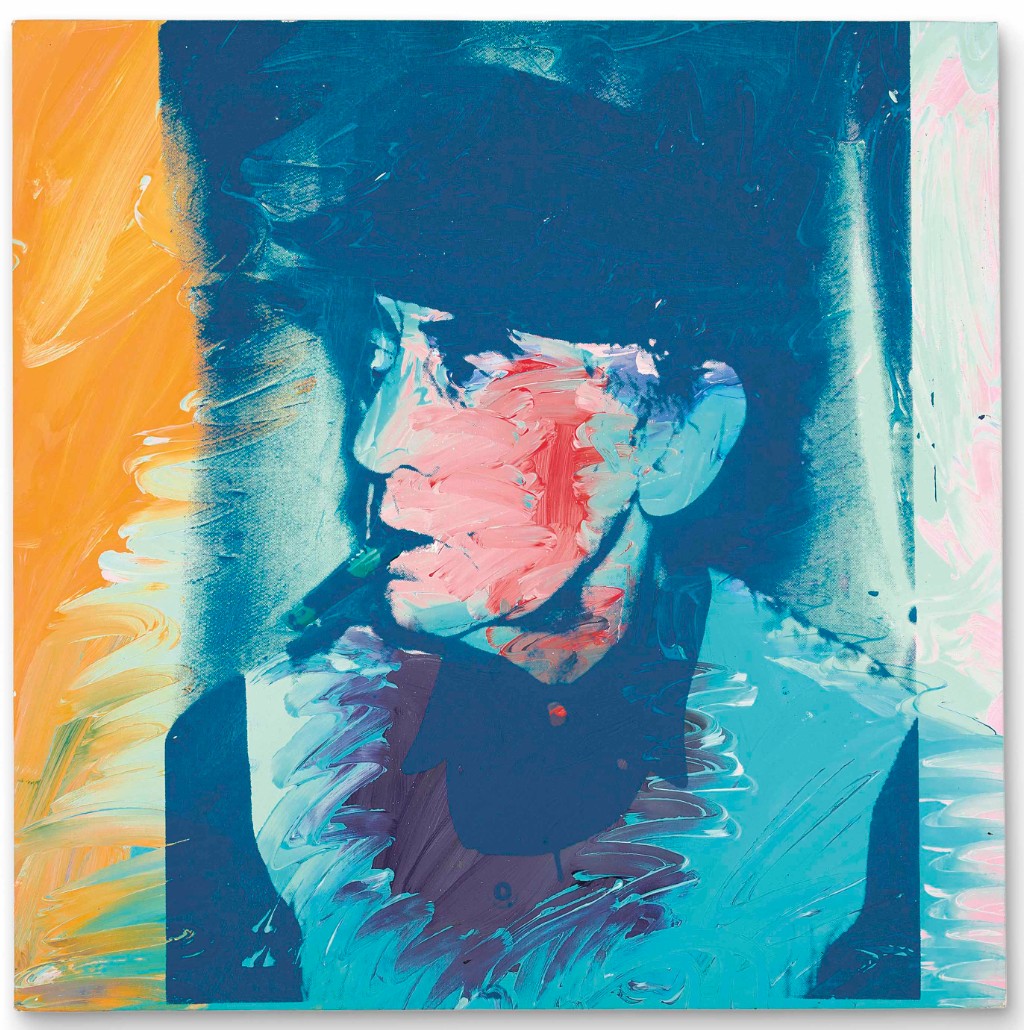
ANDY WARHOL (1928-1987)
Portrait of Man Ray, 1974
Acrylic and silkscreen inks on canvas
40×40 inches (101.6 x 101.6 cm)
Andy Warhol’s vibrant portrait of the artist Man Ray is a tribute by the Pop master to one of the leading figures of the Dada and Surrealist art movements. Rendered in Warhol’s distinctive Pop palette, Man Ray’s likeness is constructed out of a single screen of Warhol’s original photograph which is then embellished by a series of expressive brushstrokes in tones of vivid green and golden yellow. In addition Warhol then adds a dramatic sweep of red across Man Ray’s face as if to accentuate his strong facial features. This particular method of execution seems suited to its subject matter as Man Ray spent his career blurring the lines between what could and could not be classified as art. He was one of the most important proponents of the breaking down of the traditional artistic disciplines, both through his own invention, the Rayographs, and his innovative photographs of Marcel Duchamp’s work The Bride Stripped Bare by Her Bachelors, Even. It seems therefore appropriate that Warhol – the man who did much to abolish the boundaries between popular culture and high art – should immortalize his hero in his own inimitable style.
Man Ray, 1974
Christie’s New-York: 13 November 2014
Estimated: USD 250,000 – 350,000
USD 485,000
Andy Warhol (1928-1987), Man Ray | Christie’s
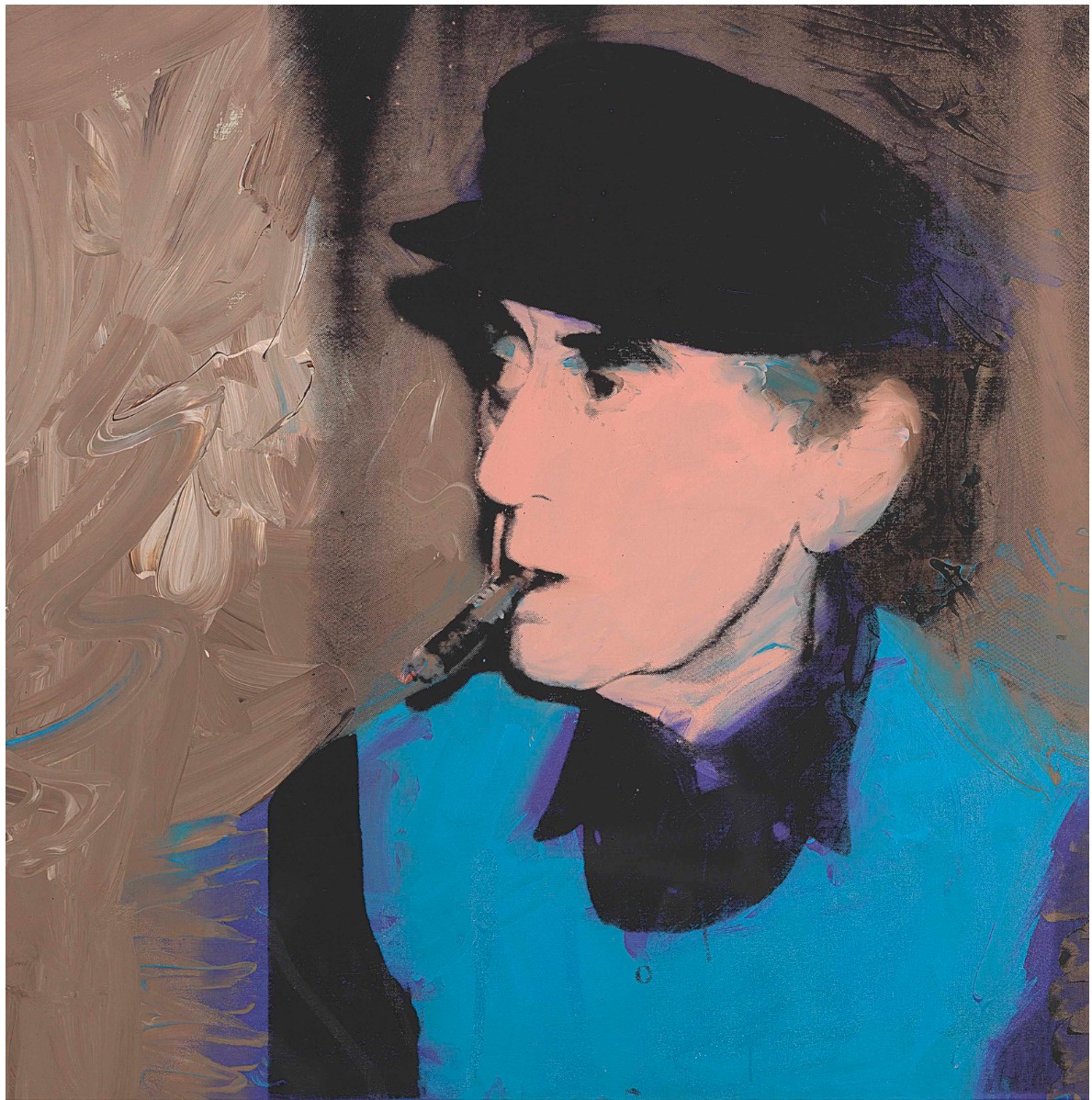
ANDY WARHOL (1928-1987)
Man Ray, 1974
Synthetic polymer and silkscreen inks on canvas
39 3/4 x 39 3/4 inches (101×101 cm)
Signed, titled and dated ‘MAN RAY ANDY WARHOL 74’ (on the overlap)
Man Ray, 1974
Christie’s London: 28 June 2012
Estimated: GBP 100,000 – 150,000
GBP 313,250
Andy Warhol (1928-1987) , Man Ray | Christie’s
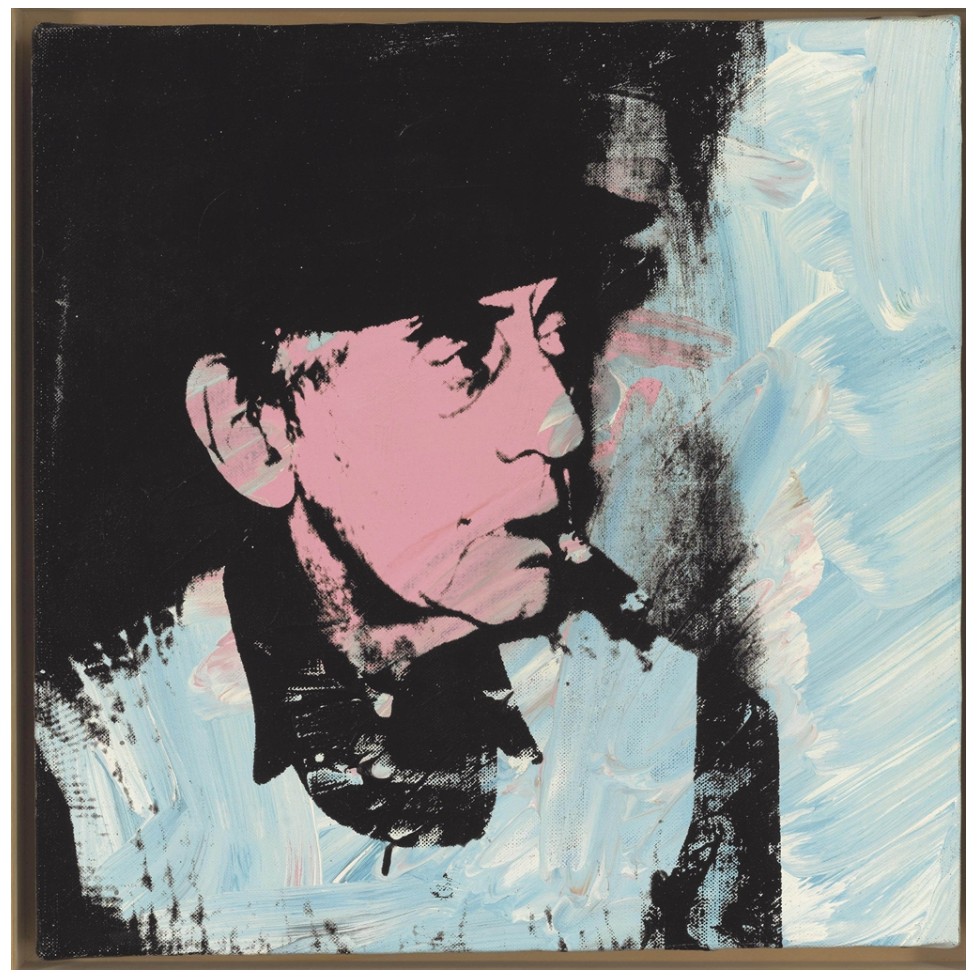
ANDY WARHOL (1928-1987)
Man Ray, 1974
Acrylic and silkscreen ink on canvas
13×13 inches (33×33 cm)
Signed and dated ‘Andy Warhol 74’ (on the reverse)
With the Andy Warhol Authentification Board, Inc. stamp and numbered ‘A101.0410’ (on the overlap)
David Hockney, 1974
Emerging from a flurry of cerulean brush strokes, Andy Warhol’s 1974 portrait of the iconic British painter David Hockney evinces a bond – both artistic and personal – between two of the 20th century’s most important painters. One of only three paintings Warhol made of the artist, two of which were gifted directly to Hockney, this painting is the first to come to auction. Bold brushstrokes and gestural swathes of finger painting in electric blue, counterpointed by accents of ebullient magenta, create the ground for Warhol’s silkscreened image.
David Hockney, 1974
Phillips New-York: 16 May 2019
Estimated: USD 400,000 – 600,000
USD 1,040,000
Andy Warhol – 20th Century & Contemporary… Lot 3 May 2019 | Phillips
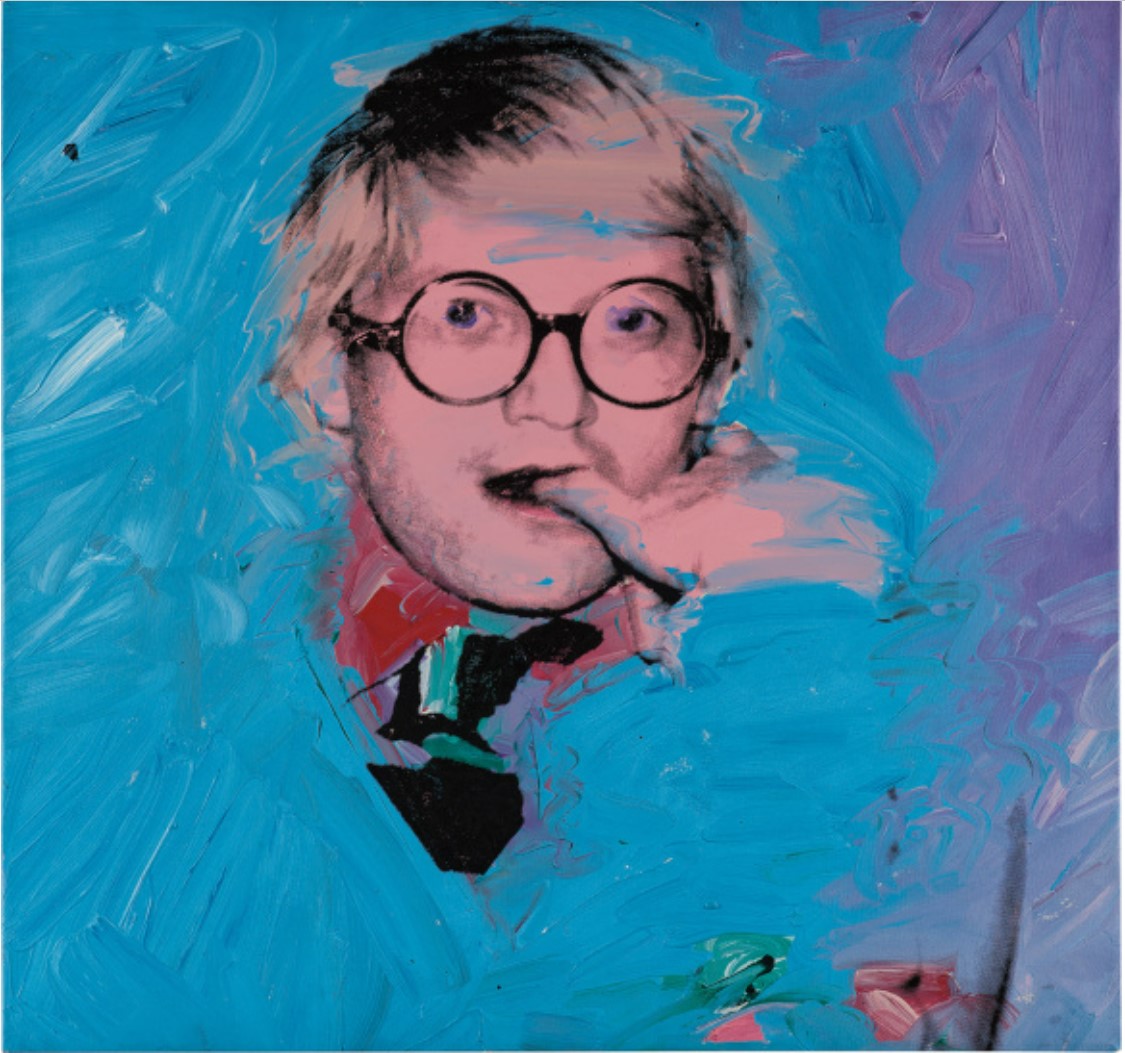
ANDY WARHOL
David Hockney, 1974
Acrylic and silkscreen ink on canvas
40×40 inches (101.6 x 101.6 cm)
Signed, titled and dated “DAVID Hockney Andy Warhol Andy Warhol 1974” on the overlap
While David Hockney is paradigmatic of Warhol’s portraits of eminent cultural figures and socialites that he made in the early 1970s, the artist began painting portraits of artists as early as the 1960s. It was during this time that Warhol embarked on his first major series of individual artist portraits known as Portraits of the Artists, made under the auspice of Leo Castelli. Using his screen-printing technique, Warhol articulated photographic images of himself and his contemporaries including Robert Morris, Jasper Johns, Roy Lichtenstein, Larry Poons, James Rosenquist, Frank Stella, Lee Bontecou, Donald Judd and Robert Rauschenberg. This initiated a longstanding tendency by Warhol to depict the most groundbreaking creatives who defined the era to which they collectively belonged. Throughout the later part of his career, Warhol would revisit again and again the artists of his own time, depicting Arman, Keith Haring, Jean-Michel Basquiat and others well into the 1980s.
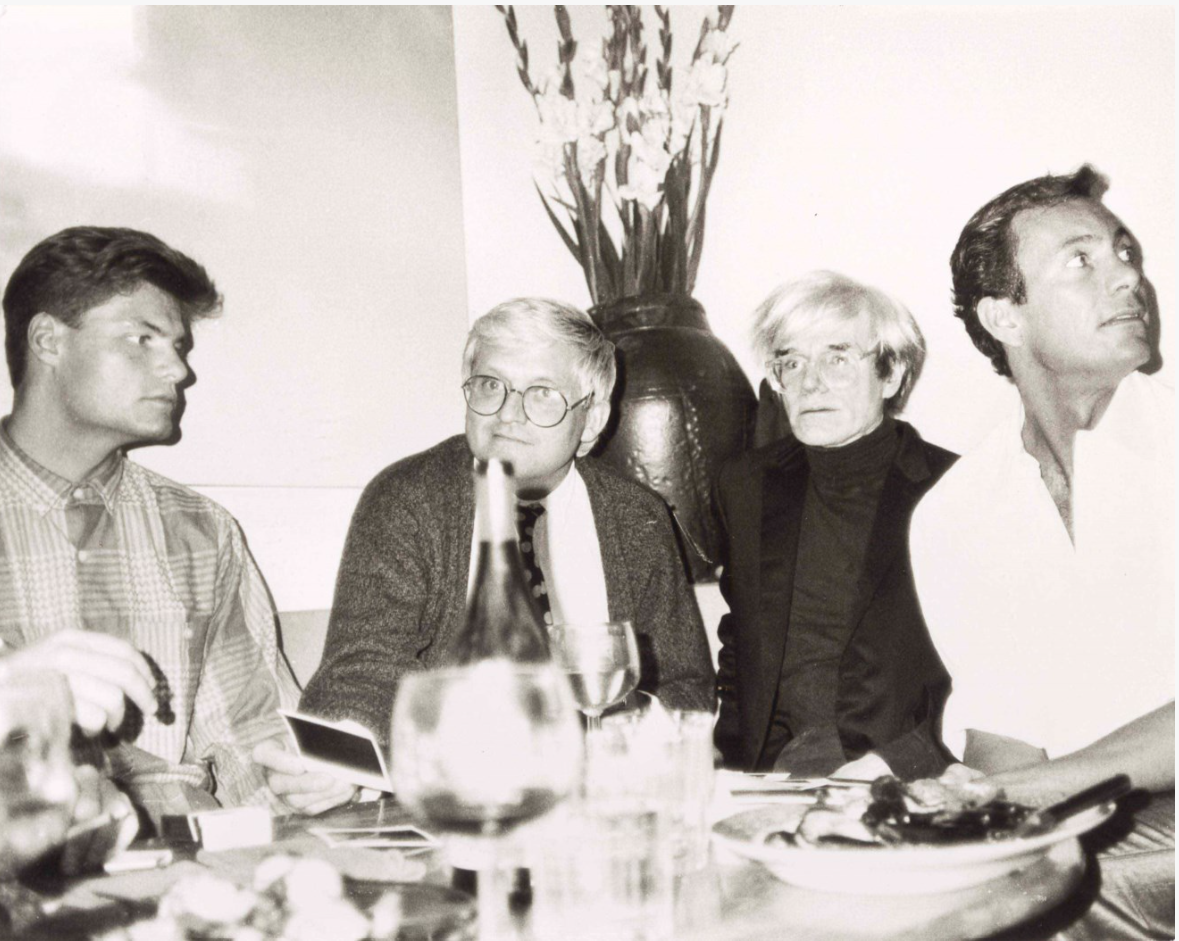
While the 1960s Castelli portraits were based on heavily cropped photographs that Warhol had acquired from the gallerist, the present portrait of David Hockney crucially elicits a dialogue with Warhol’s own photographic practice. Warhol photographed Hockney on several occasions between 1972 and 1974. The two artists arranged to exchange two canvases by Warhol for a portrait drawing by Hockney. Warhol selected a Polaroid that he took of the artist on a visit to Hockney’s Paris studio on December 2, 1973 as the source for his three silkscreen paintings that would follow. Each of the resulting paintings were created in the 40-inch square format that would become the hallmark of his portraiture oeuvre in the 1970s. Two of these works with a pink and green background would go into Hockney’s personal collection, while the present blue work remained in Warhol’s studio until the Fitermans acquired it five years later. Throughout the following decade, this work would be exhibited extensively at notable shows including Warhol’s traveling retrospective beginning at The Museum of Modern Art, New York in 1989.
The playful friendship between the artist and sitter in the present work is also reflected in the tactility of the brushwork and the composition. With an electric blue wash, Hockney’s shoulders have been masked out, emphasizing the central drama of the hand and his facial expression as they emerge from an abstract painterly space. Crucially, Warhol used both brush and finger so that his mark-making is not only traceable, but a dominant feature of the work. The creation of these portraits coincided with the exhibition of his legendary Chairman Mao canvases at Musée Galleria in Paris, which also indulged in expressionistic finger and brush painting and thus introducing a new painterly quality to Warhol’s working method. Seemingly blending Hockney’s trademark messy blonde locks with the surface of the canvas, he seems to refer back to the Abstract Expressionist masters whom he had eschewed in his earlier silkscreen paintings, in order to imbue the work with emotive force. These visual qualities instill the present work with a personal touch that is wholly unique to the Warhol’s prolific oeuvre of artist portraits, a career-long preoccupation and investigation for the Pop master.
Roy Lichtenstein, 1976
The essence and impact of Pop Art need only be defined by two names: Andy Warhol and Roy Lichtenstein. Roy Lichtenstein is one of only four portraits in the 40-inch square format that Warhol made of the fellow artist, completed in exchange for artworks by Lichtenstein. Similar to the trades Warhol made with other renowned painters such as David Hockney, the present portrait is testament to a bond of friendship and a sign of deep mutual respect. As an expression of Warhol’s enduring tendency to paint the most important artists of his time, another example from this important set of four portraits resides in the founding collection of the Andy Warhol Museum, Pittsburgh. Enlivened with luscious pastel tones and seemingly enhanced with subtle flashes of eye shadow and lipstick, Warhol’s silkscreen presentation of Lichtenstein is afforded the movie star treatment that underpinned his iconic portraits of Marilyn Monroe from the preceding decade.
Roy Lichtenstein, 1976
Phillips New-York: 16 May 2019
Estimated: USD 300,000 – 400,000
USD 475,000
Andy Warhol – 20th Century & Contemporary… Lot 8 May 2019 | Phillips
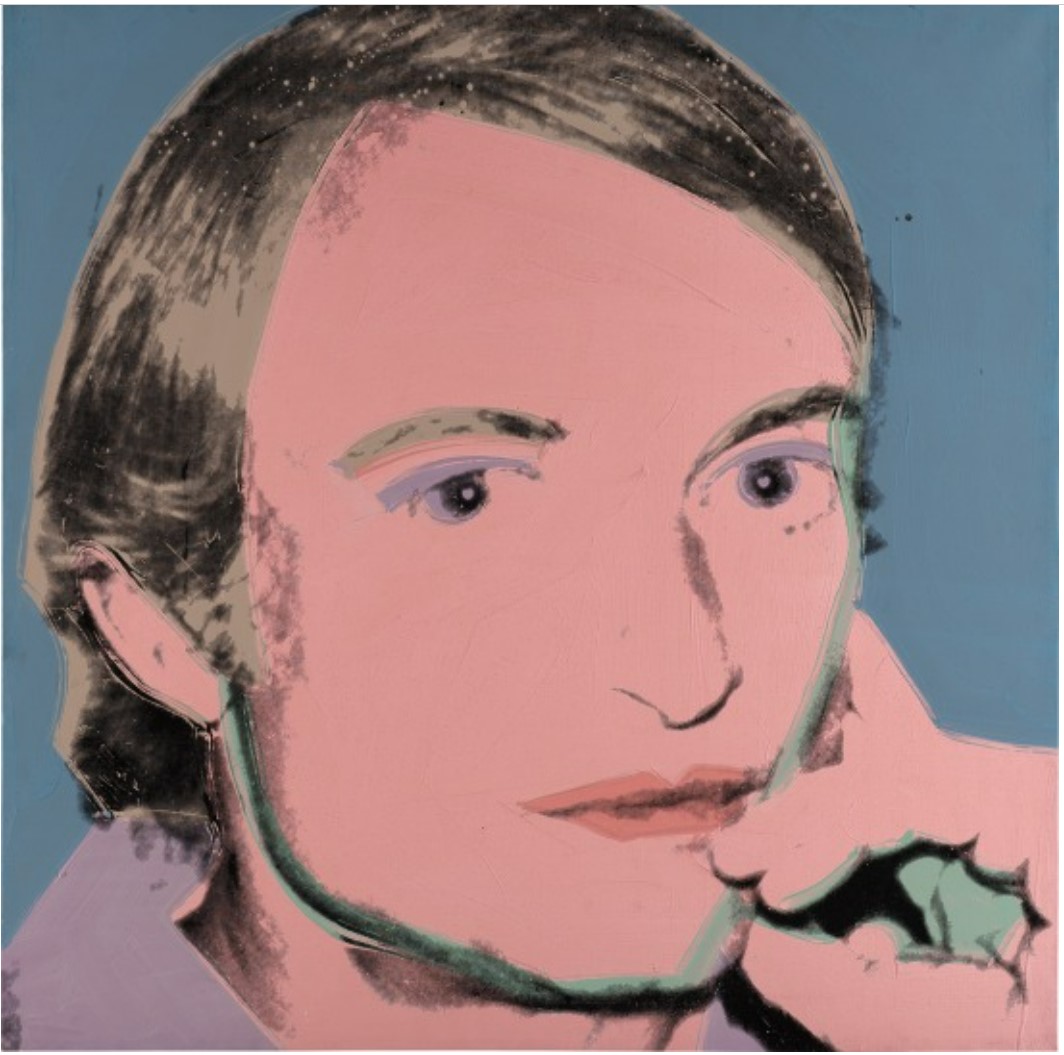
ANDY WARHOL
Roy Lichtenstein, 1976
Acrylic and silkscreen ink on canvas
40×40 inches (101.6 x 101.6 cm)
Signed and dated “Andy Warhol 76” on the overlap
In the present work from 1976, the monochromatic backgrounds of these earlier portraits are enlivened with a vibrancy that speaks of the personal relationship between the two artists and the personal encounter that gave birth to the image. The project originated from a friendly agreement, in which Warhol would gift portraits of Roy and his wife Dorothy. In February 1975, Warhol took 22 Polaroids of Lichtenstein at his Southampton studio and subsequently cropped his favorite image to focus on the artist’s pensive and alert expression. Perfectly articulated through the pristine clarity of Warhol’s silkscreen technique, the present work masterfully conveys Lichtenstein’s intellectual prowess and charisma.
Kimiko Powers, 1972
By 1972, John and Kimiko Powers of Carbondale, Colorado and New York City had already amassed one of the largest collections of Pop Art. What stemmed from John Powers’ collaboration with Harry N. Abrams to publish Dr. H.W. Janson’s History of Art was a passionate, intellectual and highly focused endeavor that is exemplified by the longstanding relationship between the couple and Andy Warhol. No longer painting portraits solely based off of magazine photographs or movie posters, Warhol had been increasingly tapped to immortalize the upper echelons of society with his trademark colorful silkscreens—a move that David Bourdon astutely noted achieved “a stylish and flattering portrait by a famous artist who was himself a certified celebrity…the possession of great wealth and power might do for everyday life, but the commissioning of a portrait by Warhol was a sure indication that the sitter intended to secure posthumous fame as well” (David Bourdon, Warhol, New York, 1989, p. 327).
John Powers commissioned Warhol to make twenty-five 40×40 inch canvases of Kimiko, clad in a traditional Japanese kimono with an elegantly styled chignon. Once assembled as a whole, the colossal portrait stood at 200×200 inches in total, eclipsing Warhol’s own 80×144 inch groundbreaking 1963 commission, Ethel Scull 36 Times. The present work, however, is not merely an attempt to infuse Kimiko’s image with an aura of celebrity, as many of Warhol’s society portraits were. Instead, she is conveyed as a woman with grace, elegance and flair but there is a mystery in her eyes that the viewer cannot penetrate. Though we are given the illusion of intimacy, it is merely a lesson in the art of performance, seduction and high society.
The monumental portrait was only exhibited once in its entirety—the Powers’ had already agreed on its division with Warhol—at the inaugural show at the Art Museum of South Texas in Corpus Christi. Titled Johns, Stella, Warhol: Works in Series, the exhibition was David Whitney’s first as an independent curator and served to validate the serial nature of Warhol’s oeuvre. By featuring the Kimiko Powers group in Philip Johnson’s awe-inspiring atrium as the centerpiece of the exhibition, Whitney further heralded the significance of both the work and Warhol’s portraiture as a whole.
Kimiko Powers, 1972
Sotheby’s New-York: 21 November 2024
Estimated: USD 400,000 – 600,000
USD 480,000
Kimiko Powers | Contemporary Day Auction | 2024 | Sotheby’s
ANDY WARHOL (1928 – 1987)
Kimiko Powers, 1972
Acrylic and silkscreen ink on canvas
40×40 inches (101.6 x 101.6 cm)
Signed and dated 72 (on the overlap)
Kimiko Powers, 1972
Phillips New-York: 15 November 2023
Estimated: USD 300,000 – 400,000
USD 952,500
Andy Warhol – 20th Century & Conte… Lot 130 November 2023 | Phillips
ANDY WARHOL
Kimiko Powers, 1972
Acrylic and silkscreen ink on linen
40×40 inches (101.6 x 101.6 cm)
Signed, partially titled and dated “Kimiko Andy Warhol 72” on the overlap
“I think [Andy Warhol] had the sharpest mind of anyone I have ever known. He could see it all, but never really showed it on the outside. He was very comfortable with John and me. I guess he just felt relaxed. He didn’t have to put up a façade, worrying about what he said, or what he did. That’s maybe the reason why we were good friends. He was the most generous artist.”
—Kimiko Powers
Sotheby’s New-York: 12 November 2014
USD 497,000
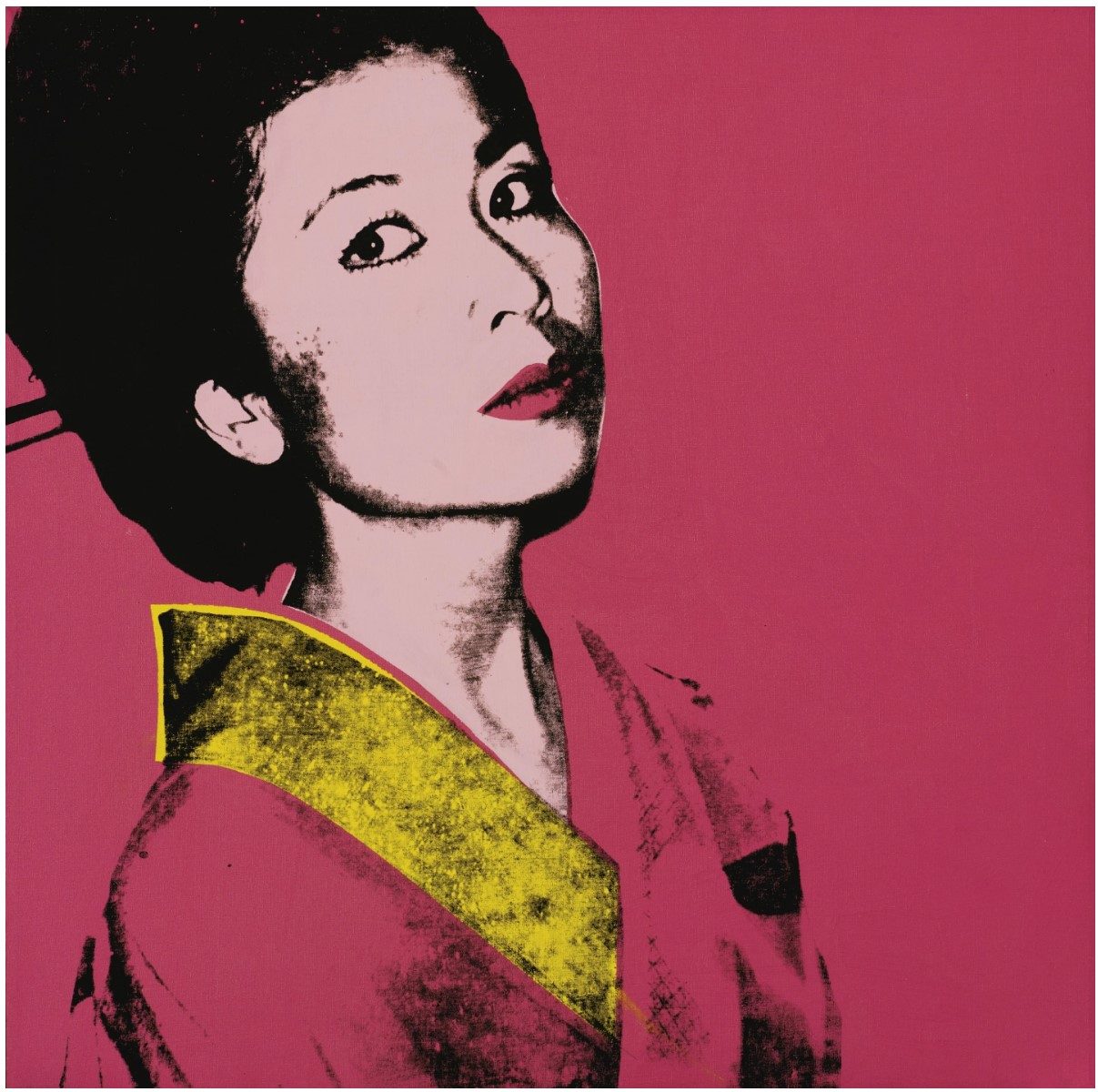 ANDY WARHOL
Kimiko Powers, 1972
Acrylic and silkscreen ink on canvas
40×40 inches (101.6 x 101.6 cm)
Signed and dated 72 on the reverse
Sotheby’s New-York: 12 November 2014
USD 497,000
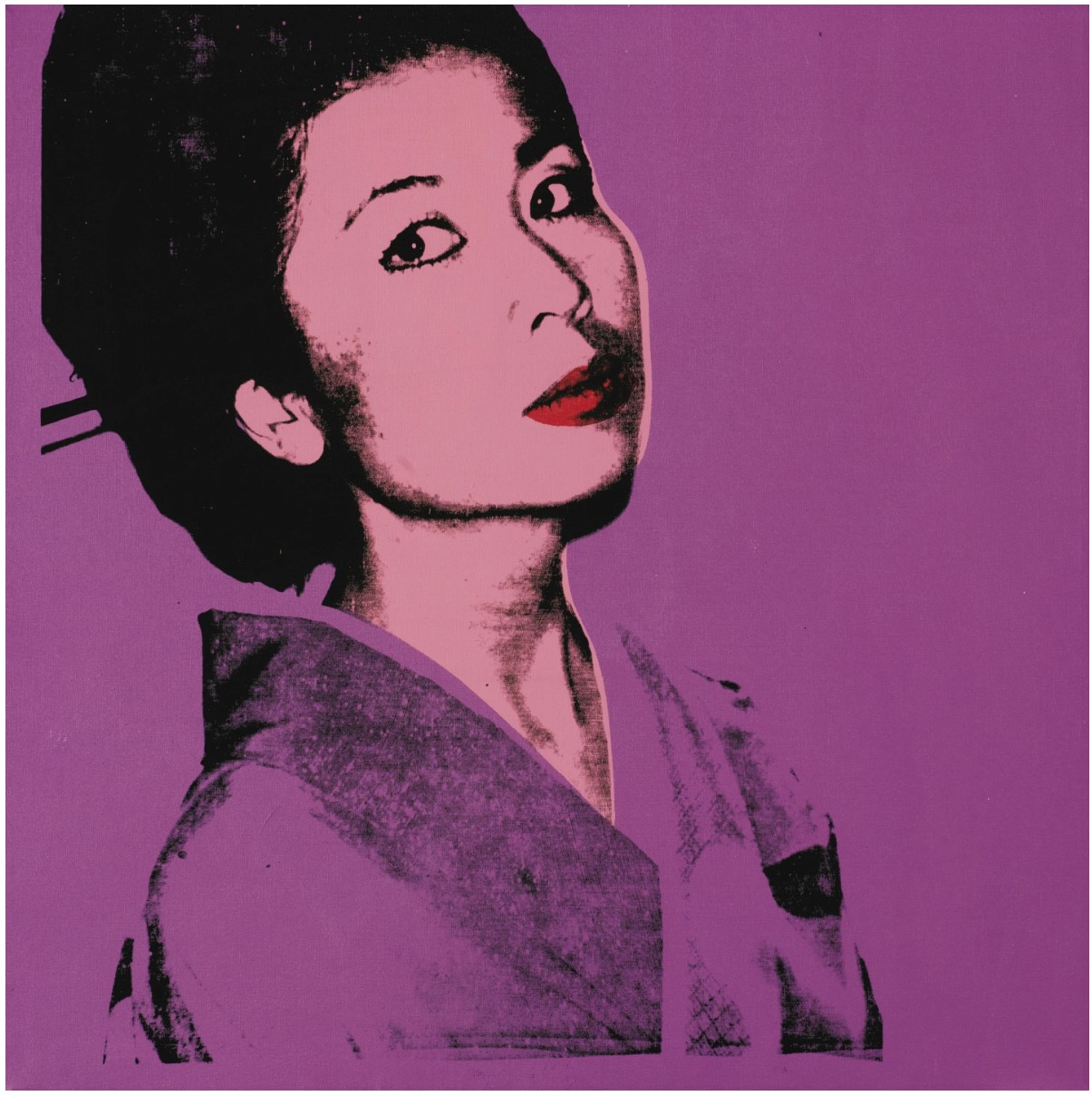
ANDY WARHOL
Kimiko Powers, 1972
Acrylic and silkscreen ink on canvas
40×40 inches (101.6 x 101.6 cm)
In 1974, Peter B. Lewis attended a Young Presidents’ Organization conference in Mexico, hoping to share ideas and form partnerships with young chief executives across the globe. John Powers, the keynote speaker and President of Prentice Hall Publishers, impressed Lewis so much that Lewis wrote to him, seeking Powers’ opinion on starting an art collection. Already with a world-renowned collection of Pop art and established among New York’s art world elite, Powers enthusiastically responded to Lewis with recommendations for his budding collection as well as praise for Lewis’ recent purchase of Andy Warhol’s Mao prints (lot 234) to be hung in Lewis’ Progressive office. A deep friendship based on mutual respect and trust formed quickly between the two, trading their thoughts on topics ranging from art world happenings to the best business practices as often as their schedules allowed. It is only fitting, then, that Peter B. Lewis purchased the present work and the preceding lot, both originally commissioned by John Powers and both formerly in the collection of John and Kimiko Powers, as a sign of the utmost regard for Powers’ taste.
Sotheby’s New-York: 13 May 2015
USD 514,000
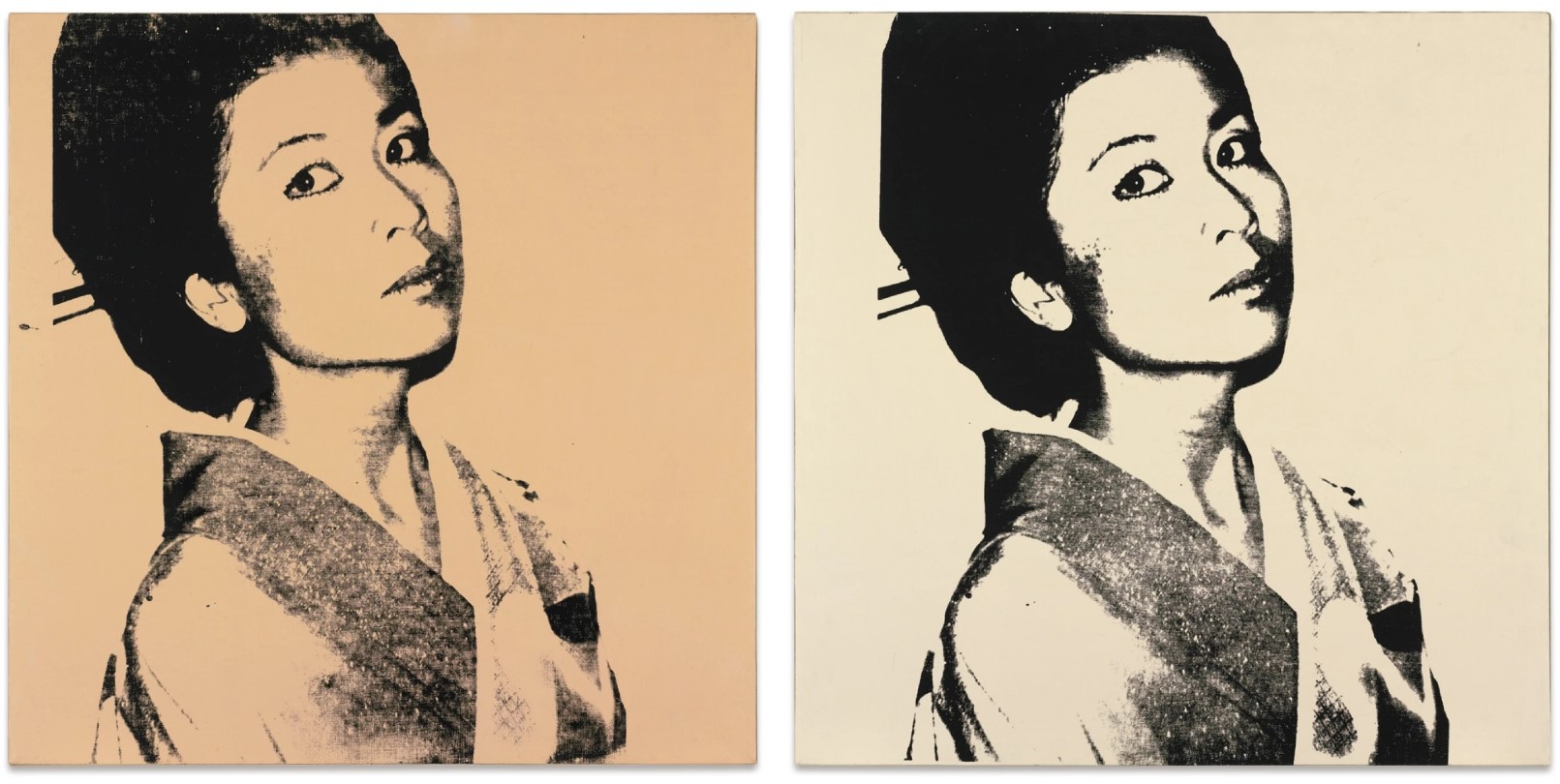
ANDY WARHOL
Kimiko Powers [Two Works], 1972
Acrylic and silkscreen ink on canvas
Each: 40×40 inches (101.6 x 101.6 cm)
Liza Minelli, 1978
As the celebrated child of two famous parents, Minnelli was a fitting subject for Warhol. Not only had both Judy Garland and Vincente Minnelli been immortalized by the artist, but Minnelli herself was at the peak of her celebrity due to her successful film and television career. Following her Oscar and Golden Globe wins for Cabaret in 1972, her appearances in Lucky Lady (1975) and New York, New York (1977) garnered her further acclaim. Married to a film director, she epitomized the money-no-object world of glitz and glamour that energized Warhol and spurred him onto create some of his greatest portraits.
Dating from 1978, Liza was created at a time when Warhol’s portraiture had achieved an astonishing level of international recognition. The artist’s lifestyle appeared to be an endless social whirl of glamorous events as he savored his status as a celebrity in his own right, as sought after and written about as many of his subjects. Riches, power and fame had exerted a powerful attraction on the artist from a young age, and he consciously sought out subjects who ideally epitomized all three; from a veritable roll-call of the greatest of the New York dealers, including Leo Castelli and Ileana Sonnabend, to rock stars such as Mick Jagger and fashion tastemakers as varied as Yves Saint Laurent and Carolina Herrera. Even politicians were not immune to the lure of being immortalized by Warhol. At a White House Reception in 1977 President Jimmy Carter proudly had his portrait displayed in the presence of the delighted artist. A portrait by Warhol automatically placed its subject within an international pantheon of the most successful, recognizable faces of the age, conveying a form of immortality to counteract the transience of celebrity.
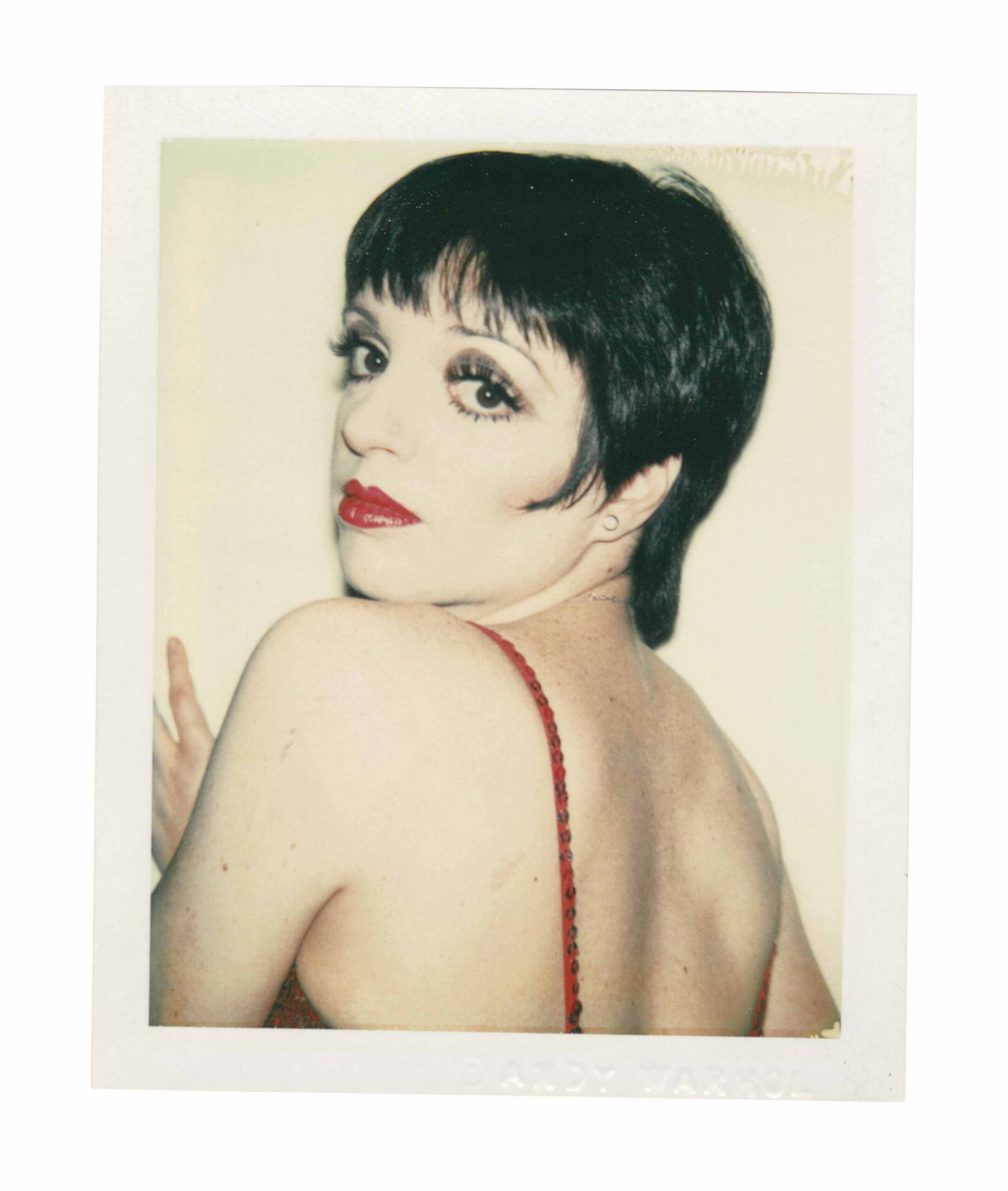 In its dramatic simplicity of line and vibrant contrasts of color, Liza stands out amongst Warhol’s portraits of the 1970s, in which he frequently included exuberant, feathery brushstrokes in the background as though in a playful homage to Abstract Expressionism. So extensive are these taches of paint in some portraits of the period – such as those of Henry Geldzahler – the subject becomes almost obscured. In contrast, Minnelli’s striking features almost leap from the canvas, unimpeded by brushwork or experimental techniques. Once Warhol had chosen a photograph that would become the basis of the portrait, the image was sent off to a fine art printer – usually Chromacomp Inc. – to be turned into a silkscreen, which Warhol would transfer to canvas. The final stage was the most crucial; Warhol would unleash the extraordinary combinations of acids and pastels for which he was renowned to enhance the subject’s natural features. By the late 1970s the artist had honed his silkscreen technique to exquisite perfection, and Liza is unusually technically complex, featuring as many as eight different layers of color; a level of care and detail that Warhol only paid to the subjects he considered to be the most fascinating and worthy of his attention. Lips and eyes were always a particular area of focus within the portraits, and in Liza the artist has chosen to emphasize the lips even more than usual by means of printing the mouth independently with red enamel in order to ensure greater definition and vibrancy; the result is to elevate Minnelli’s mouth to the heights of being a glorified portrait subject in its own right.
Liza, 1978
Sotheby’s London: 12 October 2012
Estimated: GBP 400,000 – 600,000
GBP 367,250
(#22) Andy Warhol (sothebys.com)
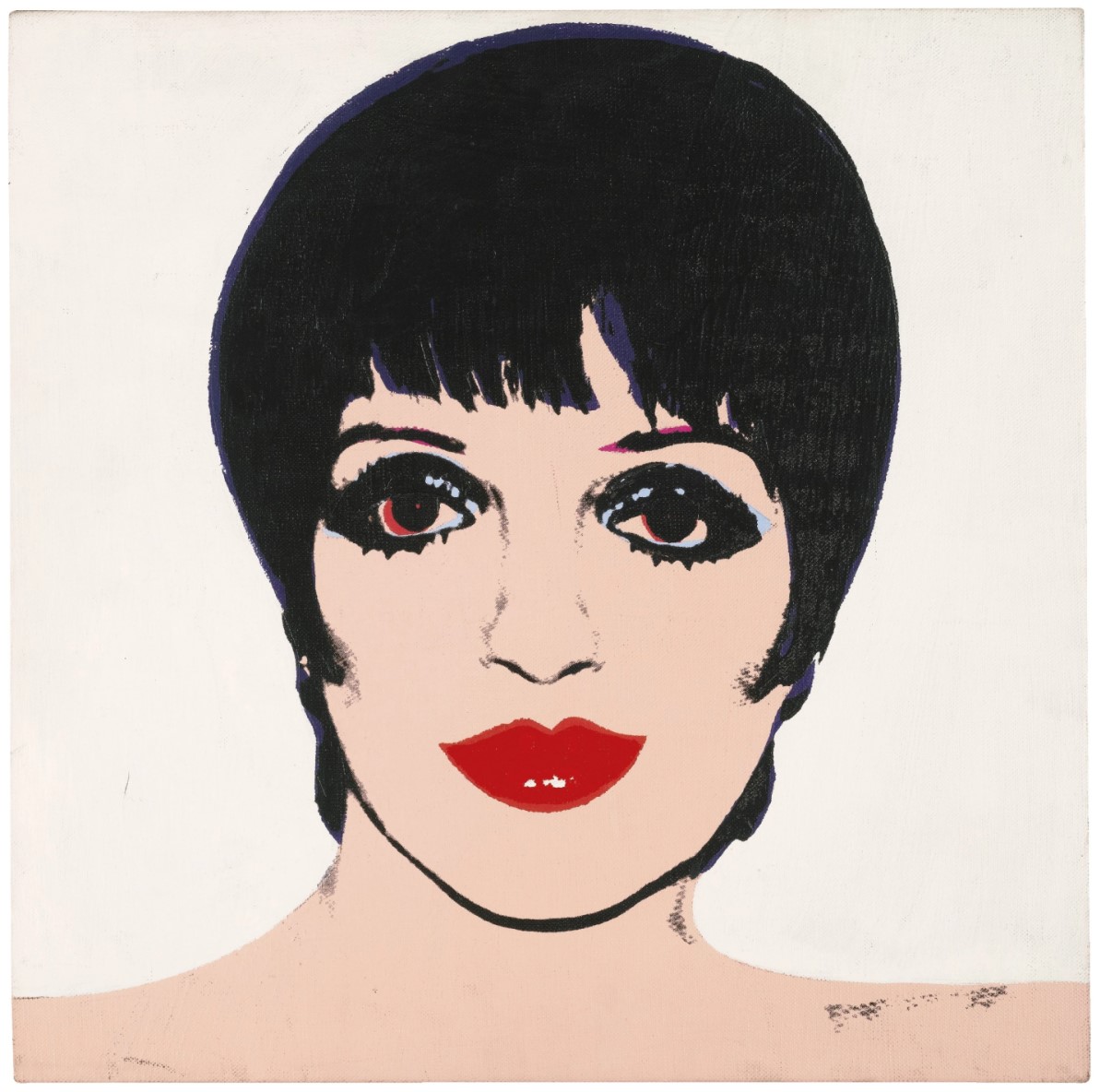
ANDY WARHOL
Liza, 1978
Acrylic and silkscreen ink on canvas
14×14 inches (35.5 x 35.5 cm)
Signed, titled and dated 78 on the overlap
Christie’s New-York: 7 November 2011
USD 902,500
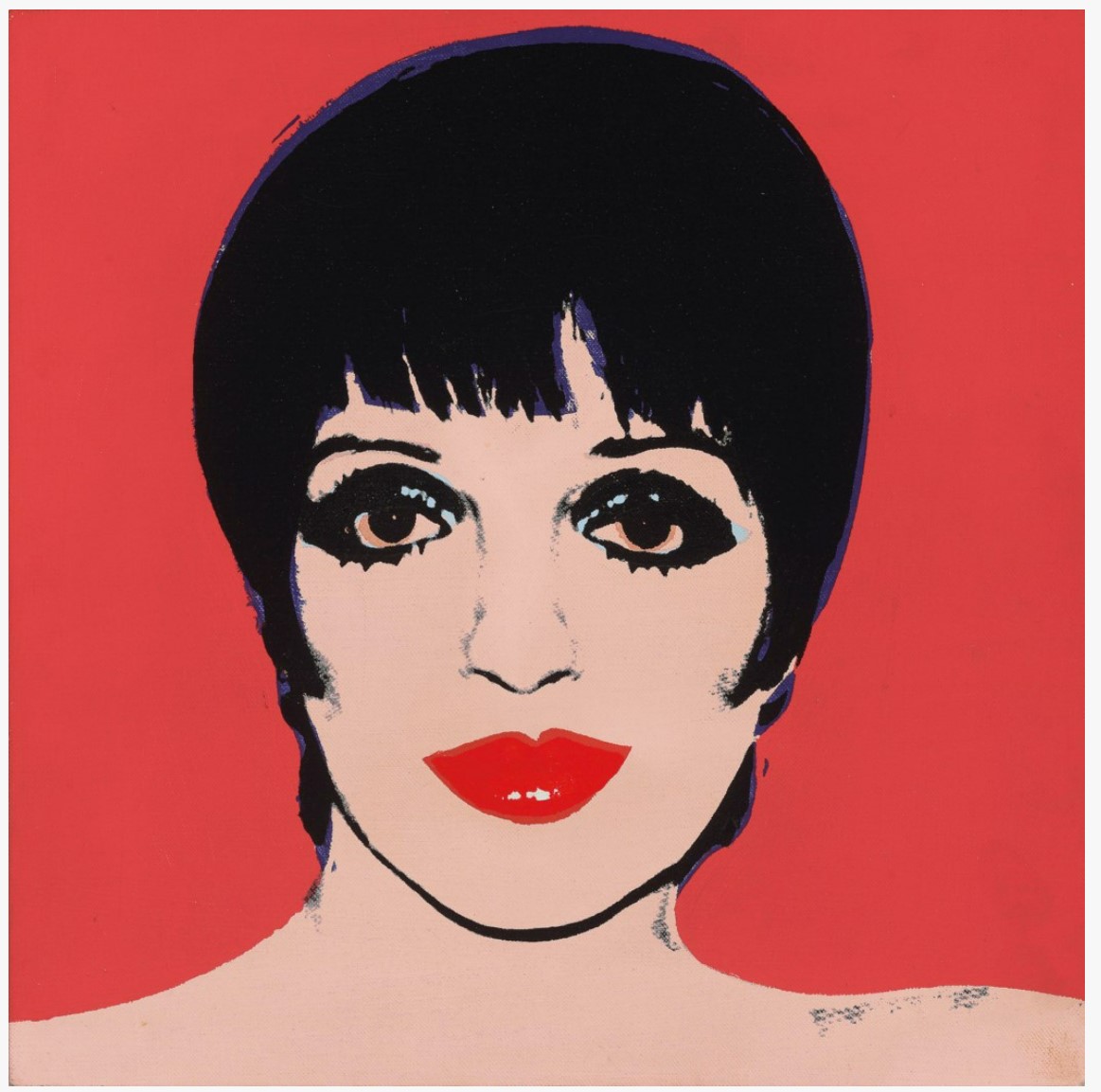
ANDY WARHOL
Liza, 1978
Synthetic polymer and silkscreen ink on canvas
14×14 inches (35.6 x 35.6 cm)
Here, Liza is a loving homage not only to an actress at the height of her powers, but also to the celebrity lifestyle that Minnelli represented; one which Warhol sought to glorify and commemorate by means of elevating a humble photograph to a level beyond realism, seeking to perpetuate the myth of a celebrity untouched by mundane daily concerns.
Judy Garland, 1978
GBP 309,500
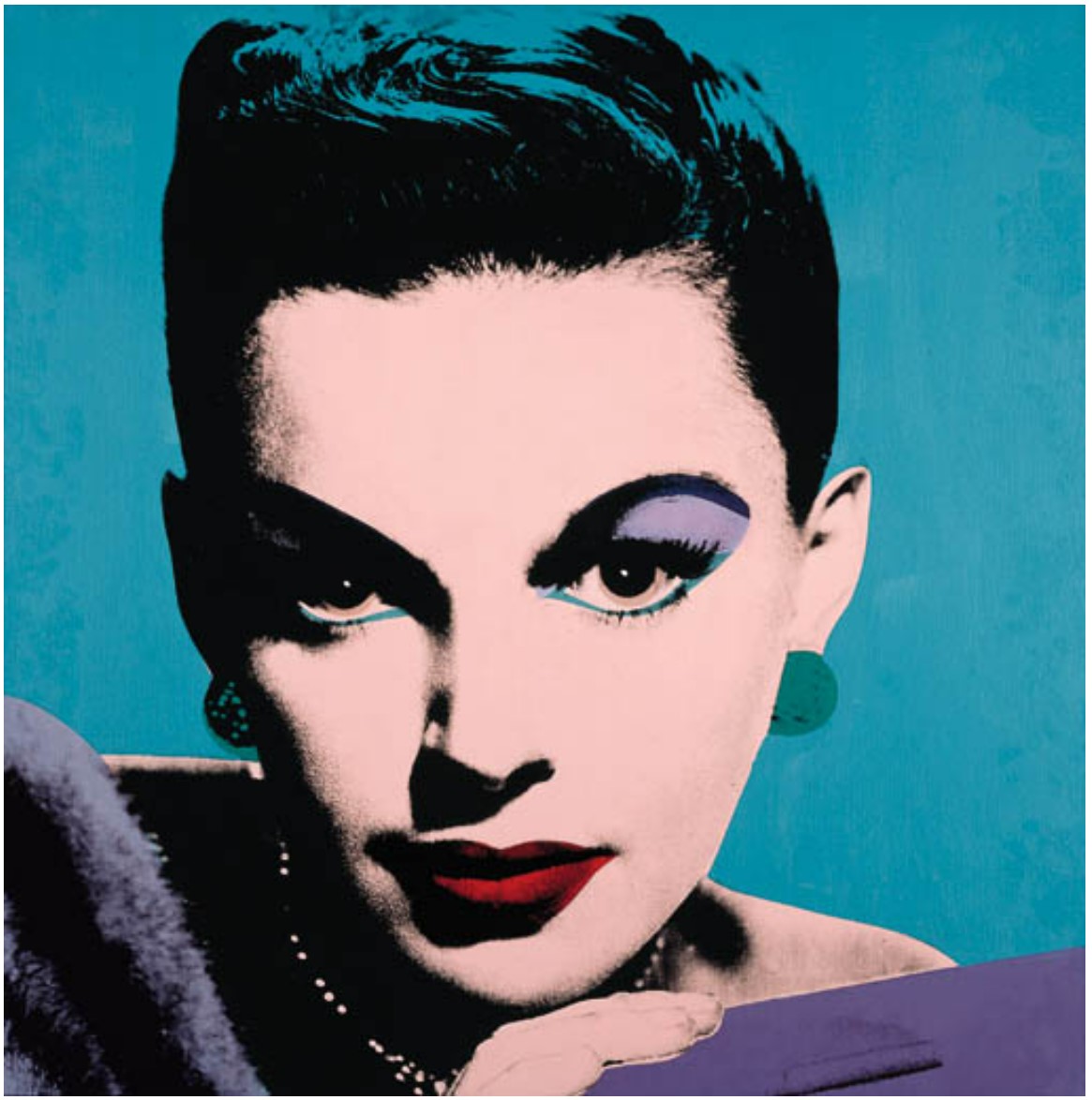
ANDY WARHOL (1928-1987)
Judy Garland, 1978
Silkscreen inks and synthetic polymer on canvas
39 3/4 x 39 3/4 inches (101×101 cm)
Signed ‘ANDY WARHOL’ (on the overlap)
Done in his signature silkscreen technique, this colorful rendering characterizes Garland’s public role as a product of the media for consumption by the masses, akin to Warhol’s famous cans of Campbell’s soup. Yet this work is distinguished from Warhol’s earlier mass-produced images with their machine-like precision by the vivid brushstrokes framing Garland’s face. This more expressive and vibrant approach is typical of the best of Warhol’s portraits of the 1970s. Warhol chose to depict Garland not as the girl-next-door child star of her celebrated early career, but as a mature star of extraordinary style and status, adorned with jewels and fur, crowned by glossy black hair, and made up in classic Hollywood style with her expressive arched eyebrow.
To Warhol, Garland became more than just a superstar figure to admire from afar. He had the opportunity to meet the star in 1965 and recalled, “To meet a person like Judy whose real was so unreal was a thrilling thing. She could turn everything on and off in a second; she was the greatest actress you could imagine every second of her life.” (Ibid., pp. 132-133) In this portrait, Warhol shares his special relationship with Garland with the world. She stands as both a symbol of the highest ranks of stardom and an embodiment of human vulnerability, revered by Warhol as one of the true goddesses in his pantheon of female stars.
Christie’s London: 5 February 2008
GBP 2,148,500
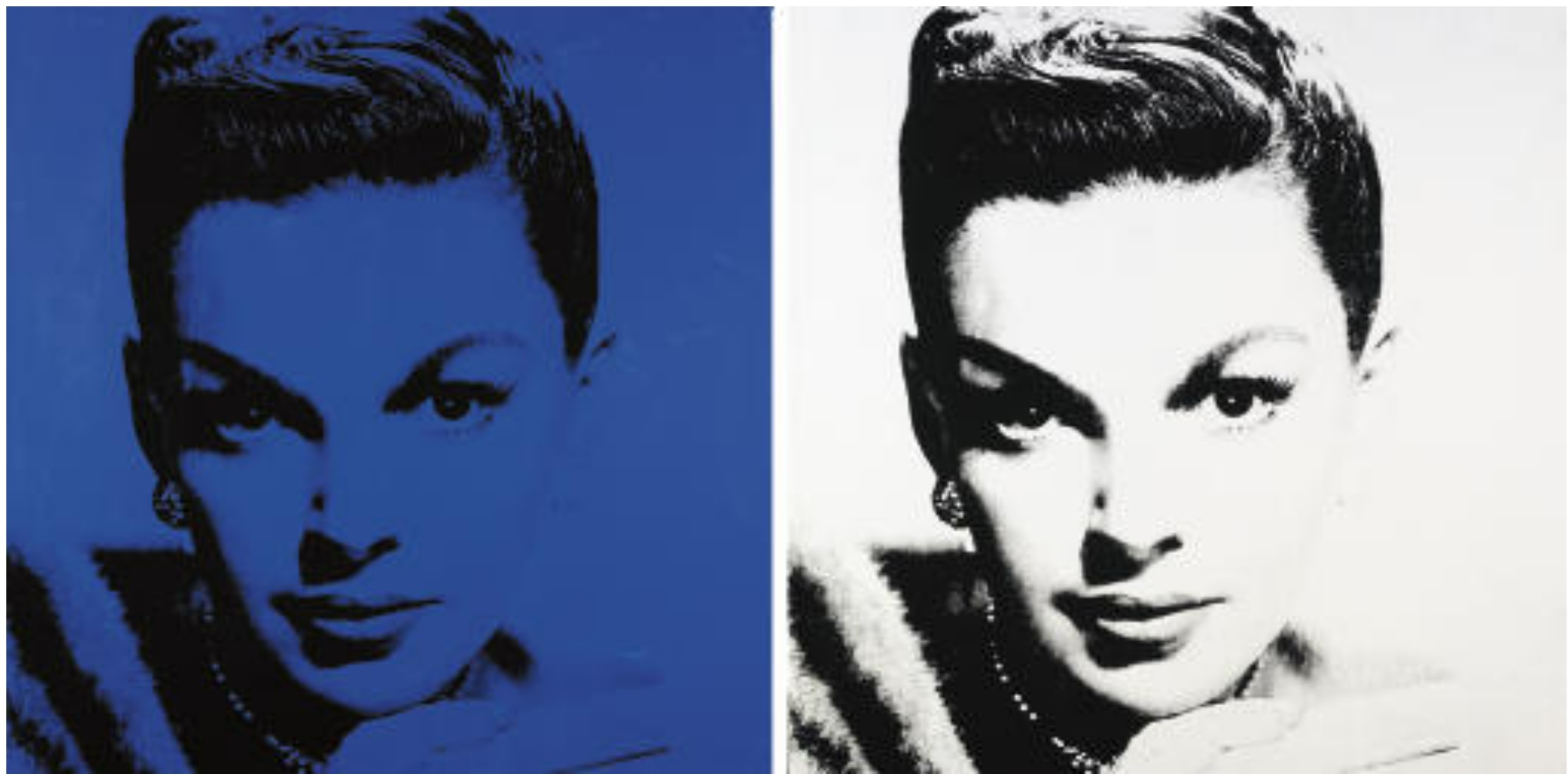
ANDY WARHOL
Judy Garland, 1978-79
Synthetic polymer paint and silkscreen ink on canvas, in two parts
Each: 40×40 inches (101.7 x 101.7 cm)
Andy Warhol’s profound awareness of the way mass media has defined the norms of experience in the contemporary world shaped all aspects of his art, but his exploration of the fabrication of image is perhaps most visible in his portraits. Depicting public figures in the dispassionate and serialized manner of commercial products, Warhol forged a new type of portraiture that fed on the popular appetite for celebrity. For his portrait of Judy Garland, produced at the end of the 1970s, Warhol added the doe-eyed legend of stage and screen to a pantheon of celebrities whose larger-than-life personal myths had achieved them the level of stardom Warhol had himself always idolised.
Judy had always been a favourite star amongst Warhol’s galaxy of venerated celebrities. Despite, or perhaps because of her widely published faults and dramas, she was a figure of adoration to an army of camp followers, including the Factory regular Candy Darling, who impersonated her in his stage performances. In 1969, Warhol and Candy had been amongst the 21,000 fans to jam the streets of Manhattan’s Upper East Side in order to file past the bier where Judy’s body lay in state. Warhol was attracted to Garland’s unusual combination of vulnerability and strength, qualities that had also been evident in the best known of his self created superstars, Edie Sedgwick: ‘To me,’ Warhol said, ‘Edie and Judy had something in common – a way of getting everyone totally involved in their problems. When you were around them, you forgot you had problems of your own, you got so involved in theirs. They had dramas going right around the clock, and everybody loved to help them through it all. Their problems made them even more attractive (A. Warhol & P. Hackett, POPism: The Warhol Sixties, Orlando 1980, pp. 132-3). Yet, although Judy Garland certainly held personal significance for Warhol as the mother of his good friend Liza Minnelli and as a classic Hollywood starlet legendarily revered by the gay community, her image belonged as much to the popular culture image bank as his Marilyn and Liz – a commodity to be considered on par with Campbell’s Soup.
This conflict between private and public life, the trading of personality for fame and fortune, had been familiar to Garland from birth. After her attendance at the Factory’s ‘Fifty Most Beautiful People’ party in 1965, Warhol commented that ‘Judy Garland grew up on the M.G.M. lot! To meet a person like Judy whose real was so unreal was a thrilling thing. She could turn everything on and off in a second; she was the greatest actress you could imagine every second of her life’ (A. Warhol & P. Hackett, POPism: The Warhol Sixties, Orlando 1980, p. 127). By resurrecting Judy Garland’s image from a studio photograph at her most beautiful, Warhol presents a metaphor for the enduring proclivity to canonize entertainers as gods and goddesses and pays a reverential tribute to a star whose glamour, fame and turbulent lifestyle enthralled him to the end.
Sotheby’s New-York: 11 November 2014
USD 1,205,000
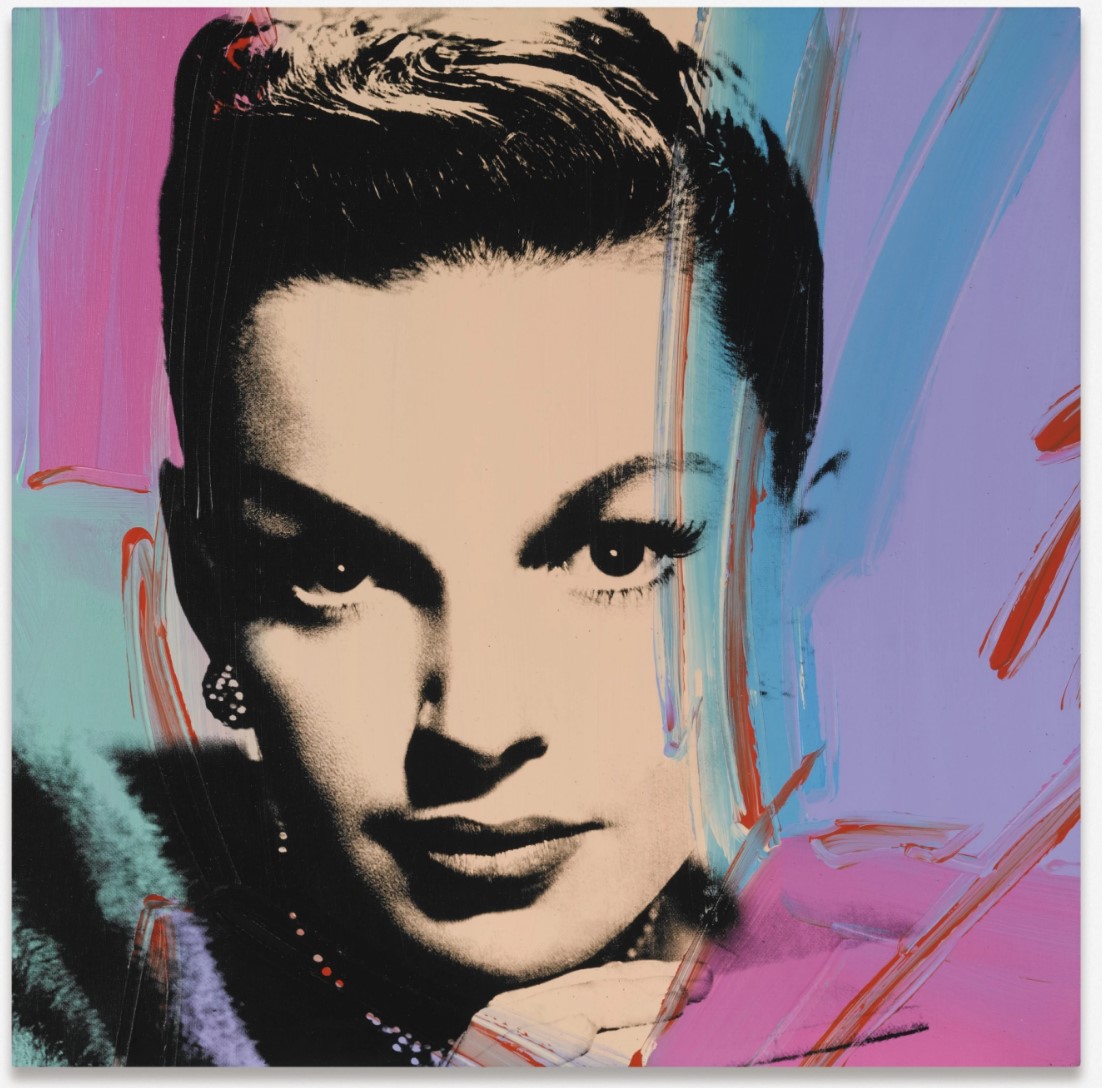 ANDY WARHOL
Judy Garland (Multicolor), 1978
Acrylic and silkscreen ink on canvas
40×40 inches (101.6 x 101.6 cm)
Dennis Hopper, 1971
Christie’s New-York: 9 November 2010
USD 962,500
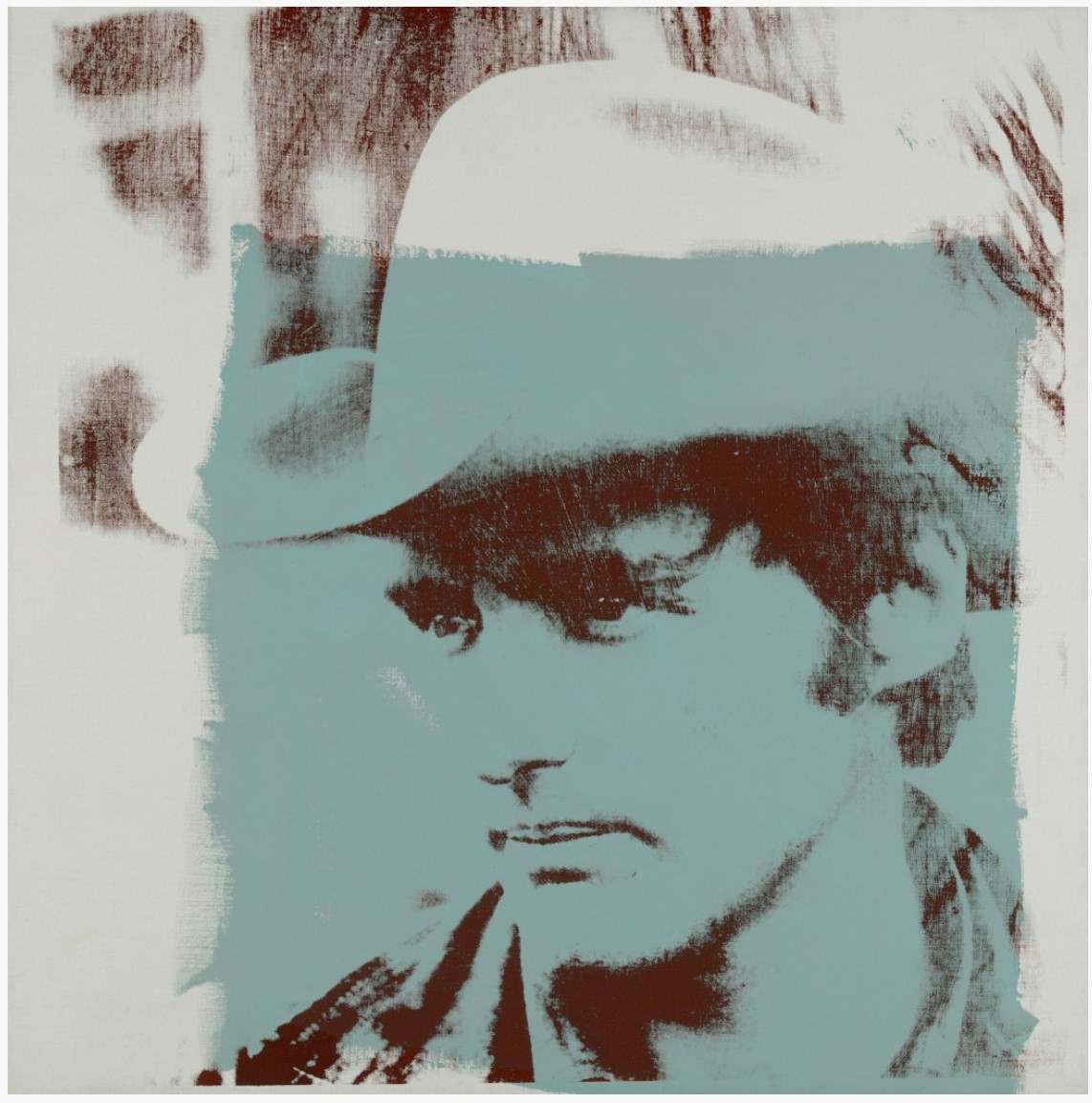
ANDY WARHOL
Dennis Hopper, 1971
Synthetic polymer and silkscreen inks on canvas
40×40 inches (101.6 x 101.6 cm)
Stamped twice with The Estate of Andy Warhol stamps
Numbered twice ‘P050.415’
(on the overlap and on the stretcher)
In Dennis Hopper Andy Warhol surpasses portraiture and instead creates a work that reflects large cultural forces in America. As the counterculture 1960s ended and 1970s dawned, the nation reckoned with the loss of earlier Post-War values. Warhol was obsessed with Hollywood and its celebrity denizens were a critical lodestar for him, even informing his own films and Interview magazine. The subjects he chose for his first silkscreens were likenesses of Natalie Wood, Warren Beatty, and Troy Donahue, their youthful faces shining in posed studio photos, replicated in garishly colored multiple images. Warhol portrayed Hopper in a far grittier and more naturalistic way than he did those well-scrubbed teenybopper actors, yet the painting is just as magnetically and commercially appealing. In this work, Warhol abandoned the Easter-egg tones of his earlier celebrity portraits and adopted a very cool image of Hopper as a cowboy, the ultimate masculine American archetype. Dennis Hopper juxtaposes multiple themes and identities: Warhol and portraiture, film and painting, Warhol and Hopper as artists and auteurs, representation and iconography.
Warhol created the present work in 1970-1971 as a latter part of a series commissioned for the Modern Art Museum of Fort Worth, TX (which never materialized). For this series, Warhol abandoned serialized, full-body representations of such figures as Marlon Brando and Elvis Presley, and focused on the face and head, like those of his female subjects, Marilyn, Liz, and Jackie. Warhol developed a color-blocking technique, adding emphasis and cropping; it became a favored stylistic device in his 1970s portraits.
Warhol based this image on a still from the Hopper’s film The Last Movie (1971), Hopper’s second directorial effort after his groundbreaking anti-establishment Easy Rider (1969). The film’s plot is metacinematic – a movie within a movie. A film shoot goes awry in Peru, and a wrangler, Hopper’s character, gives up his career to live there in an unspoiled existence. However, circumstances force him to go back to filmmaking to restore order in the village. Warhol may have aligned his choice of image to the commission at hand, but he also might have appreciated the way the movie treated various levels of artifice and reality. Warhol was quite committed to making deadpan movies that show little action, such as Eat, Sleep, Kiss of 1963 or no action, such as Empire (1964) which did not differentiate between art and reality. Moreover, Hopper, who appears in Warhol’s screen tests as a clean-cut teen, has been transformed into an anti-hero, a reluctant heartthrob, a marked contrast from the macho Marlon and cool Elvis of the 1960s.
ANDY WARHOL
Dennis Hopper, 1977
Unique Polaroid print
4.2 x 3.5 inches (10.8 x 8.9 cm)
In the fall of 1963, Warhol drove cross-country to Los Angeles to attend his second show at the Ferus Gallery. He motored west on Route 66, crossing Oklahoma and Texas and spending the last night of the trip in Palm Springs, in his first cross-country drive. The variable landscapes of the south and west struck Warhol, but the artificial Los Angeles landscape excited him most. Warhol repeatedly said, “Oh, this is America!” In the present work, we do not see the Western landscape, the cowboy’s typical backdrop. However, Warhol implies it in his portrayal of Hopper. Hopper’s costume, Stetson hat and denim jacket, signifies the American West, and the star’s wind-tossed hair – eyes fixed on an unknown horizon – further insinuate “the Western”. Hopper’s searching, vulnerable and stoic gaze adds a new wrinkle to the cowboy archetype. In a certain way, a new era had begun for both artist and actor. Hopper actively participated in the 1970s American New Wave cinema, where realism and naturalism reigned, where unvarnished truth was valued, and open-endedness and freedom were favored over judgment and conformity. Warhol renewed his focus on portraits; he emphasized the absences surrounding the subjects, what is not shown or spoken, what has been elided – precisely the indicators of time and space traditional portraiture required – adding to the 1970s portraits’ poignancy, even at their most controversial or glamorous.
Debbie Harry, 1980
Debbie Harry, 1980
Sotheby’s London: 1 March 2023
Estimated: GBP 4,000,000 – 6,000,000
GBP 6,599,300
Debbie Harry | Modern & Contemporary Evening Auction | | Sotheby’s (sothebys.com)
ANDY WARHOL (1928 – 1987)
Debbie Harry, 1980
Acrylic and silkscreen ink on canvas
42×42 inches (106.7 x 106.7 cm)
Stamped by the Estate of Andy Warhol and the Andy Warhol Foundation for the Visual Arts
Numbered PO50-172 (on the overlap)
Featured on the cover of Phaidon’s major volume on Warhol’s portraiture published in 2005, Debbie Harry, from 1980, is one of Warhol’s most striking and accomplished portraits of celebrity. One of only four portraits of the Blondie star in this rare 42 inch format, two of which are in the Andy Warhol Museum in Pittsburgh, this pink version has become one of the best recognized images in Warhol’s oeuvre and is a definitive portrait of the 1980s style icon. Built up of no fewer than five silk-screened layers of ink over a bubblegum pink acrylic ground, this portrait stands head and shoulders above its peers as a masterclass in the genre. Painted at a late high point in Warhol’s career, on the eve of the decade which saw a renewed creative enterprise in his art, Debbie Harry sits squarely in the lineage of great portraiture that began with Liz Taylor, Marilyn Monroe and Jackie Kennedy in the 1960s through to the final fright-wig self-portraits painted only months before Warhol’s death. Like the early portraits of female stage stars, Debbie Harry reveals Warhol’s lifelong fascination with celebrity and beauty; like his final self-portraits, it exhibits the sheer perfection of Warhol’s flawless silkscreen technique, honed and refined over two decades.
Warhol continued to be inspired and fascinated by beautiful female celebrities throughout his career. Harry, a striking bottle-blonde haired New Jersey native with an equally effervescent personality, had moved to New York City to launch her music career. She was a waitress at Max’s Kansas City, a meeting place for artists and musicians and a favourite hangout for Warhol and his entourage. Warhol and Harry became friends just as her band – Blondie – was becoming successful. She was quickly a staple on the New York social scene and a regular at Studio 54. Blondie, a punk band so named after its diva lead singer, was an immediate huge success. The group launched their debut album in 1976, had their first European tour in 1977 and by 1978 Harry and the band were global superstars. She epitomized the rocket launch rise to fame that infatuated Warhol and in 1979 she graced the cover of his celebrity centered magazine Interview. Her fame, her beauty, and their friendship made her an instant muse for the artist.
Debbie Harry, 1980
Sotheby’s New-York: 12 November 2014
Estimated: USD 2,500,000 – 3,500,000
USD 3,077,000
(#231) Andy Warhol (sothebys.com)
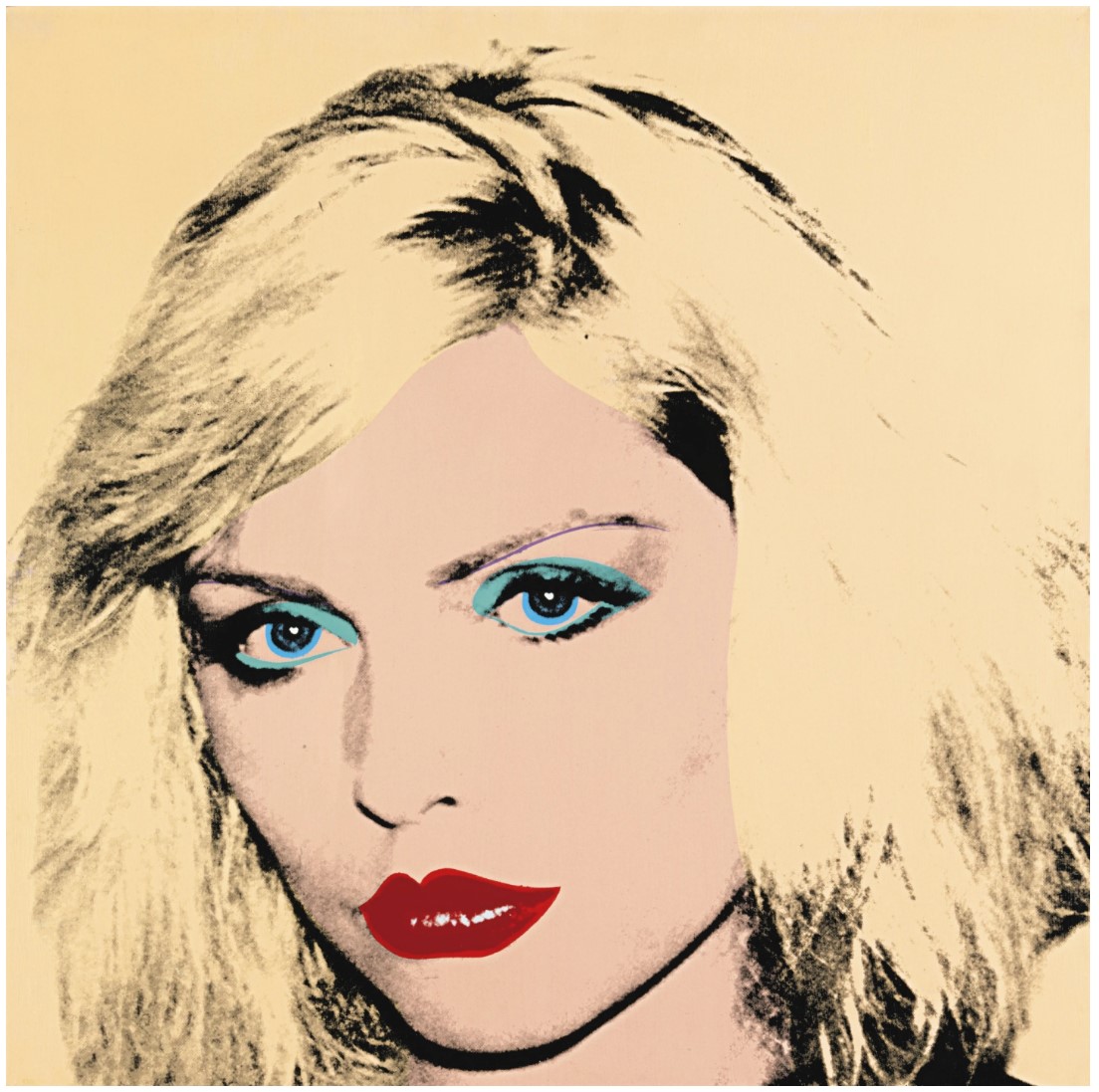
ANDY WARHOL
Debbie Harry, 1980
Acrylic and silkscreen ink on canvas
42×42 inches (106.7 x 106.7 cm)
Signed on the overlap
Inscribed by Debbie Harry XX Love Debbie Harry 1987 on the overlap.
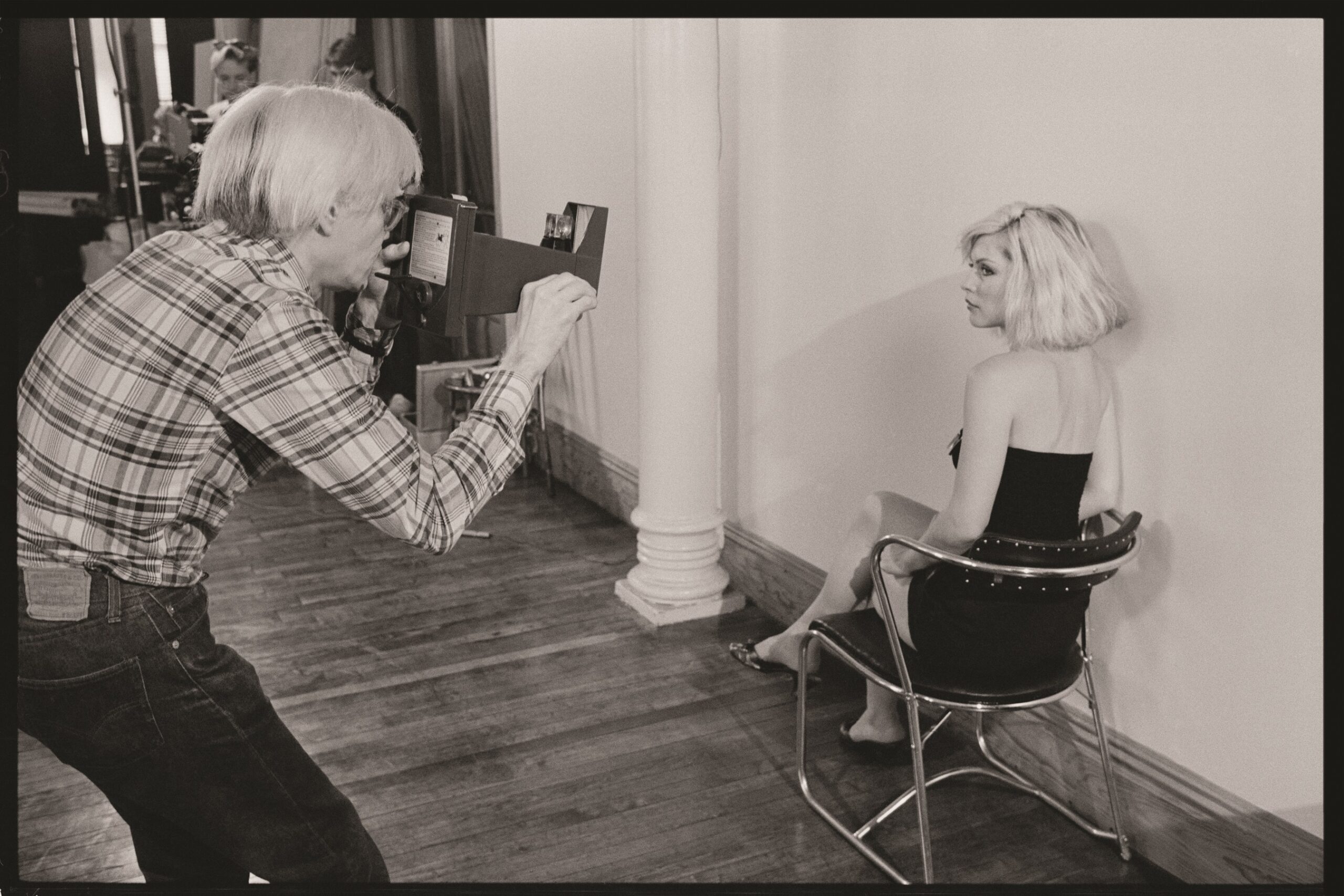
Warhol continued to be inspired and fascinated by beautiful female celebrities throughout his career. Harry, a striking bottle-blonde haired New Jersey native with an effervescent personality, had moved to New York City to launch her music career. She was a waitress at Max’s Kansas City, a meeting place for artists and musicians and a favorite hangout for Warhol and his entourage. Blondie, a punk band named for the diva lead singer’s nickname, was immediately a huge success. The group launched their debut album in 1976, had their first European tour in 1977 and by 1978 Harry and the band were global superstars. She epitomized the overnight celebrity fame that infatuated Warhol, and in 1979, she graced the cover of his celebrity centered magazine Interview. Her fame, her beauty, and their friendship made the rockstar an instant muse for the artist. Debbie Harry frequently appeared on Warhol’s TV show, once wearing a day-glo camouflage head to toe outfit, which she insisted he sign while on her body, inspired by the artist’s camouflage paintings.
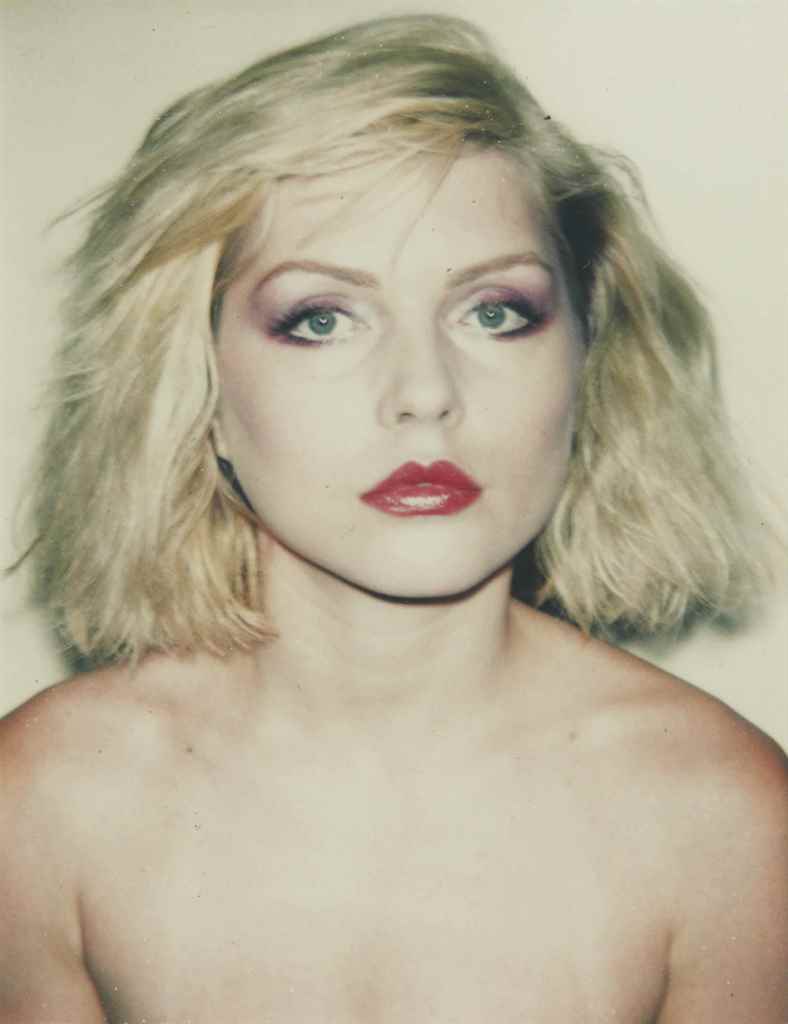
ANDY WARHOL
Debbie Harry, 1980
Unique Polacolor print
3.7 x 2.9 inches (9.6 x 7.4 cm)
Debbie Harry sits squarely in the lineage of great portraiture that links the artist’s images of the stellar trinity of Liz Taylor, Marilyn Monroe and Jackie Kennedy in the 1960s with his final fright-wig self portraits in the 1980s. The world-renowned earlier portraits of his iconic women anticipated the greatest portraits of the 1980s, from Debbie Harry to the remarkable late self-portraits, consistently maintaining an uninterrupted engagement with the viewer and bold use of color. Like the early portraits of female stage stars, Debbie Harry reveals Warhol’s lifelong fascination with celebrity and beauty; like his final self portraits, it exhibits the sheer perfection of Warhol’s flawless silkscreen technique, honed and refined over two decades.
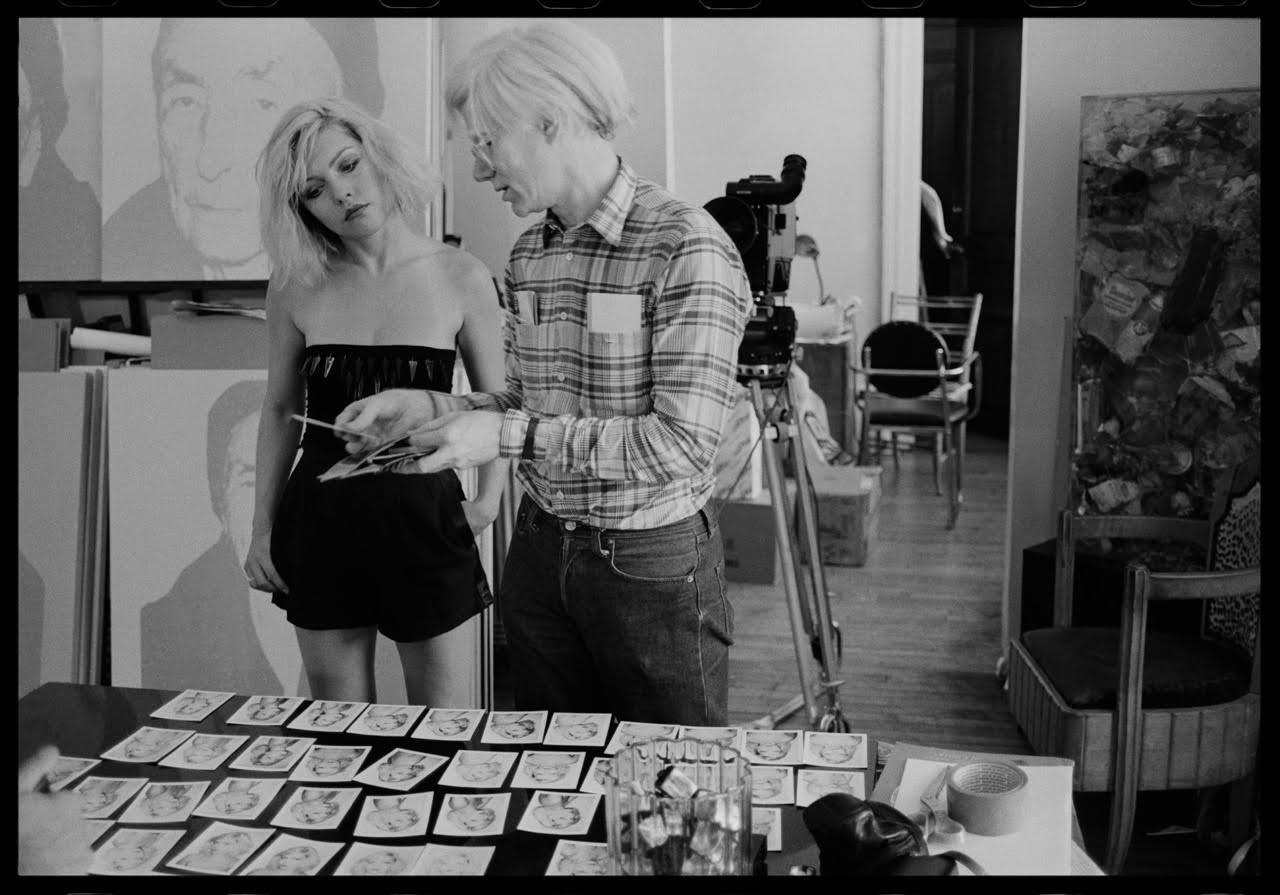
By 1980, Warhol had mastered his silkscreen technique, and the present work demonstrates a wonderful balance between the crisp record of the overall form, together with softer, more subtle areas of screen that shape the shadows around her eyes, cheek and neck. Warhol’s technical perfection allows him to explore the various nuances available to him within the silkscreen medium in this particular work. Harry’s striking features almost leap from the canvas, unimpeded by brushwork or experimental techniques. In this process, once Warhol had chosen a photograph that would become the basis of the portrait, the image was sent off to a fine art printer, usually Chromacomp Inc., to be turned into a silkscreen, which Warhol would transfer to canvas. By using high contrast Polaroids, Warhol was able to play with the strong areas of black in the features and the bold pockets of color in the blown out areas. The heightened photographic detail of Debbie Harry links her to Warhol’s Marilyn paintings where this method was first explored. The final stage of his process was the most crucial; Warhol would unleash the extraordinary combinations of acids and pastels for which he was renowned to enhance the subject’s natural features. Debbie Harry is unusually technically complex, featuring many different layers of color; a level of care and detail that Warhol only paid to the subjects he considered to be the most fascinating and worthy of his attention. Lips and eyes were always a particular area of focus within the portraits, and in this work, Warhol juxtaposes Harry’s blue eye shadow, dark mascara, red lips, and distinctly strong bone structure against golden hair and like-colored background. Harry’s eyes gaze directly into those of the onlooker, a distinctively Warholian tease, whilst her glossy, voluptuous lips purse in a seductive pout.
Chris Royer, 1980
Chris Royer, 1980
Sotheby’s New-York: 16 November 2023
Estimated: USD 300,000 – 400,000
USD 533,400
Chris Royer | Contemporary Day Auction | 2023 | Sotheby’s (sothebys.com)
ANDY WARHOL (1928 – 1987)
Chris Royer, 1980
Acrylic and silkscreen ink on canvas
40×40 inches (101.6 x 101.6 cm)
Signed and dated 1980 (on the overlap)
Stamped by the Estate of Andy Warhol and numbered PO50.678 on the overlap
Executed in 1980, Andy Warhol’s sensational portrait of fashion muse and model Chris Royer forms part of the artist’s instantly recognizable portraits of his array of glamorous socialite friends. Conceived in his signature style reminiscent of his portraits of Marilyn Monroe and Jackie Kennedy, Chris Royer showcases the famous model with a soft smile, stunning bright green eyes and quintessentially Warholian red lips. A notable “Halstonette”, Chris Royer formed part of the charismatic group of models that encircled the dazzling fashion designer and close friend of Warhol, Roy Halston, whose designs defined the style and taste of the 1970s. Best known for inspiring Halston’s “Sarong” dress, Chris Royer belonged to history’s first internationally recognized group of models including Pat Cleveland, Billie Blair and Alva Chinn. Warhol, who was widely known to always surround himself with the most remarkable icons of high society, likely felt drawn to Chris Royer’s classical beauty and striking presence.
CHRIS ROYER AND ANDY WARHOL AT THE MET GALA CIRCA 1970S. IMAGE COURTESY CHRIS ROYER
Warhol began his silkscreen portraits by taking a polaroid of his subject. Always working from photographs, Warhol created this print of her likeness by utilizing compelling layers of colored paint. The result is a dynamic portrait filled with energy and vibrancy that parallels the remarkable life of the sitter. Modestly referring to himself as ‘just a travelling society painter’, Warhol’s innovative reinterpretation of portraiture is now hailed as having revived a dead art form. Indeed, Chris Royer locates itself at the intersection of tradition and popular culture, serving as both an exemplary portrait of his sitter and a memento of Royer’s important role within the history of fashion.
Farrah Fawcett, 1980
Farrah Fawcett, 1980
Bonhams New-York: 20 November 2024
Estimated: USD 300,000 – 500,000
USD 1,512,500
Bonhams : ANDY WARHOL (1928-1987) Farrah Fawcett 40 x 40 in (101.6 x 101.6 cm) (Painted in 1980)
Synthetic polymer paint and silkscreen ink on canvas
40×40 inches (101.6 x 101.6 cm)
Signed, inscribed and dated ‘F.F. Andy Warhol 1980’ (on the overlap)
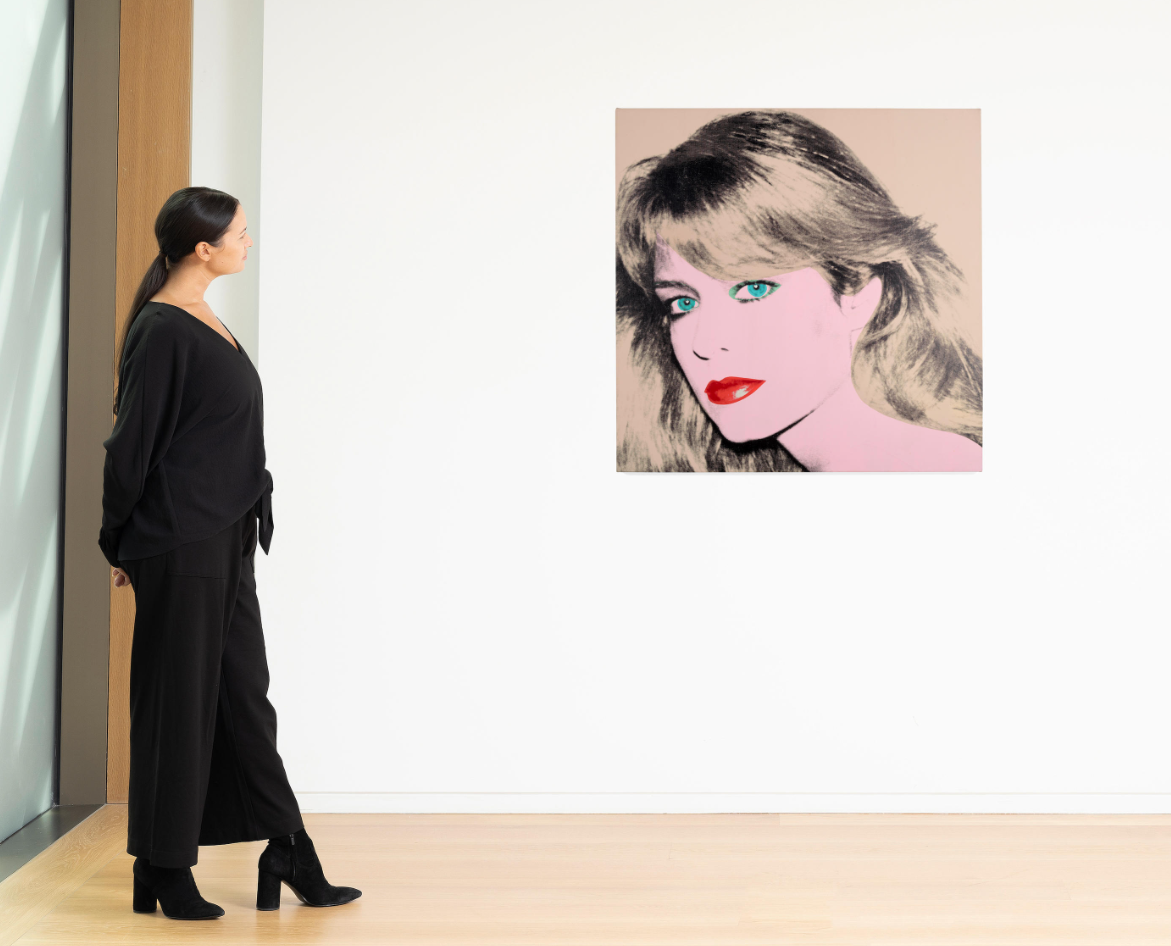
Fawcett was an ideal subject for Warhol: a celebrity whose image was omnipresent at the time. The actress had studied Warhol’s work as an art student, and enthusiastically accepted the opportunity to sit for him. Warhol began his process by shooting the subject on Polaroid film; he then selected the final images from the dozens of resulting photographs. Fawcett’s sitting was commemorated in an ABC 20/20 special, which aired in 1980. After the photo shoot, Warhol and Fawcett review the polaroids together; Warhol notes, “I mean, there’s no bad ones.” Later, experimenting with colors for the hand-painted elements, Warhol remarks, “It’s pretty, isn’t it; it really is pretty.” Unlike some of the other actors and celebrities Warhol painted, Warhol’s portrait session with Fawcett resulted in just two silkscreen portraits. The other of this pair is currently housed in the permanent collection of the Blanton Museum at University of Texas, Austin, Fawcett’s alma mater, making the present lot the only Warhol portrait of Fawcett in private hands.
Princess Diana, 1982
Portrait of Princess Diana, 1982
Phillips London: 10 October 2024
Estimated: GBP 1,200,000 – 1,800,000
GBP 1,258,000 / USD 1,647,980
Andy Warhol – Modern & Contemporary … Lot 11 October 2024 | Phillips
ANDY WARHOL
Portrait of Princess Diana, 1982
Synthetic polymer paint and silkscreen ink on canvas
50 1/8 x 42 inches (127.4 x 106.8 cm)
Signed and dated ‘Andy Warhol 82’
Stamped with the Estate of Andy Warhol and the Andy Warhol Foundation for the Visual Arts, Inc. stamps
Numbered ‘P050.190’ on the overlap
Coming to auction together for the first time having previously been held in the esteemed collection of author and Conservative deputy chairman, Jeffrey Archer, Andy Warhol’s Portrait of Prince Charles and Portrait of Princess Diana exemplify the singular directness and immediacy of the artist’s Pop portraits. Executed with a decorative sense of line, and incorporating printed elements derived from drawings accented with electrifying flashes of bright, neon color, Portrait of Princess Diana is highly characteristic of Warhol’s late work in both stylistic and thematic terms. Simplified to its essential pictorial elements, the economic but expressive depiction of the young and radiantly beautiful Lady Diana Spencer perfectly captures the openness and warmth that would come in later years to define her as the ‘People’s Princess’, and connects Warhol’s early investigations into fame, beauty, and tragedy with questions of social hierarchy and political authority posed by his late portraits.
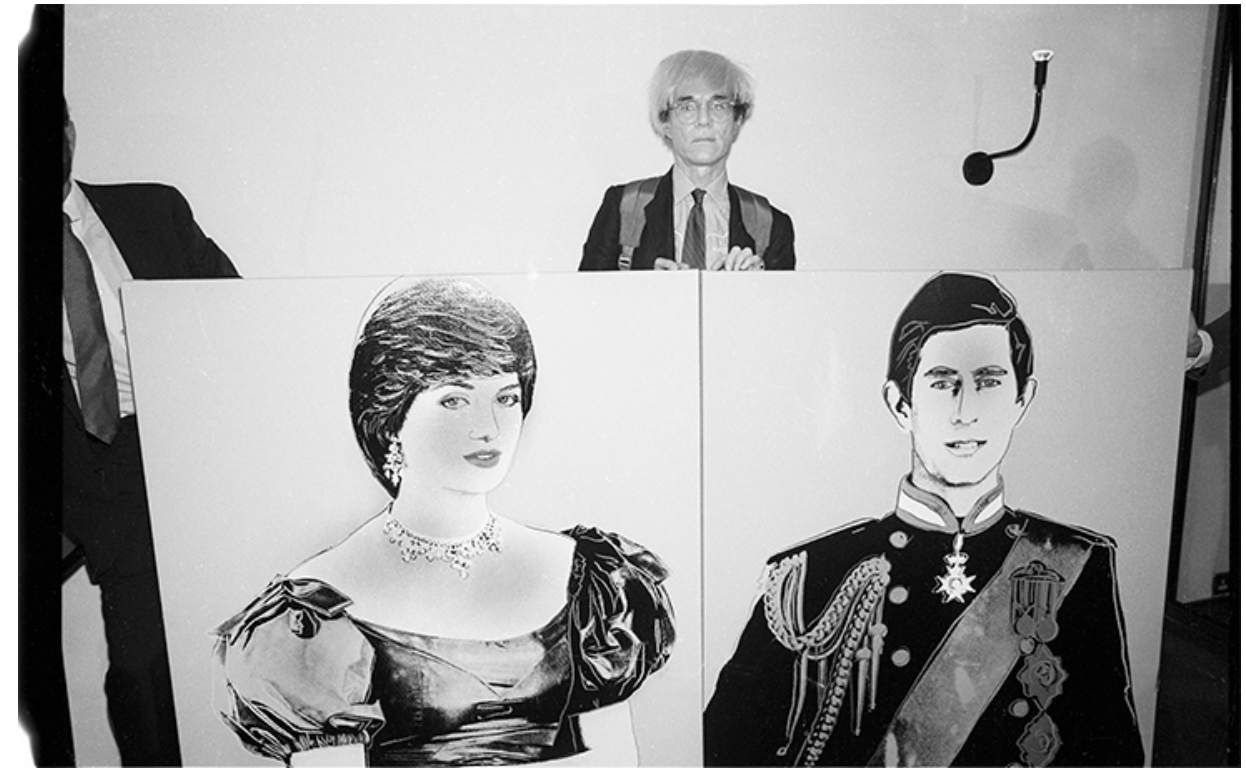
Christopher Makos, Andy Warhol with Portrait of Princess Diana and Portrait of Prince Charles, 1982. Image: © Christopher Makos, Artwork: © 2024 The Andy Warhol Foundation for the Visual Arts, Inc. / Licensed by DACS, London
While his portraits of the 1970s take on a more painterly appearance, the hand of the artist present in passages of heavy impasto and finger-painted elements, in the 1980s Warhol returned to the bold color contrasts of his defining Pop portraits of Marilyn Monroe, Elizabeth Taylor, and Jackie Kennedy. As in these iconic images of timeless feminine beauty, Portrait of Princess Diana exemplifies the artist’s unique ability to select and isolate images that not only distill the captivating essence of his subjects but transcend their own historical moment to define an age. While Marilyn embodied the combination of glamour and tragedy that would become synonymous with the age of celebrity, as First Lady, Jackie represented America’s own equivalent of the Modern Royal family, her vivacity, beauty, and faultless sense of style elevating her to an ideal of dutiful femininity for many American women echoed in the popular conception of Diana some decades later. While his earlier silkscreened portraits bear the unmistakable marks of the decidedly mechanical processes of their production, Warhol’s approach in these later works is more delicate, embellishing his surfaces with bold lines and decorative elements in neon colors. Visually alluring, these additions also emphasize the artificiality of the image, just as the non-naturalistic colors of his earliest portraits had before.
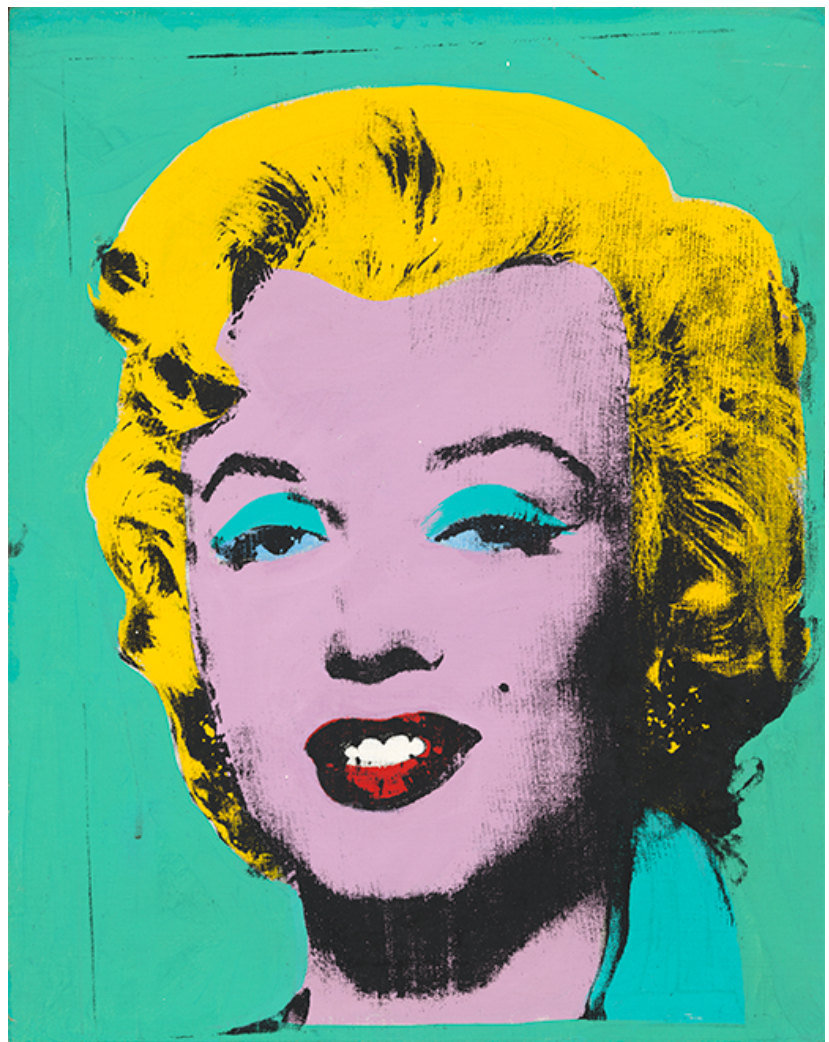
Andy Warhol, Green Marilyn, 1962, National Gallery of Art, Washington, D.C. Image: National Gallery of Art, Washington, D.C.,Gift of William C. Seitz and Irma S. Seitz, in Honor of the 50th Anniversary of the National Gallery of Art, 1990.139.1, Artwork: © 2024 The Andy Warhol Foundation for the Visual Arts, Inc. / Licensed by DACS, London
In an important distinction however, Warhol’s depictions of Marilyn and Jackie were always already tinged with tragedy, memento mori pieces that were created shortly after the shocking and untimely deaths of Monroe and President Kennedy that Warhol would retrospectively link to the somewhat bleaker portrait of American culture explored in his Death and Disaster series. As in the haunting presentiment that now seems loaded in Diana’s comment ‘I’d like to be a queen of people’s hearts, in people’s hearts, but I don’t see myself being queen of this country’, the profound poignancy of Warhol’s Portrait of Princess Diana would only develop over time. As the years passed, the press focused increasingly on her loneliness and isolation in the later years of her marriage while continuing to emphasize the kindness and love that she showed her people. This crystallized the popular image of her, which is now forever shadowed by the tragic events that led to her shocking death in Paris in 1997, and the national outpouring of grief that followed. Like Marilyn, in Portrait of Princess Diana we now find the perfect confluence of celebrity, beauty, disaster, and mass media that so fascinated the artist, and are so deeply woven in his approach to the icon in the modern day. More than any other figure in the Royal Family, Diana’s youth, grace, and beauty captured the hearts and minds of the public, marking her as undoubtably one of the most iconic and adored women of the late 20th century. As Warhol so perceptively anticipated decades before, the rise of media technologies and the cult of celebrity ensured that Diana’s image was widely circulated throughout the 1980s and ’90s, making her universally recognizable and blurring the boundaries between public image and the more complex contradictions of private life. It is perhaps this tension that initially drew Warhol to Diana, speaking as it does so directly to his own, long-standing fascination with the tensions between beauty and tragedy, glamour, and the darker underside of celebrity.
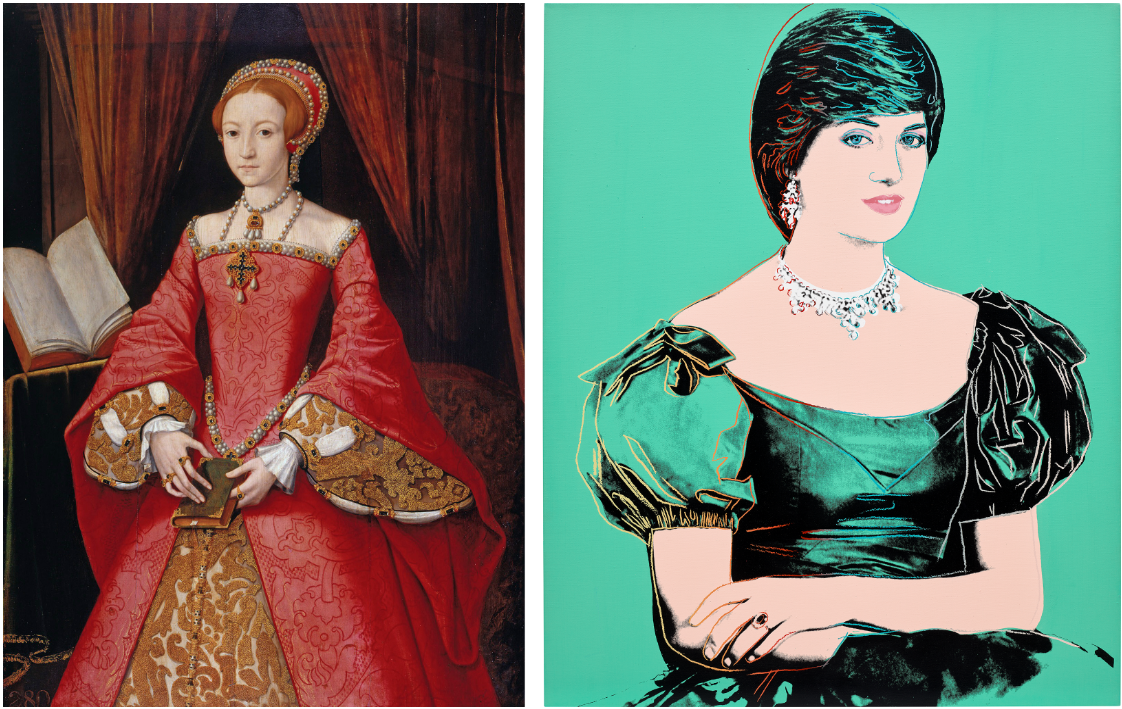
Left: William Scrotts (attributed to), Elizabeth I when a Princess, circa 1546, Royal Collection Trust, London
Right: The present work
Generating enormous public interest, the engagement of Charles and Diana was played out like a fairytale in the press, Lord Snowdon’s official engagement portrait appropriated by Warhol here reproduced and distributed worldwide. Presenting the couple in formal dress and arranged against an antique tapestry backdrop, the photograph retains much of the visual iconography associated with Royal Portraiture, the depiction of a young Diana especially resonating with well-known portraits of a young Elizabeth I prior to her ascension. The mechanisms of the image and the nature of its circulation must certainly have struck Warhol, bearing certain immediate comparisons to the functioning of publicity by film studios in the promotion of new releases and leading stars. Emphasizing the forward-looking modernity and optimism represented by the couple at the time, Warhol radically updates the more conventional arrangement of the official photograph, adopting the format of the casting call ‘headshot’ and dramatically cutting and cropping the image to focus more closely on the head and shoulders of Diana. Nevertheless, in sharpening our focus in this way, Warhol’s unmistakably modern image reflects back on the traditions of Royal portraiture, his decorative embellishments drawing particular attention to the placement of her hands, the elegant line of her neck and shoulders, rich fabrics and fine jewelry, all highly symbolic and charged elements used to iconographic effect in traditional court portraiture. One of only four Princess Diana works in this format, the rich green tones employed by Warhol here echo the dress and backdrop of Snowdon’s original photograph, connecting the present work even more directly with this image of a youthful and hopeful Diana.
Portrait of Princess Diana, 1982
Phillips London: 7 March 2024
Estimated: GBP 1,200,000 – 1,800,000
GBP 2,407,500 / USD 3,052,710
Andy Warhol – 20th Century & Contempor… Lot 12 March 2024 | Phillips
ANDY WARHOL
Portrait of Princess Diana, 1982
Synthetic polymer and silkscreen ink on canvas
50 x 42 3/8 inches (127 x 107.5 cm)
Signed and dated ‘Andy Warhol 82’ on the overlap
More than any other artist, Andy Warhol redefined the role and visual language of the icon for the 20th century. Here a young and radiantly beautiful Lady Diana Spencer looks out at the viewer with an openness and warmth that would come in later years to define her as the ‘People’s Princess.’ Although it was then Prime Minister Tony Blair who immortalized her as such in the immediate wake of her tragic death, it was a phrase that captured the deep sentiments and sense of loss felt by a nation in mourning, reflecting the kindness and selfless charity that she demonstrated through her public engagements.
Executed in 1982, following the wedding of Diana to Prince Charles the year before, the work is a strikingly tender portrait of the young princess, the prominent display of her engagement ring a poignant symbol not only of her marriage to Charles, but of her deep love and commitment for her people. Alongside Warhol’s defining Pop portraits of Marilyn Monroe and Jackie Kennedy, Portrait of Princess Diana exemplifies the artist’s unique ability to select timeless images that not only distill the captivating essence of his subjects, but that transform them – under the artist’s treatment – from celebrities into cultural icons of their time. While Marilyn embodied the combination of glamour and tragedy that would become synonymous with the age of celebrity, as First Lady, Jackie represented America’s own equivalent of the Modern Royal family, her vivacity, beauty, and faultless sense of style elevating her to an ideal of dutiful femininity for many American women echoed in the popular conception of Diana some decades later.
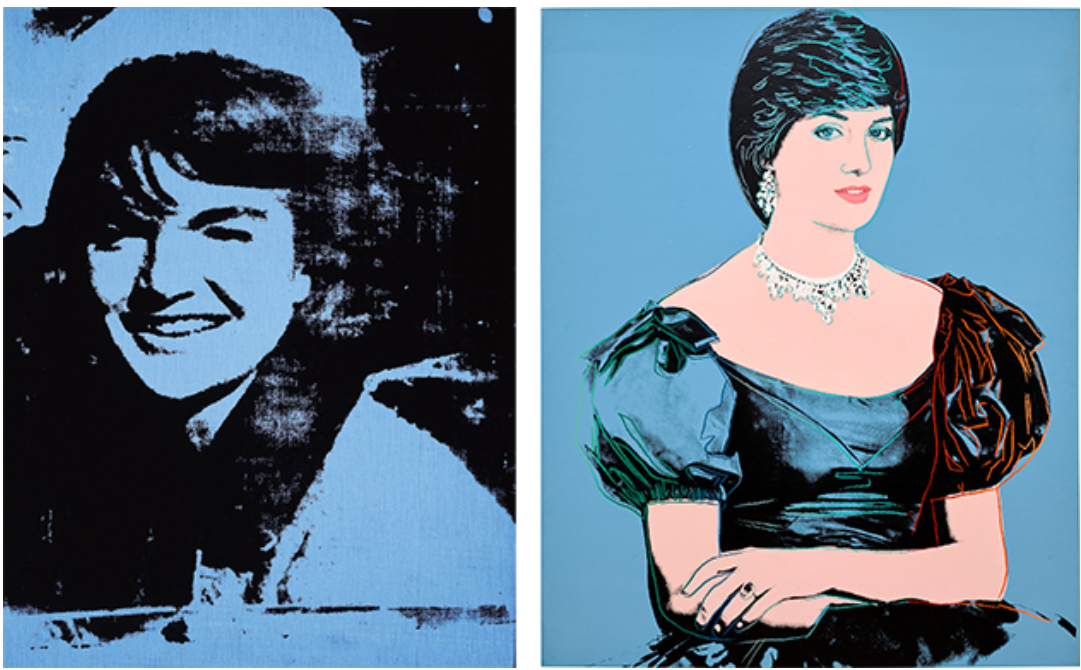
[Left] Andy Warhol, Jackie (Smiling), 1964, Museo Jumex, Mexico City. Artwork: © 2024 The Andy Warhol Foundation for the Visual Arts, Inc. / Licensed by DACS, London
[Right] The present work
More than any other figure in the Royal Family, Diana’s youth, grace, and beauty captured the hearts and minds of the public, marking her as undoubtably one of the most iconic and adored women of the late 20th century. As Warhol so perceptively anticipated decades before, the rise of media technologies and the cult of celebrity ensured that her image was widely circulated throughout the 1980s and 90s, making her universally recognizable and blurring the boundaries between public image and the more complex contradictions of private life. It is perhaps this tension that initially drew Warhol to Diana, speaking as it does so directly to his own, long-standing fascination with the tensions between beauty and tragedy, glamour, and the darker underside of celebrity. The engagement of Charles and Diana in 1981 generated enormous public interest, with the young Diana followed by journalists and photographers trying to build a picture of this softly spoken, warm, glamourous, and refreshingly open future member of the Royal Family. Instantly winning over the British public, Diana seemed to offer a new, more modern face of the Royal Family, and the courtship was played out like a fairy-tale in the press leading up to the wedding day, which was itself televised to over 750 million viewers worldwide. Arranging the finely dressed couple in front of a rich, antique hanging tapestry, Lord Snowdon’s official engagement portrait of the two reinforced these ideas, Charles the dashing prince in full naval regalia with his demure bride-to-be and assumed future Queen of England seated beside him, hands folded gently in her lap.
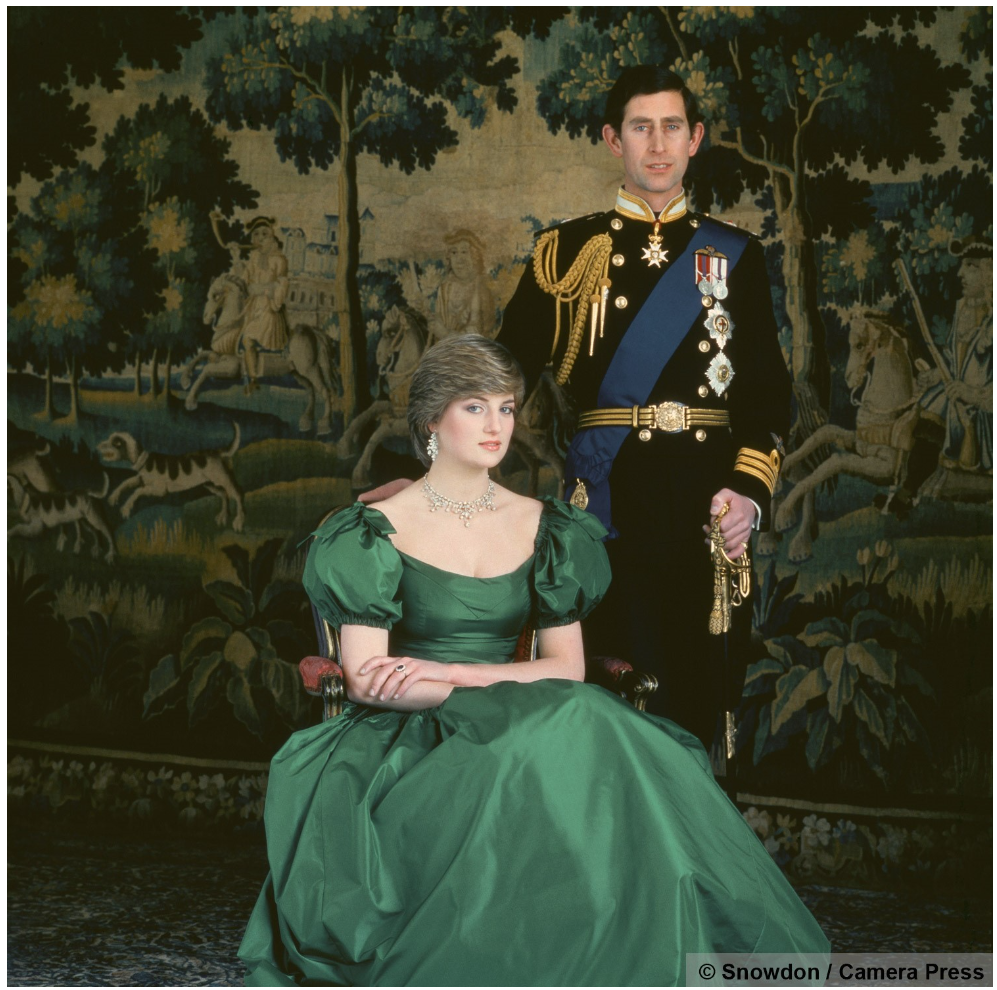
Lord Snowdon, Official Engagement portrait of Charles and Diana. Image: © Snowdon / Camera Press
Reproduced and distributed worldwide, the portrait officially announced the couple as future leading Royals, in what for Warhol must have had certain resonances with the circulation of publicity shots used by film studios in the promotion of their new releases and leading stars. Famously, the image selected by Warhol in his infamous series of Marilyn screen print paintings had been just that – a publicity photo taken used to promote her 1953 film Niagara. As with Snowdon’s source photograph here, in selecting this particular image of Marilyn, Warhol also transformed it, cropping the image to bring Marilyn’s face more closely into focus and turning it into one of the most immediately recognizable motifs today. Similarly, in Portrait of Princess Diana Warhol drastically crops the image, removing Charles completely so as to focus our attention more directly on Diana’s enigmatic expression and magnetic appeal. In an important distinction however, Warhol’s depictions of Marilyn and Jackie were always already tinged with tragedy, memento mori pieces that were created shortly after the shocking and untimely deaths of Monroe and President Kennedy that Warhol would retrospectively link to his somewhat bleaker portrait of American culture explored in his Death and Disaster series. As the years passed, the press focused increasingly on her loneliness and isolation in the later years of her marriage while continuing to emphasise the kindness and love that she showed her people. This crystallised the popular image of her, which is now forever shadowed by the tragic events that led to her shocking death in Paris in 1997, and the national outpouring of grief that followed. Like Marilyn, in Portrait of Princess Diana we now find the perfect confluence of celebrity, beauty, disaster, and mass media that so fascinated the artist, and are so deeply woven in his approach to the icon in the modern day.
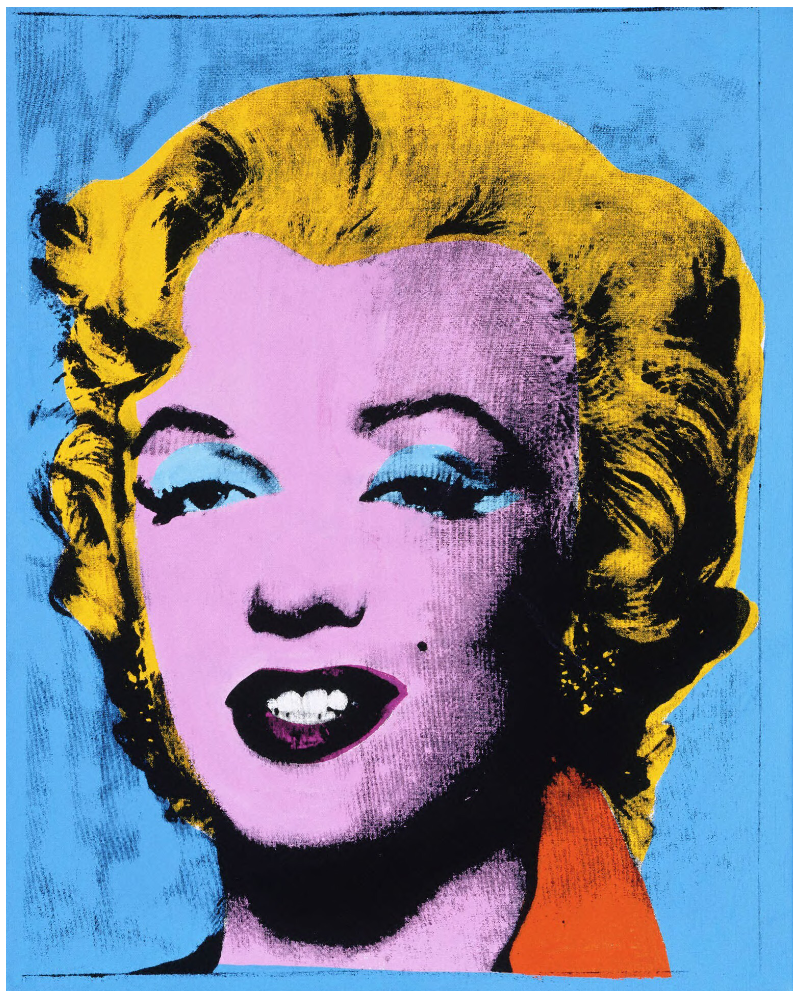
Andy Warhol, Blue Marilyn, 1962, Princeton University Art Museum, New Jersey. Image: Princeton University Art Museum. Gift of Alfred H. Barr Jr., Class of 1922, and Mrs. Barr, Artwork: © 2024 The Andy Warhol Foundation for the Visual Arts, Inc. / Licensed by DACS, London
Closely linked to his slightly later Reigning Queens series – which naturally included depictions of her mother-in-law, Queen Elizabeth II alongside other female monarchs of the day – Diana’s vitality and youthful spirit is brought to life in this portrait by the vibrant, animated lines added to her hair and details of her dress. One of only four Princess Diana works in this format, the present iteration in its dazzling blue is undoubtably the most powerful of the set. Echoing the striking tones of her famous engagement ring – subject to much attention in the press at the time, and more recently in the hugely successful television series, The Crown – the silkscreened composition’s bold contrasts and embellished details also draw on a long visual history of the robed Madonna that would certainly have resonated with Warhol, who was raised a Byzantine Catholic by his Eastern European parents. Like these icons of the Middle Ages, in Portrait of Princess Diana, Warhol creates a universal and timeless symbol of grace, love, and forbearance – a true icon for our times.
With the recent passing of Queen Elizabeth and ascension of Charles and Camilla to the throne, the pathos of Portrait of Princess Diana seems especially redolent, the extent to which she remains such a powerful figure in our collective imagination underscored by the various portrayals of her in film and television in recent years. There is something inherently Warholian in the desire to recover the essence and story of Diana through these performances as the enthusiastic reaction to The Crown testifies to, immortalizing her once again on our screens and in our hearts.
Keith Haring, 1986
KEITH HARING AND JUAN DUBOSE, 1983
Sotheby’s New-York: 1 October 2020
Estimated: USD 200,000 – 250,000
USD 504,000
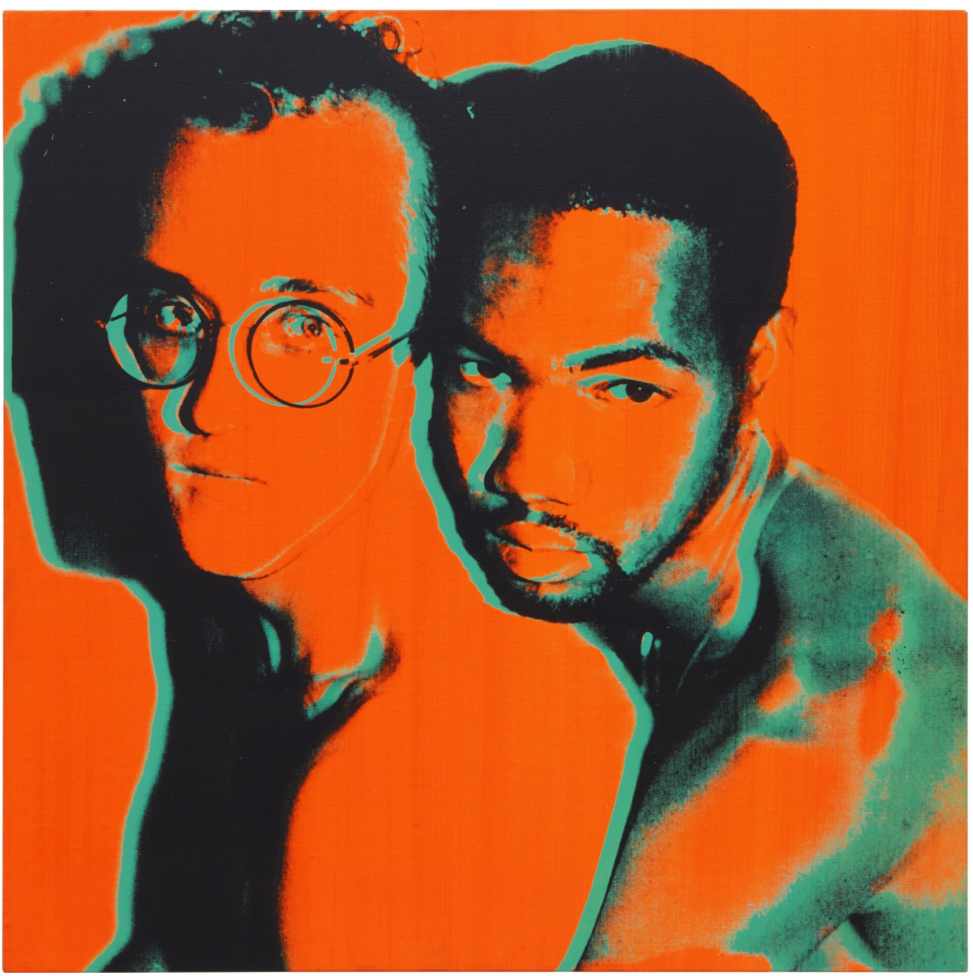
ANDY WARHOL (1928 – 1987)
KEITH HARING AND JUAN DUBOSE, 1983
Synthetic polymer silkscreen on canvas
40×40 inches (101.6 x 101.6 cm)
Signed and dated 83 on the overlap
“Before I knew [Warhol], he had been an image to me. He was totally unapproachable. I met him finally through Christopher Makos, who brought me to the Factory. At first Andy was very distant. It was difficult for him to be comfortable with people if he didn’t know them. Then he came to another exhibition at the Fun Gallery, which was soon after the show at Shafrazi. He was more friendly. We started talking, going out. We traded a lot of works at that time.”
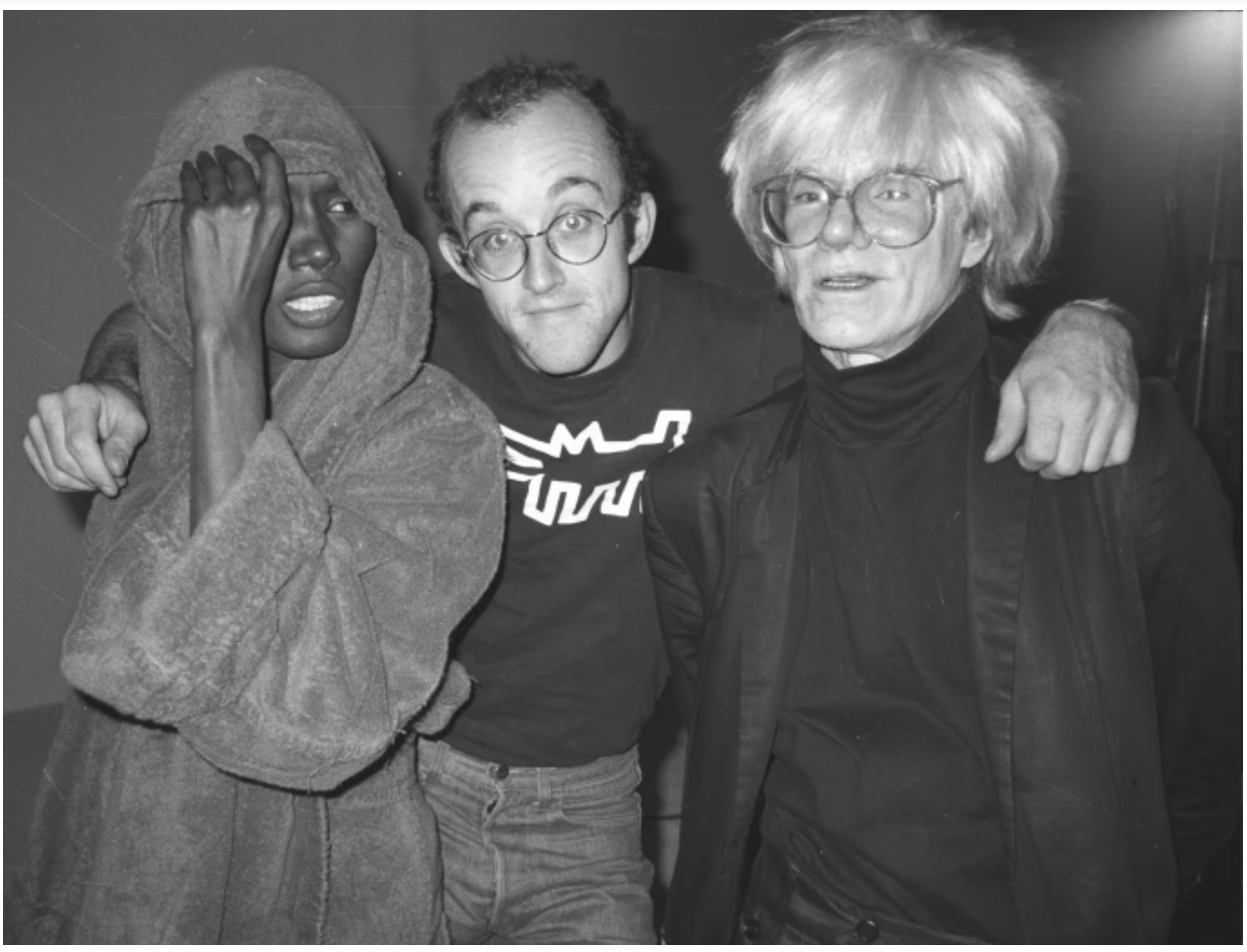
Grace Jones, Keith Haring and Andy Warhol, Filming for “I’m Not Perfect” music video, 1986, Photo: Tseng Kwong Chi.
© Muna Tseng Dance Projects, Inc.
Warhol’s depiction of Haring and his lover Juan Dubose captures a definitive moment in the history of queer art. Reaching the end of his career, Warhol depicts a proud same-sex interracial couple, which would have been unimaginable at the start of his career as a commercial illustrator in the 1950s. Clearly, Warhol cares for the couple and selects an image that shows the two embracing topless, leaving little question as to their relationship.
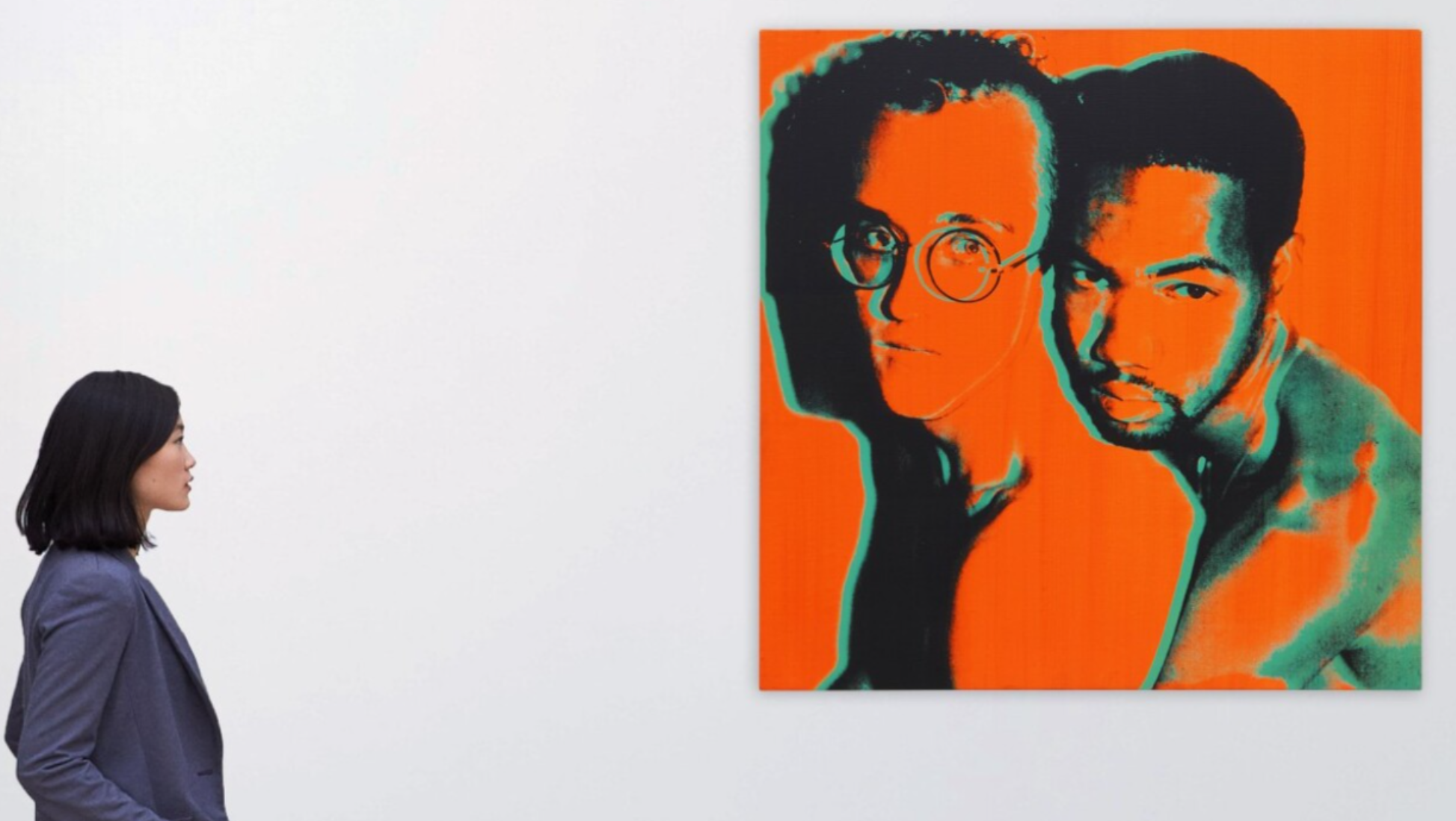
While Warhol revels in the intimacy shared by his two sitters, the 25-year-old Haring understood that Warhol’s decision to paint him cemented his status as a celebrity. The rich contrast of the red orange and green capture the energetic exchange between Haring, Dubose and Warhol.
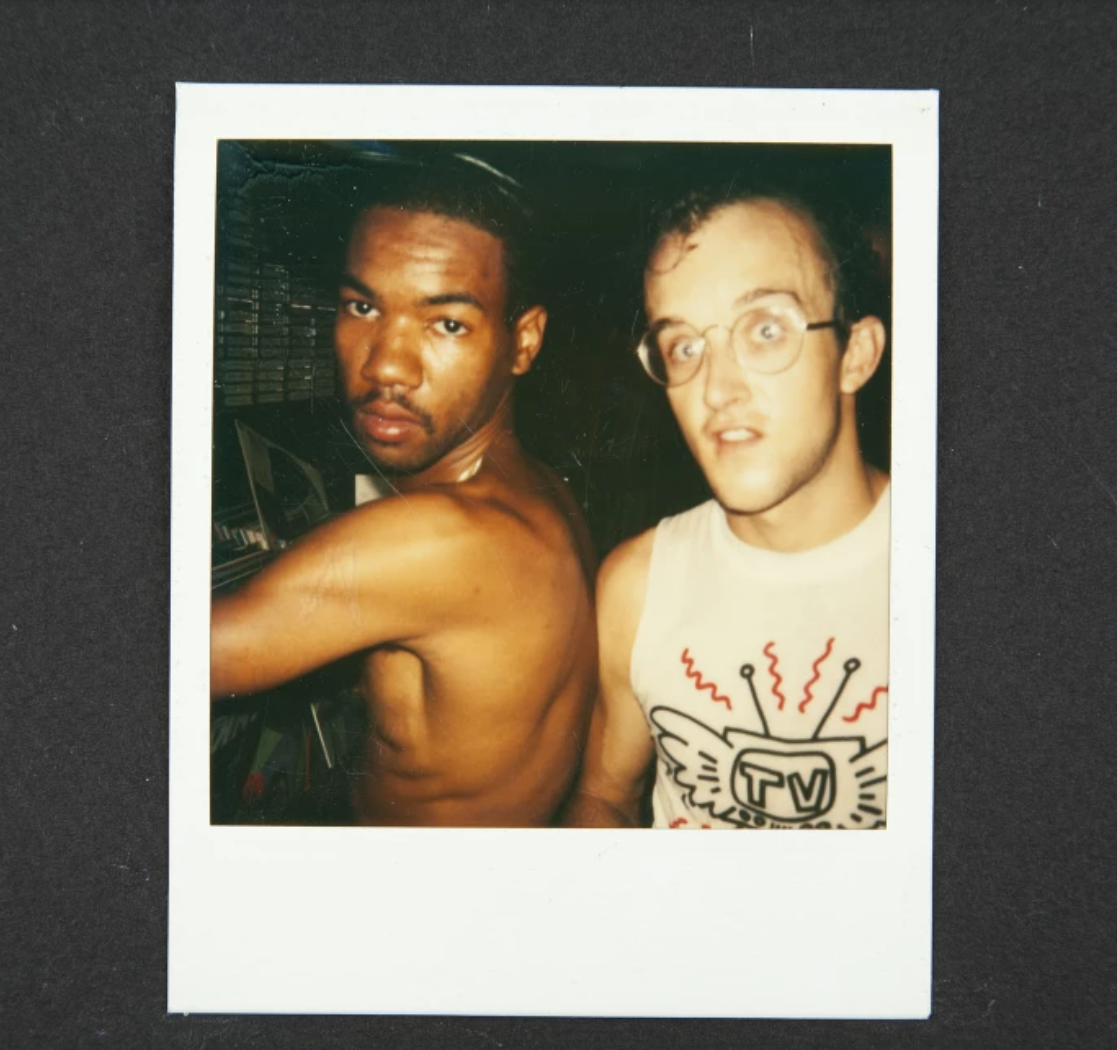
Keith Haring and Juan Dubose, 1983, © Keith Haring Foundation. Polaroids, The Keith Haring Foundation Archives
The portrait was extremely important to Keith and was featured in places of pride in both his Broome Street and later LaGuardia Place apartments in New York, as seen below.
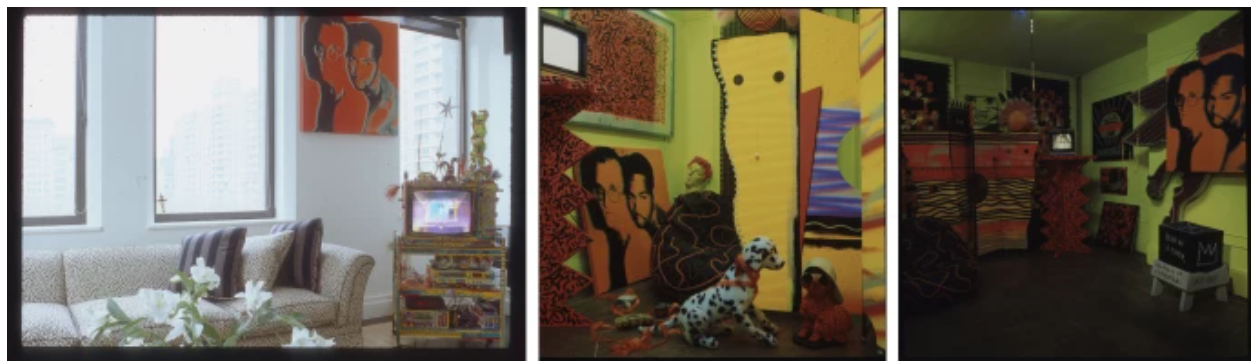
(Left) Keith Haring’s Laguardia Apartment, 1989, © Keith Haring Foundation. Polaroids, The Keith Haring Foundation Archives. (center) Keith Haring’s Broome Street Apartment, 1983- 1984, Photo: Tseng Kwong Chi. © Muna Tseng Dance Projects, Inc.
(Right) Keith Haring’s Broome Street Apartment, 1983- 1984, Photo: Tseng Kwong Chi. © Muna Tseng Dance Projects, Inc. Backstage Library Works for Keith
Just as Warhol depicts Haring in this portrait, Haring devised the character “Andy Mouse” for a suite of prints, which fused Warhol and Mickey Mouse, a character which both artists saw as a strong and complex symbol of American culture.‘It’s treating him [Warhol] like he was part of American culture, like Mickey Mouse was. That he himself had become a symbol…’ The artists collaborated on a poster for the Montreux Jazz Festival in 1986, a year before Warhol’s death. Aside from these artistic exchanges, Warhol’s Pop practice provided a strong antecedent for Haring who was driven to create work for as many people as possible. This drive would culminate in the opening of the Pop Shop in 1986, where affordable merchandise with Haring figures were sold.
Aretha Franklin, 1986
Aretha Franklin, 1986
Sotheby’s New-York: 12 March 2021
Estimated: USD 900,000 – 1,200,000
USD 1,048,500
Aretha Franklin | Contemporary Curated | 2021 | Sotheby’s (sothebys.com)
ANDY WARHOL
Aretha Franklin, 1986
Acrylic and silkscreen ink on canvas
40×40 inches (101.6 x 101.6 cm)
Stamped twice with the Estate of Andy Warhol stamp
Stamped with the Andy Warhol Foundation for the Visual Arts stamp
Numbered VF P050.008 on the overlap
Numbered ‘P050.008’ on the stretcher
Aretha Franklin rose to prominence in the late 1960s, at a time when Warhol was already thoroughly integrated into the famous circles of New York City. She became known as the “Queen of Soul,” solidifying her role as a leading cultural figure, and in 1986, Warhol created the album sleeve for Franklin’s vinyl record, Aretha; the present work was executed in the same year, just one year prior to Warhol’s death in 1987.
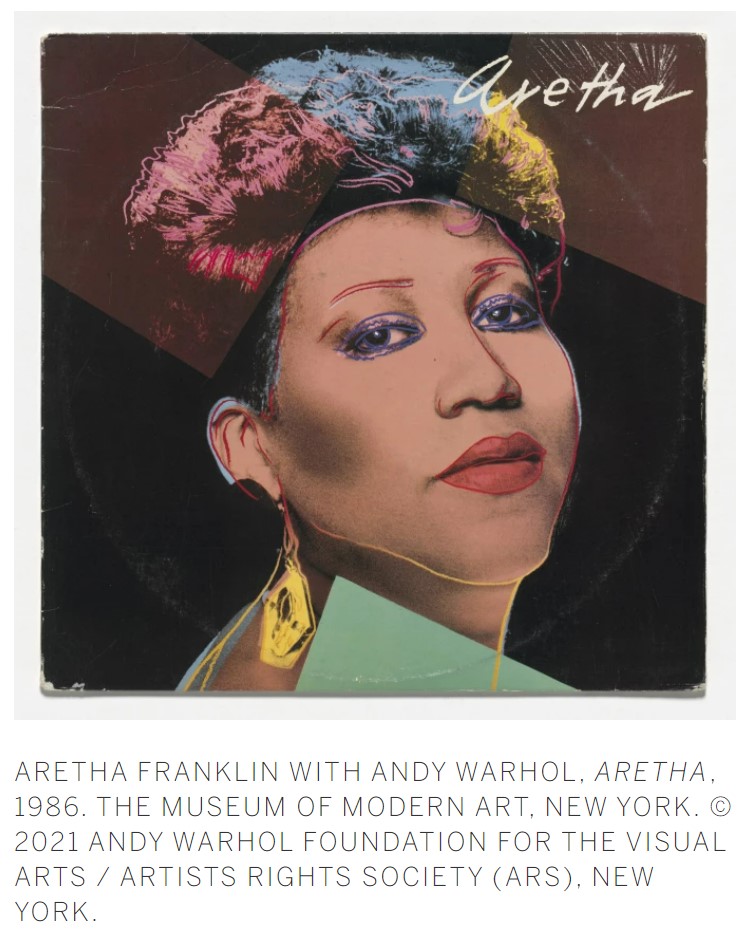
The present work portrays Franklin nobly, swathed in serene tones of blue and outlined in bright pinks and yellow. There is an evident sense of Warhol’s understanding of his celebrity subjects, yet not revealing much about them; for him, the paintings were more about capturing their fame and their likeness. Providing commentary upon his attraction to the ability of celebrity to transcend time, through his paintings, “everyone was a star, not only for fifteen minutes, but, in this incarnation caught permanently on canvas, ‘forever’” (Henry Geldzahler, ‘Andy Warhol: Virginal Voyeur’, in: Exh Cat., Sydney, Museum of Contemporary Art, Andy Warhol: Portraits, 1993, p. 26).
Aretha Franklin, circa 1986
Estimated: USD 2,000,000 – 3,000,000
WITHDRAWN

ANDY WARHOL (1928-1987)
Aretha Franklin, circa 1986
Acrylic and silkscreen ink on canvas
40×40 inches (101.6 x 101.6 cm)
Stamped with the Estate of Andy Warhol and the Andy Warhol Foundation for the Visual Arts Inc. stamps
Numbered ‘PO50.009’ (on the overlap)
multi-faceted portrait featuring the artist’s iconic silkscreen technique accentuated with colorful line drawings and an electric Pop palette, Aretha Franklin is an innovative and fitting tribute to the singer known as the Queen of Soul. This intimate yet grand portrait depicts Aretha as proud and beautiful, a musician at the top of her game whose femininity was an essential element of her power. One of the last paintings that Warhol completed before his death the following year, Aretha Franklin belongs to the small group of paintings that artist made in conjunction with her pop-crossover album Aretha, for which he designed the cover.

Placing the artist against a sultry blue backdrop, and shading half of her face in a wash of transparent blue, Warhol accentuates Aretha’s identity as a soulful singer of “the Blues.” He created a silkscreen of the singer’s face, which is turned slightly toward the viewer with a proud and knowing gaze. Her chin is upturned to confront the viewer head-on. A single, diamond-shaped earring dangles from her ear, which Warhol has rendered pale pink. The bright yellow silhouette around her hair evokes a regal appearance, with the yellow acting as a crown or halo. A thin, vertical strip of color along the extreme right edge acts like a shaft of light, which seems to bathe the singer in a wonderful, soft glow. This was Warhol’s clever use of the portrait’s underlayer, which adds yet another dynamic element to the already fascinating composition.

Although he burst onto the art scene in the 1960s, Warhol’s work of the 1980s is widely regarded to be some of his most innovative and thought-provoking work. These paintings include the Rorschachs, Last Supper, and Fright Wig self-portraits. A growing awareness of the work of younger artists also spurred the artist on to work harder and better, as his friendship with the legendary artist Jean-Michel Basquiat attest. Aretha Franklin therefore demonstrates this renewed commitment to his art, at a time when he would paint some of his very last works.

Left: Workshop of Thutmosis, Model Bust of Nefertiti, circa 1350 BCE. Ägyptisches Museum und Papyrussammlung / Staatliche Museen, Berlin. Photo: bpk Bildagentur / Ägyptisches Museum und Papyrussammlung/Staatliche Museen / Sandra Steiß / Art Resource, NY.
Right: Johannes Vermeer, Girl with the Pearl Earing, 1665. Mauritshuis, The Hague. Photo: Scala / Art Resource, New York.
In Aretha Franklin, we encounter a woman whose confidence and fame is not to be outmatched by even Warhol himself. As befitting her stature as the Queen of Soul, he portrays her with simplicity, elegance and grace. Despite its surface flatness, the portrait is a rich tapestry of artistic influences. Her regal profile view and brightly-delineated eyes and lips recall the ancient Egyptian busts of Queen Nefertiti, and the diamond-shaped earring she wears seems to be stylized in the manner of Johannes Vermeer’s Girl with a Pearl Earring. Over a career spanning six decades, Aretha Franklin went from singing gospel in her father’s Detroit church to the Rock and Roll Hall of Fame, where—in 1987—she was the first female performer to be inducted. She sold over seventy-five million records worldwide, recording some of her greatest hits, such as “Respect” and Carole King’s “(You Make Me Feel Like) A Natural Woman” at the height of both the Civil Rights Era and the feminist movement. By the time Warhol painted her portrait in 1986, Aretha had already been photographed by some of the greatest artists of the postwar era, including Lee Friedlander and Richard Avedon.

Aretha Franklin, 1971. Photo: Anthony Barboza / Getty Images.
Warhol famously designed some of the most iconic and well-known album covers of all time, including the Velvet Underground’s debut album, “Velvet Underground & Nico,” which featured a bright yellow banana on a white background. Released in March of 1967, early copies of the album had a sticker that cheekily revealed a flesh-colored banana underneath. Warhol also did the album design for the Rolling Stones’ Sticky Fingers album in 1971 and Silk Electric for Diana Ross in 1982. The present painting of Aretha relates to the album cover that Warhol created for her self-titled album, Aretha, that debuted in October of 1986.

Album cover, Aretha Franklin with Andy Warhol, Aretha, 1986. Museum of Modern Art, New York. Artwork: © 2024 The Andy Warhol Foundation for the Visual Arts, Inc. / Licensed by Artists Rights Society (ARS). Photo: © The Museum of Modern Art / Licensed by SCALA / Art Resource, NY.
Warhol’s Aretha Franklin is an exceptional portrait that has traveled the globe, having featured in many exhibitions of the artist’s work including a 1993 exhibition of Warhol’s portraits in Sydney, Australia, and his big Japanese retrospective in 2001. Most recently, Aretha Franklin appeared in “Warhol Women” at New York’s Lévy-Gorvy Gallery, where it was illustrated in a lavish catalogue, in which the authors declared: “Warhol believed in women, and he knew how to make them beautiful and strong. […] The women who captured the artist’s imagination were glamorous, vital, extraordinary–he had a thirst for life, and surrounded himself with women who felt the same way. His silkscreen portraits shimmer with their vivacity, their sophistication, their sheer presence–they’re alive even today” (Warhol Women, exh. cat., Lévy-Gorvy Gallery, New York, 2019, pp. 7-8).
John Lennon, 1985-86
“Someone came in and said John Lennon was shot and no-one could believe it, so someone called the Daily News, and they said it was true. It was scary; it was all anyone could talk about… The one who killed him was a frustrated artist. They brought up the Dali poster he had on his wall. They always interview the janitors and the old schoolteachers and things. The kid said the devil made him do it. And John was so rich, they say he left a $235million estate. And the ‘vigil’ is still going on at the Dakota. It looked strange, I don’t know what those people think their doing’.”
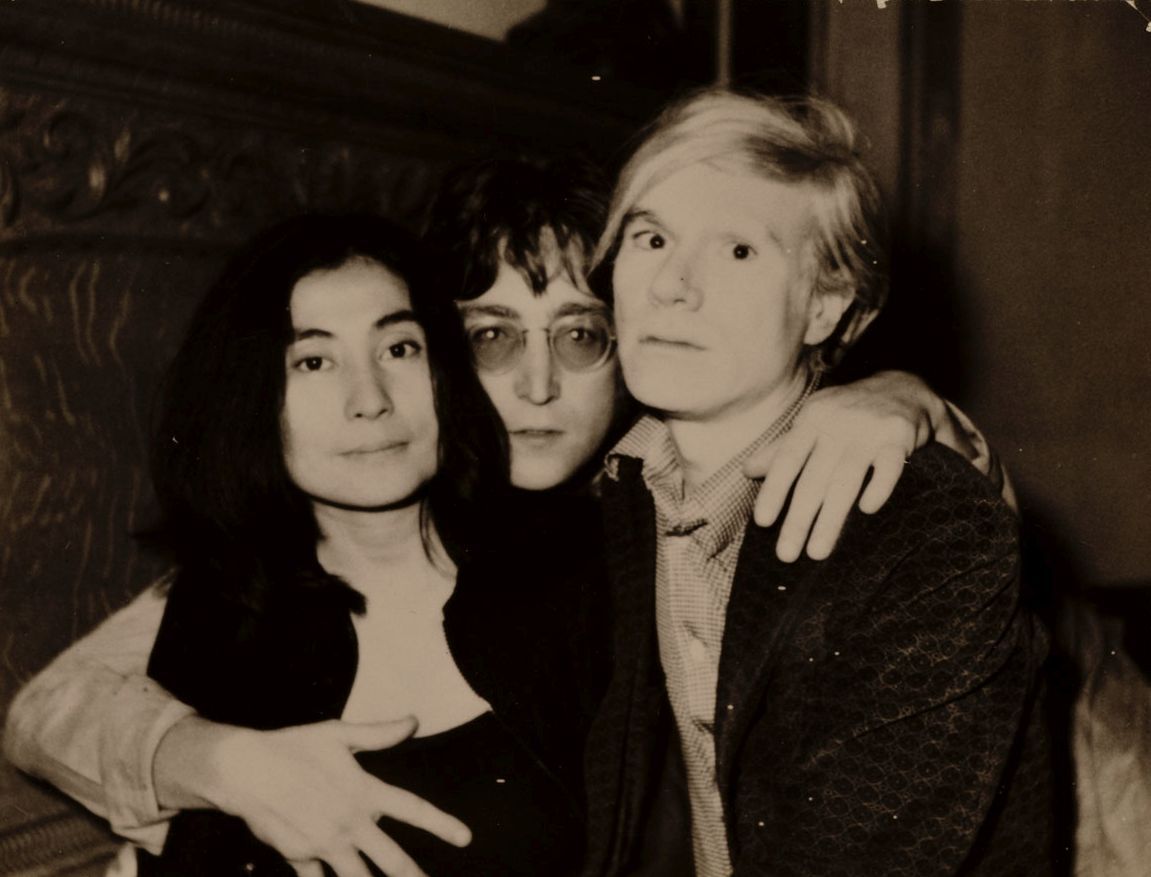
It was in June 1971 that John and Yoko first explored New York together, meeting many friends and artists living there who would show them around their favorite parts of the city. Bob Dylan even persuaded John and Yoko to buy bicycles, telling them that it was the best way to get around the Village, and Warhol spent much time escorting the famous couple around his favorite antique shops and art galleries. The warmth of their welcome to the city had a lasting effect on Lennon, persuading him to settle there in October 1971 while telling the British press, “In the States we’re treated like artists, which we are! But here in Britain, it’s like 1940…it’s really the sticks, you know. While in New York there’s these fantastic twenty or thirty artists who all understand what I’m doing and have the same kind of mind as me. It’s just like heaven after being here” (J. Lennon, quoted in R. Coleman, Lennon: the Definitive Biography, London, 2000, p. 583).
Warhol, Lennon, and Ono became friends and were often spotted at various social events around the city. Warhol was particularly affected by the events of December 8, 1980 when Lennon was killed by Mark Chapman outside his apartment in the Dakota building. Warhol was attending a benefit for the Costume Institute when news of the shooting broke. He recorded the events of the night in his diaries, noting “Someone came in and said John Lennon was shot and noone could believe it, so someone called the Daily News, and they said it was true. It was scary; it was all anyone could talk about.” Two days later he wrote, “The one who killed him was a frustrated artist. They brought up the Dalí poster he had on his wall. They always interview the janitors and the old schoolteachers and things. The kid said the devil made him do it. And John was so rich, they say he left a $235 million estate. And the “vigil” is still going on at the Dakota. It looked strange, I don’t know what those people think they’re doing” (A. Warhol, diary entry, December 10, 1980, Pat Hackett, (ed.) The Andy Warhol Diaries, New York 1989, pp. 347-348).
It was partly in the shadow of Lennon’s death that, in late 1985, Warhol was asked to produce a portrait of John Lennon for the cover of the then forthcoming Lennon album, Menlove Ave. This was a posthumous album released under the supervision of Lennon’s widow Yoko, the title of the album referring to the name of the street in Liverpool where Lennon had grown up. Warhol produced two paintings of Lennon that were used for the front and back covers of this album. These two paintings are now owned by Yoko, but at the same time Warhol also produced this 40×40 inch portrait of Lennon in the style of some of his recent iconic portraits, such as those of Lenin.
Sean Lennon, 1985-1986
Christie’s London: 25 March 2021
Estimated: GBP 150,000 – 200,000
GBP 200,000 / USD 274,386
ANDY WARHOL (1928-1987), Sean Lennon | Christie’s (christies.com)
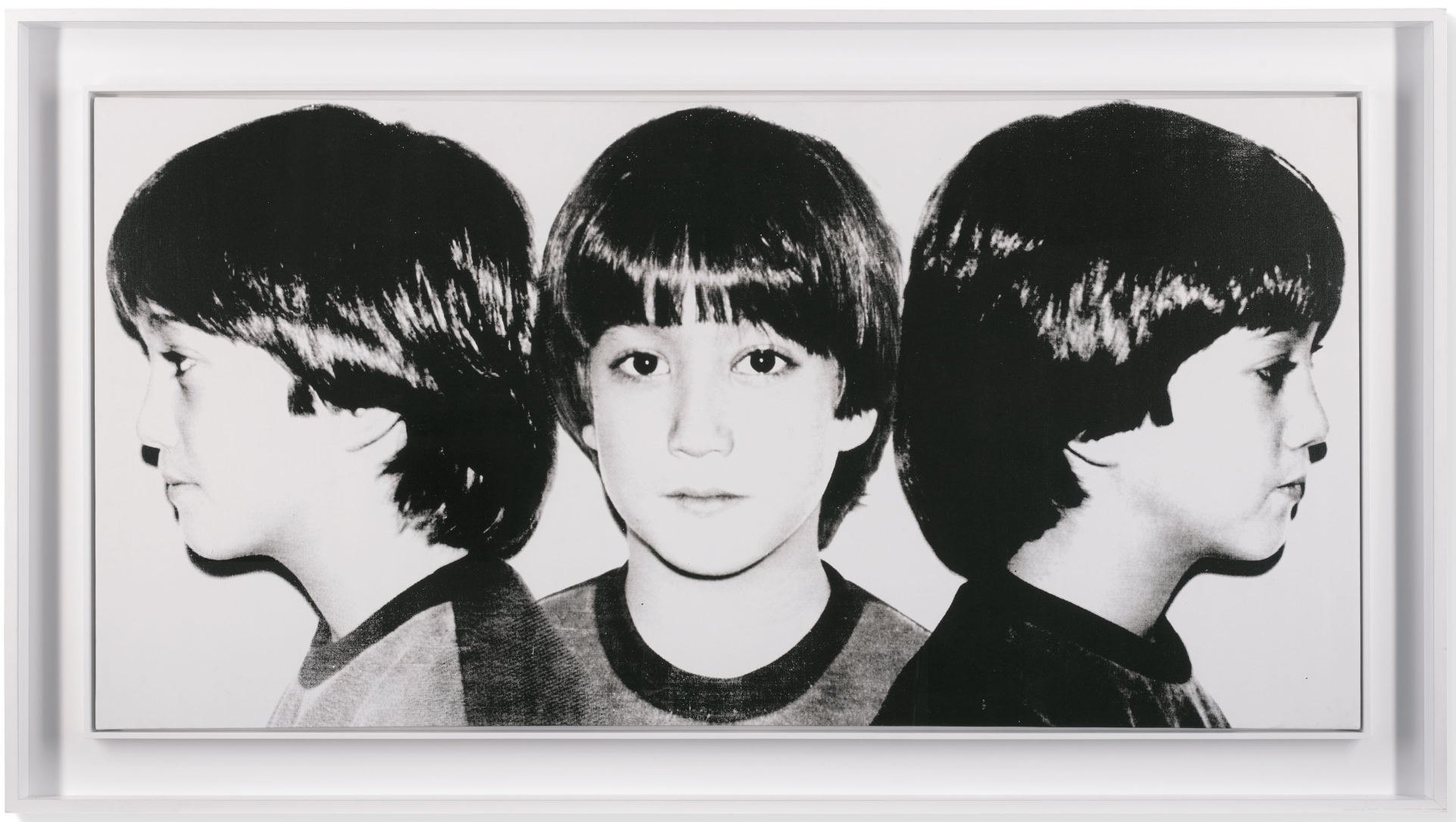
ANDY WARHOL (1928-1987)
Sean Lennon, 1985-1986
Synthetic polymer paint and silkscreen ink on canvas
40 1/8 x 80 inches (102 x 203.2 cm)
Stamped three times with the Andy Warhol authentication board, Inc. and the estate of Andy Warhol stamps
Numbered three times ‘VF P050.846’ (on the overlap and on the stretcher)
A monumental triple vision spanning two meters in width, the present work is Andy Warhol’s tribute to Sean Lennon: the son of his friends John Lennon and Yoko Ono. Painted between 1985 and 1986, it captures him at the age of ten, five years after his father’s untimely death. During his childhood, he and Warhol formed a close bond, with Sean later describing the artist as something of a paternal figure. Poignantly, the work coincides with the Warhol’s iconic depiction of John, painted to celebrate the release of his posthumous album Menlove Ave. Where the latter is rendered in glowing neon tones, however, the present work captures Sean in candid black and white, offering a raw, innocent portrait of youth. Though raised among glittering celebrity circles, here he appears like any other ten-year-old boy – save for the hint of his father’s likeness that flickers behind his eyes. It is a masterful example of Warhol’s ability to capture his subjects at their most human, revealing untold depths through the most economical of means.
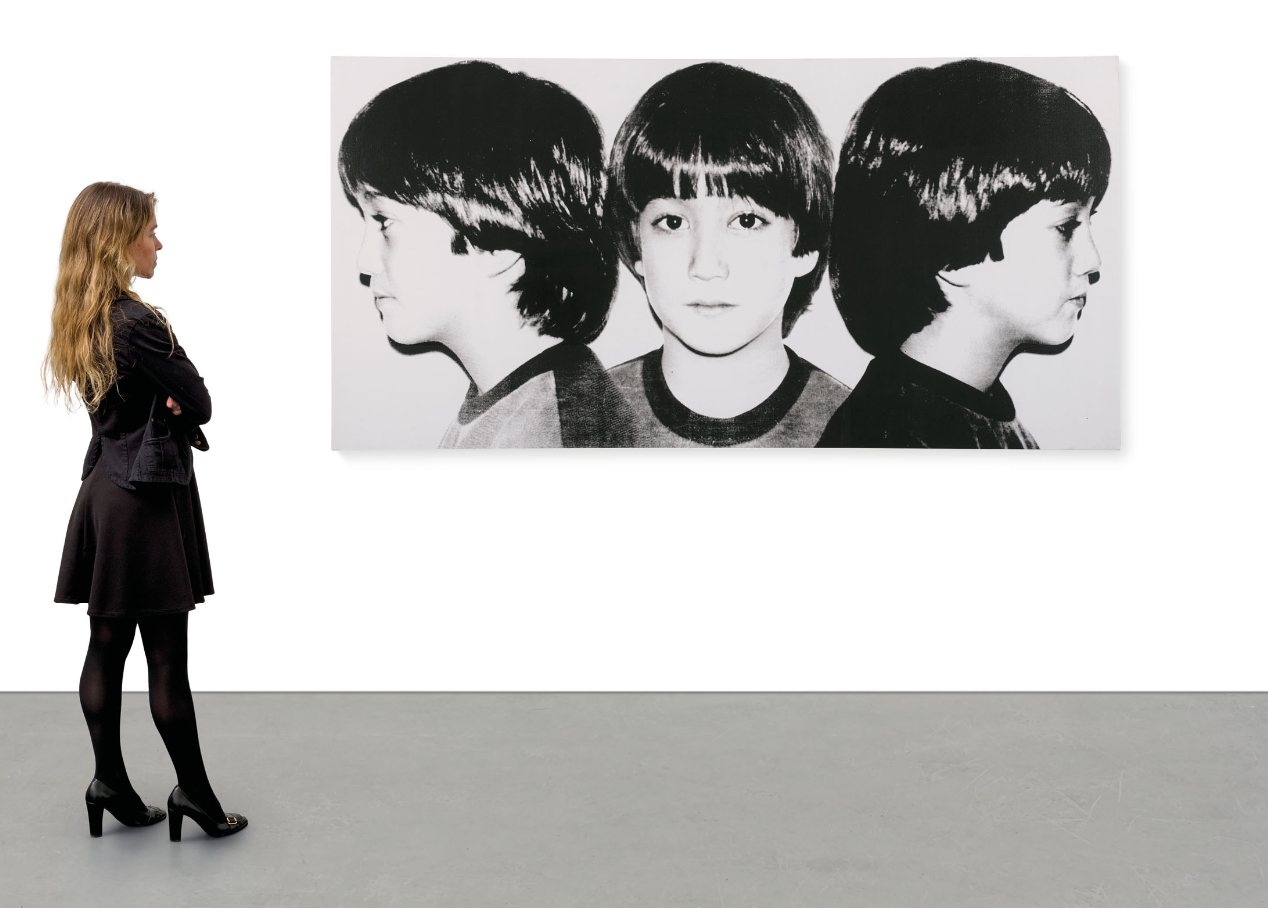
Warhol knew John and Yoko from the New York party circuit, and the three became close friends – Yoko would later be one of the speakers at the artist’s funeral in 1987. He first met Sean at a black-tie dinner at the family’s apartment, where – as he wrote in his diary – the child had taken it upon himself to entertain his mother’s guests.
‘Little Sean Lennon fell in love with me, just madly. ‘He said, “Why is your hair like that?” I said, “Punk.” He said, “What is your name?” I said, “Adam.” Then I asked him to go and get a double champagne and when he came back with it said somebody had told him I was Andy Warhol, and he went around to everyone telling them, “Do you know who that is? Andy Warhol”’
(A. Warhol, quoted in P. Hackett (ed.), The Andy Warhol Diaries, New York 1989, p. 563)
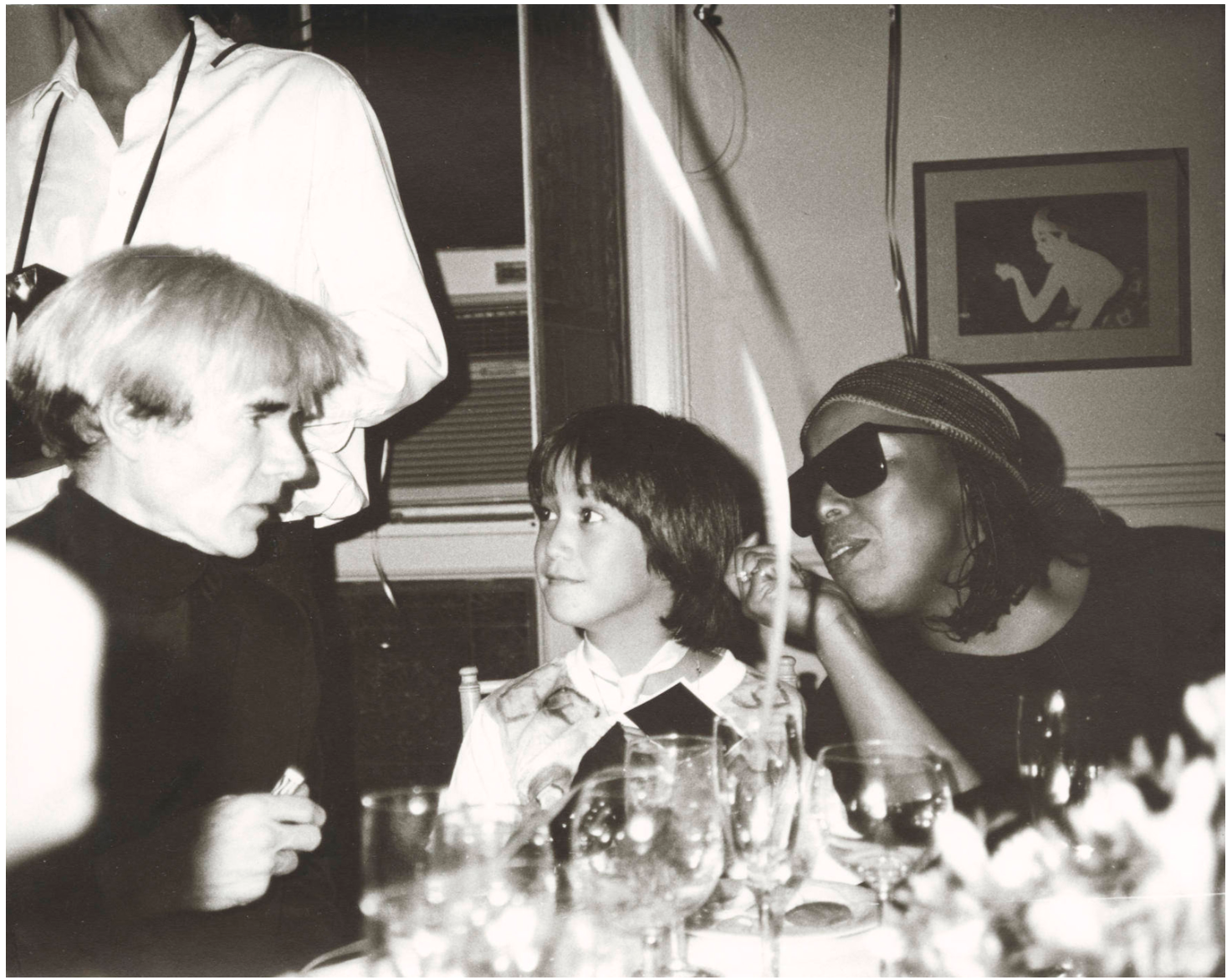
Andy Warhol and Sean Lennon
The two struck up a rapport: Sean recalls the somewhat bizarre gift of a taxidermied cat that Warhol gave him for his eighth birthday, and notes that the artist was particularly generous in encouraging his love of drawing. Perhaps Warhol identified in him something of a kindred spirit – he too, after all, had lost his father at a young age. Years later, Sean would return the tribute, penning a song in memory of the artist for the Andy Warhol Museum’s 2016 exhibition Letters to Warhol.
John Lennon, 1985-1986
Christie’s New-York: 12 May 2014
Estimated: USD 2,500,000 – 3,500,000
USD 2,853,000
Andy Warhol (1928-1987) (christies.com)
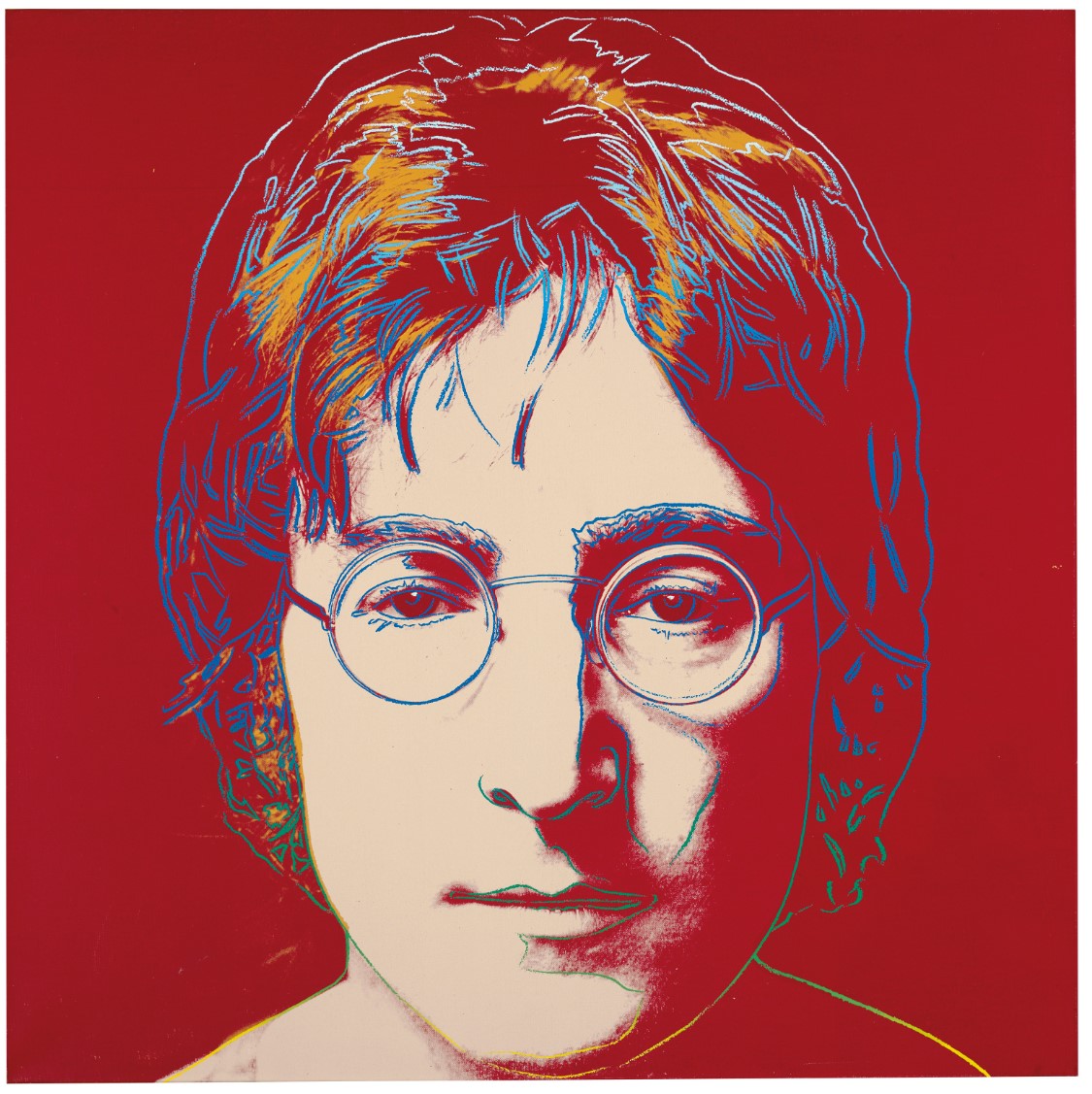
ANDY WARHOL
John Lennon, 1985-1986
Synthetic polymer and silkscreen inks on canvas
40×40 inches (101.9 x 101.9 cm)
Stamped with the Estate of Andy Warhol stamp (on the overlap)
Numbered ‘PO50.036’ (on the stretcher)
This striking red portrait of John Lennon was produced by Andy Warhol in late 1985, as part of a project to mark the release of Lennon’s posthumous album Menlove Ave., a selection of previously unreleased material from the ex-Beatles’ Rock ‘n’ Roll sessions recorded with legendary music producer Phil Spector. Unusually, Warhol decided not to use one of his own photographs of Lennon but instead chose to use an image of Lennon taken in 1971 by Iain Macmillan, the man who is perhaps most well-known for his iconic photograph of the Beatles on a pedestrian crossing near the Abbey Road studios in London, was which featured on the cover of their iconic 1969 album of the same name. From the surface of this vibrant red canvas, an evocative image of Lennon stares out directly at the viewer, engaging them in a hypnotically beguiling gaze. Lennon’s flawless features are framed by his slightly unkempt, tussled hair and circular, government-issued National Health Service glasses. This modest rendition is far removed from the celebrity status of one of the world’s most famous rock stars, and this charismatic rendition lets Lennon’s considerable charm shine through. Warhol’s painting lets some of Lennon’s charisma take center stage in the neon-colored highlights that reflect off the surface of his hair. Warhol began to introduce these “neon-highlights” into his work beginning in the 1980s, a step on from the painterly highlights that he added directly onto the surface with his fingers that began to make an appearance in this paintings from the mid-1970s onwards. In John Lennon (Red), they serve to help frame the subjects face as well as adding depth to what, for Warhol at least, had often been a flat form of art.
In painting this portrait of Lennon, Warhol evidently knew he was making more than a mere society portrait of a celebrity but portraying an iconic figure whose legendary status had recently been magnified by his untimely death. It was perhaps for this reason that Warhol did not use a more intimate or personal photograph of Lennon, but Macmillan’s iconic and somehow immediately familiar image–an image that seemed to convey both the essence and legend of Lennon.
John Lennon (Green), 1985-86
Christie’s London: 10 February 2015
Estimated: GBP 800,000 – 1,200,000
GBP 1,022,500
Andy Warhol (1928-1987) (christies.com)
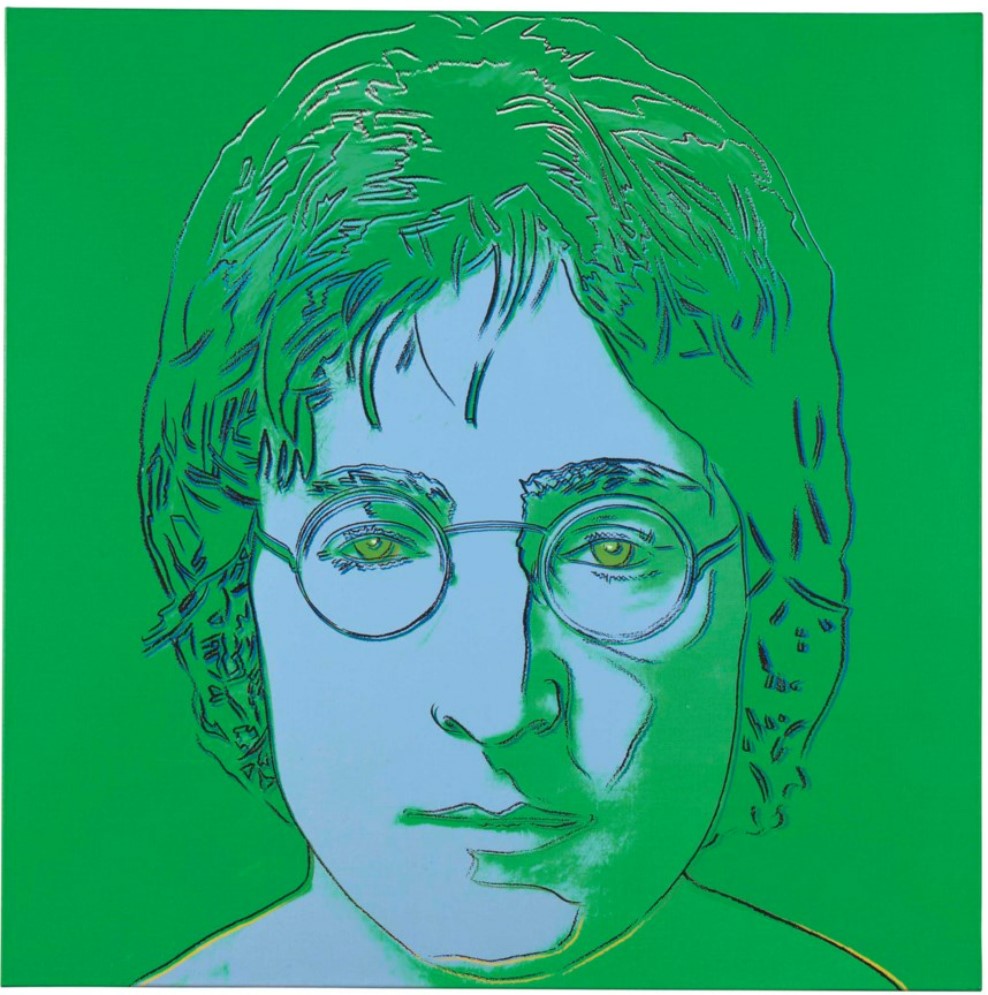
ANDY WARHOL
John Lennon (Green), 1985-86
Acrylic and silkscreen inks on canvas
40×40 inches (101.6 x 101.6 cm)
John Lennon, 1985-1986
Christie’s New-York: 13 May 2014
Estimated: USD 2,500,000 – 3,500,000
USD 2,853,000
Andy Warhol (1928-1987) , John Lennon | Christie’s
ANDY WARHOL
John Lennon, 1985-1986
Synthetic polymer and silkscreen inks on canvas
40×40 inches (101.9 x 101.9 cm)
This striking red portrait of John Lennon was produced by Andy Warhol in late 1985, as part of a project to mark the release of Lennon’s posthumous album Menlove Ave., a selection of previously unreleased material from the ex-Beatles’ Rock ‘n’ Roll sessions recorded with legendary music producer Phil Spector. Unusually, Warhol decided not to use one of his own photographs of Lennon but instead chose to use an image of Lennon taken in 1971 by Iain Macmillan, the man who is perhaps most well-known for his iconic photograph of the Beatles on a pedestrian crossing near the Abbey Road studios in London, was which featured on the cover of their iconic 1969 album of the same name. From the surface of this vibrant red canvas, an evocative image of Lennon stares out directly at the viewer, engaging them in a hypnotically beguiling gaze. Lennon’s flawless features are framed by his slightly unkempt, tussled hair and circular, government-issued National Health Service glasses. This modest rendition is far removed from the celebrity status of one of the world’s most famous rock stars, and this charismatic rendition lets Lennon’s considerable charm shine through. Warhol’s painting lets some of Lennon’s charisma take center stage in the neon-colored highlights that reflect off the surface of his hair. Warhol began to introduce these “neon-highlights” into his work beginning in the 1980s, a step on from the painterly highlights that he added directly onto the surface with his fingers that began to make an appearance in this paintings from the mid-1970s onwards. In John Lennon (Red), they serve to help frame the subjects face as well as adding depth to what, for Warhol at least, had often been a flat form of art.
John Lennon, 1985-86
Christie’s London: 19 June 2007
GBP 1,200,000 – 1,800,000
GBP 1,367,000
Andy Warhol (1928-1987) , John Lennon | Christie’s
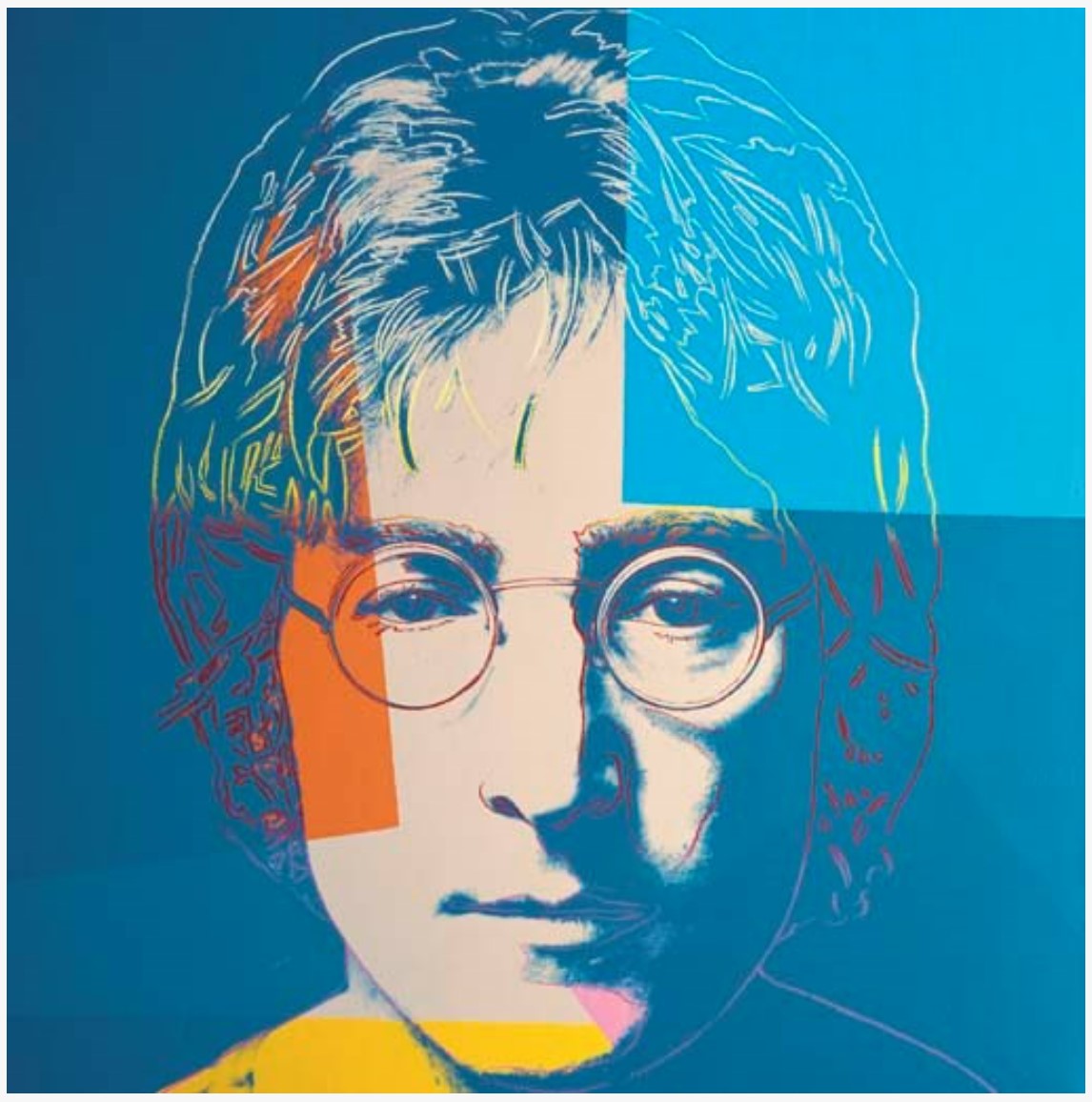
ANDY WARHOL
John Lennon, 1985-86
Synthetic polymer paint and silkscreen inks on canvas
40 x 40.1 inches (101.6 x 101.9 cm)
In late 1985 Warhol was asked to produce a portrait of John Lennon for the cover of the then forthcoming Lennon album Menlove Avenue. This was a posthumous album of outtakes from Lennon’s Rock’n’Roll sessions with Phil Spector in the 1970s. Released under the supervision of Lennon’s widow Yoko, the title of the album referred to the name of the street in Liverpool where Lennon had grown up. Warhol produced two paintings of Lennon that were used for the front and back covers of this album. These two paintings are now owned by Yoko, but at the same time Warhol also produced this 40 x 40inch portrait of Lennon layered with colored rectangles in the style of some of his recent iconic portraits such as those of Lenin (Vladimir Ilyich Ulyanov). With his unerring eye for imagery, Warhol, typically, chose one of the most iconic images of Lennon for his painting of the legendary musician and ex-Beatle, Iain Macmillan’s photograph taken of the singer in 1971. This photograph, which remains one of the most frequently used images of Lennon depicts the singer as the working-class hero/artist staring openly and directly at the viewer through his trademark National Health glasses. It is an image that mirrors the directness and nakedness of Lennon’s standpoint at this time, between the Plastic Ono Band and Imagine albums. This was also the period when Lennon first moved to New York and when he and Yoko first spent time with Warhol and became friends.
Dolly Parton, 1985
Dolly Parton, 1985
Sotheby’s New-York: 10 November 2010
Estimated: USD 500,000 – 700,000
USD 746,500
(#180) Andy Warhol (sothebys.com)
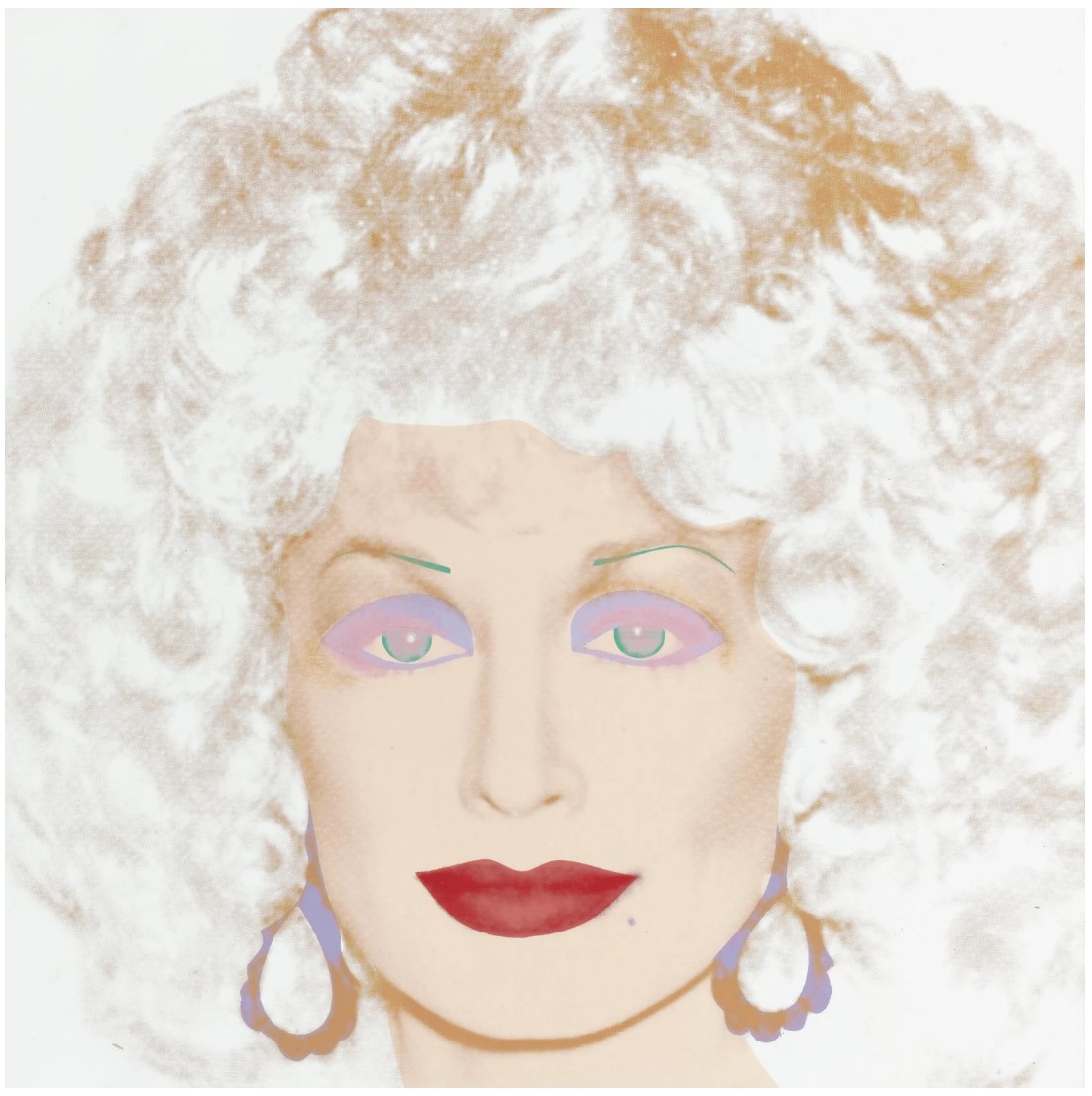 ANDY WARHOL
Dolly Parton, 1985
Synthetic polymer paint and silkscreen ink on canvas
42×42 inches (106.7 x 106.7 cm)
Signed and dated 85 on the overlap
Stamped by the Estate of Andy Warhol and the Andy Warhol Foundation for the Visual Arts, Inc. Numbered twice PO 50.180 on the overlap
Light-years away from soup cans and Brillo boxes, post-1960’s Warhol was an ode to big names and bright lights; a celebration of all the artifices of invention, re-invention and make-believe. With her hourglass figure, red lips and big blonde hair, Dolly Parton is the heart of all that glitters. Always a vision of glamour, no matter her age, the Queen of Country proved to be Warhol’s perfect sitter.
As Warhol progressed through the 70’s into the 80’s, he left behind the faded newsprint portraits of his earlier years, turning the genre instead to that, “imaginary light that makes everyone look good.” (Carter Ratcliffe in Exh. Cat., New York, Tony Shafrazi Gallery, Andy Warhol Portraits, 2005, p. 20) Dolly, never once caught on camera without a full face of makeup, seemed to live her life in this fantasy world. Warhol was very processorial when it came to his commissioned portraits. He would hire a stylist to assist in making his sitter look as glamourous as possible and then would take about 100 different polaroid snapshots, letting the client choose the one they liked best. A tribute to self-invention, these works were not meant as matter of fact portrayals, but rather as utopian images – images of selves re-imagined with heightened brilliance, charm and glitz.
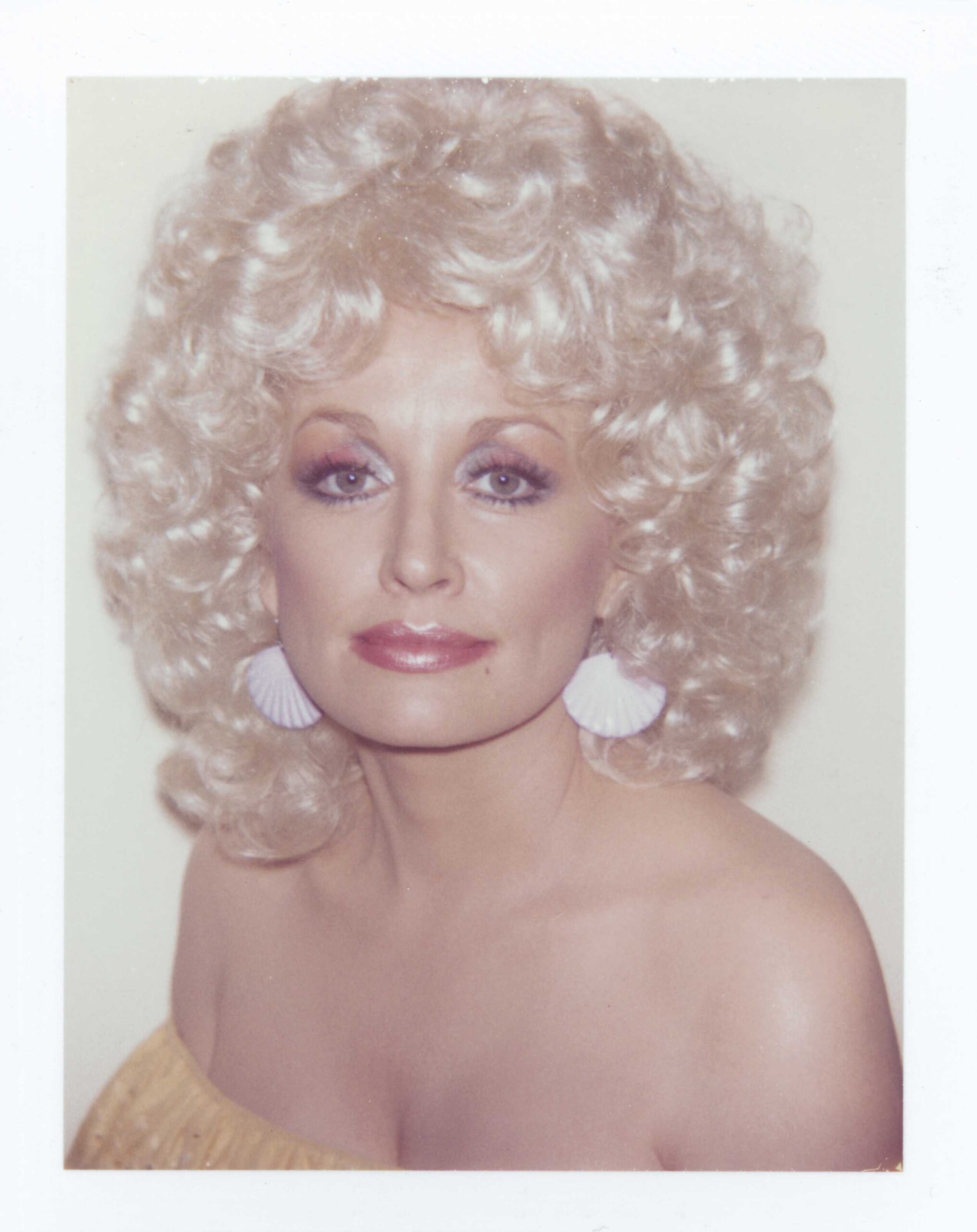
Dolly Parton, 1985 is one of Warhol’s great masterpieces of the 1980’s for it is the epitomy of this ethos. Dolly is depicted as almost angelic with her pouty red lips and halo of cotton-candied hair. Staring into the camera fearlessly with her green eyes and purple shadow she seems to remind us that life is a stage and on it we can be anything or anybody we want to be.
Dolly Parton, 1985
Sotheby’s New-York: 13 May 2010
Estimated: USD 400,000 – 600,000
USD 914,500
(#187) Andy Warhol (sothebys.com)
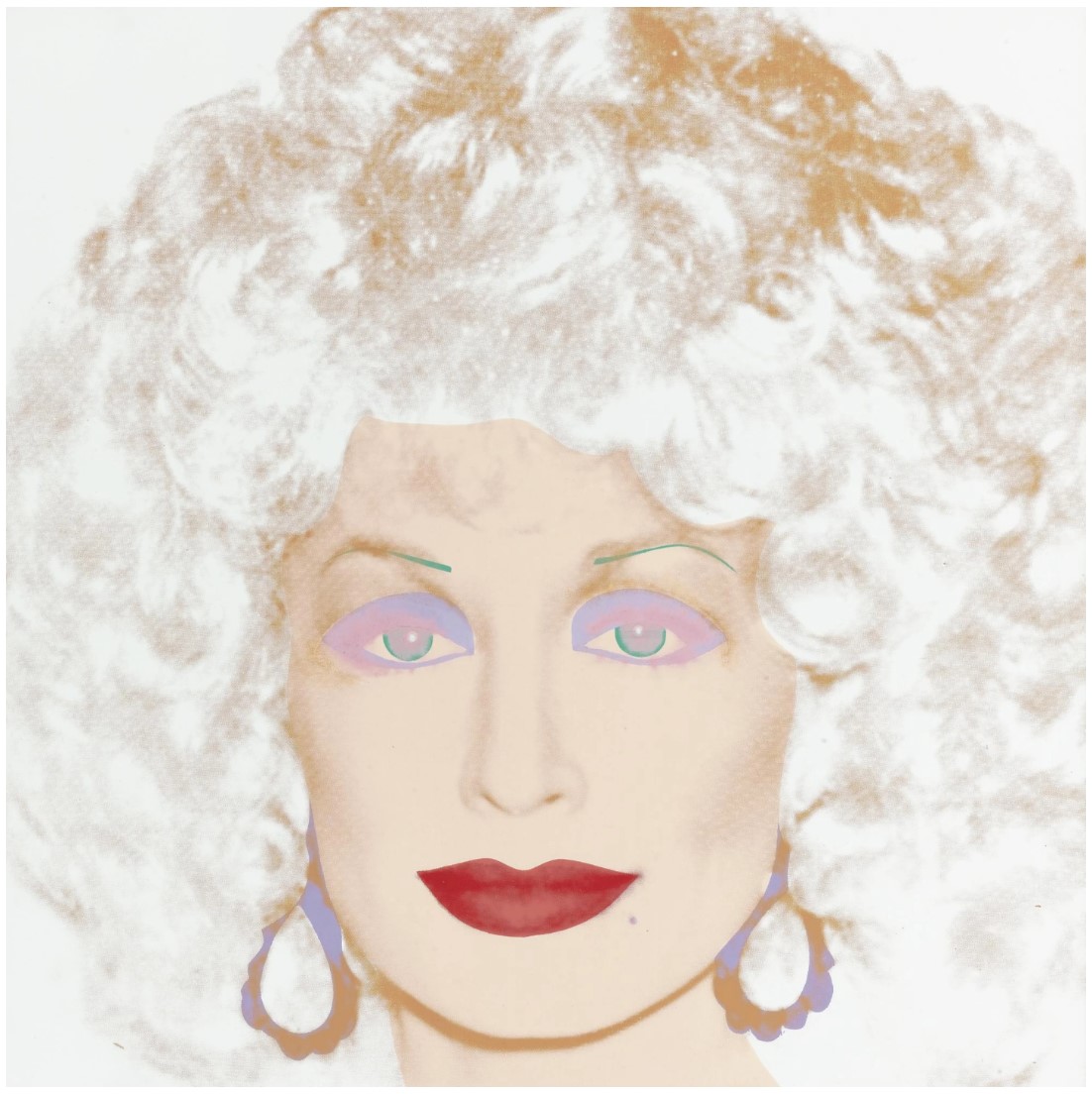
ANDY WARHOL
Dolly Parton, 1985
Synthetic polymer paint and silkscreen ink on canvas
42×42 inches (106.7 x 106.7 cm)
Prince, 1984
Prince, 1984
Christie’s New-York: 10 November 2023
Estimated: USD 600,000 – 800,000
USD 756,000
ANDY WARHOL (1928-1987) (christies.com)
ANDY WARHOL (1928-1987)
Prince, 1984
Acrylic and silkscreen ink on canvas
20×16 inches (50.8 x 40.6 cm)
Stamped with the Estate of Andy Warhol and the Andy Warhol Art Authentication Board, Inc. stamps
Numbered ‘A105.0210’ (on the overlap); numbered ‘P050.539’ (on the stretcher)
Painted in 1984, Prince brings together two giants of popular culture. Andy Warhol’s obsession with celebrity and consumerism defined the Pop era of the 1960s, and Prince’s chart topping musical career made him one of the most recognizable voices (and faces) of the 1980s. In the present work, Warhol captures Prince’s unique features as a ghostly apparition in the pop star’s iconic shade of purple. When Warhol committed Prince to canvas, the musician was at the height of his fame, his Grammy Award winning album Purple Rain having been released the same year, and would go on to spend six months at the top of the Billboard chart. Thus, with this work, Prince joins Marilyn Monroe, Elizabeth Taylor, and Elvis Presley in Warhol’s pantheon of celebrity icons, captured by the ultimate chronicler of twentieth century culture.
The Trip Club advertising Andy Warhol’s The Exploding Plastic Inevitable show, Los Angeles, 1966. Photo: Steve Schapiro / Corbis via Getty Images.
The present work captures the essence of Prince’s multifaceted identity, showcasing his iconic fashion, distinctive expression, and overall charismatic presence. Warhol turns to bold colors and his silkscreen process to add depth and intrigue to his portrayal of the legendary musician. The neon shock of red carefully zig zagged across the center of the canvas draws the viewer’s eye deep into the painting, allowing them to connect with the subject. The bright orange and soft blue complement this, while adding balance to the composition, breathing life into the painting. Prince, of course, is rendered in purple, a nod to the singer’s iconic Purple Rain. The geometricity of the composition creates a unique layout, differing from other works in Warhol’s Prince series. Yet the present work is also steeped in Warholian traditions. Here, Warhol takes this ubiquitous image and transforms it using the silkscreen process, aligning it with Warhol’s other quintessential works, such as the Marylin, Jackie and Elvis series.
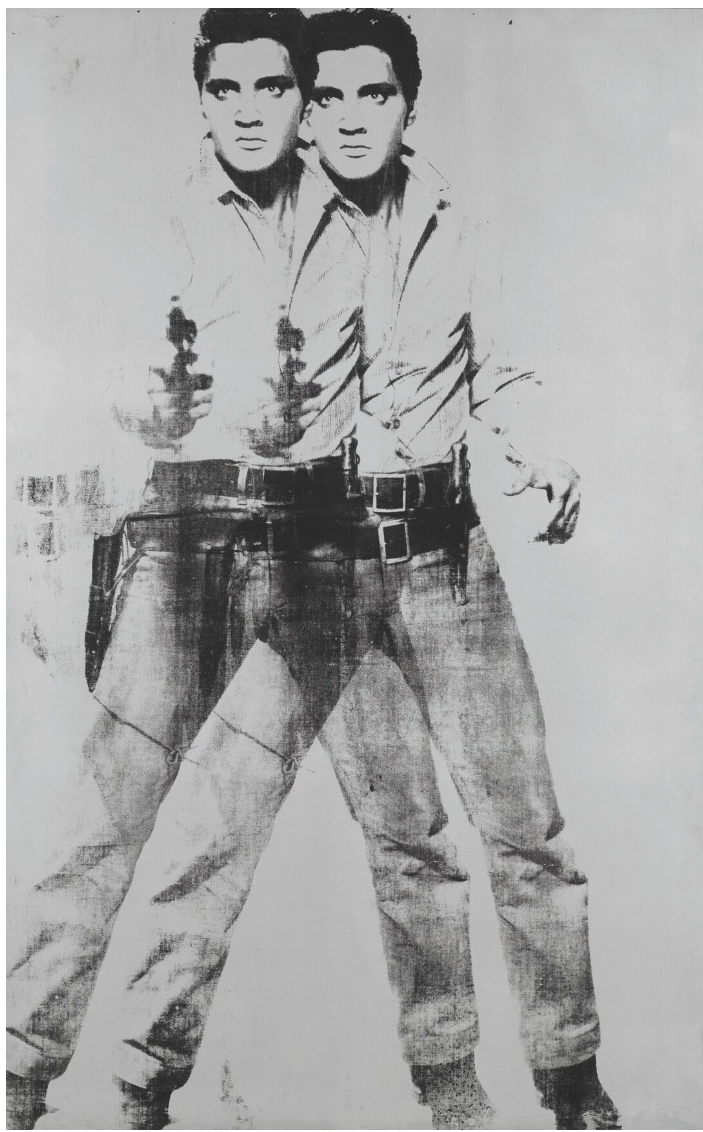
Andy Warhol, Double Elvis, 1963. Museum of Modern Art, New York. © 2023 The Andy Warhol Foundation for the Visual Arts, Inc. / Artists Rights Society (ARS), New York. Photo: © The Museum of Modern Art / Licensed by SCALA / Art Resource, New York.
Prince was a musical virtuoso, who left an unparalleled mark on the music world. With his extravagant style, supreme talent, and genre-defying approach to music, he became an icon of the 20th century. From Purple Rain to When Doves Cry, he weaved a sonic tapestry that encompassed funk, R&B, and pop. Beyond his musical prowess, Prince challenged conventions, embracing individuality, and advocating for artistic freedom. His enigmatic persona and electrifying stage presence made him a legend, and his legacy continues to inspire and resonate with individuals across the globe. With Prince reigning over the music industry and Warhol dominating the pop art scene, Warhol’s homage to Prince was inevitable.
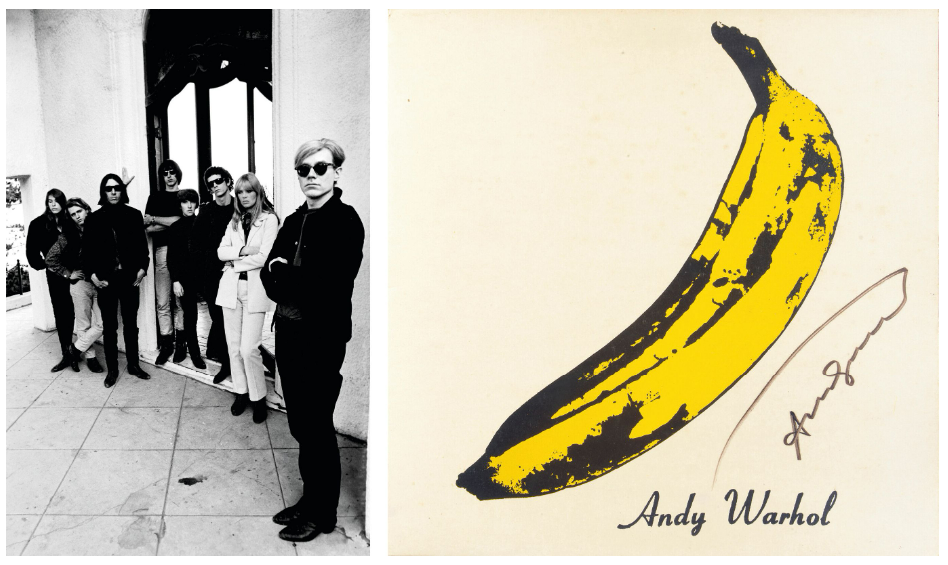
Left: Andy Warhol with The Velvet Underground, Los Angeles, 1966. Photo: Steve Schapiro / Corbis via Getty Images.
Right: Andy Warhol’s album cover for The Velvet Underground & Nico, 1967. © 2023 The Andy Warhol Foundation for the Visual Arts, Inc. / Licensed by Artists Rights Society (ARS).
Warhol’s musical collaborations extended far beyond the canvas of Prince. In 1965, Warhol started his legendary relationship with The Velvet Underground, one of the most notable rock bands of the age. He served as their manager as well as providing the band with artistic direction and creating the classic banana peel cover for the band’s debut album. This collaboration not only introduced Warhol’s innovative artistic nature to the music world, but also pushed the boundaries of what music could be. Prince is a vibrant testament to the dynamic intersection of music and visual art, a celebration of two cultural behemoths who have left an indelible mark on their respective industries. Warhol’s unique visual language captures Prince’s larger-than-life personality and reputation, paying tribute to the pop star in the most fitting way. It brings together two artists whose art defined a generation, cementing both men’s place in cultural history.
Ryuichi Sakamoto, 1984
Modestly referring to himself as ‘just a travelling society painter’, Warhol’s innovative reinterpretation of portraiture is now hailed as having revived a dead art form. In the present work, Warhol applies his signature style and approach to the art historical category of portraiture to Ryuichi Sakamoto, a Japanese composer, pianist and singer that rose to prominence in the late 1970s as a founding member of the Yellow Magic Orchestra band, considered influential and innovative in the genre of popular electronic music since that time. Pioneering the use of synthesizers, samplers, sequencers, drum machines, computers, and digital recording, the group anticipated the astronomical rise in popularity of the genre in the 1980s. Sakamoto’s 1979 composition Technopolis is credited as a contribution to the development of techno music, and since the 1980s Sakamoto has also received acclaim and awards for his compositions of various film scores and interpretations within the field of classical music.
Ryuichi Sakamoto, 1983
Sotheby’s New-York: 28 September 2023
Estimated: USD 200,000 – 300,000
USD 381,000
Ryuichi Sakamoto | Contemporary Curated | 2023 | Sotheby’s (sothebys.com)
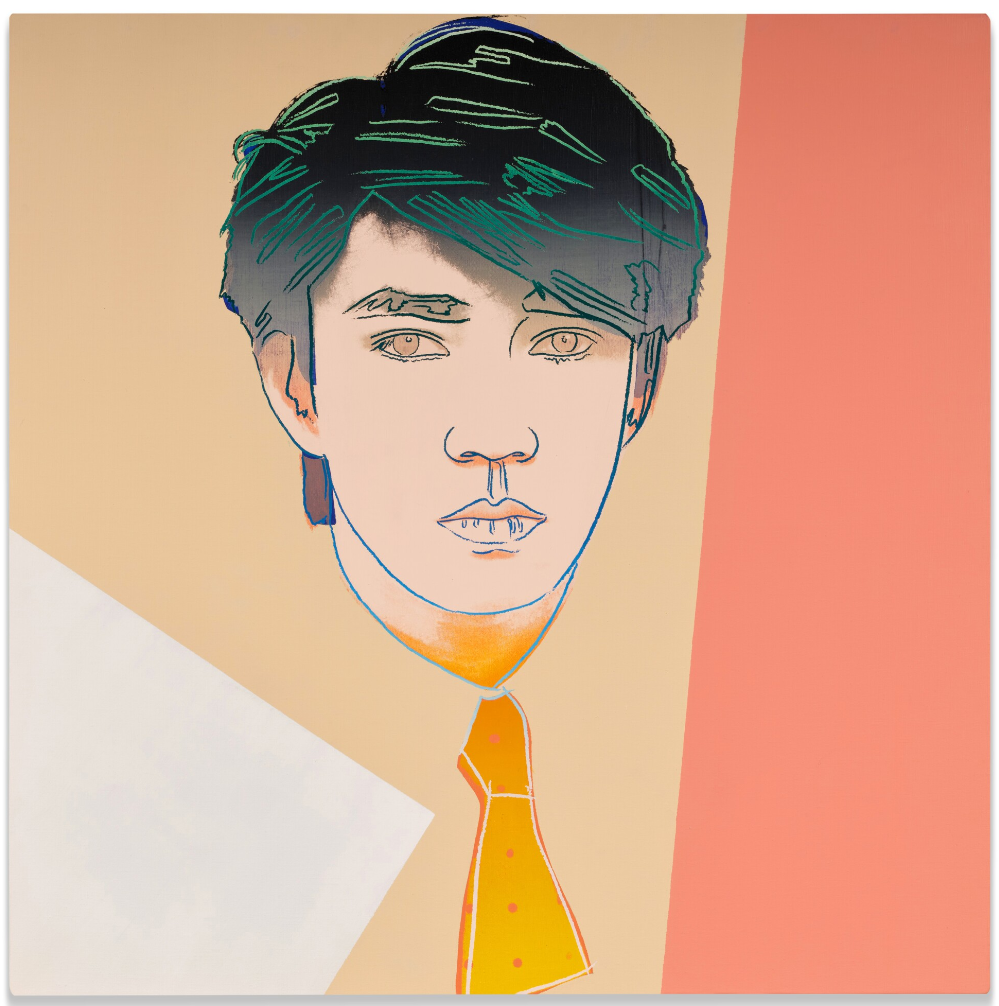
ANDY WARHOL (1928 – 1987)
Ryuichi Sakamoto, 1983
Acrylic and silkscreen on canvas
39 1/2 x 39 5/8 inches (100.3 x 100.6 cm)
Signed and dated 83 (on the overlap)
In the present work, Ryuichi Sakamoto is captured at the apex of his career, with his features reduced to the most basic elements. A Japanese composer, pianist and singer who rose to prominence in the late 1970s as a founding member of the legendary techno-pop band Yellow Magic Orchestra, Sakamoto is remembered as a uniquely curious creator, defying the restraints of any single genre. Pioneering the use of synthesizers, samplers, sequencers, drum machines, computers, and digital recording, he left an revolutionary mark on the field of electronic music. In the early 1980s, Sakamoto achieved peak commercial recognition when he both wrote the soundtrack for and co-starred in Nagisa Oshima’s film Merry Christmas, Mr. Lawrence, alongside David Bowie.
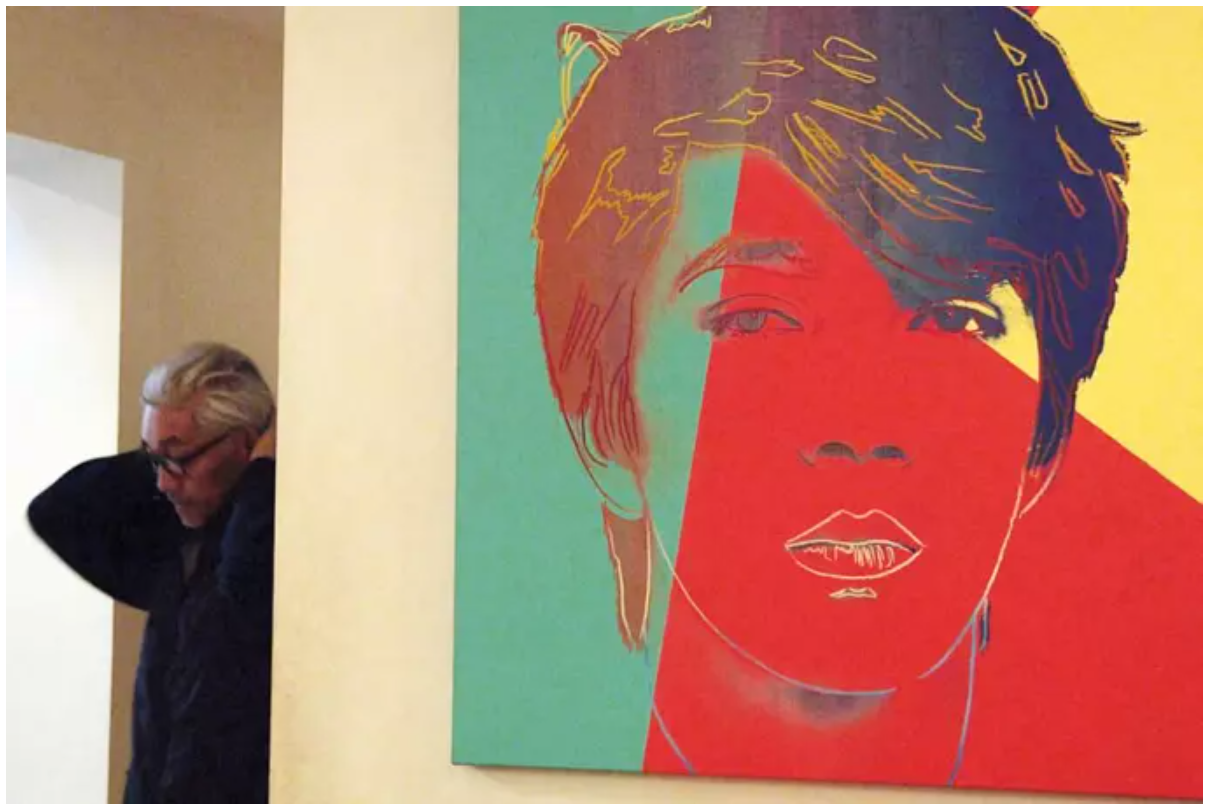
RYUICHI SAKAMOTO IN FRONT OF THE SISTER PORTRAIT TO THE PRESENT WORK IN THE 2017 FILM RYUICHI SAKAMOTO: CODA. © MUBI
Ryuichi Sakamoto officially moved to New York in 1990, after years of partaking in the artistic exchange and collaboration that categorized the downtown scene; “Besides music I became interested in contemporary art when I was in high school,” the artist recalled. “So I read a lot of contemporary art magazines and picked up Andy Warhol and Nam June Paik. They were active in the 60s, based in New York; New York was the city, the symbol of arts” (The artist quoted in: Max Hayward, “Ryuichi Sakamoto travels from Japan to New York to the Top of the Mountain,” Lindsay Magazine, 2018, Issue No. 2). By the time he executed Ryuichi Sakamoto in 1983, Warhol’s fascination with the visage of fame had come full circle; fully integrated into the gilded world of stars, an unlimited list of subjects for celebrity portraits were readily at his fingertips. Warhol understood the superficial nature of celebrity in American society; the mask created by marketing companies to commodify public figures reveals little to nothing about the actual person behind it.
Ryuichi Sakamoto, 1984
Sotheby’s New-York: 11 March 2022
Estimated: USD 500,000 – 700,000
USD 630,000
Ryuichi Sakamoto | Contemporary Curated | 2022 | Sotheby’s (sothebys.com)
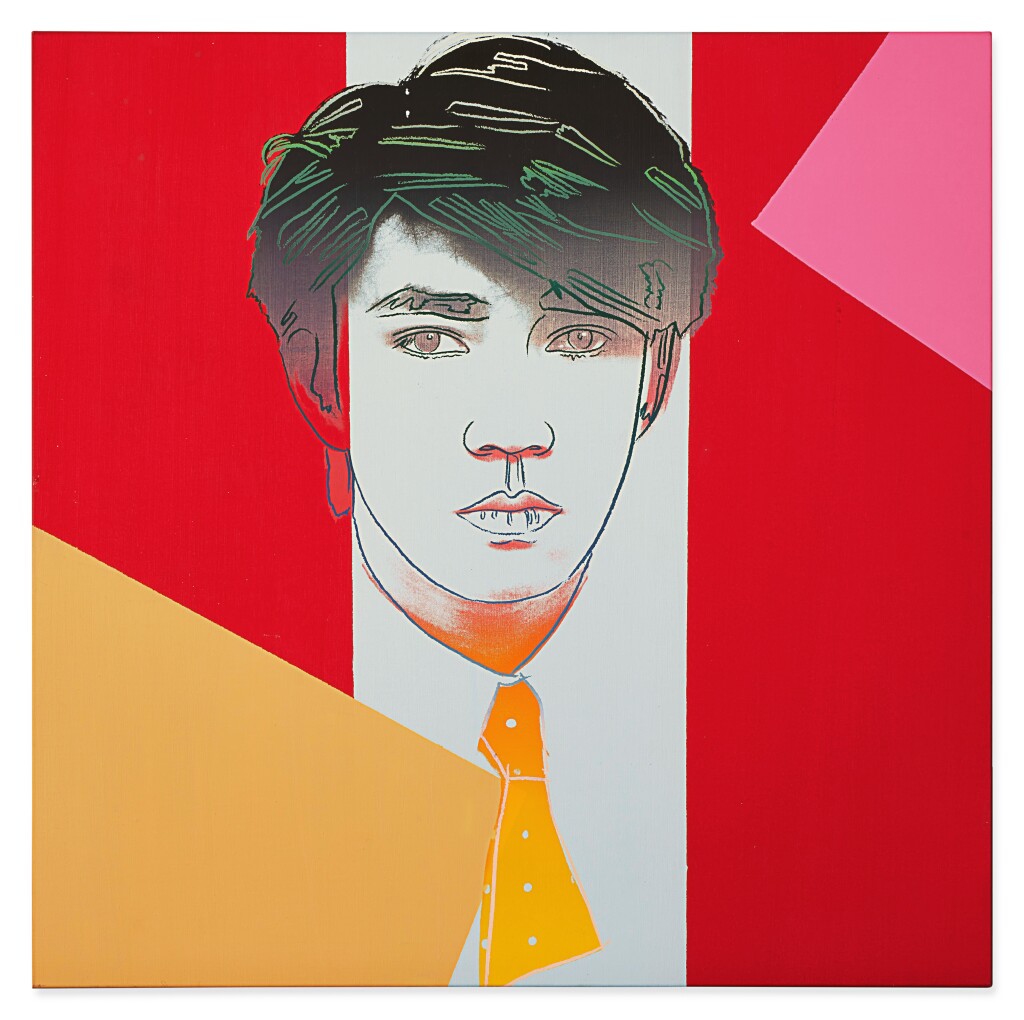
ANDY WARHOL
Ryuichi Sakamoto, 1984
Acrylic and silkscreen ink on canvas
40×40 inches (101.6 x 101.6 cm)
Though he was born and educated in Pittsburgh, Andy Warhol spent the entirety of his adult life in vibrant and dazzling New York. Already notorious by the mid-1960s for his celebrity portraits, Warhol extended his repertoire of subjects to include the eminent figures of his adopted home city. From prominent art collectors, notorious individuals and public officials to his panoply of friends, including other artists, movie stars and society figures, Andy Warhol’s portraits idolized the who’s who of New York City. Modestly referring to himself as ‘just a travelling society painter’, Warhol’s innovative reinterpretation of portraiture is now hailed as having revived a dead art form. In the present work, Warhol applies his signature style and approach to the art historical category of portraiture to Ryuichi Sakamoto, a Japanese composer, pianist and singer that rose to prominence in the late 1970s as a founding member of the Yellow Magic Orchestra band, considered influential and innovative in the genre of popular electronic music since that time. Pioneering the use of synthesizers, samplers, sequencers, drum machines, computers, and digital recording, the group anticipated the astronomical rise in popularity of the genre in the 1980s. Sakamoto’s 1979 composition Technopolis is credited as a contribution to the development of techno music, and since the 1980s Sakamoto has also received acclaim and awards for his compositions of various film scores and interpretations within the field of classical music.
Pia Zadora, 1983
Pia Zadora, 1983
Christie’s London: 14 October 2023
Estimated: GBP 280,000 – 350,000
GBP 371,700 / USD 450,709
ANDY WARHOL (1928-1987)
Pia Zadora, 1983
Acrylic and silkscreen ink on canvas
40×40 inches (101.7 x 101.7 cm)
Stamped twice with the Andy Warhol Foundation for the Visual Arts, Inc. and the Estate of Andy Warhol stamps
Numbered ‘PO50.259′ (on the overlap)
Numbered ’10-960-2883 PO50.259’ (on the stretcher)
Executed in 1983, Pia Zadora bears every trace of Warhol’s most celebrated and iconic working methods. Rendered in flat, silkscreened layers of dazzling yellow gold and red, the Hoboken-born actress—who had won a Golden Globe for ‘New Star of the Year in a Motion Picture’ two years earlier—stares coolly out from the canvas. The work belongs to Warhol’s acclaimed series of ‘Society Portraits’, a systematized mode of portrait production which the artist honed to a slick operation during the 1970s. Zadora’s recollection of sitting for Warhol in the summer of 1983 captures the disarming intimacy of the process: ‘I was used to posing for photographers. But he said, “Sit in the corner and be yourself.” Well, who am I?’ (P. Zadora quoted in B. Sokol, ‘Show Us Your Warhol!’, The New York Times, 1 November 2018). Charged with the seductive glamour of a cosmetics advert, Pia Zadora attests to Warhol’s pleasure in rendering eyes and lips. He insisted that Zadora wore red lipstick for the shoot, and went on to accentuate the actress’s glossy pout, hand-painting a reflective shine in white acrylic. Submitting her image to Warhol’s well-oiled production line, here, Zadora is immortalized under a perfect sheen of brightly colored paint.
Michael Jackson, 1984
In 1984, Andy Warhol realized a small group of portraits of Michael Jackson, one of which was subsequently used as a cover for Time magazine and is now in the Smithsonian’s National Portrait Gallery. The star smiles from the picture surface, already well on his way to the global success that he already enjoyed and which would result in his moniker, the King of Pop. This is one artist’s celebration of another; indeed, Jackson, who also featured on the cover of Warhol’s own Interview magazine, was the perfect subject for the artist, part of the pantheon of popular culture of his day, and indeed an enduring figure, a musical legend within his own lifetime.
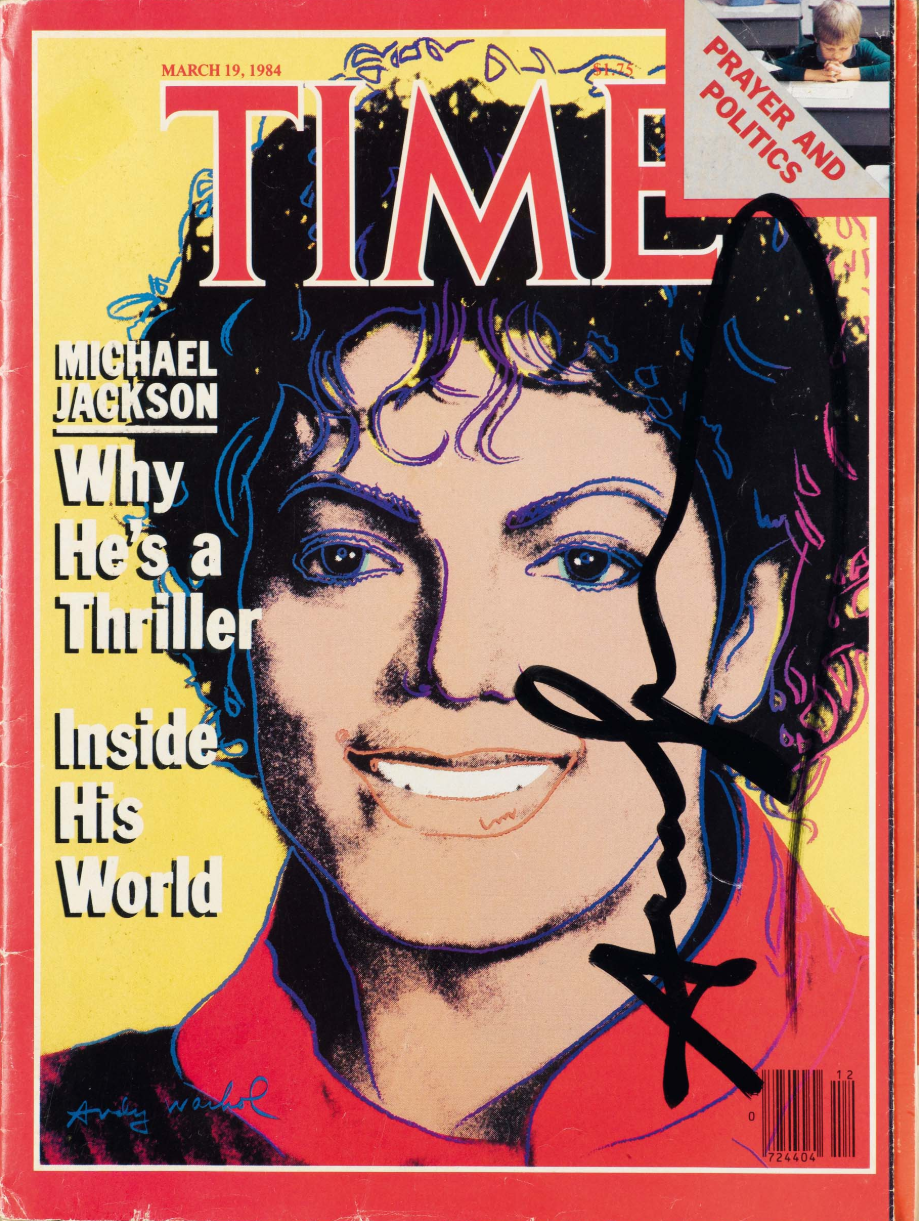
It is a tribute to both Jackson and Warhol alike that they retain such an incredible hold on the public’s imaginations, not least after the tragic and untimely death of the singer earlier this year. Happily oblivious to the trials that the star would come to face, Michael Jackson looks out of this picture with an expression that ensures that this image is filled with an optimism which is arguably rare in Warhol’s work. Warhol came to know Jackson gradually over the years. When they met in 1977, Warhol was amused by the fact that Jackson seemed not to know who he was, but the pair became increasingly acquainted.
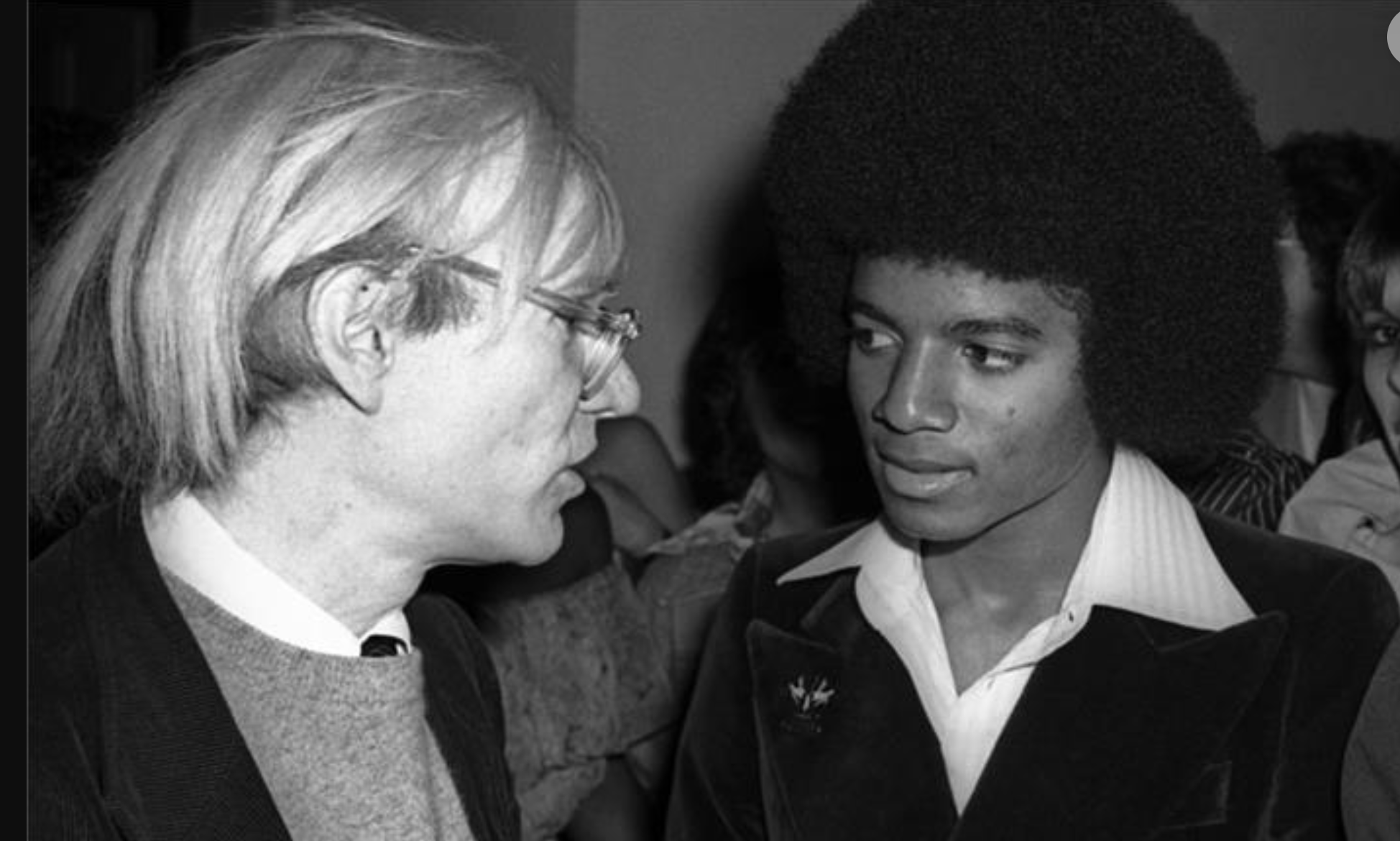
When he saw Jackson in concert in 1981, he adored the spectacle.
“Michael’s show was maybe the best I’ve seen. He’s such a good dancer, and he goes into a hole and comes out the other side in a different outfit.
I don’t know how he does it.”
When Warhol joined in with Bob Colacello to question Jackson for Interview the following year, his own star-struck excitement was still palpable.
“Gosh, this is exciting, every time I use my Walkman I play your cassette.”
In those portraits, Andy Warhol pays homage to this young and rising celebrity and also, having featured in its sister-version on the cover of Time, forms a part in the creation of one of the great cultural icons of our age.
Michael Jackson, 1984
Christie’s New-York: 10 November 2009
Estimated: USD 500,000 – 700,000
USD 812,500
Andy Warhol (1928-1987) , Michael Jackson | Christie’s
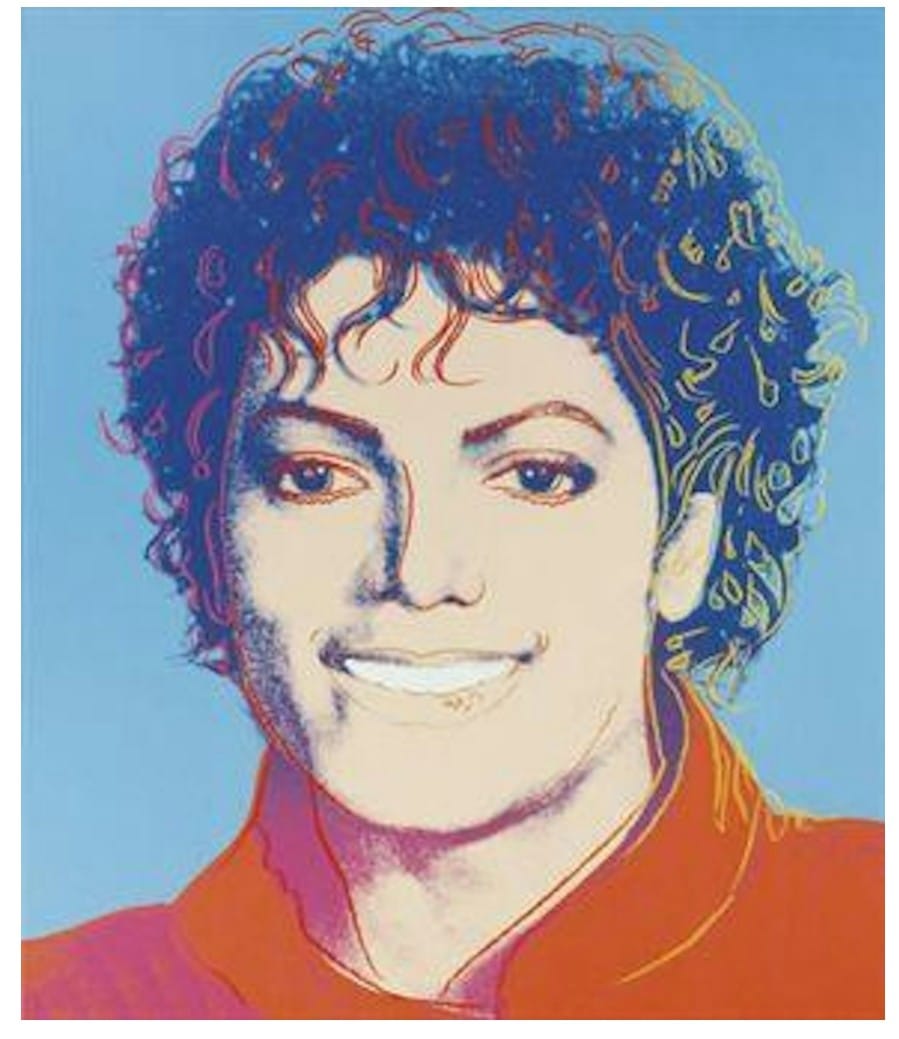
ANDY WARHOL (1928-1987)
Michael Jackson, 1984
Synthetic polymer and silkscreen ink on canvas
30×26 inches (76.2 x 66 cm)
Stamped with The Estate of Andy Warhol and The Andy Warhol Foundation for the Visual Arts Inc., stamps
Numbered twice ‘PO50.660’ (on the overlap and on the stretcher)
Michael Jackson, 1984
Sotheby’s New-York: 13 May 2009
Estimated: USD 250,000 – 350,000
USD 278,500
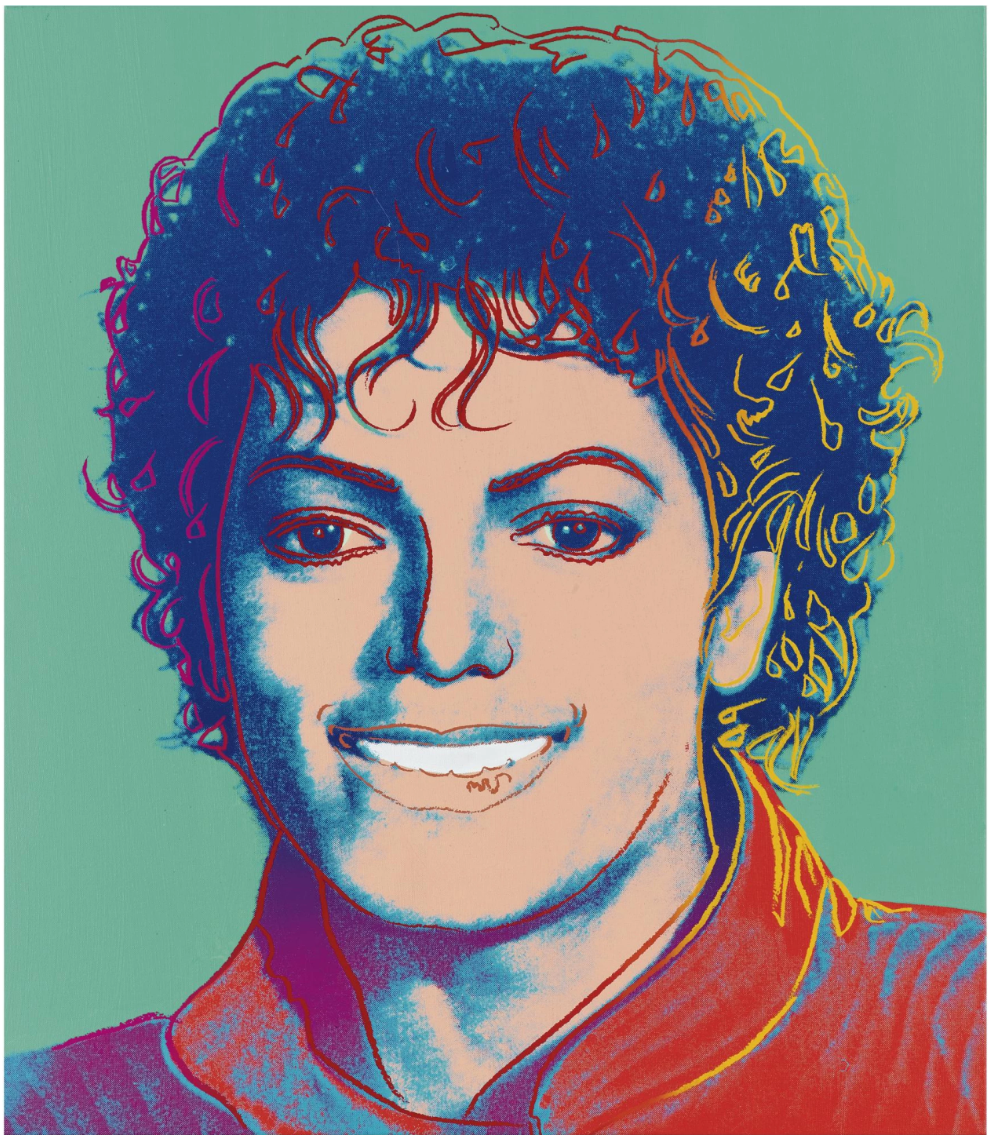
ANDY WARHOL
Michael Jackson, 1984
Synthetic polymer paint and silkscreen inks on canvas
30×26 inches (76.2 x 66 cm)
Stamped twice by the Estate of Andy Warhol and the Andy Warhol Foundation for the Visual Arts, Inc.
Numbered twice P050.464 on the overlap
Michael Jackson, 1984
Sotheby’s London: 22 June 2007
Estimated: GBP 250,000 – 350,000
GBP 300,000
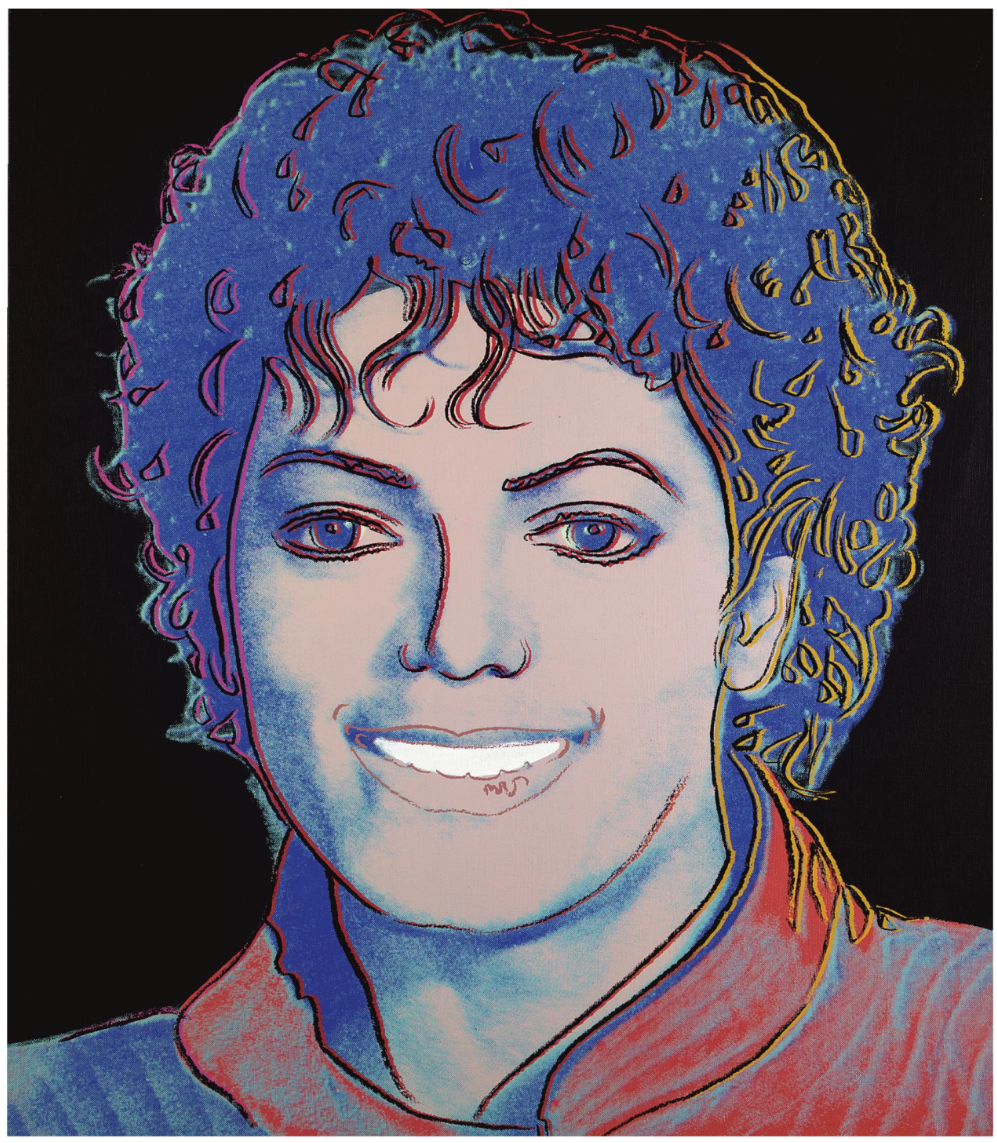
ANDY WARHOL
Michael Jackson, 1984
Synthetic polymer paint and silkscreen ink on canvas
30×26 inches (76.2 x 66 cm)
Signed and dated 84 on the overlap
Michael Jackson, 1984
Christie’s New-York: 16 November 2006
Estimated: USD 250,000 – 350,000
USD 576,000
Andy Warhol (1928-1987) , Michael Jackson | Christie’s
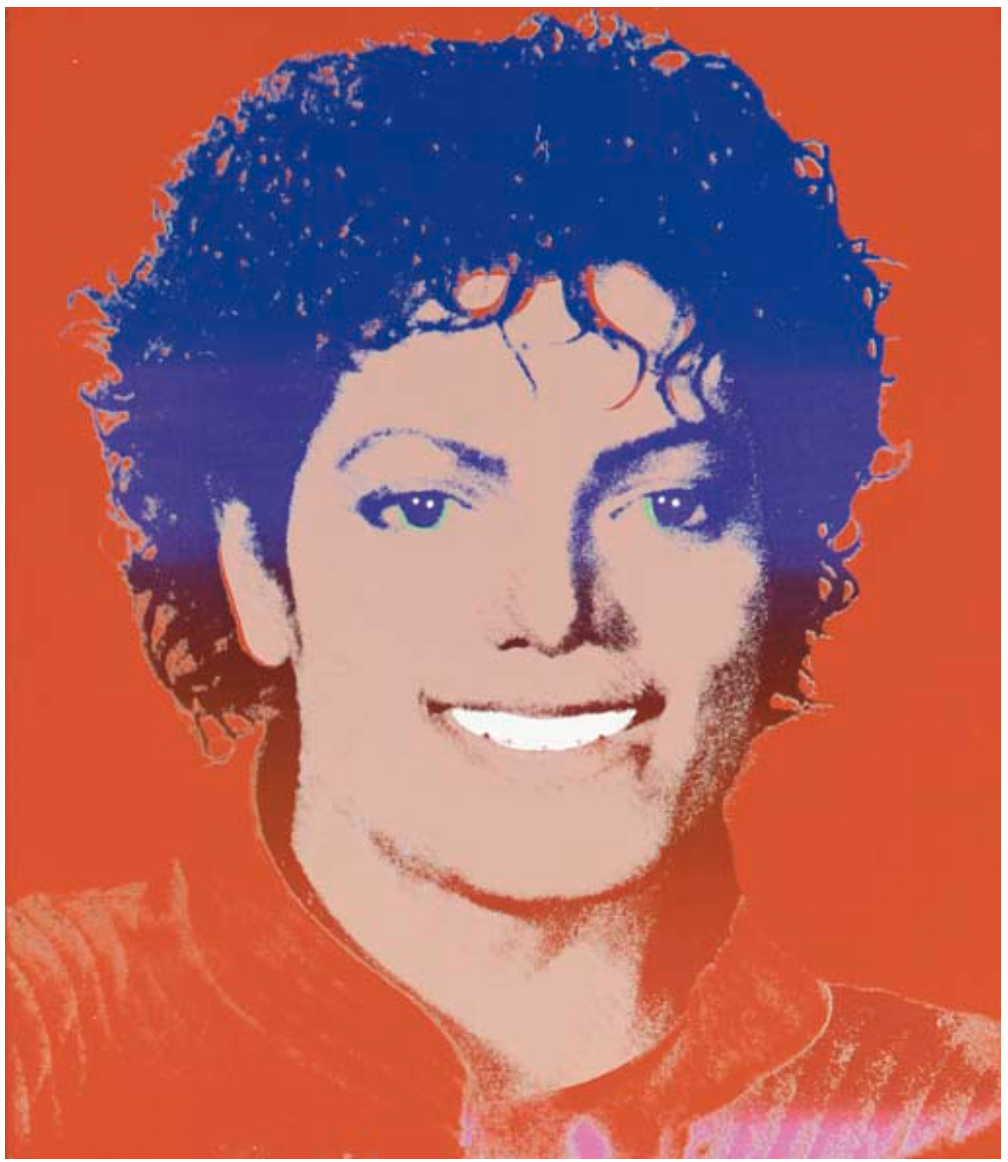
ANDY WARHOL (1928-1987)
Michael Jackson, 1984
Synthetic polymer and silkscreen inks on canvas
30×26 inches (76.2 x 66 cm)
Stamped twice with the Estate of Andy Warhol and the Andy Warhol Art Authentication Board, Inc., stamps
Numbered PO50.661 (on the overlap)
Frölunda Hockey Player, 1986
Frölunda Hockey Player, 1986
Stockholms Auktionsverk: 20 November 2025
Estimated: SEK 4,000,000 – 6,000,000
SEK 4,000,000 (Hammer)
SEK 5,000,000 / USD 524,660
ANDY WARHOL. ”Frölunda Hockey Player”.
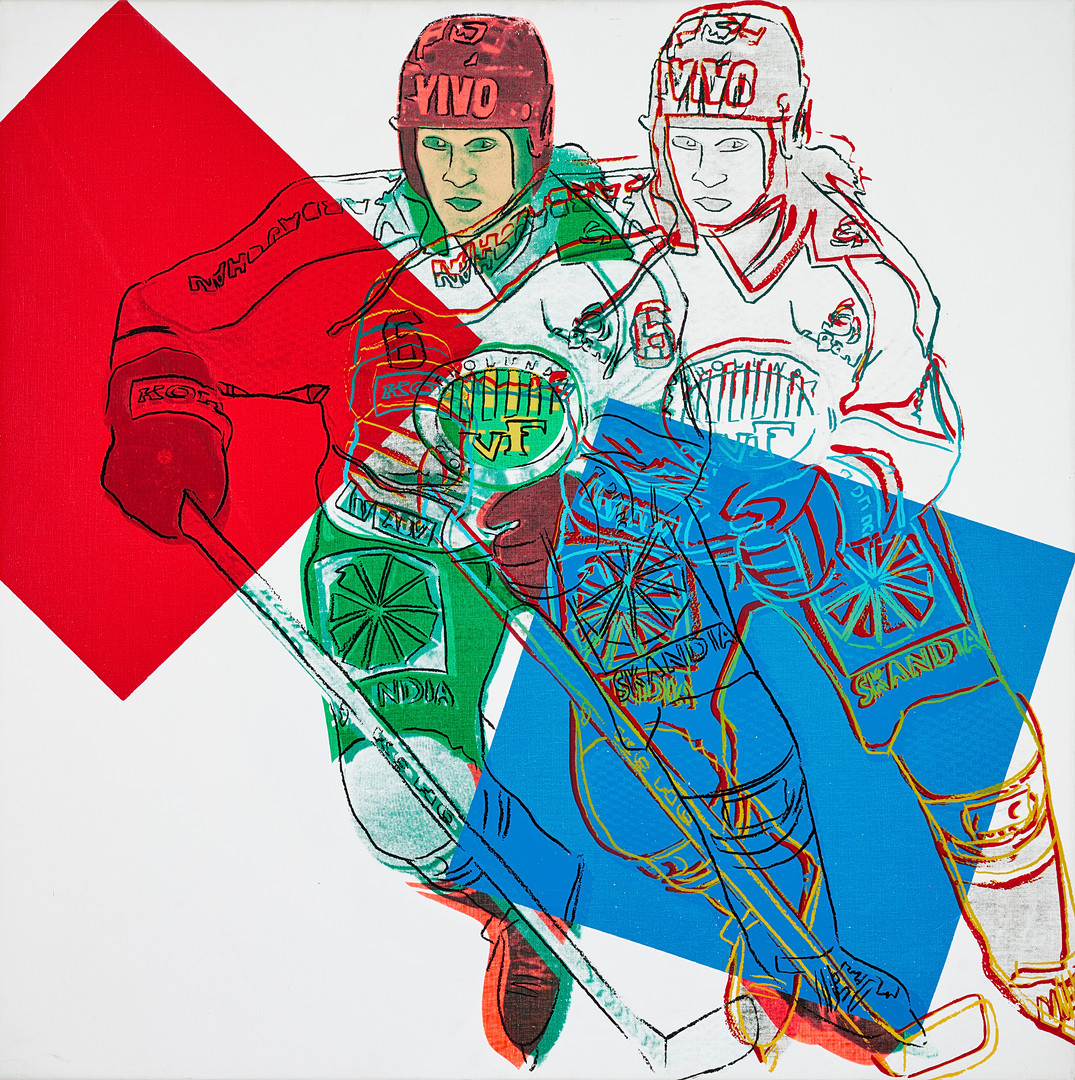
ANDY WARHOL
“Frölunda Hockey Player”, 1986
Acrylic and silkscreen ink on canvas
40×40 inches (101.6 x 101.6 cm)
Stamp signed Andy Warhol on the overlap
With the Andy Warhol Art Authentication Board stamp on the overlap and the Identification number A111.095
Inscribed on the overlap: “I certify that this is an original painting by Andy Warhol compiled by him in 1986, Frederick Hughes”
Andy Warhol, the undisputed icon of Pop Art, demonstrated throughout his career a deep fascination with idols, symbols, and mass-cultural phenomena, from movie stars to soup cans. In Frölunda Hockey Player (1986), Warhol turns his gaze toward the world of sports, and specifically ice hockey, a sport that carries significant cultural weight both in the United States and in the Nordic countries. Warhol’s connection to the Gothenburg team originated when Västra Frölunda broke away from Västra Frölunda IF to form its own club – Västra Frölunda HC – in 1984. The finances of the newly established club were under considerable strain. One of those driving the initiative, alongside the current owner of the painting, was Hans “Bula” Andersson, then chairman of Västra Frölunda HC. The club’s management had heard that another team in the Swedish Elite League had commissioned artworks to raise funds for their club, and that the proceeds had gone directly into their treasury. This sparked the idea that Västra Frölunda could do something similar. The question quickly arose: who was the most famous artist in the world at that moment? Andy Warhol’s name was mentioned.
The painting’s owner picked up the phone and called directory assistance in New York – and got through. After an initial conversation with Andy Warhol and his manager, Fred Hughes, during which a verbal agreement was reached, representatives from Västra Frölunda flew to New York in the spring of 1986. They brought with them press photographs and other visual materials from Gothenburg, including images from Göteborgsposten. Warhol chose to base the work on a photograph of Västra Frölunda’s first-line center, Christer Kellgren. The meeting at Warhol’s studio, The Factory, was informal and relaxed, and even included an impromptu workout in the studio’s gym before the Swedish visitors returned home. Some time later, another trip to New York followed. When the representatives visited The Factory again, Warhol presented the drafts he had created. The final choice fell on a portrait of Christer Kellgren against a black background incorporating all of Västra Frölunda’s colors – white, red, green, and black. As the Swedish guests were leaving, Warhol said to them at the door: “Don’t forget to say hello to Mr. Vivo,” referring playfully to Kellgren, since it was common in the NHL for players’ names to appear on their helmets.
Back in Sweden, a silkscreen painting of the motif was presented to the club chairman before a home game against AIK. Unfortunately, Frölunda lost the match 3–1 – but it is not often that art history is made in an ice hockey rink. From the silkscreen painting, a series of screenprints was later produced by Rupert Jasen Smith in New York and published by Art Now in Gothenburg. The proceeds from both the painting and the screenprints provided a much-needed financial boost to Västra Frölunda’s club treasury.
After Warhol’s death, the project’s initiator received a phone call from Warhol’s manager, Fred Hughes, informing him that the artist’s estate had something they wished to show him. Once again, a trip across the Atlantic followed. The atmosphere at The Factory had of course changed profoundly after Warhol’s passing, but there awaited a larger canvas featuring a double image of Kellgren – a work that had never before been shown publicly, and which is now presented in this auction. Through the double exposure of Kellgren’s image, Warhol places the hockey player within the same visual universe as Marilyn Monroe and Elvis Presley. Combined with the stark white background, the painting creates a striking encounter between the raw energy of sport and the graphic language of Pop Art, capturing both the power of the game and the player’s elevated status as an icon. With its unique blend of international Pop Art and Nordic sports culture, Frölunda Hockey Player is not only a work of great interest to collectors, but also a compelling example of Warhol’s enduring ability to transform the everyday into modern iconography.
Nastassja Kinski, 1984
Untitled (Portrait of Nastassja Kinski), 1984
Van Ham: 3 June 2025
Estimated: EUR 300,000 – 500,000
EUR 434,848 / USD 494,510
The Bayer Collection | Andy Warhol-Untitled (Portrait of Nastassja Kinski) | Van Ham Art Auctions
ANDY WARHOL (1928 Pittsburgh, PA/USA – 1987 New York)
Untitled (Portrait of Nastassja Kinski), 1984
Acrylic on canvas
50×42 inches (127 x 106.5 cm)
Signed and dated on the folded canvas verso top right: Andy Warhol 84
Andy Warhol and Nastassja Kinski have not met very often, but she is still one of the actresses and models Warhol wanted to portray because of her beauty and popularity. In his diary, he describes an encounter on April 16, 1980 during an interview:
“She was very pretty, tall and spoke English very well. (.) She speaks six languages and she could play any of Ingrid Bergman’s roles. She looks like Isabella Rossellini could. (.) She’s been in town for three weeks and wants to stay here forever.”
An initial idea to show her on the cover of Interview failed because she had already done a cover for Vogue, which upset Warhol. It was not until two years later, in February 1983, that she was seen on the cover of Interview. Jodie Foster had a conversation with her and re-established contact with Warhol.
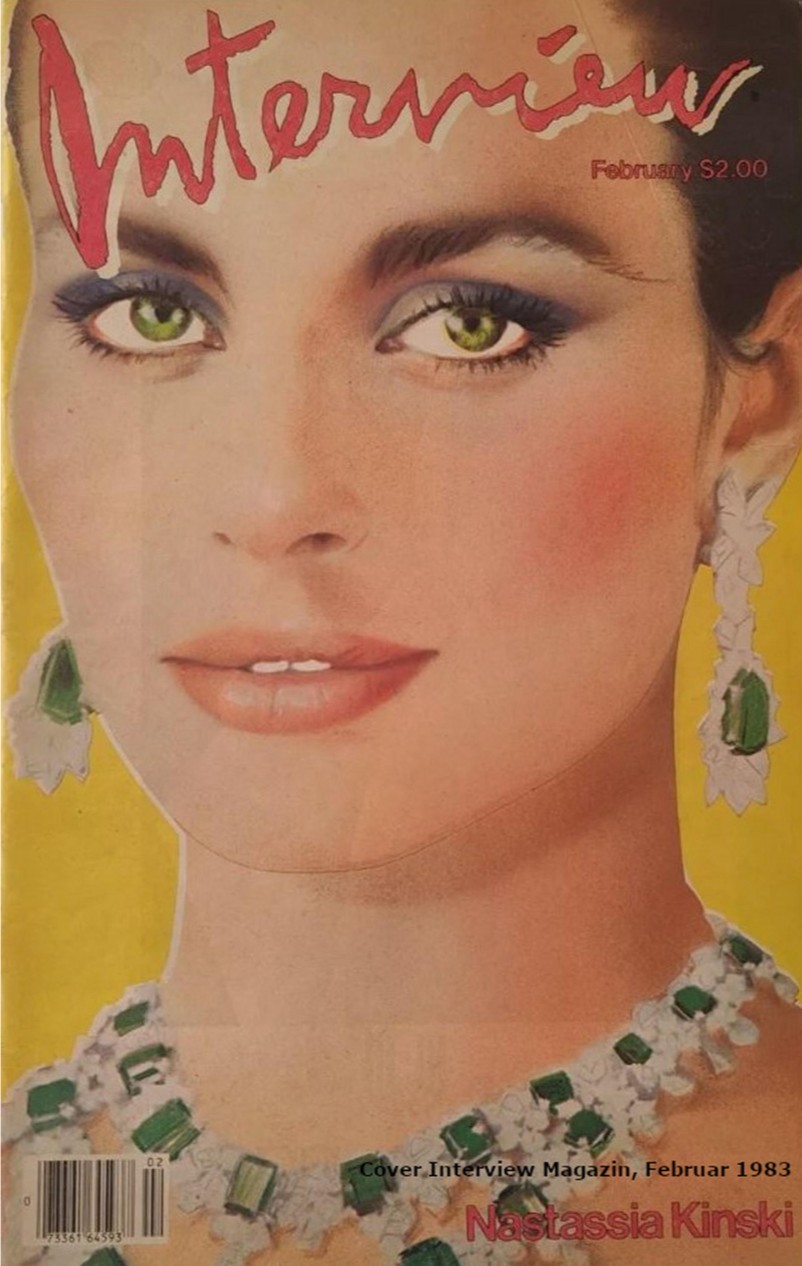
A little later, Andy Warhol painted the portrait on behalf of Bayer AG for the planned exhibition of the International Federation of Gynecology and Obstretics, which was purchased directly from the artist by Bayer AG after the exhibition. Andy Warhol created the portrait of Nastassja Kinsky, who was in her early 20s at the time, together with the portrait of a young woman after Lucas Cranach the Elder in order to create the image of a young woman from different times. The image stands out among the numerous portraits because it was not commissioned by the model herself and because it differs in format from the usual 48 x 48 inches in which most of Andy Warhol’s portraits were executed. Two portraits of Charles and Diana (The Prince and Princess of Wales, 1982, silkscreen ink on canvas, 127 x 106.5 cm, The Andy Warhol Foundation for the Visual Arts, New York).
Andy Warhol created most of the portraits from Polaroids that he made of his clients, which he traced on the canvas with the help of a projector and then colored with silkscreen and acrylic paints. Nastassja Kinski’s appearance in this portrait is similar to the styling she received for her role in the 1983 film “Exposed”, directed by James Toback and starring Rudolf Nurejev, Harvey Keitel, Ian McShane and Bibi Andersson, among others. The colorfulness of Warhol’s painting is dominated by black and turquoise tones – the surface structure resembles the style of his portraits of Mick Jagger from 1976 and the cycle “Ten Portraits of Jews of the 20th Century” from 1980. Warhol’s portrait of Nastassja Kinski is an unusual work from his series of portraits, but it gives the actress the same glamorous charisma as many other models and actresses. for which he created portraits. The portraits of Andy Warhol are among his most important works. Among the numerous people – politicians, sports stars, movie stars, collectors, artists, trans people – beautiful women play the most important role. They were transformed by him particularly convincingly into icons and goddesses of our time.
Other Celebrity Portraits
Tennessee Williams, 1983
Sotheby’s New-York: 28 September 2023
Estimated: USD 100,000 – 150,000
USD 114,300
Tennessee Williams | Contemporary Curated | 2023 | Sotheby’s (sothebys.com)
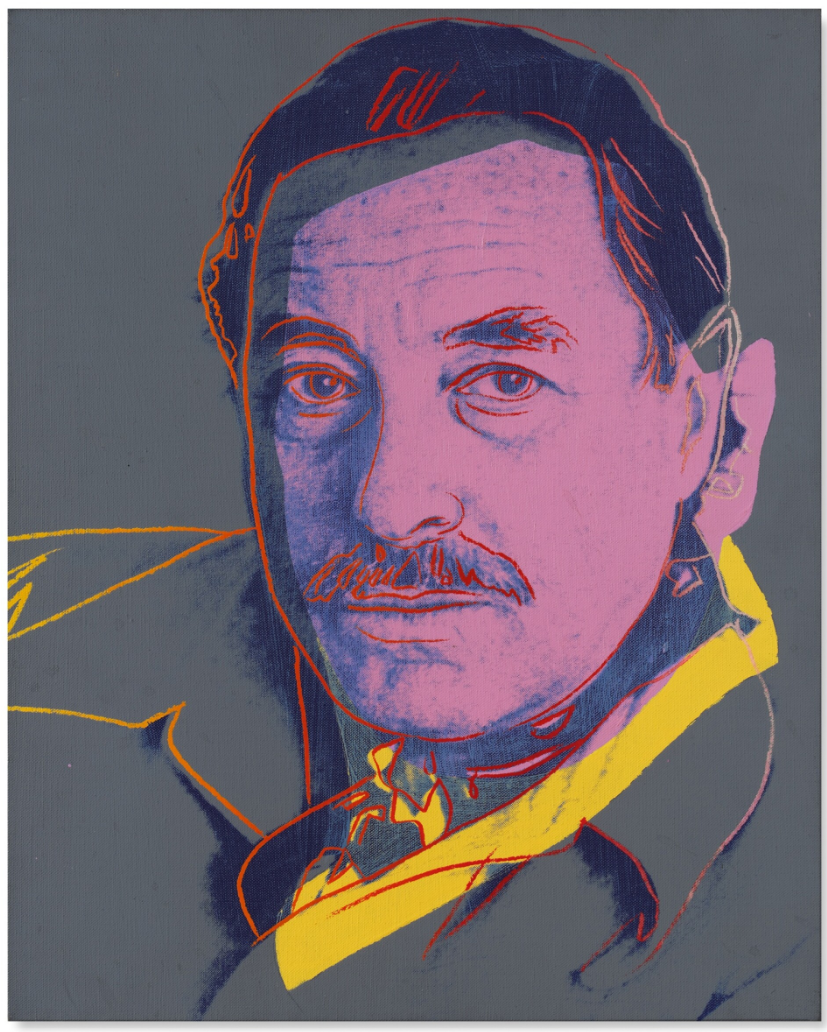
ANDY WARHOL (1928 – 1987)
Tennessee Williams, 1983
Acrylic and silkscreen ink on canvas
20×16 inches (50.8 x 40.6 cm)
Stamped by the Andy Warhol Art Authentication Board, Inc. and numbered A112.976 on the overlap
Portraiture painting takes a central role in Andy Warhol’s oeuvre, representing the largest segment of his works and spanning the longest period across his career. Towards his later life, Warhol focused on painted portraits commissioned by individuals that he would often sell to fund his more ambitious projects with the Factory. In painting his portraits, Warhol would take numerous Polaroid photos of his sitter, making sure they were styled and posed to be as glamorous as possible, then he enlarged the image onto a sheet of acetate and transferred it to a canvas. Through the silkscreen paintings, Warhol strove to immortalize the figures that uncontrollably fascinated him. Executed in the same year as Tennessee Williams’ sudden death, Tennessee Williams from 1983 captures the playwright’s powerful gaze in Warhol’s signature style of portraiture. Andy Warhol has had lasting friendship with Tennessee Williams throughout the years, as evidenced by the creation of a special illustration for the vinyl cover of “Tennessee Williams Reading from The Glass Menagerie, The Yellow Bird, and Five Poems” to Williams’ attendance at the “Fifty Most Beautiful People” party at the Factory in the spring of 1965. Tennessee Williams also accompanied Truman Capote’s memoir reflecting on Williams’ death published by Playboy Magazine in January of 1984. As an exemplar of Warhol’s portraiture, Tennessee Williams underscores Warhol’s reflection on the significance and power of modern mechanical reproduction along with the role of the image in creating an icon.
Tennessee Williams, 1983
Christie’s New-York: 29 September 2022
Estimated: USD 100,000 – 150,000
USD 126,000
ANDY WARHOL (1928-1987) (christies.com)
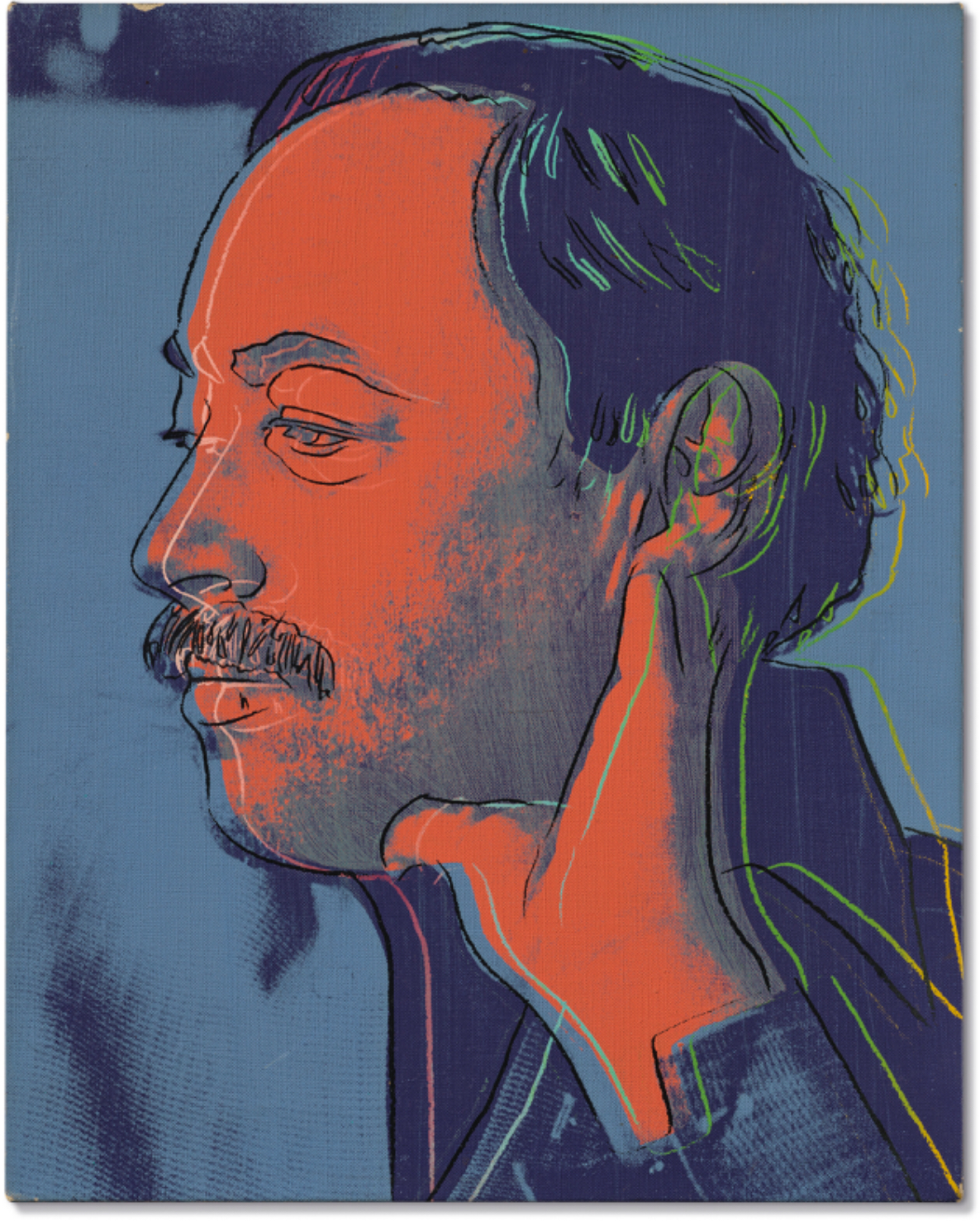
ANDY WARHOL (1928-1987)
Tennessee Williams, 1983
Synthetic polymer and silkscreen ink on canvas
20×16 inches (50.9 x 40.5 cm)
signed twice ‘Andy Warhol’ and signed and inscribed by Frederick Hughes
‘I certify that this is an original painting by Andy Warhol completed by him in 1983 Frederick Hughes’ (on the overlap)
Christie’s New-York: 15 May 2007
USD 1,720,000
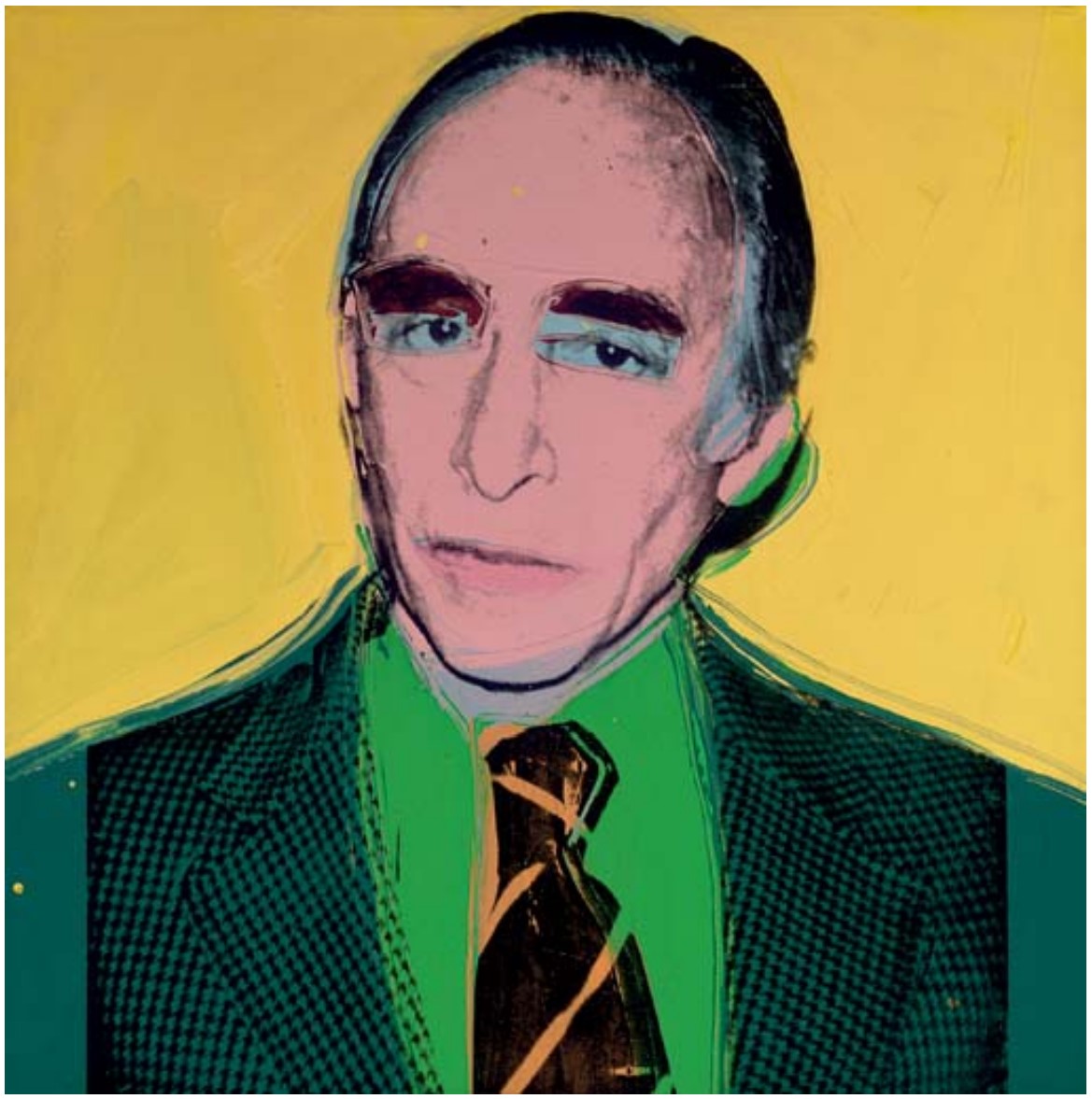
ANDY WARHOL
Leo Castelli, 1975
Synthetic polymer and silkscreen inks on canvas
40×40 inches (101.6 x 101.6 cm)
Art Patrons
Robert J. Denison (Two Works), 1974
Bonhams New-York: 19 November 2025
Estimated: USD 300,000 – 500,000
USD 203,700
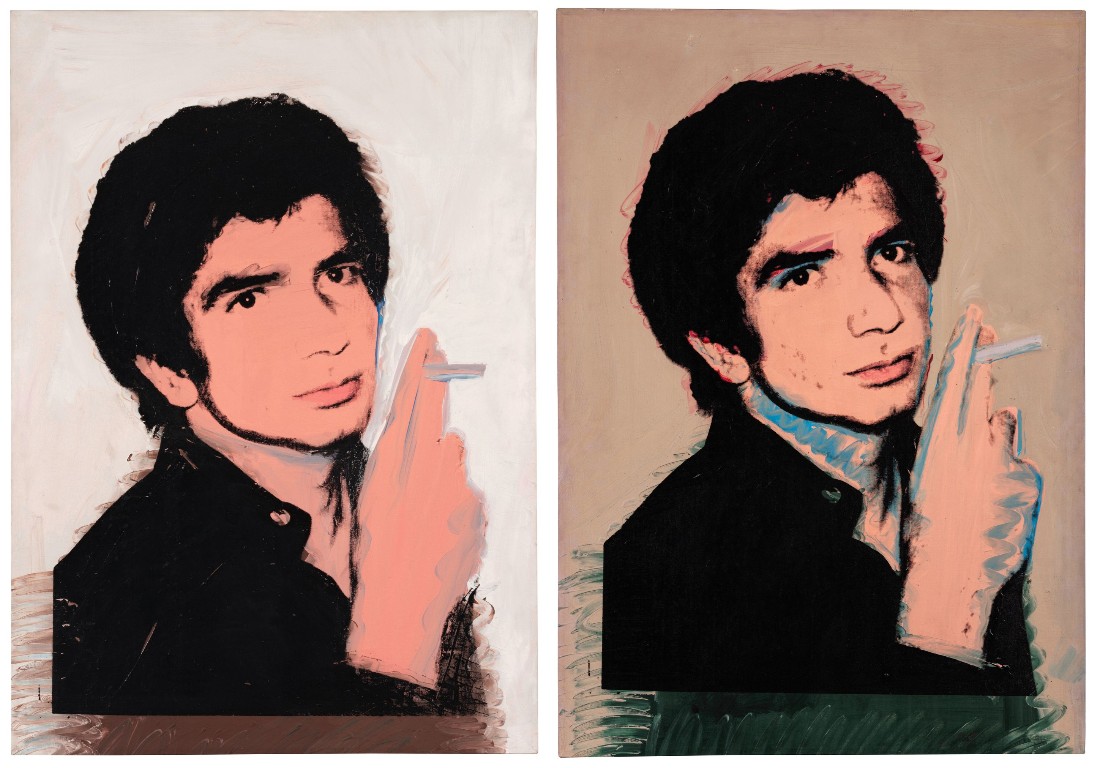
ANDY WARHOL (1928-1987)
Robert J. Denison (Two Works), 1974
Each: acrylic and silkscreen on canvas
Each: 48×34 inches (122 x 86.3 cm)
Signed, inscribed and dated ‘Bob D Andy Warhol 1977’ (on the overlap)
Signed, inscribed and dated ‘Bob Andy Warhol 1977’ (on the overlap)
Robert J. Denison, a longtime friend and advisor to Andy Warhol, was first introduced to the art world by Dorothy and Roy Lichtenstein, his neighbors on Long Island. As chairman of the investment firm First Security Management, Denison counseled Warhol to establish the Andy Warhol Foundation for the Visual Arts in Pittsburgh and was instrumental to the financial security of the Warhol legacy. In addition to advising Warhol, Denison also advised artists such as Roy Lichtenstein and Robert Rauschenberg, forever impacting the way artists capitalized on their artistic star power and secured their legacies. Warhol created these two silkscreen portraits, both of unique size, along with two additional portraits of his friend Denison, now held in the Andy Warhol Museum. Never before offered for sale, these two portraits have been in Denison’s collection since their creation.
Denison’s work in finance and advice to Warhol inspired both Warhol’s 1980s Dollar Sign and Gems series as well as his broader reflections on money. Warhol once remarked, “I’m convinced that if you can spell things out very simply and say everything clearly right away, you’ll be a success in business. Like Bob Denison can do that.” Denison’s identity as a “money man” aligned perfectly with Warhol’s portraiture practice from the early 1970s onward—one that critics have often discussed as reinventing the humanist genre through its engagement with the commodity form.
This pair of acrylic and silkscreen portraits of Denison belongs to Warhol’s extensive series of society portraits begun in the 1970s, which defined the second half of his career. Warhol photographed his subjects using a Polaroid camera, transferring the instant print to an acetate to create a silkscreen stencil. Having started with photobooth reels in the 1960s, by the 1970s Warhol had adopted the Polaroid as his preferred tool. The transfer process allowed him to exercise artistic license—removing blemishes, altering hair color, and heightening contrast. Many portraits were commissions, and Warhol often chose color schemes that reflected the sitter’s personality.
Drawing on his background as a 1950s commercial illustrator, Warhol skillfully employed mass-reproductive techniques and vivid color to command attention. The same strategies that informed his iconic portraits of Marilyn Monroe, Elvis Presley, and Elizabeth Taylor are evident in his society portrait series. Here, too, Bob Denison is distilled to his essence: cigarette in hand, his expression cool and detached. In a distinctly Warholian way, he performs his own identity. At the time, curator Robert Rosenblum dubbed Warhol the “Court Painter of the ’70s,” likening his work in the portrait genre to John Singer Sargent and his late-nineteenth-century portrayals of the wealthy elite. Warhol’s portraits, however, suited the “Me Generation,” shaped by Watergate disillusionment and disco-era glamour. Sleeker and glossier than his 1960s celebrity silkscreens, these works echoed the polished aesthetics of Vogue and Vanity Fair. Among those immortalized alongside Denison were Debbie Harry, Liza Minnelli, and Gianni Versace. The Denison portraits, among the earlier examples in the series, feature the expressive, hand-painted acrylic details also found in Warhol’s Chairman Mao works—a technique he had recently revived in the late 1960s and would abandon again by the end of the following decade.
Dominique de Menil, 1969
Phillips London: 26 June 2025
Estimated: GBP 40,000 – 60,000
GBP 35,560 / USD 48,680
Andy Warhol Modern & Contemporary Art: Evening & Day Sale
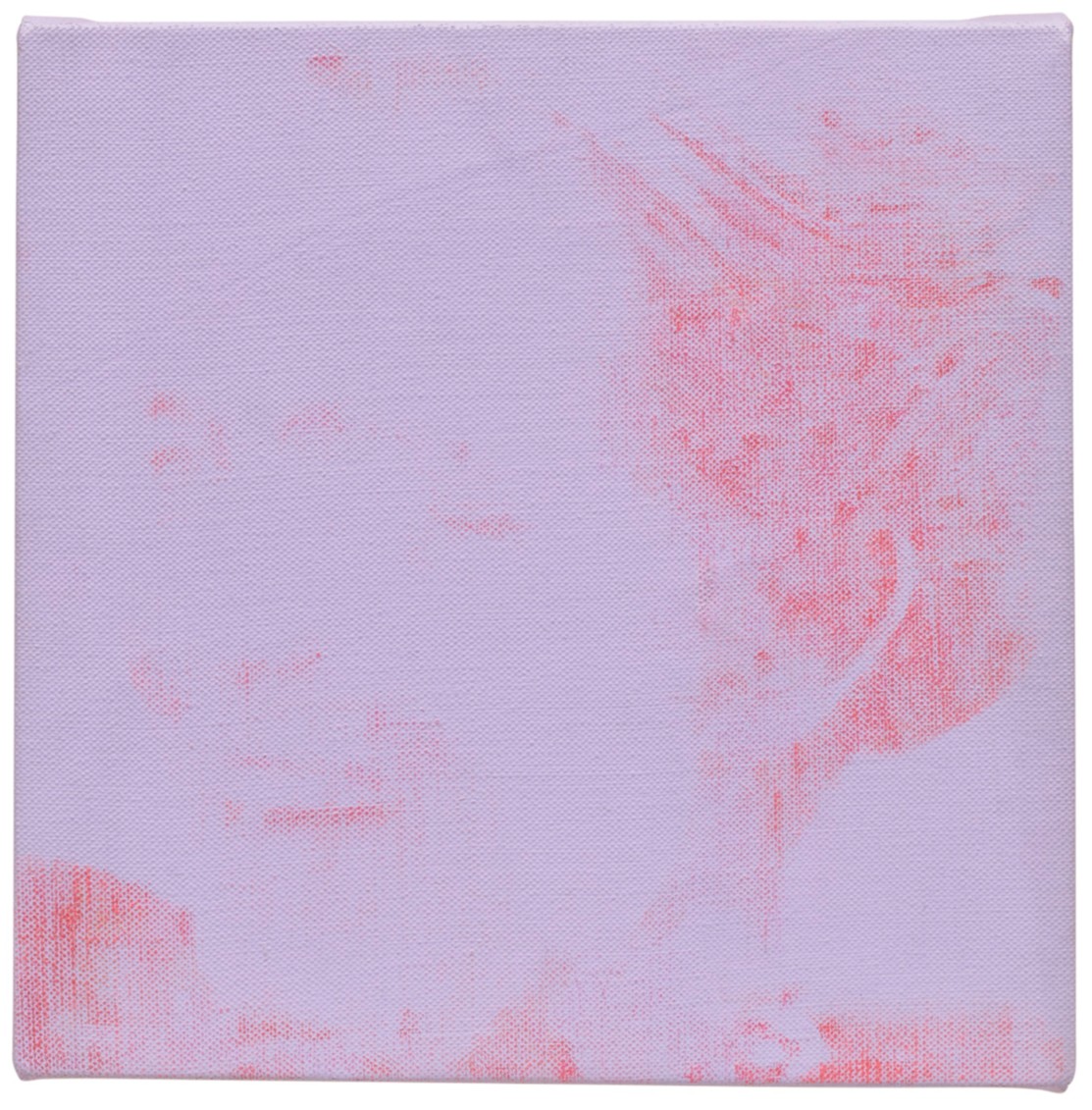
Numbered ‘P060.054’ on the overlap
With the Estate of Andy Warhol and the Andy Warhol Foundation for the Visual Arts, Inc. stamps on the reverse
Andy Warhol turned portraiture into a mirror of modern life, where image defined value. Executed in 1969, his portrait of Dominique de Menil not only pays homage to a close friend and collector, but moreover testifies to and represents the one of the greatest relationships between artist and patron of the 20th Century. It belongs to one of the first serialized suite of portraits that Warhol would execute by way of private commission, a turning point in his oeuvre that revolutionized the staid tradition of social portraiture and remade it as only he could. Warhol’s silkscreen technique blurred the lines between fame and anonymity, glamour and intellect, capturing Dominique here as a symbol of cultural influence and shared ideals. By the 1960s, she had amassed one of the largest collections of works by Warhol in the world, becoming the artist’s most significant patron, and her portrait reflects Warhol’s admiration of her commitment to the arts in America. Executed with a vivid palette and on a jewel-like scale, it is iconic in every sense, making manifest his belief in a democratic American Dream available to everyone through beauty, recognition and respect. The luminous simplicity of Warhol’s portrait of Dominique de Menil hides the complexity of its creation. Warhol’s silkscreen technique, part photography, part painting and part printmaking, began with a photograph of Dominique taken by her daughter Adelaide. The present work has a delicate and ethereal quality that is rare within Warhol’s oeuvre. Dominique de Menil’s face appears in profile, printed in soft shades of pink that blend into hues of pale rose and red. Her features are gently defined with no harsh lines: the curve of her mouth, the crinkle of her eyes, the sweep of her hair. Her warm smile and relaxed expression feel candid; the fading edges and glowing tones give the sense of a fond memory. Unlike his usual bold, flat portraits of celebrities such as Marilyn Monroe and Jackie Kennedy, Warhol allowed Dominique’s natural grace to shine, creating a soft watercolor effect that is both intimate and unmistakably his: an affectionate and humanizing portrayal that transcends mere likeness.
Max Ernst, Portrait of Dominique, circa 1932, The Menil Collection, Houston. Artwork: © ADAGP, Paris and DACS, London 2025
Dominique de Menil was no ordinary subject. By the time Warhol created her image, she was a real cultural force. Born in France, Dominique and her husband Jean (later John) de Menil fled Europe during World War II and settled in Houston in 1941, where the family business had its American base. They brought European intellectualism and embraced the American Dream, growing and transforming their business and cultural influence. In 1948, Dominique and John de Menil commissioned architect Philip Johnson to design their Houston home. More than a residence, it became a vibrant center for Modern art and intellectual exchange, regularly hosting leading figures such as Max Ernst, René Magritte and Roberto Rossellini. Andy Warhol was first introduced into the de Menil circle well before he created his portrait of Dominique. In 1964, discerning the broader potential of his artistic practice, Dominique de Menil commissioned Warhol to produce Sunset, a film imbued with spiritual overtones. As committed Catholic patrons, the de Menils frequently engaged contemporary artists in explorations of faith and transcendence; most notably through their commission of Mark Rothko’s meditative panels for what would become the Rothko Chapel. Within this context, their choice to collaborate with the overtly Catholic Warhol reflected a willingness to look beyond his burgeoning Pop reputation and to recognize the more contemplative aspects of his work. This early act of faith in Warhol’s depth not only presaged their later collaboration on his portrait of Dominique but also established a lasting dialogue between artist and patron. In depicting her, Warhol honored not simply a client but a visionary figure who had long championed his work. In return, Dominique de Menil played a critical role in reframing Warhol’s legacy, revealing him not merely as a chronicler of celebrity and surface, but as an artist of profound spiritual and emotional resonance.
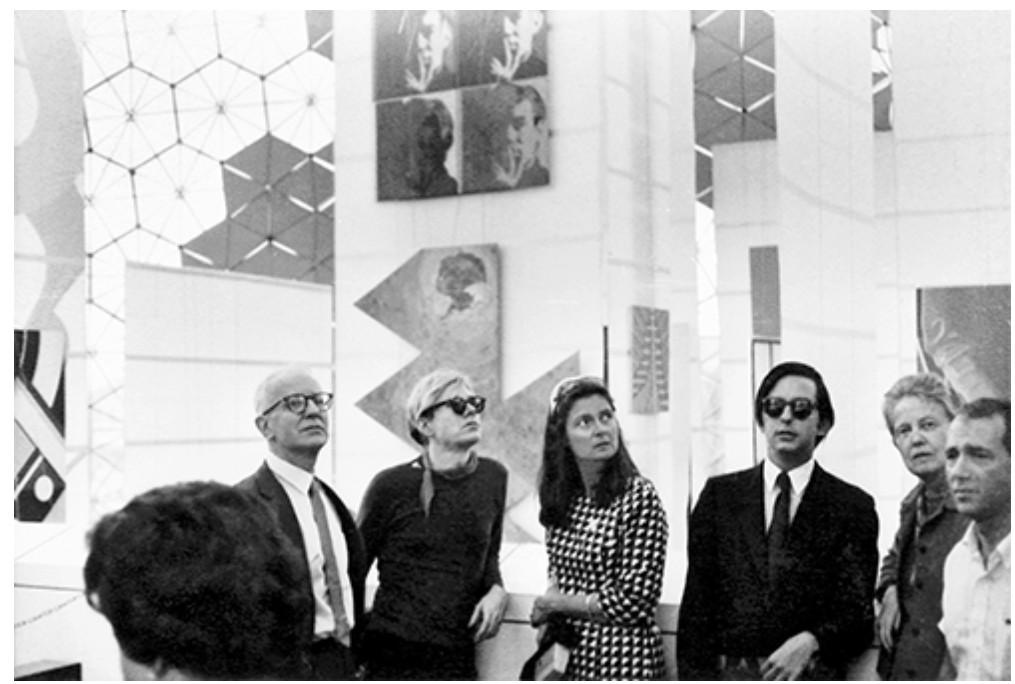
John de Menil, Andy Warhol, Simone Swan, Fred Hughes, Dominique de Menil and Howard Barnstone inside Buckminster Fuller’s geodesic dome in Montreal, 1967. Image: Courtesy of Menil Archives, The Menil Collection, Houston
The influence of Jean and Dominique extended beyond art collecting. Committed to civil rights, public access to culture and the blending of spirituality and aesthetics, they saw art as a vital human need. As Dominique often said, ‘Art is as essential as the air we breathe’. Her belief in an ‘art for everyone’ aligned with Warhol’s vision; he once said, ‘If everybody is not a beauty, then nobody is’. This shared ethos is clear in the present work. Using the same Pop Art language he applied to celebrities, Warhol rendered Dominique in soft pinks and gentle forms, emphasizing grace and intellect. Unlike his more flamboyant portraits, it is quiet and tender, elevating her dignity over spectacle. Yet, set beside Warhol’s Marilyns and Maos it realizes a broader picture of the era, blurring the line between cultural elite and popular icon. In doing so, he reinforced the idea that anyone – patron or performer – could embody the spirit of an era. Dominique’s portrait expands the definition of an ‘icon’, placing cultural stewards alongside celebrities in the American visual canon. Moreover, it speaks to the belief that everyone can matter and be remembered, becoming a portrait of possibility, of the American Dream made visible through art.
Margaret Krebs, 1982
Property from the former Margaret Krebs collection
Sotheby’s Paris: 8 July 2025
Estimated: EUR 200,000 – 300,000
EUR 254,000 / USD 297,775
Margaret Krebs | Modern & Contemporary Discoveries | 2025 | Sotheby’s
ANDY WARHOL (1928 – 1987)
Margaret Krebs, 1982
Acrylic and silkscreen ink on canvas
40×40 inches (101.6 x 101.6 cm)
Signed and dated 1982 (on the overlap)
At the end of 1981, the famous Belgian patron of the arts and collector Margareth Krebs brought Andy Warhol to Brussels for the Warhol-Delvaux exhibition, a groundbreaking event celebrating the work of both artists at Banque Bruxelles Lambert. To mark the occasion, Andy Warhol painted a portrait of Margareth, who invited him to her famous Villa Périer in Brussels.
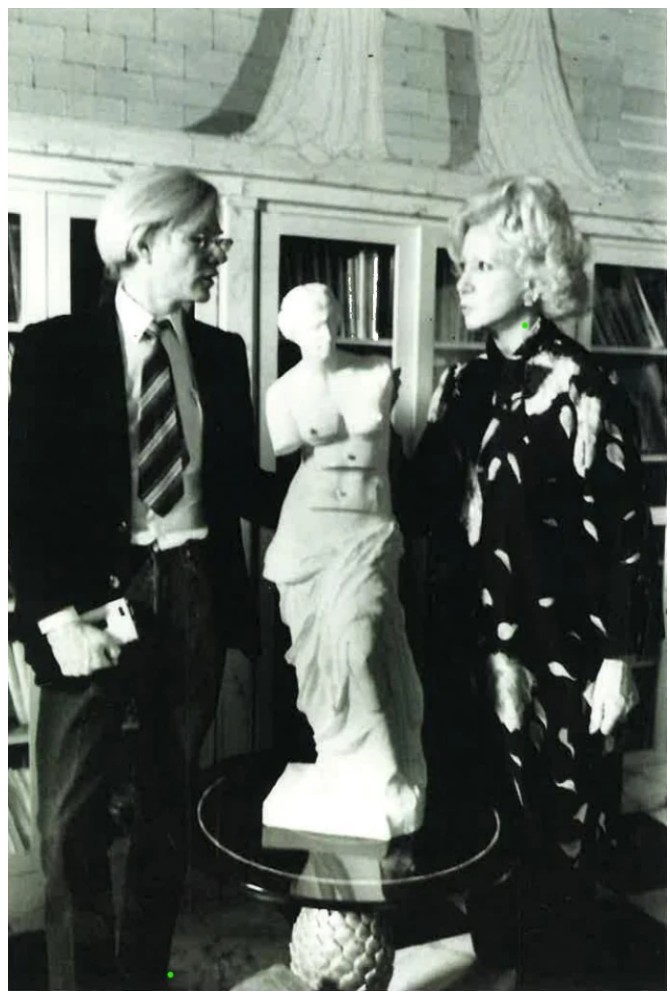
Andy Warhol and Margareth Krebs at the villa Périer, 1981–1982.
This work joins the line of Andy Warhol’s society portraits: a series of silkscreen prints on canvas, each measuring 40 x 40 inches, portraying celebrities from the worlds of art, music, fashion, film and politics. From an early age, Warhol was fascinated by celebrity and collected autographs. He began this series of society portraits in 1962, on the death of Marilyn Monroe, and in 1963 produced his first commissioned portrait, for Ethel Scull, wife of the collector Robert Scull, before going on to represent Elvis Presley, Elizabeth Taylor and Jacqueline Kennedy at the height of his success. Like the process of starification, this portrait by Margareth Krebs offers an idealized vision of her model, revealing no individual expression or sign of intimacy. While Polaroids capture the realism of the moment, the wrinkles of expression and the roughness of make-up on the skin, silkscreen on canvas erases all signs of time. The expectant, almost questioning gaze of the polaroid gives way to a confident serenity, while the face seems covered in an impassive, uniform mask: that of celebrity. These flat tones of color, revealing only Margareth’s public face, give her a timeless dimension, inscribing her in eternity.
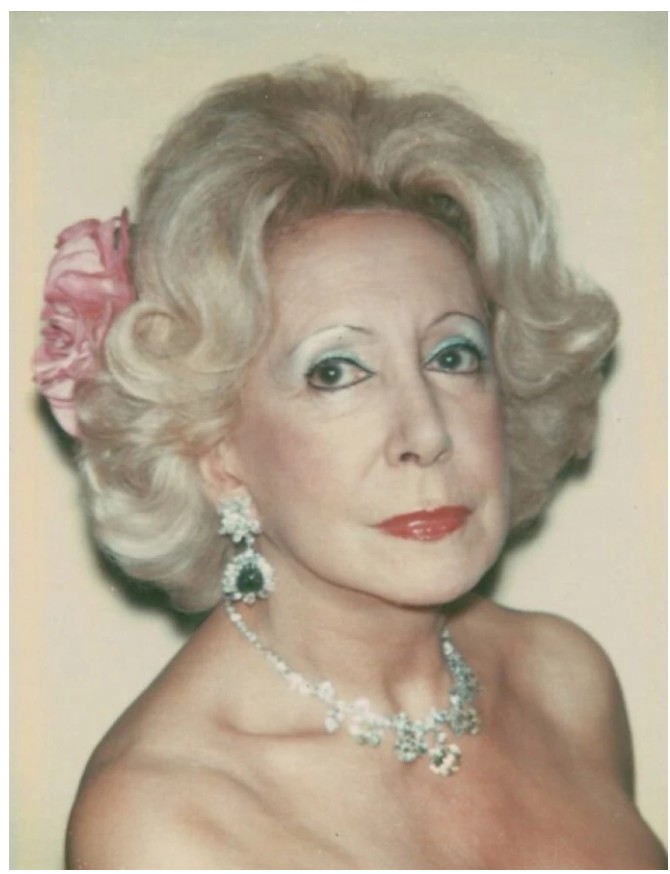
Andy Warhol, Margareth Krebs, 1981, dye diffusion print, Harry Ransom Center, gift of the Andy Warhol Foundation © 2016 The Andy Warhol Foundation for the Visual Arts, Inc. / Artists Rights Society (ARS), New York.
While the screen-printing technique establishes the eternal nature of celebrity, the fact that it is based on a Polaroid model also suggests its ephemeral nature. Superficial, momentary recognition, it can be born suddenly and disappear immediately; it can be bought and then sold, like a consumer product. Following in the footsteps of his industrial series of advertising images for Campbell Soup, Brillo and Coca-Cola bottles, the society portraits embody the images consumed by society at the time, associating celebrities with veritable industrial brands. The way screen printing worked contributed to this denunciation: a process of mass mechanical reproduction, it imitated the mass industrial production processes of consumer society.
Cardi Smith (Madame Smith), 1974
Christie’s London: 6 March 2025
Estimated: GBP 400,000 – 600,000
GBP 378,000 / USD 483,840
ANDY WARHOL (1928-1987), (i) Cardi Smith (Madame Smith)(ii) Cardi Smith (Madame Smith) | Christie’s
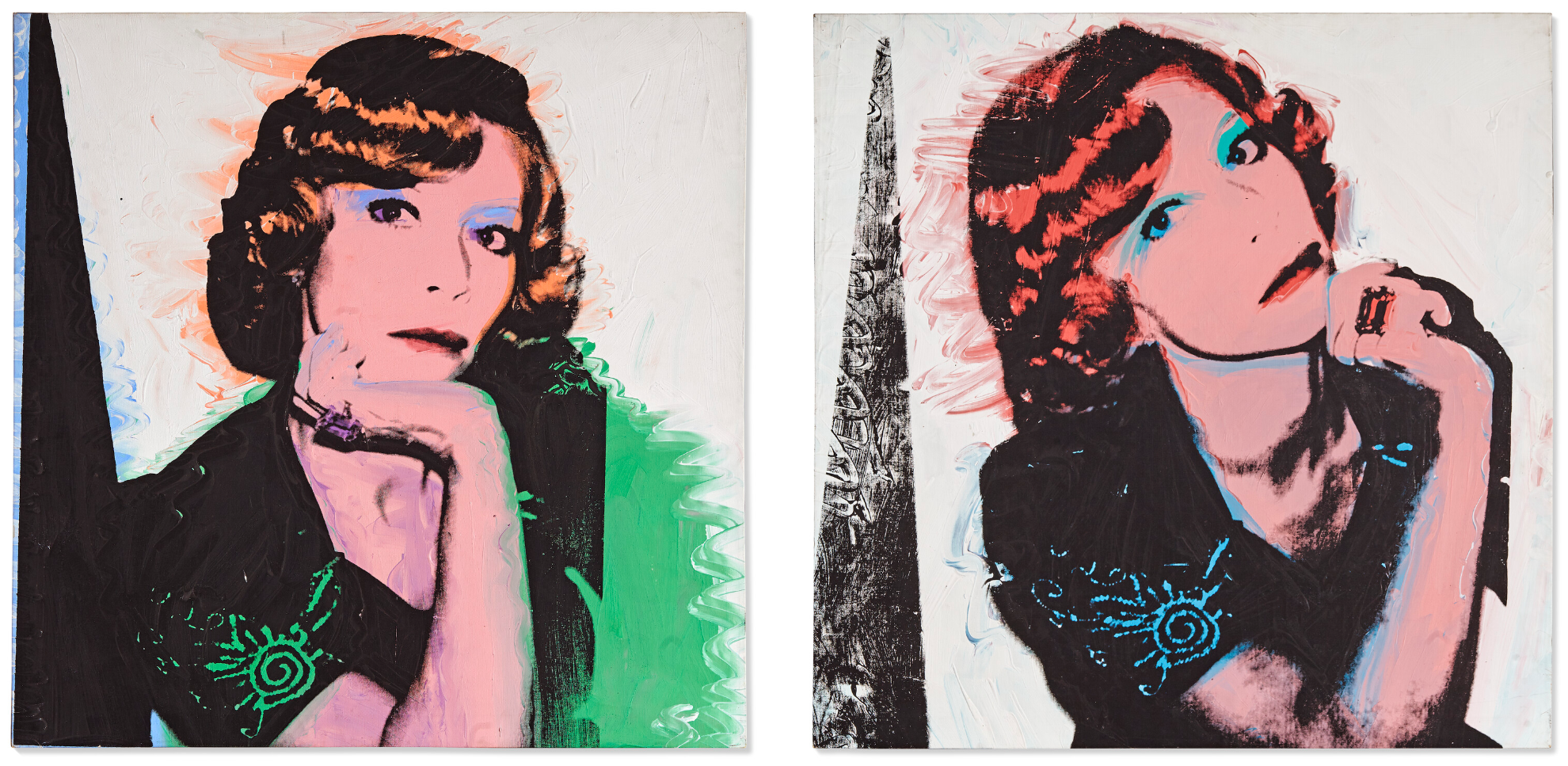
ANDY WARHOL (1928-1987)
(i) (ii) Cardi Smith (Madame Smith), 1974
Each: acrylic and silkscreen ink on linen
Each: 39 3/8 x 39 3/8 inches (100×100 cm)
(i) Stamped with the artist’s signature ‘Andy Warhol’ (on the overlap); signed, inscribed and numbered by Frederick Hughes ‘#A1290.10 CERTIFIED © 1974 Frederick Hughes’ (on the overlap)
(ii) Stamped with the artist’s signature ‘Andy Warhol’ (on the overlap); signed, inscribed and numbered by Frederick Hughes ‘CERTIFIED Frederick Hughes A1290.11© 1974’ (on the overlap)
Bringing the sitter to life across two radiant canvases, the present pictures of Cardi Smith (Madame Smith) (1974) are a striking pair of Andy Warhol’s celebrated ‘society portraits.’ The subject is Cardi Smith, the wife of Danish businessman and collector Hans Smith. Warhol had met the couple at a gallery they owned in Monte Carlo in May 1974: they were later photographed with the artist beneath their finished portraits in their home. Cardi appears here in two slightly different poses derived from Warhol’s Polaroid photographs, her chin resting on her hand. Luminous underpainting in blue, green, pink and purple glows through the black ink of the silkscreen, emerging in zigzagging wet-on-wet strokes against a white ground. Warhol highlights her lips and eyeshadow with Marilyn-esque drama: bright colors accentuate an embroidered pattern in her sleeve, a huge, square-cut jewel on her finger, and the reddish waves of her hair. With their courtly echoes—Smith’s pose recalls Ingres’ bejewelled portrait of Madame Moitessier (1856, National Gallery, London)—the works are a vision of decadent glamour.
Warhol made his first commissioned portrait in 1963, for the collector Ethel Scull. Ethel Scull 36 Times (Whitney Museum of American Art, New York), shows the sitter in multiple images across a large, multi-coloured silkscreen grid. The source photographs were taken by Scull herself: Warhol had her pose in a Photomat in Times Square, snapping over a hundred from which he made his selection. By the time he made Cardi Smith (Madame Smith), Warhol had codified a different method for his ‘society portraits’, which formed a major part of his output from the 1970s onwards. He would begin by taking Polaroids—sometimes asking his subjects to wear pale make-up that would heighten the image’s contrast—before blowing the negatives up to create silkscreens, which were then printed onto painted canvases. Having employed the medium since the early 1960s, Warhol was able to create sophisticated effects in these later works, layering different colours and electrifying their features with hand-painted details.
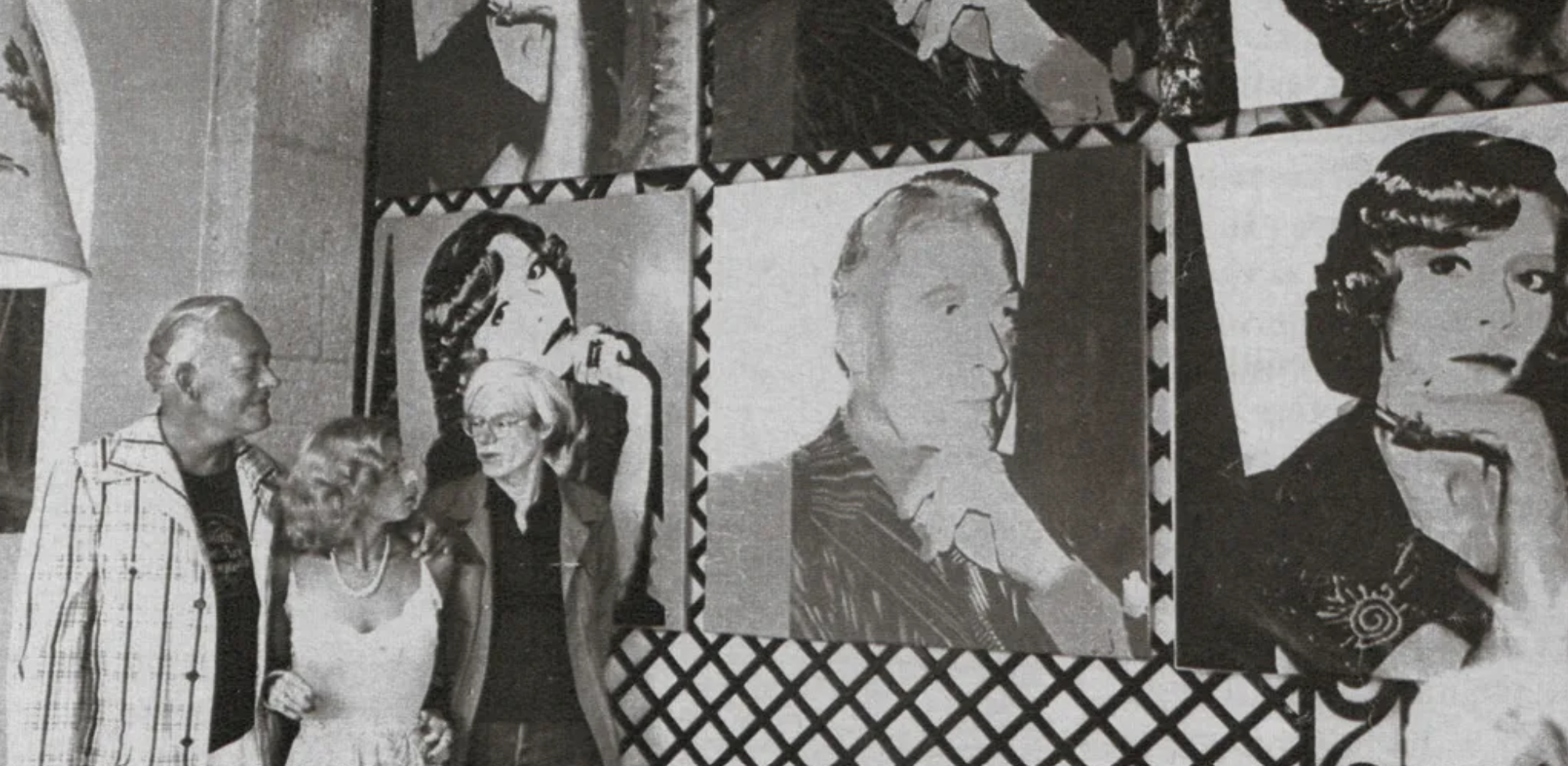
Hans Smith, Cardi Smith and Andy Warhol admire the present lot in the Smiths’ private home in Cap-Martin. Jour de France, August 1974. Photographer unknown. Artwork: © 2025 The Andy Warhol Foundation for the Visual Arts, Inc. / Licensed by DACS, London.
Warhol, who sometimes wryly referred to himself as ‘just a travelling society painter’, always used the same 40-by-40-inch format for these works, explaining that they needed to be of identical size so that they could all be displayed together as one enormous ‘portrait of society.’ This tongue-in-cheek idea conveys an important truth about Warhol’s practice. By fashioning himself as a modern-day court artist—not unlike the Singer Sargents and van Dycks before him who pictured the great and good of their time—he disavowed the ascetic Minimal and Conceptual tendencies that dominated the American art world during the 1970s. He instead struck a pose of unabashed fascination with celebrity and splendor, and captured a unique record of the people who defined his own era.
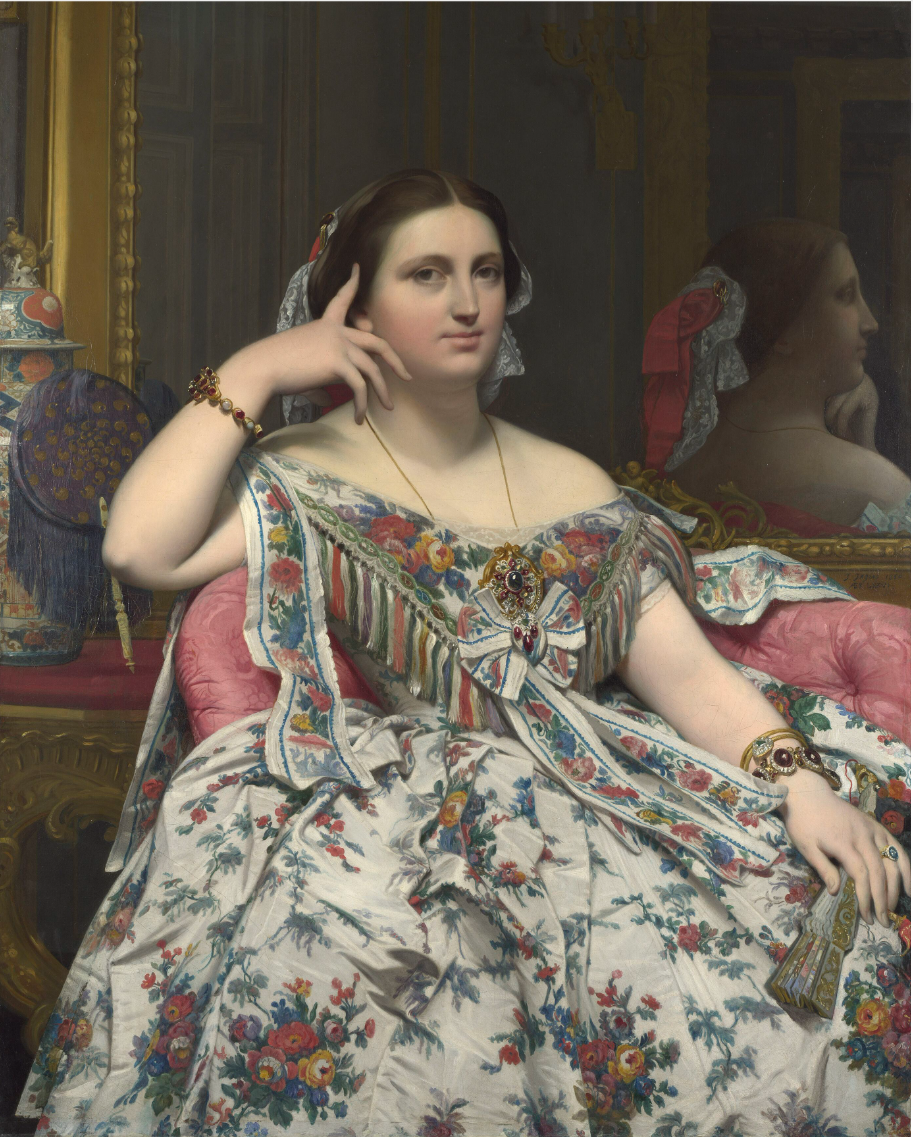
Jean-Auguste-Dominique Ingres, Madame Moitessier, 1856. The National Gallery, London.
Digital image: © 2025 The National Gallery, London/Scala, Florence.
The ‘society portraits’ feature a diverse range of luminaries, from Albert Einstein and Truman Capote to Prince, Diana Ross, Yves Saint Laurent, Joseph Beuys, Keith Haring, and Warhol’s own mother, Julia Warhola. He made his sitters into icons, commodities ready to be bought and sold, in a way that mirrored the workings of celebrity itself. Unlike his early Pop screenprints of figures such as Marilyn Monroe, however—which were based on found images—these works were all lensed in person by Warhol, who was by this time a star in his own right and sought after for commissions by clients worldwide. Accordingly they take on a self-reflexive quality, testifying to the position the artist himself had attained among the leading lights of the age. Cardi Smith joins Warhol’s pantheon in blazing color, under the immortalizing spell of the artist’s gaze.
Portrait of a Lady (Natalie Sparber), 1984
Phillips London: 6 December 2023
Estimated: GBP 150,000 – 200,000
GBP 190,500 / USD 239,925
Andy Warhol – New Now London Lot 25 December 2023 | Phillips
ANDY WARHOL
Portrait of a Lady (Natalie Sparber), 1984
Synthetic polymer and screenprint ink on linen
40 x 39 7/8 inches (101.6 x 101.4 cm)
Stamped by the Estate of Andy Warhol and The Andy Warhol Foundation for the Visual Arts, Inc., New York
Numbered ‘VP PO 50273’ on the overlap; numbered ‘PO 50.273 10-980-2903’ on the stretcher
The series of screen-painted portraits, that came to dominate Warhol’s enterprise throughout the 1980s, are here exemplified in unmistakable clarity. Warhol’s adoption of image-reproduction as a means to reframe timeless themes such as fame, authority, and consumption are well commented upon. Indeed, his portraits of iconic 20th century figures present as short-hand for Warhol’s shrewd commentary on popular culture and mass-production. In the present example, however, the sitter is neither famous nor infamous and is nevertheless rendered with characteristic elegance. Warhol’s choice to portray a sitter that is an acquaintance of his in the first instance, departs from the overstated glamour of certain other portraits. Instead, Warhol returns to the guiding principle of a ready-made aesthetic that is built around the production, modification, and mass-circulation of photographic images. The result is an image that is certainly timeless, not for its depiction of fame or power, but instead for its ability to encapsulate and validate the centrality of portraiture in contemporary art.
Jerry Moss, 1985
Christie’s New-York: 10 November 2023
Estimated: USD 150,000 – 200,000
USD 264,600
ANDY WARHOL (1928-1987) (christies.com)
ANDY WARHOL (1928-1987)
Jerry Moss, 1985
Acrylic and silkscreen ink on canvas
40×40 inches (101.6 x 101.6 cm)
Signed and dated ‘Andy Warhol 85’ (on the overlap)
As Warhol progressed in his experimentation and play, he left behind the faded newsprint portraits of his earlier years, turning to that, imaginary light that makes everyone look good, a celebration of all the artifices of invention, re-invention and make-believe. With his ice-cold piercing glaze and vibrant tie, on an elegant dark petrol background, Jerry Moss is the perfect representation of Warhol’s intent at the time. Warhol was very processorial when it came to his commissioned portraits. He would hire a stylist to assist in making his sitter look as glamourous as possible and then would take hundreds different polaroid shots, letting the sitter choose the one they liked best. A tribute to self-invention, these works were not meant as matter of fact portrayals, but rather as utopian images; images of selves re-imagined with heightened brilliance, attractiveness and glamour.
Emily Fisher Landau, 1982
Sotheby’s New-York: 8 November 2023
Estimated: USD 500,000 – 700,000
USD 571,000
ANDY WARHOL (1928 – 1987)
Emily Fisher Landau, 1982
Acrylic and silkscreen ink on canvas
40 1/8 x 40 1/8 inches (101.9 x 101.9 cm)
Signed and dated 82 (on the overlap)
Numbered by the Foundation PO 50.933 (on the stretcher)
There is perhaps no greater testament to Emily Fisher Landau’s enduring legacy as a beloved patron of the arts than the portrait Andy Warhol made of her in 1982. Warhol’s portrait paintings are among the most significant works from his expansive career which transformed the meaning of celebrity. His commissioned portraits are of particular note, mapping subcultures from Hollywood actors, American sports stars, and drag queens, to major art world figures such as Landau. Commissioned portraits allowed Warhol not only to perfect his craft, but also to become closer to his subjects and the world of society and wealth in which they lived. Through Warhol’s quintessential silkscreen technique and visual vocabulary, he transformed simple Polaroid photographs into statements of status and stardom. Befitting the importance of both Warhol’s artistic mastery and Landau’s lasting philanthropic legacy, another example of this portrait is held in the permanent of the Whitney Museum of American Art, New York. A striking paragon of Warhol’s portraiture practice and a reflection of the lasting relationships its sitter formed with the artists she supported, Emily Fisher Landau captures the esteemed collector in stunning graphic form.
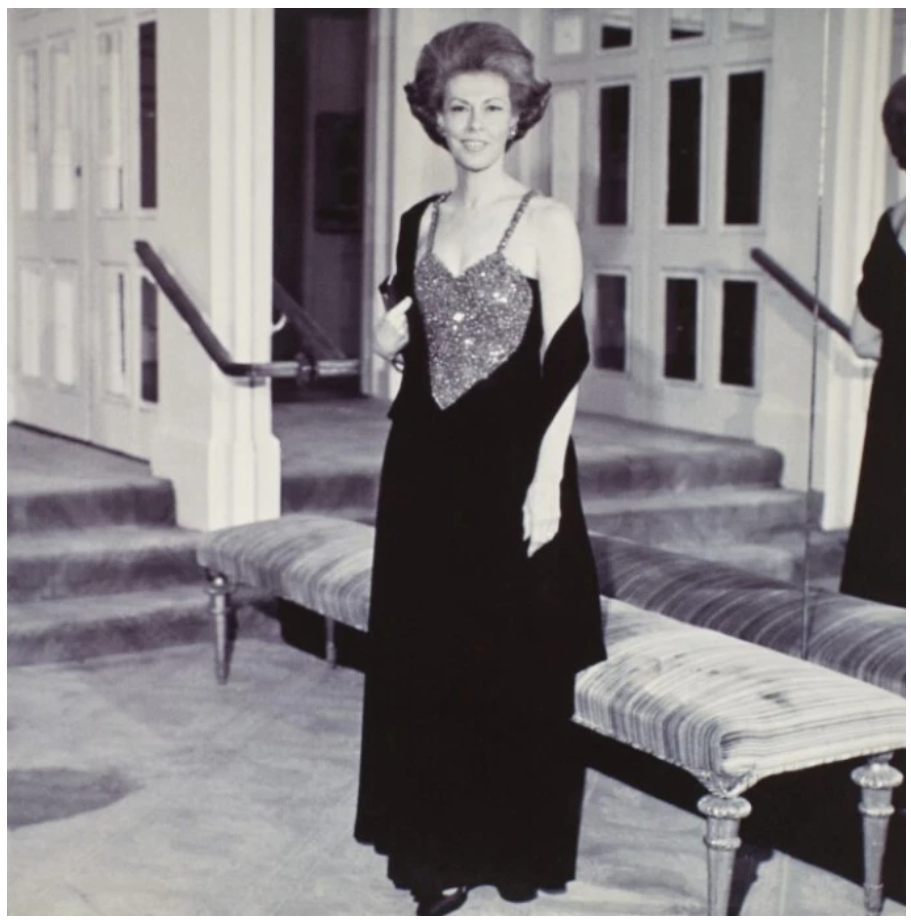
EMILY FISHER LANDAU CELEBRATING MARTIN FISHER’S 70TH BIRTHDAY AT THE PIERRE HOTEL IN NEW YORK, 1970. PHOTO COURTESY FISHER LANDAU FAMILY
Already notorious by the mid-1960s for his celebrity portraits, Warhol extended his repertoire of subjects to include the eminent figures of Manhattan, his adopted home. From prominent art collectors, dealers, notorious individuals, and public officials to his panoply of movie stars and first ladies, Warhol’s portraits canonized the who’s who of New York. To create these paintings, Warhol employed a semi-mechanized silk-screening process which allowed for the possibility of mass production. Using his infamous Polaroid camera and with a stylist in tow, Warhol placed his subjects in expert poses and captured them on multiple rolls of film. Warhol was keenly aware of the potential of photography to shape meaning and to both reflect and reaffirm the wider cultural obsessions of the American public. His captivation with the ephemerality of popular culture, as well as his concern with appearances and representation, made the Polaroid a fitting initial medium for his portraits. This Polaroid would then be converted into a negative and enlarged on acetate which Warhol used to create a silkscreen as well as trace the sitter’s features onto the canvas.
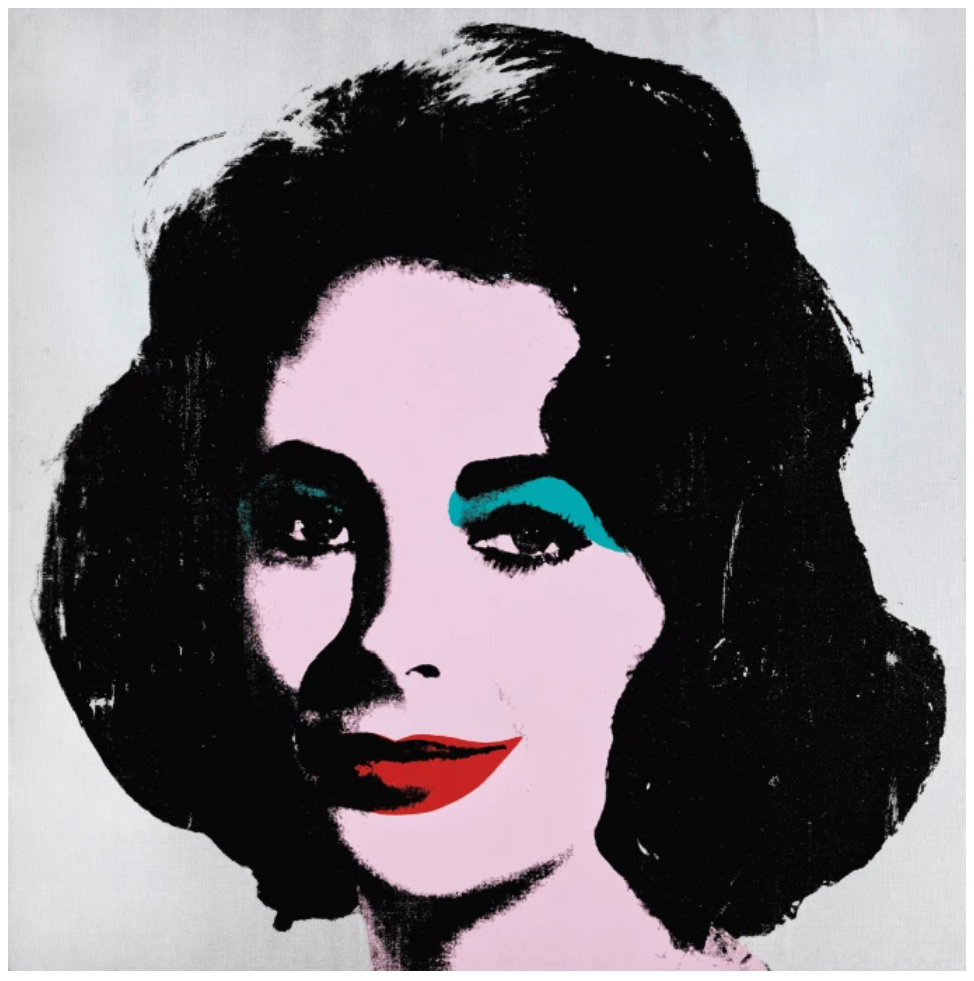
ANDY WARHOL, SILVER LIZ, 1963. PRIVATE COLLECTION. IMAGE © BRIDGEMAN IMAGES. ART © 2023 ANDY WARHOL FOUNDATION FOR THE VISUAL ARTS / ARTISTS RIGHTS SOCIETY (ARS), NEW YORK
Characterized by rich dark outlines and bright, isolated areas of color, Warhol’s extensive process results in an idealized interpretation of his subjects. Emily Fisher Landau is ornamented with thoughtful color blocking: powdery blue eyeshadow and bright red lipstick enhance her kind features. Her sophisticated glance and head just slightly tilted reveal glimmering earrings and effortlessly styled black hair. Akin to the portraits of Marilyn Monroe, Jacqueline Kennedy, and Elizabeth Taylor, Emily Fisher Landau includes only the most fundamental attributes while still maintaining likeness. As a result, this likeness becomes typified and iconized, reflecting Warhol’s obsession with consumer culture and the dramatic glamor of celebrity. Warhol’s late portraits are a testimony to his infatuation with the mythology of fame and American culture—even once he had achieved worldwide recognition himself. With its flat planes of saturated color and dynamic linework, Emily Fisher Landau embodies Warhol’s signature style and ethos which largely defined his way of life and his oeuvre.
Portrait of Craig W. Johnson, 1985
Sotheby’s London: 13 October 2023
Estimated: GBP 100,000 – 150,000
GBP 241,300 / USD 292,839
Portrait of Craig W. Johnson | Contemporary Day Auction | 2023 | Sotheby’s (sothebys.com)
ANDY WARHOL (1928 – 1987)
Portrait of Craig W. Johnson, 1985
Acrylic and silkscreen ink on canvas
40 x 39 7/8 inches (101.5 x 101.3 cm)
Stamped by the Estate of Andy Warhol and the Andy Warhol Foundation for the Visual Arts, Inc.
Numbered VF P050.025 on the overlap
The present Portrait of Craig W. Johnson epitomizes Warhol’s life-long fascination with two themes: portraiture and fame, embodied in the artist’s series known as the Society Portraits. As a common feature throughout Warhol’s Society Portraits, Craig W. Johnson’s features are reduced to the most basic elements while still maintaining his likeness. Overall, Warhol’s aim was to make his subjects look as glamorous as possible. A portrait session with the Big Shot camera typically lasted for long hours and resulted in the accumulation of dozens of shots for the artist to choose from for an eventual production of a commissioned portrait. Each photograph revealed a minute change in pose, expression and personality, in a sequence that captured the sitter more effectively than the finally executed portrait itself. Warhol’s ingenious captivation with the fleeting essence of popular culture, coupled with his acute emulation of appearances and representation, established the Polaroid as a fitting artist’s tool for his portraits. The camera, often referred to as Warhol’s “pencil and paper”, acted as a multifaceted device that enabled him to mediate and capture his interactions with the world. He fully comprehended the power of photography in shaping meaning, influencing, and reiterating the prevalent cultural obsession of his American audience. Warhol’s astute awareness of the superficial nature of celebrity in American society aided in the creation of a mask allowing marketing experts to commodify public figures while effortlessly eschewing any indication of the person behind the facade. Ethereal and otherworldly, the present work encapsulates Warhol’s innovative reinterpretation of portraiture, standing at the intersection of tradition and popular culture.
Portrait of Craig W. Johnson, 1985
Sotheby’s London: 28 June 2023
Estimated: GBP 100,000 – 150,000
GBP 254,000 / USD 320,909
Portrait of Craig W. Johnson | Modern & Contemporary Day Auction | 2023 | Sotheby’s (sothebys.com)
ANDY WARHOL (1928 – 1987)
Portrait of Craig W. Johnson, 1985
Acrylic and silkscreen ink on canvas
40 1/8 x 40 1/8 inches (102×102 cm)
Signed and dated 85 on the overlap
Stamped by the Estate of Andy Warhol and the Andy Warhol Foundation for the Visual Arts, Inc.
Numbered VF P050.026 on the overlap
Marie-Louise Jeanneret, 1974
Dorotheum Vienna: 24 May 2023
Estimated: EUR 200,000 – 300,000
EUR 351,000 / USD 410,000
Andy Warhol – Contemporary Art I 2023/05/24 – Realized price: EUR 351,000 – Dorotheum
ANDY WARHOL (Pittsburgh 1928–1987 New York)
Marie-Louise Jeanneret, 1974
Acrylic and silkscreen ink on canvas
40×40 inches (102×102 cm)
Signed and dated on the reverse with the stamp of the Andy Warhol Authentication Board, Inc.
Warhol’s famous 1974 work ‘Portrait of Marie-Louise Jeanneret’ immortalizes the granddaughter of the famous Swiss architect Le Corbusier. Marie-Louise Jeanneret was a renowned art dealer who had set up an International Centre for Artistic Experimentation in Boissano together with the great art dealer Simon Spieper. Big names including Warhol visited this place of great artistic fervor. Warhol probably spent no more than a week in Boissano, but during that time he photographed the following visitors for their portraits: the collectors; Dr Luigi Accame, Giuliano Gori, Carla Pizzera, and Simon Spieper; a young ballerina, Gabriella Cohen; and Jeanneret herself. Spieper posed with his two Borzoi dogs, Taigan and Vedma. Three Turin-based collectors, passionate about the writings of the French novelist Marcel Proust, commissioned four portraits of the writer in lieu of their own. Warhol probably painted all sixteen portraits during August and September, before moving studios from 33 Union Square West to 860 Broadway. Although he painted four canvases of Jeanneret, she did not acquire any of her portraits. In 1976, Jeanneret organized a Warhol exhibition in Boissano that included most of the portraits commissioned in 1974.
Society Portraits
Beautiful Lady, 1984
Van Ham Cologne: 3 December 2025
Estimated: EUR 300,000 – 500,000
EUR 369,600 / USD 430,930
ANDY WARHOL (1928 Pittsburgh, PA/USA – 1987 New York)
Beautiful Lady, 1984
Acrylic on canvas
40×40 inches (101×101 cm)
Signed and dated verso on the former canvas cover on the stretcher: Andy Warhol 84
Beyond the great iconic motifs, an often overlooked chapter of his oeuvre emerged – the private commissioned portraits. Andy Warhol’s most important dealer in Europe, the Swiss gallery owner Bruno Bischofsberger, had already suggested in 1967 that the prominent ranks of “Celebrity Portraits” should be expanded to include unknown protagonists. He recalls convincing Warhol “to begin the large series of private portraits that eventually became his main income. [.] I had the idea that Warhol should make portraits of people who were willing to be photographed. He liked the idea and told me enthusiastically that it would give him a ‘Galerie Contemporaine’, as he knew it from the Bild booksHe knew the personalities created by Nadar, Etienne Carjat and other photographers in France in the mid-19th century.” (Osterwold, Tilman (ed.): Collaborations: Warhol, Basquiat Clemente, Ostfildern-Ruit, 1996, p.108ff)
In the 1980s, Warhol had long since gone from being an autonomous artist to a service provider who fulfilled his orders in a factory-like studio – the legendary ‘Factory’ – with the help of assistants. The choice of subjects has become part of an enterprising production method in which Warhol’s artistic signature, which has become a trademark, was highly valued as a status symbol. In a standard size of 40 x 40 inches (approx. 101 x 101 cm), those were also portrayed who did not so much arouse Warhol’s artistic interest, but were rather able to pay the fixed standard price.
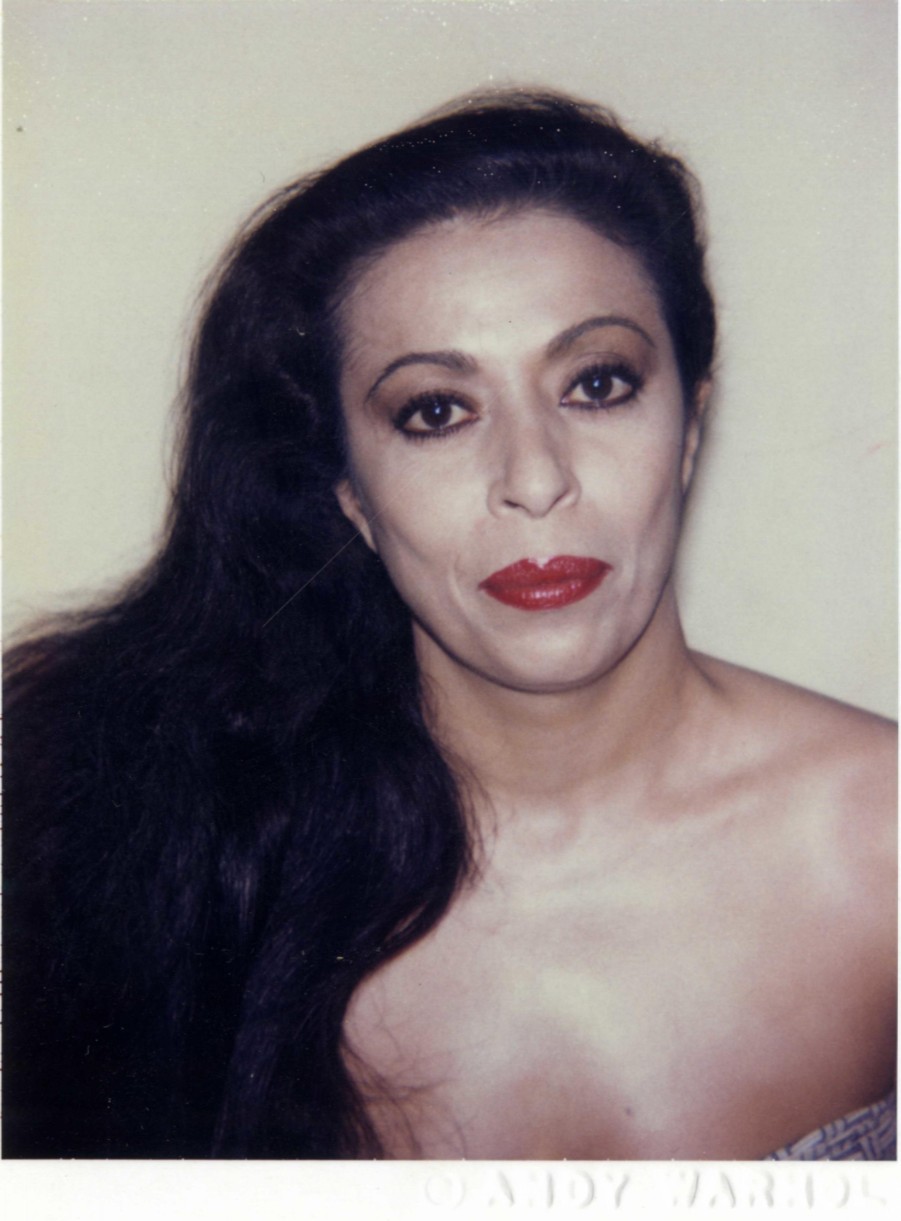
The present portrait represents a veritable peculiarity within this “Galerie Contemporaine”. So it occasionally happened that Warhol himself decided who he wanted to portray, as happened in this case. In the 1980s, a business assignment took the portrayed, who lives in Germany, on numerous trips, including to New York and the ‘Factory’. Andy Warhol suggested a portrait to her. He was immediately fascinated by her appearance, her style, her charisma. With her dark, flowing hair and her self-evident elegance, she embodied exactly the type of woman that inspired Warhol – a mixture of exoticism, eccentricity and glamour. (Fig.) Unlike many of his clients, she did not want the picture herself. Warhol, however, persisted and she finally gave in, but only on the condition that her name be left unmentioned in the title. Warhol therefore simply called the work “Beautiful Lady”. In accordance with the usual procedure, a photo session took place, in which an unusually large number – 46 – Polaroids were created within five hours. From these templates, Warhol selected the final motif for implementation by the famous screen printing process. The painting remained in her private possession for 40 years and can now be offered fresh on the art market.
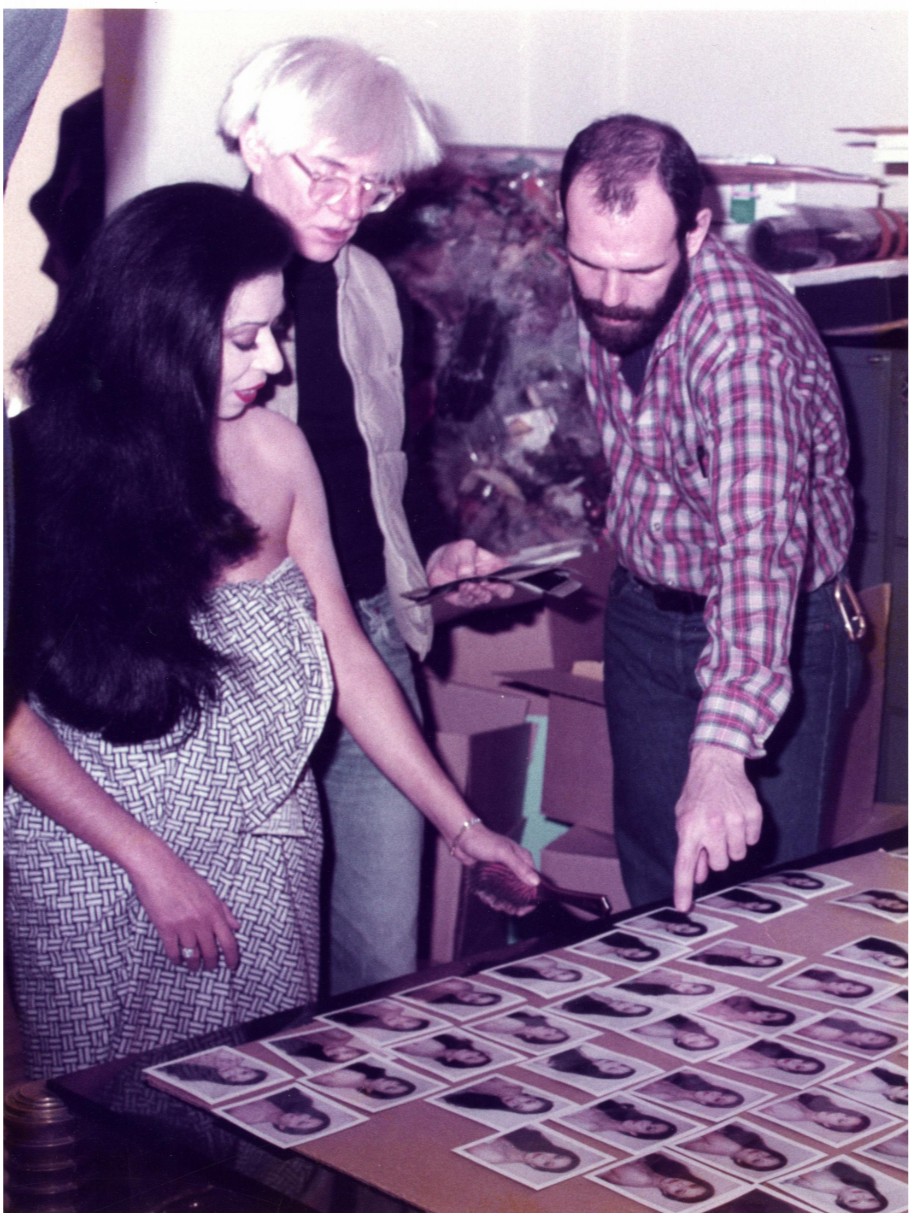
The work is as simple as it is effective in its composition. With his characteristic technique, which was based on poster art or comic drawings, the present portrait was executed flat and contrasting in black, red and powder pink in order to emphasize the striking features of the sitters: the full, black hair and the bright red mouth. In addition, the eyes and hair are structured with dynamic inner contours, whose color gradient transitions from turquoise to blue and violet to soft pink, giving the work movement. As is so often the case with Warhol, the result is ambivalent and lies between seduction and distance, between realism and ideal. The “Beautiful Lady” is both an individual and a symbol. The work not only shows a portrait of a woman, but stands for Warhol himself – his gaze, his fascination with beauty and, above all, his conviction: anyone can be a superstar if only the right image of him exists.
Portrait of a Lady, 1983
Christie’s New-York: 18 November 2022
Estimated: USD 300,000 – 500,000
USD 327,600
ANDY WARHOL (1928-1987) (christies.com)
ANDY WARHOL (1928-1987)
Portrait of a Lady, 1983
Acrylic and silkscreen ink on canvas
40×40 inches (101.6 x 101.6 cm)
Signed and dated ‘Andy Warhol 83’ (on the overlap)
Set against brilliant blue and vibrant crimson backgrounds, Andy Warhol’s society portraits dazzle with glamor, majesty and striking beauty. Portrait of a Lady, from 1983, immortalizes the unknown sitter who is transformed by Warhol’s unique creative process, refined through years of dedicated practice. The luminous red lip, accented with a glossy highlight, compliments the elegant subject’s lavish diamond earrings, pastel hued eye shadow, and halo of noir hair in a captivating exemplification of Warhol’s late portraiture.
While the two portraits were created from the same source material, the Warhol polaroid of the sitter, Warhol’s distinct creative vision produces two distinct artworks, while also exemplifying his commitment to seriality. One, bathed in a cool blue with lilac eyes and scarcely visible contours, carries an aura of calm contentment and repose, as the other, bursting forth from her electric red backdrop in strong definition, opens wide seafoam eyes in a confident spectacle of poise and exuberance. Sophisticated without lacking in excitement, these dual simulacra function as modern renditions of classical portraiture, displaying the stylistic ingenuity of the artist on the backdrop of its patron.
Created in 1983, Portrait of a Lady falls in the depths of Andy Warhol’s prolific career as a portraiture artist. Beginning in the early 60s, Warhol’s portrait process was extensive and well known amongst those who would sit for him. Shooting through generally around 10 rolls of black and white polaroid film per session, Warhol always ensured he ended up with the perfect photo that was both pleasing to himself and his subjects. Pose was the most important factor for Warhol, a slight turn of the shoulder or lifting of the head being the difference between effortless glamour and trite construction. His highly desired portraits were so sought after because, as Carter Ratcliff wrote, “anyone can be made to look good or bad, and Warhol could be counted on to opt for the former” (C. Ratcliff quoted in T. Shafrazi, Andy Warhol Portraits, exh. cat. Tony Shafrazi Gallery, New York, 2005, pp. 18). Following the selection of the elusive perfect photo, the negative would be sent to a laboratory where it could be transformed into a large acetate reproduction to be used for the creation of his iconic silkscreens. Finally, with precision and full creative control, Warhol transferred the visage from screen to canvas, leaving a vivid imprint that would stand steadfast in the canon of art history for decades to come.
A pioneer in many aspects, Warhol was not the first to add wealthy patrons to the everlasting history of art. Highly regarded for his commissioned portraiture, John Singer Sargent was one of many to create grand masterpieces in service of those with the means to request them. One of his most notable, Lady Agnew of Lochnaw, depicts a beautiful noblewoman reclining in lavish elegance, yet it is not celebrated for the prestige or notoriety of its subject. Rather this work of Sargent’s has remained in such high regard for its masterful creation of delicate furls of fabric on soft complexion and mesmerizing brushwork. Likewise, for Portrait of a Lady, the work’s unknown sitter serves merely as a vessel for Warhol to convey the refinement of his revolutionary artistic medium.
Portrait of a Lady, 1983
Christie’s New-York: 18 November 2022
Estimated: USD 300,000 – 500,000
USD 327,600
ANDY WARHOL (1928-1987) (christies.com)
ANDY WARHOL (1928-1987)
Portrait of a Lady, 1983
Acrylic and silkscreen ink on canvas
40×40 inches (101.6 x 101.6 cm)
Signed and dated ‘Andy Warhol 83’ (on the overlap)
Karen Kain, 1980
Christie’s London: 16 October 2021
Estimated: GBP 150,000 – 200,000
GBP 437,500 / USD 600,137
ANDY WARHOL (1928-1987), Karen Kain | Christie’s (christies.com)
ANDY WARHOL (1928-1987)
Karen Kain, 1980
Acrylic and silkscreen on canvas
40×40 inches (101.6 x 101.6 cm)
Signed, inscribed and dated ‘to Willy Co Andy Warhol 1980’ and inscribed again ‘For and To Willy Co Ronnie Cutrone – NY’ (on the overlap)
Andy Warhol’s Karen Kain is a striking example of the artist’s iconic silkscreened portraits. His subject is a celebrated former ballerina who worked with companies including the Paris Opera Ballet, the Bolshoi Ballet, the Vienna State Opera, and the National Ballet of Canada, among others. Based on a Polaroid that Warhol took of the dancer while she was visiting The Factory, the present work is the very first trial proof for the portrait executed in 1980. Emblazoned across a heather ground, Warhol’s Kain is serene and poised. A soft light illuminates her face, which is elegantly framed by her crossed hands. Her features are brought out in bold relief; Kain’s dark lips and distinctive eye shadow recall Warhol’s earlier celebrity portraits of the 1960s, for which he rendered silver-screen goddesses such as Marilyn Monroe in Day-Glo colors. Painted during Kain’s hiatus from the world of ballet, the work both captures and transcends its sitter’s biography. Shortly after it was made, Karen Kain was gifted by Warhol to the present owner, who had met the artist’s assistant Ronnie Cutrone through a friend and spent time at The Factory; the painting has been held in the same collection for the four decades since. Karen Kain takes her place among Warhol’s ‘society portraits’, a group that included actors, athletes, musicians, and society dames, whom he depicted in his characteristically dispassionate manner from the 1970s onwards. For the ‘society portraits’, Warhol would take multiple Polaroids of his subject before selecting one or two images which he would reproduce using the silkscreen, always on the same 40-by-40 inch scale. Warhol created sophisticated painterly effects in these late works. As in the present example, he would often employ bold, hard-edged chromatic backdrops, and traced elements of the picture using a projector to electrify the photographic screenprint with linear detail. These vivid images immortalized a Pop who’s-who of American culture, capitalizing on the public’s appetite for fame, celebrity, and glamour. Indeed, Karen Kain epitomizes this atmosphere: with her bright, stunning eyes, and dark mouth, she has been reduced to her most essential elements—an object to desire and consume.
Portrait of a Lady, 1983
Dorotheum Vienna: 23 June 2021
Estimated: EUR 350,000 – 450,000
EUR 450,213 / USD 538,017
Andy Warhol – Contemporary Art I 2021/06/23 – Realized price: EUR 450,213 – Dorotheum
ANDY WARHOL (Pittsburgh 1928–1987 New York)
Portrait of a Lady, 1983
Acrylic and silkscreen on canvas
40×40 inches (101.6 x 101.6 cm)
Signed, dated Andy Warhol 83 on the overlap
The theme of the portrait runs continuously through Warhol’s oeuvre and so the artist is also often called the portraitist of New York society. However, Andy Warhol photographed and portrayed not only New York society, but also friends, acquaintances and famous people. The present work shows a portrait of an attractive young woman in front of a monochrome, bright red background. The lady is shown in side profile, delicately turning her head to the left so that we can fully see her face. The viewer’s gaze first falls on her dark, red lips in the center of the picture. She smiles discreetly at the viewer and also looks directly at them. She has a short hairstyle that exposes her left ear, revealing her distinctive gold ear clip. The pose and the turn of the head particularly emphasize the protagonist’s neck and shoulders. Against the monochrome red background, her fair skin appears almost white. The red lips, the perfect complexion, the slender, graceful neck and the self-confident posture make the woman appear timelessly elegant and attractive. Although Warhol only allows a few facial features in the portrait of the young lady, these are sufficient to create a recognizable image. The image inspires curiosity, we want to know who the woman portrayed is. Is it a commissioned work? An acquaintance or friend of Andy Warhol? It is the grande dame of the American art scene, Dorothy Berenson Blau (1917-2014). She became known as a champion of contemporary art and a pioneer of the art scene in Miami. Both a gallery owner and good friend of Andy Warhol, she was one of the first to present his work in South Florida. Dorothy Berenson Blau was a driving force in Andy Warhol’s life and was instrumental in his success in the 1980s, the time at which the portrait was painted. Warhol depicted his patron several times throughout his life. The present work occupies a significant position within Warhol’s portraiture. Often his portrait works are rather sketchily executed, unlike the present piece, which stands out for its high-contrast brushwork and is particularly convincing in its plasticity. The intense coloring creates a unique attraction that captures the viewer and leads them into a constructed dialogue.
Moreover, her depiction is reminiscent of an icon of art history – the Girl with a Pearl Earring by the Dutch painter Johannes Vermeer. Warhol uses the same positioning and composition and a closer look at the two images reveals further parallels: in both depictions, the light falls from the left and the chosen perspective is also identical. What is particularly striking is that both women are wearing distinctive earrings. In Vermeer’s 17th-century painting, the earring has always been the focus of art historical research into the image. The monochrome backgrounds mean that both depictions lack pictorial depth. The neutral backgrounds draw the focus to their faces and the prominent earrings and also enhance the brightness of the two women’ skin. A fleeting moment is depicted in both images and the intermediate moment is visualized in the movement between turning towards and away. While the protagonists turn their heads over their shoulders towards the viewer, they meet our gaze with large, alert eyes. In contrast to Warhol’s portrait of Dorothy Berenson Blau, it is not known who the sitter is in the painting by Johannes Vermeer. The Girl with a Pearl Earring is also not a classical portrait in the true sense of the word, but a tronie (Dutch term for head, face or facial expression, designating a genre of picture in representational painting). This means that it is only a portrait-like character study. Furthermore, there are no attributes to place the girl with the pearl earring in a broader narrative context. When comparing the two images with each other, it is noticeable that the depicted women both interact with the viewer, they look at them directly and abruptly. The neutral background draws the viewer’s full attention to the faces of the portrayed women and generates curiosity in the viewer to find out who the portrayed women are.
Janet Sartin, 1982
Phillips London: 16 April 2021
Estimated: GBP 180,000 – 250,000
GBP 226,800 / USD 313,562
Andy Warhol – 20th Century & Contempo… Lot 230 April 2021 | Phillips
ANDY WARHOL
Janet Sartin, 1982
Synthetic polymer paint and silkscreen ink on canvas
40 x 40 1/8 inches (101.7 x 101.9 cm)
Stamped by the Estate of Andy Warhol and the Andy Warhol Foundation for the Visual Arts, Inc., New York
Numbered ‘PO 50.214’
Warhol had an enduring fixation with appearance and beauty regimes, no doubt stemming from his skin condition, which, as a child in Pittsburgh had earnt him the nickname ‘spot’ for his vitiligo and he was teased for having a red nose. In despair at his own appearance, Warhol revered beauty, and was liberal with his appreciation. Sharing a similar interest in obsessive beauty was the esteemed dermatologist Janet Sartin, who founded the Janet Sartin skin treatment salon in New York in 1945. Sartin was part of the celebrity culture which Warhol adored and inhabited. Revered for her facial treatments, Sartin pioneered new techniques and products, sought after by the wealthy and famous. Depicted against a background of soft, delicate, rose-skin coloured pink, Janet Sartin gazes both at the viewer and at a point beyond time. Freezing her image at this exact moment, Warhol combats and beats the aging process. She is a poster girl for her own treatment centre. There is an undeniable connection between artist and sitter- indeed Warhol, was Sartin’s patient. Janet Sartin made people beautiful through her work in the clinic, much like Warhol immortalised and beautified his sitters in his portraits made at his factory.
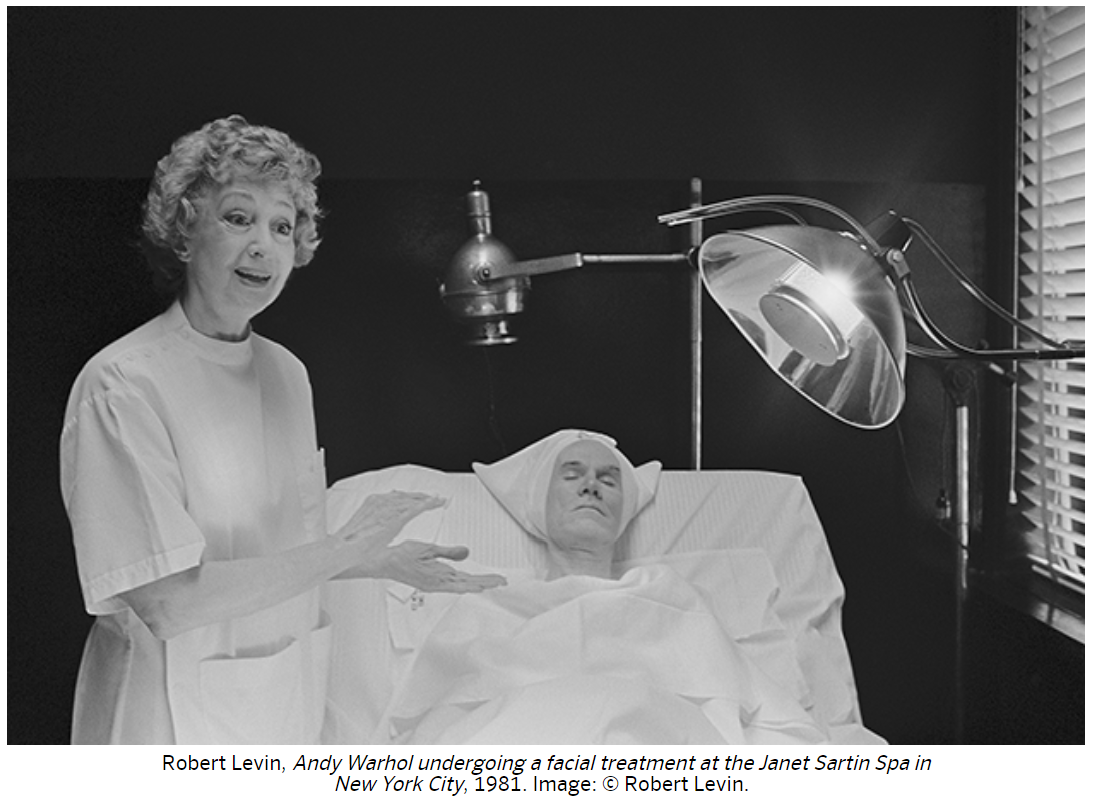
As early as 1969, Warhol produced his portraits on his since standardised 40 x 40 inch scale. This enabled his protagonists to be larger than life, big enough to make an impact, whilst simultaneously still of a scale that allowed easy production, display and distribution, an essential factor of Warhol’s art-business. Warhol would begin the portraiture process using his Polaroid Big-Shot camera, usually shot close range, less than a metre away. Often taking over one hundred photographs, Warhol would go on to select four or five, which an employee would then process to produce small-scale versions in black and white on acetate film. ‘Warhol often used these as the raw material for a radical transformation of the subject that might be compared to a cosmetic procedure performed by a plastic surgeon. The composition and contrast were altered, as were the mouth and nose, the proportions balanced and blemishes retouched. These edited films were then enlarged to the final painting size, on which Warhol marked up any last corrections. A coloured primer coat would then be applied to the canvas, followed by the copying of the film outlines, masking and addition of the coloured areas with a brush, and application of the prepared silkscreen using acetate film and the silkscreen ink with a scraper. The finished product allowed Warhol to eliminate the evidence of the hand (he did not like his hands – he deemed them too big) and to a certain extent, automate art making. Perhaps uniquely among Warhol’s commissioned portraits, this beautiful portrayal of Janet Sartin reveals not only Warhol’s immediately recognisable style and perfected process, it also has the touching ability to hint at Warhol very human insecurities through his fundamental relationship with the sitter.
Kay Fortson (an American Lady), 1976
Sotheby’s New-York: 13 May 2021
Estimated: USD 450,000 – 650,000
USD 1,109,000
Kay Fortson (an American Lady) | Contemporary Art Day Auction | 2021 | Sotheby’s (sothebys.com)
ANDY WARHOL (1928 – 1987)
Kay Fortson (an American Lady), 1976
Acrylic and silkscreen ink on canvas
40 1/8 x 40 1/8 inches (101.9 x 101.9 cm)
Stamped twice by the Estate of Andy Warhol and twice by The Andy Warhol Foundation for the Visual Arts, Inc.
Numbered VF PO50.330 on the overlap and on the stretcher