David Hockney’s new and recent paintings “Ma Normandie” were started in 2018 when the artist spent a couple of days in Normandy in the coastal town of Honfleur. From there, he went on to Bayeux to take a fresh look at Queen Mathilde’s tapestry and was fascinated by the graphic and narrative strength of this 11th-century masterpiece which reminded him of ancient Chinese scrolls.
“On an iPad you can draw for ever and you can’t on a sheet of paper. And on an iPad you draw a bit differently, but that’s all you do. Drawing is 50,000 years old, isn’t it? I think it comes from very deep within us actually.”
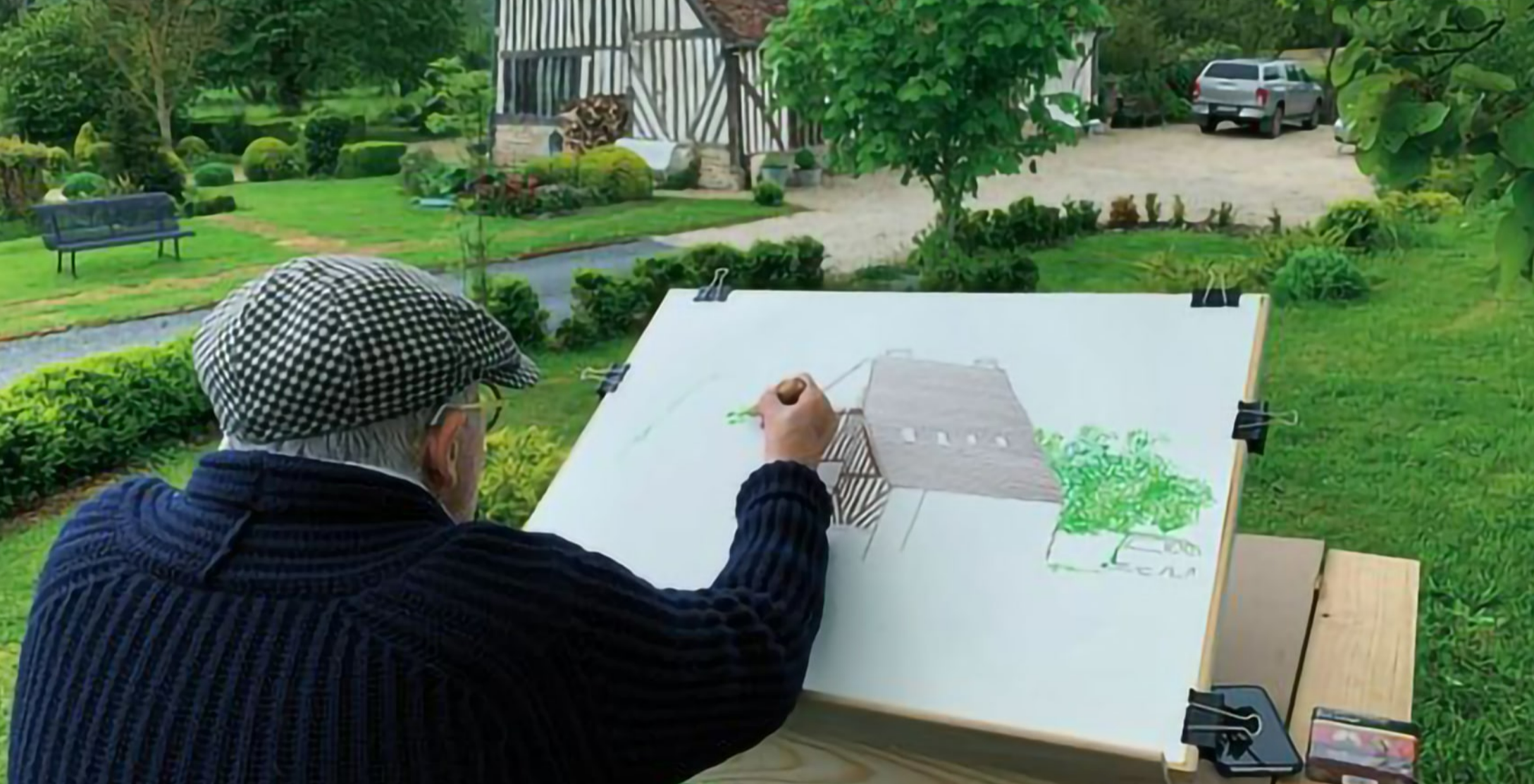
While Hockney was in Normandy, he realized a series of iPad paintings and a suite of landscape prints made from original ink on paper drawings. This new body of work highlights Hockney’s singular sense of line and form and his longstanding commitment to exploring perspective as mediated by technology.
“We do not look at the world from a distance; we are in it, and that’s how we feel. Some people may not like it, other people do. I tend to like the thought that I’m in the world. I don’t want just to look through keyholes.”
Conveying the passage of time through painting has always been a major preoccupation of Hockney, an avid reader of Marcel Proust. The idea germinated in his mind to renew what he had accomplished in his native Yorkshire ten years ago, only this time with the Norman landscape: painting the ‘Arrival of Spring’ in its unfolding, as if it were a narrative. He settled in a house in the countryside, set up a studio in the adjacent barn and started painting in March 2019.
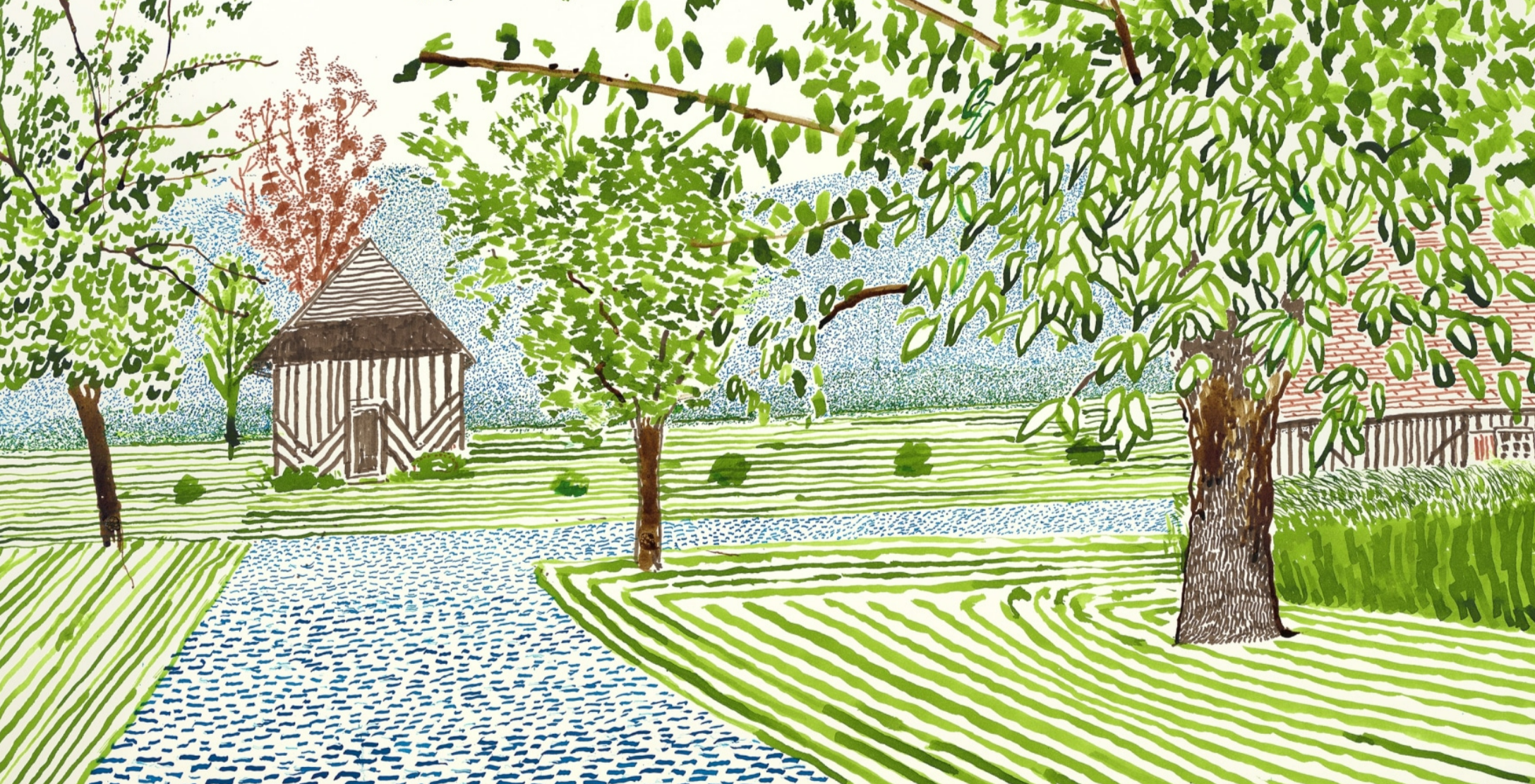
“Stand in the landscape you love, try and depict your feelings of space, and forget photographic vision, which is distancing us too much from the physical world.”
Hockney’s work is a sort of autobiography in pictures: he paints his relatives or close friends and the places where he lives. Thus, he began painting a long panorama representing a 360-degree vision of what surrounded the house, clearly referencing the Bayeux tapestry he had admired. This first work was followed by several views of the house, a 17th-century traditional, half- timbered cottage. If the Impressionists, in their quest for modernity, completely overlooked this kind of typical regional habitat, Hockney saw in it an echo of the thatched cottages of the Dutch landscapes painted by Rembrandt or the young Van Gogh.
My Normandy Prints
David Hockney’s My Normandy series ink drawings and digital paintings capture vivid interpretations of the French countryside around his Normandy home, harnessing vibrant colors and cutting‑edge digital techniques to celebrate nature’s seasonal shifts. This limited‑edition Normandy landscape art collection offers a modern reimagining of traditional rural scenes, emphasizing tranquil farmsteads, rolling fields, and Hockney’s signature exploration of light, space, and perspective.
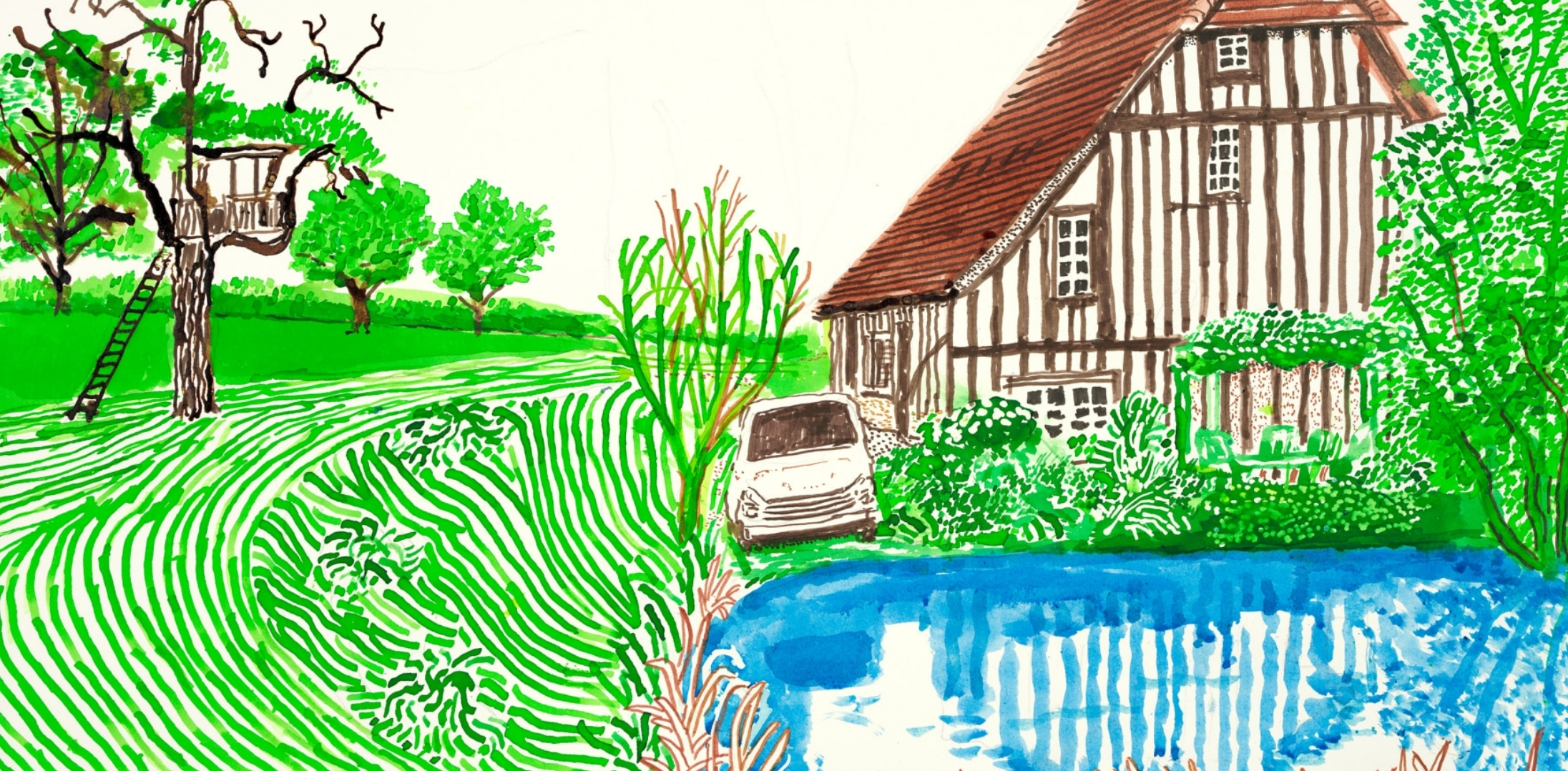
In Front of House Looking East
DAVID HOCKNEY
In Front of House Looking East, 2019
Inkjet print on paper
34×43 inches (86.4 x 109.2 cm)
Edition: 35
Signed, dated, and numbered in Pencil
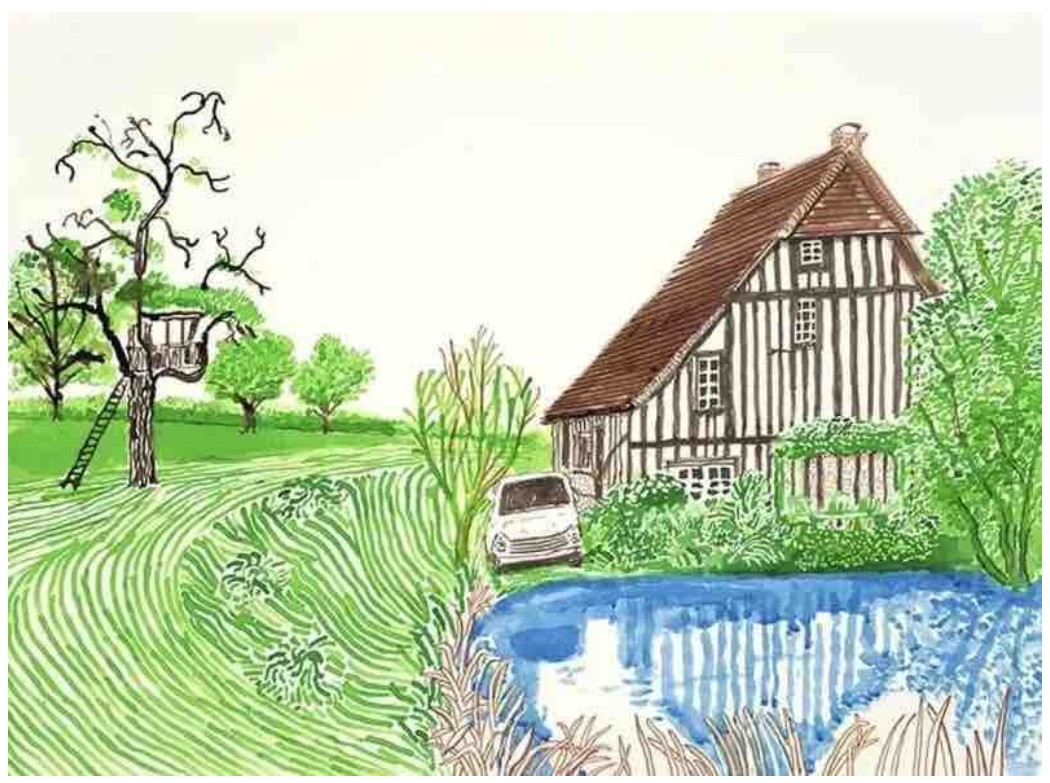
In Front of House Looking East beautifully captures the serene charm of rural life. The piece depicts a traditional half-timbered Normandy house nestled by a tranquil pond, surrounded by lush greenery. A modern car is parked near the house, juxtaposed with the rustic surroundings. The composition also includes a whimsical treehouse, adding a playful element to the scene. Hockney’s use of vibrant greens and blues enhances the sense of peace and connection to nature, while the detailed line work reflects his meticulous attention to architectural and natural forms. This artwork is a celebration of the quiet beauty and enduring charm of the Normandy countryside, blending traditional and contemporary elements in Hockney’s distinctive style.
In Front of House Looking North
DAVID HOCKNEY
In Front of House Looking North, 2019
Inkjet print on paper
34×43 inches (86.4 x 109.2 cm)
Edition: 35
Signed, dated, and numbered in Pencil
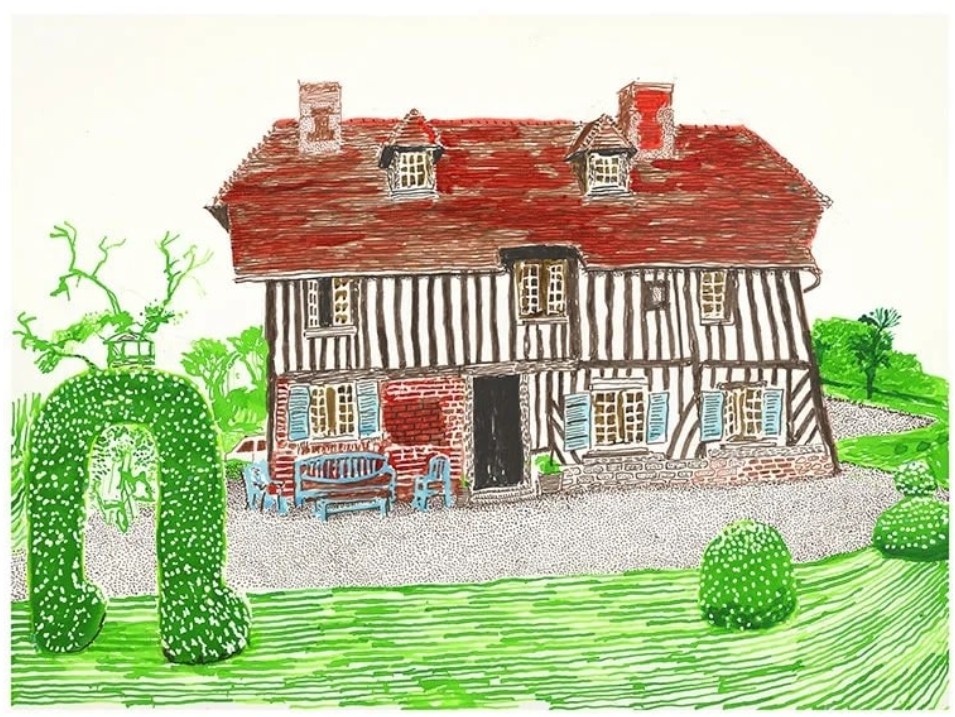
In Front of House Looking North captures a picturesque, half-timbered house set amidst a well-manicured garden. The vibrant greens of the landscape contrast beautifully with the red-brick and timber facade of the house, evoking a sense of nostalgia and tranquility. Hockney’s meticulous attention to architectural detail and the surrounding greenery highlights his deep appreciation for the charm and character of the Normandy countryside. This piece seamlessly blends traditional subject matter with Hockney’s contemporary artistic style, making it both timeless and modern
In Front of House Looking West
DAVID HOCKNEY
In Front of House Looking West, 2019
Inkjet print on paper
34×43 inches (86.4 x 109.2 cm)
Edition: 35
Signed, dated, and numbered in Pencil
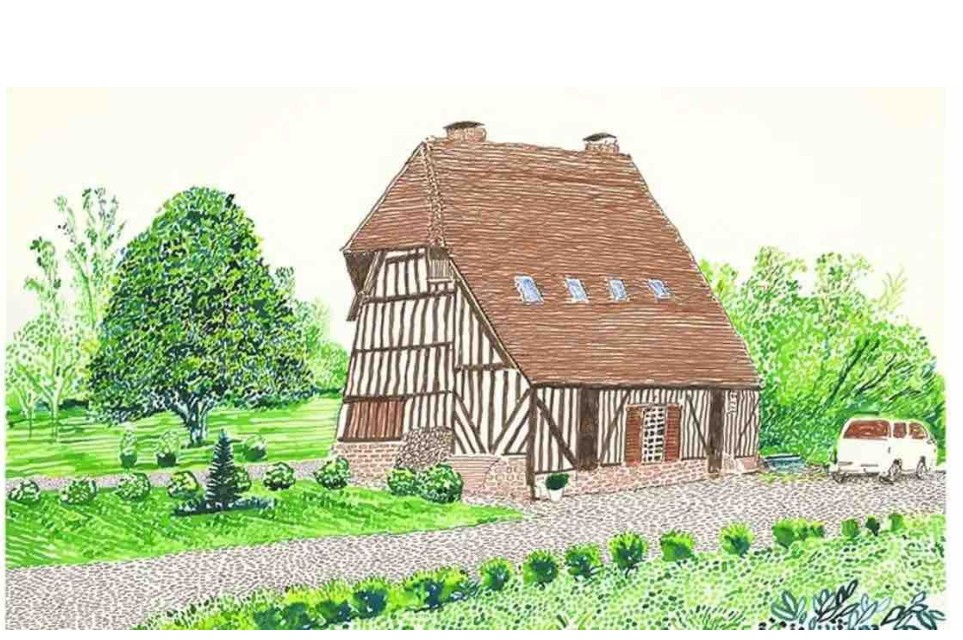
In Front of House Looking West is a charming depiction of a traditional half-timbered Normandy house. The scene is bathed in soft light, highlighting the texture of the building’s wooden beams and red-tiled roof. The lush green landscape surrounding the house is meticulously detailed, with vibrant foliage that contrasts beautifully against the earthy tones of the structure. A modern car parked on the gravel path adds a contemporary touch to this otherwise timeless scene. Hockney’s use of vivid colors and intricate line work captures the serene and idyllic atmosphere of rural Normandy, blending past and present with his unique artistic vision.
In Front of House Looking South
DAVID HOCKNEY
In Front of House Looking South, 2019
Inkjet print on paper
34×43 inches (86.4 x 109.2 cm)
Edition: 35
Signed, dated, and numbered in Pencil
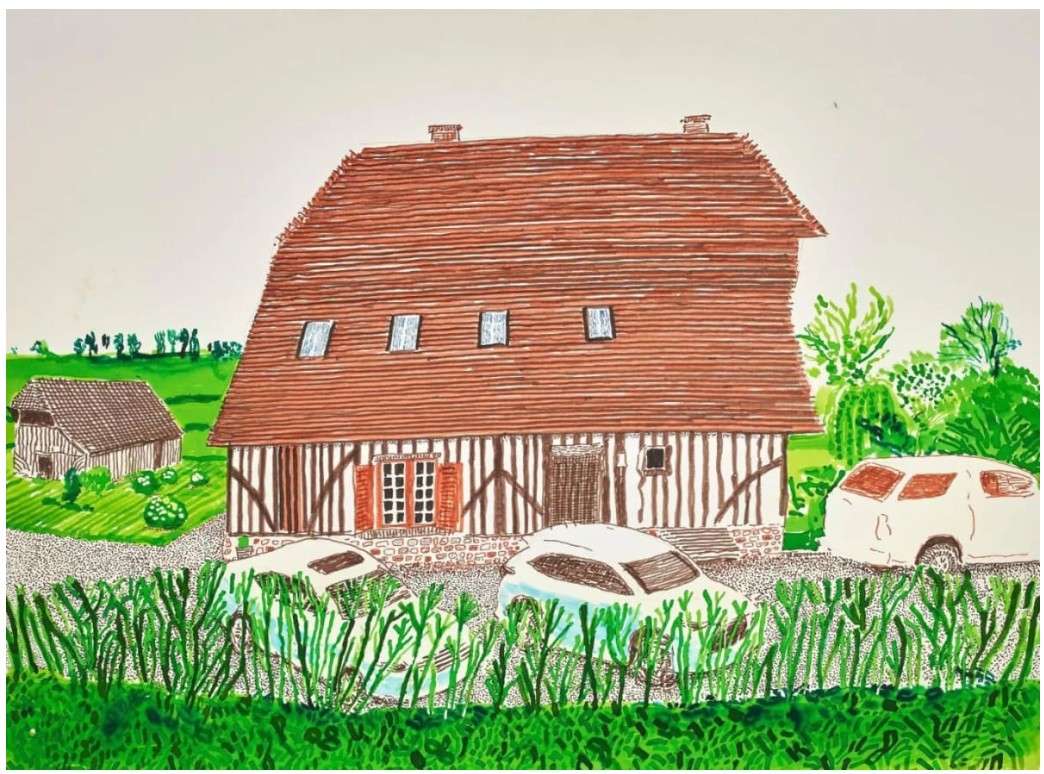
In Front of House Looking South presents a charming rural scene featuring a traditional Normandy house. The half-timbered structure, with its warm red roof, sits harmoniously within a lush green landscape, with modern cars parked in front, blending the past and present. The meticulous detailing of the architecture and the vibrant, almost playful use of color reflect Hockney’s unique ability to capture the essence of a place while infusing it with contemporary elements. This artwork is a beautiful depiction of the Normandy countryside, showcasing Hockney’s continued exploration of combining traditional themes with modern life.
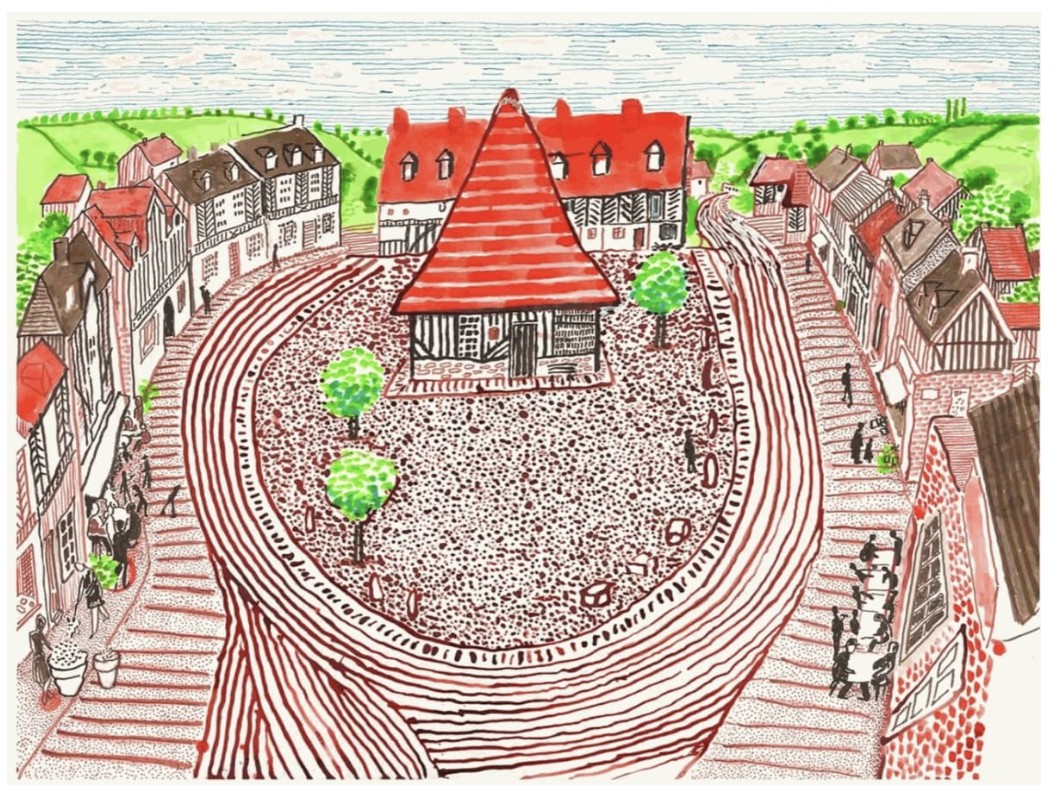
Beuvron-en-Auge Panorama
DAVID HOCKNEY
Beuvron-en-Auge Panorama, 2019
Inkjet print on paper
34×43 inches (86.4 x 109.2 cm)
Edition: 35
Signed, dated, and numbered in Pencil
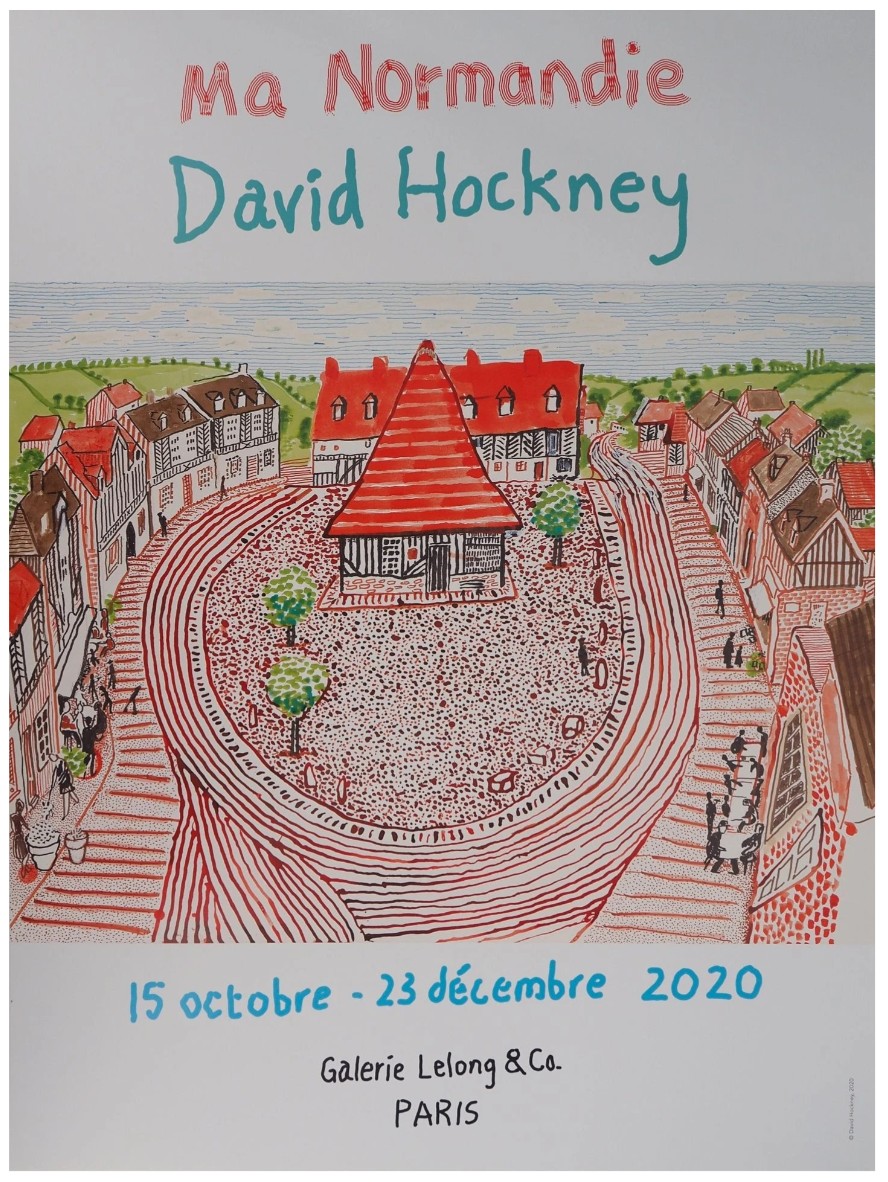
This piece captures the charm of a quaint French village, showcasing Hockney’s signature use of color and perspective. The scene is dominated by a central structure with a striking red roof, surrounded by cobblestone streets and traditional half-timbered houses. The curved lines and elevated viewpoint give the composition a dynamic, almost whimsical quality, inviting the viewer to explore the intricate details of the village square and its surroundings. Hockney’s ability to blend the simplicity of line with the richness of color results in a work that is both playful and deeply engaging, reflecting the picturesque beauty of rural France. This print, like many of Hockney’s works, bridges the gap between traditional artistic techniques and modern digital media, offering a fresh and contemporary take on a classic subject.
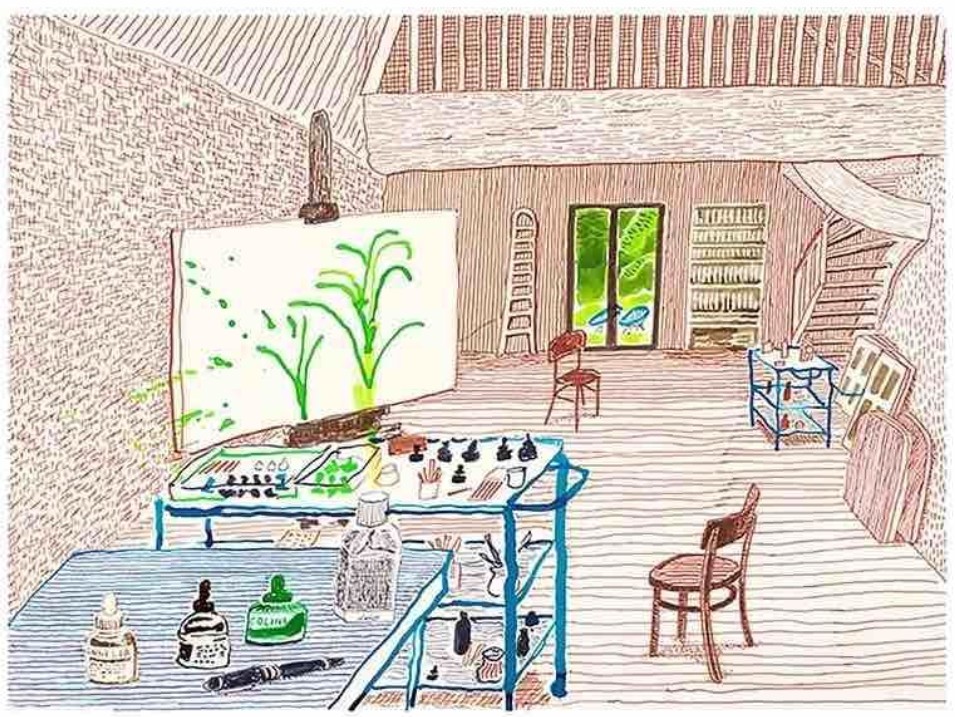
In The Studio
DAVID HOCKNEY
In The Studio, 2019
Inkjet print on paper
34×43 inches (86.4 x 109.2 cm)
Edition: 35
Signed, dated, and numbered in Pencil
In The Studio presents an intimate glimpse into the artist’s workspace. The piece captures the organized chaos of a creative environment, with tables cluttered with bottles of ink, brushes, and other artistic tools. The central focus is on a large canvas in progress, depicting the beginnings of a green, nature-inspired painting. The detailed lines of the studio’s interior, with its wooden beams, staircases, and an open doorway leading to a vibrant garden, reflect Hockney’s meticulous attention to the spaces where art is created. This work combines both the physical tools of traditional art-making with the modern technology of digital printing, showcasing Hockney’s continuous exploration of the relationship between the old and the new in his art. The print’s vivid colors and intricate details draw the viewer into the artist’s world, offering a snapshot of his creative space.
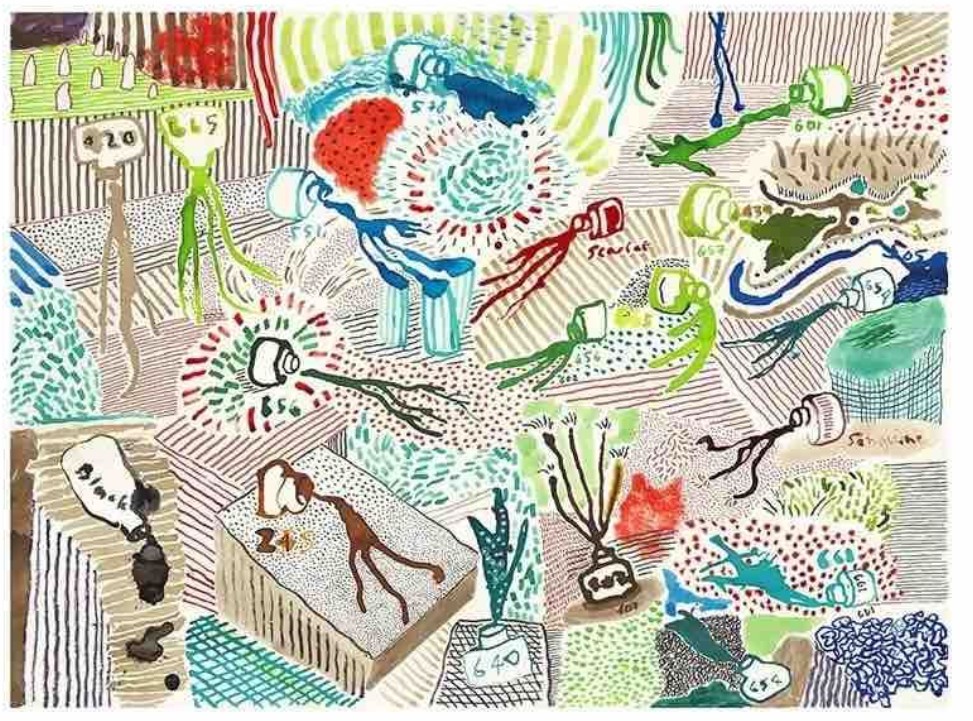
Split Ink
DAVID HOCKNEY
Spilt Ink, 2019
Inkjet print on paper
34×43 inches (86.4 x 109.2 cm)
Edition: 35
Signed, dated, and numbered in Pencil
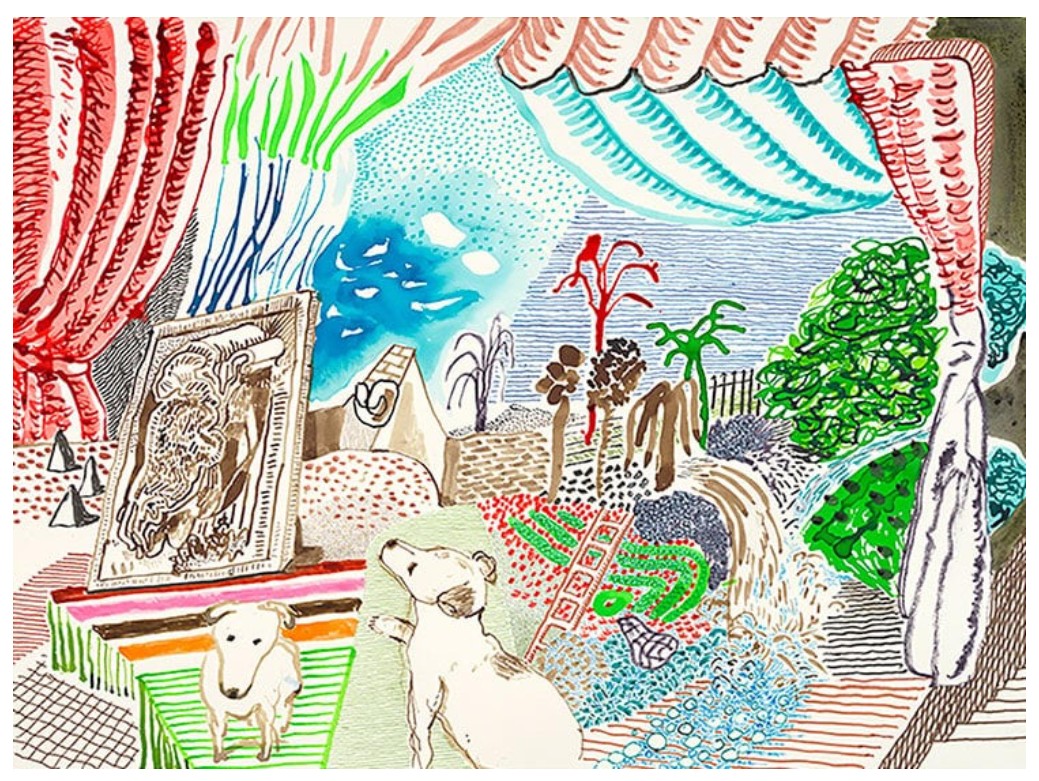
Ruby Dreaming
DAVID HOCKNEY
Ruby Dreaming, 2019
Inkjet print on paper
34×43 inches (86.4 x 109.2 cm)
Edition: 35
Signed, dated, and numbered in Pencil
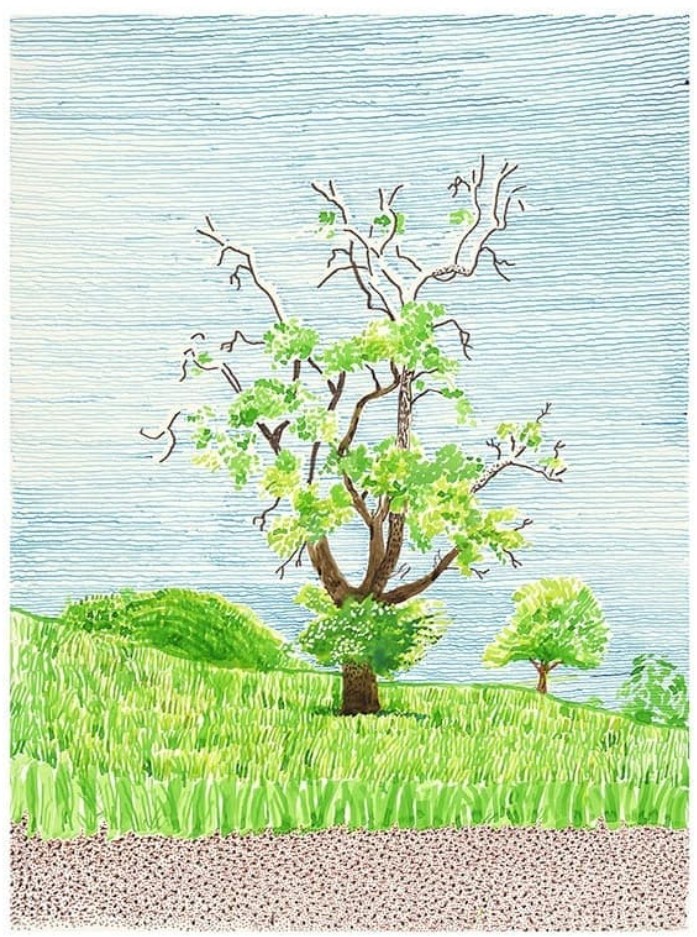
Hawthorn Bush in Front of a Very Old and Dying Pear Tree
DAVID HOCKNEY
Hawthorn Bush in Front of a Very Old and Dying Pear Tree, 2019
Medium: Inkjet print on paper
44×33 inches (111.8 x 83.8 cm)
Edition: 35
Signed, dated, and numbered in Pencil
Hawthorn Bush in Front of a Very Old and Dying Pear Tree captures a serene yet poignant scene of nature’s life cycle. The artwork features a flourishing hawthorn bush set against the backdrop of an aging pear tree, its gnarled branches reaching towards the sky with sparse, budding foliage. The vibrant greens of the hawthorn contrast with the pear tree’s muted tones, symbolizing renewal amid decline. The simple yet evocative composition invites contemplation of nature’s resilience and transience, adding depth to the piece’s overall tranquility.
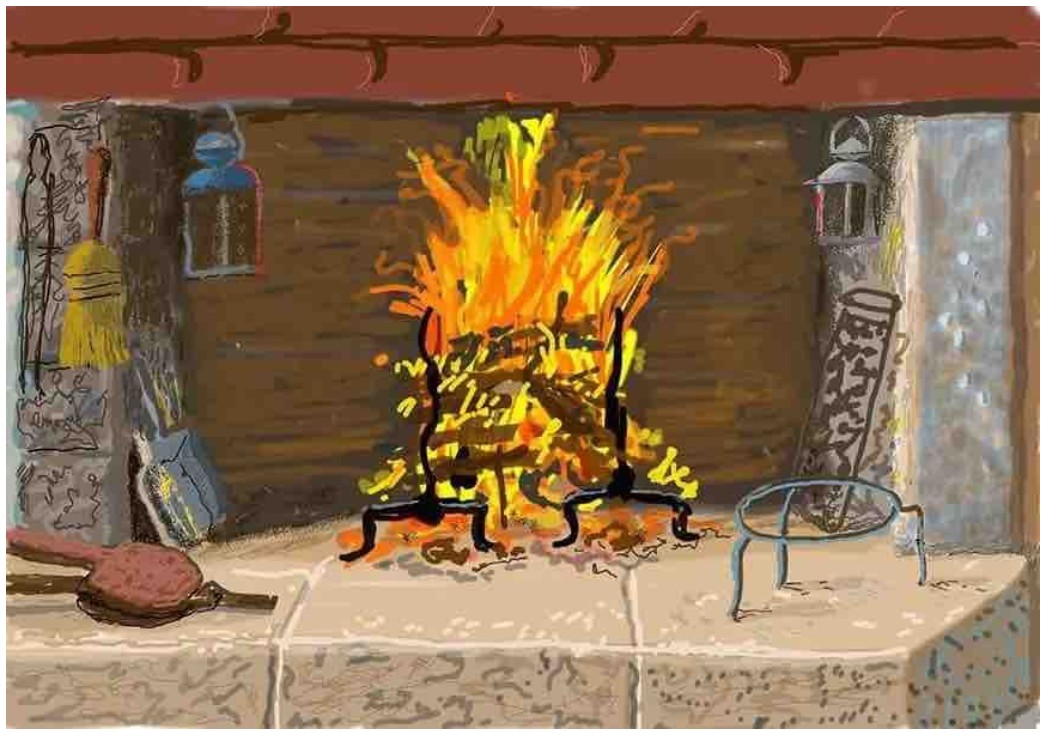
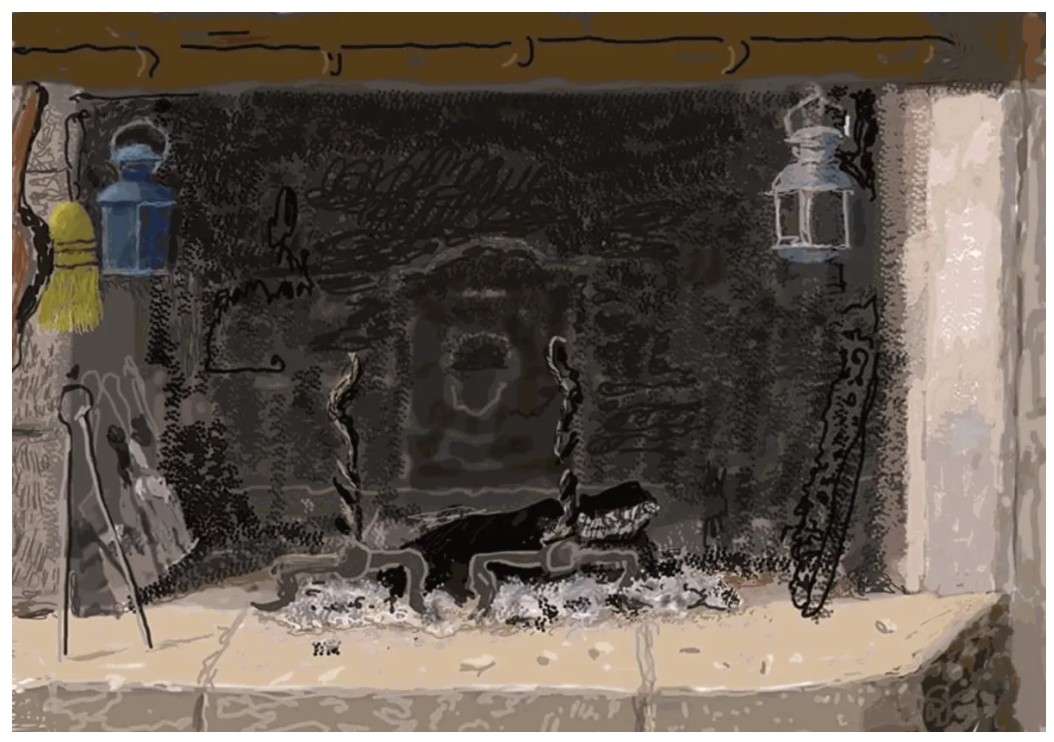
In both A Bigger Fire and No Fire, Hockney focuses on his own hearth. Traditionally viewed as the center of domesticity through its association with warmth and cooking, the roaring fireplace in A Bigger Fire is comforting and homely. Supplementary details such as the bellows lying to the left of the foreground and the small brush hanging from the mantel add elements of personalization, further emphasizing that this is an inhabited and frequently used space. Even in No Fire, where Hockney chooses to depict an empty fireplace – a subject that would usually be overlooked – the subtle differentiations in color and line, which the artist utilizes to reveal the textures of the stone on the back wall, speak to a long period of visual engagement with his subject. Viewed together, A Bigger Fire and No Fire speak of the inevitable passing of time – a concept that became more poignant in Hockney’s work over lockdown, as COVID-19 seemed to halt life as we knew it. Other projects he completed in lockdown – such as A Year in Normandy and The Arrival of Spring, Normandy – focus on the progression of time through the examination of familiar subjects. A Bigger Fire and No Fire are domestic equivalents: they evoke a mental image of Hockney seated in front of his hearth, repeatedly studying the scene in front of him and the effect of time passing.
A Bigger Fire
DAVID HOCKNEY
A Bigger Fire, 2020
iPad drawing in colors printed on wove paper
33 1/2 x 45 inches (85.1 x 114.3 cm)
Edition: 35
Signed, dated, and numbered in Pencil
A Bigger Fire shows a rustic inglenook fireplace with roaring logs held on ornate wrought-iron andirons beneath a sturdy wooden mantel. This piece is a vibrant and dynamic portrayal of a roaring fire within a hearth, capturing the warmth and energy of the flames in a lively composition. The work reflects Hockney’s ability to bring everyday scenes to life through his use of bold colors and expressive brushstrokes. The fire’s bright yellows, oranges, and reds create a striking contrast against the more subdued tones of the surrounding stone and metal, emphasizing the heat and movement of the flames. The surrounding objects, such as the bellows, lanterns, and metalwork, add a sense of place and context, grounding the viewer in a cozy, domestic setting. Hockney’s keen attention to detail and his unique style make this piece a captivating study of light, color, and the comforting atmosphere of a home fire.
No Fire
DAVID HOCKNEY
No Fire, 2020
iPad drawing in colors printed on wove paper
33 1/2 x 45 inches (85.1 x 114.3 cm)
Edition: 35
Signed, dated, and numbered in Pencil
No Fire offers a stark contrast to its counterpart, Bigger Fire. This piece presents the same hearth, now void of flames, leaving only the darkened remnants of ash and soot. The absence of the vibrant fire shifts the focus to the details of the surrounding objects and the texture of the hearth itself. The subdued tones and the quiet stillness of the scene evoke a sense of calm and reflection, highlighting Hockney’s versatility in capturing both the liveliness and the tranquility of a single space. This piece invites viewers to contemplate the passage of time and the changing states of energy within a domestic setting, making it a subtle yet powerful exploration of stillness and presence.
Glass Vase, Jug and Wheat
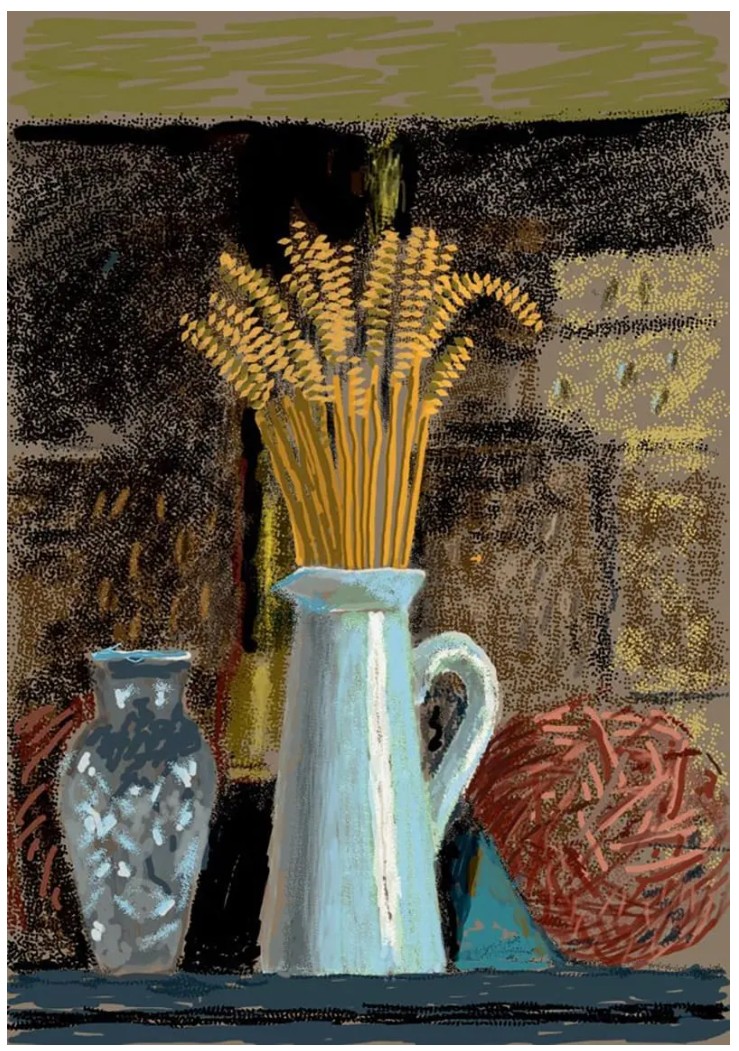
Glass Vase, Jug and Wheat, 2020
iPad drawing in colors printed on wove paper
35×25 inches (88.9 x 63.8 cm)
Edition: 35
Signed, dated, and numbered in Pencil
Auction Results
Roseberys London: 18 February 2026
Estimated: GBP 100,000 – 200,000
GBP 80,000 (Hammer)
GBP 104,240 / USD 140,245
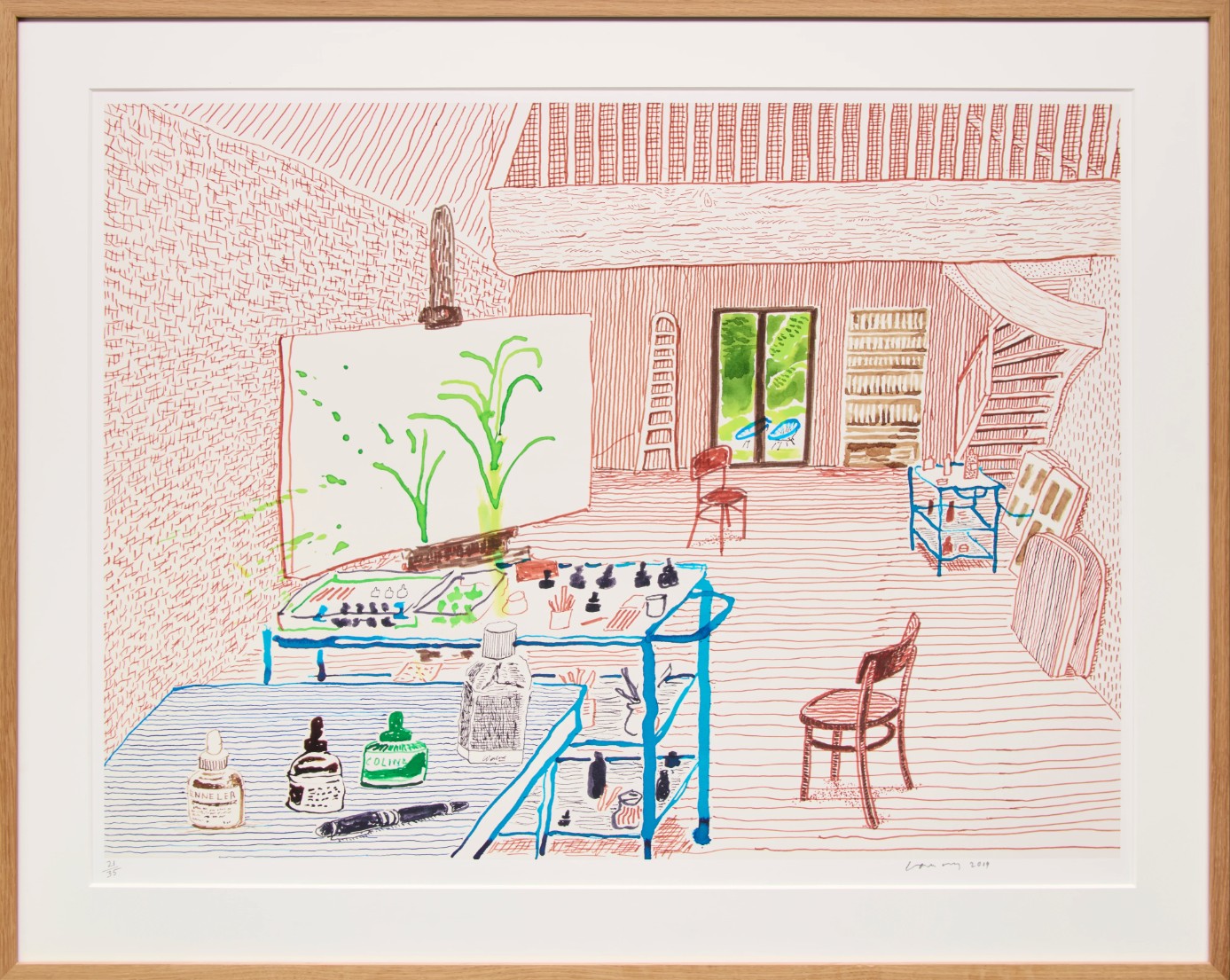
DAVID HOCKNEY (British b.1937-)
In The Studio, 2019
from the My Normandy series
inkjet print in colours on wove
Signed in pencil and numbered 21/35
Estimated: GBP 20,000 – 30,000
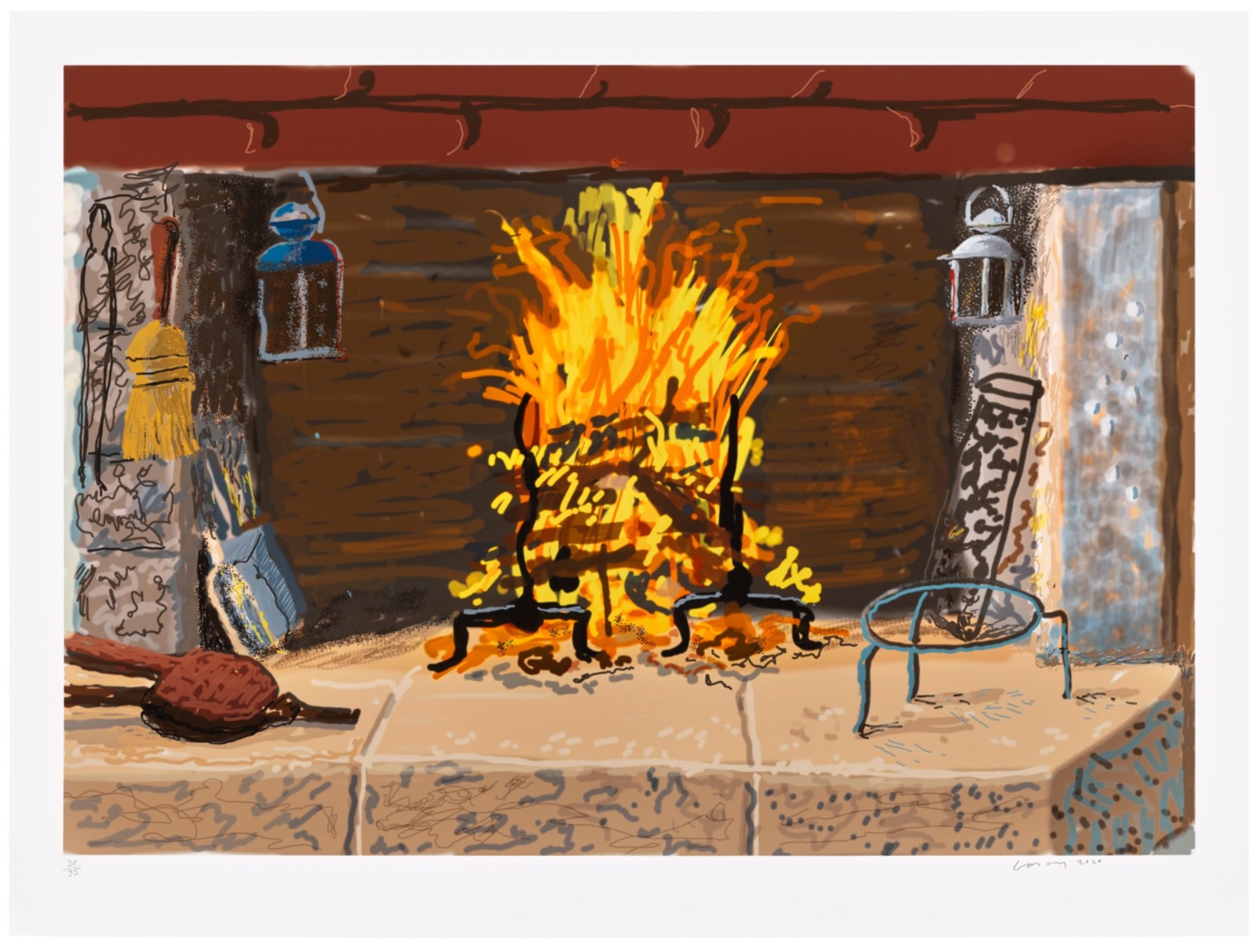
Signed, dated and numbered 30/35 in pencil
Phillips London: 14 June 2022
Estimated: GBP 20,000 – 30,000
GBP 69,300 / USD 83,433
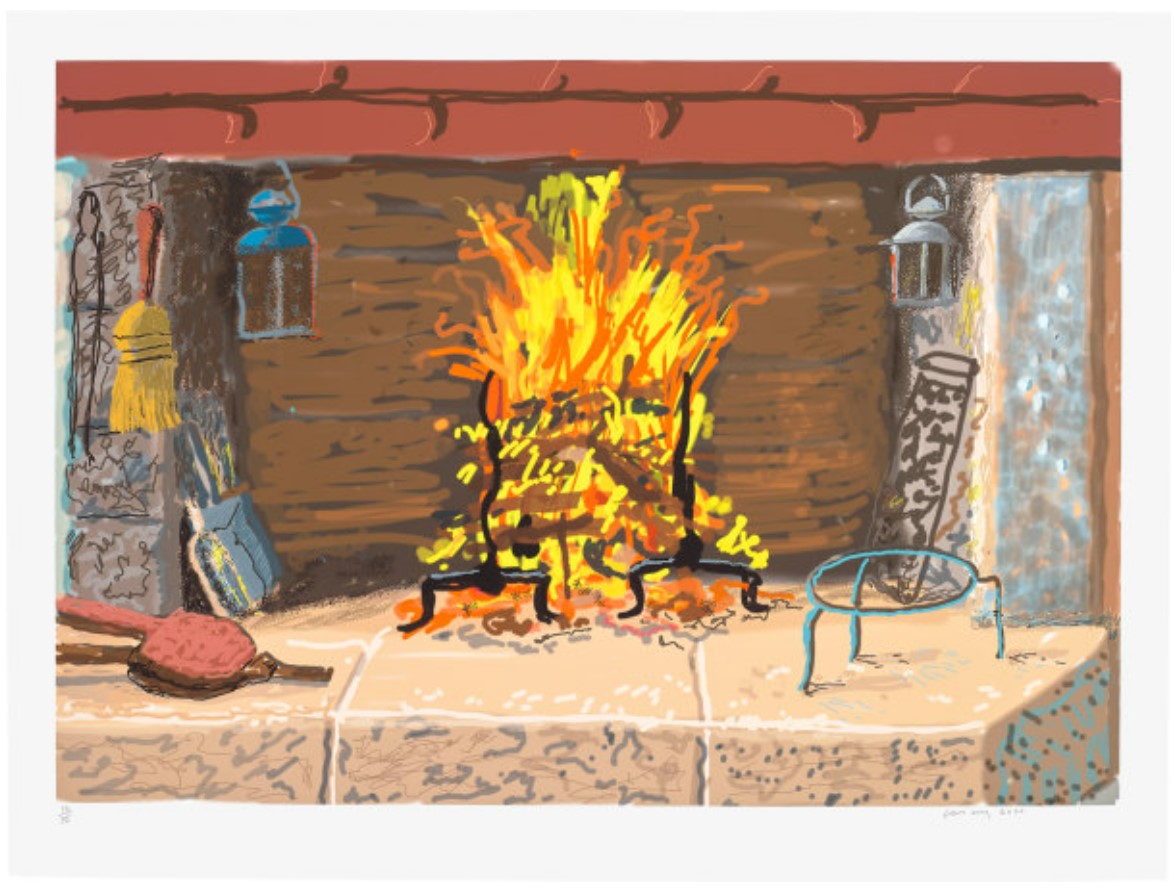
DAVID HOCKNEY
A Bigger Fire, from My Normandy, 2020
iPad drawing in colors printed on wove paper
Image: 72.9 x 104.5 cm (28 3/4 x 41 1/8 inches)
Sheet: 85.4 x 114.5 cm (33 5/8 x 45 1/8 inches)
Signed, dated and numbered 12/35 in pencil
Phillips London: 14 June 2022
Estimated: GBP 20,000 – 30,000
GBP 49,140 / USD 59,162
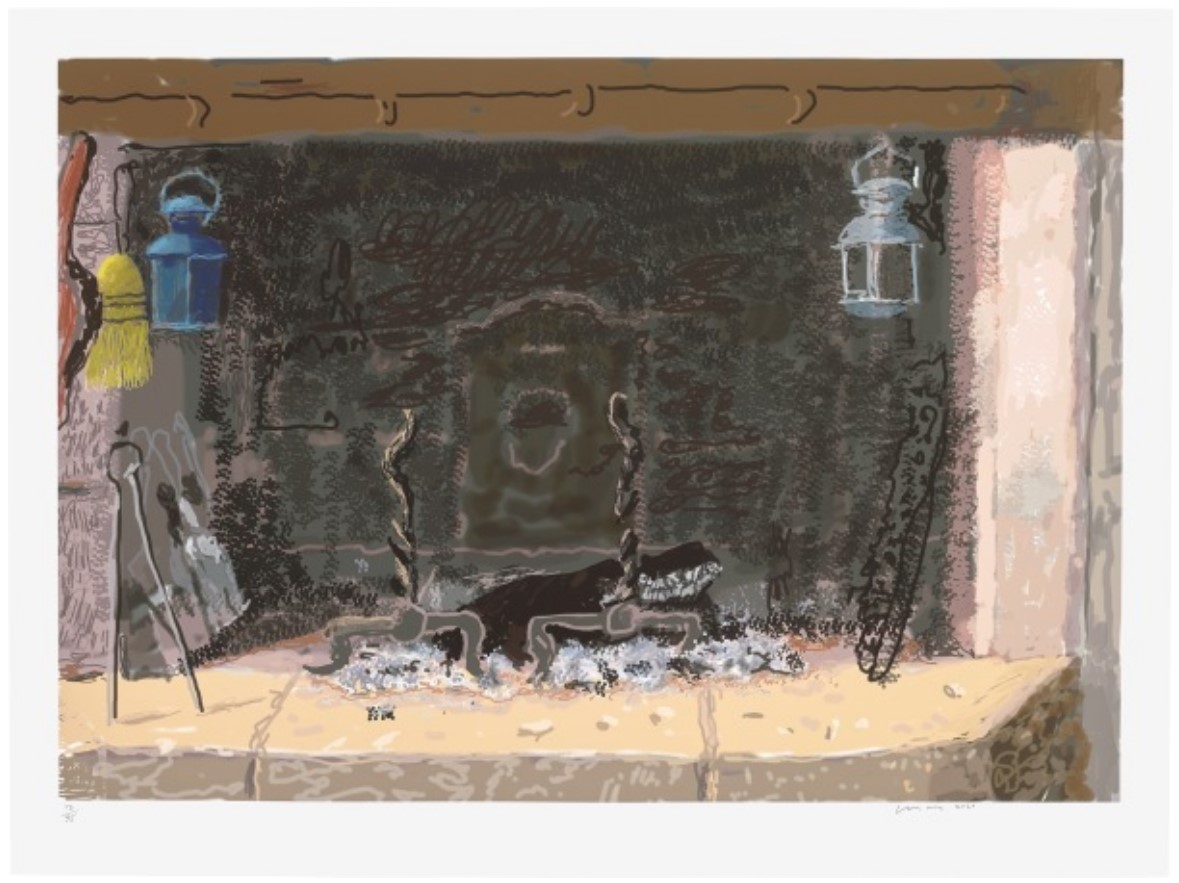
No Fire, from My Normandy, 2020
iPad drawing in colors printed on wove paper
Image: 73 x 104.5 cm (28 3/4 x 41 1/8 inches)
Sheet: 85.3 x 114.5 cm (33 5/8 x 45 1/8 inches)
Signed, dated and numbered 12/35 in pencil