
Kehinde Wiley has established himself as one of the most significant contemporary painters of his generation, known for his bold reconfiguration of classical portraiture through the lens of race, identity, and power. By appropriating the visual language of European Old Master painting and inserting contemporary Black subjects into positions historically reserved for aristocracy and authority, Wiley constructs a practice that is both visually seductive and politically resonant.
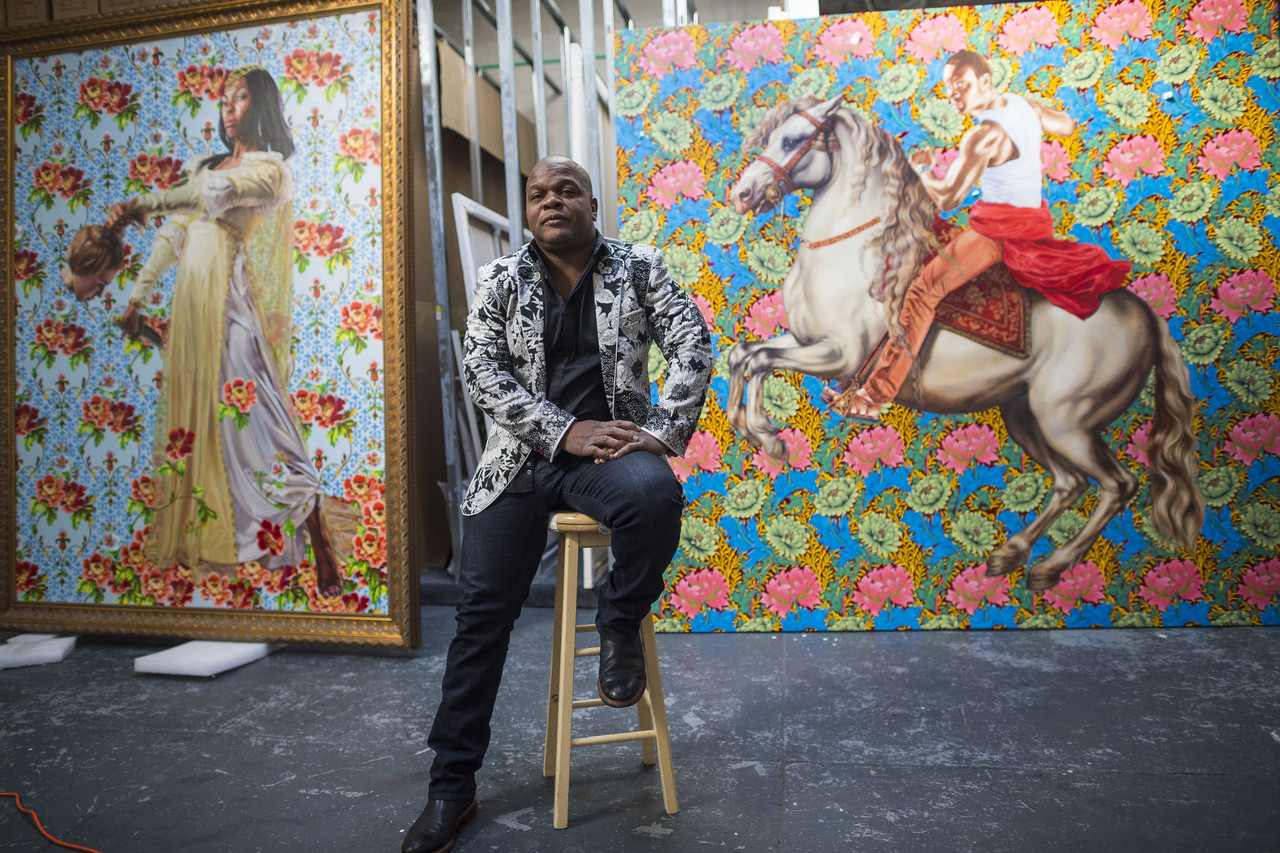
His work operates at the intersection of art history, representation, and cultural critique, offering a revisionist narrative that challenges long-standing hierarchies within Western painting.
Introduction
Kehinde Wiley was born in 1977 in Los Angeles, California. He studied at the San Francisco Art Institute before completing his MFA at Yale University.
From early in his career, Wiley developed a distinctive approach based on street casting. He would encounter individuals in urban environments—initially in Harlem—and invite them to pose for portraits. These subjects, often dressed in their own clothing, are then depicted using compositional frameworks borrowed from canonical European paintings. This methodology established a key principle of his work: the collision between contemporary identity and historical representation.
Artistic Practice and Technique
Wiley’s paintings are characterized by their technical precision and highly finished surfaces. Working primarily in oil on canvas, he adopts the compositional structures of Old Masters such as Titian, Ingres, Jacques-Louis David, and Velázquez.
“So much of my work has to do with this difference between the way that the outside world sees a black body and the way that you inhabit it yourself, that cognitive distance between two-dimensional stereotypes versus the flavor in my mouth, the feel in my skin, the way that someone looks at me, the shock or the surprise or the welcome that appears in another human being’s body. It’s a very corporeal thing, it’s a very ideational thing, and I think at its best it’s something that we have to come to terms with as viewers, as Americans, as art consumers.”
His subjects are rendered with photographic clarity, often set against elaborate decorative backgrounds composed of floral or ornamental patterns. These backgrounds frequently extend across or in front of the figure, flattening spatial depth and introducing a dynamic interplay between figure and ground. This tension—between realism and ornament, individuality and pattern—is central to Wiley’s visual language.
Major Series and Bodies of Work
Early Portraits (Passing/Posing Series)
Wiley’s early works, often grouped under titles such as Passing/Posing, establish his core approach. Young Black men are depicted in poses derived from historical paintings of European nobility and military leaders. These works confront the absence of Black representation within traditional portraiture, while simultaneously asserting presence and dignity. The subjects occupy positions of authority, yet their contemporary clothing anchors them firmly in the present.
Rumors of War
The Rumors of War series represents one of Wiley’s most ambitious engagements with sculpture. Inspired by equestrian monuments of Confederate generals, Wiley created a monumental bronze sculpture depicting a young Black man in contemporary attire astride a horse. Installed permanently in Richmond, Virginia, the work directly confronts the legacy of public monuments in the United States. It replaces historical narratives of power with a new, inclusive vision of representation.
World Stage Series
The World Stage project expands Wiley’s practice globally. Traveling to countries including Brazil, Nigeria, India, China, and Haiti, Wiley continues his method of street casting, creating portraits of local subjects within the same art historical framework. This series emphasizes the universality of his approach while highlighting cultural specificity. It transforms a Western tradition into a global language, engaging with identity across geographies.
Female Portraits
In later works, Wiley shifts his focus toward female subjects, offering a counterpoint to his earlier emphasis on male identity. These portraits maintain the same visual vocabulary—ornate backgrounds, historical poses—but introduce new dimensions related to femininity, strength, and representation. They further expand his exploration of who is seen, how, and within what historical framework.
Presidential Portrait
In 2017, Kehinde Wiley was chosen by Barack Obama to paint the official Presidential Portrait, commissioned for the National Portrait Gallery.. Amy Sherald was selected to paint the portrait of former first lady, Michelle Obama. Both were the first Black artists to paint an American Presidential and First lady portrait.
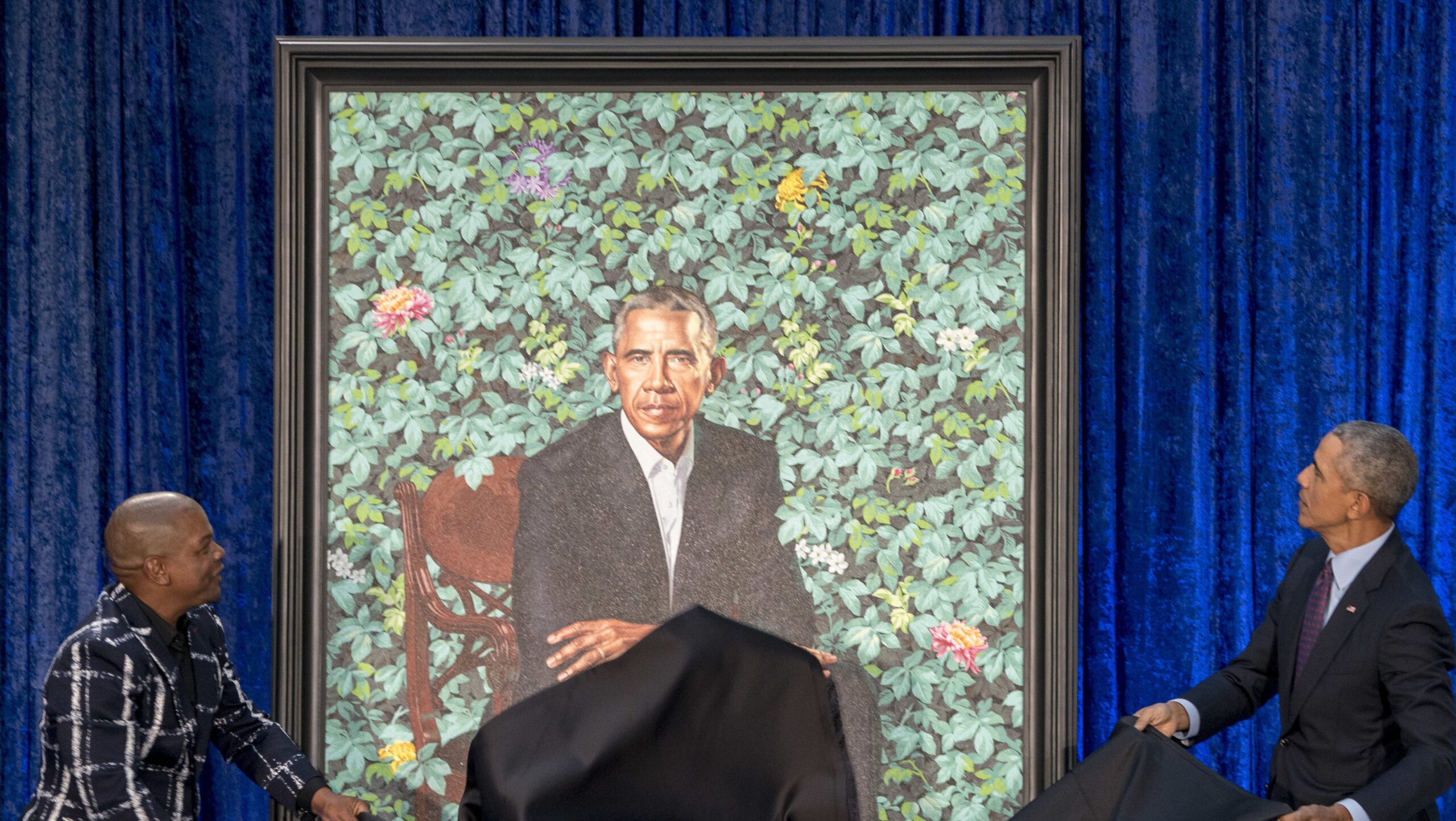
The painting departs from traditional presidential portraiture through its vibrant background of foliage, symbolically referencing key moments and geographies in Obama’s life. At the same time, it maintains a sense of introspection and composure, redefining the visual language of political portraiture.
Themes and Meaning
Wiley’s work addresses power, representation, and visibility. By placing contemporary Black subjects within the compositional frameworks of historical European painting, he exposes the exclusions embedded within art history. His portraits are not merely substitutions; they are transformations. They challenge the viewer to reconsider who is worthy of representation and how visual authority is constructed.
At the same time, his work engages with beauty and seduction. The richness of his surfaces and the elegance of his compositions draw viewers in, only to confront them with deeper questions about identity and history.
Institutional Recognition and Exhibitions
Today, works by Wiley are held in the permanent collections of such institutions as the Walker Art Center in Minneapolis, Minnesota; the Hammer Museum in Los Angeles, California; the Jewish Museum in New York City; and the Phoenix Art Museum in Phoenix, Arizona, among other institutions. His inclusion in the permanent collection of the National Portrait Gallery through the Obama portrait marks a defining moment in his career and in contemporary American portraiture.
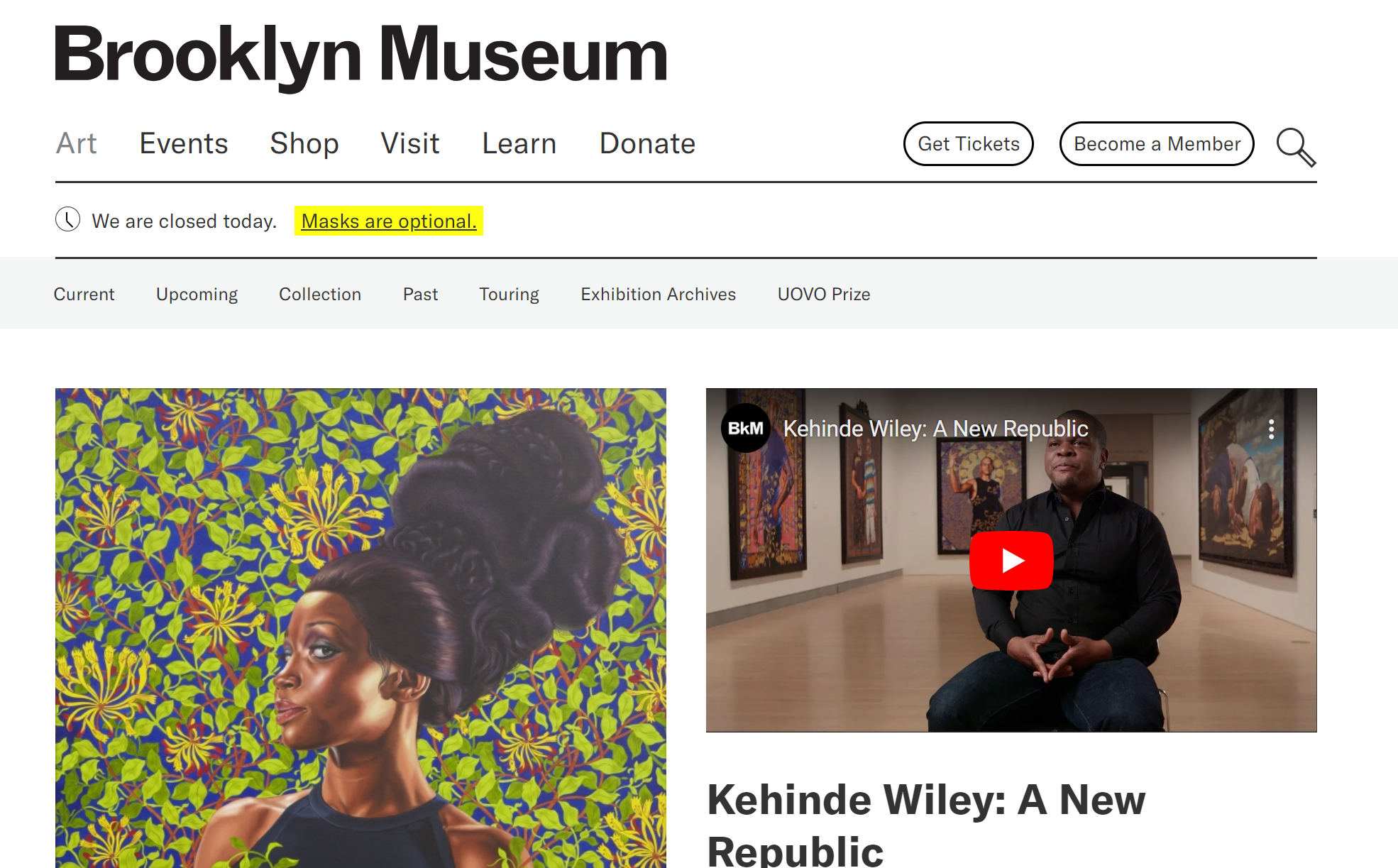
The first solo exhibition of Wiley’s work took place in 2006, at the Columbus Museum of Art in Ohio; subsequent solo exhibitions were held at the Virginia Museum of Fine Arts, the Pennsylvania Academy Of Fine Arts, The Jewish Museum and the Brooklyn Museum, among other institutions. In 2016, Wiley had several retrospectives held at the Seattle Museum of Art and Kehinde Wiley: A New Republic at the Virginia Museum of Fine Arts in Richmond.
Gallery Representation
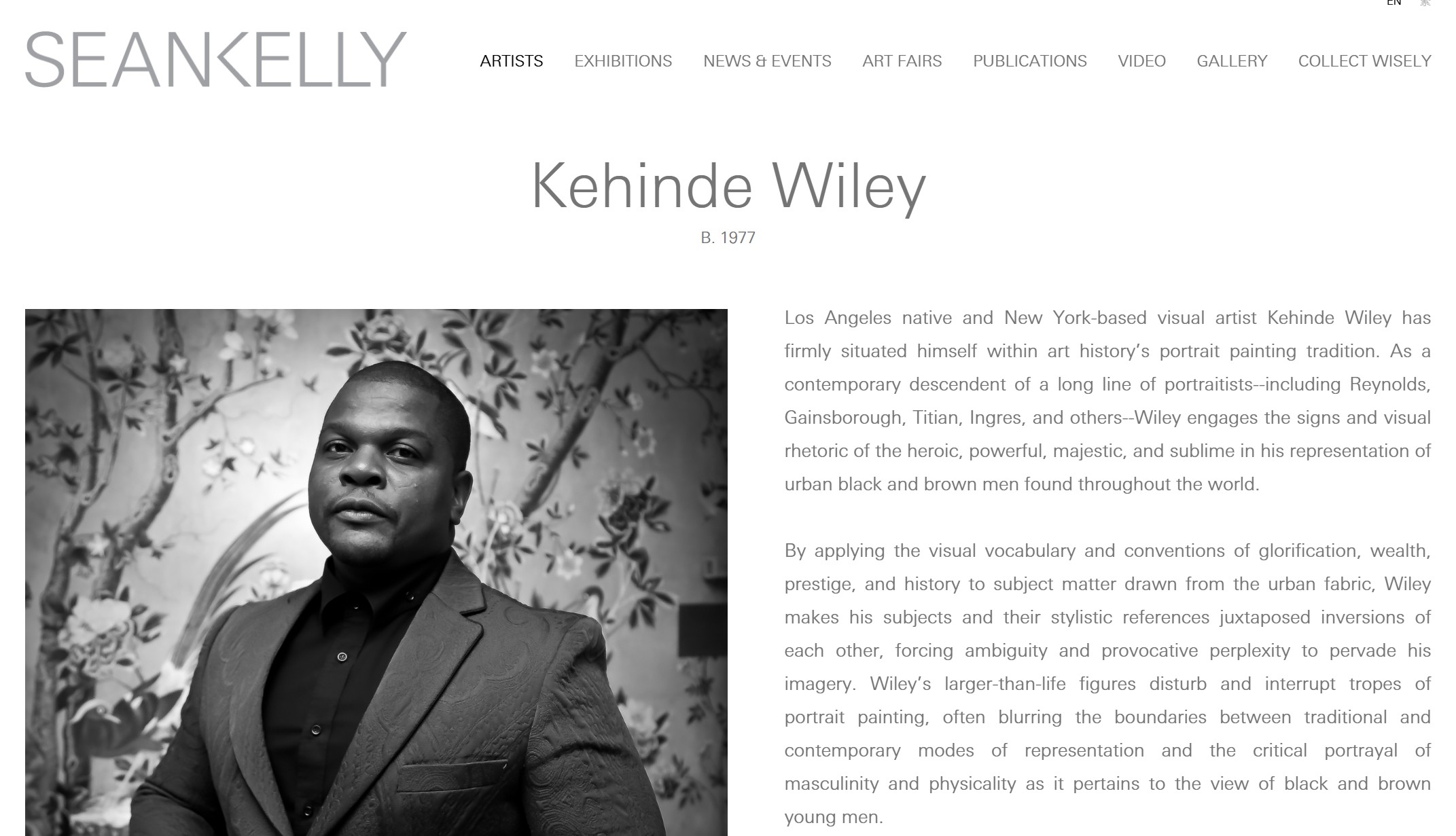
Wiley is represented by Sean Kelly Gallery, which has been instrumental in the development and international presentation of his work.
Kehinde Wiley’s contribution lies in his ability to rewrite the visual language of power. By reclaiming and transforming the traditions of Western portraiture, he has created a body of work that is both historically aware and urgently contemporary. His paintings challenge exclusion while affirming presence, offering a new vision of representation that resonates across cultural and geographic boundaries. In doing so, Wiley has not only redefined portraiture, but has also reshaped the conversation around identity in contemporary art.
PART I: SUMMARY
Auction Market Overview
2025 AUCTION STATISTICS
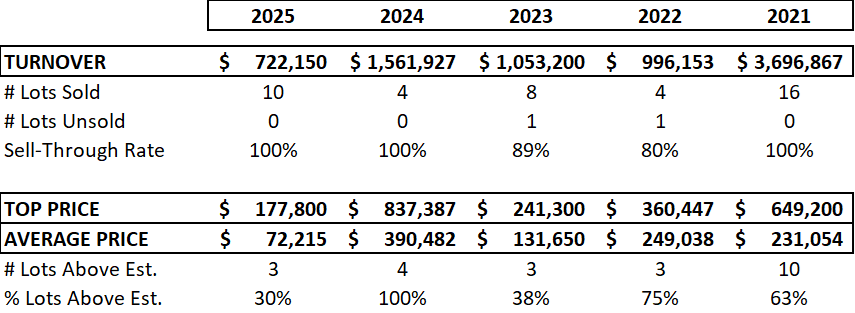
Turnover: USD 722,150
+53.7% (vs. 2024)
# of Lots sold: 10
Sell-Through Rate: 100%
MARKET SEGMENTATION
COMING SOON
Highest Price Achieved at auction:
Christian Martyr Tarcisius, 2008
Phillips London: 7 March 2024
GBP 660,400 / USD 837,887
Auction Summary
2025 Auction Highlights
10 lots sold at auction in 2025 for a total turnover of USD 722,150. With no lot failing to sell, the sell-through rate is 100%. The highest price was achieved by Sleep (Mamadou Gueye), a bronze dated 2021-2022, that sold at Phillips, in New-York, on 28 February 2025, for USD 177,800.
2025 Top 3 Lots
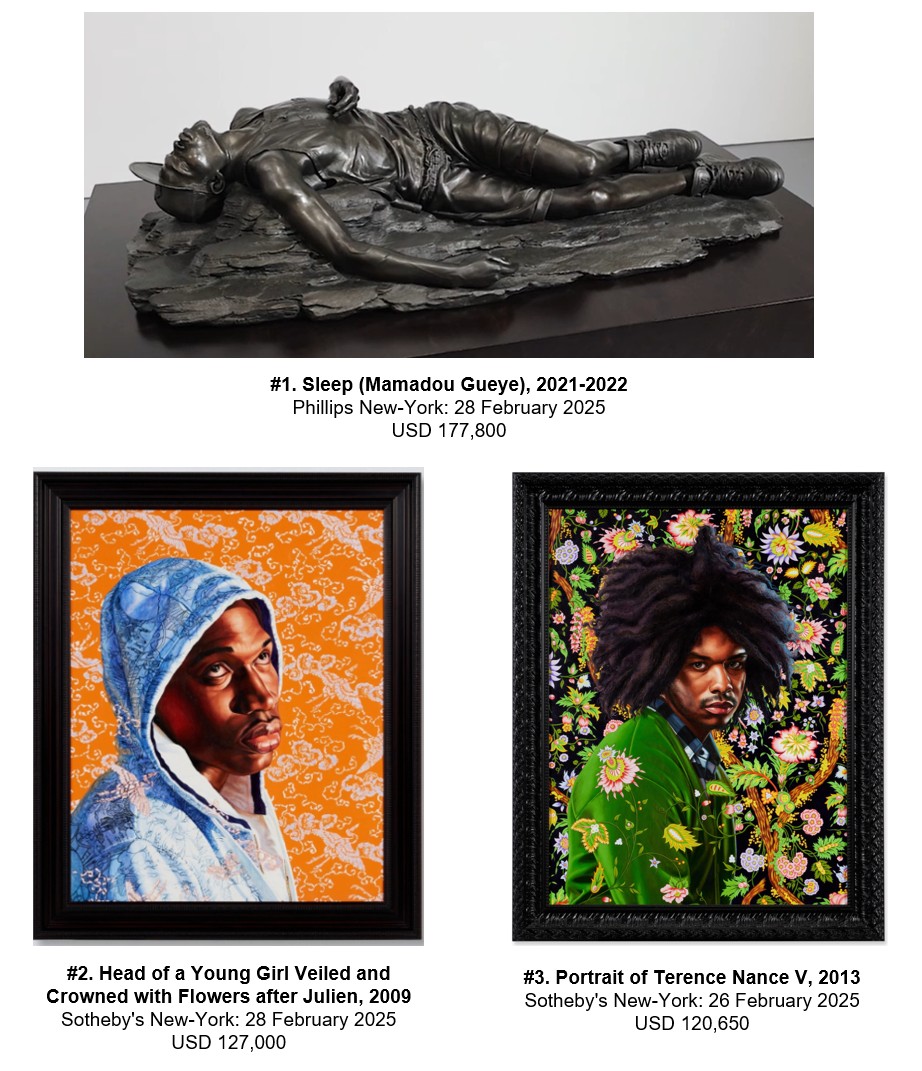
4 lots sold for more than USD 100,000, generating a cumulative turnover of USD 530,450, representing 73.5% of the total turnover of 2025.
2024 Auction Highlights
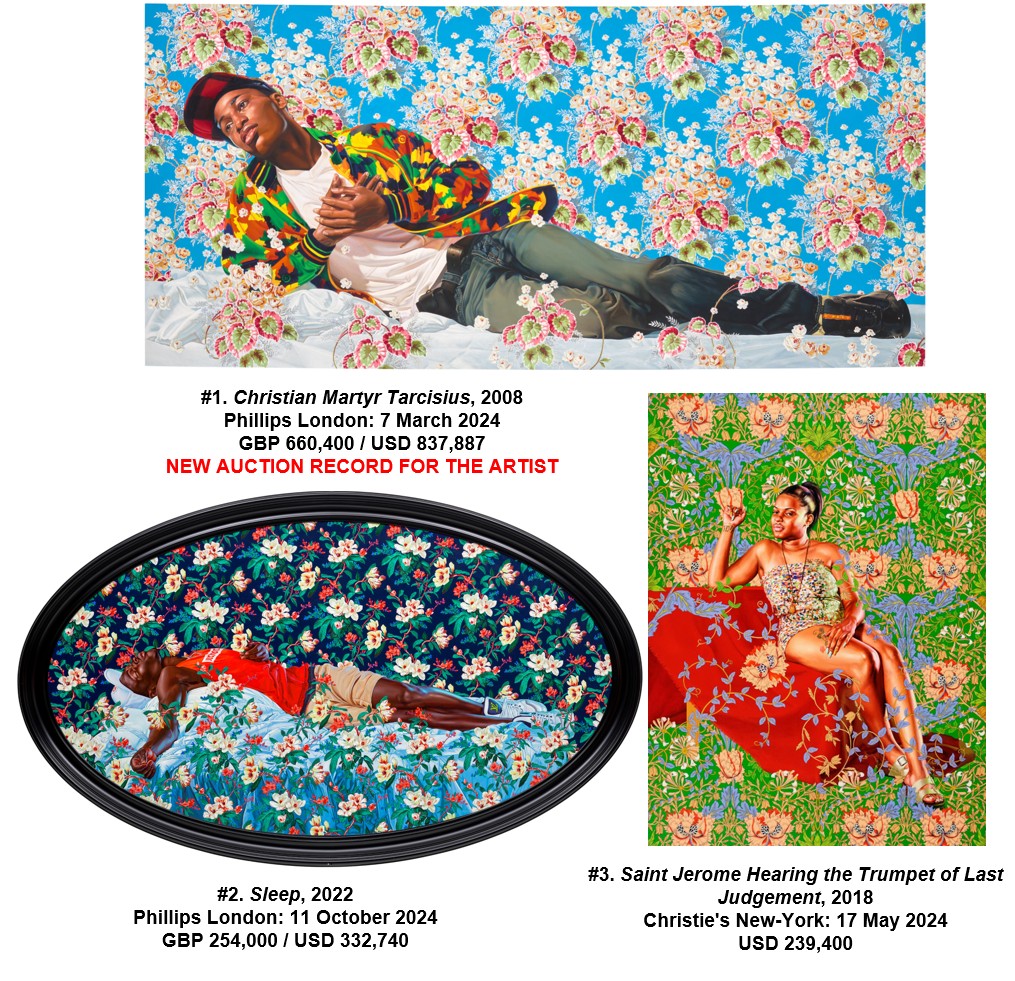
4 lots sold at auction in 2024 for a total turnover of USD 1,561,927. With no lot failing to sell, the sell-through rate is 100%. Christian Martyr Tarcisius, a painting dated 2008, sold at Phillips in London, on 7 March 2024, for GBP 660,400 (USD 837,887), a new auction record for the artist.
2024 Top 3 Lots
2023 Auction Highlights
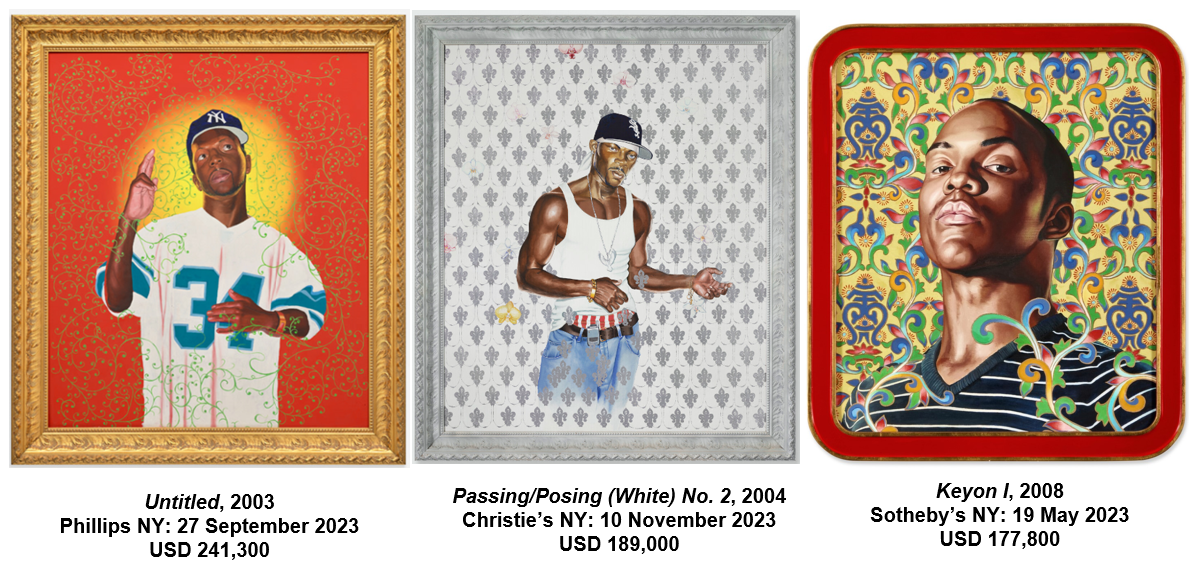
7 lots sold at auction in 2023 for a total turnover of USD 990,200. With 1 lot failing to sell, the sell-through rate is 88%. The highest price was achieved at Phillips in New-York on 27 September 023 when an untitled painting dated 2003 sold for USD 241,300. 5 lots sold for more than USD 100,000, generating a cumulative turnover of USD 848,300, representing 80.5% of the total turnover for 2023.
2023 Top 3 Lots
2022 Auction Highlights
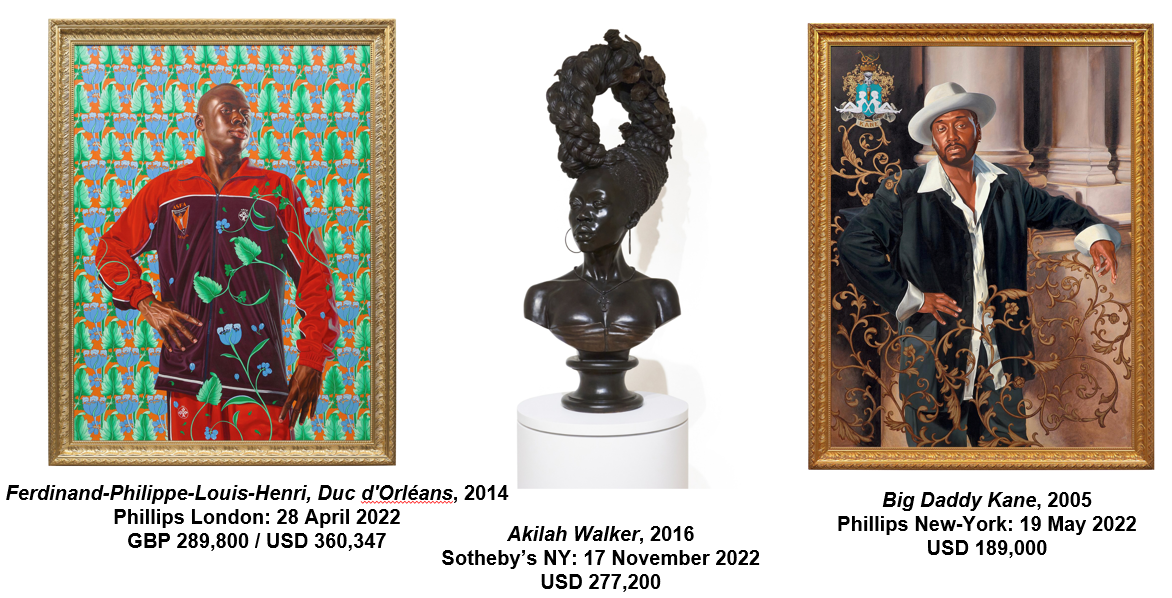
4 lots sold at auction in 2022 for a total turnover of USD 718,953. With 1 lot failing to sell, the sell-through rate is 80%. The highest price has been achieved at Phillips in London on 28 April 2022 when Ferdinand-Phillip-Louis-Henri, Duc D’Orléans, a painting dated 2014 sold for GBP 289,800 (USD 360,347). All 4 lots sold for more than USD 100,000.
2022 Top 3 Lots
2021 Auction Highlights
16 lots sold in 2021 for a total turnover of USD 3,696,867. With no lot failing to sell, the sell-through rate is 100%. The top price was achieved at Sotheby’s in New-York on 19 November 2021 when The Virgin Martyr St. Cecilia sold for USD 649,200.
2021 Top 3 Lots
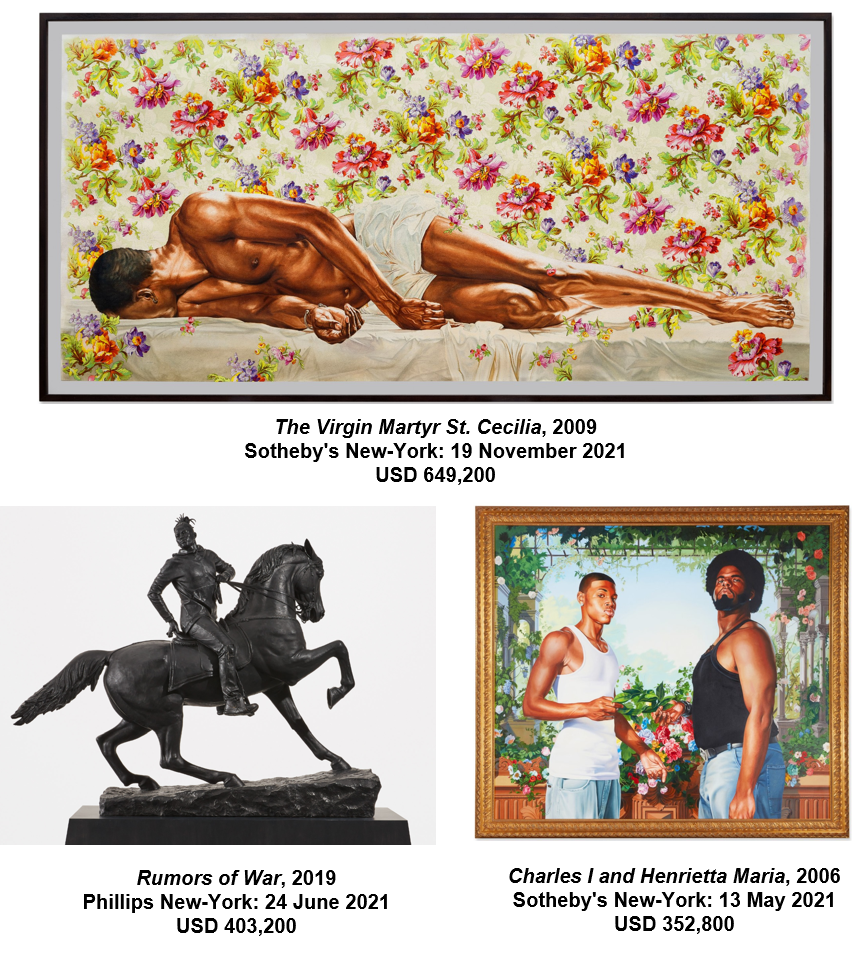
This is the only lot selling for more than USD 500,000. 14 lots sold for more than USD 100,000, generating a cumulative turnover of USD 3,544,797, representing 95.9% of the total turnover for 2021.
Top Lots
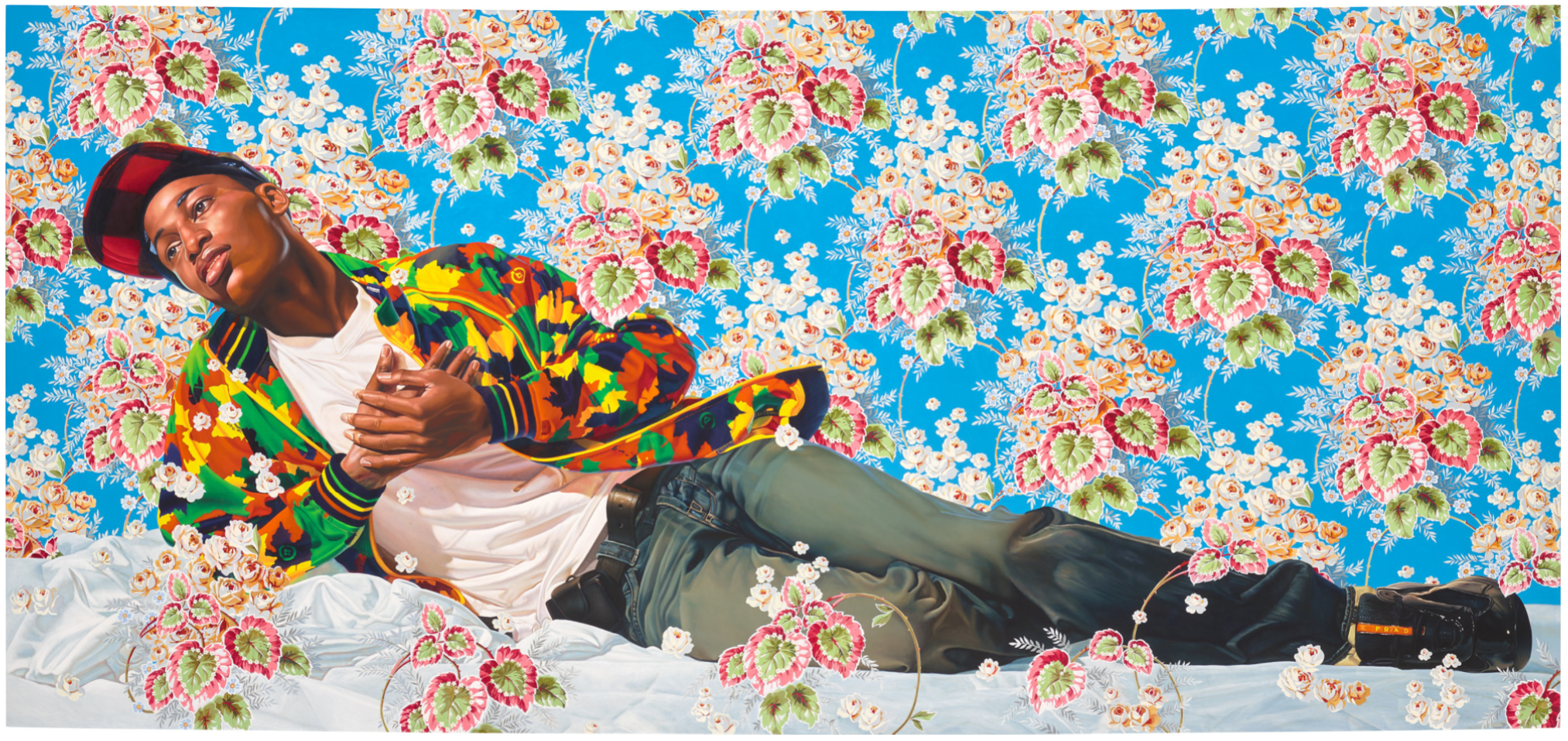
#1. Christian Martyr Tarcisius, 2008
Phillips London: 7 March 2024
Estimated: GBP 200,000 – 300,000
GBP 660,400 / USD 837,887
NEW AUCTION RECORD FOR THE ARTIST
Kehinde Wiley – 20th Century & Contemp… Lot 16 March 2024 | Phillips
KEHINDE WILEY
Christian Martyr Tarcisius, 2008
Oil on canvas
84 x 180 3/4 inches (213×459 cm)
#2. The Virgin Martyr St. Cecilia, 2009
Sotheby’s New-York: 19 November 2021
Estimated: USD 100,000 – 150,000
USD 649,200
The Virgin Martyr St. Cecilia | Contemporary Day Auction | 2021 | Sotheby’s (sothebys.com)
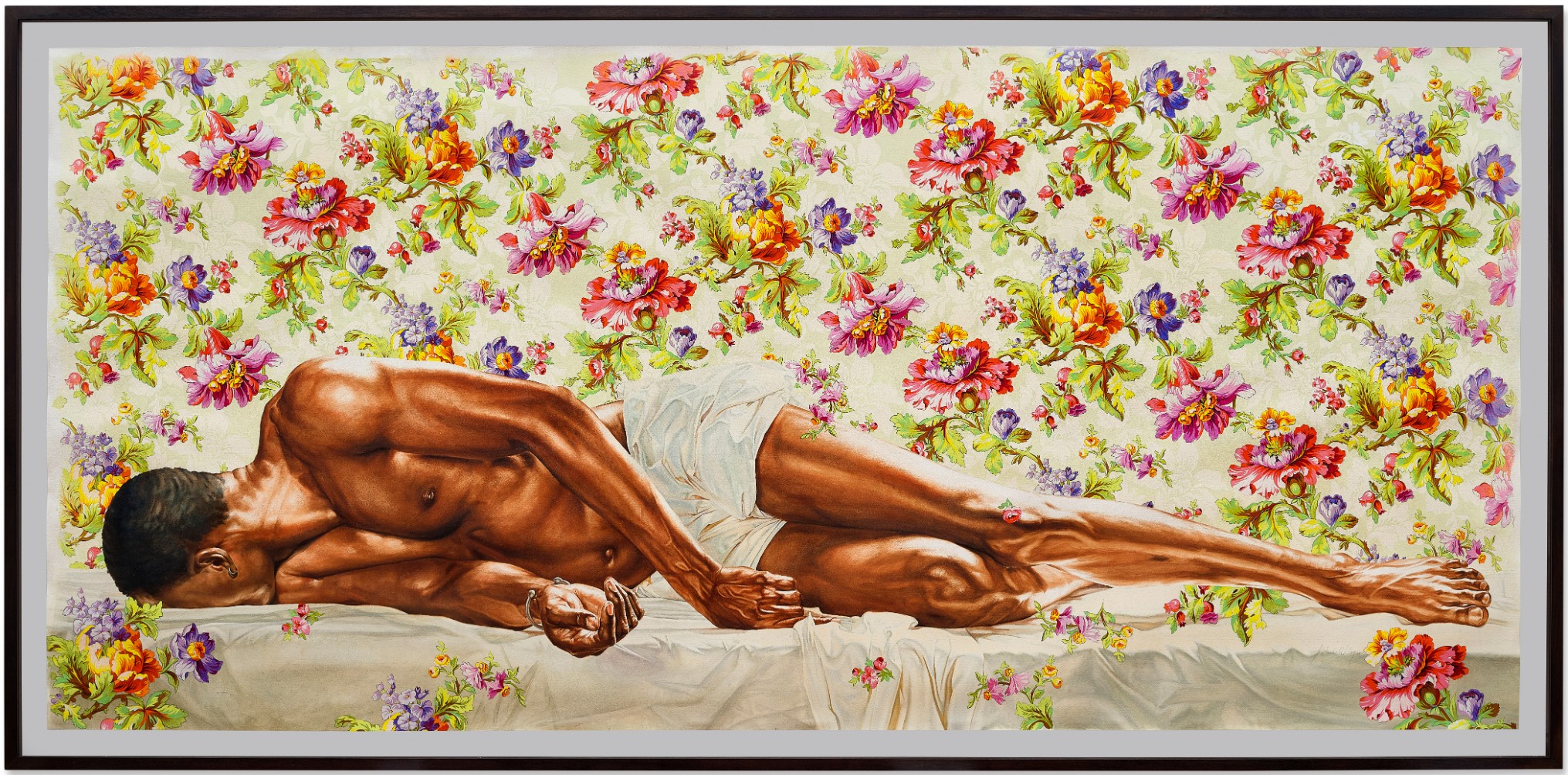
KEHINDE WILEY (b. 1977)
The Virgin Martyr St. Cecilia, 2009
Oil and graphite on paper
57×124 inches (145×315 cm)
Signed Kehinde Wiley and dated 09 (lower right)
#3. Rumors of War, 2019
Phillips New-York: 24 June 2021
Estimated: USD 350,000 – 450,000
USD 403,200
Kehinde Wiley – 20th Century & Contemp… Lot 348 June 2021 | Phillips
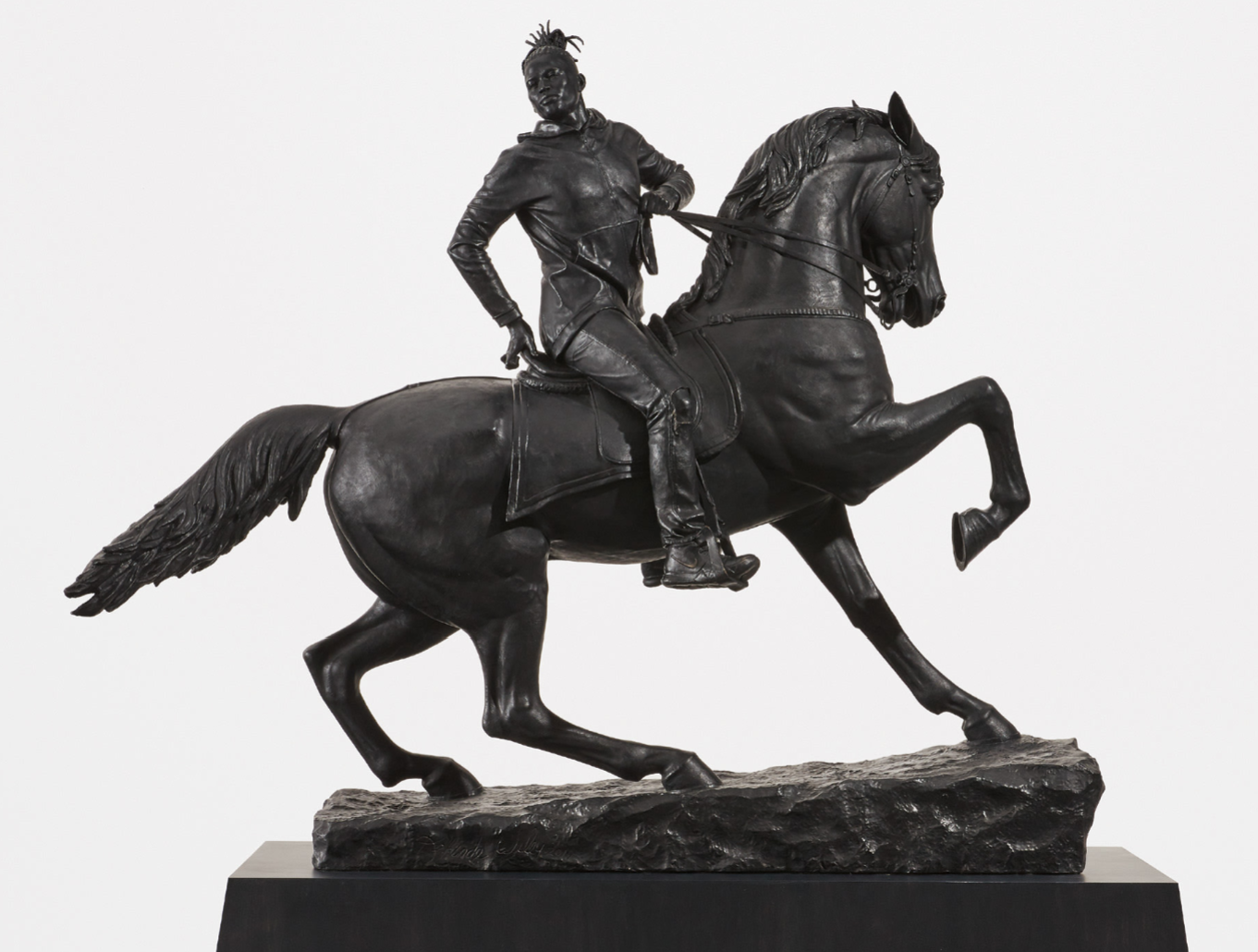
KEHINDE WILEY
Rumors of War, 2019
Patinated bronze
Sculpture: 52x62x27 inches (132.1 x 157.5 x 68.6 cm)
Overall: 88 x 65 1/2 x 33 1/2 inches (223.5 x 166.4 x 85.1 cm)
Incised with the artist’s signature
Number and date “Kehinde Wiley 2019 3/9” along the lower front edge of the sculpture
Incised with the artist’s initials “KW” on the horse’s bridle
This work is number 3 from an edition of 9 plus 3 artist’s proofs
#4. Portrait of Mickalene Thomas, the Coyote, 2017
Phillips New-York: 7 December 2020
Estimated: USD 100,000 – 150,000
USD 378,000
Kehinde Wiley – 20th c. & Contempor… Lot 33 December 2020 | Phillips
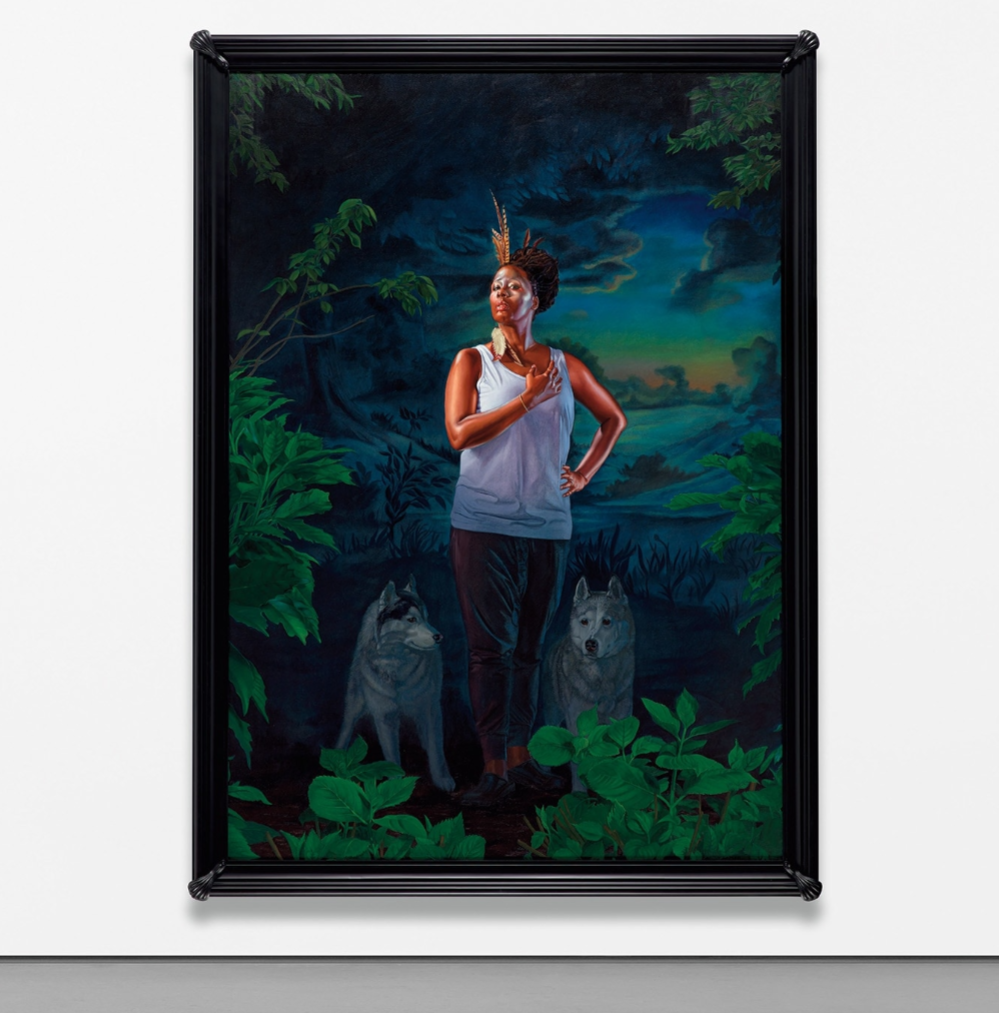
KEHINDE WILEY
Portrait of Mickalene Thomas, the Coyote, 2017
Oil on canvas, in artist’s frame
130 3/8 x 94 7/8 x 4 1/2 inches (331.2 x 241 x 11.4 cm)
Signed and dated “Kehinde Wiley 2017” on the reverse
#5. Ferdinand-Philippe-Louis-Henri, Duc d’Orléans, 2014
Phillips London: 28 April 2022
Estimated: GBP 80,000 – 120,000
GBP 289,800 / USD 360,347
Kehinde Wiley – New Now London Lot 10 April 2022 | Phillips
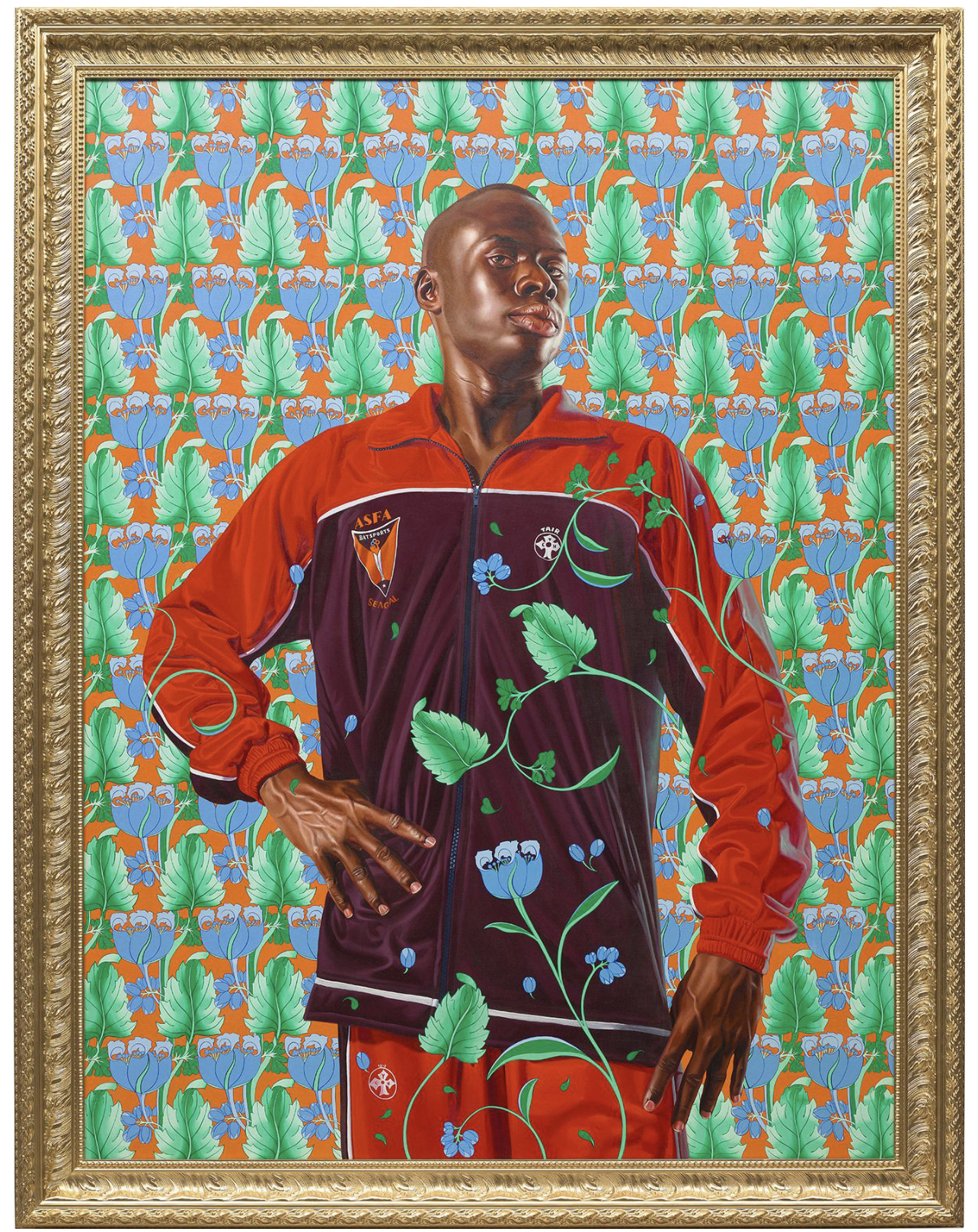
KEHINDE WILEY
Ferdinand-Philippe-Louis-Henri, Duc d’Orléans, 2014
Oil on linen, in artist’s frame
94 1/8 x 73 1/8 inches (239 x 185.7 cm)
Signed and dated ‘Kehinde Wiley 2014’ on the reverse
PART II: AUCTION RESULTS
2026 Auction Results
Terence Nance, 2011-12
Phillips New-York: 28 February 2026
Estimated: USD 80,000 – 120,000
USD 296,700
Kehinde Wiley Modern & Contemporary Art
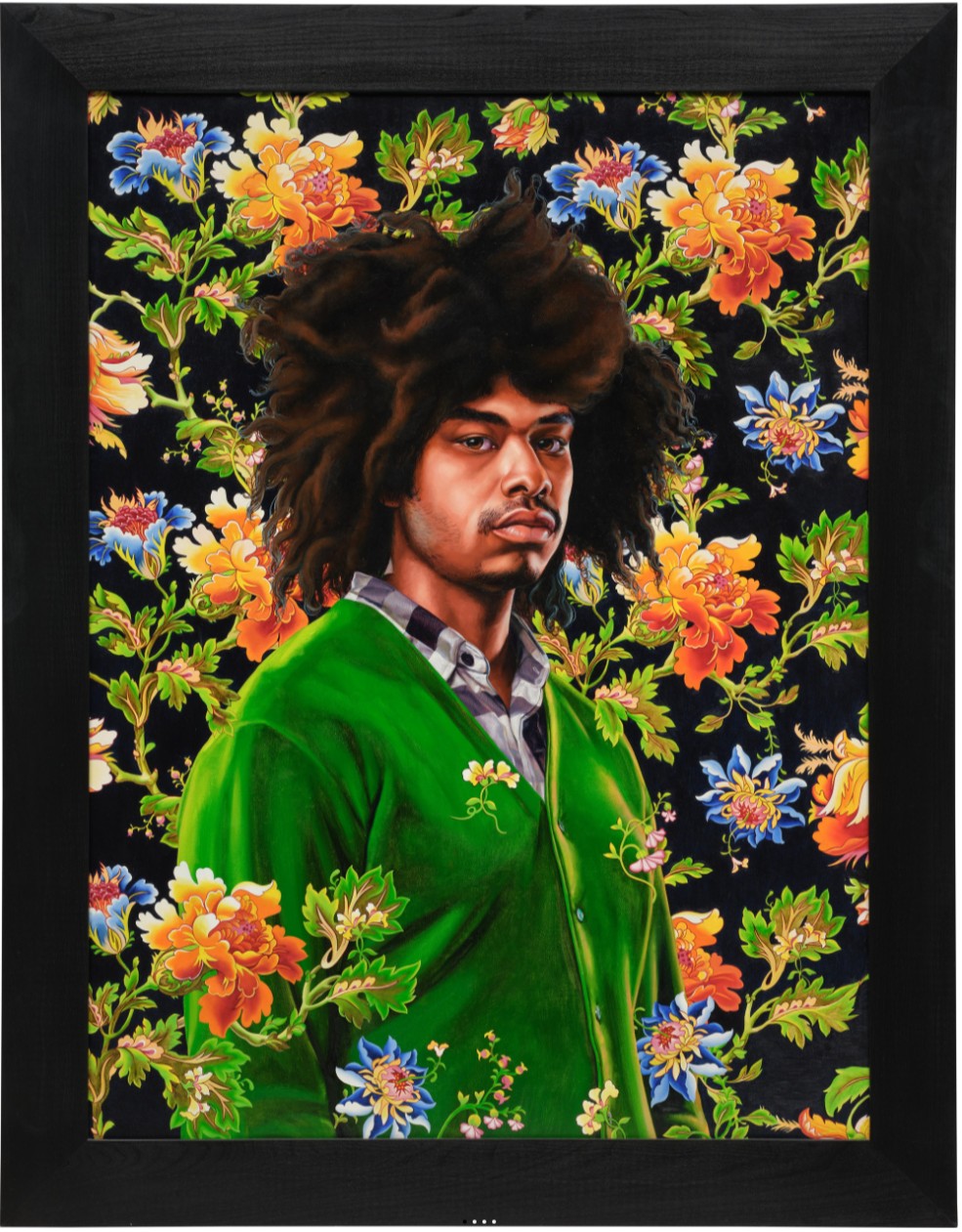
KEHINDE WILEY
Terence Nance, 2011-12
Oil on canvas
48×36 inches (121.9 x 91.4 cm)
Signed and dated “Kehinde Wiley 2011” on the reverse
Likunt Daniel Ailin, 2013
Sotheby’s New-York: 27 February 2026
Estimated: USD 50,000 – 70,000
USD 44,800
Kehinde Wiley | Likunt Daniel Ailin | Contemporary Discoveries | 2026
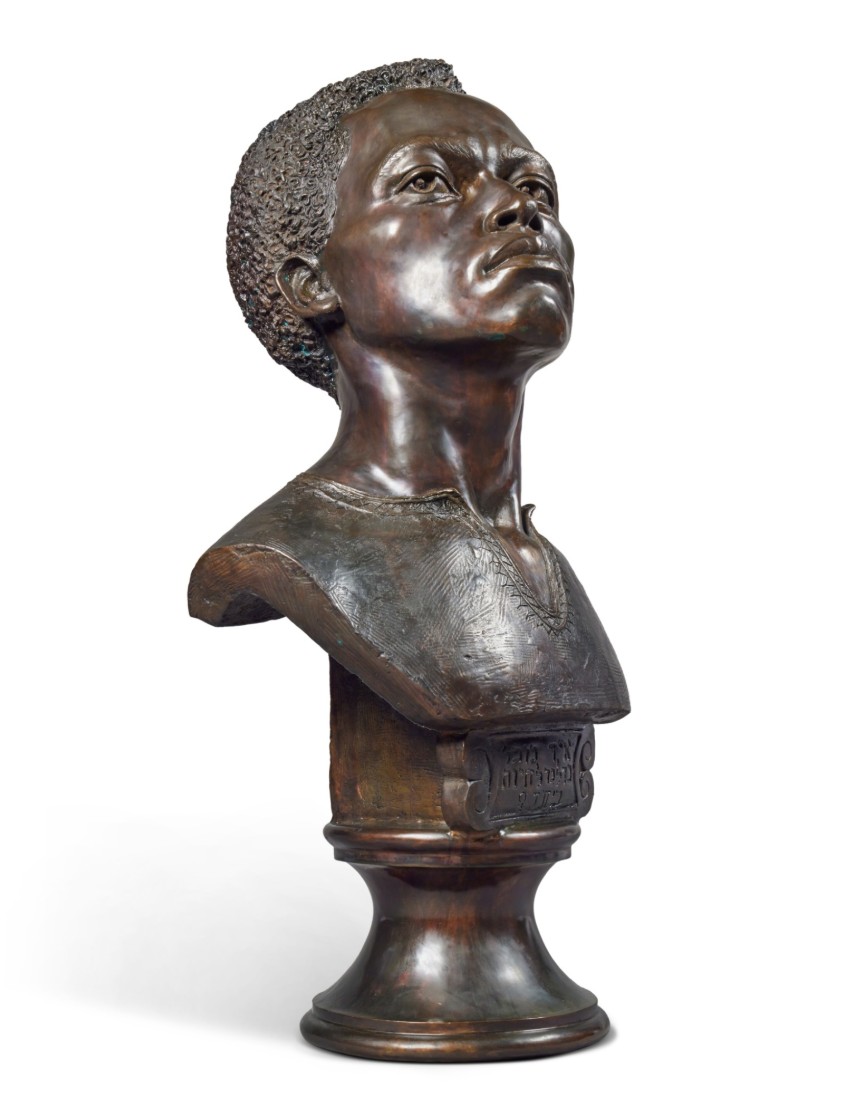
KEHINDE WILEY (b. 1977)
Likunt Daniel Ailin, 2013
Bronze
38x18x20 inches (96.5 x 45.7 x 50.8 cm)
Incised with artist’s signature, date 2013 and number 2 AP (on the right lateral edge)
This work is artist’s proof 2 from an edition of 3 plus 2 artist’s proofs
2025 Auction Results
10 lots sold at auction in 2025 for a total turnover of USD 722,150. With no lot failing to sell, the sell-through rate is 100%. The highest price was achieved by Sleep (Mamadou Gueye), a bronze dated 2021-2022, that sold at Phillips, in New-York, on 28 February 2025, for USD 177,800.
2025 Top 3 Lots
4 lots sold for more than USD 100,000, generating a cumulative turnover of USD 530,450, representing 73.5% of the total turnover of 2025.
XXXXXXXXXX
#1. Sleep (Mamadou Gueye), 2021-2022
Phillips New-York: 28 February 2025
Estimated: USD 150,000 – 200,000
USD 177,800
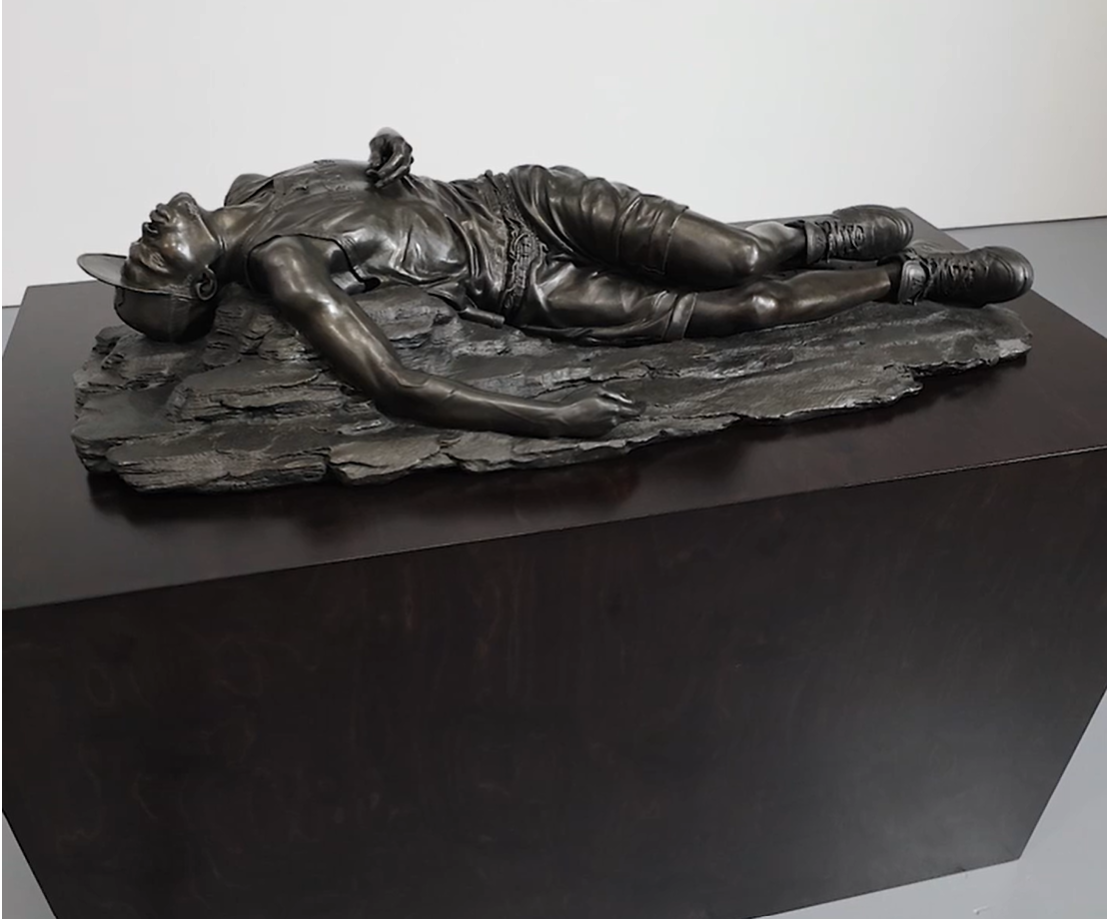
KEHINDE WILEY
Sleep (Mamadou Gueye), 2021-2022
Bronze
11 3/4 x 23 5/8 x 51 1/8 inches (29.8 x 60 x 129.9 cm)
Incised with the artist’s signature, number and date “Kehinde Wiley 2021 1/3” on the base
This work is number 1 from an edition of 3 plus 1 artist’s proof
#2. Head of a Young Girl Veiled and Crowned with Flowers after Julien, 2009
Sotheby’s New-York: 28 February 2025
Estimated: USD 70,000 – 100,000
USD 127,000
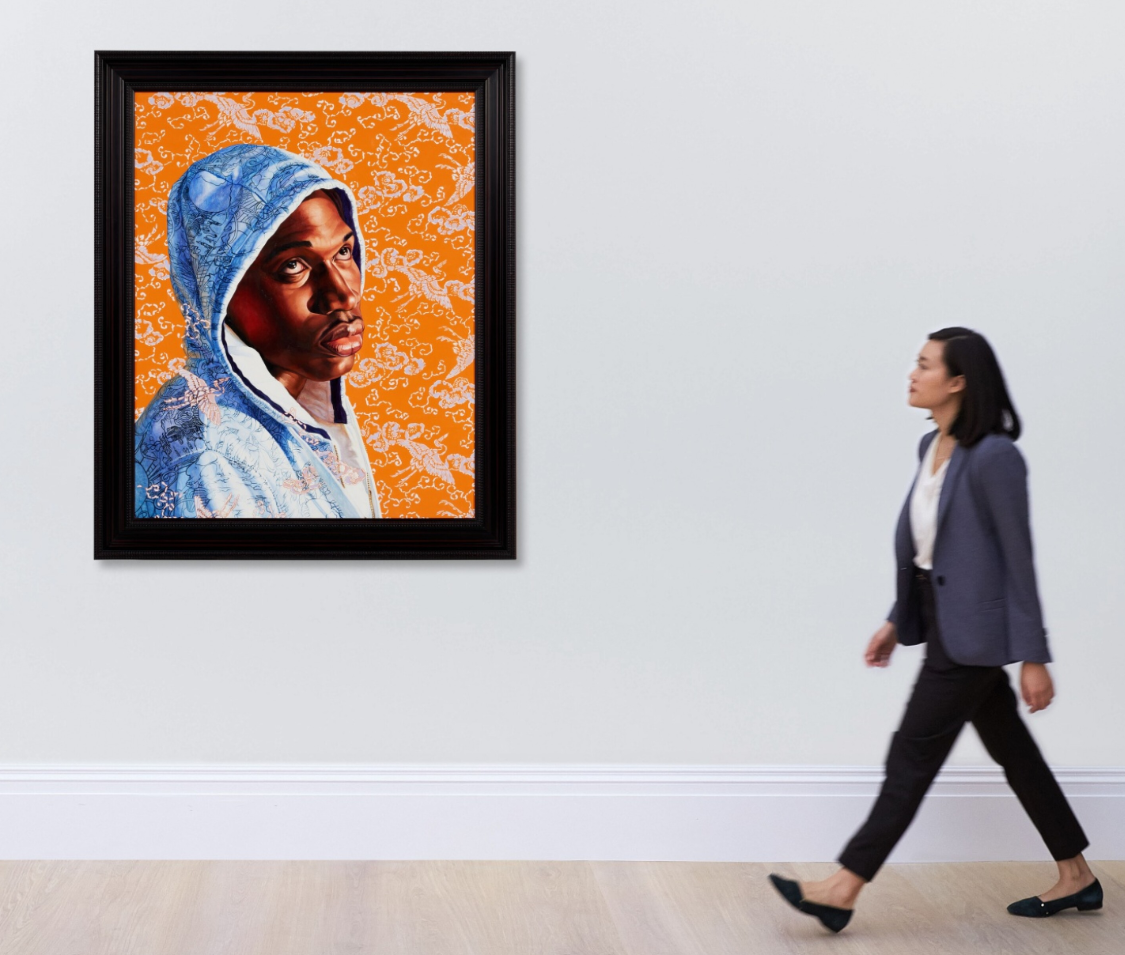
KEHINDE WILEY (b. 1977)
Head of a Young Girl Veiled and Crowned with Flowers after Julien, 2009
Oil on canvas, in artist’s frame
54 x 44 1/2 inches (137.2 x 113 cm)
Signed and dated 09 (on the reverse)
#3. Portrait of Terence Nance V, 2013
Sotheby’s New-York: 26 February 2025
Estimated: USD 80,000 – 120,000
USD 120,650
Portrait of Terence Nance V | Contemporary Curated | 2025 | Sotheby’s
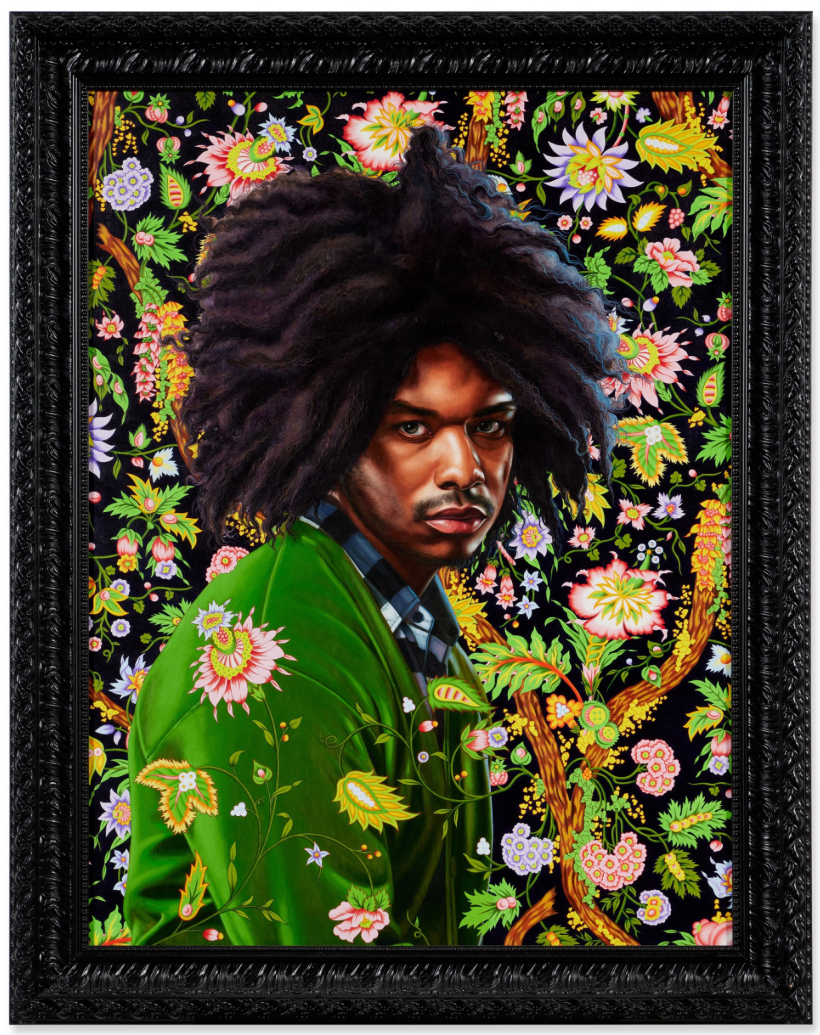
KEHINDE WILEY (b. 1977)
Portrait of Terence Nance V, 2013
Oil on linen, in artist’s frame
56 1/4 x 43 1/2 inches (142.9 x 110.5 cm)
Signed and dated 2013 (on the reverse)
#4. Street Thug, 2004
Freeman’s: 14 November 2025
Estimated: USD 150,000 – 250,000
USD 105,000
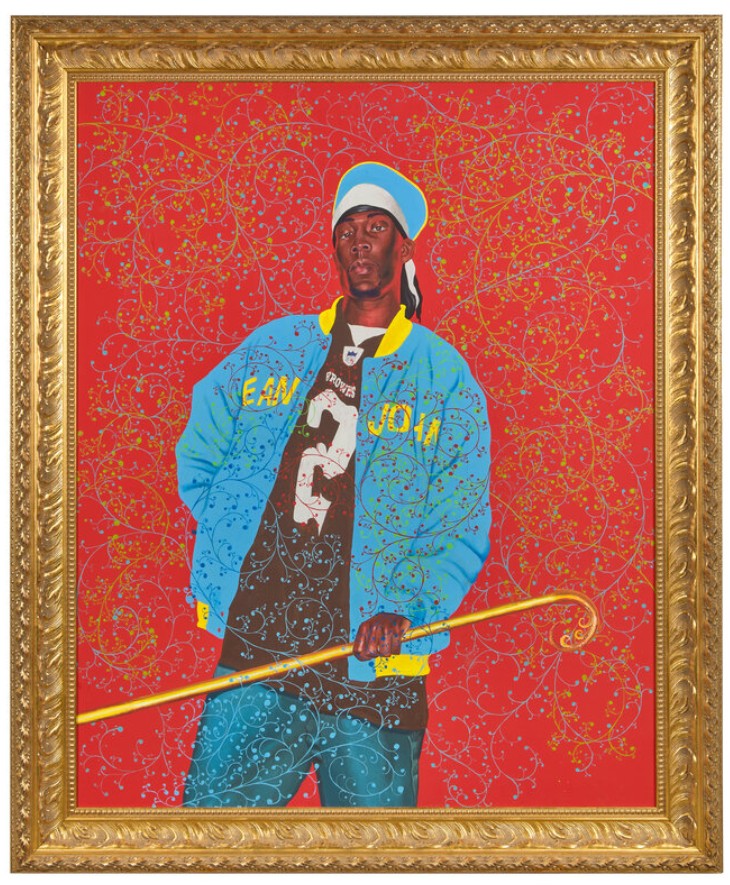
KEHINDE WILEY (American, b. 1977)
Street Thug, 2004
Oil on canvas in artist’s frame
60×48 inches (152.4 x 121.9 cm)
Signed Kehinde Wiley and dated (verso)
USD 100,000
#5. Likunt Daniel Ailin, 2013
Abington Auction Gallery: 15 October 2025
Estimated: USD 30,000 – 40,000
USD 42,500 (Hammer)
USD 53,550
Lot – Kehinde Wiley ‘Likunt Daniel Ailin’ Bronze
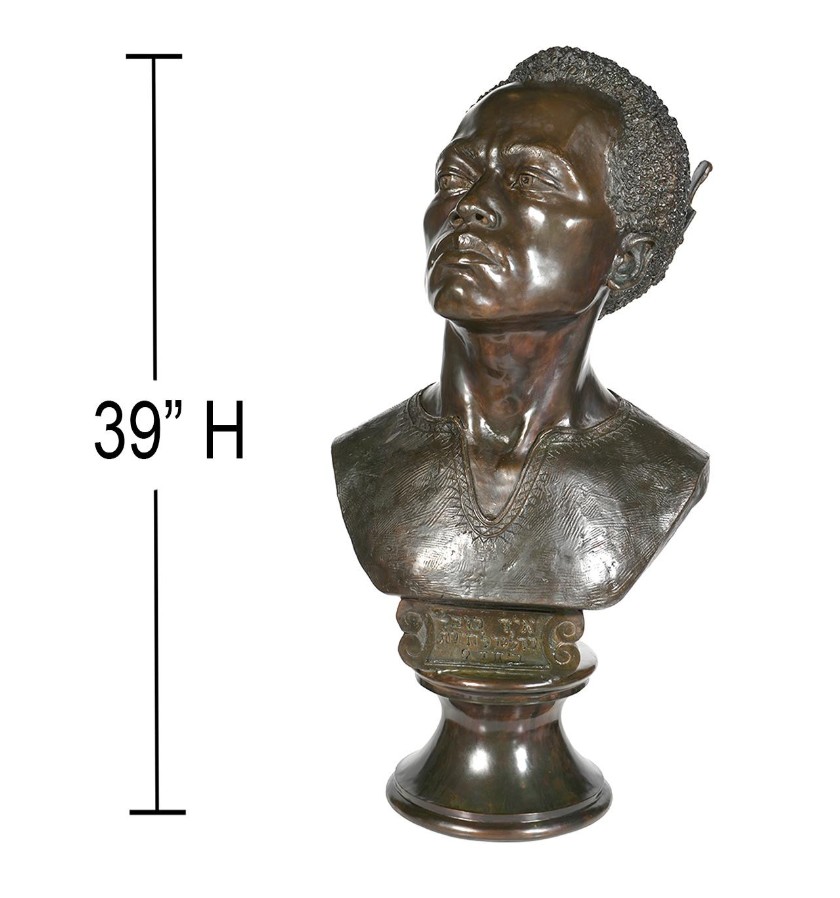
KEHINDE WILEY (American, Born 1977
Likunt Daniel Ailin, 2013
Bronze
39 x 20-1/4 x 15 inches
Signed on the side with ‘2 AP 2013’
Monumental bust of Likunt Daniel Ailin who Wiley met in Tel Aviv while working on a project to represent urban black and brown men within the Western tradition of heroic portraiture. There is a Hebrew sentence on the front that translates to ‘What would make it possible for us to live together?’
#6. The Gypsy Fortune-Teller, 2007
Phillips New-York: 12 February 2025
Estimated: USD 30,000 – 50,000
USD 38,100
Kehinde Wiley Editions & Works on Paper
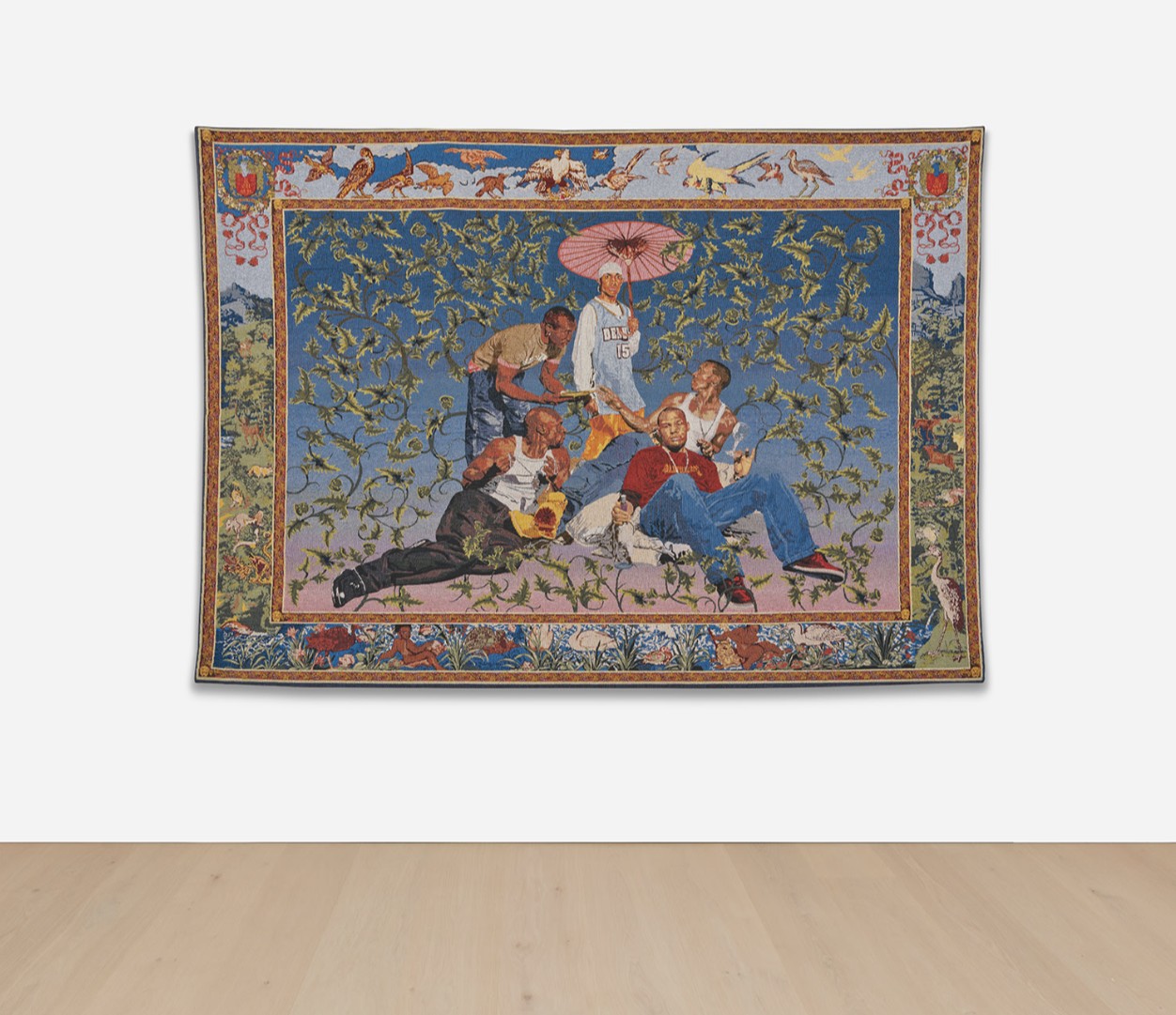
Jacquard woven tapestry in cotton, merino wool and Trevira CS
70 1/2 x 98 1/2 inches (179.1 x 250.2 cm)
Signed in black ink and numbered (printed) 13/48 on a label affixed to the reverse
(there were also 10 artist’s proofs)
Sith the artist’s woven copyright line on the reverse
Produced by Tapestry Art, Flanders, Belgium
Published by Cerealart Multiples, Philadelphia
#7. Alexander the Great (study), 2005
Black Art Auction: 18 October 2025
Estimated: USD 20,000 – 30,000
USD 24,000 (Hammer)
USD 30,000
WORK ON PAPER
Kehinde Wiley, b. 1977, Alexander the Great (study) | Black Art Auction
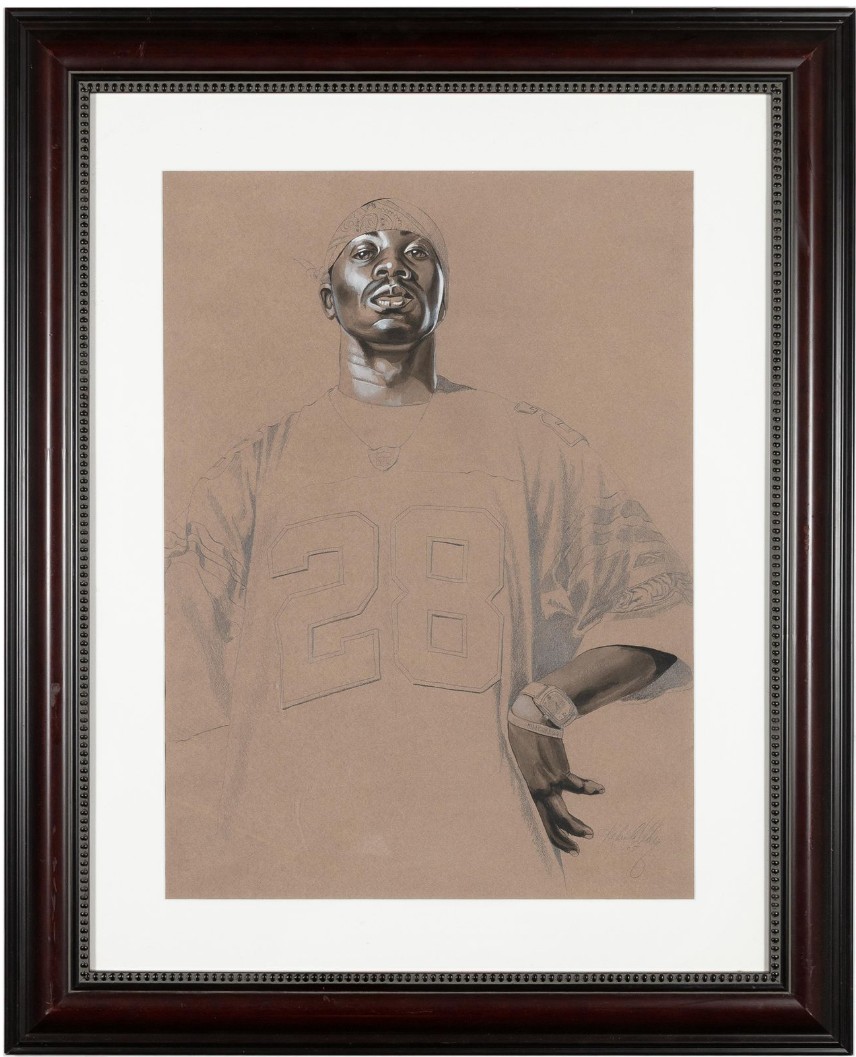
KEHINDE WILEY (b. 1977)
Alexander the Great (study), 2005
ink, gouache and pencil on tan paper
24×18 inches
Signed and dated
labels: Deitch Projects, New York, NY and Rhona Hoffman Gallery, Chicago, IL
#8. Portrait of Itohan Justin II, 2024
Sotheby’s New-York: 26 September 2025
Estimated: USD 25,000 – 35,000
USD 27,940
Portrait of Itohan Justin II | Contemporary Curated | 2025 | Sotheby’s
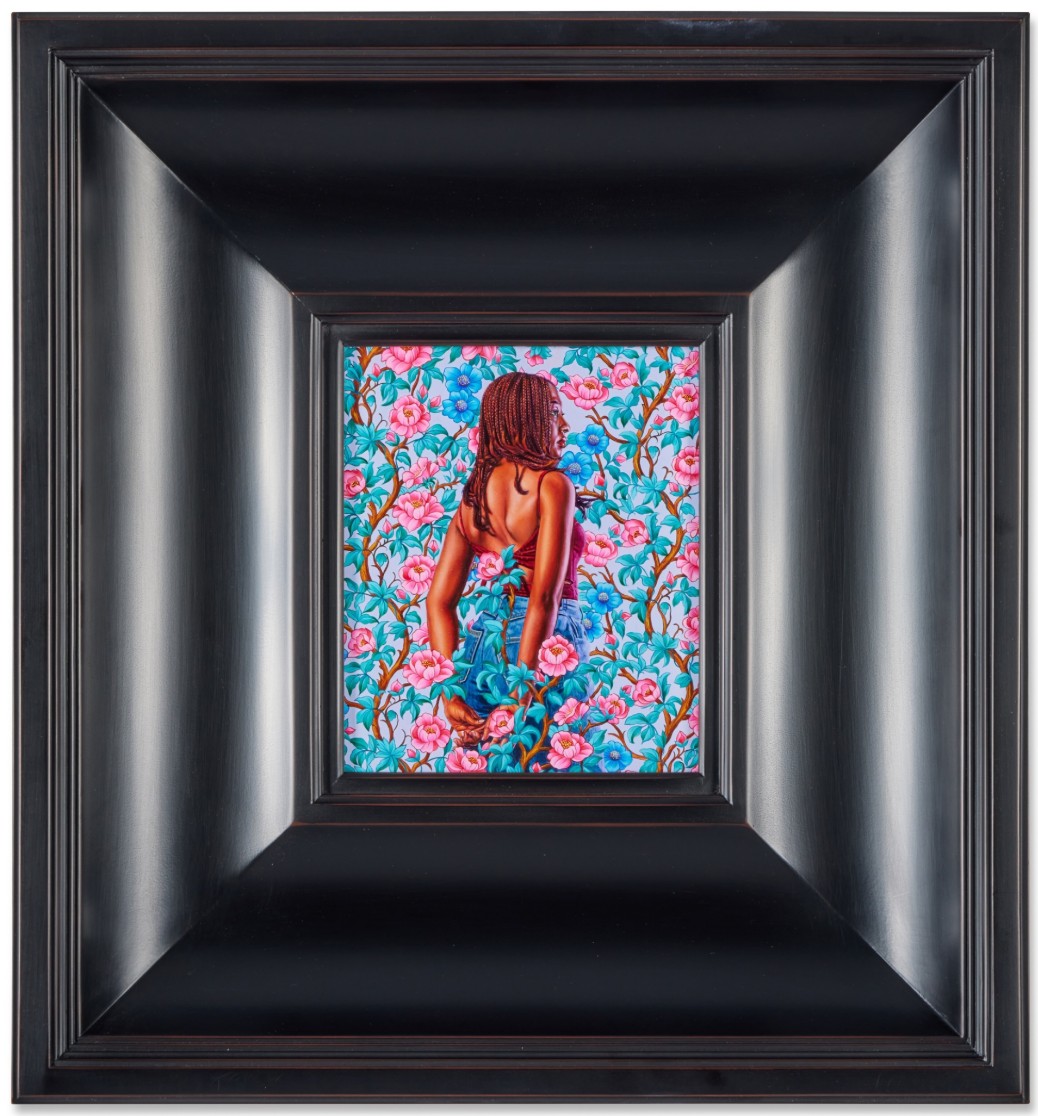
KEHINDE WILEY (b. 1977)
Portrait of Itohan Justin II, 2024
Oil on panel, in artist’s frame
18 1/8 x 16 7/8 inches (46 x 42.8 cm)
Signed and dated 2024 (on the reverse)
#9. Likunt Daniel Ailin, 2011
Freeman’s: 14 November 2025
Estimated: USD 30,000 – 50,000
USD 25,600
WORK ON PAPER
Likunt Daniel Ailin (The World Stage: Israel), 2011 Lot 4
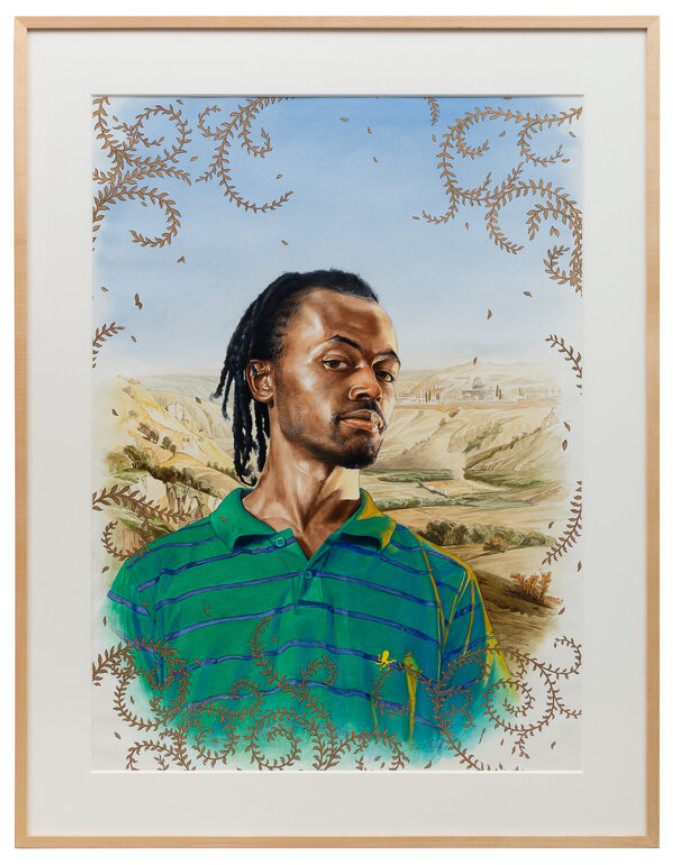
KEHINDE WILEY (American, b. 1977)
Likunt Daniel Ailin (The World Stage: Israel), 2011
Oil wash on paper
40×29 inches
Signed Kehinde Wiley and dated (lower right)
#10. The Gypsy Fortune-Teller, 2007
Rago: 11 June 2025
Estimated: USD 25,000 – 35,000
USD 16,510
232: KEHINDE WILEY, The Gypsy Fortune-Teller < 20|21 Art, 11 June 2025 < Auctions | Rago Auctions
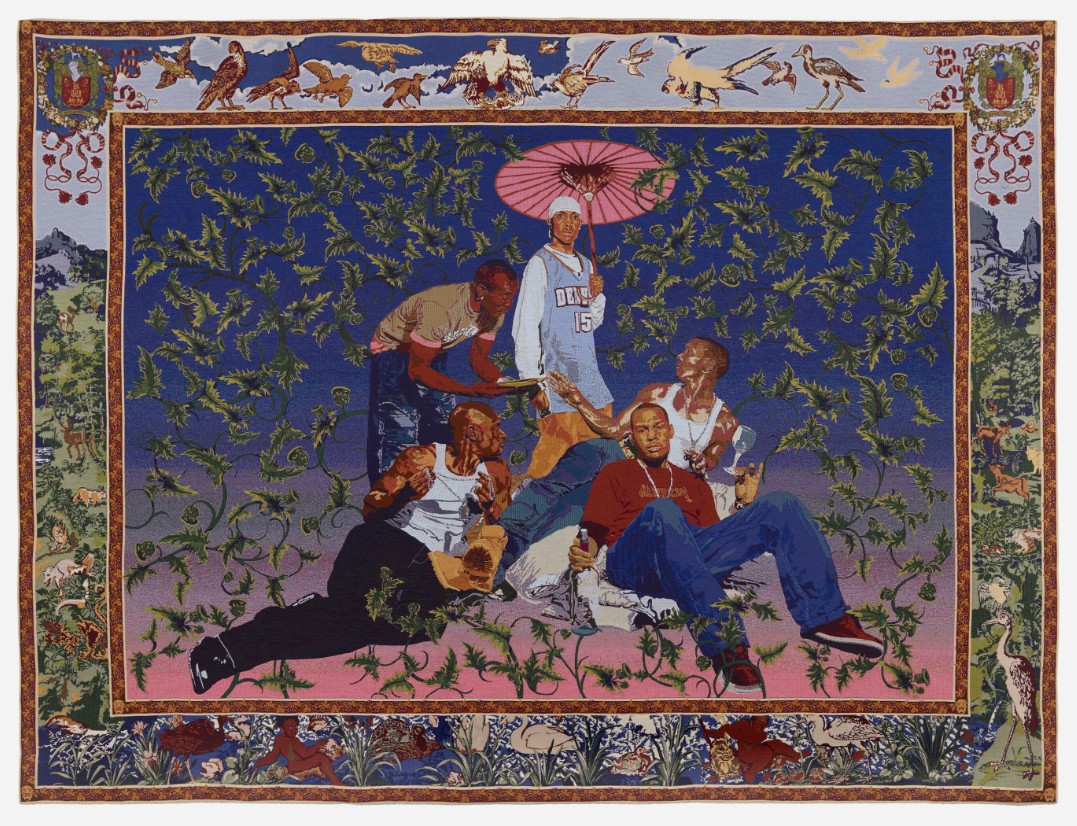
KEHINDE WILEY (b.1977)
The Gypsy Fortune-Teller, 2007
Jacquard tapestry in Merino wool and cotton
76×102 inches (193×259 cm)
This work is artist’s proof 7 of 10 apart from the edition of 48
Woven by Christian and Roland De Keukelaere, Belgium
Published by CerealArt, Philadelphia
2024 Auction Results
4 lots sold at auction in 2024 for a total turnover of USD 1,561,927. With no lot failing to sell, the sell-through rate is 100%. Christian Martyr Tarcisius, a painting dated 2008, sold at Phillips in London, on 7 March 2024, for GBP 660,400 (USD 837,887), a new auction record for the artist.
2024 Top 3 Lots
XXXXXXXXXX
#1. Christian Martyr Tarcisius, 2008
Phillips London: 7 March 2024
Estimated: GBP 200,000 – 300,000
GBP 660,400 / USD 837,887
NEW AUCTION RECORD FOR THE ARTIST
Kehinde Wiley – 20th Century & Contemp… Lot 16 March 2024 | Phillips
KEHINDE WILEY
Christian Martyr Tarcisius, 2008
Oil on canvas
84 x 180 3/4 inches (213×459 cm)
#2. Sleep, 2022
Phillips London: 11 October 2024
Estimated: GBP 150,000 – 200,000
GBP 254,000 / USD 332,740
Kehinde Wiley – Modern & Contempora… Lot 141 October 2024 | Phillips
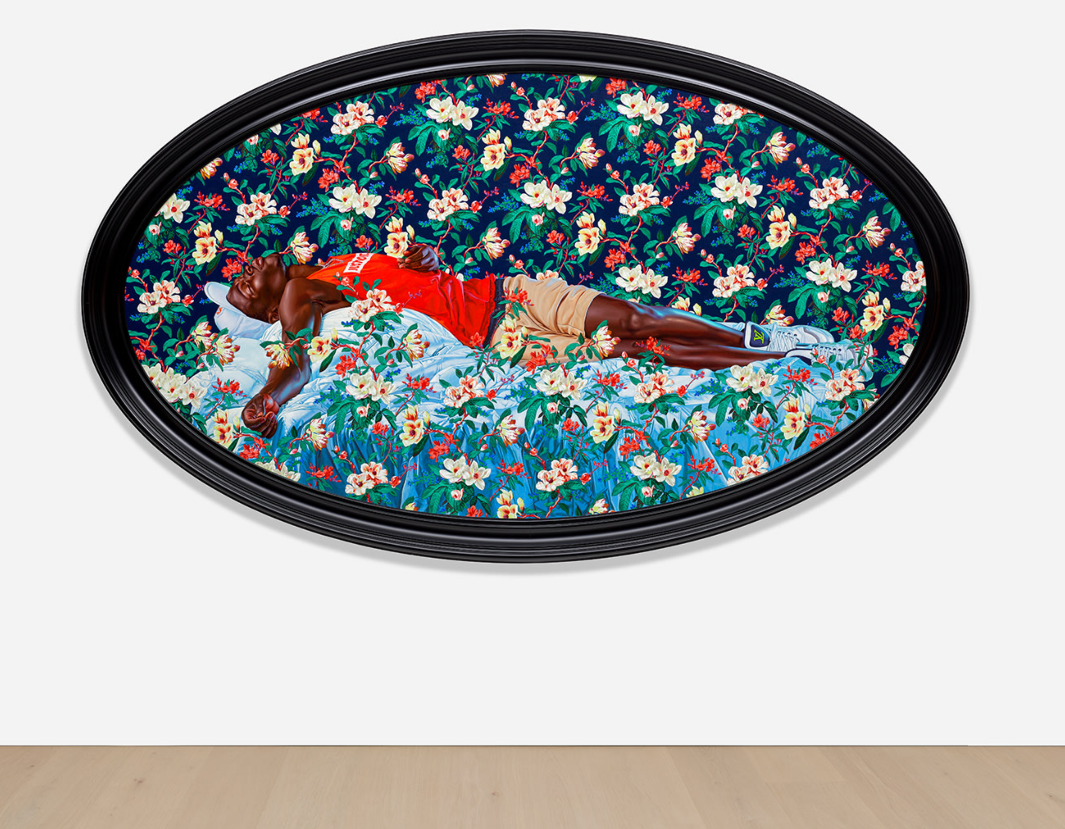
KEHINDE WILEY
Sleep, 2022
Oil on canvas, in artist’s frame
Overall: 70 7/8 x 118 1/2 inches (180×301 cm)
Signed and dated ‘Kehinde Wiley 2022’ on the reverse
#3. Saint Jerome Hearing the Trumpet of Last Judgement, 2018
Christie’s New-York: 17 May 2024
Estimated: USD 150,000 – 200,000
USD 239,400

KEHINDE WILEY (B. 1977)
Saint Jerome Hearing the Trumpet of Last Judgement, 2018
Oil on canvas, in artist’s frame
96×72 inches (243.8 x 182.9 cm)
Signed and dated ‘Kehinde Wiley 2018’ (on the reverse)
#4. After Memling’s Portrait of Jacob Obrecht, 2013
Phillips New-York: 15 May 2024
Estimated: USD 80,000 – 120,000
USD 152,400
Kehinde Wiley – Modern & Contemporary A… Lot 307 May 2024 | Phillips

KEHINDE WILEY
After Memling’s Portrait of Jacob Obrecht, 2013
Oil on panel, in artist’s designed hand fabricated frame with 22K gold leaf gilding
Panel: 21 1/4 x 13 7/8 inches (54 x 35.2 cm)
Overall: 32 x 35 1/2 inches (81.3 x 90.2 cm)
2023 Auction Results
7 lots sold at auction in 2023 for a total turnover of USD 990,200. With 1 lot failing to sell, the sell-through rate is 88%. The highest price was achieved at Phillips in New-York on 27 September 023 when an untitled painting dated 2003 sold for USD 241,300.
2023 Top 3 Lots
5 lots sold for more than USD 100,000, generating a cumulative turnover of USD 848,300, representing 80.5% of the total turnover for 2023.
XXXXXXXXXX
#1. Untitled, 2003
Phillips New-York: 27 September 2023
Estimated: USD 100,000 – 150,000
USD 241,300
Kehinde Wiley – New Now New York Lot 35 September 2023 | Phillips
KEHINDE WILEY
Untitled, 2003
Oil on canvas, in artist’s frame
65×58 inches (165.1 x 147.3 cm)
Signed and dated “Kehinde Wiley 03” on the reverse
#2. Passing/Posing (White) No. 2, 2004
Christie’s New-York: 10 November 2023
Estimated: USD 150,000 – 200,000
USD 189,000
KEHINDE WILEY (B. 1977), Passing/Posing (White) No. 2 | Christie’s (christies.com)
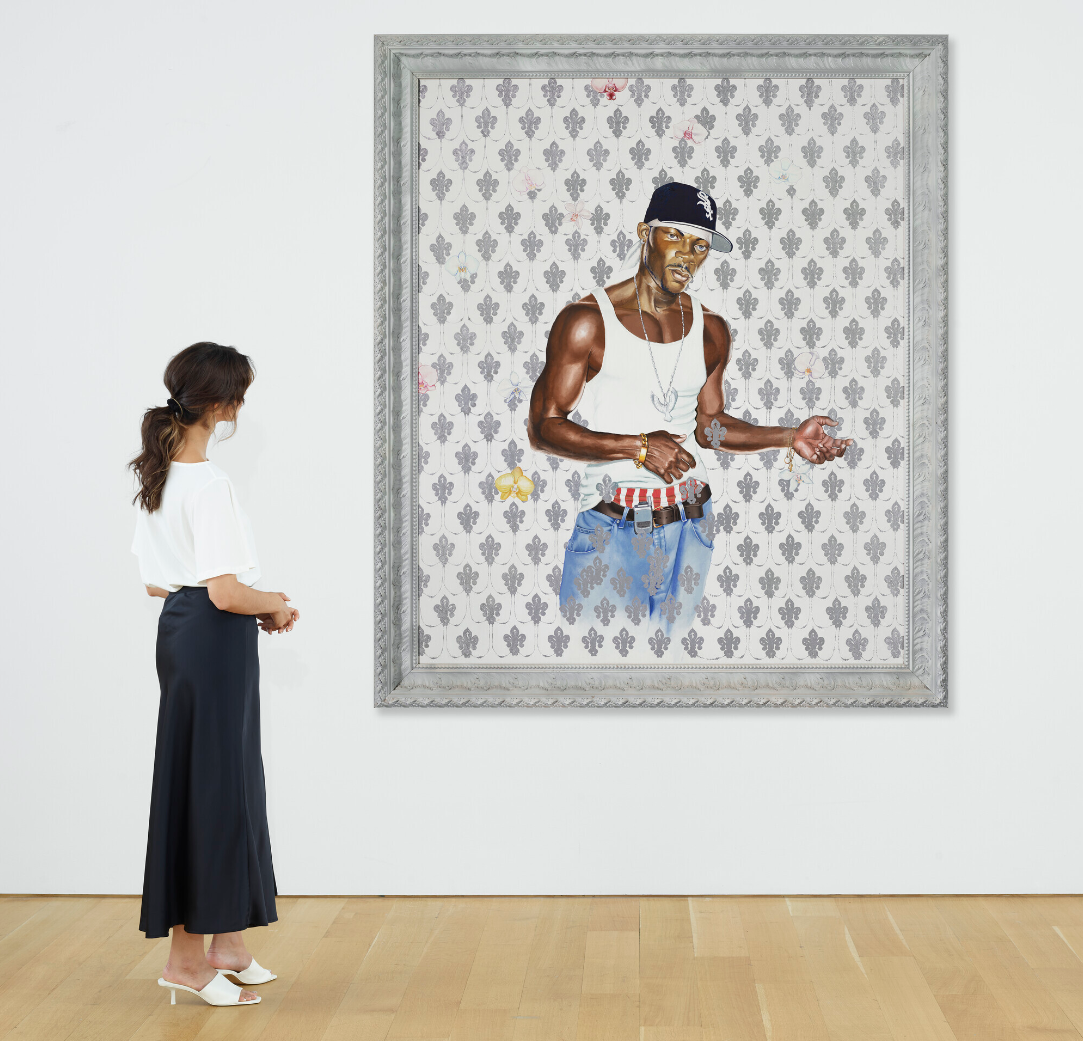
KEHINDE WILEY (B. 1977)
Passing/Posing (White) No. 2, 2004
Oil and metallic paint on canvas, in artist’s frame
Overall: 82 1/8 x 70 1/8 inches (208.6 x 178.1 cm)
Signed and dated ‘Kehinde Wiley 04’ (on the reverse)
#3. Keyon I, 2008
Sotheby’s New-York: 19 May 2023
Estimated: USD 60,000 – 80,000
USD 177,800
Keyon I | Contemporary Day Auction | 2023 | Sotheby’s (sothebys.com)
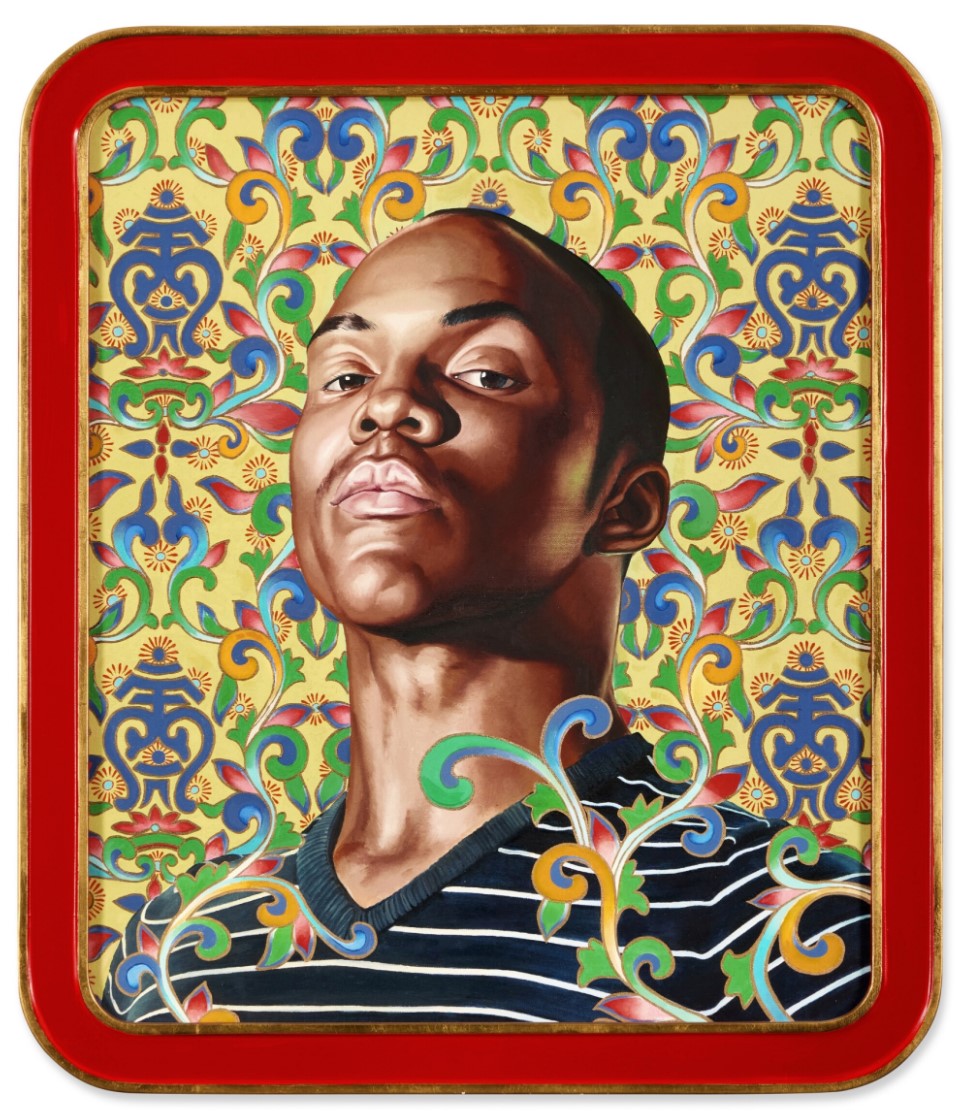
KEHINDE WILEY (b. 1977)
Keyon I, 2008
Oil on canvas, in artist’s frame
29 1/2 x 25 1/2 inches (74.9 x 64.7 cm)
Signed and dated 08 (on the reverse)
#4. Untitled (Easter Realness II), 2002
Christie’s New-York: 12 May 2023
Estimated: USD 120,000 – 180,000
USD 138,600
KEHINDE WILEY (B. 1977) (christies.com)
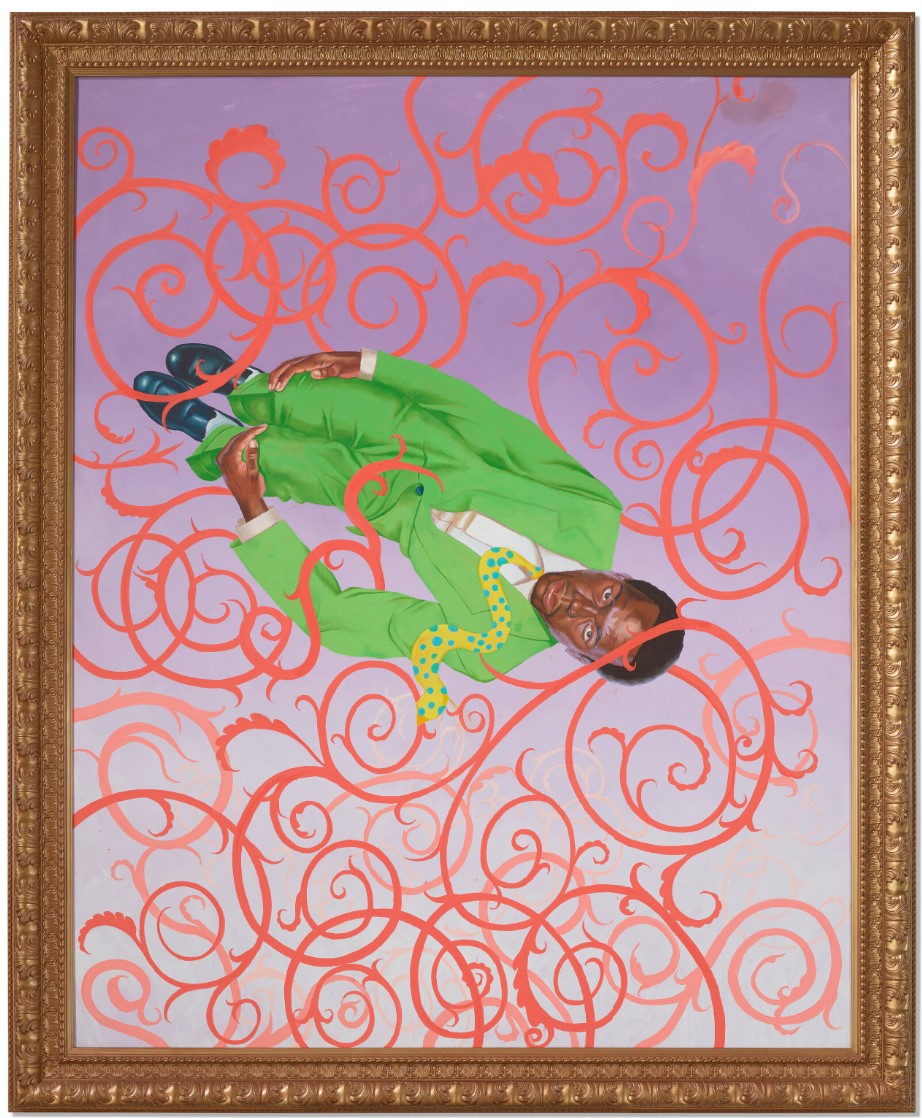
KEHINDE WILEY (B. 1977)
Untitled (Easter Realness II), 2002
Oil on canvas
60 3/4 x 48 7/8 inches (154.3 x 123.7 cm)
Signed and dated ‘Kehinde Wiley ’02’ (on the reverse)
#5. St. Michael, 2004
Phillips New-York: 15 November 2023
Estimated: USD 80,000 – 120,000
USD 101,600
Kehinde Wiley – 20th Century & Con… Lot 341 November 2023 | Phillips
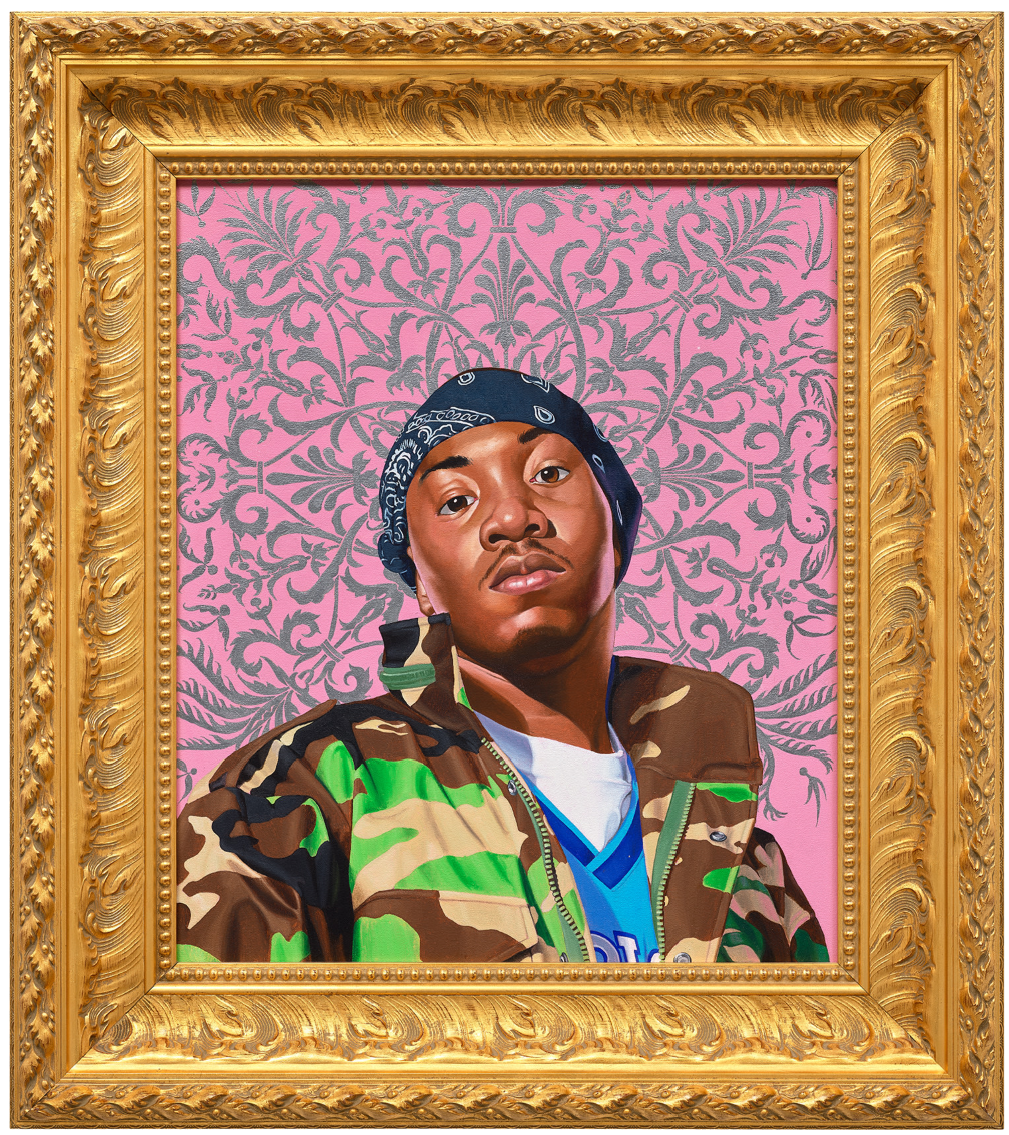
KEHINDE WILEY
St. Michael, 2004
Oil on canvas, in artist’s frame
36 1/4 x 32 1/4 inches (92.1 x 81.9 cm)
Signed and dated “Kehinde Wiley 05” on the reverse
USD 100,000
#6. Portrait of a Man, 2006
LA Modern: 21 June 2023
Estimated: USD 50,000 – 70,000
USD 81,900
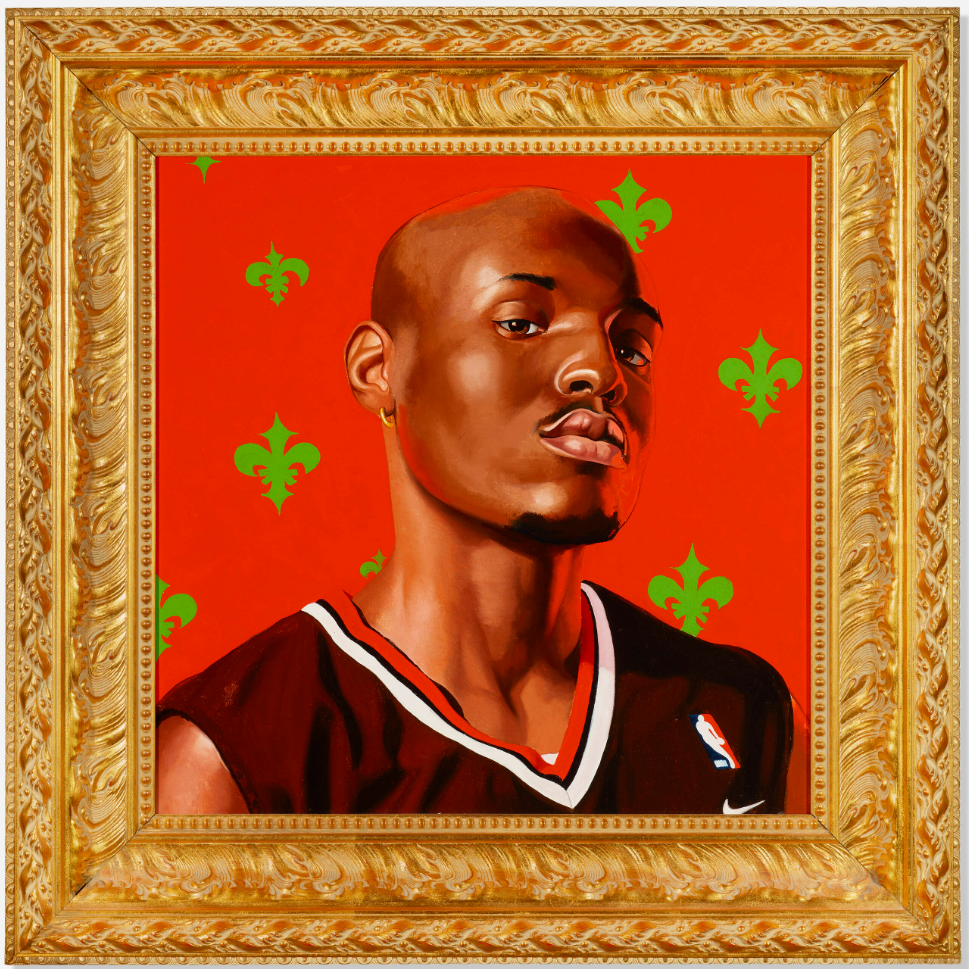
KEHINDE WILEY (b.1977)
Portrait of a Man, 2006
Oil on canvas in artist’s frame
34 1/4 h × 34 3/8 w × 4 1/8 d inches (87×87×10 cm)
Signed and dated to verso ‘Kehinde Wiley 06’
2022 Auction Results
4 lots sold at auction in 2022 for a total turnover of USD 718,953. With 1 lot failing to sell, the sell-through rate is 80%. The highest price has been achieved at Phillips in London on 28 April 2022 when Ferdinand-Phillip-Louis-Henri, Duc D’Orléans, a painting dated 2014 sold for GBP 289,800 (USD 360,347).
2022 Top 3 Lots
All 4 lots sold for more than USD 100,000.
XXXXXXXXXX
#1. Ferdinand-Philippe-Louis-Henri, Duc d’Orléans, 2014
Phillips London: 28 April 2022
Estimated: GBP 80,000 – 120,000
GBP 289,800 / USD 360,347
Kehinde Wiley – New Now London Lot 10 April 2022 | Phillips
KEHINDE WILEY
Ferdinand-Philippe-Louis-Henri, Duc d’Orléans, 2014
Oil on linen, in artist’s frame
94 1/8 x 73 1/8 inches (239 x 185.7 cm)
Signed and dated ‘Kehinde Wiley 2014’ on the reverse
USD 300,000
#2. Akilah Walker, 2016
Sotheby’s New-York: 17 November 2022
Estimated: USD 150,000 – 200,000
USD 277,200
Akilah Walker | Contemporary Day Auction | 2022 | Sotheby’s (sothebys.com)
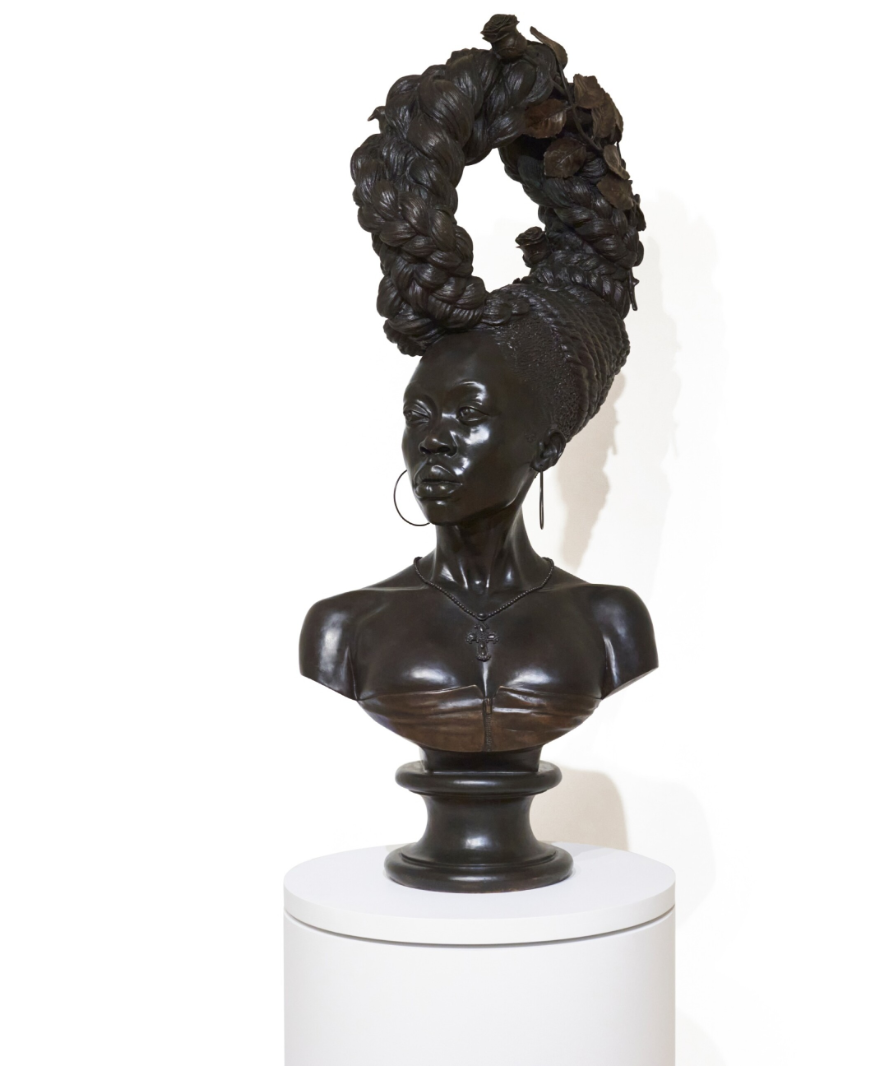
KEHINDE WILEY (b. 1977)
Akilah Walker, 2016
Bronze
59x24x21 inches (150 x 61 x 53.3 cm)
Incised with the signature Kehinde Wiley, date 2016 and number 4/5 (on the reverse)
This work is number 4 from an edition of 5
USD 200,000
#3. Big Daddy Kane, 2005
Phillips New-York: 19 May 2022
Estimated: USD 150,000 – 200,000
USD 189,000
Kehinde Wiley – 20th Century & Contempo… Lot 339 May 2022 | Phillips
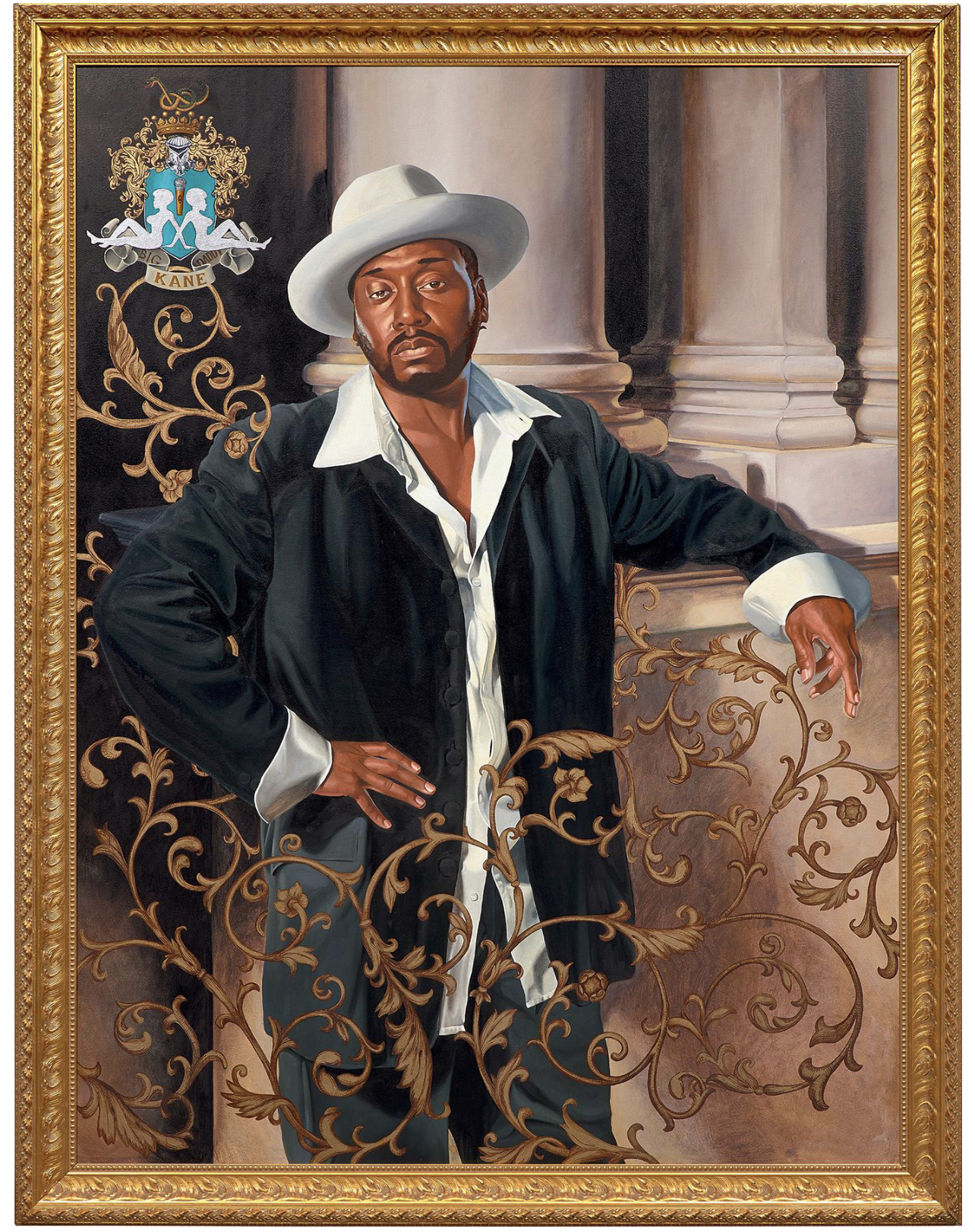
KEHINDE WILEY
Big Daddy Kane, 2005
Oil on canvas, in artist’s frame
106 x 82 1/8 inches (269.2 x 208.6 cm)
#4. Passing/Posing #11, 2002
Christie’s London: 14 October 2022
Estimated: GBP 90,000 – 120,000
GBP 151,200 / USD 169,506
KEHINDE WILEY (B. 1977) (christies.com)
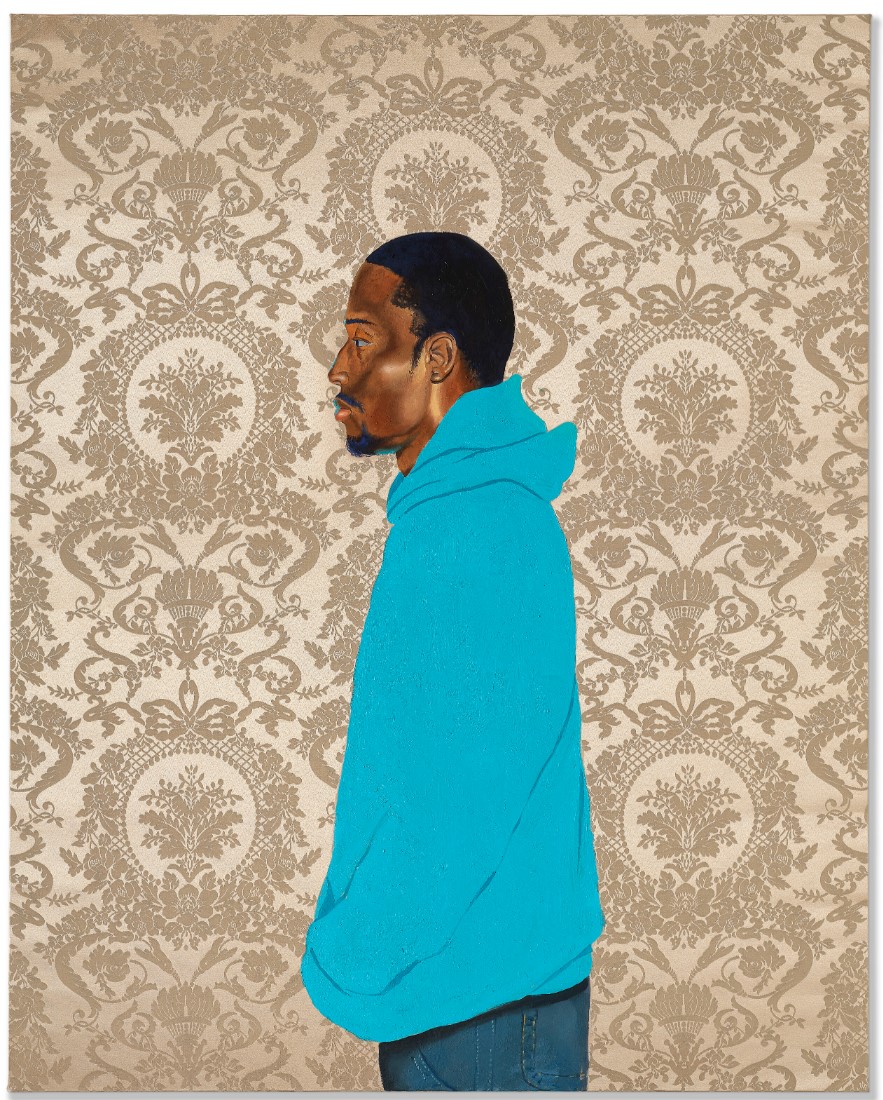
KEHINDE WILEY (B. 1977)
Passing/Posing #11, 2002
Oil and enamel on canvas
60 1/8 x 48 inches (152.8 x 122 cm)
Signed and dated ‘Kehinde Wiley 02’ (on the overlap)
2021 Auction Results
16 lots sold in 2021 for a total turnover of USD 3,696,867. With no lot failing to sell, the sell-through rate is 100%. The top price was achieved at Sotheby’s in New-York on 19 November 2021 when The Virgin Martyr St. Cecilia sold for USD 649,200.
2021 Top 3 Lots
This is the only lot selling for more than USD 500,000. 14 lots sold for more than USD 100,000, generating a cumulative turnover of USD 3,544,797, representing 95.9% of the total turnover for 2021.
XXXXXXXXXX
#1. The Virgin Martyr St. Cecilia, 2009
Sotheby’s New-York: 19 November 2021
Estimated: USD 100,000 – 150,000
USD 649,200
The Virgin Martyr St. Cecilia | Contemporary Day Auction | 2021 | Sotheby’s (sothebys.com)
KEHINDE WILEY (b. 1977)
The Virgin Martyr St. Cecilia, 2009
Oil and graphite on paper
57×124 inches (145×315 cm)
Signed Kehinde Wiley and dated 09 (lower right)
USD 500,000
#2. Rumors of War, 2019
Phillips New-York: 24 June 2021
Estimated: USD 350,000 – 450,000
USD 403,200
Kehinde Wiley – 20th Century & Contemp… Lot 348 June 2021 | Phillips
KEHINDE WILEY
Rumors of War, 2019
Patinated bronze
Sculpture: 52x62x27 inches (132.1 x 157.5 x 68.6 cm)
Overall: 88 x 65 1/2 x 33 1/2 inches (223.5 x 166.4 x 85.1 cm)
Incised with the artist’s signature
Number and date “Kehinde Wiley 2019 3/9” along the lower front edge of the sculpture
Incised with the artist’s initials “KW” on the horse’s bridle
This work is number 3 from an edition of 9 plus 3 artist’s proofs
#3. Charles I and Henrietta Maria, 2006
Sotheby’s New-York: 13 May 2021
Estimated: USD 150,000 – 200,000
USD 352,800
Charles I and Henrietta Maria | Contemporary Art Day Auction | 2021 | Sotheby’s (sothebys.com)
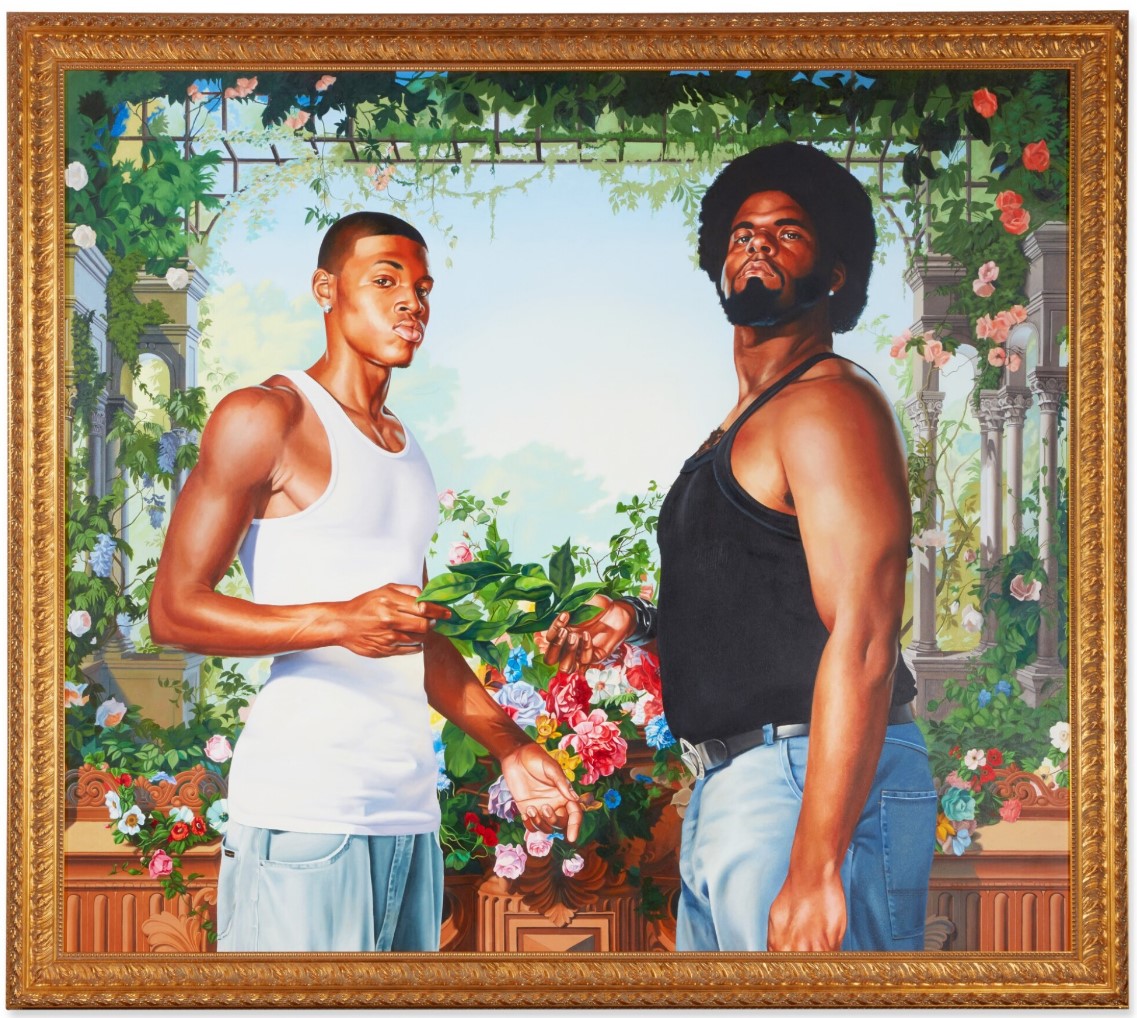
KEHINDE WILEY (b. 1977)
Charles I and Henrietta Maria, 2006
Oil on canvas, in artist’s frame
94 1/2 x 107 inches (240 x 271.8 cm)
Signed and dated 06 on the reverse
#4. Untitled (from Passing…), 2004
Christie’s New-York: 14 May 2021
Estimated: USD 50,000 – 70,000
USD 275,000
KEHINDE WILEY (B. 1977), Untitled (from Passing…) | Christie’s (christies.com)
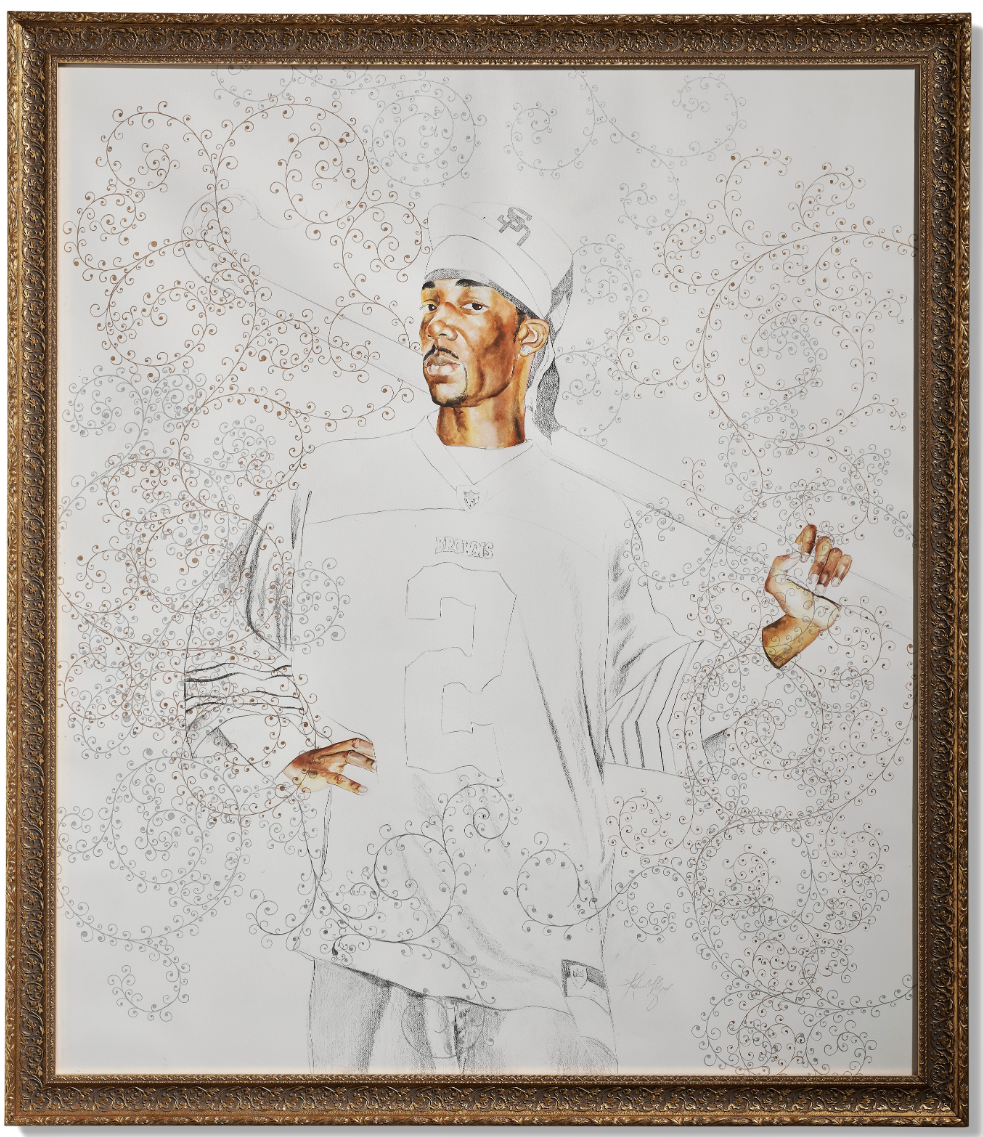
KEHINDE WILEY (B. 1977)
Untitled (from Passing…), 2004
Acrylic and graphite on paper, in artist’s frame
66 x 56 3/4 inches (167.5 x 144 cm)
Signed ‘Kehinde Wiley’ (lower right)
#5. Passing/Possing (St. Thomas the Apostle), 2004
Sotheby’s New-York: 12 March 2021
Estimated: USD 150,000 – 250,000
USD 252,000
Passing/Possing (St. Thomas the Apostle) | Contemporary Curated | 2021 | Sotheby’s (sothebys.com)
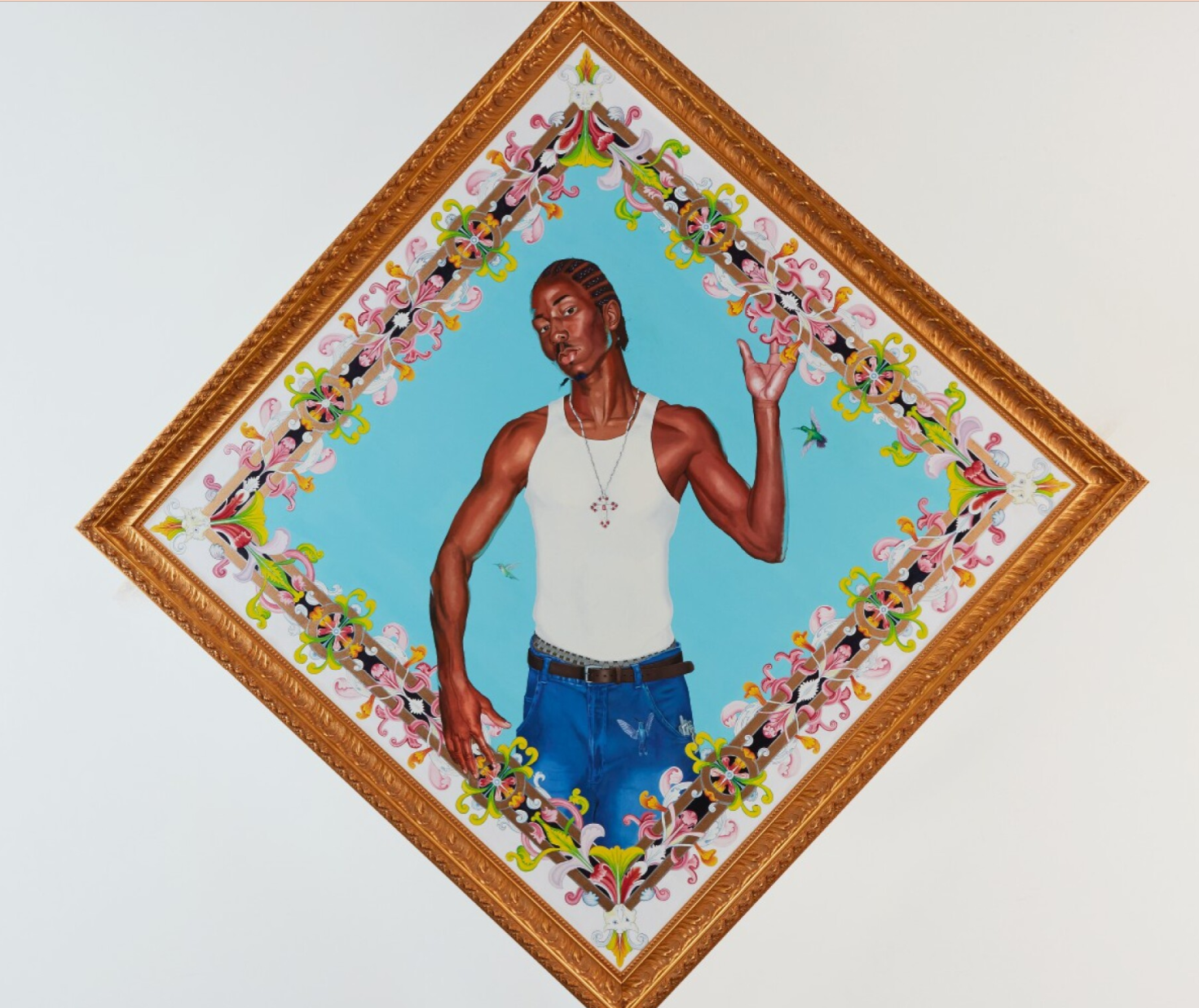
KEHINDE WILEY (b. 1977)
Passing/Possing (St. Thomas the Apostle), 2004
Oil and enamel on canvas, in artist’s frame
Framed: 84×84 inches (213.4 x 213.4 cm.)
Signed, titled and dated 04 on the reverse
#6. Passing/Posing (Decoration of the Chapel of the Sacrament in the Cathedral of Udine, Resurrection), 2003
Phillips New-York: 24 June 2021
Estimated: USD 150,000 – 250,000
USD 226,800
Kehinde Wiley – 20th Century & Contemp… Lot 352 June 2021 | Phillips
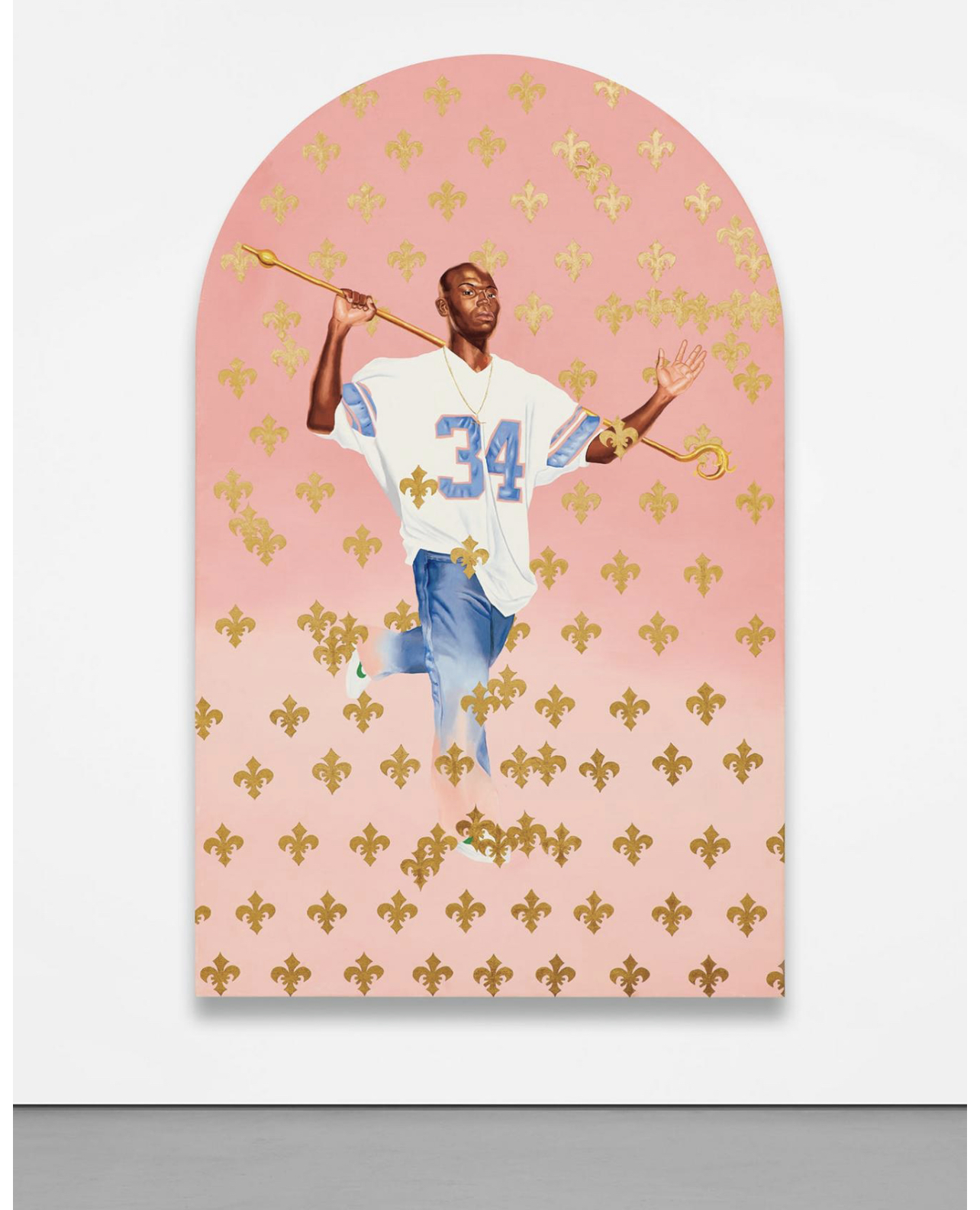
KEHINDE WILEY
Passing/Posing (Decoration of the Chapel of the Sacrament in the Cathedral of Udine, Resurrection), 2003
Oil on canvas mounted to panel
96×60 inches (243.8 x 152.4 cm)
Signed and dated “Kehinde Wiley 03” on the reverse
#7. Passing/Posing (Mercury After Raphael), 2003
Phillips New-York: 24 June 2021
Estimated: USD 150,000 – 250,000
USD 226,800
Kehinde Wiley – 20th Century & Contemp… Lot 351 June 2021 | Phillips
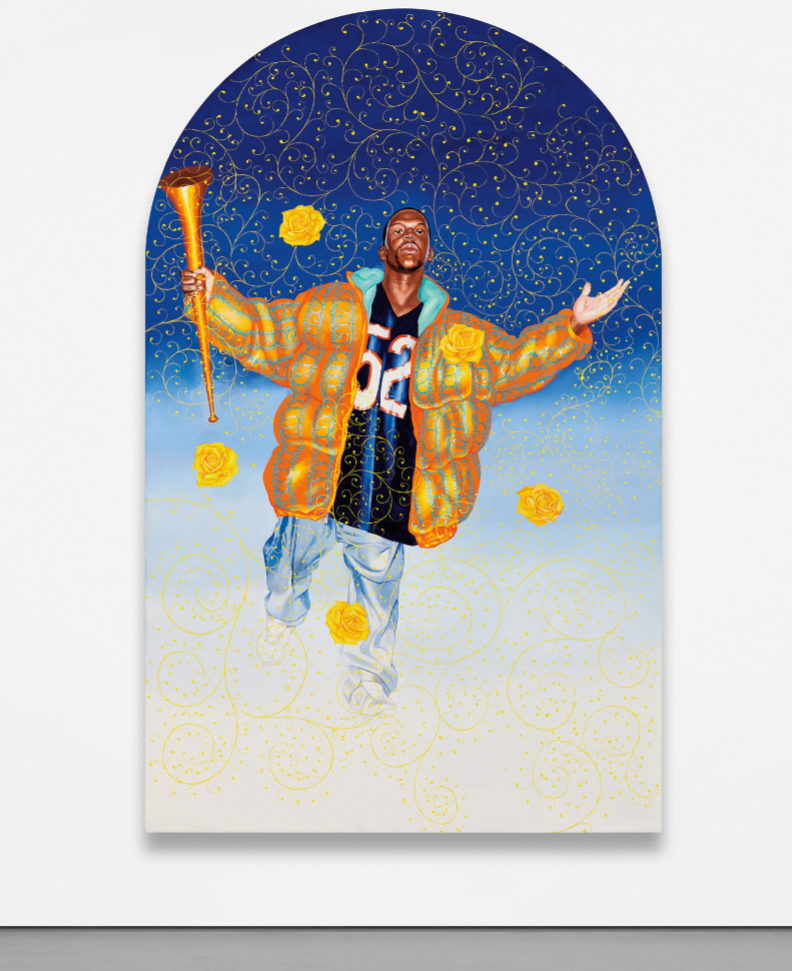
KEHINDE WILEY
Passing/Posing (Mercury After Raphael), 2003
Oil on canvas mounted to panel
96×60 inches (243.8 x 152.4 cm)
Signed and dated “Kehinde Wiley 03” on the reverse
#8. Portrait of Garrett Gray, 2017
Christie’s New-York: 12 November 2021
Estimated: USD 120,000 – 180,000
USD 225,000
KEHINDE WILEY (b. 1977) (christies.com)
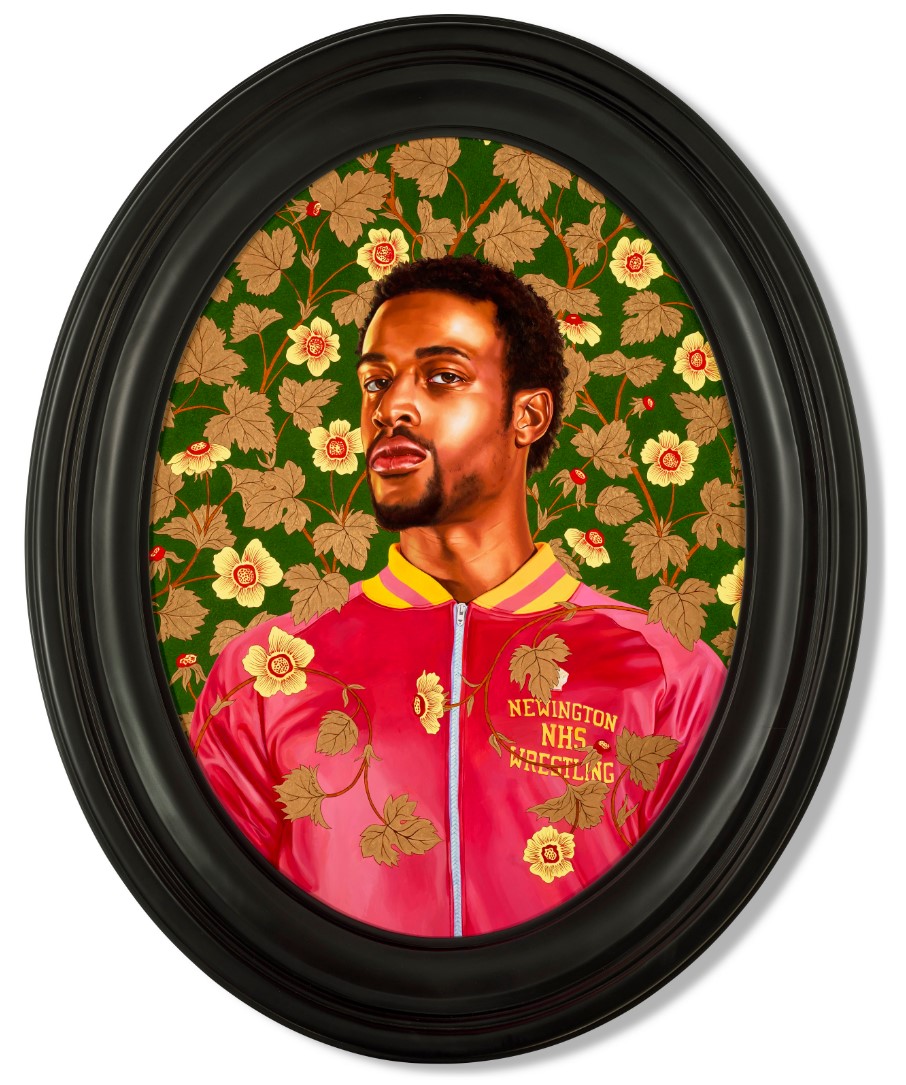
KEHINDE WILEY (b. 1977)
Portrait of Garrett Gray, 2017
Oil on shaped panel, in artist’s frame
46 1/2 x 37 inches (118.1 x 94 cm)
#9. Passing/Posing, Jean de Carondelet, 2004
Phillips London: 13 July 2021
Estimated: GBP 120,000 – 180,000
GBP 151,200 / USD 209,360
Kehinde Wiley – New Now London Lot 21 July 2021 | Phillips
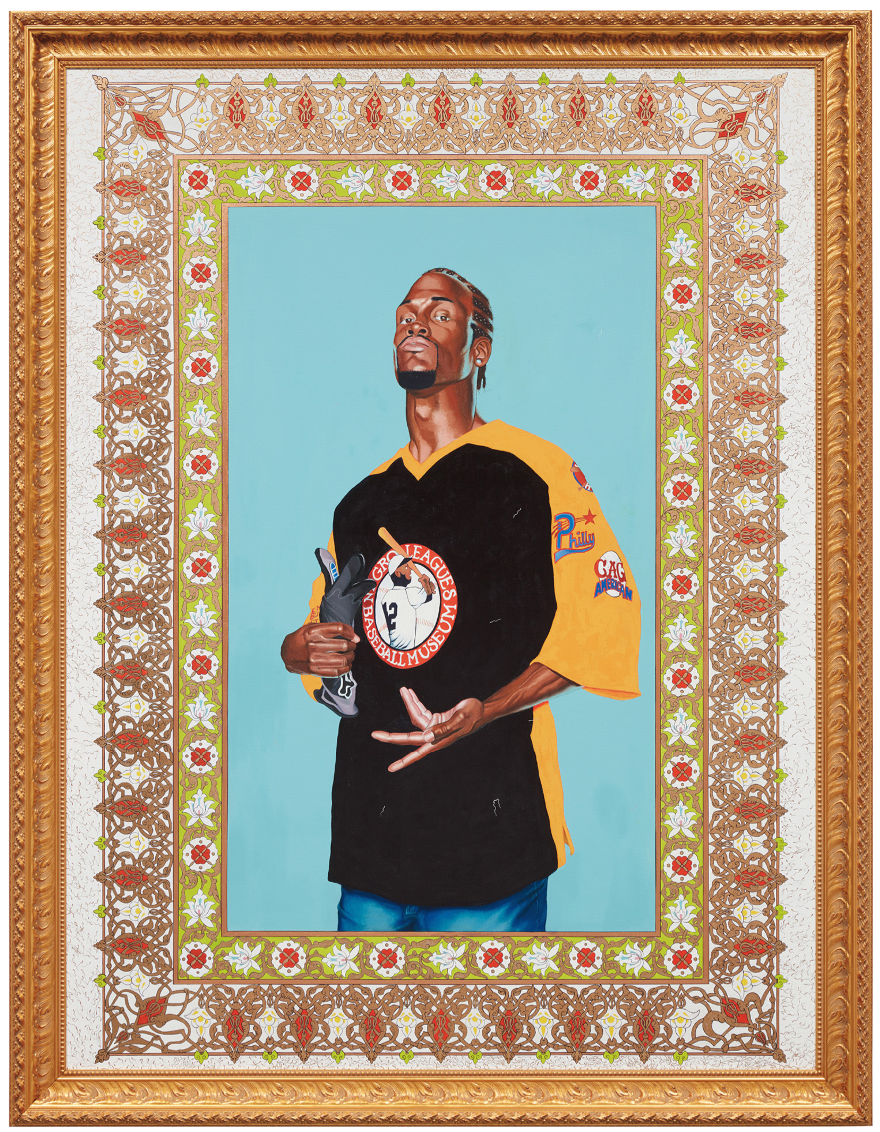
KEHINDE WILEY
Passing/Posing, Jean de Carondelet, 2004
Oil and enamel on canvas, in artist’s frame
106 1/2 x 82 1/2 inches (270.5 x 209.6 cm)
Signed and dated ‘Kehinde Wiley 04’ on the reverse
USD 200,000
#10. Passing/Posing (Marriage of the Virgin), 2005
Sotheby’s London: 1 July 2021
Estimated: GBP 100,000 – 150,000
GBP 138,800 / USD 191,237
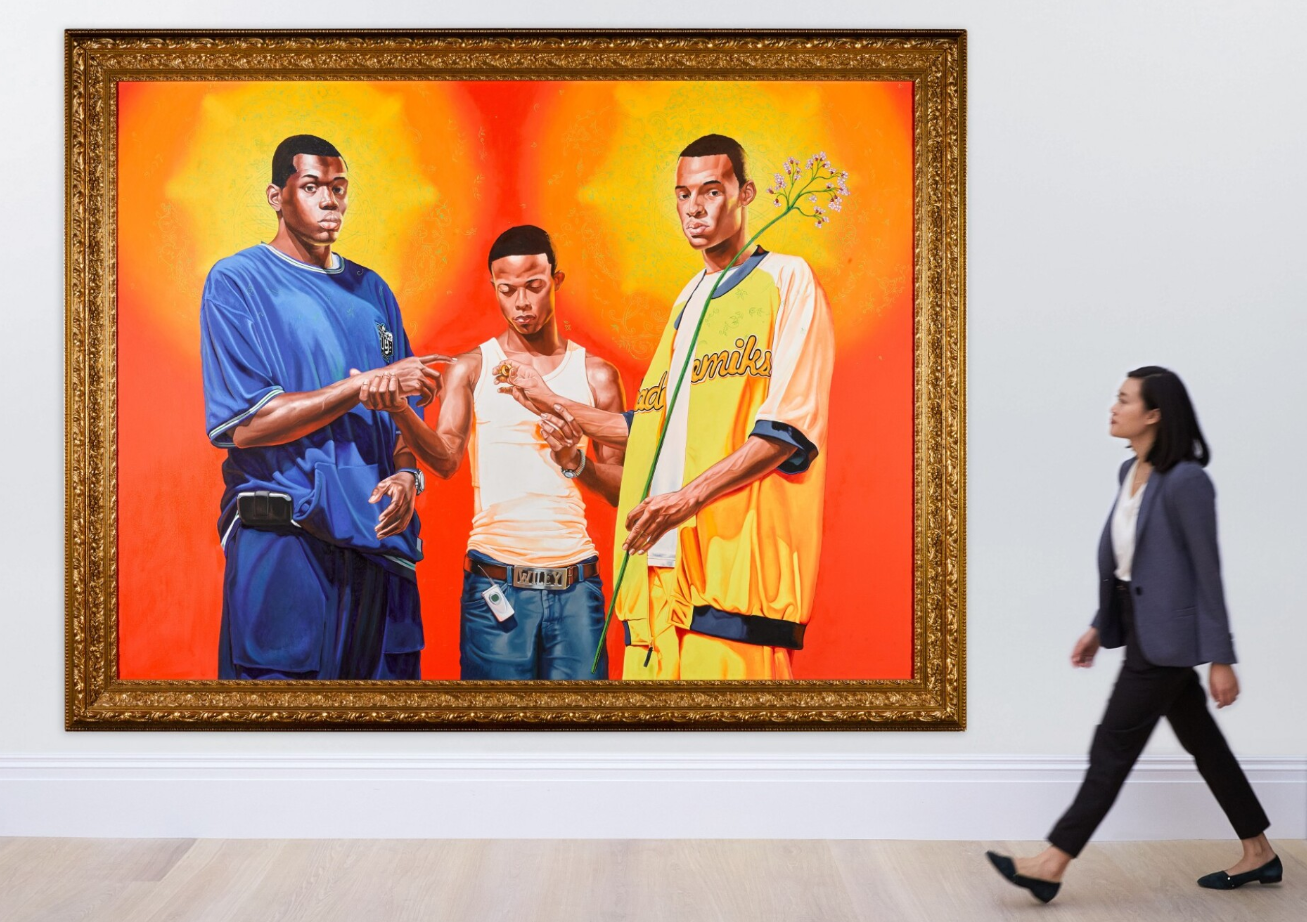
KEHINDE WILEY (b. 1977)
Passing/Posing (Marriage of the Virgin), 2005
Oil on canvas, in artist’s frame
Overall: 83 7/8 x 108 1/8 inches (213.3 x 274.6 cm)
Signed and dated 2005 on the reverse
#11. Passing/Posing 14, 2002
Sotheby’s New-York: 12 March 2021
Estimated: USD 40,000 – 60,000
USD 151,200
Passing/Posing 14 | Contemporary Curated | 2021 | Sotheby’s (sothebys.com)
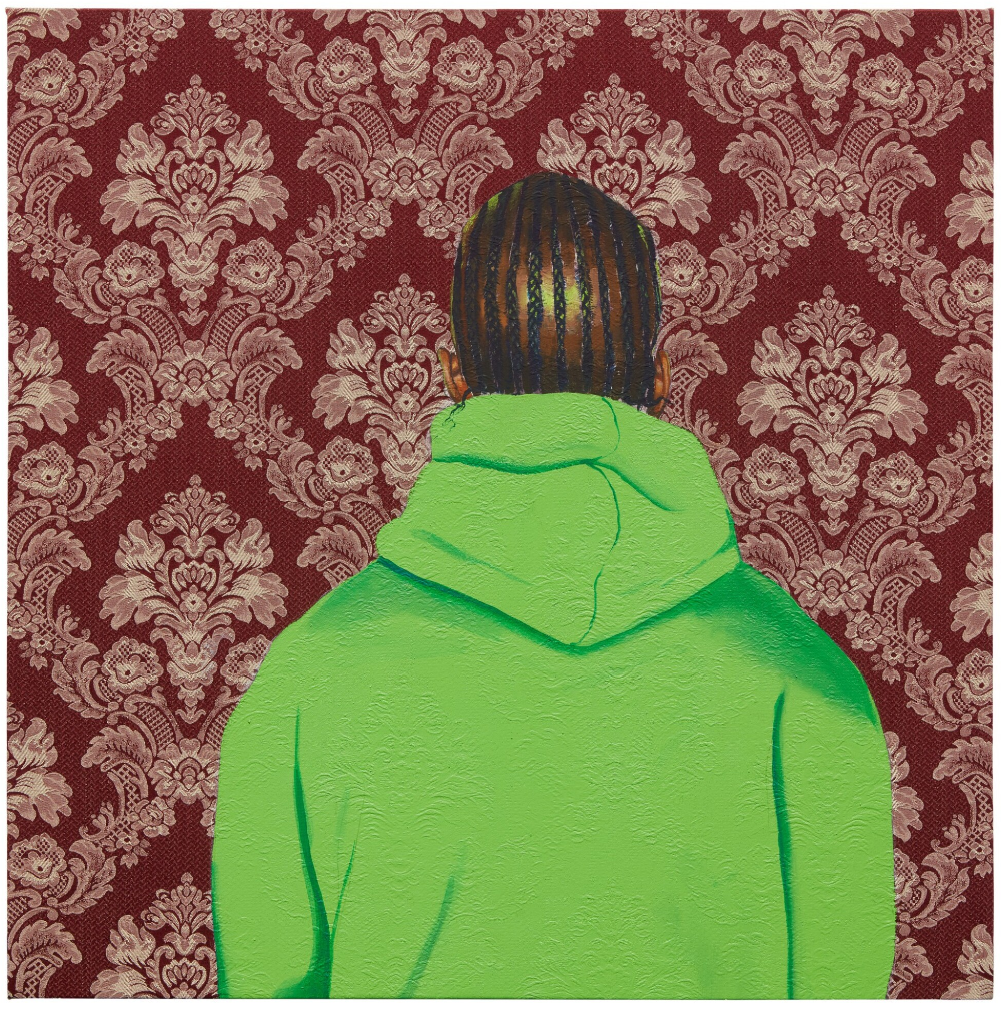
KEHINDE WILEY (b. 1977)
Passing/Posing 14, 2002
Oil on fabric
32×32 inches (81.3 x 81.3 cm)
Signed and dated 02 on the overlap
#12. Portrait of Quentin Lee Moore, 2017
Christie’s New-York: 12 November 2021
Estimated: USD 100,000 – 150,000
USD 150,000
KEHINDE WILEY (b. 1977), Portrait of Quentin Lee Moore | Christie’s (christies.com)
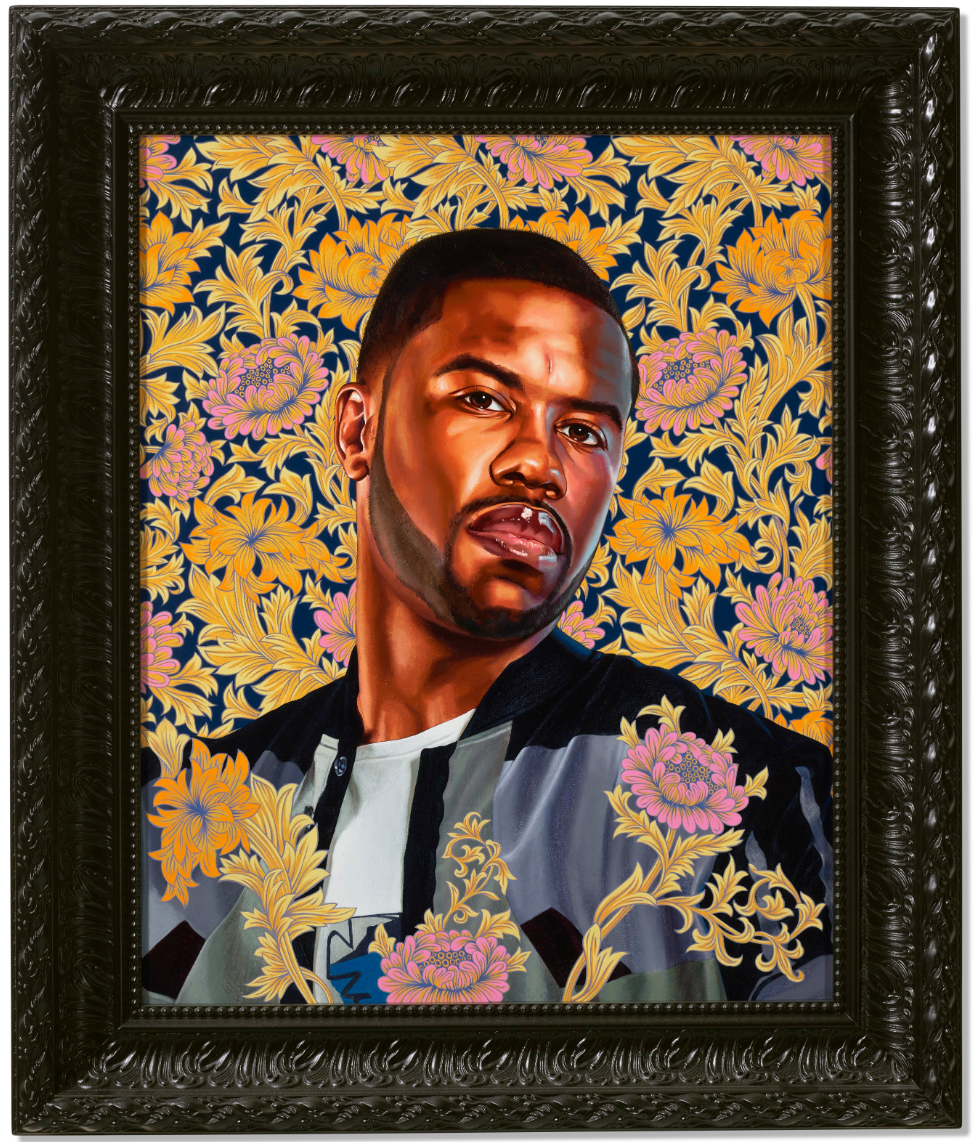
KEHINDE WILEY (b. 1977)
Portrait of Quentin Lee Moore, 2017
Oil on canvas, in artist’s frame
38 1/4 x 32 3/8 inches (97.2 x 82.2 cm)
#14. Thioqo Gliveira do Rosario Rozendo Study V, 2012
Christie’s New-York: 14 May 2021
Estimated: USD 40,000 – 60,000
USD 112,500
KEHINDE WILEY (B. 1977), Thioqo Gliveira do Rosario Rozendo Study V | Christie’s (christies.com)
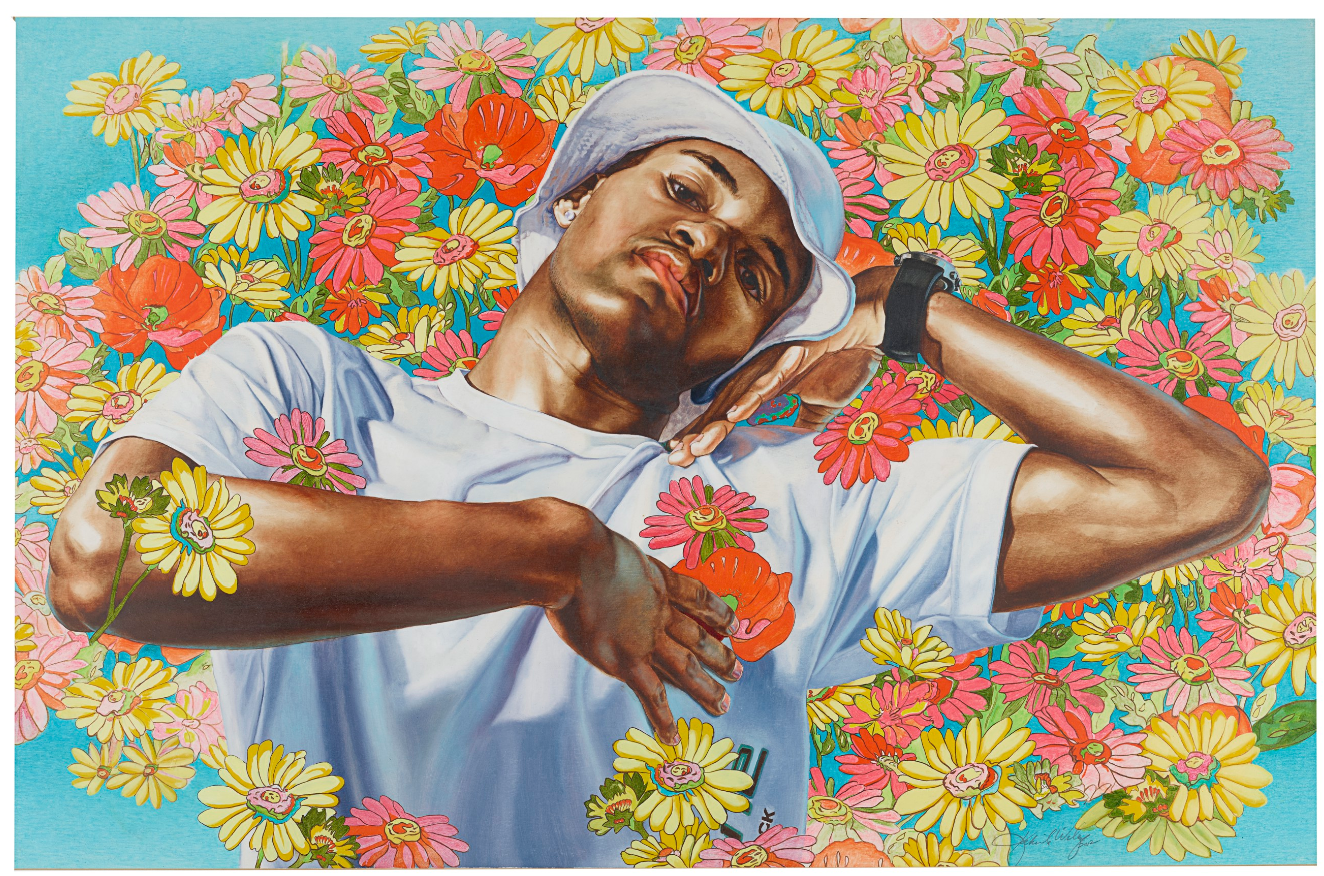
KEHINDE WILEY (B. 1977)
Thioqo Gliveira do Rosario Rozendo Study V, 2012
Oil wash, ink, wax crayon and graphite on paper
26×40 inches (66 x 101.6 cm)
Signed and dated ‘Kehinde Wiley 2012’ (lower right)
USD 100,000
#15. Untitled (West Side), 2004
Christie’s London: 14 July 2021
Estimated: GBP 40,000 – 60,000
GBP 60,000 / USD 82,770
KEHINDE WILEY (B. 1977), Untitled (West Side) | Christie’s (christies.com)
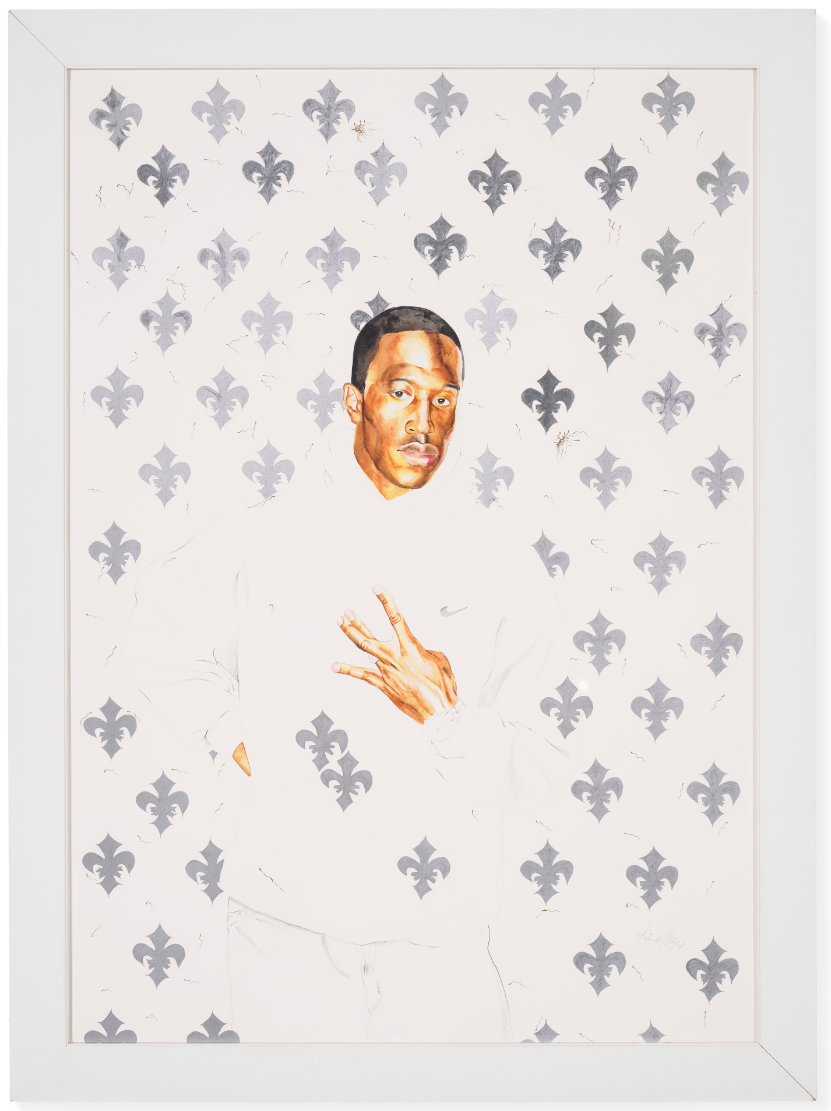
KEHINDE WILEY (B. 1977)
Untitled (West Side), 2004
Metallic paint and watercolor on paper, in artist’s frame
71×50 inches (180.3 x 127 cm)
Signed and dated ‘Kehinde Wiley 04’ (lower right)
PART III: FOCUS
Passing/Posing
Passing/Posing, Jean de Carondelet, 2004
Phillips London: 13 July 2021
Estimated: GBP 120,000 – 180,000
GBP 151,200 / USD 209,360
Kehinde Wiley – New Now London Lot 21 July 2021 | Phillips
KEHINDE WILEY
Passing/Posing, Jean de Carondelet, 2004
Oil and enamel on canvas, in artist’s frame
106 1/2 x 82 1/2 inches (270.5 x 209.6 cm)
Signed and dated ‘Kehinde Wiley 04’ on the reverse
Kehinde Wiley’s large-scale portrait unites figuration with bold decorative elements to explore the identity politics of representation. Perhaps best known for his presidential portrait of Barack Obama, the artist is deeply influenced by art historical sources. Working between New York, Beijing, and Dakar, Senegal, his paintings respond to the portraiture of Old Masters including Reynolds, Gainsborough, and, as the title of the present work indicates, Jan Cornelisz Vermeyen’s Jean de Cardondelet. Here, the titular advisor to the 15th century Holy Roman Emperor, Charles V, is replaced by the figure of a young Black man, cast by Wiley on the streets of Harlem, New York. One hand holds a single sports glove, reimagining the pair of gloves grasped in Carondelet’s fist, while the other hand of Wiley’s subject replicates the idiosyncratic pose of Vermeyen’s politician.
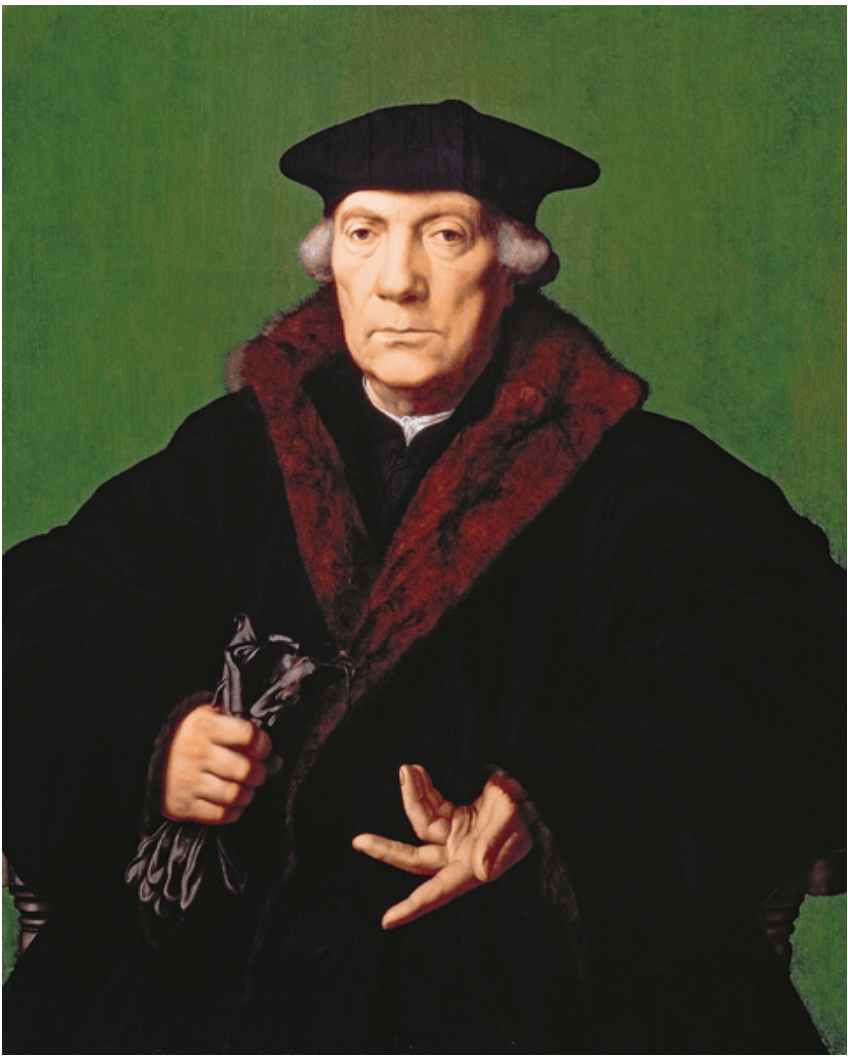
Jan Cornelisz Vermeyen, Portrait of Jan Carondelet, c. 1550 (oil on panel). Image © Brooklyn Museum of Art / Gift of Horace O. Havemeyer / Bridgeman Images
The present work is one in a series of portraits first presented in Wiley’s 2004 breakthrough exhibition at the Brooklyn Museum, Passing/Posing. The subjects of these works, dressed in everyday clothing to assert their contemporaneity. The choice of pose and accoutrement are significant. The direct gaze and augmented scale of the carefully posed figures are set within ornate gold frames, appropriating the visual imagery of social power and prestige in European portraiture, here applied to Wiley’s exploration of contemporary Black American masculinity. In the course of the exhibition, this juxtaposition of the contemporary and the traditional was heightened in relation to the present work as both Vermeyen’s and Wiley’s Jean de Cardondelet portraits hung simultaneously in the Brooklyn Museum. The illusionistic technique employed by Wiley to depict the figure in his portrait is contrasted with the bold execution of the ornamental decorative border to make a political point. Drawing a comparison between the ostracization of the decorative arts and Black subjects in Western artistic traditions, he strives to foreground both in his artmaking practice so ‘what has been marginalized comes to occupy the very center of the painting. Since his Passing/Posing series, Wiley has extended the geographical borders of his project to paint subjects in varied urban landscapes across the world, appropriating and reconfiguring the painterly traditions of Western portraiture to powerfully assert marginalized experiences into the art historical canon.
Passing/Posing (Decoration of the Chapel of the Sacrament in the Cathedral of Udine, Resurrection), 2003
Phillips New-York: 24 June 2021
Estimated: USD 150,000 – 250,000
USD 226,800
Kehinde Wiley – 20th Century & Contemp… Lot 352 June 2021 | Phillips
KEHINDE WILEY
Passing/Posing (Decoration of the Chapel of the Sacrament in the Cathedral of Udine, Resurrection), 2003
Oil on canvas mounted to panel
96×60 inches (243.8 x 152.4 cm)
Signed and dated “Kehinde Wiley 03” on the reverse
Through Kehinde Wiley’s sidewalk intercession, two young Black men in jerseys, jeans, and sneakers have found their way into the sublimely decorative and heavenly realms of Titian and Tiepolo. These two works from Kehinde’s Passing/Posing series combine the traditions of Christian iconography and contemporary Black urban imagery with these singularly styled figures taking on poses reminiscent of angels and saints in Renaissance altarpieces and in later European portraits. The artist provokes ambiguity in using these disparate elements and encourages us to look at these paintings from a completely new point of view.
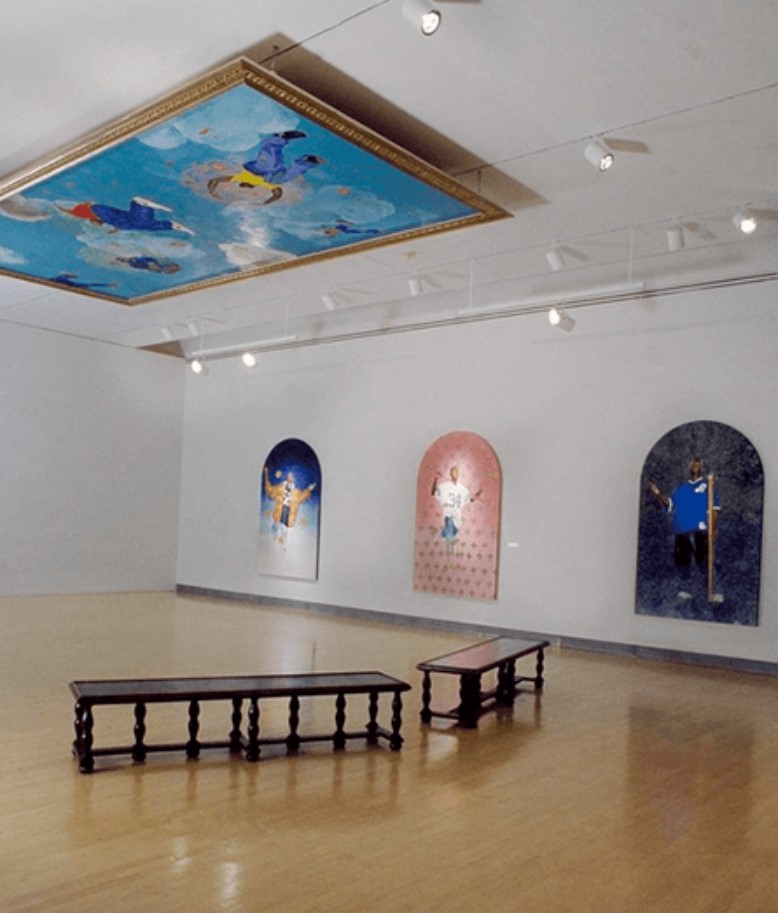
Installation view of Kehinde Wiley at the Brooklyn Musuem, New York, 2004. Image: Brooklyn Museum, New York, Artwork: ©Kehinde Wiley
Kehinde adopts the traditions of earlier European representation in his Passing/Posing series to boldly explore the imagery of power and status over centuries of Western art. The Passing/Posing portraits confront the historical exclusion of the Black body, and it is through this confrontation that Wiley achieves his goal in making Black men visible to us today through a visual vocabulary intimately linked to qualities of prestige and privilege. Taking this exploration even further, Wiley helps us to look at the issues surrounding Black male identity and, indeed, masculinity more broadly. These portraits of young Black men question how identity is built and its intersection with the performative impulses of Passing/Posing.
Merging the historical conventions of Western art with contemporary Black identity has been the focus of Kehinde’s career. With his first solo exhibition of the Passing/Posing series at the Brooklyn Museum in 2004, this remarkable and visionary body of work was the artist’s debut onto the international art scene. These two works from that career-making exhibition are representative of Kehinde’s extremely profound and engaging ability to create both subtle and fraught dialogues between the Western and white visual representations of position, power, and privilege and the inclusion or, perhaps imposition, of the Black male’s image and transmogrifying identity.
Passing/Posing (Mercury After Raphael), 2003
Phillips New-York: 24 June 2021
Estimated: USD 150,000 – 250,000
USD 226,800
Kehinde Wiley – 20th Century & Contemp… Lot 351 June 2021 | Phillips
KEHINDE WILEY
Passing/Posing (Mercury After Raphael), 2003
Oil on canvas mounted to panel
96×60 inches (243.8 x 152.4 cm)
Signed and dated “Kehinde Wiley 03” on the reverse
Passing/Possing (St. Thomas the Apostle), 2004
Sotheby’s New-York: 12 March 2021
Estimated: USD 150,000 – 250,000
USD 252,000
Passing/Possing (St. Thomas the Apostle) | Contemporary Curated | 2021 | Sotheby’s (sothebys.com)
KEHINDE WILEY (b. 1977)
Passing/Possing (St. Thomas the Apostle), 2004
Oil and enamel on canvas, in artist’s frame
Framed: 84×84 inches (213.4 x 213.4 cm.)
Signed, titled and dated 04 on the reverse
A striking canvas, Passing/Posing (St Thomas), belongs to Kehinde Wiley’s ebullient series of large-scale portraits which featured in the artist’s breakthrough exhibition at the Brooklyn Museum, 2004. Dressed in everyday clothing, Wiley’s larger-than-life figures blur the boundaries between traditional and contemporary modes of representation, forcing a critical consideration of the codified portrayal of black masculinity. The title Passing/Posing refers to the tension created by the need to attain the privilege and power traditionally associated with whiteness and the desire to preserve one’s identity and define oneself as an individual. It also alludes to Kehinde Wiley’s specific efforts to redefine and affirm black identity through a new style of portraiture: the depiction of young men from the streets of Harlem as saints and angels, in poses inspired by Renaissance and Baroque paintings.
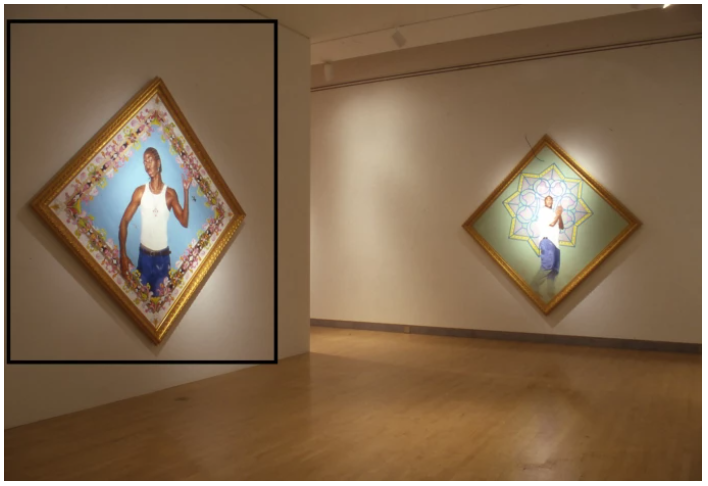
THE PRESENT WORK EXHIBITED IN PASSING/POSING AT THE BROOKLYN MUSEUM PAINTING AND SCULPTURE
Wiley’s subjects—dressed in their everyday clothing—seem to float over flat, brightly colored backgrounds that suggest infinite space, the intricate design of the background reminiscent of Islamic and French Rococco wallpaper. The protagonists are transformed into icons of beauty and desire in a surrounding of elegance and wealth. In creating these monumental paintings, the artist borrows poses, imagery, and titles from works by the Italian master painters Titian and Tiepolo, as well as the British artists Thomas Gainsborough and John Constable. A contemporary descendent of such classic masters of portraiture, Wiley engages the visual rhetoric of heroism to explore pressing issues surrounding race, gender and sexuality, highlighting the absence of black voices in the canon of art history.
Portraits
Head of a Young Girl Veiled and Crowned with Flowers after Julien, 2009
Sotheby’s New-York: 28 February 2025
Estimated: USD 70,000 – 100,000
USD 127,000
KEHINDE WILEY (b. 1977)
Head of a Young Girl Veiled and Crowned with Flowers after Julien, 2009
Oil on canvas, in artist’s frame
54 x 44 1/2 inches (137.2 x 113 cm)
Signed and dated 09 (on the reverse)
“There’s something glorious about the portraits that you see of aristocrats and royal families. Something beautiful in those expansive imperialist landscapes. But there’s a dead end. Such paintings, from the baroque, rococo, renaissance and Dutch golden age eras, are ultimately displays of European power, wealth, and beauty. What I wanted to do was to take the good parts, the parts that I love, and fertilise them with things that I know to be beautiful – people who happen to look like me.”
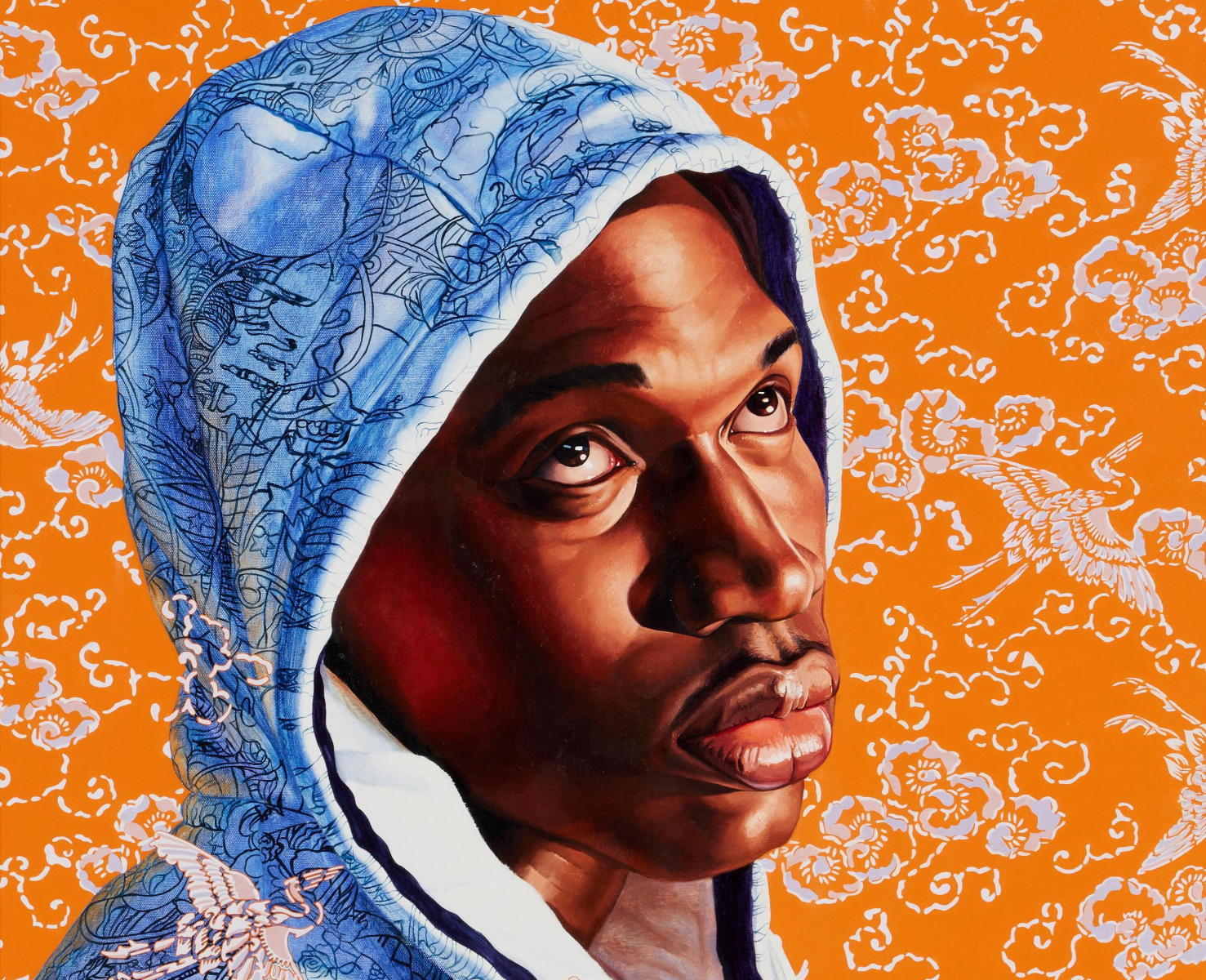
Saint Jerome Hearing the Trumpet of Last Judgement, 2018
Christie’s New-York: 17 May 2024
Estimated: USD 150,000 – 200,000
USD 239,400
KEHINDE WILEY (B. 1977)
Saint Jerome Hearing the Trumpet of Last Judgement, 2018
Oil on canvas, in artist’s frame
96×72 inches (243.8 x 182.9 cm)
Signed and dated ‘Kehinde Wiley 2018’ (on the reverse)

Jusepe de Ribera, Saint Jerome Hearing the Trumpet of the Last Judgment, 1921. Metropolitan Museum of Art, New York.
After Memling’s Portrait of Jacob Obrecht, 2013
Phillips New-York: 15 May 2024
Estimated: USD 80,000 – 120,000
USD 152,400
Kehinde Wiley – Modern & Contemporary A… Lot 307 May 2024 | Phillips
KEHINDE WILEY
After Memling’s Portrait of Jacob Obrecht, 2013
Oil on panel, in artist’s designed hand fabricated frame with 22K gold leaf gilding
Panel: 21 1/4 x 13 7/8 inches (54 x 35.2 cm)
Overall: 32 x 35 1/2 inches (81.3 x 90.2 cm)
A rare example by Kehinde Wiley to come to auction, After Memling’s Portrait of Jacob Obrecht is one of only eight intimately-scaled wood panel portraits comprising the artist’s acclaimed Memling series. Executed in 2013, it was among the works unveiled at the Phoenix Art Museum that same year and has since been exhibited across the globe, notably at The National Gallery in London in 2021-22. Wiley’s meticulously painted portraits draw inspiration from the 15th century Flemish painter Hans Memling, who was among the first to paint portraits of the merchant class and not of royalty or clergy. Subverting the Northern Renaissance triptych structure, Wiley replaces the historic sitters with young men of color dressed in contemporary attire–here paying homage to Jacob Obrecht, the most famous musician of his day. The series takes a key place within Wiley’s oeuvre, representing a distinct departure from the characteristically monumental scale of his paintings. It also importantly marks the first time Wiley included his sitters’ names within the paintings (here, subtly inscribed in the dark wood doors). Taking Memling’s formal structure as a point of departure, Wiley imparts his subjects with a sense of agency absent from his art historical forebears’ portraits: as evidenced in After Memling’s Portrait of Jacob Obrecht, the young man returns the viewer’s gaze.
Christian Martyr Tarcisius, 2008
Phillips London: 7 March 2024
Estimated: GBP 200,000 – 300,000
GBP 660,400 / USD 837,887
NEW AUCTION RECORD FOR THE ARTIST
Kehinde Wiley – 20th Century & Contemp… Lot 16 March 2024 | Phillips
KEHINDE WILEY
Christian Martyr Tarcisius, 2008
Oil on canvas
84 x 180 3/4 inches (213×459 cm)
The largest of Kehinde Wiley’s work to have been offered at auction, Christian Martyr Tarcisius is a commanding image, full of majesty and pomp. Created in 2008, the same year as Barack Obama was sworn in as President of the United States, the work is realized on a scale seldom seen in contemporary portraiture, Wiley reconceptualizing the formal apparatus of easel painting to create a dynamic, statuesque portrait that challenge hierarchies of race, gender, and taste. Since 2001, Kehinde Wiley has reconsidered historical sculptural and pictorial form through his portraits, challenging and expanding the narrower traditions of the European and American art historical canon. Wiley recalls the prevalence of these frameworks during childhood in Los Angeles, where under the encouragement of his mother, he first visited the Huntington Library Art Gallery.
“Joshua Renoylds, Thomas Gainsborough and John Constable were some of my favorites’ through their opulence yet ‘as a twentieth-century poor Black kid […] I had no way of digesting it.”
In appropriating a western pictorial tradition that was used to galvanize secular or religious figures, Wiley reintroduces the historically and socially marginalized Black individual into the frame on a heroic scale. In Christian Martyr Tarcisius, the sitter’s clasped hands, recumbent form, parted lips, and pious gaze directly reference Alexandre Falguière’s 1868 sculpture Tarcisius, martyr chrétien. Falguière had taken the spiritual subject of the young Tarcisius on the edge of death, shielding in his hands the Body of Christ from those who attacked him. Yet, in defiance of the delicacy and fragility of Falguière’s sculpture, Wiley’s Tarcisius is beyond life-size, his epic proportions rendered in exuberant color. In this way, Christian Martyr Tarcisius is as much poignant as it is victorious and affirming.
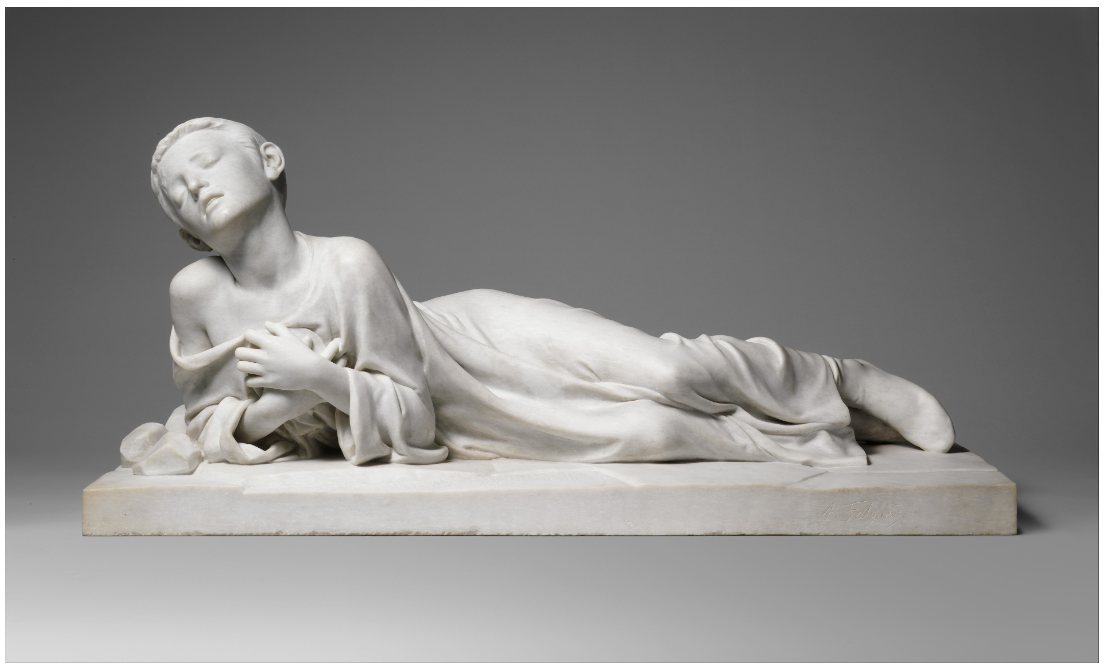
Alexandre Falguière, Saint Tarcisius, 1868, The Metropolitan Museum of Art, New York. Image: © The Metropolitan Museum of Art, New York, European Sculpture and Decorative Arts Fund, 2007, 2007.407
Wiley ascribes his sitter’s agency throughout his approach to image-making. His subjects are selected at random, through a process of ‘street casting’ that Wiley commenced in 2001 in Harlem, and has subsequently extended globally, from China and Haiti to Senegal and Jamaica. Those who accept Wiley’s invitation to the studio then choose poses from historical artworks and are photographed in their own clothes: ‘there are no props or dressing people up’, Wiley emphasizes. Therefore, Wiley champions ‘the beauty in that person who was just walking by you, who the world is ignoring’, exalting popular culture through paint, particularly the world of hip hop.
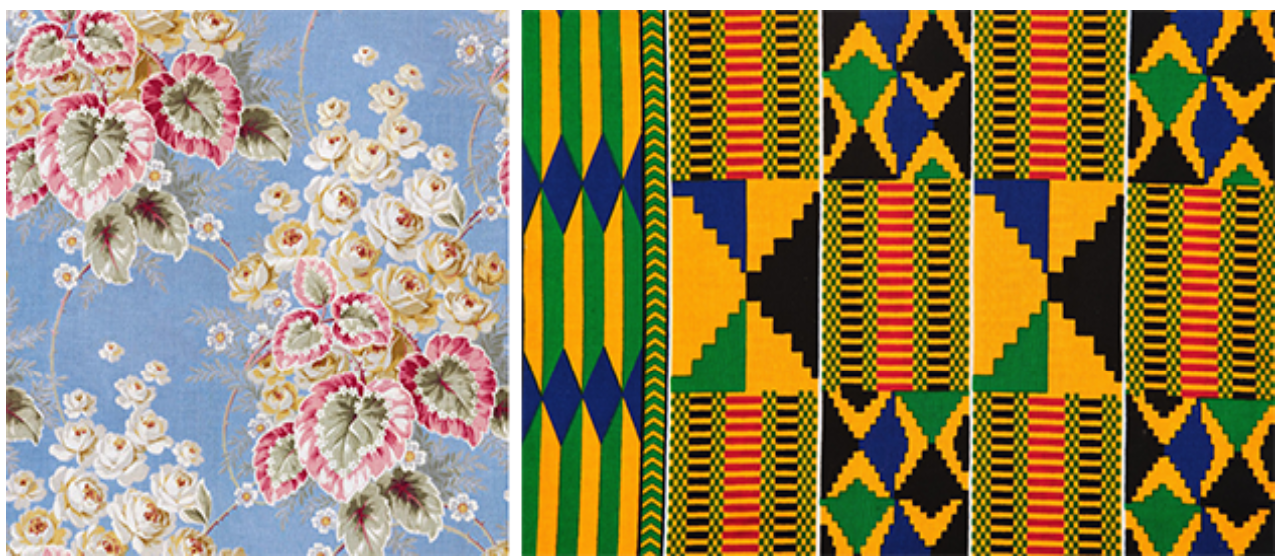
[Left] Roller-printed cotton cloth (lining of an Abr Ikat Munisak). Russia, early twentieth century
[Right] African Ghanian traditional cotton print. Image: Ivan Okyere-Boakye Photography / Alamy Stock Photo
In Christian Martyr Tarcisius, by complicating the relationship between the figure and the patterned field, Wiley brings the cultural associations of pattern into central focus. Like Wiley’s use of pose and dress, pattern establishes the cross-cultural exchange central to his practice. Though the floral motif is based on a cotton textile manufactured in Russia during the twentieth century, the design was influenced by French home-furnishing: a leader of the latest fashions in the Russian market from the late 19th century. Wiley’s memories of home furnished with ‘faux French furniture’ include a similar fusion of various cultural designs, an environment fundamental to forming his ‘internal taste’. Here too, Wiley brings European and African sources into dialogue with one another, the figure wearing a jacket and baseball cap referencing the colors and geometric patterning of traditional Ghanian textiles. In drawing our attention to these elements Wiley also underscores the relationship between gender and the decorative. As an industry typically associated with ‘women’s work’ and viewed as ‘secondary’ to fine art, by blurring the boundaries between the body and space, Wiley establishes both components of pattern and portrait on equal terms.
Untitled, 2003
Phillips New-York: 27 September 2023
Estimated: USD 100,000 – 150,000
USD 241,300
Kehinde Wiley – New Now New York Lot 35 September 2023 | Phillips
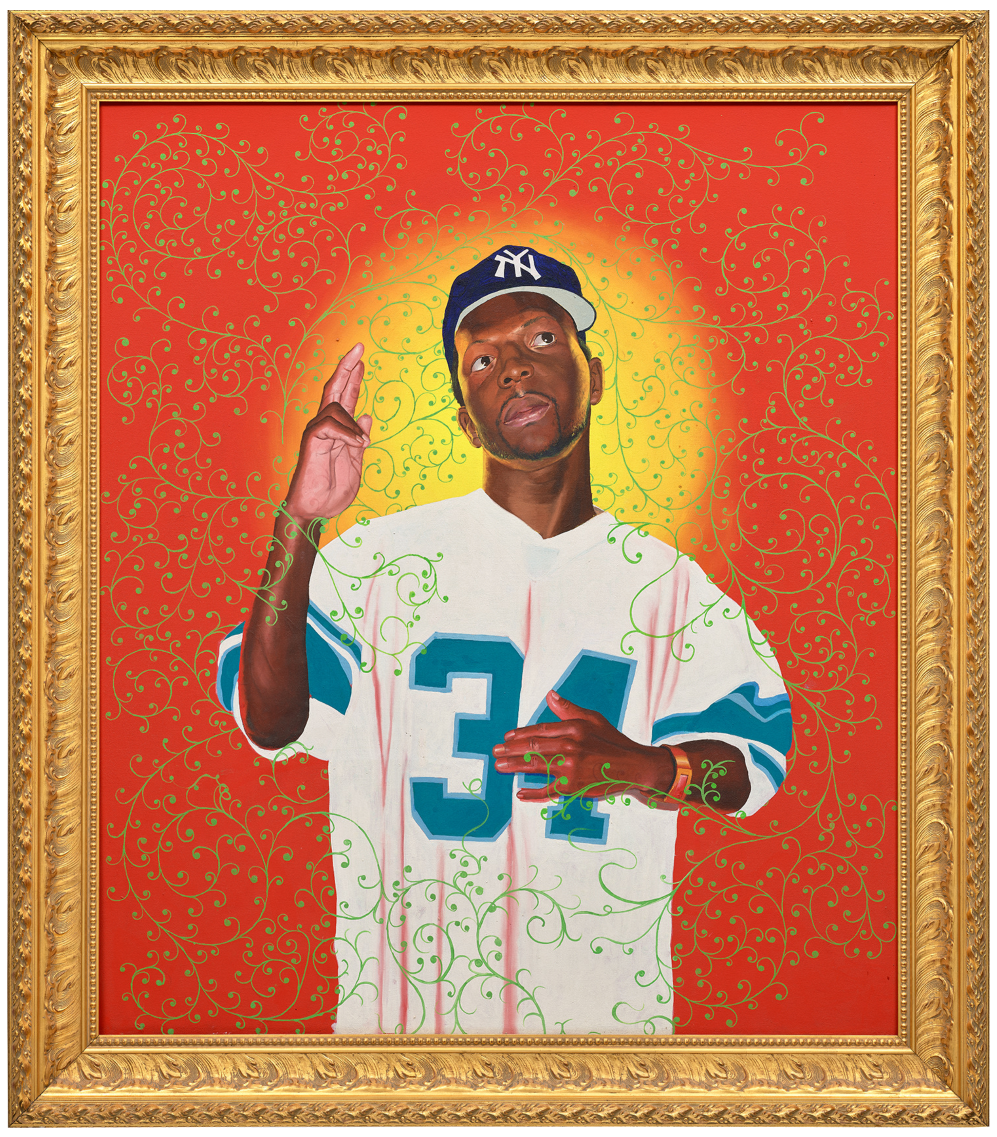
KEHINDE WILEY
Untitled, 2003
Oil on canvas, in artist’s frame
65×58 inches (165.1 x 147.3 cm)
Signed and dated “Kehinde Wiley 03” on the reverse
Painted in 2003, a year after Kehinde Wiley’s inaugural solo exhibition, Passing/Posing, the Hoffman Gallery, Chicago, 2002, Untitled is emblematic of the artist’s distinctive touch in contemporary portraiture. Renowned for his portrayals that position African Americans within the traditional contexts of Old Master paintings, Wiley adeptly employs a spectrum of mediums such as painting, sculpture, and video to raise questions about race, gender, and the politics of representation. During his residency at the Studio Museum in Harlem from 2001-2002, Wiley initiated his innovative “street casting” method, where he would invite strangers from spontaneous encounters on the street to sit for a portrait, combining the pose of an art historical reference image with the aesthetics of that individual’s own “street style.” Wiley continues this method to the present day, painting individuals around the world, from the streets of Harlem to Brussels, to Dakar. Untitled thus stands as an exciting, early example of a renowned artist’s practice, whose approach to portraiture and Black identity in art has had an astonishing impact on painting in the 21st century.
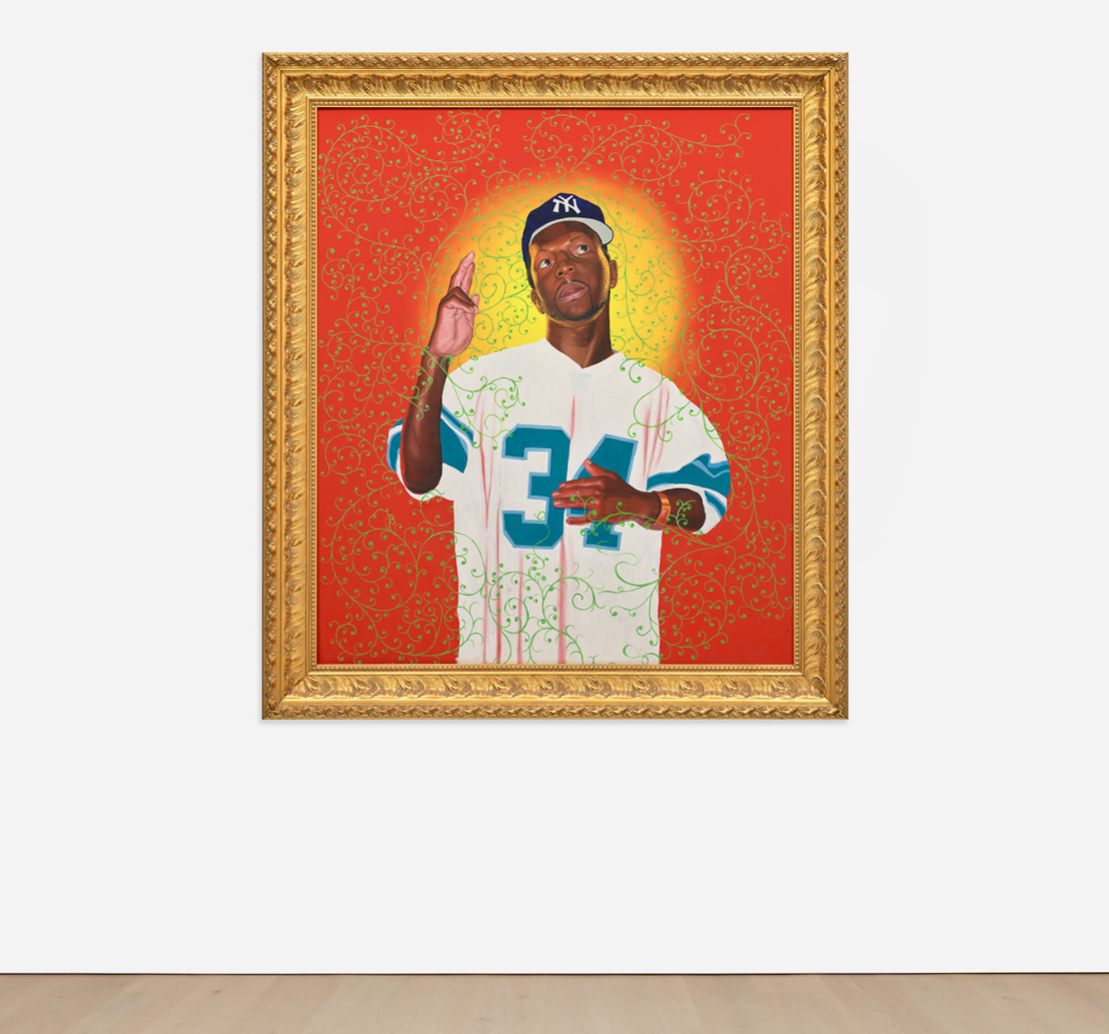
Untitled presents an anonymous young Black man posed in prayer, one hand extended toward the sky and the other resting upon his chest. Encircling the subject’s visage is a resplendent, diffuse halo of golden yellow, reminiscent, like the man’s hand gestures, of the attributes of angels and saints in Byzantine devotional icons and medieval European Catholic imagery. The red backdrop creates a vibrant contrast to the delicate floral design that laces across the surface of the work, reminiscent of Willam Morris’ textile patterns, or the marginalia of medieval French and Flemish manuscripts. In Untitled, Wiley ingeniously employs symbols of urban capitalism—manifested through the sitter’s streetwear and ostentatious self-presentation—to spotlight media-driven stereotypes of Black men in society. Wiley’s gaze is both critical and empowering, calling to account stereotypically subservient representations of Black men in art, and radically visualizing Blackness in a pose of power, instead. Created during the nascent stages of Wiley’s “street casting” technique, Untitled demonstrates Wiley’s commitment to crafting a new visual idiom that honors and glorifies the everyday person, placing the Black male body center stage.
Big Daddy Kane, 2005
Phillips New-York: 19 May 2022
Estimated: USD 150,000 – 200,000
USD 189,000
Kehinde Wiley – 20th Century & Contempo… Lot 339 May 2022 | Phillips
KEHINDE WILEY
Big Daddy Kane, 2005
Oil on canvas, in artist’s frame
106 x 82 1/8 inches (269.2 x 208.6 cm)
Kehinde Wiley has carved a place in the canon of American portraiture for his paintings of contemporary Black sitters in compositions drawn from the traditions of Western portraiture. Inserting Black figures into a visual tradition that has been historically exclusionary, Wiley subverts these narratives while drawing attention to the relationship of painting to representation, power and status.
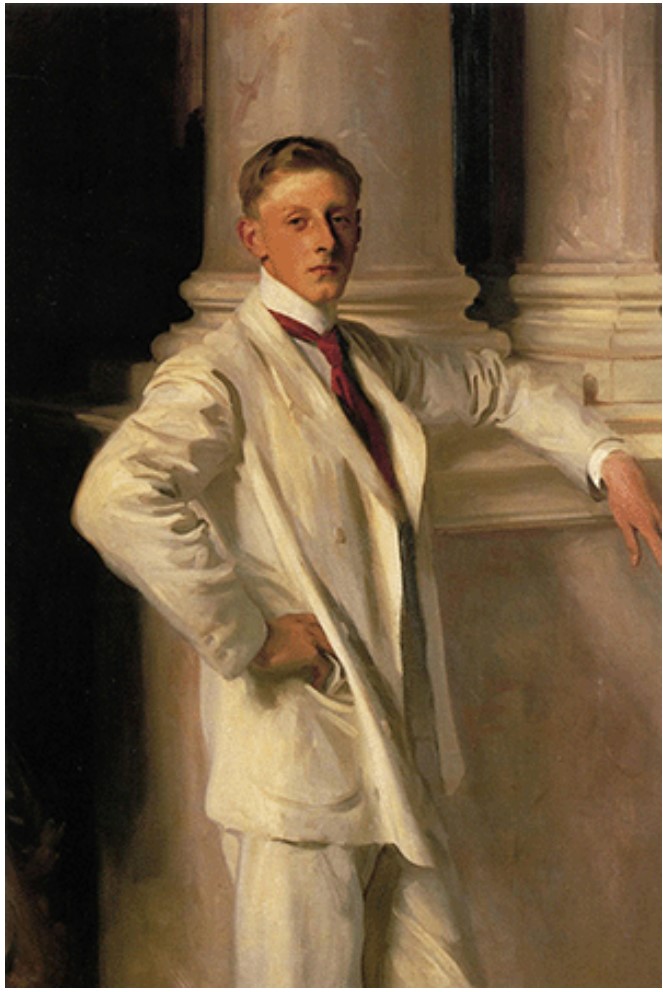
John Singer Sargent, Earl of Dalhousie, 1899. Painters / Alamy Stock Photo
With Big Daddy Kane, Wiley celebrates a key figure in the golden age of hip hop with a monumental portrait. Wiley’s portrait Big Daddy Kane is part of a 2005 series for VH1’s Hip-Hop Honors in which he was commissioned to paint each of the recognized artists, including LL Cool J, Ice T, and Grandmaster Flash and the Furious Five. The iconography of hip-hop is a prevailing interest in Wiley’s practice, though it is rarer that he has painted these famous hip-hop artists themselves. Big Daddy Kane (aka Antonio Hardy) is an American rapper who launched his career in 1986 with the Queens-based collective Juice Crew and further gained fame with hits including “Ain’t No Half-Steppin'” and “Smooth Operator.” As a lyricist, MC and entertainer, he revolutionized hip-hop fashion and introduced theatrics, choreography and costumes into performances, becoming hugely influential to a generation of MCs. Wiley’s VH1 commission later coalesced at the Smithsonian National Portrait Gallery in the exhibition RECOGNIZE! Hip-Hop and Contemporary Portraiture in 2008 and set the tone for some of his later work painting music giants, such as his 2009 portrait of Michael Jackson.
In this eight-foot-tall, larger-than-life portrait, Wiley pays tribute to Big Daddy Kane by depicting the musician with lavish accoutrement typical of portraits of nobles and aristocrats by modern masters, such as John Singer Sargent’s Earl of Dalhousie, 1899. Holding a commanding pose while exuding grace and nonchalance, Kane is surrounded with floral motifs, signature for the artist, rendered in opulent gold leaf. Big Daddy Kane merges hip-hop and classical iconographies by pairing Kane’s 2005 fashion with traditional white columns and by setting a microphone and contemporary figures within a formal coat of arms. As Connie H. Choi describes, “by conflating the consumerism of hip-hop with the opulence of Old Master painting, Wiley brings the high-art world into the realm of popular culture at the same time that he deliberately moves away from the overt identity politics of the previous generation of African American artists.”i Big Daddy Kane celebrates the triumph of success within a nuanced and distinctly contemporary cultural interpretation.
Ferdinand-Philippe-Louis-Henri, Duc d’Orléans, 2014
Phillips London: 28 April 2022
Estimated: GBP 80,000 – 120,000
GBP 289,800
Kehinde Wiley – New Now London Lot 10 April 2022 | Phillips
KEHINDE WILEY
Ferdinand-Philippe-Louis-Henri, Duc d’Orléans, 2014
Oil on linen, in artist’s frame
94 1/8 x 73 1/8 inches (239 x 185.7 cm)
Signed and dated ‘Kehinde Wiley 2014’ on the reverse
Painted in 2014, Ferdinand-Philippe-Louis-Henri, Duc d’Orleans is a striking and majestic portrait by American artist Kehinde Wiley, best known for his photorealist reimaging of everyday Black figures adopting the poses and attitudes struck by the historical subjects of classical European portraiture. Maintaining certain visual cues borrowed from these Old Master paintings, Wiley draws attention to the language of power and dominance that they operate within, subverting these structures and hierarchies by placing the contemporary Black and diasporic body centre stage.
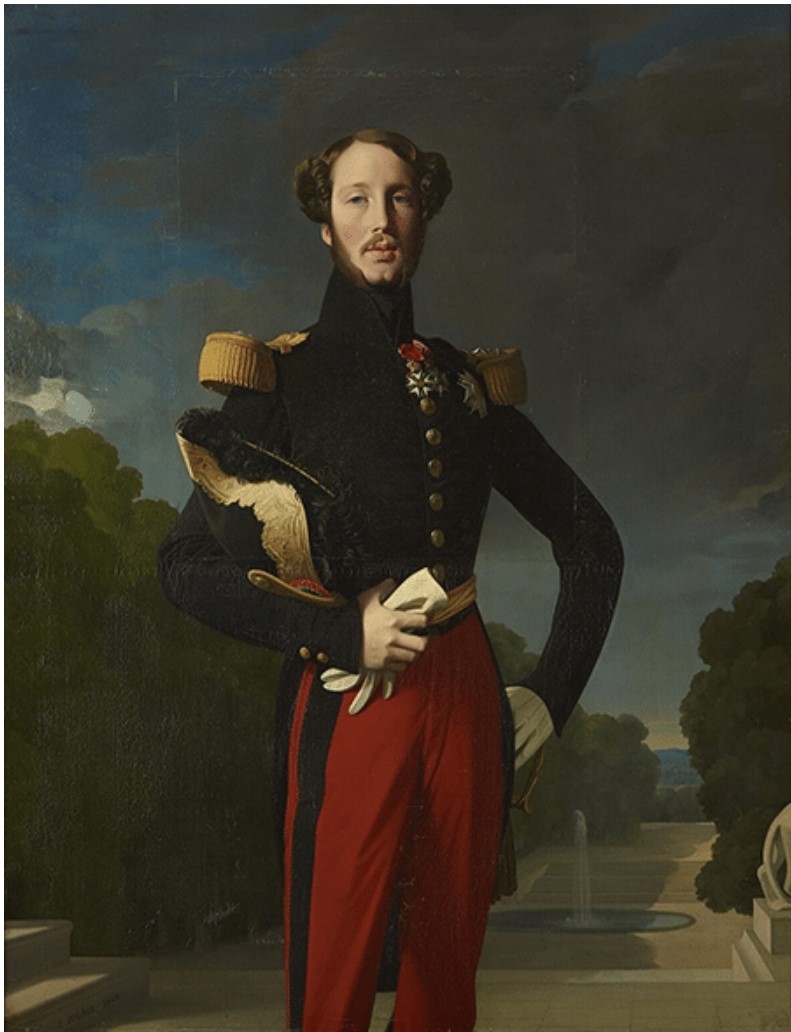
Jean Auguste Dominique Ingres, Ferdinand-Philippe (1810-42) Duke of Orleans in the Park at Saint-Cloud, 1843.
Dressed in contemporary athletic clothing referencing the Senegalese basketball team AS Forces Armées, the subject of Ferdinand-Philippe-Louis-Henri, Duc d’Orleans strikes a confident, self-assured pose. With one hand positioned on his hip, straightened shoulders and head inclined slightly to one side, the model assumes the powerful stance of Jean Auguste Dominique Ingres’ portraits of Ferdinand-Philippe, Duc d’Orléans.
The son of the future King Louis Philippe I, Ferdinand-Philippe was closely involved in the French colonial project and would be a prominent player in the invasion and occupation of Algiers in the 1830s. The careful juxtaposition of contemporary athletic wear and the military uniform of a colonial ruling power sharply highlights the erasure of Black figures and their stories from these historical narratives, and of the role traditionally played by portraiture in visually enforcing these power relations.
“So much of these portraits are about fashioning oneself into the image of perfection that ruled the day in the 18th and 19th centuries. […] My paintings at their best take that vocabulary and attempt to transpose that into a form that gives respect not only to the history of painting but also to those people who look and sound like me.”
While Ingres’ portraits of Ferdinand-Philippe use lavish interiors or carefully cultivated landscapes to reinforce the visual language of power and dominance, Wiley here adopts a bright and highly decorative repeated thistle motif. At once recalling the patterned furnishings of Arts & Crafts pioneer William Morris and African textiles, Wiley’s ornate background powerfully evokes a vibrant clash of cultures and draws certain comparisons between the historical marginalization of the decorative arts and that of non-European peoples. Drawing on the visual displays of power, wealth, and privilege codified through a history of portraiture, Wiley instead focusses on these overlooked elements, ensuring that ‘what has been marginalised comes to occupy the very centre of the painting.’
Working on a basis of ‘street-casting’, Wiley selects his subjects by sight, showing them pictures of his work and inviting them to collaborate on the project. After selecting Old Master portraits as specific reference points, Wiley poses his subjects for studio photographs, which he then uses as the source image for his lavish and strikingly collaborative portraits. As Wiley has commented, ‘we love looking at ourselves, when we stare at those portraits, sure, we see other people in states of grace, but we also see ourselves imagined. There is implied in this act of looking a type of exchange, a recognition that if someone else can be seen in such a state of esteem, it presupposes a state for our own.’
Portrait of Mickalene Thomas, the Coyote, 2017
Phillips New-York: 7 December 2020
Estimated: USD 100,000 – 150,000
USD 378,000
Kehinde Wiley – 20th c. & Contempor… Lot 33 December 2020 | Phillips
KEHINDE WILEY
Portrait of Mickalene Thomas, the Coyote, 2017
Oil on canvas, in artist’s frame
130 3/8 x 94 7/8 x 4 1/2 inches (331.2 x 241 x 11.4 cm)
Signed and dated “Kehinde Wiley 2017” on the reverse
Painted in 2017, Portrait of Mickalene Thomas, the Coyote is a monumental work from Kehinde Wiley’s Trickster series—a highly acclaimed body of work comprising 11 portraits of influential contemporary artists. Wiley’s oeuvre has continually subverted the context of canonized Western portraiture to celebrate those who have long been excluded from the art historical narrative. As such, he typically selects people off the streets of New York City, highlighting the lives of everyday Black figures in larger-than-life scale, rich colors and ornate details. In the Trickster series, Wiley pivots from his typical anonymous sitters to heroize his own artist peers, including Glenn Ligon, Kerry James Marshall, Carrie Mae Weems, and—in the present work—Mickalene Thomas.
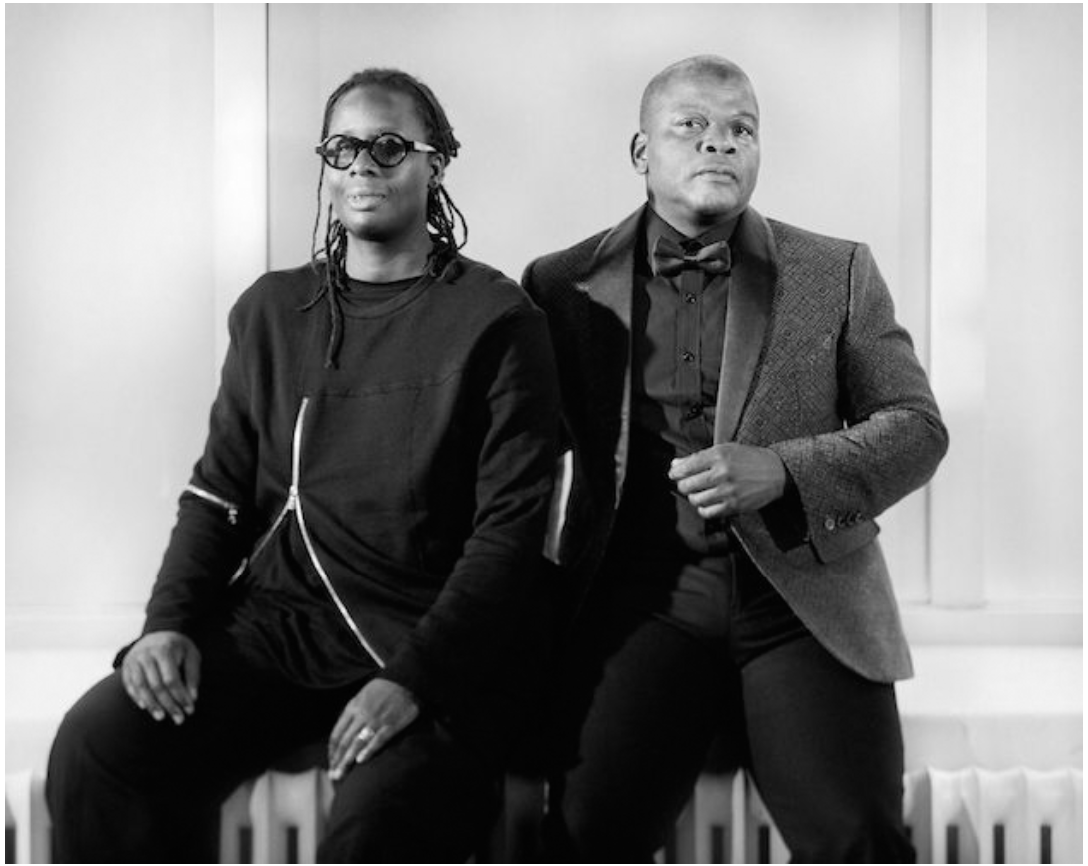
Mickalene Thomas and Kehinde Wiley.
By employing his friends and contemporaries as the subject matter for his Trickster series, Wiley pays homage to his community. Portrait of Mickalene Thomas, the Coyote depicts the titular artist striking a dramatic pose straight out of an Old Masters painting and accompanied by her loyal coyote companions, standing before a theatrical landscape. The present work is particularly significant to the fundamental concepts of Wiley’s series as it is a reflection of the close relationship between the artist and sitter: both having attended Yale University to receive their MFAs, Thomas and Wiley are good friends and close influences on each other’s work.
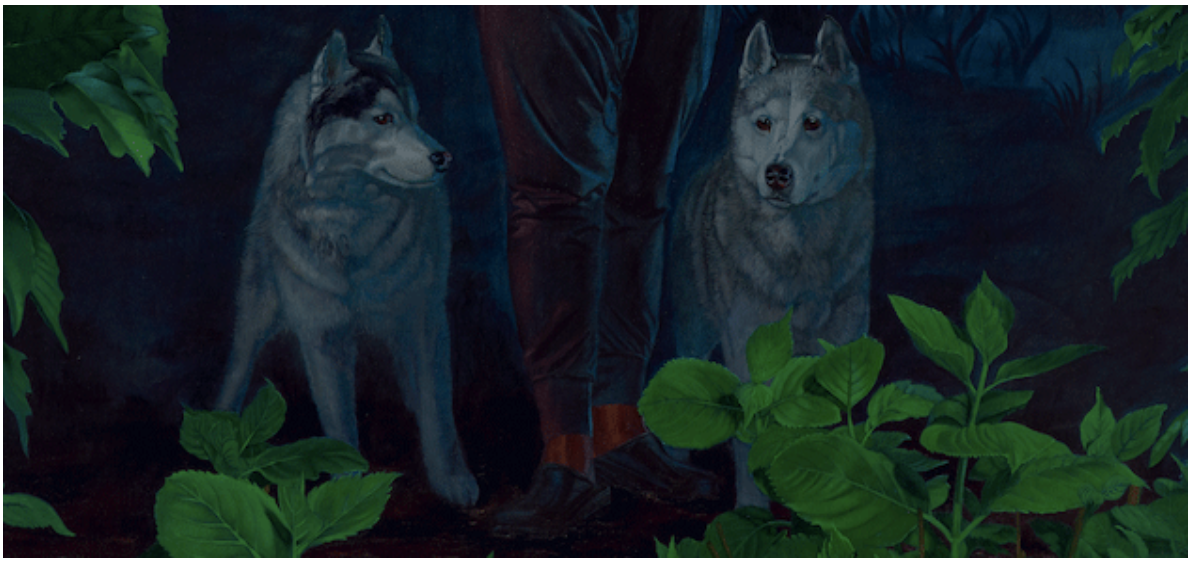
The subject of his second solo show with Sean Kelly in New York in 2017, Wiley’s Trickster series takes its name from the fictitious trouble-making animals that take on human-like roles—long-standing mythological archetypes which are found in virtually every culture’s folklore. In each of the exhibited paintings, including Portrait of Mickalene Thomas, the Coyote, Wiley refers to these shapeshifting creatures that, despite their wily actions, are victorious in ways that change the course of history. This trope appealed to the artist because of its central metaphor: it is the role of artists to upend conventions and challenge the status quo, altering how we think and see the world around us. Moreover, the artists of color that Wiley depicts in this body of work are constantly navigating the professional and social boundaries inherent to a Eurocentric art world.
“The trickster element points directly to the African-American tradition of using shapeshifting as a means of survival: in the ways that they speak, in the ways that they sing, this kind of coded language that begins in American chattel slavery like talking behind the master’s back and continues on into blues and jazz, and even arguably hip-hop culture, which is now being beamed out into the rest of the world.”
Cunning, intelligent creatures known for their wisdom, the coyote is one of the most infamous and creative Native American tricksters. The coyote’s placement next to Thomas indexes the artist’s subversive approach, likening her to this mythological creator and deeming her a trickster of the art world.
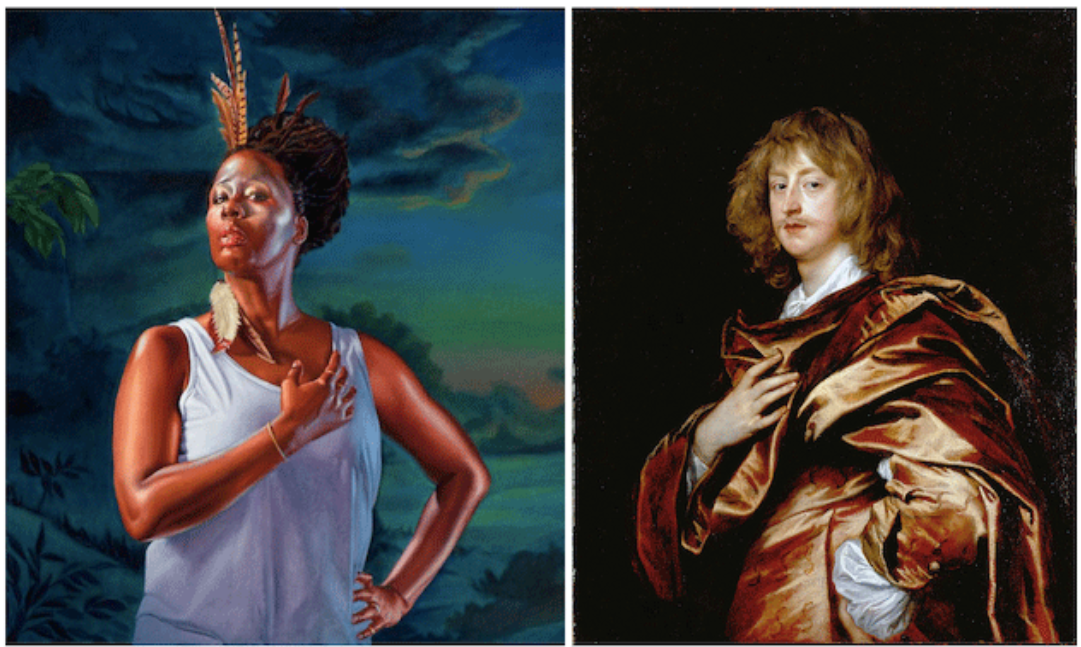
[left] Detail of the present lot. [right] Anthony van Dyck, Portrait of George Digby, Earl of Bristol, circa 1638-1639. Dulwich Picture Gallery, London.
Continuing to draw from the Western canon, Wiley uses Francisco Goya’s acclaimed Black Paintings, 14 works which he executed between 1819 and 1823, as his primary aesthetic inspiration for his Trickster series. In Portrait of Mickalene Thomas, the Coyote, the artist diverges from his signature brightly patterned backdrops and instead renders a sparse landscape in an ominous palette which evokes Goya’s mysterious and horrifying murals that reflected the artist’s deep-rooted fears of insanity and the pitfalls of humanity. The only glimpse of light in the present portrait is reflected on Thomas’s body, highlighting her proud stature and luminous skin. In alternating between light and dark, Wiley explored the dichotomy of good and evil, notions that are encompassed by both mythical and everyday Tricksters. Redolent of the legendary narratives of the Old Masters, Portrait of Mickalene Thomas, the Coyote most prominently exemplifies Wiley’s profound influence from art historical genealogy.
Sculptures
Sleep (Mamadou Gueye), 2021-2022
Phillips New-York: 28 February 2025
Estimated: USD 150,000 – 200,000
USD 177,800
KEHINDE WILEY
Sleep (Mamadou Gueye), 2021-2022
Bronze
11 3/4 x 23 5/8 x 51 1/8 inches (29.8 x 60 x 129.9 cm)
Incised with the artist’s signature, number and date “Kehinde Wiley 2021 1/3” on the base
This work is number 1 from an edition of 3 plus 1 artist’s proof
Kehinde Wiley’s commemorative bronze sculpture, Sleep (Mamadou Gueye), is the first work from his 2021 series An Archaeology of Silence to come to auction. With this title, the artist refers to Foucault’s critical examination of societal conditions that translated into ideas throughout history. Wiley created this series following the murder of George Floyd by a police officer in 2020 and the widespread protests against systemic racial violence which erupted shortly after. While the subject remains a mystery to us, Sleep (Mamadou Gueye) is devastatingly personal to Wiley as it depicts a Black man in America and confronts the country’s racial divide deeply rooted in false, yet widely accepted, racial ideologies. Through his process of “street casting,” Wiley invites individuals, often strangers he encounters on the street, to sit for portraits. In doing so, he subverts years of artistic exclusion by positing the “everyman” as a subject of fine art.
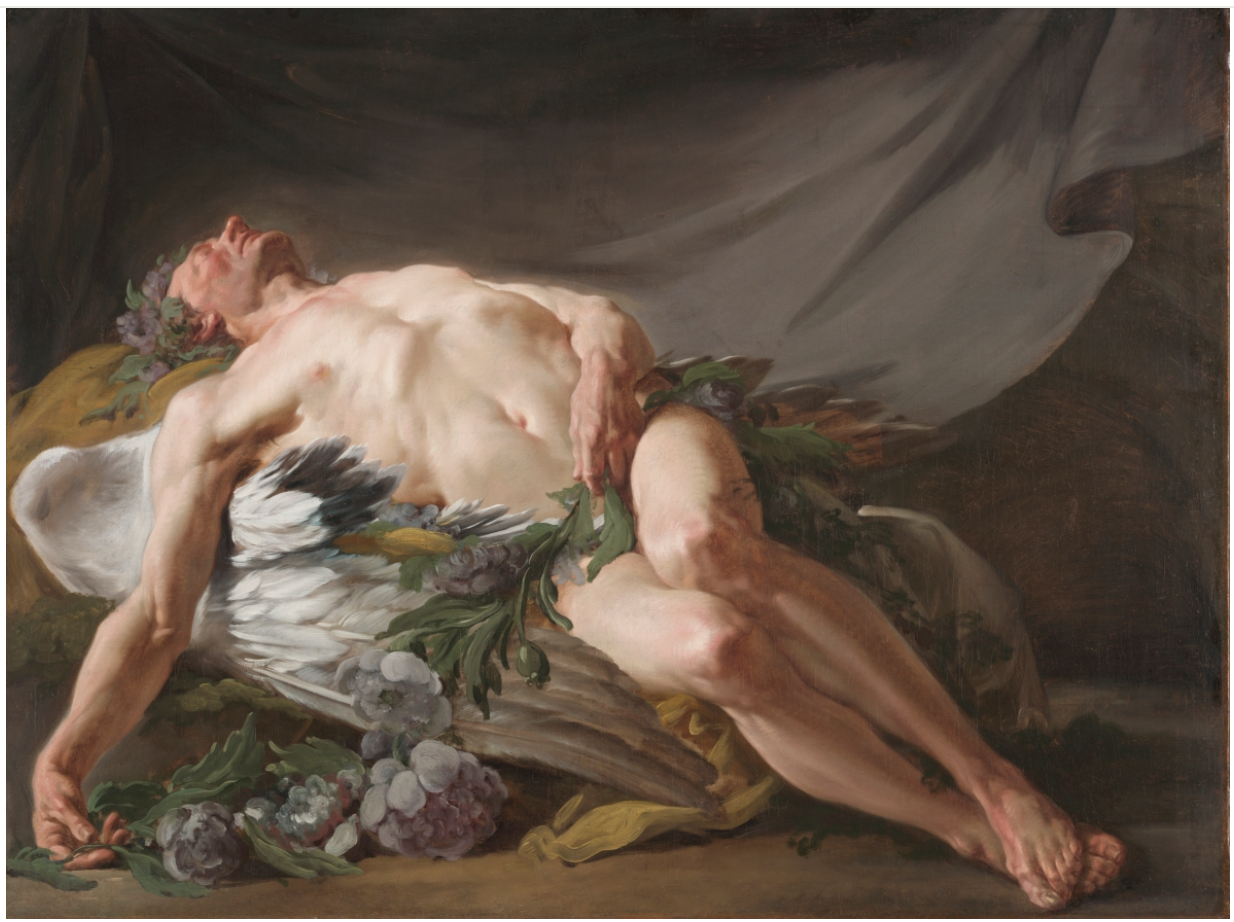
Jean Bernard Restout, Sleep, c. 1771. The Cleveland Museum of Art. Image: The Cleveland Museum of Art, Leonard C. Hanna Jr. Fund, 1963.502.
Neoclassical-inspired poses establish the somber tone for many of Wiley’s monumental portraits, but the sleep motif is most apparent among his sculptures. Sleep (Mamadou Gueye) depicts a seemingly youthful and athletic Black man resting upon the earth, which cradles his body just enough to lay his head and body to align perfectly with the ground. The figure’s contemporary attire—marked by a baseball cap, casual clothing, and Louis Vuitton shoes—stands in striking contrast to the historically weighted permanence of bronze, serving as a testament to modern style and culture.
“It’s not always going to be sad body of work; it’s not always going to be something uplifting. I think it’s, at its best, a true stab into an artist’s imagination surrounding the realities of the broader evolution of culture”
Though passive in appearance, his languid posture conveys a narrative of exhaustion. This quiet yet powerful stillness may evoke the enduring grief and fatigue borne by Black Americans in the wake of lives lost to police brutality. The figure’s contorted position suggests not only physical weariness but a deeper psychological anguish—a silent yet visceral expression of hardship and resilience. Sleep (Mamadou Gueye) is an intimate portrayal of a fallen figure, which stands in stark contrast to the traditional symbolism of bronze sculpture: power, confidence and legacy. Such juxtaposition reveals the irony of Western iconography of death and sacrifice now visualized with overwhelming grief that leaves him unconscious. Reclaiming Eurocentric art forms is prominent in Wiley’s work, yet this piece radiates an undeniable vulnerability that proves powerful to him and especially those affected by racially motivated violence.
Rumors of War, 2019
Phillips New-York: 24 June 2021
Estimated: USD 350,000 – 450,000
USD 403,200
Kehinde Wiley – 20th Century & Contemp… Lot 348 June 2021 | Phillips
KEHINDE WILEY
Rumors of War, 2019
Patinated bronze
Sculpture: 52x62x27 inches (132.1 x 157.5 x 68.6 cm)
Overall: 88 x 65 1/2 x 33 1/2 inches (223.5 x 166.4 x 85.1 cm)
Incised with the artist’s signature
Number and date “Kehinde Wiley 2019 3/9” along the lower front edge of the sculpture
Incised with the artist’s initials “KW” on the horse’s bridle
This work is number 3 from an edition of 9 plus 3 artist’s proofs
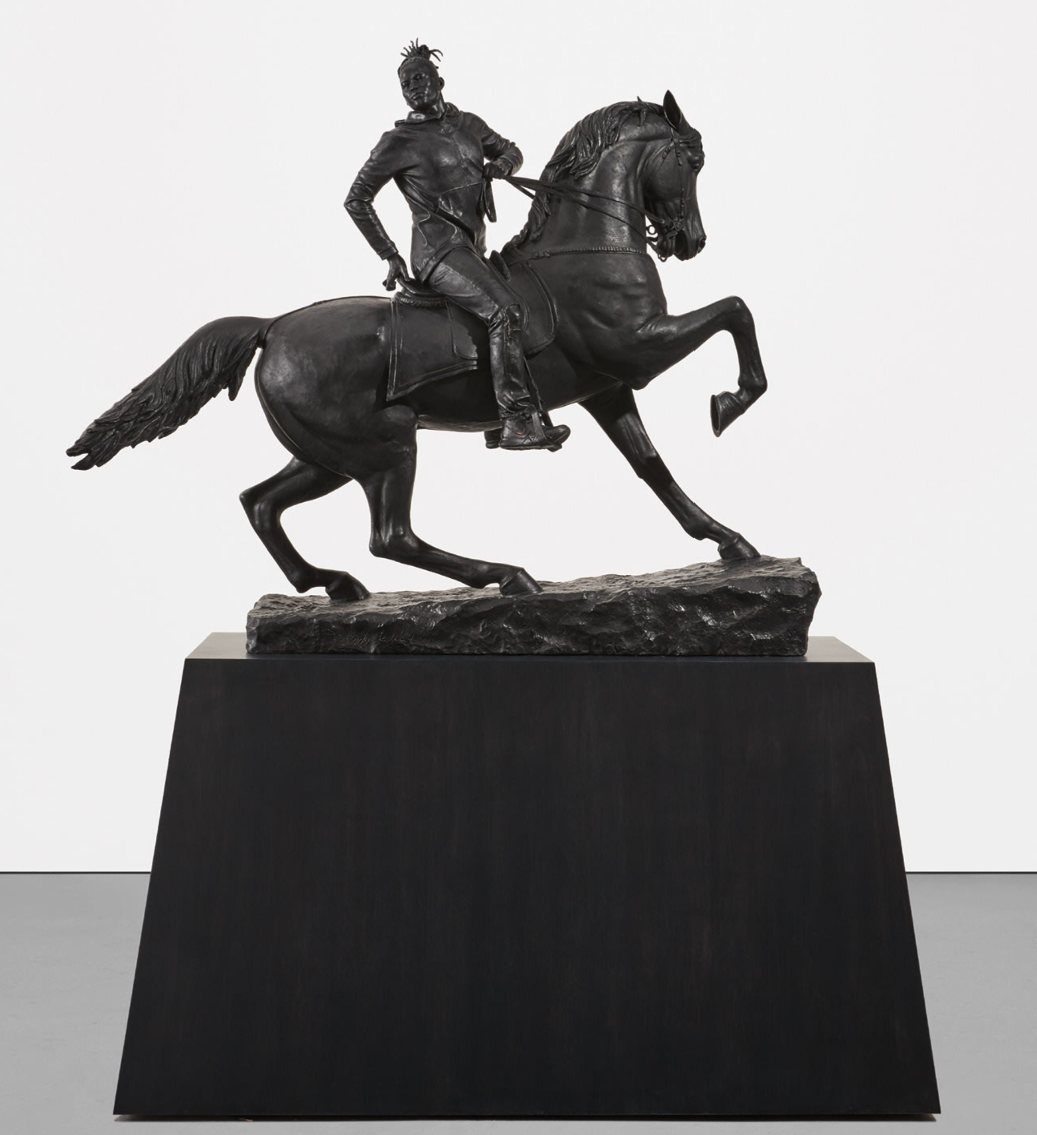
On a visit to Richmond, Virginia in 2016, Kehinde Wiley walked beneath the imposing Confederate statues that line Monument Avenue, a location that has become central to the controversial topic of the removal or maintenance of Confederate monuments. It was on this trip when Wiley conceived of the idea for his monumental sculpture Rumors of War, 2019, currently housed in the permanent collection of the Virginia Museum of Fine Arts, Richmond. The sculpture was first unveiled in Times Square in New York in the fall of 2019, where a global crossroads was transformed into a forum for civic engagement to address contemporary issues about the country’s troubled history. The present work, a model for this massive equestrian sculpture, is a masterfully crafted bronze that unmistakably quotes the visual language of power employed in the making of the Confederate statues that line the streets of Richmond and speckle the entire southern half of the United States. By appropriating the imagery of these monuments, Wiley is responding to the reality of America’s past, representing a new set of values for America’s present, stating, “We say yes to inclusivity, we say yes to broader notions of what it means to be an American.”
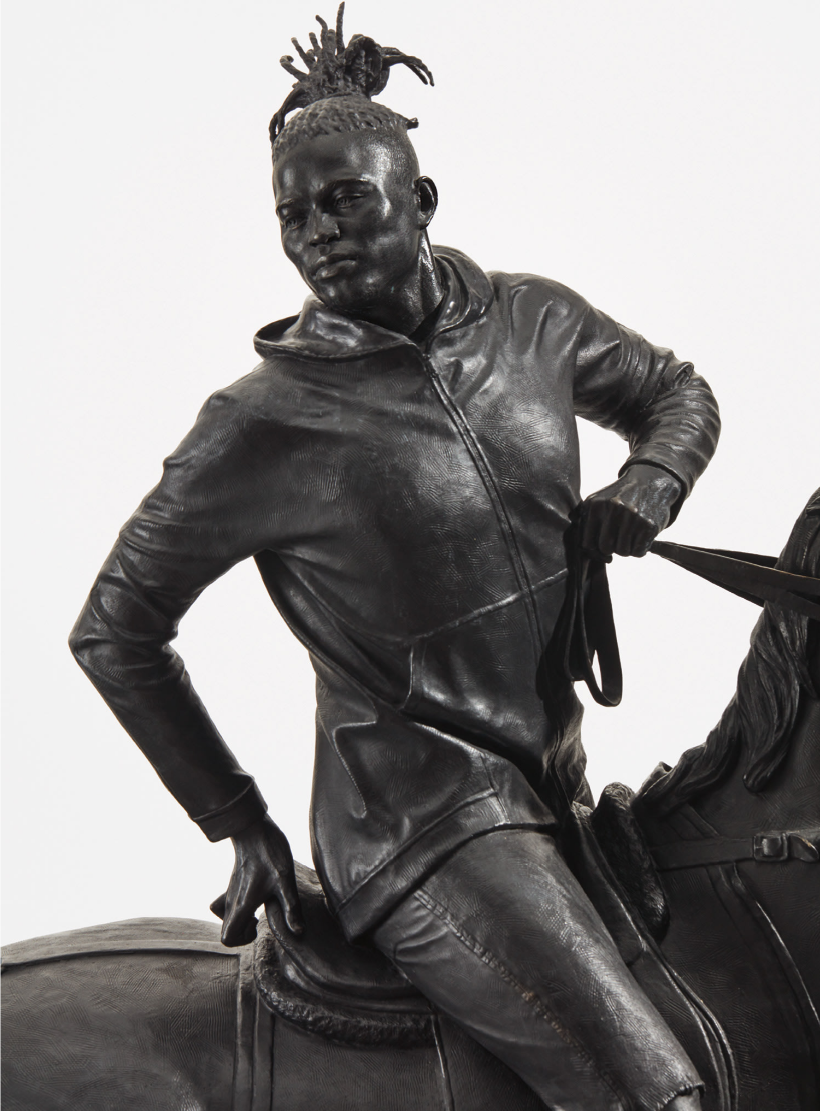
The present work is part of a limited edition of bronze models made prior to the sculpture held in the Virginia Museum of Fine Arts, each of which allow the viewer to admire the sculptural form from a more intimate perspective. Wiley’s Rumors of War is exceptional in its craftsmanship and visionary in its ability to bring about a shift in public discourse about America’s past, present and future. Both factors, which have defined his still-growing career, are emblematic of Wiley’s technical prowess as an artist and his contributions to art history more broadly. The debate over Confederate monuments and the role of public art has become one of the most relevant societal topics of today, and through Rumors of War, Wiley offers a highly original contribution to the national discourse.
Stylistically, the bronze equestrian sculpture bears a striking resemblance to Confederate statues. In fact, Wiley’s sculpture is nearly identical to the statue of the Confederate General J.E.B. Stuart, which was among the first to be erected in Richmond during the Jim Crow era. In both sculptures, the horse valiantly charges forward while the rider turns to survey his surroundings. However, the rider who sits atop Wiley’s horse is not a decorated war hero, but rather a young Black man dressed in everyday attire, donning Nikes and ripped jeans, sitting with strength and fortitude. Unlike the Confederate statues that use the idiom of power to depict a specific hero, Wiley states his work “is not about honoring one particular individual.” The anonymity of the rider allows anyone to relate to him, empowering each viewer to envision him or herself in the rider’s position.
Wiley has gained significant critical acclaim as a portrait painter over the course of his 20-year career. In 2018 Wiley painted the official portrait of President Obama, which features the president seated against a lush vegetative background. Like Rumors of War, the portrait of President Obama was subject to high praise and widespread media attention. Before that in the mid-2000s, Wiley embarked upon a series of portraits that share the title Rumors of War, featuring young Black men painted in the style of French Neo-Classical equestrian portraits. Situated firmly as an inheritor of the Classical Western tradition, Wiley creates naturalistic portraits that portray contemporary African American individuals against sumptuous ornate backgrounds, which have in turn refreshed and redefined the genre of portraiture. While Rumors of War represents Whiley’s unexpected foray in a sculptural medium, the work’s Classical visual idiom, Black subject and use of powerful rhetoric fits seamlessly into Wiley’s celebrated practice.
Photographs
After Hans Holbein the Younger’s Portrait of Simon George, 2009
Phillips New-York: 11 October 2023
Estimated: USD 8,000 – 12,000
USD 27,940
Kehinde Wiley – Photographs New York Lot 163 October 2023 | Phillips
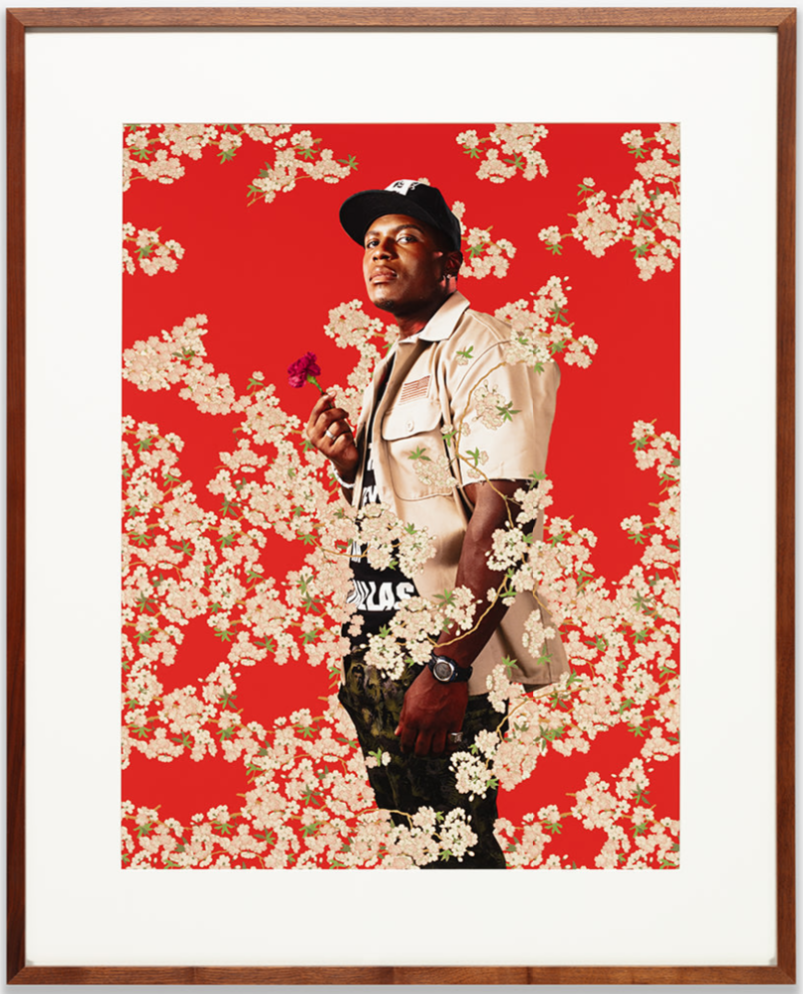
KEHINDE WILEY
After Hans Holbein the Younger’s Portrait of Simon George, 2009
Archival pigment print
29 5/8 x 22 3/8 inches (75.2 x 56.8 cm)
Signed and numbered 6/6 in ink on the verso
Most widely acclaimed for his reverent paintings of Black young men, Kehinde Wiley has also created photographs of the same subject matter and utilizes the medium as an integral element of his studio practice. In September 2009, Deitch Projects showcased 17 of his pictures in the exhibition Black Light. Rather than oil and canvas, Wiley employed illumination and post-production processes to generate regal likenesses. Wiley’s sitters – posed in the style of the Old Masters are surrounded by vivid, lively patterns sampled from 1950s home décor magazines and a 1999 Martha Stewart furnishings collection. Shot from a slightly lower angle, the camera peers upwards towards the subjects, conferring status and prestige onto the men. In keeping with Wiley’s paintings, the photographs subvert traditions of portraiture by recasting the subject as a modern, Black man whilst retaining the grand backgrounds and formal physicality.
Editions
The Gypsy Fortune-Teller, 2007
Phillips New-York: 22 October 2024
Estimated: USD 30,000 – 50,000
USD 38,100
Kehinde Wiley – Editions & Works on … Lot 79 October 2024 | Phillips
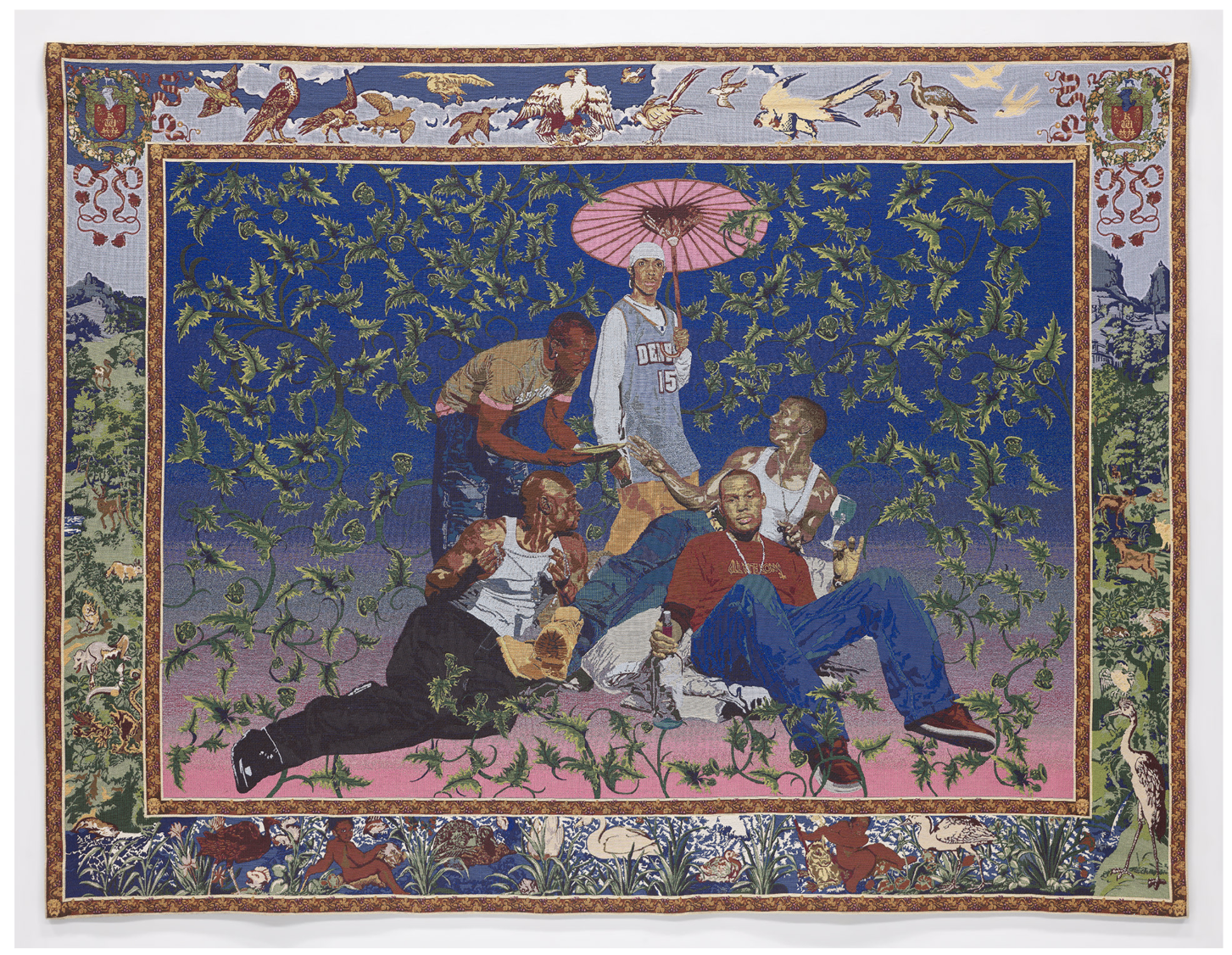
KEHINDE WILEY
The Gypsy Fortune-Teller, 2007
Jacquard woven tapestry in cotton, merino wool and Trevira cs.
78 1/2 x 102 inches (199.4 x 259.1 cm)
From the edition of 48 and 10 artist’s proofs
Produced by Tapestry Art, Flanders, Belgium
Published by Cerealart Multiples, Philadelphia
Kehinde Wiley refigures the visual language of classical painting to center subjects of color, often young black men. Using formal styles historically employed to elevate and empower wealthy European patrons, Wily applies the same treatment to those historically excluded from fine art, notably being chosen to paint Barack Obama’s 2018 presidential portrait. In The Gypsy Fortune-Teller, Wiley finds inspiration in the composition of a 18th century French tapestry by François Boucher. Currently in the collection of the Metropolitan Museum of Art, Boucher’s original tapestry was commissioned for Château de Gatellier, a castle in France, and pictures a group of reveling gentry luxuriating in an idyllic Rococo garden, flaunting symbols of power and wealth.
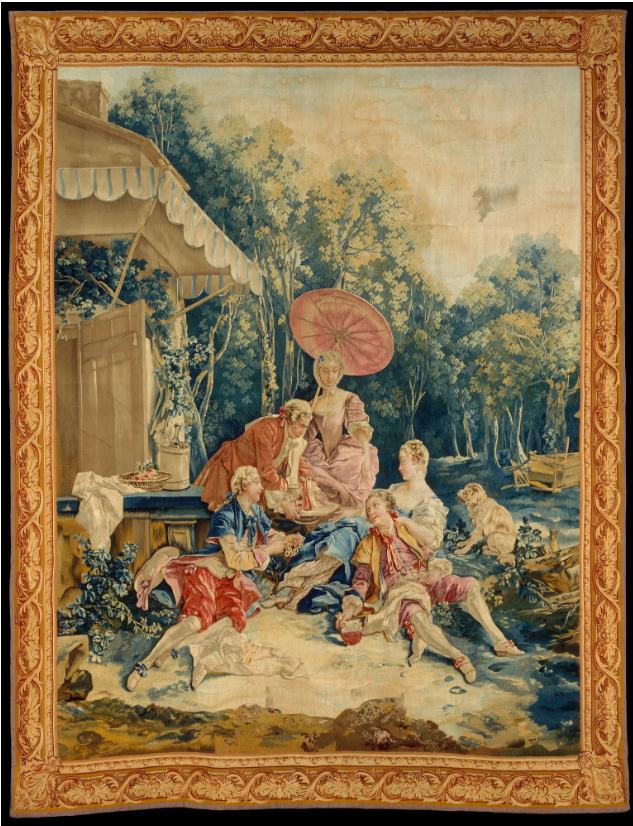
The Collation, from a set of the Italian Village Scenes, designed by François Boucher, woven 1762. Image: The Metropolitan Museum of Art, New York, Gift of Ann Payne Robertson, 1964, 64.145.3
Almost 250 years later, Wiley has reimagined the subjects of the tapestry as five black men, casual in clothing and pose, sprawled out against a backdrop of the artist’s signature curling foliage. In the artist’s 20th century composition, the central figure’s headscarf is transformed into a durag; heeled shoes become Timberland boots; an opulent gold necklace becomes a silver chain. In the corners of his tapestry, Wiley appropriates another symbol of European nobility by installing a coat of arms bearing his own initials and name. Boucher’s tapestry, designed to elevate a certain class of French nobility, gains new contours when reimagined to prioritize black subjects and cultural symbols. Wiley uses his work to question the inherited biases of our visual culture. Why aren’t we more used to seeing black men in woven tapestries? Though this is Wiley’s first foray into textile work, he has made a practice of interrogating diverse art historical forms through his distinctive lens, from sumptuous oil paintings to the editioned busts cast out of marble dust and resin. At its core, Wiley’s work is a striking pastiche of styles and influences marked by a singular aesthetic that redefines our collective narratives.