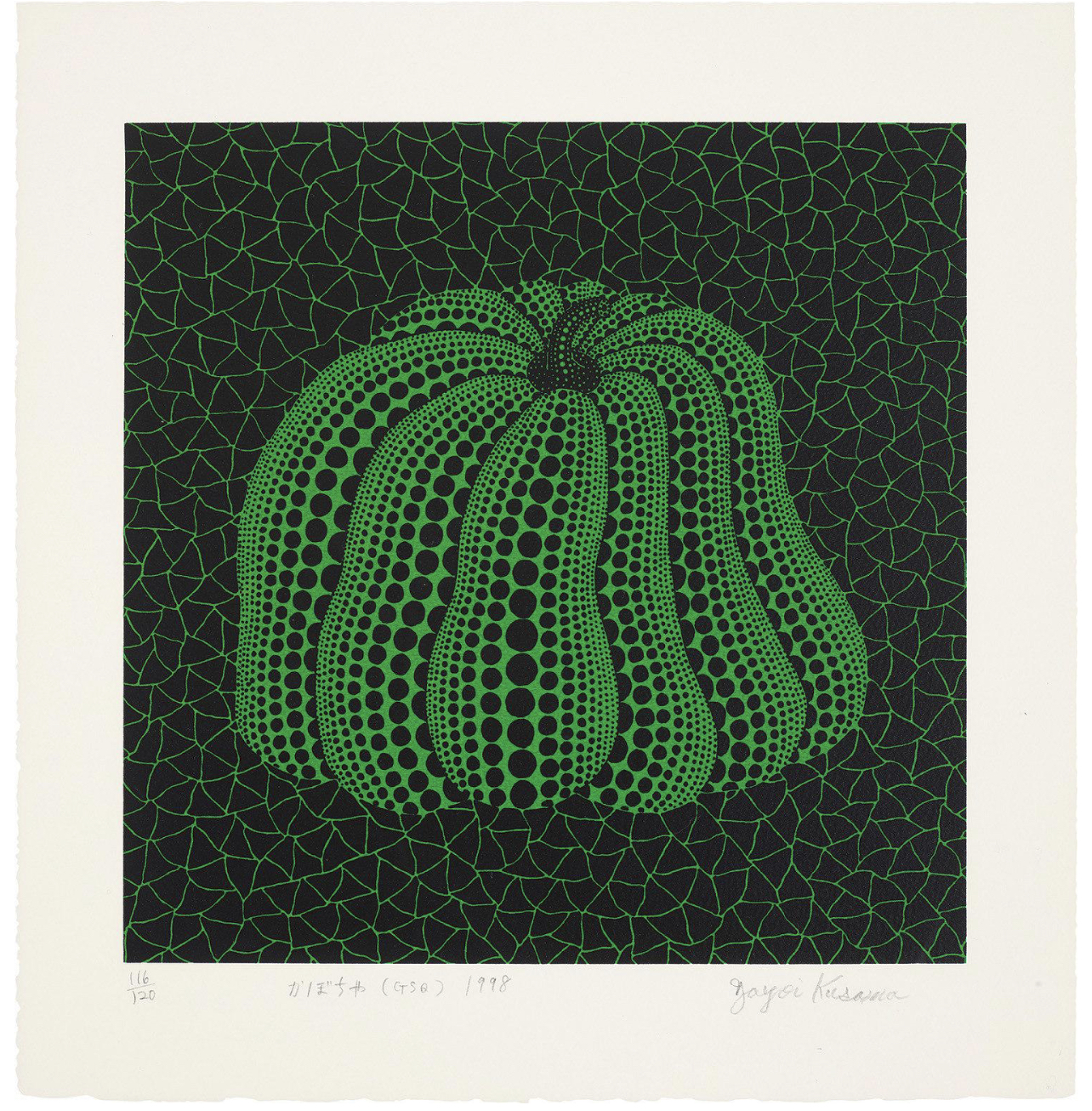
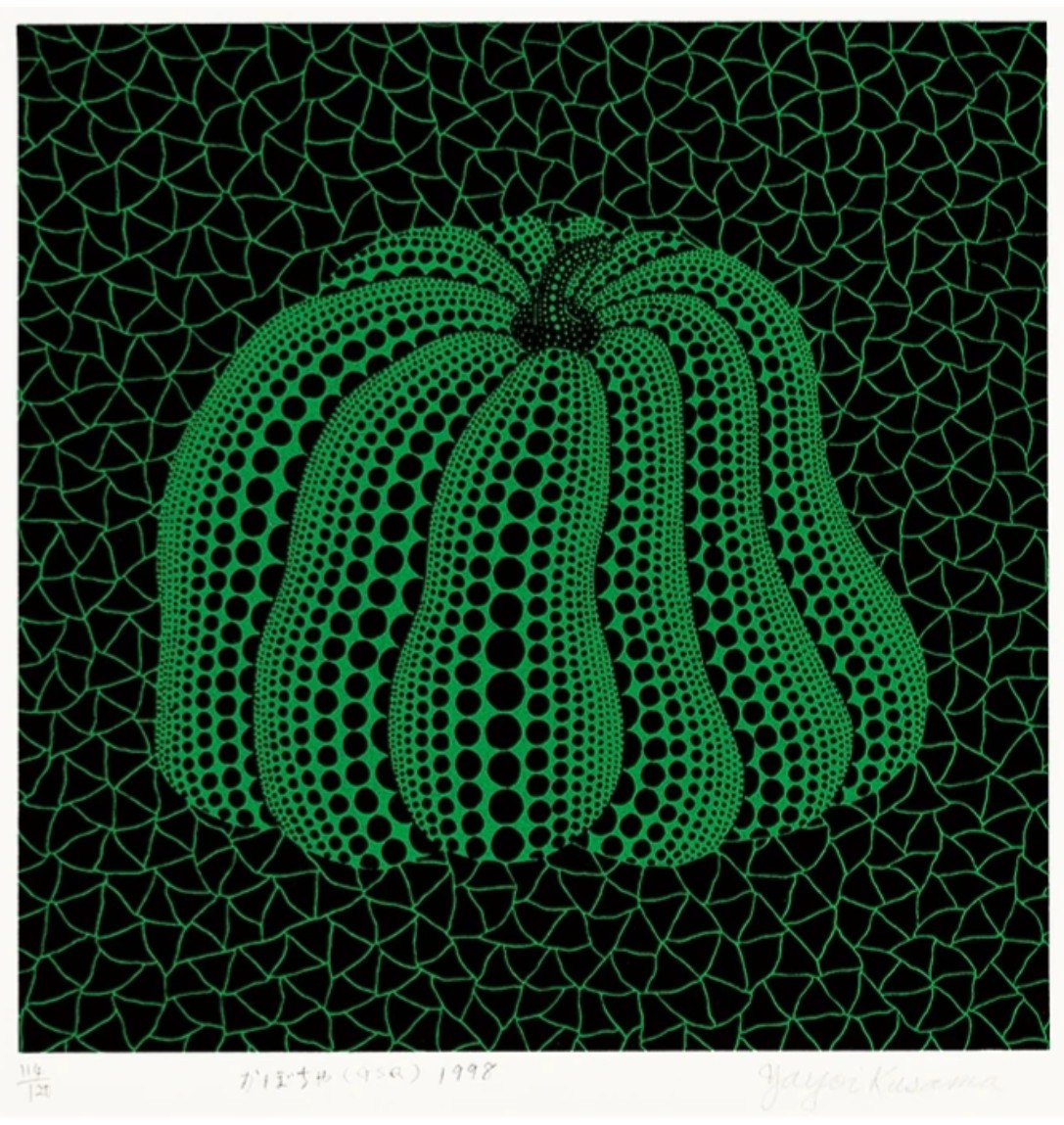
Pumpkin (GSQ)
Medium: Screen-print in colors on Verin d’Arches paper
[3 screens, 2 colors, 3 runs]
Year: 1998
Image: 30×30 cm (11.8 x 11.8 inches)
Sheet: 39.5 x 38 cm (15.6 x 15 inches)
Edition: 120
Artist’s Proofs: 12 AP
Printer’s Proofs: 5 PP
Printer: Okabe Tokuzo, Tokyo
Literature: ABE 243
Yayoi Kusama Prints 1979-2017, ABE Publishing Ltd., Number 243, Illustrated page 144
Signed, dated, and numbered in pencil on lower edge
Pumpkin (GSQ) represents a cool, nocturnal counterpart to Kusama’s red and yellow pumpkins of the same period. Where RSQ burns, GSQ absorbs. It retains the familiar ribbed structure, built through rigorously calibrated black polka dots set against a deep emerald green ground. The modulation of dot size is precise and uncompromising: large, weighty dots anchor the central ribs, while finer dots articulate curvature toward the edges. The form feels dense, heavy, and inward-looking—less theatrical than the red versions, more self-contained.
The green-on-black palette is crucial. Green, in Kusama’s pumpkin lexicon, is never pastoral. It is artificial, nocturnal, and psychological. Against black, it takes on an almost phosphorescent quality, as if the pumpkin were visible in low light. This is not a pumpkin seen in daylight, but one perceived in an interior, mental space. The background’s net structure—drawn in green lines over black—is tighter and more systematic than earlier infinity nets. It reads less as an organic field and more as a controlled grid, reinforcing a sense of enclosure. Unlike the early 1980s works where the pumpkin resists a vibrating ground, here pumpkin and background operate in the same chromatic register. The distinction between figure and field is maintained by density, not by color contrast.
Technically, the print exemplifies Kusama’s late-1990s graphic authority. The surface is clean, the repetition exact, the visual rhythm unwavering. There is no hesitation, no expressive deviation. Repetition has become fully internalized—automatic in execution, deliberate in effect. Conceptually, Pumpkin (GSQ) occupies a middle ground between icon and object. It is neither mythic like Pumpkin God nor confrontational like RSQ. Instead, it feels contained, inward, almost clinical. The pumpkin no longer negotiates its presence; it exists as a fixed structure within a closed system.
Auction Results
Mainichi Auction: 19 October 2024
Estimated: JPY 3,000,000 – 5,000,000
JPY 4,600,000 / USD 30,765
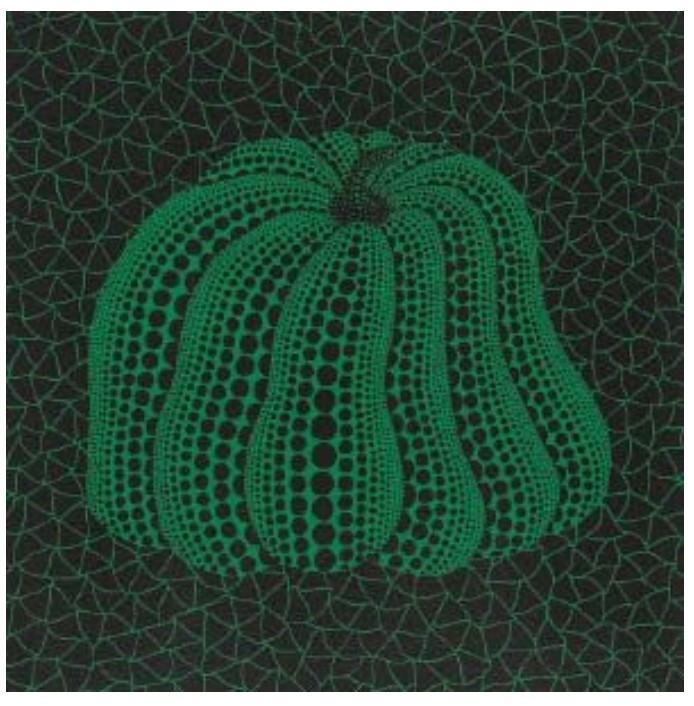
YAYOI KUSAMA
Pumpkin (GSQ), 1998
Screenprint
Signed
From the edition of 120
Mainichi Auction: 14 March 2024
Estimated: JPY 3,000,000 – 4,000,000
JPY 5,750,000 / USD 38,800
YAYOI KUSAMA
Pumpkin (GSQ), 1998
Screenprint
Signed
From the edition of 120
Ravenel Taiwan: 3 December 2022
Estimated: TWD 480,000 – 750,000
TWD 600,000 / USD 19,642
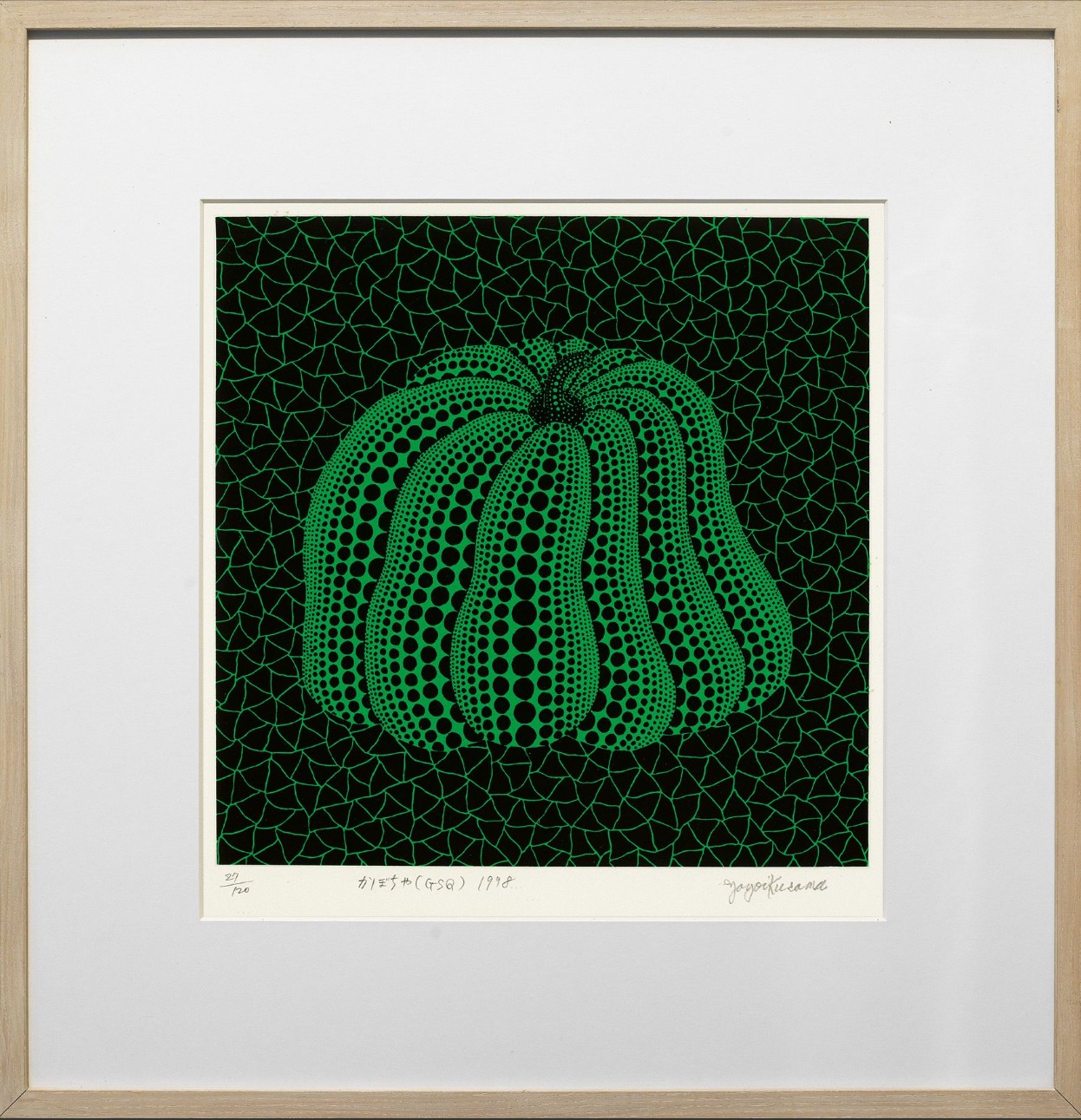
Yayoi KUSAMA (Japanese, 1929)
Pumpkin (GSQ), 1998
Silkscreen
Edition: 27/120
Signed lower right Yayoi Kusama
Titled lower left Pumpkin (GSQ) in Japanese
Numbered 27/120 and dated 1998
Mainichi Auction: 12 November 2022
Estimated: JPY 3,000,000 – 4,000,000
JPY 6,300,000 / USD 45,330
YAYOI KUSAMA
Pumpkin (GSQ), 1998
Screenprint
Signed
From the edition of 120
SBI Art Auction: 18 September 2021
Estimated: JPY 1,800,000 – 2,800,000
JPY 5,750,000 / USD 52,295
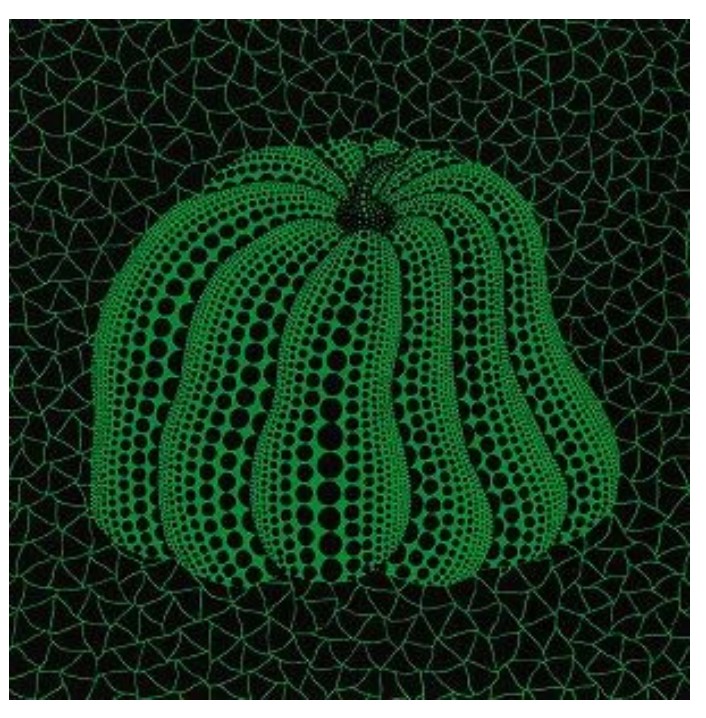
YAYOI KUSAMA
Pumpkin (GSQ) (Kusama 243), 1998
Screenprint
Signed, titled, dated and numbered
From the edition of 120
Mainichi Auction: 3 September 2021
Estimated: JPY 2,000,000 – 3,000,000
JPY 3,400,000 / USD 31,010
YAYOI KUSAMA
Pumpkin (GSQ), 1998
Screenprint
Signed
From the edition of 120
Seoul Auction: 24 August 2021
Estimated: KRW 35,000,000 – 80,000,000
KRW 57,000,000 (Hammer)
KRW 65,550,000 / USD 56,305
YAYOI KUSAMA
Pumpkin (GSQ), 1998
Screenprint
Edition: 114/120 (plus 12 artist’s proofs, 5 printer’s proofs, Hors de Commerce)
Signed, dated, titled and numbered on the recto
Phillips London: 23 January 2020
Estimated: GBP 10,000 – 15,000
GBP 22,500 / USD 29,480
YAYOI KUSAMA
Pumpkin Green (GSQ), 1998
Screen-print in colors on Arches paper
Signed, titled, dated and numbered 116/120 in pencil (there were also 12 artist’s proofs)