Keith Haring’s Pyramid, made a year before his death in 1990, depicts a teeming crowd of his signature dancing figures together with various fish-like creatures. In this dynamic composition, they engage in a lively dance, contorting and morphing themselves within the boundaries of a triangular sheet of aluminum that resembles an Egyptian pyramid.
Introduction
Haring was fascinated by Egyptian visual culture, particularly hieroglyphics. As a graffiti artist navigating the risks of creating art in public spaces, he was especially drawn to the ancient iconography’s ability to convey complex emotions and ideas through deceptively simple motifs. As a result, he developed an idiosyncratic visual language of symbols that can both be drawn quickly and also convey profound emotions and ideas. Drawing on the similarities between his art and that of ancient Egypt, Haring acknowledged the shared aim of creating life through imagery, rather than merely imitating it.
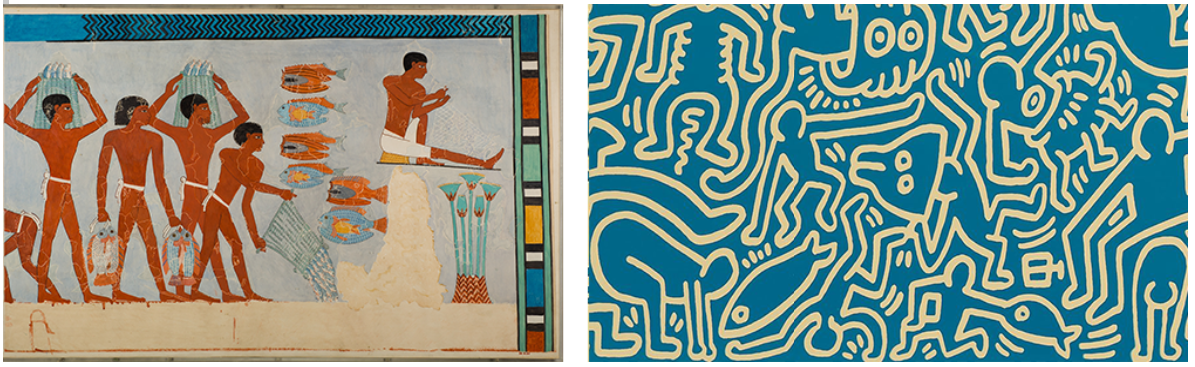
Left: Scene of Fish Preparation and Net Making, A.D. 1926, original c. 1479-1458 B.C., The Metropolitan Museum of Art, New York. Image: © The Metropolitan Museum of Art, New York, Rogers Fund, 1930 / Right: Keith Haring Pyramid, 1989 (detail)
Pyramids, an instantly recognizable visual cue of ancient Egypt, were a motif that Haring returned to frequently, as they became a touchstone for his considerations of the enduring qualities of art. Following his AIDS diagnosis in 1988, Haring was concerned with the longevity of and, in particular, the lasting impact of his own practice. Within Pyramid, this concern is manifested in its connections to the enduring legacy of ancient Egypt. The recurring pyramid motif served as a visual metaphor for the enduring qualities he sought to embed within his own artistic legacy.
“All of the things that you make are a kind of quest for immortality. Because you’re making these things that you know have a different kind of life.
They don’t depend on breathing, so they’ll last longer than any of us will. Which is sort of an interesting idea, that it’s sort of extending your life to some degree.”
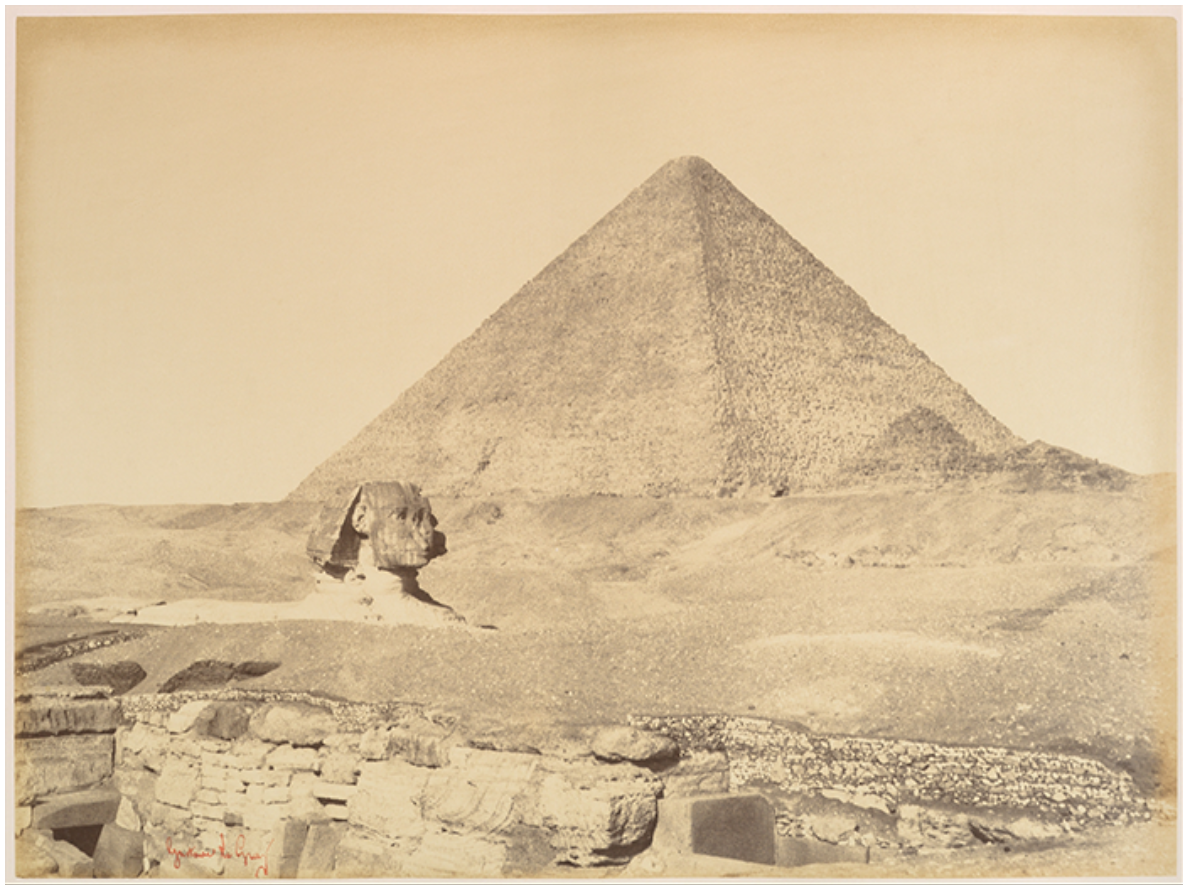
Gustave le Gray, Pyramids of Giza, 1865-69, The Metropolitan Museum of Art, New York. Image: © The Metropolitan Museum of Art, New York, Gift of Robert Shapazian, 2009
In the 1980s, there was a notable resurgence of fascination with ancient Egyptian culture, prominently exemplified by the Bangles’ chart-topping hit, “Walk Like an Egyptian”, released in 1986. The song not only achieved commercial success but also contributed to a popular dance trend featuring distinctive hand gestures and poses inspired by ancient Egyptian art.
This cultural revival permeated the realms of fashion, graphic design, film an television. Keith Haring’s incorporation of Egyptian motifs in works such as Pyramid further contributed to the era’s cross-cultural fascination, making ancient Egyptian aesthetics a dynamic part of the broader artistic landscape of the 1980s.
1. Pyramid (Gold)

Filled with Haring’s iconic dancing figures and barking dogs, the pyramids can represent both hopeful civilization and apocalyptic chaos, often reflecting his activism around issues like the AIDS epidemic. Haring saw the enduring quality of ancient pyramids as a metaphor for the lasting impact of his own art. It is a celebration of human existence and ingenuity. The pyramid also serves as a visual container for moral commentary on the AIDS crisis. The piece Silence = Death, which features an inverted pink triangle—a symbol reclaimed by gay activists—inside a pyramid, was created to raise funds for the AIDS Outreach Fund.
2. Pyramid (Blue)
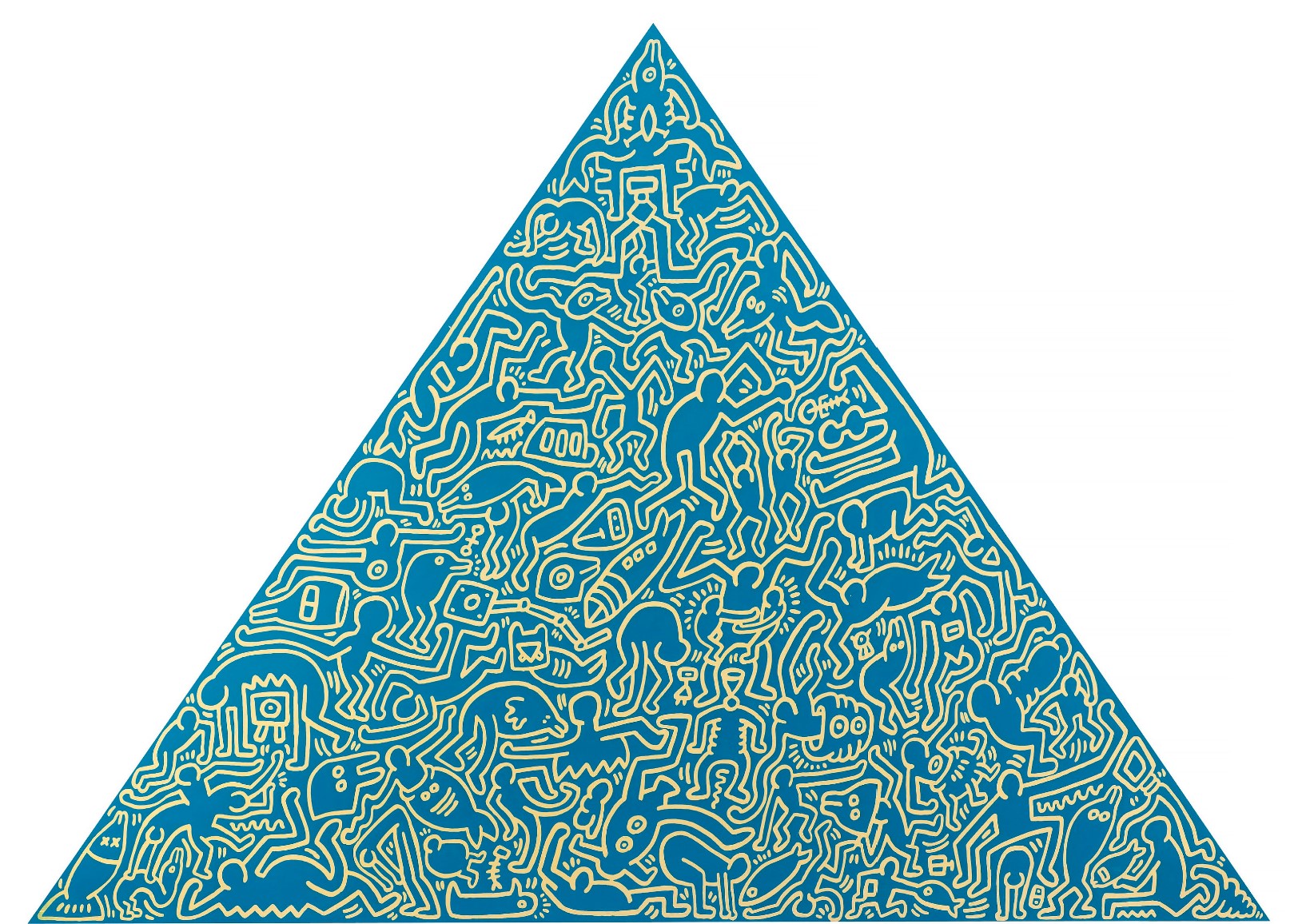
While the pyramid provides an ordered, geometrical structure, Haring fills it with frantic, entangled figures. This tension between structure and disarray can be interpreted as a commentary on humanity’s self-destructive tendencies within a supposedly stable civilization. For Haring, the pyramid represented an unknown, powerful force. He once suggested that people may have believed they could store energy within that kind of building.
3. Pyramid (Sculpture)
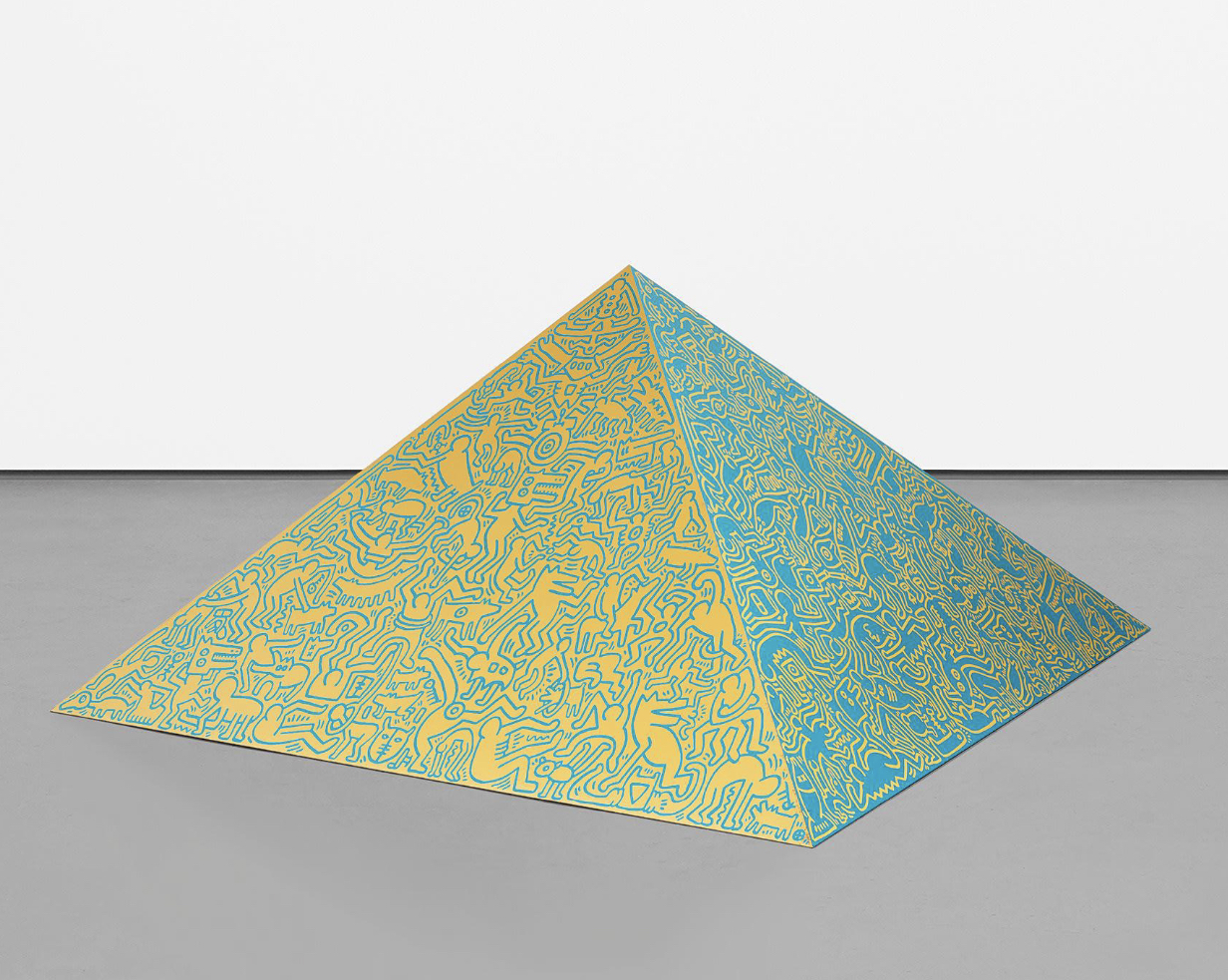
The urgency and profundity of the prints, combined with their timeless, universal themes, ensure their lasting impact. The pyramids are a testament to his concern for a lasting legacy in the face of his illness. They condense many of Haring’s signature characters, like the Radiant Baby and Barking Dog, into a complex allegorical statement.
Pyramid (Gold)
Pyramid (Gold)
Medium: Screen-print in gold and blue, on shaped anodized aluminum panel
Year: 1989
Overall: 40 5/8 x 56 3/4 inches (103.2 x 144.2 cm)
Edition: 30
Artist’s Proofs: 6 AP
Publisher: Edition Schellmann, Munich and New York
Printer: Domberger KG, Stuttgart
With the artist’s incised signature and date on the reverse
Auction Results
Ketterer Kunst: 13 June 2026
Estimated: EUR 30,000 – 40,000
EUR 38,700 / USD 45,280
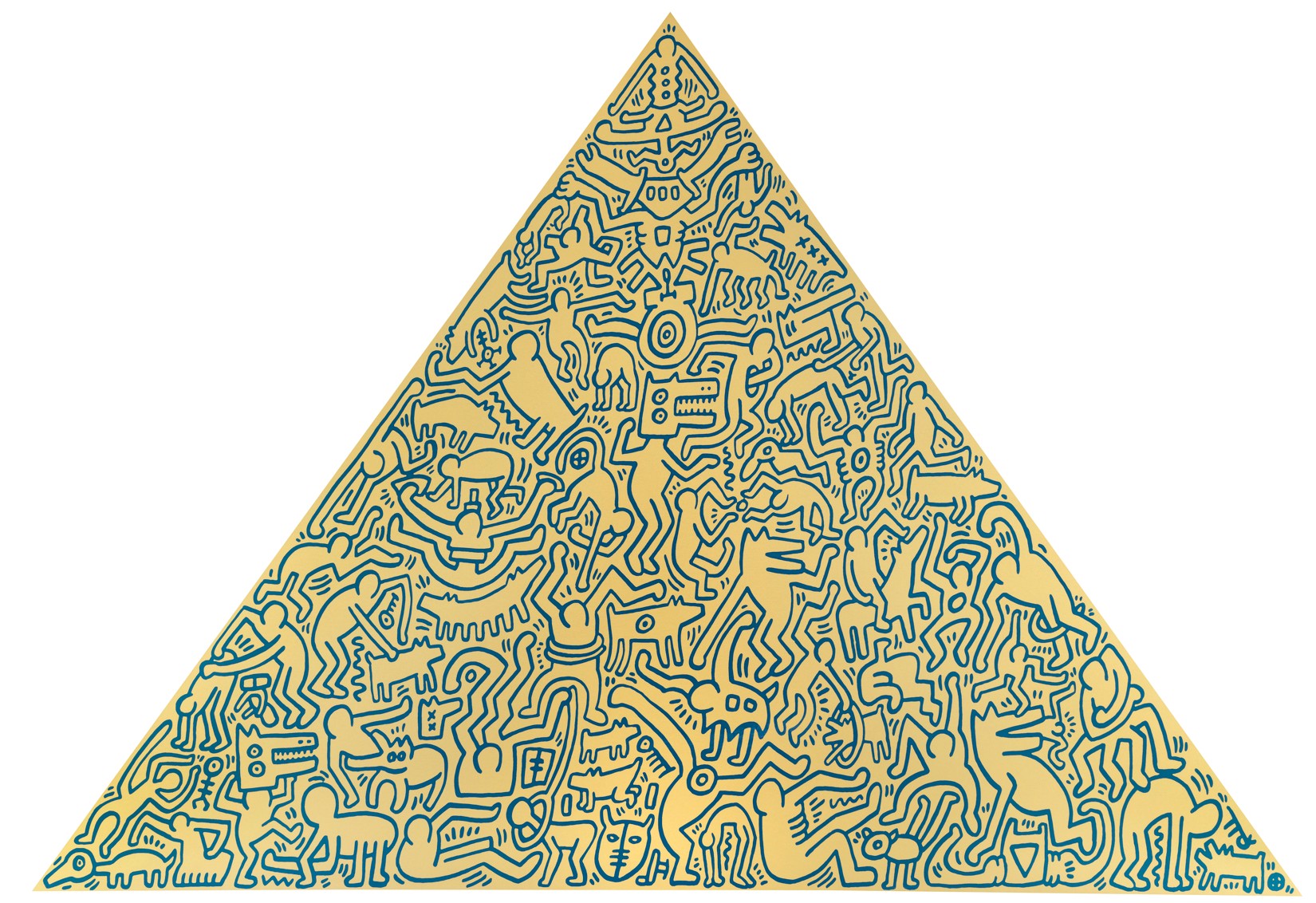
KEITH HARING (1958 – 1990)
Pyramid, 1989
Aluminum eloxiert
With the engraved artist’s signature, date, number, and edition note on the reverse
Copy aside from the edition of 30 copies
Produced by Domberger, Stuttgart, and Aluplan GmbH, Korb/Stuttgart
Published by Edition Schellmann, Munich/New York
Dorotheum: 4 December 2024
Estimated: EUR 30,000 – 50,000
PASSED
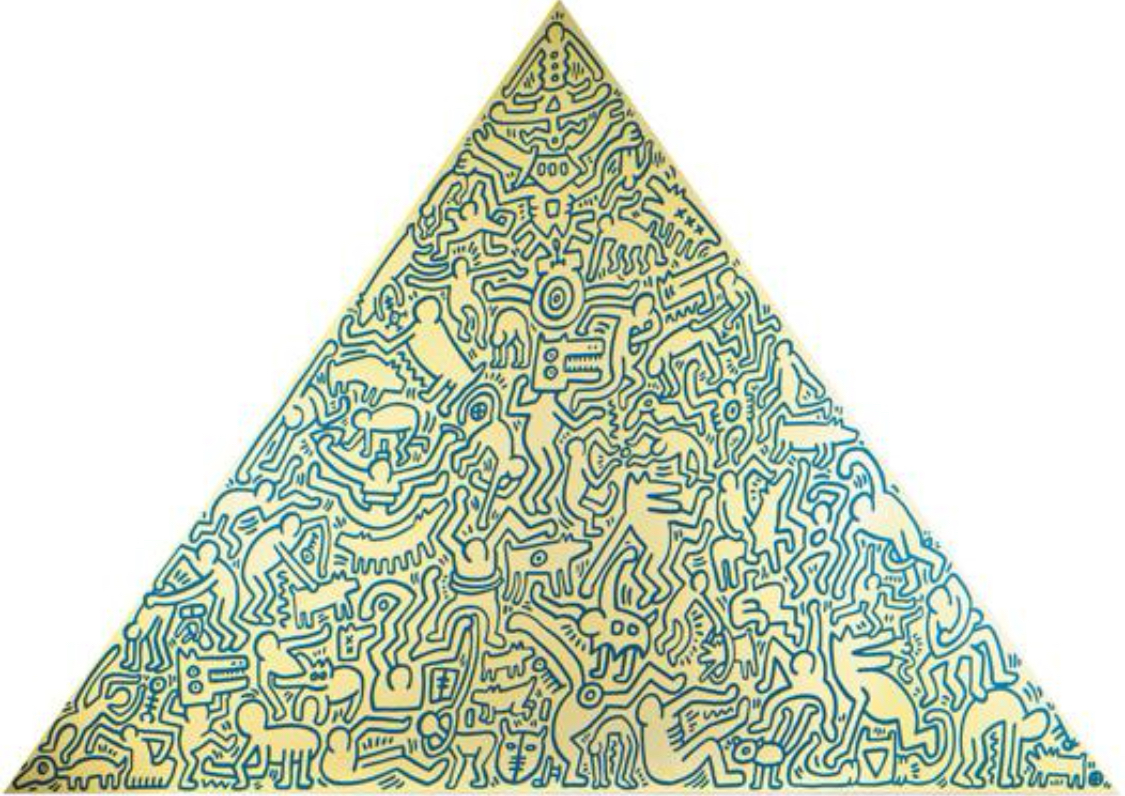
KEITH HARING (Kutztown 1958–1990 New York)
Pyramid, 1989
Screenprint in blue and yellow on anodized aluminum
Signed and dated with the artist’s signet on the reverse K. Haring 89 (stamped and embossed)
Number 16 from the edition of 30 numbered examples
Phillips London: 18 January 2024
Estimated: GBP 30,000 – 50,000
GBP 50,800 / USD 64,165
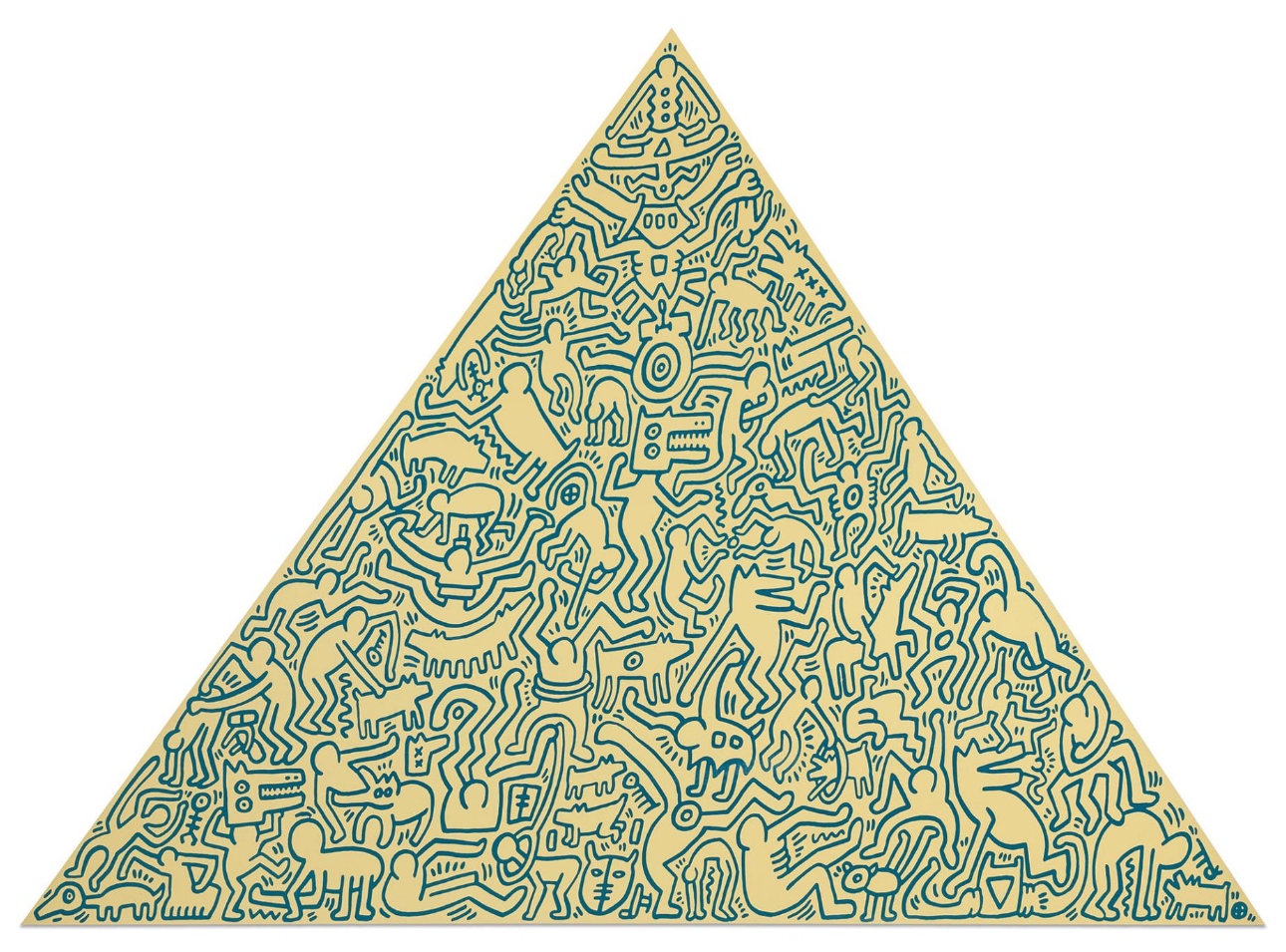
KEITH HARING
Pyramid, 1989
Anodized aluminum plate in yellow and blue
Incised with signature, date and numbering 7/30 on the reverse
Ketterer Kunst: 9 June 2023
Estimated: EUR 40,000
EUR 43,815 / USD 46,005
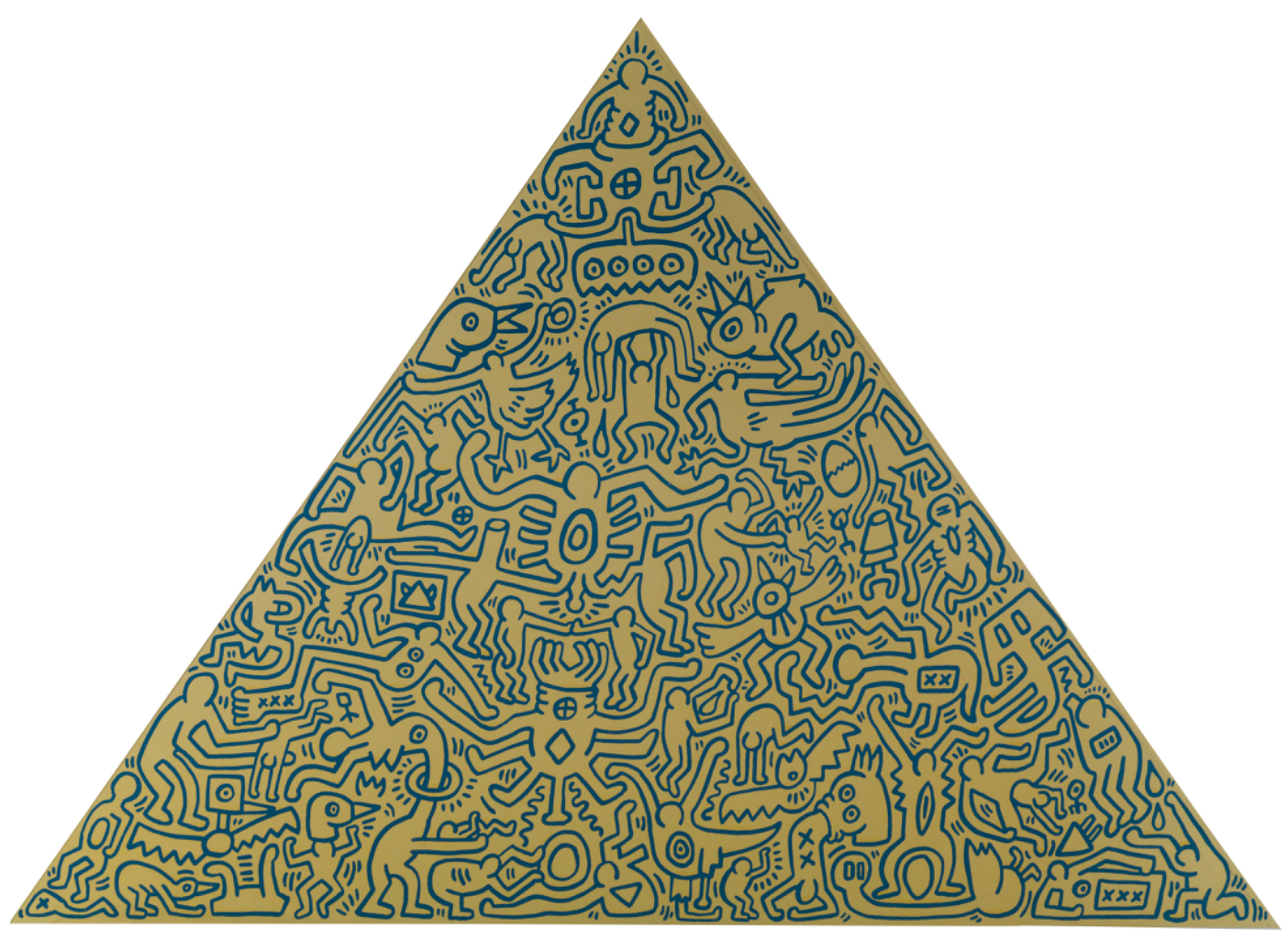
KEITH HARING (1958-1990)
Pyramid (gold), 1989
Aluminum, anodized and mounted in object box
With the artist’s name engraved on the reverse, as well as with the date, number and the edition
From the edition of 30 copies
Christie’s New-York: 21 October 2021
Estimated: USD 40,000 – 60,000
USD 50,000
KEITH HARING (1958-1990)
Pyramids: one print, 1989
Screen-print in gold and blue, on shaped anodized aluminum panel
With the artist’s incised signature and date on the reverse
Numbered 30/30 (there were also six artist’s proofs)
Pyramid (Blue)
Pyramid (Blue)
Medium: Screen-print in gold and blue on shaped anodized aluminum panel
Year: 1989
Overall: 40 5/8 x 56 3/4 inches (103.2 x 144.2 cm)
Edition: 30
Artist’s Proofs: 6 AP
Publisher: Edition Schellmann, Munich and New York
Printer: Domberger KG, Stuttgart
With the artist’s incised signature and date on the reverse
Auction Results
Dorotheum: 4 December 2024
Estimated: EUR 30,000 – 50,000
EUR 39,000 / USD 41,340
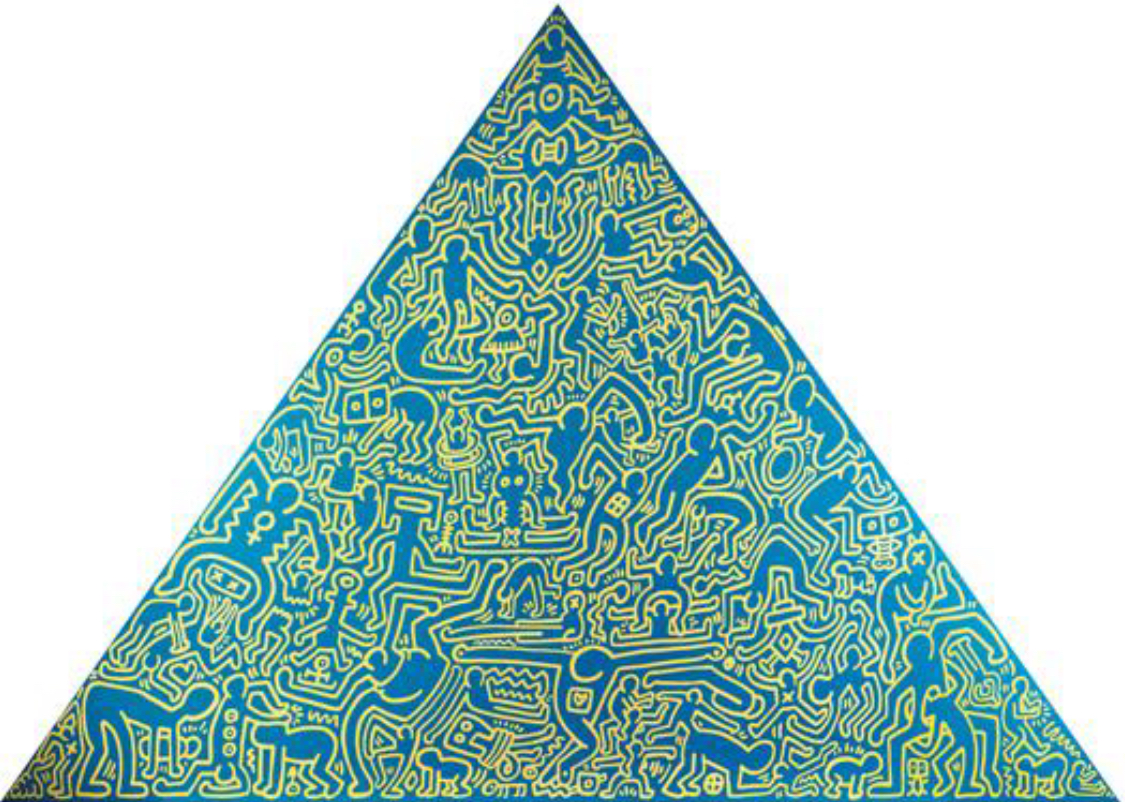
KEITH HARING (Kutztown 1958–1990 New York)
Pyramid, 1989
Screenprint in blue and yellow on anodized aluminum
Signed and dated with the artist’s signet on the reverse K. Haring 89 (stamped and embossed)
Number 12 from the edition of 30 numbered examples
Phillips London: 18 January 2024
Estimated: GBP 30,000 – 50,000
GBP 76,200 / USD 96,248
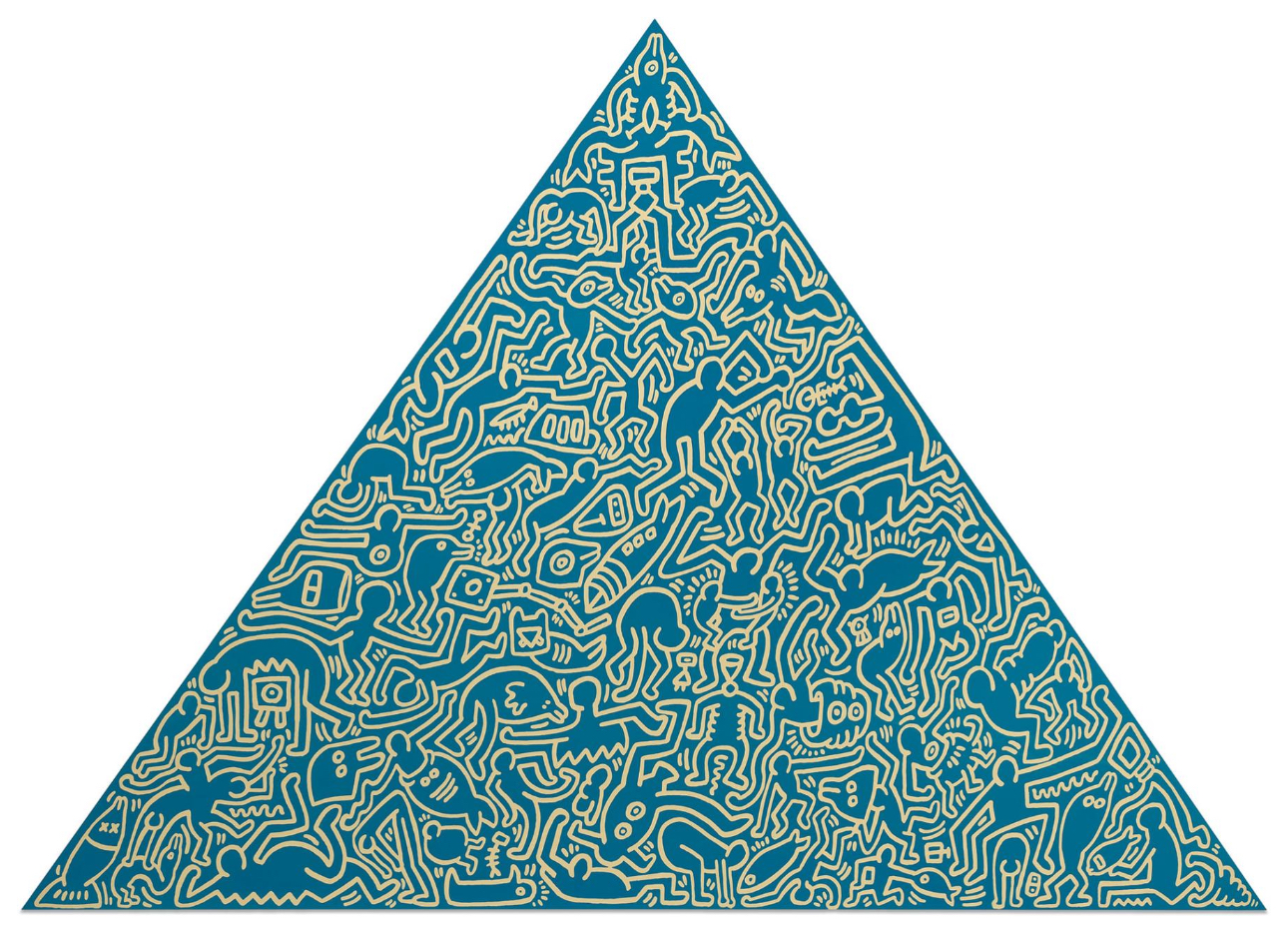
KEITH HARING
Pyramid, 1989
Anodized aluminum plate in blue and yellow
Incised with signature, date and numbering 7/30 on the reverse
SBI Art Auction: 25 May 2024
Estimated: JPY 4,500,000 – 7,500,000
JPY 6,555,000 / USD 41,765
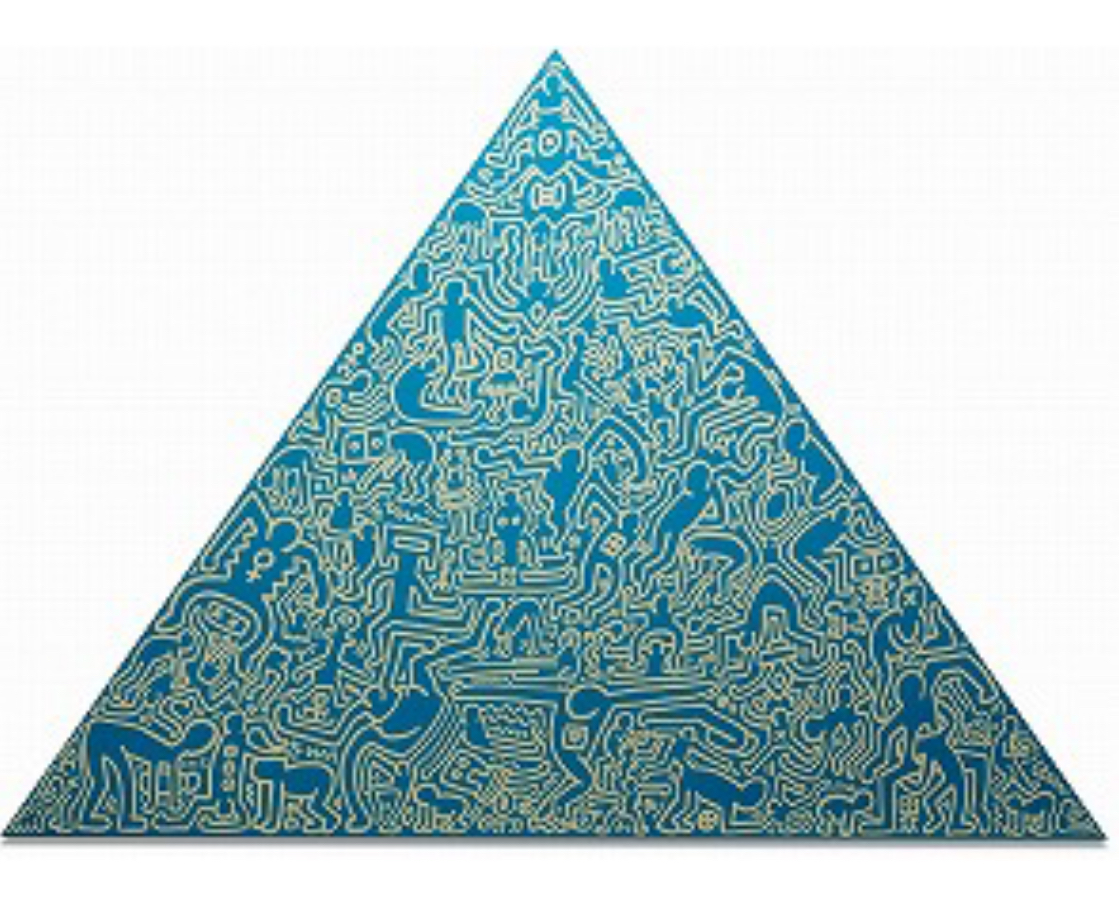
KEITH HARING
Pyramid, 1989
Anodized aluminum plate
Incised signature, date and number on the reverse
From the edition of 30
Ketterer Kunst: 9 June 2023
Estimated: EUR 40,000
EUR 60,960 / USD 64,008
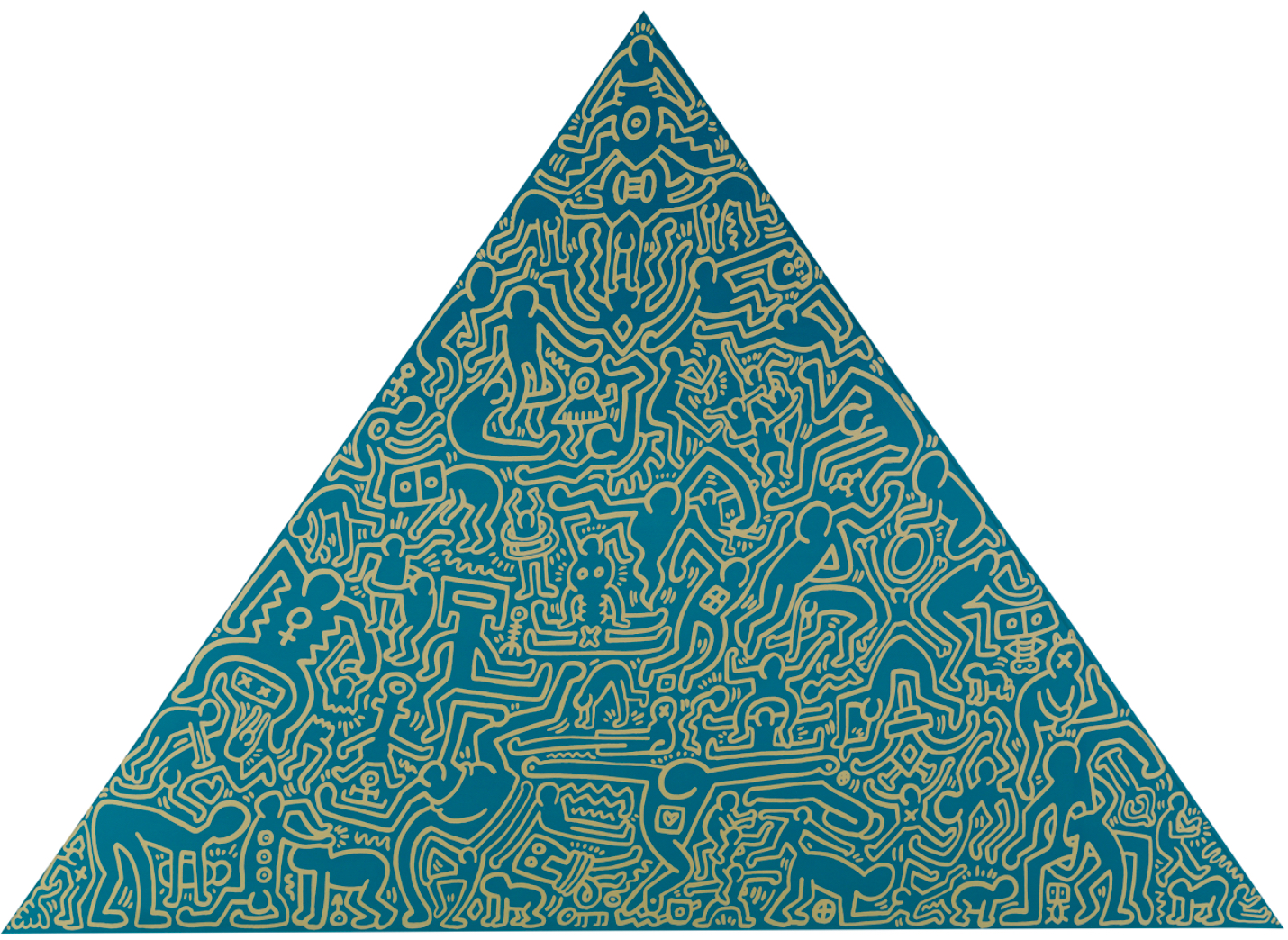
KEITH HARING (1958-1990)
Pyramid (blue), 1989
Aluminum, anodized and mounted in object box
With the artist’s name engraved on the reverse, as well as with the date, number and the edition
From the edition of 30 copies
Christie’s New-York: 21 October 2021
Estimated: USD 40,000 – 60,000
USD 62,500
KEITH HARING (1958-1990)
Pyramids: one print, 1989
Screen-print in gold and blue on shaped anodized aluminum panel
With the artist’s incised signature and date on the reverse
Numbered 30/30 (there were also six artist’s proofs)
Pyramid (Sculpture)
Pyramid
Medium: anodized aluminum
Year: 1989
Dimensions: 29 1/2 x 57 x 57 inches (74.9 x 144.8 x 144.8 cm)
Edition: 15
Artist’s Proofs: 6 AP
Publisher: EDITIONS SCHELLMANN MUNICH ∙ NEW YORK
Signed and dated “K. Haring 89 ⨁” on the underside
Stamped with the number and foundry mark on the underside
Auction Results
Phillips New-York: 28 September 2021
Estimated: USD 90,000 – 130,000
USD 176,400
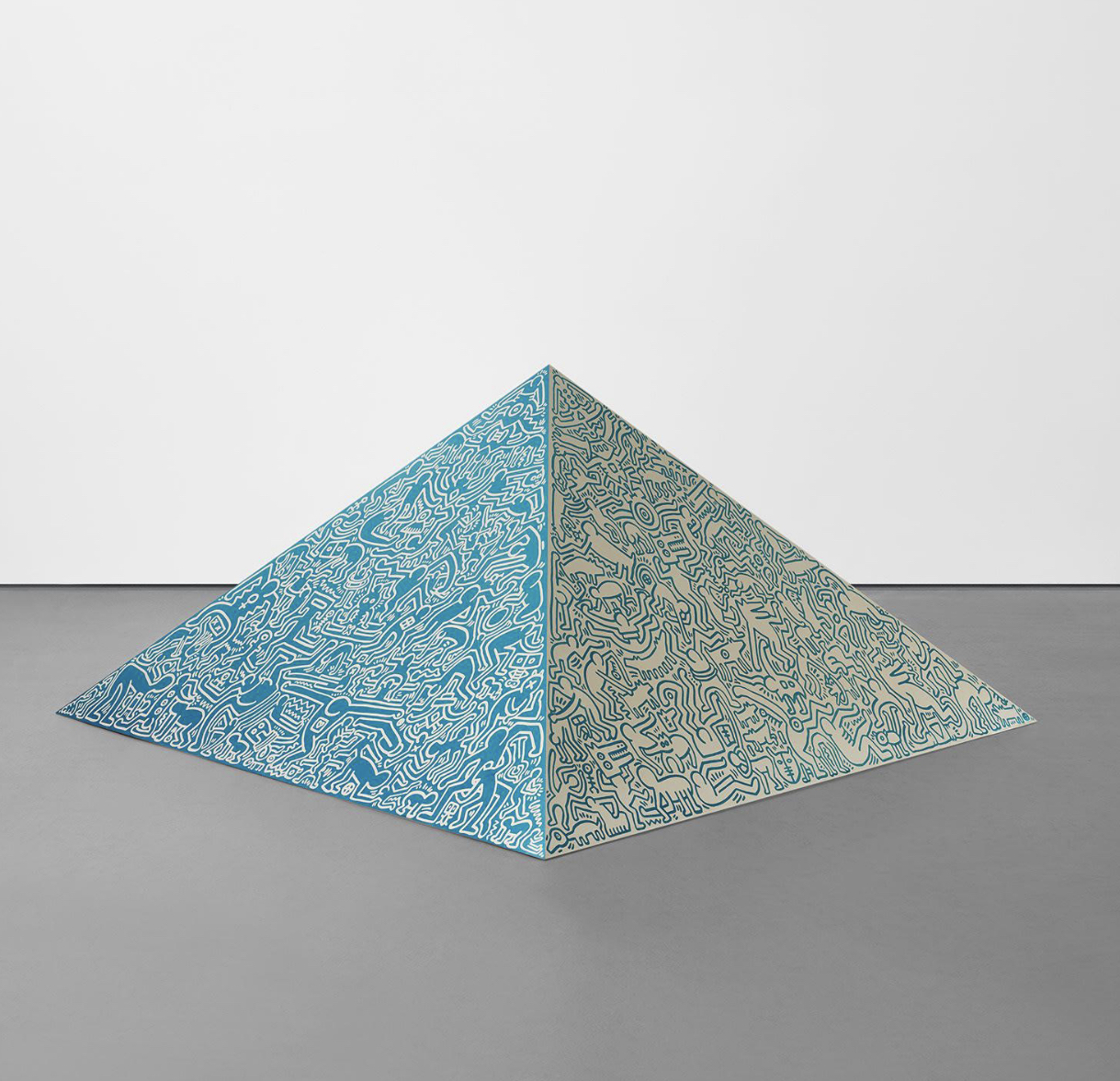
KEITH HARING
Pyramid, 1989
Anodized aluminum
Stamped with the artist’s signature, number, date and foundry mark
“K. Haring 89 ⨁ AP 2/6 EDITIONS SCHELLMANN MUNICH ∙ NEW YORK” on the interior
This work is artist’s proof number 2 from an edition of 15 plus 6 artist’s proofs
Phillips New-York: 24 June 2021
Estimated: USD 175,000 – 225,000
USD 252,000
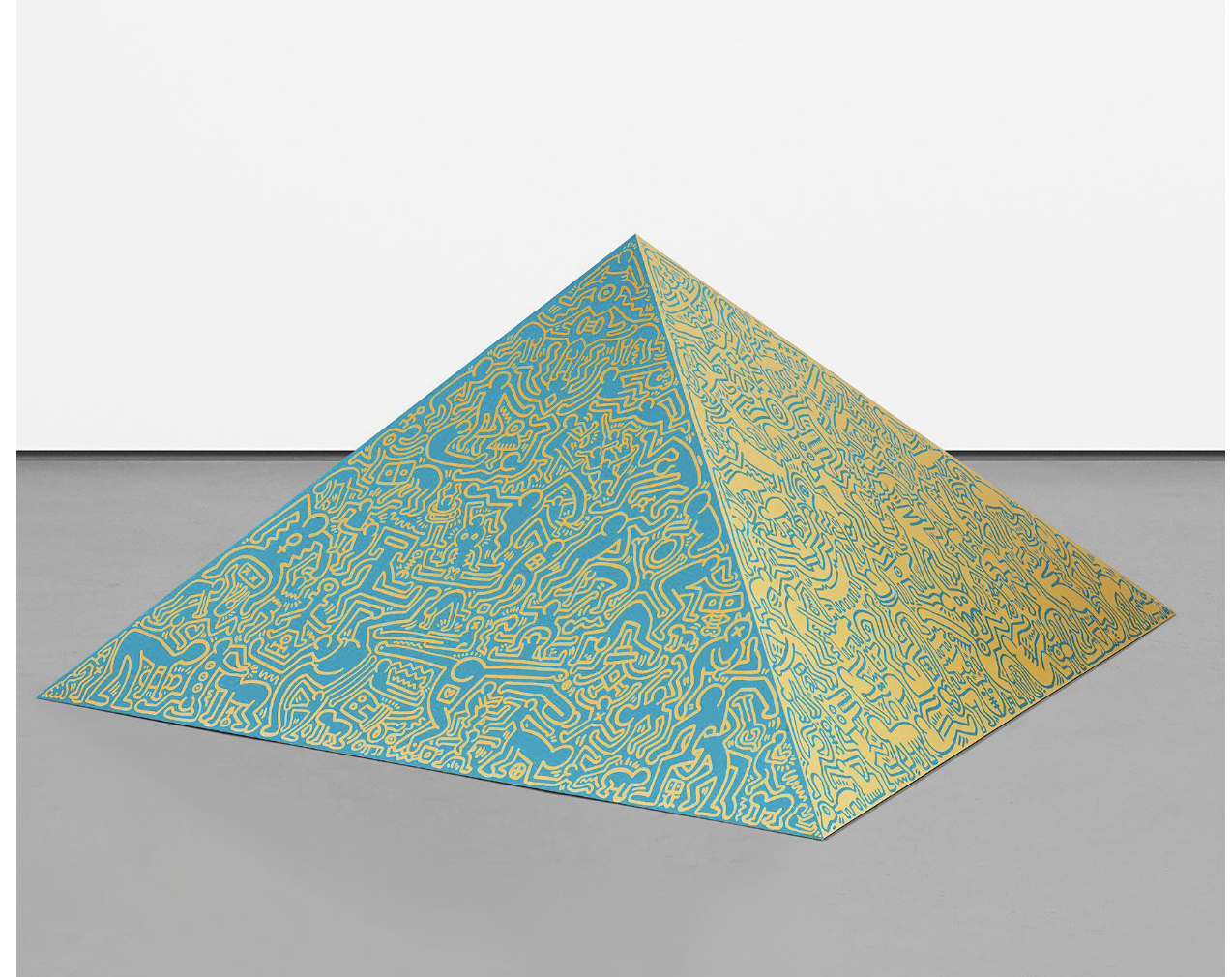
KEITH HARING
Pyramid, 1989
Anodized aluminum
Signed and dated “K. Haring 89 ⨁” on the underside
Stamped with the number and foundry mark
“14/15 EDITIONS SCHELLMANN MUNICH ∙ NEW YORK” on the underside
This work is number 14 from an edition of 15 plus 6 artist’s proofs
Lempertz Cologne: 1 June 2017
Estimated: EUR 100,000 – 150,000
EUR 124,000 / USD 139,115
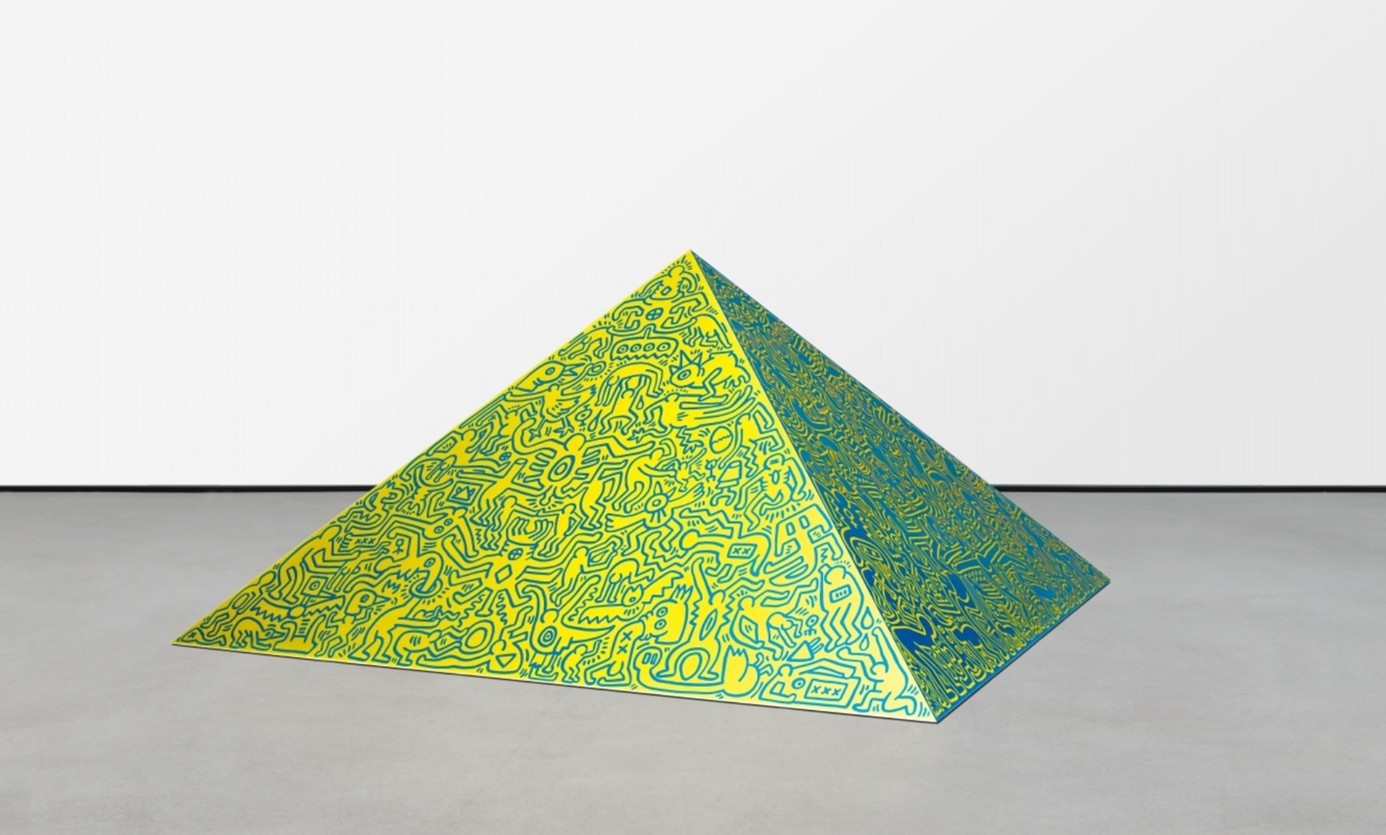
KEITH HARING
Pyramid sculpture, 1989
Aluminium, anodized
Mounted on wooden plinth
Signed and dated ‘K.Haring 89’ engraved on the inside with artist’s signum and inscribed ‘PP’ (engraved)
Numbered PP
One of two printer’s proofs aside from the numbered edition of 15 (+6A.P.)