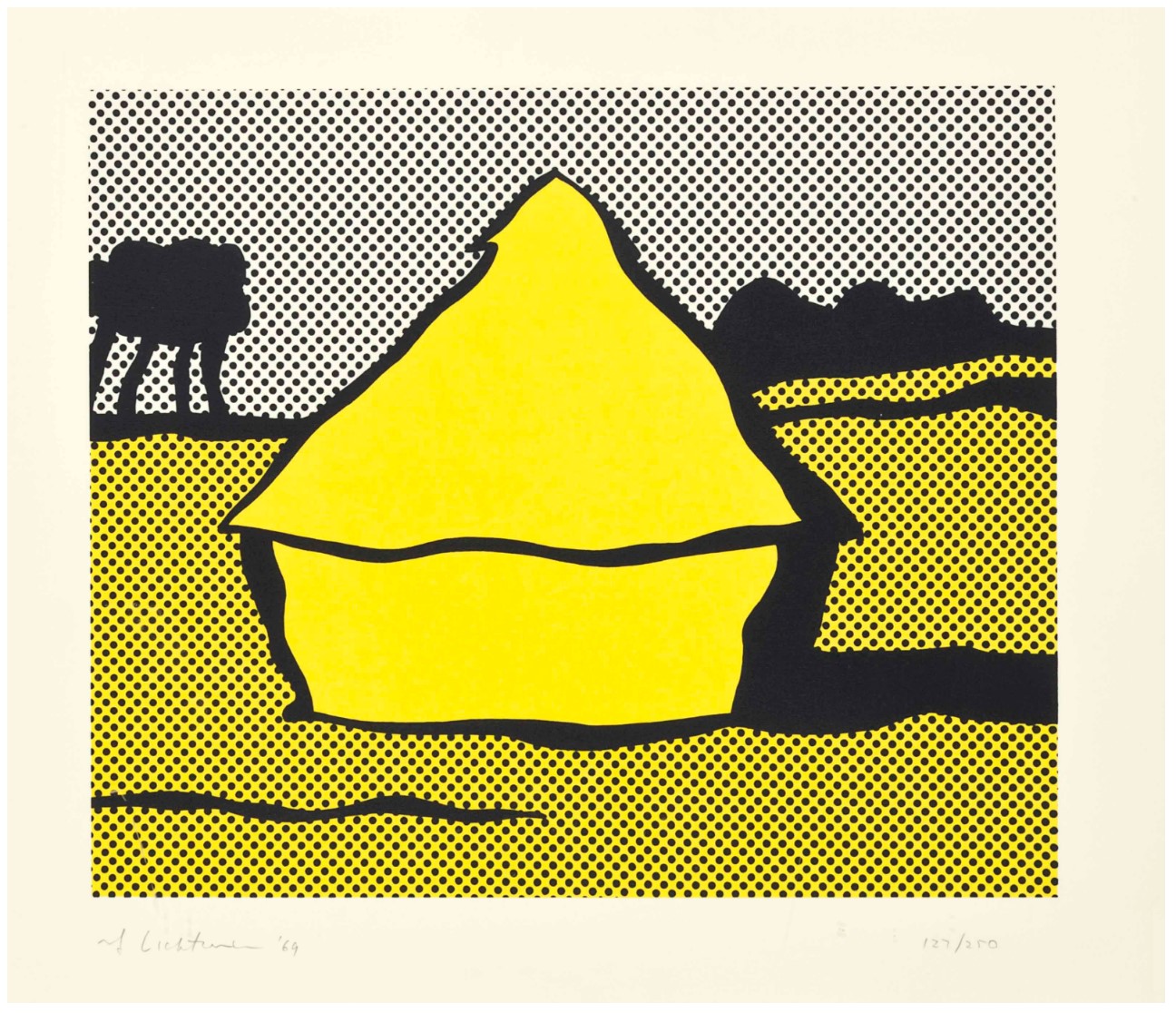
Haystack
Medium: Screenprint on C. M. Fabriano –100/100 Cotone paper
Year: 1969
Sheet: 19 x 26 inches (48.3 x 66 cm)
Image: 14 3/8 x 17 3/16 inches (36.5 x 43.6 cm)
Edition: 250
Publisher: Gabriele Mazzotta Editore, Milan
Printer: Unknown
Literature: Corlett 84, RLCR 1657
Haystack, 1969 (RLCR 1657) | Catalogue entry | Roy Lichtenstein: A Catalogue Raisonné
Signed, dated and numbered with the publisher’s blindstamp
Haystack (Corlett 84) reinterprets Claude Monet’s Impressionist series through the detached, mechanical lens of Pop Art. It replaces Monet’s painterly atmosphere with bold lines, flat colors, and the Ben-Day dots used in commercial printing. This work, part of a larger series, is a commentary on art reproduction and the historical dialogue between art movements.
Haystack features a simplified, yellow haystack with a thick black outline, positioned at the center of the composition. The background is populated with Ben-Day dots, a signature element of Lichtenstein’s Pop Art style that simulates the look of commercial color printing. These dots push the haystack forward, creating a sense of flatness while also suggesting a modern, mass-produced image. In contrast to Monet’s nuanced and atmospheric use of color to capture changing light, Lichtenstein uses a very limited and unmodulated palette of yellow and black. This choice flattens the landscape and emphasizes the industrial interpretation of the subject.
The Haystack series is a conceptual work that serves as both a homage to and a critique of its Impressionist source material. By reducing Monet’s romantic and painterly vision of nature to an industrialized surface of Ben-Day dots, Lichtenstein challenges the emotional expressiveness of Impressionism. His technique intentionally removes the transient light and intimate brushwork that Monet captured. The print meditates on perception and the history of art in the age of mechanical reproduction. The use of Ben-Day dots suggests that artworks, even masterpieces, can become “clichés” in the popular imagination after being endlessly reproduced in books and commercial media. By creating a static, manufactured surface, Lichtenstein offers a distinctly modernist perspective on Monet’s theme, which was centered on capturing movement and ephemerality.
Auction Results
Sotheby’s New-York: 23 October 2025
Estimated: USD 7,000 – 10,000
USD 15,240
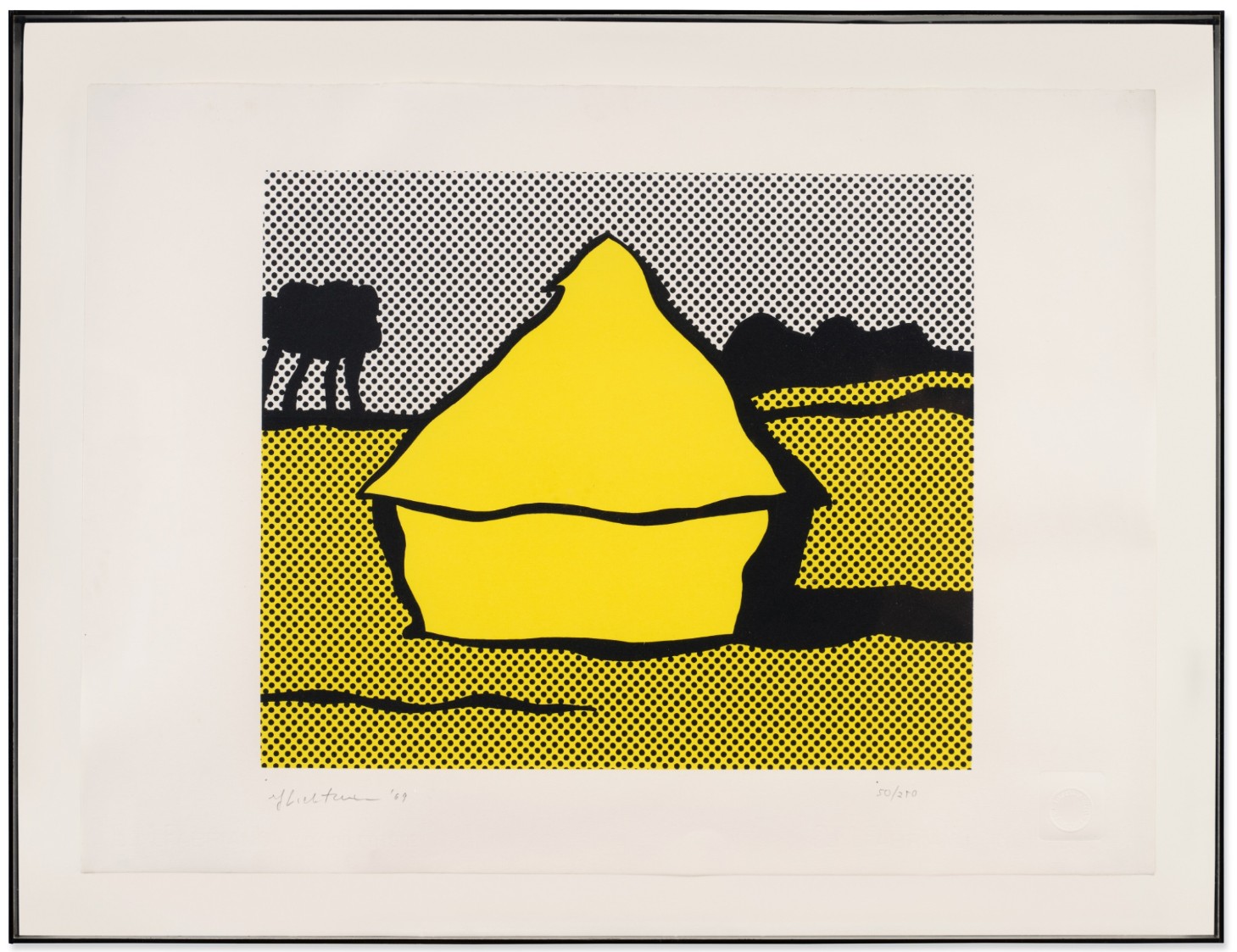
ROY LICHTENSTEIN (1923 – 1997)
Haystack (RLCR 1657; Corlett 84), 1969
Screenprint in colors on C. M. Fabriano wove paper
Signed in pencil, dated and numbered 50/250
This impression is number 50 from the edition of 250
With the blindstamp of the publisher, Gabriele Mazzotta Editore
Bonhams Cornette Paris: 29 November 2024
Estimated: EUR 7,000 – 10,000
EUR 12,160 / USD 12,850
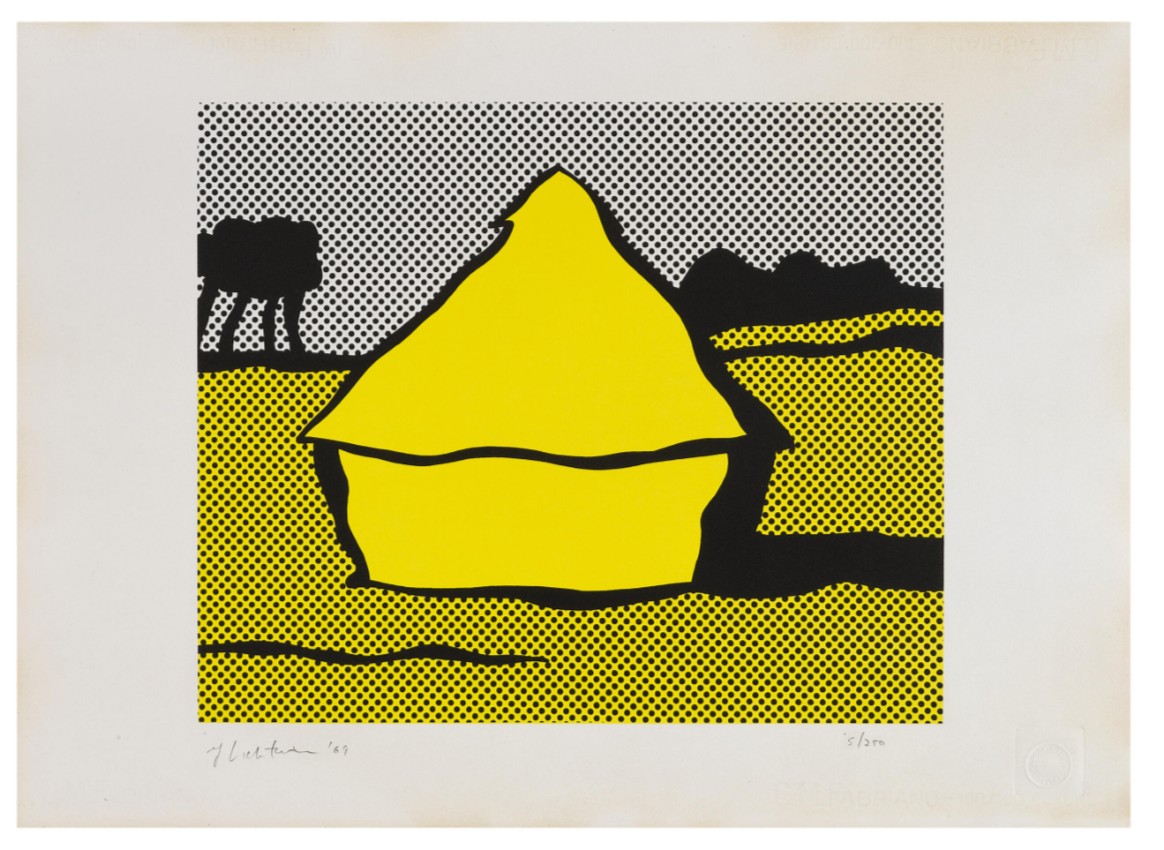
Screenprint in colors on Fabriano paper
Signed, dated and numbered 5/250
Phillips London: 19 September 2024
Estimated: GBP 6,000 – 8,000
GBP 12,065 / USD 15,672
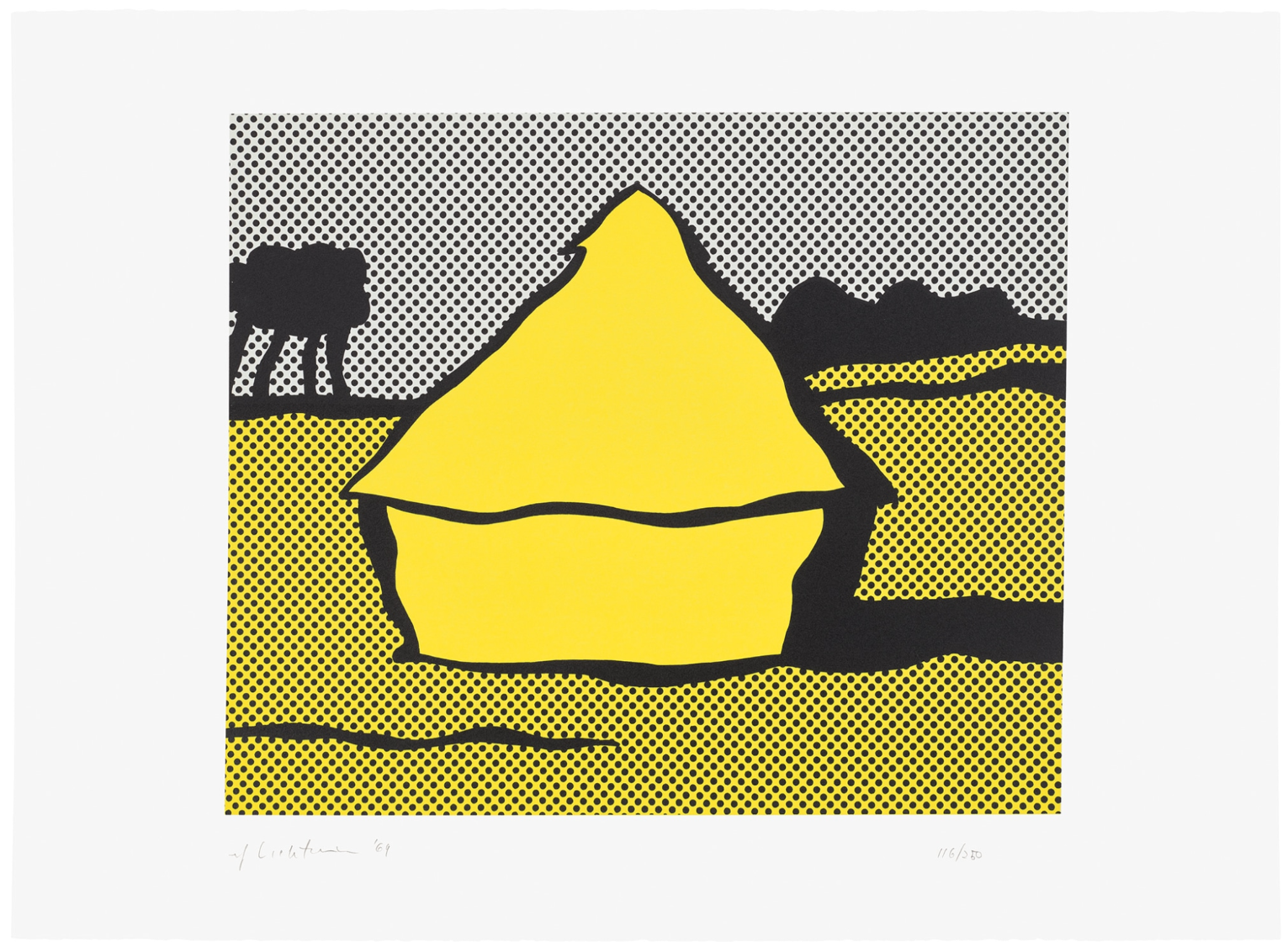
ROY LICHTENSTEIN
Haystack (C. 84), 1969
Screenprint in colors on Fabriano paper
Sheet: 48.3 x 66.1 cm (19×26 inches)
Signed, dated and numbered 116/250 in pencil
Casa d’Aste Capitolium: 24 September 2024
Estimated: EUR 7,000 – 9,000
EUR 8,820 / USD 9,840
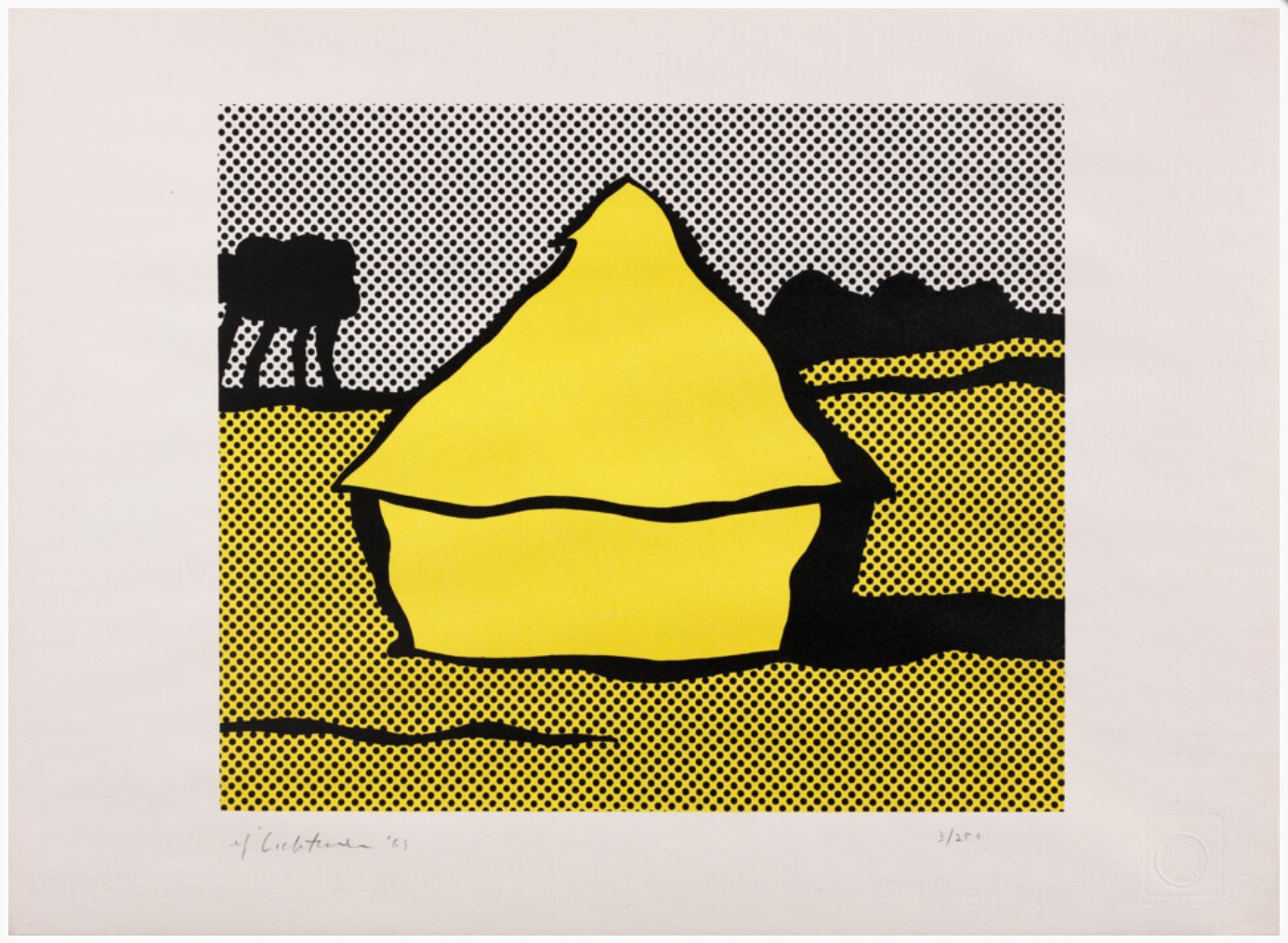
HAYSTACK (Corlett 84), 1969
Serigraphy on Fabriano paper
Signature, year and edition in pencil, ex. 3/250
Forum Auctions: 3 July 2024
Estimated: GBP 6,000 – 8,000
GBP 5,500 (Hammer)
GBP 7,215 / USD 9,205
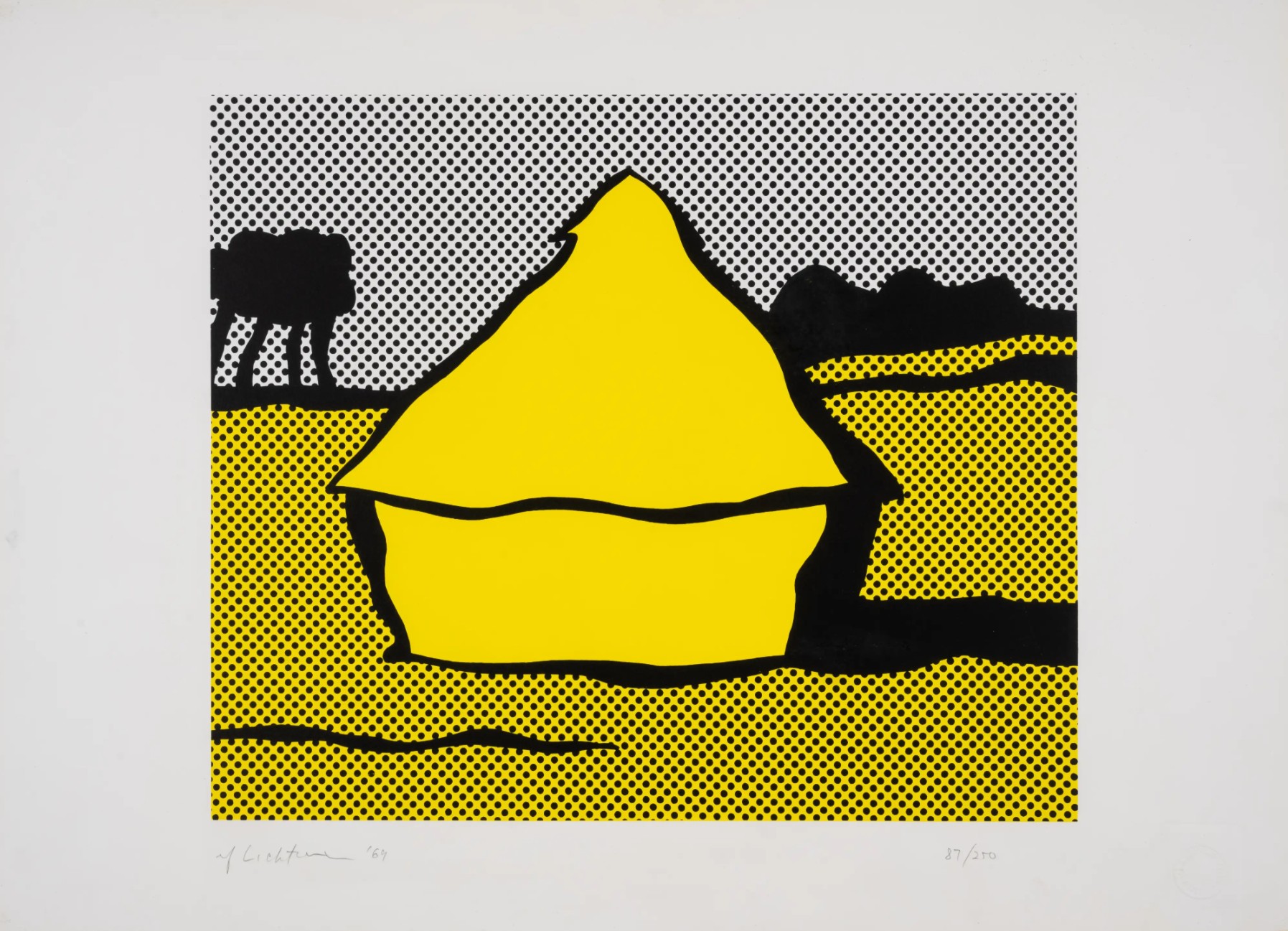
ROY LICHTENSTEIN (1923-1997)
Haystack (Corlett 84), 1969
Screenprint in colors on Fabriano wove paper
Signed and dated in pencil
Numbered from the edition of 250
Sotheby’s London: 15 March 2023
Estimated: GBP 8,000 – 12,000
GBP 13,970 / USD 16,975
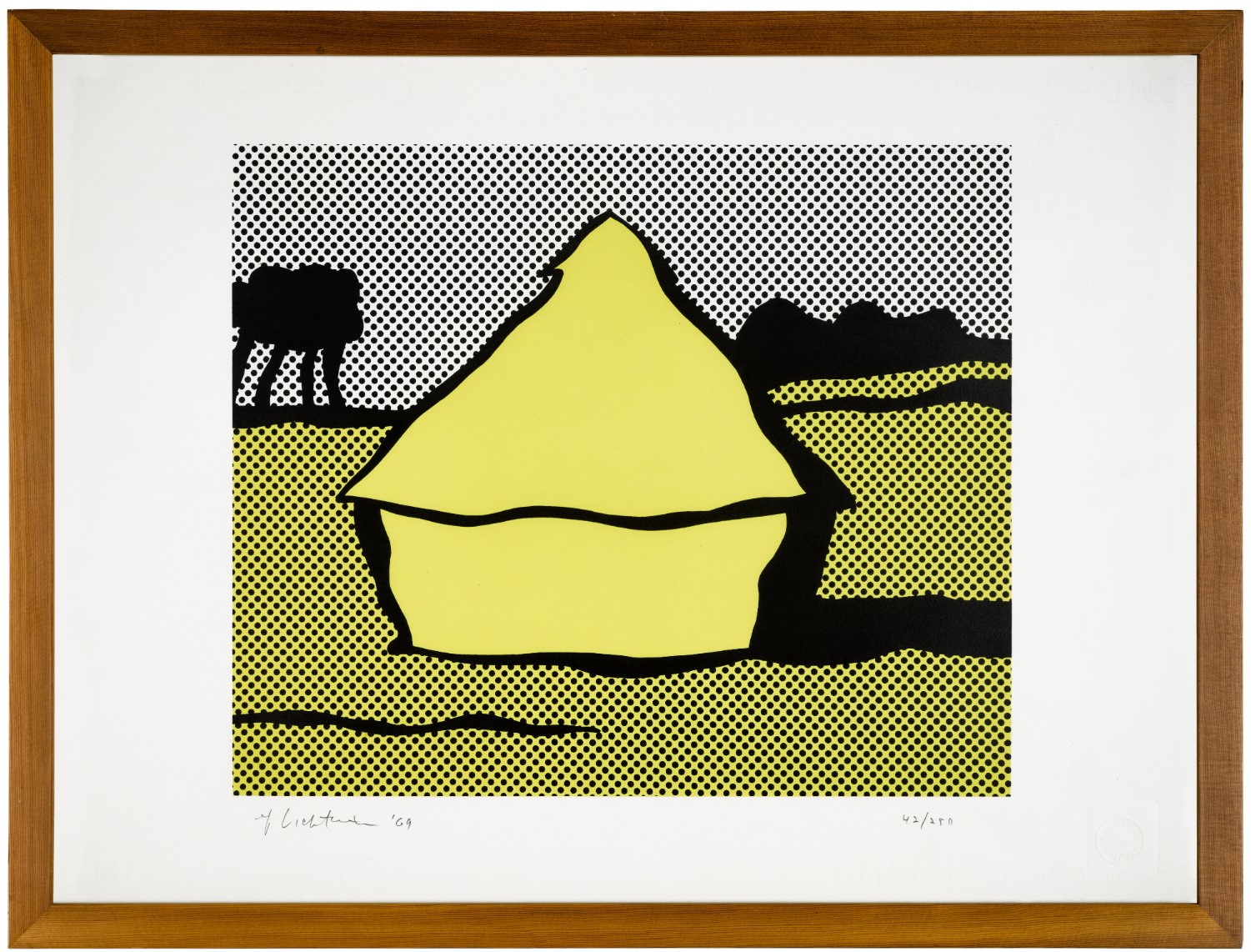
ROY LICHTENSTEIN (1923 – 1997)
Haystack (C. 84), 1969
Screen-print in colors on C. M. Fabriano wove paper
Signed in pencil, dated, numbered 42/250
Casa d’Aste Capitolium: 14 July 2022
Estimated: EUR 4,000 – 5,000
EUR 8,570 / USD 8,560
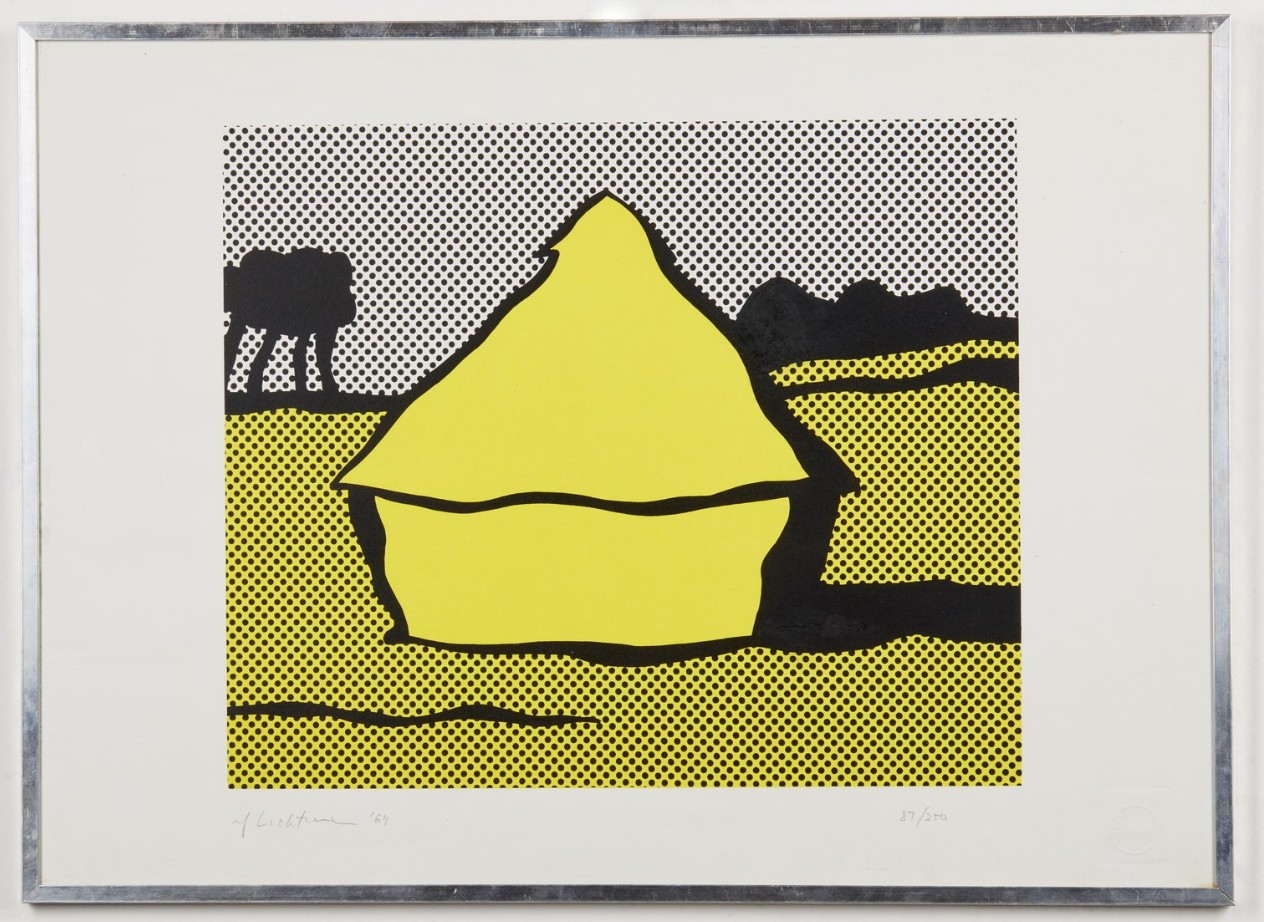
Yellow haystack (Corlett 84), 1969
Silkscreen printing and lithograph on Fabriano paper
Edition 87/250
Edition, signature and year lower in pencil