Lichtenstein made his initial break from the canons of Abstract Expressionism with his choice of subject and source. Having worked as a commercial artist in the 1950s, he chose to depict common, every-day subjects from our popular culture, found in newspapers, comic books, and catalogues. The artist’s sourcebooks are brimming with clippings that formed his pictorial lexicon. In transforming these pedestrian images into art, Lichtenstein and his colleagues, dissolved the usual distinction between “high” and “low”. Among his colleagues, Lichtenstein’s approach was the most conceptual and intellectual, intent on commenting ironically on the artifice of painting and the very essence of the practice. Despite initial appearances, a close study of his notebooks and files confirms that Lichtenstein’s compositions were never mere copies of his sources, but careful reconstructions with finely tuned editing and a remarkable eye for design and effect.
Introduction
Roy Lichtenstein’s Interiors series, developed primarily in the late 1980s and early 1990s, marks a late but crucial chapter in his career. Having spent decades dissecting images of romance, war, and gesture drawn from comic strips, Lichtenstein turned inward, literally, toward domestic space. These works depict empty rooms: living rooms, bedrooms, and lounges rendered with impeccable clarity, yet conspicuously devoid of human presence. Formally, the Interiors are unmistakably Lichtenstein. Clean black outlines, flat planes of color, and the disciplined use of Ben-Day dots structure the compositions. Furniture, curtains, mirrors, and decorative elements are reduced to visual signs, arranged with near-architectural precision. Perspective is often exaggerated or slightly skewed, producing spaces that feel both carefully designed and subtly artificial. Despite their apparent calm, these rooms are not inviting; they are staged, controlled, and emotionally suspended.
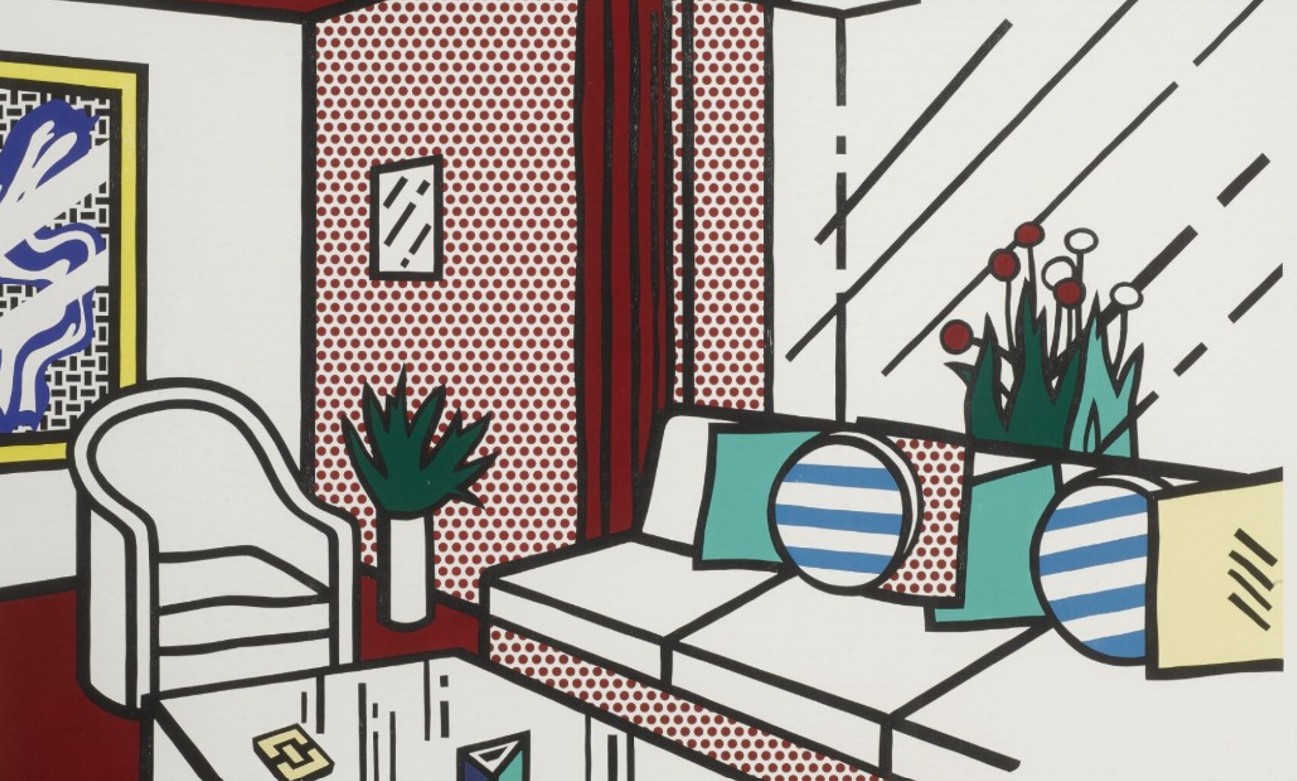
The sources for the series are deliberately eclectic. Lichtenstein drew from American interior design magazines of the 1940s and 1950s, but also from modernist painting—most notably Henri Matisse’s interiors and Picasso’s spatial experiments. What emerges is a hybrid language: the optimism and consumer polish of postwar America filtered through the analytical lens of modern art. The result is neither parody nor homage, but a cool synthesis that treats interior space as an image to be read rather than inhabited.
Conceptually, the absence of figures is central. Where earlier Pop works dramatized emotion through stylized faces and gestures, the Interiors suggest human presence only indirectly—through furniture placement, decorative choices, and implied function. These rooms feel lived-in yet vacant, as if their occupants have just left or never arrived. In this sense, the series can be read as a meditation on modern isolation, consumer taste, and the way identity is projected onto objects rather than people. Today, the Interiors stand as a quiet counterpoint to the spectacle often associated with Pop Art. They reveal Roy Lichtenstein at his most analytical: dissecting space, taste, and modern life with a calm rigor that feels strikingly contemporary.
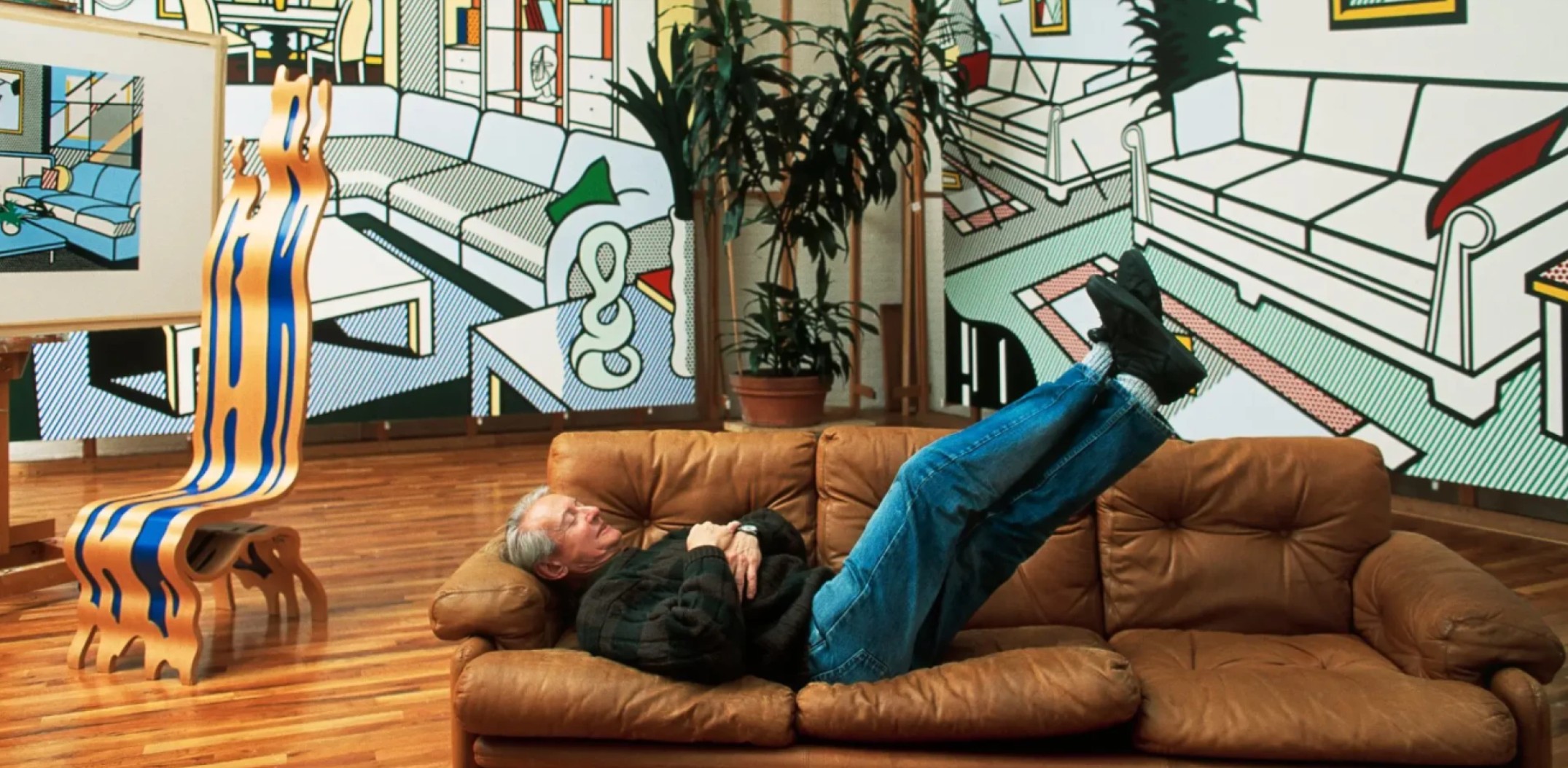
Roy Lichtenstein in his Washington Street studio, 1992. Photo © Thomas Hoepker / Magnum Photos. Art © Estate of Roy Lichtenstein.
Unlike with most prints series, the prints of the Interior Series preceded, rather than followed, the paintings of similar subjects. Preliminary discussions about the prints began in the fall of 1989. Lichtenstein created eight small collages for the project in his New York studio, and in early 1990 he arrived at Gemini G.E.L to begin work. The Interiors are based on advertisements, most of which Lichtenstein cut from the Yellow Pages of telephone directories. He enlarged the advertisements using an opaque projector, traced them, and then, after turning the tracing paper over, extensively reworked the images. Once a composition had been reworked to his satisfaction, he traced the drawing onto museum board, at which point the collage elements were added.
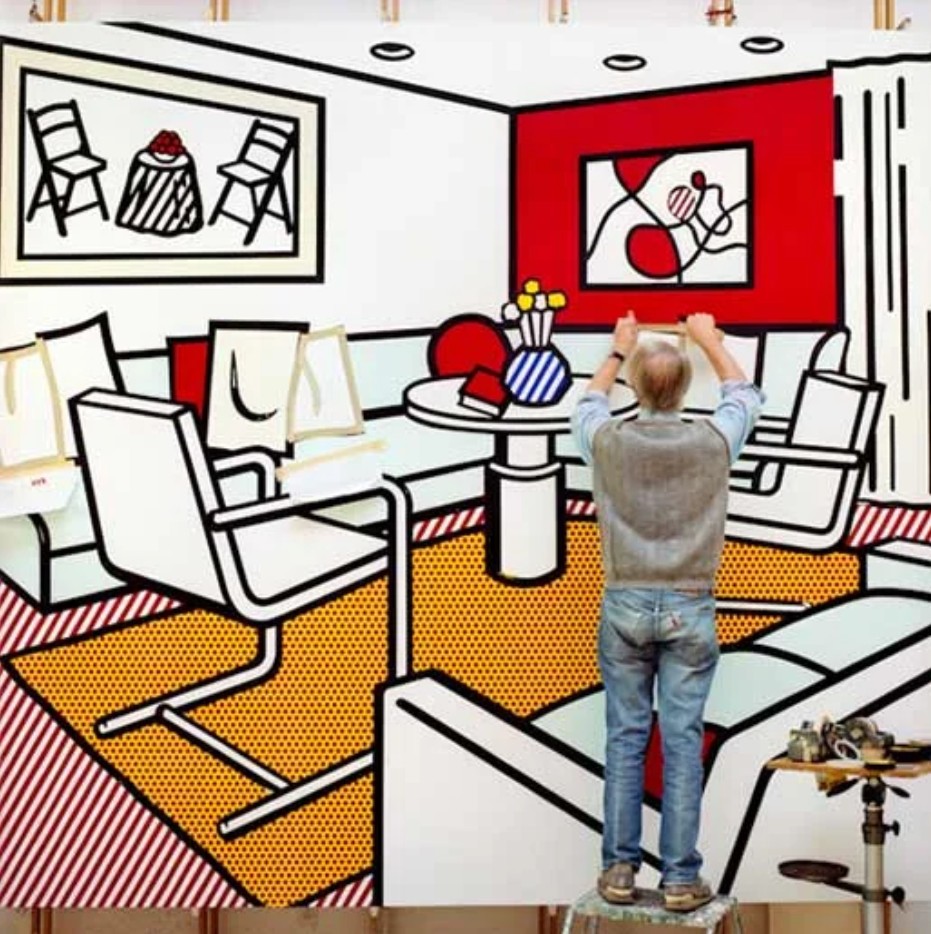
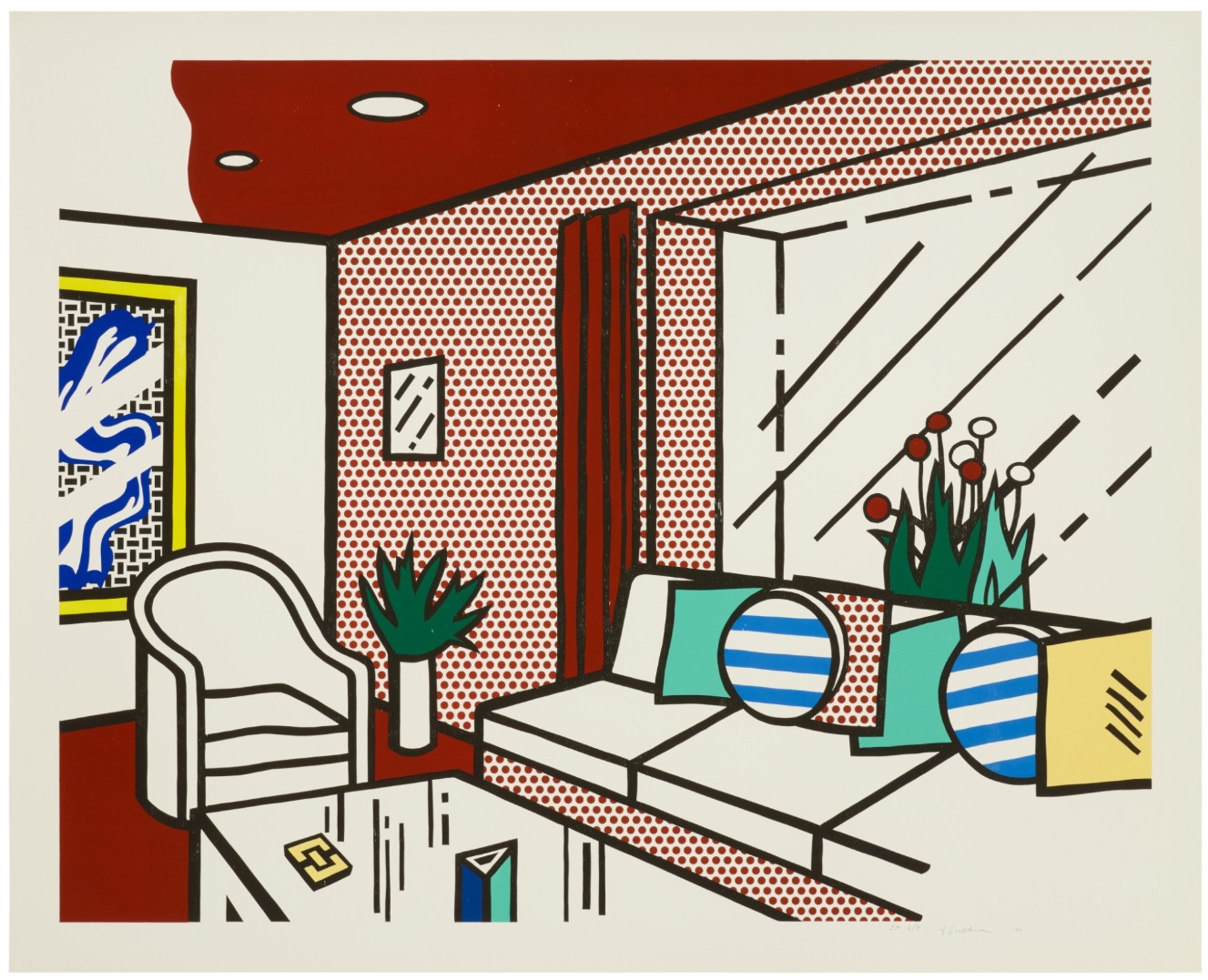
In March 1989, Roy Lichtenstein became artist-in-residence at the American Academy in Rome. Like many artists before, Rome would be a source of inspiration for Lichtenstein. But unlike his predecessors, the eternal forms of antiquity were not what caught his eye. Rather, Lichtenstein was struck by a furniture advertisement on the side of the road. Intrigued by the simultaneously inviting yet uninhabitable quality of the showroom in the ad, Lichtenstein spent the following evenings thumbing through the yellow pages with a pair of scissors, clipping similarly staged interiors. Lichtenstein’s 1990 print The Living Room embodies the contrasting sentiments found in these showroom advertisements.
Interior Series, 1990
1. Bedroom (Corlett 247)
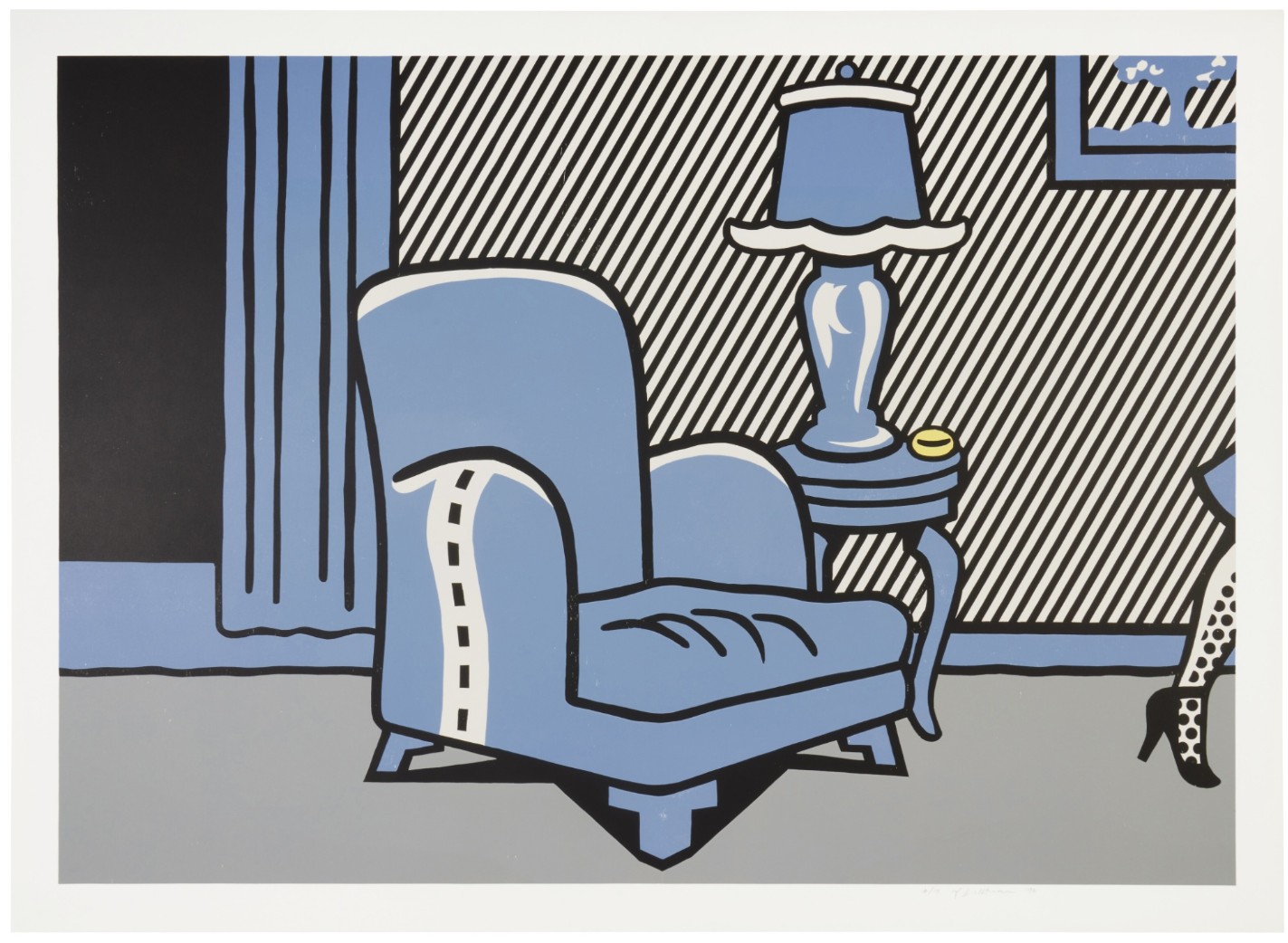
2. La Sortie (Corlett 248)
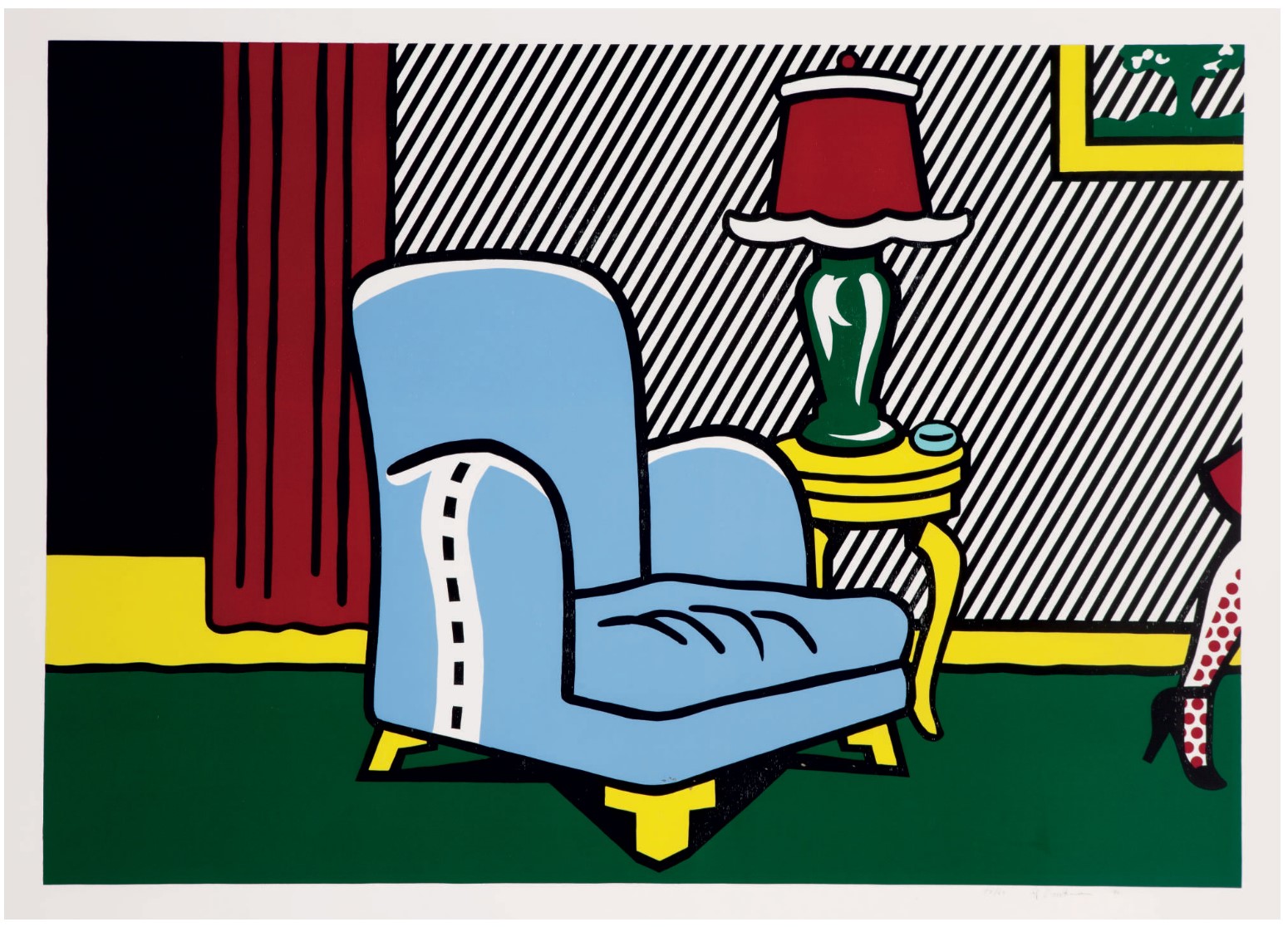
3. The Den (Corlett 249)
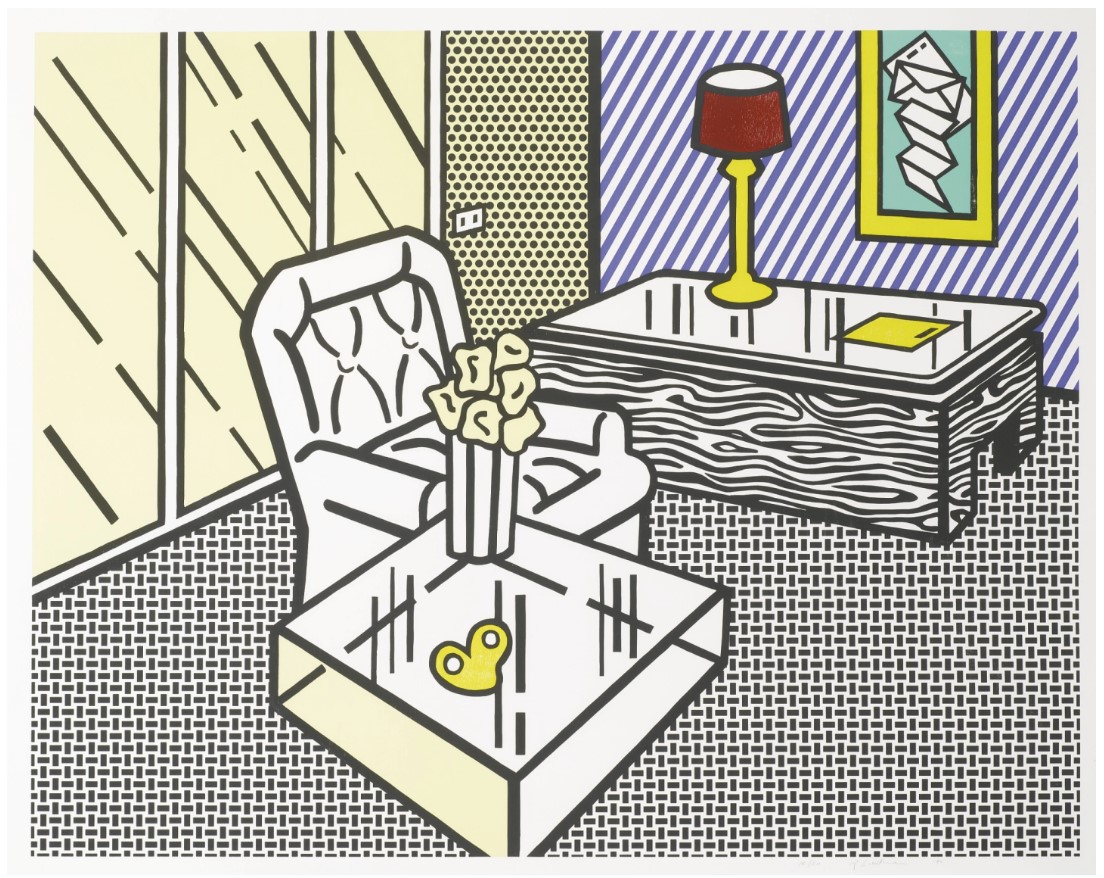
4. Living Room (Corlett 250)
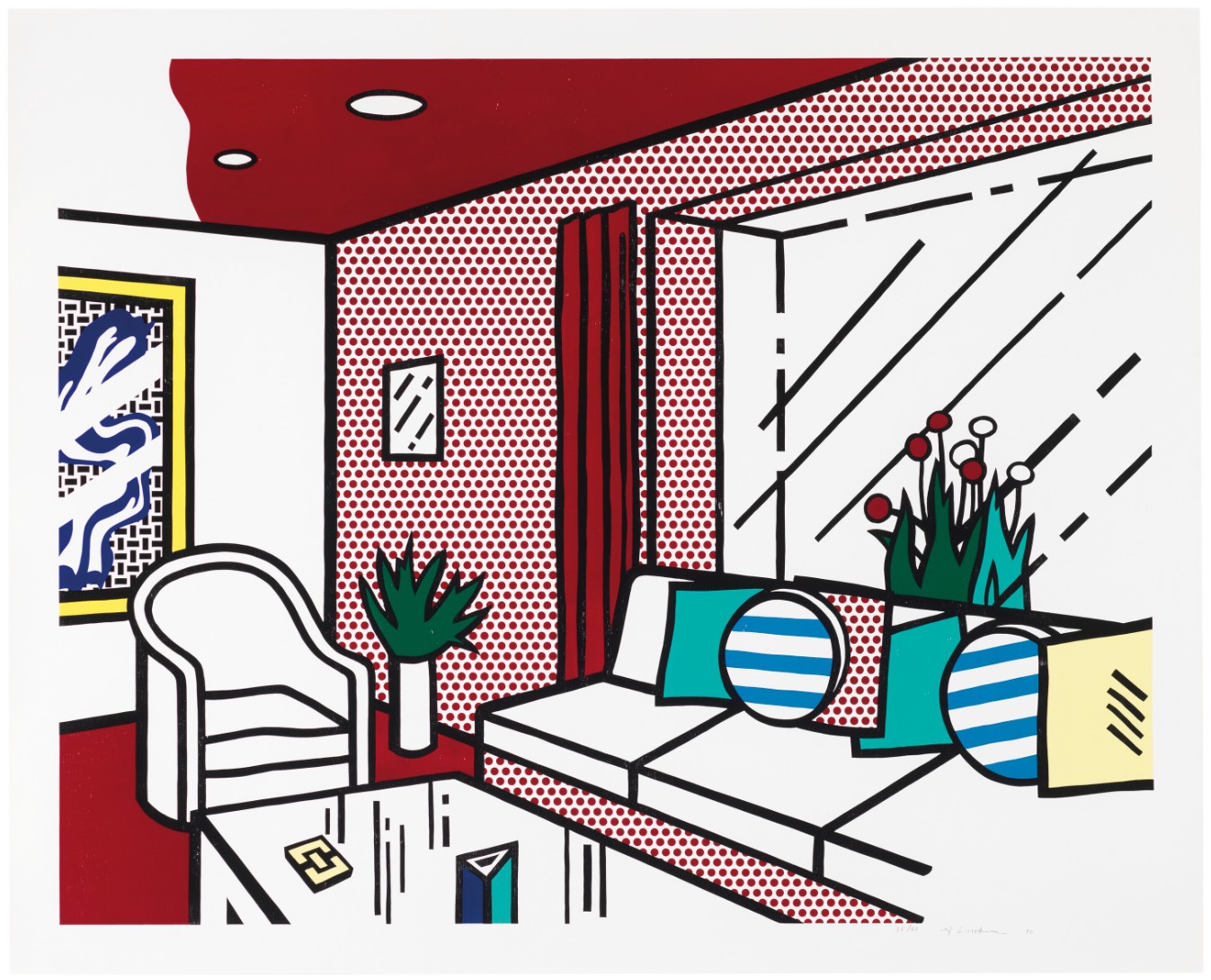
5. Red Lamps (Corlett 251)
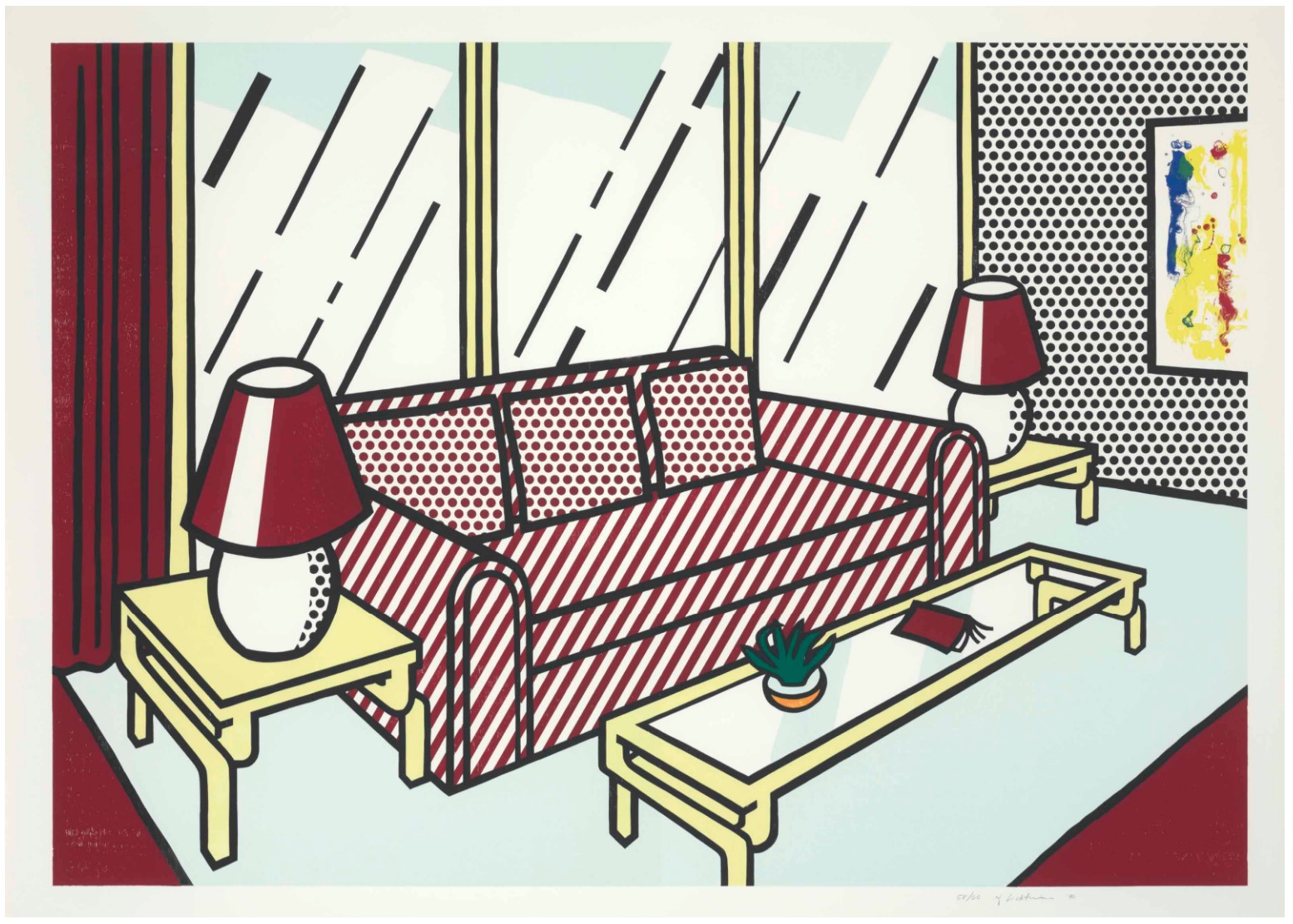
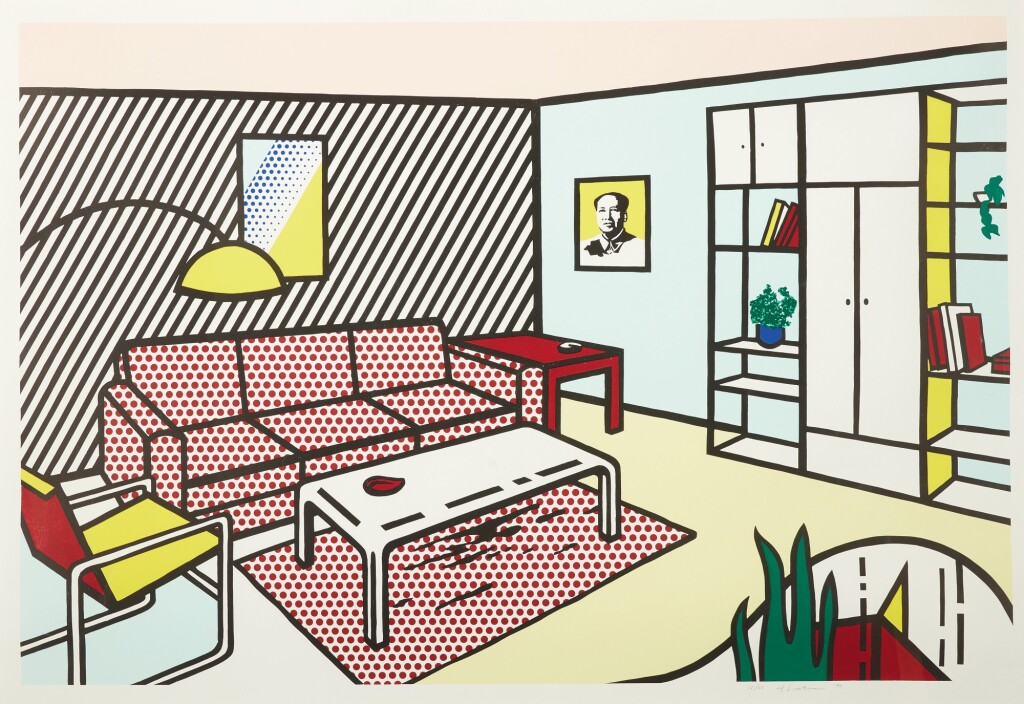
6. Modern Room (Corlett 252)
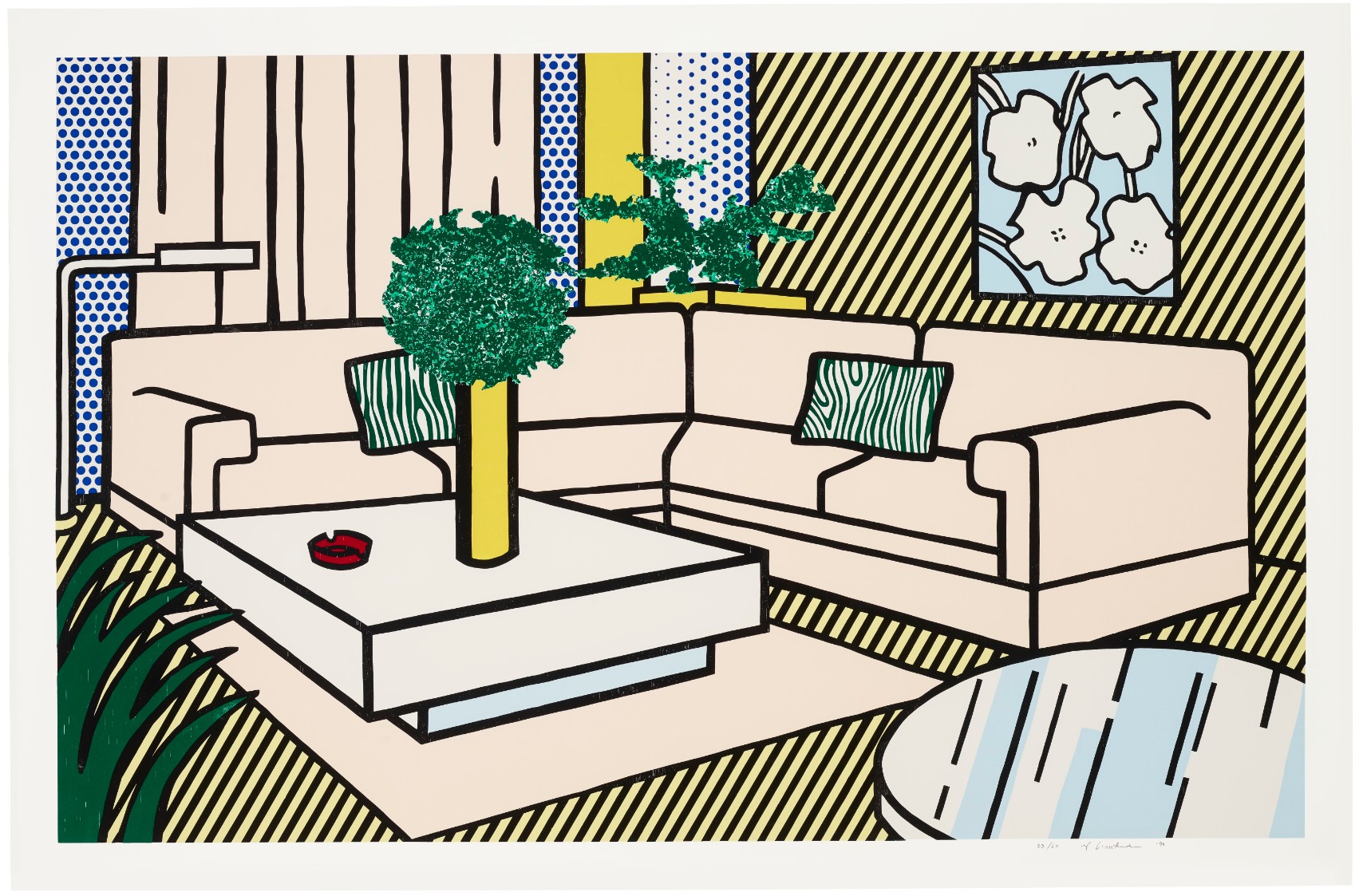
7. Yellow Vase (Corlett 253)
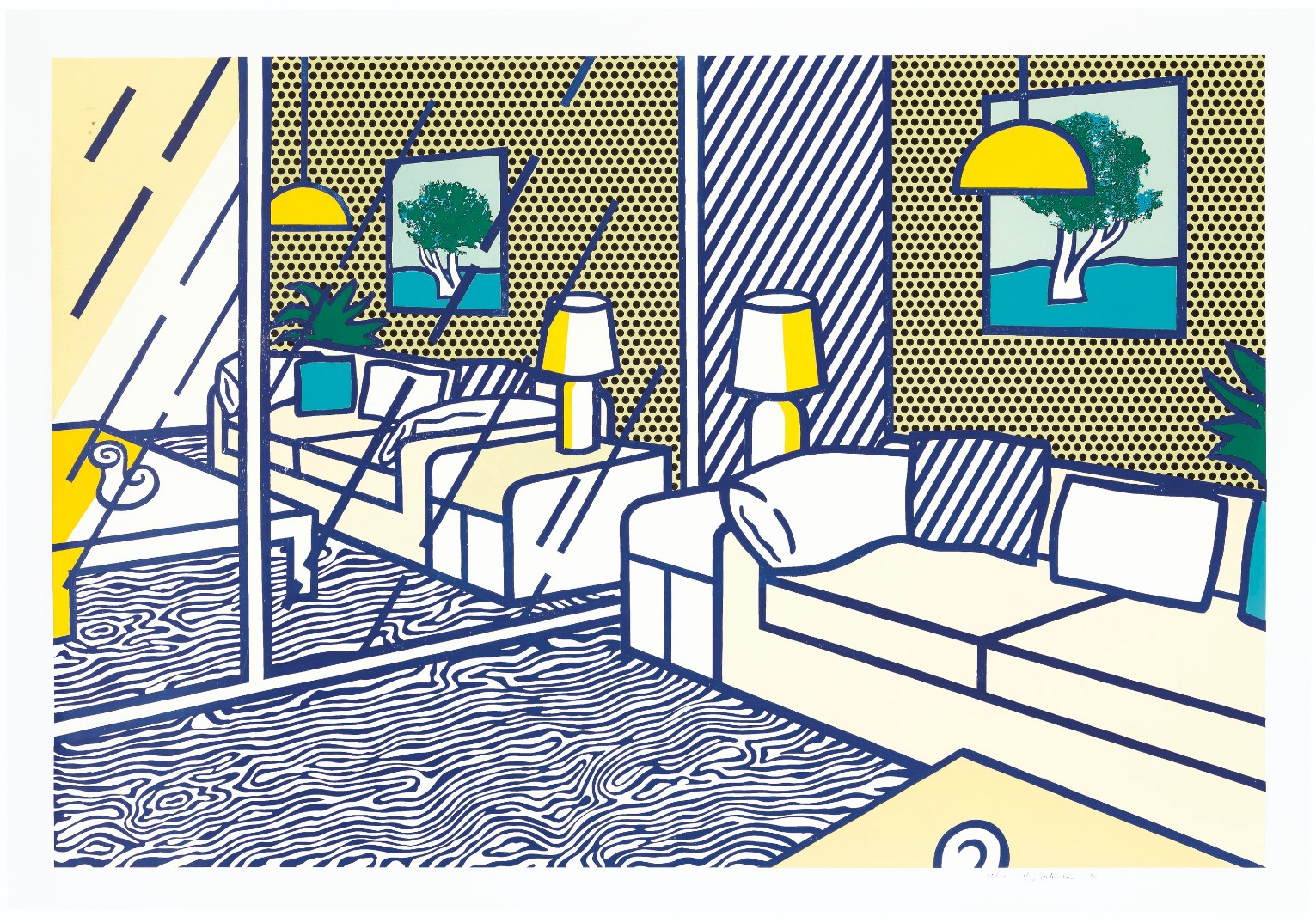
8. Blue Floor (Corlett 254)
Auction Market Overview
Auction Summary
2025 Auction Highlights
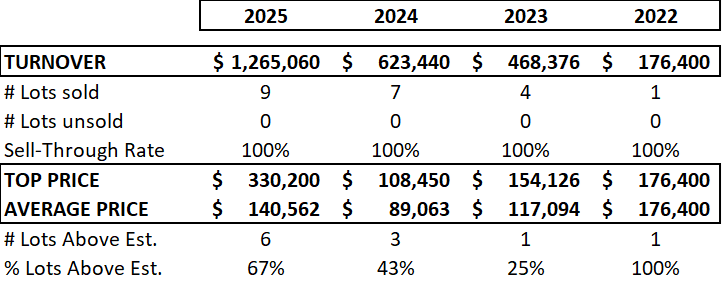
9 lots from Interior Series sold at auction in 2025 for a total turnover of USD 1,265,060. With no lot failing to sell, the sell-through is 100%.
The highest price of 2025 was achieved by La Sortie (State), a rare State print from La Sortie, from the Collection of Dorothy and Roy Lichtenstein, that sold at Sotheby’s in New-York, on 16 May 2025, for USD 330,200.
La Sortie (State), 1994
Works from the Collection of Dorothy and Roy Lichtenstein
Sotheby’s New-York: 16 May 2025
Estimated: USD 70,000 – 100,000
USD 330,200
ROY LICHTENSTEIN (1923 – 1997)
La Sortie (State) (from Interior Series) (Corlett 305), 1994
Woodcut printed in colors on 4-ply Museum board
Signed, dated ’96 and numbered 4/10 (lower right)
This impression number 4 from the edition of 10 plus 2 artist’s proofs
Living Room sold 3 times at auction in 2025 at an average price of USD 141,015. A print from the Collection of Dorothy and Roy Lichtenstein sold at Sotheby’s in New-York, on 26 September 2025, for USD 177,800 setting a new auction record for this print.
Living Room, 1990
Works from the Collection of Dorothy and Roy Lichtenstein
Sotheby’s New-York: 26 September 2025
Estimated: USD 80,000 – 120,000
USD 177,800
AUCTION RECORD FOR LIVING ROOM
ROY LICHTENSTEIN (1923 – 1997)
The Living Room, from the Interior series (Corlett 250), 1990
Woodcut and screenprint in colors on 4-ply Museum Board
Signed, dated ’90 and inscribed SP 6/8 (lower right)
One of 8 special proofs aside from the numbered edition of 60 plus 14 artist’s proofs
Furthermore, 3 new auction records were set in 2025 for works coming from the Collection of Dorothy and Roy Lichtenstein:
- Blue Floor sold at Sotheby’s in New-York, on 26 September 2025, for USD 114,300
- Bedroom sold at Sotheby’s in New-York, on 26 September 2025, for USD 107,950
- The Den sold at Sotheby’s in New-York, on 26 September 2025, for USD 107,950
Blue Floor, 1990
Works from the Collection of Dorothy and Roy Lichtenstein
Sotheby’s New-York: 26 September 2025
Estimated: USD 70,000 – 100,000
USD 114,300
AUCTION RECORD FOR BLUE FLOOR
ROY LICHTENSTEIN (1923 – 1997)
Blue Floor, from the Interior series (Corlett 254), 1990
Lithograph, woodcut and screenprint in colors on 4-ply Museum Board
Signed, dated ’90 and inscribed AP 3/14 (lower right)
One of 14 artist’s proofs aside from the numbered edition of 60
Bedroom, 1990
Works from the Collection of Dorothy and Roy Lichtenstein
Sotheby’s New-York: 26 September 2025
Estimated: USD 50,000 – 70,000
USD 107,950
AUCTION RECORD FOR BEDROOM
ROY LICHTENSTEIN (1923 – 1997)
Bedroom, from Interior series (Corlett 247), 1990
Woodcut and screenprint in colors on 4-ply Museum Board
Signed, dated ’90 and inscribed AP 4/14 (lower right)
One of 14 artist’s proofs aside from the numbered edition of 60
The Den, 1990
Works from the Collection of Dorothy and Roy Lichtenstein
Sotheby’s New-York: 26 September 2025
Estimated: USD 50,000 – 70,000
USD 107,950
AUCTION RECORD FOR THE DEN
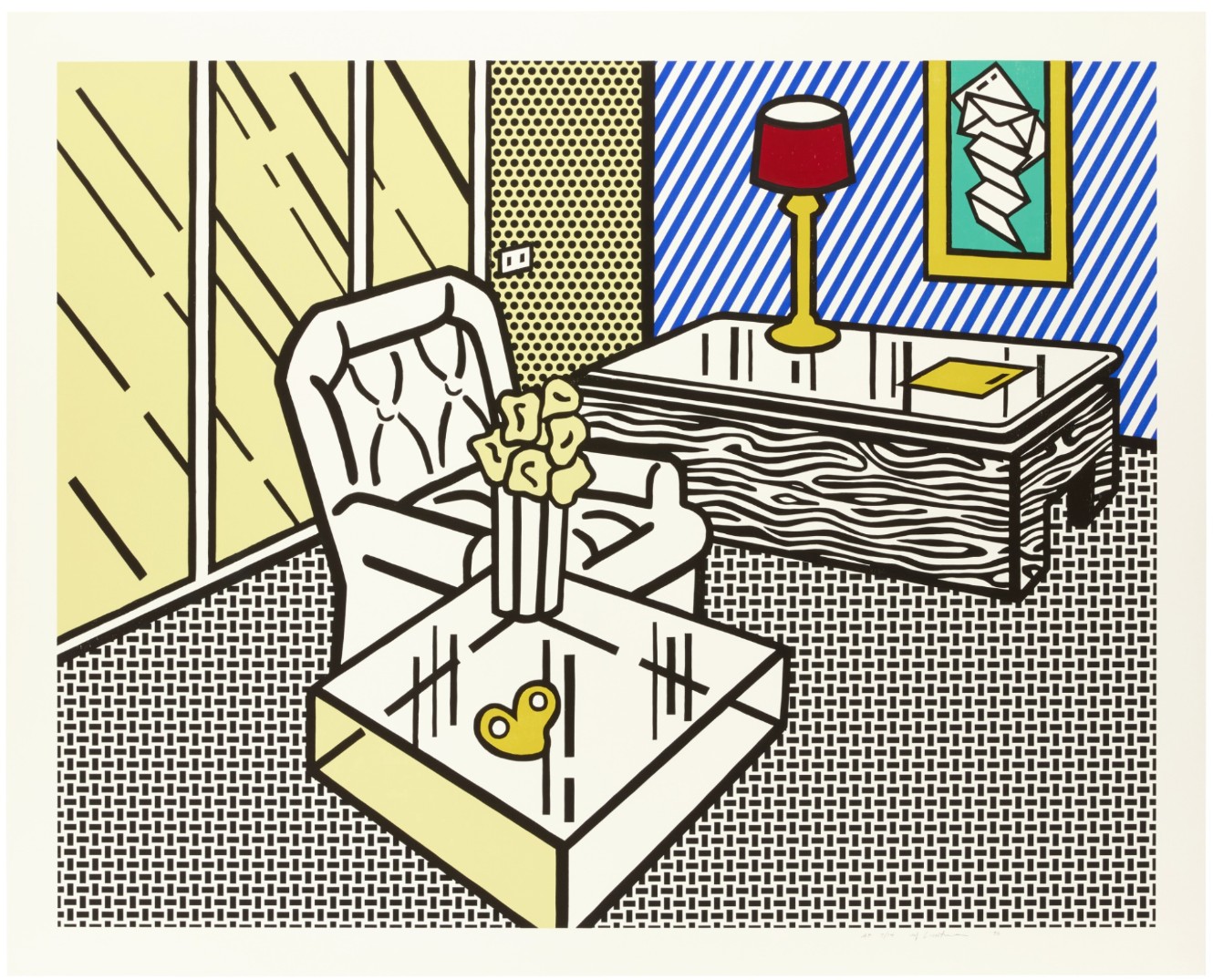
ROY LICHTENSTEIN (1923 – 1997)
The Den, from the Interior series (Corlett 249), 1990
Woodcut and screenprint in colors on 4-ply Museum Board
Signed, dated ’90 and inscribed AP 7/14 (lower right)
One of 14 artist’s proofs aside from the numbered edition of 60 plus 14 artist’s proofs
2024 Auction Highlights
7 lots from Interior Series sold at auction in 2024 for a total turnover of USD 623,440, at an average price of USD 89,063. The highest price was achieved by Red Lamps that sold at Bonhams in New-York, on 26 November 2024, for USD 108,450, setting a new auction record for this print.
Red Lamps, 1990
Bonhams New-York: 26 November 2024
Estimated: USD 80,000 – 120,000
USD 108,450
AUCTION RECORD FOR RED LAMPS
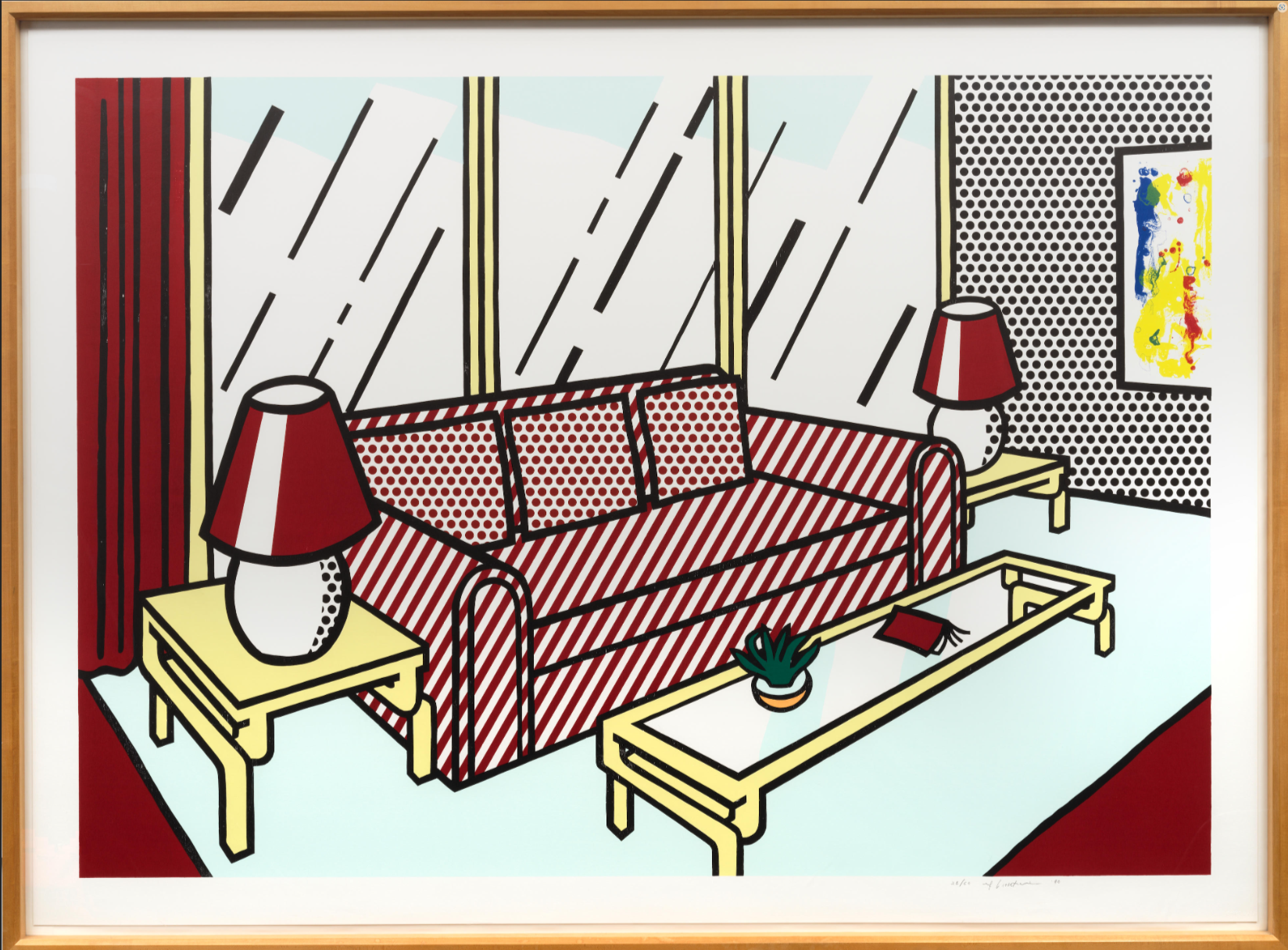
ROY LICHTENSTEIN (1923-1997)
Red Lamps, from Interior Series (Corlett 251; Gemini 1503), 1990
Lithograph, woodcut, and screenprint in colors on 4-ply Paper Technologies, Inc., Museum Board
Signed in pencil, dated and numbered 26/60 (there were also 14 artist’s proofs)
2023 Auction Highlights
4 lots sold at auction in 2023 for a total turnover of USD 468,376, at an average price of USD 117,095. The highest price was achieved by Modern Room that sold at Sotheby’s in London, on 13 October 2023, for GBP 127,000 (USD 154,125).
Modern Room, 1990
Sotheby’s London: 13 October 2023
Estimated: GBP 100,000 – 150,000
GBP 127,000 / USD 154,125
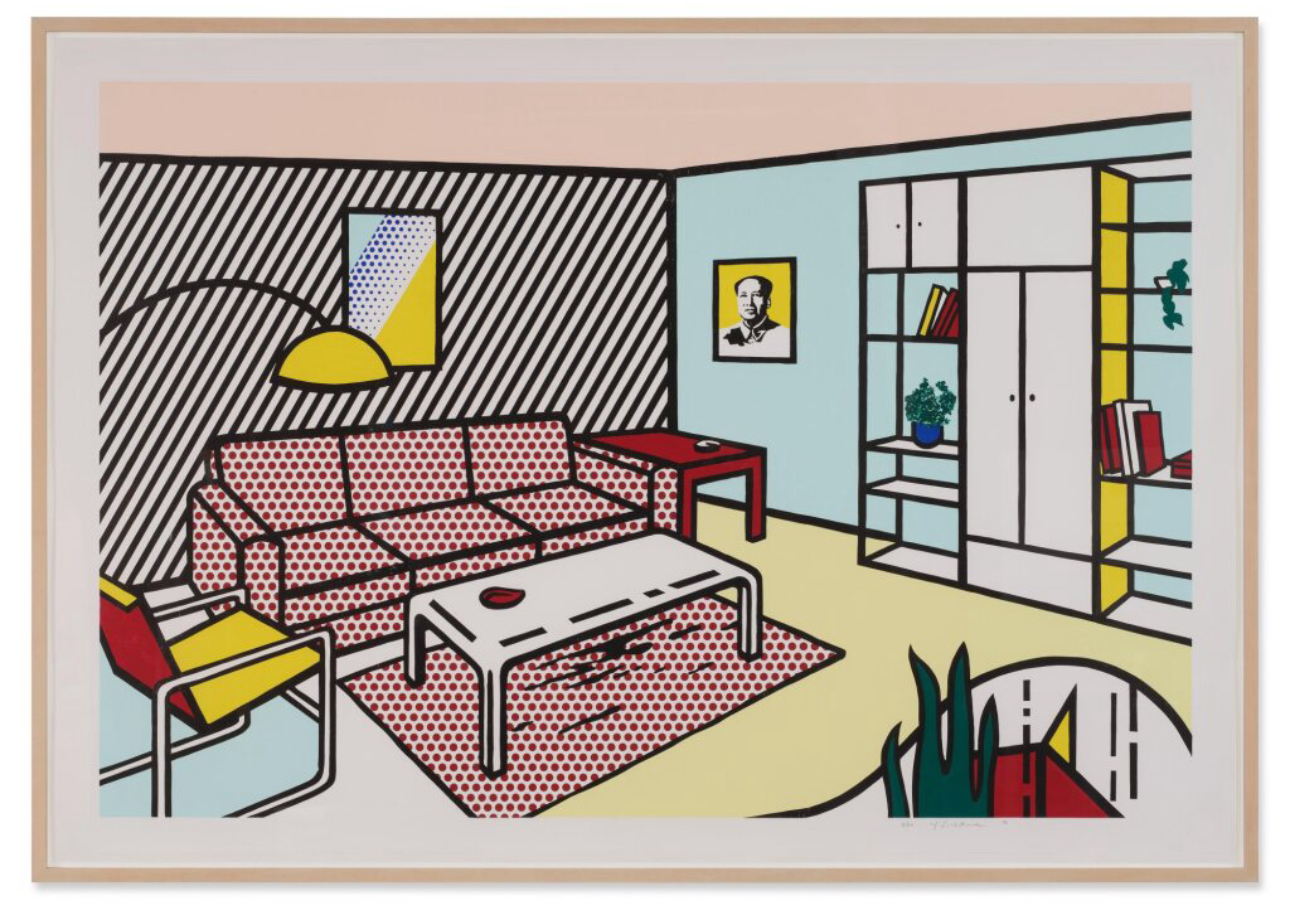
ROY LICHTENSTEIN (1923 – 1997)
Modern Room, from Interior Series, 1990
Lithograph, woodcut and screenprint in colors on Museum Board
56 1/8 x 80 3/4 inches (142.8 x 205 cm)
Signed in pencil, dated and numbered 9/60 (lower right)
2022 Auction Highlights
Only 1 lot sold at auction in 2022, Living Room, that sold at Christie’s in New-York, on 27 October 2022 for USD 176,400.
Living Room, 1990
Christie’s New-York: 27 October 2022
Estimated: USD 100,000 – 150,000
USD 176,400
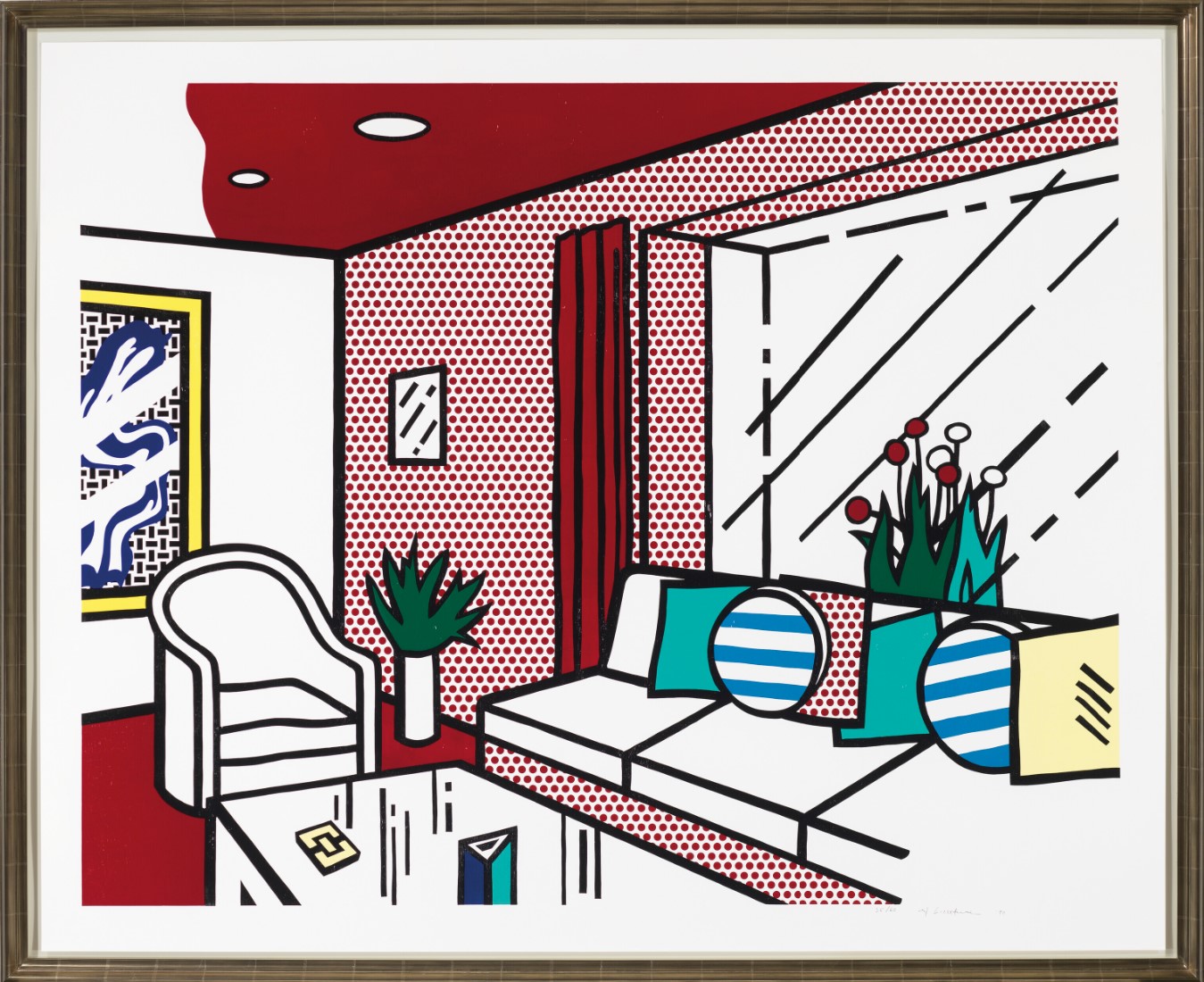
ROY LICHTENSTEIN (1923-1997)
Living Room, from Interior Series, 1990
Woodcut and screen-print in colors, on museum board
Signed and dated in pencil, numbered 40/60
2026 Auction Results
Red Lamps, 1990
Works from the Collection of Dorothy and Roy Lichtenstein
Sotheby’s online: 7 October 2026
Estimated: USD 70,000 – 100,000
USD 140,800
NEW AUCTION RECORD FOR RED LAMPS
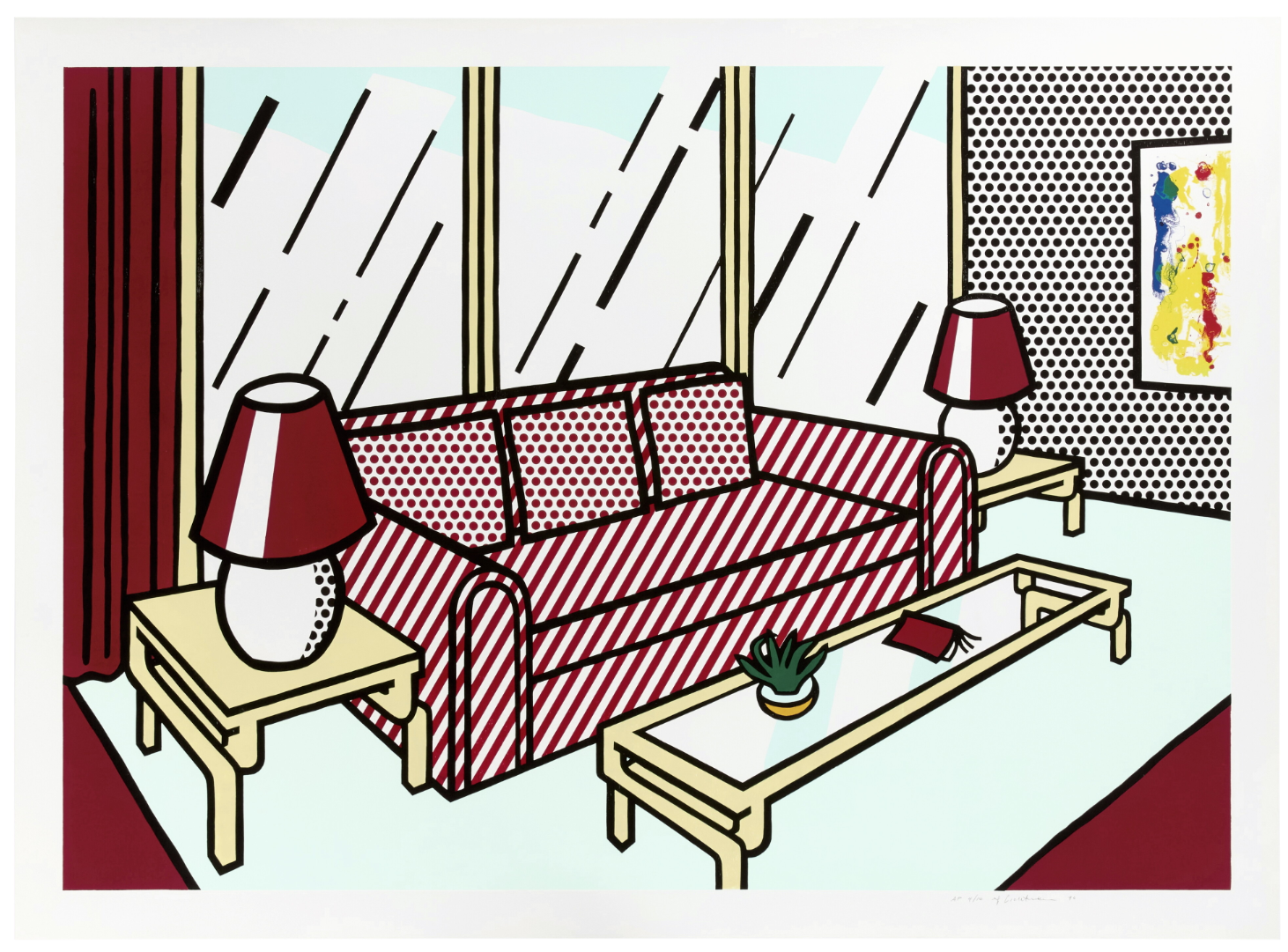
ROY LICHTENSTEIN (1923 – 1997)
Red Lamps, from the Interior series, 1990
(Corlett 251, RLCR 3987)
Lithograph, woodcut, and screenprint in colors on 4-ply Paper Technologies, Inc., Museum Board
Signed, dated ’90 and inscribed AP 4/14 (lower right)
One of 14 artist’s proofs aside from the numbered edition of 60
With the blindstamp of the publisher, Gemini G.E.L., and with their inkstamp on the verso
La Sortie, 1990
Pop Impressions: Prints from the Collection of Dorothy and Roy Lichtenstein
Sotheby’s New-York: 15 April 2026
Estimated: USD 50,000 – 70,000
USD 108,800
NEW AUCTION RECORD FOR LA SORTIE
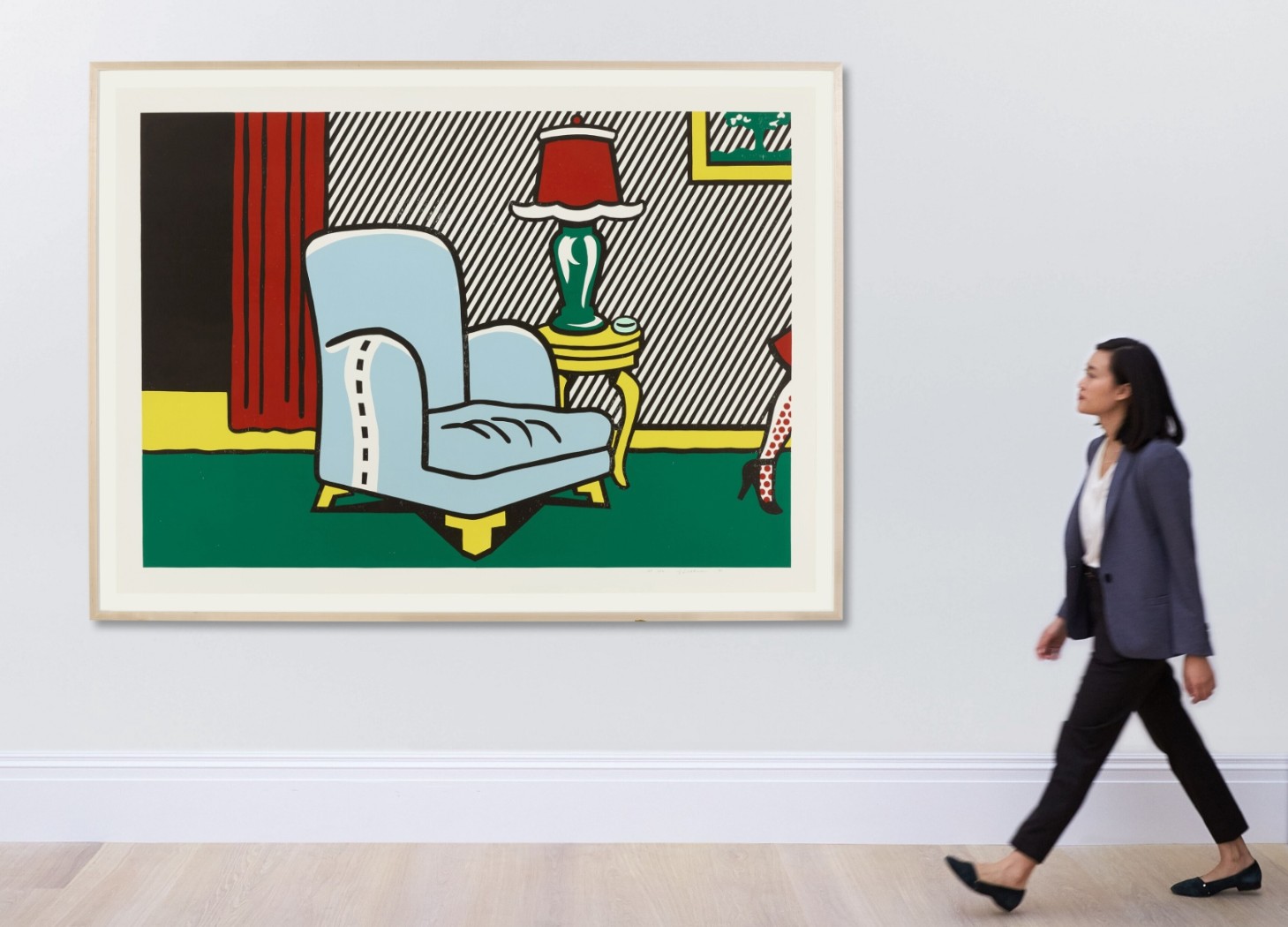
ROY LICHTENSTEIN (1923 – 1997)
La Sortie, from the Interior series (Corlett 248; RLCR 3982), 1990
Woodcut printed in colors on Museum Board
Signed in pencil, dated ’90 and inscribed AP 3/14
This impression is one of 14 artist’s proofs aside from the numbered edition of 60
With the blindstamp of the printer and publisher, Gemini G.E.L., and with their inkstamp on the verso
Yellow Vase, 1990
Pop Impressions: Prints from the Collection of Dorothy and Roy Lichtenstein
Sotheby’s New-York: 15 April 2026
Estimated: USD 70,000 – 100,000
USD 96,000
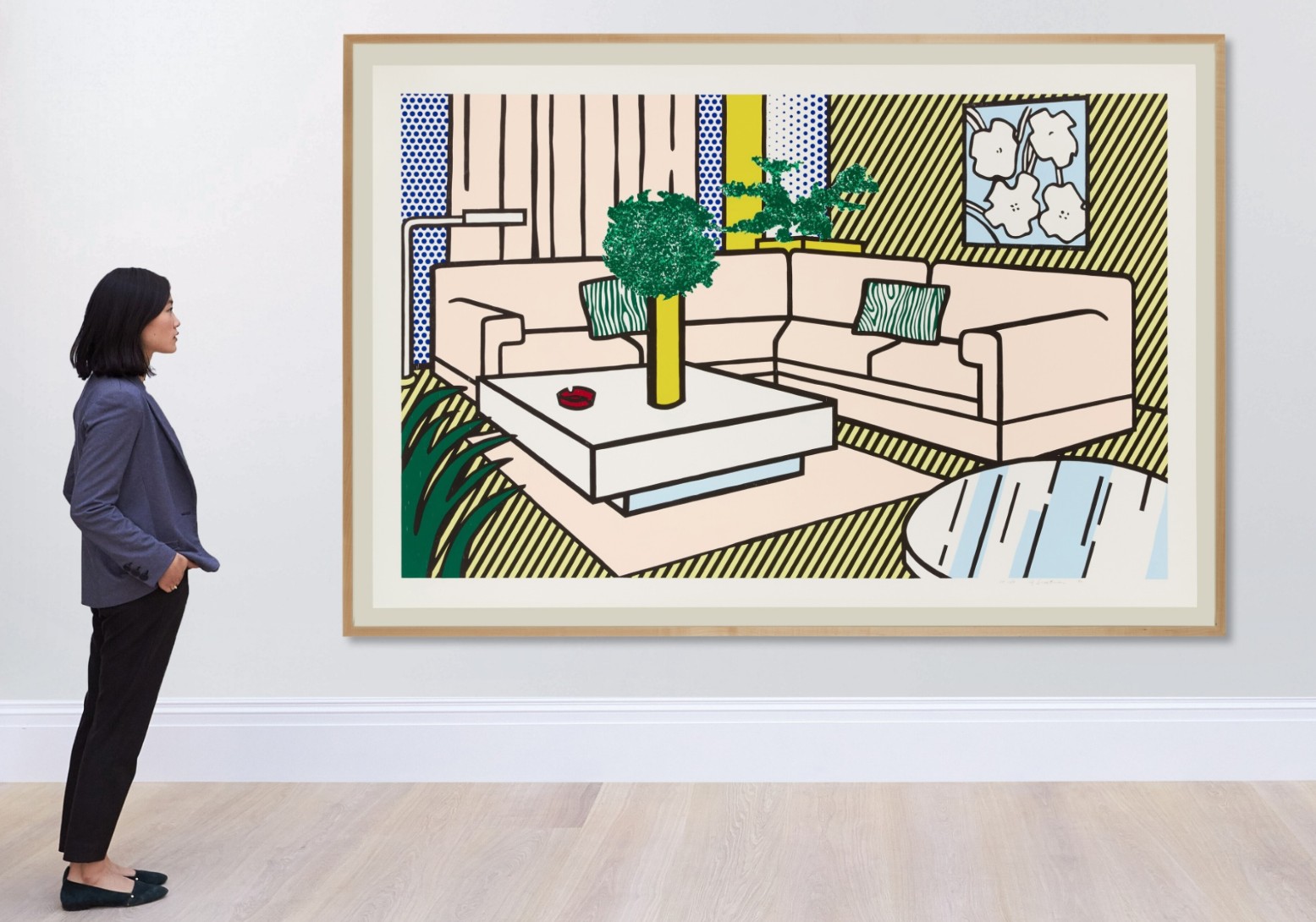
ROY LICHTENSTEIN (1923 – 1997)
Yellow Vase, from the Interior series (Corlett 253; RLCR 3992), 1991
Lithograph, woodcut and screenprint in colors on Museum Board
Signed in pencil, dated ’90 and inscribed SP 6/8
This impression is one of eight special proofs aside from the numbered edition of 60 plus 14 artist’s proofs
With the blindstamp of the printer and publisher, Gemini G.E.L., and with their inkstamp on the verso
The Living Room, 1990
The Geri Brawerman Collection: A Tribute to Los Angeles and A Legacy of Giving
Sotheby’s New-York: 15 April 2026
Estimated: USD 70,000 – 100,000
USD 121,600
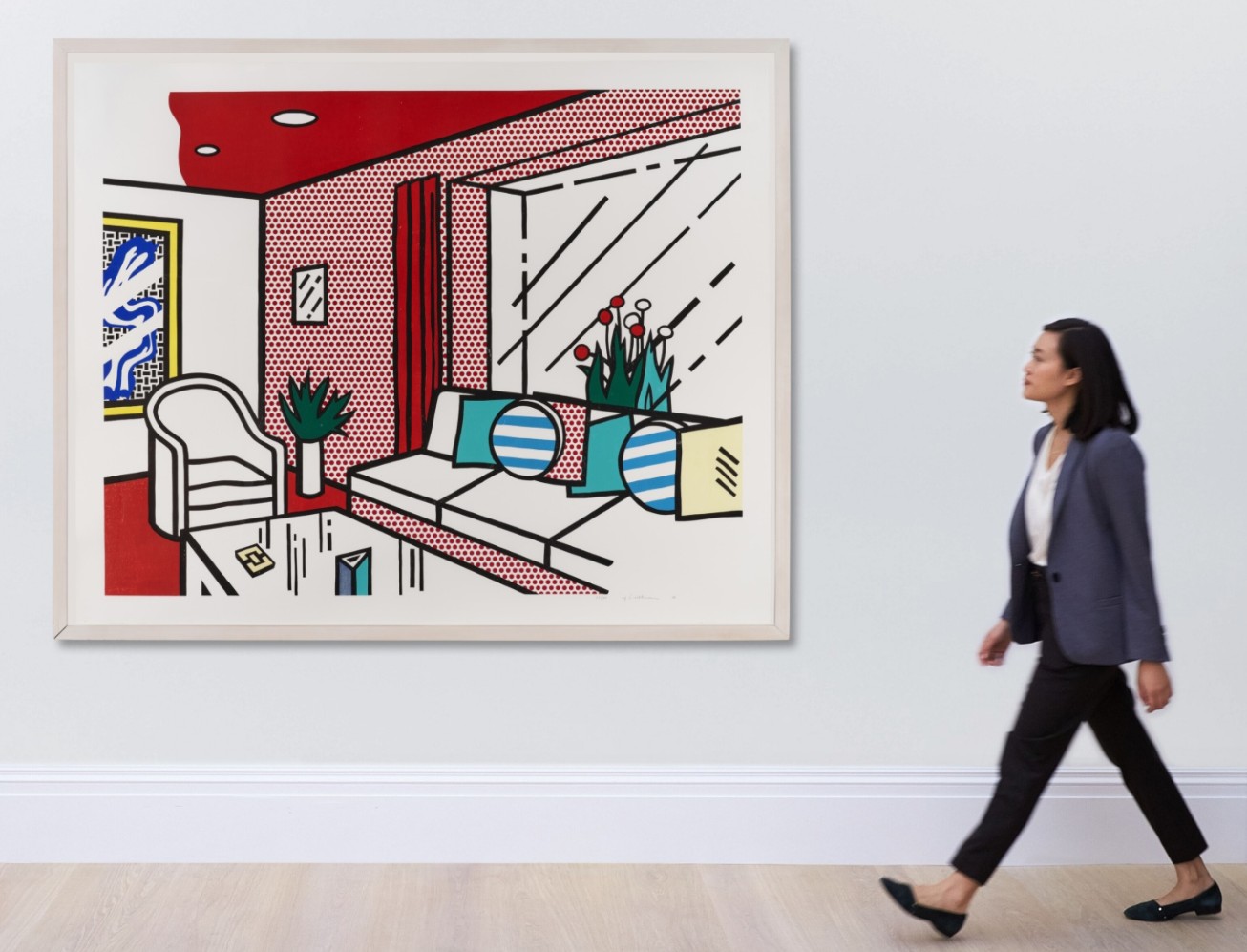
ROY LICHTENSTEIN (1923 – 1997)
The Living Room, from the Interior series (Corlett 250; RLCR 3991)
Woodcut and screenprint in colors on 4-Ply Museum Board
Signed in pencil, dated 90 and numbered 29/60
This impression is number 29 from the edition of 60 plus 14 artist’s proofs
With the blindstamp of the printer and publisher, Gemini G.E.L., and with their inkstamp on the verso
Blue Floor, 1990
Property from a Distinguished British Collector
Sotheby’s London: 25 March 2026
Estimated: GBP 60,000 – 80,000
GBP 76,800 / USD 102,605
ROY LICHTENSTEIN (1923 – 1997)
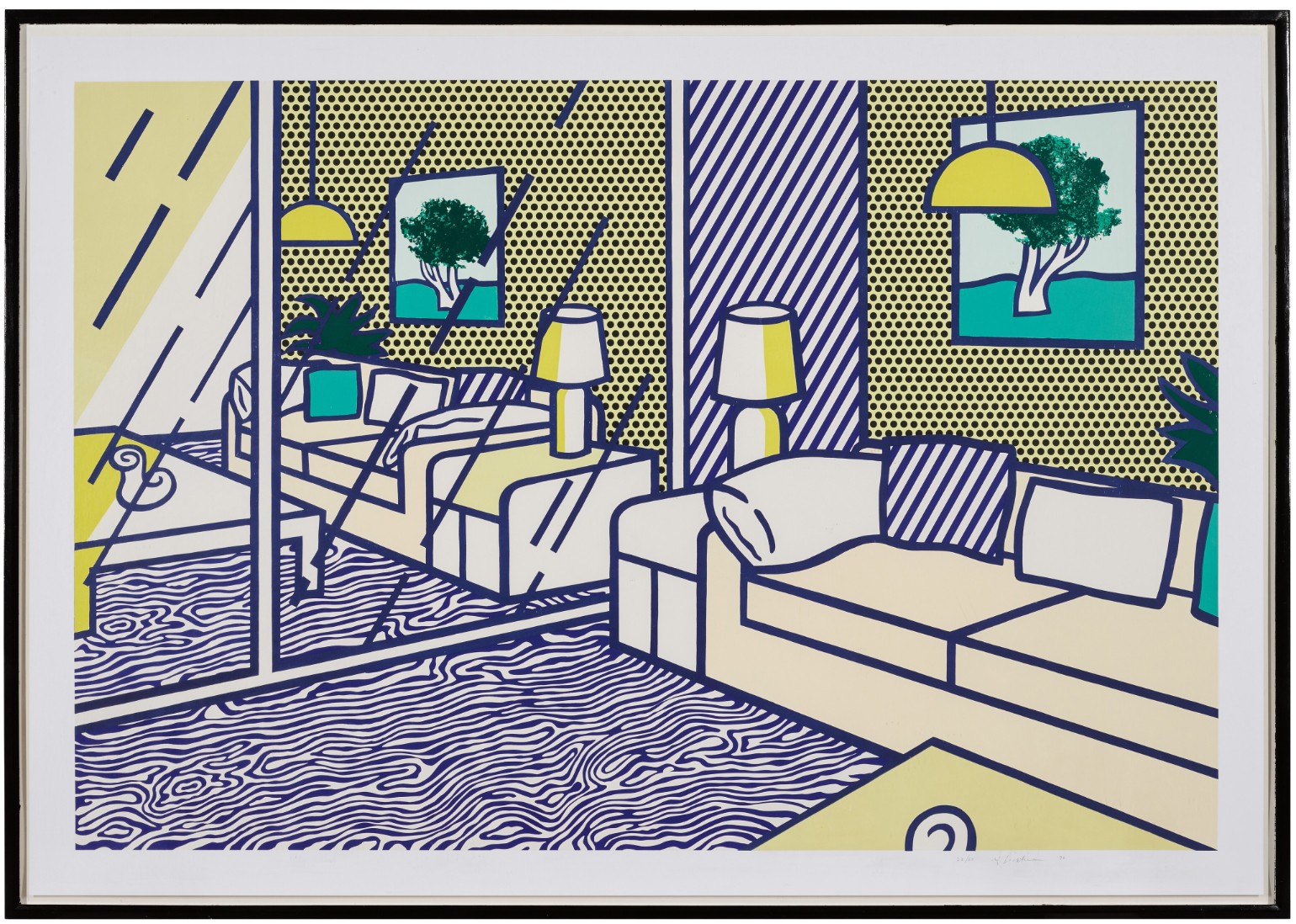
Blue Floor, from Interiors (Corlett 254), 1990
Lithograph, woodcut and screenprint in colours on 4-ply Museum Board
Signed in pencil, dated 90 and numbered 23/60
This impression is number 23 from the edition of 60 plus 14 artist’s proofs
With the blindstamp of the publisher, Gemini G.E.L., and with their inkstamp verso
2025 Auction Results
9 lots from Interior Series sold at auction in 2025 for a total turnover of USD 1,265,060. With no lot failing to sell, the sell-through is 100%.
The highest price of 2025 was achieved by La Sortie (State), a rare State print from La Sortie, from the Collection of Dorothy and Roy Lichtenstein, that sold at Sotheby’s in New-York, on 16 May 2025, for USD 330,200.
Living Room sold 3 times at auction in 2025 at an average price of USD 141,015. A print from the Collection of Dorothy and Roy Lichtenstein sold at Sotheby’s in New-York, on 26 September 2025, for USD 177,800 setting a new auction record for this print.
#1. La Sortie (State), 1994
Works from the Collection of Dorothy and Roy Lichtenstein
Sotheby’s New-York: 16 May 2025
Estimated: USD 70,000 – 100,000
USD 330,200
ROY LICHTENSTEIN (1923 – 1997)
La Sortie (State) (from Interior Series) (Corlett 305), 1994
Woodcut printed in colors on 4-ply Museum board
Signed, dated ’96 and numbered 4/10 (lower right)
This impression number 4 from the edition of 10 plus 2 artist’s proofs
USD 300,000
#2. Living Room, 1990
Works from the Collection of Dorothy and Roy Lichtenstein
Sotheby’s New-York: 26 September 2025
Estimated: USD 80,000 – 120,000
USD 177,800
AUCTION RECORD FOR LIVING ROOM
ROY LICHTENSTEIN (1923 – 1997)
The Living Room, from the Interior series (Corlett 250), 1990
Woodcut and screenprint in colors on 4-ply Museum Board
Signed, dated ’90 and inscribed SP 6/8 (lower right)
One of 8 special proofs aside from the numbered edition of 60 plus 14 artist’s proofs
#3. Living Room, 1990
Abell: 12 December 2025
Estimated: USD 70,000 – 100,000
USD 120,000 (Hammer)
USD 150,000
ROY LICHTENSTEIN (American, 1923-1997)
The Living Room (Corlett, 250. Gemini, 1502), 1990
from the Interior Series
Woodcut and screenprint in colors on Museum Board
Hand-signed, dated, and numbered 22/60
Published by Gemini G.E.L., with their blindstamp
#4. Modern Room, 1990
Pop Impressions: Prints from the Collection of Dorothy and Roy Lichtenstein
Sotheby’s New-York: 22 October 2025
Estimated: USD 80,000 – 120,000
USD 120,650
ROY LICHTENSTEIN (1923-1997)
Modern Room (Corlett 252; RLCR 3986), 1990
From the Interior series
Lithograph, woodcut and screenprint in colors on 4-ply Museum Board
Signed in pencil, dated and inscribed SP 7/8
Executed in 1990, Published in 1991
This impression is one of eight special proofs aside from the numbered edition of 60 plus 14 artist’s proofs
With the blindstamp of the publisher, Gemini G.E.L., and with their inkstamp on the verso
#5. Blue Floor, 1990
Works from the Collection of Dorothy and Roy Lichtenstein
Sotheby’s New-York: 26 September 2025
Estimated: USD 70,000 – 100,000
USD 114,300
AUCTION RECORD FOR BLUE FLOOR
ROY LICHTENSTEIN (1923 – 1997)
Blue Floor, from the Interior series (Corlett 254), 1990
Lithograph, woodcut and screenprint in colors on 4-ply Museum Board
Signed, dated ’90 and inscribed AP 3/14 (lower right)
One of 14 artist’s proofs aside from the numbered edition of 60
#6. Bedroom, 1990
Works from the Collection of Dorothy and Roy Lichtenstein
Sotheby’s New-York: 26 September 2025
Estimated: USD 50,000 – 70,000
USD 107,950
AUCTION RECORD FOR BEDROOM
ROY LICHTENSTEIN (1923 – 1997)
Bedroom, from Interior series (Corlett 247), 1990
Woodcut and screenprint in colors on 4-ply Museum Board
Signed, dated ’90 and inscribed AP 4/14 (lower right)
One of 14 artist’s proofs aside from the numbered edition of 60
#7. The Den, 1990
Works from the Collection of Dorothy and Roy Lichtenstein
Sotheby’s New-York: 26 September 2025
Estimated: USD 50,000 – 70,000
USD 107,950
AUCTION RECORD FOR THE DEN
ROY LICHTENSTEIN (1923 – 1997)
The Den, from the Interior series (Corlett 249), 1990
Woodcut and screenprint in colors on 4-ply Museum Board
Signed, dated ’90 and inscribed AP 7/14 (lower right)
One of 14 artist’s proofs aside from the numbered edition of 60 plus 14 artist’s proofs
USD 100,000
#8. Living Room, 1990
Sotheby’s New-York: 15 April 2025
Estimated: USD 80,000 – 120,000
USD 95,250
ROY LICHTENSTEIN (1923 – 1997)
The Living Room, from Interior Series (Corlett 250), 1990
Woodcut and screenprint in colors on Museum Board
Signed in pencil, dated and numbered 18/60
#9. The Den, 1990
Wright: 16 December 2025
Estimated: USD 50,000 – 70,000
USD 60,960
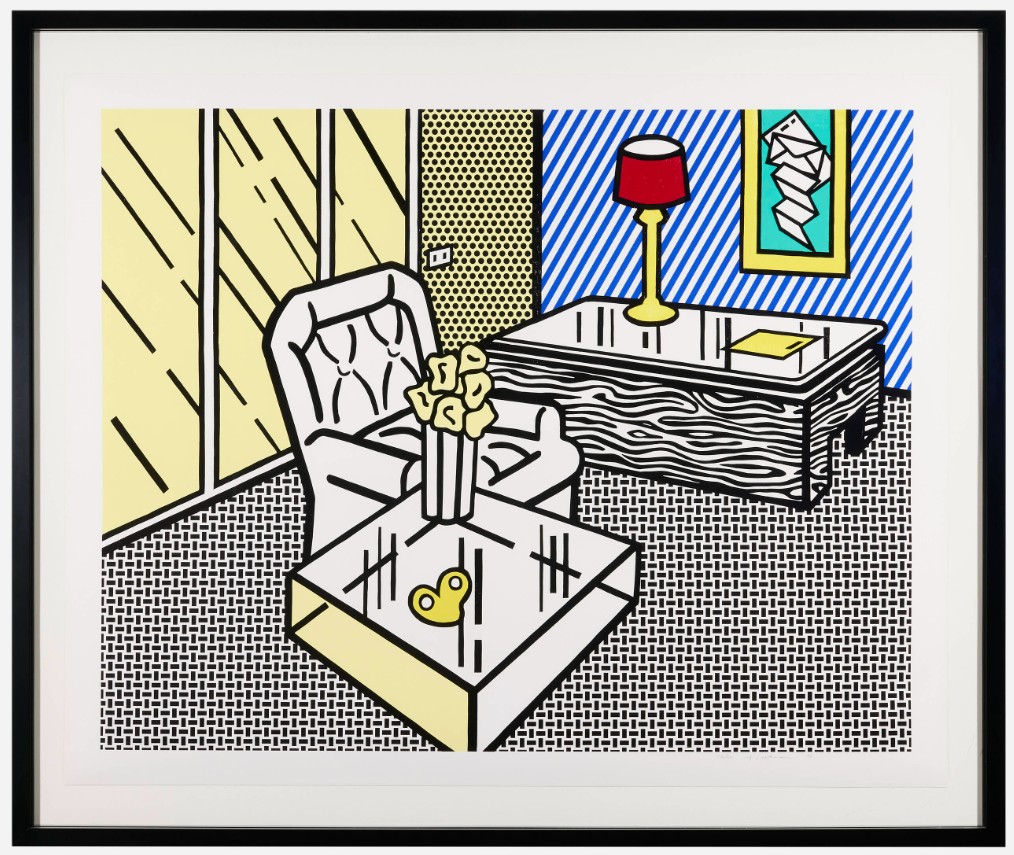
ROY LICHTENSTEIN (1923–1997)
The Den (RLCR 3990 | Corlett 249 | Gemini 1501),1990
from the Interior series
Woodcut and screenprint in colors on 4-ply Paper Technologies Inc. museum board
Signed, dated and numbered to lower margin ‘52/60 rf Lichtenstein ’90’ with publisher’s blindstamp
Published by Gemini G.E.L., Los Angeles
2024 Auction Results
7 lots from Interior Series sold at auction in 2024 for a total turnover of USD 623,440, at an average price of USD 89,063. The highest price was achieved by Red Lamps that sold at Bonhams in New-York, on 26 November 2024, for USD 108,450, setting a new auction record for this print.
#1. Red Lamps, 1990
Bonhams New-York: 26 November 2024
Estimated: USD 80,000 – 120,000
USD 108,450
AUCTION RECORD FOR RED LAMPS
ROY LICHTENSTEIN (1923-1997)
Red Lamps, from Interior Series (Corlett 251; Gemini 1503), 1990
Lithograph, woodcut, and screenprint in colors on 4-ply Paper Technologies, Inc., Museum Board
Signed in pencil, dated and numbered 26/60 (there were also 14 artist’s proofs)
#2. Red Lamps, 1990
Christie’s Amsterdam: 3 October 2024
Estimated: EUR 70,000 – 100,000
EUR 94,500 / USD 104,328
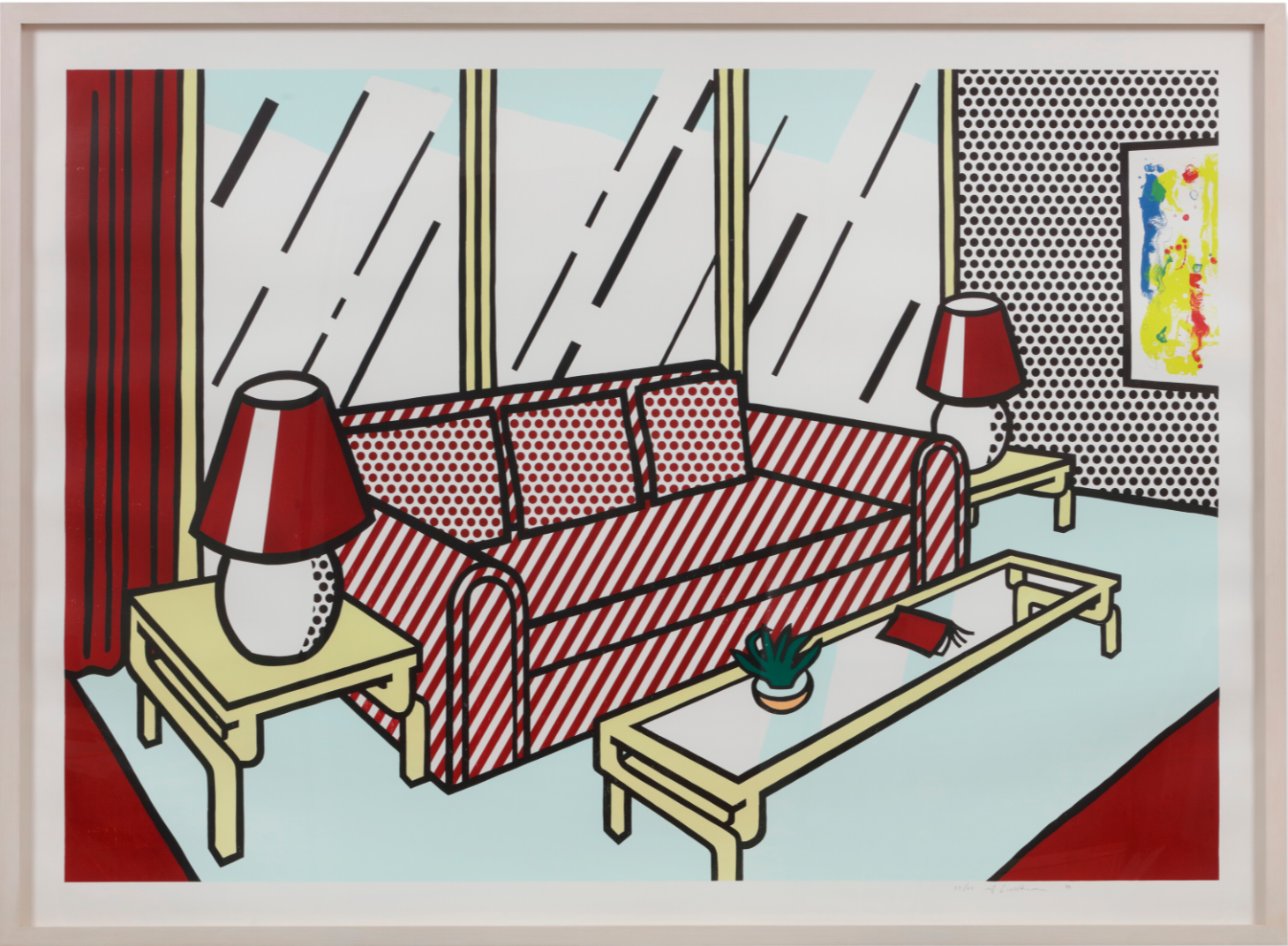
ROY LICHTENSTEIN (1923-1997)
Red Lamps (Corlett 251), 1990
Lithograph, woodcut and screenprint in colors on museum board
Signed, numbered and dated ’37/60 R Lichtenstein ’90’ in pencil (lower right)
USD 100,000
#3. The Den, 1990
Bonhams New-York: 26 November 2024
Estimated: USD 40,000 – 60,000
USD 95,750
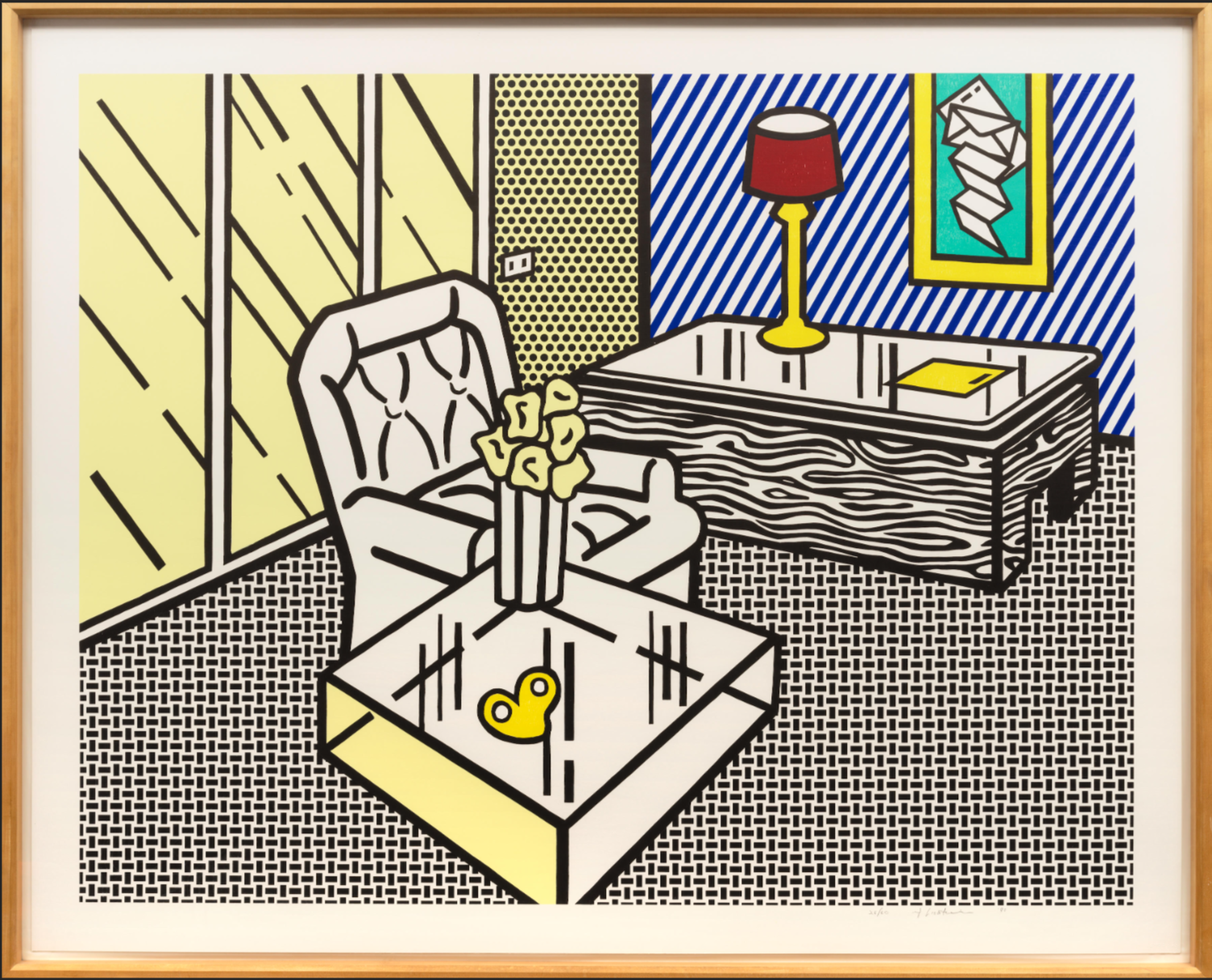
Woodcut and screenprint in colors on 4-ply Paper Technologies, Inc., Museum Board
Signed in pencil, dated and numbered 26/60 (there were also 14 artist’s proofs)
#4. Red Lamps, 1990
Mainichi Auction Tokyo: 27 April 2024
Estimated: JPY 4,000,000 – 6,000,000
JPY 13,800,000 / USD 87,205
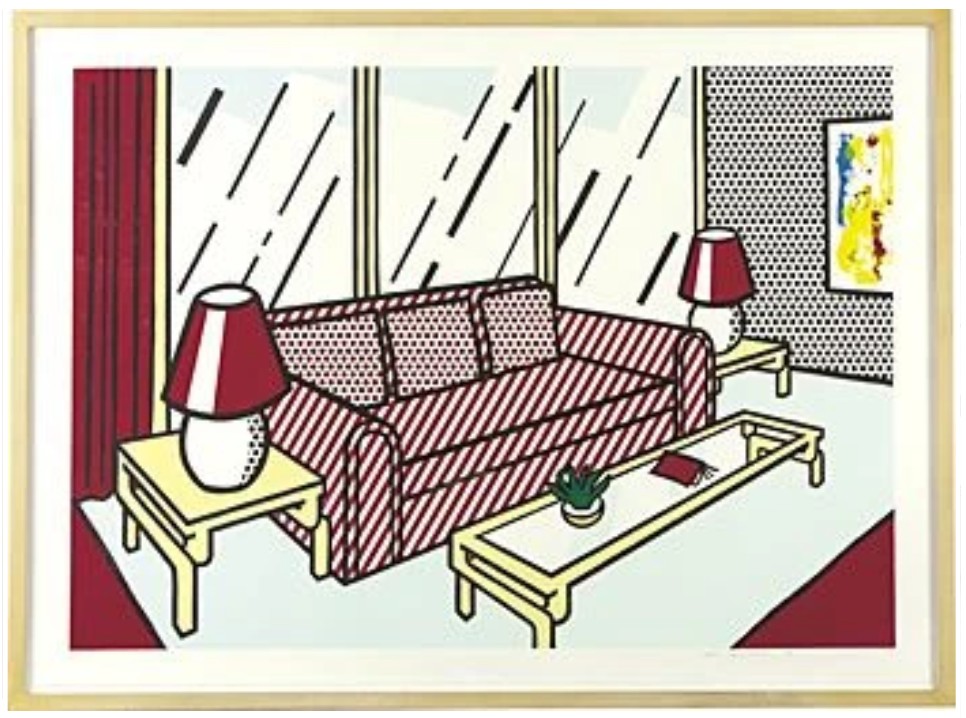
ROY LICHTENSTEIN
Red lamps, 1990
Lithograph, woodcut and screenprint
Signed, from the edition of 60
#5. Yellow Vase, 1990
Christie’s New-York: 16 April 2024
Estimated: USD 70,000 – 100,000
USD 81,900
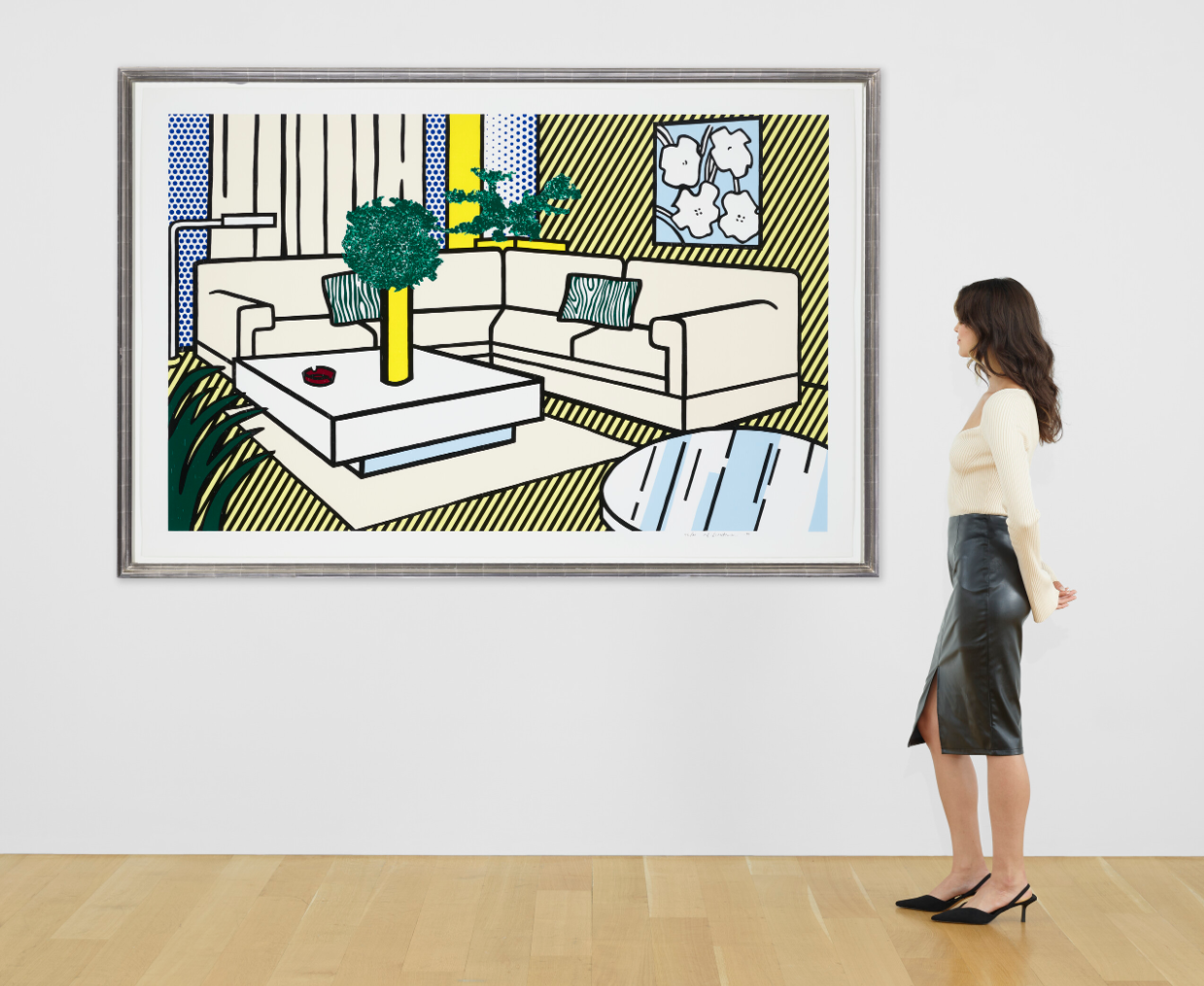
ROY LICHTENSTEIN (1923-1997)
Yellow Vase, from Interior Series, 1990
Lithograph, woodcut and screenprint in colors on museum board
Signed and dated in pencil, numbered 46⁄60 (there were also fourteen artist’s proofs)
#6. Blue Floor, 1990
Christie’s Amsterdam: 3 October 2024
Estimated: EUR 25,000 – 35,000
EUR 69,300 / USD 76,507
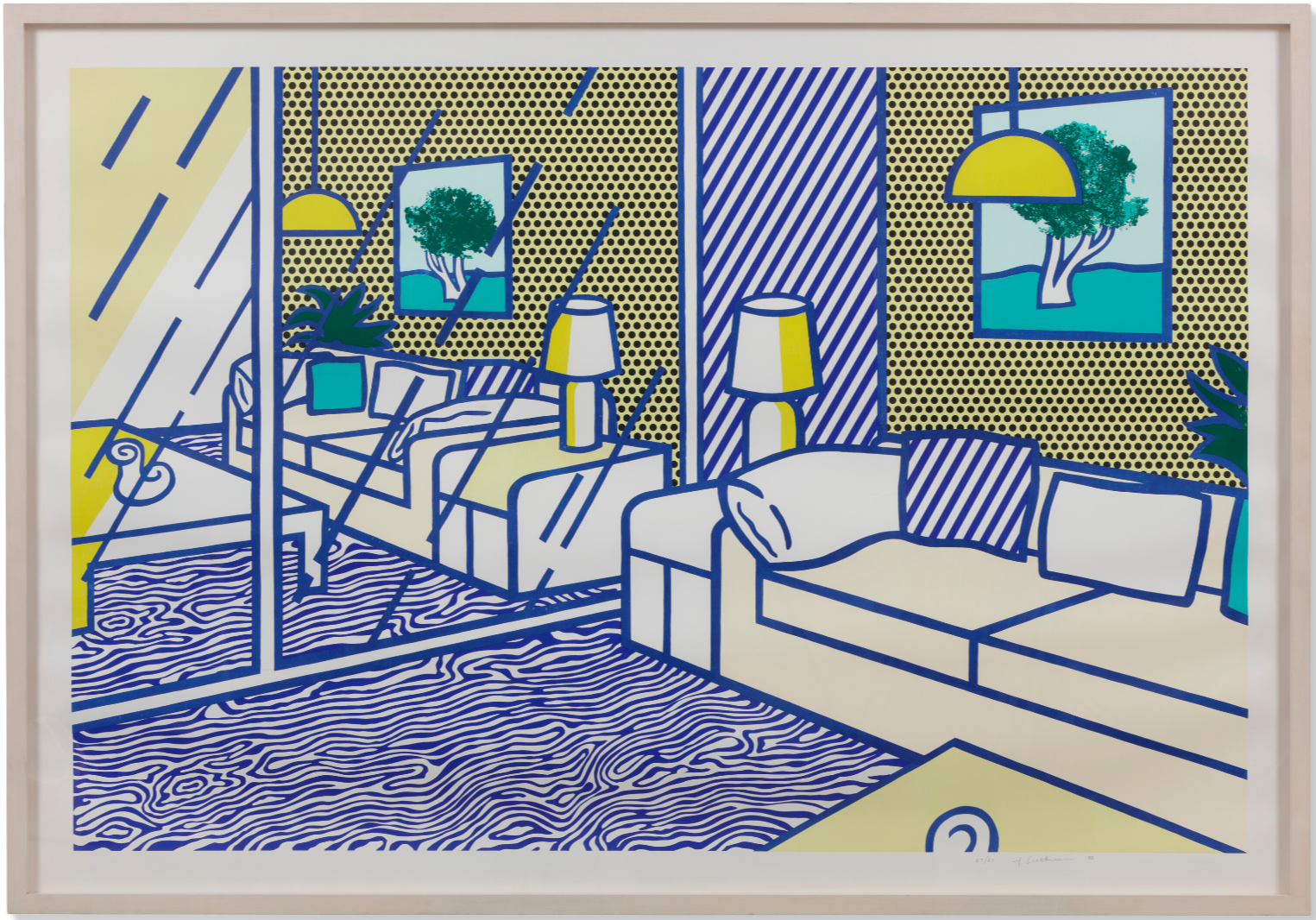
ROY LICHTENSTEIN (1923-1997)
Blue Floor (Corlett 254), 1990
Lithograph, woodcut and screenprint in colors on museum board
Signed, numbered and dated ’37/60 Roy Lichtenstein ’90’ in pencil (lower right)
#7. The Den, 1990
Christie’s New-York: 16 April 2024
Estimated: USD 40,000 – 60,000
USD 69,300
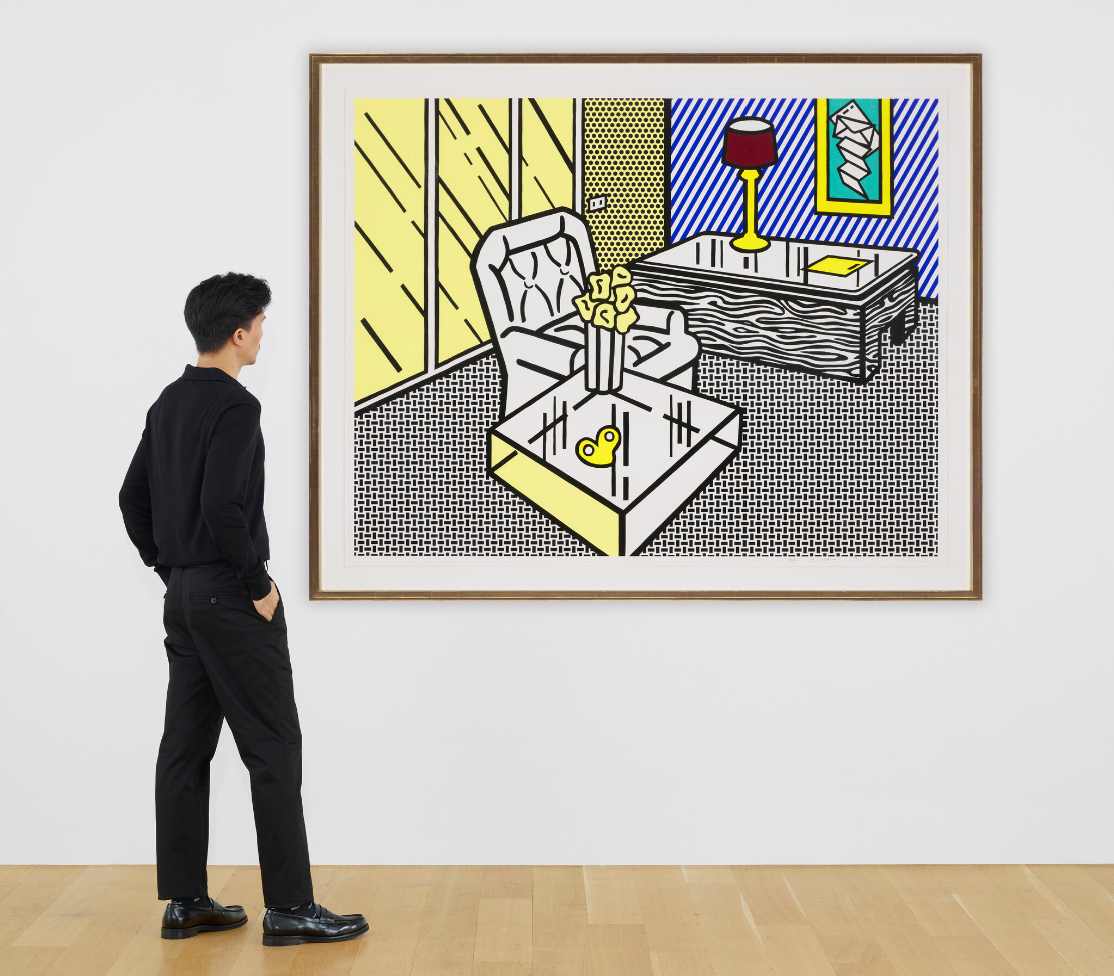
ROY LICHTENSTEIN (1923-1997)
The Den, from Interior Series, 1990
Woodcut and screenprint in colors on museum board
Signed and dated in pencil, numbered 53⁄60 (there were also fourteen artist’s proofs)
2023 Auction Results
4 lots sold at auction in 2023 for a total turnover of USD 468,376, at an average price of USD 117,095. The highest price was achieved by Modern Room that sold at Sotheby’s in London, on 13 October 2023, for GBP 127,000 (USD 154,125).
#1. Modern Room, 1990
Sotheby’s London: 13 October 2023
Estimated: GBP 100,000 – 150,000
GBP 127,000 / USD 154,125
ROY LICHTENSTEIN (1923 – 1997)
Modern Room, from Interior Series, 1990
Lithograph, woodcut and screenprint in colors on Museum Board
56 1/8 x 80 3/4 inches (142.8 x 205 cm)
Signed in pencil, dated and numbered 9/60 (lower right)
#2. Blue Floor, 1990
Christie’s New-York: 28 October 2023
Estimated: USD 80,000 – 120,000
USD 113,400
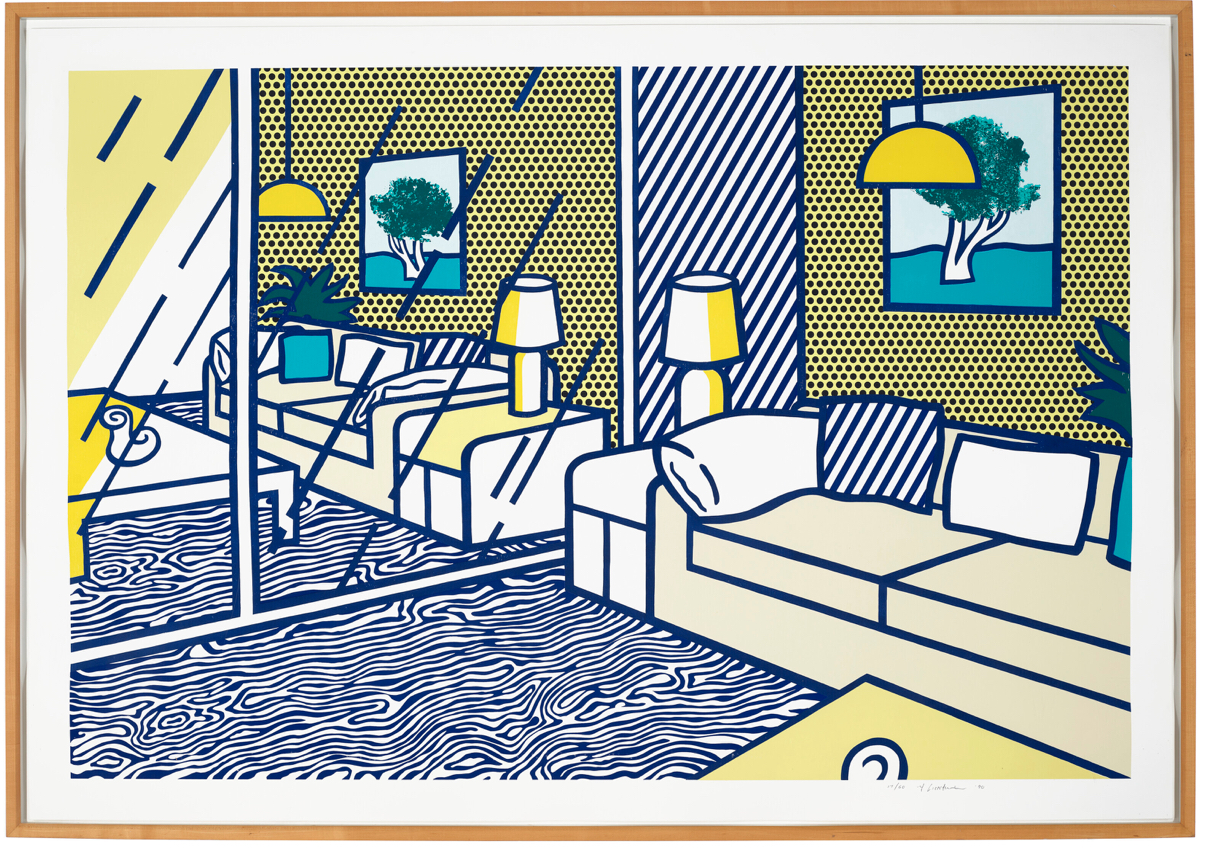
ROY LICHTENSTEIN (1923-1997)
Blue Floor, from Interior Series, 1990
Lithograph, woodcut and screenprint in colors on museum board
Signed and dated in pencil, numbered 17⁄60
#3. Modern Room, 1990
Christie’s New-York: 10 November 2023
Estimated: USD 80,000 – 120,000
USD 107,100
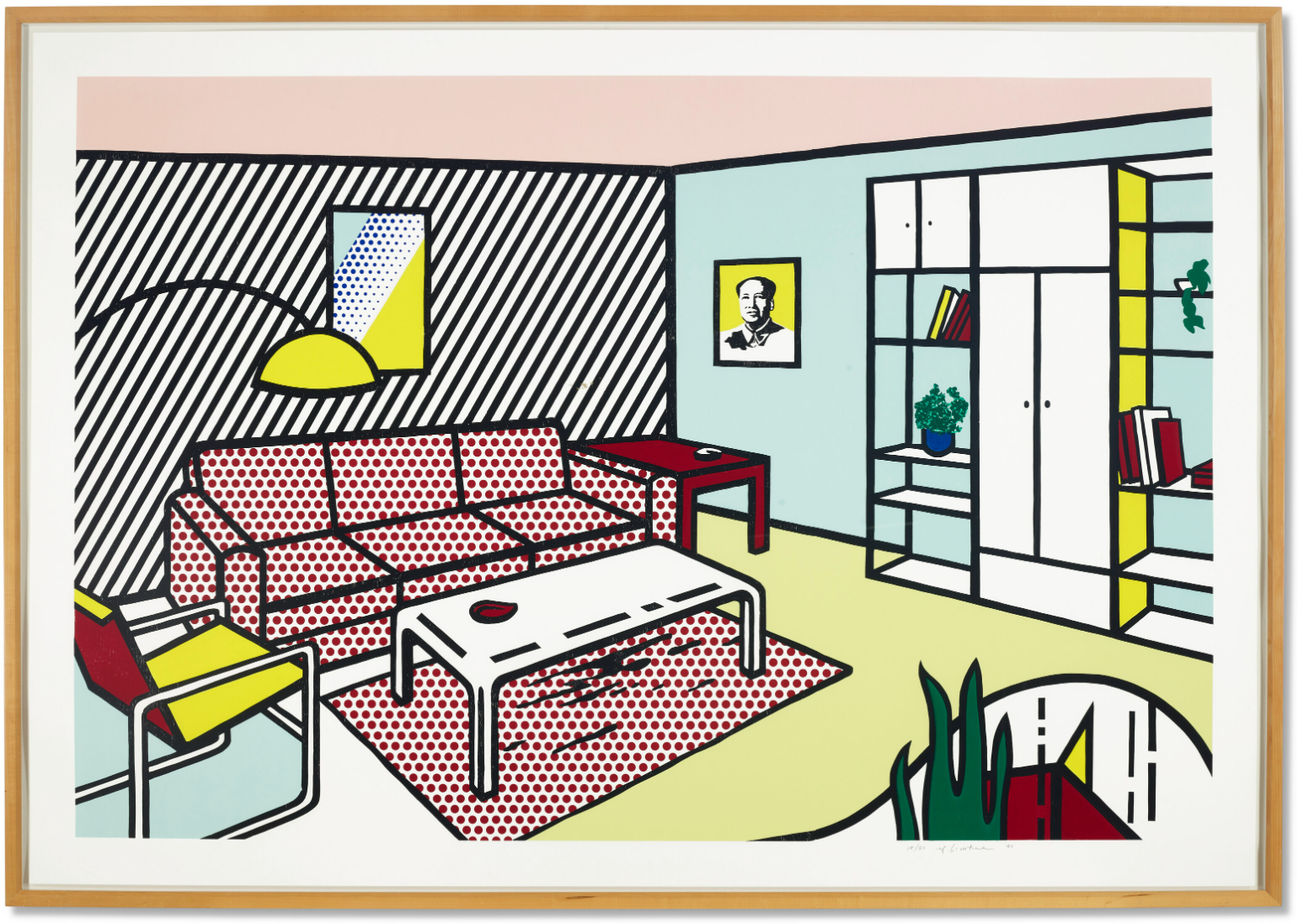
ROY LICHTENSTEIN (1923-1997)
Modern Room, from the Interior Series, 1990
Lithograph, woodcut and screenprint on museum board
Signed, numbered and dated ‘rf Lichtenstein ’90 18⁄60’ (lower right)
USD 100,000
#4. Modern Room, 1990
Heritage Auctions: 24 October 2023
Estimated: USD 60,000 – 80,000
USD 93,750
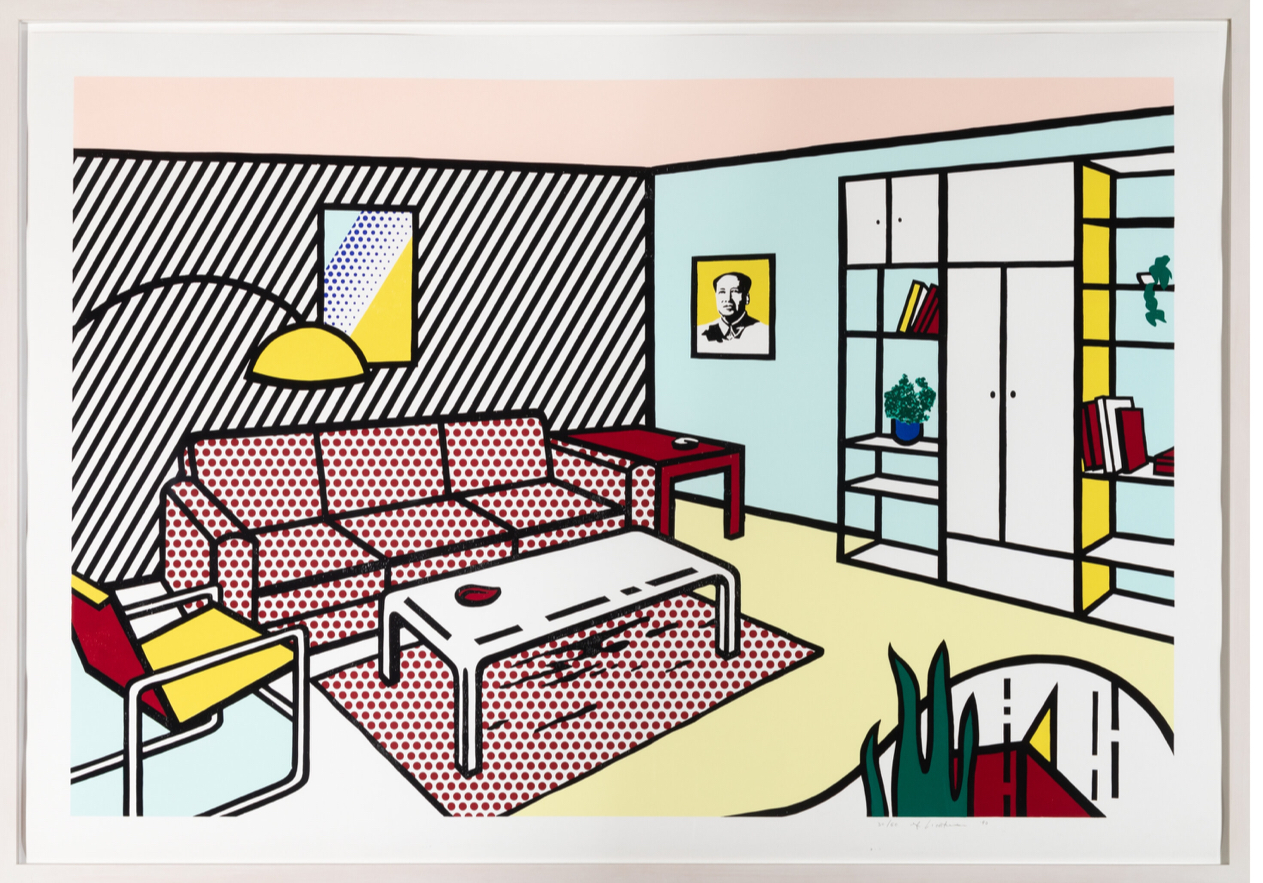
KEITH HARING
Modern Room, from The Interior Series, 1990
Woodcut, screen-print, and lithograph in colors on wove paper
Signed, editioned 30/60 and dated in pencil, along lower edge
2022 Auction Results
Only 1 lot sold at auction in 2022, Living Room, that sold at Christie’s in New-York, on 27 October 2022 for USD 176,400.
Living Room, 1990
Christie’s New-York: 27 October 2022
Estimated: USD 100,000 – 150,000
USD 176,400
ROY LICHTENSTEIN (1923-1997)
Living Room, from Interior Series, 1990
Woodcut and screen-print in colors, on museum board
Signed and dated in pencil, numbered 40/60
2021 Auction Results
#1. Living Room, 1990
Phillips New-York: 21 October 2021
Estimated: USD 70,000 – 100,000
USD 163,800
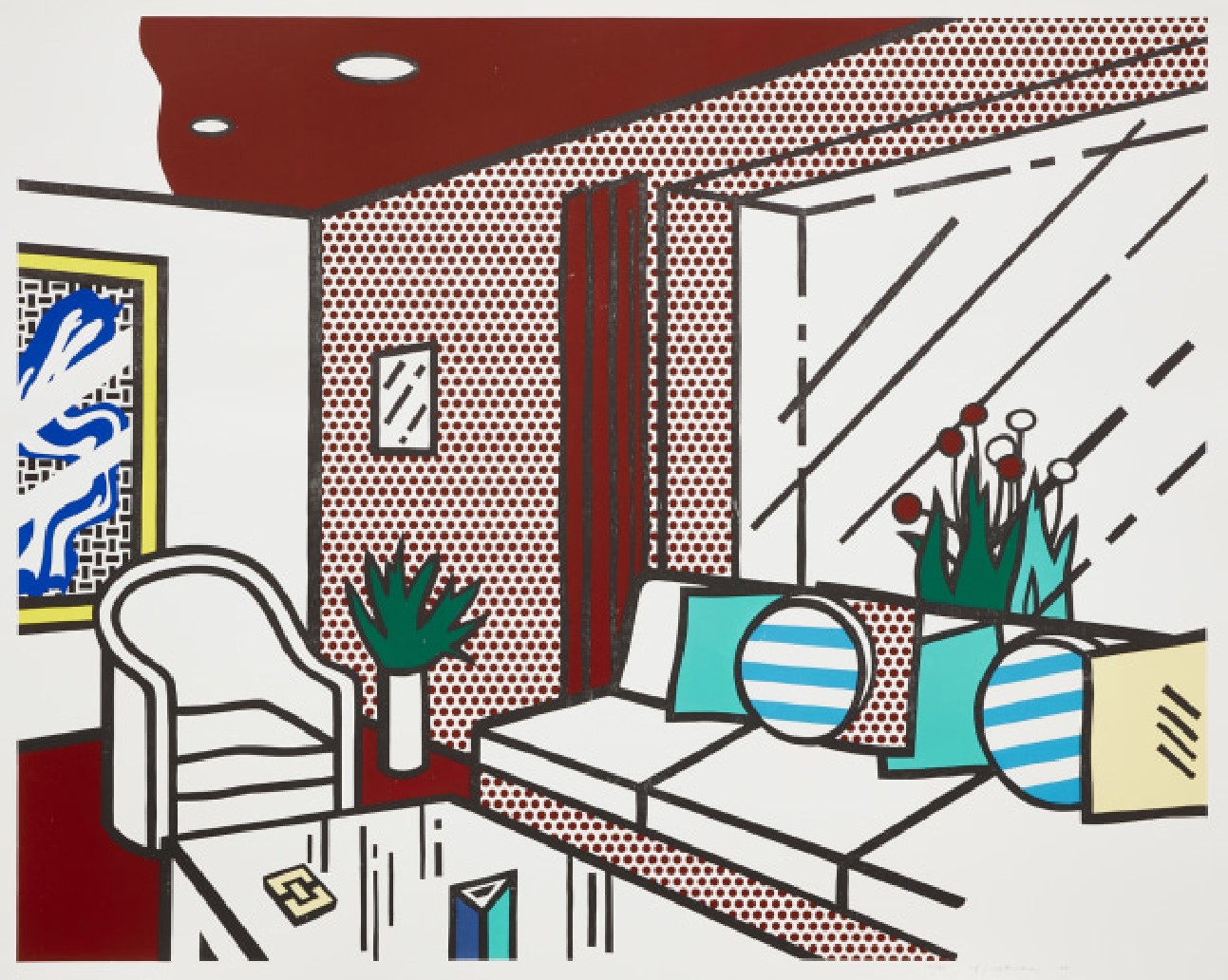
ROY LICHTENSTEIN
The Living Room, from Interior Series (G. 1502, C. 250), 1990
Monumental woodcut and screen-print in colors, on PTI 4-ply Museum Board
Signed, dated and numbered 15/60 in pencil
#2. Yellow Vase, 1990
Christie’s New-York: 15 April 2021
Estimated: USD 70,000 – 100,000
USD 118,750
ROY LICHTENSTEIN (1923-1997)
Yellow Vase, from Interior Series, 1990
Lithograph, woodcut and screenprint in colors, on Museum Board
Signed and dated in pencil, numbered 33/60 (there were also fourteen artist’s proofs)
USD 100,000
#3. Bedroom, 1990
LA Modern: 21 October 2021
Estimated: USD 60,000 – 80,000
USD 87,500
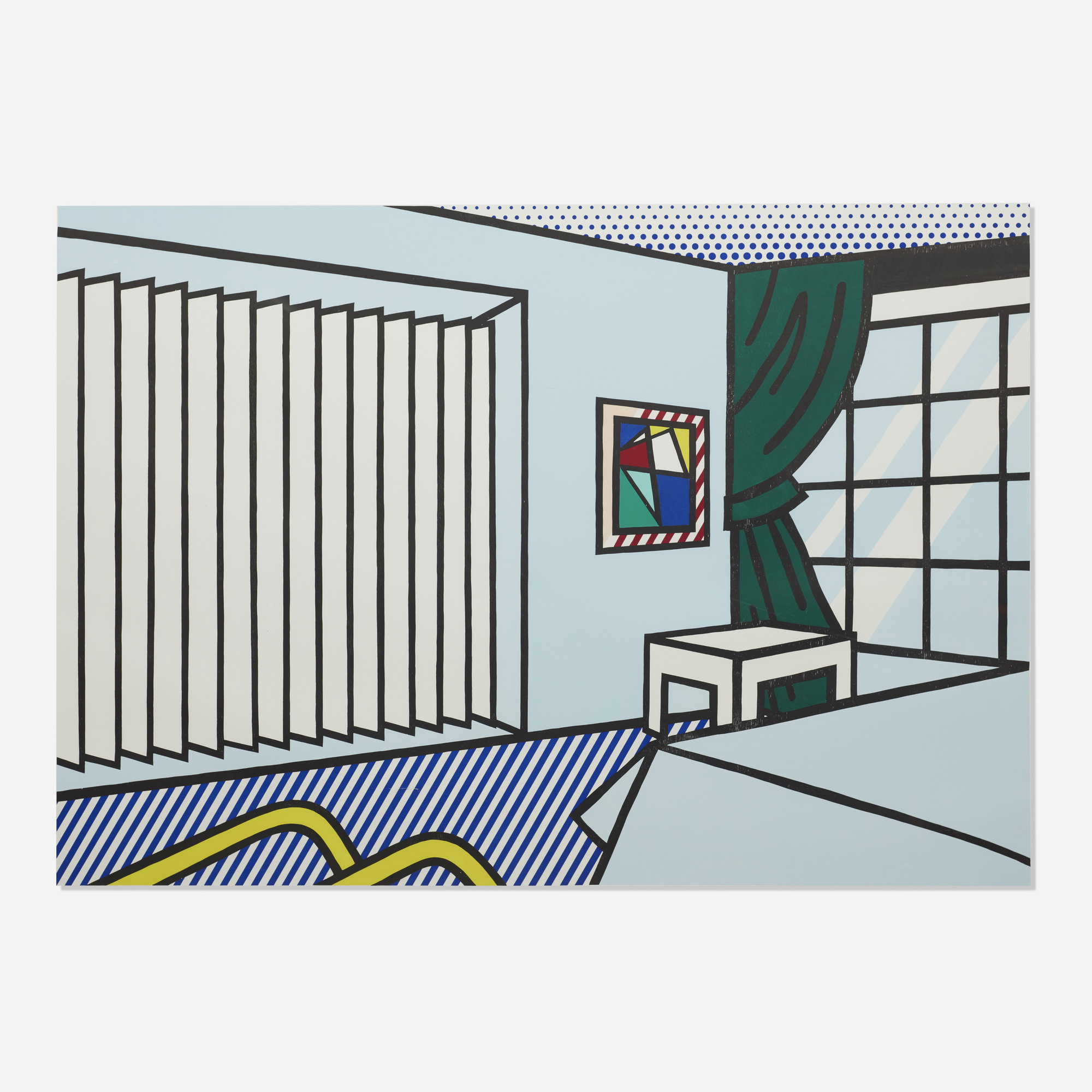
ROY LICHTENSTEIN
Bedroom (from Interior Series), 1990
Woodcut and screen-print in colors on 4-ply Paper Technologies, Inc., Museum Board
Signed, dated and numbered to lower right ‘16/60 rf Lichtenstein ’90’
This work is number 16 from the edition of 60
Bedroom
Bedroom
from Interior Series
Medium: Woodcut and screen-print in colors on Museum Board
Year: 1990
Image: 51×72 inches (129.5 x 182.9 cm)
Sheet: 56 1/2 x 78 inches (143.5 x 198.1 cm)
Edition: 60
Artist’s Proofs: 14
Publisher: Gemini G.E.L., Los Angeles
Literature: Corlett 247, Gemini 1499, RLCR 3978
Signed dated and numbered in pencil
With the artist’s and publisher’s blindstamps and ink stamp on the reverse
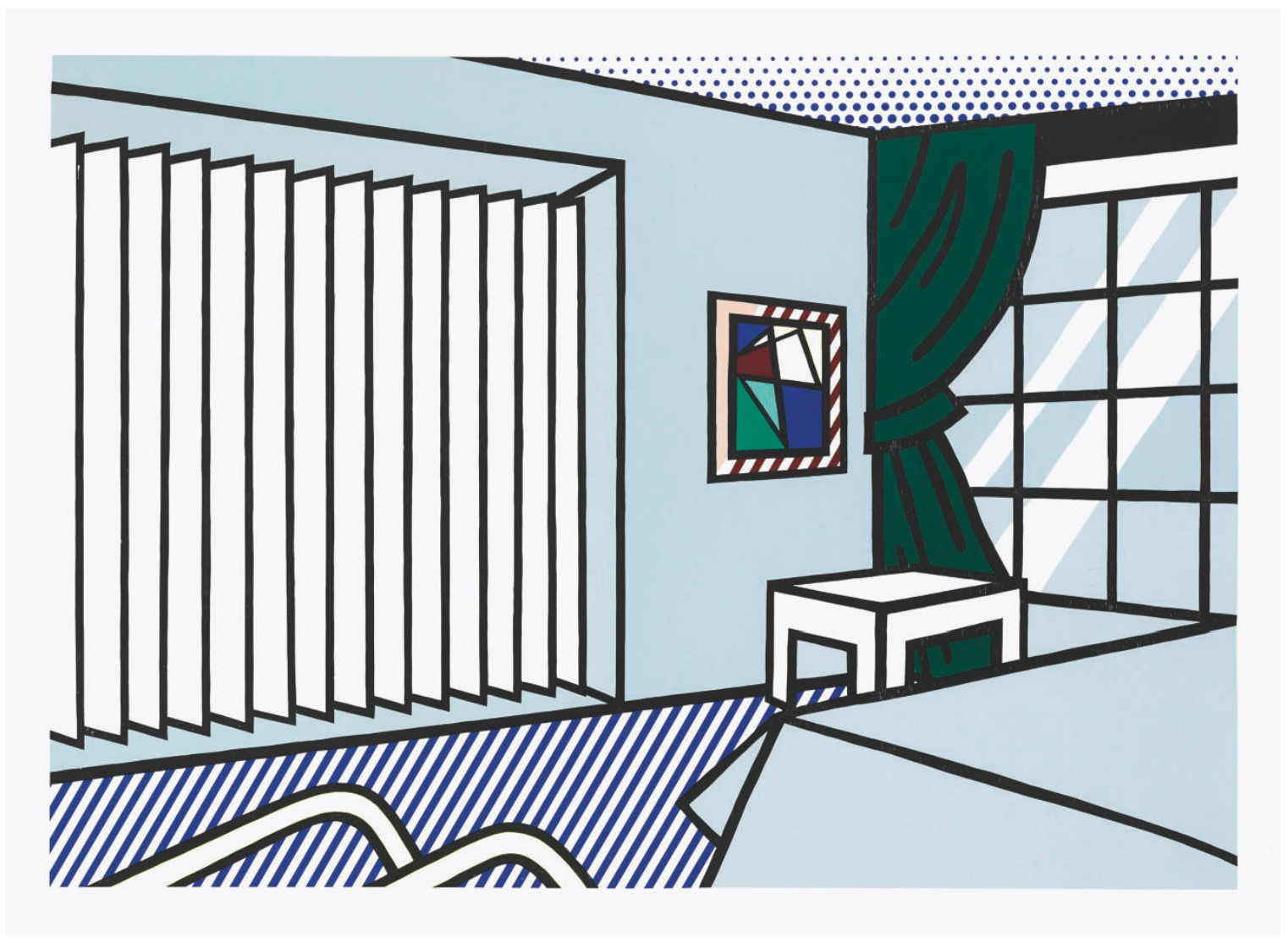
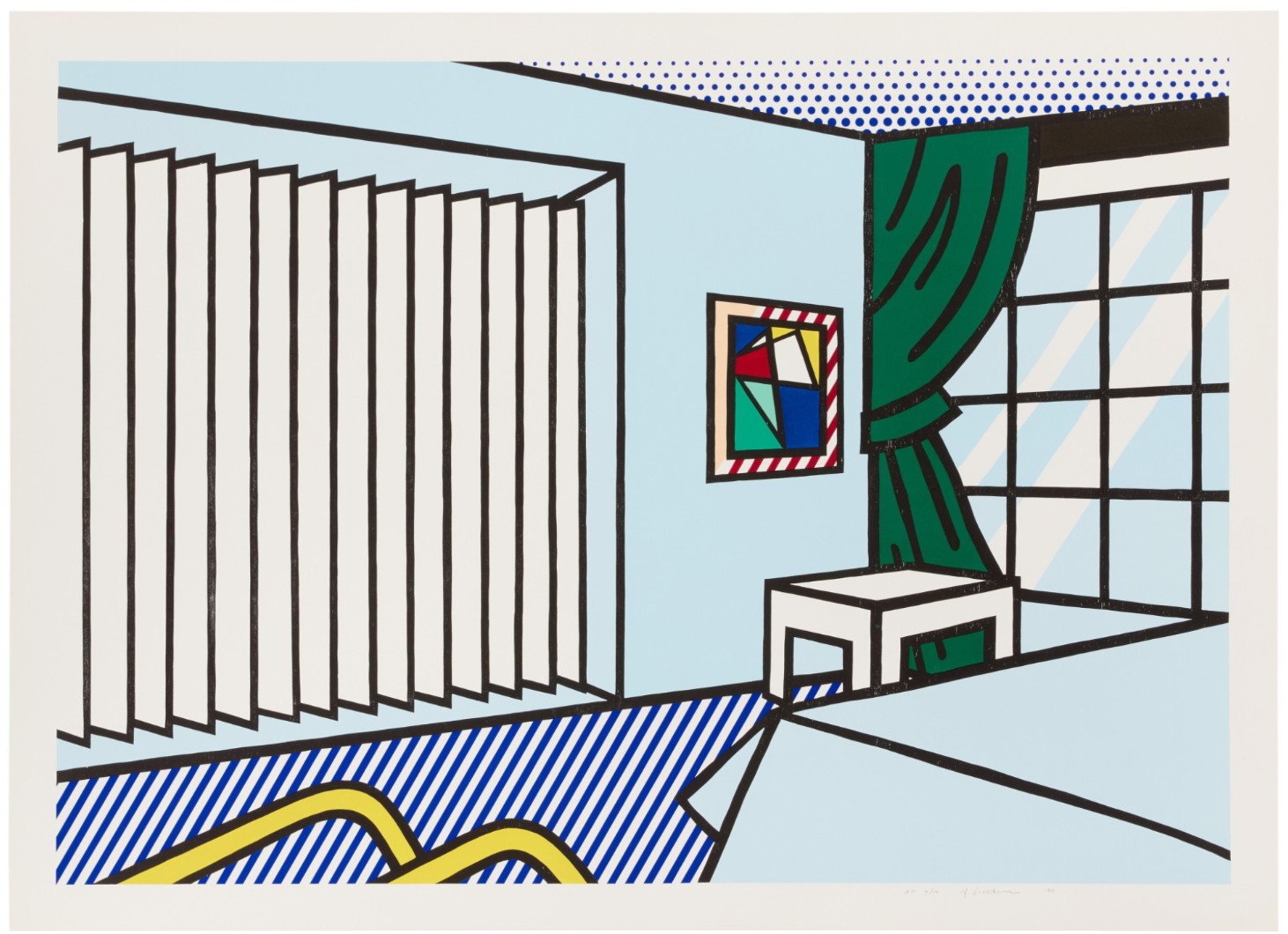
In Bedroom, Lichtenstein presents what should be the most personal of spaces: the place of rest and vulnerability. Yet his rendition offers little warmth or softness. It almost reads as an advertisement for an idealized bedroom set rather than an intimate glimpse into a lived-in space. By highlighting this tension, Lichtenstein critiques the commercialization of privacy. Our bedrooms, he implies, are not immune to societal expectations of style and perfection. The private sphere becomes yet another venue for performance, judged against the aesthetic standards set by media and market forces. Bedroom captures this paradox with both irony and poignancy.
Indeed, Bedroom is rendered as a constructed image rather than a lived environment: carefully ordered, visually crisp, and conspicuously empty. The composition is built through sharp black outlines, flat areas of pale blue, green, and white, and controlled patterns of stripes and Ben-Day dots. Vertical blinds dominate the left side, creating a rigid rhythmic structure, while the window and heavy curtain on the right introduce a secondary geometry. Perspective is intentionally exaggerated: walls tilt, floors stretch, and space feels slightly unstable, reminding the viewer that this is an image of a room, not a room itself. Color is restrained and analytical. Cool tones establish a calm, almost sterile atmosphere, punctuated by small chromatic accents: the framed abstract picture on the wall, a quiet nod to modernist painting. Furniture is reduced to its simplest forms, stripped of texture or comfort. Everything is present, yet nothing invites occupation.
Conceptually, the absence of figures is central. Unlike Lichtenstein’s earlier comic-based works, where emotion is explicit and theatrical, the Interior Series suggests human presence only indirectly. Taste, order, and consumer choice stand in for identity. The bedroom becomes a psychological space defined by objects rather than people, echoing broader themes of modern isolation and the quiet impersonality of postwar domestic ideals. In print form, this work achieves particular precision. The medium reinforces Lichtenstein’s lifelong engagement with reproduction, surface, and design, while allowing the series’ architectural clarity to fully assert itself. Within his oeuvre, the Interior Series, and bedroom in particular, stands as some of the artist’s most intellectually distilled works: calm, exacting, and deceptively simple.
Auction Results
Works from the Collection of Dorothy and Roy Lichtenstein
Sotheby’s New-York: 26 September 2025
Estimated: USD 50,000 – 70,000
USD 107,950
AUCTION RECORD FOR BEDROOM
ROY LICHTENSTEIN (1923 – 1997)
Bedroom, from Interior series (Corlett 247), 1990
Woodcut and screenprint in colors on 4-ply Museum Board
Signed, dated ’90 and inscribed AP 4/14 (lower right)
One of 14 artist’s proofs aside from the numbered edition of 60
XXXXXXXXXX
LA Modern: 21 October 2021
Estimated: USD 60,000 – 80,000
USD 87,500
ROY LICHTENSTEIN
Bedroom (from Interior Series), 1990
Woodcut and screen-print in colors on 4-ply Paper Technologies, Inc., Museum Board
Signed, dated and numbered to lower right ‘16/60 rf Lichtenstein ’90’
This work is number 16 from the edition of 60
XXXXXXXXXX
Christie’s New-York: 15 July 2015
Estimated: USD 40,000 – 60,000
USD 68,750
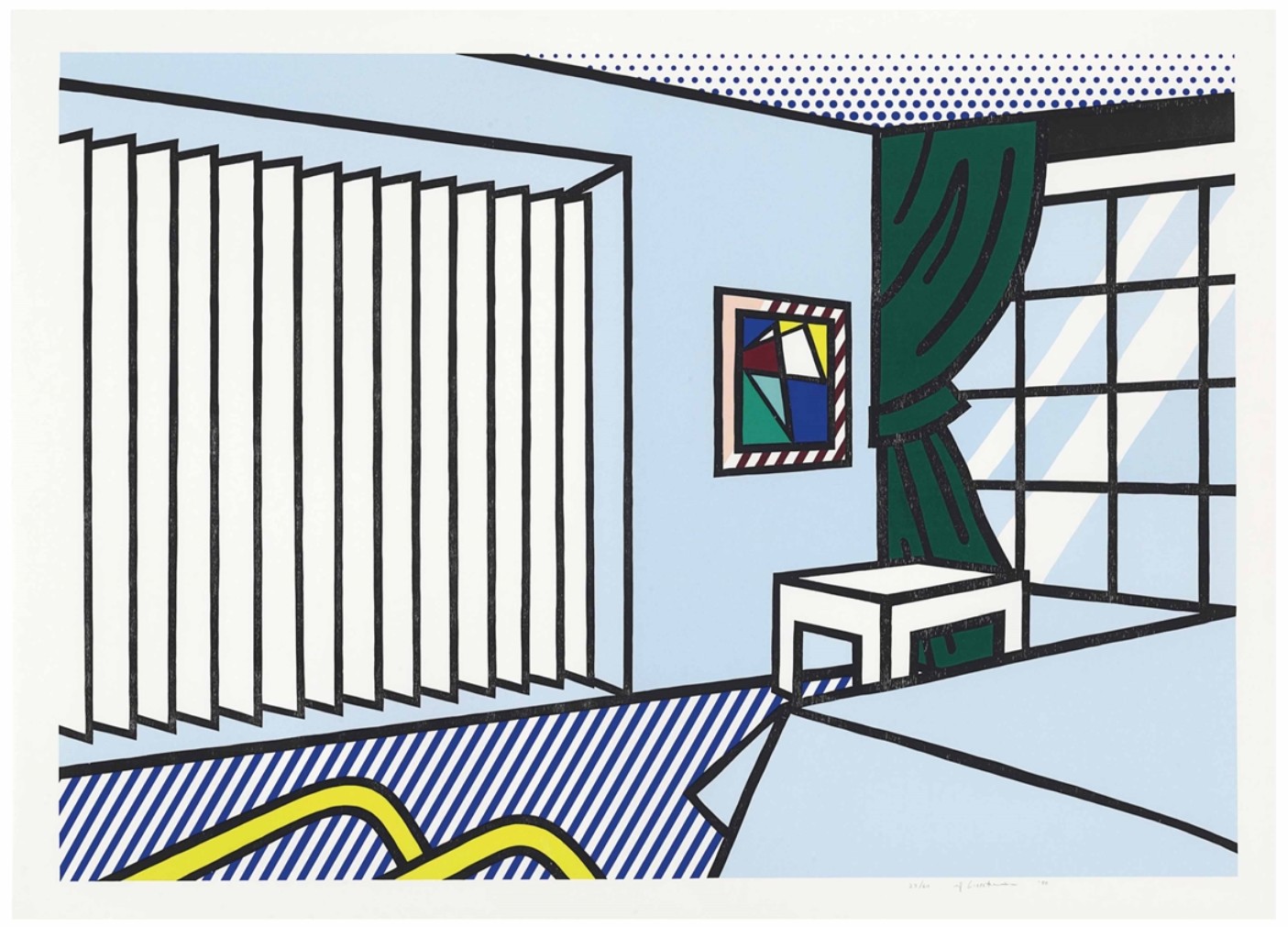
ROY LICHTENSTEIN (1923-1997)
Bedroom (Corlett 247), 1990
Woodcut and screenprint in colors on 4-ply Paper Technologies, Inc., Museum Board
Signed and dated in pencil, numbered 23/60 (there were also 14 artist’s proof)
XXXXXXXXXX
Christie’s New-York: 26 April 2010
Estimated: USD 20,000 – 30,000
USD 31,250
ROY LICHTENSTEIN
Bedroom, from Interior Series (C. 247), 1990
Woodcut and screen-print in colors on Museum Board
Signed and dated in pencil, numbered 24/60
La Sortie
La Sortie
from Interior Series
Medium: Woodcut in colors, on Museum Board
Year: 1990
Image: 52 5/8 x 75 inches (133.7 x 190.5 cm)
Sheet: 58 5/8 x 81 inches (148.9 x 205.7 cm)
Edition: 60
Artist’s Proofs: 6
Publisher: Gemini G.E.L., Los Angeles
Literature: Corlett 248, Gemini 1500, RLCR 3982
Signed dated and numbered in pencil
With the artist’s and publisher’s blindstamps and ink stamp on the reverse
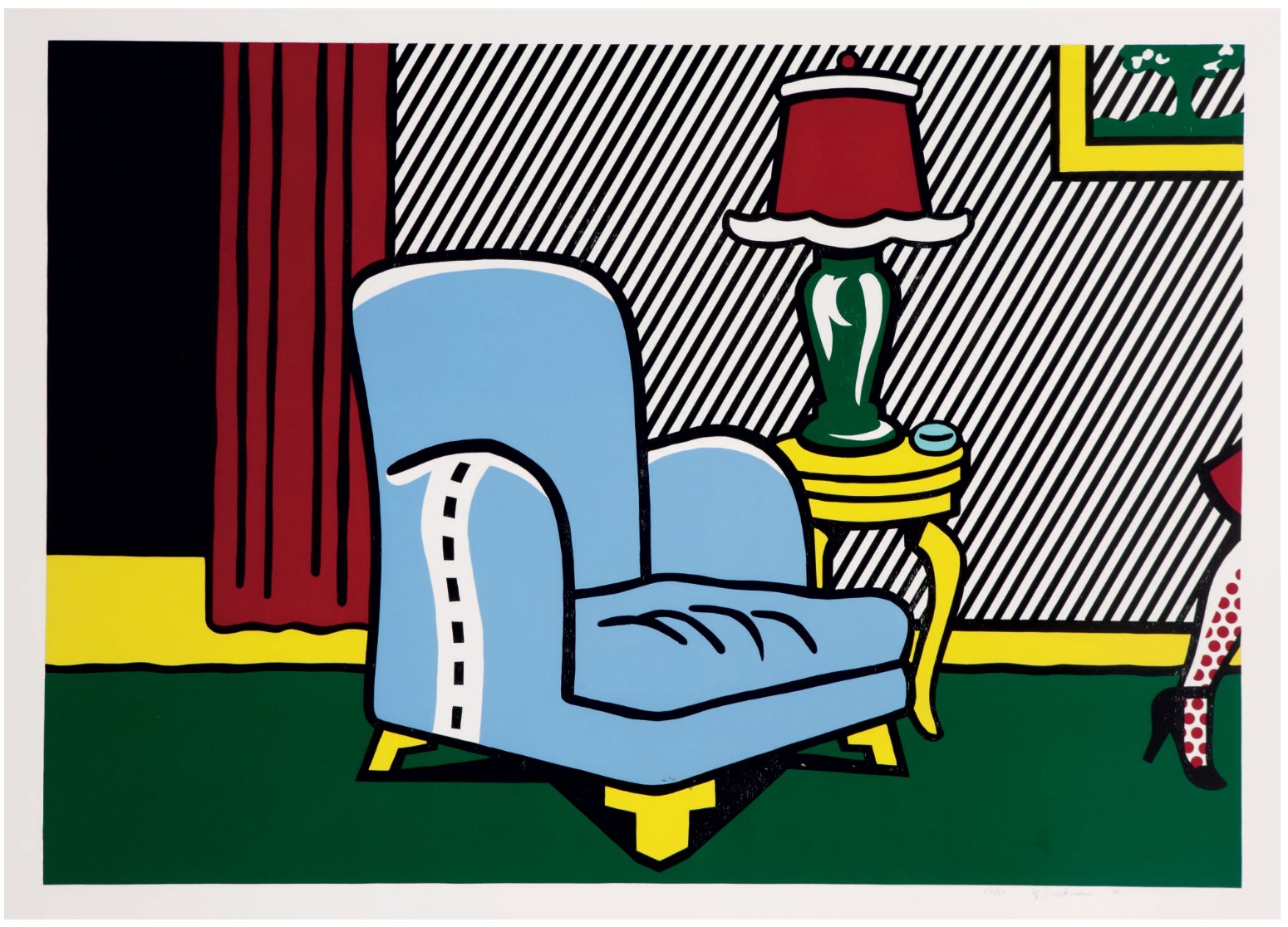
La Sortie presents a carefully staged domestic corner, armchair, side table, lamp, curtain, rendered with absolute clarity and stripped of psychological warmth. Formally, the composition is anchored by bold black outlines and flat, saturated color fields. The blue armchair dominates the foreground, its exaggerated contours and stitched detailing emphasizing design over comfort. Diagonal stripes activate the wall, while blocks of green, yellow, red, and black divide the space into sharply delineated zones. The lamp, balanced precariously on a small table, functions less as a source of light than as a graphic counterweight within the composition.
The title introduces a subtle conceptual tension. La Sortie (“The Exit” in French) suggests movement or departure, yet no figure is fully present. However, upon careful examination, a fragment appears at the edge of the image: a woman’s leg in a high heel, cropped mid-step. This partial presence is crucial. It implies narrative without delivering it, reinforcing Lichtenstein’s interest in suggestion rather than depiction. The woman’s leg and a series of directional lines invite the viewer’s eye to imagine a path beyond the frame. This break from the enclosed domestic scene introduces ambiguity: are we arriving, leaving, or simply witnessing a perpetual threshold?
Despite this suggestion of action, Lichtenstein remains faithful to his signature flattening of space. Walls and doors become patterns and color blocks, and the architecture itself seems theatrical rather than functional. La Sortie hints at the underlying drama of daily life, the constant entrances and exits that define human experience, while maintaining the emotional detachment characteristic of Lichtenstein’s later style. Conceptually, the work reflects Lichtenstein’s mature meditation on modern space and identity. Unlike his earlier comic-strip heroines, emotion here is displaced onto objects and layout. Furniture, color, and pattern carry the expressive weight. The room is immaculate, stylized, and impersonal—an image of taste rather than intimacy.
Auction Results
Pop Impressions: Prints from the Collection of Dorothy and Roy Lichtenstein
Sotheby’s New-York: 15 April 2026
Estimated: USD 50,000 – 70,000
USD 108,800
AUCTION RECORD FOR LA SORTIE
ROY LICHTENSTEIN (1923 – 1997)
La Sortie, from the Interior series (Corlett 248; RLCR 3982), 1990
Woodcut printed in colors on Museum Board
Signed in pencil, dated ’90 and inscribed AP 3/14
This impression is one of 14 artist’s proofs aside from the numbered edition of 60
With the blindstamp of the printer and publisher, Gemini G.E.L., and with their inkstamp on the verso
XXXXXXXXXX
Works from the Collection of Dorothy and Roy Lichtenstein
Sotheby’s New-York: 16 May 2025
Estimated: USD 70,000 – 100,000
USD 330,200
STATE PRINT
ROY LICHTENSTEIN (1923 – 1997)
La Sortie (State) (from Interior Series) (Corlett 305), 1994
Woodcut printed in colors on 4-ply Museum board
Signed, dated ’96 and numbered 4/10 (lower right)
This impression number 4 from the edition of 10 plus 2 artist’s proofs
For all the images of the Interior series, the artist worked with black-line proofs pulled from the key block and/or color proofs, adding collage elements to explore the possibility of creating state prints. This state print of RLCR 3982, La Sortie was the only one ever produced.
XXXXXXXXXX
Doyle New-York: 18 October 2016
Estimated: USD 40,000 – 60,000
USD 62,500
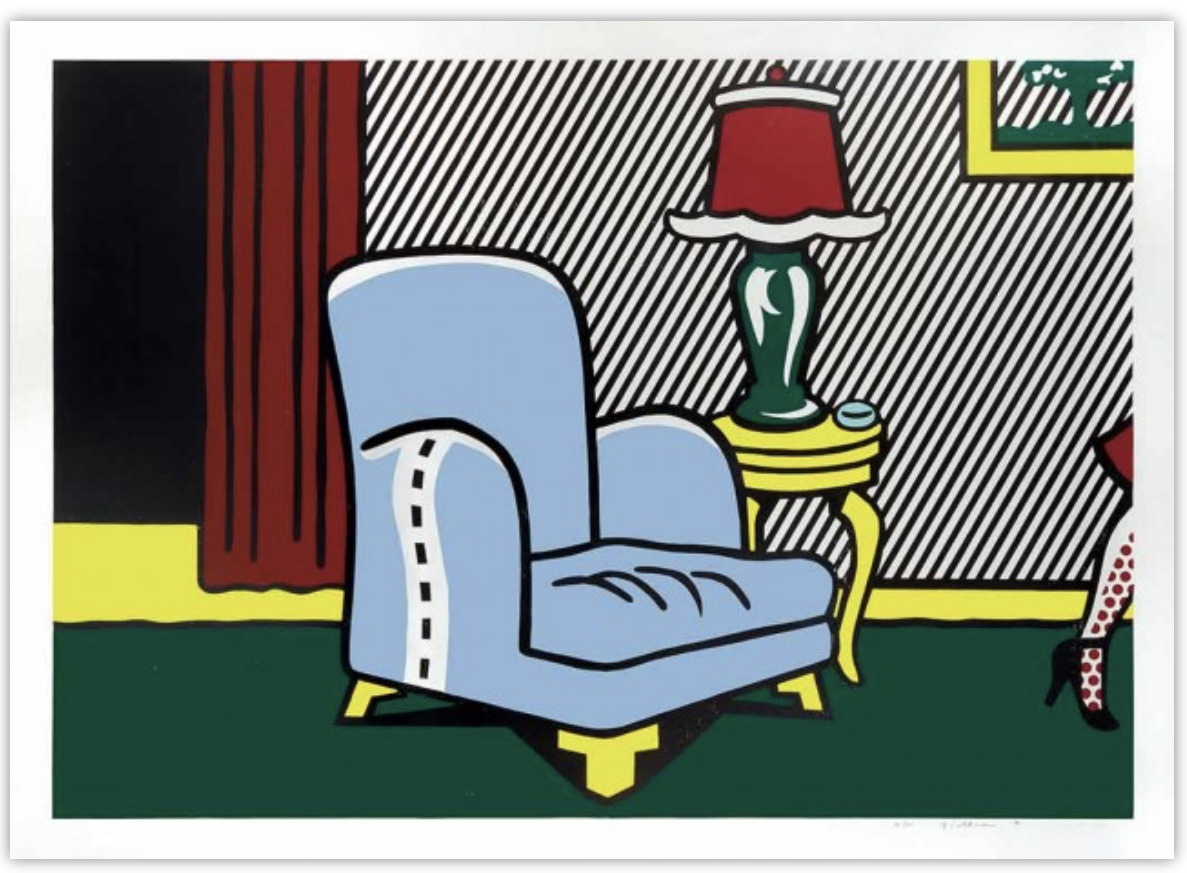
ROY LICHTENSTEIN
La Sortie, from Interior (C. 248), 1990
Woodcut in colors on Museum Board
Signed, dated and numbered 60/60 in pencil
XXXXXXXXXX
Heritage Auctions: 8 November 2014
Estimated: USD 40,000 – 60,000
USD 68,750
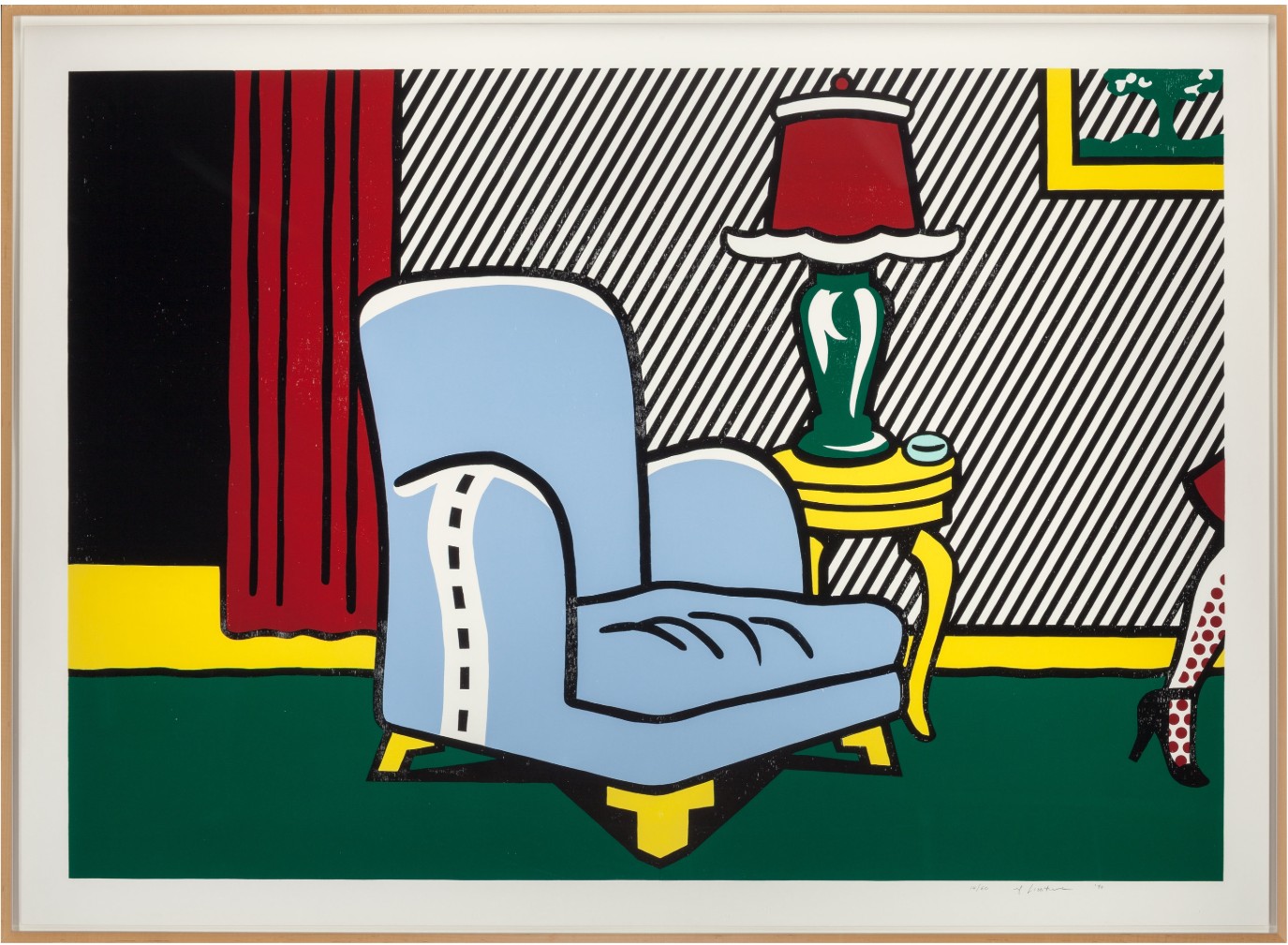
ROY LICHTENSTEIN (American, 1923-1997)
La Sortie, 1990
Woodcut in colors on museum board
Edition: 14/60 (total edition includes 14 artist’s proofs)
Signed, dated and numbered in pencil with publisher’s blindstamp in bottom margin
XXXXXXXXXX
Sotheby’s New-York: 28 October 2011
Estimated: USD 40,000 – 60,000
USD 53,125
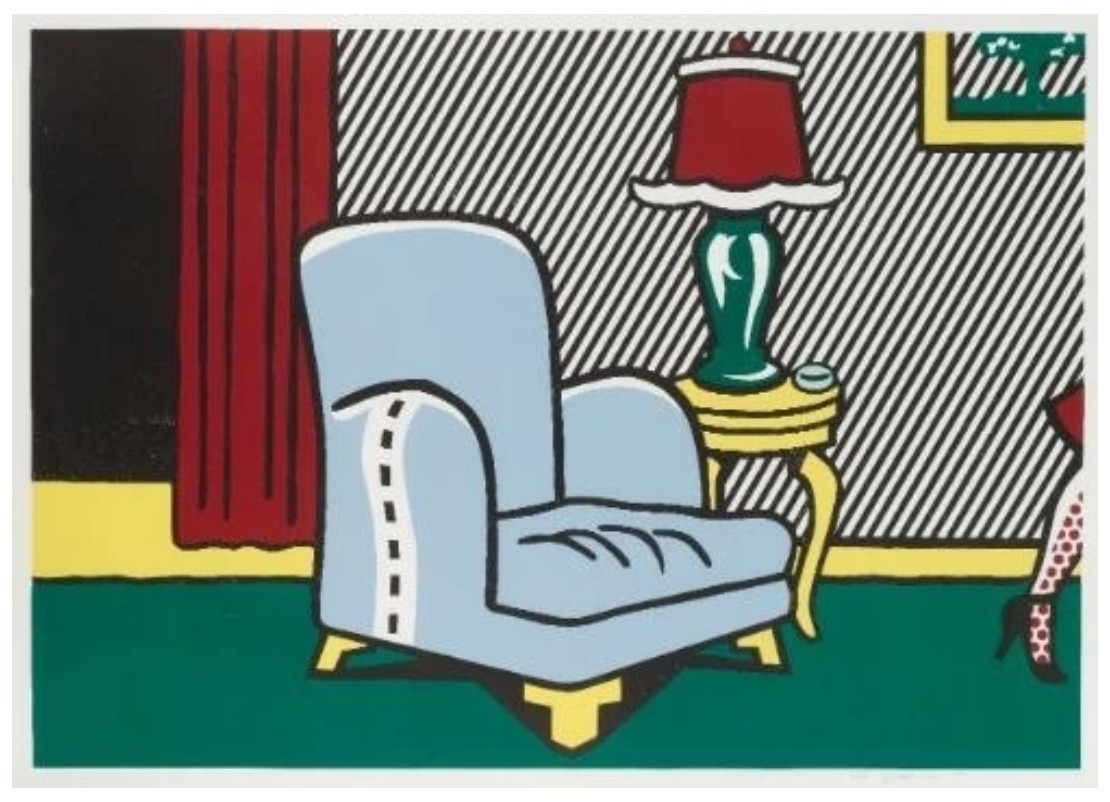
ROY LICHTENSTEIN
La Sortie, 1990
Woodcut printed in colors on Museum Board
Signed, dated and numbered 18/60 in pencil
XXXXXXXXXX
Christie’s New-York: 26 October 2010
Estimated: USD 40,000 – 60,000
USD 60,000
ROY LICHTENSTEIN
La Sortie, from Interior (C. 248), 1990
Woodcut in colors on Museum Board
Signed and dated in pencil, numbered 53/60
The Den
The Den
from Interior Series
Medium: Woodcut and screen-print in colors on 4-ply Paper Technologies, Inc., Museum Board
Year: 1990
Image: 51 7/8 x 65 7/8 (131.9 x 16.3 cm)
Sheet: 57 7/8 x 71 3/4 inches (147 x 182.3 cm)
Edition: 60
Artist’s Proofs: 14
Publisher: Gemini G.E.L., Los Angeles
Literature: Corlett 249, Gemini 1501, RLCR 3990
Signed dated and numbered in pencil
With the artist’s and publisher’s blindstamps and ink stamp on the reverse
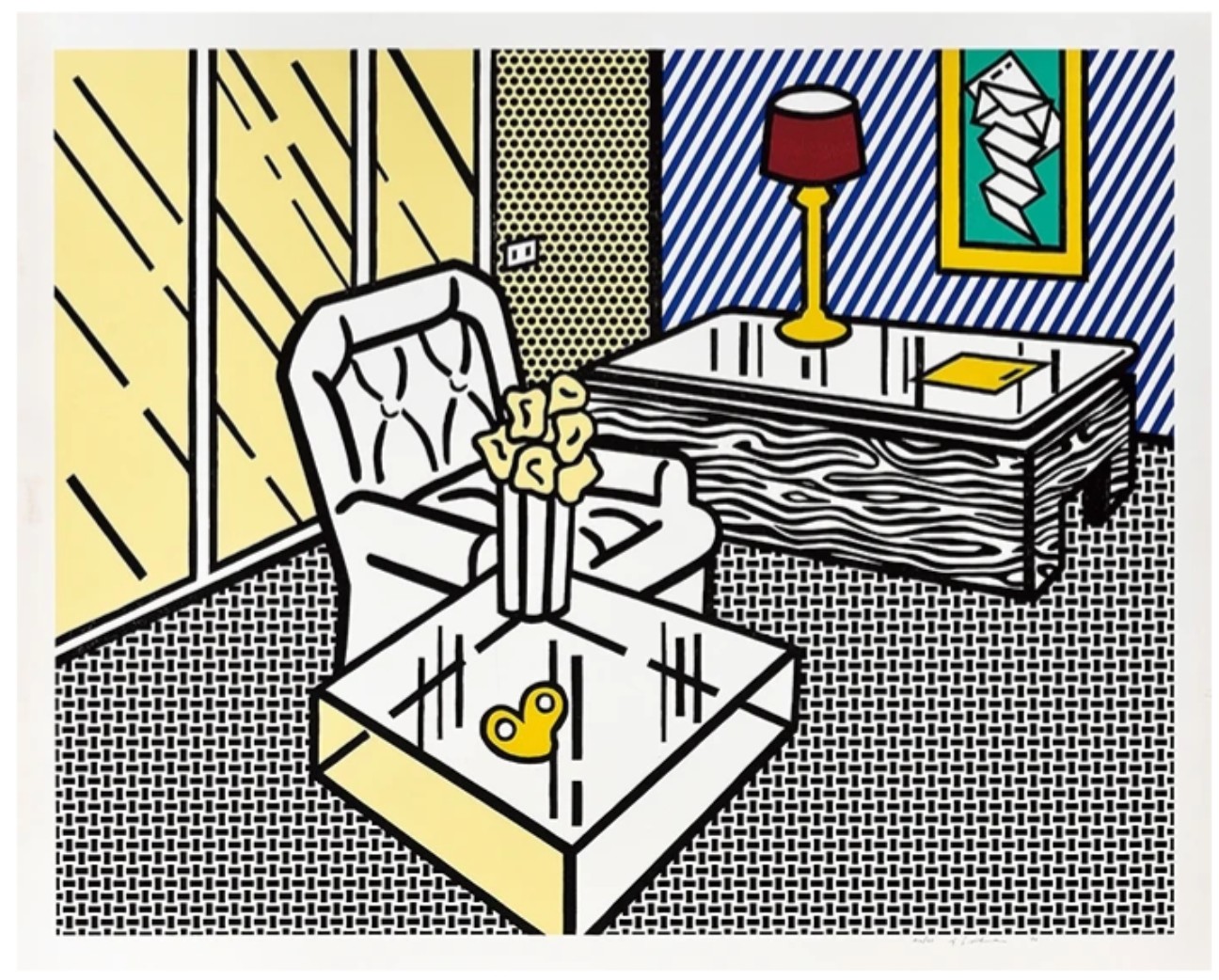
The Den depicts a carefully arranged interior, armchair, coffee table, desk, lamp, and framed artwork, rendered with precision and deliberate emotional distance. Formally, the composition is tightly controlled. Bold black outlines define every object, while flat areas of cream, grey, blue, yellow, and muted purple establish a balanced yet slightly artificial palette. Patterns play a central role: diagonal stripes on the wall, dense dotted textures on the carpet, and stylized wood grain on the desk all compete for visual attention. Perspective is subtly skewed, compressing space and reinforcing the sense that this room is a design construct rather than a natural setting.
Objects carry the narrative weight. The armchair and table suggest comfort, yet their rigidity and lack of softness undermine that promise. The small yellow object on the table, ambiguous and functionless, adds a note of quiet tension, while the framed abstract image on the wall introduces a self-referential nod to modernist painting. Everything is in its place, yet nothing feels personal. Conceptually, The Den reflects Lichtenstein’s interest in how identity is projected through interiors. The absence of figures is crucial: human presence is implied through furniture and décor, but deliberately withheld. Taste, order, and consumer choice replace emotion and individuality. The room becomes a psychological space defined by surfaces and signs.
In print form, the work achieves remarkable clarity and balance. It stands as a mature statement by Roy Lichtenstein, revealing an artist less concerned with Pop spectacle than with structure, repetition, and the quiet strangeness of modern domestic life. Lichtenstein’s Den is not a sanctuary but a showcase. By transforming a private refuge into a meticulously composed image, he reveals how the desire for idealized environments often overtakes authentic personal experience, reducing lived spaces into aesthetic statements.
Auction Results
Wright: 16 December 2025
Estimated: USD 50,000 – 70,000
USD 60,960
ROY LICHTENSTEIN (1923–1997)
The Den (RLCR 3990 | Corlett 249 | Gemini 1501),1990
from the Interior series
Woodcut and screenprint in colors on 4-ply Paper Technologies Inc. museum board
Signed, dated and numbered to lower margin ‘52/60 rf Lichtenstein ’90’ with publisher’s blindstamp
Published by Gemini G.E.L., Los Angeles
Works from the Collection of Dorothy and Roy Lichtenstein
Sotheby’s New-York: 26 September 2025
Estimated: USD 50,000 – 70,000
USD 107,950
AUCTION RECORD FOR THE DEN
ROY LICHTENSTEIN (1923 – 1997)
The Den, from the Interior series (Corlett 249), 1990
Woodcut and screenprint in colors on 4-ply Museum Board
Signed, dated ’90 and inscribed AP 7/14 (lower right)
One of 14 artist’s proofs aside from the numbered edition of 60 plus 14 artist’s proofs
XXXXXXXXXX
Bonhams New-York: 26 November 2024
Estimated: USD 40,000 – 60,000
USD 95,750
Woodcut and screenprint in colors on 4-ply Paper Technologies, Inc., Museum Board
Signed in pencil, dated and numbered 26/60 (there were also 14 artist’s proofs)
Christie’s New-York: 16 April 2024
Estimated: USD 40,000 – 60,000
USD 69,300
ROY LICHTENSTEIN (1923-1997)
The Den, from Interior Series, 1990
Woodcut and screenprint in colors on museum board
Signed and dated in pencil, numbered 53⁄60 (there were also fourteen artist’s proofs)
XXXXXXXXXX
Seoul Auction: 22 September 2020
Estimated: KRW 50,000,000 – 65,000,000
KRW 65,550,000 / USD 56,424
ROY LICHTENSTEIN
The Den, 1990
Woodcut, screenprint, collage on museum board
Edition: 42/60
Signed, dated and numbered in pencil
XXXXXXXXXX
Sotheby’s New-York: 24 November 2015
Estimated: USD 30,000 – 50,000
USD 50,000
ROY LICHTENSTEIN
The Den (C. 249) from Interior Series, 1990
Woodcut and screenprint in colors on 4-ply Paper Technologies, Inc., Museum Board
Signed in pencil, dated, numbered 18/60
The Living Room
The Living Room
from Interior Series
Medium: Woodcut and screen-print in colors, on museum board
Year: 1990
Image: 52 1/8 x 66 inches (132.4 x 167.6 cm)
Sheet: 58 1/8 x 72 inches (147.6 x 182.6 cm)
Edition: 60
Artist’s Proofs: 14 AP
Publisher: Gemini G.E.L., Los Angeles
Literature: Corlett 250, Gemini 1502, RLCR 3991
Signed dated and numbered in pencil
With the artist’s and publisher’s blindstamps and ink stamp on the reverse
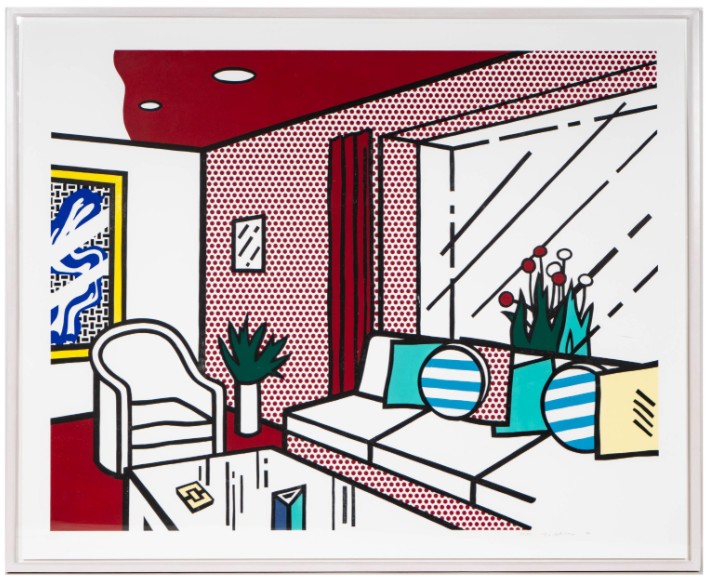
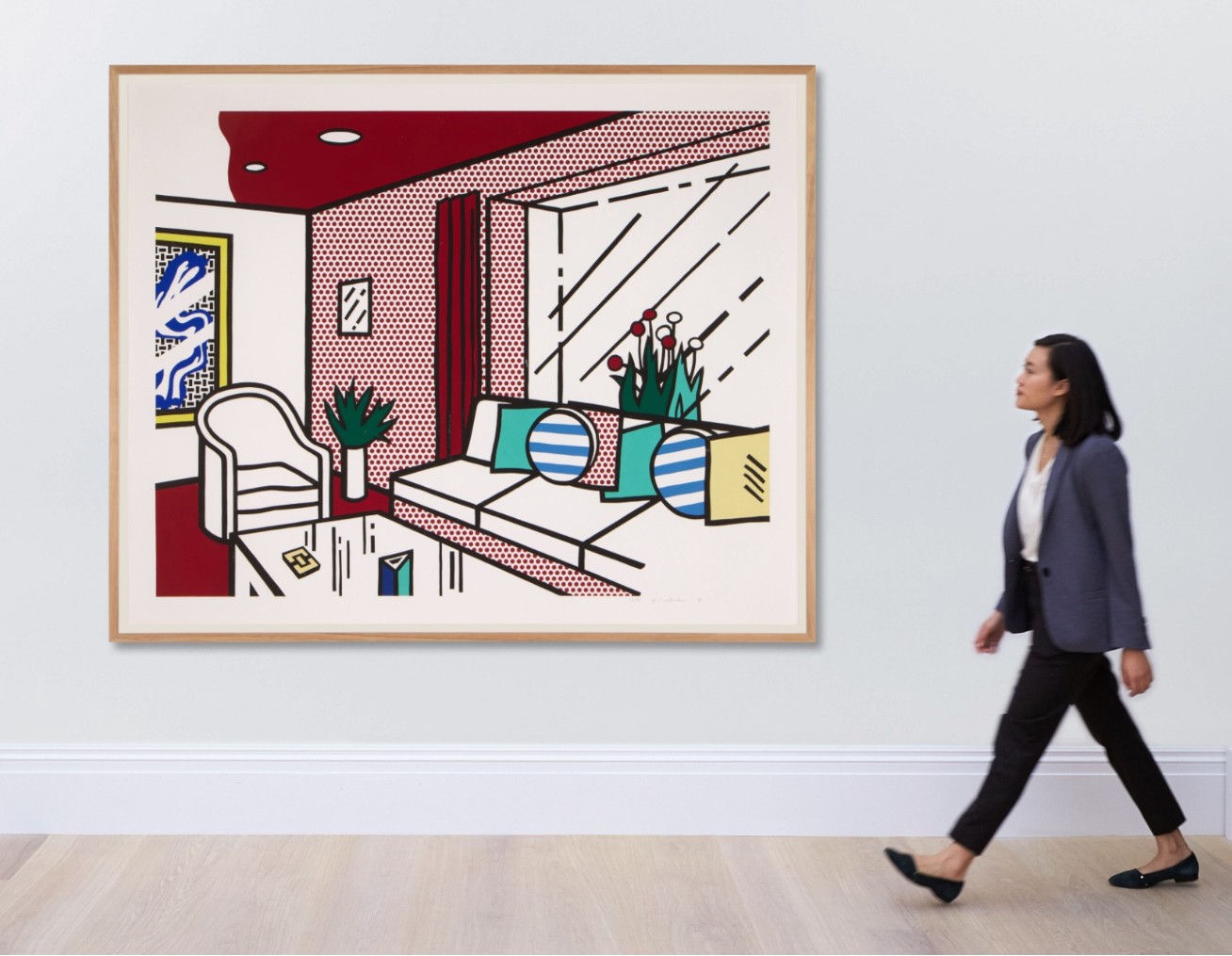
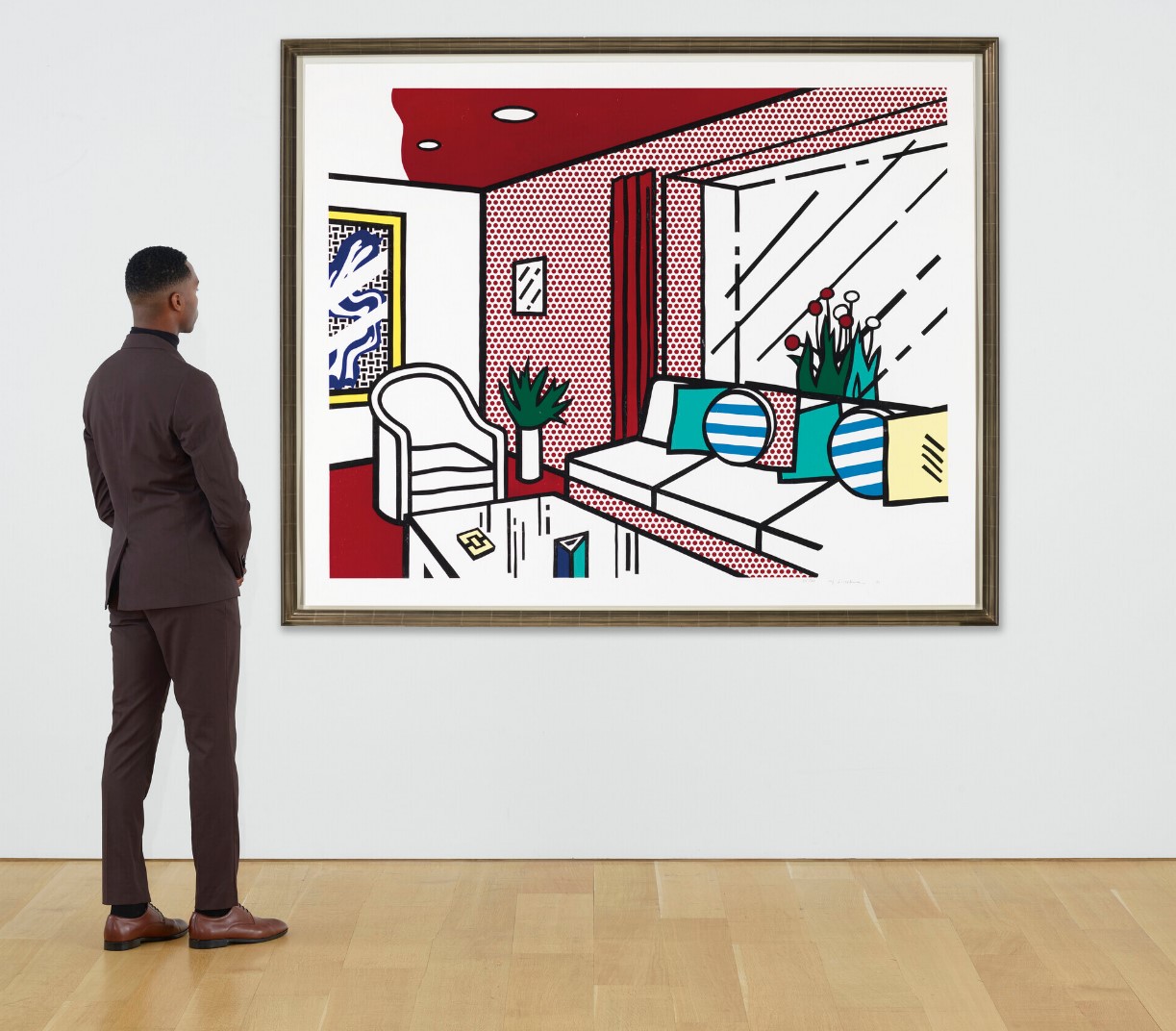
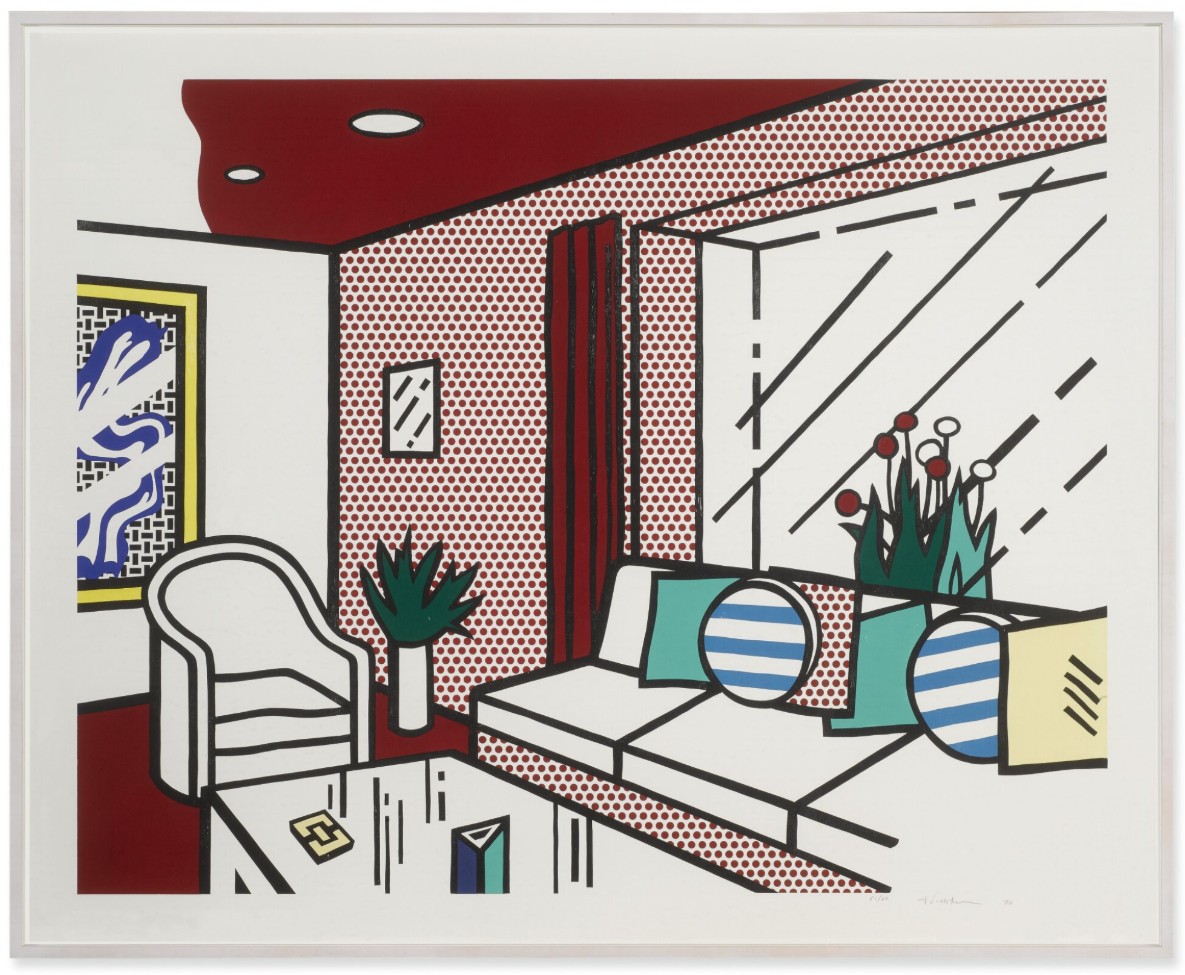
Living Room depicts a meticulously arranged domestic space, sofa, armchair, table, plants, cushions, rendered with absolute clarity and an intentional sense of emotional distance. Formally, the composition is structured through bold black outlines, flat planes of saturated color, and a disciplined use of Ben-Day dots. Red dominates the walls and ceiling, lending the room a heightened, almost artificial intensity, while whites, blues, greens, and yellows punctuate the space with graphic precision. Perspective is deliberately compressed and inconsistent, flattening depth and reinforcing the idea that this is not a lived interior, but an image of one.
A key element appears on the wall: a framed Brushstroke painting by Lichtenstein himself. Instantly recognizable through its sweeping white-and-blue gesture outlined in black, it functions as a self-referential device. What was once a critique of Abstract Expressionist heroism is here reduced to décor: art absorbed into interior design. Painting becomes another object in the room, no more expressive than a cushion or a plant. Conceptually, the absence of figures remains central. Human presence is suggested only through arrangement, taste, and consumer choice. Comfort is implied but never delivered; the space feels staged, controlled, and slightly theatrical. By embedding one of his own iconic motifs within the scene, Roy Lichtenstein completes a closed circuit of representation: an image of a room containing an image of a painting that once critiqued painting itself.
In Living Room, Lichtenstein tackles the heart of the American Dream: the ideal domestic space. Yet despite its recognizable features, the scene feels curiously unreal. The mechanical application of Benday dots, the sharp outlines, and the absence of shading collapse depth, transforming what should be a welcoming home into a flattened, stage-like tableau. The work comments on how mass media and advertising shape our very notions of domestic happiness. The Living Room is not lived-in but performed, a model of suburban perfection intended for the camera lens. Lichtenstein deftly critiques the aspirational fantasies embedded in consumer culture, where even the most personal spaces are designed to conform to a commercial ideal of beauty, comfort, and success.
Auction Results
The Geri Brawerman Collection: A Tribute to Los Angeles and A Legacy of Giving
Sotheby’s New-York: 15 April 2026
Estimated: USD 70,000 – 100,000
USD 121,600
ROY LICHTENSTEIN (1923 – 1997)
The Living Room, from the Interior series (Corlett 250; RLCR 3991)
Woodcut and screenprint in colors on 4-Ply Museum Board
Signed in pencil, dated 90 and numbered 29/60
This impression is number 29 from the edition of 60 plus 14 artist’s proofs
With the blindstamp of the printer and publisher, Gemini G.E.L., and with their inkstamp on the verso
XXXXXXXXXX
Abell: 12 December 2025
Estimated: USD 70,000 – 100,000
USD 120,000 (Hammer)
USD 150,000
ROY LICHTENSTEIN (American, 1923-1997)
The Living Room (Corlett, 250. Gemini, 1502), 1990
from the Interior Series
Woodcut and screenprint in colors on Museum Board
Hand-signed, dated, and numbered 22/60
Published by Gemini G.E.L., with their blindstamp
Works from the Collection of Dorothy and Roy Lichtenstein
Sotheby’s New-York: 26 September 2025
Estimated: USD 80,000 – 120,000
USD 177,800
AUCTION RECORD FOR LIVING ROOM
ROY LICHTENSTEIN (1923 – 1997)
The Living Room, from the Interior series (Corlett 250), 1990
Woodcut and screenprint in colors on 4-ply Museum Board
Signed, dated ’90 and inscribed SP 6/8 (lower right)
One of 8 special proofs aside from the numbered edition of 60 plus 14 artist’s proofs
Sotheby’s New-York: 15 April 2025
Estimated: USD 80,000 – 120,000
USD 95,250
ROY LICHTENSTEIN (1923 – 1997)
The Living Room, from Interior Series (Corlett 250), 1990
Woodcut and screenprint in colors on Museum Board
Signed in pencil, dated and numbered 18/60
XXXXXXXXXX
Christie’s New-York: 27 October 2022
Estimated: USD 100,000 – 150,000
USD 176,400
ROY LICHTENSTEIN (1923-1997)
Living Room, from Interior Series, 1990
Woodcut and screen-print in colors, on museum board
Signed and dated in pencil, numbered 40/60
XXXXXXXXXX
Phillips New-York: 21 October 2021
Estimated: USD 70,000 – 100,000
USD 163,800
ROY LICHTENSTEIN
The Living Room, from Interior Series (G. 1502, C. 250), 1990
Monumental woodcut and screen-print in colors, on PTI 4-ply Museum Board
Signed, dated and numbered 15/60 in pencil
XXXXXXXXXX
Property from the Estate of Barbara R. Caplan
Sotheby’s New-York: 22 October 2020
Estimated: USD 60,000 – 80,000
USD 94,500
ROY LICHTENSTEIN (1923 – 1997)
THE LIVING ROOM (CORLETT 250), 1990
Woodcut and screenprint in colors on museum board
Signed in pencil, dated and numbered 51/60
XXXXXXXXXX
Christie’s New-York: 25 October 2018
Estimated: USD 70,000 – 100,000
USD 112,500
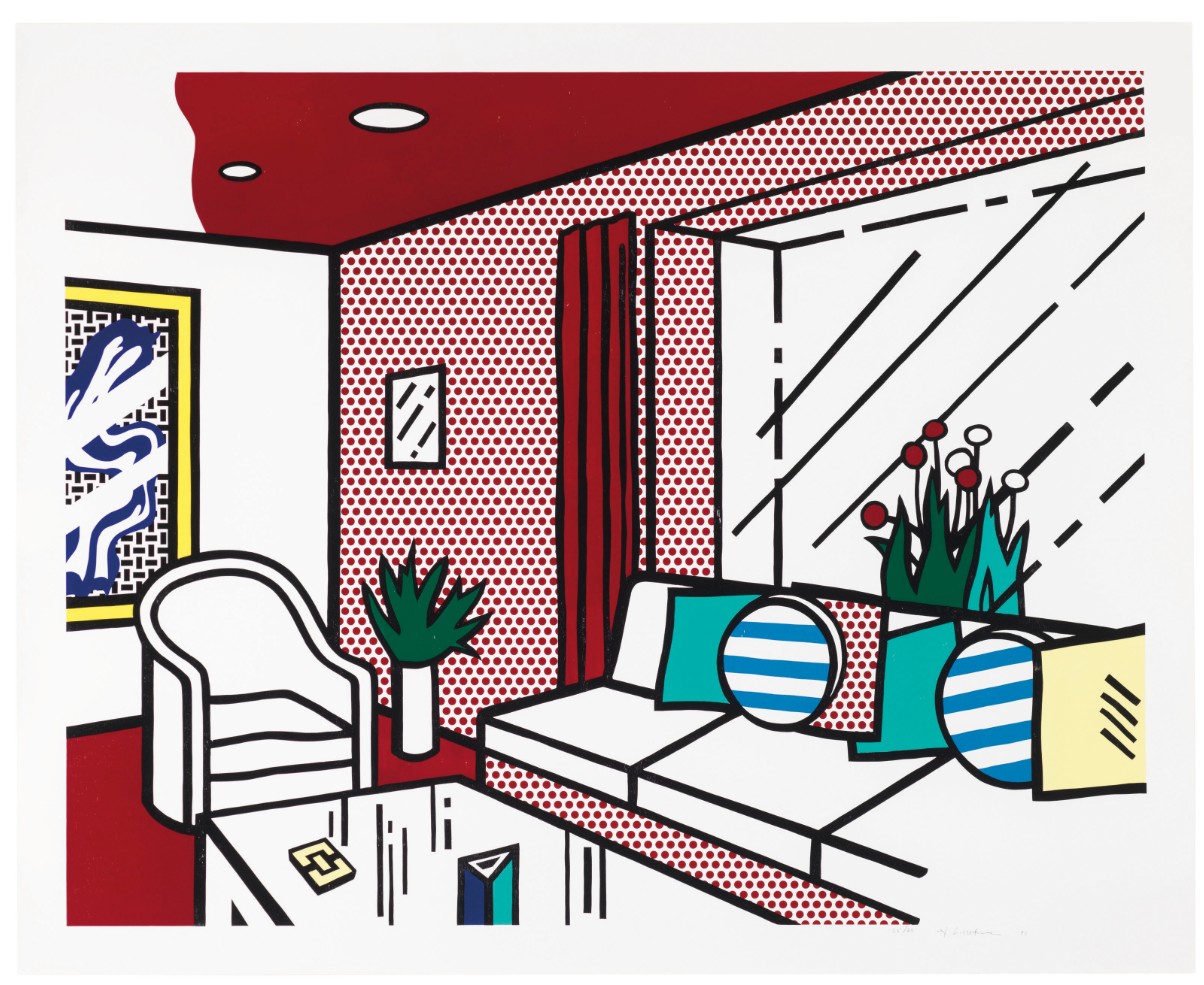
ROY LICHTENSTEIN (1923-1997)
Living Room, from Interior Series, 1990
Woodcut and screenprint in colors on museum board
Signed and dated in pencil, numbered 35/60
Red Lamps
Red Lamps
from Interior Series
Medium: Lithograph, woodcut and screen-print in colors on 4-ply Paper Technologies, Inc. Museum Board
Year: 1990
Image: 51 3/8 x 72 3/4 inches (130.5 x 184.8 cm)
Sheet: 57 3/8 x 78 3/4 inches (145.7 x 200 cm)
Edition: 60
Artist’s Proofs: 14 AP
Publisher: Gemini G.E.L., Los Angeles
Literature: Corlett 251, RLCR 3987
Signed dated and numbered in pencil
With the artist’s and publisher’s blindstamps and ink stamp on the reverse
Red Lamps depicts a living room reduced to its essential components, sofa, side tables, lamps, coffee table, arranged with meticulous precision and rendered with deliberate emotional restraint. Formally, the composition is driven by strong black contours, flat color fields, and a systematic deployment of patterns. Diagonal stripes dominate the sofa upholstery, Ben-Day dots punctuate the cushions and walls, and simplified geometric planes define the furniture. The two red lamps act as visual anchors, symmetrically framing the composition and reinforcing its graphic balance. Perspective remains intentionally compressed, flattening depth and asserting the image as a constructed surface rather than a believable interior.
A crucial detail appears on the right wall: a framed abstract painting that unmistakably evokes gestural abstraction. With its splashes of color and loose, painterly marks, it recalls the language of Abstract Expressionism, most notably the drip paintings Lichtenstein famously critiqued earlier in his career. Here, that once-radical gesture is fully domesticated, reduced to wall décor within a tastefully arranged living room. Conceptually, Red Lamps sharpens one of the central ideas of the Interiors series: the absorption of art, emotion, and individuality into design. The room is pristine, stylish, and entirely impersonal. Human presence is implied only through objects and choices, never through figures. By embedding a gestural painting into this orderly space, Roy Lichtenstein stages a quiet but pointed commentary on how modern interiors neutralize expression, turning even artistic rebellion into a decorative sign.
Auction Results
Works from the Collection of Dorothy and Roy Lichtenstein
Sotheby’s online: 7 October 2026
Estimated: USD 70,000 – 100,000
USD 140,800
NEW AUCTION RECORD FOR RED LAMPS
ROY LICHTENSTEIN (1923 – 1997)
Red Lamps, from the Interior series, 1990
(Corlett 251, RLCR 3987)
Lithograph, woodcut, and screenprint in colors on 4-ply Paper Technologies, Inc., Museum Board
Signed, dated ’90 and inscribed AP 4/14 (lower right)
One of 14 artist’s proofs aside from the numbered edition of 60
With the blindstamp of the publisher, Gemini G.E.L., and with their inkstamp on the verso
XXXXXXXXXX
Bonhams New-York: 26 November 2024
Estimated: USD 80,000 – 120,000
USD 108,450
NEW AUCTION RECORD FOR RED LAMPS
ROY LICHTENSTEIN (1923-1997)
Red Lamps, from Interior Series (Corlett 251; Gemini 1503), 1990
Lithograph, woodcut, and screenprint in colors on 4-ply Paper Technologies, Inc., Museum Board
Signed in pencil, dated and numbered 26/60 (there were also 14 artist’s proofs)
XXXXXXXXXX
Christie’s Amsterdam: 3 October 2024
Estimated: EUR 70,000 – 100,000
EUR 94,500 / USD 104,328
ROY LICHTENSTEIN (1923-1997)
Red Lamps (Corlett 251), 1990
Lithograph, woodcut and screenprint in colors on museum board
Signed, numbered and dated ’37/60 R Lichtenstein ’90’ in pencil (lower right)
XXXXXXXXXX
Mainichi Auction Tokyo: 27 April 2024
Estimated: JPY 4,000,000 – 6,000,000
JPY 13,800,000 / USD 87,205
ROY LICHTENSTEIN
Red lamps, 1990
Lithograph, woodcut and screenprint
Signed, from the edition of 60
XXXXXXXXXX
Christie’s New-York: 23 October 2014
Estimated: USD 40,000 – 60,000
USD 68,750
ROY LICHTENSTEIN (1923-1997)
Red Lamps, from Interior Series, 1990
Lithograph, woodcut and screen-print in colors
Signed and dated in pencil, numbered 58/60
Modern Room
Modern Room
from Interior Series
Medium: Lithograph, woodcut and screen-print in colors, on Museum Board
Year: 1990
Image: 15 1/8 x 74 3/4 inches (127.4 x 189.8 cm)
Sheet: 56 1/8 x 80 3/4 inches (142.8 x 205 cm)
Edition: 60
Artist’s Proofs: 14 AP
Publisher: Gemini G.E.L., Los Angeles
Literature: Corlett 252, RLCR 3986
Signed dated and numbered in pencil
With the artist’s and publisher’s blindstamps and ink stamp on the reverse
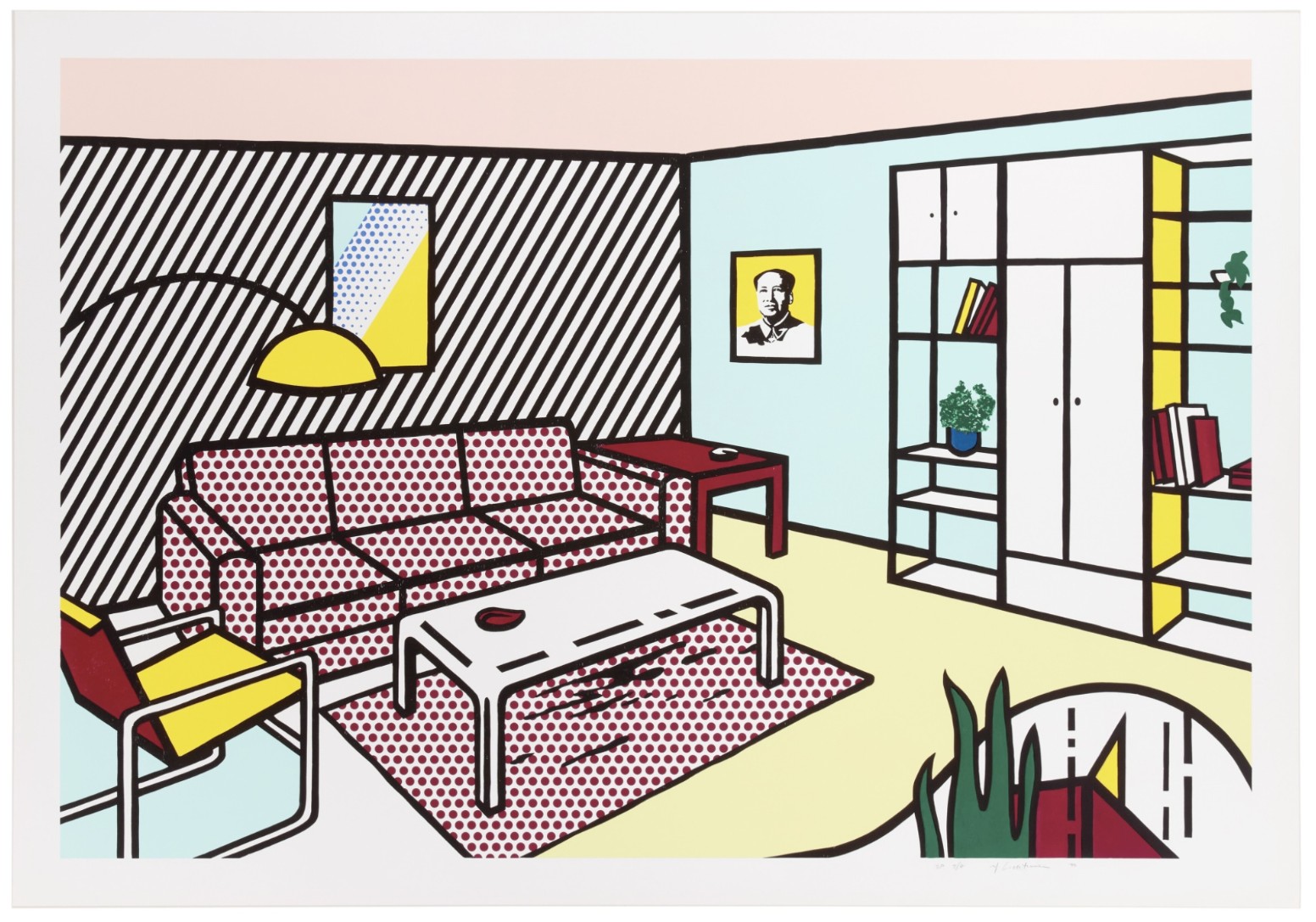
Modern Room is presented as a carefully organized ensemble, sofa, armchair, coffee table, shelving, lamp, rendered with clarity and restraint, and entirely devoid of human presence. What we see is not a lived interior, but a constructed image of one. Formally, the composition is built through bold black outlines, flat color planes, and a disciplined use of Ben-Day dots and linear patterns. The red-dotted sofa and rug anchor the scene, while diagonal stripes on the wall and strict verticals in the shelving system structure the space. Perspective is deliberately simplified and slightly skewed, flattening depth and reinforcing the sense of artifice. Color operates functionally: pale blues and creams establish neutrality, punctuated by controlled accents of red, yellow, and green.
Crucially, the walls stage a pointed art-historical dialogue. One framed work clearly belongs to Lichtenstein’s own visual language, graphic lines and dots functioning as a self-referential insert, where the artist’s work becomes décor. On another wall appears a small portrait unmistakably referencing Andy Warhol’s Mao. Once politically charged, then critically Pop, Mao here is fully neutralized—scaled down, framed, and absorbed into the domestic setting. This pairing is deliberate. By placing a Lichtenstein and a Warhol within the same interior, Roy Lichtenstein turns Pop Art itself into furniture. Artistic identity and political imagery are flattened into lifestyle choices, reduced to signs of taste rather than vehicles of expression. The absence of figures sharpens this effect: human presence is replaced by objects and images, perfectly arranged and emotionally silent.
In print form, Modern Room achieves exceptional clarity and conceptual closure. It stands as a quiet but incisive statement on modern domestic life: where art is not rejected, but seamlessly absorbed, framed, and carefully emptied of urgency.
Auction Results
Pop Impressions: Prints from the Collection of Dorothy and Roy Lichtenstein
Sotheby’s New-York: 22 October 2025
Estimated: USD 80,000 – 120,000
USD 120,650
ROY LICHTENSTEIN (1923-1997)
Modern Room (Corlett 252; RLCR 3986), 1990
From the Interior series
Lithograph, woodcut and screenprint in colors on 4-ply Museum Board
Signed in pencil, dated and inscribed SP 7/8
Executed in 1990, Published in 1991
This impression is one of eight special proofs aside from the numbered edition of 60 plus 14 artist’s proofs
With the blindstamp of the publisher, Gemini G.E.L., and with their inkstamp on the verso
XXXXXXXXXX
Christie’s New-York: 10 November 2023
Estimated: USD 80,000 – 120,000
USD 107,100
ROY LICHTENSTEIN (1923-1997)
Modern Room, from the Interior Series, 1990
Lithograph, woodcut and screenprint on museum board
Signed, numbered and dated ‘rf Lichtenstein ’90 18⁄60’ (lower right)
XXXXXXXXXX
Heritage Auctions: 24 October 2023
Estimated: USD 60,000 – 80,000
USD 93,750
KEITH HARING
Modern Room, from The Interior Series, 1990
Woodcut, screen-print, and lithograph in colors on wove paper
Signed, editioned 30/60 and dated in pencil, along lower edge
Sotheby’s London: 13 October 2023
Estimated: GBP 100,000 – 150,000
GBP 127,000 / USD 154,135
AUCTION RECORD FOR MODERN ROOM
ROY LICHTENSTEIN (1923 – 1997)
Modern Room, from Interior Series, 1990
Lithograph, woodcut and screenprint in colors on Museum Board
56 1/8 x 80 3/4 inches (142.8 x 205 cm)
Signed in pencil, dated and numbered 9/60 (lower right)
XXXXXXXXXX
Sotheby’s New-York: 22 October 2020
Estimated: USD 70,000 – 100,000
USD 119,700
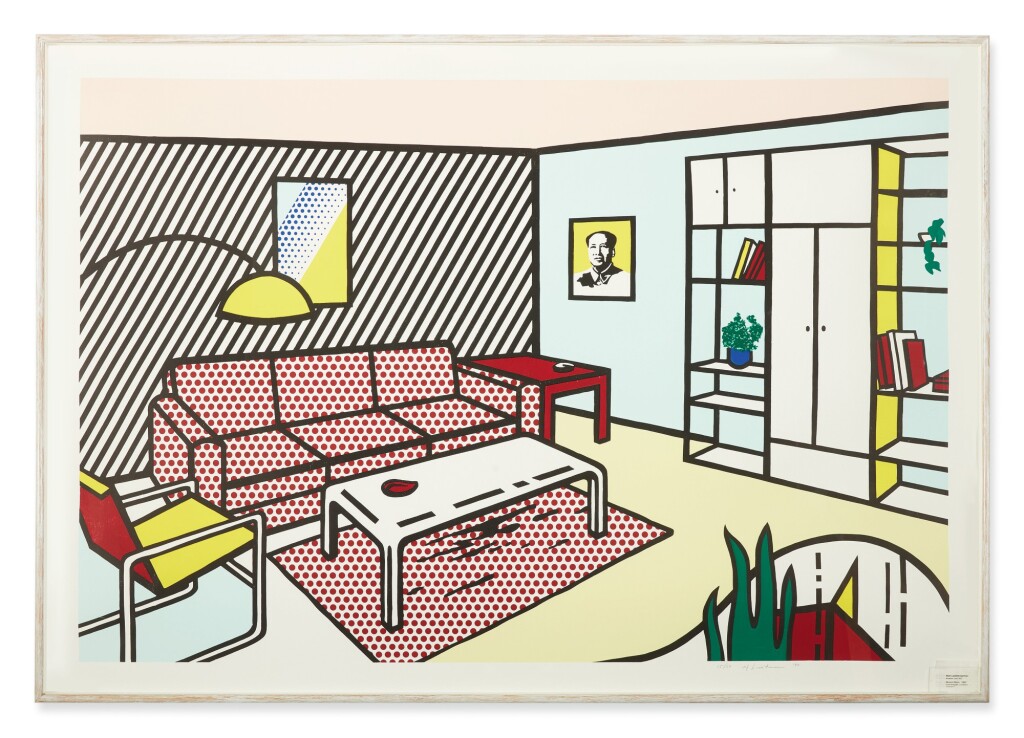
ROY LICHTENSTEIN (1923 – 1997)
MODERN ROOM (C. 252), 1990
Lithograph, woodcut and screenprint in colors
Signed in pencil, dated and numbered 15/60 (total edition includes 14 artist’s proofs)
Yellow Vase
Yellow Vase
from Interior Series
Medium: Lithograph, woodcut and screen-print in colors, on Museum Board
Year: 1990
Image: 49 1/2 x 78 1/2 inches (125.7 x 199.4 cm)
Sheet: 55 5/8 x 84 3/8 inches (141.3 x 214.3 cm)
Edition: 60
Artist’s Proofs: 14 AP
Publisher: Gemini G.E.L., Los Angeles
Literature: Corlett 253, Gemini 1505, RLCR 3992
Signed dated and numbered in pencil
With the artist’s and publisher’s blindstamps and ink stamp on the reverse
Yellow Vase presents a carefully balanced living room, two sofas, a low table, cushions, plants, arranged with symmetry and restraint, and entirely devoid of human presence. Its composition is structured through bold black outlines, flat planes of color, and a calibrated interplay of patterns. Diagonal stripes, Ben-Day dots, and solid fields coexist without hierarchy, flattening depth and emphasizing surface. Pale tones establish a neutral framework, punctuated by controlled accents of green, yellow, blue, and black. The yellow vase on the table functions as a visual anchor, stabilizing the composition rather than asserting decorative presence.
A crucial element appears on the wall: a framed painting that unmistakably recalls the Flowers series by Andy Warhol. Reduced to simplified floral forms and absorbed into Lichtenstein’s graphic syntax, Warhol’s iconic motif is fully domesticated. What was once a meditation on repetition, surface, and mass production becomes interior décor—art history reframed as lifestyle. This insertion is deliberate and precise. By placing a Warhol reference within the room, Roy Lichtenstein stages a quiet dialogue between Pop’s two central figures. The interior becomes a space where once-radical images coexist peacefully, stripped of confrontation and rendered tasteful.
In the context of the Interiors series, the gesture reinforces a central theme: modern life does not reject art, it absorbs it. The absence of figures heightens this effect, replacing human presence with images and objects, perfectly arranged and emotionally neutral. Yellow Vase thus stands as a refined late statement: cool, controlled, and conceptually exacting.
Auction Results
Pop Impressions: Prints from the Collection of Dorothy and Roy Lichtenstein
Sotheby’s New-York: 15 April 2026
Estimated: USD 70,000 – 100,000
USD 96,000
ROY LICHTENSTEIN (1923 – 1997)
Yellow Vase, from the Interior series (Corlett 253; RLCR 3992), 1991
Lithograph, woodcut and screenprint in colors on Museum Board
Signed in pencil, dated ’90 and inscribed SP 6/8
This impression is one of eight special proofs aside from the numbered edition of 60 plus 14 artist’s proofs
With the blindstamp of the printer and publisher, Gemini G.E.L., and with their inkstamp on the verso
XXXXXXXXXX
Christie’s New-York: 16 April 2024
Estimated: USD 70,000 – 100,000
USD 81,900
ROY LICHTENSTEIN (1923-1997)
Yellow Vase, from Interior Series, 1990
Lithograph, woodcut and screenprint in colors on museum board
Signed and dated in pencil, numbered 46⁄60 (there were also fourteen artist’s proofs)
XXXXXXXXXX
Christie’s New-York: 15 April 2021
Estimated: USD 70,000 – 100,000
USD 118,750
AUCTION RECORD FOR YELLOW VASE
ROY LICHTENSTEIN (1923-1997)
Yellow Vase, from Interior Series, 1990
Lithograph, woodcut and screenprint in colors, on Museum Board
Signed and dated in pencil, numbered 33/60 (there were also fourteen artist’s proofs)
XXXXXXXXXX
Christie’s New-York: 23 October 2019
Estimated: USD 70,000 – 100,000
USD 75,000
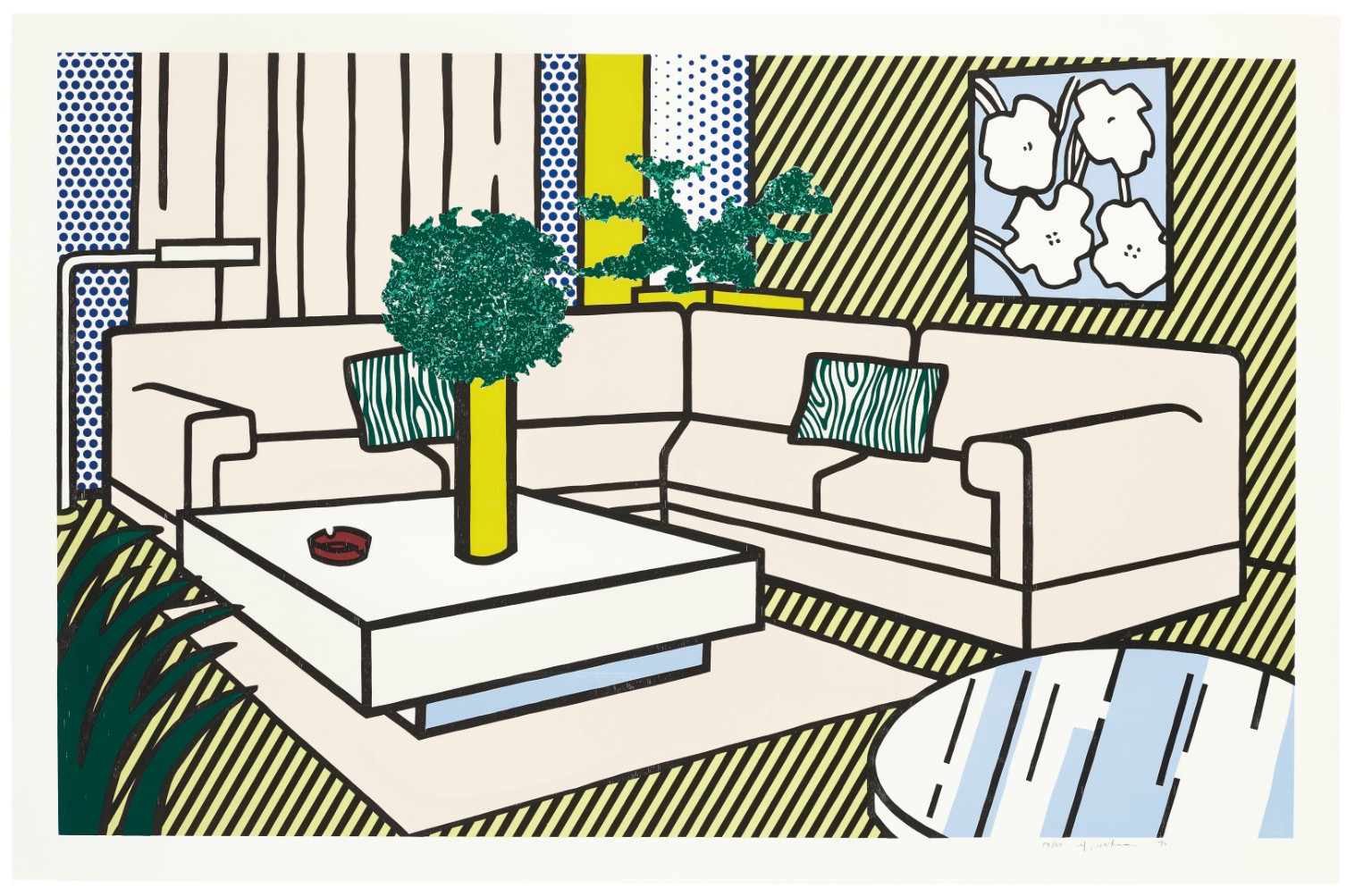
ROY LICHTENSTEIN (1923-1997)
Yellow Vase, from Interior Series, 1990
Lithograph, woodcut and screenprint in colors on Museum Board
Signed and dated in pencil, numbered 59/60
Christie’s New-York: 18 April 2019
Estimated: USD 70,000 – 100,000
USD 93,750
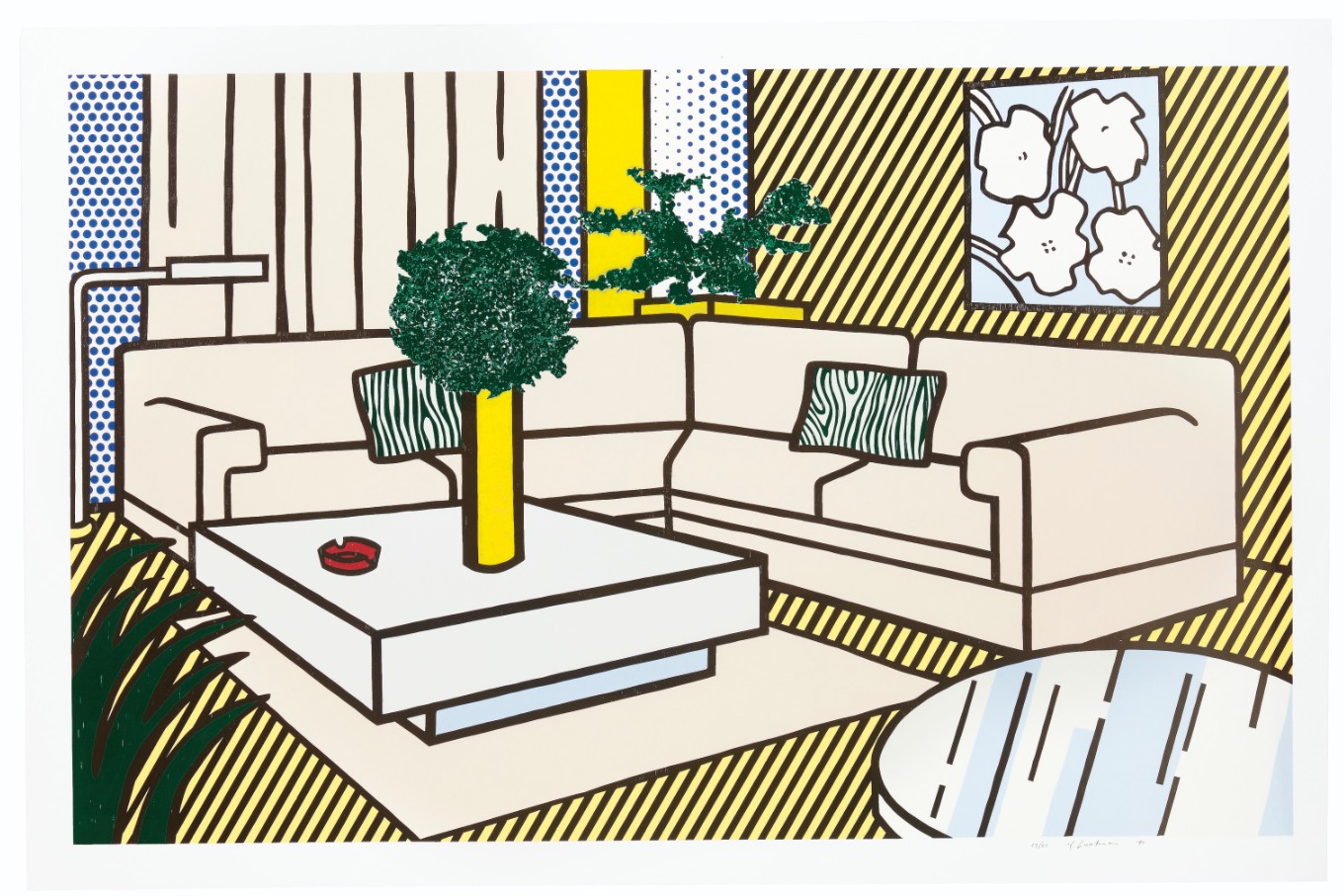
ROY LICHTENSTEIN (1923-1997)
Yellow Vase, from Interior Series, 1991
Lithograph, woodcut and screenprint in colors on Museum Board
Signed and dated in pencil, numbered 17/60
Blue Floor
Blue Floor
from Interior Series
Medium: Lithograph, woodcut and screen-print in colors, on Museum Board
Year: 1991
Sheet: 57 3/4 x 83 1/2 inches (146.7 x 212.1 cm)
Edition: 60
Artist’s Proofs: 14 AP
Publisher: Gemini G.E.L., Los Angeles
Literature: Corlett 254, Gemini 1506, RLCR 3979
Signed dated and numbered in pencil
With the artist’s and publisher’s blindstamps and ink stamp on the reverse
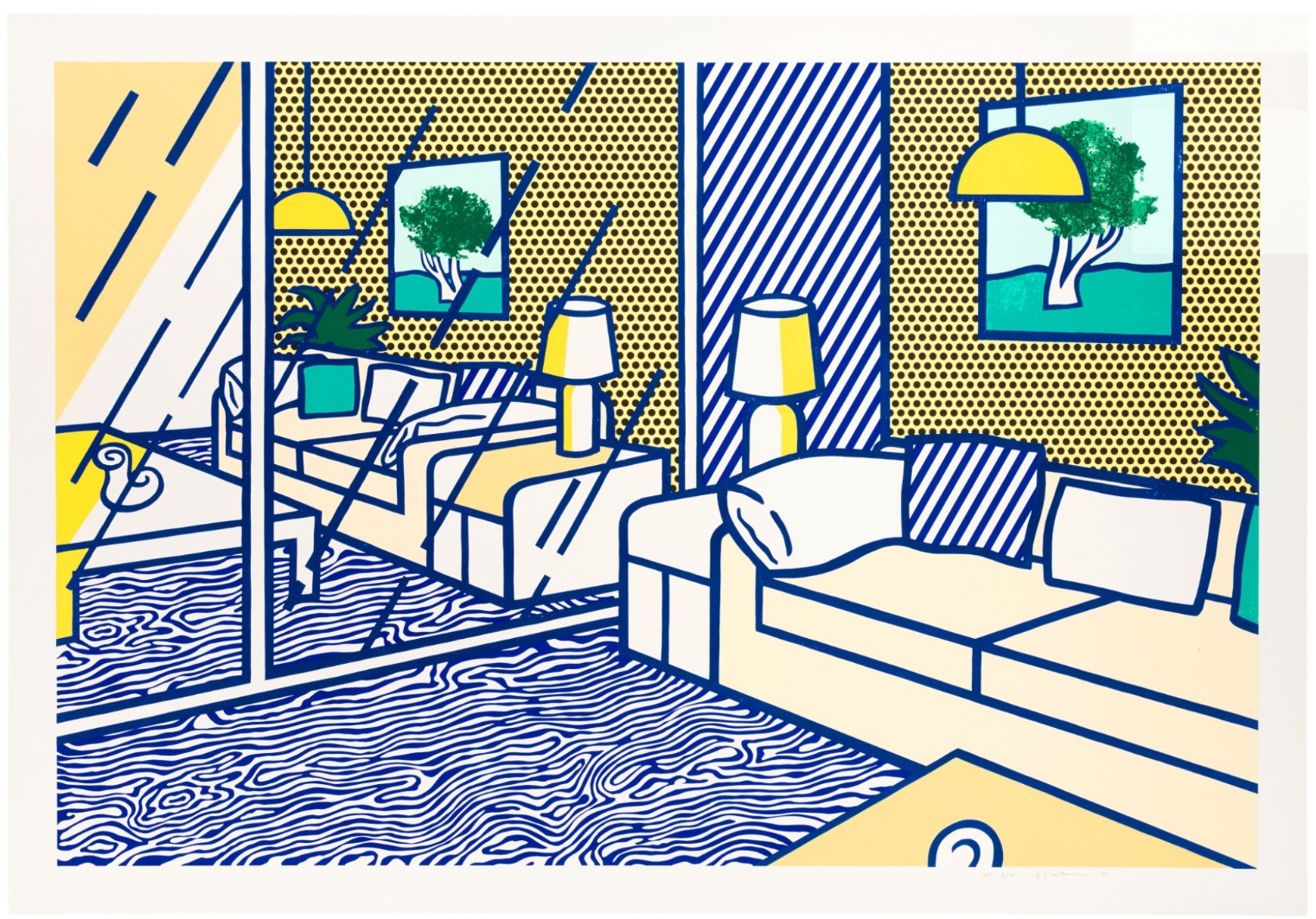
Blue Floor presents a living room articulated through repetition and reflection, two sofas, lamps, framed images, plants, mirrored across a large glass surface that doubles and flattens the composition. The work is structured through Lichtenstein’s unmistakable graphic discipline: thick blue outlines, flat planes of cream, yellow, turquoise, and green, and a strict orchestration of patterns. The blue, wood-grain–like floor dominates the lower half of the image, asserting surface over depth. Diagonal stripes, Ben-Day dots, and linear motifs coexist without hierarchy, deliberately destabilizing any illusion of natural perspective.
The mirrored wall is central to the composition. It fragments the space, repeats objects, and turns the interior into a self-referential system. Furniture and décor are no longer functional elements but visual signs, endlessly reflected and reordered. The framed images on the wall, stylized landscapes rendered in simplified forms, operate as images within the image, reinforcing Lichtenstein’s ongoing interrogation of representation itself. Blue Floor intensifies the logic of the Interiors series. Human presence is entirely absent, replaced by reflection, symmetry, and design. The room feels complete yet curiously hollow, as if designed to be observed rather than inhabited. Identity is suggested through arrangement and taste alone, never through emotion or narrative.
Auction Results
Property from a Distinguished British Collector
Sotheby’s London: 25 March 2026
Estimated: GBP 60,000 – 80,000
GBP 76,800 / USD 102,605
ROY LICHTENSTEIN (1923 – 1997)
Blue Floor, from Interiors (Corlett 254), 1990
Lithograph, woodcut and screenprint in colours on 4-ply Museum Board
Signed in pencil, dated 90 and numbered 23/60
This impression is number 23 from the edition of 60 plus 14 artist’s proofs
With the blindstamp of the publisher, Gemini G.E.L., and with their inkstamp verso
XXXXXXXXXX
Works from the Collection of Dorothy and Roy Lichtenstein
Sotheby’s New-York: 26 September 2025
Estimated: USD 70,000 – 100,000
USD 114,300
AUCTION RECORD FOR BLUE FLOOR
ROY LICHTENSTEIN (1923 – 1997)
Blue Floor, from the Interior series (Corlett 254), 1990
Lithograph, woodcut and screenprint in colors on 4-ply Museum Board
Signed, dated ’90 and inscribed AP 3/14 (lower right)
One of 14 artist’s proofs aside from the numbered edition of 60
XXXXXXXXXX
Christie’s Amsterdam: 3 October 2024
Estimated: EUR 25,000 – 35,000
EUR 69,300 / USD 76,507
ROY LICHTENSTEIN (1923-1997)
Blue Floor (Corlett 254), 1990
Lithograph, woodcut and screenprint in colors on museum board
Signed, numbered and dated ’37/60 Roy Lichtenstein ’90’ in pencil (lower right)
XXXXXXXXXX
Christie’s New-York: 28 October 2023
Estimated: USD 80,000 – 120,000
USD 113,400
ROY LICHTENSTEIN (1923-1997)
Blue Floor, from Interior Series, 1990
Lithograph, woodcut and screenprint in colors on museum board
Signed and dated in pencil, numbered 17⁄60
XXXXXXXXXX
Koller Zurich: 7 December 2019
Estimated: CHF 25,000 – 35,000
CHF 46,660 / USD 47,110
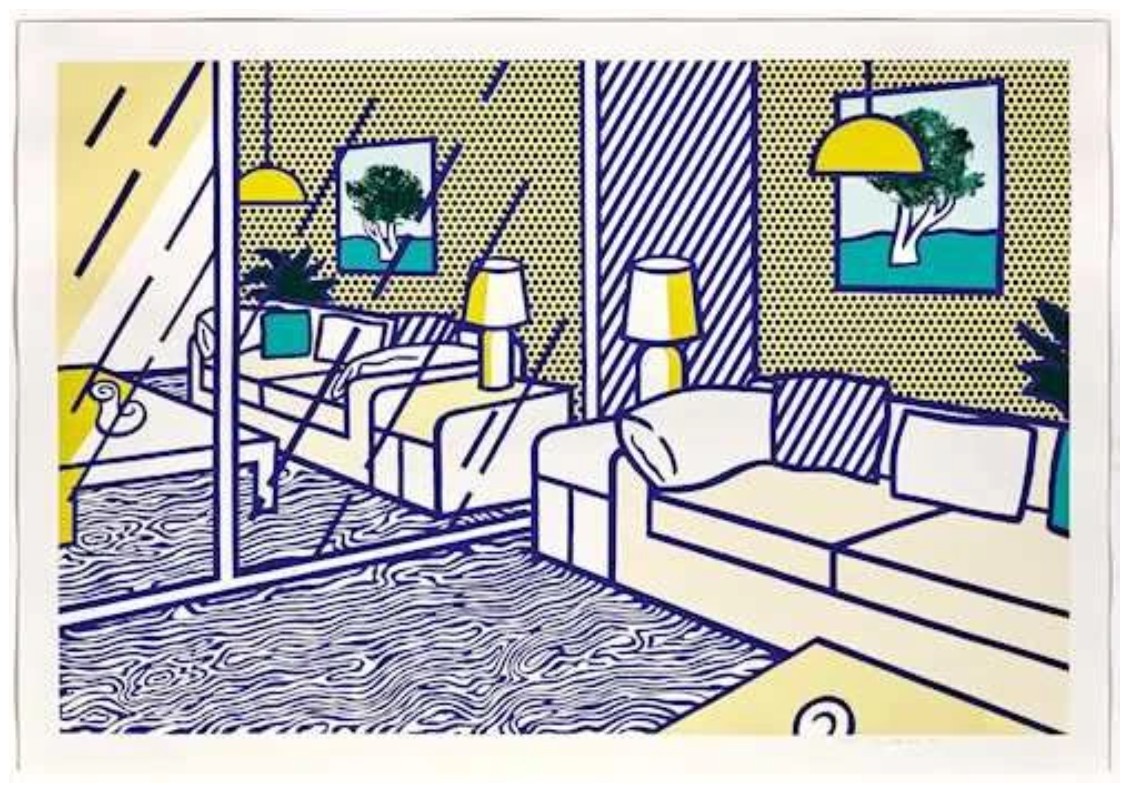
ROY LICHTENSTEIN (1923 New York City 1997)
Blue Floor, 1990
From the 8-part series “Interior Series”
Color lithograph, woodcut and screenprint on 4-ply Paper Technologies Museum board
Edition: 35/60
Signed and dated lower right in pencil: rf Lichtenstein ’90
Christie’s New-York: 17 April 2019
Estimated: USD 70,000 – 100,000
USD 75,000
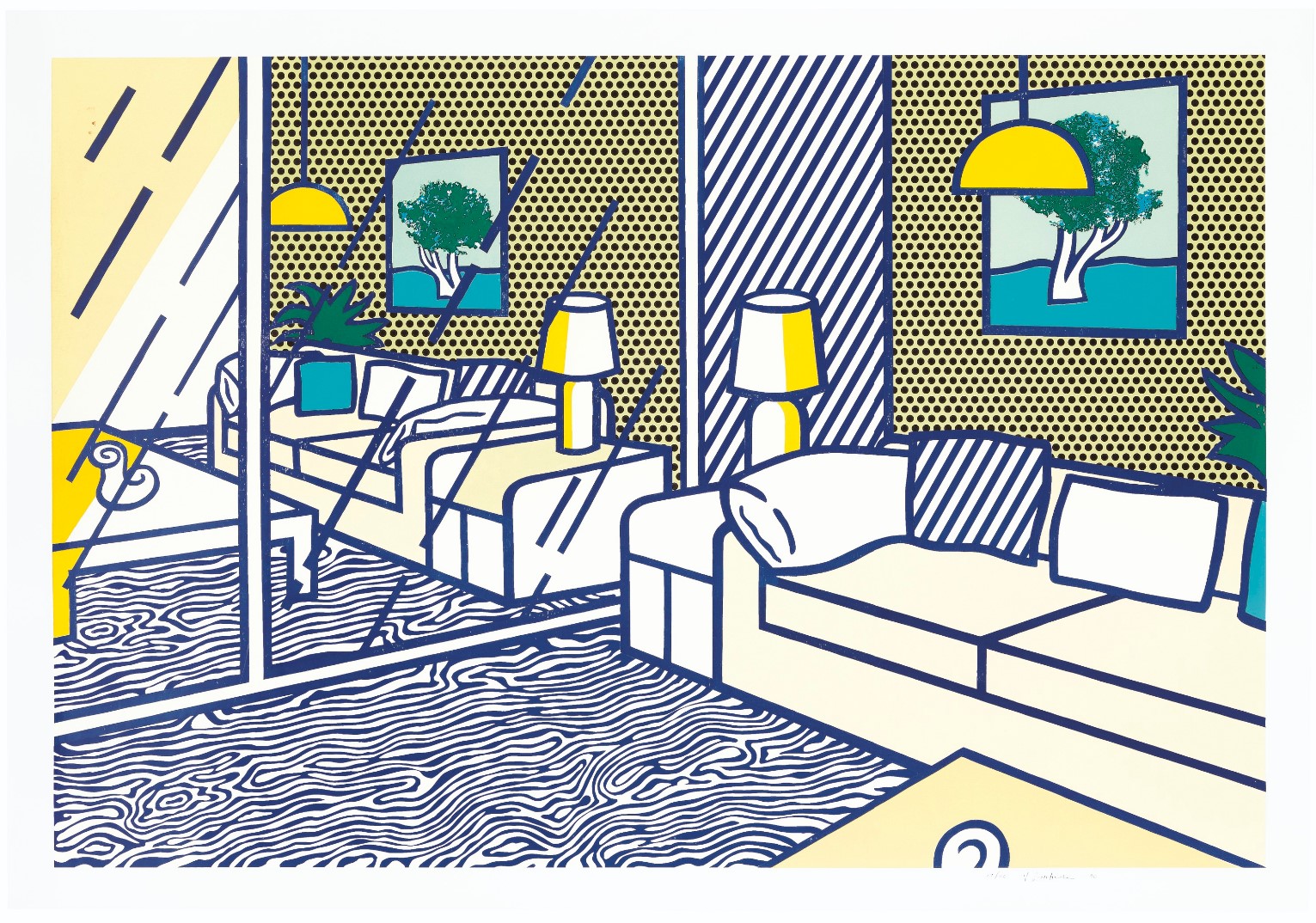
ROY LICHTENSTEIN (1923-1997)
Blue Floor, from Interior Series
Lithograph, woodcut, and screen-print in colors, on Museum Board
Signed and dated in pencil, numbered 17/60