The November 2022 Impressionist, Modern, Post-War and Contemporary Art Auctions in New-York totaled USD 3,170,490,589 including Christie’s, Sotheby’s, and Phillips evening and day sales, as well as two single owner sales, reaching an historical high.
1. Key Figures
Total Revenues: 3,170,490,589
# Lots sold: 1,603
# Lots unsold: 252
Sell-Through Rate: 86.4%
1. The Paul G. Allen Collection
Revenues: USD 1,622,249,500
51.2% of Total Revenues
# Lots: 155 Lots
Sell-Through: 100%
Average Value: USD 10,466,126
The Paul Allen collection, with over USD 1.6 billion, generated more than half of this auction season. This is the biggest sale in auction history, and the Paul Allen collection becomes the most valuable private collection of all time. Never before more than two paintings exceeded USD 100 million, in a single sale, 5 paintings reached that level. The average value including the day sale is over USD 10 million.
2. Evening Sales
Revenues: USD 1,261,266,125
39.8% of total revenues
# Lots: 275 Lots
# Lots sold: 256 Lots
Sell-Through: 93%
Average Value: USD 4,926,821
The total revenues from the Evening Sales reaches USD 1.2 billion, 40% of total revenues made of 2 Evening Sales for Christie’s and 5 for Sotheby’s, with a solid sell-through rate of over 93%, even though a few high-level lots have been withdrawn.
3. Day Sales
Revenues: USD 286,974,964
# Lots: 1,425 Lots
# Lots sold: 1,192
Sell-Through: 84%
Average Value: USD 240,751
Day Sales achieved a total close to USD 290 million with a sell-through rate in line with previous auction seasons.
4. Price Segmentation
With a total of 336 lots sold for over USD 1 million, this auction season clearly shows the strong appetite from the top of the market. More than 94% of total revenues are made of lots sold for over USD 1 million.
# Lots over USD 1o0 million: 5 Lots
Revenues: USD 614,525,000
# Lots over USD 1o million: 54 Lots
Revenues: USD 1,911,048,100
60% of Total Revenues
# Lots over USD 1 million: 336 Lots
Revenues: USD 2,993,724,875
94% of Total Revenues
2. Market Shares by Auction House
With the importance of the Paul Allen Collection sale, Christie’s dominates this auction season, with Revenues totaling USD 2.15 billion, corresponding to over 65% of the total revenues generated.
1. Christie’s
Total Revenues: 2,148,444,364
68% of Total Revenues
# Lots sold: 645
Sell-Through: 91.5%
Visionary: The Paul G. Allen Collection
USD 1,622,249,500
155 Lots
Sell-Through: 100%
20th Century Evening Sale
USD 302,125,300
65 Lots
Sell-Through: 94.2%
21st Century Evening Sale
USD 114,091,400
31 Lots
Sell-Through: 88.6%
Post-War & Contemporary Art Day Sale
USD 78,025,524
239 Lots
Sell-Through: 89.8%
Impressionist and Modern Art Day Sale
USD 31,952,640
155 Lots
Sell-Through: 86.1%
2. Sotheby’s
Total Revenues: 856,285,415
27% of Total Revenues
# Lots sold: 670
Sell-Through: 84.7%
The David M. Solinger Collection
USD 137,863,700
23 Lots
Sell-Through: 100%
Modern Evening Auction
USD 253,300,675
36 Lots
Sell-Through: 82%
The Now and Contemporary Evening Sale
USD 314,907,450
58 Lots
Sell-Through: 97%
Contemporary Day Auction
USD 94,088,150
263 Lots
Sell-Through: 85.1%
Modern Day Auction
USD 56,125,440
290 Lots
Sell-Through: 81.7%
3. Phillips
20th Century and Contemporary Art Evening Sale
USD 138,977,600
43 Lots
Sell-Through: 98%
20th Century and Contemporary Art Day Sale
USD 26,783,210
245 Lots
Sell-Through: 77.8%
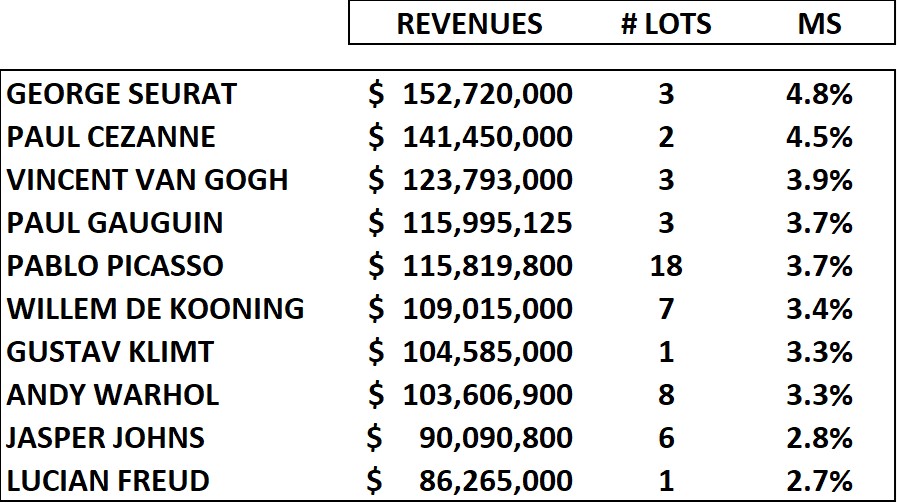
3. Top 10 Artits & Lots
Top 10 Artists: USD 1,143,340,625
36.1% of Total Revenues
Top 10 Lots: USD 957,915,500
30.2% of Total Revenues
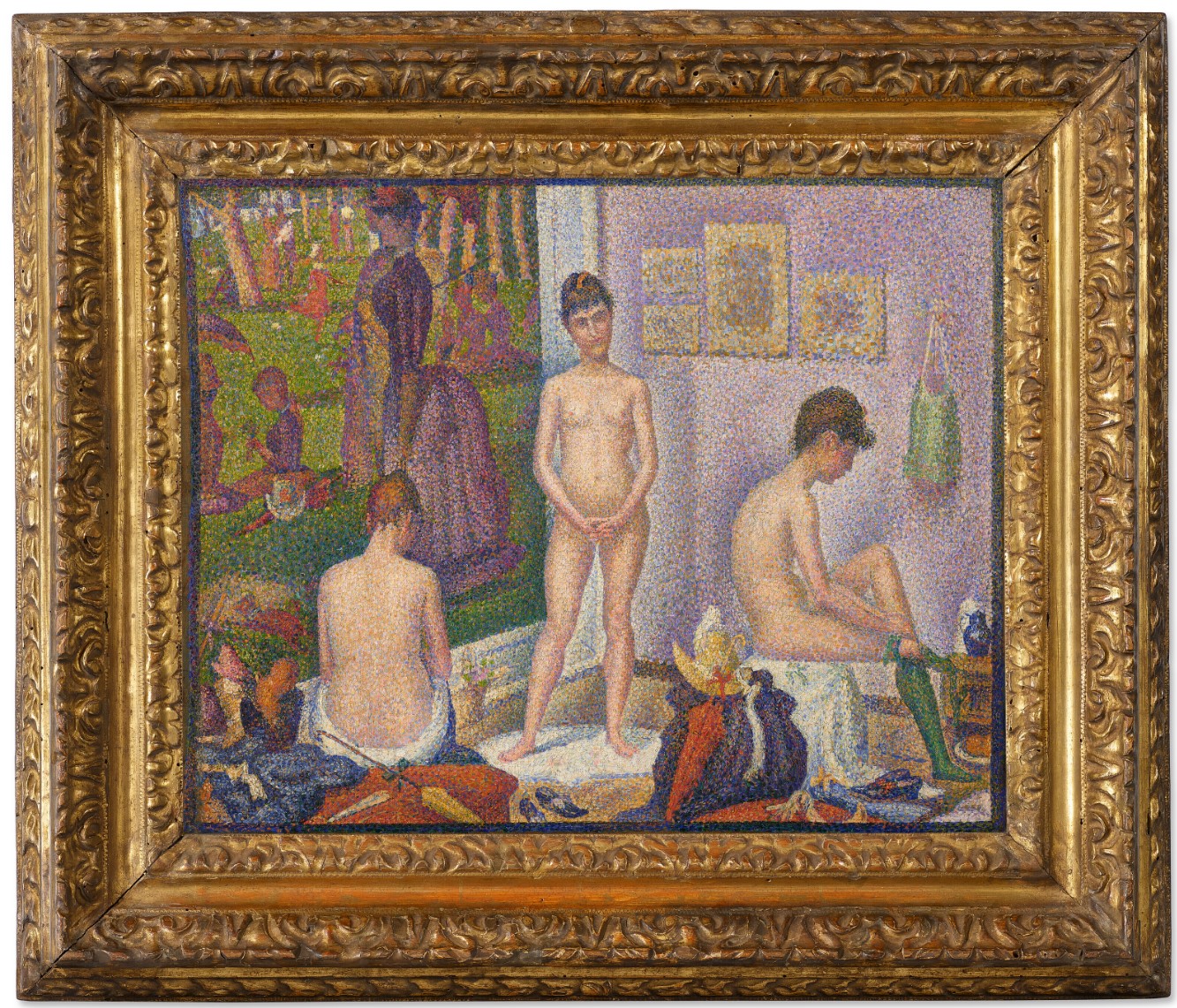
#1. George Seurat
Christie’s New-York: 9 November 2022
Estimate on Request
USD 149,240,000
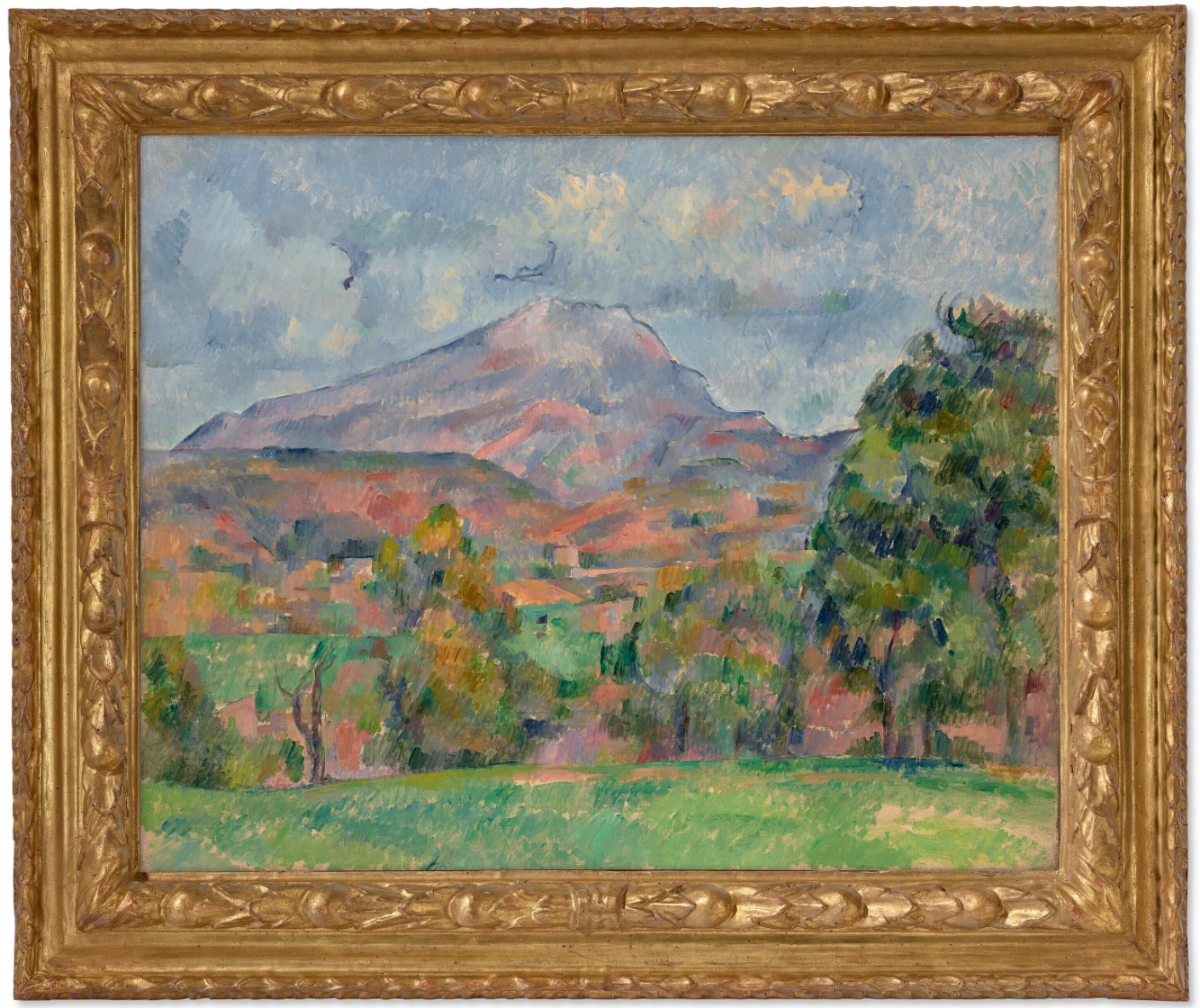
#2. Paul Cezanne
Christie’s New-York: 9 November 2022
Estimate on Request
USD 137,790,000
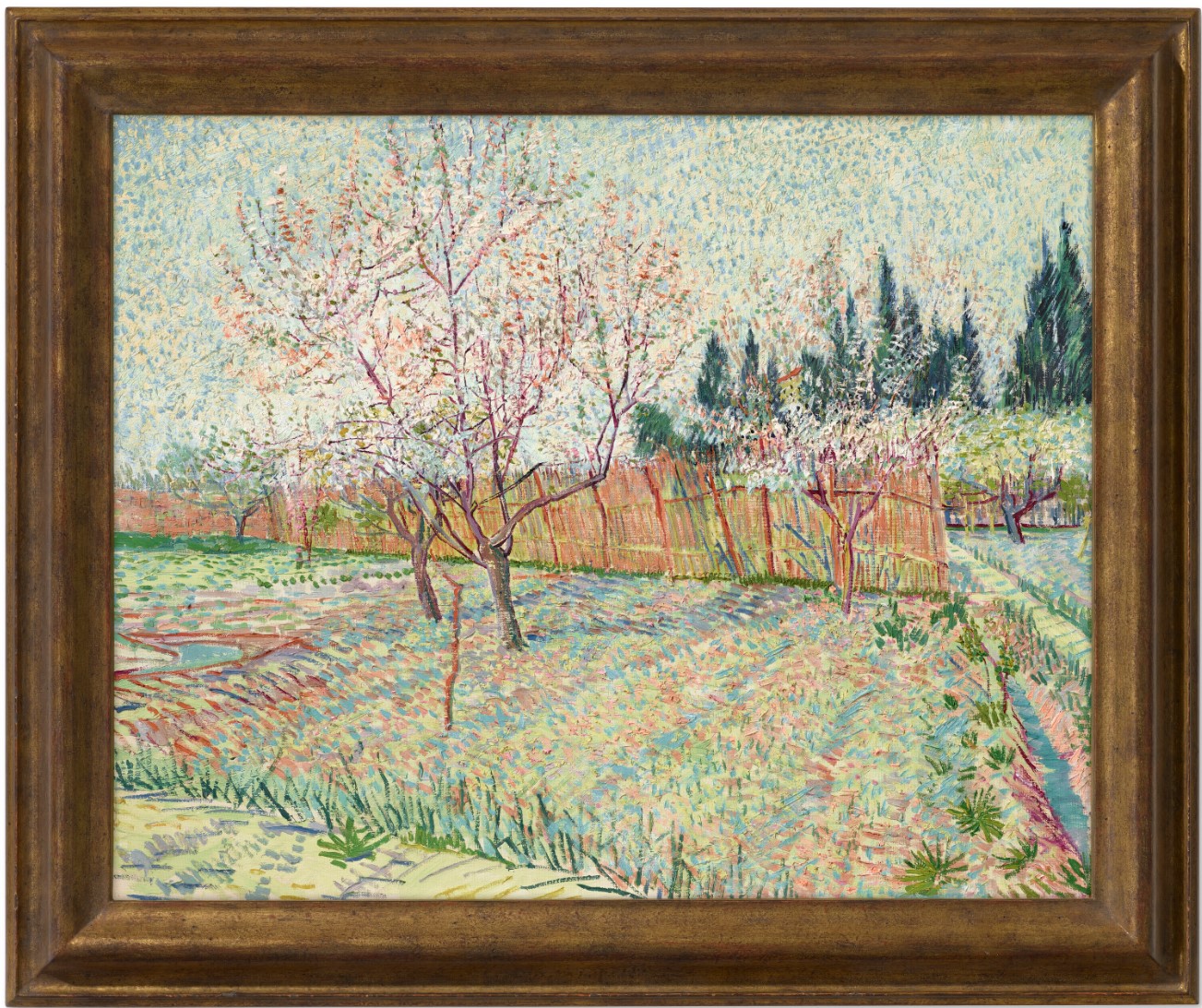
#3. Vincent van Gogh
Christie’s New-York: 9 November 2022
Estimate on Request
USD 117,180,000
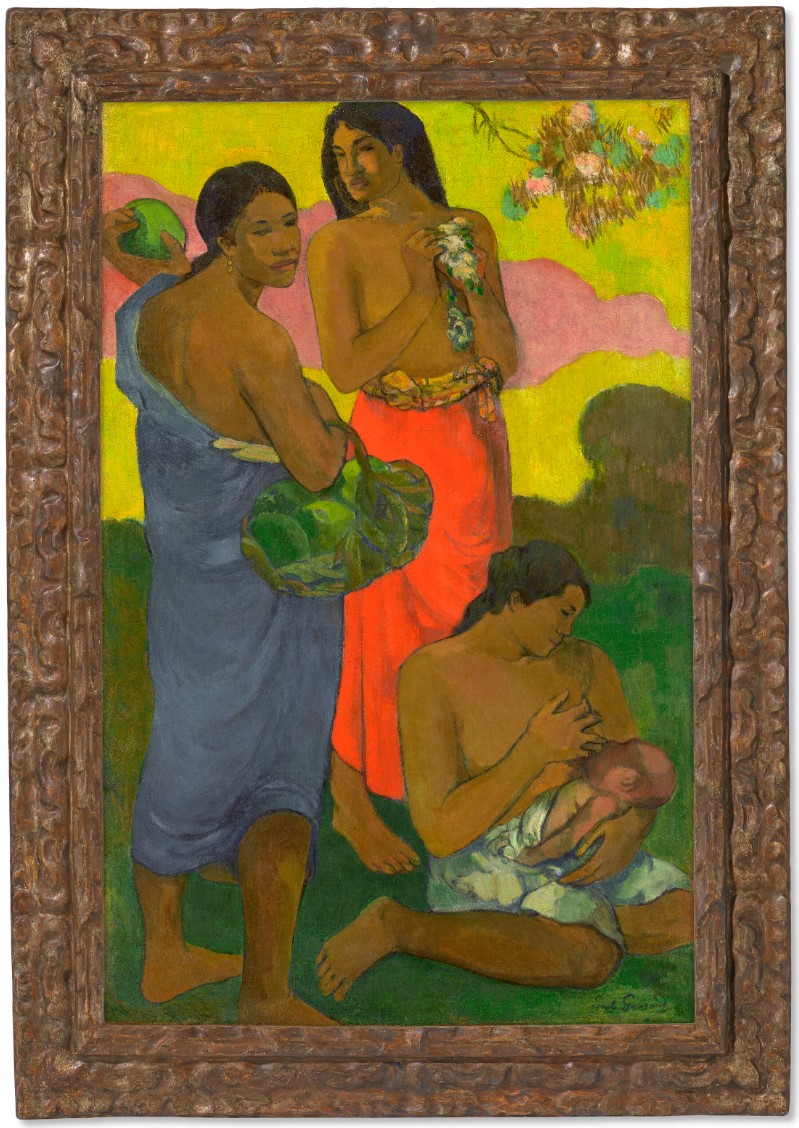
#4. Paul Gauguin
Christie’s New-York: 9 November 2022
Estimate on Request
USD 105,730,000
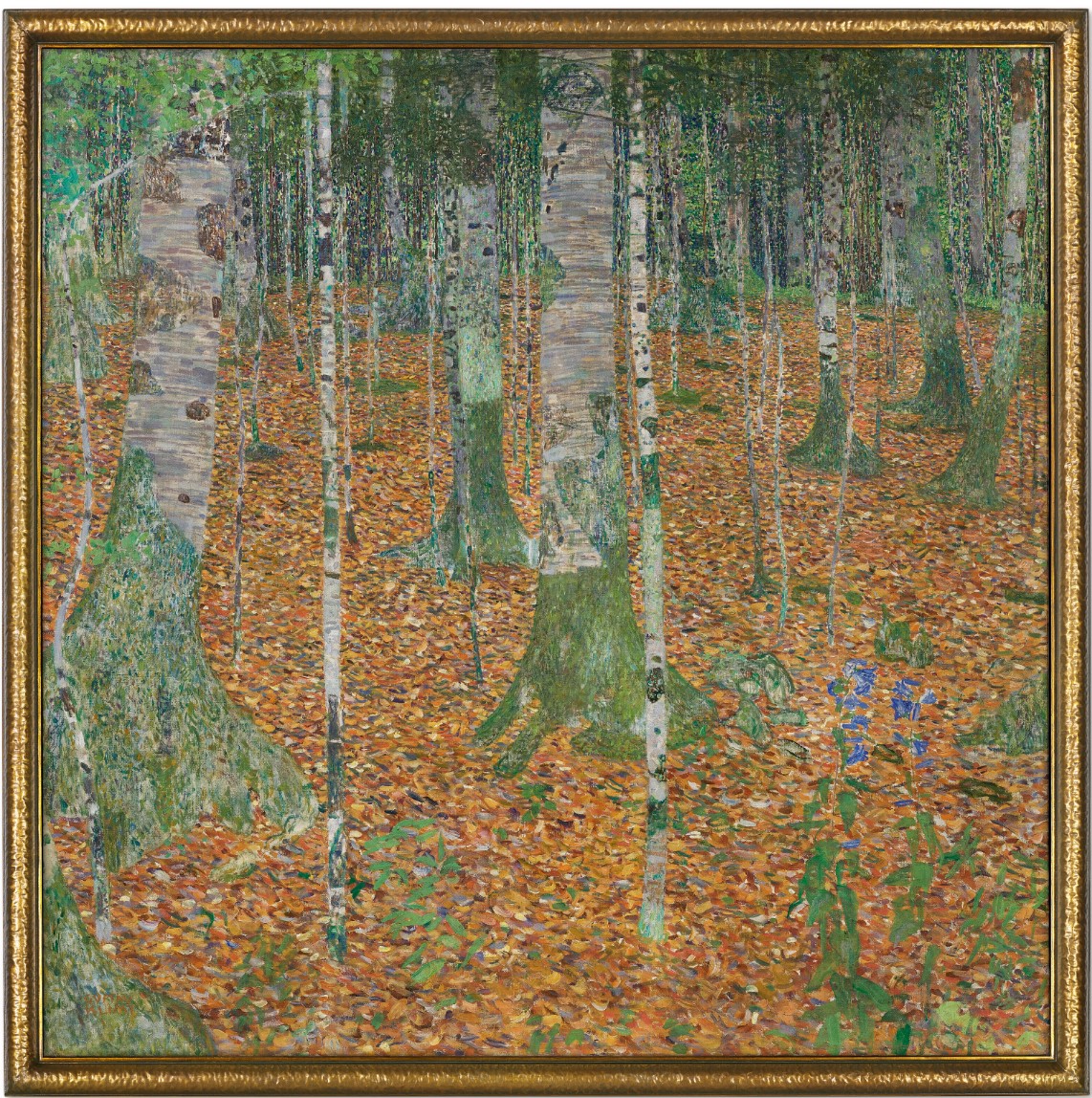
#5. Gustav Klimt
Christie’s New-York: 9 November 2022
Estimate on Request
USD 104,585,000
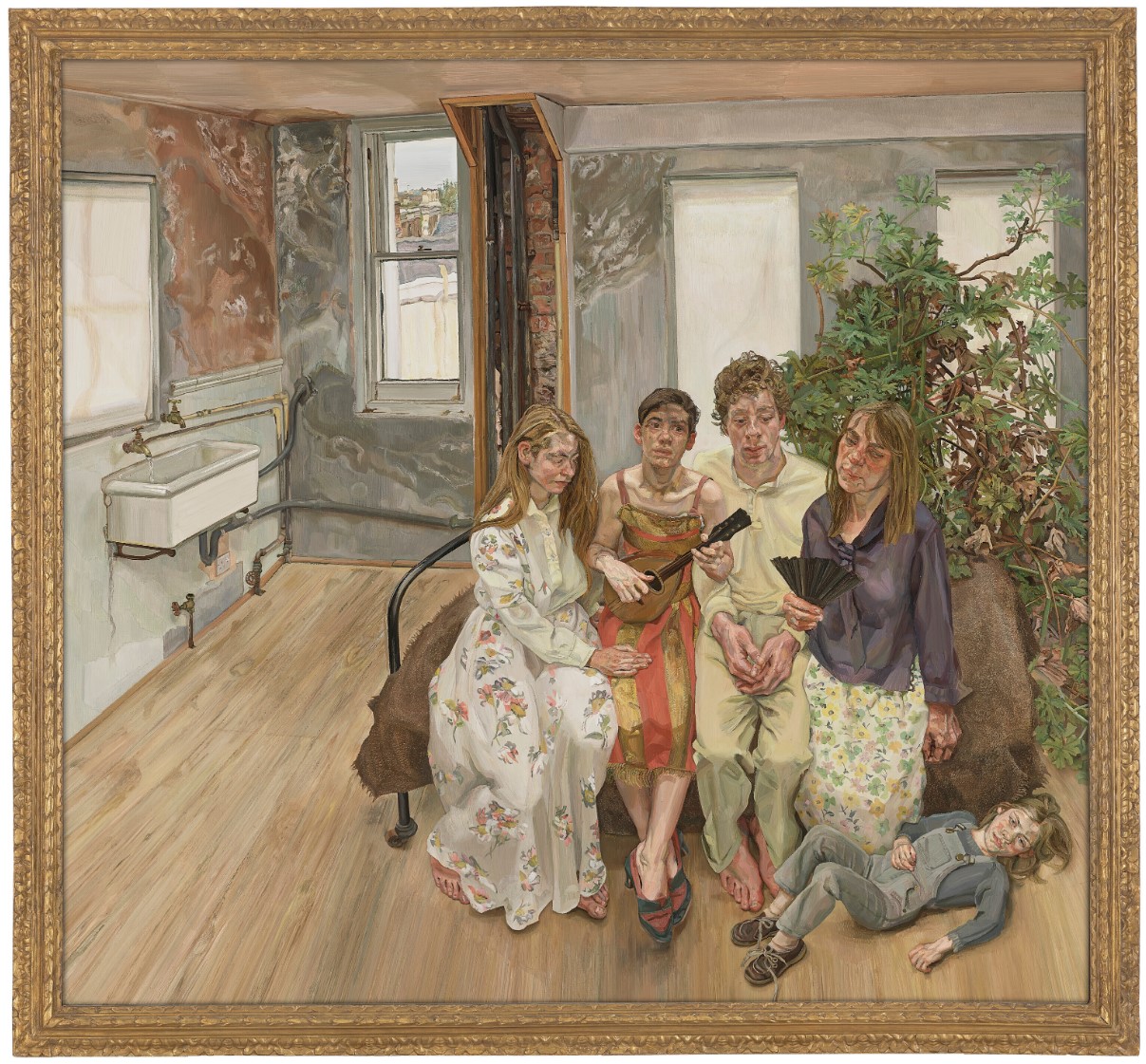
#6. Lucian Freud
Christie’s New-York: 9 November 2022
Estimate on Request
USD 86,265,000
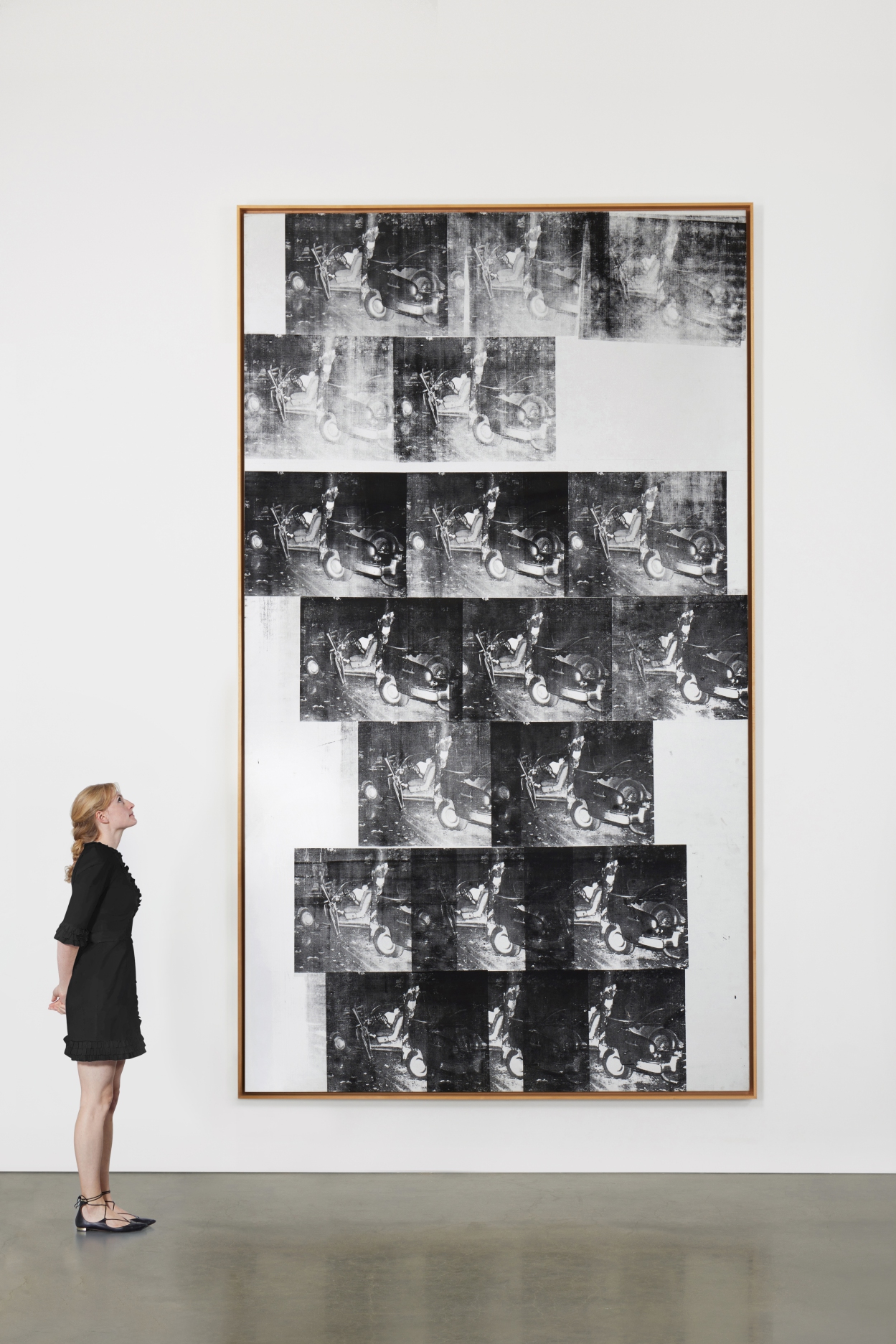
#7. Andy Warhol
Sotheby’s New-York: 16 November 2022
Estimate on Request
USD 85,350,500
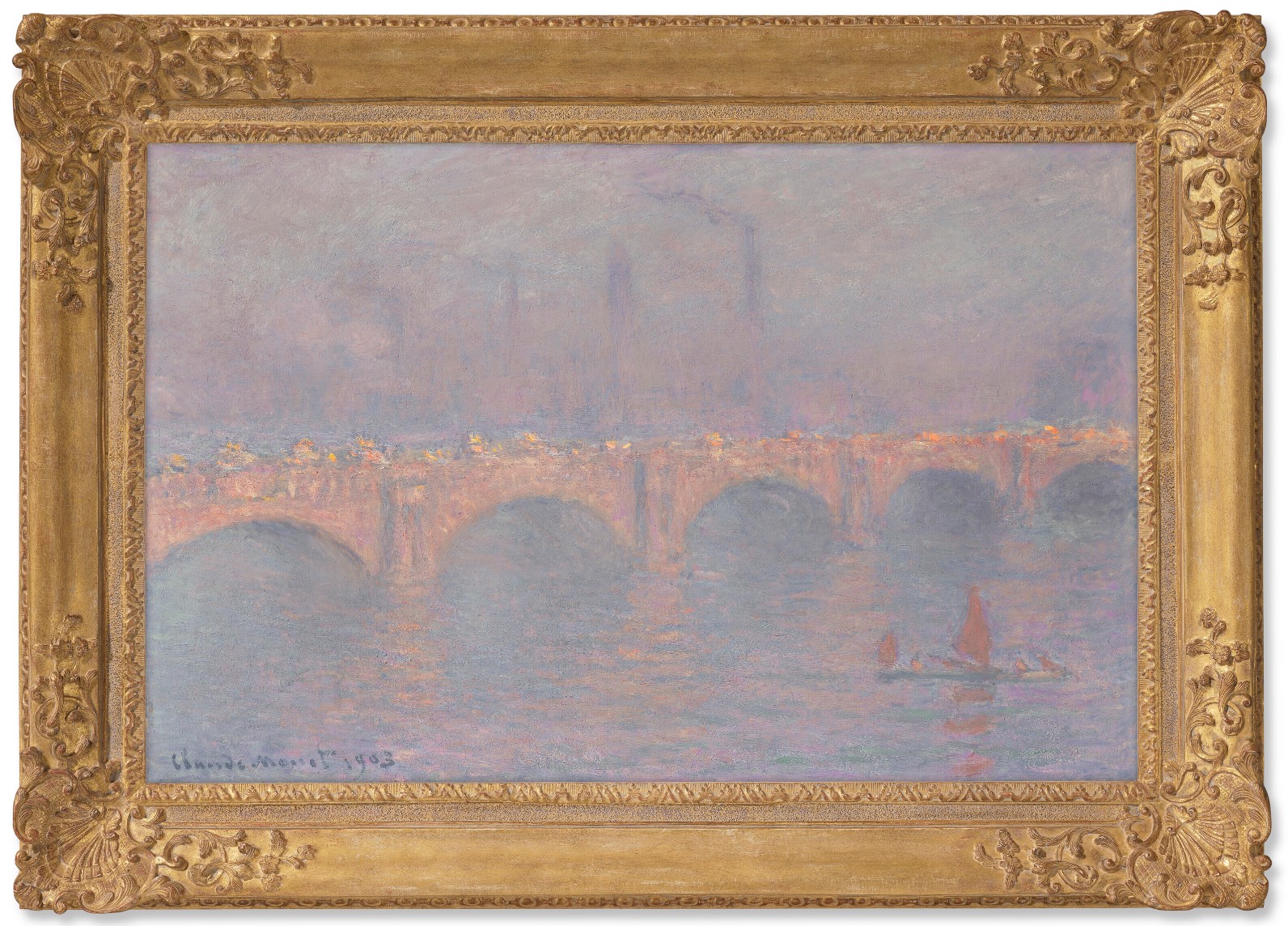
#8. Claude Monet
Christie’s New-York: 9 November 2022
Estimate on Request
USD 64,510,000
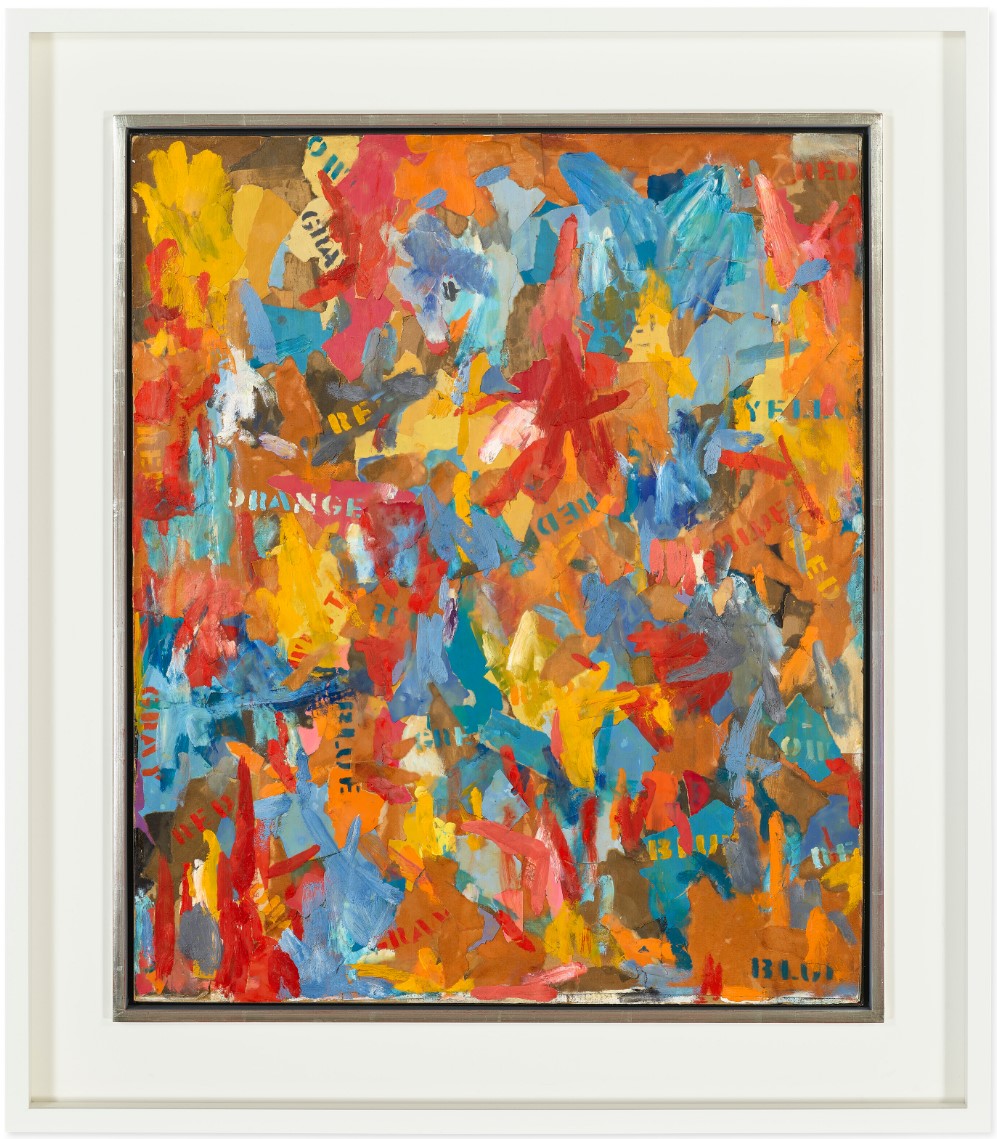
#9. Jasper Johns
Christie’s New-York: 9 November 2022
Estimated: USD 45,000,000 – 65,000,000
USD 55,350,000
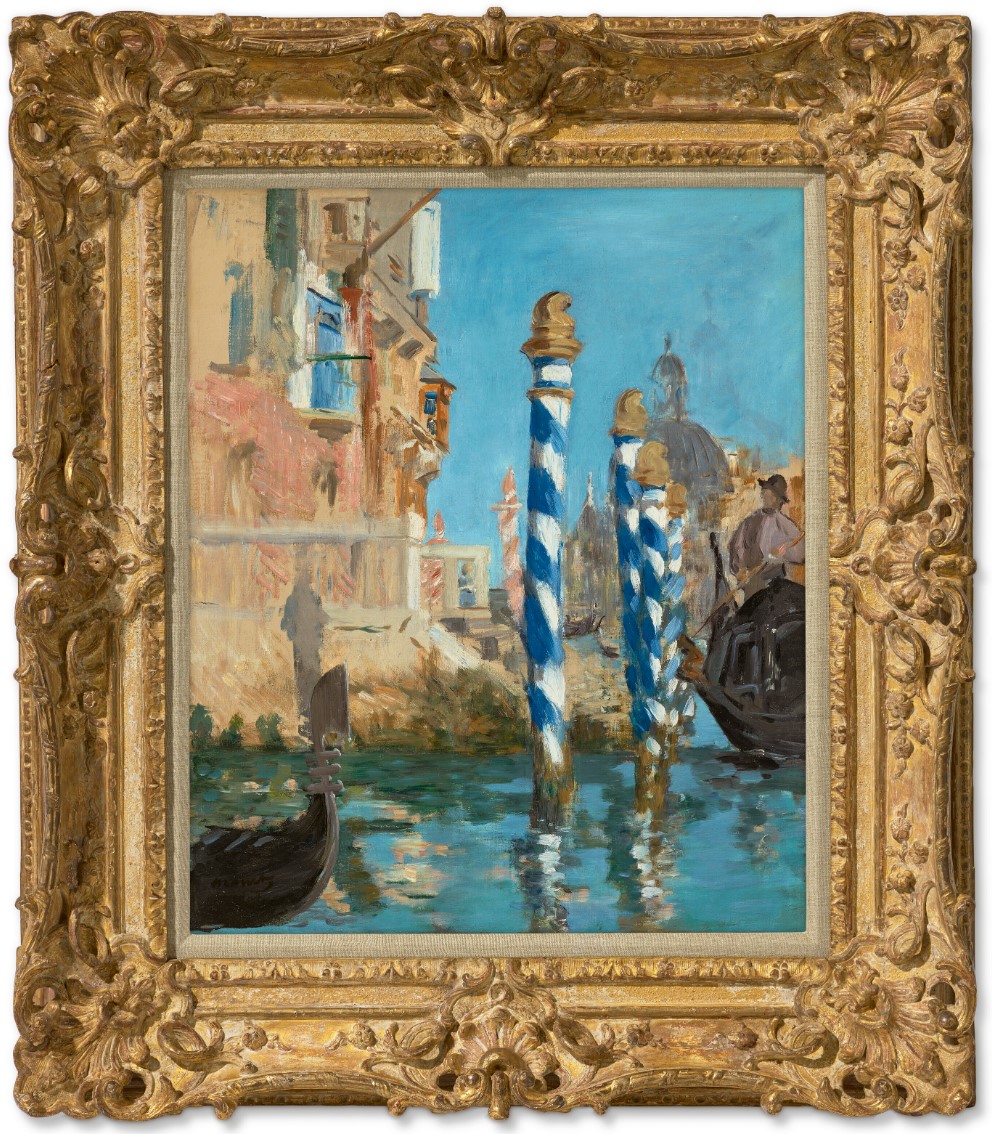
#10. Edouard Manet
Christie’s New-York: 9 November 2022
Estimated: USD 45,000,000 – 65,000,000
USD 51,915,000
4. Christie’s Sales
1. Visionary: The Paul Allen Collection

Visionary: The Paul G. Allen Collection (christies.com)
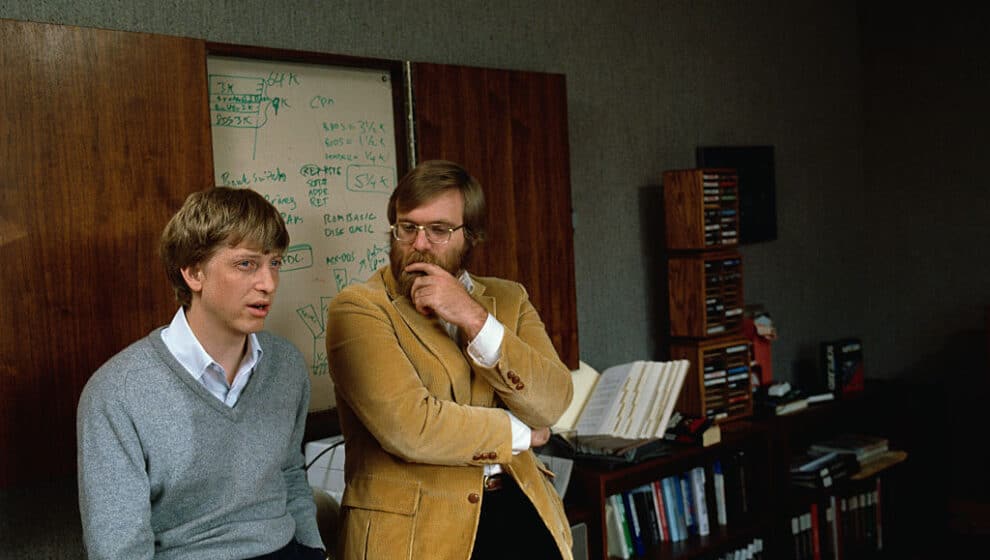
The collection of philanthropist Paul G. Allen, co-founder of Microsoft, includes more than 150 masterpieces spanning 500 years of art history. Reflecting the depth and breadth of Paul G. Allen’s collection, the auctions connect this visionary innovator to a range of ground-breaking artists, joining Paul Cezanne with David Hockney and Georges Seurat with Jasper Johns.
Visionary Part I
9 November 2022
# Lots: 60 Lots
Sell-Through Rate: 100%
Total: USD 1,506,386,000
Top Lot: USD 149,240,000
5 Lots sold over USD 100 million
20 Lots sold over USD 20 million
——
Estimate on Request: 8 (13%)
Above Estimates: 36 Lots (60%)
Within Estimates: 13 Lots (22%)
Below Estimates: 3 Lots (5%)
#1. George Seurat
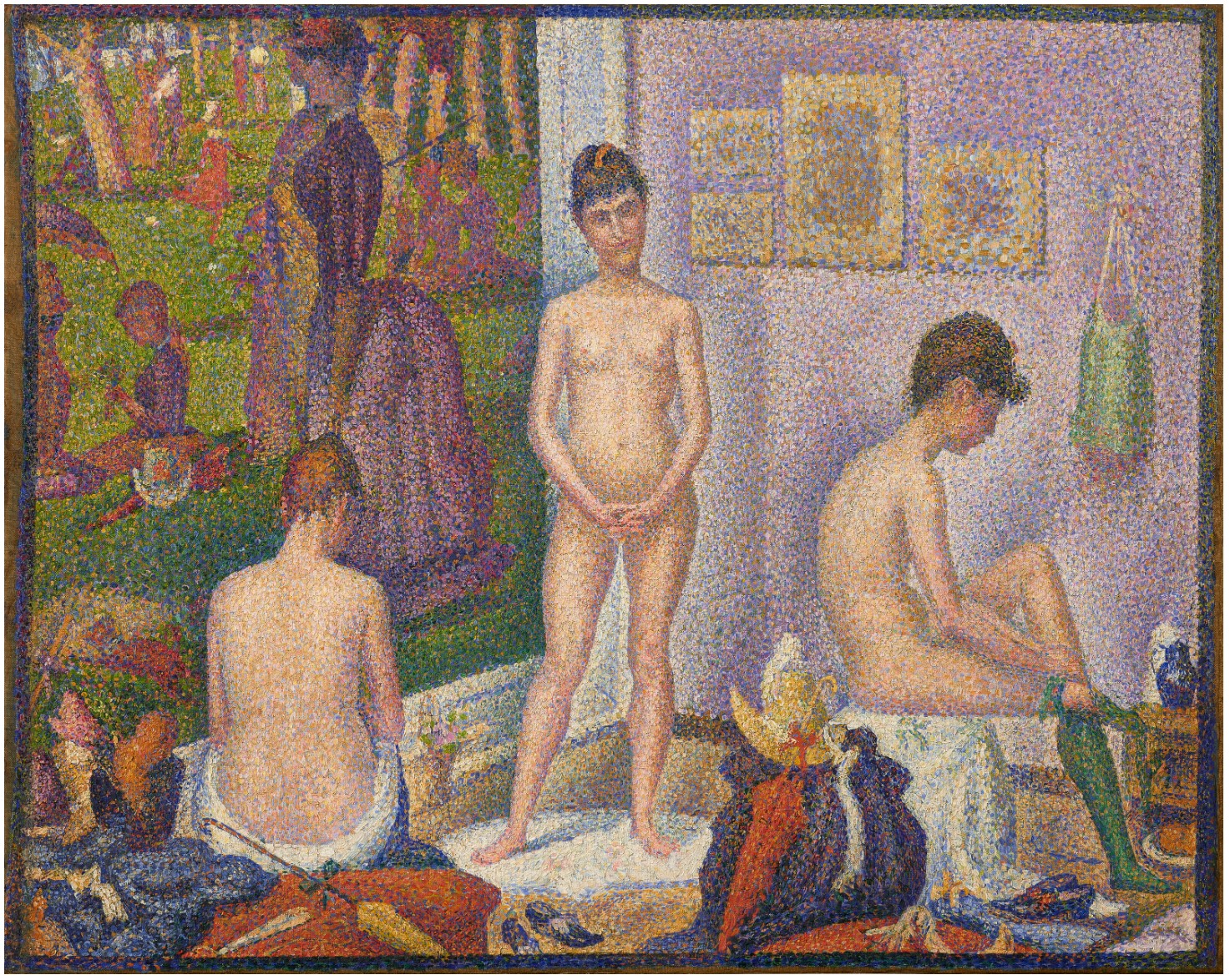
Les Poseuses, Ensemble (Petite version), 1888
Oil on canvas
39.3 x 50 cm (15 1/2 x 19 3/4 inches)
Christie’s New-York: 9 November 2022
Estimate on Request
USD 149,240,000
When Georges Seurat’s grand, tour-de-force Un dimanche d’été à l’Île de La Grande Jatte (De Hauke, no. 162; The Art Institute of Chicago) made its debut at the eighth and final Impressionist Exhibition in May 1886, it caused a sensation, launching the artist to the very forefront of the avant-garde and establishing his reputation as one of the most exciting voices of his generation. A monumental work that stood over six feet tall and ten feet long, the painting drew widespread attention in both the press and amongst the general public, who were astonished by its large cast of characters, conjured through a myriad of carefully placed, precise, colorful dots. While it was clear to contemporary viewers that the startling effect of Seurat’s innovative pointillist technique hailed the work as a bold new masterpiece of modern art, some commentators questioned whether the methodical, carefully planned application of paint would prove suitable for capturing a diverse range of subjects and scenes, particularly the subtle tones and soft contours of the human figure. In typical Seurat fashion, the artist did not respond to such criticism with a written statement of intent or defense in the papers. Instead, he retreated to his studio and began work on another large-scale canvas which would meet the challenge head-on and showcase the full expressive potential of pointillism. The resulting composition, Les Poseuses (De Hauke, no. 185; The Barnes Foundation, Philadelphia), was to become one of the artist’s most celebrated and iconic works, a bold riposte that not only answered his critics directly but which also captured a sense of Seurat’s pioneering spirit and revolutionary vision, as he examined one of the most familiar and traditional motifs from the history of art through a thoroughly modern lens.
Les Poseuses, Ensemble (Petite version) is an extremely rare work associated with this project—unlike other large-scale canvases from Seurat’s oeuvre such as La Grande Jatte or Une baignade à Asnières (De Hauke, no. 92; National Gallery, London), the artist created only a handful of drawings and oil studies in preparation for the final composition of Les Poseuses, the majority of which are now in the collections of esteemed museums around the world, including The Metropolitan Museum of Art, New York, the Musée d’Orsay in Paris, and the National Gallery of Art, Washington, D.C. Painted in 1888, the present composition is believed to have been created during the final stages of the painting’s completion, perhaps even after the canvas was finished, and is the most complete and refined version of the scene among the associated works. For much of the twentieth century, this small canvas has been the primary means for scholars and the public to study Seurat’s intricate play of color and light, and the complex compositional arrangement of Les Poseuses, as the larger canvas remained sequestered away in the collection of the Barnes Foundation, Philadelphia. As such, Les Poseuses, Ensemble (Petite version) has played a pivotal role in the development of Seurat’s reception through the past century, its extensive exhibition and publication history a testament to its influence across the decades.
#2. Paul Cezanne
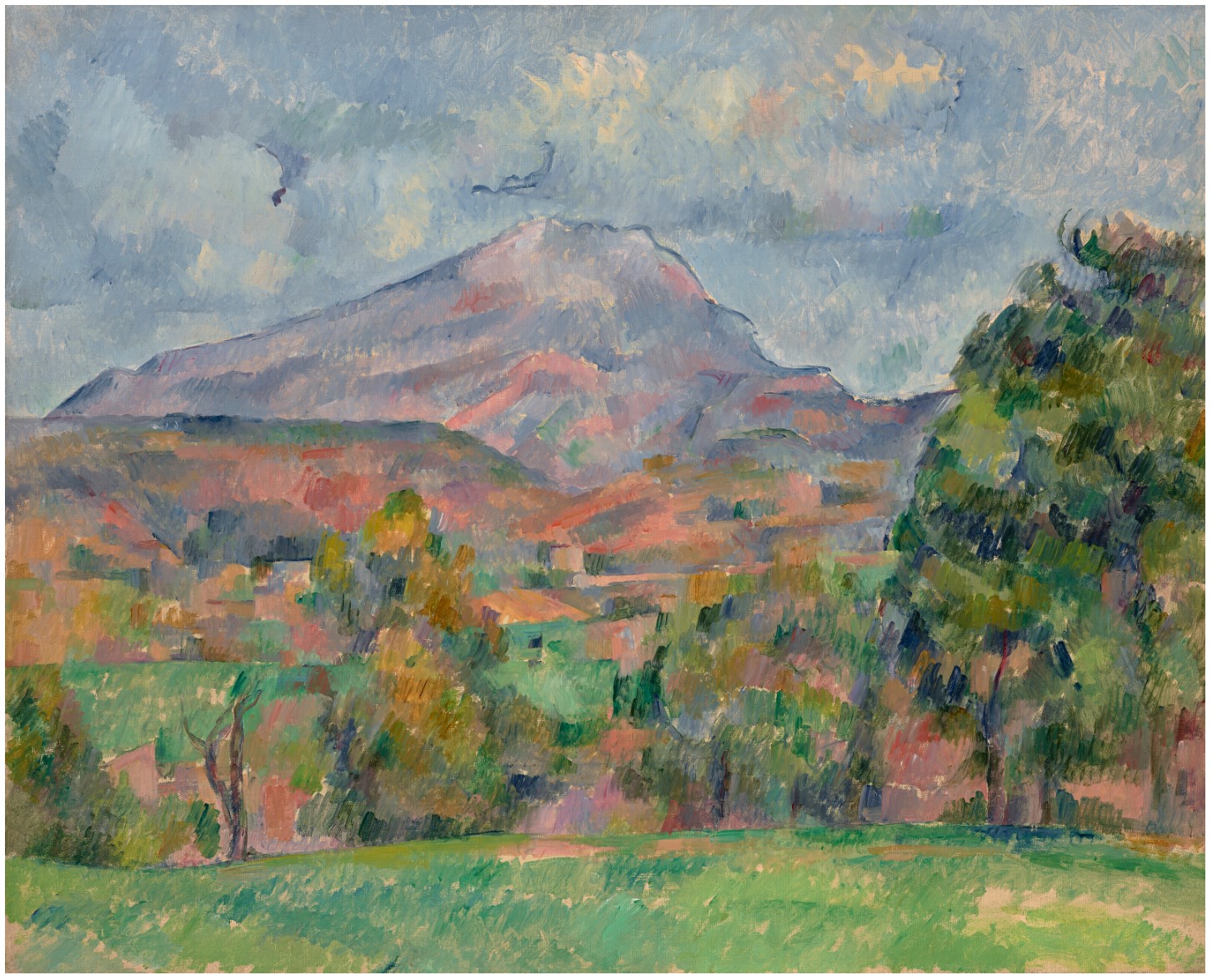
La Montagne Sainte-Victoire, 1888-1890
Oil on canvas
65.2 x 81.2 cm (25 5/8 x 31 7/8 inches)
Christie’s New-York: 9 November 2022
Estimate on Request
USD 137,790,000
#3. Vincent van Gogh
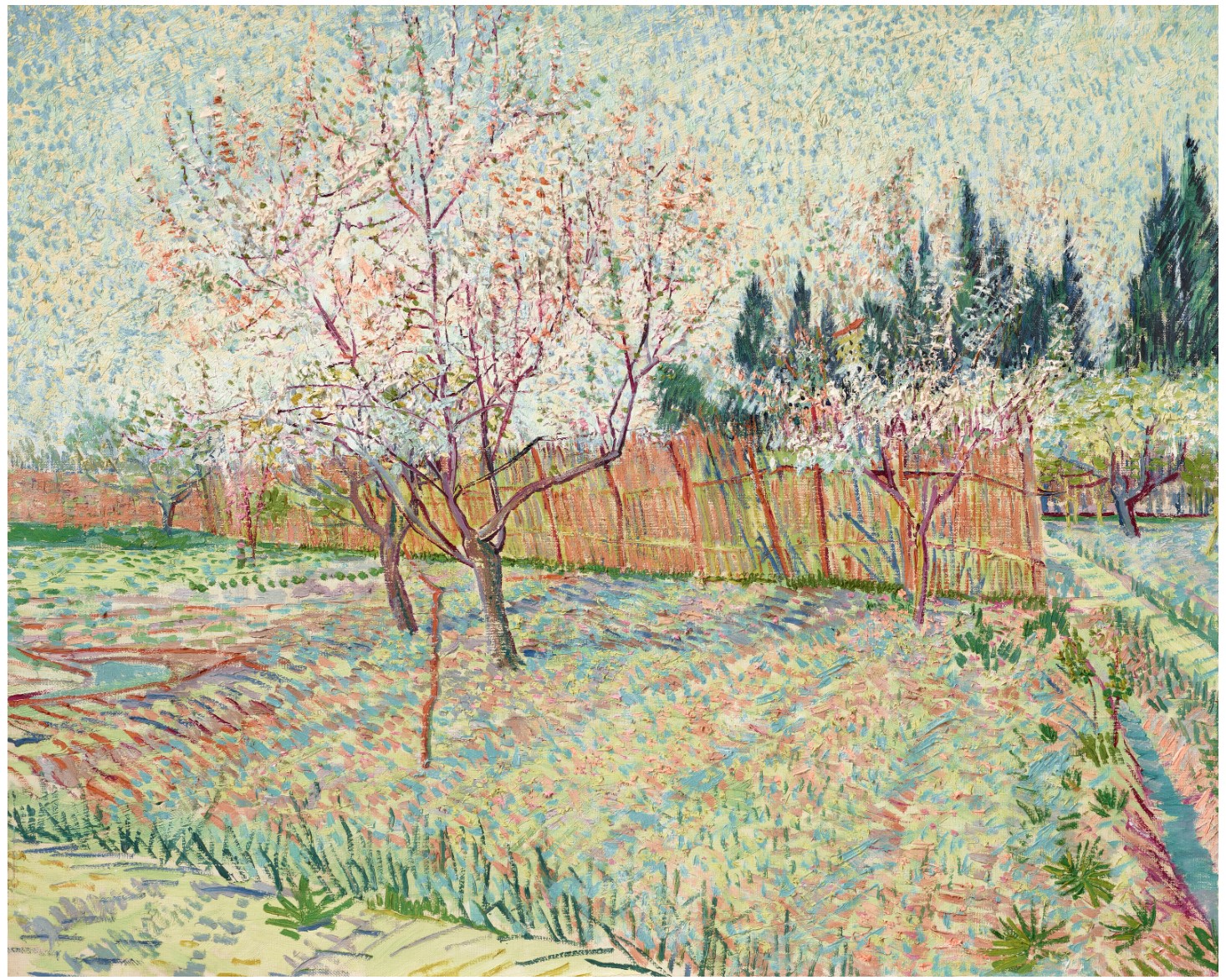
Verger avec cyprès, 1888
Oil on canvas
65.2 x 80.2 cm (25 3/4 x 31 7/8 inches)
Christie’s New-York: 9 November 2022
Estimate on Request
USD 117,180,000
#4. Paul Gauguin
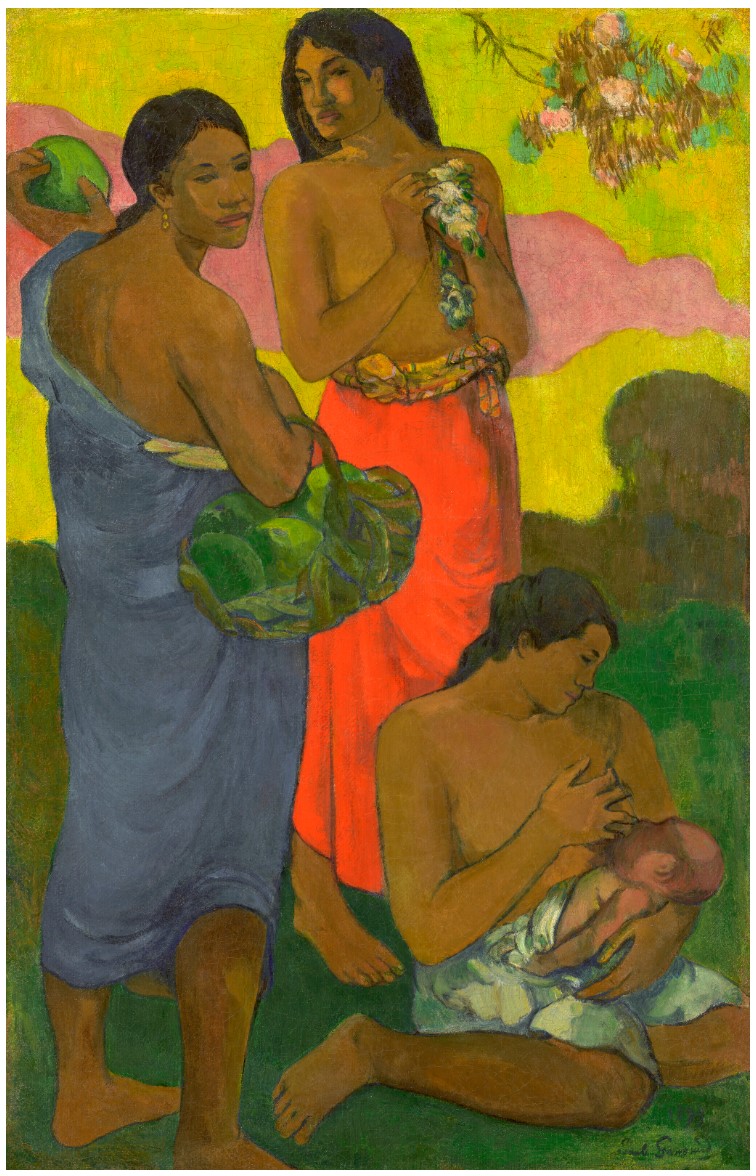
PAUL GAUGUIN (1848-1903)
Maternité II, 1899
Oil on burlap
94.7 x 61 cm (37 1/4 x 24 inches)
Christie’s New-York: 9 November 2022
Estimate on Request
USD 105,730,000
I have come to an unalterable decision,” Paul Gauguin wrote in the autumn of 1894, a year after his inaugural exhibition of Tahitian works in Paris had been met with outrage and satire. “—to go and live forever in Polynesia without this eternal struggle against idiots” (quoted in G.T.M. Shackelford and C. Frèches-Thory, Gauguin Tahiti: The Studio of the South Seas, exh. cat., Galeries nationales du Grand Palais, Paris, 2003, p. 89). Existing in dire financial straits and unable to find a receptive audience for his art, he decided to leave France again and return to the South Seas. After organizing a sale of his works at Hôtel Drouot in an attempt to gather funds for his trip, in July 1895, he traveled to Marseille where he boarded a steamer and set sail to French Polynesia. He would never again return to France. While Gauguin’s letters from his second stay in Tahiti tell of a life marked by constant ill health—he was suffering early symptoms of syphilis—as well as of his never ending financial woes, it was during this time that he created some of the finest works of his career, including the famed D’où venons-nous? Que sommes-nous? Où allons-nous? of 1897-1898 (Wildenstein, no. 561; Museum of Fine Arts, Boston). Gauguin’s mastery of the figure depicted in evermore fantastical, decorative settings enabled him to create compositions permeated with mystery and magic, his experimental use of color and arabesque lines further infusing these works with a daring level of abstraction.
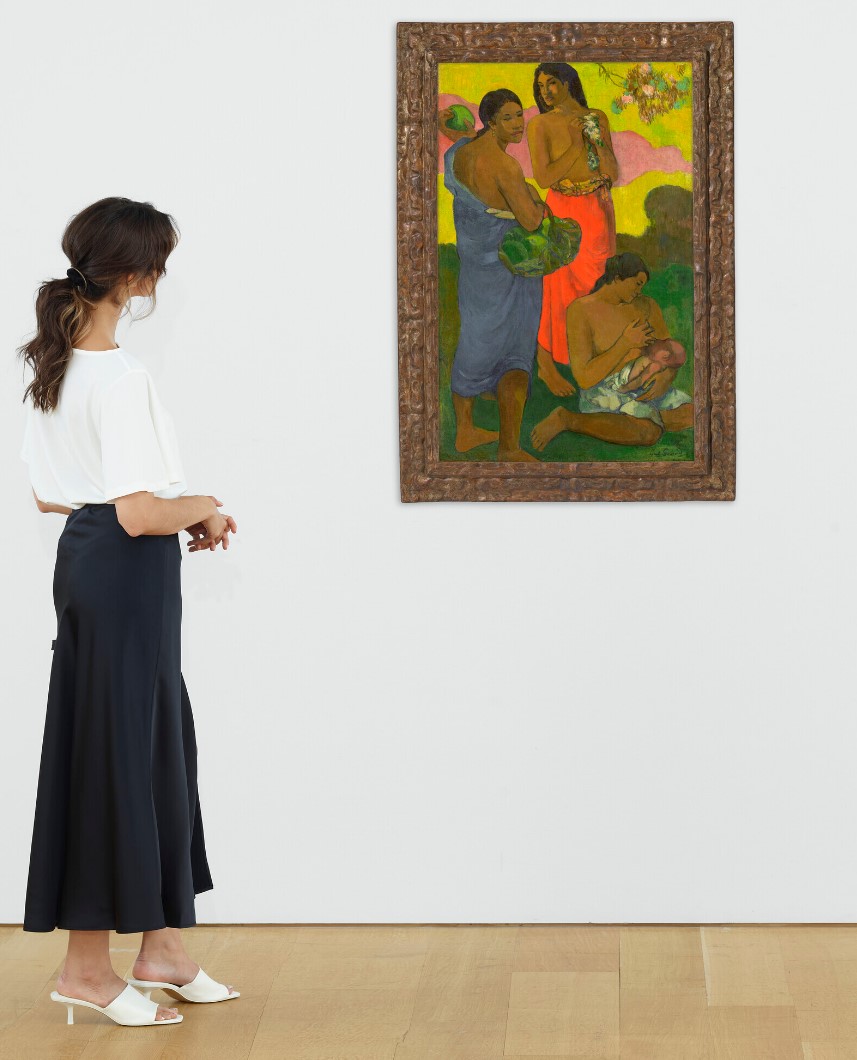
The monumental and mysterious Maternité II, painted in 1899, dates from this miraculous moment of Gauguin’s career. It is one of a closely related group of works that depict often classically posed, Tahitian women within paradisical settings—the rest of which are now in museum collections. Here, three women are pictured within a verdant, yet abstracted, Edenic realm. Seated on the ground is a mother nursing her baby. She is flanked, or perhaps protected, by two standing figures, one of whom holds a basket of fruit, the other a chain of flowers, offerings perhaps for their kneeling, Madonna-like companion. They both look outwards to meet the viewer, as if questioning their presence in regarding this quiet, intimate scene of motherhood. Taking the theme of maternity, a subject rich in art historical precedent, Gaugin masterfully transformed this motif into an exotic idyll, both personal and transcendent of a specific time and place. With this work Gauguin offers a timeless vision of femininity and motherhood, a verdant ode to fertility. A reflection of the importance it held for the artist is the fact that he chose to keep it in his possession until his death.
#5. Gustav Klimt
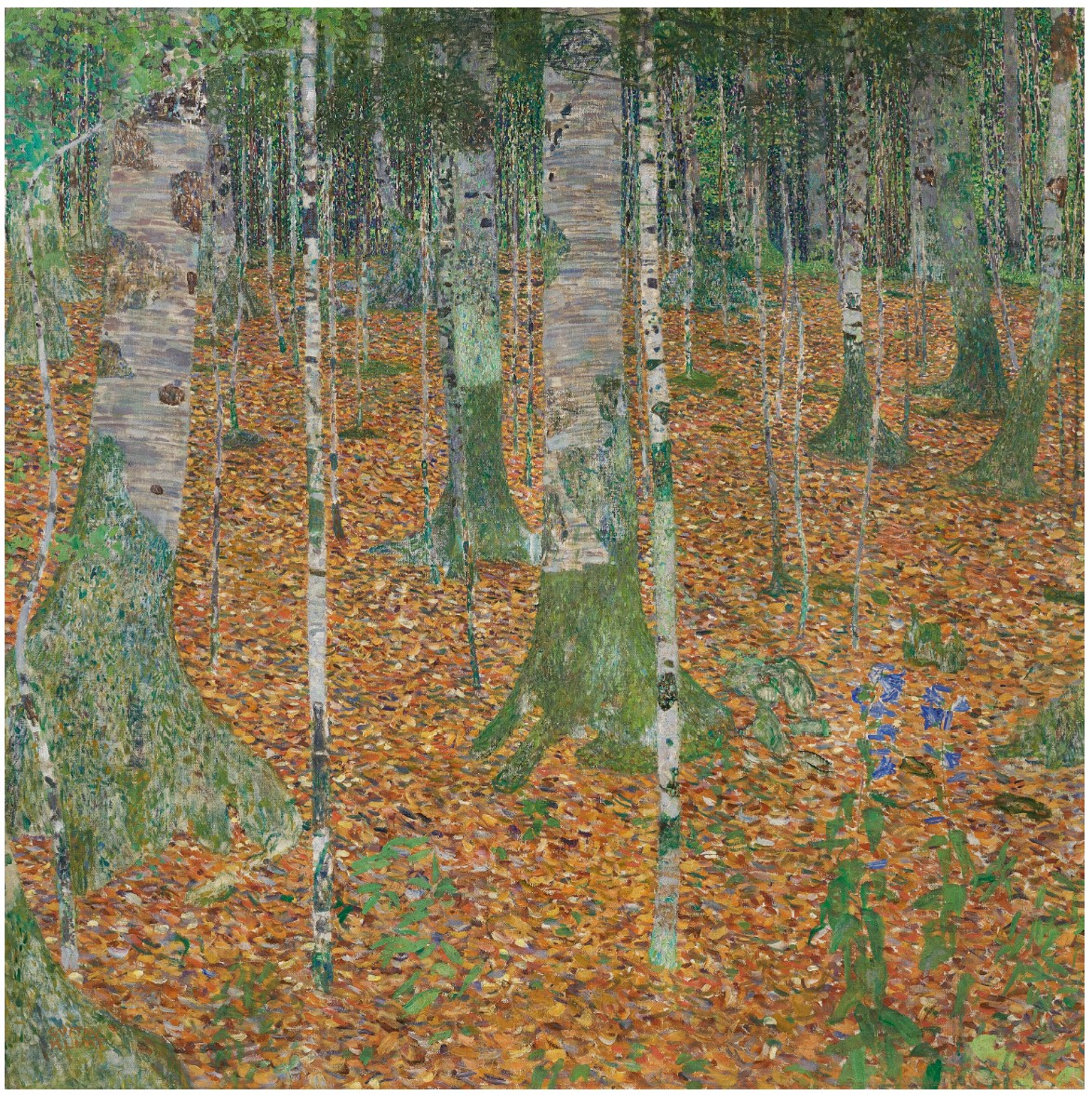
Birch Forest, 1903
Oil on canvas
110.1 x 109.8 cm (43 3/8 x 43 1/4 inches)
Christie’s New-York: 9 November 2022
Estimate on Request
USD 104,585,000
I get up early in the morning, usually around 6 am, sometimes earlier sometimes later. If I get up and the weather is fine I go into the nearby forest. I am painting a small beech grove, mixed with a few conifers,” so Gustav Klimt described life in the picturesque village of Litzlberg, situated on Lake Attersee in Austria, in the summer of 1903 (Letter to M. Zimmerman, August 1903, quoted in S. Koja, ed., Gustav Klimt: Landscapes, Munich, 2006, p. 27). Filled with the stillness, mystery and timelessness that characterizes the greatest of Klimt’s landscapes, Birch Forest was painted during this idyllic summer retreat. Here, Klimt has pictured a segment of a densely wooded birch forest with exquisite, meticulously rendered detail. The elegant, otherworldly silver trunks ascend, “like columns in a cathedral created by nature,” Johannes Dobai described, from a dappled bronze carpet of fallen leaves (Gustav Klimt Landscapes, London, 1988, p. 17). A multitude of hues, gold, russet, and sage make up this mosaic-like accumulation of strokes, a contrast to the deep green foliage that lines the top of the closely cropped canvas. With his distinctive artistic technique, including his newly adapted pointillist-style brushstrokes, Klimt transformed this quiet corner of a woods into a shimmering vision of subtle color, pattern and light.
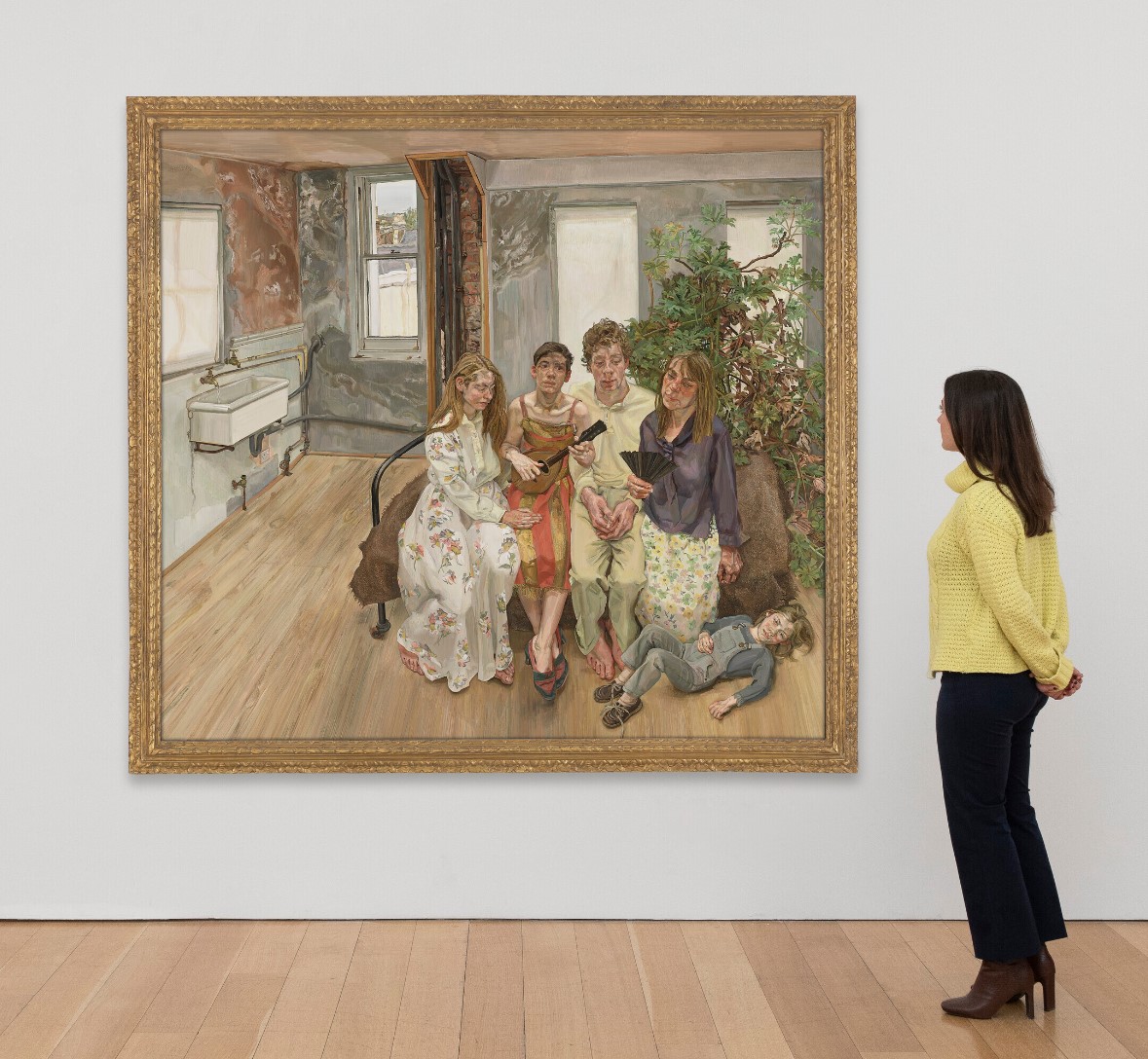
#6. Lucian Freud
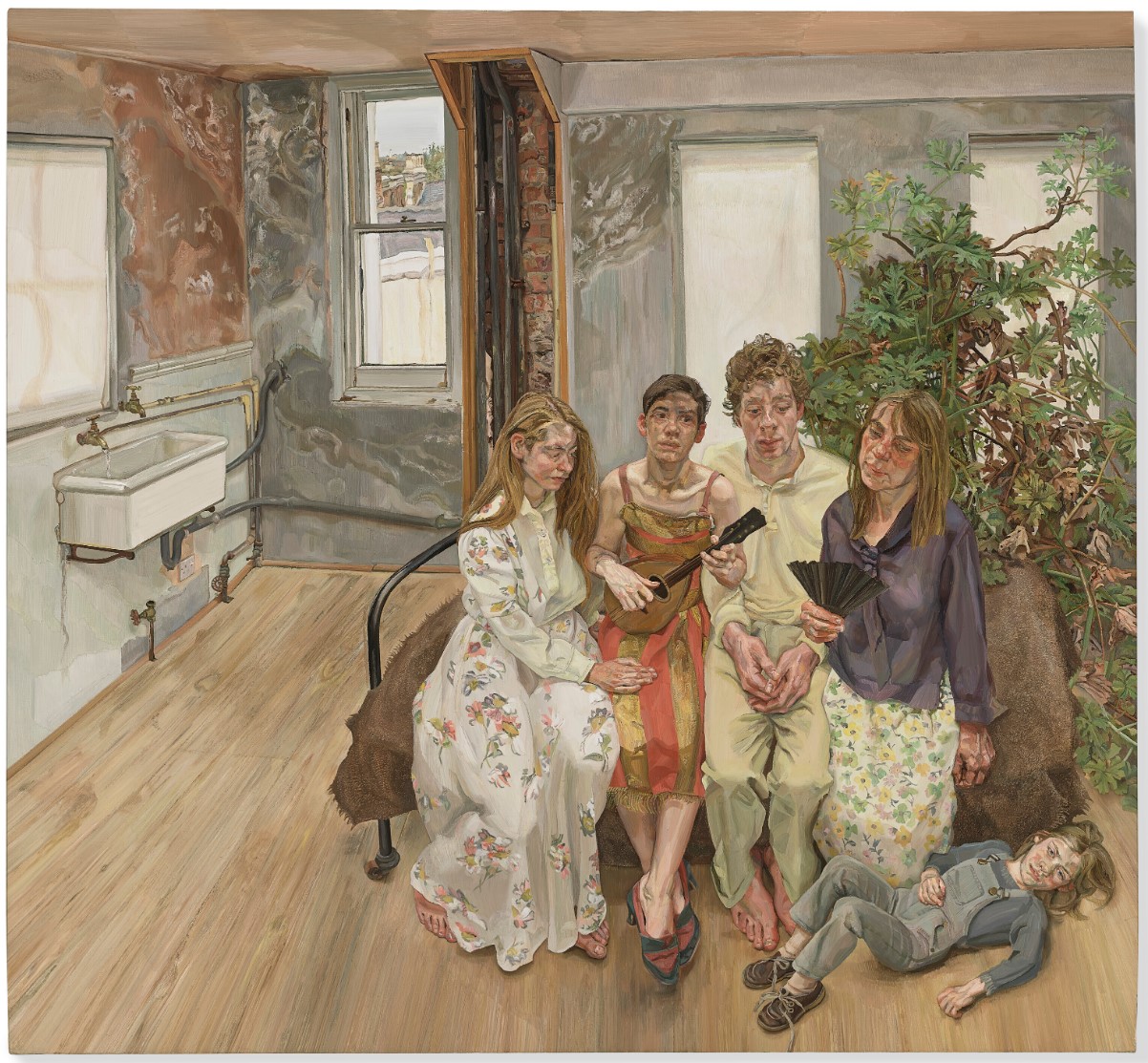
Large Interior, W11 (after Watteau), 1981-1983
Oil on canvas
72 1/4 x 78 inches (185.4 x 198.1 cm.)
Christie’s New-York: 9 November 2022
Estimate on Request
USD 86,265,000
#7. Claude Monet
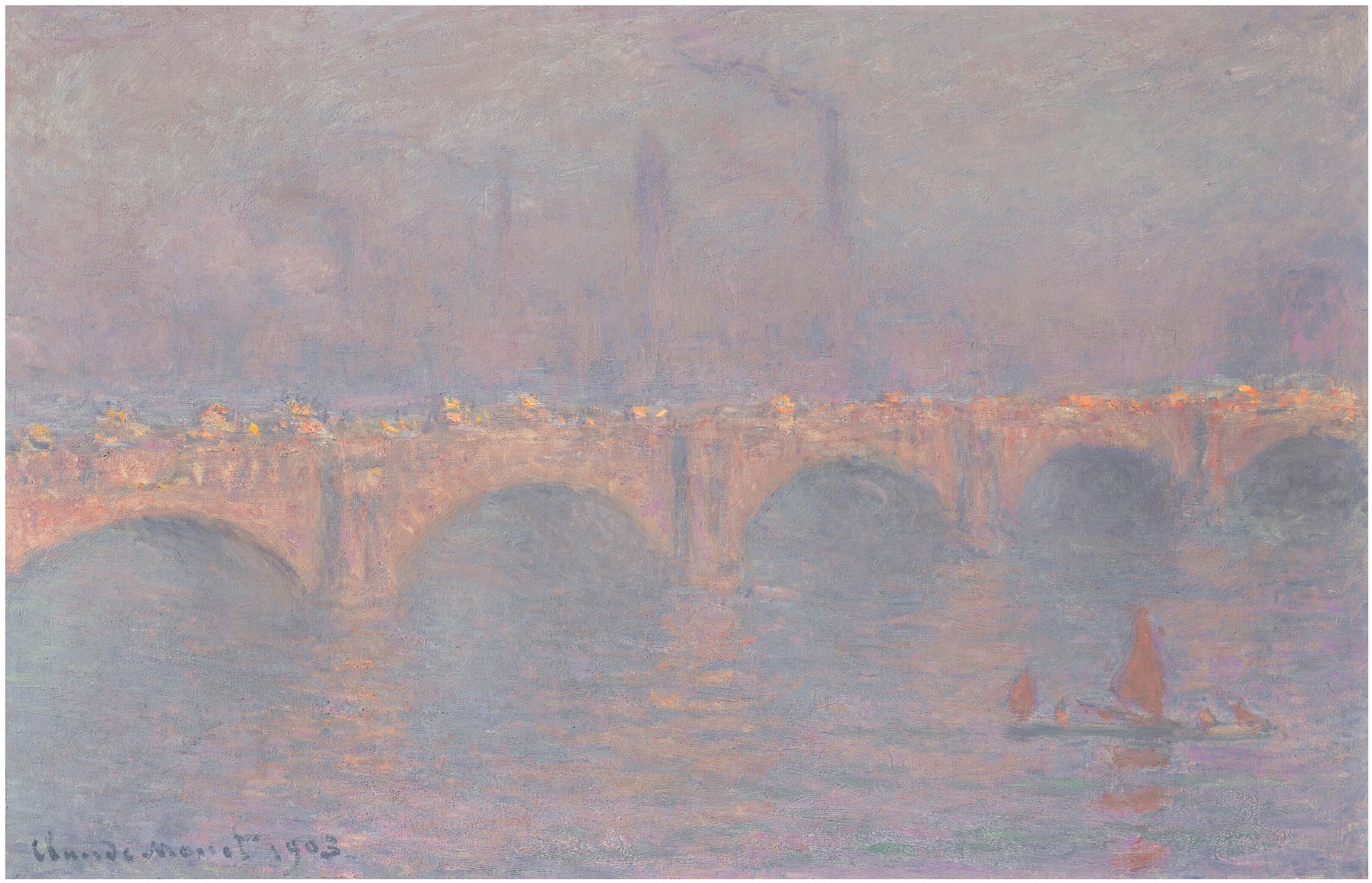
CLAUDE MONET (1840-1926)
Waterloo Bridge, soleil voilé, 1899-1903
Oil on canvas
65.4 x 100 cm (25 3/4 x 39 1/2 inches)
Christie’s New-York: 9 November 2022
Estimate on Request
USD 64,510,000
In 1899, Claude Monet began work on what would become the largest body of paintings he had yet produced. The artist had arrived in London on 15 September of this year, accompanied by his wife, Alice, and step-daughter, Germaine Hoschedé. The purpose of this trip was for the family to visit Michel Monet, the son of the artist, who was staying in the capital at the time to improve his English. Monet, however, had long been contemplating a painting campaign in the city, and, though this trip was purportedly a holiday, he had brought his paint supplies with him. Staying on the sixth floor of the fashionable Savoy Hotel, which stood on the banks of the Thames, between Waterloo Bridge and Charing Cross Bridge with views of the Houses of Parliament beyond, Monet was instantly inspired. What was initially supposed to be a month-long holiday became a six-week trip. Leaving his family to sightsee together by day, he converted one of the rooms of their suite into a studio and commenced the great series of works known as the Vues de Londres. From his hotel window, the heart of London stretched before him, the sky frequently filled with the capital’s notorious fog, or by contrast, bathed in the soft autumnal light.
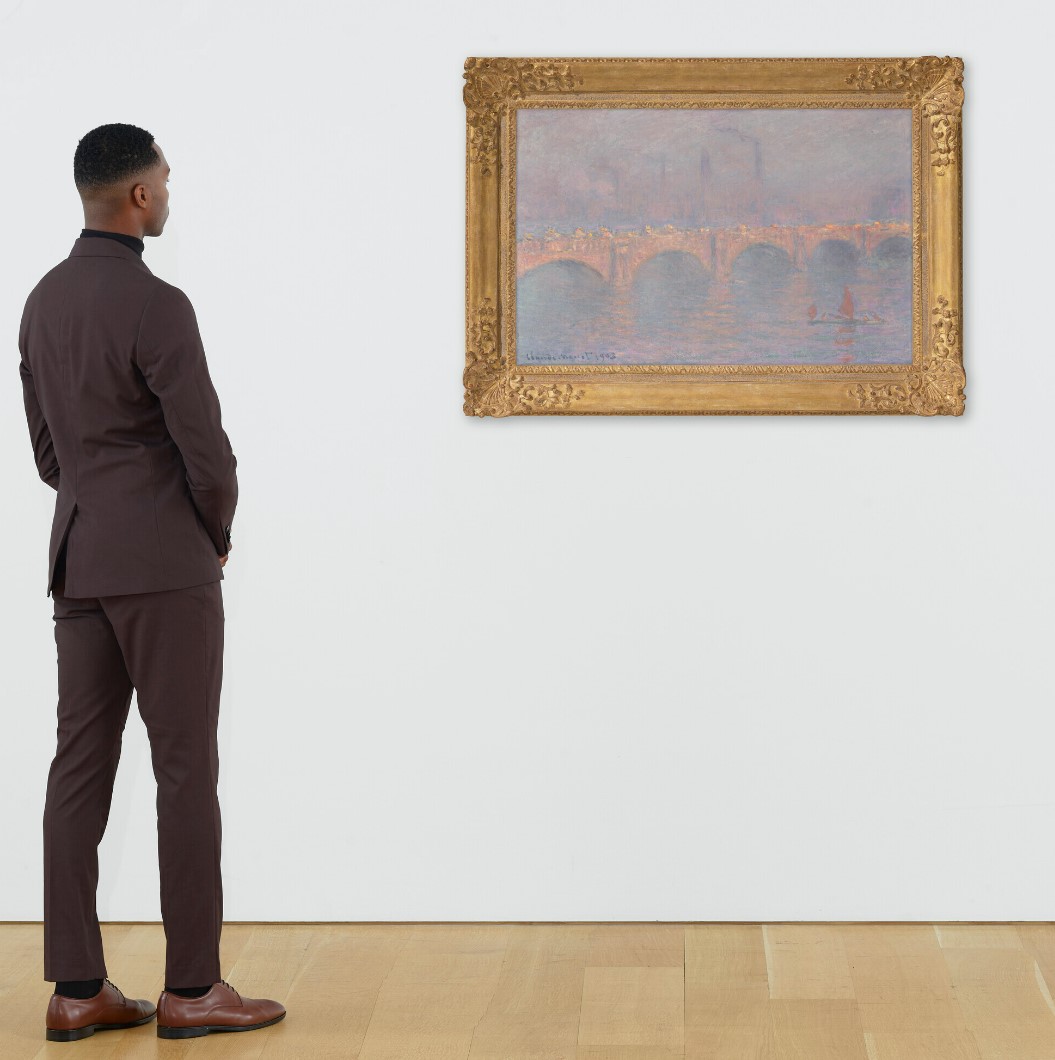
Rendered with a richly worked, multi-layered and multi-hued haze of delicate lilac, blue and violet tones, Waterloo Bridge, soleil voilé captures the river in the afternoon, as the westerly moving sun penetrated the dense atmosphere that had built up over the course of the day to gently light up the wide arches of the bridge. Sky, land and water are painted with the same palette, as Monet transformed the bustling urban cityscape into a delicate harmony of color and light. Specific anecdotal detail has been softened, immersed in the evanescent haze of smoke and fog that Monet loved so much. While a single boat moves silently across the still waters, the reflections of its red sails cascading down the river in bold strokes, a cavalcade of carriages and cars cross the bridge in a glittering procession, their lights gleaming amid the soft blue and lilac world that Monet has conjured.
#8. Jasper Johns
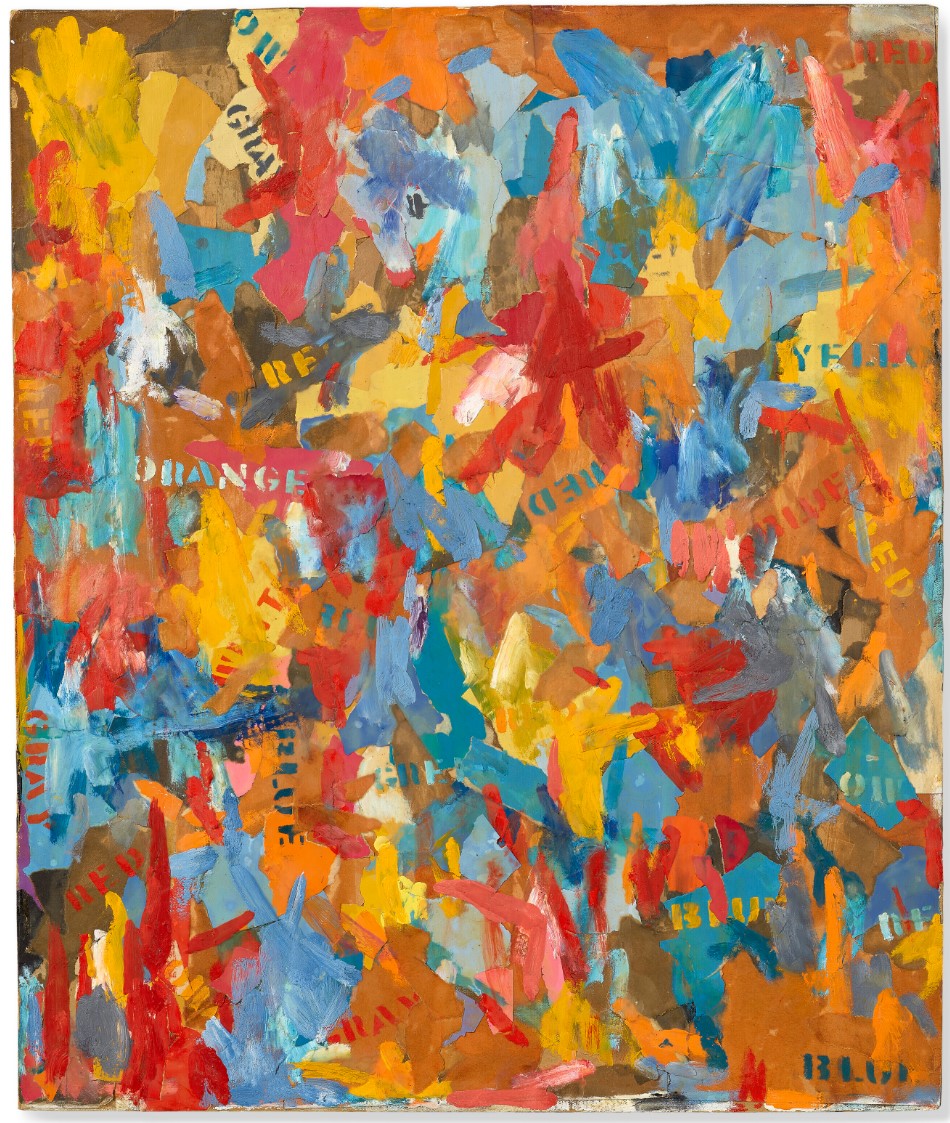
Small False Start, 1960
Encaustic, acrylic and paper collage on fiberboard
21 7/8 x 18 1/4 inches (55.6 x 46.4 cm)
Christie’s New-York: 9 November 2022
Estimated: USD 45,000,000 – 65,000,000
USD 55,350,000
#9. Edouard Manet
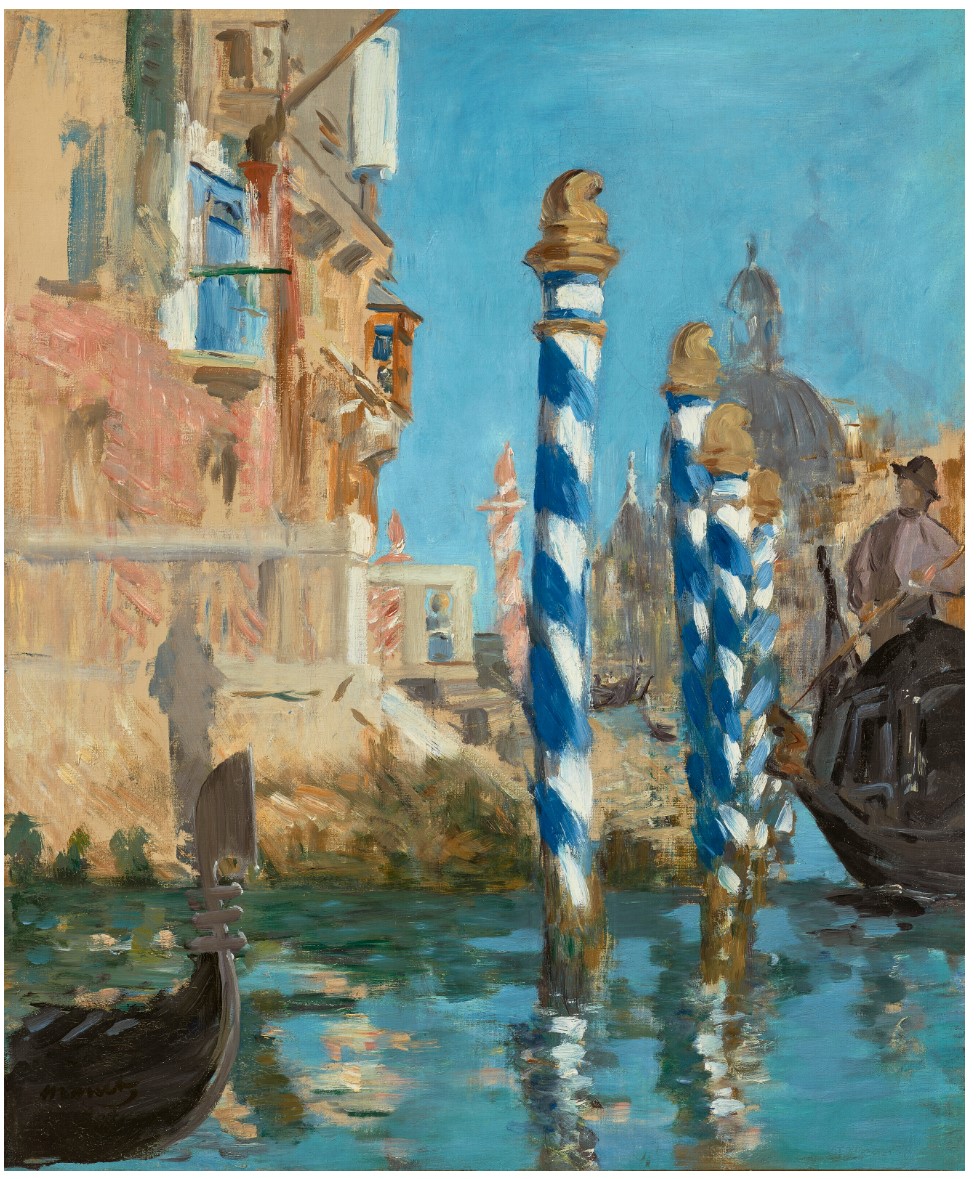
EDOUARD MANET (1832-1883)
Le Grand Canal à Venise, 1874
Oil on canvas
57.5 x 47.9 cm (22 5/8 x 18 7/8 inches)
Christie’s New-York: 9 November 2022
Estimated: USD 45,000,000 – 65,000,000
USD 51,915,000
A notable arrival was documented in Venice’s Gazzetta di Venezia on 13 September 1874. The “Signori Manet”—Edouard Manet and his wife, Suzanne Leenhoff—had disembarked in the famed floating city. After a successful sale of one of his works to a wealthy American collector, Manet was able to leave Paris and journey to Venice. There, the couple was joined by the artist’s friend, James Tissot, who had relocated to London during the Franco-Prussian War. Taking rooms in the Grand Hotel, situated near the Piazza San Marco, they spent around a month in the city. On this, Manet’s second and final visit to La Serenissima, he painted just two works, both titled Le Grand Canal à Venise (Wildenstein, nos. 230 and 231). The present painting is one of this rare and iconic pair—the other, which was acquired by Tissot before Louisine Havemeyer, is now held in the Shelburne Museum, Vermont. In both of these works, Manet honed in on a small section of the Grand Canal—the central, bustling artery of the mirage-like city. With these closely cropped vistas, he not only captured the spectacular effects of light upon the water for which the city is so revered, but also reveled in the dynamic interplay of architecture and human activity within this timeless setting.
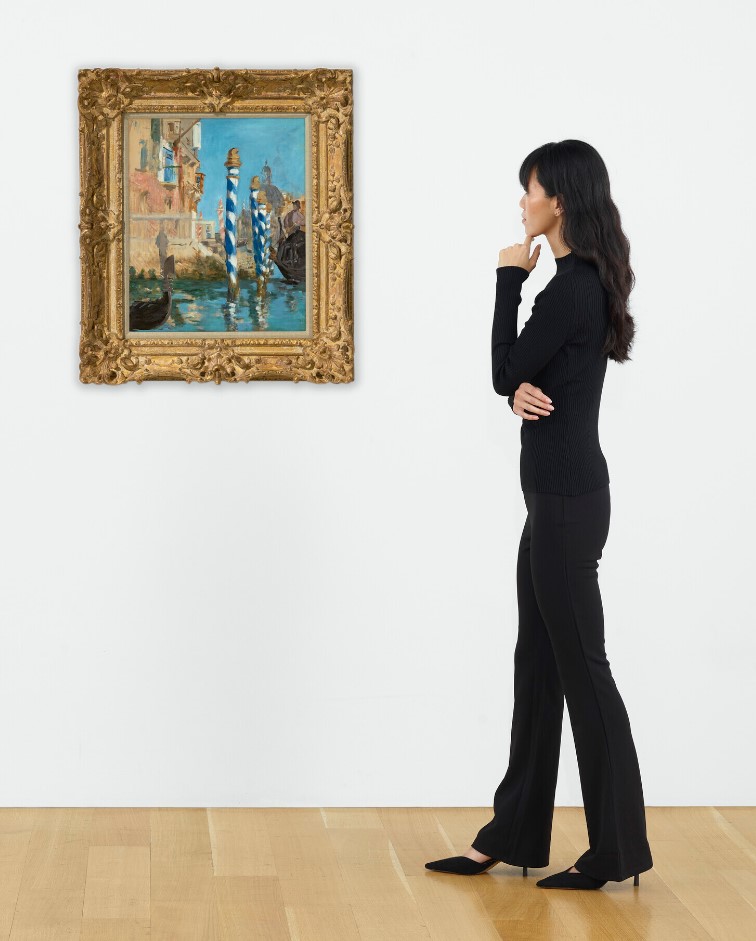
Two gondolas intersect the vista of the present work, the perfectly observed tip of the vessel on the left entering into a striking visual dialogue with the soaring, striped palli, and the undulating dome of the church of Santa Maria della Salute in the distance. Standing opposite the soft pink and pearlescent colored palazzi, a single figure, the gondolier, slowly paddles into the painting. Rendered with Manet’s signature instinctive brushstrokes and passages of pure, unmixed color, the painting demonstrates the same fidelity to compositional structure that defines so much of Manet’s work. While seemingly a snapshot of daily life on the Grand Canal, this scene is anything but unplanned, each element of the dynamic and carefully layered composition existing in perfect accord.
#10. Boticelli
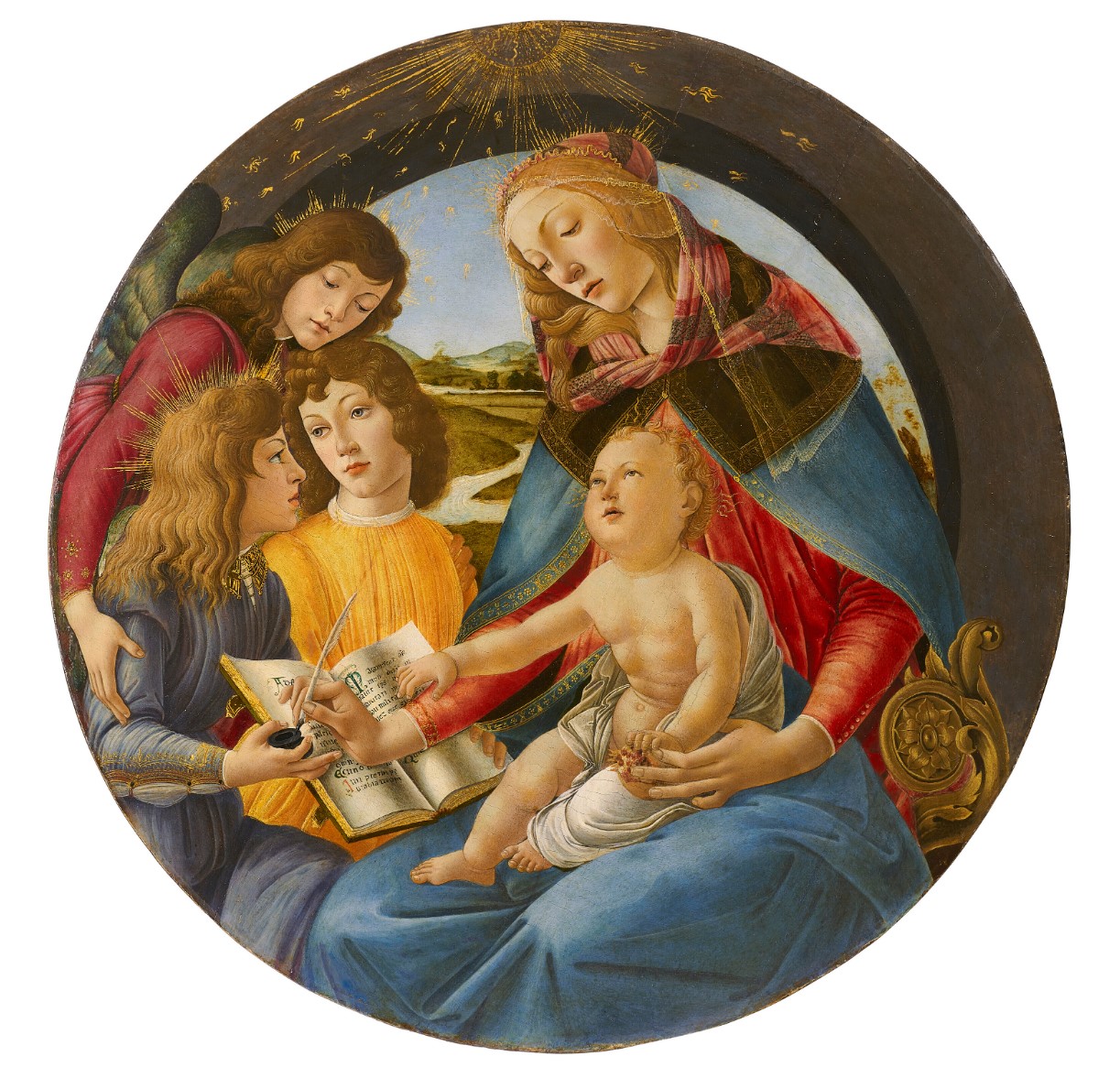
ALESSANDRO FILIPEPI, CALLED SANDRO BOTTICELLI
Madonna of the Magnificat
Tempera, oil and gold on panel, tondo
Diameter: 24 3/4 inches (62.9 cm)
Christie’s New-York: 9 November 2022
Estimate on Request
USD 48,480,000
This sublime depiction of the Madonna and Child with three angels by Sandro Botticelli, with its serene, languid figures, luminous palette and rich, mordant gilding, is a variant of the artist’s celebrated tondo in the Galleria degli Uffizi, Florence, known today as the Madonna of the Magnificat. Most likely commissioned by a wealthy patron and intended to hang within a domestic setting for private devotion and contemplation, this painting has been little known outside of the UK where it was exhibited at the National Gallery on two occasions, on long term loan from 1960-1978 and subsequently as part of the 1999-2000 Renaissance Florence exhibition. It has spent the last forty years in two of the greatest private collections of the modern era.
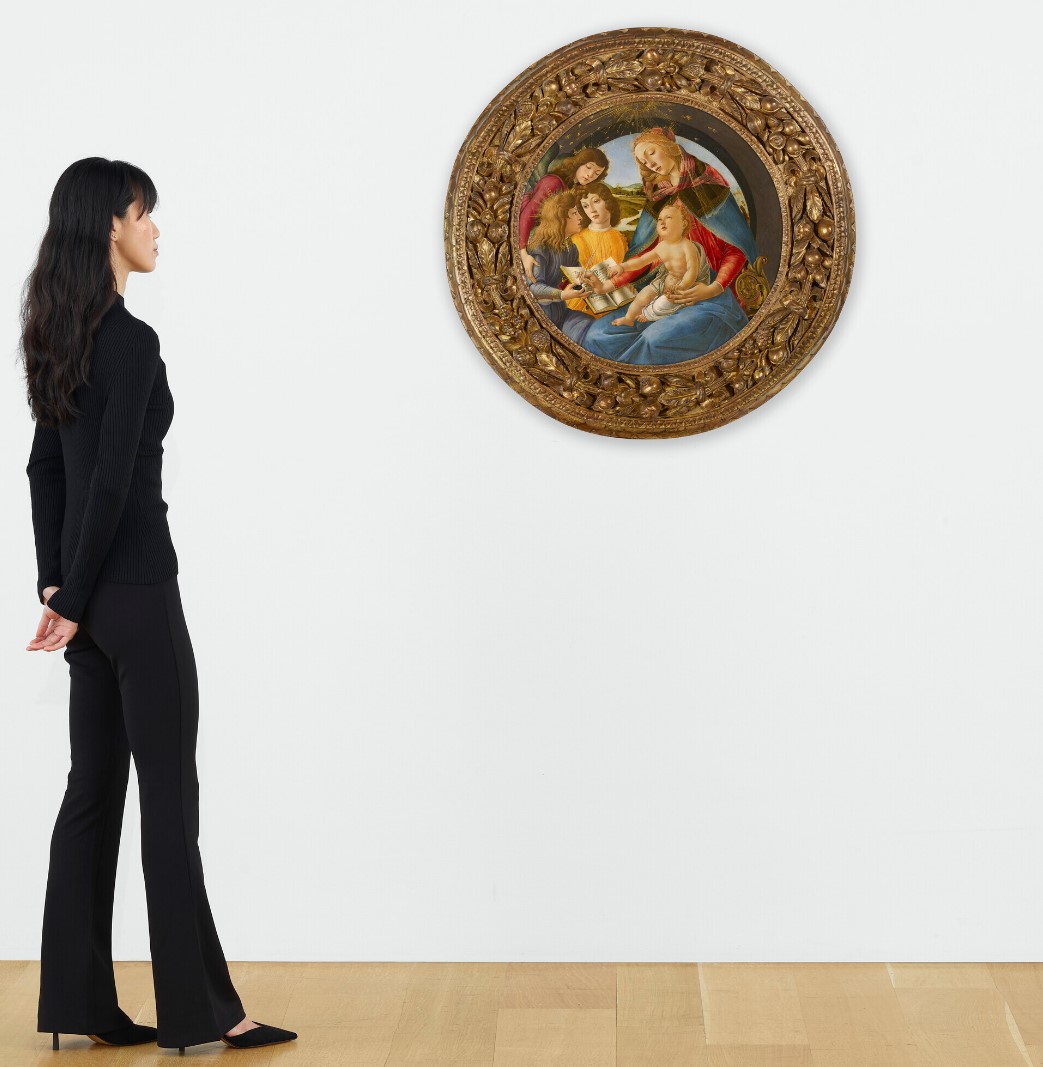
The composition’s tondo format was a particular specialty of Botticelli, the most successful and inventive painter of these circular panels. Botticelli must have found particular excitement in the pictorial challenges created by the format. A painting such as this would have been hung high, above eye level and was intended to mimic a convex mirror, the composition inflating slightly at the center and receding at its edges. Few artists so understood the tondo’s constraints and were able to create such compositional harmony imbued with profound symbolism.
#11. Paul Signac
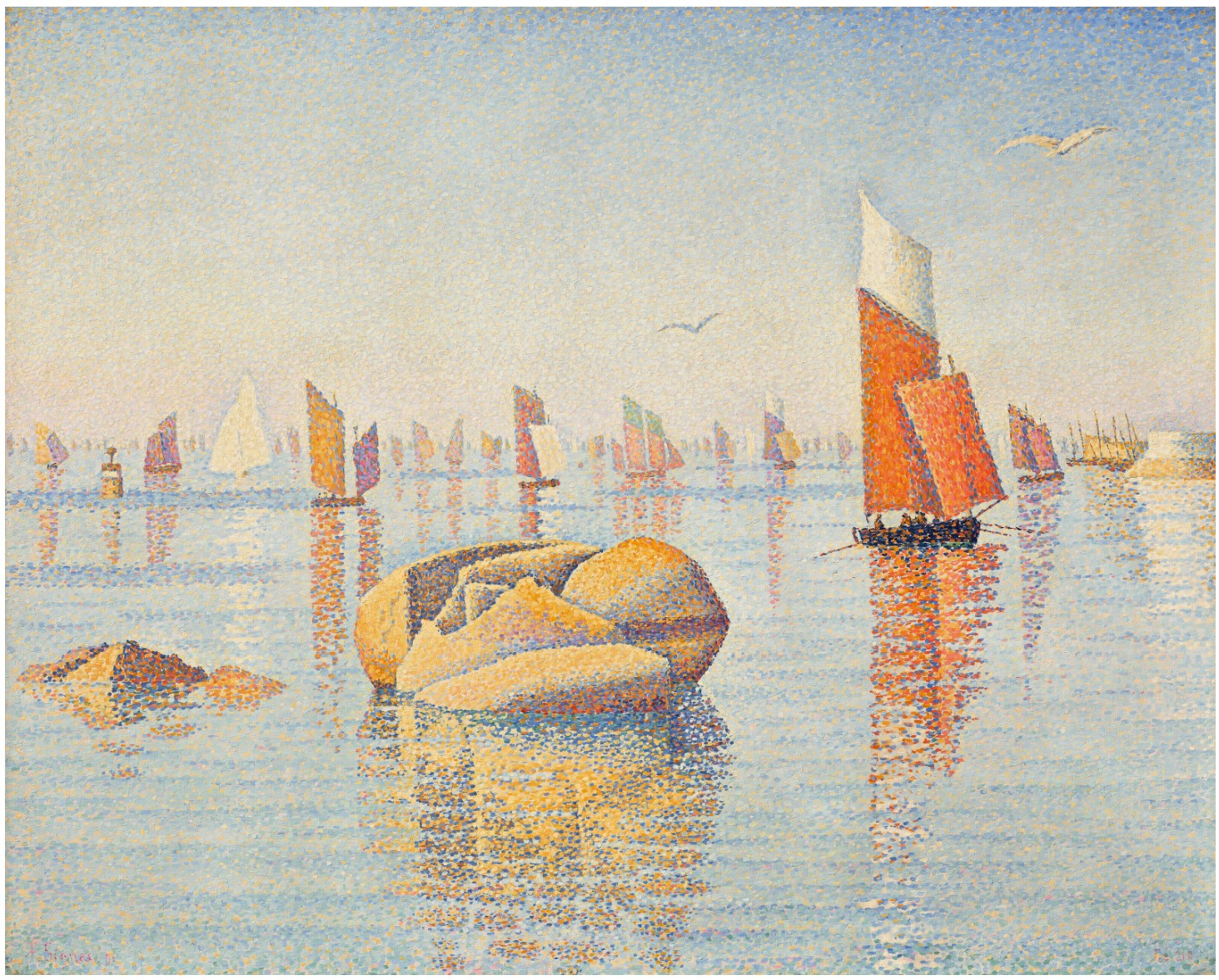
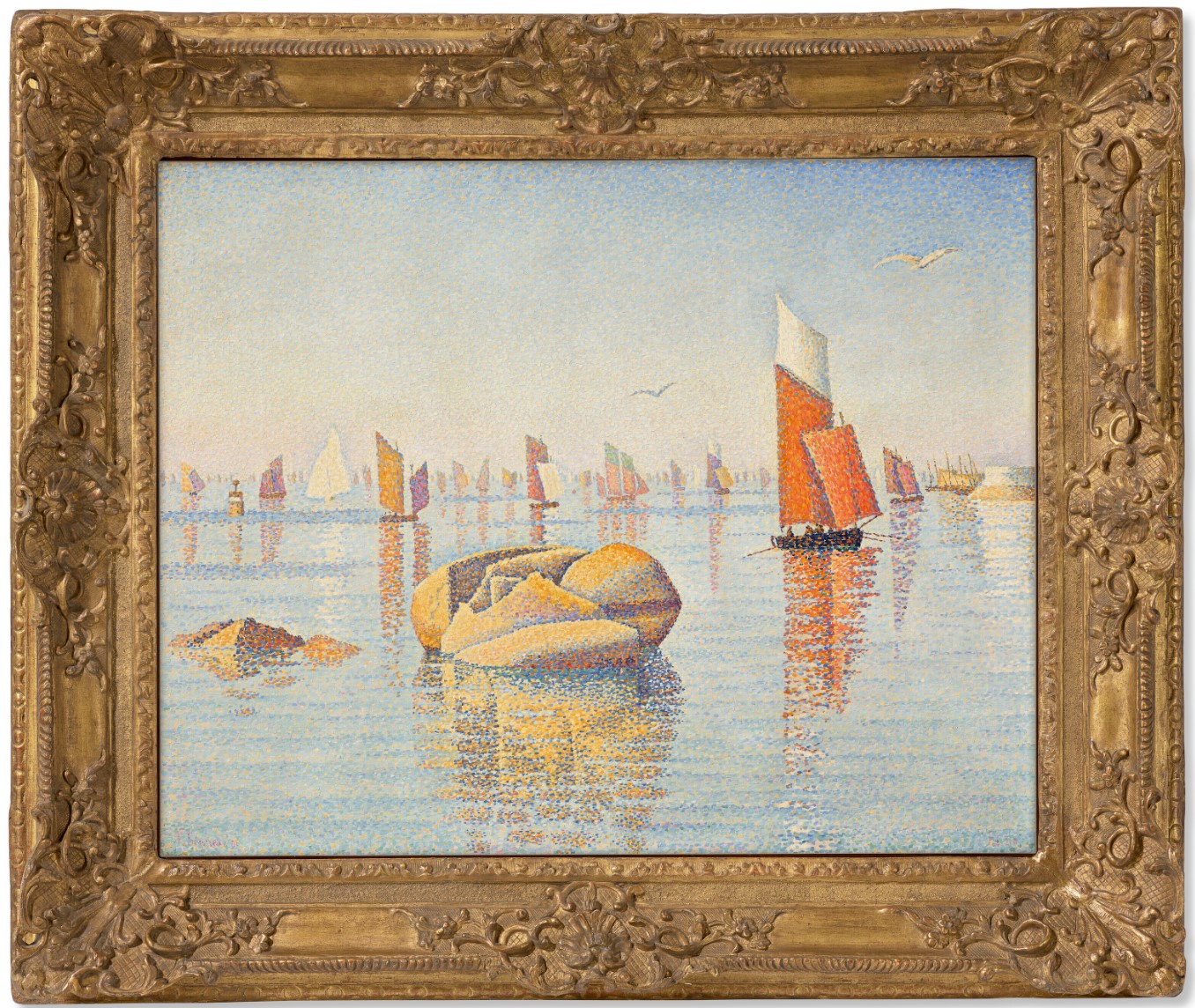
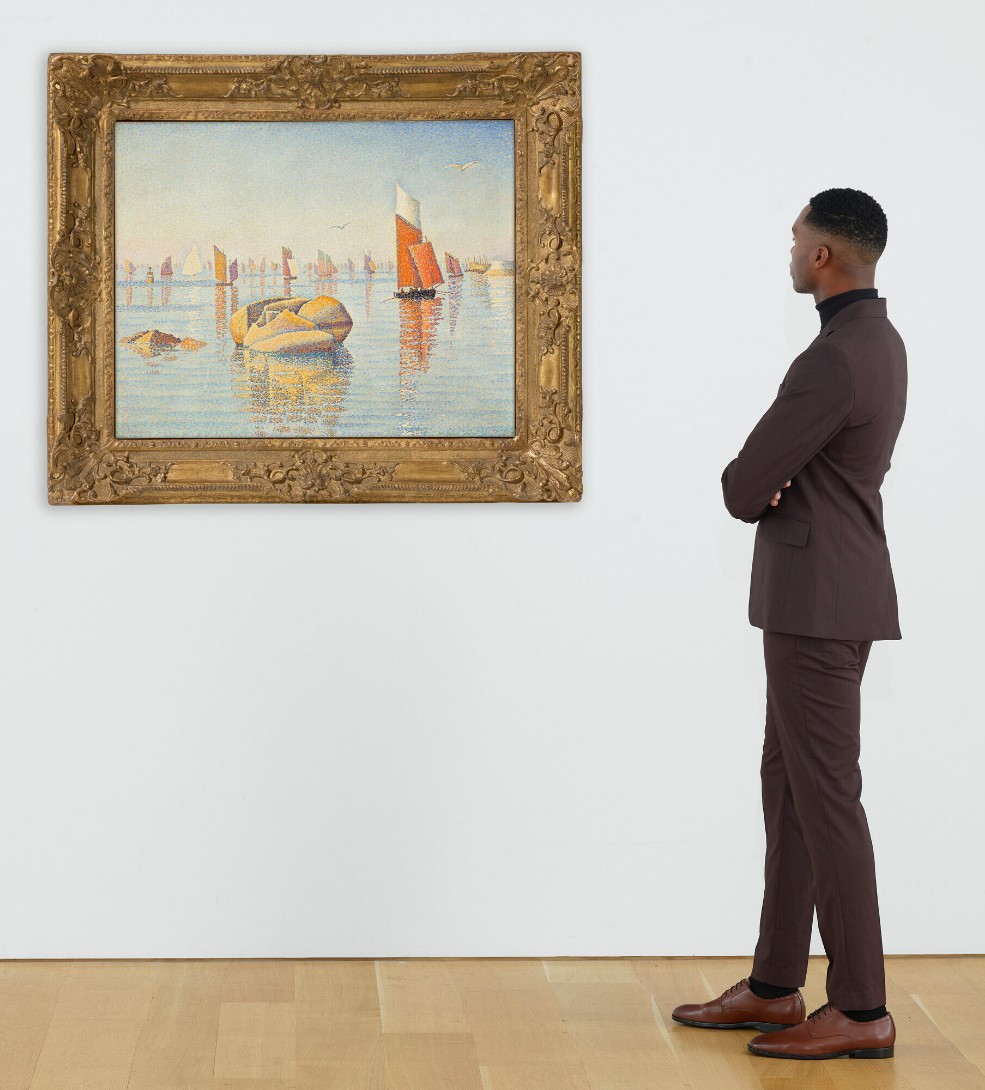
Concarneau, calme du matin (Opus no. 219, larghetto), 1891
Oil on canvas
65.7 x 81.3 cm (25 7/8 x 32 inches)
Christie’s New-York: 9 November 2022
Estimated: USD 28,000,000 – 35,000,000
USD 39,320,000
#12. Turner
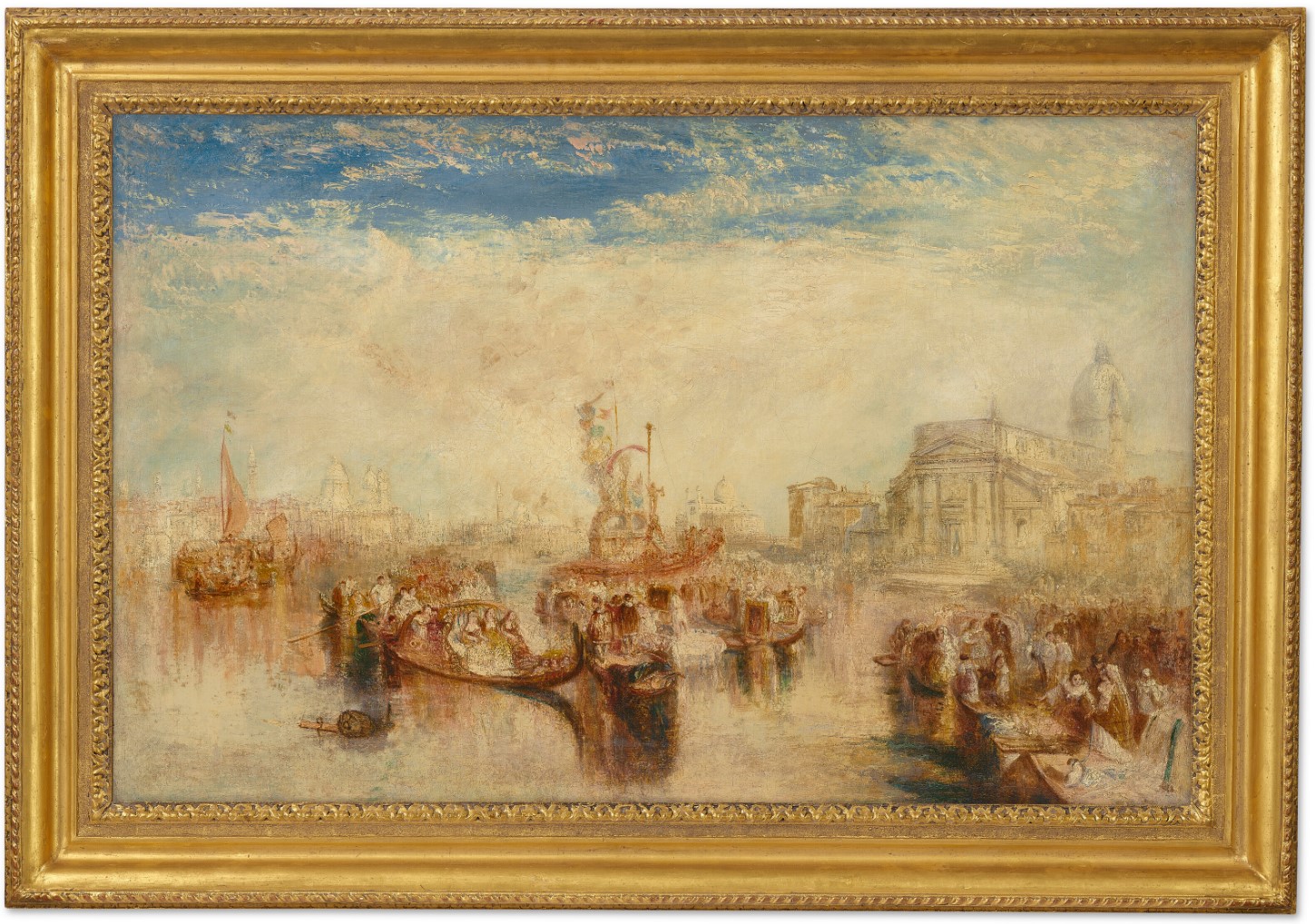
Depositing of John Bellini’s Three Pictures in La Chiesa Redentore, Venice, 1841
Oil on canvas
29 x 45 1/2 inches (73.7 x 115.6 cm)
Christie’s New-York: 9 November 2022
Estimated: USD 28,000,000 – 35,000,000
USD 33,595,000
#13. Francis Bacon
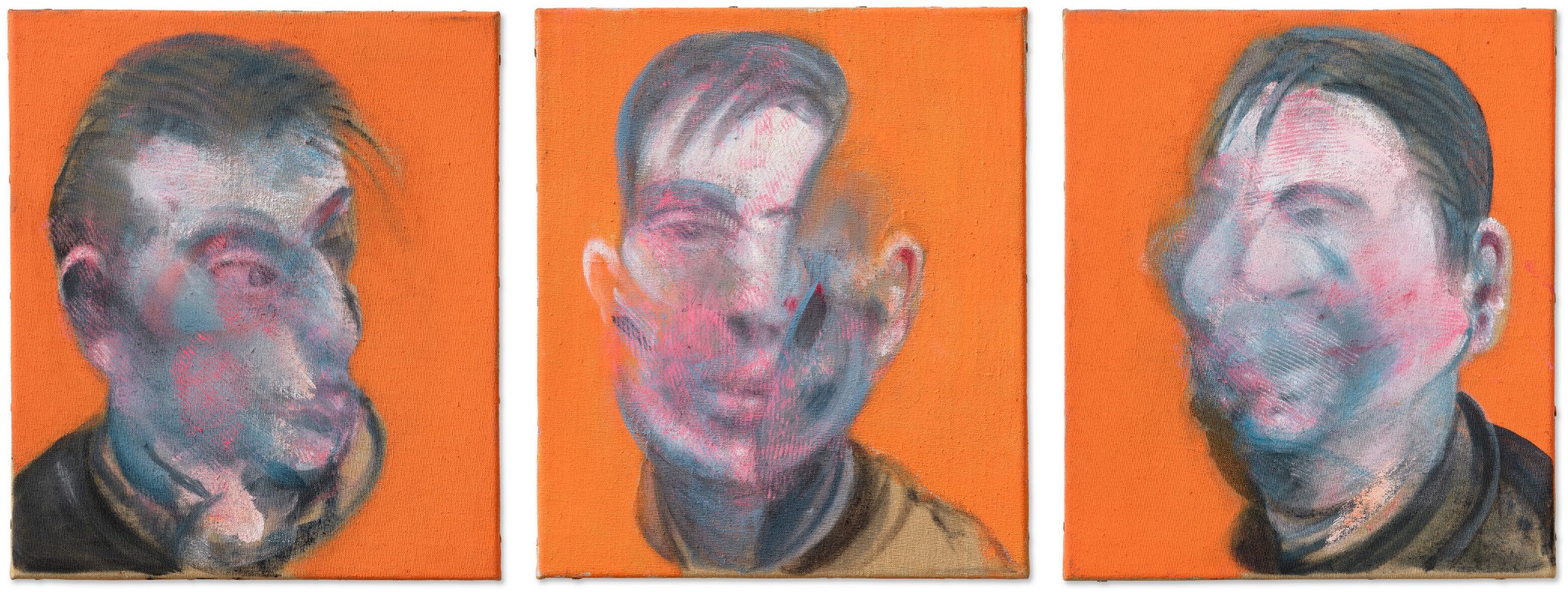
Three Studies for Self-Portrait, 1979
Oil on canvas, in three parts
Each: 14 x 12 inches (35.6 x 30.5 cm)
Christie’s New-York: 9 November 2022
Estimated: USD 25,000,000 – 35,000,000
USD 29,015,000
#14. Giorgia O’Keefe
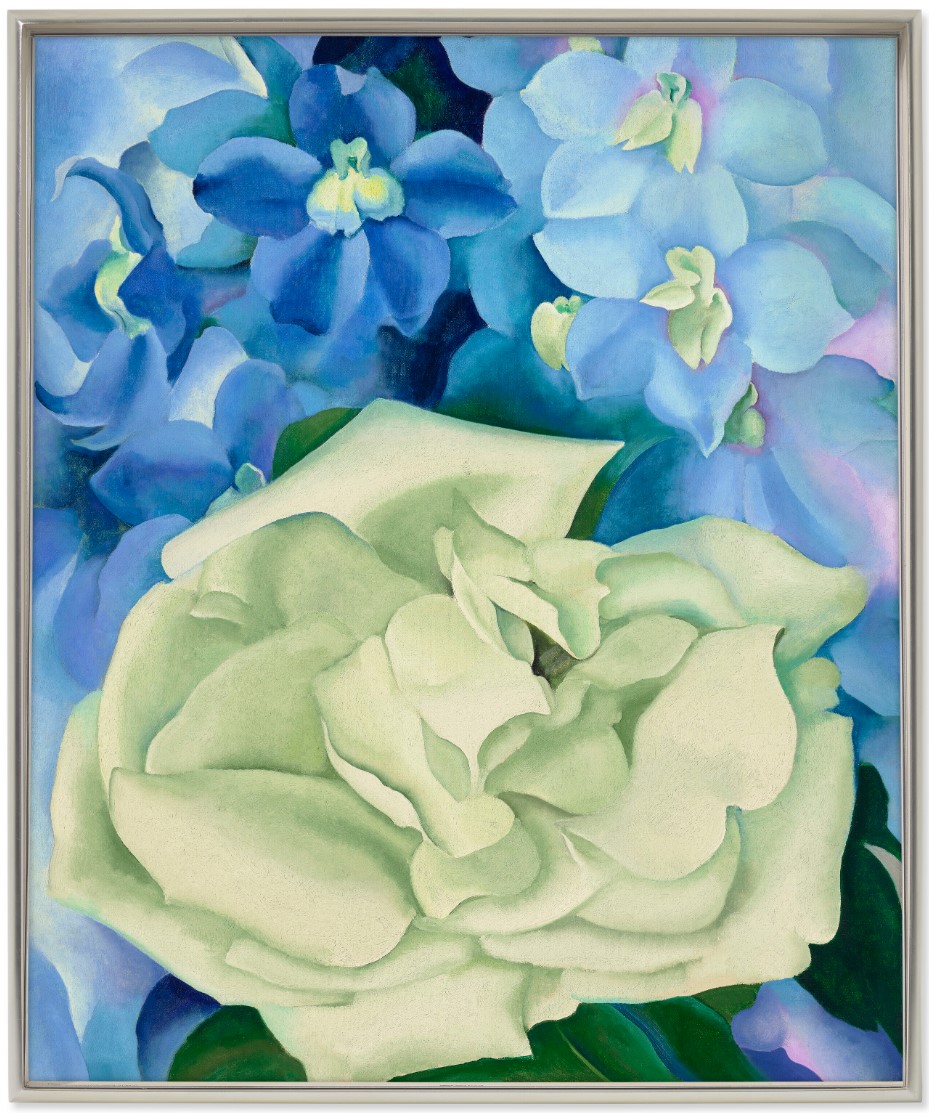
White Rose with Larkspur No. I, 1927
Oil on canvas
36×30 inches (91.4 x 76.2 cm)
Christie’s New-York: 9 November 2022
Estimated: USD 6,000,000 – 8,000,000
#15. Rene Magritte
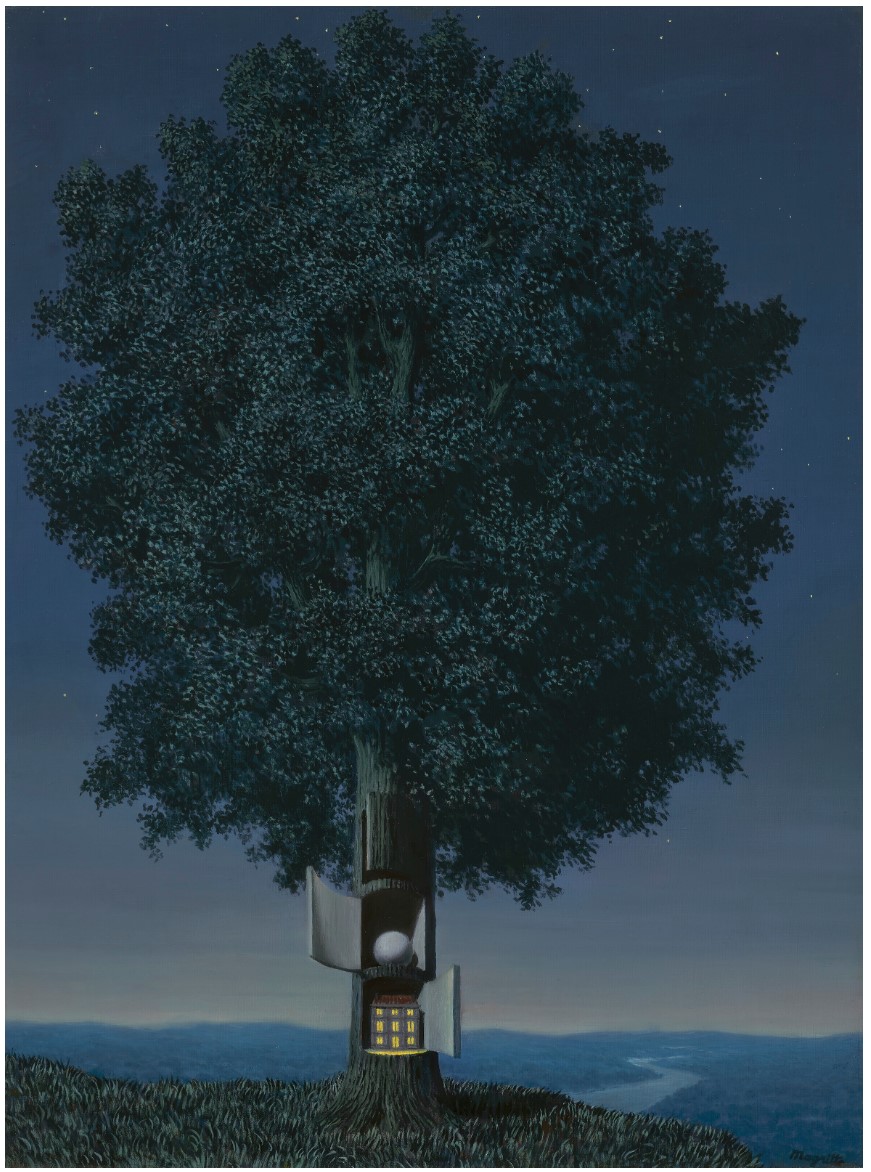
La voix du sang, 1948
oil on canvas
79.1 x 58.6 cm (31 1/8 x 23 1/8 inches)
Christie’s New-York: 9 November 2022
Estimated: USD 12,000,000 – 18,000,000
USD 26,725,000
#16. Alberto Giacometti
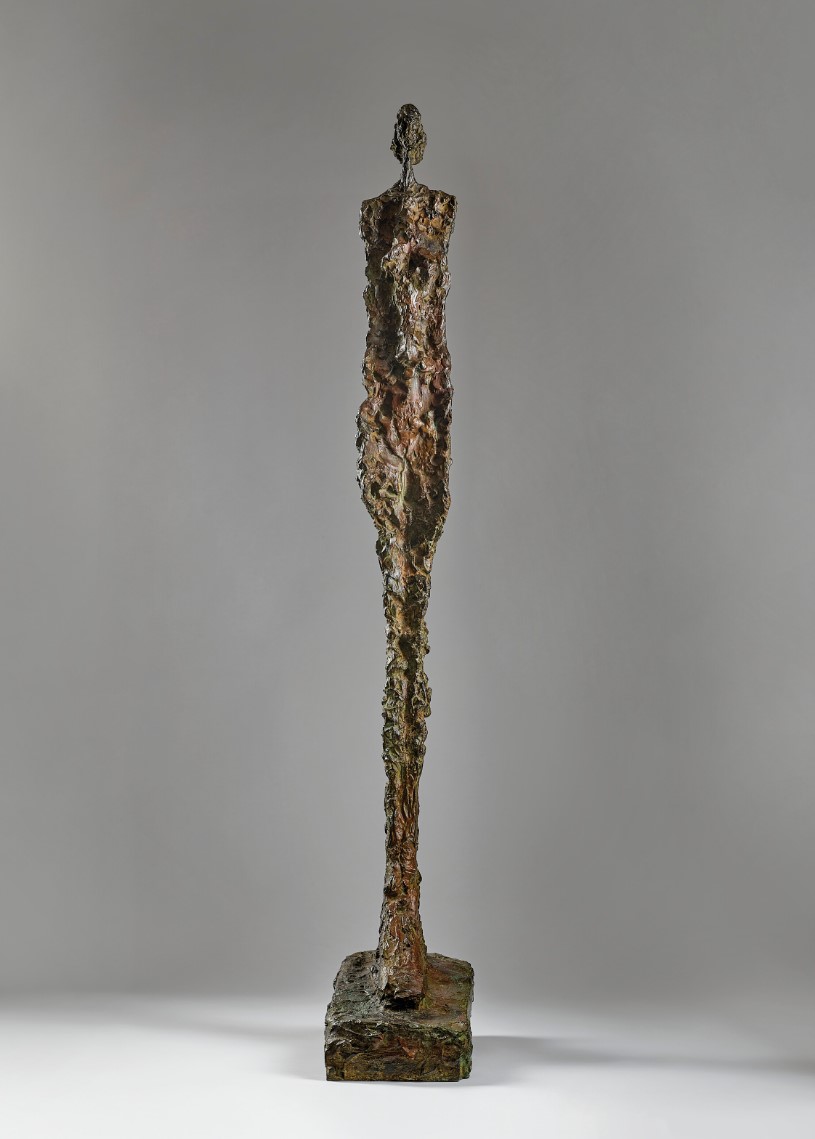
Femme de Venise III, 1956
Bronze with brown and green patina
Height: 46 5/8 in (118.4 cm)
Christie’s New-York: 9 November 2022
Estimated: USD 15,000,000 – 20,000,000
USD 27,005,500
#17. Max Ernst
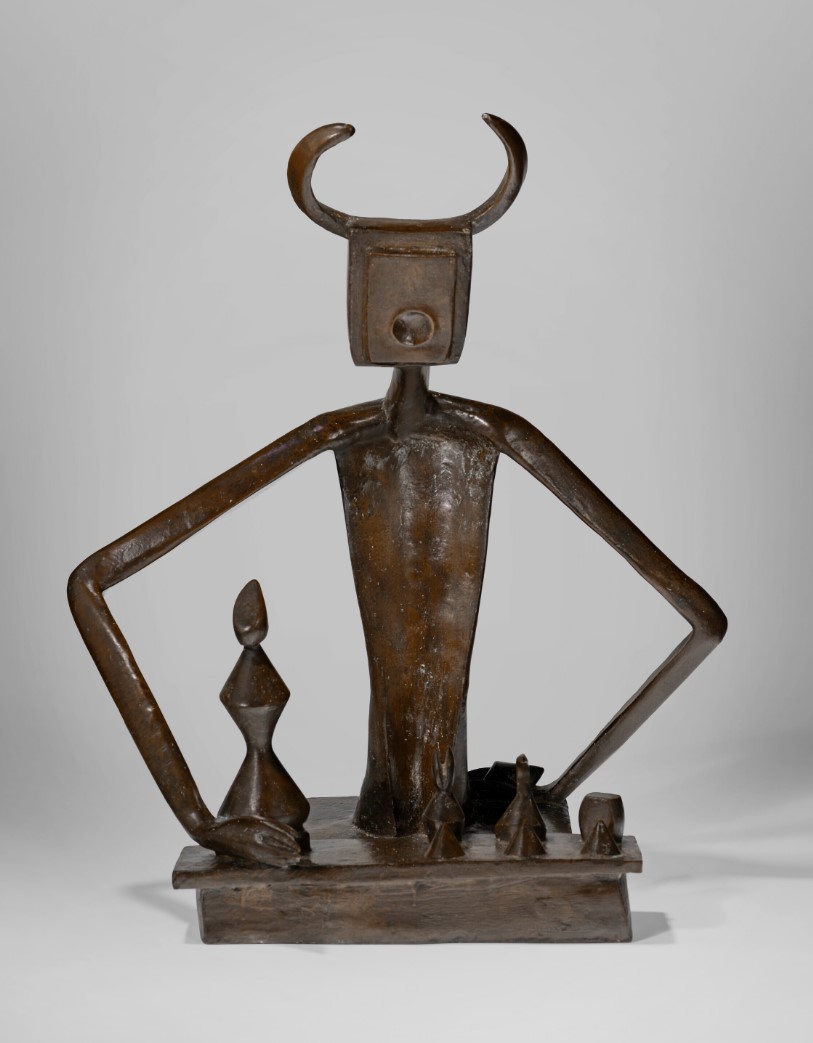
Le roi jouant avec la reine, 1944/1953-1961
Bronze with brown patina
Height: 39 1/2 inches (100.5 cm)
Christie’s New-York: 9 November 2022
Estimated: USD 8,000,000 – 12,000,000
USD 24,435,000
#18. David Hockney
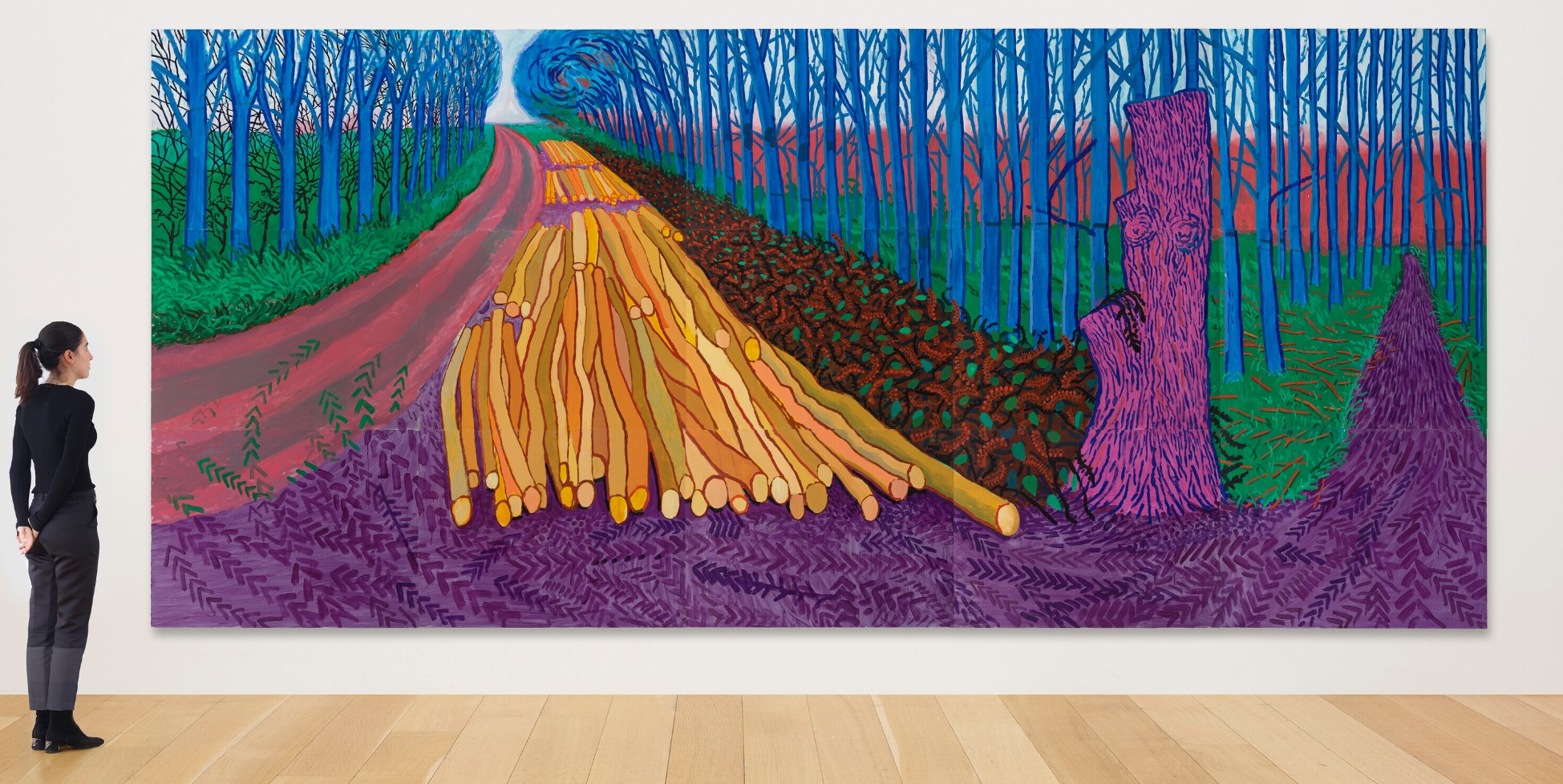
Winter Timber, 2009
Oil on canvas, in 15 parts
Overall: 108 x 240 inches (274.3 x 609.6 cm)
Sotheby’s New-York: 9 November 2022
Estimated: USD 10,000,000 – 15,000,000
USD 23,290,000
#19. Wassily Kandinsky
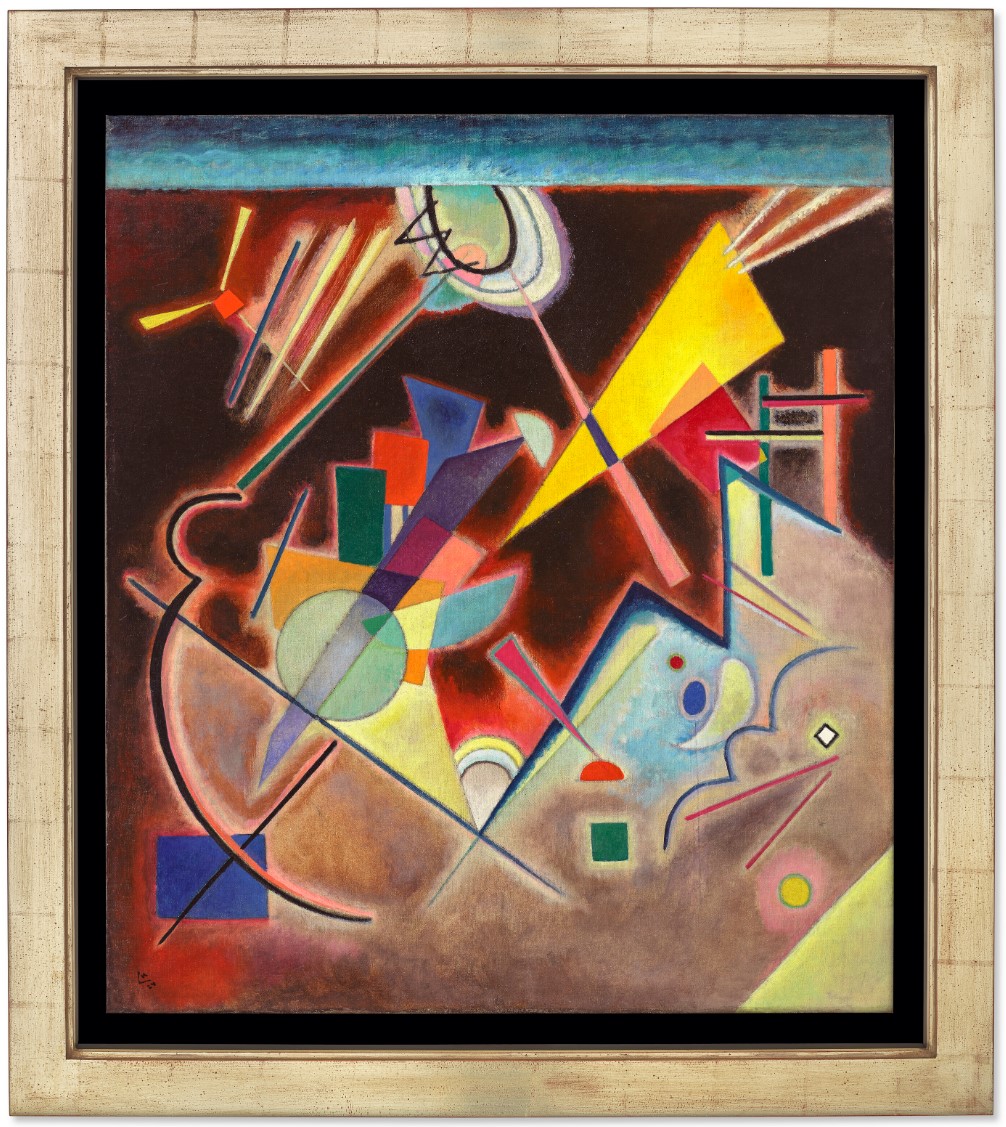
Tiefes Braun, 1924
Oil on canvas
32 3/4 x 28 5/8 inches (83.3 x 72.7 cm)
Christie’s New-York: 9 November 2022
Estimated: USD 10,000,000 – 15,000,000
USD 23,290,000
#20. Andrew Wyeth
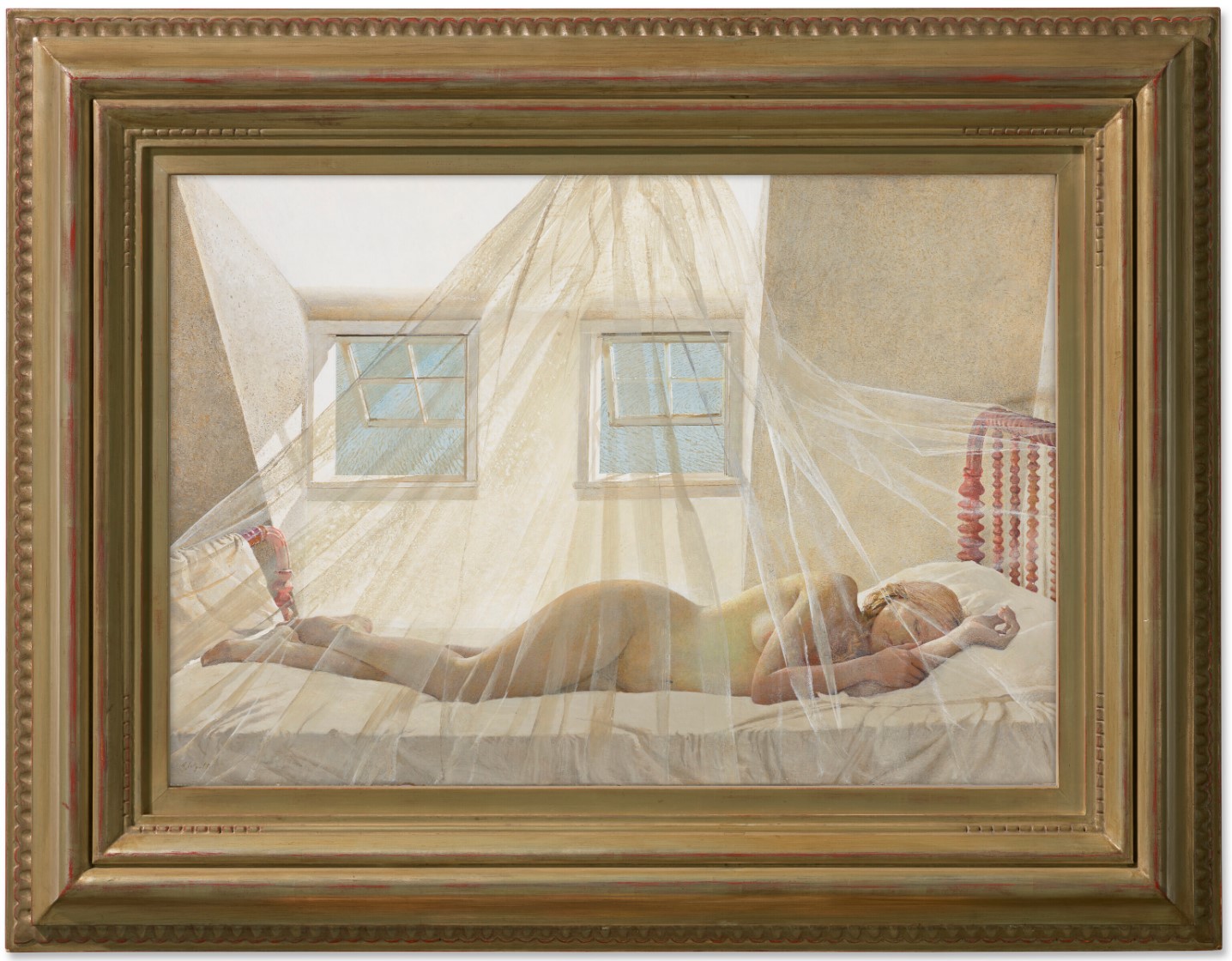
Day Dream, 1980
Tempera on panel
19 x 27 1/4 inches (48.3 x 69.2 cm)
Christie’s New-York: 9 November 2022
Estimated: USD 2,000,000 – 3,000,000
USD 23,290,000
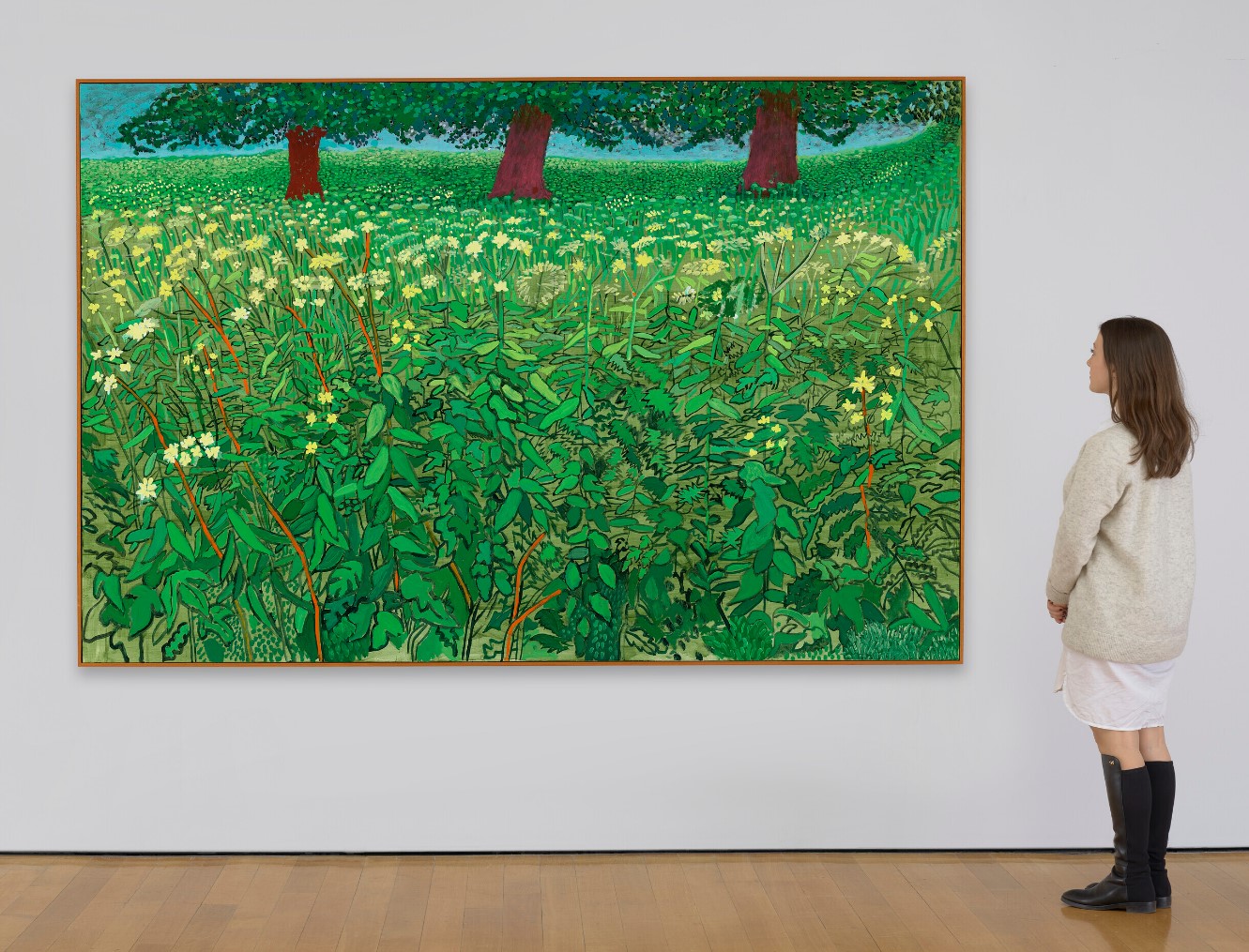
#21. David Hockney
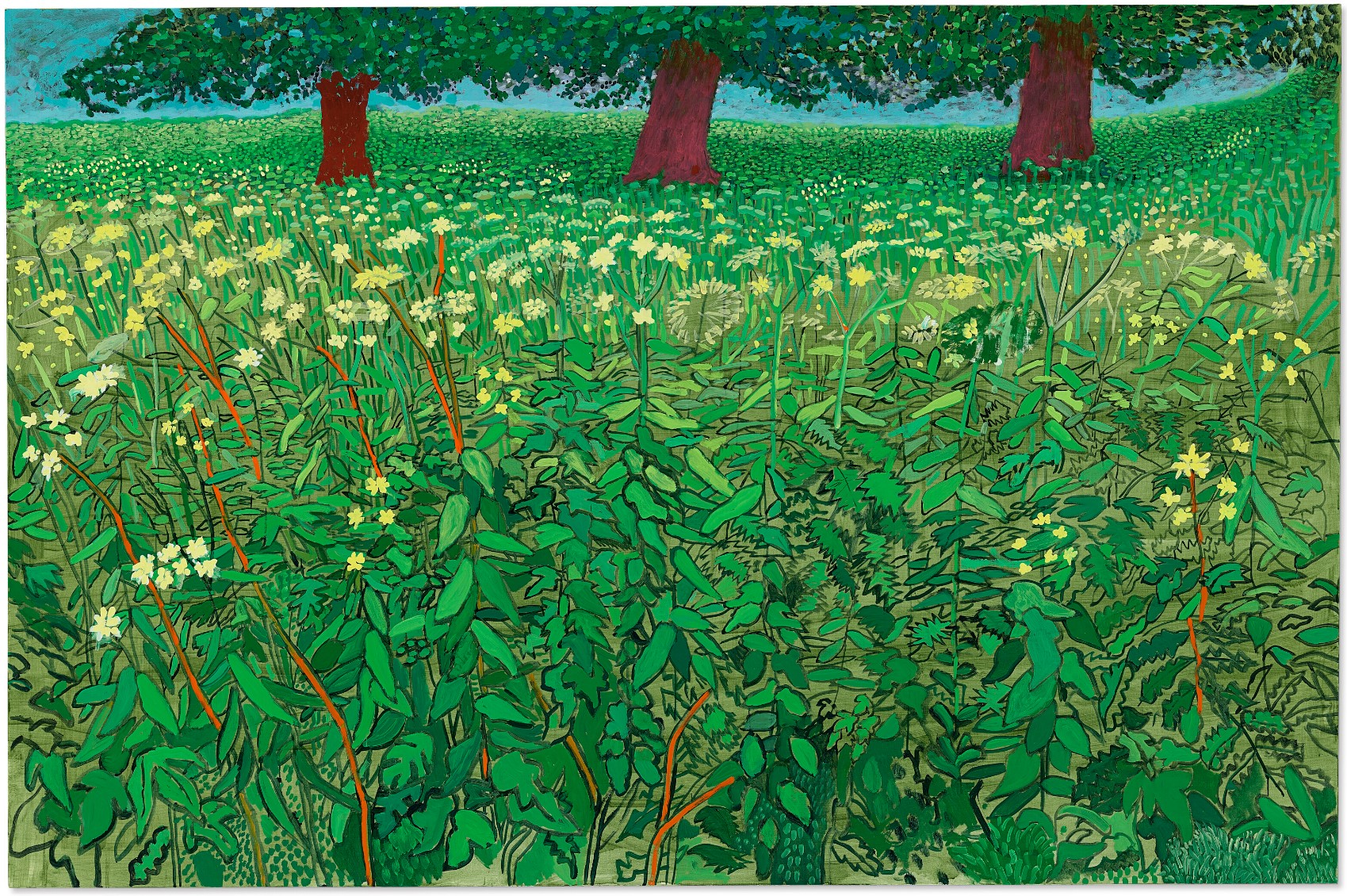
Queen Anne’s Lace Near Kilham, 2010-2011
Oil on canvas
67 x 102 1/4 inches (170.2 x 259.7 cm)
Christie’s New-York: 9 November 2022
Estimated: USD 8,000,000 – 12,000,000
USD 18,710,000
Visionary Part II
10 November 2022
# Lots: 95 Lots
Sell-Through Rate: 100%
Total: USD 115,863,500
Top Lot: USD 8,405,000
——
Above Estimates: 73 Lots (77%)
Within Estimates: 17 Lots (18%)
Below Estimates: 5 Lots (5%)
1. Claes Oldenburg
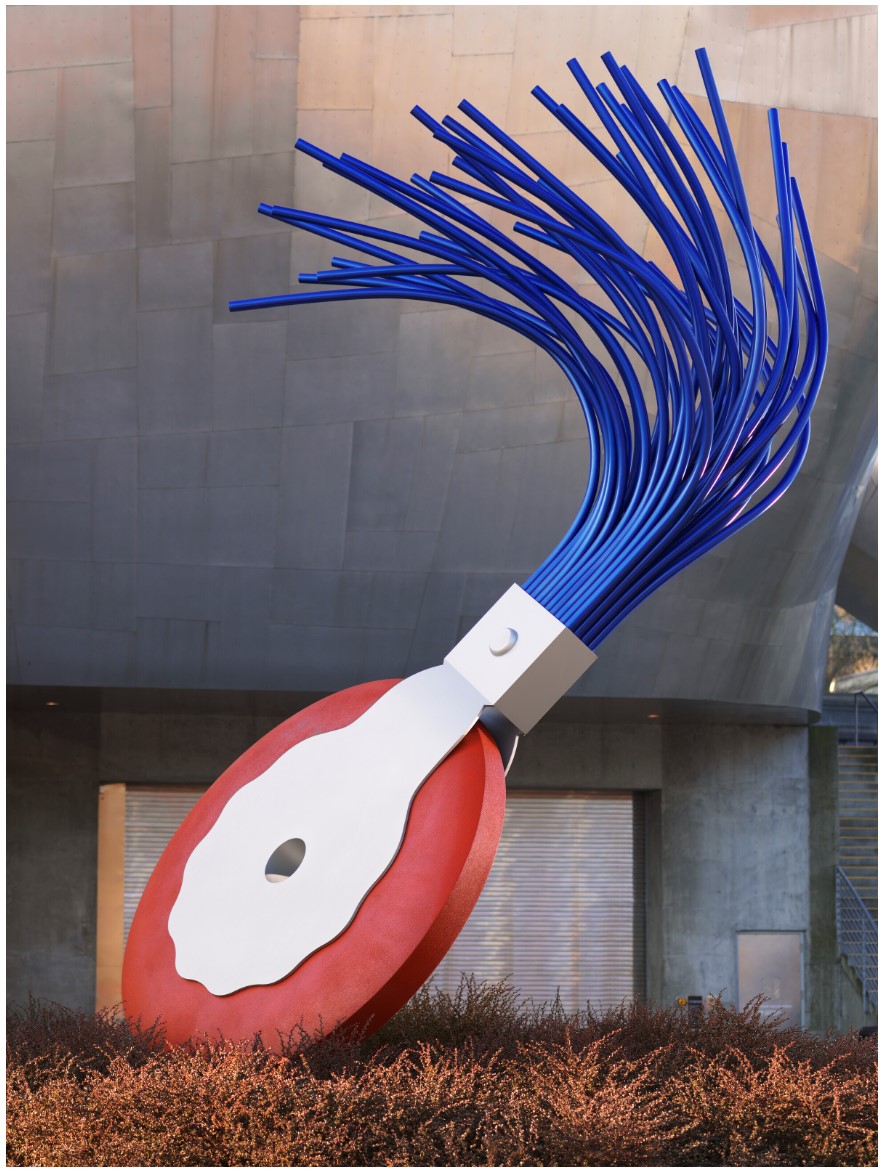
CLAES OLDENBURG (1929-2022) and COOSJE VAN BRUGGEN (1942-2009)
Typewriter Eraser, Scale X
Stainless steel, fiberglass and acrylic polyurethane paint
232 x 143 1/2 x 140 1/4 inches (589 x 364.5 x 356.2 cm)
Executed in 1998-1999
This work is number three from an edition of three plus an artist’s proof
Christie’s New-York: 10 November 2022
USD 8,405,000
2. Sam Francis
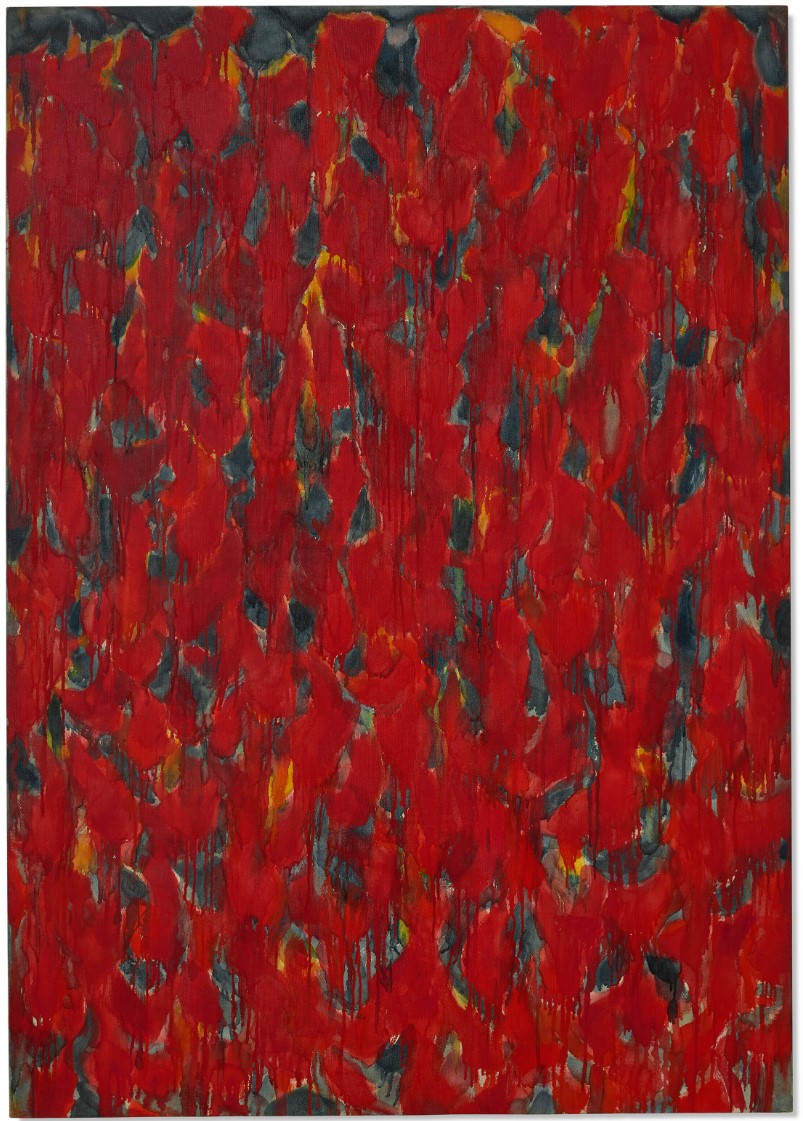
SAM FRANCIS (1923-1994)
Red No. 1, 1953
Oil on canvas
64 x 45 inches (162.6 x 114.3 cm)
Christie’s New-York: 10 November 2022
USD 6,780,000
3. Frank Stella
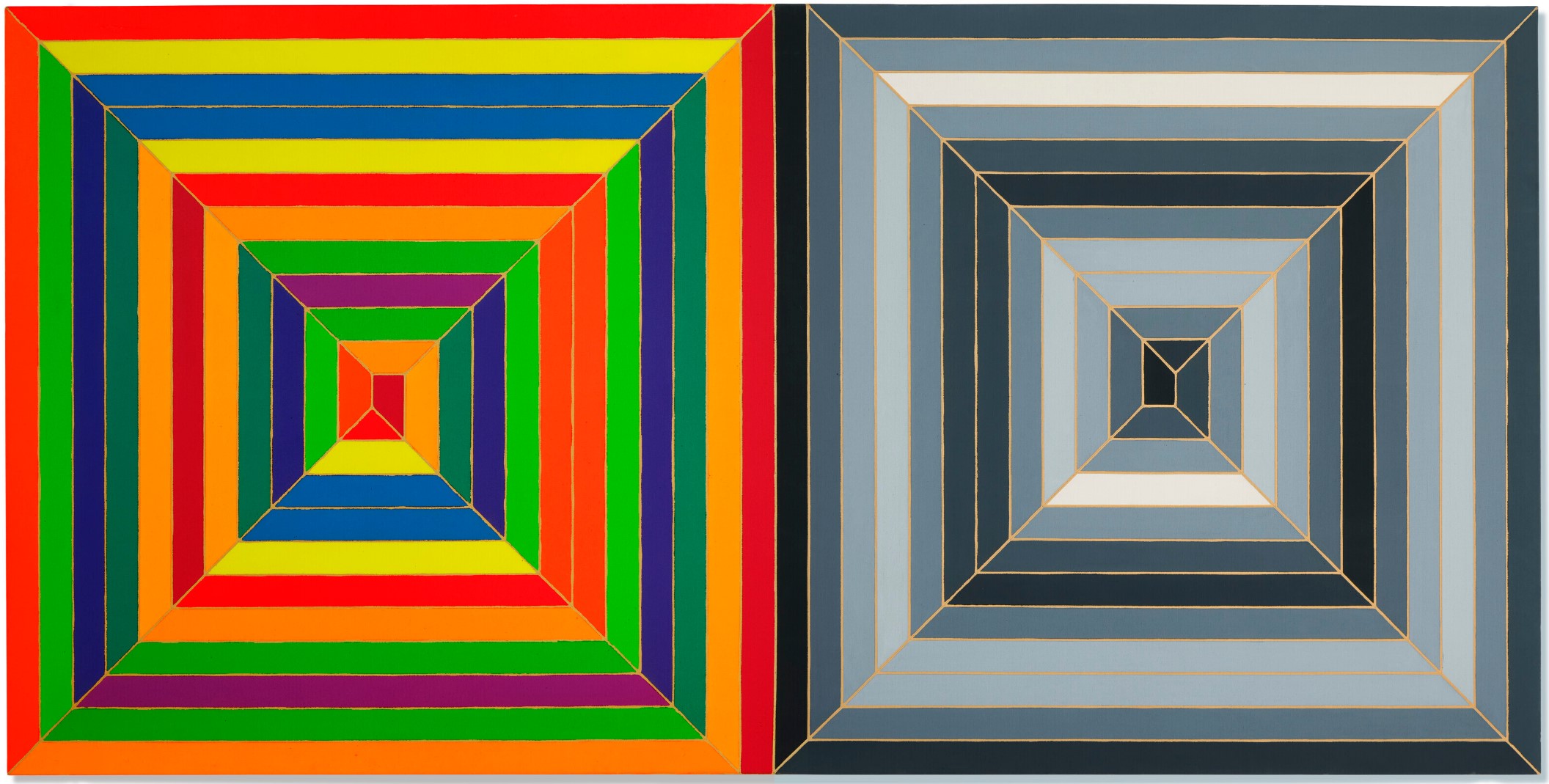
FRANK STELLA (B. 1936)
Cinema de Pepsi III, 1966
fluorescent alkyd and acrylic on canvas
69 1/8 x 138 1/8 in. (175.6 x 350.8 cm.)
Christie’s New-York: 10 November 2022
USD 5,580,000
4. Jean Dubuffet
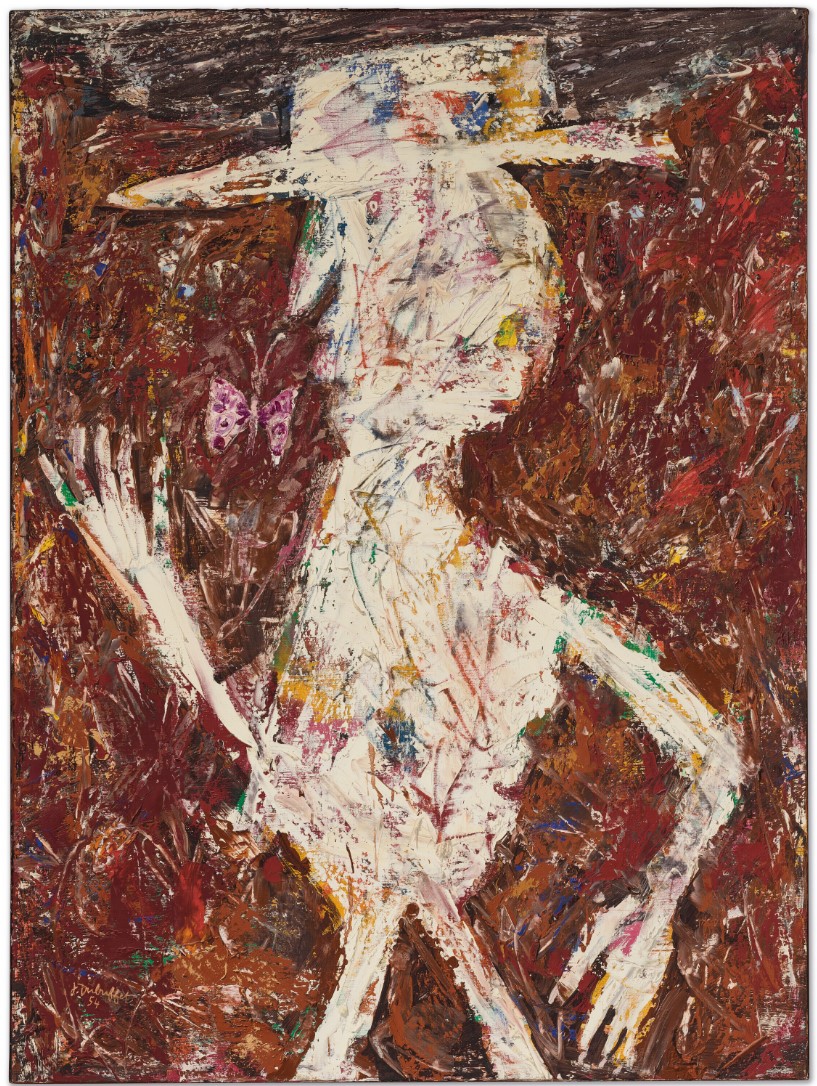
JEAN DUBUFFET (1901-1985)
L’homme au papillon, 1954
Oil on canvas
129.5 x 97 cm (51 x 38 1/8 inches)
Christie’s New-York: 10 November 2022
USD 4,860,000
5. Alexander Calder
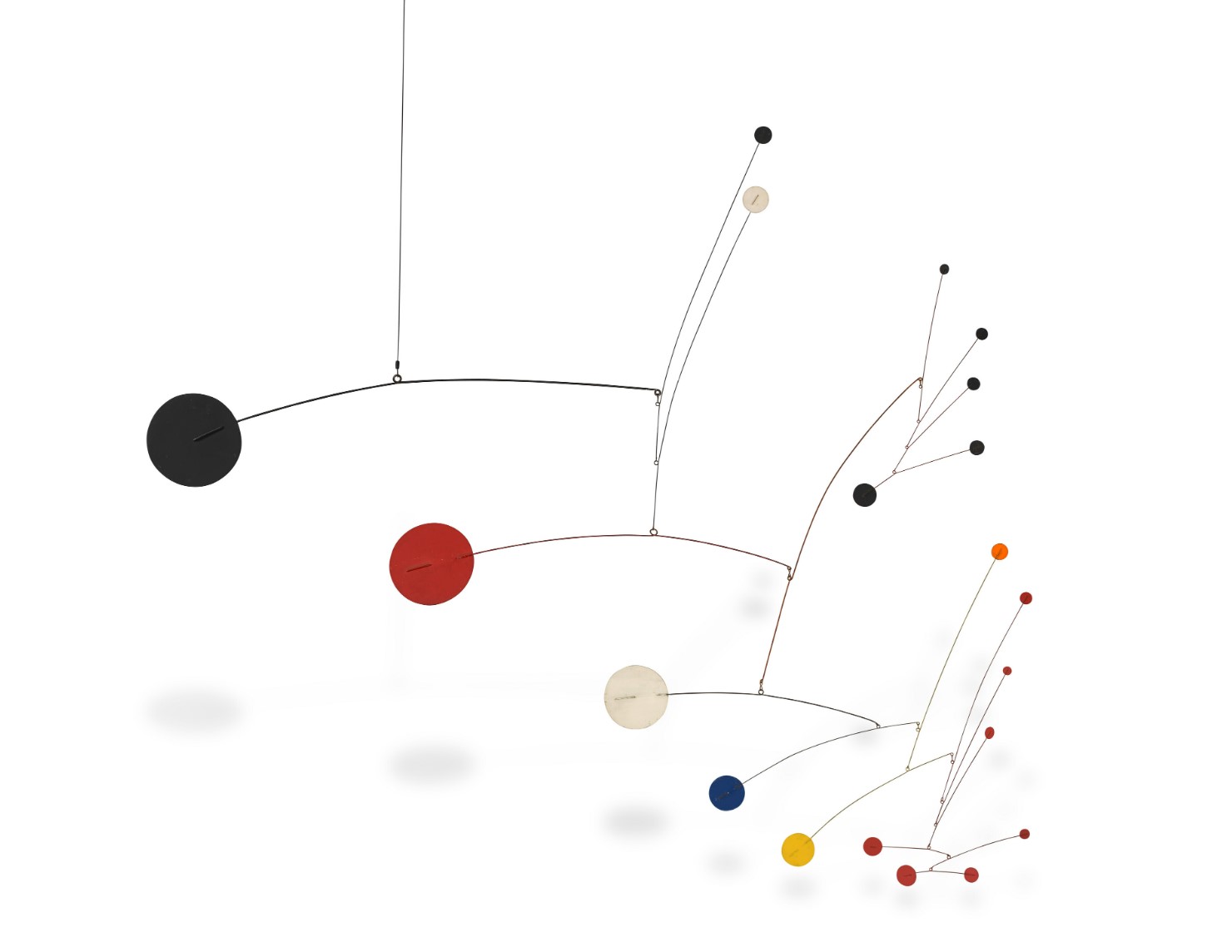
ALEXANDER CALDER (1898-1976)
Disques Verticales, 1948
hanging mobile—sheet metal, wire and paint
40×43 inches (101.6 x 109.2 cm)
Christie’s New-York: 10 November 2022
USD 4,500,000
6. Jacques Lipchitz
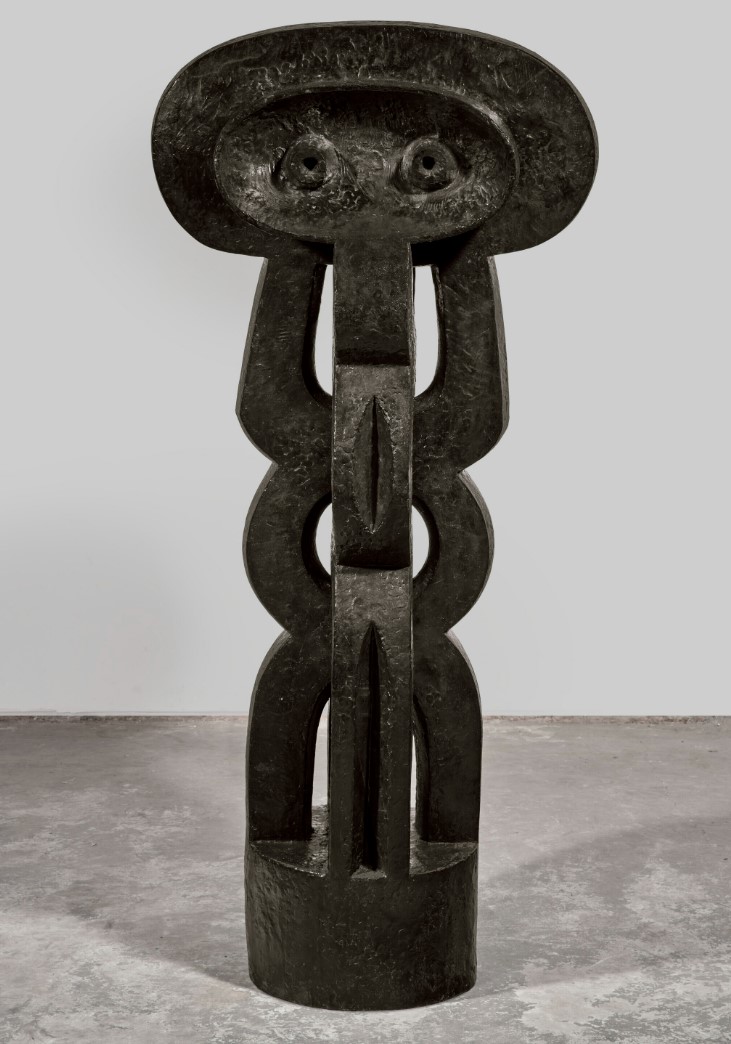
JACQUES LIPCHITZ (1891-1973)
Figure, 1926-1930/1961
Bronze with black patina
Height: 83 inches (210.8 cm)
Christie’s New-York: 10 November 2022
Estimated: USD 700,000 – 1,000,000
USD 4,380,000
7. Wayne Thiebaud
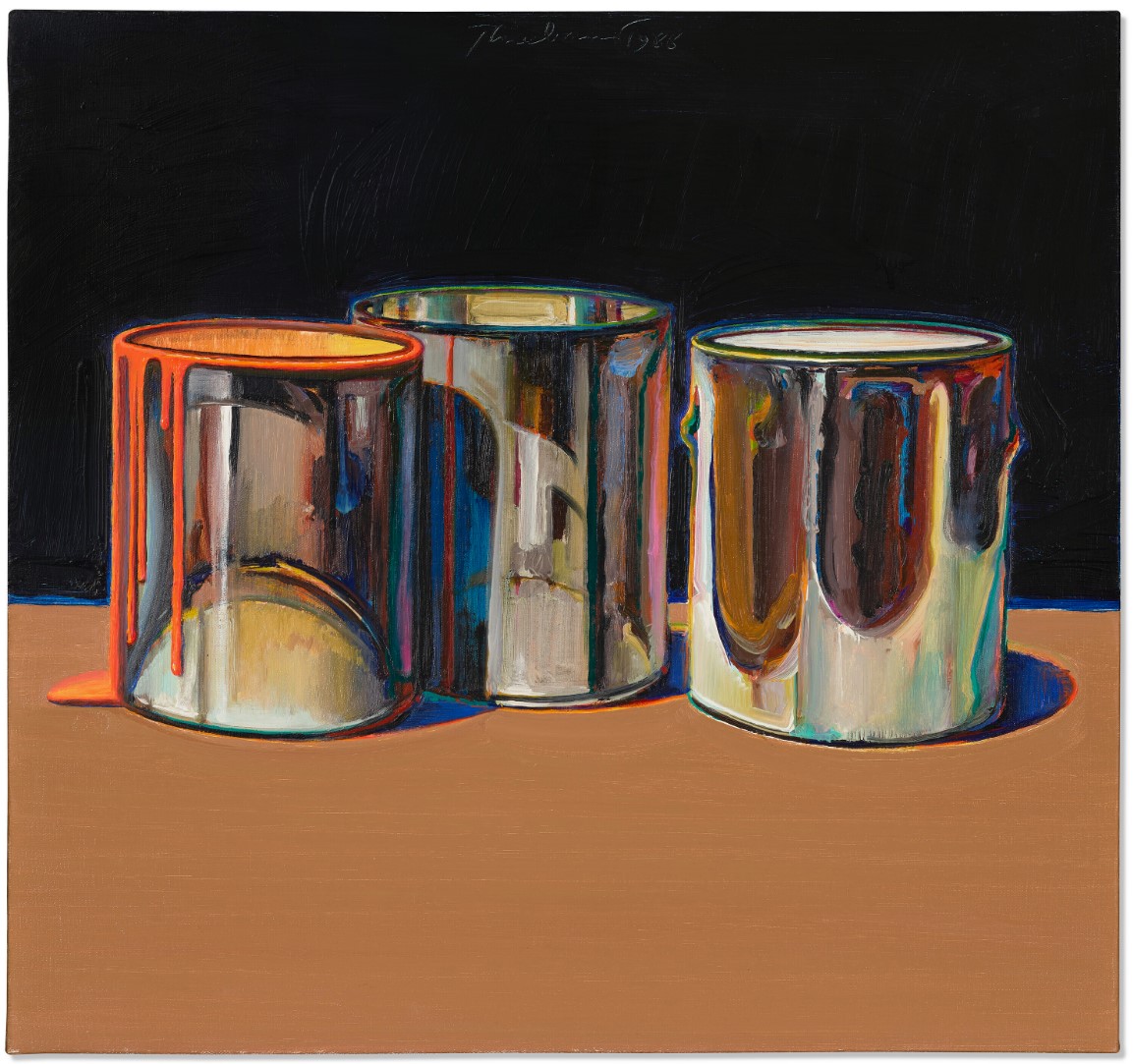
WAYNE THIEBAUD (1920-2021)
Paint Cans, 1988
Oil on canvas
21 1/2 x 23 inches (54.6 x 58.4 cm)
Christie’s New-York: 10 November 2022
USD 4,380,000
8. Yayoi Kusama
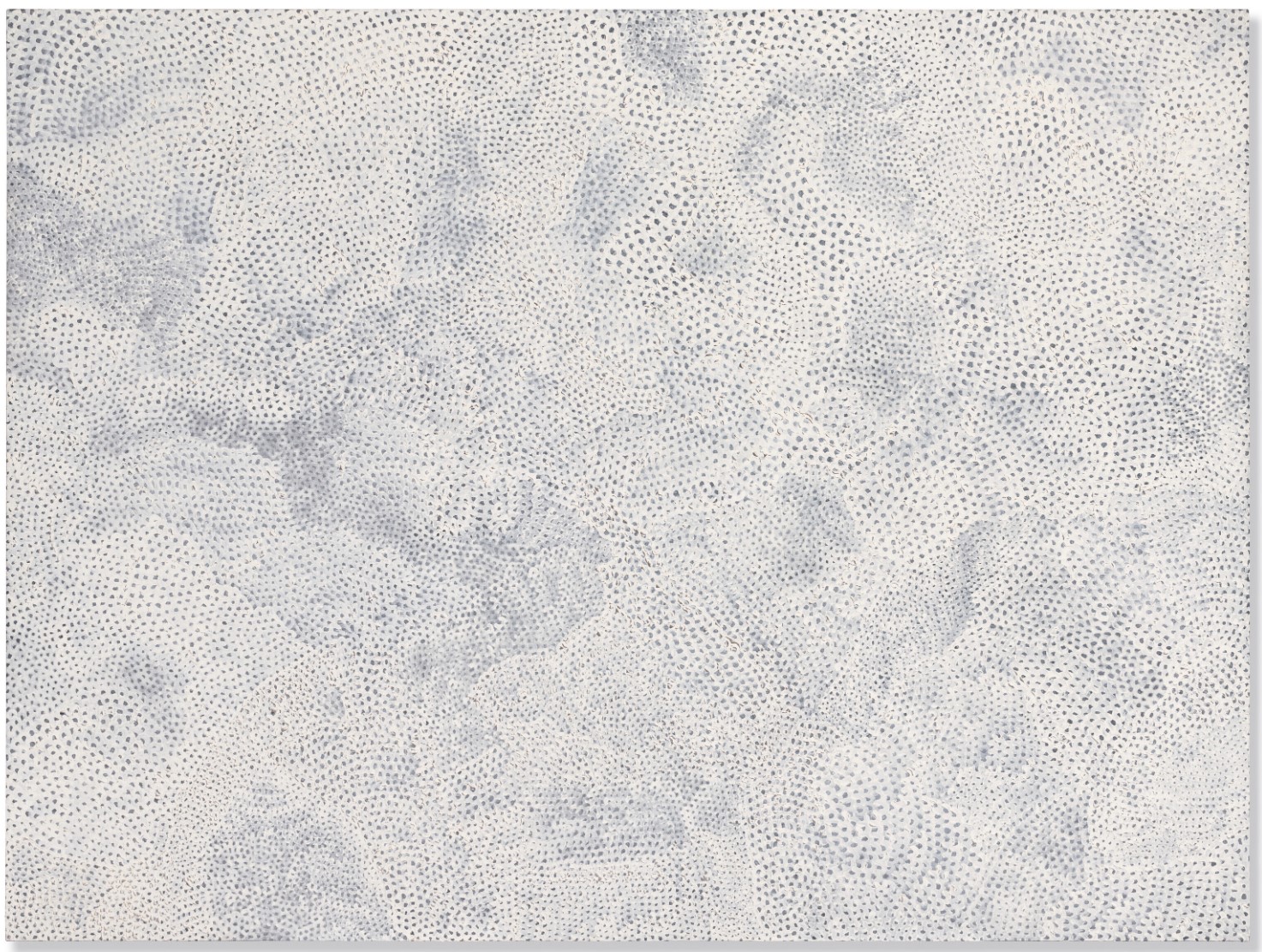
YAYOI KUSAMA (B. 1929)
Infinity Nets (T.W.A), 2000
Acrylic on canvas
193.7 x 259.1 cm (76 1/4 x 102 inches)
Christie’s New-York: 10 November 2022
USD 4,140,000
9. Gerhard Richter
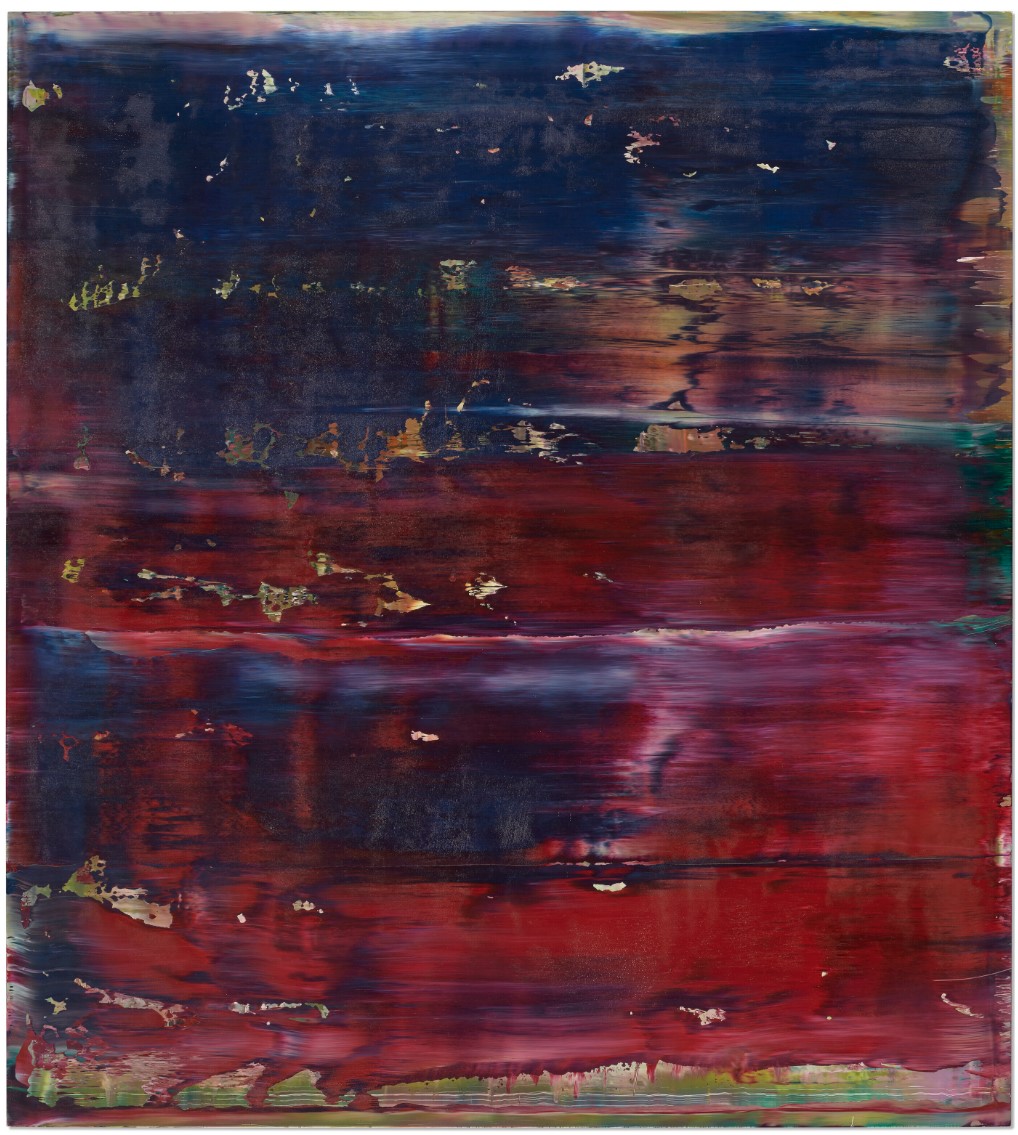
GERHARD RICHTER (B. 1932)
Abstraktes Bild, 1997
Oil on Alucobond
100 x 90.2 cm (39 3/8 x 35 1/2 inches)
Christie’s New-York: 10 November 2022
USD 3,900,000
10. Agnes Martin
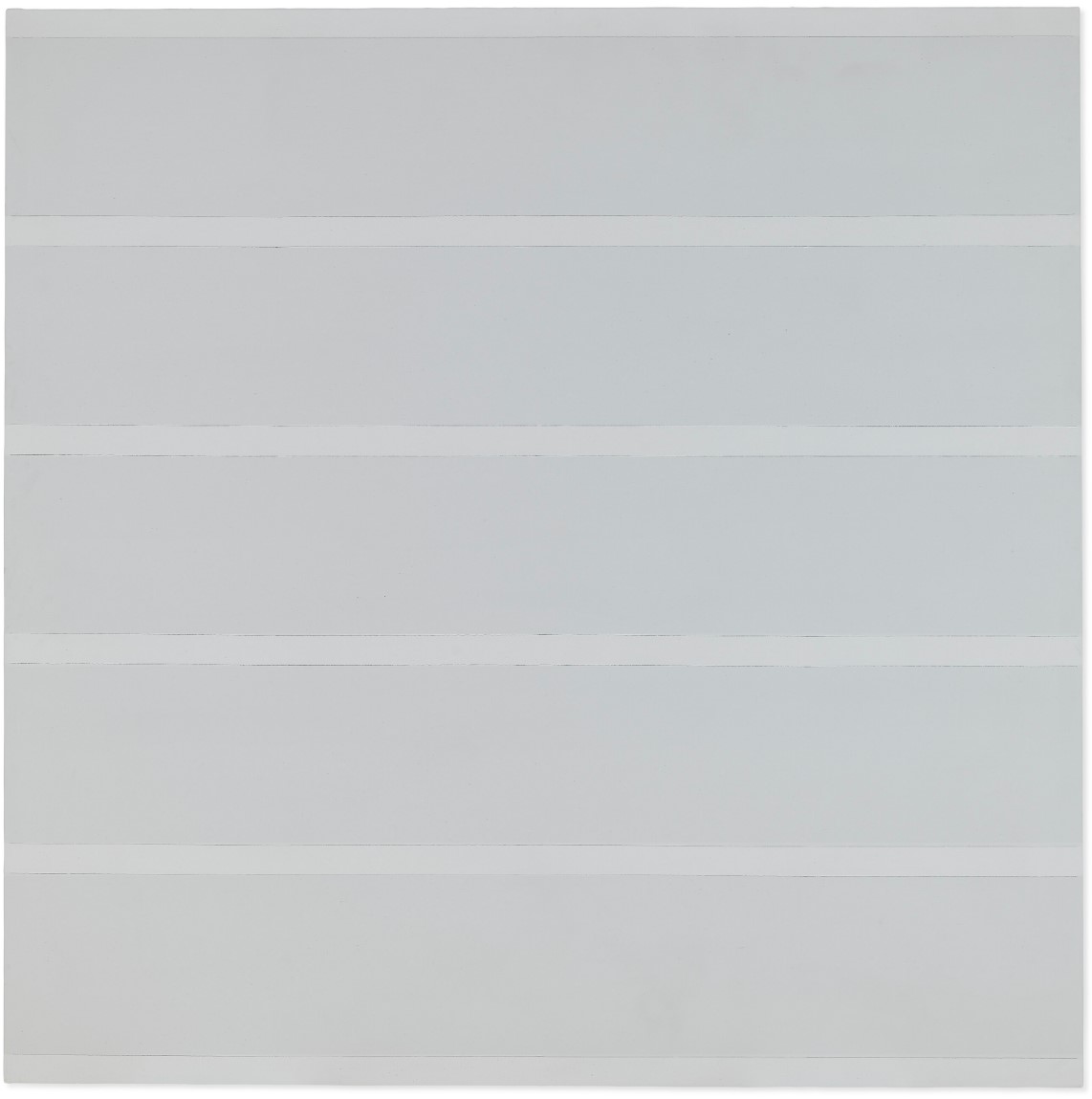
AGNES MARTIN (1912-2004)
Untitled #5, 1992
Acrylic and graphite on canvas
72 1/8 x 72 inches (183.2 x 182.9 cm)
Christie’s New-York: 10 November 2022
Estimated: USD 3,000,000 – 5,000,000
USD 3,660,000
2. 20th Century Evening Sale
17 November 2022
20th Century Evening Sale (christies.com)
# Lots: 69 Lots
Sell-Through Rate: 94%
Total: USD 302,125,300
——
Top Lot: USD 17,565,000
6 Lots above USD 10,000,000
62 Lots above USD 1,000,000
——
Above Estimates: 15 Lots (22%)
Within Estimates: 41 Lots (59%)
Below Estimates: 9 Lots (13%)
Unsold: 4 Lots (6%)
#1. Amedeo Modigliani
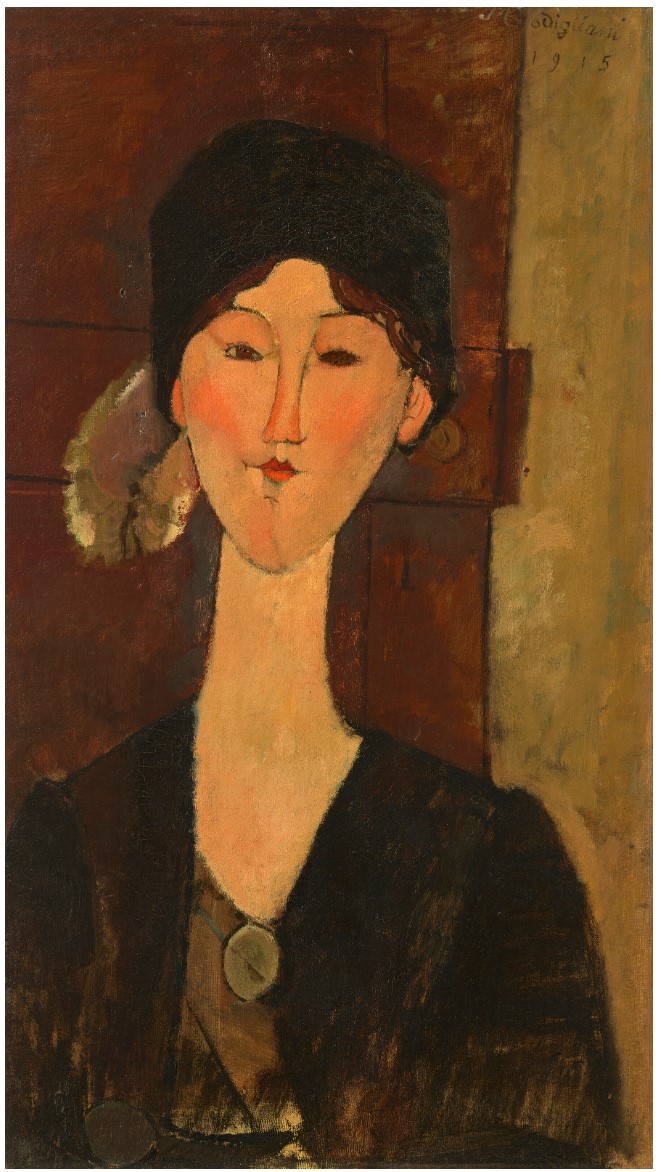
Beatrice Hastings (devant une porte), 1915
Oil on canvas
81.3 x 46.4 cm (32 x 18 1/4 inches)
Christie’s New-York: 17 November 2022
Estimated: USD 12,000,000 – 18,000,000
USD 17,565,000
The avant-garde painter Amedeo Modigliani first arrived in Paris in 1906. Within the bohemian community of Montparnasse, he soon developed a reputation for painting evocative portraits of his broader social network. Modigliani’s oeuvre included the likenesses of fellow artists from the School of Paris, who shared his interest in reinventing the formal language of the human figure; Jean Cocteau, Juan Gris, Pablo Picasso and Chaïm Soutine were among his subjects. Yet Modigliani’s most iconic images were dedicated to his female lovers—notably his first muse, Beatrice Hastings, the so-called poétesse anglaise.
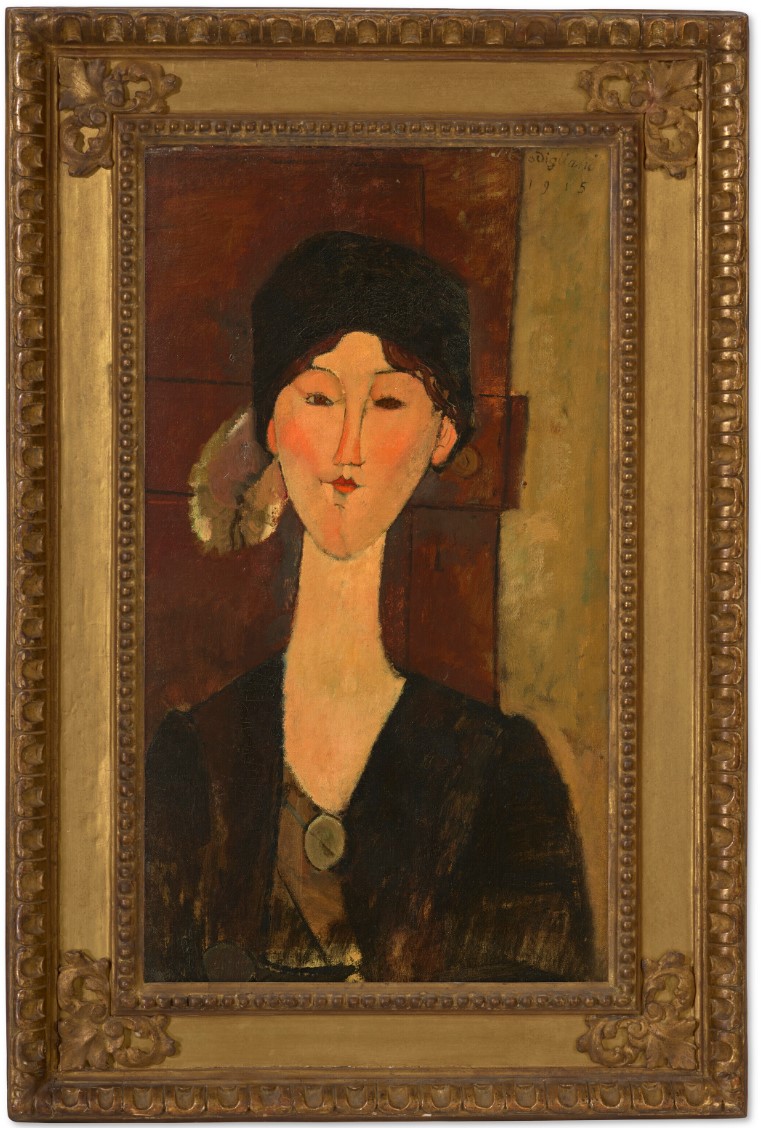
Hastings, a British writer and poet who had been raised in South Africa, was five years older than Modigliani. The artist painted her at least fourteen times throughout the course of their erotic and creative collaboration, between 1914 and 1916. Beatrice, in turn, wrote extensively about their tumultuous romance, publishing her work in the British press. In Beatrice Hastings (devant une porte), painted in 1915, Modigliani depicted Beatrice at bust-length. Indeed, the volatile passion between artist and his lover directly informed his representation of her.
#2. Mark Rothko
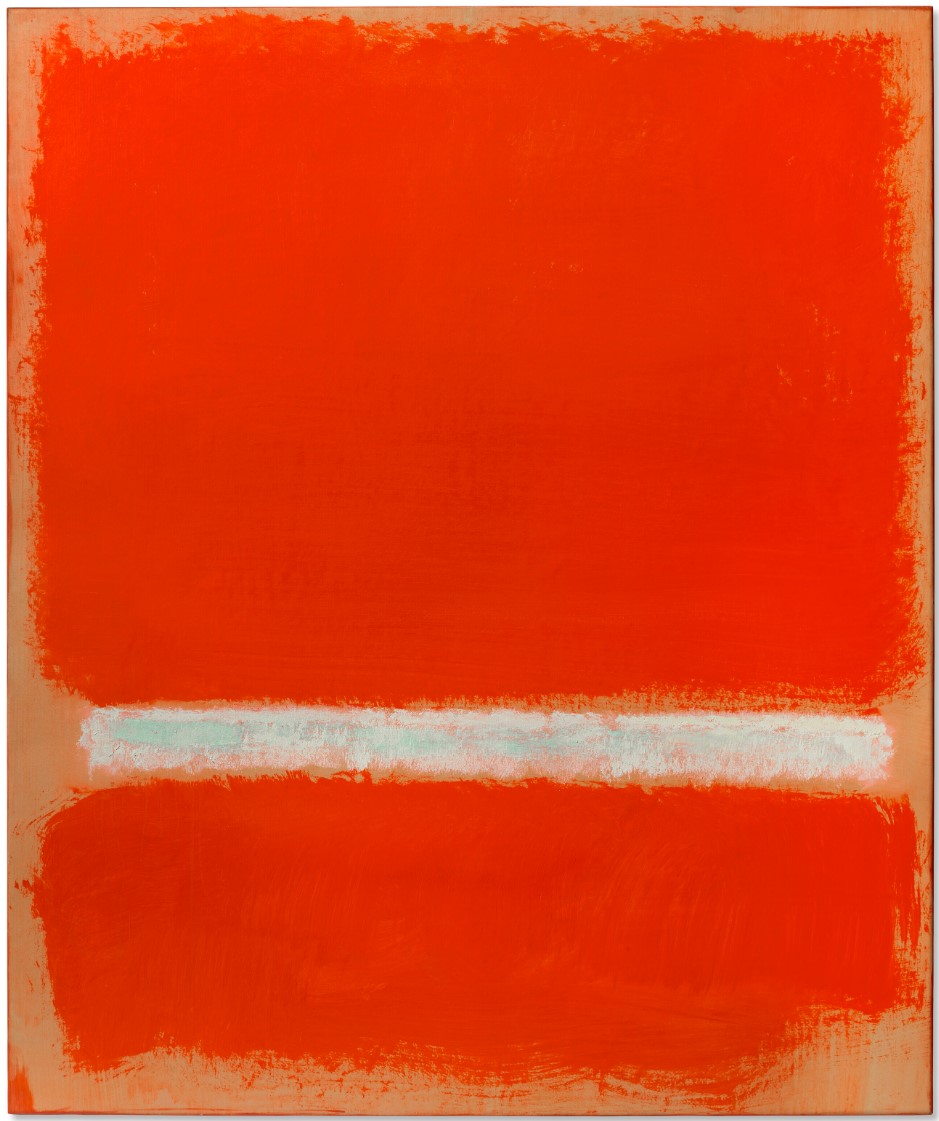
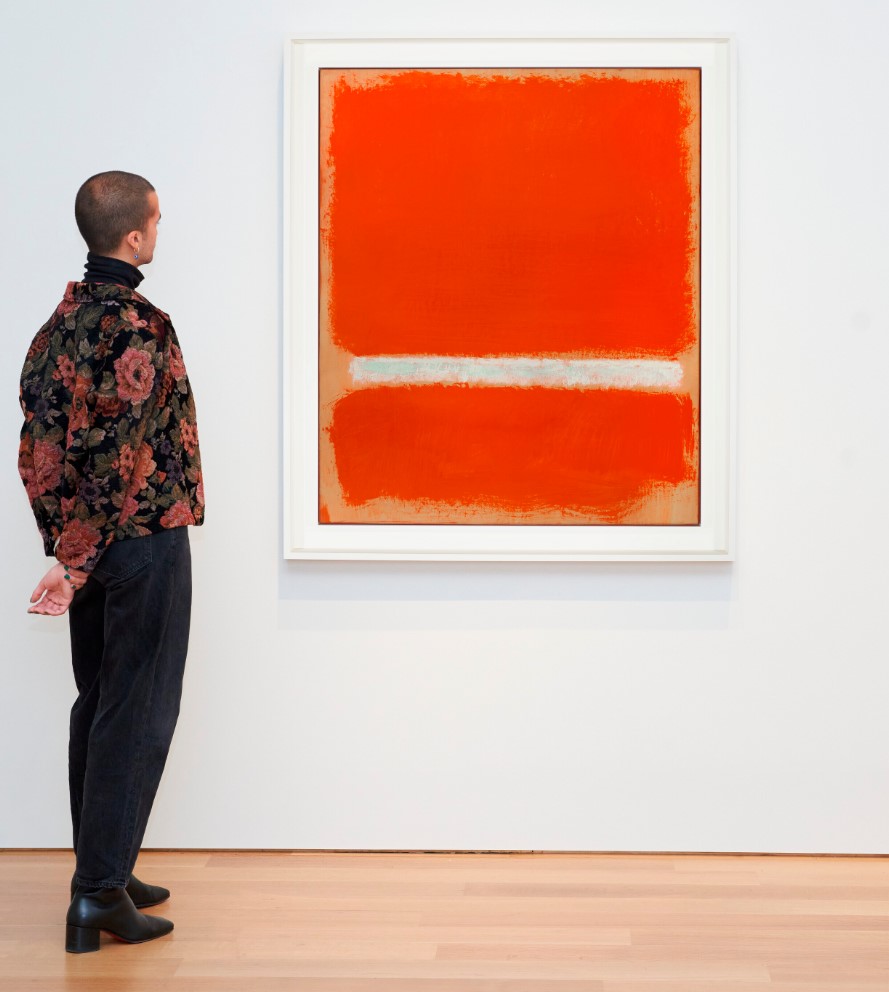
Untitled, 1969
Acrylic on paper laid down on canvas
48 1/2 x 40 1/2 inches (123.2 x 102.9 cm)
Christie’s New-York: 17 November 2022
Estimated: USD 15,000,000 – 20,000,000
USD 17,565,000
#3. Joan Mitchell
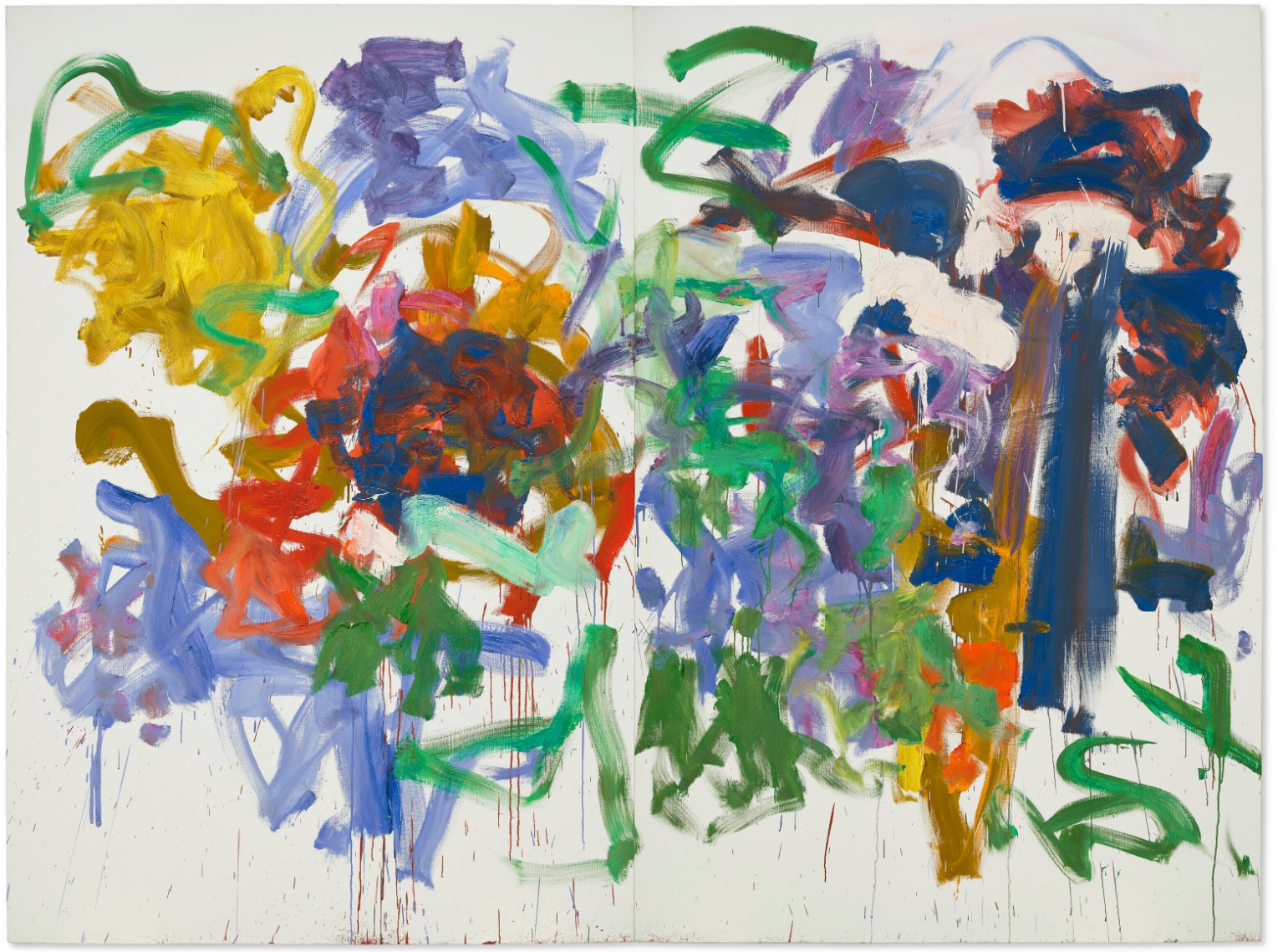
Untitled, 1989
Oil on canvas, in two parts
Each: 76 3/4 x 51 1/4 inches (194.9 x 130.2 cm)
Overall: 76 3/4 x 102 7/8 inches (194.9 x 260.7 cm)
Christie’s New-York: 17 November 2022
Estimated: USD 10,000,000 – 15,000,000
USD 14,130,000
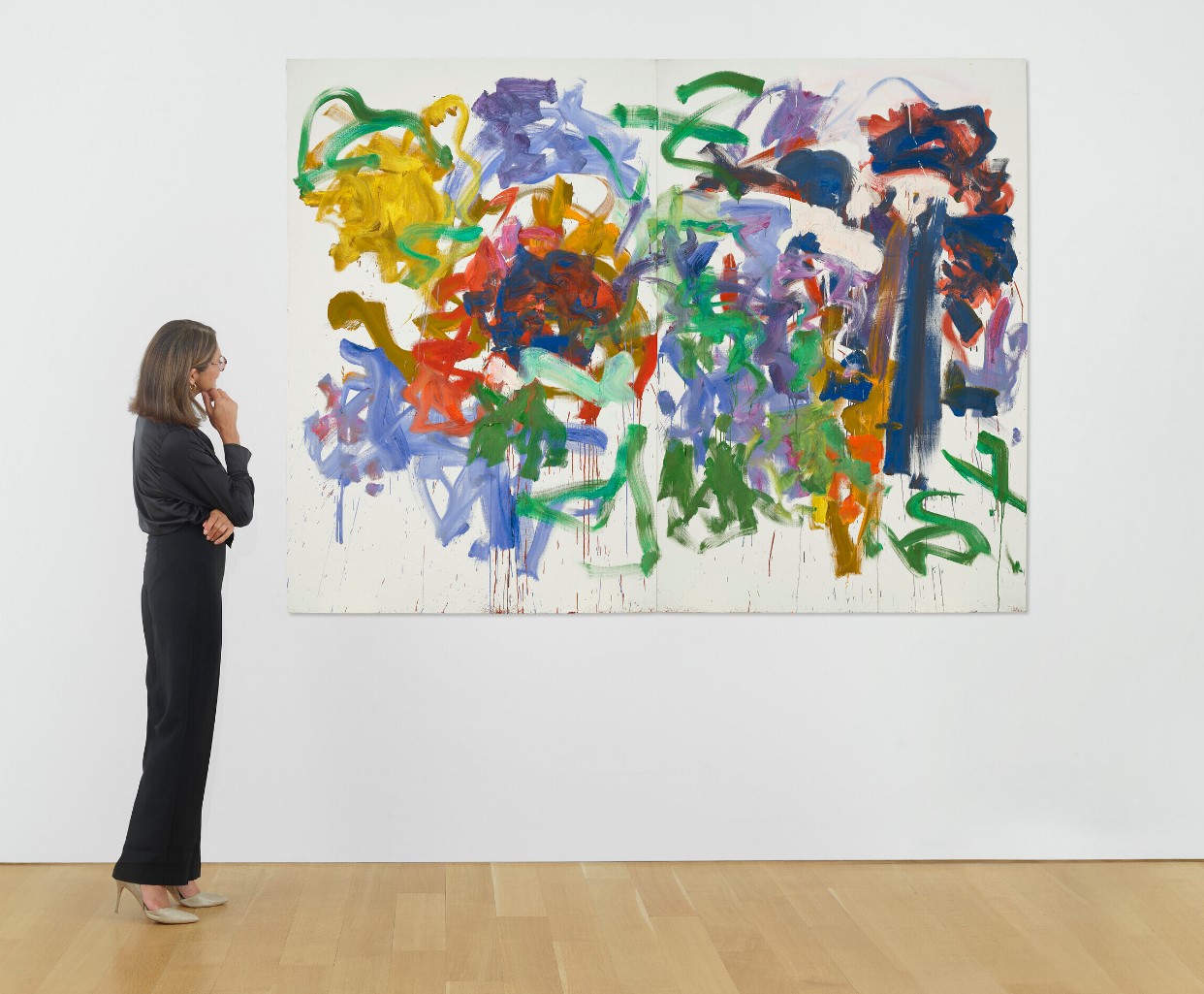
Teeming with a heady array of lush, beautiful brushwork that darts and zig-zags through the canvas with a speed and ferocity not seen in her work in years, the present Untitled attests to the freedom and confidence that seized the artist at this time. She worked with a far greater variety of colors, which here encompasses green, blue, yellow, red, orange and purple, consisting of a veritable rainbow. Mitchell also retains a great deal of white ground in the work, which adds an airy lightness, infusing the colors with a kind of dazzling, prismatic light. It is perhaps not surprising that she had seen the Gothic stained-glass windows of the cathedral in Lille, and briefly considered a stained glass project for the cathedral at Nevers, around this time. She also allowed herself the freedom to use a wider brush, applying paint in strong, muscular strokes. Especially expressive is her use of green; these brushstrokes hover and dance, leading the eye up, through and across the canvas. In other places, the strokes gather together into a tangle or ball, as in the far upper left, where a cluster of yellow strokes recalls the sunflowers that grew in her garden at La Tour, and near the center, a darker nest of red, blue and orange that echoes Van Gogh’s dying sunflowers.
#4. Robert Ryman
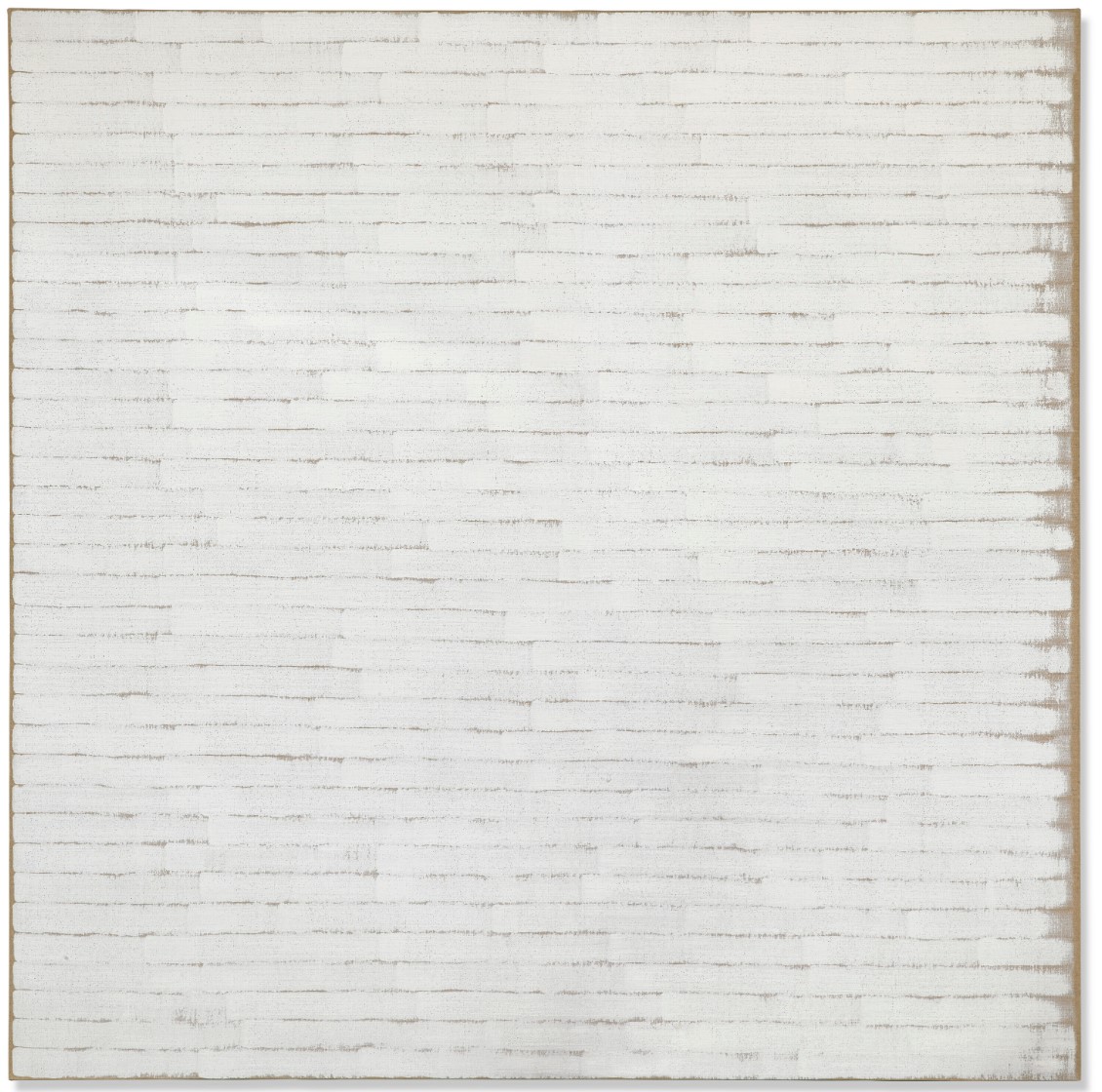
ROBERT RYMAN (1930-2019)
Untitled [Winsor], 1966
Winsor White oil on stretched sized linen canvas
76×76 inches (193×193 cm)
Christie’s New-York: 17 November 2022
Estimated: USD 6,000,000 – 8,000,000
USD 12,641,500
In stark contrast to many of his New York contemporaries, Robert Ryman’s forthright adoption of a singular palette allowed him to more fully explore the subtlety of the artform than anyone before or after. Pushing against the dominance of Abstract Expressionism, the artist embraced a romantic sensibility masquerading as calculated minimal canvases. Untitled [Winsor] is a testament to the artist’s unflinching focus on process and materials in service to an intense personal investigation of painting as a whole. It was realized in 1966, the same year another work—Allied, 1966—was included in the pivotal “Systemic Painting” exhibition organized by Lawrence Alloway at the Solomon R. Guggenheim Museum in New York. Though Ryman had been living in the city since 1950, and had made his first monochromatic paintings around 1955, it was not until the late 1960s that he began exhibiting more regularly and the staying power of his art began to be recognized. Never interested in purely gestural or energetic abstraction, Ryman chronicled his journey through painting as an artform from picking up small canvases and oils from the corner art supply store to major exhibitions around the world. To him, it was about the delight in discovery and experimentation rather than blustering machismo or coldly calculated systems.
#5. Pablo Picasso
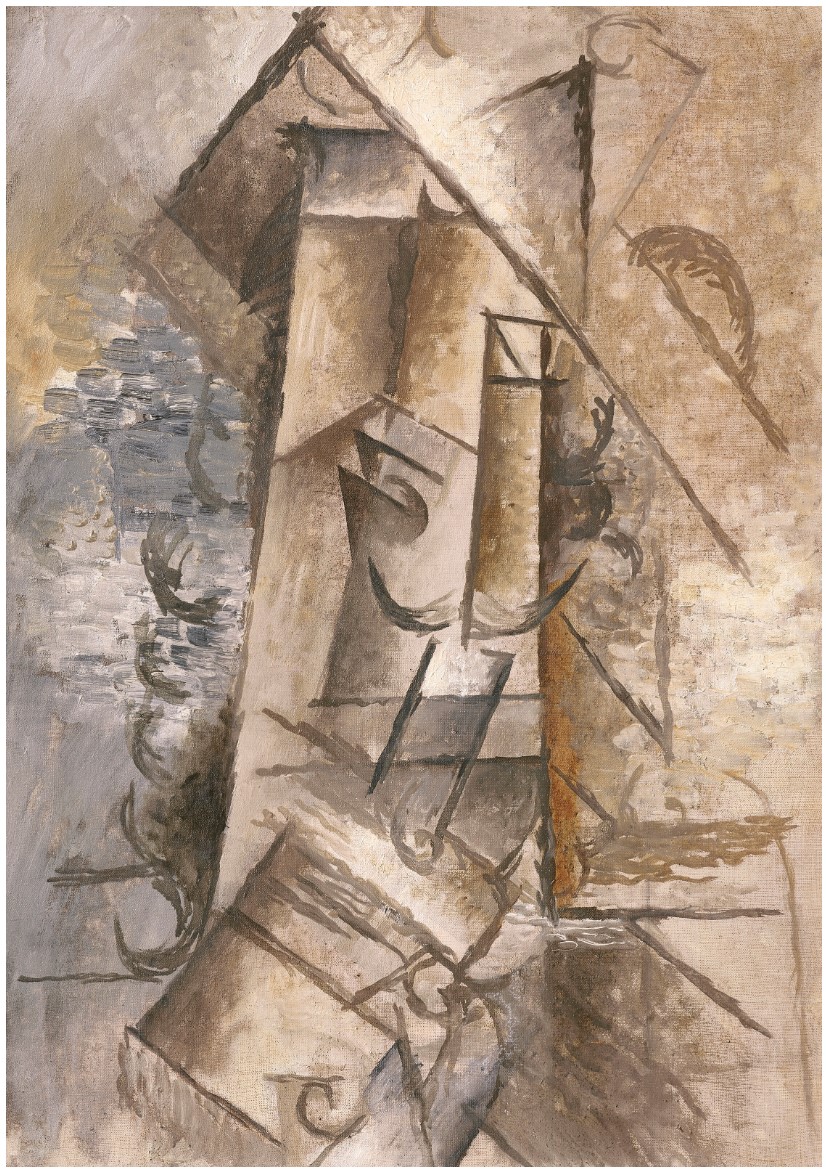
PABLO PICASSO (1881-1973)
Buffalo Bill, 1911
Oil and sand on canvas
46.3 x 33.3 cm (18 1/4 x 13 1/8 inches)
Christie’s New-York: 17 November 2022
Estimated: USD 10,000,000 – 15,000,000
USD 12,412,500
Pablo Picasso painted this portrait of the famed Western performer, Buffalo Bill, in the spring of 1911 during the highpoint of Analytical Cubism—the radical new pictorial language with which he and his cubist comrade, Georges Braque, dismantled every tradition of representation. Not only is this one few male portraits with identified sitters that Picasso painted in the years of pre-war Cubism, but the work provides an insight into the intense artistic friendship and spirit of shared collaboration that existed between Picasso and Braque at this time.
#6. Pablo Picasso
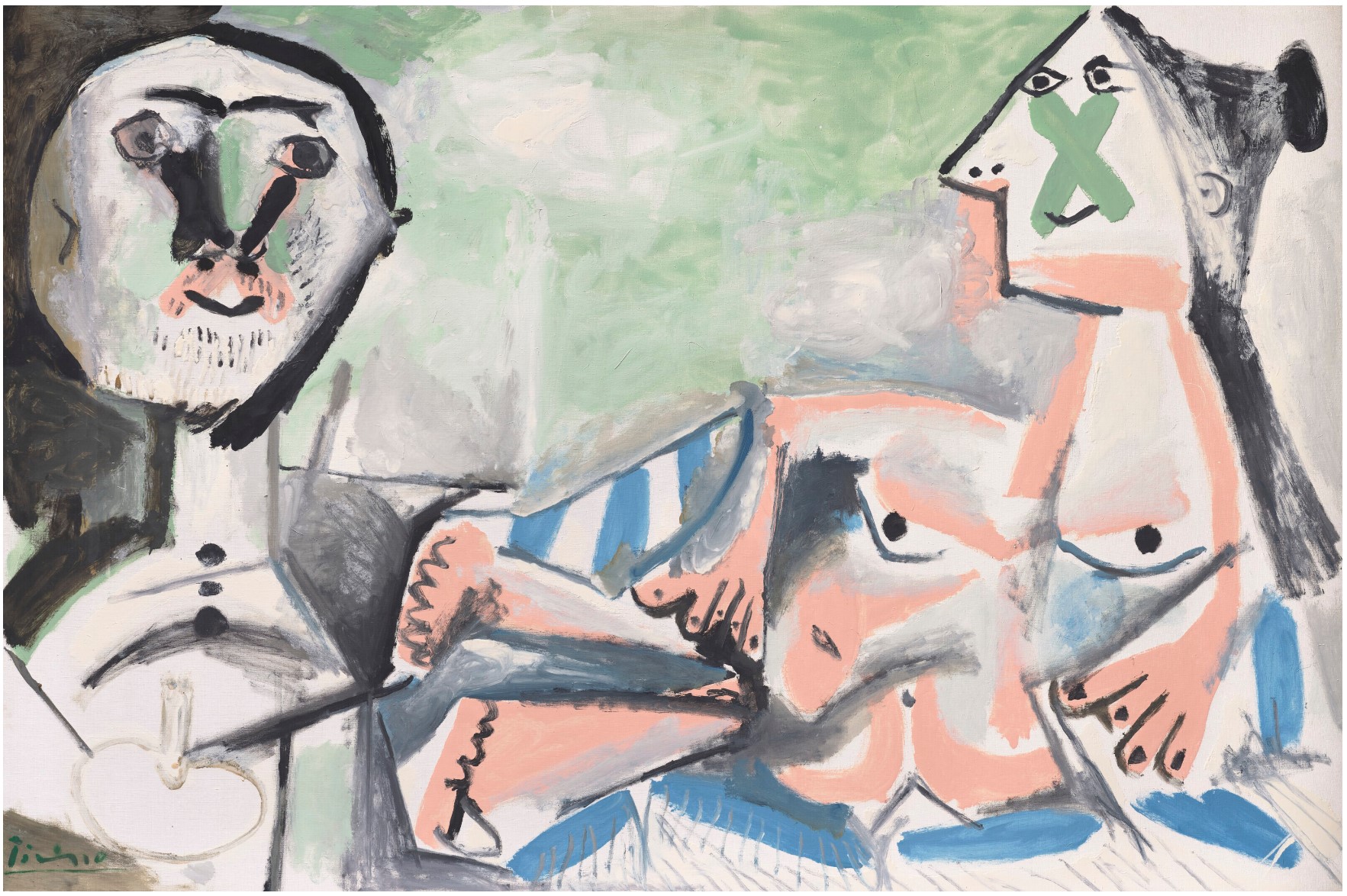
PABLO PICASSO (1881-1973)
Le peintre et son modèle, 1964
Oil and Ripolin on canvas
130×195 cm (51 1/8 x 76 3/4 inches)
Christie’s New-York: 17 November 2022
Estimated: USD 8,000,000 – 12,000,000
USD 10,351,500
At the beginning of 1963, Pablo Picasso became obsessed by a subject that had stood at the heart of his art for the entirety of his career. Over the course of two weeks in February, he filled the pages of a small carnet with more than two dozen sketches of a studio interior in which a painter is seen working at his easel in the presence of a reclining nude model (Musée Picasso, Carnet no. 59). On 2 March he began the first of an extended series of oil paintings on this theme (Zervos, vol. 23, no. 154; Kunstmuseum St. Gallen). Hélène Parmelin, the wife of painter Edouard Pignon, both of whom were close friends of the artist, recounted the excitement surrounding the inception of these works: “Picasso lets loose. He paints ‘The Painter and his Model.’ And from that moment on he paints like a madman, perhaps never before with such frenzy” (op. cit., p. 10). On 27 March, Picasso acknowledged that he was in the grip of a new and compelling inspiration when he declared to Michel Leiris: “Painting is stronger than I am. It makes me do what it wants” (quoted in P. Daix, Picasso: Life and Art, New York, 1993, p. 349).
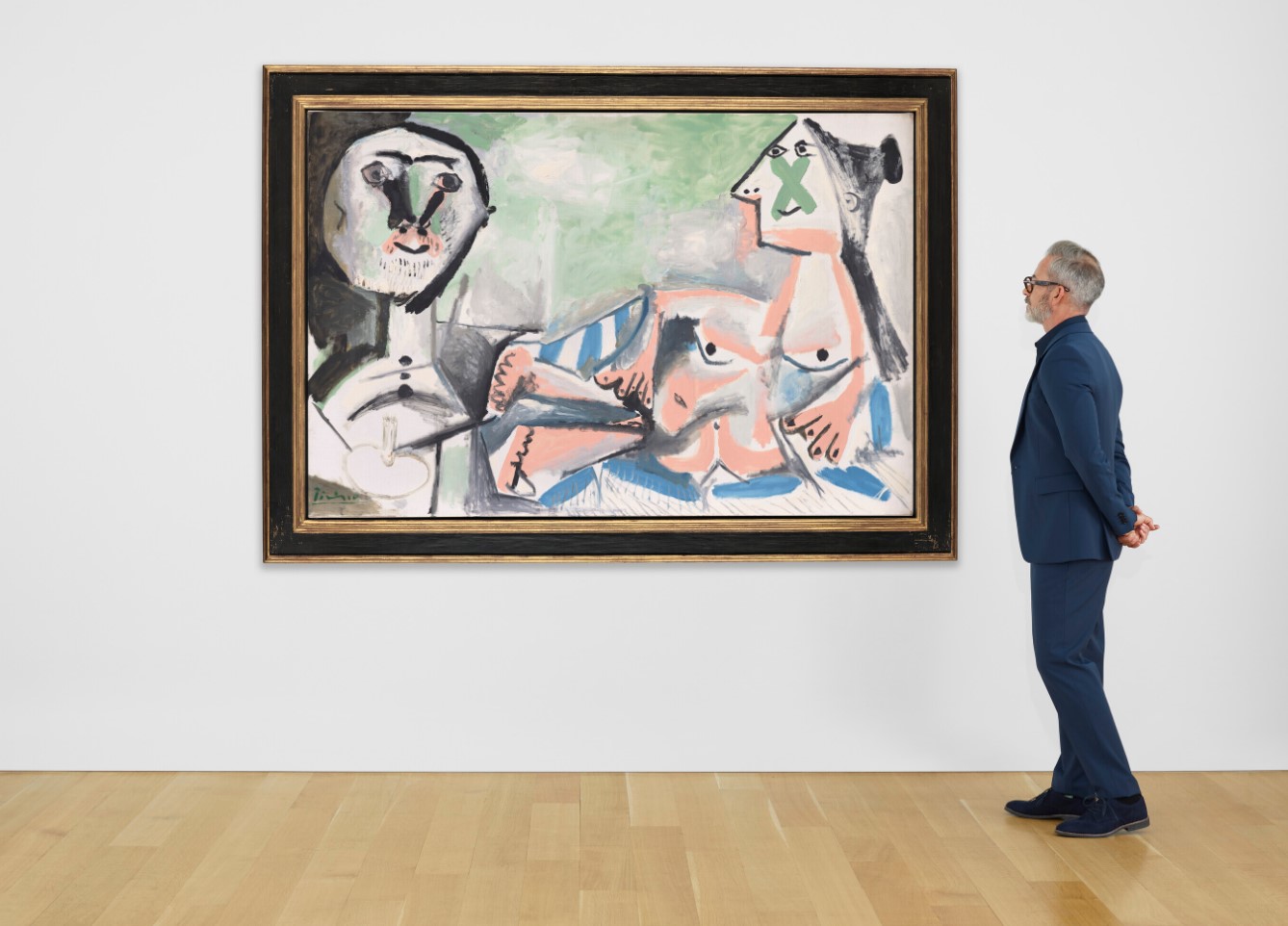
From this point until 1965 Picasso painted and drew mostly variations on this theme. The artist and model appear together, as in Le peintre et son modèle, or alone as male or female portraits and nude figure paintings. The male subjects are almost invariably stand-ins for Picasso himself—in the present work he is sporting the artist’s signature blue-and-white striped Breton top—and the models are most typically the figure of his wife, Jacqueline. He gave relatively little time to other subjects, and it was not until the musketeers made their appearance in April 1967 that his preoccupation with the artist and model theme appeared to have subsided, although it was still far from having run its course, and it continued to manifest itself in new guises.
#7. Rene Magritte
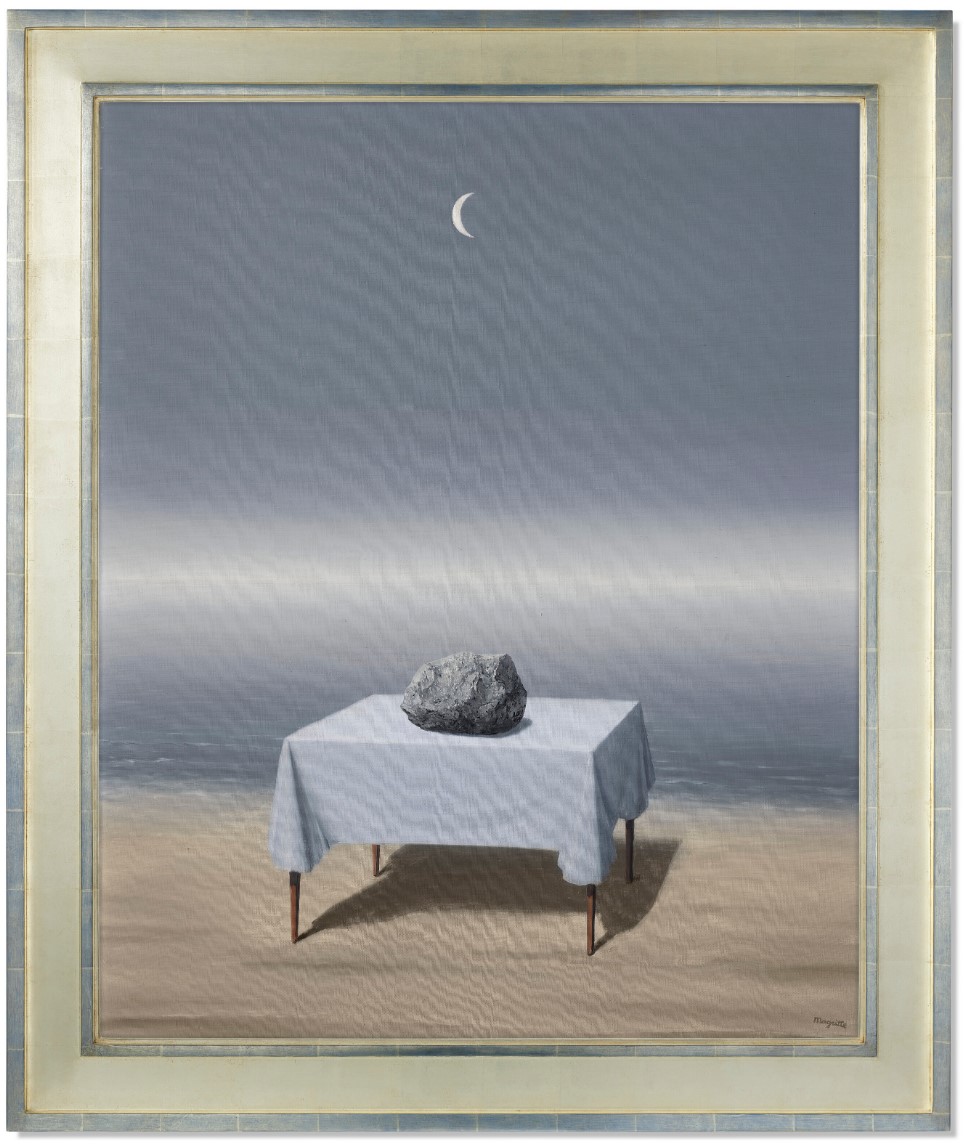
RENE MAGRITTE (1898-1967)
Le monde visible, 1962
Oil on canvas
100.2 x 81.1 cm (39 1/2 x 31 7/8 inches)
Christie’s New-York: 17 November 2022
Estimated: USD 7,000,000 – 10,000,000
USD 9,321,000
#8. Willem de Kooning
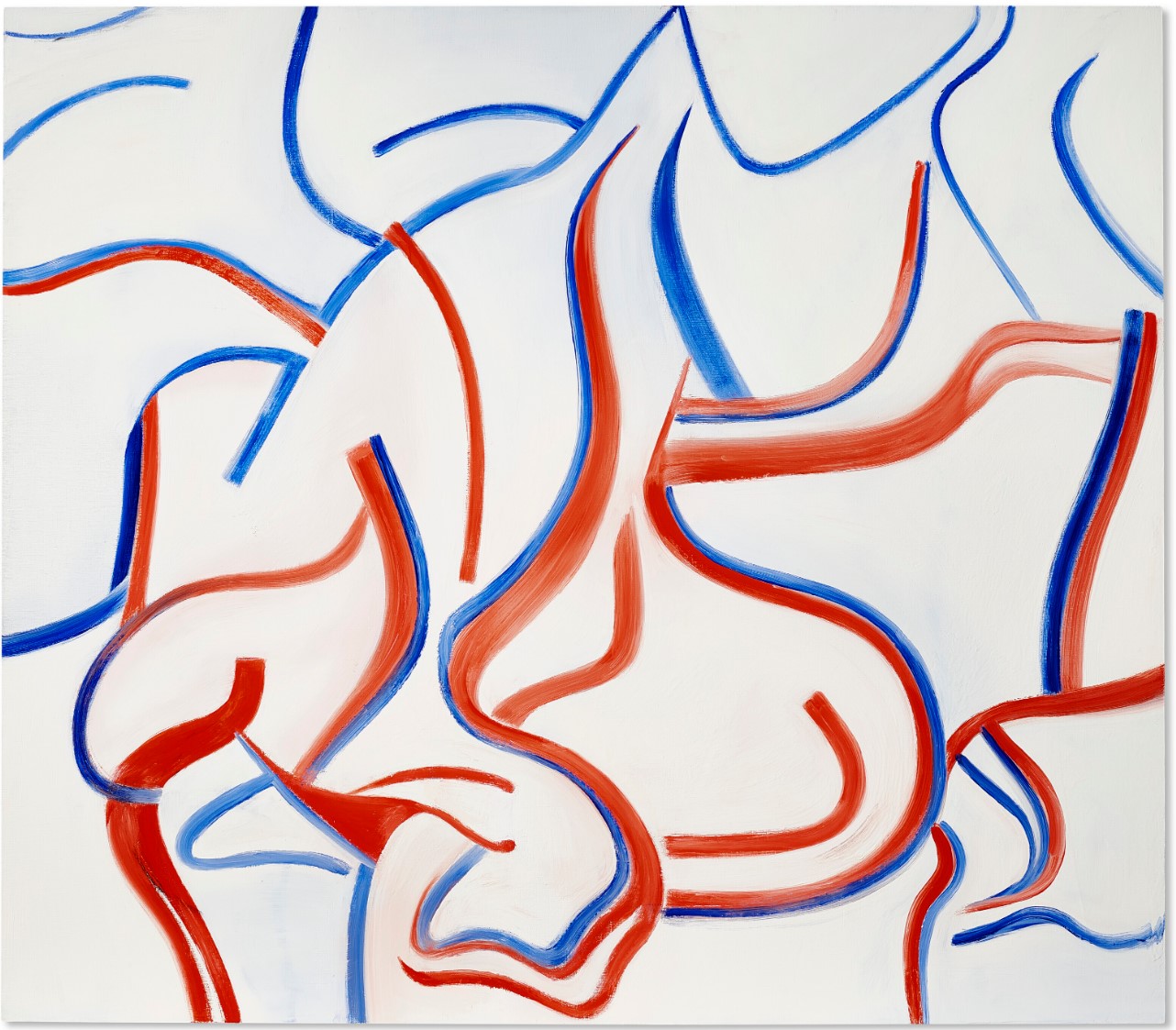
WILLEM DE KOONING (1904-1997)
Untitled, 1985
Oil on canvas
70×80 inches (177.8 x 203.2 cm)
Christie’s New-York: 17 November 2022
Estimated: USD 8,000,000 – 12,000,000
USD 9,321,000
Painted in 1985, Willem de Kooning’s Untitled is a vivacious, large-scale example of his late style, brimming with floating ribbons of color that flicker and dance across a luminous white background. Now in his eighties, de Kooning was painting some of his most lyrical and elegant paintings yet. “I am becoming freer,” he said. “I think you can do miracles with what you have if you accept it” (W. de Kooning, quoted in M. Stephens and A. Swann, De Kooning: An American Master, New York, 2005, p. 603). This era witnessed a stripping away of extraneous materials, leaving only two primary colors—red and blue—set against glowing, almost incandescent, white grounds. Untitled attests to these lean but brilliant late paintings, featuring a host of colorful ribbon-forms, some of which nestle alongside each other, while others roam free, only to fold in on themselves, suggesting the curvature of womanly bodies and flesh.
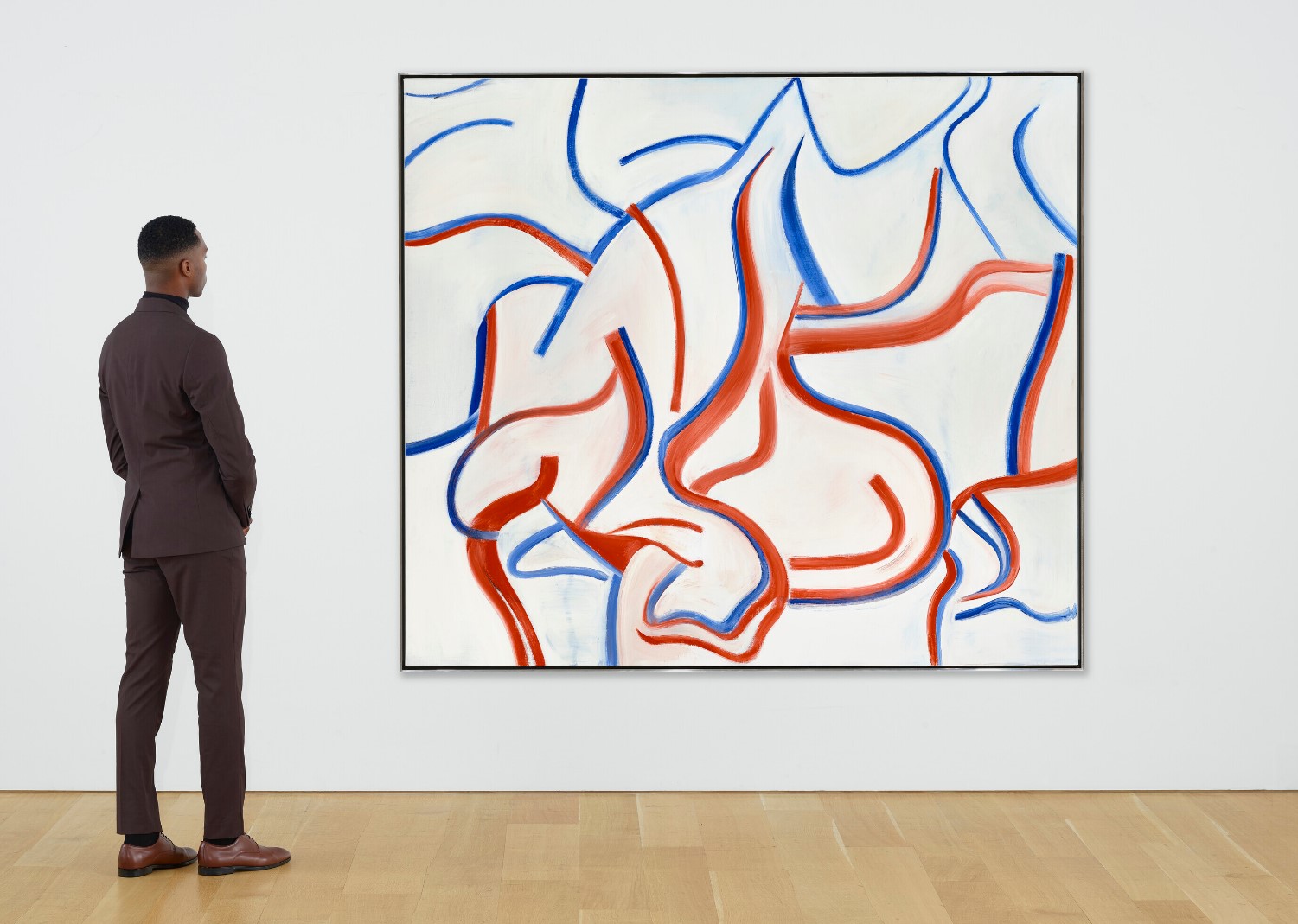
De Kooning orchestrates a powerful, late-in-life masterpiece in Untitled, which bustles with dancing lines and evokes the airy and elegant joie-de-vivre of this late, great series. With a calm hand, the artist paints lean blue lines, which converge in peaks and tapered points along the upper edge, conjuring up icy vistas and cold mountain snow. Throughout the main register, these crisp blue ribbon-forms are then paired with thicker, denser red ones. These nestle alongside the blue, varying in thickness and width, at times breaking off from a single line to form two thinner ones (in one case, a line which begins its life as red ends up turning blue as it arcs and whips around). These color ribbons have a potent, graphic “snap” when viewed against the optical white background. The artist has given some of them several applications of paint, making them wider, darker, and more emphatic. He has also used the palette knife to scrape down parts of the surface, rendering the painting’s “skin” light and airy. Subtle pink passages linger beneath the white surface, barely perceptible at first, but adding a sensual warmth to the otherwise cool white tones. Overall, the painting feels on the cusp of movement, ready to fold and bend upon itself at any minute.
#9. Frida Kahlo
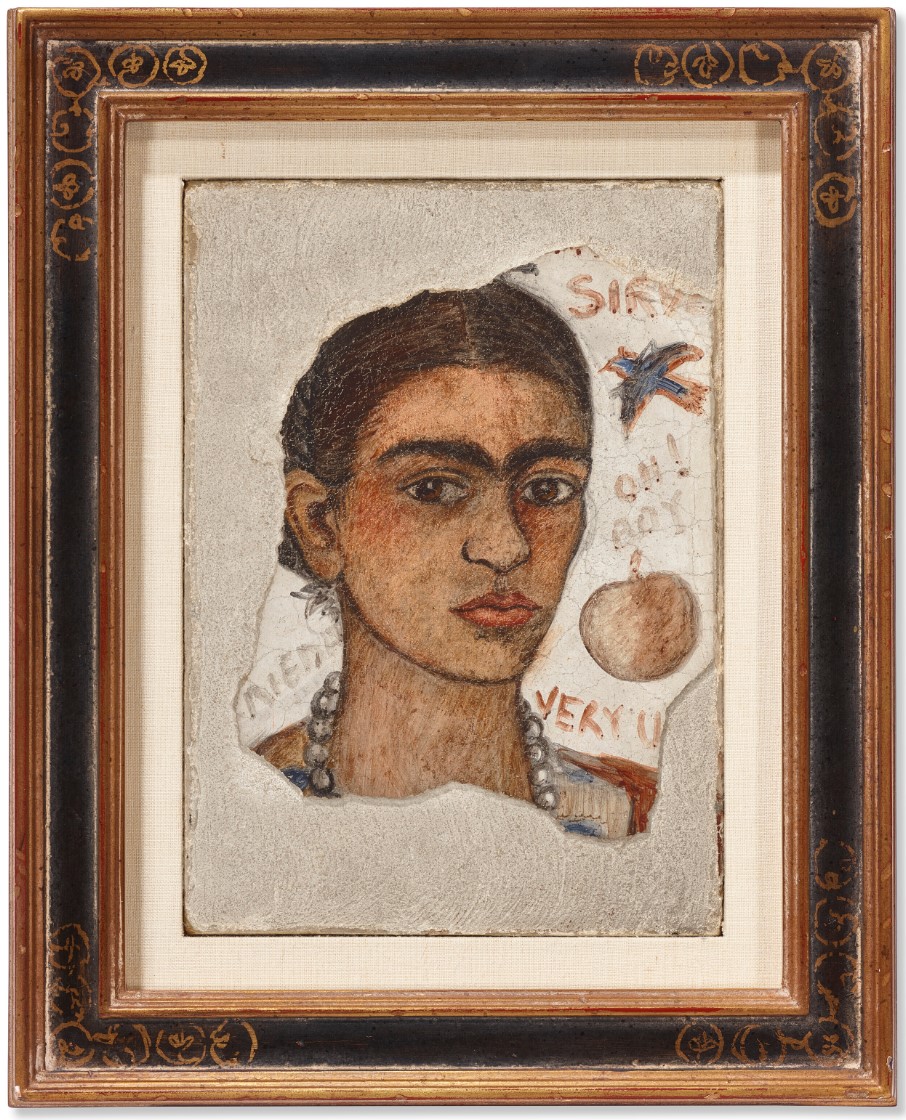
FRIDA KAHLO (1907-1954)
Self-Portrait (Very Ugly), 1933
Fresco on Celotex board
27.3 x 22.cm (10 3/4 x 8 3/4 inches)
Sotheby’s New-York: 16 November 2022
Estimated: USD 7,000,000 – 10,000,000
USD 8,634,000
#10. Gustave Caillebotte
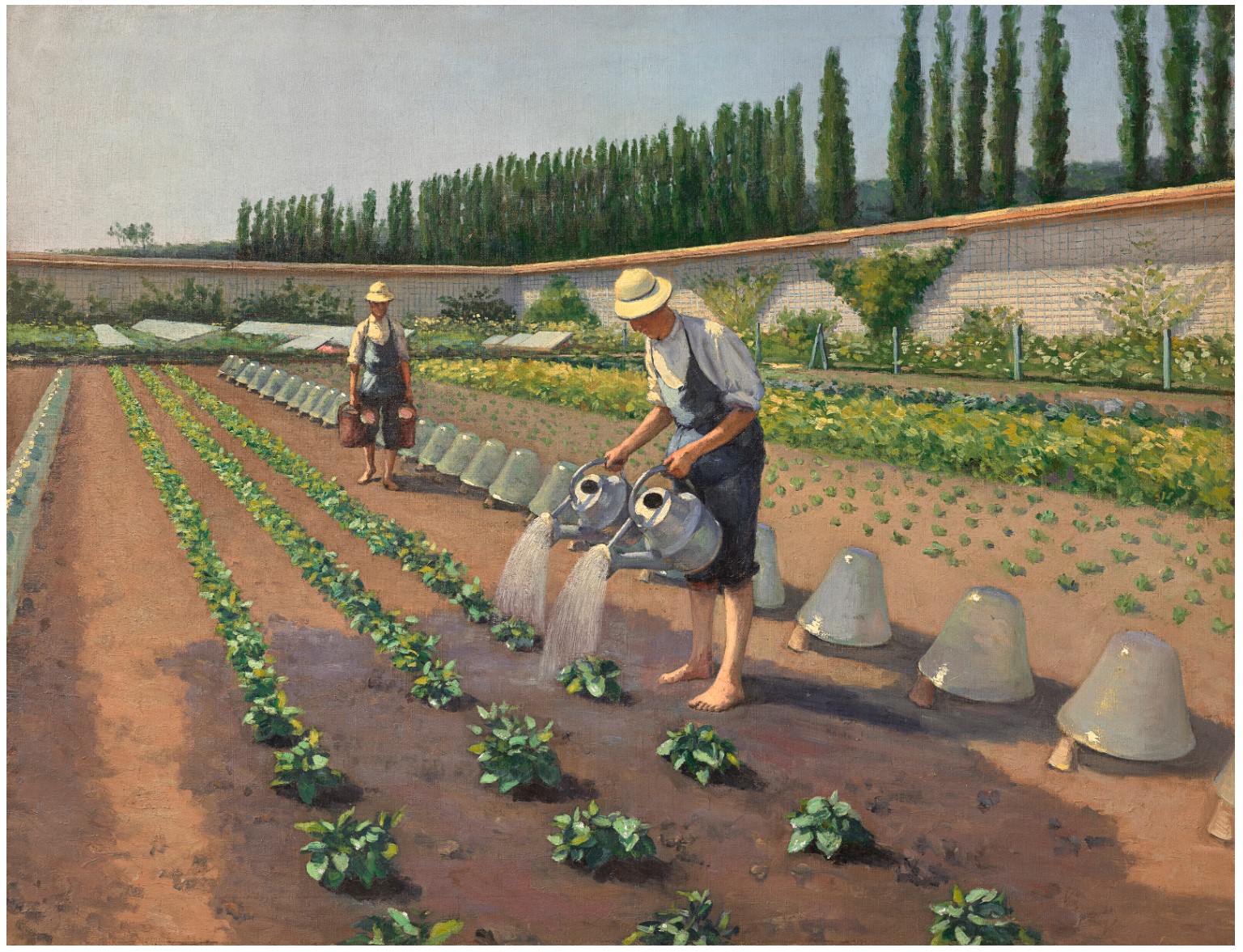
Les Jardiniers, circa 1877
Oil on canvas
89.6 x 116.8 cm (35 1/4 x 45 7/8 inches)
Christie’s New-York: 17 November 2022
Estimated: USD 6,000,000 – 8,000,000
USD 7,020,000
#11. Paul Signac
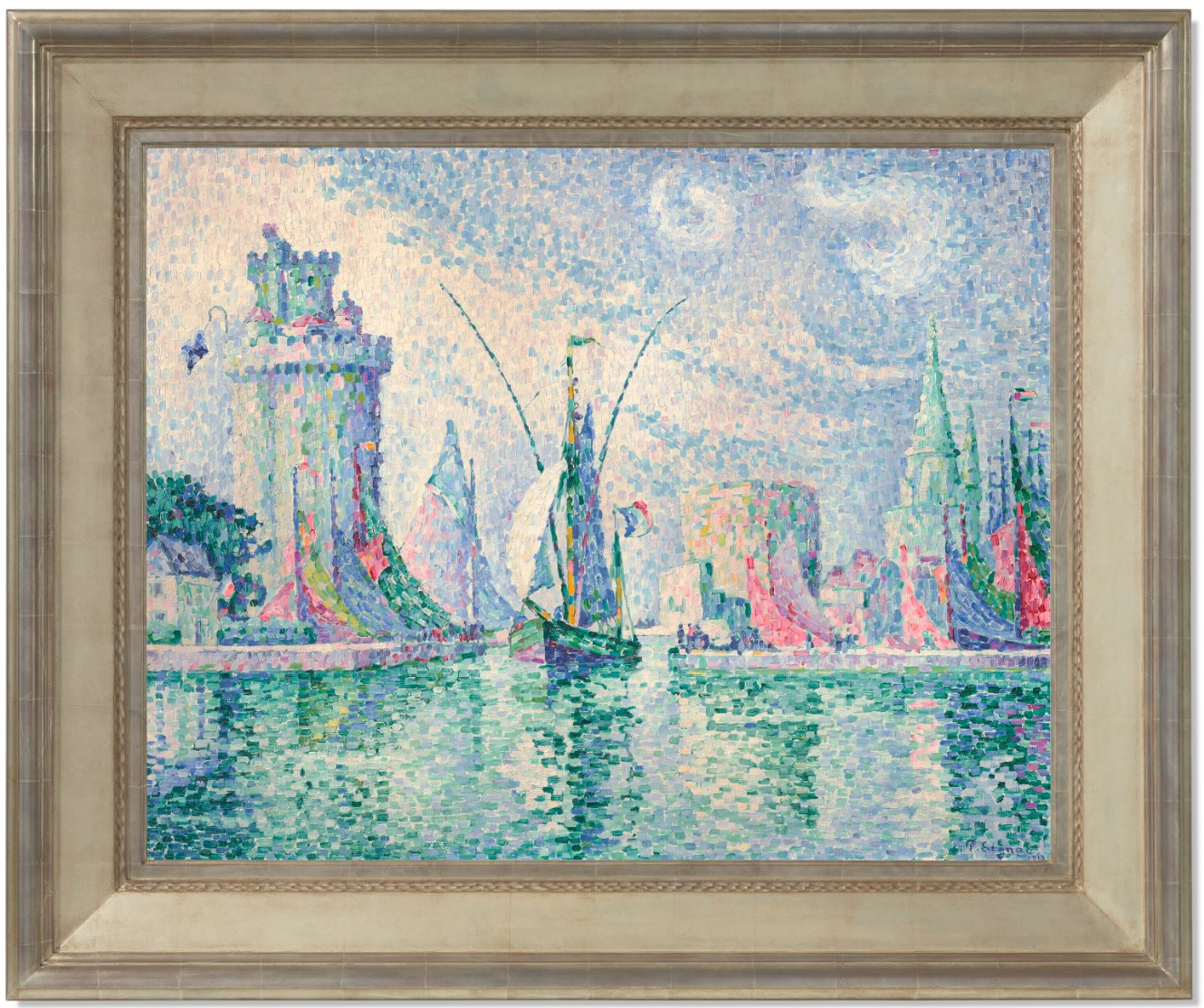
Les tours vertes, la Rochelle, 1913
Oil on canvas
73.3 x 92.2 cm (28 7/8 x 36 1/4 inches)
Sotheby’s New-York: 16 November 2022
Estimated: USD 3,500,000 – 5,500,000
USD 6,300,000
#12. Piet Mondrian
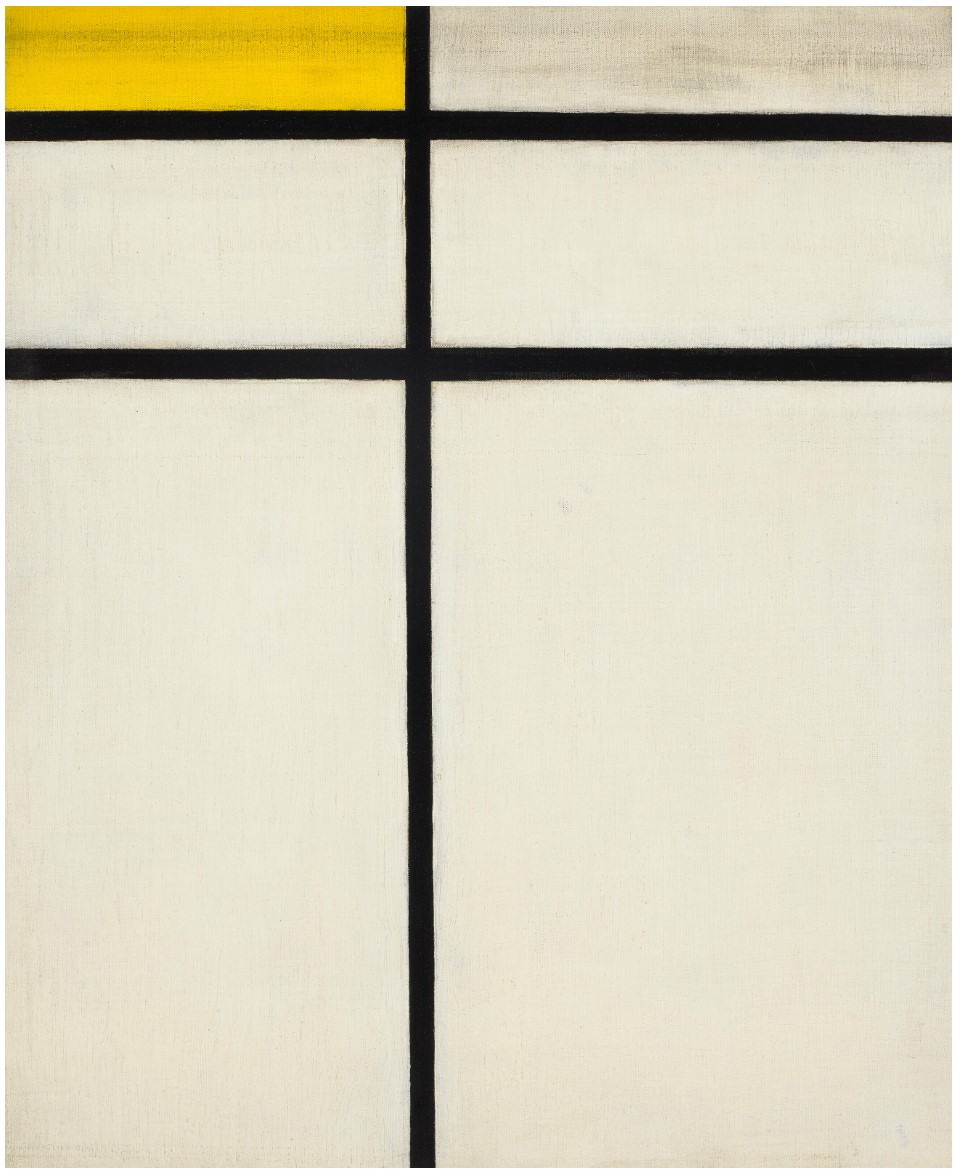
Composition with Double Line and Yellow (unfinished), 1934
Oil on canvas
24 1/8 x 19 7/8 inches (61.2 x 50.4 cm)
Christie’s New-York: 17 November 2022
Estimated: USD 5,000,000 – 8,000,000
USD 6,300,000
Other Highlights
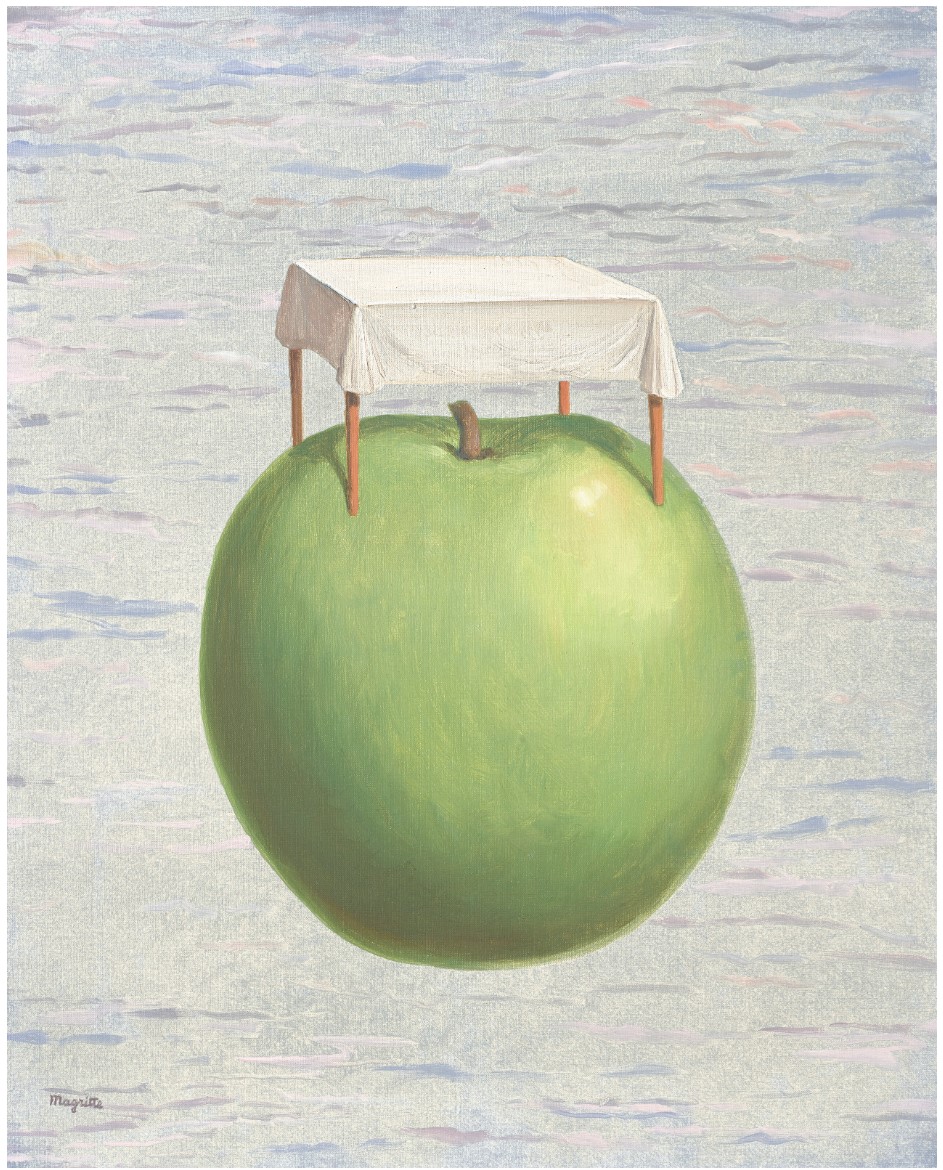
RENE MAGRITTE (1898-1967)
Les belles réalités, 1962
Oil on canvas
50×40 cm (19 5/8 x 15 3/4 inches)
Christie’s New-York: 17 November 2022
Estimated: USD 5,000,000 – 8,000,000
USD 4,980,000
Filled with a playful sense of whimsy, Les belles réalités is a prime example of René Magritte’s mature Surrealist style, presenting a scene so unexpected and jarring that it instantly catches our eye and demands our attention. Here, an enormous apple floats mysteriously in mid-air, while a table, covered in a simple white cloth, perches on top of its curved edge. Inverting the typical relationship between the two objects, whereby the apple would usually be placed onto the much larger table, Magritte upends our expectations and reveals the endless potential for mystery and revelation that exists in the world around us.
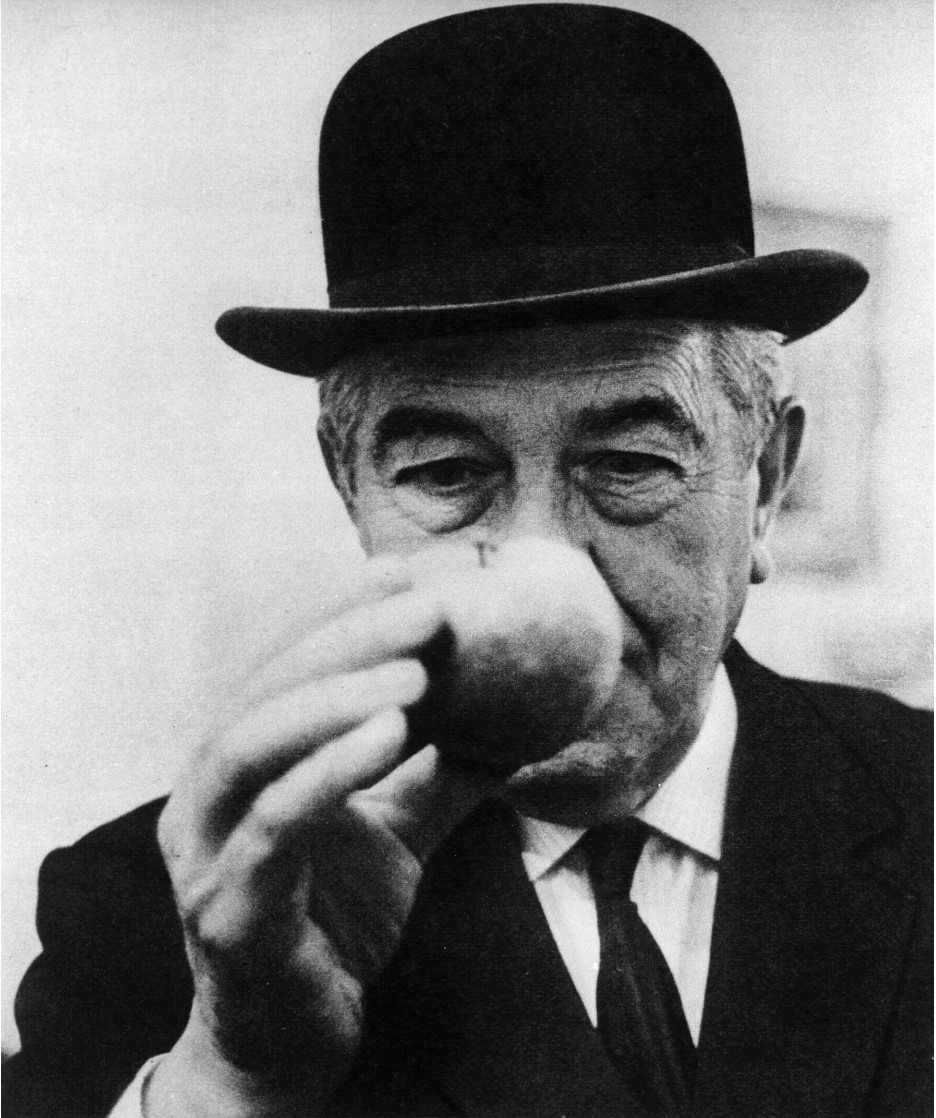
René Magritte à la pomme. The Menil Collection, Houston.
Photo: © Photothèque R. Magritte / Adagp Images, Paris, 2022.
Large spherical forms, with their allusions of the harmonious and the cosmic, held an enduring appeal for Magritte, appearing in various forms throughout his career, from the enigmatic grelot bells he recalled from his youth, to giant hot-air balloons. The apple, however, with its own wider connotations of Newtonian physics and the Enlightenment, was among the most frequent iterations of the shape in the artist’s work. Appearing in countless different situations and scenes, the Magrittean apple is one of idealized perfection, its smooth, bright green surface catching the light and exhibiting no visible flaws or quirks. As such, it was most likely inspired by an illustration from the pages of a botanical or fruit catalogue, several of which were found among the artist’s possessions, rather than from life. For Magritte, it was the everyday familiarity of such items that allowed him to conjure such a distinct sense of mystery in his work.
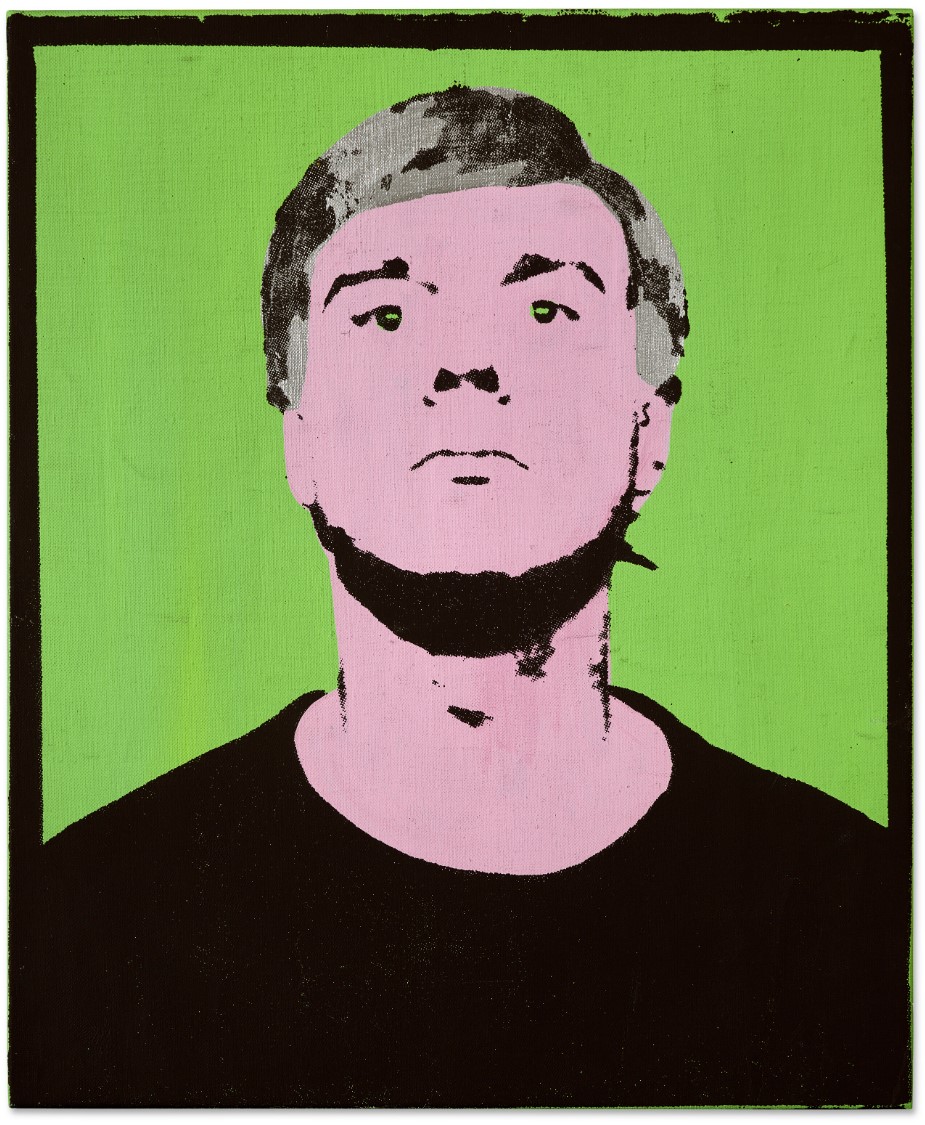
ANDY WARHOL (1928-1987)
Self-Portrait, 1964
Acrylic, silver paint and silkscreen ink on linen
20 x 16 1/2 inches (50.8 x 41.9 cm)
Christie’s New-York: 17 November 2022
Estimated: USD 3,000,000 – 5,000,000
USD 3,300,000
An extraordinary painting from a seminal moment in Andy Warhol’s early career, Self-Portrait offers a groundbreaking look into the artist’s ceaseless quest for self-invention. Created in 1964, the present work to the second series of “photo-booth” self-portraits that Warhol made between March and April of 1964. Warhol painted just eleven such self-portraits, of with only three feature the same vivid “phthalo green” background as Self-Portrait. At least five of these are now located in major museum collections, including the Art Institute of Chicago, The Andy Warhol Museum, Pittsburgh, and the Sammlung Froehlich, Stuttgart. The photo-booth was Warhol’s preferred method of self-portraiture in the early ‘60s, and in the present work, he mugs for the camera, jutting out his chin and projecting a defiant air of self-confidence.
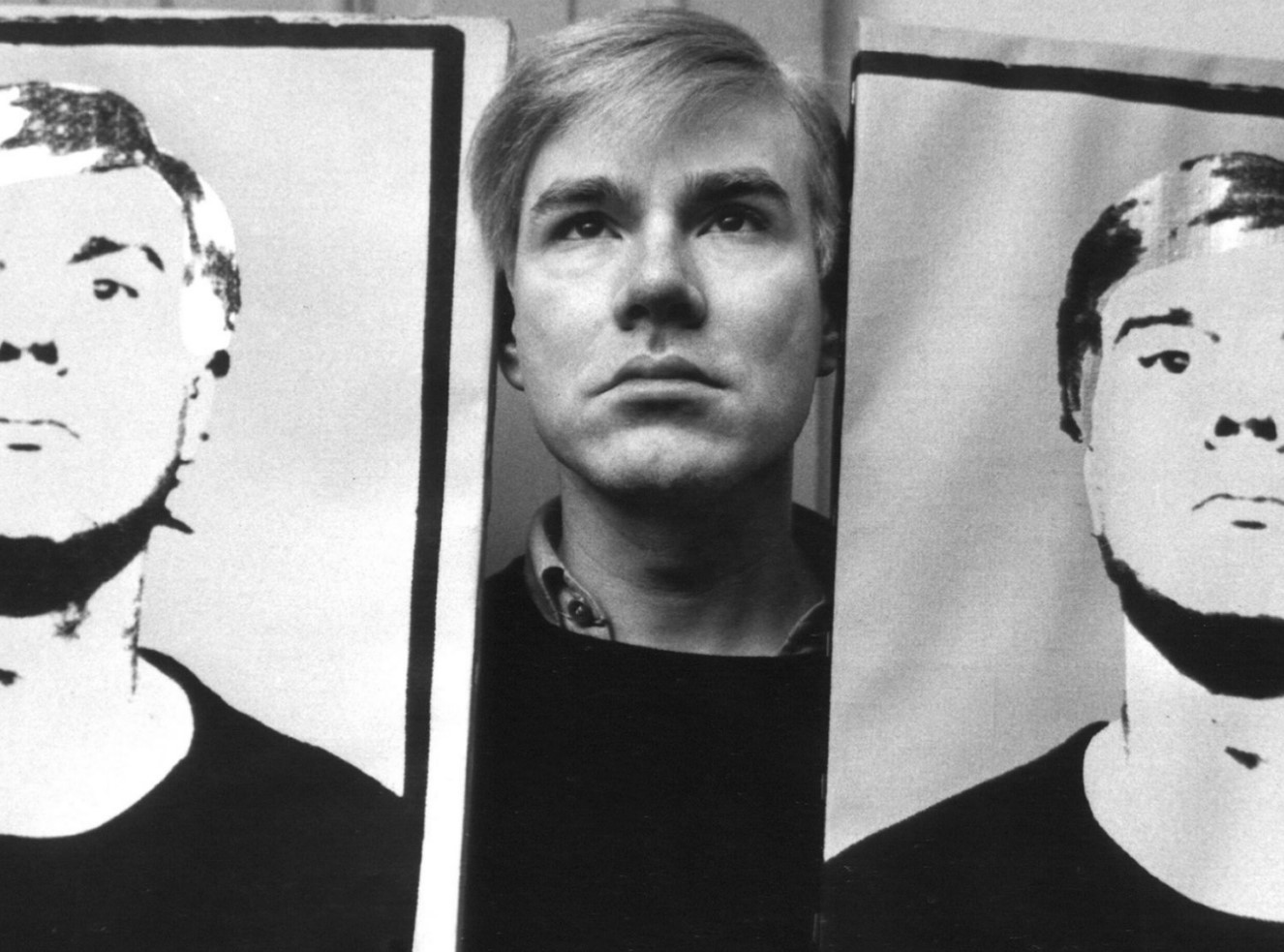
Having established his flair for color with his portraits of Marilyn Monroe in 1962 – known as the Marilyn “flavors” – and continuing with his paintings of Liz Taylor and the 36-part portrait of Ethel Scull, Warhol now applied the same colorful approach to his own self-image in the “photo-booth” self-portraits of 1964. Each of these featured a different brightly-colored background, which Warhol painted by hand, using flat, high-keyed colors including cadmium red, yellow, gray, and in the present work, “phthalo green.” Warhol’s use of phthalo green is significant, as he also used that same color to stirring effect in the Death and Disaster series, including Green Car Crash and the Electric Chair paintings. In the present work, Warhol has also used the same metallic silver paint from the Elvis series for his own hair, bringing the silvery walls of the Factory into his own self-image for the first time. The eyes – long considered a “window to the soul” – are actually “empty,” as the green we see is in fact the background layer showing through. This interesting technique Warhol employed in only three of these self-portraits, including the only diptych in the group.
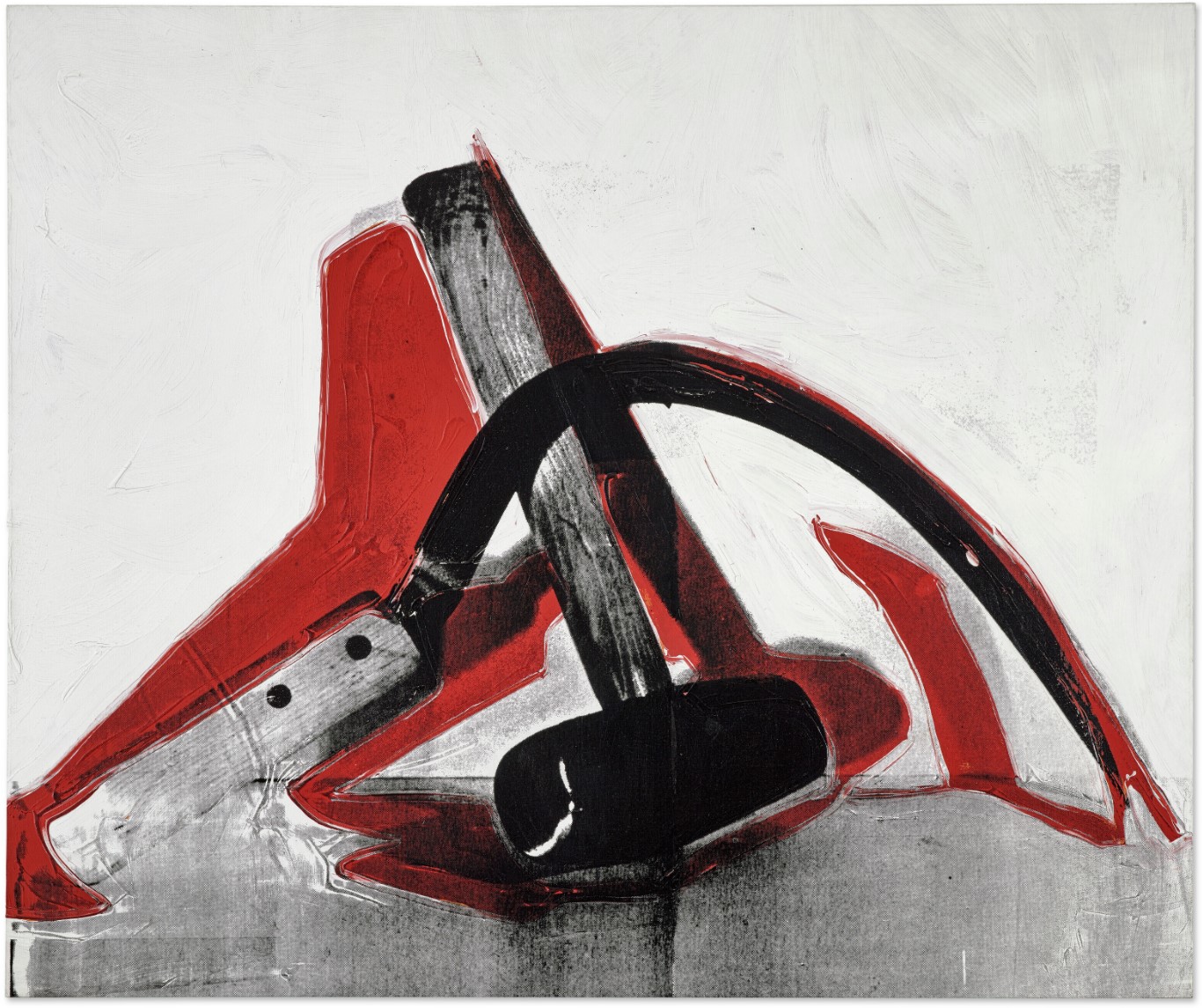
ANDY WARHOL (1928-1987)
Hammer and Sickle, 1976
Acrylic and silkscreen ink on linen
72×86 inches (182.9 x 218.4 cm)
Christie’s New-York: 17 November 2022
Estimated: USD 4,000,000 – 6,000,000
USD 4,380,000
Painted in 1976, Andy Warhol’s Hammer and Sickle is one of the artist’s most important creative statements of the 1970s. Mining popular culture, politics, and his uncanny ability to capture the social zeitgeist, the series built on his now iconic portraits of the Chinese Communist leader Mao Zedong that he had produced four years earlier. With a strong sense of irony, the present work depicts the two ubiquitous symbols of the Soviet Empire, a far cry from the society portraits of the rich and famous that had been one of his main concerns up to this point. How perverse and provocative Warhol must have felt dedicating a new series to the symbol of the Soviet Union and worldwide socialism, at the very height of the Cold War and communist paranoia.
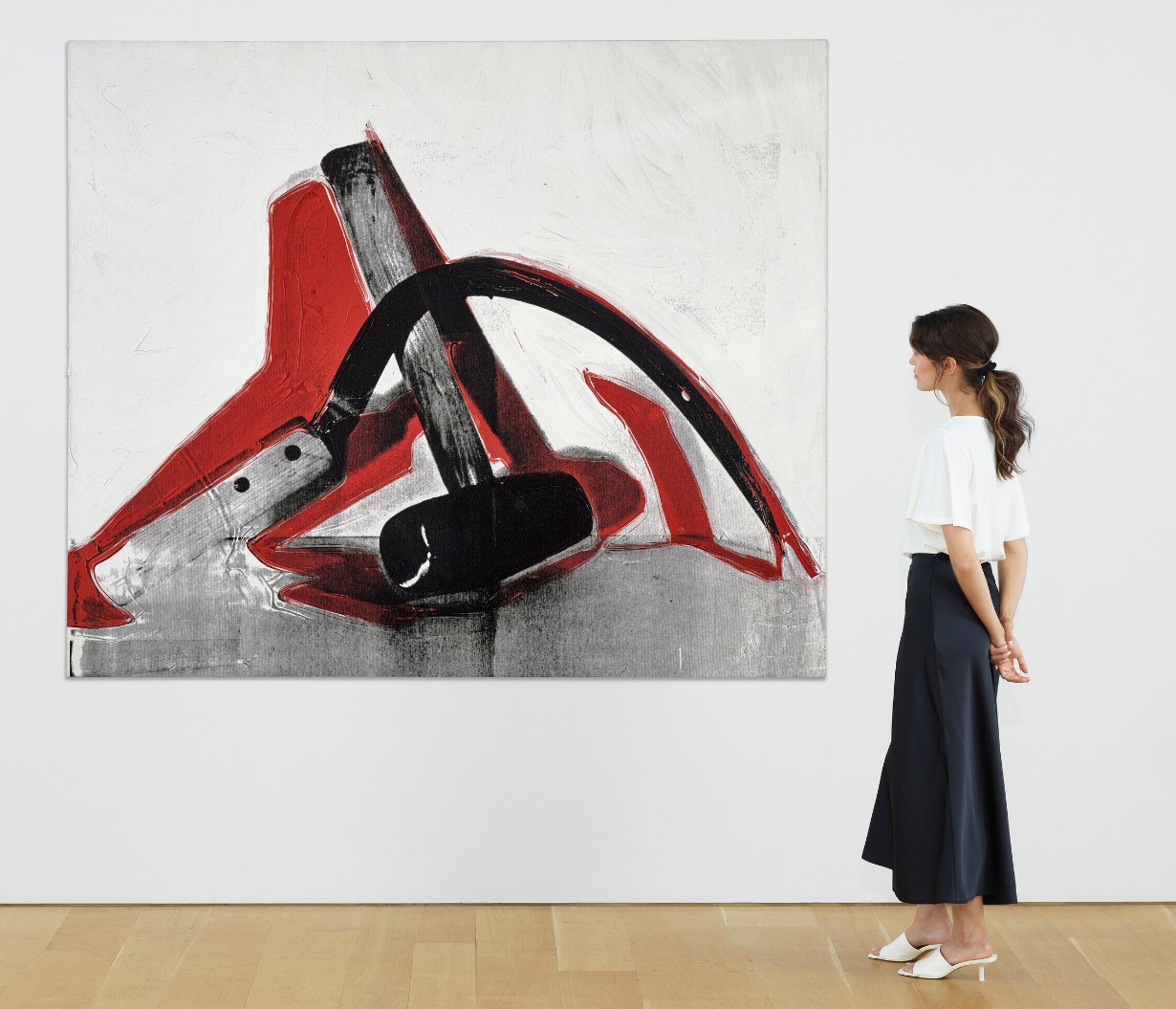
Stylistically minimal, the most striking compositional aspect of Hammer and Sickle is the inversion of implements from their triumphal, raised positions on the Soviet Flag. In Hammer and Sickle they appear at rest, crossing at an arbitrary angle; the flat background field of color—a technique developed from his Skulls, painted the same year – emphasizes the object-like qualities of tangible hammer and sickle, as well as their unwieldy strangeness when related together in three dimensions. Much as the manipulated stacks of soup cans and bottles in his series of Campbell’s Soup and Coca-Cola paintings began to deconstruct and otherwise wear down the clear boundaries of a distinct commercial identity, to Warhol, the evacuated emblem of the hammer and sickle was an enticing sign that also benefited strangely from material manipulation.
3. 21st Century Evening Sale
17 November 2022
21st Century Evening Sale (christies.com)
# Lots: 35 Lots
Sell-Through Rate: 89%
Total: USD 114,091,400
——
Top Lot: USD 32,679,000
2 Lots above USD 10,000,000
22 Lots above USD 1,000,000
——
Above Estimates: 14 Lots (40%)
Within Estimates: 12 Lots (34%)
Below Estimates: 4 Lots (11%)
Unsold: 4 Lots (11%)
#1. Jean-Michel Basquiat
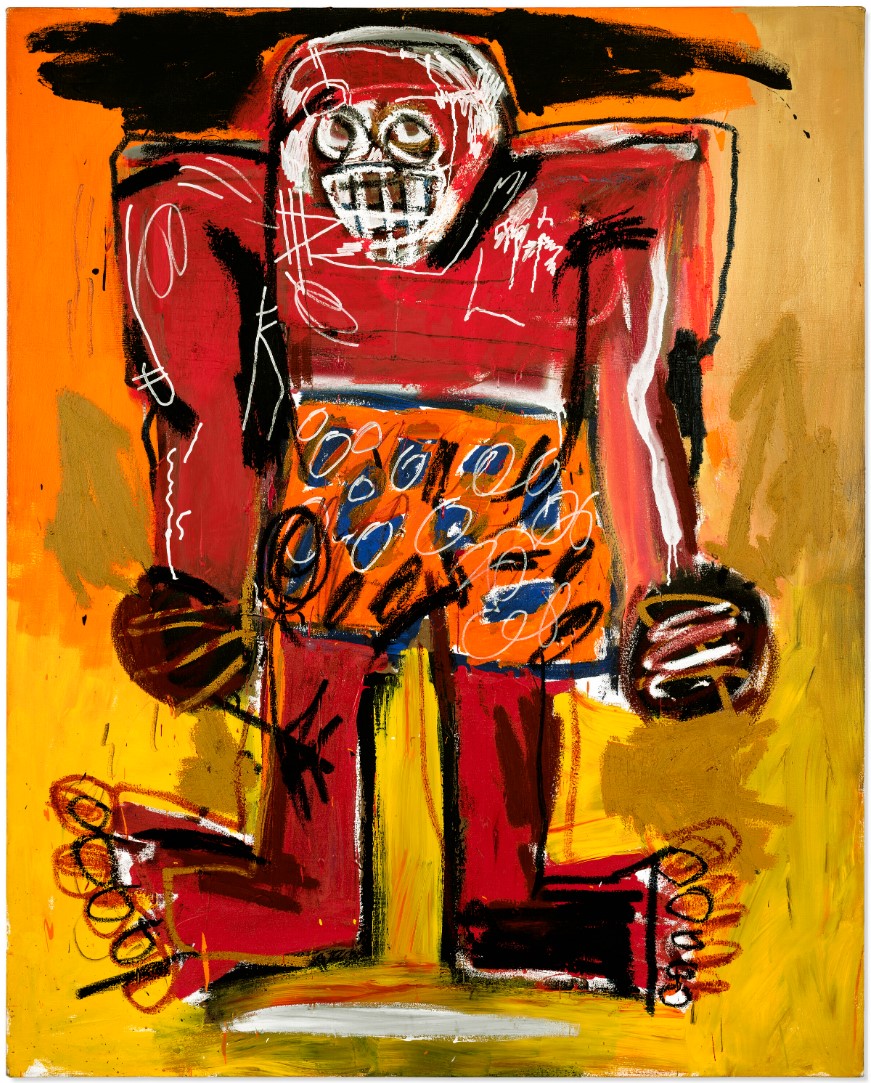
JEAN-MICHEL BASQUIAT (1960-1988)
Sugar Ray Robinson, 1982
Acrylic and oilstick on canvas
59 7/8 x 48 1/4 inches (152.1 x 122.6 cm)
Christie’s New-York: 17 November 2022
USD 32,679,000
Featuring the imposing figure of one of Jean-Michel Basquiat’s personal heroes, the champion boxer Sugar Ray Robinson, this eponymous portrait is one of the artist’s most audacious portraits. A masterpiece of painterly prowess, this striking canvas combines the artist’s highly expressive brushwork and skillful understanding of color to produce a radical statement that works on many levels. Part celebration, part social critique, Basquiat’s Sugar Ray Robinson displays the artist’s rare ability to produce deeply personal paintings that spoke to a wider audience. As one of the most accomplished sportsmen of his generation, the boxer was not only a personal hero to Basquiat but also a high-profile African American figure at a time of heightened racial tension in the United States. By bringing together politics and paint, Sugar Ray Robinson sits at the pinnacle of Basquiat’s oeuvre. Painted in 1982, the year Basquiat completed his most accomplished and successful works, Sugar Ray Robinson is a triumph of contemporary painting.
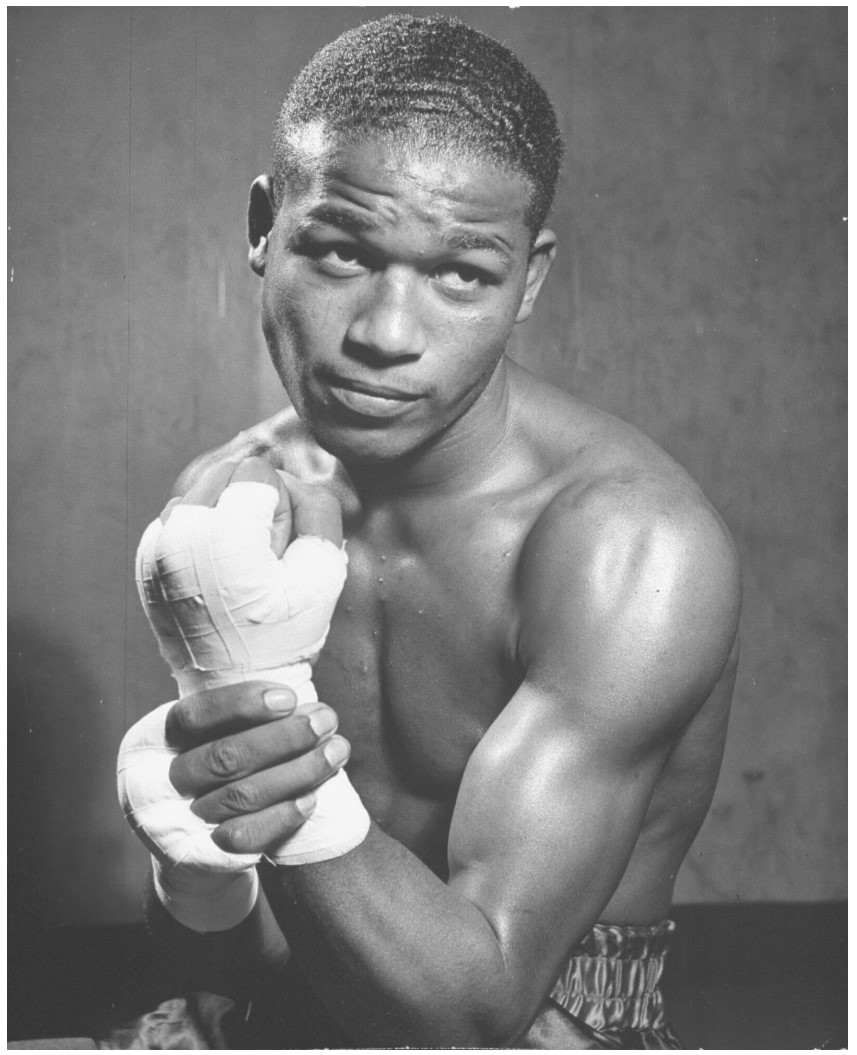
Sugar Ray Robinson. Photo: Al Fenn / Getty Images.
Appearing to fight the constraints placed on him by the physical size of the canvas, Jean-Michel Basquiat situates the figure of his hero confidently in the center of the composition. The fighter’s hulking square frame mirrors the dimensions of the picture plane, adding a tension that is matched by the figure’s hunched shoulders. Accent marks indicate Robinson’s muscular physique, his solid arms dangling beside him ending in his famous leather boxing gloves. The rest of the boxer’s frame is rendered in striking red, orange and black hues, a powerful choice that highlights the subject’s imposing figure. The complex construction of the boxer’s face clearly demonstrates how Basquiat constructs his figures; by building up layer upon layer of sparse painterly gestures, the artist produces an immensely emotive expression that manages to convey feelings of strength, aggression, power, and fear, all within the same fierce grimace.
#2. Jeff Koons
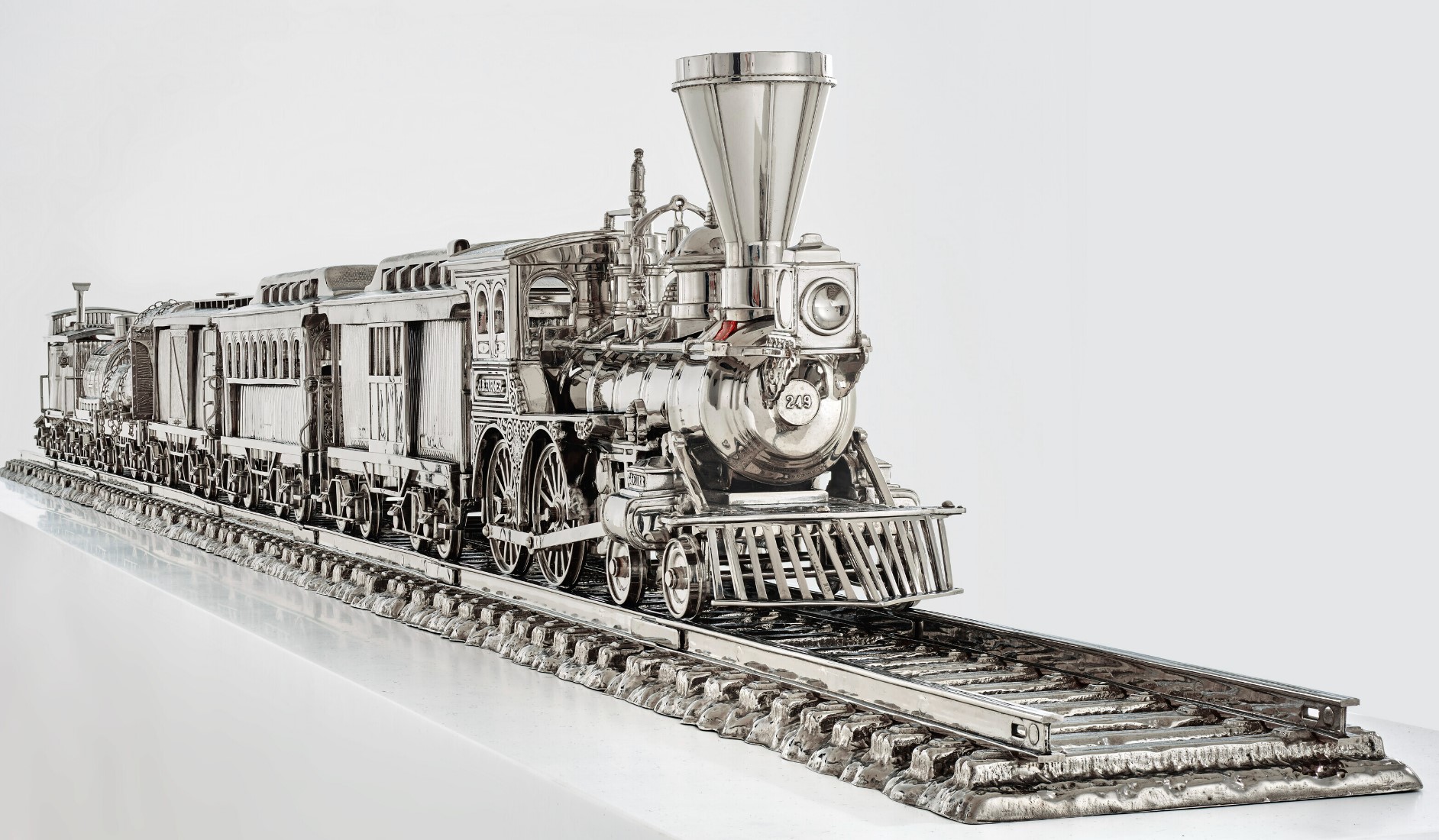
JEFF KOONS (B. 1955)
Jim Beam – J.B. Turner Train, 1986
Stainless steel and bourbon
11 x 114 x 6 1/2 inches (27.9 x 289.6 x 16.5 cm)
Christie’s New-York: 17 November 2022
Estimated: USD 15,000,000 – 20,000,000
USD 16,992,500
Known for his iconic large-scale sculptures which combine dazzling craftsmanship with conceptual rigor, Jeff Koons is one of the most widely celebrated artists of the current era. His works pull from the archive of popular culture in order to turn an eye toward such critical topics as consumerism, advertising, and the inherent social structures of capitalist society. As conceptually complex as it is aesthetically striking, Jim Beam – J. B. Turner Train marks one of the artist’s first forays into highly polished steel as a medium. First realized in 1986, it was a core component of his seminal 1986 Luxury and Degradation exhibition which helped to cement his recognition around the world. Through this work Koons draws our attention to the dangers of wealth signaling and the ways in which art and imagery have been used to create a subtle but powerful divide within the cultural consciousness. As he explained, “I wanted to suggest how the idea of luxury, through abstraction, is used to induce a psychological state of degradation, the public is constantly undergoing a re-education, being set up for the big kill” (J. Koons, quoted in T. Kellein (ed.), Jeff Koons Pictures: 1980-2002, exh. cat., Bielefeld, 2002, p. 45). Viewing advertisements full of expensive goods that manufacturers tout as luxury items, the general population yearns to be on a level worthy of buying them and financially sound enough to afford them. However, this constant need to possess things out of reach erodes the self-worth and self-image of the consumer. This in turn creates an even deeper need to own and purchase branded or expensive items for the sheer fact that they have a logo or a large price tag. This is a fact that Koons leverages with his sumptuous mirrored works by delivering the glitz and glamour wrapped around an abstraction of reality.
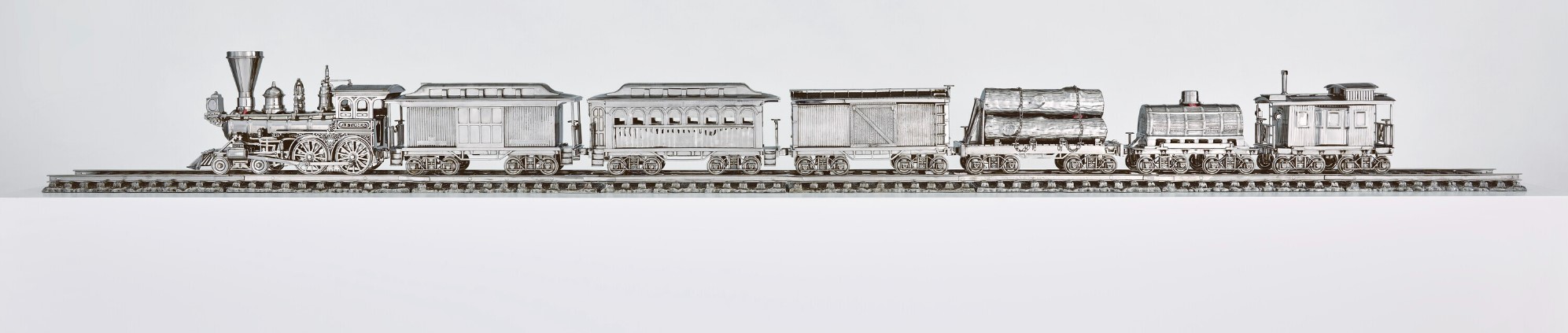
Intricately detailed and visually stunning, Jim Beam – J.B. Turner Train is a masterful of Koon’s fastidious technique. Cast in steel, the gleaming steam engine pulls six cars behind it on a purpose-made track that extends beyond the train on either side. The polished chimney on the front of the locomotive extends upward in utilitarian grandeur, and each bit of ornament and mechanical embellishment is recreated in exacting detail. The ground itself is stylized and takes after the cast elements of the miniature source rather than any real rocky terrain. Looking for all intents and purposes like a scale model of a functioning vehicle, the attention to detail in Koons’s artifice does not stop at surface level.
#3. Christopher Wool
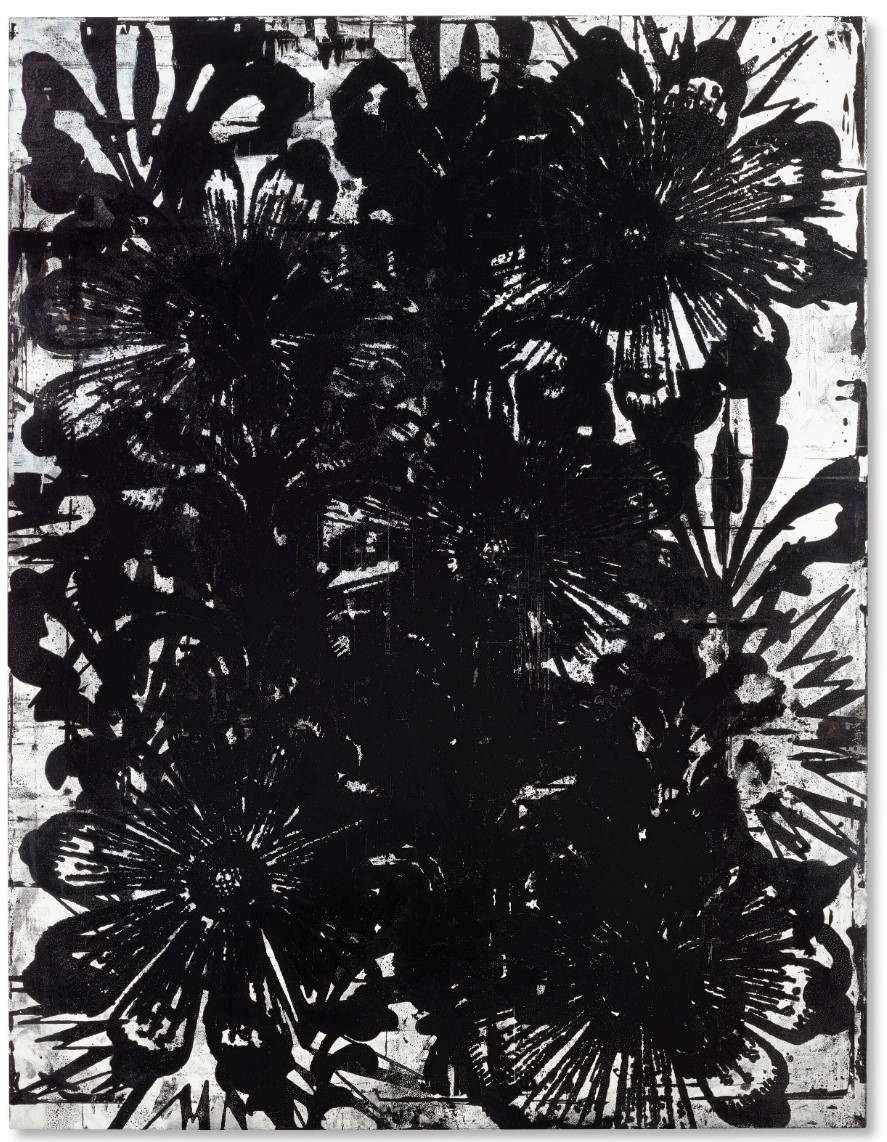
CHRISTOPHER WOOL (B. 1955)
Untitled, 1993
Enamel on aluminum
90 x 69 1/2 inches (228.6 x 176.5 cm)
Christie’s New-York: 17 November 2022
Estimated: USD 8,000,000 – 12,000,000
USD 8,977,500
A revered post-Conceptual artist known for his stenciled word paintings, Christopher Wool has refined a visual style since the late 1980s that continues to inspire new ways of thinking about art, text, expression, and the role of the artist. The monumental Untitled is a peerless abstract painting that shows Wool pushing his own artistic vocabulary to new limits. As part of the esteemed Taschen Collection, the present work was exhibited at the Museum of Contemporary Art, Los Angeles (1998), the Carnegie Museum of Art, Pittsburgh (1999), and the Museo Nacional Centrode Arte Reina Sofia, Madrid (2004-2005). The painting is a foundational moment in the artist’s oeuvre that flows through the areas of perception and the history of painting. A towering work of beauty, detail, and rigor, Untitled encapsulates Wool’s decades-long goal to upend art and language.
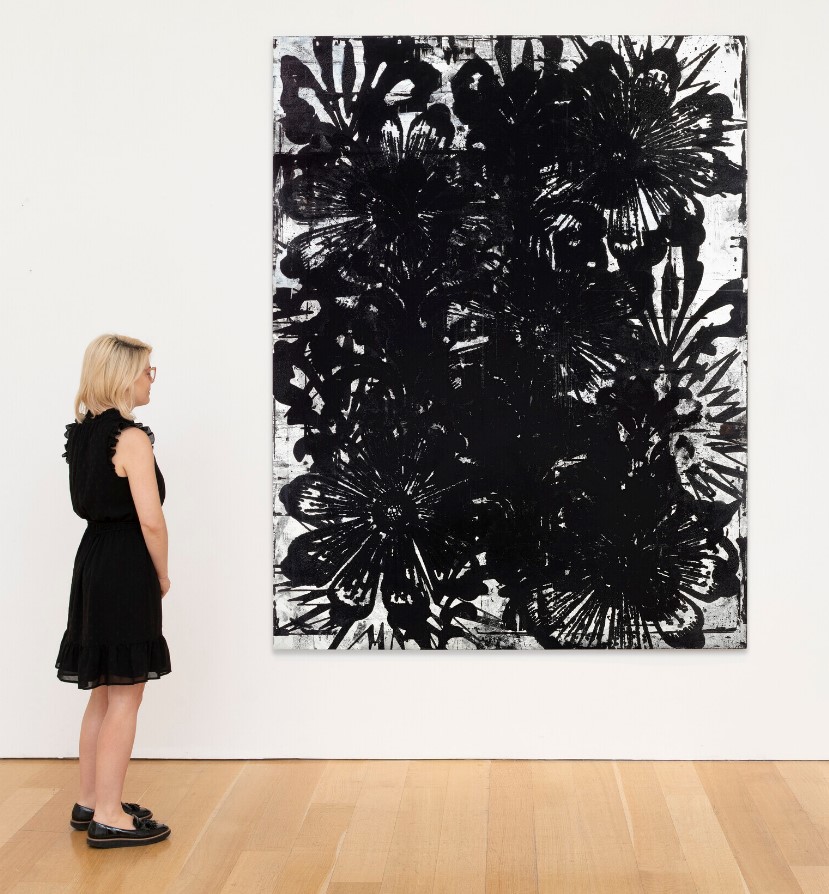
In the early 1990s, Wool began to silkscreen flower motifs, allowing his work to engage productively with decoration. Both austere and beautiful, Untitled is so densely layered as to almost obscure the floral shapes and create a Rorschach test or allover field of pigment. The center of the aluminum support approaches monochromatic black, while the natural forms begin to emerge as the pigment reaches the edges, as if the flowers are growing out of paint itself. At nearly seven-and-a-half feet by six feet, the viewer is absorbed by this play of forms and textures. Untitled refutes Jackson Pollock’s anxiety about pattern and decoration, allowing itself to intersect with the casual loveliness of a textile or wallpaper.
#4. Jean-Michel Basquiat
JEAN-MICHEL BASQUIAT (1960-1988)
Farina, 1984
Acrylic and oilstick on canvas
86×68 inches (218.4 x 172.7 cm)
Christie’s New-York: 17 November 2022
Estimated: USD 8,000,000 – 10,000,000
USD 7,020,000
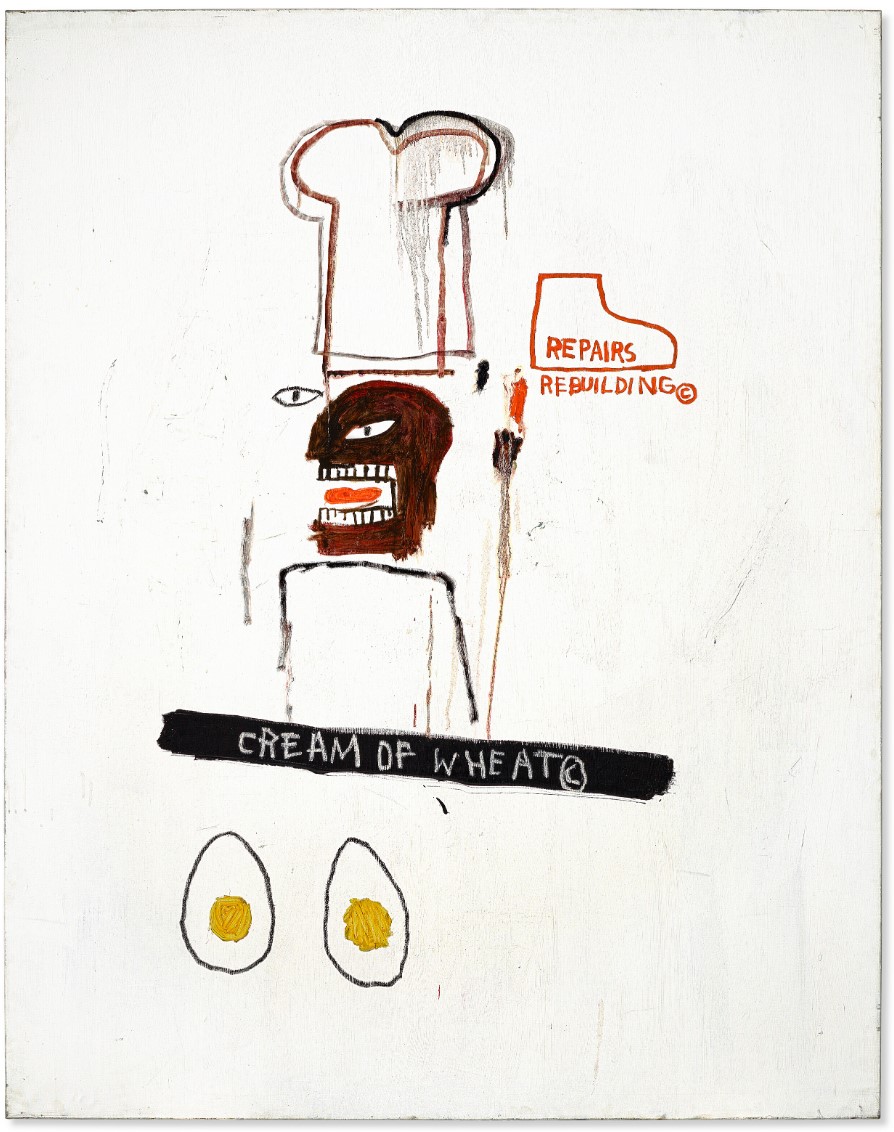
Screaming atop a luminous, textural painted white surface, Jean-Michel Basquiat’s Farina is a cutting example of the artist’s signature visual language, learned eye and radically palpable energy. Painted is the singular figure of a chef amidst what appears to be a rush hour frenzy. In removing this figure from his assumed landscape and throwing him into a contrasting relief with the pure background, the viewer is allowed a rare glimpse at Basquiat’s mastery of energy through figuration. Disjointed eyes, one floating next to its head, arrest the viewer’s gaze and implicate them in his agitation. Fire-licks of red constitute a scorching tongue between the chef’s maniacal grin, and blaze from his raised hand, igniting the painted shoe and adjoined words ‘REPAIRS’ and ‘REBUILDING ©’ above. A second pair of cutting eyes reveal themselves in the two eggs that rest toward the base of the canvas, their glowing yellow yolks perhaps the perfect product of the chef’s mania. Slashing through the chef’s torso is a bold passage of midnight black, atop which the artist has written ‘CREAM OF WHEAT ©’, a nod to the artist’s continued use of the copyright symbol and the ubiquity of aforementioned dish on American breakfast tables. Basquiat’s investigation in the use of a Black chef may also be noted in his Eyes and Eggs, which is presently housed in the permanent collection of The Broad in Los Angeles. Both works exemplify the artist’s fascination with anatomy, with the present example’s hat resembling a femur. The composition of Farina is inherently skeletal, leaning into the artist’s passion for Grey’s Anatomy, an influence that can also be read in his chilling work, Riding with Death. Through the juxtaposition of this elegantly economic range of elements, Basquiat manages to create a web of illusions and allusions that cut to the heart of his art.
#5. Keith Haring
KEITH HARING (1958-1990)
Untitled, 1982
Enamel and DayGlo on metal, in artist’s painted frame
90 1/4 x 72 inches (229.2 x 182.9 cm)
Christie’s New-York: 17 November 2022
Estimated: USD 4,000,000 – 6,000,000
USD 5,820,000
A singular visionary of the early 1980s New York City art world, Keith Haring established a dazzling personal iconography that continues to inspire generations decades after his untimely passing. Untitled is a dynamic example of the artist’s ability to connect with audiences through seemingly simple forms that contain multitudes of meaning. Beginning as a street artist painting on walls, billboards, and train cars, Haring crafted his career from quick marks on nontraditional surfaces but ultimately built a global language recognized by many regardless of their cultural upbringing. The artist wanted to break barriers and diversify what generations before had prescribed as an audience for art. He wanted to create “a more holistic and basic idea of wanting to incorporate [art] into every part of life, less as an egotistical exercise and more natural somehow. I don’t know how to exactly explain it. Taking it off the pedestal. I’m giving it back to the people, I guess” (K. Haring, quoted in D. Drenger, “Art and Life: An Interview with Keith Haring,” in Columbia Art Review, Spring 1988, p. 53). By transcending the walls of the art institutions through installations, clothing, site-specific paintings, and his Pop Shop, Haring was able to spread his vision outward and become a towering icon of American creativity.
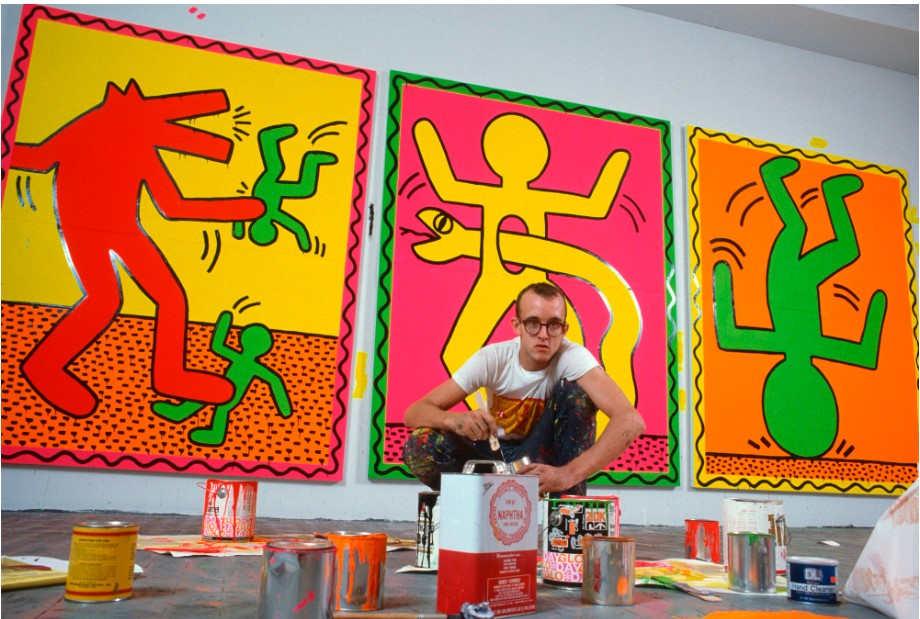
Keith Haring in his studio, 1982. Photo: © Allan Tannenbaum. Artwork: © The Keith Haring Foundation.
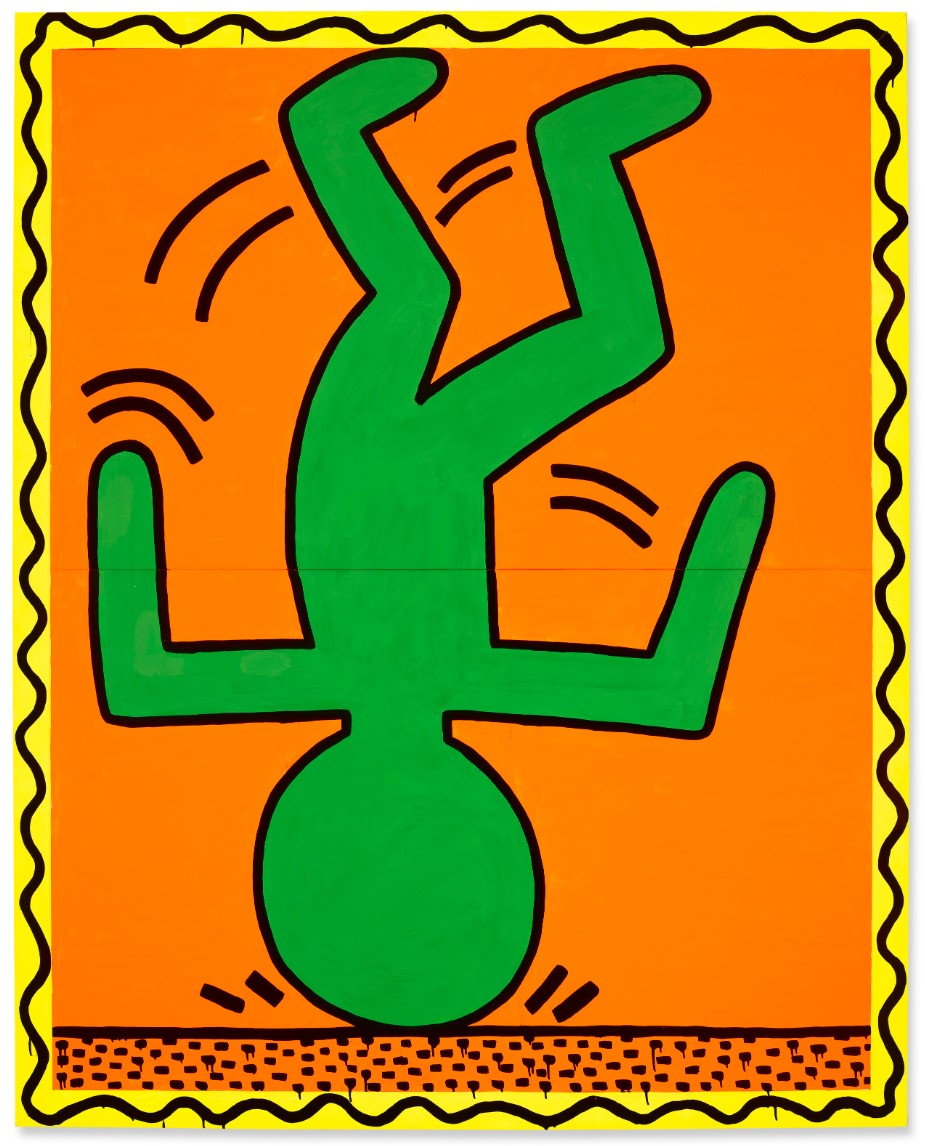
Painted on aluminum in the artist’s unmistakable style, a green figure spins on its head against a speckled floor. Using cartoon-like signifiers such as motion and impact lines, Haring establishes an air of frenetic movement within the two-dimensional composition. The green of the body is enclosed by an even black outline that separates it from the vivid orange atmosphere of the work, its surface unbroken by even the slightest brushstroke or mottling in the paint. The left toe just kisses the upper edge of the picture plane while the head is planted firmly on the ground line full of short, dripping black strokes. Across the center of the piece, one notices the line where two sections of the support are joined, and Haring has made certain that the custom frame is incorporated with his overall aesthetic by painting it brilliant yellow and covering it with a snaking squiggle that encompasses the vivacious scene. Though the forms are clear and the image is straightforward, the ability of Untitled and its brethren to fully absorb the viewer is nothing short of wondrous. Haring himself explained that he actively sought this immersive element in the finished product as well as during the creation process. “See, when I paint, it is an experience that, at its best, is transcending reality,” he noted. “When it is working, you completely go into another place, you’re tapping into things that are totally universal, of the total consciousness, completely beyond your ego and your own self. That’s what it’s all about” (K. Haring, quoted in D. Sheff, “Keith Haring: An Intimate Conversation,” in Rolling Stone, August 1989). Haring never strayed too far from his graffiti roots, and the youthful energy of illegal painting in public areas always bubbled just below the surface of his works even when presented in a gallery or museum context.
#6. Njideka Akunyili Crosby
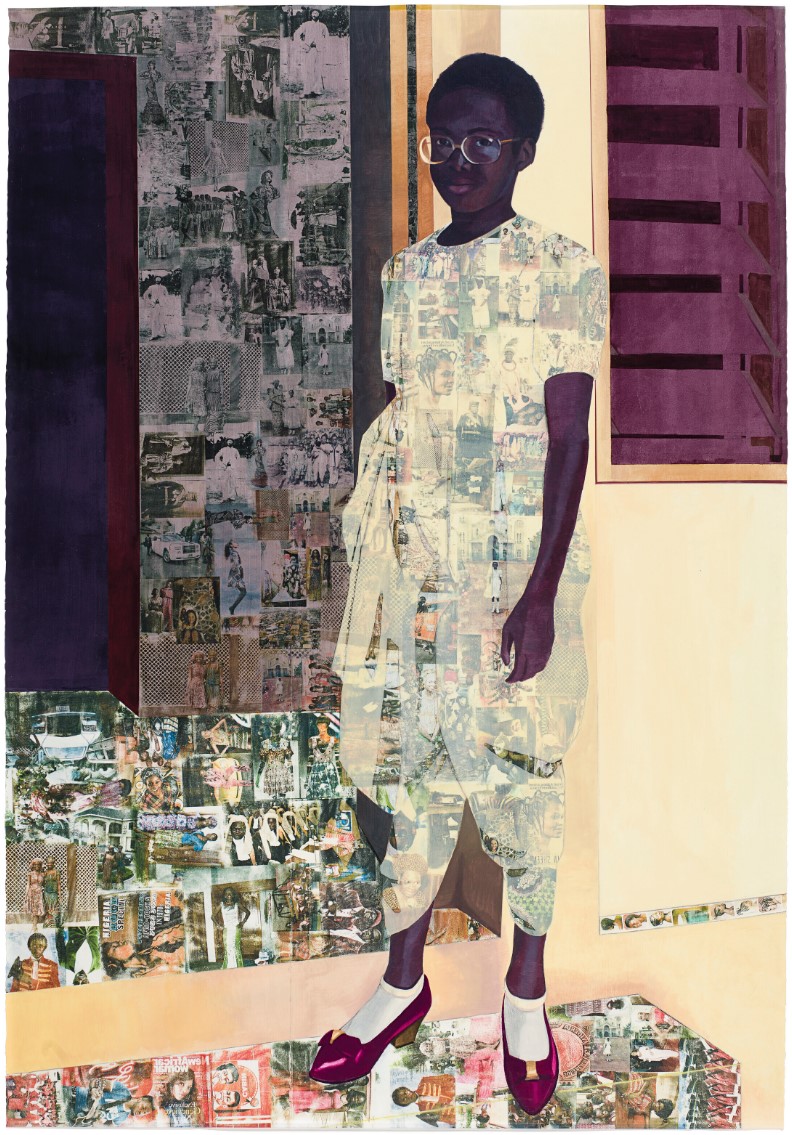
NJIDEKA AKUNYILI CROSBY (B. 1983)
The Beautyful Ones, 2012
Acrylic, pastel, color pencil and Xerox transfer on paper
243×170 cm (95 5/8 x 66 7/8 inches)
Christie’s New-York: 17 November 2022
Estimated: USD 4,000,000 – 6,000,000
USD 4,740,000
#7. Gerhard Richter
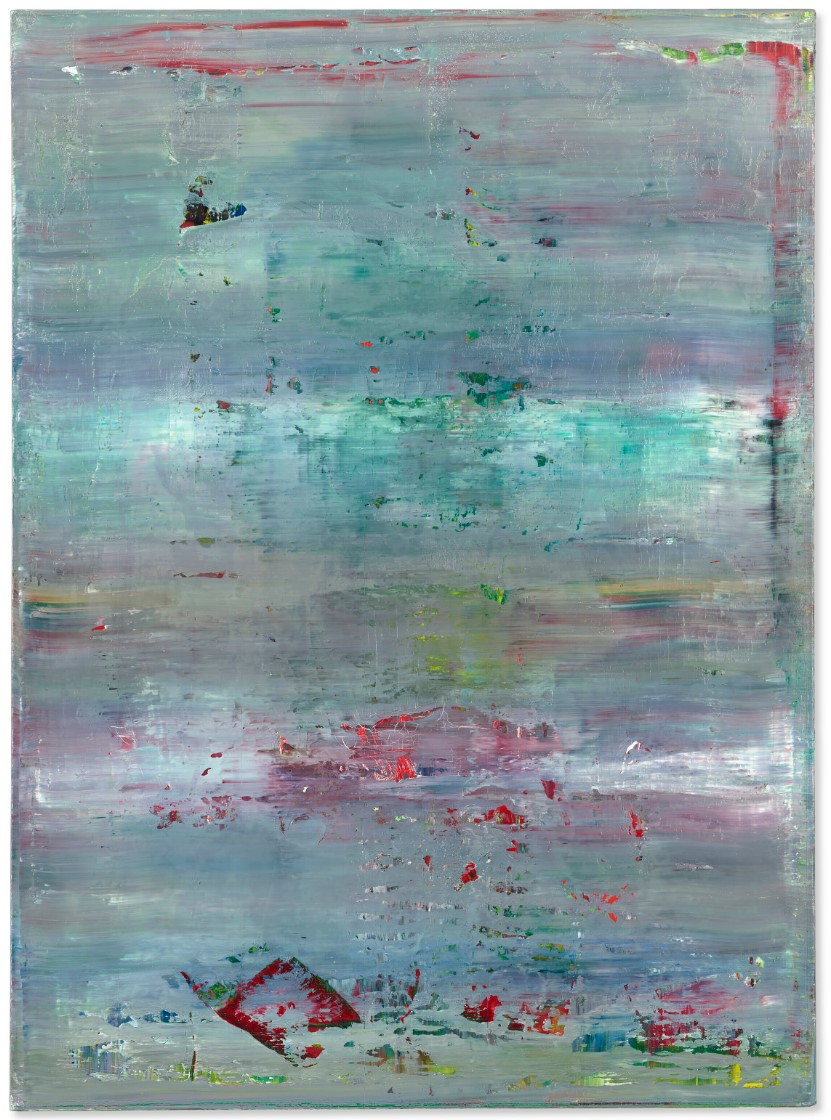
GERHARD RICHTER (B. 1932)
Abstraktes Bild, 1990
Oil on canvas
112×82 cm (44 1/8 x 32 1/4 inches)
Christie’s New-York: 17 November 2022
Estimated: USD 4,000,000 – 6,000,000
USD 3,660,000
#8. Mark Grotjahn
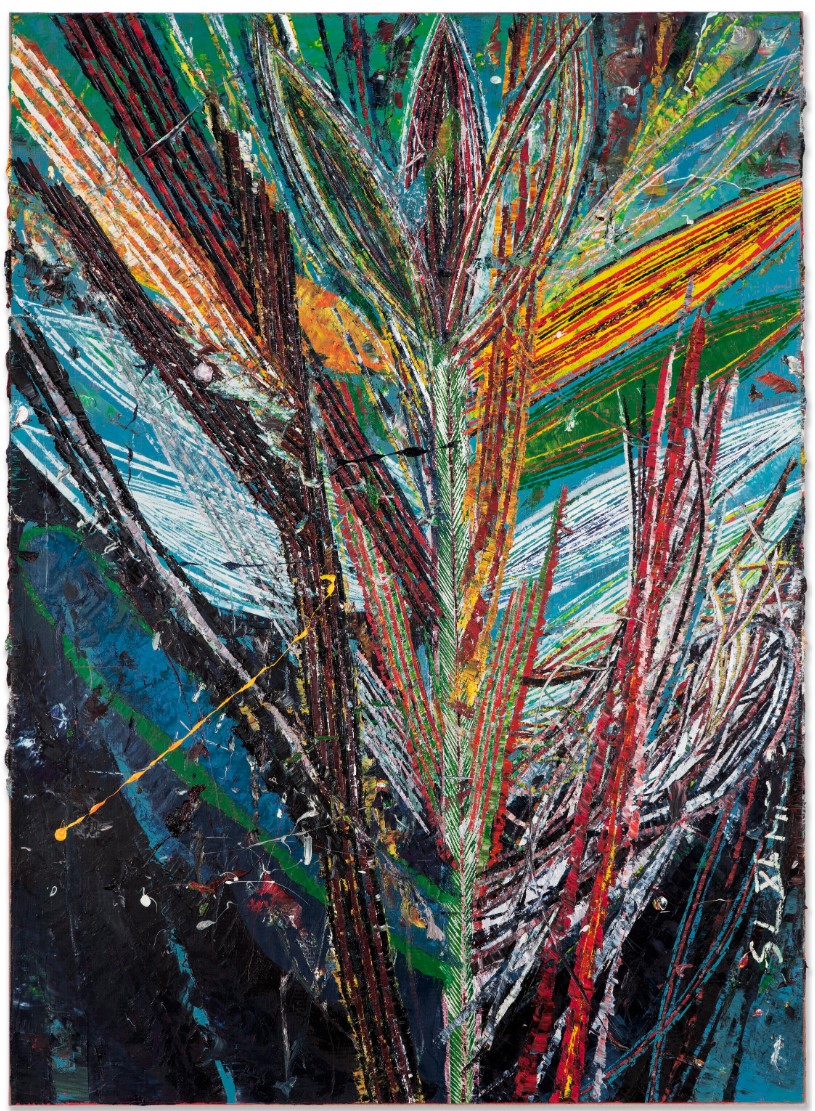
MARK GROTJAHN (B. 1968)
Untitled (Standard Lotus XI Face 44.10)
Oil on cardboard mounted on linen
73 5/8 x 53 5/8 inches (187 x 136.2 cm)
Christie’s New-York: 17 November 2022
Estimated: USD 3,000,000 – 5,000,000
USD 3,540,000
Untitled (Standard Lotus XI Face 44.10) is among the best works from the artist’s celebrated Face paintings series, which advanced and expanded his ongoing commitment to investigating natural forms. On a monumental scale, the painting creates a universe from abstract marks that is still rooted in recognizable shapes and allusions that are cerebral, tactile, and emotional. A contemporary response to Pablo Picasso’s dissolution of the body and Henri Matisse’s stretching of space, Untitled is a inflection point in art’s long history of reframing perception. With his admirable ability to layer form and color, Grotjahn uses abstract forms to refer to nature, here a lotus flower, and thereby invites the viewer to see the world differently. Shapes emerge from layers of pigment, heaped upon each other like an incandescent sculpture. Reds, yellows, and blues combine and suggest the myriad forms also found in our faces. Paint itself becomes the subject as much as the implied smile, nose, or frown lines. Grotjahn intricately weaves paint upon itself. Filled to the edge of the cardboard and linen support, Untitled has a visually arresting excess that does not overwhelm, but rather becomes an invitation to come closer, to see how the artist has created a painterly cosmos. Red fills the upper edge of the work like a sunset, creating a pathos that reminds us of Grotjahn’s decades-long interest in cyclical, diagrammatic movement through time and space.
4. Post-War and Contemporary Art Day Sale
18 November 2022
Post-War & Contemporary Art Day Sale (christies.com)
# Lots: 266 Lots
Sell-Through Rate: 90%
Total: USD 76,349,724
Top Lot: USD 3,420,000
——
Above Estimates: 95 Lots (36%)
Within Estimates: 80 Lots (30%)
Below Estimates: 58 Lots (22%)
Unsold: 27 Lots (10%)
#1. Joan Mitchell
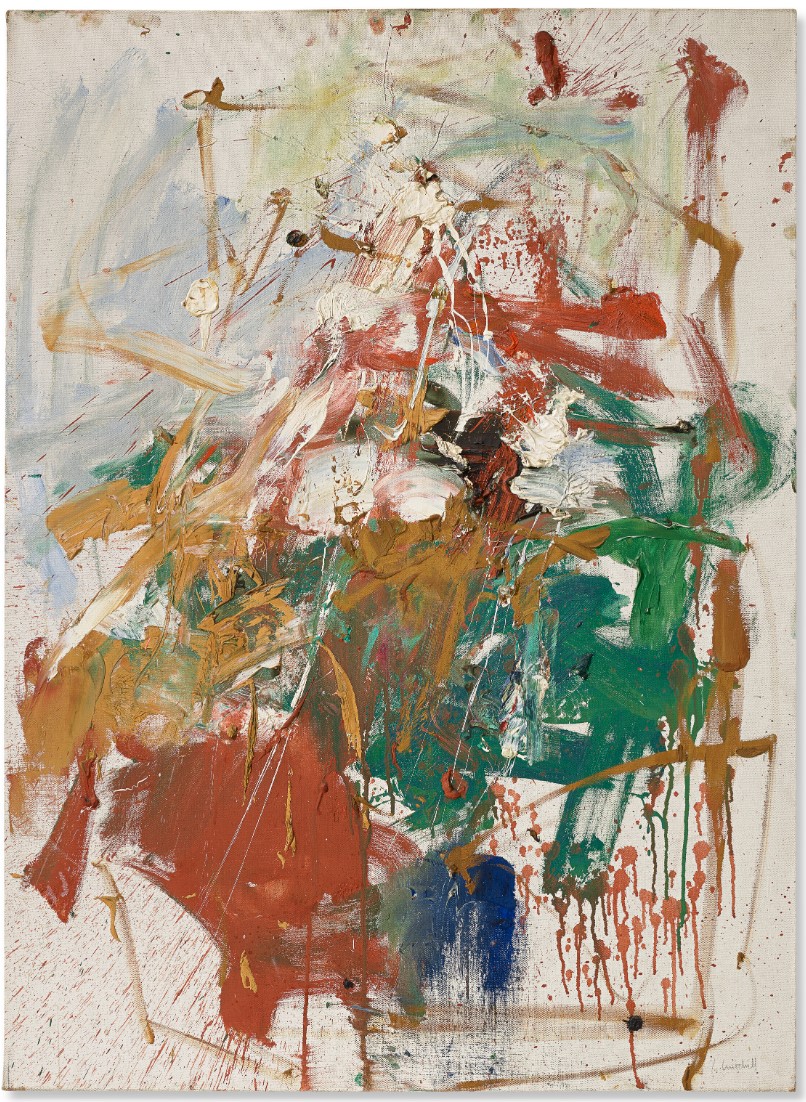
JOAN MITCHELL (1925-1992)
Conte Bleu, circa 1962
Oil on canvas
39 1/4 x 28 3/4 inches (99.2 x 71.8 cm)
Christie’s New-York: 18 November 2022
Estimated: USD 2,500,000 – 3,500,000
USD 3,420,000
Conte Bleu is a landscape picture that swirls with a storm of pigments. The central composition is a flurry of action between golden, burnt orange, and forest green passages, each containing countless variations of their hues. Jutting out from this nucleus is a network of skeletal appendages that dash across the canvas and visceral splatters, both of which foreground a dreamy passage of muted greens and sky blues in the upper quadrant. At the base of the canvas rests a passage of royal blue that grounds this visual glossolalia. Mitchell’s energy on the canvas is captivating, her hand communicating the intensity of a larger than life sweeping motion on the scale of a thoughtful canvas. With a palette reminiscent of the natural world and a pseudo-improvisatory composition of zig-zagging, ricocheting gestural movements, Conte Bleu is a snapshot of Mitchell in her fullest form: Mitchell the expressionist, Mitchell the innovator, Mitchell the master.
#2. Andy Warhol
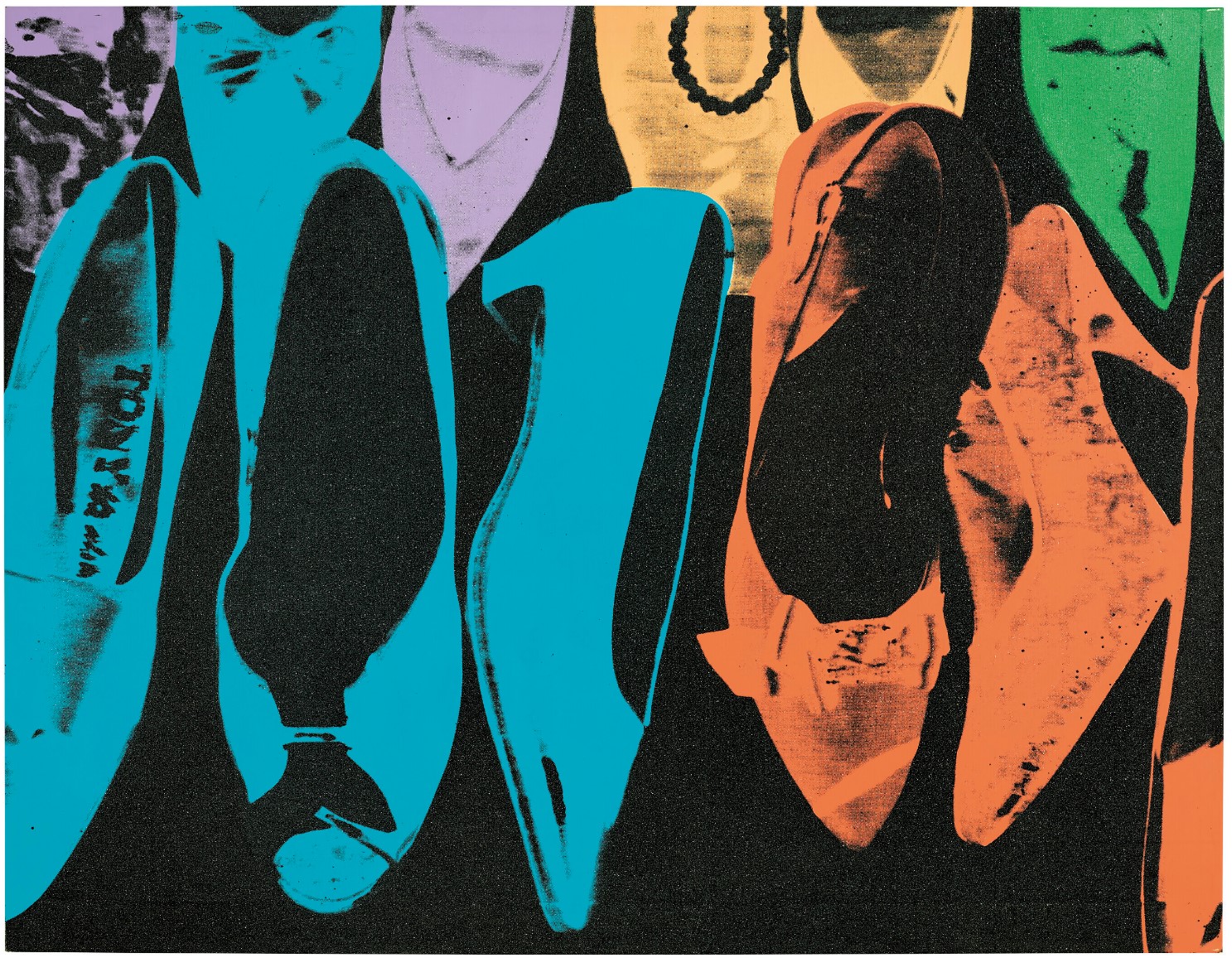
ANDY WARHOL (1928-1987)
Diamond Dust Shoes, 1980
Acrylic, silkscreen ink and diamond dust on canvas
70×90 inches (177.8 x 228.6 cm)
Christie’s New-York: 18 November 2022
Estimated: USD 2,000,000 – 3,000,000
USD 2,580,000
Originally exhibited in a city-wide show across New York City throughout the course of several months in 1987 to raise funds for amfAR, the Foundation for AIDS Research, Andy Warhol’s Diamond Dust Shoes distinguishes itself as a symbol for the generosity of spirit and human interest within the art world in response to a crisis that deeply impacted the creative community. The exhibition was the largest private sector fundraising effort for the AIDS epidemic at the time, and witnessed participation from 72 blue chip gallerists, including Leo Castelli who originally sold Diamond Dust Shoes to the current owner. The philanthropic narrative comes full circle, as the current owners of the painting will be donating a portion of the sale proceeds to continued AIDS research. Among the most striking examples from the series, Andy Warhol’s Diamond Dust Shoes, from 1980, epitomizes the pop master’s career-long fixation on glamour and consumer culture. Warhol’s predilection for the shoe as an icon, as well as his mastery of the motif, link back to his auspicious beginnings as a commercial illustrator at Glamour magazine and other fashion institutions starting in 1949. Rendered with a kaleidoscopic color palette of electric blue, fire-orange, emerald green, lilac and lemon, Diamond Dust Shoes boasts a compositional candor that glistens with a tactile and immersive surface. Impressive in its large scale and teeming with vibrant and bursting color, this superlative and rare example from the period reveals an artist at the height of his powers.
#3. Wayne Thiebaud
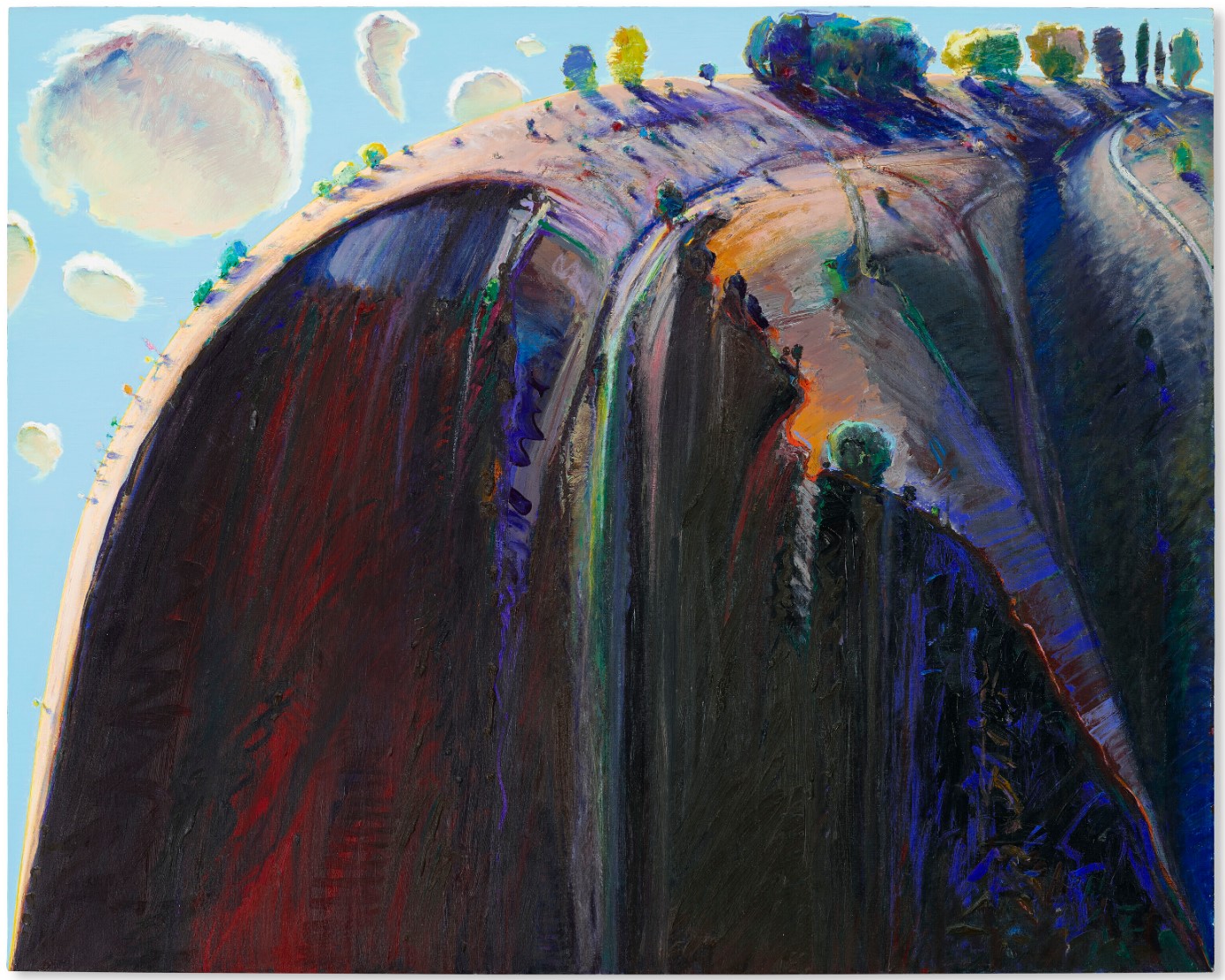
WAYNE THIEBAUD (1920-2021)
Clouds and Ridge, 1969/1975-1983
Oil on canvas
48×60 inches (121.9 x 152.4 cm)
Christie’s New-York: 18 November 2022
Estimated: USD 1,500,000 – 2,500,000
USD 2,460,000
Wayne Thiebaud’s Clouds and Ridge is an inspiring example of the artist’s unique, painterly, realist style that proclaims his love for his home of Northern California in this vista of Napa Valley. As with all of the artist’s work, the seemingly simple subject is enriched by Thiebaud’s complex compositions, breathtaking color, and bold brushwork. The sunlit, lush scenery and idyllic sky are juxtaposed by the dark, sheer edge of the ridge. A whimsical celebration of the American tradition of landscape painting, Clouds and Ridge embodies the artist’s mastery of color and light within the melee of layered paint.
5. Impressionist and Modern Art Day Sale
19 November 2022
Impressionist & Modern Art Day Sale (christies.com)
Total: USD 31,952,640
# Lots: 155 Lots
Sell-Through Rate: 86.1%
Top Lot: USD 2,820,000
——
Above Estimates: 40 Lots (22%)
Within Estimates: 57 Lots (31%)
Below Estimates: 56 Lots (31%)
Unsold: 25 Lots (14%)
#1. Claude Monet
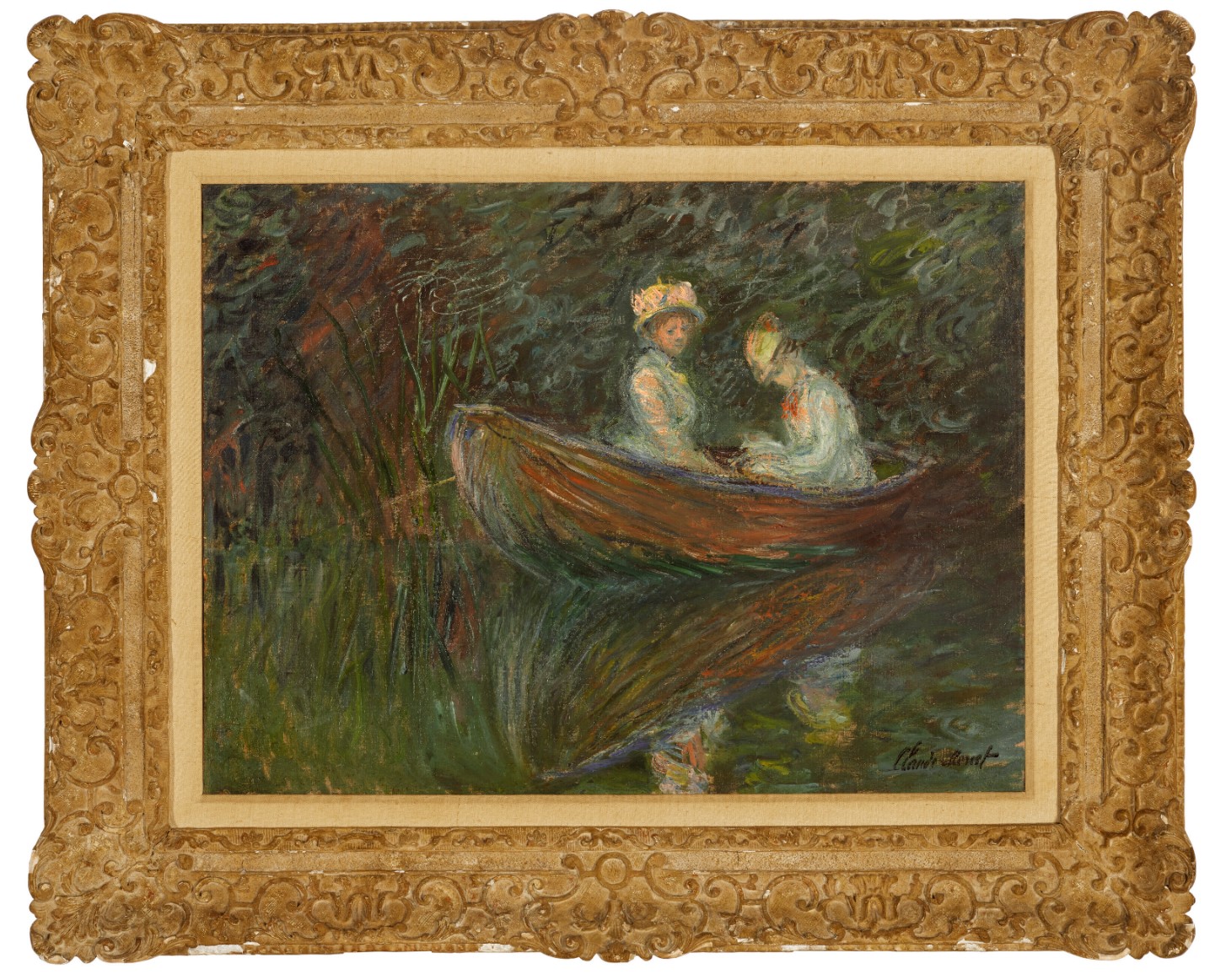
CLAUDE MONET (1840-1926)
Deux femmes en barque, 1897
Oil on canvas
53.3 x 72.4 cm (21 x 28 1/2 inches)
Christie’s New-York: 19 November 2022
Estimated: USD 1,800,000 – 2,500,000
USD 2,820,000
#2. Pierre-Auguste Renoir
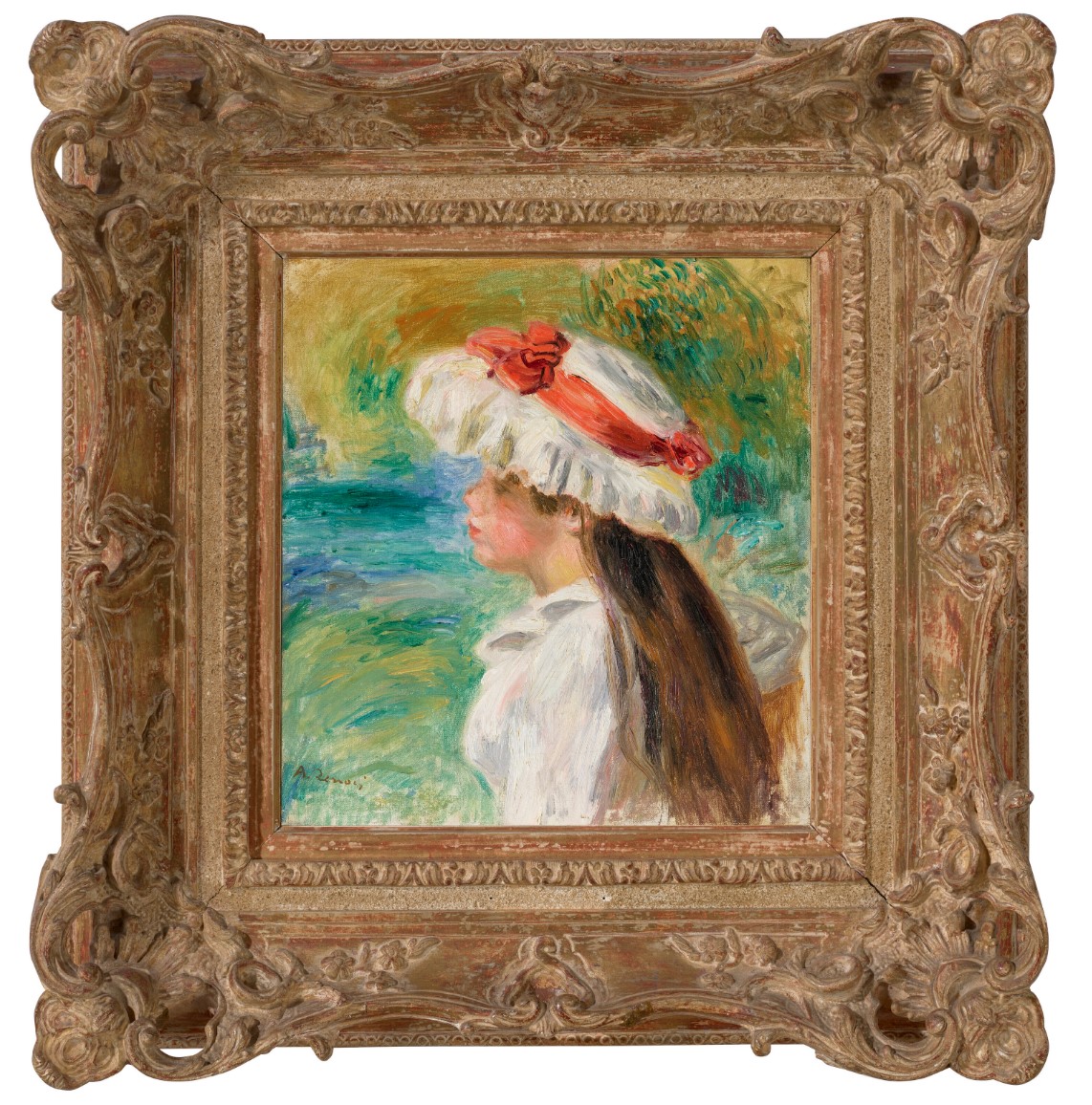
PIERRE-AUGUSTE RENOIR (1841-1919)
Tête de jeune fille coiffée d’un chapeau de jardin, 1895
Oil on canvas
28.2 x 26 cm (11 1/8 x 10 1/4 inches)
Christie’s New-York: 19 November 2022
Estimated: USD 250,000 – 350,000
USD 2,040,000
#3. Rene Magritte
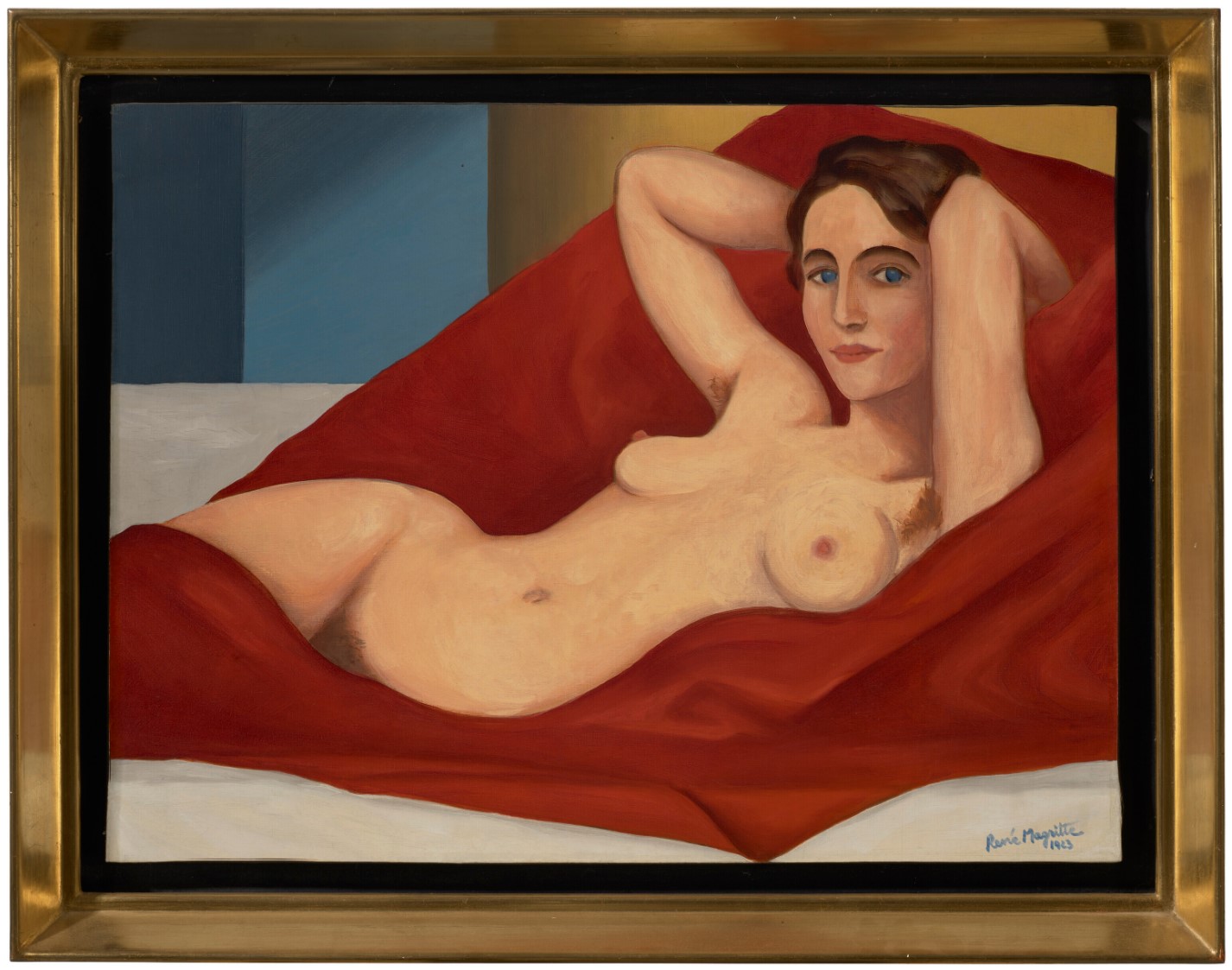
RENÉ MAGRITTE (1898-1967)
Nu allongé, 1923
Oil on canvas
42 x 60.4 cm (17 3/4 x 23 3/4 inches)
Christie’s New-York: 19 November 2022
Estimated: USD 400,000 – 600,000
USD 1,560,000
5. Sotheby’s Sales
1. The David M. Solinger Collection
14 November 2022
# Lots: 23 Lots
Sell-Through Rate: 100%
Total: USD 137,863,700
Top Lot: USD 33,645,500
——
Above Estimates: 14 Lots (61%)
Within Estimates: 3 Lots (13%)
Below Estimates: 6 Lots (26%)
#1. Willem de Kooning
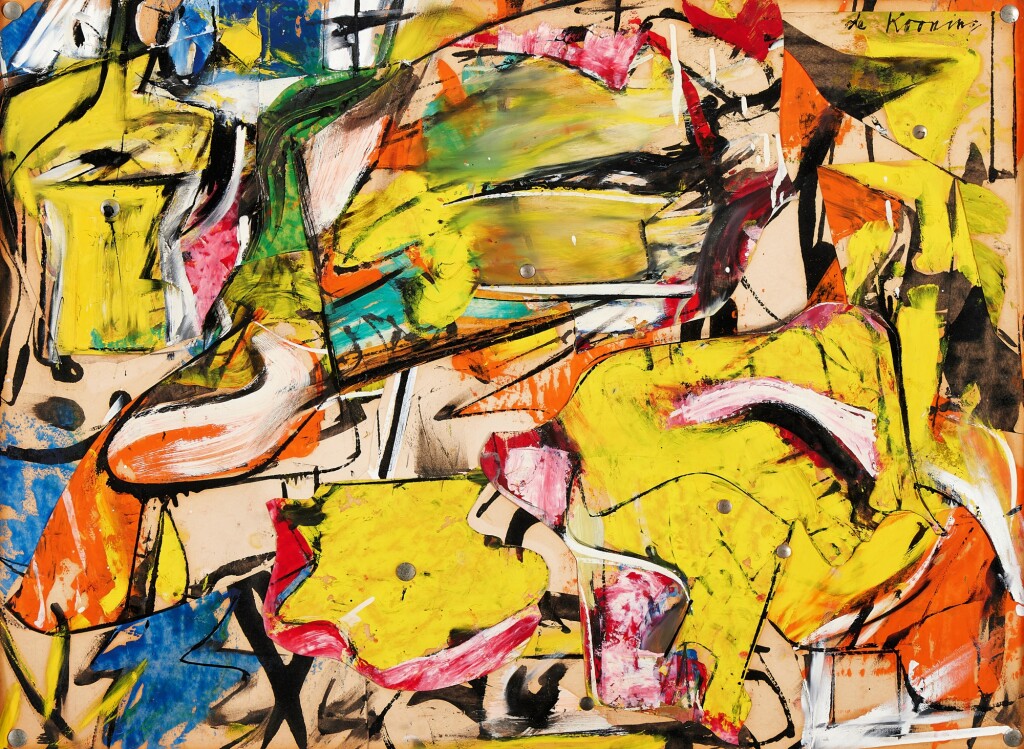
WILLEM DE KOONING (1904-1997)
Collage, 1950
Oil and lacquer with thumbtacks on paper
22×30 inches (55.9 x 76.2 cm)
Sotheby’s New-York: 14 November 2022
Estimated: USD 18,000,000 – 25,000,000
USD 33,645,500
An irrepressibly vibrant and exquisitely rare jewel, Collage from 1950 declares a moment of pivotal importance within Willem de Kooning’s legendary oeuvre. Bursting forth in a chromatic eruption of compositional dynamism across every inch of the intimately scaled surface, Collage is immediately recognizable as a quintessential example of the artist’s mature abstract mode. And yet, with its richly textured surface, built up in layers of paper, paint, charcoal, and even scattered silver thumbtacks, Collage is wholly unique for its manifest inclusion of the elements that define its eponymous mode of production. Throughout the 1940s and 50s, de Kooning would often use a collage method to plan his compositions of juxtaposed forms, tracing the shapes onto paper and arranging them in various ways across a painting’s surface; here, however, he did not remove these layered elements, preserving the traces of a method that defines his most significant canvases from this period. Asheville (1948, The Phillips Collection, Washington, D.C.), Attic (1949, The Metropolitan Museum of Art, New York), and Excavation (1950, The Art Institute of Chicago) all evince this mode, their surfaces characterized by jumps, breaks, and visual ruptures between passages that mimic collage.
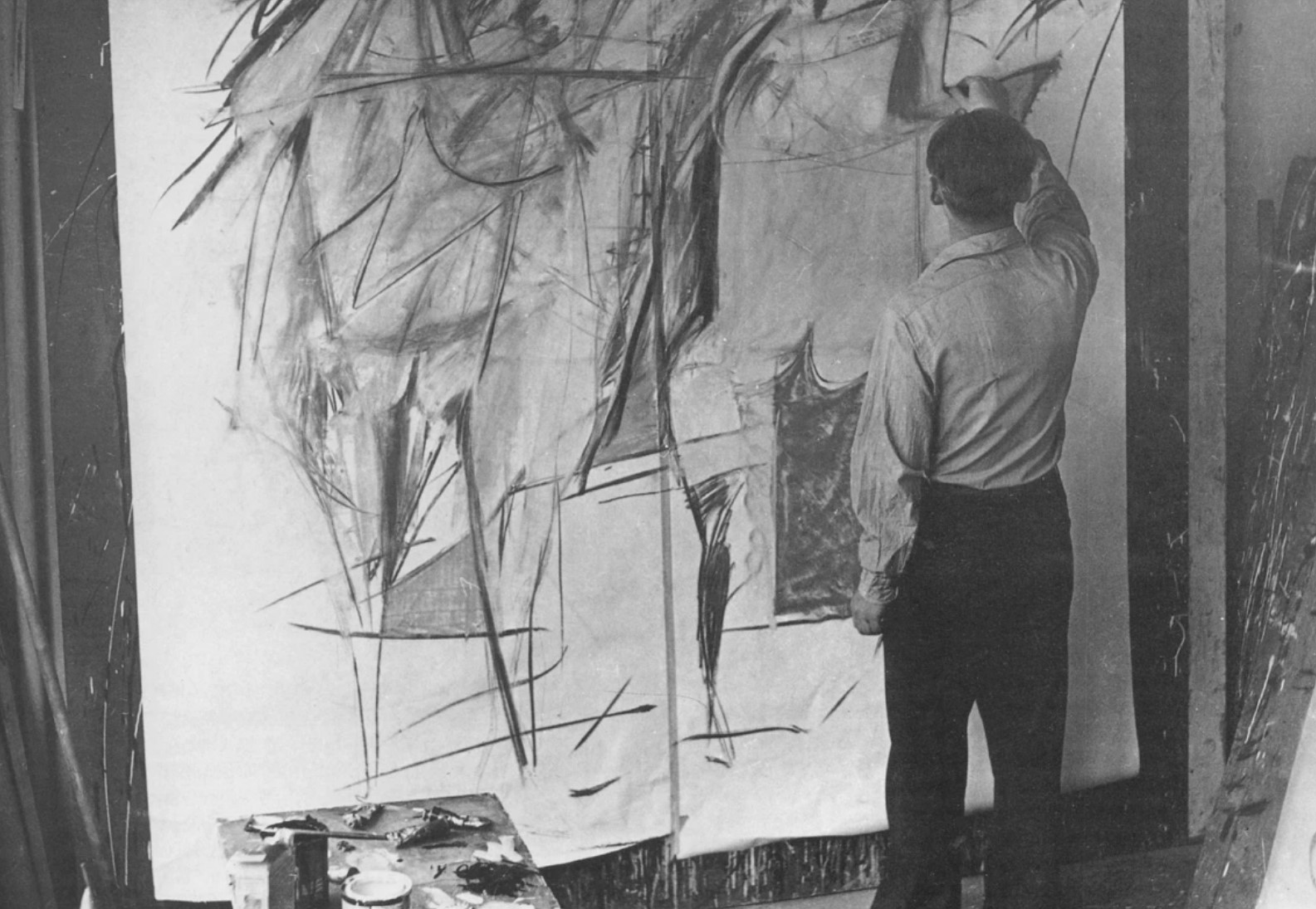
Offering its viewer an archaeological survey of the creative strata that accumulated to form de Kooning’s extraordinary aesthetic, Collage acts as a kind of Rosetta Stone, deciphering the arc of his painterly practice at this critical juncture in his career. From within the pulsing net of sensuous lines and glowing jewel-toned hues, de Kooning’s trademark oscillation between abstraction and figuration emerges; in the upper left, two eyes top a female form with a silver tack for a navel, while in the lower right, de Kooning’s recurring motif of the window emerges from the fiery orange and stark white pigment.
#2. Alberto Giacometti
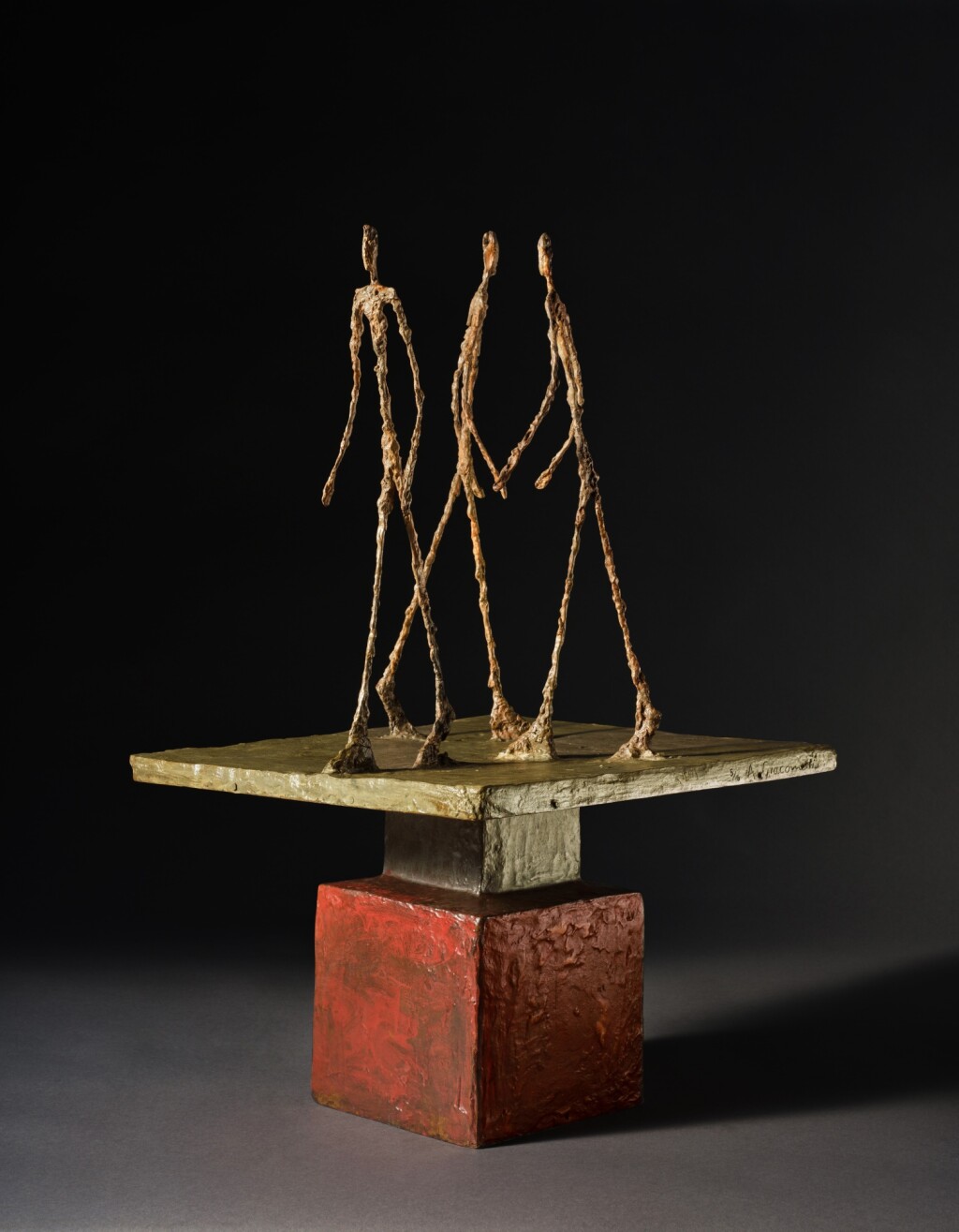
ALBERTO GIACOMETTI (1901-1966)
Trois hommes qui marchent (grand plateau), 1948-1952
Painted bronze
Height: 72.5 cm (28 ½ inches)
Numbered 5/6 and inscribed with the foundry mark
Sotheby’s New-York: 14 November 2022
Estimated: USD 15,000,000 – 20,000,000
USD 30,198,500
Nothing is more emblematic of a city than a multitude of human figures in a limited space. From streets to train stations to city squares; from places of business and of habitation—the nature of the urban environment is that of physical bodies in close proximity to one another. “In the street the people astound me and interest me more than any sculpture or painting,” said Alberto Giacometti. “Every second the people stream together and go apart, then they approach each other to get closer to one another…. They unceasingly form and reform living compositions in unbelievable complexity” (quoted in Exh. Cat., Washington, D.C., The Hirshhorn Museum and Sculpture Garden and San Francisco Museum of Modern Art, Alberto Giacometti 1901-1966, 1988-89, p. 138). Trois hommes qui marchent (grand plateau) takes as its subject this constant movement, formation and reformation of the body in motion. Created at the pinnacle of Giacometti’s post-war production, just a year after Le Nez, Tête sur tige, L’Homme au doigt and Le Main, the present work is a masterpiece from its edition, held in the same private collection since 1951 and further set apart by Giacometti’s delicate hand-painting of each aspect and element of the bronze.
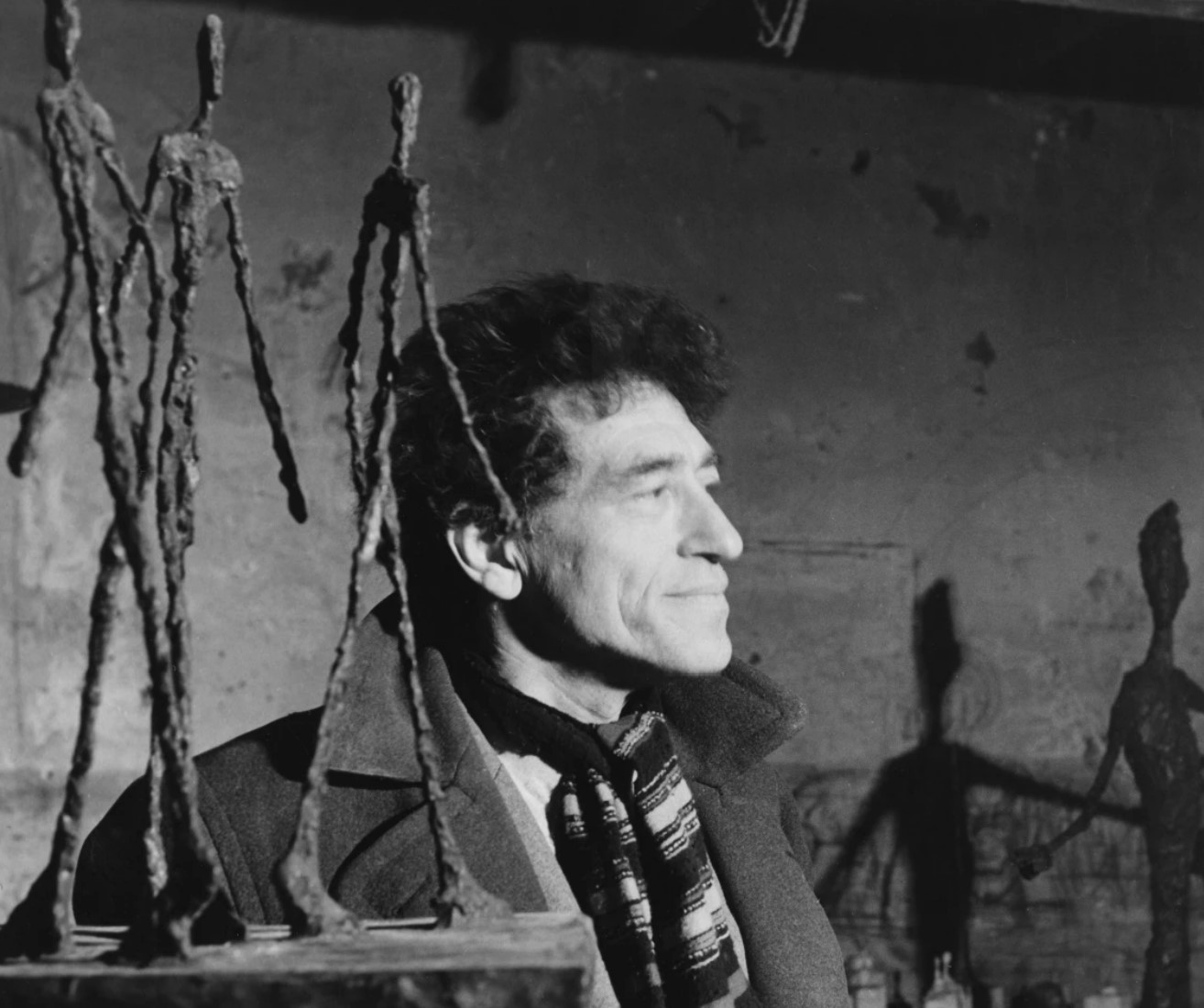
ALBERTO GIACOMETTI IN HIS STUDIO, CIRCA 1949, WITH A CAST OF THE PRESENT WORK VISIBLE AT LEFT. PHOTO © ARCHIVE PHOTOS / GETTY IMAGES. ART © 2022 ARTISTS RIGHTS SOCIETY (ARS), NEW YORK / ADAGP, PARIS
Giacometti’s bases and the sizes of his figures were meant to impose his own concepts of scale and distance on the viewer. The thinness of each body, which came to dominate his work at this time, was also closely tied up in these concepts: “The thinning down of Giacometti’s figures was another outcome of his faithfulness to reality ‘A man walking in the street weighs nothing, much less anyway than the same man lying dead or unconscious. He is balancing on his legs. One does not feel his weight. That was what, subconsciously, I wanted to convey, that lightness, by making my silhouettes thinner.’ Trois hommes qui marchent, with its three figures on a square shelf, seemingly suspended in a void, is an eerie representation of fugitive and indistinct silhouettes encountered on the street. Giacometti was successfully meeting the challenge he had announced to Sartre in 1947, of reinventing sculpture as unfixed, despite the medium’s inherent nature.
#3. Joan Miro
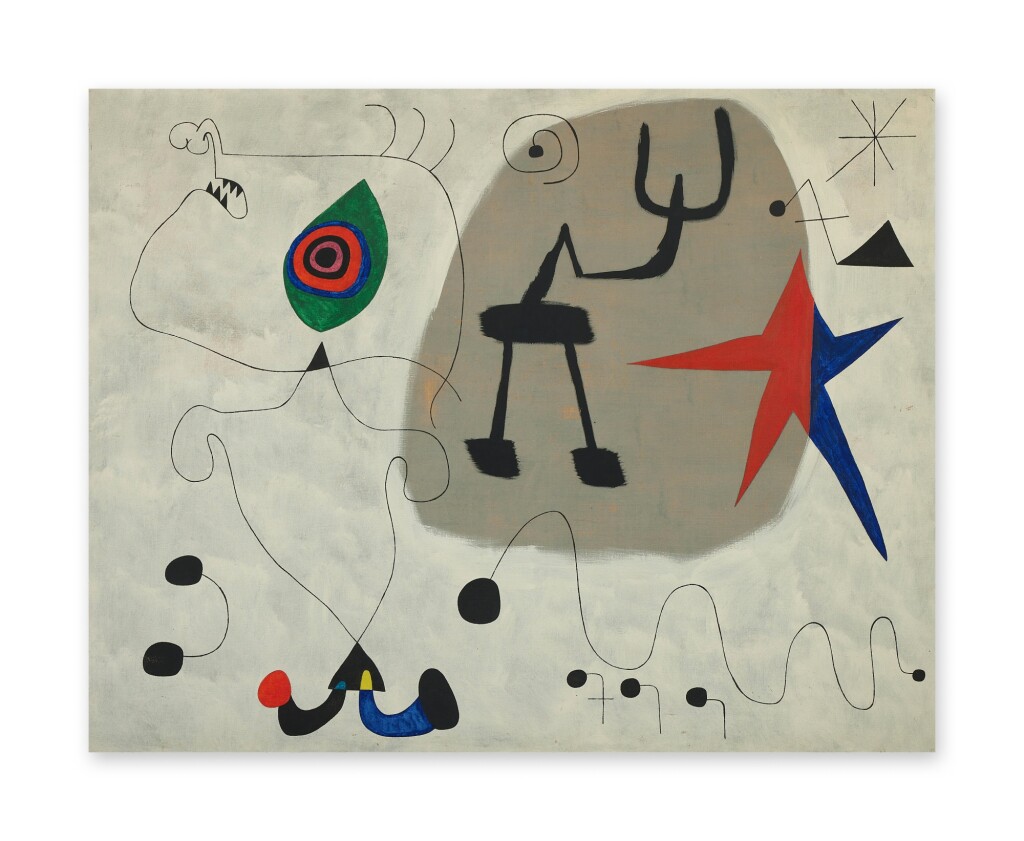
JOAN MIRO (1893-1983)
Femme, étoiles, 1945
Oil on canvas
114×146 cm (44 ½ x 57 ¾ inches)
Sotheby’s New-York: 14 November 2022
Estimated: USD 15,000,000 – 20,000,000
USD 17,789,300
#4. Pablo Picasso
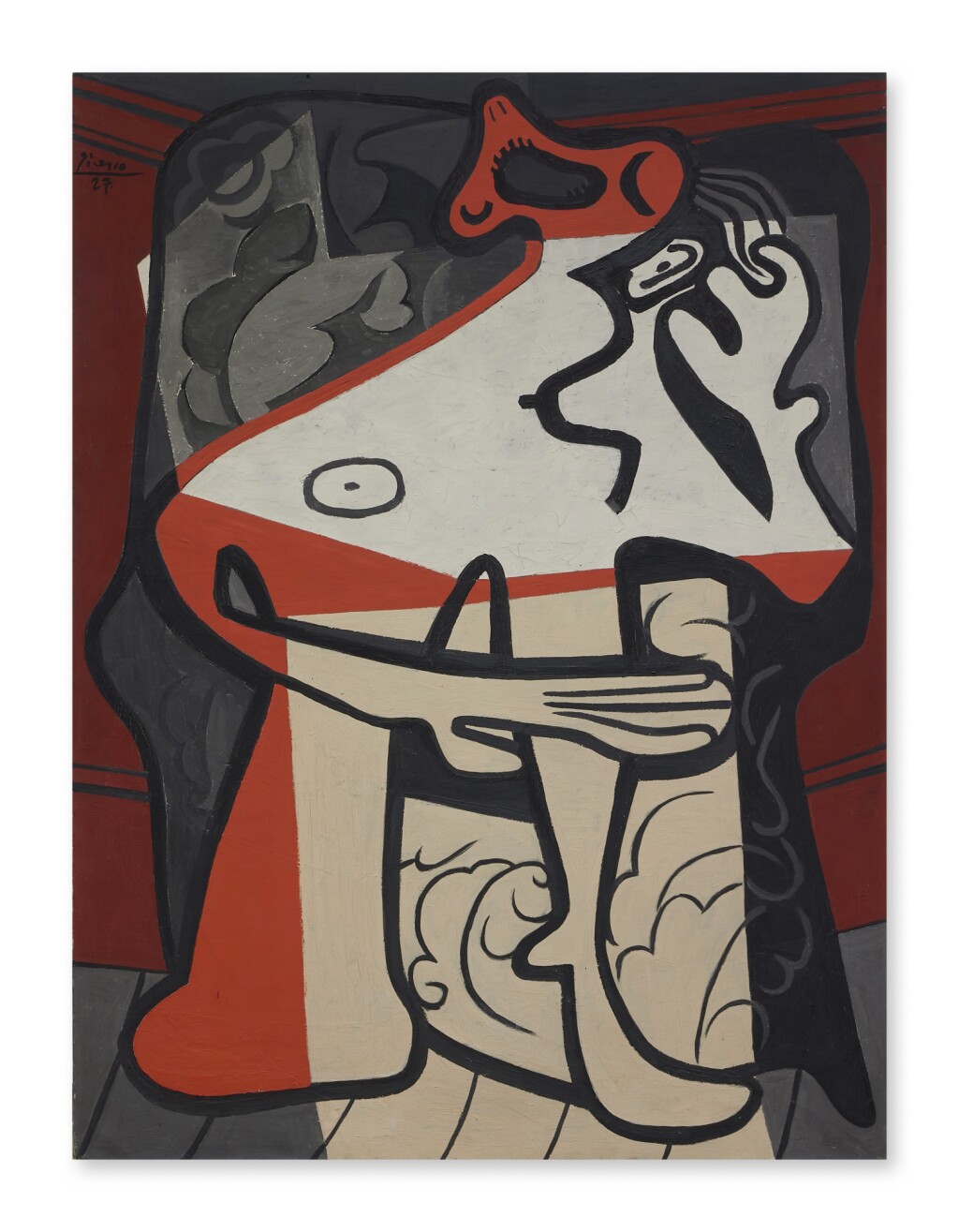
PABLO PICASSO (1881-1973)
Femme dans un fauteuil, 1927
Oil on canvas
130.5 x 97.2 cm (51 ⅜ x 38 ¼ inches)
Sotheby’s New-York: 14 November 2022
Estimated: USD 15,000,000 – 20,000,000
USD 9,976,100
There perhaps could be no truer words spoken of Picasso’s work, certainly of that from the defining period of the late 1920s and early 1930s after Marie-Thérèse Walter entered the artist’s world. Painted in January 1927, the same month Picasso first encountered his newest muse, Femme dans un fauteuil captures the defining motifs of both his wife and his soon-to-be lover in this pivotal moment amid the Surrealist zeitgeist.
#5. Alexander Calder
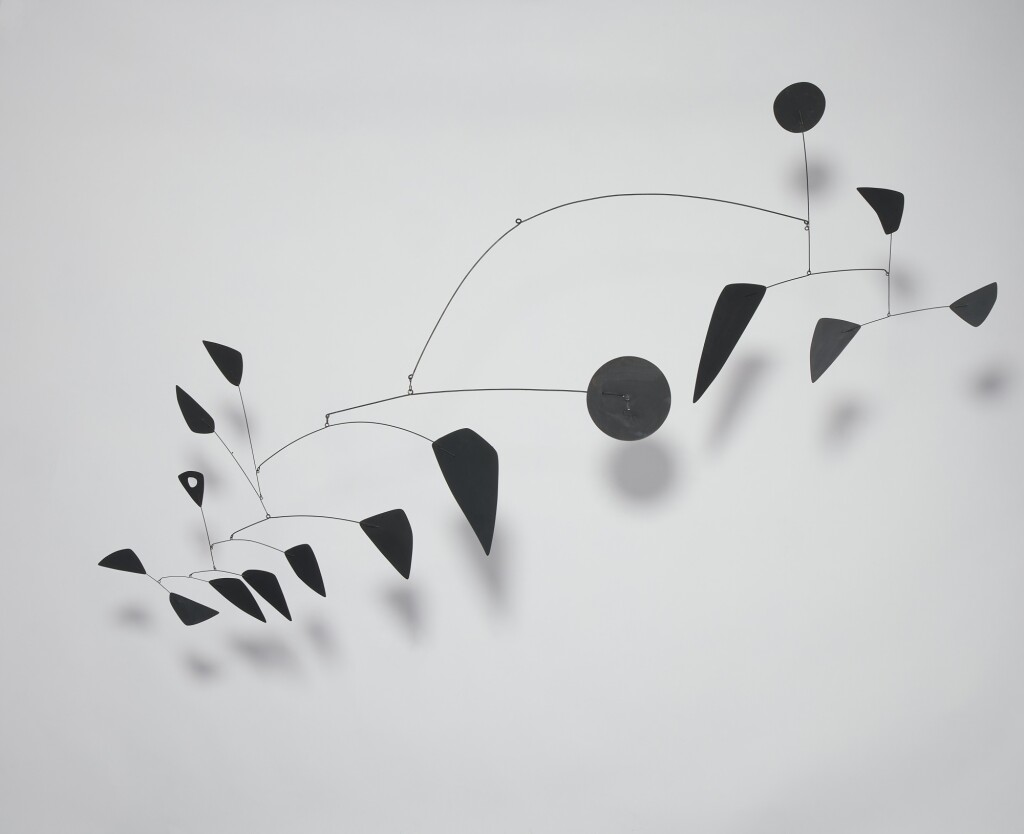
ALEXANDER CALDER (1898-1976)
Sixteen Black with a Loop, 1959
Sheet metal, wire and paint
45×75 inches (114.3 x 190.5 cm)
Sotheby’s New-York: 14 November 2022
Estimated: USD 3,000,000 – 4,000,000
USD 8,482,400
#6. Joan Miro
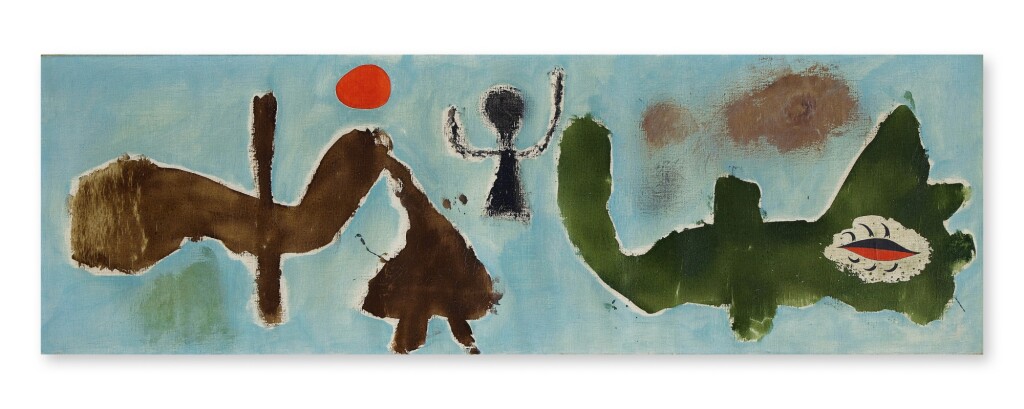
JOAN MIRO (1893-1983)
Femmes et oiseau devant le soleil, 1945
Oil and Ripolin on canvas
40.3 x 120.6 cm (15 ⅞ x 47 ½ inches)
Sotheby’s New-York: 14 November 2022
Estimated: USD 1,500,000 – 2,000,000
USD 6,529,100
#7. Jean Dubuffet
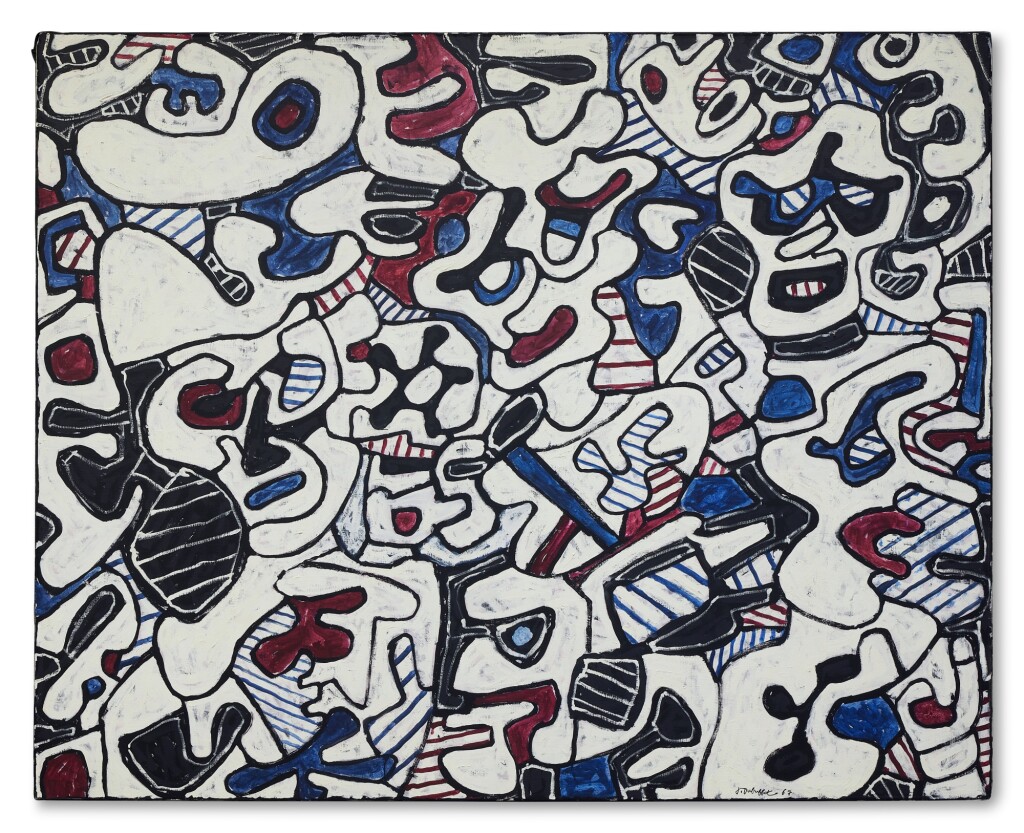
JEAN DUBUFFET (1901-1985)
Épisode, 1967
Acrylic on canvas
146.1 x 162.6 cm (57 ½ x 64 inches)
Sotheby’s New-York: 14 November 2022
Estimated: USD 3,500,000 – 4,500,000
Enveloping the viewer in a mesmerizing web of densely interlocking faces, patterns, and forms, Épisode from 1967 radiates with the jubilant and spontaneous spirit of Dubuffet’s iconic L’Hourloupe cycle. Seamlessly morphing between abstraction and figuration, the present work articulates the ambitious conceptual heights of his widely celebrated and longest-running series through the visual device of l’écriture logologique. Evoking the wanderings of the unconscious mind and the triumph of chaos over order, Épisode embodies that perpetual visual innovation that defines the enduring legacy of the groundbreaking twentieth-century artist.
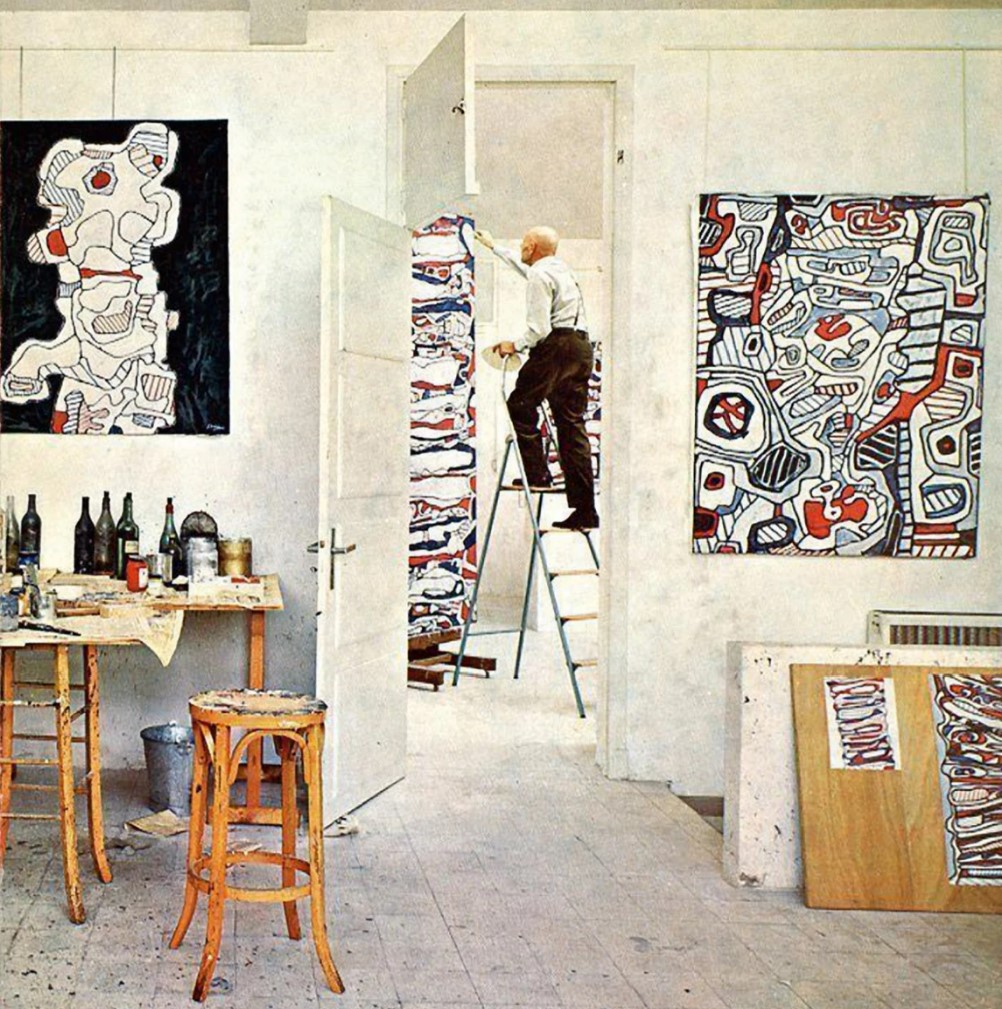
JEAN DUBUFFET IN HIS STUDIO, VENCE, FRANCE, 1964. PHOTO © ARCHIVES FONDATION JEAN DUBUFFET / MAX LOREAU. ART © 2022 FONDATION JEAN DUBUFFET / ARTISTS RIGHTS SOCIETY (ARS), NEW YORK
Épisode bursts from Dubuffet’s subconscious, its imaginative forms and visages allowing each of us a brief voyage in the fantastic world of L’Hourloupe. An expansive body of drawings, paintings, and sculptures executed between 1962 and 1974, the L’Hourloupe cycle of works originated with a simple doodle in ballpoint pen that Dubuffet scrawled absentmindedly on a scrap of paper as he spoke on the telephone. Dubuffet’s neologism ‘hourloupe,’ invented to imply a wonderful object or a grotesque creature, recalls both the French verbs ‘hurler’ and ‘hululer’—meaning ‘to roar’ and ‘to hoot’ respectively—as well as the word ‘loup’, the French noun for ‘wolf’. Through scribbles, the stylistic crux of the entire L’Hourloupe series, Dubuffet channels the instinct-driven creative fervor integral to his Art Brut aesthetic, which sought to elevate the strange, the outcast, and the outsider over academic methods and art world norms.
#8. Jean Dubuffet
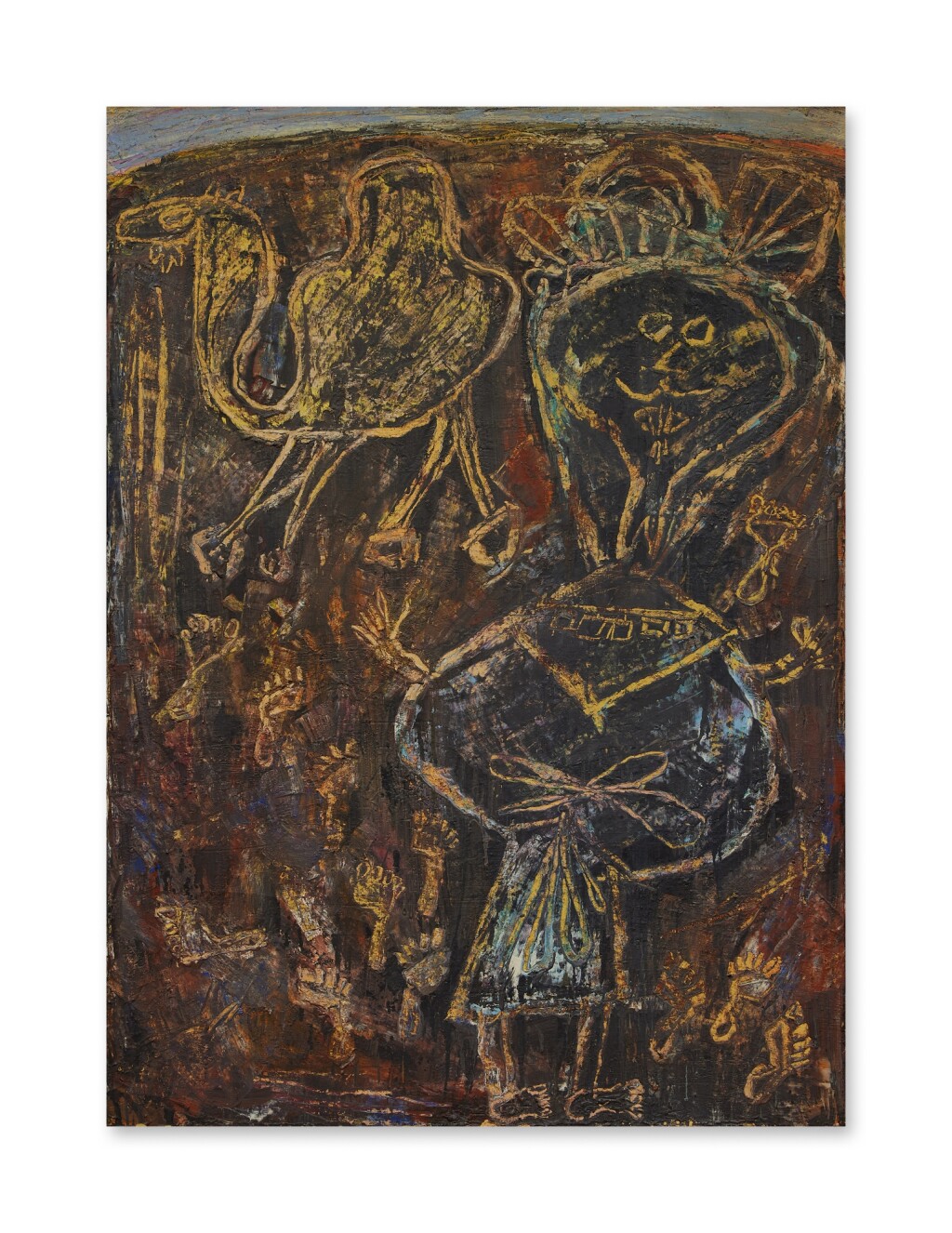
JEAN DUBUFFET (1901-1985)
Chamelier, 1948
Oil on canvas
100 x 72.4 cm (39 ⅜ x 28 ½ inches)
Sotheby’s New-York: 14 November 2022
Estimated: USD 2,000,000 – 3,000,000
USD 4,527,000
An enthralling vision of the desert’s essence, Chamelier encapsulates the enduring influence of the Sahara and its inhabitants on Jean Dubuffet’s inimitable oeuvre. Executed between May and June 1948, the present work is one of the most compelling and dynamic works that emerged from Dubuffet’s transformative voyages to southern Algeria. As one of only eighteen works on canvas created as part of his cycle of works—titled Roses d’Allah, clowns du desert—Chamelier is a rarity within Dubuffet’s oeuvre. Attesting to the importance of this output, paintings from this series belong to prestigious museum collections including The National Gallery of Art, Washington, D.C.; Art Institute of Chicago; and the National Gallery of Victoria, Melbourne. An evocative rendering of the desert’s atmosphere rather than its literal appearance, the present work is a quintessential example of Dubuffet’s career-long investigation of memory, representation and the possibilities of paint.
# Lots: 44 Lots
Sell-Through Rate: 82%
Total: USD 253,300,675
Top Lot: USD 51,000,000
5 Lots sold for over USD 10,000,000
——
Above Estimates: 14 Lots (61%)
Within Estimates: 3 Lots (13%)
Below Estimates: 6 Lots (26%)
#1. Piet Mondrian
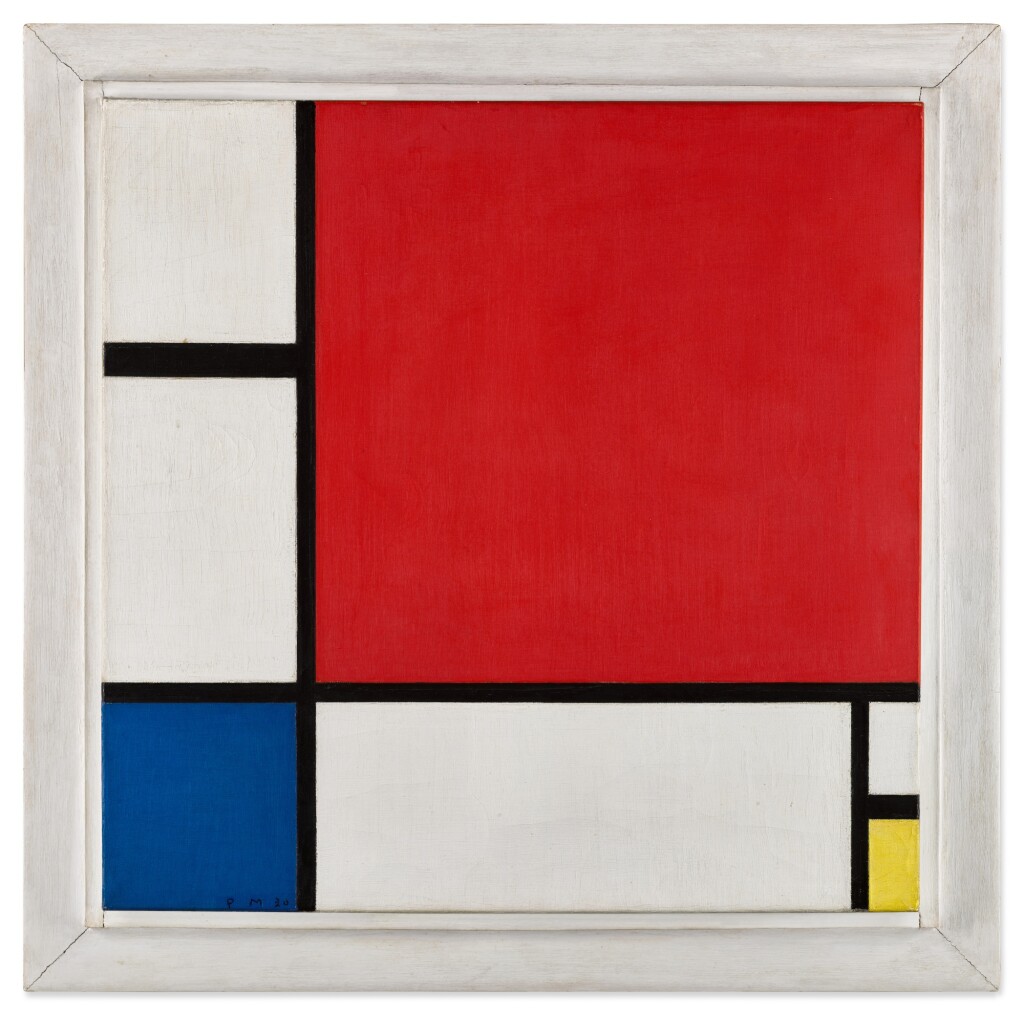
PIET MONDRIAN (1872-1944)
Composition No. II, 1930
Oil on canvas in artist’s frame
51×51 cm (20 ⅛ x 20 ⅛ inches)
Sotheby’s New-York: 14 November 2022
USD 51,000,000
#2. Pablo Picasso
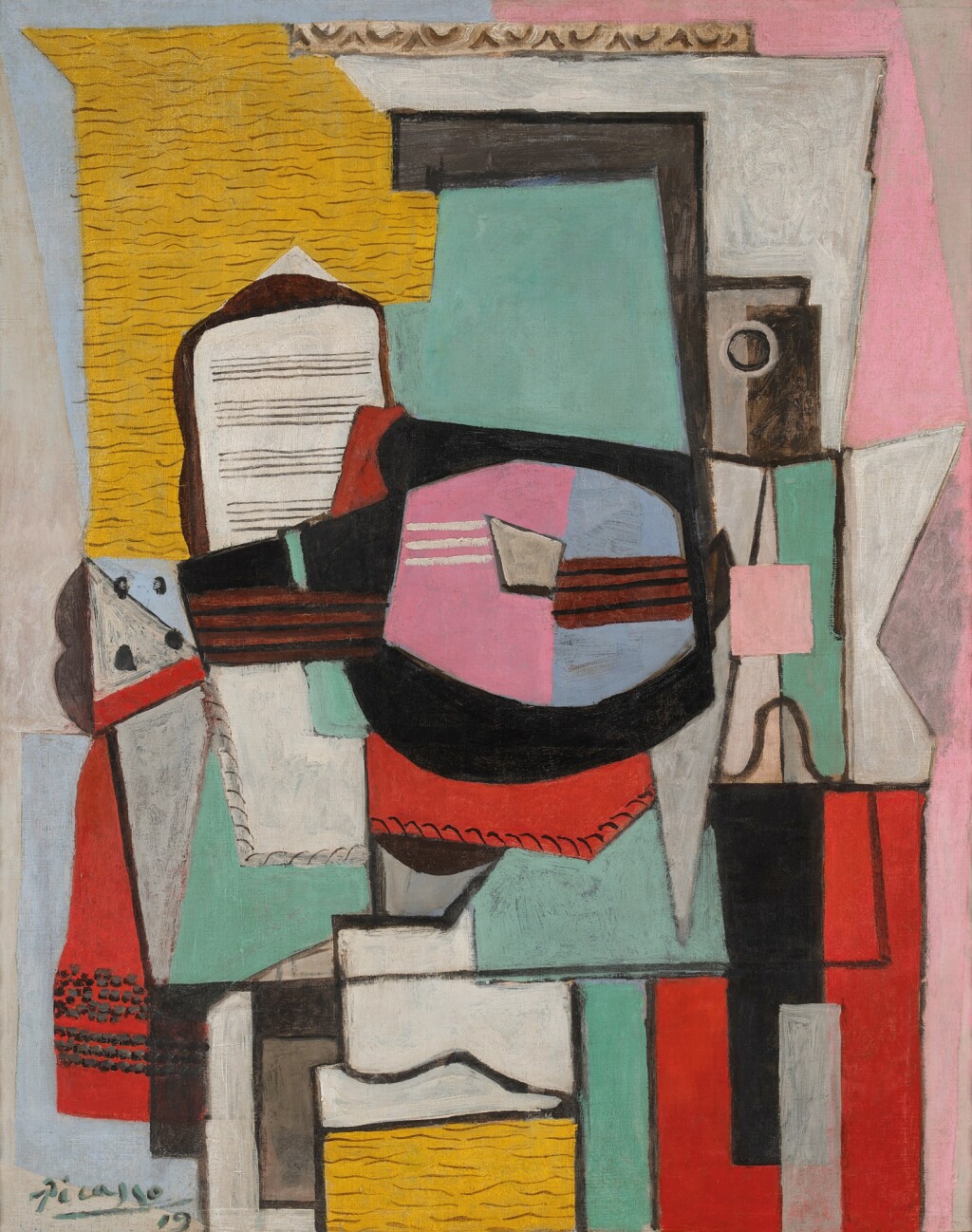
PABLO PICASSO (1881-1973)
Guitare sur une table, 1919
Oil on canvas
100 x 80.7 cm (39 ⅜ x 31 ¾ inches)
Sotheby’s New-York: 14 November 2022
USD 37,000,000
A symphonic array of form and pigment, Picasso’s Guitare sur une table from 1919 epitomizes the artist’s bold stylistic evolution in the years following the First World War. Drawing on the Cubist idiom pioneered alongside Braque beginning around 1907-08, Picasso’s still lifes from the subsequent decade reveal a heightened liveliness and levity paired with a dynamic and newfound appreciation of color.
#3. Henry Moore
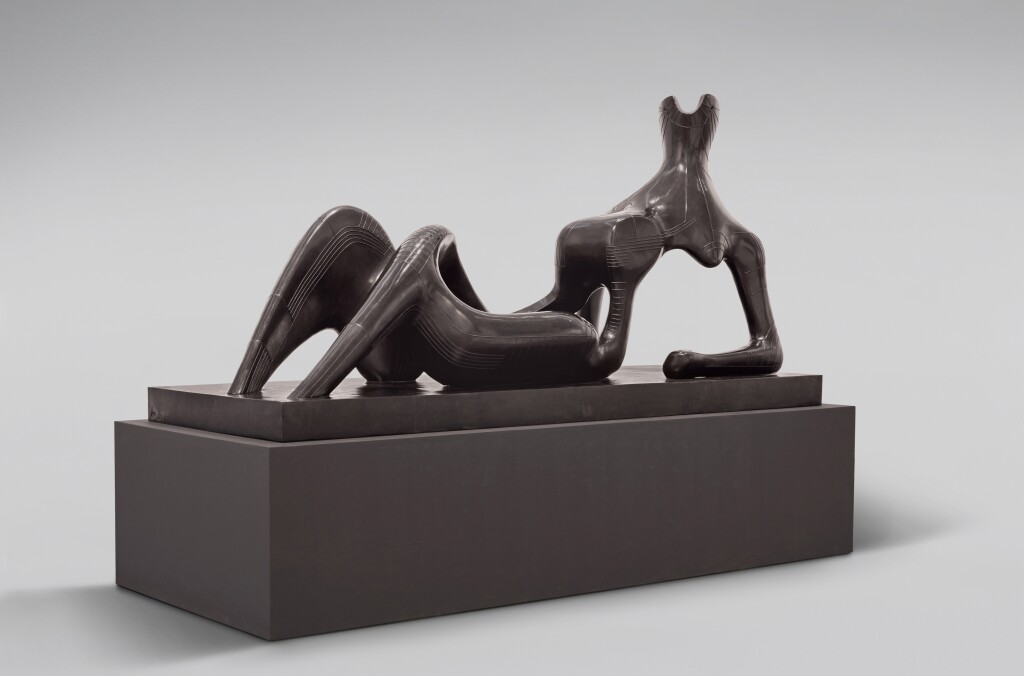
HENRY MOORE (1898-1986)
Reclining Figure: Festival, 1951
Bronze
Length: 94 inches (238.8 cm)
Sotheby’s New-York: 14 November 2022
USD 31,000,000
The first life-size reclining figure and the greatest work of Henry Moore’s prodigious oeuvre, Reclining Figure: Festival stands as a testament to the artist’s defining role in the history of Modern sculpture. Originally created for the era-defining Festival of Britain in 1951, Moore’s Reclining Figure shocked audiences with its radical definition of space and interpretation of the human figure, transforming the very concept of Modern sculpture and forever altering the direction of the artist’s career.
#4. Alberto Giacometti
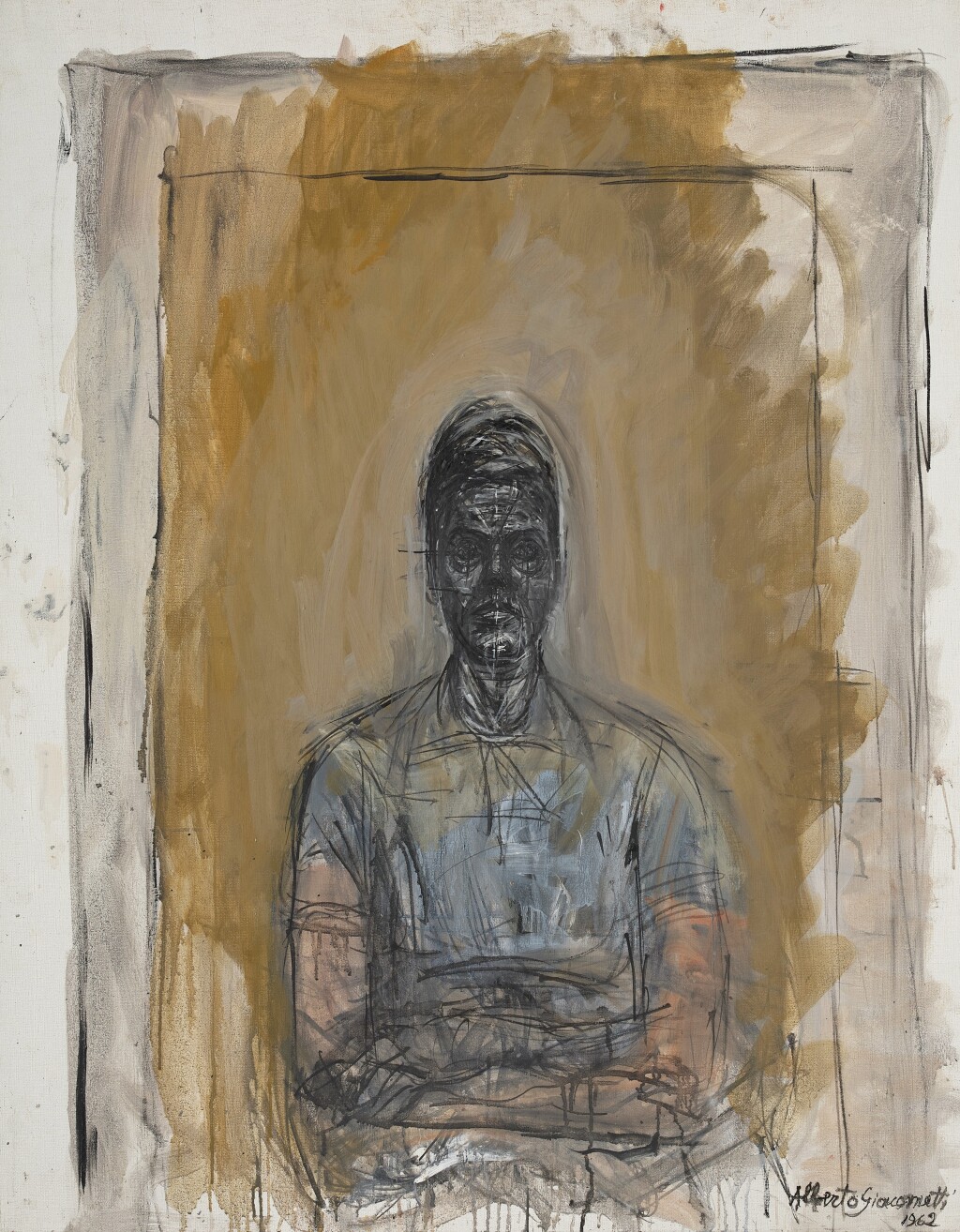
ALBERTO GIACOMETTI (1901-1966)
Caroline, 1962
Oil on canvas
91.4 x 71.1 cm (36×28 inches)
Sotheby’s New-York: 14 November 2022
Estimated: USD 15,000,000 – 20,000,000
USD 15,985,500
In the late 1950s, Alberto Giacometti met a young woman whose very presence would indelibly impact the last great apogee of his artistic practice. Decades younger than Giacometti, Caroline would inhabit his studio at night, illuminated by artificial light, her visage glowing on his canvases from centralized halos of dense pigment, which thinned, loosened and faded in radiating ripples from her precisely rendered face. She sat for around thirty canvases between 1961 and 1965, which are heralded today as the artist’s most enigmatic and captivating painted portraits.
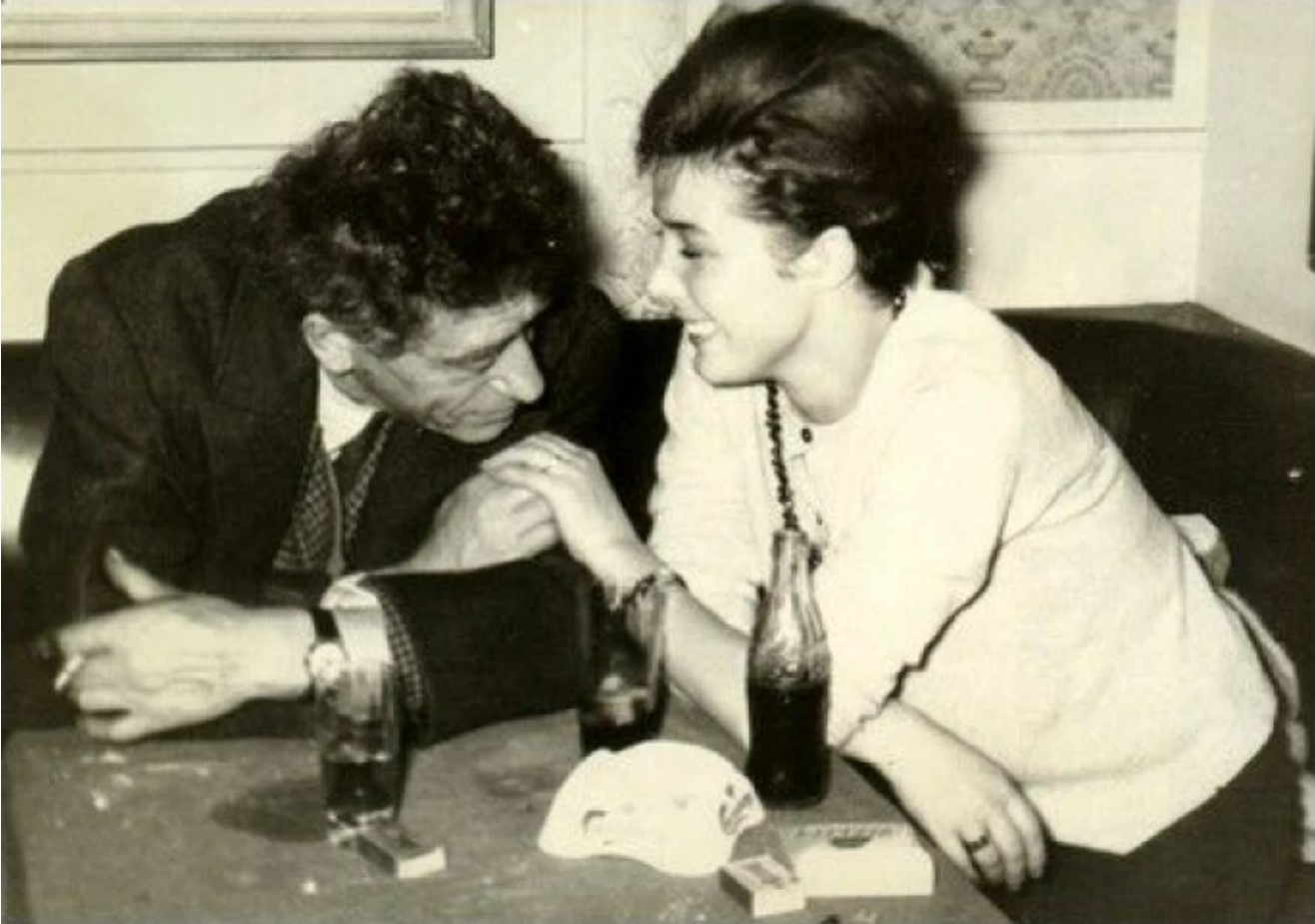
ALBERTO GIACOMETTI AND CAROLINE IN 1959 AT THE BAR CHEZ ADRIEN IN PARIS
Born Yvonne Poiraudeau, Caroline existed decidedly on the fringes of society, a world that Giacometti had often observed and incorporated into his work. He described Caroline as “a golden sphere (not a sphere, something else, but made of gold) with green eyes that smolder (no, that radiate) intensity.” In each of his paintings of Caroline it is her head and eyes – more specifically her gaze – that serve to captivate the viewer and anchor the picture. Nowhere is this truer than in the present painting.
#5. Tamara de Lempicka
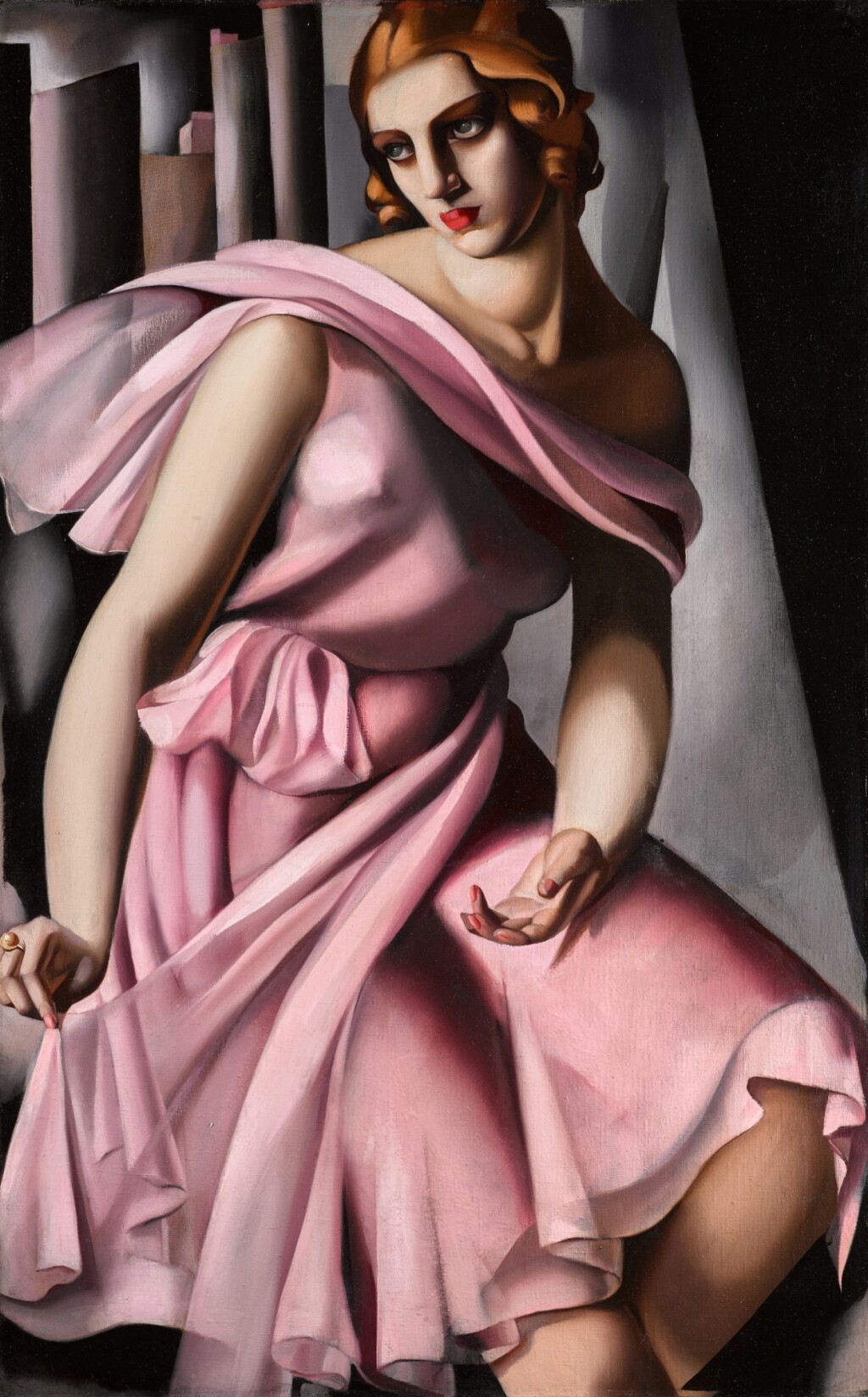
TAMARA DE LEMPICKA (1898-1980)
Portrait de Romana de la Salle, 1928
oil on canvas
116.5 x 73 cm (45 ⅞ x 28 ¾ inches)
Sotheby’s New-York: 14 November 2022
Estimated: USD 10,000,000 – 15,000,000
USD 14,112,500
A tantalizing emblem of the Art Deco age, Portrait de Romana de la Salle stands at the apogee of Tamara de Lempicka’s pioneering oeuvre. Executed in 1928, the present work emerges from the most successful period of the Polish-born artist’s career. Lempicka had by this time established herself as the superlative portrait painter of both the nouveau riche and aristocratic elites, her international clientele bolstered through her status as a prominent hostess within the glamorous Parisian social scene. Conveying opulence and liberated boldness, Lempicka’s spirited portraits and nudes of women wholly capture the zeitgeist of Paris’ années folles. Radiating elegance and vitality, Romana de la Salle here becomes a paragon of the modern woman. Lempicka’s subject was the daughter of the artist’s close friend, the Duchesse de La Salle, whose famed portrait hung in Lempicka’s bedroom on the rue Guy de Maupassant.
#6. Paul Gauguin
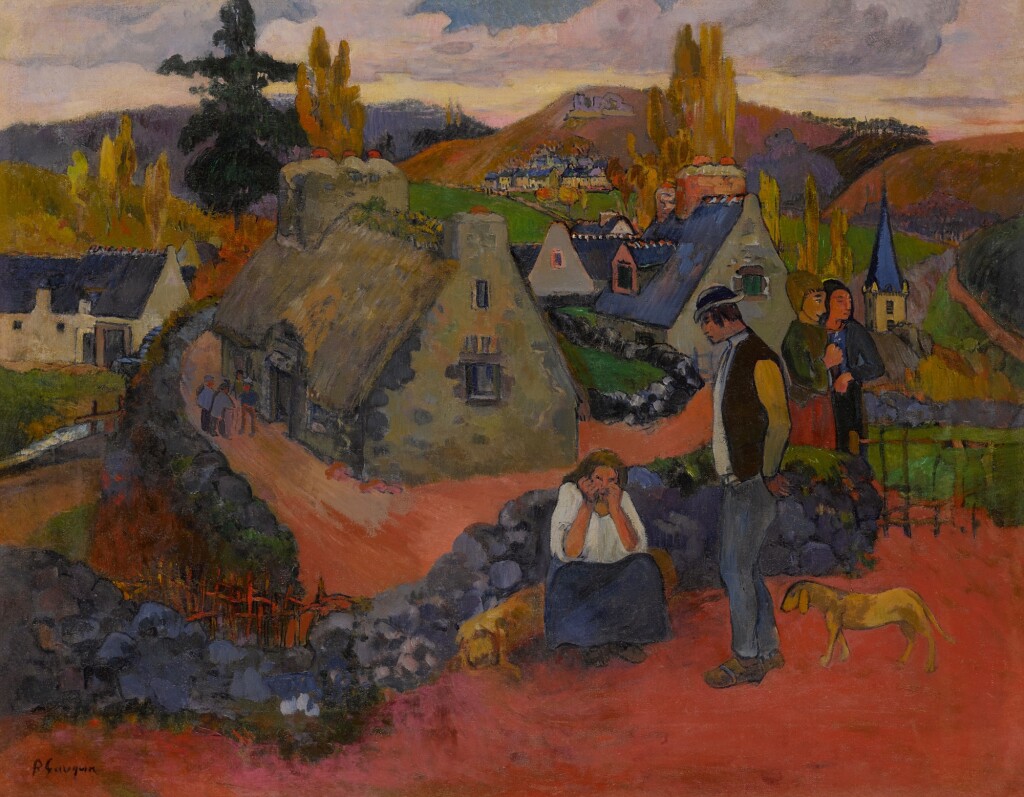
PAUL GAUGUIN (1848-1903)
Drame au village, Pont-Aven, 1894
Oil on canvas
73.4 x 93 cm (28 ⅞ x 36 ⅝ inches)
Sotheby’s New-York: 15 November 2022
Estimated: USD 8,000,000 – 12,000,000
USD 9,068,125
A dream-like, symbolic scene in sultry, evocative hues, Paul Gauguin’s Drame au village, Pont-Aven epitomizes the artist’s fascination with the exotic and represents an enchanting vision of the artist’s life-long interest in depicting the unfamiliar. Executed in 1894, the present work is one of a select group of paintings completed in France between Gauguin’s first and second trips to Tahiti in 1893 and 1895; 13 of these reside in museum collections. It draws equally upon the artist’s previous series of works inspired by the rugged, rural landscape of Brittany in the far west of France and upon his recent travels through Papeete and its Tahitian environs, conjuring the sensuous beauty and visual splendor of the tropics. Formerly in the collection of the Art Institute of Chicago, Drame au village, Pont-Aven bears an exceptionally distinguished history, and befitting its significance, it has been featured extensively in literature and exhibitions about the artist. Not seen publicly since it was last exhibited in Japan in 1987, the present work is a rare and important example of Gauguin’s legendary oeuvre.
#7. Rene Magritte
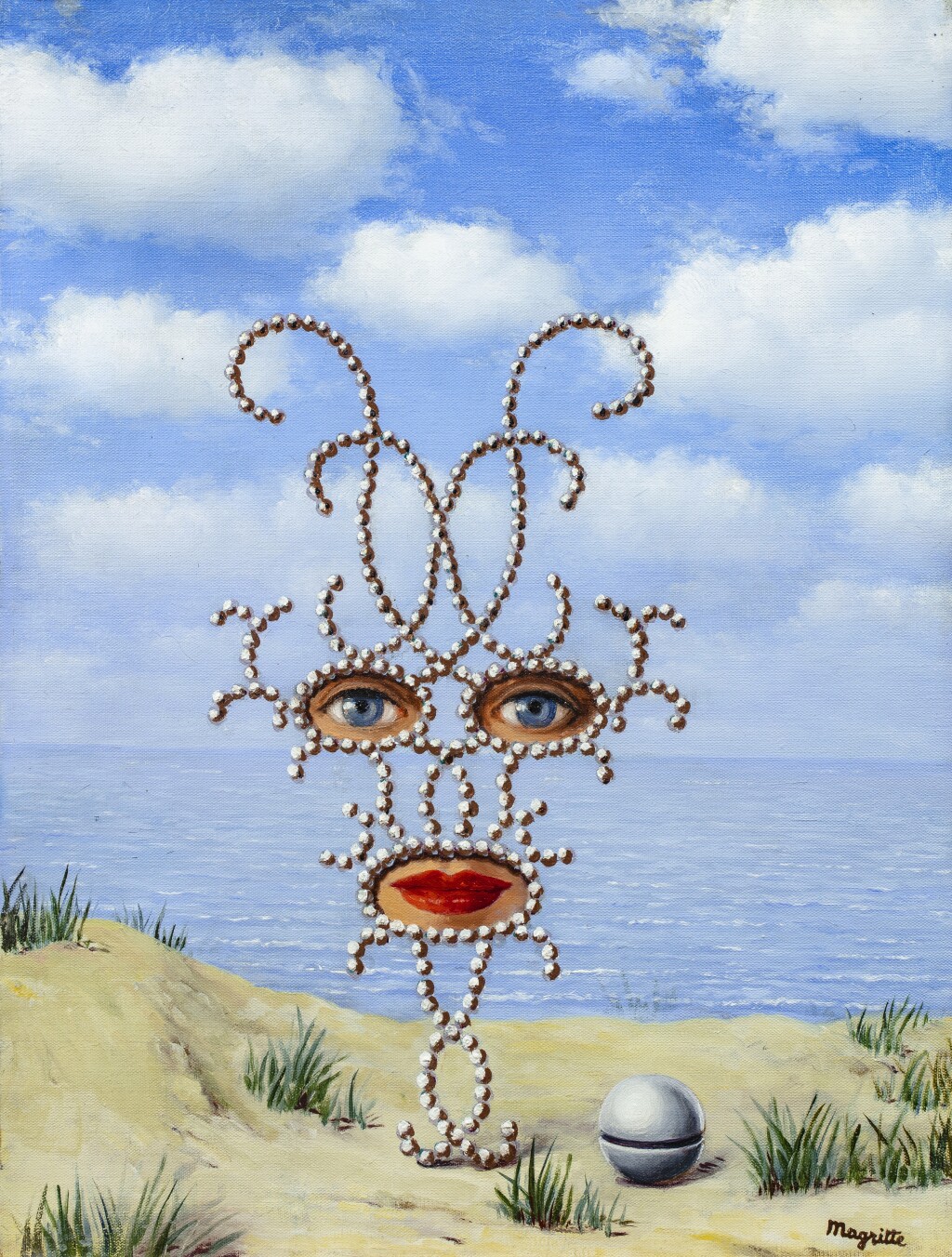
RENE MAGRITTE (1898-1967)
Shéhérazade, 1950
Oil on canvas
40×30 cm (15 ¾ x 11 ⅞ inches)
Sotheby’s New-York: 14 November 2022
Estimated: USD 8,000,000 – 12,000,000
USD 8,422,000
Featuring one of Magritte’s most iconic images and a quintessential Surrealist portrait, Magritte’s Shéhérazade stands as an integral work amid the lineage of art history. In 1954, Magritte dedicated and gifted to his friend Stéphy Langui, who would later acquiesce to Magritte’s request to paint her, resulting in the 1961 Portrait de Femme (Portrait of Stéphy Langui). Her husband, Emile Langui was a Belgian curator and fervent Socialist and anti-Fascist activist who was involved in the Resistance and later dedicated his life to repatriating looted works, working closely with the Monuments Men. Shéhérazade remained in the Langui collection until Stéphy’s death in the late 1990s; it now comes to auction for the very first time.
#8. Pablo Picasso
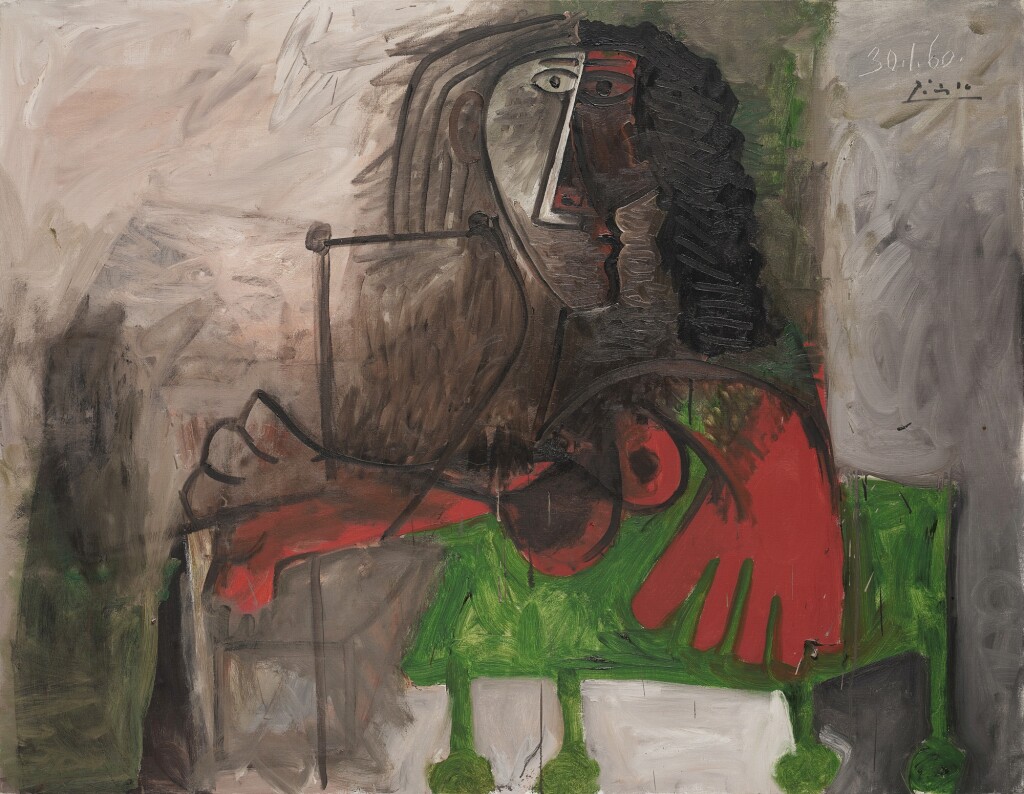
PABLO PICASSO (1881-1973)
Nu assis, 1960
Oil on canvas
114.3 x 146 cm (45 x 57 ½ inches)
Sotheby’s New-York: 14 November 2022
Estimated: USD 6,000,000 – 8,000,000
USD 6,758,900
A striking and intimate portrait of his muse and later wife, Jacqueline Roque, Nu assis from 30 January 1960 dates to a pivotal moment in Pablo Picasso’s mature career. Following the death of his friend and rival Henri Matisse in 1954, Picasso felt there were no other living artists to compete with him, and instead turned to the Old Masters who had obsessed him in his youth, from Rembrandt to Manet, Velásquez to Delacroix. Picasso’s paintings of this period re-examine his heroes’ legacies, at once celebrating them and sparring with them as he translates their greatest works into his own unique visual vernacular, a venture that would preoccupy him until the end of his life. Here, he explores the theme of the nude; executed amidst two series of drawings in 1959-60 inspired by Manet’s Dejeuner sur l’herbe and Rembrandt’s Bethsabée au bain respectively, the present work bears traces of each (see figs. 1-2). His post-Cubist, sculptural and planar rendering depicts a seated nude in the same compact, unusual posture as these interpretations, with a particular emphasis on the dual composition of Jacqueline’s head. The starkly simplified body—assembled from cipher-like shapes and signs, from the horizontal figure-eight denoting the figure’s breasts, to the pure blocks of color comprising her chair and left hand—reveals a deft, even playful reduction of forms that lends the work an engaging immediacy. Acquired in 1987 and remaining in the same private collection for over three decades, Nu assis is a rare and potent composition that highlights Picasso’s clarity of conception and his complete mastery of pictorial rhythm.
#9. Constantin Brancusi
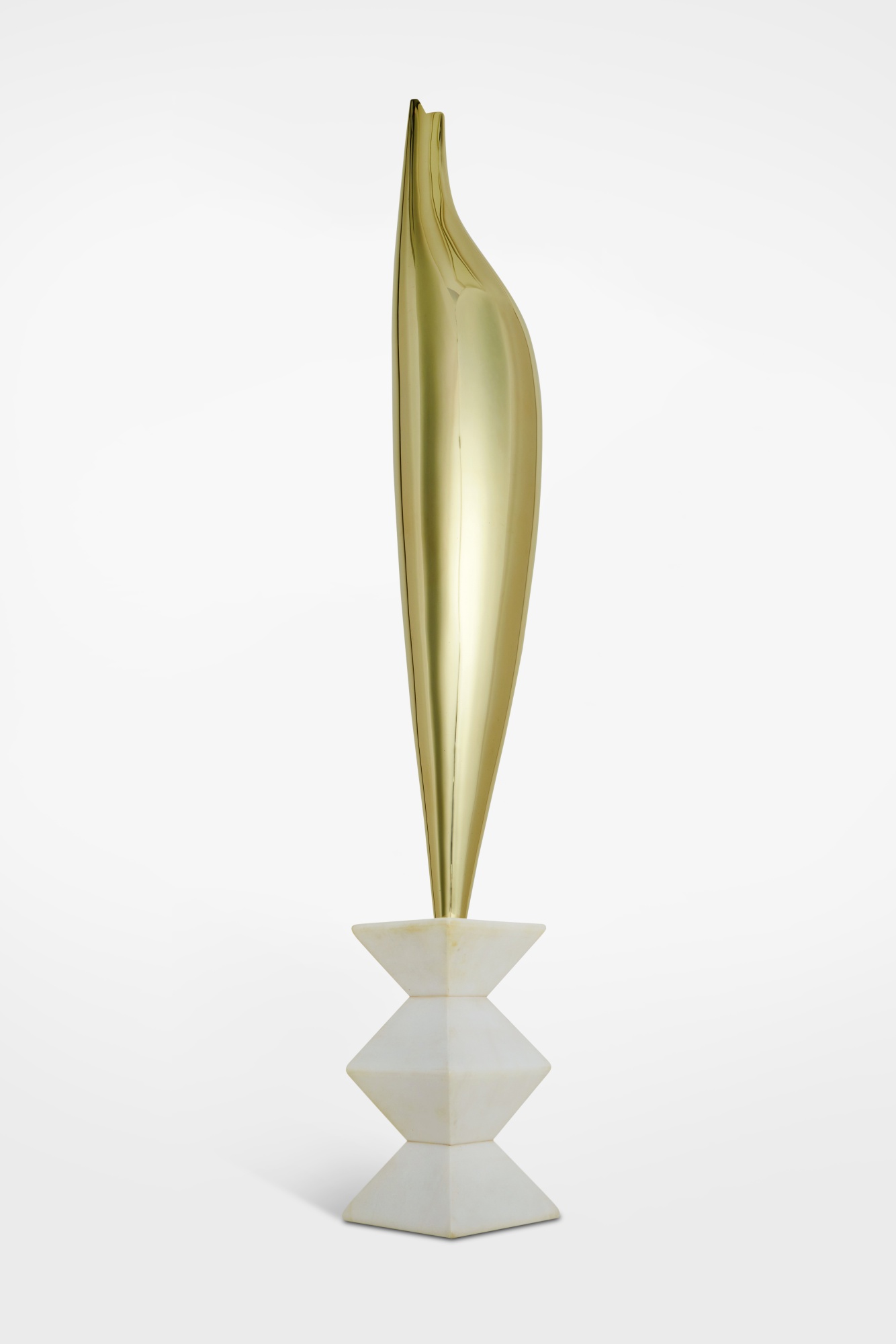
Constantin Brancusi (1876-1957)
L’Oiseau d’or
Bronze with marble base
Height (including base): 50 ¼ inches (127.7 cm)
Conceived in 1919 and cast by Susse Fondeur in 1971
Numbered 1/5
Sotheby’s New-York: 14 November 2022
Estimated: USD 5,000,000 – 7,000,000
USD 6,299,300
Lurking beneath the reflective and seemingly simple polished surface of Constantin Brancusi’s L’Oiseau d’or, is a work of art imbued with all of the enigmatic complexity and power found in the artist’s best sculptures. The subject of the bird would be preeminent in Brancusi’s oeuvre—indeed he created at least thirty versions of these upright birds during his lifetime out of a limited corpus of only around two hundred works. He used brass, marble and bronze in a variety of sizes, hewing to three primary shapes: the Maiastra, L’Oiseau d’or and L’Oiseau dans l’espace. Over the course of thirty years this form evolved towards ever greater abstraction seemingly charting the course of movement: from a bird at rest to a bird in flight
#10. Mark Rothko
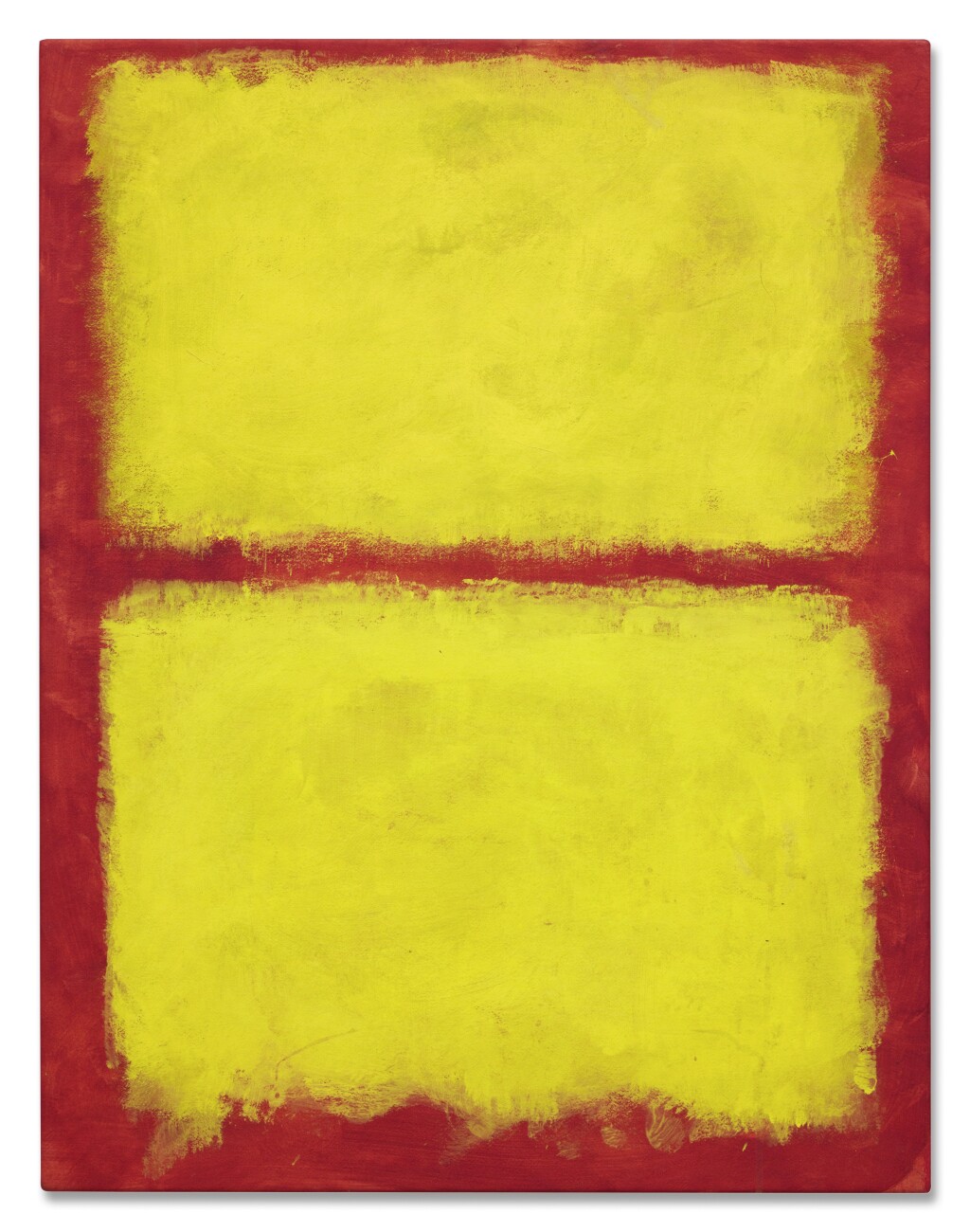
MARK ROTHKO (1903-1970)
Untitled, 1968a
Acrylic on paper laid on panel
33 ½ x 25 ¾ inches (85 x 65.5 cm)
Sotheby’s New-York: 14 November 2022
Estimated: USD 5,000,000 – 7,000,000
USD 6,241,850
Vibrating with an irrepressible chromatic energy, Untitled from 1968 encapsulates the themes and aims at the very heart of Mark Rothko’s painterly project. Concentrating the remarkable potency of his best-known canvases onto an intimate scale, Rothko here demonstrates his complete mastery of media and hue. A rare, exquisitely vibrant example from a period often characterized by a decidedly somber palette, Untitled exemplifies Rothko’s work in a medium that bore an increasingly profound significance in the twilight years of his career when, tirelessly seeking to broaden the horizons of his artistic practice, he focused his energies upon exploring the absolute limits of painting on paper. Although he created works on paper throughout the entirety of his career, the present example reflects the climax of the evolution of his output on paper.
# Lots: 355 Lots
Sell-Through Rate: 82%
Total: USD 56,161,980
Top Lot: USD
——
Above Estimates: 103 Lots (29%)
Within Estimates: 100 Lots (28%)
Below Estimates: 87 Lots (24%)
Unsold: 65 lots (18%)
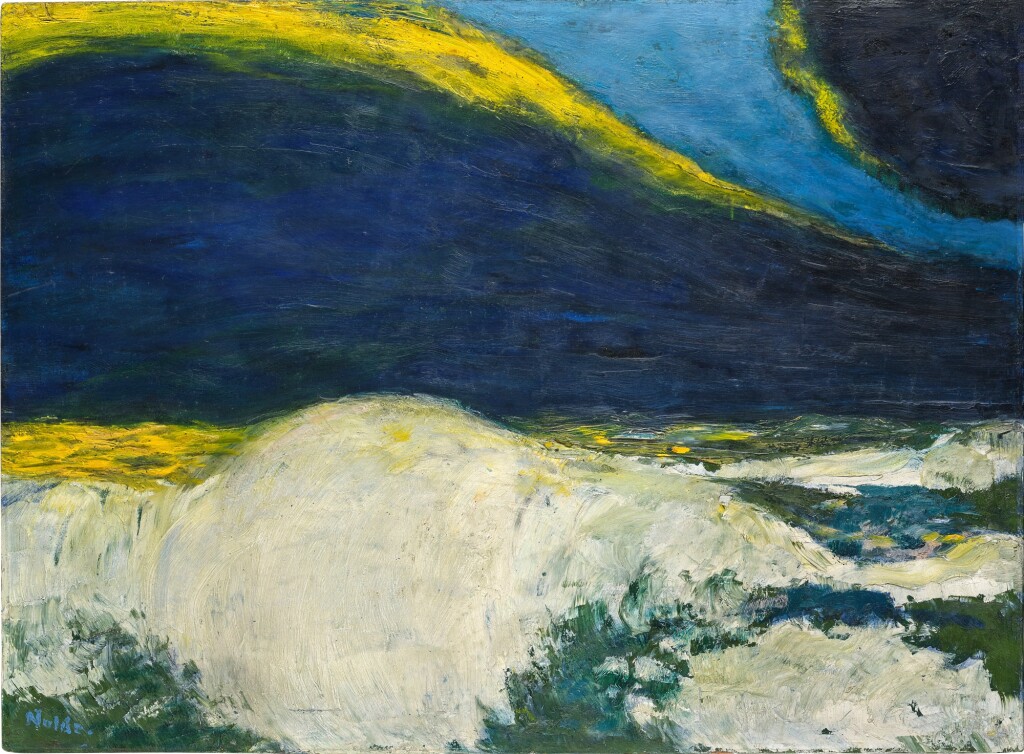
EMIL NOLDE (1867-1956)
Meer E (Sea E), 1930
Oil on panel
28½ x 39¼ inches (72.4 x 99.7 cm)
Sotheby’s New-York: 15 November 2022
Estimated: USD 1,800,000 – 2,500,000
USD 1,620,000
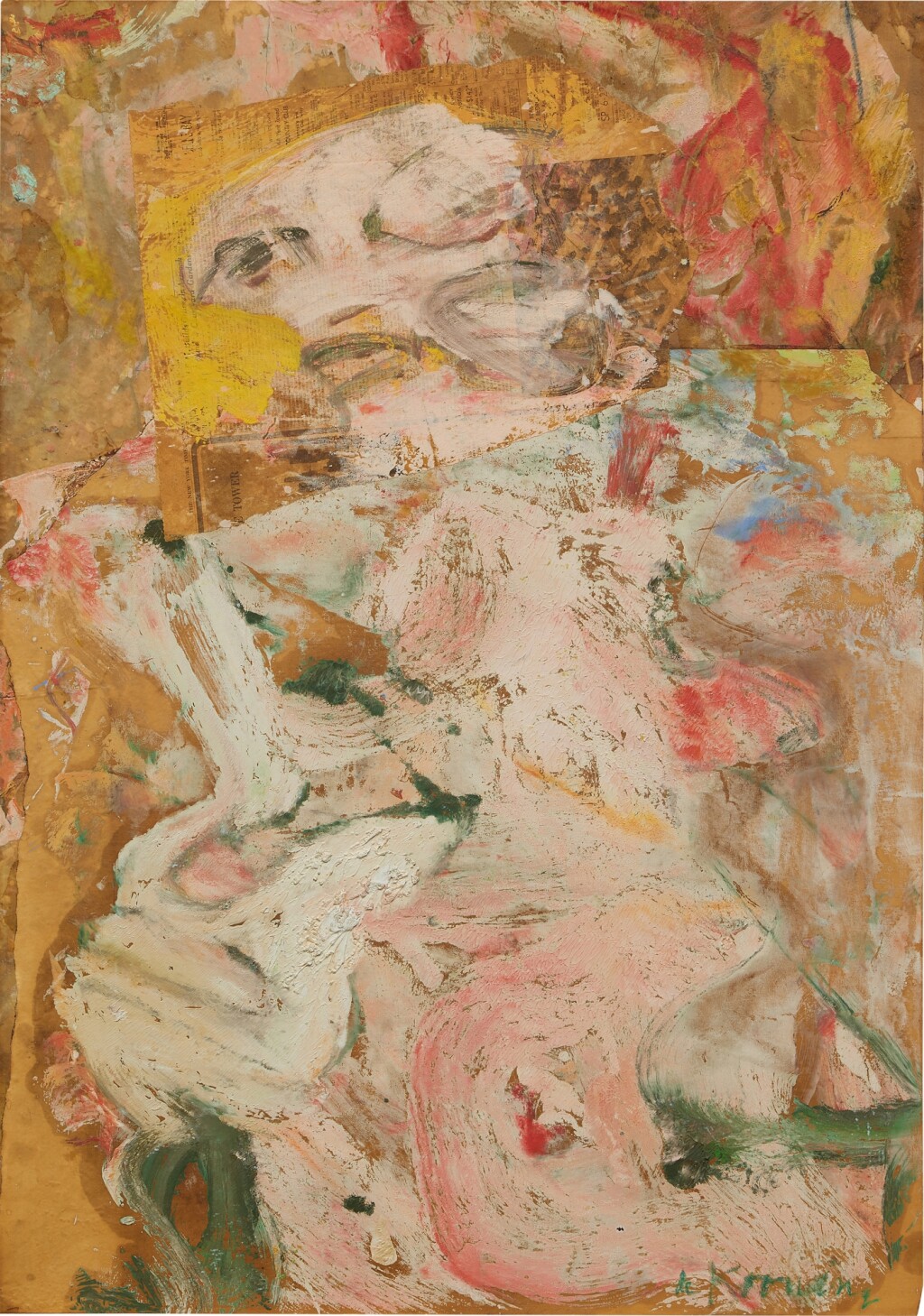
WILLEM DE KOONING (1904-1997)
Belle Bay
Oil and paper collage on vellum mounted on Masonite
38¾ x 27 inches (98.4 x 68.6 cm)
Sotheby’s New-York: 15 November 2022
Estimated: USD 700,000 – 1,000,000
USD 1,039,500
4. The Now Evening Auction
16 November 2022
The Now Evening Auction | | Sotheby’s (sothebys.com)
# Lots: 22 Lots
Sell-Through Rate: 100%
Total: USD 45,838,750
Top Lot: USD 11,929,400
——
Above Estimates: 14 Lots (64%)
Within Estimates: 6 Lots (27%)
Below Estimates: 2 Lots (9%)
#1. Yoshitomo Nara
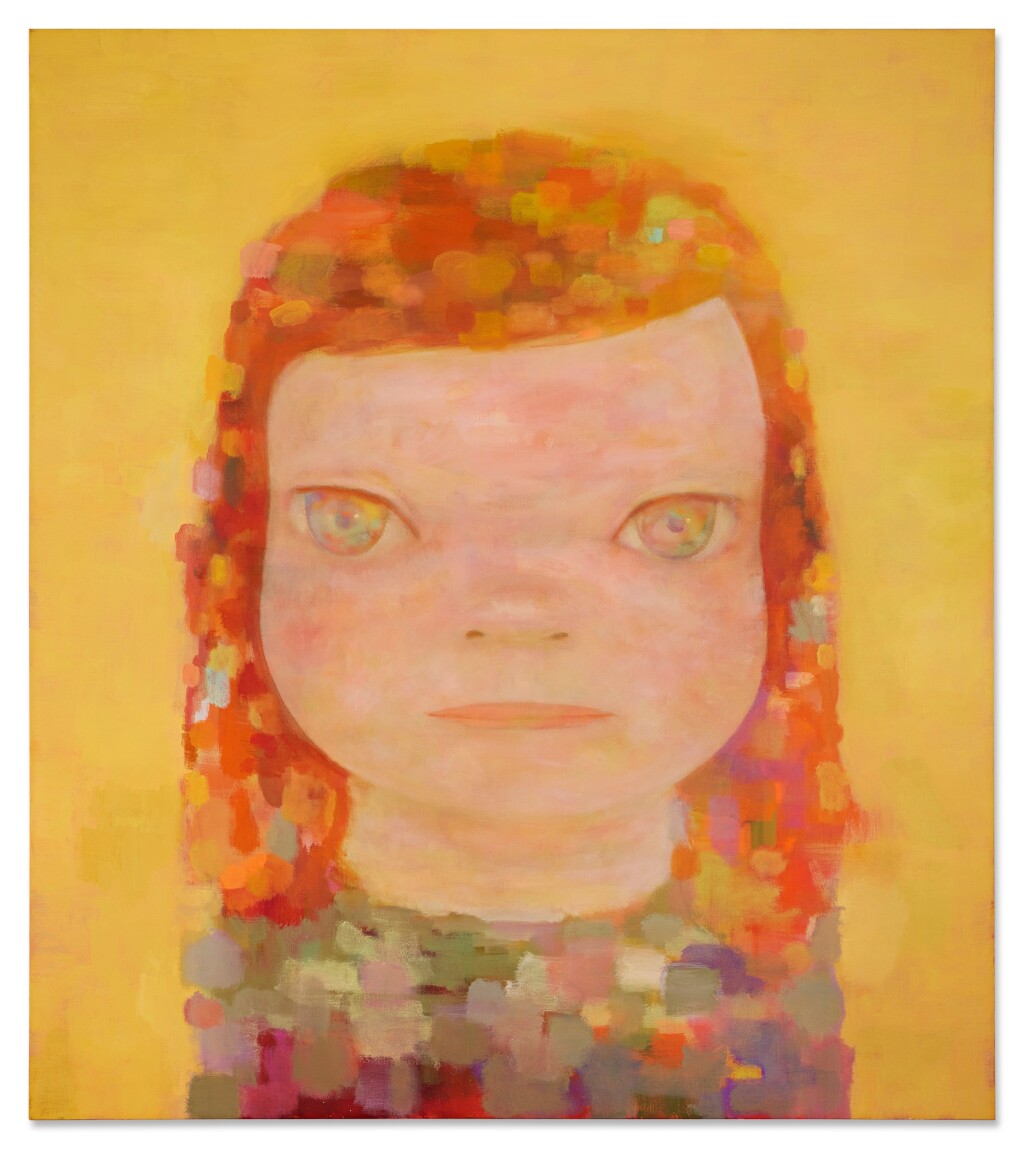
YOSHITOMO NARA
Light Haze Days / Study, 2020
acrylic on canvas
220×195 cm (86 ⅝ x 76 ¾ inches)
Sotheby’s New-York
Estimated: USD 9,000,000 – 12,000,000
USD 11,929,400
Monumental in scale and significance, Light Haze Days / Study stands as a major punctuation point in Yoshitomo Nara’s oeuvre, encapsulating the artist’s career-long examination of the self and signature ability to capture the zeitgeist of each generation. Ranking amongst the most important works by the artist to have ever appeared at auction, Light Haze Days / Study is a defining masterpiece and embodies a stylistically transcendent period within Nara’s career. When explaining the immense importance of this painting within his artistic practice, Nara describes, “the reason why the title included the word ‘study’ is because it signals something new that is about to begin.” (Los Angeles County Museum of Art, Virtual Conversation with Yoshitomo Nara and Mika Yoshitake, 11 October 2020 (video)) When the installation of Nara’s highly anticipated retrospective at the Los Angeles County Museum of Art, the most expansive in scope and scale of his career to date, was interrupted in 2020 by the coronavirus, the artist returned to his home in Japan. Amid a profound period of universal unrest and self-reflection, Nara produced Light Haze Days/ Study. Enigmatic and ethereal, the painting returns to the artist’s iconic, ostensibly innocuous, singular portraits of doe-eyed girls – a vision as iconic and pervasive in the contemporary visual lexicon as Warhol’s Marilyn’s and Lichtenstein’s blonde bombshells – with a singular tenderness. Though Nara did not originally intend to produce this painting for the retrospective, it inevitably became a centerpiece of the final gallery upon the reopening of the show, included amongst “a compilation of [his] best work to date.” (Ibid.) Further attesting to its caliber, Light Haze Days / Study was included in a second major survey of Yoshitomo Nara’s work at Yuz Museum earlier this year.
#2. Yayoi Kusama
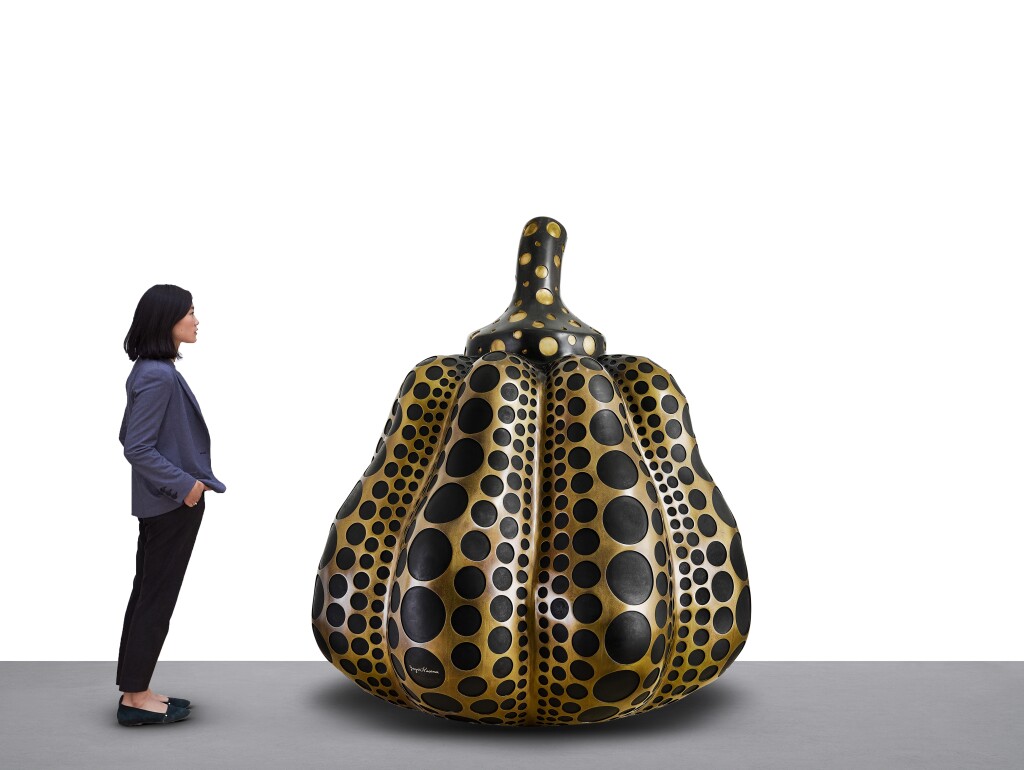
YAYOI KUSAMA
Pumpkin (M), 2014
Bronze
187x182x182 cm (73 ⅝ x 71 ⅝ x 71 ⅝ inches)
The present work is number 8 from an edition of 8
Sotheby’s New-York: 16 November 2022
Estimated: USD 3,500,000 – 5,500,000
USD 6,529,100
Virtuosic and resplendent in its paradigmatic dot-covered pumpkin motif, Kusama’s Pumpkin (M) is an exceptional free-standing bronze sculpture whose iconic and idiosyncratic striations of multi-sized polka dots meticulously encase the pumpkin from stem to base in an effusive and sophisticated pattern. Few subjects are as central to the artist’s widely commemorated oeuvre as the kabocha is to Kusama, whose profound connection to the pumpkin memorializes early childhood experiences visiting her family’s seed nursery, and can be traced back to a burgeoning, meditative practice of painting pumpkins during her early artist residency in Kyoto. The present work casts the archetypal pumpkin in bronze on a monumental scale, whose dynamic patterns induce a rhythmic, enthralling and lively optical sensation through strategically and expertly placed larger dots towards the center of the curvaceous pumpkin, and smaller dots that slither towards the top and bottom of the gourd and gather towards the creases of the pumpkin’s skin. As with many of her earlier Fiberglass and urethane pumpkins, Kusama reverses the color patterning between the stem and the body of the pumpkin, and carefully endows the top of the pumpkin’s upward-turned stem with numerous small dots, leaving no element of the pumpkin without an intricate, repetitive design. Weaving an intricate balance between the matured pumpkin’s organic form, and the profoundly delicate and seemingly boundless idiosyncratic ribbons of dots, Pumpkin (M) is the paradigm of the artist’ unequivocally consummate and impeccable oeuvre.
#3. Cecily Brown
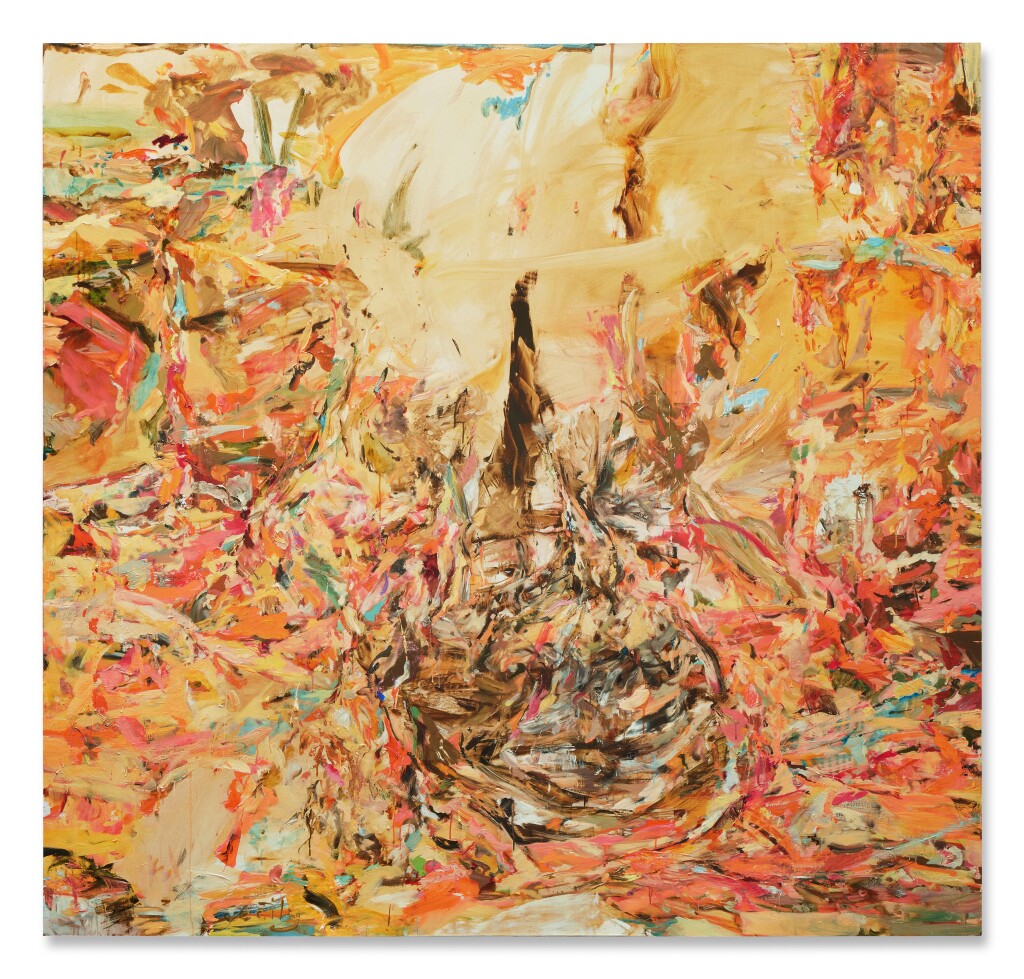
CECILY BROWN
Eyes Wide Shut, 2001
Oil on canvas
80×84 inches (203.2 x 213.4 cm)
Sotheby’s New-York: 16 November 2022
Estimated: USD 4,000,000 – 6,000,000
USD 4,527,000
Oscillating between figure, landscape, and abstraction, Eyes Wide Shut evinces Cecily Brown’s unparalleled ability to seemingly transform paint into flesh, seductively embedding the human form within a frenzied fragmented commentary on desire, life, and death. Painted in 2001, Eyes Wide Shut marks a critical breakthrough for Brown, fully articulating the erotically charged figural abstractions that characterize the artist’s work. Brown cemented herself as part of a group of painters in New York reclaiming the figure within the avant-garde, coopting and luxuriating in a dialogue with art historical antecedents that include Willem de Kooning, Lucian Freud, and Peter Paul Rubens, and ushering in a new era for figurative painting alongside artists like John Currin and Lisa Yuskavage. The vigorous treatment of body and landscape in Eyes Wide Shut reveals Brown’s commitment to wrestle her subjects free from their conventional contexts, creating paintings that fluctuate between perceptible and imperceptible form and blurring the boundaries between abstract and figurative painting. A testament to the artist’s prominence and distinction, Brown’s paintings reside in collections at esteemed institutions including the Museum of Modern Art, New York; Museum of Fine Arts, Boston; Whitney Museum, New York; Solomon R. Guggenheim Museum, New York; and the Broad, Los Angeles, amongst others.
#4. Elizabeth Peyton
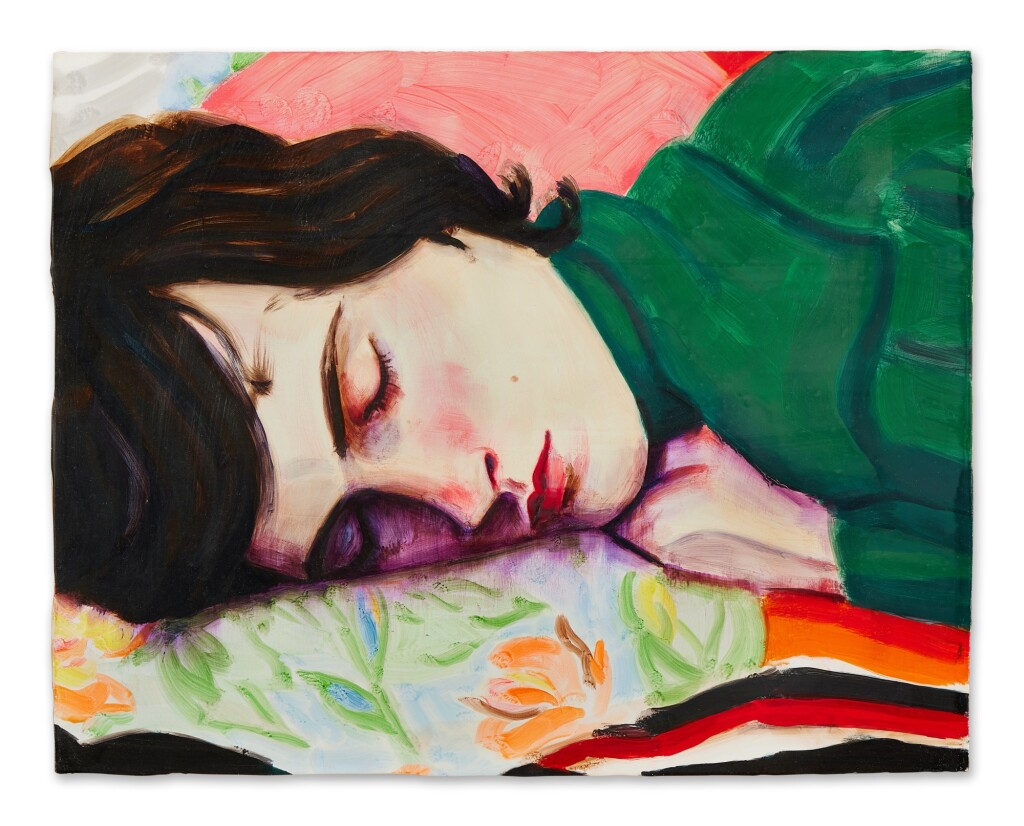
ELIZABETH PEYTON
Nick with His Eyes Shut, 2003
Oil on panel
11×14 inches (27.9 x 35.6 cm)
Sotheby’s New-York: 16 November 2022
Estimated: USD 1,000,000 – 1,500,000
USD 2,470,000
Intimately rendered in washes of rich color, Nick with His Eyes Shut represents the very best of Elizabeth Peyton’s celebrated oeuvre. One of the most influential artists in the field of contemporary figurative painting, Peyton is lauded for her paintings of cultural icons and close friends that have reinvigorated portraiture, imbuing the subjects with an intimacy and familiarity that resonates with a strong romantic devotion. Compassionate and vulnerable, Nick with His Eyes Shut is an incredibly genuine and dynamic work, depicting its subject with a marvelous “ease and unselfconsciousness in looking,” culminating in a transfixing investigation into the genre of portraiture (Nadia Tscherny, “Elizabeth Peyton,” Art in America, 1 February 2009, online)
#5. Nicolas Party
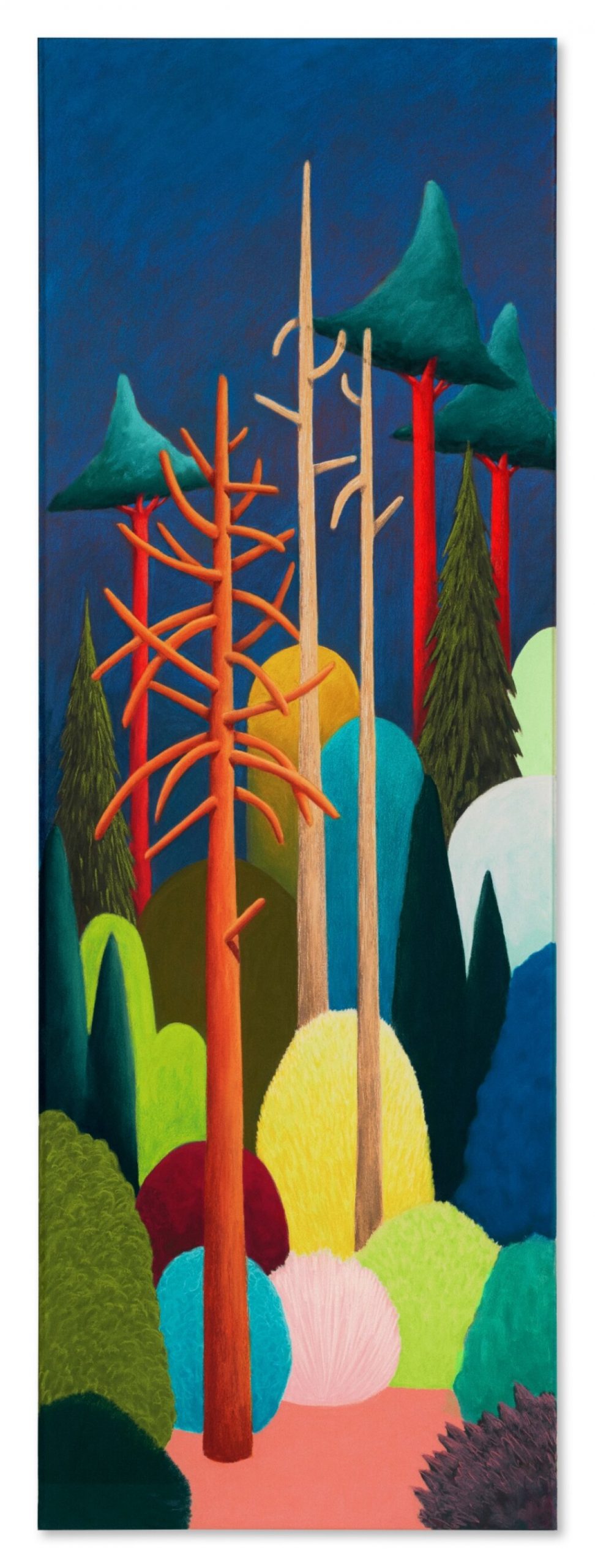
NICOLAS PARTY
Landscape, 2016
Pastel on canvas
260 x 89.9 cm (102 ⅜ x 35 ⅜ inches)
Sotheby’s New-York: 16 November 2022
Estimated: USD 2,000,000 – 3,000,000
USD 2,349,000
A luminous forest of sloping, saturated forms, Nicolas Party’s Landscape reenergizes the landscape genre, constructing its own uncanny universe of bold hues and enveloping natural forms stripped of extraneous detail. Known for his immersive and color-saturated paintings and murals, Swiss-born artist Nicolas Party manipulates the universal and familiar language of traditional painting genres to produce complex and layered atmospheres, transforming the natural world into abstract biomorphic shapes. Beloved by both critics and the public, Party’s artwork has been displayed within esteemed institutions including the Musée Magritte, Brussels; the Hirshhorn Museum and Sculpture Garden, Washington D.C.; Dallas Museum of Art; Centre Culturel Suisse, Paris; Swiss Institute, New York and most recently in a major career retrospective at the Montreal Museum of Fine Arts.
#6. Albert Oehlen
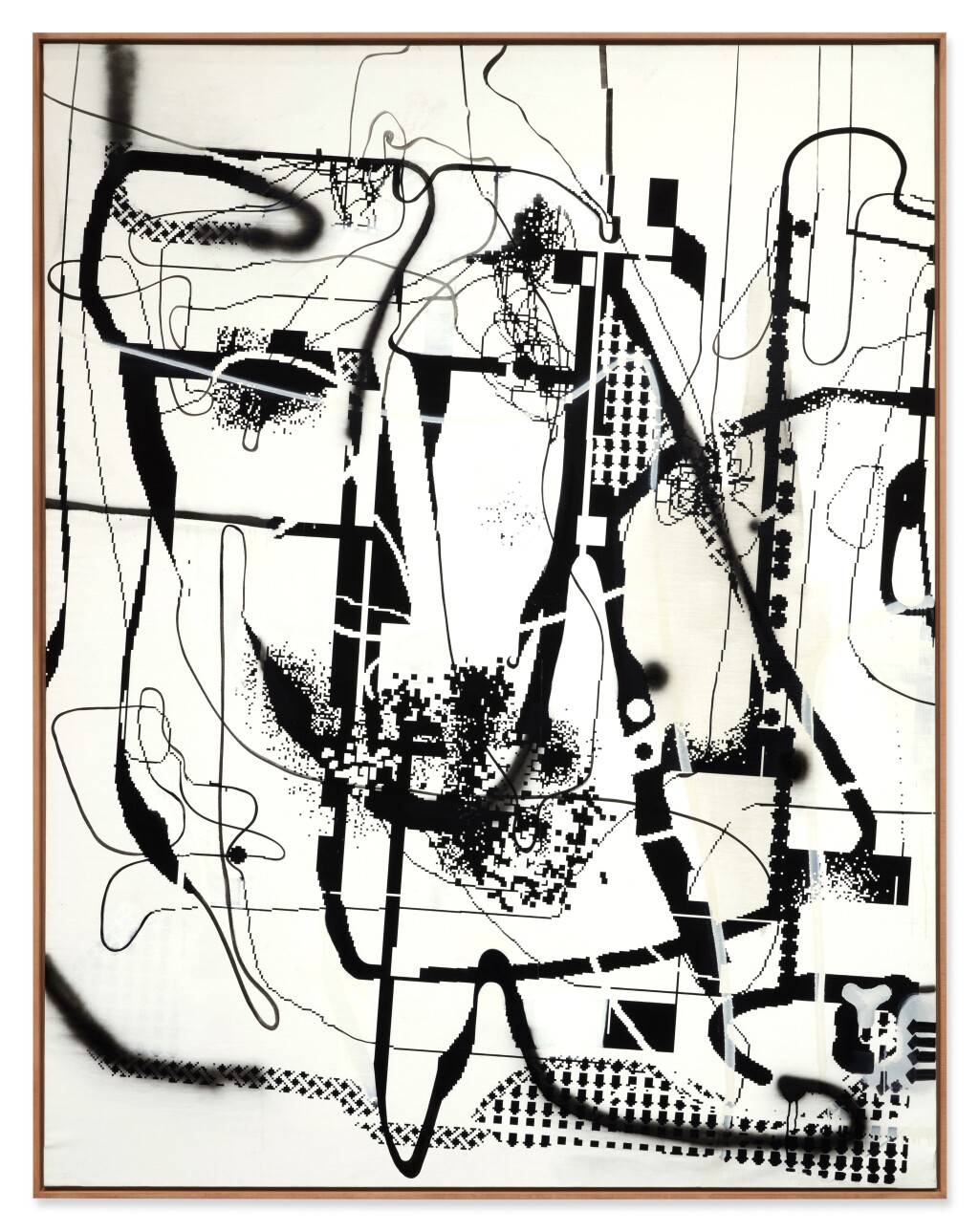
ALBERT OEHLEN (B. 1954)
Untitled, 1992/2004
Oil, acrylic, silkscreen and spray paint on canvas
230×180 cm (90 ½ x 70 ⅞ inches)
Sotheby’s New-York: 16 November 2022
Estimated: USD 1,200,000 – 1,800,000
USD 2,107,000
One of the earliest examples of Albert Oehlen’s acclaimed Computer Paintings, Untitled, painted in 1992, dates to the artist’s initial use of his signature computer graphics, a body of work that cemented Oehlen’s position as one of the most radical and innovative abstract painters of the Contemporary era. An intricate, pixelated rendering of variating forms and gestural movement mapped onto canvas, Untitled is one of a rare group of paintings that Oehlen began in 1992 and remained in the artist’s personal collection in his studio until 2004 to 2005. Within this monochromatic series, Oehlen employs the rudimentary designs of a Texas Instrument drawing software, making him one of the first artists to explore the nascent lingua franca of computer illustrations. Pulsating with a rhythmic energy, Untitled embodies Oehlen’s highly personalized aesthetic vocabulary, oscillating between computerized and fluid forms, abstract and representational. Attesting to the significance of this series, other examples of Oehlen’s 1990s Computer Paintings are held in the collections of the Fondation Louis Vuitton, Art Institute of Chicago, Los Angeles County Museum, and The Broad.
#7. Avery Singer
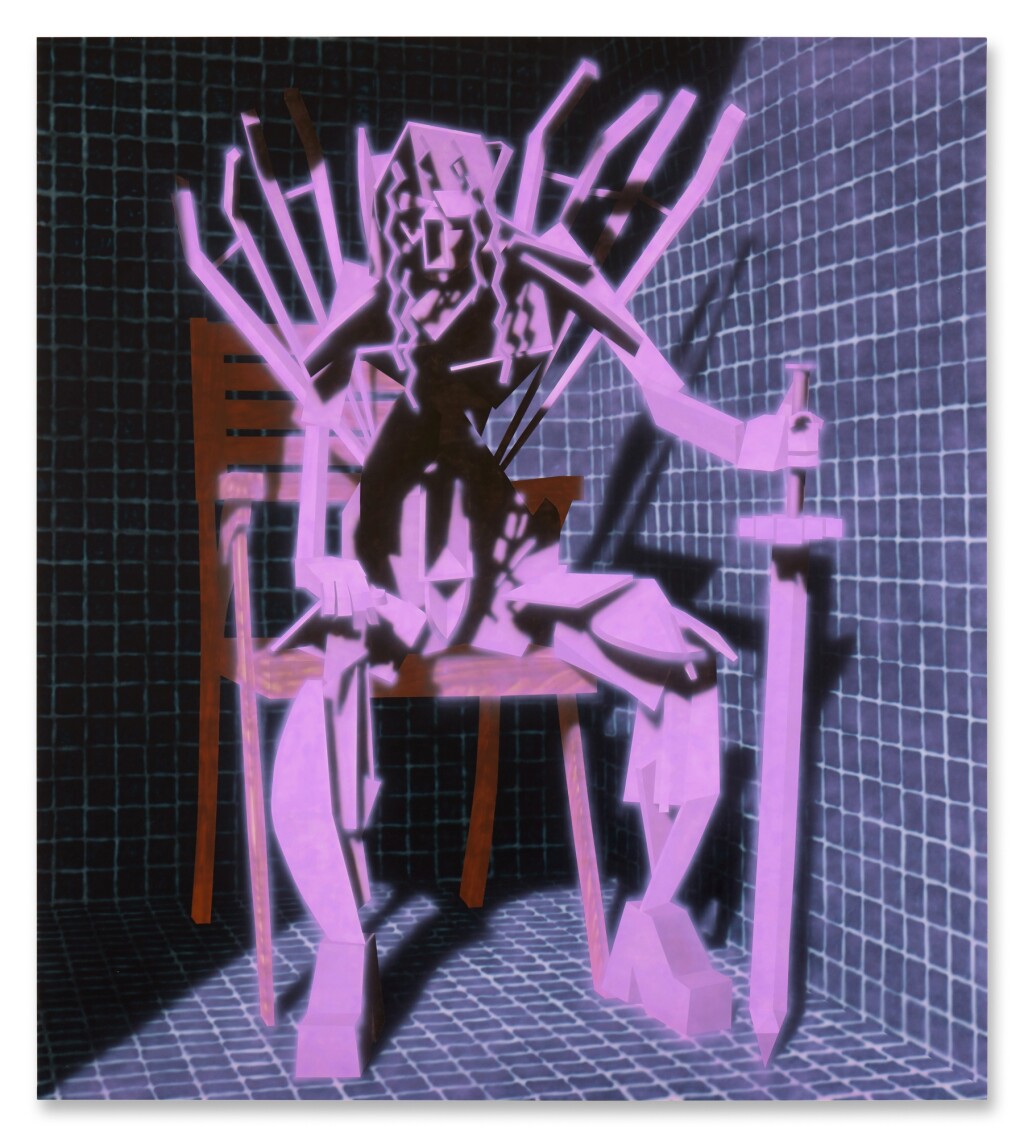
AVERY SINGER
Kundry, 2018
Acrylic on canvas
95×85 inches (241.3 x 215.9 cm)
Sotheby’s New-York: 16 November 2022
Estimated: USD 1,800,000 – 2,500,000
USD 2,107,000
Wielding a sword as she sits triumphantly in the gridded, 3D-modelled metaverse, the monumental and luminously pink warrioress of Avery Singer’s Kundry testifies to the artist’s revolutionary material intervention into unbound narrative and virtual realms. A virtuoso of the airbrush, Singer combines computer technologies with her own painterly hand in Kundry to painstakingly depict and reinterpret the eponymous mythical character from Richard Wagner’s late nineteenth-century opera Parsifal, as if she were here rendered in a high-fidelity print from digital modelling software. Executed in 2017-2018, Kundry is a brilliant articulation of Avery Singer’s highly original and contemporary visual mode – a zeitgeist-defining contemporary sensibility that blurs the boundaries between painting and technology; digital and analog; reality and perception. A testament to the present work’s significance in Singer’s career, Kundry prominently featured in Days of the Week (Computer Pain), her seminal 2018 solo exhibition at Gavin Brown’s Enterprise in New York and belongs to a critically acclaimed series that extends her radically inventive visual vernacular with its painterly mimicry of Internet-based aesthetics and digital imaging processes.
5. Contemporary Art Evening Auction
16 November 2022
# Lots: 38 Lots
Sell-Through Rate: 95%
Total: USD 269,068,700
—–
Top Lot: USD 85,350,500
6 Lots over USD 10,000,000
31 Lots over USD 1,000,000
——
Above Estimates: 16 Lots (42%)
Within Estimates: 15 Lots (39%)
Below Estimates: 4 Lots (11%)
#1. Andy Warhol
ANDY WARHOL (1928-1987)
White Disaster [White Car Crash 19 Times], 1963
Silkscreen ink and graphite on primed canvas
144 ¾ x 82 ⅞ inches (367.7 x 210.5 cm)
Sotheby’s New-York: 16 November 2022
Estimate on Request
USD 85,350,500
There are exceptionally few works of art that invoke great reverential awe, that impart by their very presence a sublime contemplation of the universal human experience; these are the artworks which come to define their present, and which not only speak to the fundamental concerns of humanity—but memorialize them for eternity. The present work is irrefutably one of these true masterpieces. A monumental altarpiece for the modern age, Andy Warhol’s White Disaster (White Car Crash 19 Times) from 1963 stands amongst the most radical and haunting artistic achievements of the twentieth century. Soaring above the viewer, Warhol’s towering canvas draws the viewer inward with an irresistible magnetism, while the white canvas emits a faintly miraculous glow, as if illuminated from within or perhaps above. Against the pure white, the dark rows of images, stacked and repeated with unerring purpose, draw our gaze ever upward in an experience of ascension: it is there that we are compelled to consider an image that is at once familiar and strange, personal and universal, beautiful yet terrible.
#2. Willem de Kooning
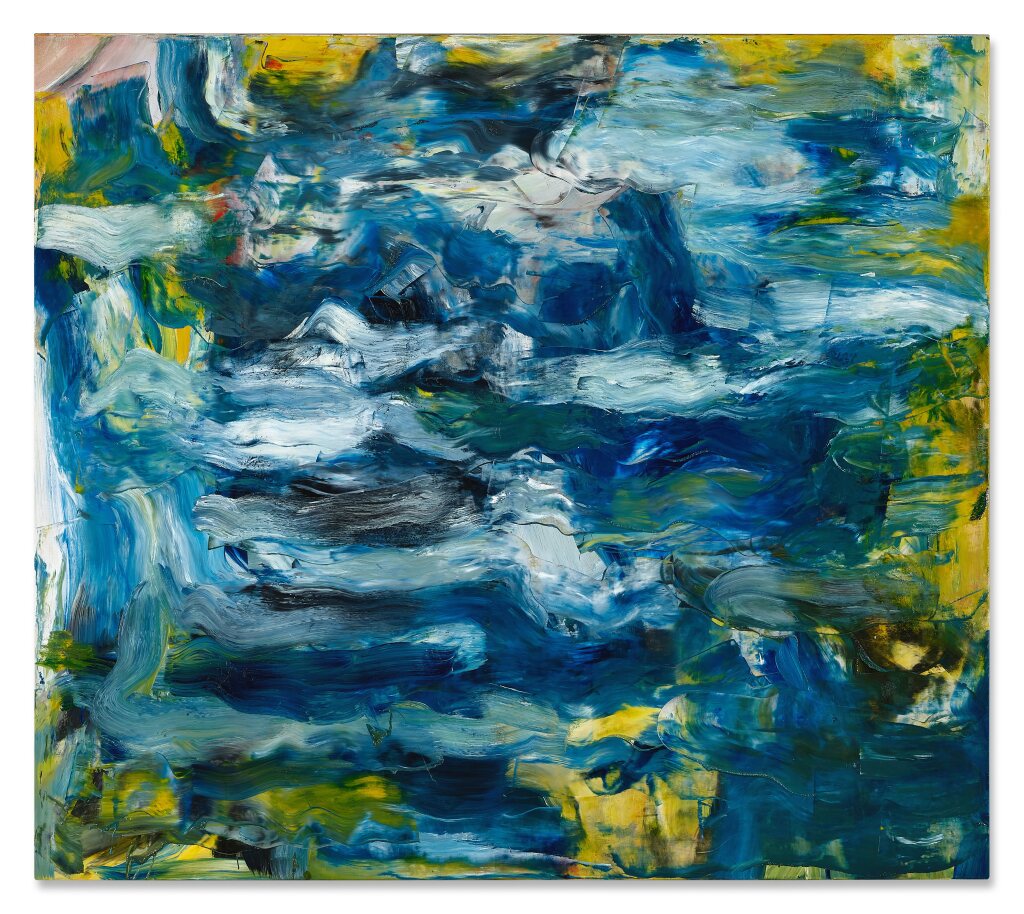
WILLEM DE KOONING (1904-1997)
Untitled, circa 1979
Oil on canvas
70 x 79 ½ inches (177.8 x 201.9 cm)
Sotheby’s New-York: 16 November 2022
Estimated: USD 30,000,000 – 40,000,000
USD 34,794,500
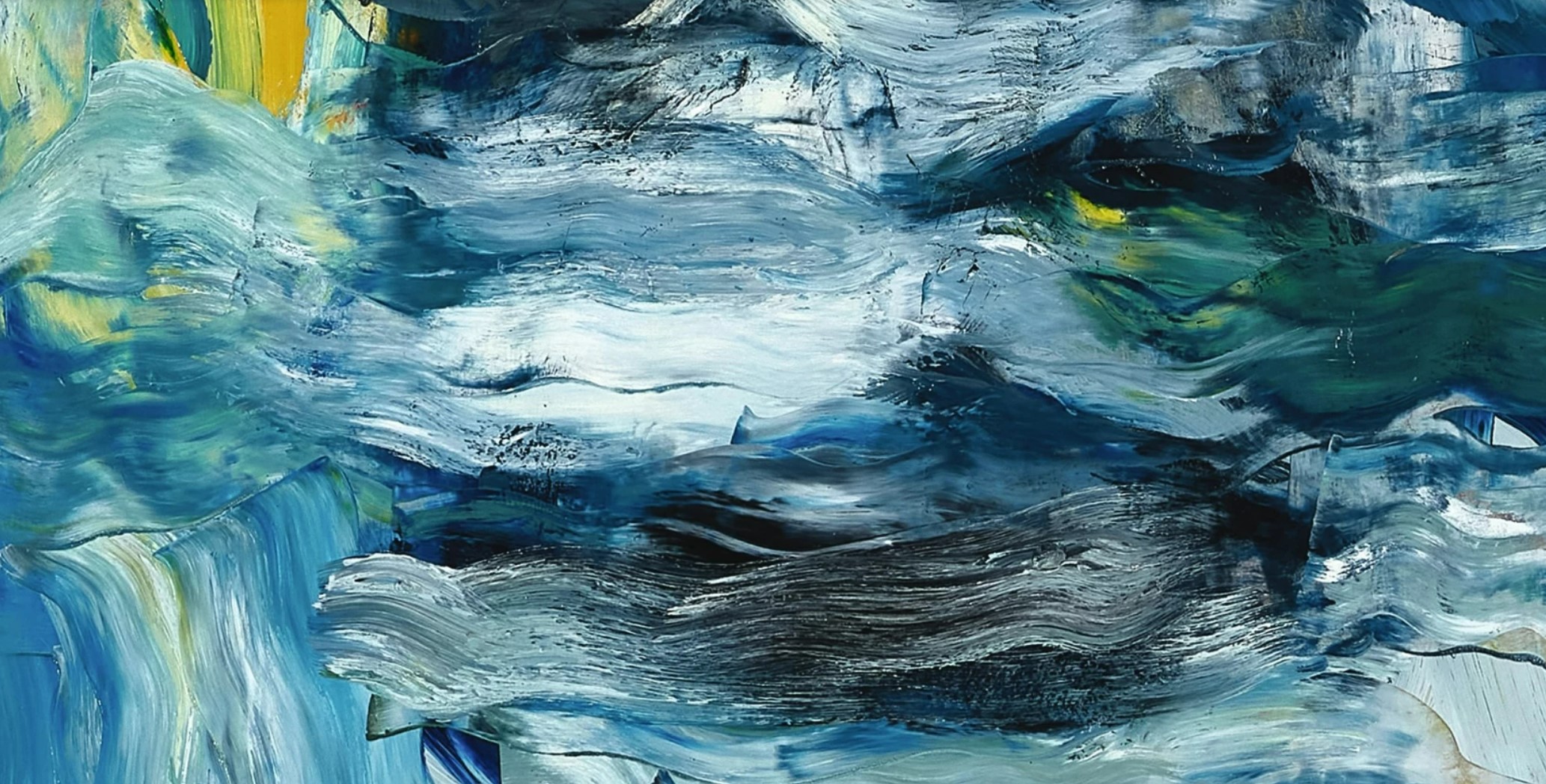
Through the lush impasto and exceptional handling of paint, de Kooning creates a surface which appears freshly created. To achieve this effect, de Kooning masterfully employed many tools and techniques, including brushes and scrapers, producing the densely rich and textured surface of Untitled. The lustrous, aqueous texture of Untitled is complemented and emphasized by its oceanic palette, as de Kooning fuses color and gesture. Focusing his energy on the quality of paint application and the composition of his surface, de Kooning thinned his oil paint with combinations of water, kerosene, benzene or safflower oil to add fluidity to the paint, facilitating a more rapid stroke. Using unorthodox methods of applying and removing paint with spatulas and knives, particularly the taper’s knife, de Kooning defined his composition through motion, energy and action, allowing a variety of planes of pigment to coalesce in and out of each other across the canvas.
#3. Francis Bacon
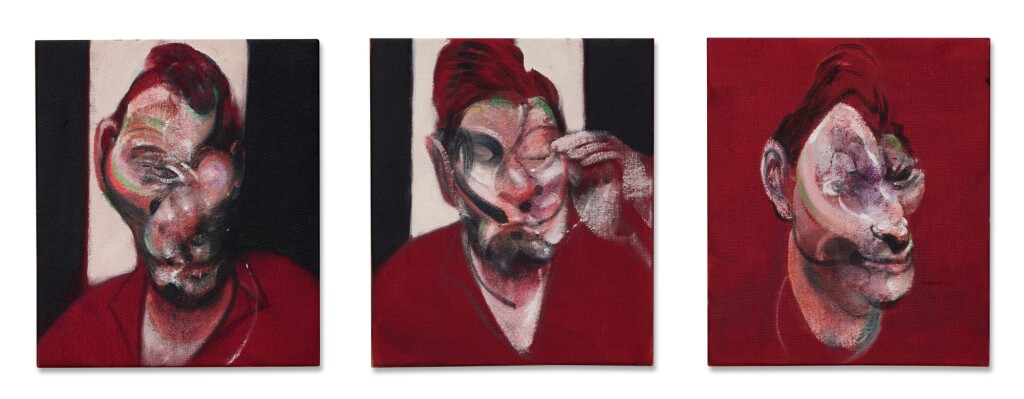
FRANCIS BACON (1909-1992)
Three Studies for Portrait of Lucian Freud, 1964
Oil on canvas, in three parts
Each: 14×12 inches (35.6 x 30.5 cm)
Sotheby’s New-York: 16 November 2022
Estimated: USD 30,000,000 – 40,000,000
USD 30,000,000
A threefold distortion of Lucian Freud’s effigy in vicious strokes of searing scarlet, Three Studies for Portrait of Lucian Freud from 1964 testifies to a powerful dialogue rarely matched in history: the great friendship and epochal rivalry between Francis Bacon and Lucian Freud, two of Britain’s most celebrated painters. With each loaded brushstroke, Bacon animates and disfigures the head of his friend, conjuring in its restlessness Freud’s uncanny likeness in deep shades of red impasto and active jolts of greens and whites. Bacon executed the present work in 1964 at the height of his prodigious career, debuting it one year later in his major 1965 solo exhibition Francis Bacon, which travelled internationally from the Hamburger Kunstverein, Hamburg to the Moderna Museet, Stockholm and the Municipal Gallery of Modern Art, Dublin.
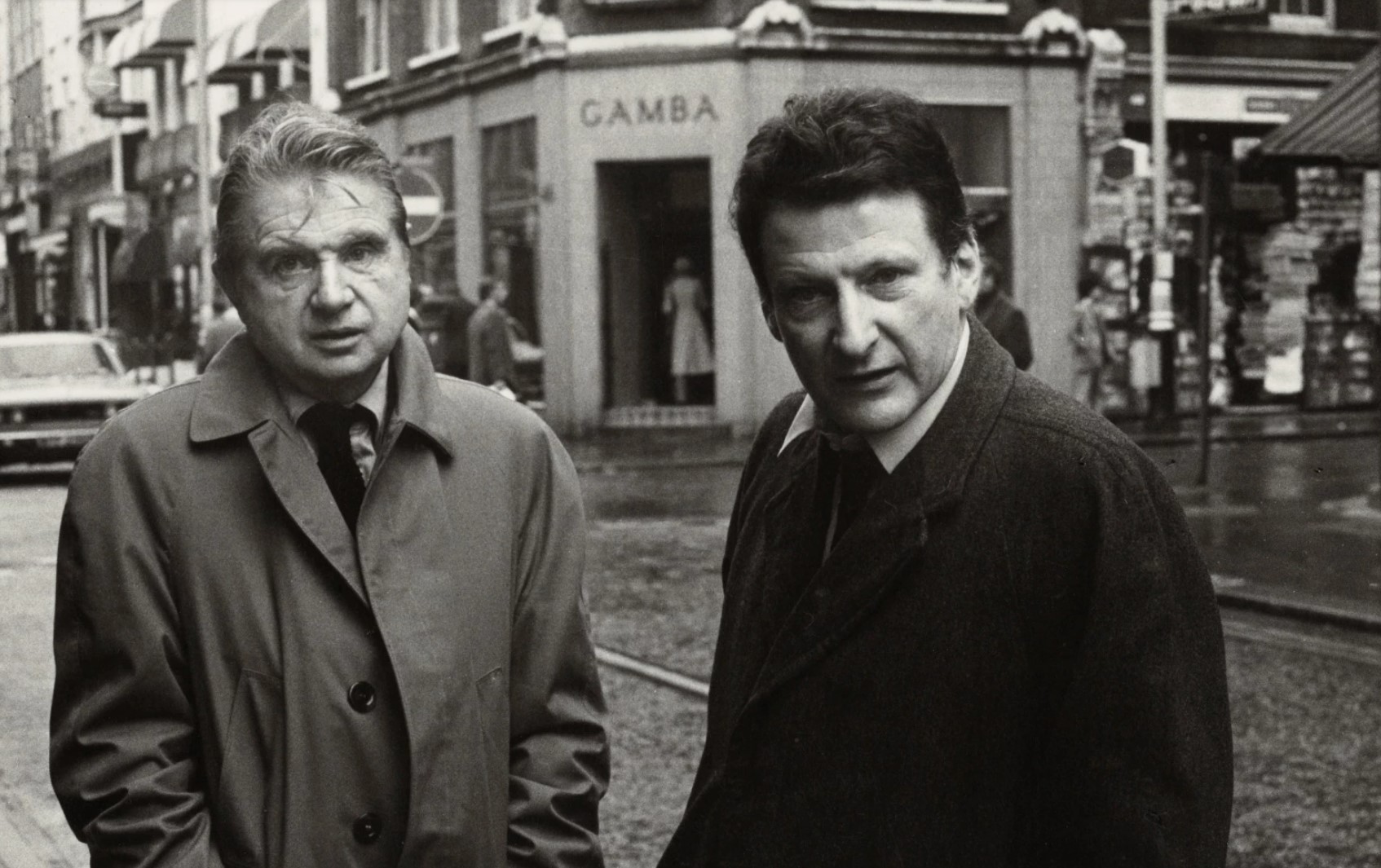
HARRY DIAMOND, FRANCIS BACON; LUCIAN FREUD, 1974. IMAGE © THE NATIONAL PORTRAIT GALLERY, LONDON
The iconic 14×12 inch canvas is of particular significance for Bacon: beginning in 1961, Bacon had employed the 14×12 inch canvas size exclusively for an epic portraiture cycle that depicted his circle of close friends, a project that occupied him for the remainder of his life. A central motif to Bacon, the triptych formed a balanced compositional unit that allowed him to reveal the images of his mind in sequence, resembling a slow panoramic photograph. The first of only five triptychs he created of Lucian Freud, Three Studies for Portrait of Lucian Freud sees Bacon draw upon the profound intimacy that is born of close friendship interwoven with artistic rivalry. In the pastose landscape of Freud’s visage, Bacon achieves the sublime balance between the mythic allure and haunting weight of a person’s selfhood, evincing his inimitable capacity to unveil through paint the deepest complexities of the human psyche.
#4. Jean-Michel Basquiat
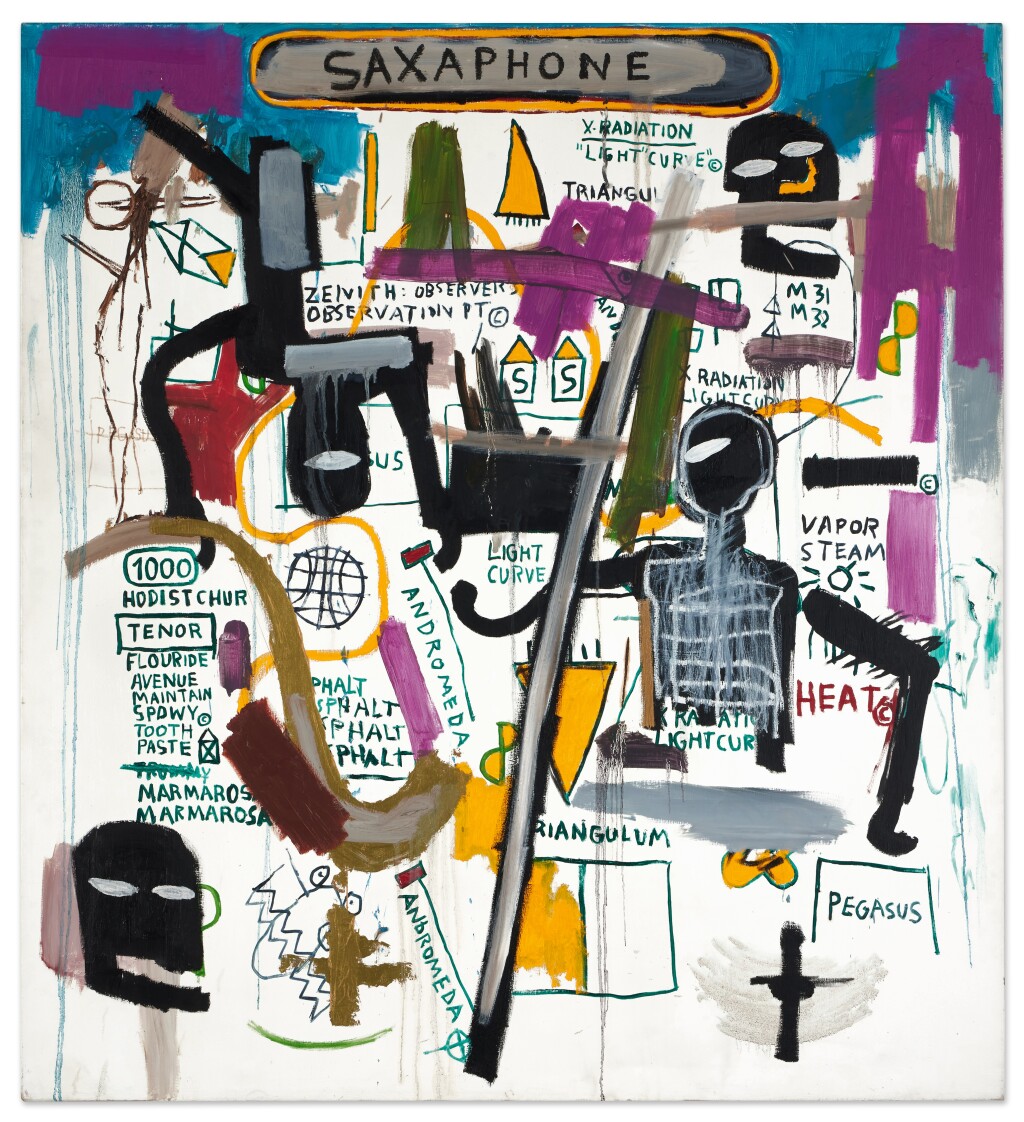
JEAN-MICHEL BASQUIAT (1960-1988)
Saxaphone, 1986
Acrylic and oilstick on canvas
66×60 inches (167.6 x 152.4 cm)
Sotheby’s New-York: 16 November 2022
Estimated: USD 12,000,000 – 18,000,000
USD 13,667,400
A cacophony of brilliant color, symbol, text, and image, Jean-Michel Basquiat’s Saxaphone of 1986 captures the frenetic and revelatory spirit of musical improvisation and immortalizes Jean-Michel Basquiat’s veneration of legendary jazz saxophonist and composer Charlie Parker. Pictographically represented via a tenor saxophone and a hand, the mystical locus of Parker’s genius is realized through a frenzy of bold, impassioned marks. Replete with the signature iconography, vibrant color, and urban vivacity synonymous with Basquiat’s immortal oeuvre, Saxaphone reveals the artist at the height of his painterly powers, at once celebrating the artist’s passion for jazz and visualizing his personal meditations on the cycles of fame and fortune.
Saxaphone stands among Basquiat’s most iconic “musical” works, alongside such paintings as Charles the First and Horn Players, which rejoice in “the innovative power of black male jazz musicians, whom he reveres as creative father figures.” (bell hooks, “Altars of Sacrifice: Remembering Basquiat”, Outlaw Culture: Resisting Representations, New York 1994, P. 35) Basquiat was an avid listener of jazz and a musician in his own right, and the present work deftly illustrates the relationship between his uniquely improvisational, staccato style of painting and the frenetic alchemy of jazz composition. In both art forms, there is an underlying looping structure that the melody, entrancingly embodied in Saxaphone through Basquiat’s colorful marks and frenetic brushstrokes, floats and skitters atop. In Saxaphone, themes accumulate through multiple references on the surface, emerging as patterns out of gestural brushstrokes, symbols, inventories, lists, and diagrams. Basquiat’s images often have double or triple meanings, many of which are left open to the viewer’s individual interpretation. Rhythms of color and shape emerge within the painting and softly fade out or dissipate in a cacophonous burst, only to emerge again and recombine with new forms in concordant and discordant harmonies. The figures and heads within Saxaphone are composed in a variety of twisting and turning positions, some with their mouths open to indicate a celebration of dance and movement that is further echoed by the brightly colored palette and tight composition. Amidst the flurry of text and symbols emerges a single golden saxophone: the source of inspiration from which the painting gains its slyly misspelled title.
#5. Willem de Kooning
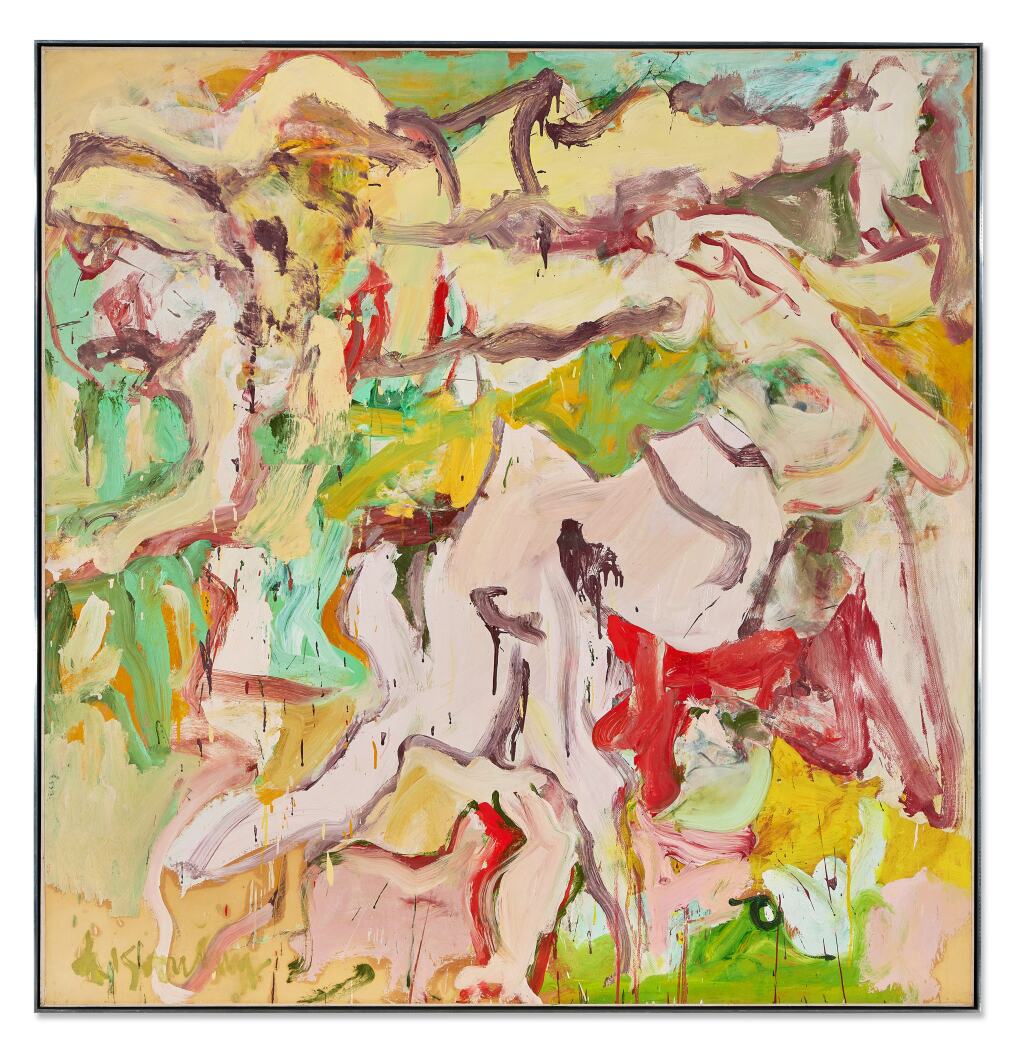
WILLEM DE KOONING (1904-1997)
Montauk II, 1969
Oil on paper mounted on canvas
72 ½ x 70 ¼ inches (184.2 x 178.4 cm)
Sotheby’s New-York: 16 November 2022
Estimated: USD 10,000,000 – 15,000,000
USD 12,663,500
Enveloping the viewer in churning layers of vivid hues, Montauk II beams with the sun-drenched brilliance of Willem de Kooning’s beloved East Hampton. In 1962, de Kooning began building his home and studio there, permanently moving to the area in 1963, not far from Montauk. Montauk II epitomizes the spirit of the artist’s coastal refuge, where the transition from the densely populous city streets to the tranquility of nature and its nostalgic similarities with the Netherlandish landscape of his youth inspired a refreshed course of experimentation in the artist’s practices. Following his move, de Kooning’s palette shifted to reflect the nature of his surroundings. This transition is exemplified in the palette of Montauk II, in which de Kooning captures the subtle hues of an end-of-day summer light reflecting across the local beaches; the canvas resounds with the artist’s virtuosic capacity for rendering sensory delight and atmospheric potency in oil paint. Of the five known paintings titled Montauk I-IV that de Kooning executed in 1969, two are held in important international collections. Montauk I is in the collection of the Wadsworth Atheneum in Hartford, Connecticut, and Montauk IV is held in the collection of the Stedelijk Museum in Amsterdam. Montauk II is distinguished by its exceptional coloration, composition and painterly dynamism, resulting in a remarkable exhibition and publication history.
#6. Willem de Kooning
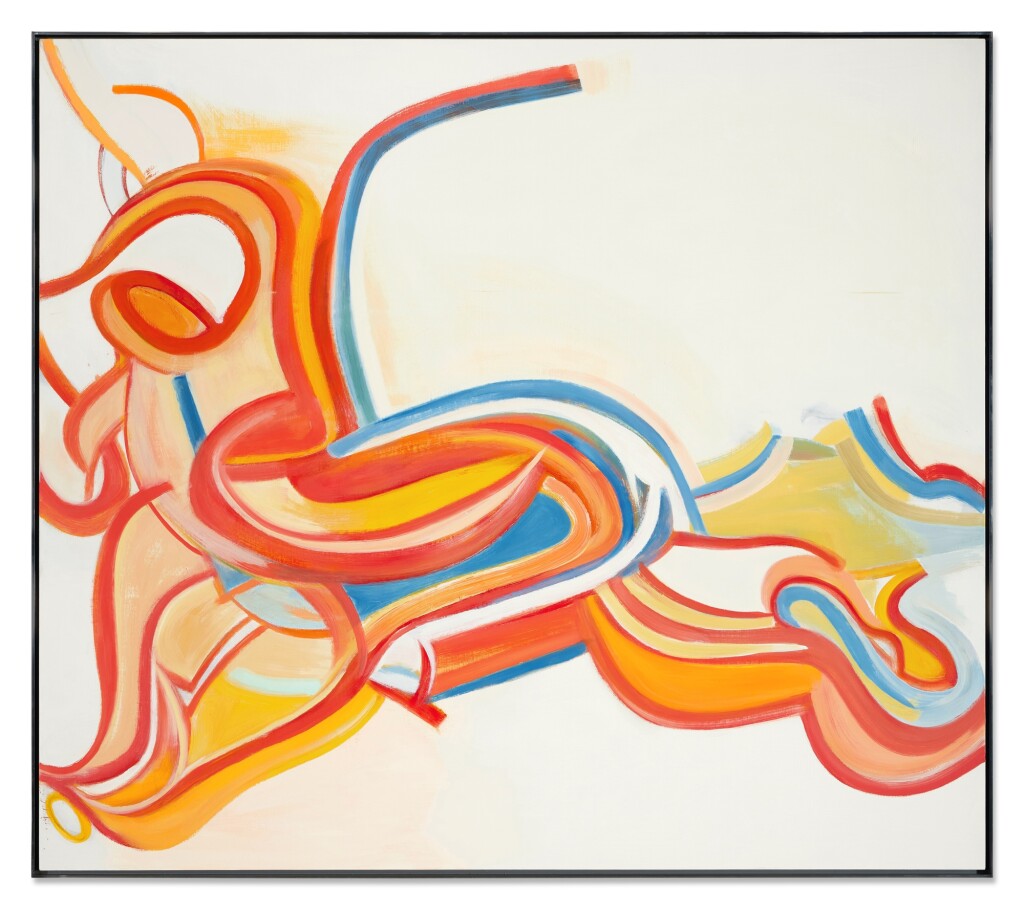
WILLEM DE KOONING (1904-1997)
The Hat Upstairs, 1987
Oil on canvas
77×88 inches (195.6 x 223.5 cm)
Sotheby’s New-York: 16 November 2022
Estimated: USD 9,000,000 – 12,000,000
USD 10,665,500
Painted in 1987, The Hat Upstairs singularly embodies the vibrancy, lyrical abstraction and deft painterly intention of de Kooning’s final decade, which is now celebrated as the artist’s “Late Period.” The Hat Upstairs is an unparalleled masterwork from this period, a triumphant apotheosis of his abstract vernacular; de Kooning floats ribbons of hues that elegantly coalesce with chromatic vibrancy and a buoyant dynamism.
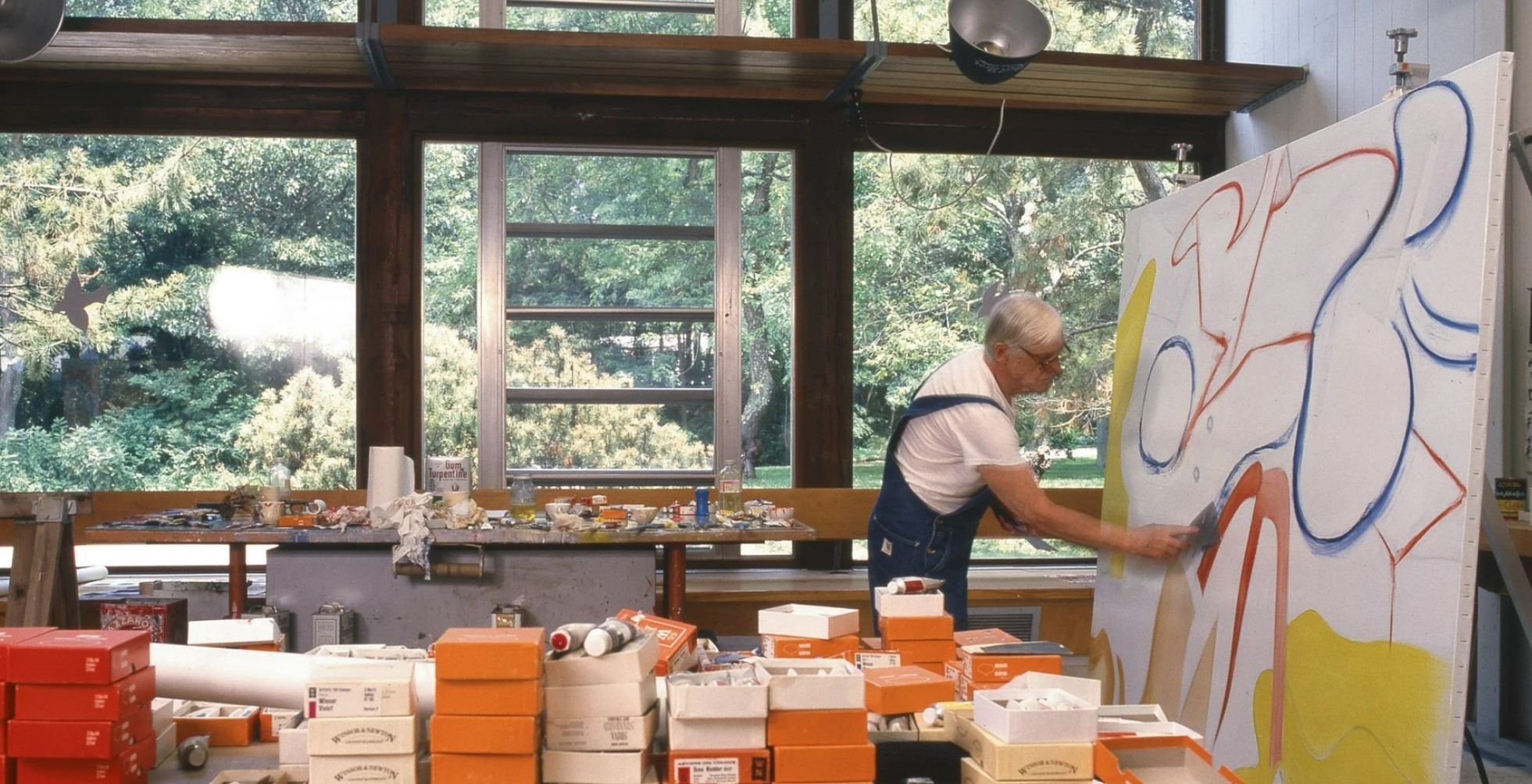
The present work belongs to a mature corpus of lyrical abstract works de Kooning began in 1981, which occupied his practice for the remainder of his life. The Hat Upstairs is an exceptional example of this body of work, with the saturated pigment forming melodic lines and forms that counterbalance like music across the surface. The present work recalls the female form or rolling landscapes permeating the artist’s entire oeuvre through the sumptuous curvatures which swell across the monumental canvas in unrestrained yet deliberate loops of unadulterated color. Although de Kooning’s works from the 1980s are often referred to as one period, in fact, the decade is marked by considerable experimentation in each year. Exuding a breathtaking, poetic elegance, The Hat Upstairs is a masterpiece borne from the radical experimentation within de Kooning’s legendary practice: here, he crystallizes his career-long investigations into line, color, and form to embody the visceral interplay between strength and sensuality, delicacy and mass.
#7. Alighiero Boetti
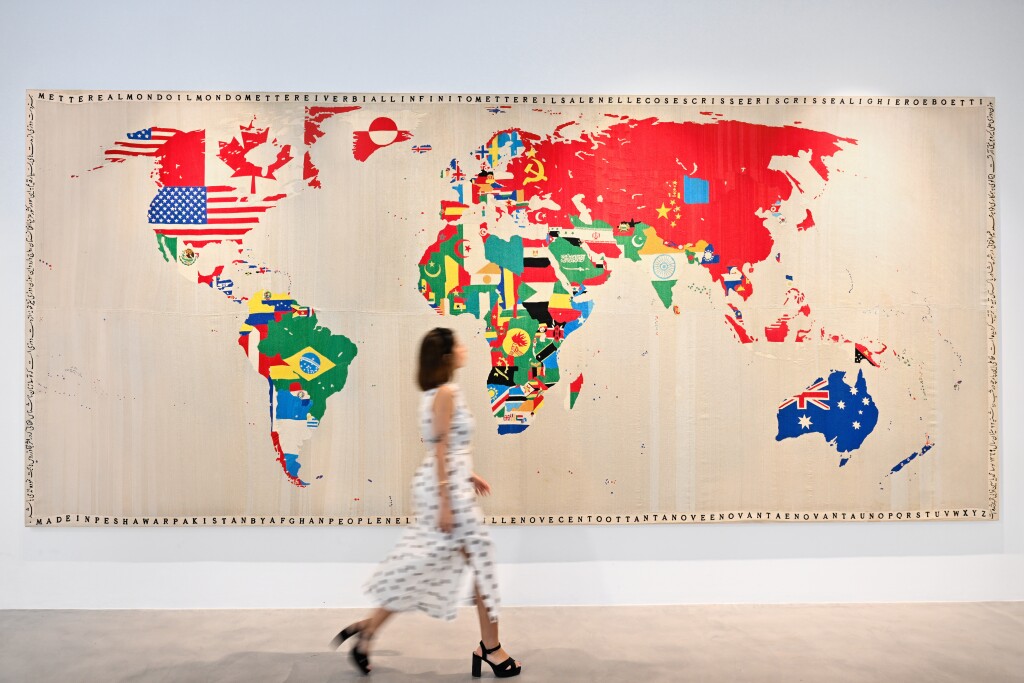
ALIGHIERO BOETTI (1940-1994)
Mappa, 1989-91
Embroidery on fabric
259×585 cm (102 x 230 ⅜ inches)
Sotheby’s New-York: 16 November 2022
Estimated: USD 8,000,000 – 12,000,000
USD 8,827,100
A monumental masterpiece executed equally on the oft opposed foundations of conceptual rigor and technical brilliance, Alighiero Boetti’s Mappa from 1989 to 1991 triumphantly encapsulates within its borders both the crux of artistic skill and the most essential elements of our human story. The outright iconic power of Mappa is undeniable: like Jasper Johns’ Flag or Andy Warhol’s Campbell’s Soup Can, the world map has been appropriated by Boetti here so completely and strategically that it has become synonymous with his legacy. Begun in 1971 and pursued until his death in 1994, Boetti’s Mappe comprise the artist’s most celebrated corpus, a deeply insightful philosophical project executed to achieve a fundamental human universality through the most personal methods of fabrication and exchange. The present work belongs to the largest group of Boetti’s Mappe, of which only few exist and two remain in the late artist’s family, and is among his most historic, with its cartographic composition informed by the unprecedentedly transformative era of global history that occurred between 1989 to 1991. Testifying to its significance, Mappa prominently exhibited in Boetti’s international 2011-2012 retrospective Game Plan, co-organized by and shown at the Museo Nacional Centro de Arte Reina Sofia in Madrid, the Tate Modern in London, and The Museum of Modern Art in New York, as the largest presentation of the artist’s work outside Italy. With inherent artisanal finesse, the personal and the political coalesce in the delicately woven ivory surface of Mappa, enacting on a prodigious scale a meticulous meditation on the dialectical forces that bind and divide humanity.
#8. Roy Lichtenstein
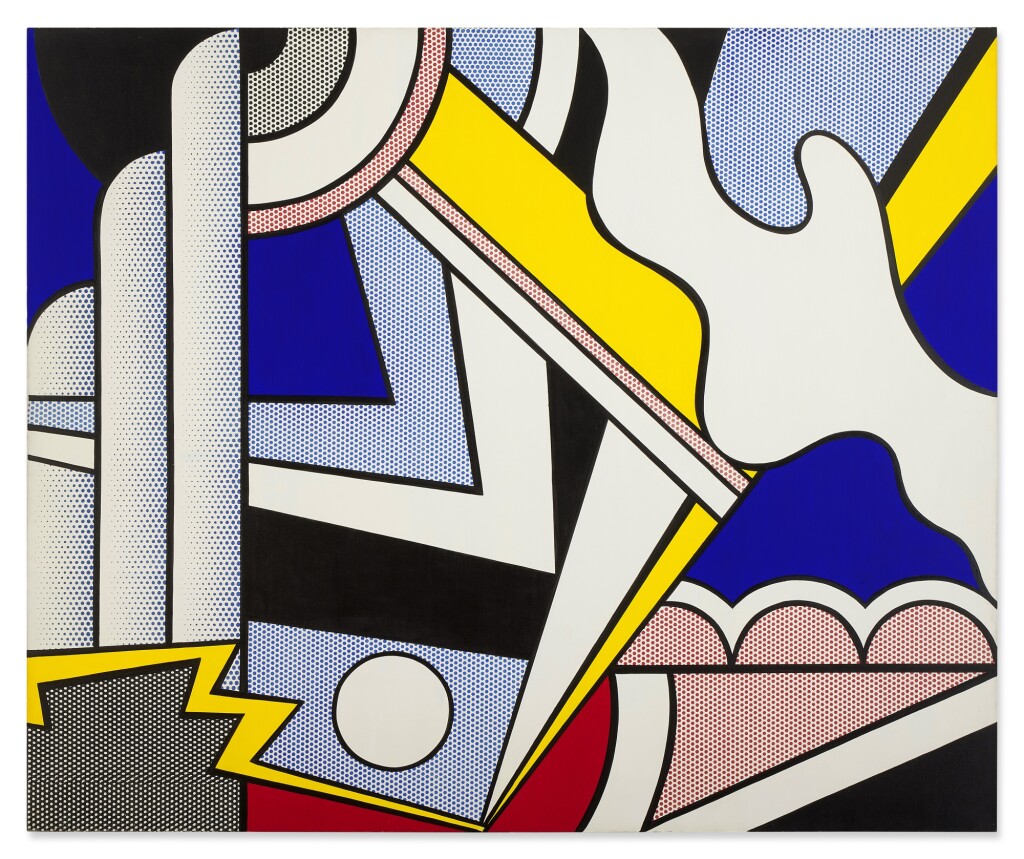
ROY LICHTENSTEIN (1923-1997)
Modern Painting with Small Bolt, 1967
oil and Magna on canvas
68 ⅜ x 82 ⅛ inches (173.7 x 208.6 cm)
Sotheby’s New-York: 16 November 2022
Estimated: USD 6,000,000 – 8,000,000
USD 6,873,800
An electrifying composition of saturated colors and searing forms, Modern Painting with Small Bolt is the ultimate embodiment of Roy Lichtenstein’s pioneering investigation into the form, content, and meaning of Contemporary Art. A testament to Roy Lichtenstein’s mastery of composition and space, Modern Painting with Small Bolt of 1967 is an iconic exemplar from the artist’s pivotal series of Modern Paintings, in which Lichtenstein breaks free of his signature Pop Art graphics to interrogate the very foundations of art historical precedents. Exemplifying Lichtenstein’s career-long investigation of art history, the present work takes as its inspiration the sleek and stylized forms of the Art Deco movement of the 1920s and 30s, reimagined and reorganized into a complex network of industrial images. Here, the familiar ornamentation and decorative motifs of that era are made new, deftly rearticulated in the sleek commercial style of Lichtenstein’s signature Pop idiom. A kaleidoscopic vision of overlapping shapes and symbols, the present work further demonstrates Lichtenstein’s fascination with the work of de Stijl artists such as Theo van Doesberg and Piet Mondrian, whose inspiration is legible in the industrial ligatures and chromatic dissonance of the present work. Testifying to the significance of this series, examples of Lichtenstein’s Modern Paintings are held in esteemed institutions such as the Museum of Modern Art, New York and the Hirshhorn Museum and Sculpture Garden, Washington, D.C.
#9. Morris Louis
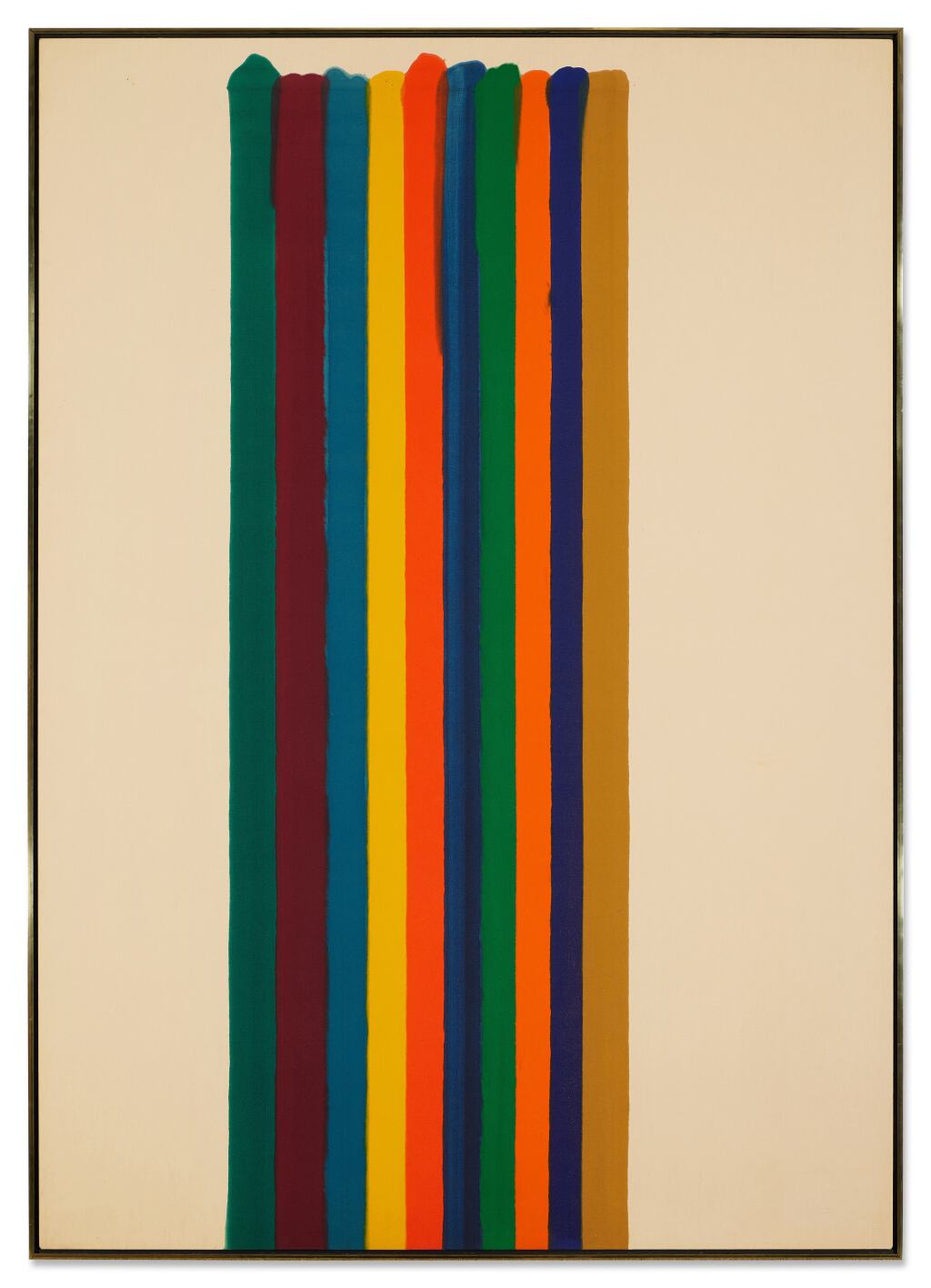
MORRIS LOUIS (1912-1962)
Number 4-31, 1962
Magna on canvas
82 ½ x 58 inches (209.5 x 147.3 cm)
Sotheby’s New-York: 16 November 2022
Estimated: USD 2,500,000 – 3,500,000
USD 4,406,000
A vision of sumptuous, striated color, Number 4-31 is a paragon of Morris Louis’s iconic Stripe paintings, a highly lauded body of work produced by the artist from early 1961 until his untimely death the following year. One of the last vertical stripe paintings made before Louis’s death in 1962, Number 4-31 is a commanding example of an artist at the height of his production, flawlessly synthesizing color and form into a sweeping and hypnotic image. Louis creates a euphoric and harmonious concatenation of pigment, dexterously balancing warm and cool tones in saturated bands of color that stretch the length of the canvas and culminate in defined peaks, a record of Louis’ impressive experimental process. Measuring 82 by 58 inches, Number 4-31 is amongst the largest scale of vertical Stripe paintings produced by Louis, belonging to a rarified group of this series executed at a wider proportion. Despite the rarity of vertical stripe paintings of this scale, paintings of a similar breadth to Number 4-31 make up close to half of Louis’s vertical stripe paintings present in major institutions around the world, a testament to the tremendous significance of this painting within Louis’s oeuvre.
#10. Isamu Noguchi
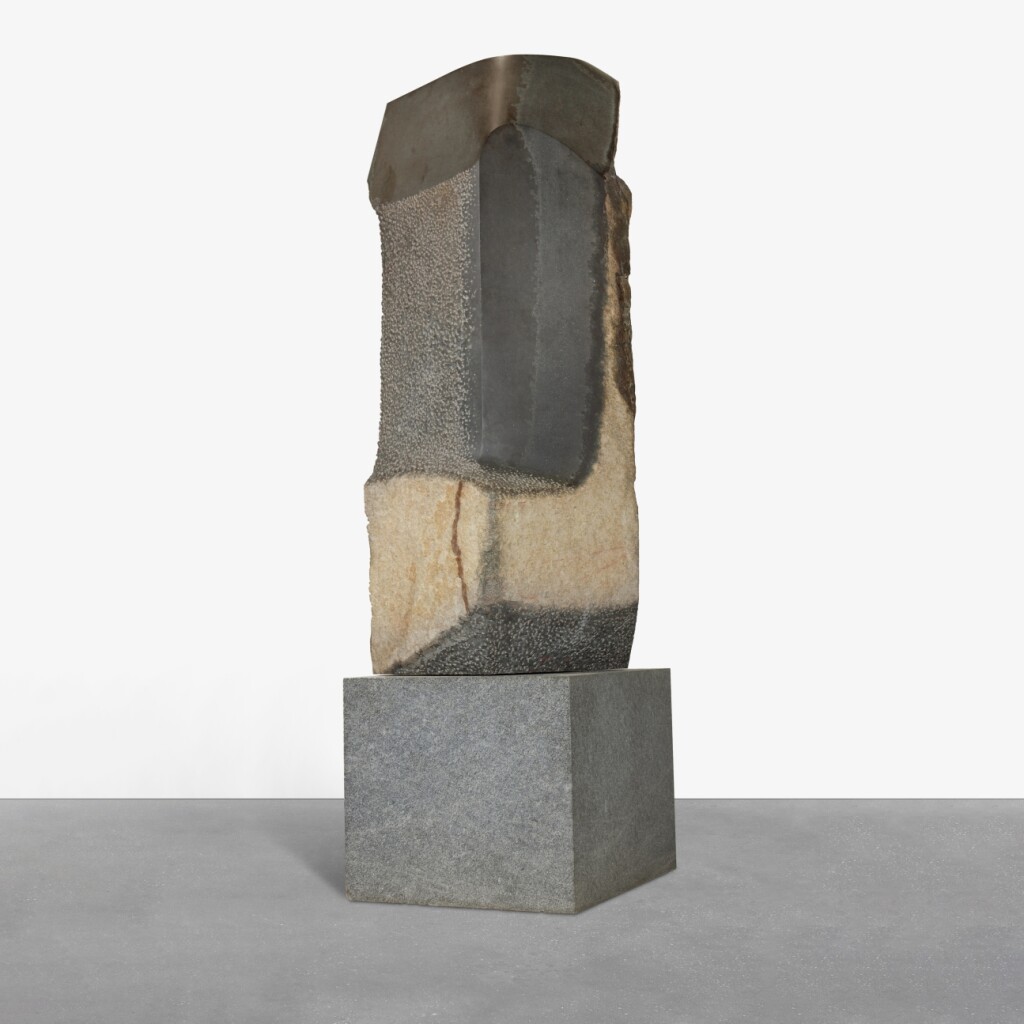
ISAMU NOGUCHI (1904-1988)
Stone-Abidinga, 1981
Basalt
148 x 72.1 x 60 cm (58 ¼ x 28 ⅜ x 23 ⅝ inches
Sotheby’s New-York: 16 November 2022
Estimated: USD 2,000,000 – 3,000,000
USD 4,285,000
A testament to Isamu Noguchi’s technical and creative prowess, Stone-Abiding from 1981 epitomizes the ideals of shape, texture and spatiality that are at the crux of his singular artistic philosophy and practice. Exemplifying Noguchi’s mastery over the most difficult of sculptural mediums, this basalt sculpture demonstrates a physically complex and emotionally compelling range of textures within a single piece of stone. Completed in the last decade of his life, the present work emerged from a period of reflection in the artist’s oeuvre, in which his long-developed style comes to fruition simultaneously with the precision and ease of a master sculptor. Stone-Abiding is deeply meditative, its surface moving from polished to rough, smooth to jagged, in a natural harmony. The title, Stone-Abiding, speaks to the nature and significance of the work itself: it exists in accordance with the capabilities of the medium, and exhibits the range and capacity of the basalt medium and of the artist’s exceptional technique.
#11. Keith Haring
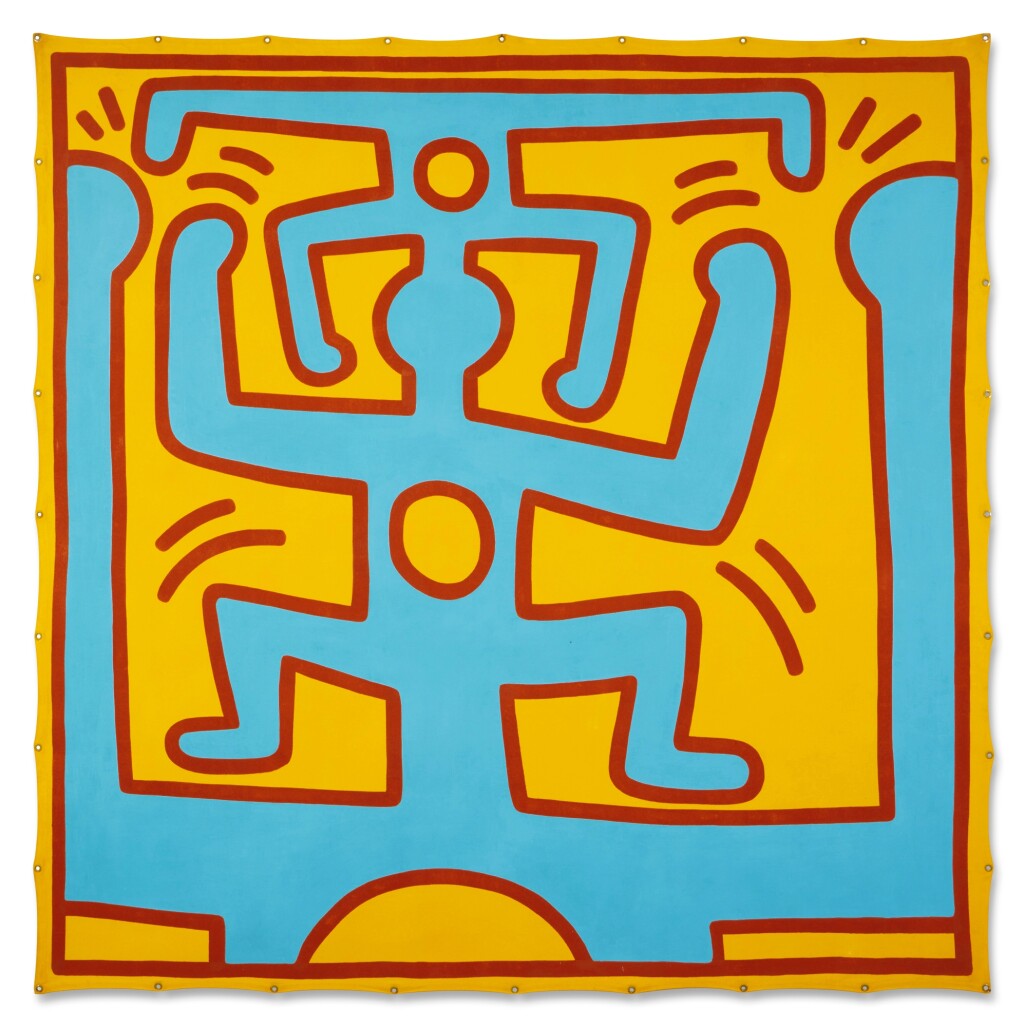
KEITH HARING (1958-1990)
Untitled, 1987
Acrylic on canvas tarp
95 x 95 ¼ inches (241.3 x 241.9 cm)
Sotheby’s New-York: 16 November 2022
Estimated: USD 3,000,000 – 4,000,000
USD 3,922,000
Dazzlingly vibrant and brimming with graphic positivity, Keith Haring’s Untitled of 1987 is emblematic of the compositional dynamism and iconic figuration from one of the most upbeat and confident artistic voices of our time. Created in the final years of Haring’s life, Untitled is a seminal example of the artist’s distinct visual language, and his determination to celebrate music, movement and an interconnected human spirit through his art– despite the overwhelming challenges of the decade. Across the monumental tarp, Haring depicts three tiers of interlocking figures in a moment of spectacular activity, rendered in the bold, simplistic chromatic pallet for which he is best known. Commissioned by renowned gallerist Martin S. Blinder for the Martin Lawrence Gallery 1987 annual calendar, the present work has remained in the private collection of famed Tony Shafrazi since it was acquired in 1995. Since its completion, the present work has been exhibited among Haring’s most prominent exhibitions, including his solo show at the Whitney Museum of American Art, New York in 1997, The Keith Haring Show at Fondazione Triennale di Milano in 2005, and was exhibited extensively at Shafrazi’s own Chelsea gallery, including the 20-year memorial show commemorating Haring’s tragic passing in 2010. Exemplary of the vibrant urban environment by which Haring’s oeuvre was so heavily inspired, Untitled endures as a record of the artist’s prolific career.
#12. Joan Mitchell
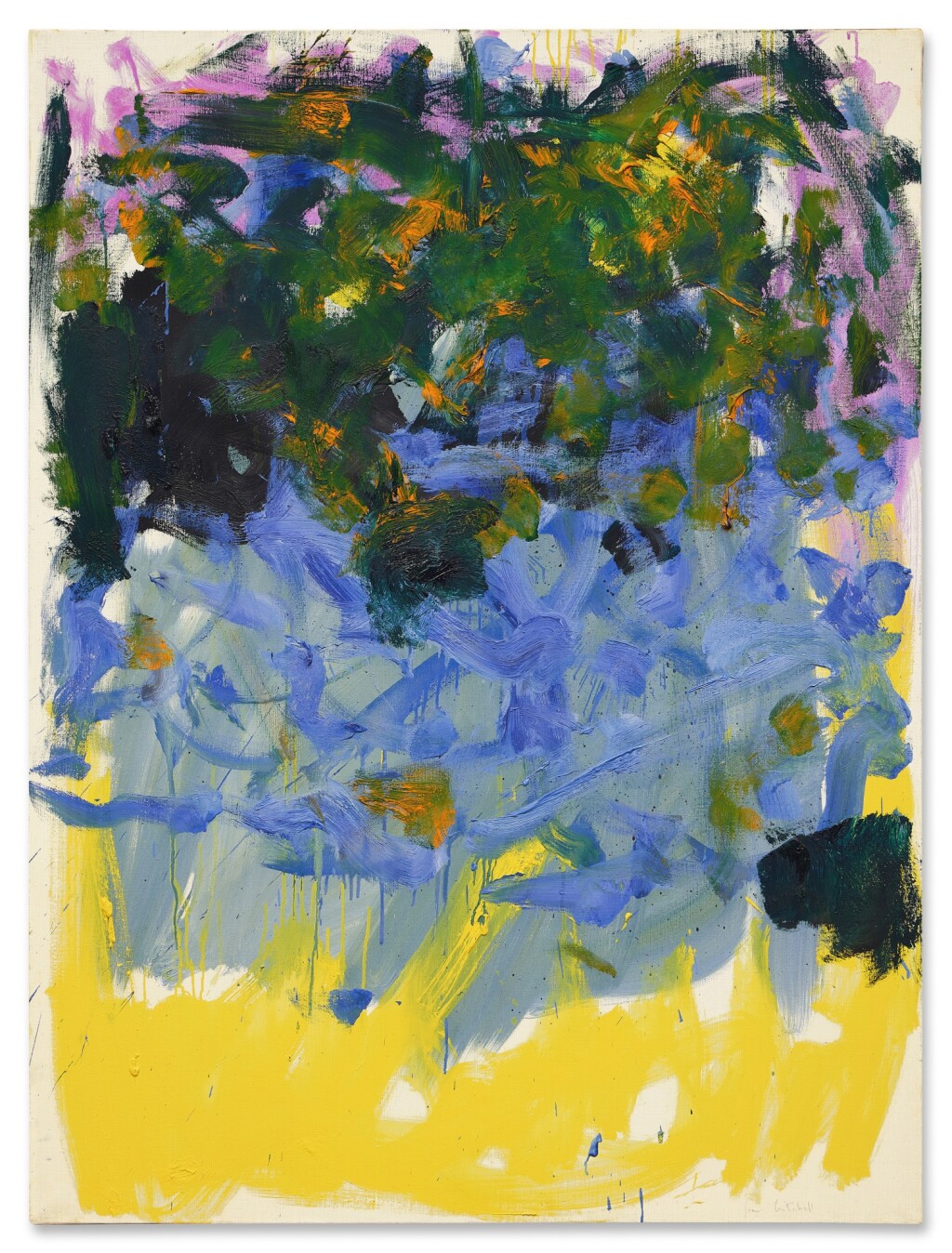
JOAN MITCHELL (1925-1992)
Bottom Yellow, 1981
Oil on canvas
130×97 cm (51 x 38 ¾ inches)
Sotheby’s New-York: 16 November 2022
Estimated: USD 3,000,000 – 4,000,000
USD 3,801,000
A symphony of explosive gesture and intimate emotional intent, Joan Mitchell’s Bottom Yellow from 1981 is an exceptional embodiment of the rich surface textures and masterful brushwork that define the artist’s output from this glorious phase of her career. In its cascading hues of lilac, blue, verdant green and goldenrod yellow, the present work speaks to the profound inspiration Mitchell drew from the flourishing bucolic landscape of her surroundings in Vétheuil, where she moved in 1968 after almost a decade in Paris. There, Mitchell began planting rows of sunflowers- her favorite blooms -in her beloved garden: flowers would which go on to spark a two-decade-long meditation on the motif and serve as inspiration for some of the most radiant paintings of her oeuvre. Exuberant ribbons of color leap and vault with unbridled energy across the surface of this mesmerizing painting, revealing a veritable tour de force of painterly mark-making within Bottom Yellow. 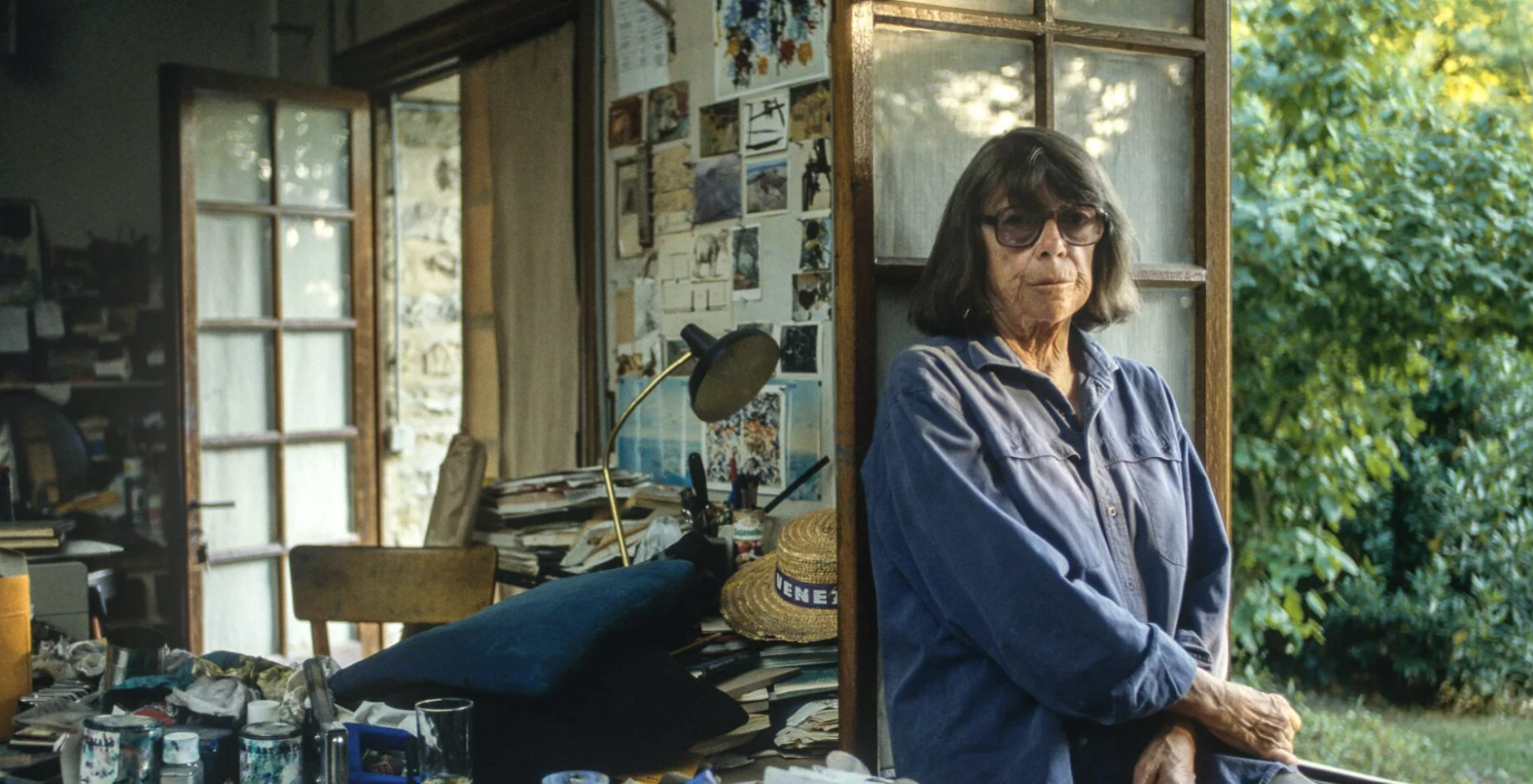
JOAN MITCHELL IN HER STUDIO, VÉTHEUIL, 1991
Executed at the beginning of what is considered Joan Mitchell’s most formative decade, Bottom Yellow represents a pinnacle in Mitchell’s unique brand of Abstract Expressionism. Never before seen by the public, Bottom Yellow has notably been held in the esteemed collection of the Kinney family for over 40 years. Distinguished by its exceptional provenance, Bottom Yellow was selected by the family following a visit to Mitchell’s home in Vétheuil, where they first saw the present work in her studio.
#13. David Hockney
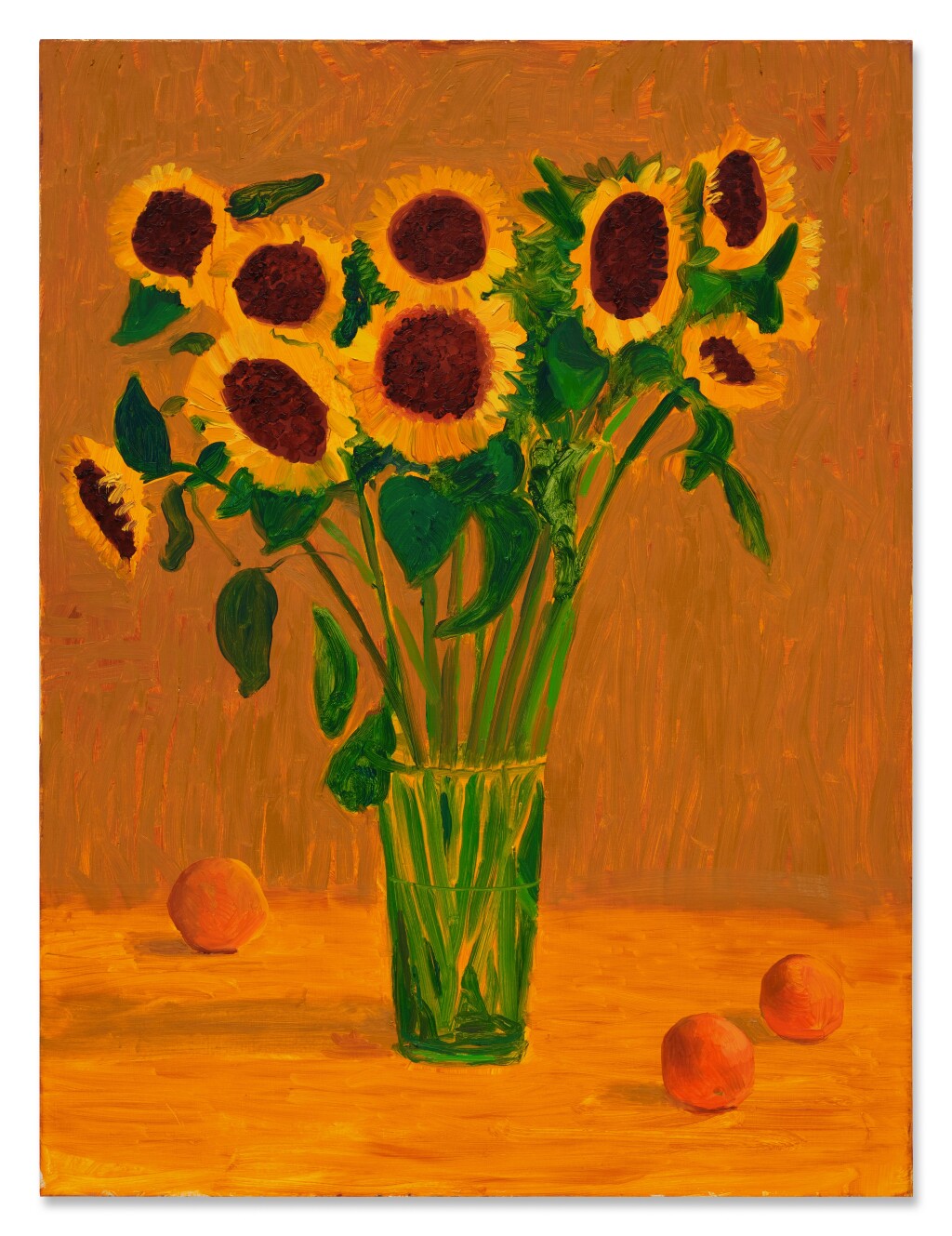
DAVID HOCKNEY
Sunflower and Three Oranges, 1996
oil on canvas
48×36 inches (121.9 x 91.4 cm)
Sotheby’s New-York: 16 November 2022
Estimated: USD 3,000,000 – 5,000,000
USD 3,801,000
A lyrical treatise on color and form, Sunflowers and Three Oranges from 1996 marks David Hockney’s remarkable return to figurative painting during a pivotal period in his artistic career. Amongst the largest Flower paintings that David Hockney produced during this pivotal year. Sunflowers and Three Oranges is distinguished by its radiant hues and exceptional composition. Debuted in 1997, the present work was notably included in the Annely Juda Fine Art exhibition Flowers, Faces and Spaces, which marked Hockney’s largest exhibition in London since his 1988 Tate retrospective. After a decade-long interlude from studio painting, during which he primarily explored photography, Hockney returned to California with a renewed devotion to portraiture and still-life painting. Following a visit to the Claude Monet retrospective at the Art Institute of Chicago and Johannes Vermeer exhibition in the Mauritshuis, Hockney was inspired by the delicate atmosphere of light engendered by the renowned Impressionist artist and astonished by the enduring virtuosic application of varnish and oil paint by the Dutch master. Following this visit, Hockney returned to his studio with a fervent burst of creative energy to explore his signature stylistic rendering of his surroundings. A dazzling array of rich saffron yellow, burnt oranges and greens, Sunflowers and Three Oranges is a testament to this vibrant period of production and the artist’s incomparable mastery over the elusive and fundamental elements of painting.
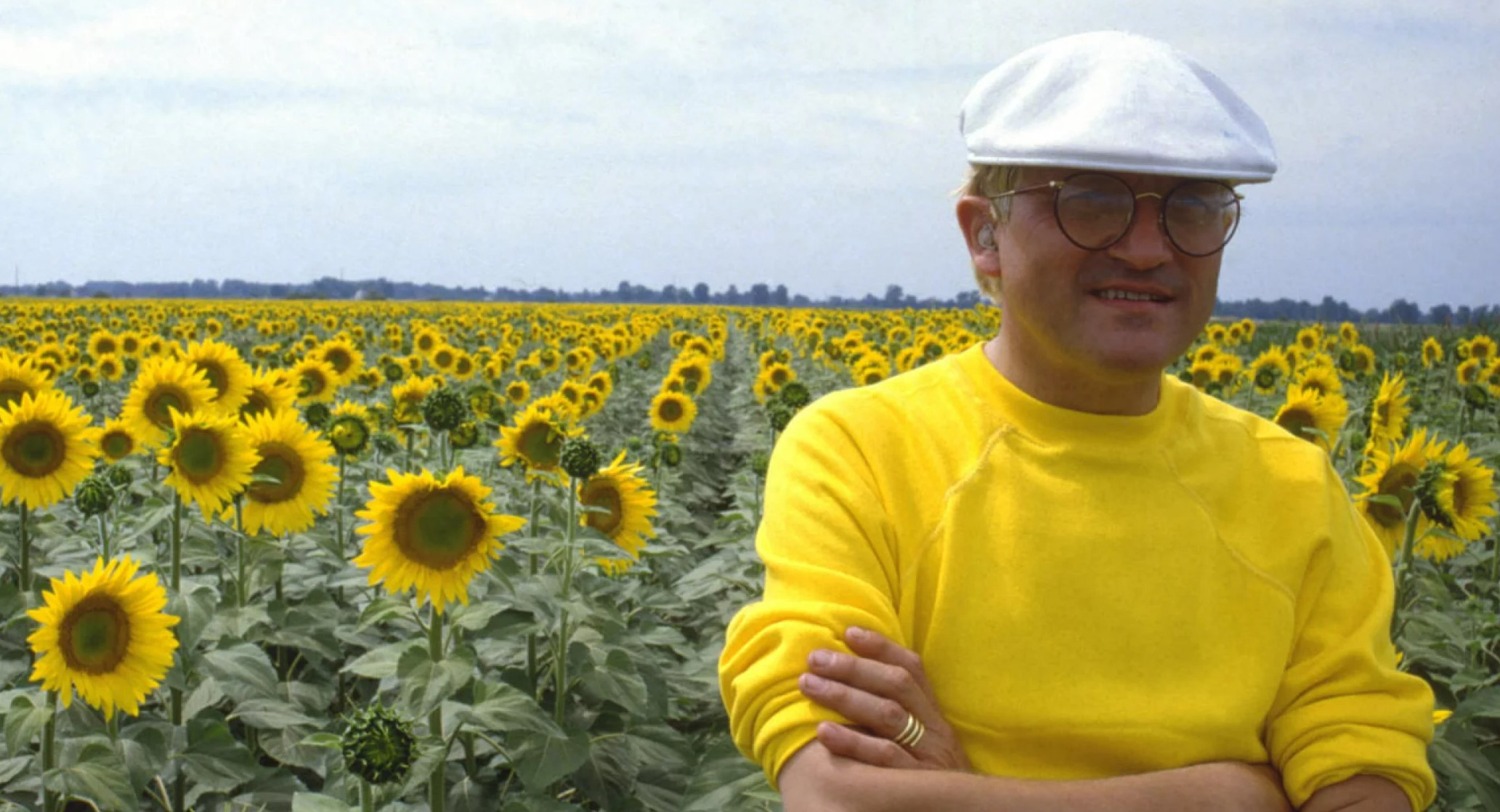
Richly saturated and instantly captivating, Sunflowers and Three Oranges is a vivid celebration of David Hockney’s singular painterly prowess and signature still-life paintings. In keeping with the tradition of classical still life and flower paintings, Hockney prompts meditations on mortality and transience, both within the artist’s own experience of painting flowers and of the deeply personal and profound relationship to time and loss. Hockney had begun painting sunflowers for his friends as get-well cards but turned towards the transiency of flowers in contemplation, and in solace, of the recognition that life can be burgeoning with liveliness while nevertheless evolving and eventually fading. The tender poignancy of the present work coincides with a period of prolonged personal loss and mourning in Hockney’s life during the late eighties and nineties, including the death of the critic and curator Henry Geldzahler, the passing of his close friend Ossie Clark, as well as that of painter Sandra Fisher, close friend and wife of R.B. Kitaj. Sunflowers and Three Oranges is thus suffused with personal meaning and transformation while simultaneously paying homage to the historical and artistic lineage of his predecessors, so many of whom explored flower paintings and still life as an opportunity to render their technical mastery of and emotive reckoning with painting.
6. Contemporary Day Auction
17 November 2022
Contemporary Day Auction | | Sotheby’s (sothebys.com)
# Lots: 309 Lots
Sell-Through Rate: 85%
Total: USD 94,088,150
Top Lot: USD 4,406,000
——
Above Estimates: 95 Lots (31%)
Within Estimates: 101 Lots (33%)
Below Estimates: 66 Lots (21%)
Unsold: 46 Lots (15%)
#1. Andy Warhol
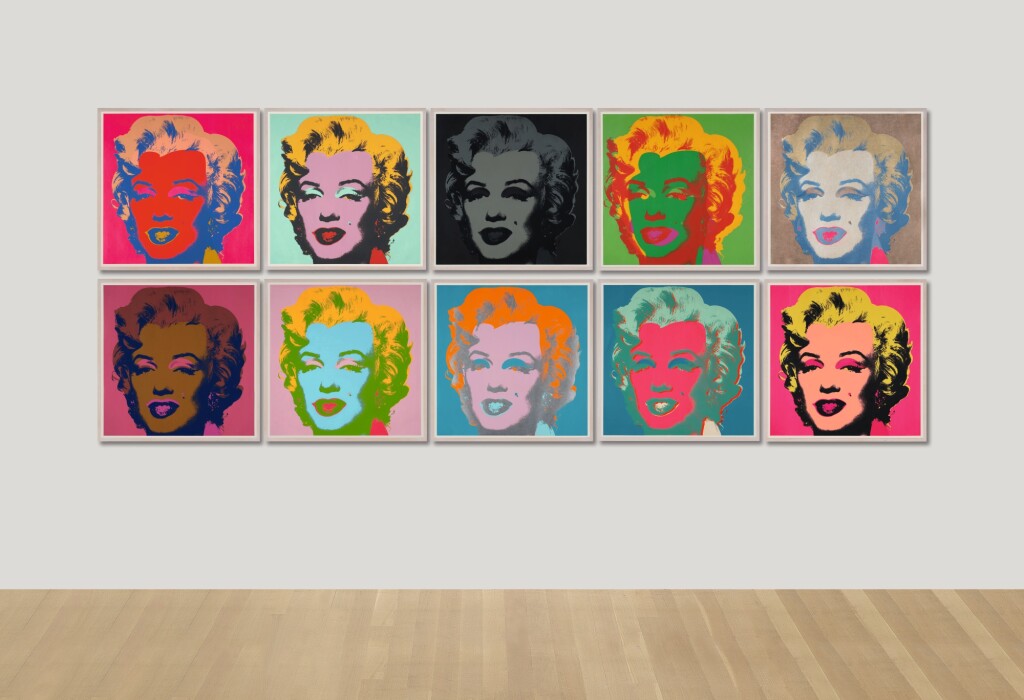
ANDY WARHOL (1928-1987)
Marilyn Monroe (Marilyn), 1967
The complete set of ten screenprints in colors on wove paper
Each: 36×36 inches (91.4 x 91.4 cm)
This set is number 27 from the edition of 250 plus 26 artist’s proofs lettered A-Z
Sotheby’s New-York: 17 November 2022
Estimated: USD 2,500,000 – 3,500,000
USD 4,406,000
#2. Cy twombly
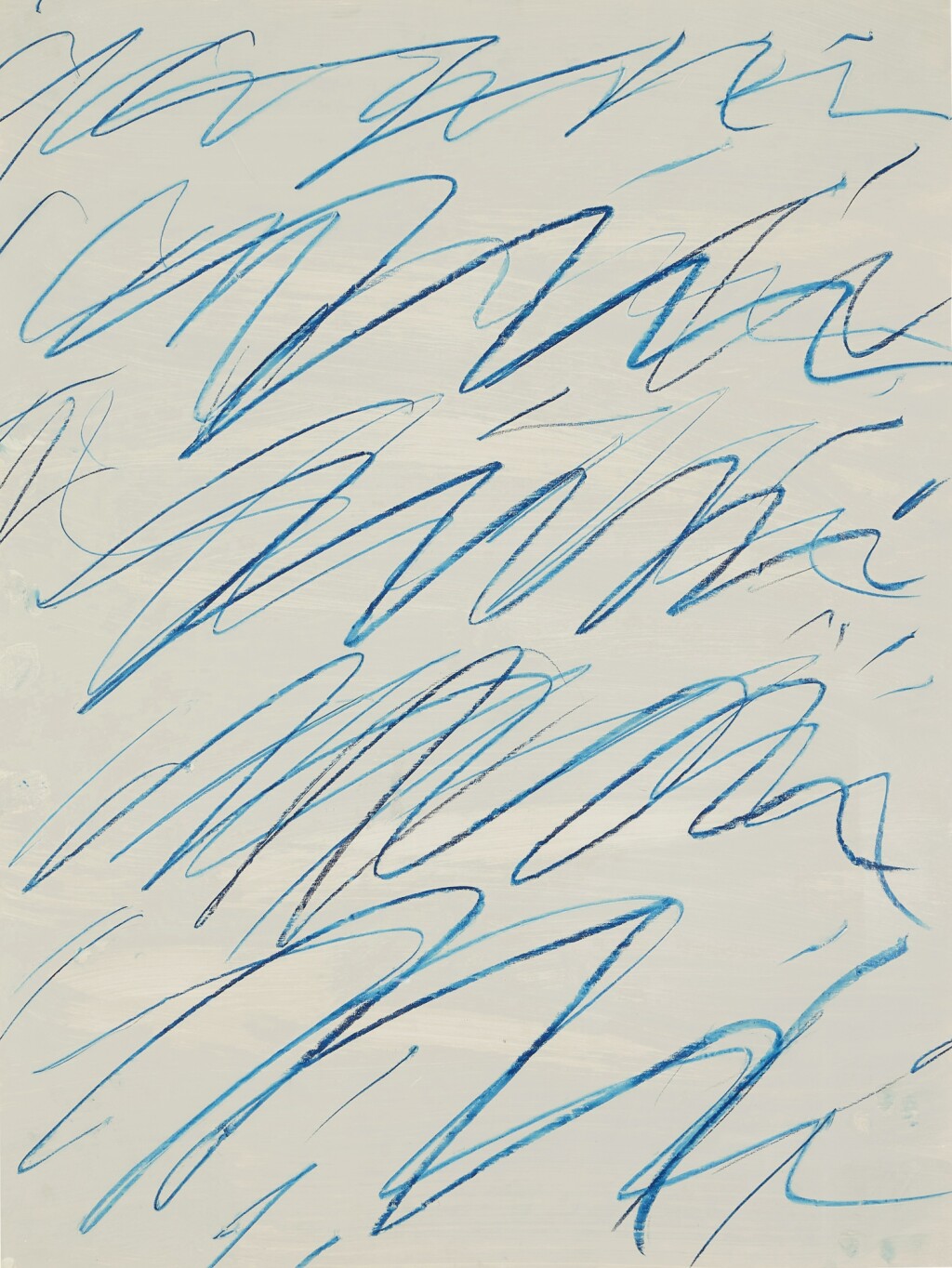
CY TWOMBLY (1928-2011)
Untitled, 1970
Oil and wax crayon on paper
40⅛ x 30 inches (101.9 x 76.2 cm)
Sotheby’s New-York: 17 November 2022
Estimated: USD 2,800,000 – 3,500,000
USD 3,377,500
Formal restraint gives way to tempestuous scrawls of vibrant blue crayon that swell, peak, and resolve with visceral urgency across the surface of the paper in Cy Twombly’s Untitled (Roman Note). Executed in 1970, the present work emerges from a pivotal moment of Twombly’s mature practice when the artist fully embraced calligraphic scribbles which would become the signature gesture of his groundbreaking artistic aesthetic. The thoughtful strokes that characterized the lasso-loops of Twombly’s earliest “Blackboard” paintings here are replaced with tempestuous scrawls of cerulean blue that threaten to froth out of control. Works from the Roman Note series are rare to auction with only three other examples to have appeared publicly in the last seven years. Noted as the largest work from this period in the artist’s work, Untitled boasts five loose rows of blue calligraphic scribbles which cover the sheet, denying any central compositional motif or subject matter. Twombly’s apparently spontaneous curvilinear marks create the illusion of a looping script, yet transcend legibility to become an abstract visual language of pure melodic sensation. Approaching the boundaries of lexical cognition, while simultaneously denying logic, Untitled instead pursues a more immediate means of communication.
#3. Gerhard Richter
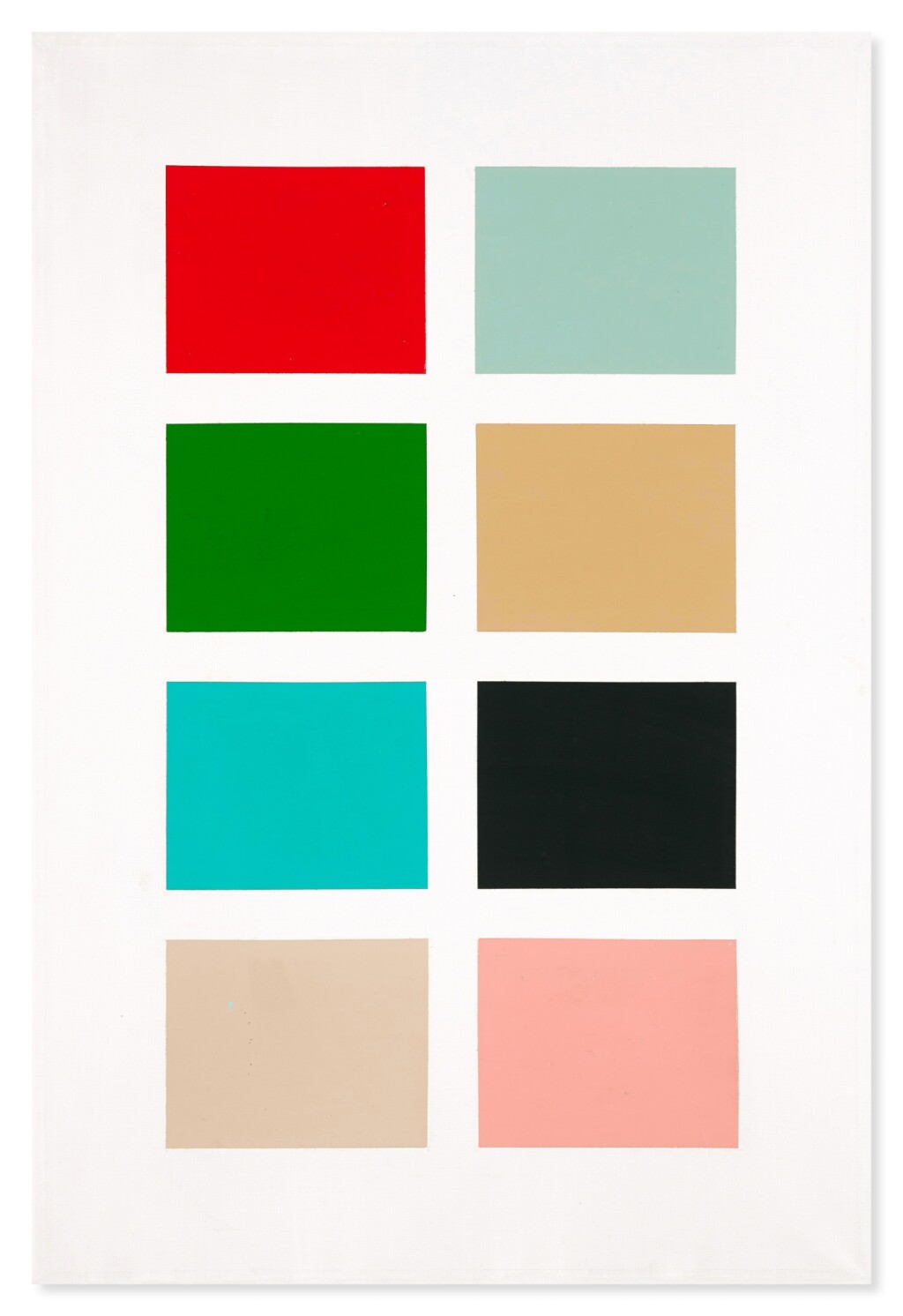
GERHARD RICHTER (B. 1932)
Farbtafel, 1966
Lacquer on canvas
29½ x 20 inches (74.3 x 50.8 cm)
Sotheby’s New-York: 17 November 2022
Estimated: USD 1,800,000 – 2,500,000
USD 2,833,000
Executed in 1966, Farbtafel is part of Gerhard Richter’s Color Chart series, which he began experimenting with that same year. With only 19 works from this series made in 1966, the present work represents the artist’s first departure from the black and white photograph-based paintings for which he had become known, and laid the foundations for his relentless enthusiasm for reinvention and experimentation that would eventually define his career and cement his greatness. Inspired by commercial paint sample cards he found in a Düsseldorf hardware store, Richter was drawn to the manufacturer’s empirical way of presenting color that seemed devoid of aesthetic considerations. In his studio he tried to copy the color cards as accurately as possible, painting uniformly sized square or rectangular color blocks on a white background. Rendered in enamel paint, this choice of medium reflects Richter’s efforts to make the works appear less tactile and more industrial. Ultimately, Farbtafel represent one of the most important moments in the artist’s career occupying a space across several leading 20th Century Art movements, including Pop Art, Minimalism, and Conceptual Art.
#4. Andy Warhol
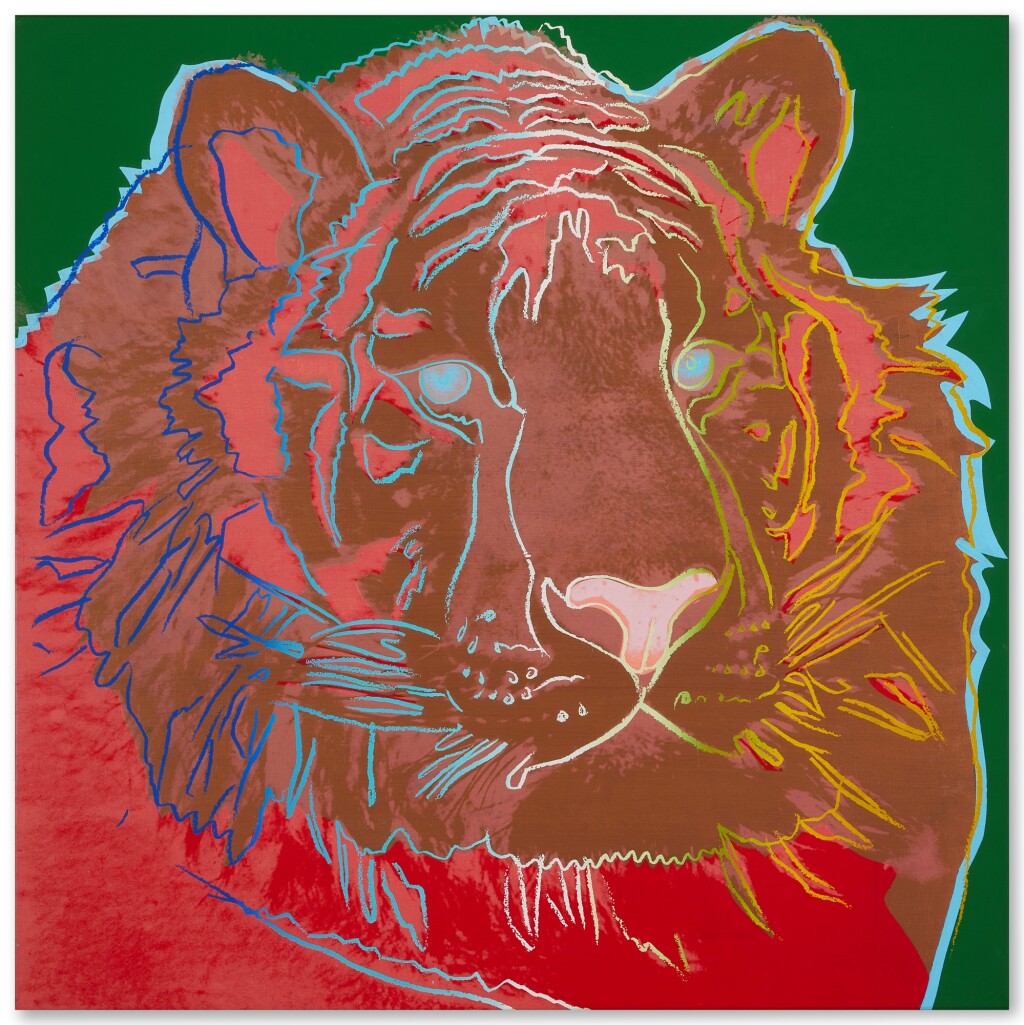
ANDY WARHOL (1928-1987)
Siberian Tiger, 1983
Acrylic and silkscreen ink on canvas
60×60 inches (152.4 x 152.4 cm)
Sotheby’s New-York: 17 November 2022
Estimated: USD 2,000,000 – 3,000,000
USD 2,591,000
Optically mesmerizing and meticulously composed, Andy Warhol’s 1983 Siberian Tiger is a resplendent example from one of the artist’s most beloved series: Endangered Species. Executed just four years before his untimely death in 1987 during a period of renewed and intense commitment to painting, the series exemplifies the artist’s iconic Pop sensibility, yet stands out within the artist’s oeuvre with its meaningful and personal subject-matter. With its piercing gaze, Warhol’s Siberian Tiger commands the viewer’s full attention with a bravura that rivals that of his supreme Pop images of Elizabeth Taylor and Campbell’s Soup Cans.
#5. Joan Mitchell
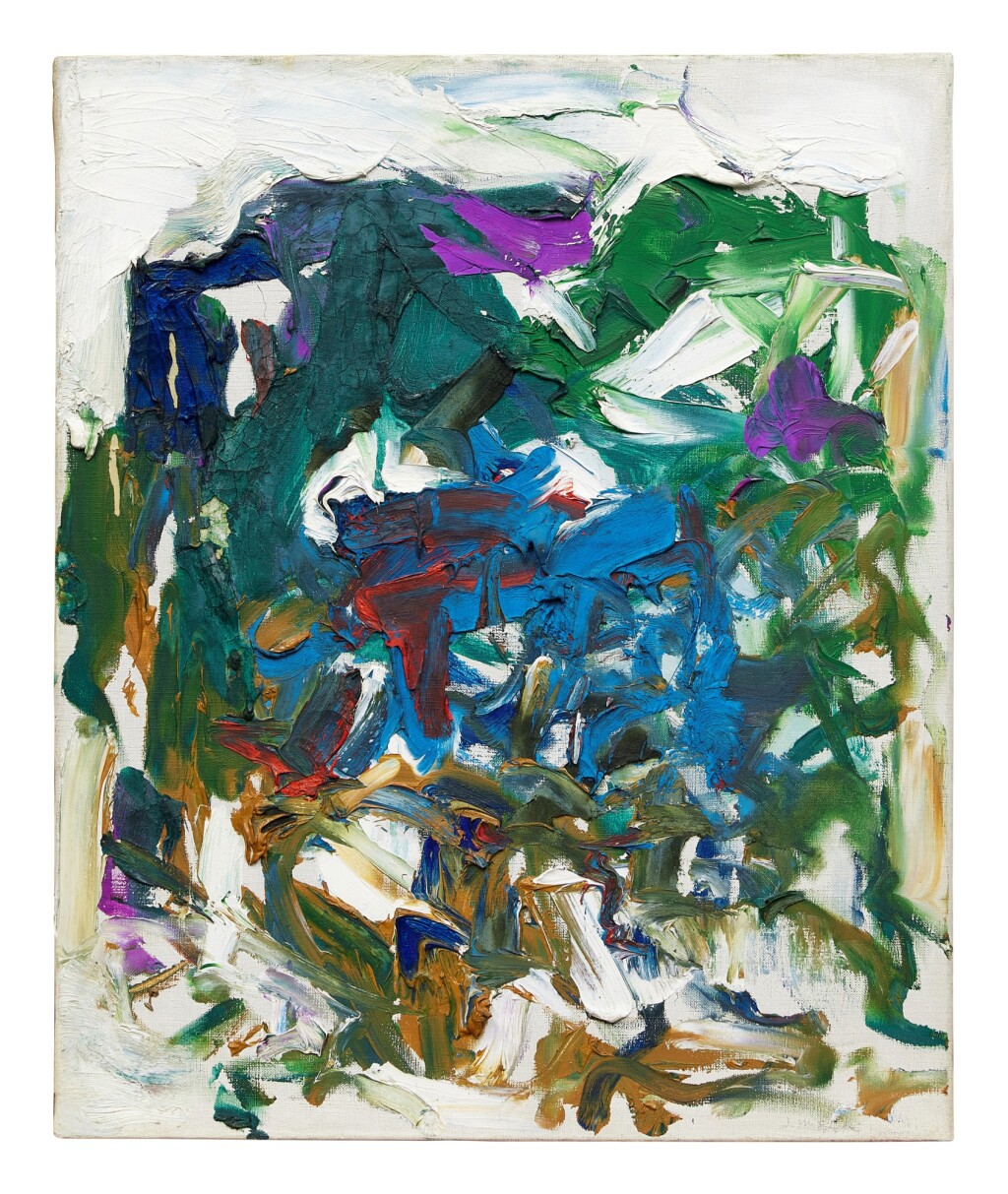
JOAN MITCHELL (1925-1992)
Untitled, circa 1964
Oil on canvas
18¼ x 15 inches (46.4 x 38.1 cm)
Sotheby’s New-York: 17 November 2022
Estimated: USD 1,000,000 – 1,500,000
USD 2,530,000
Packed with vibrant swaths of forest green, electric blue, and violet, Joan Mitchell’s Untitled embodies the artist’s unique practice within the realm of Abstract Expressionism. Executed circa 1958, the present work belongs to a seminal moment within Mitchell’s life, as the mid to late 1950s proved to be the most acclaimed period in her storied career. As a female artist within the Abstract Expressionist movement, Mitchell’s voice was defined by her varied use of color and graduation of intensity when painting her canvases. Brilliantly executed and an exquisite example of Mitchell’s virtuosic oeuvre, Untitled radiates poignant and precise artistic energy.
#6. Gerhard Richter
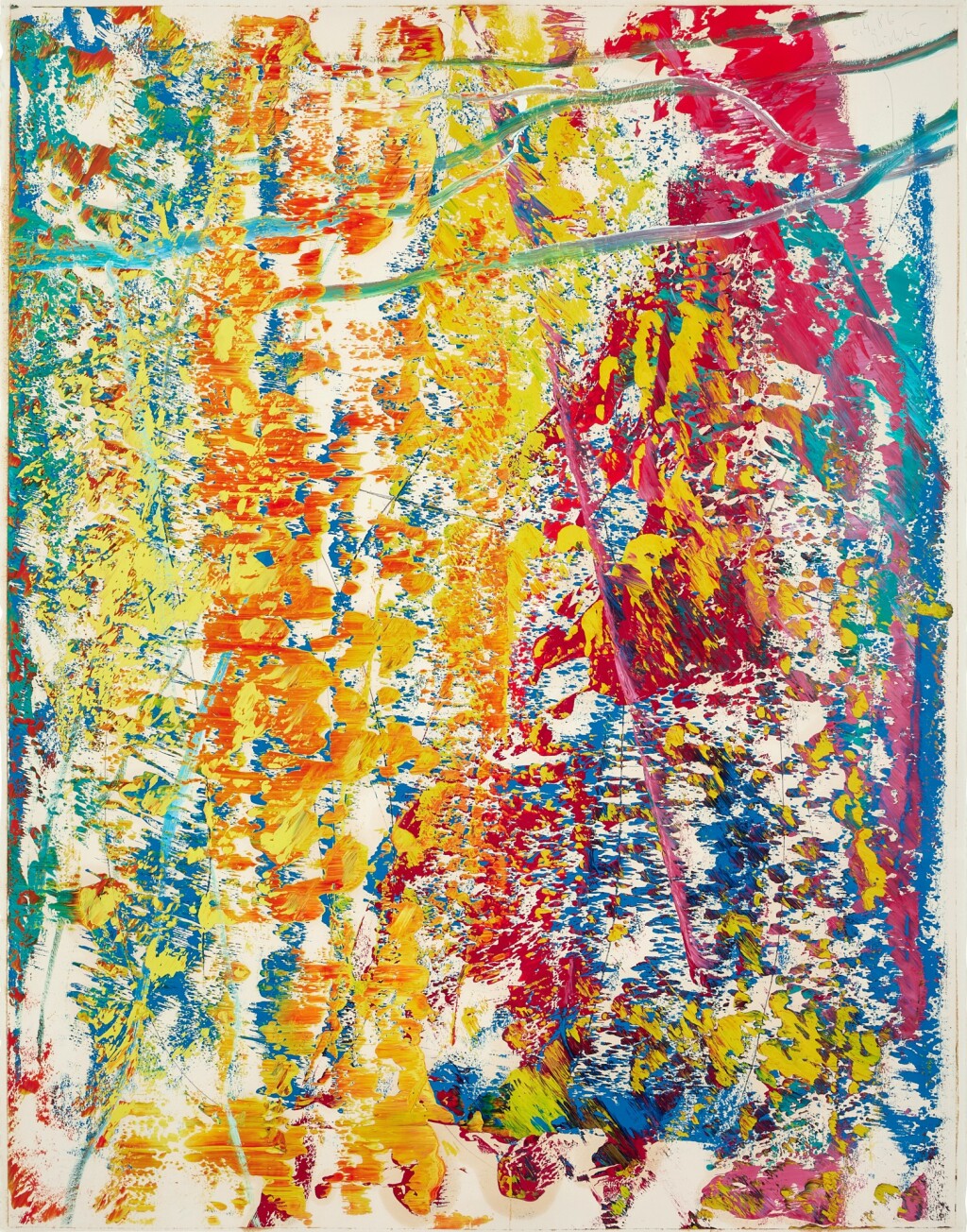
GERHARD RICHTER (B. 1932)
Untitled (6.4.86), 1986
Oil and graphite on paper
124.5 x 95.3 cm (49 x 37½ inches)
Sotheby’s New-York: 17 November 2022
Estimated: USD 1,000,000 – 1,500,000
USD 1,925,500
Arguably the most sought after and highly prized European abstract painter, Gerhard Richter occupies a pivotal position in the field of Contemporary Art. His hunger for experimentation and technical innovation completely revolutionized abstract painting. Until 1976, Richter was known as a realist painter working from photographic source material in black and white and primarily preoccupied with perception. In the 1980s he began making abstract paintings in earnest, developing a revolutionary technique in which he spread layers of saturated color across the picture plane with a squeegee. As a painter working primarily at scale and on canvas, works on paper from his abstract series are scarce. The series of abstract works on paper are titled after the date they were painted and were created intermittently from the early 1980s onwards. These works were a crucial arena of experimentation that gave Richter the freedom to explore his shift away from his earlier figurative style. “Untitled (6.4.86), (1986)” is a key component of the creative impulse that anticipated Richter’s growing success, painted just weeks after the conclusion of the artist’s first major international touring retrospective in 1986, in which his works was shown in Düsseldorf and Berlin, as well as Bern, Switzerland and Vienna, Austria.
#7. Keith Haring
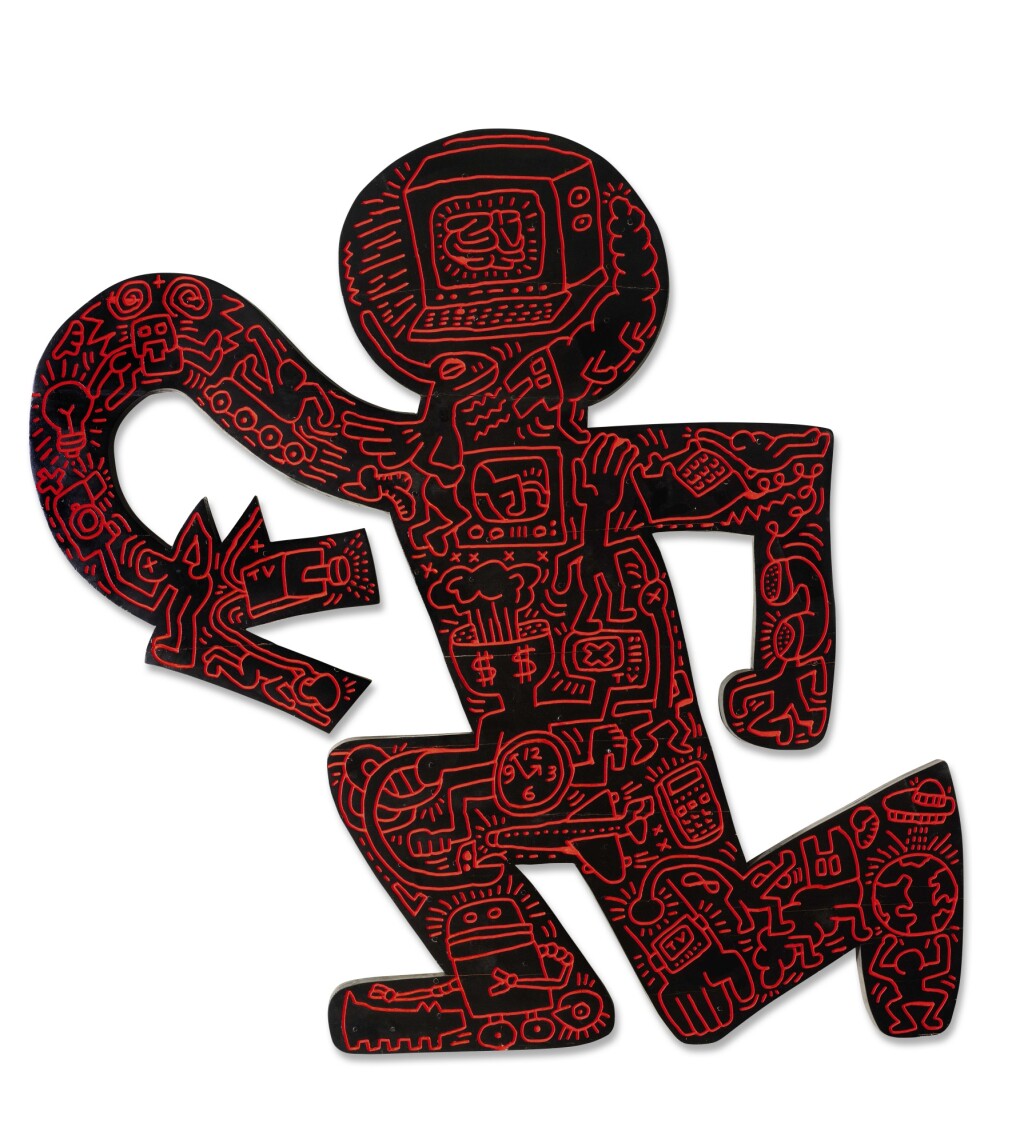
KEITH HARING (1958-1990)
Untitled, 1983
Enamel on carved wood
69⅜ x 70⅝ x 2⅜ inches (176.2 x 179.4 x 6 cm)
Sotheby’s New-York: 17 November 2022
Estimated: USD 800,000 – 1,200,000
USD 1,925,500
Executed in 1983, Keith Haring’s Untitled represents the unencumbered spirit of urban art with the elegance of fine art forwhich the artist is best known. Keith Haring was among the first group of artists to successfully transition from the streets to the gallery, shaking up the 1980s art scene with his idiosyncratic and instantly recognizable visual language. Towards the end of 1983, Haring began experimenting with wood panels, discovering a method to carve his trademark lines into the surface of the material to create a three dimensional effect. He learned about the process from his friend Kermit Oswald, whose father was a carpenter. Using a wood router, a specialized power tool used to hollow out or incise wooden surfaces, Haring was able to quickly and efficiently carve intricate patterns into wood panels. Untitled was part of this sensational new body of work created for the now legendary exhibition at Tony Shafrazi Gallery which took place at the end of 1983 and into 1984. Haring unveiled a series of extraordinary enamel on wood paintings and sculptures. The memorable show was particularly noteworthy for the artist’s radical exhibition design, covering the walls in spray paint, and hanging the works on top, resulting in an installation that resembled an immersive Haring Gesamtkunstwerk. The artworks that were included in this boundary breaking show have since been regarded as some of the preeminent and influential works in his oeuvre.
#8. Jean-Michel Basquiat
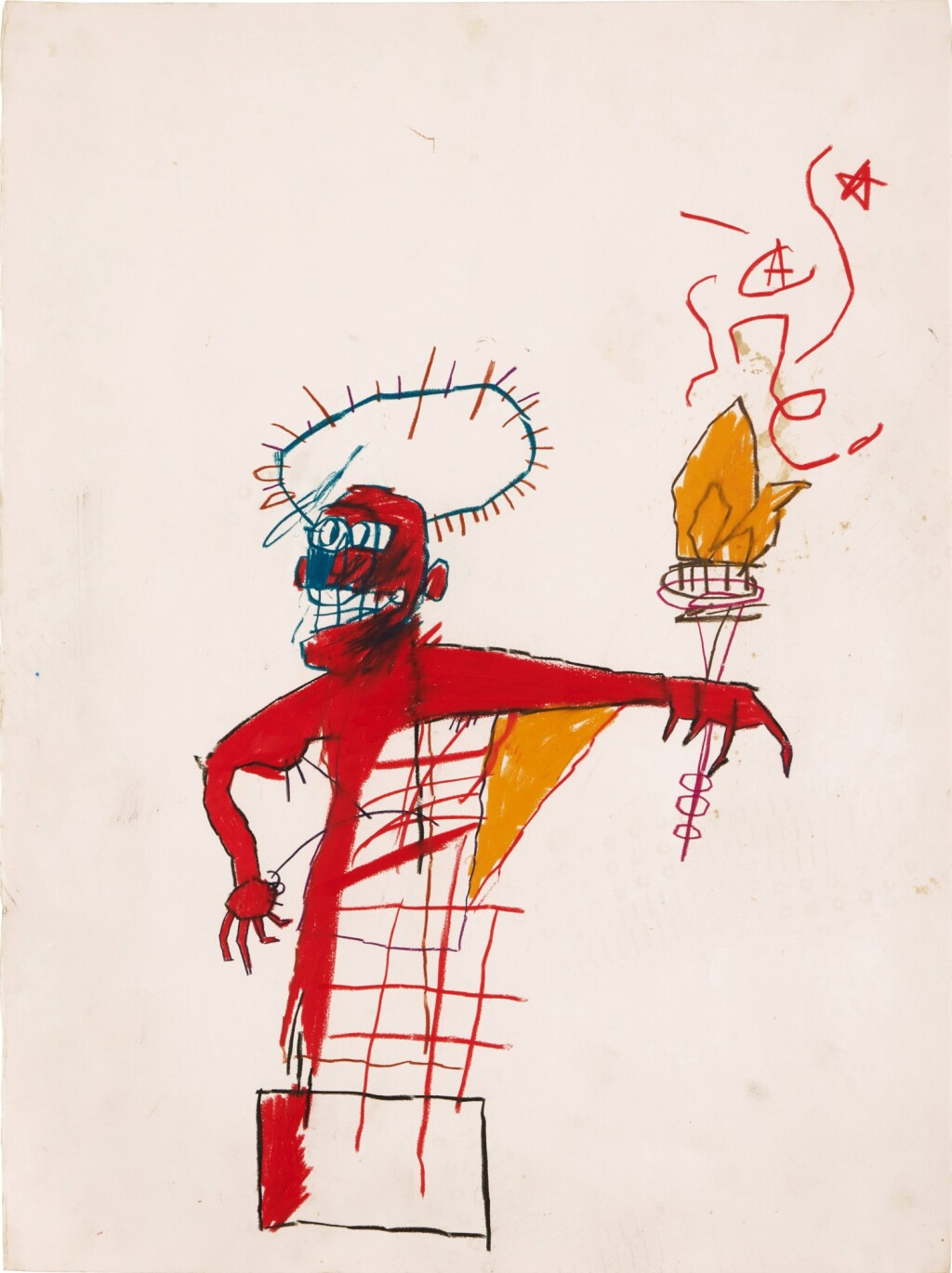
JEAN-MICHEL BASQUIAT (1960-1988)
Untitled, 1982
Oil stick on paper
30 x 22¼ inches (76.2 x 56.5 cm)
Sotheby’s New-York: 18 November 2022
Estimated: USD 1,500,000 – 2,000,000
USD 1,865,000
Depicting one of the most iconic symbols of America, Jean Michel Basquiat’s Untitled unites multiple themes and key iconographic characteristics from the artist’s celebrated oeuvre in one extraordinary work on paper. Created in the key year of 1982, Untitled is a seminal work from the artist’s most influential period. The drawing belongs to an elite group of works on paper created at a time of extraordinary artistic freedom at the precipice of his meteoric career, predating commercial pressure, distractions, and drug use that would accompany his art world superstardom. Having been featured in the 1993 survey exhibition at the Dallas Museum of Art, the work was recognized early for its significance. A resounding metaphor for Basquiat’s own interpretation of the American Dream, the present work is a window into the artist’s unique perspective.
#9. Andy Warhol
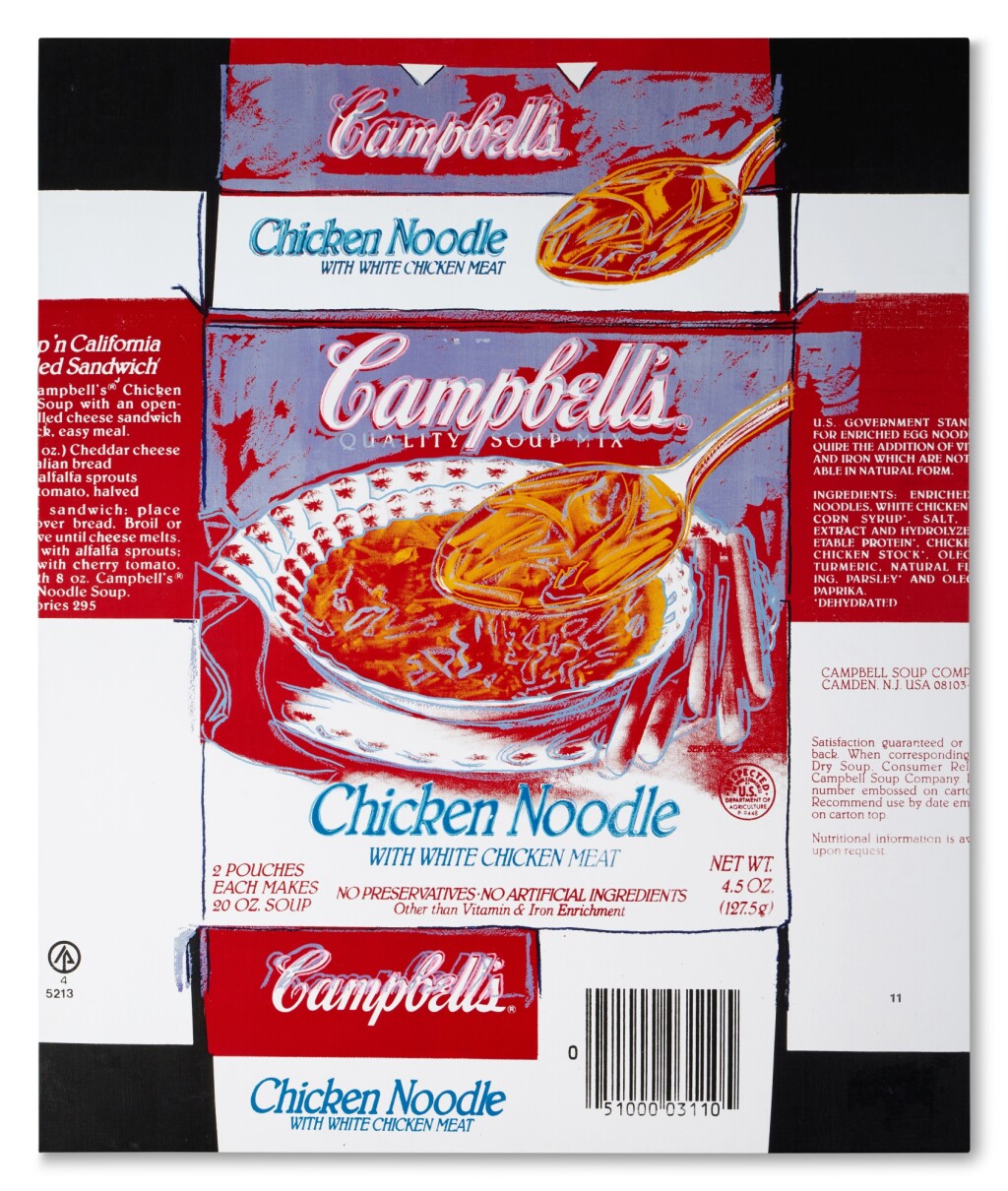
ANDY WARHOL (1928-1987)
Campbell’s Chicken Noodle Soup Box
Acrylic and silkscreen ink on canvas
72×60 inches (182.9 x 152.4 cm)
Sotheby’s New-York: 17 November 2022
Estimated: USD 500,000 – 700,000
USD 1,683,000
A variant of Andy Warhol’s iconic depictions of soup cans, Campbell’s Chicken Noodle Soup Box is a multi-layered extension of one of the legendary artist’s most iconic motifs. In 1962 Warhol debuted 32 paintings of Campbell’s soup cans at the Ferus Gallery in Los Angeles. The works were displayed on a shelf, like groceries in a store, and were intended as a comment on rising consumerism in Post-War America. The soup cans marked a turning point in Warhol’s practice, finally giving him the exposure he always longed for. Within months of his show at Ferus Gallery, he began experimenting with silkscreening, which would become the most important breakthrough of his career and allowed his process of art making to mimic the industrial production of the consumer products he was depicting. Both the medium and the image would remain an influential component of his practice for decades.
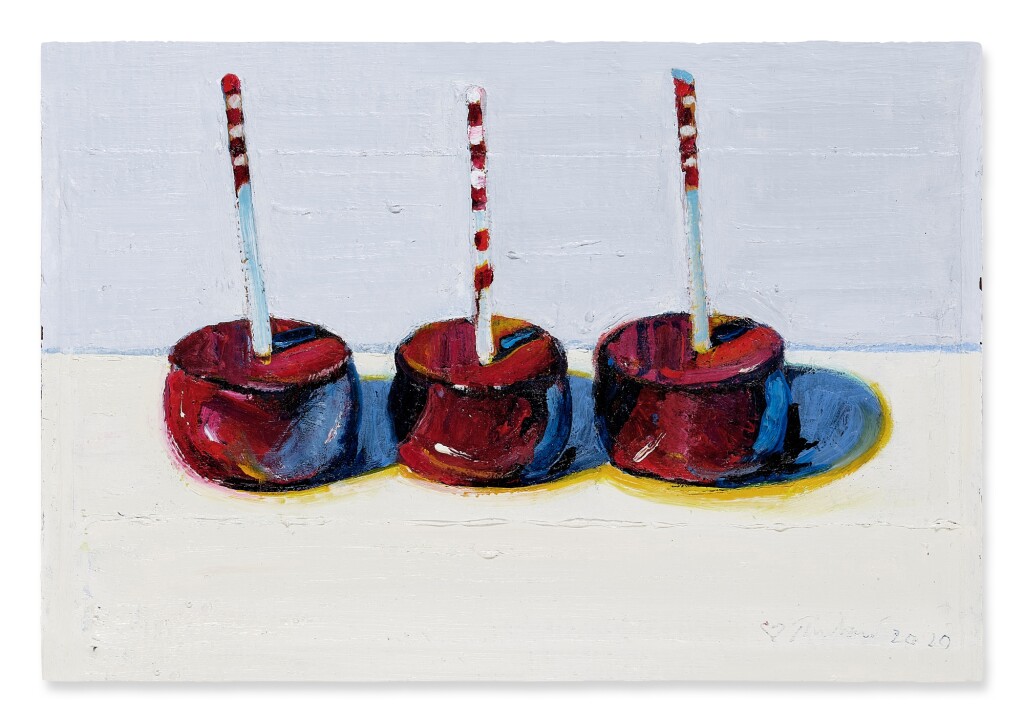
WAYNE THIEBAUD (1920-2021)
Three Candy Apples, 2020
Oil on canvas mounted on board
10 x 14⅞ inches (25.4 x 37.8 cm)
Sotheby’s New-York: 17 November 2022
Estimated: USD 1,200,000 – 1,800,000
USD 1,502,000
Executed in 2020, a year before the artist’s passing, Three Candy Apples sees Wayne Thiebaud revisiting one of his most iconic and beloved subjects with joyful finesse. The present work illustrates three glistening, jewel-like confections resting primly against a pale, lushly articulated surface, their sticks lifted delicately as if ripe for plucking straight off the canvas. This tantalizing tactility is further emphasized by Thiebaud’s signature deployment of impasto, which serves to echo the candy apples’ pulsating gleam through the paint’s materiality. With Three Candy Apples, Thiebaud looks back to the electrically nostalgic renderings that launched his seven-decade long career with all the contemplation and precision of the great American master that he is.
6. Phillips
1. 20th Century and Contemporary Art Evening Sale
15 November 2022
20th Century & Contemporary Art Evening Sale: New York November 2022 (phillips.com)
# Lots: 44 Lots
Sell-Through Rate: 98%
Total: USD 138,977,600
Top Lot: USD 41,640,000
1 Lot sold for over USD 10,000,000
——
Above Estimates: 12 Lots (27%)
Within Estimates: 26 Lots (59%)
Below Estimates: 5 Lots (11%)
#1. Cy Twombly
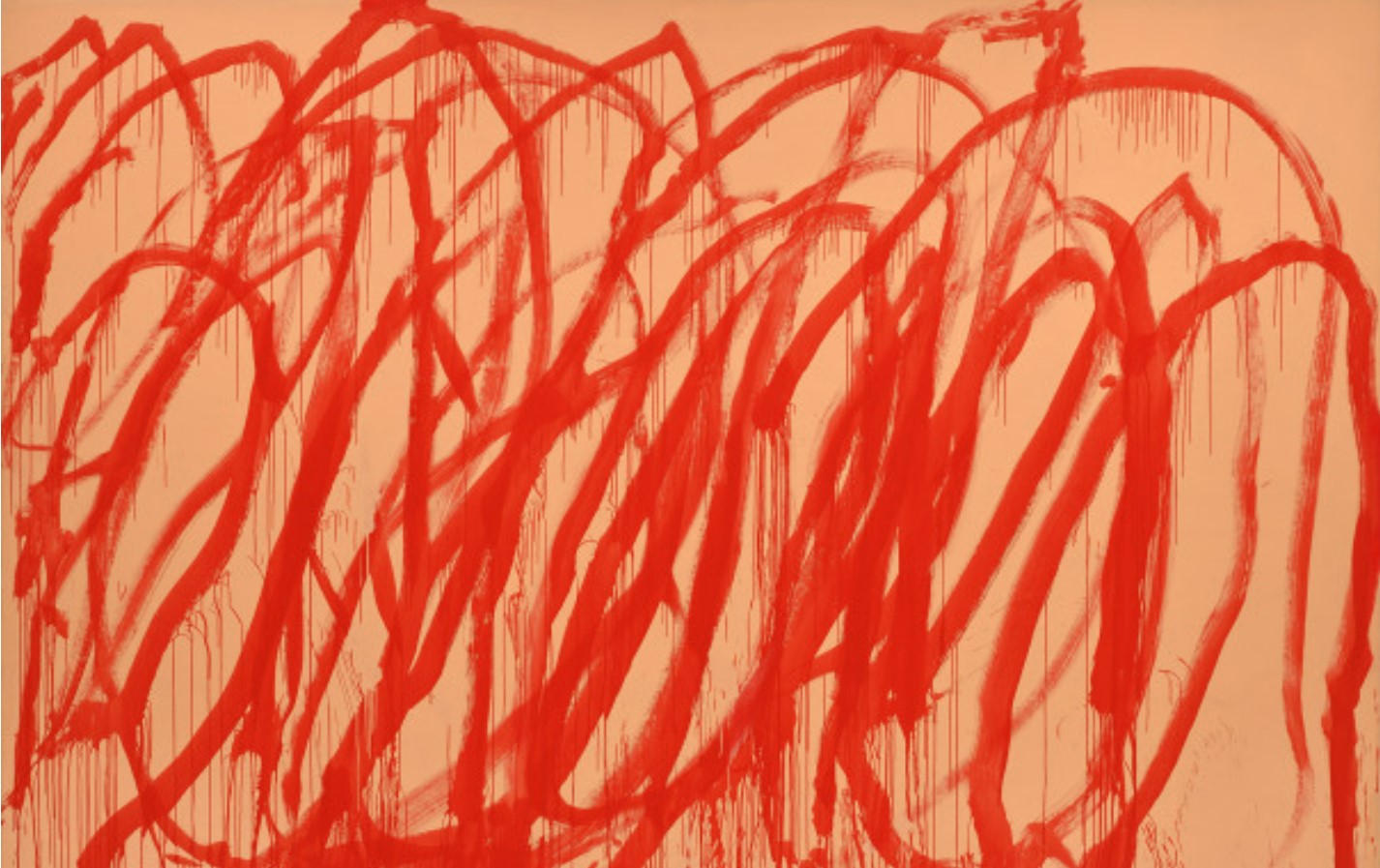
CY TWOMBLY
Untitled, 2005
Acrylic on canvas
127 3/4 x 192 inches (324.5 x 487.7 cm)
Phillips New-York: 15 November 2022
Estimated: USD 35,000,000 – 45,000,000
USD 41,640,000
Blood red, wine red; swoops of red paint applied wet, with a heavy brush, overloaded with pigment. The brushstrokes are thick as handprints, wide as arms, and they build into a red spiral of drip and curve that spans the distance from the ceiling to the floor. The spiral subsumes the viewer in an epic wave of color and drip, dragging them in its wake.
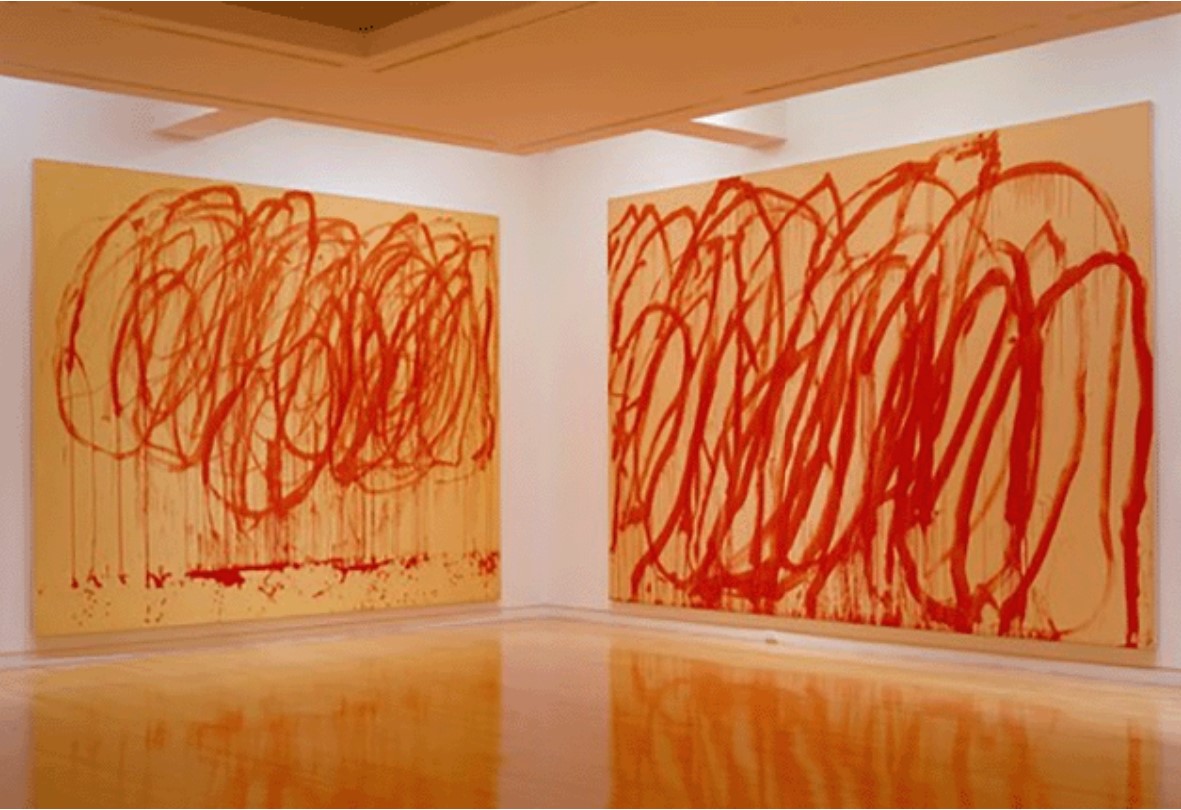
One of the artist’s last great works, Untitled, 2005, forms part of Cy Twombly’s repeated investigation into cyclicality as both a gesture and a theme throughout his career. This movement began with his blackboard paintings of the 1960s, circled through his drawing practice, and crystallized in the Bacchus series, three sets of paintings created between 2003 and 2008, when the artist was between the ages of 75 and 80. Untitled is the second-largest canvas in the second set of Bacchus works, and paintings from this series populate prestigious museum and private collections worldwide, including three works gifted by the artist to Tate, London, in 2008.
#2. Mark Grotjahn
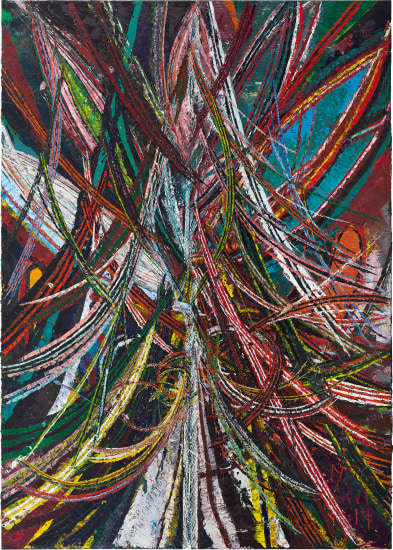
Mark Grotjahn
Untitled (Circus No. 12 Face 44.30), 2014
Oil on cardboard mounted on linen
101 1/2 x 73 5/8 inches (257.8 x 187 cm)
Phillips New-York: 15 November 2022
Estimated: USD 8,000,000 – 12,000,000
USD 9,809,000
Wildly colorful lines of oil paint slash down the center of Mark Grotjahn’s Untitled (Circus No. 12 Face 44.30), 2014, over a ground of ovoid shapes. There is a fierce velocity to the thickly impastoed marks, which fly to all corners of the composition, like the trails of airplanes, or the silk sashes of trapeze artists, perhaps. Drawing on visual cues as wide-ranging as the vaulted ceilings of Italian Renaissance paintings and the neon lights of Circus Circus casino in Las Vegas, Untitled (Circus No. 12 Face 44.30) combines the artist’s painterly innovations to date with a rich legacy of traditional and modern art historical painting.