In this series, Warhol delved into radical new territories in abstraction, eschewing the cultural icons and commodity symbols that dominated his practice in the previous decade. Based on photographs taken in Warhol’s famed Factory studio, the Shadow series form an elegant and conceptually rigorous extension of Warhol’s explorations into the power of images, iconic symbols and seriality.
The Shadows represent Warhol’s deferred engagement with abstract expressionism and constitute his most haunting and visceral forays beyond figuration. Between 1977 and 1986 he produced six abstract series: the Oxidations, Shadows, Eggs, Yarns, Rorschachs and Camouflages, which interrupted his contemporary “visual history of the world” (Robert Rosenblum, ‘Warhol as Art History’ in: Exhibition Catalogue, New York, Museum of Modern Art, Warhol: A Retrospective, 1989, p. 28). Of the abstracts, Shadow engages most fecundly with abstract expressionist mythology while moreover uncannily soliciting metaphysical contemplation.
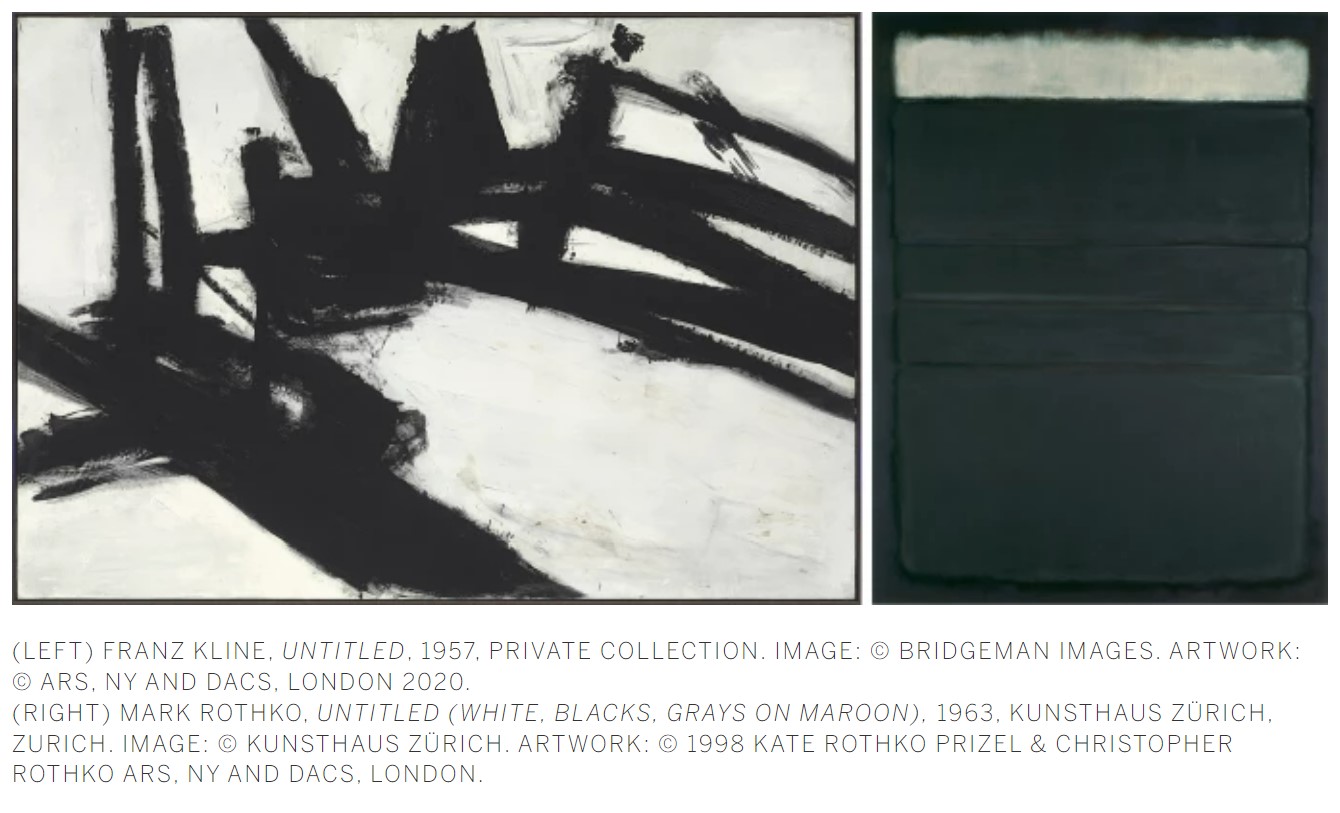
Stylistic imitation instead guides Shadow‘s genesis. Just as the Oxidations retorted Jackson Pollock’s drip-painting cult by dripping bodily fluids onto copper, Shadow addresses the black and white abstract expressionist paintings of Robert Motherwell and Franz Kline. The Shadows‘ environmental installation at the Heiner Friedrich Gallery alludes to Harold Rosenberg’s description of Action Painting as “an apocalyptic wallpaper” and assertion that: “works of this sort lack the dialectical tension of a genuine act, associated with risk and will. When a tube of paint is squeezed by the Absolute, the result can only be a success” (Harold Rosenberg, ‘The American Action Painters’, Art News, December 1952, p. 22). Warhol parodically vindicates Rosenberg’s criticism by producing an abstract work with dubious relation to “a genuine act” even as it aesthetically channels deeper meaning.
Introduction
Warhol selected the images for the series from Polaroids shot by his studio assistant Ronnie Cutrone, who created miniature sets comprising stage-lit matte boards and sheets of cardboard constructed to project dramatic, angular shadows. Enlarged to a monumental scale, the resulting canvases are as mesmerizing as they are mysterious. In the present work, the shadow appears as a ripple across a strikingly dramatic monochromatic surface, glimmering with the intense luminosity of nightfall. With the addition of sparkling diamond dust, the image evokes all the glitz and glamour of Warhol’s world of celebrity images and Pop icons.
“I called them Shadows because they are based on the shadow of my office.”
Throughout the 1960s, Warhol mobilized the shadow as a tool to mystify and obscure his silkscreened icons, harnessing its associated symbolism to enhance a reading of transience and mortality. Used as a subject in its own right by the late 1970s, its metaphoric portent offered the perfect means by which Warhol could empty his canvases and telescope the inherent seriality at the core of his practice. Originally conceived as a single monumental work, the initial paintings in this series comprise an expansive 102 canvases in 17 different color ways; an installation that today resides in the collection of the Dia Art Foundation. Installed without gaps between each work, the Dia series acts like the refrain of a song or the appearance of a film reel, a continuous and spooling image spanning an almost limitless space. In her essay for the 2002 Tate Modern Warhol retrospective, curator Donna De Salvo extolled the series’ resonant content: “The Shadows have been discussed as existential statements, as everything and nothing, as something fleeting, changeable and as intangible as real shadows. They have also been characterized as commentary on the very act of painting” (D. De Salvo, ‘Afterimage’, in: Exh. Cat., London, Tate Modern, Andy Warhol Retrospective, 2002, p. 50).
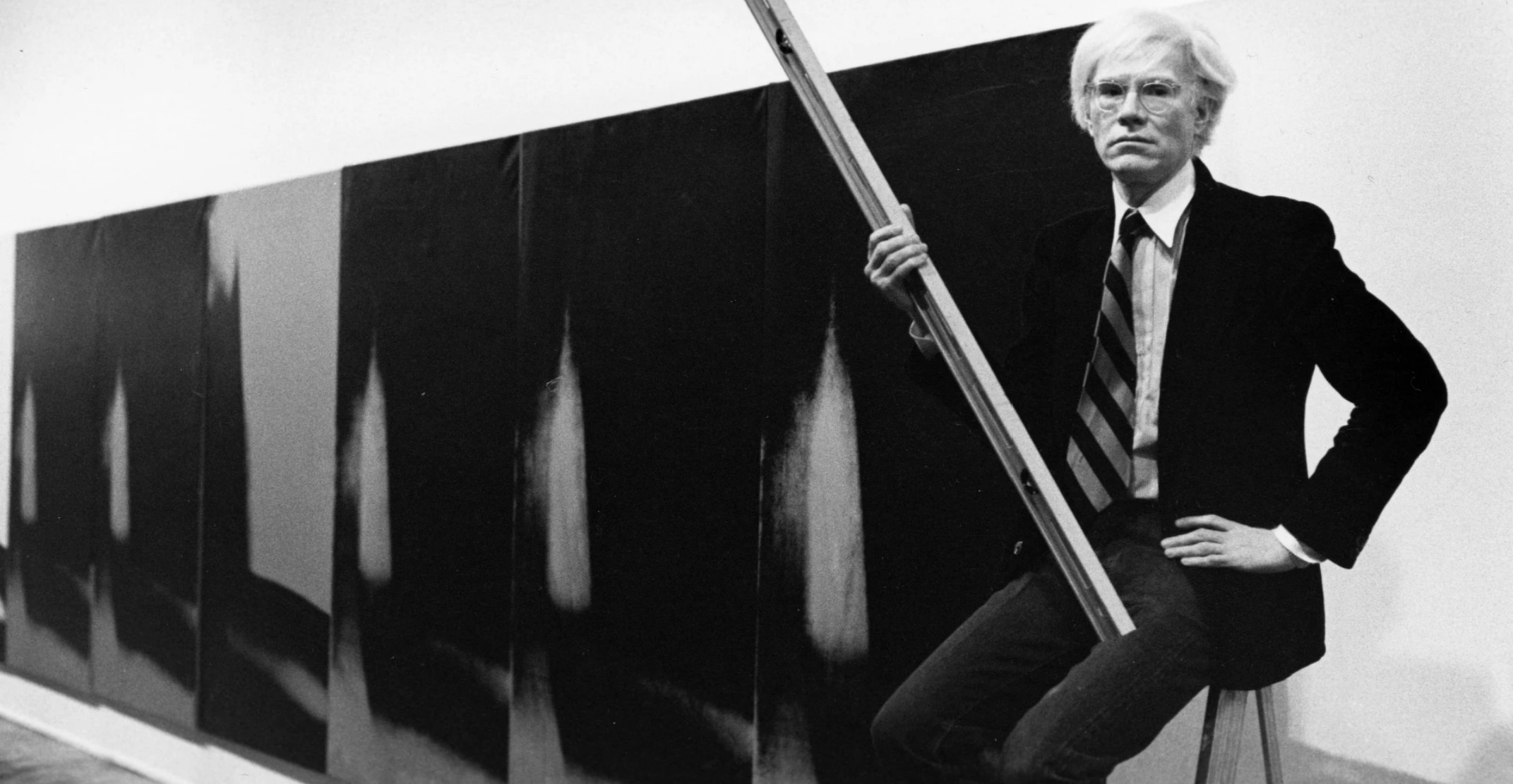
ANDY WARHOL AT HEINER FRIEDRICH GALLERY, NEW YORK, 1979. IMAGE: © ARTHUR TRESS/ COURTESY DIA ART FOUNDATION, NEW YORK. ARTWORK: © THE ANDY WARHOL FOUNDATION FOR THE VISUAL ARTS, INC. / DACS.
Occupying the epicenter of Warhol’s mature practice, the Shadows teeter delicately between the realms of abstraction and representation. Inherently, shadows are an ephemeral replication of a physical object, yet here, decontextualized and sweeping across the canvas, they appear almost akin to the gestural brushstrokes of the Abstract Expressionists. Warhol certainly engaged with these artistic associations; the subject matter of these works calling to mind the heavy chiaroscuro of Baroque masterpieces, while the sleek monochrome and reductive formalism of the paintings recalls the Supremativism of Malevich or Minimalism of Robert Ryman. Combined with the mechanical reproduction of Warhol’s trademark screening technique, the paintings adopt a rich spectrum of art historical connotations.
Andy Warhol’s Shadow paintings consist of a concentrated body of work executed in the late 1970s and early 1980s. Dissociated by this point from the commercial subject matter that had consumed him for much of his earlier career, Warhol began to paint in a more purely abstract style than ever before. This divergence started with the Oxidation paintings and ended with his Rorschachs and Camouflage works of the 1980s. Although the Shadow paintings were a new subject matter, Warhol throughout his career had a continuing fascination with the sinister underside of modern life. Warhol’s Suicide and Electric Chair paintings, dramatically lit themselves, seem to anticipate these later, more literal depictions.
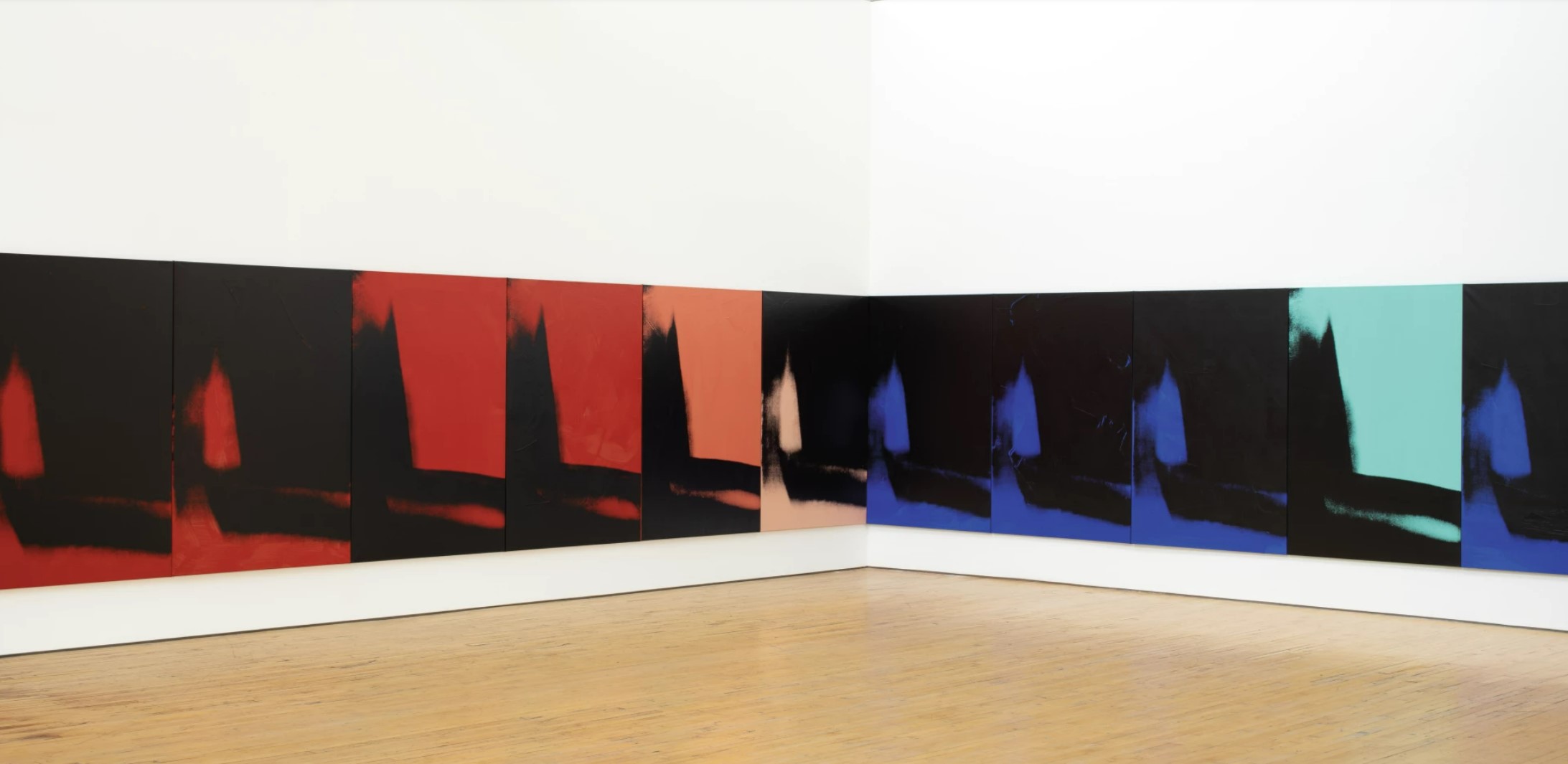
INSTALLATION VIEW OF SHADOWS, MOCA GRAND AVENUE, SEPTEMBER 2014 – FEBRUARY 2015. IMAGE: © COURTESY OF THE MUSEUM OF CONTEMPORARY ART, LOS ANGELES, PHOTO BY BRIAN FORREST. ARTWORK: © 2020 THE ANDY WARHOL FOUNDATION FOR THE VISUAL ARTS, INC. / LICENSED BY DACS, LONDON.
To create the Shadow paintings, Warhol used specially constructed cardboard maquettes that he would lean or set against the walls of his office at various angles, casting a variety of shadows. This motif is used in a multitude of formats, and the current example, executed in 1978, is from a series of monumental canvases. Warhol’s most extensive exploration into the subject came with his vast installation work in 102 panels which was purchased as a single entity by the Lone Star Foundation (now the Dia Center for the Arts) and first exhibited in January 1979. As Donna de Salvo notes of the Shadow paintings, “no essence is revealed, no single truth asserts itself. The experience is one of a late twentieth century landscape, everything is surface and nothing but surface” (Exh. Cat., London, Tate Gallery, Andy Warhol, London, 2002, p. 51).
Seemingly out of nothing, these paintings create a powerfully haunting and iconic image. The different formats and motifs for the series all share the same theme of negative reflections. In the present work, Warhol’s painted surface is broadly handled and rippled with texture, filling the canvas with a technique reminiscent to the brushstrokes of the Abstract Expressionists. The black and white palette with exaggerated grey scale and dramatic chiaroscuro call to mind the silent films of German filmmaker F.W. Murnau, whose stills are in themselves important artifacts, for both historical and artistic reasons alike. Best known for Nosferatu, an expressionist interpretation of Bram Stoker’s Dracula, Murnau employs theatrical lighting to invert the visual hierarchy of film and theater. The actors are reduced to figures while his sets – violently scored with harsh, geometric beams of light and windows adorned with the filigree of baroque shadows – almost become characters themselves. Even the slightest blurring of the eyes turns Murnau’s stills into images quite similar to Warhol’s Shadows: disorienting, abstract, arresting in their high contrast.
The ambiguous representation of the shadow reiterates its ability to exist on the borderline between form and formlessness. Warhol’s chief preoccupation in the creation of these works has been with the creation of enigma. They draw the viewer in and ultimately refuse all perceptual analysis revealing that in reality they are nothing but a painted plane—a striking image on a pure surface. Uncommon for Warhol’s oeuvre, Shadows has a painterly quality, unlike his typically flat, mechanically executed works. A layer of pigment displaces the pigment beneath it, revealing white outlines, sharp in their neon brightness. The effect created by these layers is akin to the relief found in copper etchings, like those of Rembrandt. Both cases demonstrate just how much atmosphere can be evoked by the mere direction of line. Foliage can be rendered with unprecedented depth and clouds are made ominous.
Diamond Dust Shadows
Diamond Dust Shadows (two works), circa 1979
Sotheby’s London: 28 July 2020
Estimated: GBP 1,200,000 – 1,800,000
GBP 1,935,000 / USD 2,511,437
ANDY WARHOL | DIAMOND DUST SHADOWS (TWO WORKS) | Rembrandt to Richter | 2020 | Sotheby’s
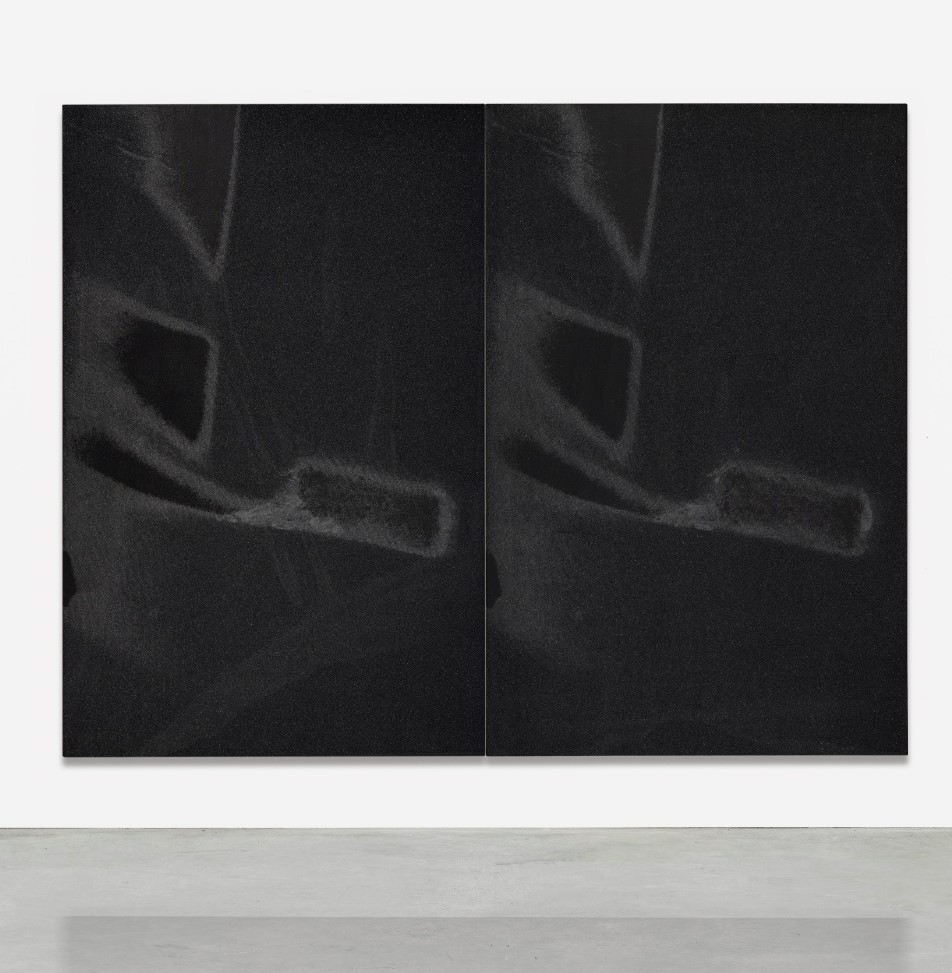
ANDY WARHOL
Diamond Dust Shadows (two works), circa 1979
Acrylic, diamond dust and silkscreen ink on canvas, in two parts
Each: 78×50 inches (198.1 x 127 cm)
Overall: 80.2 x 104.5 inches (203.8 x 265.5 cm)
Oscillating between the abstraction of the image and the ephemeral effect of the medium, the Diamond Dust Shadows embody a myriad of Warholian tropes: the glitter of glamour and money, the radiance of religion, the complexity of perception within image repetition, and indeed the nature of painting itself.
Shadow, circa 1979
Sotheby’s New-York: 14 November 2018
Estimated: USD 1,200,000 – 1,800,000
USD 1,425,000
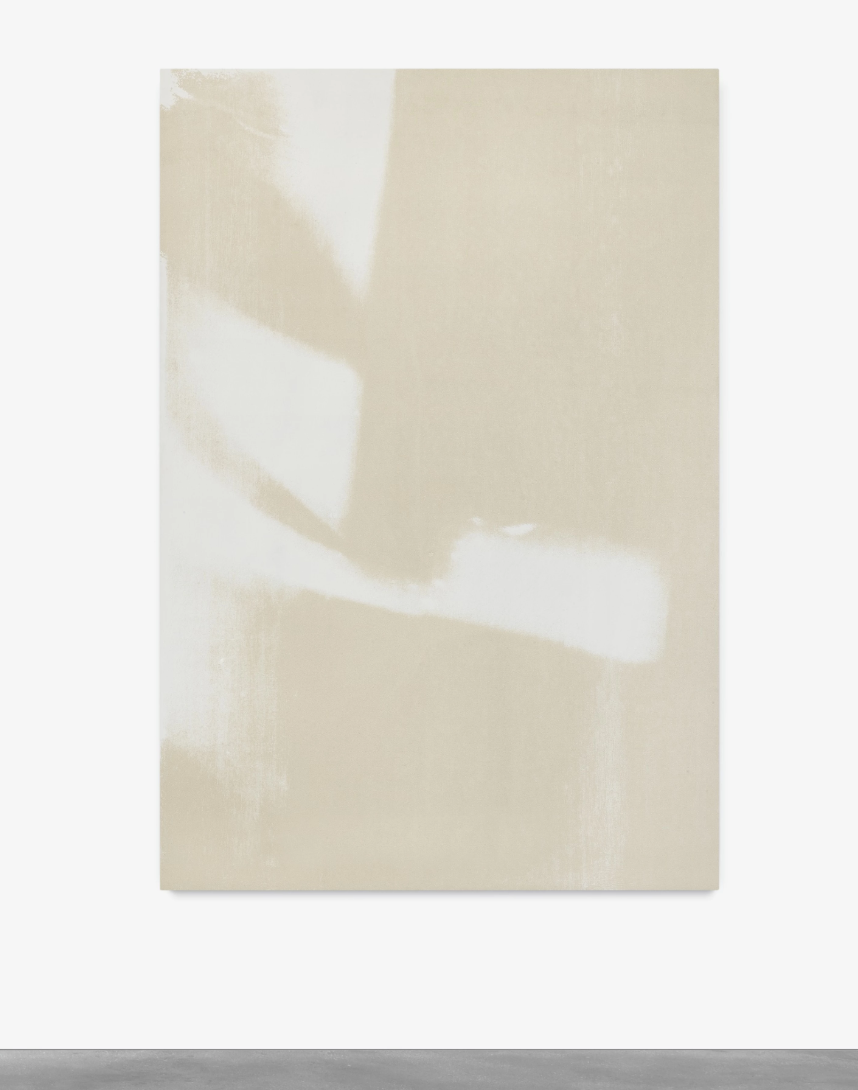
ANDY WARHOL
Shadow, circa 1979
Acrylic, silkscreen ink and diamond dust on canvas
76 x 54 1/4 inches (193 x 137.8 cm)
Stamped twice by the Estate of Andy Warhol and the Andy Warhol Foundation for the Visual Arts
Numbered PA65.095 on the stretcher
Rich with an elusive narrative atmosphere and compelling as it is evasive, Andy Warhol’s Shadow remains one of the artist’s most entrancing motifs. The Shadow series marked a new departure in Warhol’s career, away from the 1960s figurative works that depicted cultural icons and commodity symbols towards an idiom of abstraction that is also mirrored in various series of the late 1970s and early 1980s. The Shadows represent Warhol’s deferred engagement with abstract expressionism and constitute his most haunting and visceral forays beyond figuration. Between 1977 and 1986 he produced six abstract series: the Oxidation, Shadow, Egg, Yarn, Rorschach and Camouflage paintings, which interrupted his contemporary “visual history of the world.” (Robert Rosenblum, ‘Warhol as Art History’ in Exh. Cat., New York, Museum of Modern Art, Warhol: A Retrospective, 1989, p. 28) Of the abstracts, the Shadow paintings engage most abundantly with abstract expressionist mythology while soliciting profound metaphysical contemplation. Confronted with the play between presence and absence underpinning the Shadows, Artforum critic Carrie Richey wrote: “There’s a Blow-up quality of criminality to this exhibition; each canvas looks like an over-enlarged photograph of some unmentionable event…. What am I to make of this? Warhol obliges me to play detective. I’m obsessed with finding evidence. Criticism’s supposed to be policy work and here I am down in the fingerprint bureau.” (Carrie Richey, “Review: Shadows at the Heimer Friedrich Gallery, New York,” Artforum, April 1979, p. 73)
Based on photographs taken in Warhol’s famed New York City studio, The Factory, the Shadows create a mood of ultimate intangibility. The shadow as a symbol for transience, and ultimately mortality, appears in a variety of works in Warhol’s last decade, amongst them the Skulls series from 1978. In fact, Warhol had also used the shadow as an effective instrument to mystify and disguise certain elements within major 1960s works such as the Death and Disaster series and his 1966-1967 Self Portrait. Repetition of the image only increased the challenge to grasp the “shadow” visually as well as metaphorically. The series of multi-colored Shadow paintings, originally conceived by Warhol as one work, includes one large installation of a total of 102 paintings in 17 different colors that now resides in the collection of the Dia Art Foundation and that was exhibited in its entirety for the second time only at the Museum of Contemporary Art in Los Angeles in 2014-15. Installed alongside each other, these Shadow paintings present the aspect of a song’s refrain or the appearance of a reel of film, spooling the same image across an almost limitless space. In her essay for the Tate Modern retrospective of Warhol’s work, curator Donna De Salvo extolled the series’ resonant content: “The Shadows have been discussed as existential statements, as everything and nothing, as something fleeting, changeable and as intangible as real shadows. They have also been characterised as commentary on the very act of painting.” (Donna De Salvo, “Afterimage,” in Exh. Cat., London, Tate Modern, Andy Warhol Retrospective, 2002, p. 50)
The present work exemplifies the concept of seriality and repetition that lies at the very core of Warhol’s oeuvre and revolutionized the course of art in the 1960s. In a subtle balance between kinship versus contrast, the light tones on the canvas are the driving tension between emptiness and presence in the Shadow paintings, exemplified by the present work. Warhol laconically referred to his Shadows series as “disco décor” following his exhibition opening. (The artist cited in Exh. Cat., Dusseldorf, Museum Kunst Palast, Warhol, The Late Work, 2004, p. 19) Pared down to its essential celluloid format, the white remains ineffably evocative. Brimming with the elegance and conceptual verve that characterized Warhol’s abstract paintings from his last decade, Shadow testifies to Warhol’s absolute command over imagery both abstract and figurative, and to the vast reaches that his revolutionary technique and style could conquer.
Diamond Dust Shadows, circa 1979
Sotheby’s New-York: 11 November 2015
Estimated: USD 1,800,000 – 2,500,000
USD 2,290,000
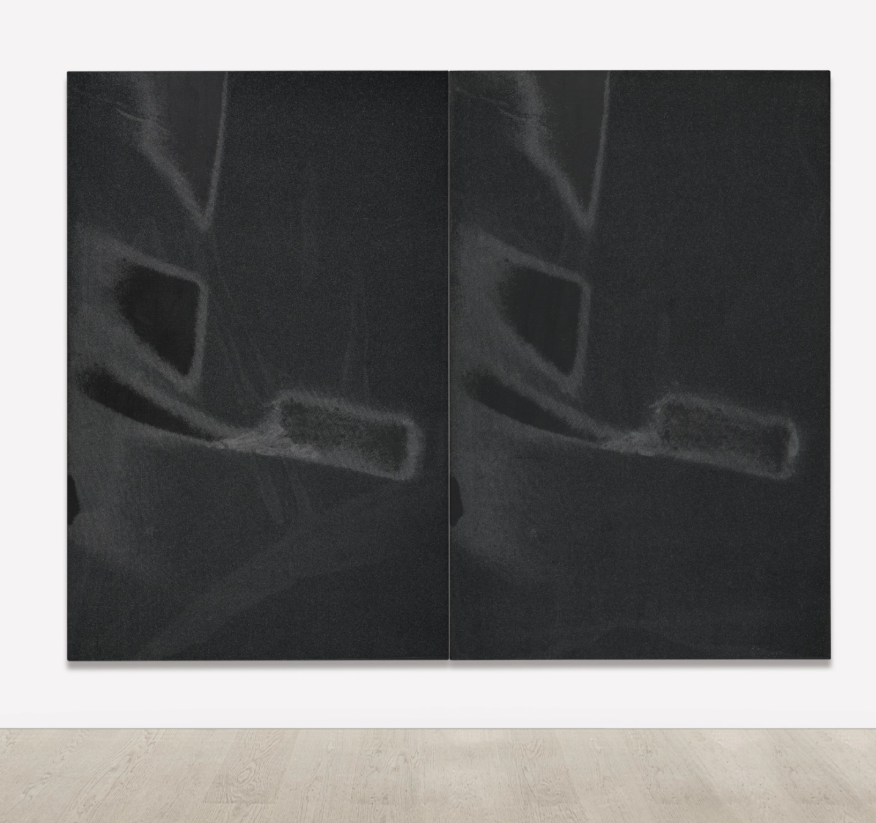
ANDY WARHOL
Diamond Dust Shadows, circa 1979
Acrylic, diamond dust and silkscreen ink on canvas, in two parts
Each: 78×50 inches (198.1 x 127 cm)
Strikingly dramatic in their monochromatic onyx surfaces, the two panels of Andy Warhol’s Diamond Dust Shadows glimmer with the intense luminosity of nightfall. Oscillating between the abstraction of the image and the ephemeral effect of the medium, Diamond Dust Shadows embodies a myriad of Warholian tropes: the glitter of glamour and money, the radiance of religion, the complexity of perception within image repetition, and indeed the nature of painting itself. As a subject, shadows are entirely abstract and yet representational; they stand as a record of the ephemeral image that they purport to capture. With the Shadows, Warhol reached new territory in abstraction; intriguingly enigmatic in their mirrored hallucinatory impression, Diamond Dust Shadows from 1979 brilliantly chronicles the act of painting, while reducing all of Warhol’s work up to that point to its very nucleus: the pure emptiness of images. Created circa 1979, Warhol’s Shadow paintings were the penultimate expression of this new direction, executed in monochromatic palettes of creamy white or velvety black, as well as vivid colors against black. Marshalling the visual impact of contrasts – between light and dark, positive and negative – Warhol’s filmic eye is fully celebrated by this seductive series. While the stark juxtaposition of jewel-toned colors and deep black shadows animate the colored series of Shadows, the sparkling surface and ambiguous contrasts in the cool black and radiant silver of the present work brings a deeper complexity to the shadow as signifier and subject. Indeed, the diptych Diamond Dust Shadows inhabits more fully the subtlety of shadows in that it illuminates as much as it obscures.
Based on photographs taken in Warhol’s famed New York City studio The Factory, the Shadows create a mood of ultimate intangibility. Warhol selected the images for his screens from Polaroids shot by his studio assistant Ronnie Cutrone, who set up stage-lit matte boards and sheets of cardboard to project angular shadows, further articulated in deep contrast through the resulting irradiation of the screen. The diagonal configuration of the shadows and highly gestural brushwork of his Shadows are suggestive of the bravura paint-handling of the Abstract Expressionists, while the sleek monochrome and reductive formalism of the paintings recall Minimalism. Married with the mechanical reproduction of Warhol’s trademark screening technique, the paintings adopt a multivalent stratum of art historical connotations.
The shadow as a symbol for transience and mortality appears in a variety of works in Warhol’s last decade. In fact, Warhol had also used the shadow to mystify and disguise certain elements within major 1960s works such as the Death and Disaster series and his 1966-1967 Self Portraits. Repetition of the image only increased the challenge to grasp the “shadow” visually as well as metaphorically. The series of multi-colored Shadow paintings, originally conceived by Warhol as one work, includes a vast installation of 102 paintings in 17 different colors, now in the collection of the Dia Art Foundation, and recently exhibited for only the second time in its entirety at the Museum of Contemporary Art in Los Angeles in 2014-2015. Installed alongside each other, these Shadow paintings present the appearance of a reel of film, spooling the same image across an almost limitless space.
The present diptych honors the concept of seriality that lies at the very core of Warhol’s oeuvre and revolutionized art in the 1960s. In the place of the colliding individuality of bold multi-colored Shadows, Warhol here employs the diamond dust surface which unites the two black canvases. In 1979 Rupert Smith introduced Warhol to the perfect type of ground glass that brought a wealth of “diamond dust” allusions to Warhol’s work of this period. From the glitter of disco to the sheen of consumerism and finally the radiance of religious icons, this lustrous material that captures and projects light either evokes commercialism in his Diamond Dust Shoes or the sublime as beautifully embodied in Diamond Dust Shadows.
Diamond Dust Shadows, 1979
Estimated: USD 1,800,000 – 2,200,000
USD 5,066,000
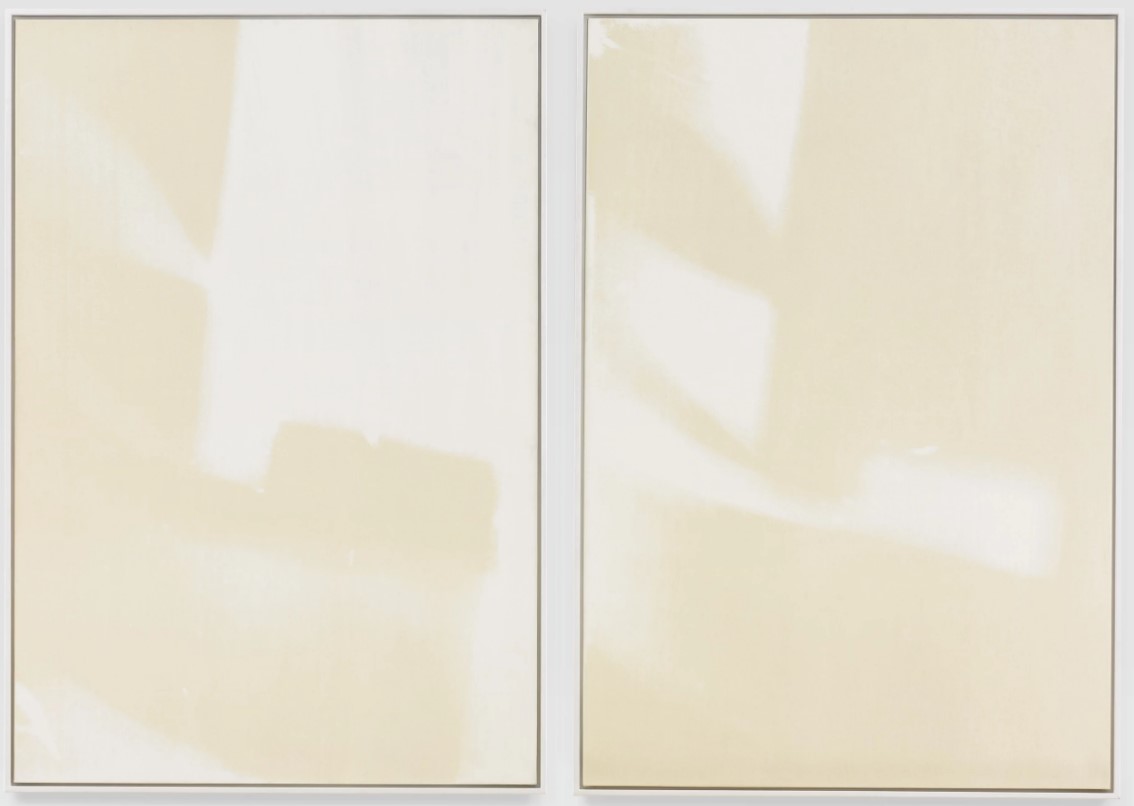
ANDY WARHOL
Diamond Dust Shadows, 1979
Acrylic, diamond dust and silkscreen ink on canvas, in two parts
Each: 76×52 inches (193×132 cm)
The mesmerizing and mysterious appearance of Andy Warhol’s Diamond Dust Shadows is among the most beautiful and deeply enigmatic of Warhol’s late paintings. Oscillating between the abstraction of the image and the ephemeral effect of the medium, Diamond Dust Shadows embodies a myriad of Warholian tropes: the glitter of glamour and money, the radiance of religion, the complexity of perception within image repetition, and indeed the nature of painting itself. The Shadow series marked a new departure in Warhol’s career, away from the 1960s figurative works that depicted cultural icons and commodity symbols towards an idiom of abstraction that is also mirrored in the Rorschachs, Camouflage, and Oxidation series of the late 1970s and early 1980s. Created in 1979, Warhol’s Shadow paintings were the penultimate expression of this new direction in his oeuvre, executed both in more monochromatic palettes of creamy white or velvety black, as well as vivid colors against black. Marshalling the visual impact of contrasts – between light and dark, positive and negative – Warhol’s graphic and filmic eye is fully celebrated by this seductive series. While the stark juxtaposition of jewel-toned colors and deep black shadows animate the colored series of Shadows, the sparkling surface and ambiguous contrasts in the cool white and warmer off-white tones of the present work brings a deeper complexity to the shadow as signifier and subject. Indeed, the diptych Diamond Dust Shadows inhabits more fully the subtlety of shadows in that it illuminates as much as it obscures.
Based on photographs taken in Warhol’s famed New York City studio The Factory, the Shadows create a mood of ultimate intangibility. The shadow as a symbol for transience, and ultimately mortality, appears in a variety of works in Warhol’s last decade, amongst them the Skulls series from 1978. In fact, Warhol had also used the shadow as an effective instrument to mystify and disguise certain elements within major 1960s works such as the Death and Disaster series and his 1966-1967 Self Portrait. Repetition of the image only increased the challenge to grasp the “shadow” visually as well as metaphorically. The series of multi-colored Shadow paintings, originally conceived by Warhol as one work, includes one large installation of a total of 102 paintings in 17 different colors that now resides in the collection of the Dia Art Foundation and that was recently exhibited for the second time only in its entirety at the Museum of Contemporary Art in Los Angeles in 2014-15. Installed alongside each other, these Shadow paintings present the aspect of a song’s refrain or the appearance of a reel of film, spooling the same image across an almost limitless space. In her essay for the Tate Modern retrospective of Warhol’s work, curator Donna De Salvo extolled the series’ resonant content: “The Shadows have been discussed as existential statements, as everything and nothing, as something fleeting, changeable and as intangible as real shadows. They have also been characterised as commentary on the very act of painting.” (Donna De Salvo, “Afterimage,” in Exh. Cat., London, Tate Modern, Andy Warhol Retrospective, 2002, p. 50)
The present diptych honors this concept of seriality and repetition that lies at the very core of Warhol’s oeuvre and revolutionized the course of art in the 1960s. In a subtle balance between kinship versus contrast, the two canvases juxtapose the same image in alternate positive/negative coloration with the shadow of one in bright white and the shadow of the other in a light faintly golden hue. In the place of the colliding individuality of bold multi-colored Shadows, Warhol here employs the diamond dust surface which serves to unite the two canvases. In 1979 Rupert Smith introduced Warhol to diamond dust, eventually discovering the perfect type of ground glass that brought a wealth of allusions to Warhol’s work of this period. From the glitter of disco to the sheen of consumerism and finally the radiance of religious icons, this lustrous material that captures and projects light either evokes commercialism in his Diamond Dust Shoes or the sublime as beautifully embodied in Diamond Dust Shadows.
Large Shadow Paintings
Shadow, 1978
Phillips New-York: 19 November 2024
Estimated: USD 1,500,000 – 2,000,000
USD 2,238,000
Andy Warhol – Modern & Contemporary… Lot 29 November 2024 | Phillips
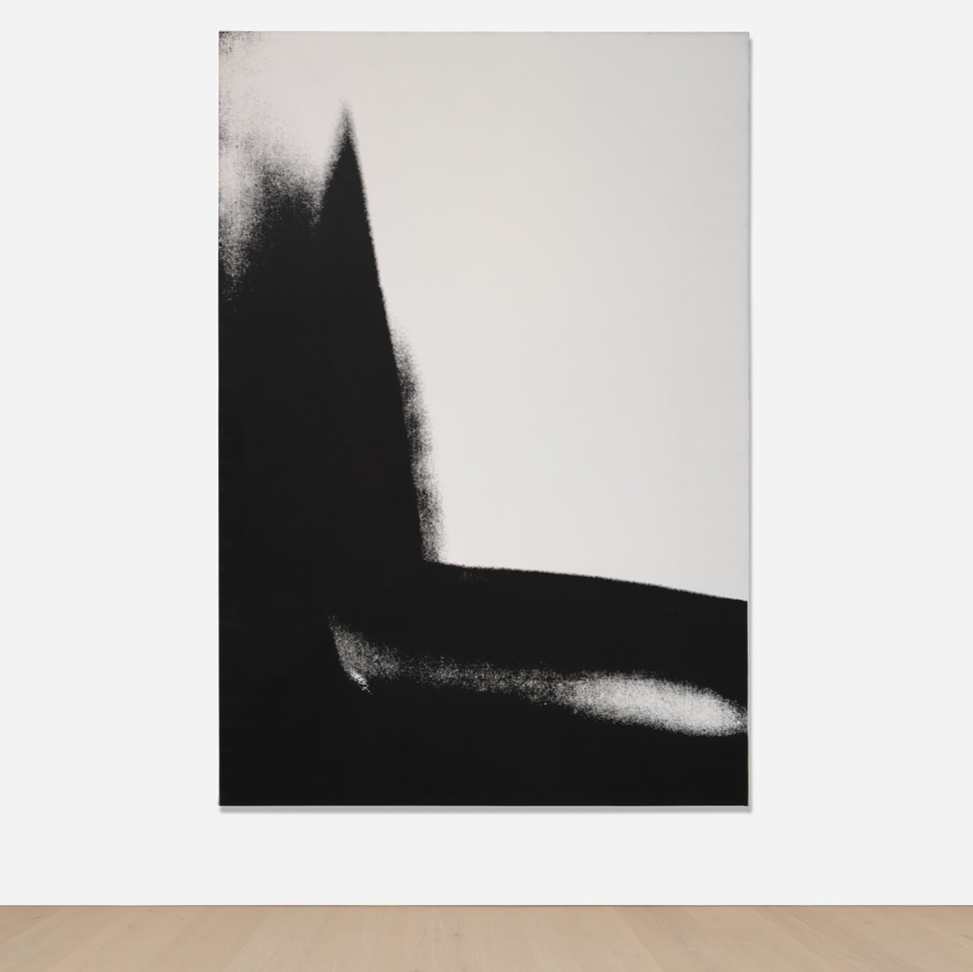
ANDY WARHOL
Shadow, 1978
Silkscreen ink on linen
76×52 inches (193 x 132.1 cm)
Signed and dated “Andy Warhol 1978 Andy Warhol 1978” on the overlap
In Andy Warhol’s Shadow, 1978, bold, abstract black forms—both hard- and soft-edged—sweep dynamically across the lower and left regions of a muted, soft white canvas, creating a striking interplay of contrast and depth. Conceived during an intense burst of production from December 1978 to February 1979, the painting belongs to Warhol’s larger Shadows series, early examples of which debuted as a continuous frieze of 83 canvases at the Heiner Friedrich Gallery in New York. An additional 19 canvases were later added to this installation, acquired by the Lone Star Foundation (now the Dia Art Foundation) and permanently housed at Dia Beacon. While Warhol experimented with various compositions in the series, he favored two forms identified by curator Lynne Cooke: “the peak,” a black positive on a white or colored background, as seen in the present example, and “the cap,” a colored or white negative on a black field. This particular Shadow is part of a subset of eight additional 76-by-52-inch canvases produced alongside the Heiner Friedrich frieze and Lone Star commission; six, including this one, were type A negative images, while the other two were Type A underexposed. Notably, Warhol kept this painting until 1986, when he traded it, along with two other works, to artist James Brown in exchange for several of Brown’s “black paintings,” characterized by simplified motifs drawn over a black-painted background. In Shadow, Warhol strips away the markers of his iconic pop sensibility to confront viewers with the philosophical and metaphysical weight of a mere shadow, offering an image that exists beyond historical or cultural specificity.
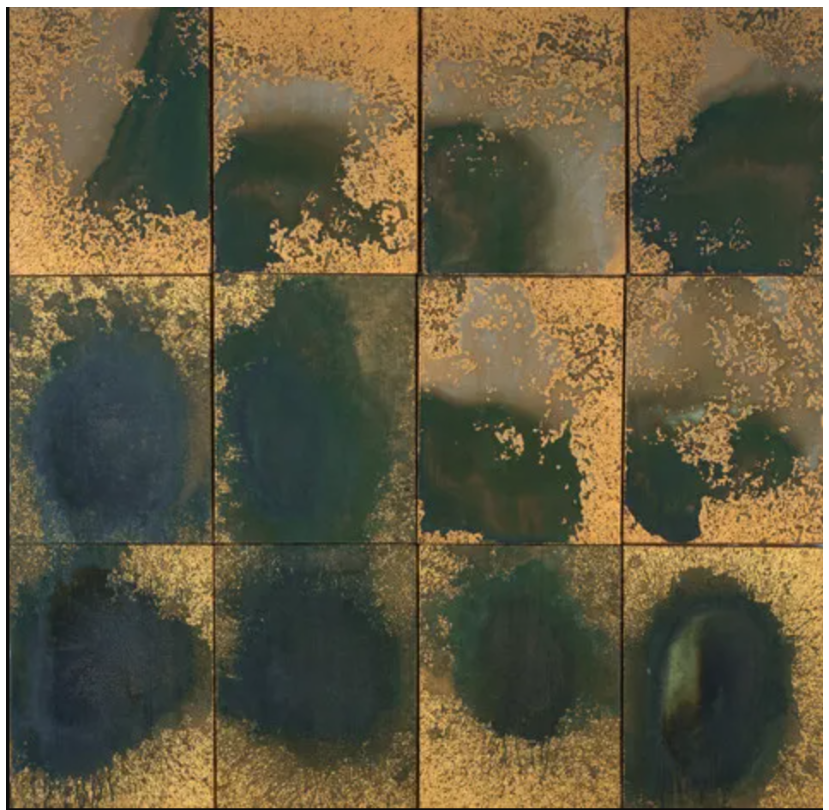
Andy Warhol, Oxidation, 1978. The Andy Warhol Museum, Pittsburgh. Artwork: © 2024 The Andy Warhol Foundation for the Visual Arts, Inc. / Licensed by Artists Rights Society (ARS), New York
The Shadow paintings mark a pivotal moment in Warhol’s career, signaling the culmination of his venture into nonfigurative abstraction, which began in the late 1970s with his Oxidation, Rorschach, and Camouflage series. This shift from figuration, which had focused on celebrity and commodity culture, reflects Warhol’s deepening interest in abstraction and a more conceptual engagement with the idea of shadows. Warhol was deliberately opaque regarding the Shadows‘ source image, explaining offhandedly: “it’s a photo of a shadow in my studio.” The paintings explore the nuanced interplay between representation and the tensions of reality versus illusion, and presence versus absence. The series offers a tangible and unapologetic portrayal of nothingness, embracing its essence without pretending to be anything more.
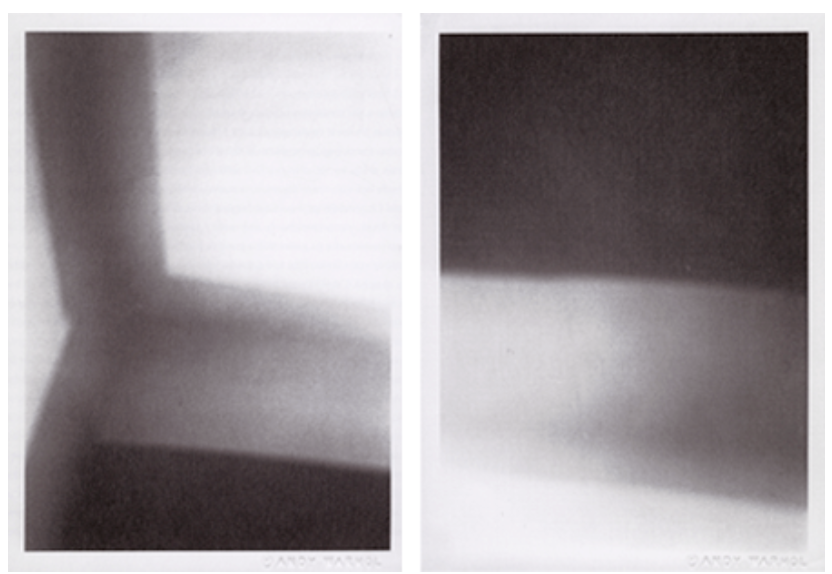
Warhol’s photographs of shadows, ca. 1978. Image and Artwork: © 2024The Andy Warhol Foundation for the Visual Arts, Inc. / Artists Rights Society (ARS), New York.
Even so, as a silhouette without a distinct origin, Shadow visually prompts the viewer to posit an underlying subject: one possibility being the underlying documentary value of both shadows and photographs, each arising from the play of light on physical objects in our environment. Predominantly dark, seemingly abstract, and intriguingly enigmatic, Warhol’s Shadows combine photography and painterly gesture within his signature silkscreen medium, transforming an immaterial phenomenon into a physical, painted presence. Though abstract, Shadow does not align itself comfortably within any particular genre or movement. It bears stylistic allusions to Abstract Expressionism—specifically, the monochromatic, architectonic forms of Franz Kline and Robert Motherwell—but with a calculated detachment that subverts the expressive spontaneity of those artists. Warhol’s use of silkscreen, a technique often associated with mechanical reproduction, distances the work from the raw, personal gestures of Abstract Expressionism. Instead, it introduces a sense of sterility, as though the work is as much a scientific observation as an aesthetic creation. Warhol refrains from personal expression, embracing an intentional coolness that renders Shadow both a critique and an homage to the emotive intensity of Abstract Expressionist works. Lynne Cooke identifies the “cap” motif present in Shadow—a black positive suspended against a light field, reversing conventional figure-ground relationships. This reversal inverts the viewer’s expectations, challenging them to confront the void not as absence, but as presence. The shadow looms, suspended in a way that disrupts the natural order of light and dark, almost mocking the abstract expressionist ideal of form’s triumph over void. Warhol’s shadow, in its inscrutable flatness, invites the viewer to perceive not just what is there, but what is intentionally left unsaid.
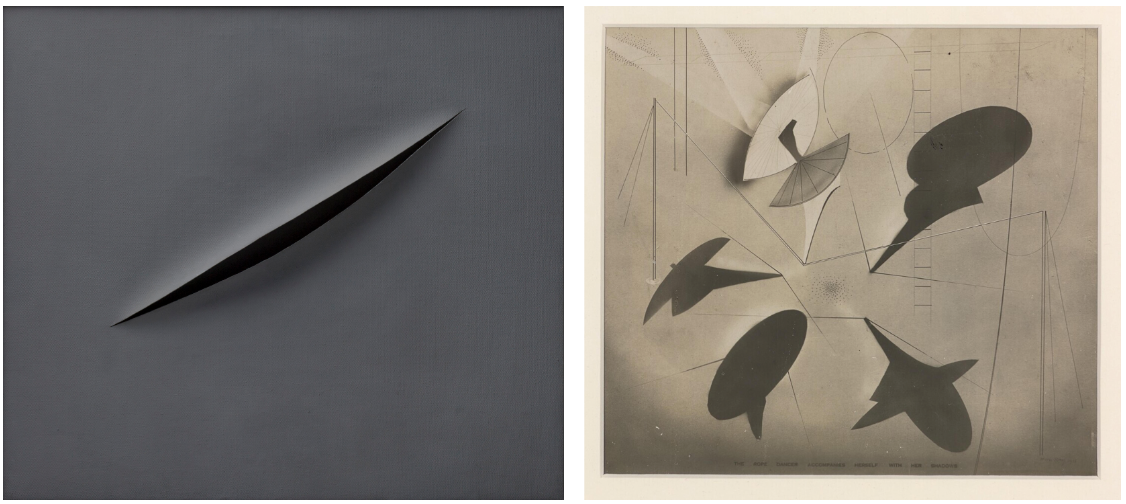
[Left] Lucio Fontana, Concetto Spaziale [Spatial Concept], 1959. LWL-Museum für Kunst und Kultur, Münster. Image: bpk Bildagentur / . LWL-Museum für Kunst und Kultur, Münster / Sabine Ahlbrand-Dornseif / Art Resource, NY, Artwork: © 2024 Fondation Lucio Fontana/Artists Rights Society (ARS), New York
[Right] Man Ray, The Rope Dancer Accompanies Herself with Her Shadows, 1928-1940. Museum Boijmans Van Beuningen, Rotterdam, Netherlands. Artwork: © Man Ray Trust / Artists Rights Society (ARS) / ADAGP, Paris 2024
Warhol’s use of shadow is also steeped in cinematic allure, echoing the noir-like quality of silent films and German Expressionism. The stark contrast between black and white recalls the theatrical chiaroscuro of F.W. Murnau’s Nosferatu, where shadows are imbued with an almost sentient malevolence. In Shadow, Warhol employs a similar high-contrast aesthetic to evoke a sense of foreboding, yet he tempers it with minimalist restraint, holding viewers at a calculated distance and transforming the canvas into a silent screen where the shadow becomes the sole actor. In drawing upon cinematic techniques, Shadow suggests a latent narrative, an event suspended in time. Yet Warhol denies viewers the satisfaction of a resolution, leaving only the trace—the shadow—as a solitary remnant. The starkness of the black and white palette, devoid of vibrant hues, reinforces the work’s role as a “disco décor,” yet this designation feels inadequate. The shadow, hovering in its celluloid simplicity, becomes a meditation on transience, on the fleeting quality of moments captured only in silhouette. Warhol turns the canvas into a space where light and dark do not merely define one another but exist in a state of perpetual suspense. Traditionally, shadows have been seen as symbols of the transient, the insubstantial—echoes of objects that capture only the essence of a form without its substance. Yet Warhol’s Shadow defies its role as a mere byproduct of the material world, occupying a space of its own on the canvas. The work taps into a deeper, almost haunting inquiry into what it means for something to exist without form, to be a marker of absence rather than presence. Since classical times, artists, scientists, and philosophers have debated the value of shadows. The ancient Greeks were the first to use cast shadows, developing a “geometry of the light” to situate objects in relation to a consistent light source, while Plato, in his Allegory of the Cave, argued that shadows mislead us about the true nature of reality. In the present work, Warhol engages with this lineage but subverts it; his shadow is unmoored, devoid of origin, a shape that belongs to nothing tangible. Shadow occupies a rarefied space in Warhol’s body of work—a space in which he distills his lifelong preoccupation with image and illusion into a near-abstract contemplation of being and non-being. Unlike the ephemeral subjects of his commercial works, the shadow is timeless, divorced from the contingencies of popular culture and celebrity. It gestures toward an artistic lineage that stretches back to the origins of image-making.
Shadow (Double), 1978
Christie’s New-York: 10 May 2016
Estimated: USD 1,000,000 – 1,500,000
USD 905,000
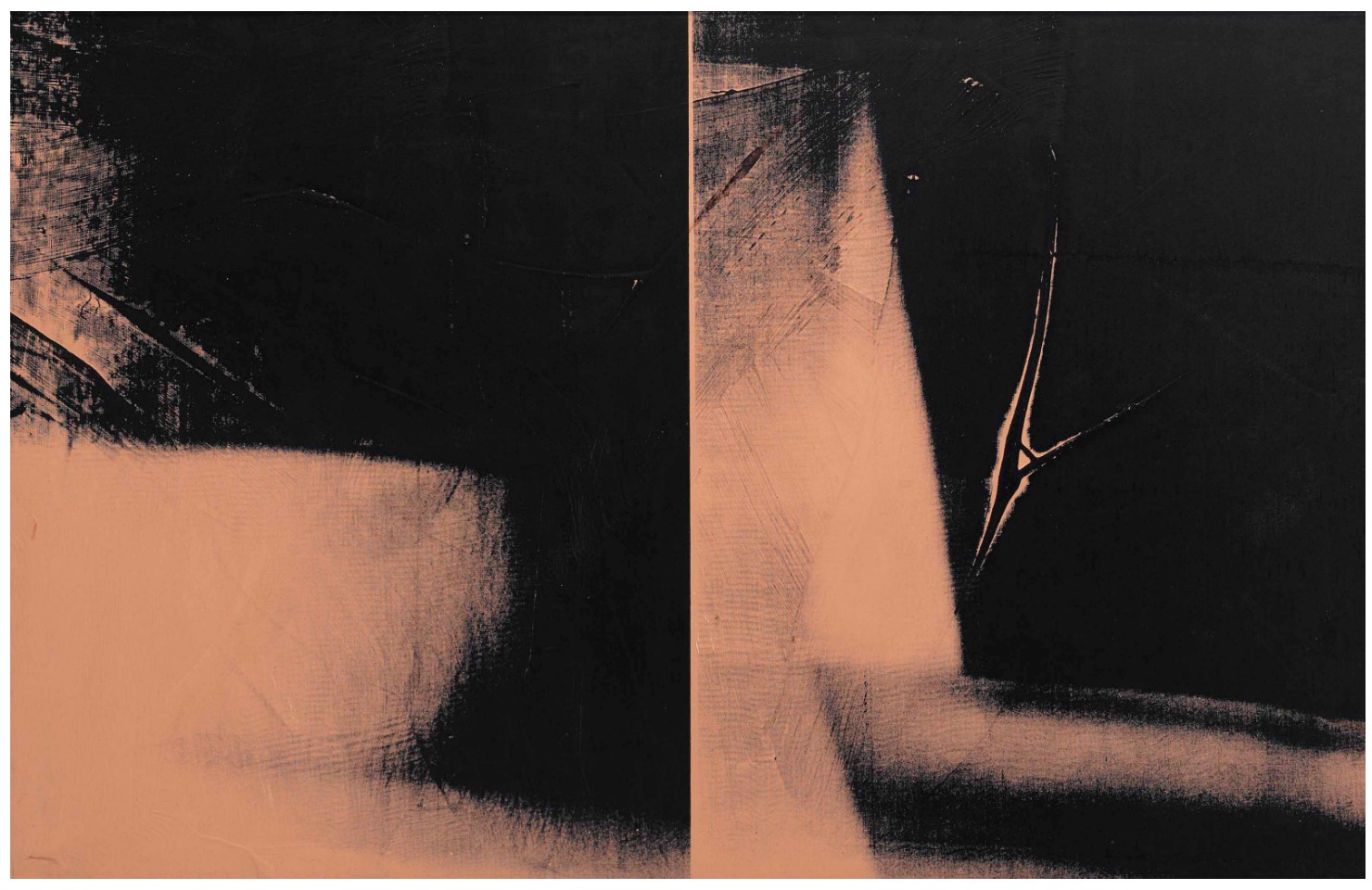
ANDY WARHOL
Shadow (Double), 1978
Synthetic polymer and silkscreen ink on canvas
50×78 inches (127 x 198.1 cm)
A brazen departure from Andy Warhol’s serial representational paintings, Shadow (Double) is grand depiction of shadows magnified to sublime, striking proportions, totally devoid of any recognizable motif or figure. This work is one of only a small number of Shadow paintings in private hands from a monumental series of silkscreened works produced within the short span of 1978-1979, created following Warhol’s increased interest in shadows as an integral element within his compositions. This silkscreened image perfectly balances positive and negative space, creating an optical tension between the foreground and background, much in the same way the celebrated abstract expressionists of his time aimed to achieve in their own paintings. This fascination with the reciprocity of light and dark noticeably materializes in his 1977 Hammer & Sickle and Skulls series, within which Warhol’s controlled dramatic lighting and increased contrast compelled dark shadows to establish further presence over the image plane. As if in a bursting act of culminating preoccupation with obscurity, Warhol eradicates his reliance on a recognizable object and allows the shadowy forms to exist as their own engaging composition.
Simultaneous to his attention in darkness, Andy Warhol was investigating abstraction, evident also in his Oxidation, Rorschach, and Camouflage paintings from 1977 to 1986. Contrary to the action painters who exposed the artist’s hand by using brushstrokes and paint to record energetic gestures, Warhol instead detaches the creator from the painting by screen-printing images originating from photographs. Regarding the angst of the Abstract Expressionist movement as comically masculine and clichéd, Warhol’s abstract compositions act as parody of action painters and Ab-Ex artists such as Franz Kline, Milton Resnick, and Jackson Pollock.
“The world of Abstract Expressionism was very macho” Warhol said. “The painters who used to hang around the Cedar Bar on University Place were all hard-driving, two-fisted types… The toughness was part of a tradition, it went with their agonized, anguished art. They were always exploding and having fist fights about their work and their love lives… The art world was different in those days. I tried to imagine myself in a bar striding over to, say, Roy Lichtenstein and asking him to ‘step outside’ because I’d heard he’d insulted my soup cans. I mean, how corny. I was glad those slug-it-out routines had been retired—they weren’t my style, let alone my capability” (A. Warhol, quoted in J. Hendrickson, Roy Lichtenstein, Cologne 2000, p. 16).
Shadow (Double) in particular bears striking resemblances to the gesturally abstract action paintings of Franz Kline. Kline, whose compositions are characterized by confidently bold and jagged lines, splashing and smearing as if painted on a whim, emphasized dynamism and exude raw energy. Likewise, Shadow (Double) seems to mimic this same structure and confident angles that Kline sought to expose to his viewers, but instead removing gestural expression. By utilizing photography and silkscreen prints, which intrinsically bear the potential to be reproduced infinitely, Warhol also seemingly pokes fun at the painstaking technique by which abstract expressionists create their paintings.
Despite the evident tongue-and-cheek humor with which Warhol depicts abstraction, the serialism of his Shadow paintings implies an underlying seriousness to Shadow (Double). Unlike his images of celebrities, advertisements, and commodities which imply an impersonal consumerism, Hirshhorn associate curator Evelyn Hankins describes that “these have a real hand and a touch to them”. Julian Schnabel, in the preface to Andy Warhol: Shadow Paintings (New York: Gagosian Gallery, 1989), describes that even though the works initially appear predominantly dark and lacking in discernable figure, the shadow paintings are “as full of imagery as any of Andy’s other paintings.” Perhaps Warhol’s deviation from his well-known images of cultural icons and consumer products was driven by his desire to innovate. By incorporating abstract imagery into his paintings, Warhol pushes the boundaries of his success and breaks free of the popular notion that he was merely a commercial artist.
The source of the image for Shadow (Double), along with Warhol’s other Shadow paintings is yet unknown, and still debated. Accounts from his studio assistant, Ronnie Cutrone, indicate that the images are derived from shadows in the artist’s studio, The Factory, cast from cardboard maquettes assembled to cast abstract silhouettes. Some diary entries imply that the origins of these shadows are more corporeal. What is most evident is that Andy Warhol did not intend for the origin of the image to be the subject matter. By concealing this identity, he instead provides an image of something outside of the picture plane, leaving the viewer with a longing for something that does not exist and cannot be obtained. Shadow (Double) is both a humorous composition as well as a mysteriously alluring image, a striking example of Andy Warhol’s groundbreaking Shadow paintings.
Shadow, 1978
Sotheby’s London: 26 June 2012
Estimated: GBP 750,000 – 950,000
GBP 1,105,250
ANDY WARHOL
Shadow, 1978
Acrylic and silkscreen ink on canvas
76×52 inches (193×132 cm)
Signed and dated 1978 on the overlap
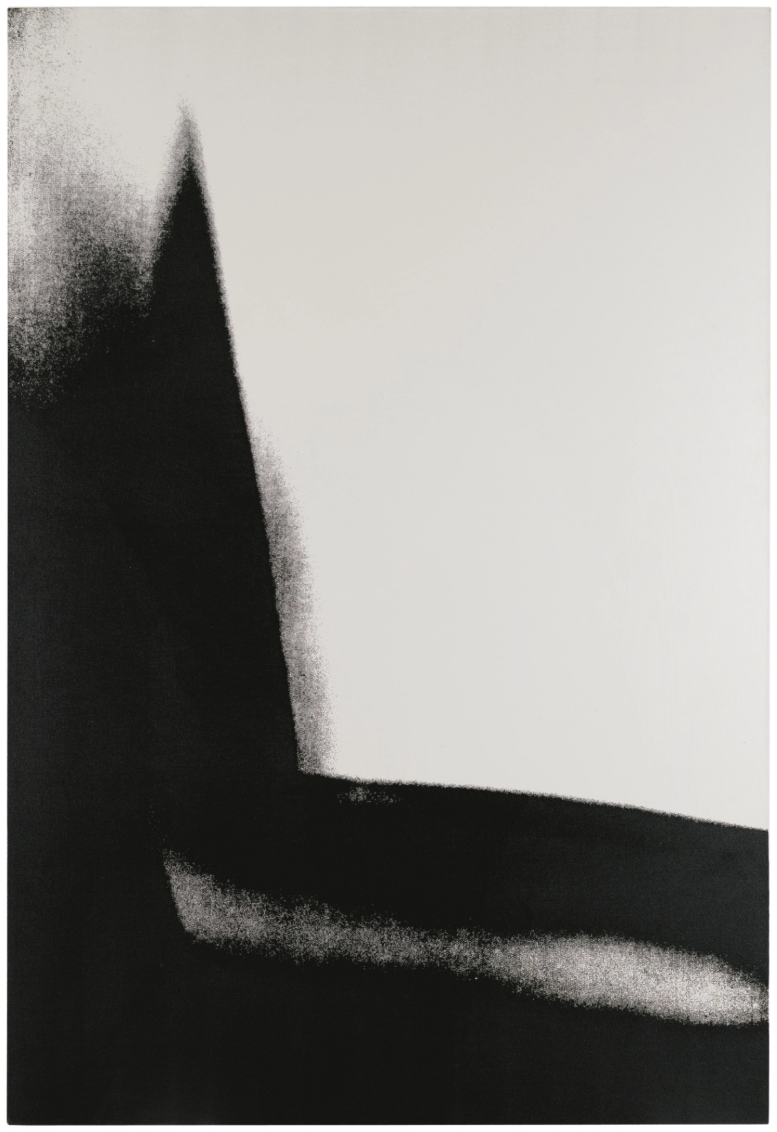
A stark, dramatic sweep of glossy black upon matte white, Shadow elegantly reveals the height of Warhol’s artistic powers. Following a complete mastery of contemporary imagery, Shadow testifies to his search for more timeless subject matter – images to outlive the contingencies of any historical moment. In a characteristically consuming but brief burst of production, Warhol created the Shadows from December 1978 to February 1979. Immediately following their completion, 83 canvases were exhibited as a continuous frieze at Heiner Friedrich Gallery in New York; these plus an additional 19 were purchased by the Lone Star Foundation (now the Dia Art Foundation) and today are permanently installed at Dia Beacon. Warhol experimented with seven or eight shadow compositions, but favoured only two for the Dia installation, differentiated by curator Lynne Cooke as “the peak” – a black positive on a white or coloured background and “the cap” – a coloured or white negative on a black field.
Shadow (Red), 1978
Sotheby’s New-York: 10 May 2011
Estimated: USD 700,000 – 900,000
USD 4,842,500
ANDY WARHOL
Shadow (Red), 1978
Acrylic and silkscreen ink on canvas
76×52 inches (193.4 x 132 cm)
Signed and dated 1978 three times on the overlap
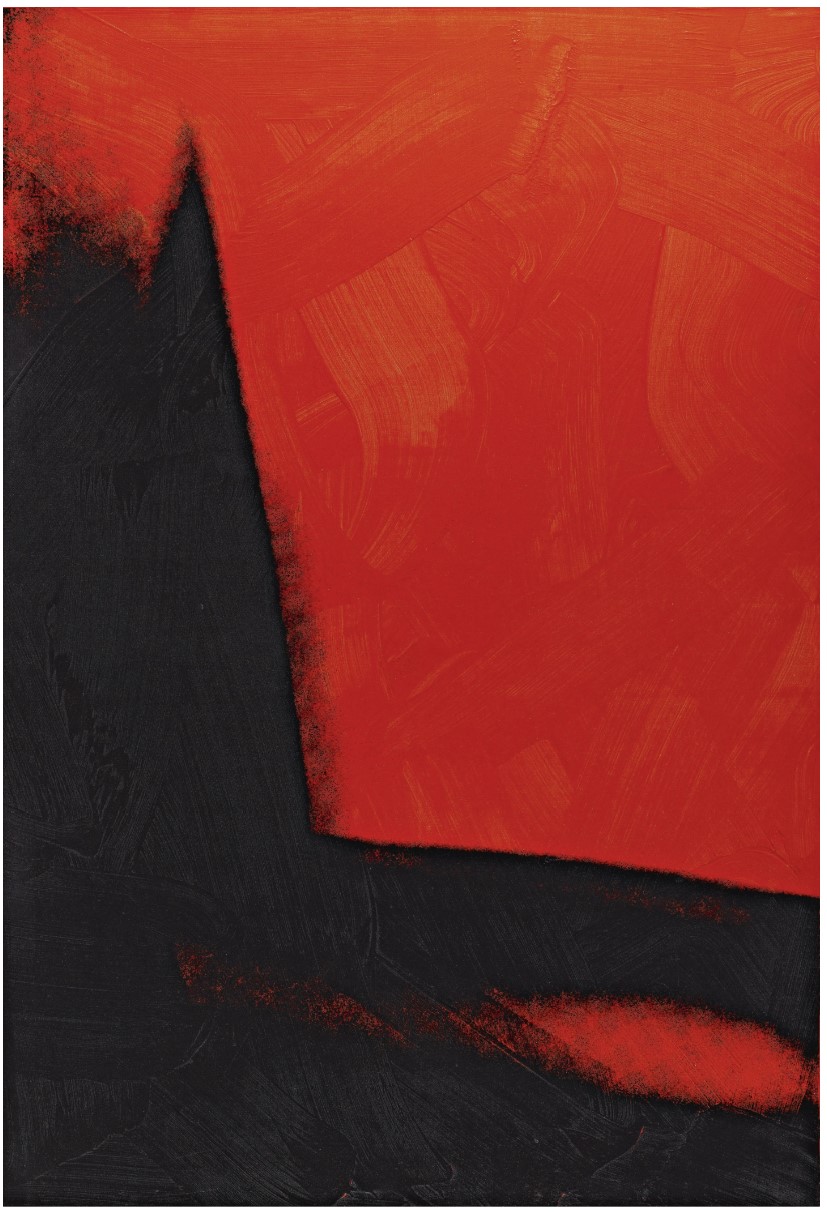
Andy Warhol’s series of Shadow paintings concerns itself with the complex and subtle interplay with issues of representation, primarily of reality versus illusion and presence versus absence. The Shadows represent a concretized and unashamed depiction of nothingness that does not declare itself to be anything other than it is. The present work, from 1978, is seemingly abstract and intriguingly enigmatic, as Warhol’s dark and mysterious subject matter is set against a pulsating and luscious red background in Shadow (Red). By the mid 1970s, Warhol’s work was more dissociated from the commercial subject matter that had consumed him for much of his career choosing instead to paint in a more purely abstract style than ever before. The divergence began with the Oxidation paintings – also of the late 1970s – and ended with Rorschachs and Camouflage paintings in the 1980s. To create the Shadow paintings, Warhol used specifically constructed cardboard maquettes that he would lean or set against the walls of his office at various angles, casting a variety of shadows. The haunting images that resulted draw the viewer in and ultimately refuse all perceptual analysis revealing that in reality they are nothing but a painted plane – a striking image on a pure surface that carries a filmic presence.
Set against a strong chromatic field, the shadow in the present work is amplified and the composition richly seductive. Like many of the paintings from Warhol’s 1960’s Death and Disaster series, the Shadow paintings are sumptuous in color and high style, but their underlying tone is one of sadness and tragedy. In Shadow (Red), Warhol’s surface is broadly handled; his energetic application of cresting red pigment alludes to the brushstrokes of the Abstract Expressionists. Warhol’s desire to engage with the tenets of the Abstract Expressionist canon is hardly coincidental although when Warhol referenced this art movement he was typically irreverent. Shadow (Red) can most closely be compared to the painterly blocks of form one finds in Franz Kline’s work – particularly his color abstractions. Warhol’s most extensive exploration into the subject came from his vast installation work of 102 panels that was purchased as a single entity by the Lone Star Foundation (now the Dia Center for the Arts) and first exhibited in January 1979. As Donna de Salvo notes of the Shadow paintings, “no essence is revealed, no single truth asserts itself. The experience is one of a late twentieth century landscape, everything is surface and nothing but surface.” (Exh. Cat., London, Tate Gallery, Andy Warhol, London, 2002, p. 51)
Sotheby’s New-York: 10 May 2011
USD 4,842,500
ANDY WARHOL
Shadow (Red), 1978
Acrylic and silkscreen ink on canvas
76×52 inches (193.4 x 132 cm)
Signed and dated 1978 three times on the overlap
Shadows, 1978
Sotheby’s New-York: 9 November 2010
Estimated: USD 3,000,000 – 4,000,000
USD 4,226,500
ANDY WARHOL
Shadows, 1978
Synthetic polymer, acrylic and silkscreen ink on canvas
78×138 inches (198.1 x 350.5 cm)
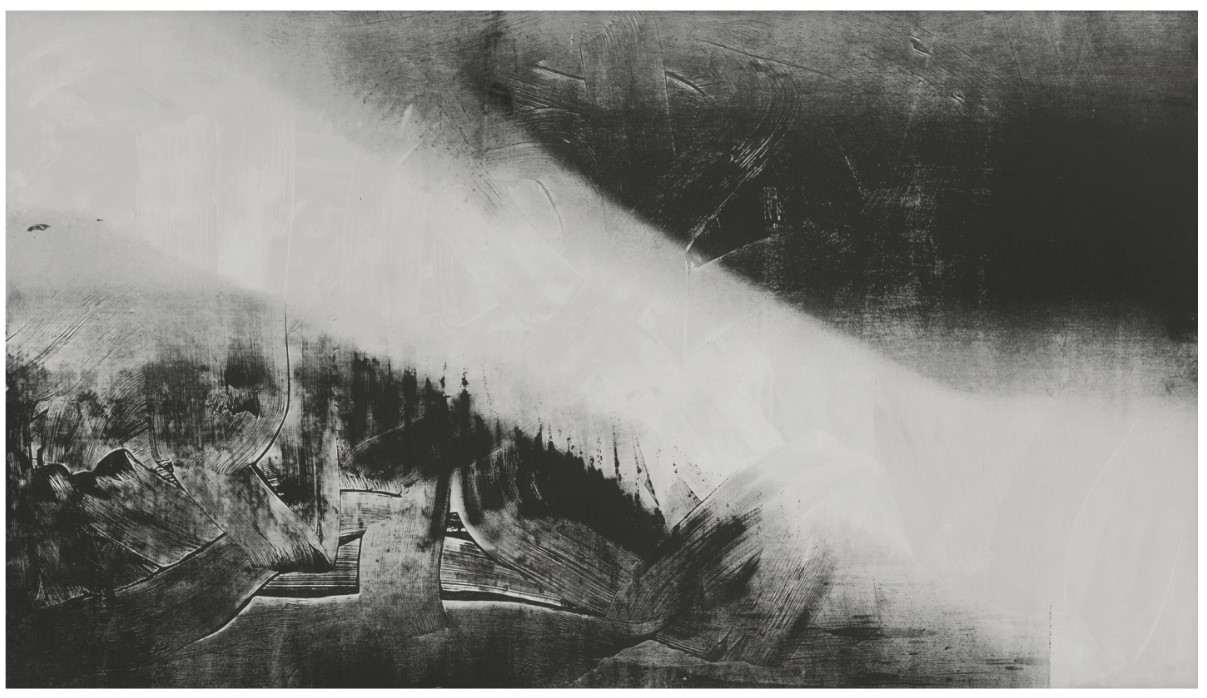
Andy Warhol’s Shadow paintings consist of a concentrated body of work executed in the late 1970s and early 1980s. Dissociated by this point from the commercial subject matter that had consumed him for much of his earlier career, Warhol began to paint in a more purely abstract style than ever before. This divergence started with the Oxidation paintings and ended with his Rorschachs and Camouflage works of the 1980s. Although the Shadow paintings were a new subject matter, Warhol throughout his career had a continuing fascination with the sinister underside of modern life. Warhol’s Suicide and Electric Chair paintings, dramatically lit themselves, seem to anticipate these later, more literal depictions. As Julian Schnabel wrote for Gagosian Gallery, “There is almost nothing to them. Yet they seem to be pictures of something… [they] are as full of imagery as any of Andy’s other paintings” (Exh. Cat., New York, Gagosian Gallery, Andy Warhol: Shadow Paintings, 1989, p 4).
To create the Shadow paintings, Warhol used specially constructed cardboard maquettes that he would lean or set against the walls of his office at various angles, casting a variety of shadows. This motif is used in a multitude of formats, and the current example, executed in 1978, is from a series of monumental canvases. Warhol’s most extensive exploration into the subject came with his vast installation work in 102 panels which was purchased as a single entity by the Lone Star Foundation (now the Dia Center for the Arts) and first exhibited in January 1979. As Donna de Salvo notes of the Shadow paintings, “no essence is revealed, no single truth asserts itself. The experience is one of a late twentieth century landscape, everything is surface and nothing but surface” (Exh. Cat., London, Tate Gallery, Andy Warhol, London, 2002, p. 51).
Seemingly out of nothing, these paintings create a powerfully haunting and iconic image. The different formats and motifs for the series all share the same theme of negative reflections. In the present work, Warhol’s painted surface is broadly handled and rippled with texture, filling the canvas with a technique reminiscent to the brushstrokes of the Abstract Expressionists. The black and white palette with exaggerated grey scale and dramatic chiaroscuro call to mind the silent films of German filmmaker F.W. Murnau, whose stills are in themselves important artifacts, for both historical and artistic reasons alike. Best known for Nosferatu, an expressionist interpretation of Bram Stoker’s Dracula, Murnau employs theatrical lighting to invert the visual hierarchy of film and theater. The actors are reduced to figures while his sets – violently scored with harsh, geometric beams of light and windows adorned with the filigree of baroque shadows – almost become characters themselves. Even the slightest blurring of the eyes turns Murnau’s stills into images quite similar to Warhol’s Shadows: disorienting, abstract, arresting in their high contrast.
The ambiguous representation of the shadow reiterates its ability to exist on the borderline between form and formlessness. Warhol’s chief preoccupation in the creation of these works has been with the creation of enigma. They draw the viewer in and ultimately refuse all perceptual analysis revealing that in reality they are nothing but a painted plane—a striking image on a pure surface. Uncommon for Warhol’s oeuvre, Shadows has a painterly quality, unlike his typically flat, mechanically executed works. A layer of pigment displaces the pigment beneath it, revealing white outlines, sharp in their neon brightness. The effect created by these layers is akin to the relief found in copper etchings, like those of Rembrandt. Both cases demonstrate just how much atmosphere can be evoked by the mere direction of line. Foliage can be rendered with unprecedented depth and clouds are made ominous. Like the necessarily tonal etchings of Rembrandt, Warhol, by restricting “the vocabulary of [the Shadow paintings] to two compositional formats, confining the total number of hues to seventeen, and limiting each canvas to a single color, [he] filtered a controlled and circumscribed serendipity through the proclivities of taste to create an environmental ensemble that pertains as much to décor as it does to high art” (Lynne Cooke, Andy Warhol: Shadows, New York, Dia Art Foundation, 1998).
Shadows concerns itself with the shifting hierarchy of reality and illusion, of presence and absence. The series presents an unabashed depiction of nothingness. Lynne Cooke writes that “thematically, the shadow has a seminal role in the original accounts of both painting and photography as art forms. In Warhol’s variants, reduced to essentials, it assumes a paradigmatic identity, devoid of identifiable origin or source, detached from its maker or creator, it exists in and of itself, a purposefully made image of ‘nothing’ ” (Ibid). Predominantly dark, seemingly abstract and intriguingly enigmatic, Warhol’s Shadows not only form one of his most significant bodies of work, but also lie at the heart of his oeuvre.
Christie’s New-York: 12 May 2008
USD 6,201,000
ANDY WARHOL
Shadow Painting, 1978
Synthetic polymer, metallic paint and silkscreen ink on canvas
76.7 x 161.4 inches (195 x 410.9 cm)
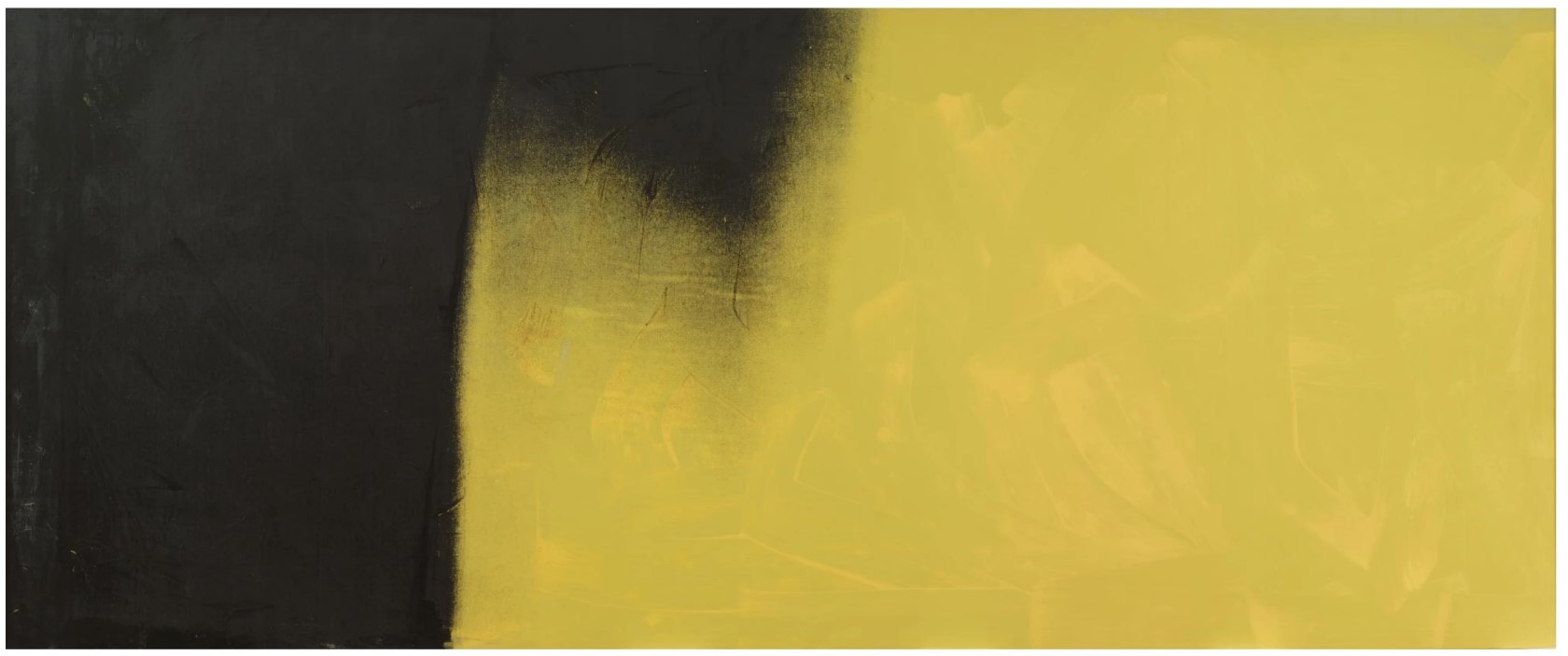
Shadow, 1978-1979
Sotheby’s New-York: 14 November 2007
Estimated: USD 4,500,000 – 6,500,000
USD 7,657,000
 ANDY WARHOL
Shadow, 1978-1979
Acrylic and silkscreen ink on canvas
80×192 inches (203×488 cm)
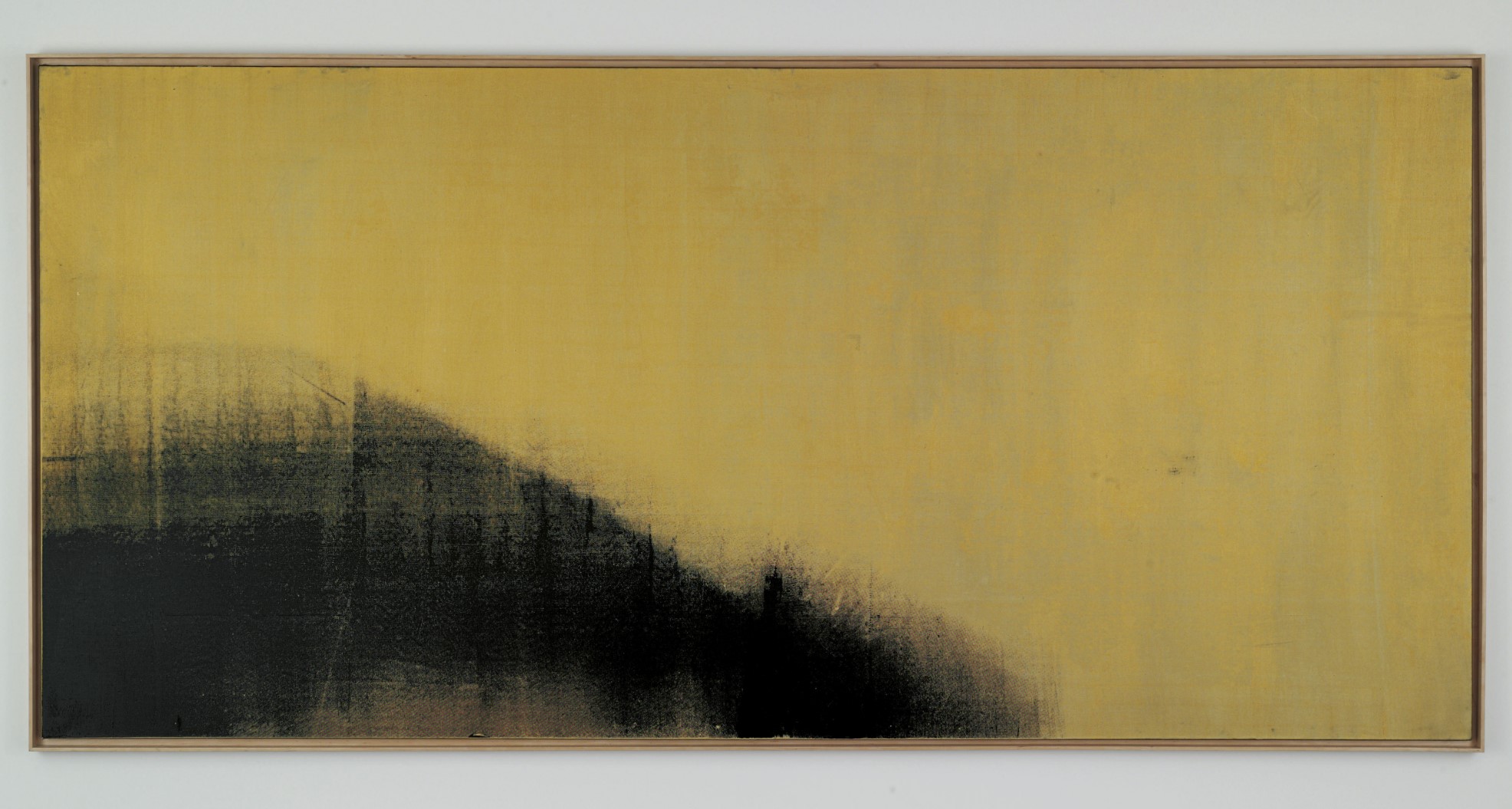
The different formats and motifs for this series all share the same theme of negative reflections. In the present work Warhol’s painted surface is broadly handled; his energetic brushwork irregularly fills the canvas with a technique similar to the brushstrokes of the Abstract Expressionists such as Franz Kline and Willem de Kooning. Warhol’s desire to engage with the tenets of the Abstract Expressionist canon is hardly coincidental although when Warhol referenced this art movement, he was typically irreverent. Shadow can most closely be compared to the painterly blocks of form one finds in Franz Kline’s work; Warhol’s girder-like, architectonic silhouettes have similar profiles as the thick strokes and rectilinear forms in Kline’s compositions. In the yellow area of the painting, one can see the calligraphic gestural strokes scattering the surface with frenetic energy. The bright and strong yellow hue both exaggerates the silhouette of the screened image of the shadow on the left most portion of the piece and accentuates the flat vast emptiness of the remainder of the work. The ambiguous representation of the shadow reiterates its ability to exist on the borderline between form and formlessness. Warhol’s chief pre-occupation in the creation of these works has been with the creation of enigma. They draw the viewer in and ultimately refuse all perceptual analysis revealing that in reality they are nothing but a painted surface—a striking image on a pure surface.
Small Shadow Paintings (14×11)
Shadow, 1977
Christie’s New-York: 22 November 2024
Estimated: USD 80,000 – 120,000
USD 201,600
ANDY WARHOL (1928-1987), Shadow | Christie’s
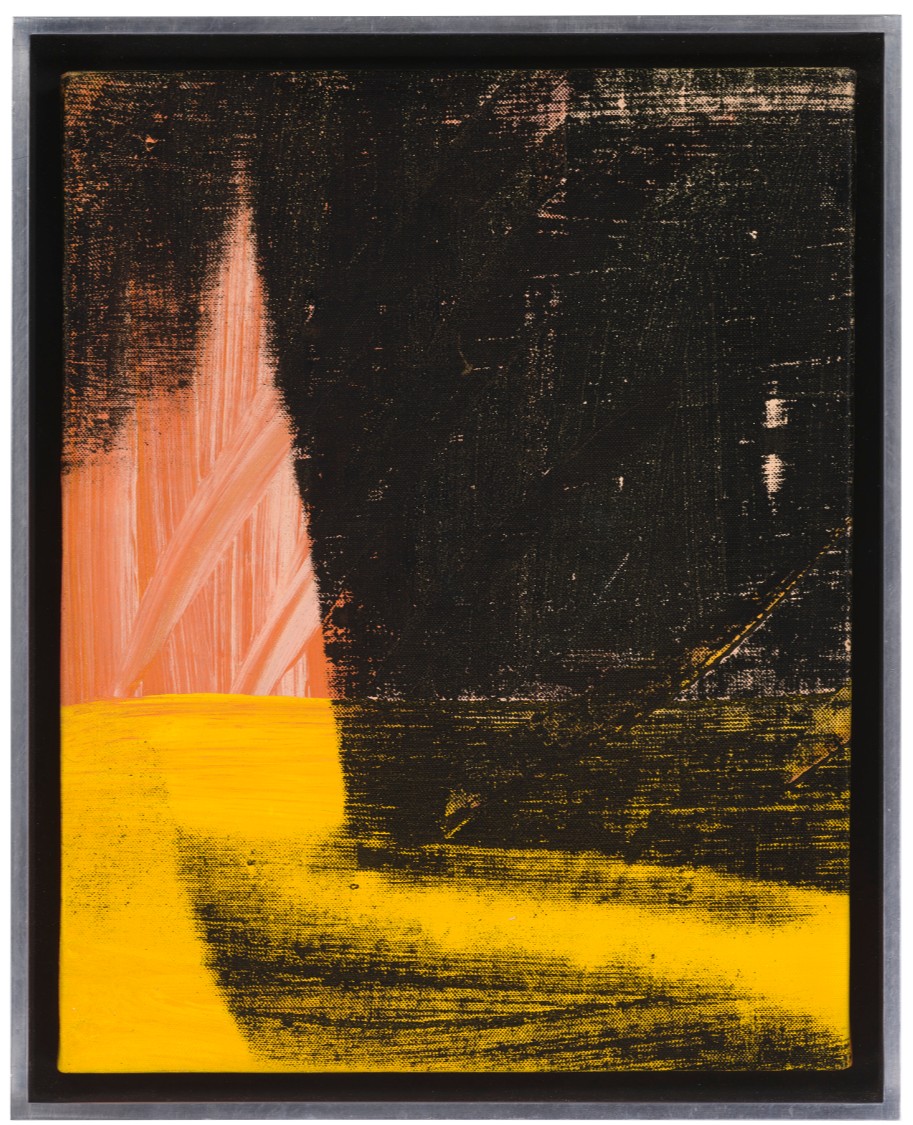
ANDY WARHOL (1928-1987)
Shadow, 1977
Acrylic and silkscreen ink on canvas
14×11 inches (35.5 x 27.9 cm)
Signed and dedicated ‘to Aurora Happy Birthday from Jed and Andy Warhol 1978’ (on the overlap)
Stamped with the Andy Warhol Authentication Board, Inc. stamp and numbered ‘A113.086’ (on the overlap)
Shadow, 1978
Sotheby’s London: 9 March 2017
Estimated: GBP 50,000 – 70,000
GBP 118,750
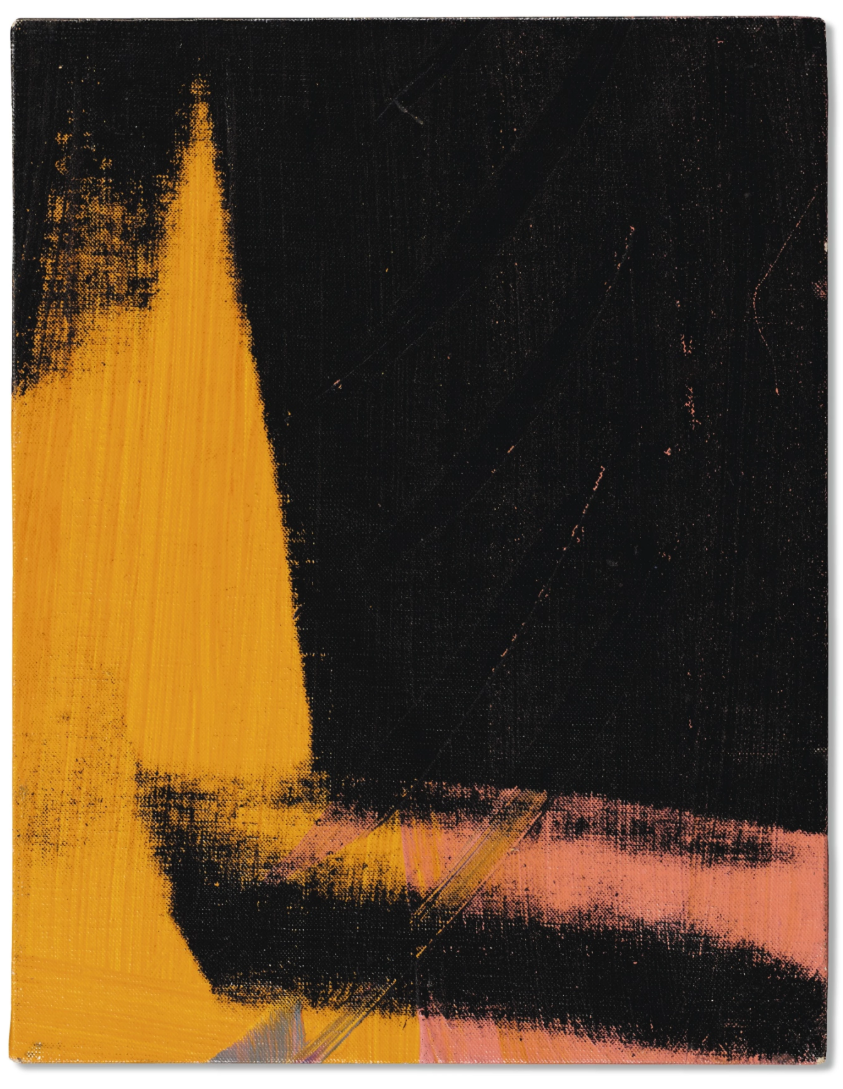
ANDY WARHOL
Shadow, 1978
Acrylic and silkscreen ink on canvas
14 x 11 1/8 inches (35.5 x 28.3 cm)
Signed, dated 78, numbered A1290.22 dedicated to John Curry on the reverse
Untitled (Shadow), 1979
Sotheby’s London: 12 March 2015
Estimated: GBP 300,000 – 400,000
GBP 581,000
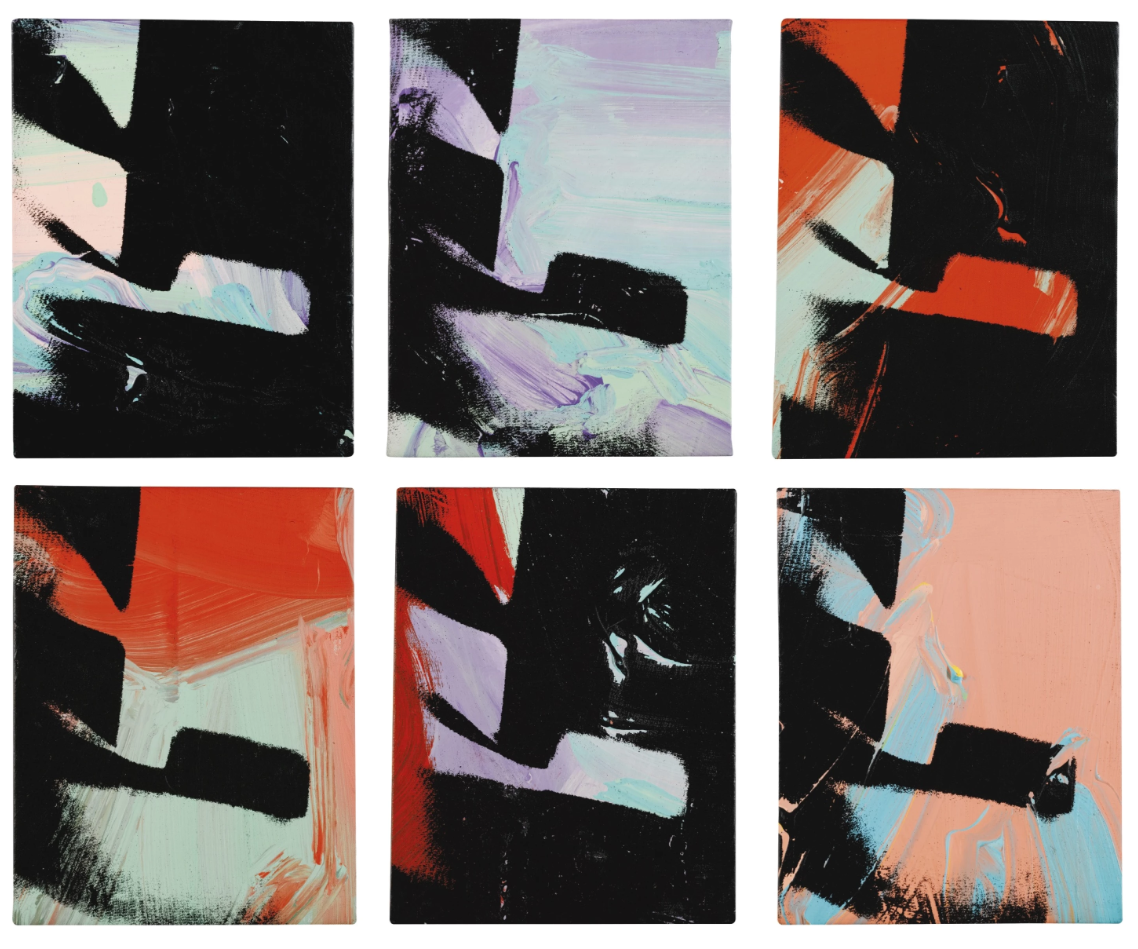 ANDY WARHOL
Untitled (Shadow), 1979
Acrylic and silkscreen ink on canvas, in six parts
Each: 14 x 11 1/4 inches (35.5 x 28.5cm)
Each: stamped by The Estate of Andy Warhol and The Andy Warhol Foundation for the Visual Arts and numbered on the overlap
Shadow, 1978
Sotheby’s New-York: 14 November 2012
Estimated: USD 80,000 – 120,000
USD 152,500
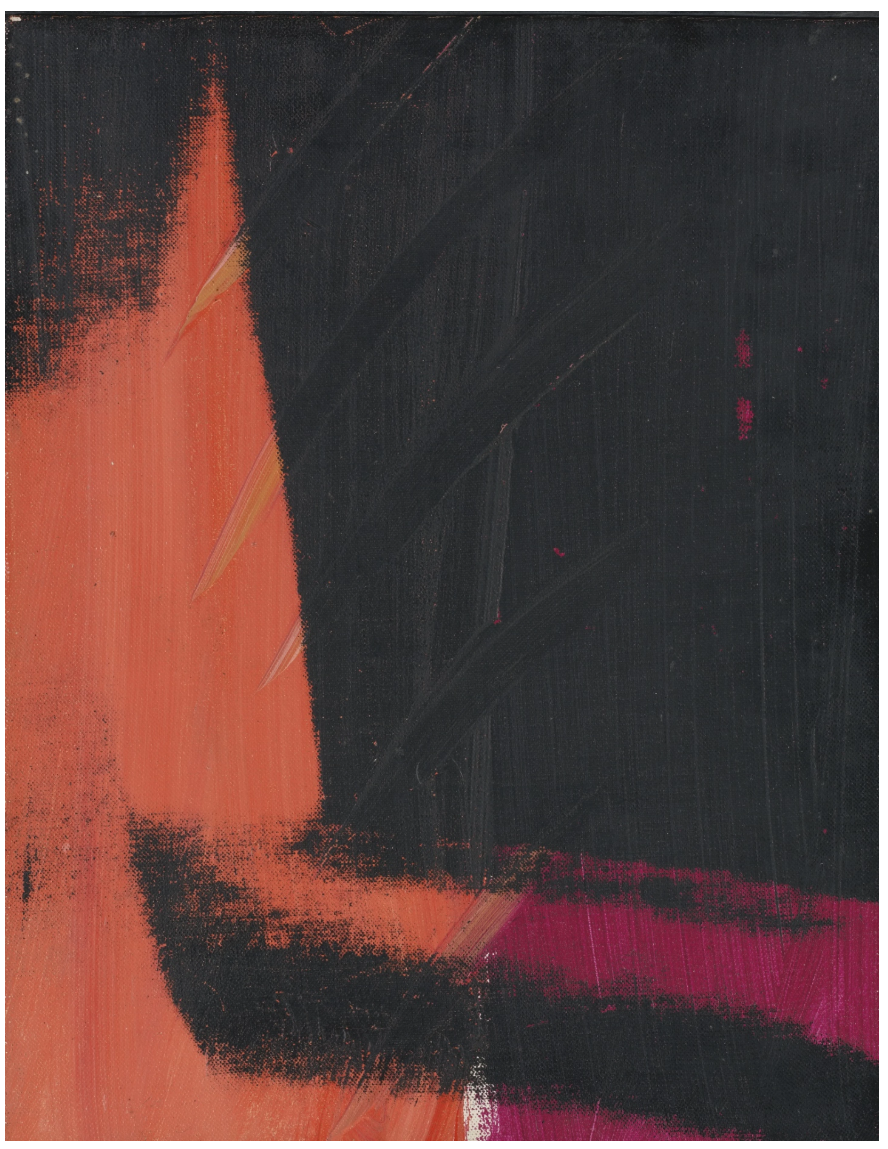
ANDY WARHOL
Shadow, 1978
Acrylic and silkscreen ink on canvas
14×11 inches (35.6 x 27.9 cm)
Signed and dedicated on the overlap; signed and dated 1978 on the reverse