DAVID HOCKNEY
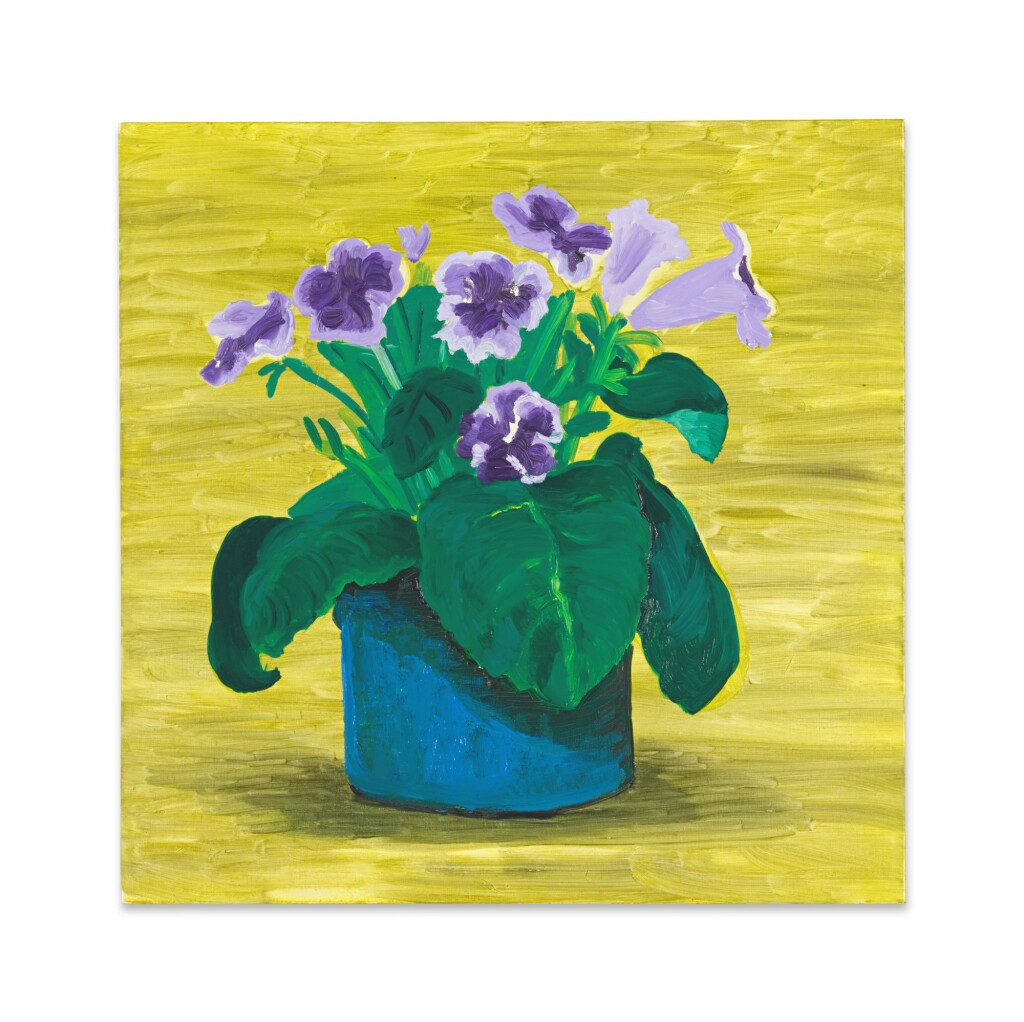
Blue Pot of Purple Flowers, 1989
Oil on canvas
24×24 inches (61×61 cm)
Signed, titled and dated 1989 on the reverse
Provenance
L.A. Louver, Venice
Acquired from the above by the present owner in 1990
Sotheby’s New-York: 13 May 2021
USD 2,863,500
Source: Sotheby’s
Blue Pot of Purple Flowers | Contemporary Art Day Auction | | Sotheby’s (sothebys.com)
“Painting still lifes can be as exciting as anything can be in painting. I remember once saying to Francis Bacon in Paris, that I knew a painting in California of tulips in a vase that was as profound as any painting he’d made. I think at first he almost thought I was referring to my own, but I was referring to the Cézanne in the Norton Simon Museum. It’s the most beautiful painting, and it is as profound as anything he did. Just some tulips in a vase. The profundity is not in the subject, it is the way it’s dealt with.”
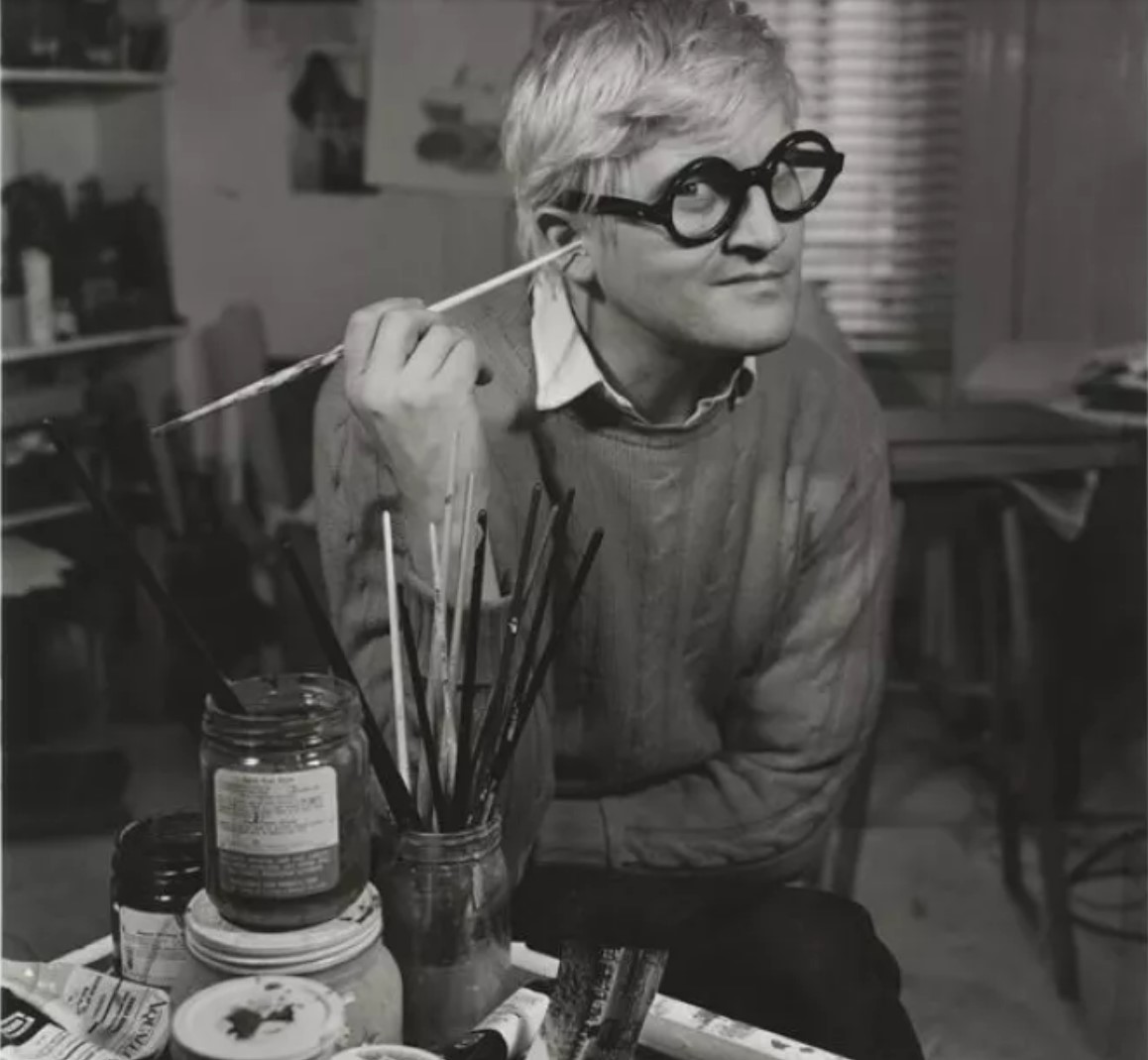
DAVID HOCKNEY IN HIS BAYSWATER, LONDON STUDIO IN 1970. PHOTO BY FRANCIS GOODMAN. © NATIONAL PORTRAIT GALLERY, LONDON.
Executed in 1989, the same year as David Hockney’s critically acclaimed traveling retrospective at the Los Angeles County Museum of Art, the Metropolitan Museum of Art in New York and Tate Gallery in London, Blue Pot of Purple Flowers represents the artist’s profound appreciation of and masterful return to the still life genre. While Hockney had long admired and embraced still life painting throughout his career, it was in the mid 1980s that he returned to the genre with renewed vigor and urgency, emphasizing and paying unprecedented attention to painterly texture, modulated tonalities, vibrant color choices, and experimental perspective. Through its simultaneous embrace of flatness and depth, Blue Pot of Purple Flowers portrays Hockney’s fundamental interest in painting objects as close as possible to the way we actually see them—ultimately seen in his unique approach to perspective, which is devoid of any single vantage point, but rather a conglomeration of many continuous viewpoints. In addressing one of the oldest and most storied genres in the history of painting, Hockney harnesses a template on which he can innovate and advance art history from within, ultimately creating his own version of truth and reality as witnessed in the most unexpected, even commonplace of objects. The present work is ultimately a significant encapsulation of Hockney’s personal life and his close bond with the many friends and acquaintances with whom he surrounded himself throughout his lifetime. Beginning in the 1980s, Hockney developed a habit of painting intimate flower still lifes for his friends as get-well cards. Blue Pot of Purple Flowers exists as one such example, revealing an artist who marveled at the gifts of nature and sought to in turn share that sense of joy and beauty with the world around him through his paintings.
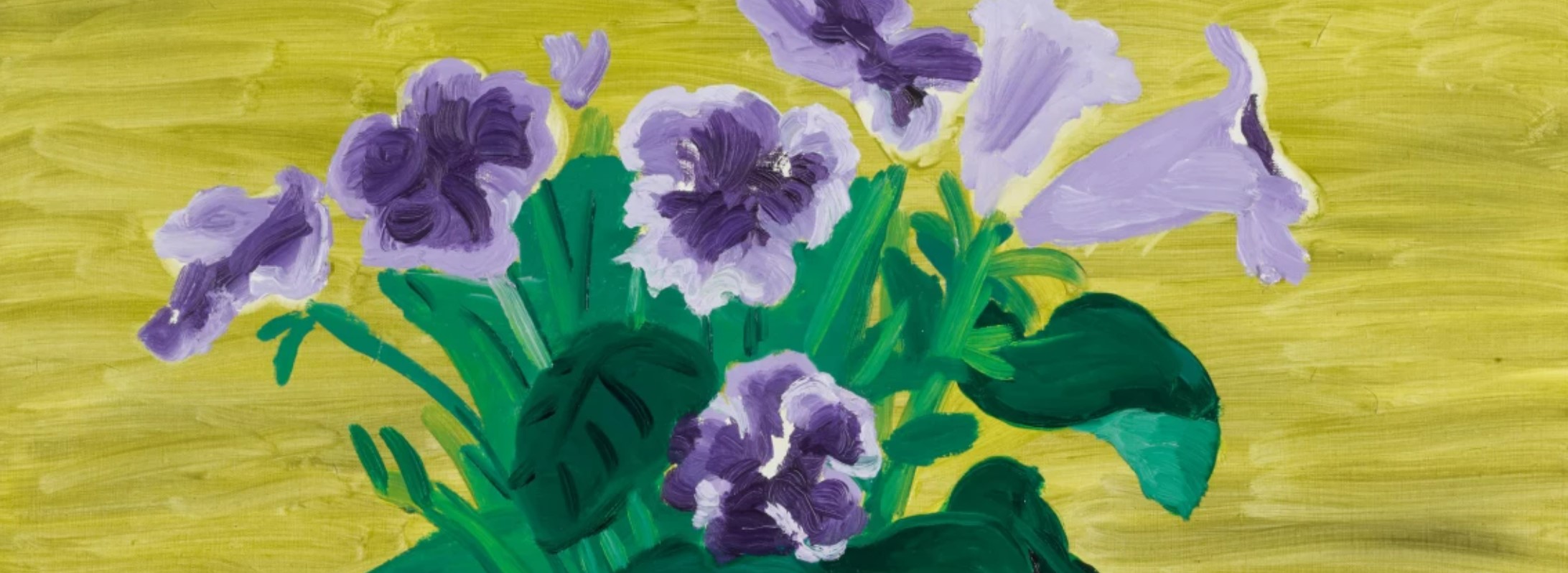
Blue Pot of Purple Flowers depicts a sprightly bunch of violets bursting from a rounded cerulean pot. Rendered in short horizontal brushstrokes of vibrant chartreuse, the enigmatic background denies specificity of time, place and scene. Yet though the background remains completely abstracted, the attention given to the geometric planes, tonal gradation, and accompanying shadows beneath the pot restores our mind’s ability to recognize three-dimensionality in direct association with our own experience in receiving such a joyous arrangement. Throughout the picture plane, Hockney’s use of shades is a remarkably strategic tool to generate depth in an otherwise flattened composition. By adding a touch of dark paint to the respective chartreuse, violet, green, and blue hues, Hockney adds depth to the color while keeping the hues consistent. The result is a simplified and pared-down color palette that offers a purist depiction of the scene. In reducing the color palette to a limited number of colors and shades, Hockney is able to direct his artistic curiosity and painterly inventiveness towards other variables such space and form. Here, Hockney dispenses with traditional perspective and flattens the background to emphasize the objecthood of the flower and pot as the main subjects of the composition. Hockney felt that it was an elemental part of an artist’s practice to be able to render the soft lines and volumes contained in the form of a flower with clarity and authenticity—not necessarily a mimetic type of authenticity, but rather of the kind championed first by the Impressionist painters, where the light and color of any given moment can differ drastically from the next; where the same object is constantly shifting and changing right in front of us. Hockney realized that in depicting a simple bouquet of flowers, there were an infinite number of ways that he could do so. Blue Pot with Purple Flowers is therefore more about the process of painting a still-life, than about the record of the object itself.
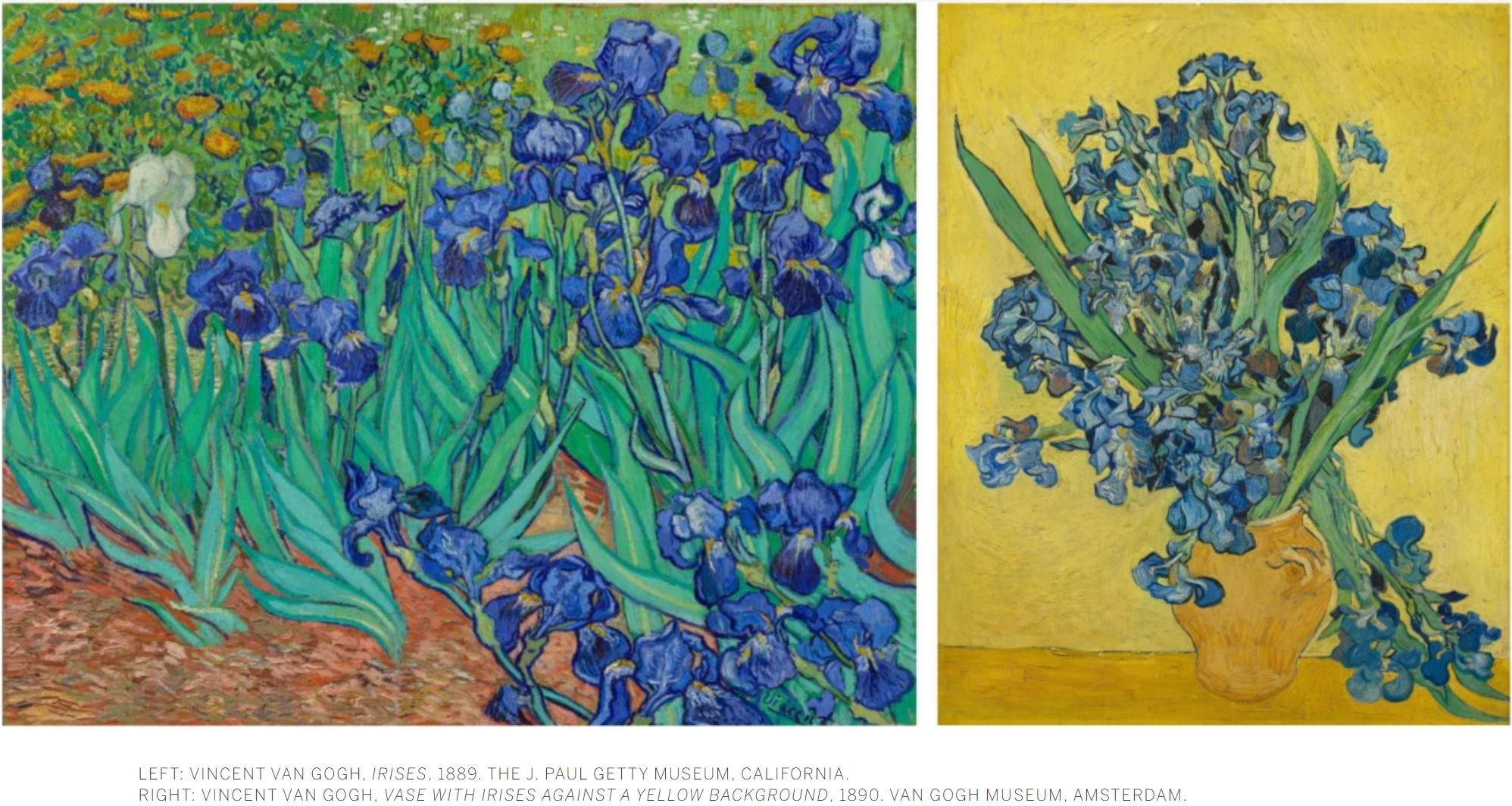
The present work most importantly signifies Hockney’s momentous undertaking of traditional subject matter – the venerated genre of the still life – at the height of his artistic powers, when he must have finally deemed himself ready and worthy to encounter his heroes and predecessors, including Vincent van Gogh, Paul Cézanne, Claude Monet and Johannes Vermeer. In its exploration of experimental still life painting, Blue Pot of Purple Flowers invokes not only a centuries old art historical tradition, but also a motif that is of central importance within Hockney’s own oeuvre. Still life painting first captured Hockney’s interest in the 1960s and served as focus for a number of early works; from there, through the precise realism of the artist’s 1970s painting, to the colorful and imaginative abstraction of the present work and other 1980s paintings, the still life genre has allowed Hockney to continually refresh and explore his creative vision through familiar subject matter.
“I think every artist who deals with the visible world must come back to them. You begin to see how many choices you can make in even these simple things right in front of you. How exciting they are.”
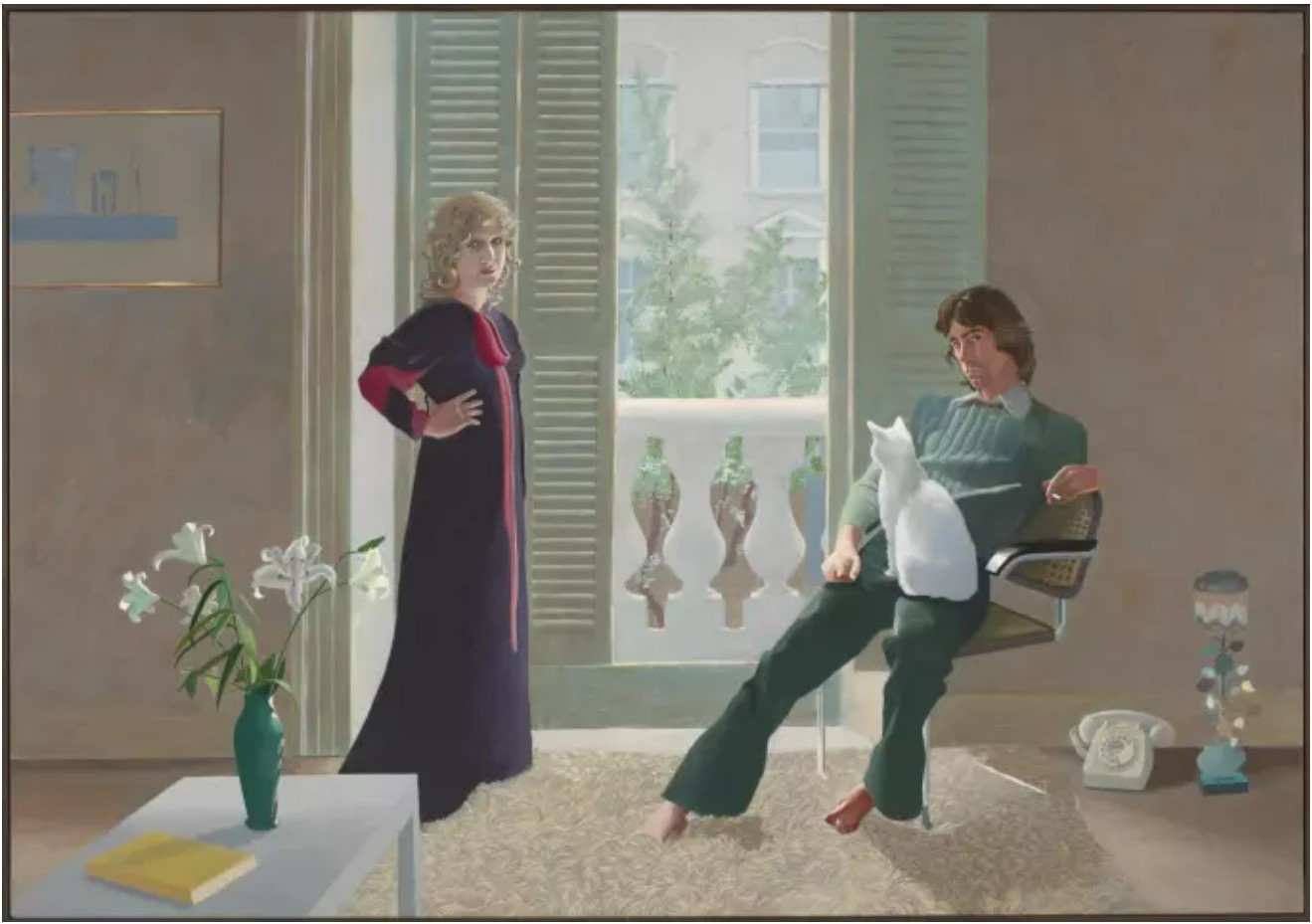
DAVID HOCKNEY, MR AND MRS CLARK AND PERCY, 1970-1. TATE, LONDON. © DAVID HOCKNEY.
Hockney’s intense occupation with his still-life series is a testament to how much he enjoyed the genre. The pleasure of painting is an essential element of his work.
“I think anyone who makes pictures loves it, it is a marvelous thing to dip a brush into paint and make marks on anything, even on a bicycle, the feel of a thick brush full of paint coating something. Even now, I could spend the whole day painting a door just one flat color.”
Throughout art history, flowers have remained a traditional focus for all painters from the Dutch Old Masters to the Post-Impressionist masters and to Pop Art innovators. Hockney’s dedication to the purist depiction of six purple violets clearly pays homage to the master of still-life and landscape, Vincent van Gogh. The work draws visual reference to van Gogh’s dazzling Sunflowers, which was painted a century prior to Hockney’s still life.
“I’ve always had quite a passion for van Gogh, but certainly from the early seventies it grew a lot, and it’s still growing. I became aware of how wonderful [his paintings] really were. Somehow they became more real to me…it is only recently they’ve really lived for me.”
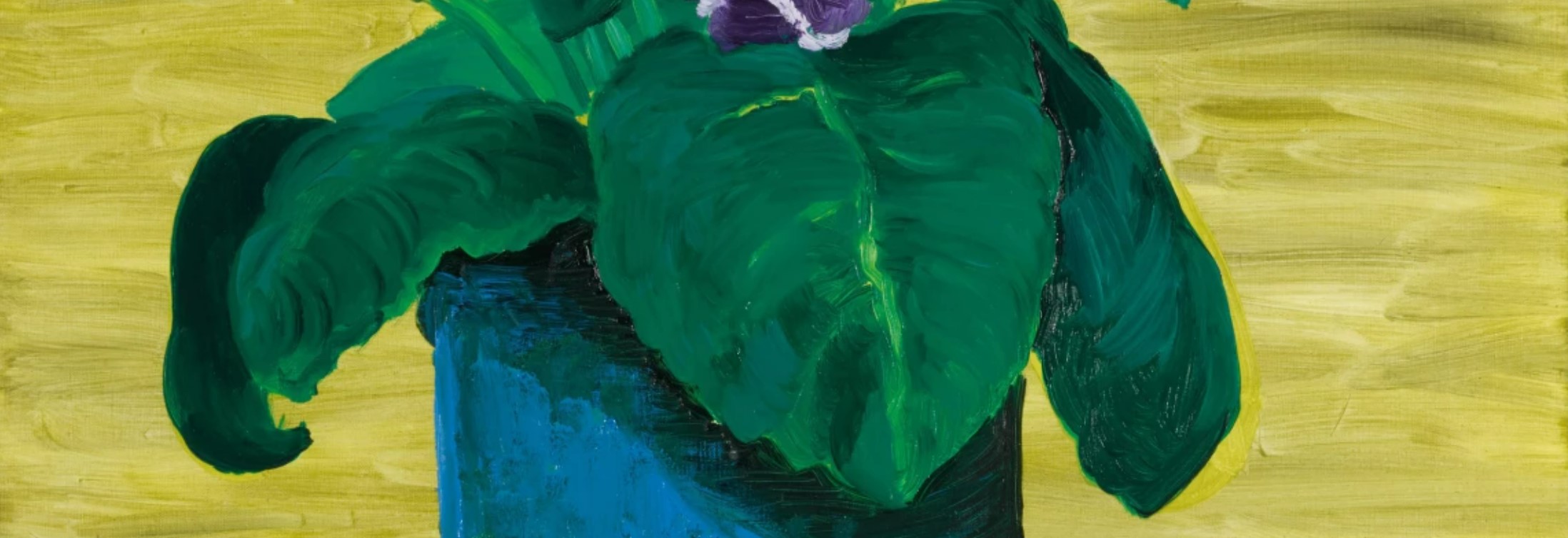
Throughout his remarkable career, David Hockney has successfully merged a deep appreciation for and awareness of art historical precedent with an unwavering desire to push the boundaries of Contemporary art through his own, utterly unique painterly vision. Used to remarkable effect in Blue Pot of Purple Flowers, this tension between tradition and innovation has, over the past sixty years, distinguished Hockney as amongst the foremost artists of the Contemporary age. As seen in Blue Pot of Purple Flowers, the still life, one of the most traditional genres of painting, becomes Hockney’s template upon which he subverts traditional perspective and notions of depth while trying to depict his own idiosyncratic reality. Encapsulating both splendor and brutality, celebrating ravishing beauty as well as delicate ephemerality, Blue Pot of Purple Flowers is a glowing exaltation of light, space, and color refracted through the lens of art history while suffused with personal meaning and transformation – manifesting the supreme quintessence of Hockney’s artistic output that powerfully establishes him as one of the greatest painters of the twentieth century.