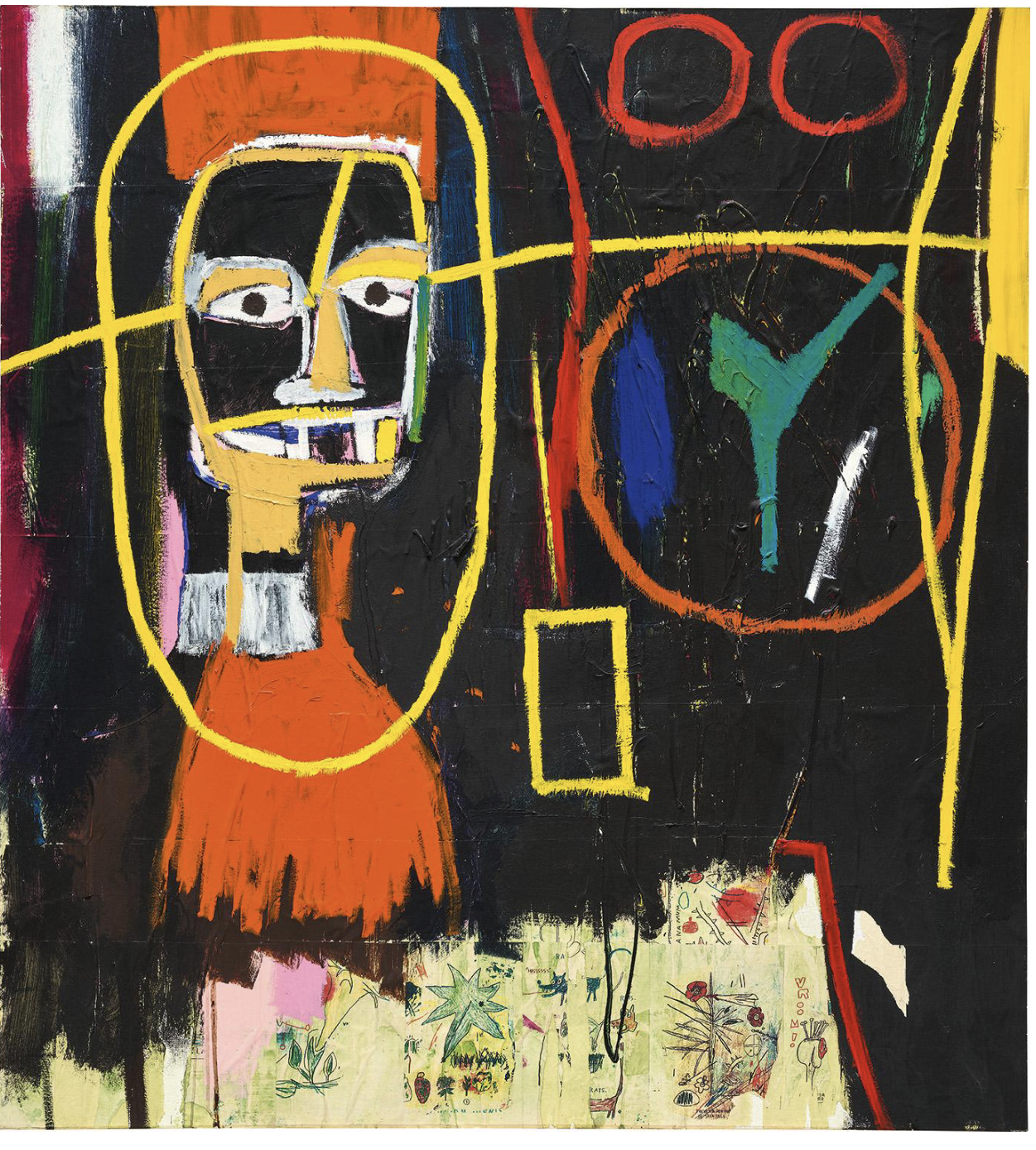
JEAN-MICHEL BASQUIAT
Ancient Scientist, 1984
Acrylic, oilstick, Xerox and paper collage on canvas
66×61 inches (167.7 x 154 cm)
Signed with the artist’s initials, titled and dated ‘JMB “ANCIENT SCIENTIST” 1984’
(on the reverse)
Provenance
Gagosian Gallery, Los Angeles
Private Collection, Chicago
Marianne Boesky Gallery, New York
Private Collection, Arizona
Sotheby’s, New York, 11 May 2005, lot 348
Galerie Jan Krugier, Ditesheim & Cie, Geneva
Acquired from the above by the present owner
Phillips Hong-Kong: 3 December 2020
HKD 58,330,000
Source: Phillips
Jean-Michel Basquiat – 20th Century … Lot 7 December 2020 | Phillips
Jean-Michel Basquiat, dubbed “the radiant child” by the American art critic Rene Ricard, was an extraordinarily gifted neo-expressionist painter with an ability to shock, inspire and get under the skin of his viewers past and present i. Self-taught, with a restless and prolific mind, he developed a unique visual vocabulary drawn from his Haitian and Puerto Rican heritage, pop culture, art history, poetry and his enduring fascination for Abstract Expressionist art. Starting out as a graffiti renegade under the pseudonym SAMO with fellow artist Al Diaz in the late 1970s, Basquiat eventually entered the world of contemporary art, and his works caught the attention of gallerists and dealers such as Annina Nosei and Bruno Bischofberger. The artist swiftly rose to fame with the support of industry powerhouses such as Andy Warhol, Larry Gagosian and Mary Boone, and in 1983 Basquiat was included in the Whitney Museum of American Art, New York (Whitney Biennial) to become the youngest artist to have represented America in a major international exhibition of contemporary art. Basquiat was also the youngest artist ever to be included in Documenta in Kassel, two years before the present work’s inception, in 1982. Executed in 1984, Ancient Scientist was created at the pinnacle of the artist’s career.
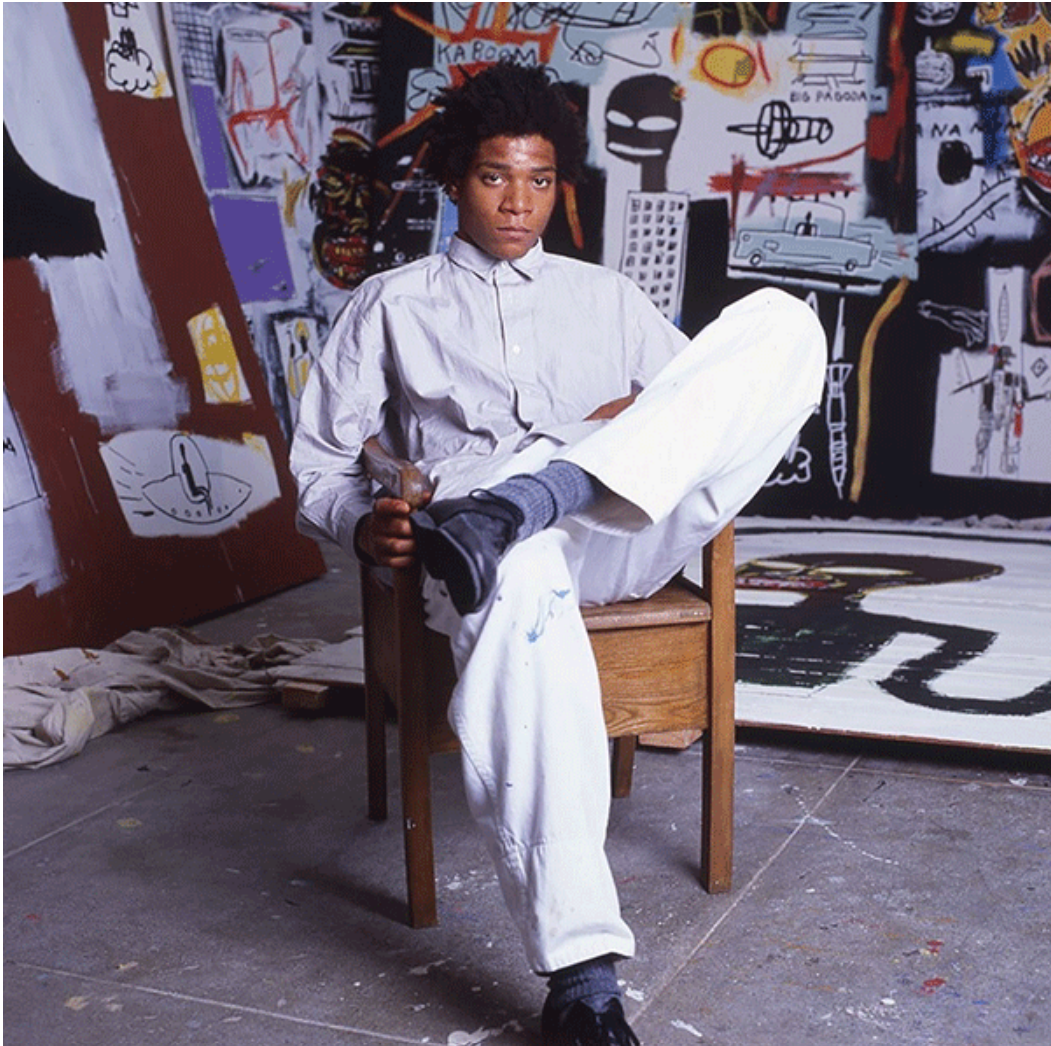
Jean-Michel Basquiat in his studio, 1980s
Basquiat’s insatiable hunger for information allowed him to draw inspiration everywhere, appropriating references from music, poetry, history, politics and popular culture in the development of his own personal iconography. In an interview showcasing a collection of drawings by Basquiat, collector and scientist Herbert Schorr elucidated on the workings of his close friend’s mind: ‘he didn’t have formal lessons, but he went to museums. He understood what he was seeing. I was told he went to some dealer’s library and scoured through the books…Basquiat was just like that—visually he could see it and absorb it instantly. He was extremely smart’. Living downtown in his Manhattan studio was highly significant to Basquiat’s development as an artist. Interviewed for an exhibition at the Fun Gallery in 1982, the artist noted that he took various academic references from trips to the Metropolitan Museum, or history and anatomy books, using them as source material and incorporating various sketches of artifacts to juxtapose them with ‘what he normally does’. With an endless expanse of information at his fingertips, Basquiat studied the world widely, condensing his knowledge onto the canvas.
“When I’m working, I hear them you know, and I just throw them down.”
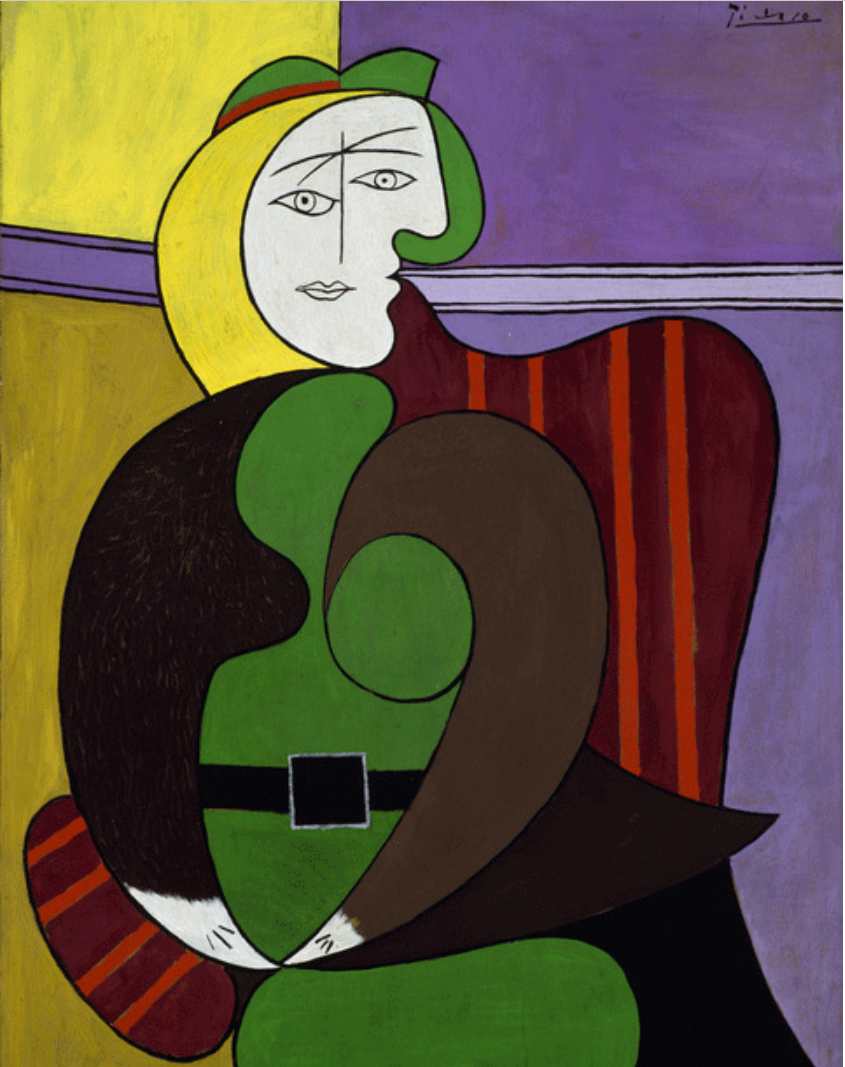
Pablo Picasso, The Red Armchair, 1931. Collection of the Art Institute of Chicago. © 2018 Estate of Pablo Picasso / Artists Rights Society (ARS), New York
A nod to Pablo Picasso’s Cubist aesthetic derived from ancient masks and sculptures (see for example Pablo Picasso, The Red Armchair, 1931), bold lines form the outline of a mask-like head and body on a heavily blacked out canvas. The angular formation of the face with a distinct triangular nose that runs up the figure’s forehead draws another comparison to African Banda masks of the late 19th and early 20th century, including the mask held in the collection of the Brooklyn Museum, which Basquiat was known to have frequented.
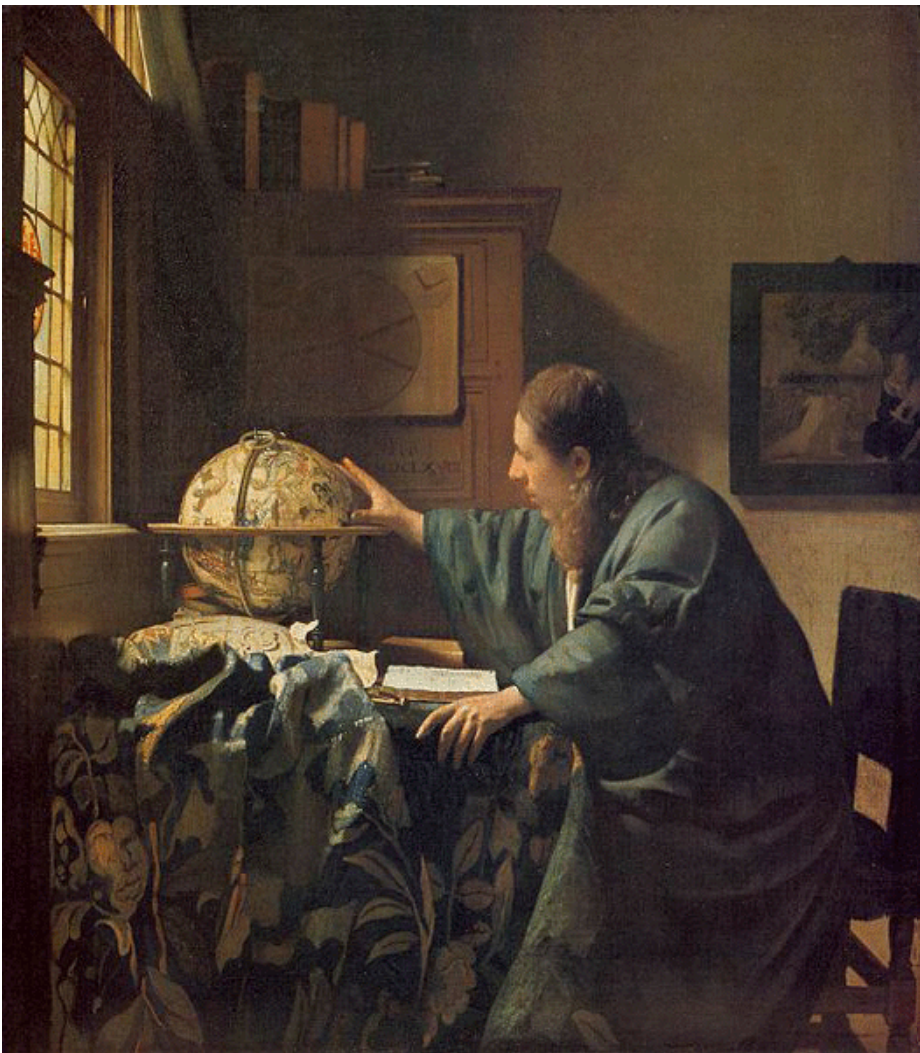
Johannes Vermeer, The Astronomer, c. 1668. Collection of the Museé du Louvre, Paris
With stark white eyes that directly confront the viewer, the profile of the figure in the present work further calls to mind classical half-length portrait paintings of characteristic three-quarter turned faces. The subject of Ancient Scientist could perhaps be an influential scientific figure such as Sir Isaac Newton (see for example Sir Godfrey Kneller, Sir Isaac Newton, 1702), whose mask like- wig and white collared attire bear an uncanny likeness to that of the figure. Following the line of sight with another streak slashed across the picture plane are a cluster of red circles. Possibly alluding to the shape of a scientist’s globe (See for example Johannes Vermeer, The Astronomer, c. 1668), an image of a female torso comes into view when paired with two smaller circles above. Showcasing his deep dive into the world of Classical and Contemporary art, Basquiat distills the female figure into the essential features associated with sexual reproduction and fertility, stripping down figure to its simplest forms.
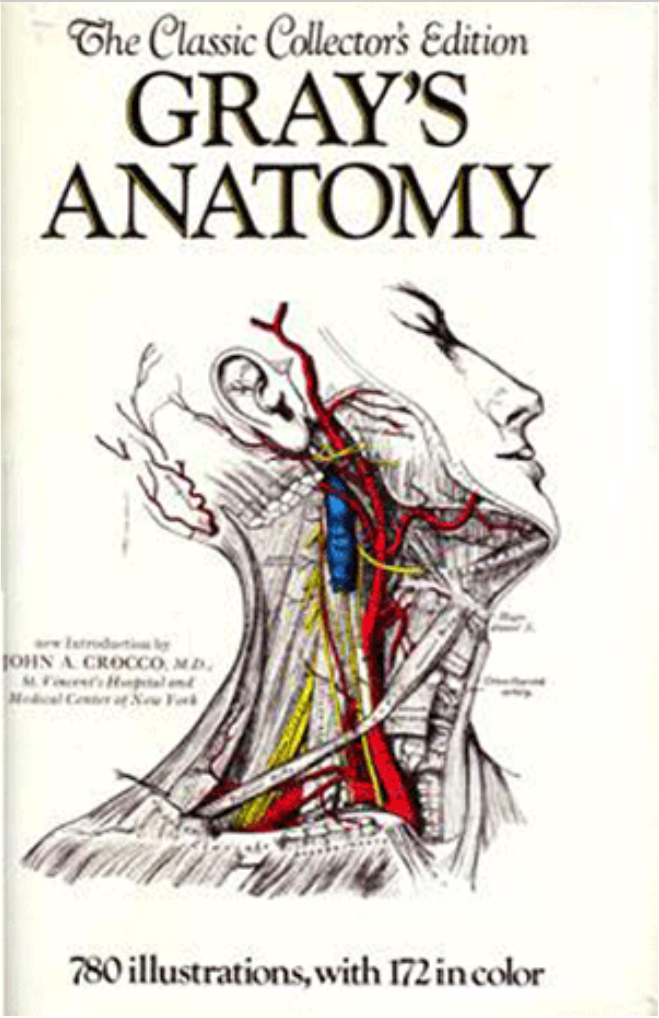
Basquiat’s inherent interest in science and anatomy stems from his childhood; Having been incolved in a car accident at 6 years old, the artist’s mother gifted him a copy of Gray’s Anatomy by Henry Gray, an influential work on the subject of human anatomy for medical knowledge. The workings of the human body would continue to fascinate him, taking the anatomical drawings from books and the art of Renaissance artists such as Leonardo Da Vinci and translating them onto his canvases.
A genius of his time, Basquiat experimented with new artistic techniques and mixed different methods of expression, capturing the mix of high and popular culture with an acute sensibility characterised by unconventional spontaneity. The present work was also exhibited in Musée Maillol, gracing the cover of its flyers alongside works by Pablo Picasso, placing him in the same league as the masters that he had looked up to.