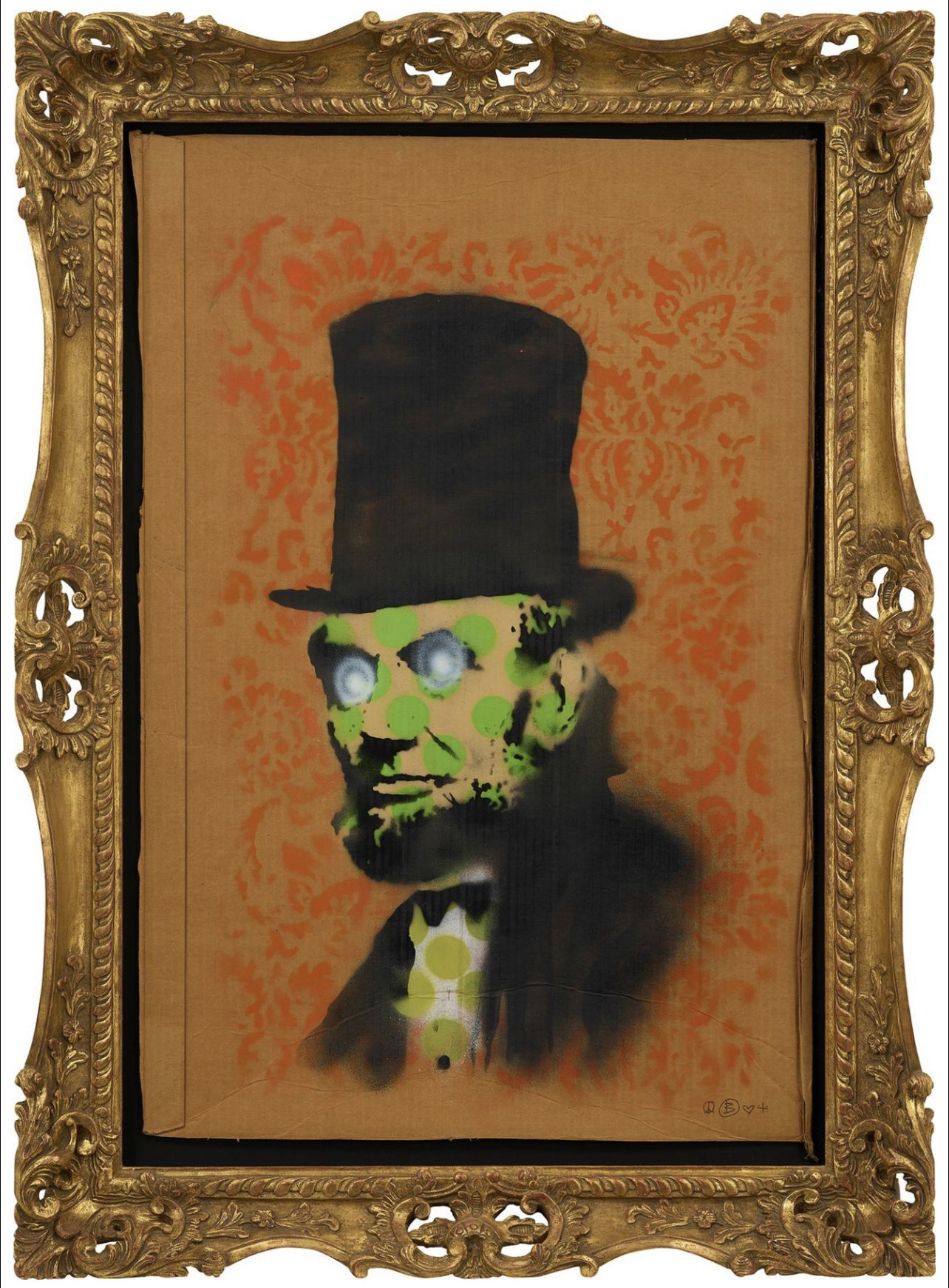
BANKSY
Abe Lincoln, 2008
Spray paint on cardboard
89.9 x 62 cm (35.4 x 24.4 inches)
Signed with the artist’s initial and inscribed ‘☮ Ⓑ ♡ ⁜’ lower right
Provenance
Private Collection (acquired directly from the artist in 2008)
Sotheby’s, New York, 9 March 2011, lot 91
Private Collection
Christie’s, London, 24 September 2013, lot 158
Private Collection, Hong Kong
Phillips, Hong Kong, 25 November 2018, lot 27
Acquired at the above sale by the present owner
Phillips Hong-Kong: 21 June 2022
HKD 2,772,000
Source: Phillips
Banksy – 20th Century & Contemporary A… Lot 152 June 2022 | Phillips
Executed in 2008, Abe Lincoln is one of Banksy’s most iconic images, stemming from a small series of three unique variations, each painted on cardboard. Rare to the market, this marks the first time an Abe Lincoln work has appeared at auction since 2018. In 2008, Banksy paid a visit to New Orleans in the United States following the devastation left by Hurricane Katrina three years prior. Leaving behind a trail of tags and trademark stencils, Banksy used the still-tattered streets and buildings as a backdrop for his poetic yet poignant critiques of the slow pace of reconstruction by officials. One of the works he created was a stenciled rendering of former U.S. President, Abraham Lincoln. Spray-painted onto the wall of a damaged building at a major intersection, the site has since been demolished to make way for a healthcare facility.
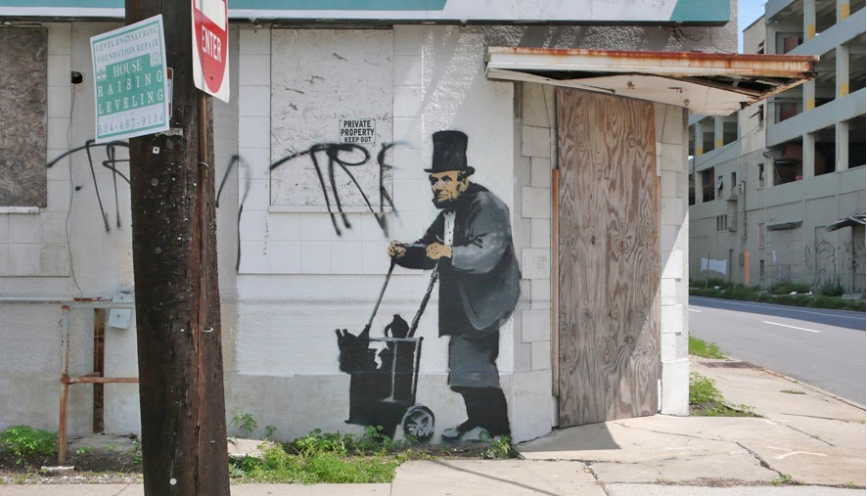
Using the same stencil he would then employ for the three Abe Lincoln works on cardboard, including the present composition, Banksy’s site-specific version portrayed Lincoln as displaced person living on the streets, pushing a trolley full of possessions. Lincoln was the great figurehead of the emancipation movement which liberated the slaves of the Southern Sates, and in depicting Lincoln in a such a poorly advantaged position, Banksy showcases his sharp sense of satire in highlighting the shortcomings of Lincoln’s political descendants.
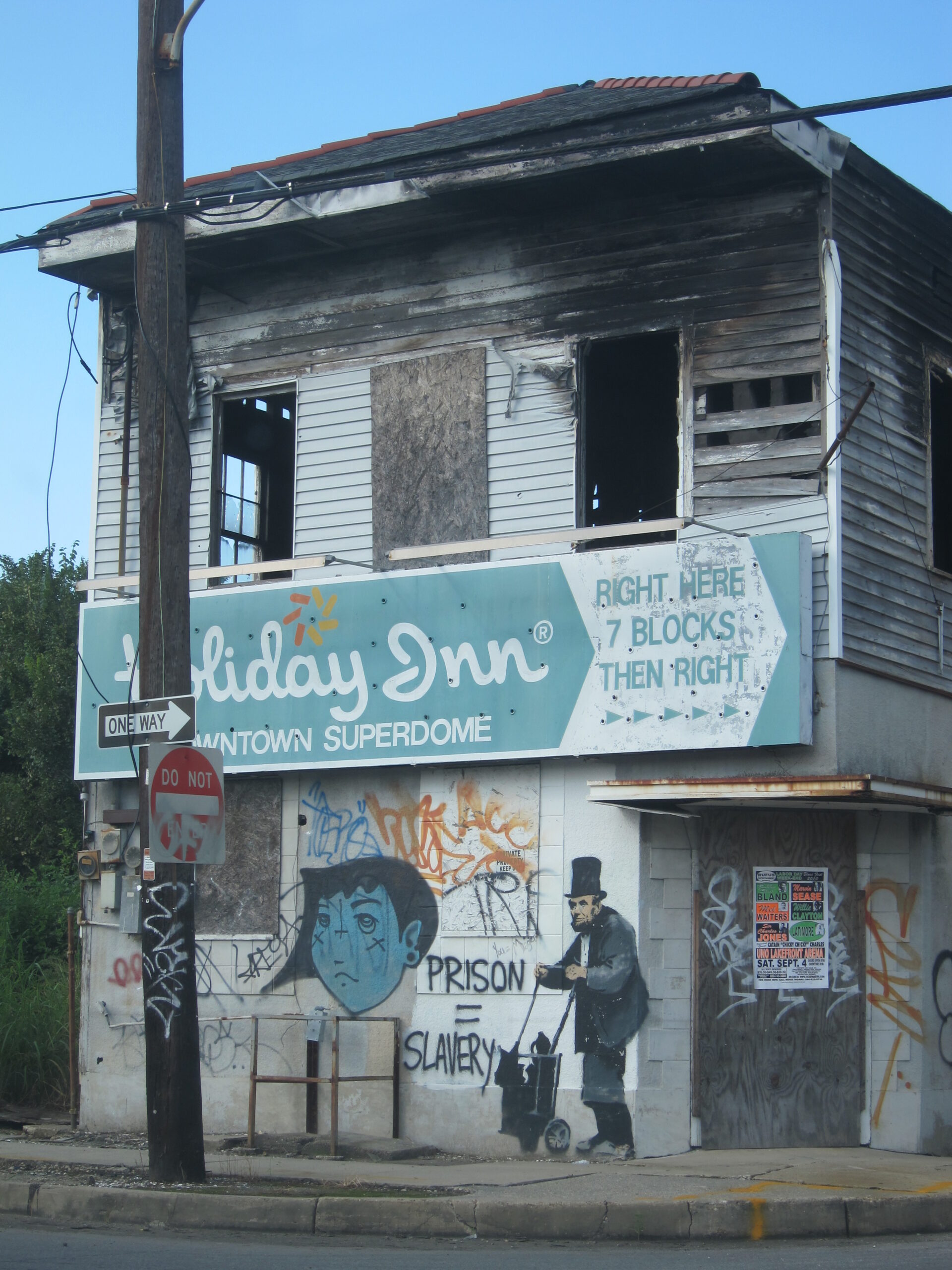
In 2008, Banksy paid a visit to New Orleans in the United States following the devastation left by Hurricane Katrina three years prior. Leaving behind a trail of tags and trademark stencils, Banksy used the still-tattered streets and buildings as a backdrop for his poetic yet poignant critiques of the slow pace of reconstruction by officials. One of the works he created was a stenciled rendering of former U.S. President, Abraham Lincoln. Spray-painted onto the wall of a damaged building at a major intersection, the site has since been demolished to make way for a healthcare facility. Using the same stencil he would then employ for the three Abe Lincoln works on cardboard, including the present composition, Banksy’s site-specific version portrayed Lincoln as displaced person living on the streets, pushing a trolley full of possessions. Lincoln was the great figurehead of the emancipation movement which liberated the slaves of the Southern Sates, and in depicting Lincoln in a such a poorly advantaged position, Banksy showcases his sharp sense of satire in highlighting the shortcomings of Lincoln’s political descendants.