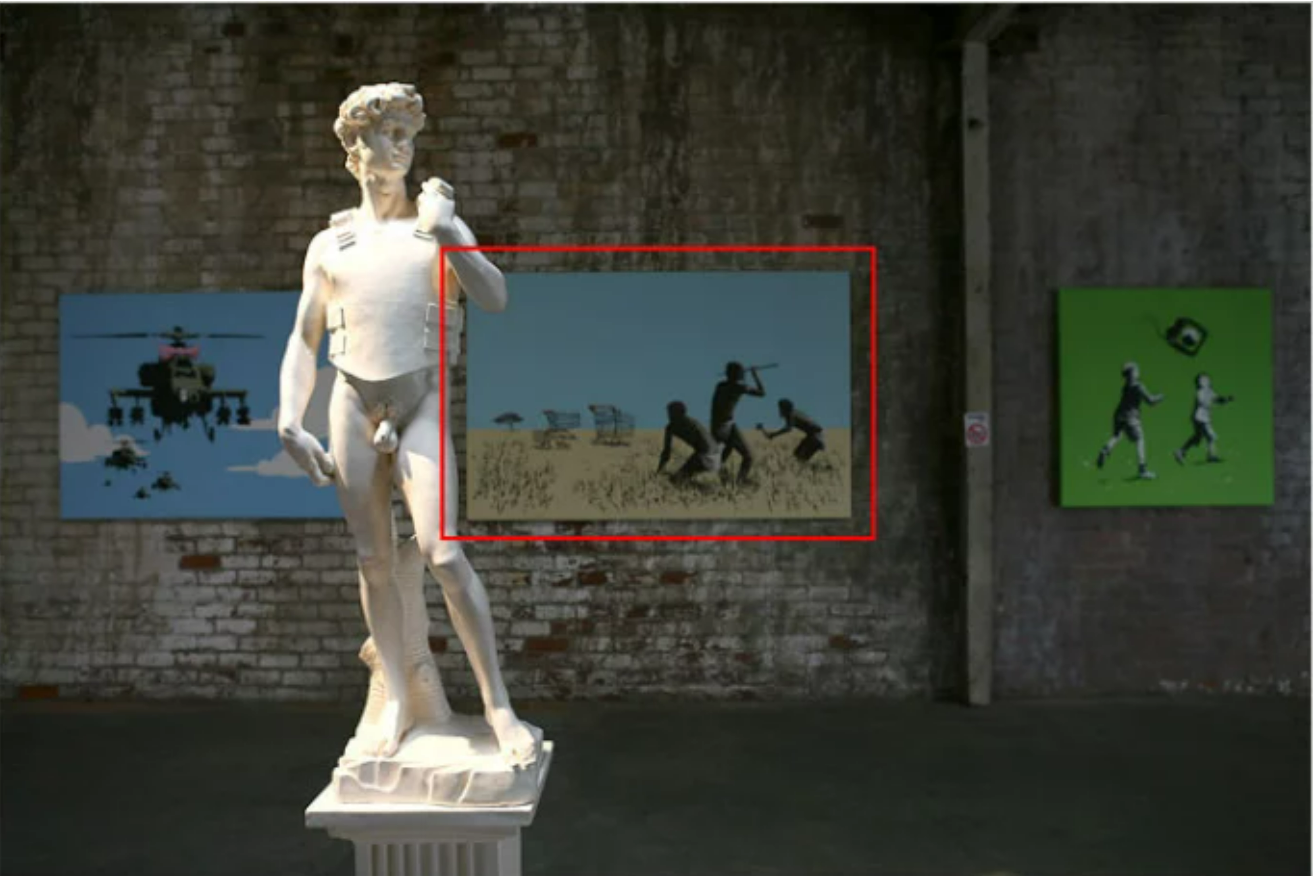
BANKSY
Trolley Hunters, 2006
Oil and emulsion on canvas
137×214 cm (53.9 x 84.2 inches)
Tagged (lower right)
Signed Banksy and dated 1 August 2006 (on the overlap)
Provenance
Lazarides Gallery, London
Acquired from the above by the present owner in 2007
Sotheby’s New-York: 18 November 2021
USD 6,698,400
Source: Sotheby’s
Trolley Hunters | The Now Evening Auction | | Sotheby’s (sothebys.com)
Iconic, instantly recognizable, and caustically humorous, the work of legendary street artist Banksy continues to shock and satirize today. Featured in Barely Legal, Banksy’s seminal 2006 exhibition in Los Angeles that triggered widespread acclaim and recognition for the artist, Trolley Hunters is the perfect incarnation of Banksy’s distinctive marriage of street art, graffiti and satire. Featuring three prehistoric men in a desert, the atmosphere of Trolley Hunters is both eerie and lighthearted, its illustrative style belying the acerbic humor and depth of meaning of the painting. Holding various weapons, the three men pictured are poised to attack. The targets of their attack are, in typical Banksy fashion, trolleys – or shopping carts. The poignancy of the resulting work is twofold; firstly in its timeless critique of capitalism, and secondly in its unique and unexpected resonance today.

The trolley, comic in its incongruity, nods to our consumer society’s predilection for, and reliance on, highly processed, branded packaged food products, and our inability to fend for ourselves. Grouped like antelope in a field, the barren nature of the landscape in which we find these alien carts nods to our willingness to ship foods and other commodities all over the planet to be picked up whenever convenient by the consumer in the aisles of big chain supermarkets. With sardonic wit, Banksy juxtaposes his trolleys with a trio of Neanderthal hunter-gatherers, thereby shining a critical light on how far we as human beings have deviated from our base instincts, and abilities.
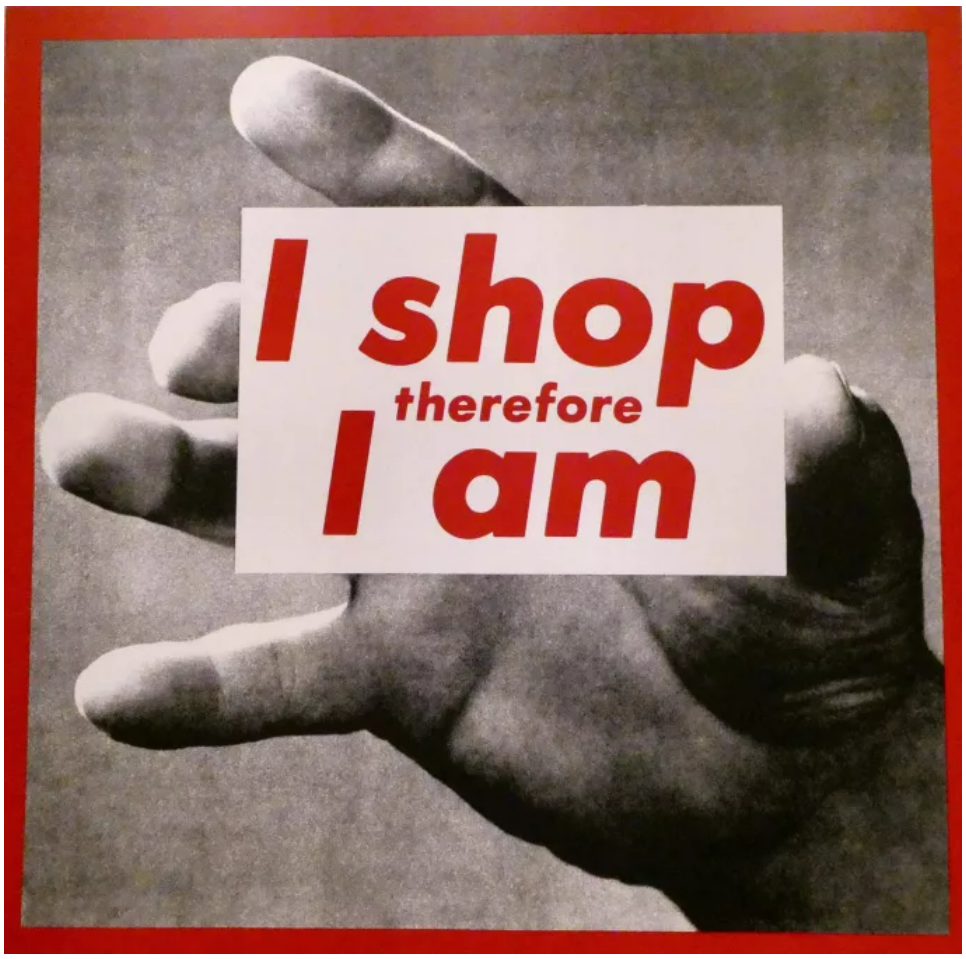
From political cartoons to Duchampian sculptures, satire has long pervaded art and its history, and Banksy is the preeminent contemporary successor to this tradition, having earned a cult following for his subversive stenciled street pieces. Operating now both in- and out-side of the establishment, Banksy’s works exist on the boundary, courting mass appeal whilst commenting vociferously on potentially marginalizing political and cultural issues. Beyond its satirical antecedents however, the present work recalls works such as Gustave Courbet’s The Stone Breakers (1849), the paradigm shifting Realist work that demonstrated the plight of rural laborers in Nineteenth Century France, whose existence would have felt prehistoric to the Parisians who would have seen Courbet’s painting. Banksy toys with the shock of association, the equivalence afforded to the caveman and the viewer, whilst drawing attention to our distance from the land that sustains us.