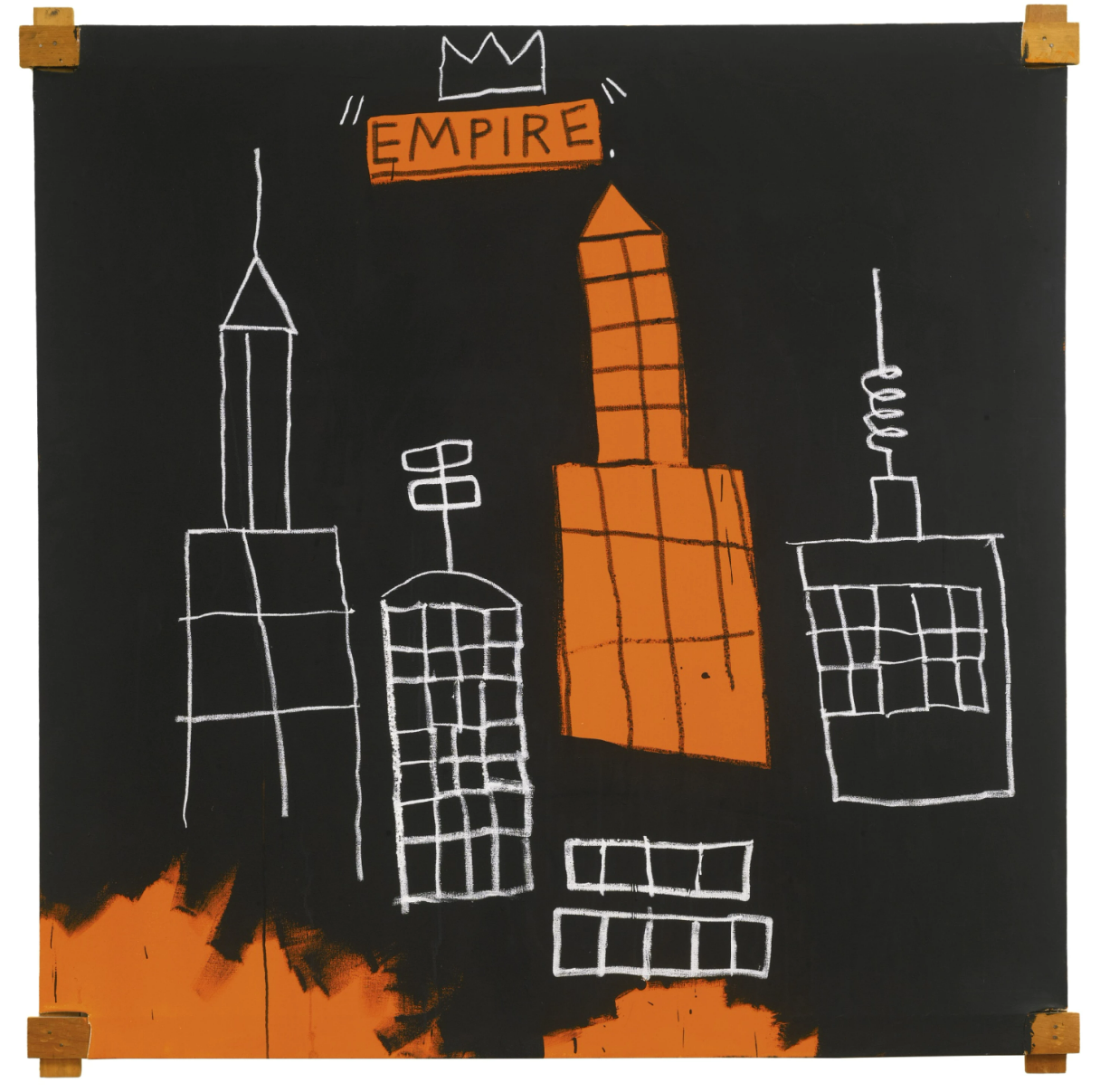
 JEAN-MICHEL BASQUIAT
Mecca, 1982
Acrylic and oilstick on canvas mounted on wood supports
70 x 68.9 inches (177.8 x 172.4 cm)
Signed, titled and dated 1982 on the reverse
Gagosian Gallery, Los Angeles
Acquired by the present owner from the above in 1982
USD 4,477,000
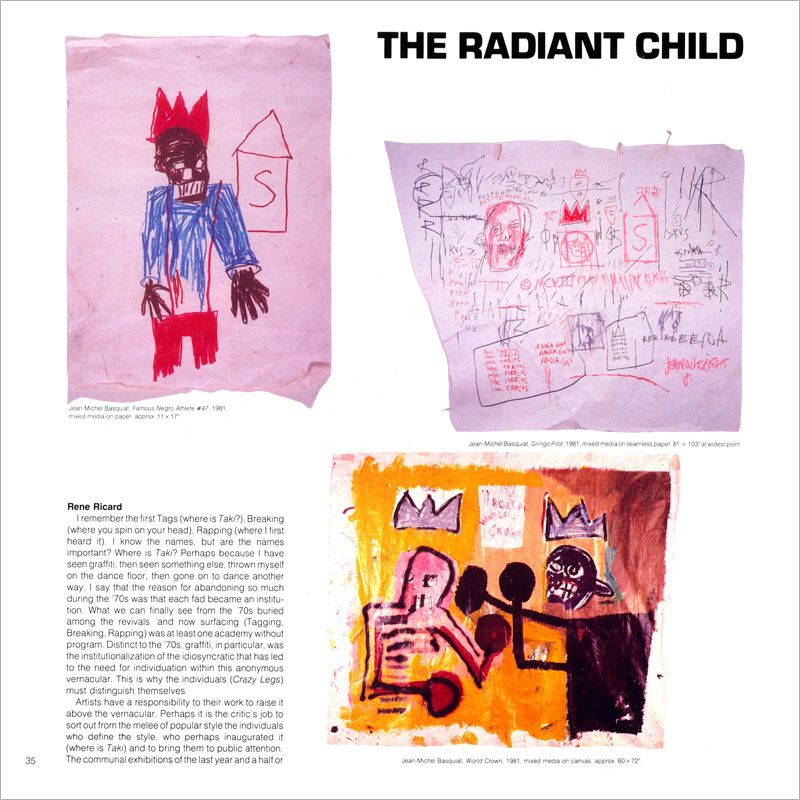
In December 1981 the poet and art critic René Ricard famously introduced the art world to Jean-Michel Basquiat in his Artforum article “Radiant Child”: “I’m always amazed at how people come up with things. Like Jean-Michel… What he incorporates into his pictures, whether found or made, is specific and selective. He has a perfect idea of what he’s getting across, using everything that collates to his vision.” (René Ricard, “Radiant Child,” Artforum, New York, vol. XX, no. 4, December 1981, p. 37) Alongside other emerging artists like Keith Haring, Francesco Clemente and John Ahearn, Basquiat’s emergence came via both self-organized exhibitions and gallery shows: the Lower Manhattan Drawing Show at the Mudd Club and Public Address at the Annina Nosei Gallery being two critical early arenas of exposure. Nosei quickly became Basquiat’s primary dealer and opened the artist’s first one-man show in 1982 to thunderous acclaim. Gallerist Tony Shafrazi explained the unparalleled potential Basquiat exuded at the time by writing, “As he began to paint, and with his first exhibition at Annina Nosei, Jean-Michel Basquiat was already a young king. He knew he was the best and demanded serious attention and respect… He was consumed with deep love for the most beautiful and moving aspects of black culture and history, calling upon the great heroes, writing and rewriting the names of boxers, athletes, artists and the whole history of jazz musicians…” (Tony Shafrazi cited in Richard D. Marshall and Jean-Louis Prat, Jean-Michel Basquiat, 3rd ed., Vol II, Paris, 2000, p. 50) As talismanic substitute for the artist himself, Basquiat’s immediately-recognizable three-pointed crown motif adorns Mecca like a night star, unmistakably declaring the young artist’s zenith. Cast in the inimitable urgency of Basquiat’s codified aesthetic Mecca is fundamentally intertwined with its author’s biography and the shifting locus of his artistic and creative identity through 1982.
Though maintaining the spontaneity of graffiti, by 1982 Basquiat’s transition from street to studio had been fully crystallized. Executed in the period following his breakthrough participation in the show New York/New Wave at the P.S.1 Contemporary Art Center, this work documents the year Basquiat focused his efforts on canvas painting. Using Nosei’s Prince Street gallery basement as his studio, Basquiat held his first solo exhibition and forged influential links with Bruno Bischofberger and Larry Gagosian. By this time he was the youngest artist ever to have contributed to the internationally renowned exhibition Documenta 7 in Kassel, his work exhibited alongside that of Gerhard Richter, Joseph Beuys, Cy Twombly and Andy Warhol.
Ultimately, Mecca stands as an intense exemplification of the conviction that propelled Basquiat to prominence. It bears witness to Basquiat’s coronation and inauguration into the meta-narrative of art history. As pertinently expressed by Robert Farris Thompson, Basquiat “remained true to himself, what is more, with a single motif reprised right up to his death: the sign of the three-pointed crown. Banking not only on hard work and inspiration to get him through, but also on amuletic forces, he continually crowned himself king of painters.” (Robert Farris Thompson, ‘Royalty, Heroism, and the Streets: The Art of Jean-Michel Basquiat’, in Exh. Cat., New York, Whitney Museum of American Art, Jean-Michel Basquiat, 1993, p. 36)