
BANKSY
Sunflowers from Petrol Station, 2005
Oil on canvas, in artist’s frame
102.6 x 87.5 cm (40.6 x 34.4 inches)
Signed ‘Banksy’ (center left)
Signed and dated ‘BANKSY OCTOBER 2005’ (on the stretcher)
Provenance
Acquired directly from the artist by the present owner, 2005
Christie’s New-York: 8 November 2021
USD 14,558,000
Source: Christie’s
BANKSY (christies.com)
Held for its entire life in the collection of legendary British fashion designer Sir Paul Smith, Sunflowers from Petrol Station is an icon within Banksy’s oeuvre. Witty, irreverent and subversive, it offers a wry reimagining of Vincent Van Gogh’s celebrated Sunflowers, transforming the Dutch master’s radiant yellow blooms into a cluster of dried, wilted stems. Against a backdrop of thickly-wrought impasto, dead petals accumulate around the base of the vase, which bears the artist’s name—in place of Van Gogh’s—in blue lettering. A rare and exquisitely rendered example of Banksy’s coveted hand-painted oils, the work formed part of the artist’s seminal 2005 exhibition Crude Oils: A Gallery of Re-mixed Masterpieces, Vandalism and Vermin in London. There, it took its place alongside other art-historical reworkings by Banksy, including Show me the Monet—a parody of Claude Monet’s Japanese Bridge paintings—as well as alternative versions of Edward Hopper’s Nighthawks and Jack Vettriano’s The Singing Butler. Acquired by Smith directly from the exhibition, it is an outstanding demonstration of Banksy’s virtuosity as a painter, and his acerbic flair as a satirist. Through the comedic pathos of withered petrol station flowers—a modern-day memento mori—the artist implicates the pollution of both art and nature at the hands of consumerism: neither, he warns, will last forever in its clutches.

Office of Sir Paul Smith, London
‘If you want to survive as a graffiti writer when you go indoors your only option is to carry on painting over things that don’t belong to you there either.’
The work’s provenance is exceptional. Sir Paul Smith, founder of the eponymous fashion brand, has long channeled his passion for design into close engagement with art, giving rise to a collection that charts some of the most important developments of the past century. In 1970, he opened his first clothing shop in a tiny basement in Nottingham: that year, he and his future wife Pauline Denyer—a Royal College of Art graduate—spent their last £200 on a print by David Hockney from his exhibition at the Whitechapel Art Gallery. It was the start of a journey that would lead them to delve into the work of artists ranging from William Coldstream, Euan Uglow and Alberto Giacometti to Andy Warhol, David Bailey and Grayson Perry. Others, including Frank Auerbach, Roy Lichtenstein, Frank Stella and Ellsworth Kelly, would inspire patterns and colors in Smith’s own designs. Adorning the walls of his home, as well as those of his London headquarters and shops around the world, his collection testifies to a fluid understanding of visual culture and its place within our everyday lives.
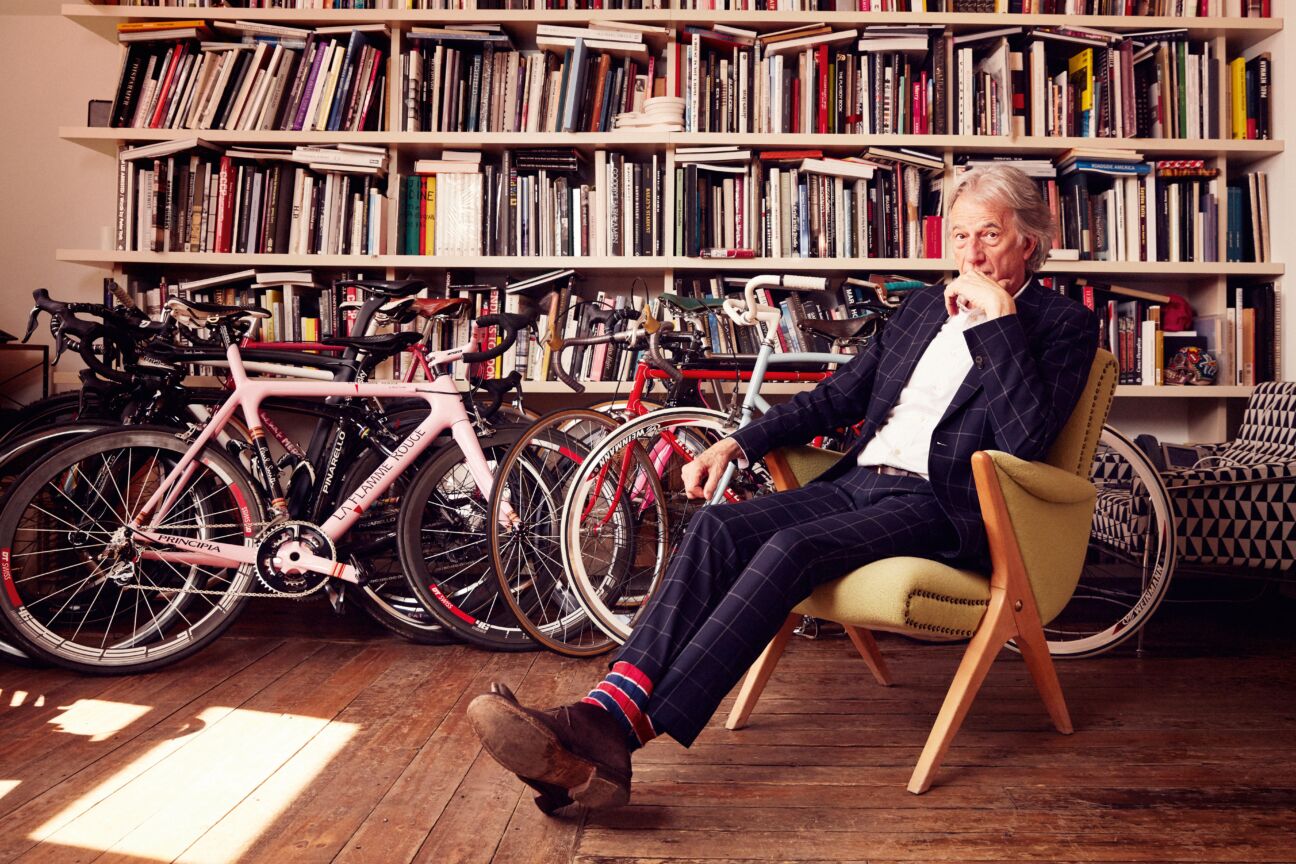
By the time Smith discovered Banksy, he was at the pinnacle of his career. With a global brand to his name, he had been appointed Royal Designer for Industry in 1991, and Commander of the Order of the British Empire in 1994; he was knighted in 2000. That year, the young Banksy moved from his native Bristol to London, and began to make a name for himself through his graffiti and urban interventions. His Crude Oils exhibition, hosted just moments from Smith’s Westbourne Grove store, served to cement his reputation both as an artist and as a cultural commentator. “What initially attracted me to Banksy was his confidence and clarity to communicate something exactly as it is,” Smith explains. “I was so impressed by his observations of what was happening in the world and that remains true of the work he’s doing today. His political statements are completely on point, really profound, really brave and consistently delivered in a modern way.” Banksy’s belief in art’s social power, moreover, remains particularly pertinent to a designer who has described how his first lessons came from conversations with local art students in pubs as a teenager, and who has since gone on to fund scholarships for today’s future artists.
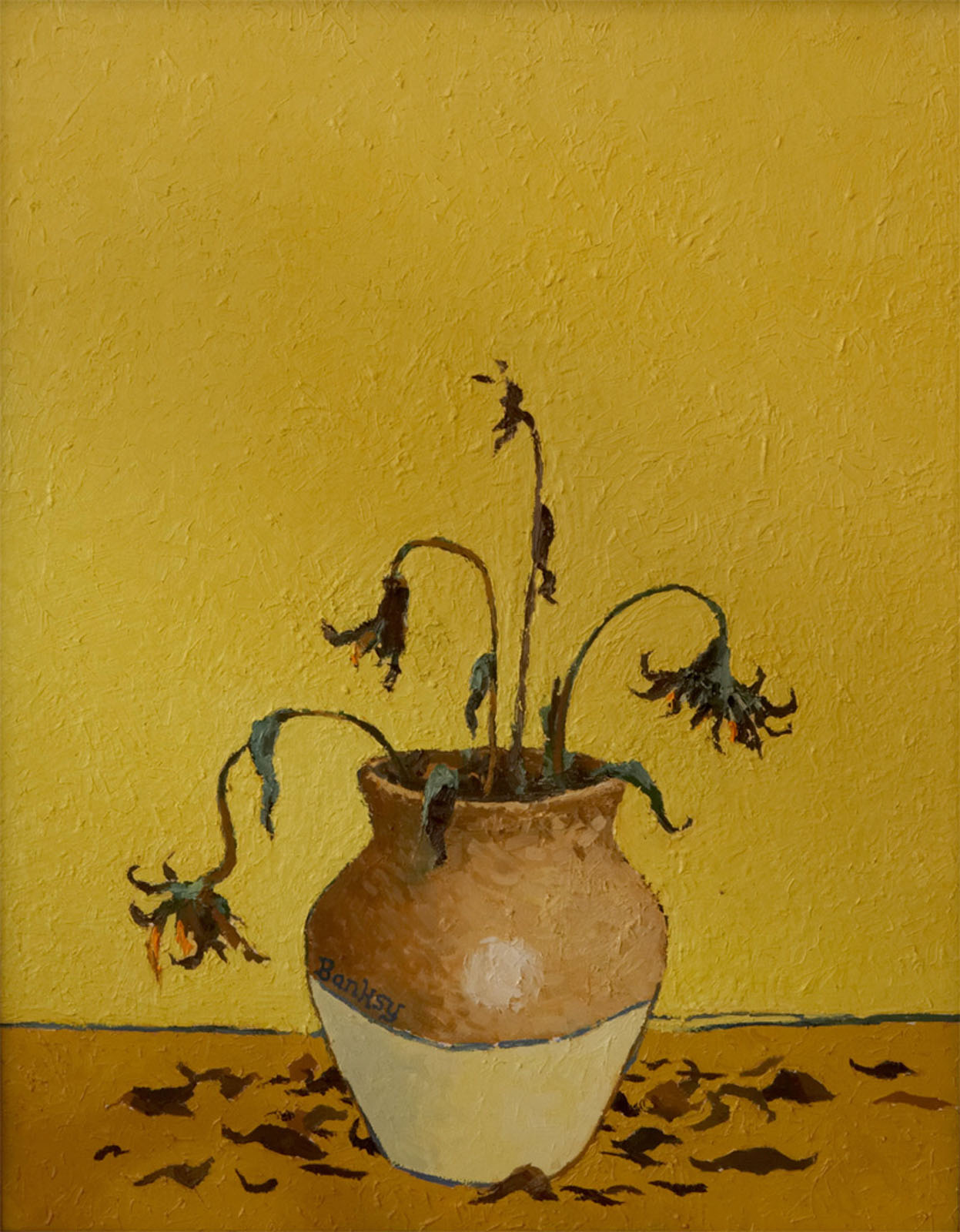
Saturated with humor and dark irony, Sunflowers from Petrol Station draws together some of Banksy’s most important concerns. Underpinning his practice is a conviction that art should be for the people: by closeting it away in museums, he believes, we smother its potential to change the world. The vandalizing impulse of his work—whether spray painting a street wall or defacing a masterpiece—ultimately serves as a mirror: we are quick to condemn such acts, he suggests, yet fail to recognize the numerous other ways in which we stifle our own society and culture. By taking one of the most iconic creations in the Western canon—the five prime examples of which reside in major museums in London, Philadelphia, Munich, Amsterdam and Tokyo—Banksy warns against the perils of institutional elitism and reverence. At the same time, the image implicates wider notions of pollution—another of Banksy’s central themes: while Van Gogh’s original canvases depicted sunflowers at various points in their life cycle, the present work envisages a dystopian world in which the only available subjects were old, dead specimens. The wry, familiar comedy of the flowers’ petrol station provenance is underlined by a more disarming thought: that one day, the sole remnants of the natural world might be offered up for sale by oil and gas companies.
READ MORE ABOUT SUNFLOWERS FROM PETROL STATION
ON BANKSY EXPLAINED